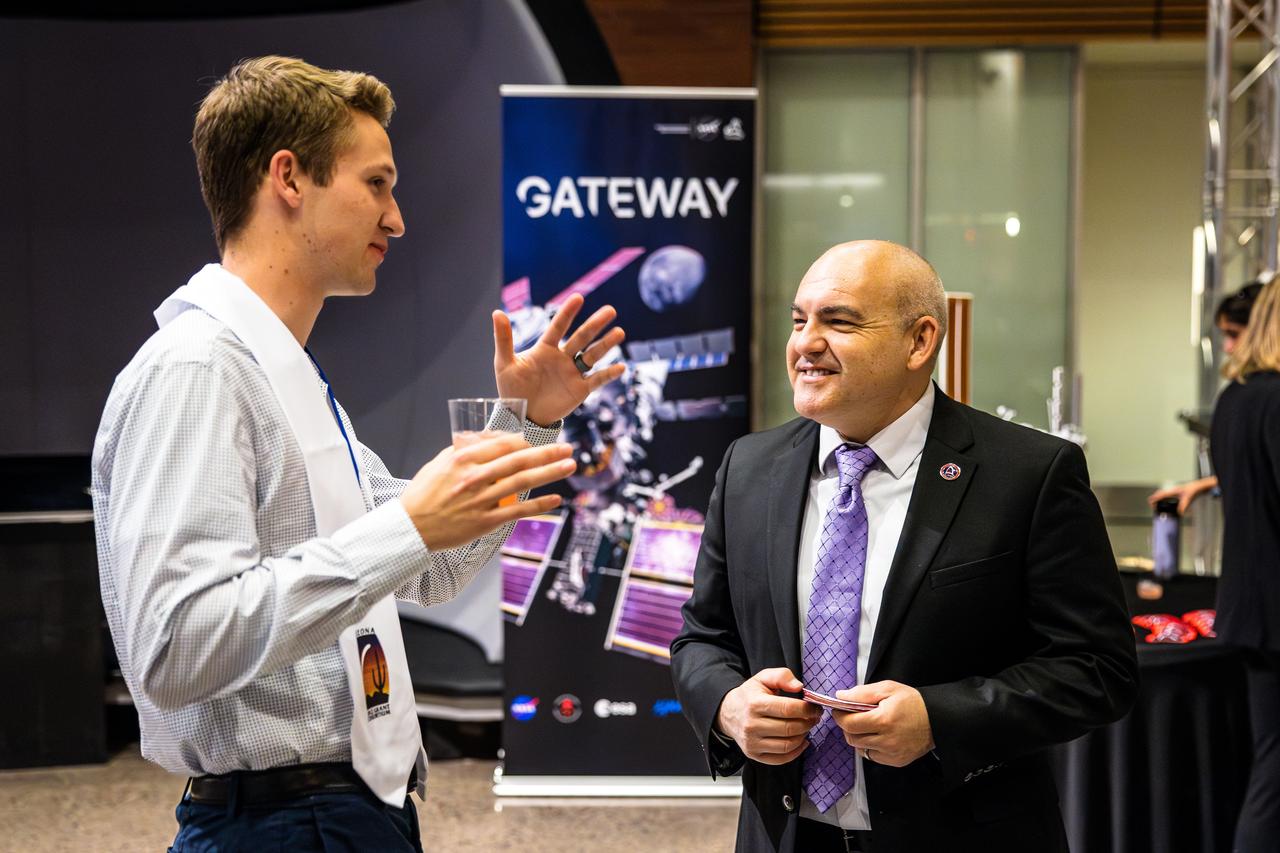
Carlos Garcia-Galan, deputy manager of NASA’s Gateway Program, talks with college students about NASA internship opportunities after delivering a keynote address on Gateway, Artemis, and the next era of human space exploration at the 2025 Arizona NASA Space Grant Consortium Statewide Student Research Symposium, held April 18, 2025, at Arizona State University.
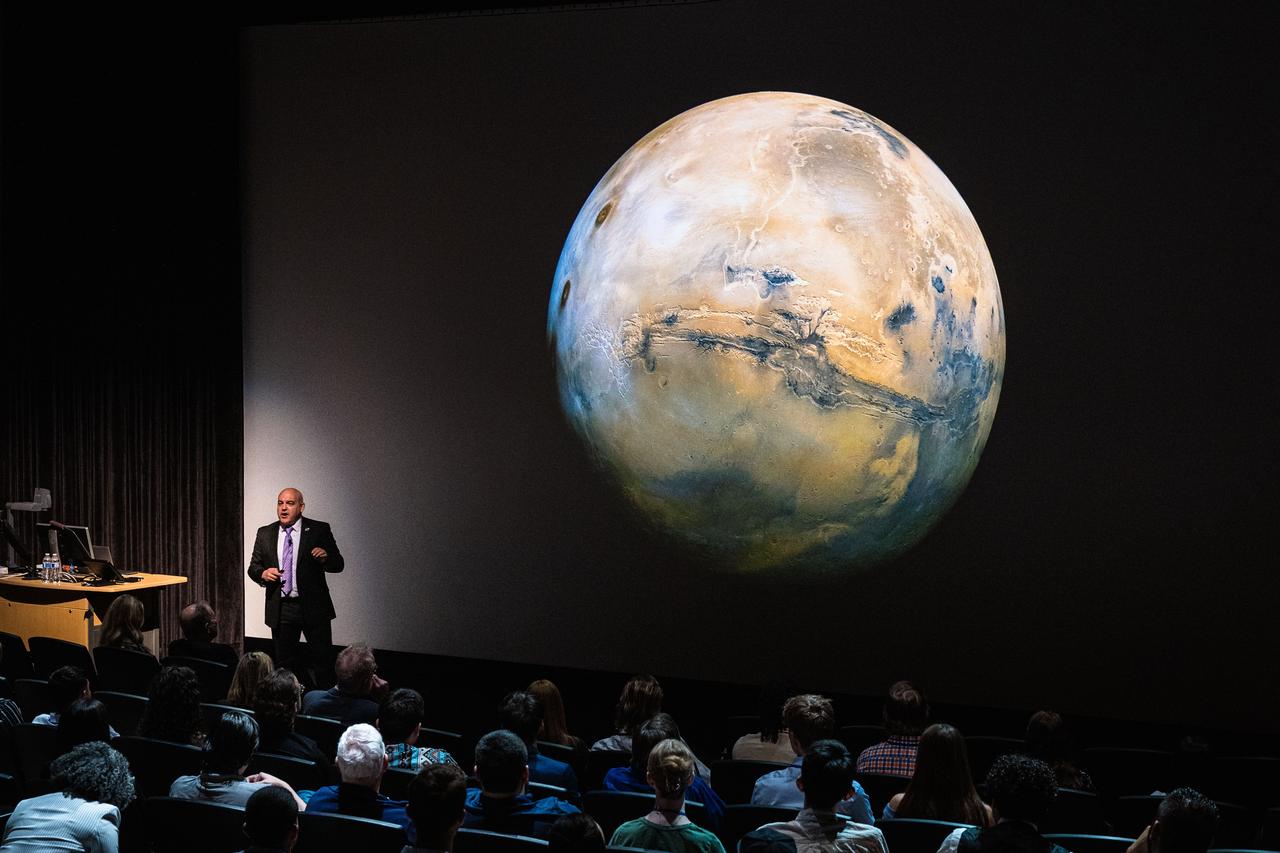
Carlos Garcia-Galan, deputy manager of NASA’s Gateway Program, delivers a keynote address on Gateway, Artemis, and the next era of human space exploration at the 2025 Arizona NASA Space Grant Consortium Statewide Student Research Symposium, held April 18, 2025, at Arizona State University.
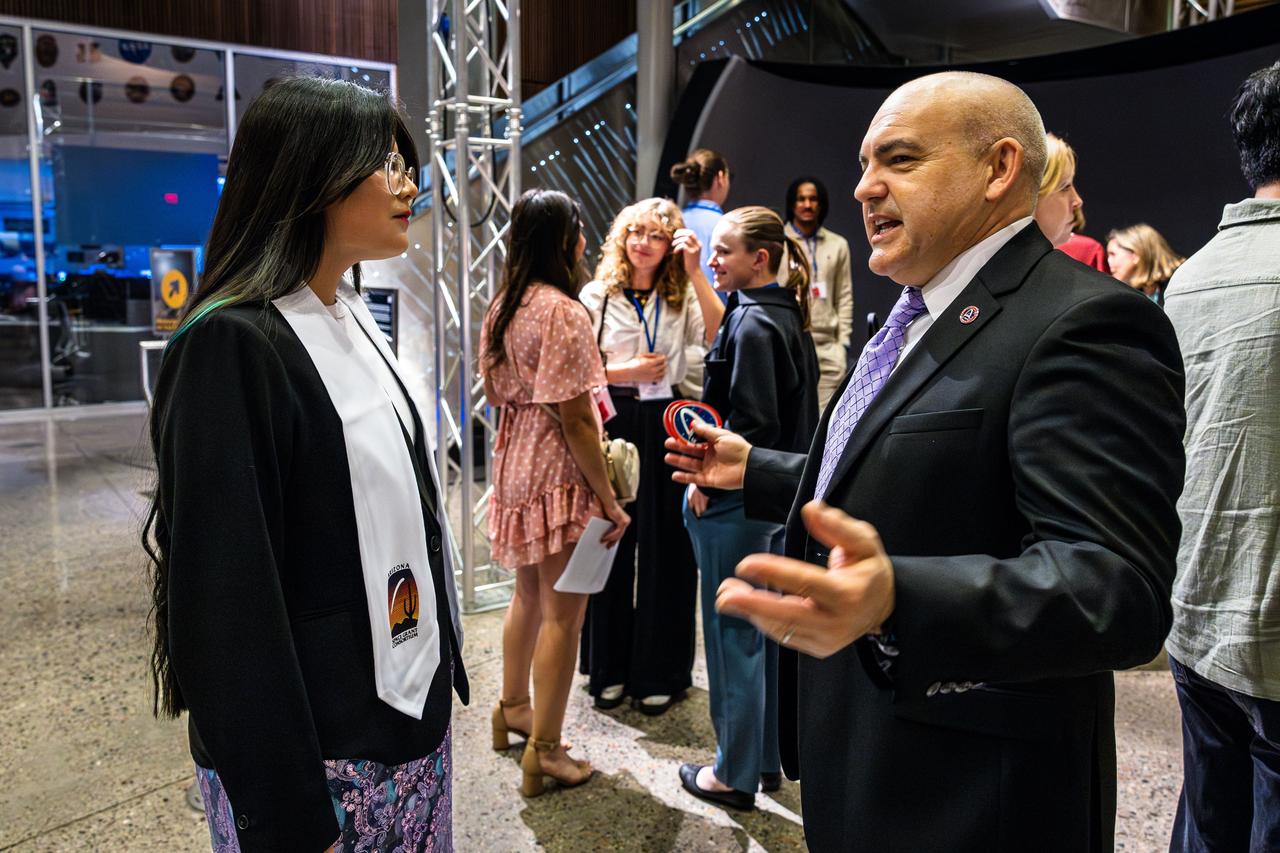
Carlos Garcia-Galan, deputy manager of NASA’s Gateway Program, talks with college students about NASA internship opportunities after delivering a keynote address on Gateway, Artemis, and the next era of human space exploration at the 2025 Arizona NASA Space Grant Consortium Statewide Student Research Symposium, held April 18, 2025, at Arizona State University.

Carlos Garcia-Galan, deputy manager of NASA’s Gateway Program, talks with college students about NASA internship opportunities after delivering a keynote address on Gateway, Artemis, and the next era of human space exploration at the 2025 Arizona NASA Space Grant Consortium Statewide Student Research Symposium, held April 18, 2025, at Arizona State University.
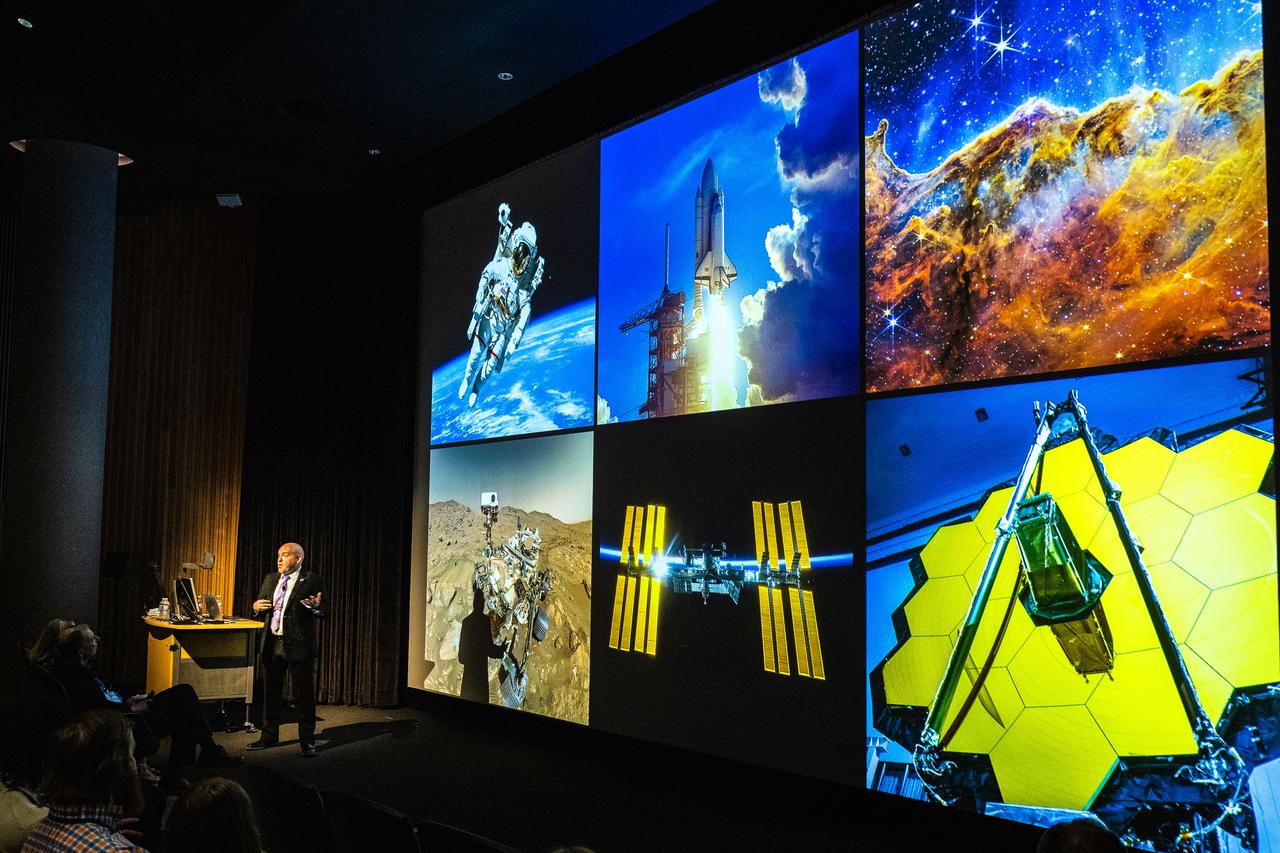
Carlos Garcia-Galan, deputy manager of NASA’s Gateway Program, delivers a keynote address on Gateway, Artemis, and the next era of human space exploration at the 2025 Arizona NASA Space Grant Consortium Statewide Student Research Symposium, held April 18, 2025, at Arizona State University.
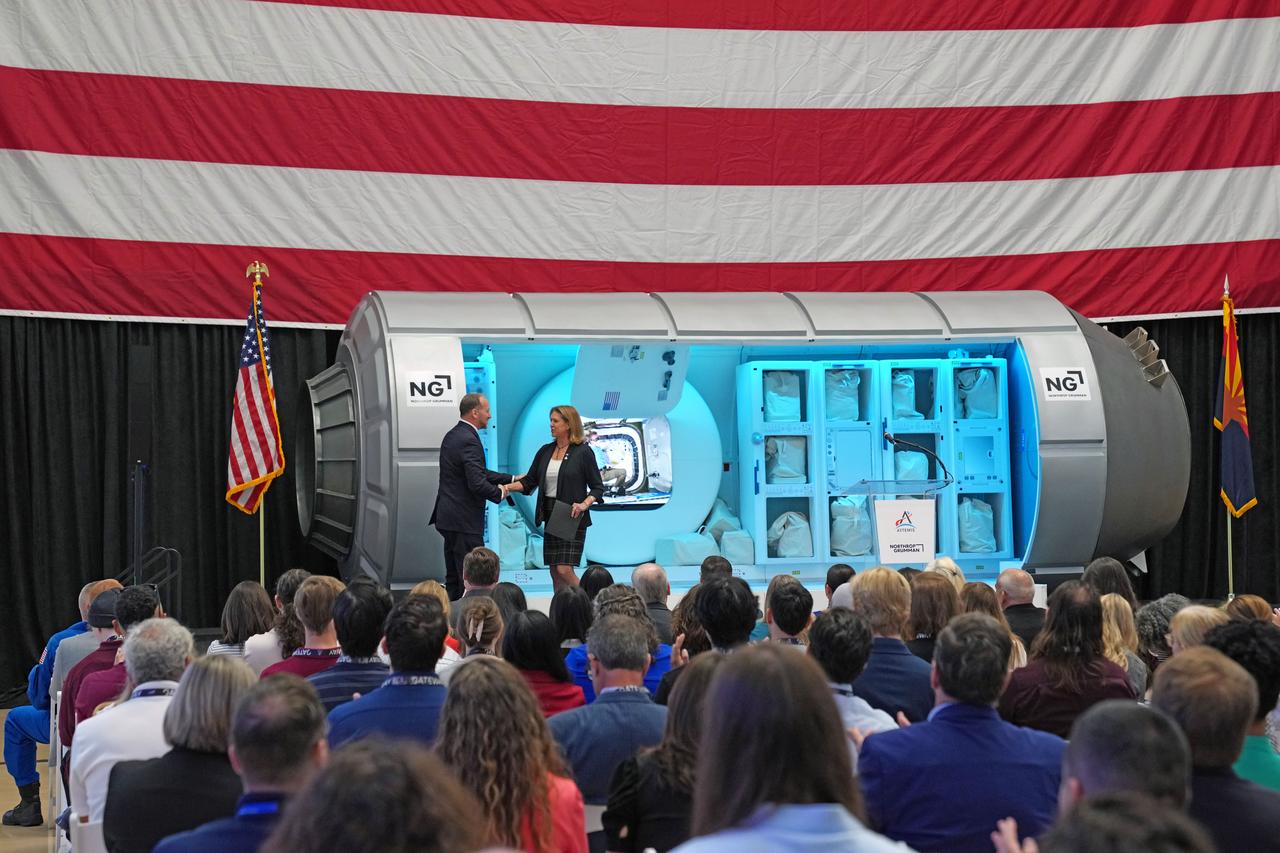
Dr. Lori Glaze, acting associate administrator for NASA’s Exploration Systems Development Mission Directorate, and Dr. Jon B. Olansen, Gateway Program manager, on stage during an April 24, 2025, event at Northrop Grumman’s facility in Gilbert, Arizona, commemorating HALO’s arrival in the United States.

Gateway’s HALO (Habitation and Logistics Outpost) at Northrop Grumman’s facility in Gilbert, Arizona, on April 4, 2025, shortly after its arrival from Thales Alenia Space in Turin, Italy.

Gateway’s HALO (Habitation and Logistics Outpost) at Northrop Grumman’s facility in Gilbert, Arizona, on April 4, 2025, shortly after its arrival from Thales Alenia Space in Turin, Italy.
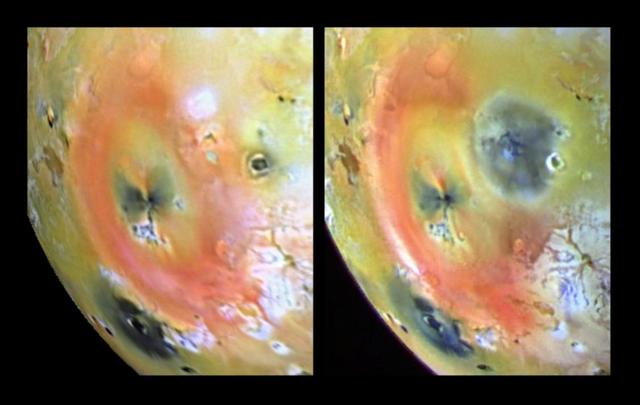
Arizona-sized Io Eruption
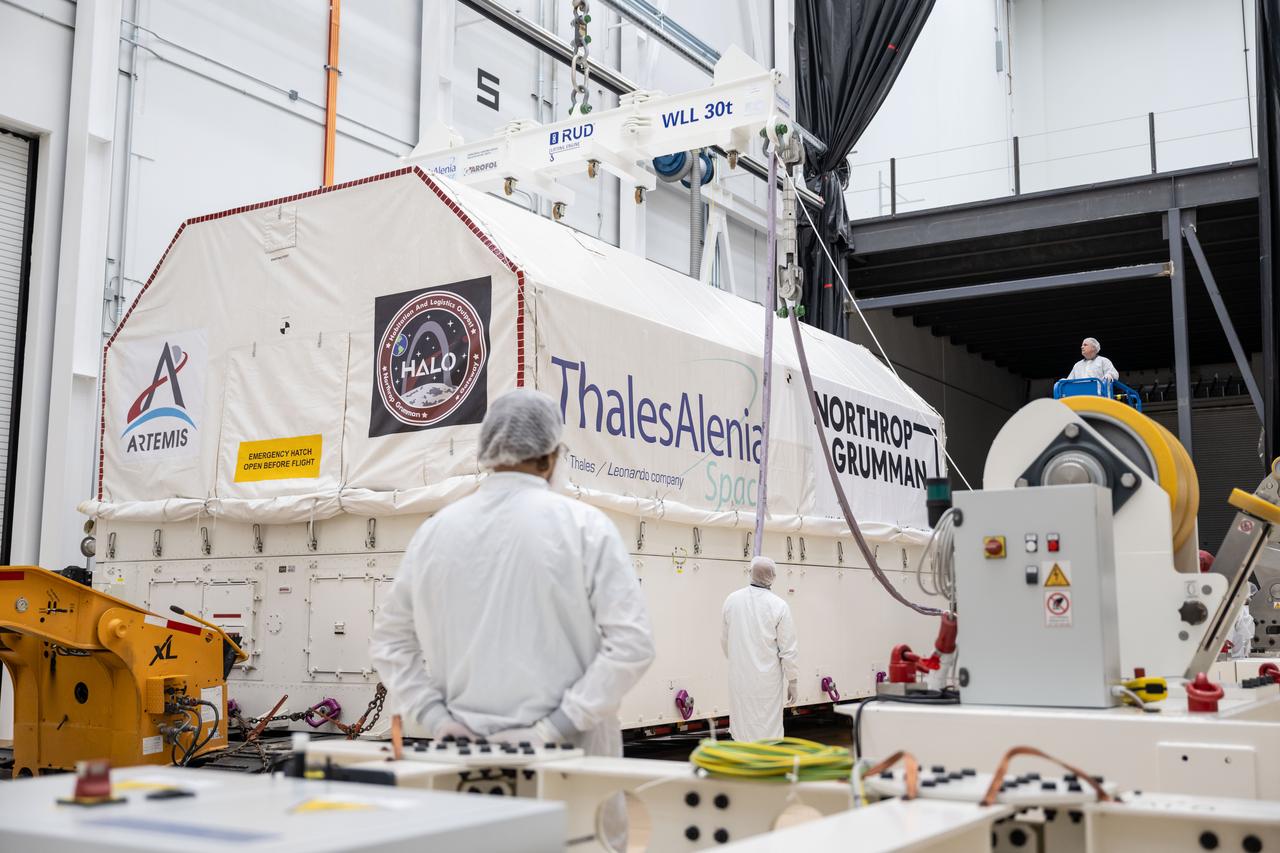
At Northrop Grumman’s Gilbert, Arizona, facility, teams begin removing Gateway’s HALO (Habitation and Logistics Outpost) from its transport container. HALO arrived from Turin, Italy, where Thales Alenia Space fabricated its primary structure. The module will undergo final outfitting in Gilbert before being integrated with the Power and Propulsion Element and launched to lunar orbit.

At Northrop Grumman’s Gilbert, Arizona, facility, teams remove Gateway’s HALO (Habitation and Logistics Outpost) from its transport container. HALO arrived from Turin, Italy, where Thales Alenia Space fabricated its primary structure. The module will undergo final outfitting in Gilbert before being integrated with the Power and Propulsion Element and launched to lunar orbit.
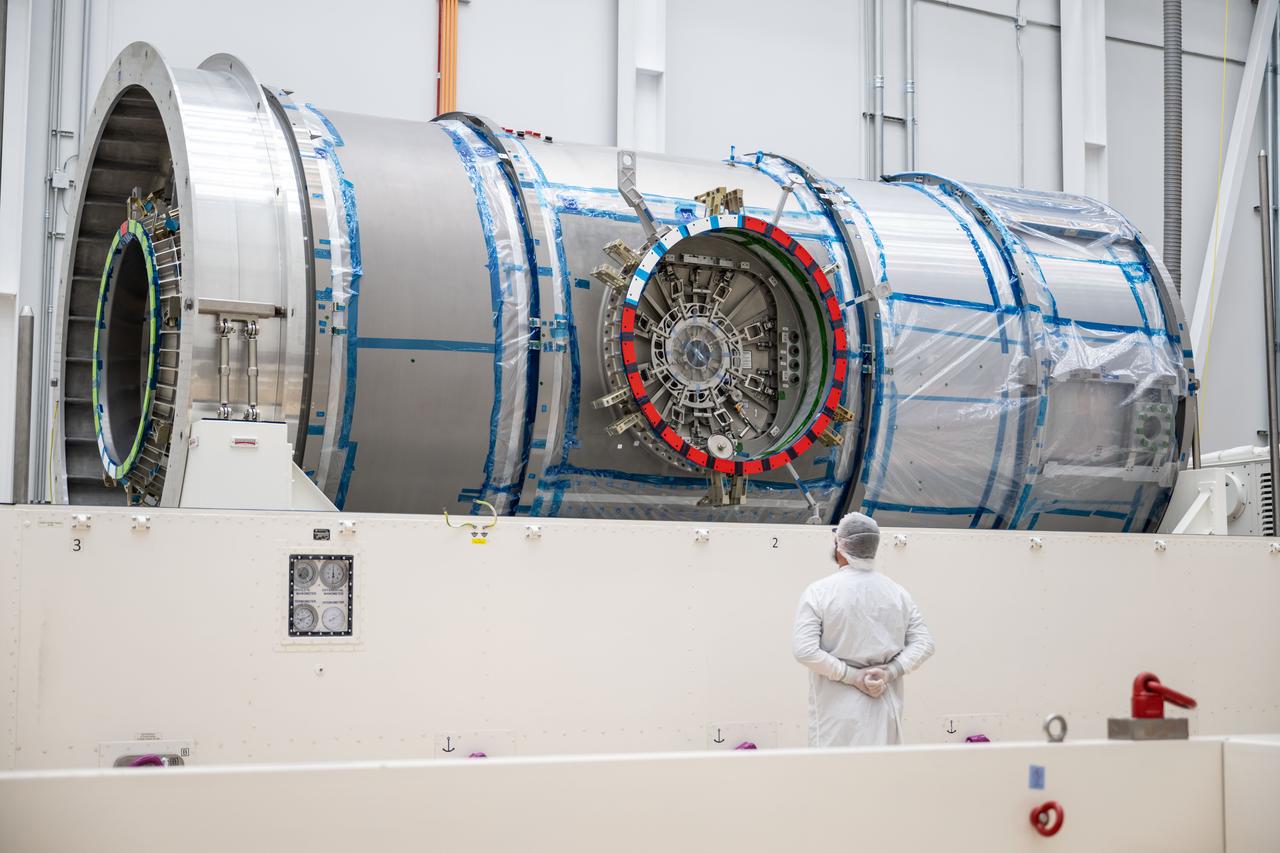
At Northrop Grumman’s Gilbert, Arizona, facility, teams begin removing Gateway’s HALO (Habitation and Logistics Outpost) from its transport container. HALO arrived from Turin, Italy, where Thales Alenia Space fabricated its primary structure. The module will undergo final outfitting in Gilbert before being integrated with the Power and Propulsion Element and launched to lunar orbit.
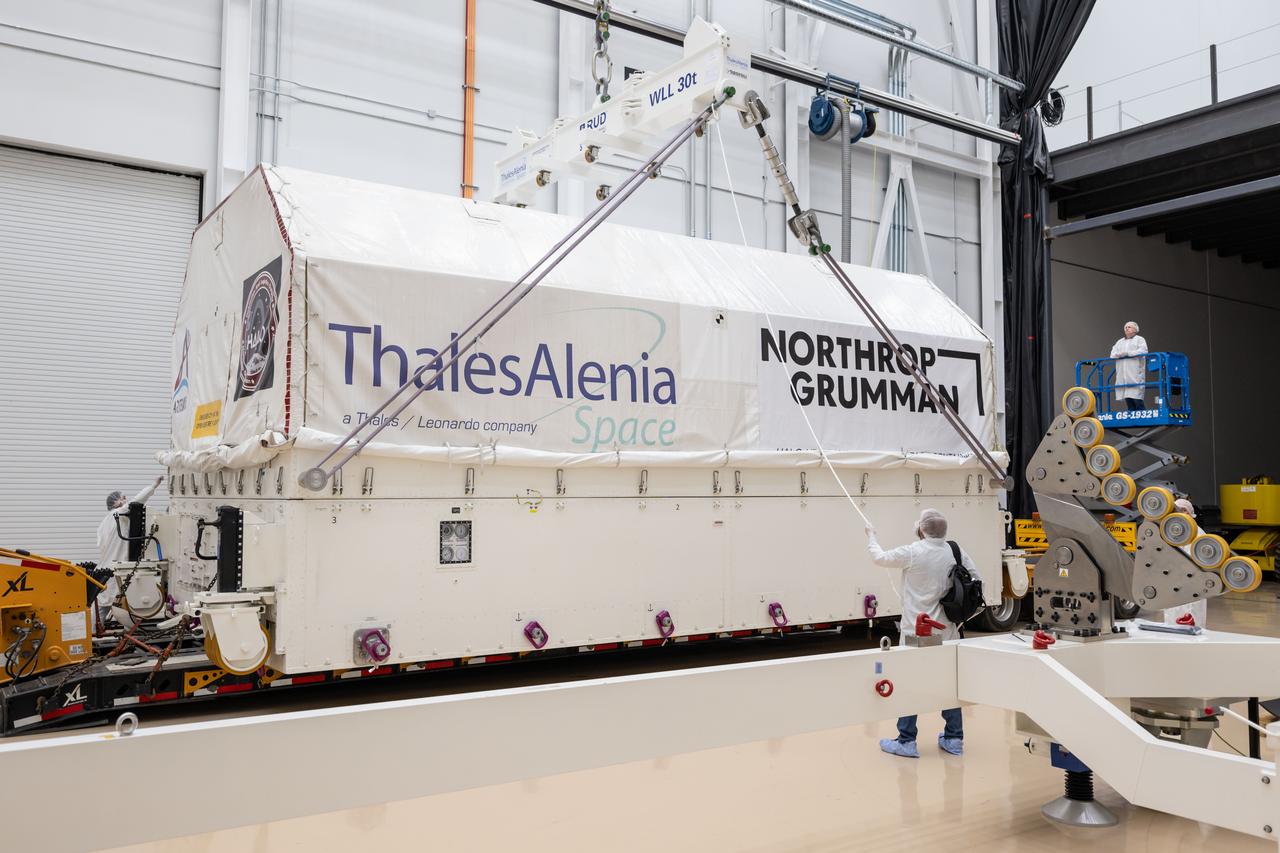
At Northrop Grumman’s Gilbert, Arizona, facility, teams begin removing Gateway’s HALO (Habitation and Logistics Outpost) from its transport container. HALO arrived from Turin, Italy, where Thales Alenia Space fabricated its primary structure. The module will undergo final outfitting in Gilbert before being integrated with the Power and Propulsion Element and launched to lunar orbit.
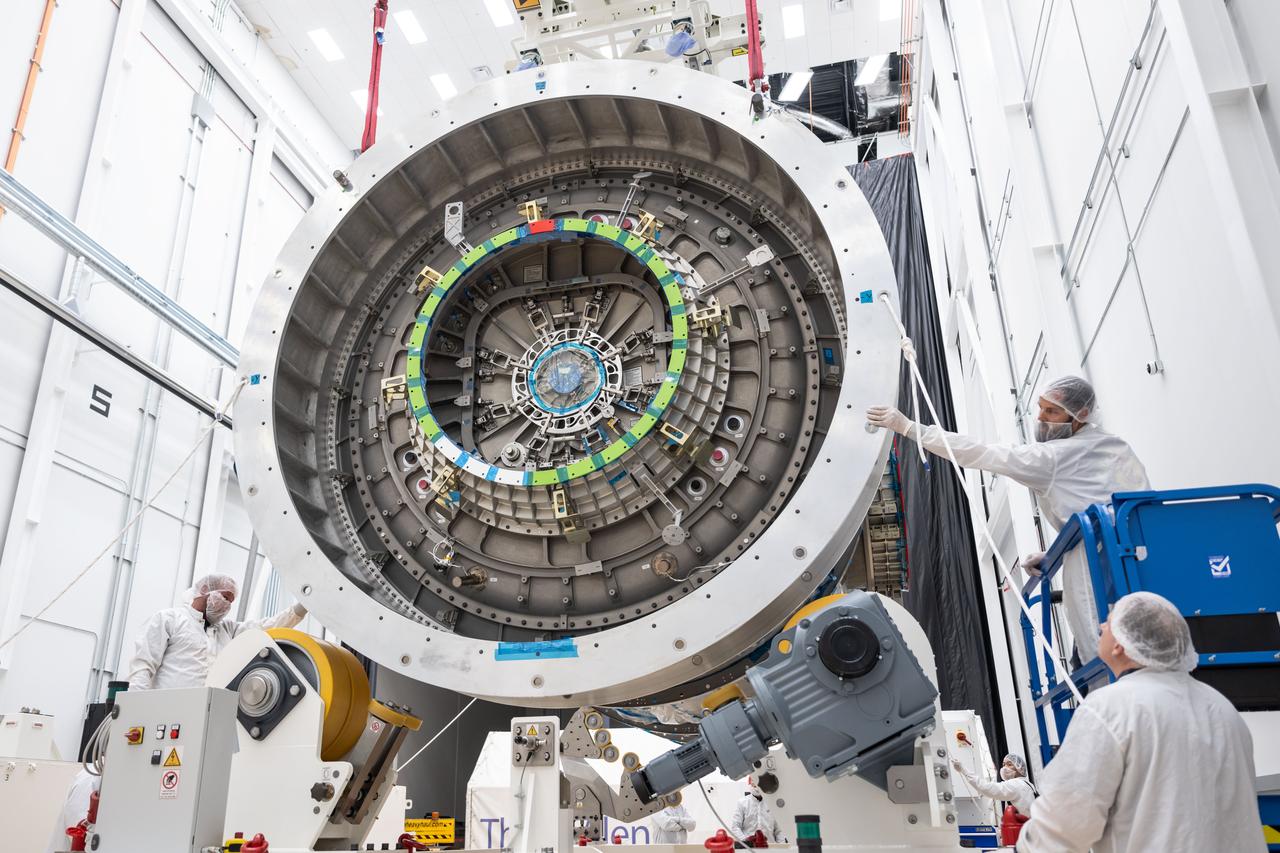
At Northrop Grumman’s Gilbert, Arizona, facility, teams remove Gateway’s HALO (Habitation and Logistics Outpost) from its transport container. HALO arrived from Turin, Italy, where Thales Alenia Space fabricated its primary structure. The module will undergo final outfitting in Gilbert before being integrated with the Power and Propulsion Element and launched to lunar orbit.
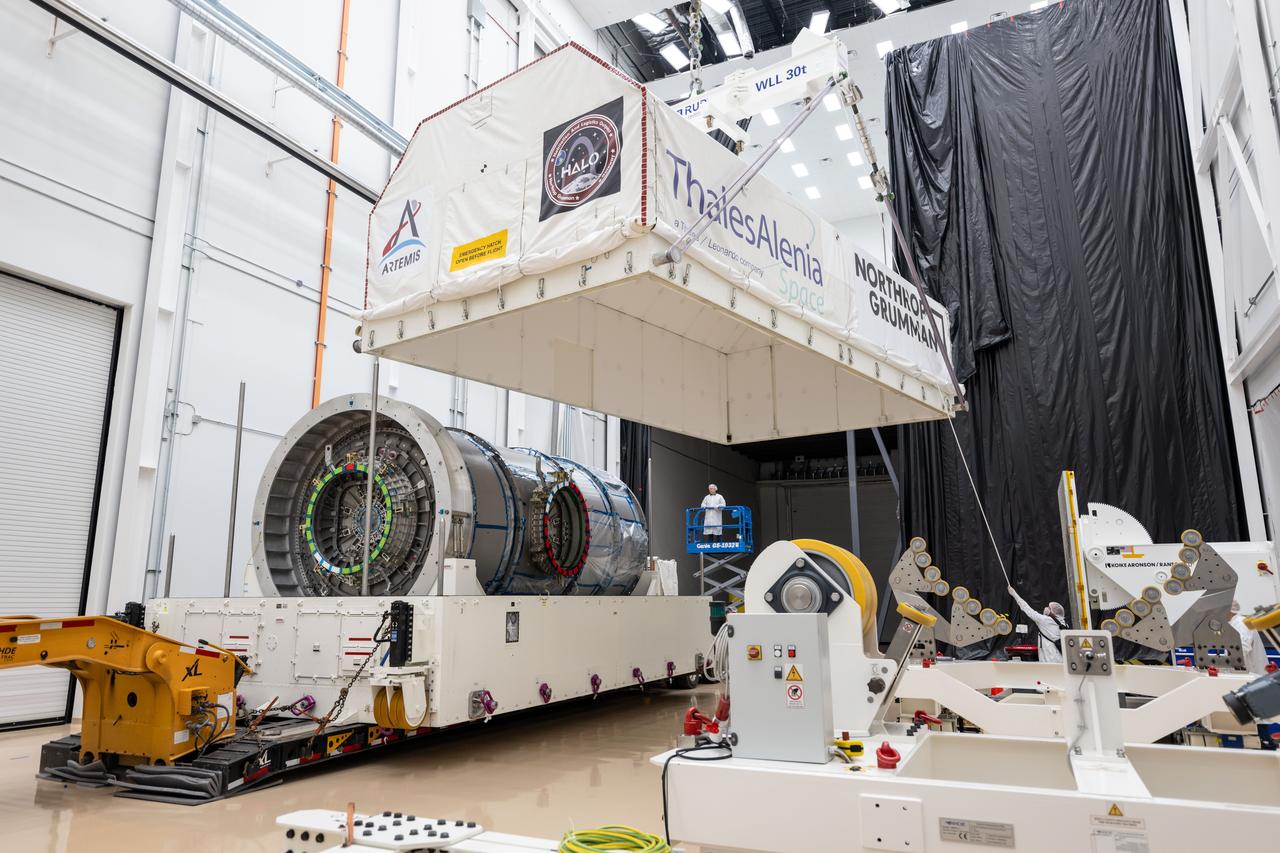
At Northrop Grumman’s Gilbert, Arizona, facility, teams remove Gateway’s HALO (Habitation and Logistics Outpost) from its transport container. HALO arrived from Turin, Italy, where Thales Alenia Space fabricated its primary structure. The module will undergo final outfitting in Gilbert before being integrated with the Power and Propulsion Element and launched to lunar orbit.
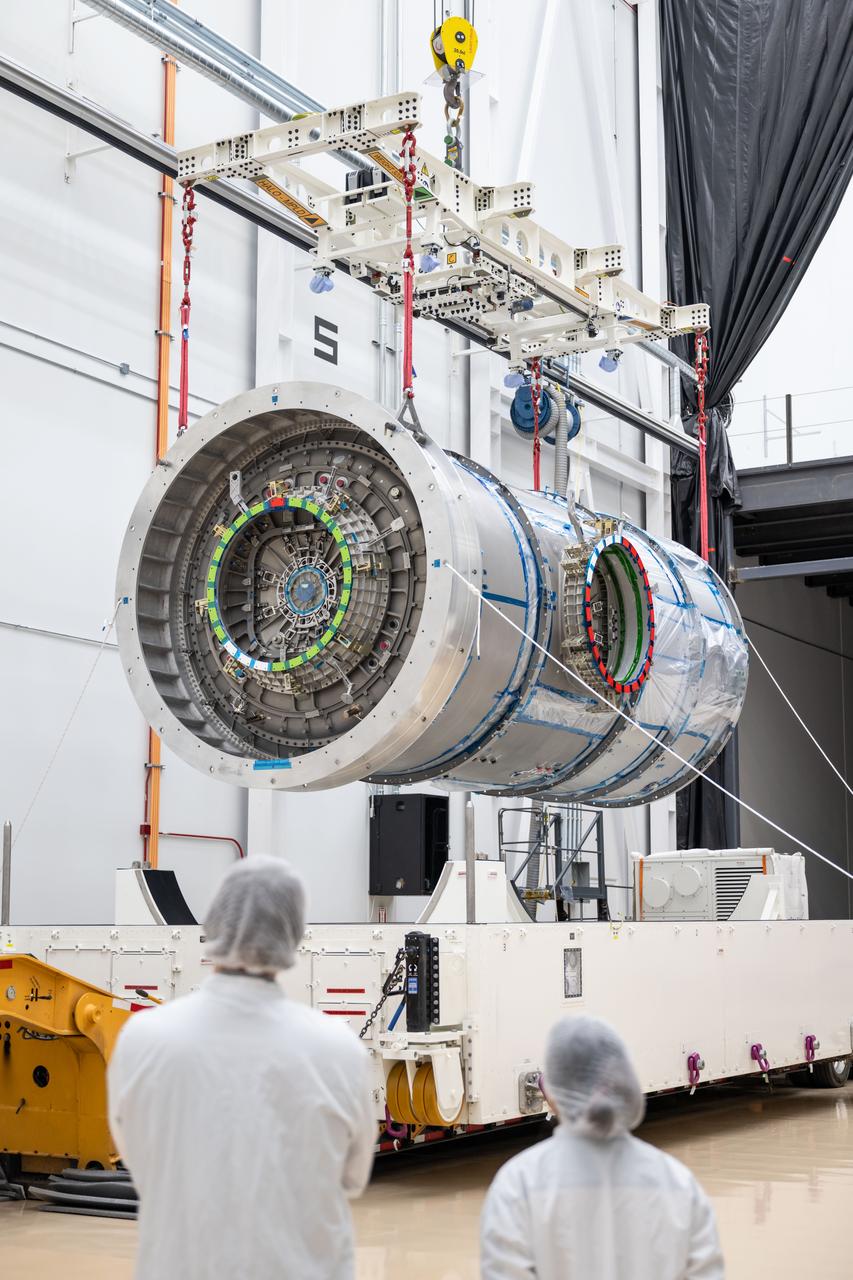
At Northrop Grumman’s Gilbert, Arizona, facility, teams remove Gateway’s HALO (Habitation and Logistics Outpost) from its transport container. HALO arrived from Turin, Italy, where Thales Alenia Space fabricated its primary structure. The module will undergo final outfitting in Gilbert before being integrated with the Power and Propulsion Element and launched to lunar orbit.
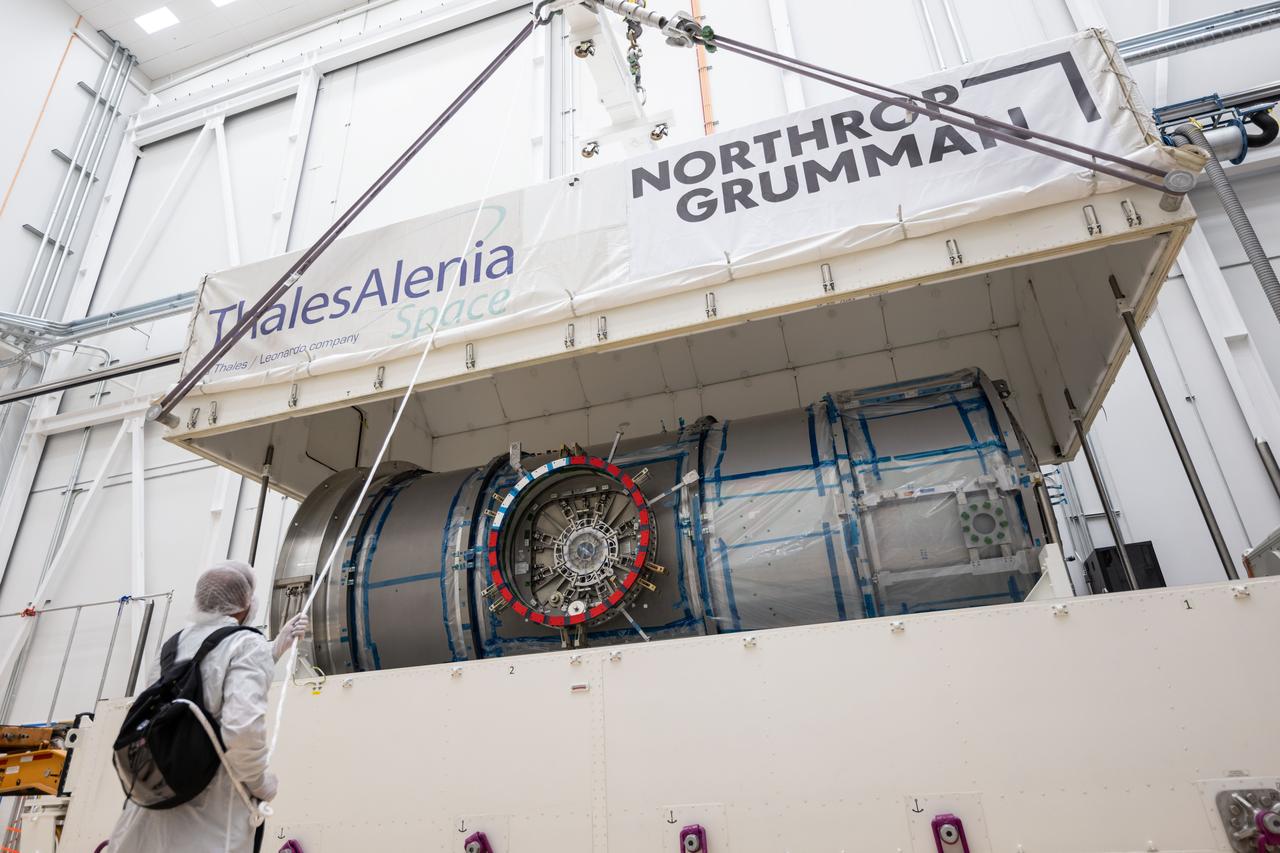
At Northrop Grumman’s Gilbert, Arizona, facility, teams begin removing Gateway’s HALO (Habitation and Logistics Outpost) from its transport container. HALO arrived from Turin, Italy, where Thales Alenia Space fabricated its primary structure. The module will undergo final outfitting in Gilbert before being integrated with the Power and Propulsion Element and launched to lunar orbit.

At Northrop Grumman’s Gilbert, Arizona, facility, teams remove Gateway’s HALO (Habitation and Logistics Outpost) from its transport container. HALO arrived from Turin, Italy, where Thales Alenia Space fabricated its primary structure. The module will undergo final outfitting in Gilbert before being integrated with the Power and Propulsion Element and launched to lunar orbit.

At Northrop Grumman’s Gilbert, Arizona, facility, teams begin removing Gateway’s HALO (Habitation and Logistics Outpost) from its transport container. HALO arrived from Turin, Italy, where Thales Alenia Space fabricated its primary structure. The module will undergo final outfitting in Gilbert before being integrated with the Power and Propulsion Element and launched to lunar orbit.
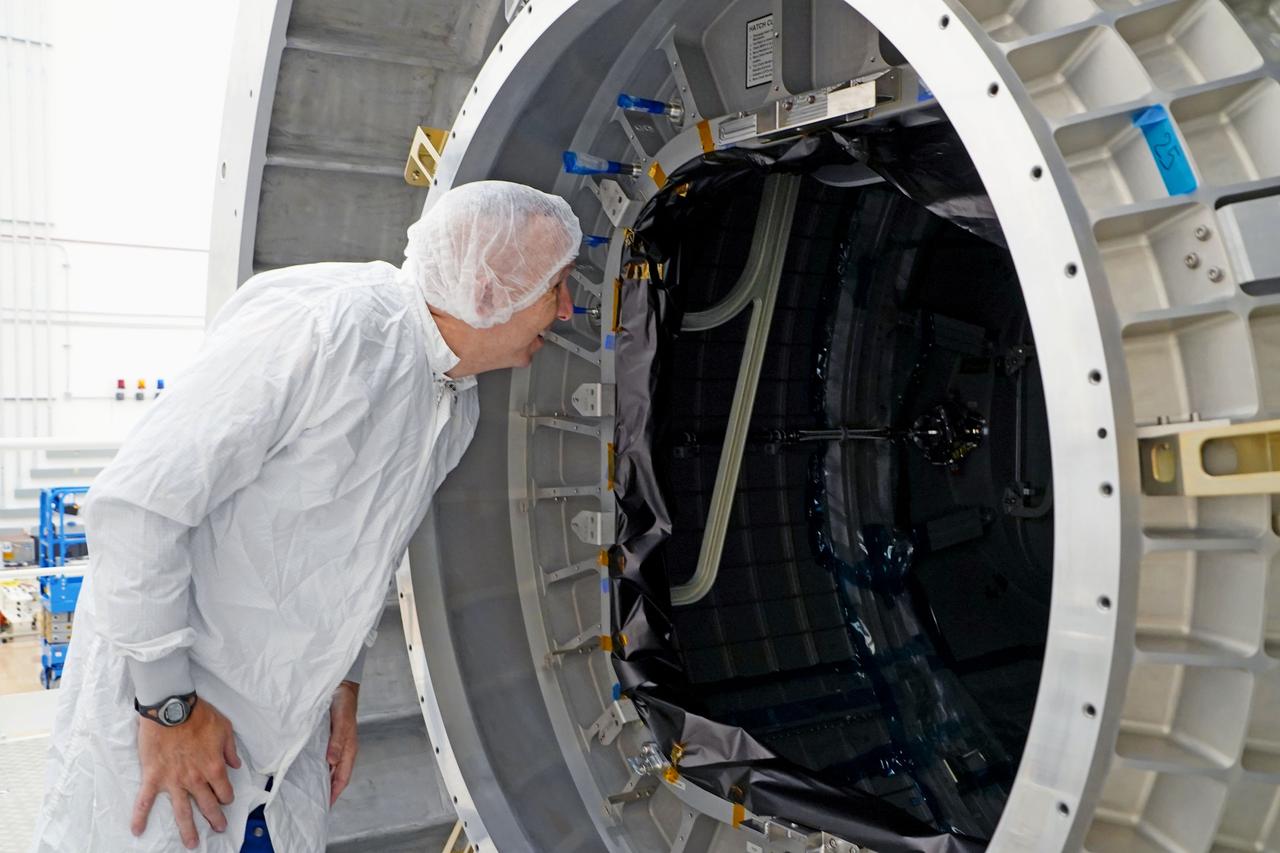
NASA astronaut Randy Bresnik peers inside the HALO module during a close-up look on April 24, 2024, at Northrop Grumman’s facility in Gilbert, Arizona. The visit was part of an event commemorating HALO’s arrival in the United States, marking a major milestone for Gateway.
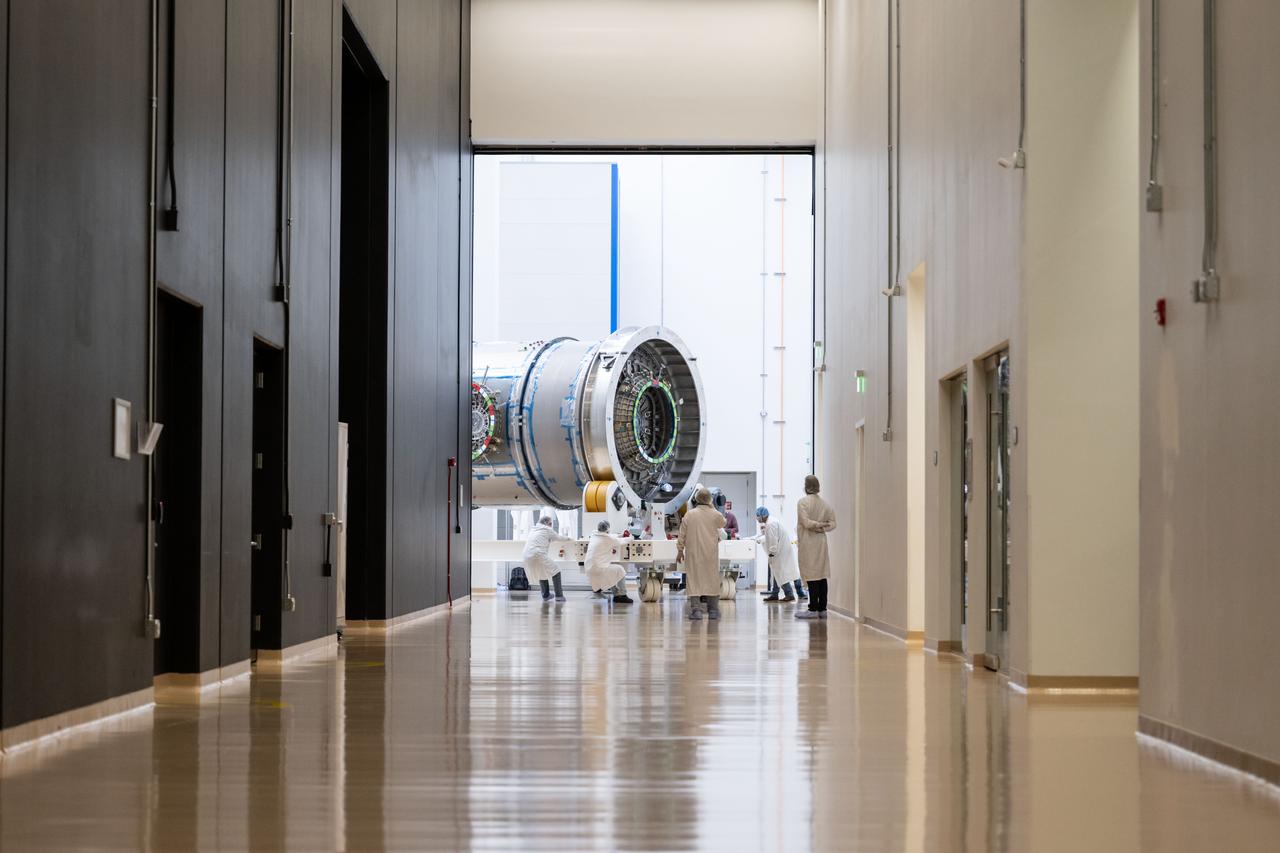
At Northrop Grumman’s Gilbert, Arizona, facility, teams transport Gateway’s HALO (Habitation and Logistics Outpost). HALO arrived from Turin, Italy, where Thales Alenia Space fabricated its primary structure. The module will undergo final outfitting in Gilbert before being integrated with the Power and Propulsion Element and launched to lunar orbit.
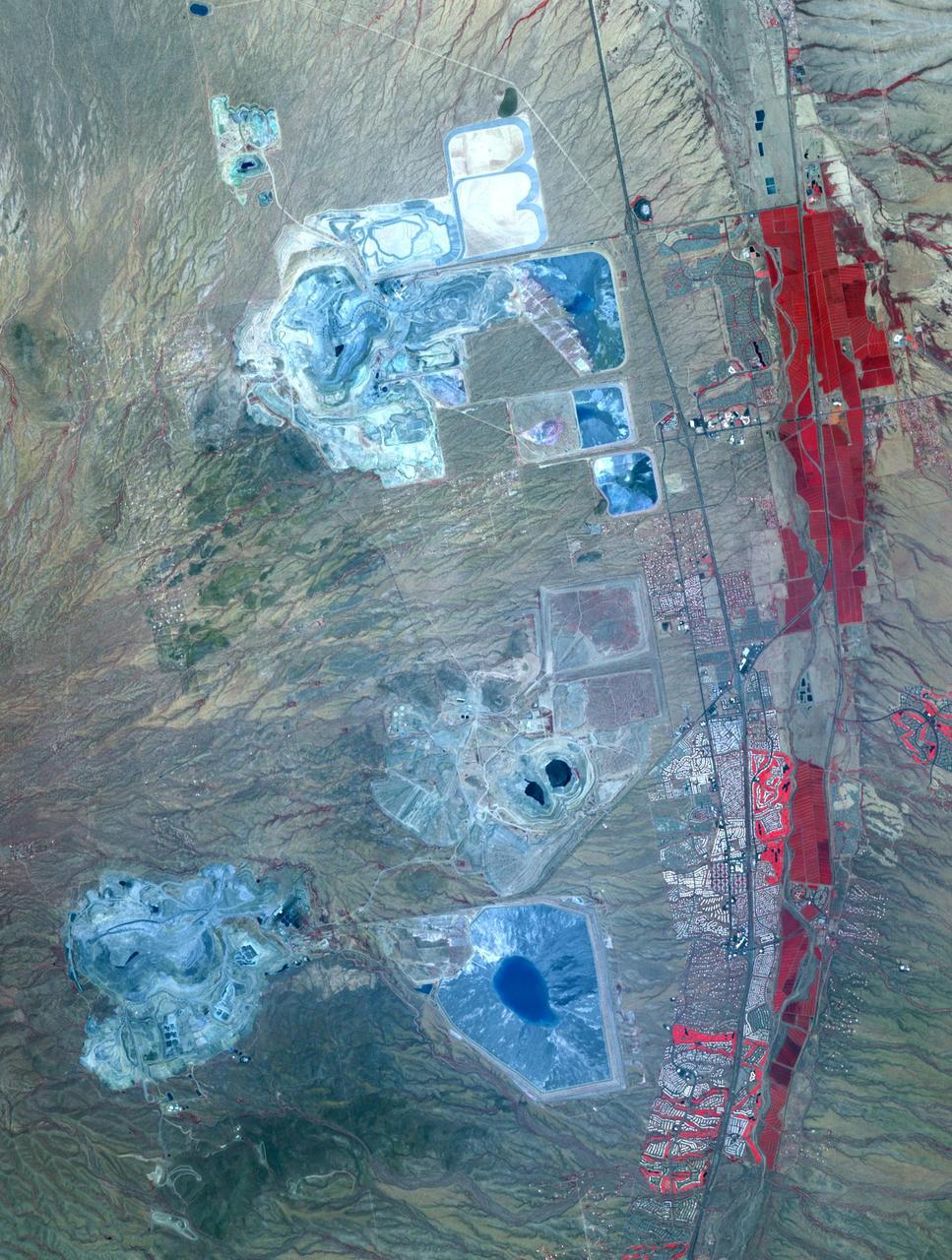
Arizona produces 60% of the total copper mined in the US; in 2007, 750,000 tons of copper came out of the state. One of the major mining districts is located about 30 km south of Tucson. Starting around 1950, open-pit mining replaced underground operations, and the ASARCO-Mission complex, Twin Buttes, and Sierrita mines became large open pit operations. Accompanying copper mineralization, silver, molybdenum, zinc, lead and gold are extracted. In addition to the pits themselves, enormous leach ponds and tailings piles surround the pits. The image was acquired May 31, 2012, covers an area of 22 by 28 km, and is located at 31.9 degrees north, 111 degrees west. With its 14 spectral bands from the visible to the thermal infrared wavelength region and its high spatial resolution of 15 to 90 meters (about 50 to 300 feet), ASTER images Earth to map and monitor the changing surface of our planet. ASTER is one of five Earth-observing instruments launched Dec. 18, 1999, on Terra. The instrument was built by Japan's Ministry of Economy, Trade and Industry. A joint U.S./Japan science team is responsible for validation and calibration of the instrument and data products. The broad spectral coverage and high spectral resolution of ASTER provides scientists in numerous disciplines with critical information for surface mapping and monitoring of dynamic conditions and temporal change. Example applications are: monitoring glacial advances and retreats; monitoring potentially active volcanoes; identifying crop stress; determining cloud morphology and physical properties; wetlands evaluation; thermal pollution monitoring; coral reef degradation; surface temperature mapping of soils and geology; and measuring surface heat balance. The U.S. science team is located at NASA's Jet Propulsion Laboratory, Pasadena, Calif. The Terra mission is part of NASA's Science Mission Directorate, Washington, D.C. More information about ASTER is available at <a href="http://asterweb.jpl.nasa.gov/" rel="nofollow">asterweb.jpl.nasa.gov/</a> Credit: NASA/GSFC/METI/ERSDAC/JAROS, and U.S./Japan ASTER Science Team <b><a href="http://www.nasa.gov/audience/formedia/features/MP_Photo_Guidelines.html" rel="nofollow">NASA image use policy.</a></b> <b><a href="http://www.nasa.gov/centers/goddard/home/index.html" rel="nofollow">NASA Goddard Space Flight Center</a></b> enables NASA’s mission through four scientific endeavors: Earth Science, Heliophysics, Solar System Exploration, and Astrophysics. Goddard plays a leading role in NASA’s accomplishments by contributing compelling scientific knowledge to advance the Agency’s mission. <b>Follow us on <a href="http://twitter.com/NASAGoddardPix" rel="nofollow">Twitter</a></b> <b>Like us on <a href="http://www.facebook.com/pages/Greenbelt-MD/NASA-Goddard/395013845897?ref=tsd" rel="nofollow">Facebook</a></b> <b>Find us on <a href="http://instagram.com/nasagoddard?vm=grid" rel="nofollow">Instagram</a></b>
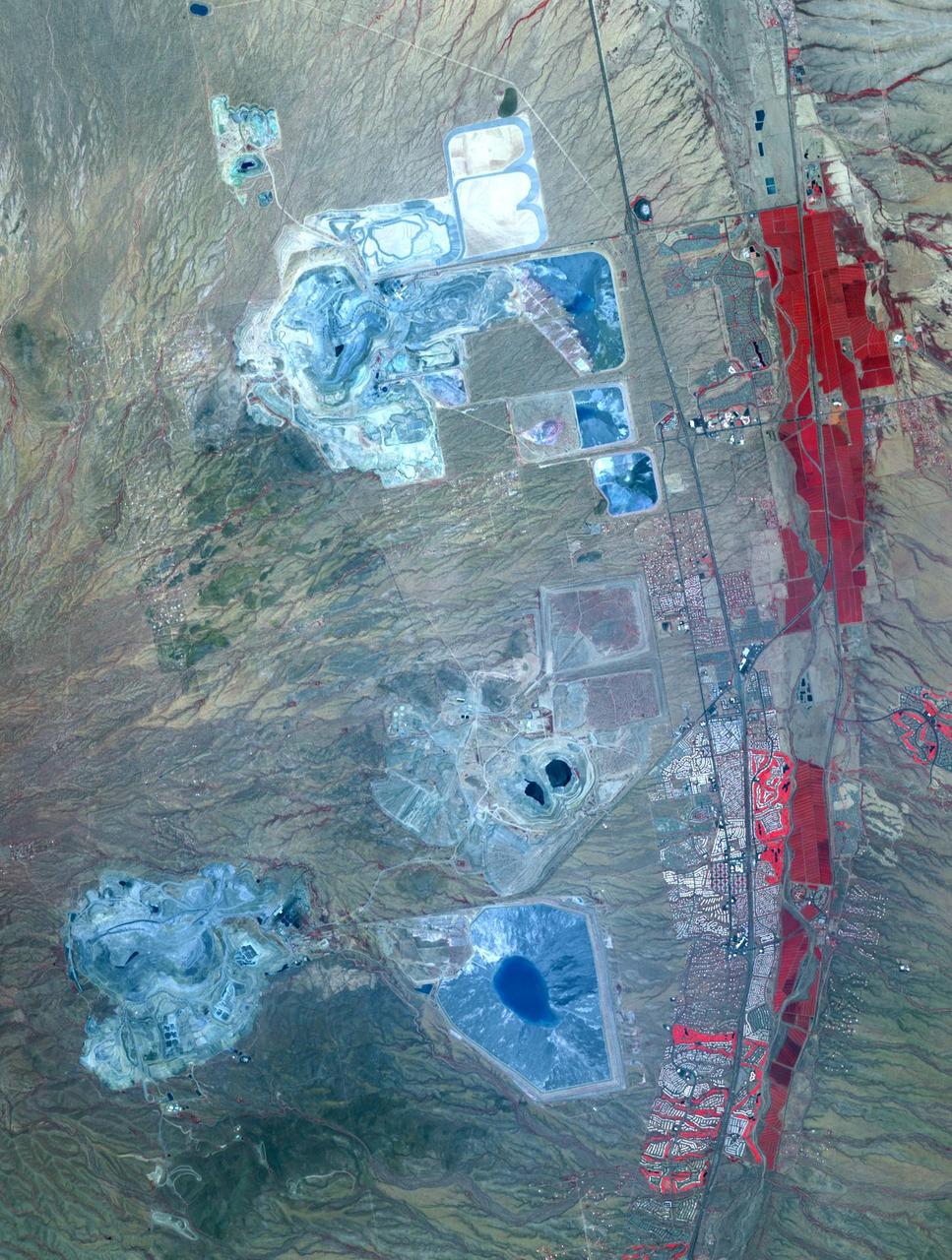
This image acquired by NASA Terra spacecraft shows Arizona, Calif., which produces 60% of the total copper mined in the United States.
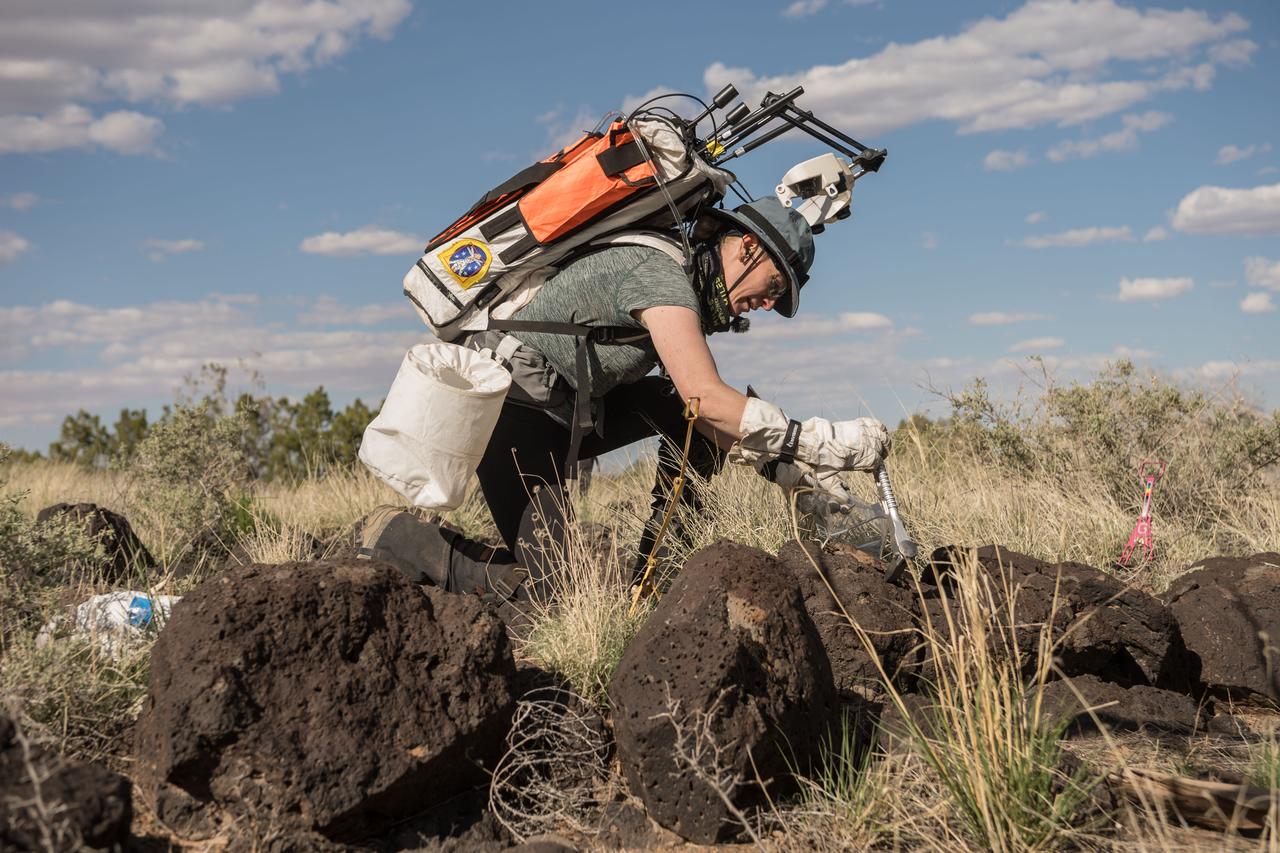
NASA astronaut Kate Rubins uses a chisel to collect a small geologic sample during a simulated moonwalk in the San Francisco Volcanic Field in Northern Arizona on May 17, 2024. Credit: NASA/Josh Valcarcel

NASA astronauts Andre Douglas and Kate Rubins review procedures during a simulated moonwalk in the San Francisco Volcanic Field in Northern Arizona on May 14, 2024. Credit: NASA/Josh Valcarcel
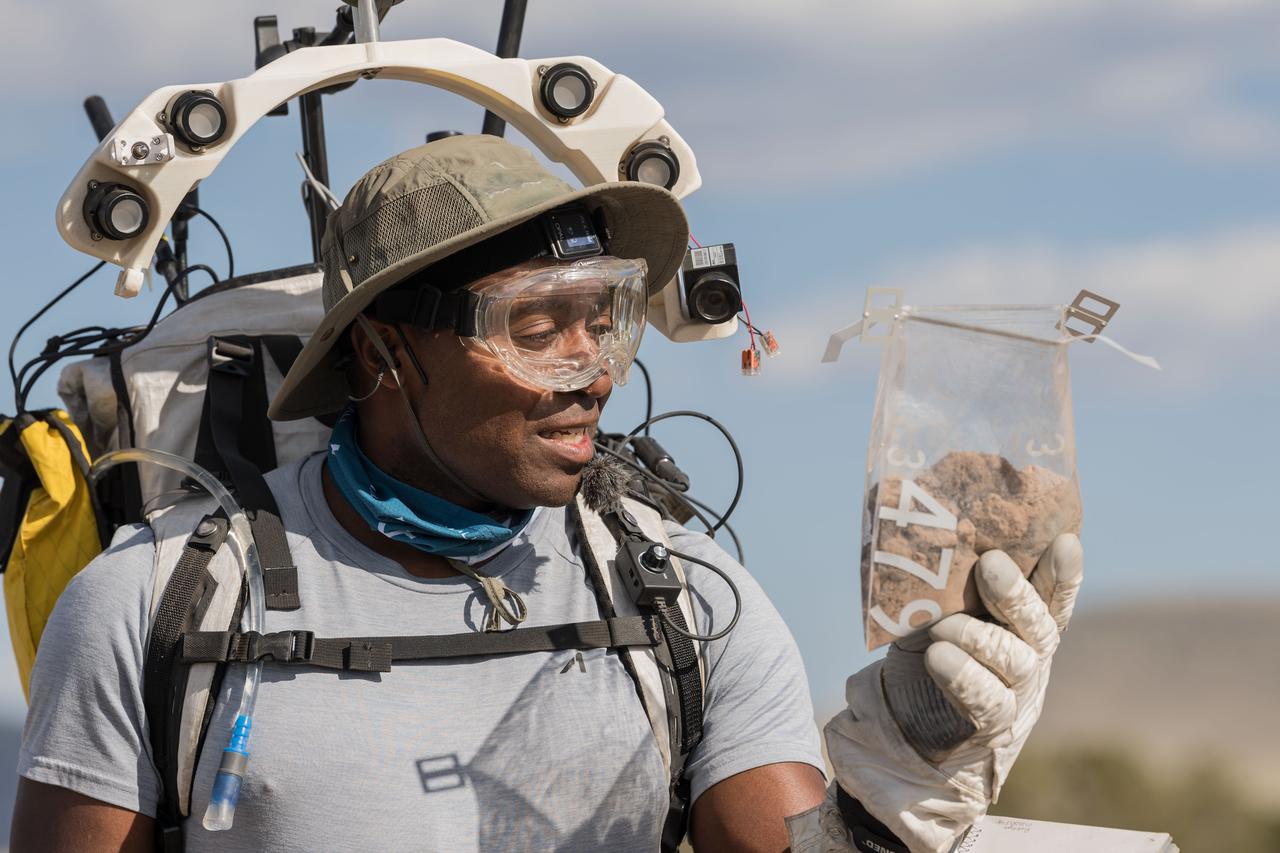
NASA astronaut Andre Douglas takes a closer look at the geologic samples he collected during a simulated moonwalk in the San Francisco Volcanic Field in Northern Arizona on May 17, 2024. Credit: NASA/Josh Valcarcel
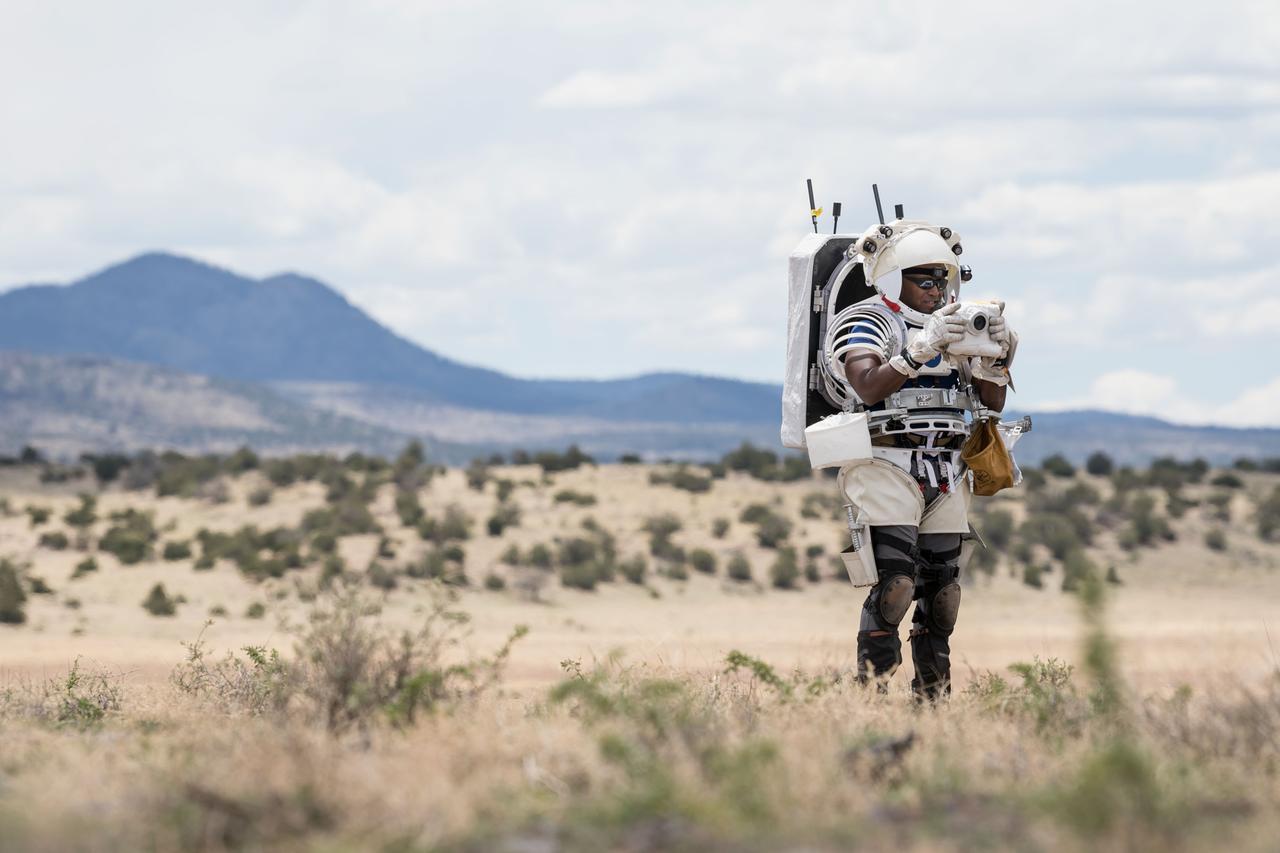
NASA astronaut Andre Douglas takes a picture of the lunar-like landscape during a simulated moonwalk in the San Francisco Volcanic Field in Northern Arizona on May 13, 2024. Credit: NASA/Josh Valcarcel
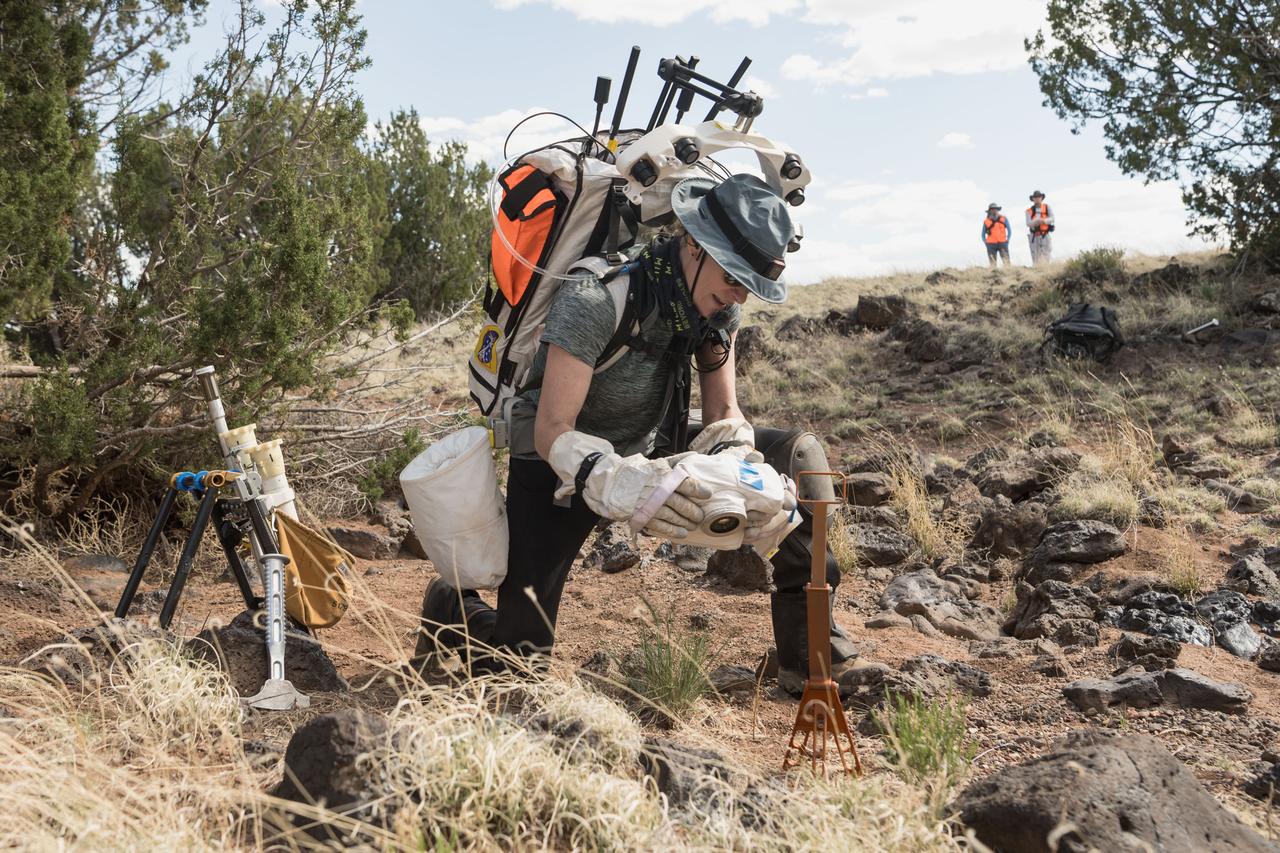
NASA astronaut Kate Rubins takes a picture of a geologic sample during a simulated moonwalk in the San Francisco Volcanic Field in Northern Arizona on May 17, 2024. Credit: NASA/Josh Valcarcel
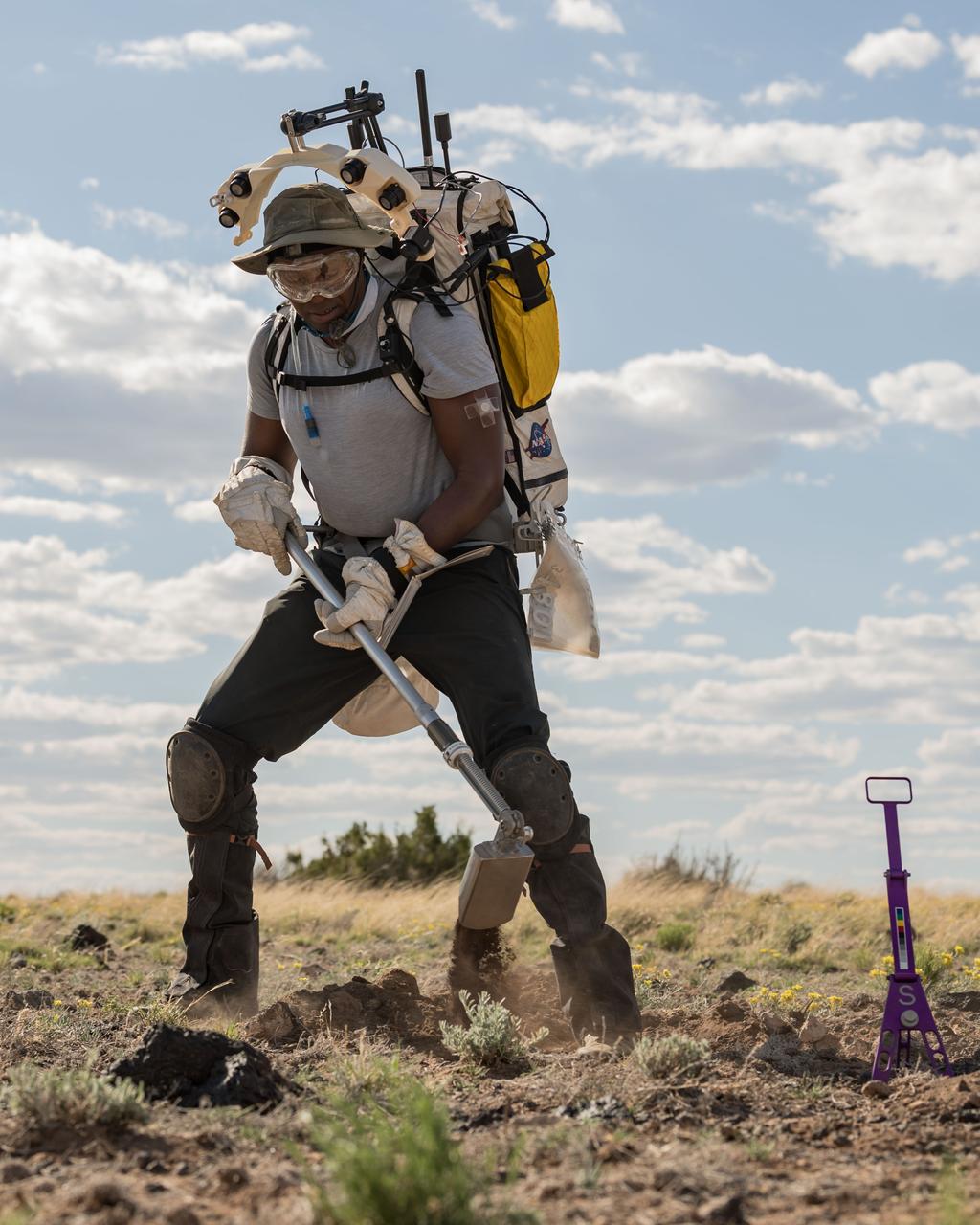
NASA astronaut Andre Douglas uses a scoop to dig into the ground to collect geologic samples during a simulated moonwalk in the San Francisco Volcanic Field in Northern Arizona on May 17, 2024. Credit: NASA/Josh Valcarcel
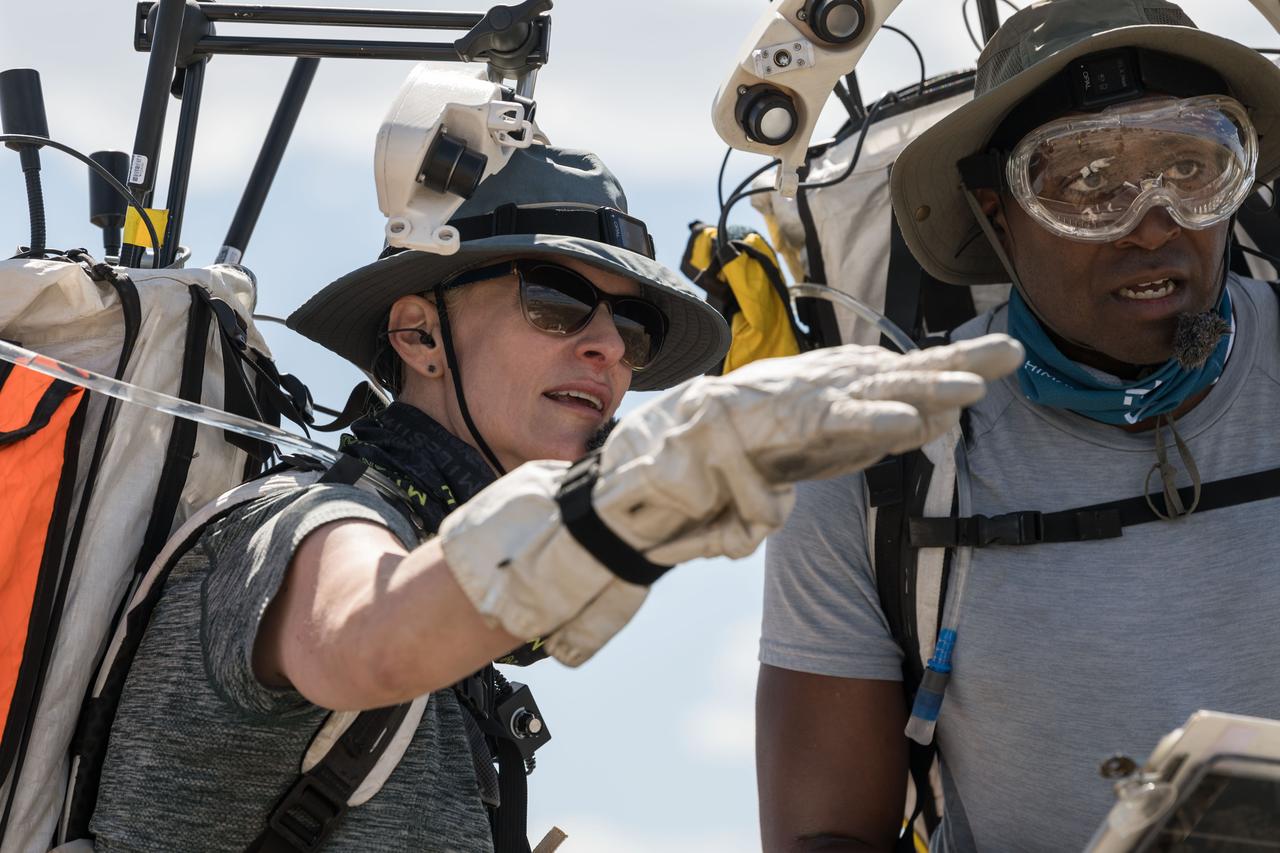
NASA astronauts Kate Rubins and Andre Douglas look ahead at their traverse during a simulated moonwalk in the San Francisco Volcanic Field in Northern Arizona on May 17, 2024. Credit: NASA/Josh Valcarcel
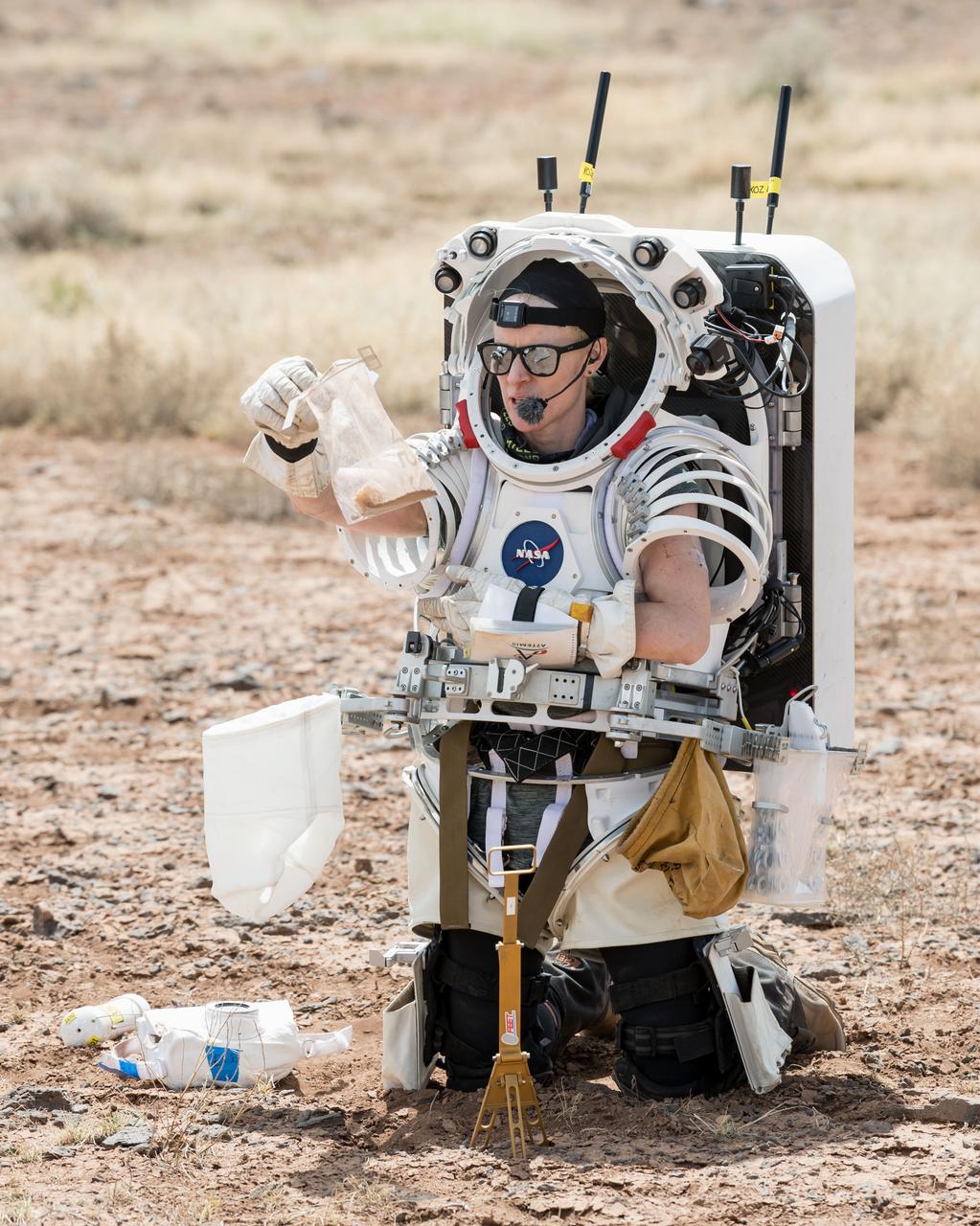
NASA astronaut Kate Rubins examines a geology sample she collected during a simulated moonwalk in the San Francisco Volcanic Field in Northern Arizona on May 13, 2024. Credit: NASA/Josh Valcarcel
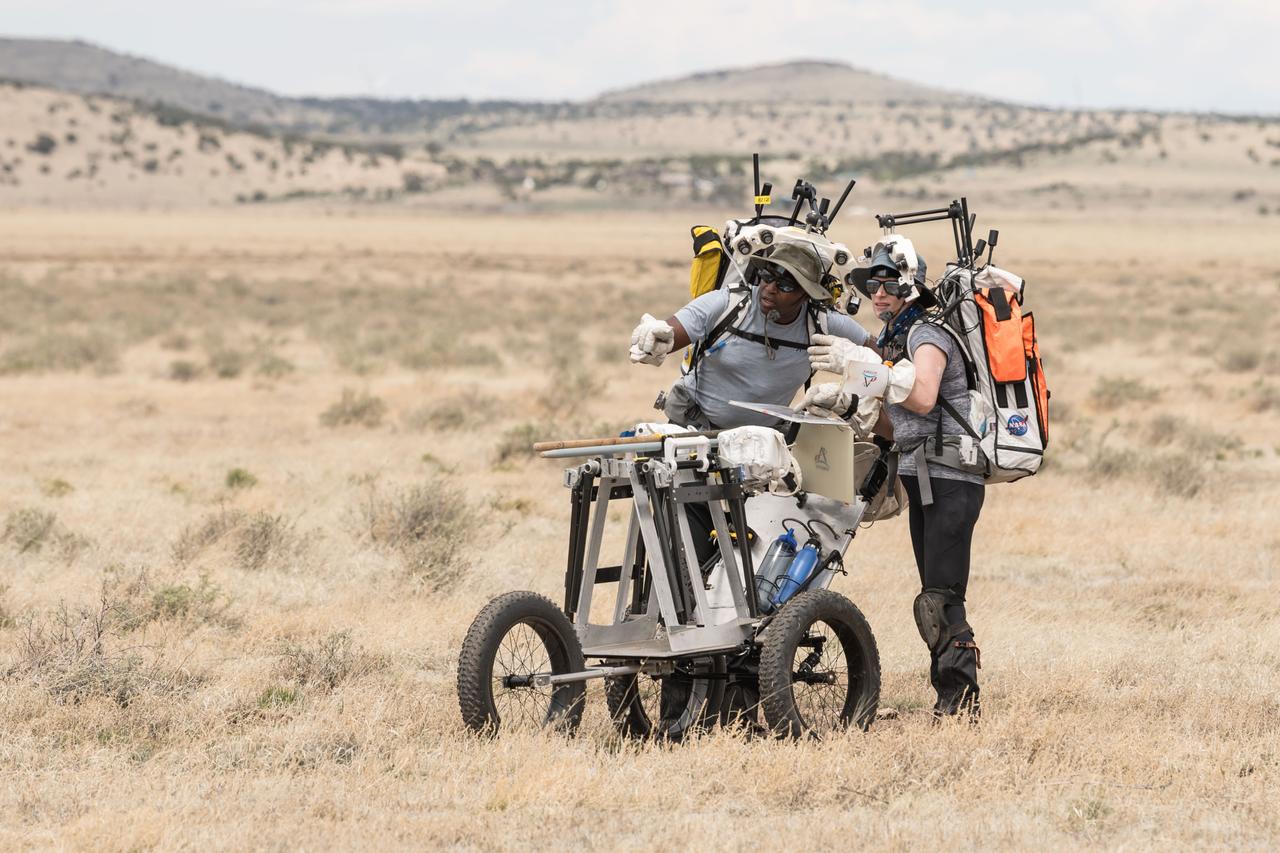
NASA astronauts Andre Douglas and Kate look ahead at their traverse during a simulated moonwalk in the San Francisco Volcanic Field in Northern Arizona on May 14, 2024. Credit: NASA/Josh Valcarcel
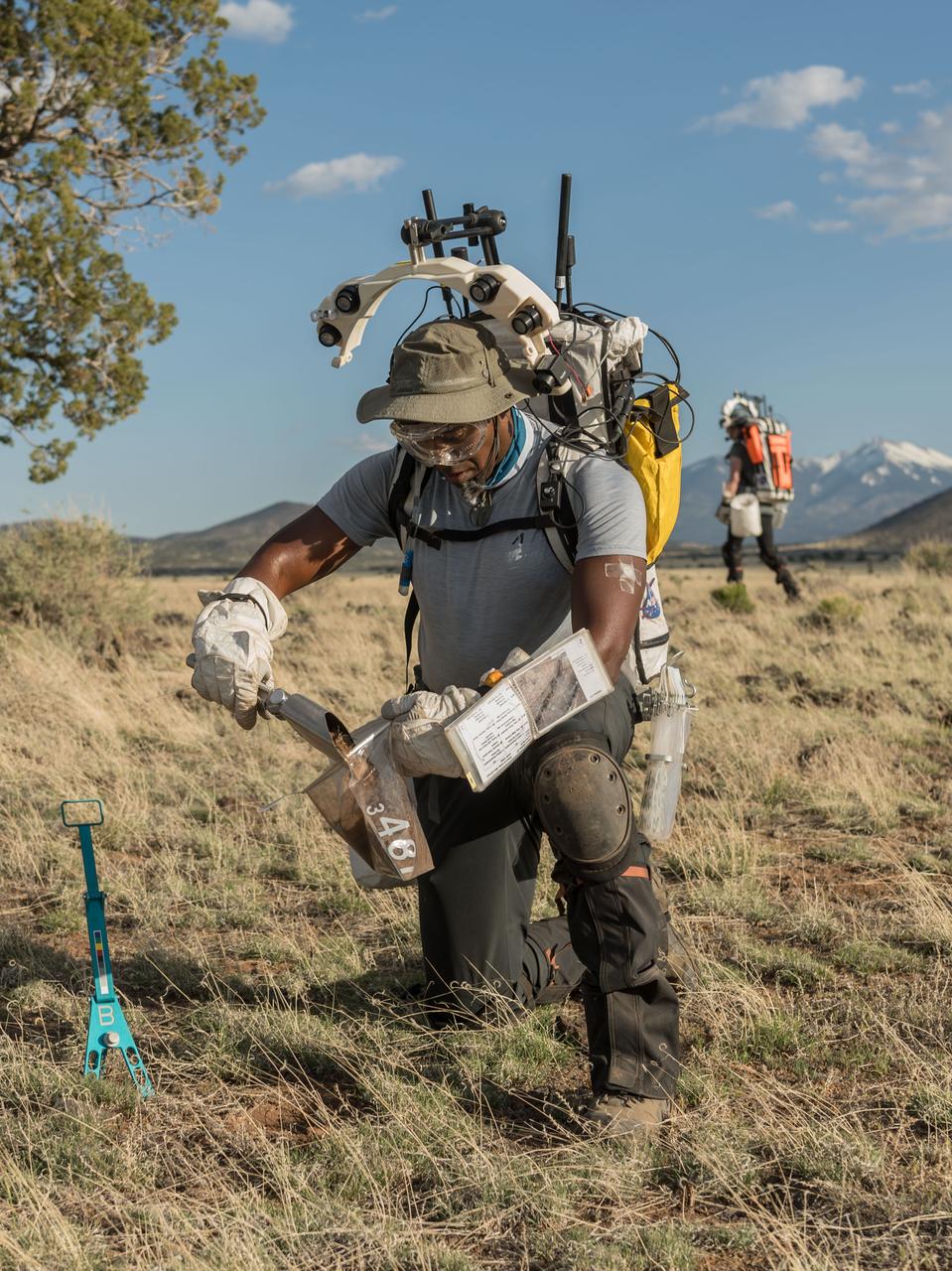
NASA astronaut Andre Douglas pours a scoopful of geologic samples into a sample bag during a simulated moonwalk in the San Francisco Volcanic Field in Northern Arizona on May 17, 2024. Credit: NASA/Josh Valcarcel

NASA astronaut Andre Douglas uses a hammer and chisel to break off a small sample during a¬¬ nighttime simulated moonwalk in the San Francisco Volcanic Field in Northern Arizona on May 16, 2024. Credit: NASA/Josh Valcarcel
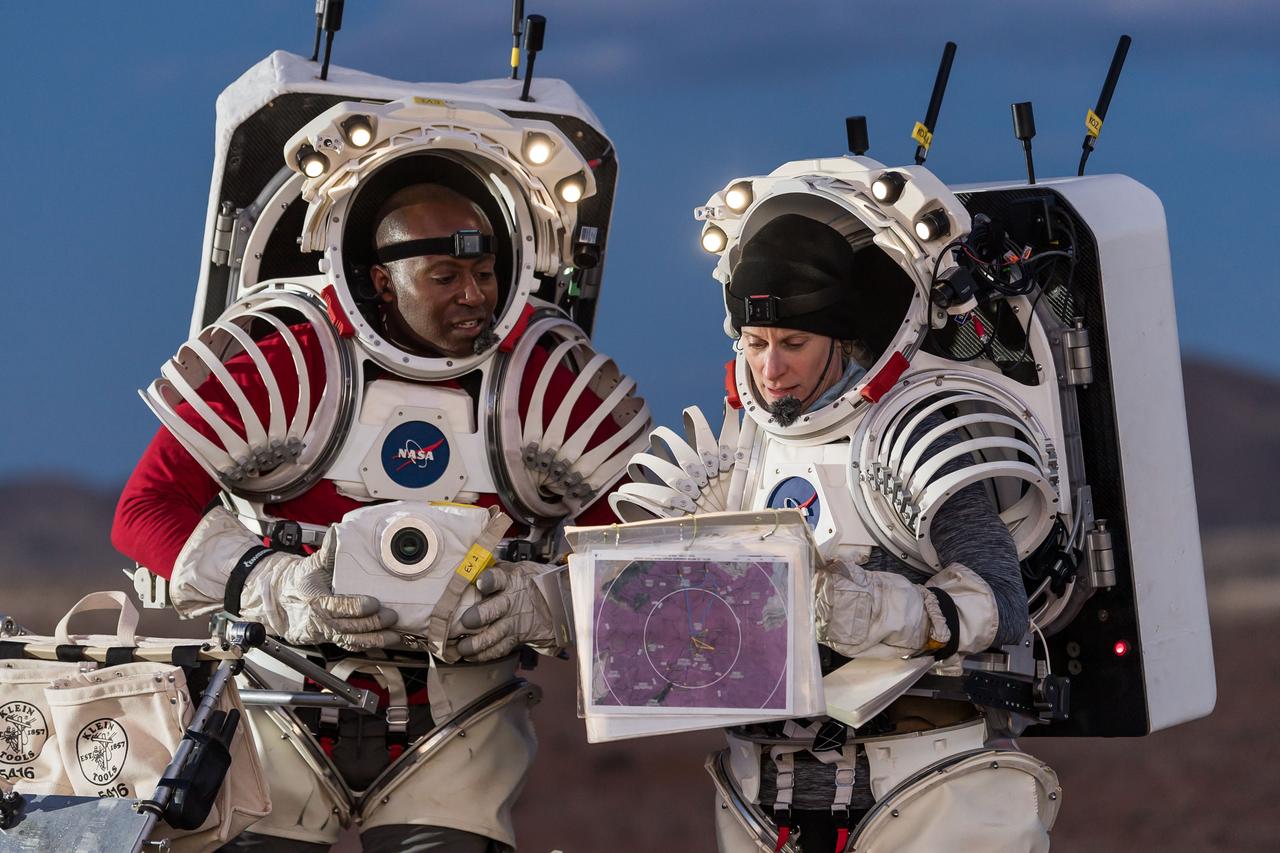
NASA astronauts Andre Douglas, left, and Kate Rubins review traverse plans during a¬¬ nighttime simulated moonwalk in the San Francisco Volcanic Field in Northern Arizona on May 16, 2024. Credit: NASA/Josh Valcarcel
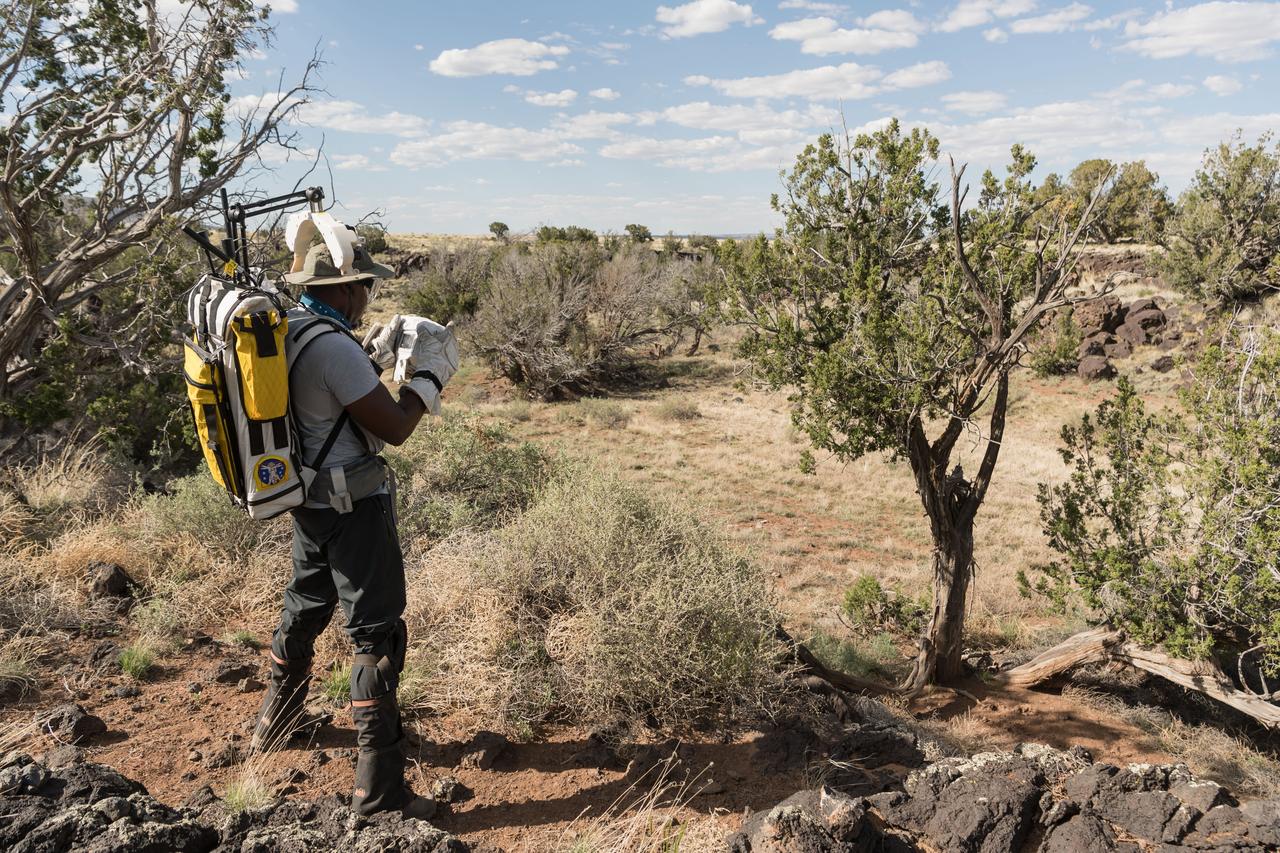
NASA astronaut Andre Douglas takes a picture of the surrounding lunar-like landscape during a simulated moonwalk in the San Francisco Volcanic Field in Northern Arizona on May 17, 2024. Credit: NASA/Josh Valcarcel

NASA astronaut Kate Rubins walks in the lunar-like landscape during a nighttime simulated moonwalk in the San Francisco Volcanic Field in Northern Arizona on May 16, 2024. Credit: NASA/Josh Valcarcel
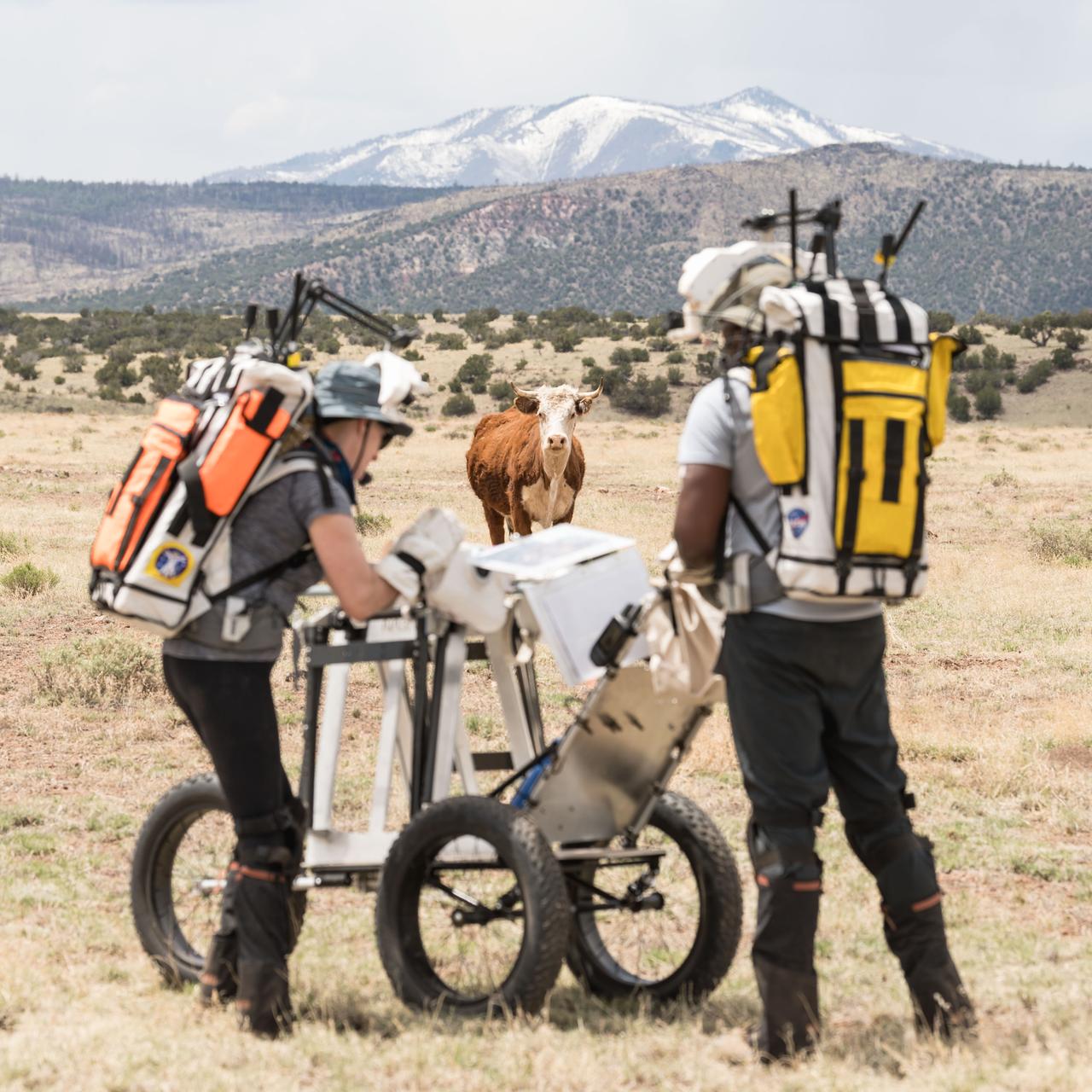
A curious cow watches as NASA astronauts Andre Douglas and Kate Rubins perform a simulated moonwalk in the San Francisco Volcanic Field in Northern Arizona on May 14, 2024. Credit: NASA/Josh Valcarcel
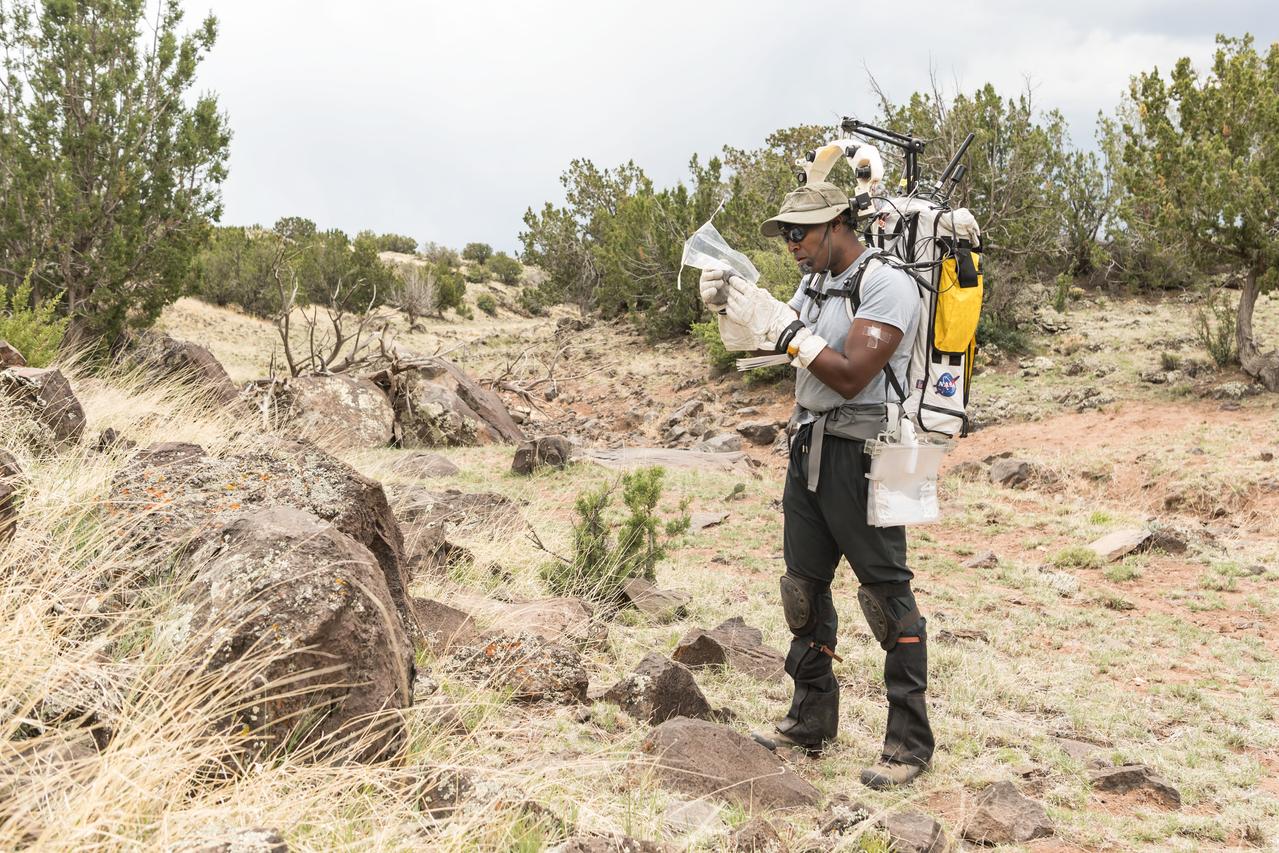
NASA astronaut Andre Douglas examines a geology sample he collected during a simulated moonwalk in the San Francisco Volcanic Field in Northern Arizona on May 14, 2024. Credit: NASA/Josh Valcarcel
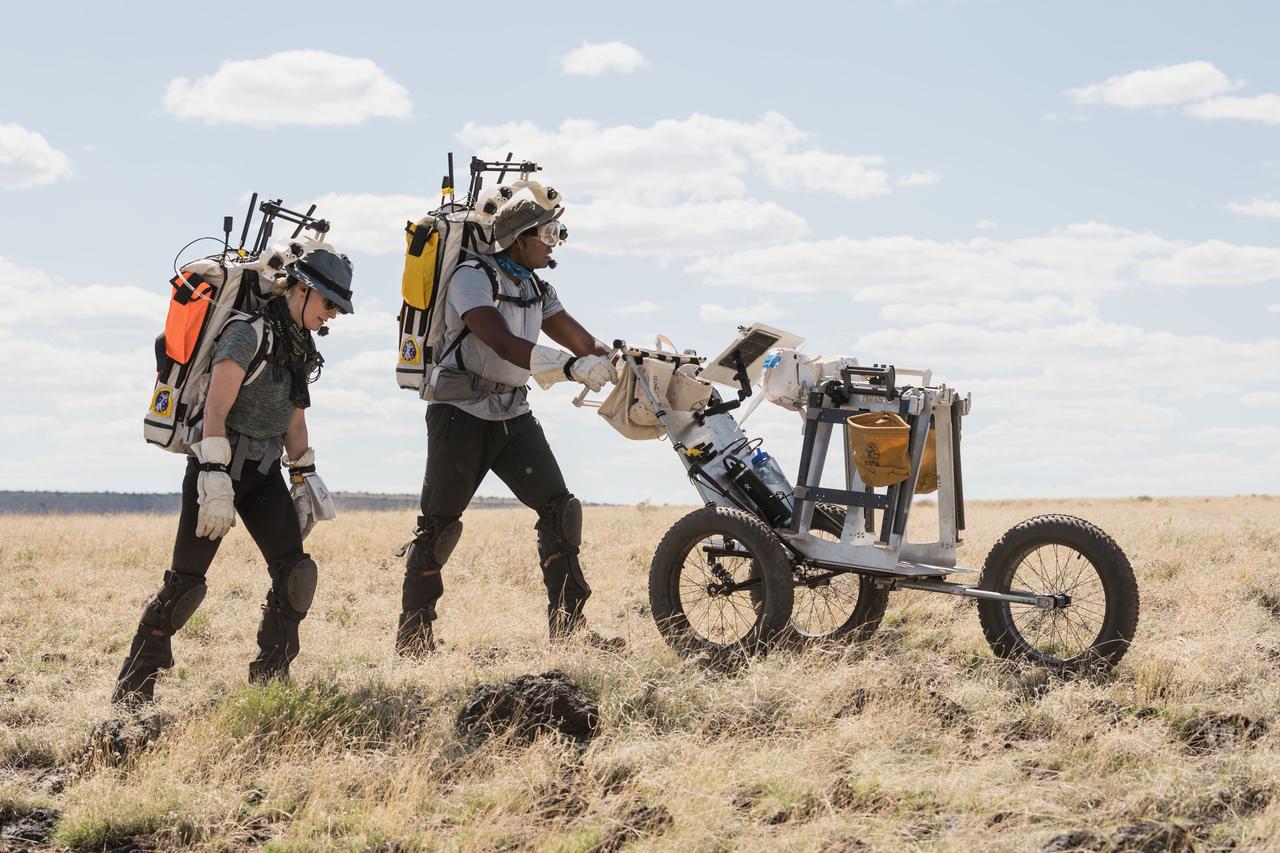
NASA astronauts Kate Rubins and Andre Douglas walk through the lunar-like landscape during a simulated moonwalk in the San Francisco Volcanic Field in Northern Arizona on May 17, 2024. Credit: NASA/Josh Valcarcel
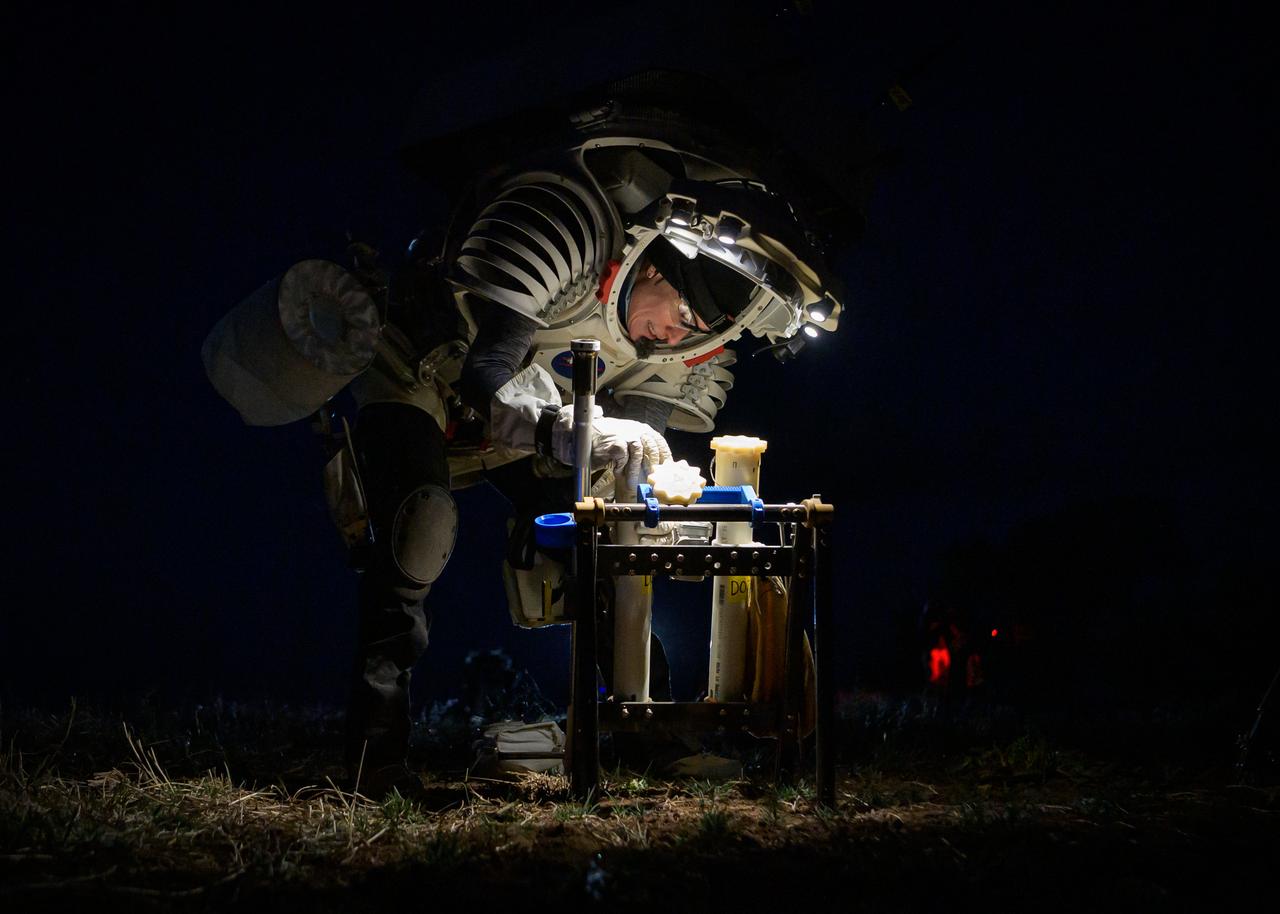
NASA astronaut Kate Rubins selects the geology tool needed during a nighttime simulated moonwalk in the San Francisco Volcanic Field in Northern Arizona on May 16, 2024. Credit: NASA/Josh Valcarcel

NASA astronaut Kate Rubins closes a sample bag full of soil she collected during a simulated moonwalk in the San Francisco Volcanic Field in Northern Arizona on May 14, 2024. Credit: NASA/Josh Valcarcel
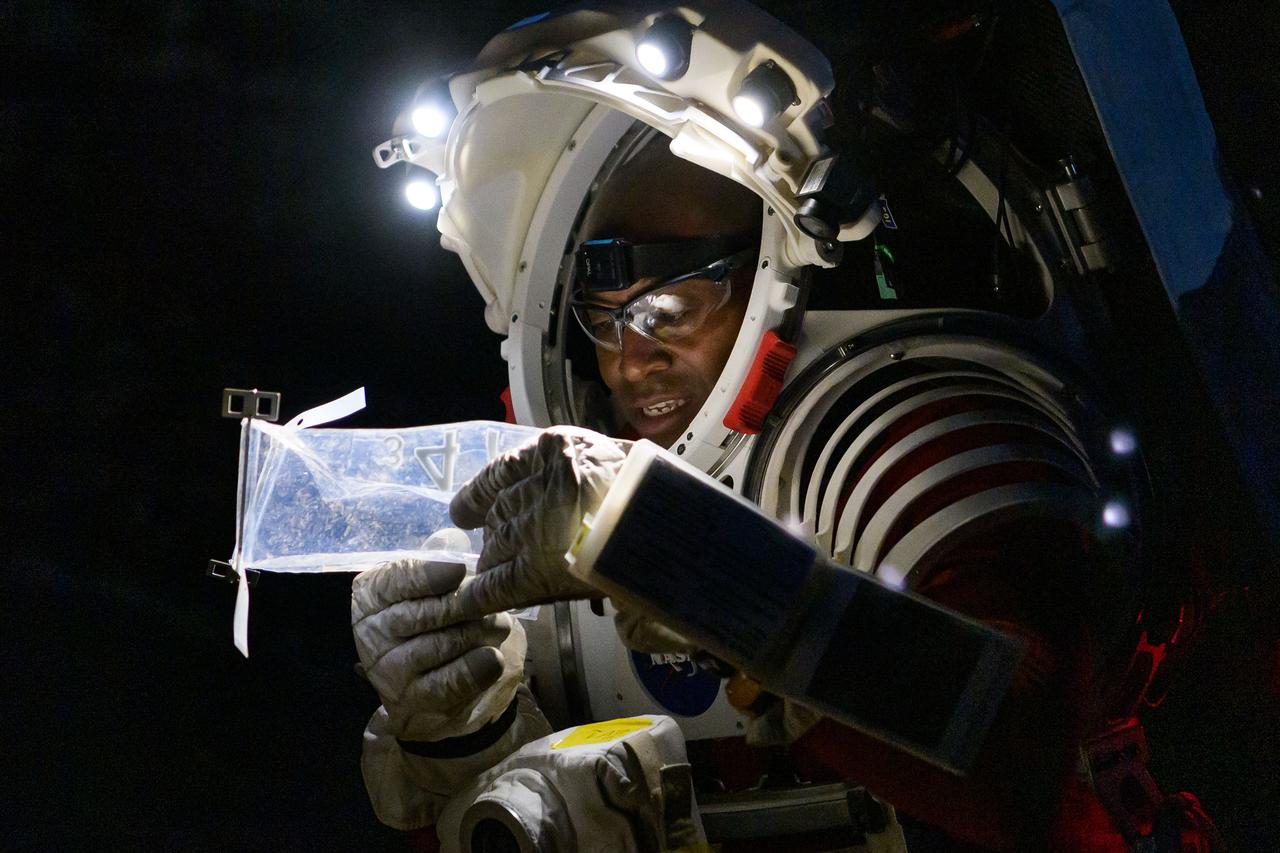
NASA astronaut Andre Douglas examines a geologic sample collected during a nighttime simulated moonwalk in the San Francisco Volcanic Field in Northern Arizona on May 16, 2024. Credit: NASA/Josh Valcarcel
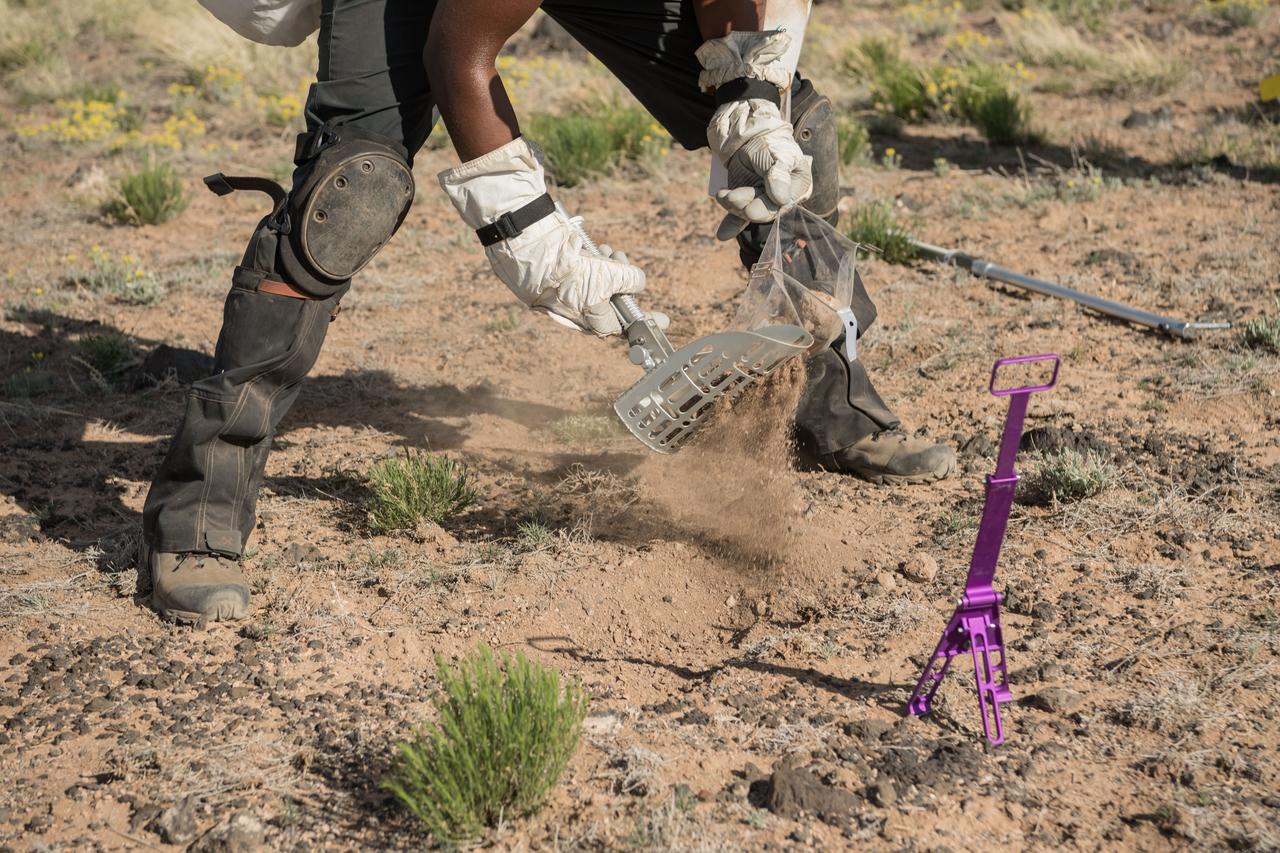
NASA astronaut Andre Douglas uses a rake to pour “lunar” samples into a sample bag during a simulated moonwalk in the San Francisco Volcanic Field in Northern Arizona on May 17, 2024. Credit: NASA/Josh Valcarcel
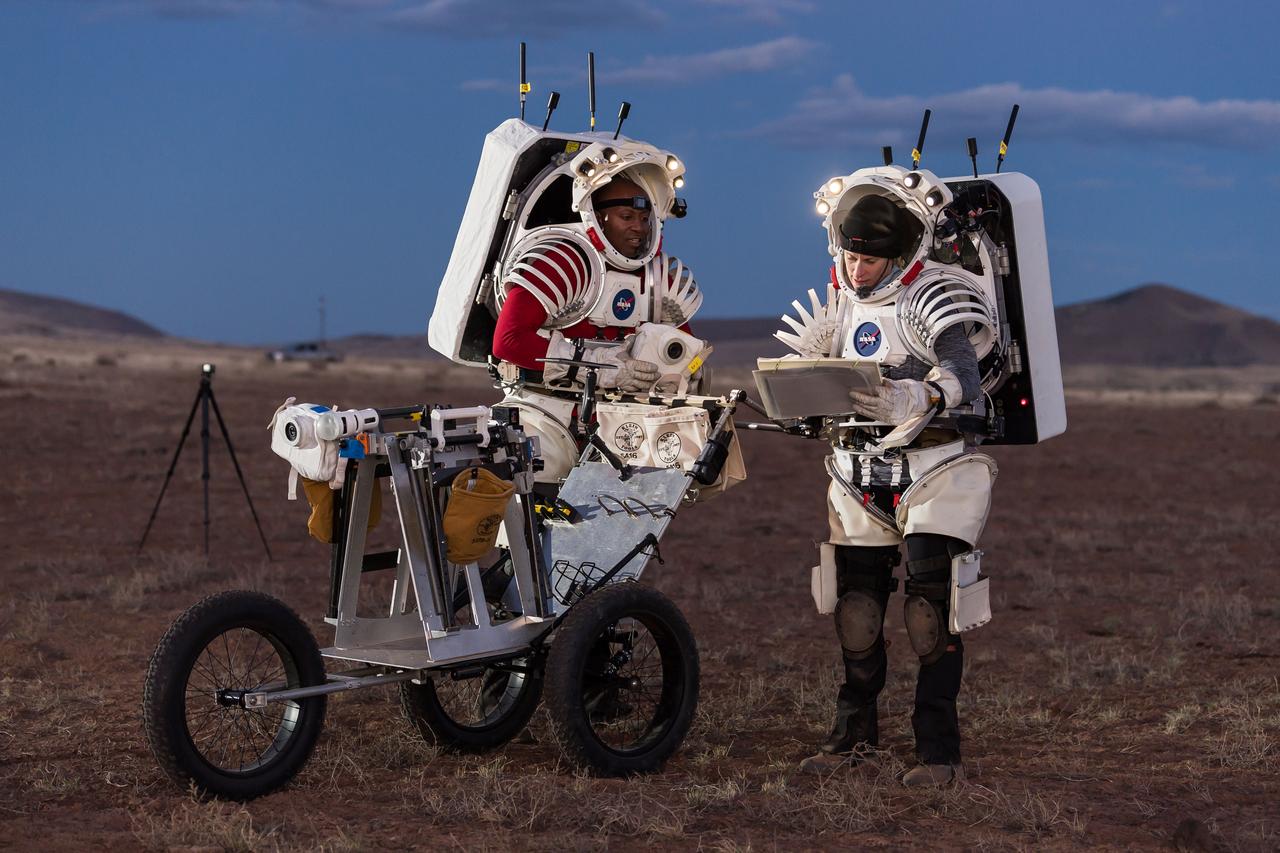
NASA astronauts Andre Douglas, left, and Kate Rubins review procedures during a nighttime simulated moonwalk in the San Francisco Volcanic Field in Northern Arizona on May 16, 2024. Credit: NASA/Josh Valcarcel
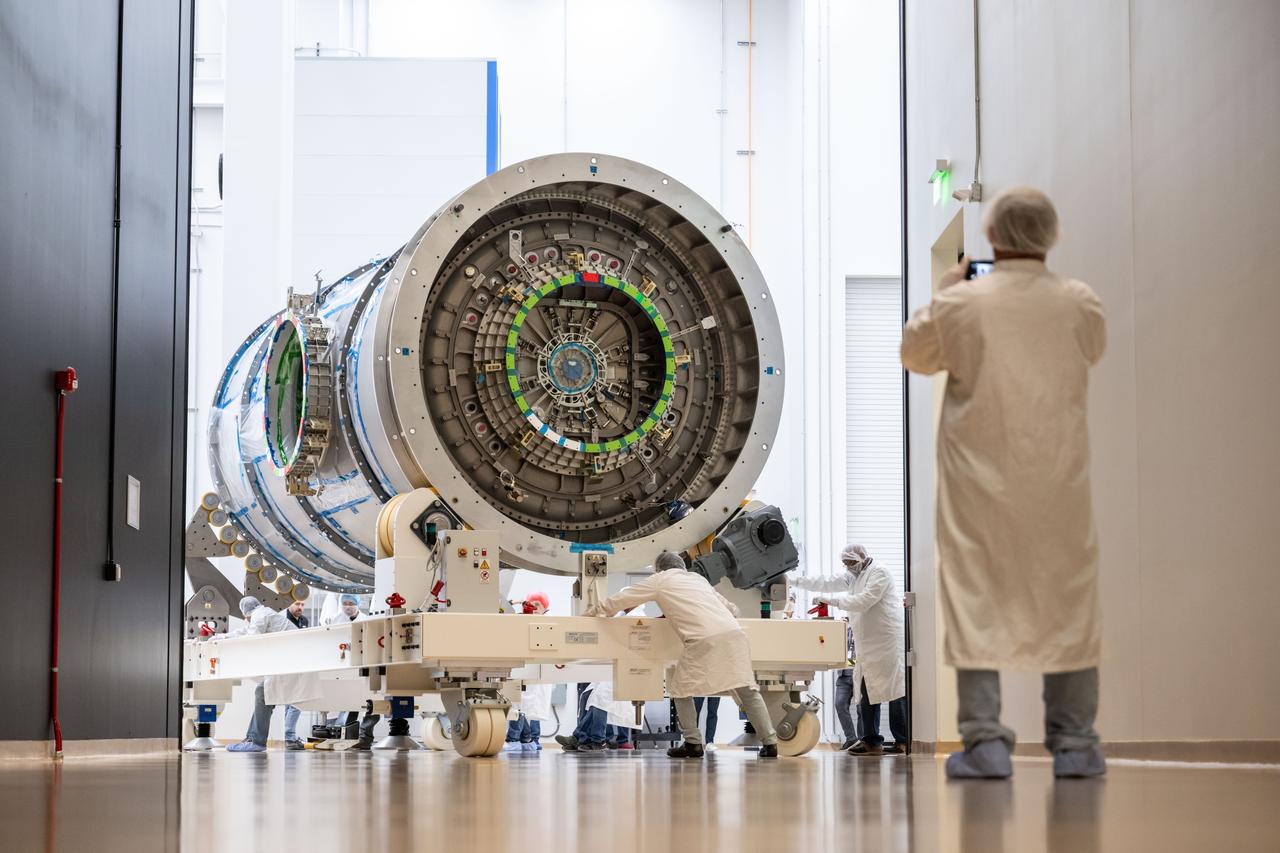
At Northrop Grumman’s Gilbert, Arizona, facility, teams transport Gateway’s HALO (Habitation and Logistics Outpost). HALO arrived from Turin, Italy, where Thales Alenia Space fabricated its primary structure. The module will undergo final outfitting in Gilbert before being integrated with the Power and Propulsion Element and launched to lunar orbit.
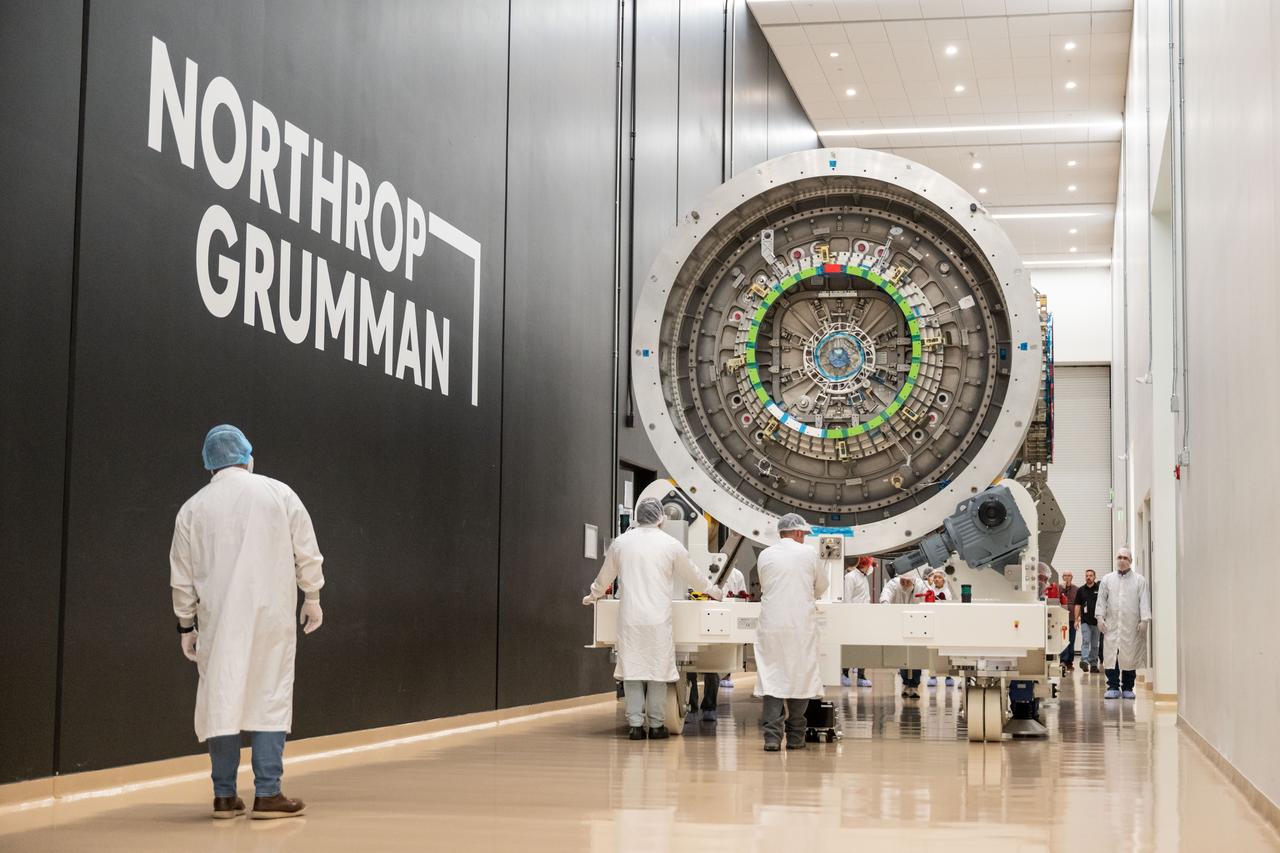
At Northrop Grumman’s Gilbert, Arizona, facility, teams guide Gateway’s HALO (Habitation and Logistics Outpost) down a hallway. HALO arrived from Turin, Italy, where Thales Alenia Space fabricated its primary structure. The module will undergo final outfitting in Gilbert before being integrated with the Power and Propulsion Element and launched to lunar orbit.
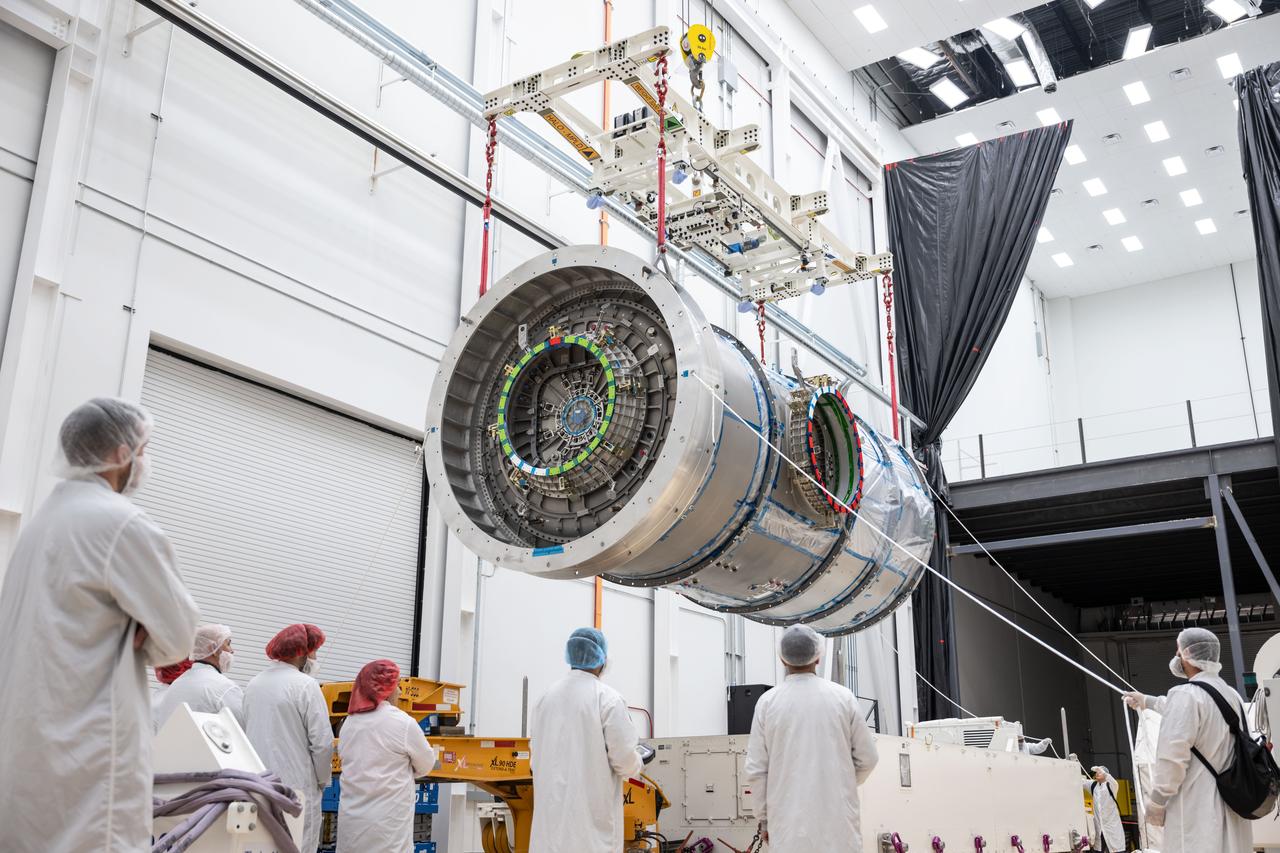
At Northrop Grumman’s Gilbert, Arizona, facility, teams remove Gateway’s HALO (Habitation and Logistics Outpost) from its transport container. HALO arrived from Turin, Italy, where Thales Alenia Space fabricated its primary structure. The module will undergo final outfitting in Gilbert before being integrated with the Power and Propulsion Element and launched to lunar orbit.
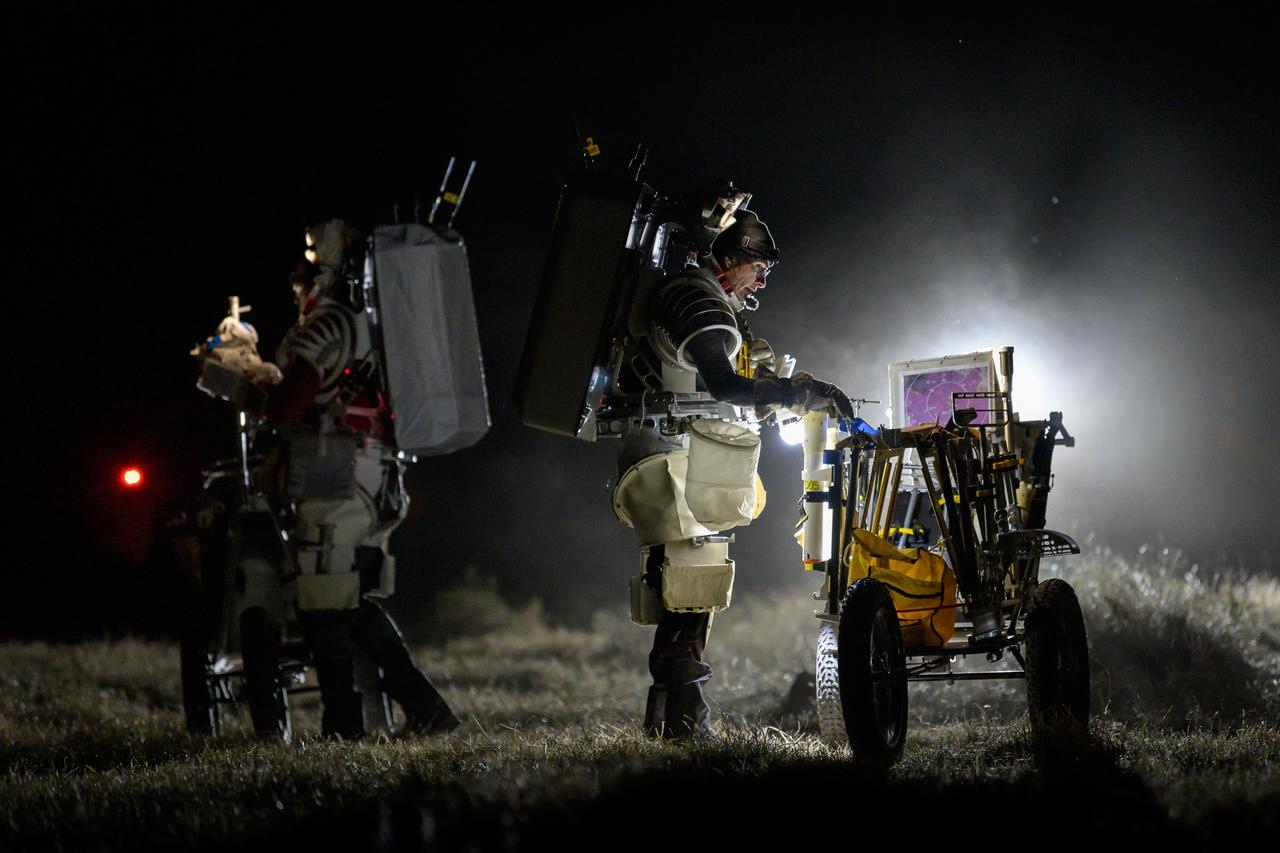
NASA astronaut Kate Rubins conducts a tool audit to ensure she has all of her tools while NASA astronaut Andre Douglas reviews procedures during a nighttime simulated moonwalk in the San Francisco Volcanic Field in Northern Arizona on May 16, 2024. Credit: NASA/Josh Valcarcel
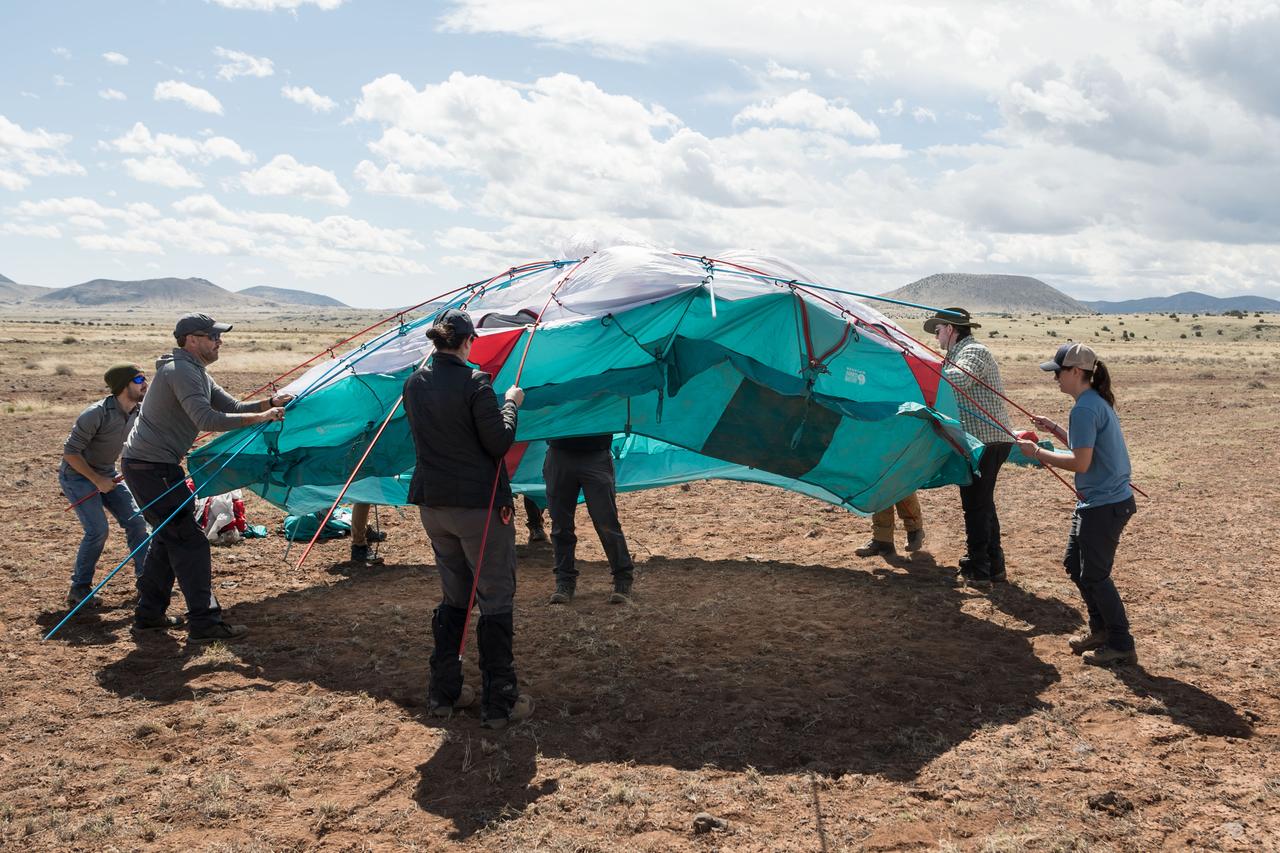
NASA teams work to set up a one of many tents that will serve as the base camp for the Joint Extravehicular Activity and Human Surface Mobility Test Team Field Test 5 (JETT5) in the San Francisco Volcanic Field in Northern Arizona on May 11, 2024. Credit: NASA/Josh Valcarcel

Spacesuit engineers Sheldon Stockfleth and Christine Jerome work to set up the base camp for the Joint Extravehicular Activity and Human Surface Mobility Test Team Field Test 5 (JETT5) in the San Francisco Volcanic Field in Northern Arizona on May 11, 2024. Credit: NASA/Josh Valcarcel
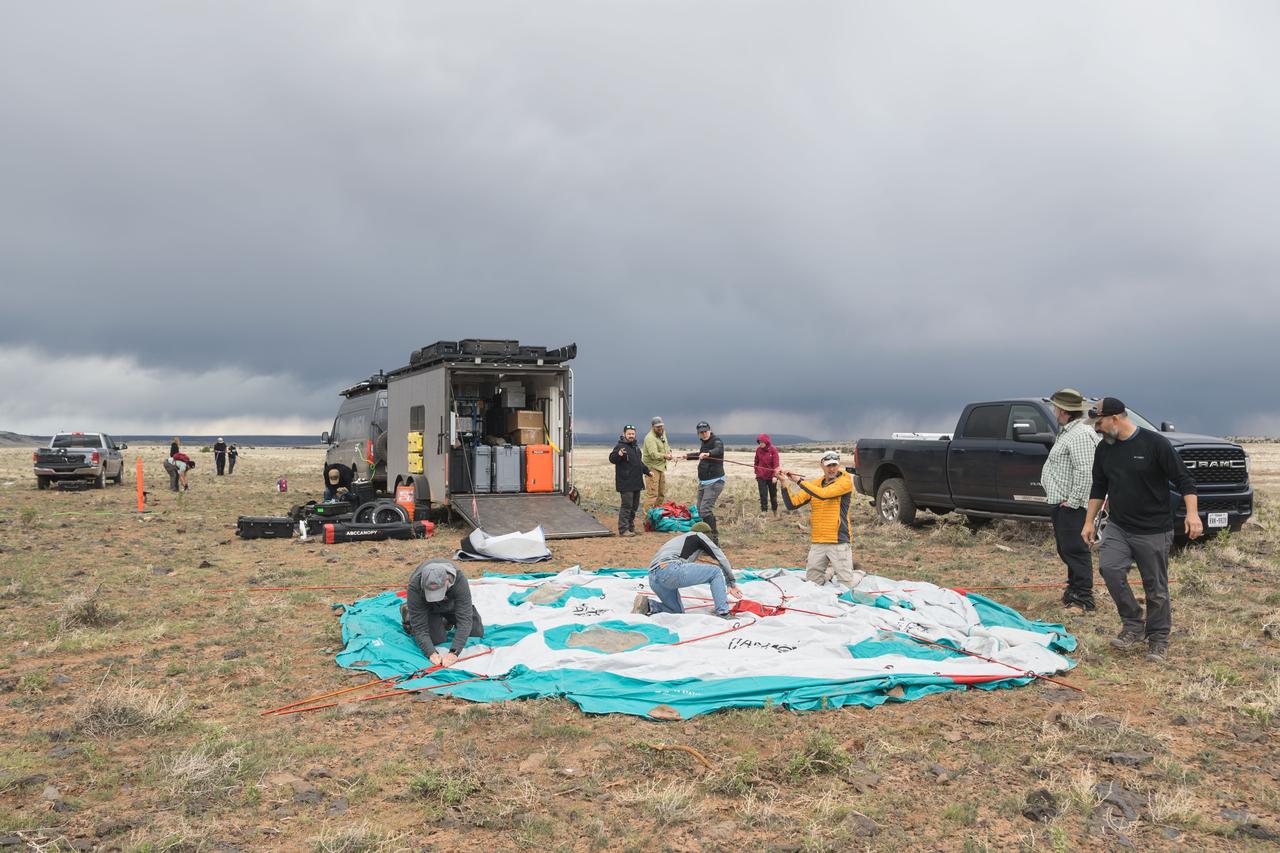
NASA teams work to set up the base camp for the Joint Extravehicular Activity and Human Surface Mobility Test Team Field Test 5 (JETT5) in the San Francisco Volcanic Field in Northern Arizona on May 11, 2024. Credit: NASA/Josh Valcarcel

NASA teams work to set up one of many tents that will serve as the base camp for the (JETT5) Joint Extravehicular Activity and Human Surface Mobility Test Team Field Test 5 in the San Francisco Volcanic Field in Northern Arizona on May 11, 2024. Credit: NASA/Josh Valcarcel
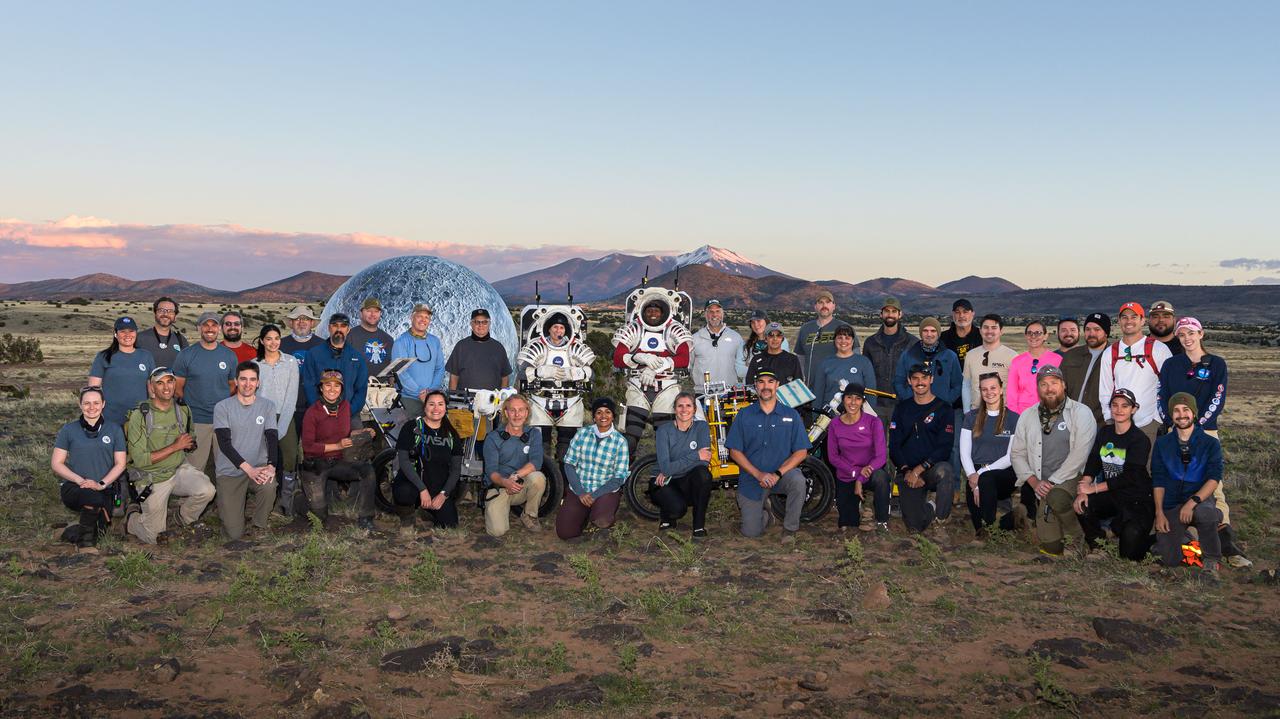
6. The Joint Extravehicular Activity and Human Surface Mobility Test Team poses for a group photo in Northern Arizona after a week-long field test consisting of four simulated moonwalks and six advanced technology runs. Credit: NASA/Josh Valcarcel

Engineers Juan Busto (left) and Mike Miller (right) work to install the communications network for the base camp during the Joint Extravehicular Activity and Human Surface Mobility Test Team Field Test 5 (JETT5) in the San Francisco Volcanic Field in Northern Arizona on May 11, 2024. Credit: NASA/Josh Valcarcel
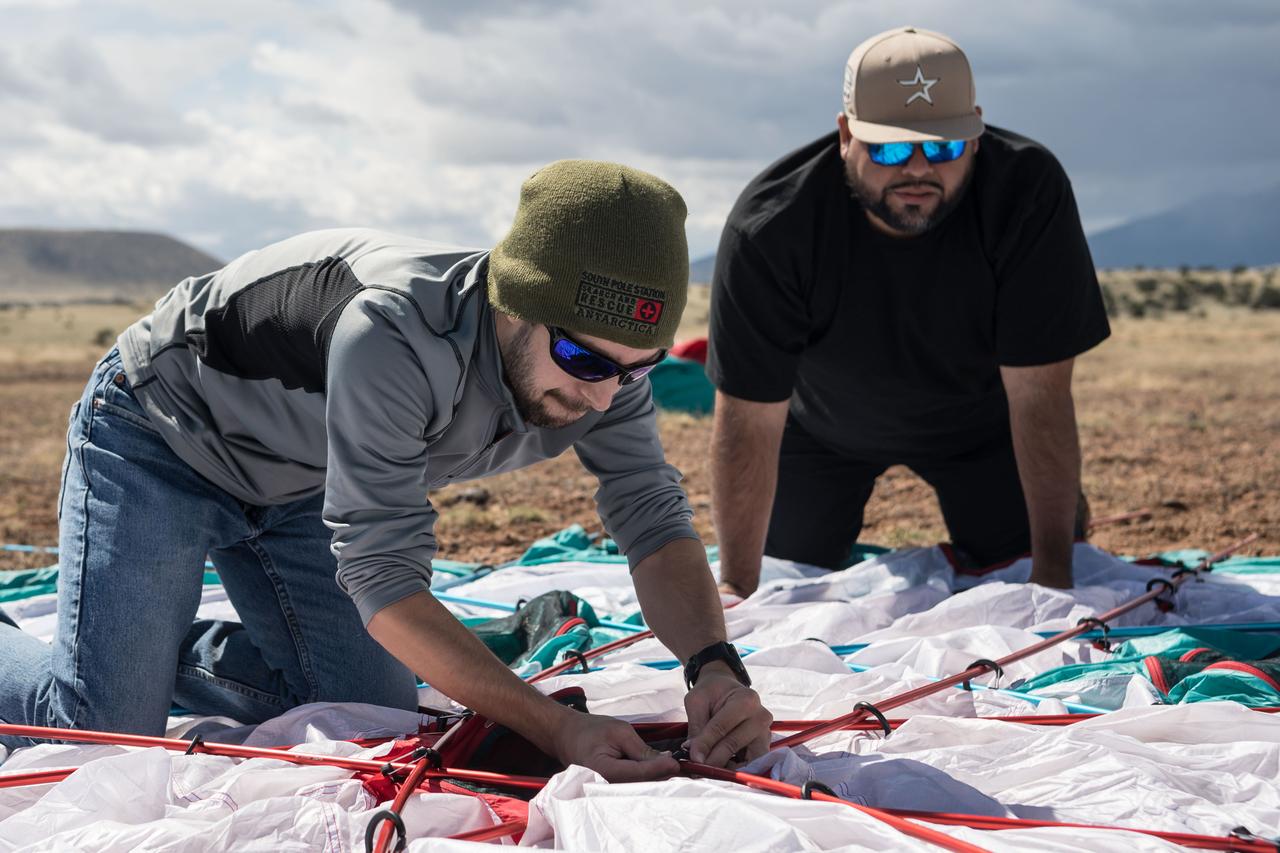
Spacesuit engineers Zach Tejral (left) and Joel Alvarado (right) work to set up the base camp for the Joint Extravehicular Activity and Human Surface Mobility Test Team Field Test 5 in the San Francisco Volcanic Field in Northern Arizona on May 11, 2024. Credit: NASA/Josh Valcarcel
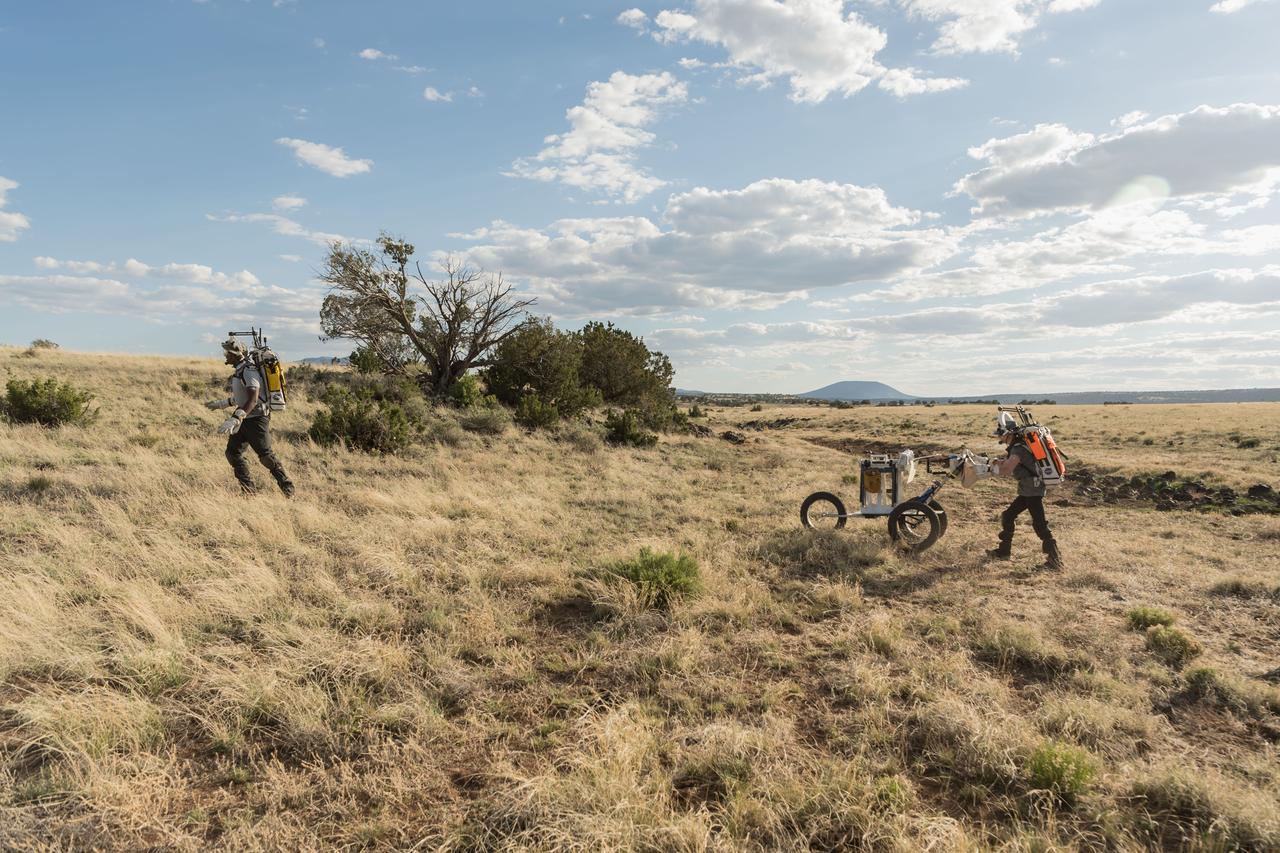
NASA astronaut Andre Douglas leads the way while NASA astronaut Kate Rubins follows behind with a lunar tool cart during a simulated moonwalk in the San Francisco Volcanic Field in Northern Arizona on May 17, 2024. Credit: NASA/Josh Valcarcel
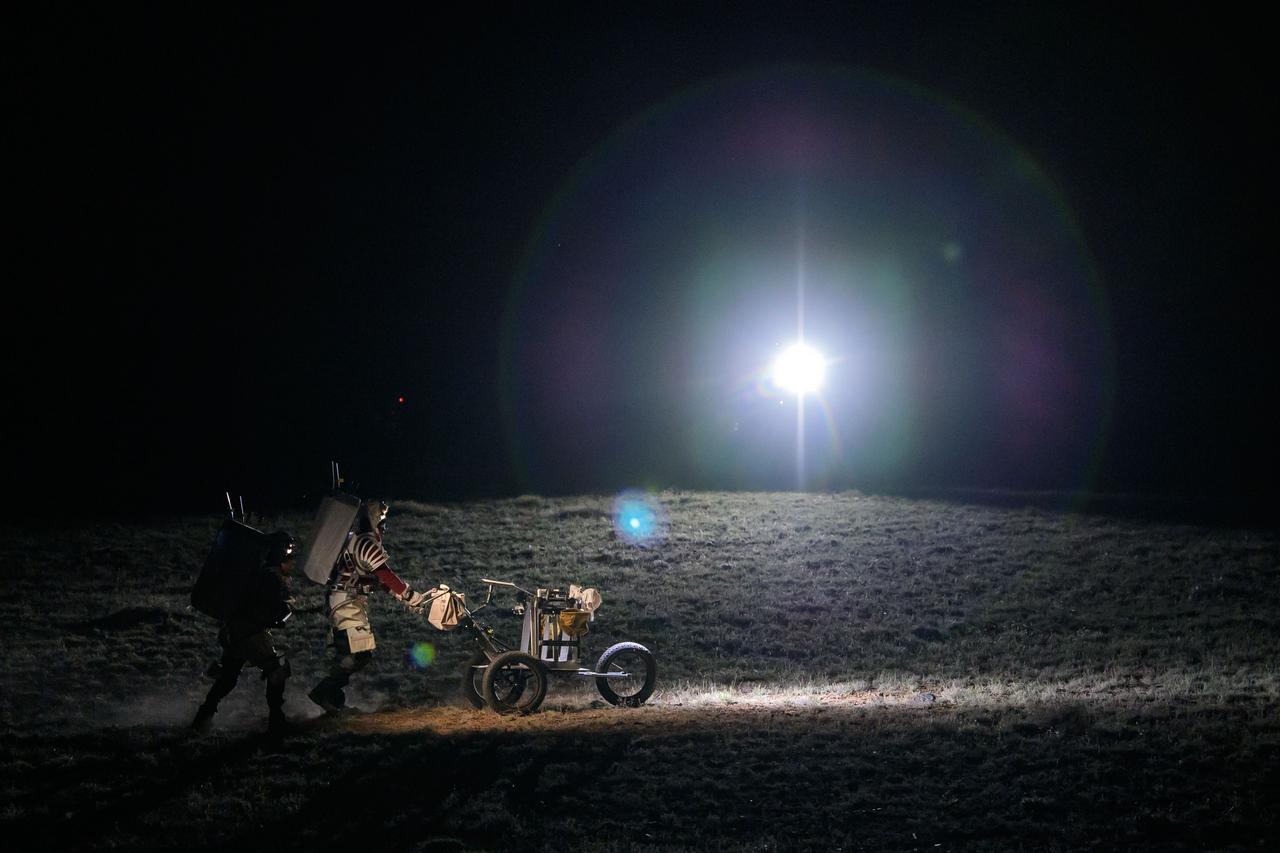
NASA astronaut Andre Douglas pushes a tool cart across the lunar-like landscape while NASA astronaut Kate Rubins follows close behind during a¬¬ nighttime simulated moonwalk in the San Francisco Volcanic Field in Northern Arizona on May 16, 2024. Credit: NASA/Josh Valcarcel

NASA astronaut Andre Douglas uses a hammer to chip off a small rock sample to test equipment before the start of a week-long analog consisting of four simulated moonwalks and six advanced technology runs in the San Francisco Volcanic Field in Northern Arizona on May 12, 2024. Credit: NASA/Josh Valcarcel
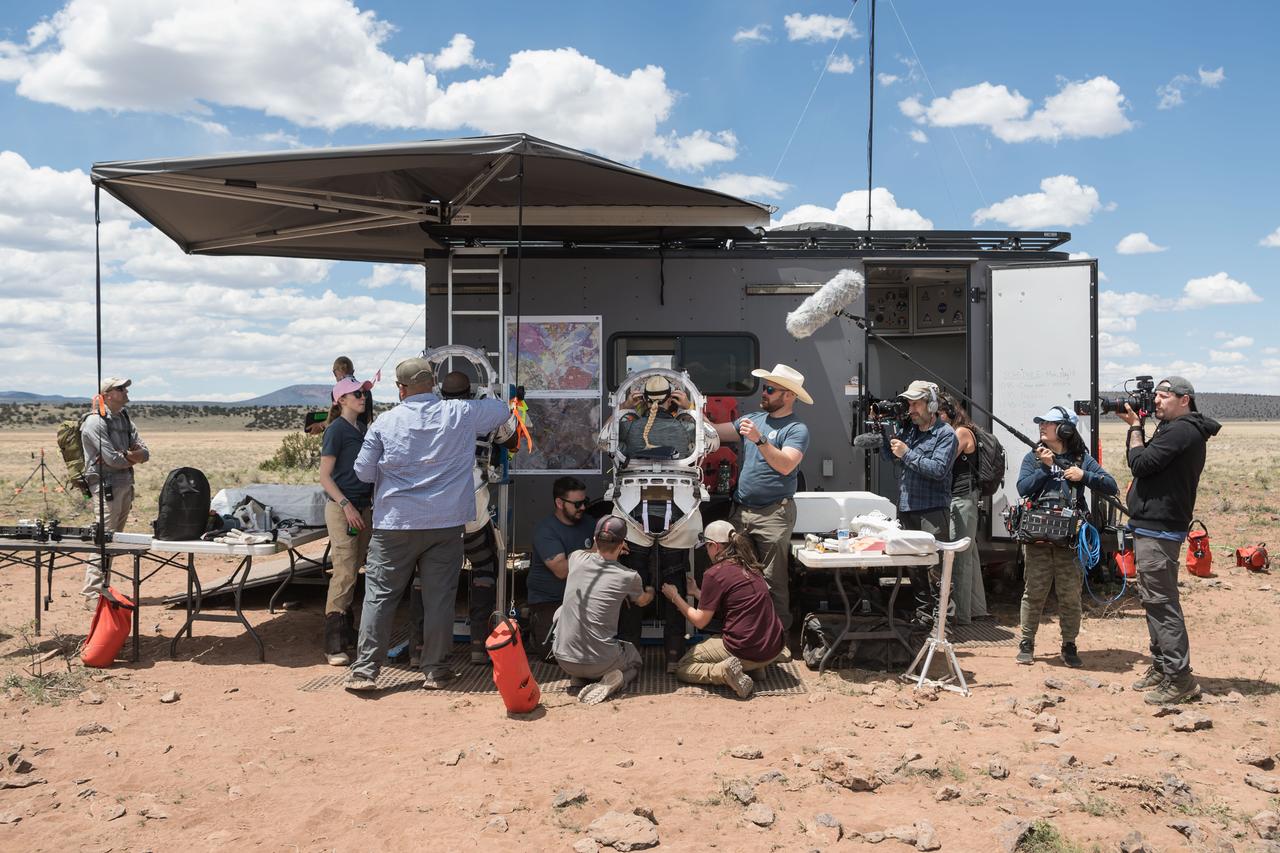
NASA engineering teams help NASA astronauts Andre Douglas (left) and Kate Rubins (right) get into their unpressurized mockup spacesuits before they perform the first of four simulated moonwalks north of Flagstaff, Arizona on May 13, 2024. Credit: NASA/Josh Valcarcel
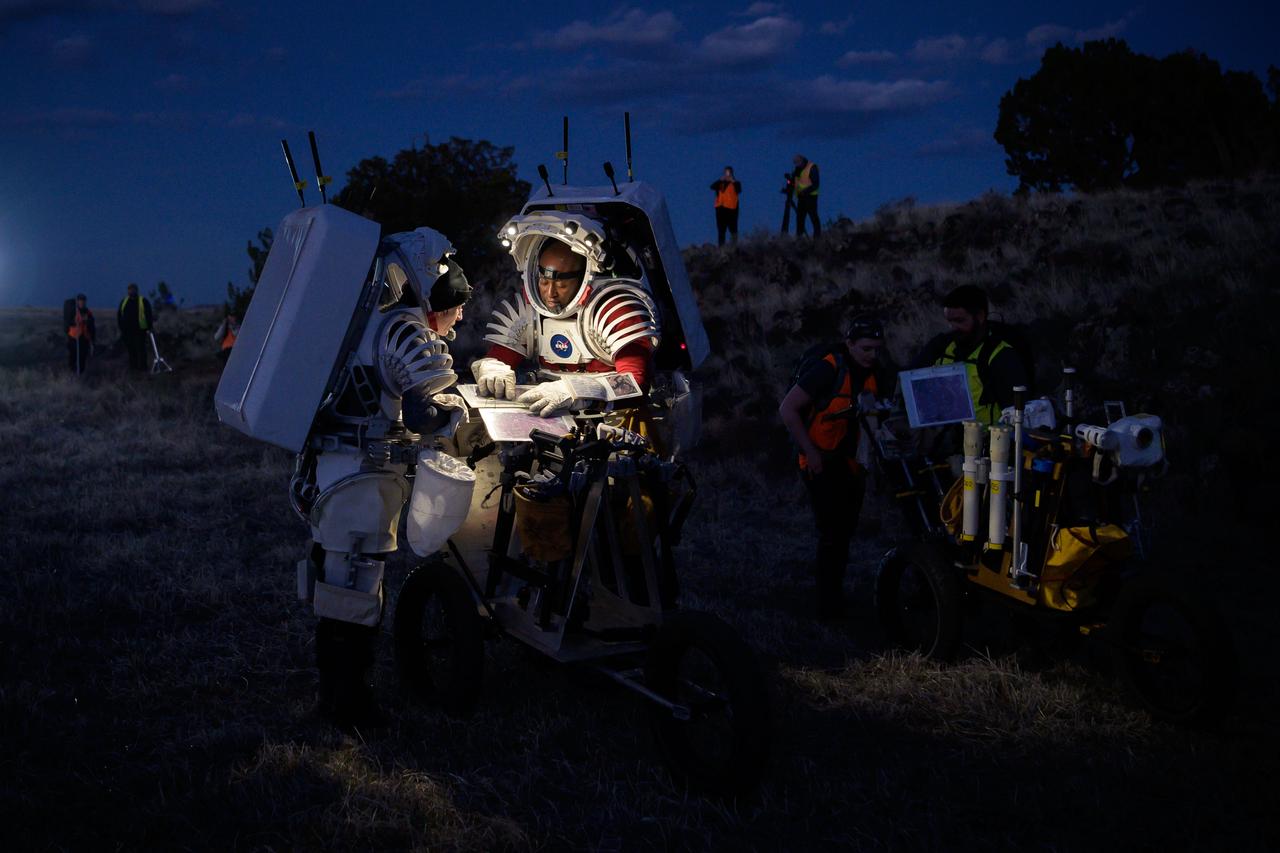
NASA astronauts Kate Rubins, left, and Andre Douglas look at a map that shows their traverse route during a nighttime simulated moonwalk in the San Francisco Volcanic Field in Northern Arizona on May 16, 2024. Credit: NASA/Josh Valcarcel
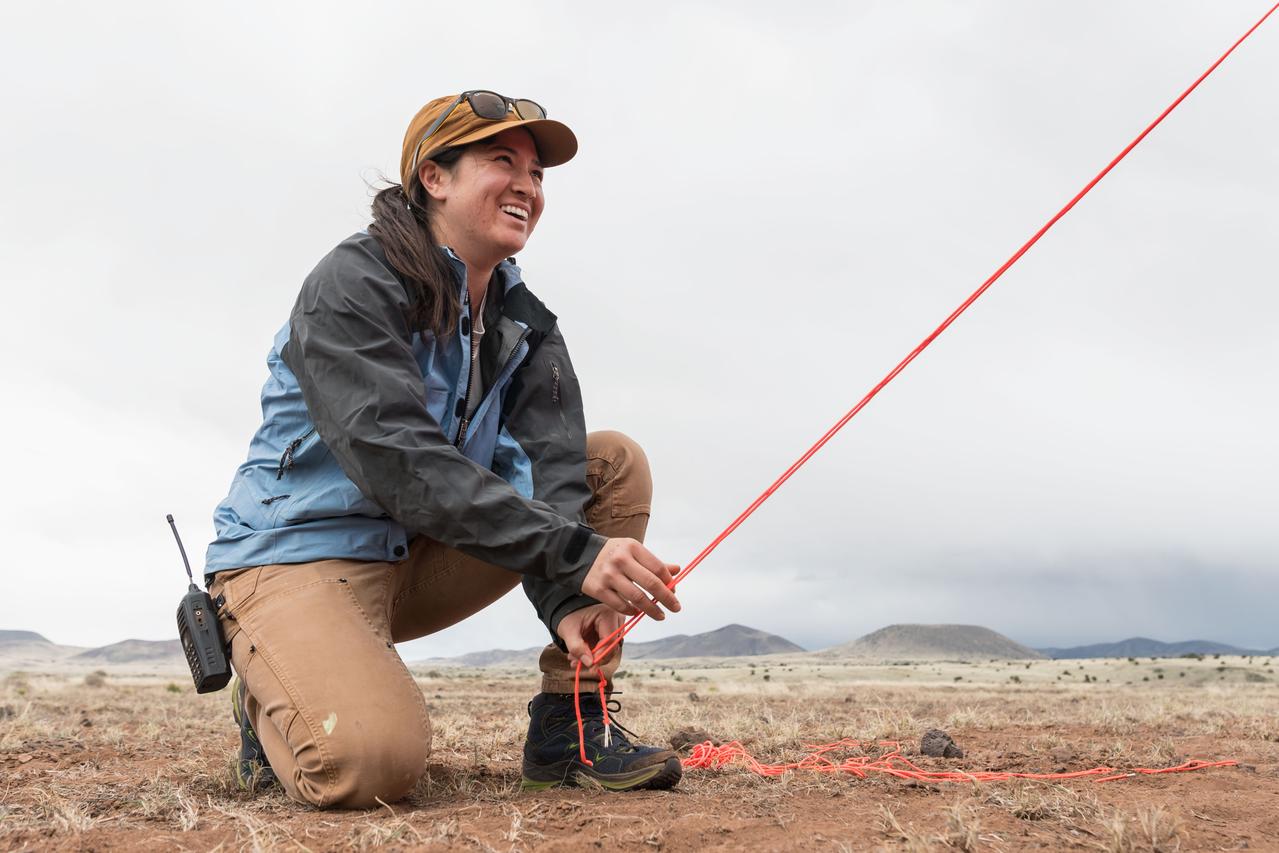
Test deputy field manager Angela Garcia ties down a tent that will serve as the base camp for the Joint Extravehicular Activity and Human Surface Mobility Test Team Field Test 5 (JETT5) in the San Francisco Volcanic Field in Northern Arizona on May 11, 2024. Credit: NASA/Josh Valcarcel
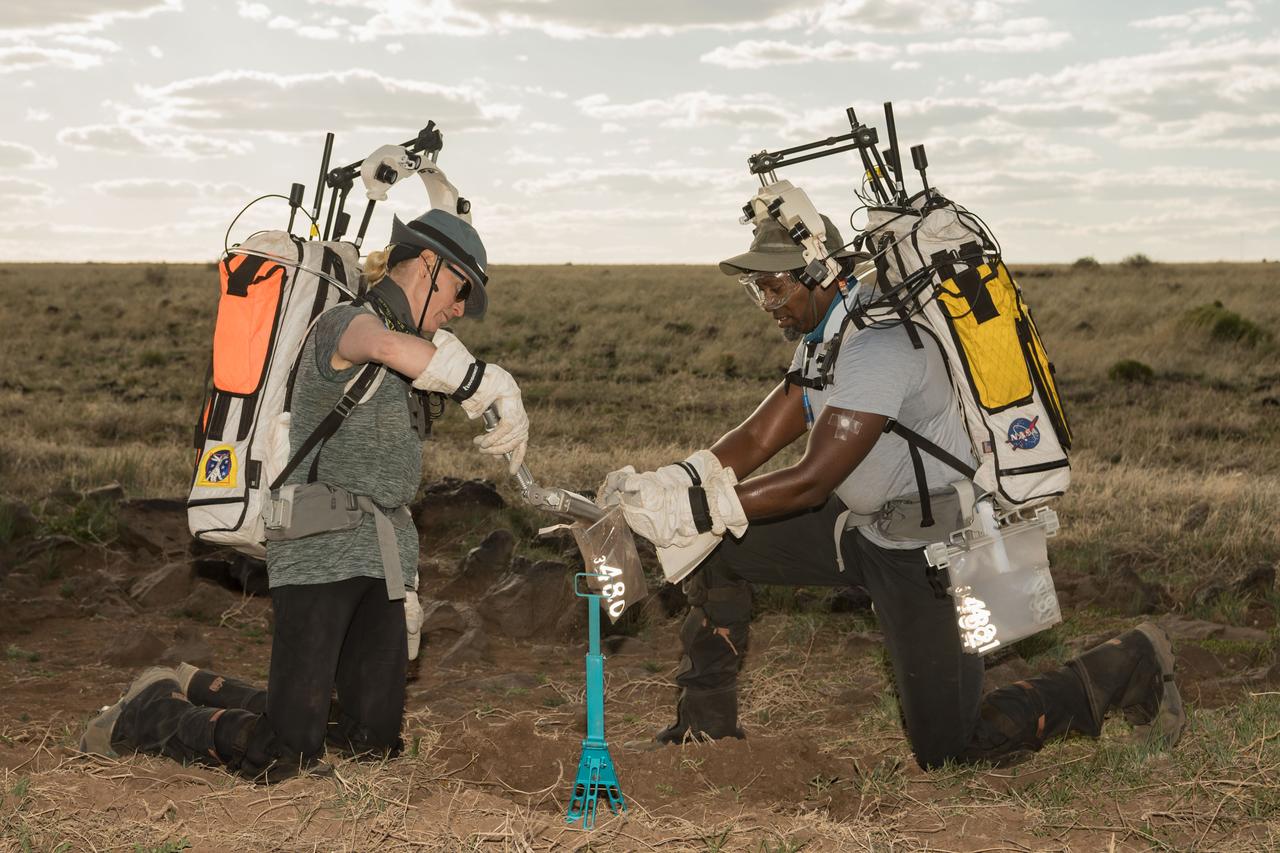
NASA astronaut Andre Douglas holds open a sample bag for NASA astronaut Kate Rubins as she pours some geology samples into it during a simulated moonwalk in the San Francisco Volcanic Field in Northern Arizona on May 17, 2024. Credit: NASA/Josh Valcarcel
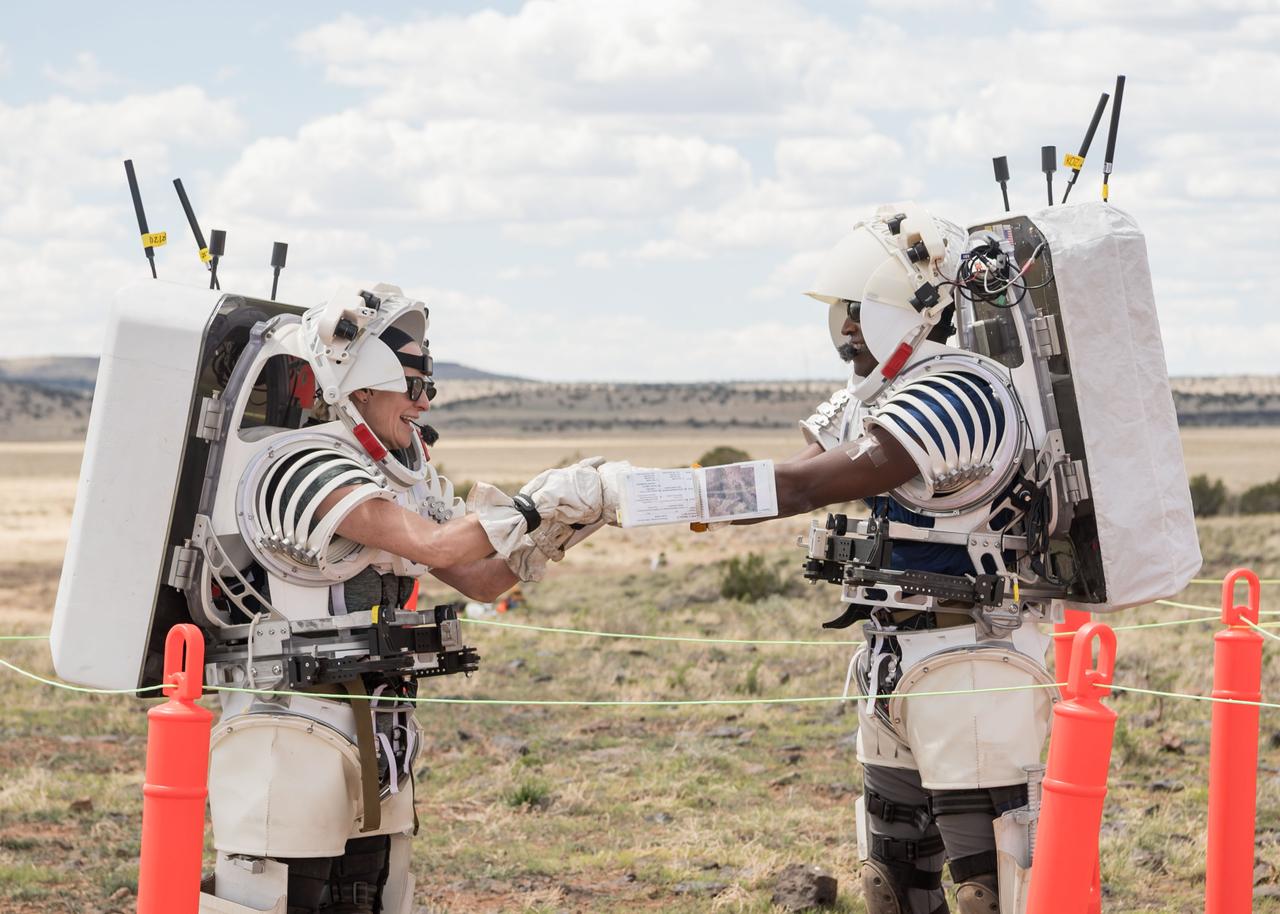
NASA astronauts Kate Rubins and Andre Douglas congratulate each other after the completion of the first simulated moonwalk in a week-long field test consisting of four simulated moonwalks and six advanced technology runs in the San Francisco Volcanic Field in Northern Arizona on May 13, 2024. Credit: NASA/Josh Valcarcel
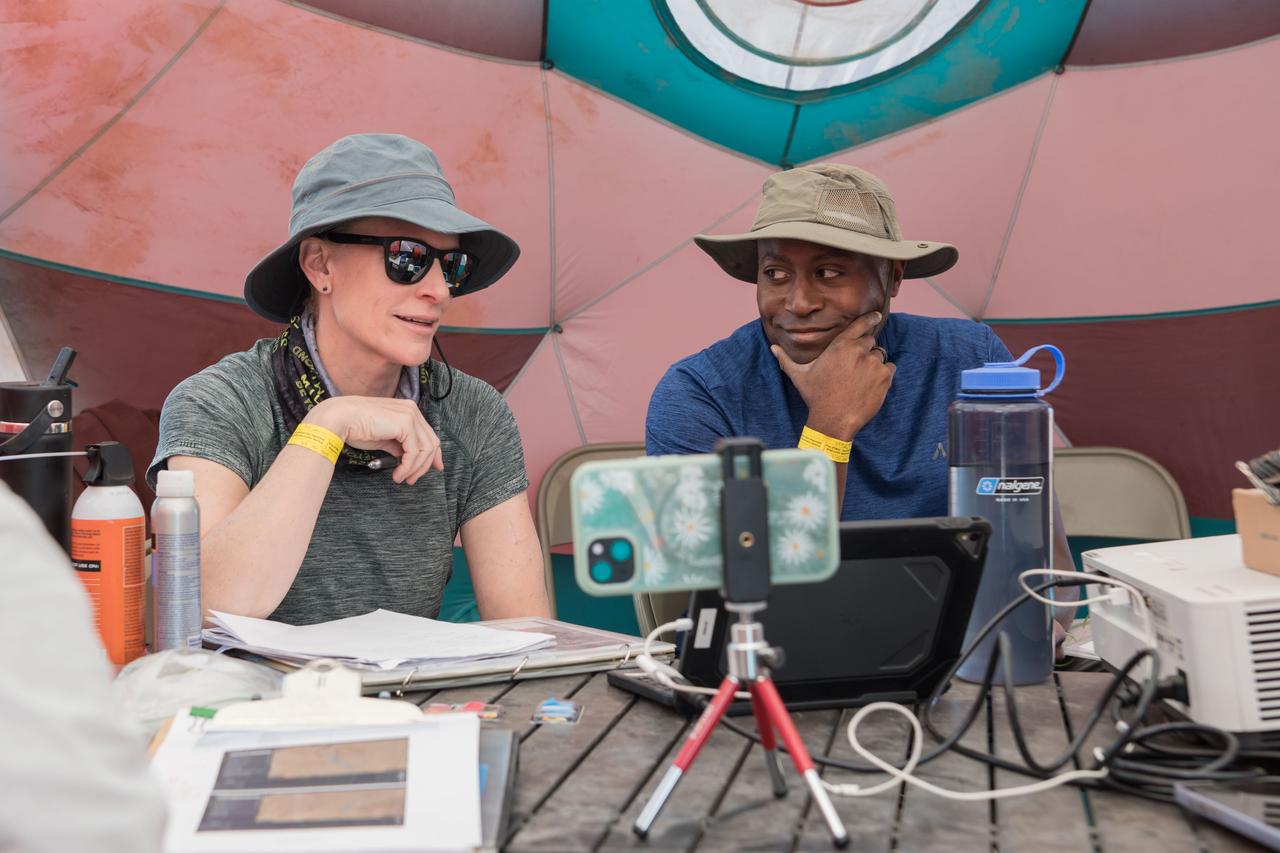
NASA astronauts Kate Rubins and Andre Douglas review test objectives and traverse plans before their first simulated moonwalk in a week-long field test consisting of four simulated moonwalks and six advanced technology runs in the San Francisco Volcanic Field in Northern Arizona on May 13, 2024 Credit: NASA/Josh Valcarcel
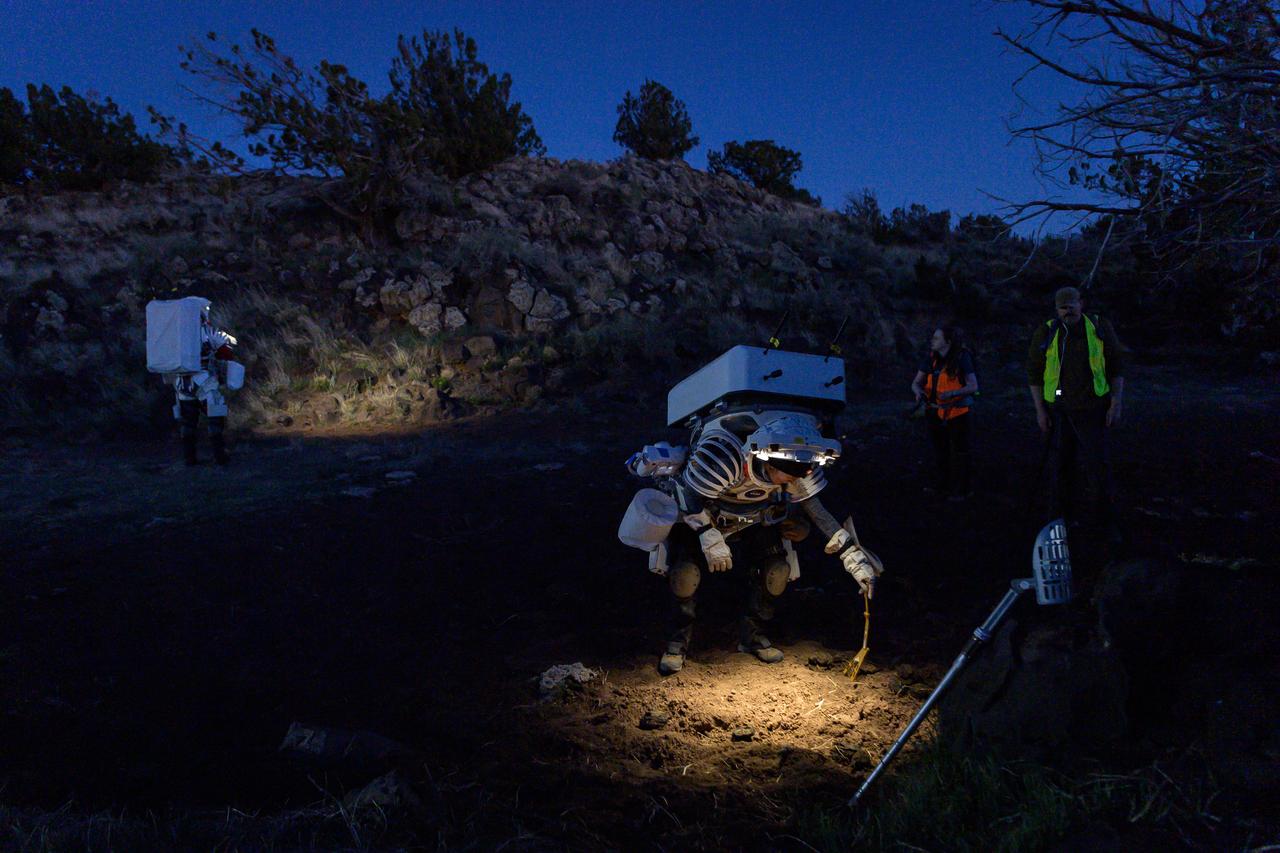
NASA astronaut Kate Rubins places a sample marker in the soil before collecting a sample during a nighttime simulated moonwalk in the San Francisco Volcanic Field in Northern Arizona on May 16, 2024. A sample marker provides a photographic reference point for science samples collected on the lunar surface. Credit: NASA/Josh Valcarcel

NASA teams work to set up the base camp for the Joint Extravehicular Activity and Human Surface Mobility Test Team Field Test 5 (JETT5) in the San Francisco Volcanic Field in Northern Arizona on May 11, 2024. Credit: NASA/Josh Valcarcel
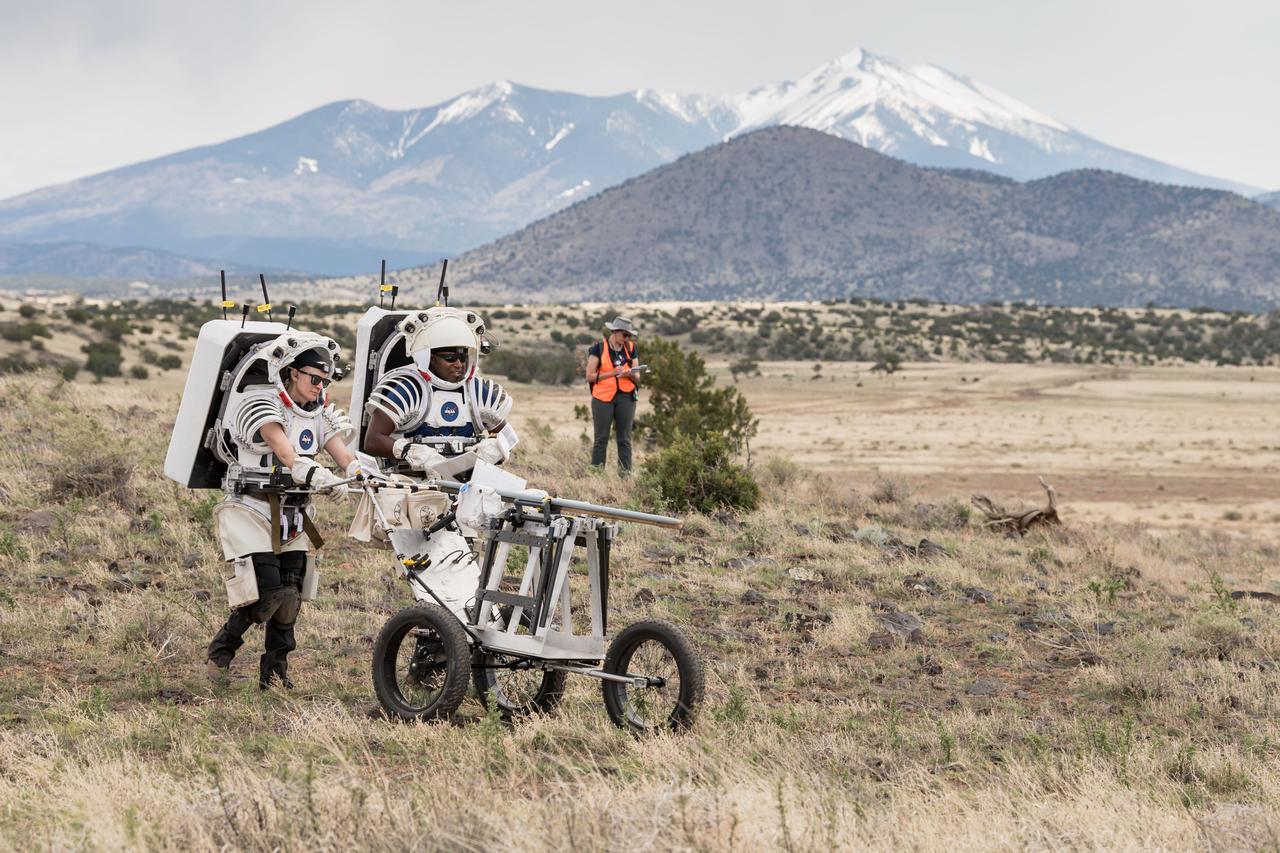
NASA astronauts Kate Rubins and Andre Douglas push a tool cart loaded with lunar tools through the San Francisco Volcanic Field north of Flagstaff, Arizona, as they practice moonwalking operations for Artemis III on May 13, 2024. Credit: NASA/Josh Valcarcel
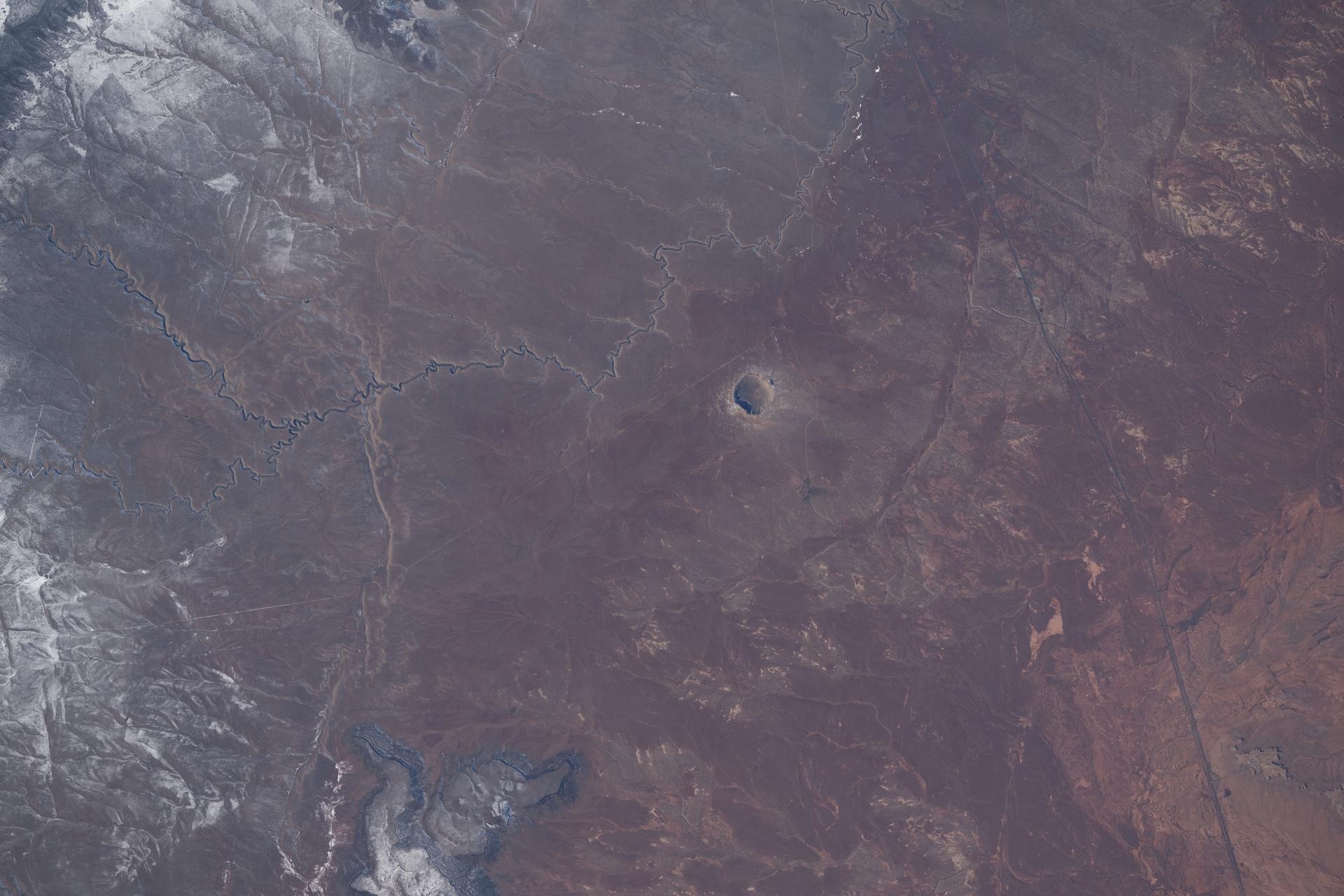
iss074e0208832 (Jan. 26, 2026) --- Meteor Crater in Arizona, a meteorite impact site approximately 4,000 feet in diameter and formed about 50,000 years ago in the high desert of the Colorado Plateau, is pictured from the International Space Station as it orbited 260 miles above the southwestern United States.
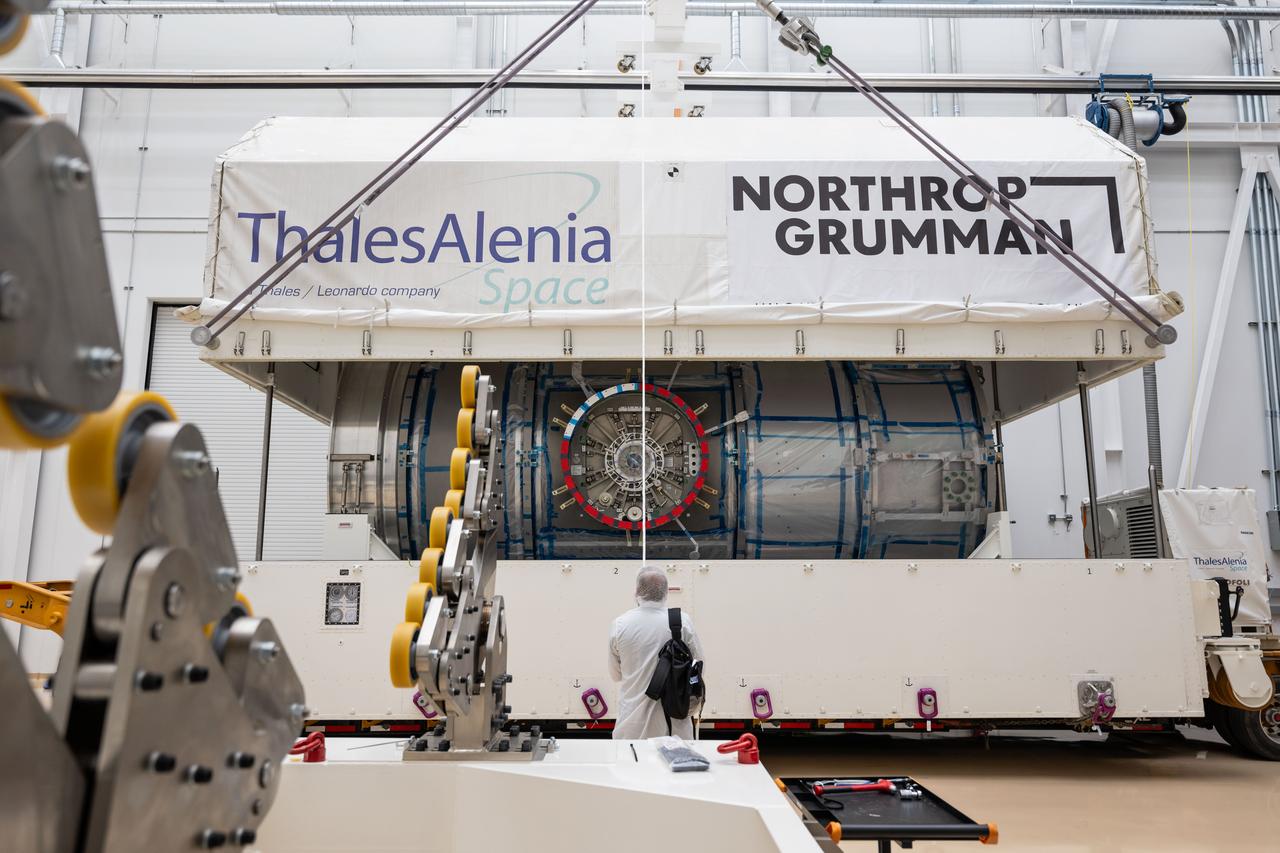
At Northrop Grumman’s Gilbert, Arizona, facility, teams remove Gateway’s HALO (Habitation and Logistics Outpost) from its transport container. HALO arrived from Turin, Italy, where Thales Alenia Space fabricated its primary structure. The module will undergo final outfitting in Gilbert before being integrated with the Power and Propulsion Element and launched to lunar orbit.
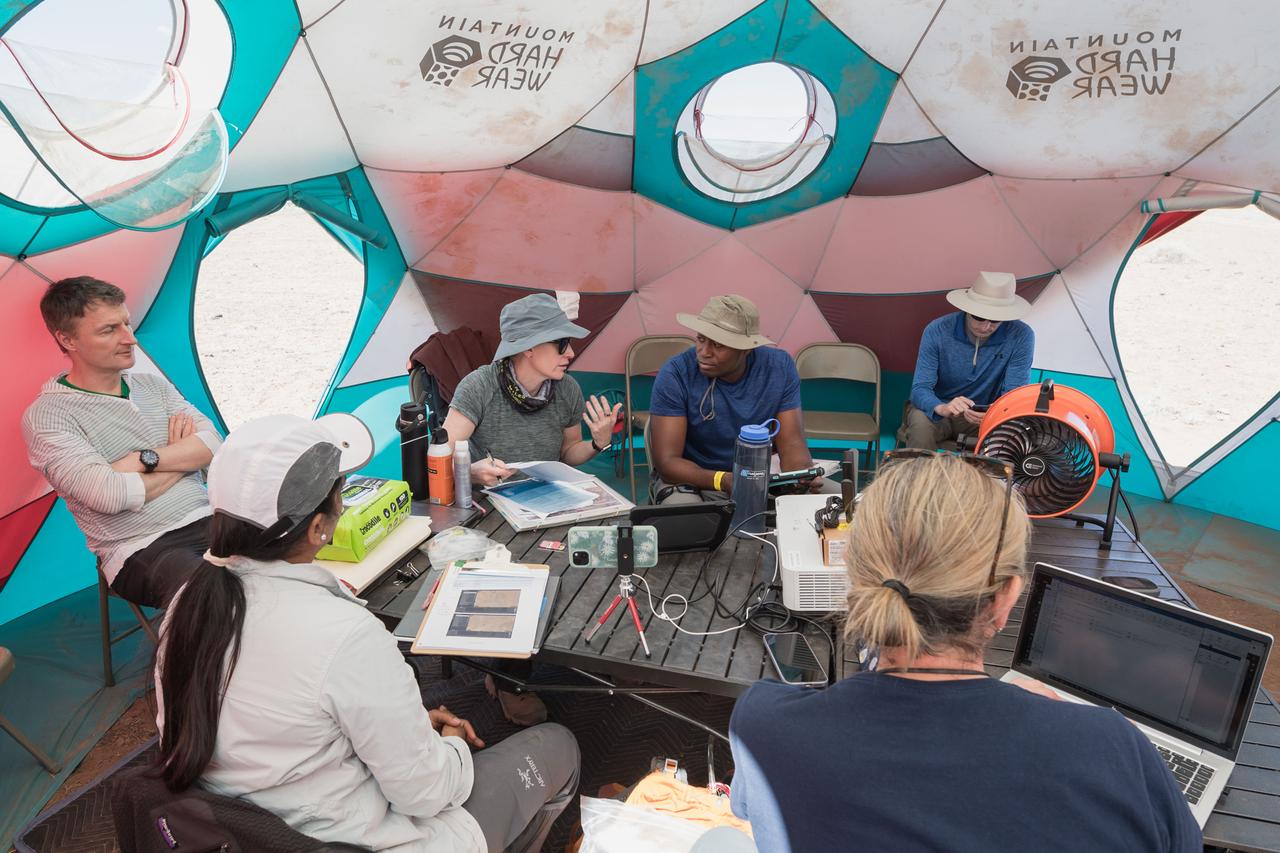
NASA astronauts Kate Rubins and Andre Douglas meet with teams to review test objectives and traverse plans before their first simulated moonwalk in a week-long field test consisting of four simulated moonwalks and six advanced technology runs in the San Francisco Volcanic Field in Northern Arizona on May 13, 2024. Credit: NASA/Josh Valcarcel
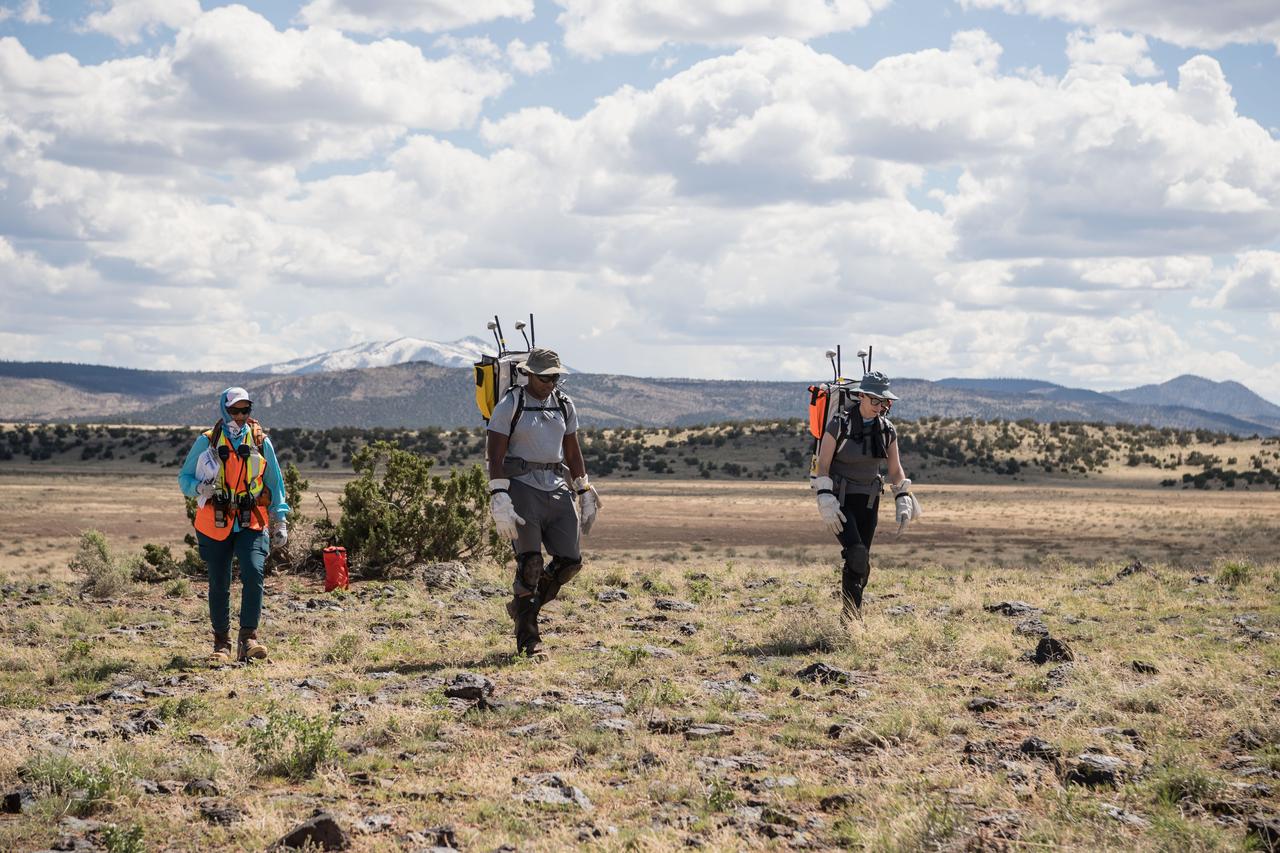
NASA astronauts Andre Douglas (middle) and Kate Rubins (right) walk through the desert during an engineering dry run before the start of a week-long field test consisting of four simulated moonwalks and six advanced technology runs in the San Francisco Volcanic Field in Northern Arizona on May 12, 2024. Image: NASA/Josh Valcarcel

NASA astronaut Andre Douglas raises an American flag as NASA astronaut Kate Rubins looks on during their first simulated moonwalk in a week-long field test consisting of four simulated moonwalks and six advanced technology runs in the San Francisco Volcanic Field in Northern Arizona on May 13, 2024. Credit: NASA/Josh Valcarcel
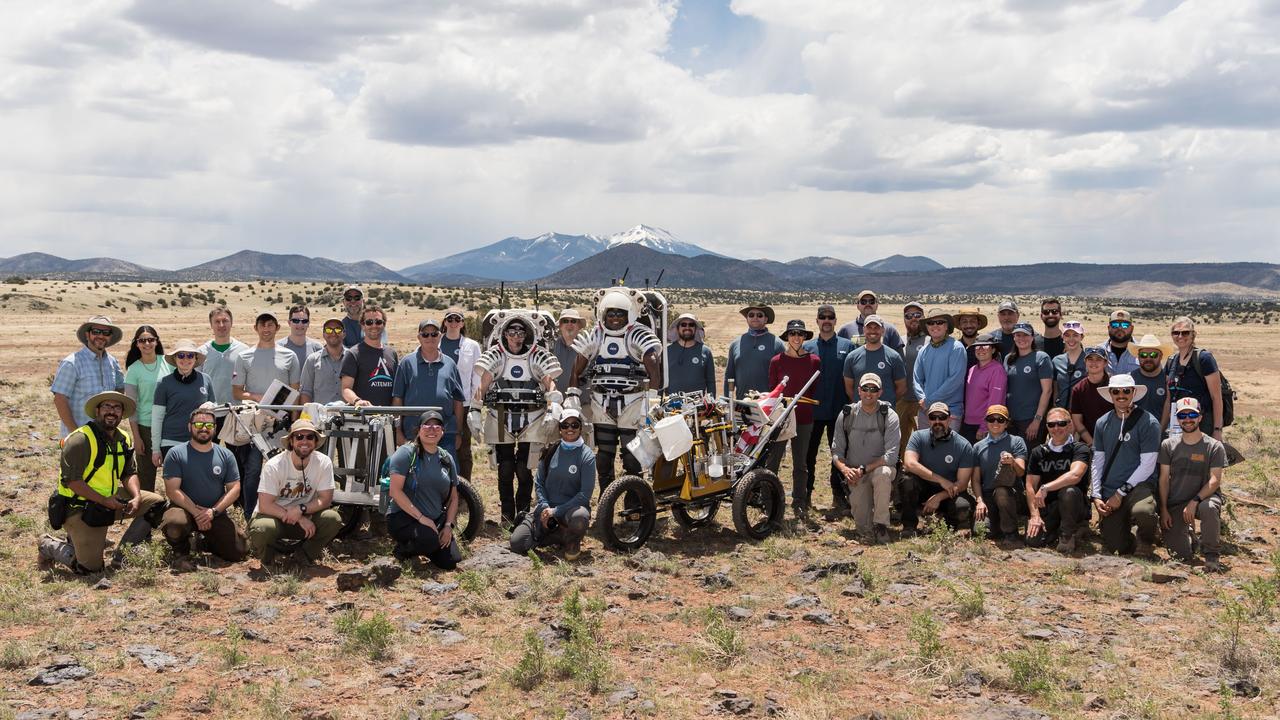
The Joint Extravehicular Activity and Human Surface Mobility Test Team and NASA astronauts Kate Rubins and Andre Douglas before the start of a week-long field test consisting of four simulated moonwalks and six advanced technology runs in the San Francisco Volcanic Field in Northern Arizona on May 13, 2024. Credit: NASA/Josh Valcarcel
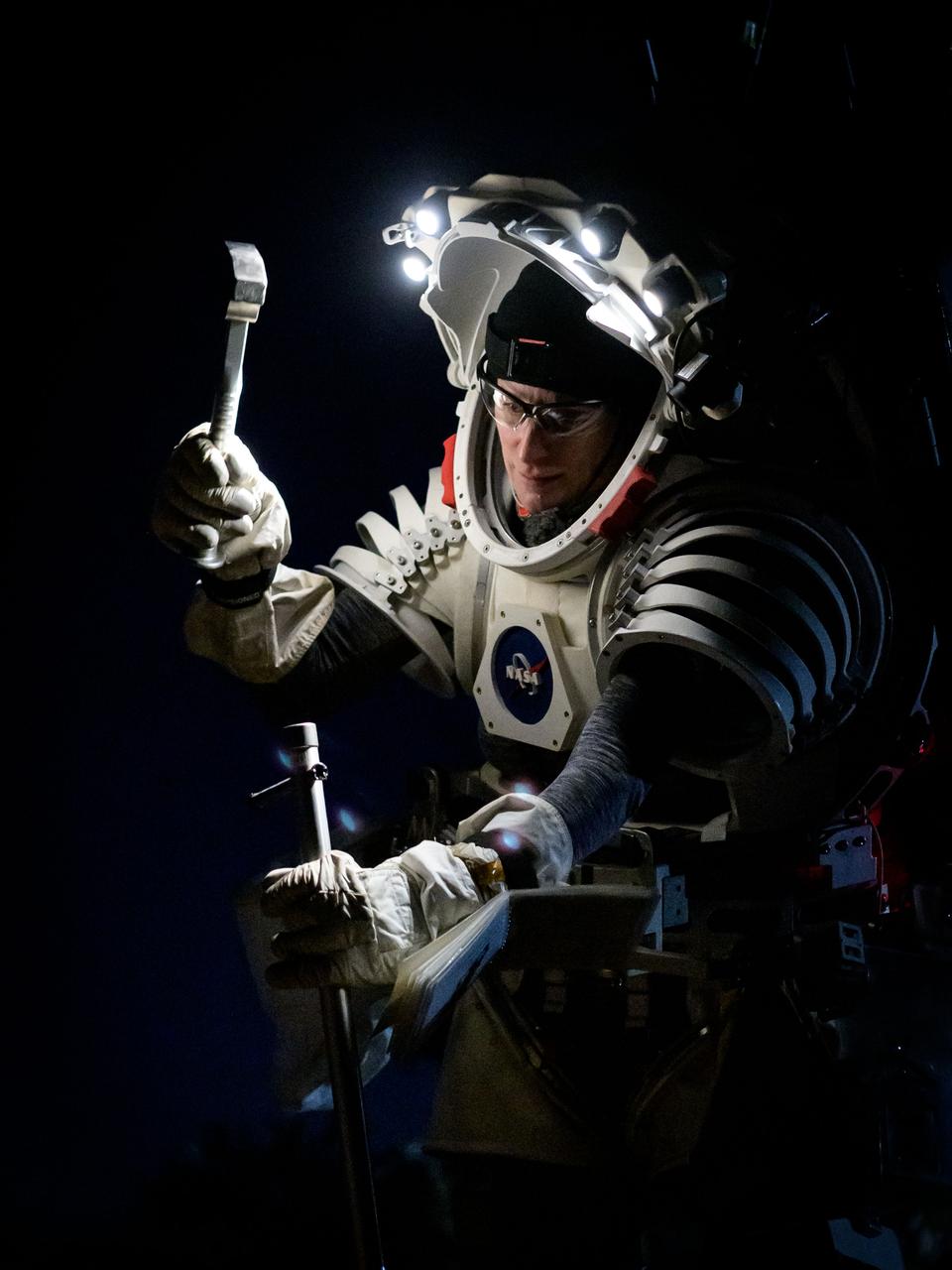
NASA astronaut Kate Rubins uses a hammer to get a drive tube into the ground to collect a pristine soil sample during a¬¬ nighttime simulated moonwalk in the San Francisco Volcanic Field in Northern Arizona on May 16, 2024. The drive tube is the key piece of hardware for preserving the integrity of samples from the Moon. Credit: NASA/Josh Valcarcel
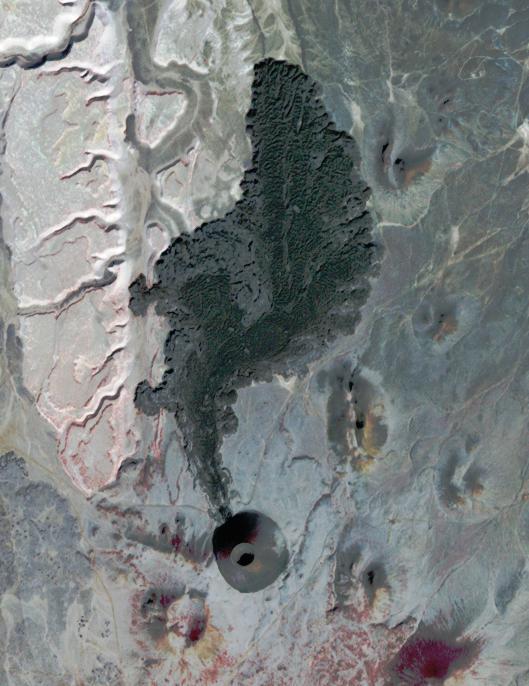
SP Crater, a volcanic cone and flow in Arizona, is visible in this image obtained by the Advanced Spaceborne Thermal Emission and Reflection Radiometer ASTER instrument on NASA Terra spacecraft.
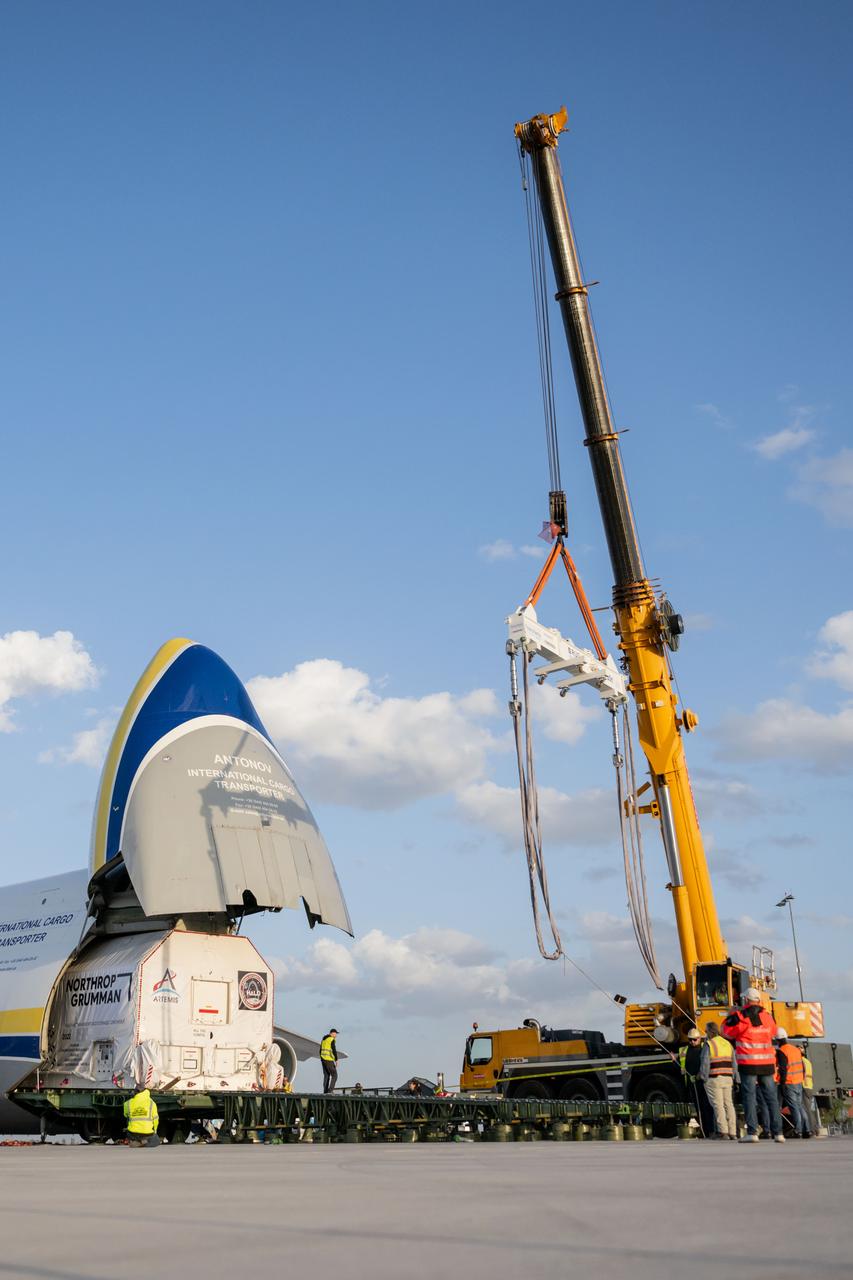
Gateway’s HALO (Habitation and Logistics Outpost) arrives in Mesa, Arizona, after traveling from Italy, where Thales Alenia Space fabricated its primary structure. Delivered by cargo aircraft to Phoenix-Mesa Gateway Airport, HALO will be transported to Northrop Grumman’s facility in Gilbert for final outfitting.
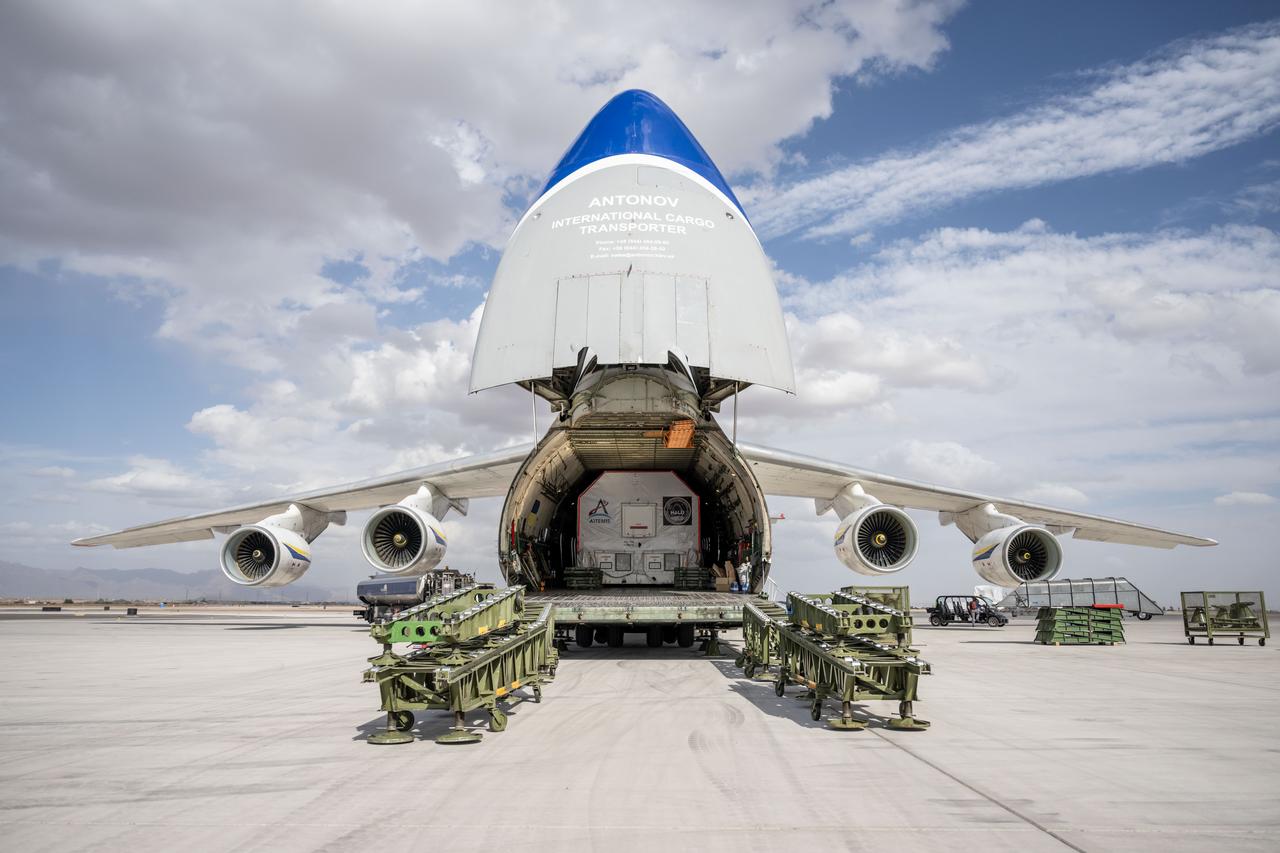
Gateway’s HALO (Habitation and Logistics Outpost) arrives in Mesa, Arizona, after traveling from Italy, where Thales Alenia Space fabricated its primary structure. Delivered by cargo aircraft to Phoenix-Mesa Gateway Airport, HALO will be transported to Northrop Grumman’s facility in Gilbert for final outfitting.
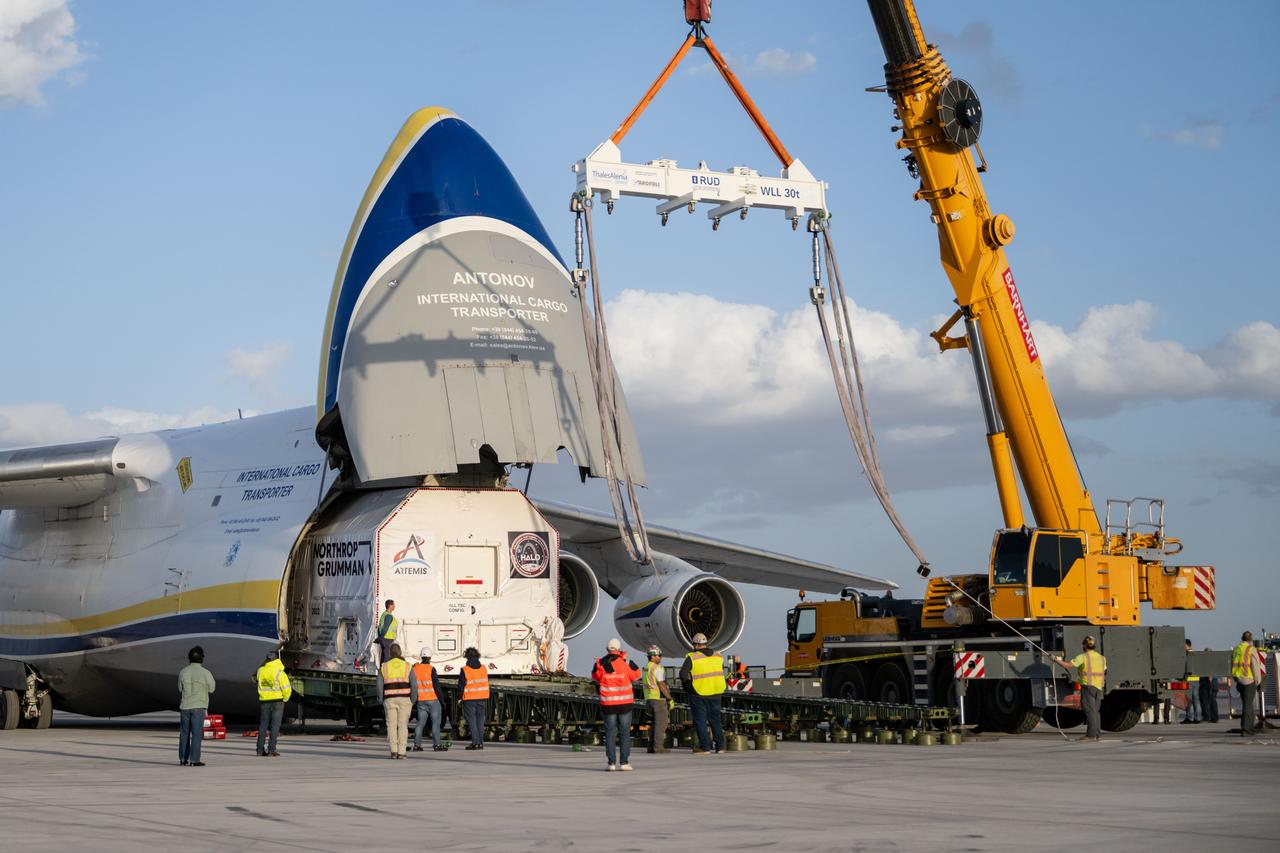
Gateway’s HALO (Habitation and Logistics Outpost) arrives in Mesa, Arizona, after traveling from Italy, where Thales Alenia Space fabricated its primary structure. Delivered by cargo aircraft to Phoenix-Mesa Gateway Airport, HALO will be transported to Northrop Grumman’s facility in Gilbert for final outfitting.
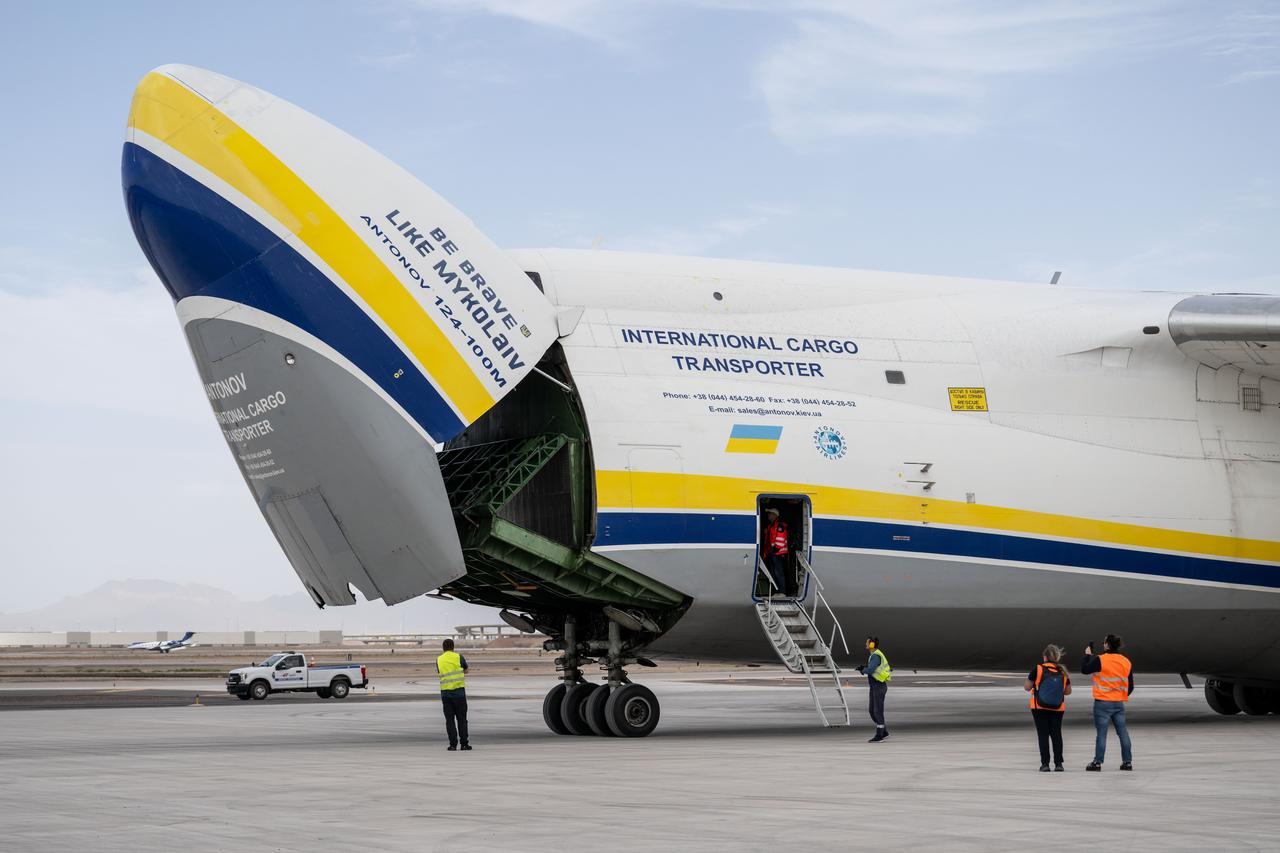
Gateway’s HALO (Habitation and Logistics Outpost) arrives in Mesa, Arizona, after traveling from Italy, where Thales Alenia Space fabricated its primary structure. Delivered by cargo aircraft to Phoenix-Mesa Gateway Airport, HALO will be transported to Northrop Grumman’s facility in Gilbert for final outfitting.
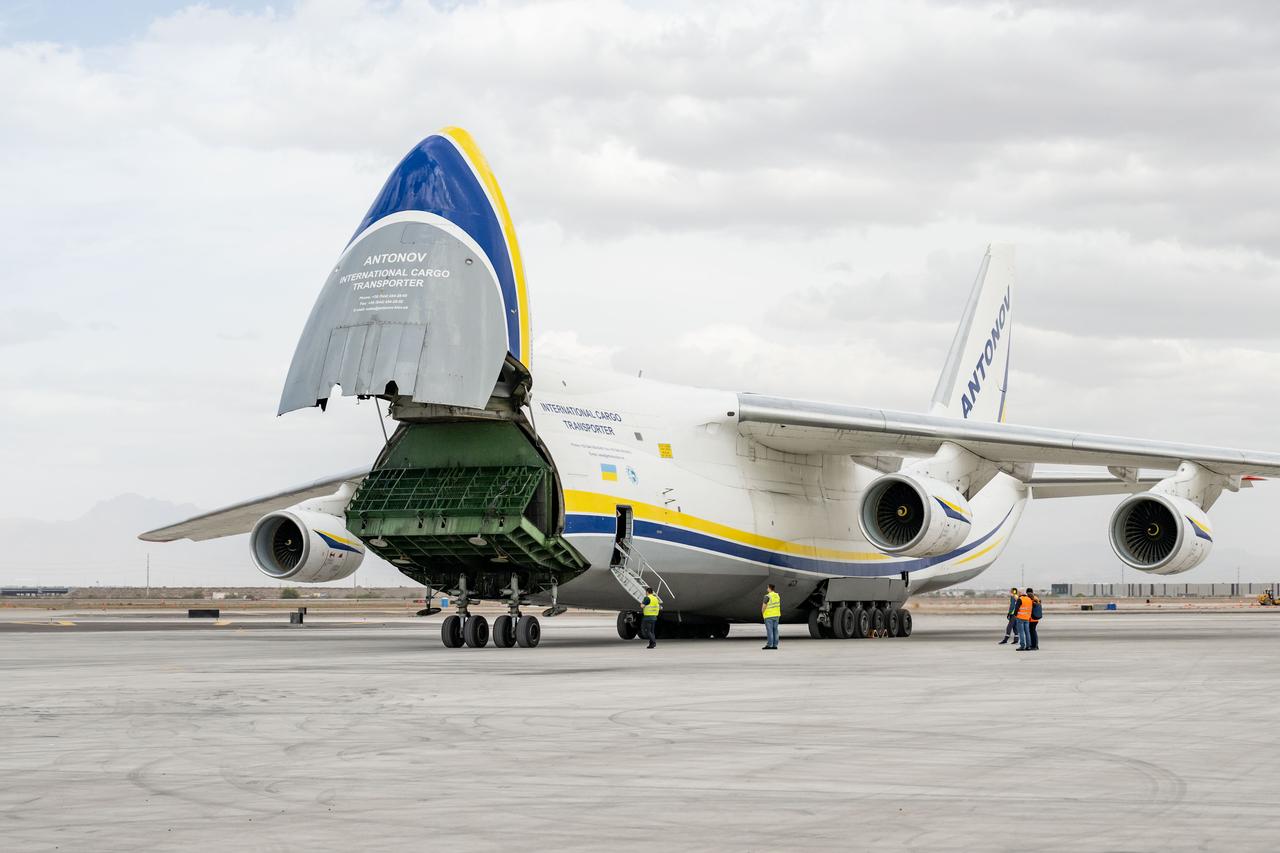
Gateway’s HALO (Habitation and Logistics Outpost) arrives in Mesa, Arizona, after traveling from Italy, where Thales Alenia Space fabricated its primary structure. Delivered by cargo aircraft to Phoenix-Mesa Gateway Airport, HALO will be transported to Northrop Grumman’s facility in Gilbert for final outfitting.
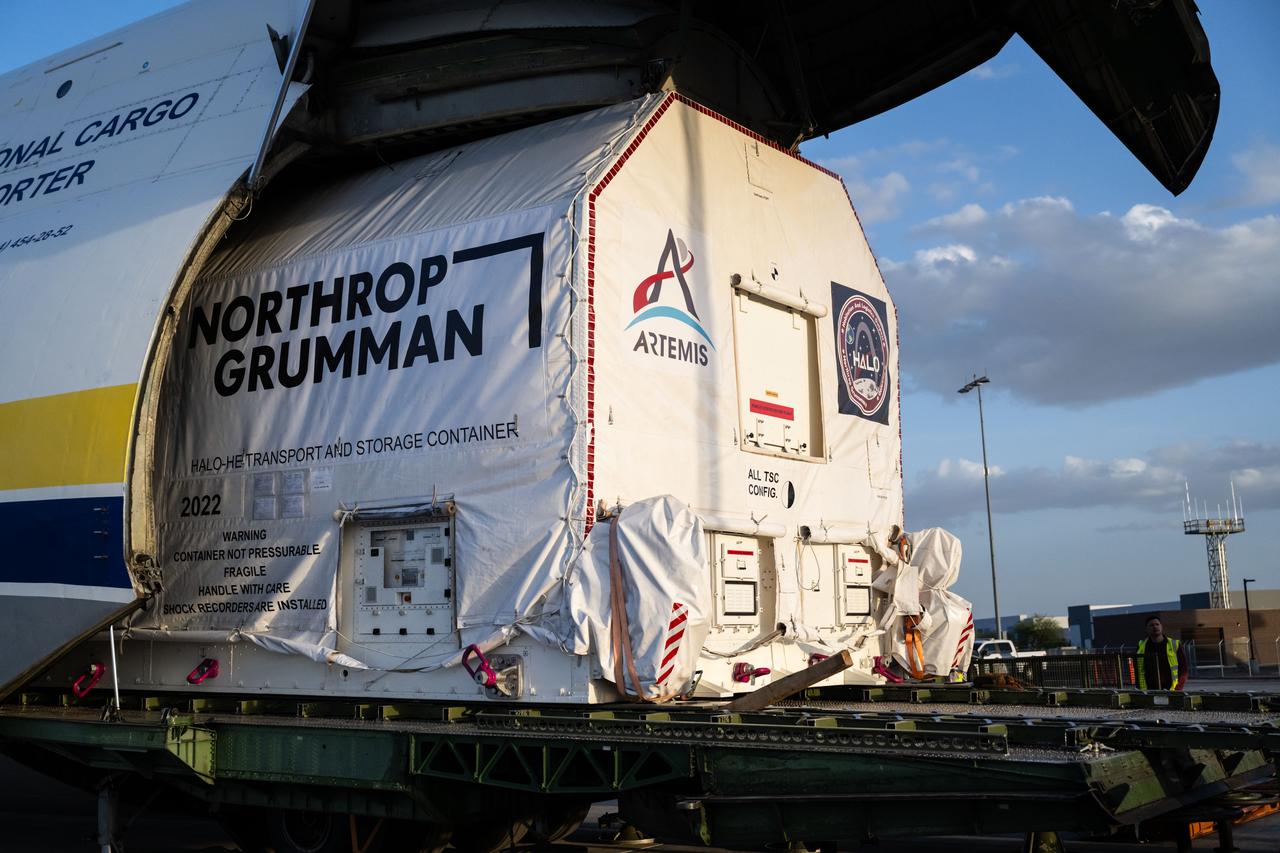
Gateway’s HALO (Habitation and Logistics Outpost) arrives in Mesa, Arizona, after traveling from Italy, where Thales Alenia Space fabricated its primary structure. Delivered by cargo aircraft to Phoenix-Mesa Gateway Airport, HALO will be transported to Northrop Grumman’s facility in Gilbert for final outfitting.
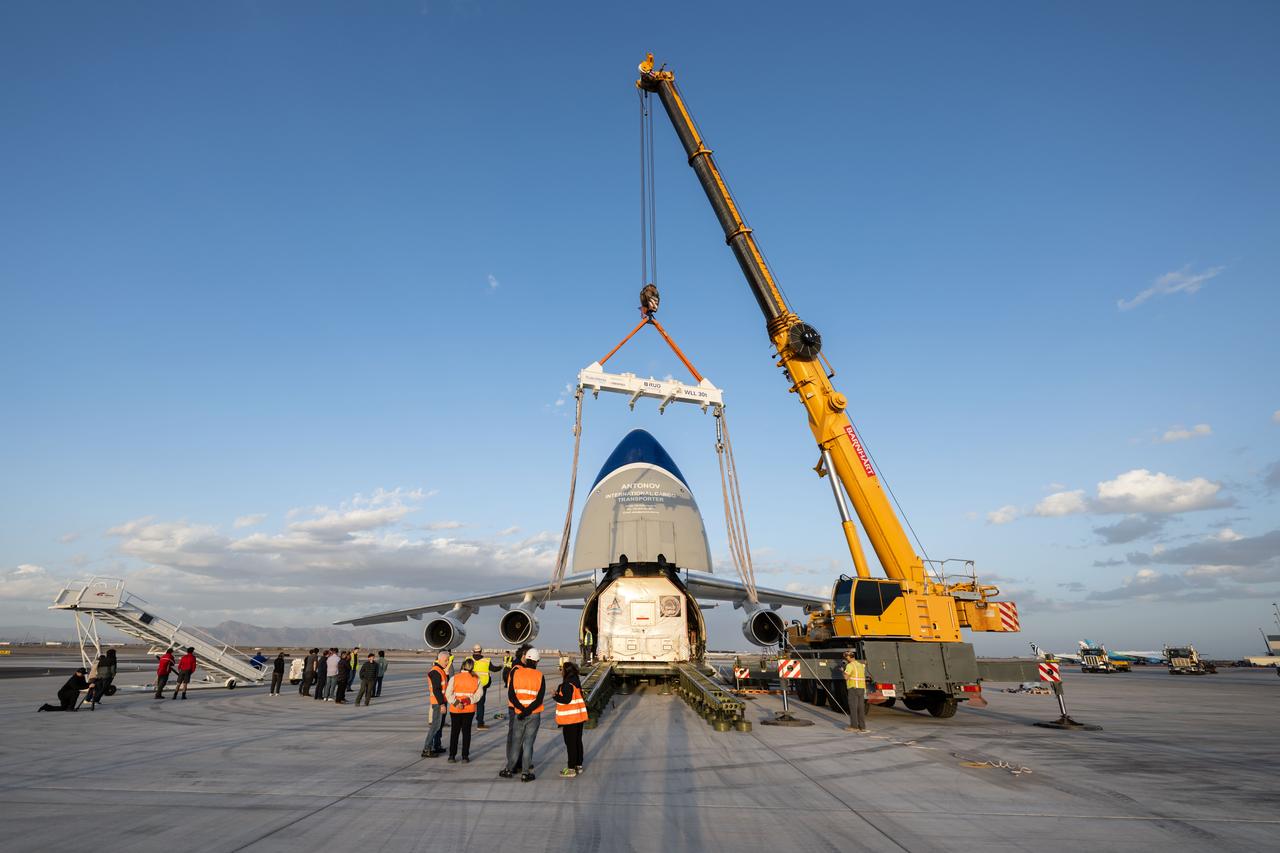
Gateway’s HALO (Habitation and Logistics Outpost) arrives in Mesa, Arizona, after traveling from Italy, where Thales Alenia Space fabricated its primary structure. Delivered by cargo aircraft to Phoenix-Mesa Gateway Airport, HALO will be transported to Northrop Grumman’s facility in Gilbert for final outfitting.
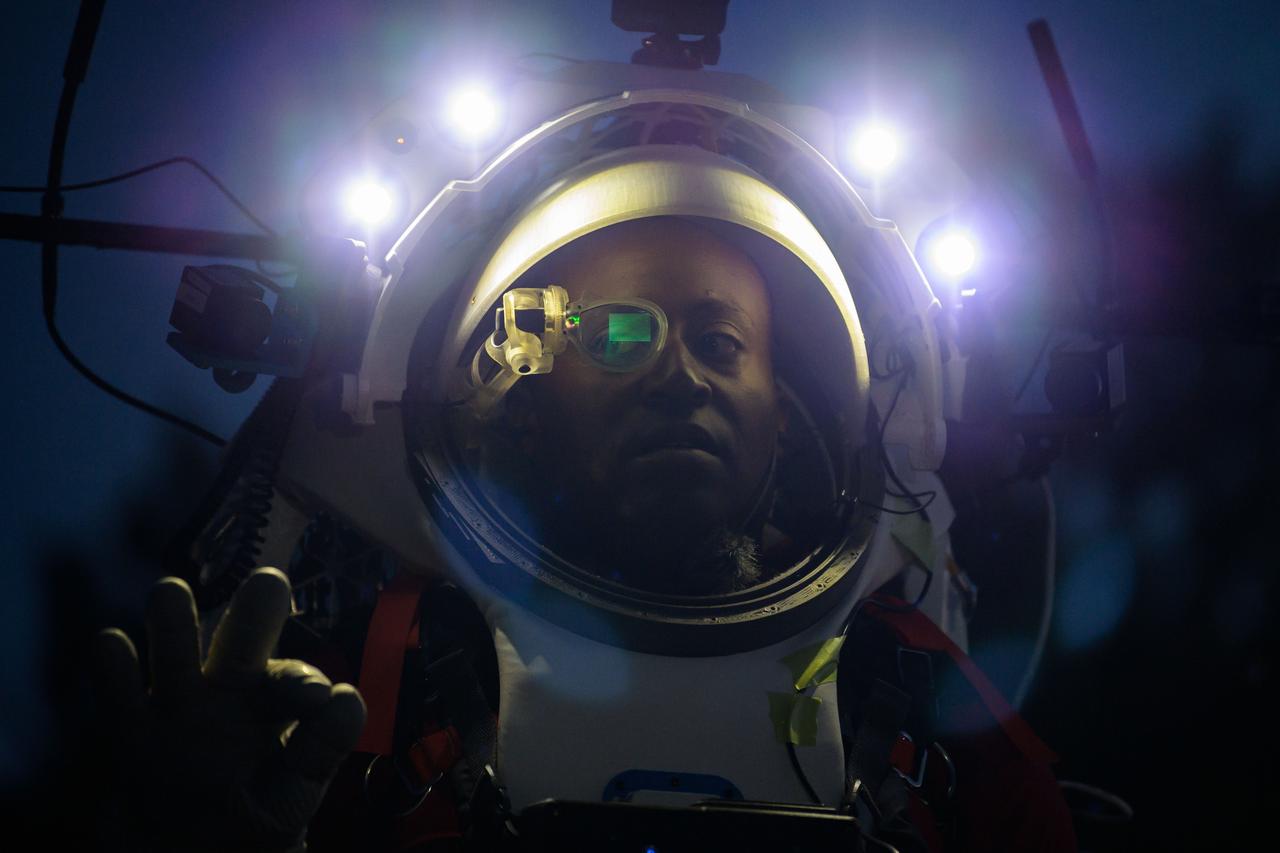
NASA astronaut Andre Douglas wears AR (Augmented Reality) display technology during a nighttime advanced technology run in the San Francisco Volcanic Field in Northern Arizona on May 21, 2024. The monocular lens consists of a pico-projector and waveguide optical element to focus an image for crew to see their real world overlaid with digital information. These unique near-eye form factors may be used to improve the usability and minimally impact the complex biomechanics of working in a pressurized suit environment. Credit: NASA/Josh Valcarcel
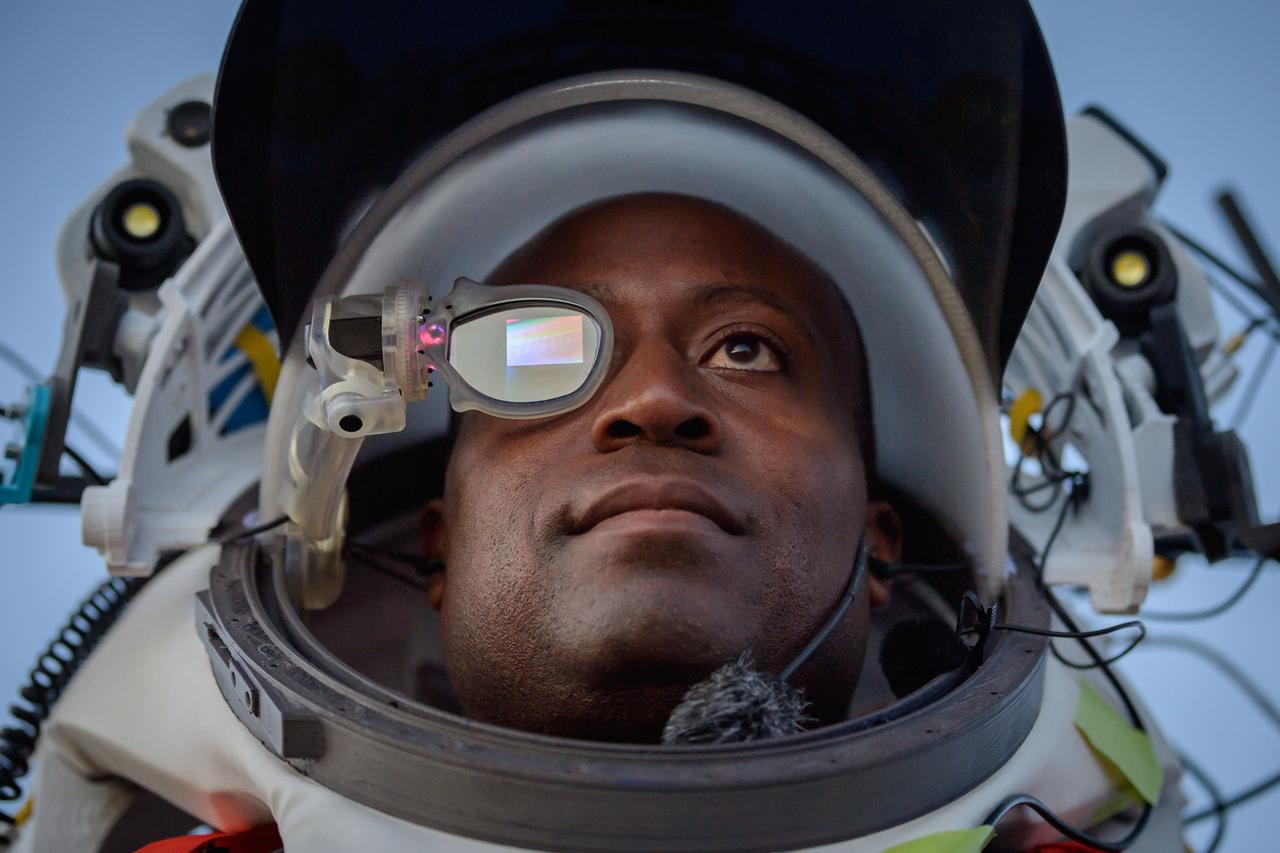
NASA astronaut Andre Douglas wears AR (Augmented Reality) display technology during an advanced technology run in the San Francisco Volcanic Field in Northern Arizona on May 21, 2024. The monocular lens consists of a pico-projector and waveguide optical element to focus an image for crew to see their real world overlaid with digital information. These unique near-eye form factors may be used to improve the usability and minimally impact the complex biomechanics of working in a pressurized suit environment. Credit: NASA/Josh Valcarcel
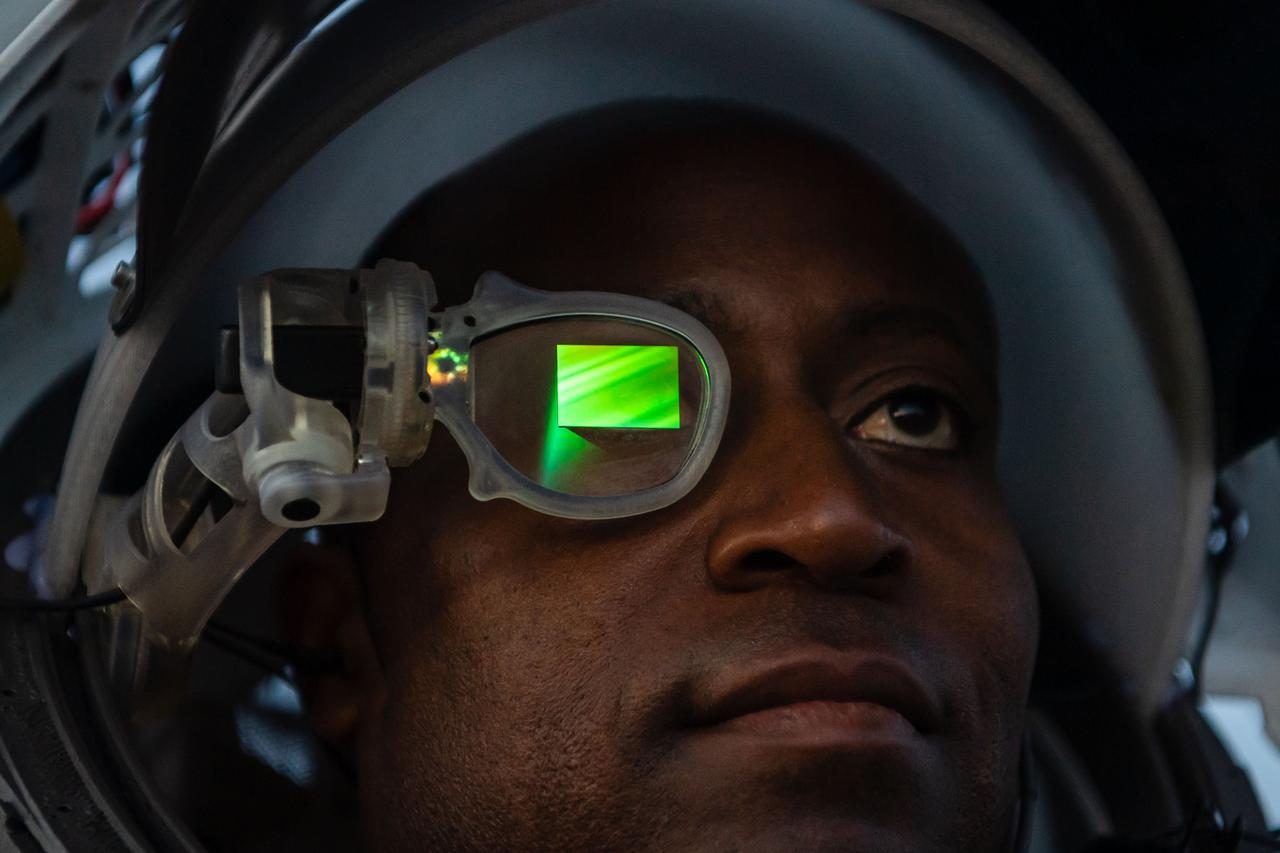
NASA astronaut Andre Douglas wears AR (Augmented Reality) display technology during an advanced technology run in the San Francisco Volcanic Field in Northern Arizona on May 21, 2024. The monocular lens consists of a pico-projector and waveguide optical element to focus an image for crew to see their real world overlaid with digital information. These unique near-eye form factors may be used to improve the usability and minimally impact the complex biomechanics of working in a pressurized suit environment. Credit: NASA/Josh Valcarcel
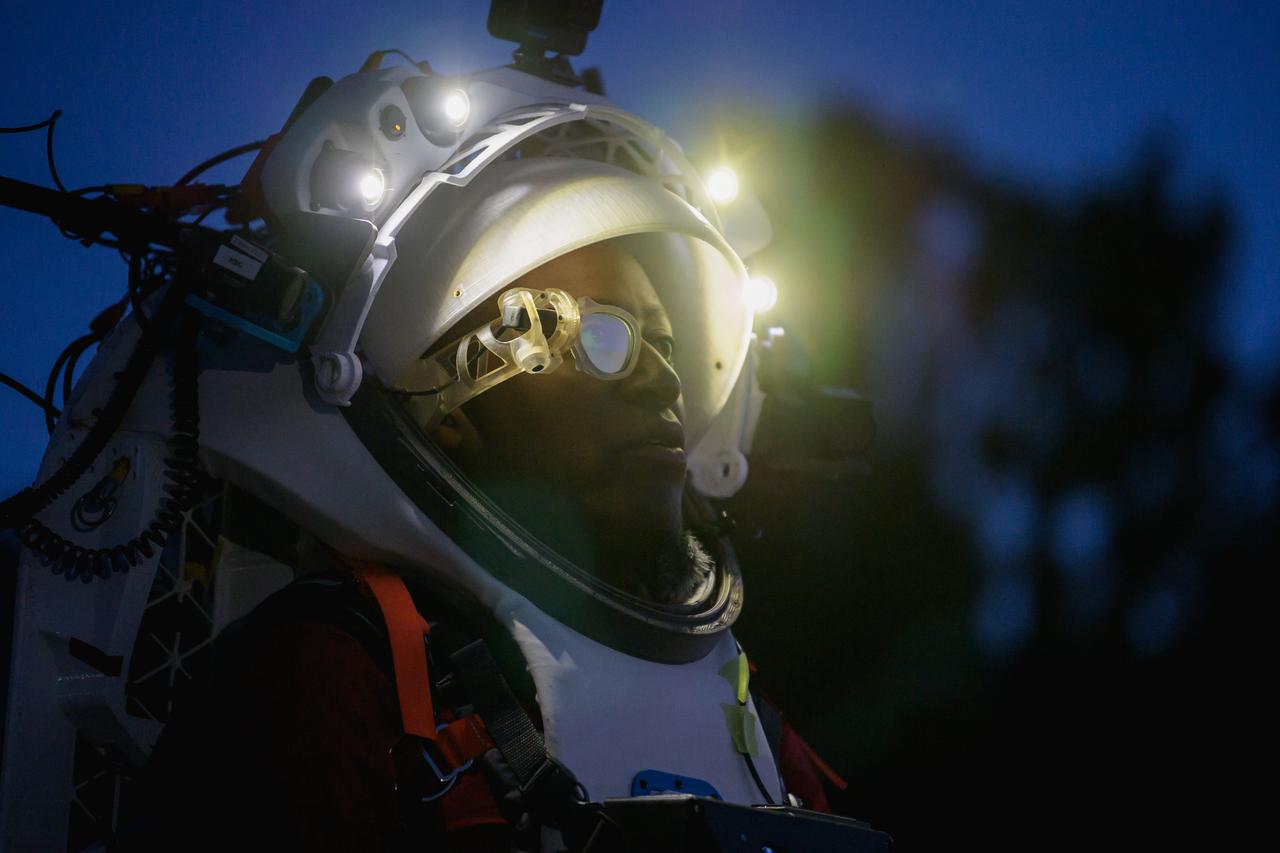
NASA astronaut Andre Douglas wears AR (Augmented Reality) display technology during a nighttime advanced technology run in the San Francisco Volcanic Field in Northern Arizona on May 21, 2024. The monocular lens consists of a pico-projector and waveguide optical element to focus an image for crew to see their real world overlaid with digital information. These unique near-eye form factors may be used to improve the usability and minimally impact the complex biomechanics of working in a pressurized suit environment. Credit: NASA/Josh Valcarcel
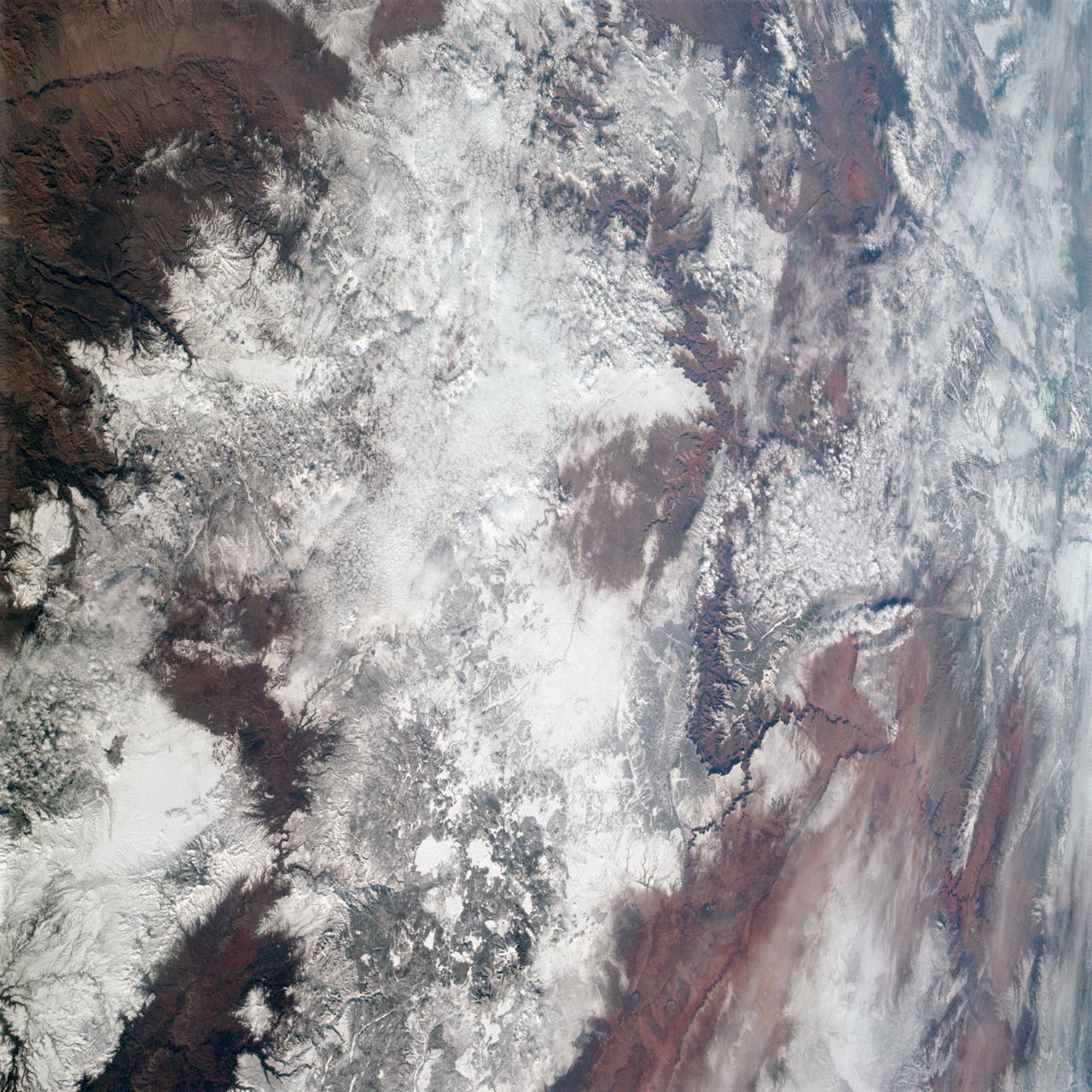
AS09-20-3137 (3-13 March 1969) --- The Grand Canyon is sharply etched on the snow-covered Colorado Plateau in Arizona in this photograph from the Apollo 9 spacecraft during its Earth-orbital mission. Lake Powell behind Glen Canyon Dam is in the upper right corner. Humphreys Peak and the many volcanic craters around the San Francisco Mountains near Flagstaff, Arizona, are right of center. Prescott is under clouds at lower center.
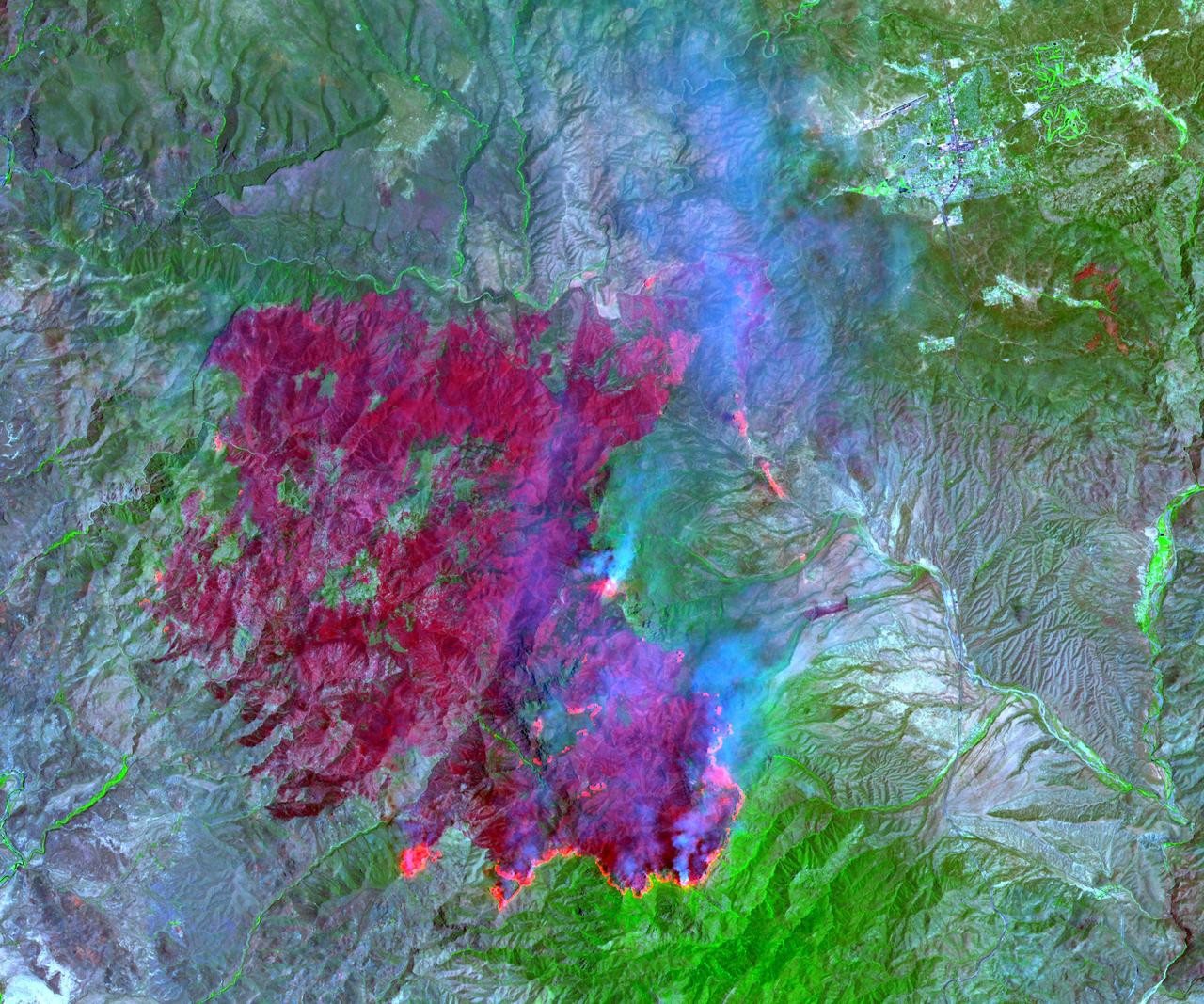
On July 3, 2004, the Advanced Spaceborne Thermal Emission and Reflection Radiometer ASTER on NASA Terra satellite acquired this image of the Willow fire near Payson, Arizona.
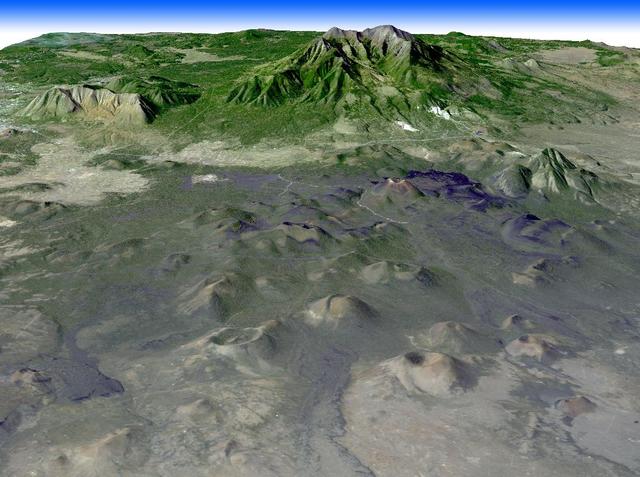
Northern Arizona is best known for the Grand Canyon. Less widely known are the hundreds of geologically young volcanoes, at least one of which buried the homes of local residents. This image was acquired by NASA Terra spacecraft.

Barringer Crater, also known as Meteor Crater, is a 1,300-meter 0.8 mile diameter, 174-meter 570-feet deep hole in the flat-lying desert sandstones 30 kilometers 18.6 miles west of Winslow, Arizona.

iss069e003869 (April 16, 2023) --- Lake Powell, separating Utah from Arizona, is pictured from an external high definition camera on the International Space Station as it orbited 260 miles above.
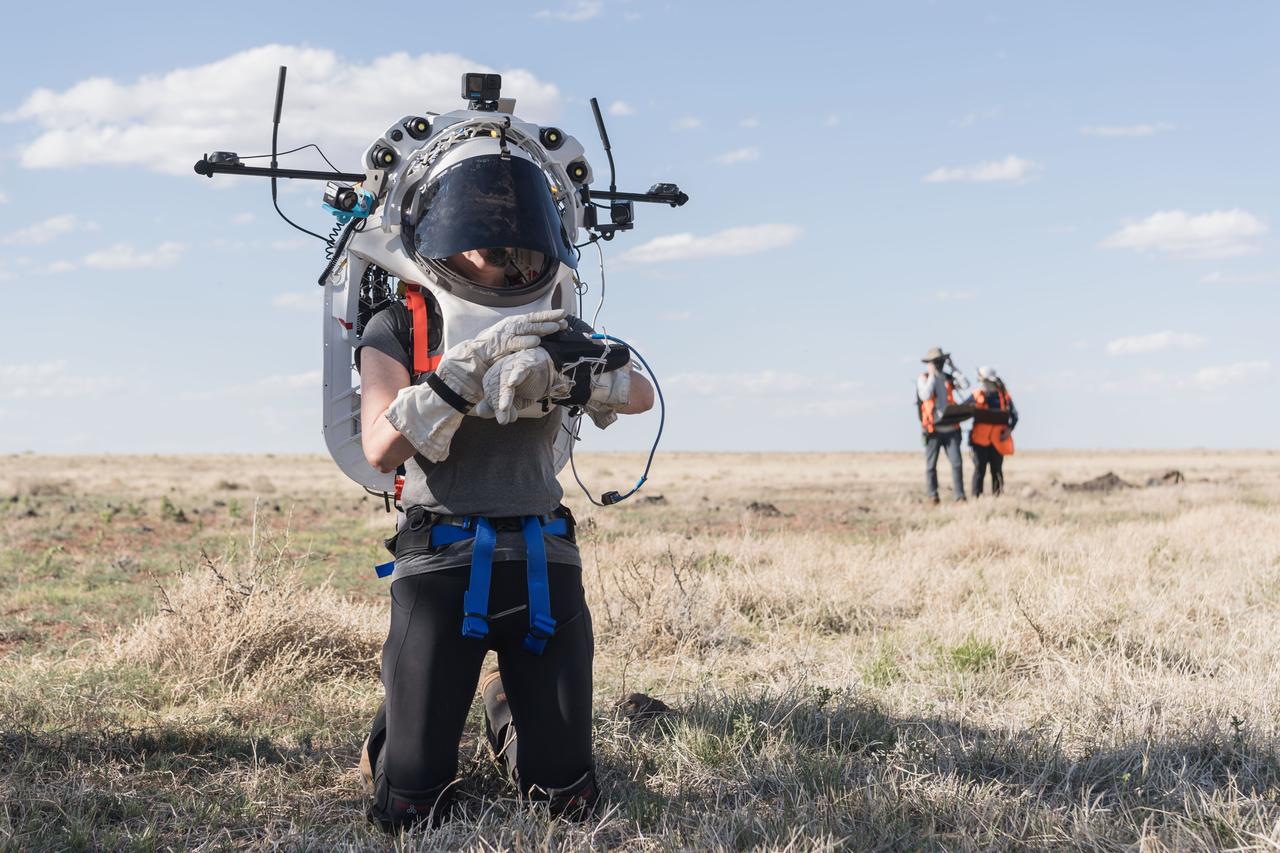
NASA astronaut Kate Rubins uses the hand controller on her wrist to display information while wearing the Joint AR (Joint Augmented Reality Visual Informatics System) display during an advanced technology run in the San Francisco Volcanic Field in Northern Arizona on May 21, 2024. The suit display features include navigation, photo capture, graphical format of consumables, procedure viewing, mission control updates, and other augmented reality cues and graphics. The team successfully tested navigation displays using data from four different data streams: GPS (Global Positioning System)/IMU (Inertial Measurement Unit), camera/IMU, LiDAR (Light Detection and Ranging), and static maps. Technology like this may be used for future Artemis missions to augment mission control communication and help guide crew back to the lunar lander. Credit: NASA/Josh Valcarcel
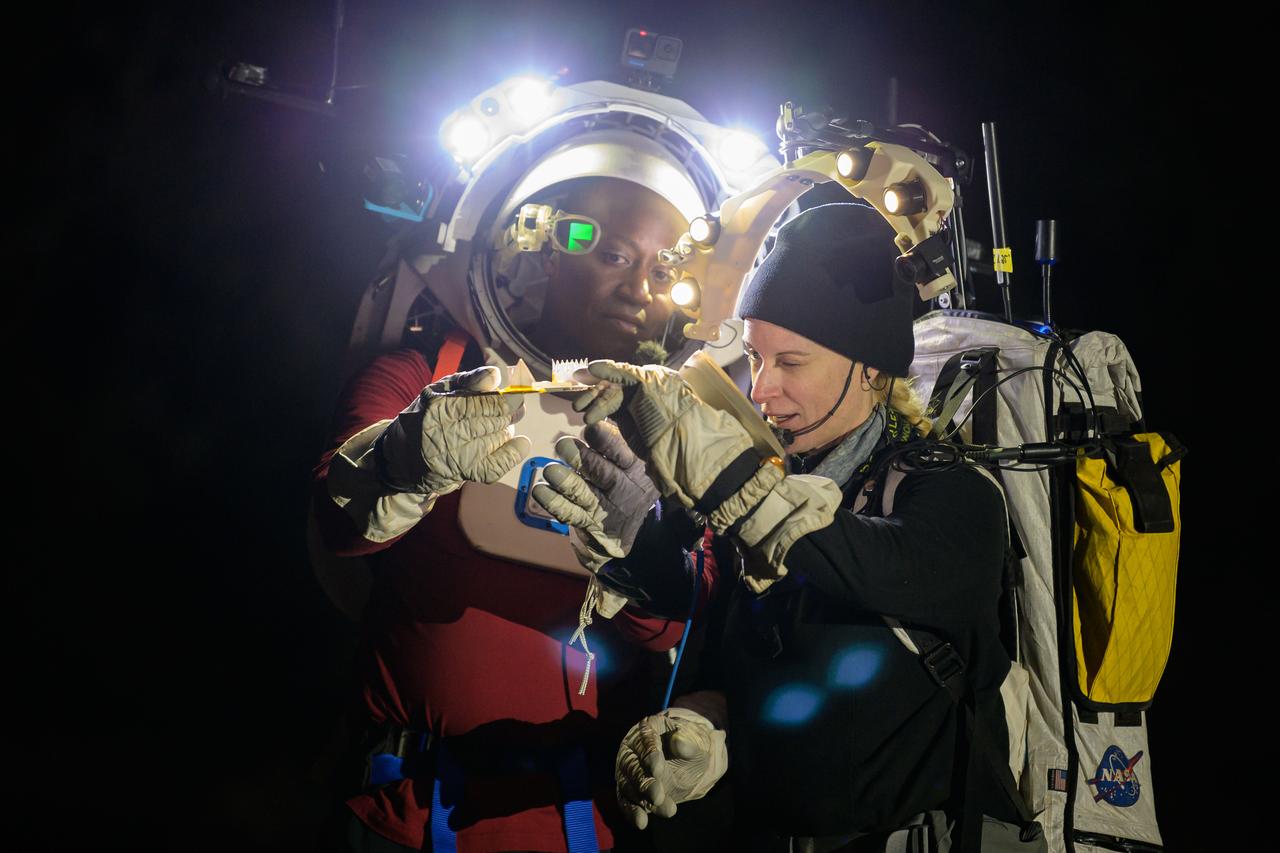
NASA astronauts Andre Douglas and Kate Rubins during a nighttime advanced technology run in the San Francisco Volcanic Field in Northern Arizona on May 21, 2024. Douglas is wearing the Joint AR (Joint Augmented Reality Visual Informatics System) display. The suit display features include navigation, photo capture, graphical format of consumables, procedure viewing, mission control updates, and other augmented reality cues and graphics. The team successfully tested navigation displays using data from four different data streams: GPS (Global Positioning System)/IMU (Inertial Measurement Unit), camera/IMU, LiDAR (Light Detection and Ranging), and static maps. Technology like this may be used for future Artemis missions to augment mission control communication and help guide crew back to the lunar lander. Credit: NASA/Josh Valcarcel
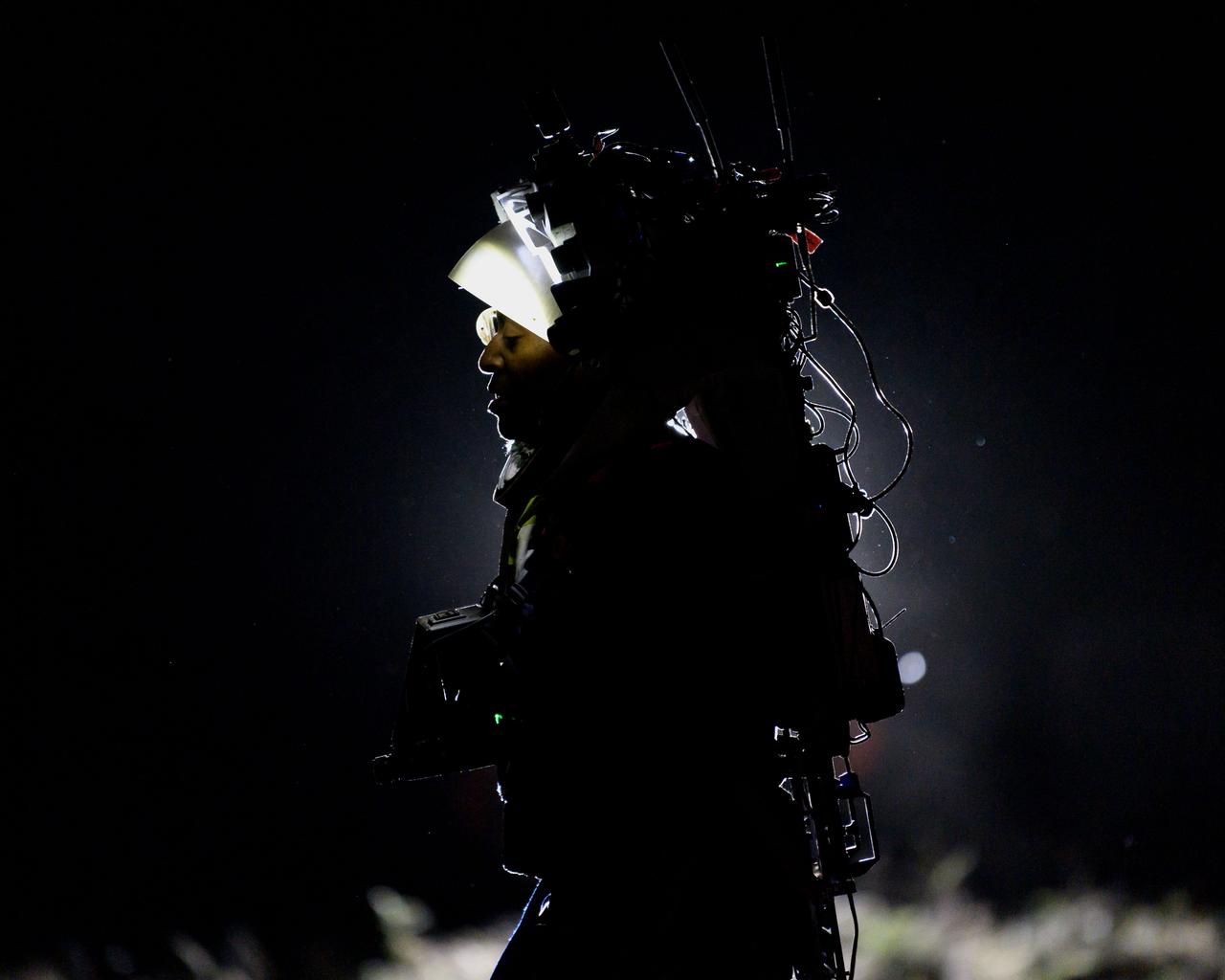
NASA astronaut Andre Douglas wears the Joint AR (Joint Augmented Reality Visual Informatics System) display during a nighttime advanced technology run in the San Francisco Volcanic Field in Northern Arizona on May 21, 2024. The suit display features include navigation, photo capture, graphical format of consumables, procedure viewing, mission control updates, and other augmented reality cues and graphics. The team successfully tested navigation displays using data from four different data streams: GPS (Global Positioning System)/IMU (Inertial Measurement Unit), camera/IMU, LiDAR (Light Detection and Ranging), and static maps. Technology like this may be used for future Artemis missions to augment mission control communication and help guide crew back to the lunar lander. Credit: NASA/Josh Valcarcel
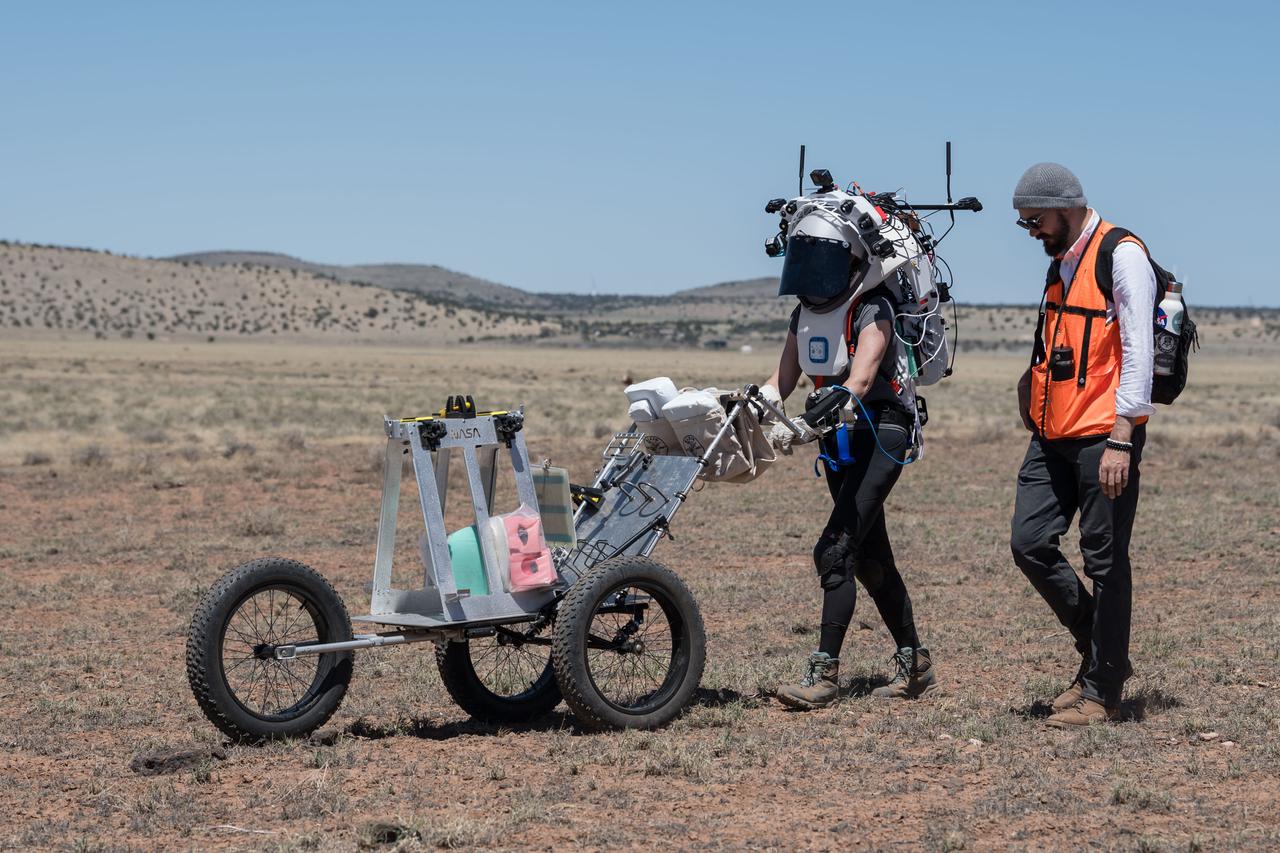
NASA astronaut Kate Rubins pushes a cart through the lunar-like landscape while wearing the Joint AR (Joint Augmented Reality Visual Informatics System) display during an advanced technology run in the San Francisco Volcanic Field in Northern Arizona on May 19, 2024. The suit display features include navigation, photo capture, graphical format of consumables, procedure viewing, mission control updates, and other augmented reality cues and graphics. The team successfully tested navigation displays using data from four different data streams: GPS (Global Positioning System)/IMU (Inertial Measurement Unit), camera/IMU, LiDAR (Light Detection and Ranging), and static maps. Technology like this may be used for future Artemis missions to augment mission control communication and help guide crew back to the lunar lander. Credit: NASA/Josh Valcarcel
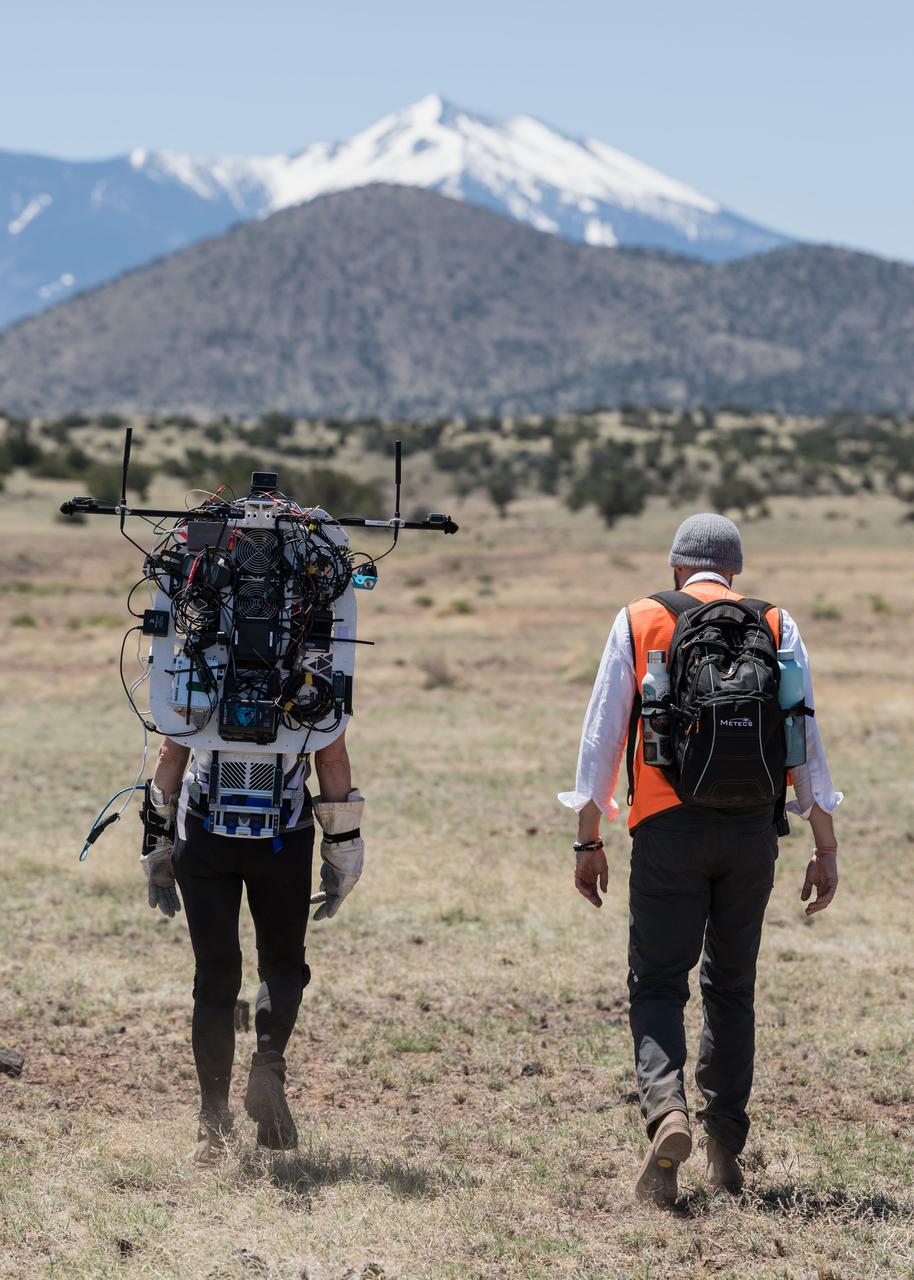
NASA astronaut Kate Rubins walks through the lunar-like landscape wearing the Joint AR (Joint Augmented Reality Visual Informatics System) display during an advanced technology run in the San Francisco Volcanic Field in Northern Arizona on May 19, 2024. The suit display features include navigation, photo capture, graphical format of consumables, procedure viewing, mission control updates, and other augmented reality cues and graphics. The team successfully tested navigation displays using data from four different data streams: GPS (Global Positioning System)/IMU (Inertial Measurement Unit), camera/IMU, LiDAR (Light Detection and Ranging), and static maps. Technology like this may be used for future Artemis missions to augment mission control communication and help guide crew back to the lunar lander. Credit: NASA/Josh Valcarcel
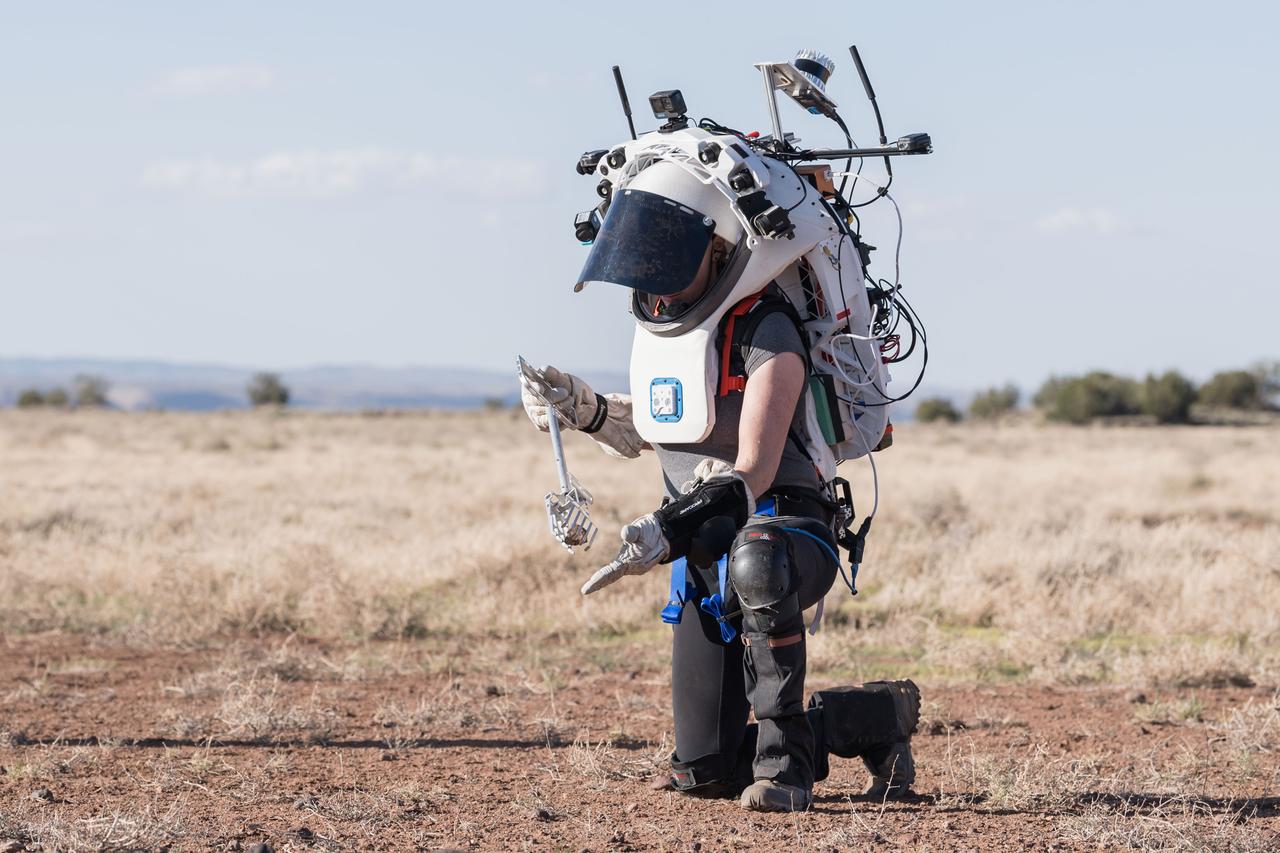
NASA astronaut Kate Rubins uses tongs to pick up a geologic sample while wearing the Joint AR (Joint Augmented Reality Visual Informatics System) display during an advanced technology run in the San Francisco Volcanic Field in Northern Arizona on May 21, 2024. The suit display features include navigation, photo capture, graphical format of consumables, procedure viewing, mission control updates, and other augmented reality cues and graphics. The team successfully tested navigation displays using data from four different data streams: GPS (Global Positioning System)/IMU (Inertial Measurement Unit), camera/IMU, LiDAR (Light Detection and Ranging), and static maps. Technology like this may be used for future Artemis missions to augment mission control communication and help guide crew back to the lunar lander. Credit: NASA/Josh Valcarcel
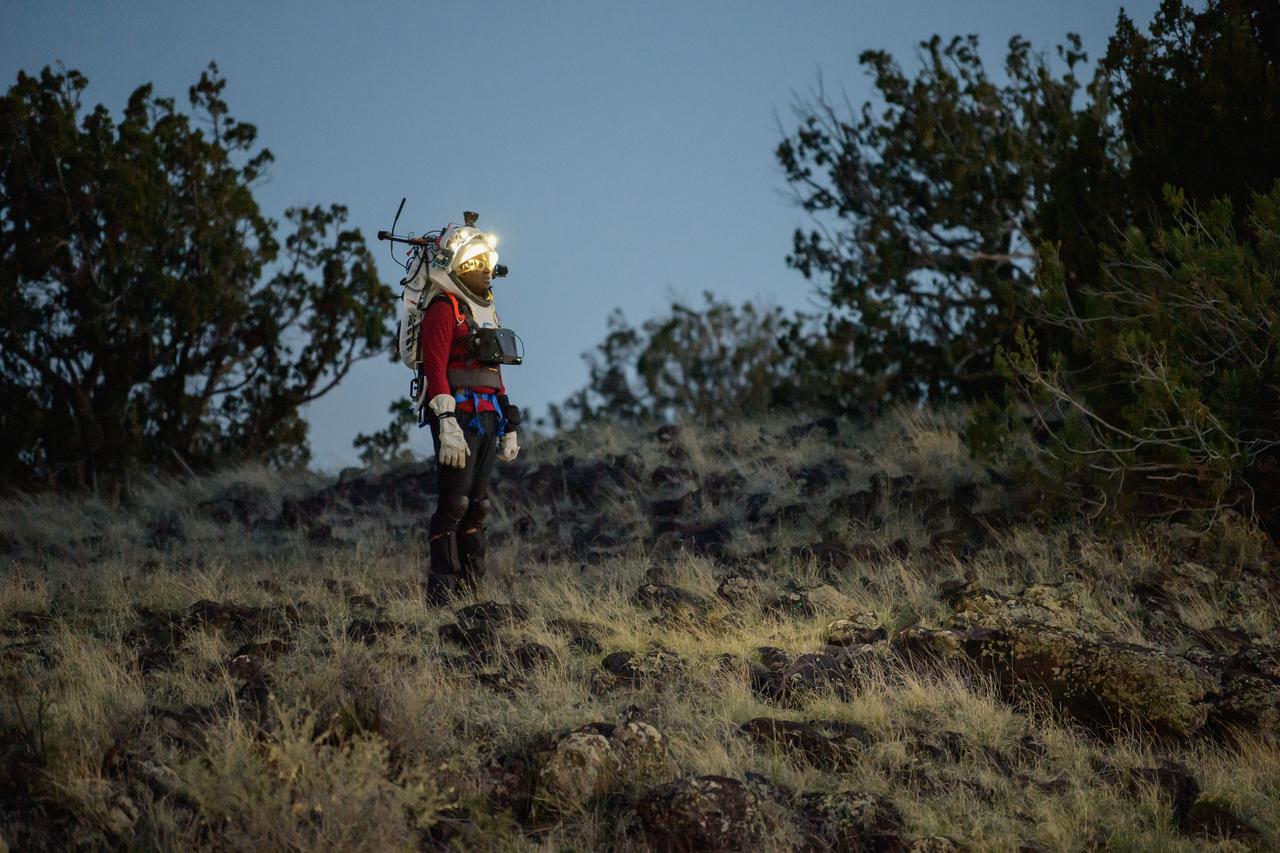
NASA astronaut Andre Douglas views the lunar-like landscape at dusk while wearing the Joint AR (Joint Augmented Reality Visual Informatics System) display during an advanced technology run in the San Francisco Volcanic Field in Northern Arizona on May 21, 2024. The suit display features include navigation, photo capture, graphical format of consumables, procedure viewing, mission control updates, and other augmented reality cues and graphics. The team successfully tested navigation displays using data from four different data streams: GPS (Global Positioning System)/IMU (Inertial Measurement Unit), camera/IMU, LiDAR (Light Detection and Ranging), and static maps. Technology like this may be used for future Artemis missions to augment mission control communication and help guide crew back to the lunar lander. Credit: NASA/Josh Valcarcel
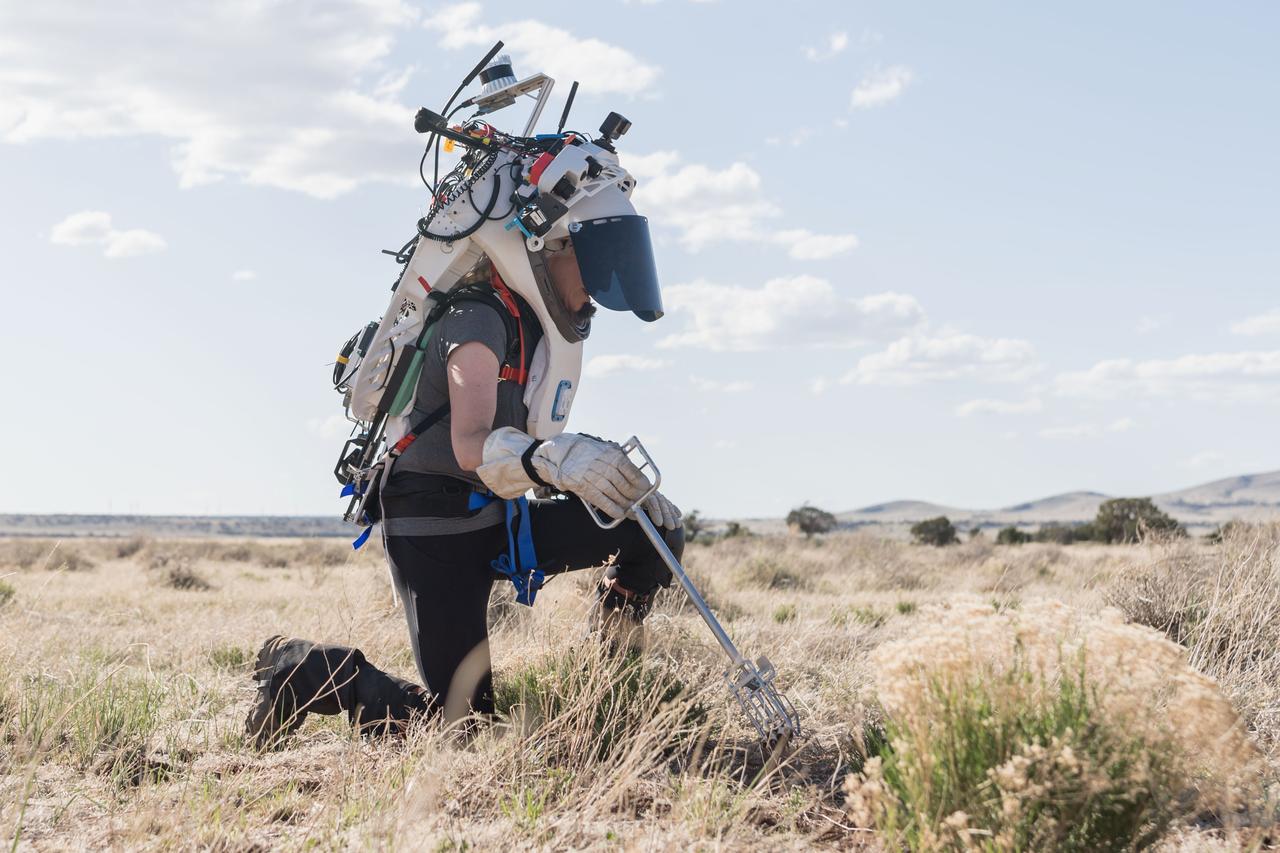
NASA astronaut Kate Rubins uses tongs to collect geologic samples while wearing the Joint AR (Joint Augmented Reality Visual Informatics System) display during an advanced technology run in the San Francisco Volcanic Field in Northern Arizona on May 21, 2024. The suit display features include navigation, photo capture, graphical format of consumables, procedure viewing, mission control updates, and other augmented reality cues and graphics. The team successfully tested navigation displays using data from four different data streams: GPS (Global Positioning System)/IMU (Inertial Measurement Unit), camera/IMU, LiDAR (Light Detection and Ranging), and static maps. Technology like this may be used for future Artemis missions to augment mission control communication and help guide crew back to the lunar lander. Credit: NASA/Josh Valcarcel