
Artemis Program logo

Artemis logo-black

Artemis logo

Artemis II poster_11x17_300ppi_CMYK_Right
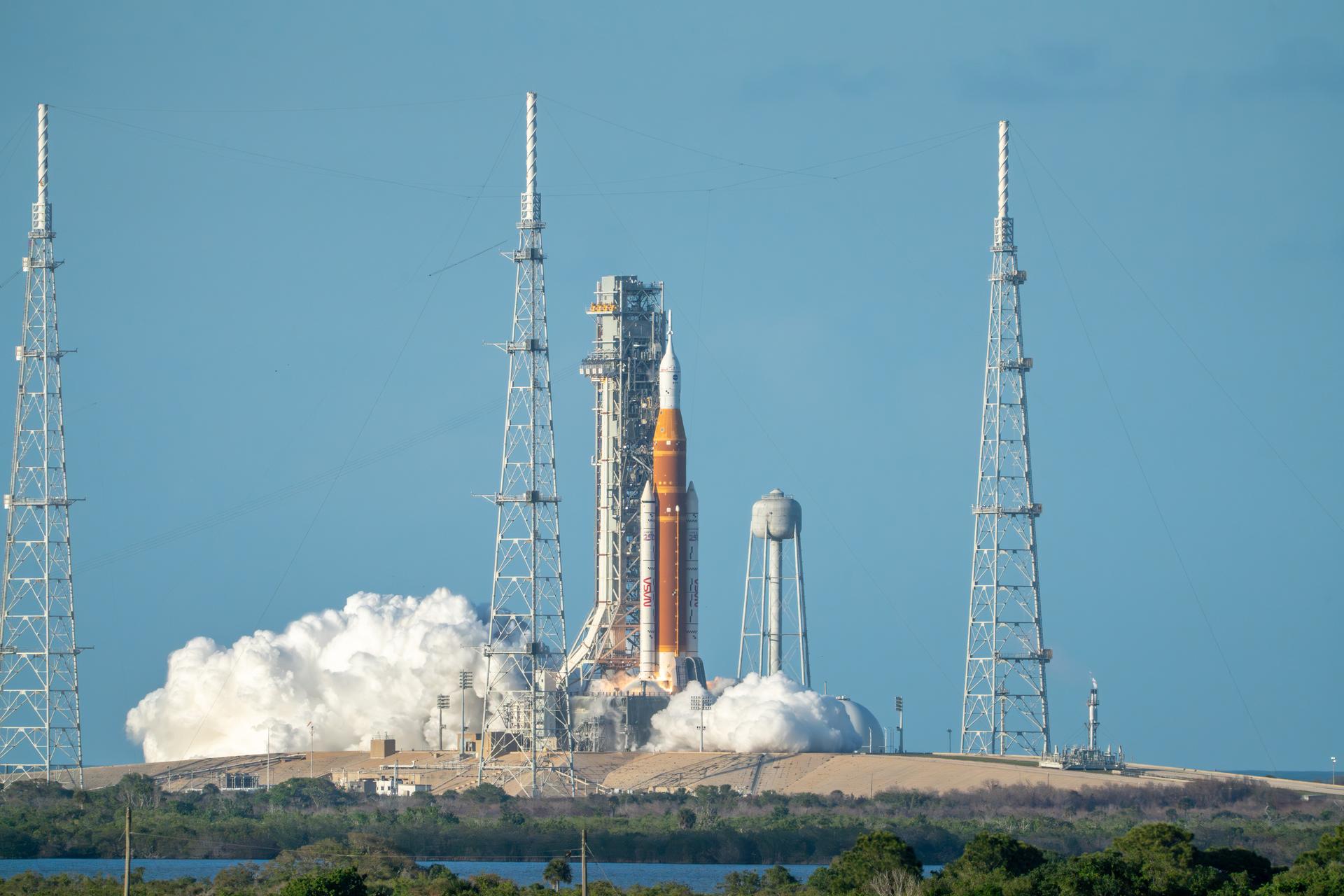
Four astronauts aboard NASA’s Orion spacecraft atop the SLS (Space Launch System) rocket launch on the agency’s Artemis II test flight, Wednesday, April 1 from Launch Complex 39B at NASA’s Kennedy Space Center in Florida. Artemis II lifted off at 6:35 p.m. ET. Artemis II is the first crewed mission of the agency’s Artemis campaign. The mission will send NASA astronauts Reid Wiseman, Victor Glover, and Christina Koch and CSA (Canadian Space Agency) astronaut Jeremy Hansen on an approximately 10-day journey around the Moon and back to Earth.
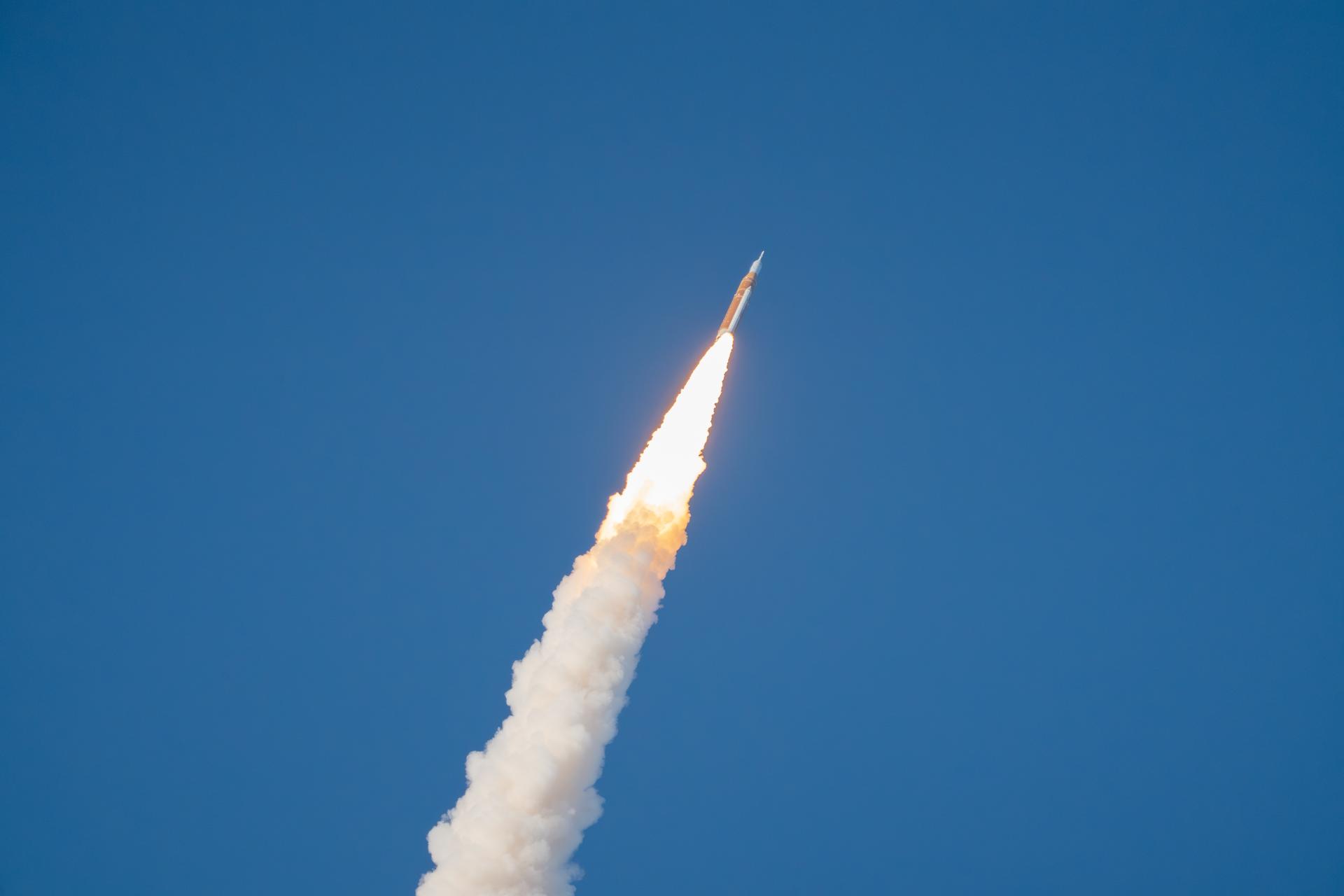
Four astronauts aboard NASA’s Orion spacecraft atop the SLS (Space Launch System) rocket launch on the agency’s Artemis II test flight, Wednesday, April 1 from Launch Complex 39B at NASA’s Kennedy Space Center in Florida. Artemis II lifted off at 6:35 p.m. ET. Artemis II is the first crewed mission of the agency’s Artemis campaign. The mission will send NASA astronauts Reid Wiseman, Victor Glover, and Christina Koch and CSA (Canadian Space Agency) astronaut Jeremy Hansen on an approximately 10-day journey around the Moon and back to Earth.
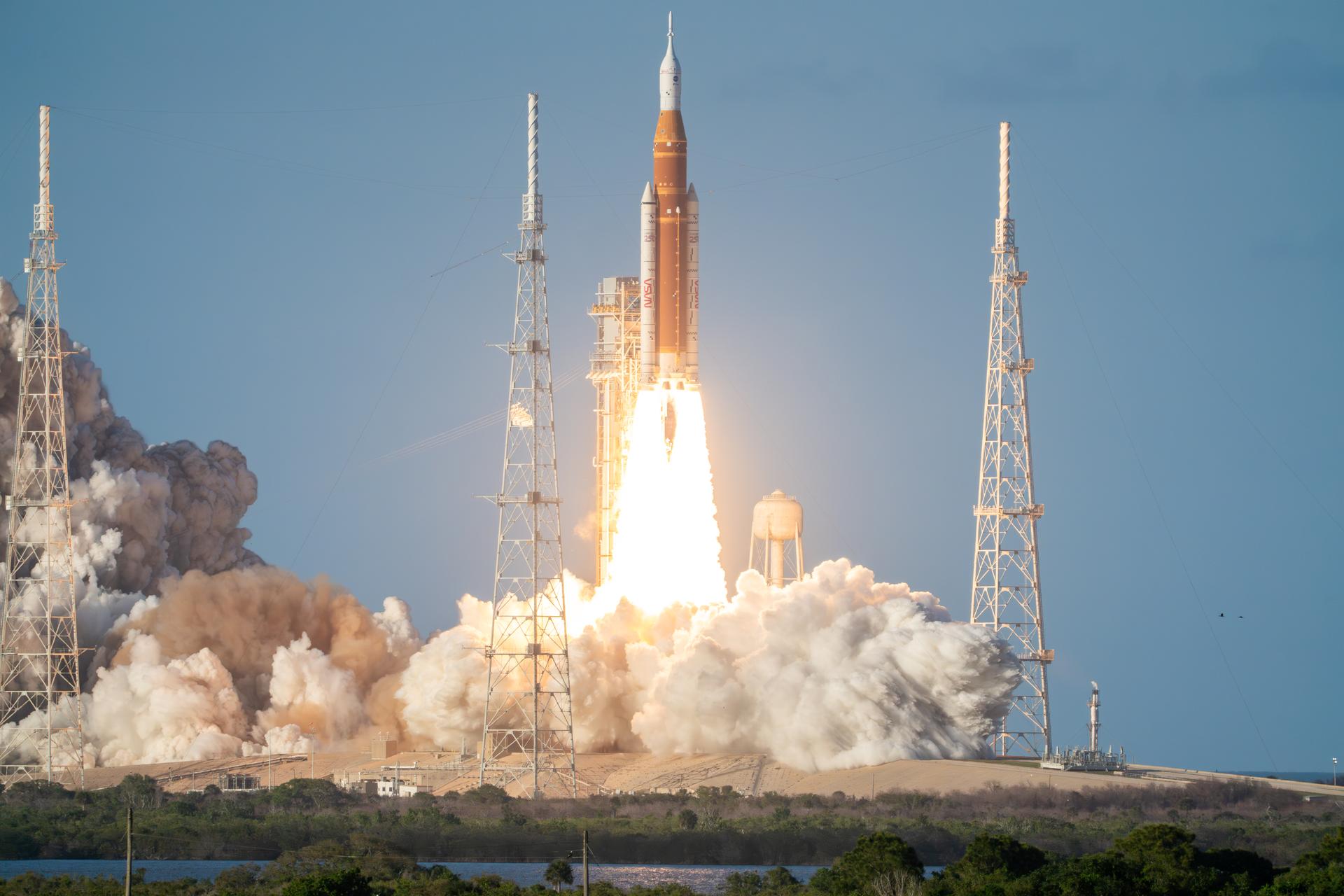
Four astronauts aboard NASA’s Orion spacecraft atop the SLS (Space Launch System) rocket launch on the agency’s Artemis II test flight, Wednesday, April 1 from Launch Complex 39B at NASA’s Kennedy Space Center in Florida. Artemis II lifted off at 6:35 p.m. ET. Artemis II is the first crewed mission of the agency’s Artemis campaign. The mission will send NASA astronauts Reid Wiseman, Victor Glover, and Christina Koch and CSA (Canadian Space Agency) astronaut Jeremy Hansen on an approximately 10-day journey around the Moon and back to Earth.
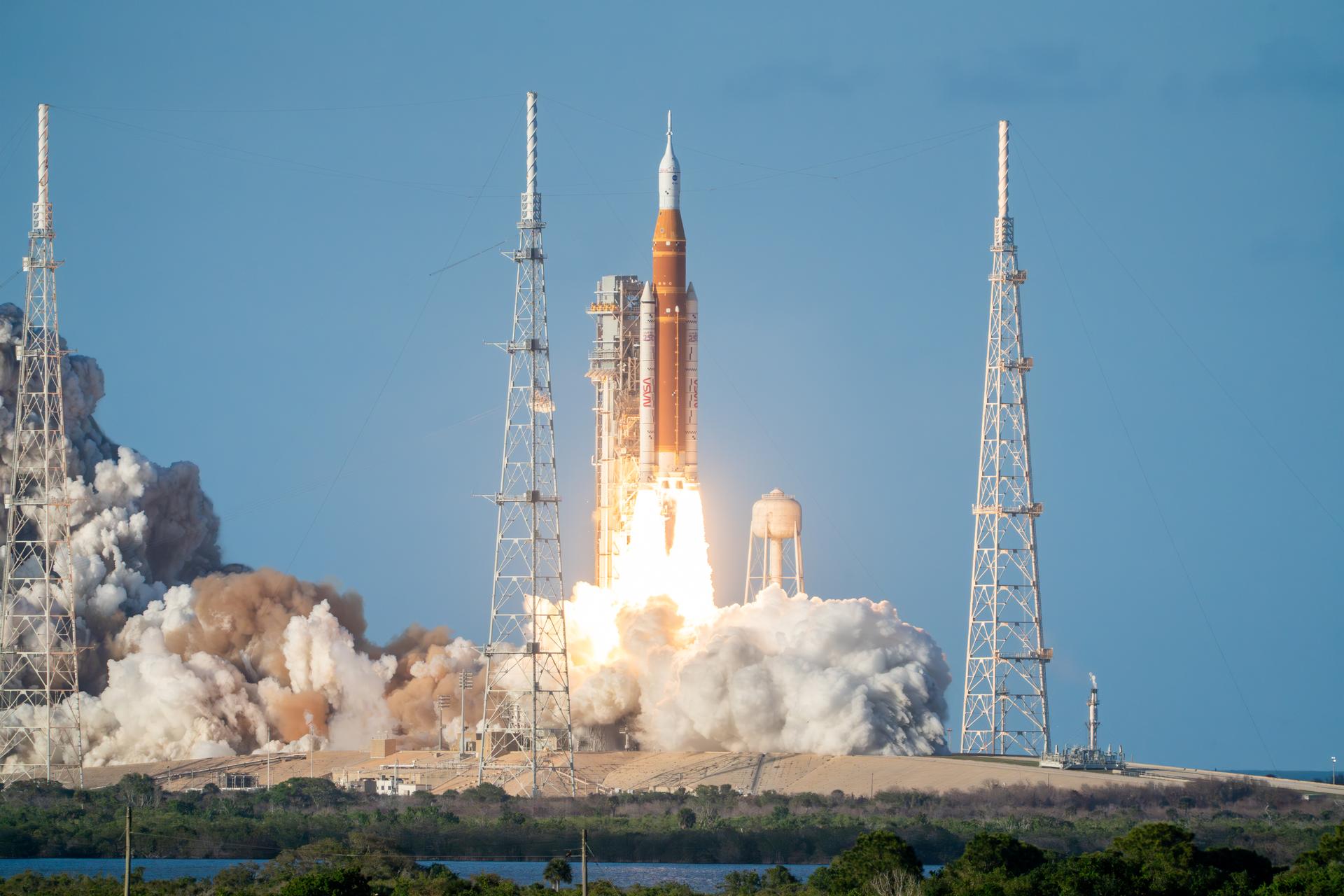
Four astronauts aboard NASA’s Orion spacecraft atop the SLS (Space Launch System) rocket launch on the agency’s Artemis II test flight, Wednesday, April 1 from Launch Complex 39B at NASA’s Kennedy Space Center in Florida. Artemis II lifted off at 6:35 p.m. ET. Artemis II is the first crewed mission of the agency’s Artemis campaign. The mission will send NASA astronauts Reid Wiseman, Victor Glover, and Christina Koch and CSA (Canadian Space Agency) astronaut Jeremy Hansen on an approximately 10-day journey around the Moon and back to Earth.
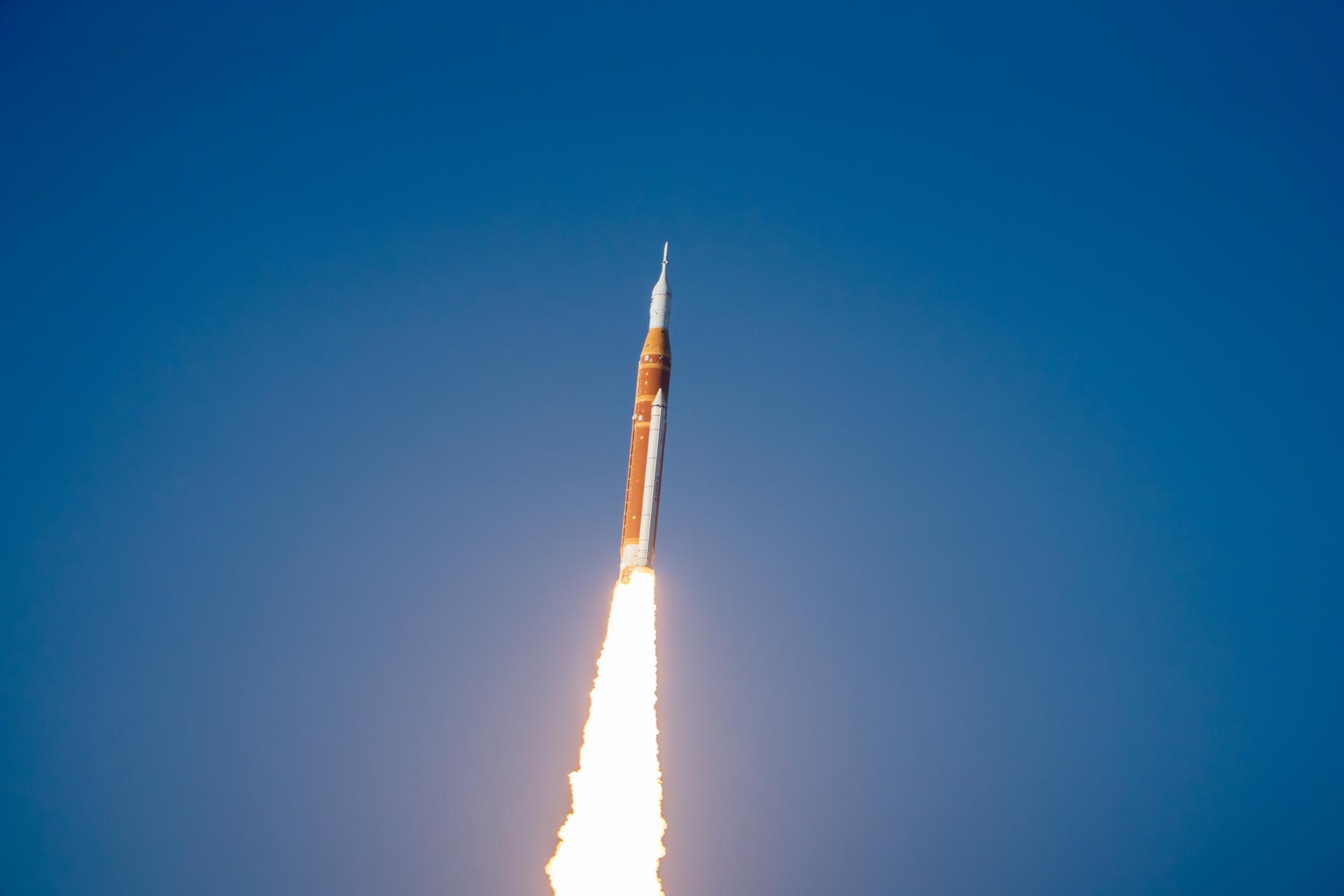
Four astronauts aboard NASA’s Orion spacecraft atop the SLS (Space Launch System) rocket launch on the agency’s Artemis II test flight, Wednesday, April 1 from Launch Complex 39B at NASA’s Kennedy Space Center in Florida. Artemis II lifted off at 6:35 p.m. ET. Artemis II is the first crewed mission of the agency’s Artemis campaign. The mission will send NASA astronauts Reid Wiseman, Victor Glover, and Christina Koch and CSA (Canadian Space Agency) astronaut Jeremy Hansen on an approximately 10-day journey around the Moon and back to Earth.
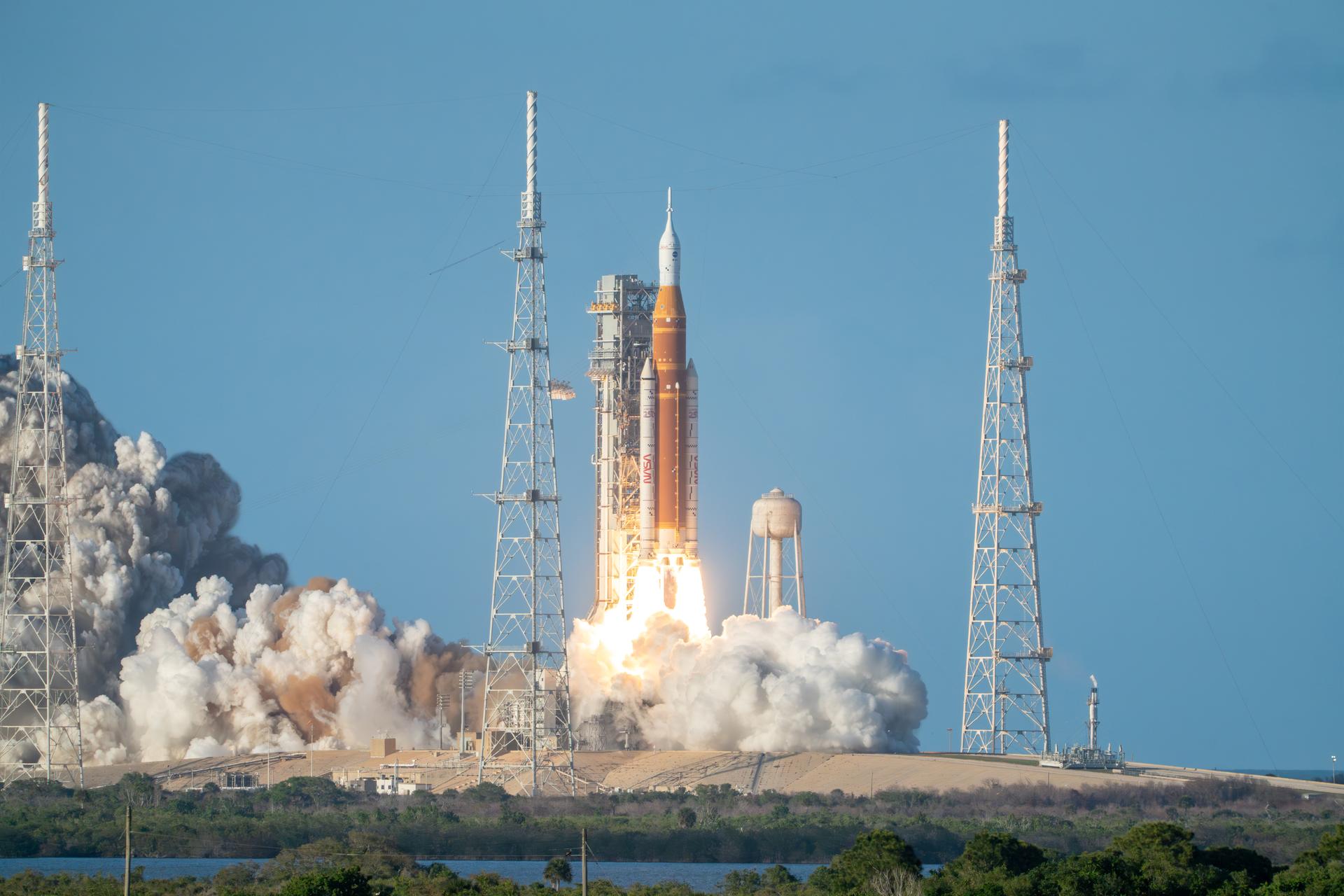
Four astronauts aboard NASA’s Orion spacecraft atop the SLS (Space Launch System) rocket launch on the agency’s Artemis II test flight, Wednesday, April 1 from Launch Complex 39B at NASA’s Kennedy Space Center in Florida. Artemis II lifted off at 6:35 p.m. ET. Artemis II is the first crewed mission of the agency’s Artemis campaign. The mission will send NASA astronauts Reid Wiseman, Victor Glover, and Christina Koch and CSA (Canadian Space Agency) astronaut Jeremy Hansen on an approximately 10-day journey around the Moon and back to Earth.

Stylized poster for NASA's Artemis II mission.
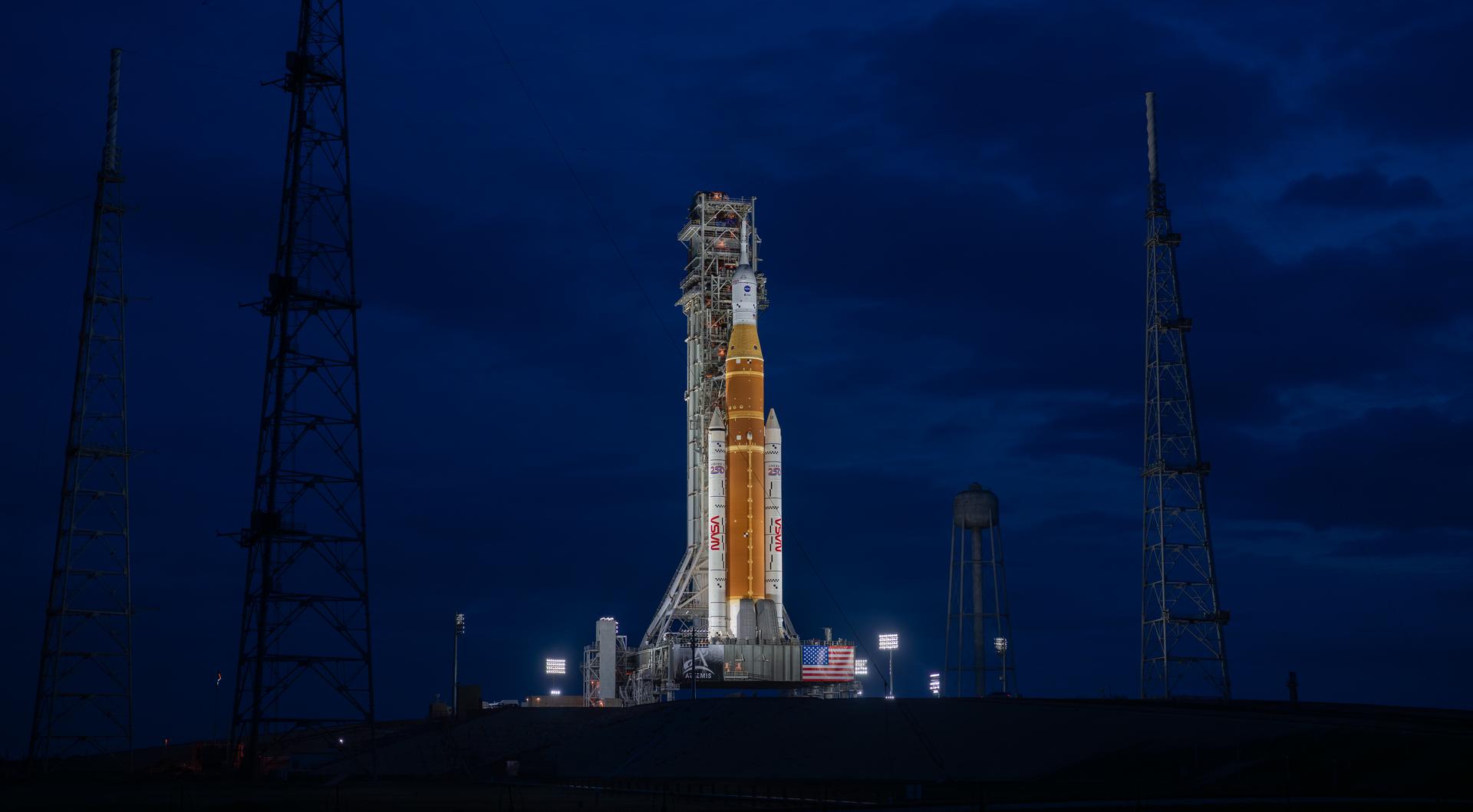
Lights illuminate NASA’s Artemis II SLS (Space Launch System) rocket and Orion spacecraft at Launch Complex 39B at NASA’s Kennedy Space Center in Florida on 01/18/2026. In the coming days, engineers will prepare for the wet dress rehearsal, a two-day test that simulates launch day. The Artemis II test flight will take Commander Reid Wiseman, Pilot Victor Glover, and Mission Specialist Christina Koch from NASA, and Mission Specialist Jeremy Hansen from the CSA (Canadian Space Agency), around the Moon and back to Earth no later than April 2026.
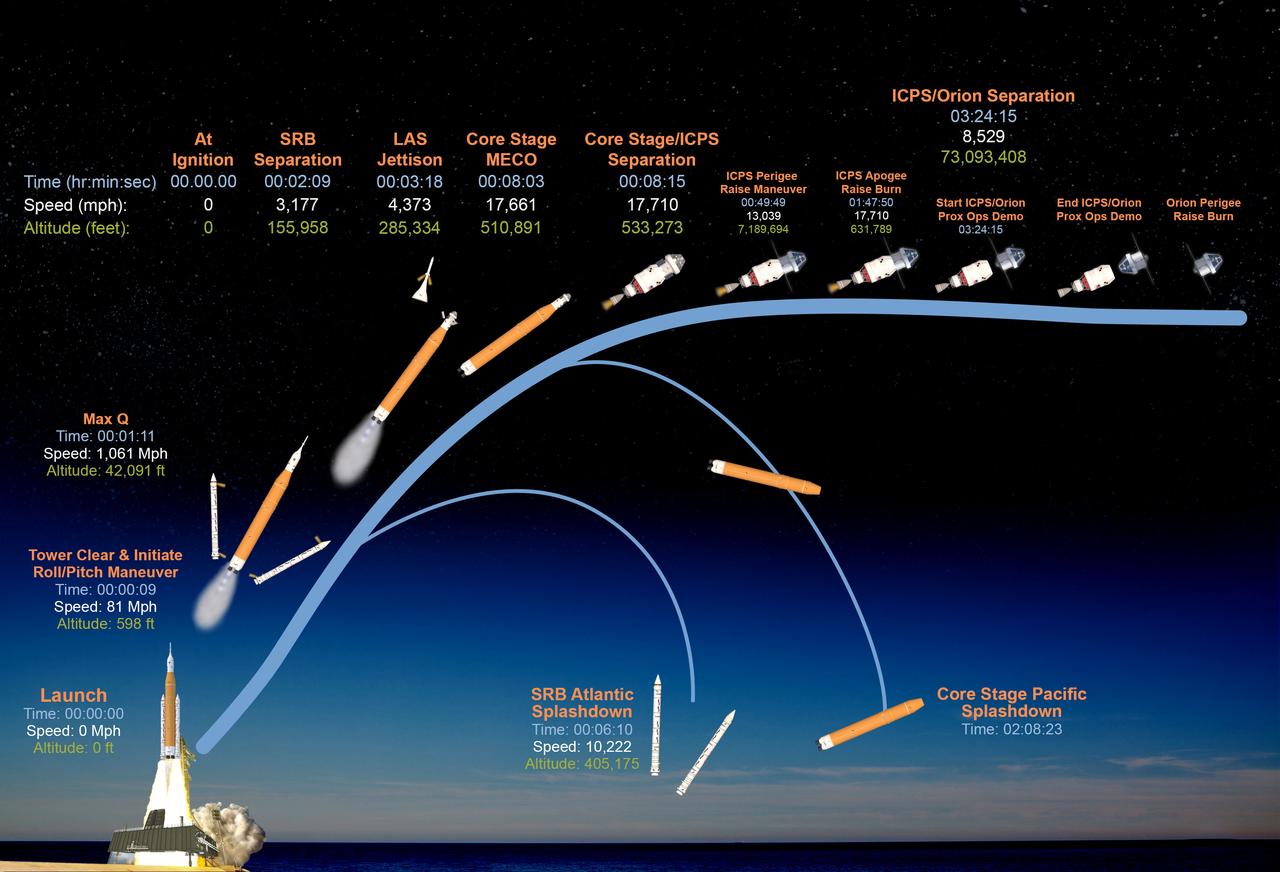
This graphic shows the time, speed, and altitude of key events from launch of the SLS (Space Launch System) rocket and Orion spacecraft and ascent to space, through Orion's perigee raise burn during the Artemis II test flight.

Stylized poster for NASA's Artemis II mission
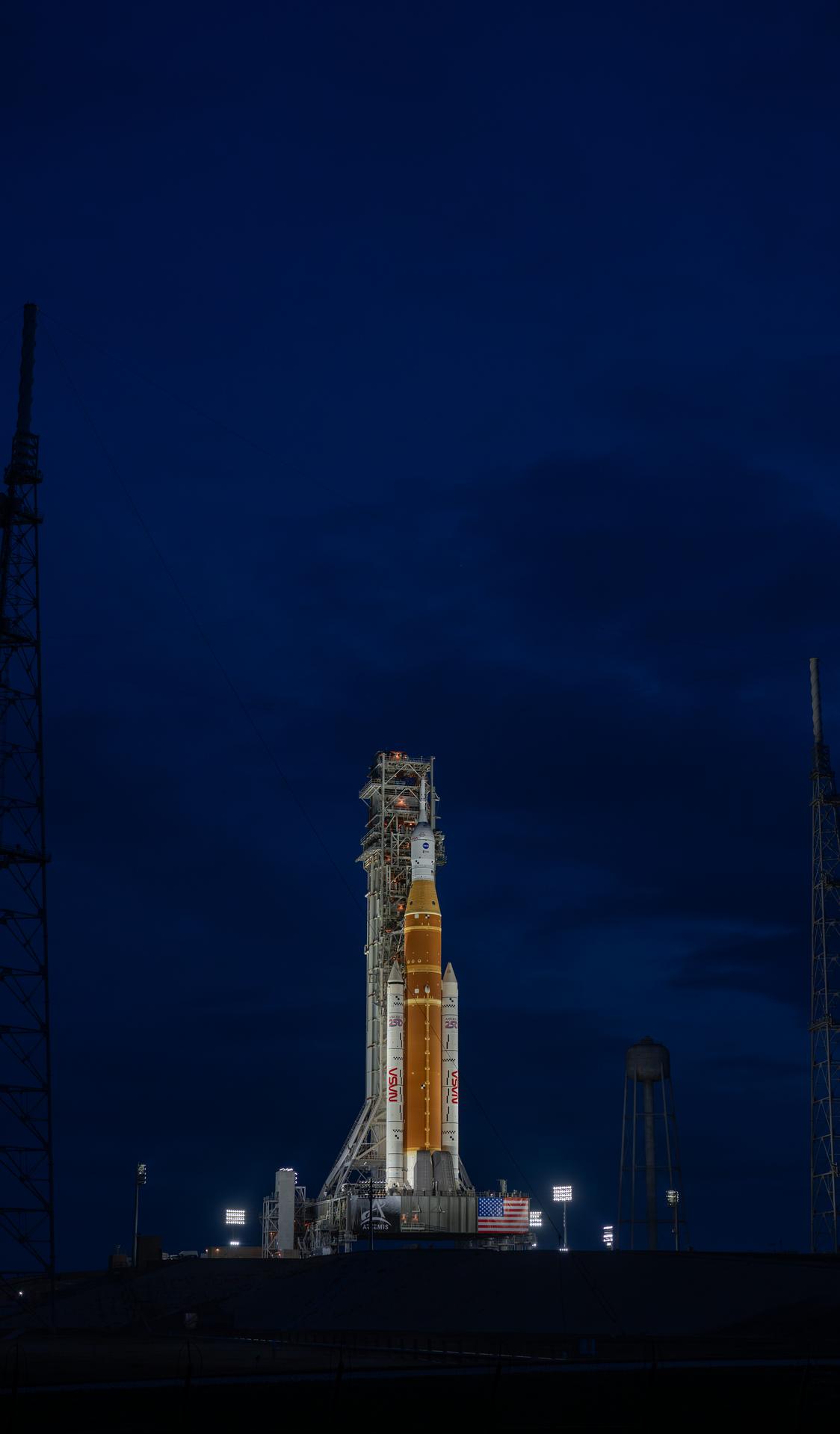
Lights illuminate NASA’s Artemis II SLS (Space Launch System) rocket and Orion spacecraft at Launch Complex 39B at NASA’s Kennedy Space Center in Florida on 01/18/2026. In the coming days, engineers will prepare for the wet dress rehearsal, a two-day test that simulates launch day. The Artemis II test flight will take Commander Reid Wiseman, Pilot Victor Glover, and Mission Specialist Christina Koch from NASA, and Mission Specialist Jeremy Hansen from the CSA (Canadian Space Agency), around the Moon and back to Earth no later than April 2026.

The Gateway space station hosts the Orion spacecraft in a polar orbit around the Moon, supporting scientific discovery on the lunar surface during the Artemis IV mission.

The Gateway space station hosts the Orion spacecraft in a polar orbit around the Moon, supporting scientific discovery on the lunar surface during the Artemis IV mission.

These artist’s concepts show SpaceX’s Starship Human Landing System (HLS) on the Moon. NASA is working with SpaceX to develop Starship HLS to carry astronauts from lunar orbit to the Moon’s surface and back for Artemis III and Artemis IV as part of the agency’s Artemis campaign. At about 165 feet (50 m), Starship HLS will be about the same height as a 15-story building. An elevator on Starship HLS will be used to transport crew and cargo between the lander and the Moon’s surface.
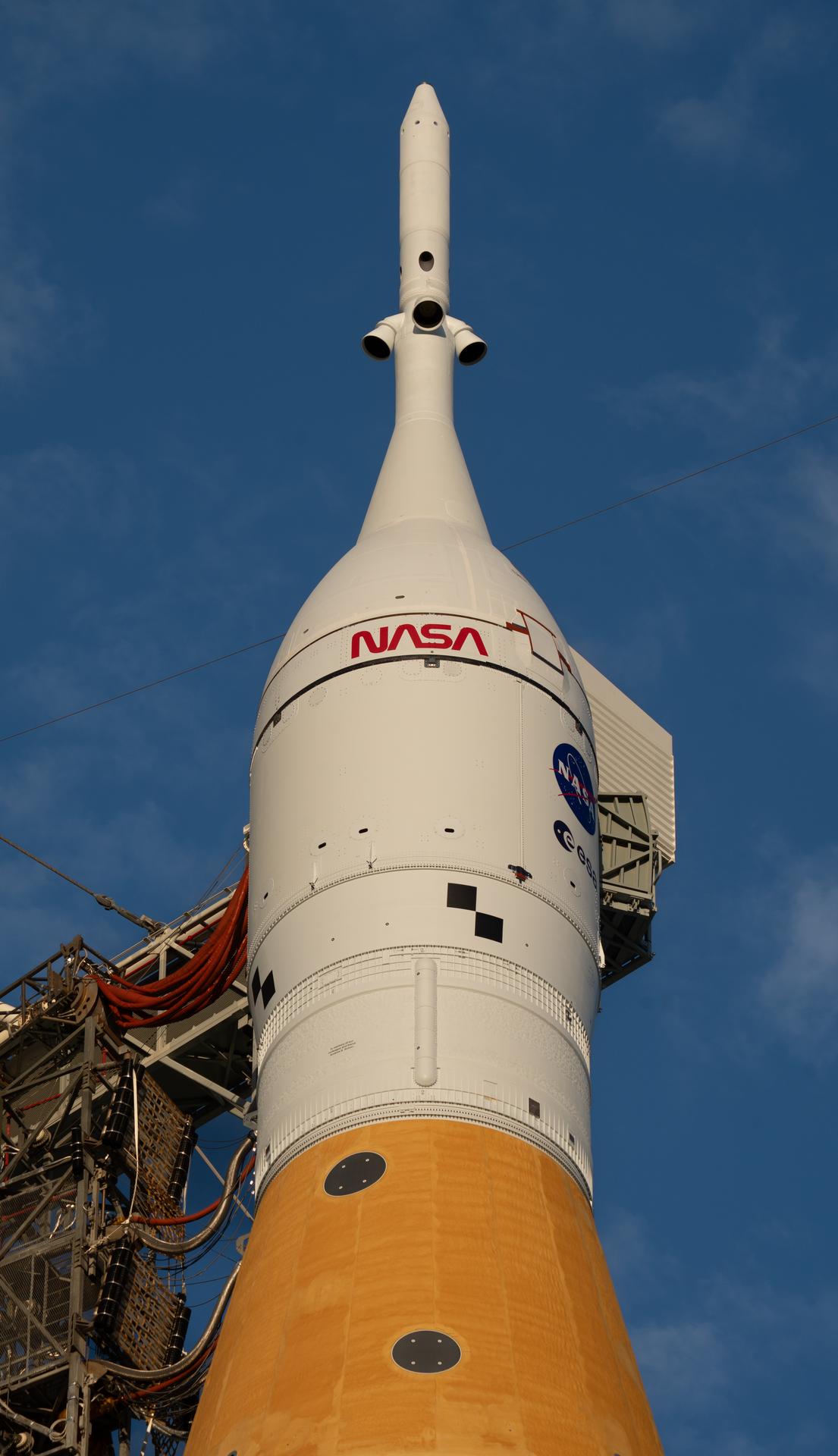
A side view shows the SLS (Space Launch System) Launch Vehicle Stage Adapter, Orion Stage Adapter, Orion spacecraft, and Launch Abort System of NASA’s Artemis II rocket at Launch Complex 39B at NASA’s Kennedy Space Center. The Artemis II test flight will take Commander Reid Wiseman, Pilot Victor Glover, and Mission Specialist Christina Koch from NASA, and Mission Specialist Jeremy Hansen from the CSA (Canadian Space Agency), around the Moon and back to Earth.
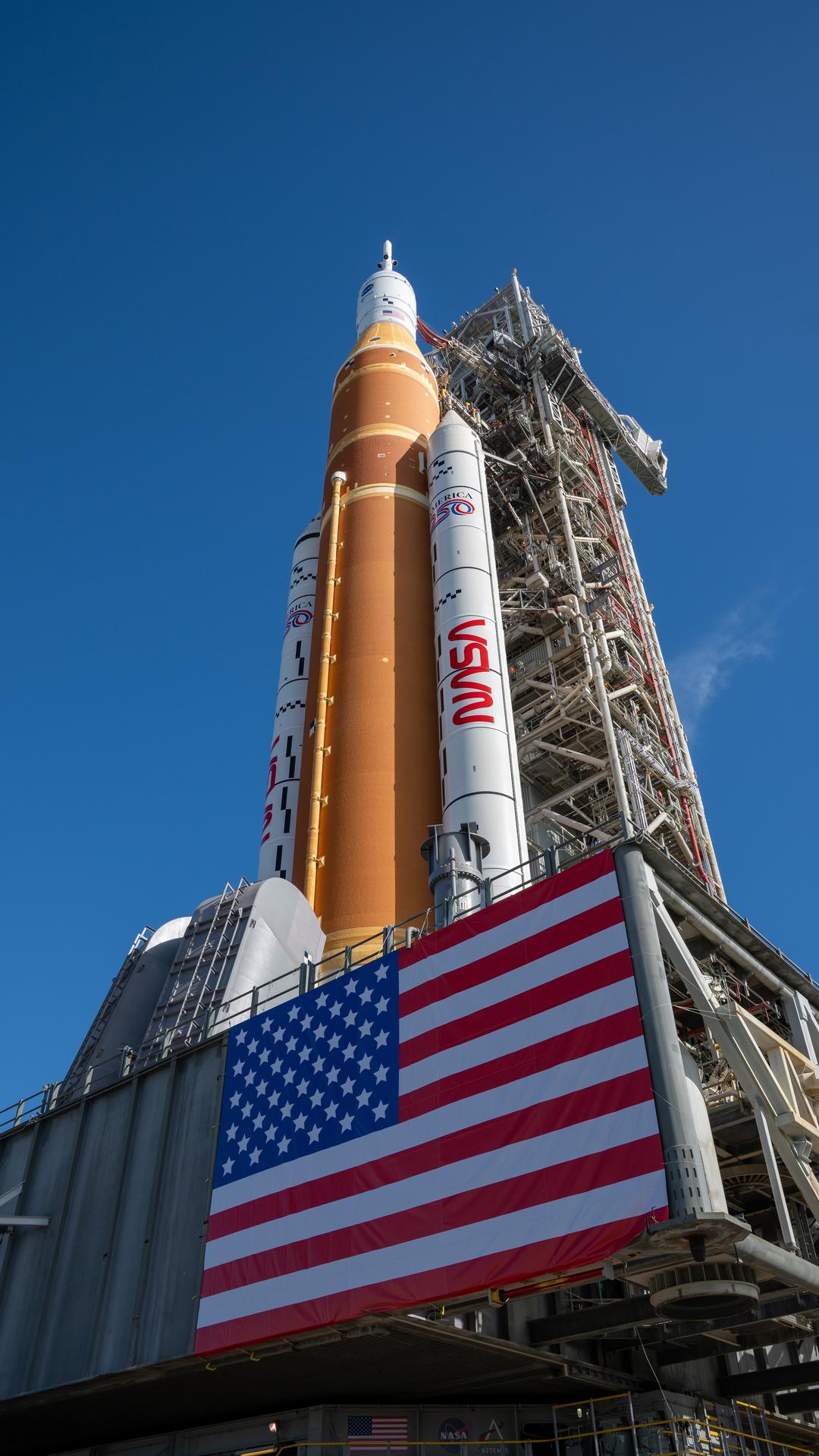
This image shows NASA’s SLS (Space Launch System) and Orion spacecraft rolling out of the Vehicle Assembly Building at NASA’s Kennedy Space Center. NASA's massive Crawler-Transporter, upgraded for the Artemis program, carries the powerful SLS rocket and Orion spacecraft on the Mobile Launcher from the Vehicle Assembly Building to Launch Pad 39B at Kennedy Space Center in preparation for the Artemis II mission.
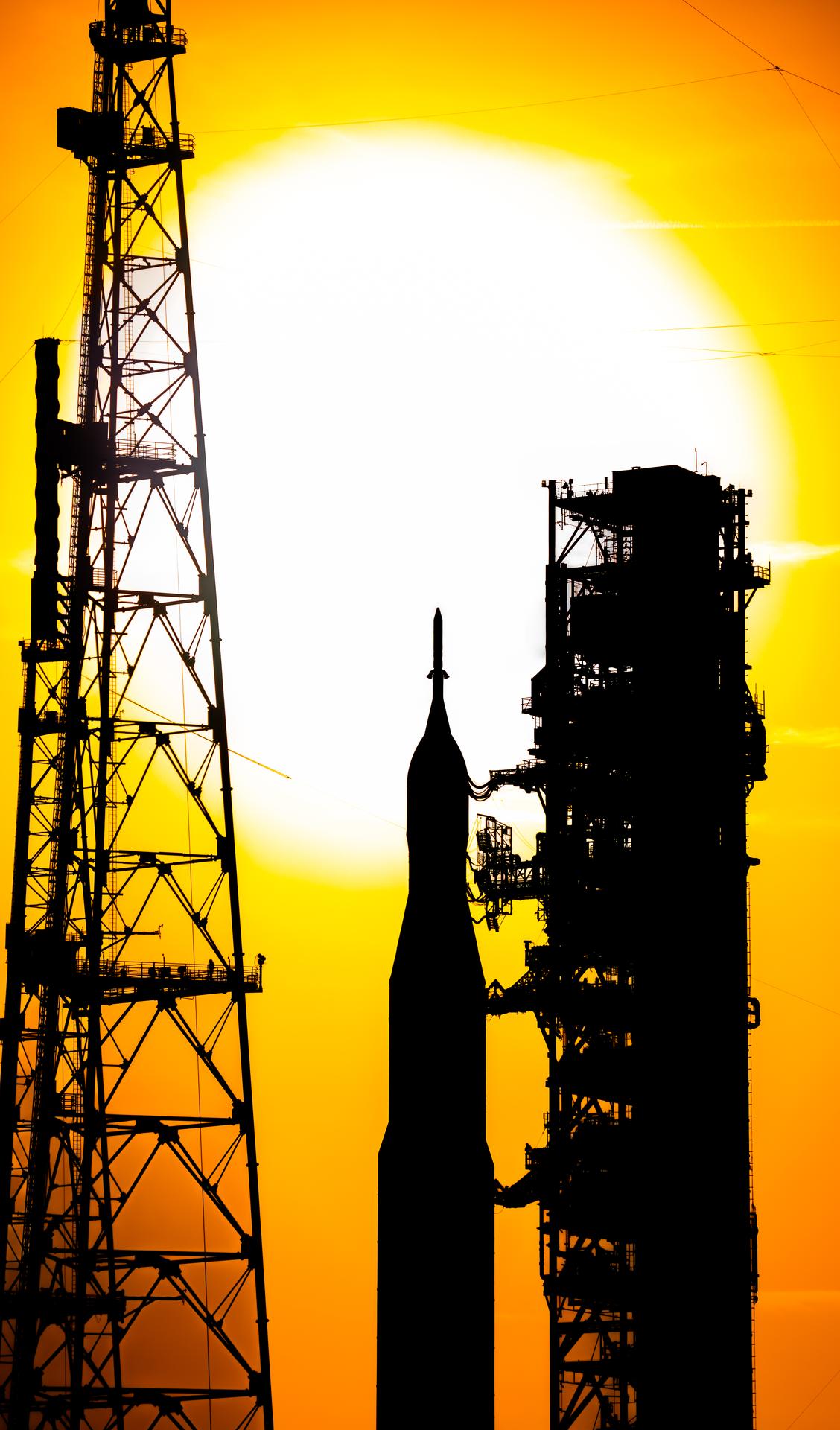
The sun sets as NASA’s crawler-transporter 2 carrying the agency’s Artemis II SLS (Space Launch System) rocket and Orion spacecraft, secured to the mobile launcher, rolls toward Launch Complex 39B at NASA’s Kennedy Space Center in Florida on 01/17/2026. The Artemis II test flight will take Commander Reid Wiseman, Pilot Victor Glover, and Mission Specialist Christina Koch from NASA and Mission Specialist Jeremy Hansen from the CSA (Canadian Space Agency), around the Moon and back to Earth no later than April 2026.
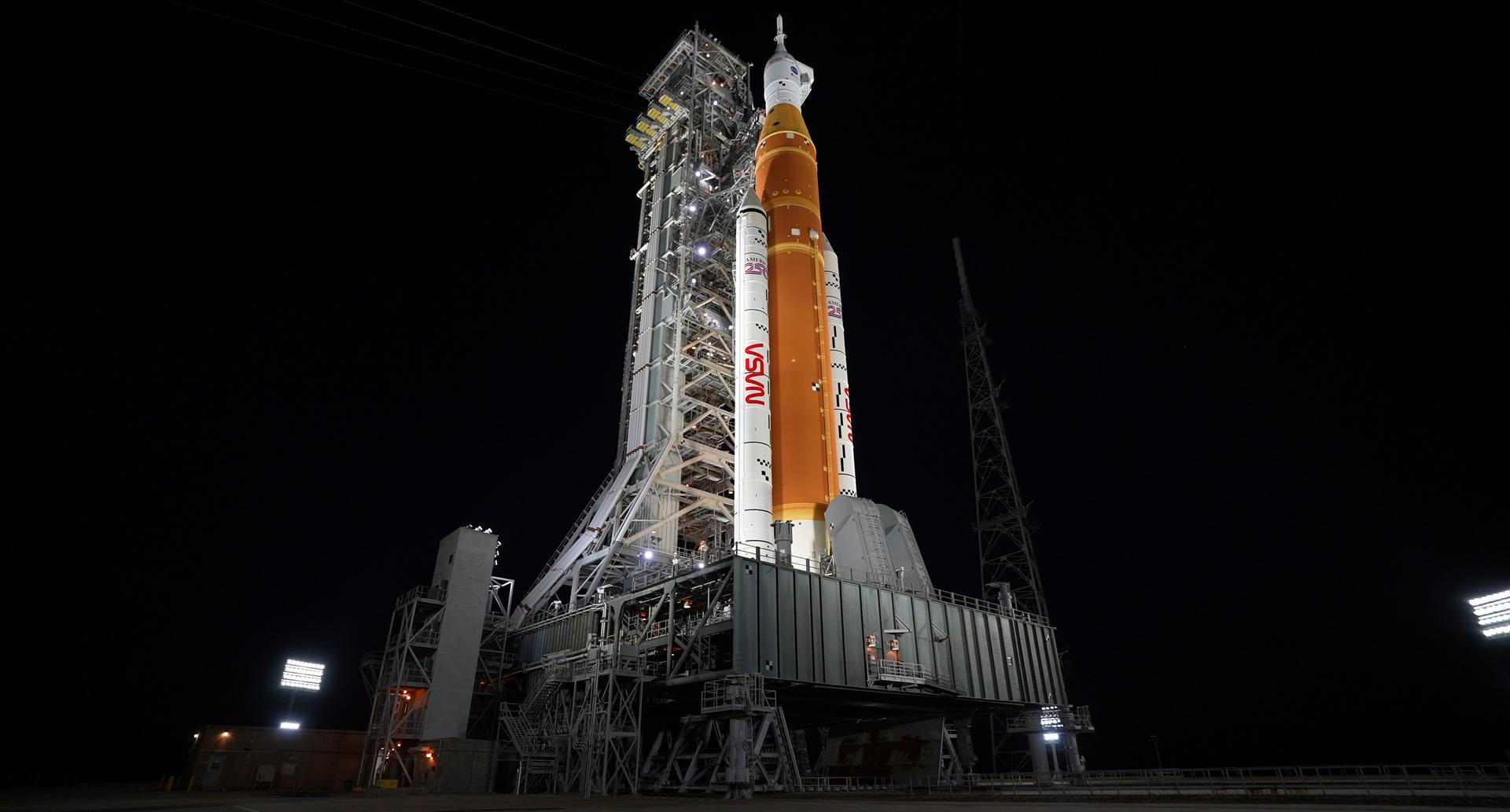
Lights illuminate NASA’s Artemis II SLS (Space Launch System) rocket and Orion spacecraft at Launch Complex 39B at NASA’s Kennedy Space Center in Florida. In the coming days, engineers will prepare for the wet dress rehearsal, a two-day test that simulates launch day. The Artemis II test flight will take Commander Reid Wiseman, Pilot Victor Glover, and Mission Specialist Christina Koch from NASA, and Mission Specialist Jeremy Hansen from the CSA (Canadian Space Agency), around the Moon and back to Earth no later than April 2026.
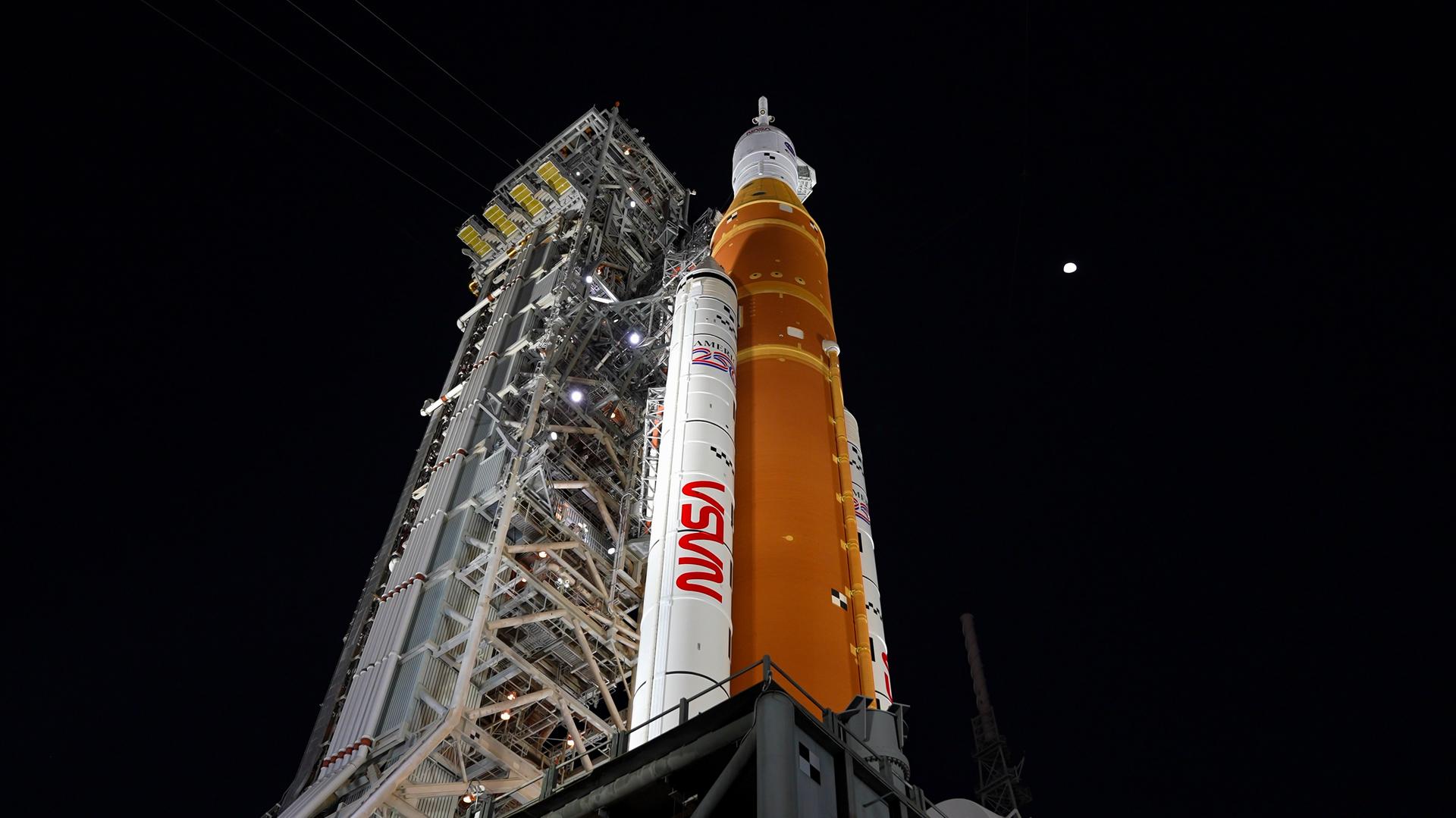
Lights illuminate NASA’s Artemis II SLS (Space Launch System) rocket and Orion spacecraft at Launch Complex 39B at NASA’s Kennedy Space Center in Florida. In the coming days, engineers will prepare for the wet dress rehearsal, a two-day test that simulates launch day. The Artemis II test flight will take Commander Reid Wiseman, Pilot Victor Glover, and Mission Specialist Christina Koch from NASA, and Mission Specialist Jeremy Hansen from the CSA (Canadian Space Agency), around the Moon and back to Earth no later than April 2026.
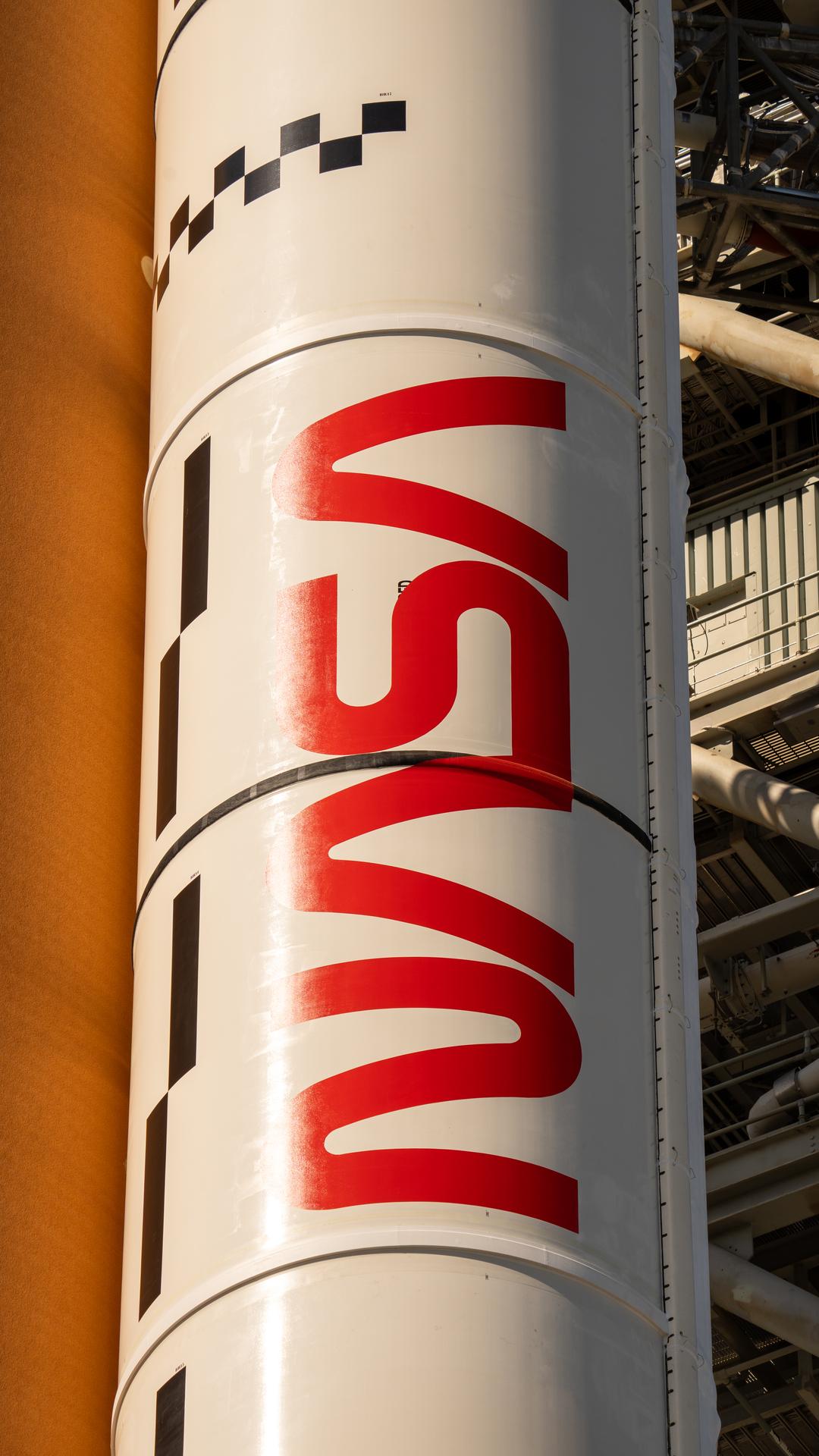
This image shows NASA’s SLS (Space Launch System) and Orion spacecraft rolling out of the Vehicle Assembly Building at NASA’s Kennedy Space Center. NASA's massive Crawler-Transporter, upgraded for the Artemis program, carries the powerful SLS rocket and Orion spacecraft on the Mobile Launcher from the Vehicle Assembly Building to Launch Pad 39B at Kennedy Space Center in preparation for the Artemis II mission.
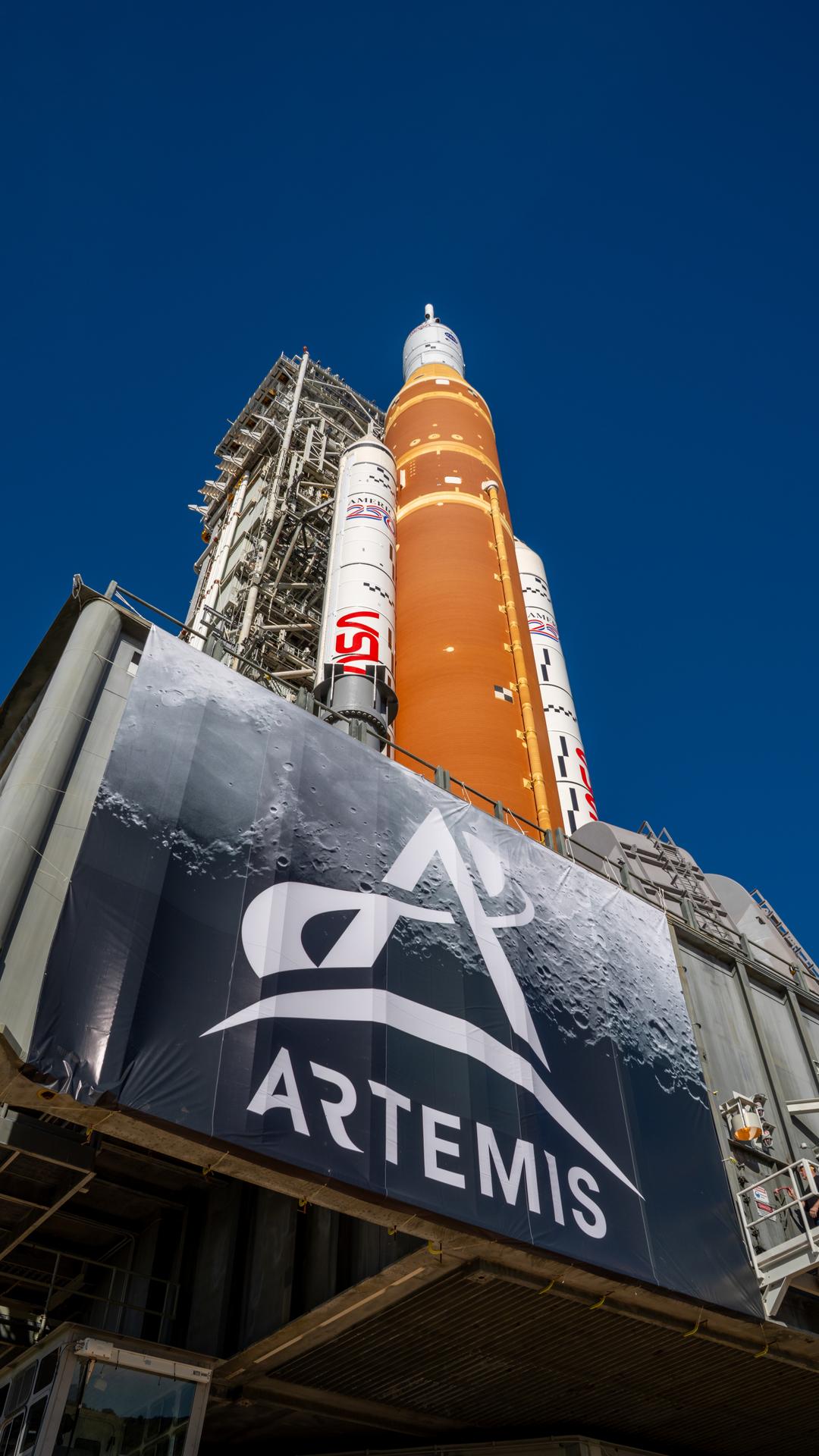
This image shows NASA’s SLS (Space Launch System) and Orion spacecraft rolling out of the Vehicle Assembly Building at NASA’s Kennedy Space Center. NASA's massive Crawler-Transporter, upgraded for the Artemis program, carries the powerful SLS rocket and Orion spacecraft on the Mobile Launcher from the Vehicle Assembly Building to Launch Pad 39B at Kennedy Space Center in preparation for the Artemis II mission.
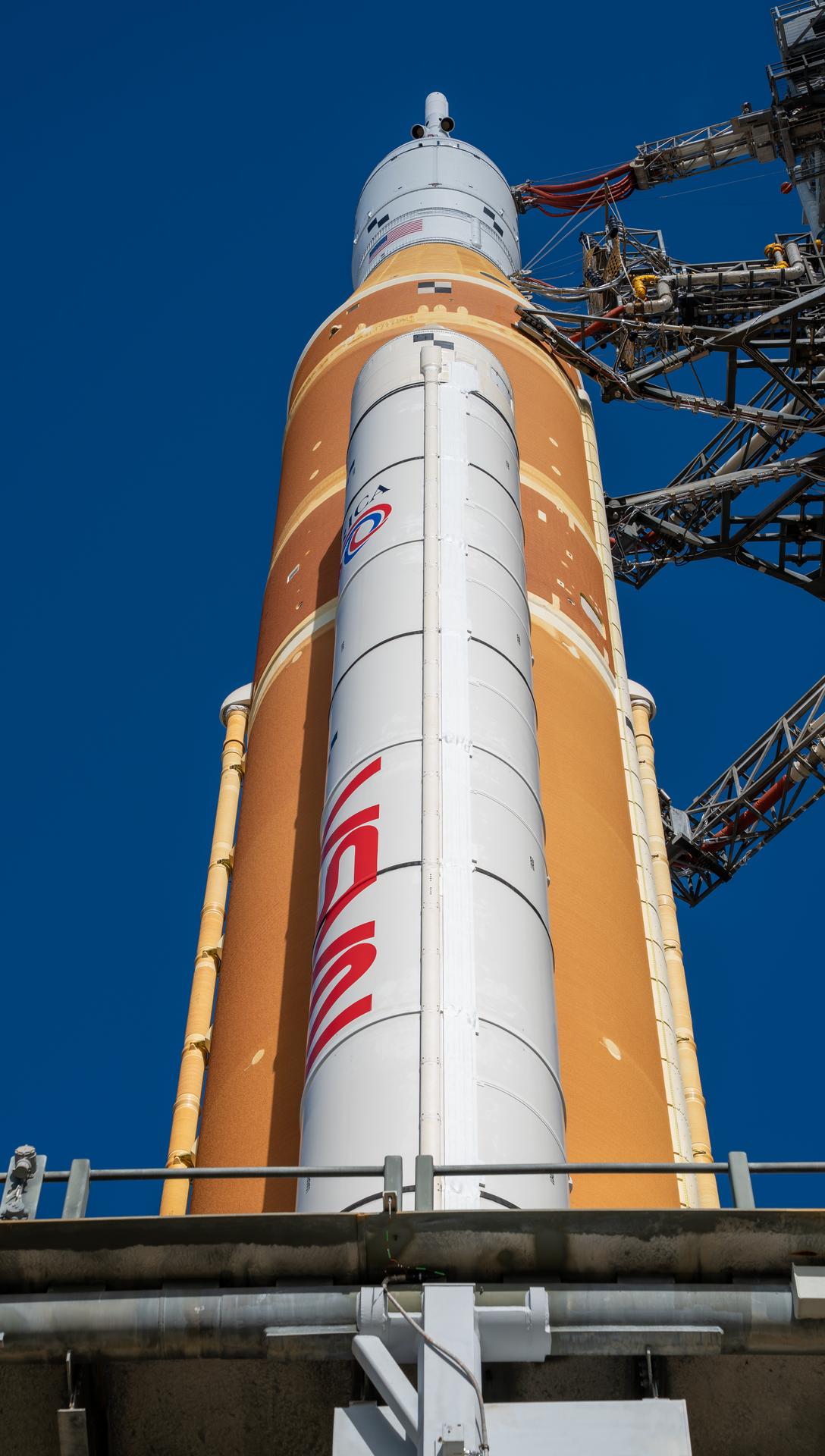
This image shows NASA’s SLS (Space Launch System) and Orion spacecraft rolling out of the Vehicle Assembly Building at NASA’s Kennedy Space Center. NASA's massive Crawler-Transporter, upgraded for the Artemis program, carries the powerful SLS rocket and Orion spacecraft on the Mobile Launcher from the Vehicle Assembly Building to Launch Pad 39B at Kennedy Space Center in preparation for the Artemis II mission.
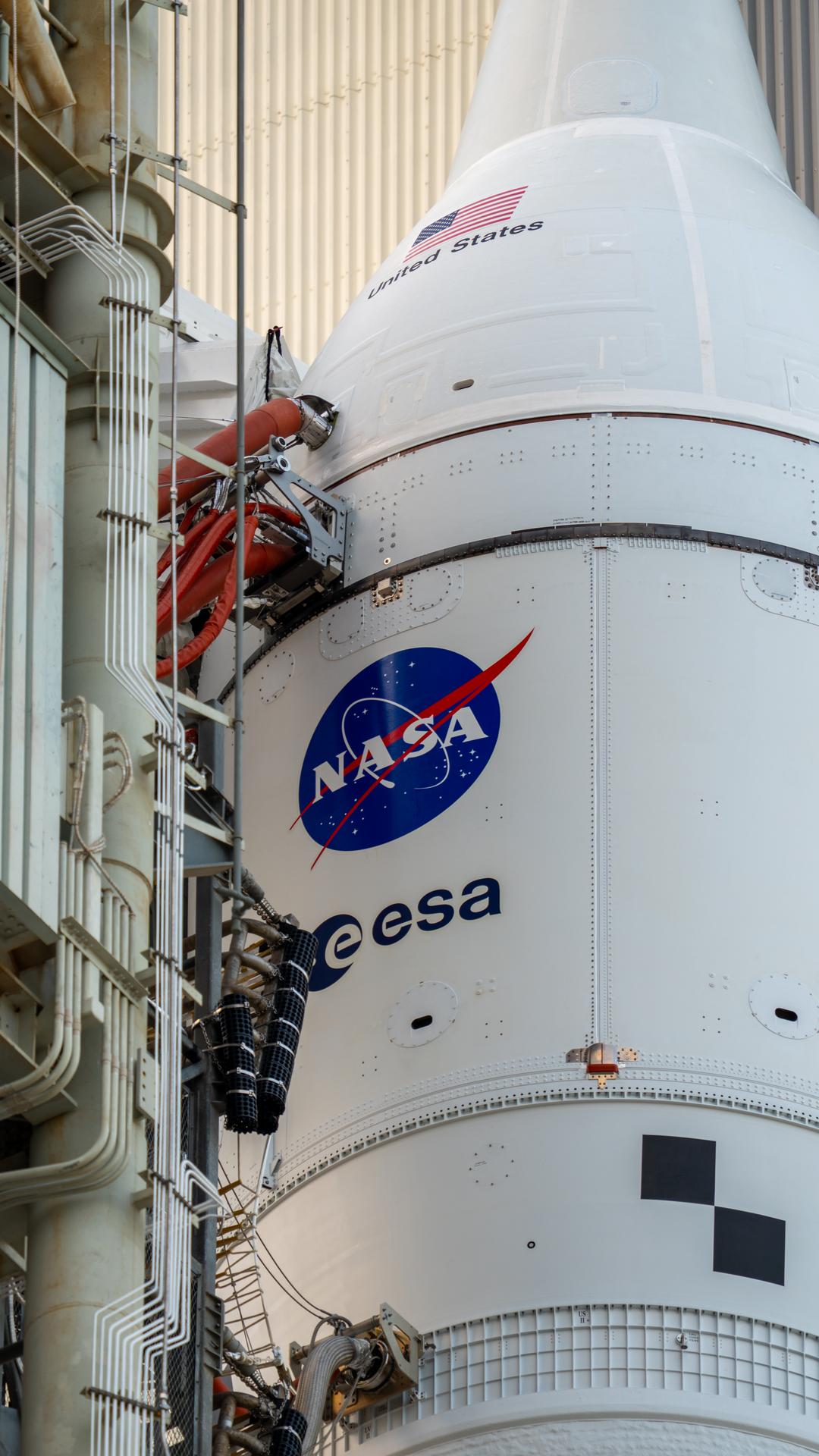
This image shows NASA’s SLS (Space Launch System) and Orion spacecraft rolling out of the Vehicle Assembly Building at NASA’s Kennedy Space Center. NASA's massive Crawler-Transporter, upgraded for the Artemis program, carries the powerful SLS rocket and Orion spacecraft on the Mobile Launcher from the Vehicle Assembly Building to Launch Pad 39B at Kennedy Space Center in preparation for the Artemis II mission.
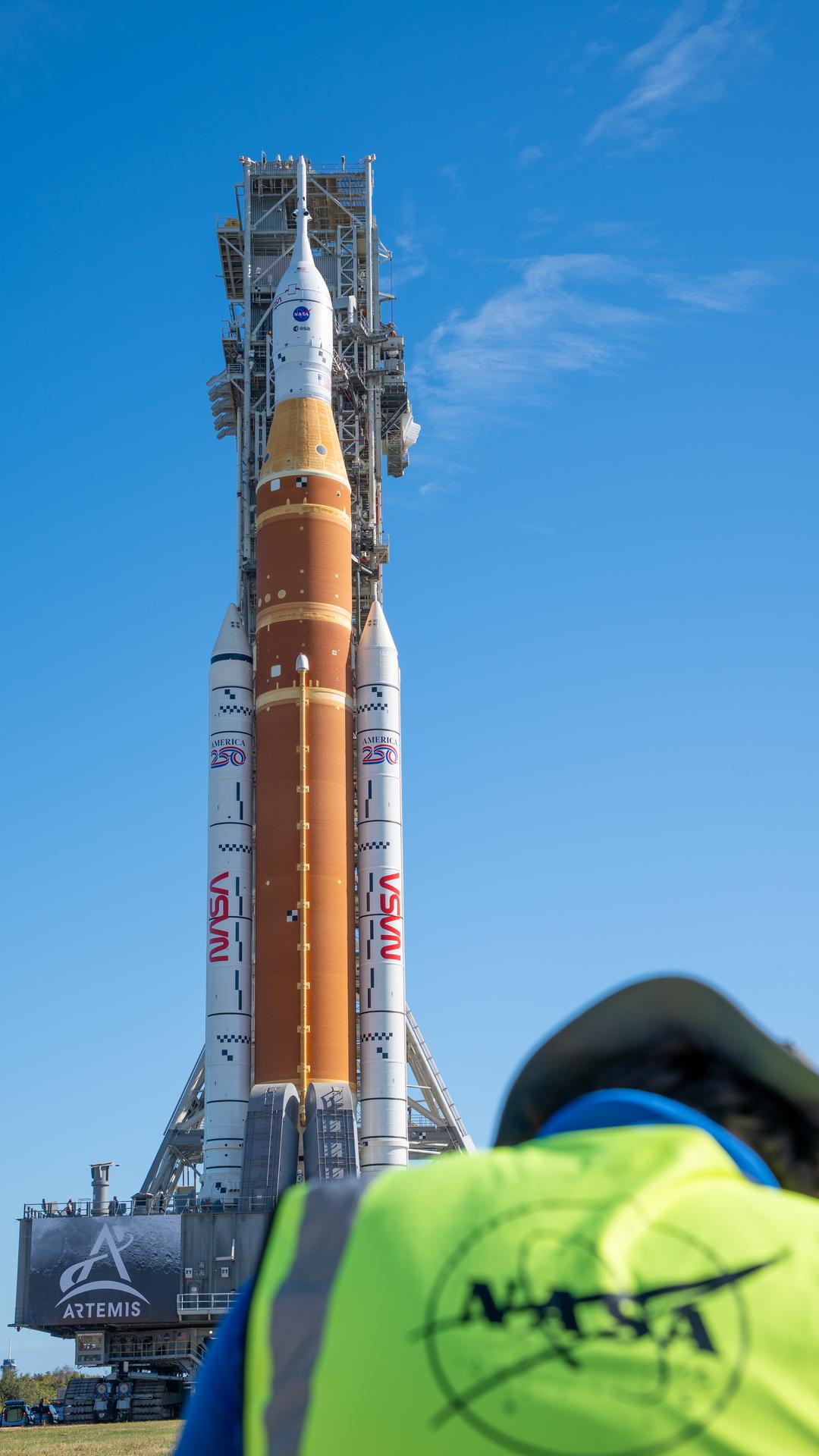
This image shows NASA’s SLS (Space Launch System) and Orion spacecraft rolling out of the Vehicle Assembly Building at NASA’s Kennedy Space Center. NASA's massive Crawler-Transporter, upgraded for the Artemis program, carries the powerful SLS rocket and Orion spacecraft on the Mobile Launcher from the Vehicle Assembly Building to Launch Pad 39B at Kennedy Space Center in preparation for the Artemis II mission.
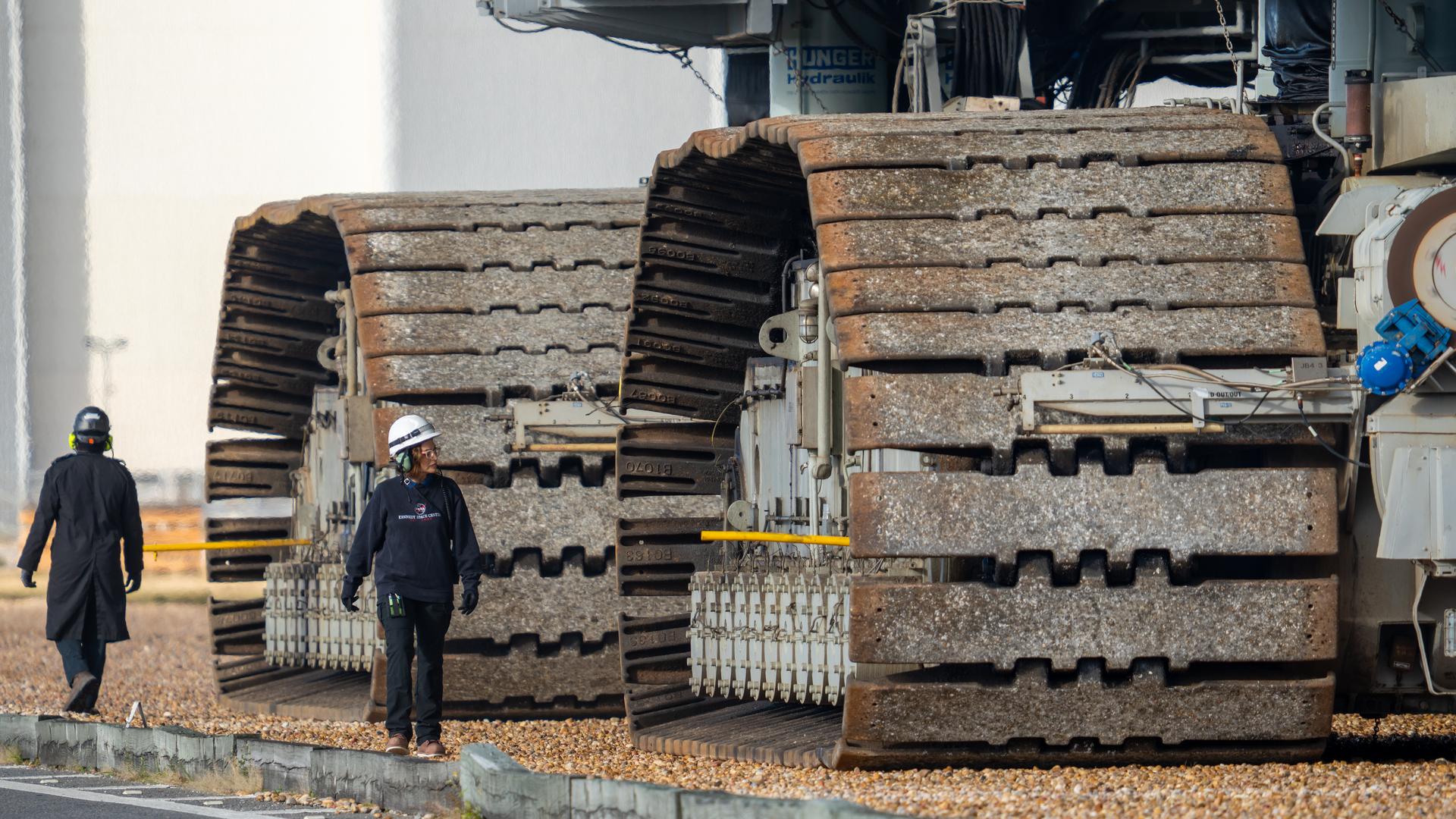
This image shows NASA’s SLS (Space Launch System) and Orion spacecraft rolling out of the Vehicle Assembly Building at NASA’s Kennedy Space Center. NASA's massive Crawler-Transporter, upgraded for the Artemis program, carries the powerful SLS rocket and Orion spacecraft on the Mobile Launcher from the Vehicle Assembly Building to Launch Pad 39B at Kennedy Space Center in preparation for the Artemis II mission.
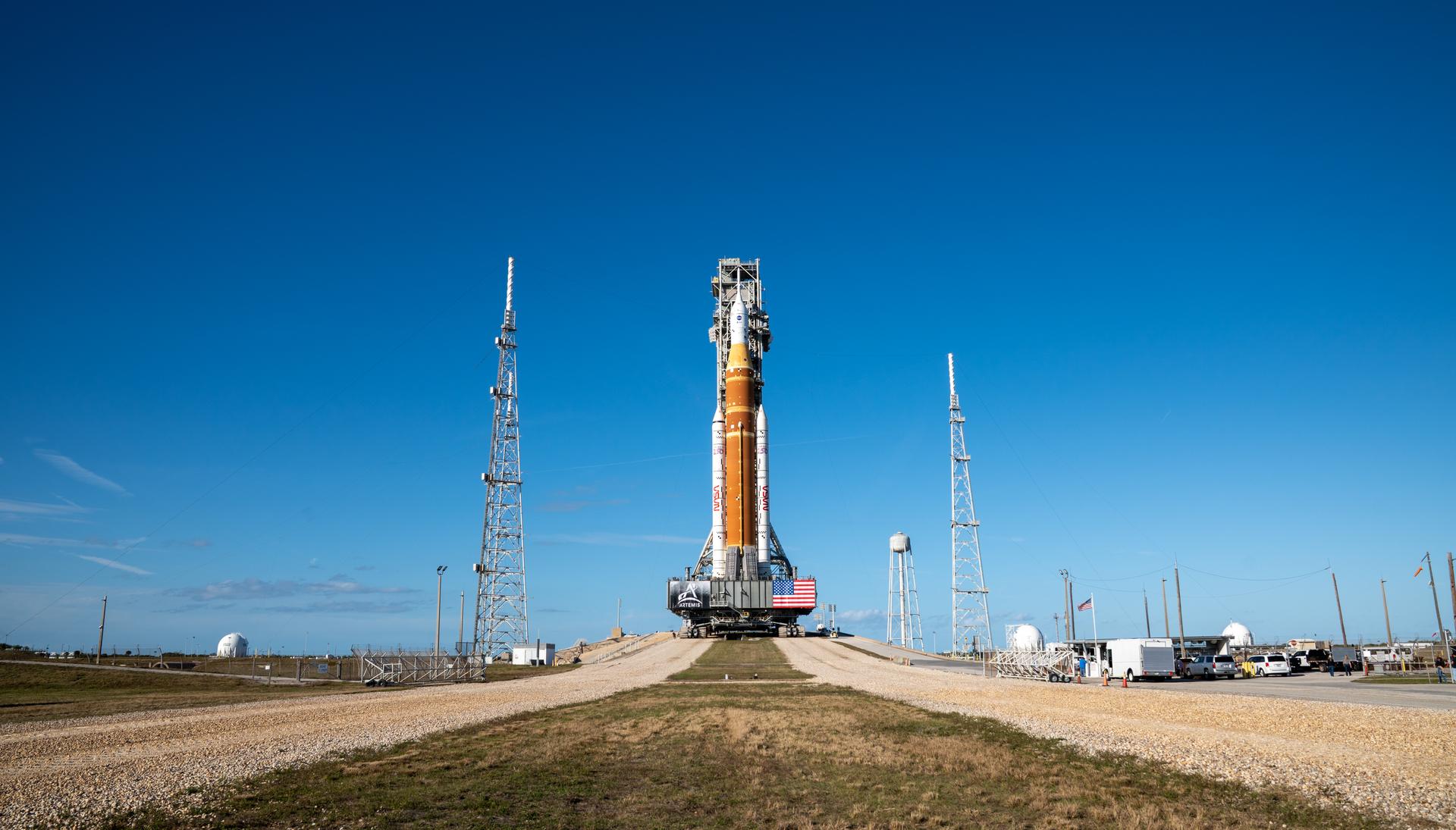
This image shows NASA’s SLS (Space Launch System) and Orion spacecraft rolling out of the Vehicle Assembly Building at NASA’s Kennedy Space Center. NASA's massive Crawler-Transporter, upgraded for the Artemis program, carries the powerful SLS rocket and Orion spacecraft on the Mobile Launcher from the Vehicle Assembly Building to Launch Pad 39B at Kennedy Space Center in preparation for the Artemis II mission.
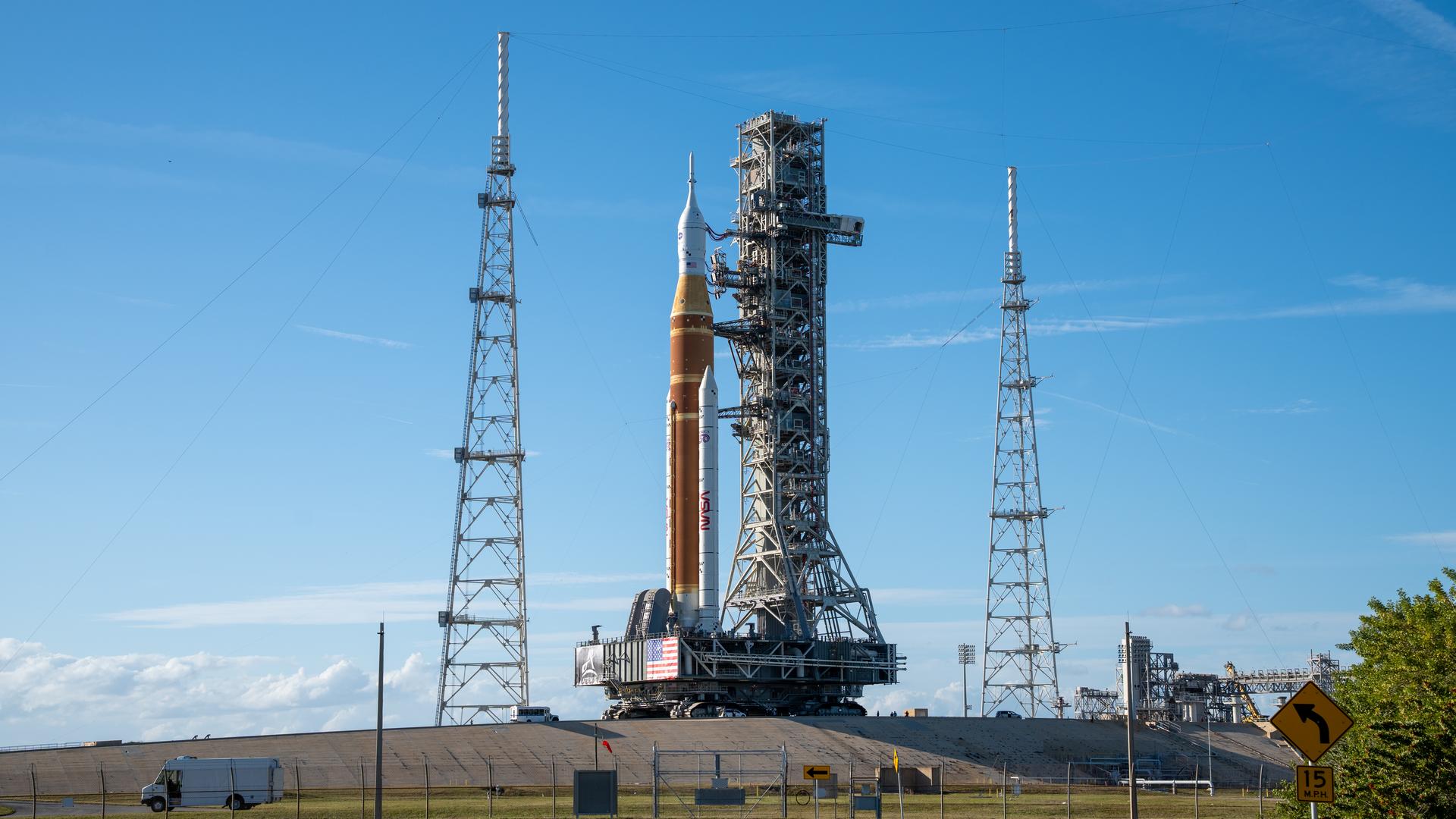
This image shows NASA’s SLS (Space Launch System) and Orion spacecraft rolling out of the Vehicle Assembly Building at NASA’s Kennedy Space Center. NASA's massive Crawler-Transporter, upgraded for the Artemis program, carries the powerful SLS rocket and Orion spacecraft on the Mobile Launcher from the Vehicle Assembly Building to Launch Pad 39B at Kennedy Space Center in preparation for the Artemis II mission.
This image shows NASA’s SLS (Space Launch System) and Orion spacecraft rolling out of the Vehicle Assembly Building at NASA’s Kennedy Space Center. NASA's massive Crawler-Transporter, upgraded for the Artemis program, carries the powerful SLS rocket and Orion spacecraft on the Mobile Launcher from the Vehicle Assembly Building to Launch Pad 39B at Kennedy Space Center in preparation for the Artemis II mission.
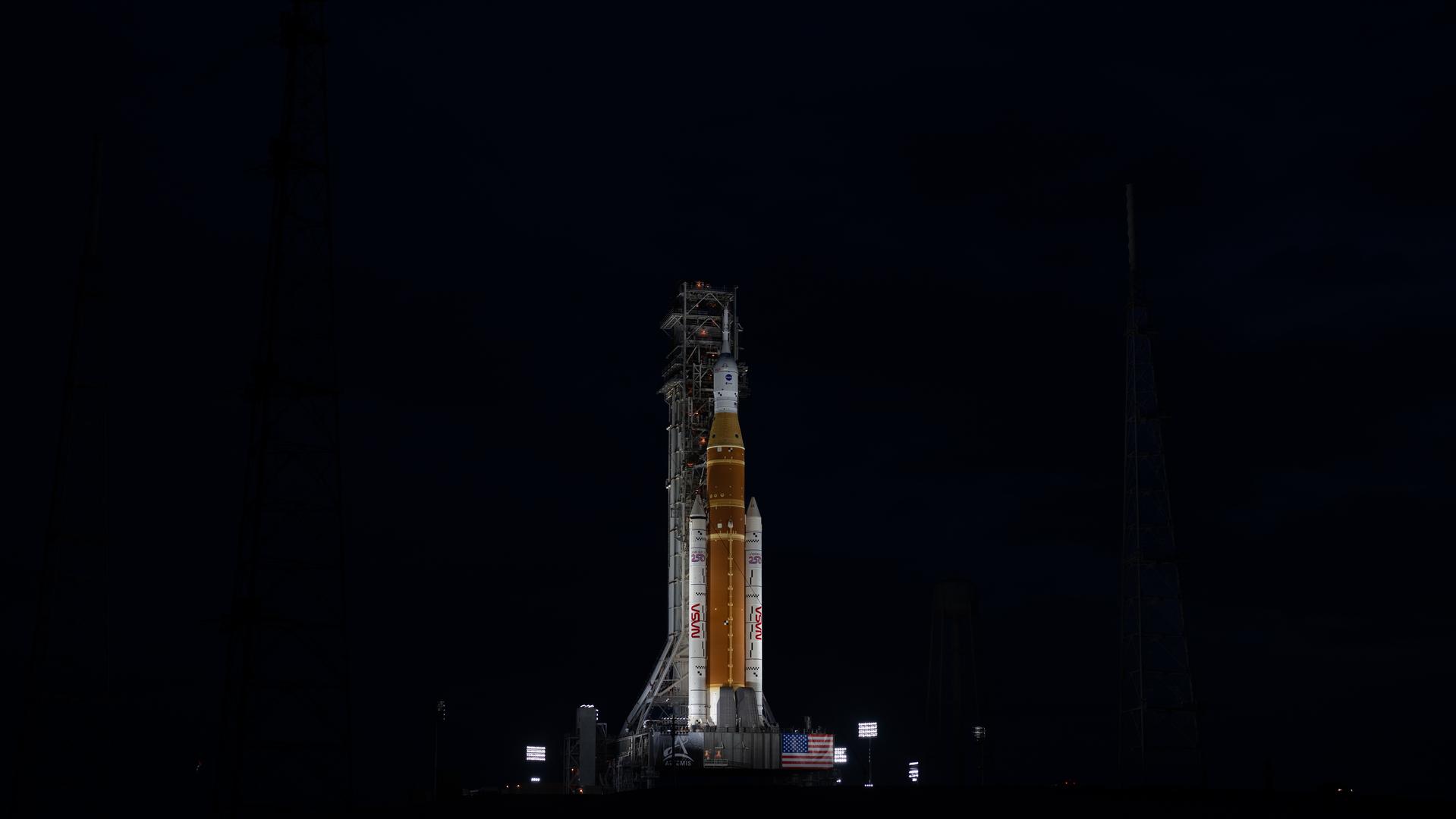
Lights illuminate NASA’s Artemis II SLS (Space Launch System) rocket and Orion spacecraft at Launch Complex 39B at NASA’s Kennedy Space Center in Florida on 01/17/2026. In the coming days, engineers will prepare for the wet dress rehearsal, a two-day test that simulates launch day. The Artemis II test flight will take Commander Reid Wiseman, Pilot Victor Glover, and Mission Specialist Christina Koch from NASA, and Mission Specialist Jeremy Hansen from the CSA (Canadian Space Agency), around the Moon and back to Earth no later than April 2026.

The Orion spacecraft delivers the Crew and Science Airlock (represented here by a government reference design) to the Gateway Space Station on the Artemis VI mission. The Mohammed Bin Rashid Space Centre of the United Arab Emirates will provide the airlock for Gateway, humanity's first space station that will orbit the Moon.
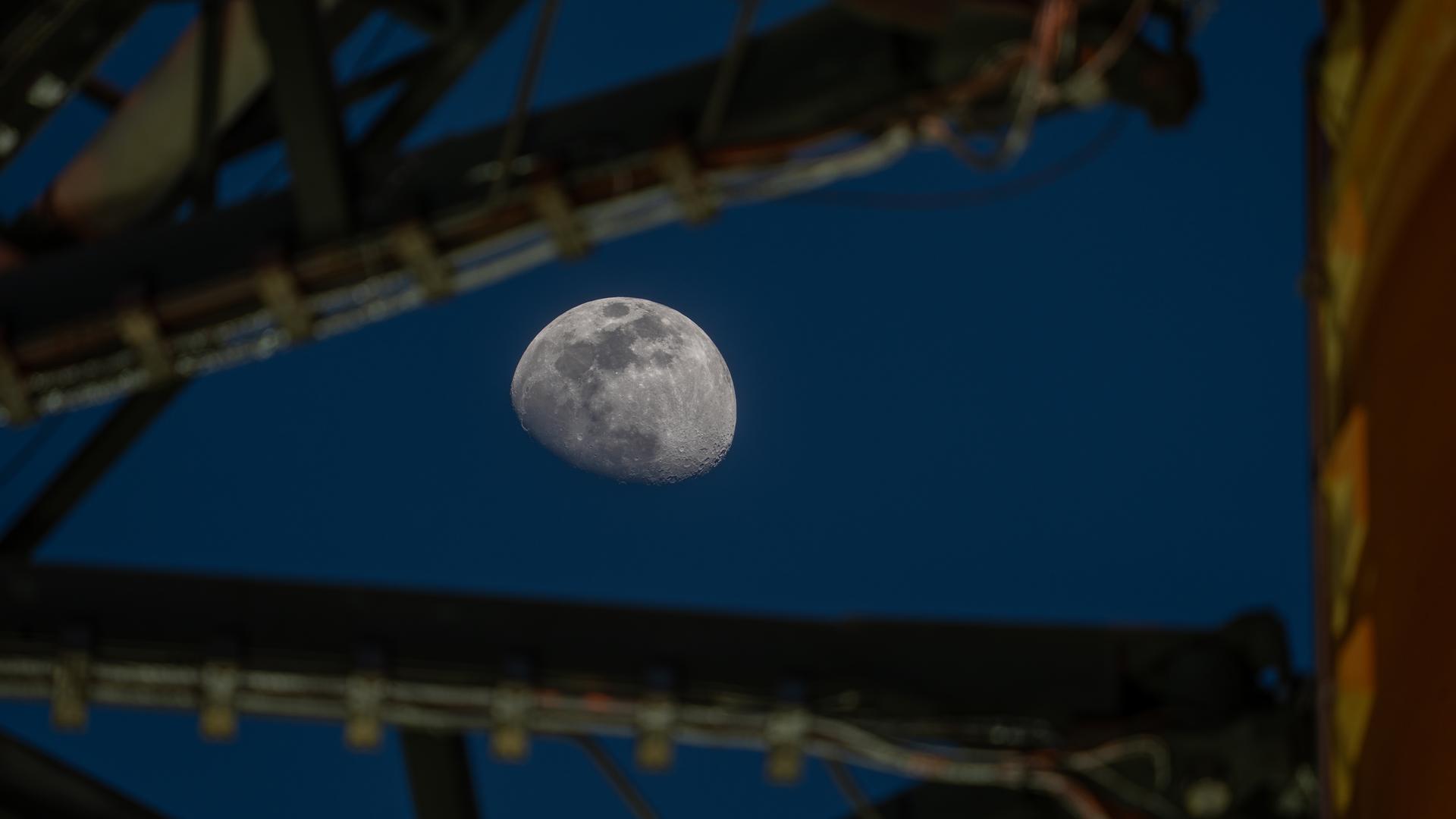
The Moon is seen shining over the SLS (Space Launch System) and Orion spacecraft, atop the mobile launcher on January 28, 2026. The rocket is currently at Launch Pad 39B at NASA’s Kennedy Space Center in Florida, as teams are preparing for a wet dress rehearsal to practice timelines and procedures for the launch of Artemis II.
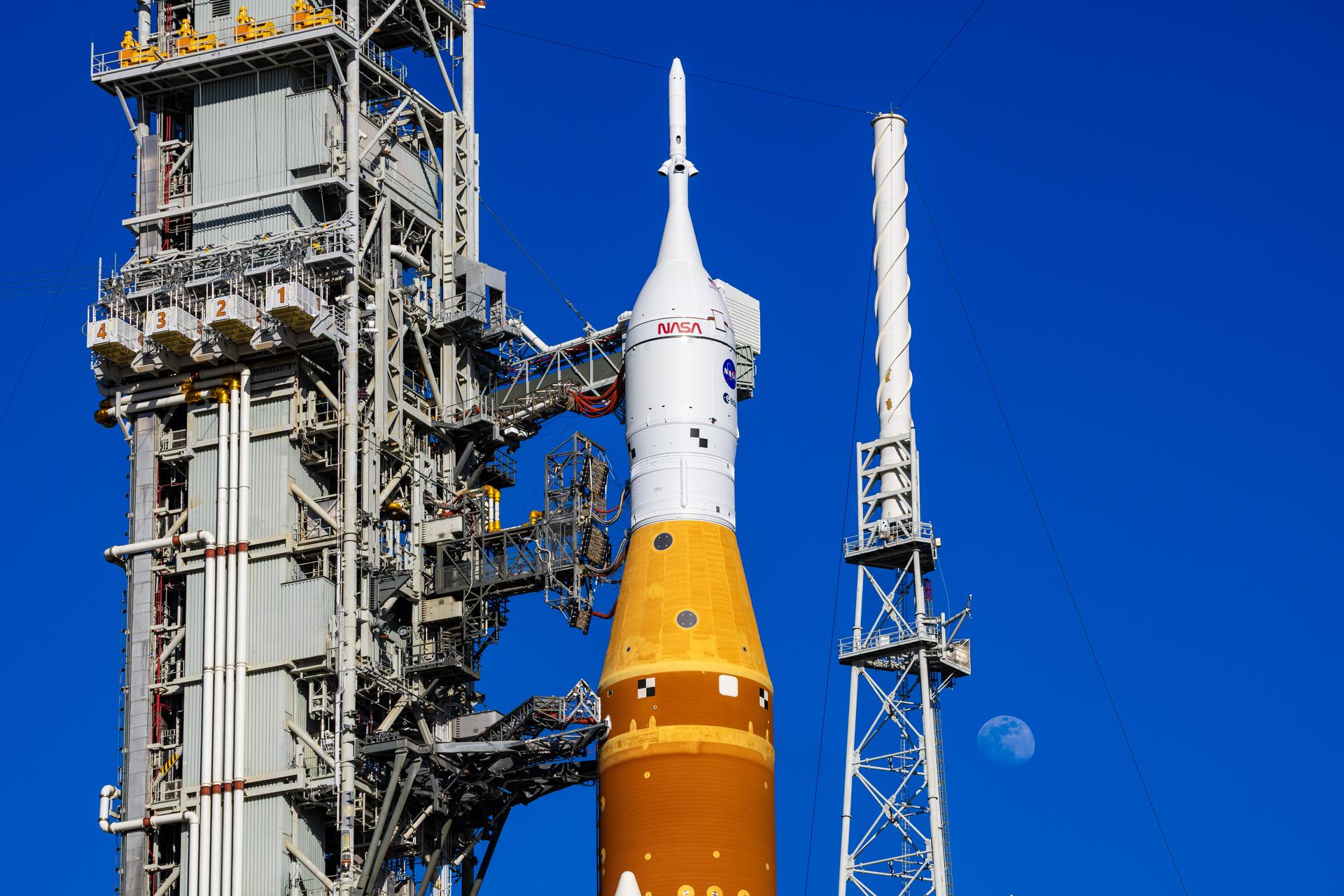
The Moon is seen behind the SLS (Space Launch System) and Orion spacecraft, atop the mobile launcher on January 28, 2026. The rocket is currently at Launch Pad 39B at NASA’s Kennedy Space Center in Florida, as teams are preparing for a wet dress rehearsal to practice timelines and procedures for the launch of Artemis II. 508 Description:The Moon is seen shining over the SLS (Space Launch System) and Orion spacecraft, atop the mobile launcher on January 29, 2026. The rocket is currently at Launch Pad 39B at NASA’s Kennedy Space Center in Florida, as teams are preparing for a wet dress rehearsal to practice timelines and procedures for the launch of Artemis II.
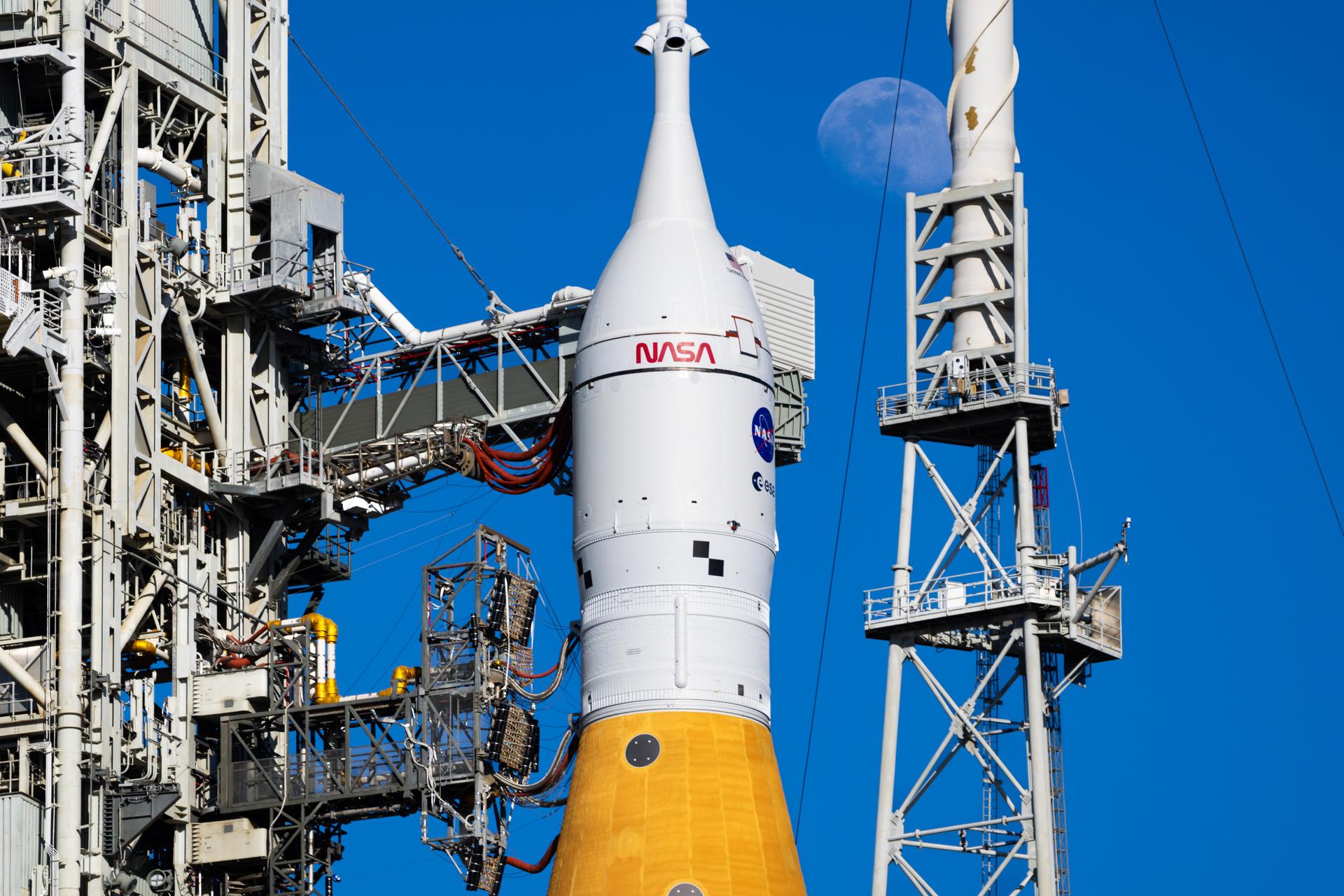
The Moon is seen shining over the SLS (Space Launch System) and Orion spacecraft, atop the mobile launcher on January 28, 2026. The rocket is currently at Launch Pad 39B at NASA’s Kennedy Space Center in Florida, as teams are preparing for a wet dress rehearsal to practice timelines and procedures for the launch of Artemis II. 508 Description:The Moon is seen shining over the SLS (Space Launch System) and Orion spacecraft, atop the mobile launcher on January 29, 2026. The rocket is currently at Launch Pad 39B at NASA’s Kennedy Space Center in Florida, as teams are preparing for a wet dress rehearsal to practice timelines and procedures for the launch of Artemis II.
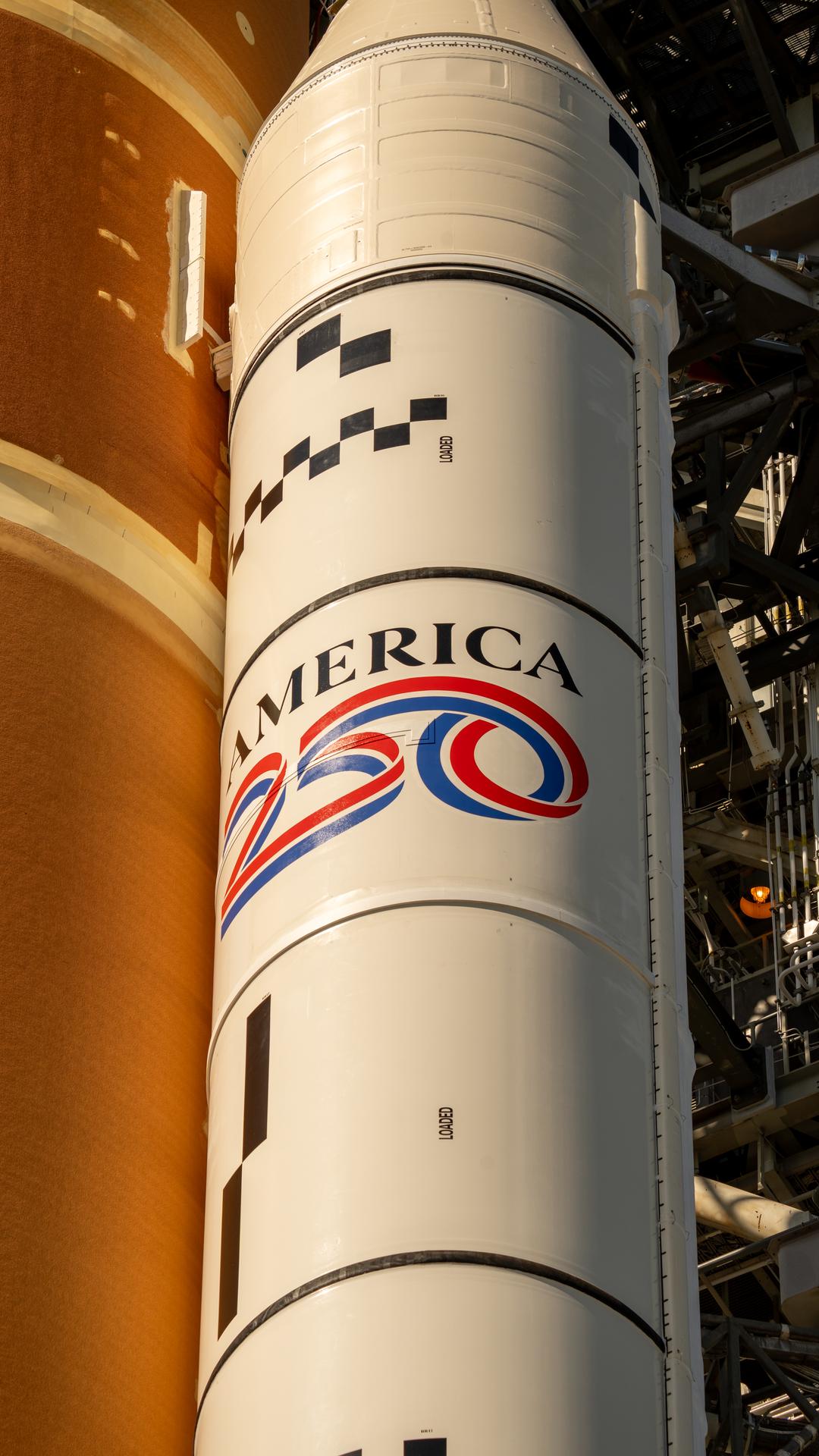
This image shows NASA’s SLS (Space Launch System) and Orion spacecraft rolling out of the Vehicle Assembly Building at NASA’s Kennedy Space Center. NASA's massive Crawler-Transporter, upgraded for the Artemis program, carries the powerful SLS rocket and Orion spacecraft on the Mobile Launcher from the Vehicle Assembly Building to Launch Pad 39B at Kennedy Space Center in preparation for the Artemis II mission.
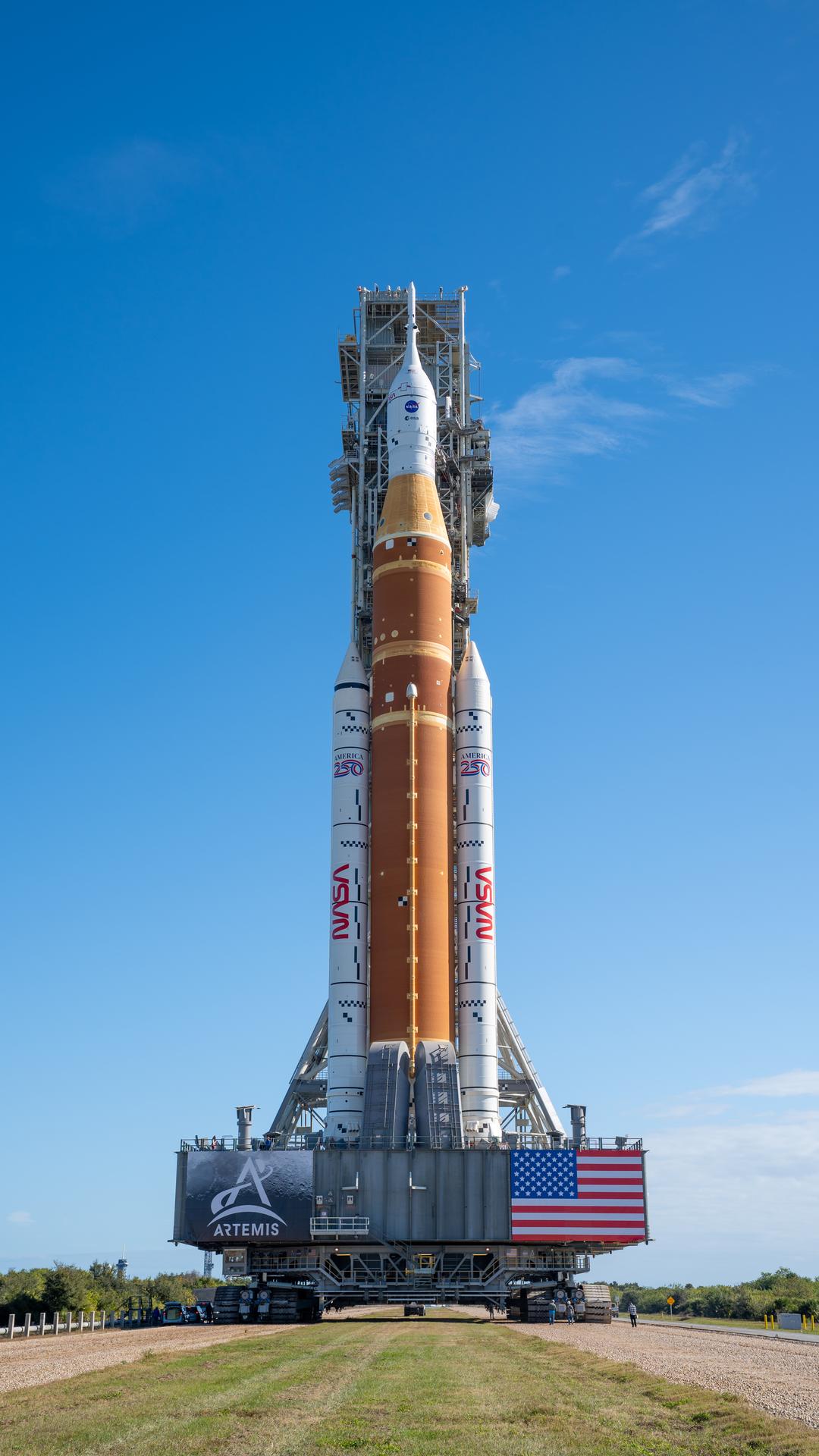
This image shows NASA’s SLS (Space Launch System) and Orion spacecraft rolling out of the Vehicle Assembly Building at NASA’s Kennedy Space Center. NASA's massive Crawler-Transporter, upgraded for the Artemis program, carries the powerful SLS rocket and Orion spacecraft on the Mobile Launcher from the Vehicle Assembly Building to Launch Pad 39B at Kennedy Space Center in preparation for the Artemis II mission.
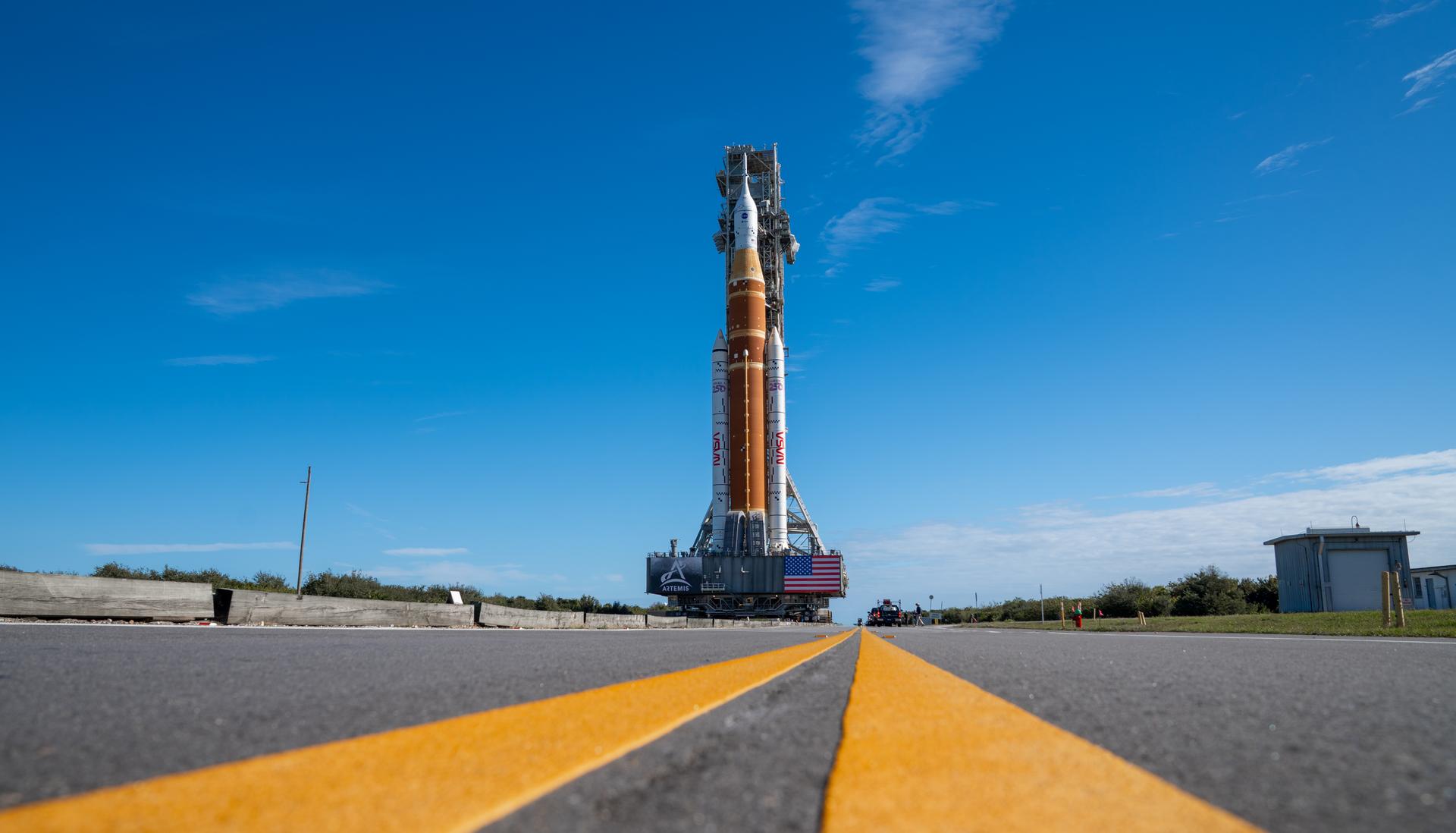
This image shows NASA’s SLS (Space Launch System) and Orion spacecraft rolling out of the Vehicle Assembly Building at NASA’s Kennedy Space Center. NASA's massive Crawler-Transporter, upgraded for the Artemis program, carries the powerful SLS rocket and Orion spacecraft on the Mobile Launcher from the Vehicle Assembly Building to Launch Pad 39B at Kennedy Space Center in preparation for the Artemis II mission.
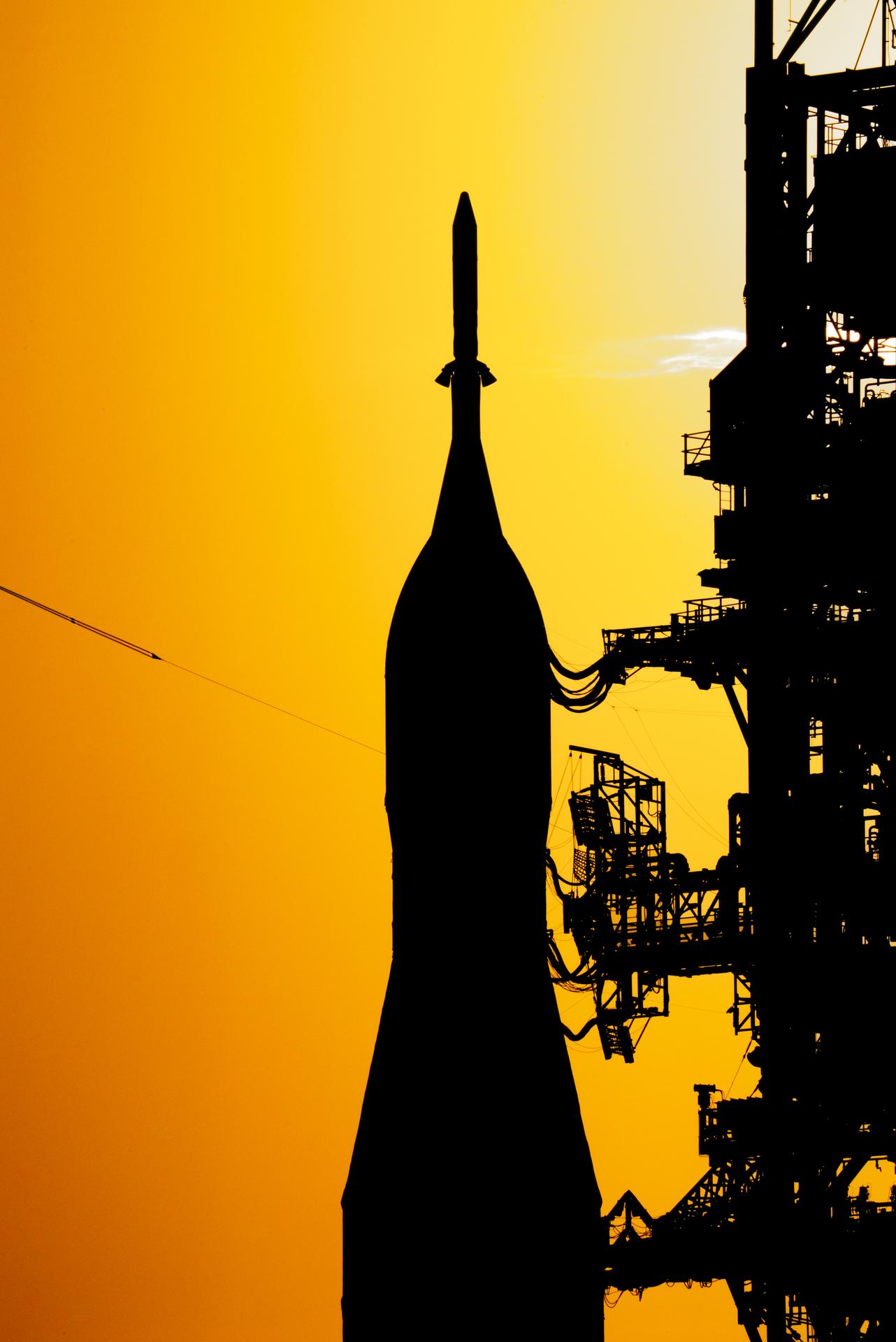
The sun sets as NASA’s crawler-transporter 2 carrying the agency’s Artemis II SLS (Space Launch System) rocket and Orion spacecraft, secured to the mobile launcher, rolls toward Launch Complex 39B at NASA’s Kennedy Space Center in Florida on 01/17/2026. The Artemis II test flight will take Commander Reid Wiseman, Pilot Victor Glover, and Mission Specialist Christina Koch from NASA and Mission Specialist Jeremy Hansen from the CSA (Canadian Space Agency), around the Moon and back to Earth no later than April 2026.
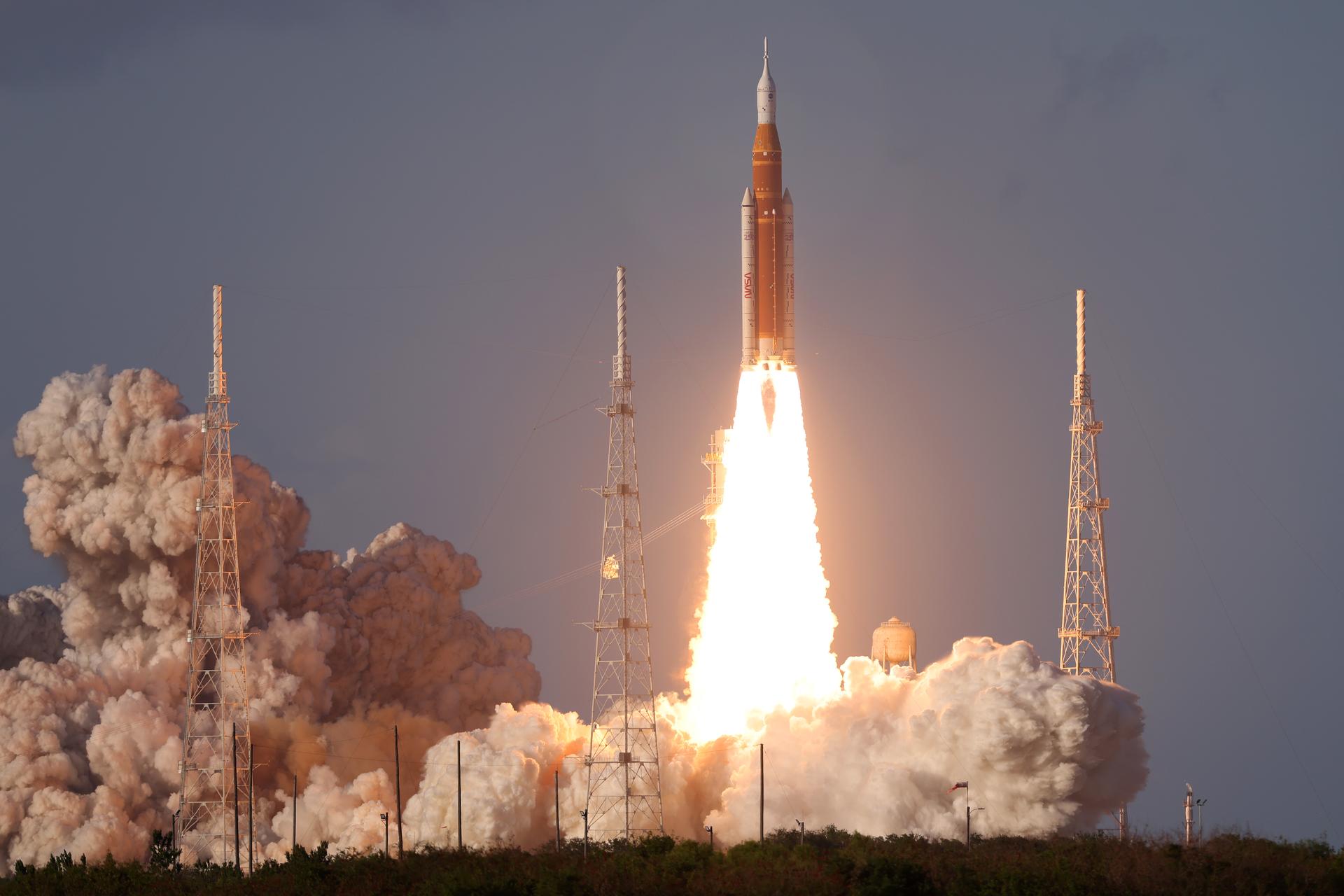
Four astronauts aboard NASA’s Orion spacecraft atop the SLS (Space Launch System) rocket launch on the agency’s Artemis II test flight, Wednesday, April 1, 2026, from Launch Complex 39B at NASA’s Kennedy Space Center in Florida. Artemis II lifted off at 6:35 p.m. ET. Artemis II is the first crewed mission of the agency’s Artemis campaign. The mission will send NASA astronauts Reid Wiseman, Victor Glover, and Christina Koch and CSA (Canadian Space Agency) astronaut Jeremy Hansen on an approximately 10-day journey around the Moon and back to Earth. Image credit: NASA/Michael DeMocker
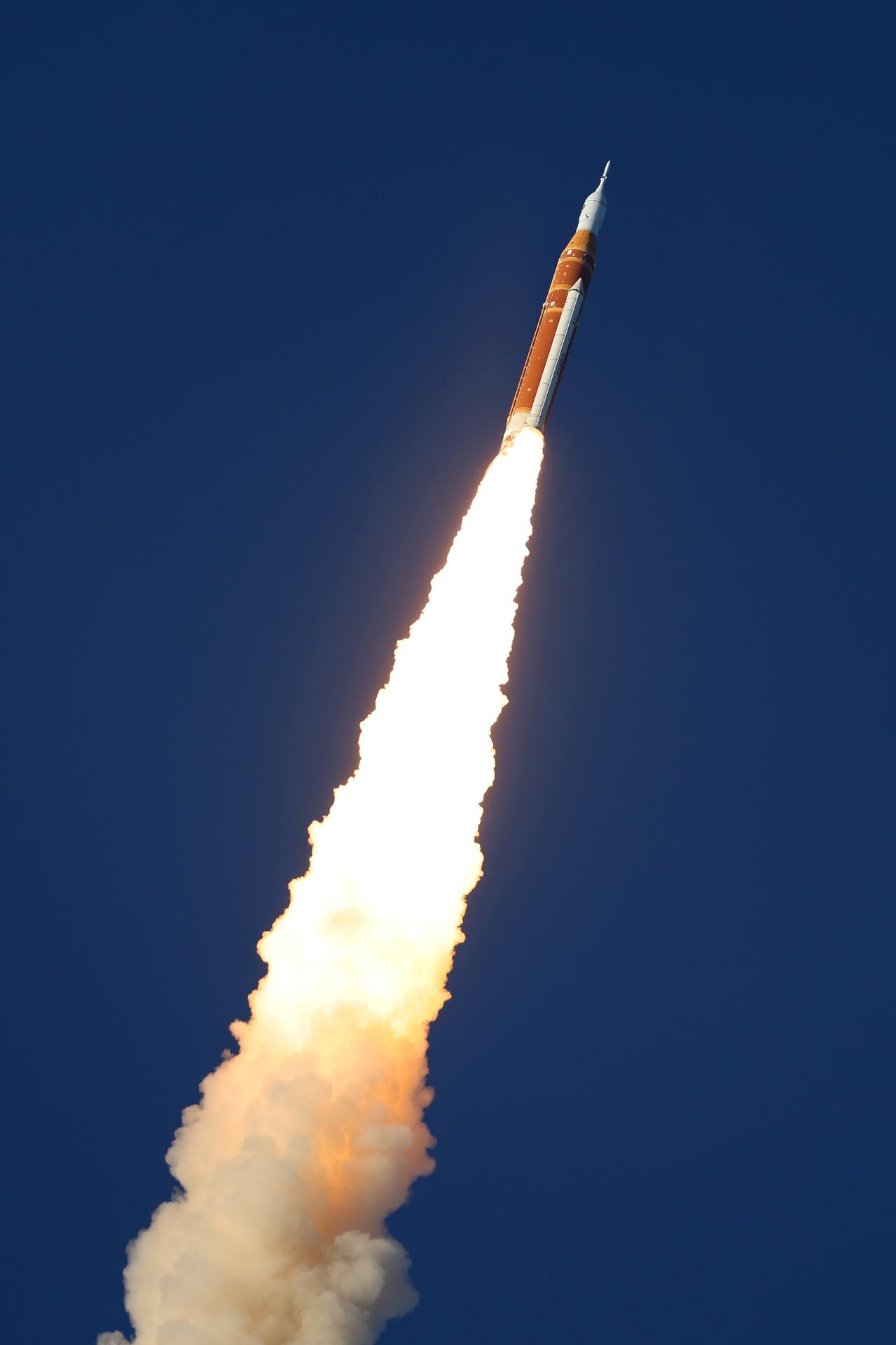
Four astronauts aboard NASA’s Orion spacecraft atop the SLS (Space Launch System) rocket launch on the agency’s Artemis II test flight, Wednesday, April 1 from Launch Complex 39B at NASA’s Kennedy Space Center in Florida. Artemis II lifted off at 6:35 p.m. ET. Artemis II is the first crewed mission of the agency’s Artemis campaign. The mission will send NASA astronauts Reid Wiseman, Victor Glover, and Christina Koch and CSA (Canadian Space Agency) astronaut Jeremy Hansen on an approximately 10-day journey around the Moon and back to Earth. Image credit: NASA/Michael DeMocker
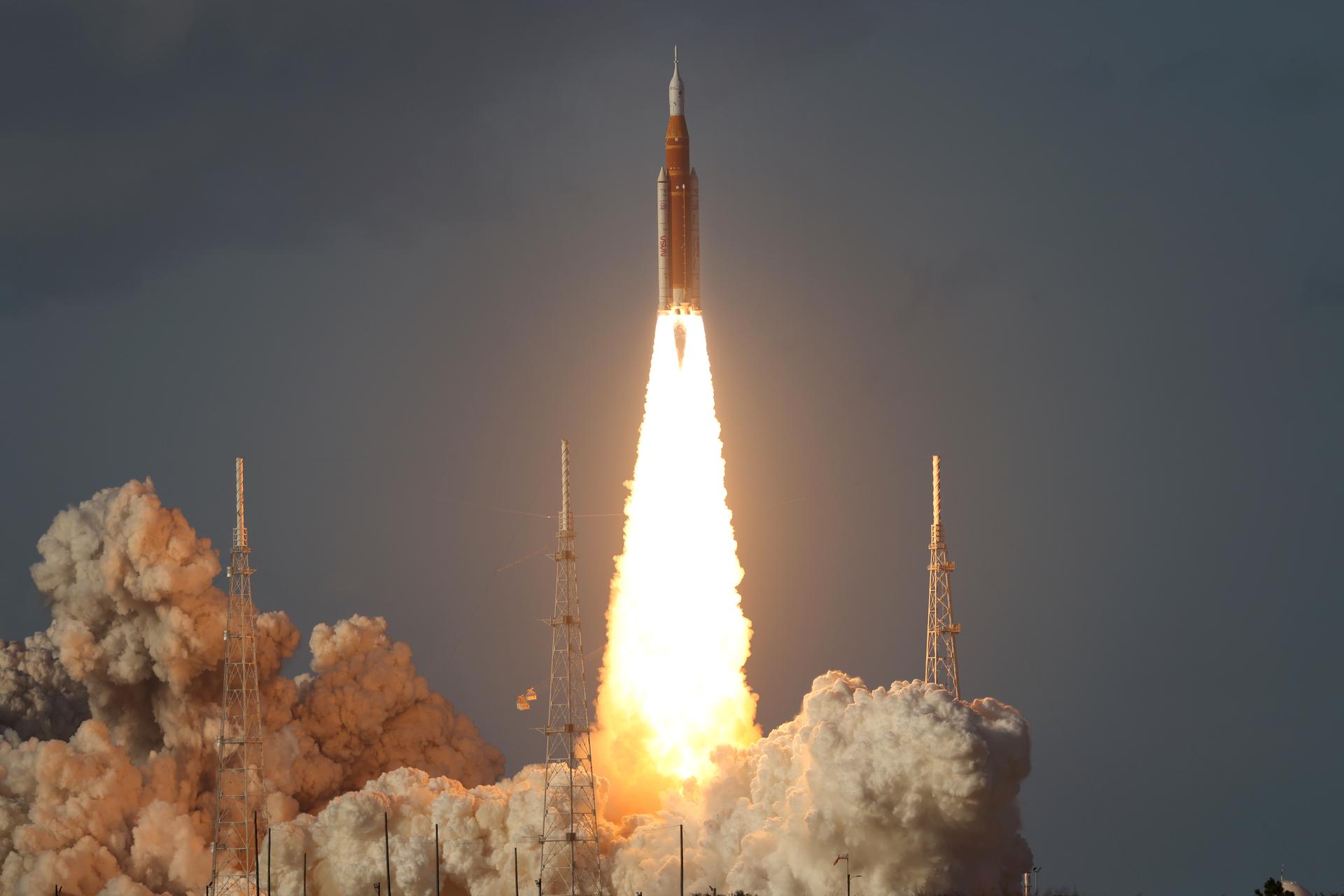
Four astronauts aboard NASA’s Orion spacecraft atop the SLS (Space Launch System) rocket launch on the agency’s Artemis II test flight, Wednesday, April 1 from Launch Complex 39B at NASA’s Kennedy Space Center in Florida. Artemis II lifted off at 6:35 p.m. ET. Artemis II is the first crewed mission of the agency’s Artemis campaign. The mission will send NASA astronauts Reid Wiseman, Victor Glover, and Christina Koch and CSA (Canadian Space Agency) astronaut Jeremy Hansen on an approximately 10-day journey around the Moon and back to Earth. Image credit: NASA/Michael DeMocker
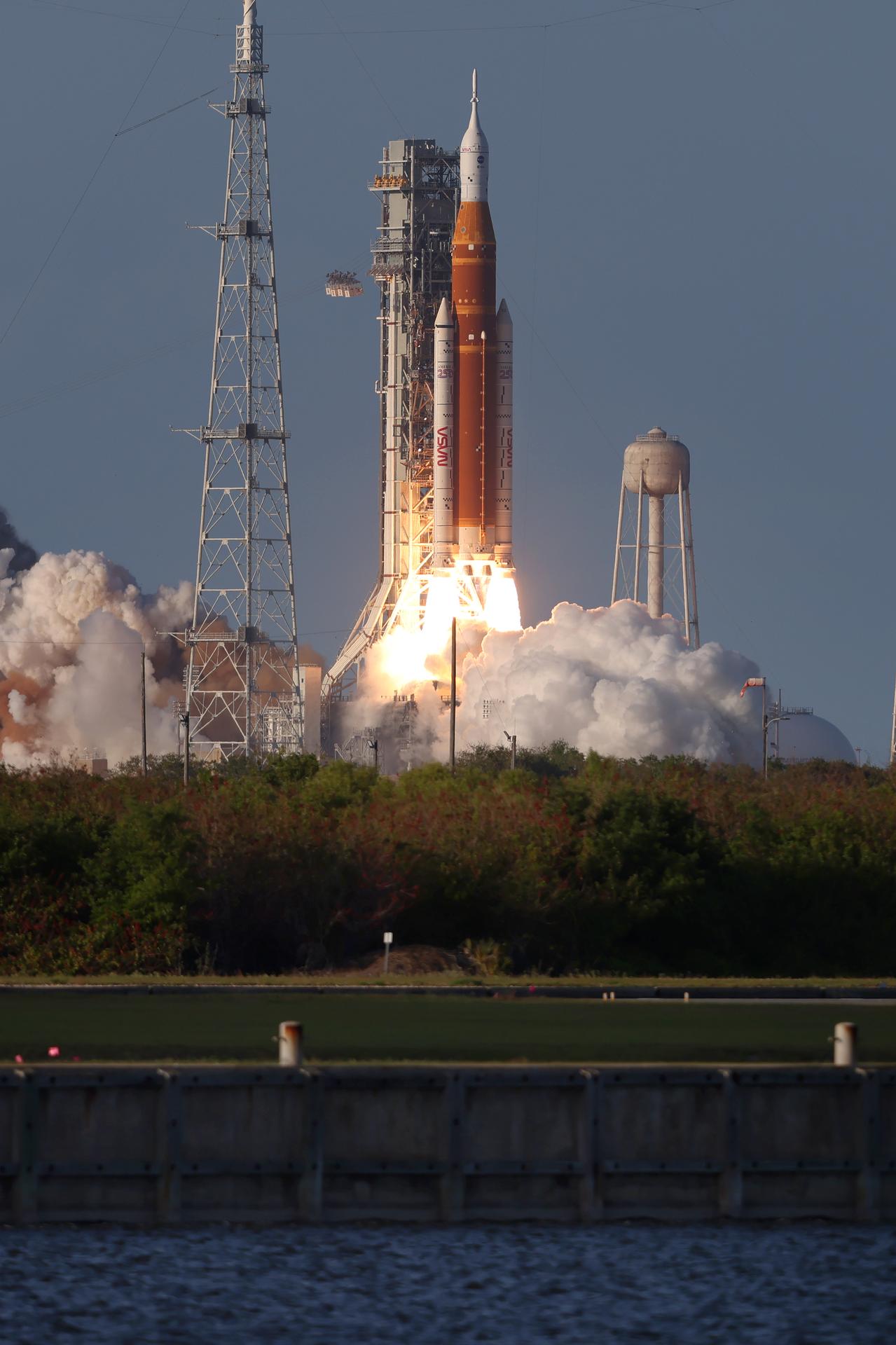
Four astronauts aboard NASA’s Orion spacecraft atop the SLS (Space Launch System) rocket launch on the agency’s Artemis II test flight, Wednesday, April 1 from Launch Complex 39B at NASA’s Kennedy Space Center in Florida. Artemis II lifted off at 6:35 p.m. ET. Artemis II is the first crewed mission of the agency’s Artemis campaign. The mission will send NASA astronauts Reid Wiseman, Victor Glover, and Christina Koch and CSA (Canadian Space Agency) astronaut Jeremy Hansen on an approximately 10-day journey around the Moon and back to Earth. Image credit: NASA/Michael DeMocker
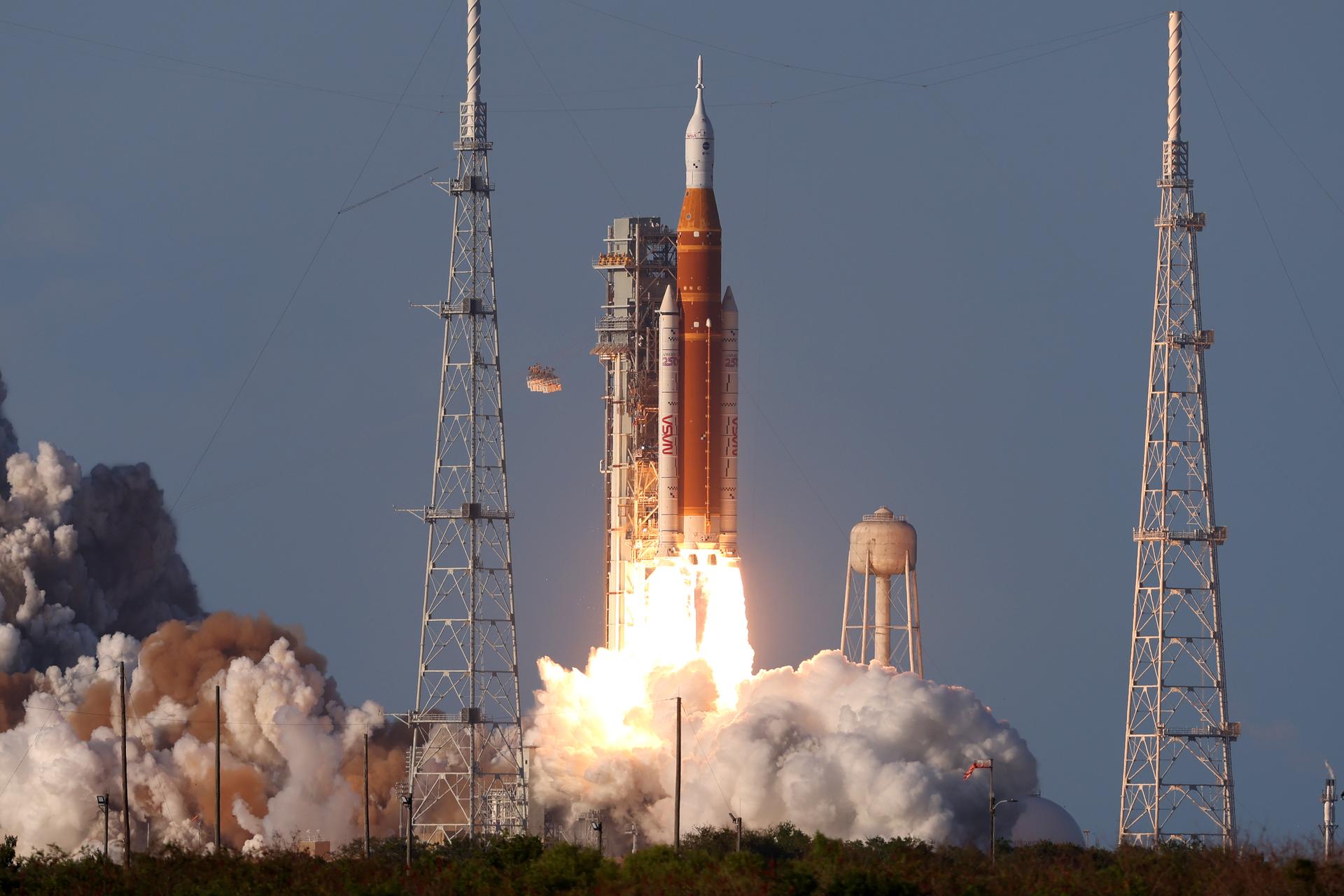
Four astronauts aboard NASA’s Orion spacecraft atop the SLS (Space Launch System) rocket launch on the agency’s Artemis II test flight, Wednesday, April 1, 2026, from Launch Complex 39B at NASA’s Kennedy Space Center in Florida. Artemis II lifted off at 6:35 p.m. ET. Artemis II is the first crewed mission of the agency’s Artemis campaign. The mission will send NASA astronauts Reid Wiseman, Victor Glover, and Christina Koch, and CSA (Canadian Space Agency) astronaut Jeremy Hansen on an approximately 10-day journey around the Moon and back to Earth. Image credit: NASA/Michael DeMocker
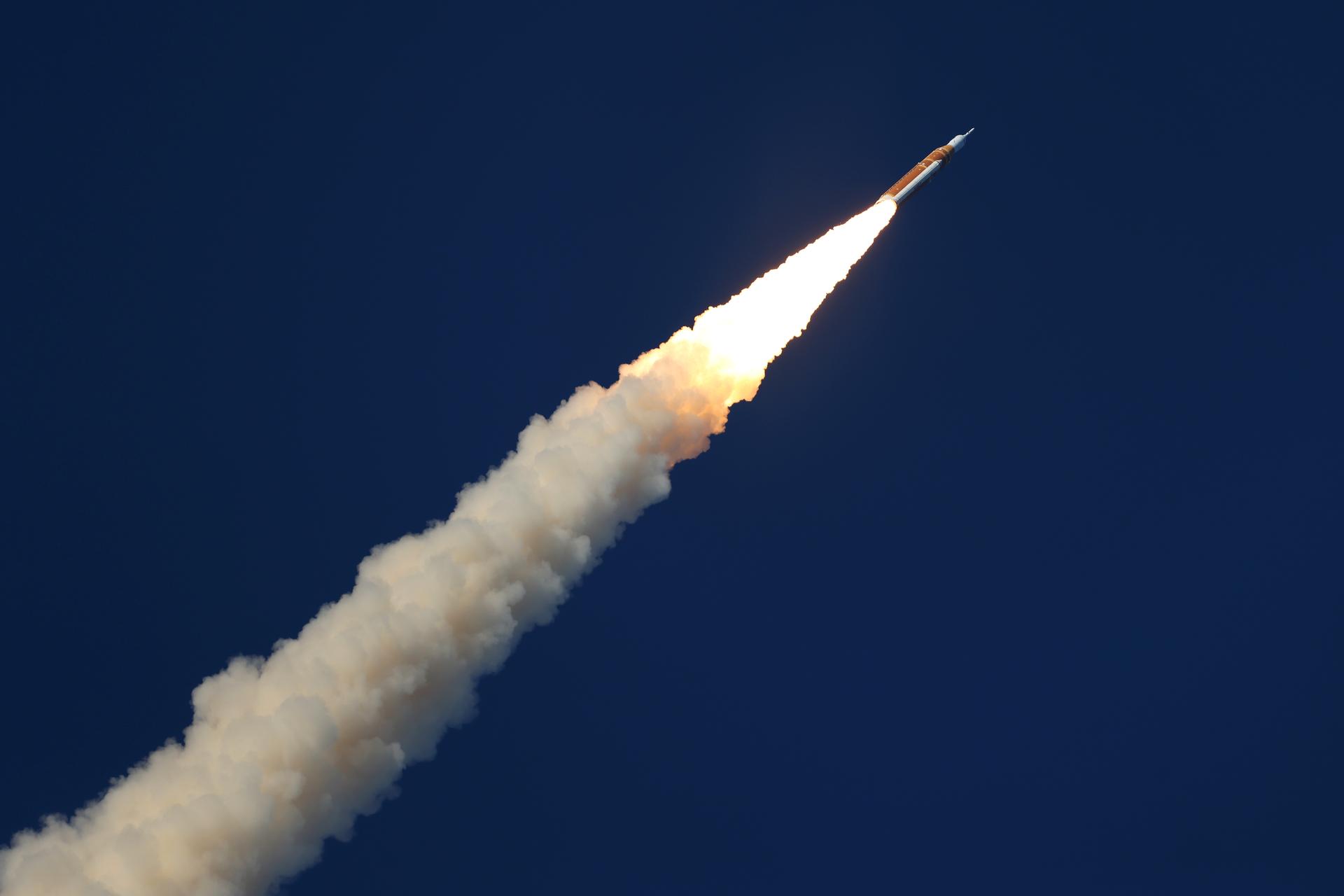
Four astronauts aboard NASA’s Orion spacecraft atop the SLS (Space Launch System) rocket launch on the agency’s Artemis II test flight, Wednesday, April 1 from Launch Complex 39B at NASA’s Kennedy Space Center in Florida. Artemis II lifted off at 6:35 p.m. ET. Artemis II is the first crewed mission of the agency’s Artemis campaign. The mission will send NASA astronauts Reid Wiseman, Victor Glover, and Christina Koch and CSA (Canadian Space Agency) astronaut Jeremy Hansen on an approximately 10-day journey around the Moon and back to Earth. Image credit: NASA/Michael DeMocker
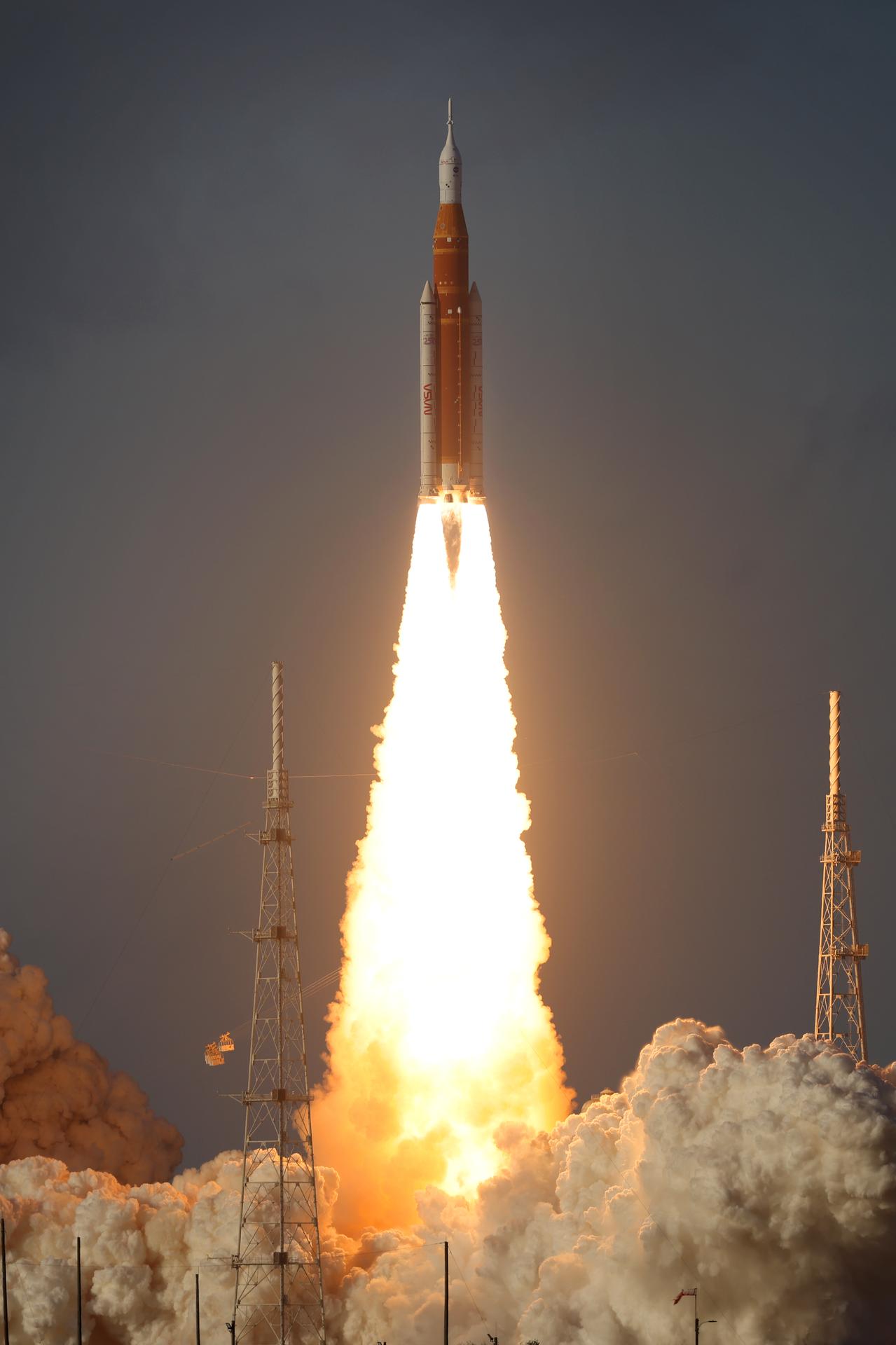
Four astronauts aboard NASA’s Orion spacecraft atop the SLS (Space Launch System) rocket launch on the agency’s Artemis II test flight, Wednesday, April 1, 2026, from Launch Complex 39B at NASA’s Kennedy Space Center in Florida. Artemis II lifted off at 6:35 p.m. ET. Artemis II is the first crewed mission of the agency’s Artemis campaign. The mission will send NASA astronauts Reid Wiseman, Victor Glover, and Christina Koch and CSA (Canadian Space Agency) astronaut Jeremy Hansen on an approximately 10-day journey around the Moon and back to Earth. Image credit: NASA/Michael DeMocker
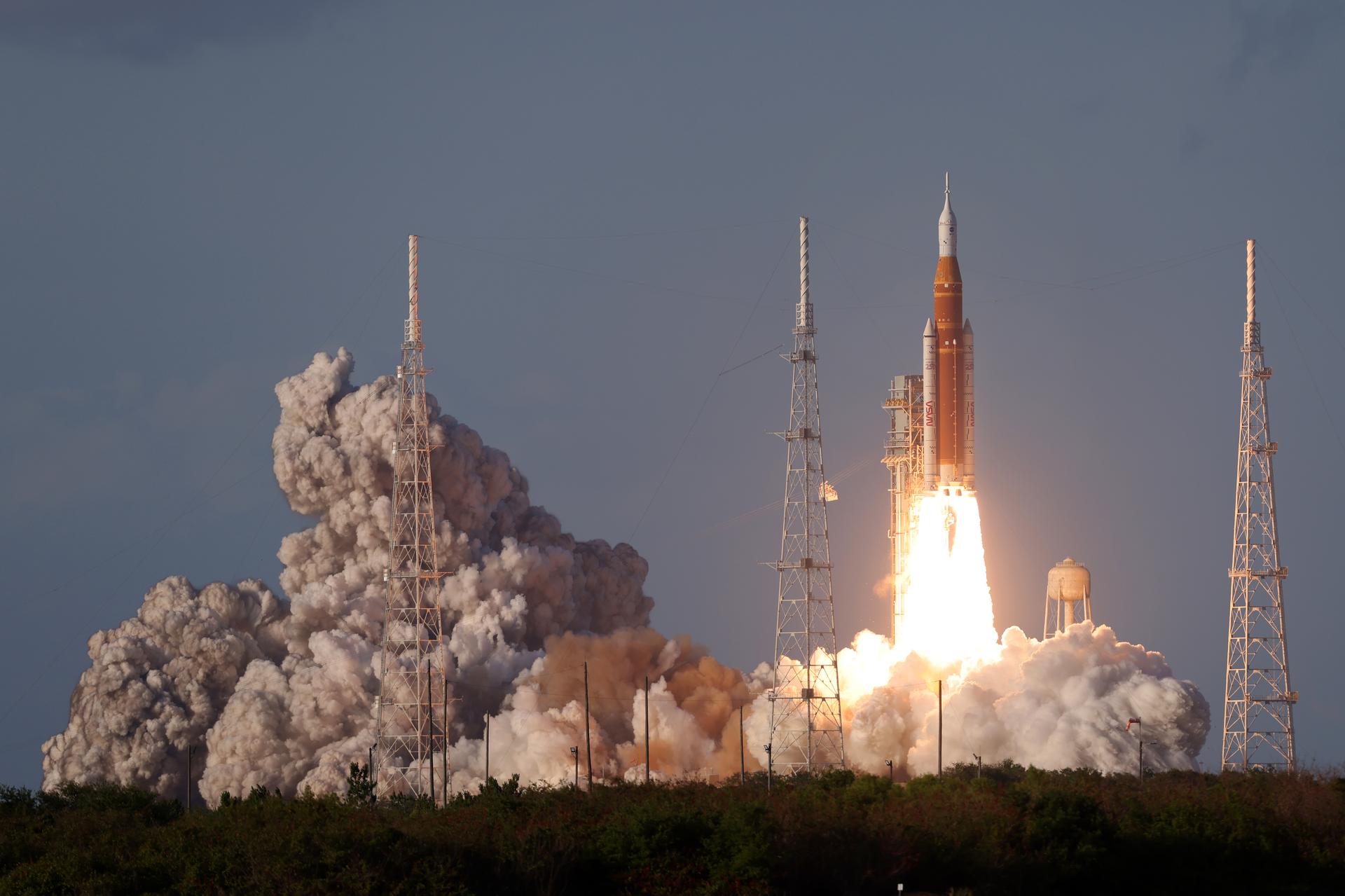
Four astronauts aboard NASA’s Orion spacecraft atop the SLS (Space Launch System) rocket launch on the agency’s Artemis II test flight, Wednesday, April 1 from Launch Complex 39B at NASA’s Kennedy Space Center in Florida. Artemis II lifted off at 6:35 p.m. ET. Artemis II is the first crewed mission of the agency’s Artemis campaign. The mission will send NASA astronauts Reid Wiseman, Victor Glover, and Christina Koch and CSA (Canadian Space Agency) astronaut Jeremy Hansen on an approximately 10-day journey around the Moon and back to Earth. Image credit: NASA/Michael DeMocker
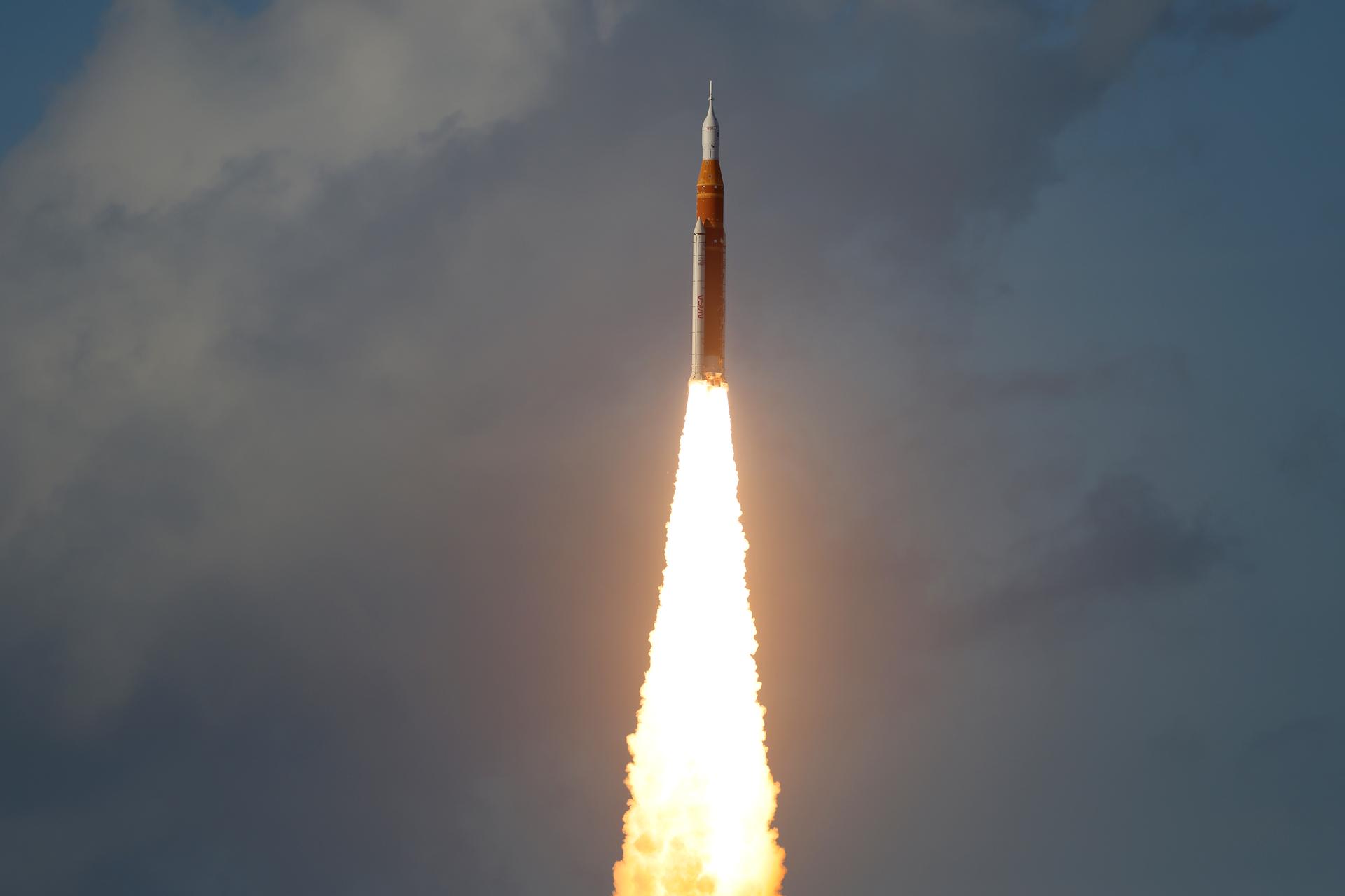
Four astronauts aboard NASA’s Orion spacecraft atop the SLS (Space Launch System) rocket launch on the agency’s Artemis II test flight, Wednesday, April 1 from Launch Complex 39B at NASA’s Kennedy Space Center in Florida. Artemis II lifted off at 6:35 p.m. ET. Artemis II is the first crewed mission of the agency’s Artemis campaign. The mission will send NASA astronauts Reid Wiseman, Victor Glover, and Christina Koch and CSA (Canadian Space Agency) astronaut Jeremy Hansen on an approximately 10-day journey around the Moon and back to Earth. Image credit: NASA/Michael DeMocker
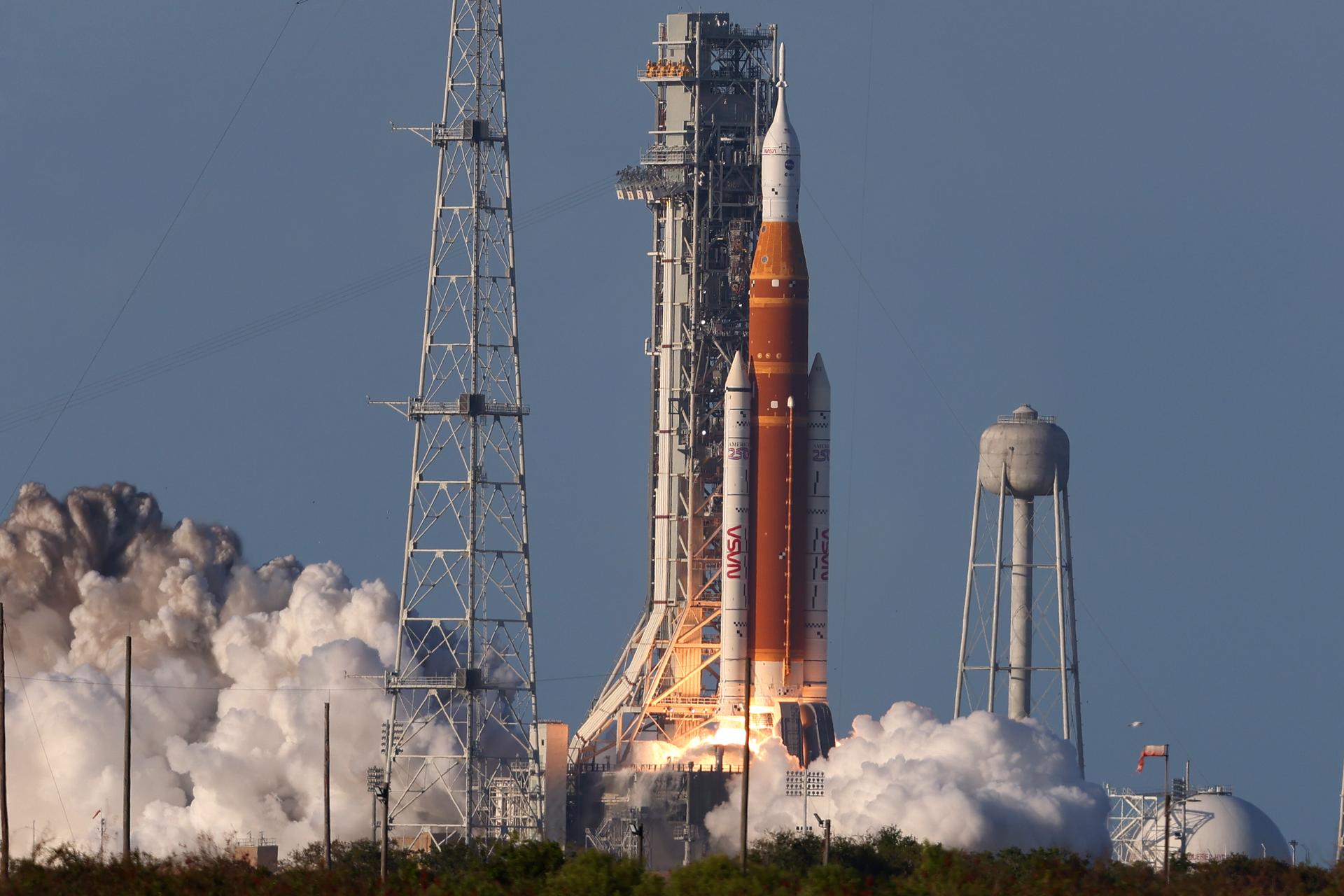
Four astronauts aboard NASA’s Orion spacecraft atop the SLS (Space Launch System) rocket launch on the agency’s Artemis II test flight, Wednesday, April 1 from Launch Complex 39B at NASA’s Kennedy Space Center in Florida. Artemis II lifted off at 6:35 p.m. ET. Artemis II is the first crewed mission of the agency’s Artemis campaign. The mission will send NASA astronauts Reid Wiseman, Victor Glover, and Christina Koch and CSA (Canadian Space Agency) astronaut Jeremy Hansen on an approximately 10-day journey around the Moon and back to Earth. Image credit: NASA/Michael DeMocker

The Orion spacecraft for NASA’s crewed Artemis II (right), Artemis III (left), and Artemis IV (center) missions are stationed next to each other inside the high bay of the Neil Armstrong Operations and Checkout Building at NASA’s Kennedy Space Center in Florida on June 22, 2023. Each capsule is in a different stage of production as technicians and engineers prepare the spacecraft to carry astronauts to and around the Moon on their upcoming flights.
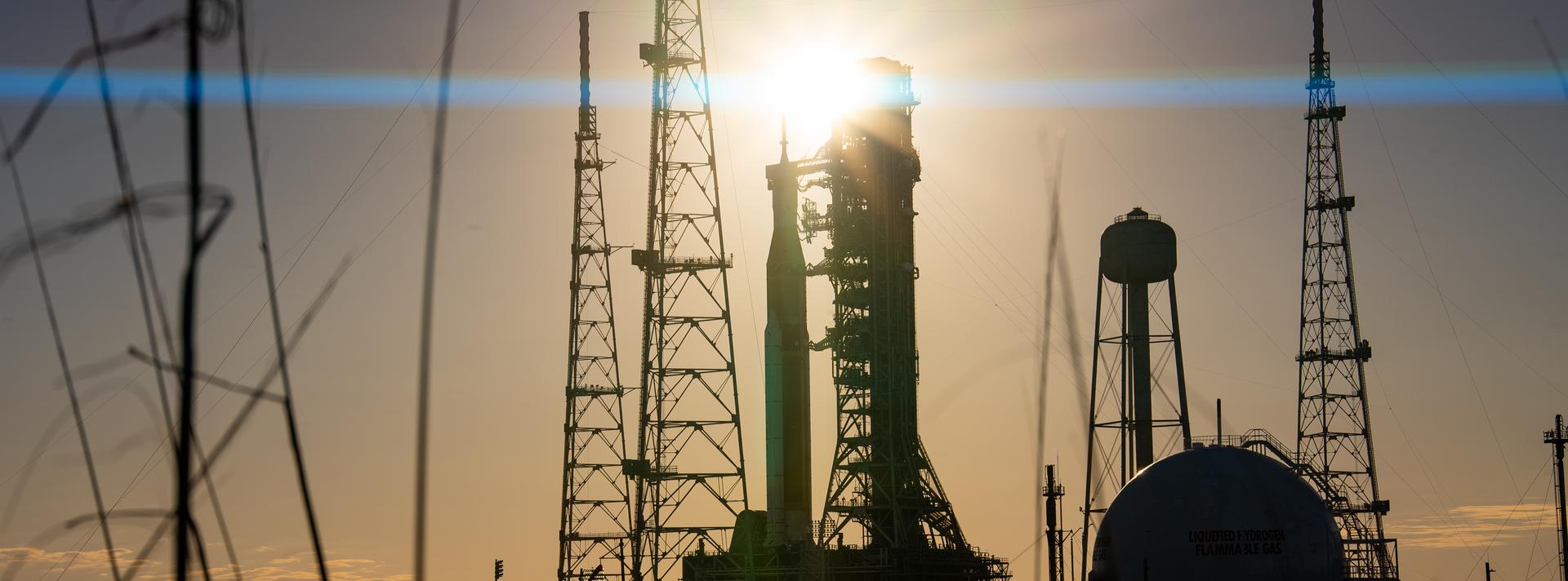
The sun is seen setting behind NASA’s SLS (Space Launch System) and Orion spacecraft, atop the mobile launcher on January 31, 2026. The rocket is currently at Launch Pad 39B at NASA’s Kennedy Space Center in Florida, as teams are preparing for a wet dress rehearsal to practice timelines and procedures for the launch of Artemis II.
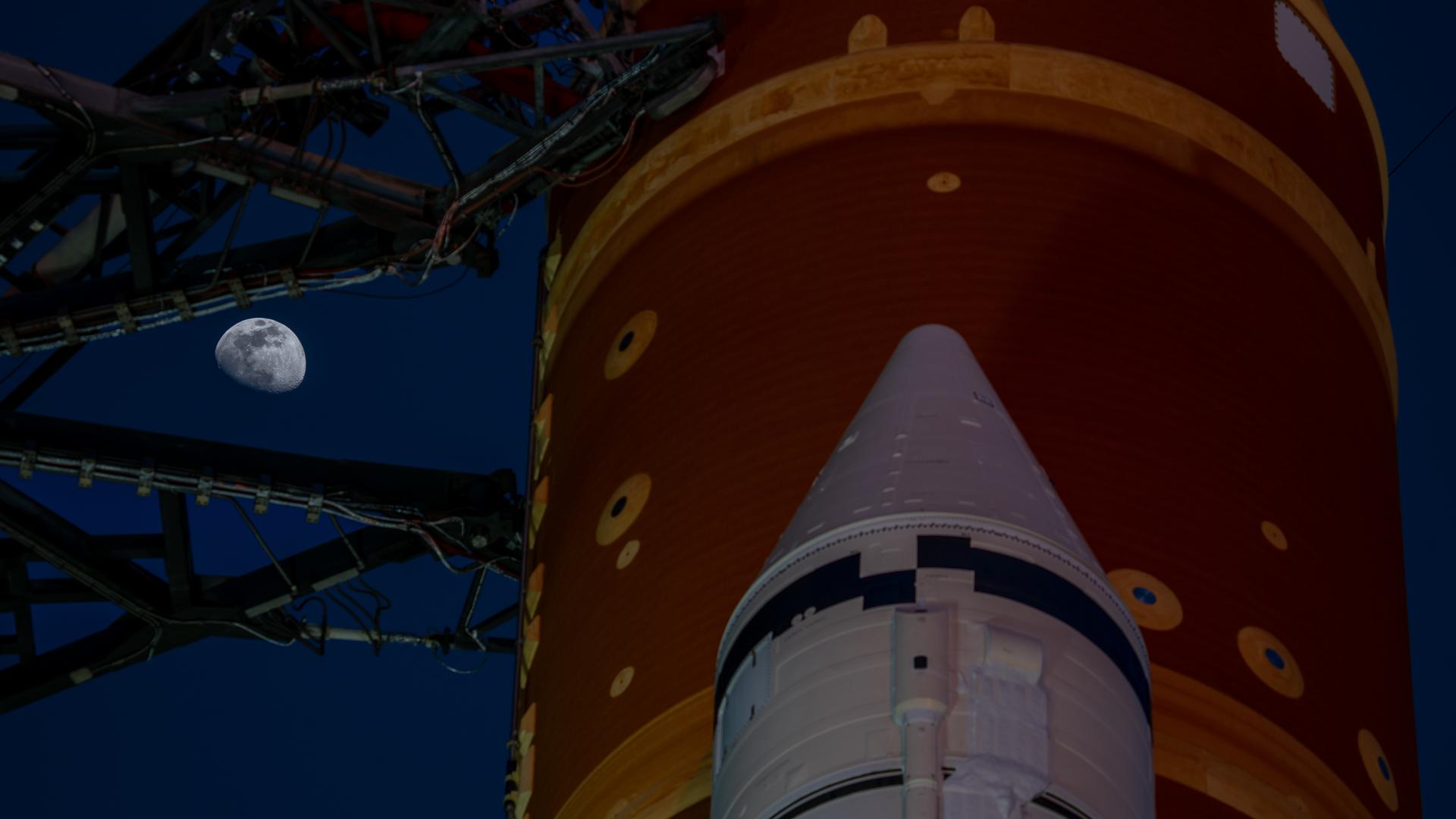
The Moon is seen shining over the SLS (Space Launch System) and Orion spacecraft, atop the mobile launcher on January 28, 2026. The rocket is currently at Launch Pad 39B at NASA’s Kennedy Space Center in Florida, as teams are preparing for a wet dress rehearsal to practice timelines and procedures for the launch of Artemis II.
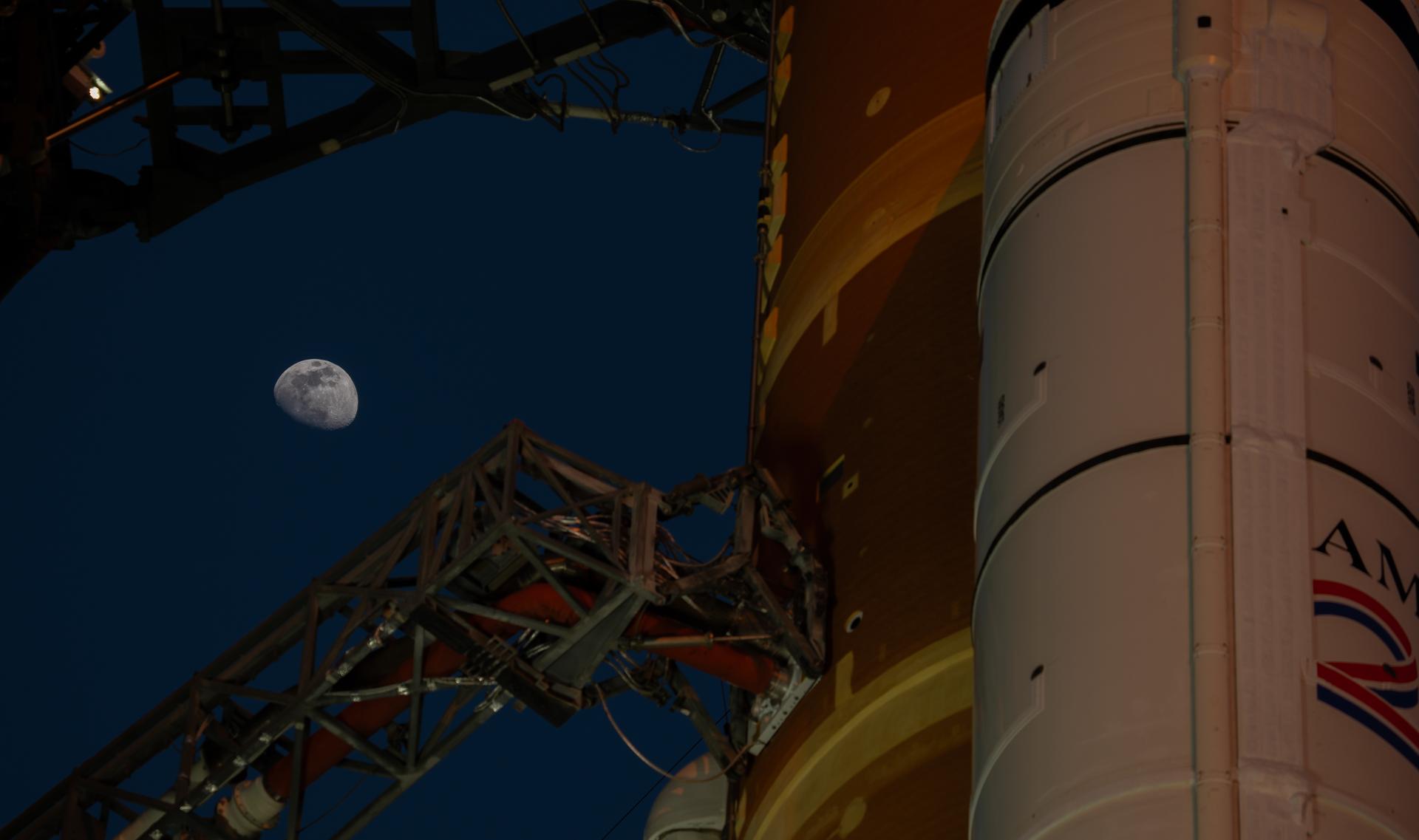
The Moon is seen shining over the SLS (Space Launch System) and Orion spacecraft, atop the mobile launcher on January 28, 2026. The rocket is currently at Launch Pad 39B at NASA’s Kennedy Space Center in Florida, as teams are preparing for a wet dress rehearsal to practice timelines and procedures for the launch of Artemis II.
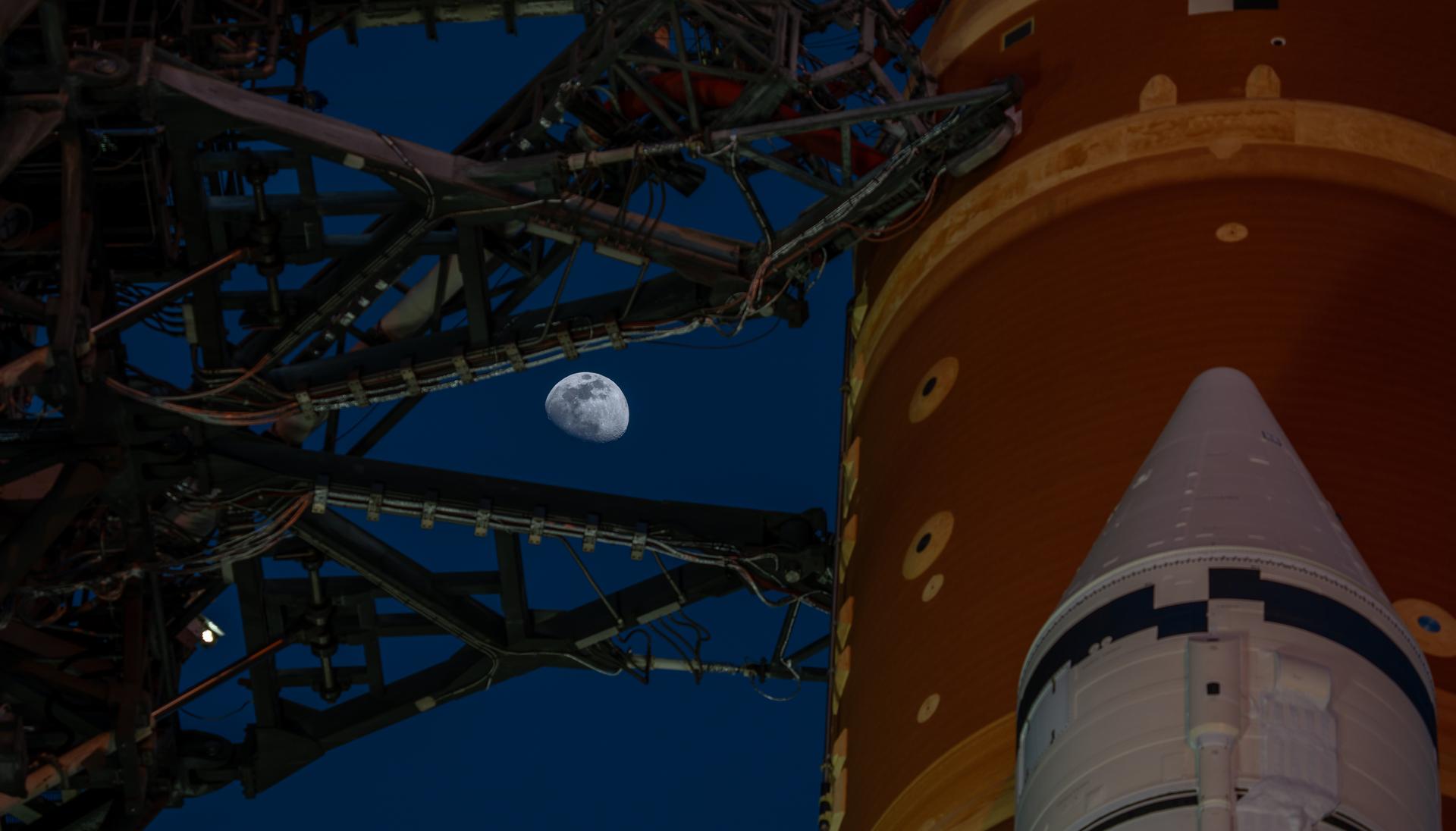
The Moon is seen shining over the SLS (Space Launch System) and Orion spacecraft, atop the mobile launcher on January 28, 2026. The rocket is currently at Launch Pad 39B at NASA’s Kennedy Space Center in Florida, as teams are preparing for a wet dress rehearsal to practice timelines and procedures for the launch of Artemis II.
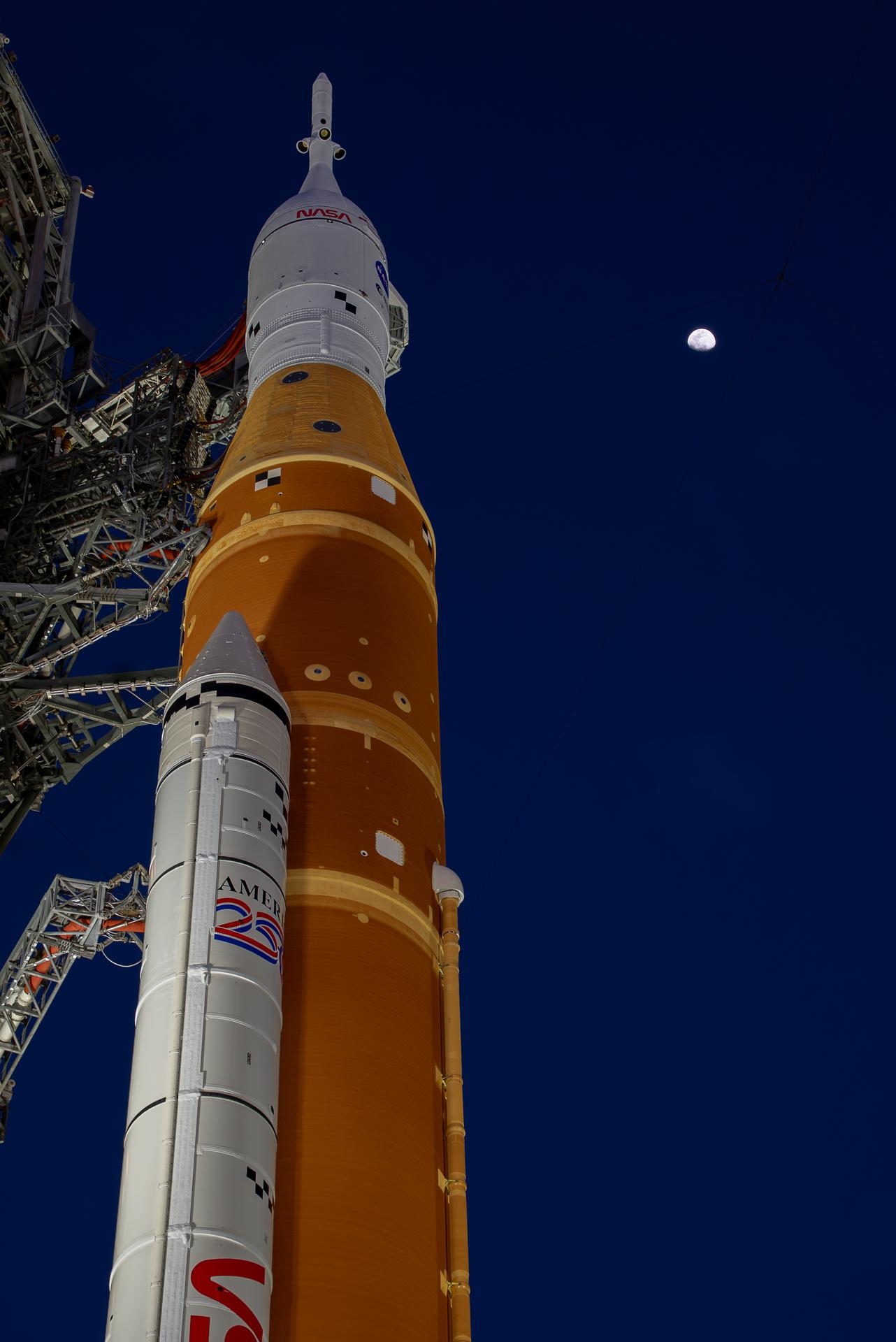
The Moon is seen shining over the SLS (Space Launch System) and Orion spacecraft, atop the mobile launcher on January 28, 2026. The rocket is currently at Launch Pad 39B at NASA’s Kennedy Space Center in Florida, as teams are preparing for a wet dress rehearsal to practice timelines and procedures for the launch of Artemis II.
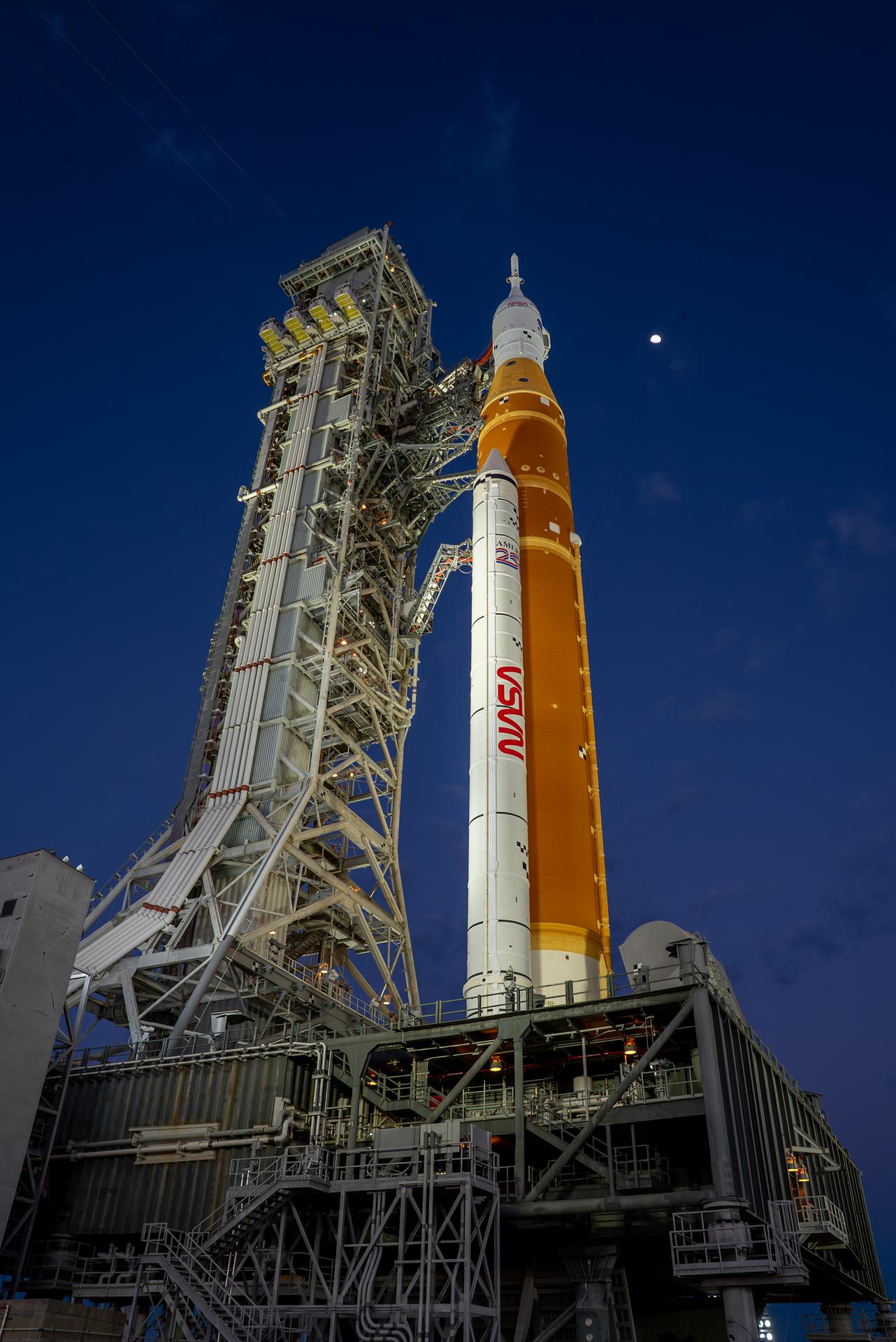
The Moon is seen shining over the SLS (Space Launch System) and Orion spacecraft, atop the mobile launcher on January 28, 2026. The rocket is currently at Launch Pad 39B at NASA’s Kennedy Space Center in Florida, as teams are preparing for a wet dress rehearsal to practice timelines and procedures for the launch of Artemis II.

Partners and guests toured the Vehicle Assembly Building at NASA’s Kennedy Space Center in Florida on March 16, 2022 ahead of the rollout of the agency’s Artemis I Space Launch System and Orion spacecraft to Launch Pad 39B for a wet dress rehearsal ahead of launch. The group was at the center for the Artemis Summit, a one-day meeting for partners, grantees and other interested organizations to learn about Public and STEM Engagement plans and opportunities for the upcoming Artemis I mission. The event introduced participants to the importance of the Artemis program and supports them in the use of Artemis I content as they serve students, educators, families, and the general public.
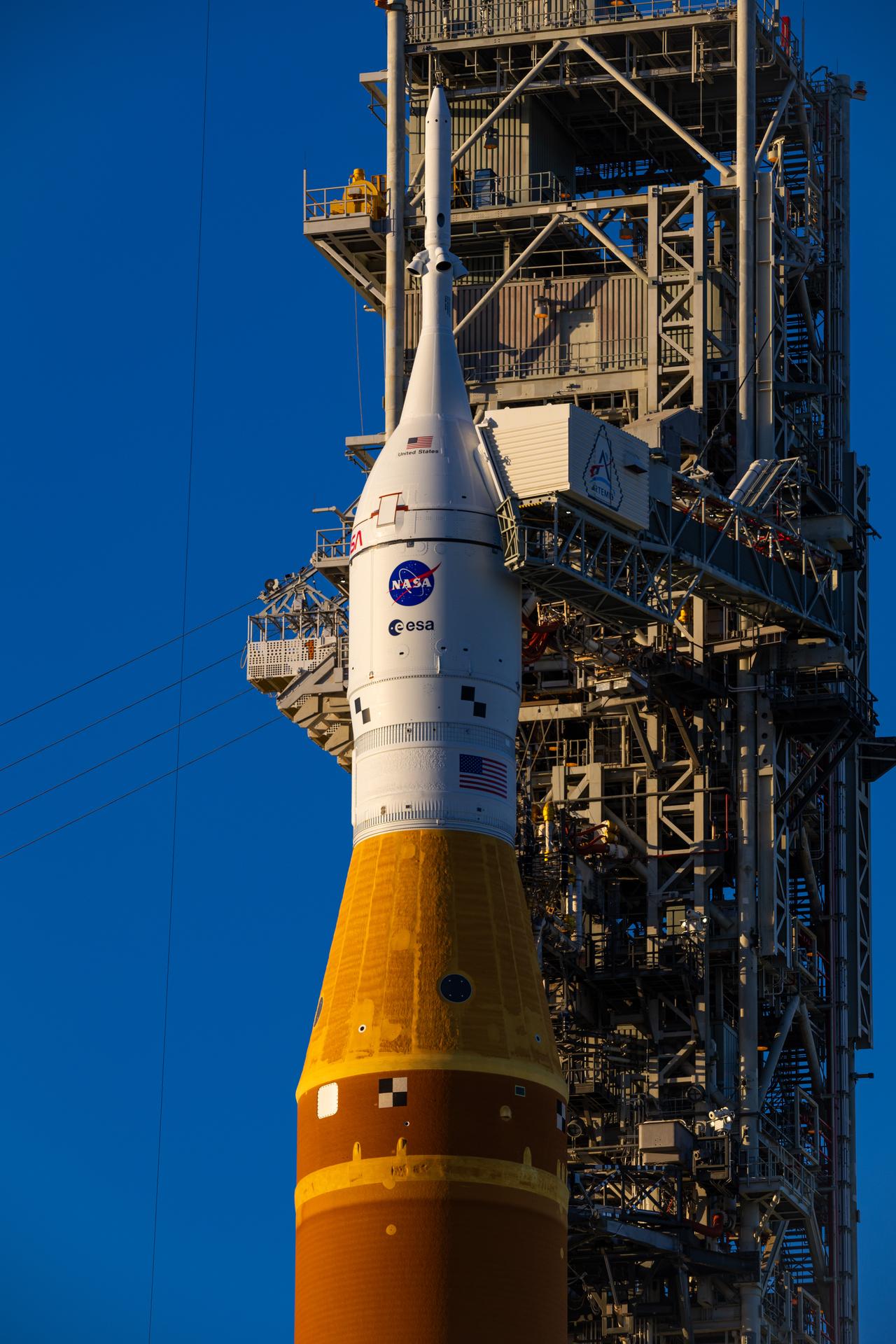
The sun setting NASA’s SLS (Space Launch System) and Orion spacecraft, atop the mobile launcher on January 31, 2026. The rocket is currently at Launch Pad 39B at NASA’s Kennedy Space Center in Florida, as teams are preparing for a wet dress rehearsal to practice timelines and procedures for the launch of Artemis II.
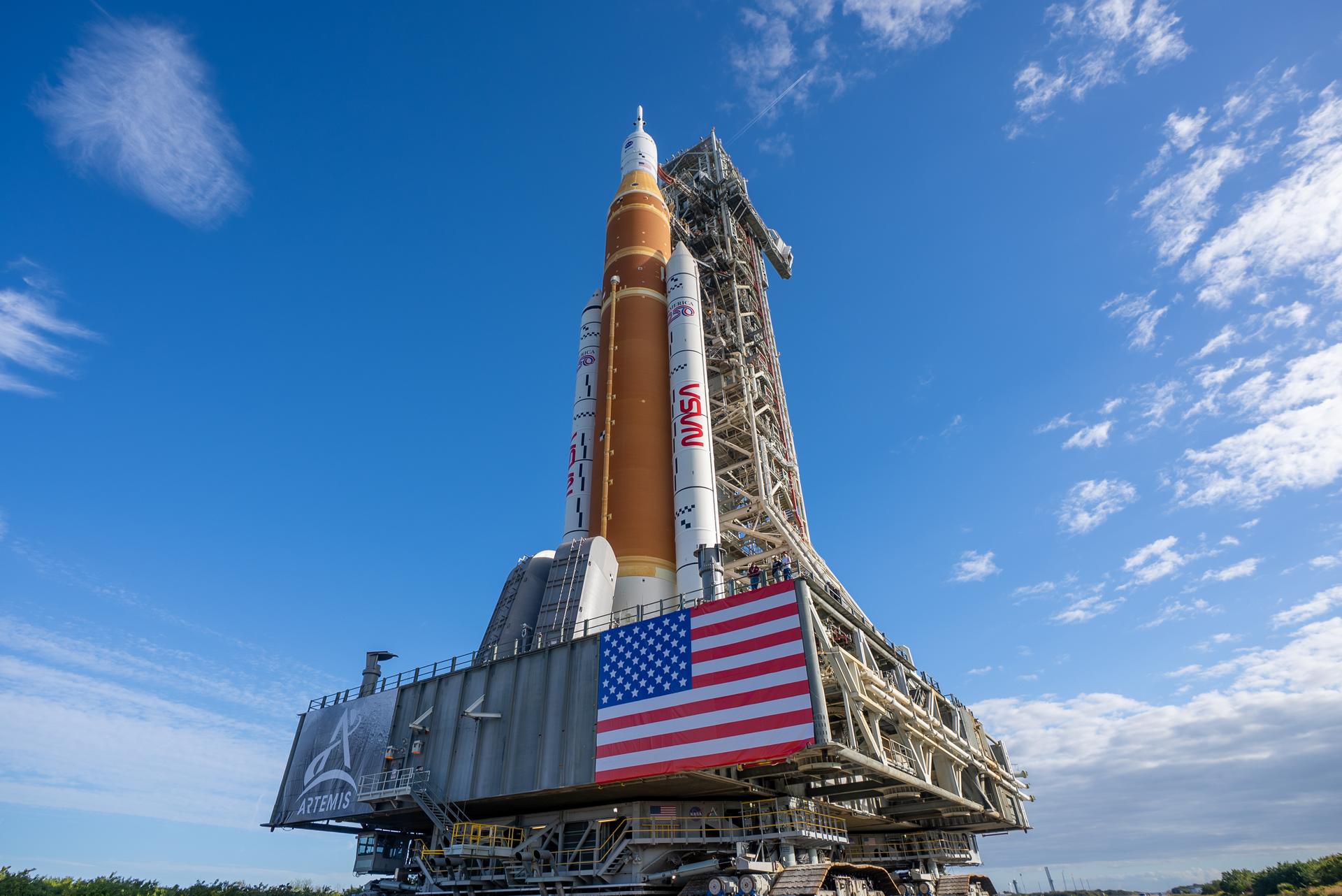
This image shows NASA’s SLS (Space Launch System) and Orion spacecraft rolling out of the Vehicle Assembly Building at NASA’s Kennedy Space Center. NASA's massive Crawler-Transporter, upgraded for the Artemis program, carries the powerful SLS rocket and Orion spacecraft on the Mobile Launcher from the Vehicle Assembly Building to Launch Pad 39B at Kennedy Space Center in preparation for the Artemis II mission.
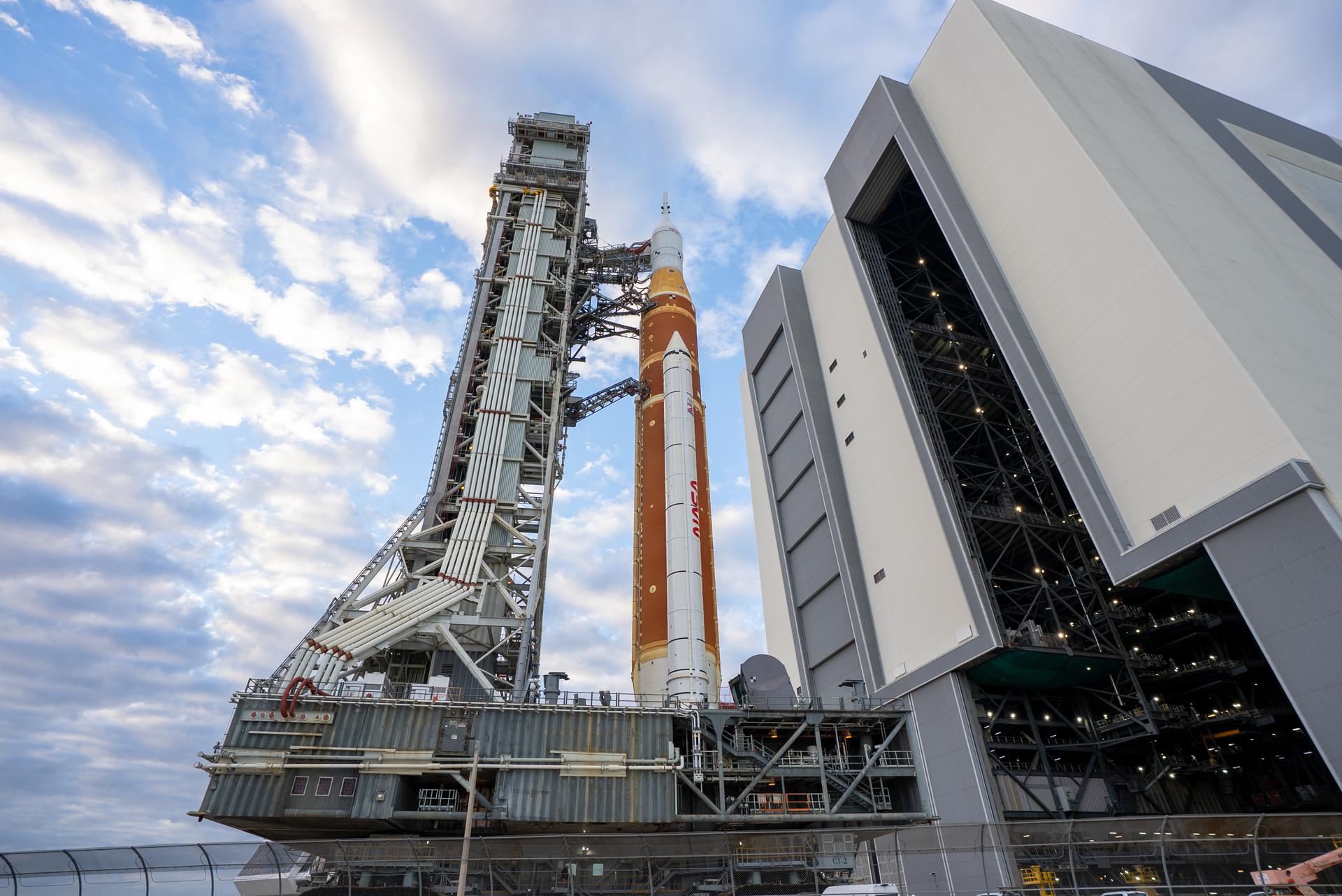
This image shows NASA’s SLS (Space Launch System) and Orion spacecraft rolling out of the Vehicle Assembly Building at NASA’s Kennedy Space Center. NASA's massive Crawler-Transporter, upgraded for the Artemis program, carries the powerful SLS rocket and Orion spacecraft on the Mobile Launcher from the Vehicle Assembly Building to Launch Pad 39B at Kennedy Space Center in preparation for the Artemis II mission.

Artemis will light our way to Mars. The new Artemis identity draws bold inspiration from the Apollo program and forges its own path, showing how it will pursue lunar exploration like never before and pave the way to Mars.
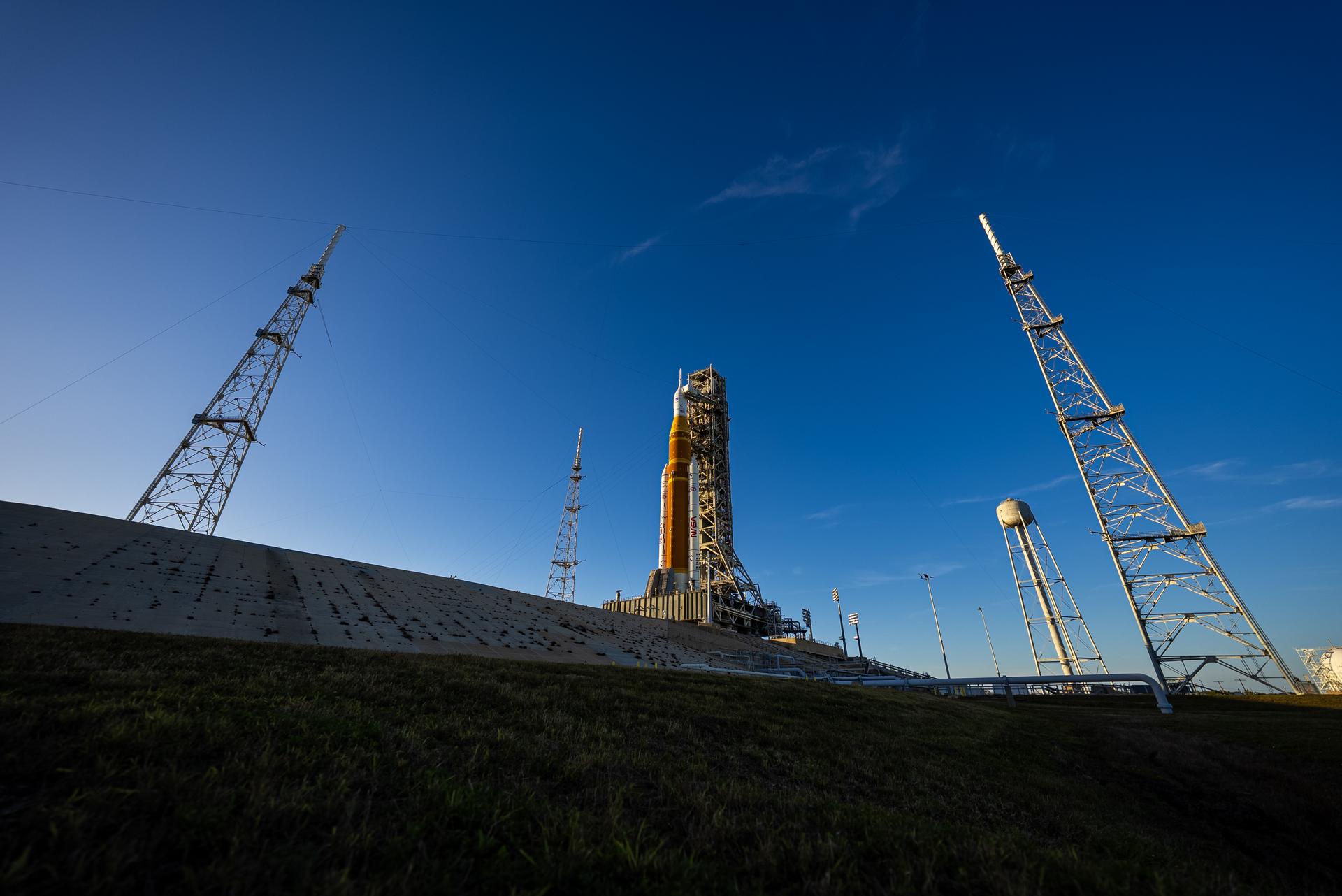
The sun sets on NASA’s Space Launch System (SLS) rocket and Orion spacecraft as they stand fully assembled atop the mobile launcher at Launch Pad 39B at NASA’s Kennedy Space Center in Florida. The sky glows with warm shades of orange and pink, silhouetting the towering rocket and its solid rocket boosters against the fading light. Photographed on January 31, 2026, the scene captures teams preparing for a wet dress rehearsal for the Artemis II mission, rehearsing launch countdown timelines and procedures as day turns to night.
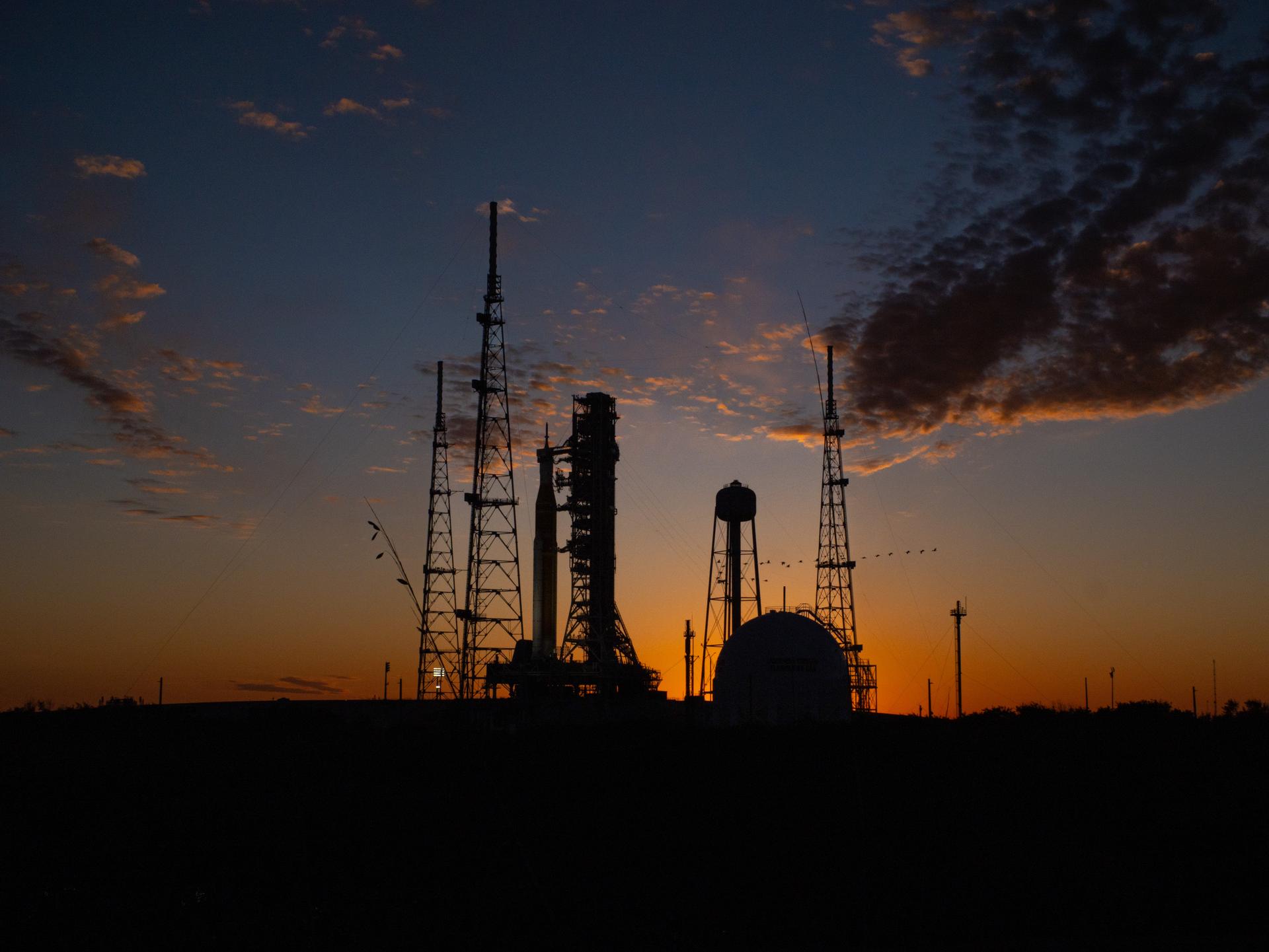
The sun sets behind NASA’s Space Launch System (SLS) rocket and Orion spacecraft as they stand fully assembled atop the mobile launcher at Launch Pad 39B at NASA’s Kennedy Space Center in Florida. The sky glows with warm shades of orange and pink, silhouetting the towering rocket and its solid rocket boosters against the fading light. Photographed on January 31, 2026, the scene captures teams preparing for a wet dress rehearsal for the Artemis II mission, rehearsing launch countdown timelines and procedures as day turns to night.
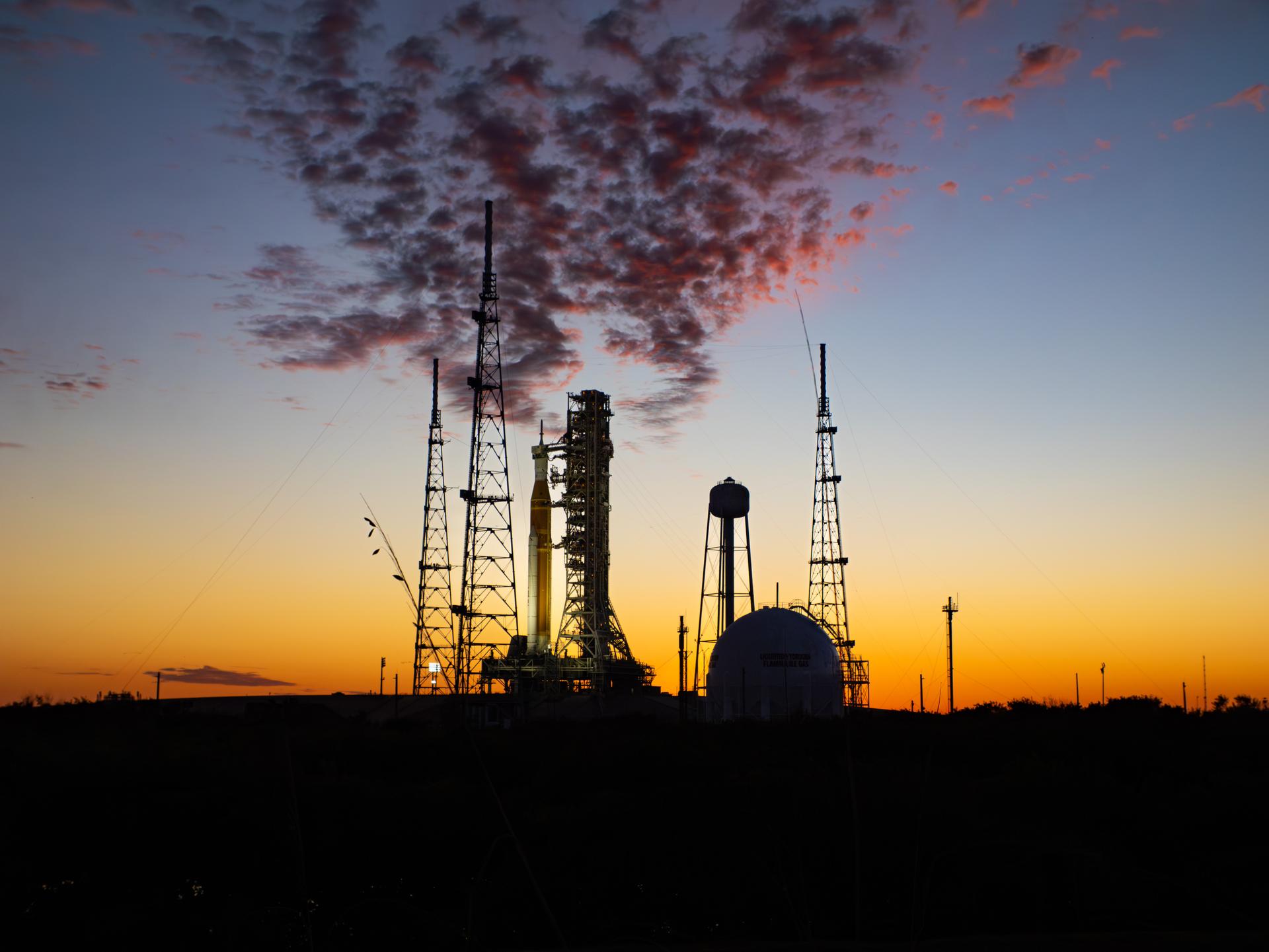
The sun sets behind NASA’s Space Launch System (SLS) rocket and Orion spacecraft as they stand fully assembled atop the mobile launcher at Launch Pad 39B at NASA’s Kennedy Space Center in Florida. The sky glows with warm shades of orange and pink, silhouetting the towering rocket and its solid rocket boosters against the fading light. Photographed on January 31, 2026, the scene captures teams preparing for a wet dress rehearsal for the Artemis II mission, rehearsing launch countdown timelines and procedures as day turns to night.
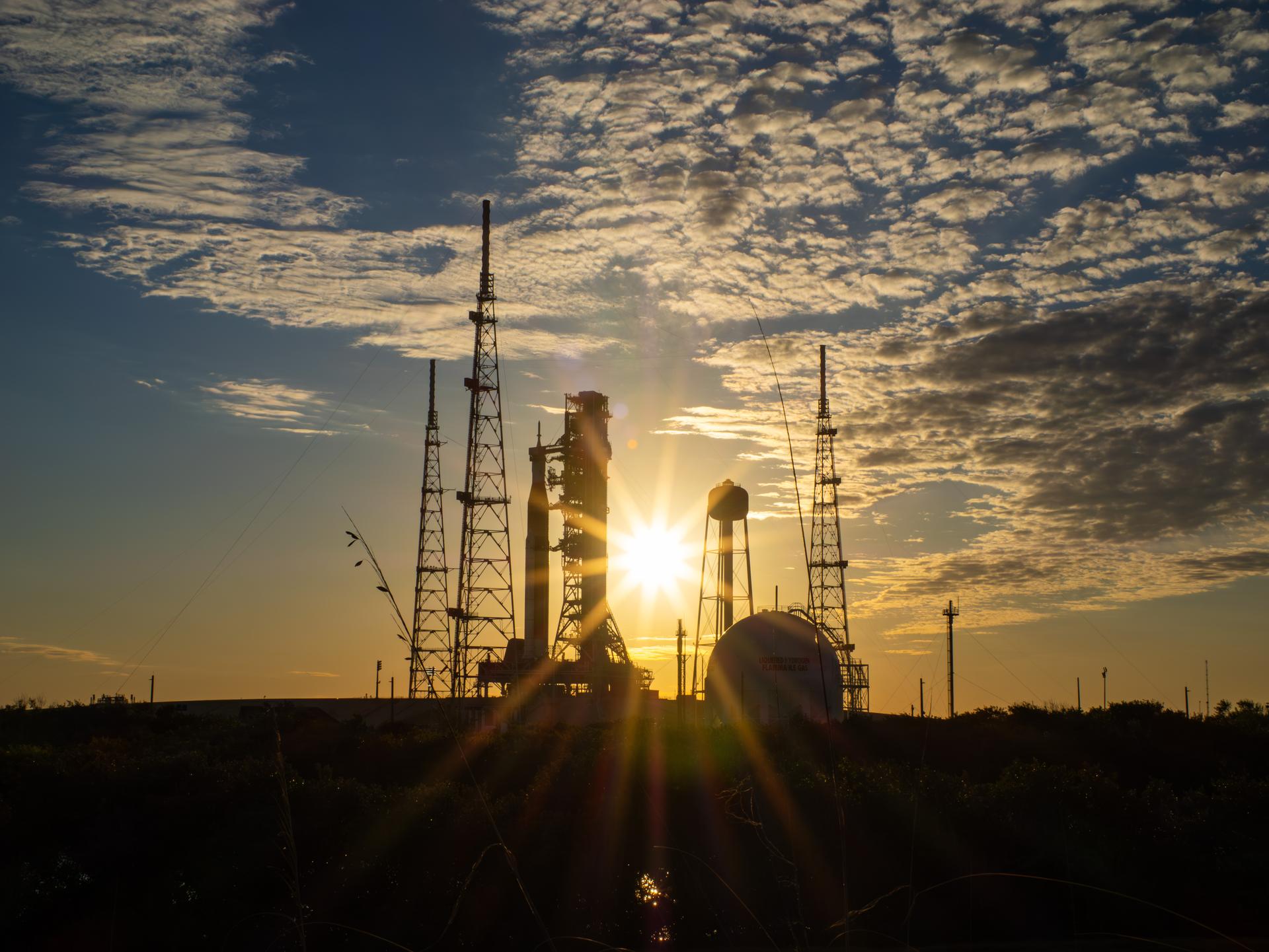
The sun sets behind NASA’s Space Launch System (SLS) rocket and Orion spacecraft as they stand fully assembled atop the mobile launcher at Launch Pad 39B at NASA’s Kennedy Space Center in Florida. The sky glows with warm shades of orange and pink, silhouetting the towering rocket and its solid rocket boosters against the fading light. Photographed on January 31, 2026, the scene captures teams preparing for a wet dress rehearsal for the Artemis II mission, rehearsing launch countdown timelines and procedures as day turns to night.
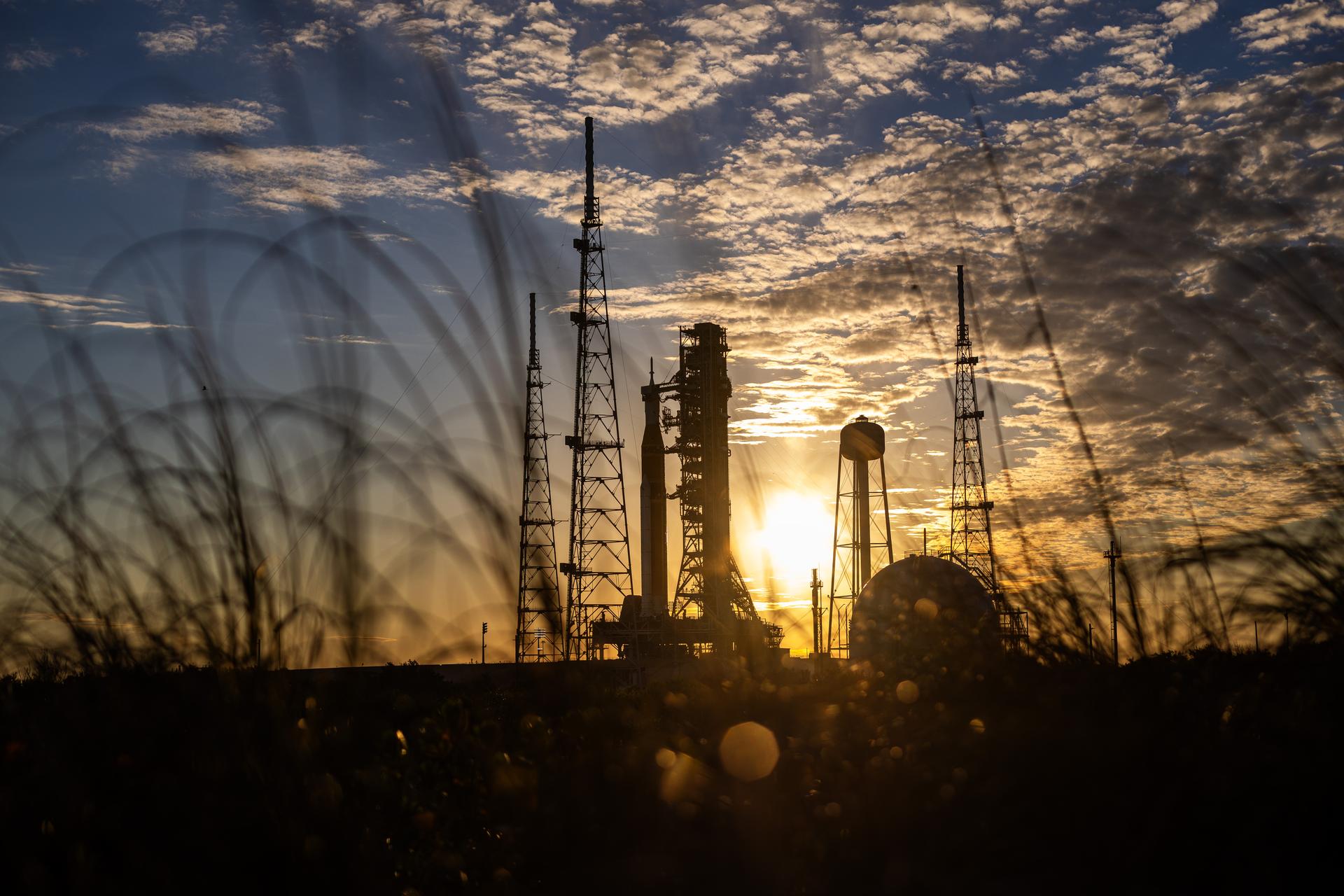
The sun sets behind NASA’s Space Launch System (SLS) rocket and Orion spacecraft as they stand fully assembled atop the mobile launcher at Launch Pad 39B at NASA’s Kennedy Space Center in Florida. The sky glows with warm shades of orange and pink, silhouetting the towering rocket and its solid rocket boosters against the fading light. Photographed on January 31, 2026, the scene captures teams preparing for a wet dress rehearsal for the Artemis II mission, rehearsing launch countdown timelines and procedures as day turns to night.
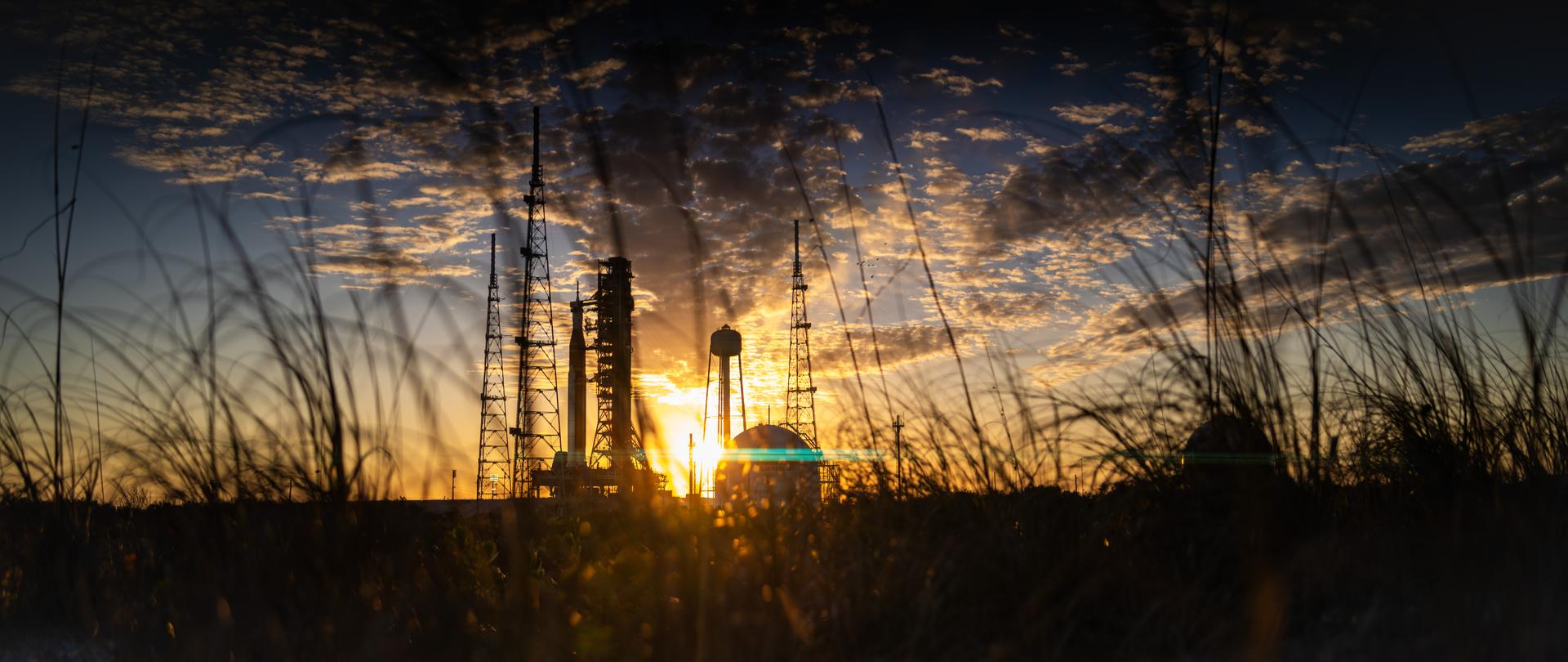
The sun sets behind NASA’s Space Launch System (SLS) rocket and Orion spacecraft as they stand fully assembled atop the mobile launcher at Launch Pad 39B at NASA’s Kennedy Space Center in Florida. The sky glows with warm shades of orange and pink, silhouetting the towering rocket and its solid rocket boosters against the fading light. Photographed on January 31, 2026, the scene captures teams preparing for a wet dress rehearsal for the Artemis II mission, rehearsing launch countdown timelines and procedures as day turns to night.

U.S. Dept. of Education Deputy Secretary Cindy Marten addresses NASA’s national partners and guests during the Artemis Summit at NASA’s Kennedy Space Center in Florida on March 16, 2022. The Offices of STEM Engagement, Communication and Human Exploration Operations Mission Directorate hosted a one-day meeting for partners, grantees and other interested organizations to learn about Public and STEM Engagement plans and opportunities for the upcoming Artemis I mission. The event introduced participants to the importance of the Artemis program and supports them in the use of Artemis I content as they serve students, educators, families, and the general public.

These images show the moments shortly after the arrival of the Artemis II crew to NASA’s Kennedy Space Center on March 27, 2026 ahead of the launch. The four astronauts, Victor Glover, Reid Wiseman, Christina Koch, and Jeremy Hansen, arrived on a T38, which can be seen behind them. They took turns speaking to the crowd as they also announced the zero-gravity indicator they would be taking with them on their journey.
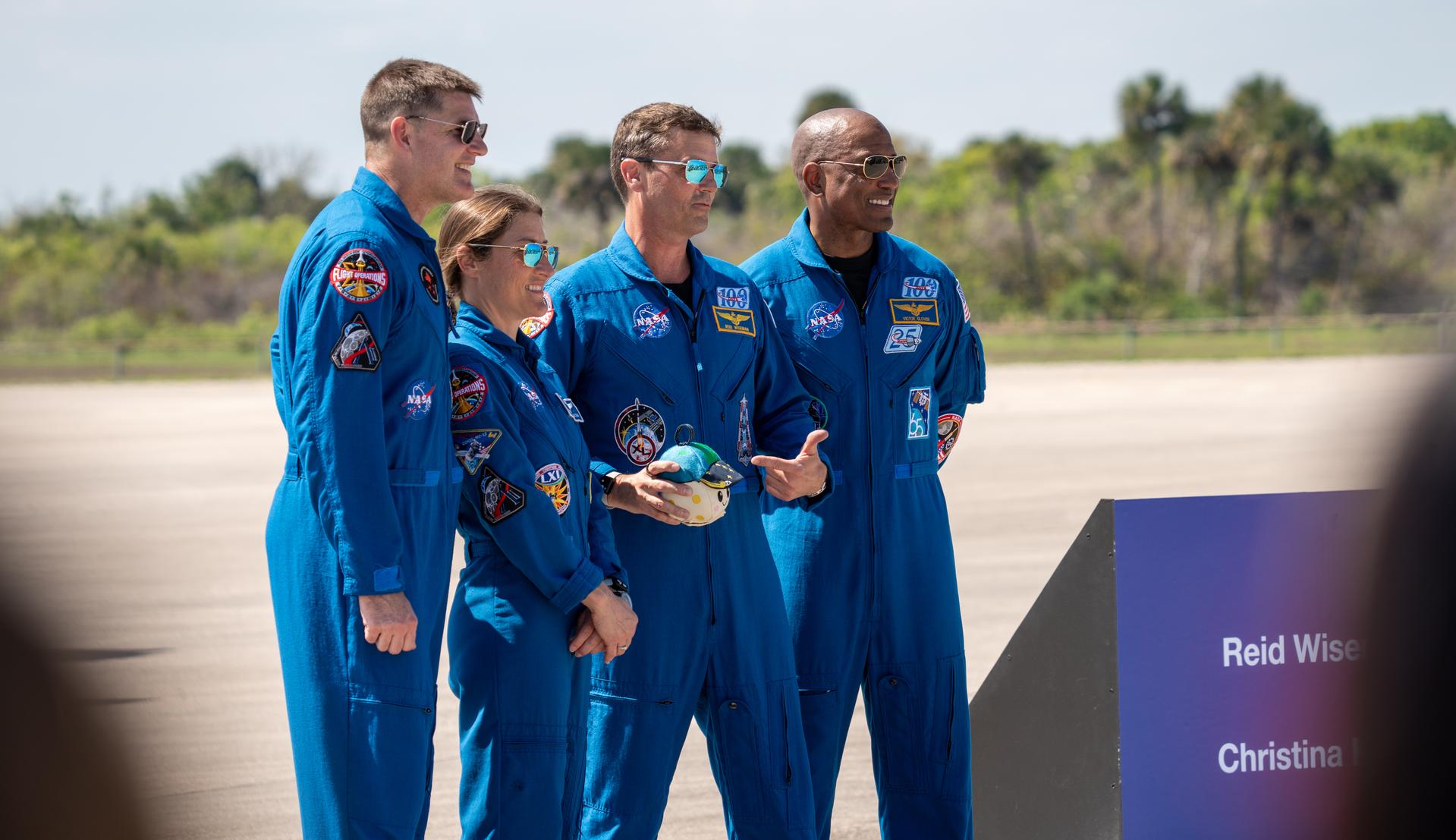
These images show the moments shortly after the arrival of the Artemis II crew to NASA’s Kennedy Space Center on March 27, 2026 ahead of the launch. The four astronauts, Victor Glover, Reid Wiseman, Christina Koch, and Jeremy Hansen, arrived on a T38, which can be seen behind them. They took turns speaking to the crowd as they also announced the zero-gravity indicator they would be taking with them on their journey.
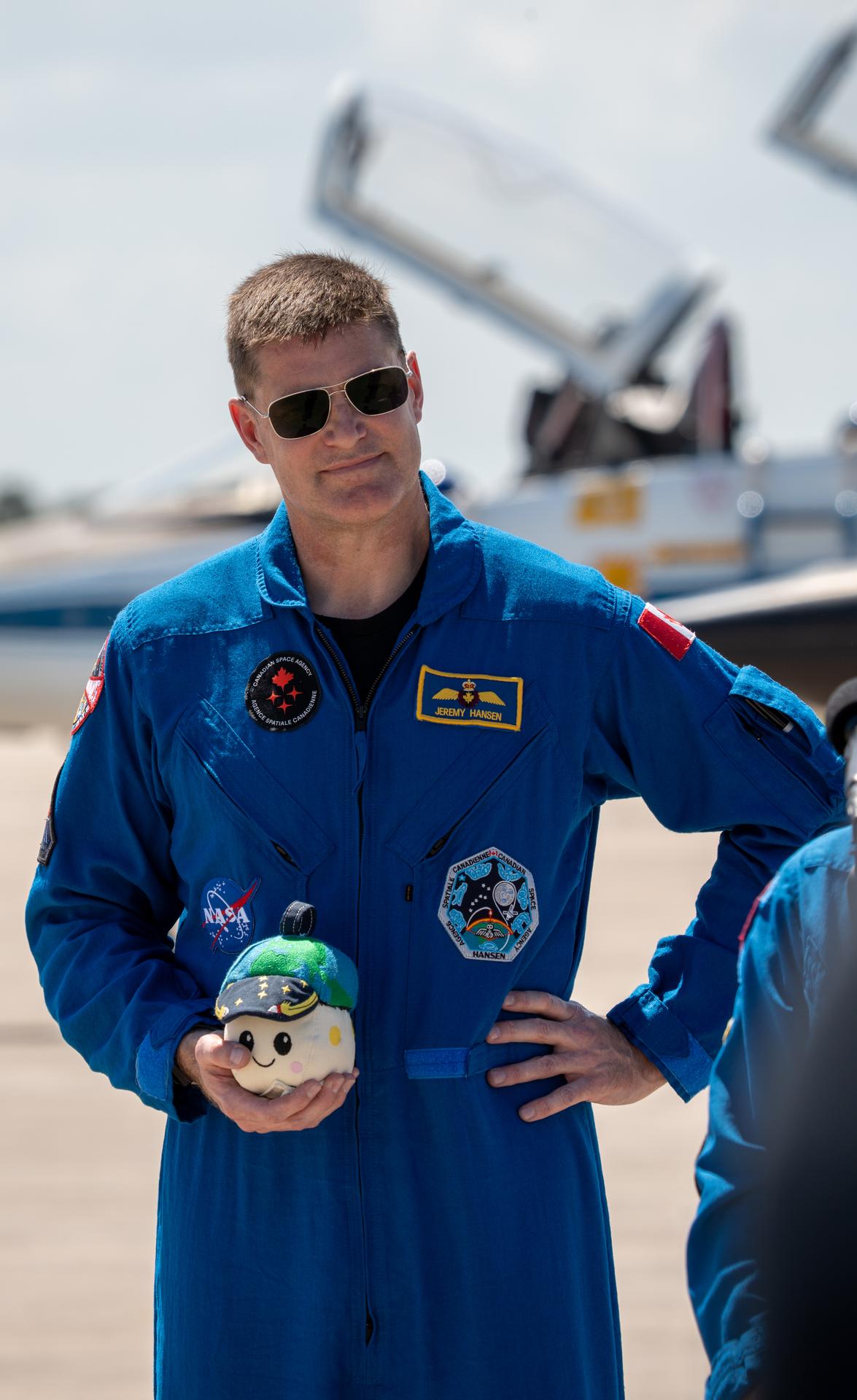
These images show the moments shortly after the arrival of the Artemis II crew to NASA’s Kennedy Space Center on March 27, 2026 ahead of the launch. The four astronauts, Victor Glover, Reid Wiseman, Christina Koch, and Jeremy Hansen, arrived on a T38, which can be seen behind them. They took turns speaking to the crowd as they also announced the zero-gravity indicator they would be taking with them on their journey.
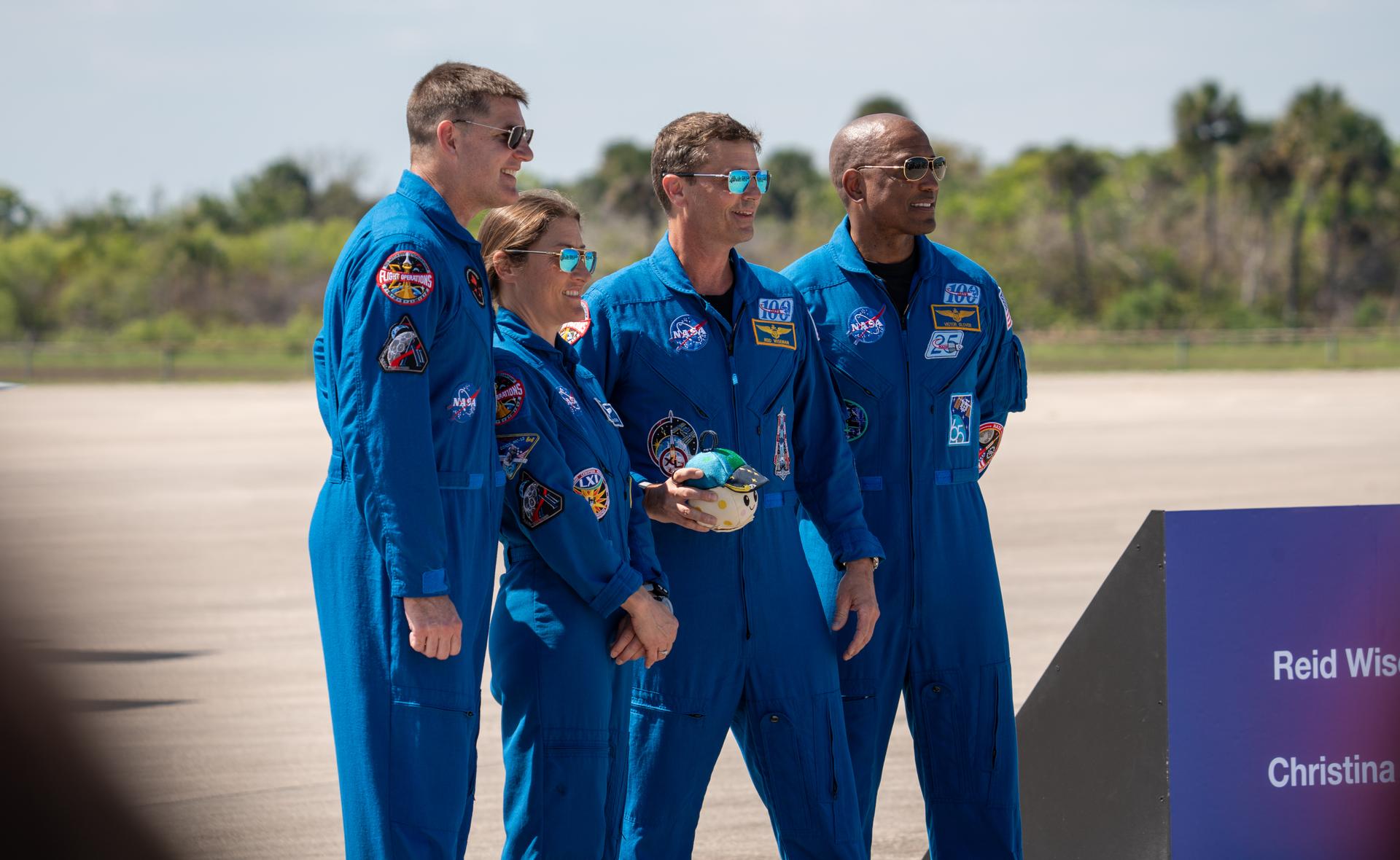
These images show the moments shortly after the arrival of the Artemis II crew to NASA’s Kennedy Space Center on March 27, 2026 ahead of the launch. The four astronauts, Victor Glover, Reid Wiseman, Christina Koch, and Jeremy Hansen, arrived on a T38, which can be seen behind them. They took turns speaking to the crowd as they also announced the zero-gravity indicator they would be taking with them on their journey.
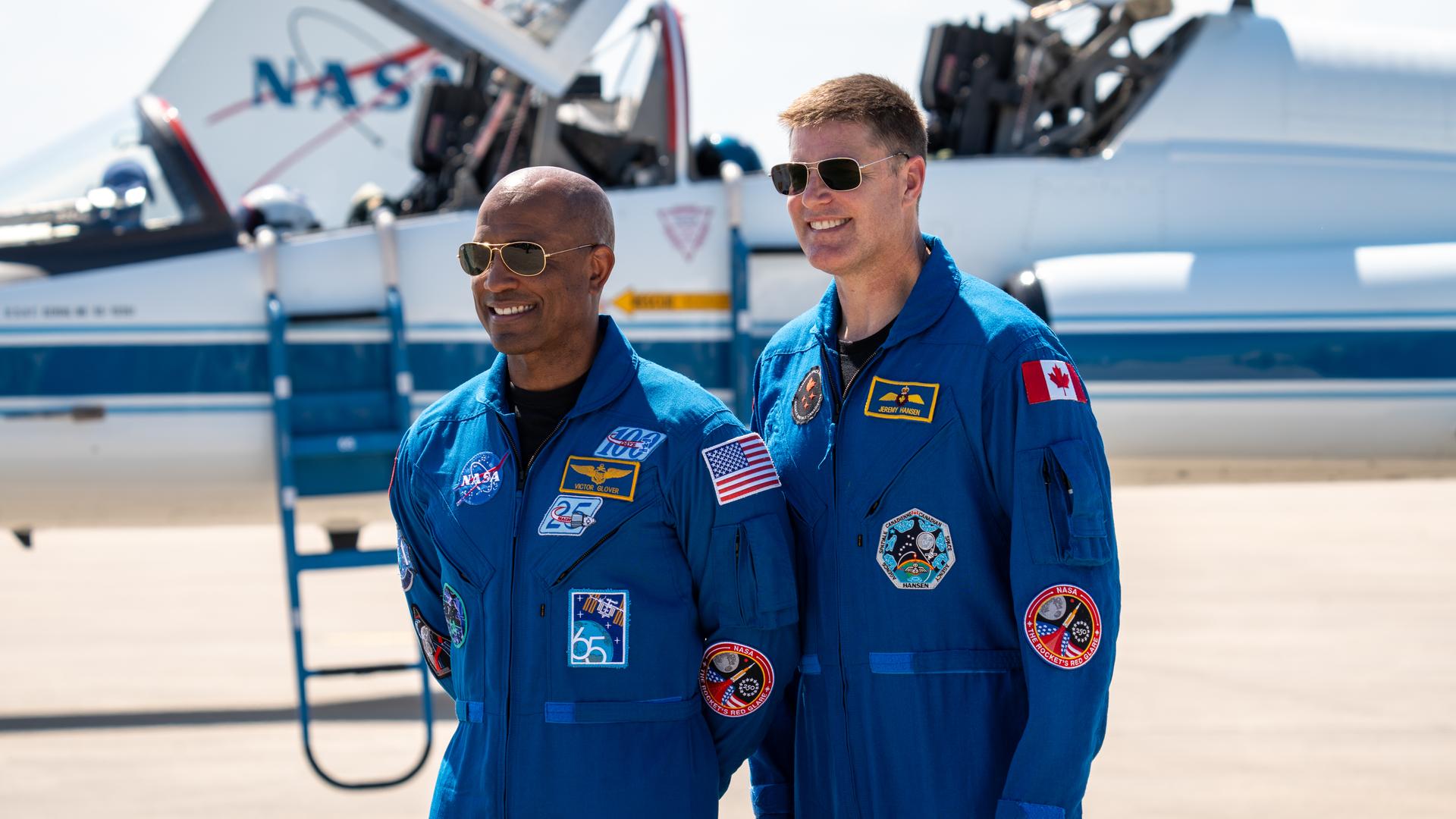
DESCRIPTION: These images show the moments shortly after the arrival of the Artemis II crew to NASA’s Kennedy Space Center on March 27, 2026 ahead of the launch. The four astronauts, Victor Glover, Reid Wiseman, Christina Koch, and Jeremy Hansen, arrived on a T38, which can be seen behind them. They took turns speaking to the crowd as they also announced the zero-gravity indicator they would be taking with them on their journey.
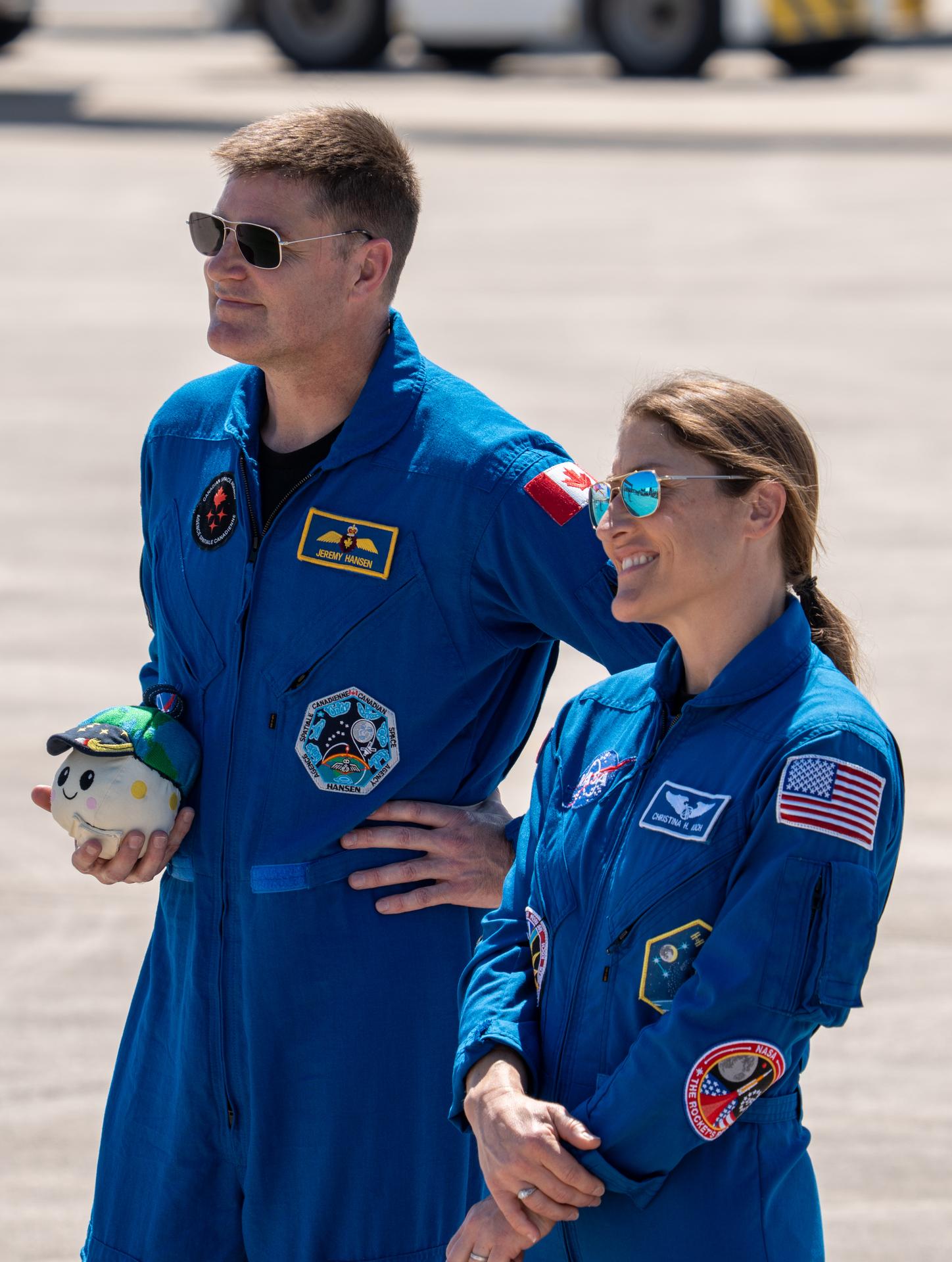
These images show the moments shortly after the arrival of the Artemis II crew to NASA’s Kennedy Space Center on March 27, 2026 ahead of the launch. The four astronauts, Victor Glover, Reid Wiseman, Christina Koch, and Jeremy Hansen, arrived on a T38, which can be seen behind them. They took turns speaking to the crowd as they also announced the zero-gravity indicator they would be taking with them on their journey.
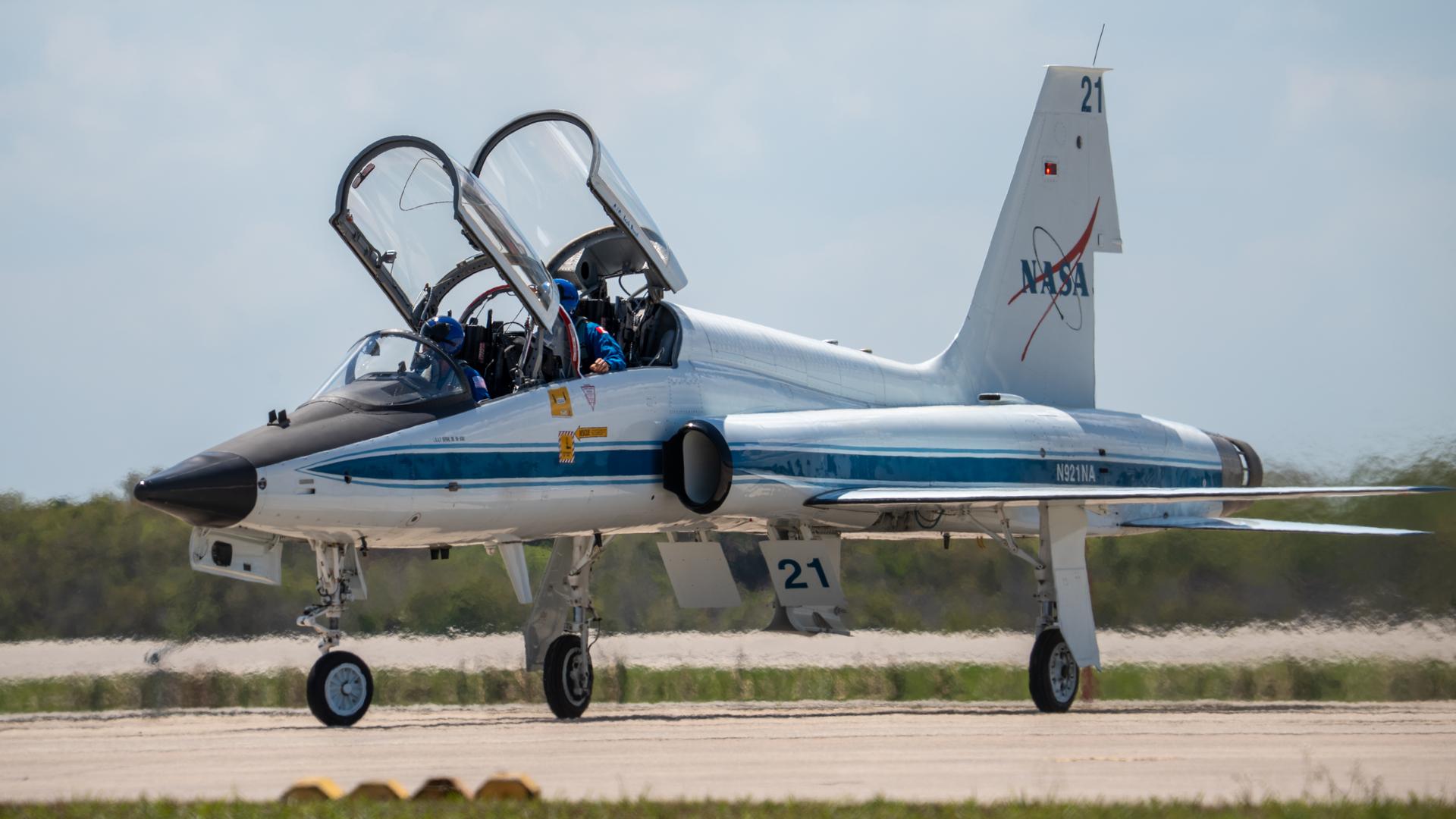
These images show the moments shortly after the arrival of the Artemis II crew to NASA’s Kennedy Space Center on March 27, 2026 ahead of the launch. The four astronauts, Victor Glover, Reid Wiseman, Christina Koch, and Jeremy Hansen, arrived on a T38, which can be seen behind them. They took turns speaking to the crowd as they also announced the zero-gravity indicator they would be taking with them on their journey.
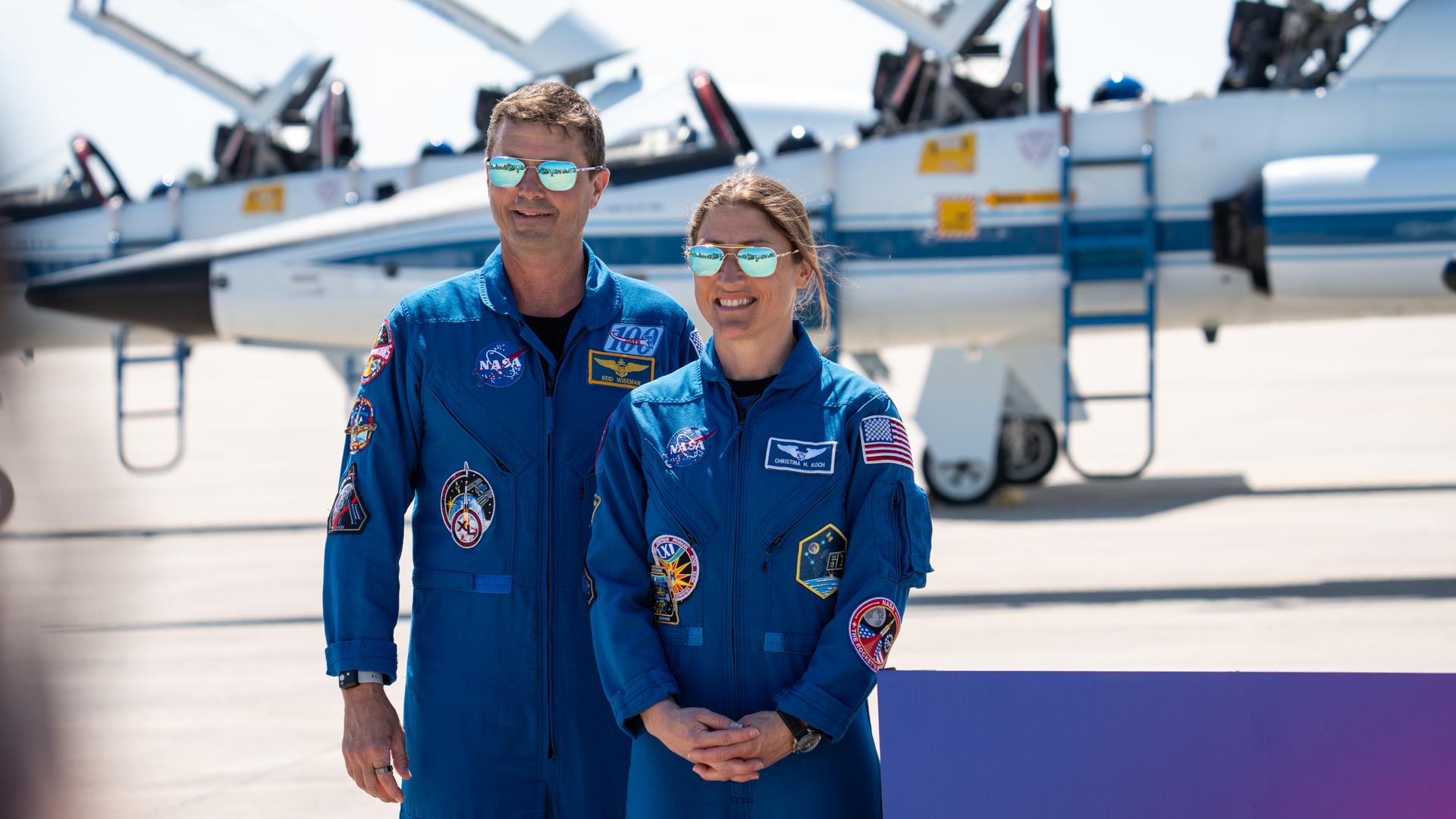
These images show the moments shortly after the arrival of the Artemis II crew to NASA’s Kennedy Space Center on March 27, 2026 ahead of the launch. The four astronauts, Victor Glover, Reid Wiseman, Christina Koch, and Jeremy Hansen, arrived on a T38, which can be seen behind them. They took turns speaking to the crowd as they also announced the zero-gravity indicator they would be taking with them on their journey.
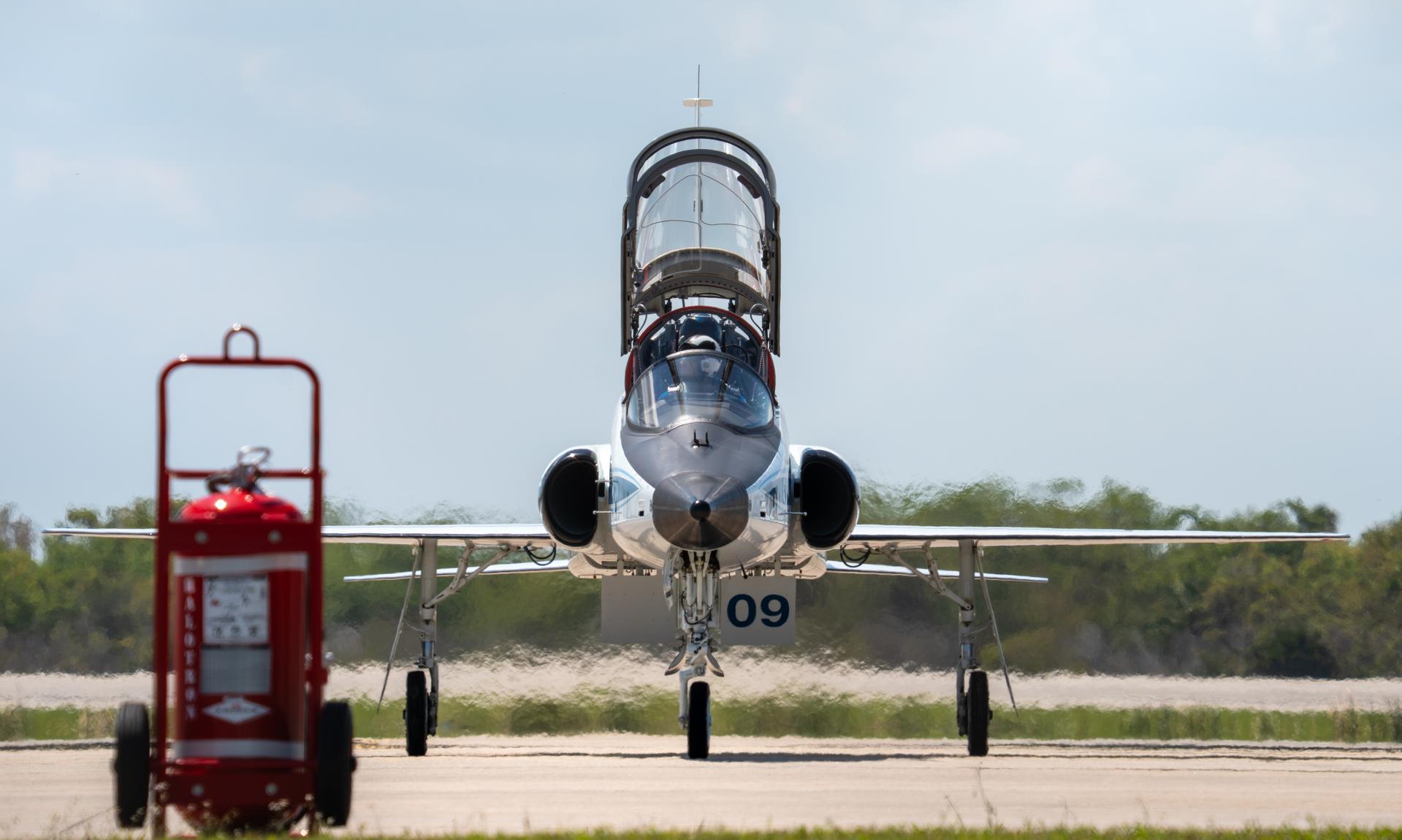
These images show the moments shortly after the arrival of the Artemis II crew to NASA’s Kennedy Space Center on March 27, 2026 ahead of the launch. The four astronauts, Victor Glover, Reid Wiseman, Christina Koch, and Jeremy Hansen, arrived on a T38, which can be seen behind them. They took turns speaking to the crowd as they also announced the zero-gravity indicator they would be taking with them on their journey.
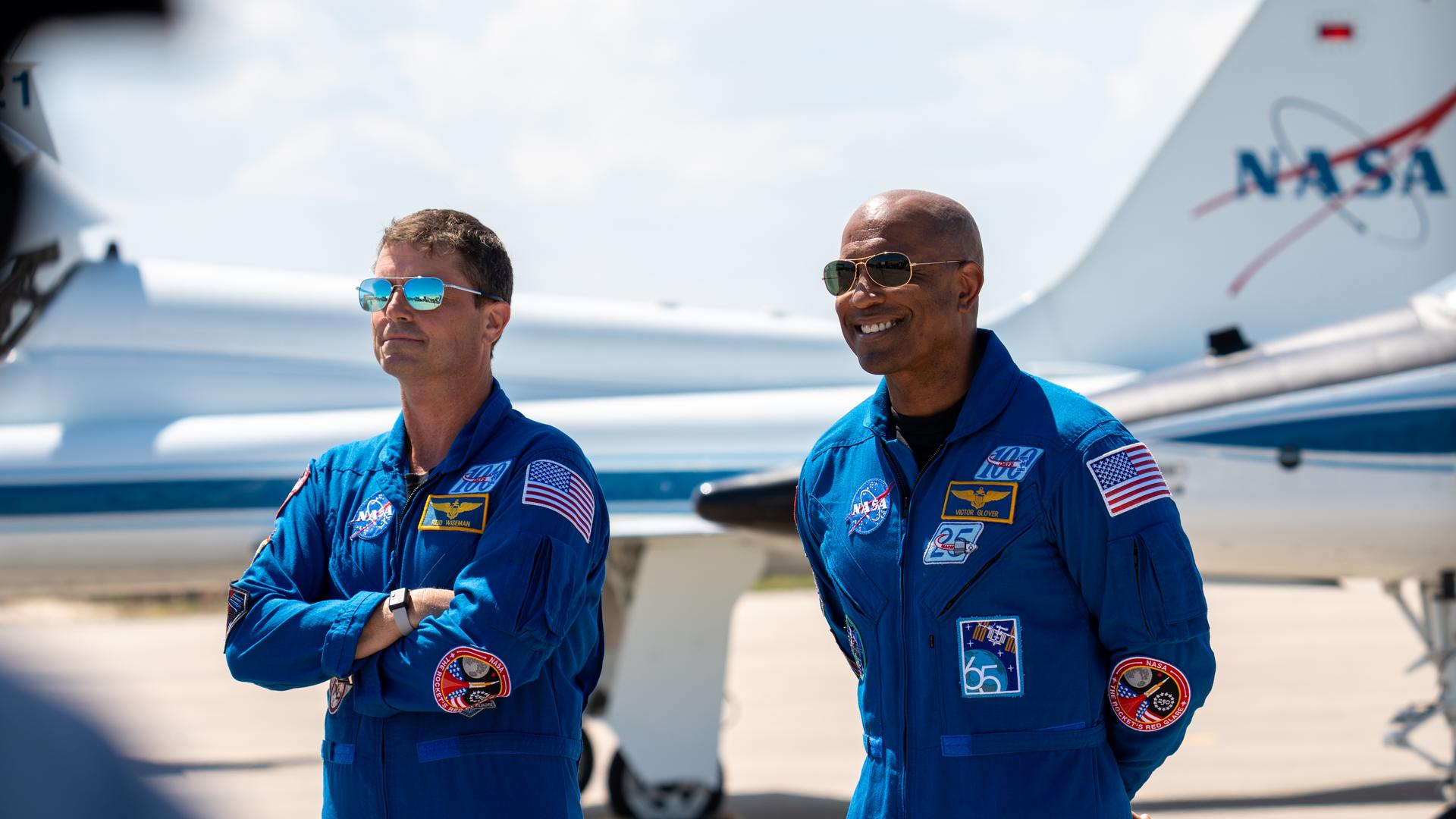
These images show the moments shortly after the arrival of the Artemis II crew to NASA’s Kennedy Space Center on March 27, 2026 ahead of the launch. The four astronauts, Victor Glover, Reid Wiseman, Christina Koch, and Jeremy Hansen, arrived on a T38, which can be seen behind them. They took turns speaking to the crowd as they also announced the zero-gravity indicator they would be taking with them on their journey.
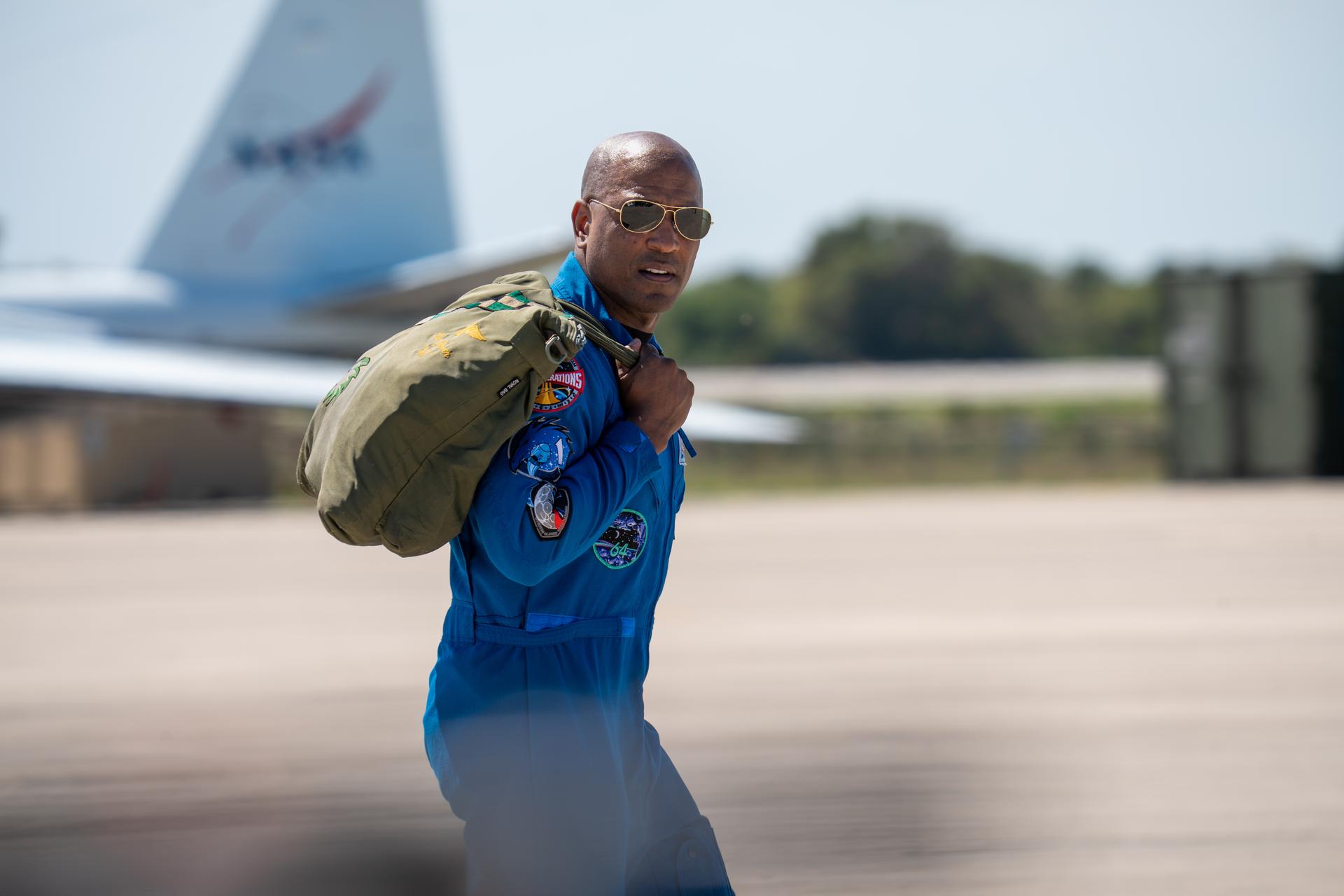
These images show the moments shortly after the arrival of the Artemis II crew to NASA’s Kennedy Space Center on March 27, 2026 ahead of the launch. The four astronauts, Victor Glover, Reid Wiseman, Christina Koch, and Jeremy Hansen, arrived on a T38, which can be seen behind them. They took turns speaking to the crowd as they also announced the zero-gravity indicator they would be taking with them on their journey.
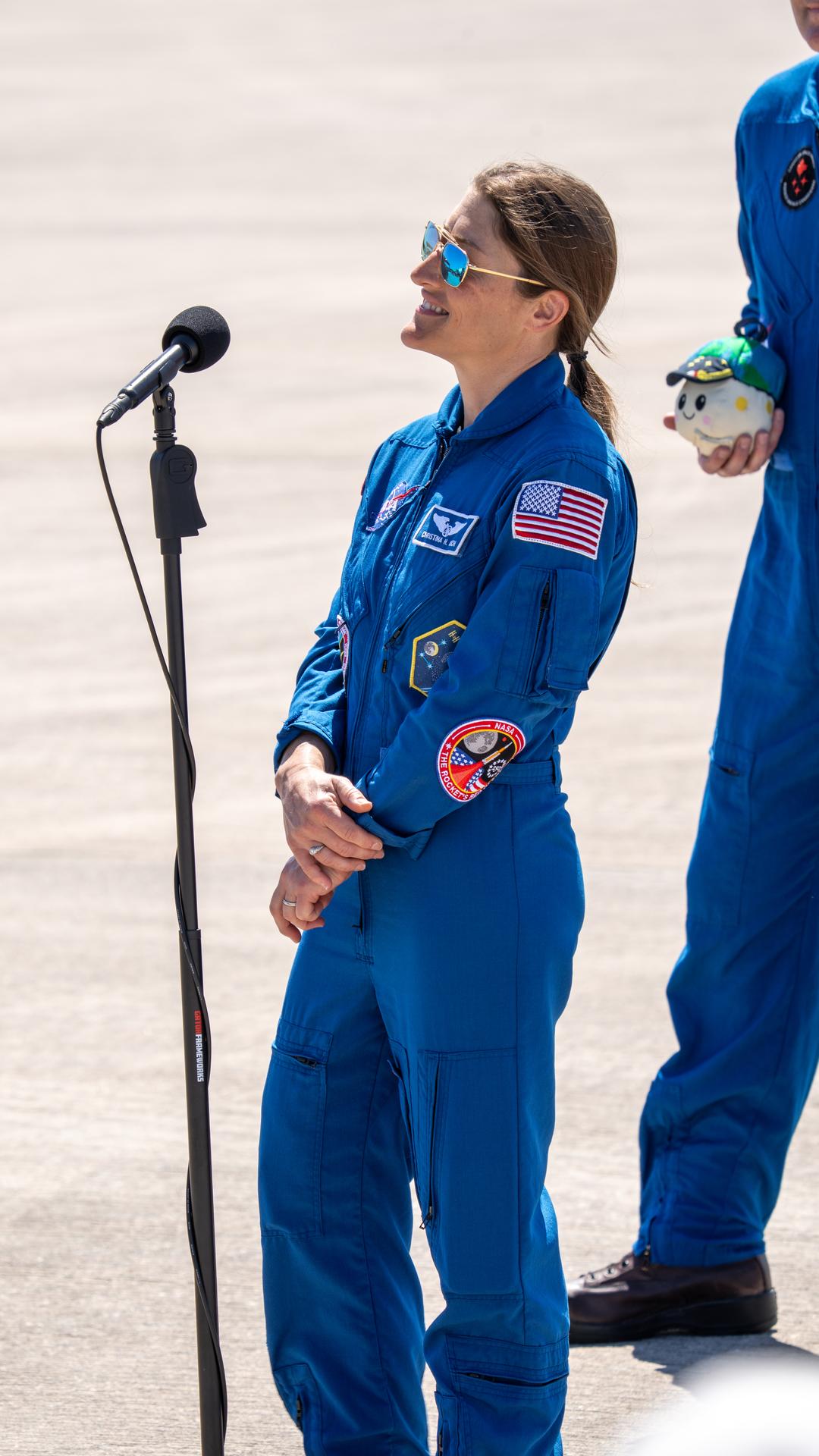
These images show the moments shortly after the arrival of the Artemis II crew to NASA’s Kennedy Space Center on March 27, 2026 ahead of the launch. The four astronauts, Victor Glover, Reid Wiseman, Christina Koch, and Jeremy Hansen, arrived on a T38, which can be seen behind them. They took turns speaking to the crowd as they also announced the zero-gravity indicator they would be taking with them on their journey.
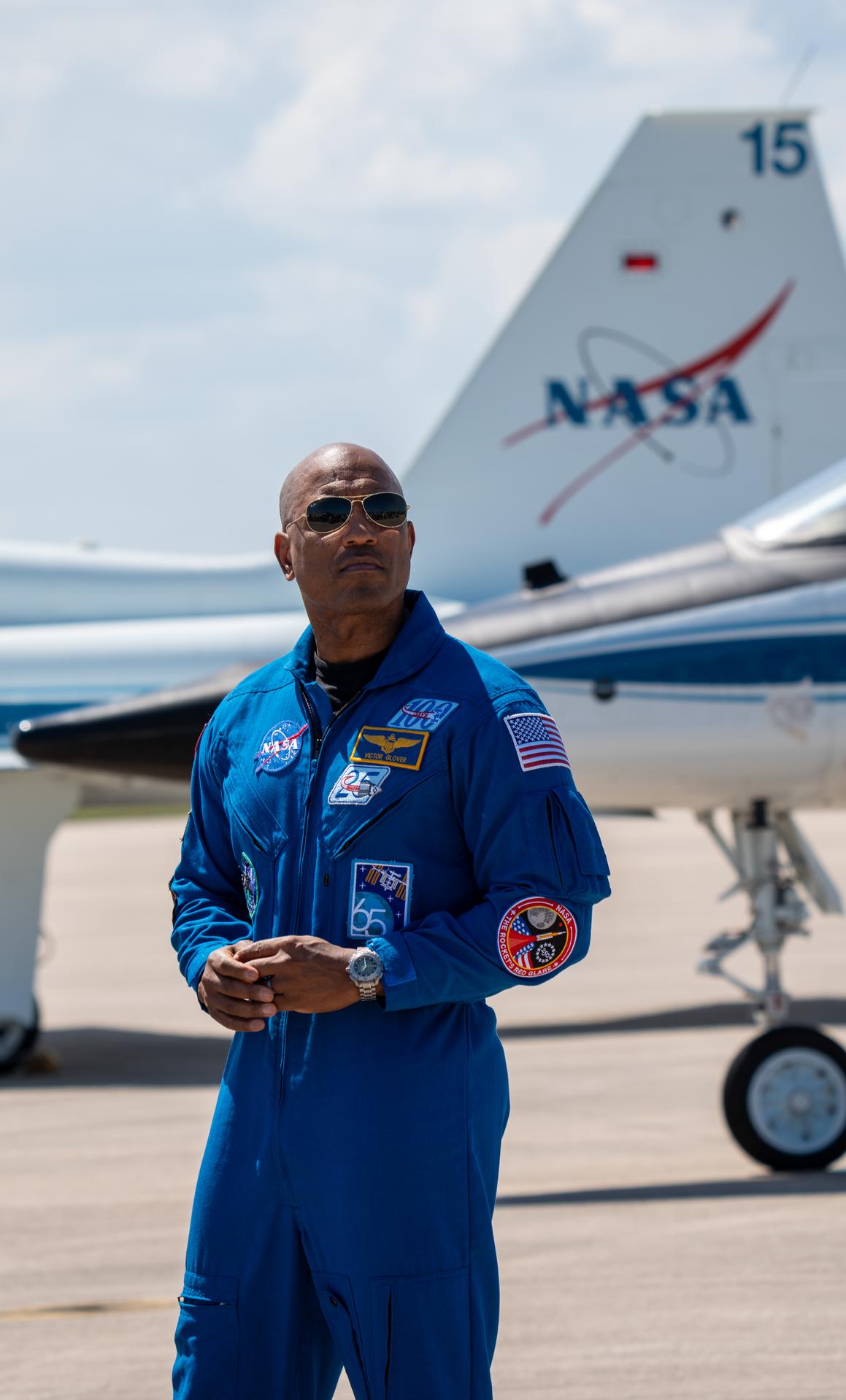
These images show the moments shortly after the arrival of the Artemis II crew to NASA’s Kennedy Space Center on March 27, 2026 ahead of the launch. The four astronauts, Victor Glover, Reid Wiseman, Christina Koch, and Jeremy Hansen, arrived on a T38, which can be seen behind them. They took turns speaking to the crowd as they also announced the zero-gravity indicator they would be taking with them on their journey.
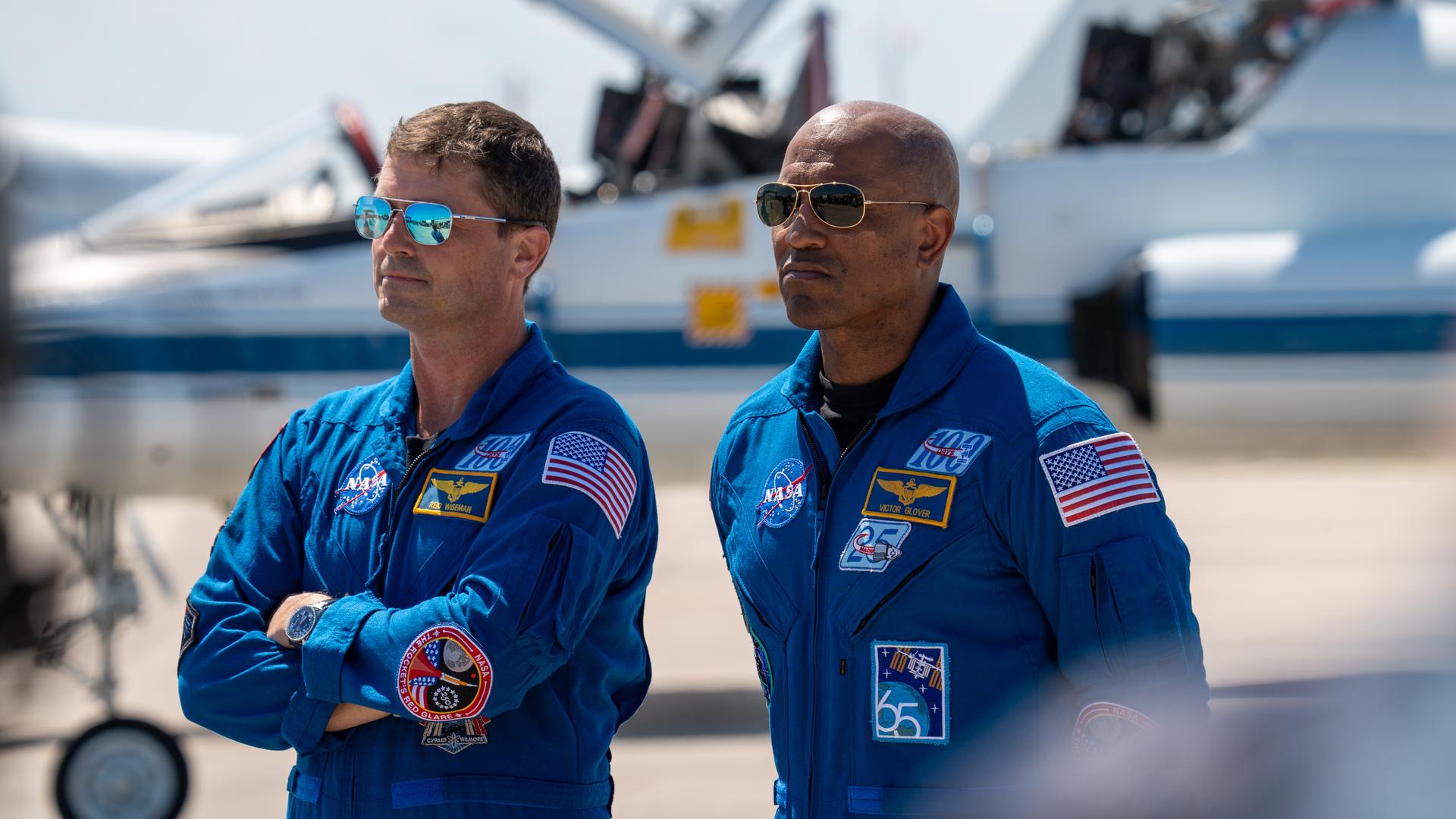
These images show the moments shortly after the arrival of the Artemis II crew to NASA’s Kennedy Space Center on March 27, 2026 ahead of the launch. The four astronauts, Victor Glover, Reid Wiseman, Christina Koch, and Jeremy Hansen, arrived on a T38, which can be seen behind them. They took turns speaking to the crowd as they also announced the zero-gravity indicator they would be taking with them on their journey.
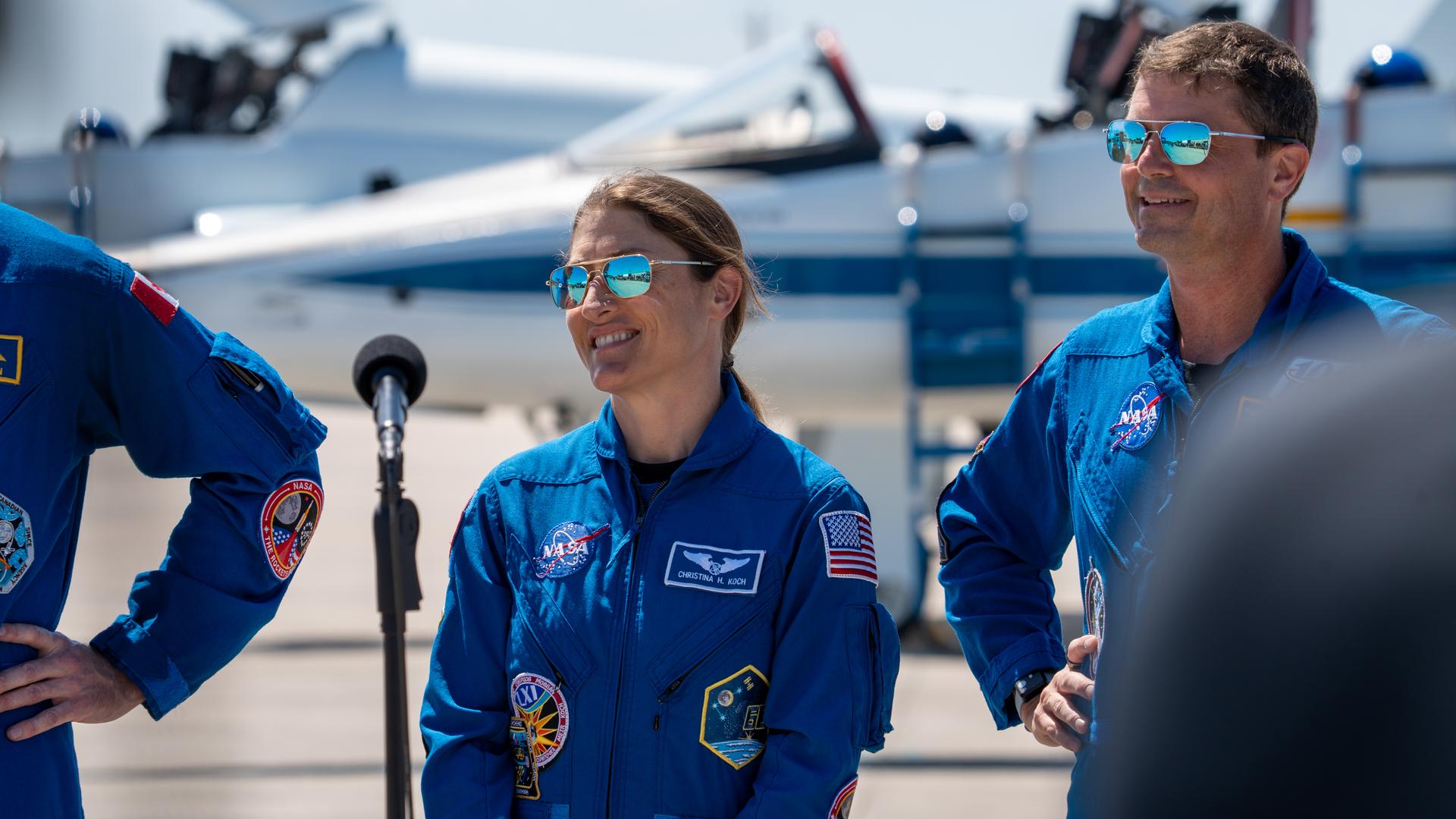
These images show the moments shortly after the arrival of the Artemis II crew to NASA’s Kennedy Space Center on March 27, 2026 ahead of the launch. The four astronauts, Victor Glover, Reid Wiseman, Christina Koch, and Jeremy Hansen, arrived on a T38, which can be seen behind them. They took turns speaking to the crowd as they also announced the zero-gravity indicator they would be taking with them on their journey.
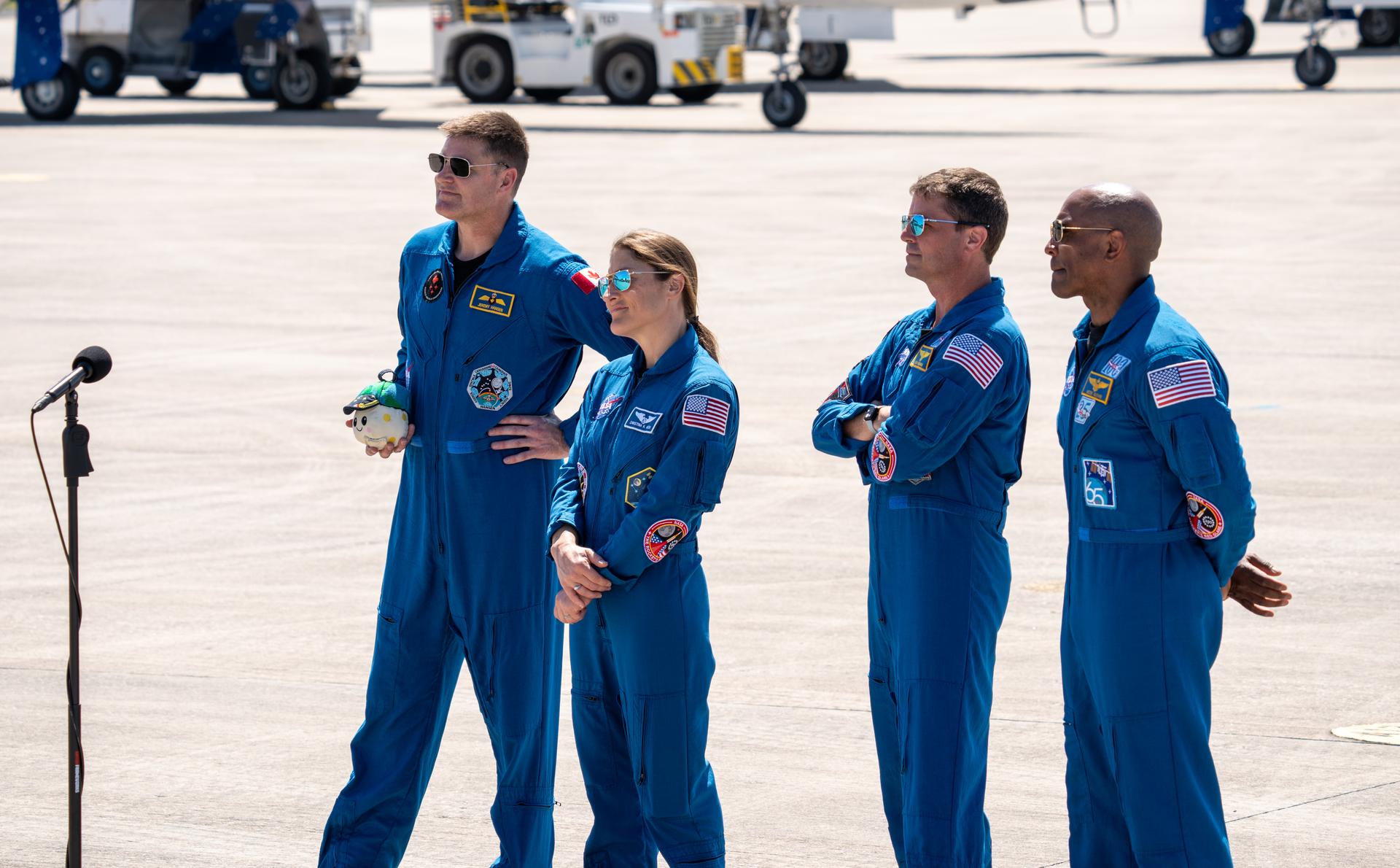
These images show the moments shortly after the arrival of the Artemis II crew to NASA’s Kennedy Space Center on March 27, 2026 ahead of the launch. The four astronauts, Victor Glover, Reid Wiseman, Christina Koch, and Jeremy Hansen, arrived on a T38, which can be seen behind them. They took turns speaking to the crowd as they also announced the zero-gravity indicator they would be taking with them on their journey.
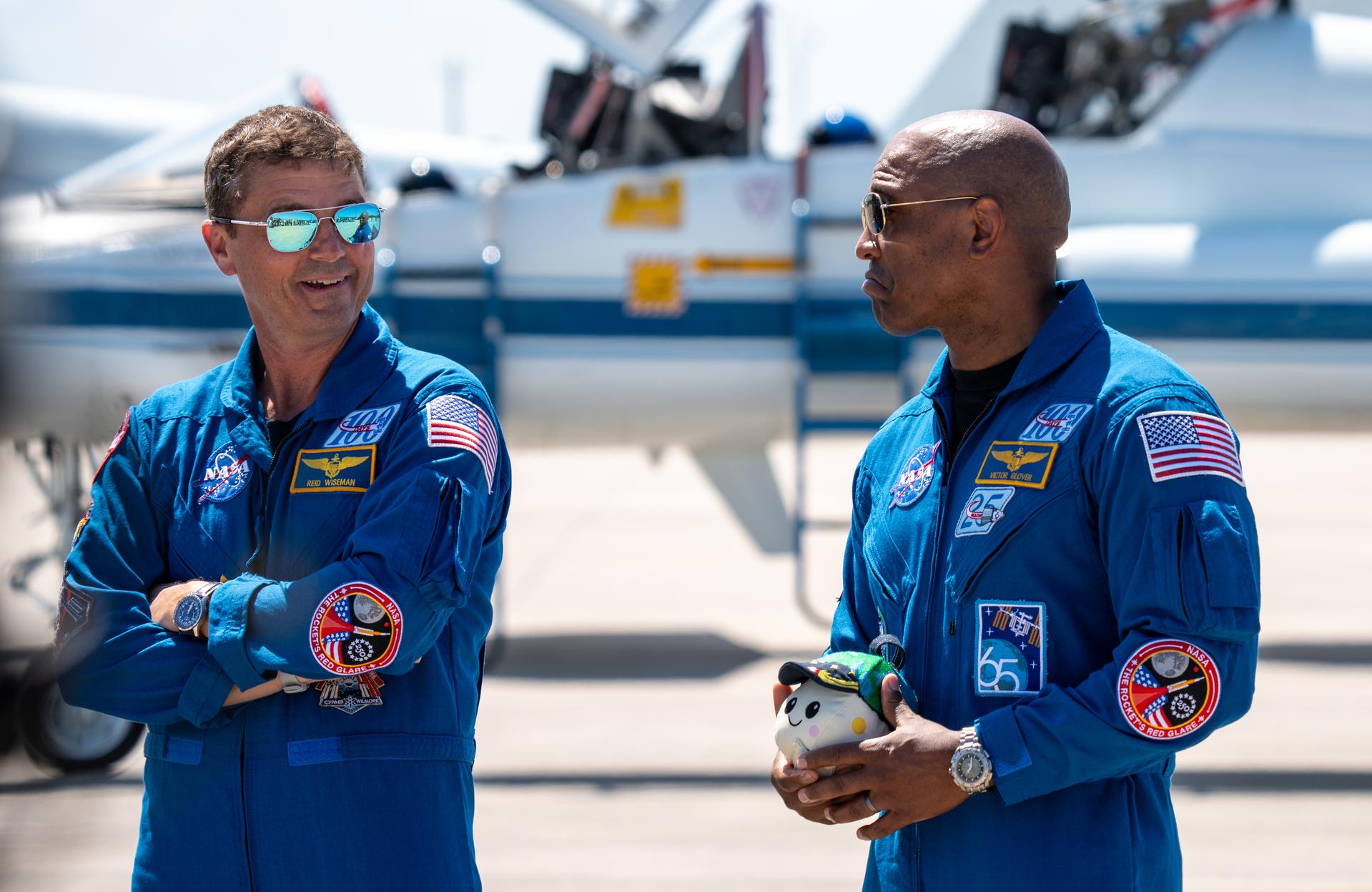
These images show the moments shortly after the arrival of the Artemis II crew to NASA’s Kennedy Space Center on March 27, 2026 ahead of the launch. The four astronauts, Victor Glover, Reid Wiseman, Christina Koch, and Jeremy Hansen, arrived on a T38, which can be seen behind them. They took turns speaking to the crowd as they also announced the zero-gravity indicator they would be taking with them on their journey.
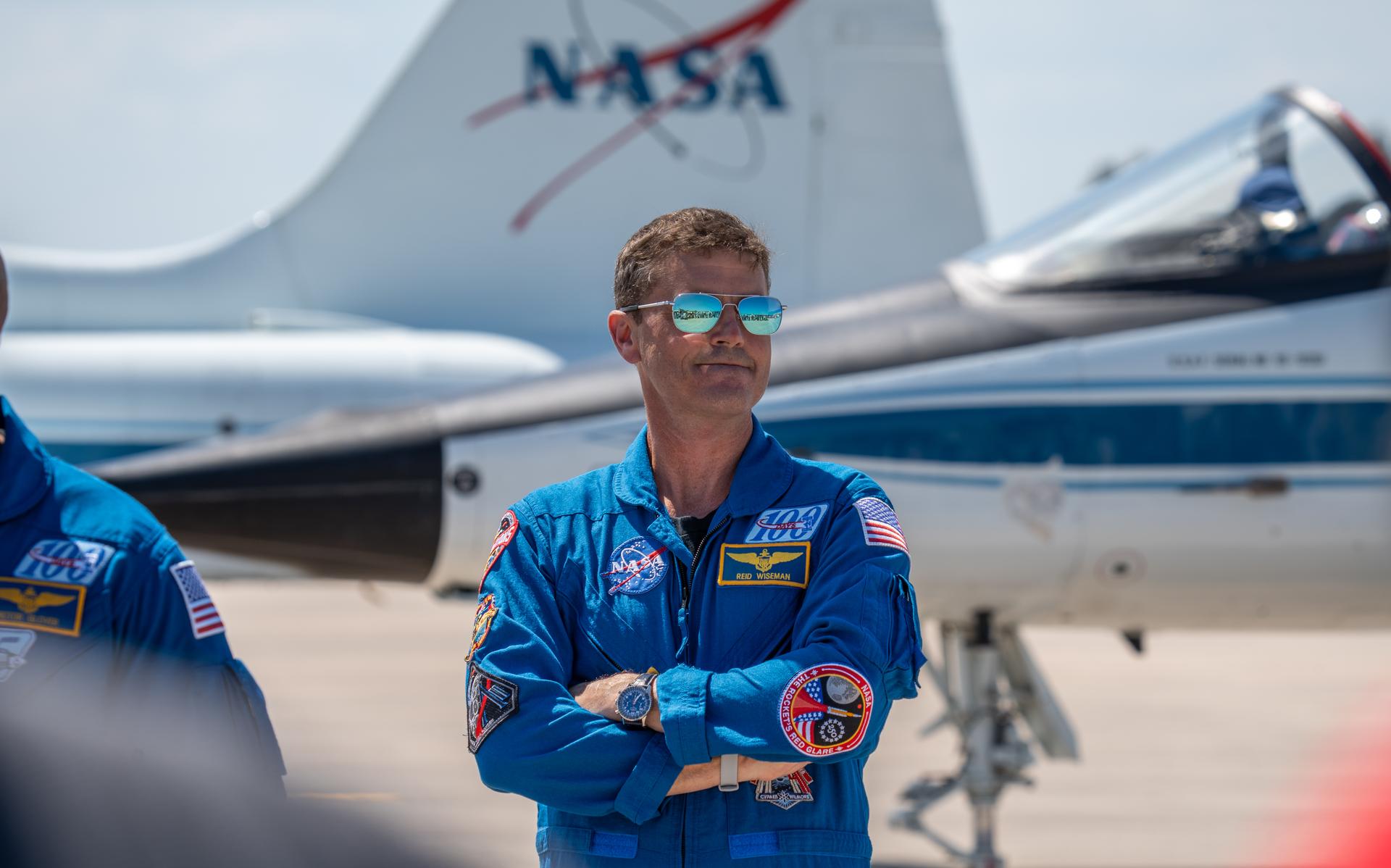
These images show the moments shortly after the arrival of the Artemis II crew to NASA’s Kennedy Space Center on March 27, 2026 ahead of the launch. The four astronauts, Victor Glover, Reid Wiseman, Christina Koch, and Jeremy Hansen, arrived on a T38, which can be seen behind them. They took turns speaking to the crowd as they also announced the zero-gravity indicator they would be taking with them on their journey.
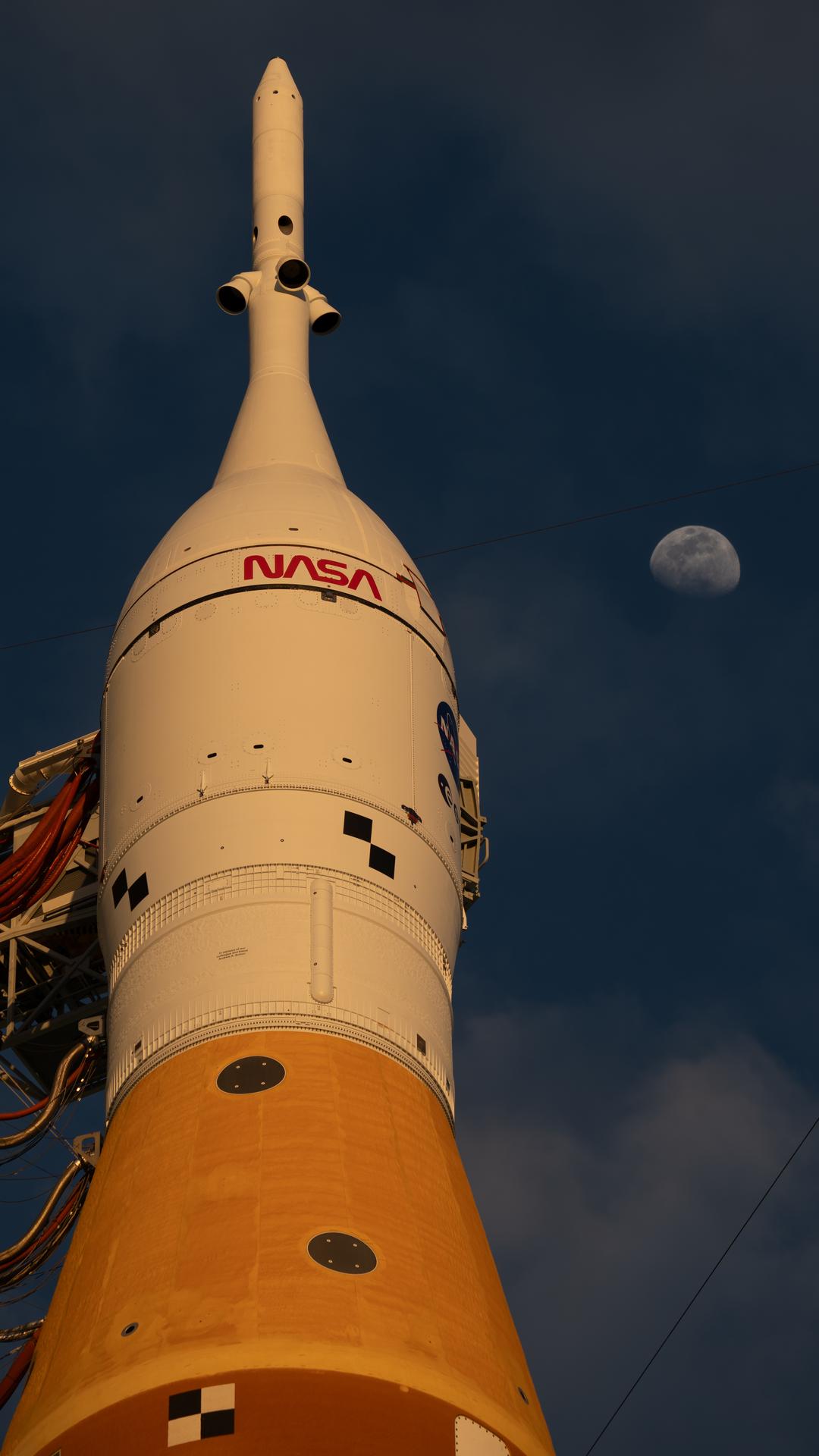
The Moon is seen shining over the SLS (Space Launch System) and Orion spacecraft, atop the mobile launcher on January 28, 2026. The rocket is currently at Launch Pad 39B at NASA’s Kennedy Space Center in Florida, as teams are preparing for a wet dress rehearsal to practice timelines and procedures for the launch of Artemis II.
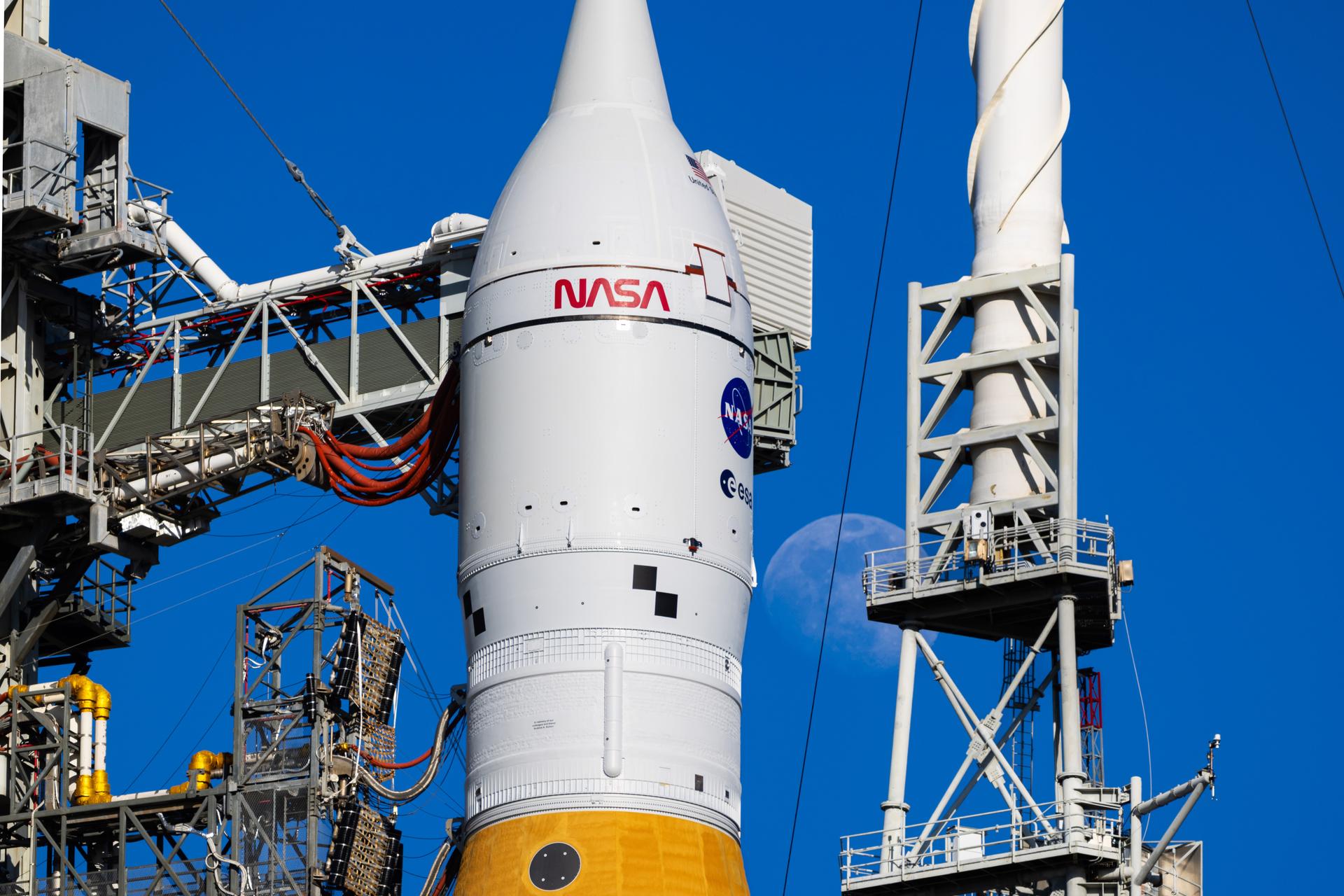
The Moon is seen shining over the SLS (Space Launch System) and Orion spacecraft, atop the mobile launcher on January 29, 2026. The rocket is currently at Launch Pad 39B at NASA’s Kennedy Space Center in Florida, as teams are preparing for a wet dress rehearsal to practice timelines and procedures for the launch of Artemis II.
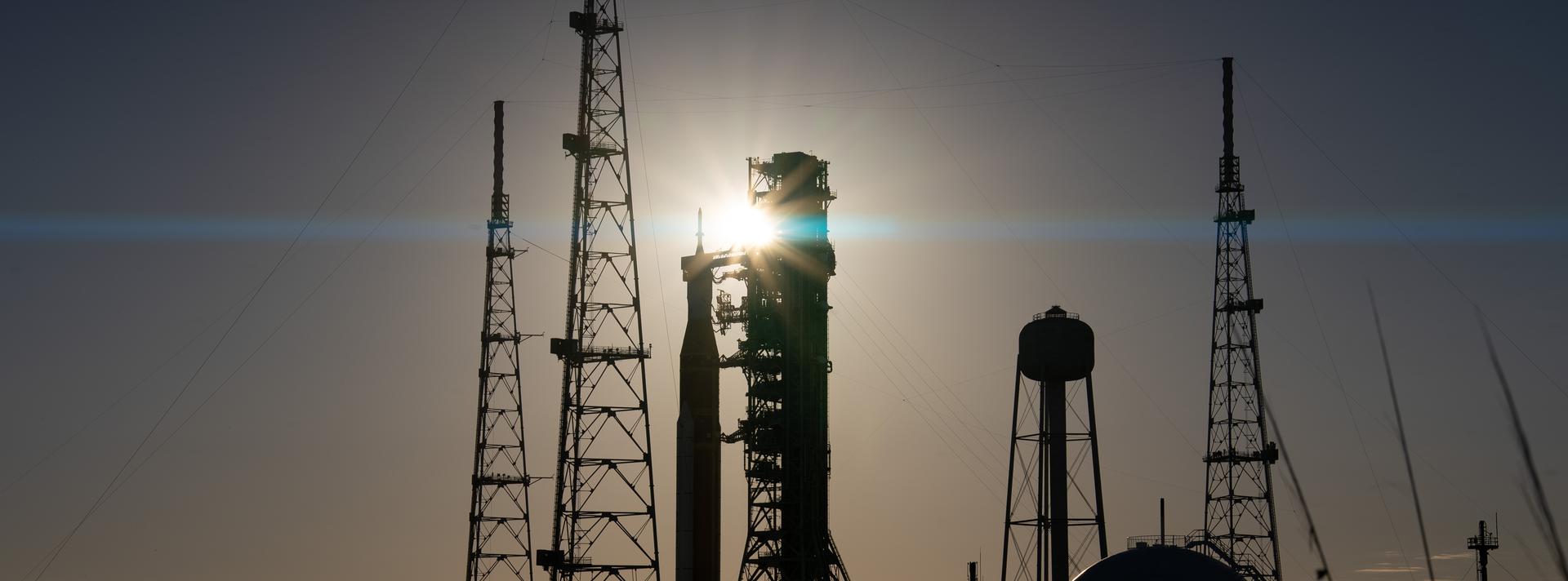
508 DESCRIPTION: The sun sets behind NASA’s Space Launch System (SLS) rocket and Orion spacecraft as they stand fully assembled atop the mobile launcher at Launch Pad 39B at NASA’s Kennedy Space Center in Florida. The sky glows with warm shades of orange and pink, silhouetting the towering rocket and its solid rocket boosters against the fading light. Photographed on January 31, 2026, the scene captures teams preparing for a wet dress rehearsal for the Artemis II mission, rehearsing launch countdown timelines and procedures as day turns to night.
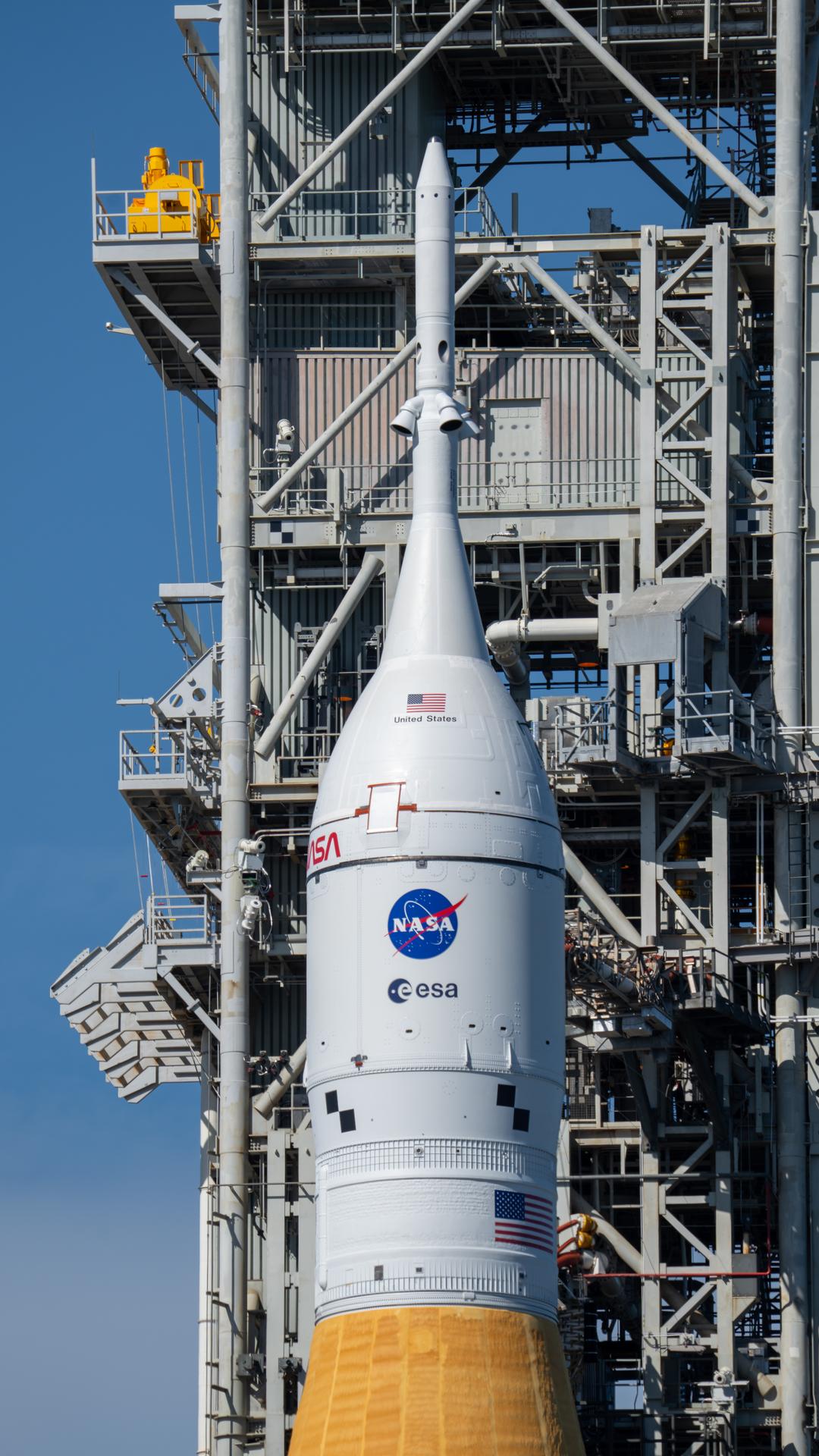
This image shows NASA’s SLS (Space Launch System) and Orion spacecraft rolling out of the Vehicle Assembly Building at NASA’s Kennedy Space Center. NASA's massive Crawler-Transporter, upgraded for the Artemis program, carries the powerful SLS rocket and Orion spacecraft on the Mobile Launcher from the Vehicle Assembly Building to Launch Pad 39B at Kennedy Space Center in preparation for the Artemis II mission.
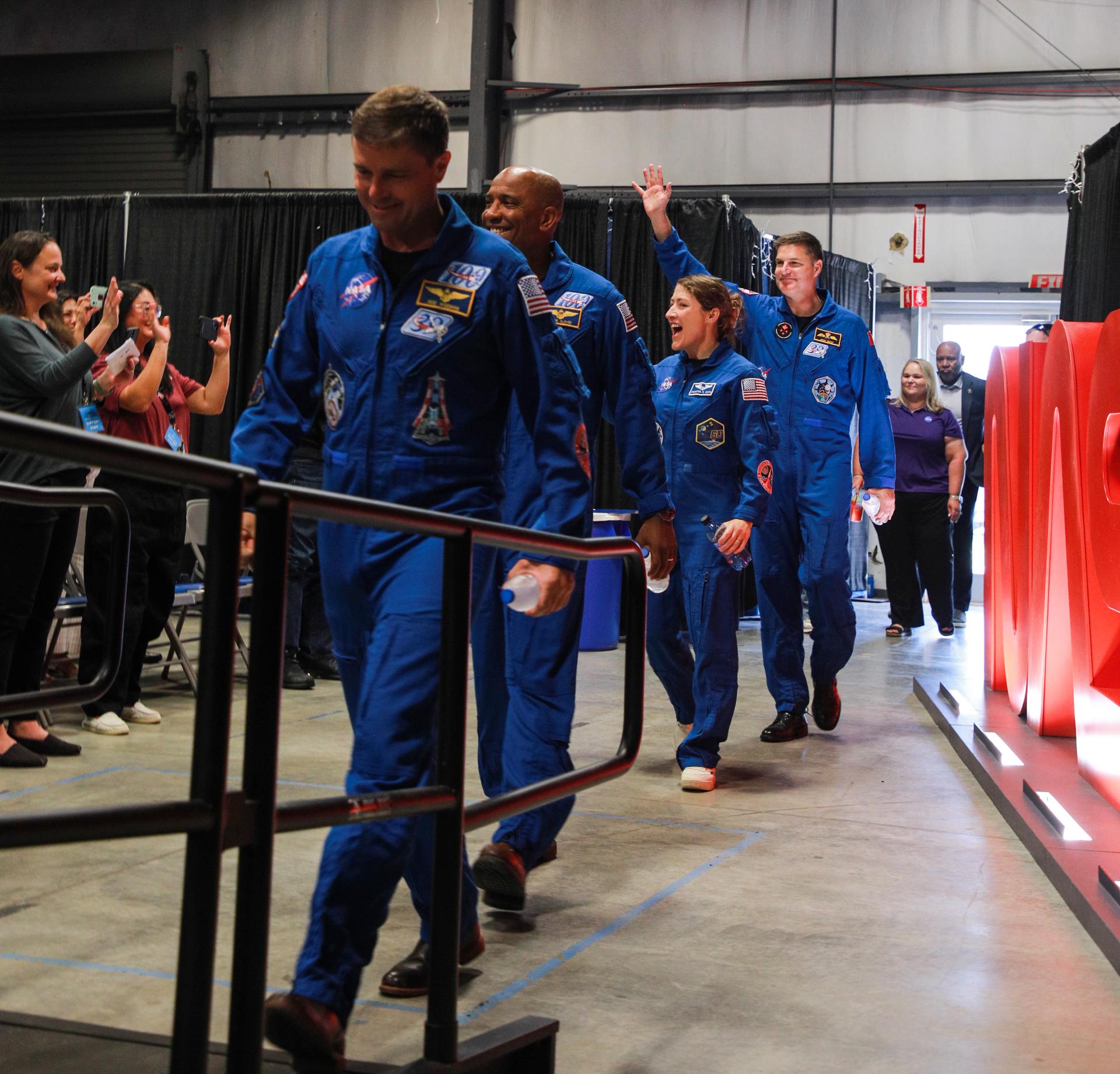
The crew of NASA’s Artemis II mission – NASA astronauts Reid Wiseman, Victor Glover, and Christina Koch, and Canadian Space Agency astronaut Jeremy Hansen – visited the agency’s Marshall Space Flight Center in Huntsville, Alabama, on Tuesday, Sept. 1, 2026. During an employee all-hands event, the crew reflected on their journey around the Moon, thanked Marshall team members for their contributions to the mission, and answered questions from the workforce. Artemis II was the first crewed mission of NASA’s Artemis campaign. Wiseman, Glover, Koch, and Hansen completed the approximately 10-day mission around the Moon in April 2026.
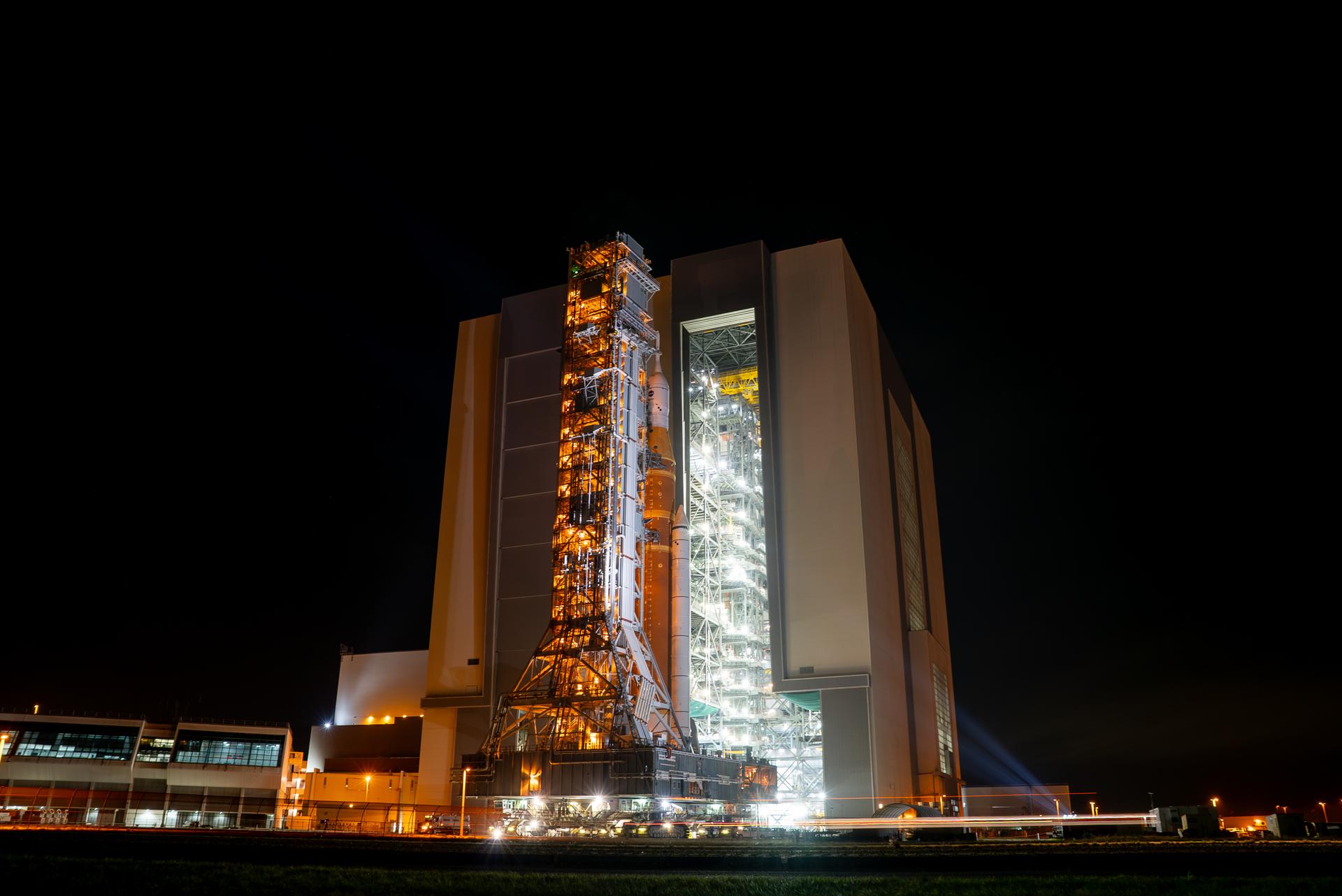
This image shows NASA’s SLS (Space Launch System) and Orion spacecraft rolling out of the Vehicle Assembly Building at NASA’s Kennedy Space Center. NASA's massive Crawler-Transporter, upgraded for the Artemis program, carries the powerful SLS rocket and Orion spacecraft on the Mobile Launcher from the Vehicle Assembly Building to Launch Pad 39B at Kennedy Space Center in preparation for the Artemis II mission.
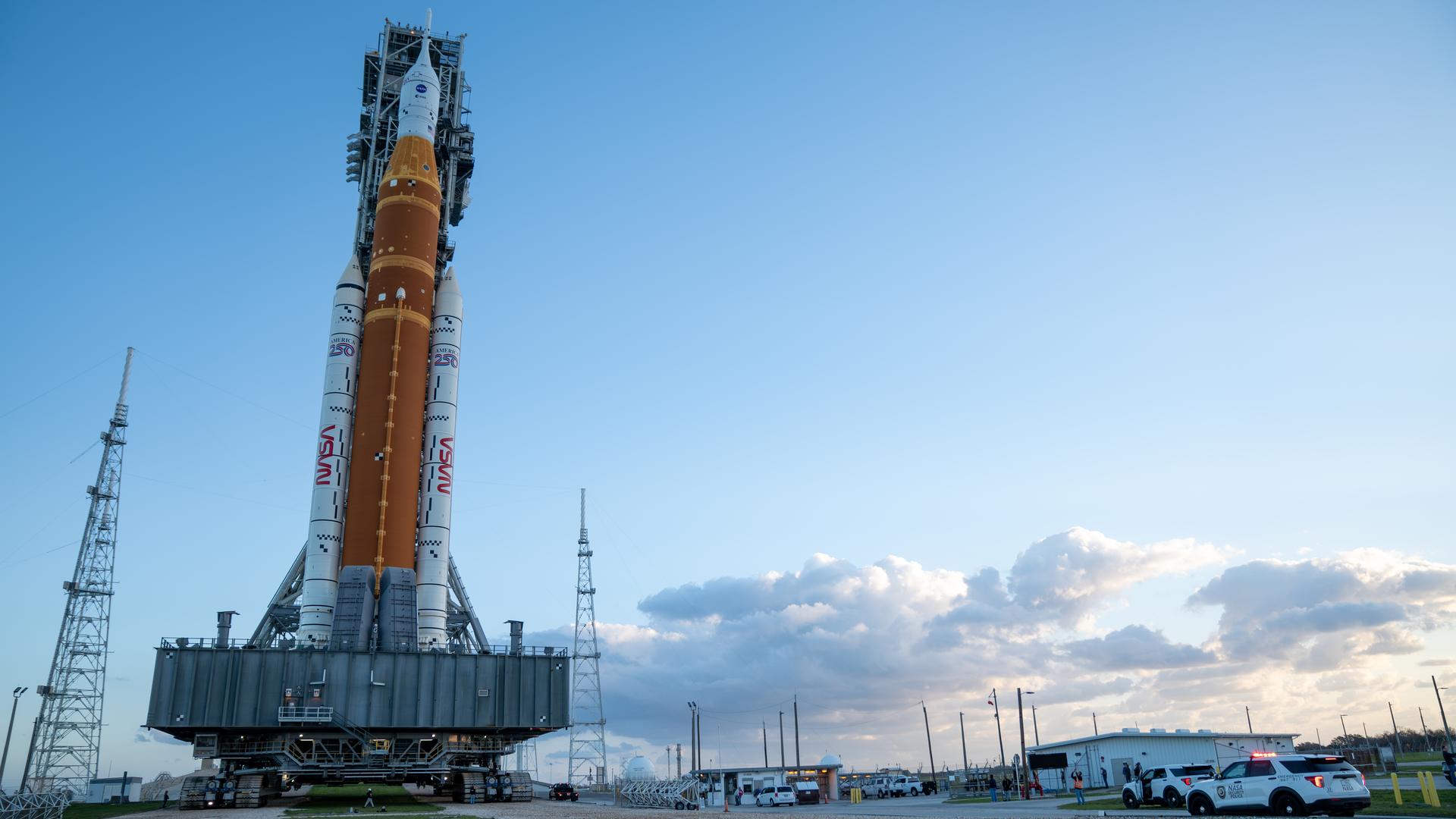
This image shows NASA’s SLS (Space Launch System) and Orion spacecraft rolling out of the Vehicle Assembly Building at NASA’s Kennedy Space Center. NASA's massive Crawler-Transporter, upgraded for the Artemis program, carries the powerful SLS rocket and Orion spacecraft on the Mobile Launcher from the Vehicle Assembly Building to Launch Pad 39B at Kennedy Space Center in preparation for the Artemis II mission.
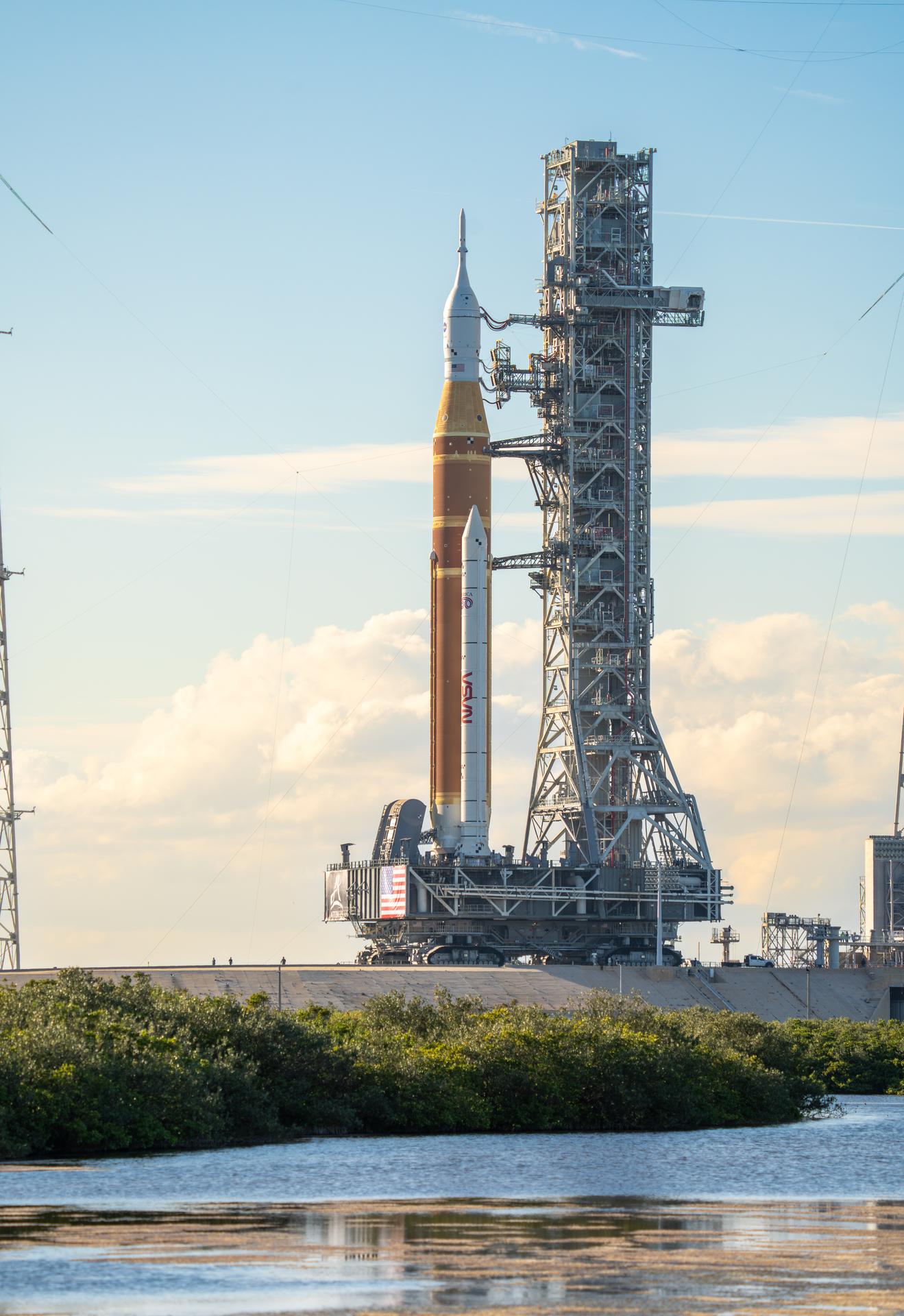
This image shows NASA’s SLS (Space Launch System) and Orion spacecraft rolling out of the Vehicle Assembly Building at NASA’s Kennedy Space Center. NASA's massive Crawler-Transporter, upgraded for the Artemis program, carries the powerful SLS rocket and Orion spacecraft on the Mobile Launcher from the Vehicle Assembly Building to Launch Pad 39B at Kennedy Space Center in preparation for the Artemis II mission.
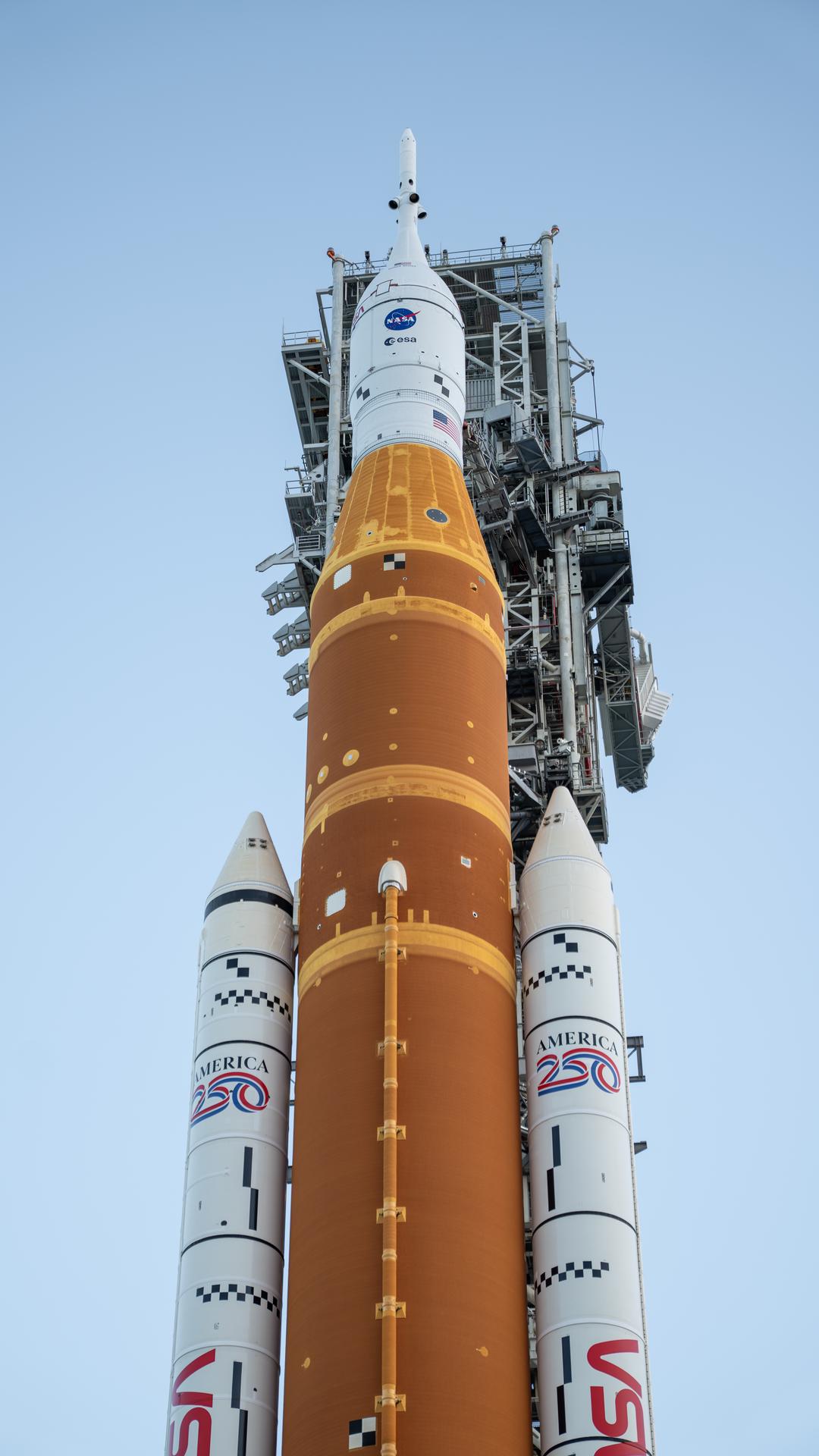
This image shows NASA’s SLS (Space Launch System) and Orion spacecraft rolling out of the Vehicle Assembly Building at NASA’s Kennedy Space Center. NASA's massive Crawler-Transporter, upgraded for the Artemis program, carries the powerful SLS rocket and Orion spacecraft on the Mobile Launcher from the Vehicle Assembly Building to Launch Pad 39B at Kennedy Space Center in preparation for the Artemis II mission.
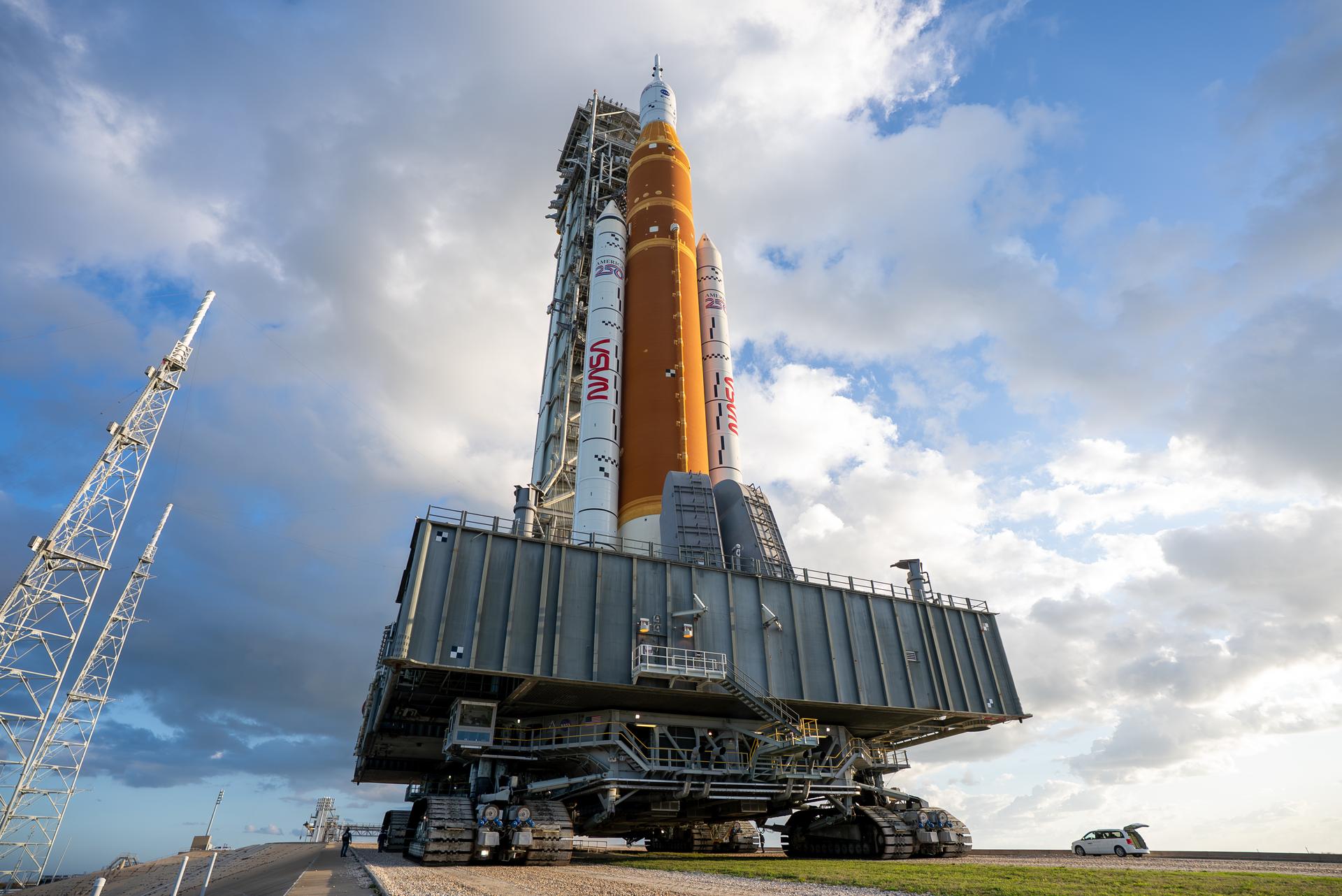
This image shows NASA’s SLS (Space Launch System) and Orion spacecraft rolling out of the Vehicle Assembly Building at NASA’s Kennedy Space Center. NASA's massive Crawler-Transporter, upgraded for the Artemis program, carries the powerful SLS rocket and Orion spacecraft on the Mobile Launcher from the Vehicle Assembly Building to Launch Pad 39B at Kennedy Space Center in preparation for the Artemis II mission.
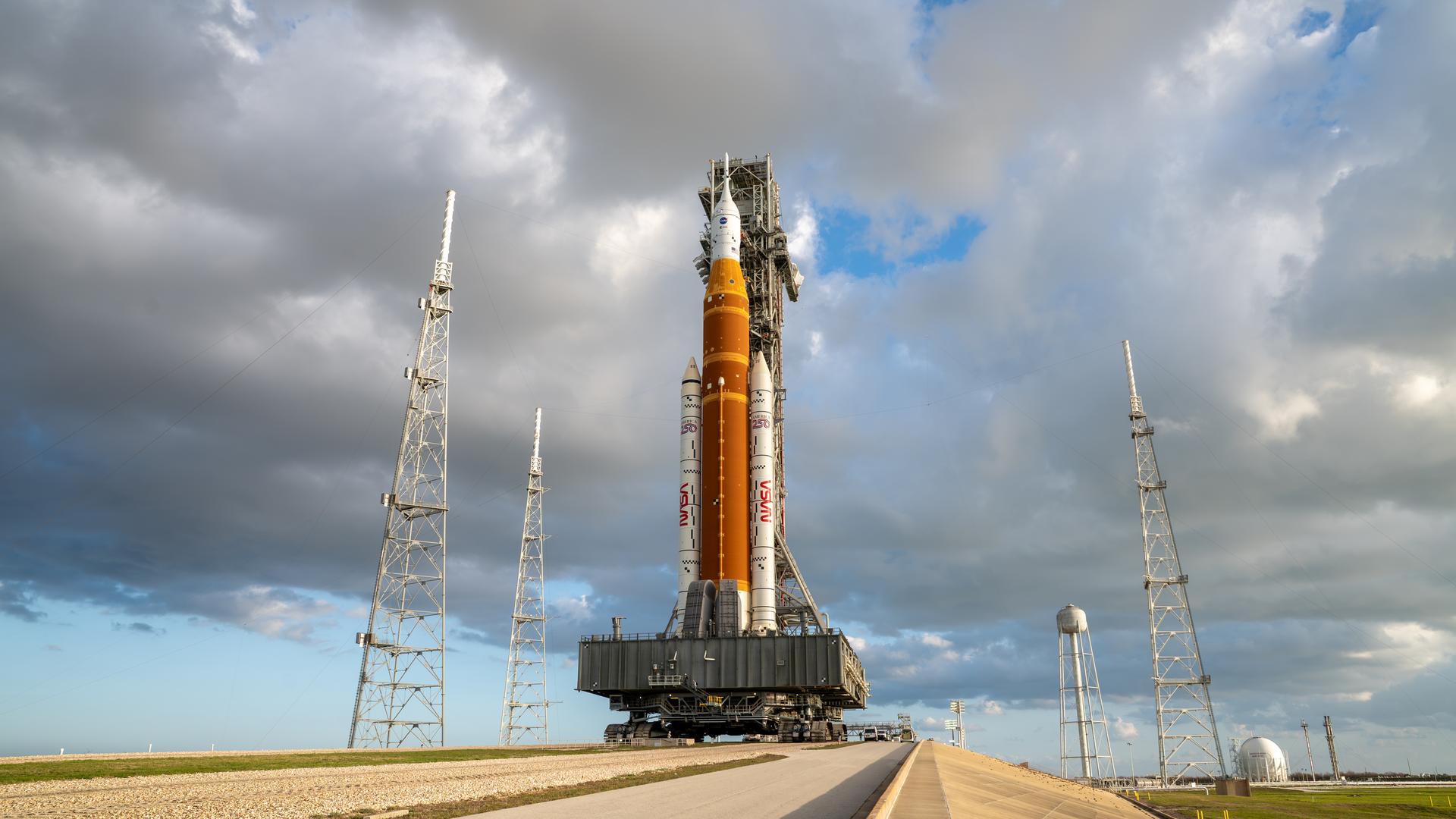
This image shows NASA’s SLS (Space Launch System) and Orion spacecraft rolling out of the Vehicle Assembly Building at NASA’s Kennedy Space Center. NASA's massive Crawler-Transporter, upgraded for the Artemis program, carries the powerful SLS rocket and Orion spacecraft on the Mobile Launcher from the Vehicle Assembly Building to Launch Pad 39B at Kennedy Space Center in preparation for the Artemis II mission.
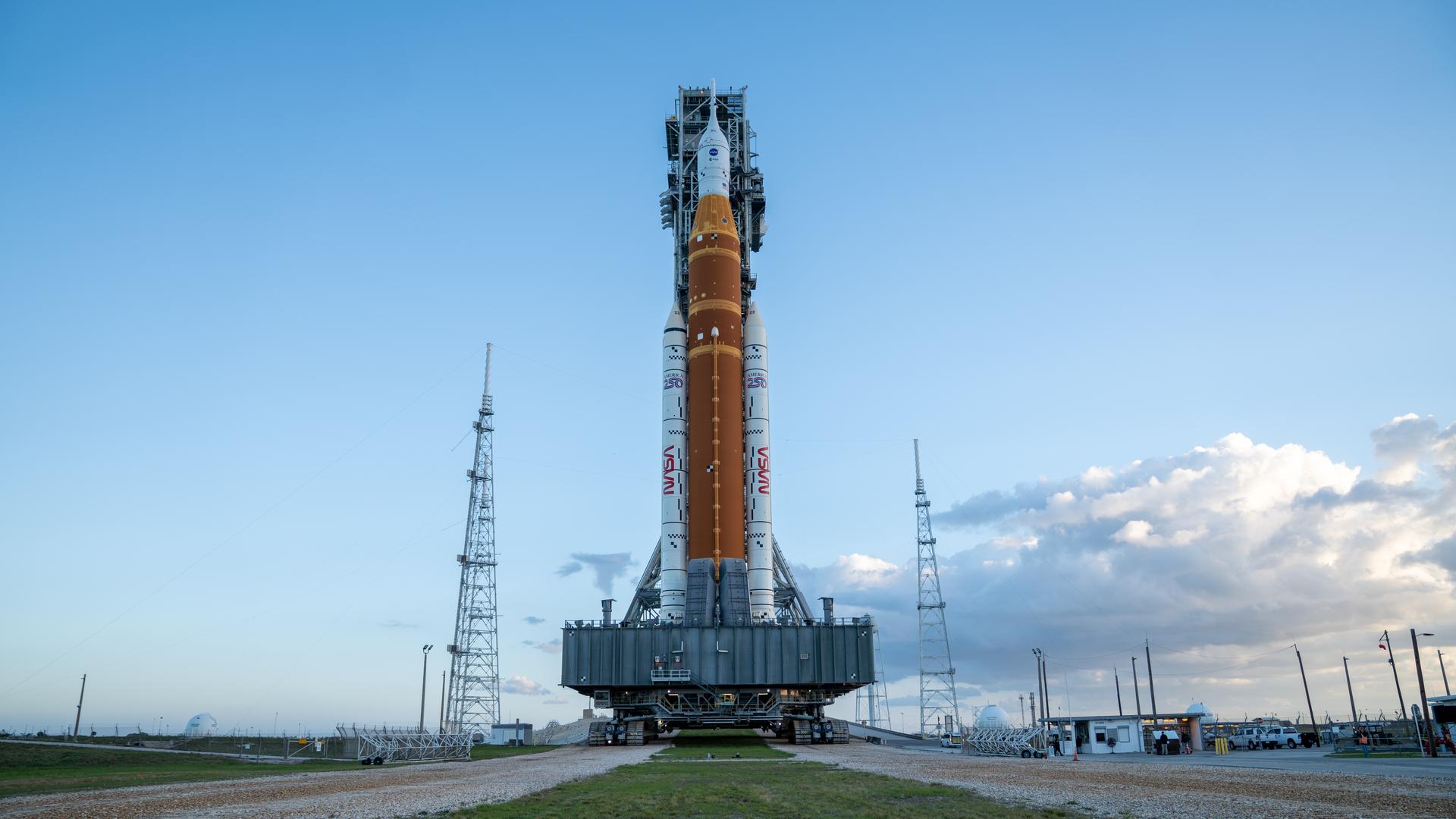
This image shows NASA’s SLS (Space Launch System) and Orion spacecraft rolling out of the Vehicle Assembly Building at NASA’s Kennedy Space Center. NASA's massive Crawler-Transporter, upgraded for the Artemis program, carries the powerful SLS rocket and Orion spacecraft on the Mobile Launcher from the Vehicle Assembly Building to Launch Pad 39B at Kennedy Space Center in preparation for the Artemis II mission.