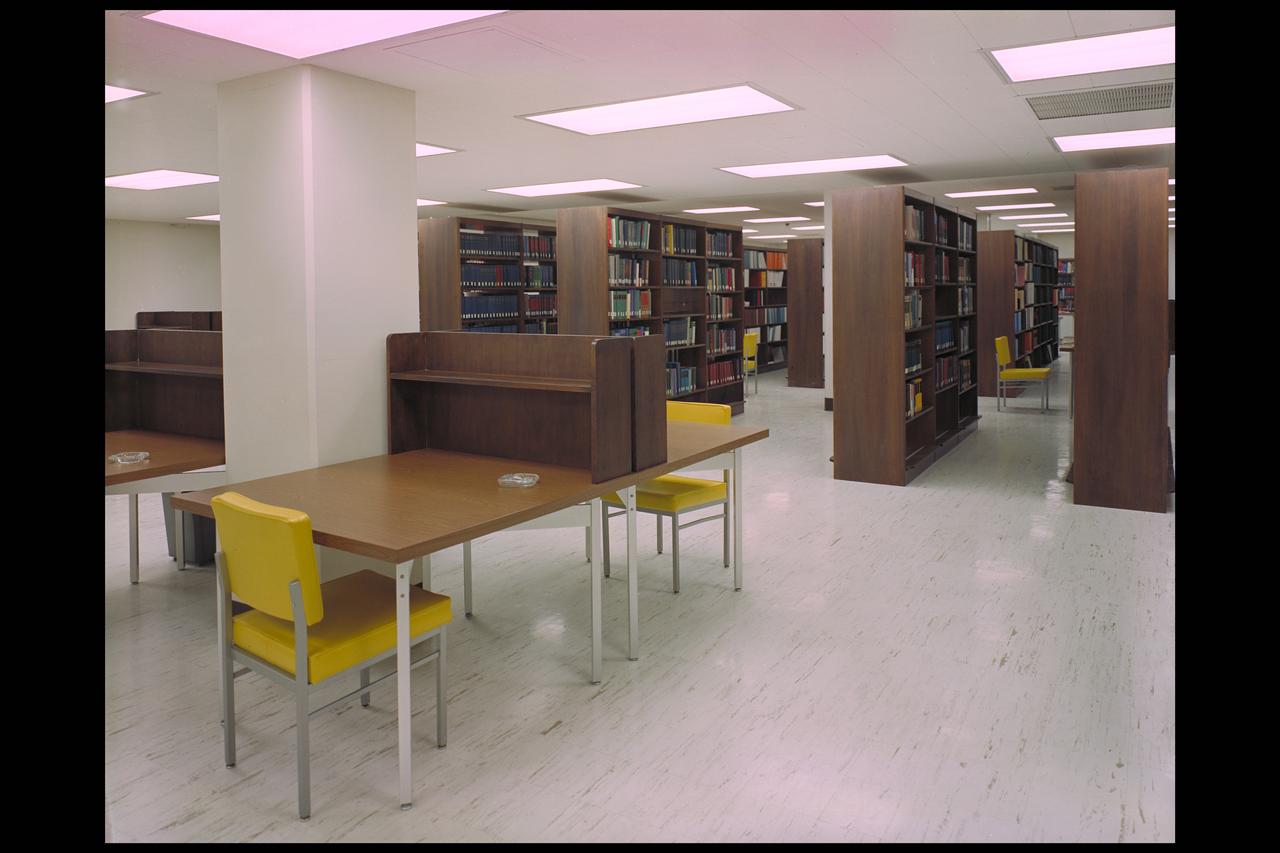
N-202 Mail Library
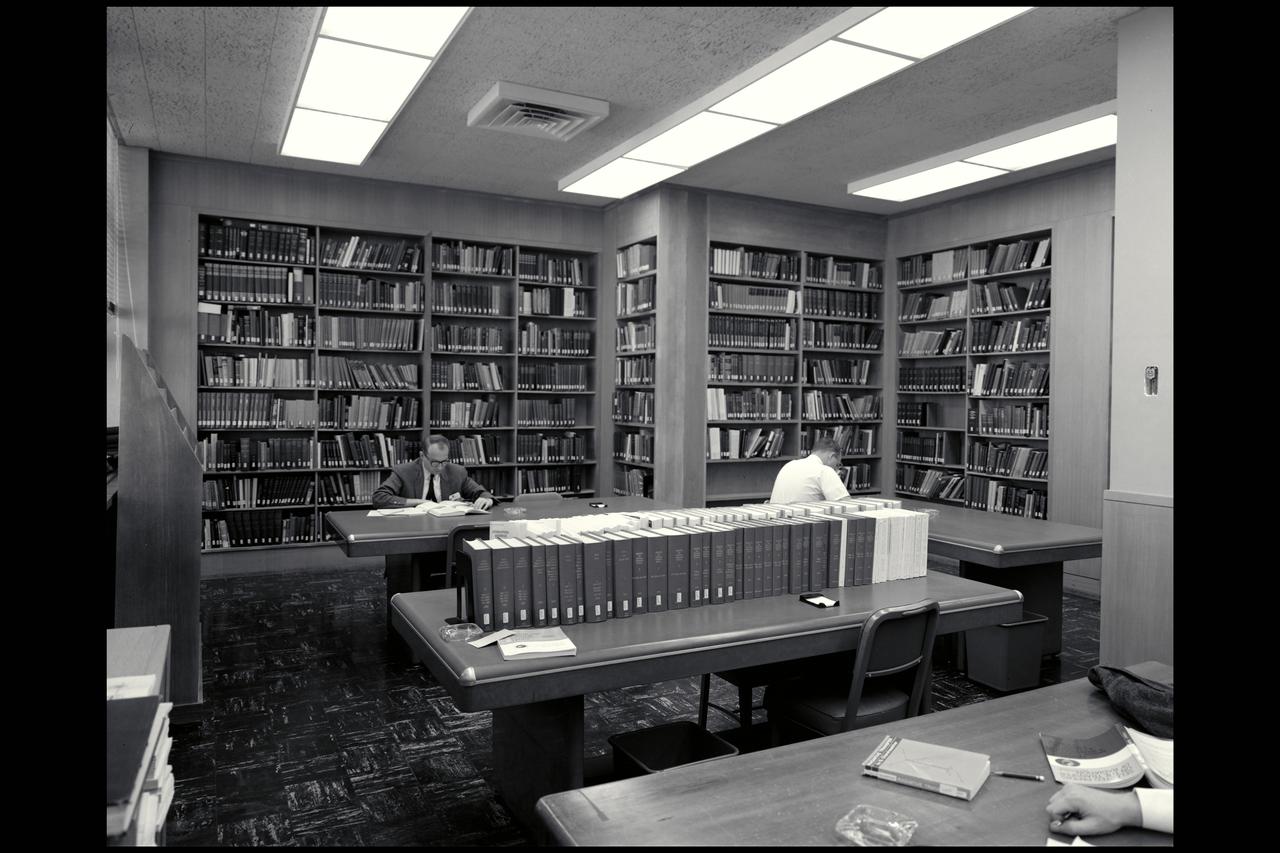
N-202 Main Library
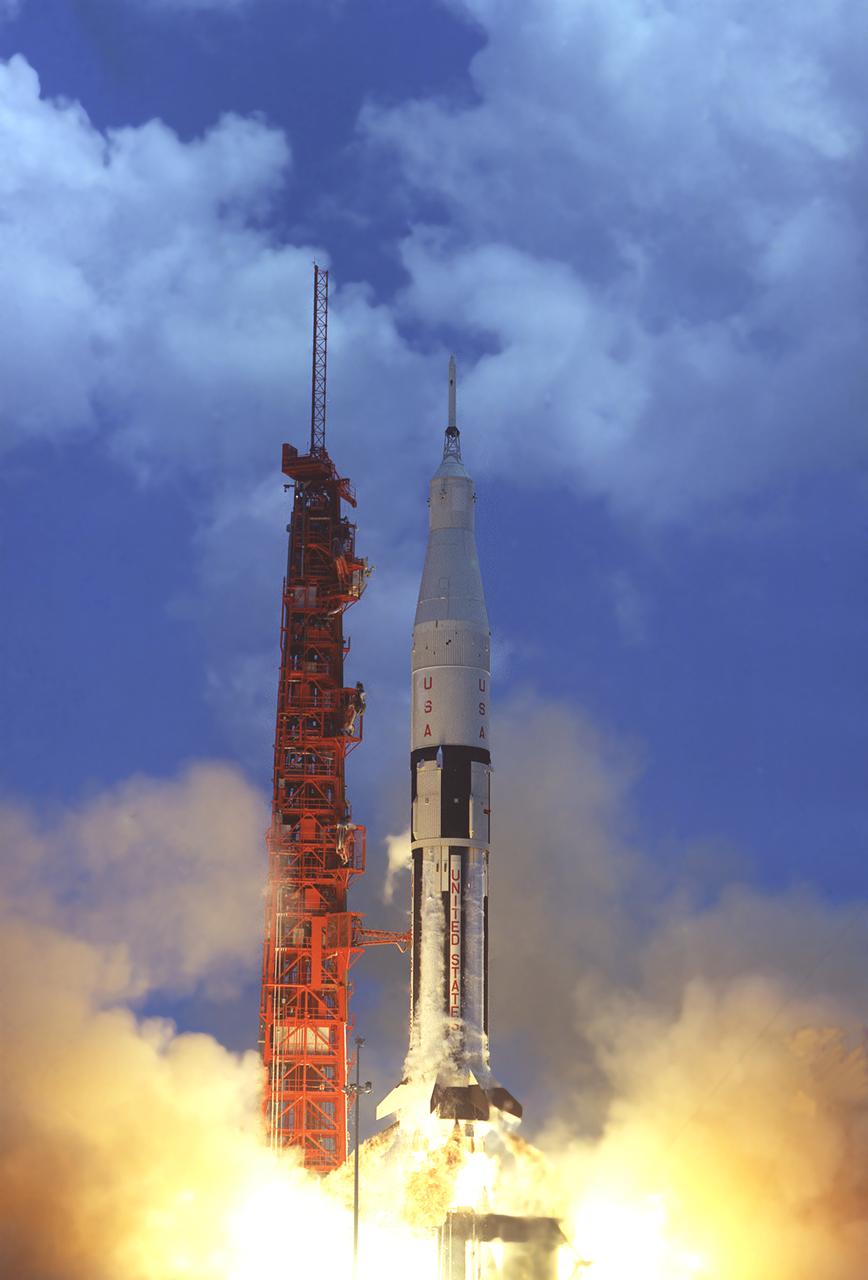
AS-202, the second Saturn IB launch vehicle developed by the Marshall Space Flight Center, lifts off from Cape Canaveral, Florida, August 25, 1966. Primary mission objectives included the confirmation of projected launch loads, demonstration of spacecraft component separation, and verification of heat shield adequacy at high reentry rates. In all, nine Saturn IB flights were made, ending with the Apollo-Soyuz Test Project (ASTP) in July 1975.
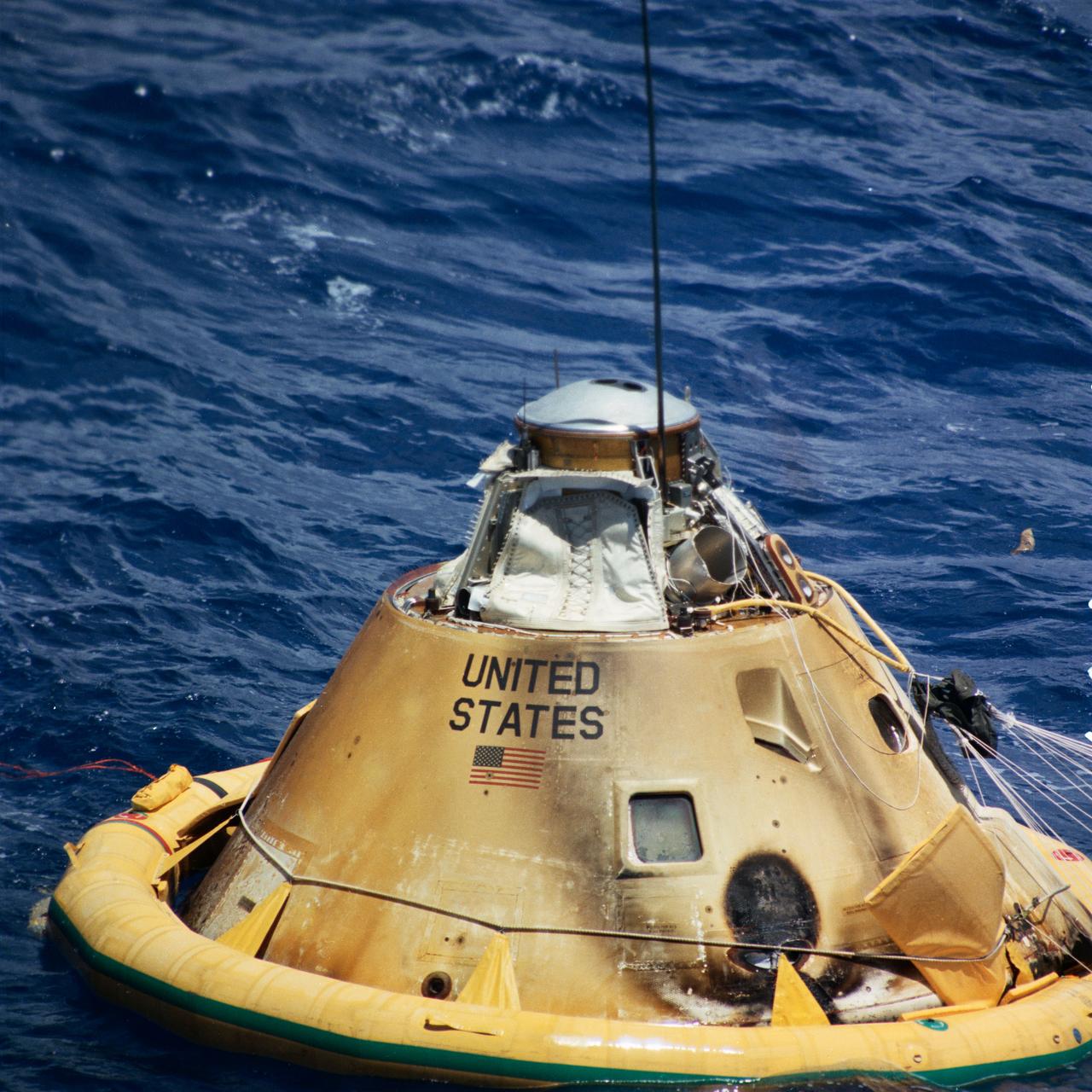
A/S 202 Command Module (C/M) attached to flotation collar. RECOVERY AREA, CENTRAL PACIFIC OCEAN
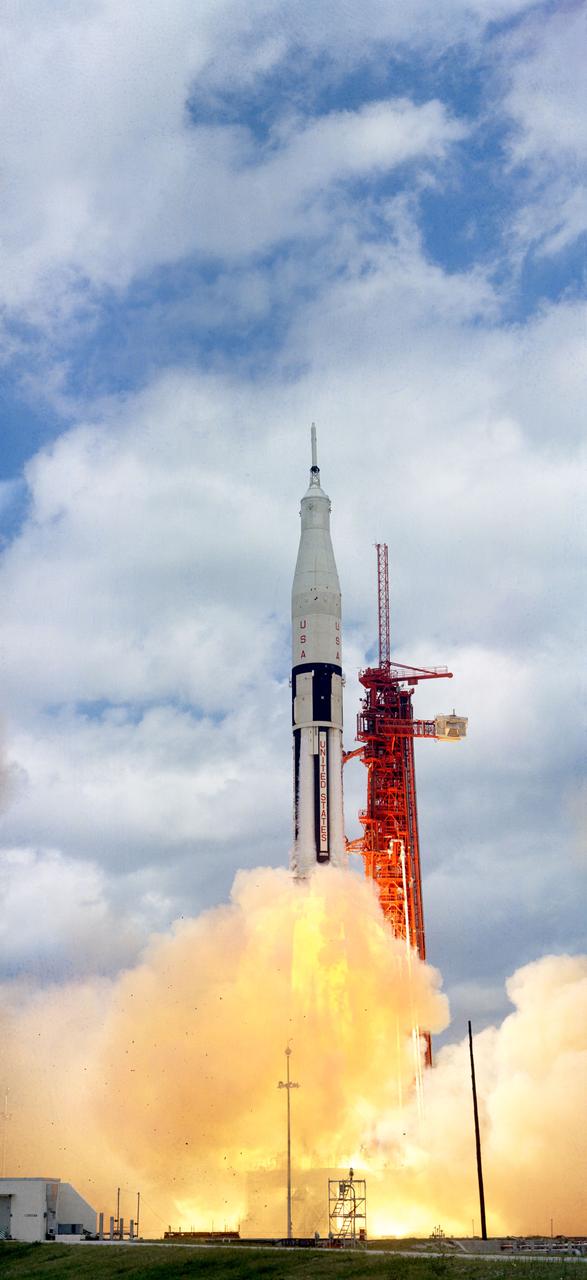
A/S Mission 202 was launched from the KSC Launch Complex (LC)-34 at 12:15 p.m., 08/25/1966. The mission was a step toward qualifying the Apollo Command and Service Modules (CSM)'s and the uprated Saturn I launch vehicle for manned flight. KSC, FL
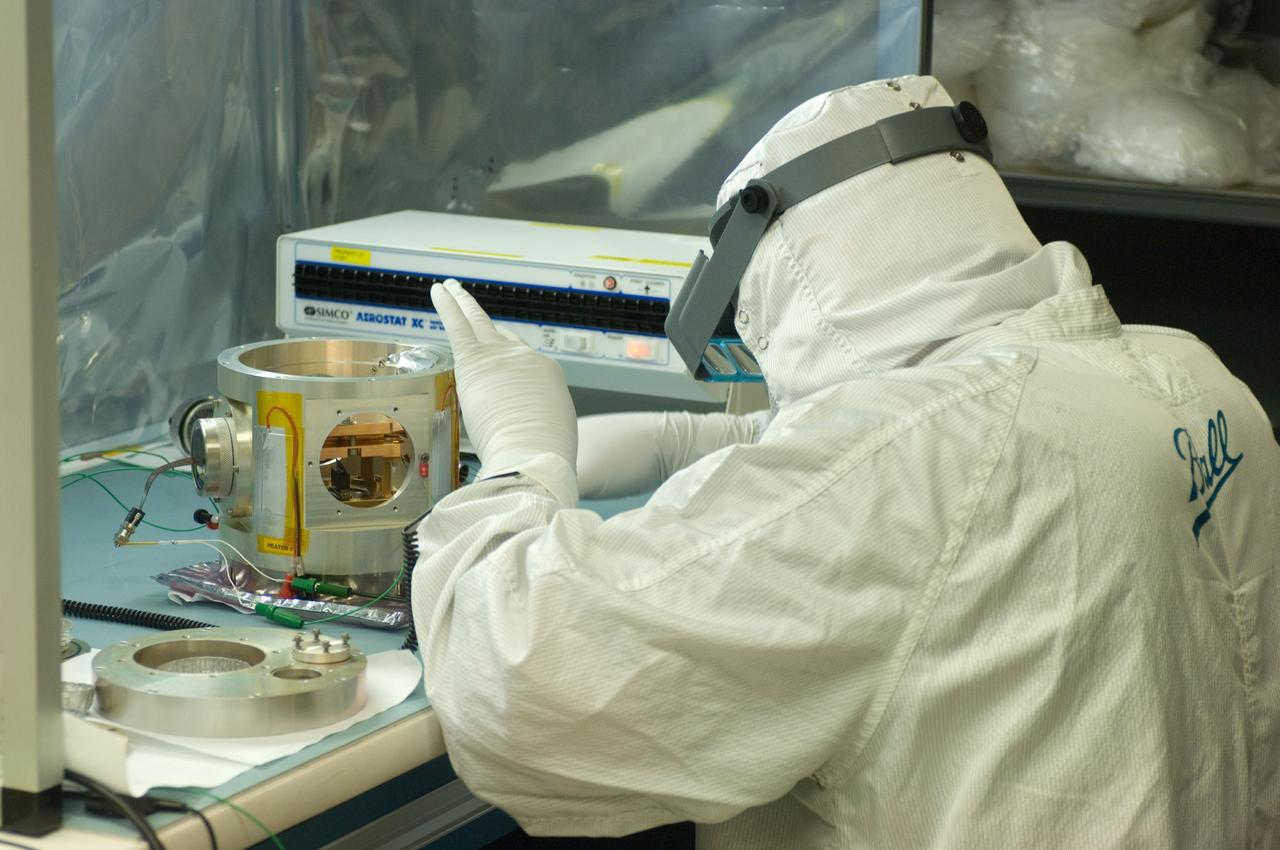
Kepler project; technicians from Ball Aerospace work on and in the test chamber assembled at Nasa Ames Research center testing components
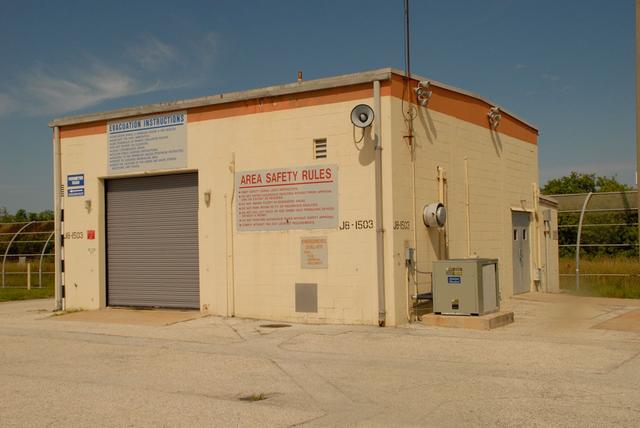
Exterior view of Launch Complex 39A
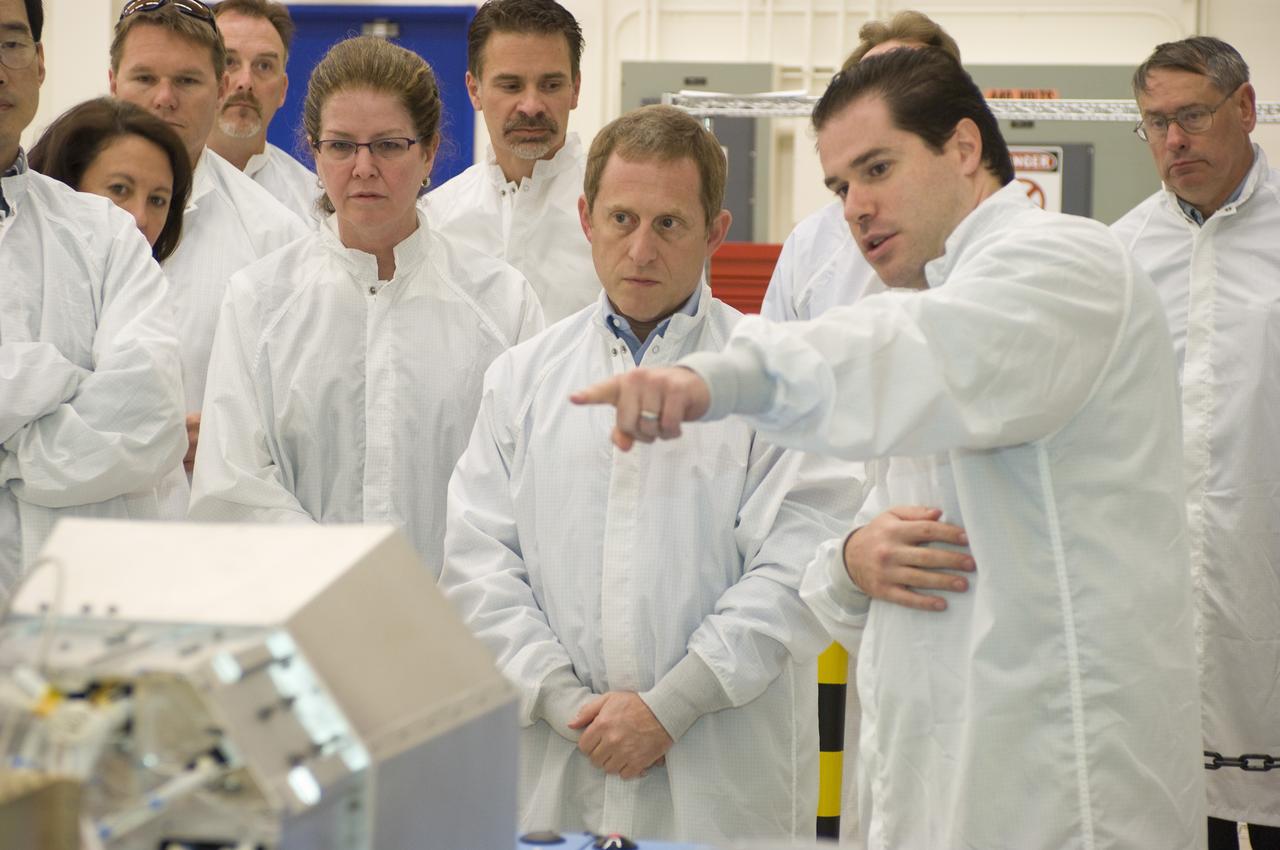
LCROSS flight hardware in clean room at Ames N-240: Tony Colaprete NASA Ames P.I. explains the progress of the LCROSS project to Alan Stern, NASA Associate Administrator of the Science Mission Directorate (SMD) as he tours the Lab during his visit to Ames to meet with and talk to the Ames scientists and employees.
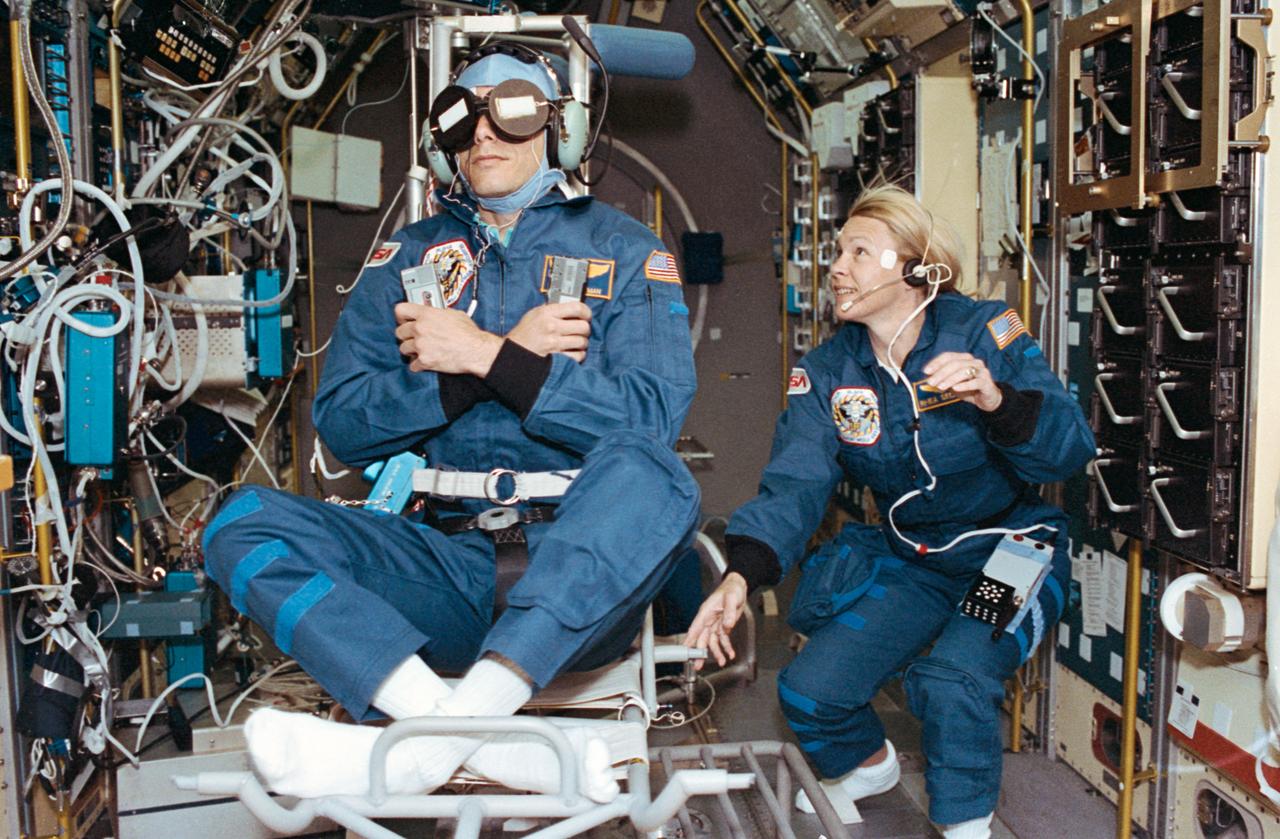
STS058-202-002 (18 Oct.-1 Nov. 1993) --- Astronaut Rhea Seddon, STS-58 payload commander, spins the Spacelab Life Sciences (SLS-2) rotating chair as payload specialist Martin J. Fettman serves as test subject. The two joined five NASA astronauts for fourteen days of medical research aboard the Earth-orbiting space shuttle Columbia. Photo credit: NASA
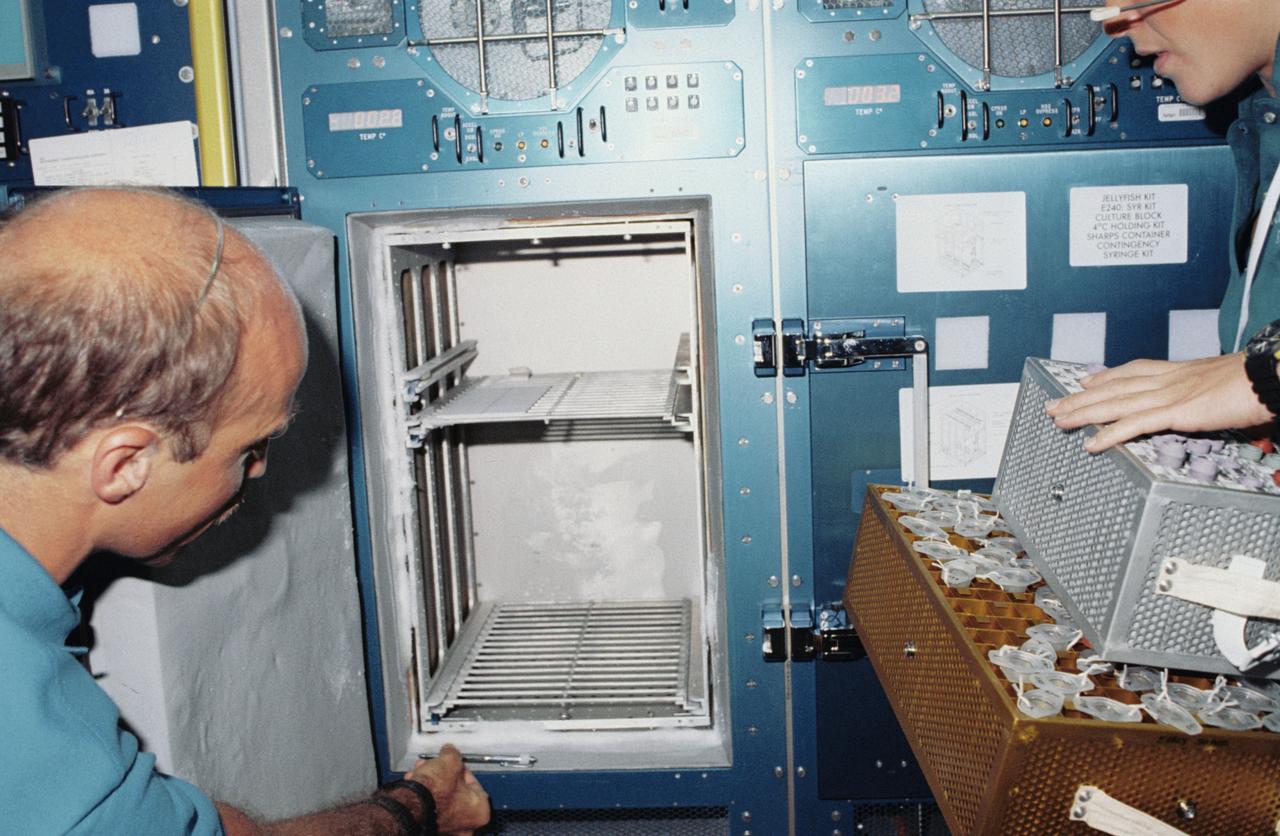
STS040-202-033 (5-14 June 1991) --- A medium closeup scene shows astronaut James P. Bagian (left) and an unidentified crewmember (partially out of frame) looking at a vacant refrigerator in the Spacelab Life Sciences (SLS-1) module aboard the Earth-orbiting Space Shuttle Columbia. Following the detection of problems with the refrigerator, its contents were temporarily removed. This scene was photographed with a 35mm camera.
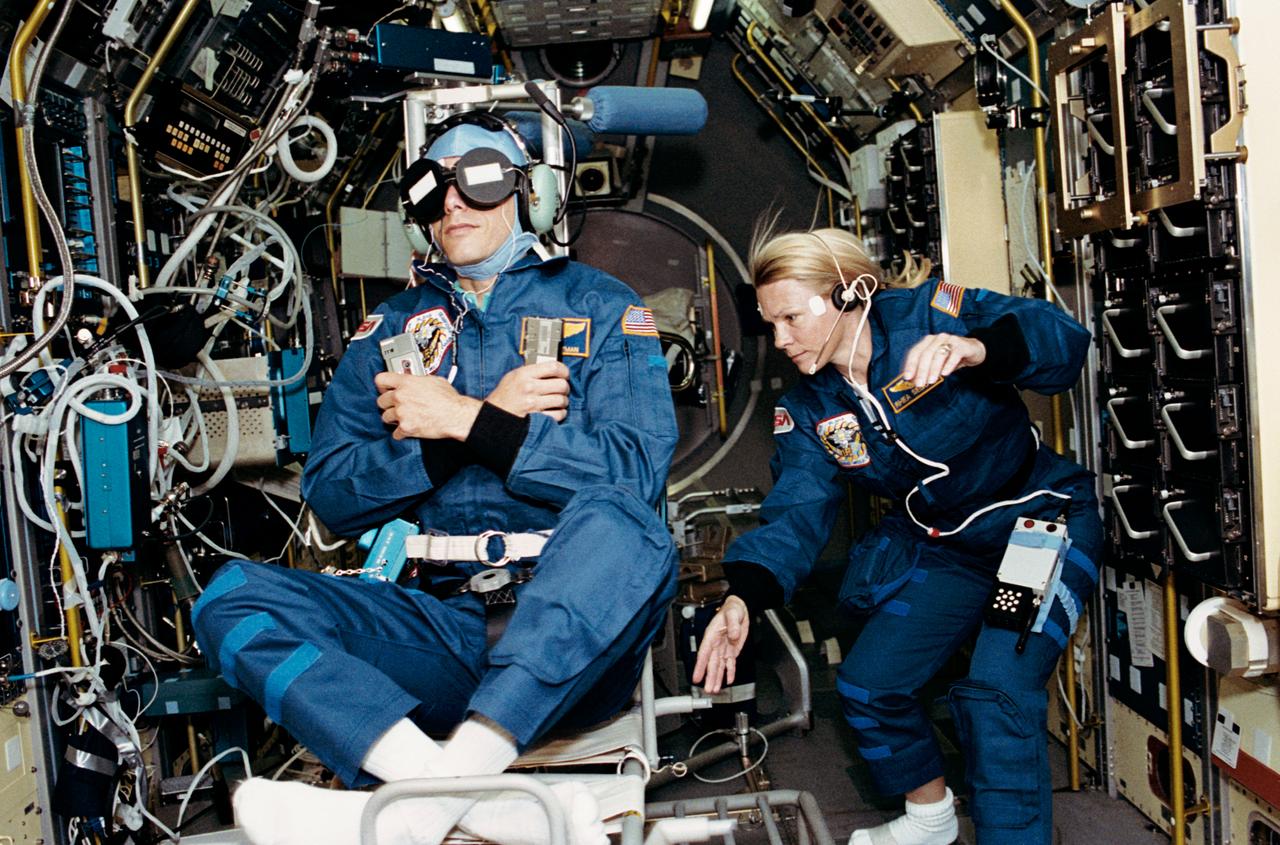
STS058-202-001 (18 Oct.-1 Nov. 1993) --- Astronaut Rhea Seddon, payload commander, spins the Spacelab Life Sciences (SLS-2) rotating chair as payload specialist Martin J. Fettman serves as test subject. The two joined five NASA astronauts for fourteen days of medical research aboard the Earth-orbiting space shuttle Columbia. Photo credit: NASA
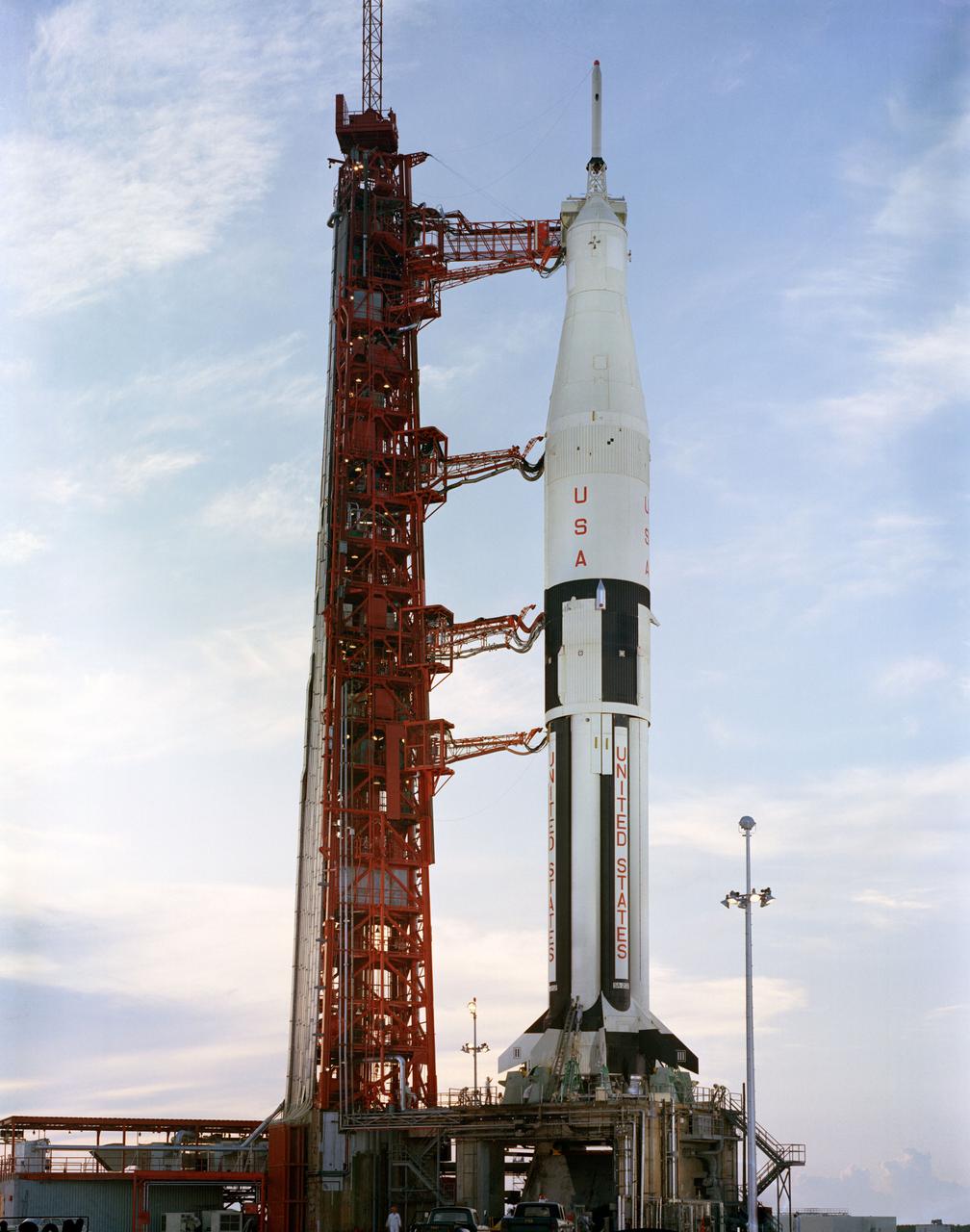
Scene at the LC-34 during an A/S 202 Prelaunch Alert. The mission was a step toward qualifying the Apollo Command and Service Modules (CSM) and the uprated Saturn I Launch Vehicle for manned flight. KSC, FL
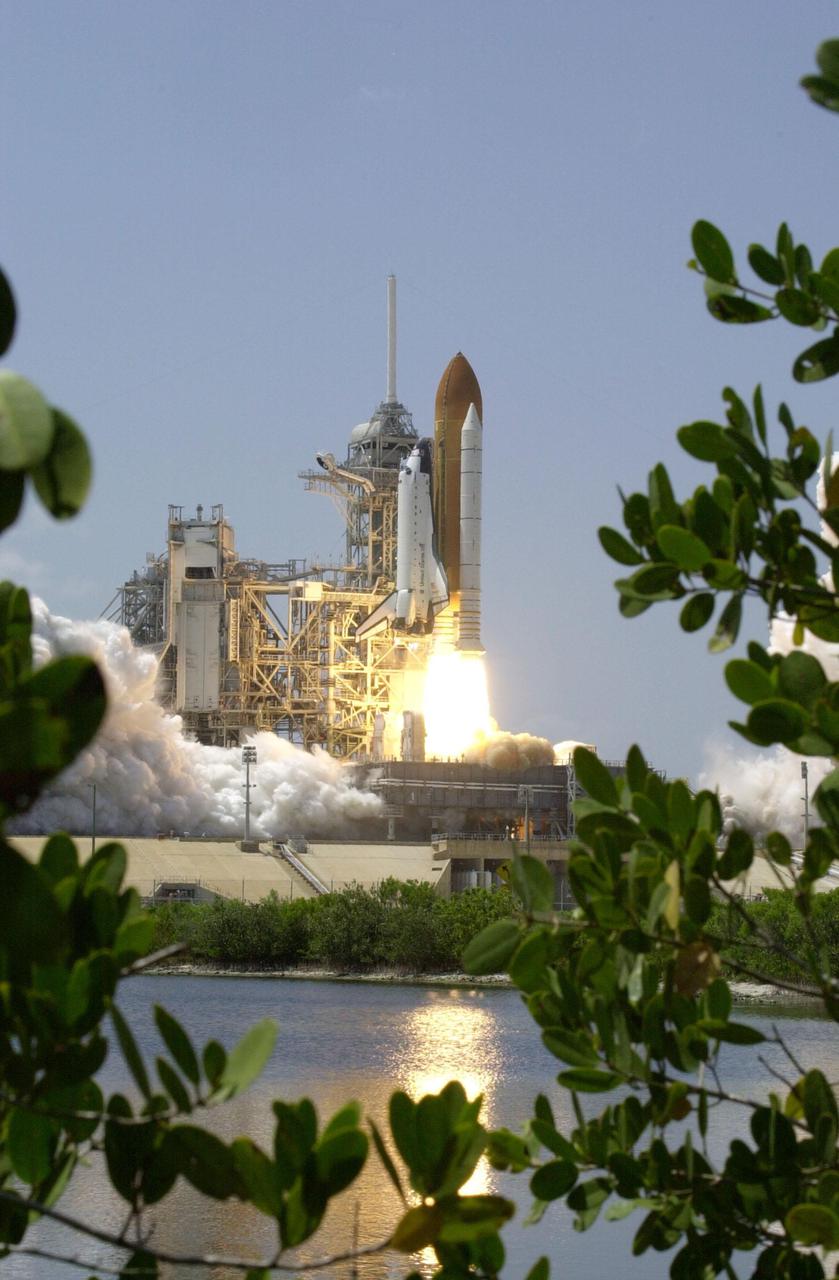
KENNEDY SPACE CENTER, FLA. -- Spring leaves frame the launch of Space Shuttle Endeavour on mission STS-100, the ninth flight to the International Space Station. Liftoff occurred at 2:40:42 p.m. EDT. The 11-day mission will deliver and integrate the Spacelab Logistics Pallet_Launch Deployment Assembly, which includes the Space Station Remote Manipulator System and the UHF Antenna. The mission includes two planned spacewalks for installation of the SSRMS on the Station. Also onboard is the Multi-Purpose Logistics Module Raffaello, carrying resupply stowage racks and resupply_return stowage platform
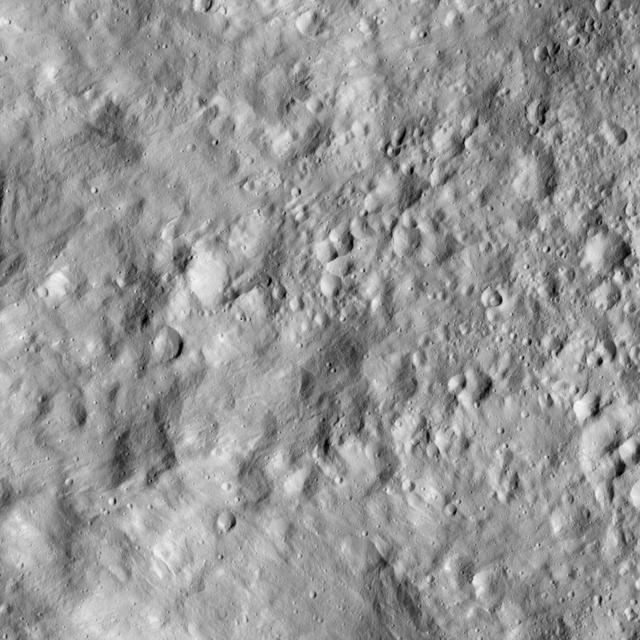
This image from NASA's Dawn spacecraft shows terrain on Ceres covered by ejecta from a nearby impact, which has smoothed the appearance of older features. The image is centered at 21 degrees north latitude, 253 degrees east longitude. Dawn took this image on June 12, 2016, from its low-altitude mapping orbit, at a distance of about 240 miles (385 kilometers) above the surface. The image resolution is 120 feet (35 meters) per pixel. http://photojournal.jpl.nasa.gov/catalog/PIA20964
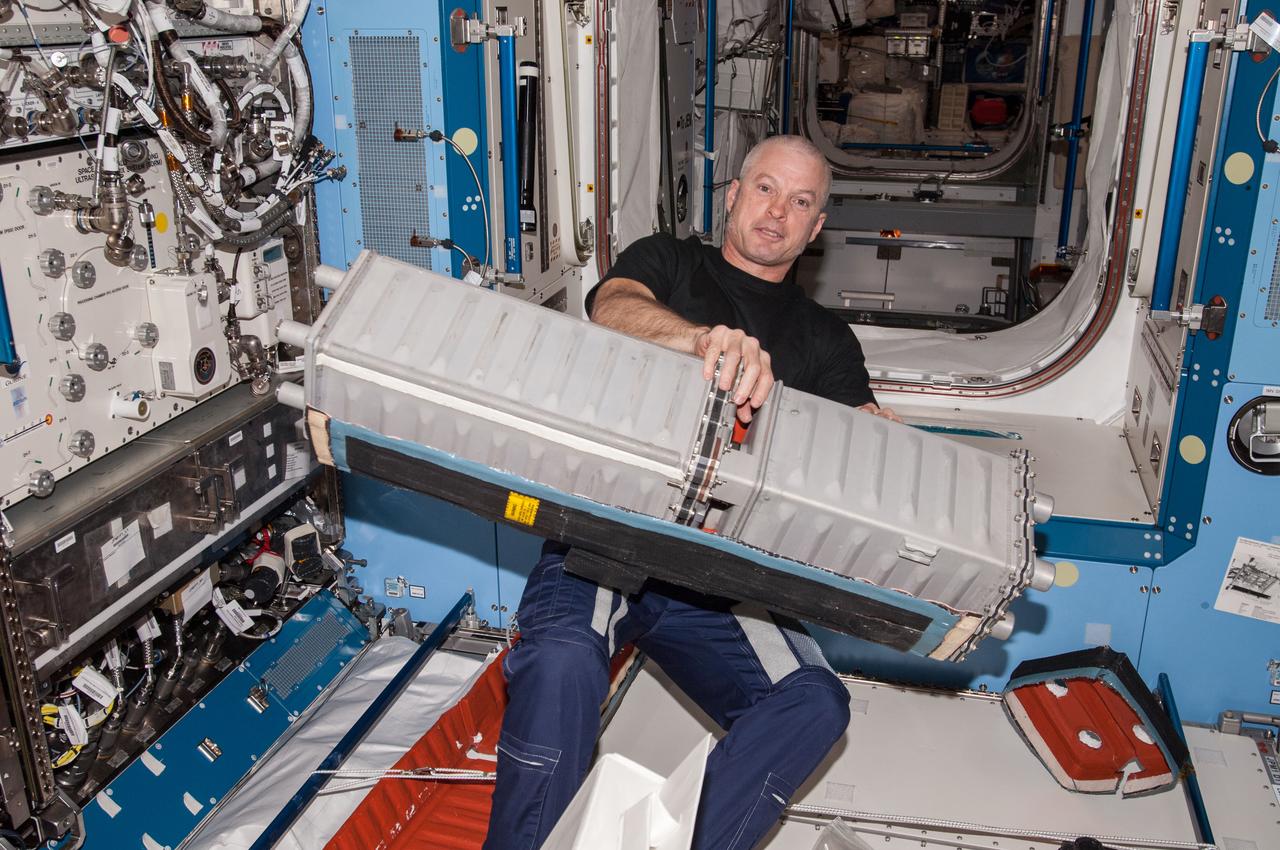
ISS040-E-026221 (30 June 2014) --- NASA astronaut Steve Swanson, Expedition 40 commander, holds the Carbon Dioxide Removal Assembly (CDRA) in the Kibo laboratory of the International Space Station.
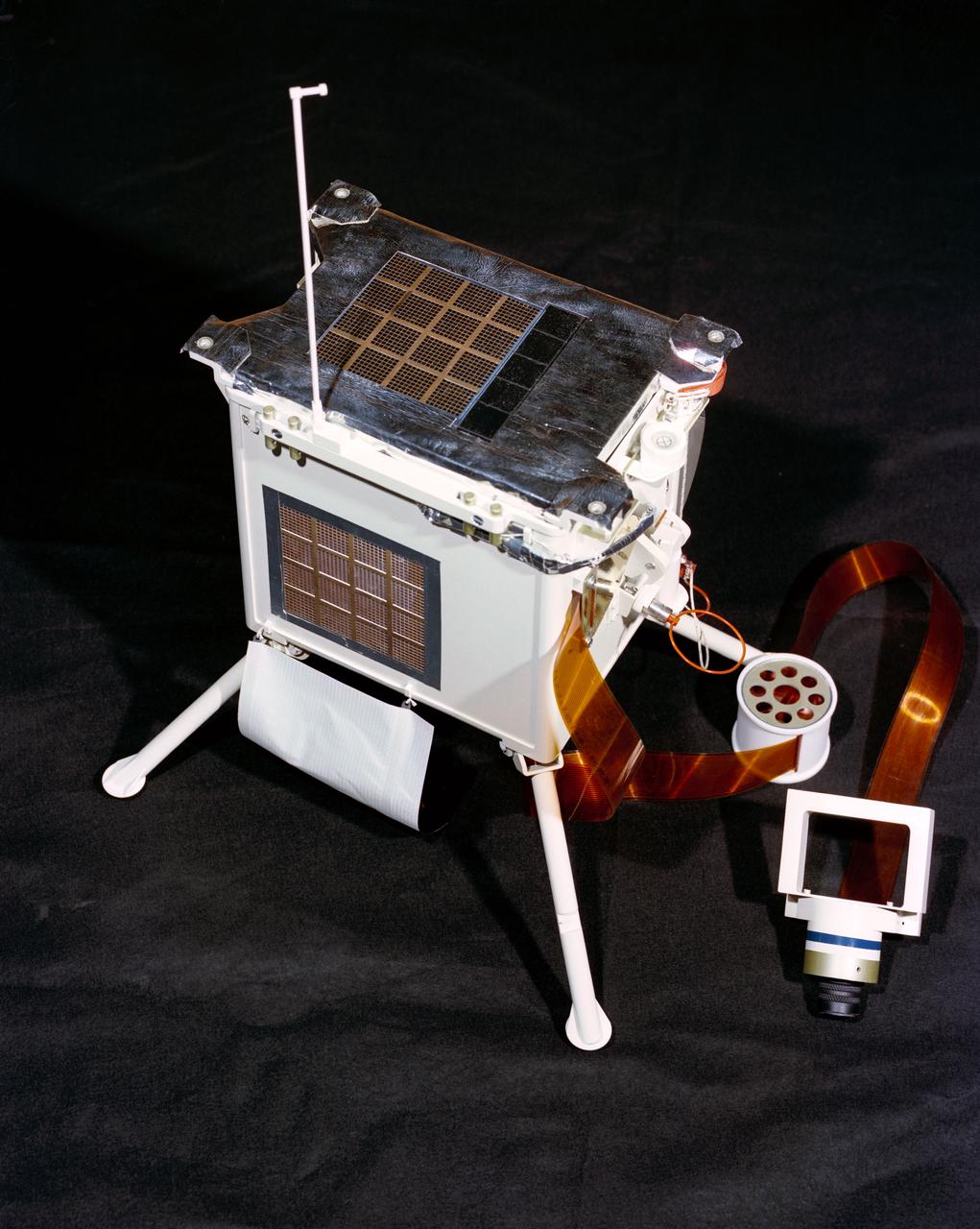
S72-37257 (November 1972) --- The Lunar Ejecta and Meteorites Experiment (S-202), one of the experiments of the Apollo Lunar Surface Experiments Package which will be carried on the Apollo 17 lunar landing mission. The purpose of this experiment is to measure the physical parameters of primary and secondary particles impacting the lunar surface.
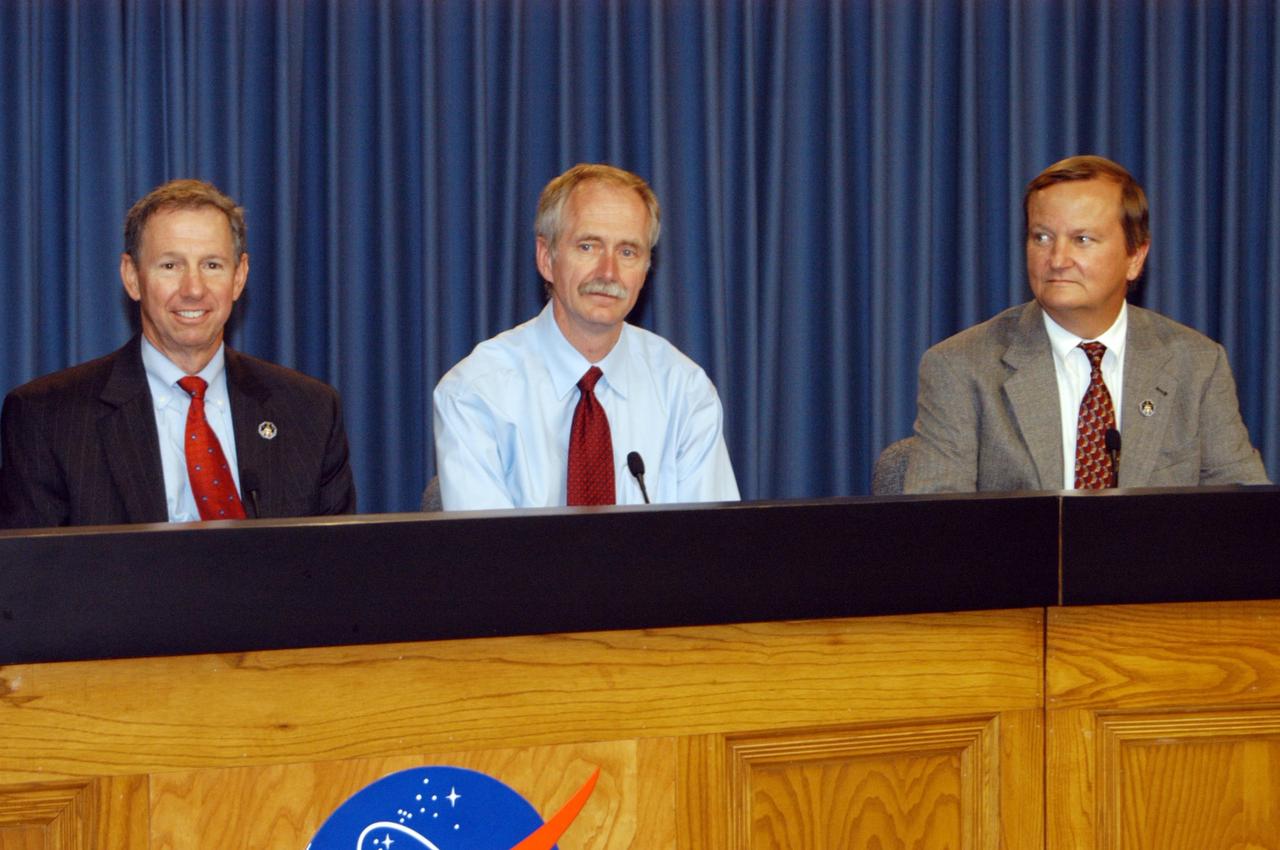
KENNEDY SPACE CENTER, FLA. - A press conference after the landing of the orbiter Discovery and mission STS-121 crew features NASA Administrator Mike Griffin, Associate Administrator for Space Operations Bill Gerstenmaier and Shuttle Launch Director Mike Leinbach. Discovery traveled 5.3 million miles, landing on orbit 202. Mission elapsed time was 12 days, 18 hours, 37 minutes and 54 seconds. The landing is the 62nd at Kennedy Space Center and the 32nd for Discovery. Photo credit: NASA/George Shelton
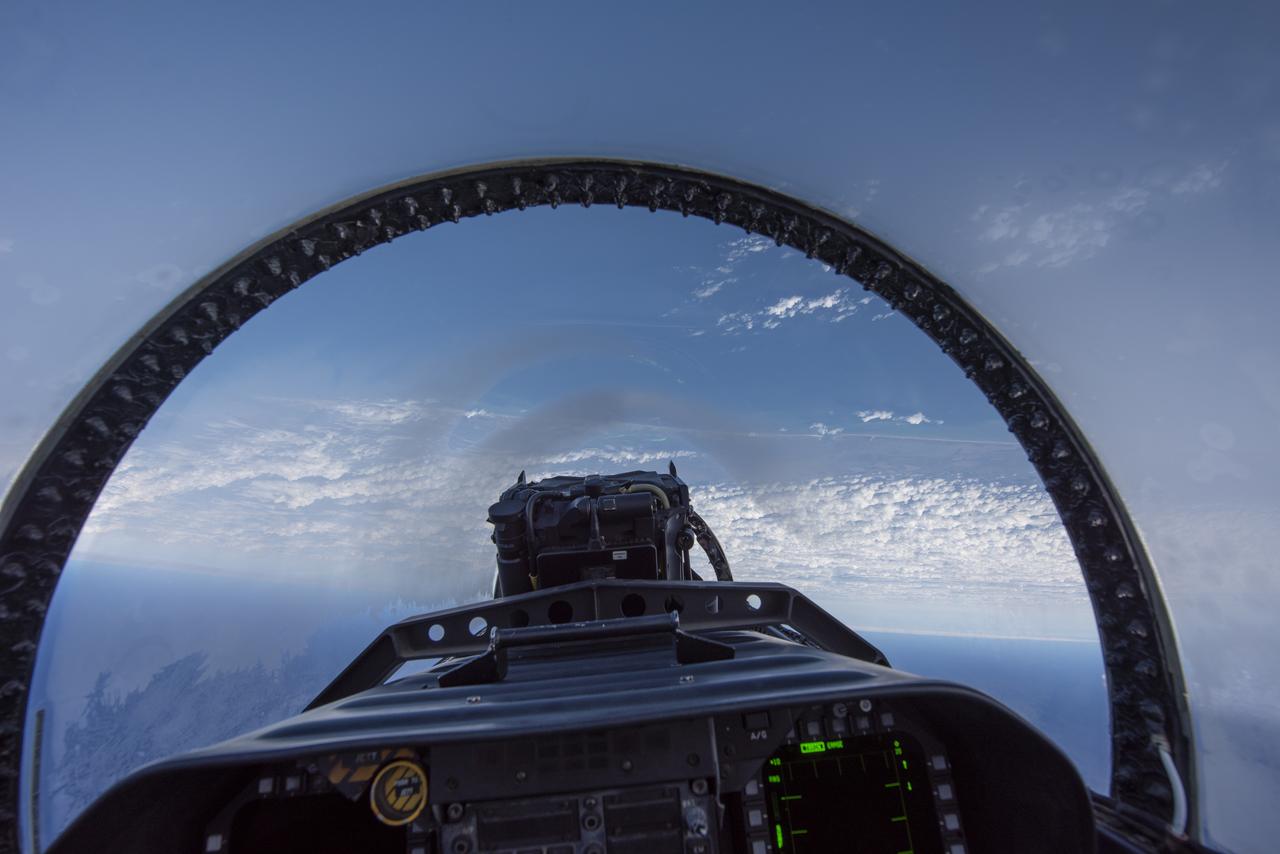
NASA test pilots perform the quiet supersonic dive maneuver off the coast of Galveston, Texas to create a quieter version of the sonic boom, in order to obtain recruited community survey feedback data. The test pilot climbs to around 50,000 feet, followed by a supersonic, inverted dive. This creates sonic boom shockwaves in a way that they are quieter in a specific area. Meanwhile, NASA researchers match community feedback to the sound levels of the flights, using an electronic survey and microphone monitor stations on the ground. This is preparing NASA for community response models for the future X-59 QueSST.
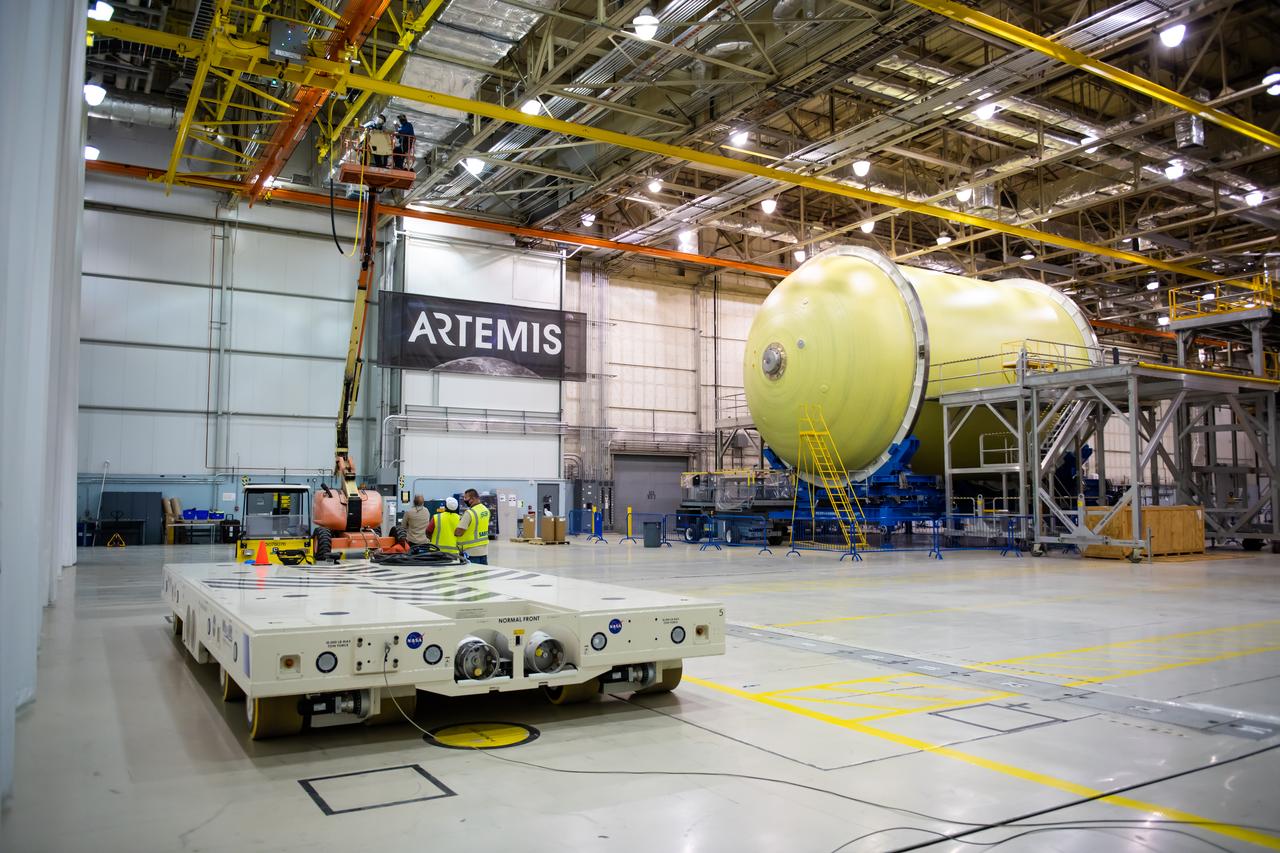
Employees wear personal protective gear at Michoud Assembly Facility as the facility transitioned to Stage 3 of NASA’s Framework for Return To On-Site Work. Employees wear the appropriate personal protective equipment (PPE) and/or cloth face coverings as required for assigned tasks. Access to the facility is limited to authorized personnel working on mission-critical tasks that must be conducted onsite. Mission-critical tasks include slowly and methodically resuming Space Launch System (SLS) Core Stage and Orion production activities, particularly critical path deliverables to support the Artemis Program, at a pace that limits personnel and follows federal guidelines for social distancing and use of personal protective equipment such as face masks. For more information about SLS, visit nasa.gov/sls.
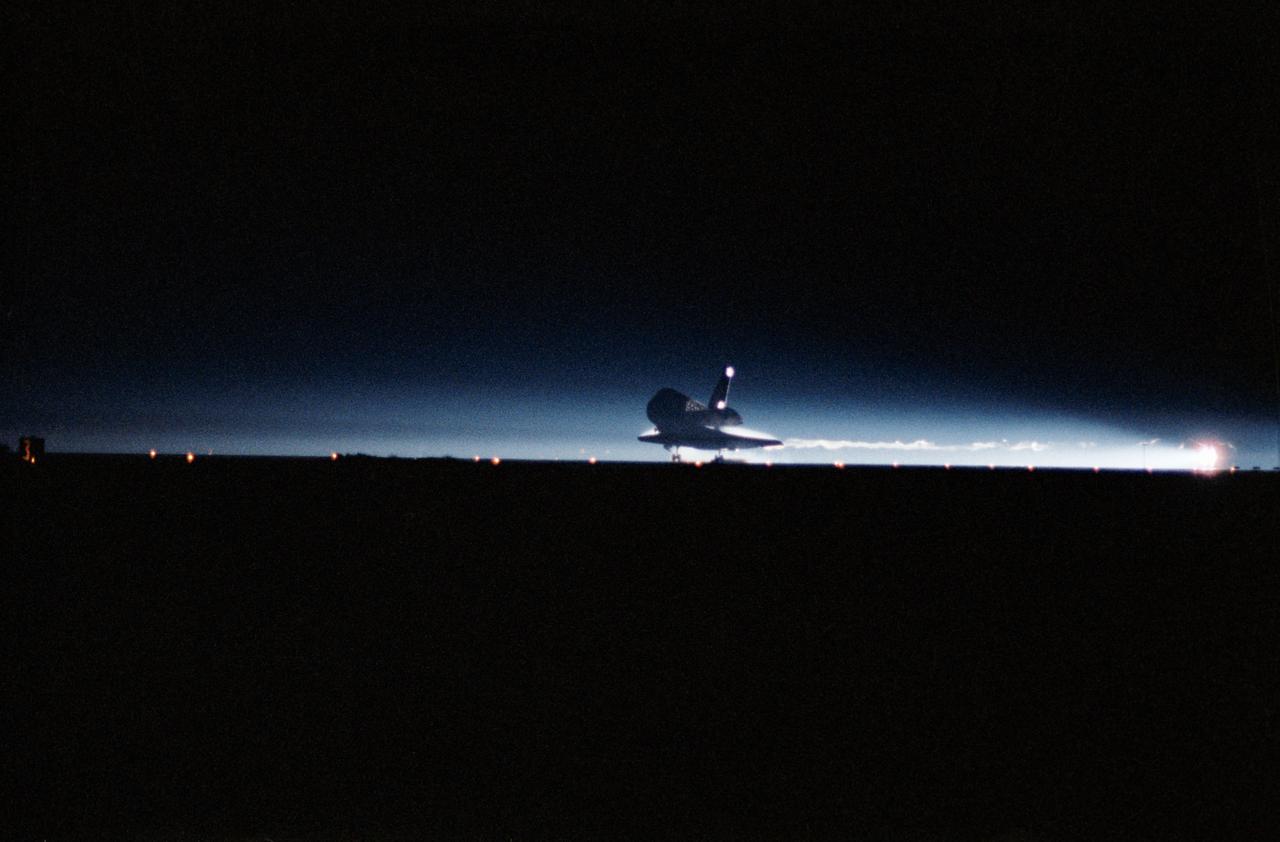
STS-32 Columbia, Orbiter Vehicle (OV) 102, is captured as its main landing gear (MLG) touches down on runway 22 at Edwards Air Force Base (EAFB), California, in the early morning darkness. The night landing ended a record 11-day mission in space. Moments later, at 1:36:38 am Pacific Standard Time (PST), OV-102 came to a complete stop, having logged 4,509,972 miles in flight.
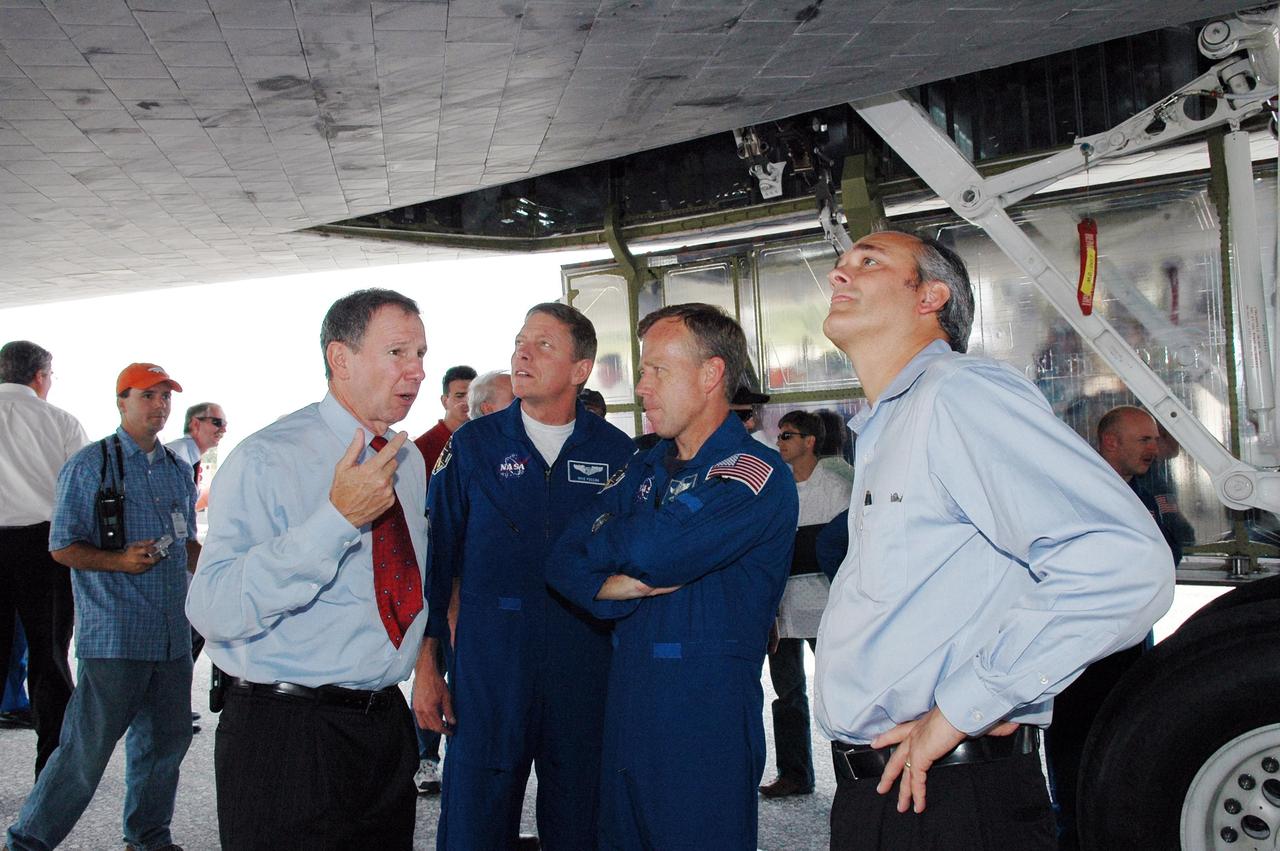
KENNEDY SPACE CENTER, FLA. - During the traditional post-flight walk-around after the landing of an orbiter, crew members Michael Fossum, mission specialist, and Steven Lindsey, commander, talk with NASA Administrator Mike Griffin (left). At right is Associate Administrator Rex Geveden. Discovery's smooth and perfect landing was on time at 9:14 a.m. EDT on Runway 15 of NASA's Shuttle Landing Facility after traveling 5.3 million miles on 202 orbits. Mission elapsed time was 12 days, 18 hours, 37 minutes and 54 seconds. The landing is the 62nd at Kennedy Space Center and the 32nd for Discovery. Photo credit: NASA/Kim Shiflett
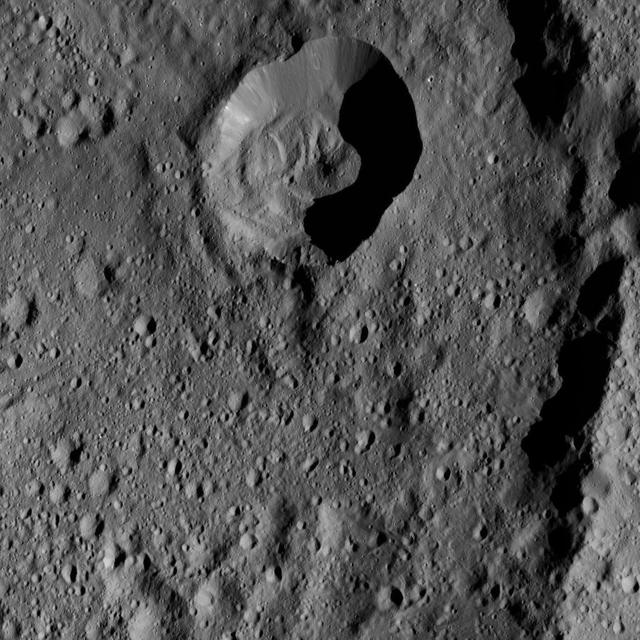
This view from NASA's Dawn spacecraft shows an area within Ezinu Crater on Ceres. Ezinu, which is 72 miles (116 kilometers) wide, was named for the Sumerian goddess of grain. Part of the crater's eastern rim is visible along the right side of the image. The image is centered at 42 degrees north latitude, 202 degrees east longitude. Ezinu can also be seen at PIA20190. Dawn took this image on June 8, 2016, from its low-altitude mapping orbit, at a distance of about 240 miles (385 kilometers) above the surface. The image resolution is 120 feet (35 meters) per pixel. http://photojournal.jpl.nasa.gov/catalog/PIA20958
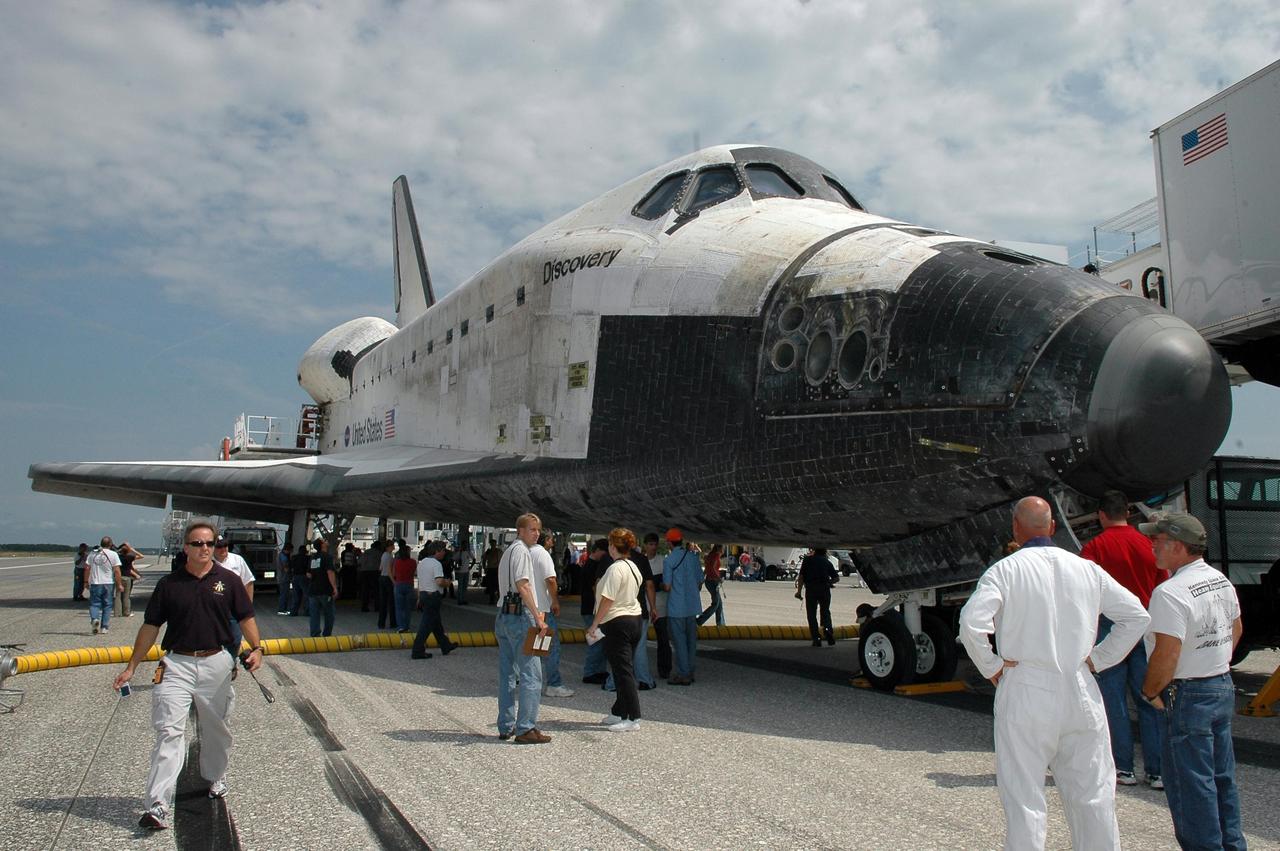
KENNEDY SPACE CENTER, FLA. - Workers and media at NASA's Kennedy Space Center watch while the orbiter Discovery, following the landing from mission STS-121, is prepared for the roll to the Orbiter Processing Facility. Discovery's smooth and perfect landing was on time at 9:14 a.m. EDT on Runway 15 of NASA's Shuttle Landing Facility after traveling 5.3 million miles on 202 orbits. Mission elapsed time was 12 days, 18 hours, 37 minutes and 54 seconds. The landing is the 62nd at Kennedy Space Center and the 32nd for Discovery. Photo credit: NASA/Kim Shiflett
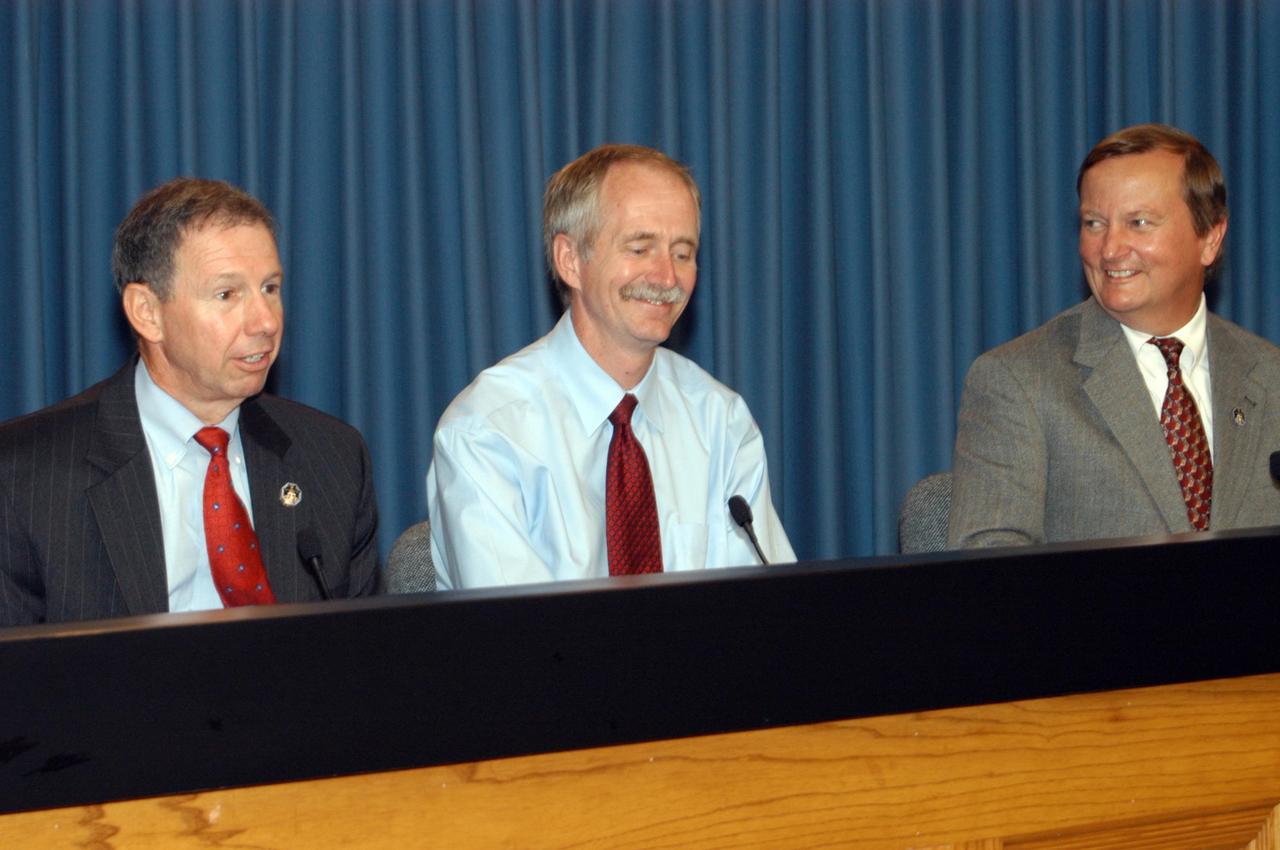
KENNEDY SPACE CENTER, FLA. - A press conference after the landing of the orbiter Discovery and mission STS-121 crew features NASA Administrator Mike Griffin, Associate Administrator for Space Operations Bill Gerstenmaier and Shuttle Launch Director Mike Leinbach. A few of the questions from the media evoked smiles from the panelists. Discovery traveled 5.3 million miles, landing on orbit 202. Mission elapsed time was 12 days, 18 hours, 37 minutes and 54 seconds. The landing is the 62nd at Kennedy Space Center and the 32nd for Discovery. Photo credit: NASA/George Shelton
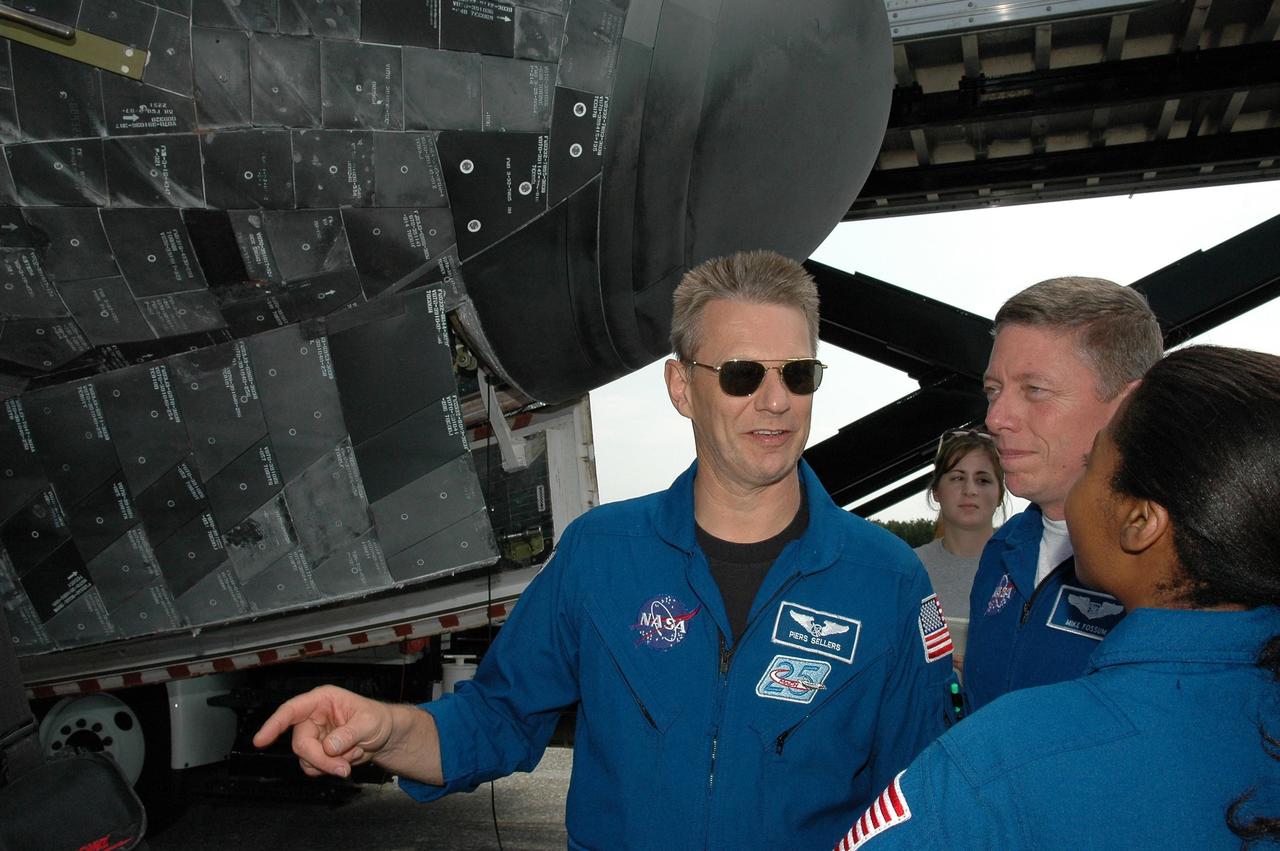
KENNEDY SPACE CENTER, FLA. - During the traditional post-flight walk-around after the landing of an orbiter, Mission Specialists Piers Sellers, Michael Fossum and Stephanie Wilson get a close look at the nose cone, behind them. Discovery's smooth and perfect landing was on time at 9:14 a.m. EDT on Runway 15 of NASA's Shuttle Landing Facility after traveling 5.3 million miles on 202 orbits. Mission elapsed time was 12 days, 18 hours, 37 minutes and 54 seconds. The landing is the 62nd at Kennedy Space Center and the 32nd for Discovery. Photo credit: NASA/Kim Shiflett
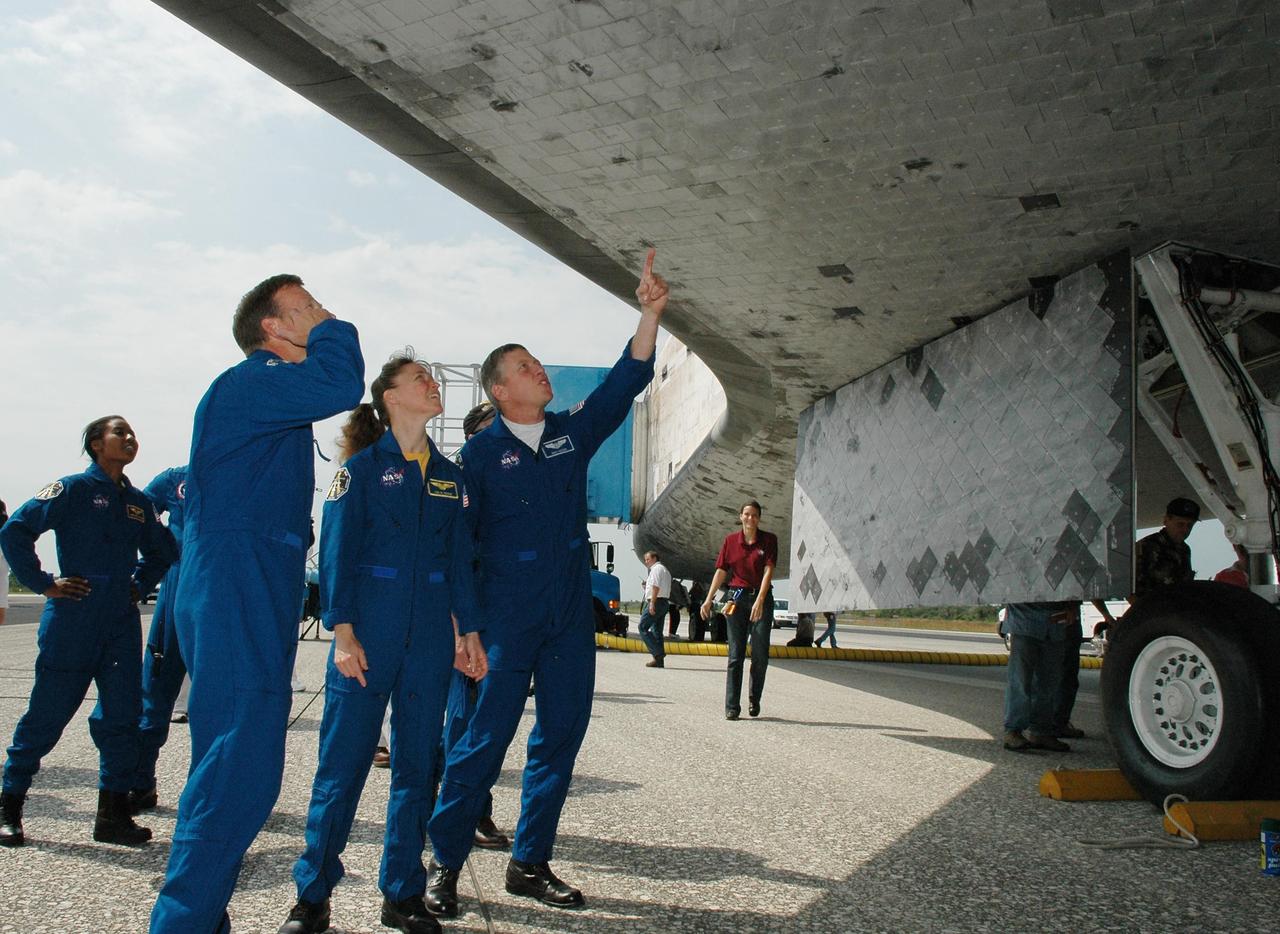
KENNEDY SPACE CENTER, FLA. - The STS-121 crew gets a close look at the underside of the orbiter Discovery after landing. Seen are (from left) Mission Specialist Stephanie Wilson, Commander Steven Lindsey and Mission Specialists Lisa Nowak and Michael Fossum. The post-flight walk-around is a tradition. Discovery's smooth and perfect landing was on time at 9:14 a.m. EDT on Runway 15 of NASA's Shuttle Landing Facility after traveling 5.3 million miles on 202 orbits. Mission elapsed time was 12 days, 18 hours, 37 minutes and 54 seconds. The landing is the 62nd at Kennedy Space Center and the 32nd for Discovery. Photo credit: NASA/Kim Shiflett
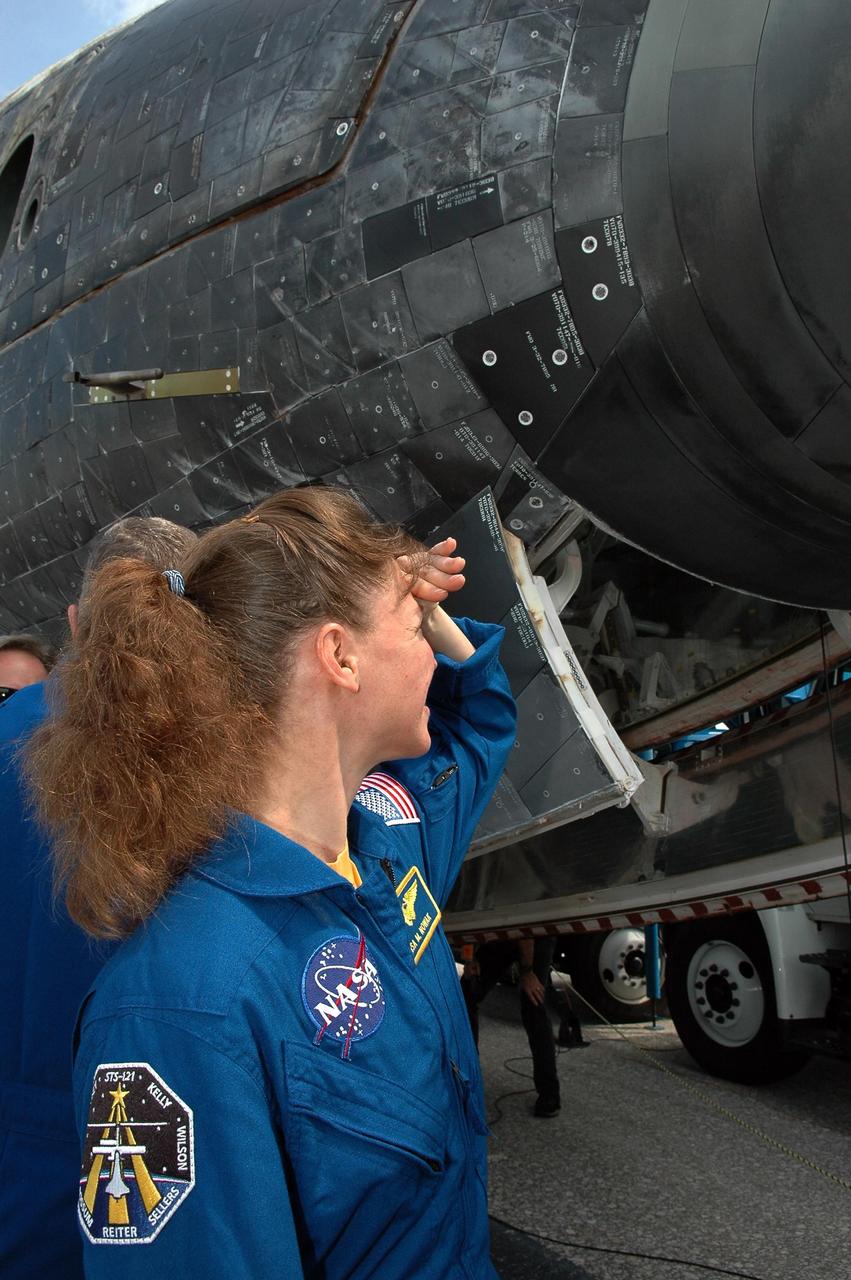
KENNEDY SPACE CENTER, FLA. - During the traditional post-flight walk-around after the landing of an orbiter, Mission Specialist Lisa Nowak gets a close look at the nose cone. Discovery's smooth and perfect landing was on time at 9:14 a.m. EDT on Runway 15 of NASA's Shuttle Landing Facility after traveling 5.3 million miles on 202 orbits. Mission elapsed time was 12 days, 18 hours, 37 minutes and 54 seconds. The landing is the 62nd at Kennedy Space Center and the 32nd for Discovery. Photo credit: NASA/Kim Shiflett
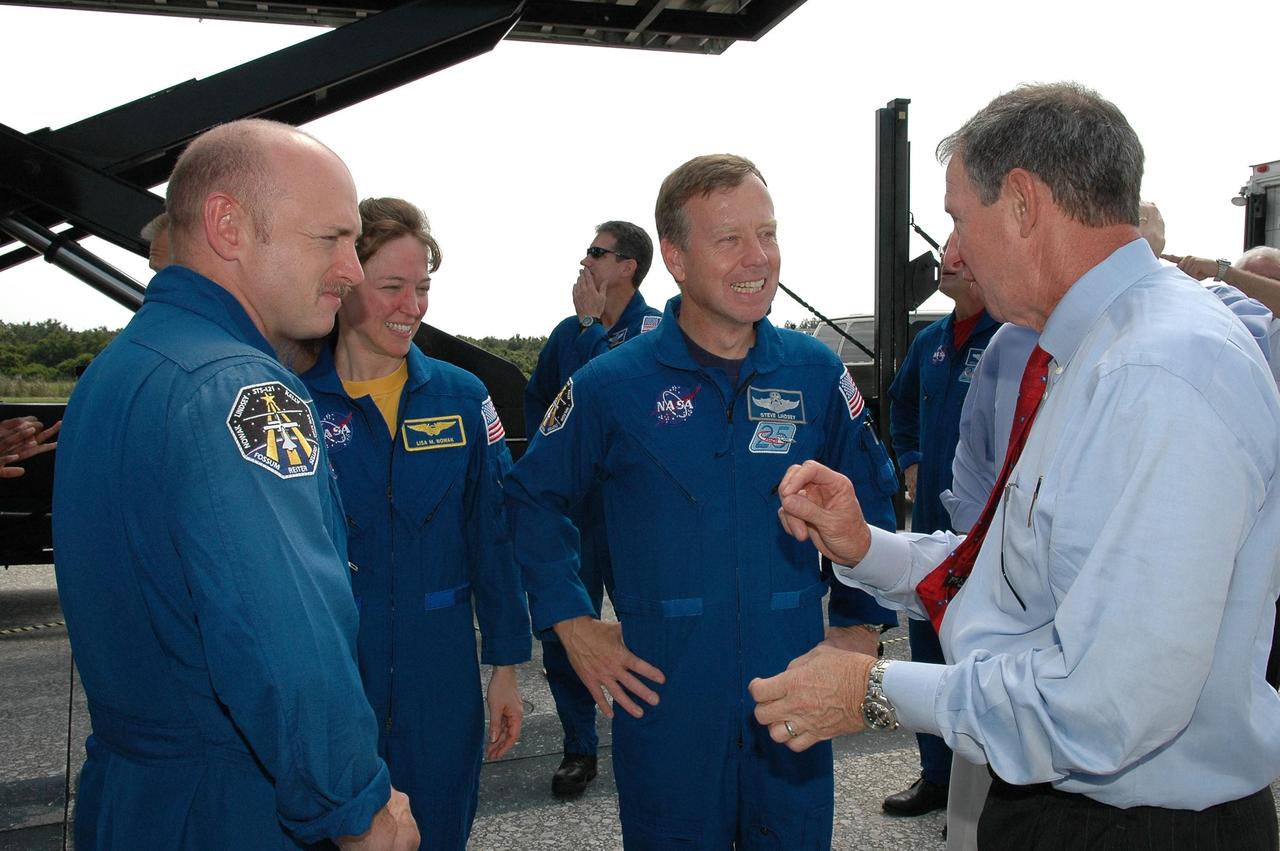
KENNEDY SPACE CENTER, FLA. - During the traditional post-flight walk-around after the landing of an orbiter, NASA Administrator Mike Griffin (right) shares a story with STS-121 Pilot Mark Kelly, Mission Specialist Lisa Nowak and Commander Steven Lindsey. Discovery's smooth and perfect landing was on time at 9:14 a.m. EDT on Runway 15 of NASA's Shuttle Landing Facility after traveling 5.3 million miles on 202 orbits. Mission elapsed time was 12 days, 18 hours, 37 minutes and 54 seconds. The landing is the 62nd at Kennedy Space Center and the 32nd for Discovery. Photo credit: NASA/Kim Shiflett
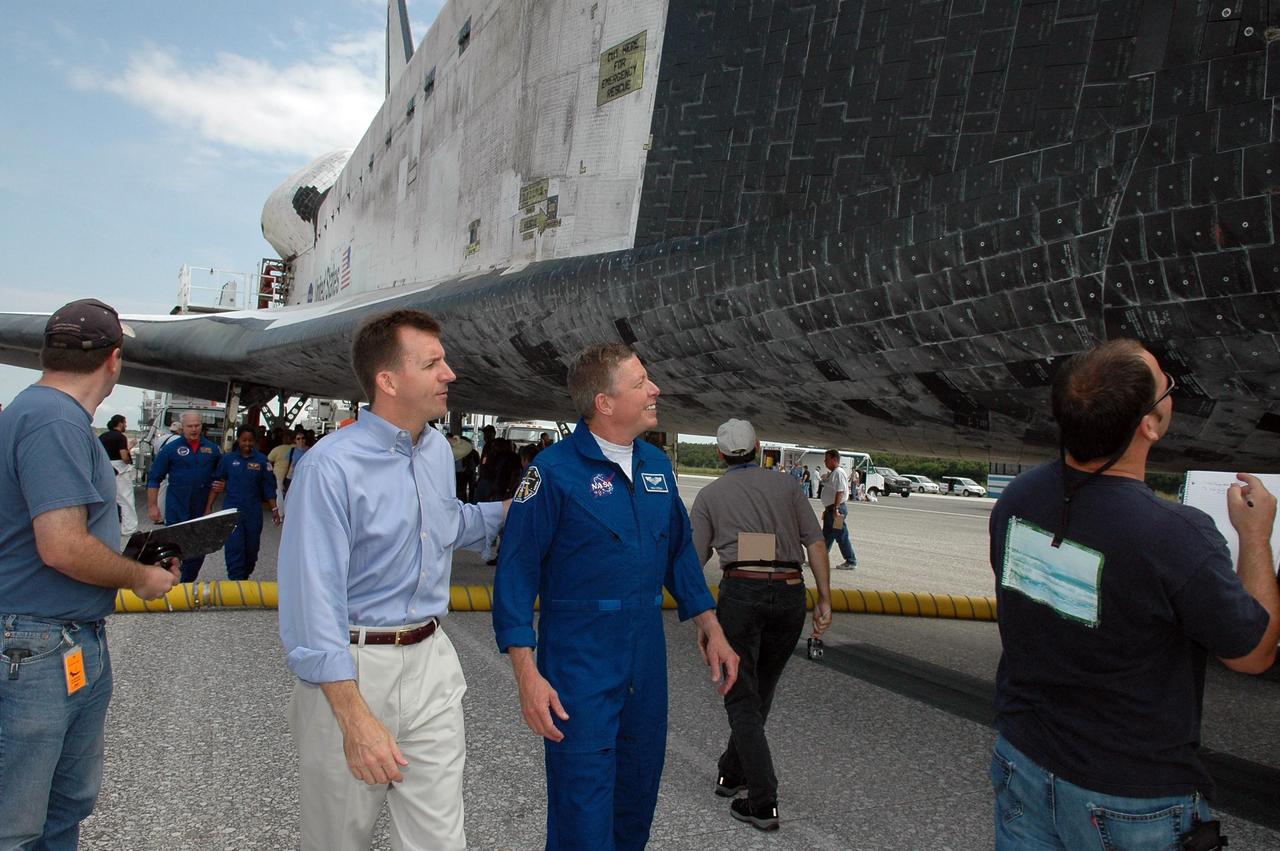
KENNEDY SPACE CENTER, FLA. - LeRoy Cain, manager of Shuttle Launch Integration, and Michael Fossum, STS-121 mission specialist, take a look at the orbiter Discovery during the traditional post-flight walk-around after the landing. Discovery's smooth and perfect landing was on time at 9:14 a.m. EDT on Runway 15 of NASA's Shuttle Landing Facility after traveling 5.3 million miles on 202 orbits. Mission elapsed time was 12 days, 18 hours, 37 minutes and 54 seconds. The landing is the 62nd at Kennedy Space Center and the 32nd for Discovery. Photo credit: NASA/Kim Shiflett
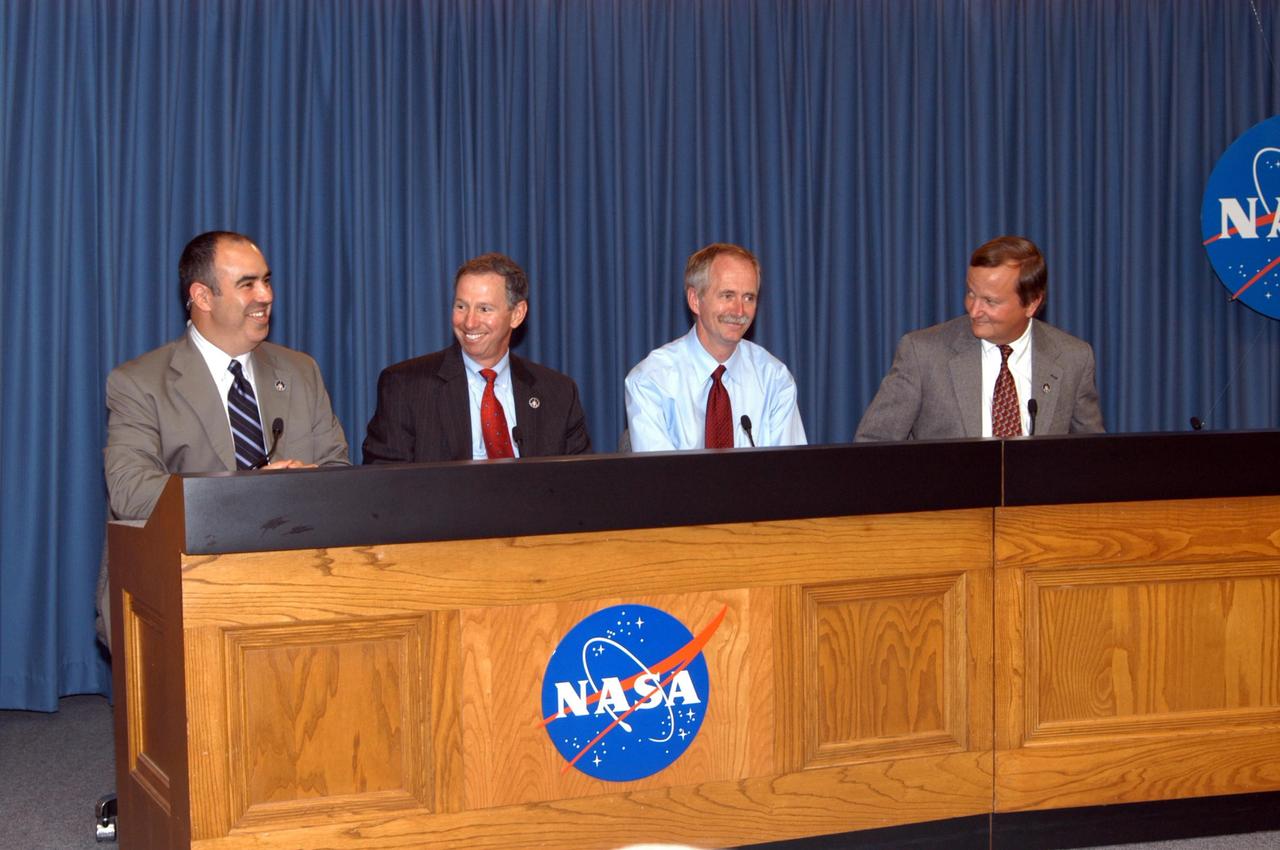
KENNEDY SPACE CENTER, FLA. - A press conference after the landing of the orbiter Discovery and mission STS-121 crew features NASA and Kennedy Space Center senior management. From left, NASA Public Affairs Dean Acosta moderated questions posed to NASA Administrator Mike Griffin, Associate Administrator for Space Operations Bill Gerstenmaier and Shuttle Launch Director Mike Leinbach. Discovery traveled 5.3 million miles, landing on orbit 202. Mission elapsed time was 12 days, 18 hours, 37 minutes and 54 seconds. The landing is the 62nd at Kennedy Space Center and the 32nd for Discovery. Photo credit: NASA/George Shelton
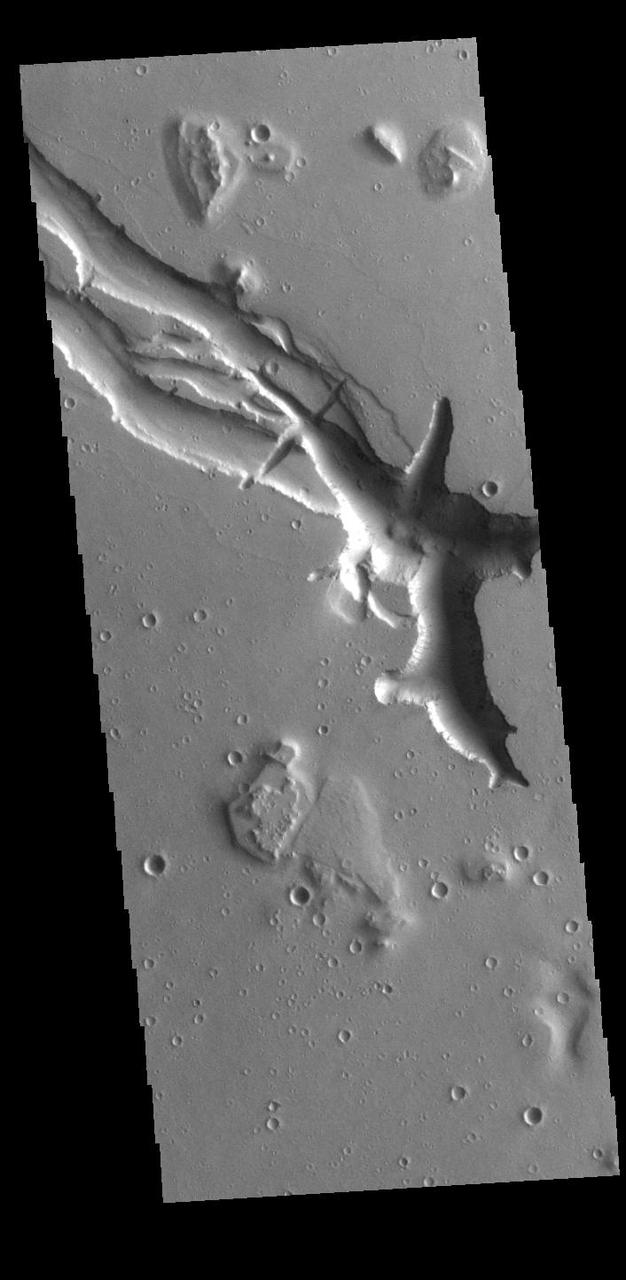
Located west of the Elysium Volcanic complex, Hebrus Valles is a complex channel system that flowed to the north. The start of the channel is visible in this image. There are fluid created channels and tectonic formed depressions in this image, while in other portions of the valles, there are pits and collapse features which appear to have formed by material falling into subsurface voids. These are common features in regions of volcanic activity where lava tubes run below the surface. Both water and lava contributed to the formation of Hebrus Valles. Hebrus Valles is 325km (202 miles) long. Orbit Number: 94308 Latitude: 17.8126 Longitude: 128.079 Instrument: VIS Captured: 2023-03-19 15:06 https://photojournal.jpl.nasa.gov/catalog/PIA26001
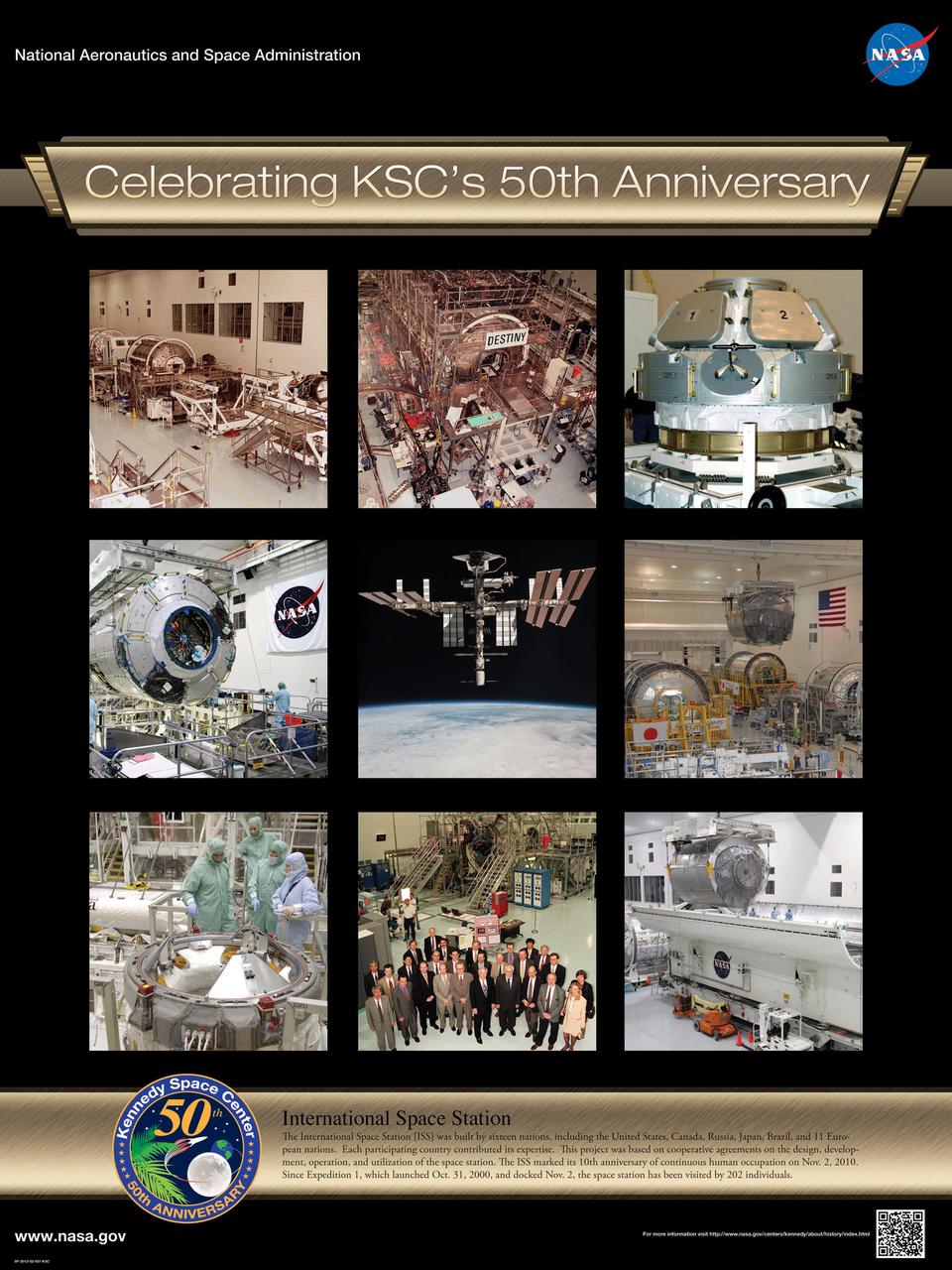
International Space Station: The International Space Station, or ISS, was built by sixteen nations, including the United States, Canada, Russia, Japan, Brazil, and 11 European nations. Each participating country contributed its expertise. This project was based on cooperative agreements on the design, development, operation, and utilization of the space station. The ISS marked its 10th anniversary of continuous human occupation on Nov. 2, 2010. Since Expedition 1, which launched Oct. 31, 2000, and docked Nov. 2, the space station has been visited by 202 individuals. Poster designed by Kennedy Space Center Graphics Department/Greg Lee. Credit: NASA

Astronaut Scott Kelly initiated VEG-01 B, the second crop of lettuce, on July, 8, 2015, and both Kelly and Astronaut Kjell Lindgren cared for the plants. The crop grew for 33 days. VEG-01 B included one set of six plant pillows planted with red romaine lettuce seeds. On Aug. 10, 2015, the crew harvested and consumed leaves from each plant. This was the first crop grown and consumed in NASA hardware. They harvested the rest of the plant tissue and froze it in the station’s Minus Eighty-Degree Laboratory Freezer for ISS (MELFI) for return to Earth for further study including microbial analysis, antioxidant capacity, mineral analysis and anthocyanin concentration.
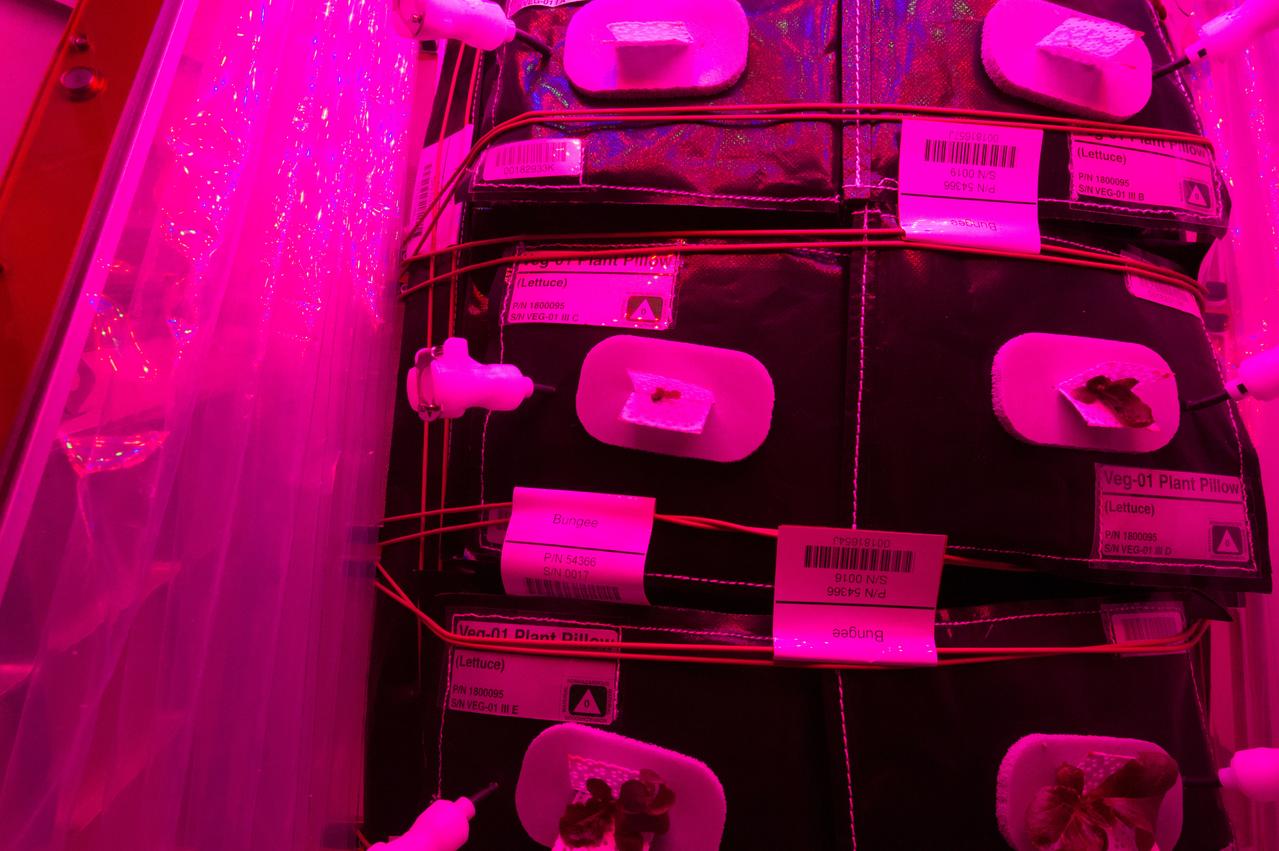
Astronaut Scott Kelly initiated VEG-01 B, the second crop of lettuce, on July, 8, 2015, and both Kelly and Astronaut Kjell Lindgren cared for the plants. The crop grew for 33 days. VEG-01 B included one set of six plant pillows planted with red romaine lettuce seeds. On Aug. 10, 2015, the crew harvested and consumed leaves from each plant. This was the first crop grown and consumed in NASA hardware. They harvested the rest of the plant tissue and froze it in the station’s Minus Eighty-Degree Laboratory Freezer for ISS (MELFI) for return to Earth for further study including microbial analysis, antioxidant capacity, mineral analysis and anthocyanin concentration.
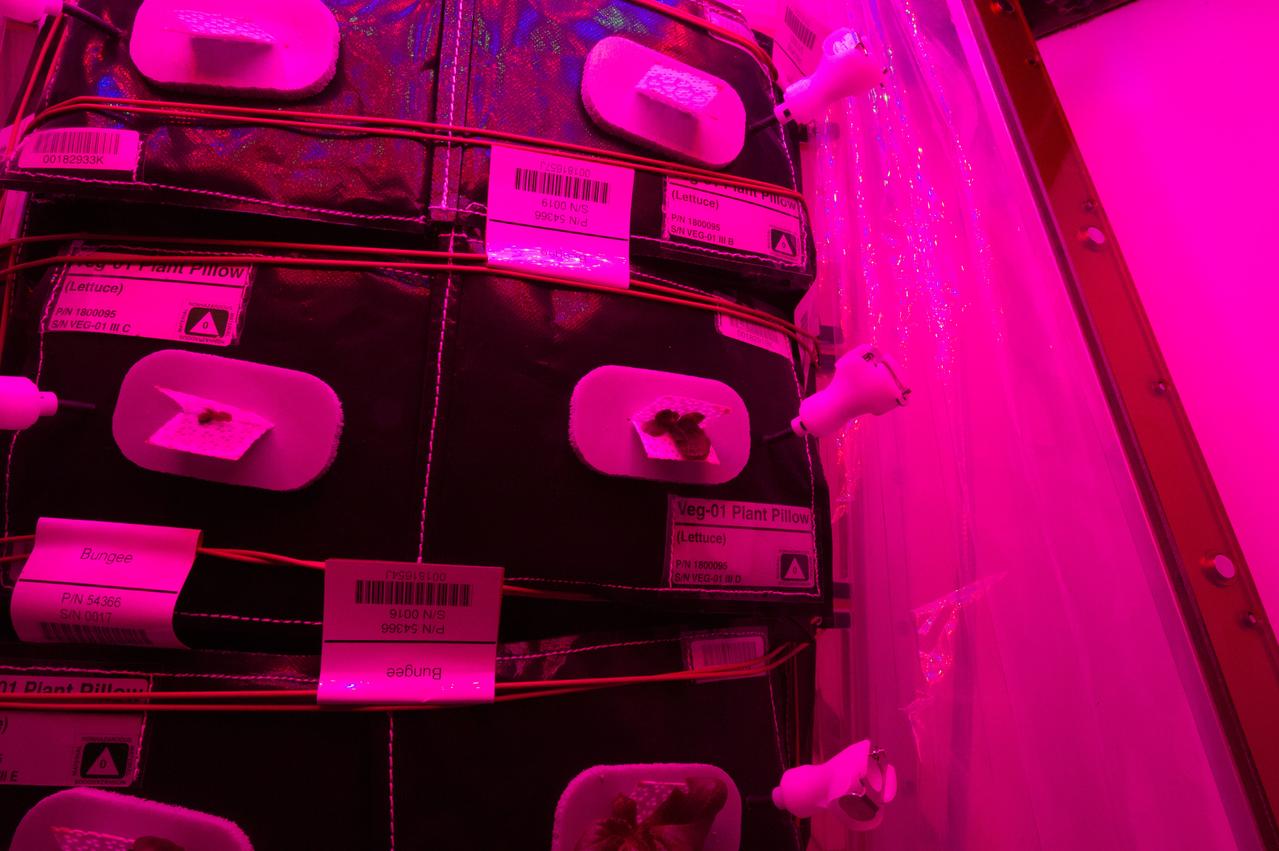
Astronaut Scott Kelly initiated VEG-01 B, the second crop of lettuce, on July, 8, 2015, and both Kelly and Astronaut Kjell Lindgren cared for the plants. The crop grew for 33 days. VEG-01 B included one set of six plant pillows planted with red romaine lettuce seeds. On Aug. 10, 2015, the crew harvested and consumed leaves from each plant. This was the first crop grown and consumed in NASA hardware. They harvested the rest of the plant tissue and froze it in the station’s Minus Eighty-Degree Laboratory Freezer for ISS (MELFI) for return to Earth for further study including microbial analysis, antioxidant capacity, mineral analysis and anthocyanin concentration.

Astronaut Scott Kelly initiated VEG-01 B, the second crop of lettuce, on July, 8, 2015, and both Kelly and Astronaut Kjell Lindgren cared for the plants. The crop grew for 33 days. VEG-01 B included one set of six plant pillows planted with red romaine lettuce seeds. On Aug. 10, 2015, the crew harvested and consumed leaves from each plant. This was the first crop grown and consumed in NASA hardware. They harvested the rest of the plant tissue and froze it in the station’s Minus Eighty-Degree Laboratory Freezer for ISS (MELFI) for return to Earth for further study including microbial analysis, antioxidant capacity, mineral analysis and anthocyanin concentration.
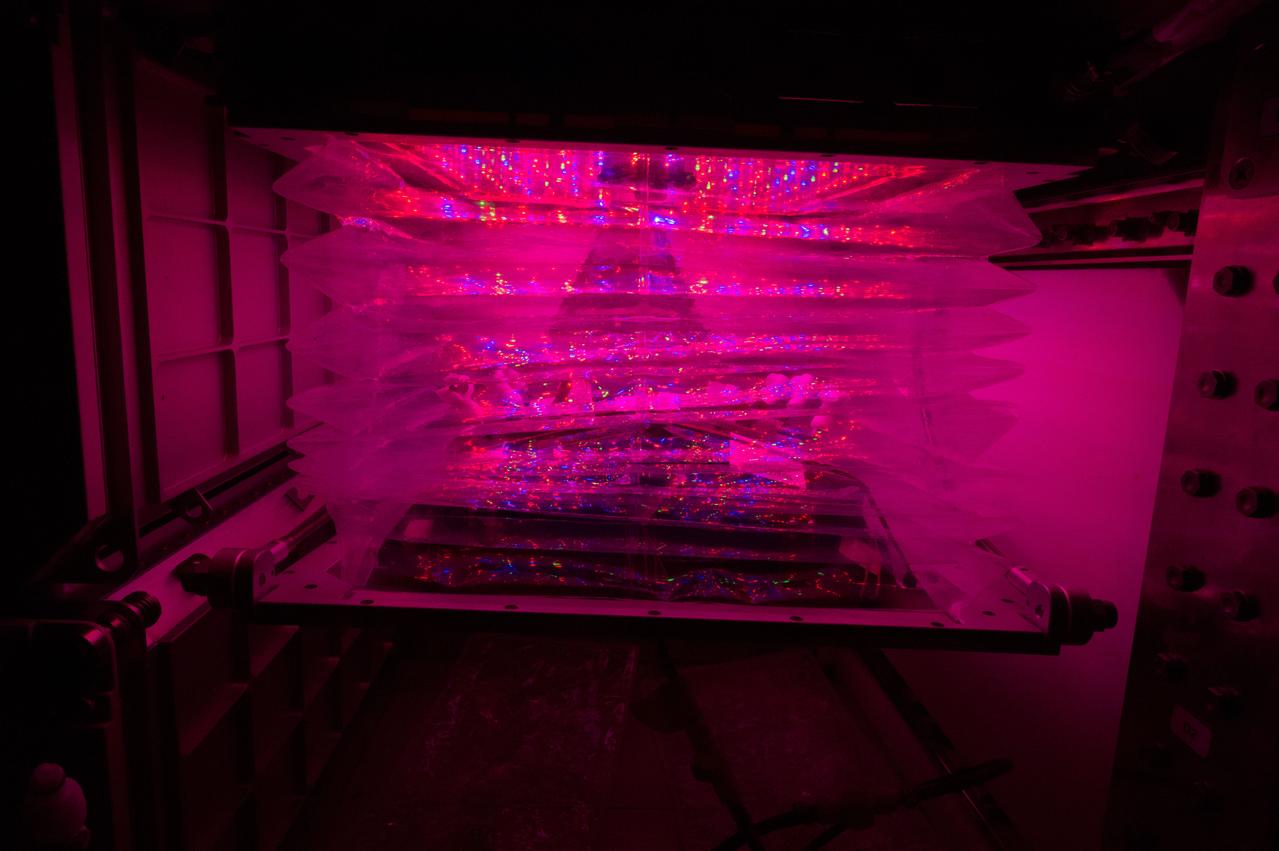
Astronaut Scott Kelly initiated VEG-01 B, the second crop of lettuce, on July, 8, 2015, and both Kelly and Astronaut Kjell Lindgren cared for the plants. The crop grew for 33 days. VEG-01 B included one set of six plant pillows planted with red romaine lettuce seeds. On Aug. 10, 2015, the crew harvested and consumed leaves from each plant. This was the first crop grown and consumed in NASA hardware. They harvested the rest of the plant tissue and froze it in the station’s Minus Eighty-Degree Laboratory Freezer for ISS (MELFI) for return to Earth for further study including microbial analysis, antioxidant capacity, mineral analysis and anthocyanin concentration.

Astronaut Scott Kelly initiated VEG-01 B, the second crop of lettuce, on July, 8, 2015, and both Kelly and Astronaut Kjell Lindgren cared for the plants. The crop grew for 33 days. VEG-01 B included one set of six plant pillows planted with red romaine lettuce seeds. On Aug. 10, 2015, the crew harvested and consumed leaves from each plant. This was the first crop grown and consumed in NASA hardware. They harvested the rest of the plant tissue and froze it in the station’s Minus Eighty-Degree Laboratory Freezer for ISS (MELFI) for return to Earth for further study including microbial analysis, antioxidant capacity, mineral analysis and anthocyanin concentration.
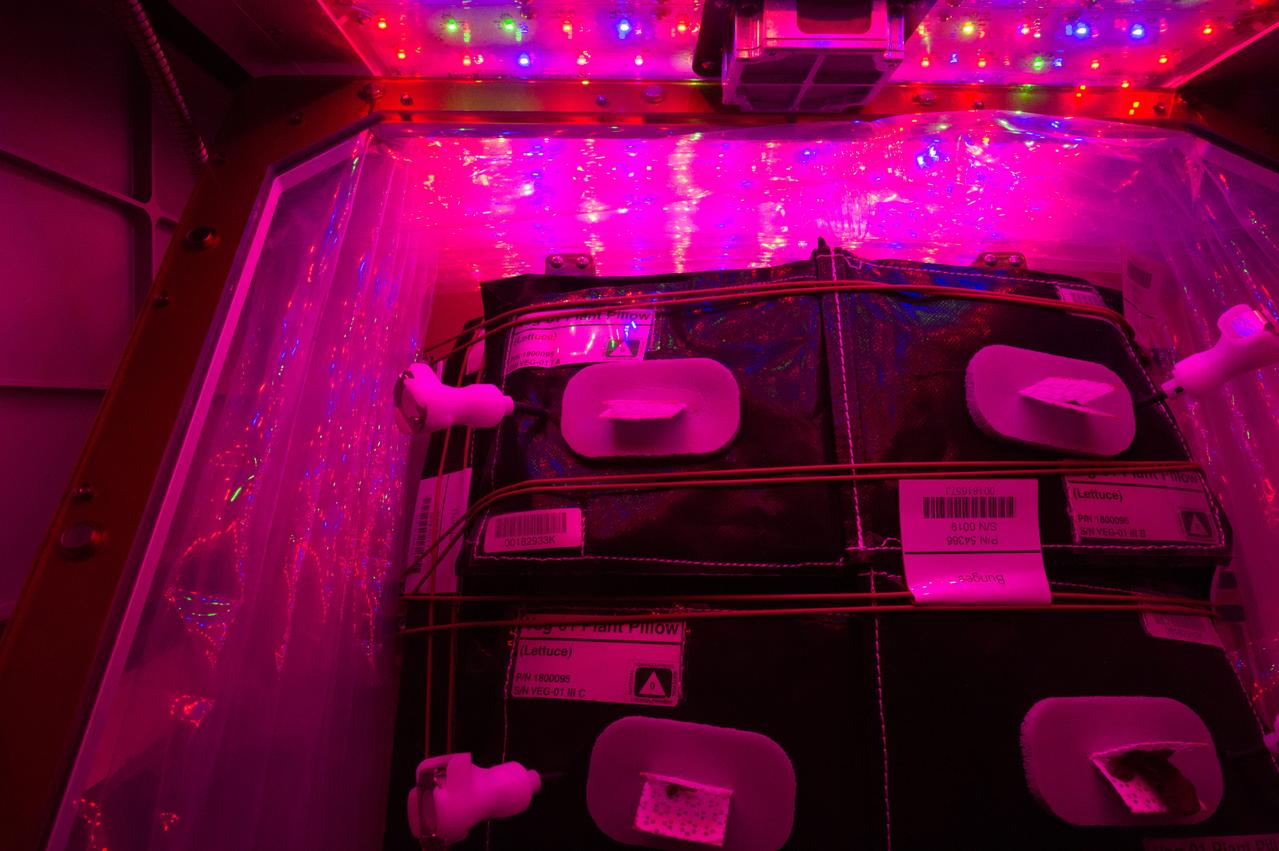
Astronaut Scott Kelly initiated VEG-01 B, the second crop of lettuce, on July, 8, 2015, and both Kelly and Astronaut Kjell Lindgren cared for the plants. The crop grew for 33 days. VEG-01 B included one set of six plant pillows planted with red romaine lettuce seeds. On Aug. 10, 2015, the crew harvested and consumed leaves from each plant. This was the first crop grown and consumed in NASA hardware. They harvested the rest of the plant tissue and froze it in the station’s Minus Eighty-Degree Laboratory Freezer for ISS (MELFI) for return to Earth for further study including microbial analysis, antioxidant capacity, mineral analysis and anthocyanin concentration.
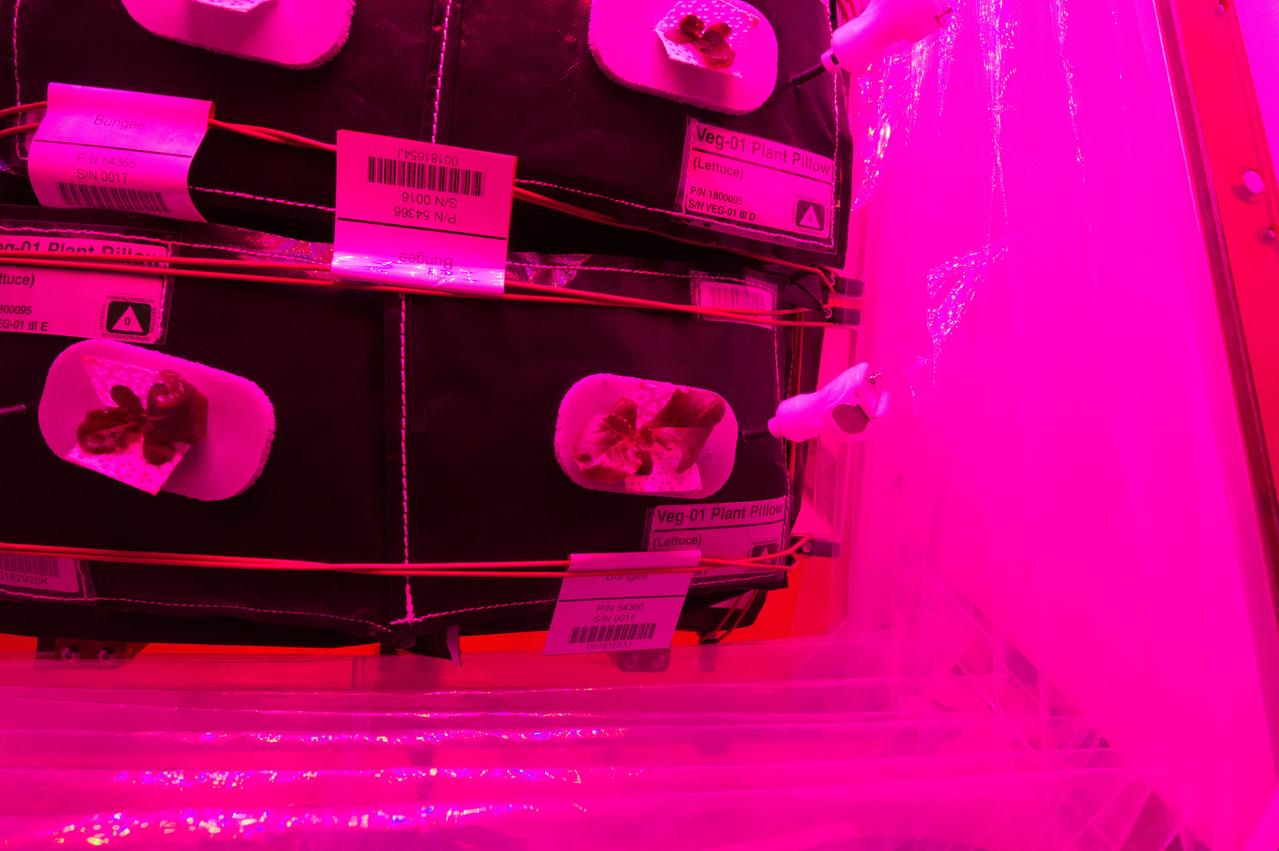
Astronaut Scott Kelly initiated VEG-01 B, the second crop of lettuce, on July, 8, 2015, and both Kelly and Astronaut Kjell Lindgren cared for the plants. The crop grew for 33 days. VEG-01 B included one set of six plant pillows planted with red romaine lettuce seeds. On Aug. 10, 2015, the crew harvested and consumed leaves from each plant. This was the first crop grown and consumed in NASA hardware. They harvested the rest of the plant tissue and froze it in the station’s Minus Eighty-Degree Laboratory Freezer for ISS (MELFI) for return to Earth for further study including microbial analysis, antioxidant capacity, mineral analysis and anthocyanin concentration.

Astronaut Scott Kelly initiated VEG-01 B, the second crop of lettuce, on July, 8, 2015, and both Kelly and Astronaut Kjell Lindgren cared for the plants. The crop grew for 33 days. VEG-01 B included one set of six plant pillows planted with red romaine lettuce seeds. On Aug. 10, 2015, the crew harvested and consumed leaves from each plant. This was the first crop grown and consumed in NASA hardware. They harvested the rest of the plant tissue and froze it in the station’s Minus Eighty-Degree Laboratory Freezer for ISS (MELFI) for return to Earth for further study including microbial analysis, antioxidant capacity, mineral analysis and anthocyanin concentration.
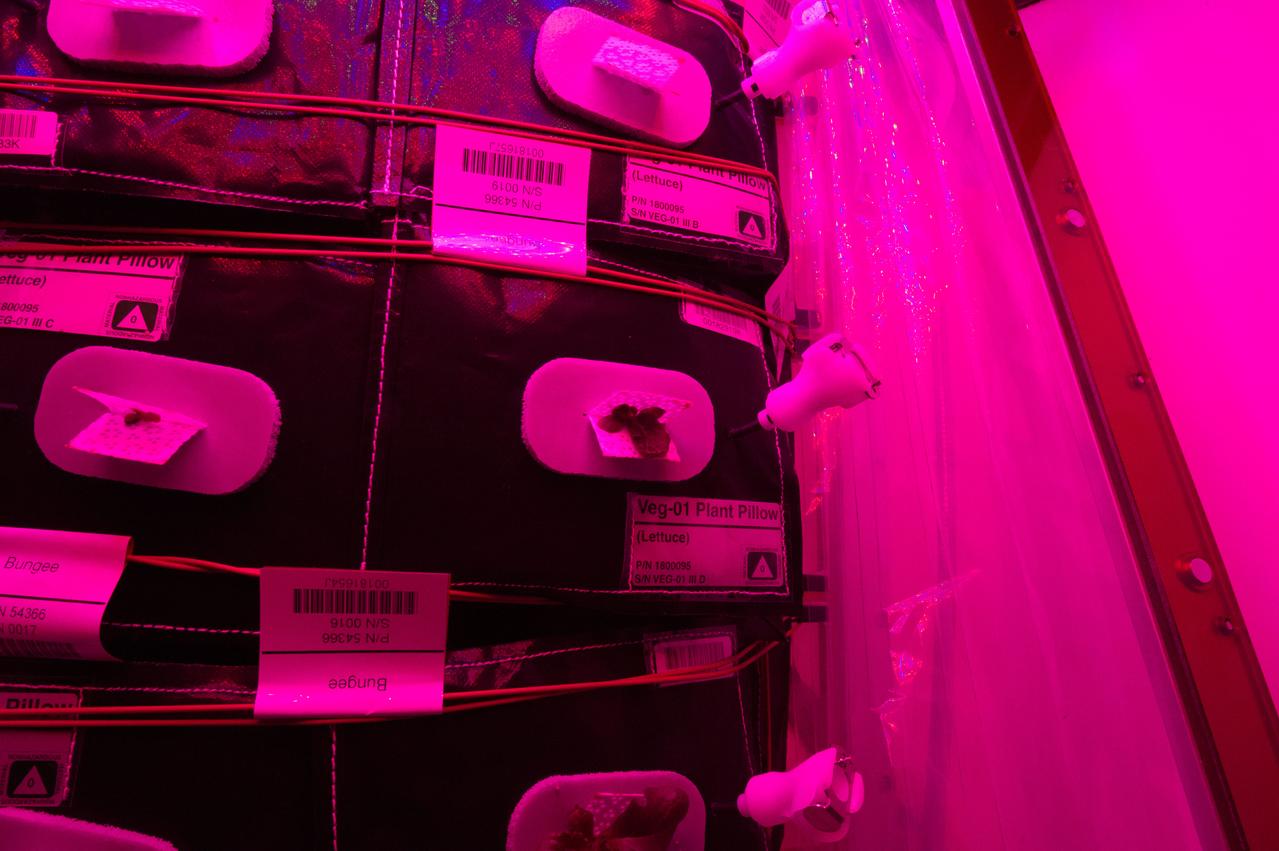
Astronaut Scott Kelly initiated VEG-01 B, the second crop of lettuce, on July, 8, 2015, and both Kelly and Astronaut Kjell Lindgren cared for the plants. The crop grew for 33 days. VEG-01 B included one set of six plant pillows planted with red romaine lettuce seeds. On Aug. 10, 2015, the crew harvested and consumed leaves from each plant. This was the first crop grown and consumed in NASA hardware. They harvested the rest of the plant tissue and froze it in the station’s Minus Eighty-Degree Laboratory Freezer for ISS (MELFI) for return to Earth for further study including microbial analysis, antioxidant capacity, mineral analysis and anthocyanin concentration.

Astronaut Scott Kelly initiated VEG-01 B, the second crop of lettuce, on July, 8, 2015, and both Kelly and Astronaut Kjell Lindgren cared for the plants. The crop grew for 33 days. VEG-01 B included one set of six plant pillows planted with red romaine lettuce seeds. On Aug. 10, 2015, the crew harvested and consumed leaves from each plant. This was the first crop grown and consumed in NASA hardware. They harvested the rest of the plant tissue and froze it in the station’s Minus Eighty-Degree Laboratory Freezer for ISS (MELFI) for return to Earth for further study including microbial analysis, antioxidant capacity, mineral analysis and anthocyanin concentration.

Astronaut Scott Kelly initiated VEG-01 B, the second crop of lettuce, on July, 8, 2015, and both Kelly and Astronaut Kjell Lindgren cared for the plants. The crop grew for 33 days. VEG-01 B included one set of six plant pillows planted with red romaine lettuce seeds. On Aug. 10, 2015, the crew harvested and consumed leaves from each plant. This was the first crop grown and consumed in NASA hardware. They harvested the rest of the plant tissue and froze it in the station’s Minus Eighty-Degree Laboratory Freezer for ISS (MELFI) for return to Earth for further study including microbial analysis, antioxidant capacity, mineral analysis and anthocyanin concentration.
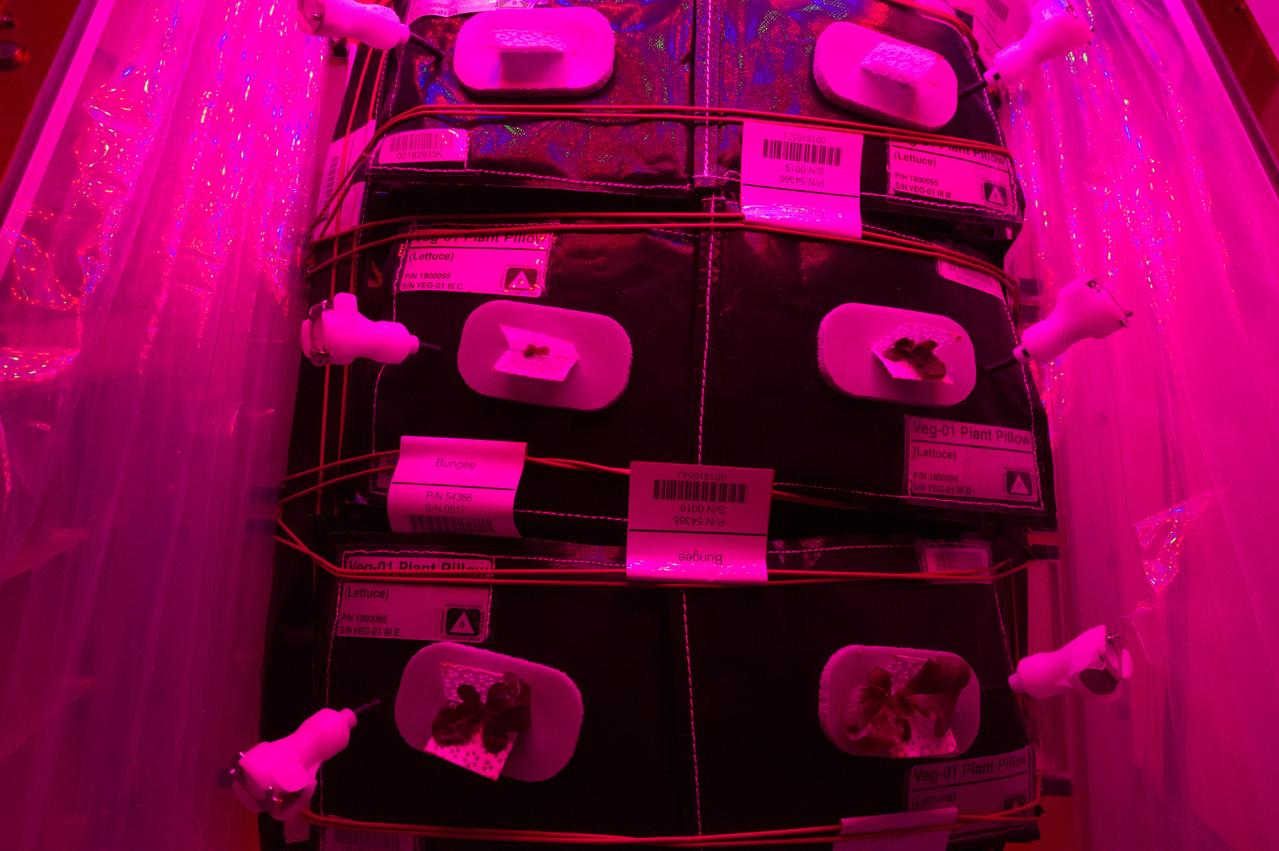
Astronaut Scott Kelly initiated VEG-01 B, the second crop of lettuce, on July, 8, 2015, and both Kelly and Astronaut Kjell Lindgren cared for the plants. The crop grew for 33 days. VEG-01 B included one set of six plant pillows planted with red romaine lettuce seeds. On Aug. 10, 2015, the crew harvested and consumed leaves from each plant. This was the first crop grown and consumed in NASA hardware. They harvested the rest of the plant tissue and froze it in the station’s Minus Eighty-Degree Laboratory Freezer for ISS (MELFI) for return to Earth for further study including microbial analysis, antioxidant capacity, mineral analysis and anthocyanin concentration.
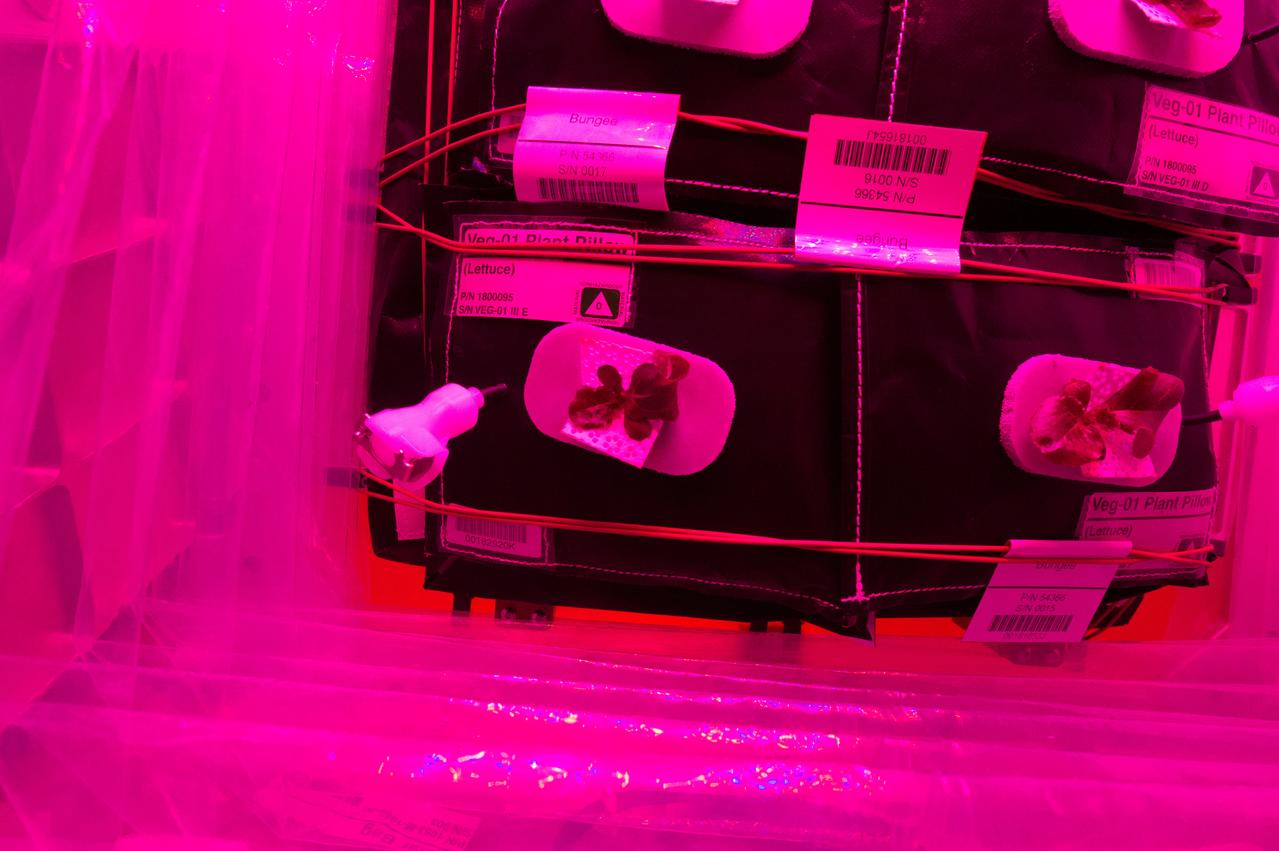
Astronaut Scott Kelly initiated VEG-01 B, the second crop of lettuce, on July, 8, 2015, and both Kelly and Astronaut Kjell Lindgren cared for the plants. The crop grew for 33 days. VEG-01 B included one set of six plant pillows planted with red romaine lettuce seeds. On Aug. 10, 2015, the crew harvested and consumed leaves from each plant. This was the first crop grown and consumed in NASA hardware. They harvested the rest of the plant tissue and froze it in the station’s Minus Eighty-Degree Laboratory Freezer for ISS (MELFI) for return to Earth for further study including microbial analysis, antioxidant capacity, mineral analysis and anthocyanin concentration.
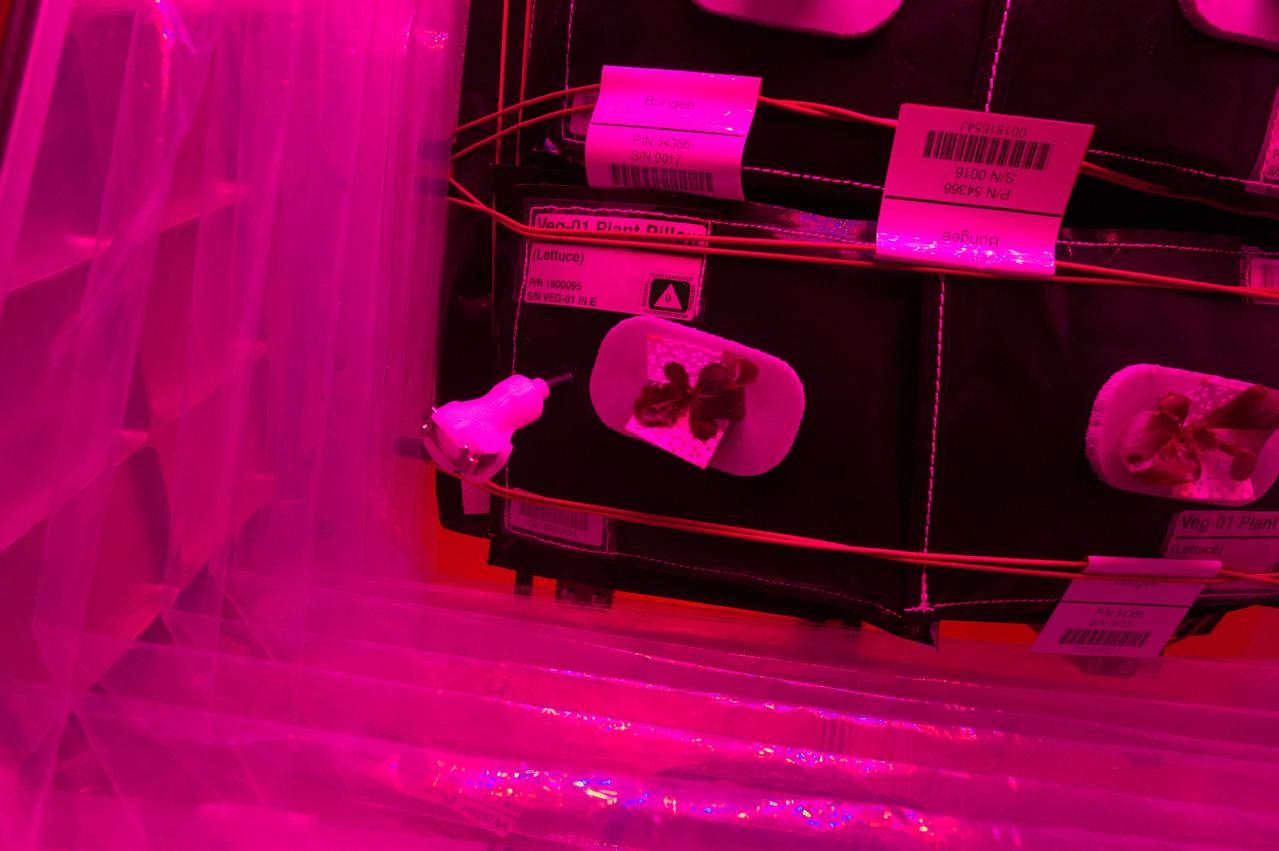
Astronaut Scott Kelly initiated VEG-01 B, the second crop of lettuce, on July, 8, 2015, and both Kelly and Astronaut Kjell Lindgren cared for the plants. The crop grew for 33 days. VEG-01 B included one set of six plant pillows planted with red romaine lettuce seeds. On Aug. 10, 2015, the crew harvested and consumed leaves from each plant. This was the first crop grown and consumed in NASA hardware. They harvested the rest of the plant tissue and froze it in the station’s Minus Eighty-Degree Laboratory Freezer for ISS (MELFI) for return to Earth for further study including microbial analysis, antioxidant capacity, mineral analysis and anthocyanin concentration.
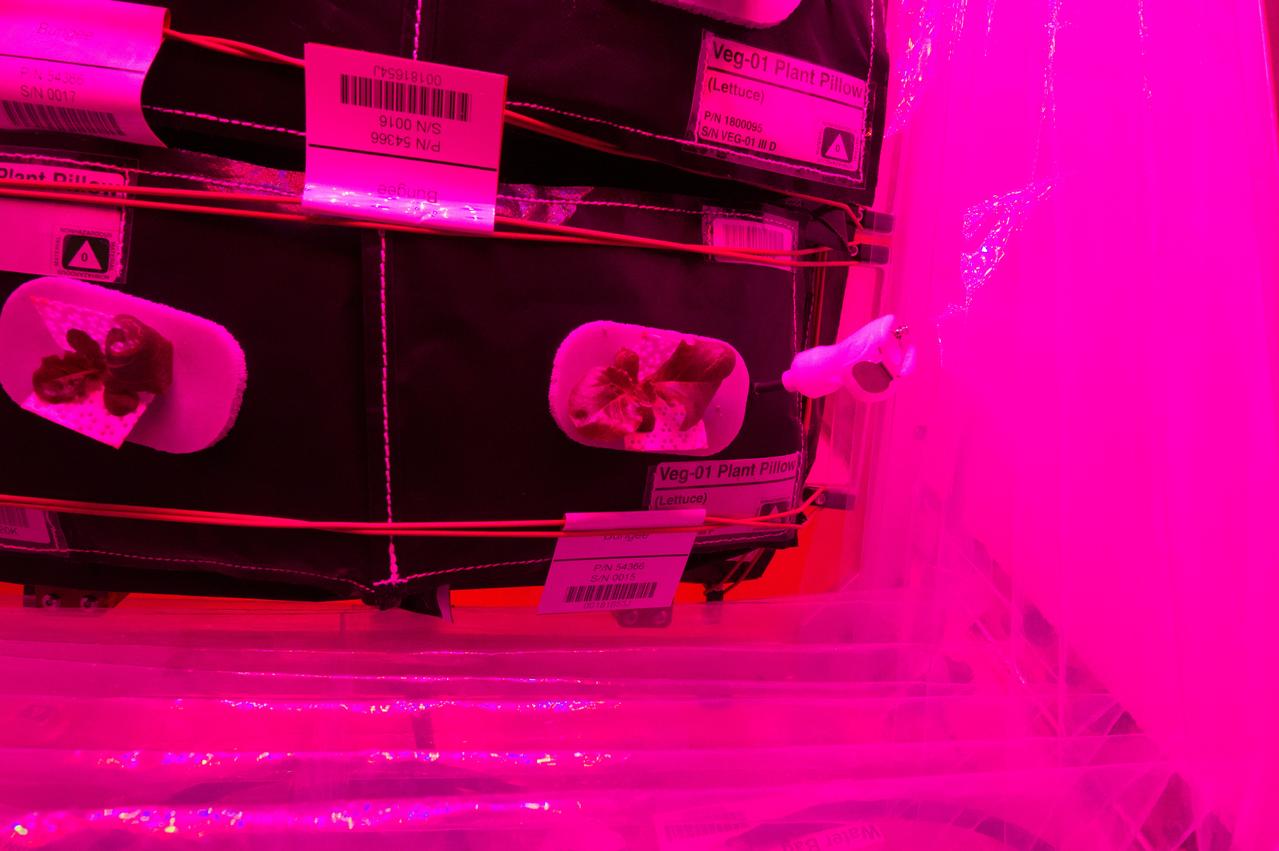
Astronaut Scott Kelly initiated VEG-01 B, the second crop of lettuce, on July, 8, 2015, and both Kelly and Astronaut Kjell Lindgren cared for the plants. The crop grew for 33 days. VEG-01 B included one set of six plant pillows planted with red romaine lettuce seeds. On Aug. 10, 2015, the crew harvested and consumed leaves from each plant. This was the first crop grown and consumed in NASA hardware. They harvested the rest of the plant tissue and froze it in the station’s Minus Eighty-Degree Laboratory Freezer for ISS (MELFI) for return to Earth for further study including microbial analysis, antioxidant capacity, mineral analysis and anthocyanin concentration.
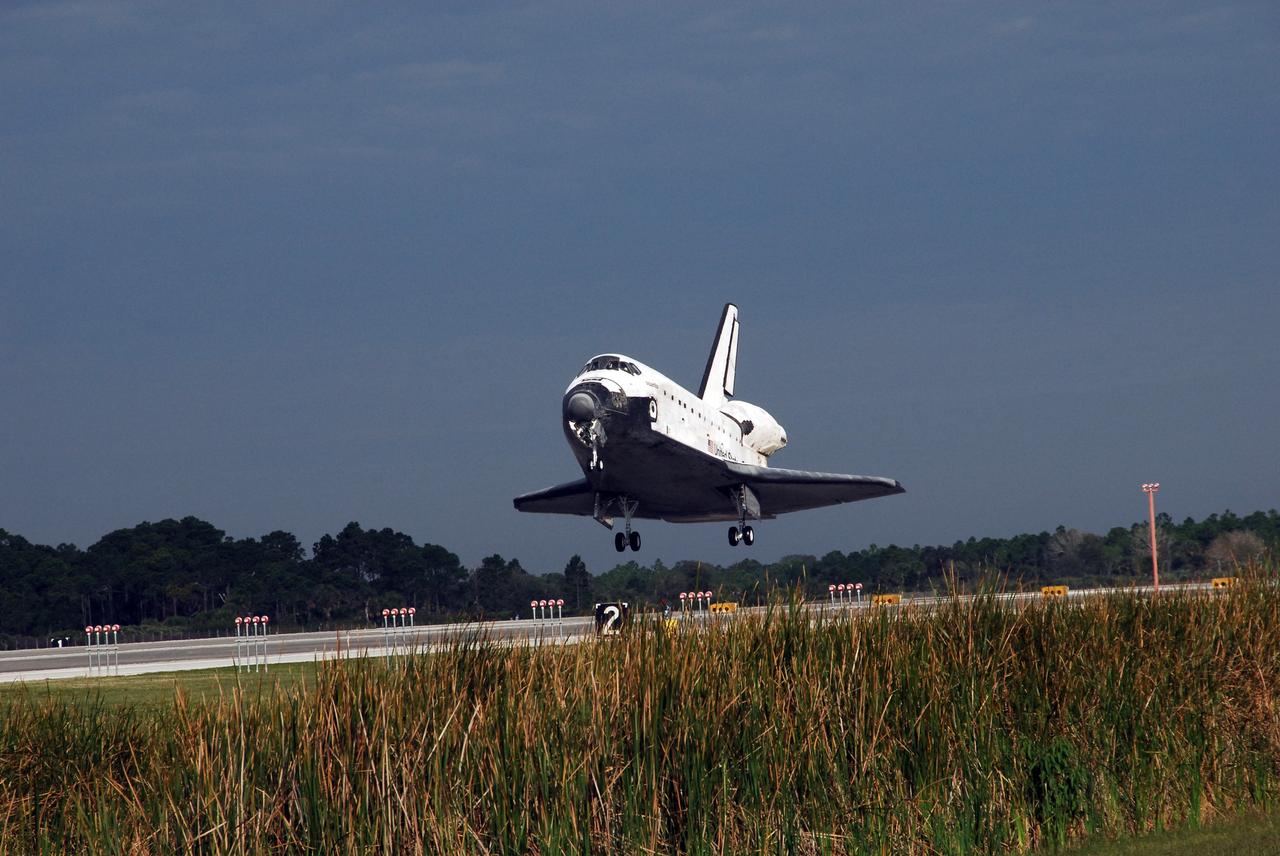
KENNEDY SPACE CENTER, FLA. -- The space shuttle Atlantis approaches touch down on Runway 15 of the Shuttle Landing Facility at NASA's Kennedy Space Center. The shuttle landed on orbit 202 to complete the 13-day STS-122 mission. Main gear touchdown was 9:07:10 a.m. Nose gear touchdown was 9:07:20 a.m. Wheel stop was at 9:08:08 a.m. Mission elapsed time was 12 days, 18 hours, 21 minutes and 44 seconds. During the mission, Atlantis' crew installed the new Columbus laboratory, leaving a larger space station and one with increased science capabilities. The Columbus Research Module adds nearly 1,000 cubic feet of habitable volume and affords room for 10 experiment racks, each an independent science lab. Photo credit: NASA/Jack Pfaller
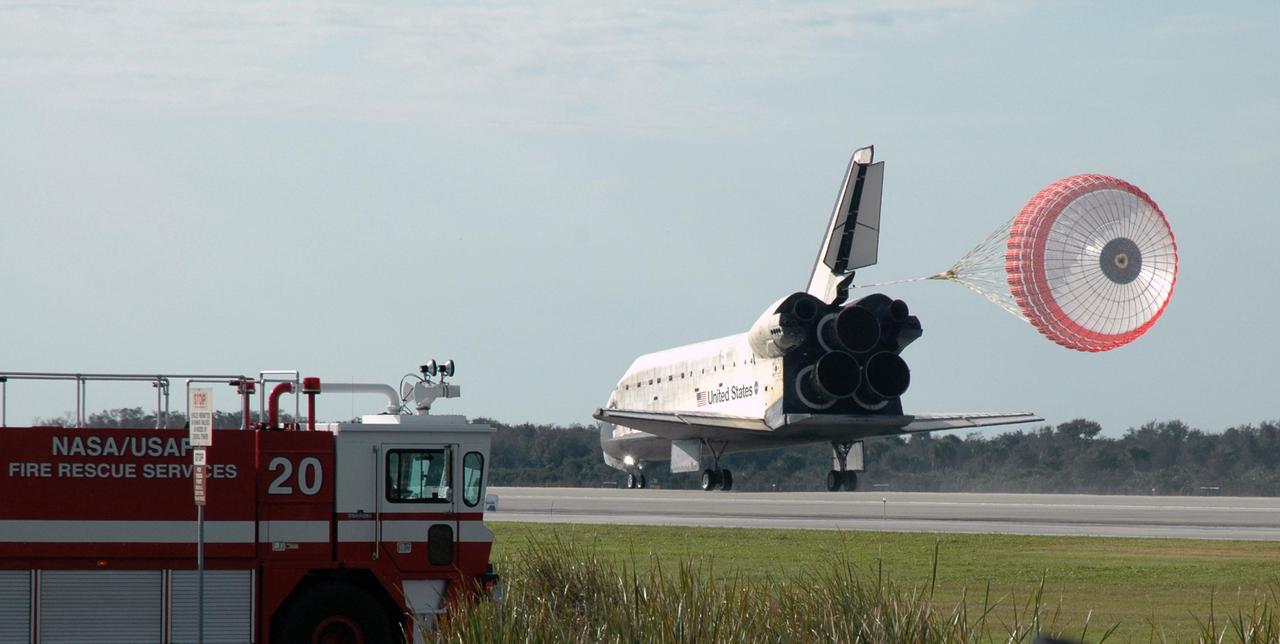
KENNEDY SPACE CENTER, FLA. -- With the aid of a drag chute billowing behind it, space shuttle Atlantis slows to a stop on Runway 15 of the Shuttle Landing Facility at NASA's Kennedy Space Center. At left is one of the fire/rescue vehicles standing by in the event of an emergency. The shuttle landed on orbit 202 to complete the 13-day STS-122 mission. Main gear touchdown was 9:07:10 a.m. Nose gear touchdown was 9:07:20 a.m. Wheel stop was at 9:08:08 a.m. Mission elapsed time was 12 days, 18 hours, 21 minutes and 44 seconds. During the mission, Atlantis' crew installed the new Columbus laboratory, leaving a larger space station and one with increased science capabilities. The Columbus Research Module adds nearly 1,000 cubic feet of habitable volume and affords room for 10 experiment racks, each an independent science lab. Photo credit: NASA/Norley Willets
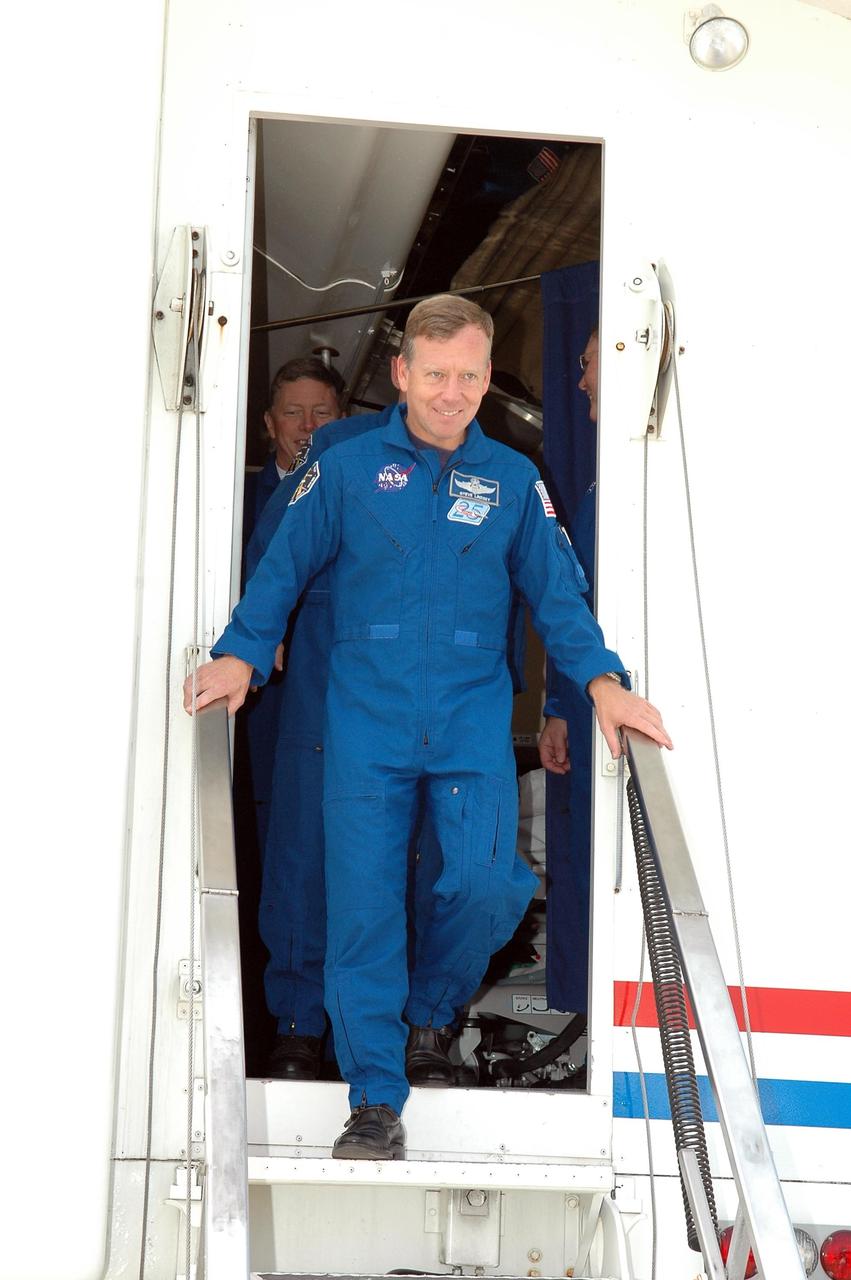
KENNEDY SPACE CENTER, FLA. - STS-121 Mission Commander Steven Lindsey is the first of the crew to exit the crew transport vehicle brought alongside the orbiter Discovery after landing. Behind him can be seen Mission Specialist Michael Fossum. The rest of the crew are Pilot Mark Kelly and Mission Specialists Piers Sellers, Lisa Nowak and Stephanie Wilson. Mission Specialist Thomas Reiter, who launched with the crew on July 4, remained on the station to join the Expedition 13 crew there. Discovery's smooth and perfect landing was on time at 9:14 a.m. EDT on Runway 15 of NASA's Shuttle Landing Facility after traveling 5.3 million miles on 202 orbits. Mission elapsed time was 12 days, 18 hours, 37 minutes and 54 seconds. The landing is the 62nd at Kennedy Space Center and the 32nd for Discovery. Photo credit: NASA/Kim Shiflett
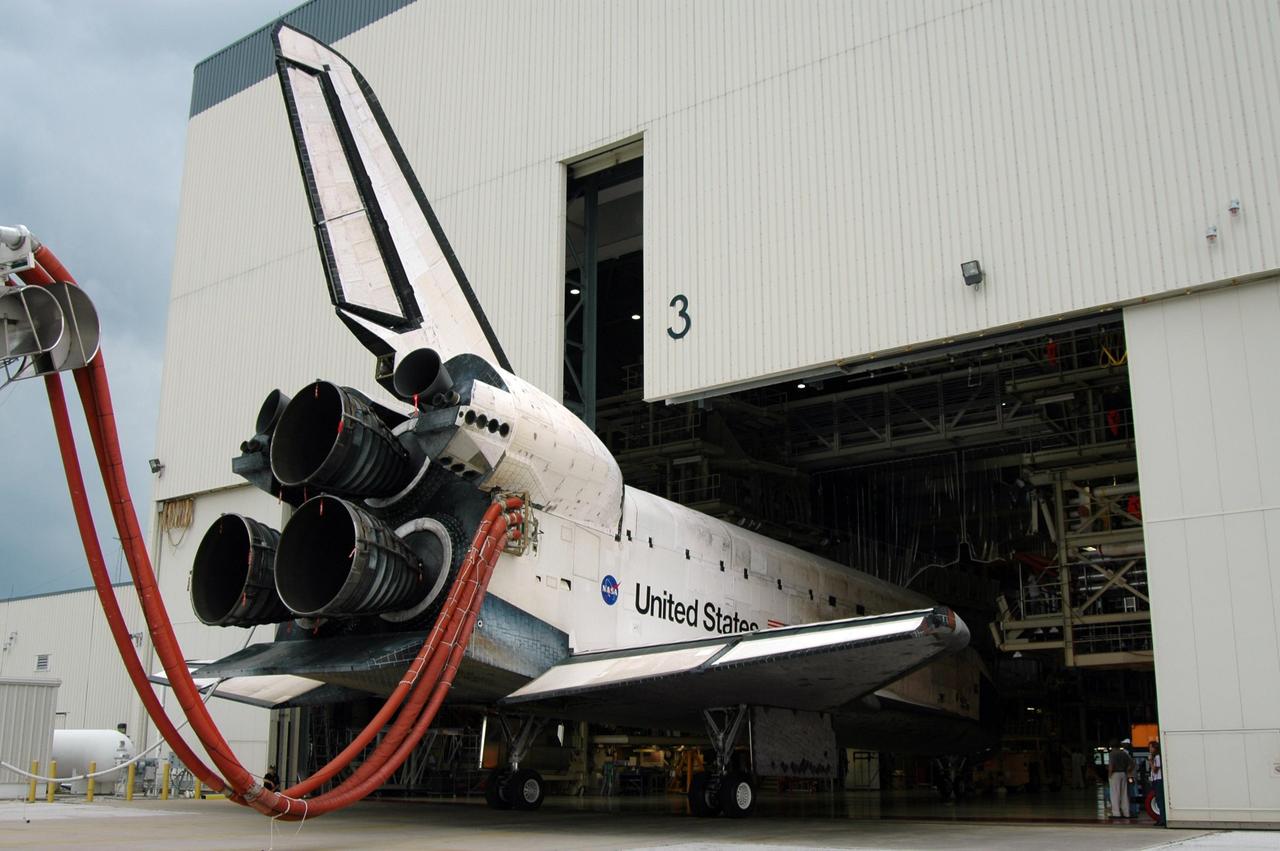
KENNEDY SPACE CENTER, FLA. - After the two-mile tow from NASA's Shuttle Landing Facility, the orbiter Discovery rolls through the massive doorway of the Orbiter Processing Facility. Umbilical lines for coolant and purge air are still attached. Discovery landed at the SLF at 9:14 a.m. EDT, completing mission STS-121. Discovery traveled 5.3 million miles, landing on orbit 202. Mission elapsed time was 12 days, 18 hours, 37 minutes and 54 seconds. Main gear touchdown occurred on time at 9:14:43 EDT. Wheel stop was at 9:15:49 EDT. During the mission, the STS-121 crew tested new equipment and procedures to improve shuttle safety, and delivered supplies and made repairs to the International Space Station. Photo credit: NASA/Jim Grossmann
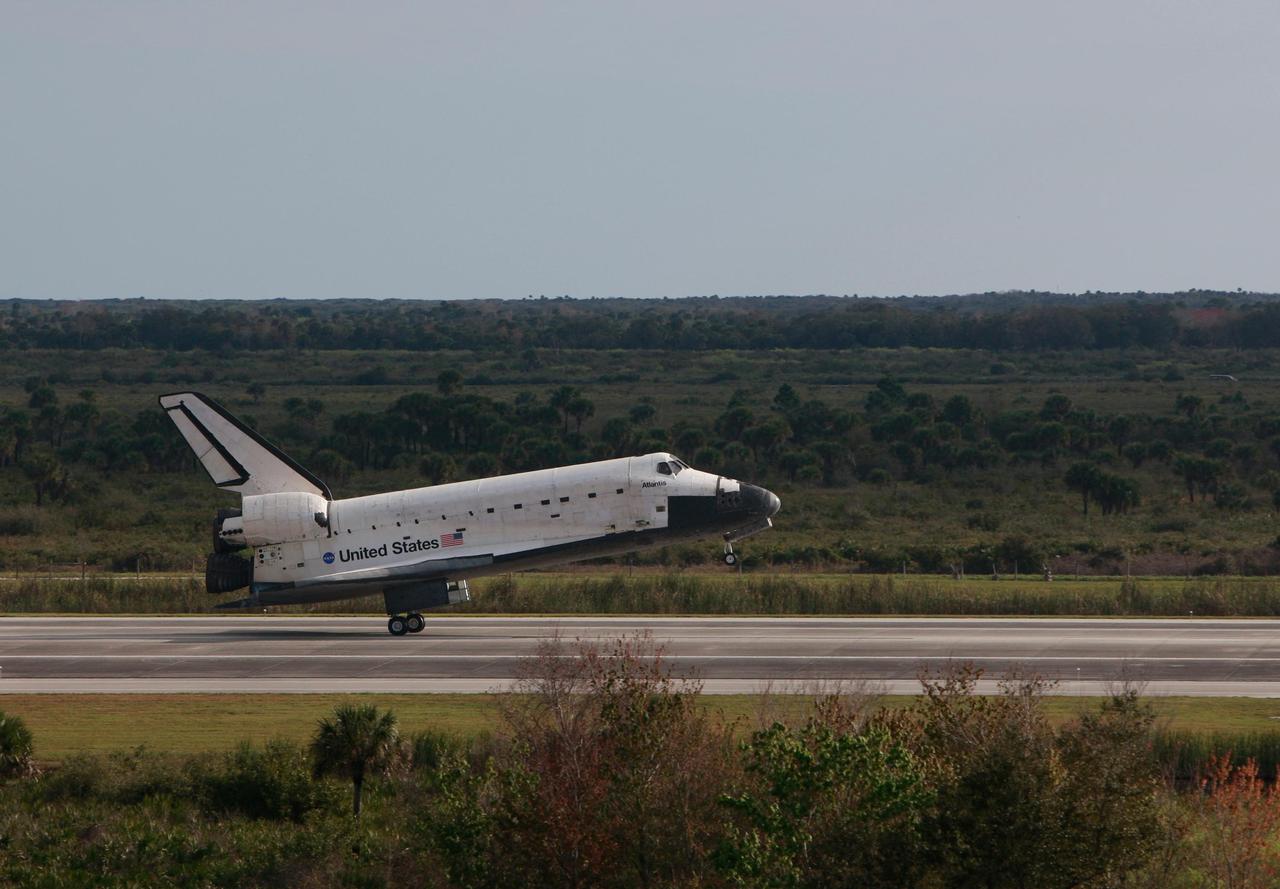
KENNEDY SPACE CENTER, FLA. -- Space shuttle Atlantis touches down on Runway 15 of the Shuttle Landing Facility at NASA's Kennedy Space Center after a nearly 5.3 million mile round trip to the International Space Station. The shuttle landed on orbit 202 to complete the 13-day STS-122 mission. Main gear touchdown was 9:07:10 a.m. Nose gear touchdown was 9:07:20 a.m. Wheel stop was at 9:08:08 a.m. Mission elapsed time was 12 days, 18 hours, 21 minutes and 44 seconds. During the mission, Atlantis' crew installed the new Columbus laboratory, leaving a larger space station and one with increased science capabilities. The Columbus Research Module adds nearly 1,000 cubic feet of habitable volume and affords room for 10 experiment racks, each an independent science lab. Photo courtesy of Scott Andrews
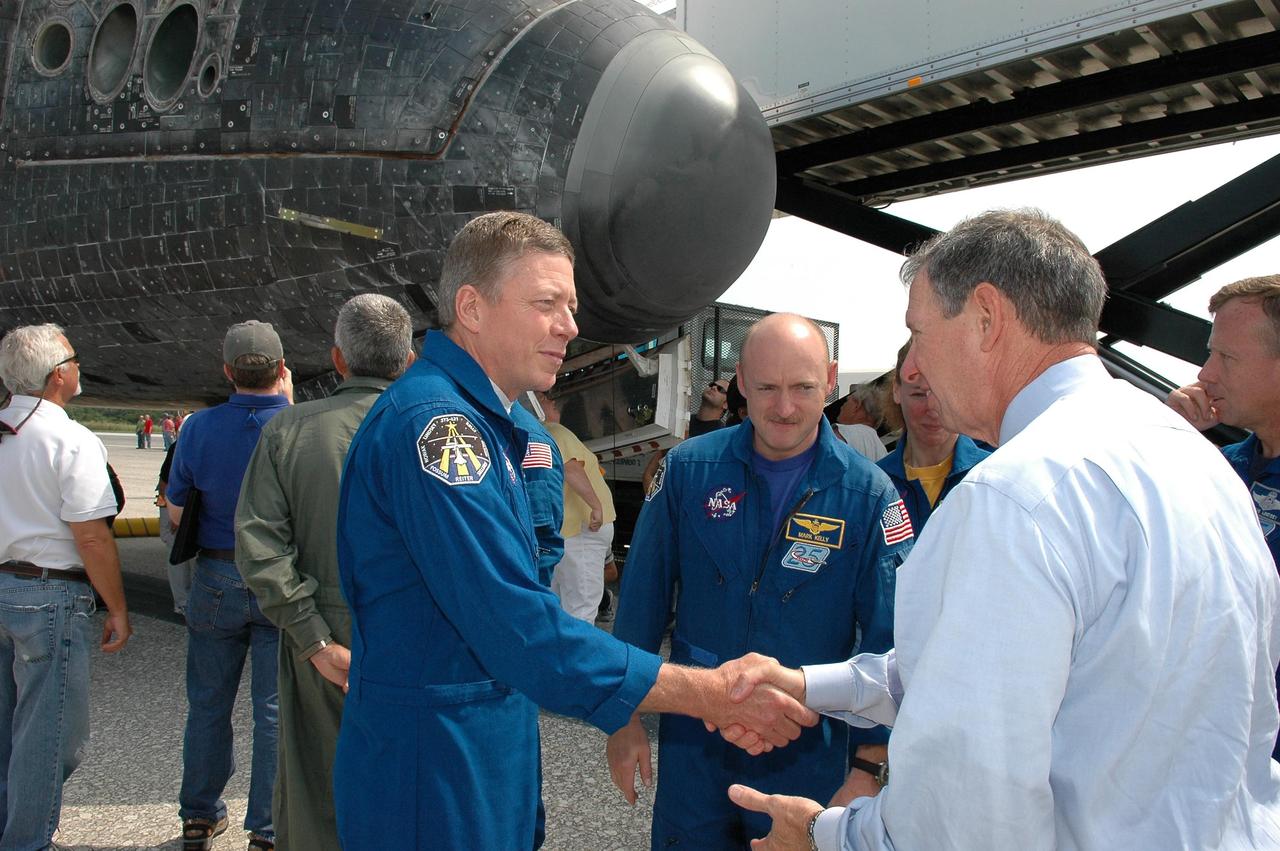
KENNEDY SPACE CENTER, FLA. - During the traditional post-flight walk-around after the landing of an orbiter, NASA Administrator Mike Griffin (right) congratulates STS-121 Mission Specialist Michael Fossum on the successful mission. Fossum participated in three spacewalks, along with Mission Specialist Piers Sellers, to repair and replace equipment. Next to Fossum are Pilot Mark Kelly, Mission Specialist Lisa Nowak and (behind Griffin) Commander Steven Lindsey. Discovery's smooth and perfect landing was on time at 9:14 a.m. EDT on Runway 15 of NASA's Shuttle Landing Facility after traveling 5.3 million miles on 202 orbits. Mission elapsed time was 12 days, 18 hours, 37 minutes and 54 seconds. The landing is the 62nd at Kennedy Space Center and the 32nd for Discovery. Photo credit: NASA/Kim Shiflett
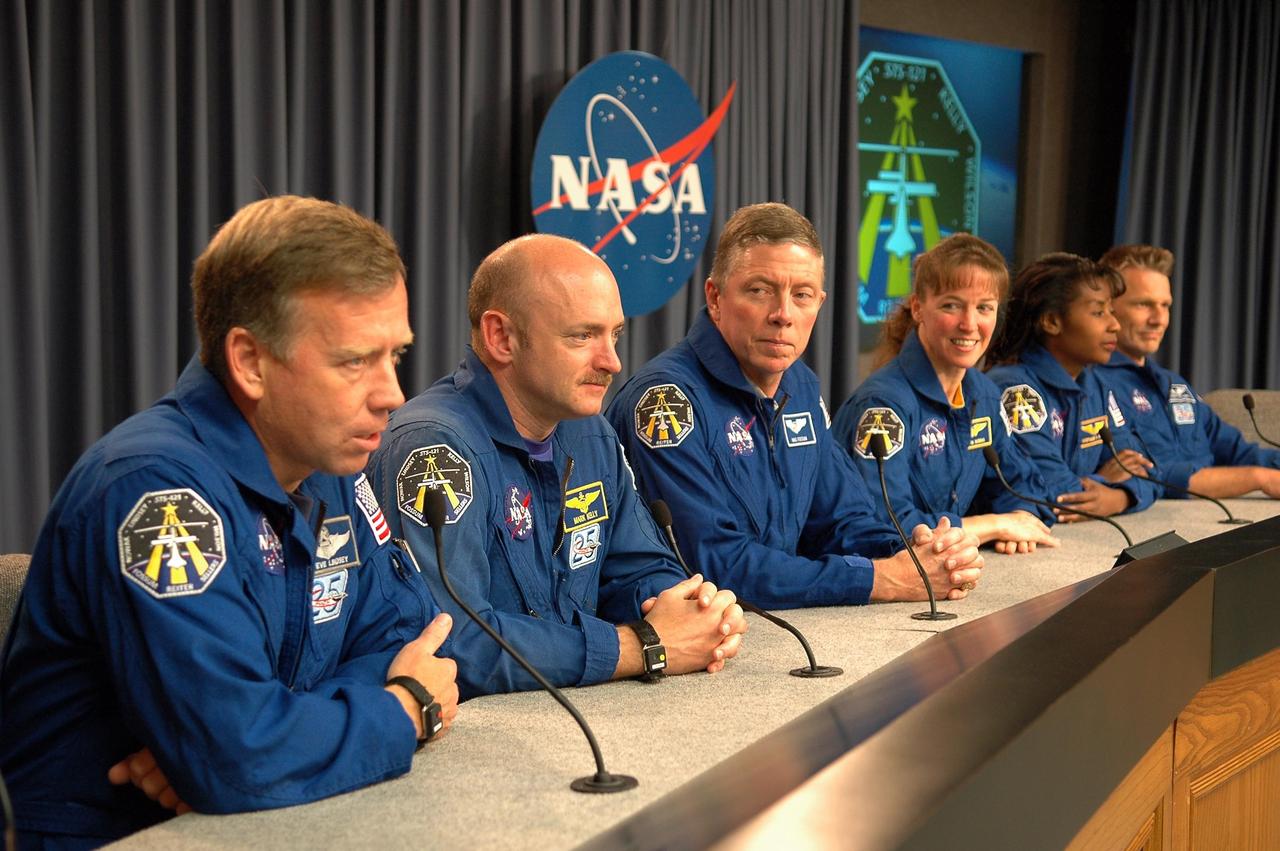
KENNEDY SPACE CENTER, FLA. - Several hours after their successful landing at Kennedy Space Center aboard the orbiter Discovery, the crew of mission STS-121 address questions from the media about their experiences on the shuttle and the International Space Station. Seated at the conference table are (from left) Commander Steven Lindsey, Pilot Mark Kelly and Mission Specialists Michael Fossum, Lisa Nowak, Stephanie Wilson and Piers Sellers. Discovery traveled 5.3 million miles, landing on orbit 202. Mission elapsed time was 12 days, 18 hours, 37 minutes and 54 seconds. During the nearly 13-day mission, the STS-121 crew tested new equipment and procedures to improve shuttle safety, and delivered supplies and made repairs to the International Space Station. Photo credit: NASA/Kim Shiflett
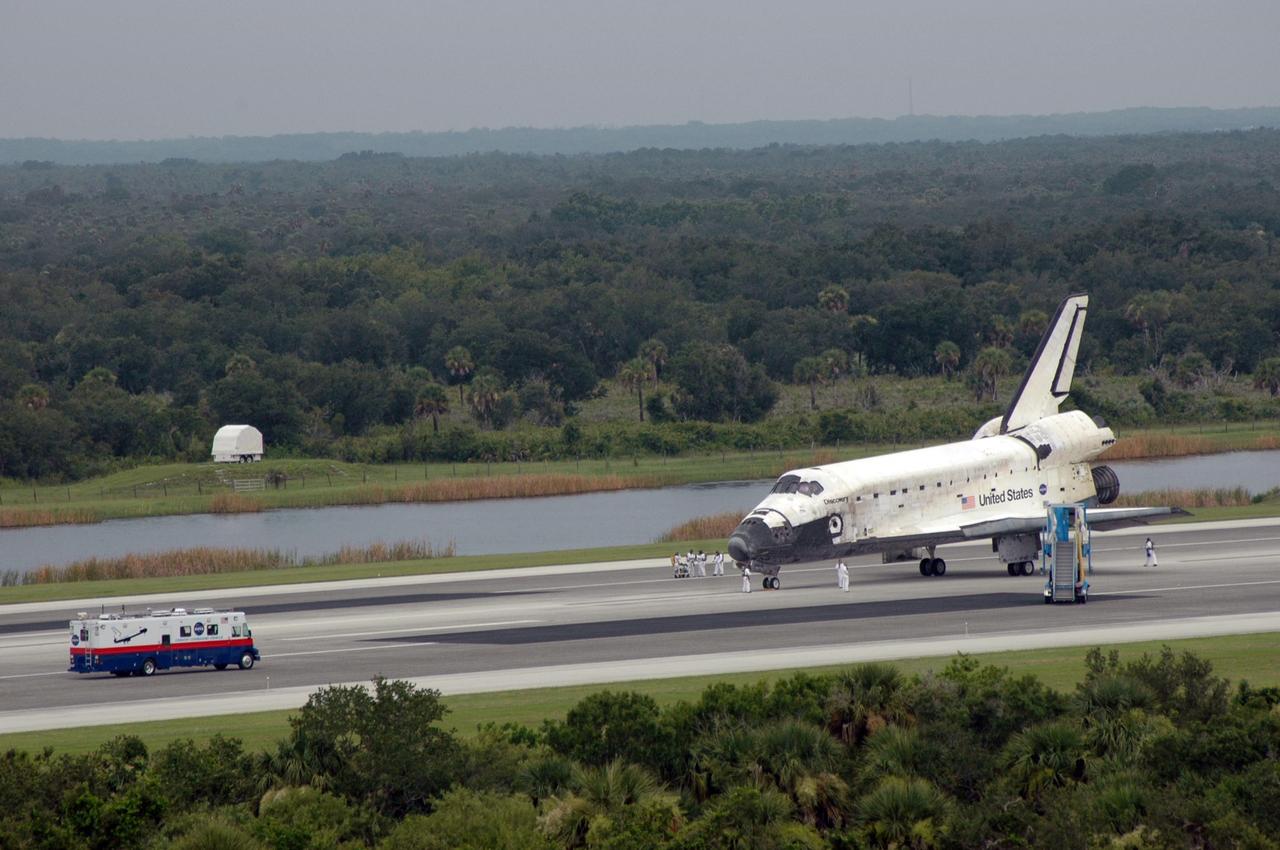
KENNEDY SPACE CENTER, FLA. - A crew transport vehicle (CTV), a modified “people mover” used at airports, approaches the orbiter Discovery after the vehicle was "safed" for crew departure. The crew exits the orbiter into a crew hatch access vehicle and, after a brief medical examination, transfers into the CTV. Discovery's smooth and perfect landing after completing mission STS-121 was on time at 9:14 a.m. EDT on Runway 15 of NASA's Shuttle Landing Facility after traveling 5.3 million miles on 202 orbits. Mission elapsed time was 12 days, 18 hours, 37 minutes and 54 seconds. The landing is the 62nd at Kennedy Space Center and the 32nd for Discovery. Photo credit: NASA/Kim Shiflett
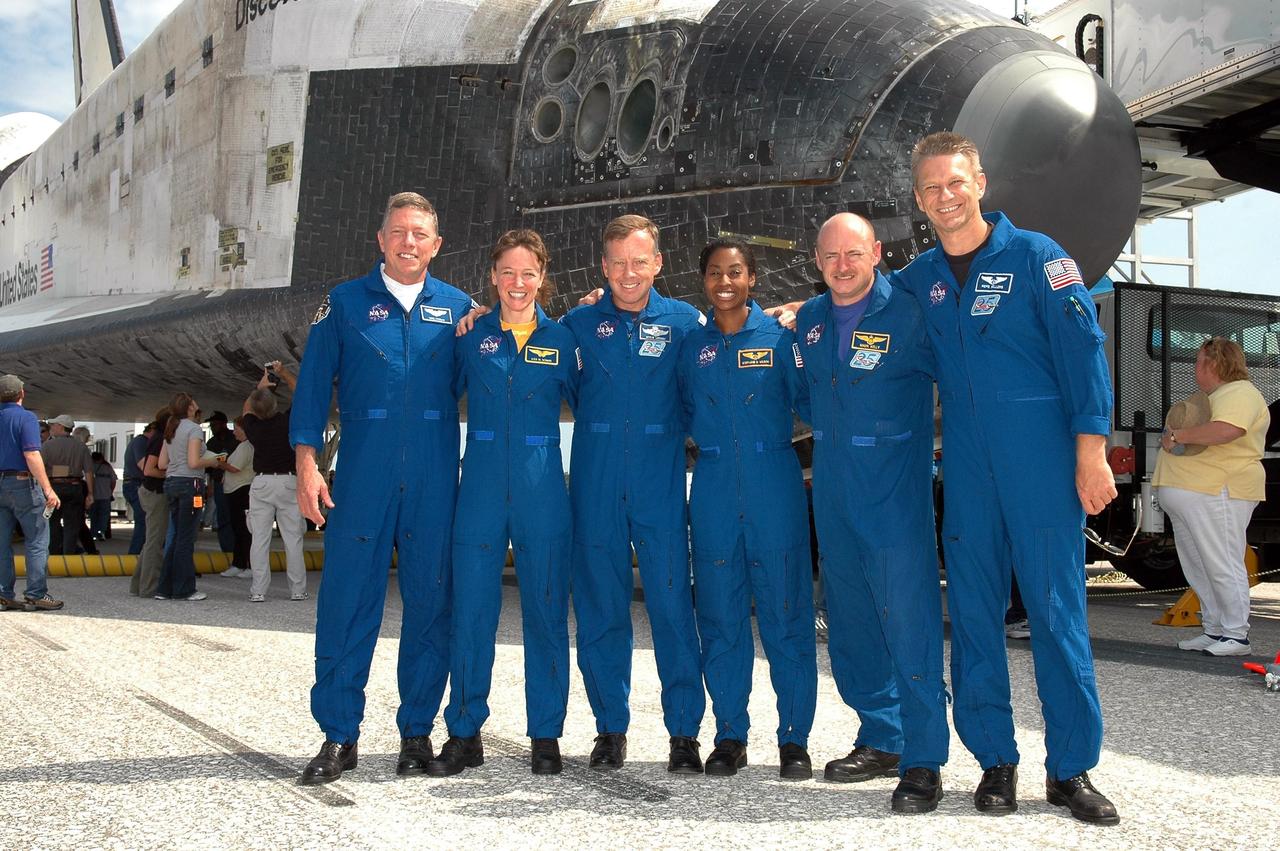
KENNEDY SPACE CENTER, FLA. - Following the traditional post-flight walk-around after the landing of an orbiter, the STS-121 crew pose for a photo in front of Discovery. From left are Mission Specialists Michael Fossum and Lisa Nowak, Commander Steven Lindsey, Mission Specialist Stephanie Wilson, Pilot Mark Kelly and Mission Specialist Piers Sellers. Discovery's smooth and perfect landing was on time at 9:14 a.m. EDT on Runway 15 of NASA's Shuttle Landing Facility after traveling 5.3 million miles on 202 orbits. Mission elapsed time was 12 days, 18 hours, 37 minutes and 54 seconds. The landing is the 62nd at Kennedy Space Center and the 32nd for Discovery. Photo credit: NASA/Kim Shiflett
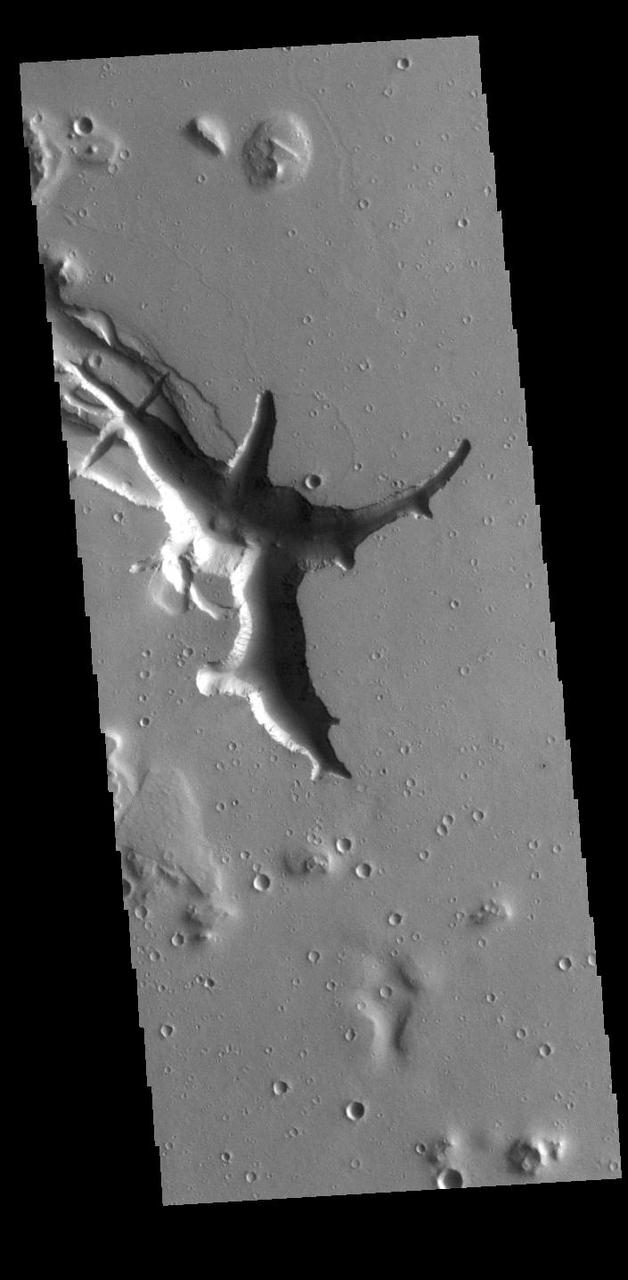
Located west of the Elysium Volcanic complex, Hebrus Valles is a channel system that flowed to the north. This VIS image shows the complex region at the start of the channel. The process that formed the channel system is unknown. Some of the channel features have the appearance of being formed by liquid flow. In other portions of the valles, there are pits and collapse features which appear to have formed by material falling into subsurface voids. This is a common feature in regions of volcanic activity where lava tubes run below the surface. Both water and lava probably contributed to the formation of Hebrus Valles. Hebrus Valles is located in southern Utopia Planitia and is 325km (202 miles) long. Orbit Number: 86147 Latitude: 17.8139 Longitude: 128.204 Instrument: VIS Captured: 2021-05-16 15:44 https://photojournal.jpl.nasa.gov/catalog/PIA24225
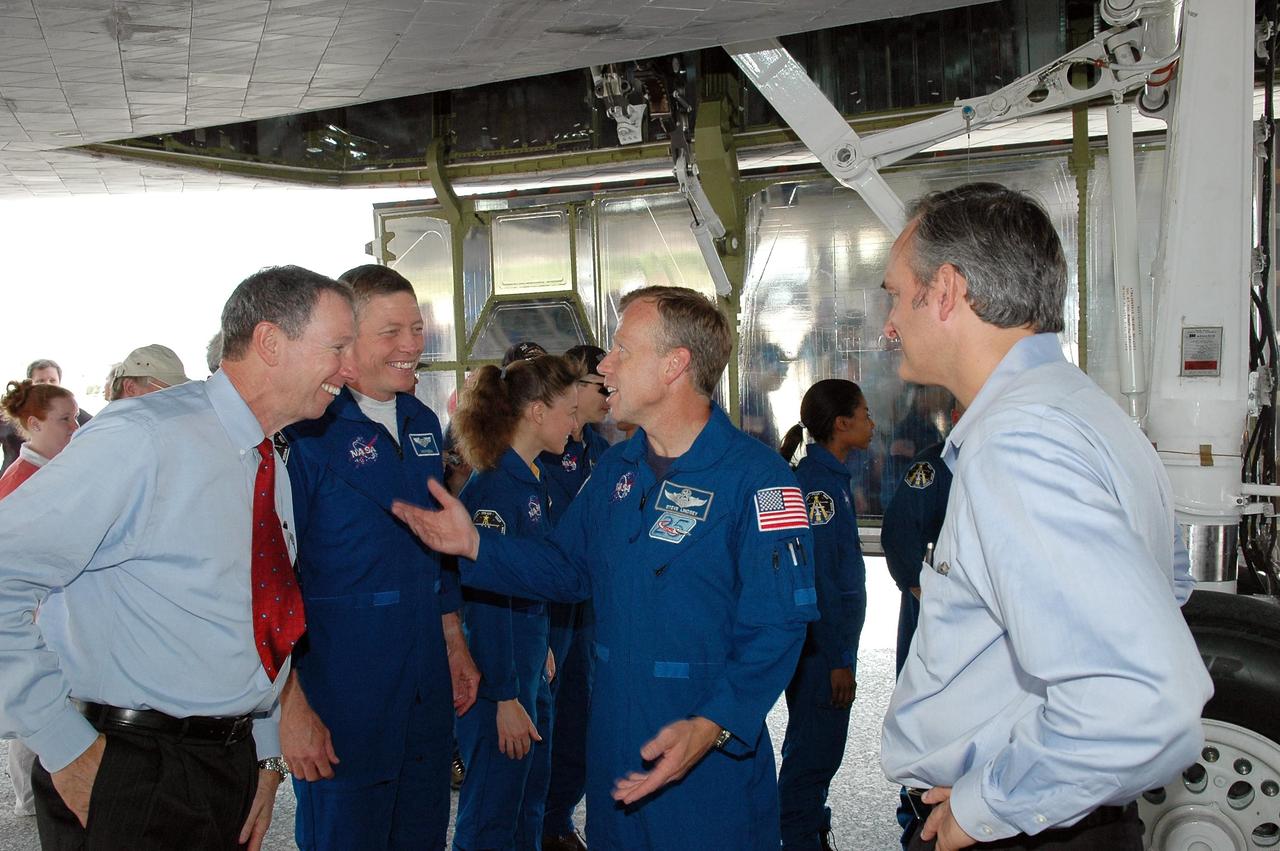
KENNEDY SPACE CENTER, FLA. - NASA Administrator Mike Griffin talks with Commander Steven Lindsey (gesturing) after the crew looked over the orbiter Discovery, above them. Between Griffin and Lindsey are Mission Specialists Michael Fossum and Lisa Nowak. Mission Specialist Stephanie Wilson is behind Lindsey; Associate Administrator Rex Geveden is at right. The post-flight walk-around is a tradition. Discovery's smooth and perfect landing was on time at 9:14 a.m. EDT on Runway 15 of NASA's Shuttle Landing Facility after traveling 5.3 million miles on 202 orbits. Mission elapsed time was 12 days, 18 hours, 37 minutes and 54 seconds. The landing is the 62nd at Kennedy Space Center and the 32nd for Discovery. Photo credit: NASA/Kim Shiflett
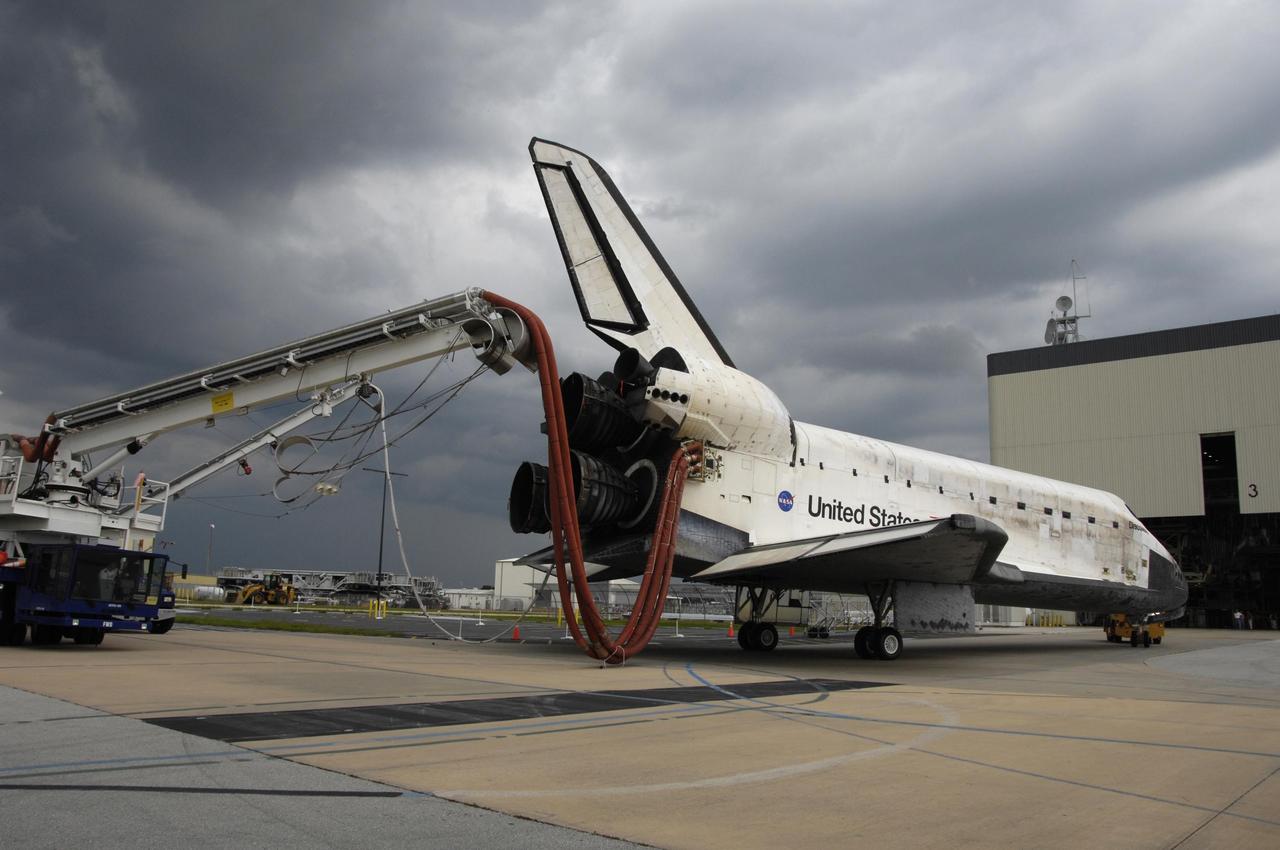
KENNEDY SPACE CENTER, FLA. - As black clouds gather overhead, the orbiter Discovery arrives at the Orbiter Processing Facility after a two-mile tow from NASA's Shuttle Landing Facility. Umbilical lines for coolant and purge air are still attached. Discovery landed at the SLF at 9:14 a.m. EDT, completing mission STS-121. Discovery traveled 5.3 million miles, landing on orbit 202. Mission elapsed time was 12 days, 18 hours, 37 minutes and 54 seconds. Main gear touchdown occurred on time at 9:14:43 EDT. Wheel stop was at 9:15:49 EDT. During the mission, the STS-121 crew tested new equipment and procedures to improve shuttle safety, and delivered supplies and made repairs to the International Space Station. Photo courtesy of Nikon/Scott Andrews
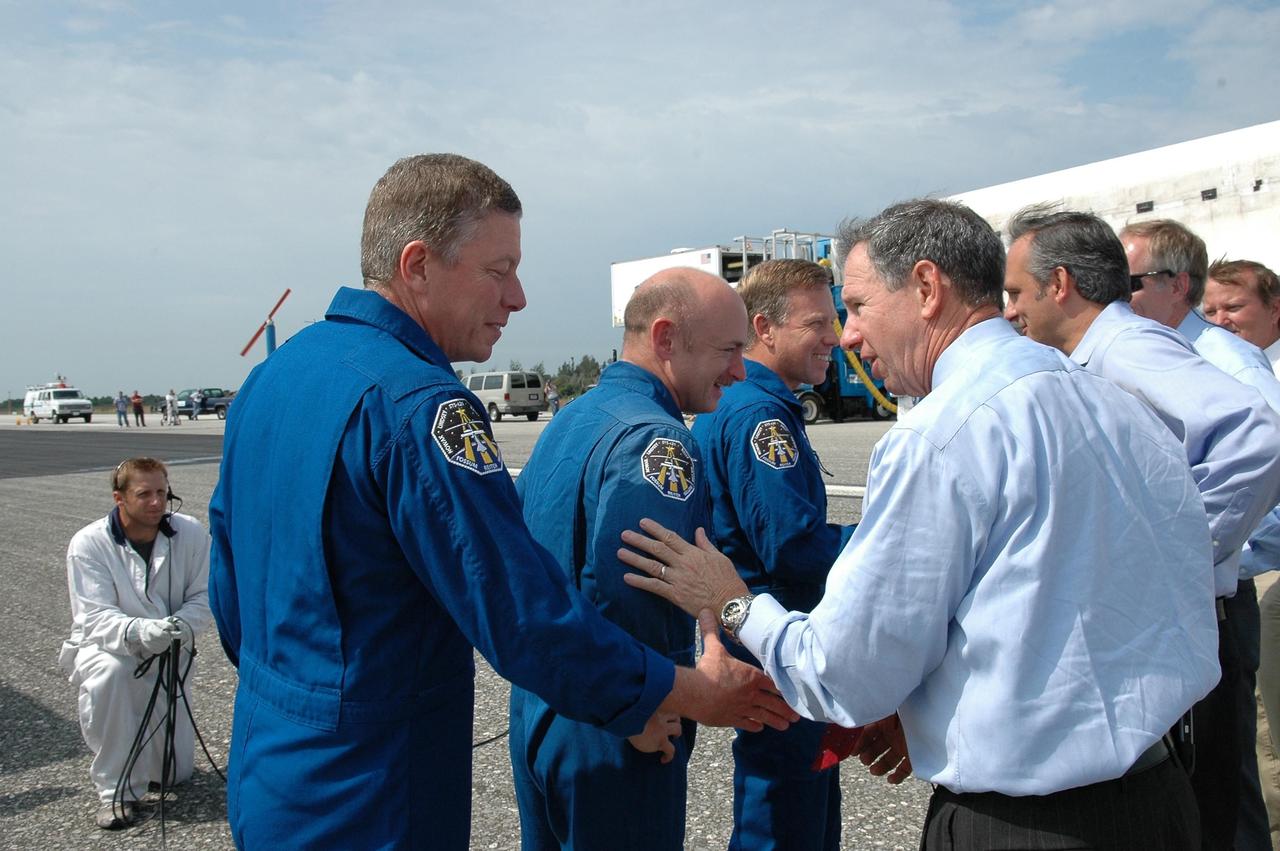
KENNEDY SPACE CENTER, FLA. - (From left) STS-121 Mission Specialist Michael Fossum, Pilot Mark Kelly and Commander Steven Lindsey are greeted by NASA Administrator Mike Griffin (foreground, right), Associate Administrator Rex Geveden and other senior managers after leaving the orbiter Discovery, in the background. The rest of the crew are Mission Specialists Piers Sellers, Lisa Nowak and Stephanie Wilson. Mission Specialist Thomas Reiter, who launched with the crew on July 4, remained on the station to join the Expedition 13 crew there. Discovery's smooth and perfect landing was on time at 9:14 a.m. EDT on Runway 15 of NASA's Shuttle Landing Facility after traveling 5.3 million miles on 202 orbits. Mission elapsed time was 12 days, 18 hours, 37 minutes and 54 seconds. The landing is the 62nd at Kennedy Space Center and the 32nd for Discovery. Photo credit: NASA/Kim Shiflett
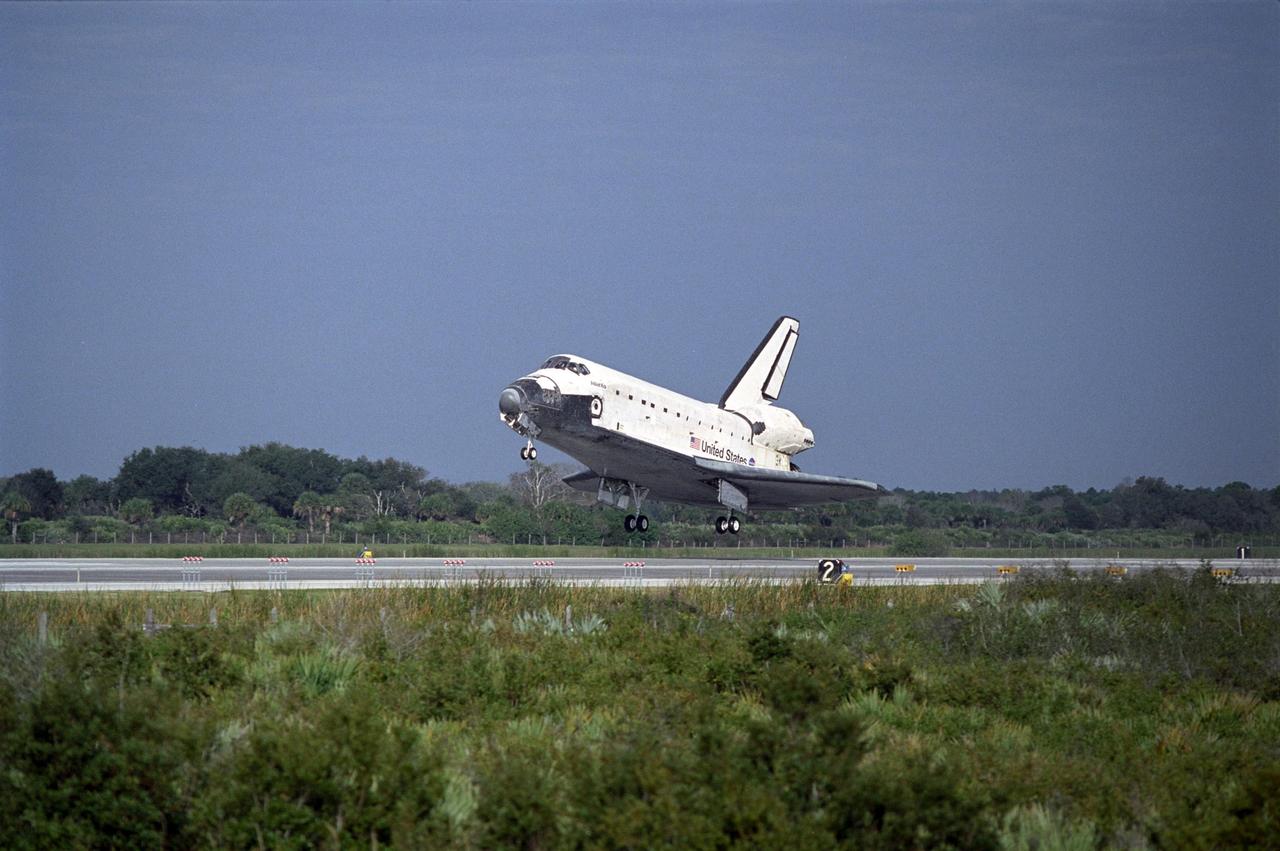
KENNEDY SPACE CENTER, FLA. -- After a nearly 5.3 million mile round trip to the International Space Station, space shuttle Atlantis touches down on Runway 15 of the Shuttle Landing Facility at NASA's Kennedy Space Center. The shuttle landed on orbit 202 to complete the 13-day STS-122 mission. Main gear touchdown was 9:07:10 a.m. Nose gear touchdown was 9:07:20 a.m. Wheel stop was at 9:08:08 a.m. Mission elapsed time was 12 days, 18 hours, 21 minutes and 44 seconds. During the mission, Atlantis' crew installed the new Columbus laboratory, leaving a larger space station and one with increased science capabilities. The Columbus Research Module adds nearly 1,000 cubic feet of habitable volume and affords room for 10 experiment racks, each an independent science lab. Photo credit: NASA/Tony Gray
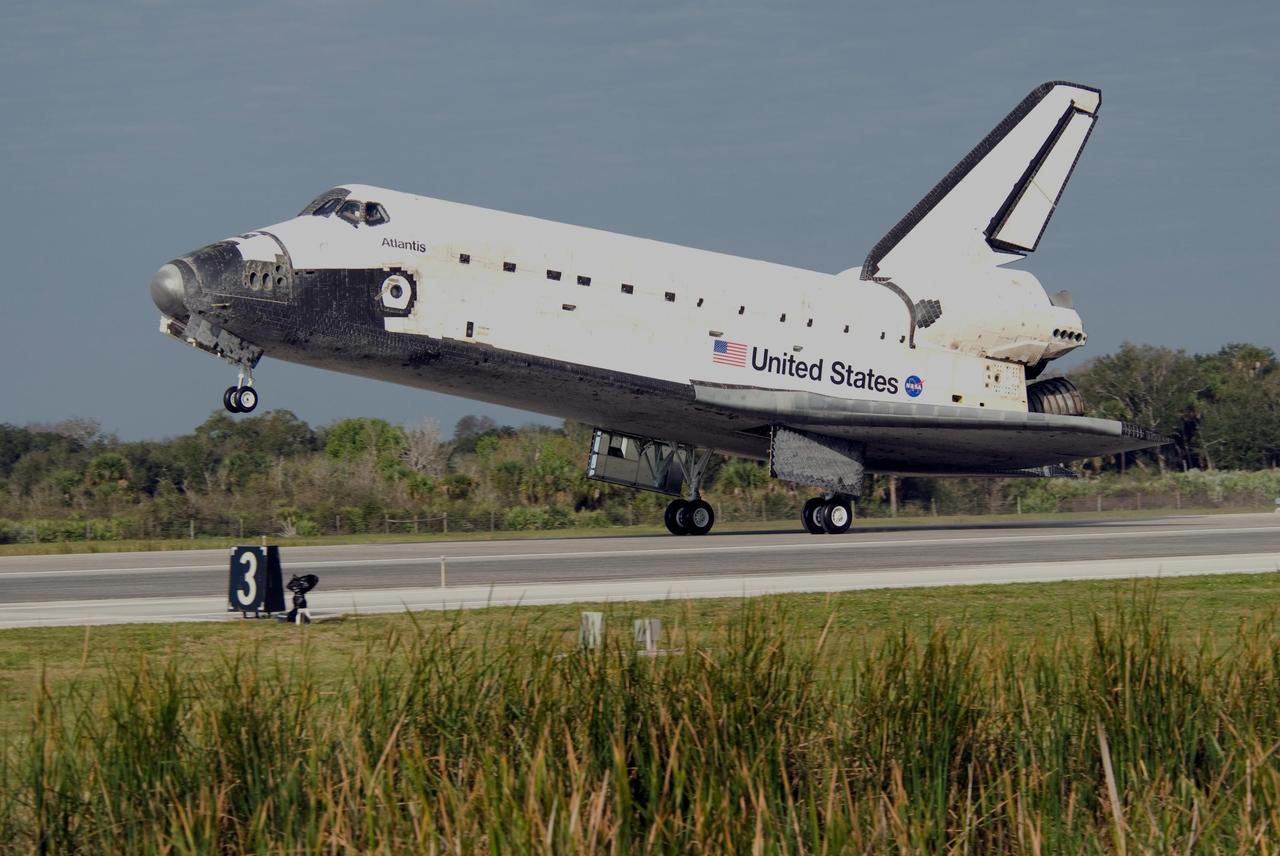
KENNEDY SPACE CENTER, FLA. -- The space shuttle Atlantis touches down on Runway 15 of the Shuttle Landing Facility at NASA's Kennedy Space Center. The shuttle landed on orbit 202 to complete the 13-day STS-122 mission. Main gear touchdown was 9:07:10 a.m. Nose gear touchdown was 9:07:20 a.m. Wheel stop was at 9:08:08 a.m. Mission elapsed time was 12 days, 18 hours, 21 minutes and 44 seconds. During the mission, Atlantis' crew installed the new Columbus laboratory, leaving a larger space station and one with increased science capabilities. The Columbus Research Module adds nearly 1,000 cubic feet of habitable volume and affords room for 10 experiment racks, each an independent science lab. Photo credit: NASA/Tom Farrar
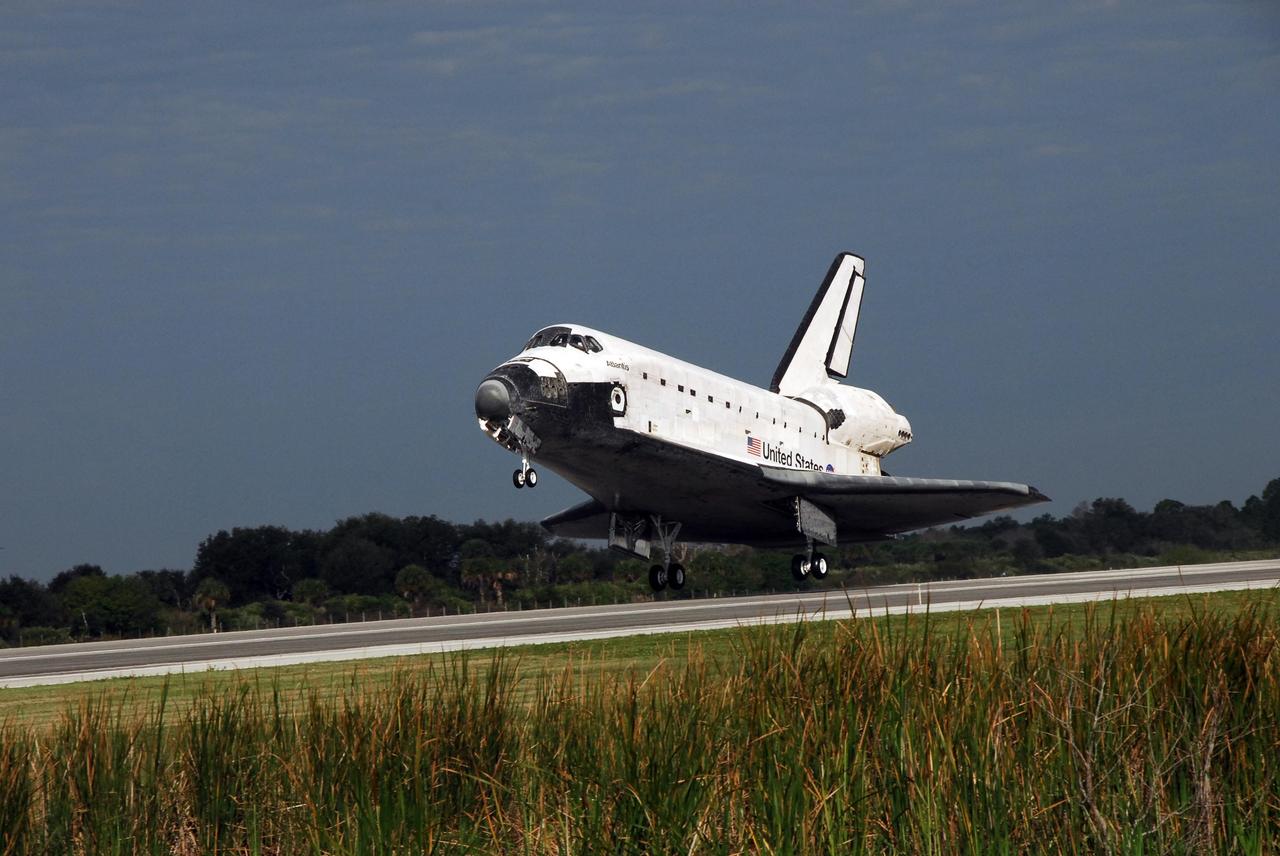
KENNEDY SPACE CENTER, FLA. -- The space shuttle Atlantis approaches touch down on Runway 15 of the Shuttle Landing Facility at NASA's Kennedy Space Center. The shuttle landed on orbit 202 to complete the 13-day STS-122 mission. Main gear touchdown was 9:07:10 a.m. Nose gear touchdown was 9:07:20 a.m. Wheel stop was at 9:08:08 a.m. Mission elapsed time was 12 days, 18 hours, 21 minutes and 44 seconds. During the mission, Atlantis' crew installed the new Columbus laboratory, leaving a larger space station and one with increased science capabilities. The Columbus Research Module adds nearly 1,000 cubic feet of habitable volume and affords room for 10 experiment racks, each an independent science lab. Photo credit: NASA/Jack Pfaller
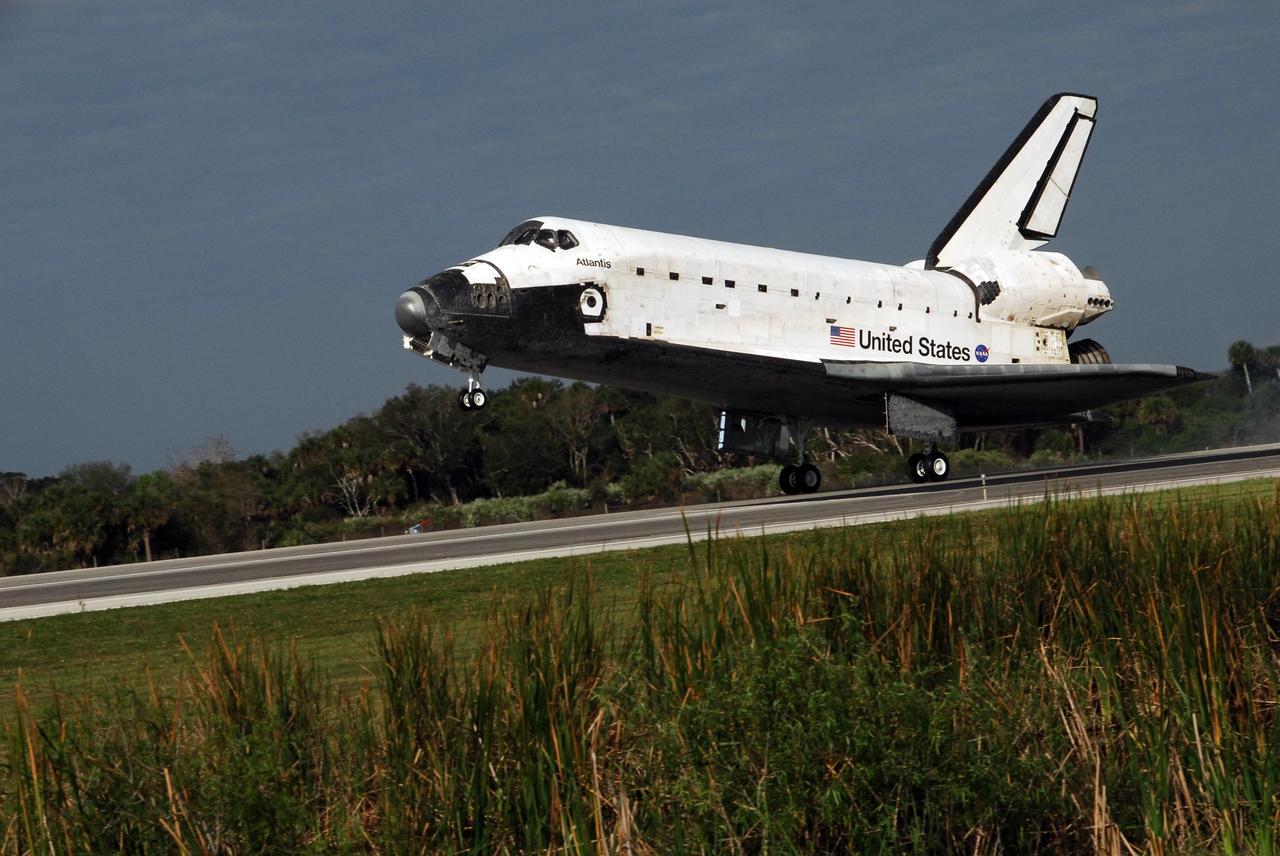
KENNEDY SPACE CENTER, FLA. -- The space shuttle Atlantis touches down on Runway 15 of the Shuttle Landing Facility at NASA's Kennedy Space Center. The shuttle landed on orbit 202 to complete the 13-day STS-122 mission. Main gear touchdown was 9:07:10 a.m. Nose gear touchdown was 9:07:20 a.m. Wheel stop was at 9:08:08 a.m. Mission elapsed time was 12 days, 18 hours, 21 minutes and 44 seconds. During the mission, Atlantis' crew installed the new Columbus laboratory, leaving a larger space station and one with increased science capabilities. The Columbus Research Module adds nearly 1,000 cubic feet of habitable volume and affords room for 10 experiment racks, each an independent science lab. Photo credit: NASA/Jack Pfaller
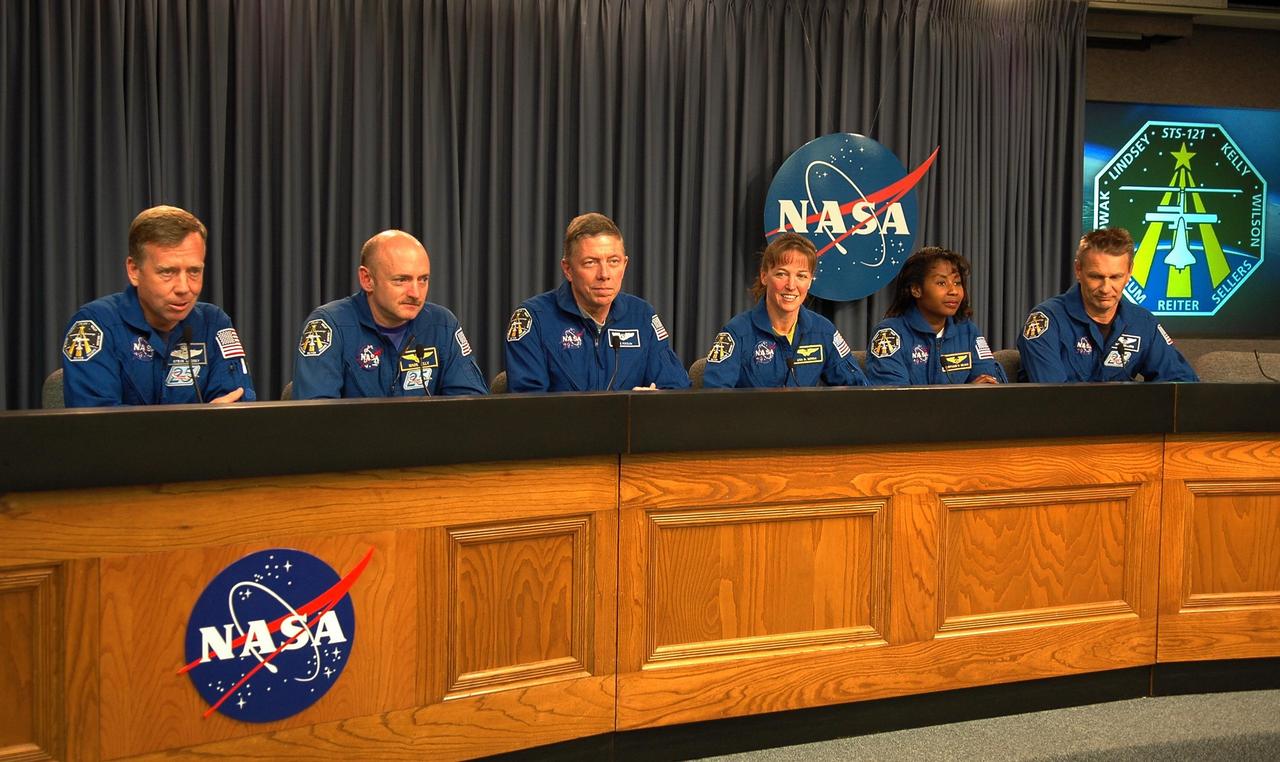
KENNEDY SPACE CENTER, FLA. - Several hours after their successful landing at Kennedy Space Center aboard the orbiter Discovery, the crew of mission STS-121 address questions from the media about their experiences on the shuttle and the International Space Station. Seated at the conference table are (from left) Commander Steven Lindsey, Pilot Mark Kelly and Mission Specialists Michael Fossum, Lisa Nowak, Stephanie Wilson and Piers Sellers. Discovery traveled 5.3 million miles, landing on orbit 202. Mission elapsed time was 12 days, 18 hours, 37 minutes and 54 seconds. During the nearly 13-day mission, the STS-121 crew tested new equipment and procedures to improve shuttle safety, and delivered supplies and made repairs to the International Space Station. Photo credit: NASA/Kim Shiflett
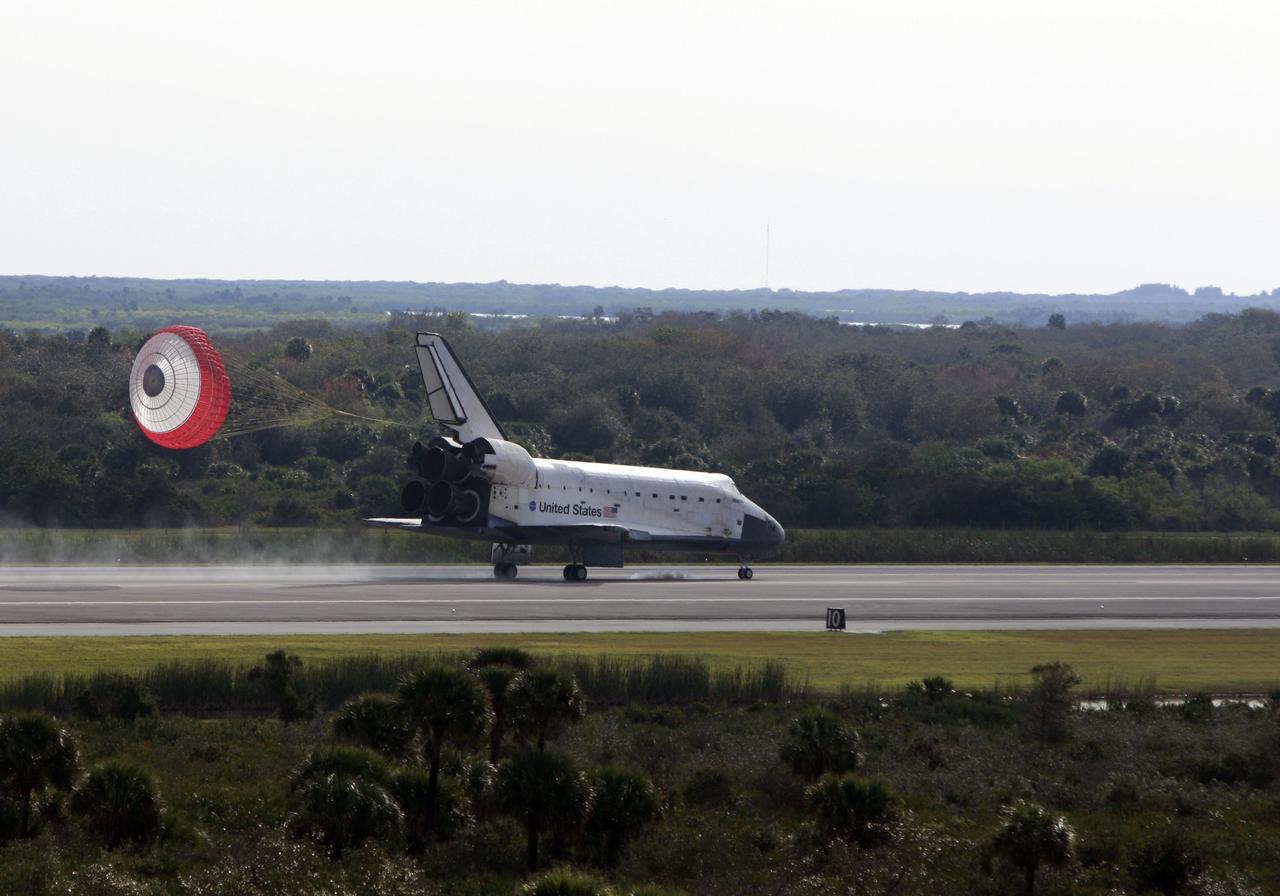
KENNEDY SPACE CENTER, FLA. -- With the aid of a drag chute, space shuttle Atlantis slows down after landing on Runway 15 of the Shuttle Landing Facility at NASA's Kennedy Space Center after a nearly 5.3 million mile round trip to the International Space Station. The shuttle landed on orbit 202 to complete the 13-day STS-122 mission. Main gear touchdown was 9:07:10 a.m. Nose gear touchdown was 9:07:20 a.m. Wheel stop was at 9:08:08 a.m. Mission elapsed time was 12 days, 18 hours, 21 minutes and 44 seconds. During the mission, Atlantis' crew installed the new Columbus laboratory, leaving a larger space station and one with increased science capabilities. The Columbus Research Module adds nearly 1,000 cubic feet of habitable volume and affords room for 10 experiment racks, each an independent science lab. Photo courtesy of Scott Andrews
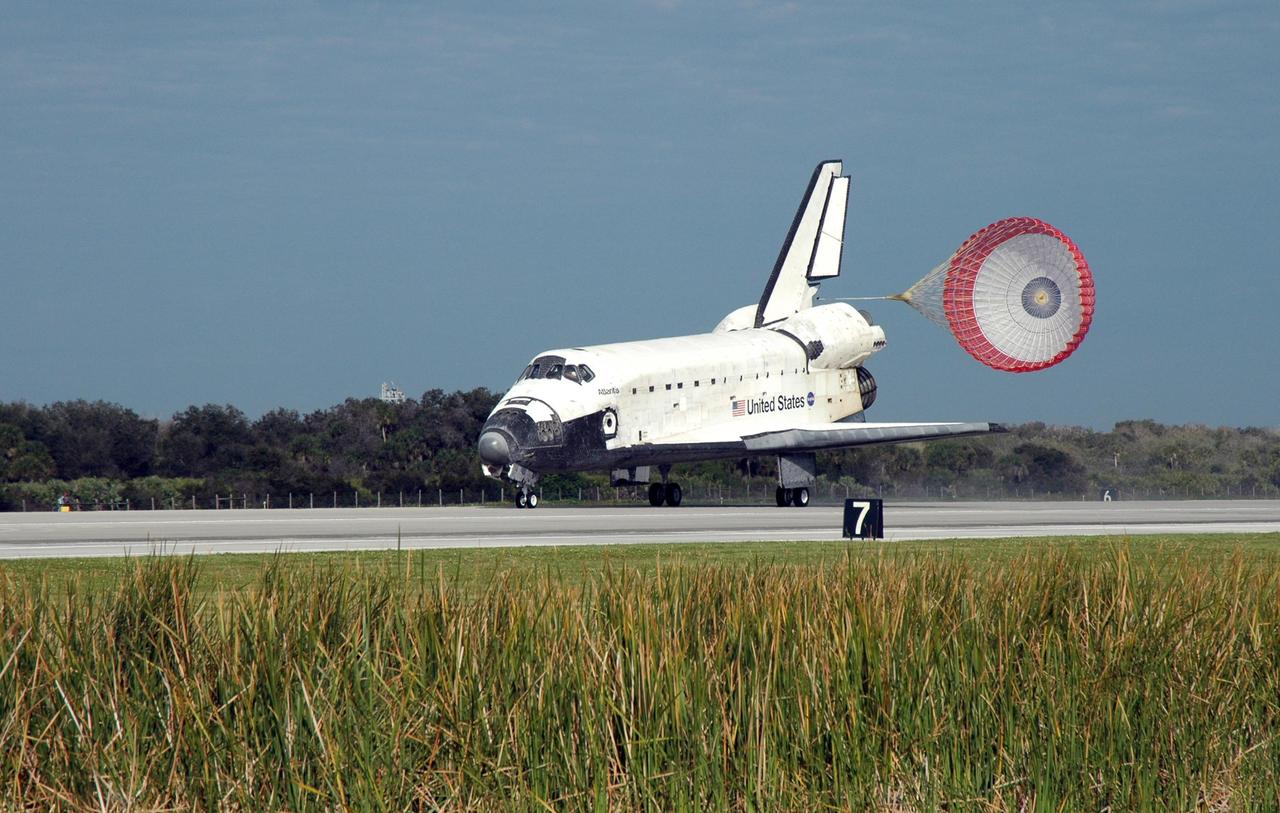
KENNEDY SPACE CENTER, FLA. -- With the aid of a drag chute billowing behind it, space shuttle Atlantis slows to a stop on Runway 15 of the Shuttle Landing Facility at NASA's Kennedy Space Center. The shuttle landed on orbit 202 to complete the 13-day STS-122 mission. Main gear touchdown was 9:07:10 a.m. Nose gear touchdown was 9:07:20 a.m. Wheel stop was at 9:08:08 a.m. Mission elapsed time was 12 days, 18 hours, 21 minutes and 44 seconds. During the mission, Atlantis' crew installed the new Columbus laboratory, leaving a larger space station and one with increased science capabilities. The Columbus Research Module adds nearly 1,000 cubic feet of habitable volume and affords room for 10 experiment racks, each an independent science lab. Photo credit: NASA/Norley Willets
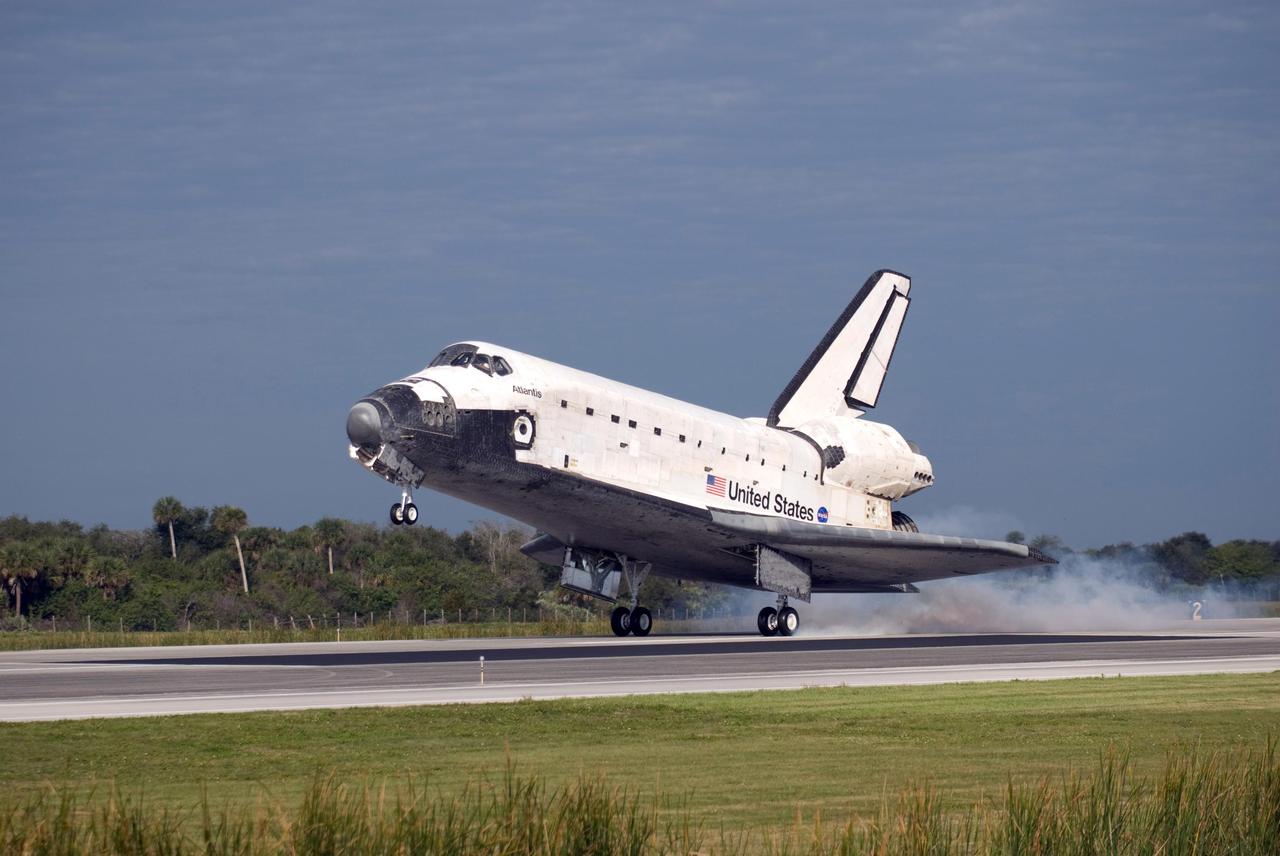
KENNEDY SPACE CENTER, FLA. -- The space shuttle Atlantis kicks up dust as it touches down on Runway 15 of the Shuttle Landing Facility at NASA's Kennedy Space Center. The shuttle landed on orbit 202 to complete the 13-day STS-122 mission. Main gear touchdown was 9:07:10 a.m. Nose gear touchdown was 9:07:20 a.m. Wheel stop was at 9:08:08 a.m. Mission elapsed time was 12 days, 18 hours, 21 minutes and 44 seconds. During the mission, Atlantis' crew installed the new Columbus laboratory, leaving a larger space station and one with increased science capabilities. The Columbus Research Module adds nearly 1,000 cubic feet of habitable volume and affords room for 10 experiment racks, each an independent science lab. Photo credit: NASA/Chris Lynch
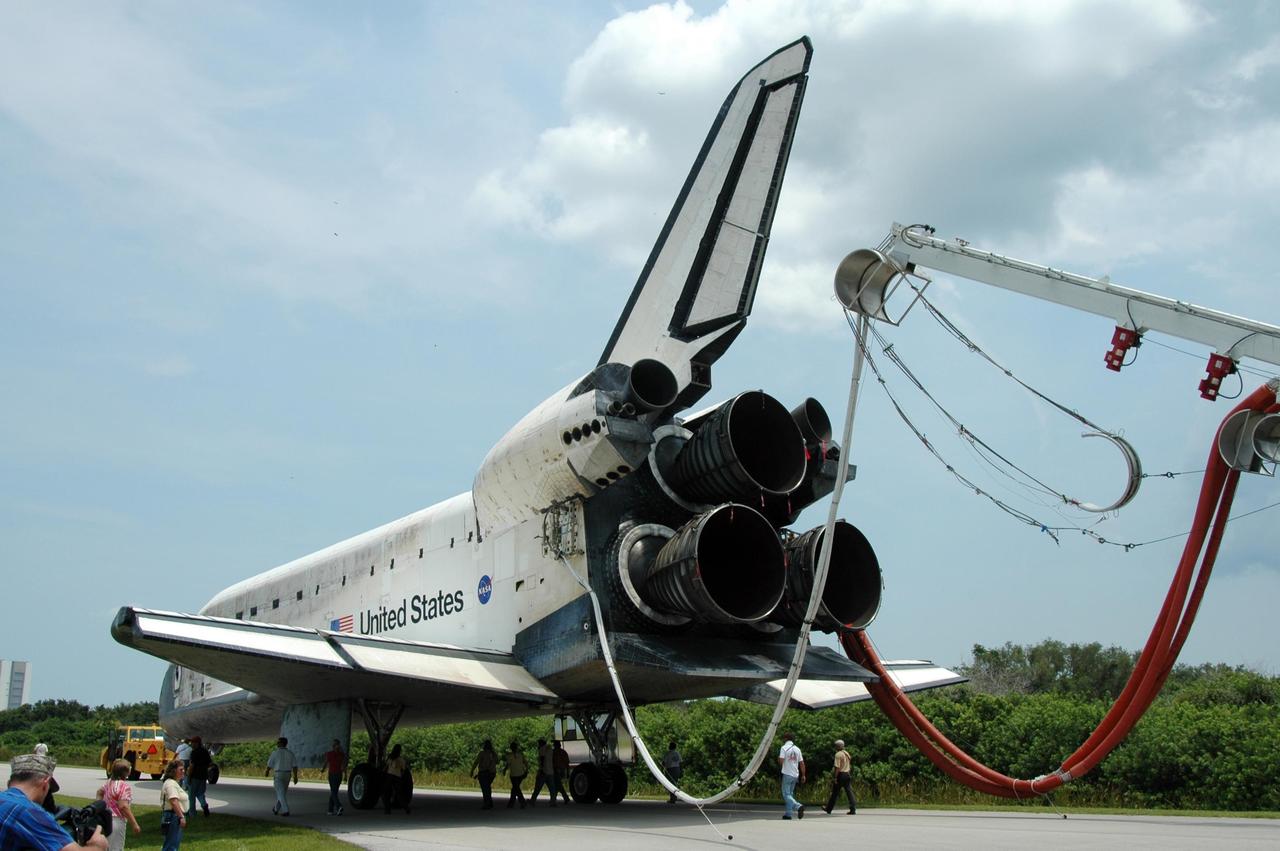
KENNEDY SPACE CENTER, FLA. - Under tow by a diesel-powered tractor, the orbiter Discovery rolls to the Orbiter Processing Facility from NASA's Shuttle Landing Facility (SLF) via a two-mile tow-way. Umbilical lines for coolant and purge air are still attached. Discovery landed at the SLF at 9:14 a.m. EDT, completing mission STS-121. Discovery traveled 5.3 million miles, landing on orbit 202. Mission elapsed time was 12 days, 18 hours, 37 minutes and 54 seconds. Main gear touchdown occurred on time at 9:14:43 EDT. Wheel stop was at 9:15:49 EDT. During the mission, the STS-121 crew tested new equipment and procedures to improve shuttle safety, and delivered supplies and made repairs to the International Space Station. Photo credit: NASA/Jim Grossmann
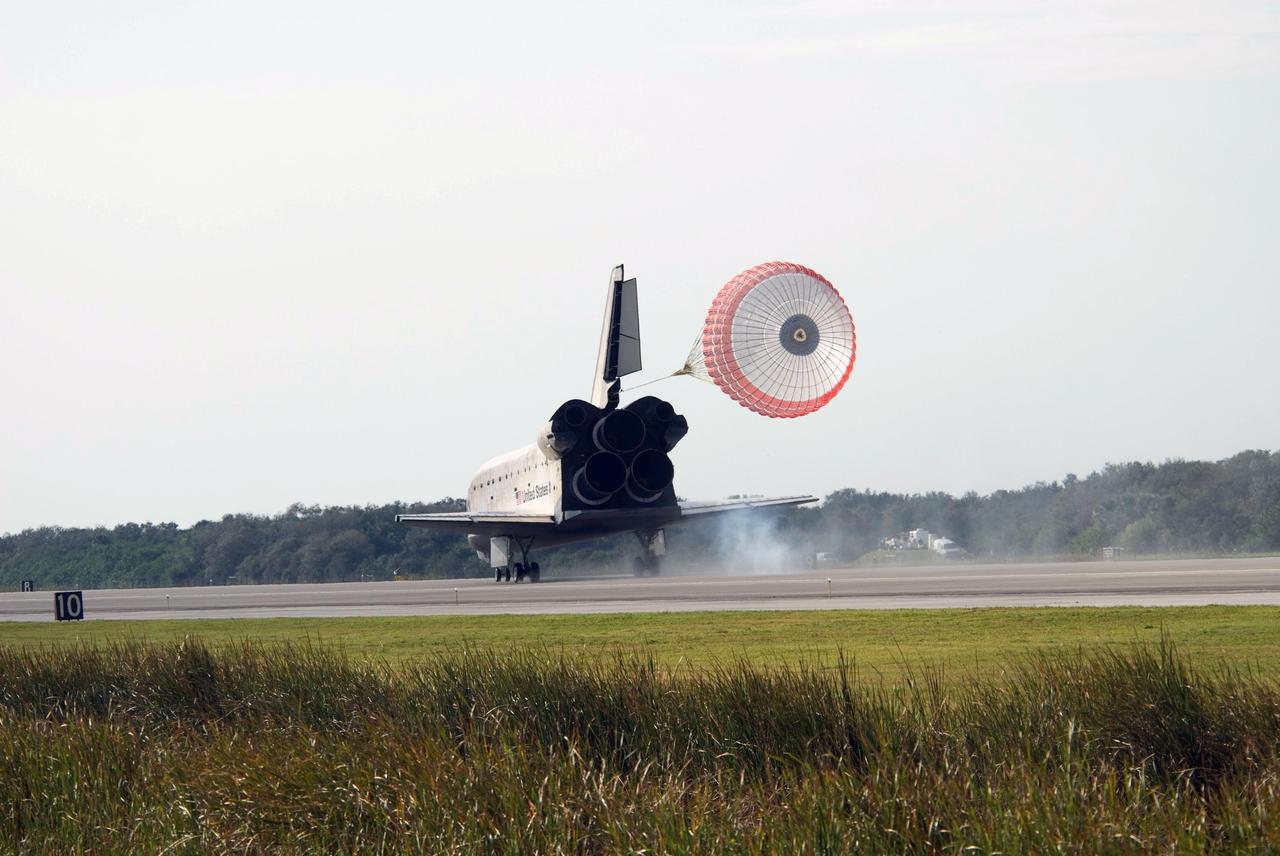
KENNEDY SPACE CENTER, FLA. -- A drag chute continues the slowdown of space shuttle Atlantis as it lands on Runway 15 of the Shuttle Landing Facility at NASA's Kennedy Space Center after a nearly 5.3 million mile round trip to the International Space Station. The shuttle landed on orbit 202 to complete the 13-day STS-122 mission. Main gear touchdown was 9:07:10 a.m. Nose gear touchdown was 9:07:20 a.m. Wheel stop was at 9:08:08 a.m. Mission elapsed time was 12 days, 18 hours, 21 minutes and 44 seconds. During the mission, Atlantis' crew installed the new Columbus laboratory, leaving a larger space station and one with increased science capabilities. The Columbus Research Module adds nearly 1,000 cubic feet of habitable volume and affords room for 10 experiment racks, each an independent science lab. Photo credit: NASA/Kevin O'Connell
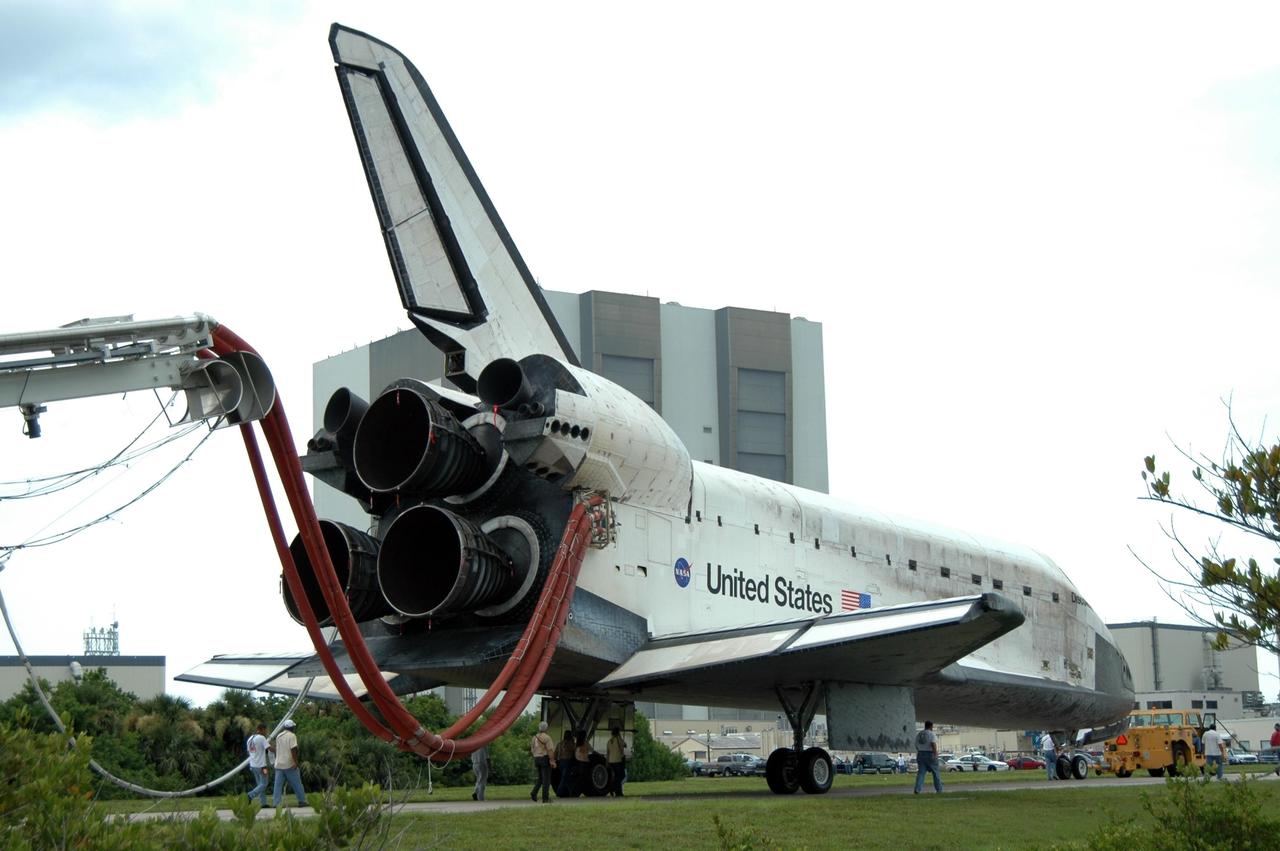
KENNEDY SPACE CENTER, FLA. - Under tow by a diesel-powered tractor, the orbiter Discovery rolls past the Vehicle Assembly Building as it travels along the two-mile tow-way to the Orbiter Processing Facility from NASA's Shuttle Landing Facility. Umbilical lines for coolant and purge air are still attached. Discovery landed at the SLF at 9:14 a.m. EDT, completing mission STS-121. Discovery traveled 5.3 million miles, landing on orbit 202. Mission elapsed time was 12 days, 18 hours, 37 minutes and 54 seconds. Main gear touchdown occurred on time at 9:14:43 EDT. Wheel stop was at 9:15:49 EDT. During the mission, the STS-121 crew tested new equipment and procedures to improve shuttle safety, and delivered supplies and made repairs to the International Space Station. Photo credit: NASA/Jim Grossmann
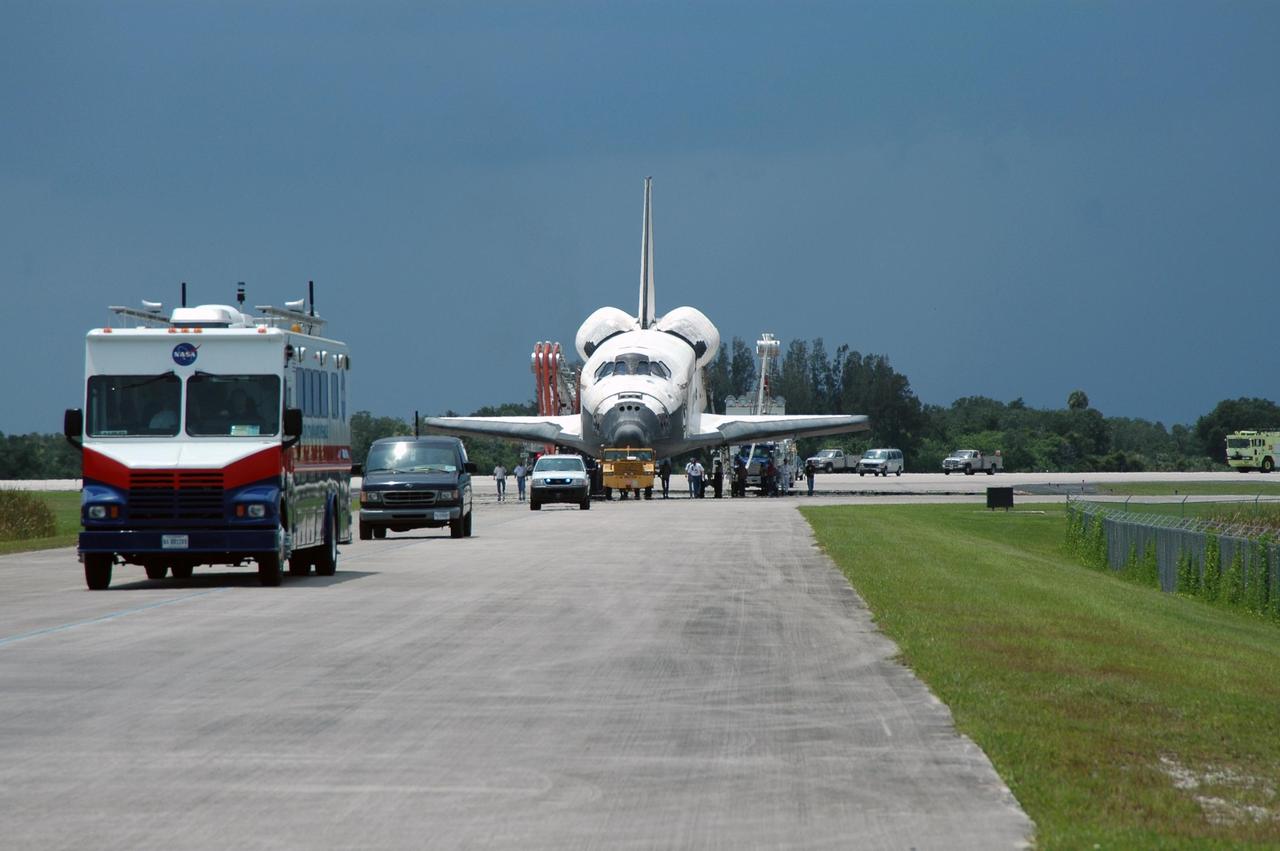
KENNEDY SPACE CENTER, FLA. - Under tow by a diesel-powered tractor, the orbiter Discovery begins its roll to the Orbiter Processing Facility from NASA's Shuttle Landing Facility (SLF) at Kennedy Space Center via a two-mile tow-way. Discovery landed at the SLF at 9:14 a.m. EDT, completing mission STS-121. Discovery landed at the SLF at 9:14 a.m. EDT, completing mission STS-121. Discovery traveled 5.3 million miles, landing on orbit 202. Mission elapsed time was 12 days, 18 hours, 37 minutes and 54 seconds. Main gear touchdown occurred on time at 9:14:43 EDT. Wheel stop was at 9:15:49 EDT. During the mission, the STS-121 crew tested new equipment and procedures to improve shuttle safety, and delivered supplies and made repairs to the International Space Station. Photo credit: NASA/Jim Grossmann
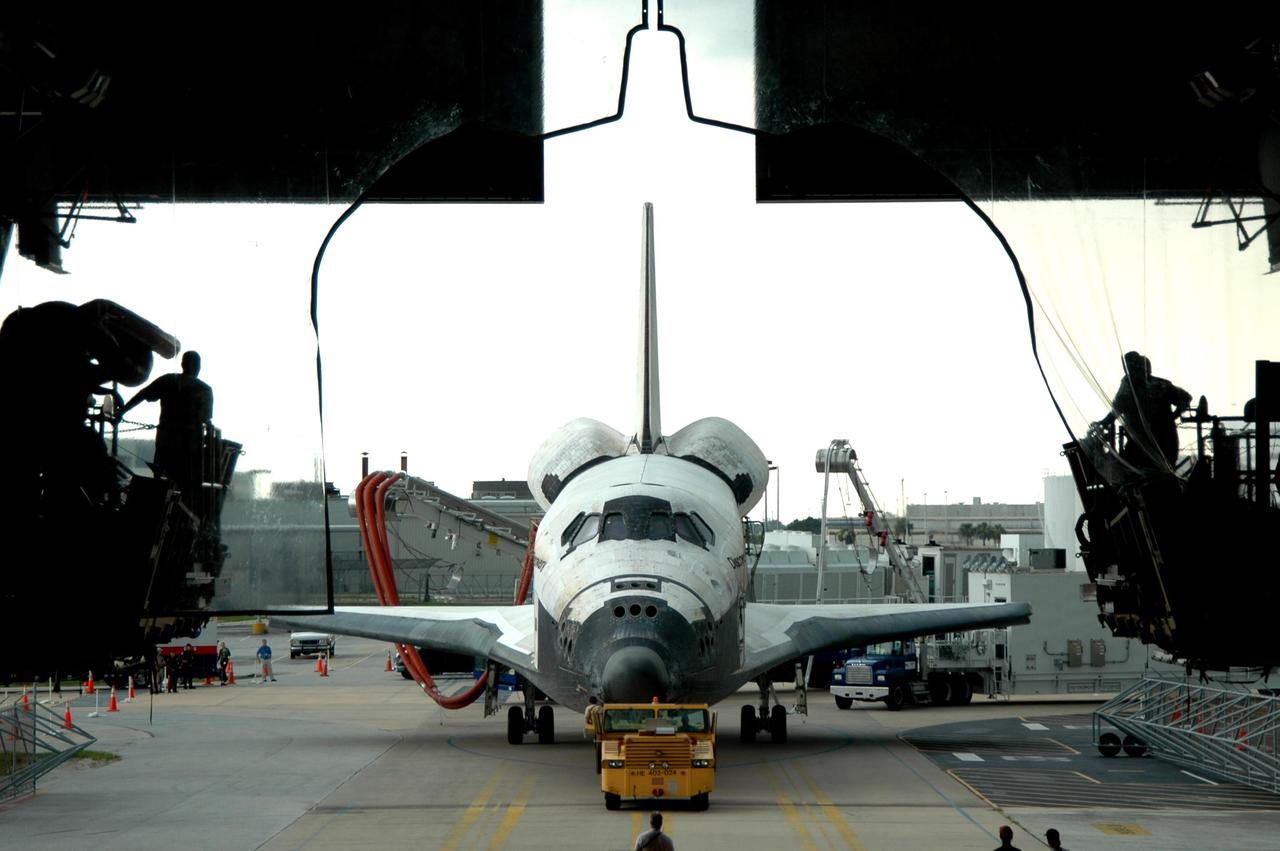
KENNEDY SPACE CENTER, FLA. - Still being towed by a diesel-powered tractor, the orbiter Discovery is moved into the Orbiter Processing Facility. Umbilical lines for coolant and purge air are still attached. Discovery landed at the SLF at 9:14 a.m. EDT, completing mission STS-121. Discovery traveled 5.3 million miles, landing on orbit 202. Mission elapsed time was 12 days, 18 hours, 37 minutes and 54 seconds. Main gear touchdown occurred on time at 9:14:43 EDT. Wheel stop was at 9:15:49 EDT. During the mission, the STS-121 crew tested new equipment and procedures to improve shuttle safety, and delivered supplies and made repairs to the International Space Station. Photo credit: NASA/Jim Grossmann
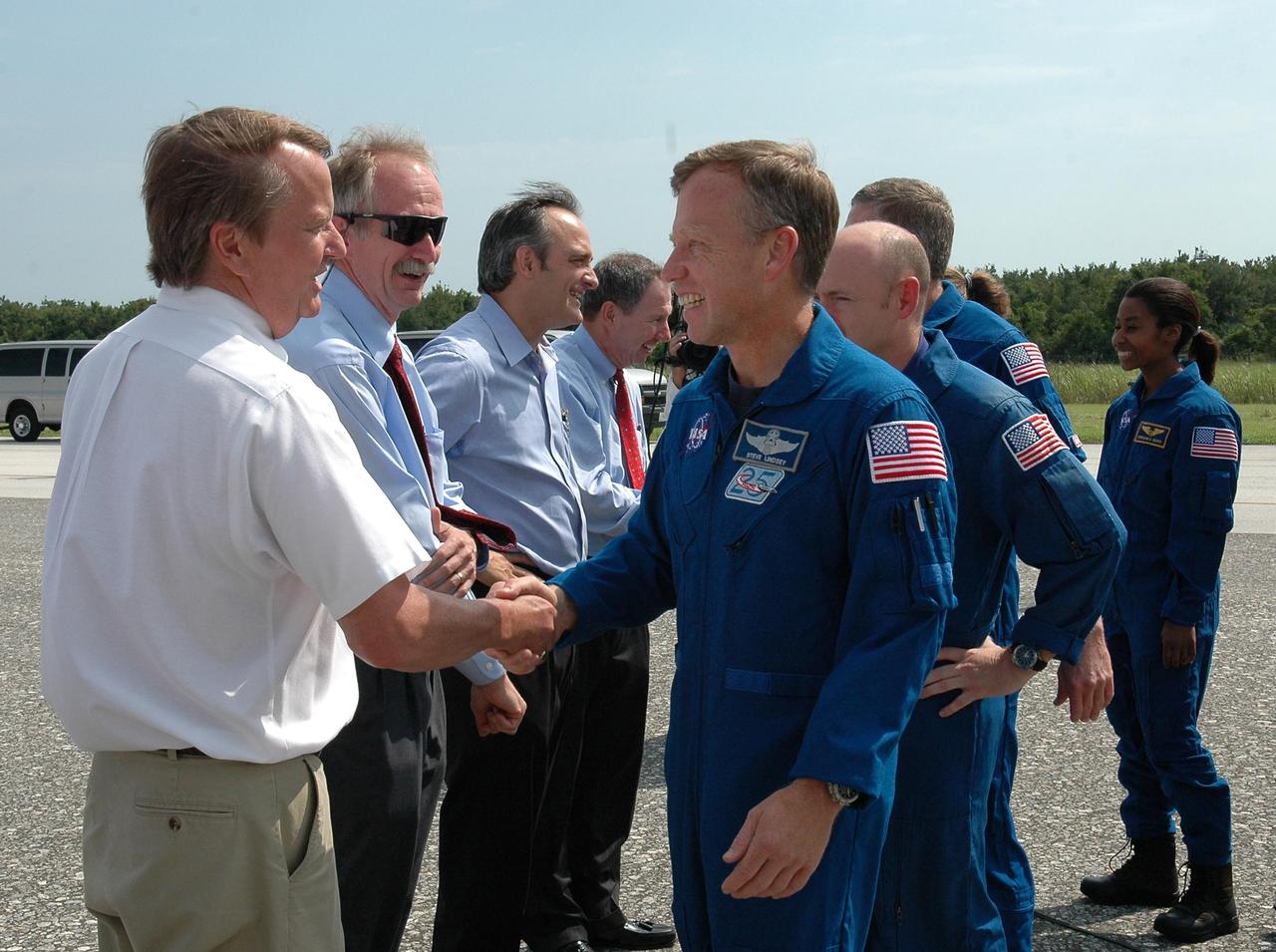
KENNEDY SPACE CENTER, FLA. - (From left) Shuttle Launch Director Mike Leinbach, Associate Administrator for Space Operations Bill Gerstenmaier, Associate Administrator Rex Geveden and NASA Administrator Mike Griffin greet STS-121 Commander Steven Lindsey, Pilot Mike Kelly and Mission Specialists Michael Fossum and Stephanie Wilson. Not visible are Mission Specialists Piers Sellers and Lisa Nowak. Mission Specialist Thomas Reiter, who launched with the crew on July 4, remained on the station to join the Expedition 13 crew there. Discovery's smooth and perfect landing was on time at 9:14 a.m. EDT on Runway 15 of NASA's Shuttle Landing Facility after traveling 5.3 million miles on 202 orbits. Mission elapsed time was 12 days, 18 hours, 37 minutes and 54 seconds. The landing is the 62nd at Kennedy Space Center and the 32nd for Discovery. Photo credit: NASA/Kim Shiflett
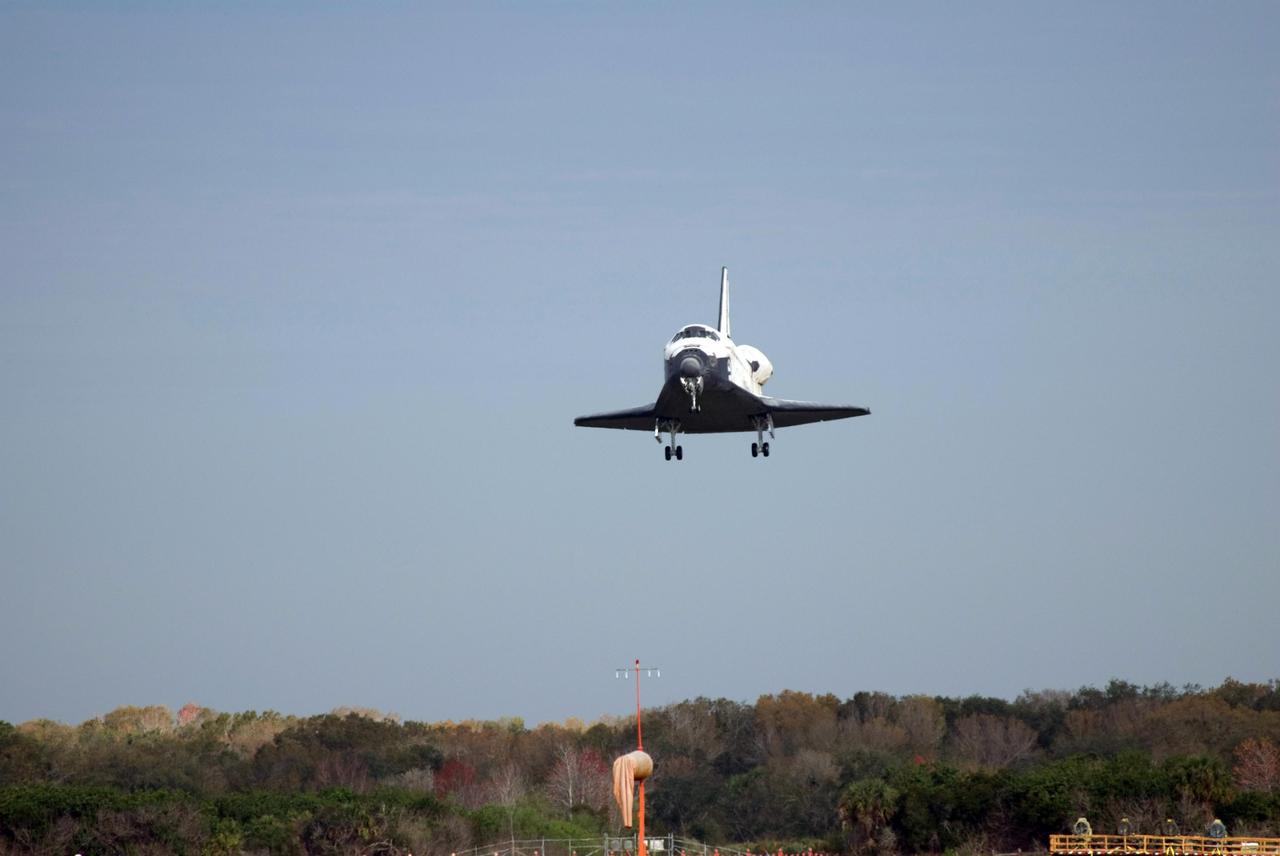
KENNEDY SPACE CENTER, FLA. -- Space shuttle Atlantis has wheels down for a landing as it approaches Runway 15 at NASA's Kennedy Space Center. The shuttle landed on orbit 202 to complete the 13-day STS-122 mission. Main gear touchdown was 9:07:10 a.m. Nose gear touchdown was 9:07:20 a.m. Wheel stop was at 9:08:08 a.m. Mission elapsed time was 12 days, 18 hours, 21 minutes and 44 seconds. During the mission, Atlantis' crew installed the new Columbus laboratory, leaving a larger space station and one with increased science capabilities. The Columbus Research Module adds nearly 1,000 cubic feet of habitable volume and affords room for 10 experiment racks, each an independent science lab. Photo credit: NASA/Tom Farrar
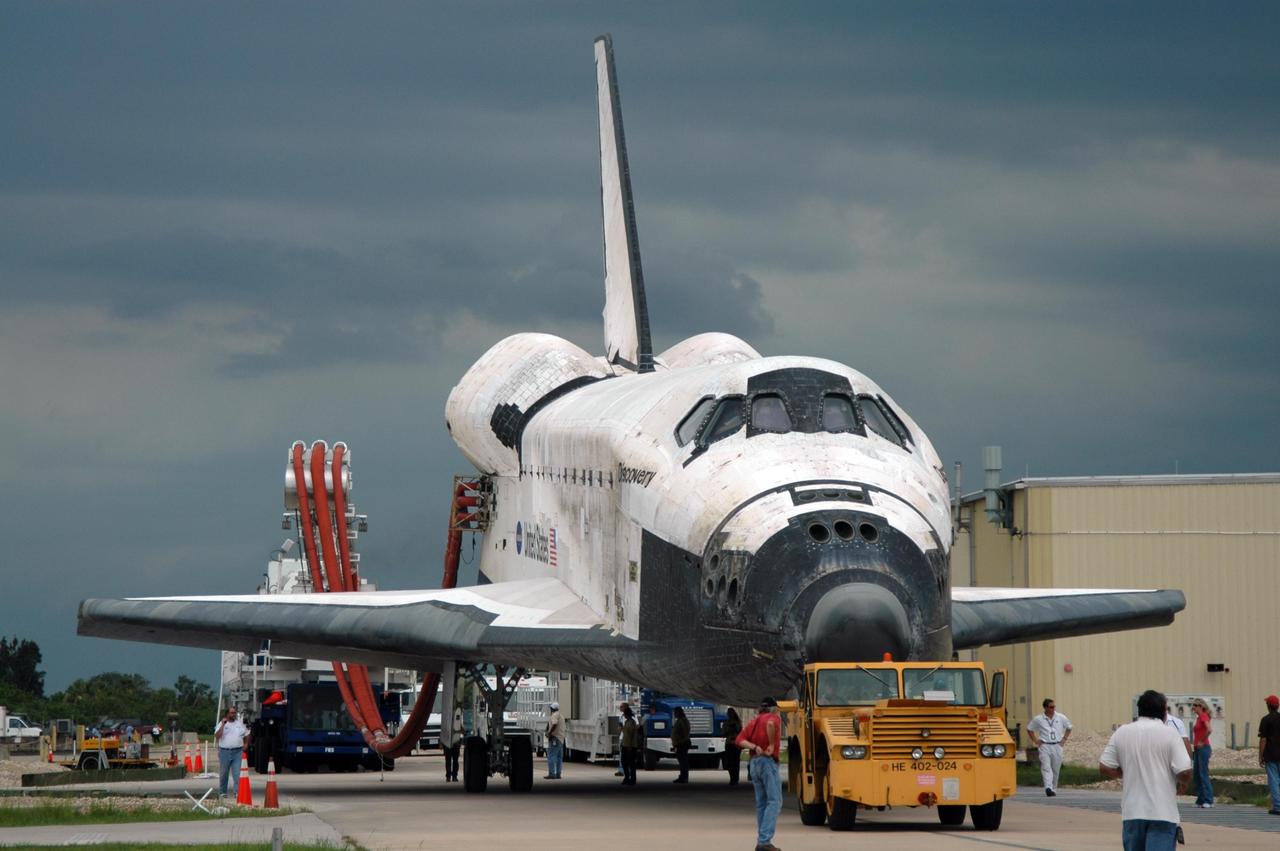
KENNEDY SPACE CENTER, FLA. - Under tow by a diesel-powered tractor, the orbiter Discovery rolls to the Orbiter Processing Facility from NASA's Shuttle Landing Facility on a two-mile tow-way. Umbilical lines for coolant and purge air are still attached. Discovery landed at the SLF at 9:14 a.m. EDT, completing mission STS-121. Discovery traveled 5.3 million miles, landing on orbit 202. Mission elapsed time was 12 days, 18 hours, 37 minutes and 54 seconds. Main gear touchdown occurred on time at 9:14:43 EDT. Wheel stop was at 9:15:49 EDT. During the mission, the STS-121 crew tested new equipment and procedures to improve shuttle safety, and delivered supplies and made repairs to the International Space Station. Photo credit: NASA/Jim Grossmann
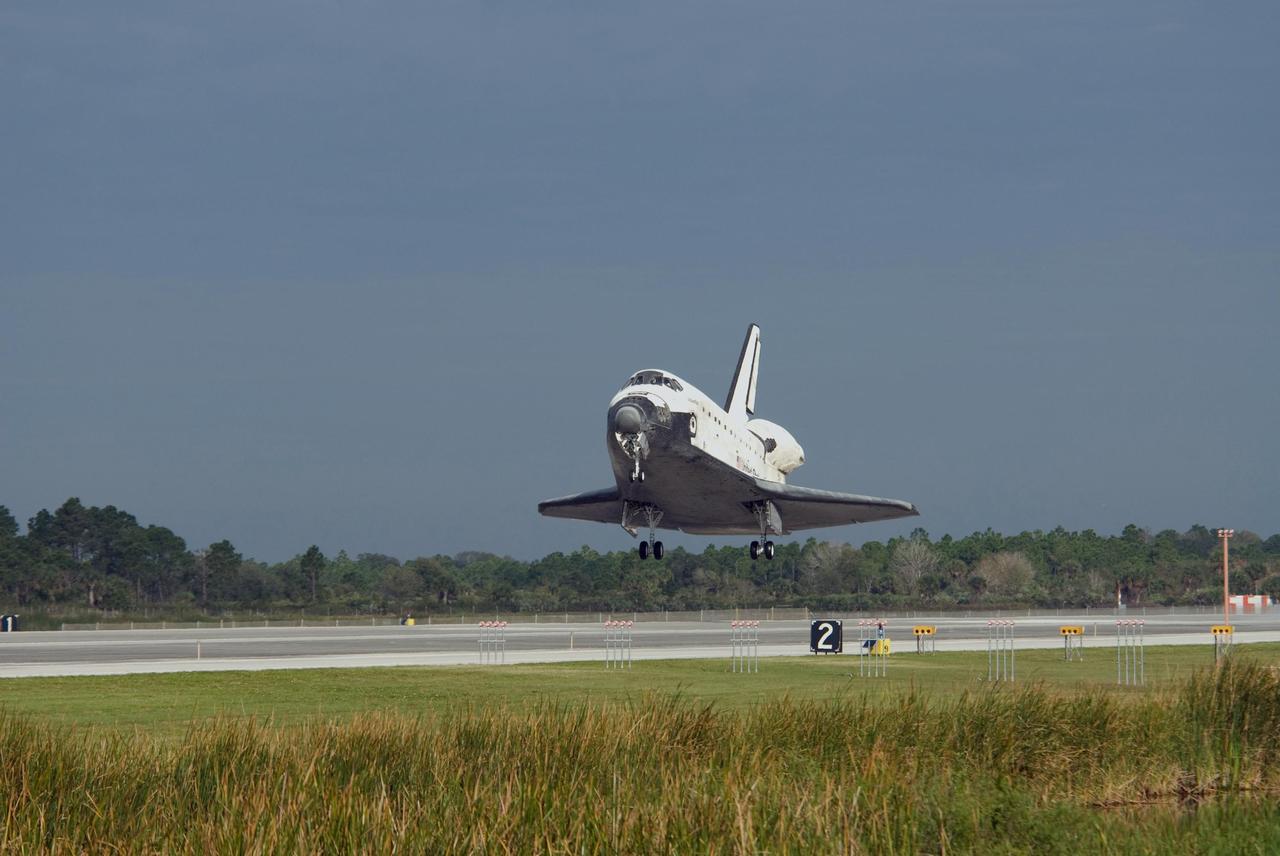
KENNEDY SPACE CENTER, FLA. -- The space shuttle Atlantis approaches touchdown on Runway 15 of the Shuttle Landing Facility at NASA's Kennedy Space Center. The shuttle landed on orbit 202 to complete the 13-day STS-122 mission. Main gear touchdown was 9:07:10 a.m. Nose gear touchdown was 9:07:20 a.m. Wheel stop was at 9:08:08 a.m. Mission elapsed time was 12 days, 18 hours, 21 minutes and 44 seconds. During the mission, Atlantis' crew installed the new Columbus laboratory, leaving a larger space station and one with increased science capabilities. The Columbus Research Module adds nearly 1,000 cubic feet of habitable volume and affords room for 10 experiment racks, each an independent science lab. Photo credit: NASA/Kevin O'Connell
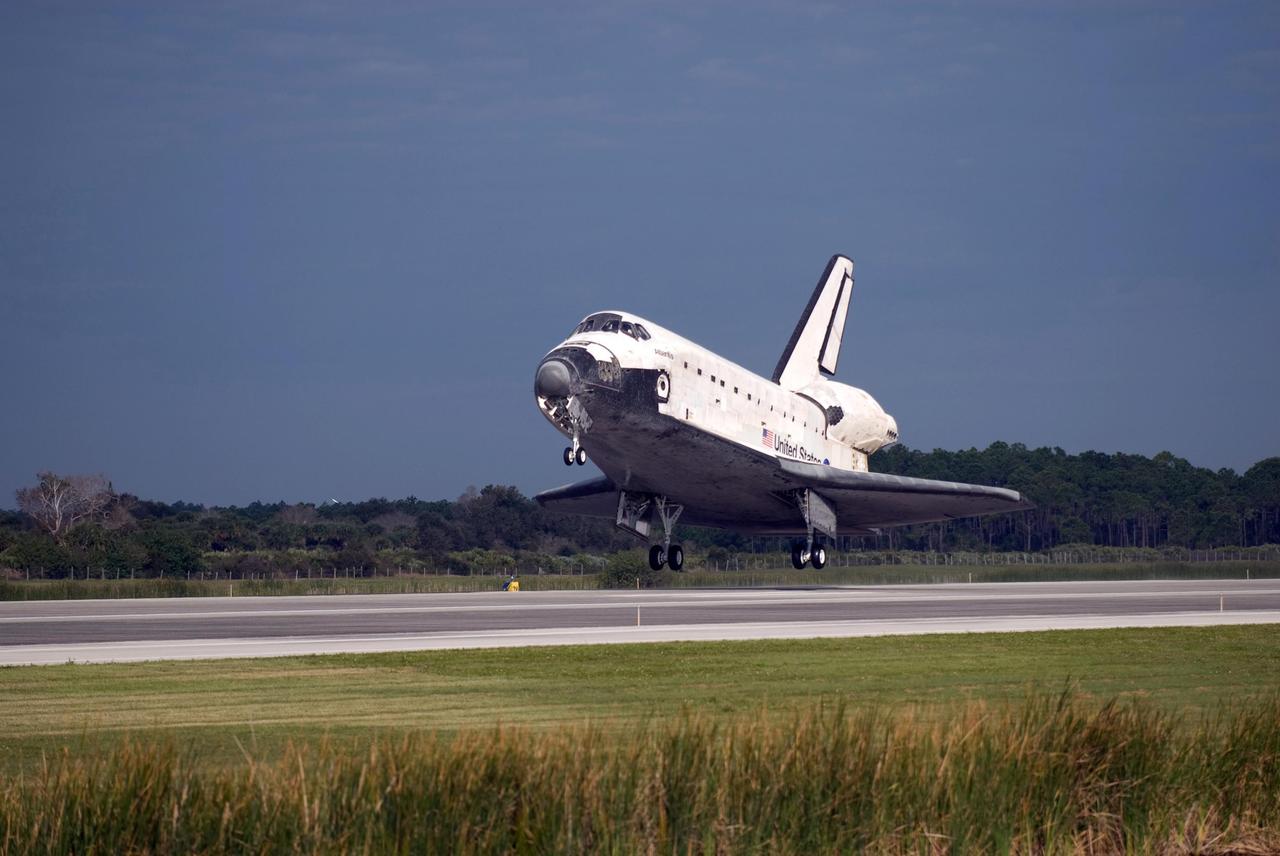
KENNEDY SPACE CENTER, FLA. -- The space shuttle Atlantis approaches touch down on Runway 15 of the Shuttle Landing Facility at NASA's Kennedy Space Center. The shuttle landed on orbit 202 to complete the 13-day STS-122 mission. Main gear touchdown was 9:07:10 a.m. Nose gear touchdown was 9:07:20 a.m. Wheel stop was at 9:08:08 a.m. Mission elapsed time was 12 days, 18 hours, 21 minutes and 44 seconds. During the mission, Atlantis' crew installed the new Columbus laboratory, leaving a larger space station and one with increased science capabilities. The Columbus Research Module adds nearly 1,000 cubic feet of habitable volume and affords room for 10 experiment racks, each an independent science lab. Photo credit: NASA/Chris Lynch
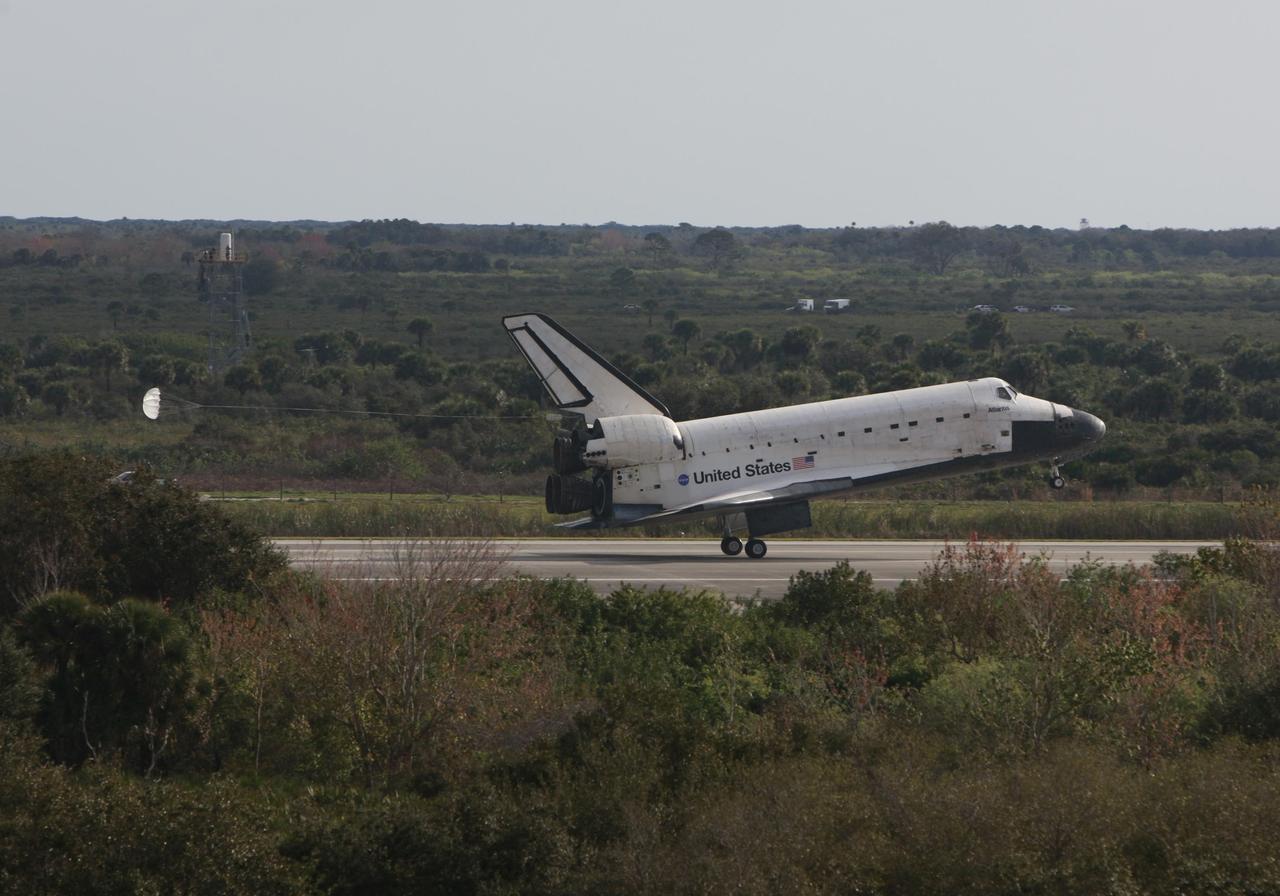
KENNEDY SPACE CENTER, FLA. -- Space shuttle Atlantis touches down on Runway 15 of the Shuttle Landing Facility at NASA's Kennedy Space Center after a nearly 5.3 million mile round trip to the International Space Station. The shuttle landed on orbit 202 to complete the 13-day STS-122 mission. Main gear touchdown was 9:07:10 a.m. Nose gear touchdown was 9:07:20 a.m. Wheel stop was at 9:08:08 a.m. Mission elapsed time was 12 days, 18 hours, 21 minutes and 44 seconds. During the mission, Atlantis' crew installed the new Columbus laboratory, leaving a larger space station and one with increased science capabilities. The Columbus Research Module adds nearly 1,000 cubic feet of habitable volume and affords room for 10 experiment racks, each an independent science lab. Photo courtesy of Scott Andrews
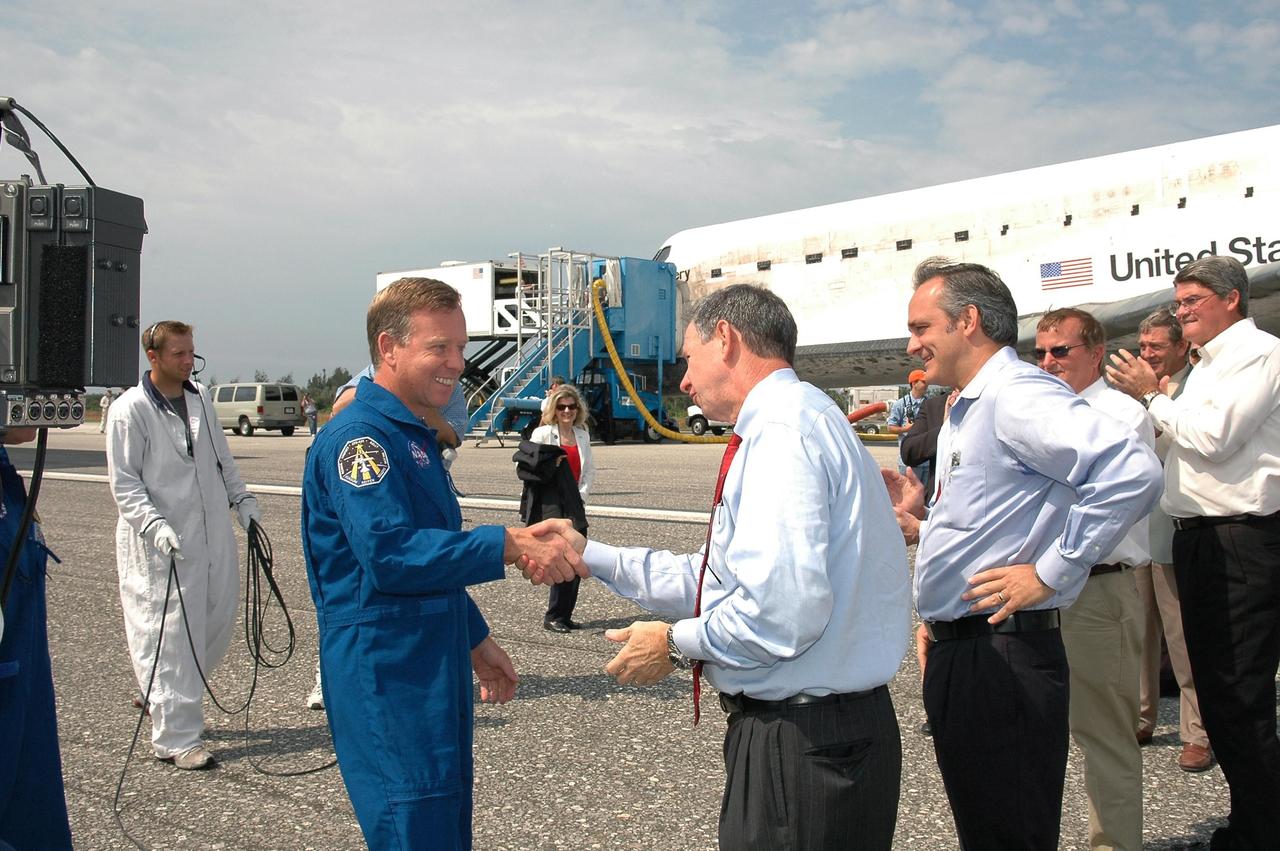
KENNEDY SPACE CENTER, FLA. - STS-121 Mission Commander Steven Lindsey is greeted by NASA Administrator Mike Griffin, Associate Administrator Rex Geveden, Shuttle Launch Director Mike Leinbach, KSC Deputy Director Bill Parsons and other senior managers after leaving the orbiter Discovery, in the background. The rest of the crew are Pilot Mark Kelly and Mission Specialists Piers Sellers, Lisa Nowak and Stephanie Wilson. Mission Specialist Thomas Reiter, who launched with the crew on July 4, remained on the station to join the Expedition 13 crew there. Discovery's smooth and perfect landing was on time at 9:14 a.m. EDT on Runway 15 of NASA's Shuttle Landing Facility after traveling 5.3 million miles on 202 orbits. Mission elapsed time was 12 days, 18 hours, 37 minutes and 54 seconds. The landing is the 62nd at Kennedy Space Center and the 32nd for Discovery. Photo credit: NASA/Kim Shiflett
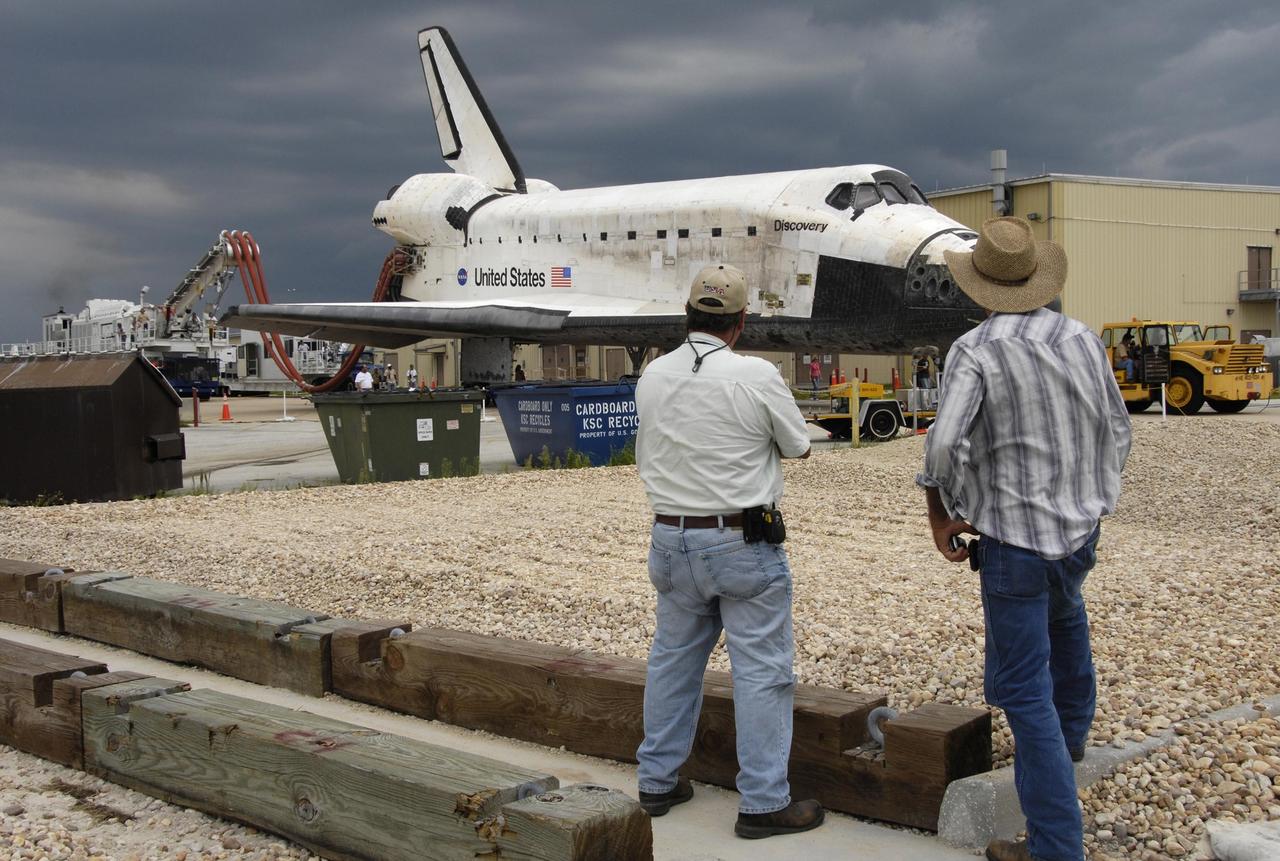
KENNEDY SPACE CENTER, FLA. - On a two-mile tow from NASA's Shuttle Landing Facility, the orbiter Discovery rolls to the Orbiter Processing Facility. Umbilical lines for coolant and purge air are still attached. Discovery landed at the SLF at 9:14 a.m. EDT, completing mission STS-121. Discovery traveled 5.3 million miles, landing on orbit 202. Mission elapsed time was 12 days, 18 hours, 37 minutes and 54 seconds. Main gear touchdown occurred on time at 9:14:43 EDT. Wheel stop was at 9:15:49 EDT. During the mission, the STS-121 crew tested new equipment and procedures to improve shuttle safety, and delivered supplies and made repairs to the International Space Station. Photo courtesy of Nikon/Scott Andrews
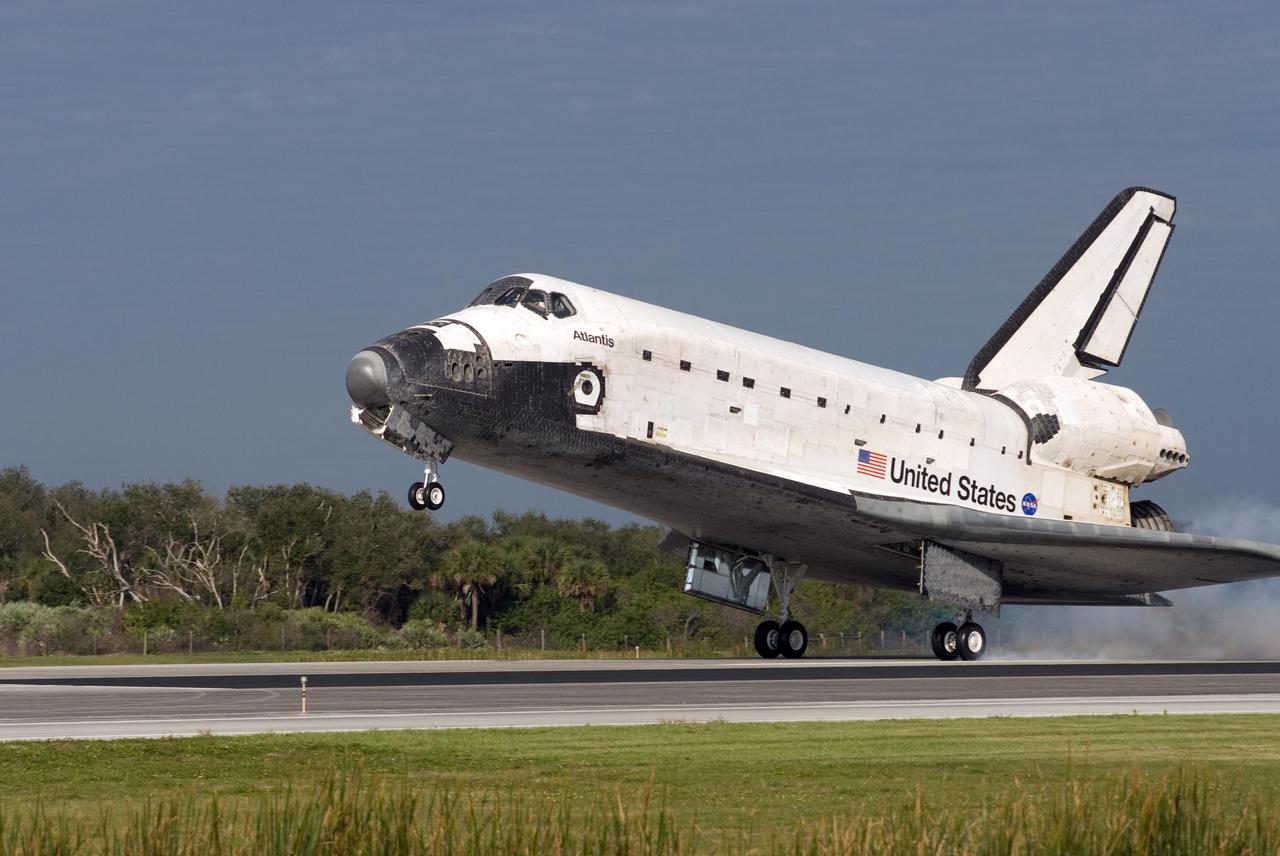
KENNEDY SPACE CENTER, FLA. -- The space shuttle Atlantis kicks up dust as it touches down on Runway 15 of the Shuttle Landing Facility at NASA's Kennedy Space Center. The shuttle landed on orbit 202 to complete the 13-day STS-122 mission. Main gear touchdown was 9:07:10 a.m. Nose gear touchdown was 9:07:20 a.m. Wheel stop was at 9:08:08 a.m. Mission elapsed time was 12 days, 18 hours, 21 minutes and 44 seconds. During the mission, Atlantis' crew installed the new Columbus laboratory, leaving a larger space station and one with increased science capabilities. The Columbus Research Module adds nearly 1,000 cubic feet of habitable volume and affords room for 10 experiment racks, each an independent science lab. Photo credit: NASA/Tom Joseph
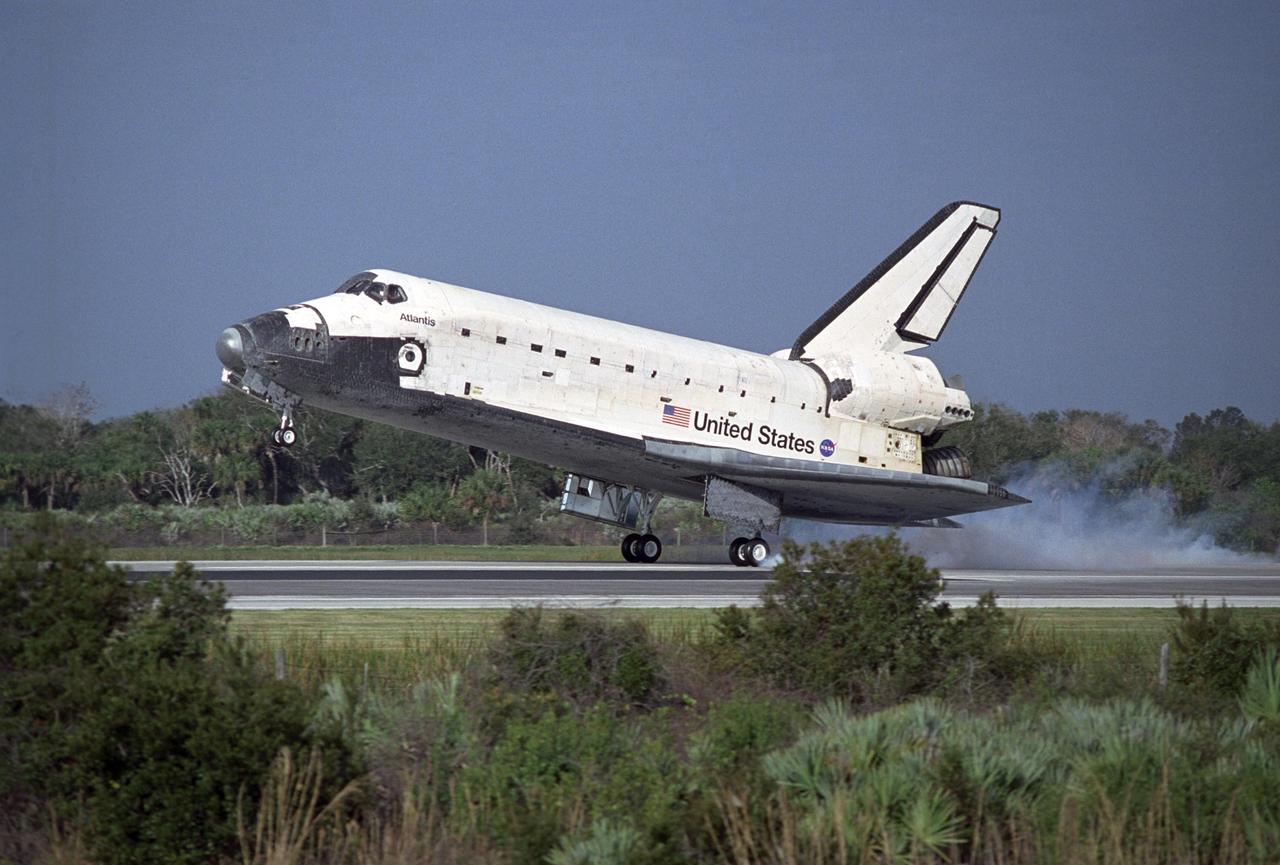
KENNEDY SPACE CENTER, FLA. -- After a nearly 5.3 million mile round trip to the International Space Station, space shuttle Atlantis kicks up dust as it touches down on Runway 15 of the Shuttle Landing Facility at NASA's Kennedy Space Center. The shuttle landed on orbit 202 to complete the 13-day STS-122 mission. Main gear touchdown was 9:07:10 a.m. Nose gear touchdown was 9:07:20 a.m. Wheel stop was at 9:08:08 a.m. Mission elapsed time was 12 days, 18 hours, 21 minutes and 44 seconds. During the mission, Atlantis' crew installed the new Columbus laboratory, leaving a larger space station and one with increased science capabilities. The Columbus Research Module adds nearly 1,000 cubic feet of habitable volume and affords room for 10 experiment racks, each an independent science lab. Photo credit: NASA/Tony Gray
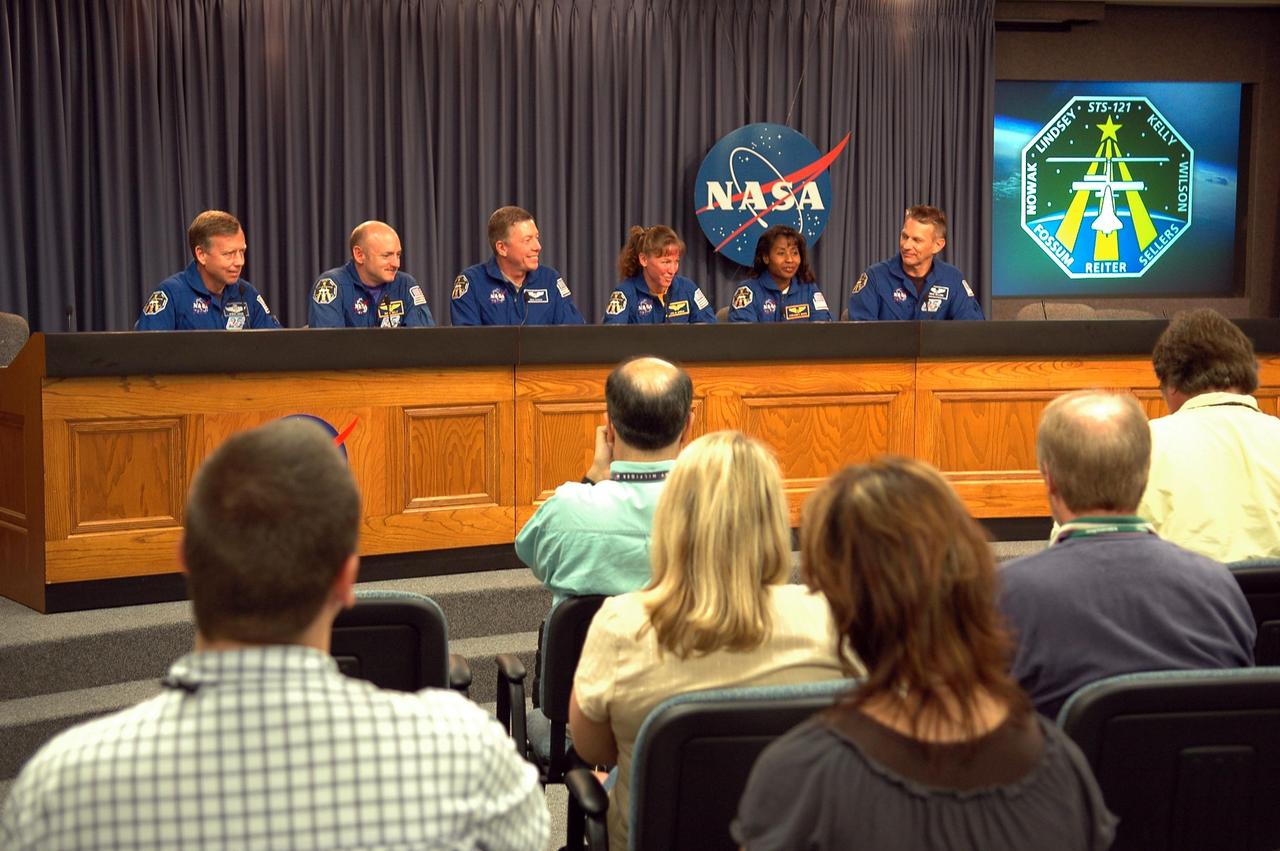
KENNEDY SPACE CENTER, FLA. - Several hours after their successful landing at Kennedy Space Center aboard the orbiter Discovery, the crew of mission STS-121 address questions from the media about their experiences on the shuttle and the International Space Station. Seated at the conference table are (from left) Commander Steven Lindsey, Pilot Mark Kelly and Mission Specialists Michael Fossum, Lisa Nowak, Stephanie Wilson and Piers Sellers. Here, on a lighter topic, Nowak responds to a question about the behavior of her hair while in space. Discovery traveled 5.3 million miles, landing on orbit 202. Mission elapsed time was 12 days, 18 hours, 37 minutes and 54 seconds. During the nearly 13-day mission, the STS-121 crew tested new equipment and procedures to improve shuttle safety, and delivered supplies and made repairs to the International Space Station. Photo credit: NASA/Kim Shiflett
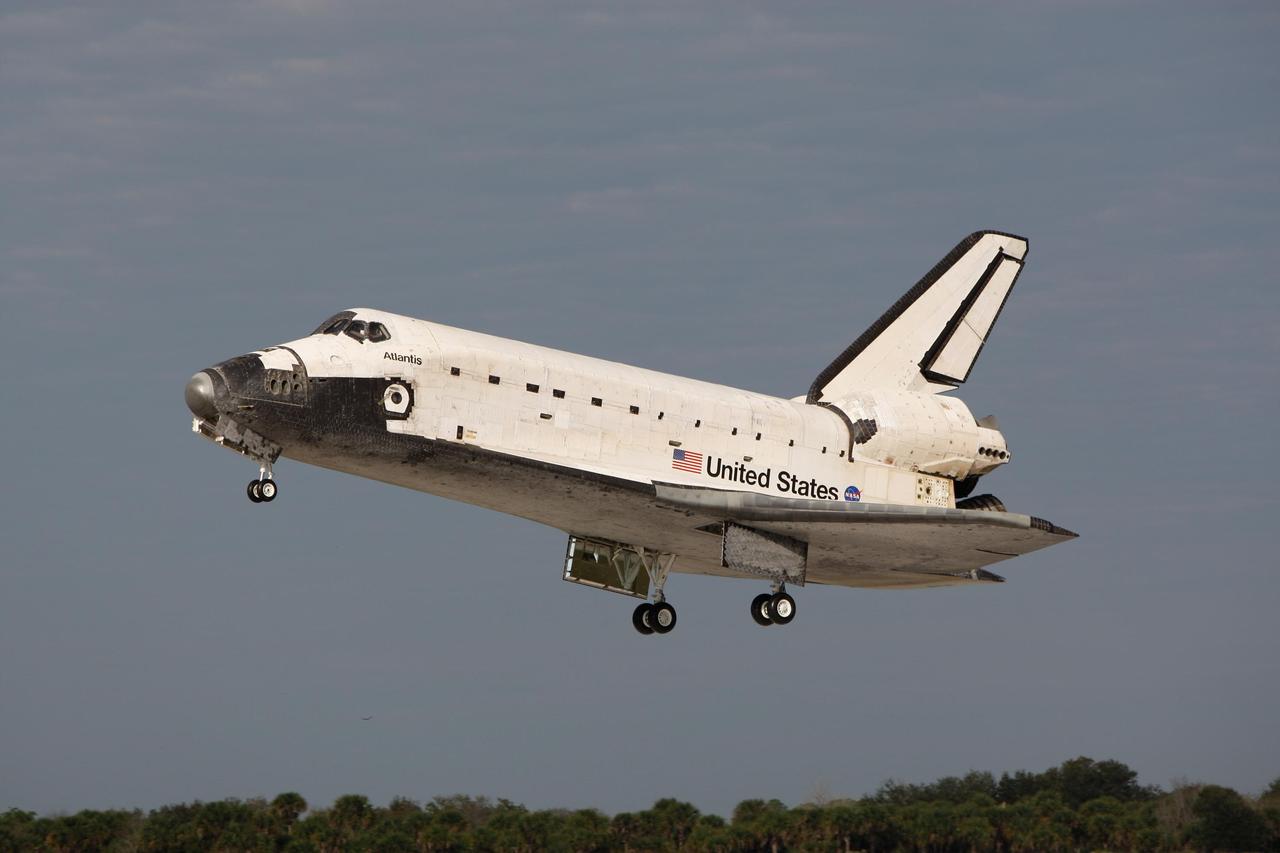
KENNEDY SPACE CENTER, FLA. -- With wheels down, space shuttle Atlantis approaches a landing on Runway 15 of the Shuttle Landing Facility at NASA's Kennedy Space Center after a nearly 5.3 million mile round trip to the International Space Station. The shuttle landed on orbit 202 to complete the 13-day STS-122 mission. Main gear touchdown was 9:07:10 a.m. Nose gear touchdown was 9:07:20 a.m. Wheel stop was at 9:08:08 a.m. Mission elapsed time was 12 days, 18 hours, 21 minutes and 44 seconds. During the mission, Atlantis' crew installed the new Columbus laboratory, leaving a larger space station and one with increased science capabilities. The Columbus Research Module adds nearly 1,000 cubic feet of habitable volume and affords room for 10 experiment racks, each an independent science lab. Photo courtesy of Chuck Luzier

KENNEDY SPACE CENTER, FLA. - Following the traditional post-flight walk-around after the landing of an orbiter, STS-121 Commander Steven Lindsey speaks briefly to the media about the clean state of the vehicle and thanks the employees at the center. Standing with him are (from left) Mission Specialists Piers Sellers and Stephanie Wilson, Pilot Mark Kelly, Lindsey, and Mission Specialists Lisa Nowak and Michael Fossum. Discovery's smooth and perfect landing was on time at 9:14 a.m. EDT on Runway 15 of NASA's Shuttle Landing Facility after traveling 5.3 million miles on 202 orbits. Mission elapsed time was 12 days, 18 hours, 37 minutes and 54 seconds. The landing is the 62nd at Kennedy Space Center and the 32nd for Discovery. Photo credit: NASA/Kim Shiflett
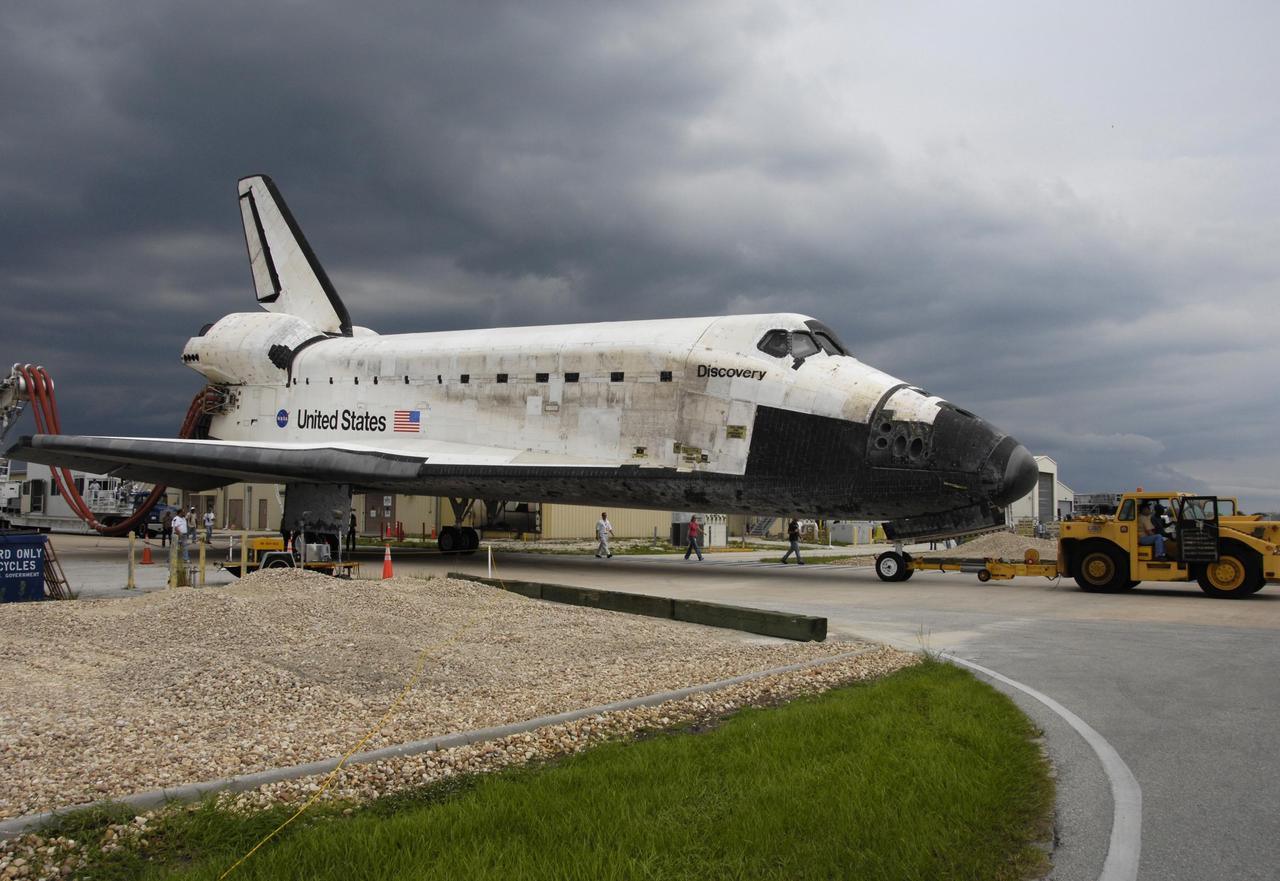
KENNEDY SPACE CENTER, FLA. - On a two-mile tow from NASA's Shuttle Landing Facility, the orbiter Discovery rolls toward the Orbiter Processing Facility. Umbilical lines for coolant and purge air are still attached. Discovery landed at the SLF at 9:14 a.m. EDT, completing mission STS-121. Discovery traveled 5.3 million miles, landing on orbit 202. Mission elapsed time was 12 days, 18 hours, 37 minutes and 54 seconds. Main gear touchdown occurred on time at 9:14:43 EDT. Wheel stop was at 9:15:49 EDT. During the mission, the STS-121 crew tested new equipment and procedures to improve shuttle safety, and delivered supplies and made repairs to the International Space Station. Photo courtesy of Nikon/Scott Andrews
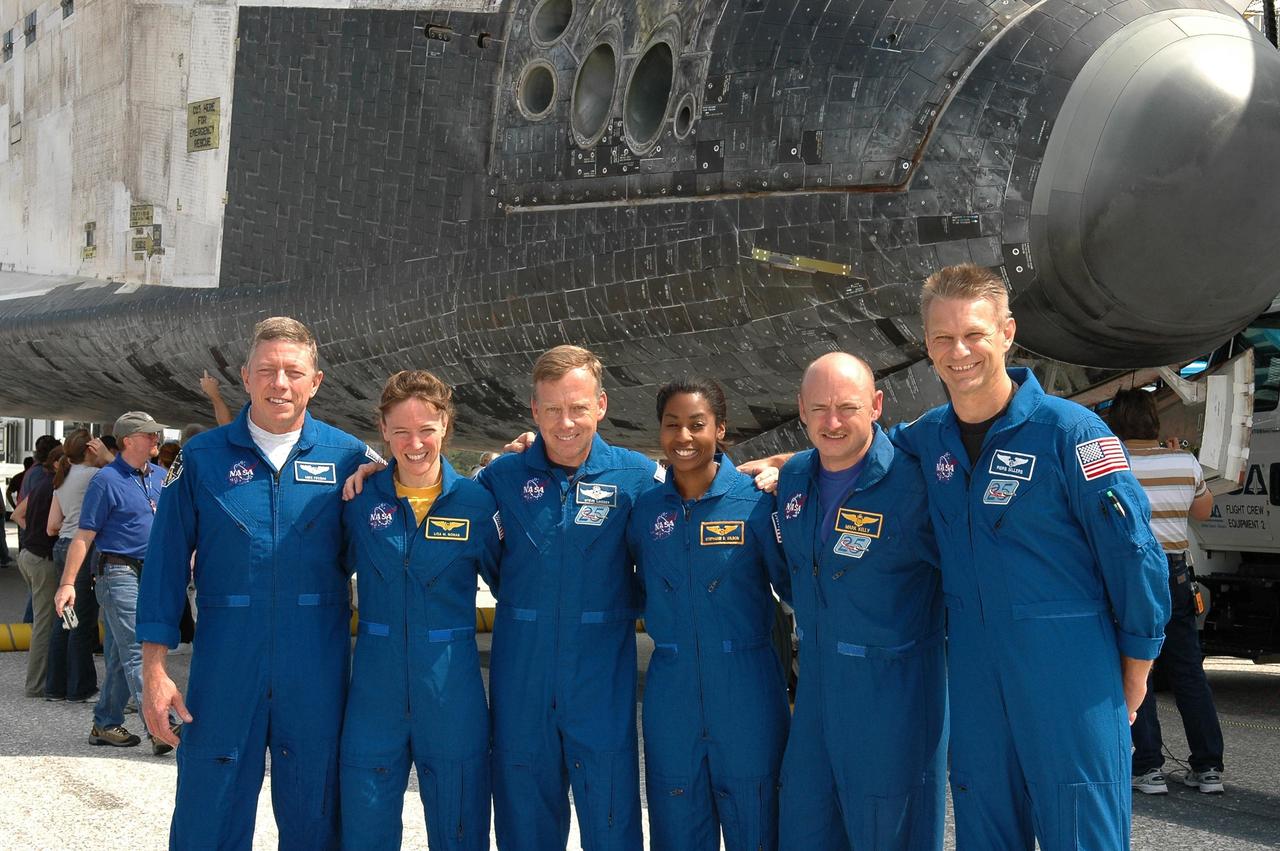
KENNEDY SPACE CENTER, FLA. - Following the traditional post-flight walk-around after the landing of an orbiter, the STS-121 crew pose for a photo in front of Discovery. From left are Mission Specialists Michael Fossum and Lisa Nowak, Commander Steven Lindsey, Mission Specialist Stephanie Wilson, Pilot Mark Kelly and Mission Specialist Piers Sellers. Discovery's smooth and perfect landing was on time at 9:14 a.m. EDT on Runway 15 of NASA's Shuttle Landing Facility after traveling 5.3 million miles on 202 orbits. Mission elapsed time was 12 days, 18 hours, 37 minutes and 54 seconds. The landing is the 62nd at Kennedy Space Center and the 32nd for Discovery. Photo credit: NASA/Kim Shiflett

KENNEDY SPACE CENTER, FLA. -- With wheels down, space shuttle Atlantis approaches a landing on Runway 15 of the Shuttle Landing Facility at NASA's Kennedy Space Center after a nearly 5.3 million mile round trip to the International Space Station. The shuttle landed on orbit 202 to complete the 13-day STS-122 mission. Main gear touchdown was 9:07:10 a.m. Nose gear touchdown was 9:07:20 a.m. Wheel stop was at 9:08:08 a.m. Mission elapsed time was 12 days, 18 hours, 21 minutes and 44 seconds. During the mission, Atlantis' crew installed the new Columbus laboratory, leaving a larger space station and one with increased science capabilities. The Columbus Research Module adds nearly 1,000 cubic feet of habitable volume and affords room for 10 experiment racks, each an independent science lab. Photo courtesy of Chuck Luzier
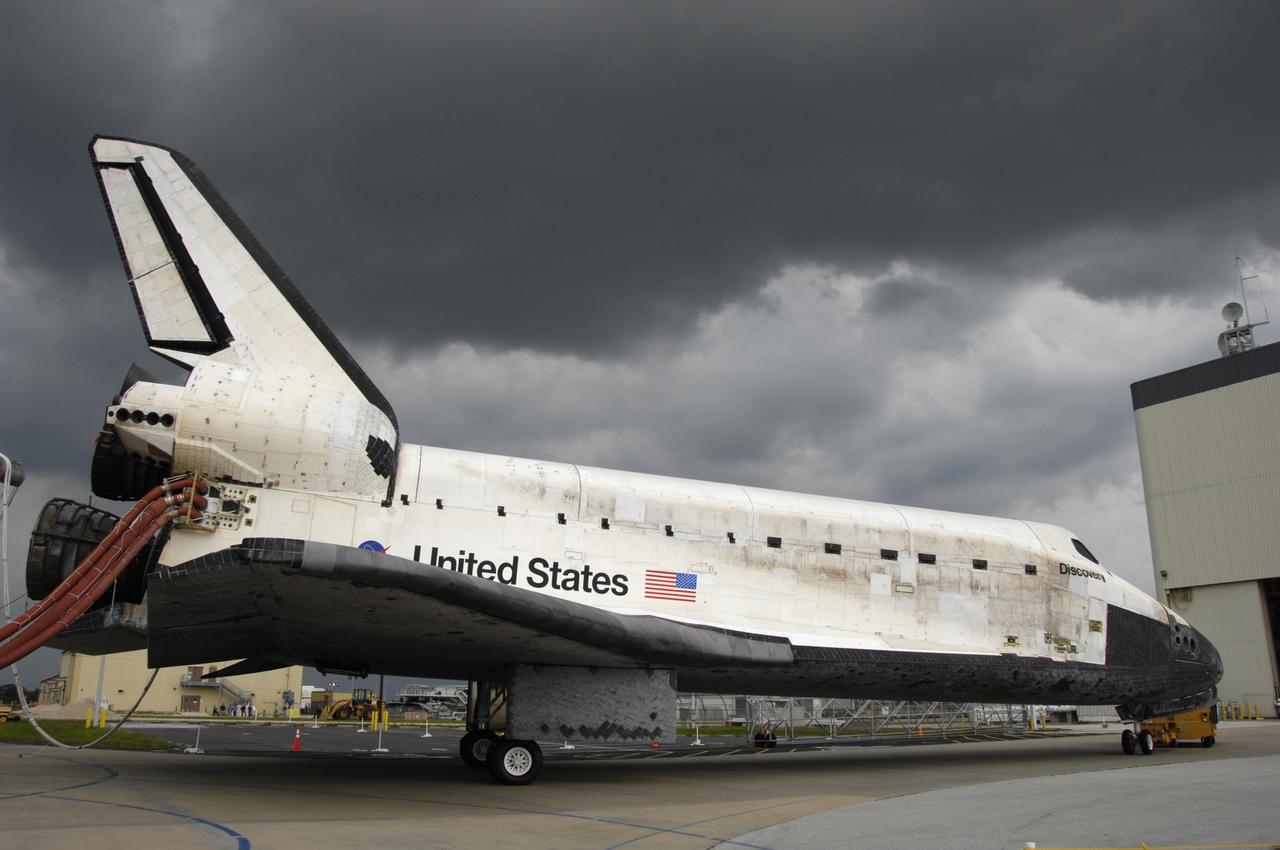
KENNEDY SPACE CENTER, FLA. - As black clouds gather overhead, the orbiter Discovery arrives at the Orbiter Processing Facility after a two-mile tow from NASA's Shuttle Landing Facility. Umbilical lines for coolant and purge air are still attached. Discovery landed at the SLF at 9:14 a.m. EDT, completing mission STS-121. Discovery traveled 5.3 million miles, landing on orbit 202. Mission elapsed time was 12 days, 18 hours, 37 minutes and 54 seconds. Main gear touchdown occurred on time at 9:14:43 EDT. Wheel stop was at 9:15:49 EDT. During the mission, the STS-121 crew tested new equipment and procedures to improve shuttle safety, and delivered supplies and made repairs to the International Space Station. Photo courtesy of Nikon/Scott Andrews
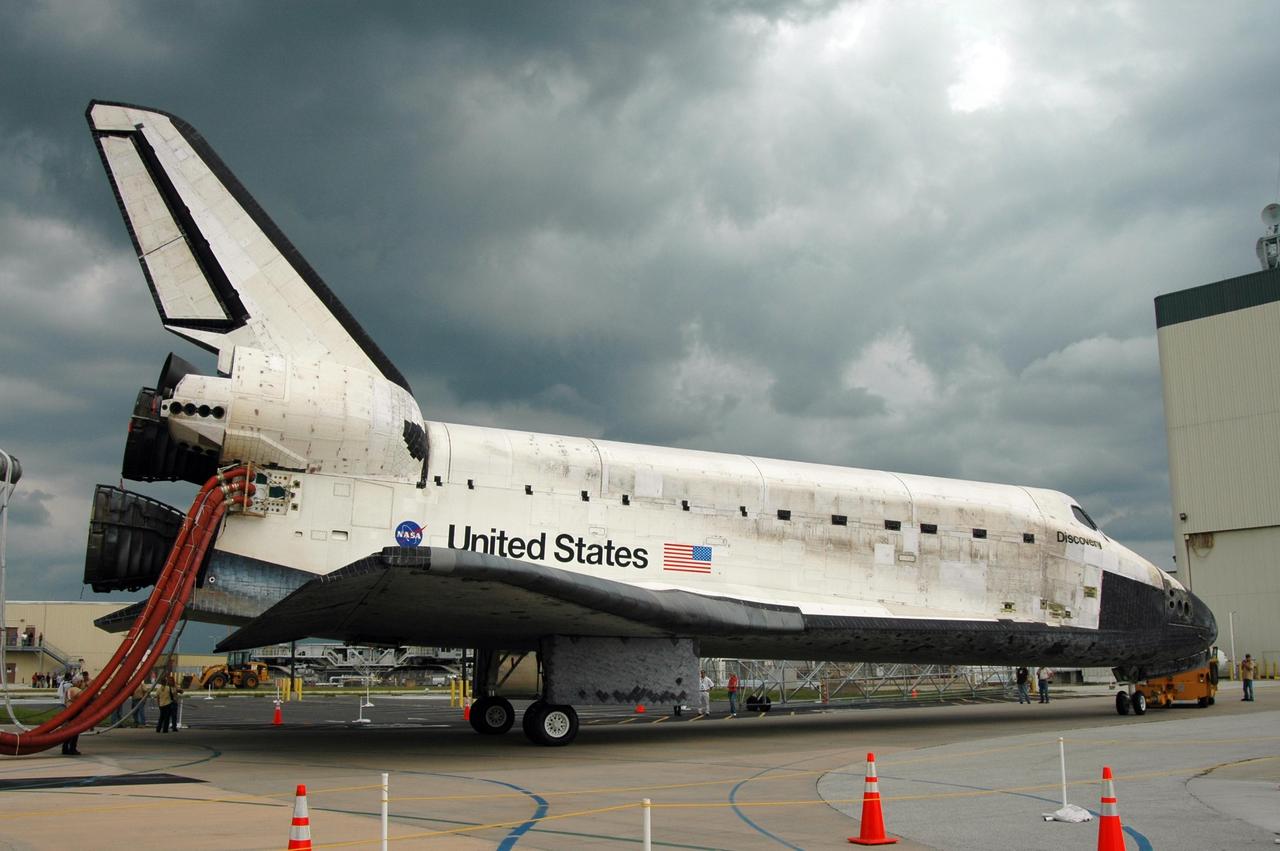
KENNEDY SPACE CENTER, FLA. - Under tow by a diesel-powered tractor, the orbiter Discovery turns toward the Orbiter Processing Facility. Umbilical lines for coolant and purge air are still attached. Discovery landed at the SLF at 9:14 a.m. EDT, completing mission STS-121. Discovery traveled 5.3 million miles, landing on orbit 202. Mission elapsed time was 12 days, 18 hours, 37 minutes and 54 seconds. Main gear touchdown occurred on time at 9:14:43 EDT. Wheel stop was at 9:15:49 EDT. During the mission, the STS-121 crew tested new equipment and procedures to improve shuttle safety, and delivered supplies and made repairs to the International Space Station. Photo credit: NASA/Jim Grossmann
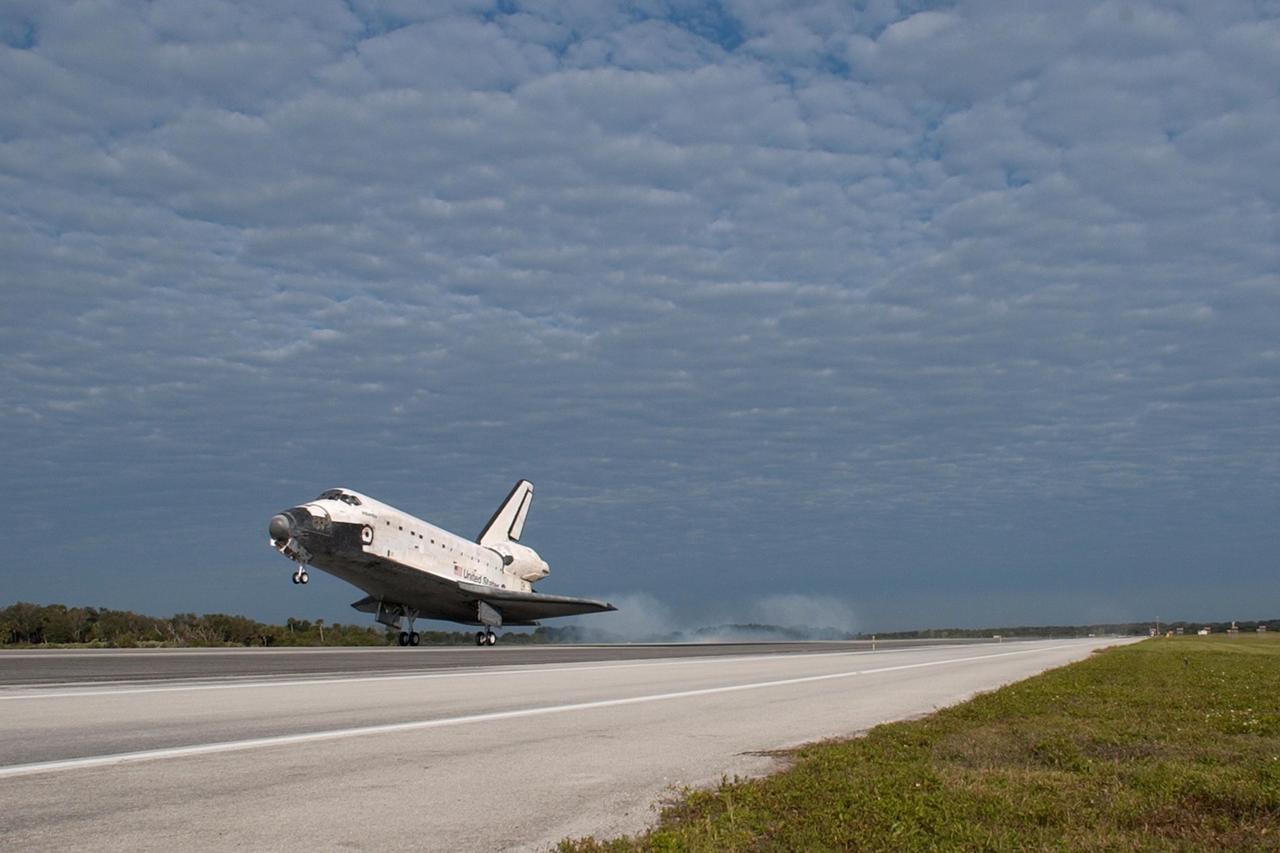
KENNEDY SPACE CENTER, FLA. -- Under a cloud-covered sky, space shuttle Atlantis touches down on Runway 15 of the Shuttle Landing Facility at NASA's Kennedy Space Center. The shuttle landed on orbit 202 to complete the 13-day STS-122 mission. Main gear touchdown was 9:07:10 a.m. Nose gear touchdown was 9:07:20 a.m. Wheel stop was at 9:08:08 a.m. Mission elapsed time was 12 days, 18 hours, 21 minutes and 44 seconds. During the mission, Atlantis' crew installed the new Columbus laboratory, leaving a larger space station and one with increased science capabilities. The Columbus Research Module adds nearly 1,000 cubic feet of habitable volume and affords room for 10 experiment racks, each an independent science lab. Photo credit: NASA/Tony Gray and Scott Haun
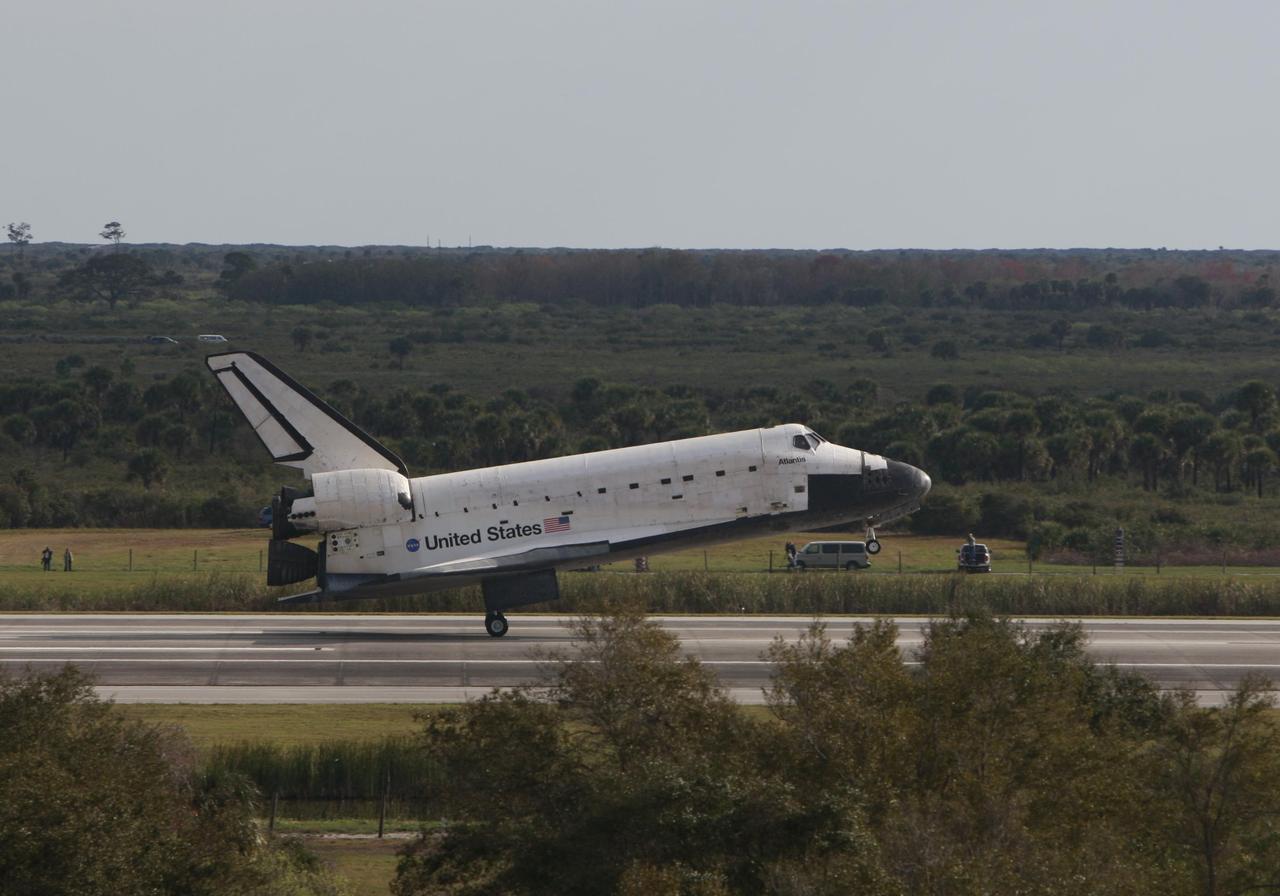
KENNEDY SPACE CENTER, FLA. -- Space shuttle Atlantis touches down on Runway 15 of the Shuttle Landing Facility at NASA's Kennedy Space Center after a nearly 5.3 million mile round trip to the International Space Station. The shuttle landed on orbit 202 to complete the 13-day STS-122 mission. Main gear touchdown was 9:07:10 a.m. Nose gear touchdown was 9:07:20 a.m. Wheel stop was at 9:08:08 a.m. Mission elapsed time was 12 days, 18 hours, 21 minutes and 44 seconds. During the mission, Atlantis' crew installed the new Columbus laboratory, leaving a larger space station and one with increased science capabilities. The Columbus Research Module adds nearly 1,000 cubic feet of habitable volume and affords room for 10 experiment racks, each an independent science lab. Photo courtesy of Scott Andrews
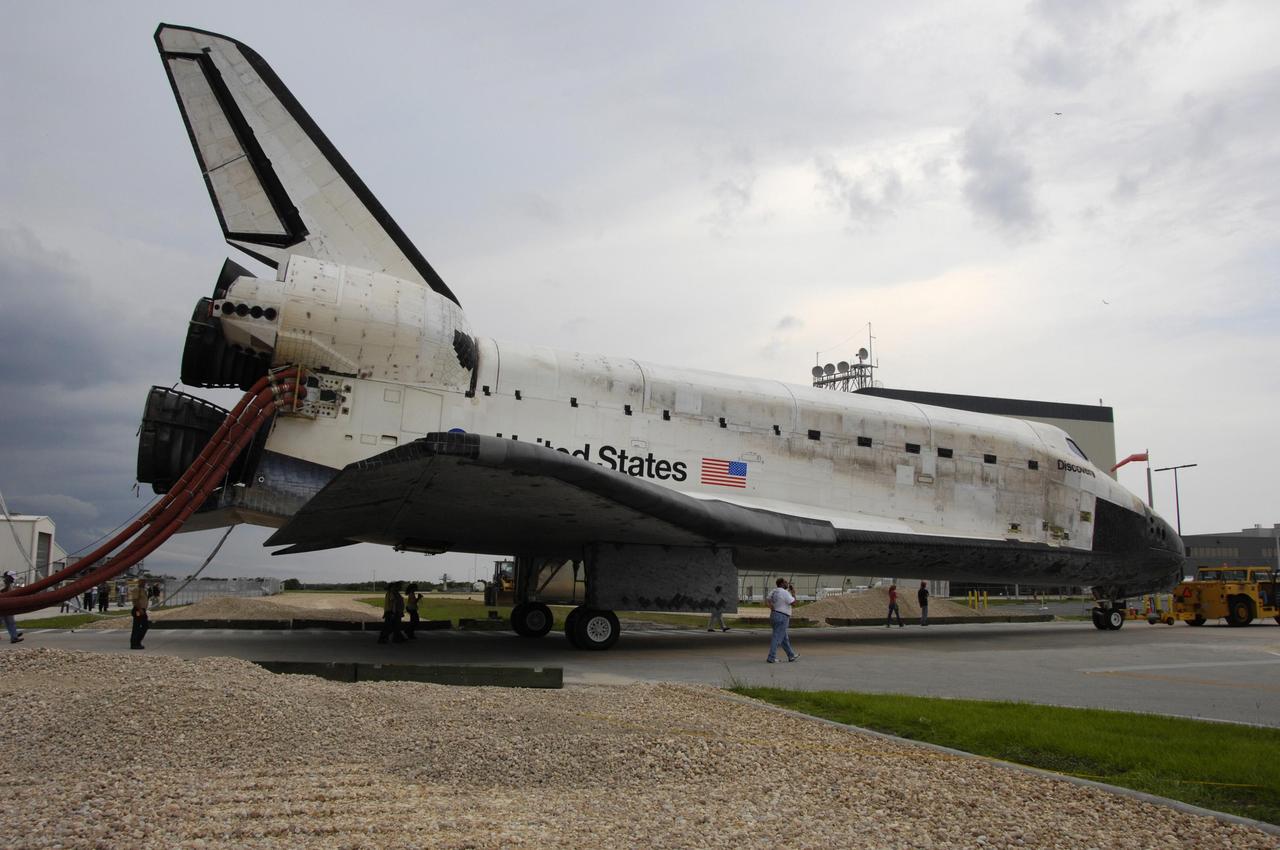
KENNEDY SPACE CENTER, FLA. - On a two-mile tow from NASA's Shuttle Landing Facility, the orbiter Discovery rolls toward the Orbiter Processing Facility. Umbilical lines for coolant and purge air are still attached. Discovery landed at the SLF at 9:14 a.m. EDT, completing mission STS-121. Discovery traveled 5.3 million miles, landing on orbit 202. Mission elapsed time was 12 days, 18 hours, 37 minutes and 54 seconds. Main gear touchdown occurred on time at 9:14:43 EDT. Wheel stop was at 9:15:49 EDT. During the mission, the STS-121 crew tested new equipment and procedures to improve shuttle safety, and delivered supplies and made repairs to the International Space Station. Photo courtesy of Nikon/Scott Andrews
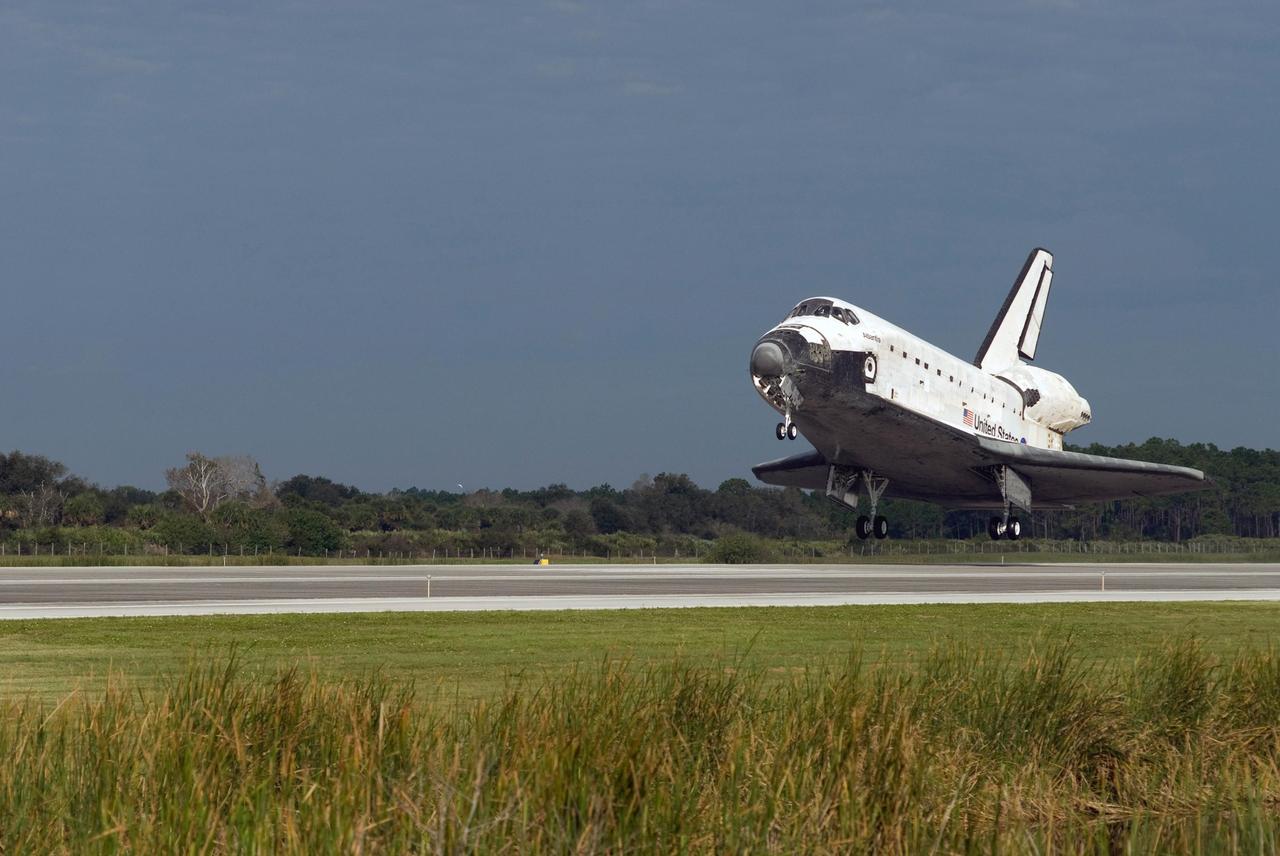
KENNEDY SPACE CENTER, FLA. -- The space shuttle Atlantis nears touchdown on Runway 15 of the Shuttle Landing Facility at NASA's Kennedy Space Center. The shuttle landed on orbit 202 to complete the 13-day STS-122 mission. Main gear touchdown was 9:07:10 a.m. Nose gear touchdown was 9:07:20 a.m. Wheel stop was at 9:08:08 a.m. Mission elapsed time was 12 days, 18 hours, 21 minutes and 44 seconds. During the mission, Atlantis' crew installed the new Columbus laboratory, leaving a larger space station and one with increased science capabilities. The Columbus Research Module adds nearly 1,000 cubic feet of habitable volume and affords room for 10 experiment racks, each an independent science lab. Photo credit: NASA/Tom Joseph
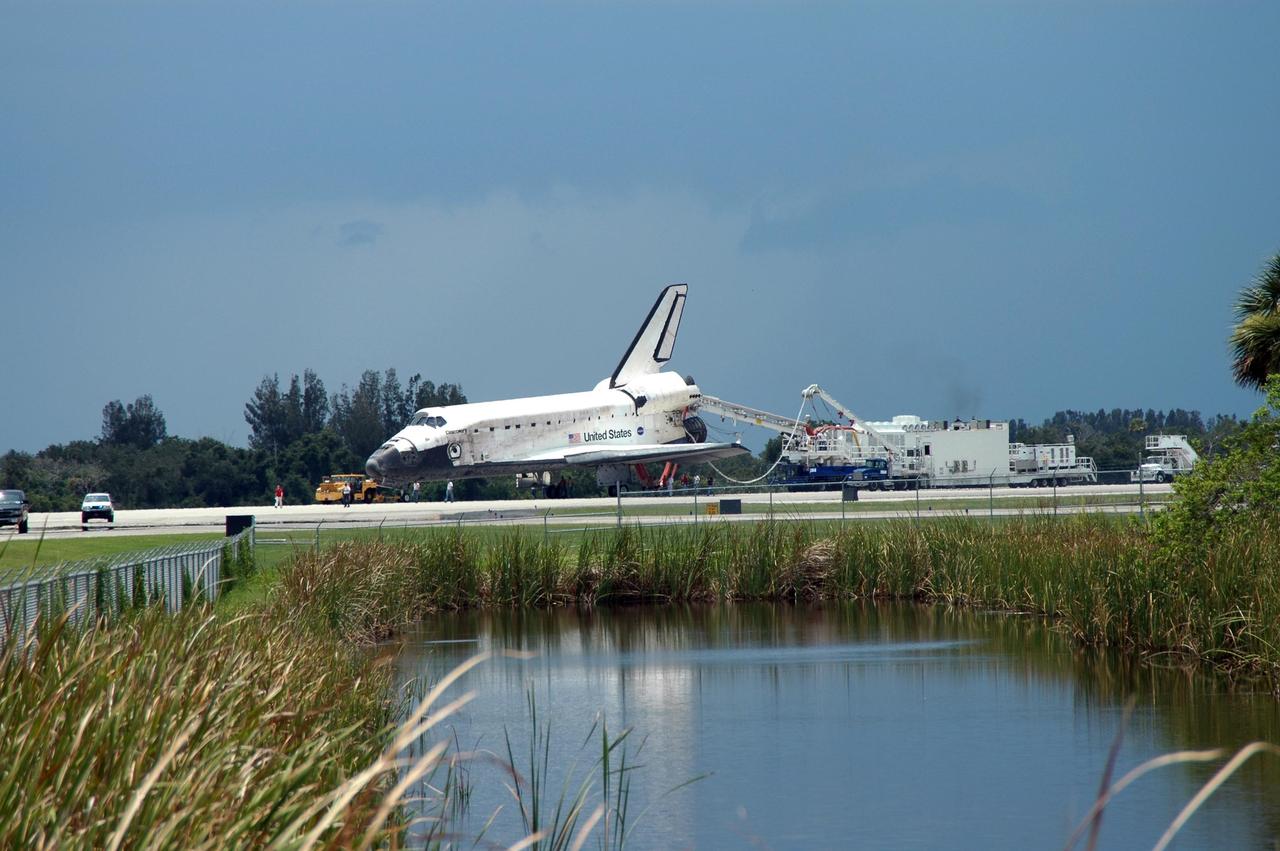
KENNEDY SPACE CENTER, FLA. - On NASA's Shuttle Landing Facility (SLF) at Kennedy Space Center, the orbiter Discovery is prepared for transport to the Orbiter Processing Facility. Discovery landed at the SLF at 9:14 a.m. EDT, completing mission STS-121. Discovery traveled 5.3 million miles, landing on orbit 202. Mission elapsed time was 12 days, 18 hours, 37 minutes and 54 seconds. Main gear touchdown occurred on time at 9:14:43 EDT. Wheel stop was at 9:15:49 EDT. During the mission, the STS-121 crew tested new equipment and procedures to improve shuttle safety, and delivered supplies and made repairs to the International Space Station. Photo credit: NASA/Jim Grossmann
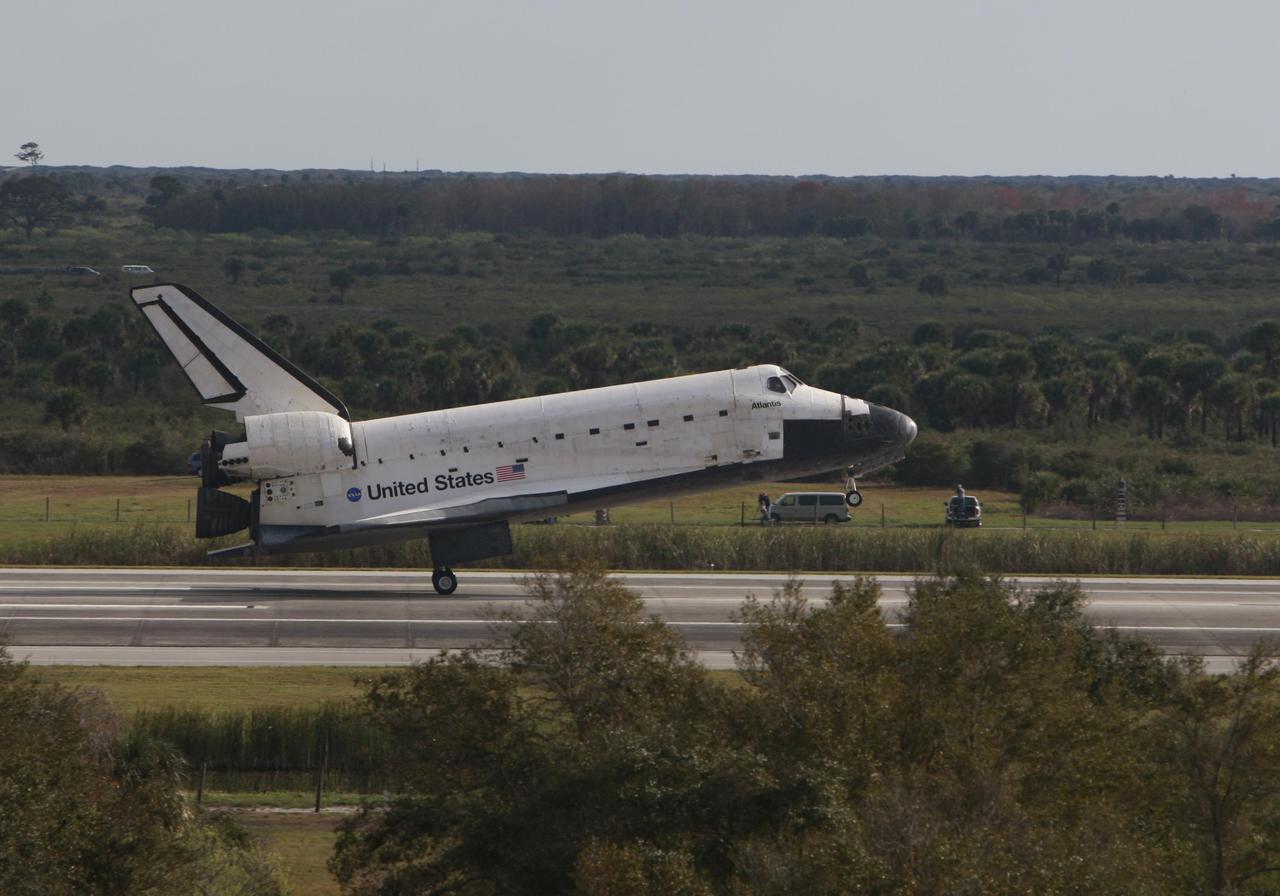
KENNEDY SPACE CENTER, FLA. -- Space shuttle Atlantis touches down on Runway 15 of the Shuttle Landing Facility at NASA's Kennedy Space Center after a nearly 5.3 million mile round trip to the International Space Station. The shuttle landed on orbit 202 to complete the 13-day STS-122 mission. Main gear touchdown was 9:07:10 a.m. Nose gear touchdown was 9:07:20 a.m. Wheel stop was at 9:08:08 a.m. Mission elapsed time was 12 days, 18 hours, 21 minutes and 44 seconds. During the mission, Atlantis' crew installed the new Columbus laboratory, leaving a larger space station and one with increased science capabilities. The Columbus Research Module adds nearly 1,000 cubic feet of habitable volume and affords room for 10 experiment racks, each an independent science lab. Photo courtesy of Scott Andrews
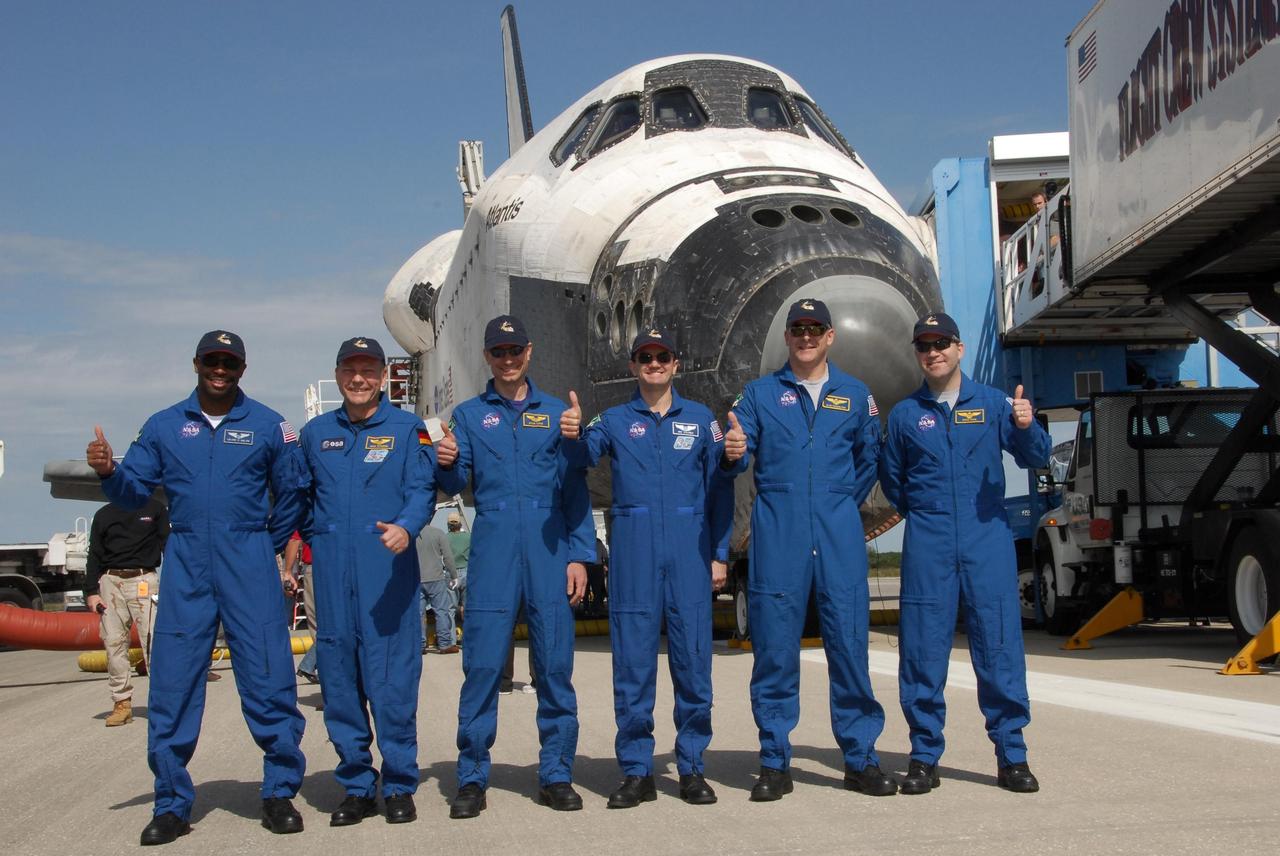
KENNEDY SPACE CENTER, FLA. -- After greeting the media on the Shuttle Landing Facility at NASA's Kennedy Space Center, the STS-122 crew signals a successful mission and landing. From left are Mission Specialists Leland Melvin, Hans Schlegel, Rex Walheim and Stanley Love, Pilot Alan Poindexter and Commander Steve Frick. Schlegel represents the European Space Agency. After a round trip of nearly 5.3 million miles, space shuttle Atlantis and crew returned to Earth with a landing at 9:07 a.m. EST. The shuttle landed on orbit 202 to complete the 13-day STS-122 mission. Main gear touchdown was 9:07:10 a.m. Nose gear touchdown was 9:07:20 a.m. Wheel stop was at 9:08:08 a.m. Mission elapsed time was 12 days, 18 hours, 21 minutes and 44 seconds. During the mission, Atlantis' crew installed the new Columbus laboratory, leaving a larger space station and one with increased science capabilities. The Columbus Research Module adds nearly 1,000 cubic feet of habitable volume and affords room for 10 experiment racks, each an independent science lab. Photo credit: NASA/Jack Pfaller
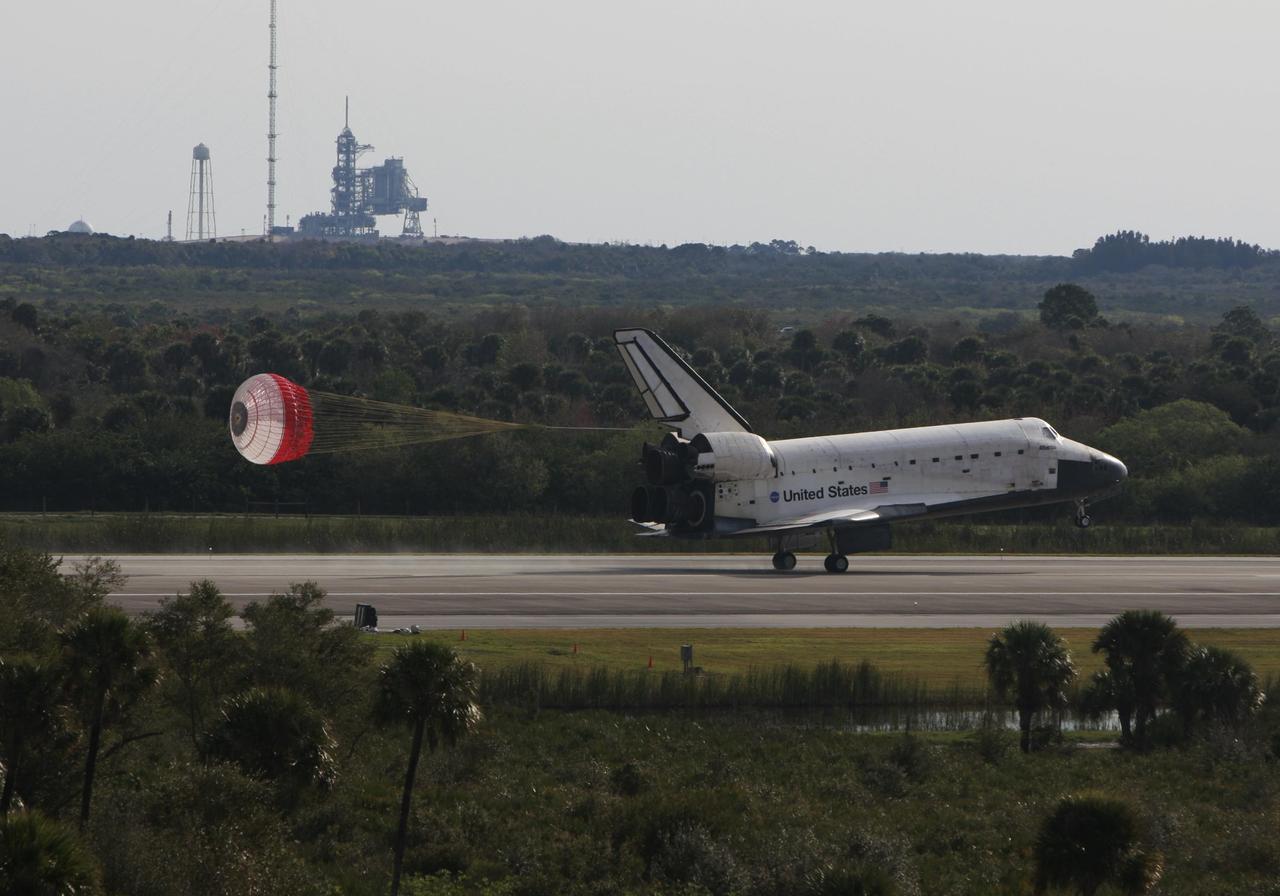
KENNEDY SPACE CENTER, FLA. -- With the aid of a drag chute, space shuttle Atlantis slows down after landing on Runway 15 of the Shuttle Landing Facility at NASA's Kennedy Space Center after a nearly 5.3 million mile round trip to the International Space Station. In the background is Launch Pad 39B. The shuttle landed on orbit 202 to complete the 13-day STS-122 mission. Main gear touchdown was 9:07:10 a.m. Nose gear touchdown was 9:07:20 a.m. Wheel stop was at 9:08:08 a.m. Mission elapsed time was 12 days, 18 hours, 21 minutes and 44 seconds. During the mission, Atlantis' crew installed the new Columbus laboratory, leaving a larger space station and one with increased science capabilities. The Columbus Research Module adds nearly 1,000 cubic feet of habitable volume and affords room for 10 experiment racks, each an independent science lab. Photo courtesy of Scott Andrews