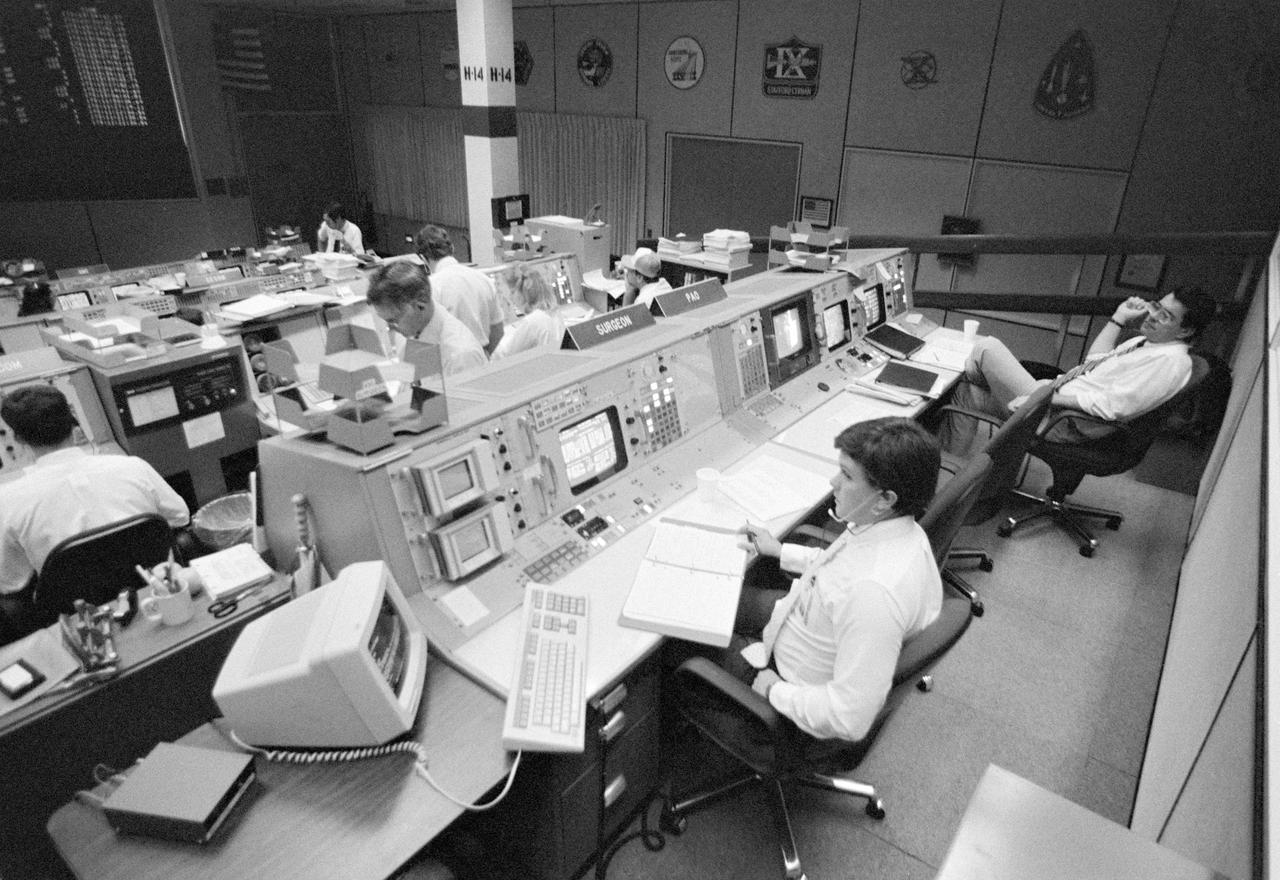
51G-S-204 (June 1985) --- Public Affairs Office (PAO) commentator John Lawrence (top right) is pictured at his console in the Mission Operations Control Room (MOCR) in the Mission Control Center at NASA's Johnson Space Center during the STS-51G mission. Photo credit: NASA
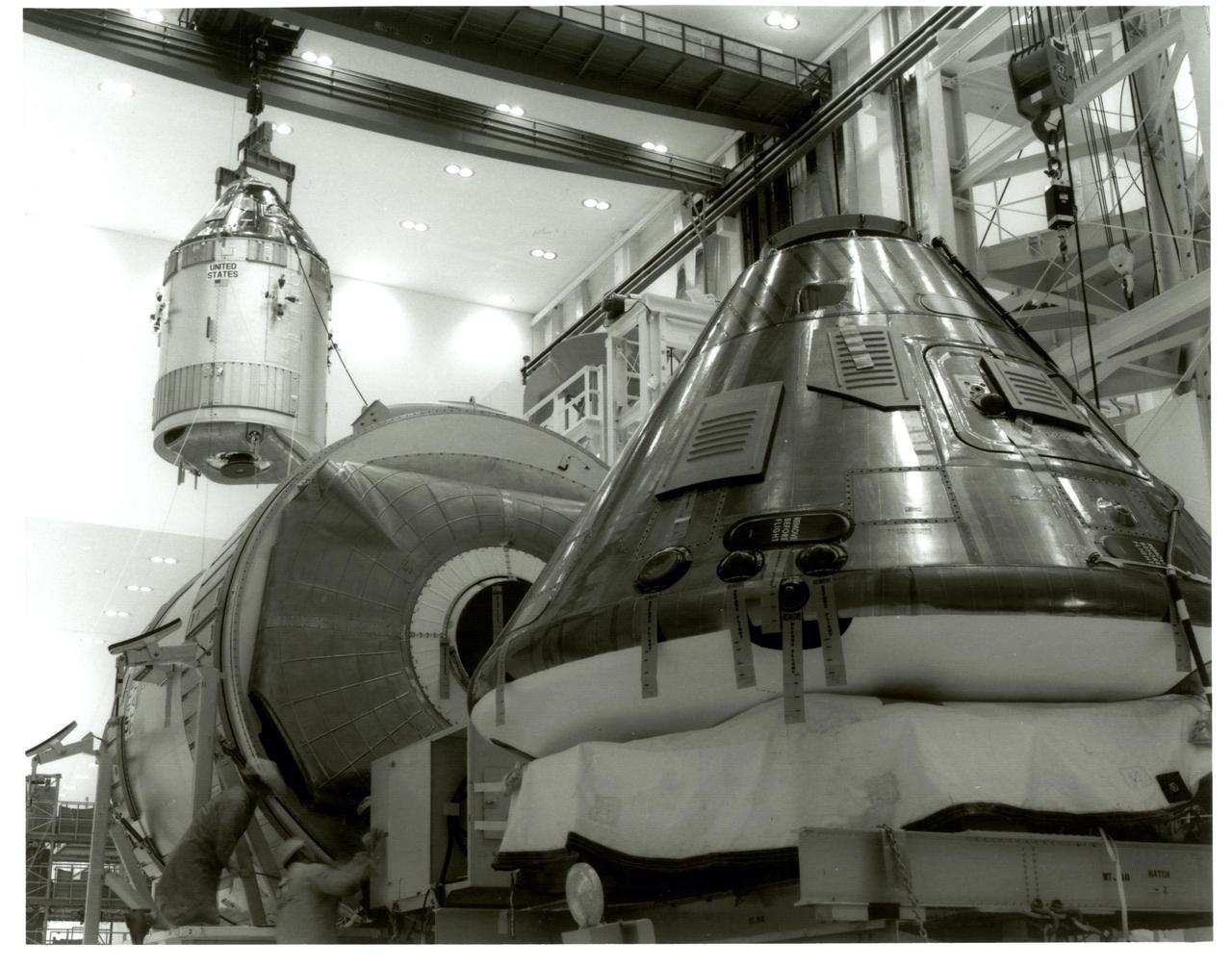
KENNEDY SPACE CENTER, FLA. - The Command Module 107 and Service Module, which are going to be used for the Apollo 11 mission, are moved from Chamber "L" to the work stand in preparation for the first manned lunar landing. Also shown in the background is the Command Module 108, which is going to be used for the Apollo 12 lunar landing mission.
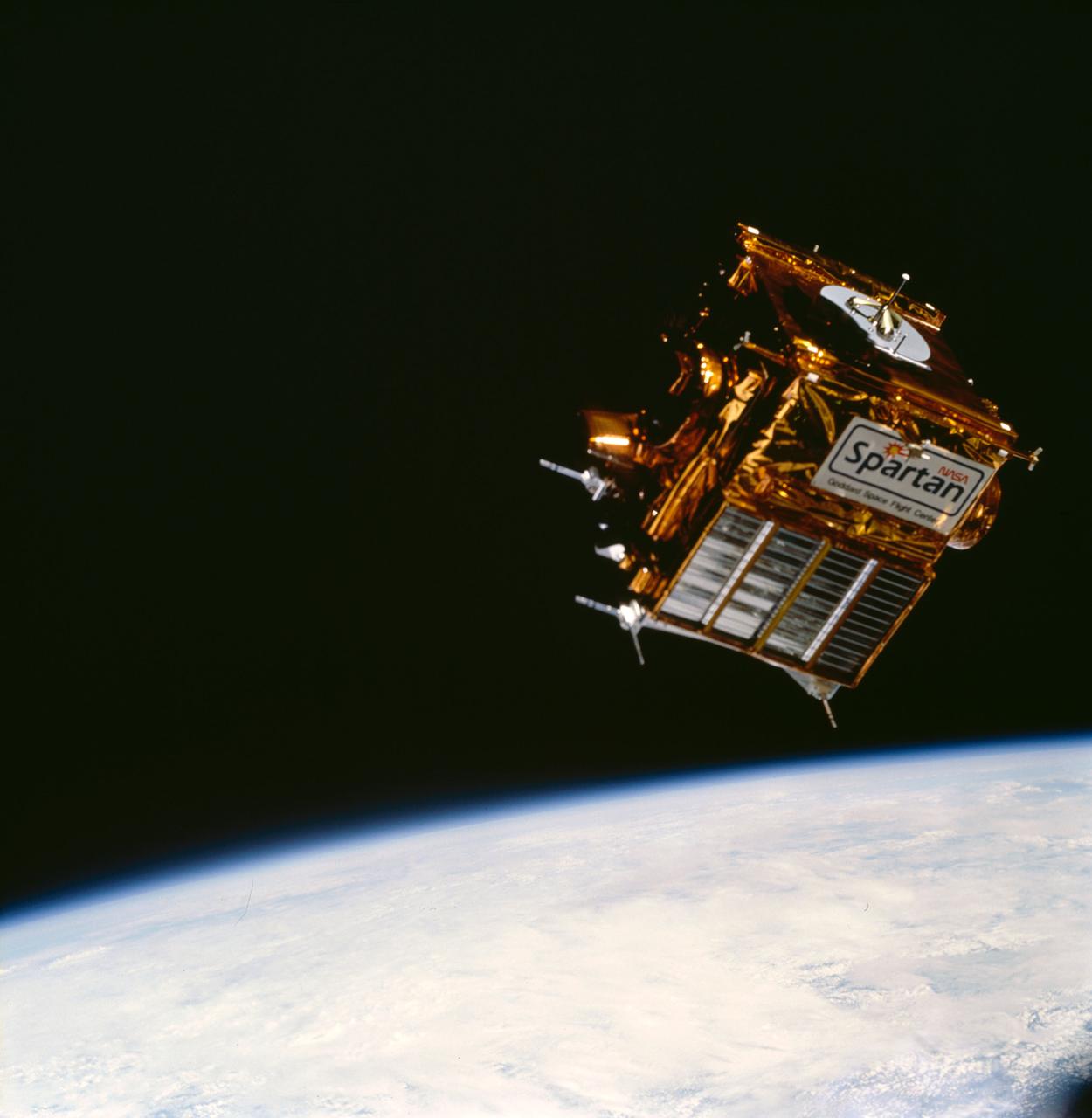
The blackness of space and part of Earth's horizon form the backdrop for this 70mm frame of the free-flying SPARTAN 204 mission. Carried into space by the STS-63 crewmembers, the satellite was later re-captured by the crew and used for maneuvering evaluations by the two space walkers, astronauts Bernard Harris and Michael Foale.

AS-204, the fourth Saturn IB launch vehicle, developed by the Marshall Space Flight Center (MSFC), awaits its January 22, 1968 liftoff from Cape Canaveral, Florida for the unmarned Apollo 5 mission. Primary mission objectives included the verification of the Apollo Lunar Module's (LM) ascent and descent propulsion systems and an evaluation of the S-IVB stage instrument unit performance. In all, nine Saturn IB flights were made, ending with the Apollo-Soyuz Test Project in July 1975.
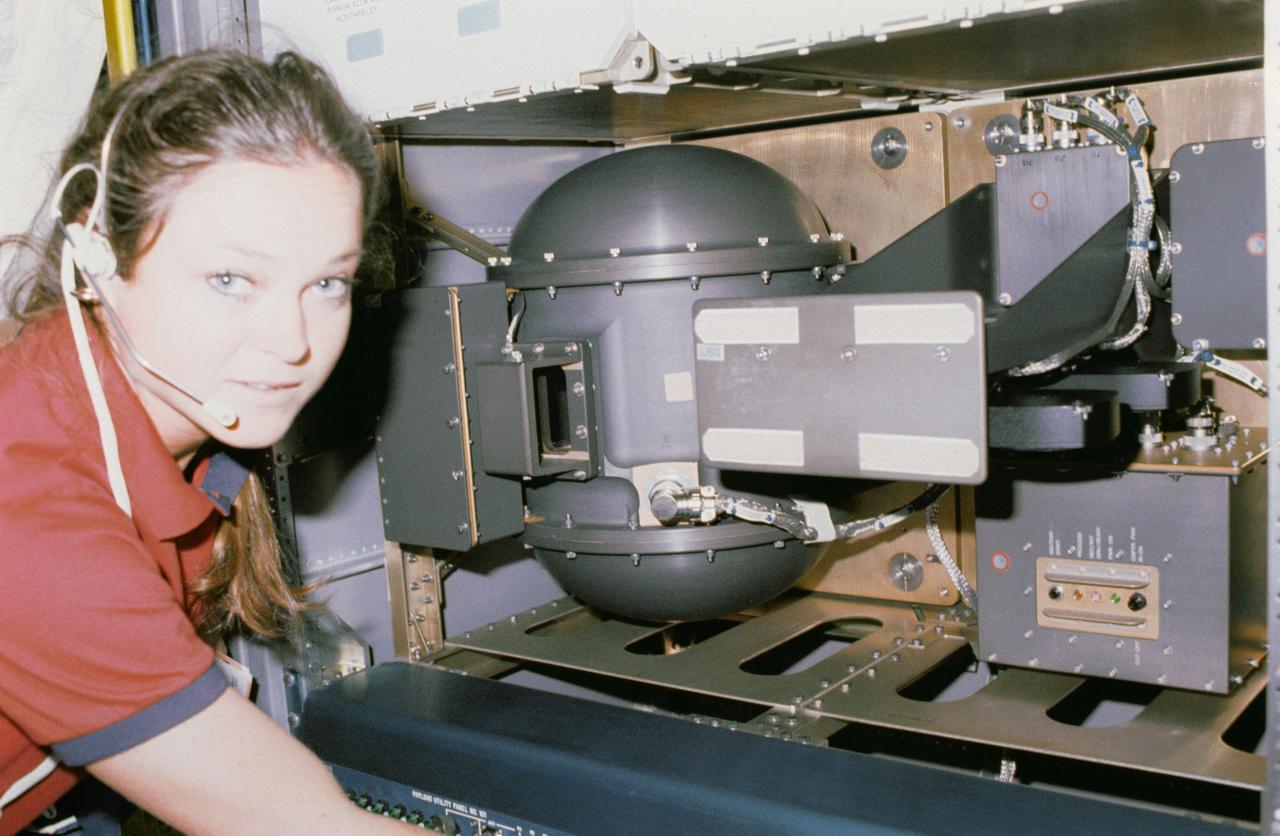
STS040-204-010 (5-14 June 1991) --- Astronaut Tamara E. Jernigan, STS 40 mission specialist, is pictured at the Solid Surface Combustion Experiment aboard the Earth orbiting Columbia. Dr. Jernigan is one of seven crewmembers spending nine days in space.
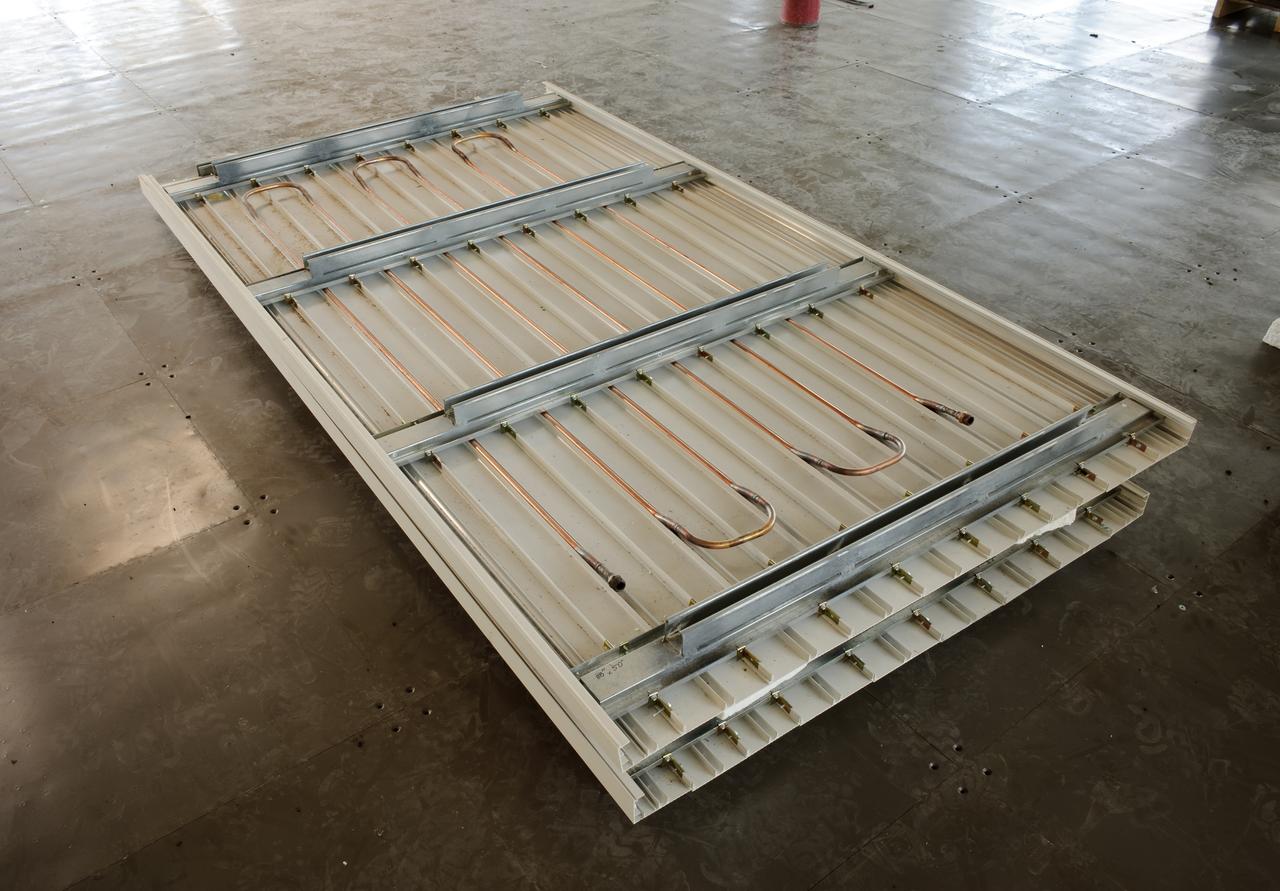
Construction of the new NASA Ames Green Building dubbed Sustainability Base located on the Ames Research Center campus at Moffett Field, CA. cooling elements in ceiling panels
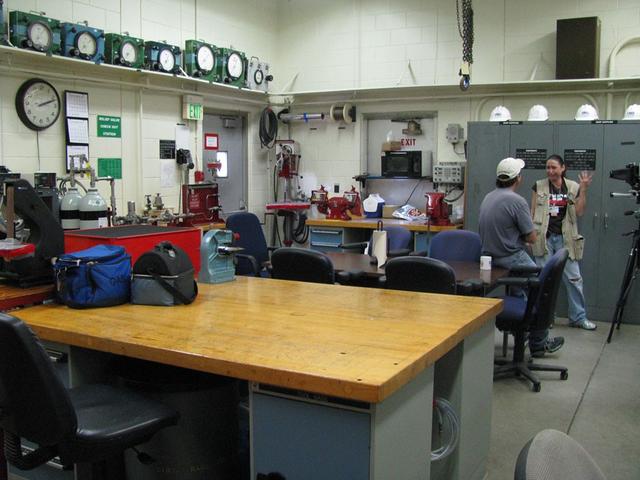
Interior view of Launch Complex 39A

NASA Ames Research Center 70 Year Anniversary Gala Dinner held at Santa Clara University, Santa Clara, California with special guest speaker Nichelle Nichols of Star Trek fame.
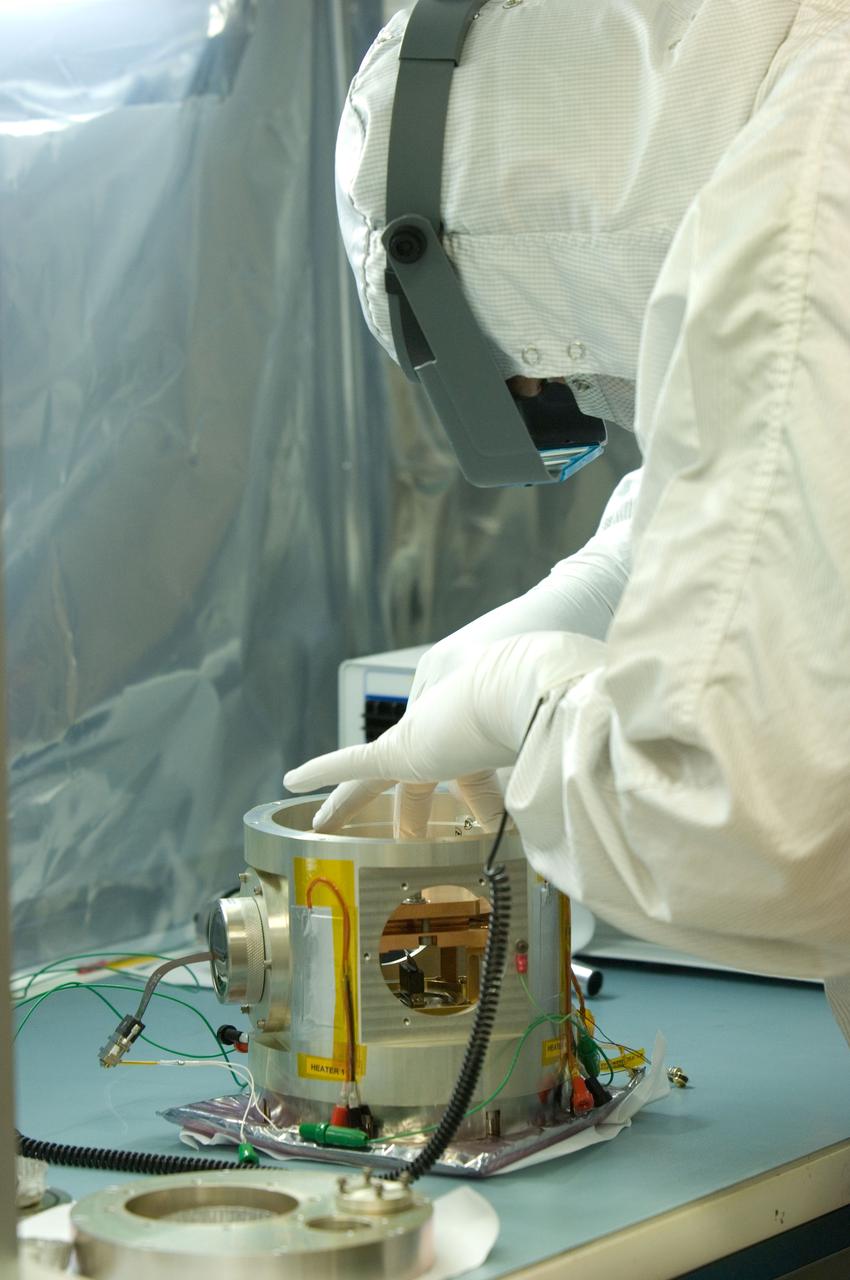
Kepler project; technicians from Ball Aerospace work on and in the test chamber assembled at Nasa Ames Research center testing components
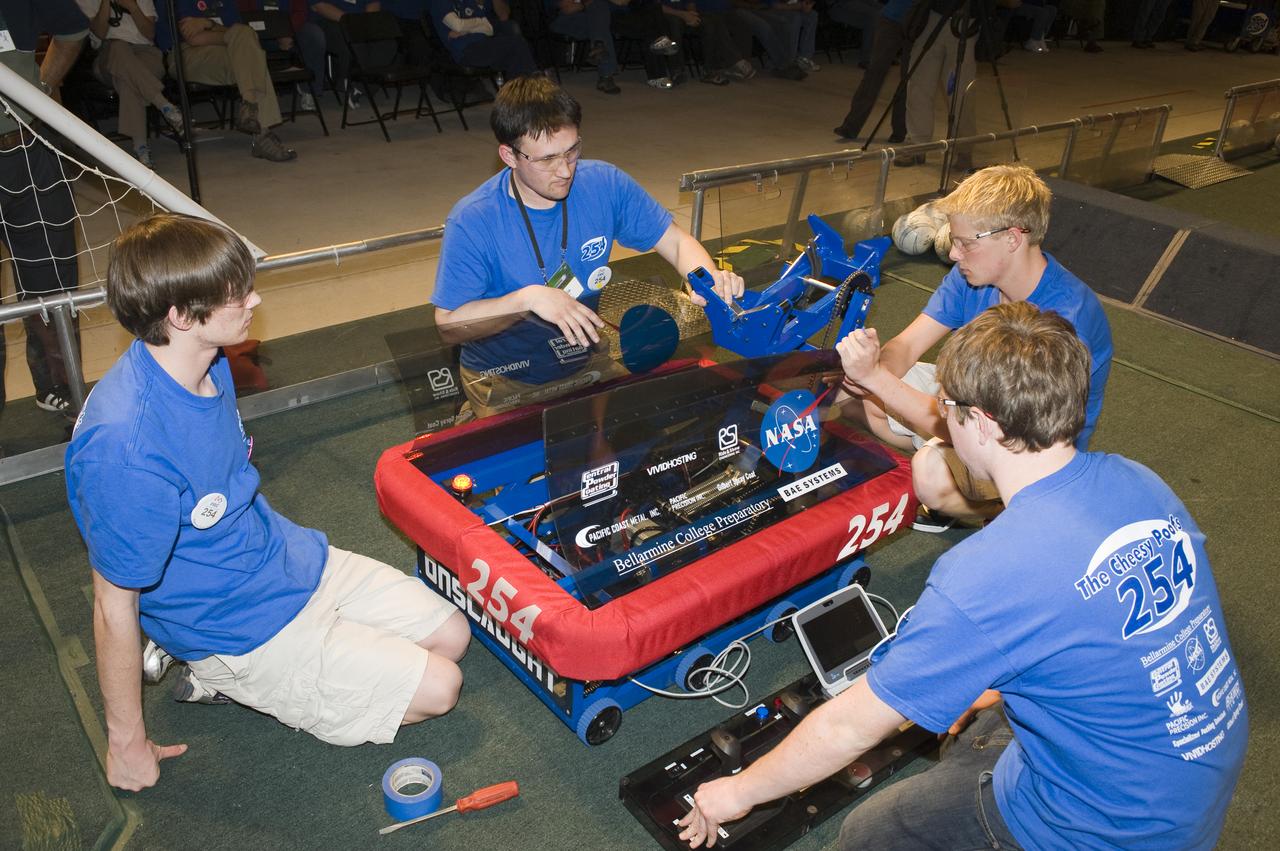
For Inspiration and Recognition of Science and Technology; FIRST Robotics Competition 2010 Silicon Valley Regional held at San Jose State University, San Jose, California Cheesy Poofs Team 254 on the floor making adjustments.
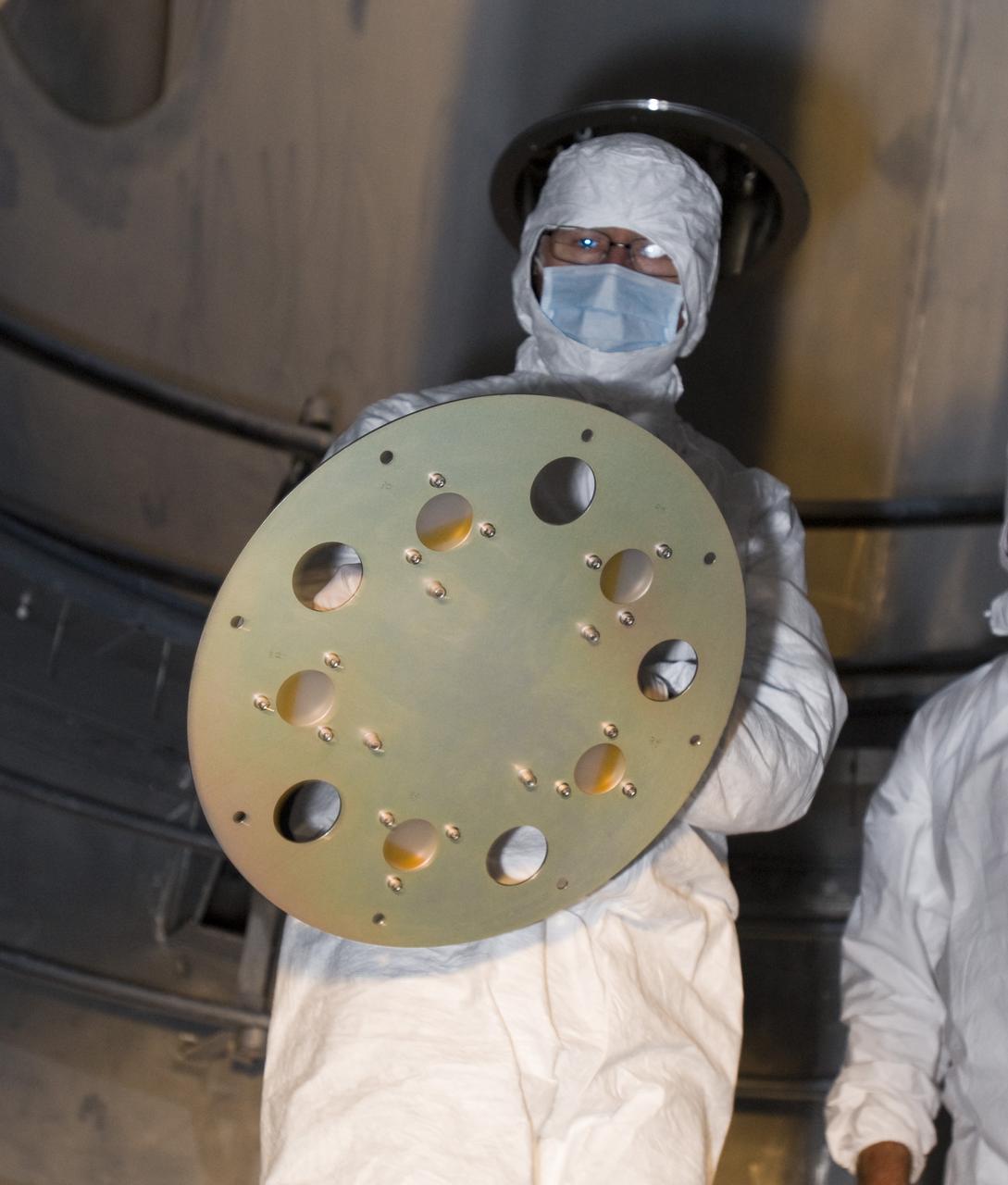
SOFIA (Stratospheric Observatory for Infrared Astronomy) primary mirror being coated in the Ames N-211 Vacuum Chamber.
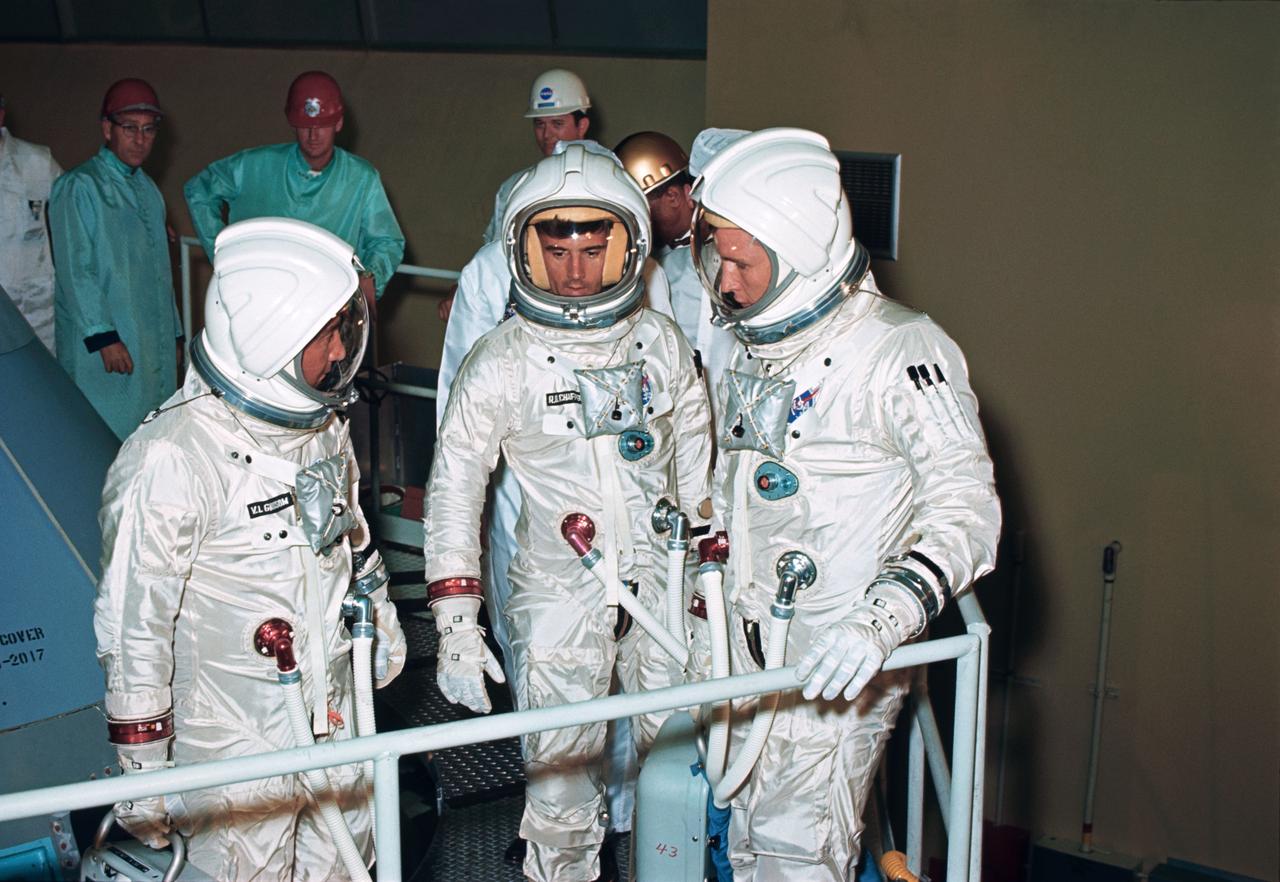
S66-49181 (August 1966) --- The three crew members for the Apollo-Saturn 204 (AS-204) mission check out the couch installation on the Apollo Command Module (CM) at North American's Downey facility. Left to right in their pressurized space suits are astronauts Virgil I. Grissom, Roger B. Chaffee and Edward H. White II. Editor's Note: The three astronauts died in a fire on the launch pad, Jan. 27, 1967.
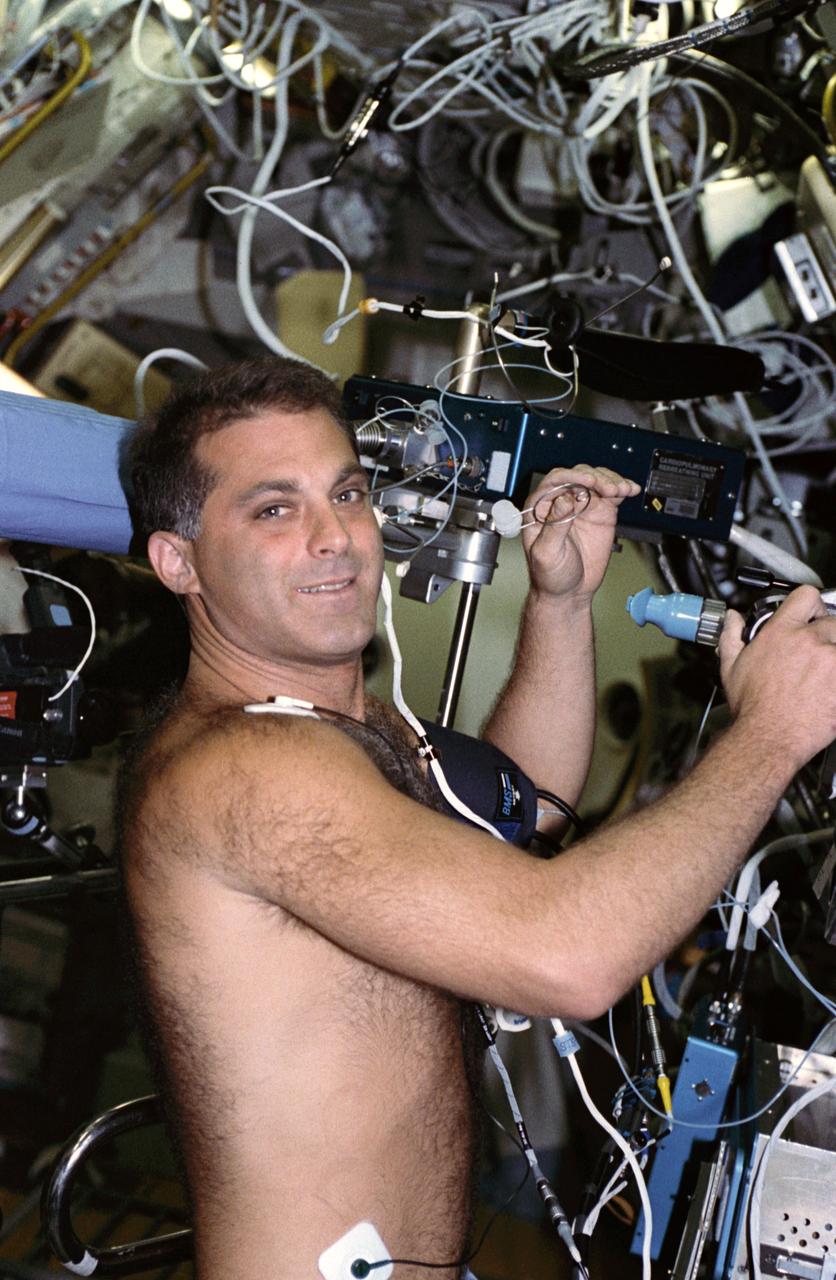
STS058-204-014 (18 Oct.-1 Nov. 1993) --- Astronaut David A. Wolf, mission specialist, participates in an experiment that investigates in-space distribution and movement of blood and gas in the pulmonary system. The data gathered during the two-week flight will be compared with results of tests performed on Earth to determine the changes that occur in pulmonary functions. Photo credit: NASA
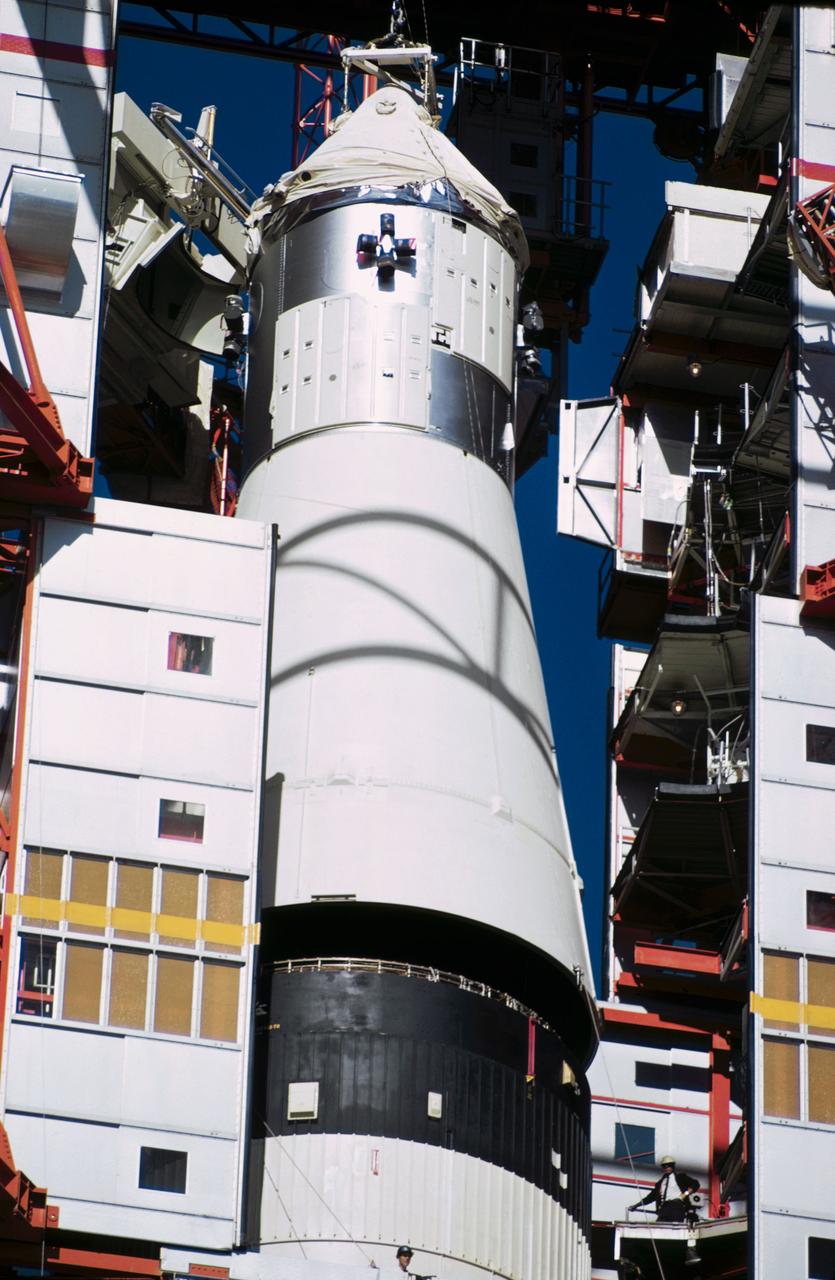
S67-17042 (1967) --- Apollo Spacecraft 012 is hoisted to the top of the gantry at Pad 34 during the Apollo/Saturn Mission 204 erection. S/C 012 will be mated with the uprated Saturn I launch vehicle.
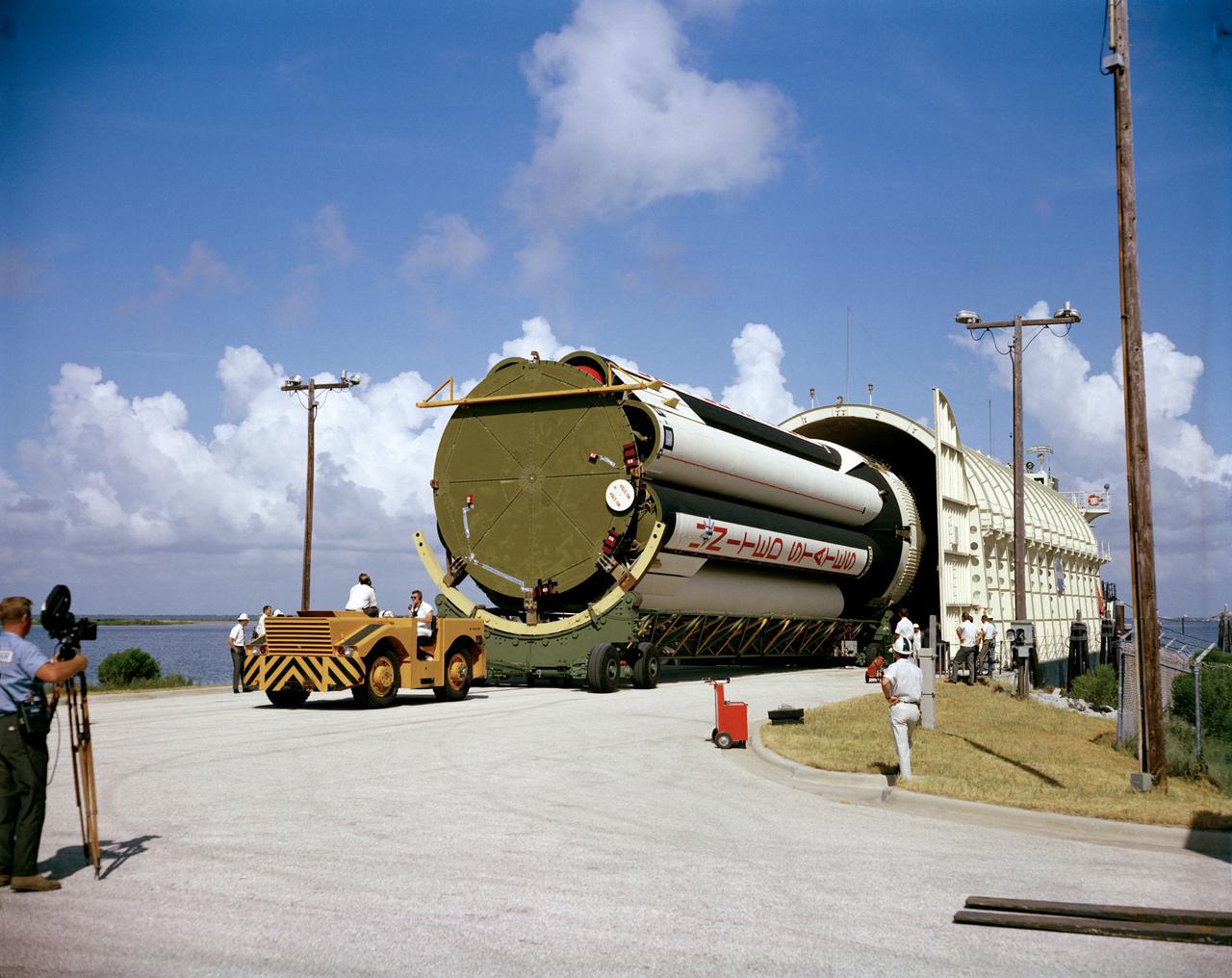
S66-50152 (1966) --- A stage of the uprated Saturn 1 launch vehicle unloaded from NASA barge Promise after arrival at Cape Kennedy. Launch vehicle for Apollo/Saturn 204 mission.
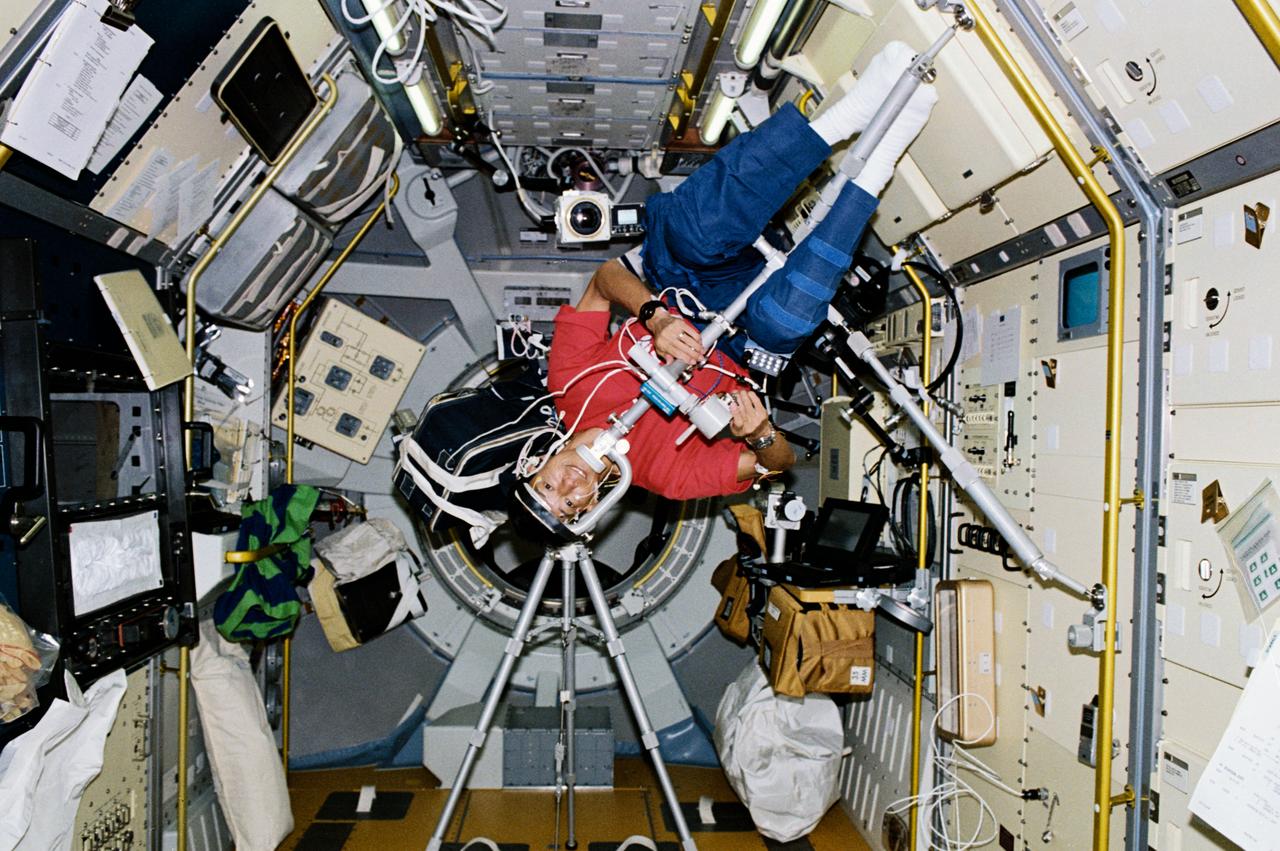
STS047-204-006 (12 - 20 Sept 1992) --- Dr. Mamoru Mohri, payload specialist representing Japan's National Space Development Agency (NASDA), participates in an experiment designed to learn more about Space Adaptation Syndrome (SAS). The experiment is titled, "Comparative Measurement of Visual Stability in Earth and Cosmic Space." During the experiment, Dr. Mohri tracked a flickering light target while eye movements and neck muscle tension were measured. This 45-degree angle position was one of four studied during the eight-day Spacelab-J mission.
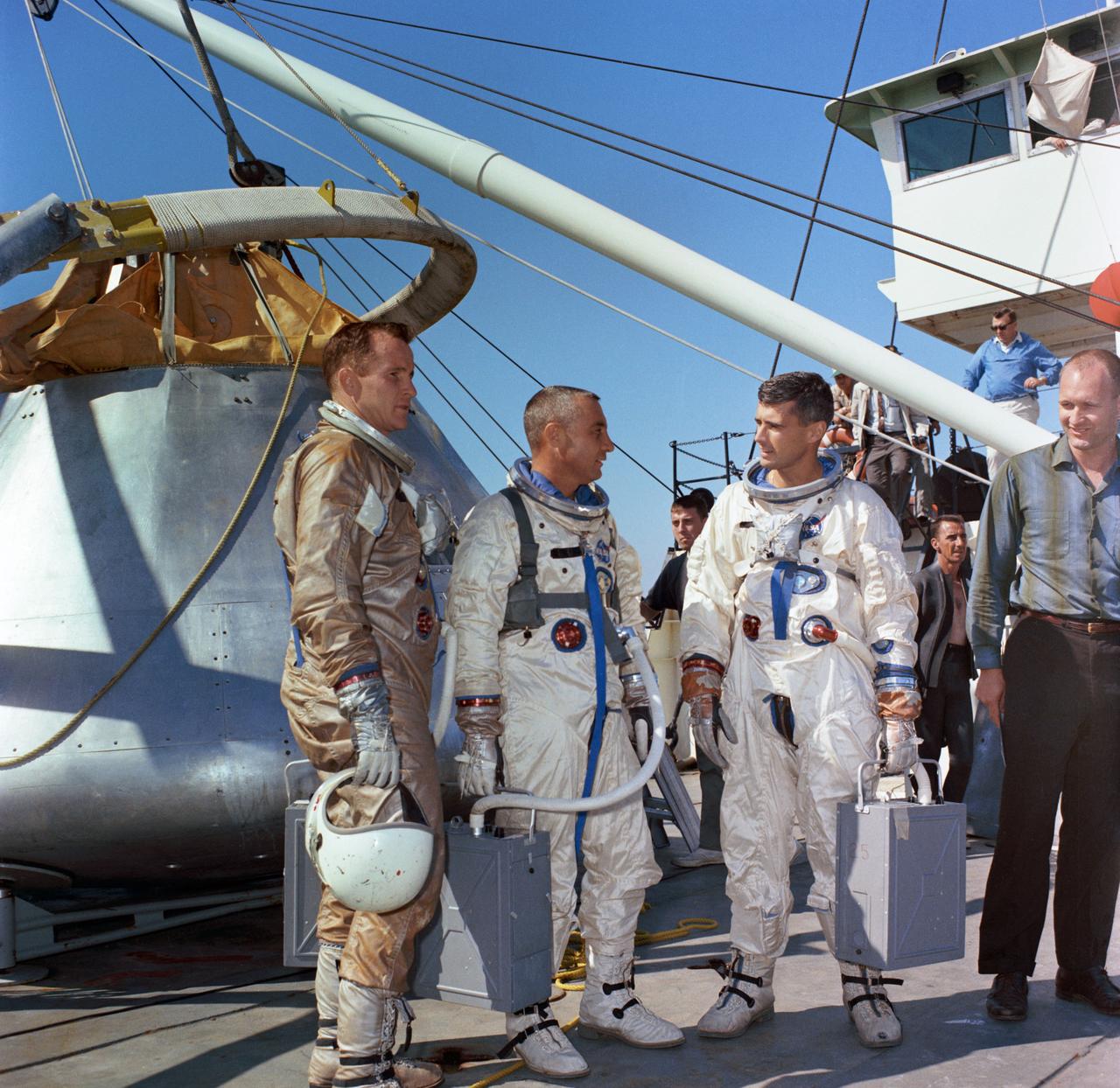
S66-58501 (27 Oct. 1966) --- The prime crew of the first manned Apollo Space Flight, Apollo/Saturn (AS) mission 204, is suited up aboard the NASA Motor Vessel Retriever (MVR) in preparation for Apollo water egress training in the Gulf of Mexico. Left to right, are astronauts Edward H. White II, senior pilot; Virgil I. Grissom, command pilot; and Roger B. Chaffee, pilot.
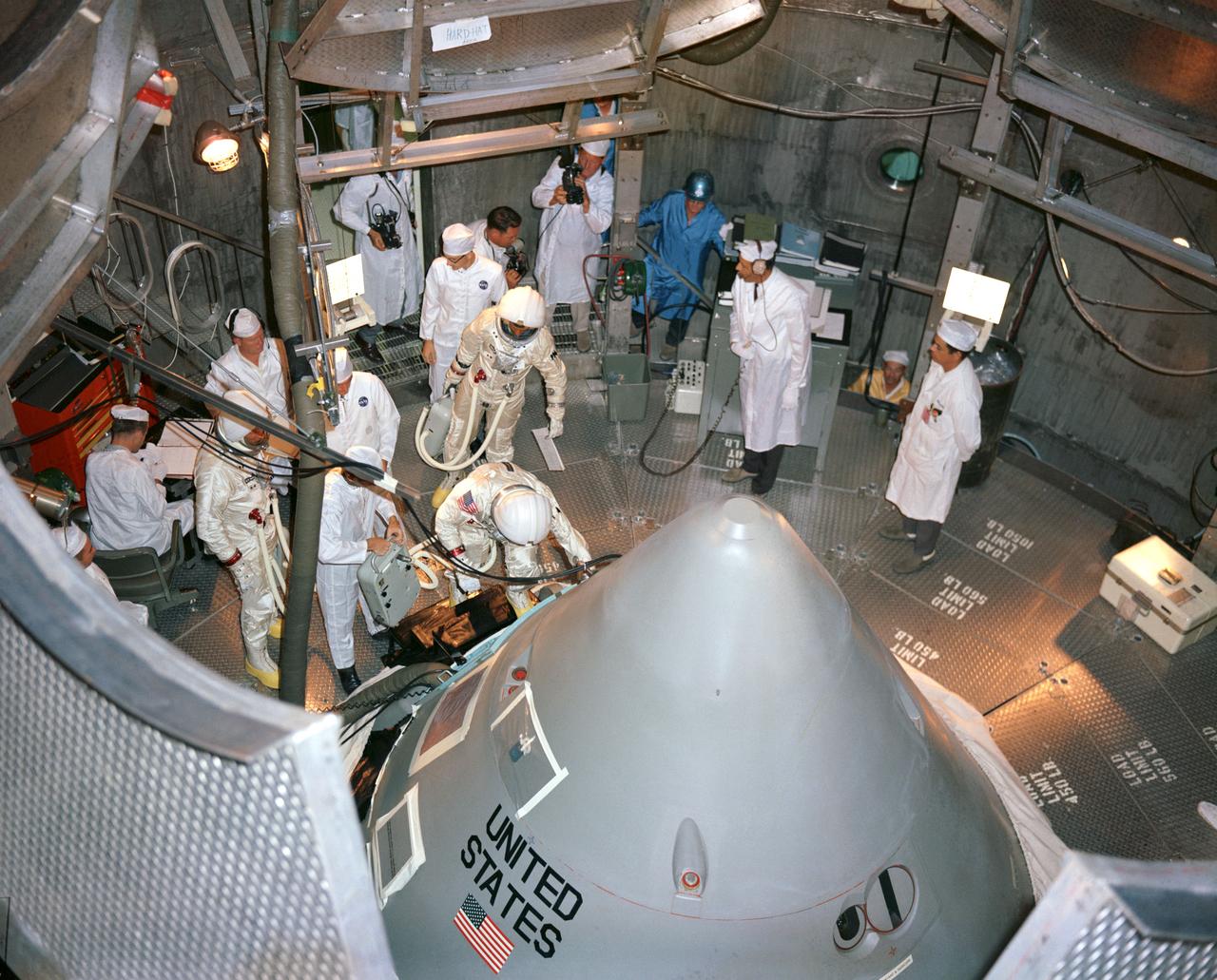
S66-58038 (18 Oct. 1966) --- The Apollo 1 prime crewmembers for the first manned Apollo Mission (204) prepare to enter their spacecraft inside the altitude chamber at the Kennedy Space Center (KSC). Entering the hatch is astronaut Virgil I. Grissom, commander; behind him is astronaut Roger B. Chaffee, lunar module pilot; standing at the left with chamber technicians is astronaut Edward H. White II, command module pilot.
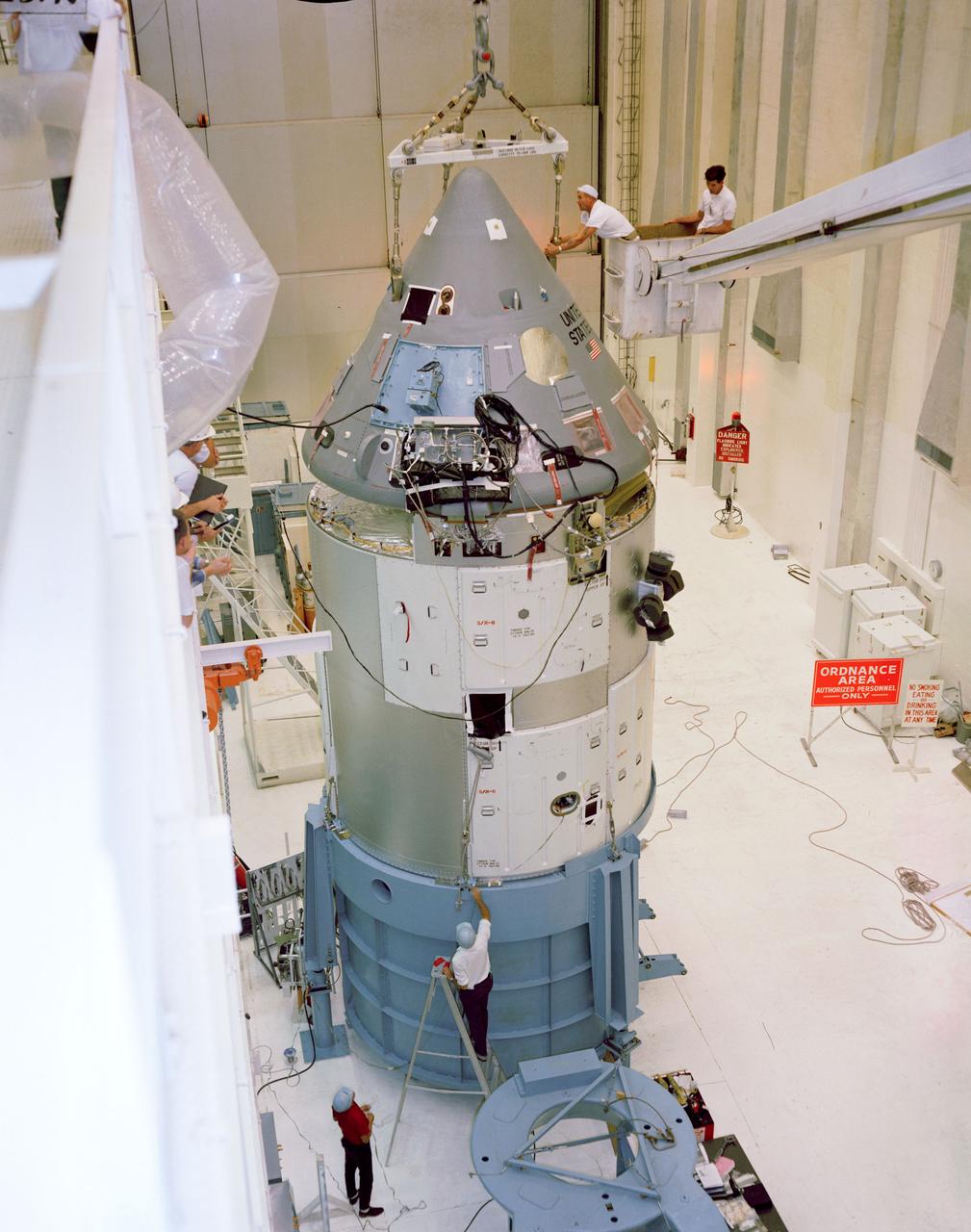
S67-15717 (1967) --- Apollo Spacecraft 012 Command/Service Module is moved from H-134 to east stokes for mating to the Saturn Lunar Module Adapter No. 05 in the Manned Spacecraft Operations Building. S/C 012 will be flown on the Apollo/Saturn 204 mission.
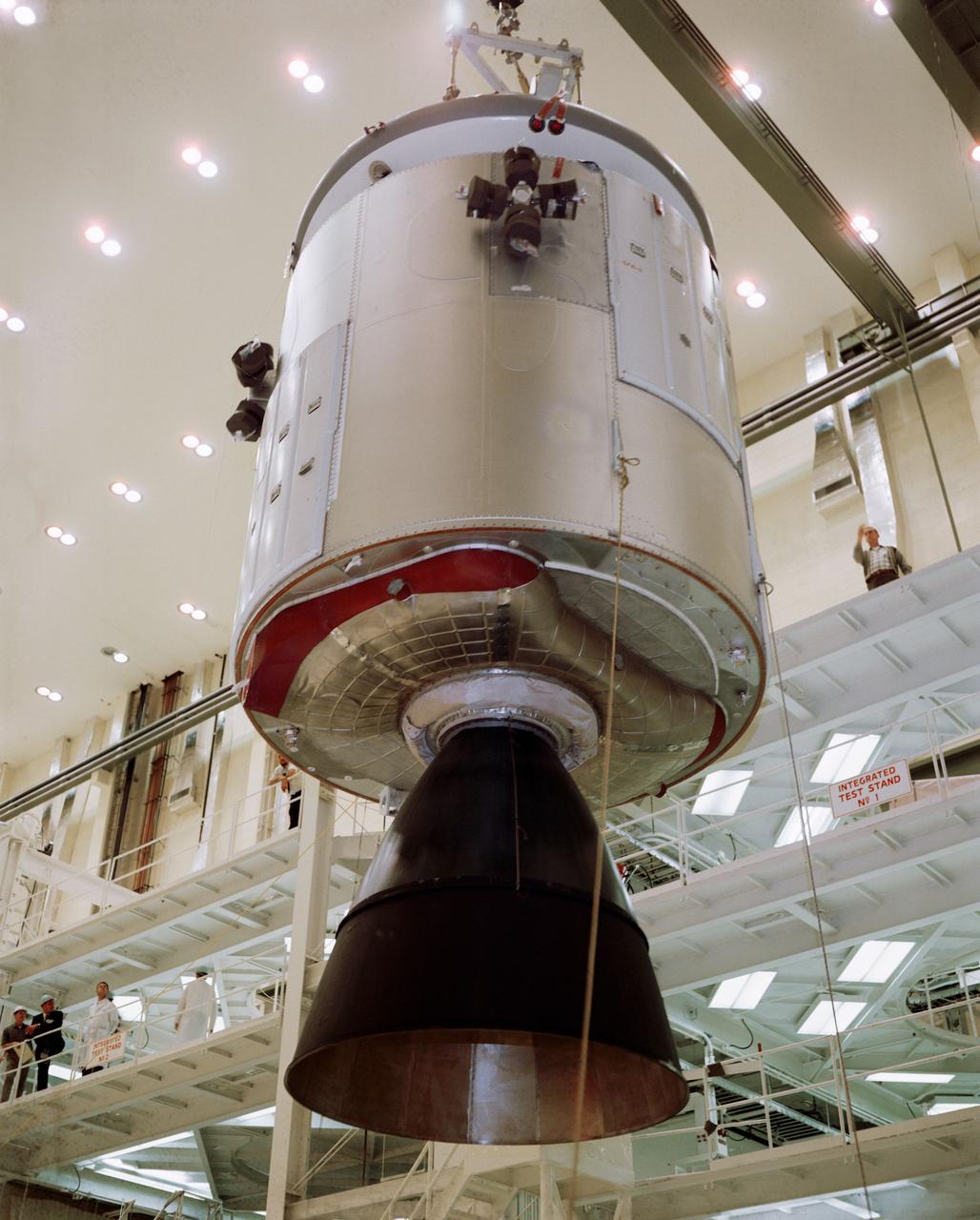
S67-15704 (3 Jan. 1967) --- Transfer of Apollo Spacecraft 012 Command/Service Module (CSM) for mating with the Saturn Lunar Module (LM) Adapter No.05 in the Manned Spacecraft Operations Building. Spacecraft 012 will be flown on the Apollo/Saturn 1 (204) mission. Photo credit: NASA
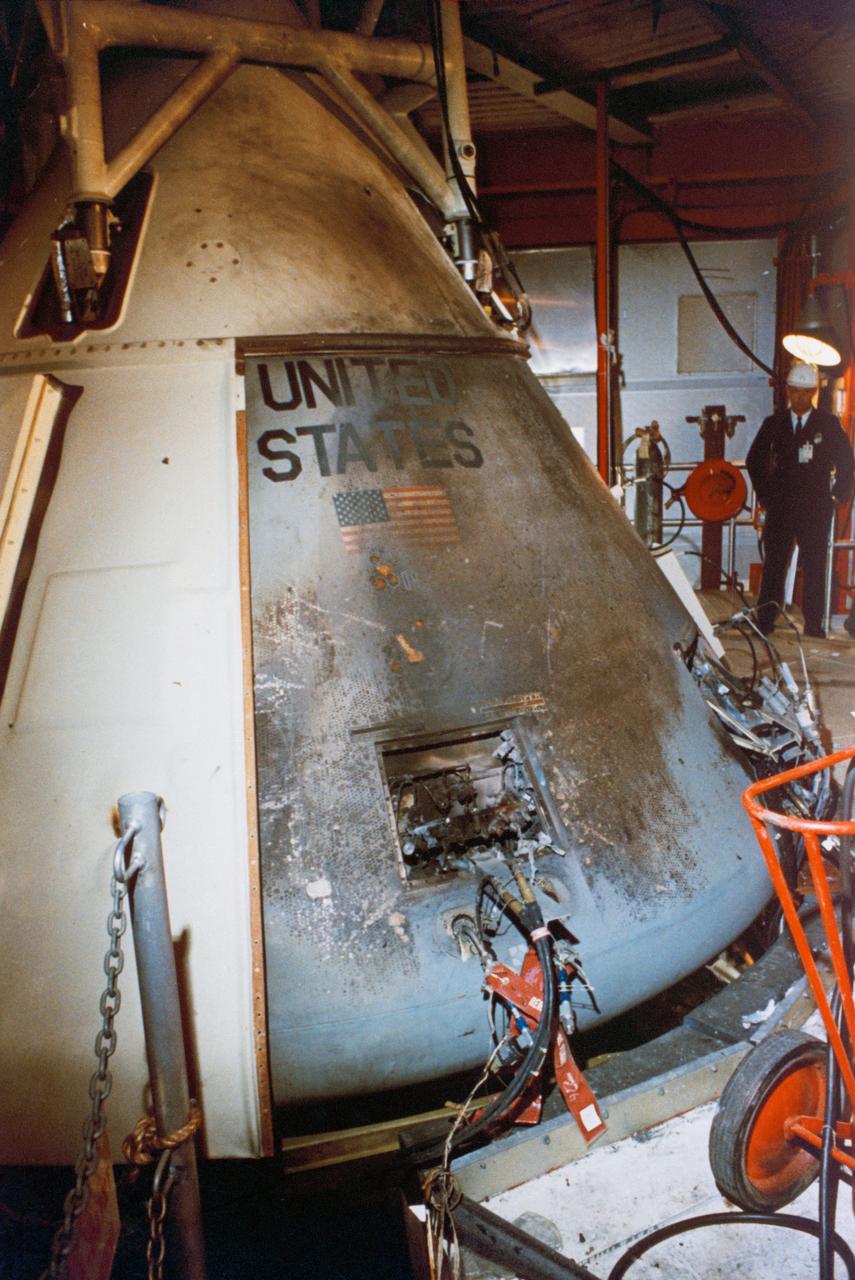
Closeup view of the interior of Apollo S/C 012 C/M, Pad 34, showing the effects of the intense heat of the flash fire which killed the Prime Crew of the A/S 204 Mission. CAPE KENNEDY, FL CAPE KENNEDY, FL
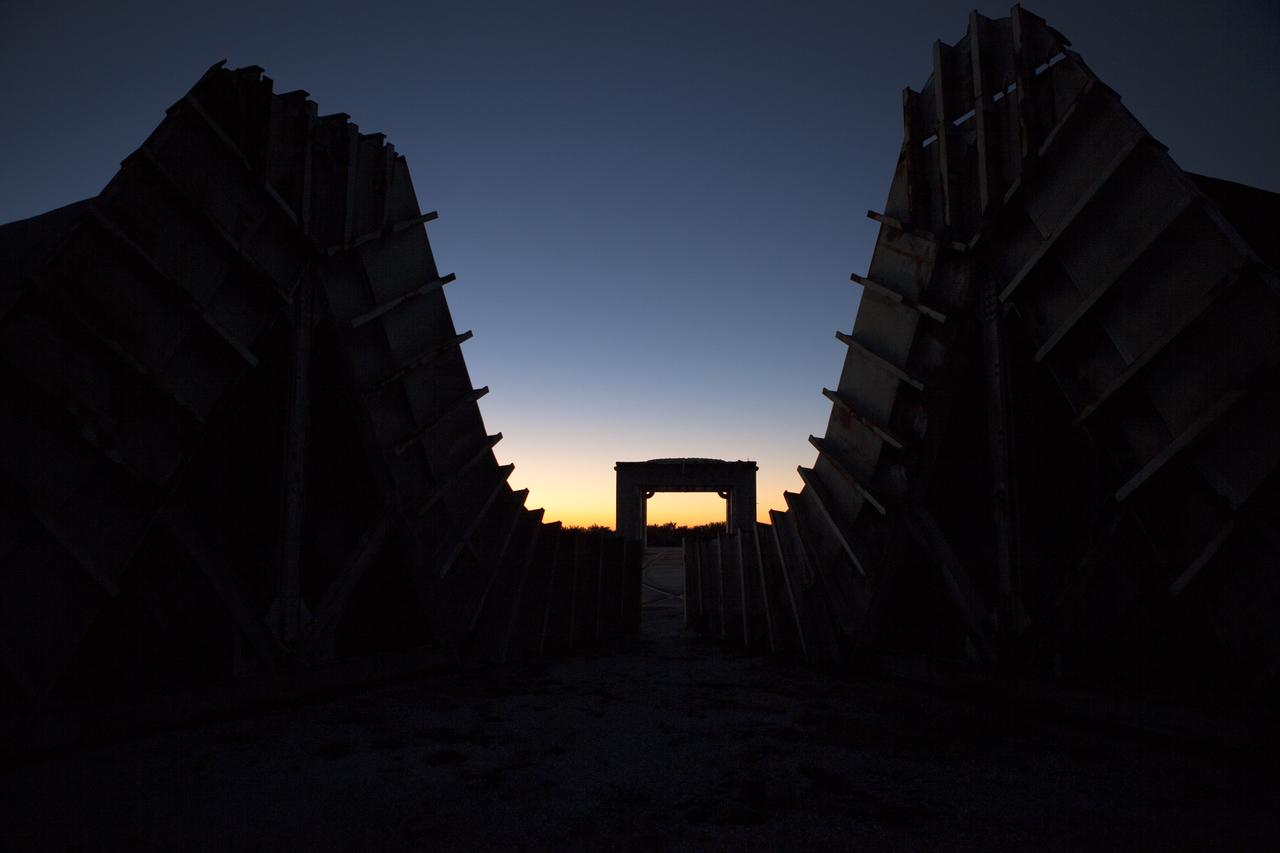
CAPE CANAVERAL, Fla. – Flame deflectors frame what remains of the historic gantry on Launch Pad 34 on Cape Canaveral Air Force Station in Florida. On this day in 1967, a fire erupted on the pad during a preflight test, taking the lives of the Apollo 1 crew, NASA astronauts Virgil Grissom, Edward White and Roger Chaffee. To learn more about Apollo 1 and the crew, visit http://www.nasa.gov/mission_pages/apollo/missions/apollo1.html. Photo credit: NASA/Ben Smegelsky
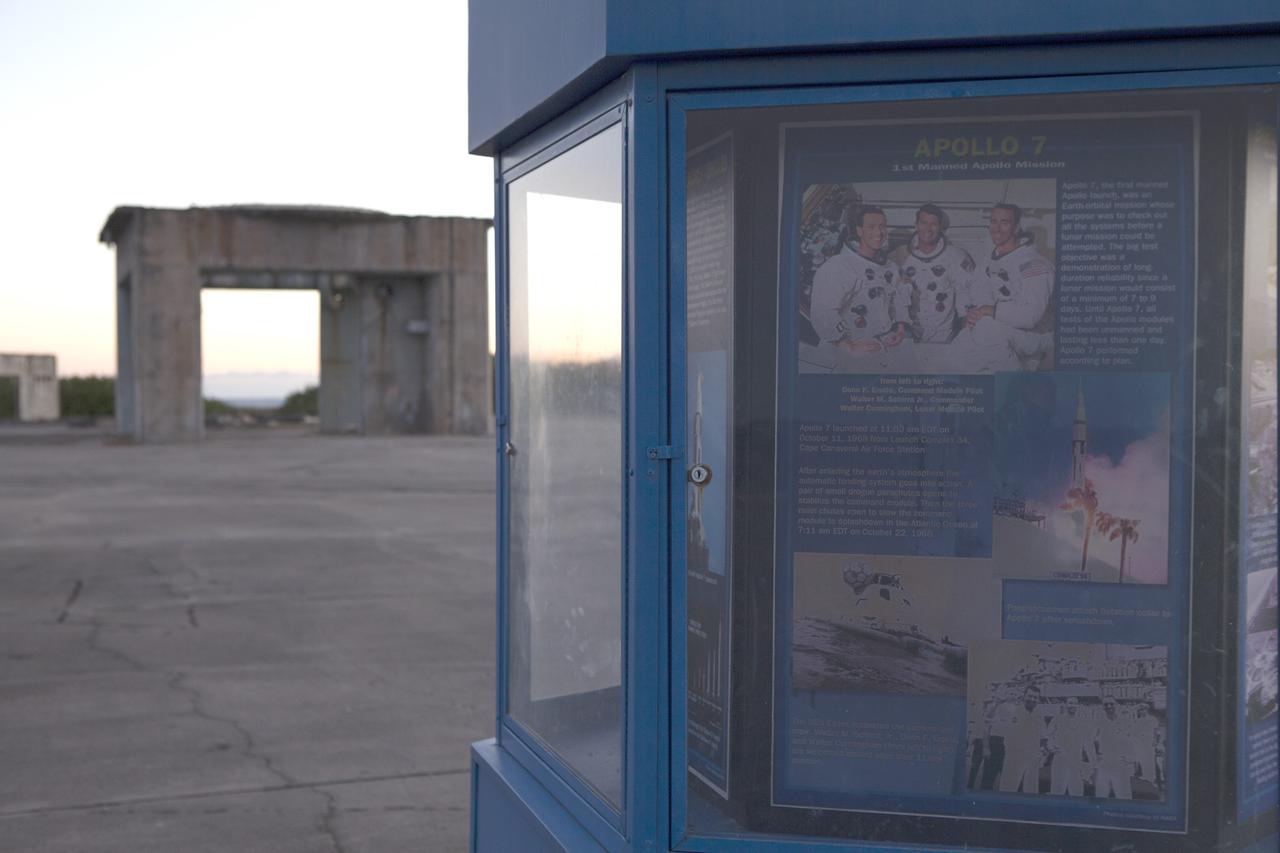
CAPE CANAVERAL, Fla. – A kiosk near what remains of the once majestic gantry on Launch Pad 34 on Cape Canaveral Air Force Station in Florida describes the historic events that took place there. On this day in 1967, a fire erupted on the pad during a preflight test, taking the lives of the Apollo 1 crew, NASA astronauts Virgil Grissom, Edward White and Roger Chaffee. To learn more about Apollo 1 and the crew, visit http://www.nasa.gov/mission_pages/apollo/missions/apollo1.html. Photo credit: NASA/Ben Smegelsky
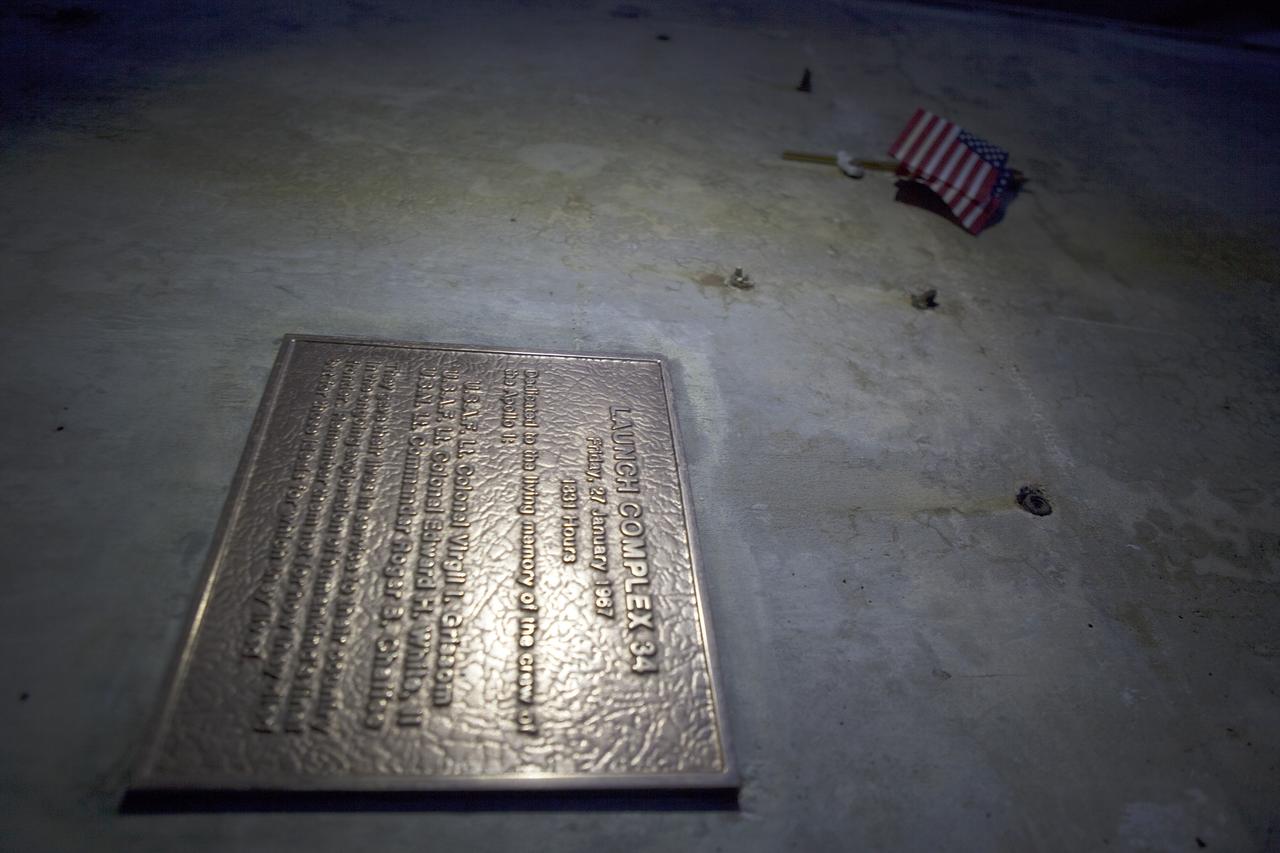
CAPE CANAVERAL, Fla. – A plaque affixed to what remains of the historic gantry on Launch Pad 34 on Cape Canaveral Air Force Station in Florida pays tribute to those who died there in the pursuit of exploration and discovery. On this day in 1967, a fire erupted on the pad during a preflight test, taking the lives of the Apollo 1 crew, NASA astronauts Virgil Grissom, Edward White and Roger Chaffee. To learn more about Apollo 1 and the crew, visit http://www.nasa.gov/mission_pages/apollo/missions/apollo1.html. Photo credit: NASA/Ben Smegelsky
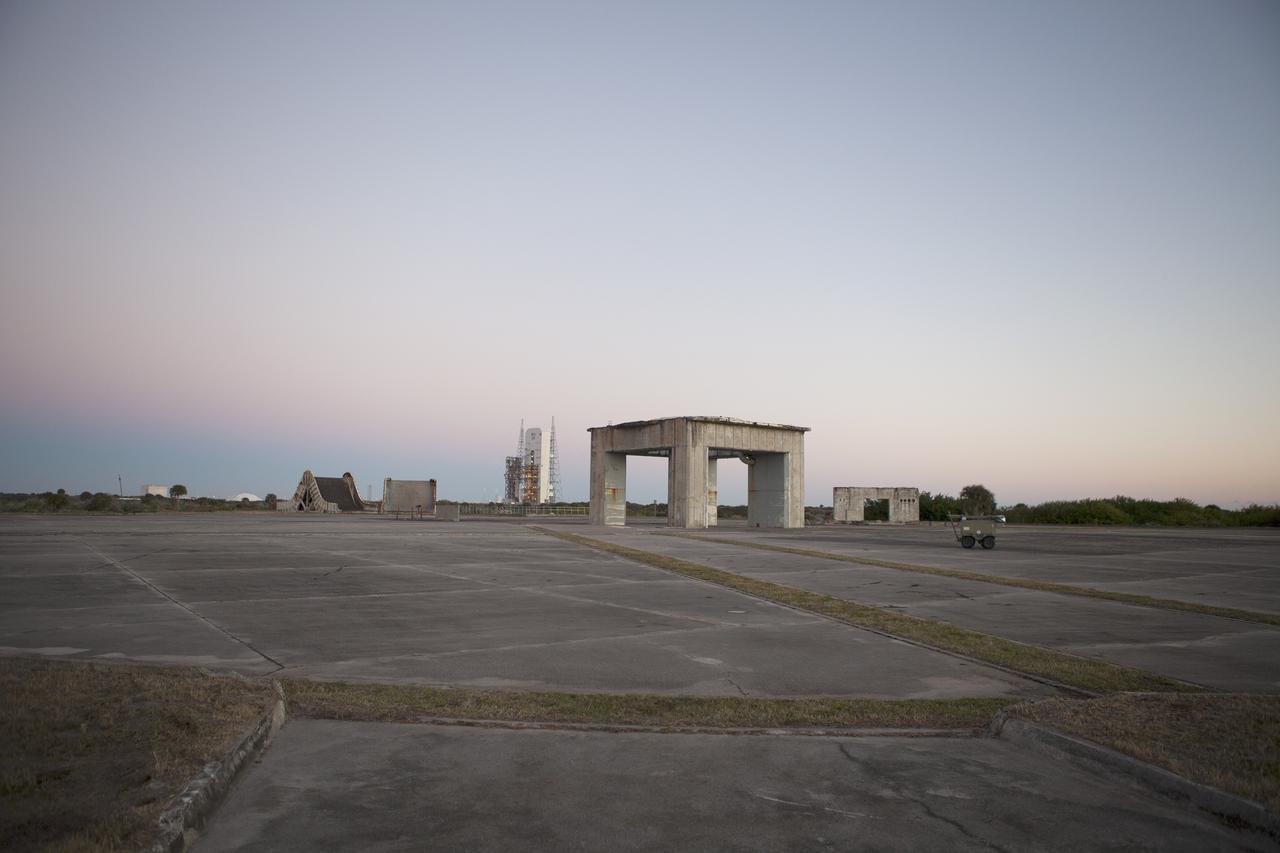
CAPE CANAVERAL, Fla. – The past intersects with the future on Cape Canaveral Air Force Station in Florida. In the foreground is what remains of historic Launch Pad 34 in the distance behind it is Space Launch Complex 37 whence NASA's Orion spacecraft made its first flight test. On this day in 1967, a fire erupted on the Pad 34 during a preflight test, taking the lives of the Apollo 1 crew, NASA astronauts Virgil Grissom, Edward White and Roger Chaffee. To learn more about Apollo 1 and the crew, visit http://www.nasa.gov/mission_pages/apollo/missions/apollo1.html. To learn more about Orion, visit http://www.nasa.gov/exploration/systems/orion/. Photo credit: NASA/Ben Smegelsky
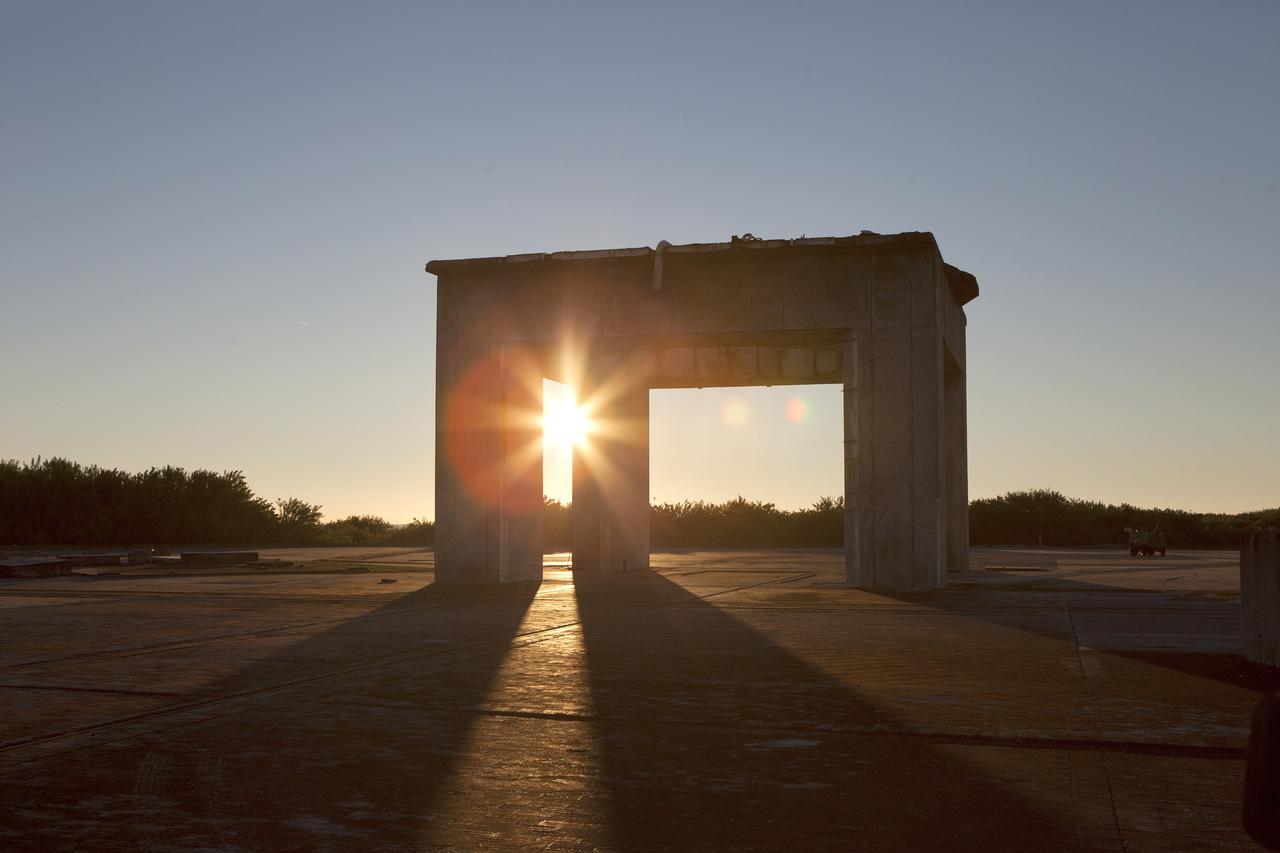
CAPE CANAVERAL, Fla. – The sun beams through what remains of the gantry on Launch Pad 34 on Cape Canaveral Air Force Station in Florida. On this day in 1967, a fire erupted on the pad during a preflight test, taking the lives of the Apollo 1 crew, NASA astronauts Virgil Grissom, Edward White and Roger Chaffee. To learn more about Apollo 1 and the crew, visit http://www.nasa.gov/mission_pages/apollo/missions/apollo1.html. Photo credit: NASA/Ben Smegelsky
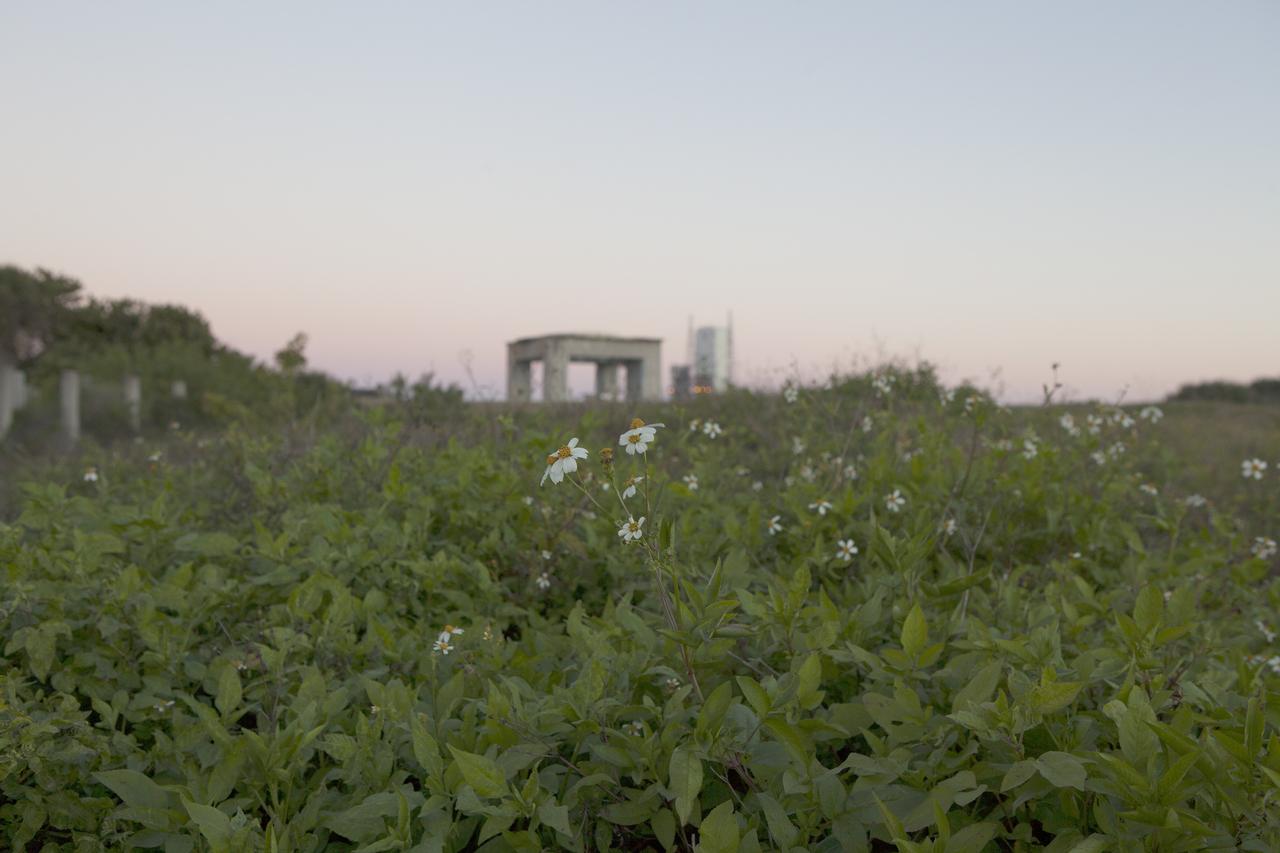
CAPE CANAVERAL, Fla. – The past intersects with the future on Cape Canaveral Air Force Station in Florida. In the foreground is what remains of historic Launch Pad 34 in the distance behind it is Space Launch Complex 37 whence NASA's Orion spacecraft made its first flight test. On this day in 1967, a fire erupted on the Pad 34 during a preflight test, taking the lives of the Apollo 1 crew, NASA astronauts Virgil Grissom, Edward White and Roger Chaffee. To learn more about Apollo 1 and the crew, visit http://www.nasa.gov/mission_pages/apollo/missions/apollo1.html. To learn more about Orion, visit http://www.nasa.gov/exploration/systems/orion/. Photo credit: NASA/Ben Smegelsky
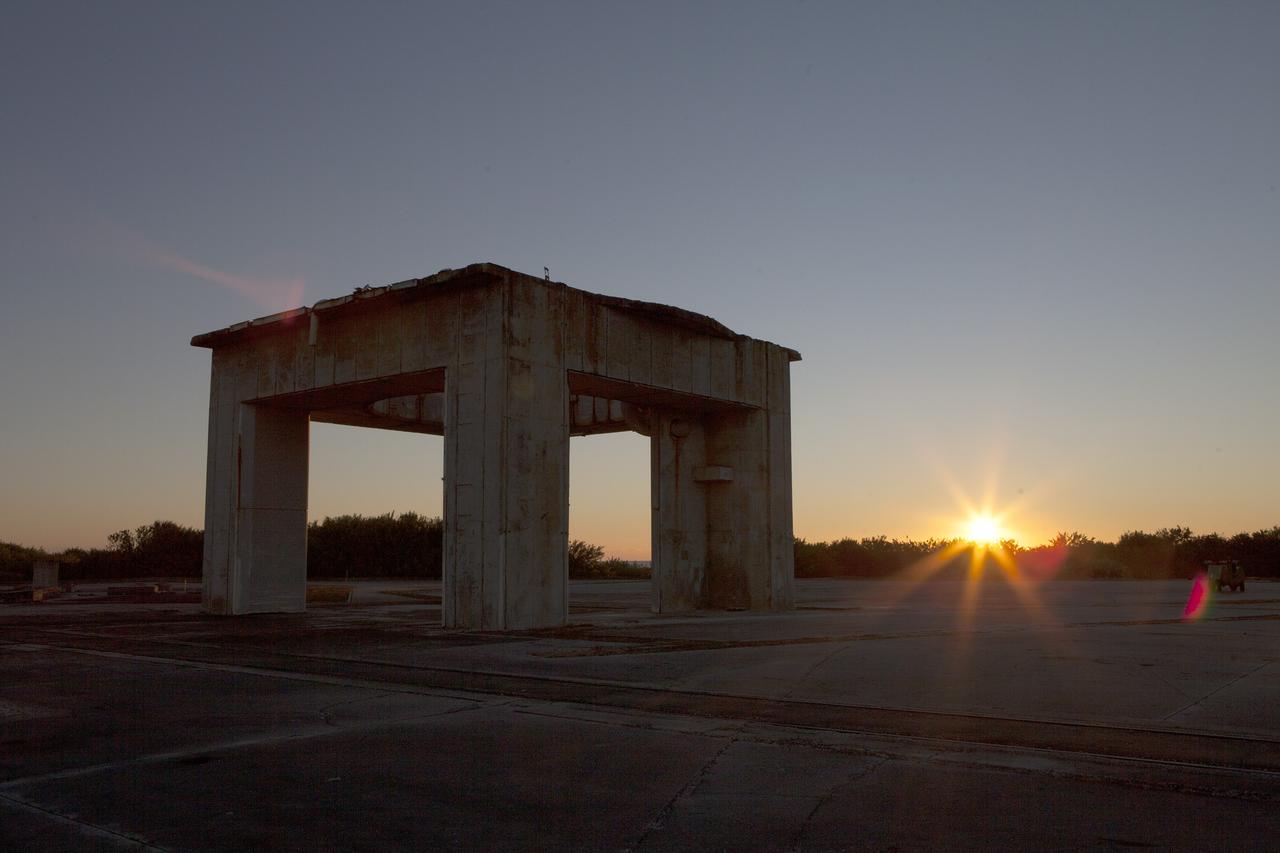
CAPE CANAVERAL, Fla. – The sun comes up behind what remains of the gantry on Launch Pad 34 on Cape Canaveral Air Force Station in Florida. On this day in 1967, a fire erupted on the pad during a preflight test, taking the lives of the Apollo 1 crew, NASA astronauts Virgil Grissom, Edward White and Roger Chaffee. To learn more about Apollo 1 and the crew, visit http://www.nasa.gov/mission_pages/apollo/missions/apollo1.html. Photo credit: NASA/Ben Smegelsky
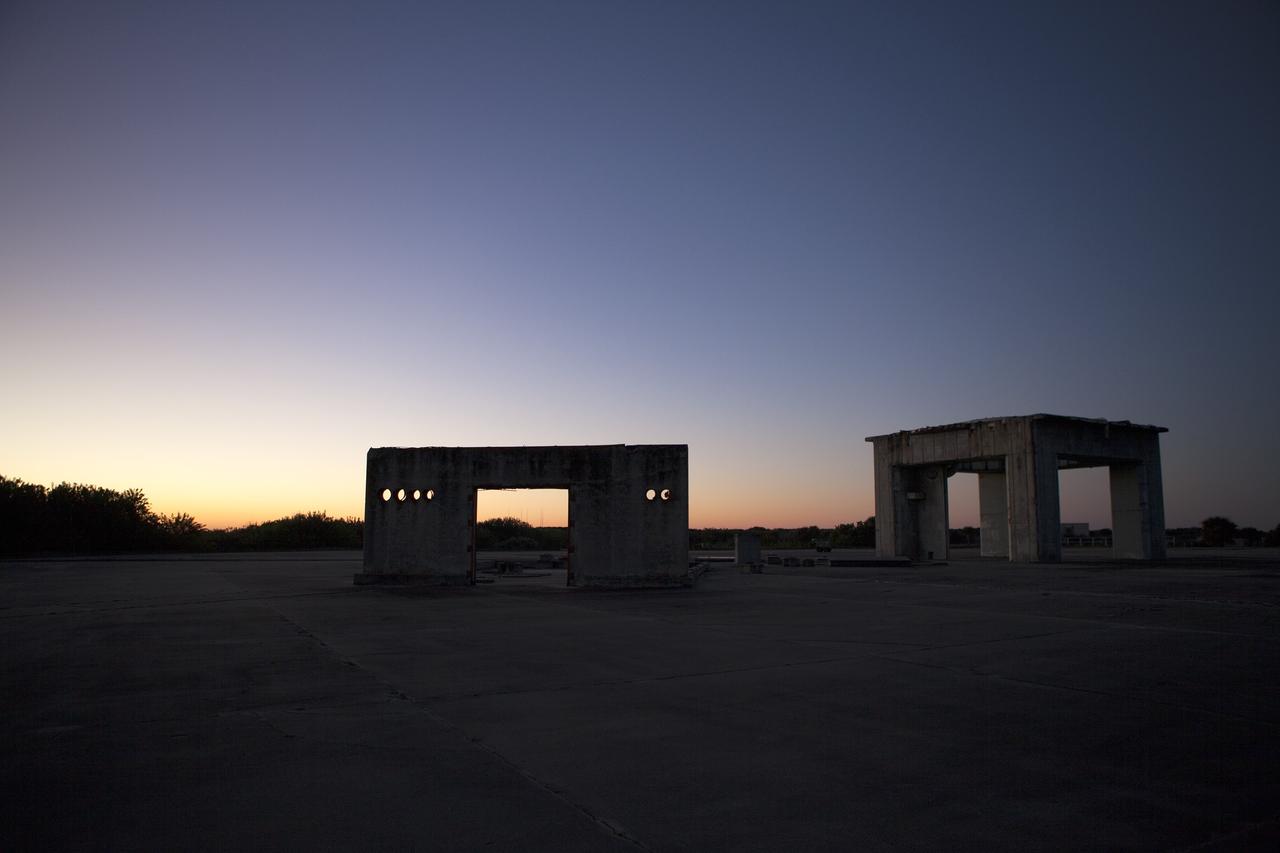
CAPE CANAVERAL, Fla. – The sun rises over what remains of the historic gantry and support structures on Launch Pad 34 on Cape Canaveral Air Force Station in Florida. On this day in 1967, a fire erupted on the pad during a preflight test, taking the lives of the Apollo 1 crew, NASA astronauts Virgil Grissom, Edward White and Roger Chaffee. To learn more about Apollo 1 and the crew, visit http://www.nasa.gov/mission_pages/apollo/missions/apollo1.html. Photo credit: NASA/Ben Smegelsky
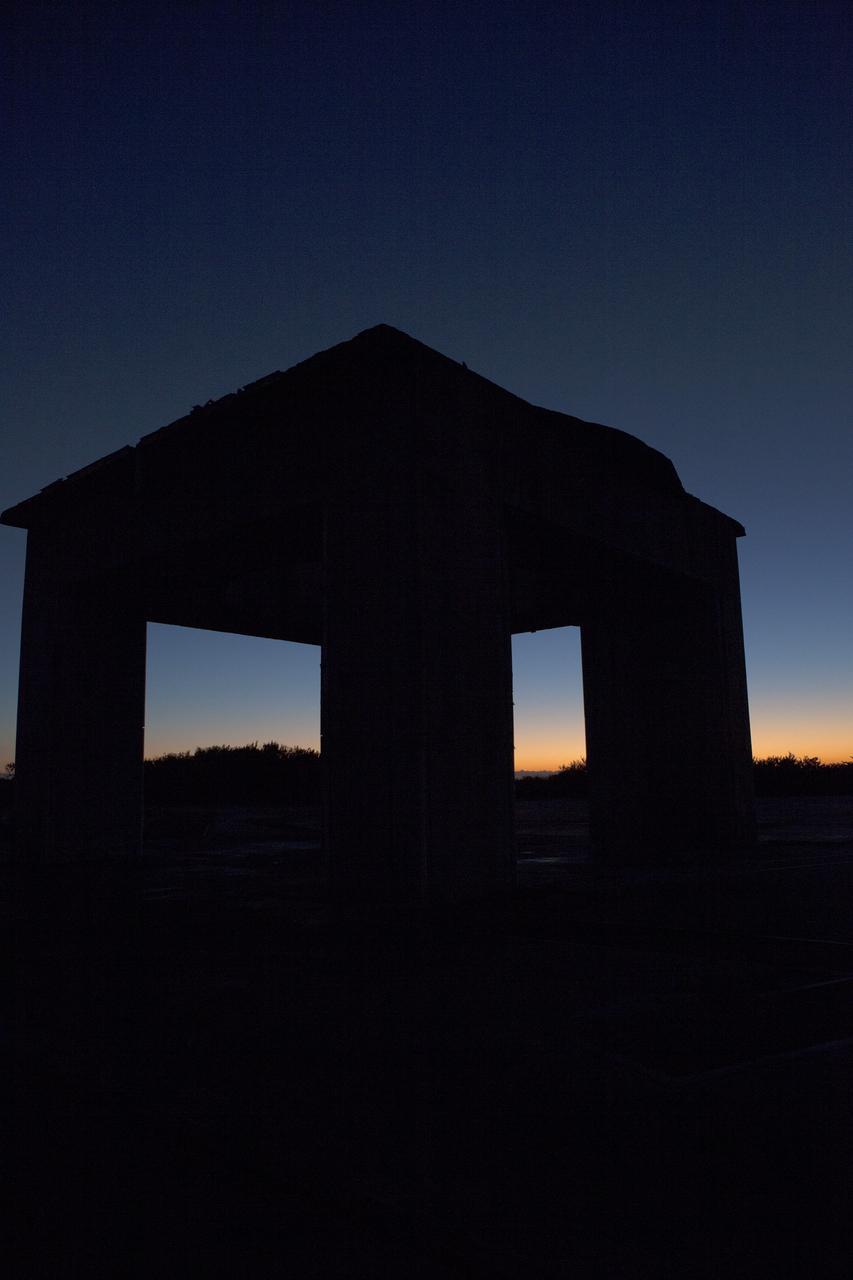
CAPE CANAVERAL, Fla. – Sunrise at Launch Pad 34 on Cape Canaveral Air Force Station in Florida illuminates what remains of the pad's historic gantry. On this day in 1967, a fire erupted on the pad during a preflight test, taking the lives of the Apollo 1 crew, NASA astronauts Virgil Grissom, Edward White and Roger Chaffee. To learn more about Apollo 1 and the crew, visit http://www.nasa.gov/mission_pages/apollo/missions/apollo1.html. Photo credit: NASA/Ben Smegelsky
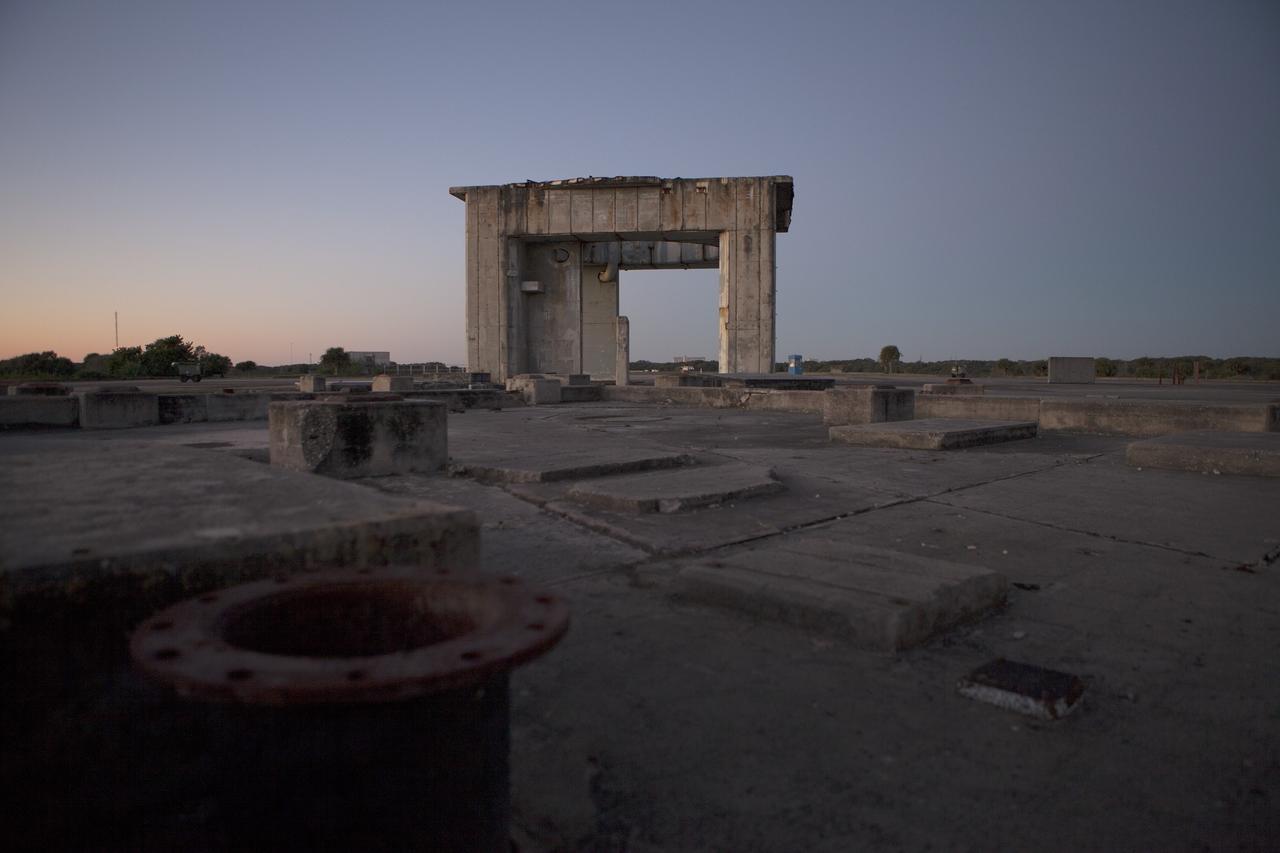
CAPE CANAVERAL, Fla. – Sunrise over Launch Pad 34 on Cape Canaveral Air Force Station in Florida reveals only remnants of the concrete and steel of the once majestic launch gantry. On this day in 1967, a fire erupted on the pad during a preflight test, taking the lives of the Apollo 1 crew, NASA astronauts Virgil Grissom, Edward White and Roger Chaffee. To learn more about Apollo 1 and the crew, visit http://www.nasa.gov/mission_pages/apollo/missions/apollo1.html. Photo credit: NASA/Ben Smegelsky
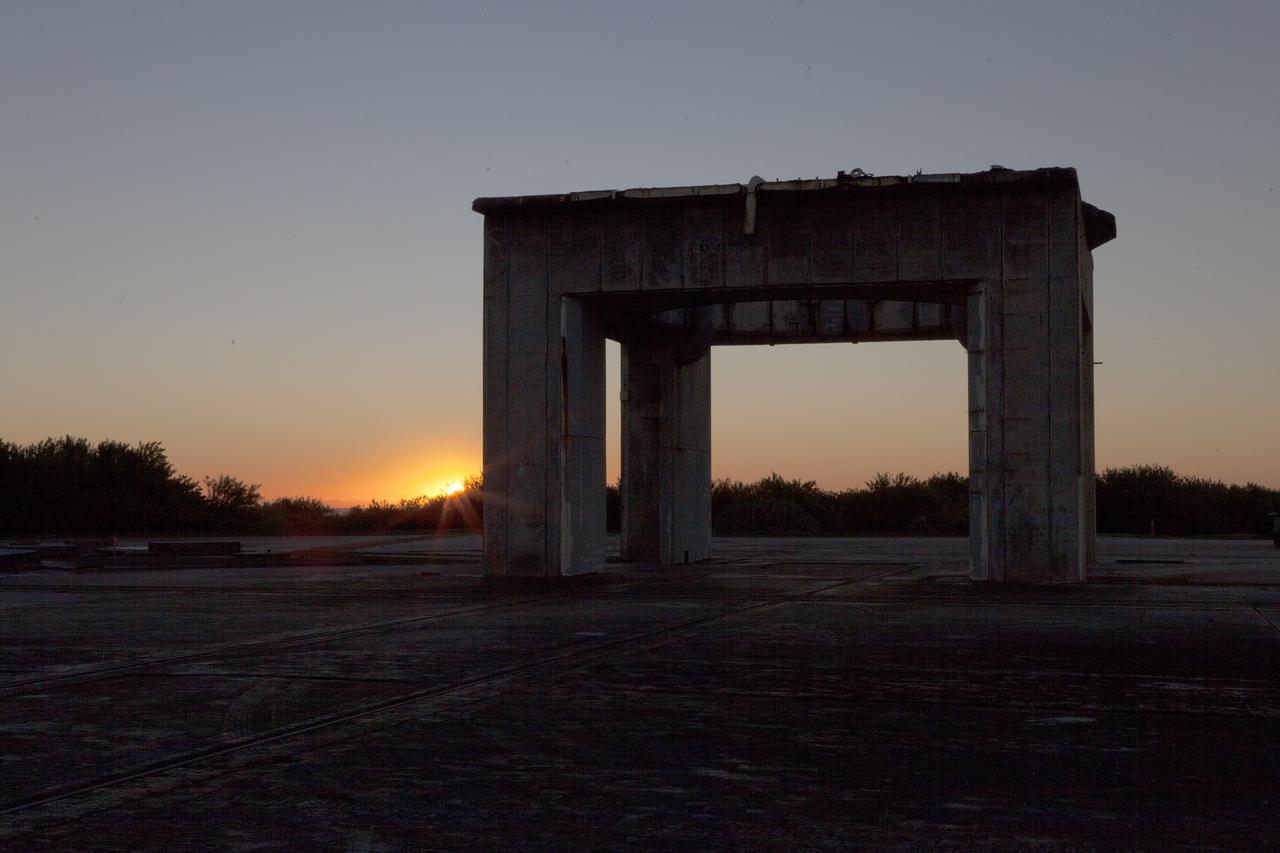
CAPE CANAVERAL, Fla. – The sun comes up behind what remains of the gantry on Launch Pad 34 on Cape Canaveral Air Force Station in Florida. On this day in 1967, a fire erupted on the pad during a preflight test, taking the lives of the Apollo 1 crew, NASA astronauts Virgil Grissom, Edward White and Roger Chaffee. To learn more about Apollo 1 and the crew, visit http://www.nasa.gov/mission_pages/apollo/missions/apollo1.html. Photo credit: NASA/Ben Smegelsky
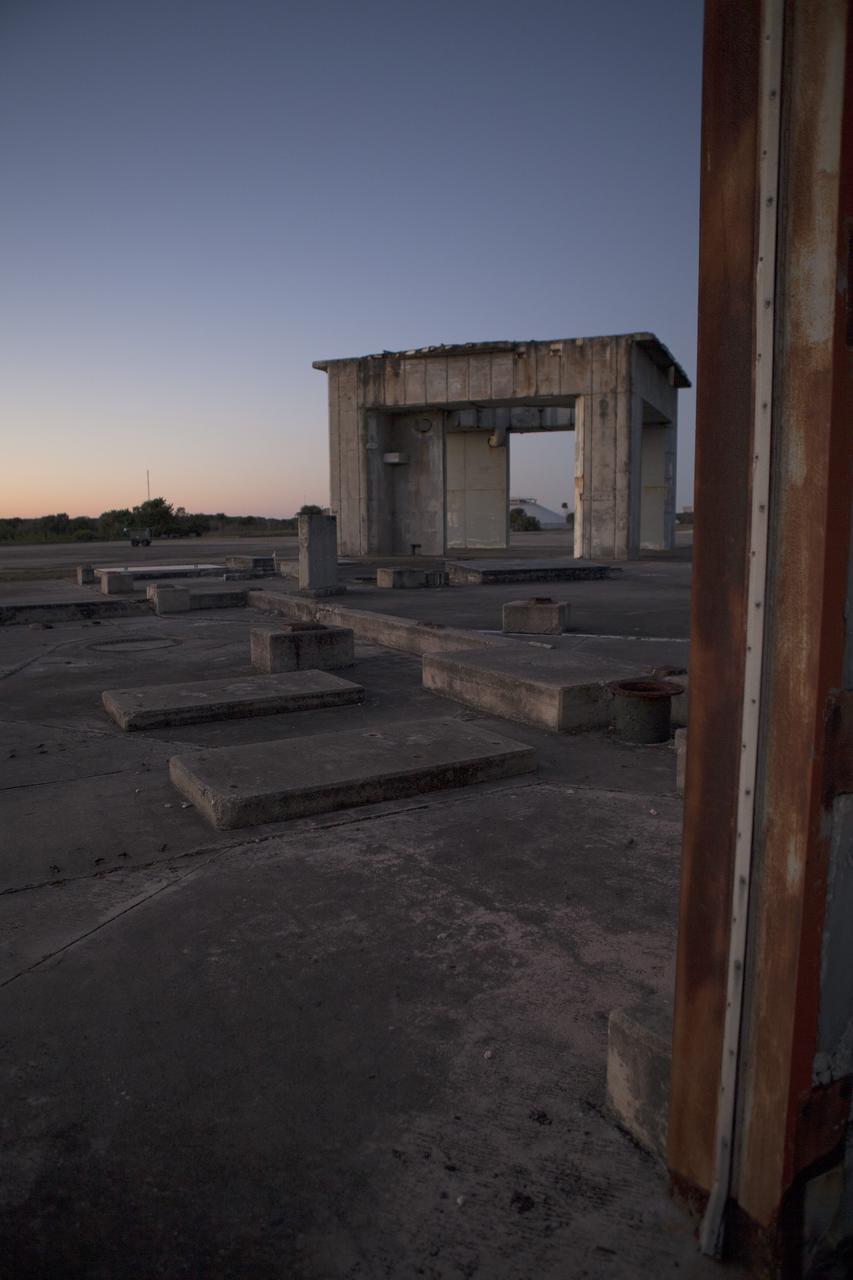
CAPE CANAVERAL, Fla. – Sunrise over Launch Pad 34 on Cape Canaveral Air Force Station in Florida finds only concrete and steel remain of the historic site, long since demolished. On this day in 1967, a fire erupted on the pad during a preflight test, taking the lives of the Apollo 1 crew, NASA astronauts Virgil Grissom, Edward White and Roger Chaffee. To learn more about Apollo 1 and the crew, visit http://www.nasa.gov/mission_pages/apollo/missions/apollo1.html. Photo credit: NASA/Ben Smegelsky
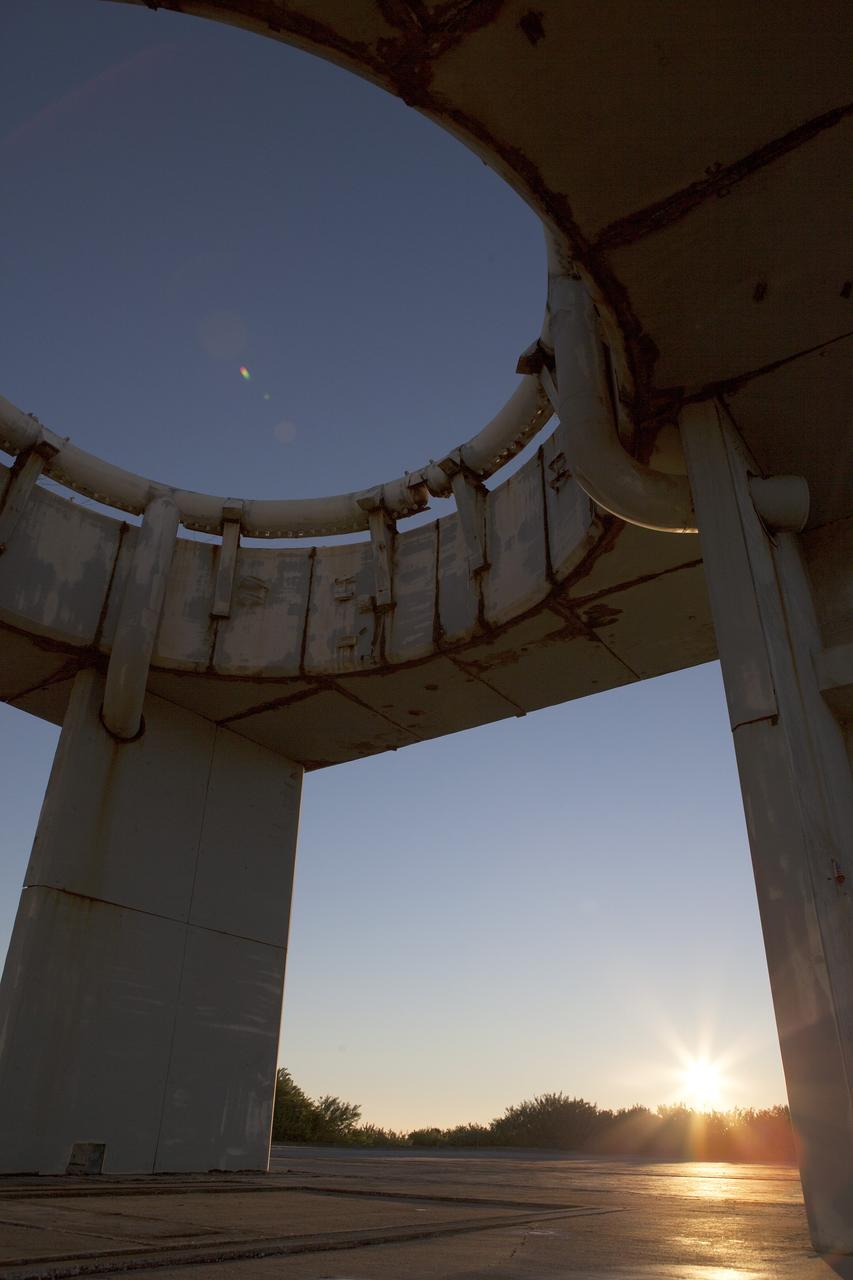
CAPE CANAVERAL, Fla. – The sun comes up behind what remains of the gantry on Launch Pad 34 on Cape Canaveral Air Force Station in Florida. On this day in 1967, a fire erupted on the pad during a preflight test, taking the lives of the Apollo 1 crew, NASA astronauts Virgil Grissom, Edward White and Roger Chaffee. To learn more about Apollo 1 and the crew, visit http://www.nasa.gov/mission_pages/apollo/missions/apollo1.html. Photo credit: NASA/Ben Smegelsky
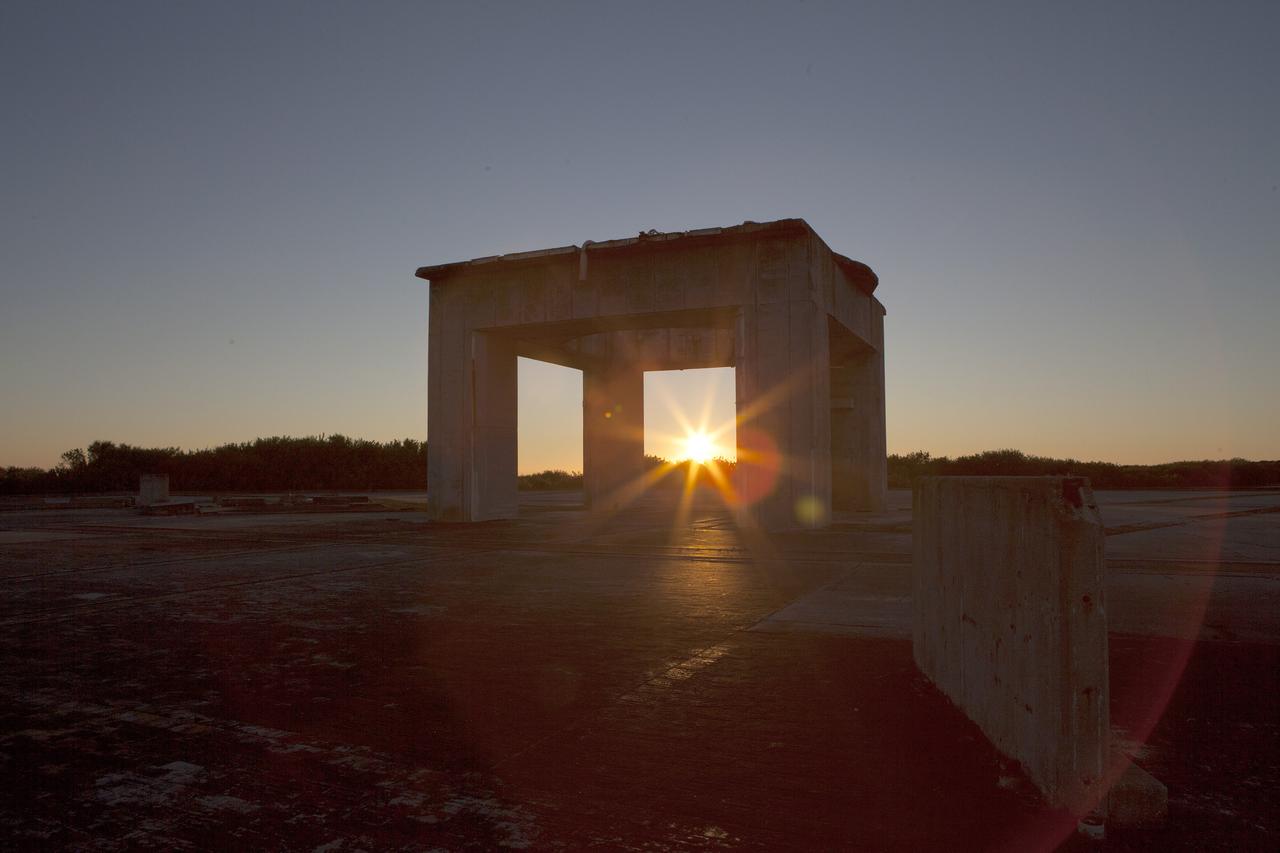
CAPE CANAVERAL, Fla. – The sun peeks through what remains of the gantry on Launch Pad 34 on Cape Canaveral Air Force Station in Florida. On this day in 1967, a fire erupted on the pad during a preflight test, taking the lives of the Apollo 1 crew, NASA astronauts Virgil Grissom, Edward White and Roger Chaffee. To learn more about Apollo 1 and the crew, visit http://www.nasa.gov/mission_pages/apollo/missions/apollo1.html. Photo credit: NASA/Ben Smegelsky
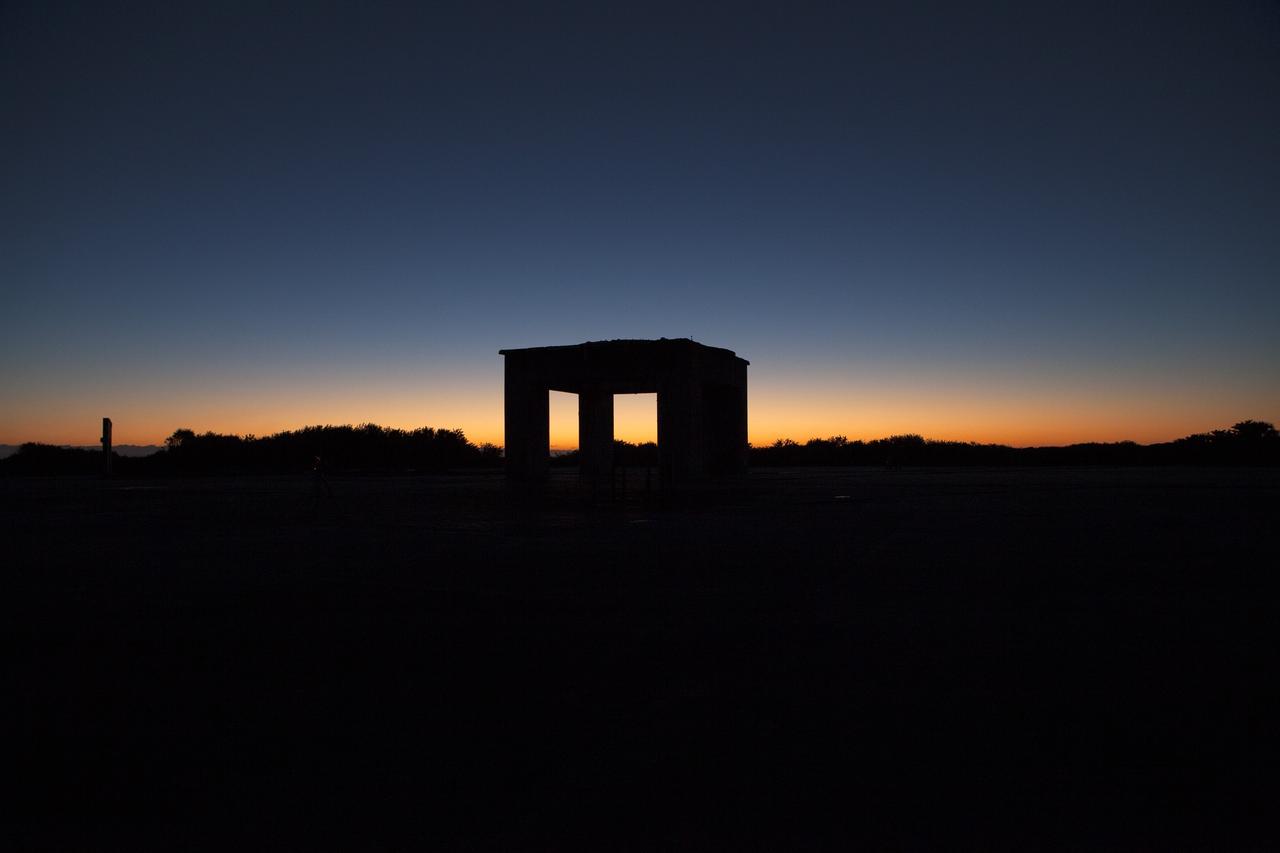
CAPE CANAVERAL, Fla. – Sunrise at Launch Pad 34 on Cape Canaveral Air Force Station in Florida silhouettes what remains of the pad's historic gantry. On this day in 1967, a fire erupted on the pad during a preflight test, taking the lives of the Apollo 1 crew, NASA astronauts Virgil Grissom, Edward White and Roger Chaffee. To learn more about Apollo 1 and the crew, visit http://www.nasa.gov/mission_pages/apollo/missions/apollo1.html. Photo credit: NASA/Ben Smegelsky
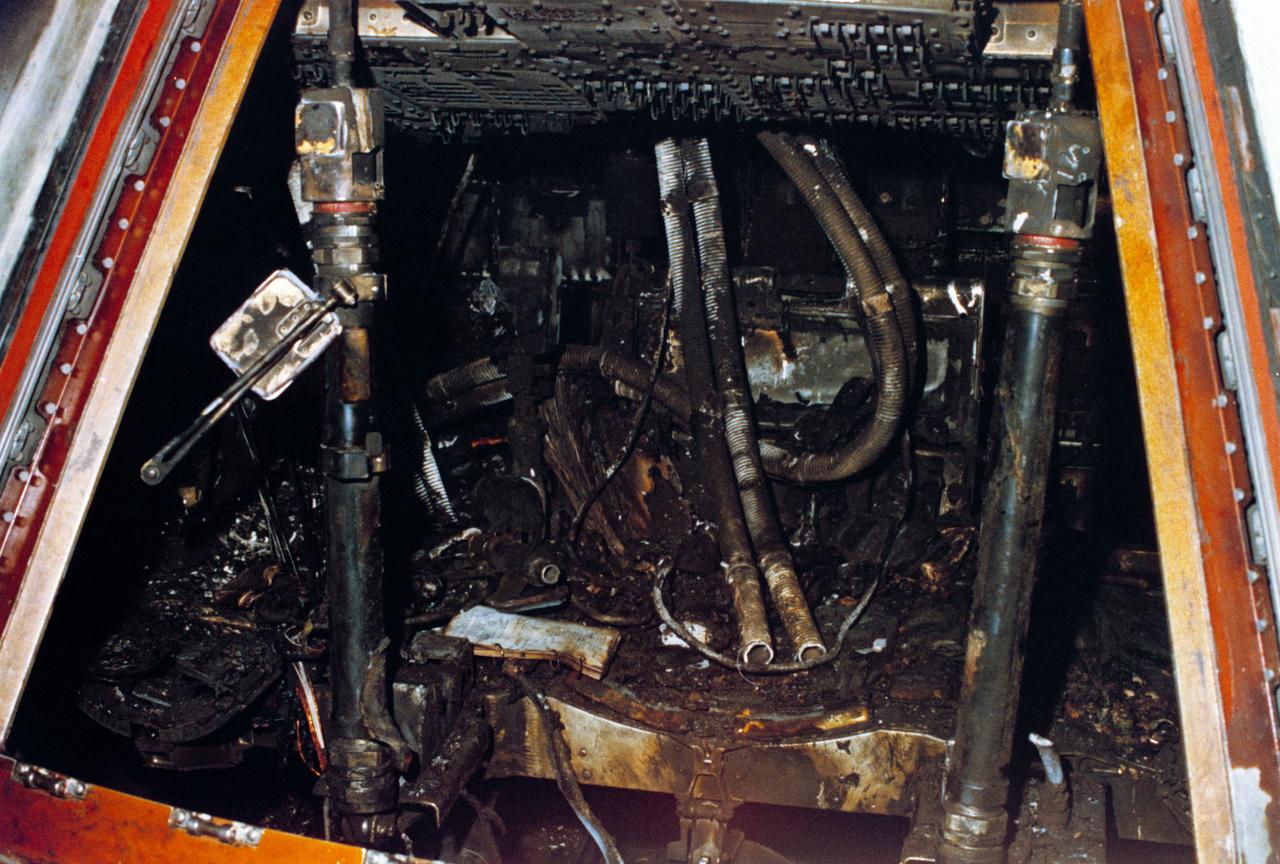
S67-21294 (28 Jan. 1967) --- Close-up view of the interior of Apollo Spacecraft 012 Command Module at Pad 34 showing the effects of the intense heat of the flash fire which killed the prime crew of the Apollo/Saturn 204 mission. Astronauts Virgil I. Grissom, Edward H. White II, and Roger B. Chaffee lost their lives in the accidental fire.
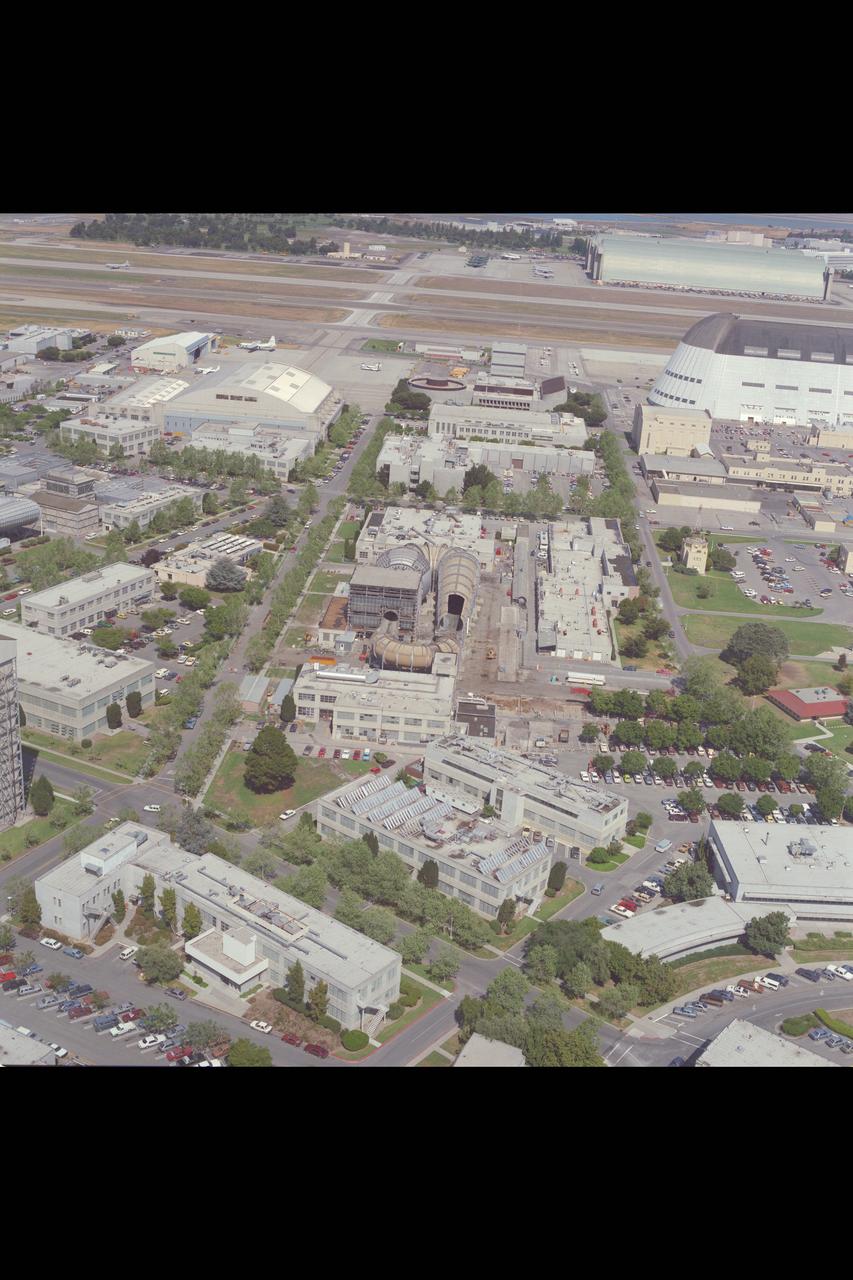
Ames Aerials: N-203, N-204, N-206 looking east
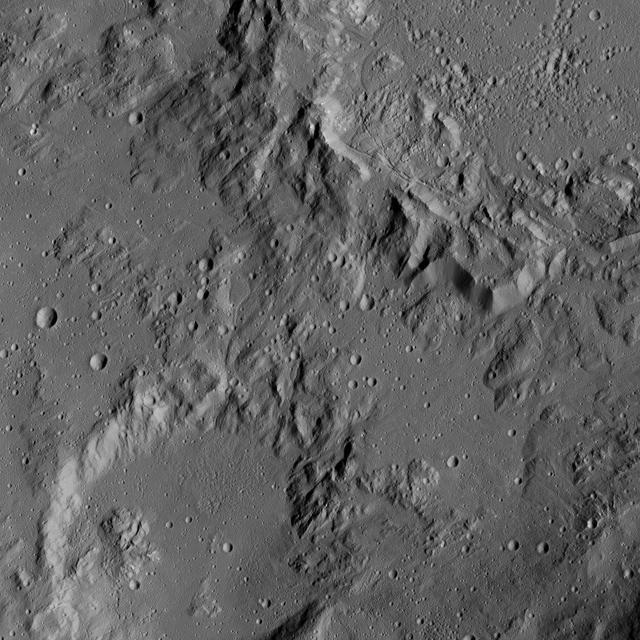
This image from NASA Dawn spacecraft shows the edge of Ikapati crater on Ceres, at upper right. Dawn took this image on June 12, 2016, from its low-altitude mapping orbit, at a distance of about 240 miles 385 kilometers above the surface.
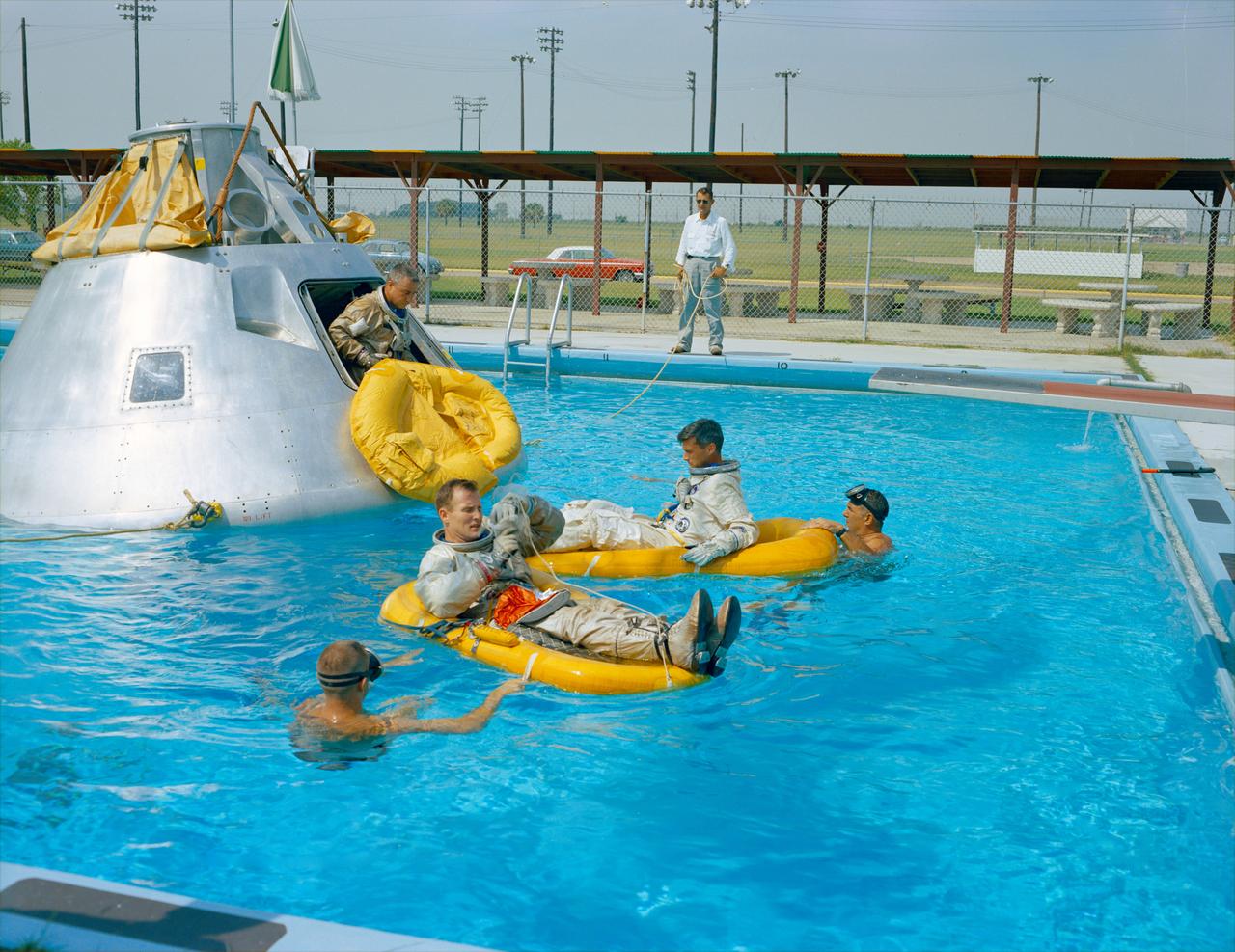
Boilerplate (B/P) model of the Apollo Spacecraft resting nose down in the swimming pool at EAFB during a training session with the first (1st) crew named by NASA. NASA swimmers are in the water to assist during the practice session. Inside the spacecraft are Astronauts Roger B. Chaffee, and Edward H. White II, members of the crew. Astronaut Virgial I. Grissom is visible in the entrance to the craft.
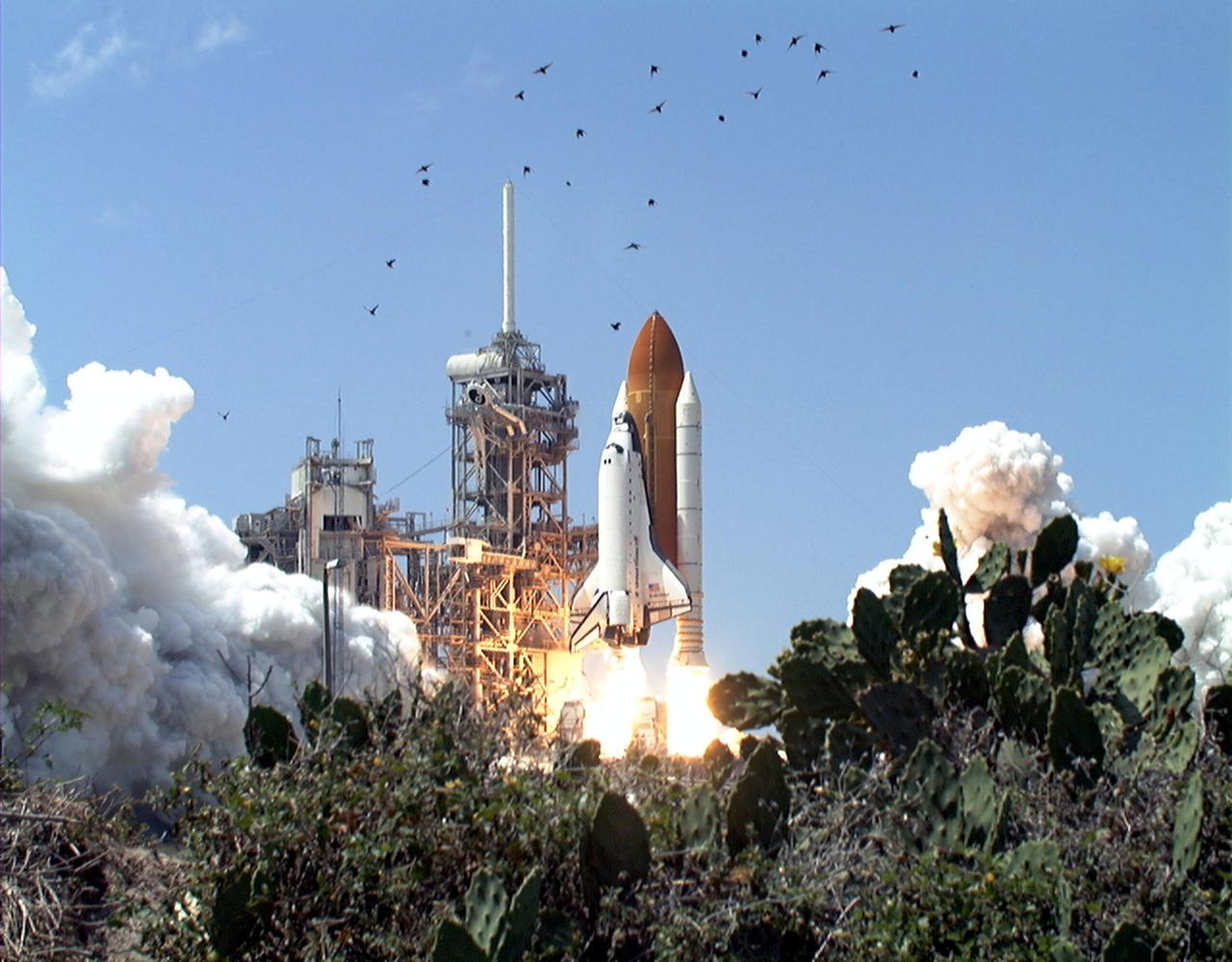
KENNEDY SPACE CENTER, FLA. -- Cactus bloom near Launch Pad 39A where Space Shuttle Endeavour roars into space, startling flocks of birds in the area. Liftoff of the ninth flight to the International Space Station occurred at 2:40:42 p.m. EDT. The 11-day mission will deliver and integrate the Spacelab Logistics Pallet_Launch Deployment Assembly, which includes the Space Station Remote Manipulator System and the UHF Antenna. The mission includes two planned spacewalks for installation of the SSRMS on the Station. Also onboard is the Multi-Purpose Logistics Module Raffaello, carrying resupply stowage racks and resupply_return stowage platforms
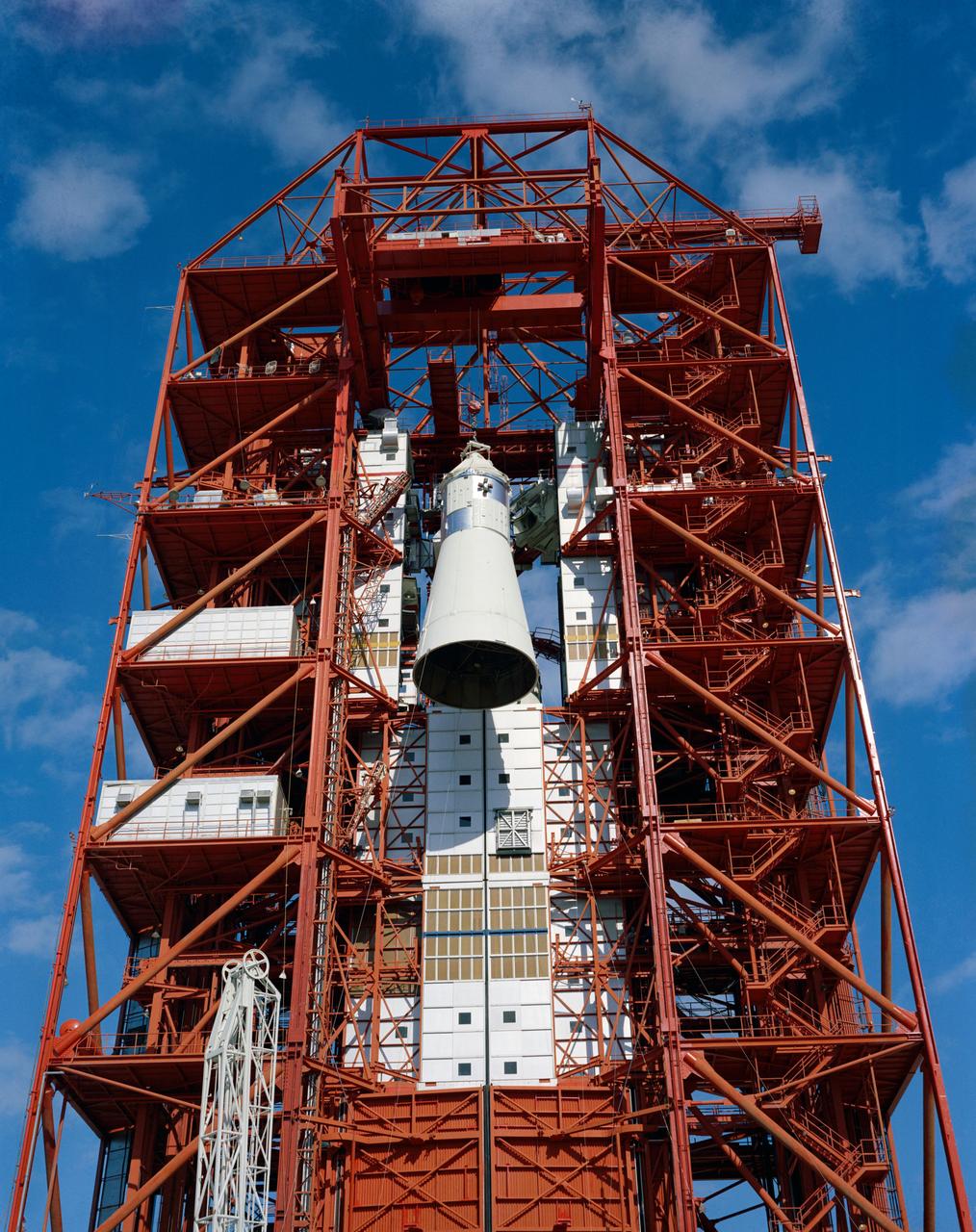
S67-15885 (1967) --- Apollo Spacecraft 012 is hoisted to the top of the gantry at Pad 34 during the Apollo/Saturn Mission 204 erection.
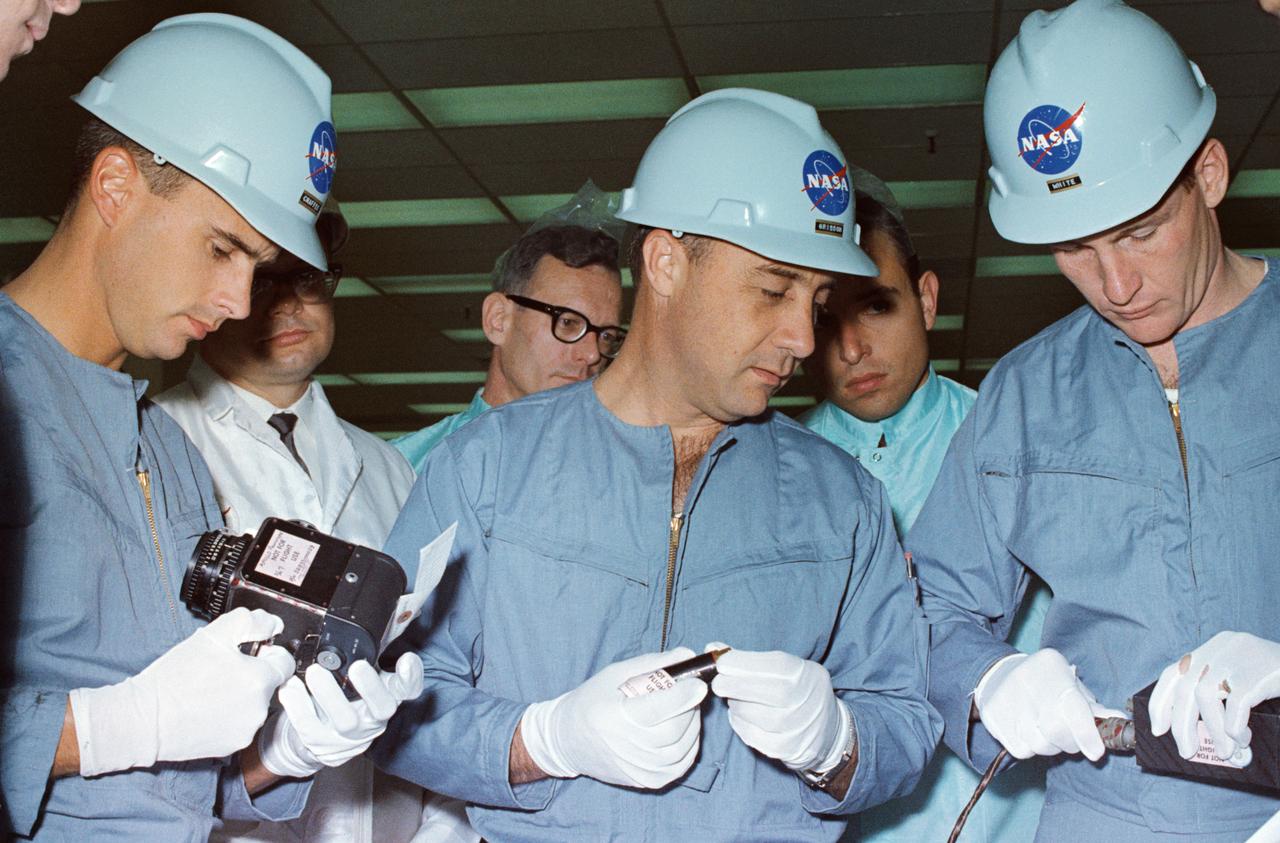
The members of the prime crew of the first manned Apollo space flight Apollo/Saturn 204 (AS-204) inspect spacecraft equipment during a tour of North American Aviation's (NAA) Downey facility. In the foreground, left to right, are astronauts Roger B. Chaffee, Virgil I. Grissom, and Edward H. White, II. NAA engineers and technicians are in the background. NORTH AMERICAN AVIATION, INC., DOWNEY, CA B&W
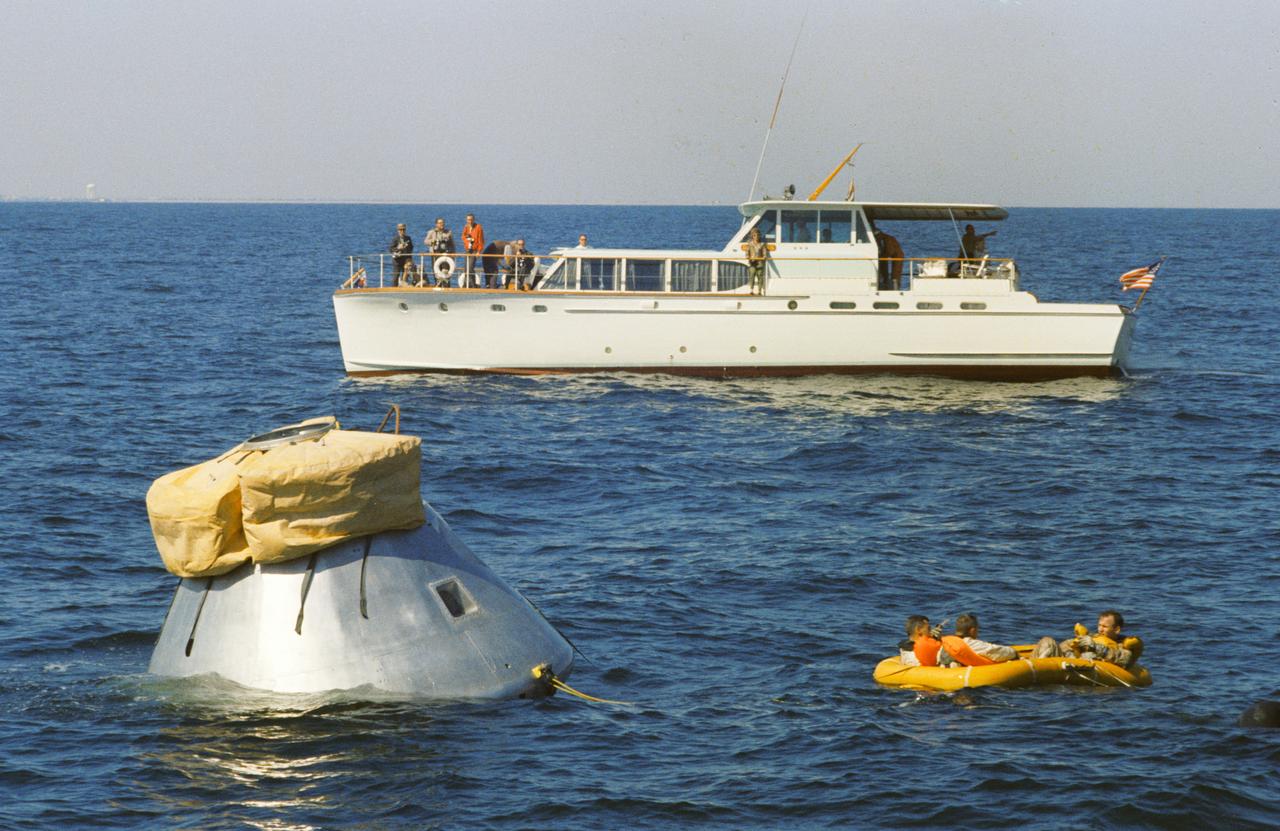
Prime Crew A/S 204 Astronauts Edward White, Virgil I. Grissom, & Roger Chaffee receive water egress training in the Gulf of Mexico. "Duchess" yacht for newmen. GULF OF MEXICO B&W/CN

S64-31631 (10 Sept. 1964) --- Astronaut Edward H. White II. (EDITOR'S NOTE: Astronaut White died in the Apollo/Saturn 204 fire accident at Cape Kennedy on Jan. 27, 1967.)
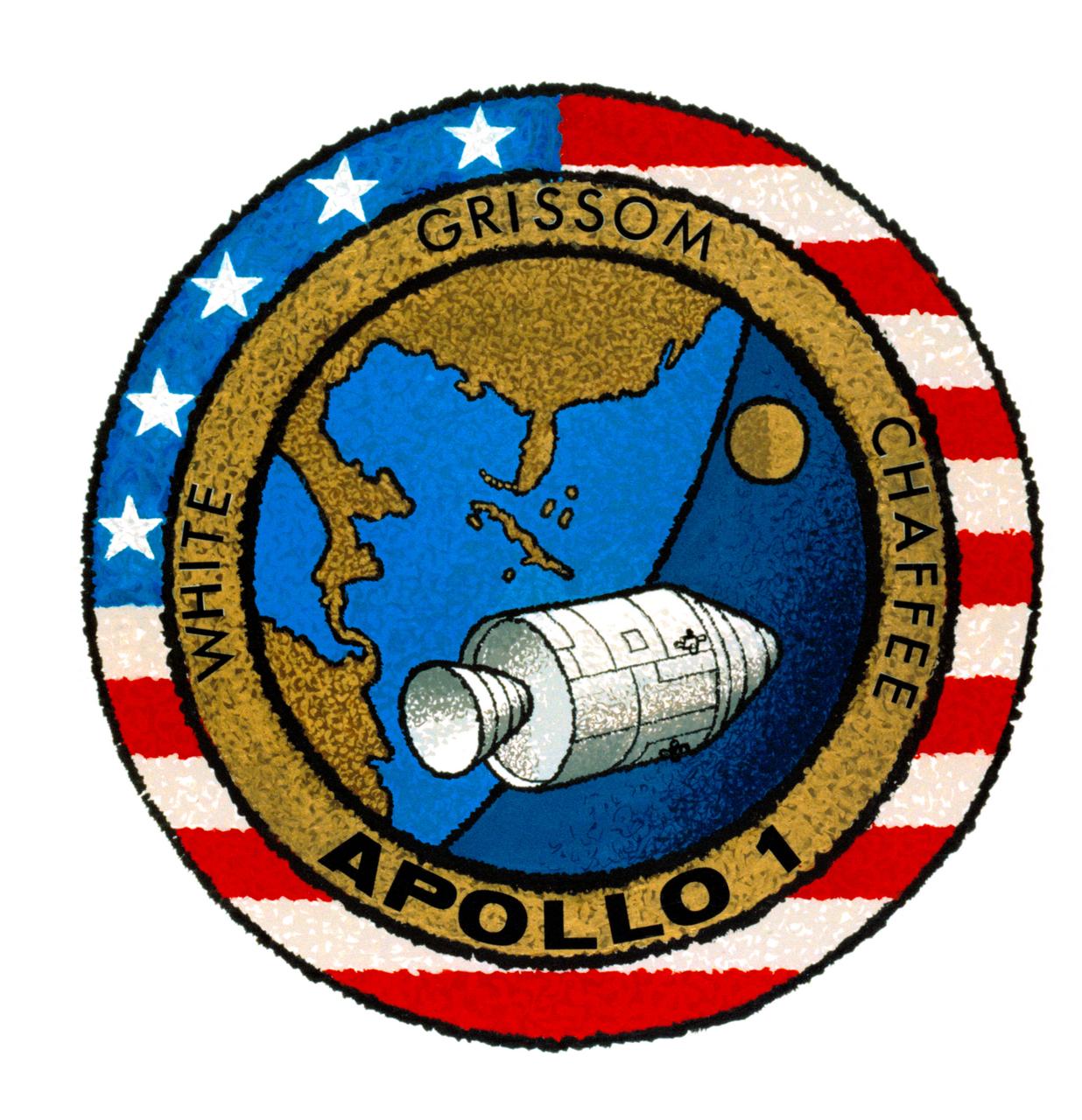
S66-36742 (1966) --- This is the insignia for the National Aeronautics and Space Administration's (NASA) Apollo 1 mission, the first manned Apollo flight. Crew members are astronauts Virgil I. Grissom, Edward H. White II and Roger B. Chaffee. The NASA insignia design for Apollo flights is reserved for use by the astronauts and for other official use as the NASA Administrator may authorize. Public availability has been approved only in the form of illustrations by the various news media. When and if there is any change in this policy, which we do not anticipate, it will be publicly announced. EDITOR'S NOTE: The three astronauts lost their lives in a fire during a simulation on the launch pad on Jan. 27, 1967.
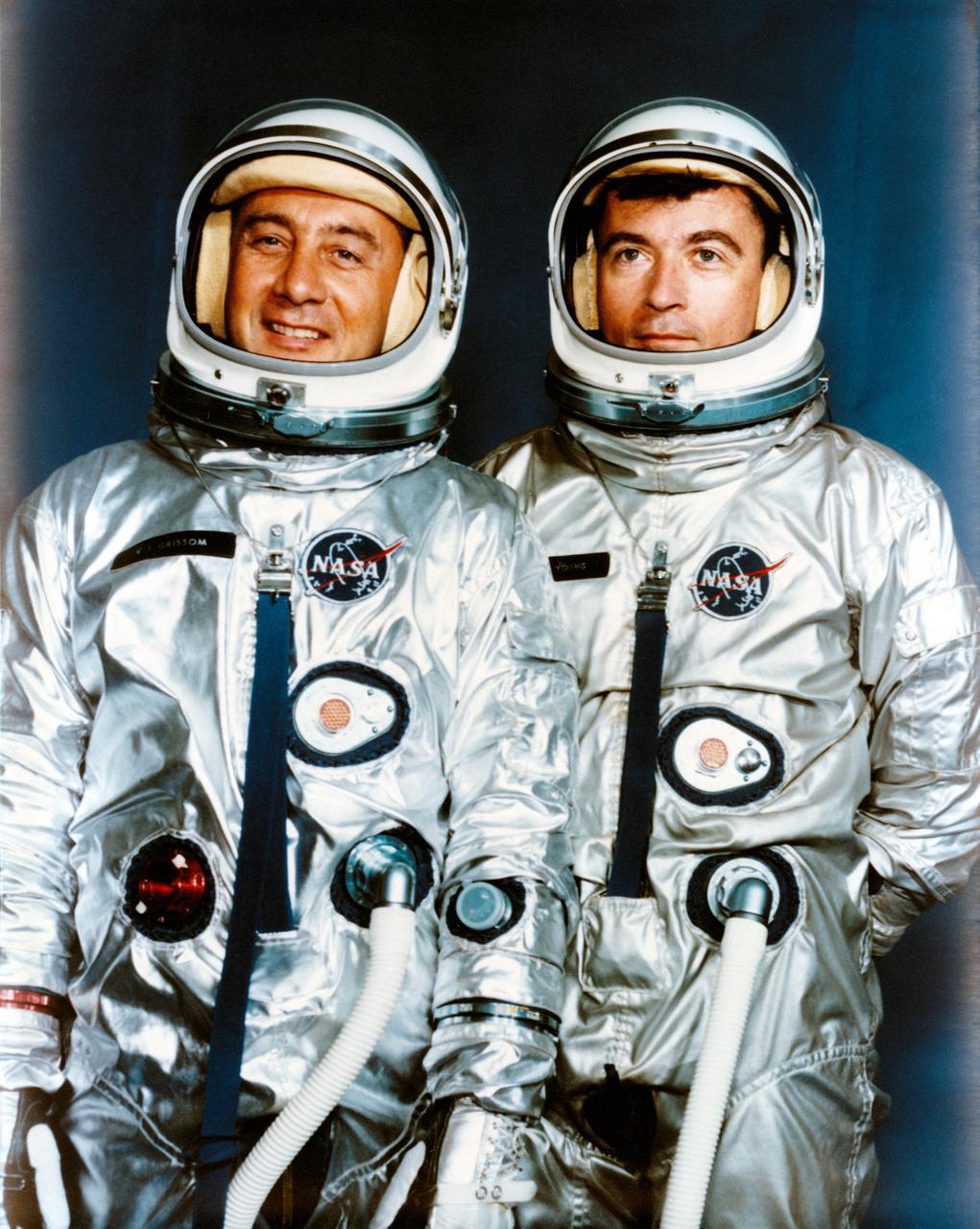
S64-19430 (13 April 1964) --- Astronauts Virgil I. Grissom (left), Gemini-3 command pilot; and John W. Young, pilot. EDITOR?S NOTE: Astronaut Grissom lost his life in the Apollo 1/Saturn 204 fire at Cape Kennedy on Jan. 27, 1967.
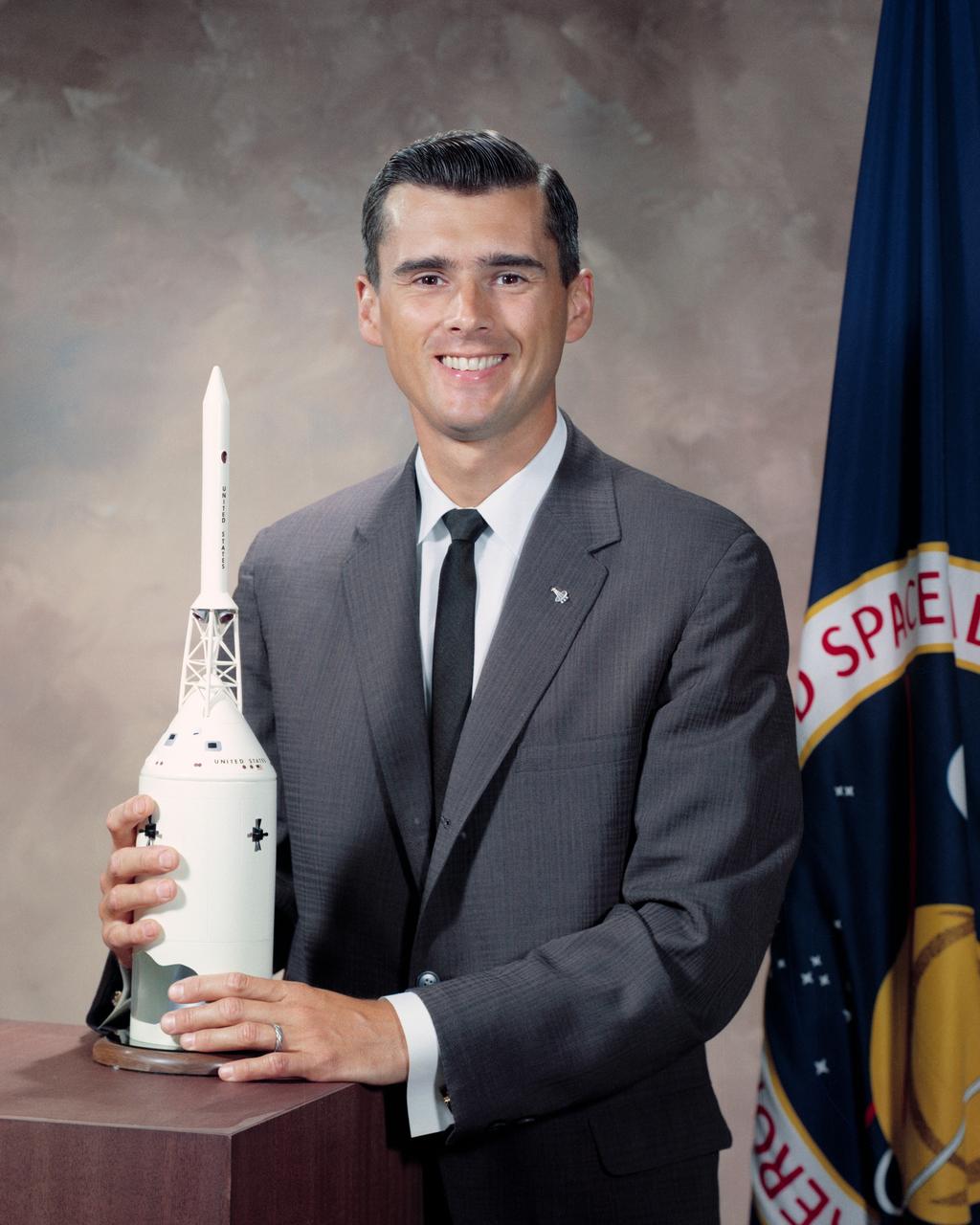
S64-31447 (10 Sept. 1964) --- Astronaut Roger B. Chaffee Editor's Note: Astronaut Chaffee died in the Apollo/Saturn 204 fire accident at Cape Canaveral, Florida, on Jan. 27, 1967, along with astronauts Virgil I. Grissom and Edward H. White II.
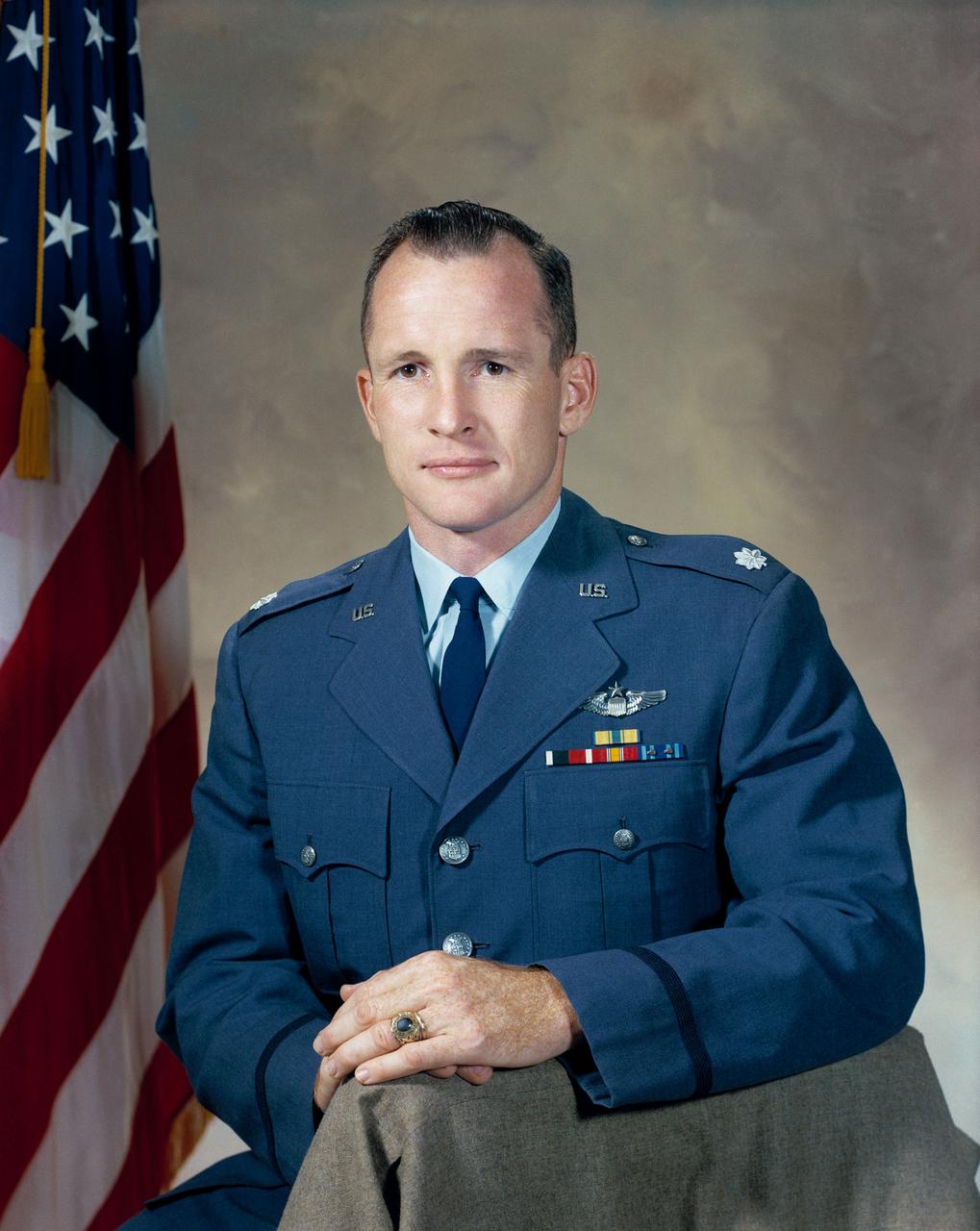
S66-35219 (1966) --- Astronaut Edward H. White II (United States Air Force Lieutenant Colonel), Gemini 4 pilot. Editor's Note: Since this portrait was taken astronaut White lost his life on Jan. 27, 1967, in the Apollo 1/Saturn 204 fire at Cape Kennedy, KSC, Florida.
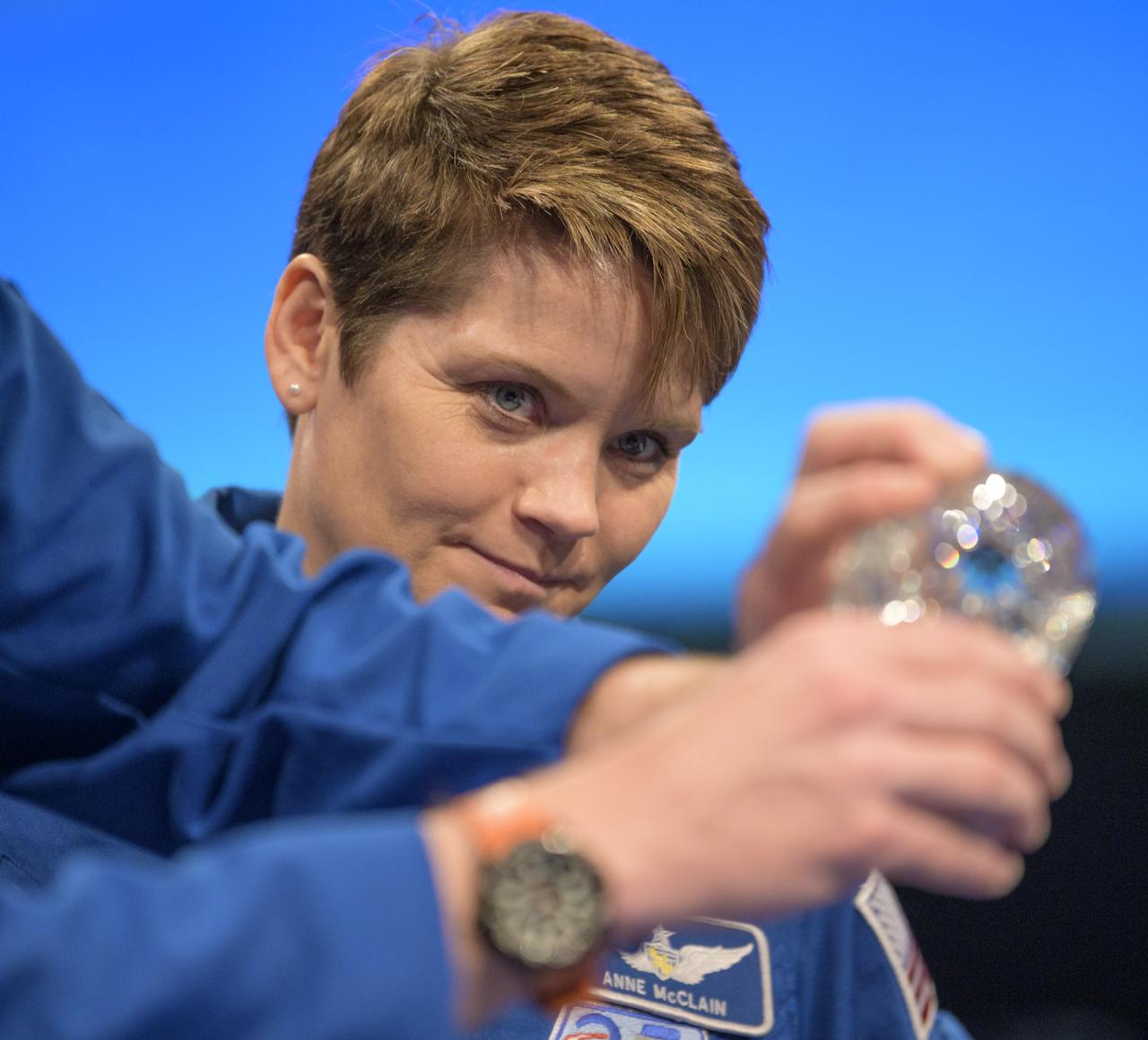
NASA astronaut Anne McClain is a guest on the program “STEM in 30,” Tuesday, Jan. 14, 2020, at the Smithsonian National Air and Space Museum in Washington. McClain most recently spent 204 days living and working onboard the International Space Station as part of Expeditions 58 and 59. Photo Credit: (NASA/Bill Ingalls)
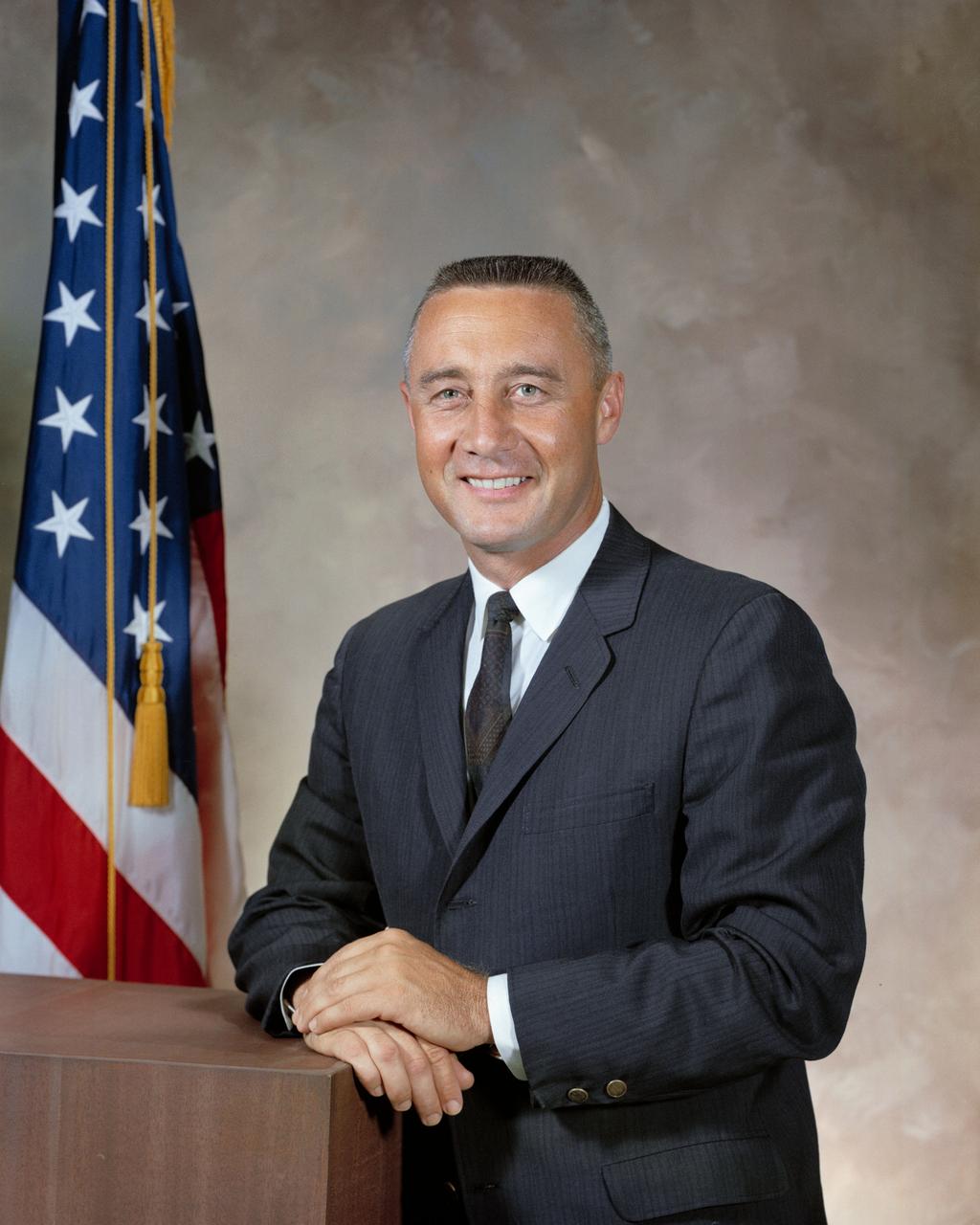
S64-32343 (10 Sept. 1964) --- Astronaut Virgil I. Grissom Editor's Note: Grissom, one of the Original Seven or Mercury astronauts, lost his life in the Apollo 204 fire at Cape Kennedy on Jan. 27, 1967, along with astronauts Edward H. White II and Roger B. Chaffee.
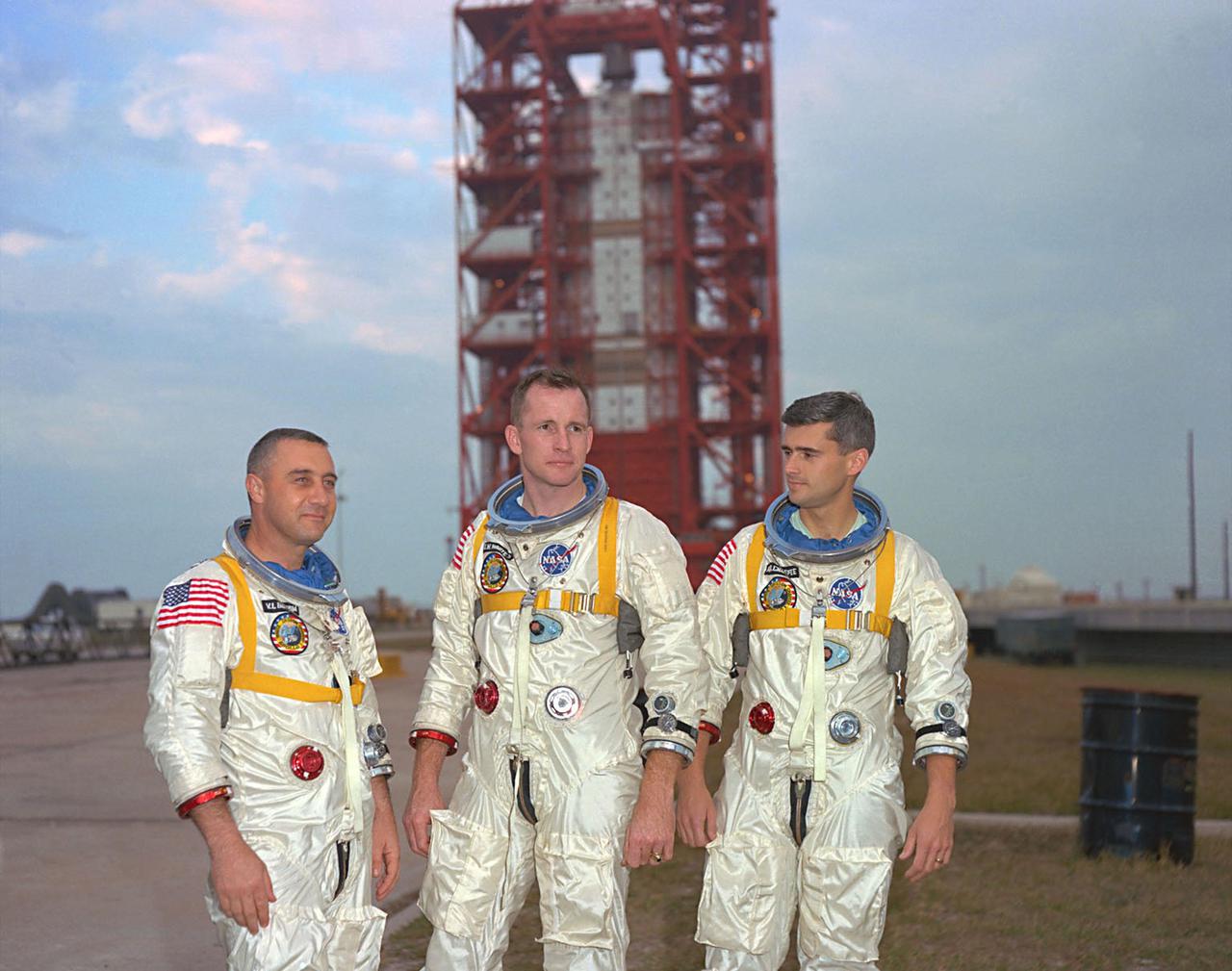
KENNEDY SPACE CENTER, FLA. -- Astronauts, left to right, Gus Grissom, Ed White, and Roger Chaffee, pose in front of Launch Complex 34 which is housing their Saturn 1 launch vehicle. The astronauts are scheduled for the Apollo Saturn 204 (Apollo 1) mission.
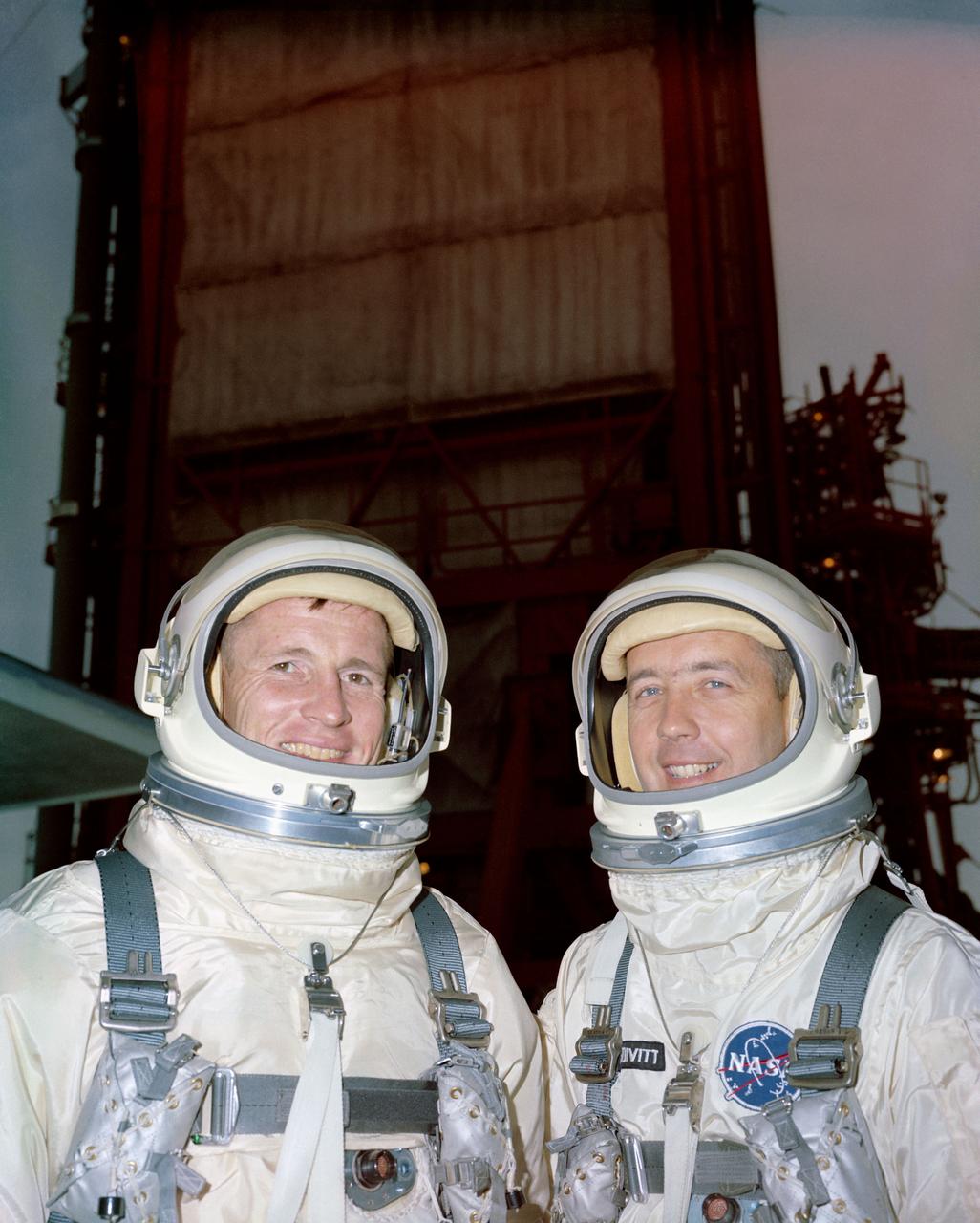
S65-19528 (1 June 1965) --- Astronauts Edward H. White II (left), Gemini-Titan 4 pilot; and James A. McDivitt, command pilot. EDITOR?S NOTE: Astronaut White died in the Apollo 1/Saturn 204 fire at Cape Kennedy on Jan. 27, 1967.
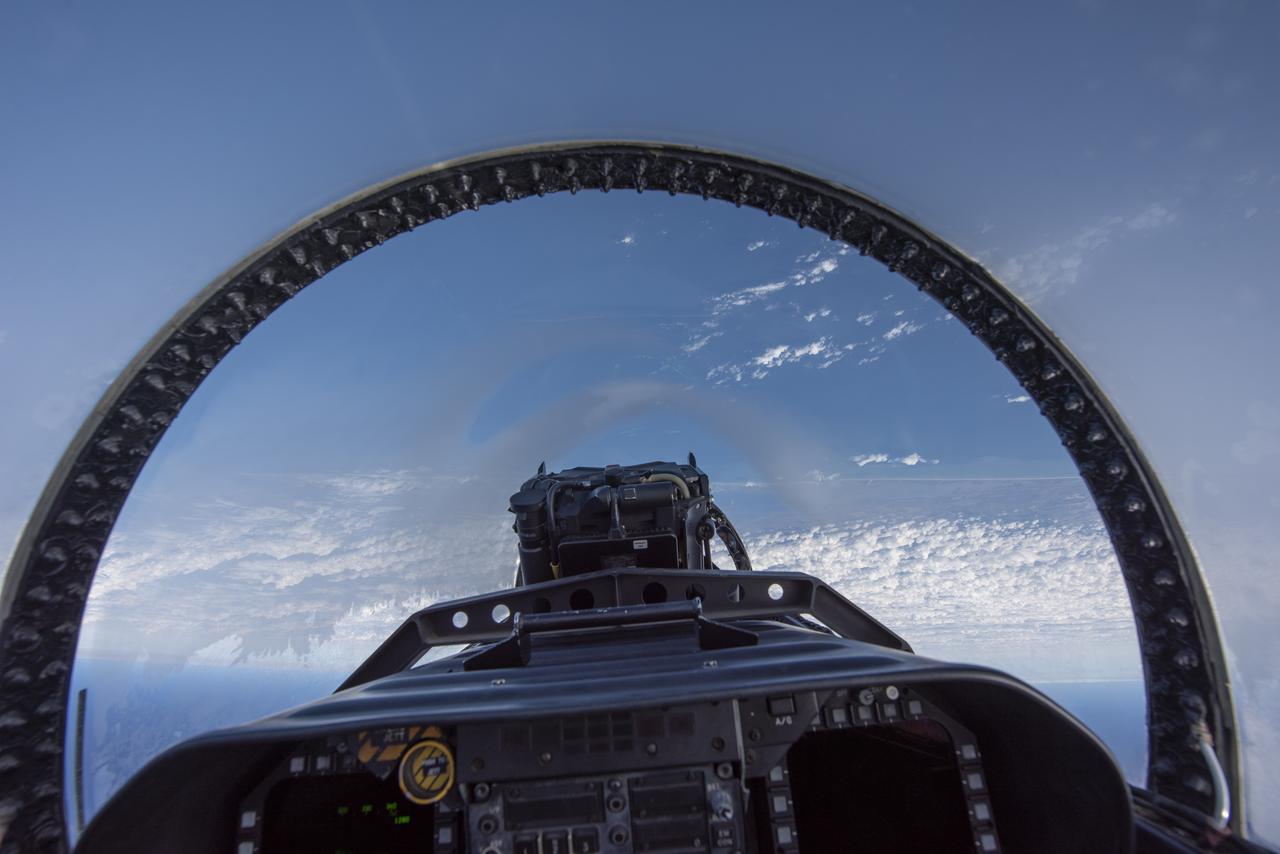
NASA test pilots perform the quiet supersonic dive maneuver off the coast of Galveston, Texas to create a quieter version of the sonic boom, in order to obtain recruited community survey feedback data. The test pilot climbs to around 50,000 feet, followed by a supersonic, inverted dive. This creates sonic boom shockwaves in a way that they are quieter in a specific area. Meanwhile, NASA researchers match community feedback to the sound levels of the flights, using an electronic survey and microphone monitor stations on the ground. This is preparing NASA for community response models for the future X-59 QueSST.
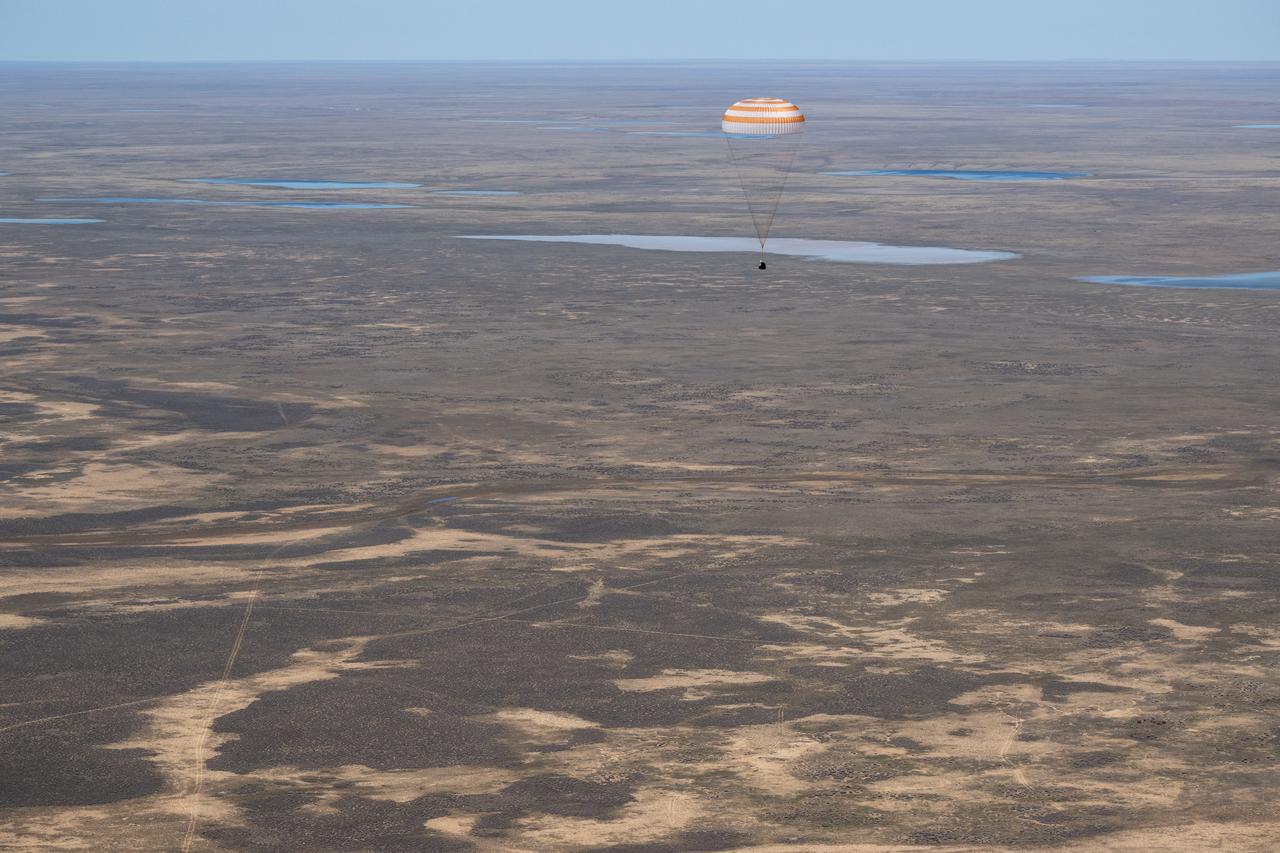
The Soyuz MS-24 spacecraft is seen as it lands in a remote area near the town of Zhezkazgan, Kazakhstan with Expedition 70 NASA astronaut Loral O'Hara, Roscosmos cosmonaut Oleg Novitskiy, and Belarus spaceflight participant Marina Vasilevskaya, Saturday, April 6, 2024. O’Hara is returning to Earth after logging 204 days in space as a member of Expeditions 69-70 aboard the International Space Station and Novitskiy and Vasilevskaya return after having spent the last 14 days in space. Photo Credit (NASA/Bill Ingalls)
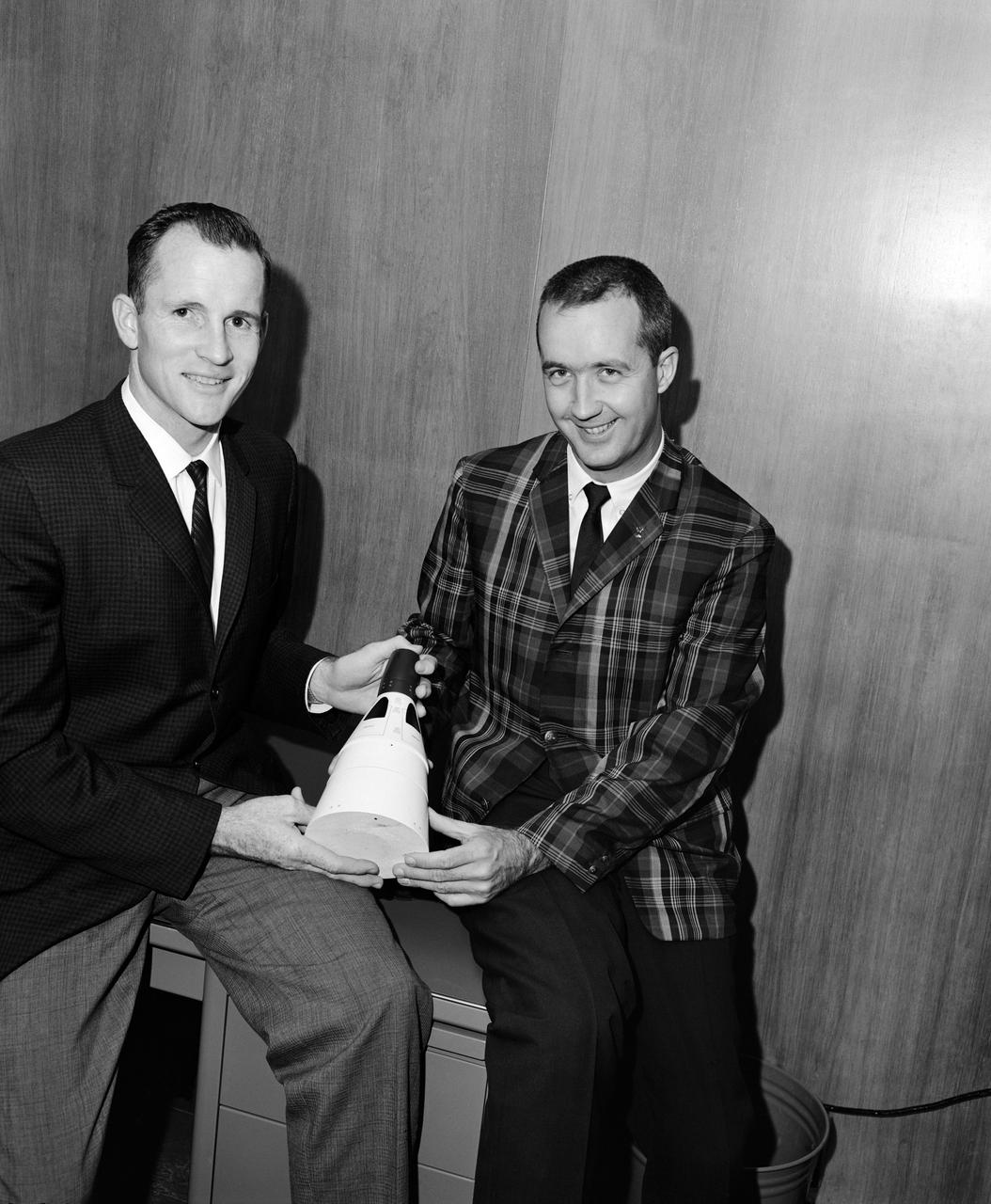
S62-04515 (1962) --- Astronauts Edward H. White II (left), Gemini-Titan 4 (GT-4) pilot, and James A. McDivitt, command pilot, pose for a photo holding a Gemini model. EDITOR?S NOTE: Jan. 27, 1967, astronaut White lost his life in the Apollo/Saturn 204 accident at Cape Canaveral, Florida.

S68-18733 (22 Jan. 1968) --- Dr. Robert R. Gilruth (right), MSC Director, sits with Dr. Christopher C. Kraft Jr., MSC director of flight operations, at his flight operations director console in the Mission Control Center, Building 30, during the Apollo 5 (LM-1/Saturn 204) unmanned space mission.
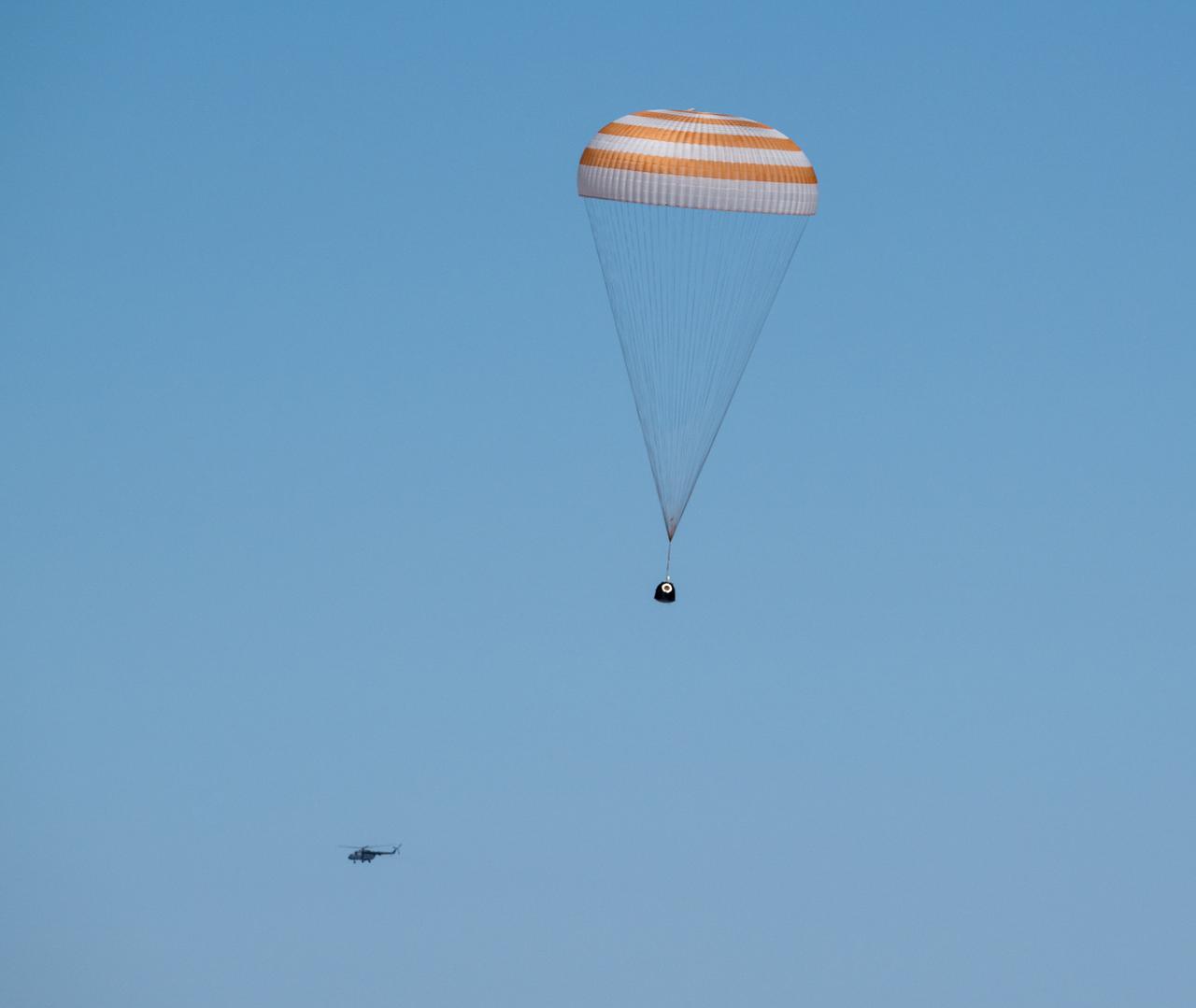
The Soyuz MS-24 spacecraft is seen as it lands in a remote area near the town of Zhezkazgan, Kazakhstan with Expedition 70 NASA astronaut Loral O'Hara, Roscosmos cosmonaut Oleg Novitskiy, and Belarus spaceflight participant Marina Vasilevskaya, Saturday, April 6, 2024. O’Hara is returning to Earth after logging 204 days in space as a member of Expeditions 69-70 aboard the International Space Station and Novitskiy and Vasilevskaya return after having spent the last 14 days in space. Photo Credit (NASA/Bill Ingalls)
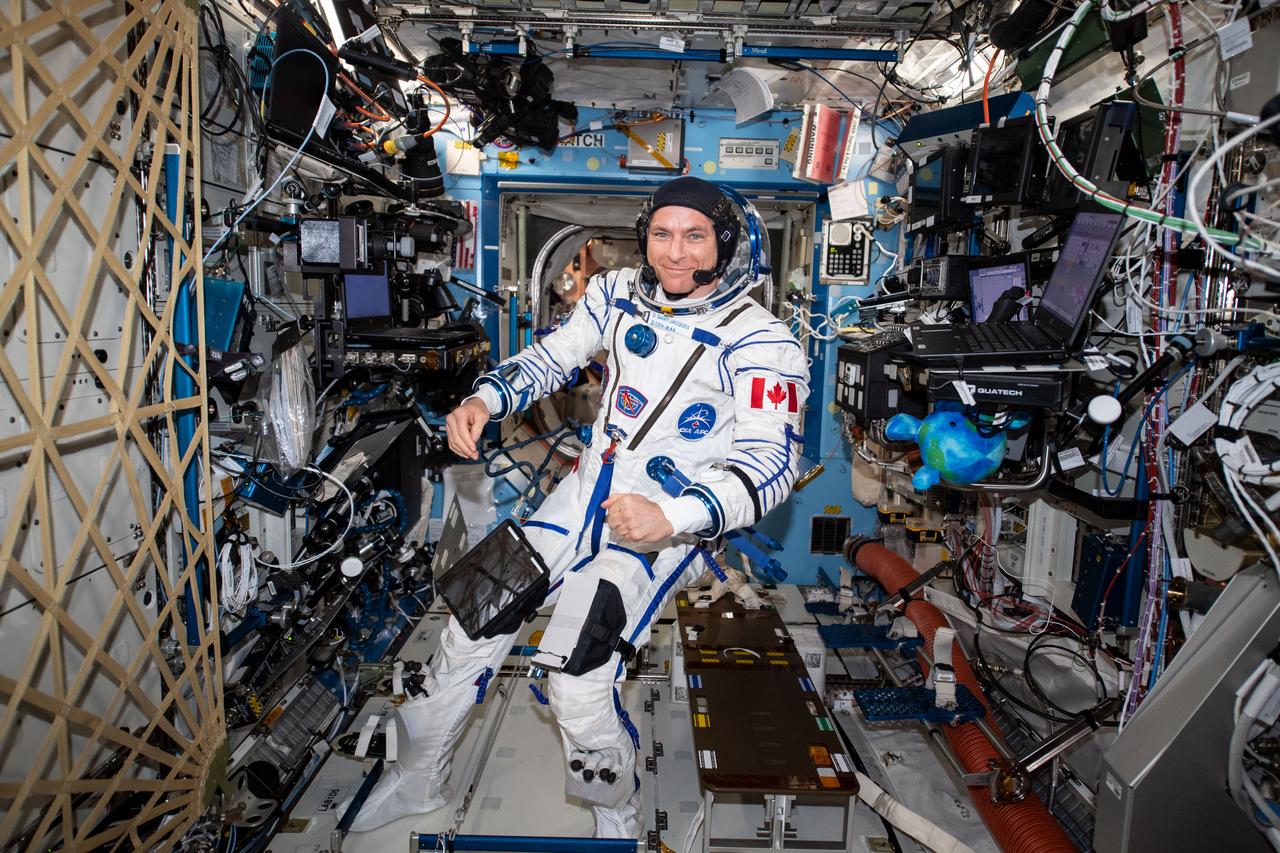
iss059e111674 (June 17, 2019) --- Astronaut David Saint-Jacques of the Canadian Space Agency wears his Sokol launch and entry suit during a leak check before he departs the International Space Station on June 24. He and fellow Expedition 59 crewmembers Anne McClain of NASA and Oleg Kononenko of Roscosmos will wear their Sokol suits when they return to Earth inside the Soyuz MS-11 spacecraft completing a 204-day mission.
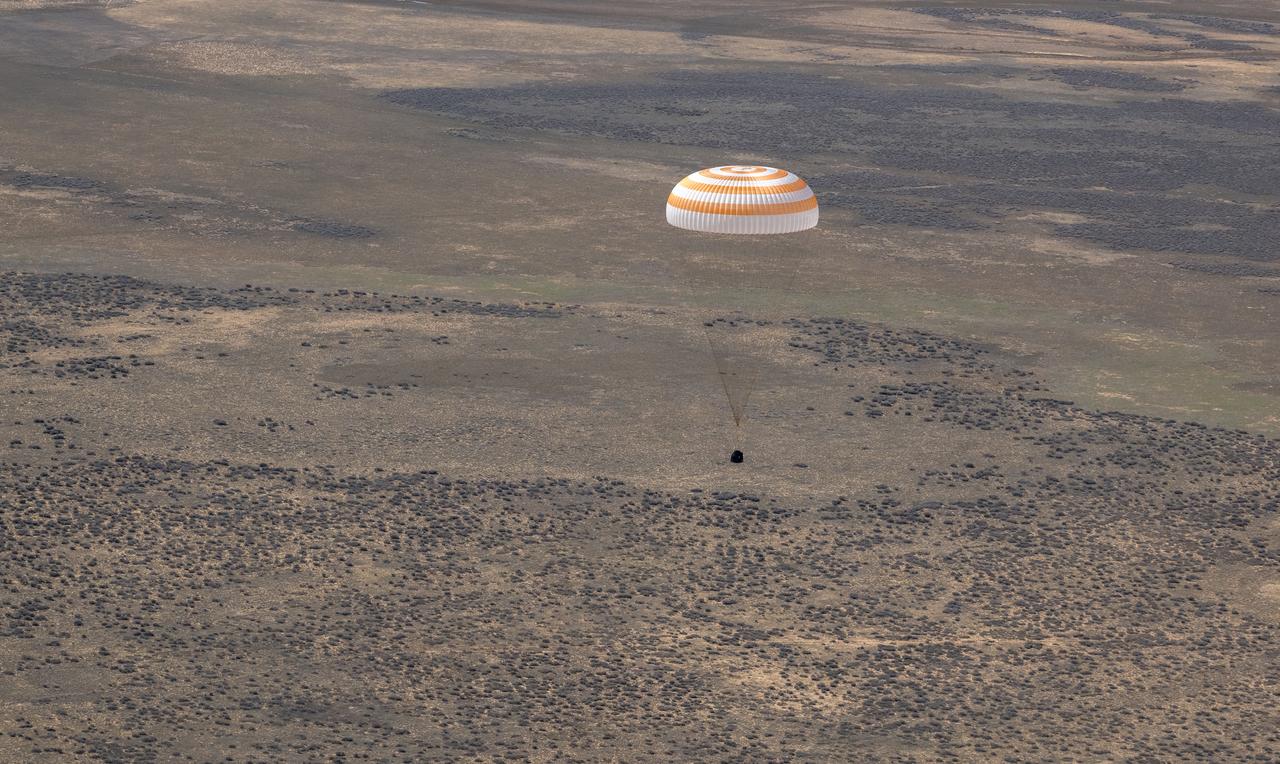
The Soyuz MS-24 spacecraft is seen as it lands in a remote area near the town of Zhezkazgan, Kazakhstan with Expedition 70 NASA astronaut Loral O'Hara, Roscosmos cosmonaut Oleg Novitskiy, and Belarus spaceflight participant Marina Vasilevskaya, Saturday, April 6, 2024. O’Hara is returning to Earth after logging 204 days in space as a member of Expeditions 69-70 aboard the International Space Station and Novitskiy and Vasilevskaya return after having spent the last 14 days in space. Photo Credit (NASA/Bill Ingalls)
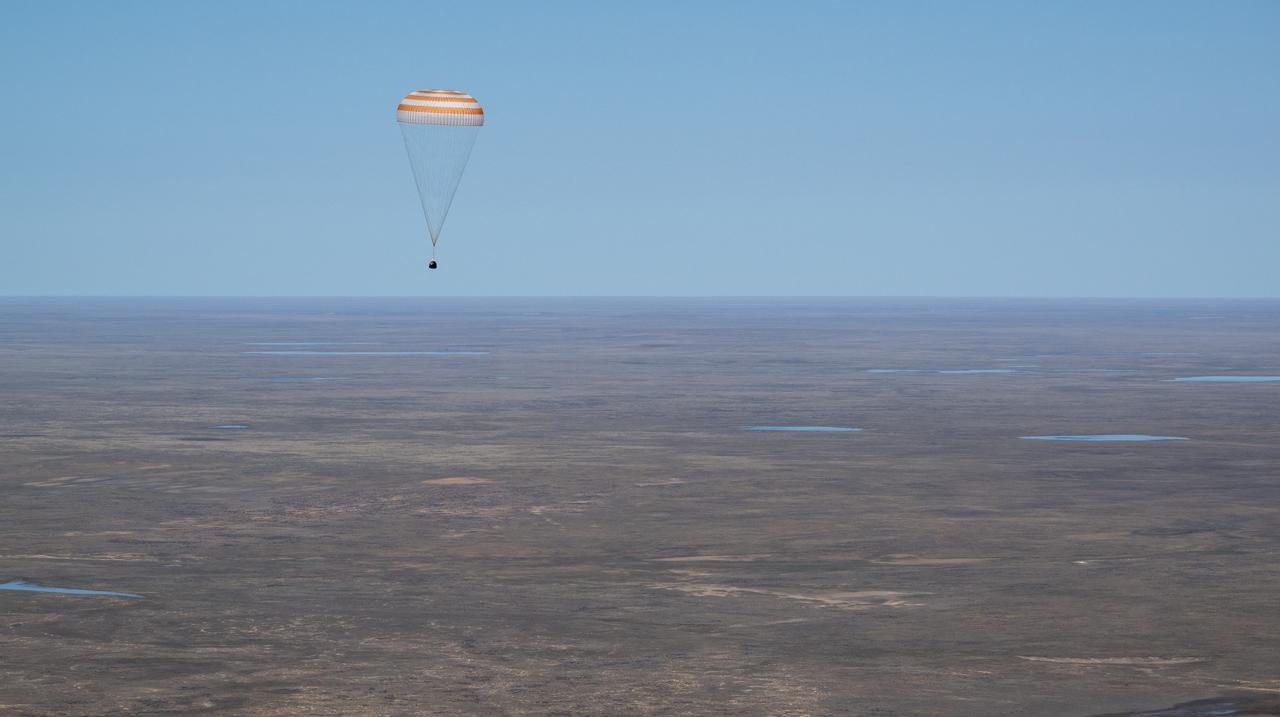
The Soyuz MS-24 spacecraft is seen as it lands in a remote area near the town of Zhezkazgan, Kazakhstan with Expedition 70 NASA astronaut Loral O'Hara, Roscosmos cosmonaut Oleg Novitskiy, and Belarus spaceflight participant Marina Vasilevskaya, Saturday, April 6, 2024. O’Hara is returning to Earth after logging 204 days in space as a member of Expeditions 69-70 aboard the International Space Station and Novitskiy and Vasilevskaya return after having spent the last 14 days in space. Photo Credit (NASA/Bill Ingalls)
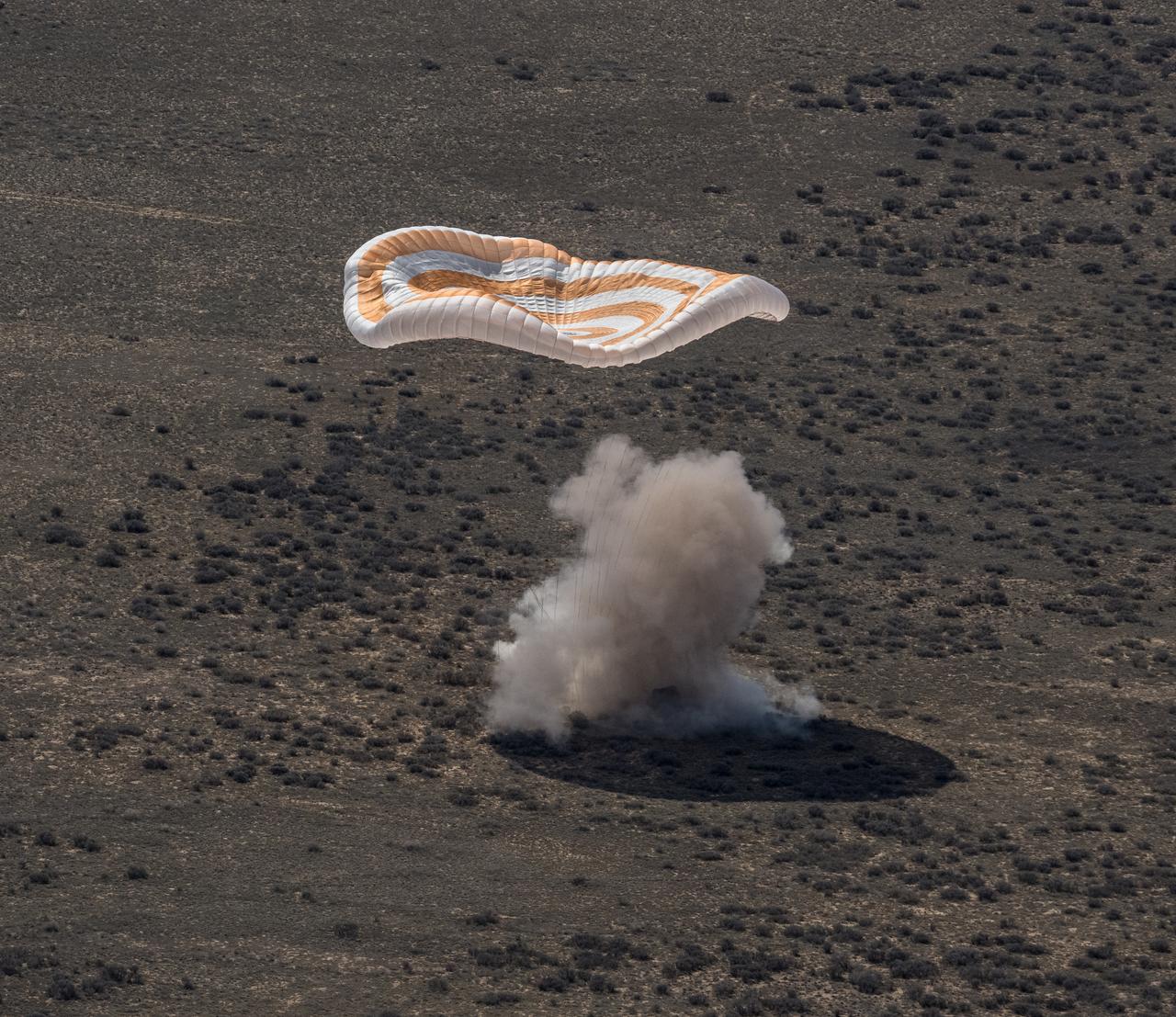
The Soyuz MS-24 spacecraft is seen as it lands in a remote area near the town of Zhezkazgan, Kazakhstan with Expedition 70 NASA astronaut Loral O'Hara, Roscosmos cosmonaut Oleg Novitskiy, and Belarus spaceflight participant Marina Vasilevskaya, Saturday, April 6, 2024. O’Hara is returning to Earth after logging 204 days in space as a member of Expeditions 69-70 aboard the International Space Station and Novitskiy and Vasilevskaya return after having spent the last 14 days in space. Photo Credit (NASA/Bill Ingalls)
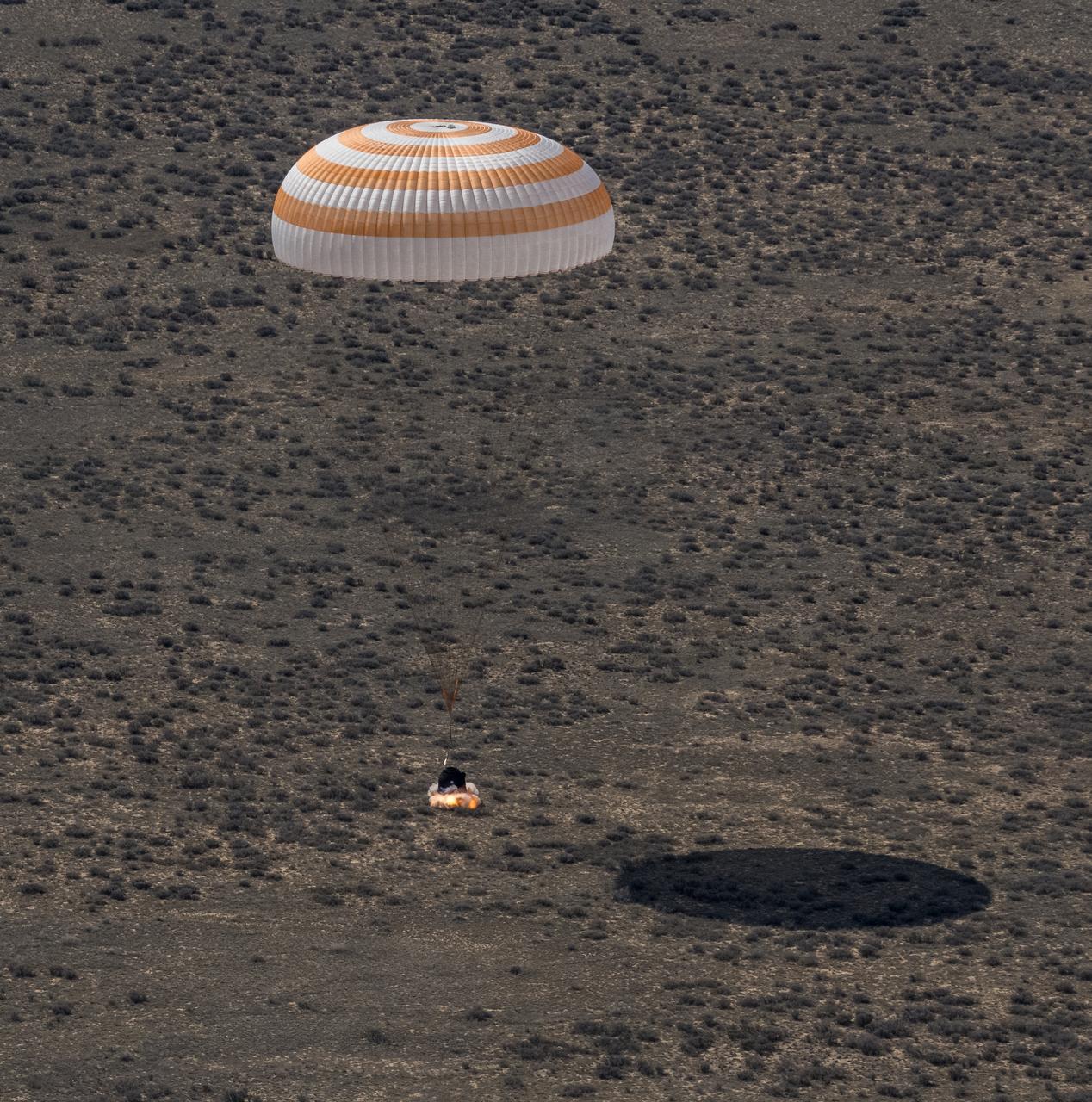
The Soyuz MS-24 spacecraft is seen as it lands in a remote area near the town of Zhezkazgan, Kazakhstan with Expedition 70 NASA astronaut Loral O'Hara, Roscosmos cosmonaut Oleg Novitskiy, and Belarus spaceflight participant Marina Vasilevskaya, Saturday, April 6, 2024. O’Hara is returning to Earth after logging 204 days in space as a member of Expeditions 69-70 aboard the International Space Station and Novitskiy and Vasilevskaya return after having spent the last 14 days in space. Photo Credit (NASA/Bill Ingalls)
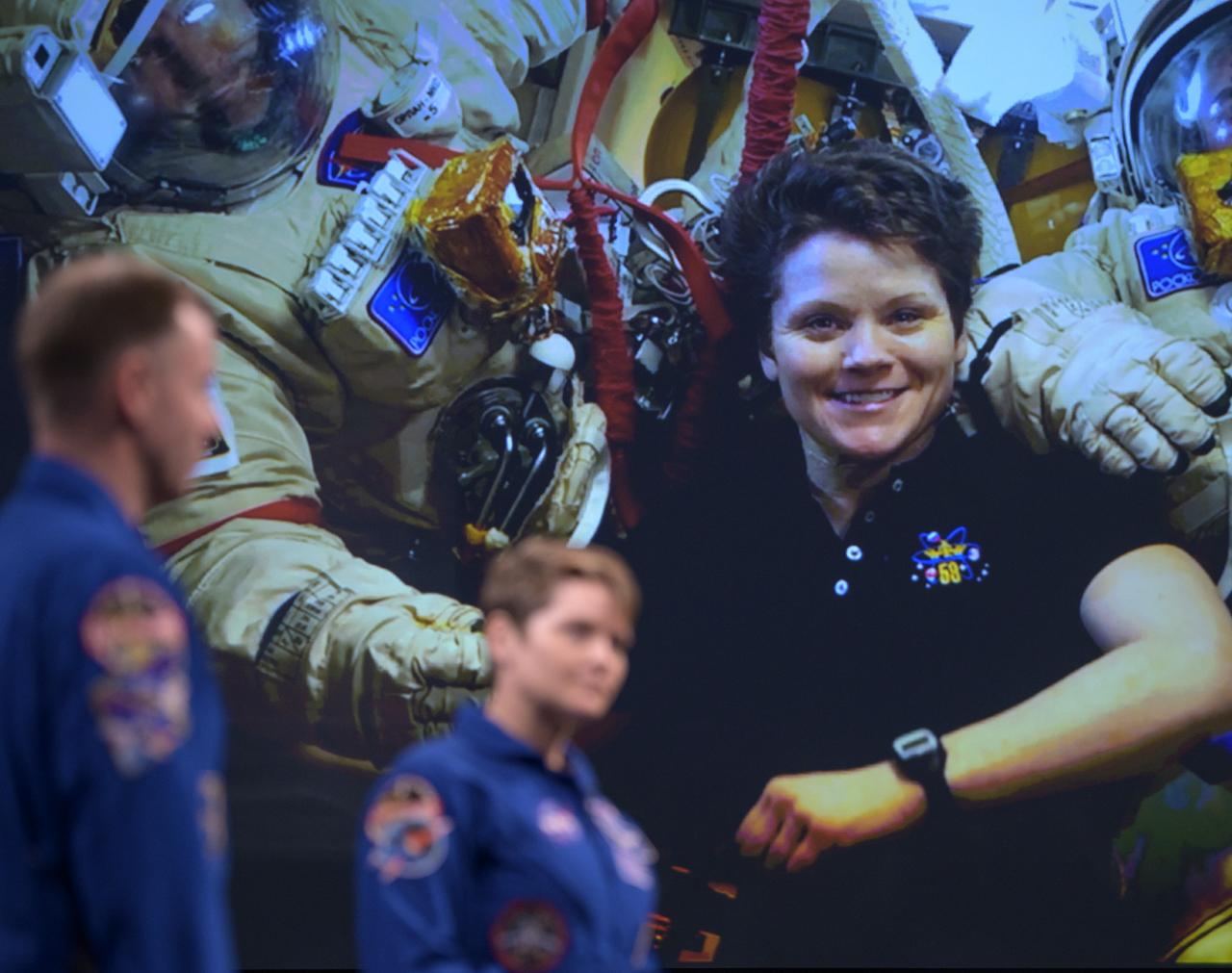
NASA astronauts Nick Hague and Anne McClain talk about their experiences onboard the International Space Station, Tuesday, Jan. 14, 2020, at the Smithsonian National Air and Space Museum in Washington. Hague most recently spent 203 days living and working onboard the International Space Station as part of Expeditions 59 and 60. McClain most recently spent 204 days living and working onboard the International Space Station as part of Expeditions 58 and 59. Photo Credit: (NASA/Bill Ingalls)
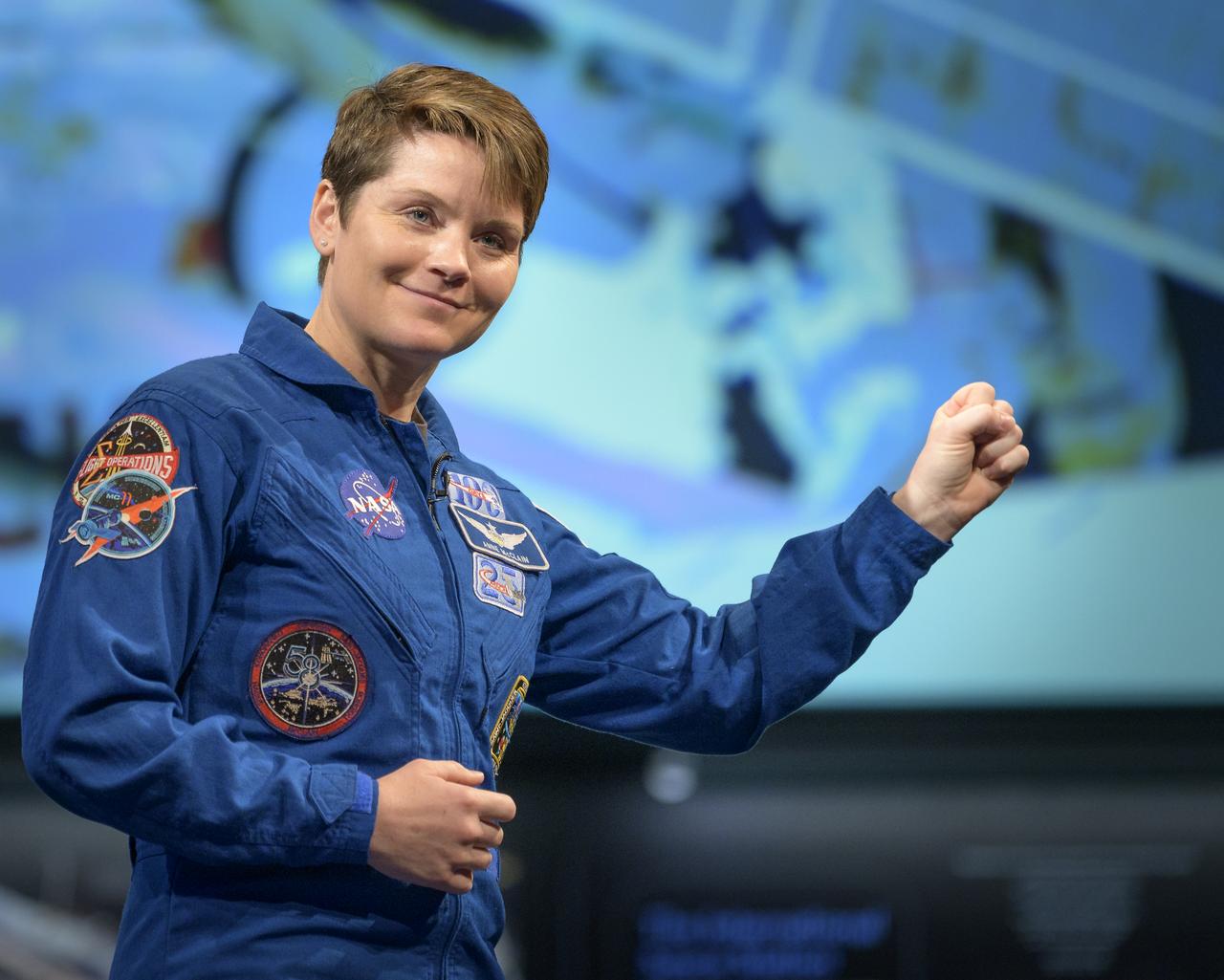
NASA astronaut Anne McClain talks about her experiences onboard the International Space Station, Tuesday, Jan. 14, 2020, at the Smithsonian National Air and Space Museum in Washington. McClain most recently spent 204 days living and working onboard the International Space Station as part of Expeditions 58 and 59. Photo Credit: (NASA/Bill Ingalls)
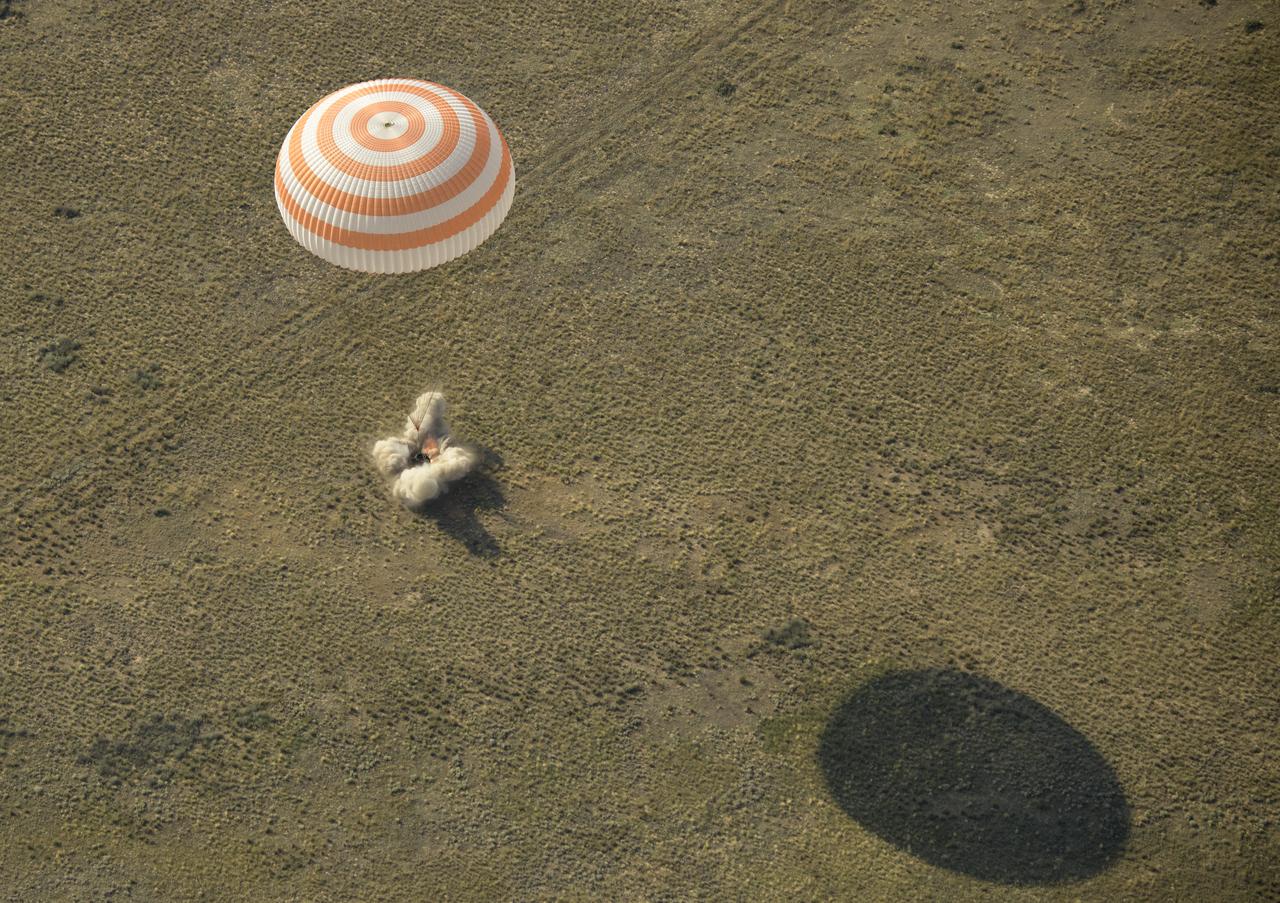
The Soyuz MS-11 spacecraft is seen as it lands in a remote area near the town of Zhezkazgan, Kazakhstan with Expedition 59 crew members Anne McClain of NASA, David Saint-Jacques of the Canadian Space Agency, and Oleg Kononenko of Roscosmos, Tuesday, June 25, 2019 Kazakh time (June 24 Eastern time). McClain, Saint-Jacques, and Kononenko are returning after 204 days in space where they served as members of the Expedition 58 and 59 crews onboard the International Space Station. Photo Credit: (NASA/Bill Ingalls)
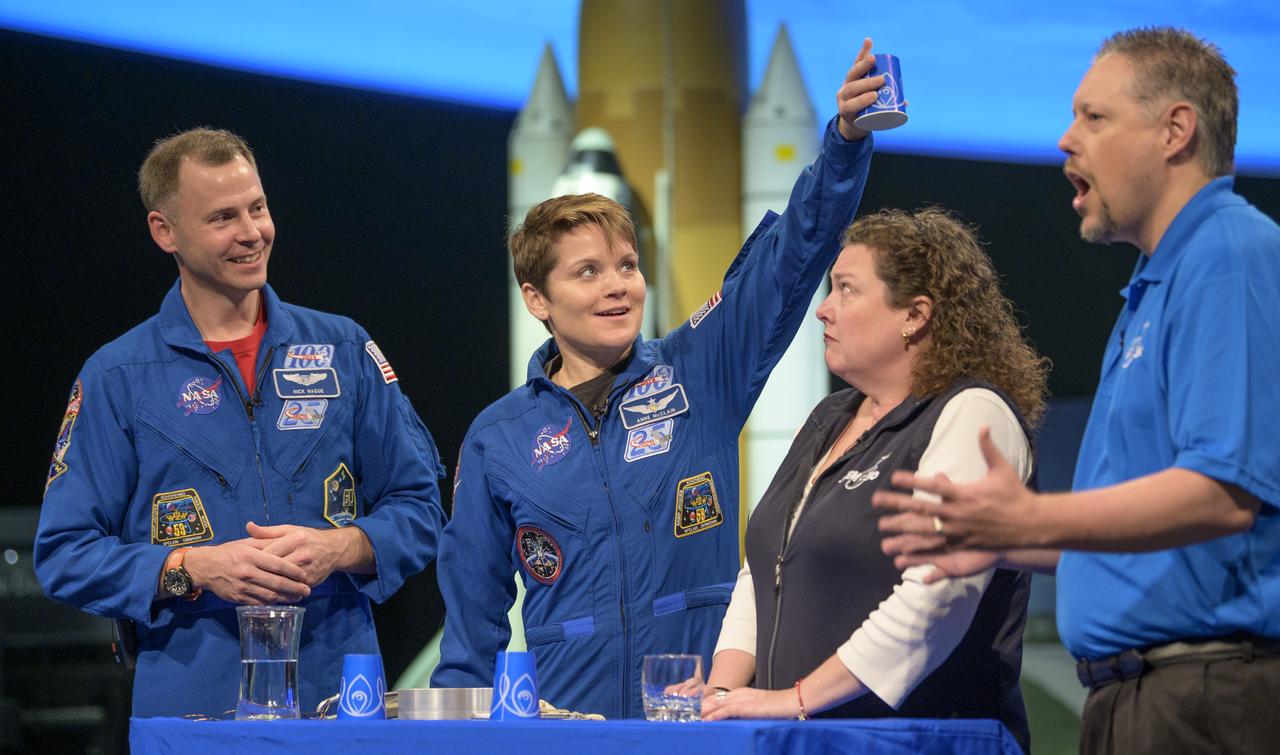
NASA astronauts Nick Hague and Anne McClain join as guests on the program “STEM in 30” with hosts Beth Wilson and Marty Kelsey, Tuesday, Jan. 14, 2020, at the Smithsonian National Air and Space Museum in Washington. Hague most recently spent 203 days living and working onboard the International Space Station as part of Expeditions 59 and 60. McClain most recently spent 204 days living and working onboard the International Space Station as part of Expeditions 58 and 59. Photo Credit: (NASA/Bill Ingalls)
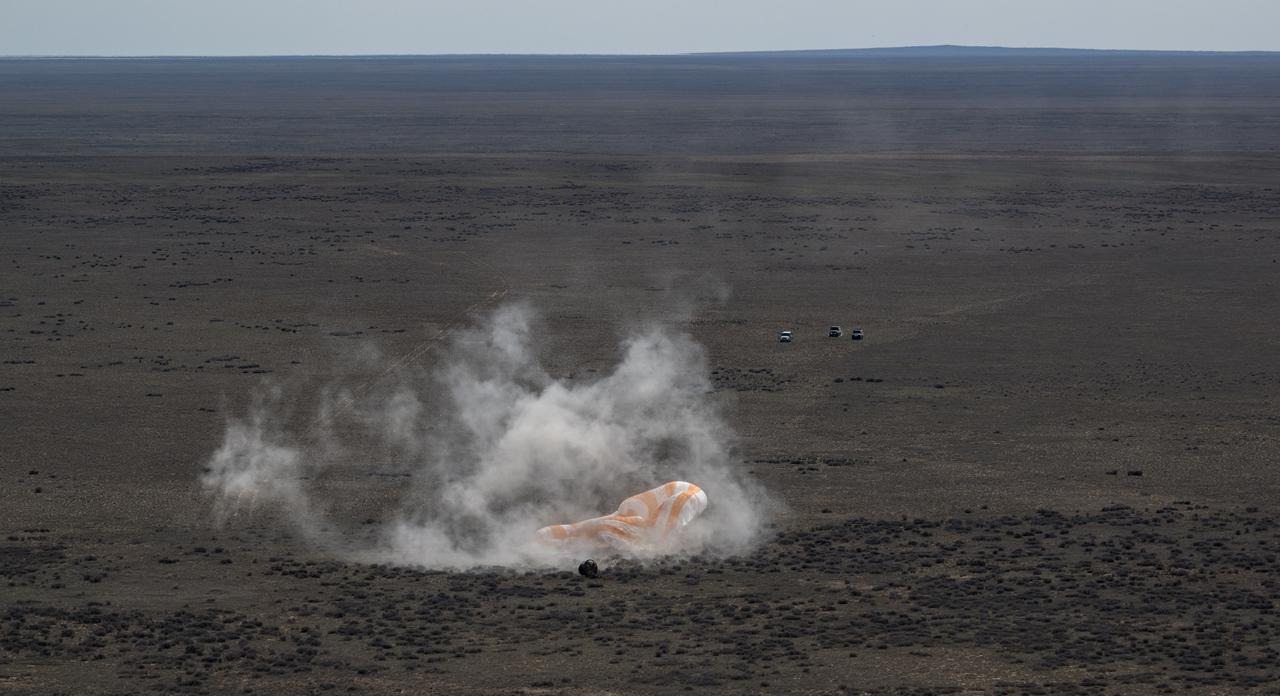
The Soyuz MS-24 spacecraft is seen as it lands in a remote area near the town of Zhezkazgan, Kazakhstan with Expedition 70 NASA astronaut Loral O'Hara, Roscosmos cosmonaut Oleg Novitskiy, and Belarus spaceflight participant Marina Vasilevskaya, Saturday, April 6, 2024. O’Hara is returning to Earth after logging 204 days in space as a member of Expeditions 69-70 aboard the International Space Station and Novitskiy and Vasilevskaya return after having spent the last 14 days in space. Photo Credit (NASA/Bill Ingalls)
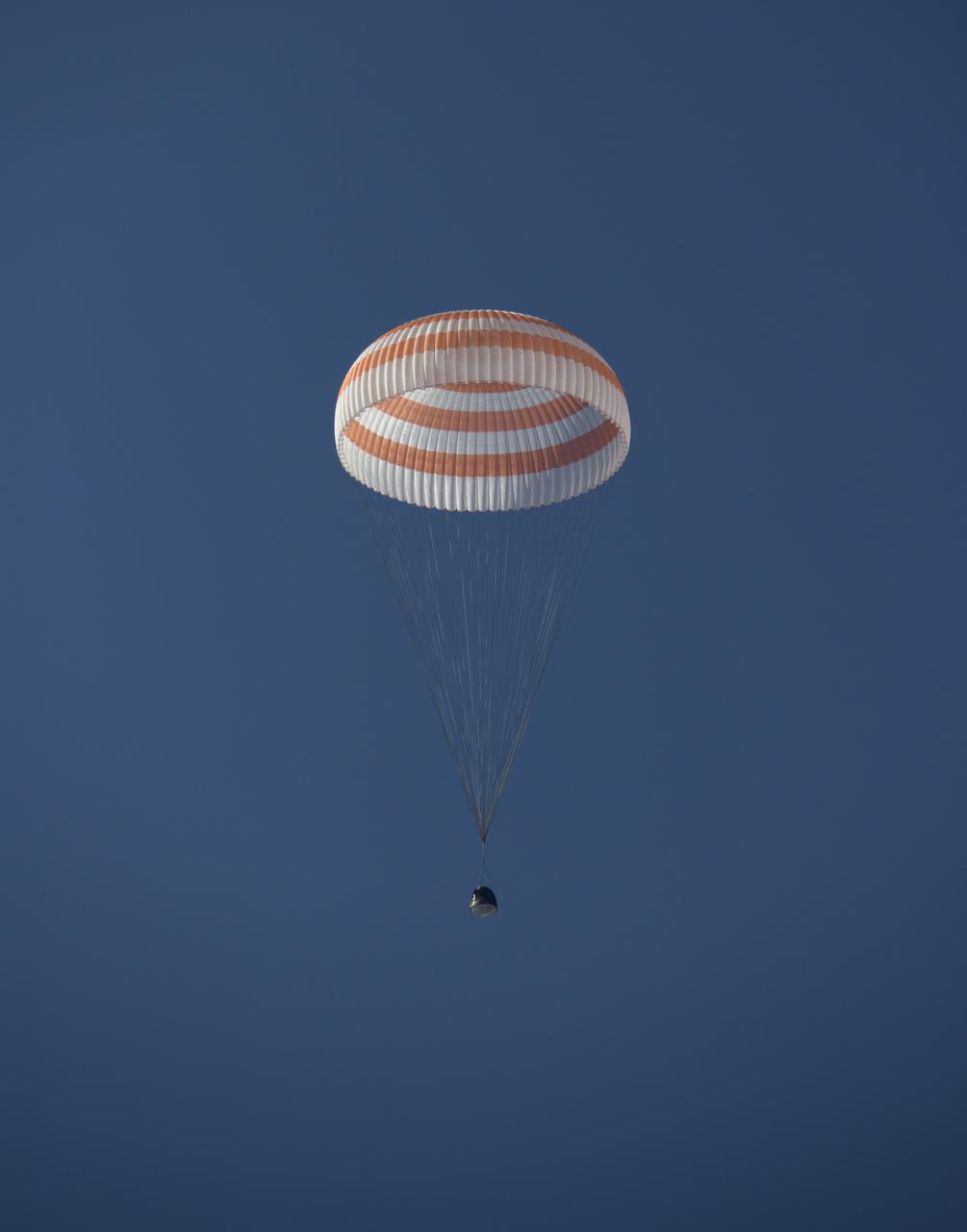
The Soyuz MS-11 spacecraft is seen as it lands in a remote area near the town of Zhezkazgan, Kazakhstan with Expedition 59 crew members Anne McClain of NASA, David Saint-Jacques of the Canadian Space Agency, and Oleg Kononenko of Roscosmos, Tuesday, June 25, 2019 Kazakh time (June 24 Eastern time). McClain, Saint-Jacques, and Kononenko are returning after 204 days in space where they served as members of the Expedition 58 and 59 crews onboard the International Space Station. Photo Credit: (NASA/Bill Ingalls)

The drogue parachute of the Soyuz MS-11 spacecraft is seen during the landing of Expedition 59 crew members Anne McClain of NASA, David Saint-Jacques of the Canadian Space Agency, and Oleg Kononenko of Roscosmos near the town of Zhezkazgan, Kazakhstan, Tuesday, June 25, 2019 Kazakh time (June 24 Eastern time). McClain, Saint-Jacques, and Kononenko are returning after 204 days in space where they served as members of the Expedition 58 and 59 crews onboard the International Space Station. Photo Credit: (NASA/Bill Ingalls)
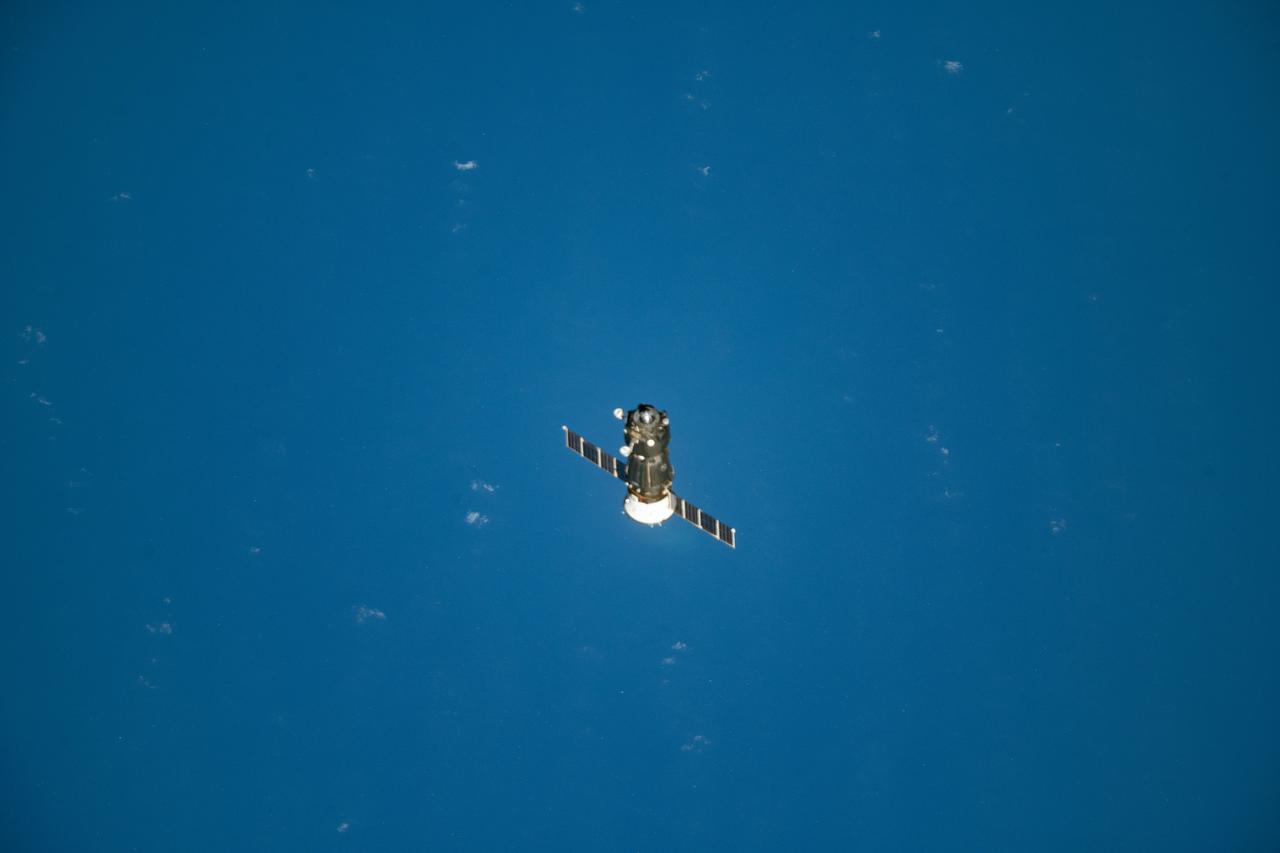
iss059e122556 (June 24, 2019) --- The Soyuz MS-11 crew craft separates from the International Space Station after its undocking and begins its descent to Earth. Expedition 59 crewmembers Oleg Kononenko of Roscosmos, Anne McClain of NASA and David Saint-Jacques of the Canadian Space Agency would parachute to a landing in Kazakhstan aboard the Soyuz after 204 days in space.
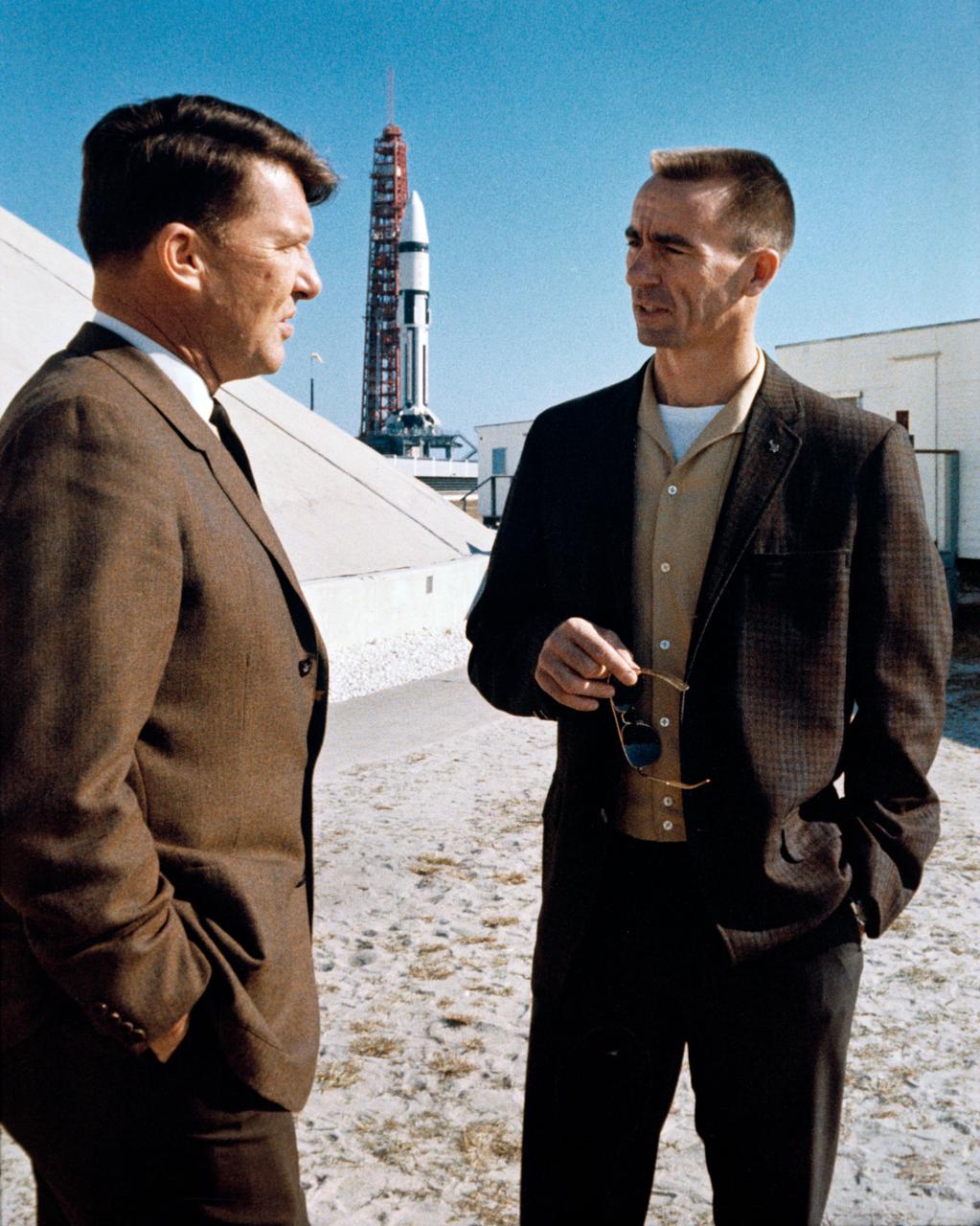
S68-18700 (22 Jan. 1968) --- Two prime crew members of the first manned Apollo space flight were present at Cape Kennedy for the launch of the Apollo V (LM-1/Saturn 204) unmanned space mission. On left is astronaut Walter M. Schirra Jr.; and on right is astronaut R. Walter Cunningham. In background is the Apollo V stack at Launch Complex 37 ready for launch.

NASA, CSA, Roscosmos, and Russian Search and Recovery Forces meet at the Cosmonaut Hotel in Karaganda, Kazakhstan to discuss the readiness for the landing of Expedition 59 crew members Anne McClain of NASA, David Saint-Jacques of the Canadian Space Agency, and Oleg Kononenko of Roscosmos, Sunday, June 23, 2019. McClain, Saint-Jacques, and Kononenko are returning after 204 days in space where they served as members of the Expedition 58 and 59 crews onboard the International Space Station. Photo Credit: (NASA/Bill Ingalls)
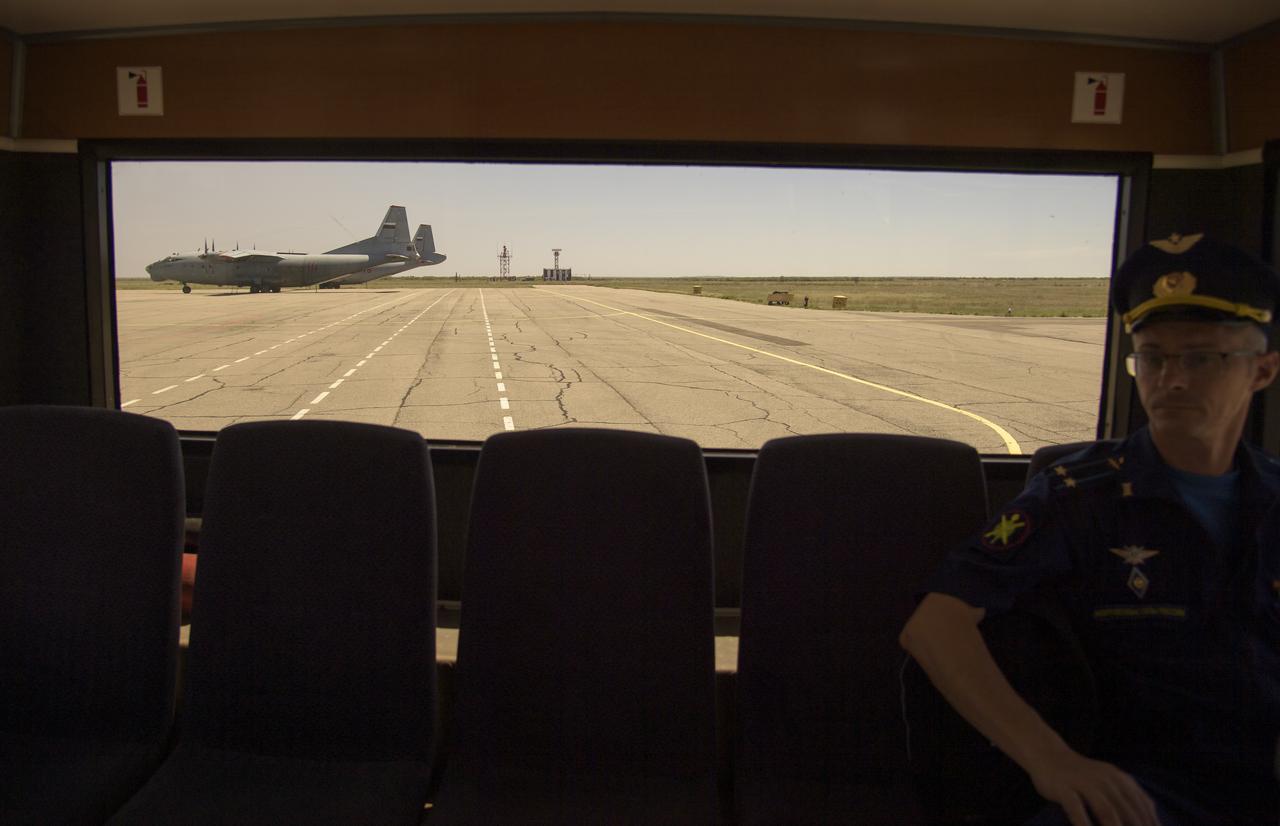
NASA, Canadian Space Agency, Roscosmos, and Russian Search and Recovery Forces arrive in Zhezkazgan, Kazakhstan in advance of the landing of Expedition 59 crew members Anne McClain of NASA, David Saint-Jacques of the Canadian Space Agency, and Oleg Kononenko of Roscosmos, Monday, June 24, 2019. McClain, Saint-Jacques, and Kononenko are returning after 204 days in space where they served as members of the Expedition 58 and 59 crews onboard the International Space Station. Photo Credit: (NASA/Bill Ingalls)
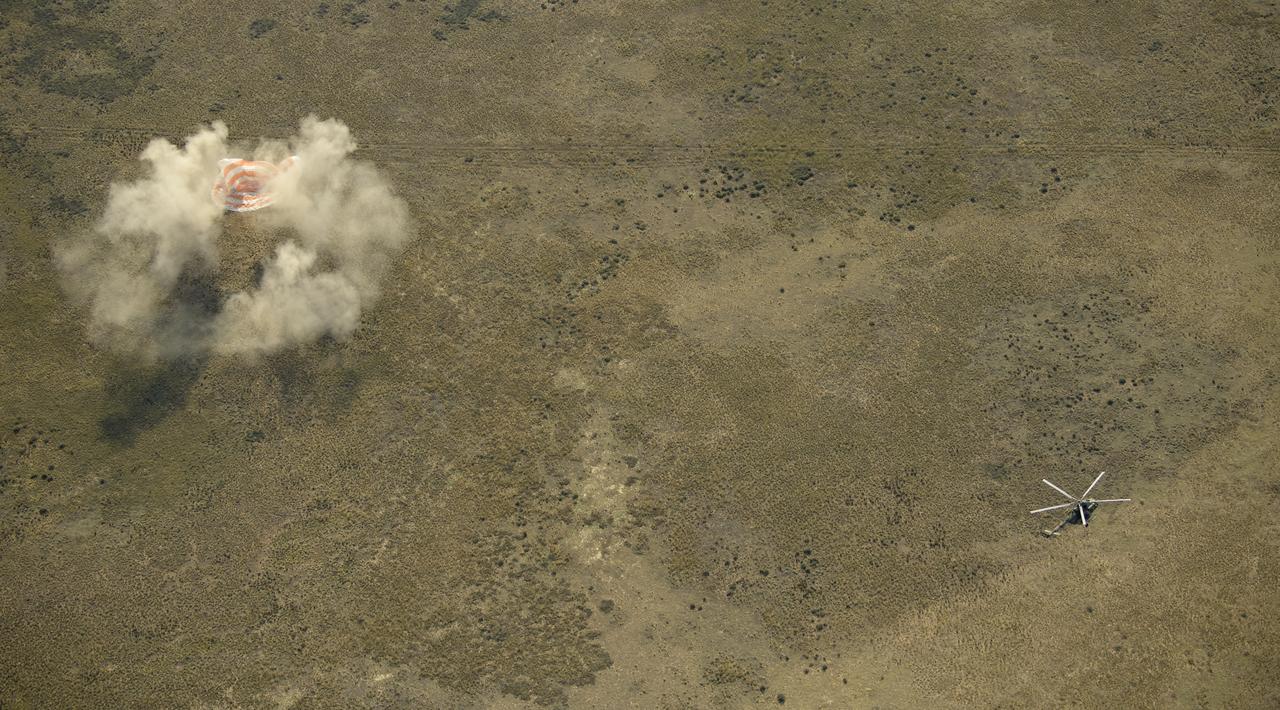
The Soyuz MS-11 spacecraft is seen as it lands in a remote area near the town of Zhezkazgan, Kazakhstan with Expedition 59 crew members Anne McClain of NASA, David Saint-Jacques of the Canadian Space Agency, and Oleg Kononenko of Roscosmos, Tuesday, June 25, 2019 Kazakh time (June 24 Eastern time). McClain, Saint-Jacques, and Kononenko are returning after 204 days in space where they served as members of the Expedition 58 and 59 crews onboard the International Space Station. Photo Credit: (NASA/Bill Ingalls)
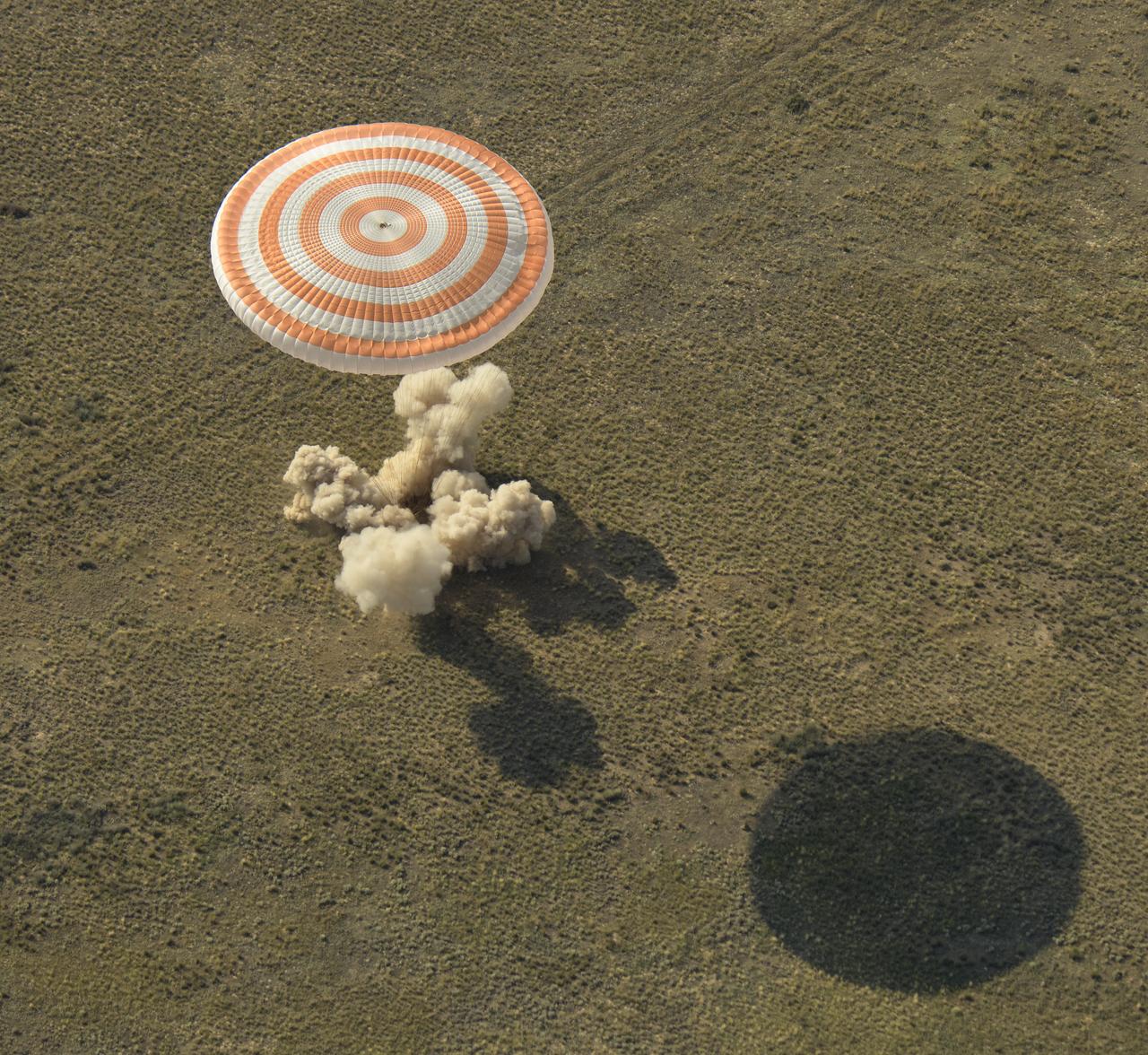
The Soyuz MS-11 spacecraft is seen as it lands in a remote area near the town of Zhezkazgan, Kazakhstan with Expedition 59 crew members Anne McClain of NASA, David Saint-Jacques of the Canadian Space Agency, and Oleg Kononenko of Roscosmos, Tuesday, June 25, 2019 Kazakh time (June 24 Eastern time). McClain, Saint-Jacques, and Kononenko are returning after 204 days in space where they served as members of the Expedition 58 and 59 crews onboard the International Space Station. Photo Credit: (NASA/Bill Ingalls)
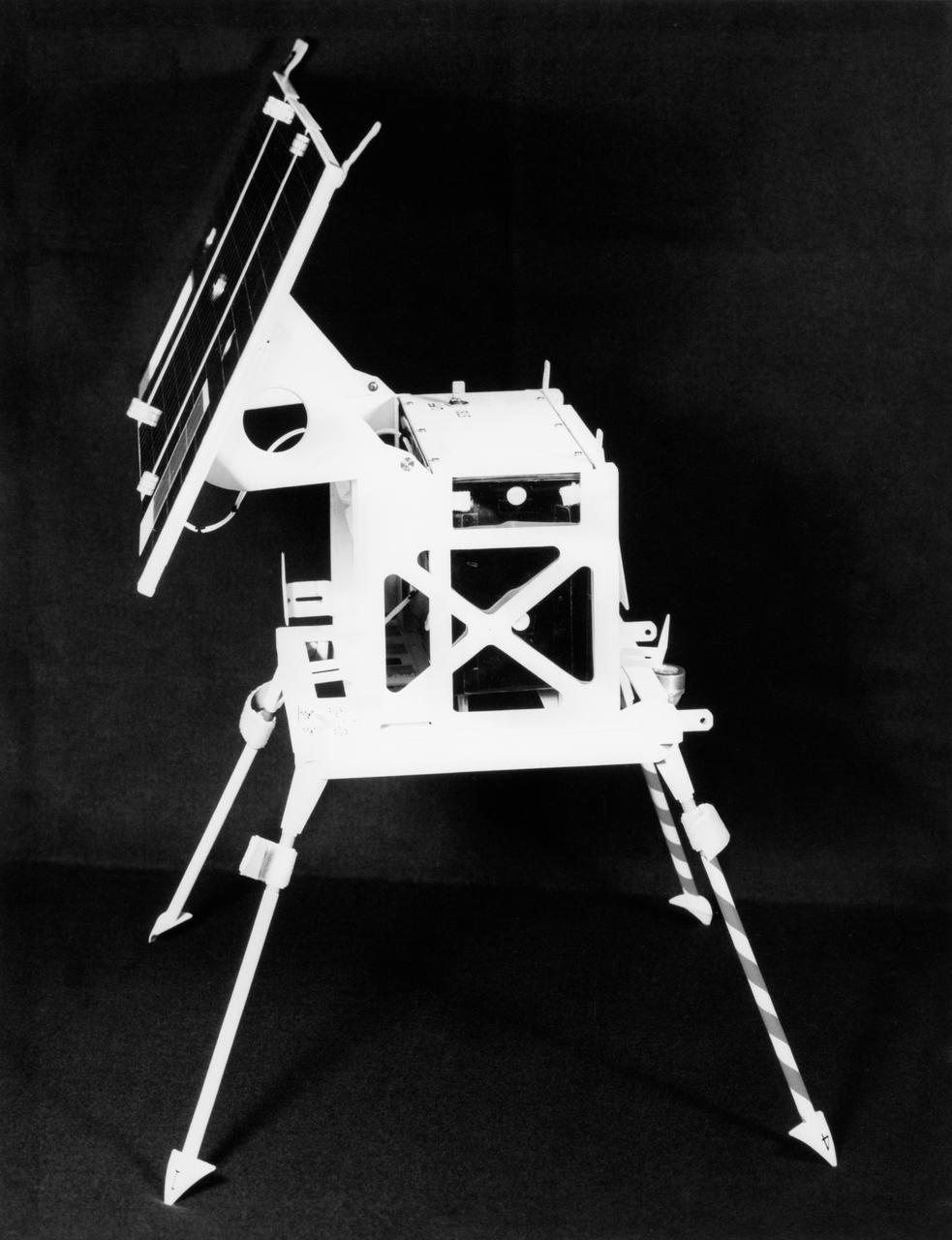
S72-53950 (November 1972) --- The transmitter of the Surface Electrical Properties Experiment (S-204) in a deployed configuration. This experiment will be deployed at the Taurus-Littrow landing site by the Apollo 17 crewmen. The purpose of the SEP experiment is to obtain data about the electromagnetic energy transmission, absorption and reflection characteristics of the lunar surface and subsurface for use in the development of a geological model of the upper layers of the moon. The experiment is designed to determine layering in the lunar surface, to search for the presence of water below the surface, and to measure electrical properties of the lunar material in situ.
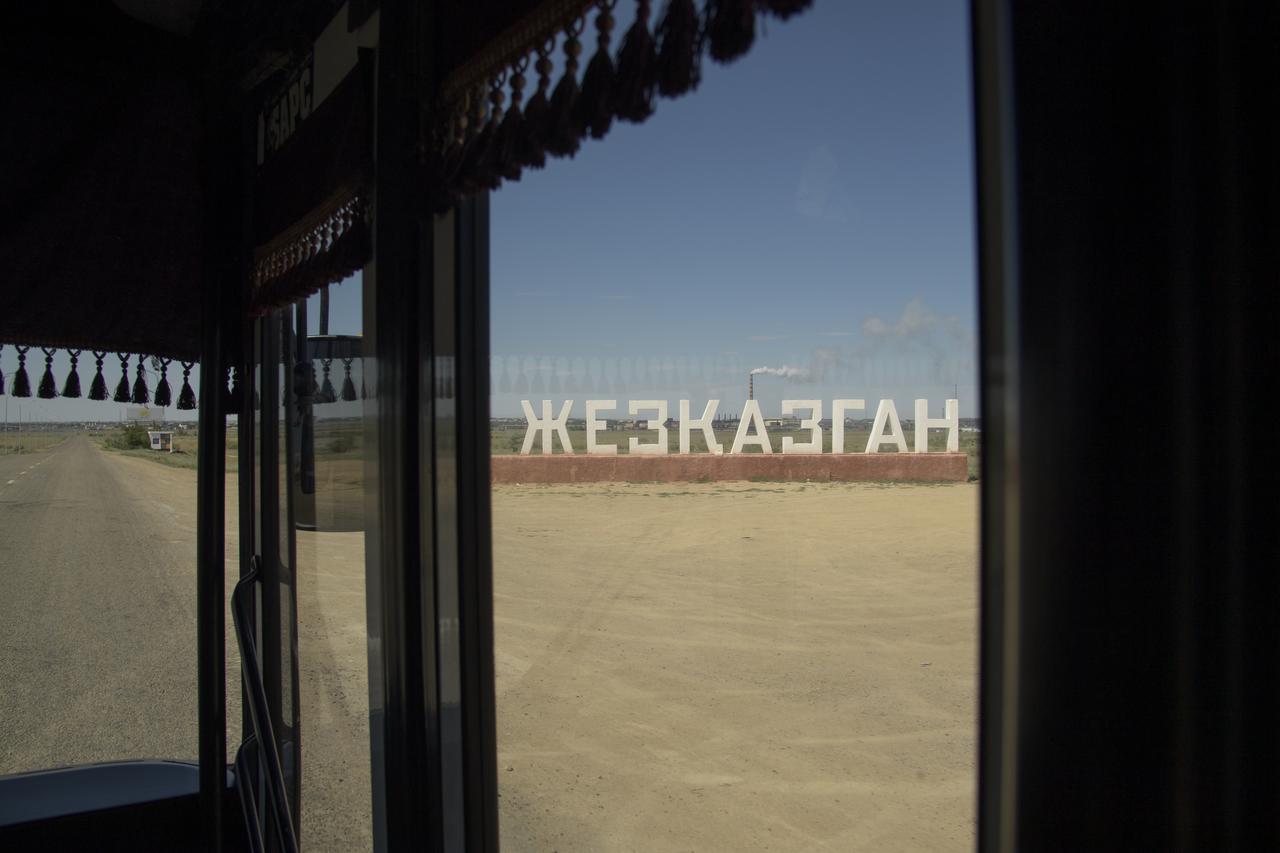
The bus carrying NASA, Canadian Space Agency, Roscosmos, and Russian Search and Recovery Forces pulls into Zhezkazgan, Kazakhstan in advance of the landing of Expedition 59 crew members Anne McClain of NASA, David Saint-Jacques of the Canadian Space Agency, and Oleg Kononenko of Roscosmos, Monday, June 24, 2019. McClain, Saint-Jacques, and Kononenko are returning after 204 days in space where they served as members of the Expedition 58 and 59 crews onboard the International Space Station. Photo Credit: (NASA/Bill Ingalls)
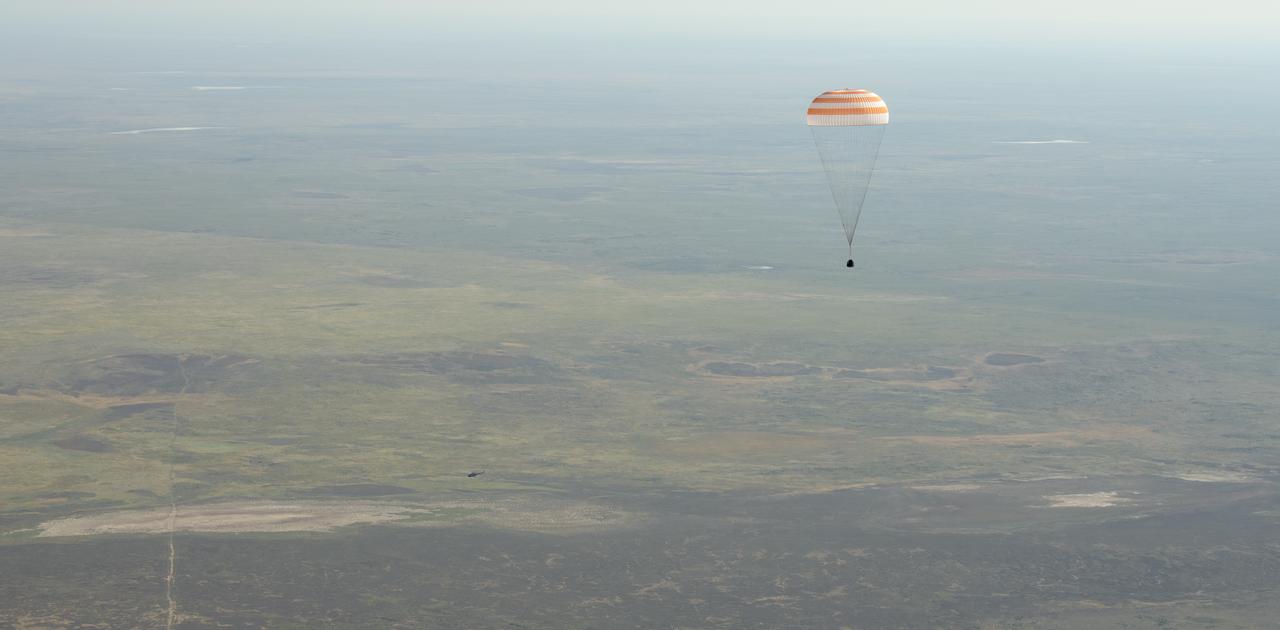
The Soyuz MS-11 spacecraft is seen as it lands in a remote area near the town of Zhezkazgan, Kazakhstan with Expedition 59 crew members Anne McClain of NASA, David Saint-Jacques of the Canadian Space Agency, and Oleg Kononenko of Roscosmos, Tuesday, June 25, 2019 Kazakh time (June 24 Eastern time). McClain, Saint-Jacques, and Kononenko are returning after 204 days in space where they served as members of the Expedition 58 and 59 crews onboard the International Space Station. Photo Credit: (NASA/Bill Ingalls)
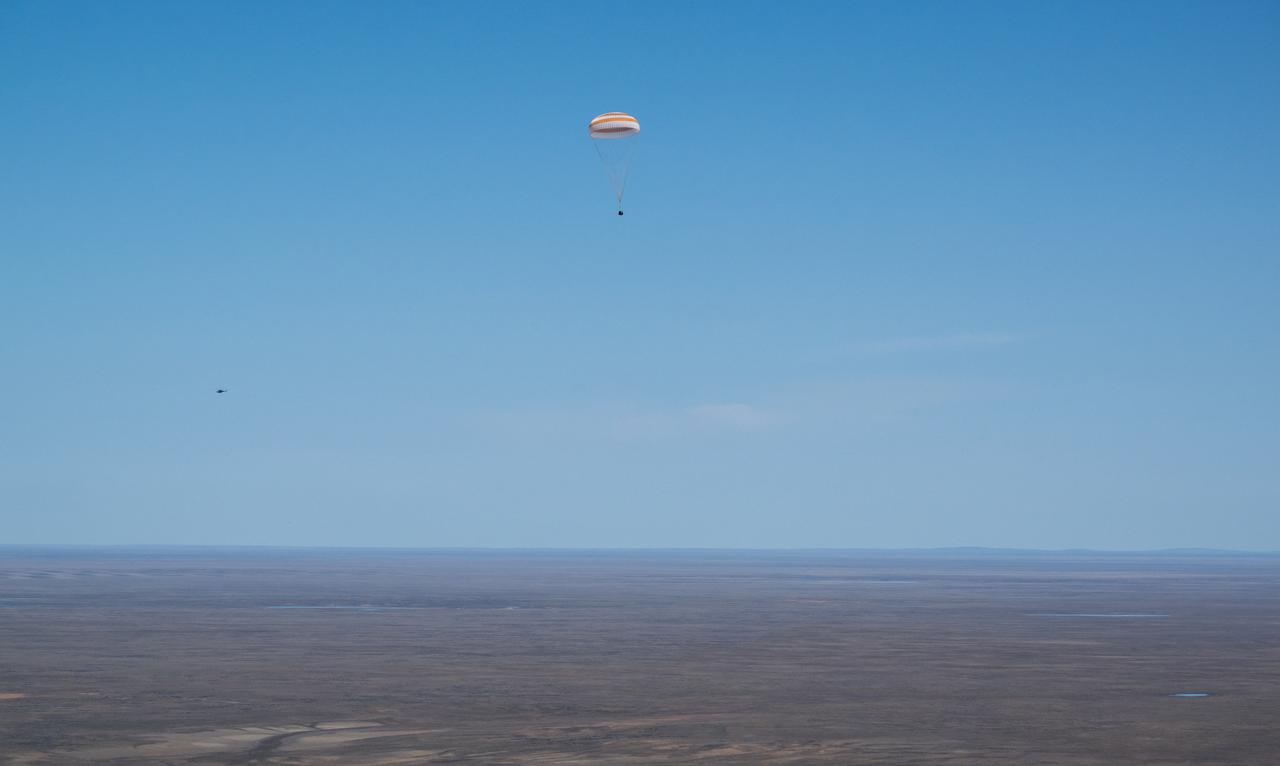
The Soyuz MS-24 spacecraft is seen as it lands in a remote area near the town of Zhezkazgan, Kazakhstan with Expedition 70 NASA astronaut Loral O'Hara, Roscosmos cosmonaut Oleg Novitskiy, and Belarus spaceflight participant Marina Vasilevskaya, Saturday, April 6, 2024. O’Hara is returning to Earth after logging 204 days in space as a member of Expeditions 69-70 aboard the International Space Station and Novitskiy and Vasilevskaya return after having spent the last 14 days in space. Photo Credit (NASA/Bill Ingalls)
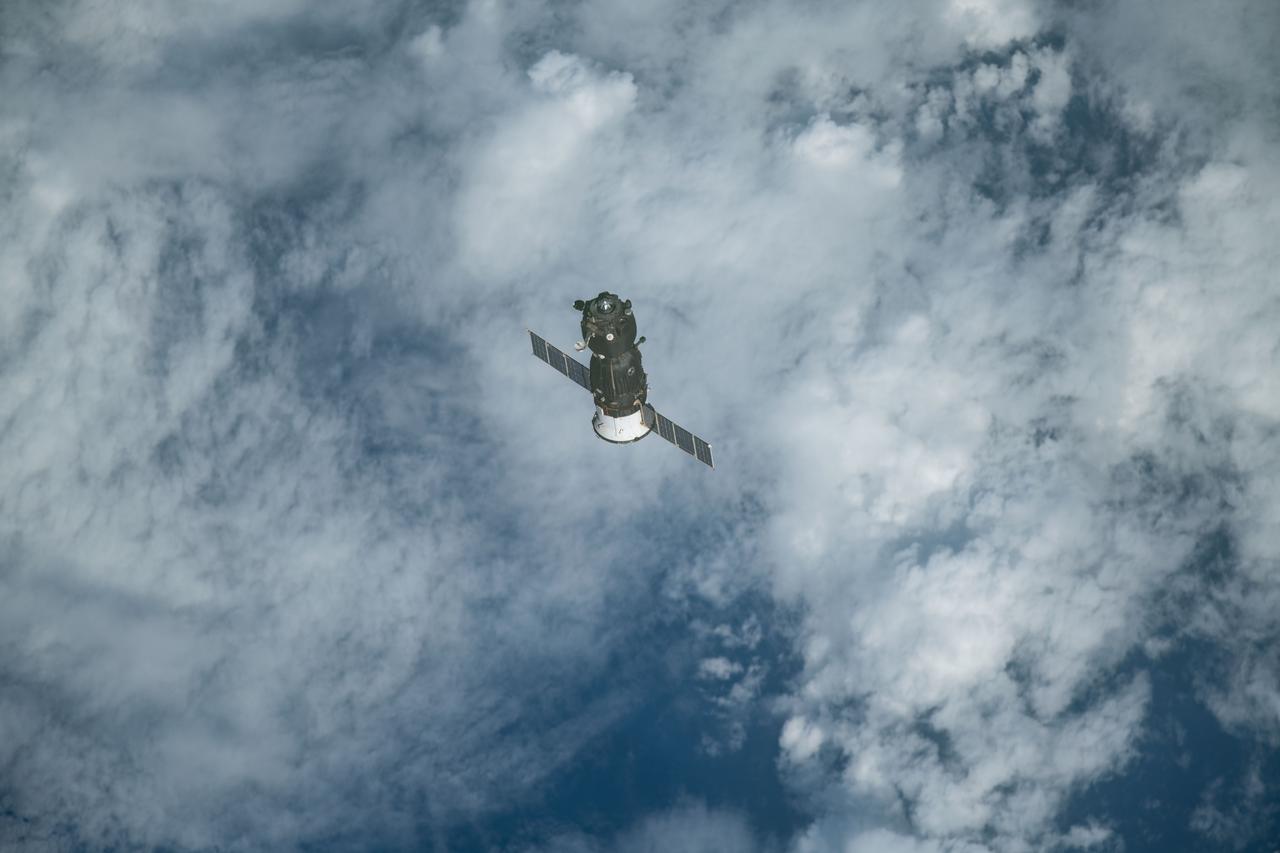
iss059e122506 (June 24, 2019) --- The Soyuz MS-11 crew craft separates from the International Space Station after its undocking and begins its descent to Earth. Expedition 59 crewmembers Oleg Kononenko of Roscosmos, Anne McClain of NASA and David Saint-Jacques of the Canadian Space Agency would parachute to a landing in Kazakhstan aboard the Soyuz after 204 days in space.
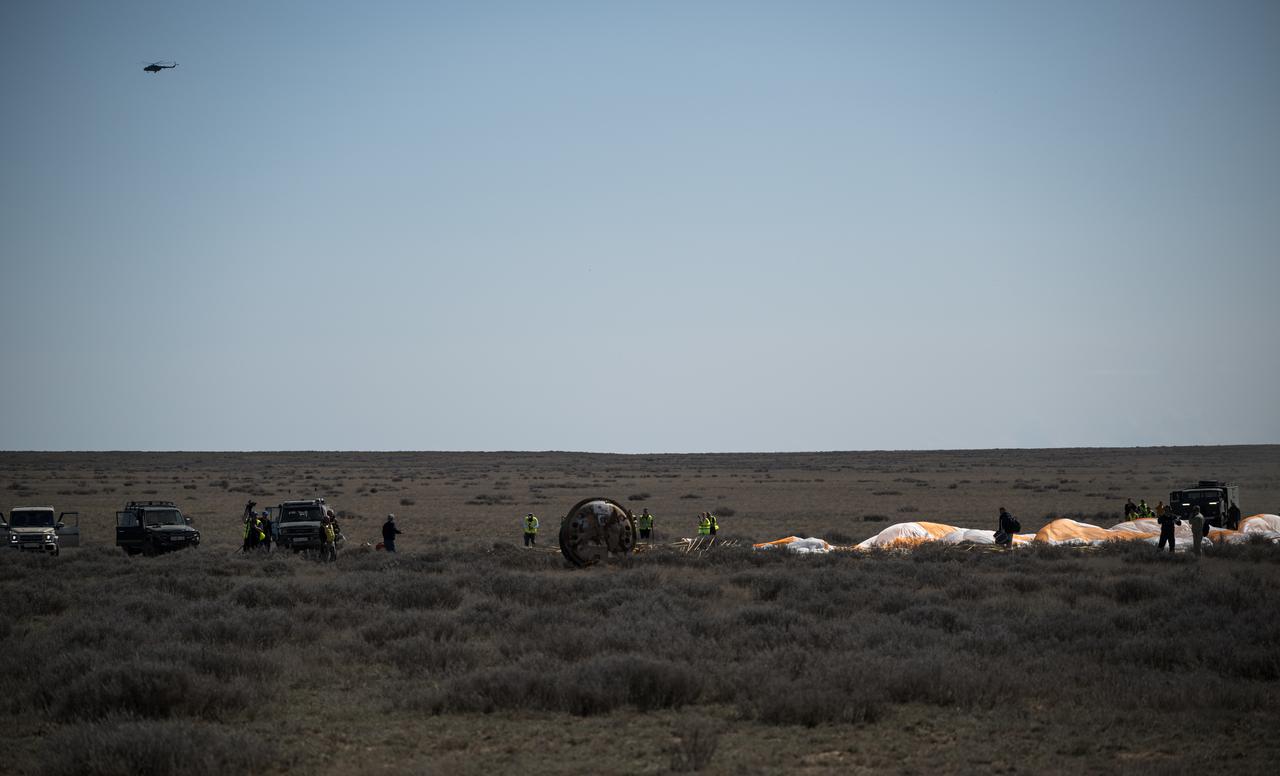
The Soyuz MS-24 spacecraft is seen after it landed in a remote area near the town of Zhezkazgan, Kazakhstan with Expedition 70 NASA astronaut Loral O'Hara, Roscosmos cosmonaut Oleg Novitskiy, and Belarus spaceflight participant Marina Vasilevskaya, Saturday, April 6, 2024. O’Hara is returning to Earth after logging 204 days in space as a member of Expeditions 69-70 aboard the International Space Station and Novitskiy and Vasilevskaya return after having spent the last 14 days in space. Photo Credit (NASA/Bill Ingalls)
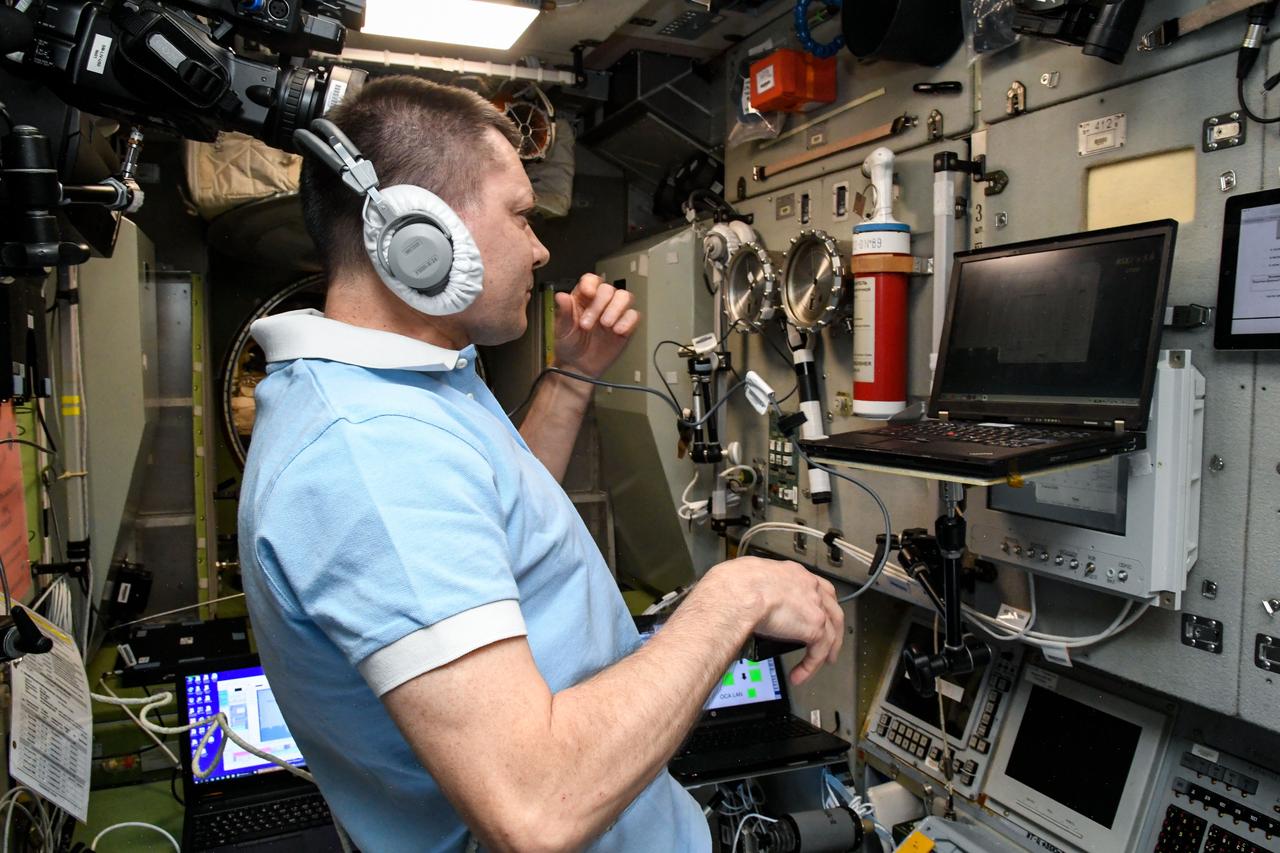
iss059e111655 (June 17, 2019) --- Expedition 59 Commander Oleg Kononenko of Roscosmos practices descent maneuvers on a computer that he will use to return to Earth aboard the Soyuz MS-11 spacecraft on June 24. He will lead Flight Engineers Anne McClain and David Saint-Jacques to a parachute-assisted landing in Kazakhstan after a 204-day mission in space.
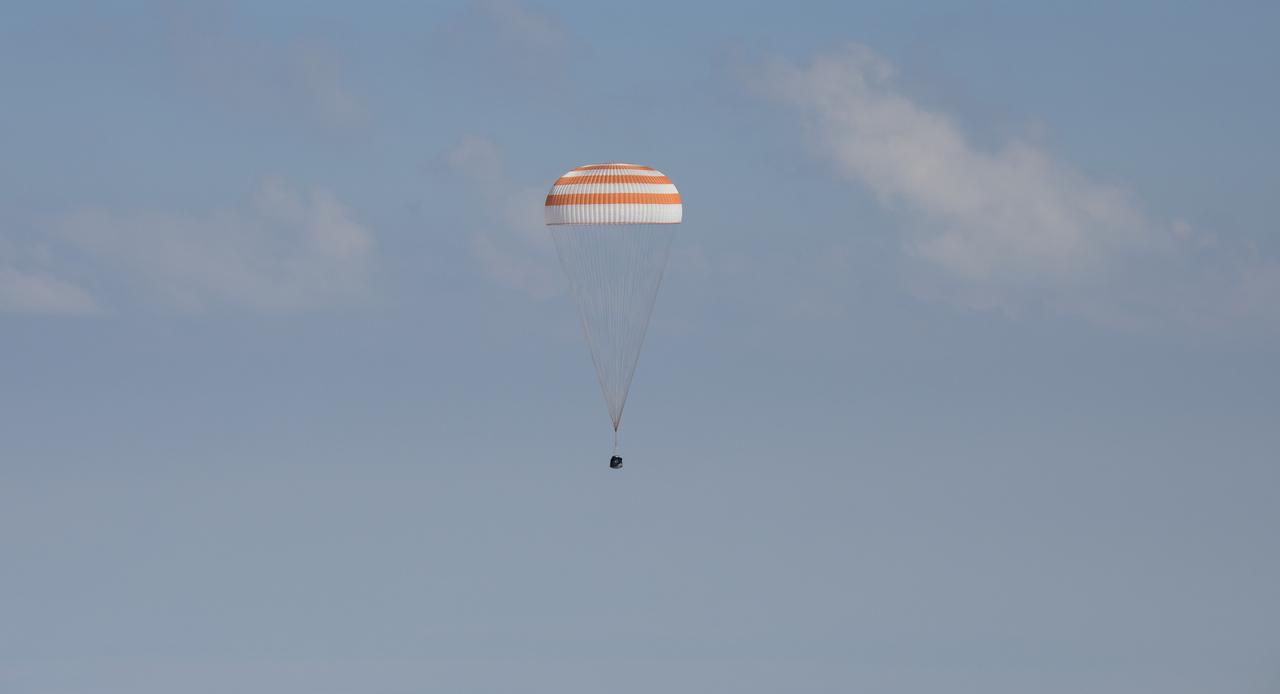
The Soyuz MS-11 spacecraft is seen as it lands in a remote area near the town of Zhezkazgan, Kazakhstan with Expedition 59 crew members Anne McClain of NASA, David Saint-Jacques of the Canadian Space Agency, and Oleg Kononenko of Roscosmos, Tuesday, June 25, 2019 Kazakh time (June 24 Eastern time). McClain, Saint-Jacques, and Kononenko are returning after 204 days in space where they served as members of the Expedition 58 and 59 crews onboard the International Space Station. Photo Credit: (NASA/Bill Ingalls)
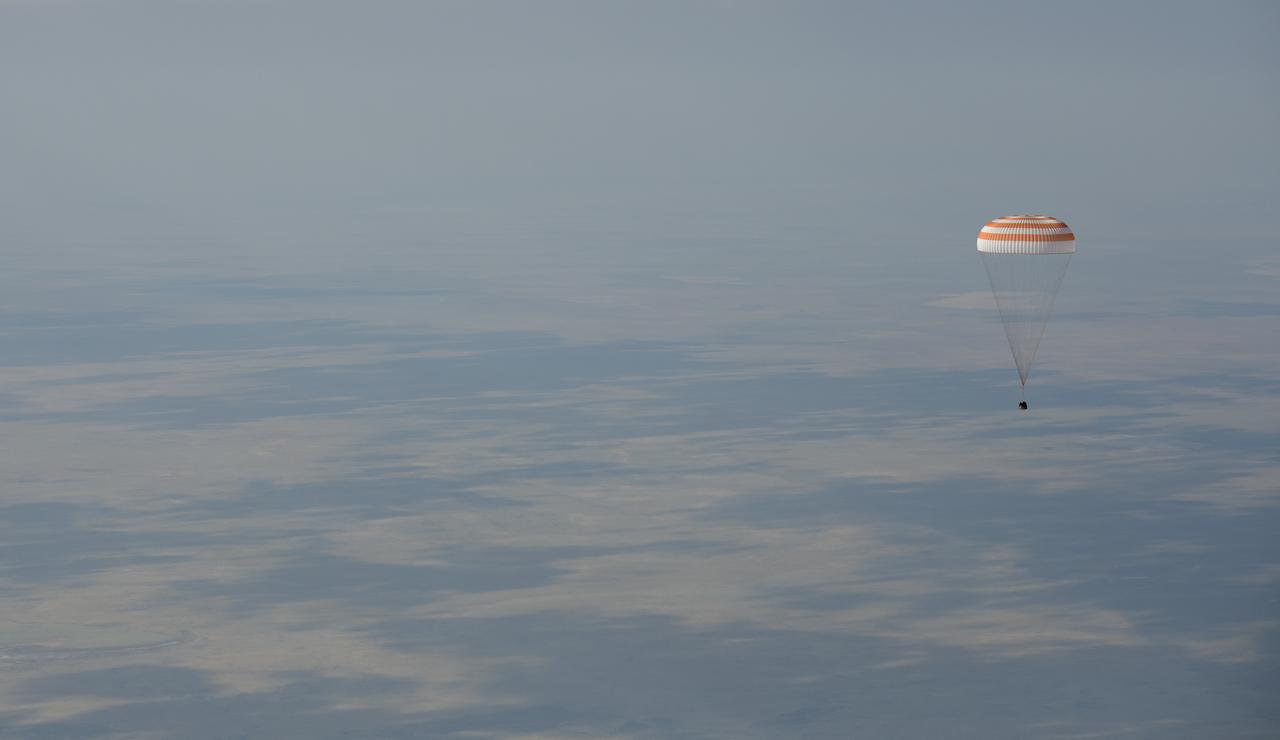
The Soyuz MS-11 spacecraft is seen as it lands in a remote area near the town of Zhezkazgan, Kazakhstan with Expedition 59 crew members Anne McClain of NASA, David Saint-Jacques of the Canadian Space Agency, and Oleg Kononenko of Roscosmos, Tuesday, June 25, 2019 Kazakh time (June 24 Eastern time). McClain, Saint-Jacques, and Kononenko are returning after 204 days in space where they served as members of the Expedition 58 and 59 crews onboard the International Space Station. Photo Credit: (NASA/Bill Ingalls)
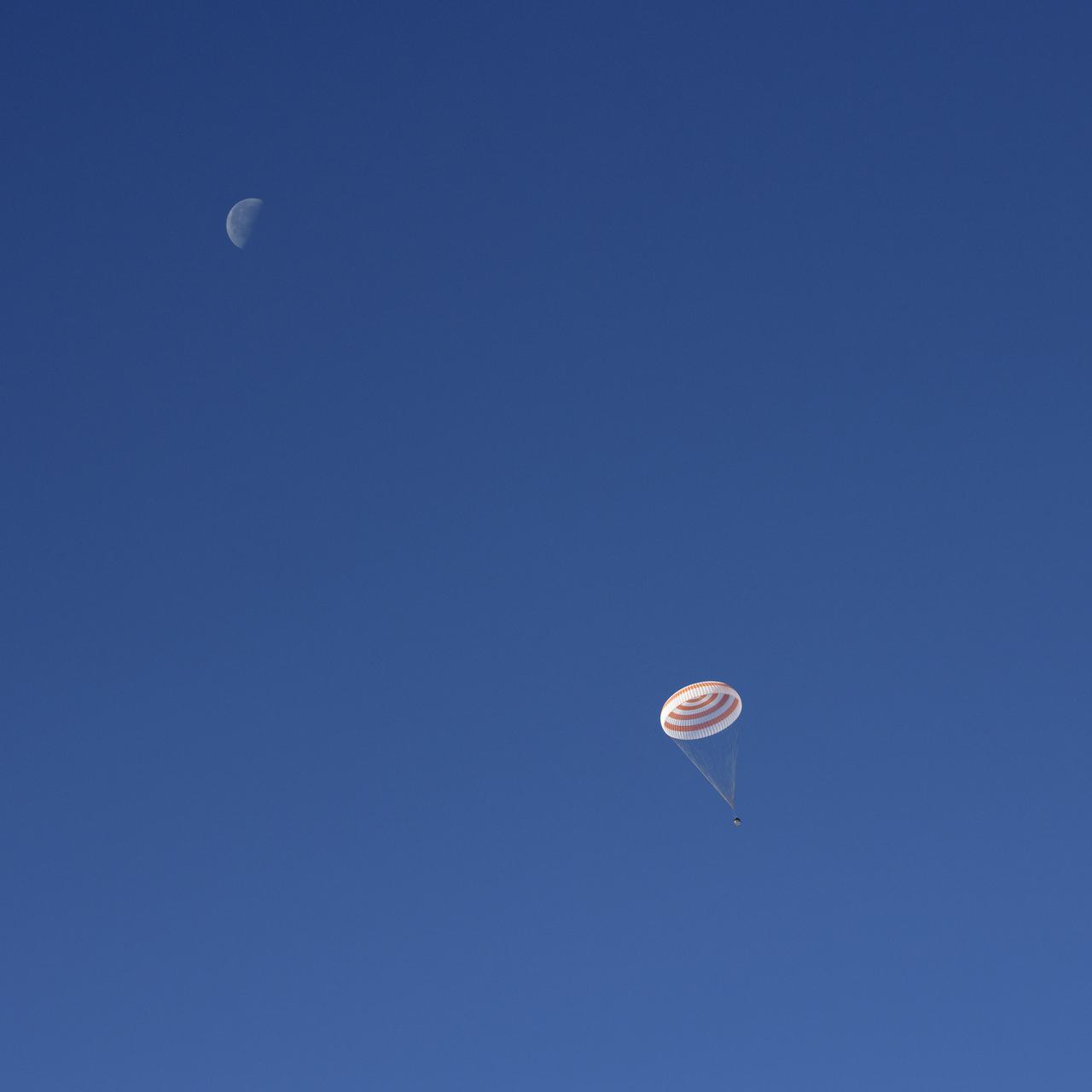
The Soyuz MS-11 spacecraft is seen as it lands in a remote area near the town of Zhezkazgan, Kazakhstan with Expedition 59 crew members Anne McClain of NASA, David Saint-Jacques of the Canadian Space Agency, and Oleg Kononenko of Roscosmos, Tuesday, June 25, 2019 Kazakh time (June 24 Eastern time). McClain, Saint-Jacques, and Kononenko are returning after 204 days in space where they served as members of the Expedition 58 and 59 crews onboard the International Space Station. Photo Credit: (NASA/Bill Ingalls)
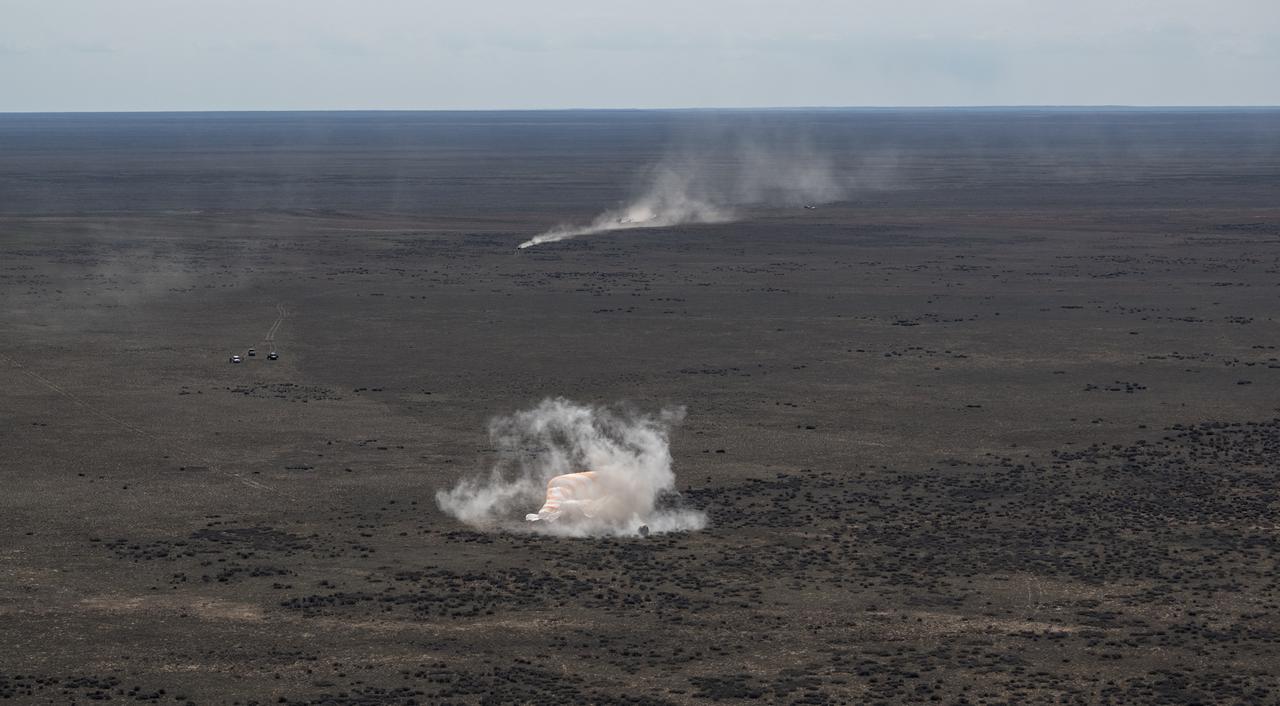
The Soyuz MS-24 spacecraft is seen as it lands in a remote area near the town of Zhezkazgan, Kazakhstan with Expedition 70 NASA astronaut Loral O'Hara, Roscosmos cosmonaut Oleg Novitskiy, and Belarus spaceflight participant Marina Vasilevskaya, Saturday, April 6, 2024. O’Hara is returning to Earth after logging 204 days in space as a member of Expeditions 69-70 aboard the International Space Station and Novitskiy and Vasilevskaya return after having spent the last 14 days in space. Photo Credit (NASA/Bill Ingalls)
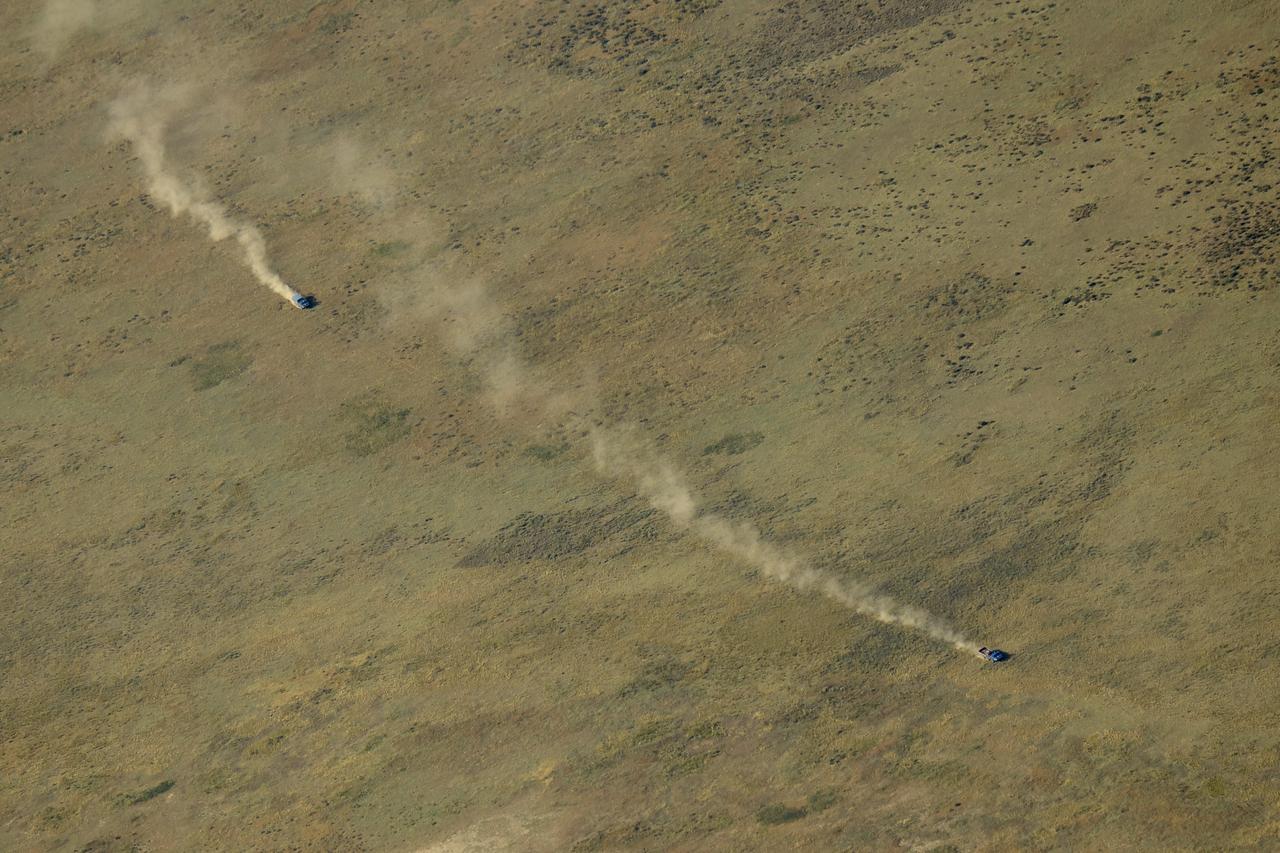
Russian Search and Rescue teams in all-terrain vehicles chase the Soyuz MS-11 spacecraft as it lands with Expedition 59 crew members Anne McClain of NASA, David Saint-Jacques of the Canadian Space Agency, and Oleg Kononenko of Roscosmos, Tuesday, June 25, 2019 Kazakh time (June 24 Eastern time). McClain, Saint-Jacques, and Kononenko are returning after 204 days in space where they served as members of the Expedition 58 and 59 crews onboard the International Space Station. Photo Credit: (NASA/Bill Ingalls)
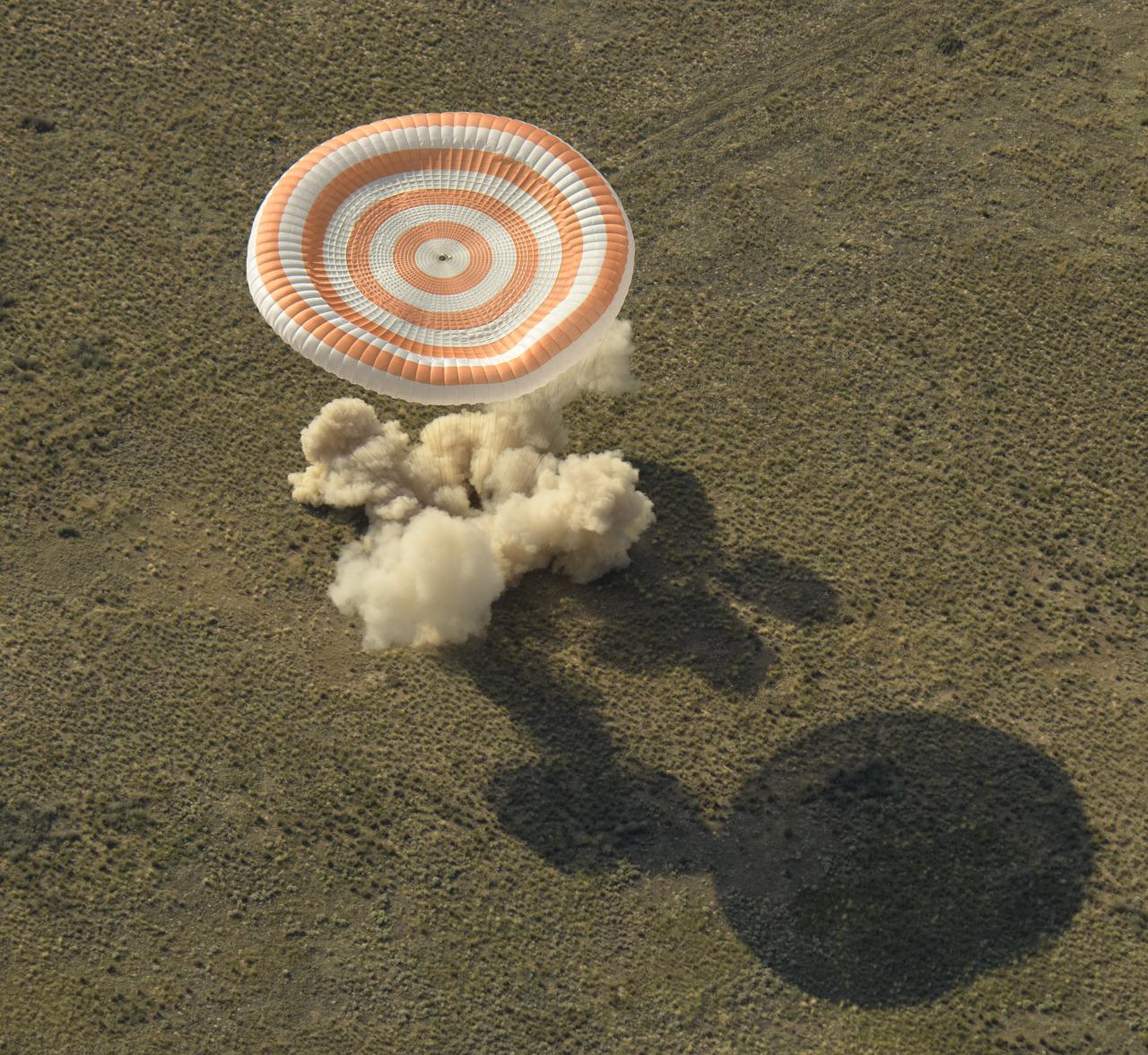
The Soyuz MS-11 spacecraft is seen as it lands in a remote area near the town of Zhezkazgan, Kazakhstan with Expedition 59 crew members Anne McClain of NASA, David Saint-Jacques of the Canadian Space Agency, and Oleg Kononenko of Roscosmos, Tuesday, June 25, 2019 Kazakh time (June 24 Eastern time). McClain, Saint-Jacques, and Kononenko are returning after 204 days in space where they served as members of the Expedition 58 and 59 crews onboard the International Space Station. Photo Credit: (NASA/Bill Ingalls)
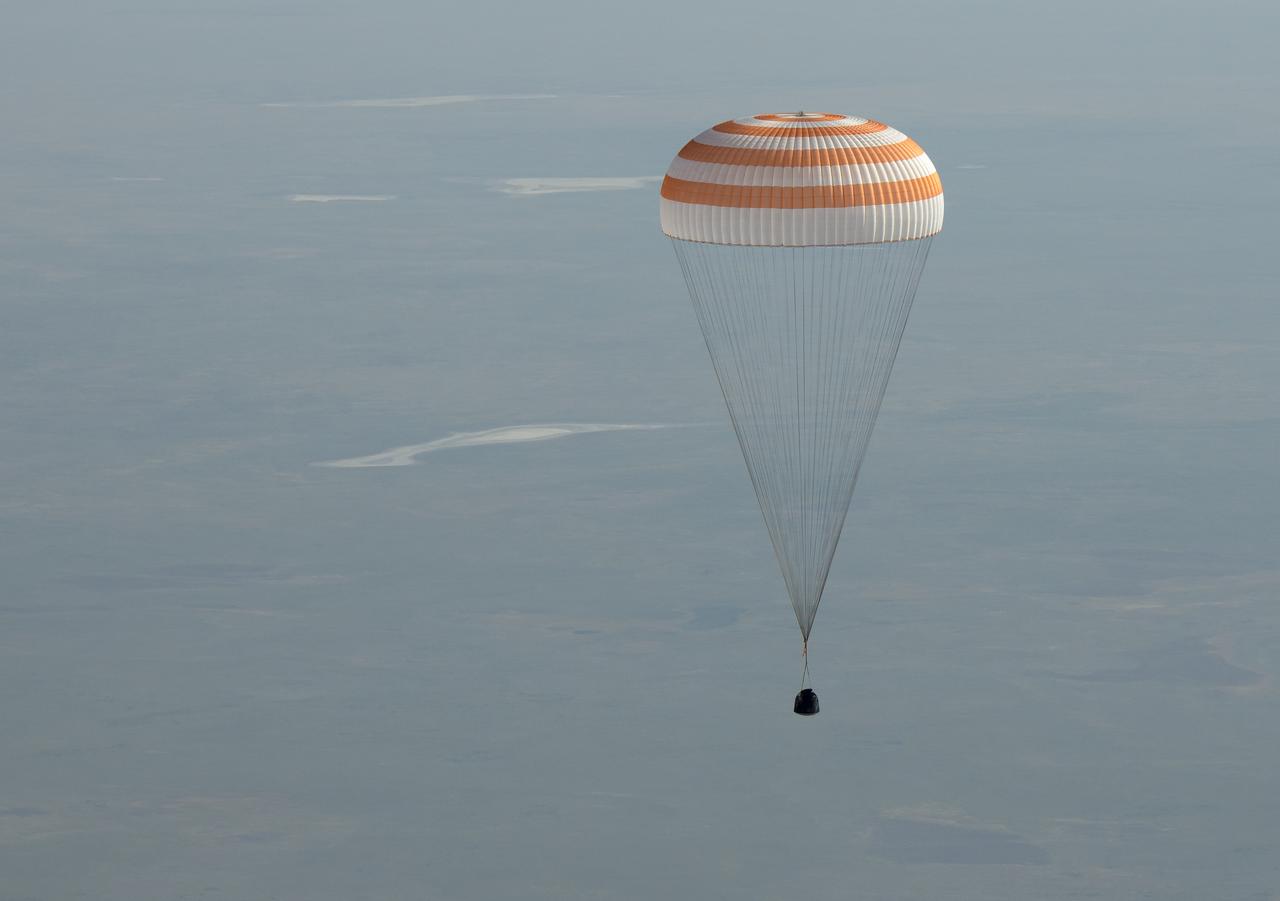
The Soyuz MS-11 spacecraft is seen as it lands in a remote area near the town of Zhezkazgan, Kazakhstan with Expedition 59 crew members Anne McClain of NASA, David Saint-Jacques of the Canadian Space Agency, and Oleg Kononenko of Roscosmos, Tuesday, June 25, 2019 Kazakh time (June 24 Eastern time). McClain, Saint-Jacques, and Kononenko are returning after 204 days in space where they served as members of the Expedition 58 and 59 crews onboard the International Space Station. Photo Credit: (NASA/Bill Ingalls)
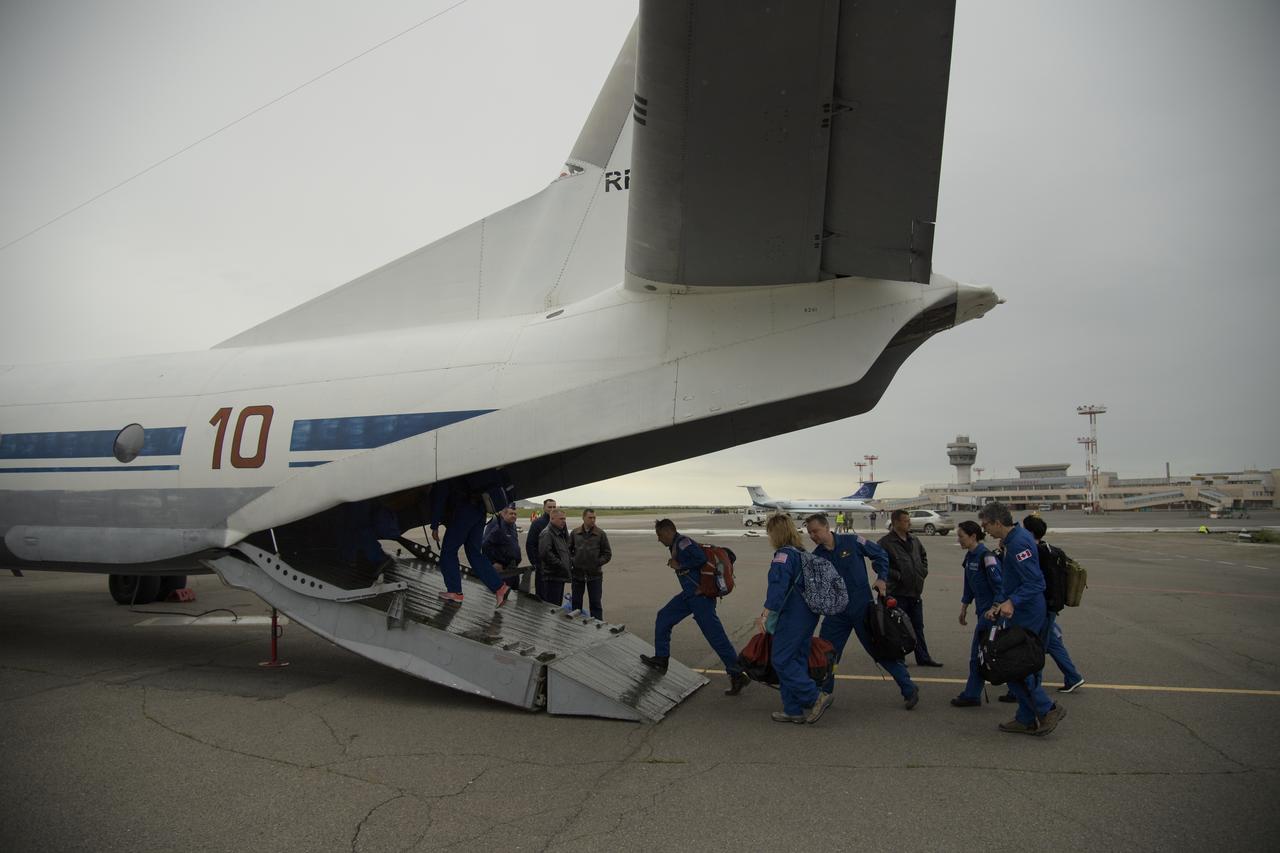
NASA, Canadian Space Agency, Roscosmos, and Russian Search and Recovery Forces deploy from Karaganda to Zhezkazgan, Kazakhstan in advance of the landing of Expedition 59 crew members Anne McClain of NASA, David Saint-Jacques of the Canadian Space Agency, and Oleg Kononenko of Roscosmos, Monday, June 24, 2019. McClain, Saint-Jacques, and Kononenko are returning after 204 days in space where they served as members of the Expedition 58 and 59 crews onboard the International Space Station. Photo Credit: (NASA/Bill Ingalls)
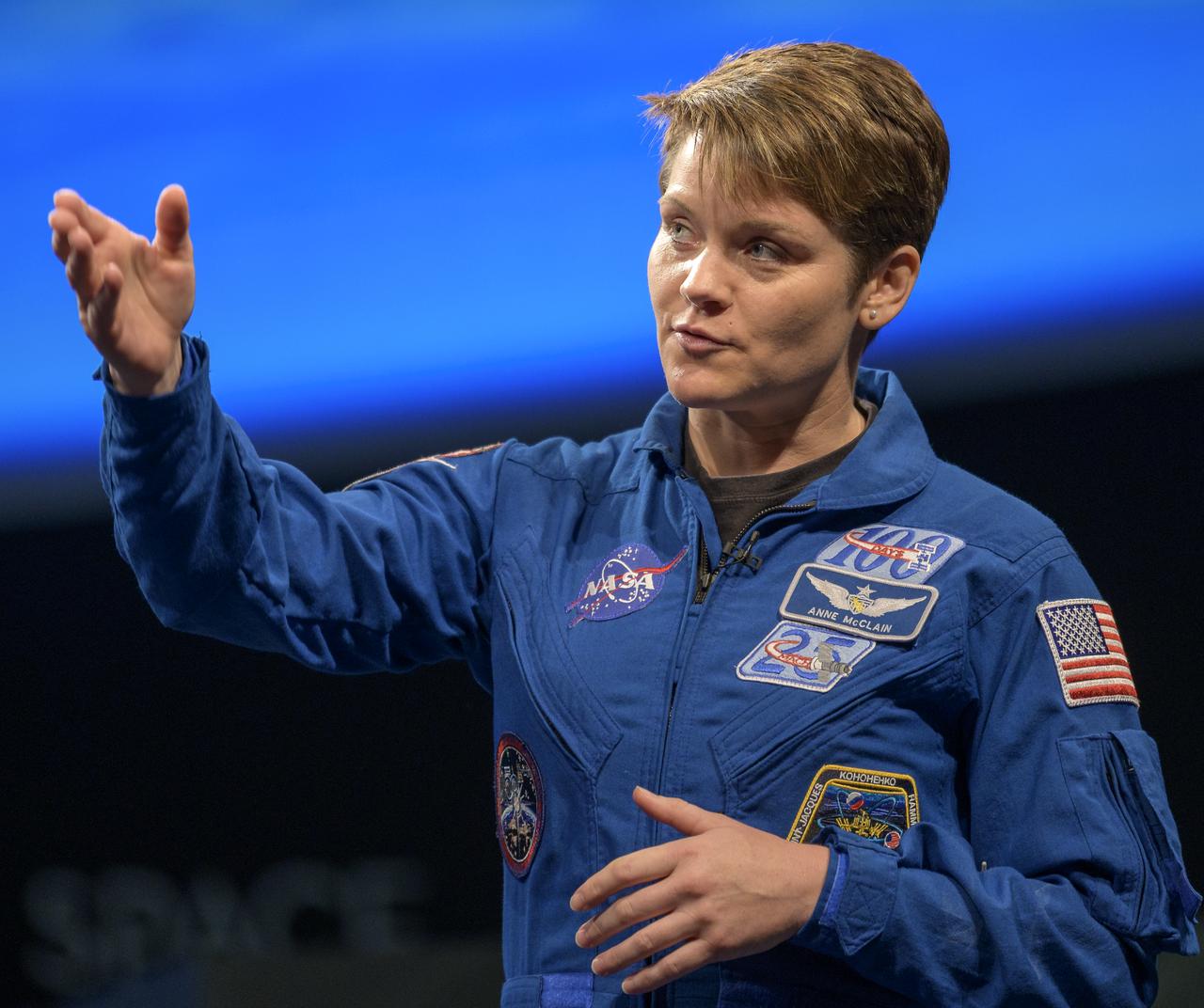
NASA astronaut Anne McClain talks about her experiences onboard the International Space Station, Tuesday, Jan. 14, 2020, at the Smithsonian National Air and Space Museum in Washington. McClain most recently spent 204 days living and working onboard the International Space Station as part of Expeditions 58 and 59. Photo Credit: (NASA/Bill Ingalls)
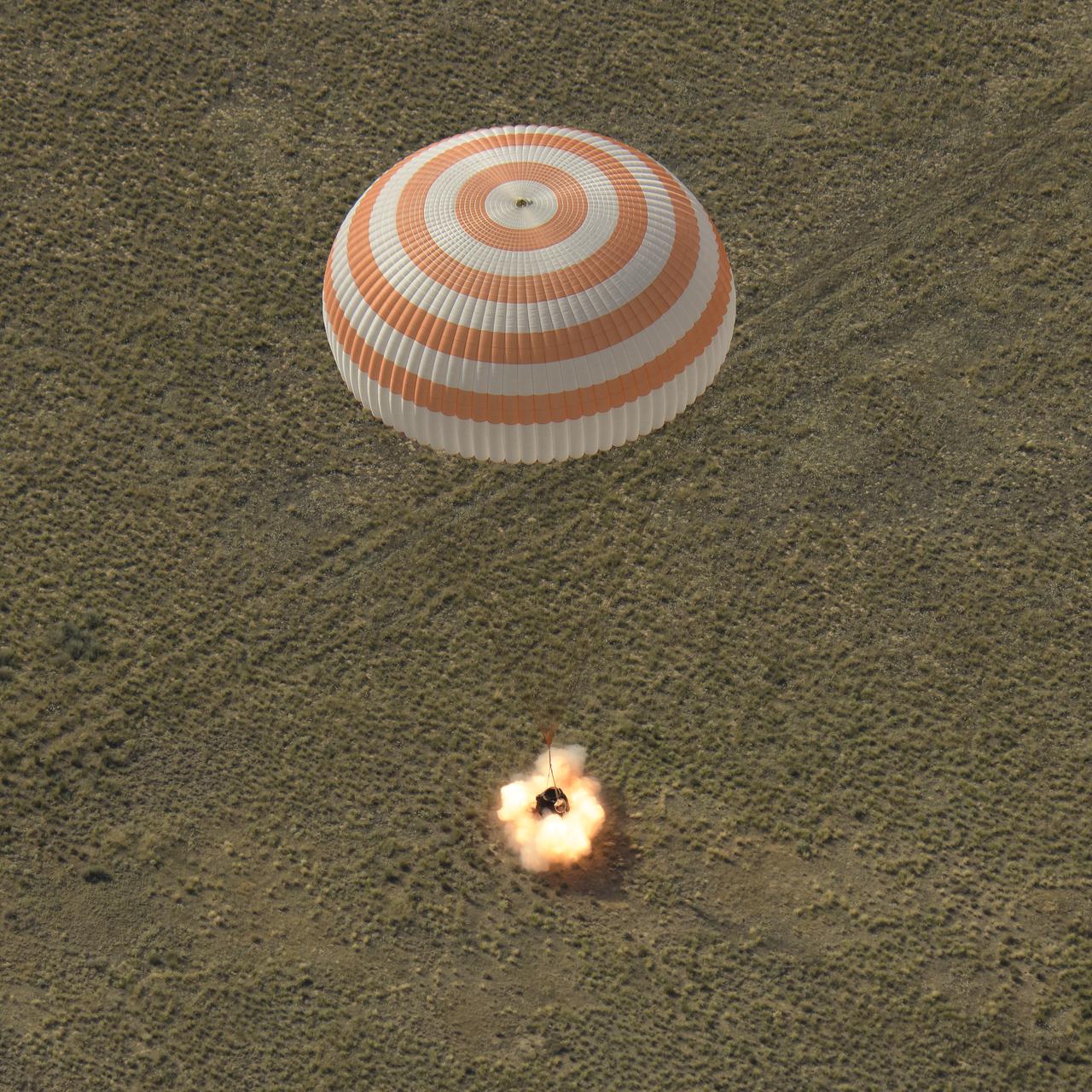
The Soyuz MS-11 spacecraft is seen as it lands in a remote area near the town of Zhezkazgan, Kazakhstan with Expedition 59 crew members Anne McClain of NASA, David Saint-Jacques of the Canadian Space Agency, and Oleg Kononenko of Roscosmos, Tuesday, June 25, 2019 Kazakh time (June 24 Eastern time). McClain, Saint-Jacques, and Kononenko are returning after 204 days in space where they served as members of the Expedition 58 and 59 crews onboard the International Space Station. Photo Credit: (NASA/Bill Ingalls)
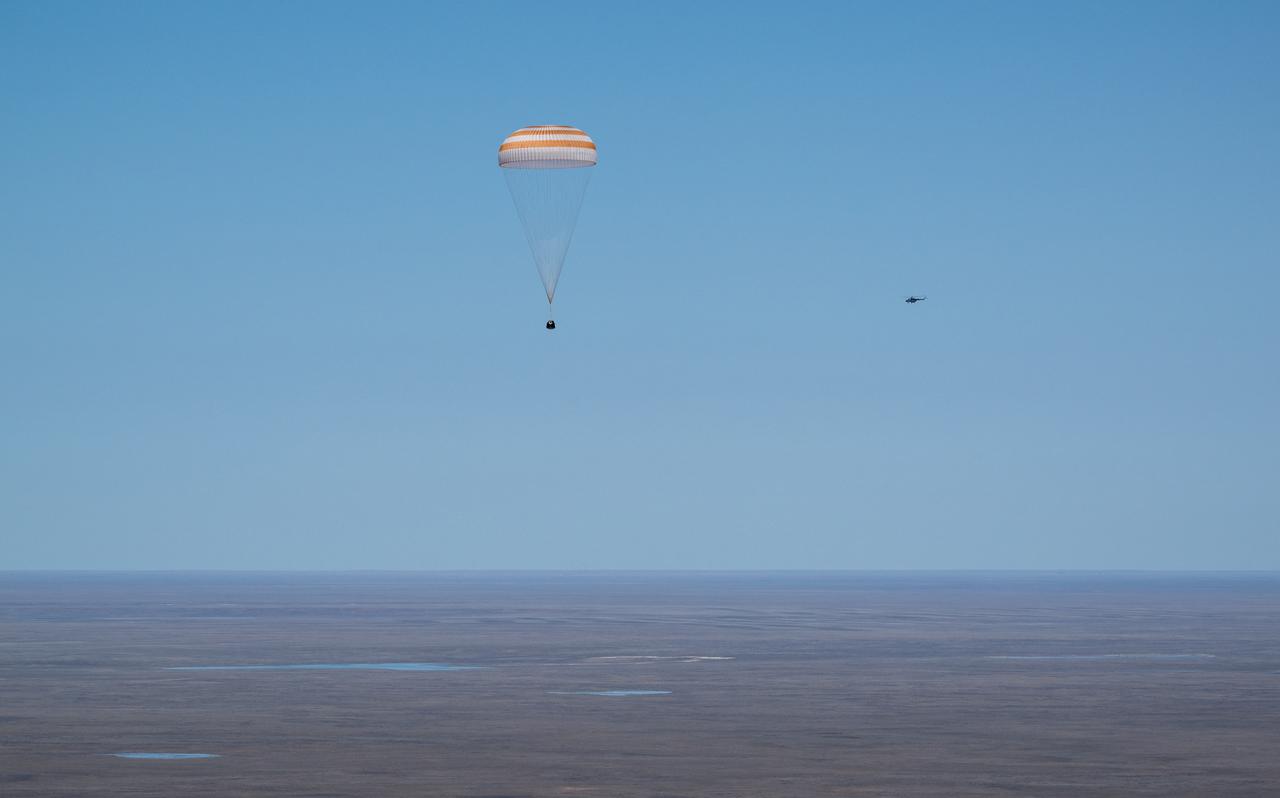
The Soyuz MS-24 spacecraft is seen as it lands in a remote area near the town of Zhezkazgan, Kazakhstan with Expedition 70 NASA astronaut Loral O'Hara, Roscosmos cosmonaut Oleg Novitskiy, and Belarus spaceflight participant Marina Vasilevskaya, Saturday, April 6, 2024. O’Hara is returning to Earth after logging 204 days in space as a member of Expeditions 69-70 aboard the International Space Station and Novitskiy and Vasilevskaya return after having spent the last 14 days in space. Photo Credit (NASA/Bill Ingalls)
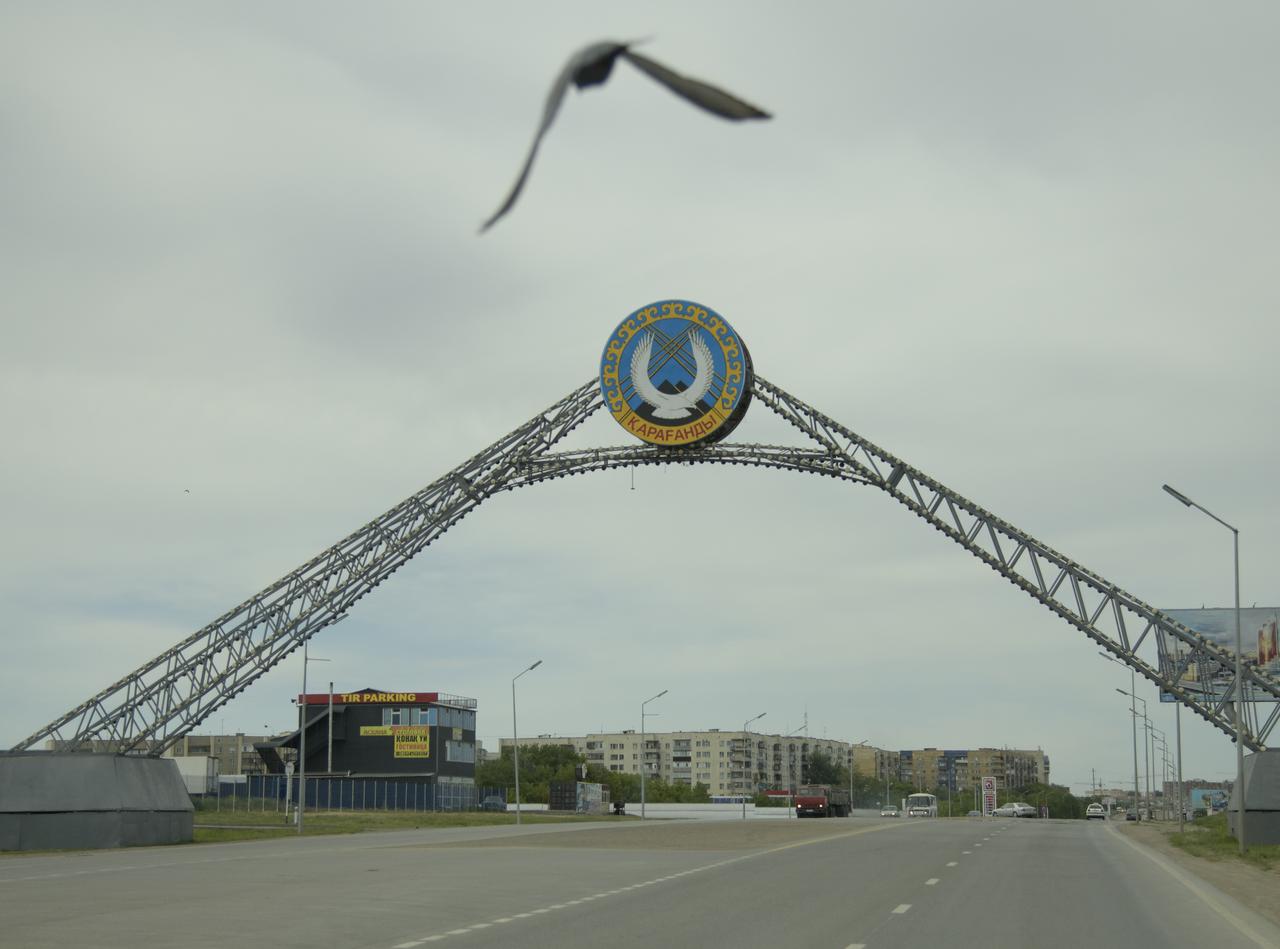
The Karaganda, Kazakhstan city entrance is seen as NASA, Canadian Space Agency (CSA), and Roscosmos teams arrive in preparation for the landing of Expedition 59 crew members Anne McClain of NASA, David Saint-Jacques of the Canadian Space Agency, and Oleg Kononenko of Roscosmos, Sunday, June 23, 2019. McClain, Saint-Jacques, and Kononenko are returning after 204 days in space where they served as members of the Expedition 58 and 59 crews onboard the International Space Station. Photo Credit: (NASA/Bill Ingalls)
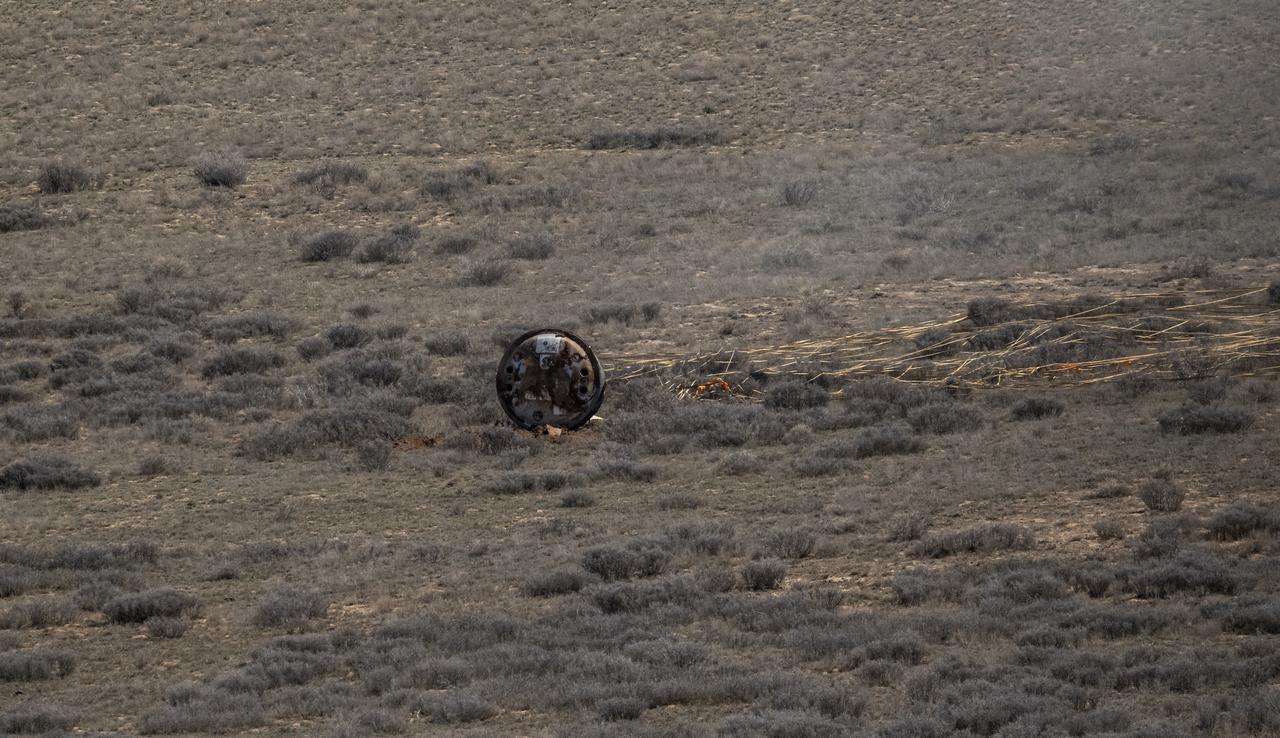
The Soyuz MS-24 spacecraft is seen after it landed in a remote area near the town of Zhezkazgan, Kazakhstan with Expedition 70 NASA astronaut Loral O'Hara, Roscosmos cosmonaut Oleg Novitskiy, and Belarus spaceflight participant Marina Vasilevskaya, Saturday, April 6, 2024. O’Hara is returning to Earth after logging 204 days in space as a member of Expeditions 69-70 aboard the International Space Station and Novitskiy and Vasilevskaya return after having spent the last 14 days in space. Photo Credit (NASA/Bill Ingalls)
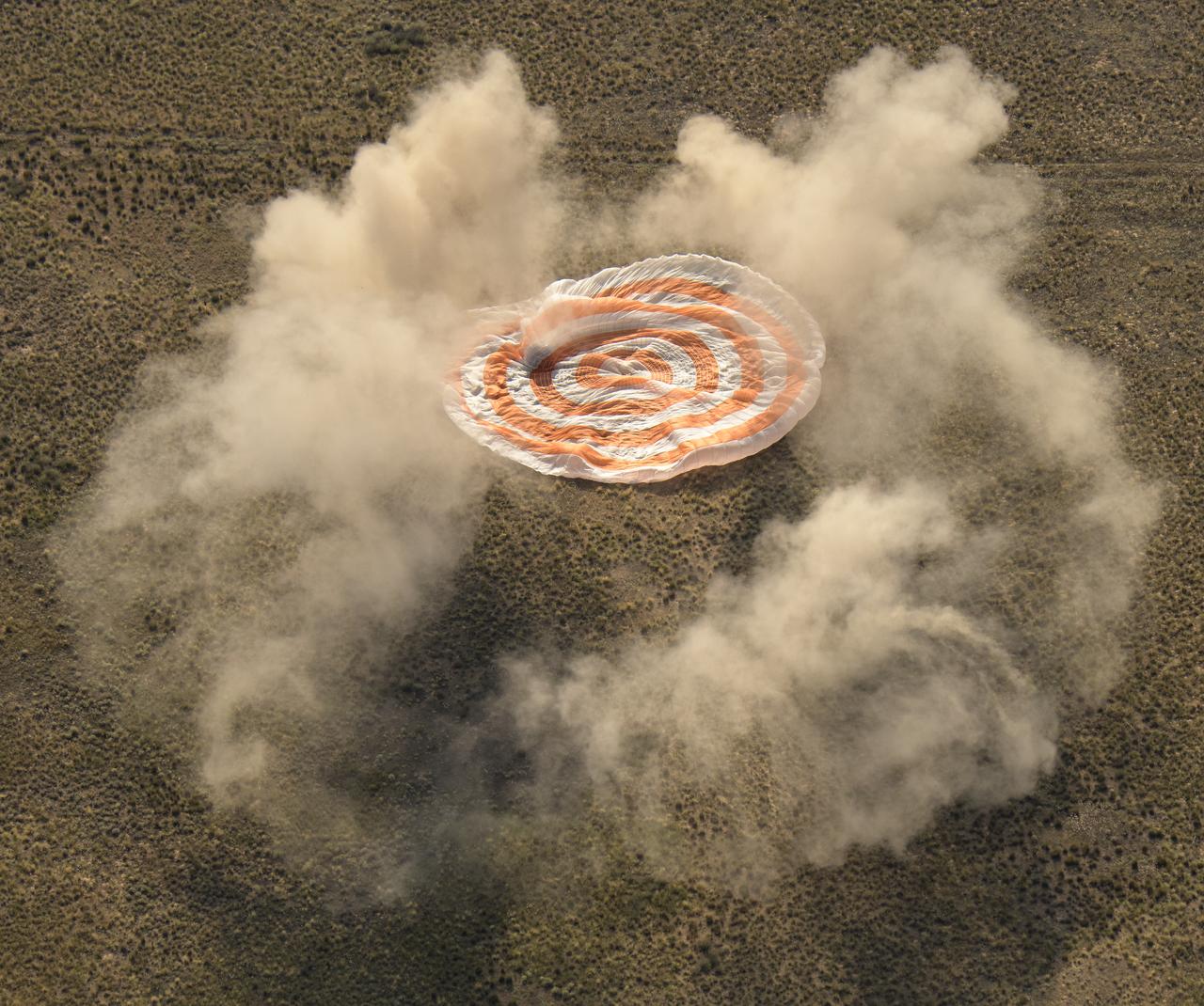
The Soyuz MS-11 spacecraft is seen as it lands in a remote area near the town of Zhezkazgan, Kazakhstan with Expedition 59 crew members Anne McClain of NASA, David Saint-Jacques of the Canadian Space Agency, and Oleg Kononenko of Roscosmos, Tuesday, June 25, 2019 Kazakh time (June 24 Eastern time). McClain, Saint-Jacques, and Kononenko are returning after 204 days in space where they served as members of the Expedition 58 and 59 crews onboard the International Space Station. Photo Credit: (NASA/Bill Ingalls)
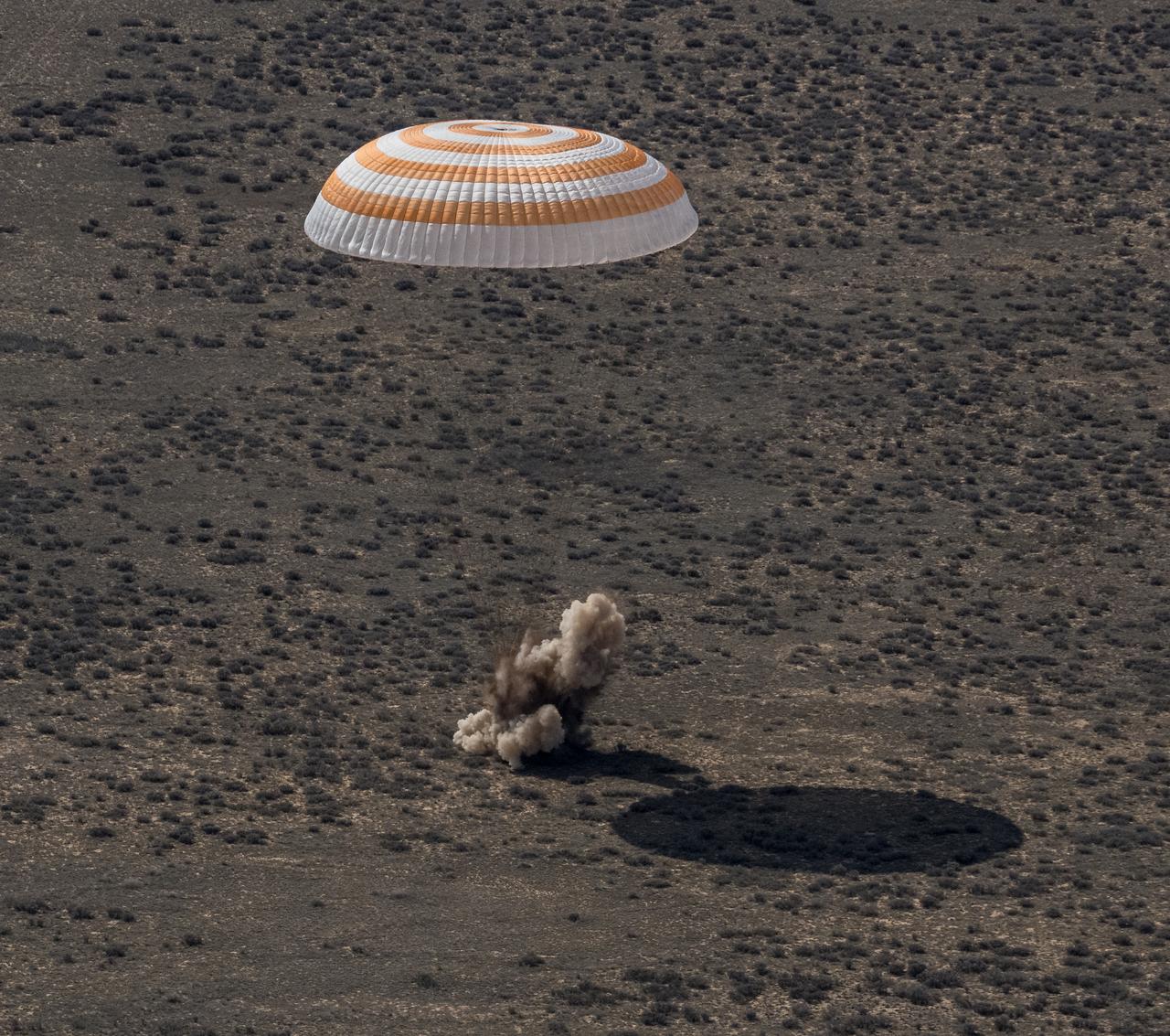
The Soyuz MS-24 spacecraft is seen as it lands in a remote area near the town of Zhezkazgan, Kazakhstan with Expedition 70 NASA astronaut Loral O'Hara, Roscosmos cosmonaut Oleg Novitskiy, and Belarus spaceflight participant Marina Vasilevskaya, Saturday, April 6, 2024. O’Hara is returning to Earth after logging 204 days in space as a member of Expeditions 69-70 aboard the International Space Station and Novitskiy and Vasilevskaya return after having spent the last 14 days in space. Photo Credit (NASA/Bill Ingalls)
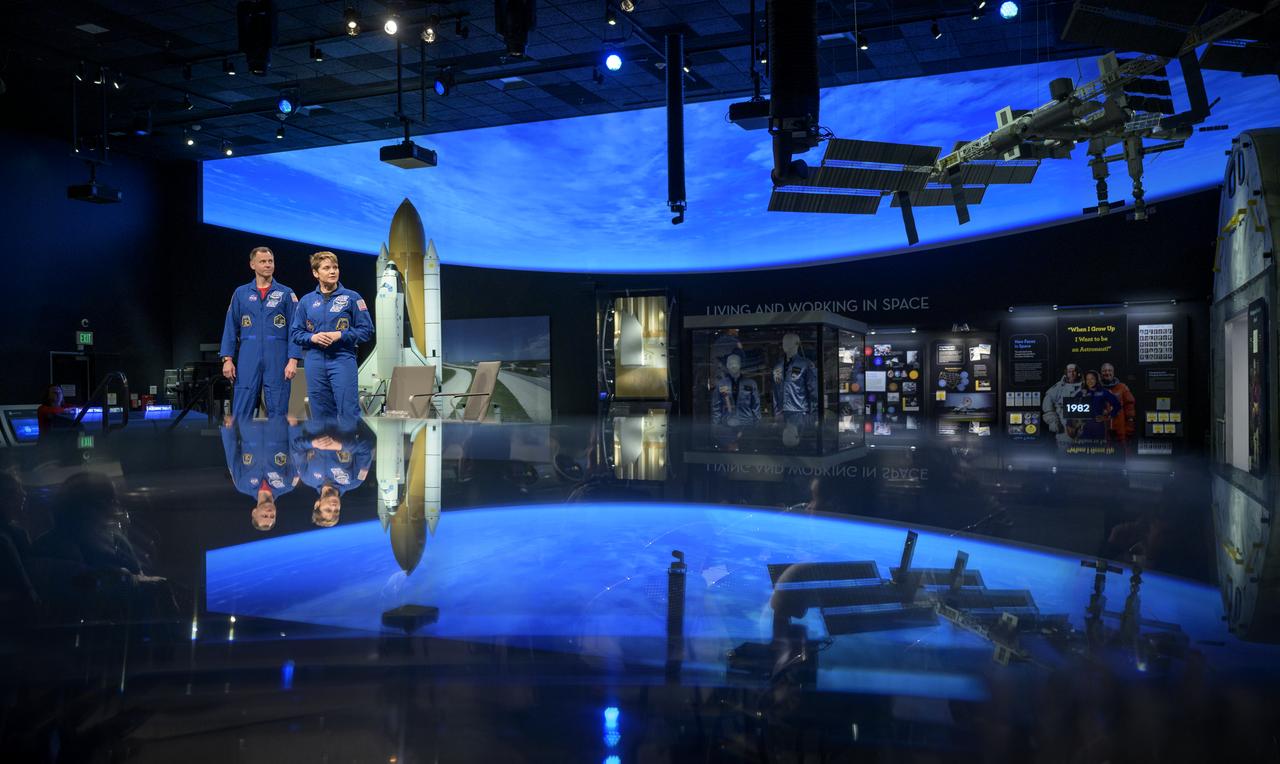
NASA astronauts Nick Hague and Anne McClain talk about their experiences onboard the International Space Station, Tuesday, Jan. 14, 2020, at the Smithsonian National Air and Space Museum in Washington. Hague most recently spent 203 days living and working onboard the International Space Station as part of Expeditions 59 and 60. McClain most recently spent 204 days living and working onboard the International Space Station as part of Expeditions 58 and 59. Photo Credit: (NASA/Bill Ingalls)
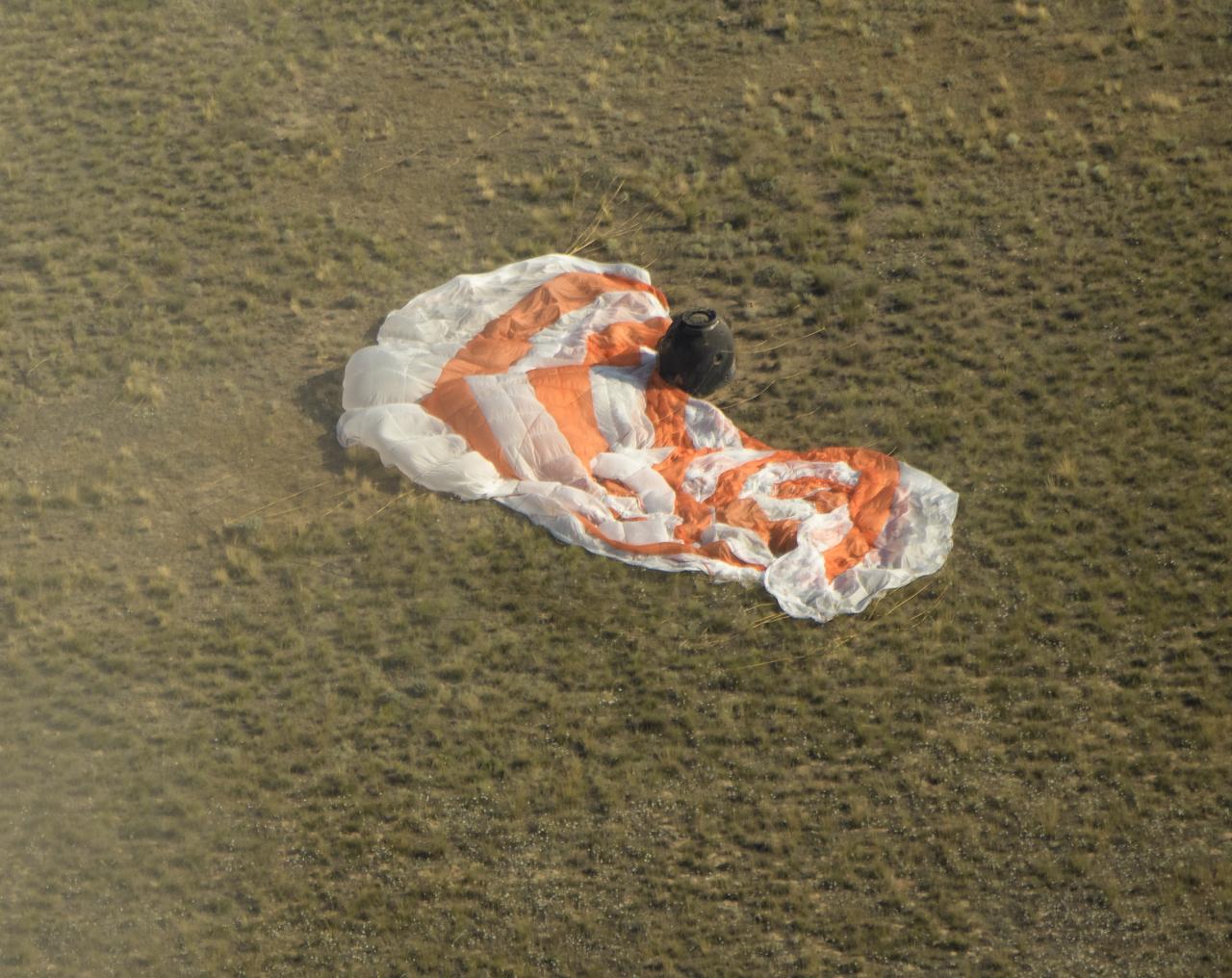
The Soyuz MS-11 spacecraft is seen after it landed in a remote area near the town of Zhezkazgan, Kazakhstan with Expedition 59 crew members Anne McClain of NASA, David Saint-Jacques of the Canadian Space Agency, and Oleg Kononenko of Roscosmos, Tuesday, June 25, 2019 Kazakh time (June 24 Eastern time). McClain, Saint-Jacques, and Kononenko are returning after 204 days in space where they served as members of the Expedition 58 and 59 crews onboard the International Space Station. Photo Credit: (NASA/Bill Ingalls)