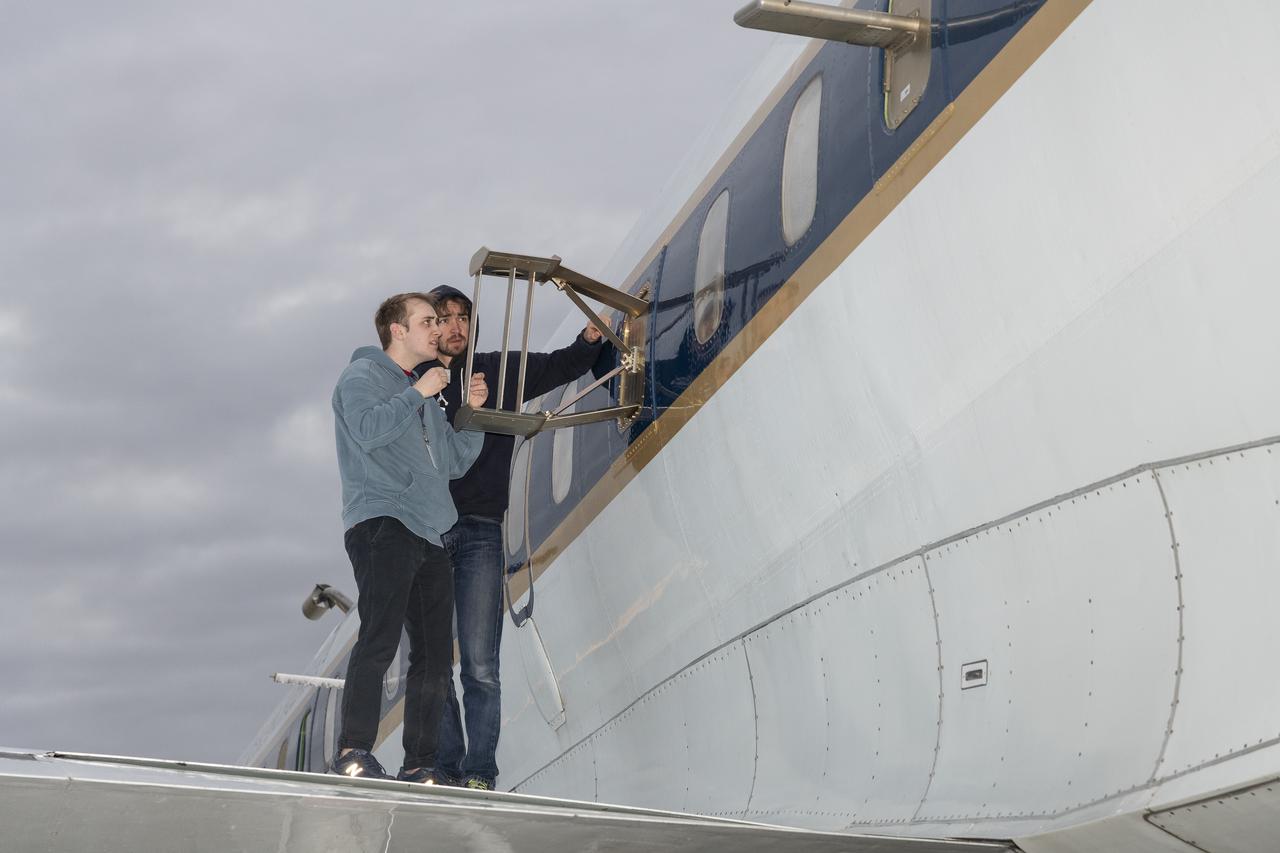
Scientists Ryan Boyd (left) and Vladislav Sevostianov (right) attend to the Optical Payload for Lasercomm Science (OPALS) instrument on the exterior the DC-8 aircraft at Building 703 in Palmdale, CA. The DC-8 aircraft is prepared for its last mission, ASIA-AQ (Airborne and Satellite Investigation of Asian Air Quality), that will collect detailed air quality data over several locations in Asia to improve the understanding of local air quality in collaboration with local scientists, air quality agencies, and government partners
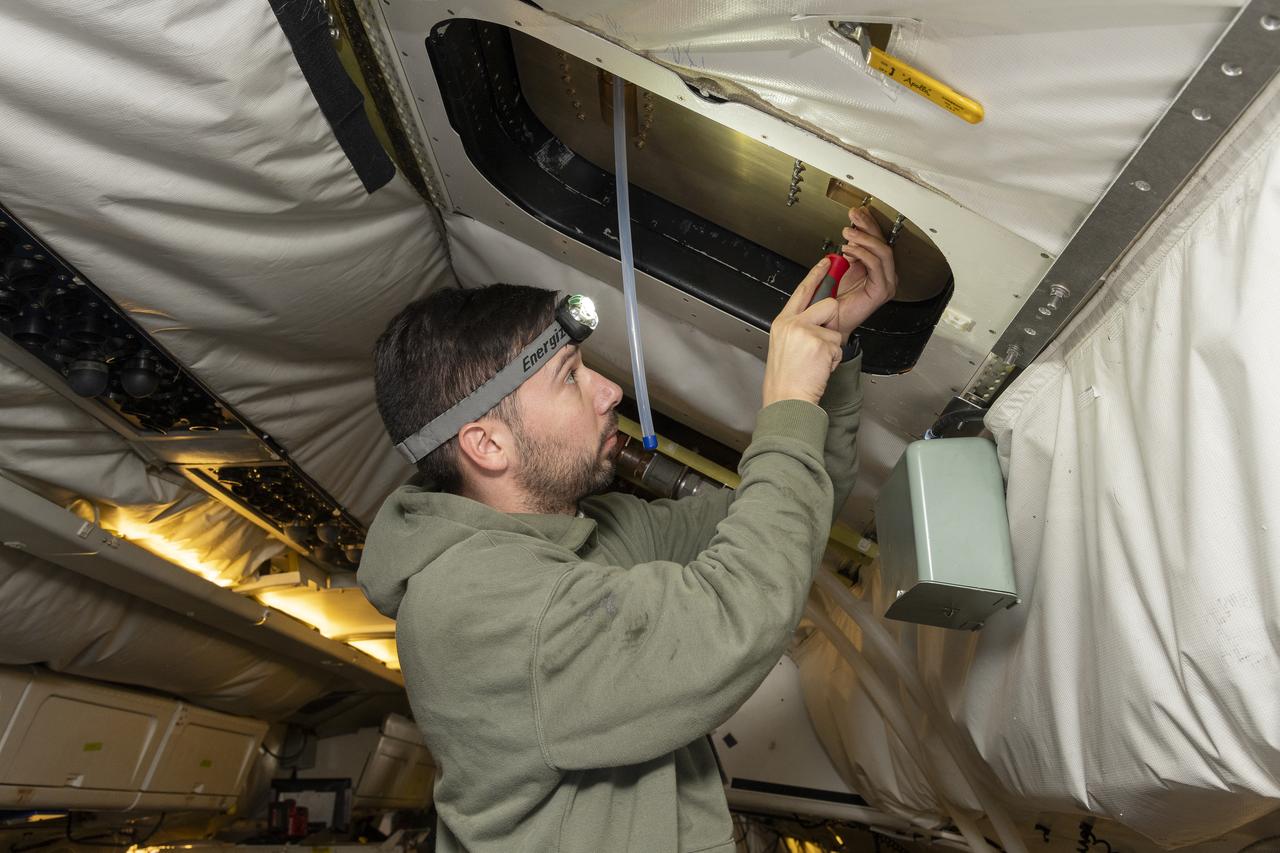
Isac Mata, engineering technician at NASA’s Armstrong Flight Research Center, attends to the interior of the DC-8 aircraft at Building 703 in Palmdale, CA. The DC-8 aircraft is prepared for its last mission, ASIA-AQ (Airborne and Satellite Investigation of Asian Air Quality), that will collect detailed air quality data over several locations in Asia to improve the understanding of local air quality in collaboration with local scientists, air quality agencies, and government partners
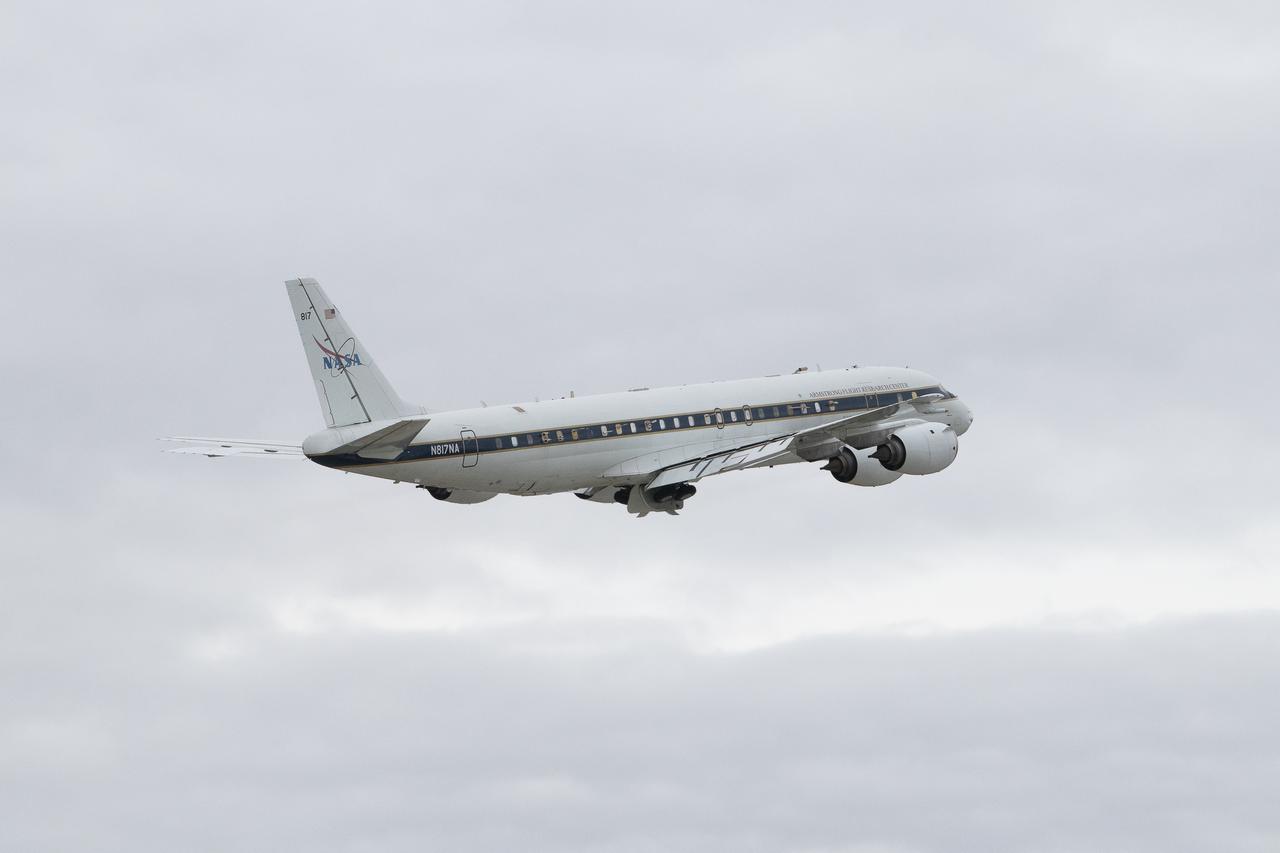
DC-8 aircraft conducts test flights at Building 703 in Palmdale, CA. The DC-8 aircraft is prepared for its last mission, ASIA-AQ (Airborne and Satellite Investigation of Asian Air Quality), that will collect detailed air quality data over several locations in Asia to improve the understanding of local air quality in collaboration with local scientists, air quality agencies, and government partners
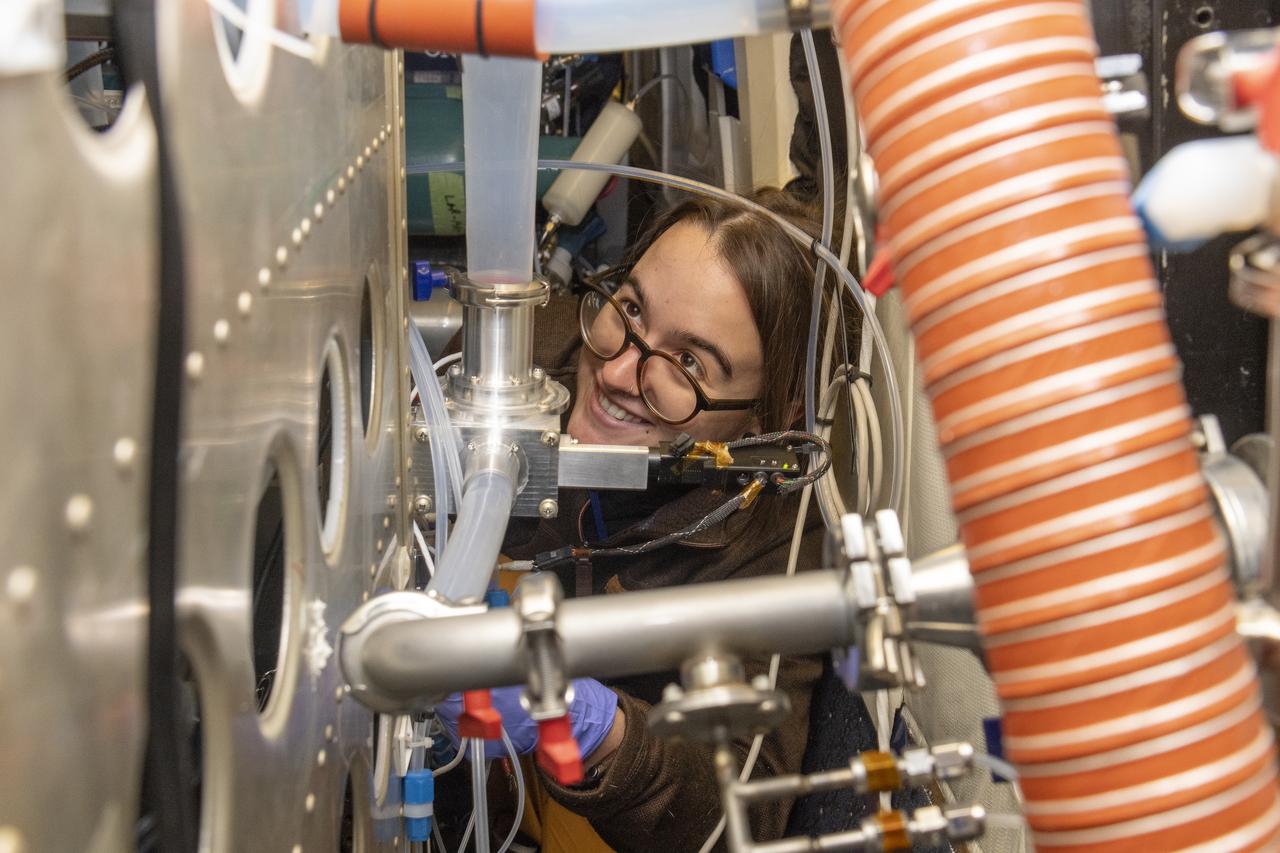
Kat Ball, Chemical Engineering Ph.D candidate at Caltech, attends to the Chemical Ionization Mass Spectrometer (CIMS) rack onboard the DC-8 aircraft at Building 703 in Palmdale, CA. The DC-8 aircraft is prepared for its last mission, ASIA-AQ (Airborne and Satellite Investigation of Asian Air Quality), that will collect detailed air quality data over several locations in Asia to improve the understanding of local air quality in collaboration with local scientists, air quality agencies, and government partners
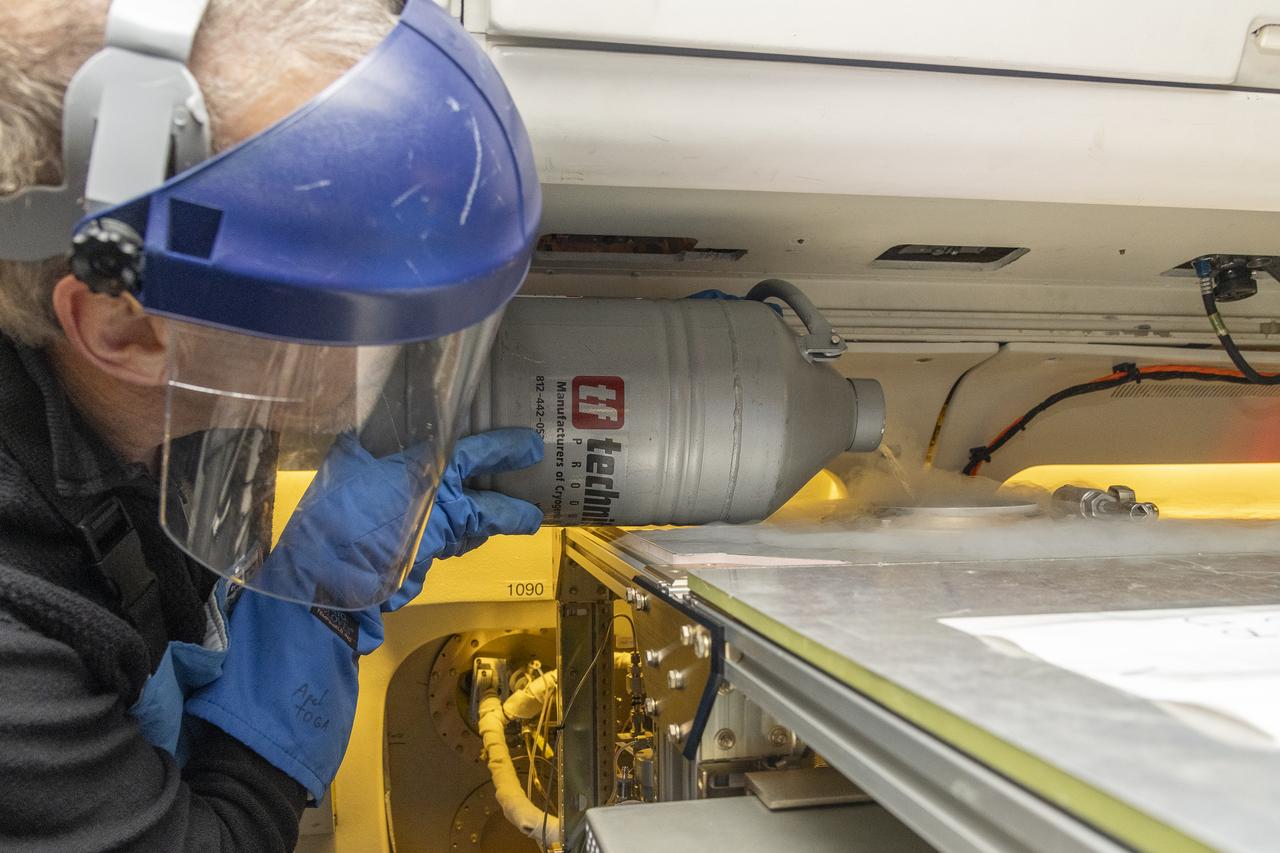
Alan Hills fills liquid nitrogen in the Trace Organic Gas Analyzer (TOGA) instrument onboard the DC-8 aircraft at Building 703 in Palmdale, CA. This instrument measures volatile organic compounds (VOCs) in the atmosphere. The DC-8 aircraft is prepared for its last mission, ASIA-AQ (Airborne and Satellite Investigation of Asian Air Quality), that will collect detailed air quality data over several locations in Asia to improve the understanding of local air quality in collaboration with local scientists, air quality agencies, and government partners
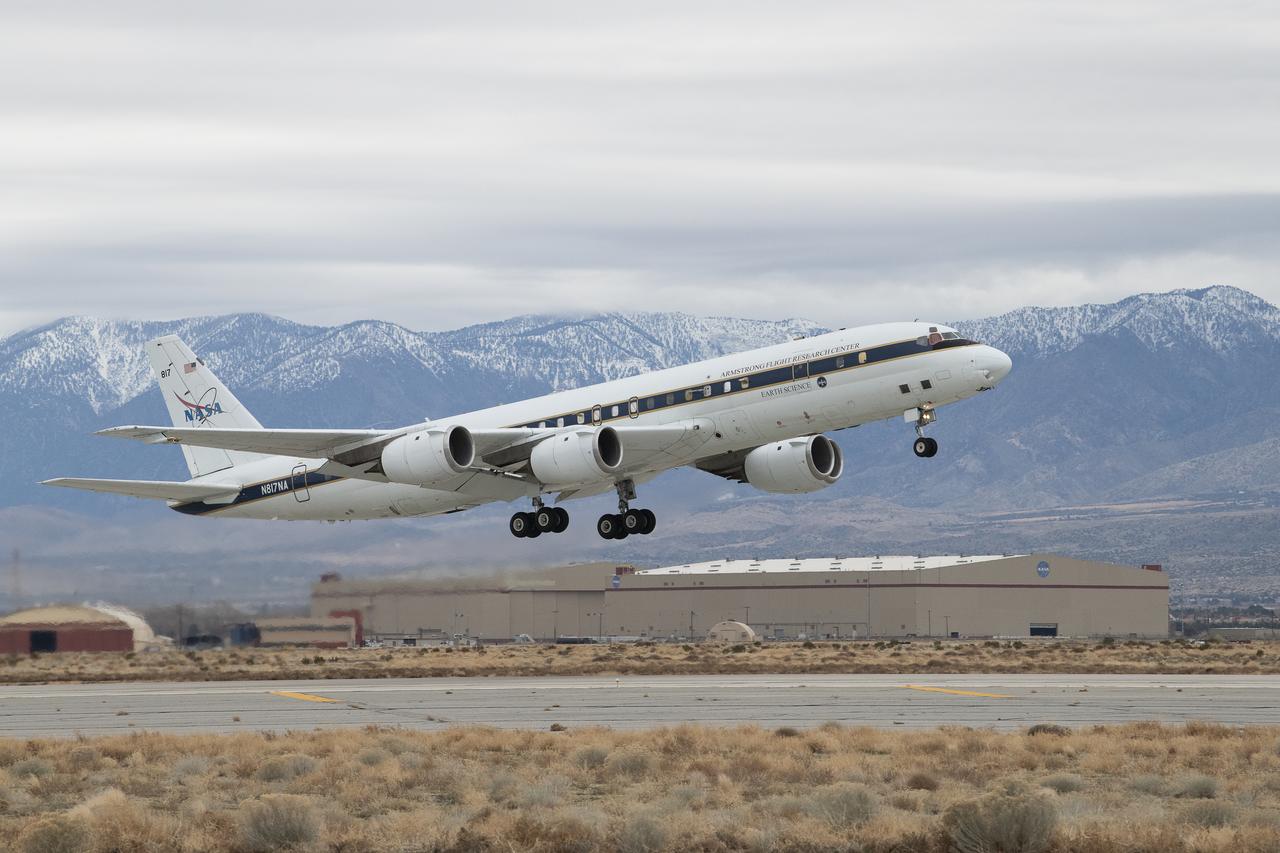
DC-8 aircraft conducts test flights at Building 703 in Palmdale, CA. The DC-8 aircraft is prepared for its last mission, ASIA-AQ (Airborne and Satellite Investigation of Asian Air Quality), that will collect detailed air quality data over several locations in Asia to improve the understanding of local air quality in collaboration with local scientists, air quality agencies, and government partners
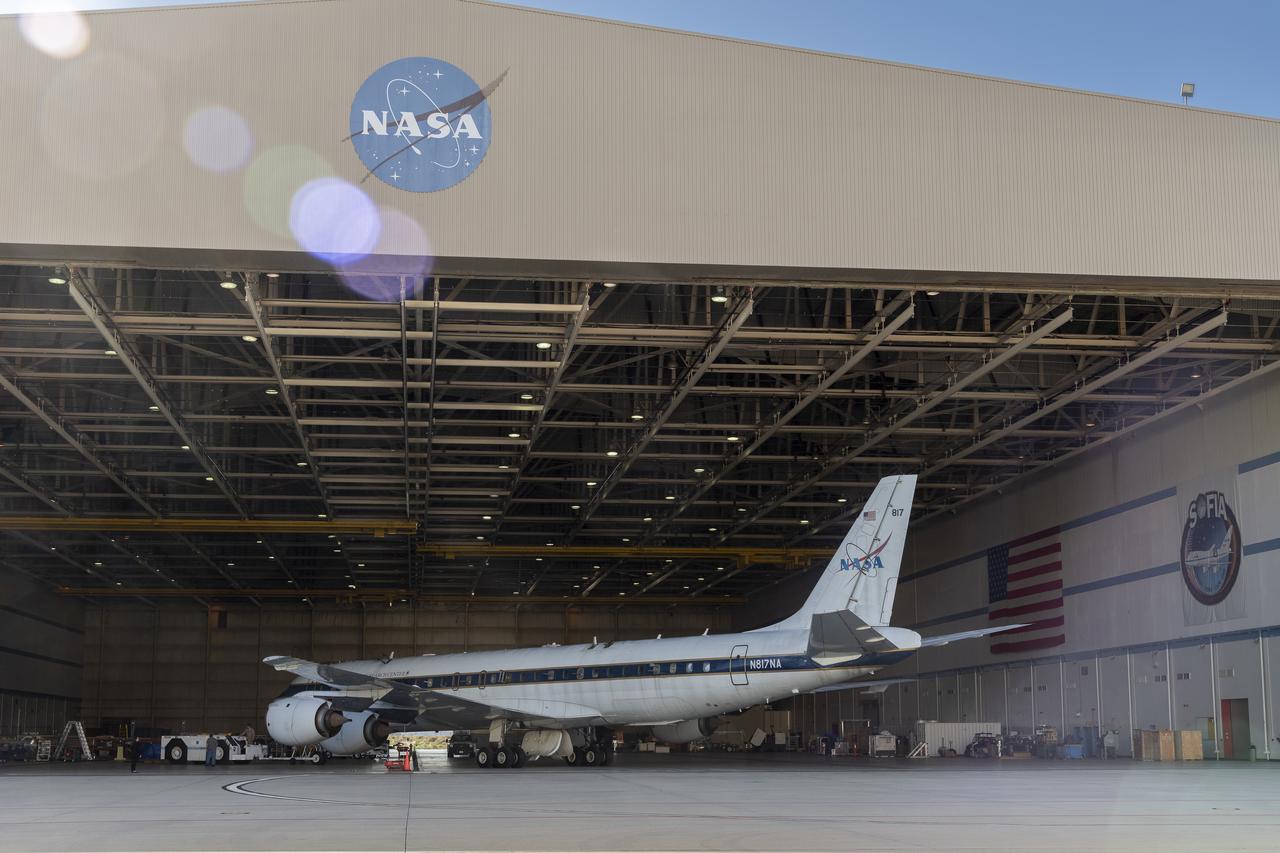
The DC-8 aircraft returns to the hangar at NASA’s Armstrong Flight Research Center Building 703 in Palmdale, California, on April 1, 2024, after completing its final mission supporting Airborne and Satellite Investigation of Asian Air Quality (ASIA-AQ).

From left, Wayne Ringelberg, chief pilot at NASA’s Armstrong Flight Research Center in Edwards, California, is welcomed by Michael Thomson, director of NASA Armstrong’s Science Mission Directorate, and Kirsten Boogaard, NASA’s DC-8 project manager, after the DC-8 aircraft and crew return to NASA Armstrong’s Building 703 in Palmdale, California, on April 1, 2024, following the aircraft’s final mission in support of the Airborne and Satellite Investigation of Asian Air Quality (ASIA-AQ).

NASA’s Armstrong Flight Research Center Director Brad Flick smiles as members of the DC-8 team gather and exchange congratulations after the aircraft and crew return to NASA Armstrong’s Building 703 in Palmdale, California, on April 1, 2024, following the aircraft’s final mission in support of the Airborne and Satellite Investigation of Asian Air Quality (ASIA-AQ).
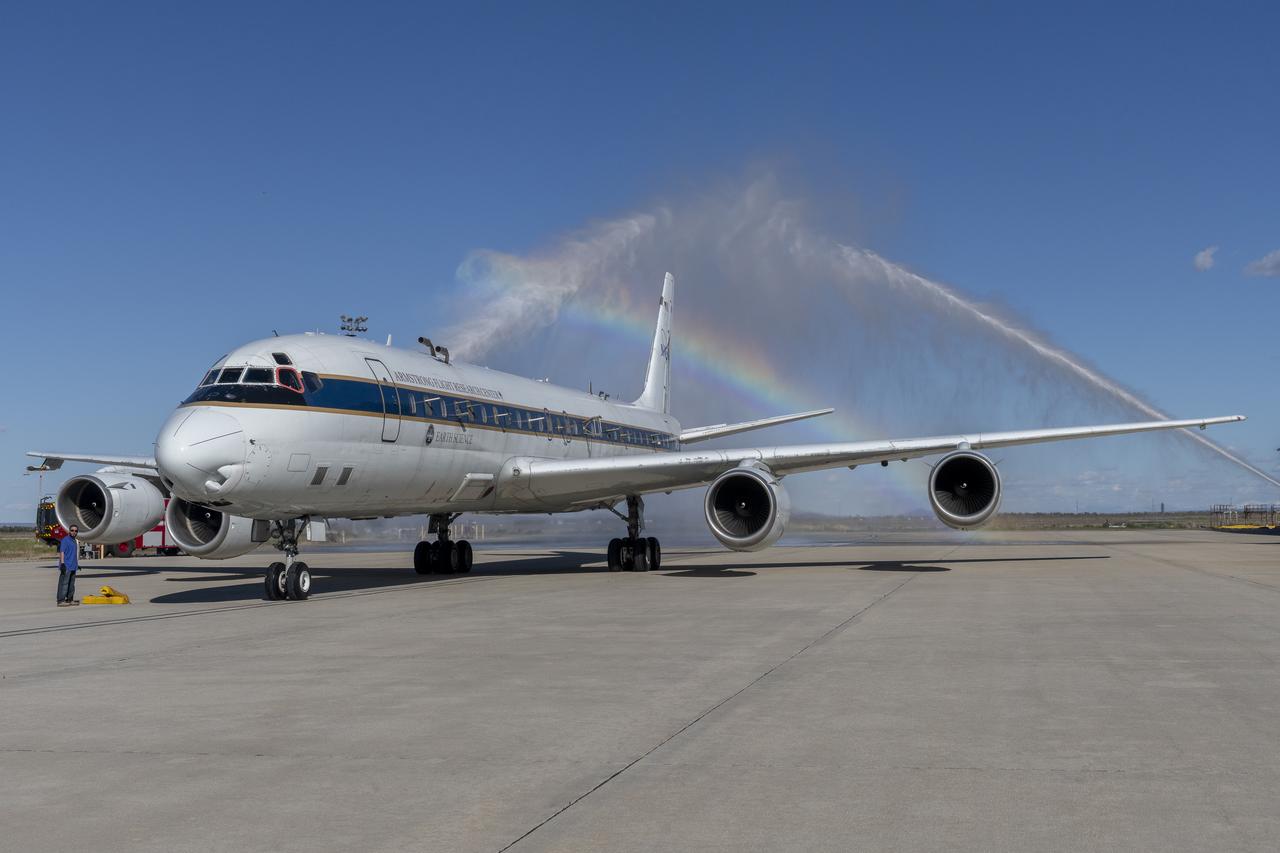
The DC-8 aircraft returned to NASA’s Armstrong Flight Research Center Building 703 in Palmdale, California, on April 1, 2024, after completing its final mission supporting Airborne and Satellite Investigation of Asian Air Quality (ASIA-AQ). The aircraft and crew were welcomed back with a celebratory water salute by the U.S. Air Force Plant 42 Fire Department.
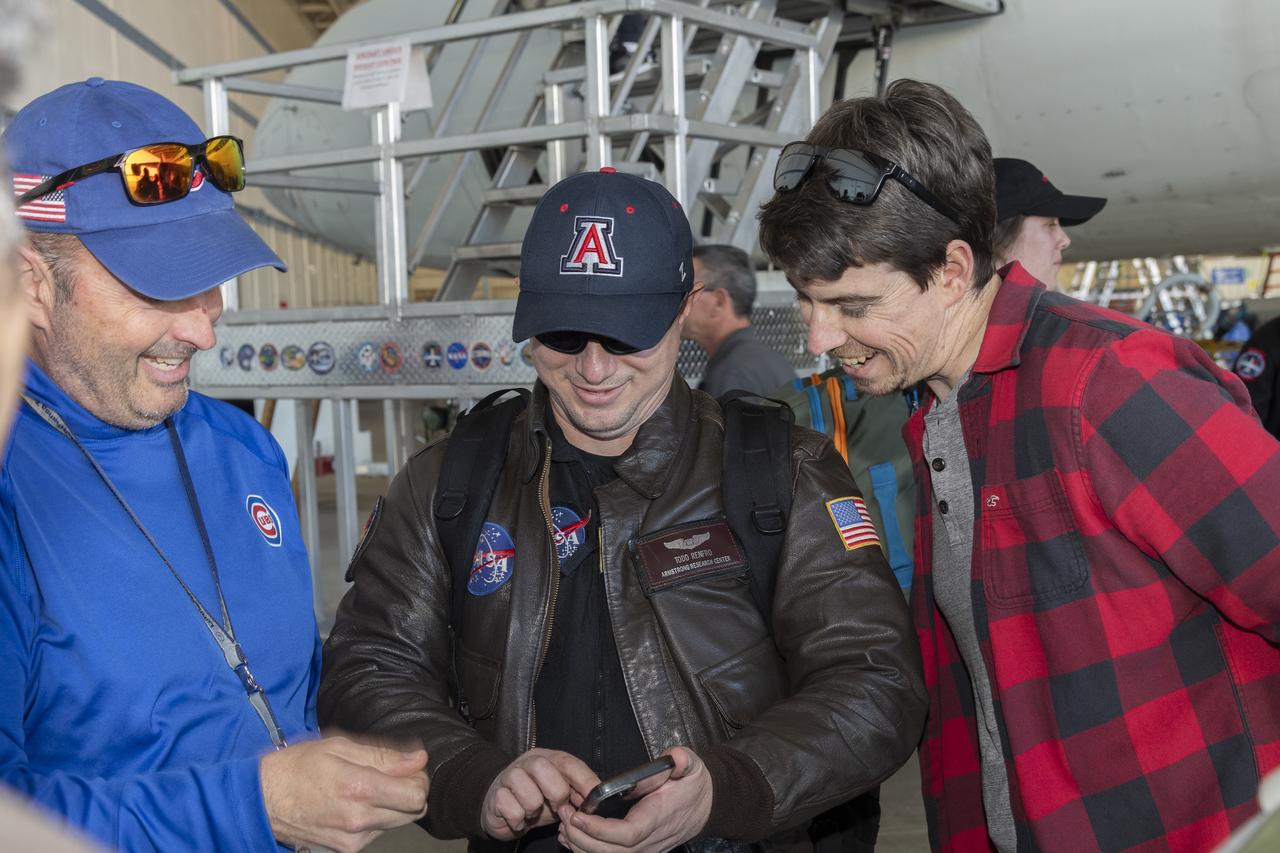
From left, Andy Barry, DC-8 pilot; Todd Renfro, flight navigator; and Adam Devalon, flight engineer, share smiles after the DC-8 aircraft and crew return to NASA’s Armstrong Flight Research Center Building 703 in Palmdale, California, on April 1, 2024, following the aircraft’s final mission in support of the Airborne and Satellite Investigation of Asian Air Quality (ASIA-AQ).
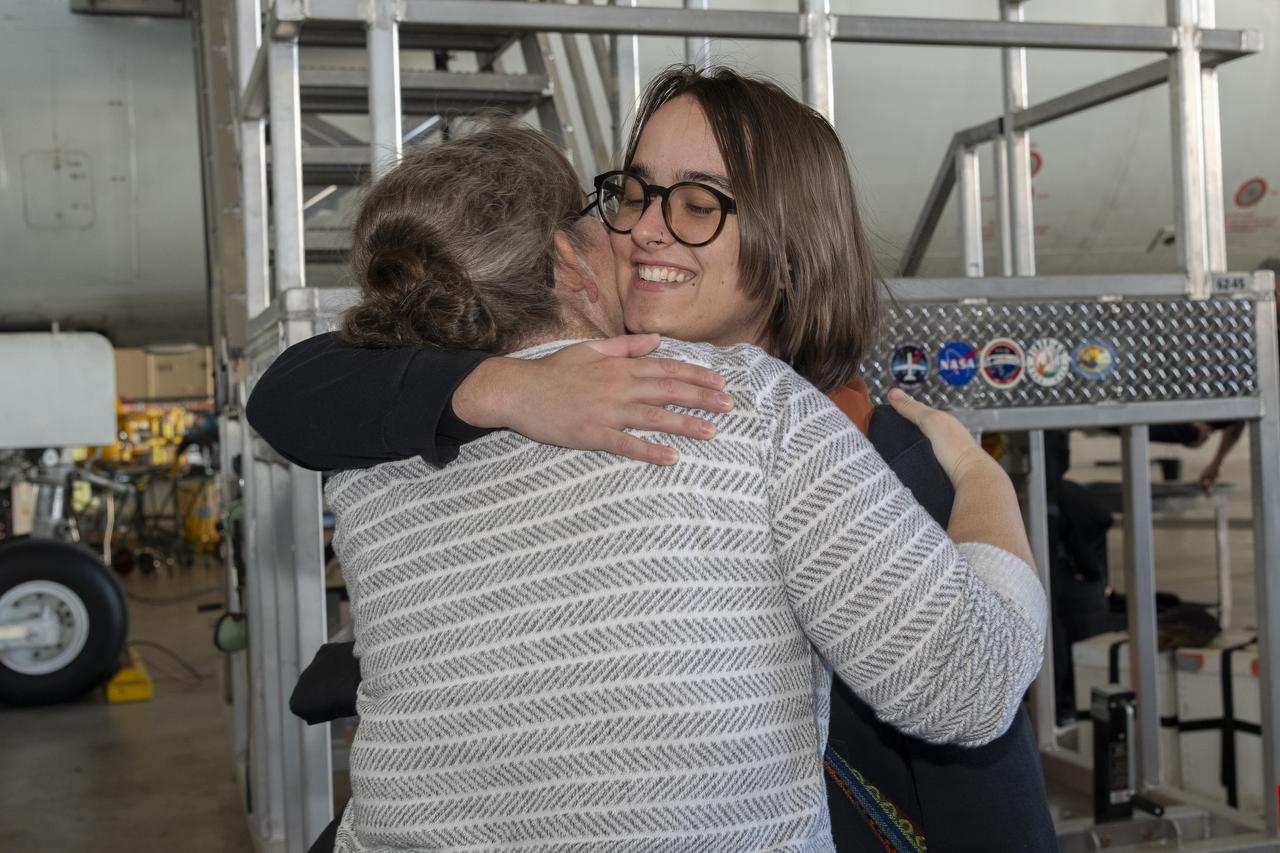
NASA’s DC-8 operations engineer, Nickelle “Nicki” Reid, left, embraces Katherine Ball, chemical engineering Ph.D. candidate at California Institute of Technology, after the DC-8 aircraft and crew return to NASA Armstrong’s Building 703 in Palmdale, California, on April 1, 2024, following the aircraft’s final mission in support of the Airborne and Satellite Investigation of Asian Air Quality (ASIA-AQ).
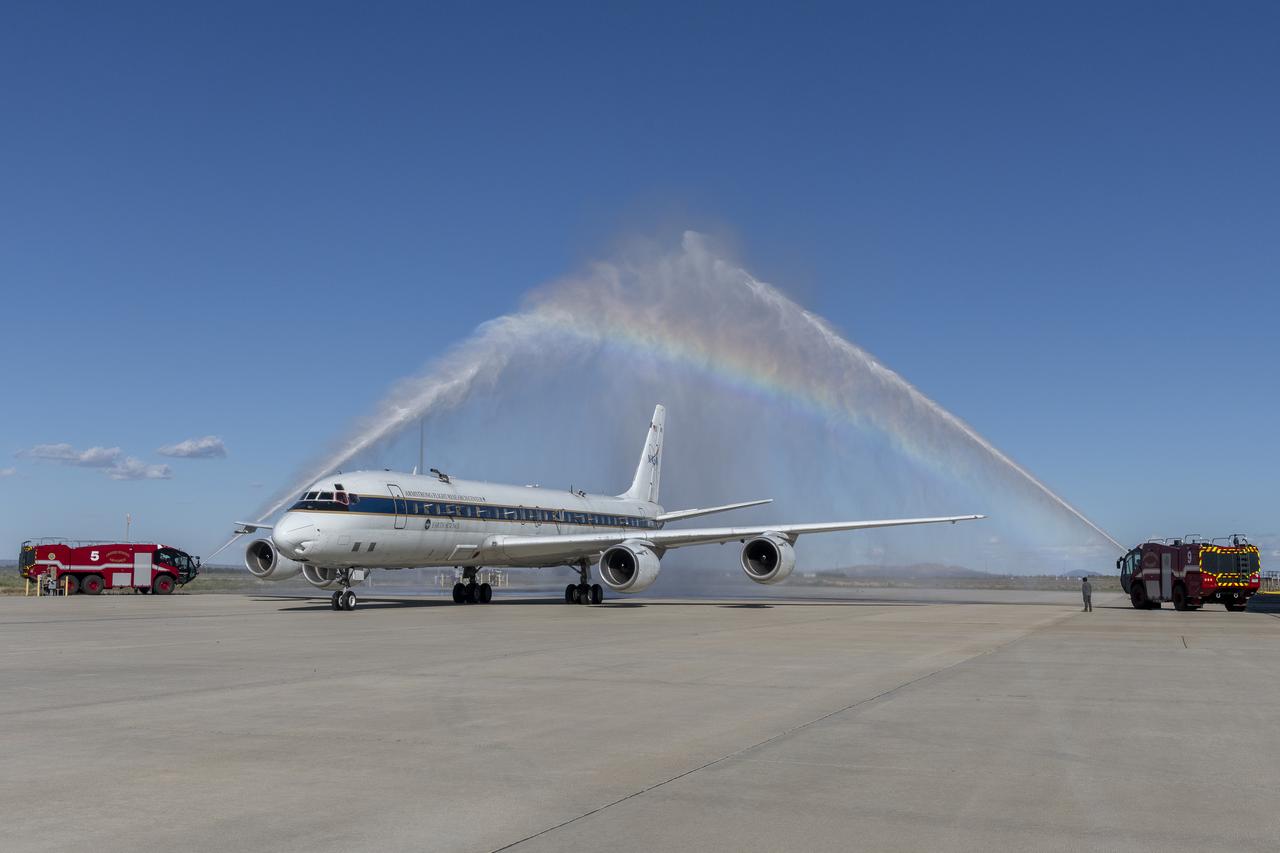
The DC-8 aircraft returned to NASA’s Armstrong Flight Research Center Building 703 in Palmdale, California, on April 1, 2024, after completing its final mission supporting Airborne and Satellite Investigation of Asian Air Quality (ASIA-AQ). The aircraft and crew were welcomed back with a celebratory water salute by the U.S. Air Force Plant 42 Fire Department.

NASA DC-8 crew members Nickelle “Nicki” Reid, operations engineer, left, and Isac Mata, engineer technician, exchange in a heartfelt hug after the DC-8 aircraft and crew return to NASA Armstrong’s Building 703 in Palmdale, California, on April 1, 2024, following the aircraft’s final mission in support of the Airborne and Satellite Investigation of Asian Air Quality (ASIA-AQ). Smiling in the background is Michael Thomson, director of NASA Armstrong’s Science Mission Directorate.
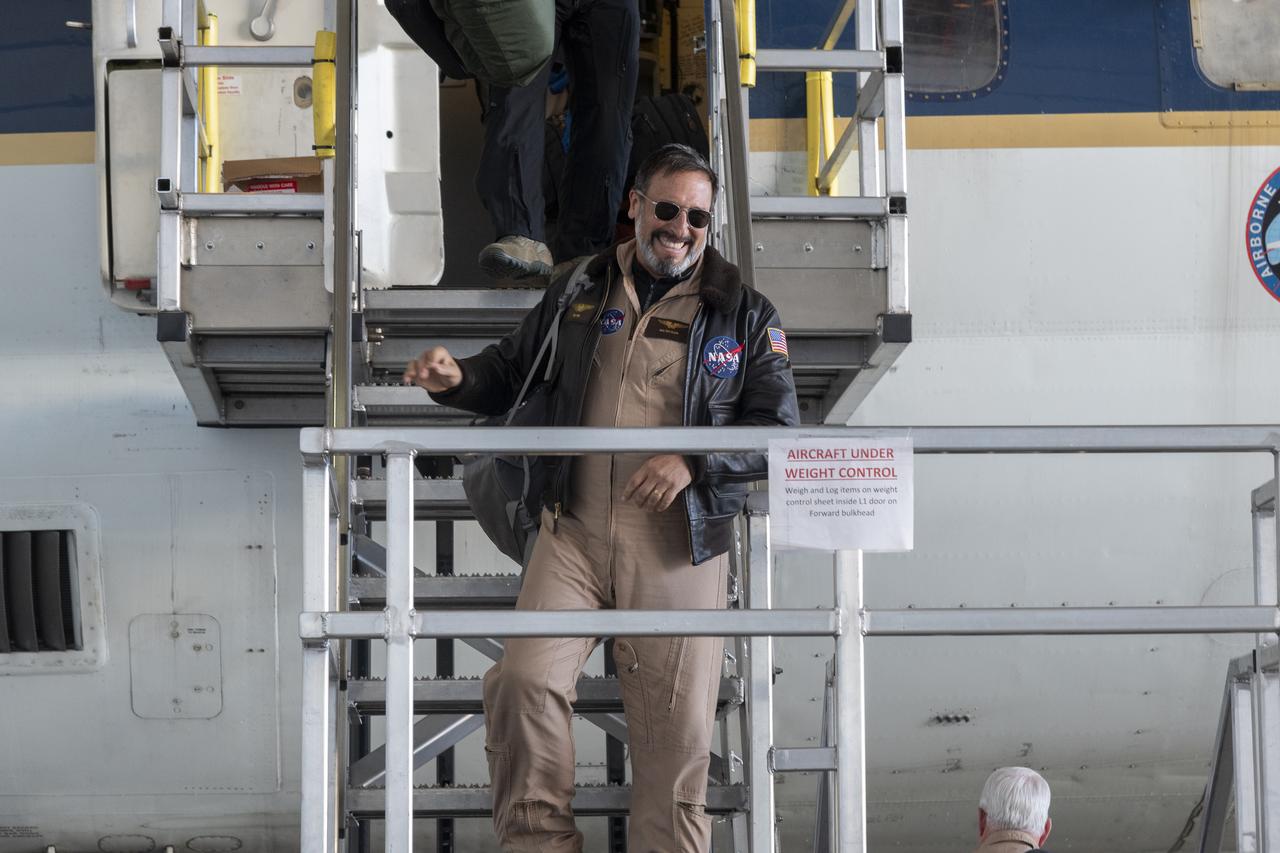
Walter Klein, DC-8 navigator, exits the aircraft cabin and is welcomed with applause from a supportive team after the DC-8 aircraft and crew return to NASA’s Armstrong Flight Research Center Building 703 in Palmdale, California, on April 1, 2024, following the aircraft’s final mission in support of the Airborne and Satellite Investigation of Asian Air Quality (ASIA-AQ).
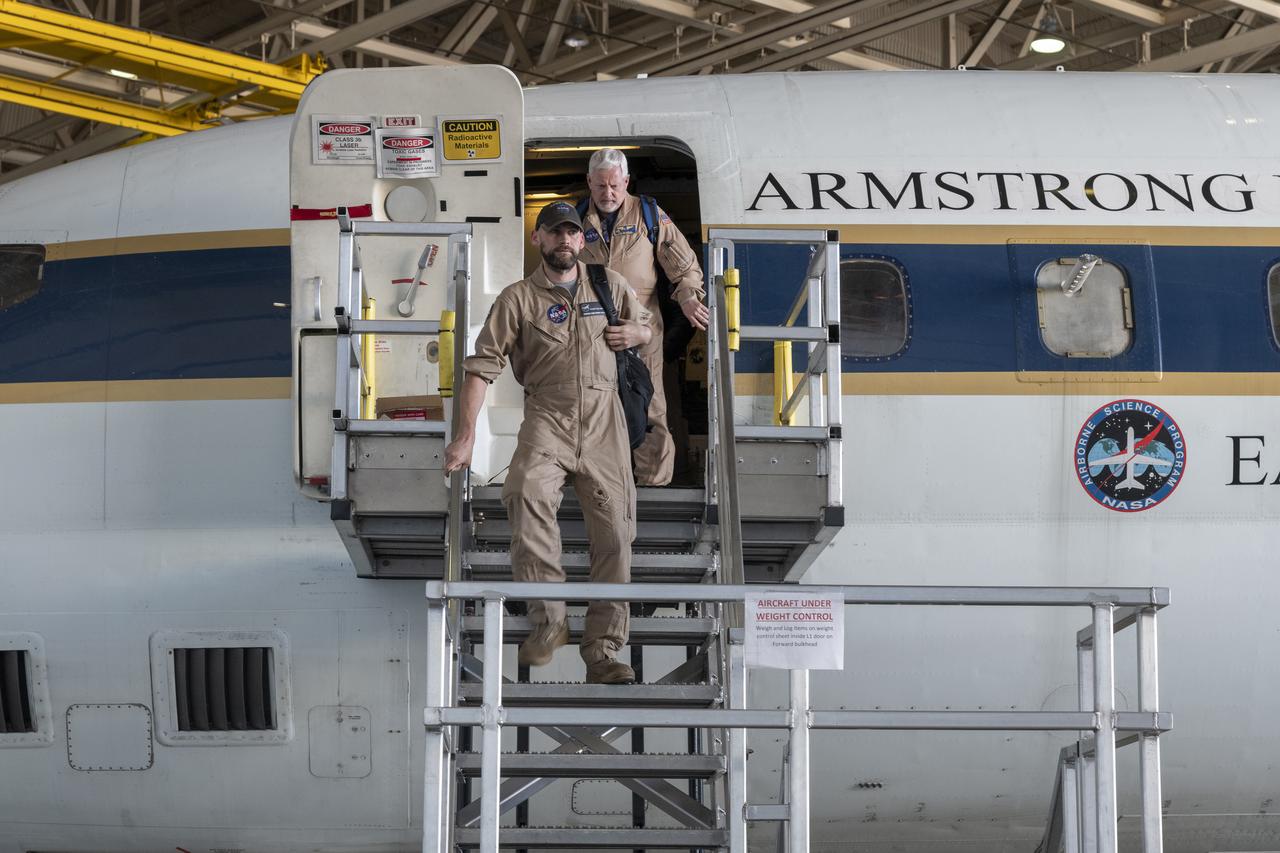
Kelly Jellison, avionics lead, and Tim Sandon, flight engineer, exit the DC-8 aircraft cabin and are welcomed with applause from a supportive team after the DC-8 aircraft and crew return to NASA’s Armstrong Flight Research Center Building 703 in Palmdale, California, on April 1, 2024, following the aircraft’s final mission in support of the Airborne and Satellite Investigation of Asian Air Quality (ASIA-AQ).