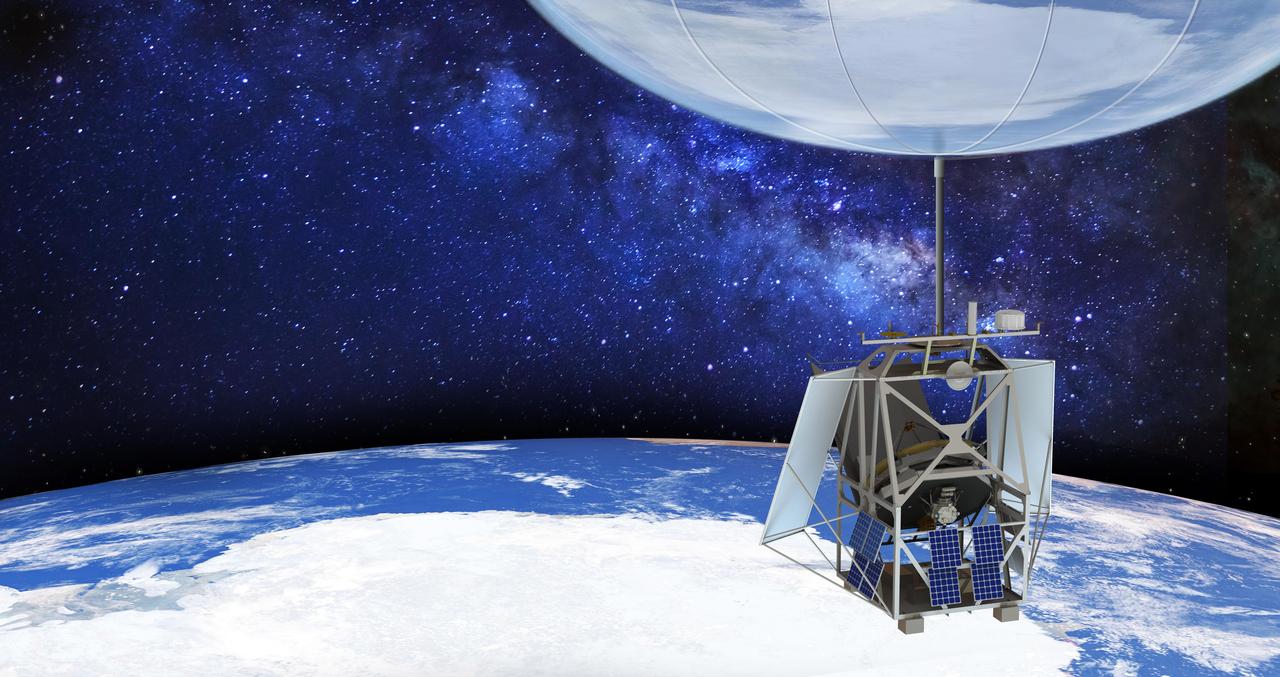
NASA's Astrophysics Stratospheric Telescope for High Spectral Resolution Observations at Submillimeter-wavelengths (ASTHROS), seen in this illustration, is a high-altitude balloon mission for studying astrophysical phenomena. Scheduled to launch no earlier than December 2023 from the agency's Long Duration Balloon Camp near McMurdo Station in Antarctica, ASTHROS will aim to fly for 21 to 28 days at an altitude of about 130,000 feet (24.6 miles or 40 kilometers). At that altitude, ASTHROS can observe wavelengths of light blocked by Earth's atmosphere. When fully inflated, the 40 million-cubic-foot helium balloon will be about 400 feet (150 meters) wide, or roughly the size of a football stadium. The ASTHROS telescope features a lightweight 8.4-foot (2.5-meter) primary mirror to collect far-infrared light – one of the largest to ever fly on a high-altitude balloon mission. Balloon missions typically cost less than space missions and take less time to move from early planning to deployment. They also employ new technologies that can then be used on future space missions. The mission's main science goal is to study stellar feedback, the process by which living stars disperse and reshape clouds of gas and dust that may eventually form new stars. Feedback regulates star formation in many galaxies, and too much can halt star formation entirely. ASTHROS will look at several star-forming regions in our galaxy where feedback takes place, and at distant galaxies containing millions of stars to see how feedback plays out at large scales and in different environments. https://photojournal.jpl.nasa.gov/catalog/PIA25168
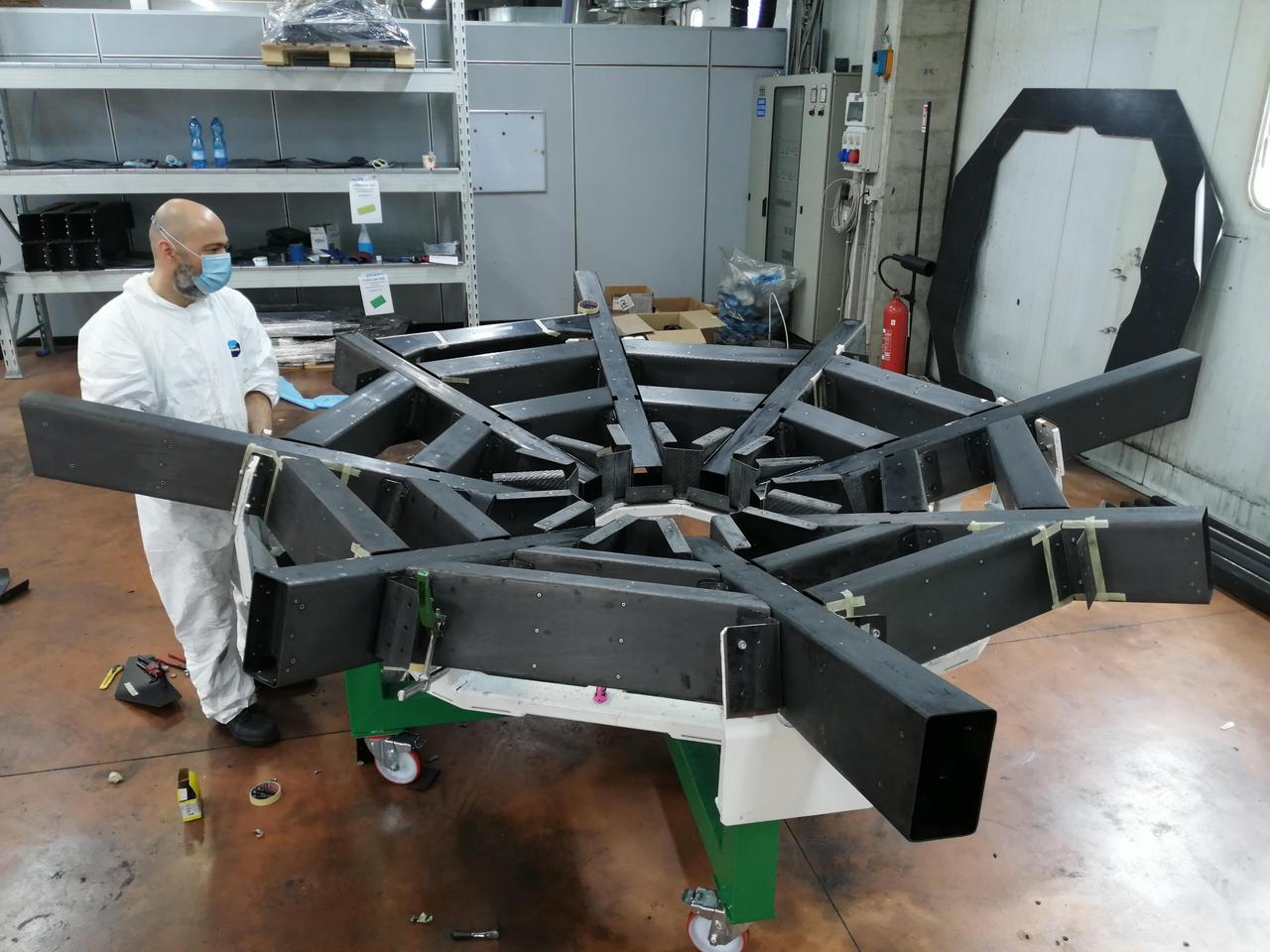
Known as the cradle, the structure that supports the primary mirror on NASA's Astrophysics Stratospheric Telescope for High Spectral Resolution Observations at Submillimeter-wavelengths mission, or ASTHROS, keeps the mirror panels aligned. Made from carbon fiber, it and must be both lightweight and extremely rigid. NASA contracted Media Lario, an optics company in Bosisio Parini, Italy, to design and produce ASTHROS' full telescope unit, including the primary mirror, a secondary mirror, and supporting structure (called the cradle). The cradle is shown here at Media Lario. The mission's main science goal is to study stellar feedback, the process by which living stars disperse and reshape clouds of gas and dust that may eventually form new stars. Feedback regulates star formation in many galaxies, and too much can halt star formation entirely. ASTHROS will look at several star-forming regions in our galaxy where feedback takes place, and at distant galaxies containing millions of stars to see how feedback plays out at large scales and in different environments. https://photojournal.jpl.nasa.gov/catalog/PIA25169
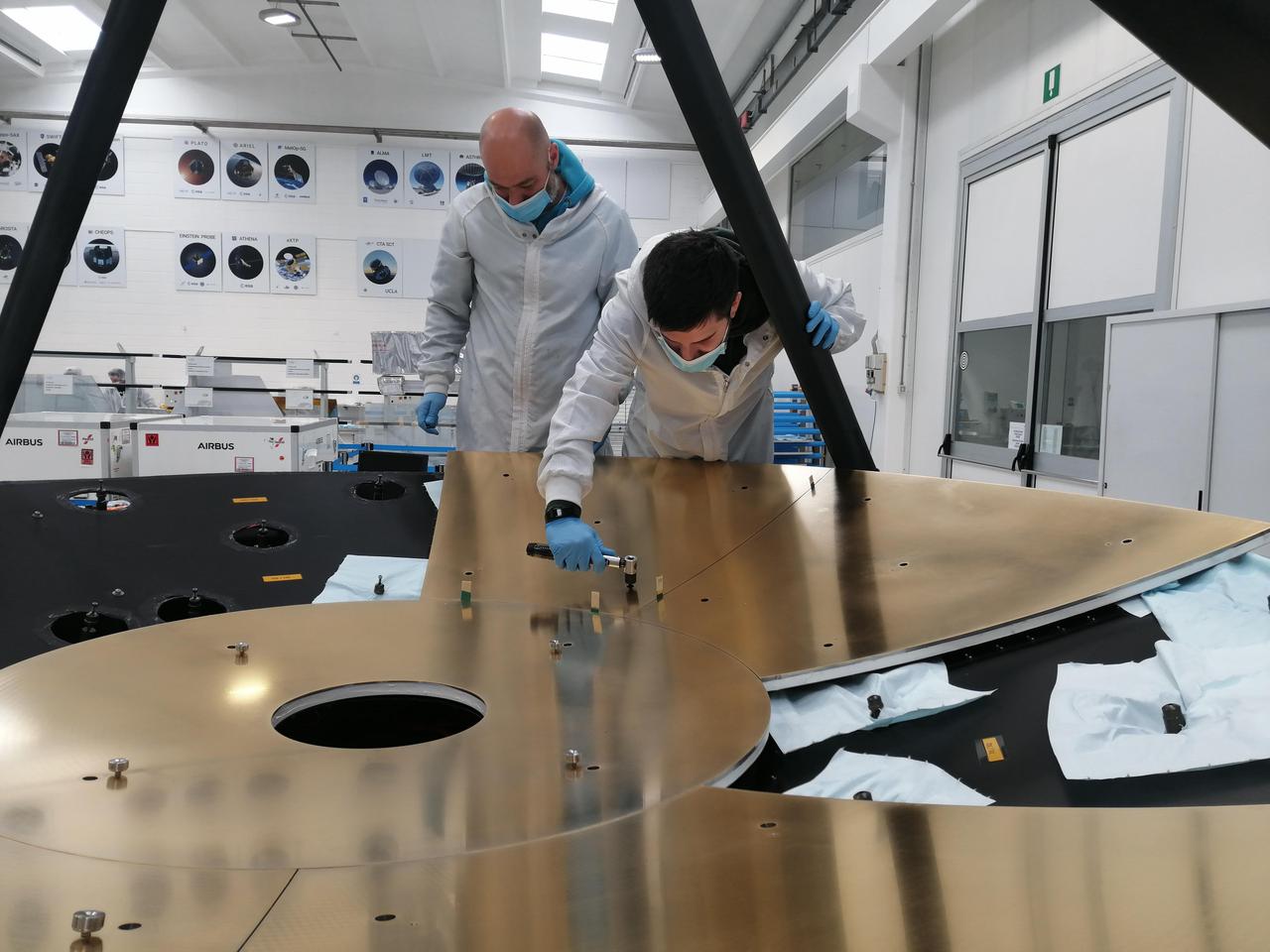
The mirror on NASA's Astrophysics Stratospheric Telescope for High Spectral Resolution Observations at Submillimeter-wavelengths mission, or ASTHROS, is composed of nine panels, coated in nickel and gold. Here, engineers attach panels to the mirror's support structure. The panels must be aligned to within 0.0001 inches (2.5 micrometers), or a fraction of the width of a human hair. Manufacturing multiple panels requires less time and expense than making the mirror as a single piece. NASA contracted Media Lario, an optics company in Bosisio Parini, Italy, to design and produce ASTHROS' full telescope unit, including the primary mirror, a secondary mirror, and supporting structure (called the cradle). The mirror is shown here at Media Lario. The mission's main science goal is to study stellar feedback, the process by which living stars disperse and reshape clouds of gas and dust that may eventually form new stars. Feedback regulates star formation in many galaxies, and too much can halt star formation entirely. ASTHROS will look at several star-forming regions in our galaxy where feedback takes place, and at distant galaxies containing millions of stars to see how feedback plays out at large scales and in different environments. https://photojournal.jpl.nasa.gov/catalog/PIA25167
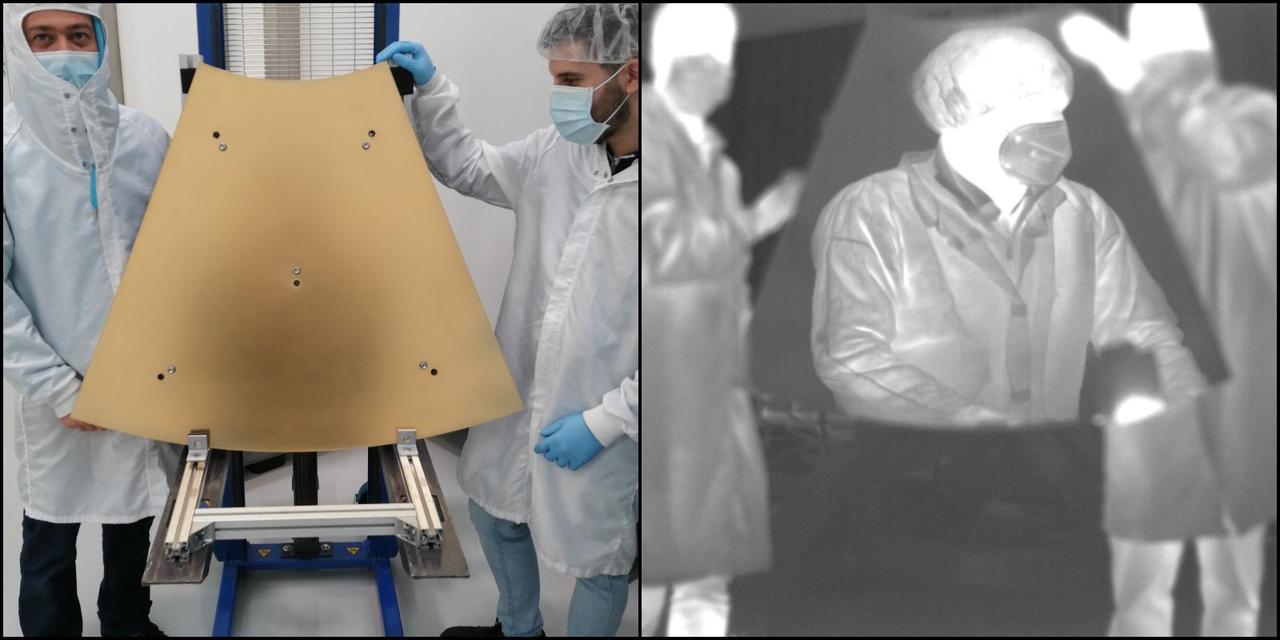
A gold-coated mirror panel on NASA's Astrophysics Stratospheric Telescope for High Spectral Resolution Observations at Submillimeter-wavelengths mission, or ASTHROS, appears blurry to the naked eye, as seen at left. But when photographed with an infrared camera, right, the panel reflects a technician's image as clearly as if the person were looking in a mirror. NASA contracted Media Lario, an optics company in Bosisio Parini, Italy, to design and produce ASTHROS' full telescope unit, including the primary mirror, a secondary mirror, and supporting structure (called the cradle). The cradle is shown here at Media Lario. The mission's main science goal is to study stellar feedback, the process by which living stars disperse and reshape clouds of gas and dust that may eventually form new stars. Feedback regulates star formation in many galaxies, and too much can halt star formation entirely. ASTHROS will look at several star-forming regions in our galaxy where feedback takes place, and at distant galaxies containing millions of stars to see how feedback plays out at large scales and in different environments. https://photojournal.jpl.nasa.gov/catalog/PIA25170
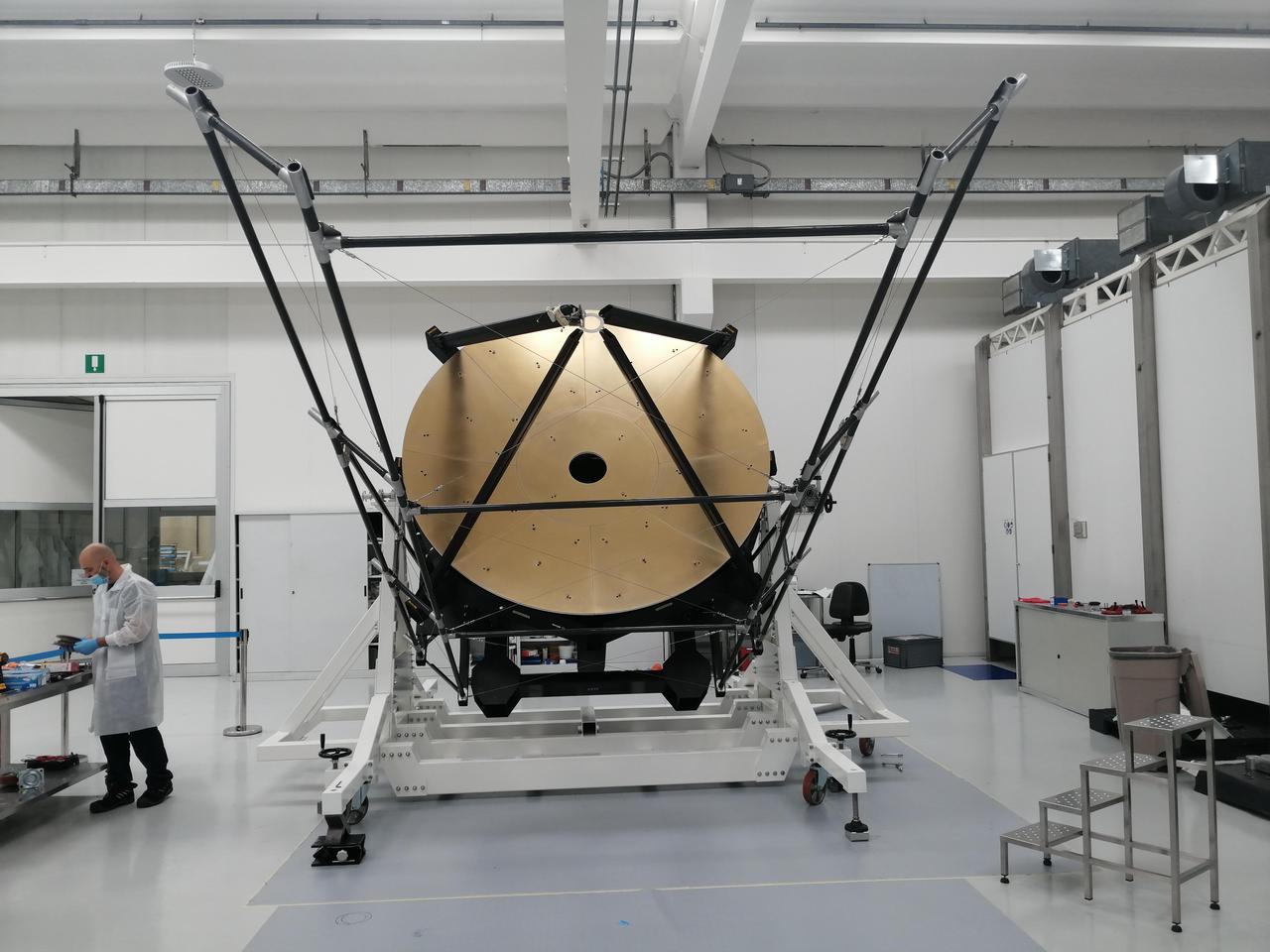
The 8.2-foot (2.5-meter) primary mirror on NASA's Astrophysics Stratospheric Telescope for High Spectral Resolution Observations at Submillimeter-wavelengths mission, or ASTHROS, is one of the largest to ever fly on a high-altitude balloon. The lightweight mirror, shown here, is coated in gold and nickel to make it more reflective in far-infrared wavelengths. NASA contracted Media Lario, an optics company in Bosisio Parini, Italy, to design and produce ASTHROS' full telescope unit, including the primary mirror, a secondary mirror, and supporting structure (called the cradle). The mirror is pictured at Media Lario. The mission's main science goal is to study stellar feedback, the process by which living stars disperse and reshape clouds of gas and dust that may eventually form new stars. Feedback regulates star formation in many galaxies, and too much can halt star formation entirely. ASTHROS will look at several star-forming regions in our galaxy where feedback takes place, and at distant galaxies containing millions of stars to see how feedback plays out at large scales and in different environments. https://photojournal.jpl.nasa.gov/catalog/PIA25166
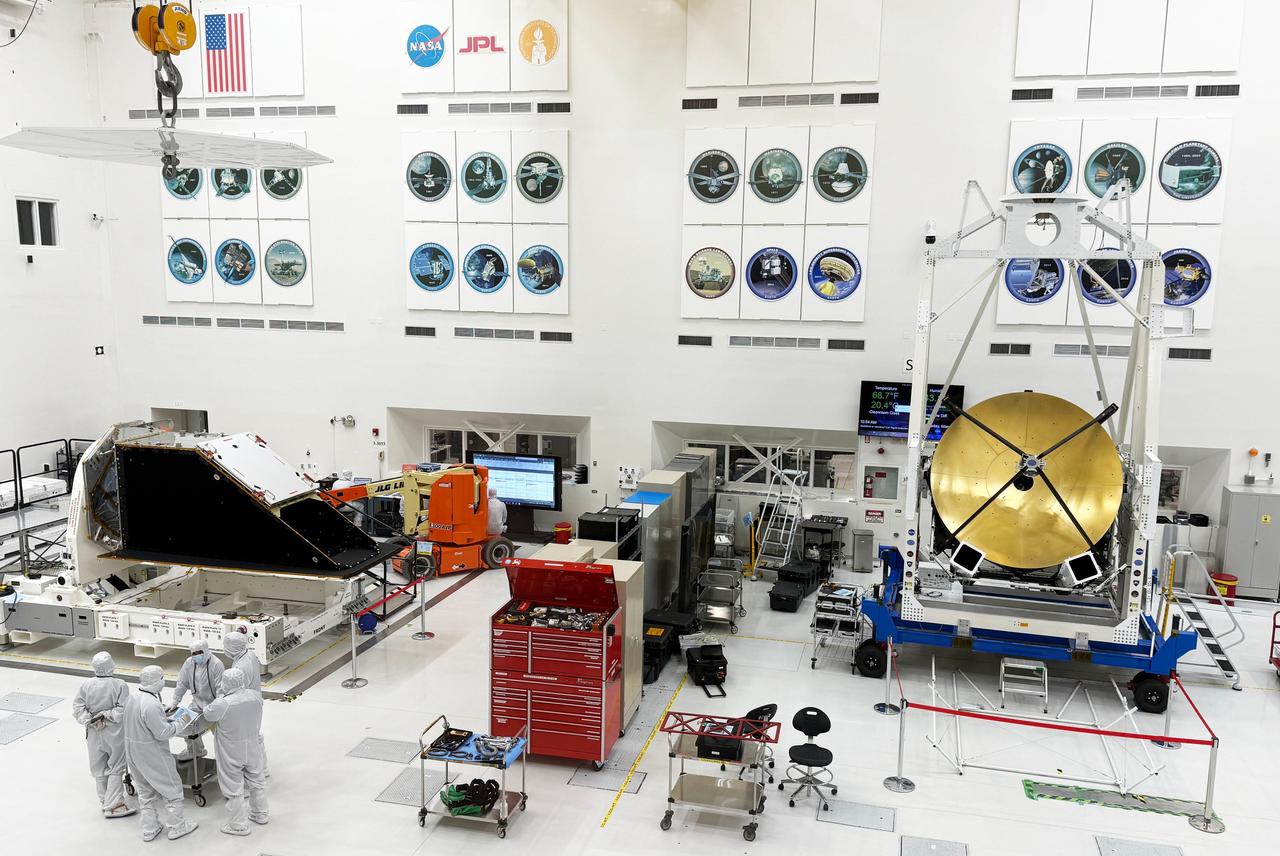
The dark, bulky instrument enclosure for NASA's NEO Surveyor is seen here (left) in the High Bay 1 clean room of the Spacecraft Assembly Facility at NASA's Jet Propulsion Laboratory in Southern California in March 2025. A major component of the mission, the instrument enclosure journeyed back to JPL in early March after completing environmental testing at NASA's Johnson Space Center in Houston. The gold-coated, circular antenna at right is part of the telescope for NASA's ASTHROS (Astrophysics Stratospheric Telescope for High Spectral Resolution Observations at Submillimeter-wavelengths), an atmospheric balloon mission; it has been in the clean room since December 2024. https://photojournal.jpl.nasa.gov/catalog/PIA26584