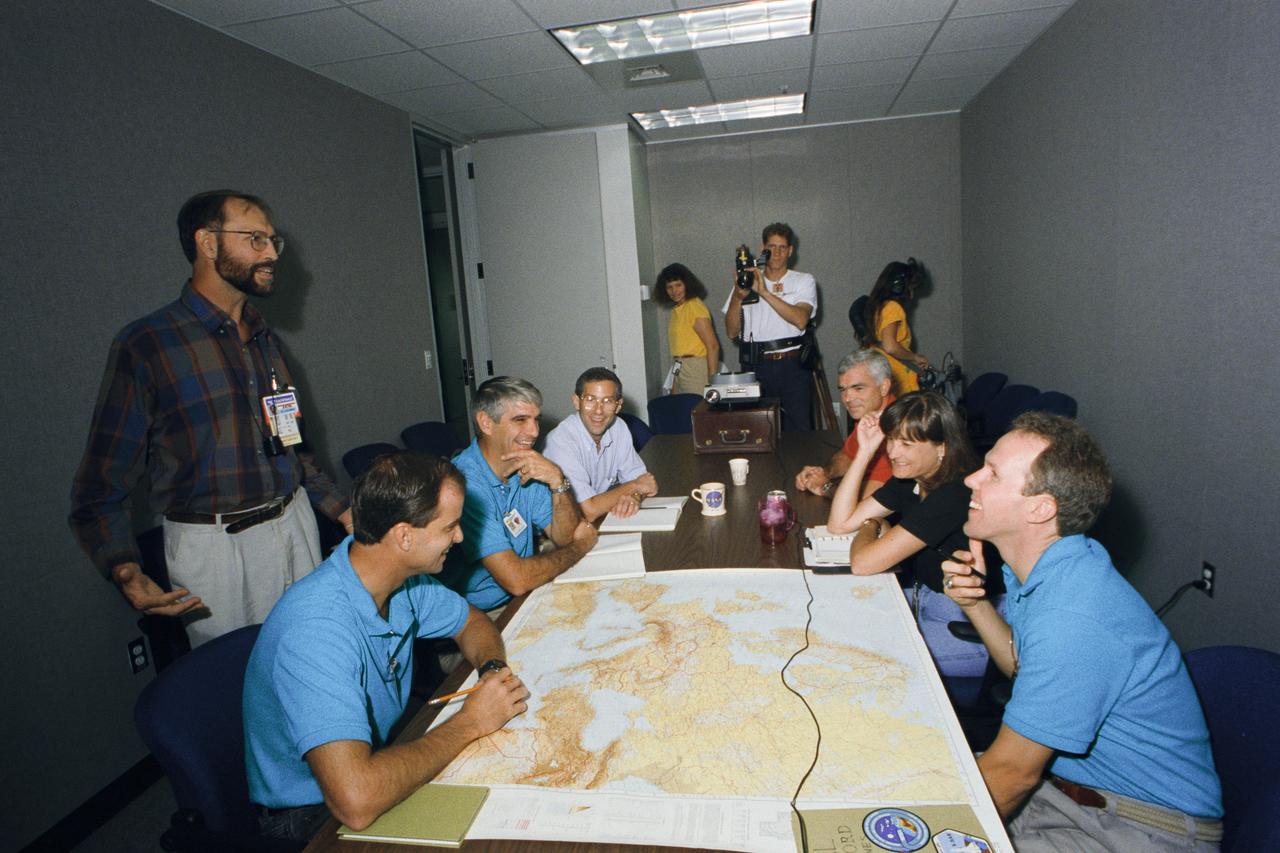
S93-42727 (26 Aug 1993) --- The six astronauts in training for the STS-59 mission are given some onboard Earth observations tips by Justin Wilkinson (standing, foreground) of the Space Shuttle Earth Observations Project (SSEOP) group. Astronaut Sidney M. Gutierrez, mission commander, is at center on the left side of the table. Others, left to right, are astronauts Kevin P. Chilton, pilot; Jerome (Jay) Apt and Michael R.U. (Rich) Clifford, both mission specialists; Linda M. Godwin, payload commander; and Thomas D. Jones, mission specialist.
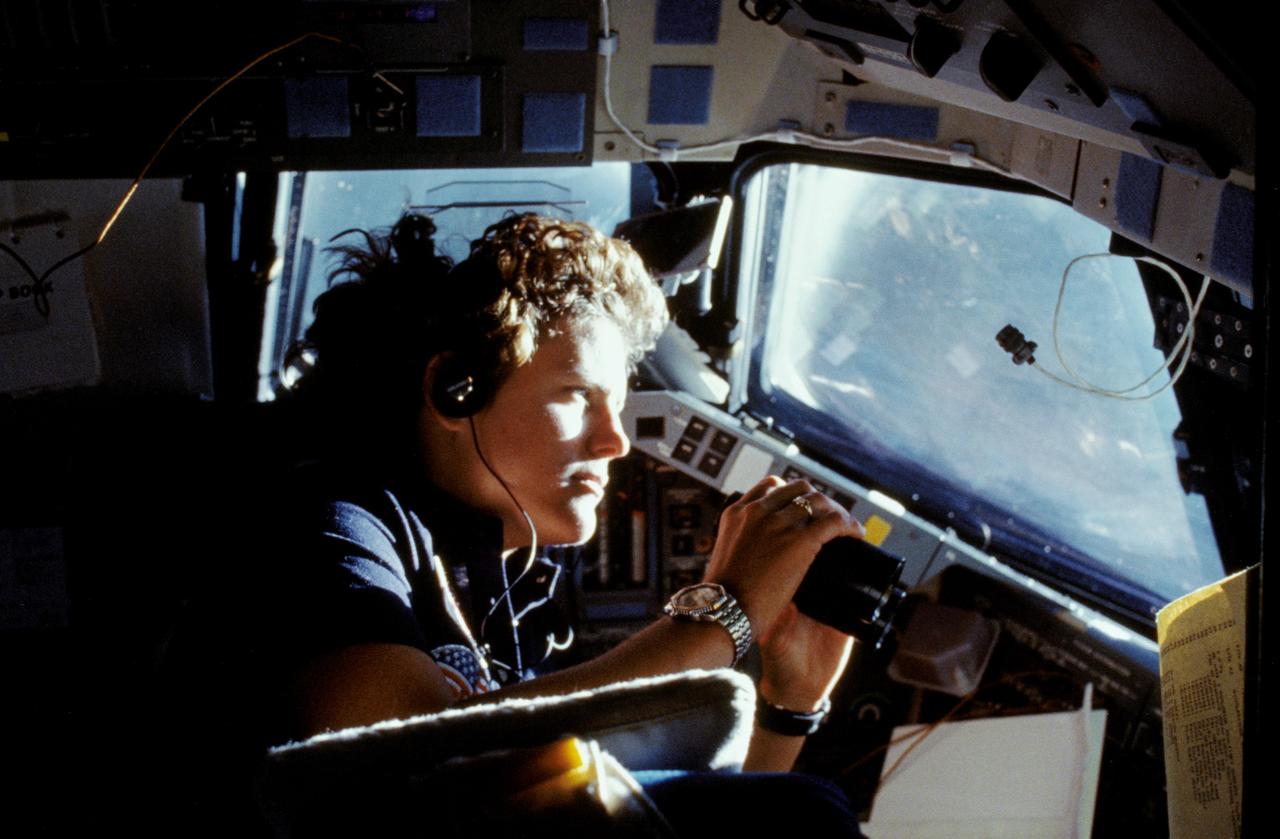
41G-11-027 (14 Oct. 1984) --- Kathryn D. Sullivan, 41-G mission specialist, uses a pair of binoculars to do some magnified viewing through the forward cabin windows of the Earth-orbiting space shuttle Challenger. The 35mm frame was part of the first photographic release from the eight-day 41-G mission on Oct. 14, 1984. Photo credit: NASA

41G-102-047 (13 Oct. 1984) --- An unusual picture, photographed by astronaut Kathryn D. Sullivan, shows the beginning and ending location of her eight-day mission in space with six other 41-G crew members aboard the space shuttle Challenger. The picture was made moments before touchdown at the KSC landing facility. Dr. Sullivan aimed a 35mm camera through the port hole in Challenger's hatch. The five ground features represented as circles or pentagonals are launch areas. Photo credit: NASA
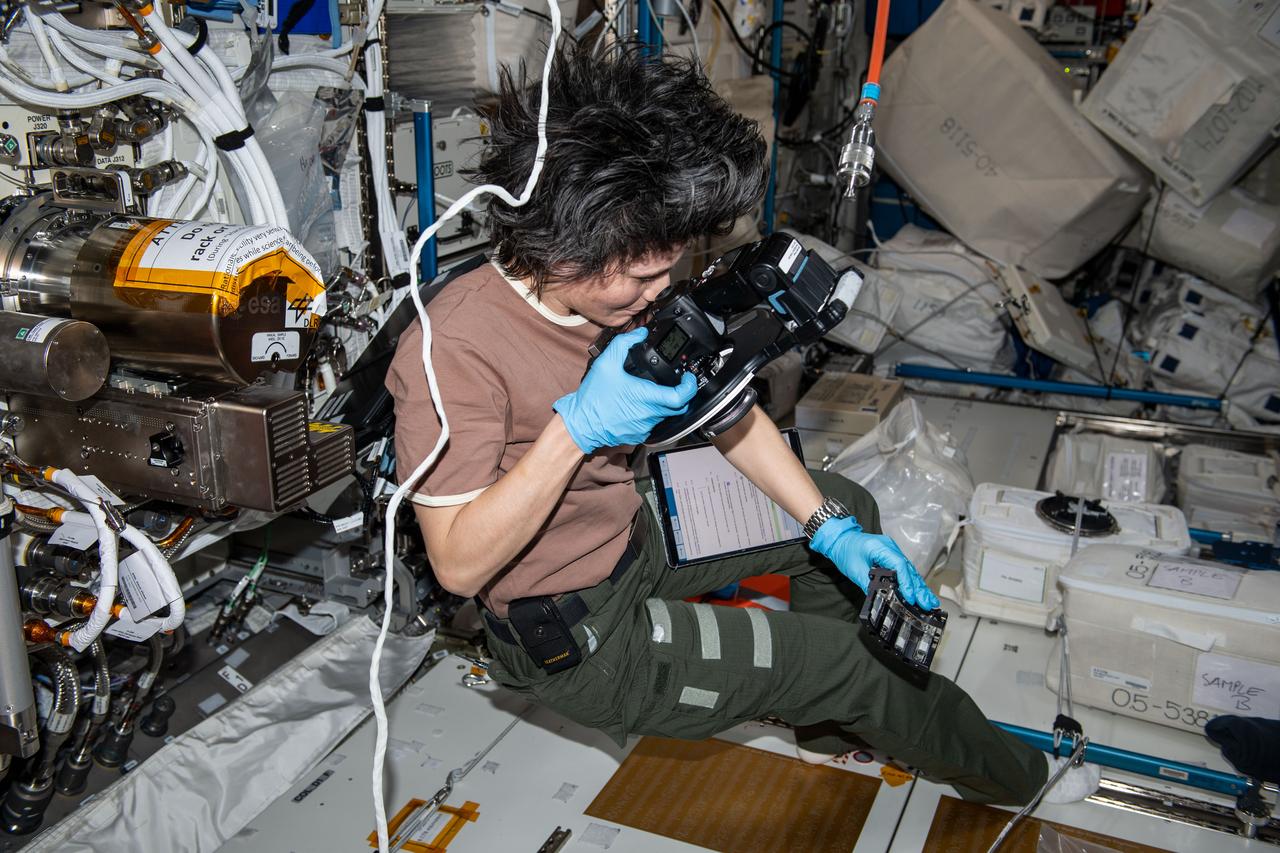
iss067e253397 (Dec. 2, 2024) --- ESA (European Space Agency) astronaut and Expedition 67 Flight Engineer Samantha Cristoforetti photographs and exchanges samples for the Fluids Science Laboratory Soft Matter Dynamics space physics experiment aboard the Intenational Space Station's Columbus laboratory module. The microgravity environment enables the observation of "wet" foams and the study of rearrangement phenomena, such as coarsening and coalescence, disentangled from drainage issues caused by Earth's gravity. Results may benefit Earth and space industries.
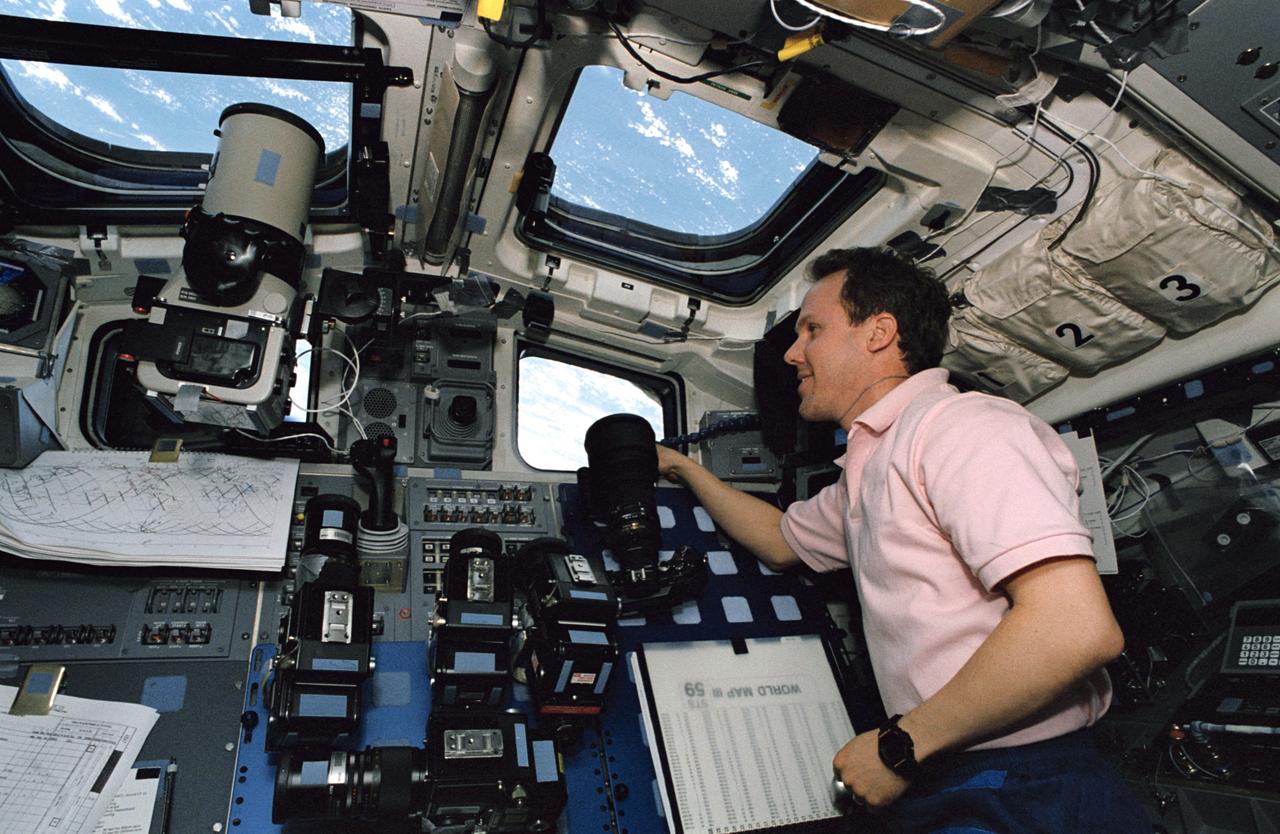
STS059-09-021 (9-20 April 1994) --- Astronaut Thomas D. Jones, mission specialist, monitors a number of cameras fixed on targets of opportunity as the Space Shuttle Endeavour orbits Earth. Jones is one of six NASA astronauts supporting the week and half Space Radar Laboratory (SRL-1) mission. He has been assigned as payload commander for SRL-2, scheduled to fly later this year.
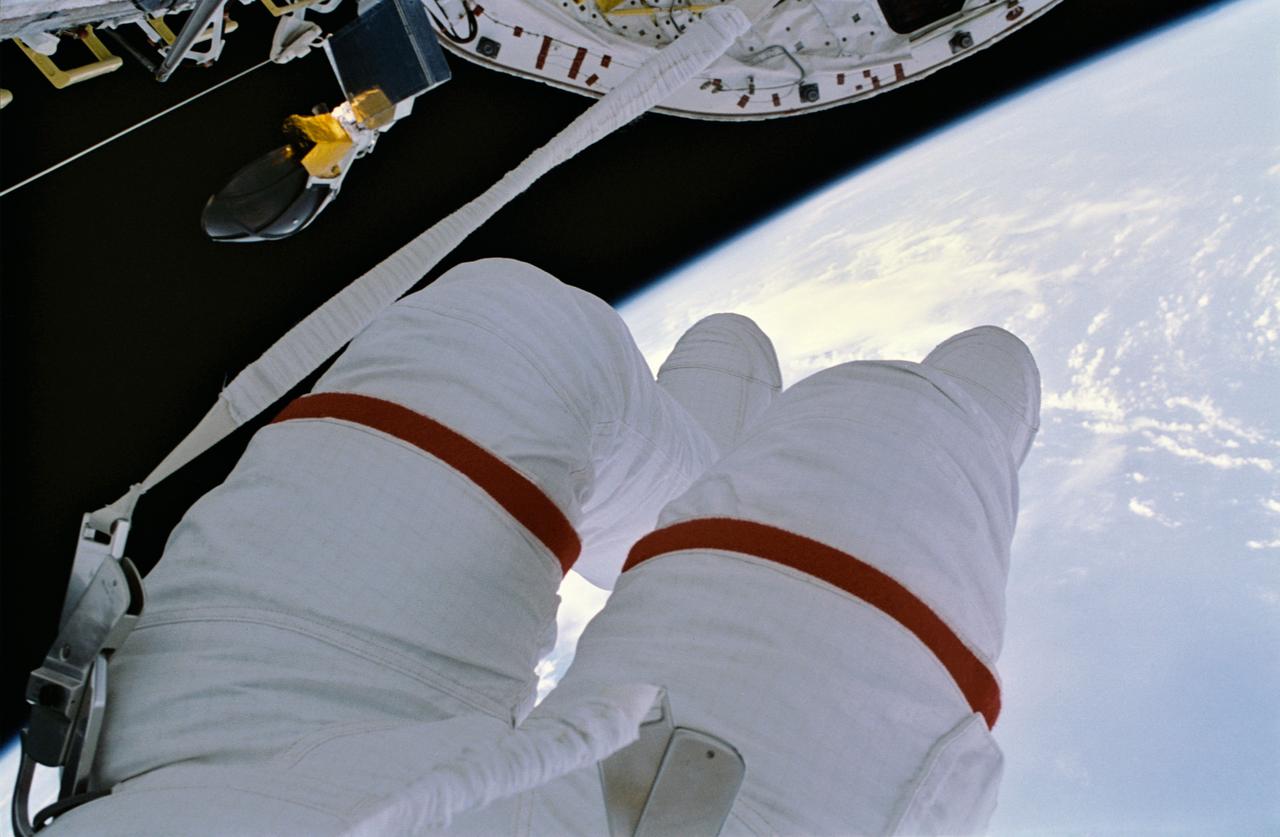
STS054-29-028 (17 Jan 1993) --- Astronaut Gregory J. Harbaugh, mission specialist, used a 35mm camera to photograph his legs and feet during the four-plus hours extravehicular activity (EVA) to depict the vast void below. Harbaugh was joined on the EVA by astronaut Mario Runco Jr., mission specialist.

STS059-13-030 (9-20 April 1994) --- From the Space Shuttle Endeavour's aft flight deck, astronauts Kevin P. Chilton, pilot, and Linda M. Godwin, payload commander, monitor and photograph clouds on Earth. The two, along with four other NASA astronauts spent a week and a half aboard Endeavour in support of the Space Radar Laboratory (SRL-1)/STS-59 mission.
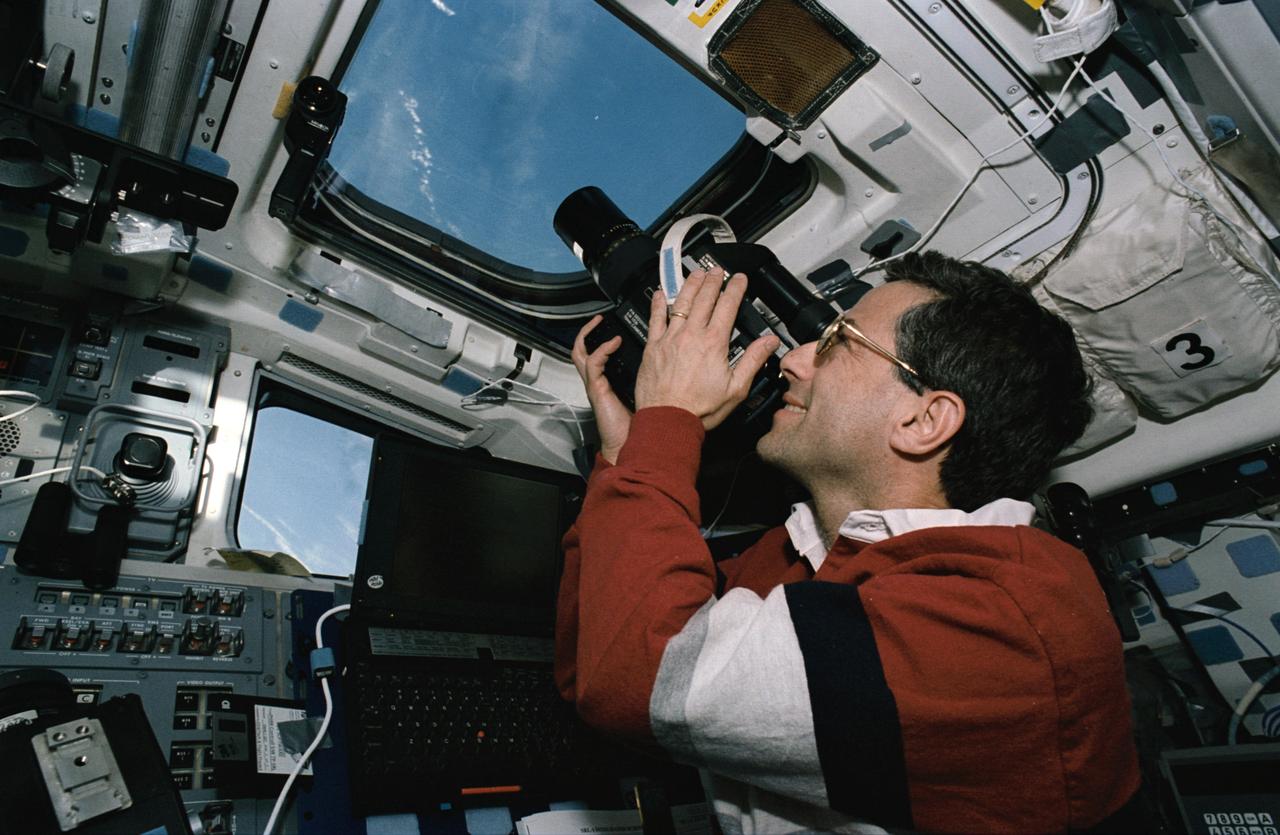
STS059-46-025 (9-20 April 1994) --- On the Space Shuttle Endeavour's aft flight deck astronaut Jerome (Jay) Apt, mission specialist, uses a handheld 70mm Hasselblad camera to record still scenes of Earth. Apt, the commander of Endeavour's Blue Shift, joined five other NASA astronauts for a week and a half in space in support of the Space Radar Laboratory/STS-59 mission.
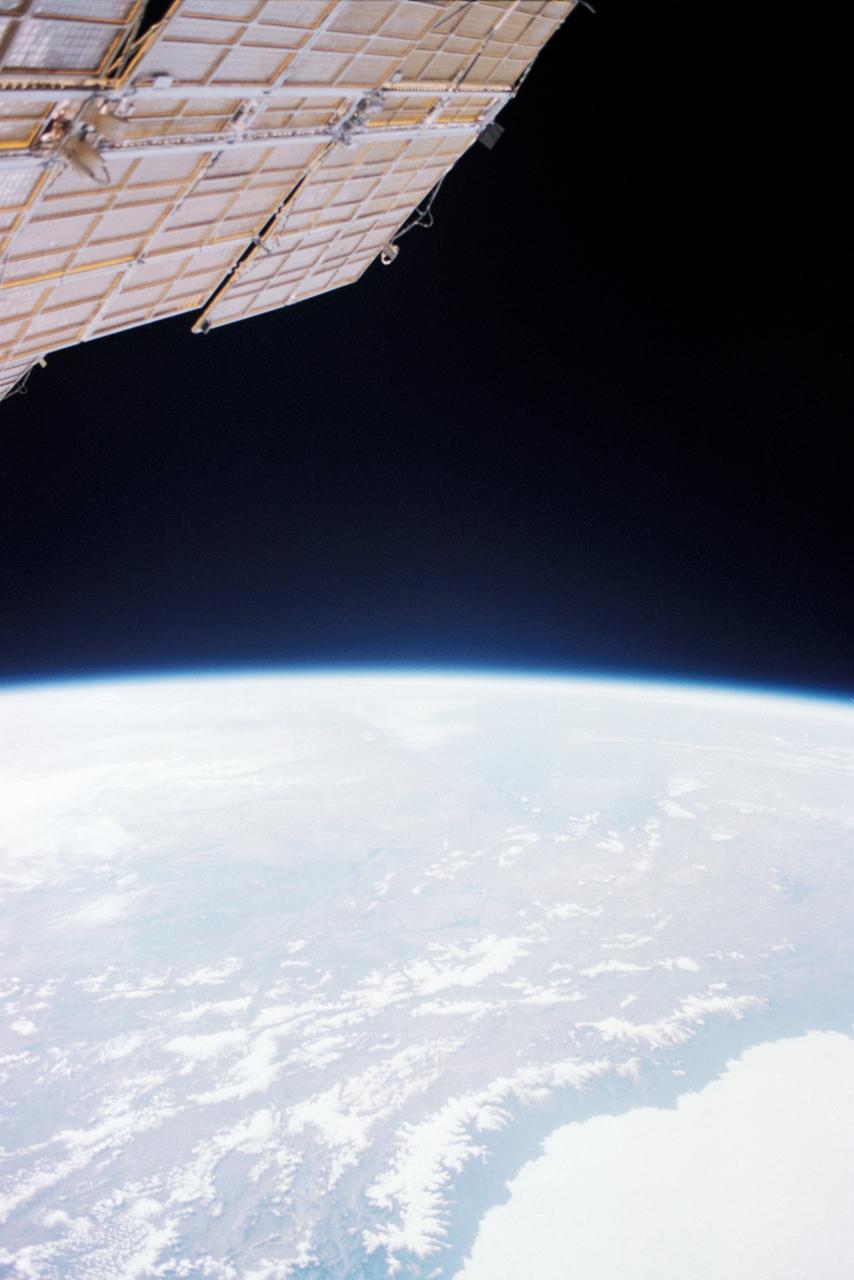
Overexposed earth observations taken during the NASA/Mir 21 mission from the Russian space station Mir by astronaut Shannon Lucid.
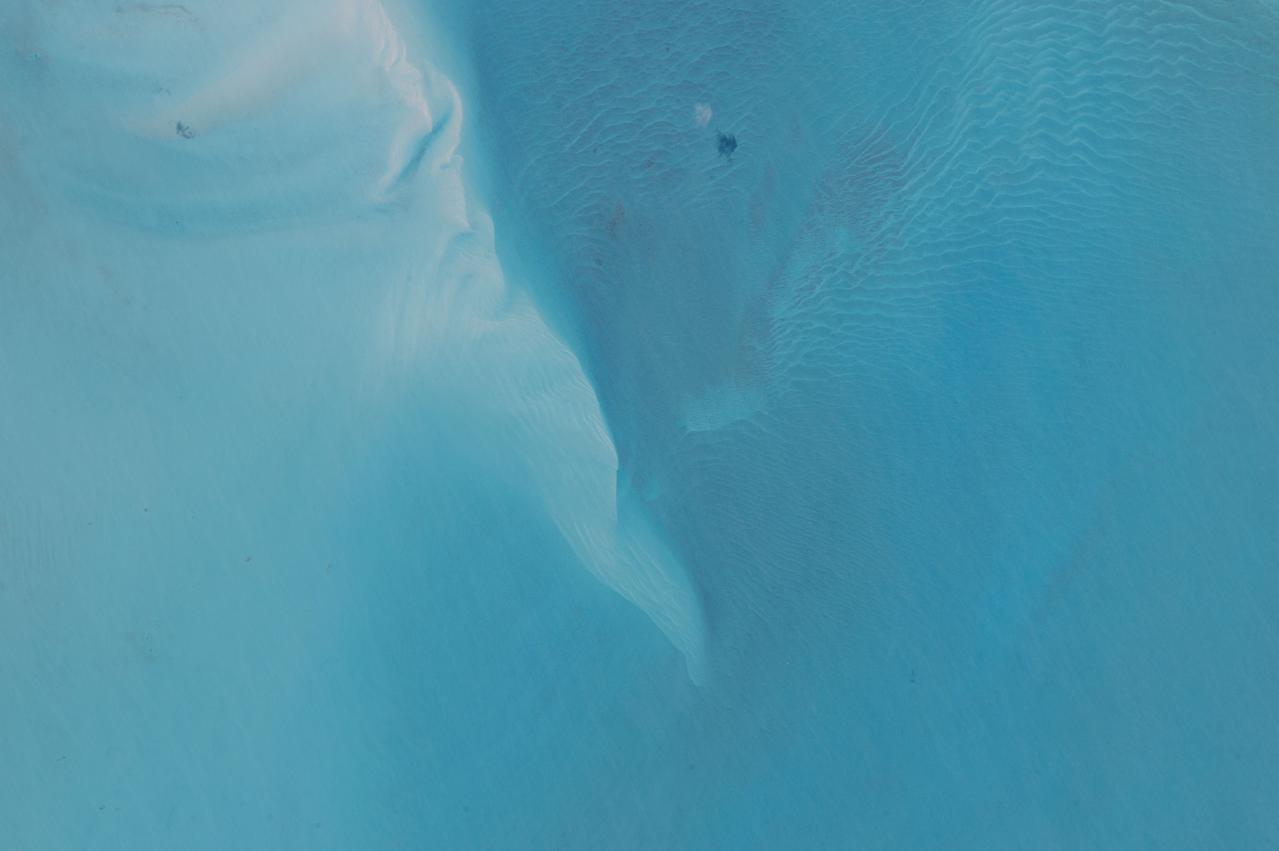
ISS043E187300 (05/10/2015) --- NASA astronaut Scott Kelly tweeted this aquamarine seascape Earth observation on May 10, 2015 from the International Space Station. His comment was a simple: "watercolor from space. #YearInSpace".
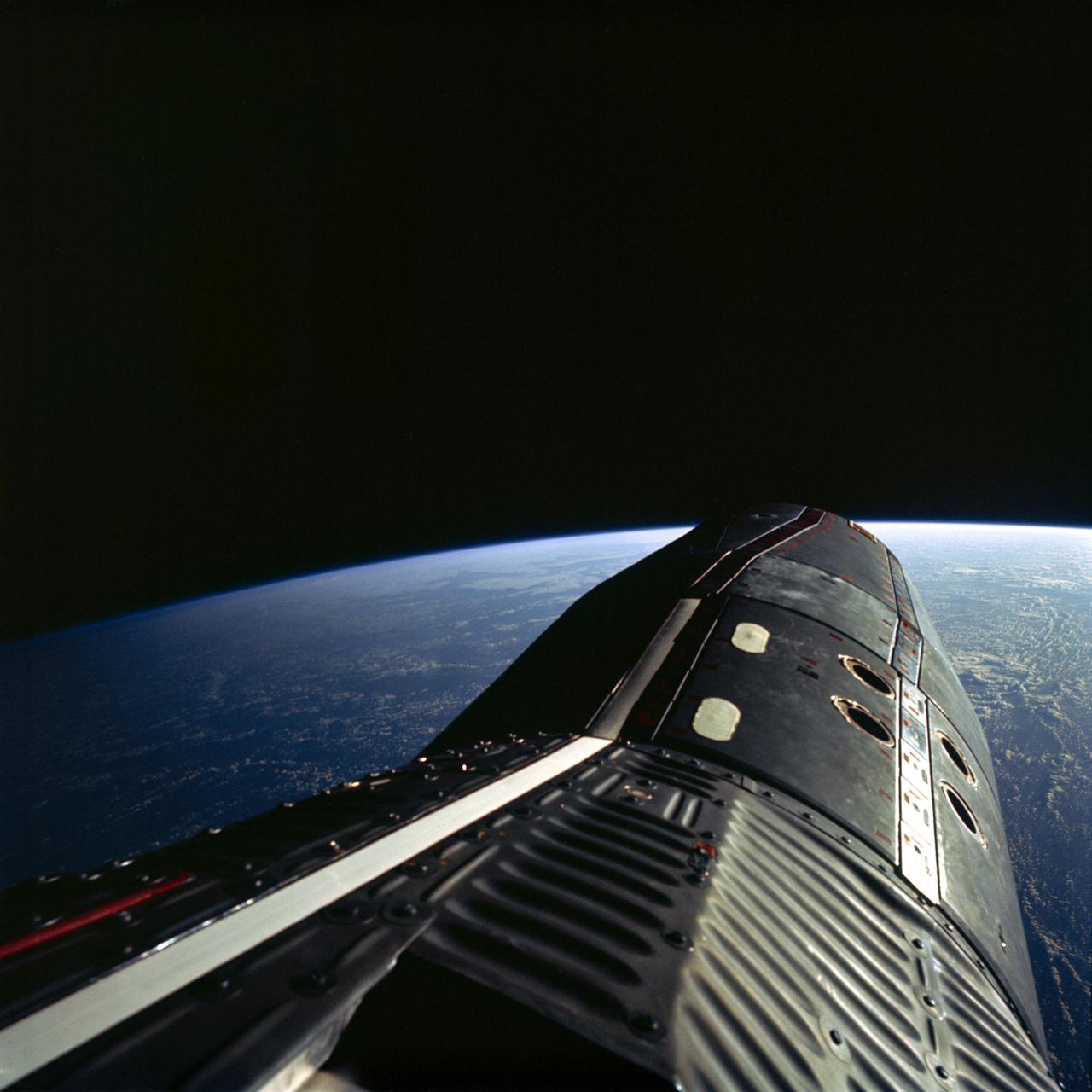
S66-63011 (13 Nov. 1966) --- Astronaut Edwin E. Aldrin Jr., pilot of the Gemini-12 spaceflight, took this picture of the Gemini-12 spacecraft during standup extravehicular activity (EVA) with the hatch open. Photo credit: NASA
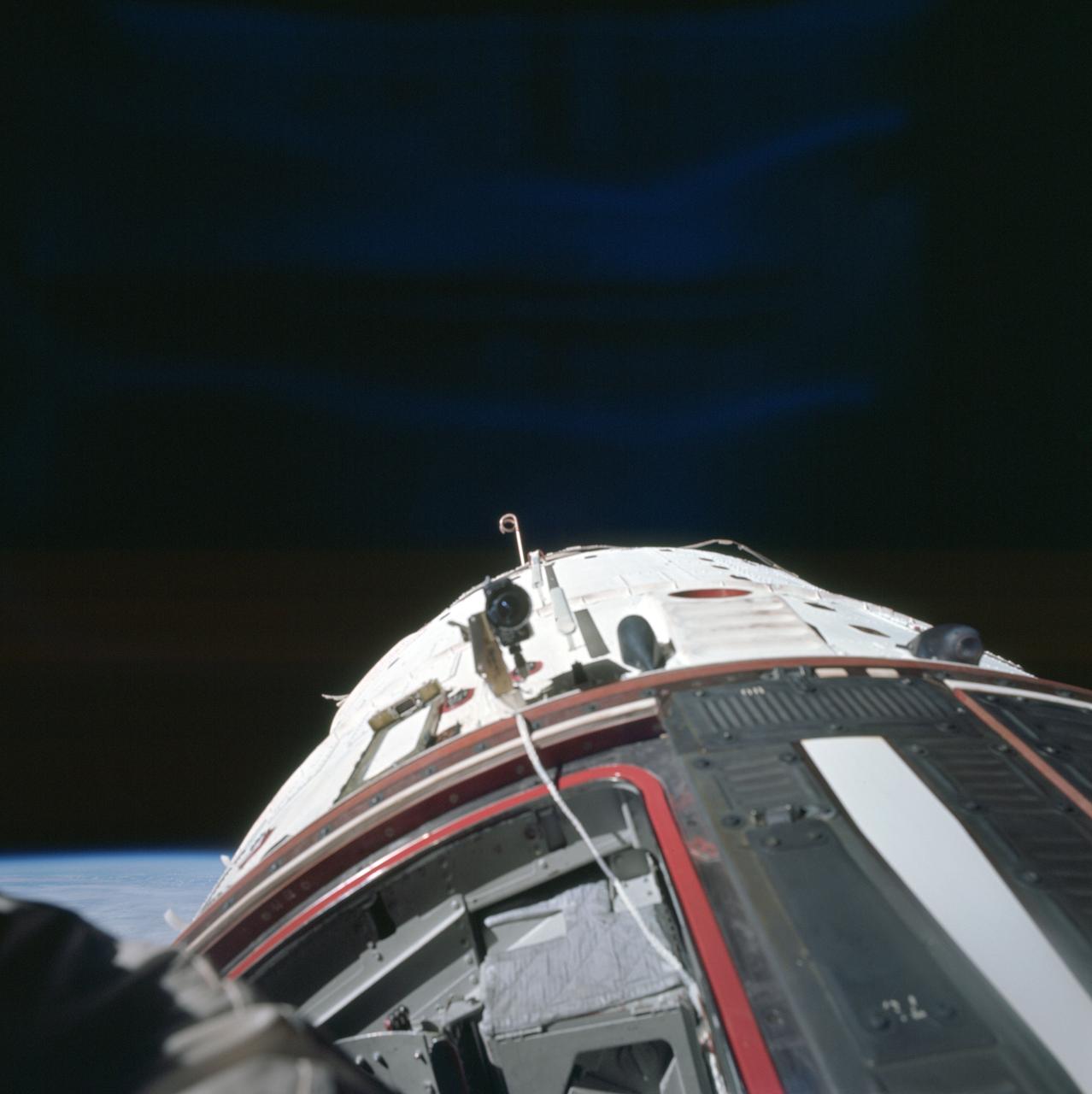
S66-62920 (13 Nov. 1966) --- Astronaut Edwin E. Aldrin Jr., pilot of the Gemini-12 spaceflight, took this picture of the Gemini-12 spacecraft during standup extravehicular activity (EVA) with the hatch open. This is a view to the rear showing the adapter section. Photo credit: NASA
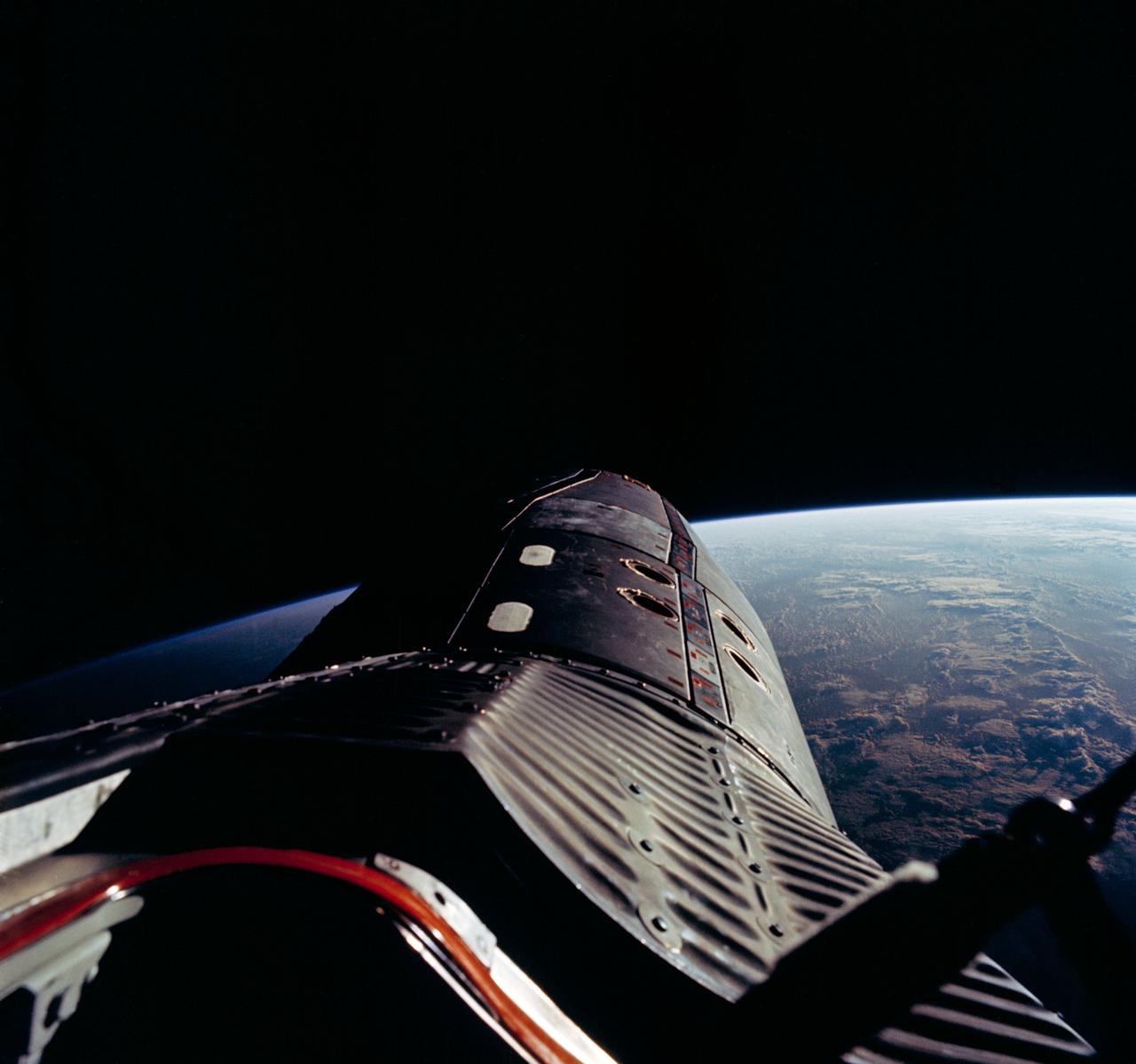
S66-63007 (12 Nov. 1966) --- Astronaut Edwin E. Aldrin Jr., pilot of the Gemini-12 spaceflight, took this picture of the Gemini-12 spacecraft during standup extravehicular activity (EVA) with the hatch open. This is a view looking forward showing the adapter section. Photo credit: NASA
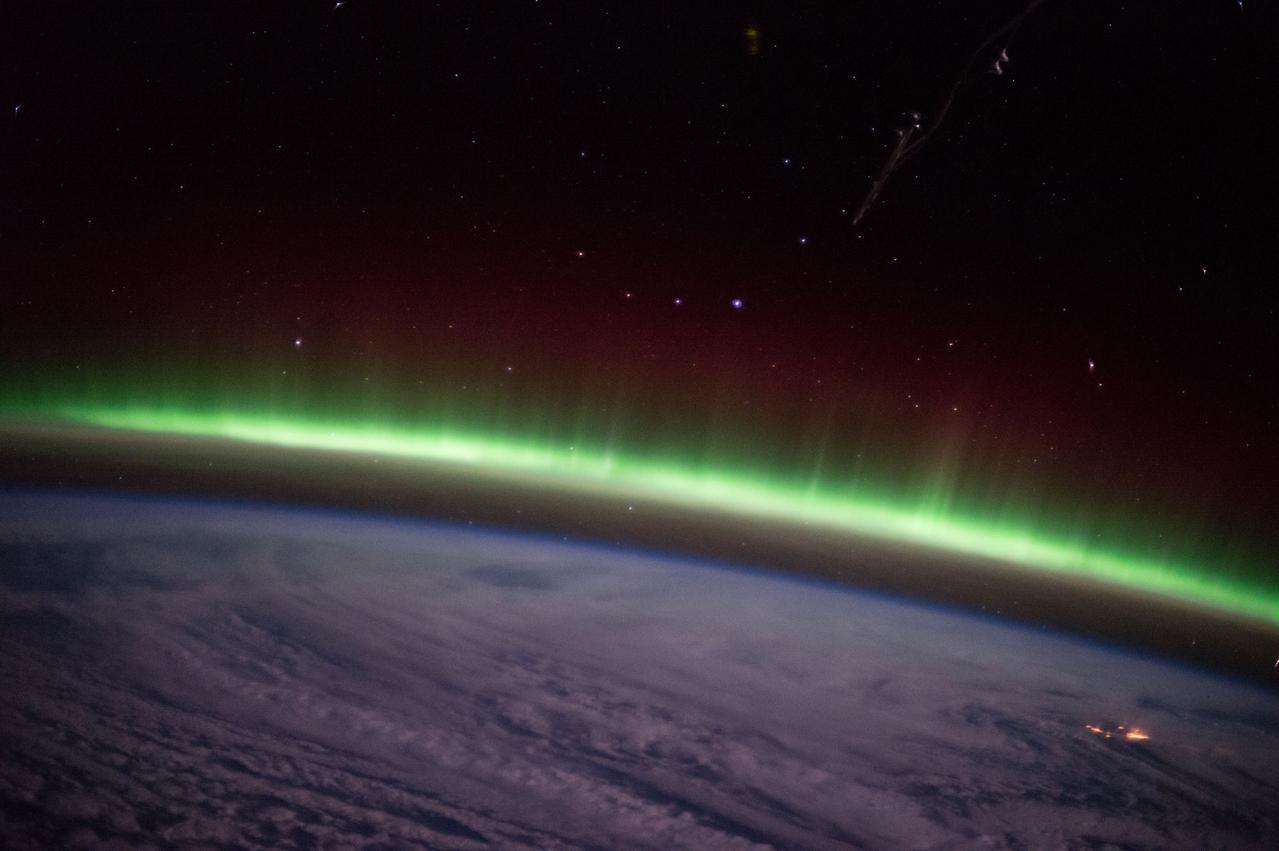
ISS042E033478 (12/09/2014) --- ESA (European Space Agency) astronaut Samantha Cristoforetti took this aurora borealis earth observation image from the cupola window of the International Space Station. She is a flight engineer of Expedition 42.
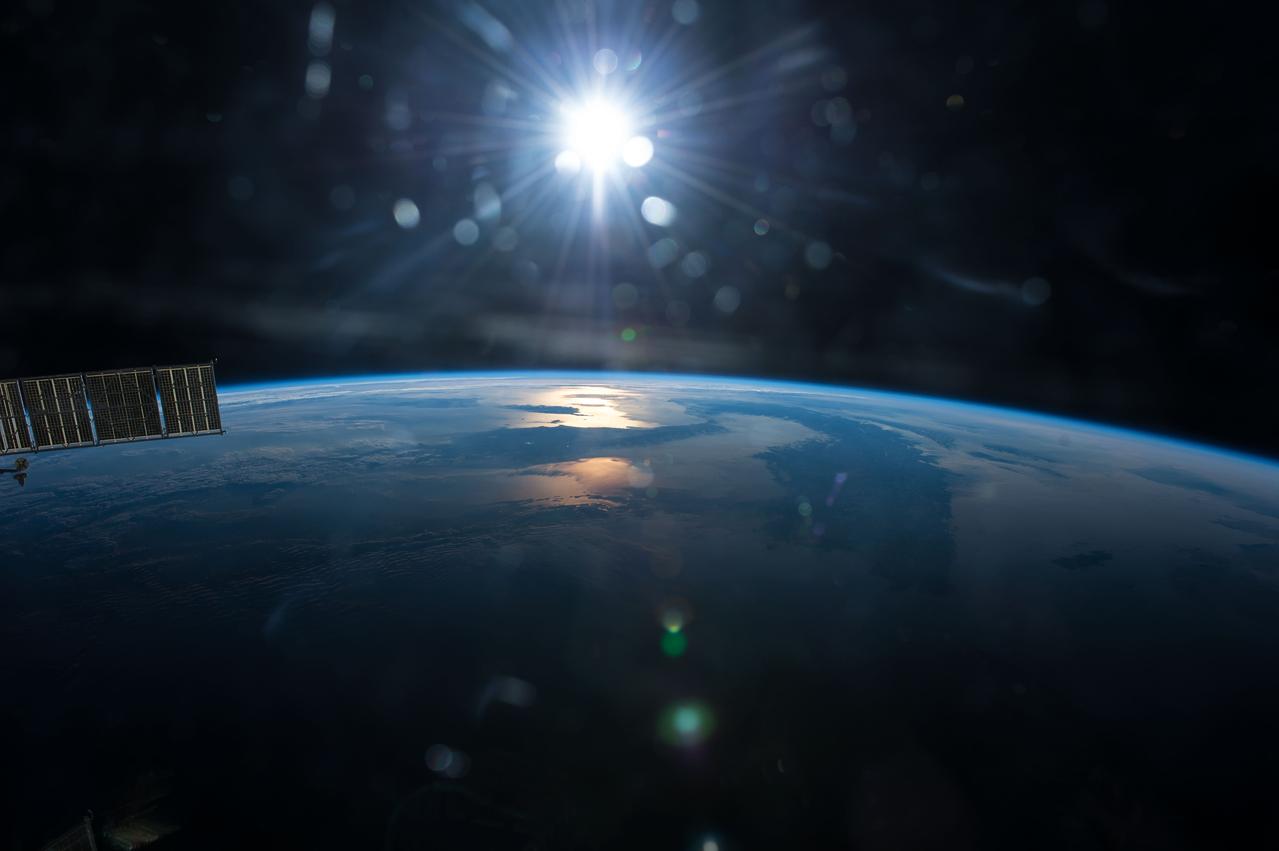
ISS042E240938 (02/11/2015) --- This Earth observation image was taken from the International Space Station and tweeted by astronaut Terry Virts to his followers with this comment: "#Sunset over the Med, #Italy, Adriatic, and Alps".
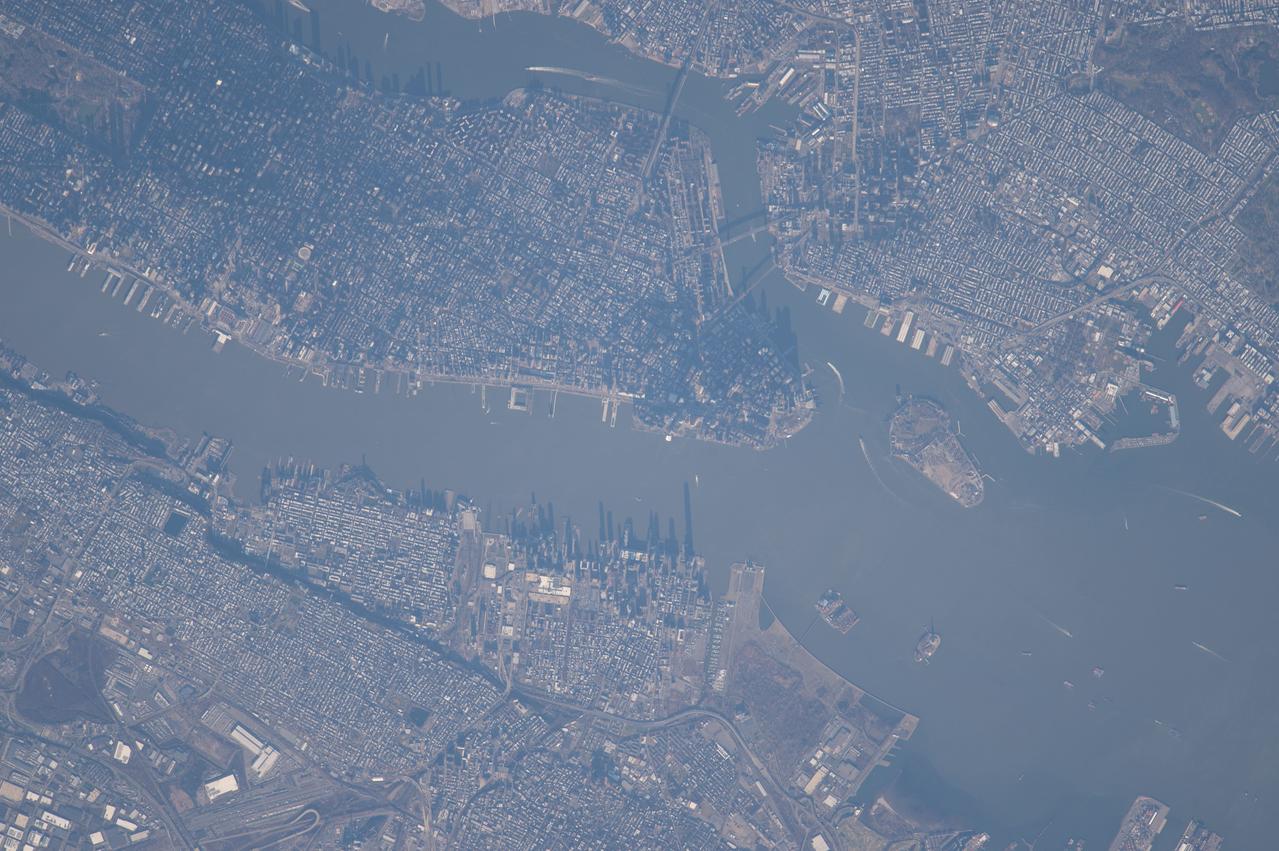
ISS043E101805 (04/13/2015) --- Earth Observation of New York from the International Space Station taken by NASA astronaut Scott Kelly on April 13, 2015 showing Manhattan.
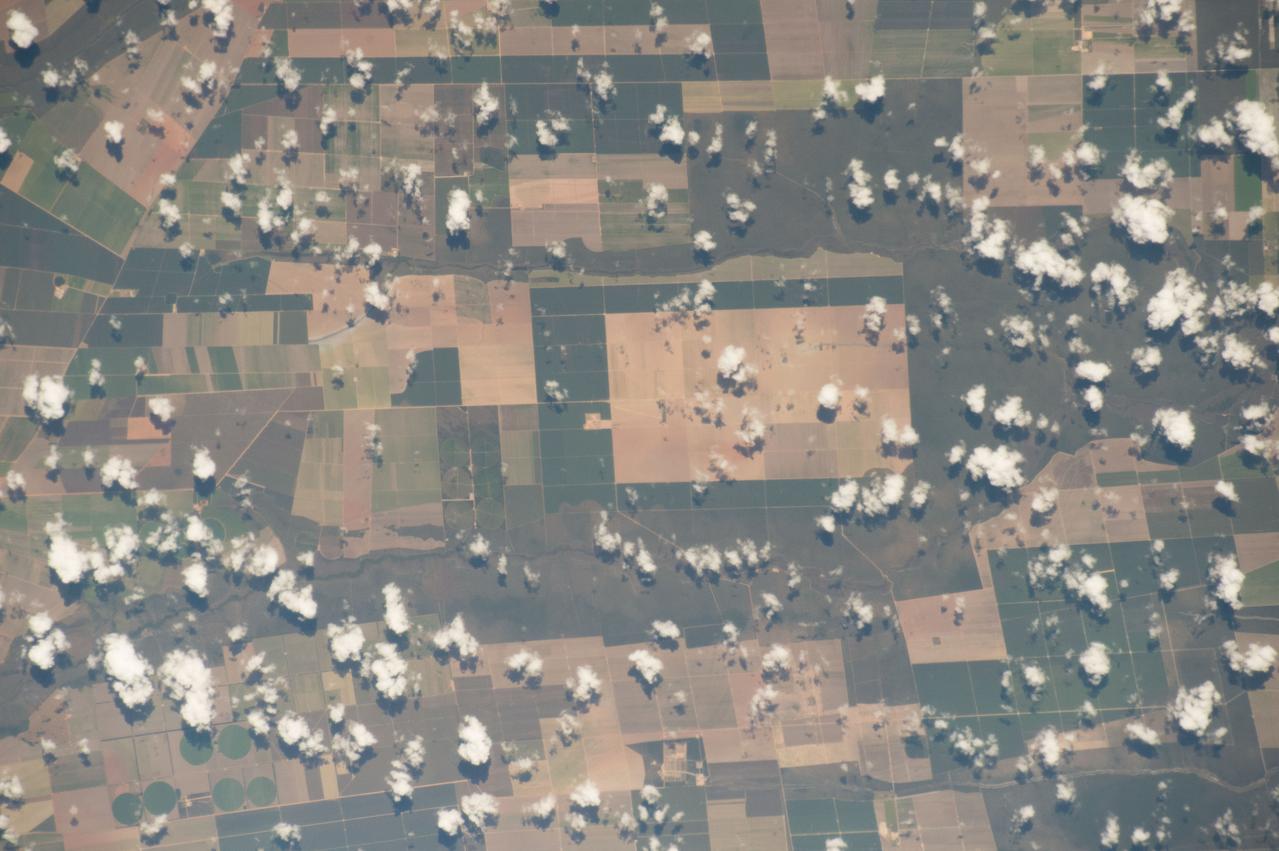
ISS043E227213 (05/20/2015) --- Earth observation of South America from the International Space Station on May 20, 2015. NASA astronaut Terry Virts tweeted this image with the remark of: "Farm fields in central #Brazil #SouthAmerica".
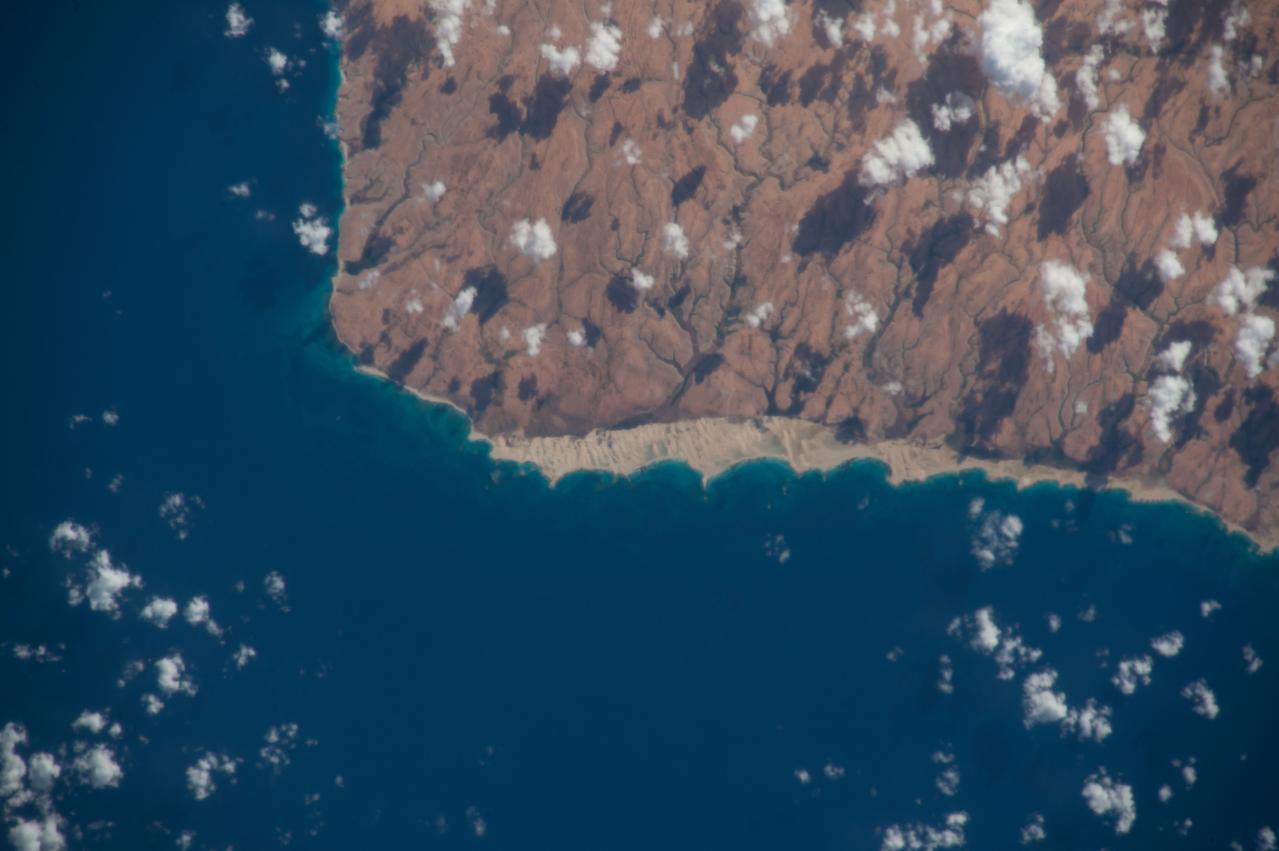
ISS042E275158 (02/15/2015) --- US Astronaut Terry Virts tweeted this earth observation from the International Space Station on Feb. 15, 2015. Virts described the image as "#EarthArt northeast #Libya.
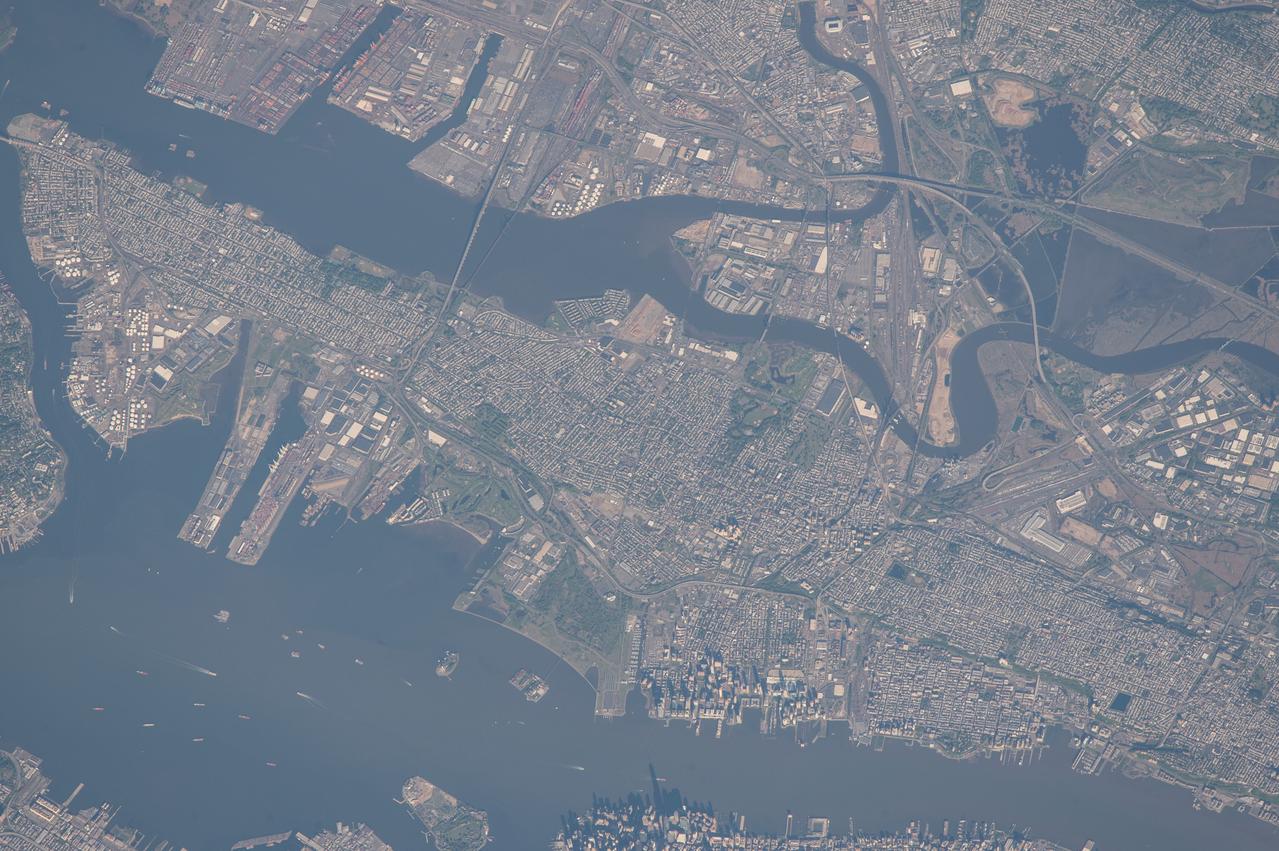
ISS043E241982 (05/23/2015) --- This Earth observation image of the Eastern coast of the United States from May 23, 2015 was tweeted out from the International Space Station by NASA astronaut Scott Kelly with the added comment: "To end #EMSWeek #JerseyCity where I worked as an EMT more than 30 years ago".

iss071e666237 (Sept. 17, 2024) --- NASA astronaut Don Pettit was able to capture a photo of a recent fire in La Porte, Texas yesterday. Our NASA Astronauts have the ability to observe natural disasters from a vantage point of 250 miles above Earth. The imagery and data provided from the International Space Station can provide benefits to regions that experience unexpected events such as fires, floods, hurricanes, earthquakes, and more. This information is valuable when monitoring disasters on Earth in real time.

NASA astronaut Don Pettit was able to capture a photo of a recent fire in La Porte, Texas yesterday. Our NASA Astronauts have the ability to observe natural disasters from a vantage point of 250 miles above Earth. The imagery and data provided from the International Space Station can provide benefits to regions that experience unexpected events such as fires, floods, hurricanes, earthquakes, and more. This information is valuable when monitoring disasters on Earth in real time.

iss071e666253 (Sept. 17, 2024) --- NASA astronaut Don Pettit was able to capture a photo of a recent fire in La Porte, Texas yesterday. Our NASA Astronauts have the ability to observe natural disasters from a vantage point of 250 miles above Earth. The imagery and data provided from the International Space Station can provide benefits to regions that experience unexpected events such as fires, floods, hurricanes, earthquakes, and more. This information is valuable when monitoring disasters on Earth in real time.
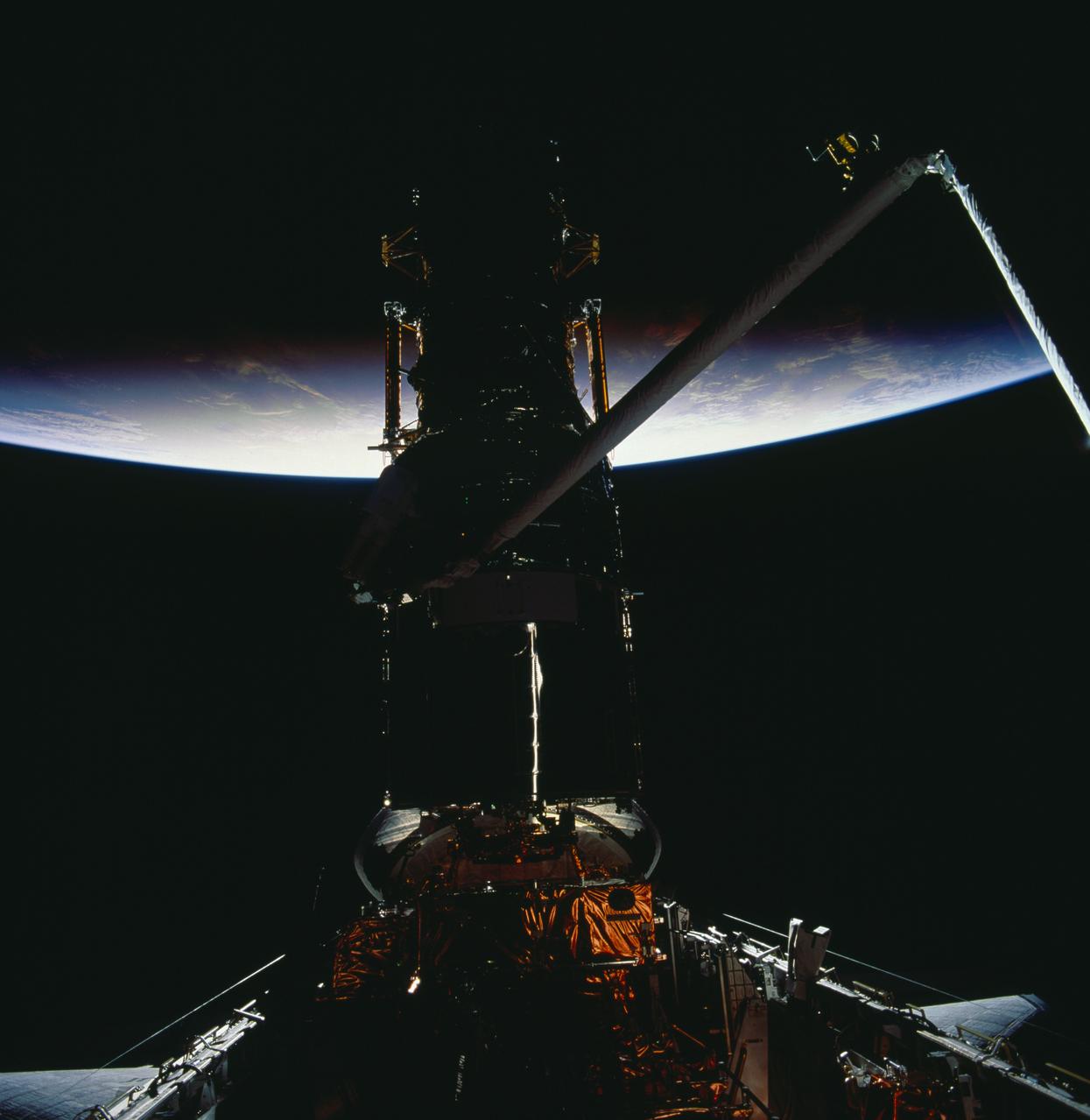
STS061-98-0AR (8 Dec 1993) --- Earth is partially illuminated but the Hubble Space Telescope (HST) and the Space Shuttle Endeavour are still mostly in darkness, in this 70mm frame photographed during the fourth of five space walks. Astronaut Kathryn C. Thornton, barely visible above left center in the frame, works to install the Corrective Optics Space Telescope Axial Replacement (COSTAR).
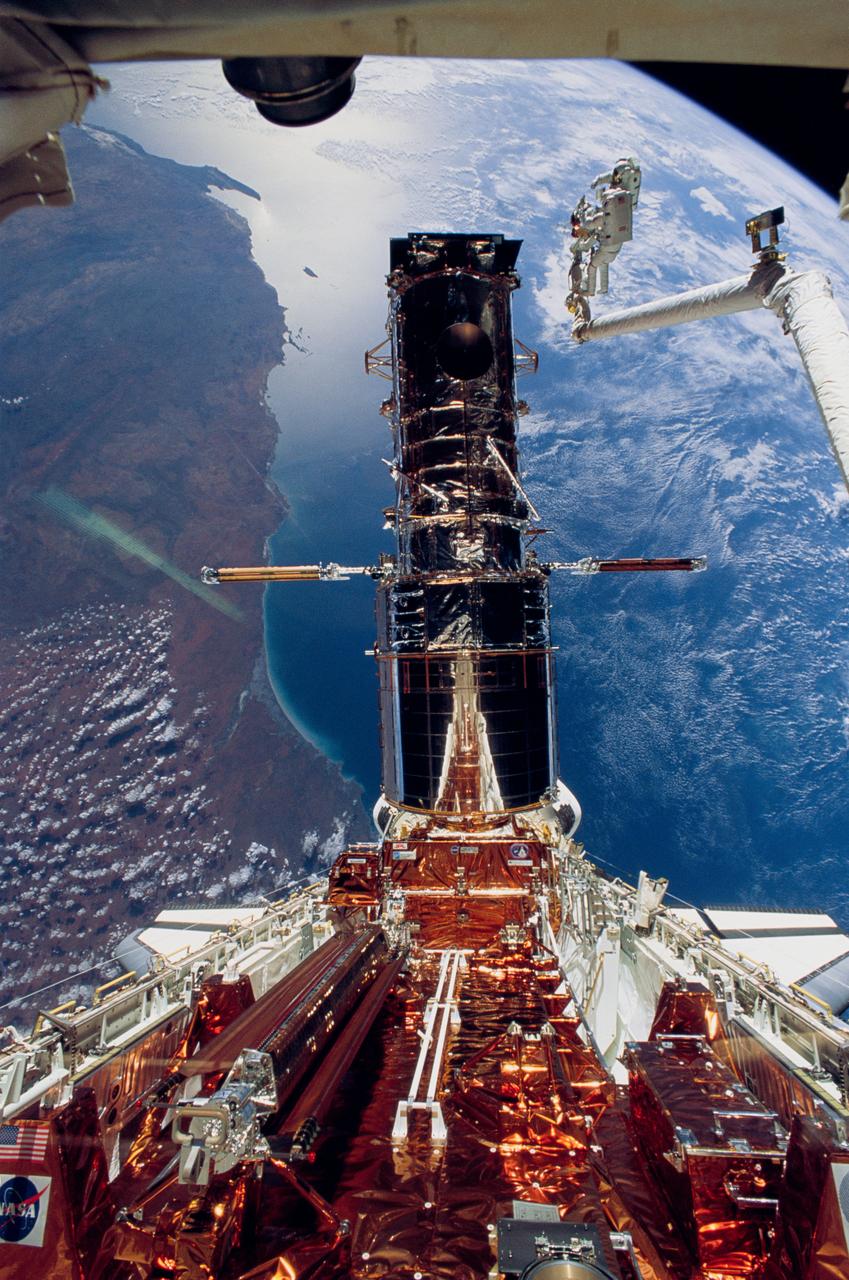
STS061-48-001 (9 Dec 1993) --- Orbiting Earth at an altitude of 356 nautical miles perched atop a foot restraint on the Space Shuttle Endeavour's Remote Manipulator System (RMS) arm, astronauts F. Story Musgrave (top) and Jeffrey A. Hoffman wrap up the final of five Extravehicular Activities (EVA). The west coast of Australia forms the backdrop for the 35mm frame.
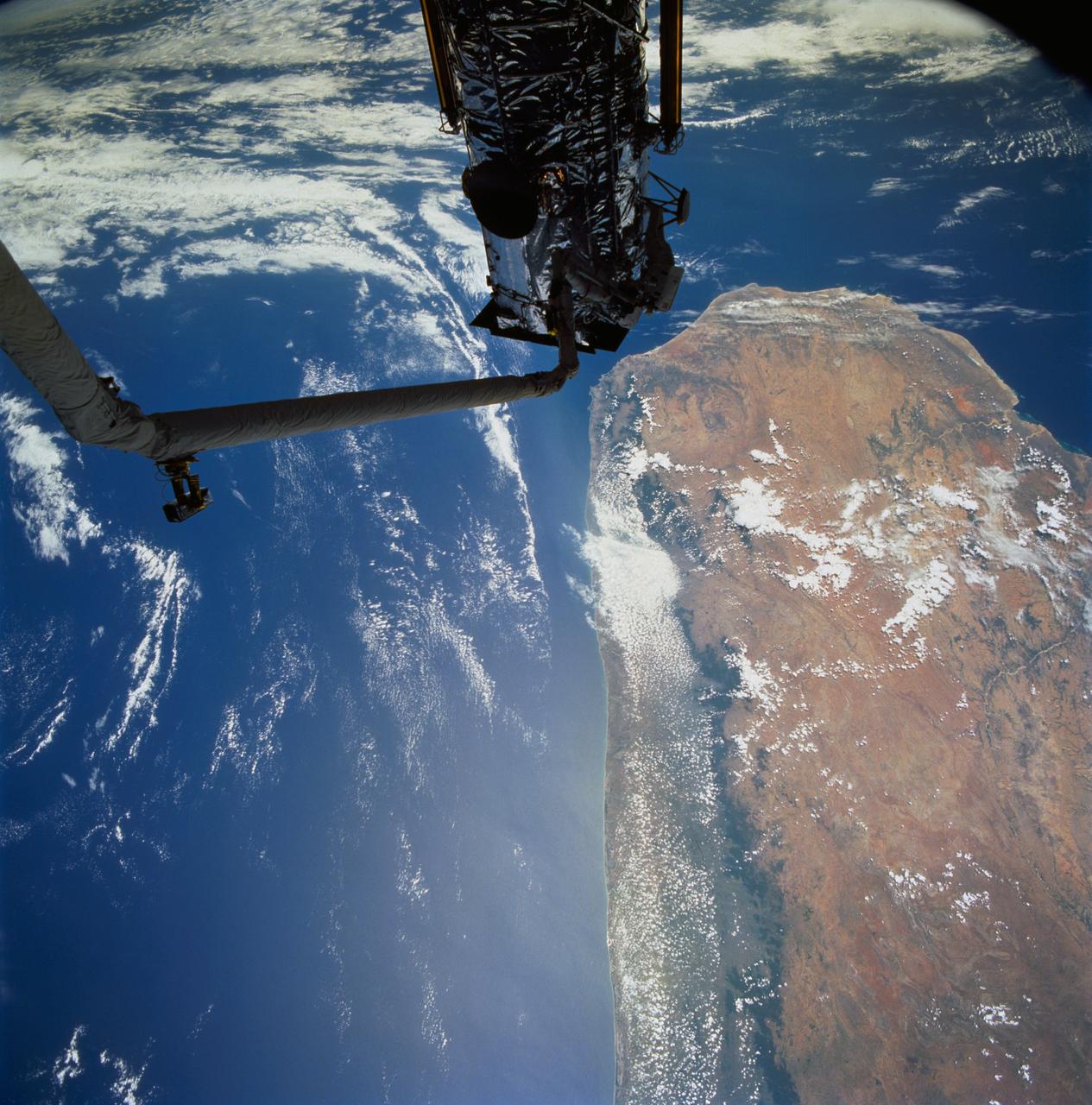
STS061-77-102 (7 Dec 1993) --- Astronauts Jeffrey A. Hoffman (left) and F. Story Musgrave are partially silhouetted against the Indian Ocean as they work to install the Magnetic Sensing System (MSS) on the Hubble Space Telescope (HST). Musgrave is anchored to the end of the Space Shuttle Endeavour's Remote Manipulator System (RMS) arm. The HST is positioned along the southern end of Madagascar, 325 nautical miles away. Visible on the western coast are the sediment laden Onilahy and Fiherenana Rivers which empty into Saint Augustin Bay. North of Fiherenana River is the Mangoky River. The circular feature on the southern end of Madagascar and to the right of HST is the L'ivakoany Mountains. The eastern coast is relatively straight compared to the western coast.
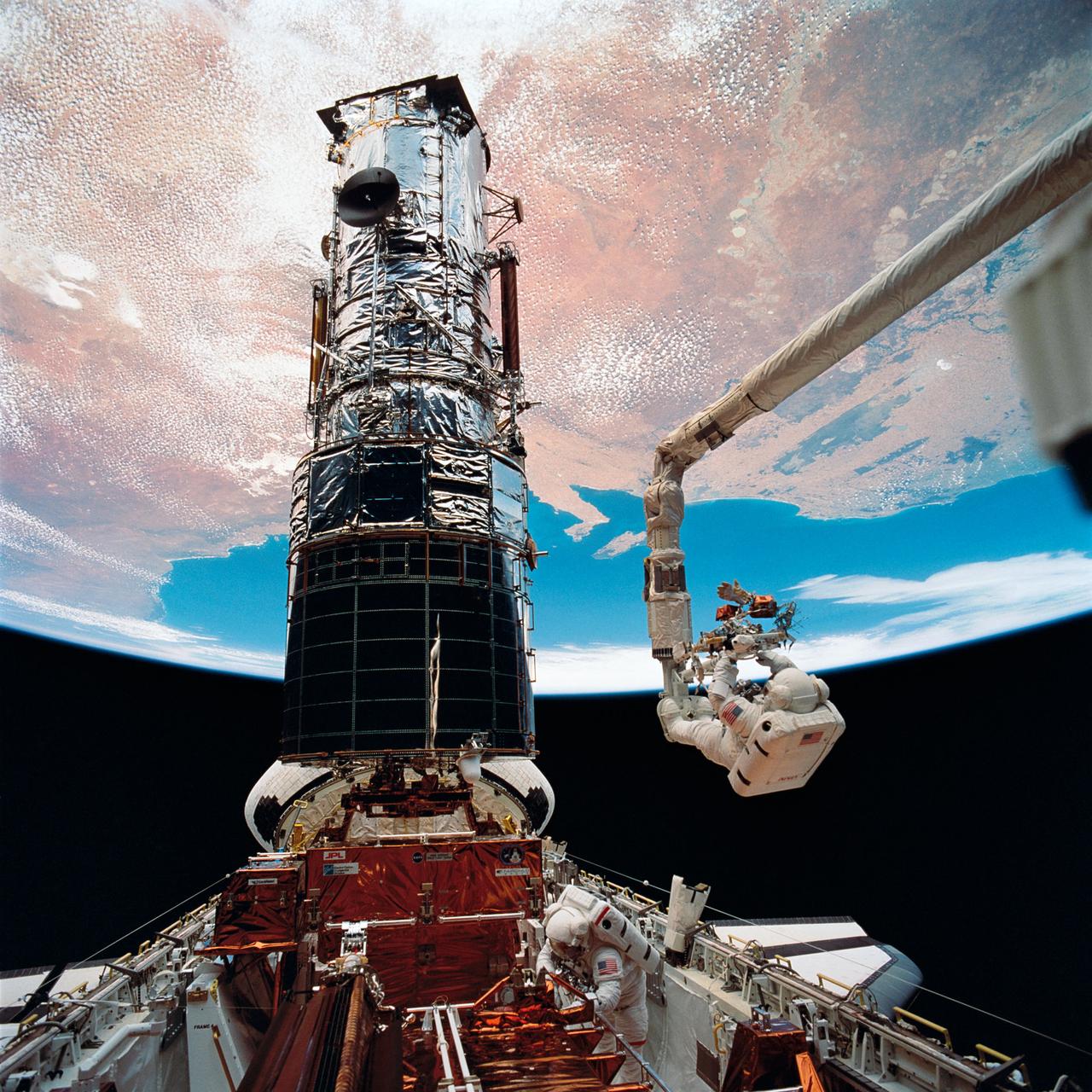
STS061-98-050 (9 Dec 1993) --- Astronaut F. Story Musgrave, anchored on the end of the Remote Manipulator System (RMS) arm, prepares to be elevated to the top of the towering Hubble Space Telescope (HST) to install protective covers on magnetometers. Astronaut Jeffrey A. Hoffman (bottom of frame) assisted Musgrave with final servicing tasks on the telescope, wrapping up five days of extravehicular activities (EVA).
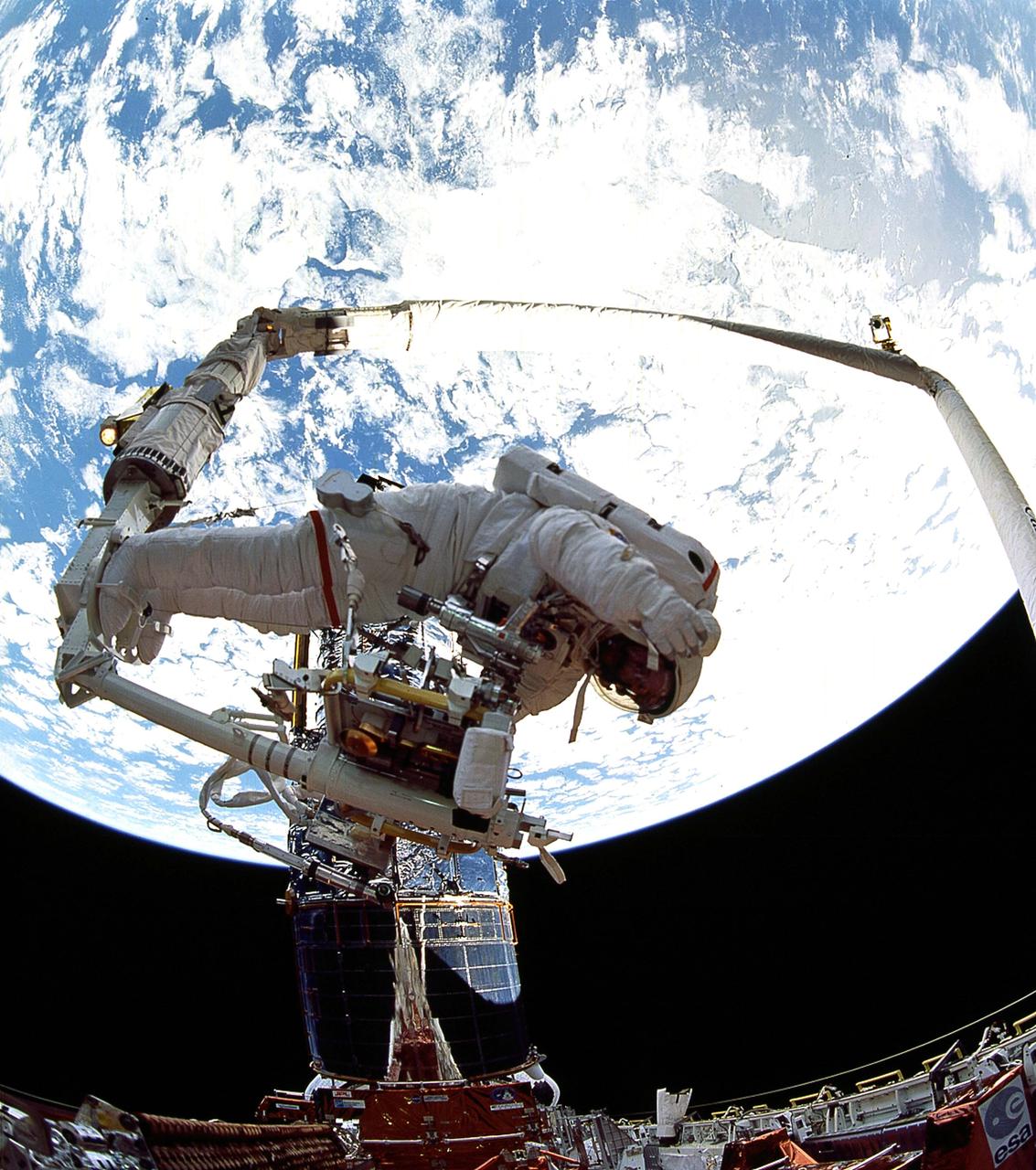
STS061-105-026 (7 Dec. 1993) --- Astronaut Jeffrey A. Hoffman signals directions to European Space Agency (ESA) astronaut Claude Nicollier, as the latter controls the Remote Manipulator System (RMS) arm during the third of five Extravehicular Activities (EVA) on the Hubble Space Telescope (HST) servicing mission. Astronauts Hoffman and F. Story Musgrave earlier changed out the Wide Field\Planetary Camera (WF\PC).
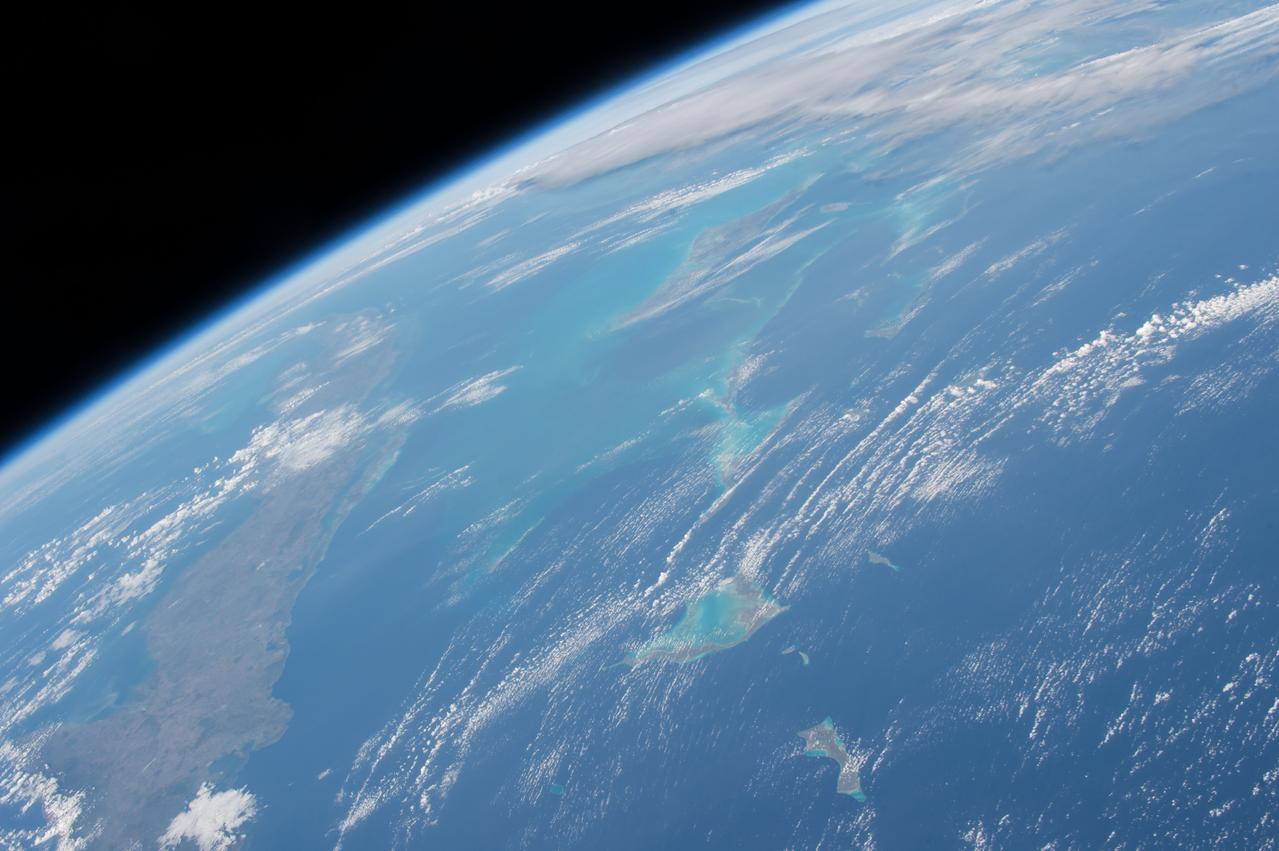
ISS042E292030 (02/26/2015) --- Towards the end of her workday on Feb. 26, 2015, ESA (European Space Agency) astronaut Samantha Cristoforetti tweeted this Earth Observation image and wished her Tweeter followers "Good Night from #space, Buona notte dallo spazio".
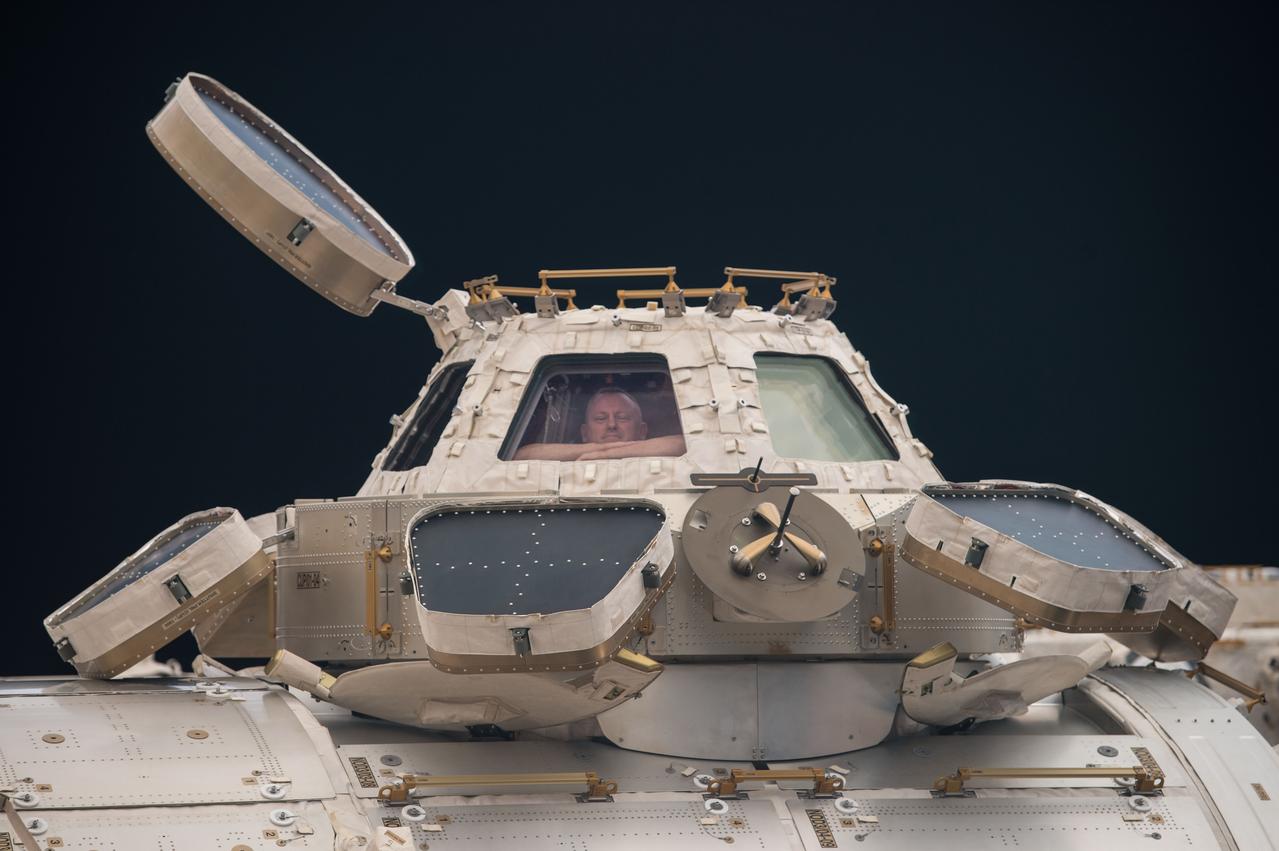
iss042e078481 (12/28/2014) --- US Astronaut Barry Wilmore, Commander of Expedition 42 aboard the International Space Station (ISS) looks out of the Cupola viewing station taking in the sights of the blue orb of Earth while on a break from science and maintenance duties. The Cupola is a panoramic control tower for the ISS with windows through which operations on the outside of the station can be observed and guided. Through the robotics workstation, astronauts are able to control the space station’s robotic arm, which helps with the attachment and assembly of various station elements, very much like the operator of a building crane. Spacewalking activities can also be observed from the Cupola along with visiting spacecraft and external areas of the station.
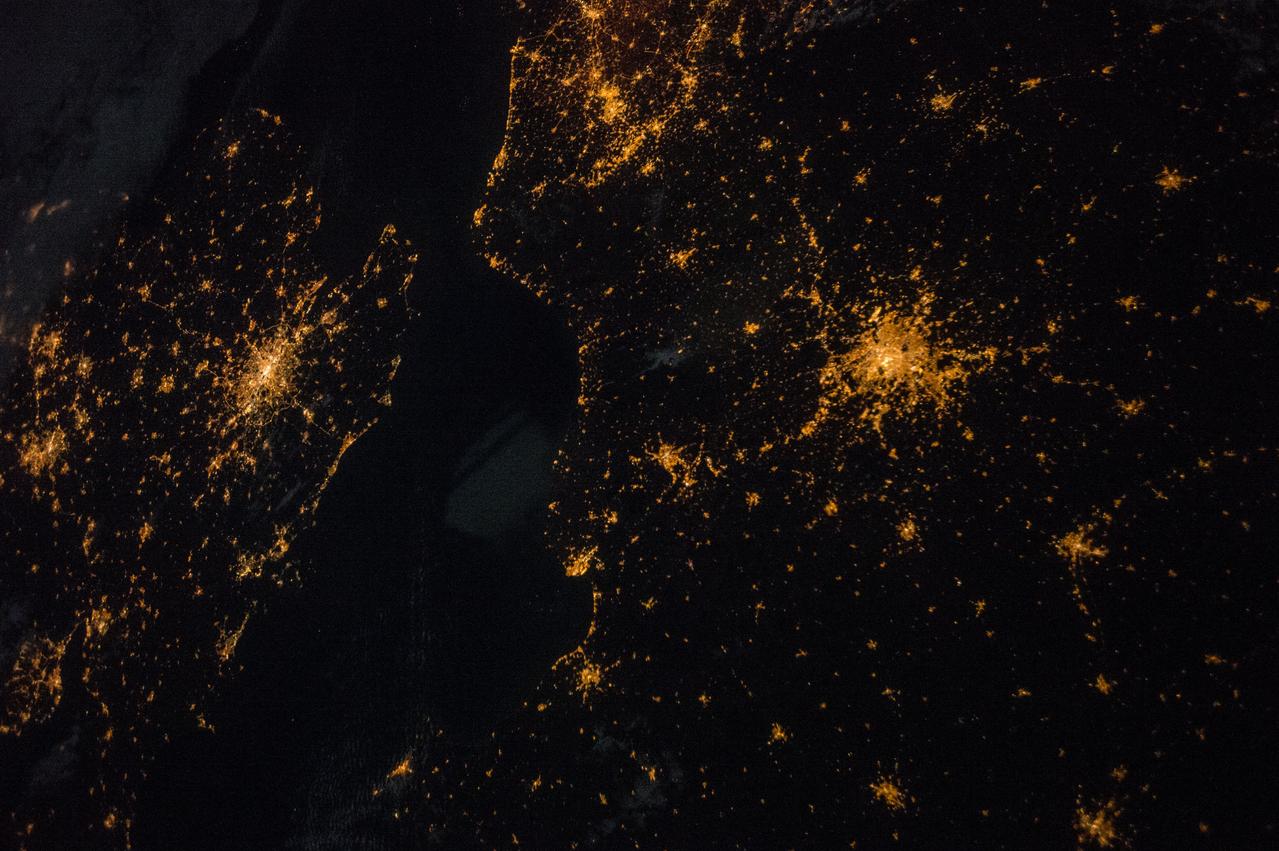
ISS042E230335 (02/06/2015) --- This Earth observation image taken at night on Feb. 6, 2015 from the International Space Station shows northern central Europe. US Astronaut Terry Virts tweeted the image on Mar. 5, 2015 with the comment "A tale of two cities. #London #Paris"
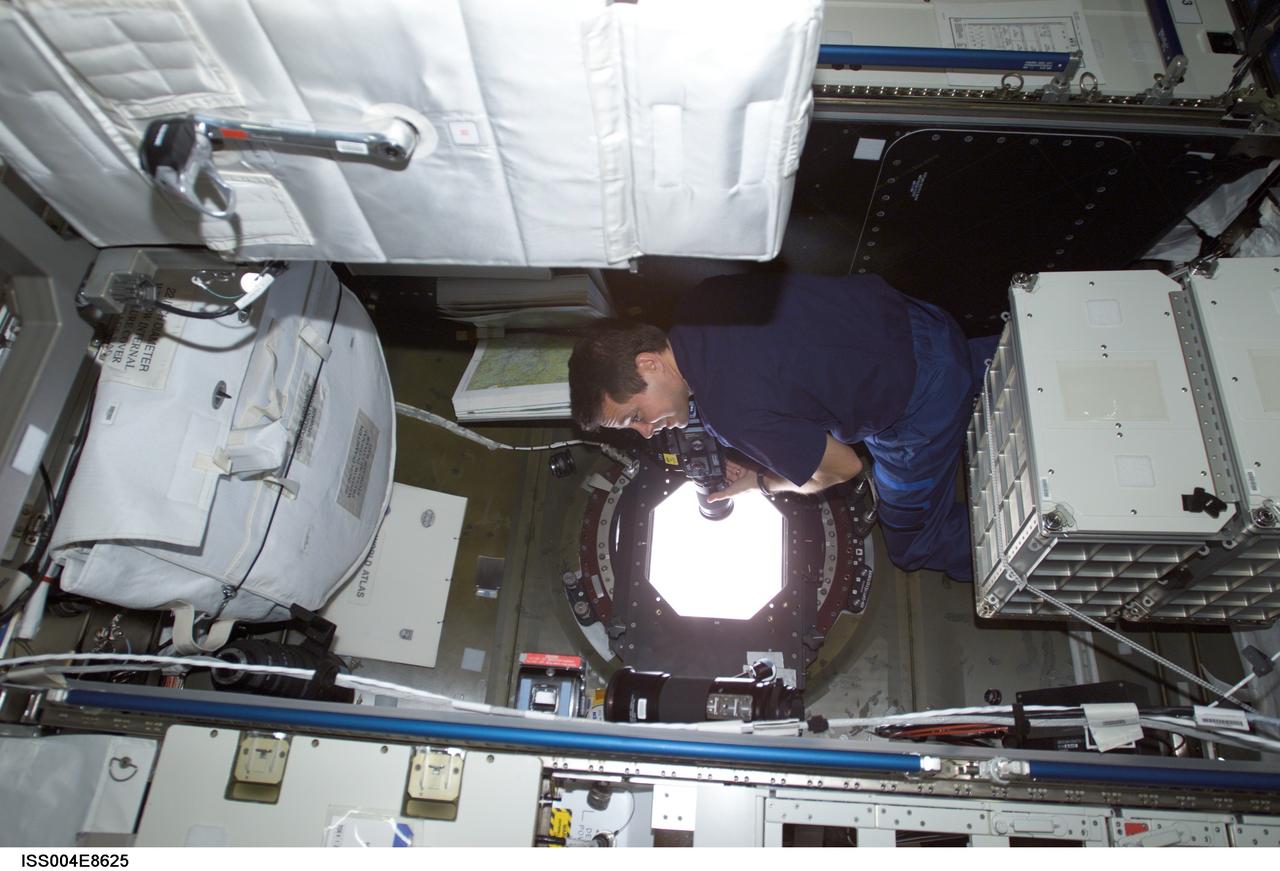
ISS004-E-8625 (14 March 2002) --- Astronaut Daniel W. Bursch, Expedition Four flight engineer, takes Earth observation photos from the Destiny laboratory on the International Space Station (ISS). The image was taken with a digital still camera.
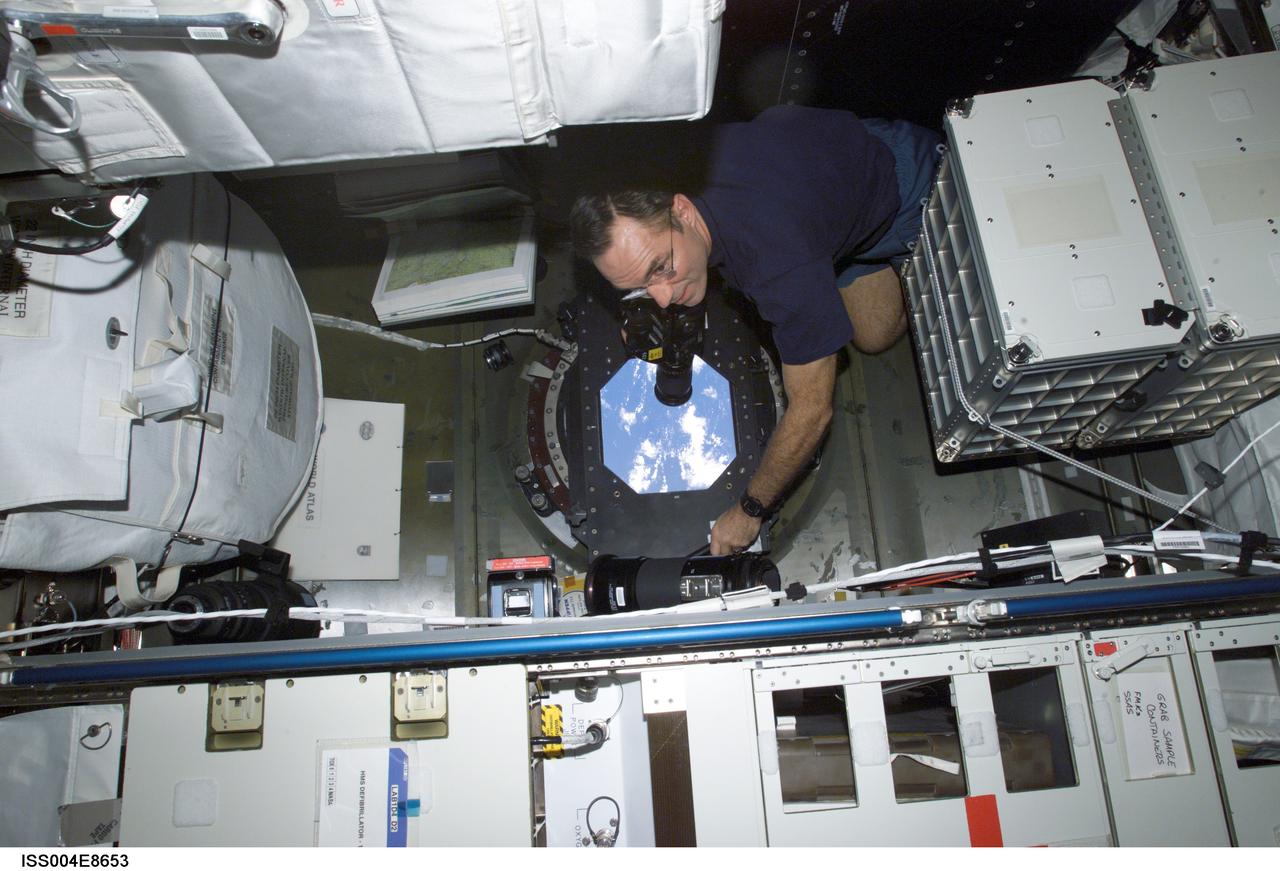
ISS004-E-8653 (14 March 2002) --- Astronaut Carl E. Walz, Expedition Four flight engineer, takes Earth observation photos from the Destiny laboratory on the International Space Station (ISS). The image was taken with a digital still camera.
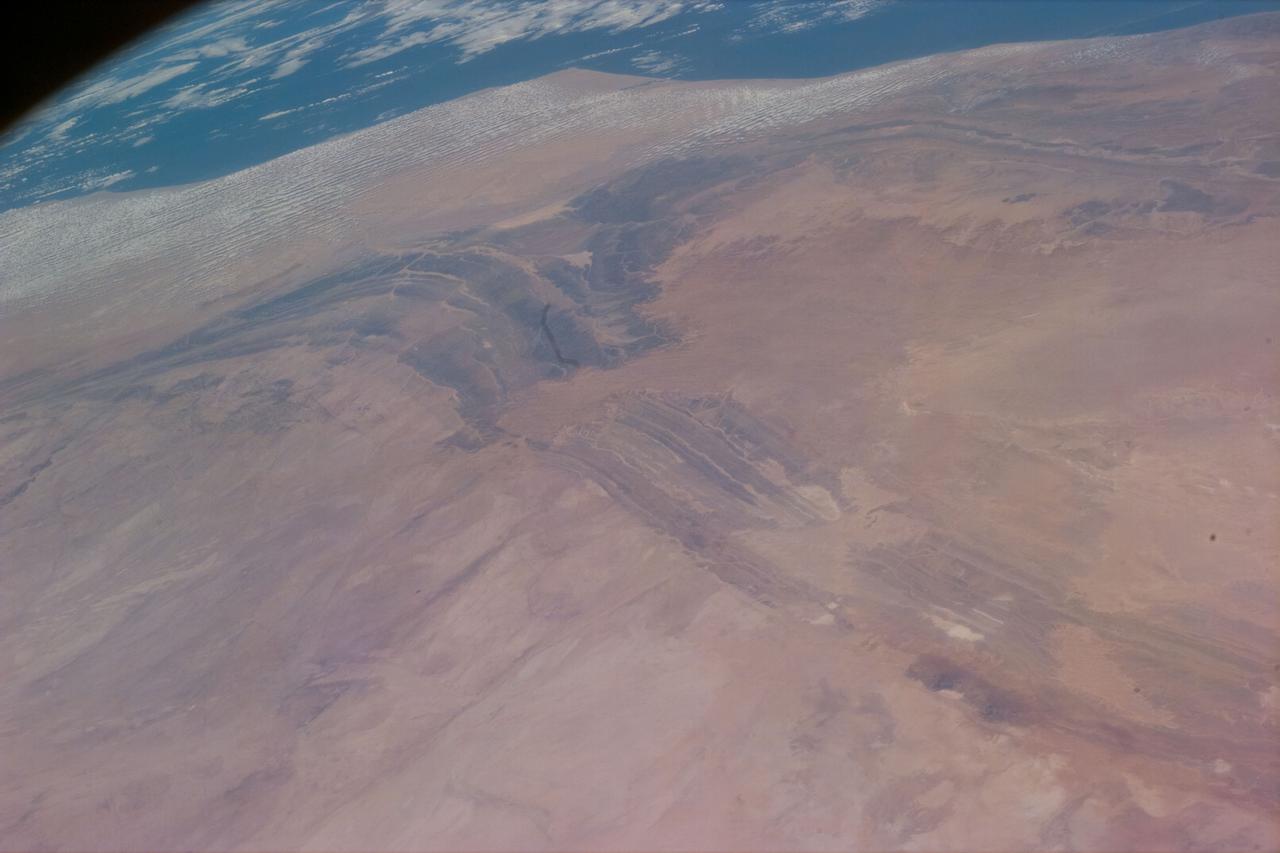
STS79-E-5385 (16 - 26 September 1996) --- The Atlas Mountains, as seen from the Space Shuttle Atlantis, apparently have not changed much in 35 years of Earth observations from space as testified by astronaut Jerome (Jay) Apt, who took this picture with an Electronic Still Camera (ESC). Astronaut John Glenn on NASA's MA-6 mission, took the first image of this area from space.
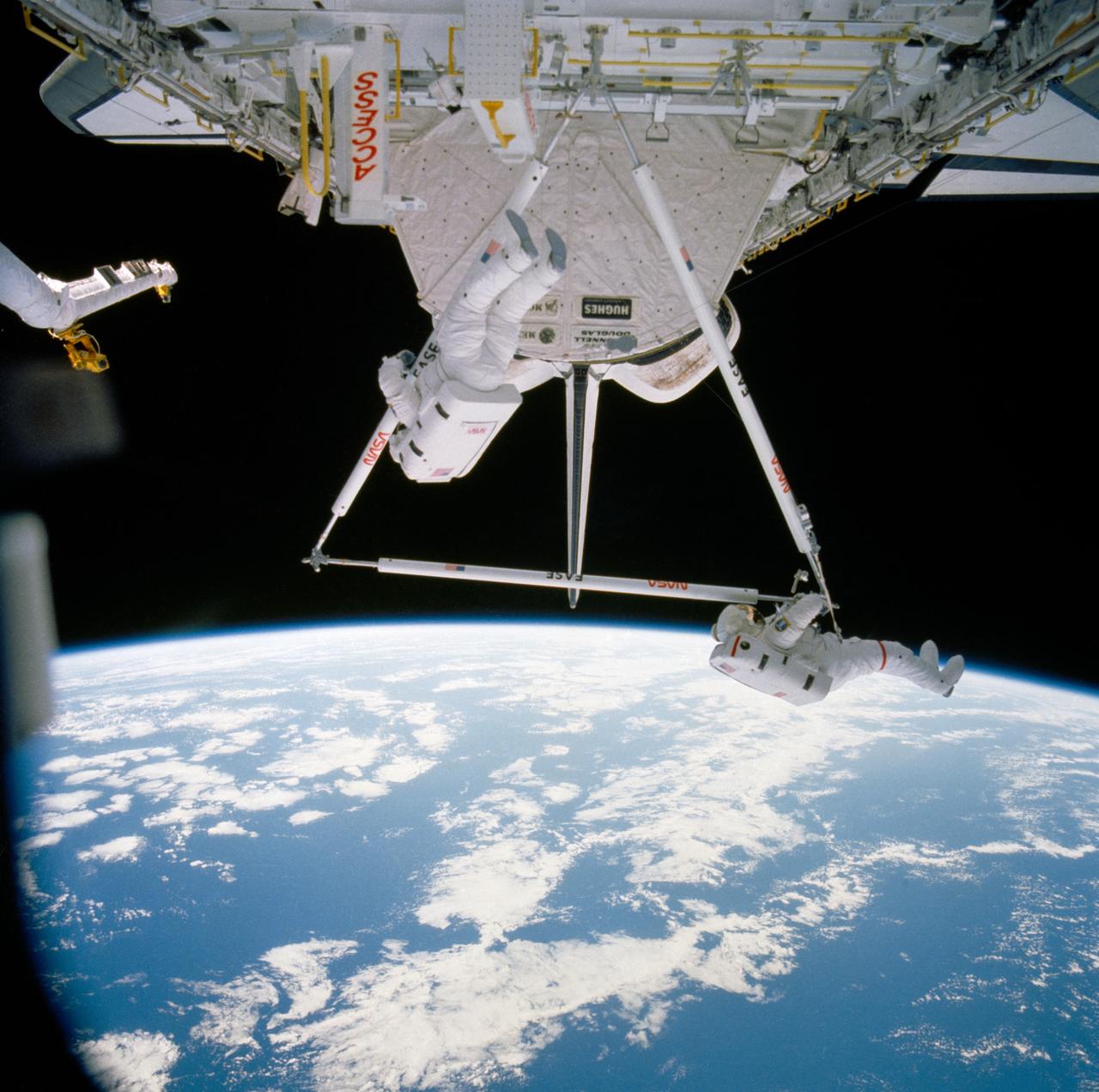
Astronauts Jerry L. Ross (left) and Sherwood C. (Woody) Spring are photographed as they assemble pieces of the Experimental Assembly of Structures in Extravehicular Activities (EASE) device in the open payload bay. The Canadian-built remote manipulator system (RMS) arm (partially obscured in the right portion of the frame) is in position to allow television cameras to record the activity.
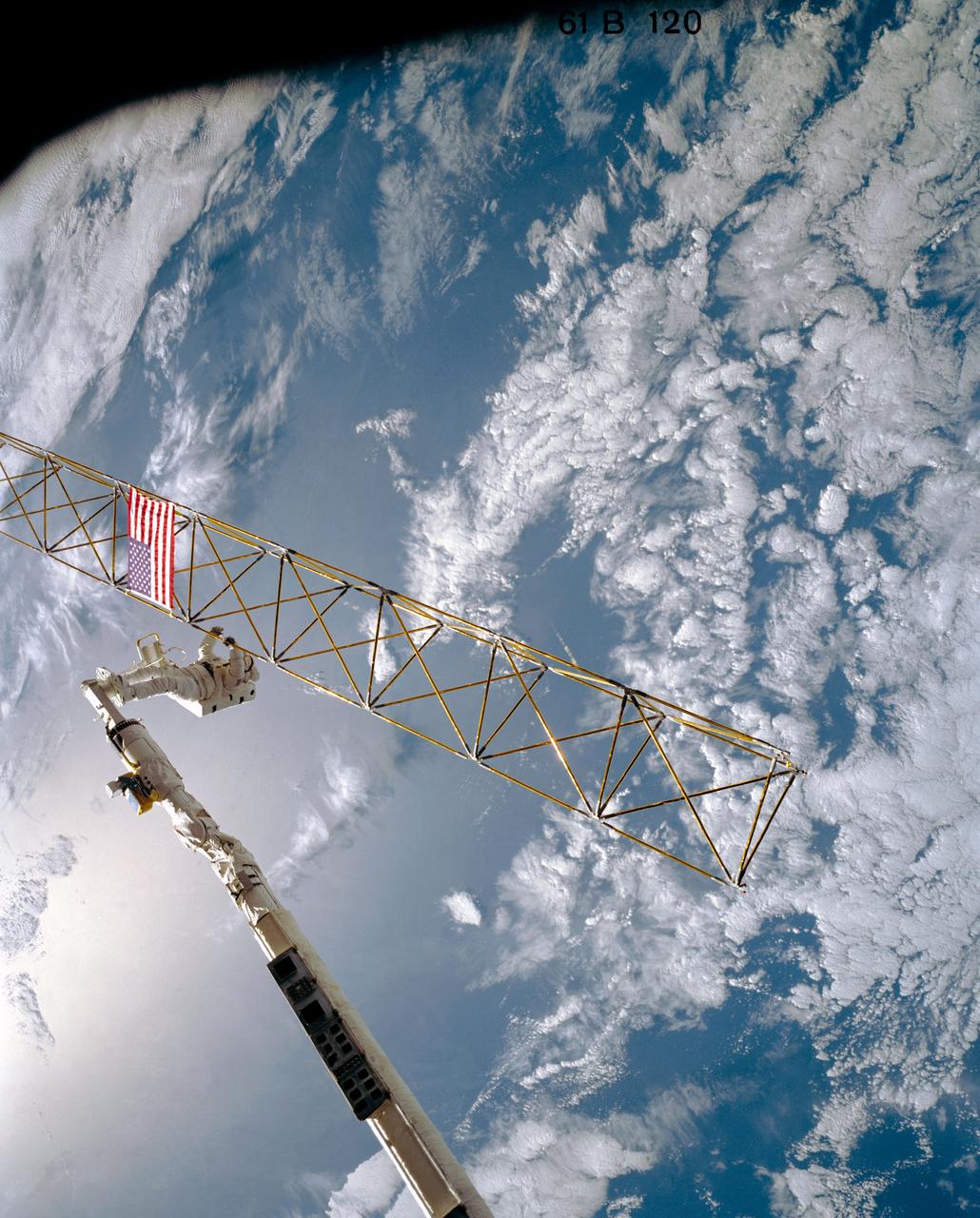
Astronaut Sherwood C. Spring, anchored to the foot restraint on the remote manipulator system (RMS) arm, checks joints on the tower-like Assembly Concept for Construction of Erectable Space Structures (ACCESS) device extending from the payload bay as the Atlantis flies over white clouds and blue ocean waters. The Gulf of Mexico waters form the backdrop for the scene.
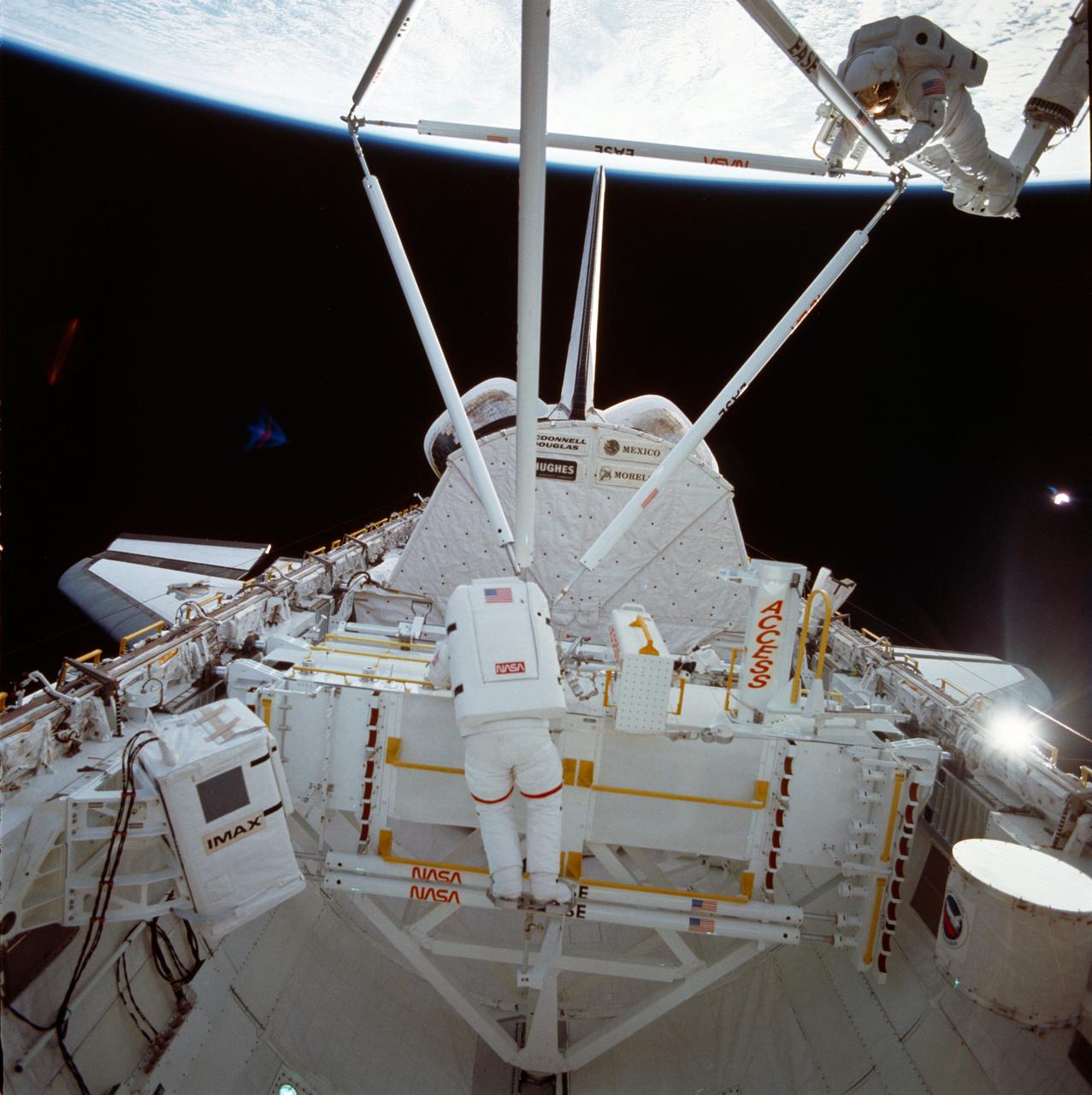
61B-41-047 (1 Dec 1985) --- Astronauts Jerry L. Ross (left) and Sherwood C. (Woody) Spring are photographed by Astronaut Bryan D. O'Connor as they continue to assemble more pieces of the EASE (Experimental Assembly of Structures in Extravehicular Activities) device during the week-long STS 61-B mission. This frame is one of a series covering the structure's build-up.
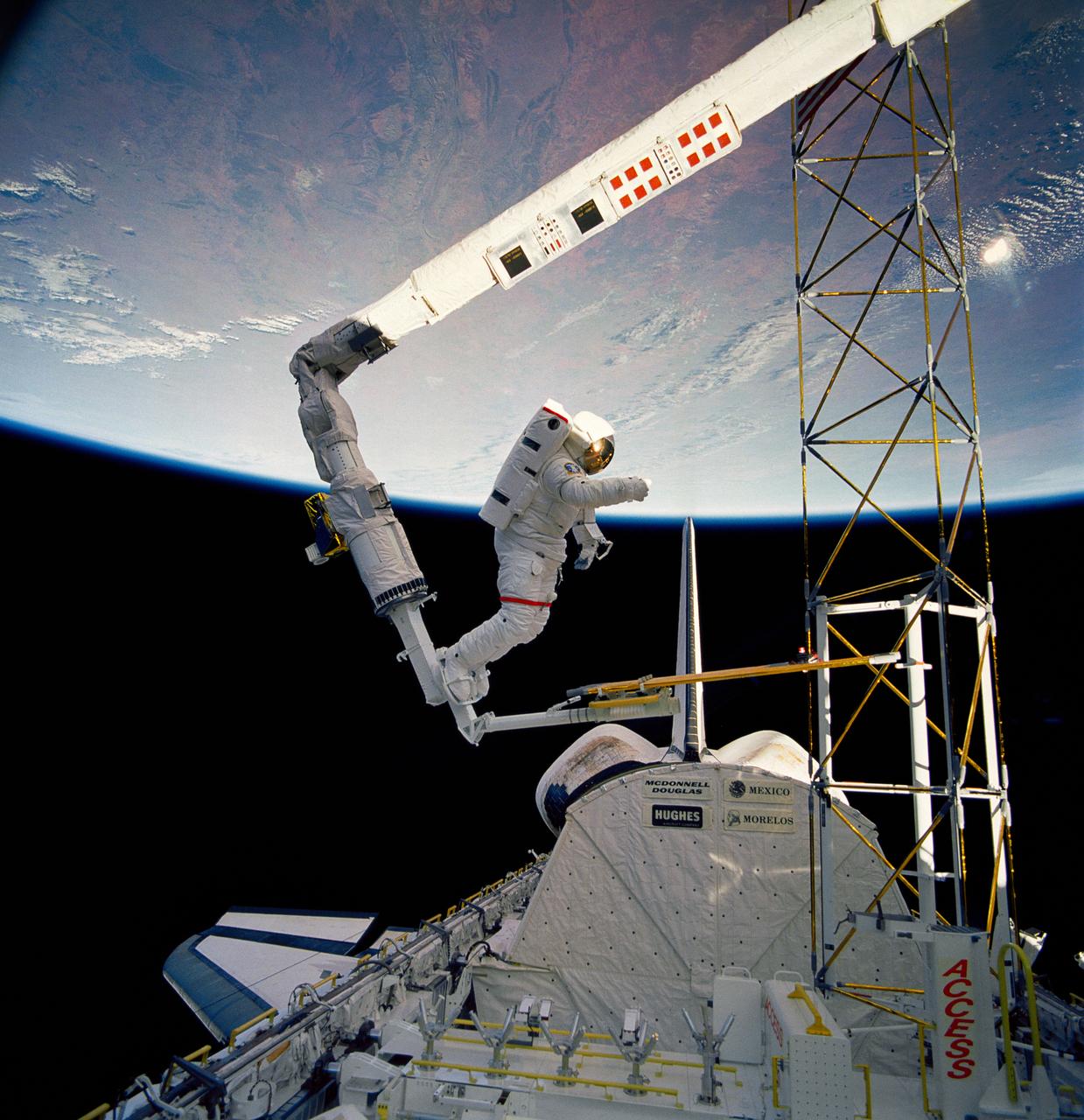
61B-41-019 (26 Nov. ? 3 Dec. 1985) --- Astronaut Jerry L. Ross, one of NASA flight 6l-B's mission specialists, approaches a tower device just erected by Ross and astronaut Sherwood (Woody) C. Spring during the second of two extravehicular activities. The tower was called Assembly Concept for Construction of Erectable Space Structures. Ross is secured on a foot restraint device connected to the Canadian-built remote manipulator system (RMS) arm aboard the Earth orbiting Atlantis.
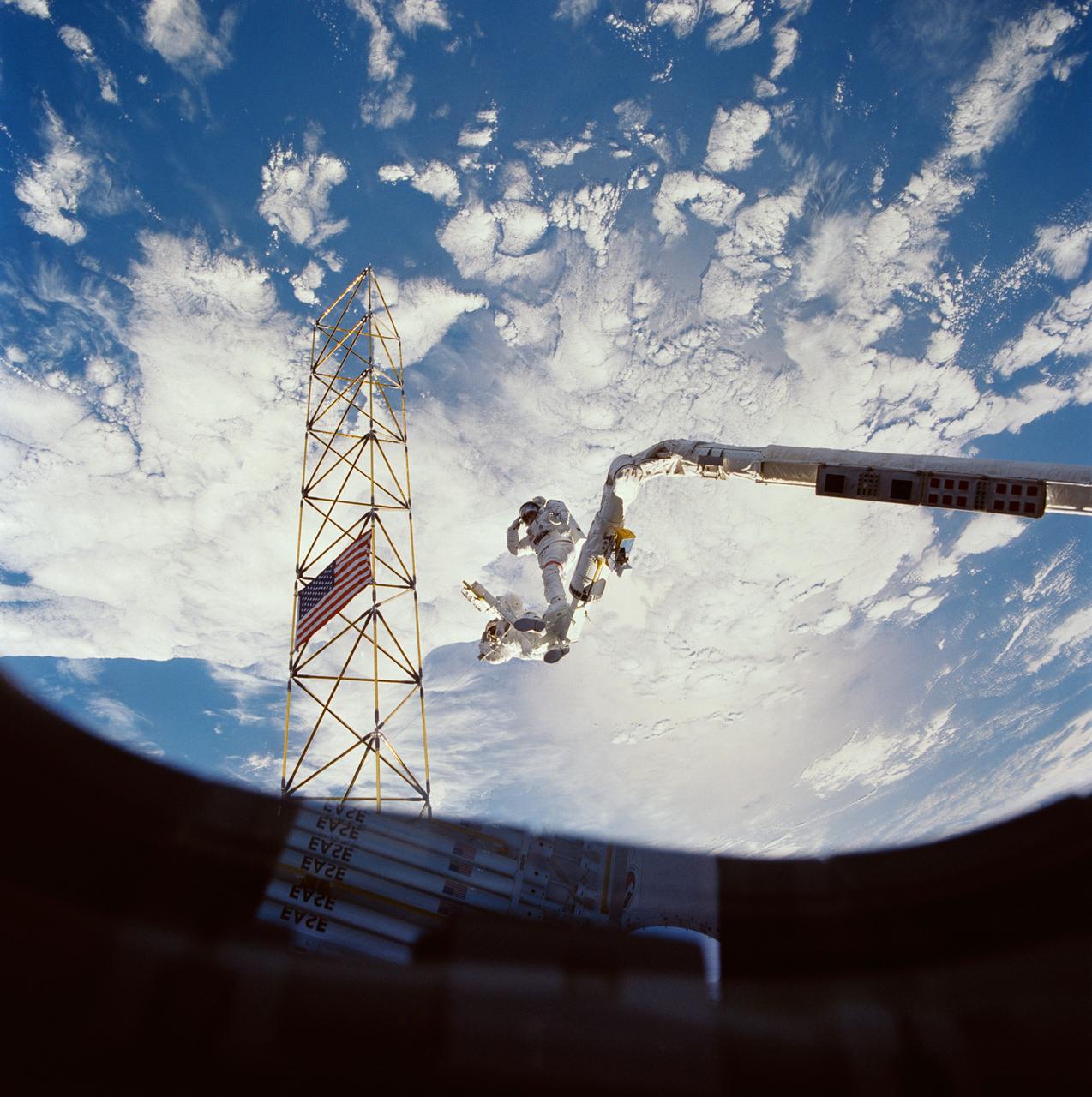
Astronauts Jerry L. Ross (right) and Sherwood C. (Woody) Spring (left) share a foot restraint as they survey the assembled ACCESS components after a lengthy extravehicular activity. Both men salute the American flag placed on the assembled ACCESS tower. Stowed EASE pieces are reflected in the window through which the photo was taken.
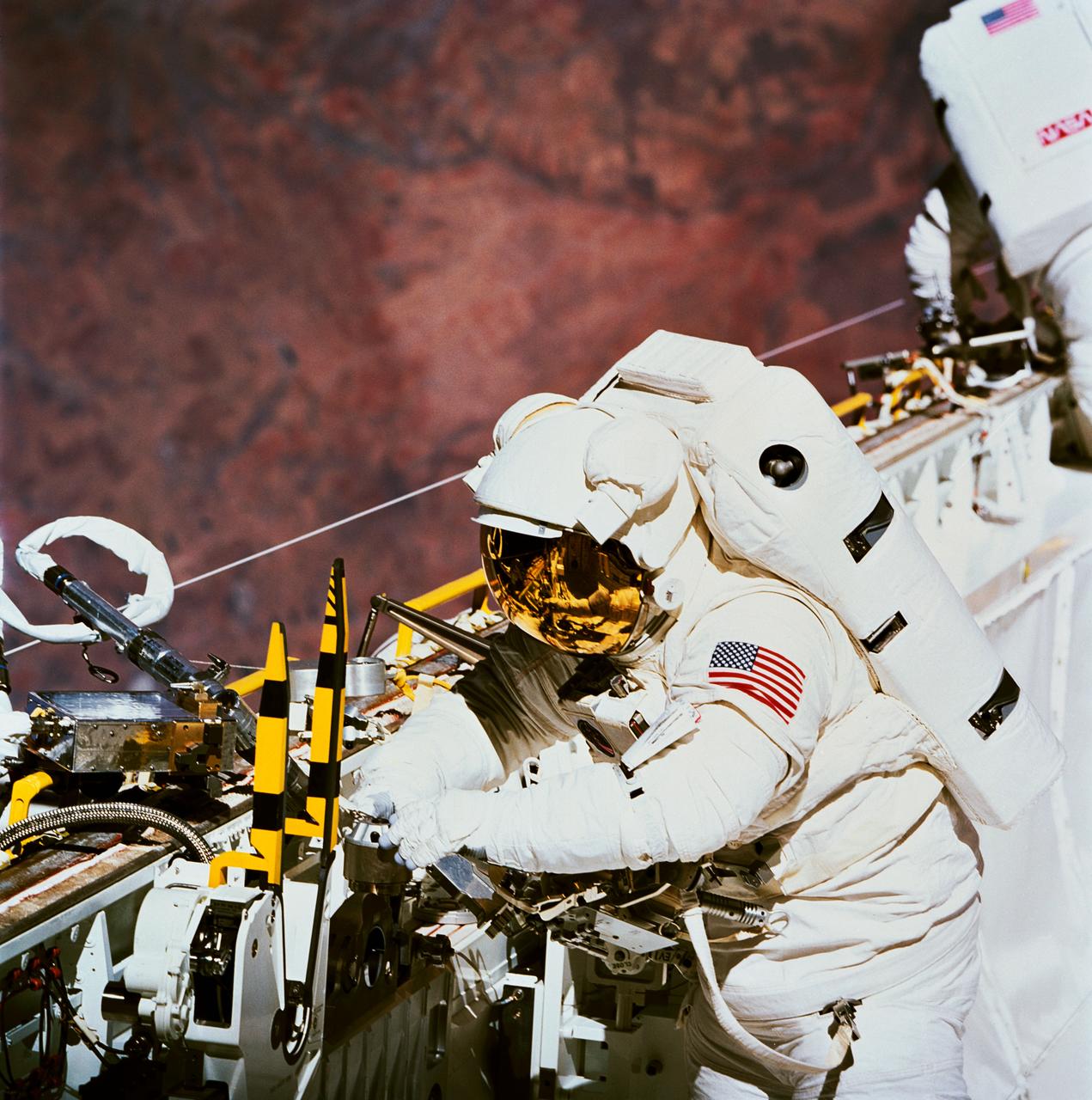
In Discovery's cargo bay, astronaut James H. Newman works with the power ratchet tool (PRT). Astronaut Carl E. Walz, who joined Newman for the lengthy period of extravehicular activity (EVA), is partially visible in the background. The two mission specialists devoted part of their EVA to evaluating tools and equipment expected to be used in the Hubble Space Telescope servicing. A desert area in Africa forms the backdrop for the 70mm scene.
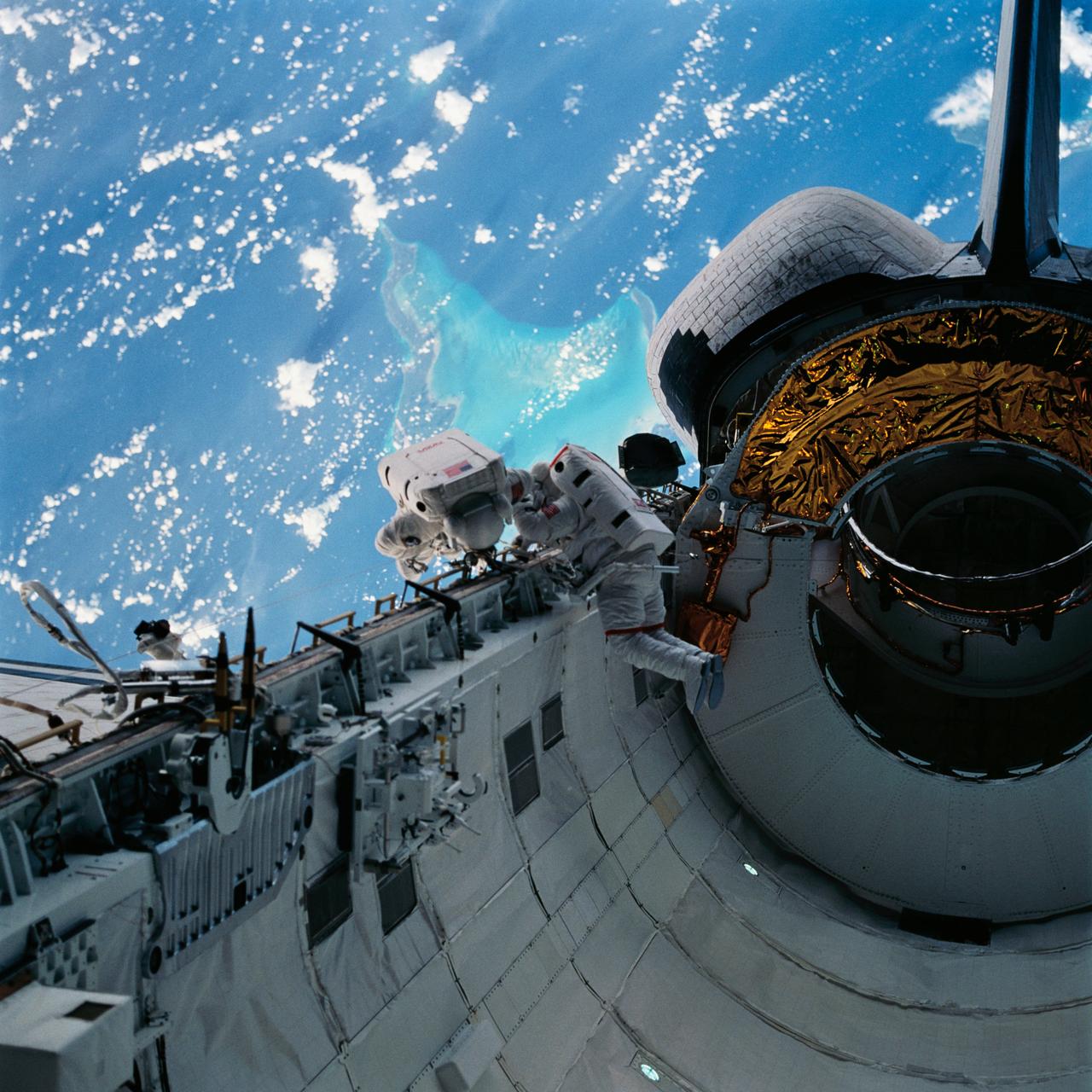
With the Caribbean Sea and part of the Bahama Islands chain as a backdrop, two STS-51 crewmembers evaluate procedures and gear to be used on the upcoming Hubble Space Telescope (HST)-servicing mission. Sharing the lengthy extravehicular activity in and around Discovery's cargo bay were astronauts James H. Newman (left), and Carl E. Walz, mission specialists.
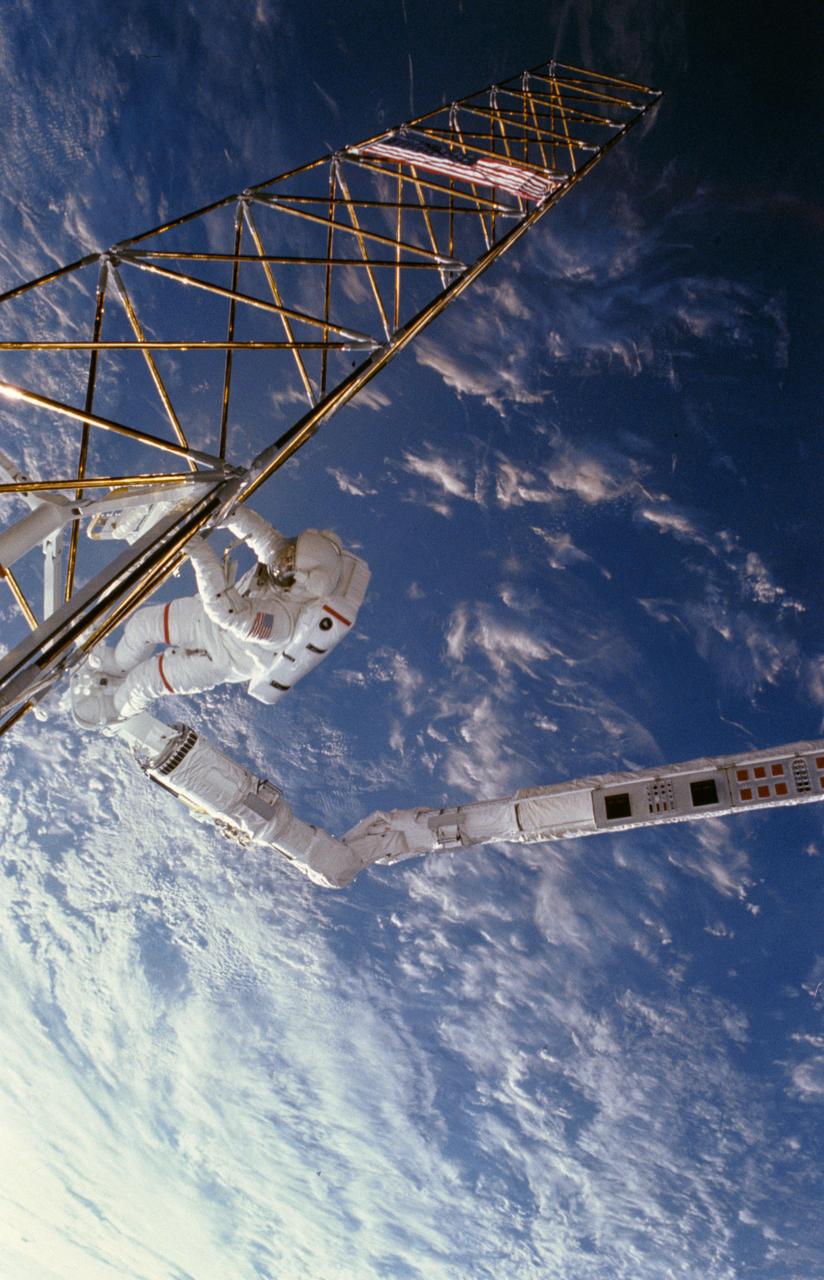
61B-102-022 (1 Dec 1985) --- Astronaut Jerry L. Ross, anchored to the foot restraint on the remote manipulator system (RMS), holds onto the tower-like Assembly Concept for Construction of Erectable Space Structures (ACCESS) device, as the Atlantis flies over white clouds and blue ocean waters. The frame was exposed with a negative-equipped camera held by Astronaut Sherwood C. Spring, who was also on the EVA-task.
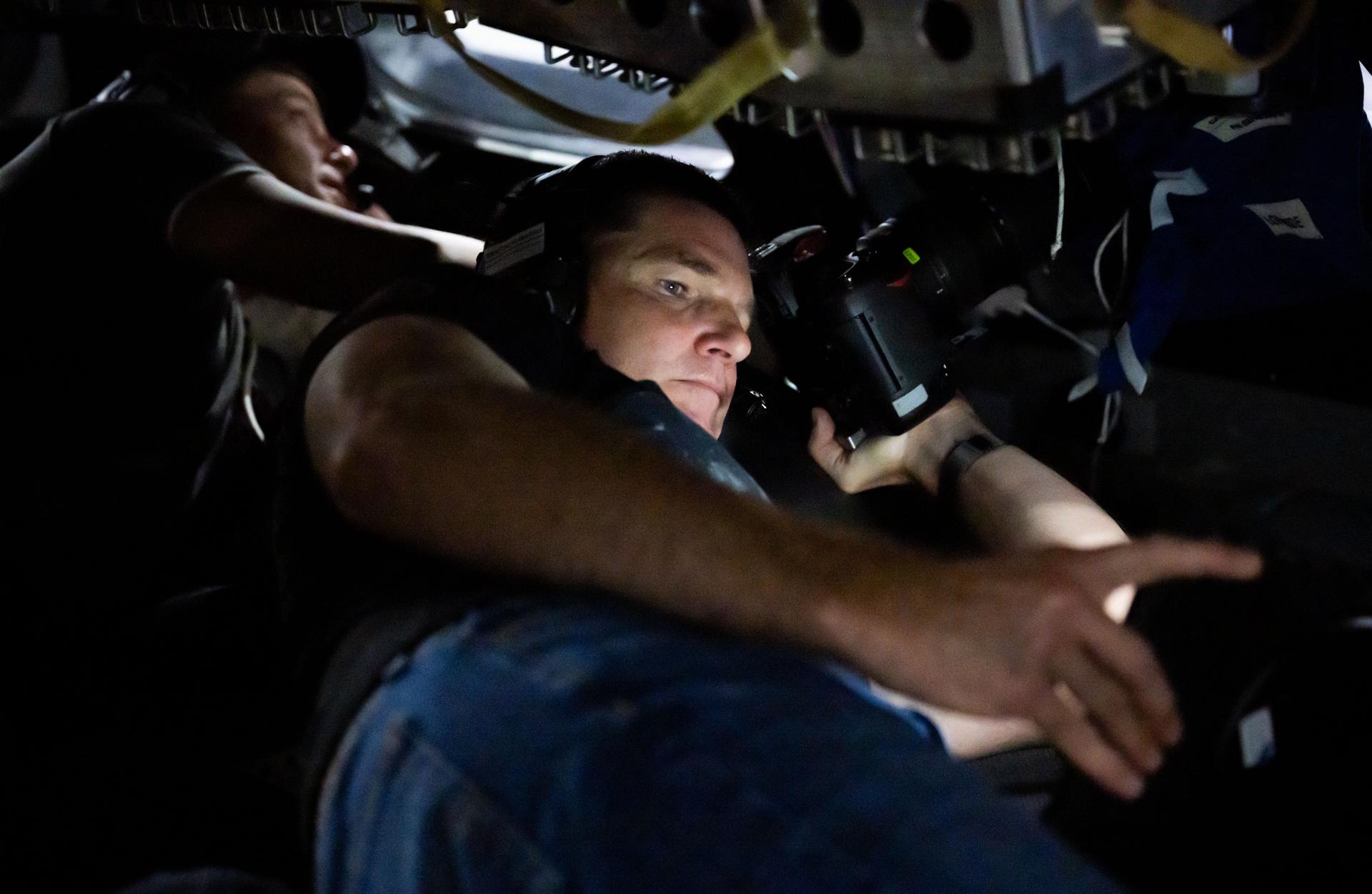
jsc2025e064791 --- CSA (Canadian Space Agency) astronaut Jeremy Hansen, mission specialist for NASA’s Artemis II mission, foreground, and NASA astronaut and Artemis II commander, Reid Wiseman, participate in crew lunar observations training in the Orion mockup at NASA's Johnson Space Center in Houston. The Artemis II crew will be the first people in more than 50 years to set eyes on the far side of the Moon, depending on illumination conditions. They will document their observations through photographs, audio recordings, and more to inform our understanding of the Moon, and share their experience of being far from Earth.
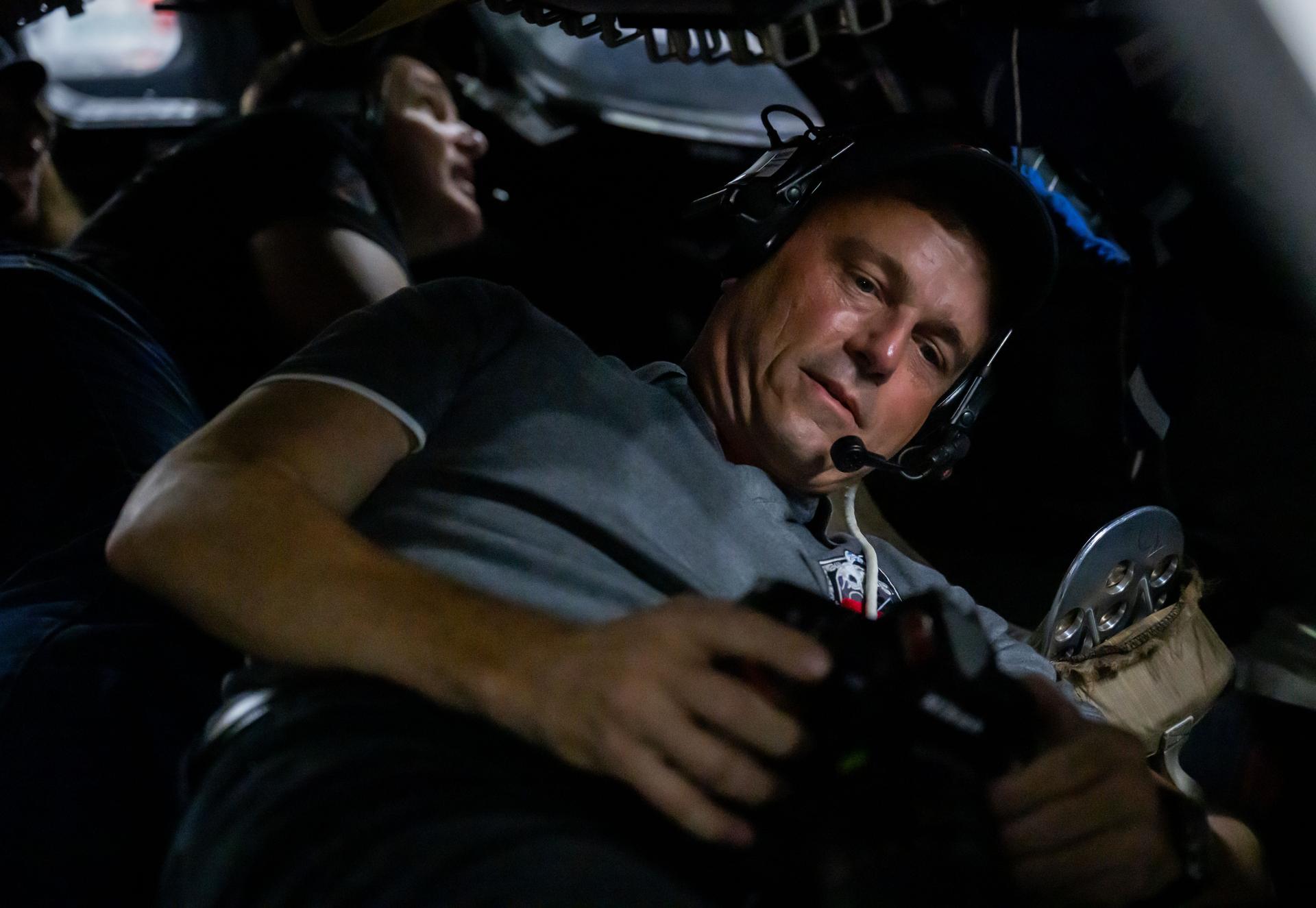
jsc2025e064796 --- NASA astronaut and Artemis II commander, Reid Wiseman, foreground, and CSA (Canadian Space Agency) astronaut Jeremy Hansen, mission specialist for NASA’s Artemis II mission, participate in crew lunar observations training in the Orion mockup at NASA's Johnson Space Center in Houston. The Artemis II crew will be the first people in more than 50 years to set eyes on the far side of the Moon, depending on illumination conditions. They will document their observations through photographs, audio recordings, and more to inform our understanding of the Moon, and share their experience of being far from Earth.
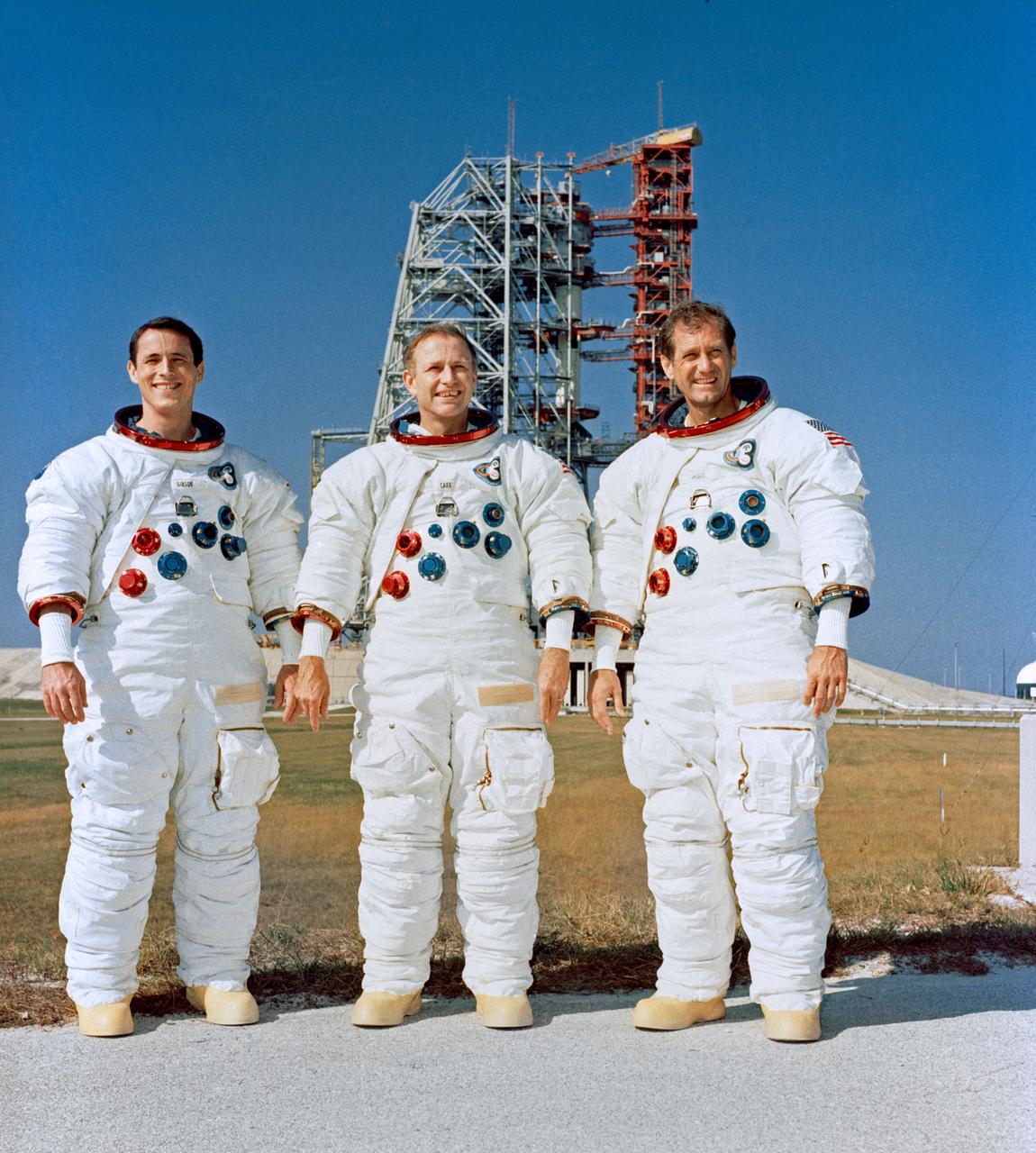
S73-37248 (8 Nov. 1973) --- The three members of the Skylab 4 crew are photographed standing near Pad B, Launch Complex 39, Kennedy Space Center, Florida, during preflight activity. They are, left to right, scientist-astronaut Edward G. Gibson, science pilot; astronaut Gerald P. Carr, commander; and astronaut William R. Pogue, pilot. The Skylab 4/Saturn 1B space vehicle is on the pad in the background. Skylab 4, the third and last manned visit to the Skylab space station in Earth orbit, will return additional information on the Earth and sun, as well as provide a favorable location from which to observe the recently discovered Comet Kohoutek. Photo credit: NASA
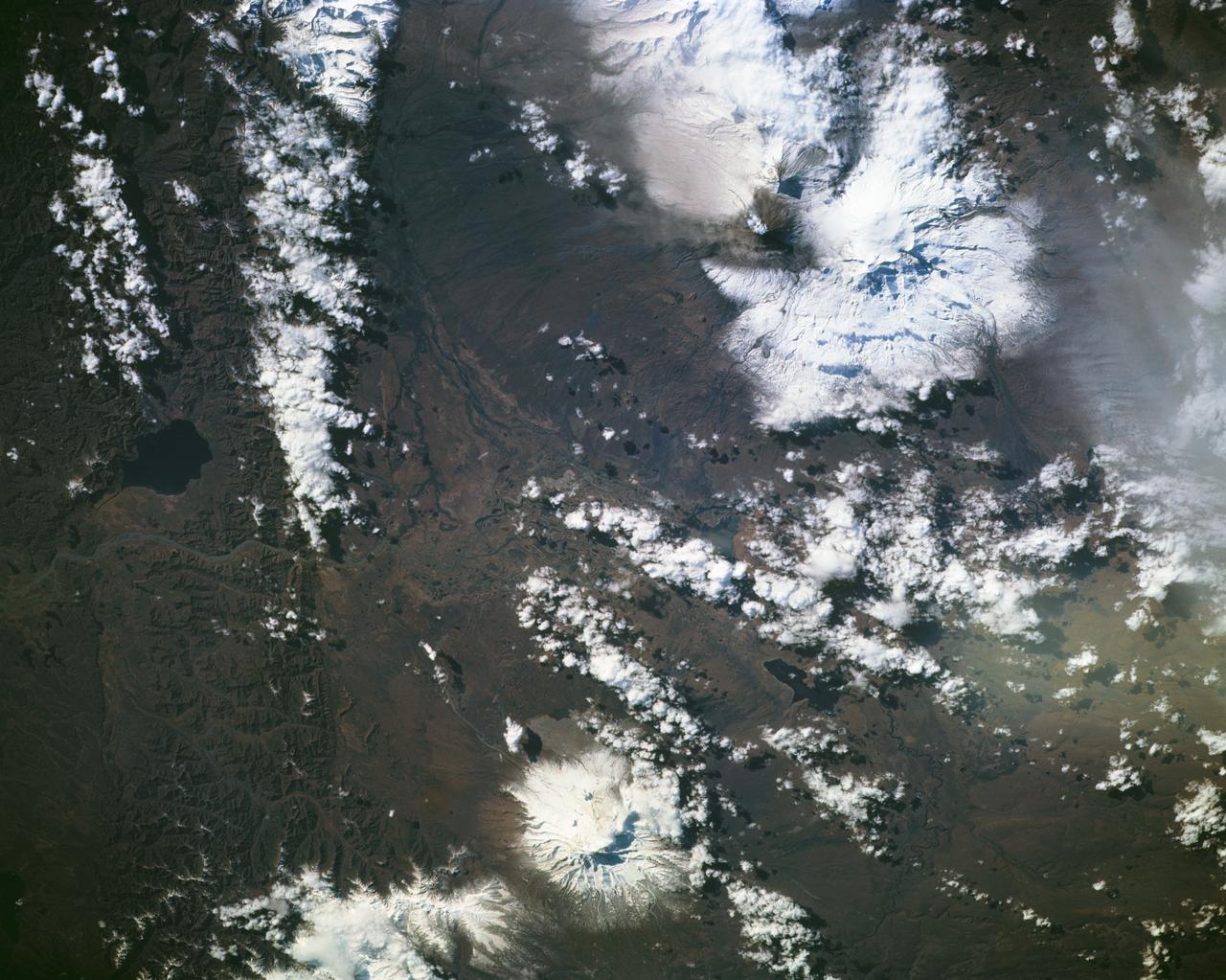
STS068-155-094 (30 September-11 October 1994) --- (Kliuchevskoi Volcano) The crewmembers used a Linhof large format Earth observation camera to photograph this nadir view of the Kamchatka peninsula's week-old volcano. The eruption and the follow-up environmental activity was photographed from 115 nautical miles above Earth. Six NASA astronauts spent a week and a half aboard the Space Shuttle Endeavour in support of the Space Radar Laboratory 2 (SRL-2) mission.
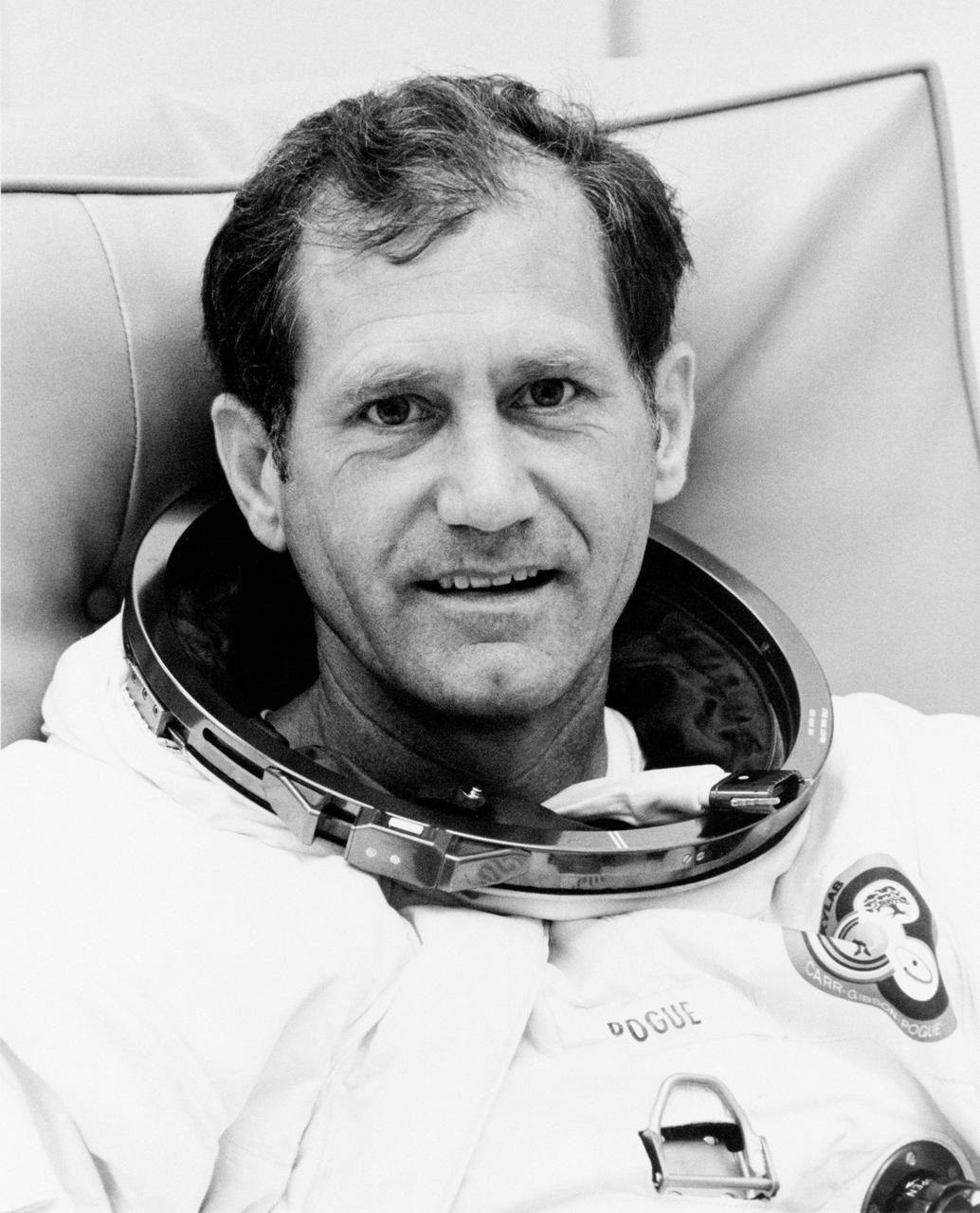
S73-36905 (8 Nov. 1973) --- Astronaut William R. Pogue, pilot of the Skylab 4 mission, relaxes during spacesuit pressure and fit checks at the Kennedy Space Center, Florida. This shoulder and head shot of Pogue was taken a few days before the scheduled Skylab 4 launch. This third and last visit to the Skylab space station in Earth orbit will return additional information on the Earth and sun, as well as provide favorable location from which to observe the recently discovered Comet Kohoutek. The other two members of the Skylab 4 crew will be astronaut Gerald P. Carr, commander; and scientist-astronaut Edward G. Gibson, science pilot. Photo credit: NASA
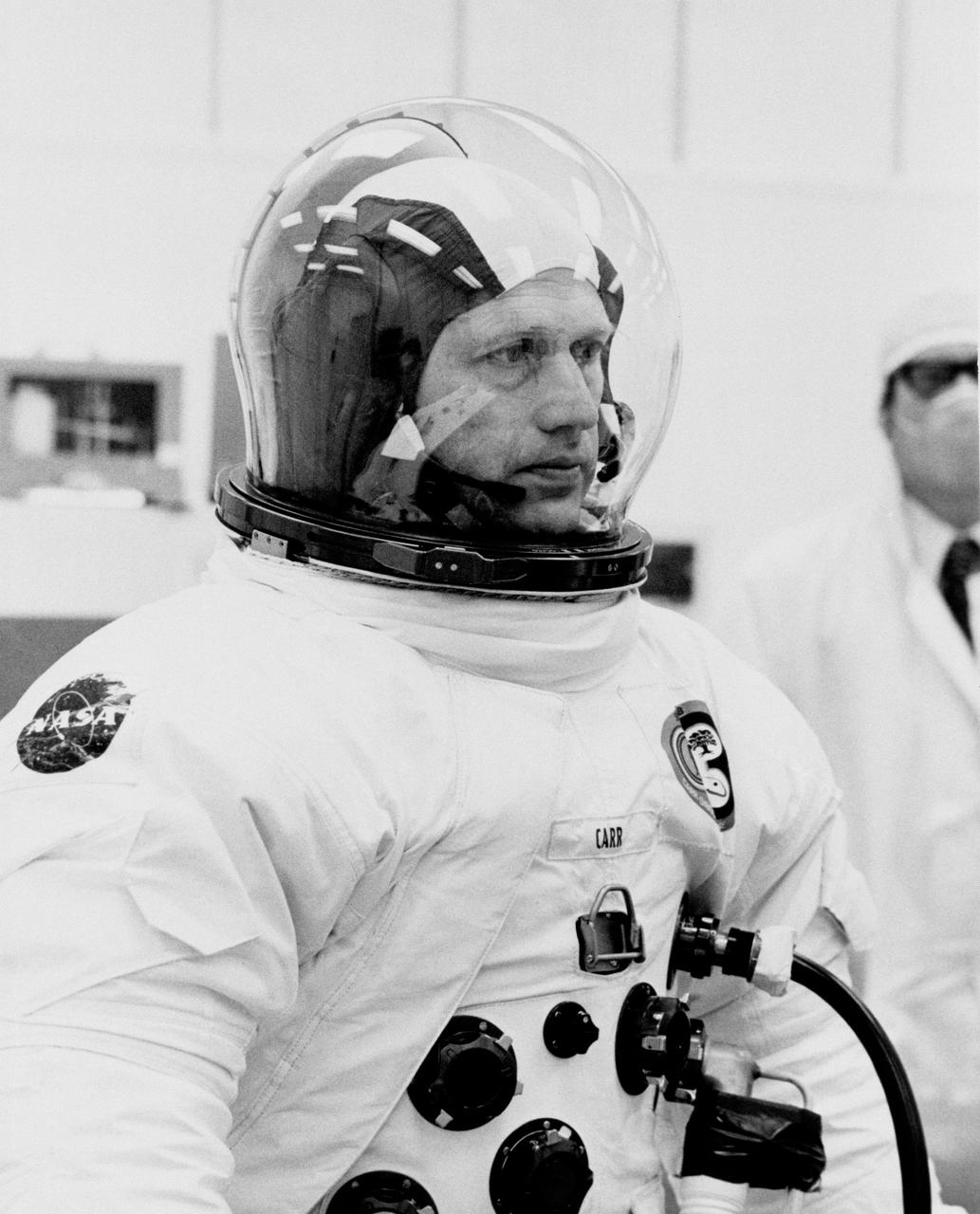
S73-36908 (8 Nov. 1973) --- Astronaut Gerald P. Carr, commander of the Skylab 4 mission, undergoes spacesuit pressure and fit checks at the Kennedy Space Center, Florida. This shoulder and head shot of Carr was taken a few days before the scheduled Skylab 4 launch. This third and last visit to the Skylab space station in Earth orbit will return additional information on the Earth and sun, as well as provide a favorable location from which to observe the recently discovered Comet Kohoutek. The other two members of the Skylab 4 crew will be astronaut William R. Pogue, pilot; and scientist-astronaut Edward G. Gibson, science pilot. Photo credit: NASA
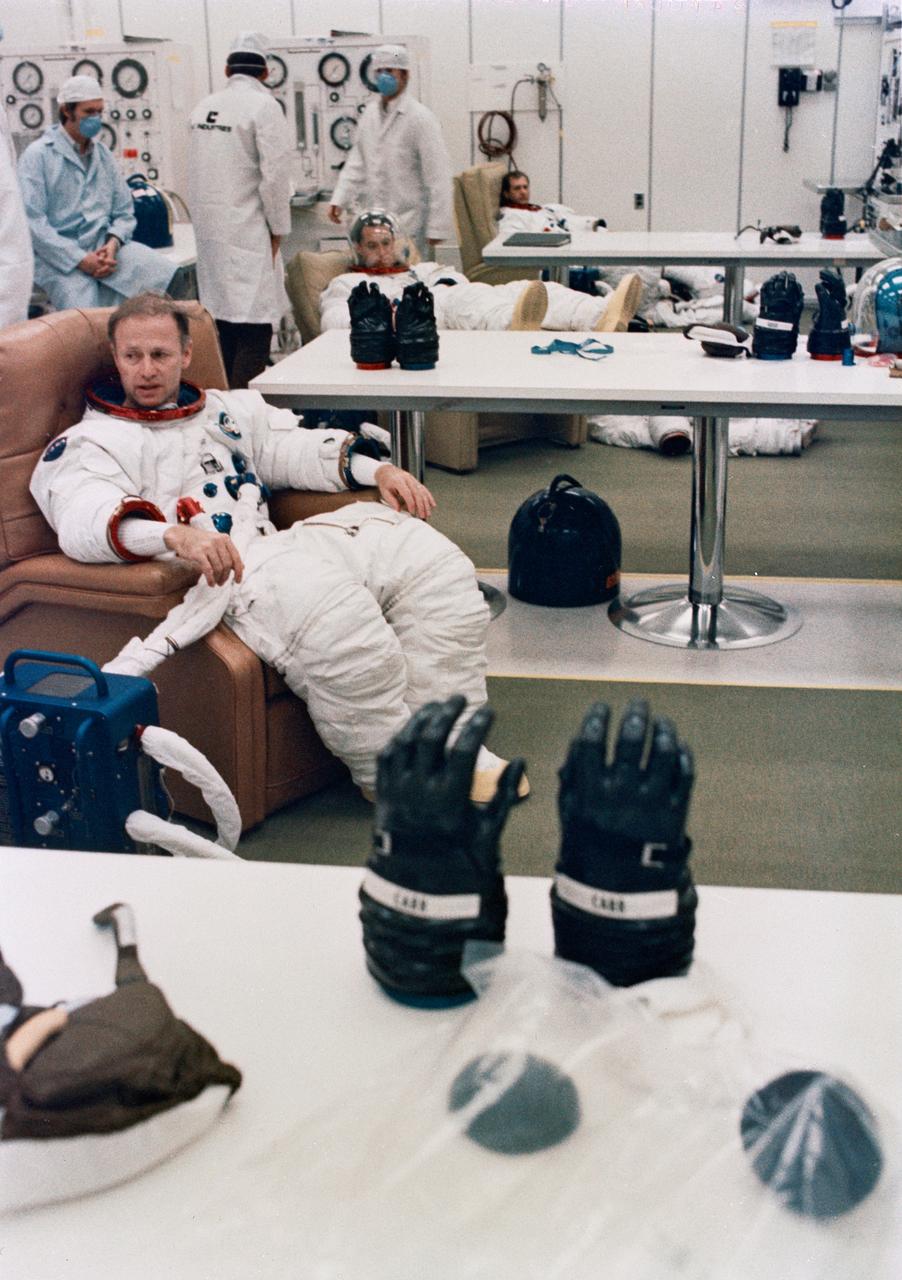
S73-36900 (8 Nov. 1973) --- The three members of the Skylab 4 crew undergo spacesuit fit and pressure checks in the suiting building during preflight activity at the Kennedy Space Center, Florida. They are astronaut Gerald P. Carr (foreground), commander; scientist-astronaut Edward G. Gibson (center), science pilot; and astronaut William R. Pogue (background), pilot. Skylab 4, the third and last visit to the Skylab space station in Earth orbit, will return additional information on the Earth and sun, as well as provide a favorable location from which to observe the recently discovered Comet Kohoutek. Photo credit: NASA
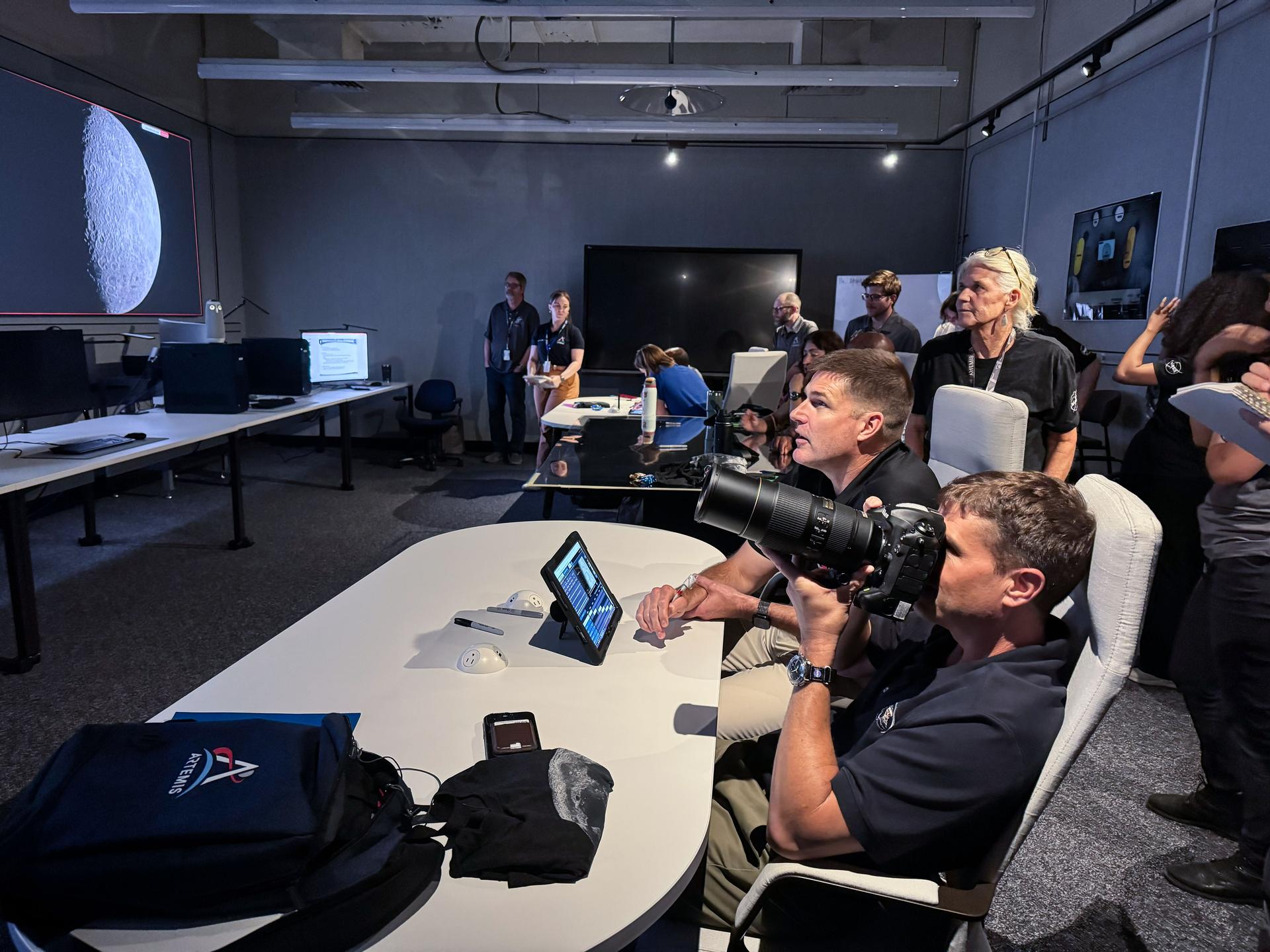
jsc2025e086642 --- NASA astronaut and Artemis II commander, Reid Wiseman (foreground), and CSA (Canadian Space Agency) astronaut and Artemis II mission specialist, practice lunar photography at NASA's Johnson Space Center in Houston. The Artemis II crew will be the first people in more than 50 years to set eyes on the far side of the Moon, depending on illumination conditions. They will document their observations through photographs, audio recordings, and more to inform our understanding of the Moon, and share their experience of being far from Earth. Credit: Kelsey Young
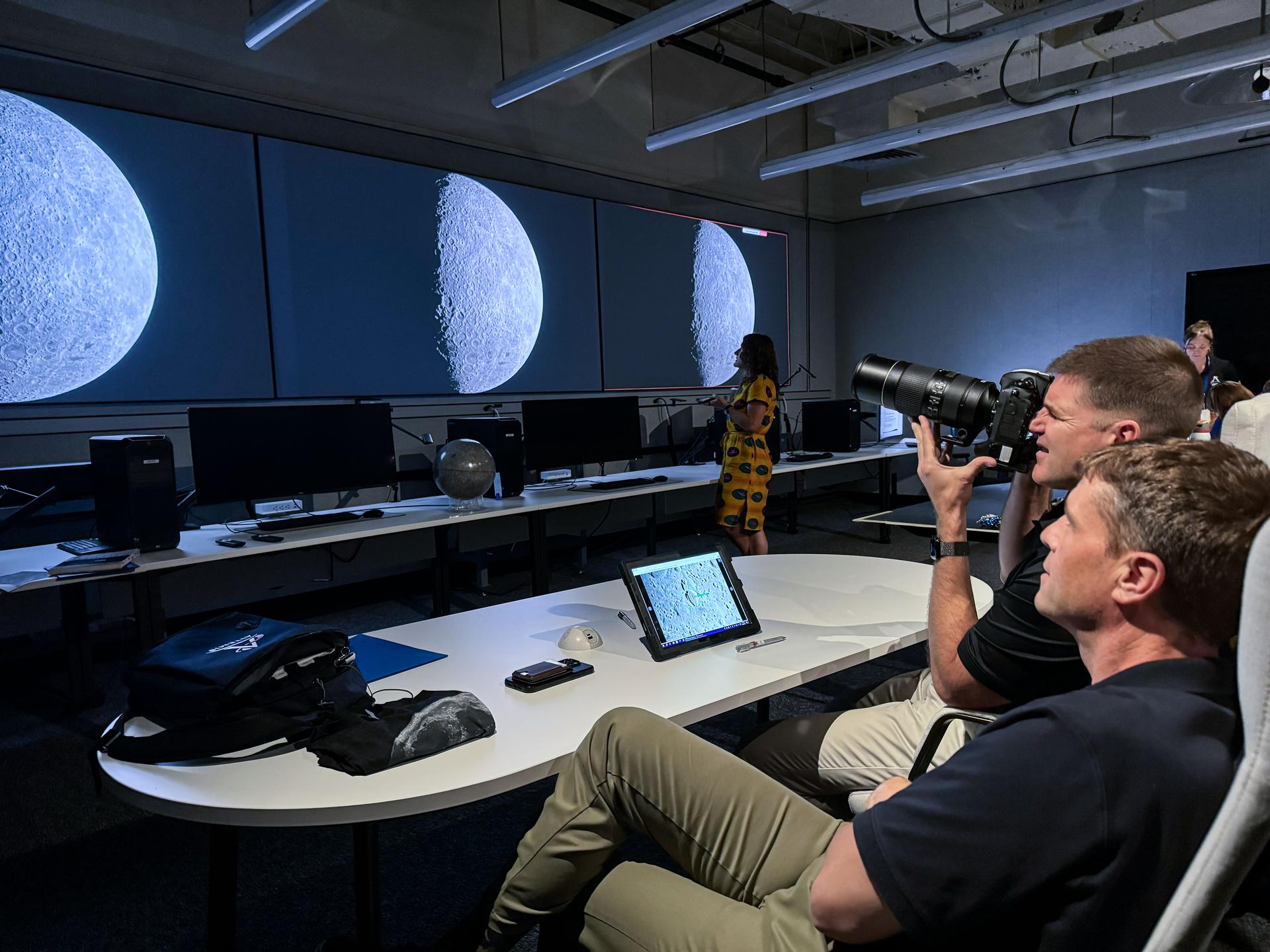
jsc2025e087135 --- NASA astronaut and Artemis II commander, Reid Wiseman (foreground), and CSA (Canadian Space Agency) astronaut and Artemis II mission specialist, practice lunar photography at NASA's Johnson Space Center in Houston. The Artemis II crew will be the first people in more than 50 years to set eyes on the far side of the Moon, depending on illumination conditions. They will document their observations through photographs, audio recordings, and more to inform our understanding of the Moon, and share their experience of being far from Earth. Credit: Kelsey Young
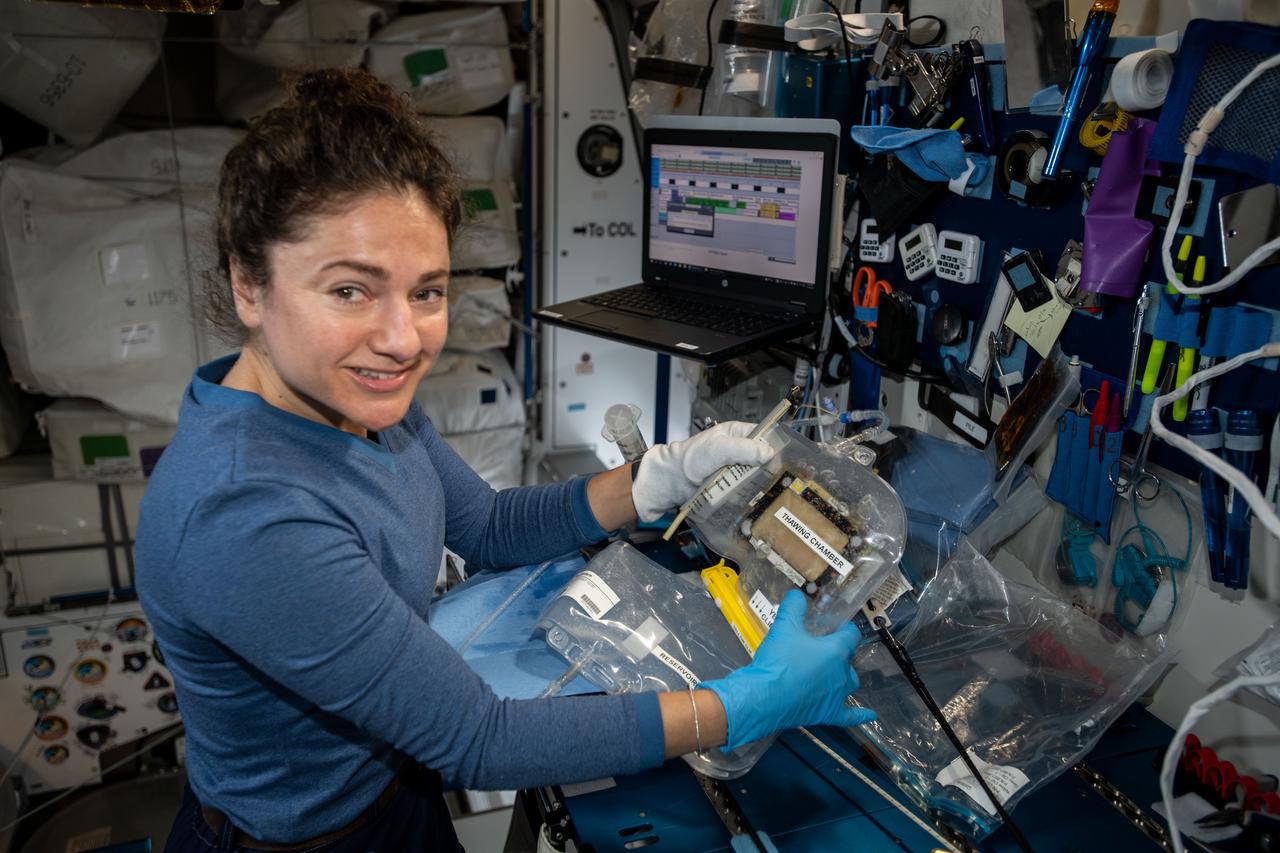
iss062e039026 (Feb. 21, 2020) --- NASA astronaut and Expedition 62 Flight Engineer Jessica Meir works with research hardware to support the OsteoOmics-02 bone investigation. The experiment is helping doctors to compare bone cells in space with samples on Earth that are levitated magnetically. Observations from the study could provide deeper insights into bone ailments on Earth, including osteoporosis.
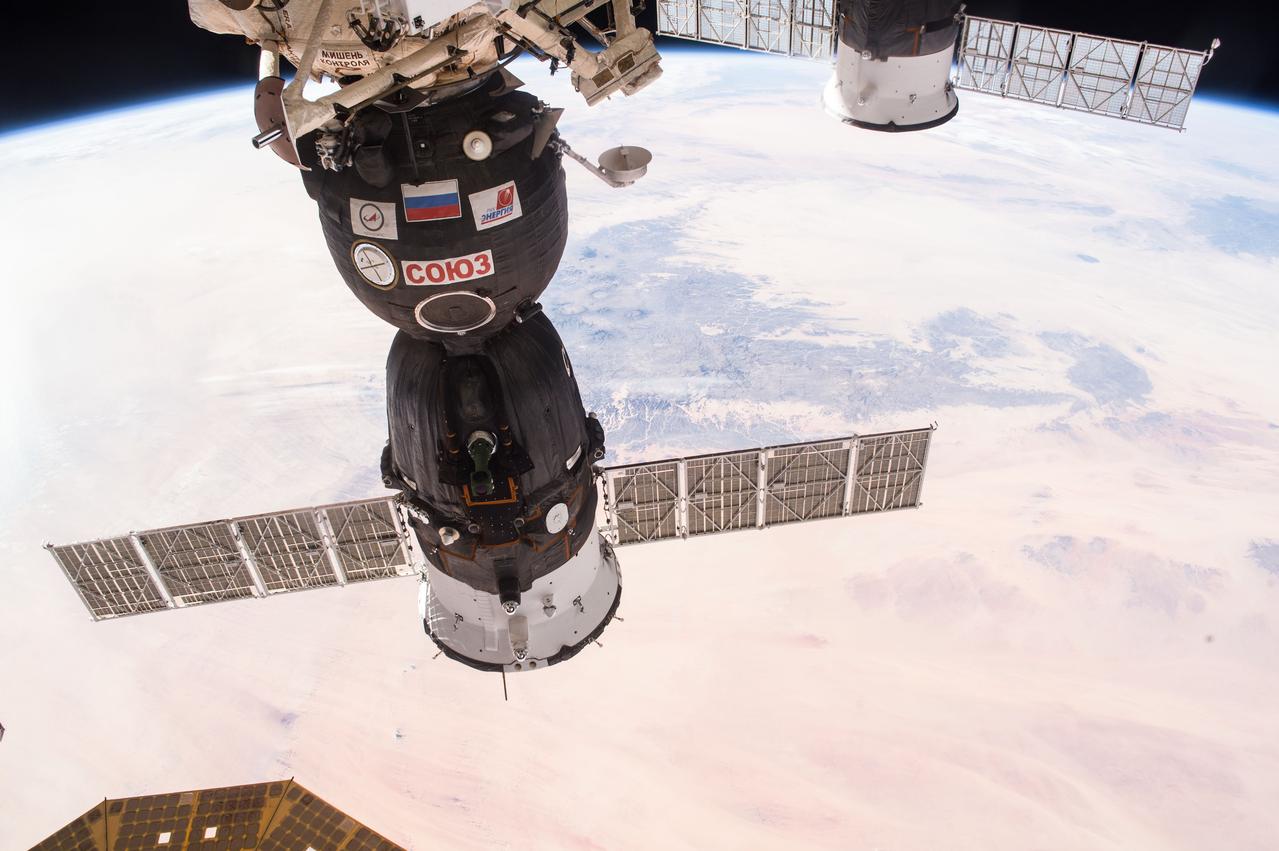
ISS046e004535 (01/03/2016) --- Earth observation taken during a day pass by NASA astronaut Scott Kelly aboard the International Space Station. A Russian Soyuz spacecraft dominates the center of the view as it sits docked to the station. Kelly tweeted this image with the message: "Day 282. Soyuz silhouette and #sunset colors of our magnificent #Earth. #GoodNight from @space_station! #YearInSpace".
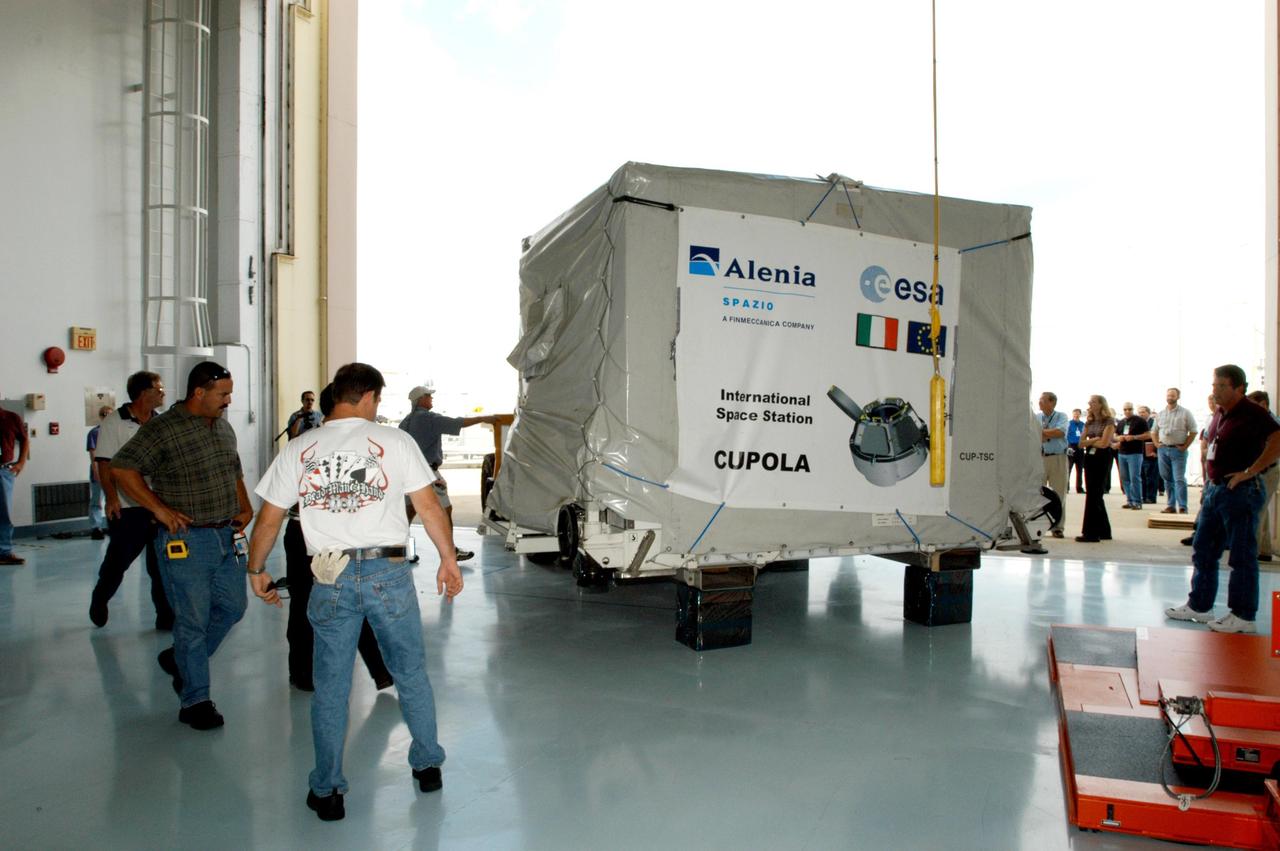
KENNEDY SPACE CENTER, FLA. - At the Space Station Processing Facility, a trailer delivers the Cupola, an element scheduled to be installed on the International Space Station in early 2009. It was shipped from Alenia Spazio in Turin, Italy, for the European Space Agency. A dome-shaped module with seven windows, the Cupola will give astronauts a panoramic view for observing many operations on the outside of the orbiting complex. The view out of the Cupola windows will enhance an arm operator's situational awareness, supplementing television camera views and graphics. It will provide external observation capabilities during spacewalks, docking operations and hardware surveys and for Earth and celestial studies. The Cupola is the final element of the Space Station core.
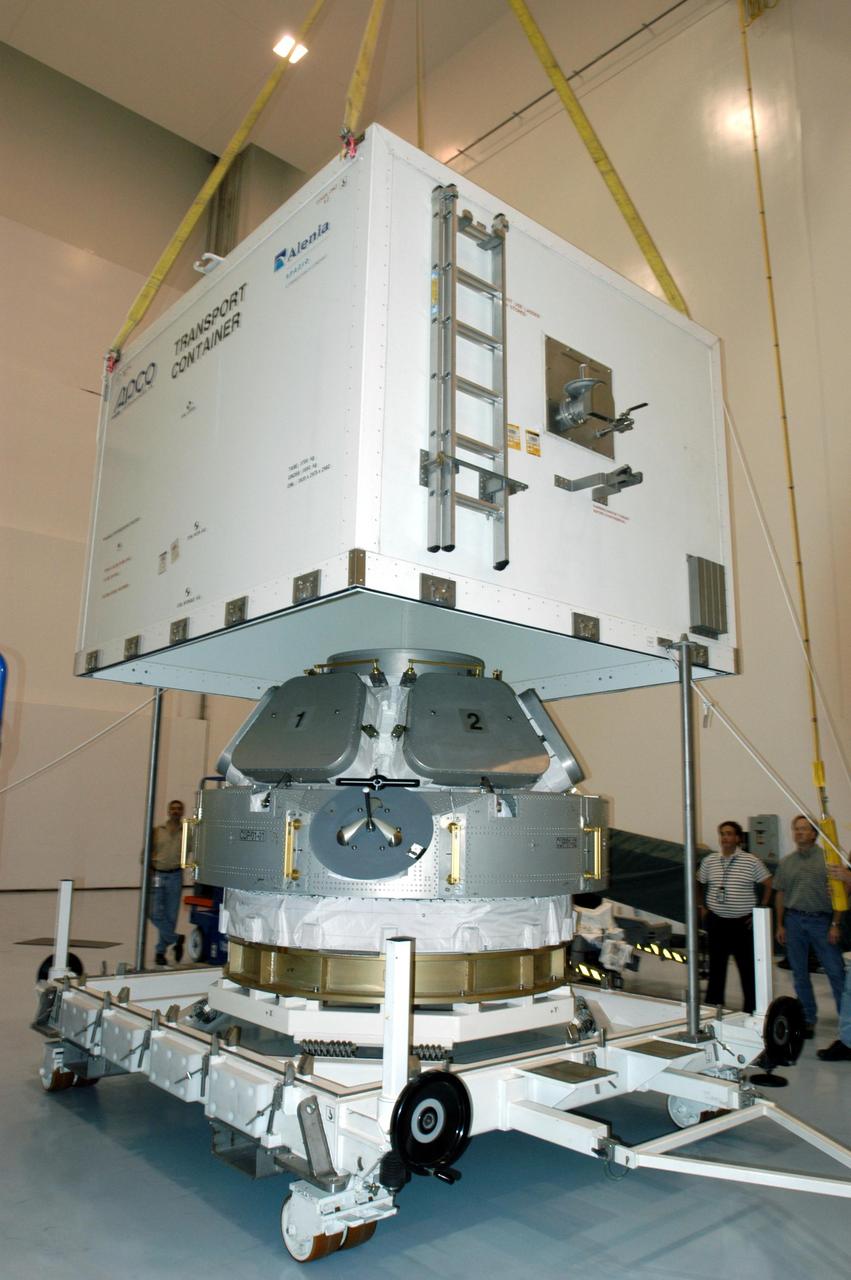
KENNEDY SPACE CENTER, FLA. - Inside the Space Station Processing Facility, the Cupola is uncrated. It was shipped from Alenia Spazio in Turin, Italy, for the European Space Agency. The Cupola is an element scheduled to be installed on the International Space Station in early 2009. A dome-shaped module with seven windows, the Cupola will give astronauts a panoramic view for observing many operations on the outside of the orbiting complex. The view out of the Cupola windows will enhance an arm operator's situational awareness, supplementing television camera views and graphics. It will provide external observation capabilities during spacewalks, docking operations and hardware surveys and for Earth and celestial studies. The Cupola is the final element of the Space Station core.
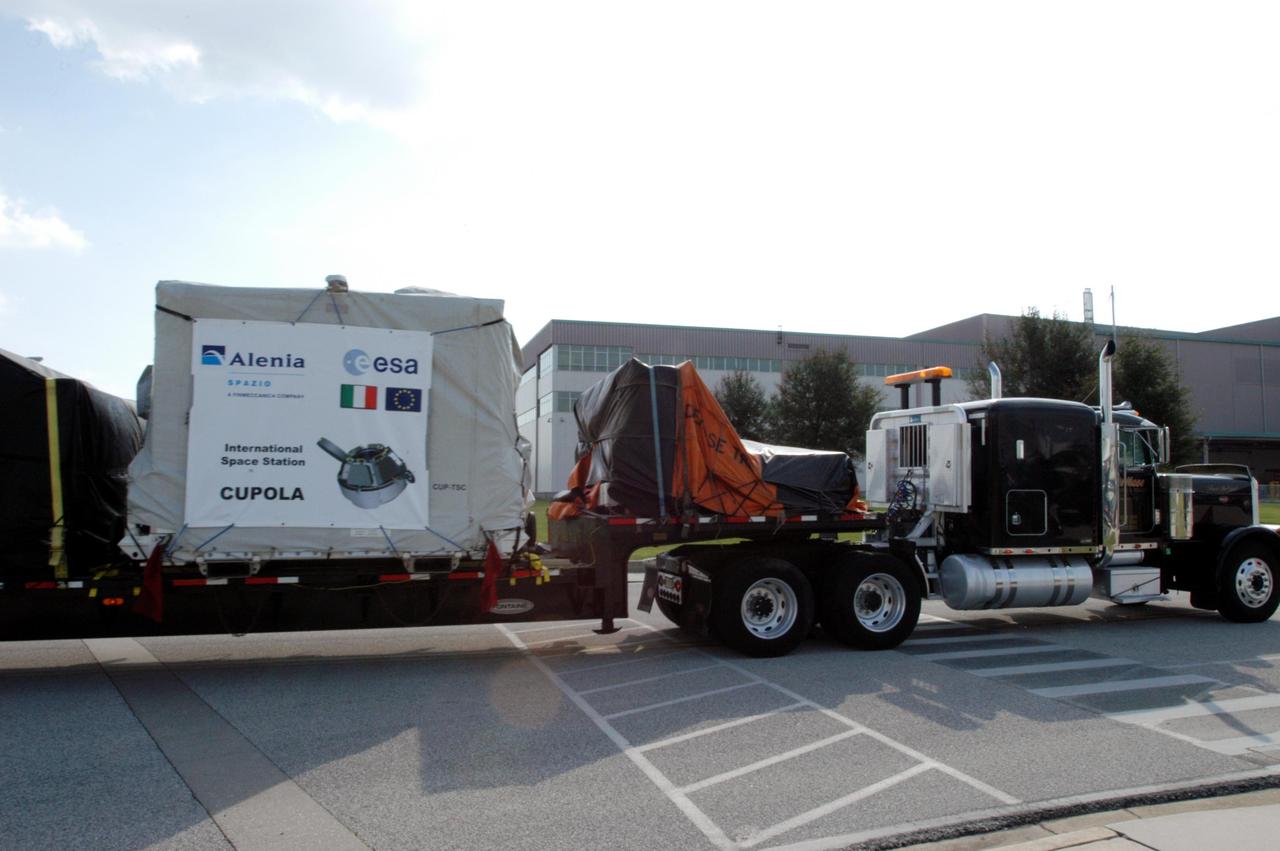
KENNEDY SPACE CENTER, FLA. - The Cupola, an element scheduled to be installed on the International Space Station in early 2009, arrives at KSC on the flatbed of a trailer. It was shipped from Alenia Spazio in Turin, Italy, for the European Space Agency. A dome-shaped module with seven windows, the Cupola will give astronauts a panoramic view for observing many operations on the outside of the orbiting complex. The view out of the Cupola windows will enhance an arm operator's situational awareness, supplementing television camera views and graphics. It will provide external observation capabilities during spacewalks, docking operations and hardware surveys and for Earth and celestial studies. The Cupola is the final element of the Space Station core.
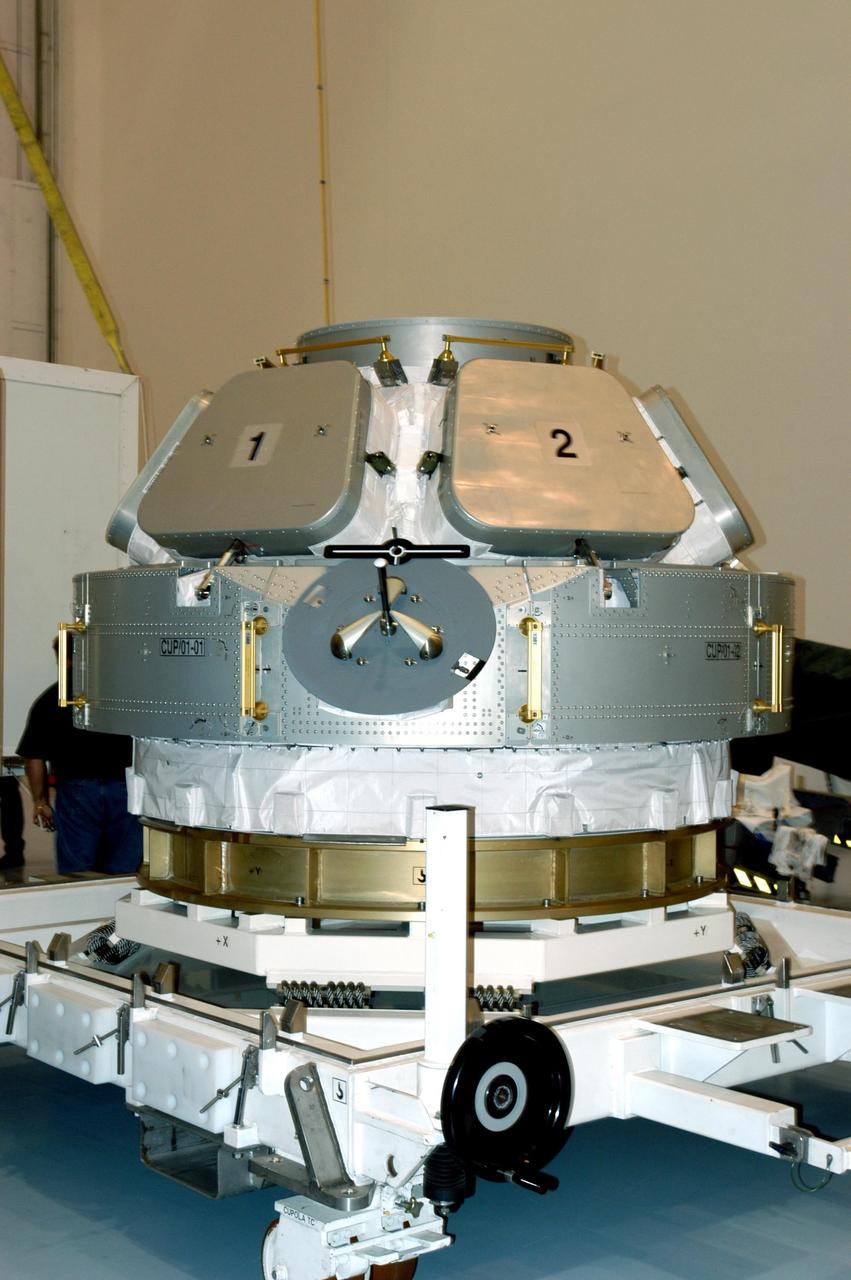
KENNEDY SPACE CENTER, FLA. - The Cupola, an element scheduled to be installed on the International Space Station in early 2009, sits uncrated inside the Space Station Processing Facility after its delivery from Turin, Italy. A dome-shaped module with seven windows, the Cupola will give astronauts a panoramic view for observing many operations on the outside of the orbiting complex. The view out of the Cupola windows will enhance an arm operator's situational awareness, supplementing television camera views and graphics. It will provide external observation capabilities during spacewalks, docking operations and hardware surveys and for Earth and celestial studies. The Cupola is the final element of the Space Station core.
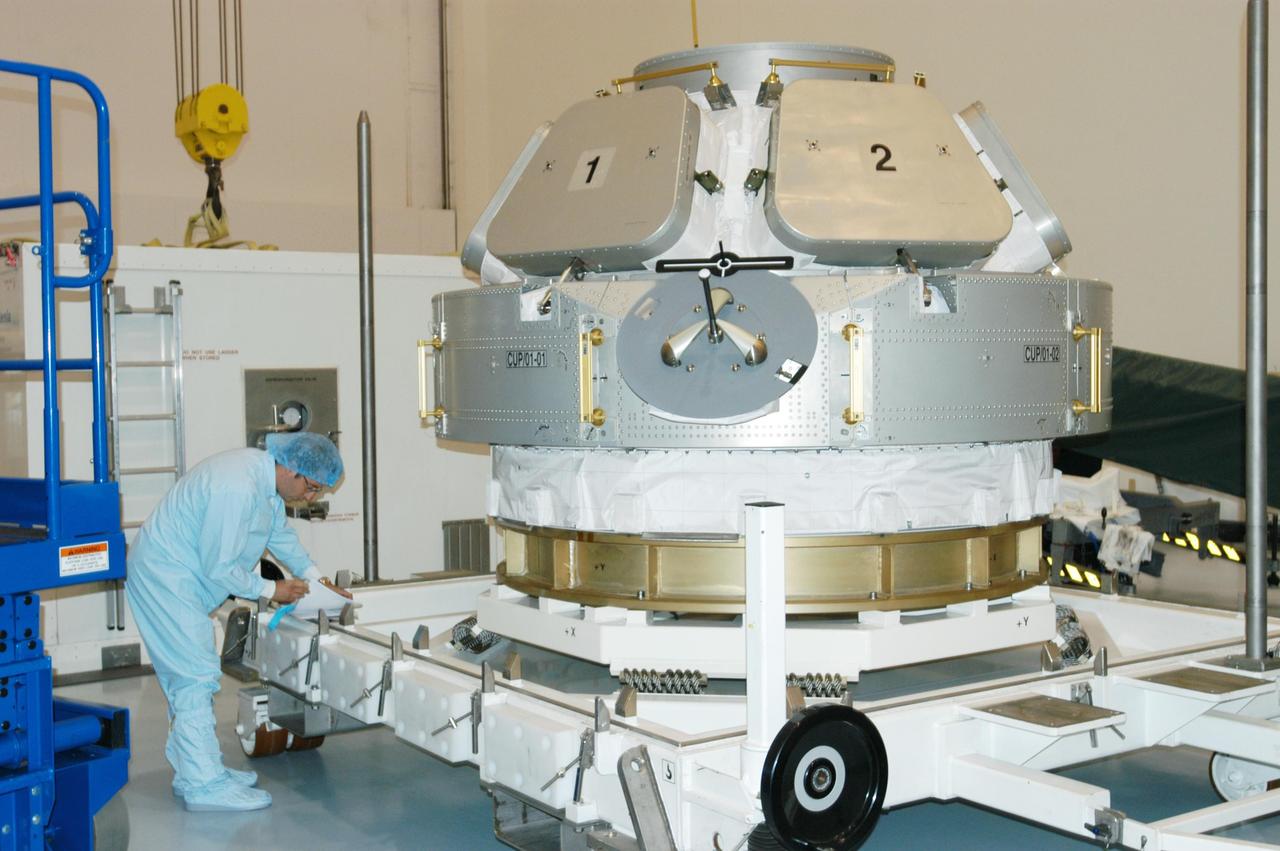
KENNEDY SPACE CENTER, FLA. - Inside the Space Station Processing Facility, a technician begins checking the Cupola after its delivery and uncrating. It was shipped from Alenia Spazio in Turin, Italy, for the European Space Agency. A dome-shaped module with seven windows, the Cupola will give astronauts a panoramic view for observing many operations on the outside of the orbiting complex. The view out of the Cupola windows will enhance an arm operator's situational awareness, supplementing television camera views and graphics. It will provide external observation capabilities during spacewalks, docking operations and hardware surveys and for Earth and celestial studies. The Cupola is the final element of the Space Station core.
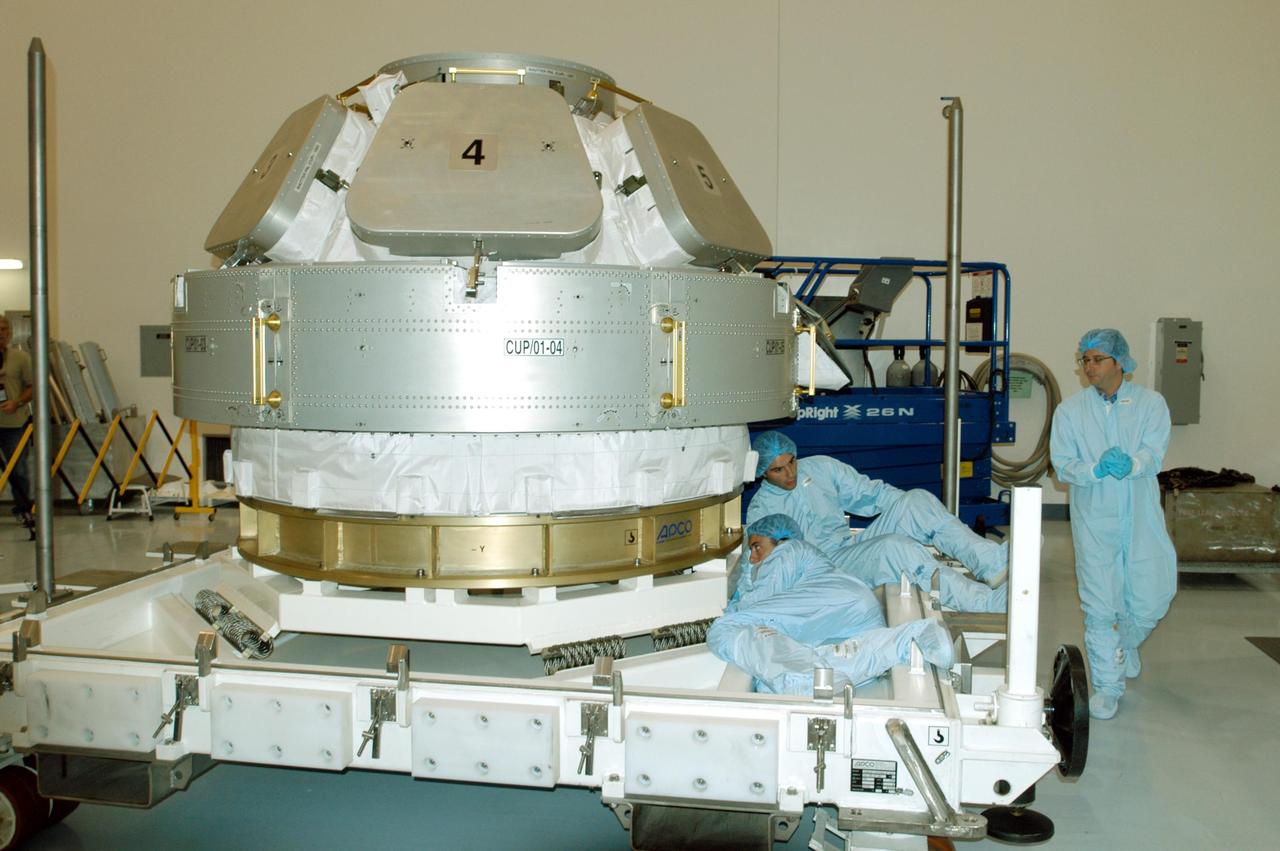
KENNEDY SPACE CENTER, FLA. - Inside the Space Station Processing Facility, technicians begin checking the Cupola after its delivery and uncrating. It was shipped from Alenia Spazio in Turin, Italy, for the European Space Agency. A dome-shaped module with seven windows, the Cupola will give astronauts a panoramic view for observing many operations on the outside of the orbiting complex. The view out of the Cupola windows will enhance an arm operator's situational awareness, supplementing television camera views and graphics. It will provide external observation capabilities during spacewalks, docking operations and hardware surveys, and for Earth and celestial studies. The Cupola is the final element of the Space Station core.

AS09-20-3064 (6 March 1969) --- Excellent view of the docked Apollo 9 Command and Service Modules (CSM) and Lunar Module (LM), with Earth in the background, during astronaut David R. Scott's stand-up extravehicular activity (EVA), on the fourth day of the Apollo 9 Earth-orbital mission. Scott, command module pilot, is standing in the open hatch of the Command Module (CM). Astronaut Russell L. Schweickart, lunar module pilot, took this photograph of Scott from the porch of the LM. Inside the LM was astronaut James A. McDivitt, Apollo 9 commander.
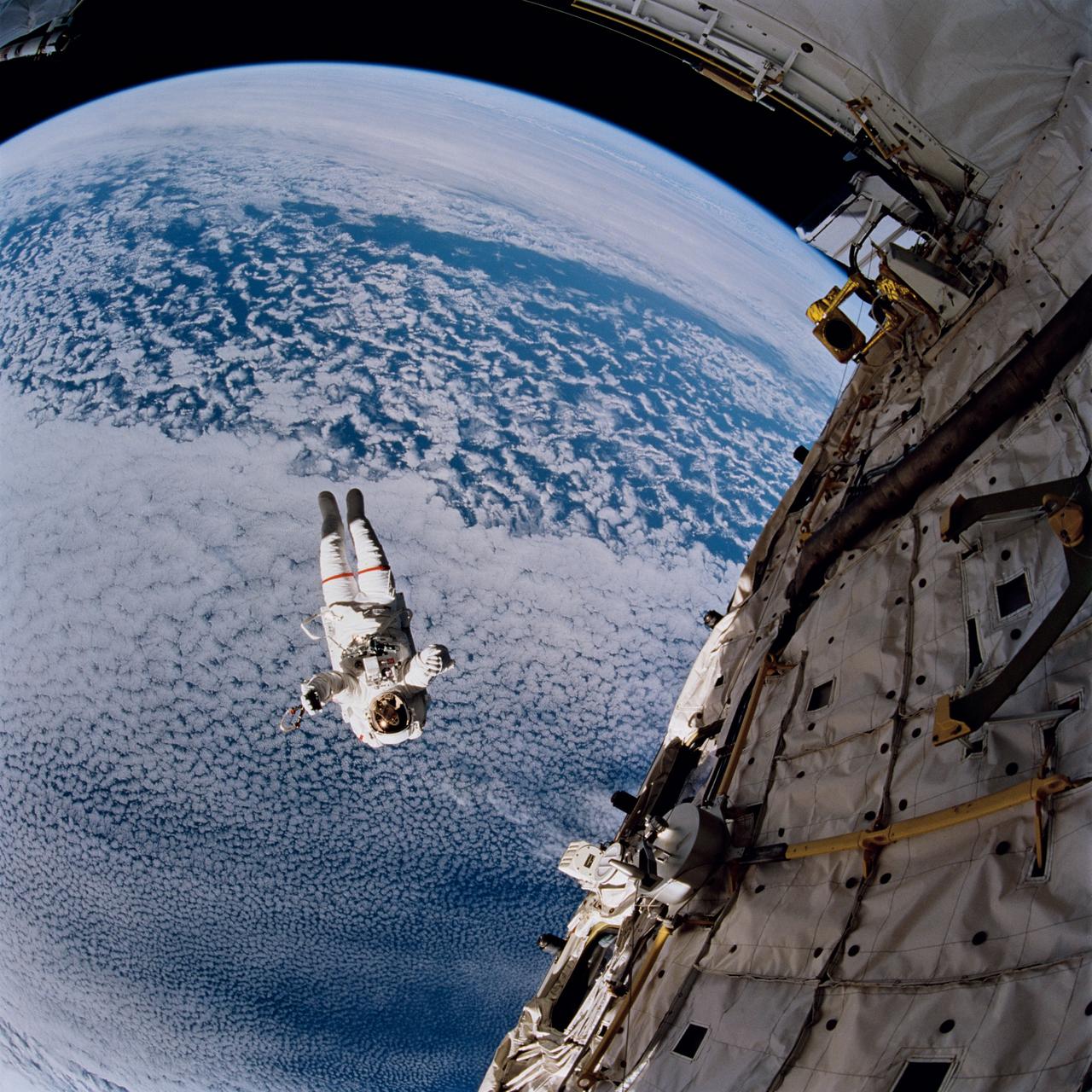
STS064-217-008 (16 Sept. 1994) --- Backdropped against the blue and white Earth, 130 nautical miles below, astronaut Mark C. Lee tests the new Simplified Aid for EVA Rescue (SAFER) system. The scene was captured with a 70mm handheld Hasselblad camera with a 30mm lens attached. Astronauts Lee and Carl J. Meade took turns using the SAFER hardware during their shared Extravehicular Activity (EVA) of Sept. 16, 1994. The test of SAFER is the first phase of a larger SAFER program whose objectives are to establish a common set of requirements for both space shuttle and space station program needs, develop a flight demonstration of SAFER, validate system performance and, finally, develop a production version of SAFER for the shuttle and station programs. Photo credit: NASA or National Aeronautics and Space Administration
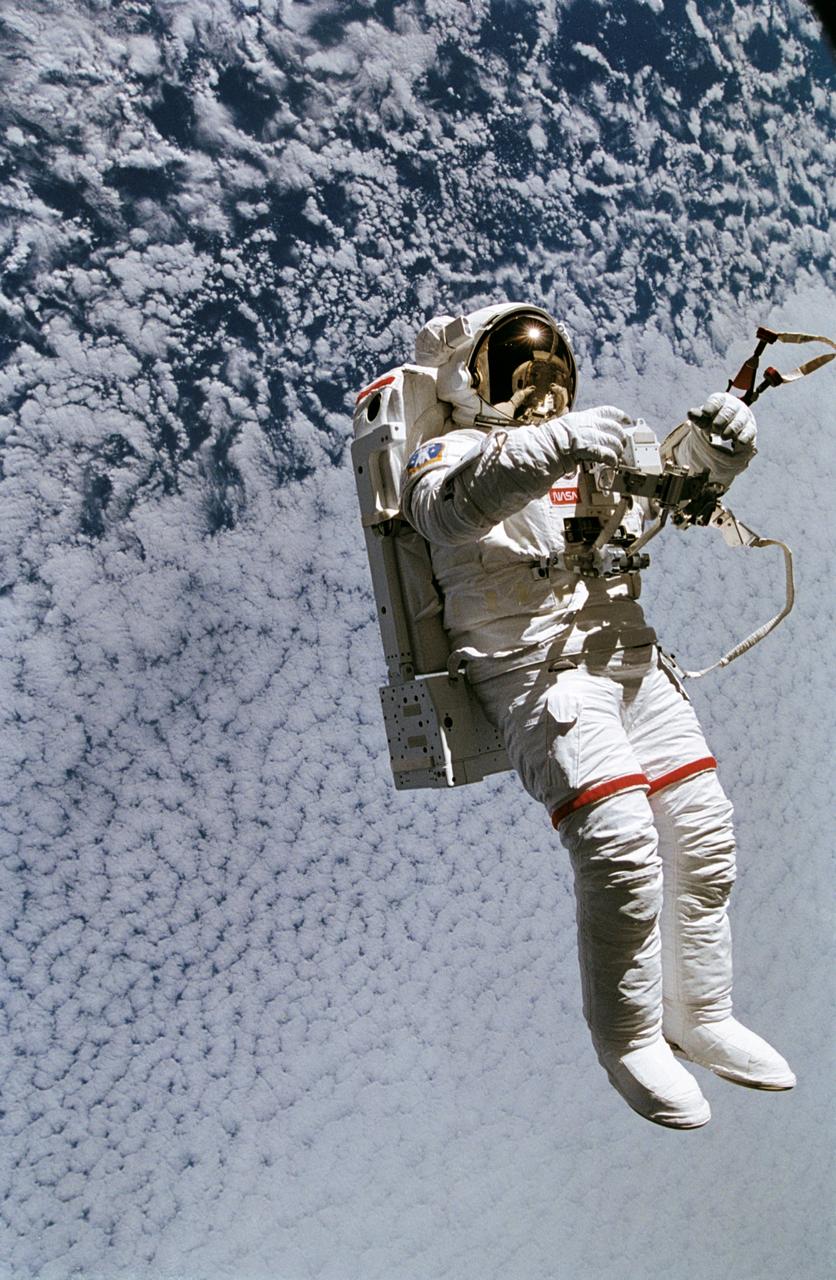
STS064-45-014 (16 Sept. 1994) --- Backdropped against a massive wall of white clouds 130 nautical miles below, astronaut Mark C. Lee floats freely as he tests the new Simplified Aid for EVA Rescue (SAFER) system. The image was exposed with a 35mm camera from the shirt-sleeve environment of the space shuttle Discovery. Astronauts Lee and Carl J. Meade took turns using the SAFER hardware during their shared Extravehicular Activity (EVA) on Sept. 16, 1994. The test of SAFER is the first phase of a larger SAFER program whose objectives are to establish a common set of requirements for both space shuttle and space station program needs, develop a flight demonstration of SAFER, validate system performance and, finally, develop a production version of SAFER for the shuttle and station programs. Photo credit: NASA or National Aeronautics and Space Administration
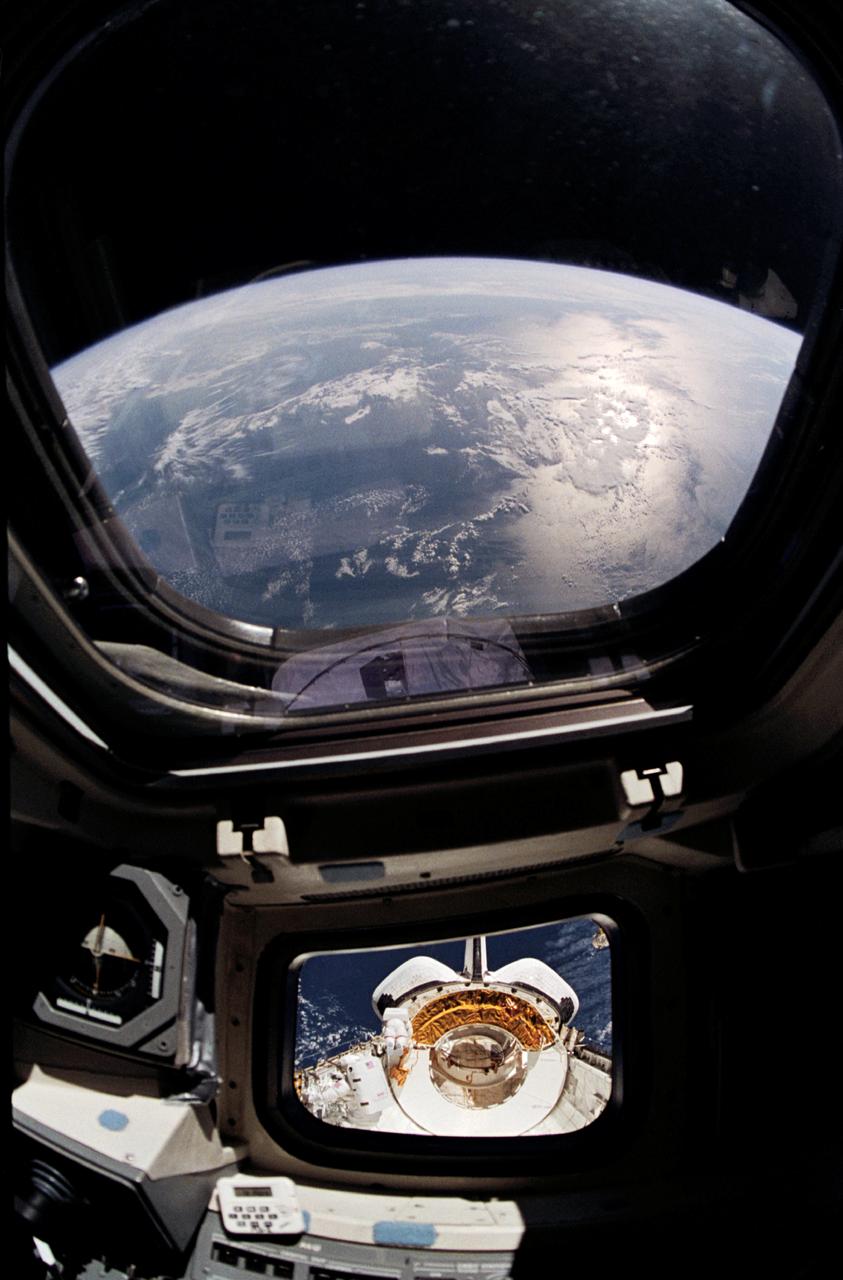
STS051-34-028 (16 Sept. 1993) --- This unusual scene of Extravehicular Activity (EVA) was captured on 35mm film by one of the supportive in-cabin crew members. Astronaut James H. Newman, working on the Space Shuttle Discovery's starboard side, is nearer the camera, with astronaut Carl E. Walz traversing near the aft firewall and the Airborne Support Equipment (ASE).
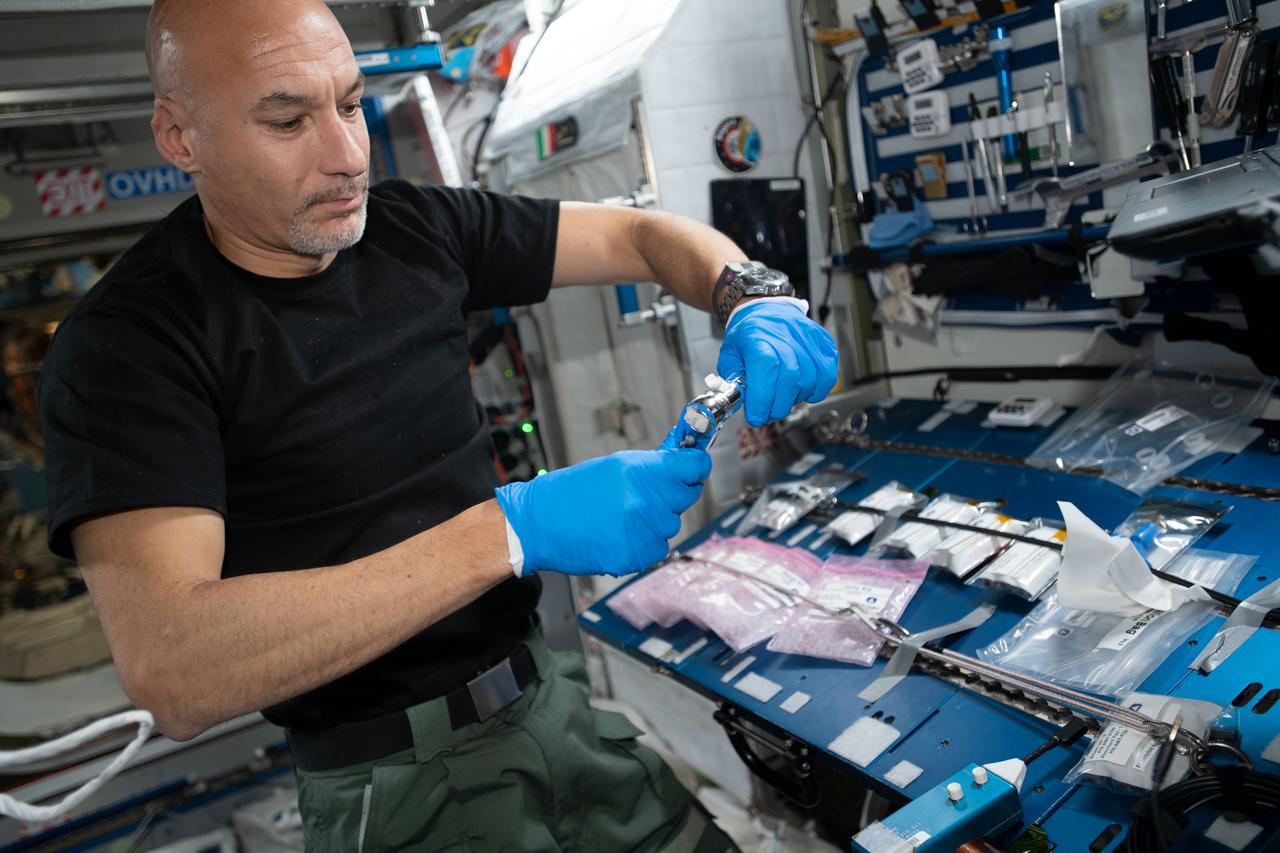
iss060e023992 (Aug. 7, 2019) --- European Space Agency astronaut Luca Parmitano is researching possible causes for neurodegenerative conditions such as Alzheimer’s disease. Parmitano was performing operations for the Amyloid Aggregation investigation examining protein samples for amyloid formation that differ from samples observed on Earth. Results may inform preventative therapies for Earthlings and astronauts on long-term missions.
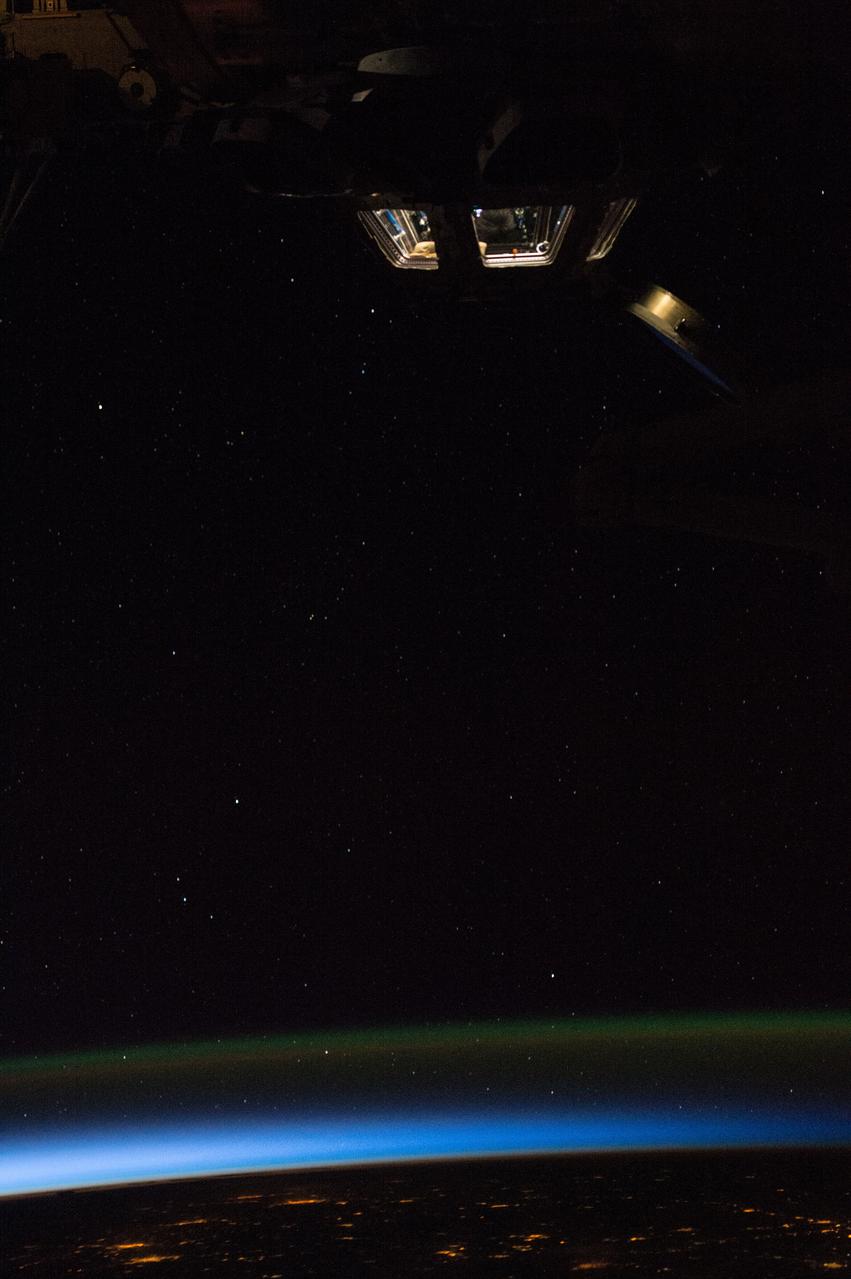
ISS043E249148 (05/23/2015) --- As the day begins on the International Space Station the cupola, the 360 degree view port's inner lights shine brightly while the sun begins its rise slowly on the Earth below. The cupola is a panoramic control tower for the station with windows through which operations on the outside of the station can be observed and guided. Through the robotics workstation, astronauts are able to control the space station's robotic arm, which helps with the attachment and assembly of various station elements, very much like the operator of a building crane. Spacewalking activities can also be observed from the Cupola along with visiting spacecraft and external areas of the station.

ISS031-E-089012 (5 June 2012) --- Transit of Venus across the sun observed from the International Space Station on June 5, 2012. Observations of the transit of Venus during the 17th, 18th and 19th centuries allowed scientists to calculate the distance between Earth and the sun, as well as providing insight into the existence of Venus’ atmosphere. Since the previous pair of transits of Venus occurred in 1874 and 1882, humanity developed the ability to view the phenomena from space – both directly from low Earth orbit, and remotely from sensors on spacecraft collecting scientific data about the sun. NASA astronaut Don Pettit, Expedition 31 flight engineer, was particularly keen to take imagery of the event from the orbital perspective – even bringing a solar camera filter aboard for the event. This image, taken during the first half of the 2012 transit, is one of hundreds of the event taken from the space station Cupola, a windowed module that provides the crew unparalleled views of both Earth and astronomical phenomena. In fact, history will record the station as the first orbital, crewed spacecraft from which the transit of Venus was observed. In addition to the dark circle of Venus visible at lower right, several smaller sunspots visible at center. The transit of Venus across the sun is one of only two such planetary crossings—the other being the transit of Mercury—that are visible from Earth. While transits of Mercury occur 13 times each century, Venus is observed to transit the sun only twice over the same time period (the first transit of the current pair occurred in 2004). Unless you are fortunate enough to be at locations on Earth where the transit is visible both times, this makes the transit of Venus a true “once in a lifetime” event.

Decades of satellite observations and astronaut photographs show that clouds dominate space-based views of Earth. One study based on nearly a decade of satellite data estimated that about 67 percent of Earth’s surface is typically covered by clouds. This is especially the case over the oceans, where other research shows less than 10 percent of the sky is completely clear of clouds at any one time. Over land, 30 percent of skies are completely cloud free. Earth’s cloudy nature is unmistakable in this global cloud fraction map, based on data collected by the Moderate Resolution Imaging Spectroradiometer (MODIS) on the Aqua satellite. While MODIS collects enough data to make a new global map of cloudiness every day, this version of the map shows an average of all of the satellite’s cloud observations between July 2002 and April 2015. Colors range from dark blue (no clouds) to light blue (some clouds) to white (frequent clouds).
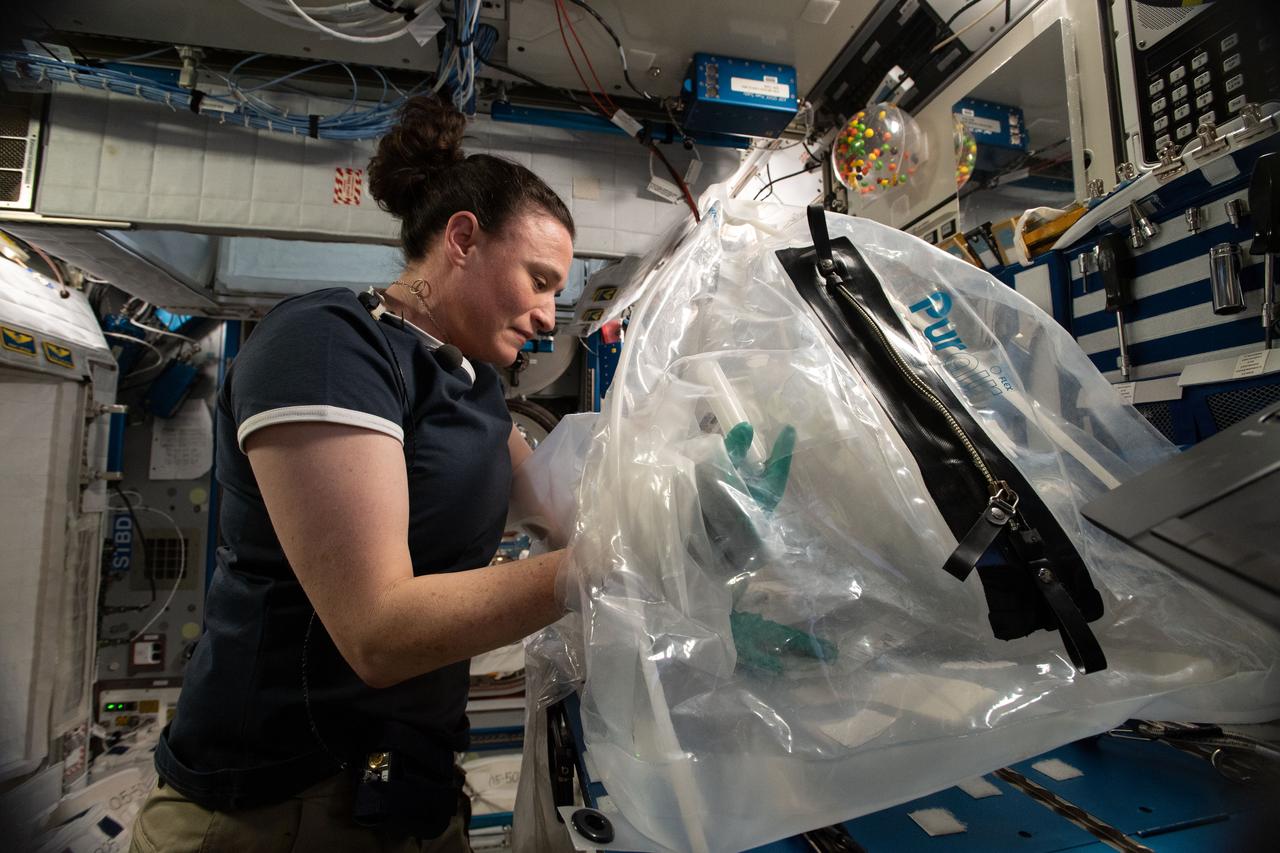
iss056e037491 (June 26, 2018) --- Astronaut Serena Auñón-Chancellor from NASA works on the Microgravity Investigation of Cement Solidification (MICS) 2 experiment aboard the International Space Station. MICS 2 is researching how cement reacts in space during the hardening process and may help engineers better understand its microstructure and material properties. Observations could improve cement processing techniques on Earth and lead to the design of safer, lightweight space habitats.
![ISS007-E-18086 (26 October 2003) --- The fires in the San Bernardino Mountains, fueled by Santa Ana winds, burned out of control on the morning of Oct. 26, 2003, when this image and several others were taken from the International Space Station. This frame and image numbers 18087 and 18088 were taken at approximately 19:54 GMT, October 26, 2003 with a digital still camera equipped with a 400mm lens. Lake Arrowhead and Silverwood Lake are just out of frame. Content was provided by JSC’s Earth Observation Lab. The International Space Station Program {link to http://spaceflight.nasa.gov} supports the laboratory to help astronauts take pictures of Earth that will be of the greatest value to scientists and the public, and to make those images freely available on the Internet. Additional images taken by astronauts and cosmonauts can be viewed at the NASA/JSC Gateway to Astronaut Photography of Earth [link to http://eol.jsc.nasa.gov/].](https://images-assets.nasa.gov/image/iss007e18086/iss007e18086~medium.jpg)
ISS007-E-18086 (26 October 2003) --- The fires in the San Bernardino Mountains, fueled by Santa Ana winds, burned out of control on the morning of Oct. 26, 2003, when this image and several others were taken from the International Space Station. This frame and image numbers 18087 and 18088 were taken at approximately 19:54 GMT, October 26, 2003 with a digital still camera equipped with a 400mm lens. Lake Arrowhead and Silverwood Lake are just out of frame. Content was provided by JSC’s Earth Observation Lab. The International Space Station Program {link to http://spaceflight.nasa.gov} supports the laboratory to help astronauts take pictures of Earth that will be of the greatest value to scientists and the public, and to make those images freely available on the Internet. Additional images taken by astronauts and cosmonauts can be viewed at the NASA/JSC Gateway to Astronaut Photography of Earth [link to http://eol.jsc.nasa.gov/].
![ISS007-E-18088 (26 October 2003) --- The fires in the San Bernardino Mountains, fueled by Santa Ana winds, burned out of control on the morning of Oct. 26, 2003, when this image and several others were taken from the International Space Station. This frame and image numbers 18086 and 18087 were taken at approximately 19:54 GMT, October 26, 2003 with a digital still camera equipped with a 400mm lens. Lake Arrowhead and Silverwood Lake are left and right, respectively, at bottom frame. Content was provided by JSC’s Earth Observation Lab. The International Space Station Program {link to http://spaceflight.nasa.gov} supports the laboratory to help astronauts take pictures of Earth that will be of the greatest value to scientists and the public, and to make those images freely available on the Internet. Additional images taken by astronauts and cosmonauts can be viewed at the NASA/JSC Gateway to Astronaut Photography of Earth [link to http://eol.jsc.nasa.gov/] .](https://images-assets.nasa.gov/image/iss007e18088/iss007e18088~medium.jpg)
ISS007-E-18088 (26 October 2003) --- The fires in the San Bernardino Mountains, fueled by Santa Ana winds, burned out of control on the morning of Oct. 26, 2003, when this image and several others were taken from the International Space Station. This frame and image numbers 18086 and 18087 were taken at approximately 19:54 GMT, October 26, 2003 with a digital still camera equipped with a 400mm lens. Lake Arrowhead and Silverwood Lake are left and right, respectively, at bottom frame. Content was provided by JSC’s Earth Observation Lab. The International Space Station Program {link to http://spaceflight.nasa.gov} supports the laboratory to help astronauts take pictures of Earth that will be of the greatest value to scientists and the public, and to make those images freely available on the Internet. Additional images taken by astronauts and cosmonauts can be viewed at the NASA/JSC Gateway to Astronaut Photography of Earth [link to http://eol.jsc.nasa.gov/] .
![ISS007-E-18087 (26 October 2003) --- The fires in the San Bernardino Mountains, fueled by Santa Ana winds, burned out of control on the morning of Oct. 26, 2003, when this image and several others were taken from the International Space Station. This frame and image numbers 18086 and 18088 were taken at approximately 19:54 GMT, October 26, 2003 with a digital still camera equipped with a 400mm lens. Silverwood Lake is visible at the bottom of the image. Content was provided by JSC’s Earth Observation Lab. The International Space Station Program {link to http://spaceflight.nasa.gov} supports the laboratory to help astronauts take pictures of Earth that will be of the greatest value to scientists and the public, and to make those images freely available on the Internet. Additional images taken by astronauts and cosmonauts can be viewed at the NASA/JSC Gateway to Astronaut Photography of Earth [link to http://eol.jsc.nasa.gov/].](https://images-assets.nasa.gov/image/iss007e18087/iss007e18087~medium.jpg)
ISS007-E-18087 (26 October 2003) --- The fires in the San Bernardino Mountains, fueled by Santa Ana winds, burned out of control on the morning of Oct. 26, 2003, when this image and several others were taken from the International Space Station. This frame and image numbers 18086 and 18088 were taken at approximately 19:54 GMT, October 26, 2003 with a digital still camera equipped with a 400mm lens. Silverwood Lake is visible at the bottom of the image. Content was provided by JSC’s Earth Observation Lab. The International Space Station Program {link to http://spaceflight.nasa.gov} supports the laboratory to help astronauts take pictures of Earth that will be of the greatest value to scientists and the public, and to make those images freely available on the Internet. Additional images taken by astronauts and cosmonauts can be viewed at the NASA/JSC Gateway to Astronaut Photography of Earth [link to http://eol.jsc.nasa.gov/].
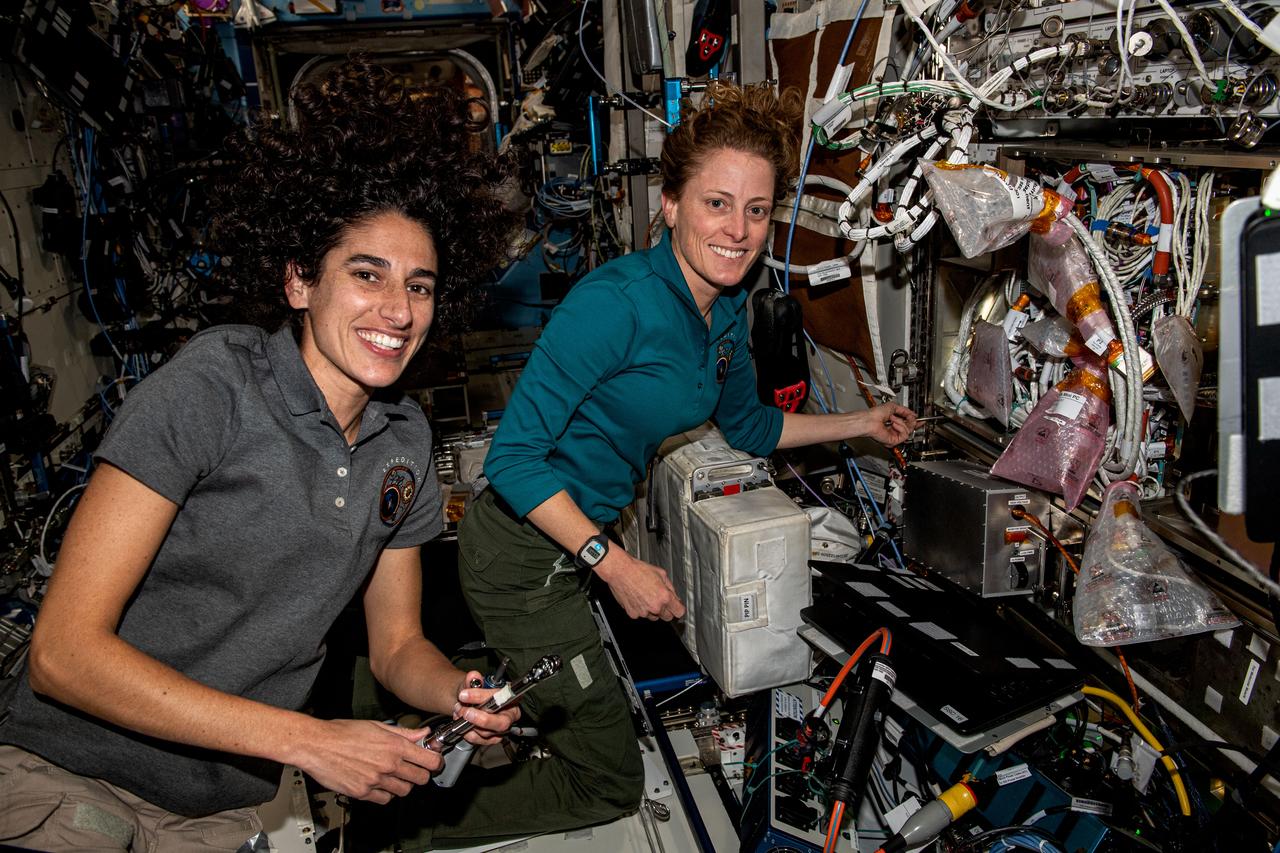
iss069e092348 (Sept. 26, 2023) --- NASA astronauts (from left) Jasmin Moghbeli and Loral O'Hara, both Expedition 70 Flight Engineers, partner together removing and replacing components inside the Cold Atom Lab aboard the International Space Station. The space physics device enables observations of atoms chilled to temperatures near absolute zero allowing scientists to study fundamental behaviors and quantum characteristics not possible on Earth.
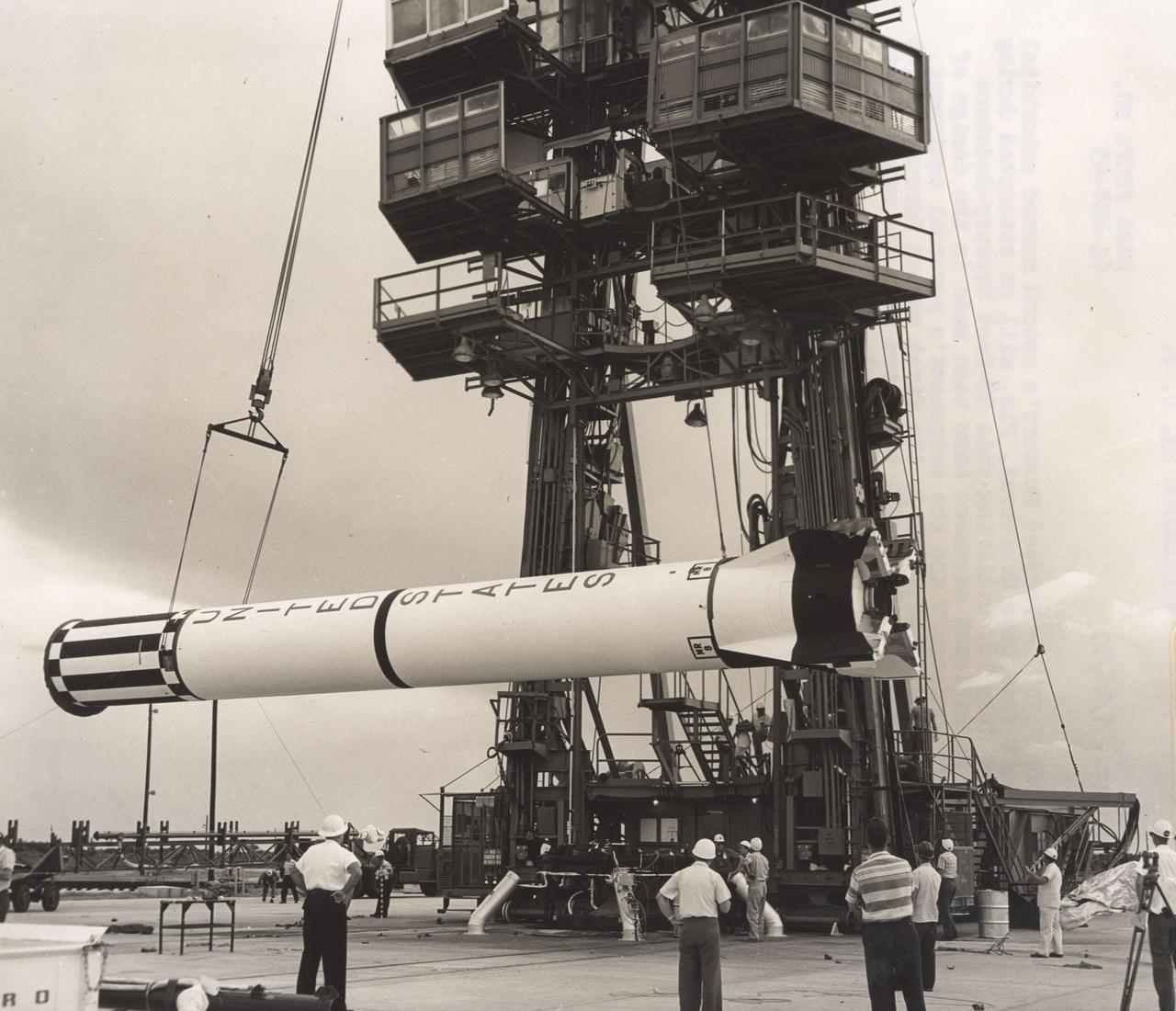
KENNEDY SPACE CENTER, FLA. -- READIED FOR FLIGHT - Project Mercury's second manned suborbital space flight, Liberty Bell 7, from Cape Canaveral, Fla., will be attempted during the week of July 16, utilizing this 58-foot Mercury-Redstone vehicle. Significant advances have been made in the design of the Mercury spacecraft and the astronaut's personal equipment. Flight will be similar to MR-3, the first manned Mercury flight May 5, 1961; however, the pilot will have more time for making Earth and celestial observations. (NASA Photo)
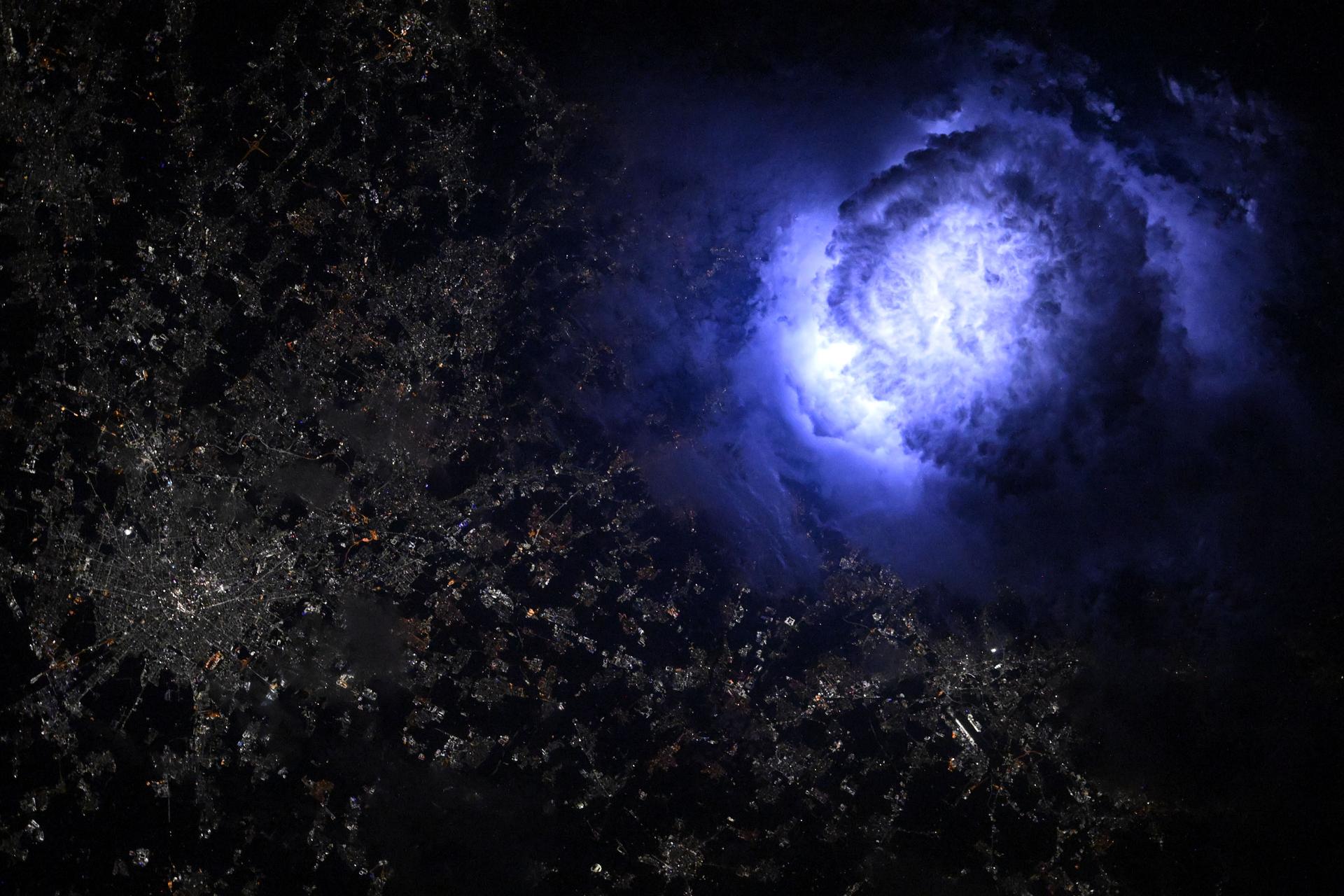
iss073e0532039 (July 1, 2025) --- NASA astronaut Nichole Ayers captured this image of lightning orbiting aboard the International Space Station more than 250 miles above Milan, Italy. Storm observations from space station help scientists study Earth’s upper atmosphere, which can improve weather models and protect communication systems and aircraft.
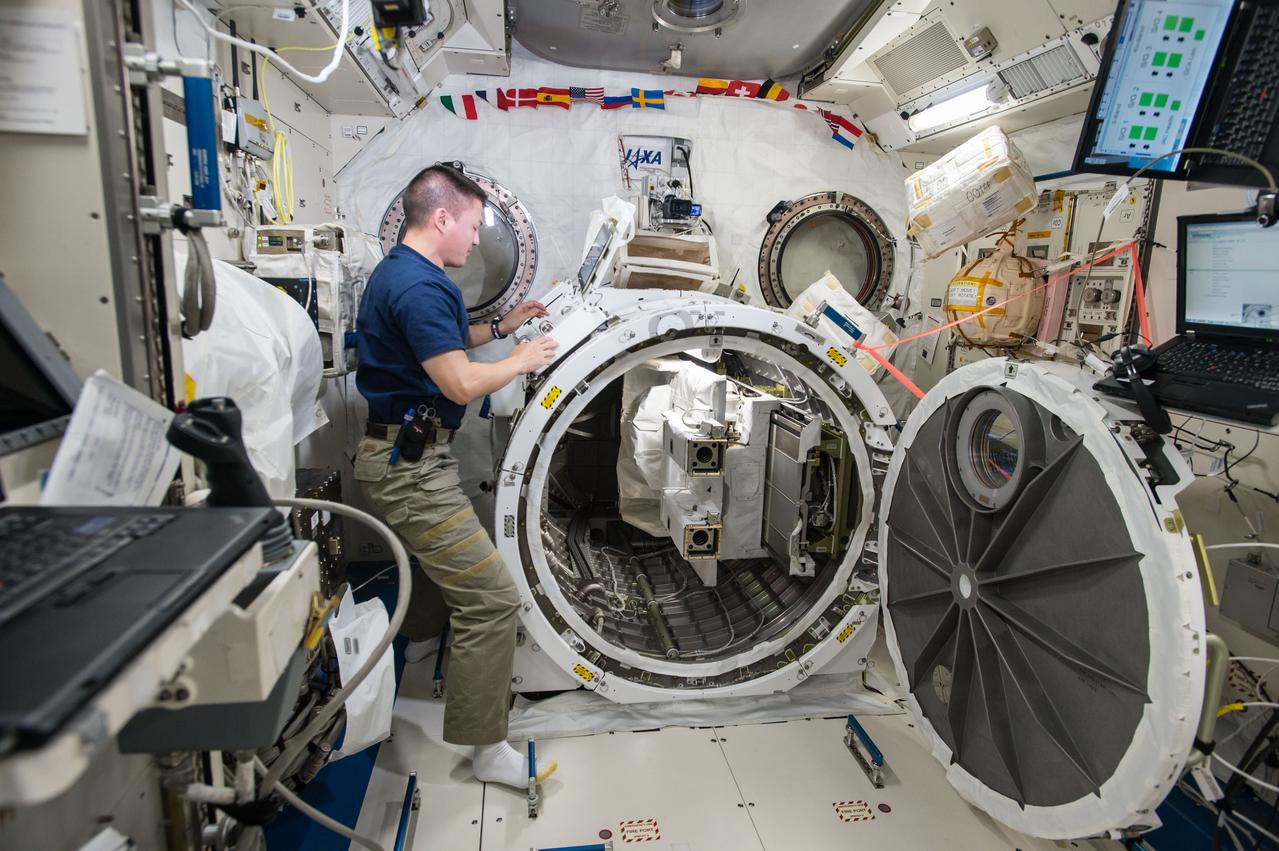
ISS045E033806 (09/25/2015) --- NASA astronaut Kjell Lindgren loads a deployer device filled with 16 CubeSats into a small airlock in the Japanese Kibo Module on the International Space Station. Among the 16 satellites are 14 Dove satellites from Planet Labs that will be used for Earth observation, one for testing space based radios and another that will be used to track ships on the open ocean.
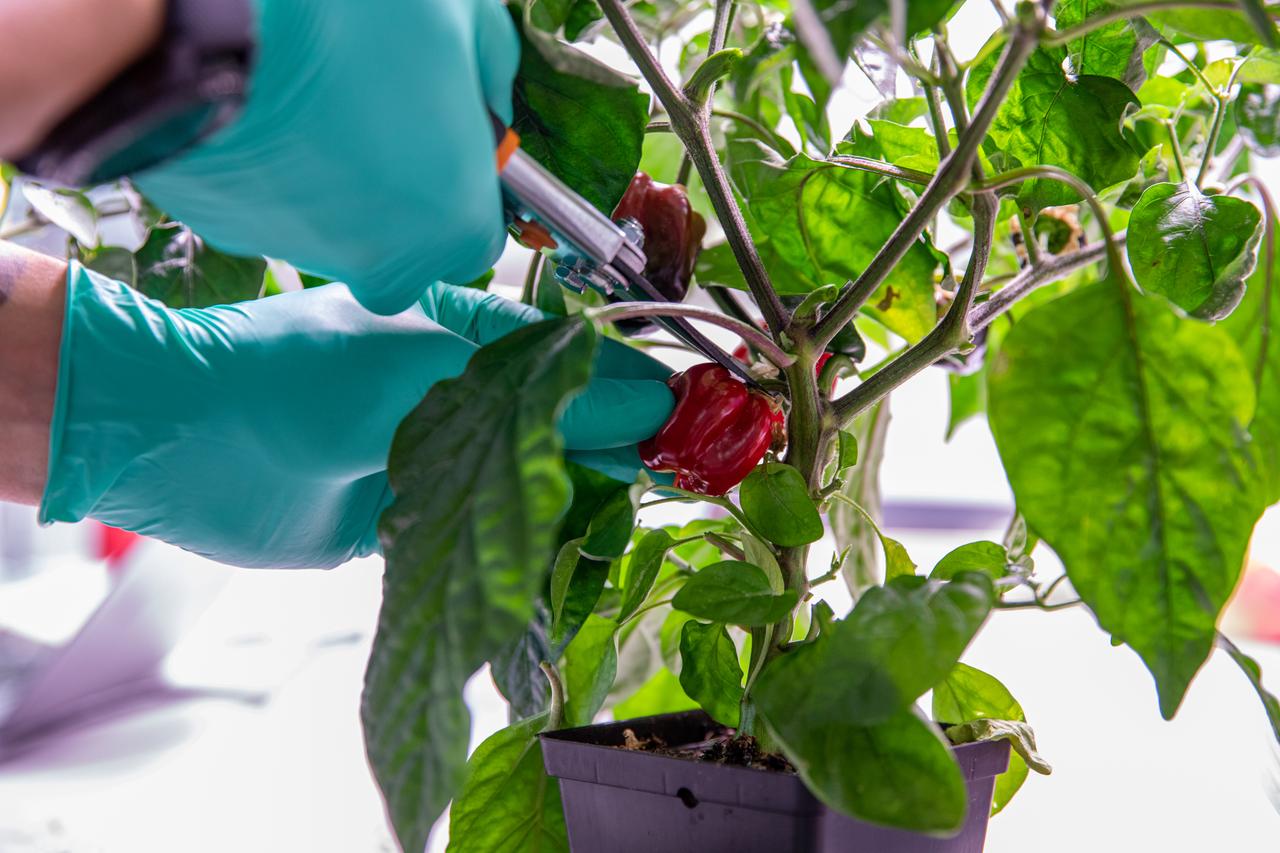
Jason Fischer, a research scientist with the Laboratory Support Services and Operations contract at NASA’s Kennedy Space Center in Florida, observes and documents the growth of peppers prior to harvesting them on Jan. 15, 2020, inside the Space Station Processing Facility in preparation for sending them to space. As NASA prepares to send humans beyond low-Earth orbit, the ability for astronauts to grow a variety of fresh fruits and vegetables in space will be critical. Fresh produce will be an essential supplement to the crew’s pre-packaged diet during long-duration space exploration when they are away from Earth for extended periods of time.

Jason Fischer (left), a research scientist, and Lashelle Spencer, a plant scientist, with the Laboratory Support Services and Operations contract at NASA’s Kennedy Space Center in Florida, observe and document the growth of pepper plants prior to harvesting them on Jan. 15, 2020, inside the Space Station Processing Facility in preparation for sending them to space. As NASA prepares to send humans beyond low-Earth orbit, the ability for astronauts to grow a variety of fresh fruits and vegetables in space will be critical. Fresh produce will be an essential supplement to the crew’s pre-packaged diet during long-duration space exploration when they are away from Earth for extended periods of time.
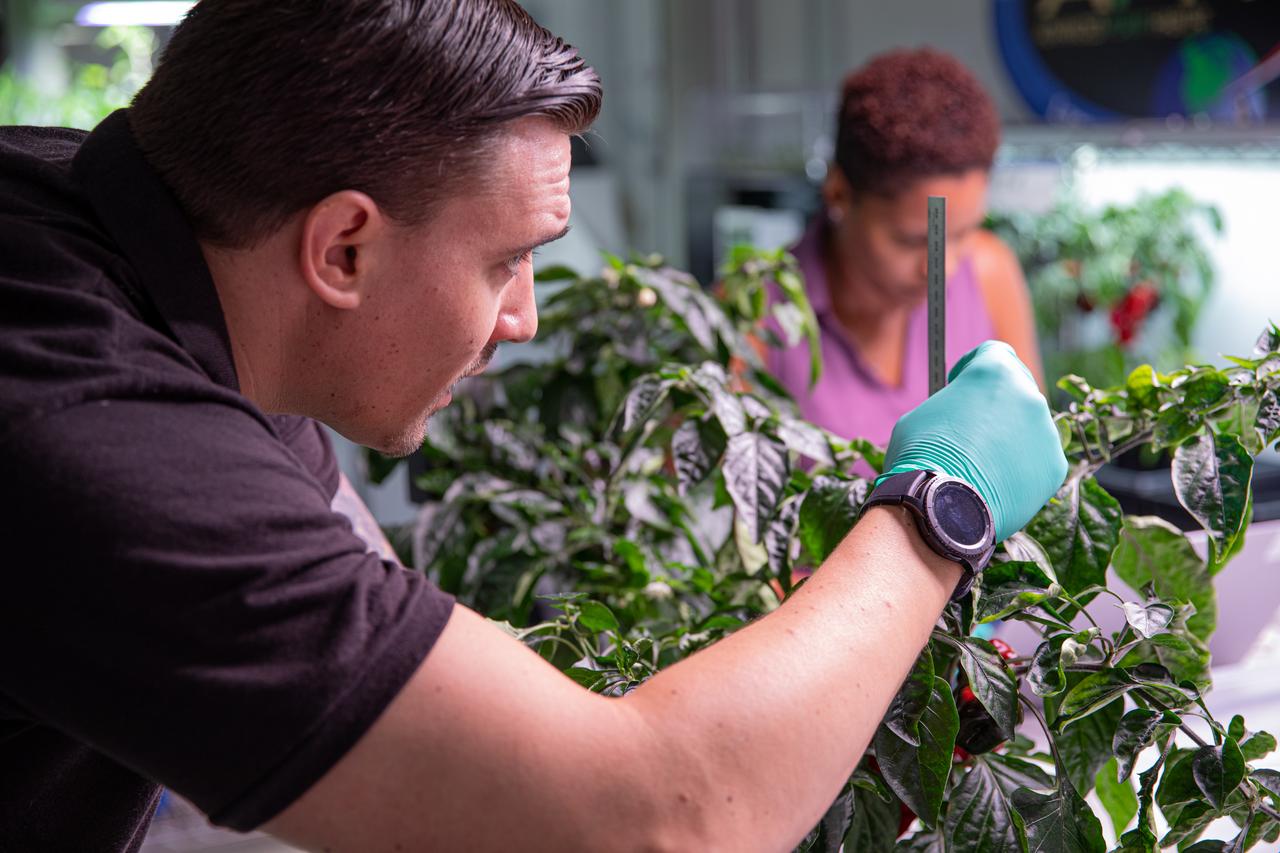
Jason Fischer (left), a research scientist, and Lashelle Spencer, a plant scientist, with the Laboratory Support Services and Operations contract at NASA’s Kennedy Space Center in Florida, observe and document the growth of pepper plants prior to harvesting them on Jan. 15, 2020, inside the Space Station Processing in preparation for sending them to space. As NASA prepares to send humans beyond low-Earth orbit, the ability for astronauts to grow a variety of fresh fruits and vegetables in space will be critical. Fresh produce will be an essential supplement to the crew’s pre-packaged diet during long-duration space exploration when they are away from Earth for extended periods of time.
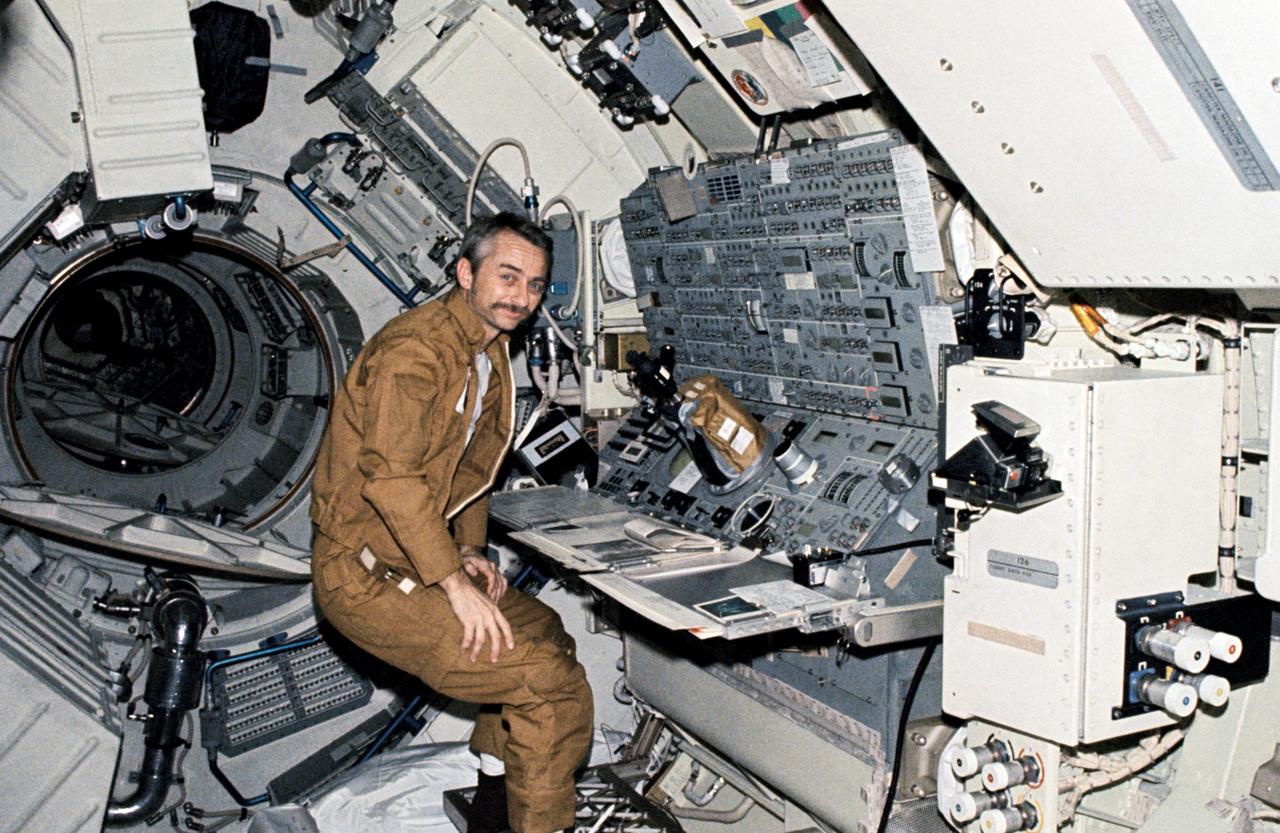
SL3-108-1288 (July-Sept. 1973) --- Astronaut Owen K. Garriott, science pilot of the Skylab 3 mission, is stationed at the Apollo Telescope Mount (ATM) console in the Multiple Docking Adapter (MDA) of the Skylab space station in Earth orbit. This picture was taken with a handheld 35mm Nikon camera. Astronauts Garriott, Alan L. Bean and Jack R. Lousma remained with the Skylab space station cluster in orbit for 59 days conducting numerous medical, scientific and technological experiments. In orbit the MDA functions as a major experiment control center for solar observations. From this console the astronauts actively control the ATM solar physics telescopes. Photo credit: NASA
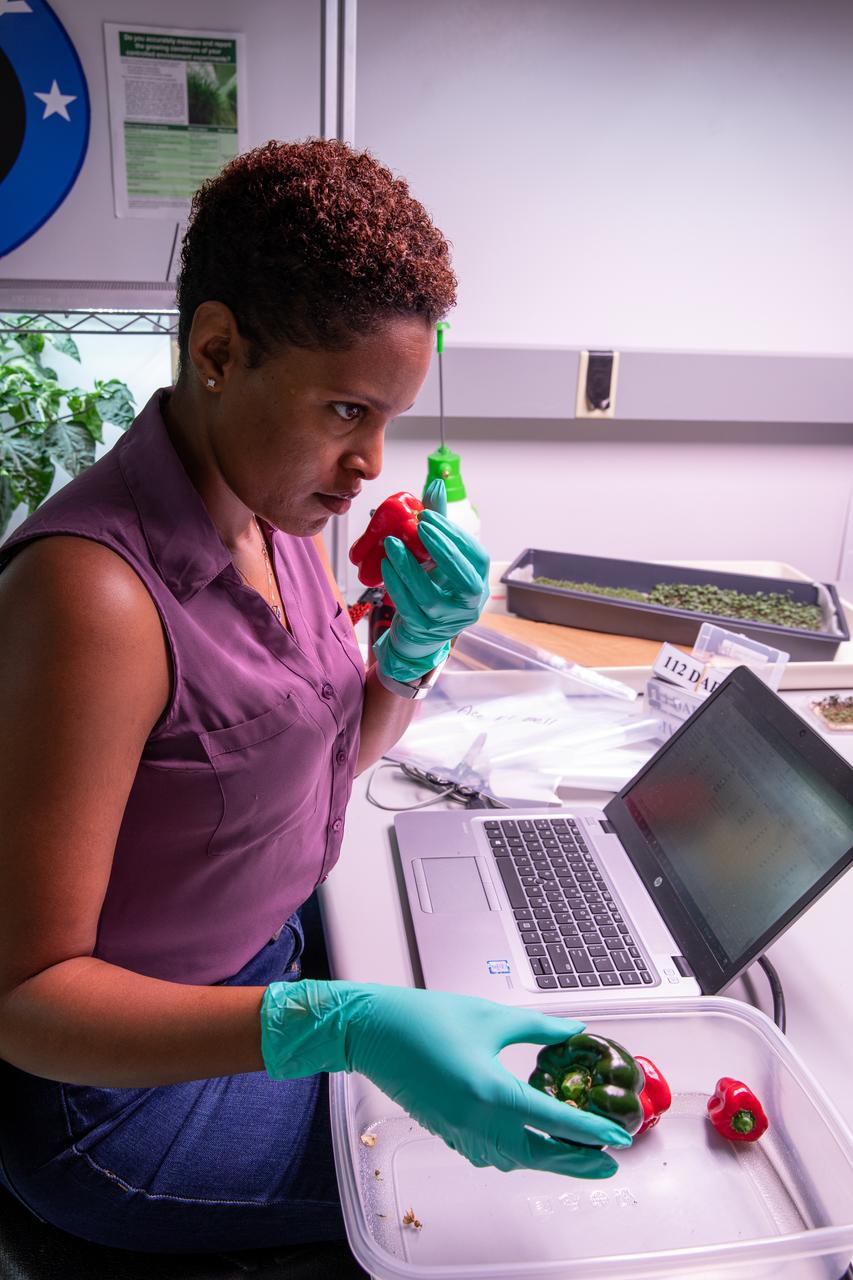
Lashelle Spencer, a plant scientist with the Laboratory Support Services and Operations contract at NASA’s Kennedy Space Center in Florida, observes and documents the growth of peppers after harvesting them on Jan. 15, 2020, inside the Space Station Processing Facility. As NASA prepares to send humans beyond low-Earth orbit, the ability for astronauts to grow a variety of fresh fruits and vegetables in space will be critical. Fresh produce will be an essential supplement to the crew’s pre-packaged diet during long-duration space exploration when they are away from Earth for extended periods of time.
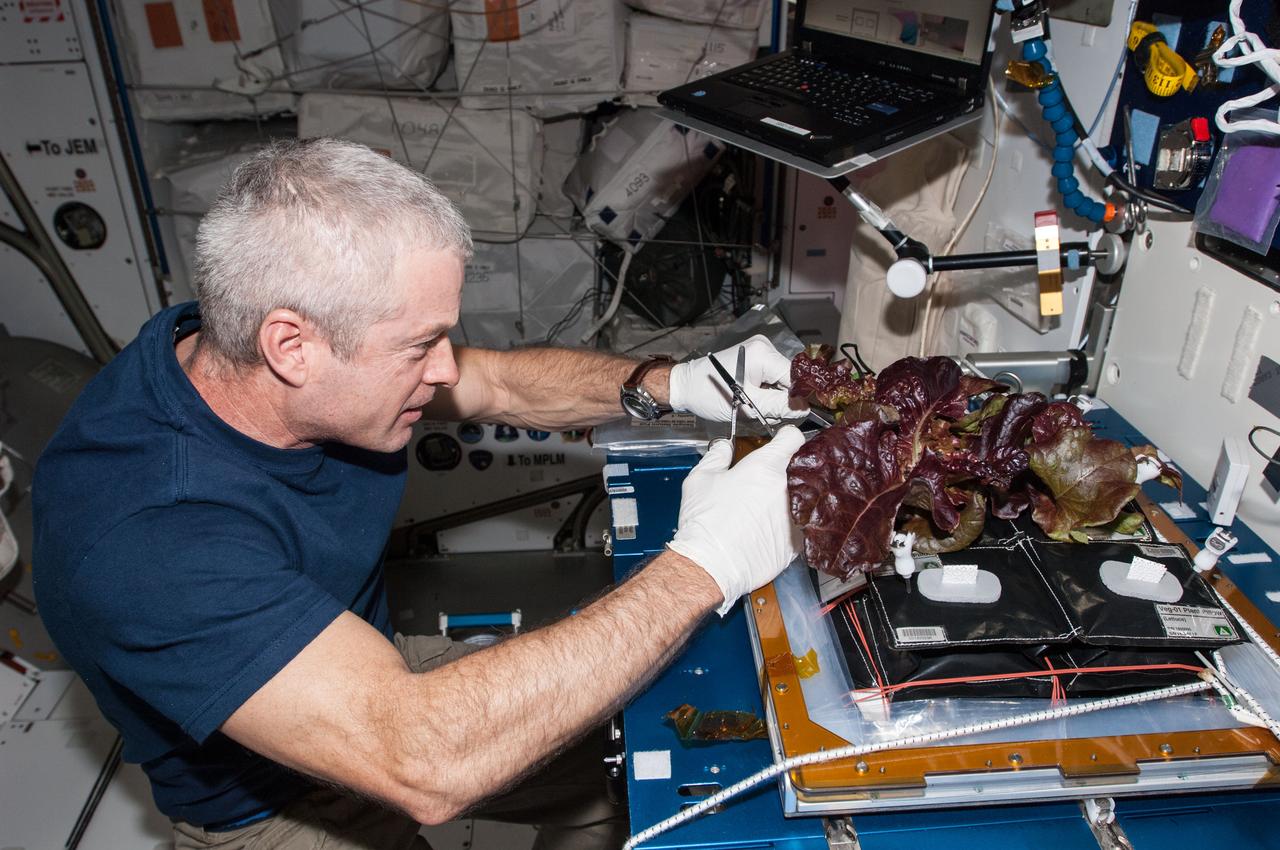
ISS040-E-009125 (10 June 2014) --- In the International Space Station?s Harmony node, NASA astronaut Steve Swanson, Expedition 40 commander, harvests a crop of red romaine lettuce plants that were grown from seed inside the station?s Veggie facility, a low-cost plant growth chamber that uses a flat-panel light bank for plant growth and crew observation. For the Veg-01 experiment, researchers are testing and validating the Veggie hardware, and the plants will be returned to Earth to determine food safety.

ISS040-E-009116 (10 June 2014) --- In the International Space Station?s Harmony node, NASA astronaut Steve Swanson, Expedition 40 commander, harvests a crop of red romaine lettuce plants that were grown from seed inside the station?s Veggie facility, a low-cost plant growth chamber that uses a flat-panel light bank for plant growth and crew observation. For the Veg-01 experiment, researchers are testing and validating the Veggie hardware, and the plants will be returned to Earth to determine food safety.
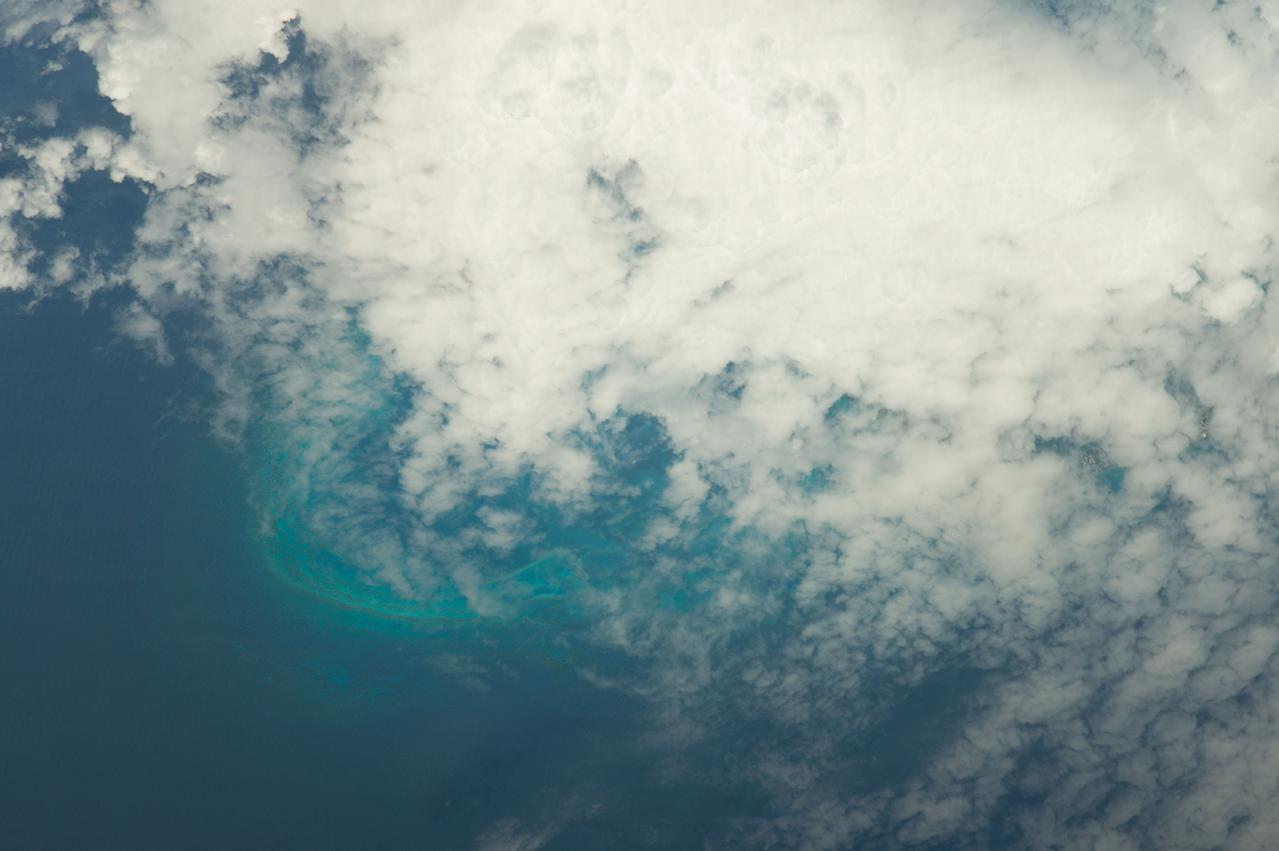
ISS043E185040 (05/10/2015) --- Earth observation taken by the Expedition 43 crew of the International Space Station. These islands have often been referred to as the "jewel of the Atlantic" and are only 2 two hours by commercial plane from the USA. NASA astronaut Scott Kelly tweeted this image on May 10, 2015 with this comment: "Bermuda, your clouds and remoteness have shielded you for a long time, but I finally got my eye on you.#YearInSpace".
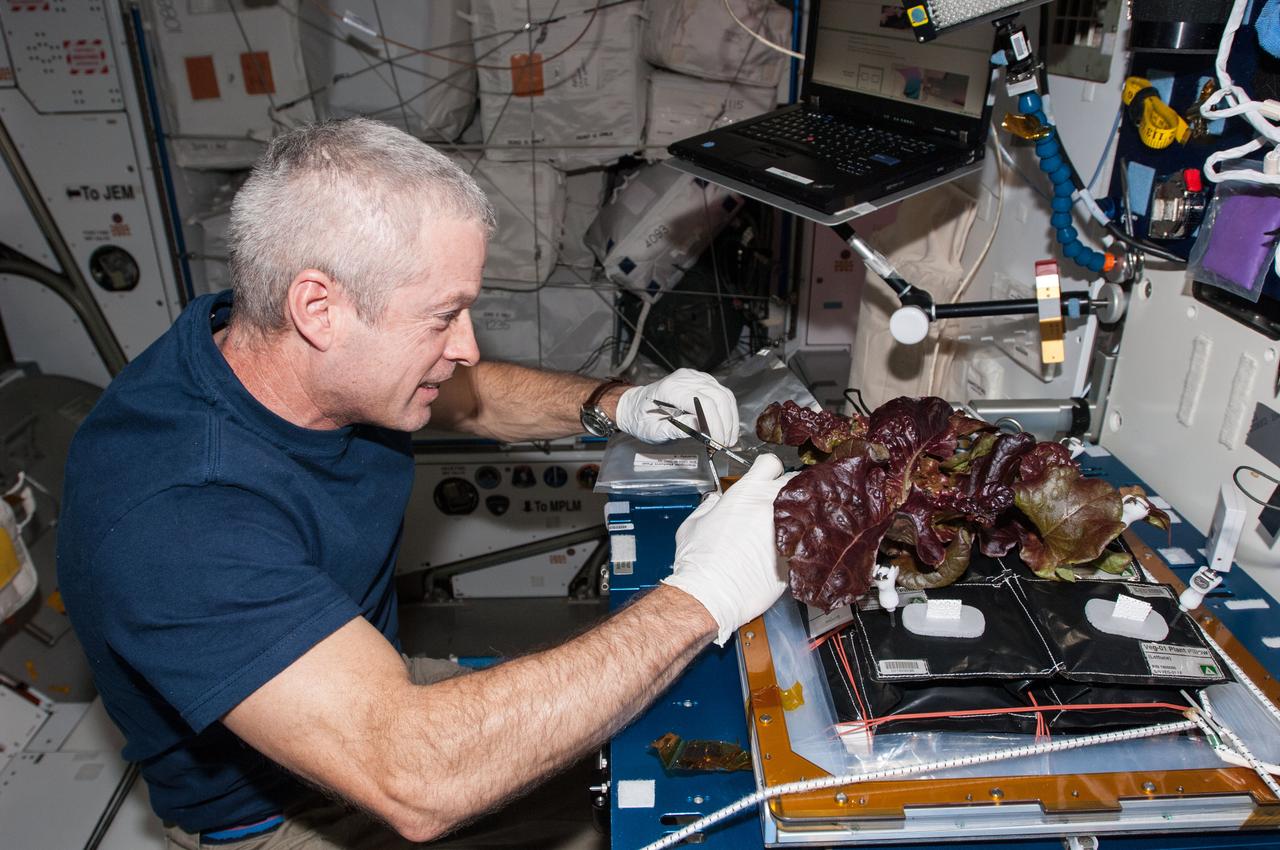
ISS040-E-009124 (10 June 2014) --- In the International Space Station?s Harmony node, NASA astronaut Steve Swanson, Expedition 40 commander, harvests a crop of red romaine lettuce plants that were grown from seed inside the station?s Veggie facility, a low-cost plant growth chamber that uses a flat-panel light bank for plant growth and crew observation. For the Veg-01 experiment, researchers are testing and validating the Veggie hardware, and the plants will be returned to Earth to determine food safety.
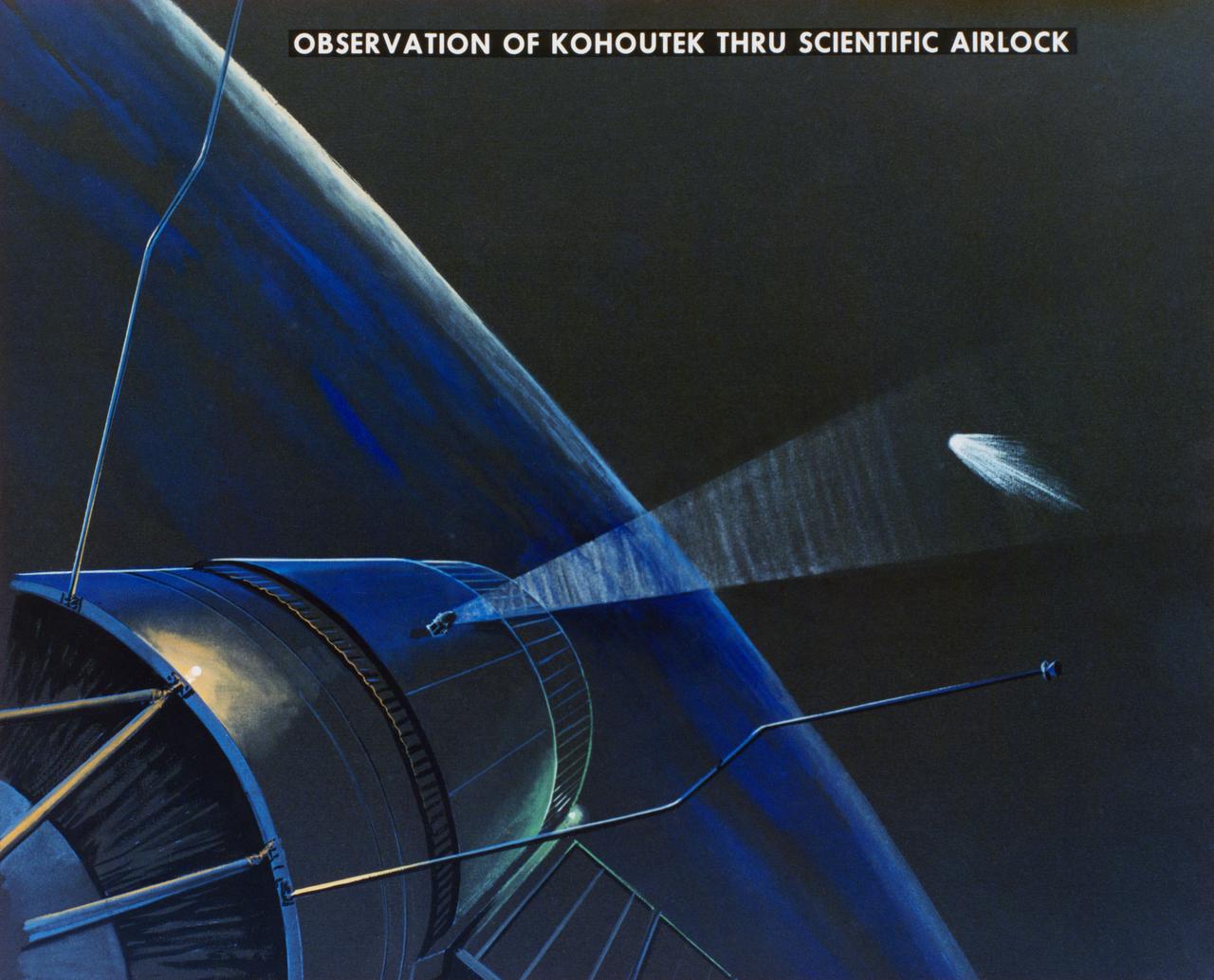
S73-37274 (1973) --- An artist's concept illustrating how the Skylab 4 astronauts will observe, through the scientific airlock of the Orbital Workshop, the passing of the newly-discovered Comet Kohoutek. The favorable location of the Skylab space station in Earth orbit will help provide a comprehensive investigation of the nature and evolution of the coma and tails as the comet approaches, passes, and recedes from the sun. Photo credit: NASA
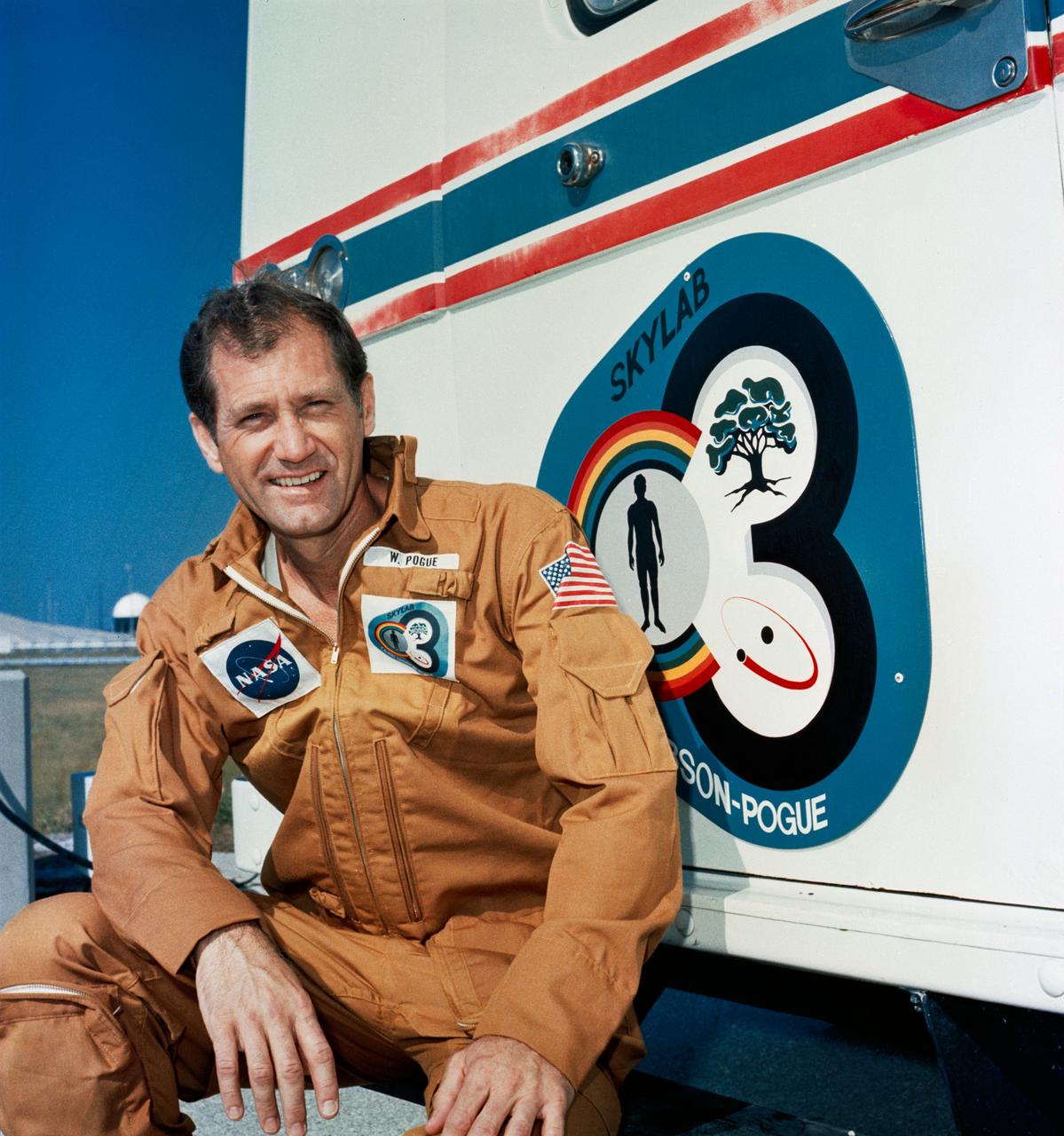
S73-36901 (8 Nov. 1973) --- Astronaut William R. Pogue, pilot of the Skylab 4 mission, relaxes on the running board of the transfer van during a visit to the Skylab 4/Saturn 1B space vehicle at Pad B, Launch Complex 39, Kennedy Space Center, Florida. On the morning of the launch the transfer van will transport astronauts Pogue, Gerald P. Carr, commander; and Edward G. Gibson, science pilot, from the suiting building to Pad B. Skylab 4, the third and last visit to the Skylab space station in Earth orbit, will return additional information on the Earth and sun, as well as provide a favorable location from which to observe the recently discovered Comet Kohoutek. Photo credit: NASA
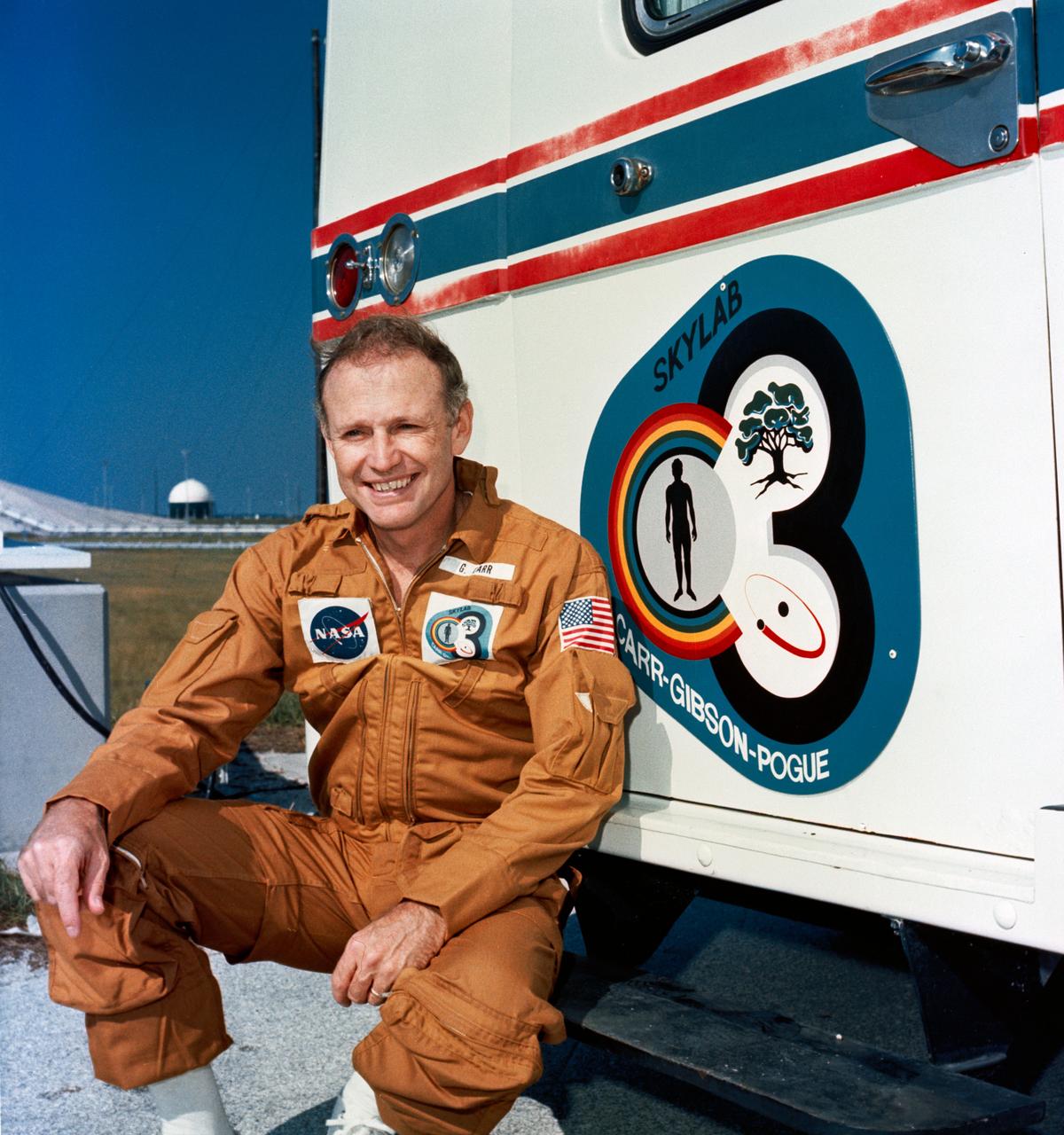
S73-36902 (8 Nov. 1973) --- Astronaut Gerald P. Carr, commander of the Skylab 4 mission, relaxes on the running board of the transfer van during a visit to the Skylab 4/Saturn 1B space vehicle at Pad B, Launch Complex 39, at the Kennedy Space Center, Florida. On the morning of the launch the transfer van will transport astronauts Carr; William R. Pogue, pilot; and Edward G. Gibson, science pilot, from the suiting building to Pad B. Skylab 4, the third and last visit to the Skylab space station in Earth orbit, will return additional information the Earth and sun, as well as provide a favorable location from which to observe the recently discovered Comet Kohoutek. Photo credit: NASA
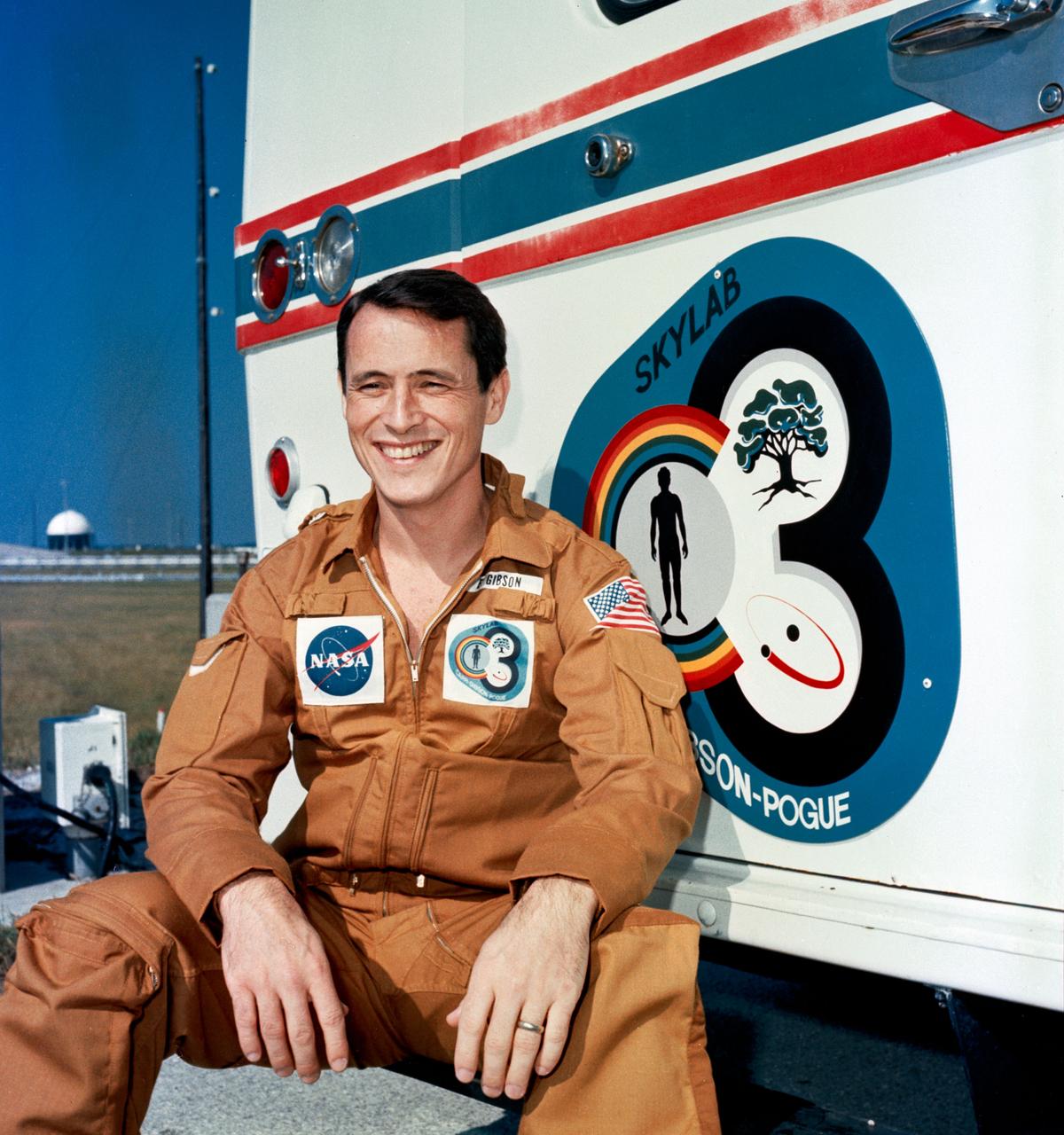
S73-36903 (8 Nov. 1973) --- Scientist-astronaut Edward G. Gibson, Skylab 4 science pilot, relaxes on the running board of the transfer van during a visit to the Skylab 4/Saturn 1B space vehicle at Pad B, Launch Complex 39, Kennedy Space Center, Florida. On the morning of the launch the transfer van will transport astronauts Gibson; Gerald P. Carr, commander; and William R. Pogue, pilot, from the suiting building to Pad B. Skylab 4, the third and last visit to the Skylab space station in Earth orbit, will return additional information on the Earth and sun, as well as provide a favorable location from which to observe the recently discovered Comet Kohoutek. Photo credit: NASA
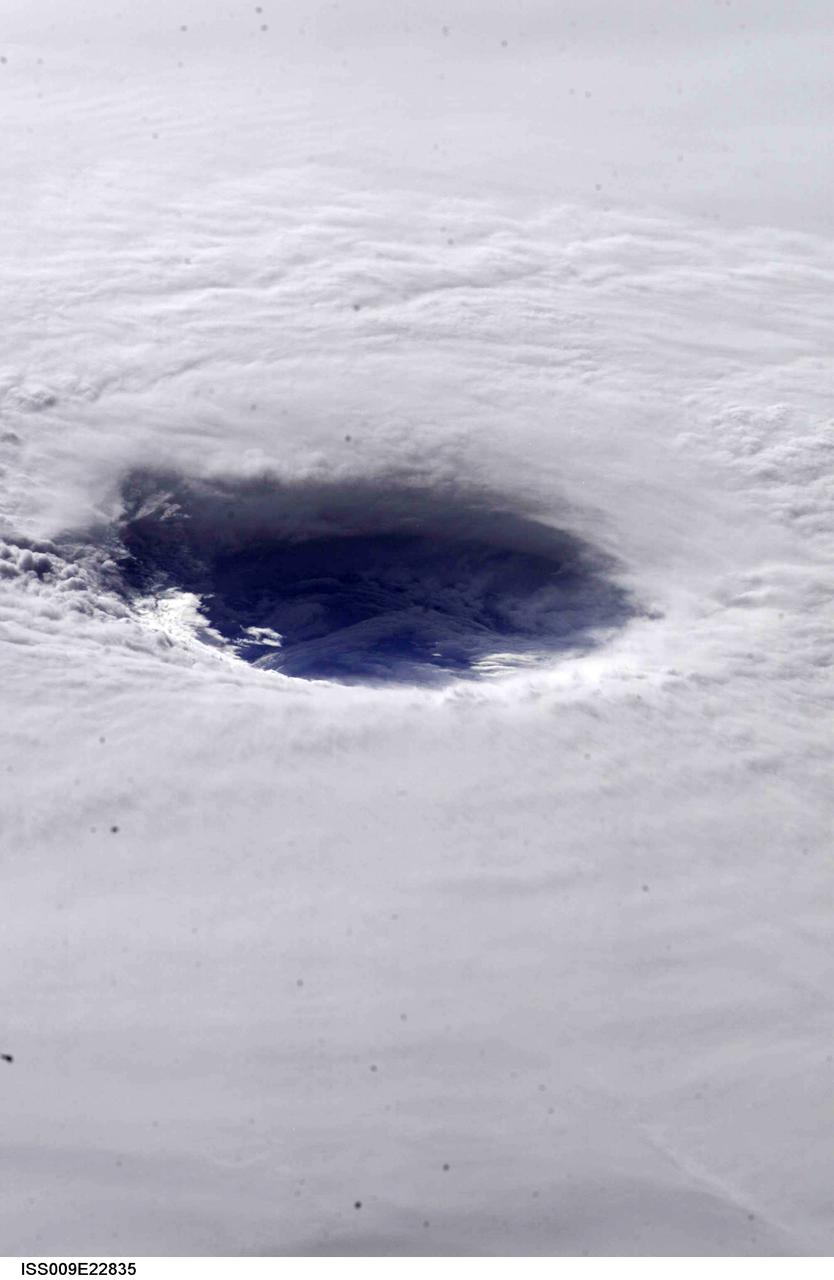
This image hosts a look into the eye of Hurricane Ivan, one of the strongest hurricanes on record, as the storm approached landfall on the central Gulf coast Wednesday afternoon on September 15, 2004. The hurricane was photographed by astronaut Edward M. (Mike) Fincke from aboard the International Space Station (ISS) at an altitude of approximately 230 miles. At the time, sustained winds in the eye of the wall were reported at about 135 mph as the downgraded category 4 storm approached the Alabama coast. Crew Earth Observations record Earth surface changes over time, as well as more fleeting events such as storms, floods, fires, and volcanic eruptions.
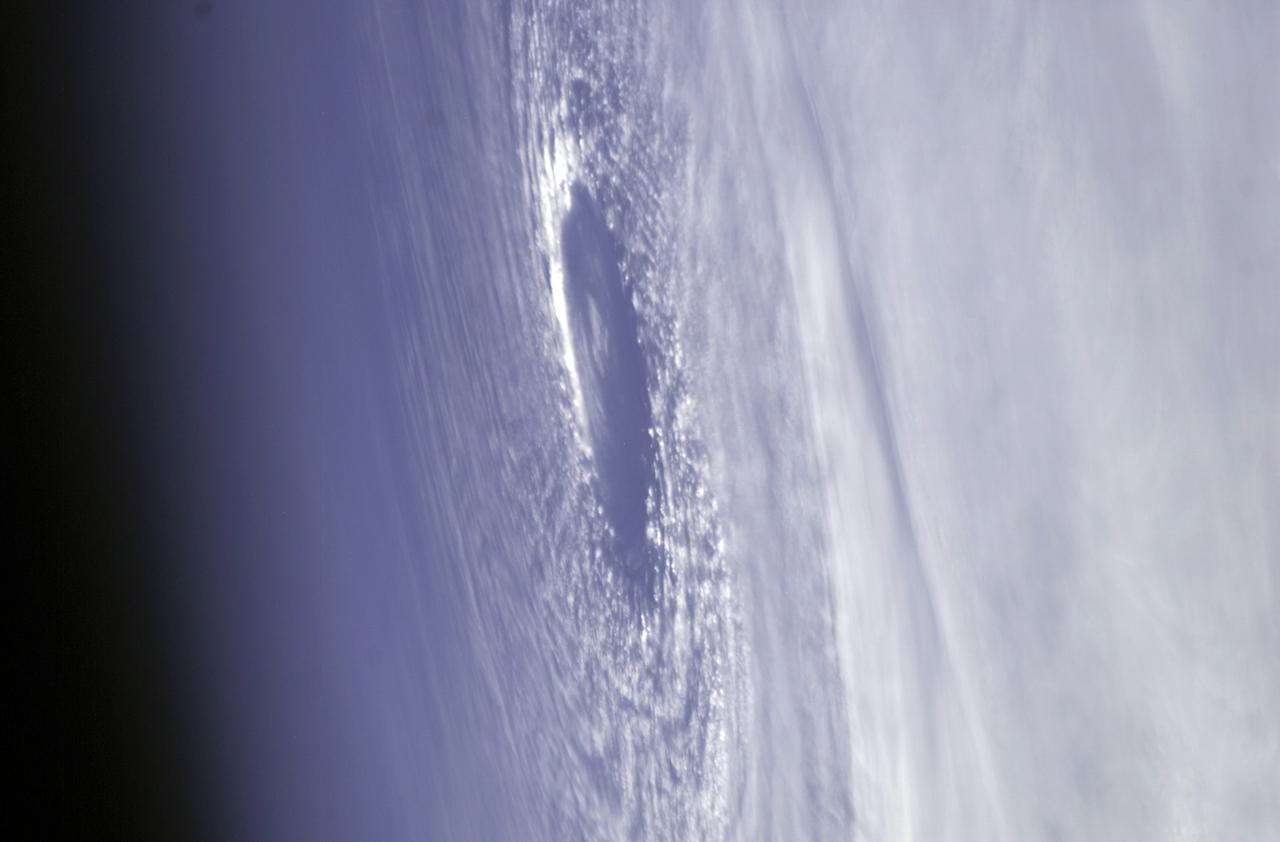
This image hosts a look at the eye of Hurricane Ivan, one of the strongest hurricanes on record, as the storm topped the western Caribbean Sea on Saturday, September 11, 2004. The hurricane was photographed by astronaut Edward M. (Mike) Fincke from aboard the International Space Station (ISS) at an altitude of approximately 230 miles. At the time, the category 5 storm sustained winds in the eye of the wall that were reported at about 160 mph. Crew Earth Observations record Earth surface changes over time, as well as more fleeting events such as storms, floods, fires, and volcanic eruptions.
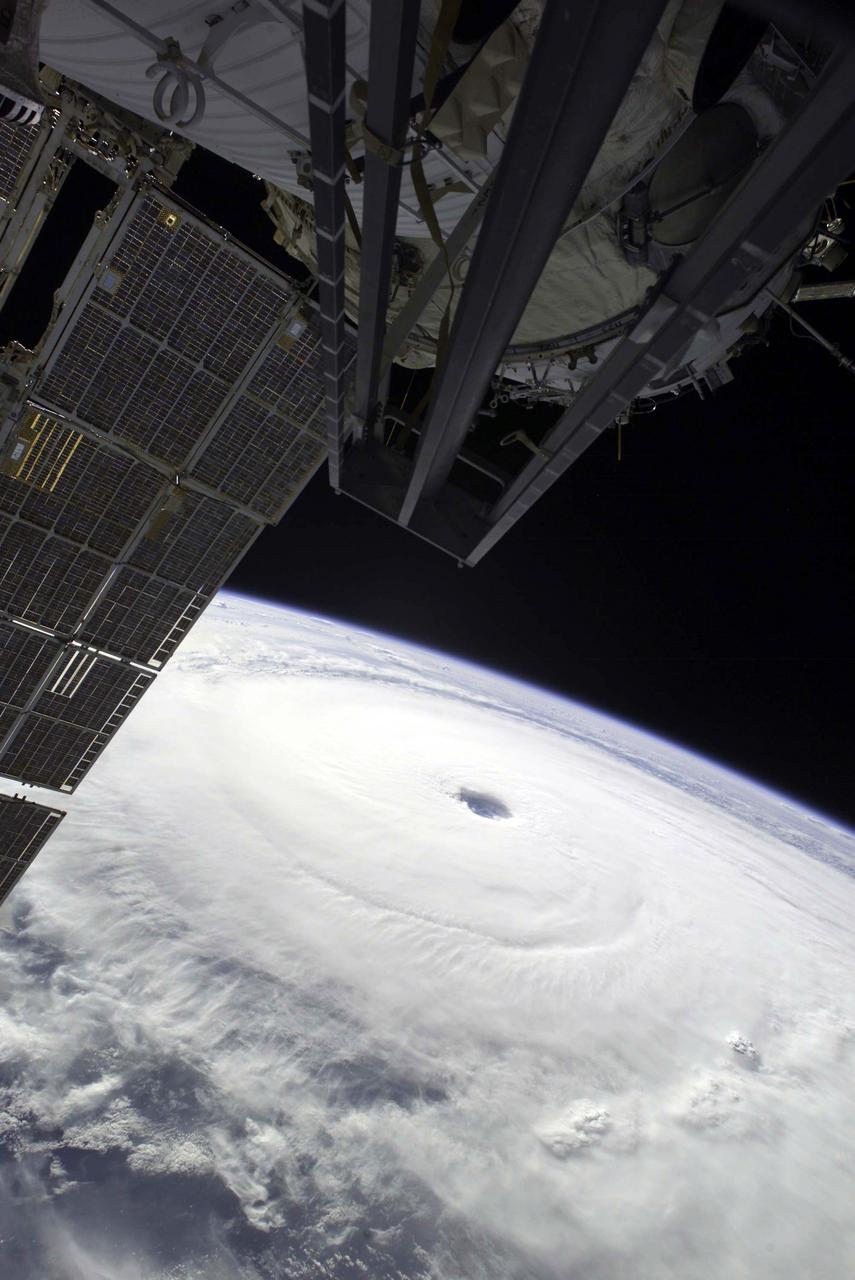
Except for a small portion of the International Space Station (ISS) in the foreground, Hurricane Ivan, one of the strongest hurricanes on record, fills this image over the northern Gulf of Mexico. As the downgraded category 4 storm approached landfall on the Alabama coast Wednesday afternoon on September 15, 2004, sustained winds in the eye of the wall were reported at about 135 mph. The hurricane was photographed by astronaut Edward M. (Mike) Fincke from aboard the ISS at an altitude of approximately 230 miles. Crew Earth Observations record Earth surface changes over time, as well as more fleeting events such as storms, floods, fires, and volcanic eruptions.
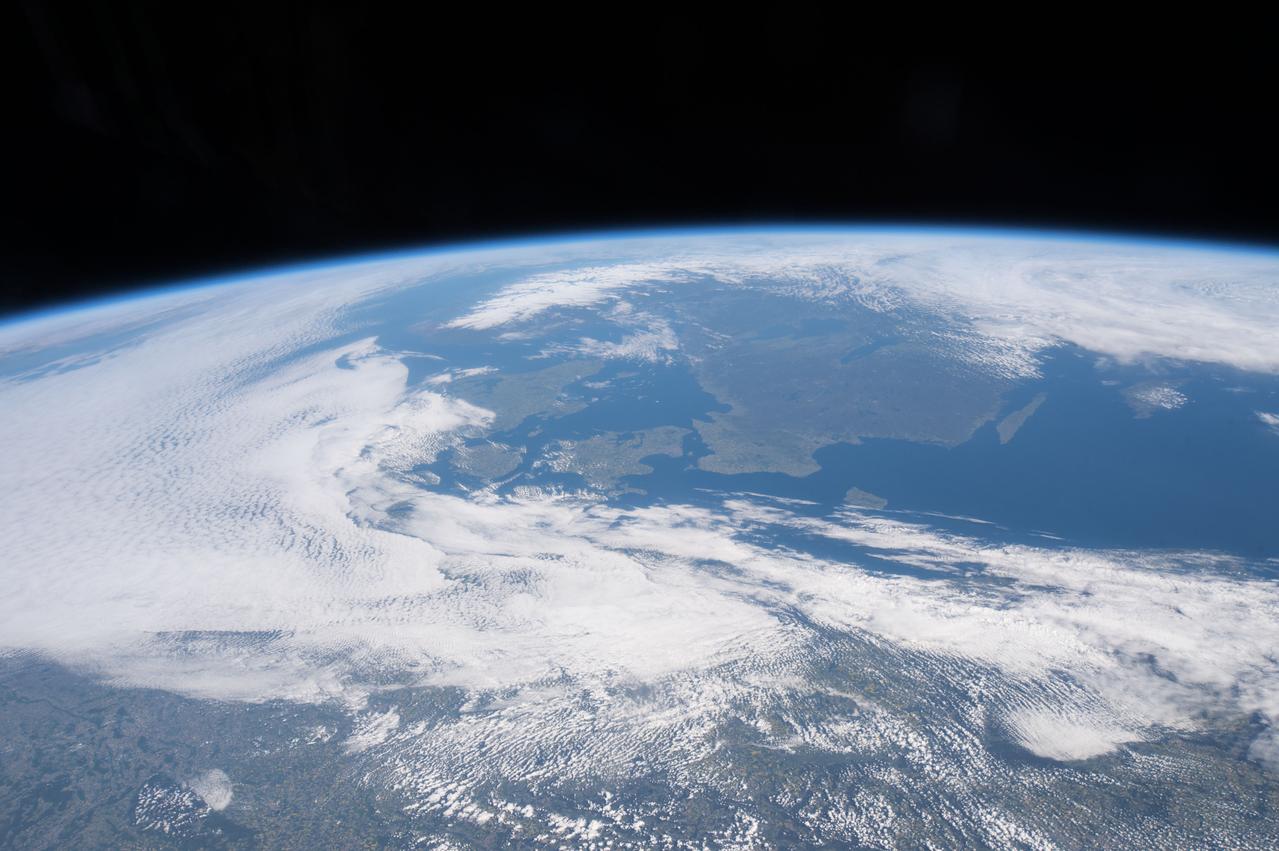
ISS043E194350 (05/15/2015) --- NASA astronaut Scott Kelly on the International Space Station tweeted this image out of an Earth observation image as part of his Space Geo trivia contest. Scott tweeted this comment and clue: "#SpaceGeo Four international borders in one photo from the International @Space_Station. Name them"! Two winners! Congrats to @TeacherWithTuba & @PC101!. The correct answer is :#SpaceGeo A: #Denmark #Norway #Sweden #Germany & #Poland. The winners will receive an autographed copy of this image when Scott returns to Earth in March 2016. Learn more about #SpaceGeo and play along every Wednesday for your chance to win: <a href="http://www.nasa.gov/feature/where-over-the-world-is-astronaut-scott-kelly/" rel="nofollow">www.nasa.gov/feature/where-over-the-world-is-astronaut-sc...</a>
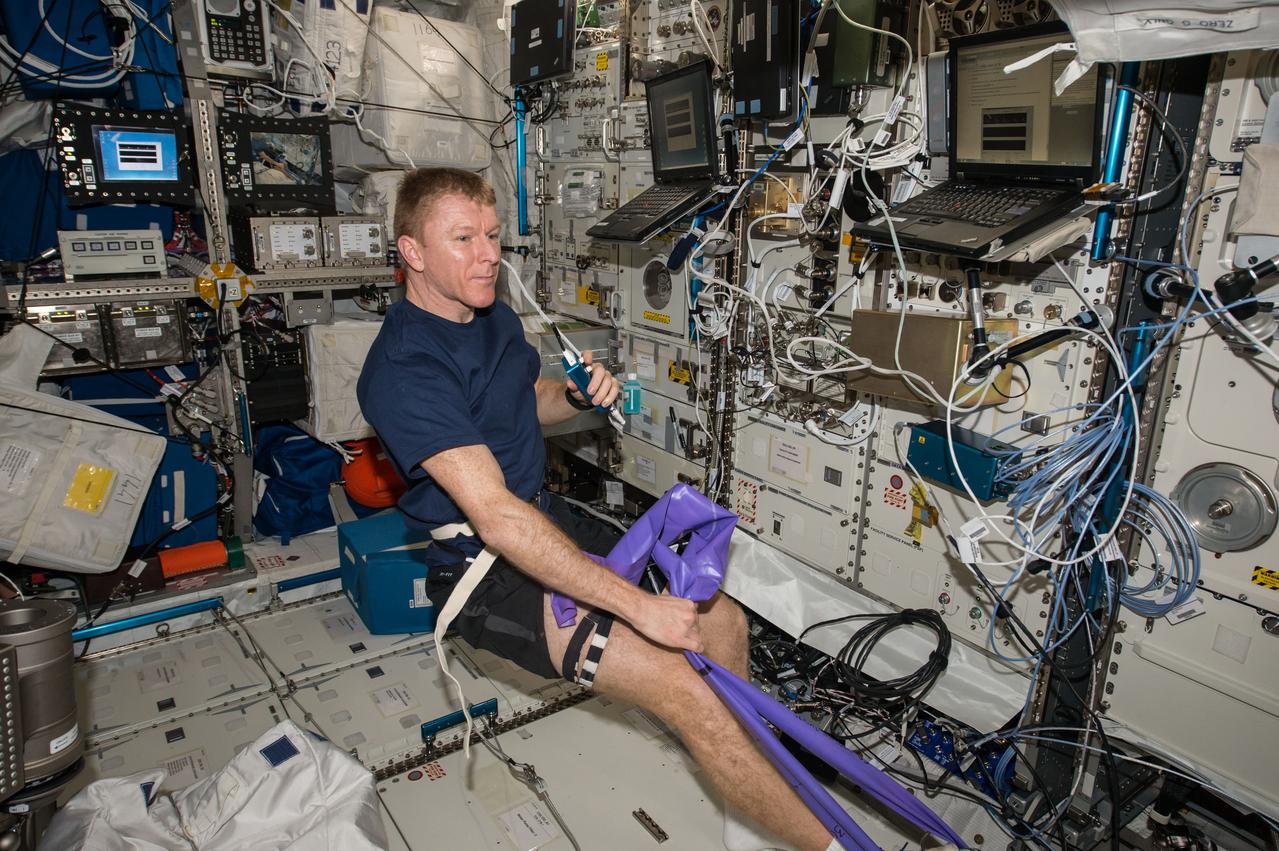
ISS047e134605 (05/30/2016) --- ESA (European Space Agency) astronaut Tim Peake uses hardware for the Vascular Echo experiment. As humans get older on Earth, arteries stiffen and this causes an increase in blood pressure (hypertension) and elevates the risk for cardiovascular disease. Recently, it has been observed that some crew members returning from the International Space Station (ISS) have much stiffer arteries than when they went into space. The results from studying these changes could provide insight into potential countermeasures to help maintain crew member health, and quality of life for everyone.
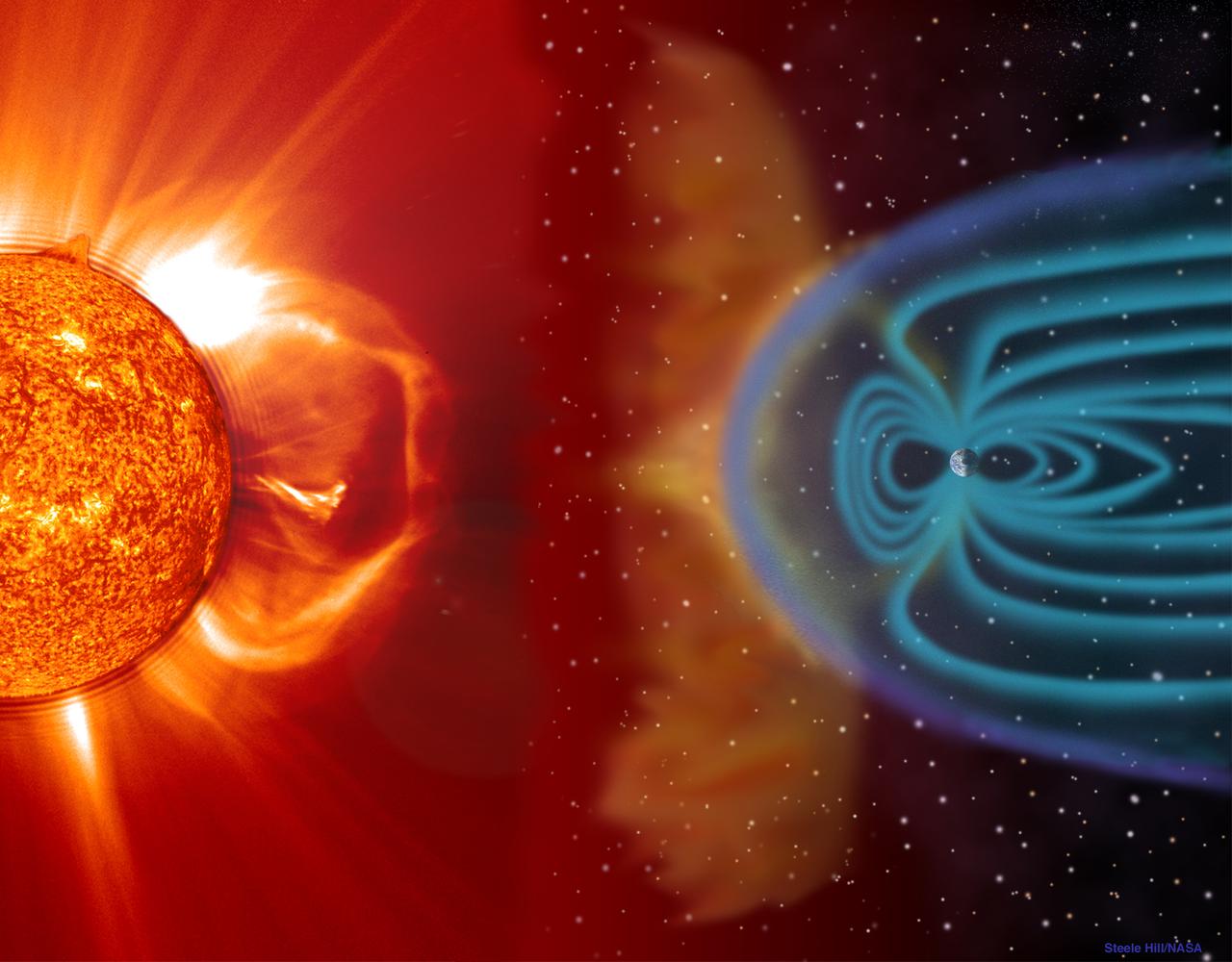
NASA's Marshall Space Flight Center (MSFC) and university scientists from the National Space Science and Technology Center (NSSTC) in Huntsville, Alabama, are watching the Sun in an effort to better predict space weather - blasts of particles and magnetic fields from the Sun that impact the magnetosphere, the magnetic bubble around the Earth. Filled by charged particles trapped in the Earth's magnetic field, the spherical comet-shaped magnetosphere extends out 40,000 miles from Earth's surface in the sunward direction and more in other directions. This image illustrates the Sun-Earth cornection. When massive solar explosions, known as coronal mass ejections, blast through the Sun's outer atmosphere and plow toward Earth at speeds of thousands of miles per second, the resulting effects can be harmful to communication satellites and astronauts outside the Earth's magnetosphere. Like severe weather on Earth, severe space weather can be costly. On the ground, magnetic storms wrought by these solar particles can knock out electric power. By using the Solar Vector Magnetograph, a solar observation facility at MSFC, scientists are learning what signs to look for as indicators of potential severe space weather.
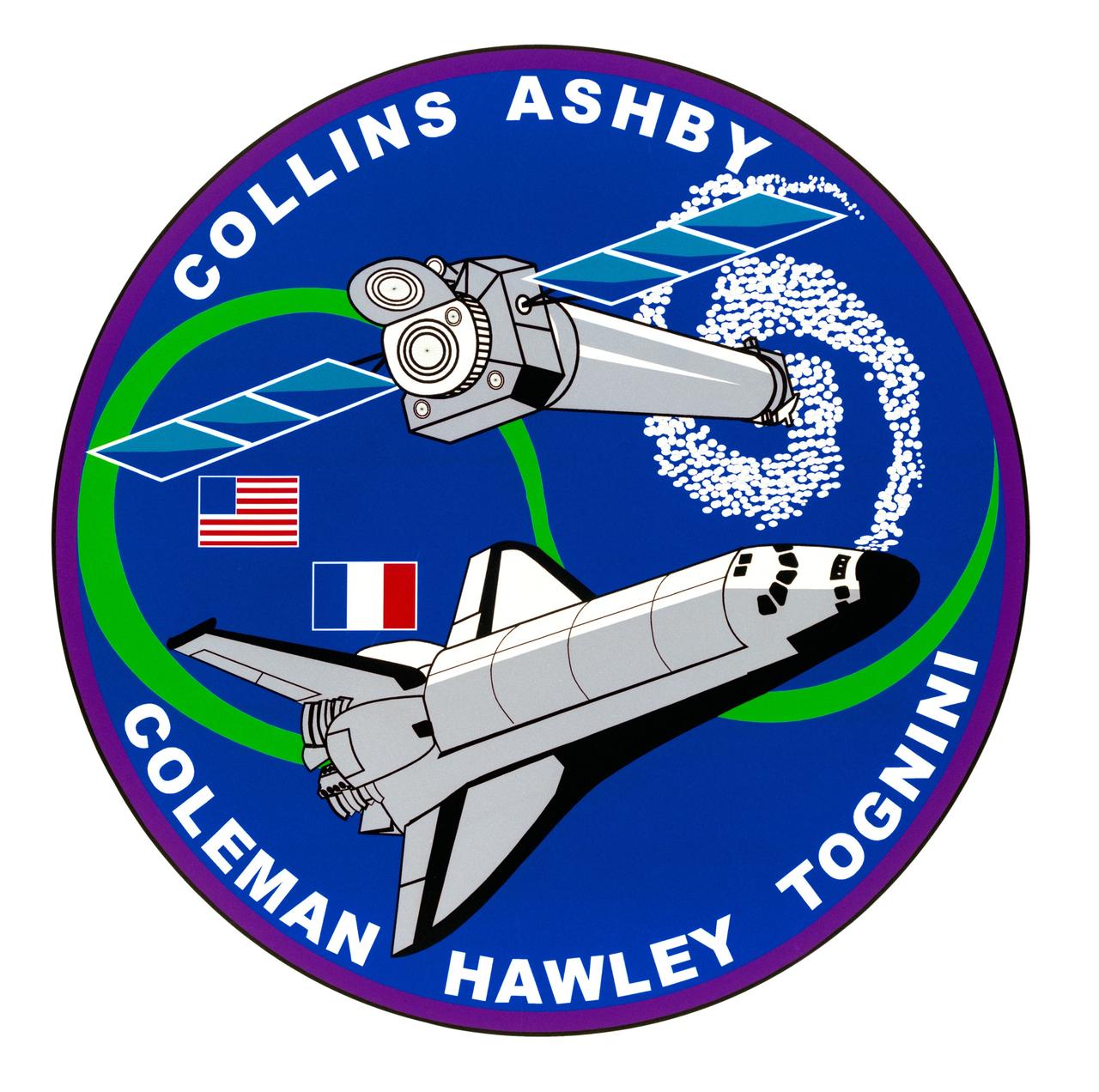
STS093-S-001 (September 1998) --- This is the STS-93 mission insignia designed by the crew members. Space shuttle Columbia will carry the Advanced X-ray Astrophysics Facility (AXAF) into low Earth orbit initiating its planned five-year astronomy mission. AXAF is the third of NASA's great observatories, following the Hubble Space Telescope (HST) and the Compton Gamma Ray Observatory (GRO). AXAF will provide scientists and order-of magnitude improvement over current capabilities at X-ray wavelengths. In the words of the crew, "Observations of X-ray emissions from energetic galaxies and clusters, as well as black holes, promise to greatly expand current understanding of the origin and evolution of our universe." The patch depicts AXAF separating from the space shuttle Columbia after a successful deployment. A spiral galaxy is shown in the background as a possible target for AXAF observations. The two flags represent the international crew, consisting of astronauts from both the United States and France. The NASA insignia design for space shuttle flights is reserved for use by the astronauts and for other official use as the NASA Administrator may authorize. Public availability has been approved only in the forms of illustrations by the various news media. When and if there is any change in this policy, which is not anticipated, the change will be publicly announced. Photo credit: NASA
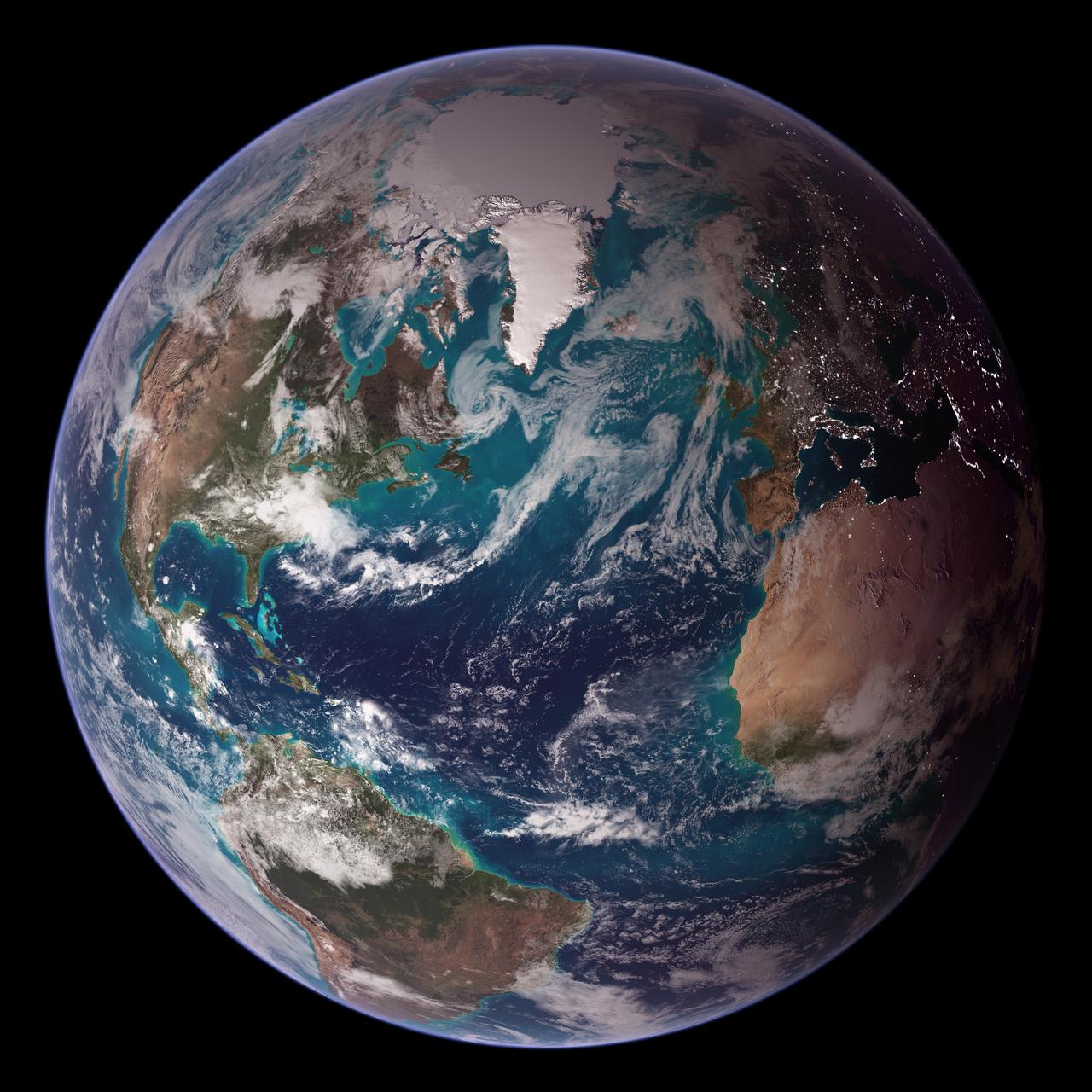
<b>RELEASE DATE: OCTOBER 9, 2007</b> <b>Credit: NASA/Goddard Space Flight Center/Reto Stöckli</b> A day’s clouds. The shape and texture of the land. The living ocean. City lights as a beacon of human presence across the globe. This amazingly beautiful view of Earth from space is a fusion of science and art, a showcase for the remote-sensing technology that makes such views possible, and a testament to the passion and creativity of the scientists who devote their careers to understanding how land, ocean, and atmosphere—even life itself—interact to generate Earth’s unique (as far as we know!) life-sustaining environment. Drawing on data from multiple satellite missions (not all collected at the same time), a team of NASA scientists and graphic artists created layers of global data for everything from the land surface, to polar sea ice, to the light reflected by the chlorophyll in the billions of microscopic plants that grow in the ocean. They wrapped these layers around a globe, set it against a black background, and simulated the hazy edge of the Earth’s atmosphere (the limb) that appears in astronaut photography of the Earth. The land surface layer is based on photo-like surface reflectance observations (reflected sunlight) measured by the Moderate Resolution Imaging Spectroradiometer (MODIS) on NASA’s Terra satellite in July 2004. The sea ice layer near the poles comes from Terra MODIS observations of daytime sea ice observed between August 28 and September 6, 2001. The ocean layer is a composite. In shallow water areas, the layer shows surface reflectances observed by Terra MODIS in July 2004. In the open ocean, the photo-like layer is overlaid with observations of the average ocean chlorophyll content for 2004. NASA’s Aqua MODIS collected the chlorophyll data. The cloud layer shows a single-day snapshot of clouds observed by Terra MODIS across the planet on July 29, 2001. City lights on Earth’s night side are visualized from data collected by the Defense Meteorological Satellite Program mission between 1994–1995. The topography layer is based on radar data collected by the Space Shuttle Endeavour during an 11-day mission in February of 2000. Topography over Antarctica comes from the Radarsat Antarctic Mapping Project, version 2. Most of the data layers in this visualization are available as monthly composites as part of NASA’s Blue Marble Next Generation image collection. The images in the collection appear in cylindrical projection (rectangular maps), and they are available at 500-meter resolution. The large images provided above are the full-size versions of these globes. In their hope that these images will inspire people to appreciate the beauty of our home planet and to learn about the Earth system, the developers of these images encourage readers to re-use and re-publish the images freely. NASA images by Reto Stöckli, based on data from NASA and NOAA. To learn the history of the Blue Marble go here: <a href="http://earthobservatory.nasa.gov/Features/BlueMarble/BlueMarble_history.php" rel="nofollow">earthobservatory.nasa.gov/Features/BlueMarble/BlueMarble_...</a> To learn more about the Blue Marble go here: <a href="http://earthobservatory.nasa.gov/IOTD/view.php?id=8108" rel="nofollow">earthobservatory.nasa.gov/IOTD/view.php?id=8108</a> <b><a href="http://www.nasa.gov/centers/goddard/home/index.html" rel="nofollow">NASA Goddard Space Flight Center</a></b> is home to the nation's largest organization of combined scientists, engineers and technologists that build spacecraft, instruments and new technology to study the Earth, the sun, our solar system, and the universe. <b>Follow us on <a href="http://twitter.com/NASA_GoddardPix" rel="nofollow">Twitter</a></b> <b>Join us on <a href="http://www.facebook.com/pages/Greenbelt-MD/NASA-Goddard/395013845897?ref=tsd" rel="nofollow">Facebook</a><b> </b></b>
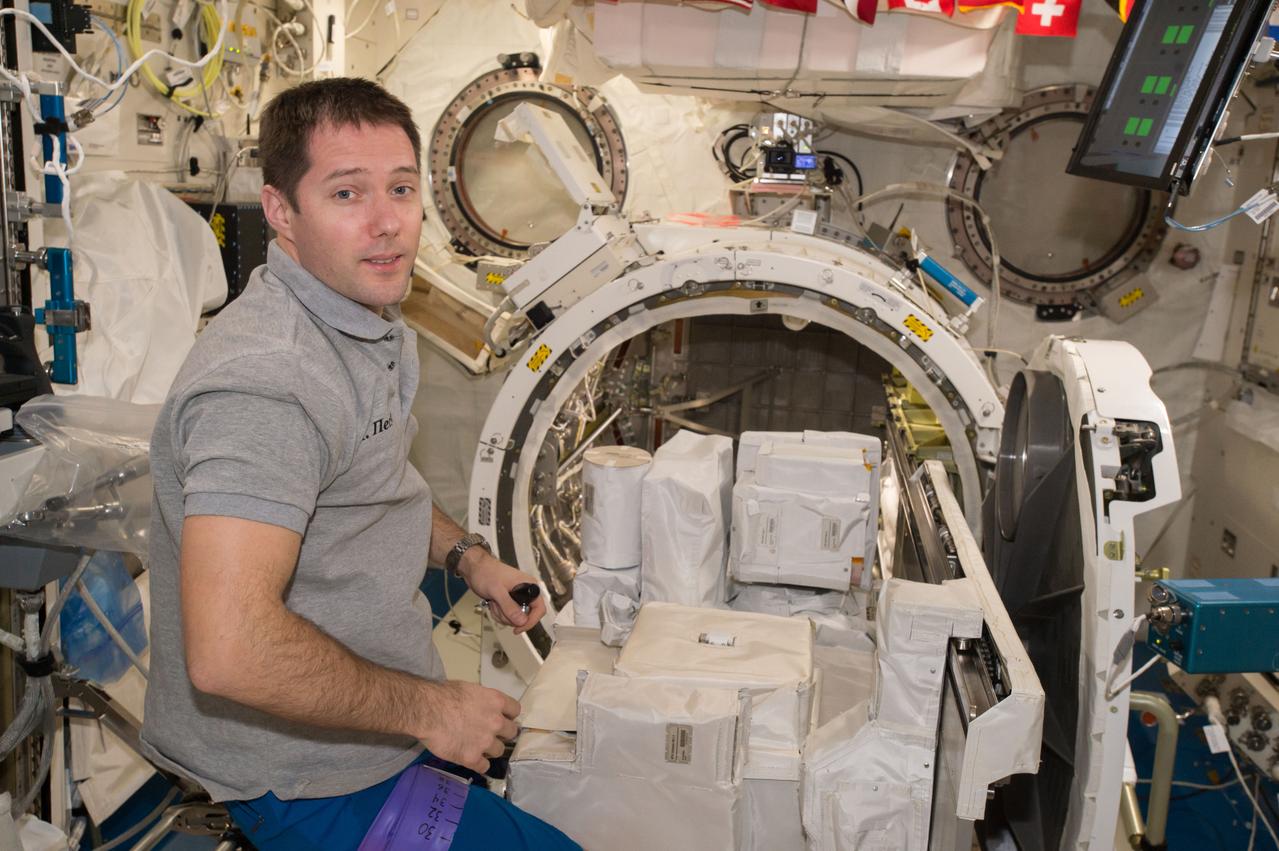
iss050e039213 (2/7/2017) --- European Space Agency (ESA) astronaut Thomas Pesquet during the installation of the Japanese Experiment Module (JEM) High Definition Television (HDTV) to Exposed Facility Unit (EFU) Adapter on JEM Airlock (JEMAL) Slide Table. The High Definition Television Camera-Exposed Facility 2 (HDTV-EF2) is a high-definition television camera system that is used for Earth observation from the International Space Station (ISS). HDTV-EF2 is exposed to the space environment on the Japanese Experiment Module -Exposed Facility (JEM-EF).
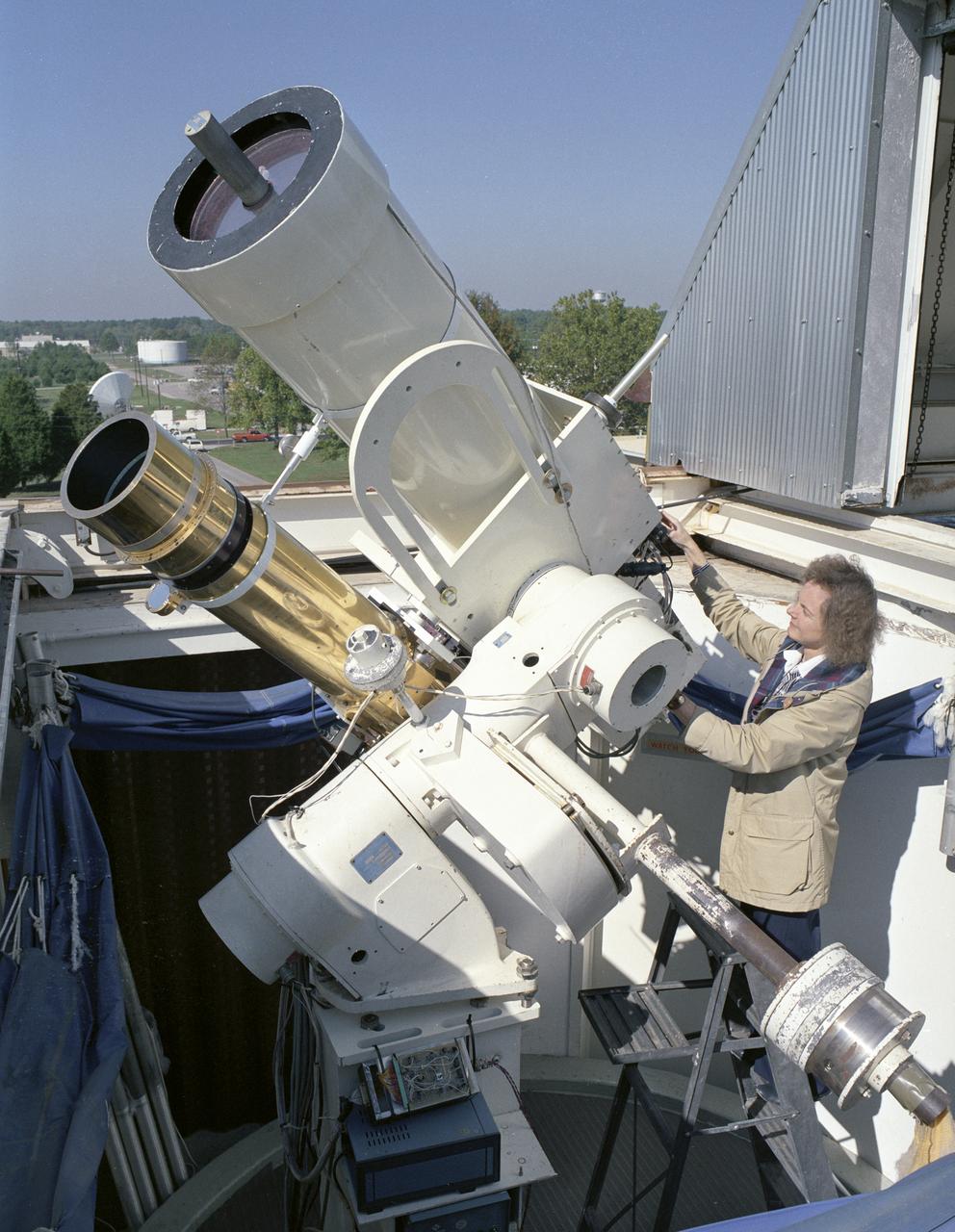
Using the Solar Vector Magnetograph, a solar observation facility at NASA's Marshall Space Flight Center (MSFC), scientists from the National Space Science and Technology Center (NSSTC) in Huntsville, Alabama, are monitoring the explosive potential of magnetic areas of the Sun. This effort could someday lead to better prediction of severe space weather, a phenomenon that occurs when blasts of particles and magnetic fields from the Sun impact the magnetosphere, the magnetic bubble around the Earth. When massive solar explosions, known as coronal mass ejections, blast through the Sun's outer atmosphere and plow toward Earth at speeds of thousands of miles per second, the resulting effects can be harmful to communication satellites and astronauts outside the Earth's magnetosphere. Like severe weather on Earth, severe space weather can be costly. On the ground, the magnetic storm wrought by these solar particles can knock out electric power. The researchers from MSFC and NSSTC's solar physics group develop instruments for measuring magnetic fields on the Sun. With these instruments, the group studies the origin, structure, and evolution of the solar magnetic field and the impact it has on Earth's space environment. This photograph shows the Solar Vector Magnetograph and Dr. Mona Hagyard of MSFC, the director of the observatory who leads the development, operation and research program of the Solar Vector Magnetograph.
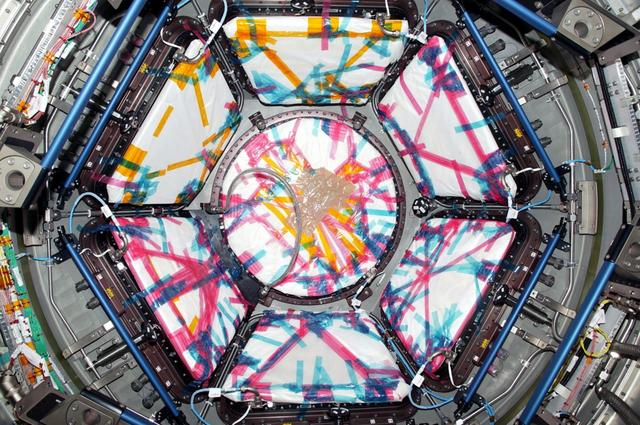
JSC2004-E-44650 (September 2004) --- A crewmember-eye view of the International Space Station's Cupola in the Alenia Spazio clean room in Turin, Italy. Personnel are preparing the hardware for shipment to NASA's launch facility at Cape Kennedy, Florida. From inside the Cupola, a dome-shaped module with seven windows (seen here under a protective cover), astronauts have a panoramic view for observing operations on the outside of the orbiting complex. The Cupola module provides external observation capabilities during spacewalks, docking operations, hardware surveys and for Earth and celestial studies. It also serves as the primary location for executing robot arm operations of Canadarm2. Until the Cupola is installed, crews have been using a robotic control computer station located in the Destiny Laboratory to operate the arm. The Cupola’s windows enhance the robotic arm operator's situational awareness, supplementing camera and graphic views provided by the computer workstation. Photo Credit: Alenia Spazio
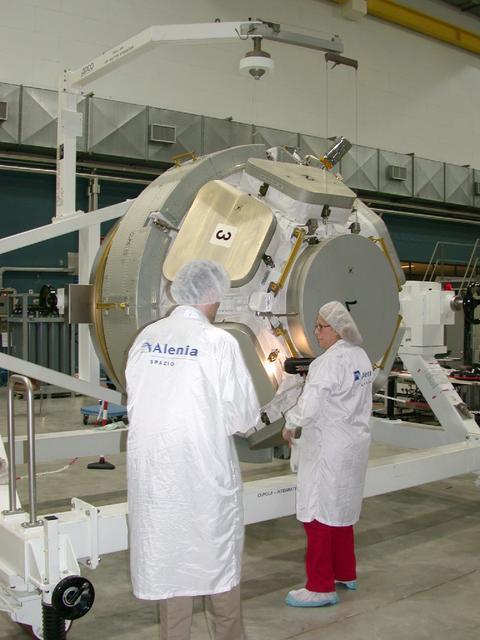
JSC2004-E-42742 (August 2004) --- Engineers and technicians check the International Space Station's Cupola in the Alenia Spazio clean room in Turin, Italy. Personnel are preparing the hardware for shipment to NASA's launch facility at Cape Kennedy, Florida. From inside the Cupola, a dome-shaped module with seven windows, astronauts have a panoramic view for observing operations on the outside of the orbiting complex. The Cupola module provides external observation capabilities during spacewalks, docking operations, hardware surveys and for Earth and celestial studies. It also serves as the primary location for executing robot arm operations of Canadarm2. Until the Cupola is installed, crews have been using a robotic control computer station located in the Destiny Laboratory to operate the arm. The Cupola’s windows enhance the robotic arm operator's situational awareness, supplementing camera and graphic views provided by the computer workstation. Photo Credit: Alenia Spazio
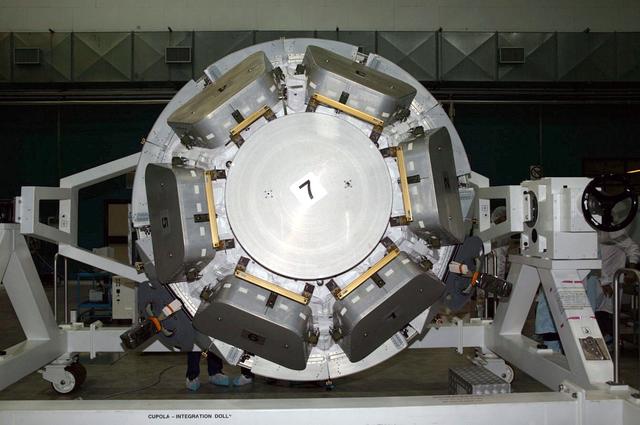
JSC2004-E-44649 (September 2004) --- Engineers and technicians (partially visible in right background) check the International Space Station's Cupola in the Alenia Spazio clean room in Turin, Italy. Personnel are preparing the hardware for shipment to NASA's launch facility at Cape Kennedy, Florida. From inside the Cupola, a dome-shaped module with seven windows, astronauts have a panoramic view for observing operations on the outside of the orbiting complex. The Cupola module provides external observation capabilities during spacewalks, docking operations, hardware surveys and for Earth and celestial studies. It also serves as the primary location for executing robot arm operations of Canadarm2. Until the Cupola is installed, crews have been using a robotic control computer station located in the Destiny Laboratory to operate the arm. The Cupola’s windows enhance the robotic arm operator's situational awareness, supplementing camera and graphic views provided by the computer workstation. Photo Credit: Alenia Spazio