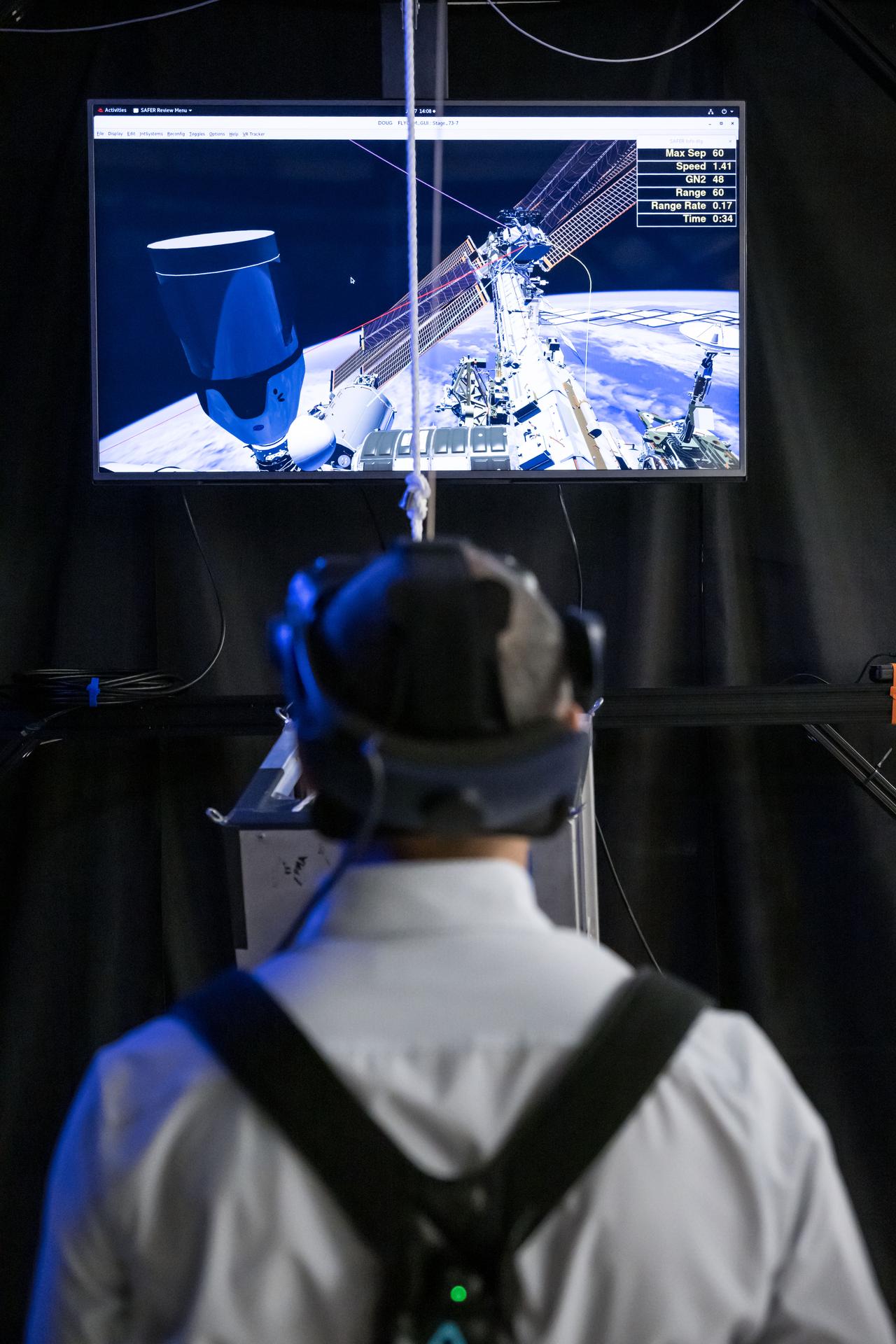
jsc2026e000427 (Jan. 7, 2026) --- NASA astronaut and Expedition 75 flight engineer Anil Menon participates in a spacewalk training session while wearing virtual reality goggles at Johnson Space Center in Houston, Texas, ahead of his upcoming mission to the International Space Station. Credit: NASA/David DeHoyos
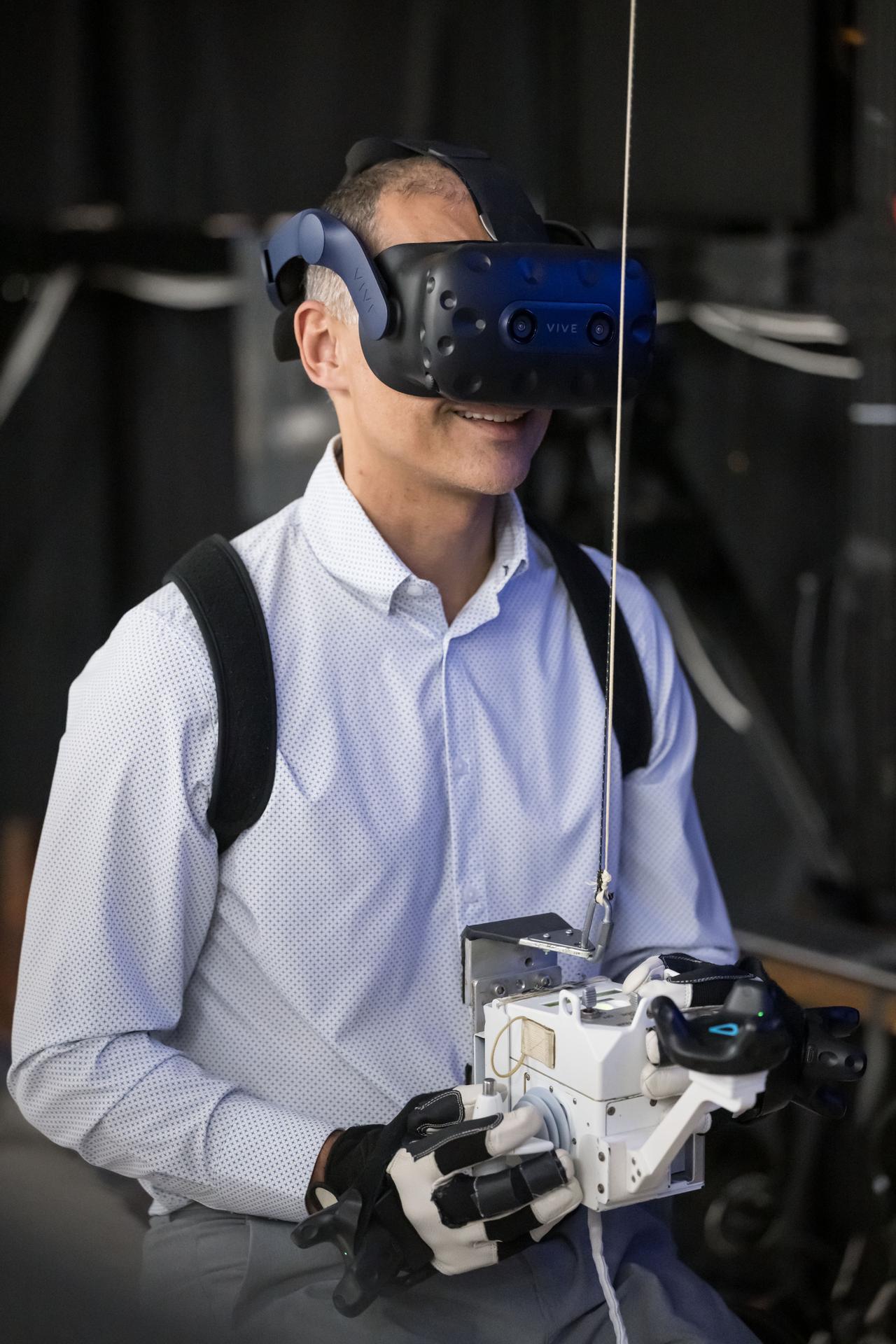
jsc2026e000421 (Jan. 7, 2026) --- NASA astronaut and Expedition 75 flight engineer Anil Menon participates in a spacewalk training session while wearing virtual reality goggles at Johnson Space Center in Houston, Texas, ahead of his upcoming mission to the International Space Station. Credit: NASA/David DeHoyos
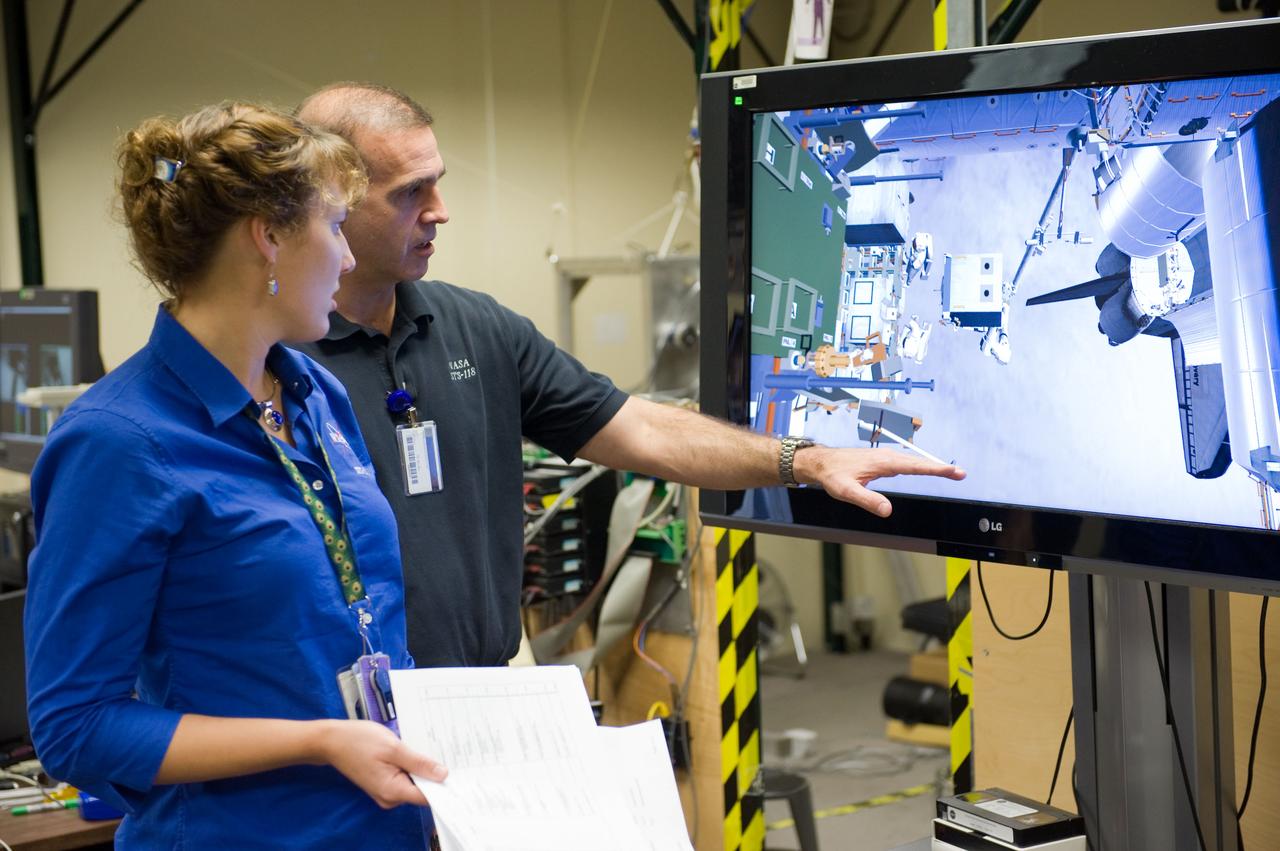
JSC2009-E-214332 (25 Sept. 2009) --- NASA astronauts Dorothy Metcalf-Lindenburger and Rick Mastracchio, both STS-131 mission specialists, participate in a training session in the virtual reality lab in the Space Vehicle Mock-up Facility at NASA's Johnson Space Center to train for some of their duties aboard the space shuttle and space station. This type of computer interface, paired with virtual reality training hardware and software, helps to prepare the entire team for dealing with space station elements.
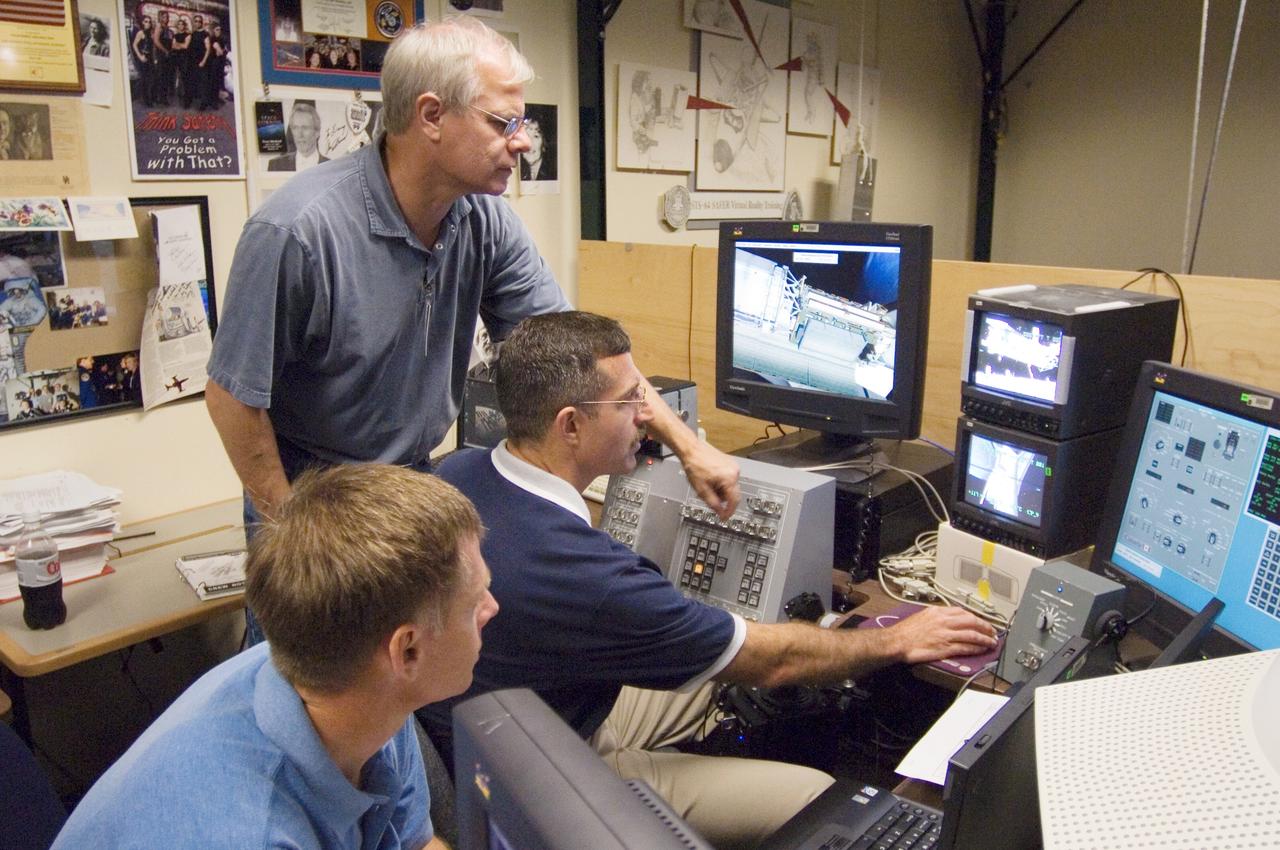
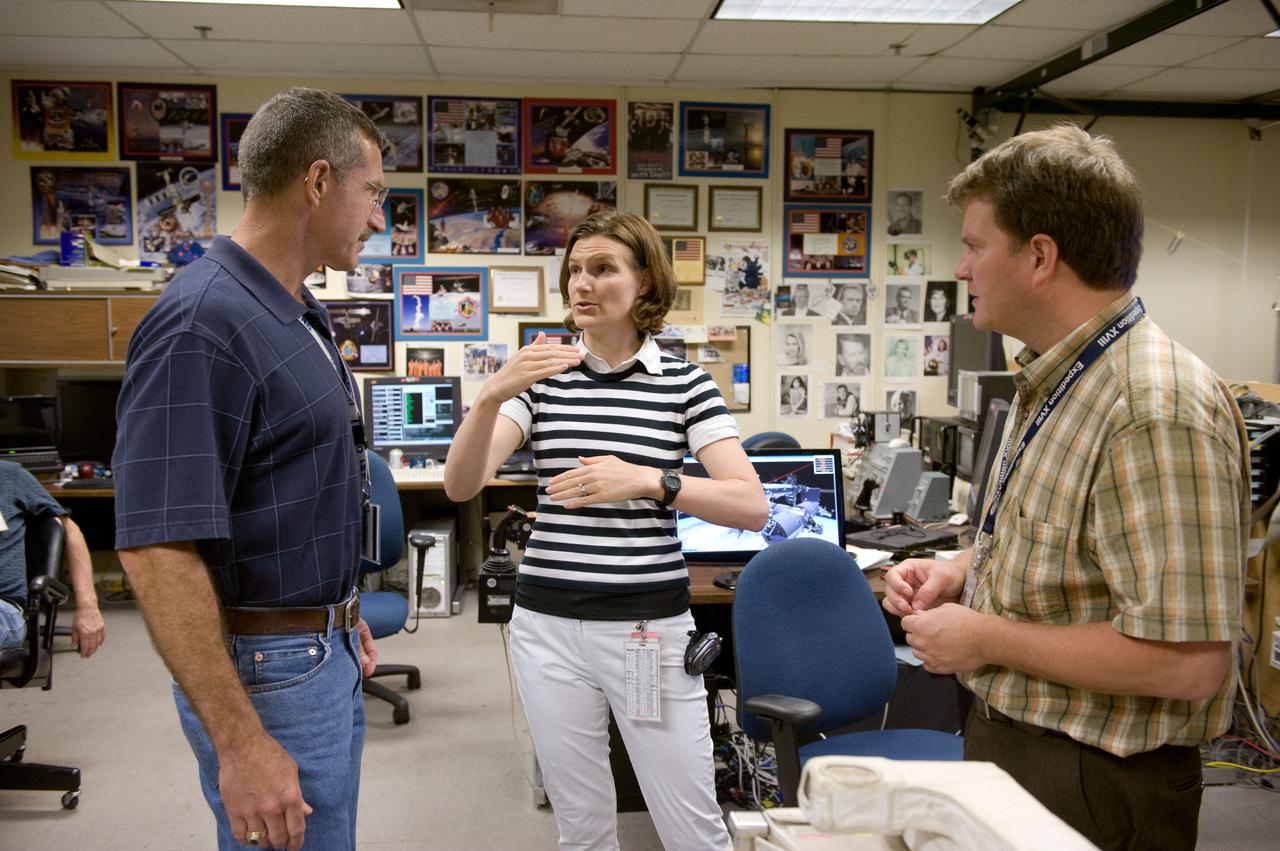
JSC2005-E-21199 (7 June 2005) --- Astronaut Daniel C. Burbank, STS-115 mission specialist, uses the virtual reality lab at the Johnson Space Center to train for his duties aboard the space shuttle. This type of computer interface, paired with virtual reality training hardware and software, helps to prepare the entire team for dealing with space station elements. David J. Homan assisted Burbank as astronaut Christopher J. Ferguson, pilot, looked on.
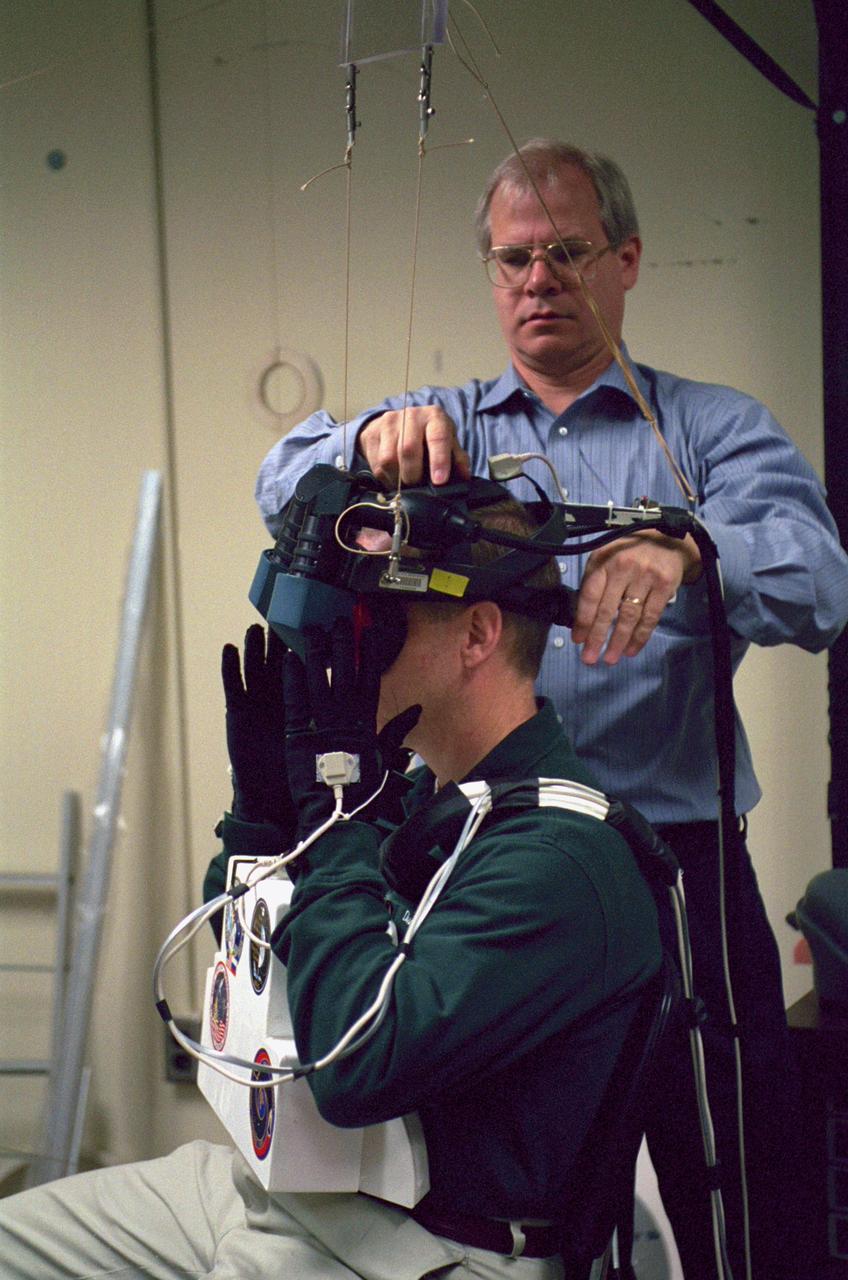
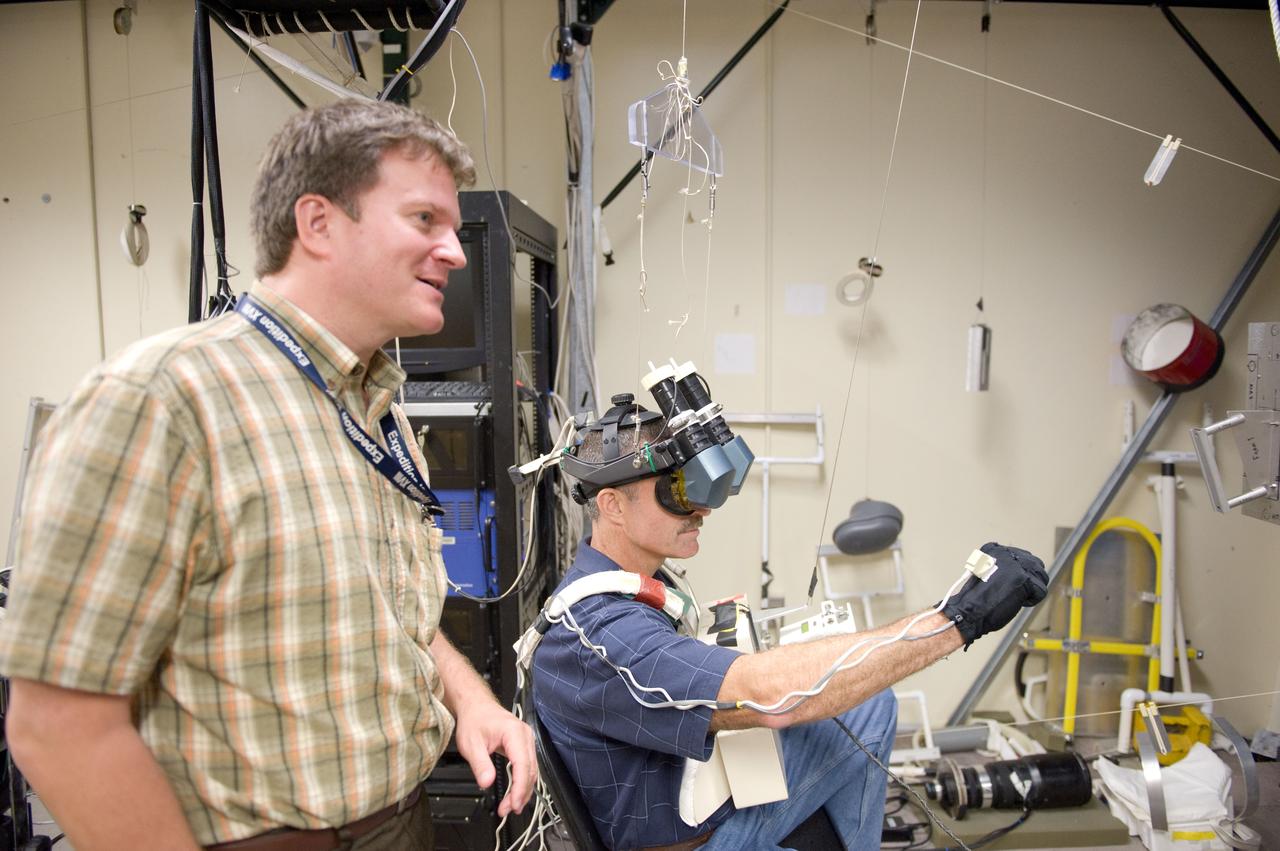
JSC2001-00748 (15 March 2001) --- Astronaut Patrick G. Forrester, STS-105 mission specialist, prepares to use specialized gear in the virtual reality lab at the Johnson Space Center (JSC) to train for his duties aboard the Space Shuttle Discovery. This type of virtual reality training allows the astronauts to wear a helmet and special gloves while looking at computer displays simulating actual movements around the various locations on the International Space Station (ISS) hardware with which they will be working.
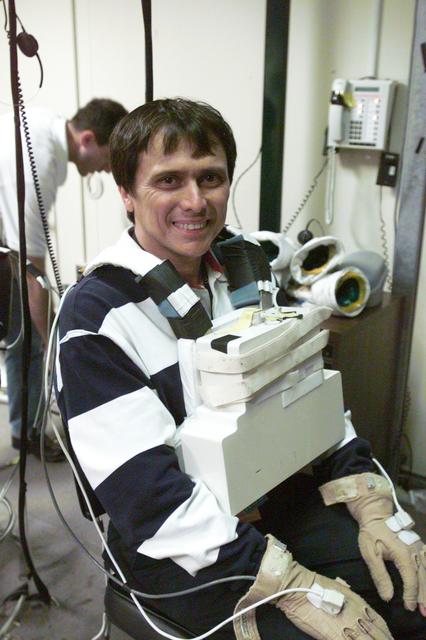
JSC2001-E-39080 (18 October 2001) --- Astronaut Franklin R. Chang-Diaz, STS-111 mission specialist, prepares to use specialized gear in the virtual reality lab at the Johnson Space Center (JSC) to train for his duties aboard the Space Shuttle Endeavour. This type of virtual reality training allows the astronauts to wear a helmet and special gloves while looking at computer displays simulating actual movements around the various locations on the International Space Station (ISS) hardware with which they will be working.
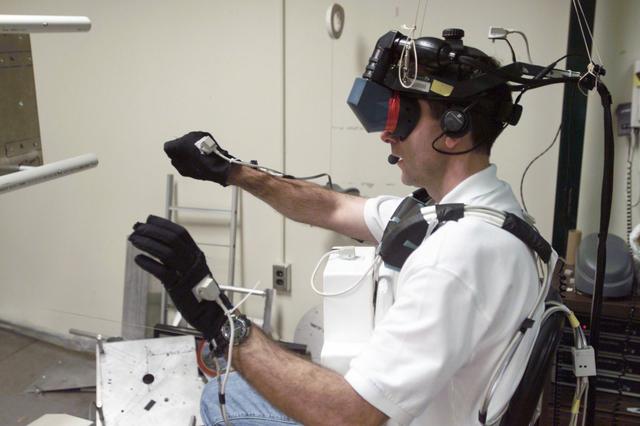
JSC2001-E-39084 (18 October 2001) --- Astronaut Philippe Perrin, STS-111 mission specialist, uses specialized gear in the virtual reality lab at the Johnson Space Center (JSC) to train for his duties aboard the Space Shuttle Endeavour. This type of virtual reality training allows the astronauts to wear a helmet and special gloves while looking at computer displays simulating actual movements around the various locations on the International Space Station (ISS) hardware with which they will be working. Perrin represents CNES, the French Space Agency.
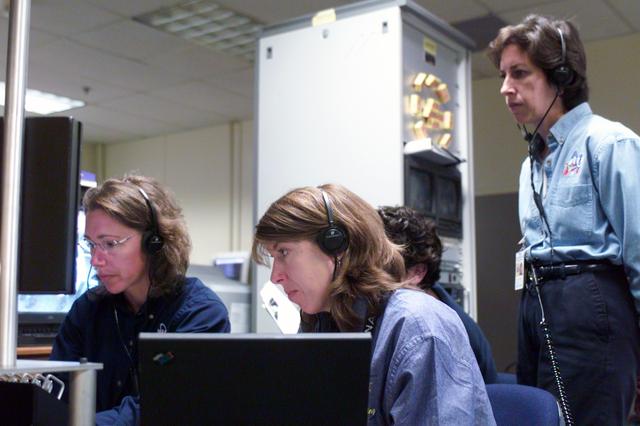
JSC2002-E-34625 (21 Aug. 2002) --- Astronaut Sandra H. Magnus (left), STS-112 mission specialist, uses the virtual reality lab at NASA?s Johnson Space Center (JSC) to train for her duties aboard the space shuttle Atlantis. This type of computer interface paired with virtual reality training hardware and software helps to prepare the entire team for dealing with ISS elements. Lead SSRMS instructor Elizabeth C. Bloomer assisted Magnus. Astronaut Ellen Ochoa (standing) looks on. Photo credit: NASA

JSC2001-E-39085 (18 October 2001) --- Cosmonaut Valeri G. Korzun (left), Expedition Five mission commander, astronaut Peggy A. Whitson, Expedition Five flight engineer, and astronaut Carl E. Walz, Expedition Four flight engineer, use the virtual reality lab at the Johnson Space Center (JSC) to train for their duties on the International Space Station (ISS). This type of computer interface paired with virtual reality training hardware and software helps the entire team for dealing with ISS elements. Korzun represents Rosaviakosmos.
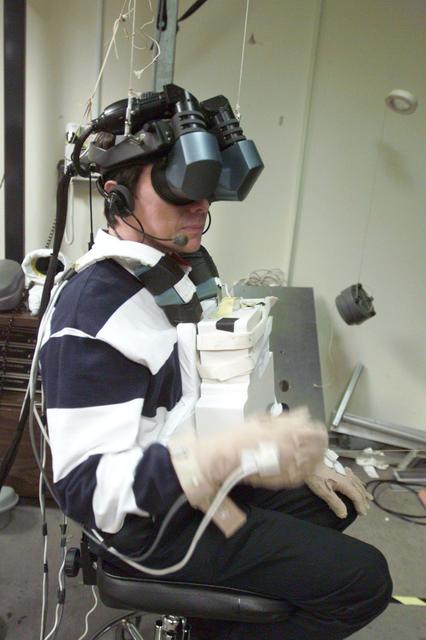
JSC2001-E-39083 (18 October 2001) --- Astronaut Franklin R. Chang-Diaz, STS-111 mission specialist, uses specialized gear in the virtual reality lab at the Johnson Space Center (JSC) to train for his duties aboard the Space Shuttle Endeavour. This type of virtual reality training allows the astronauts to wear a helmet and special gloves while looking at computer displays simulating actual movements around the various locations on the International Space Station (ISS) hardware with which they will be working.
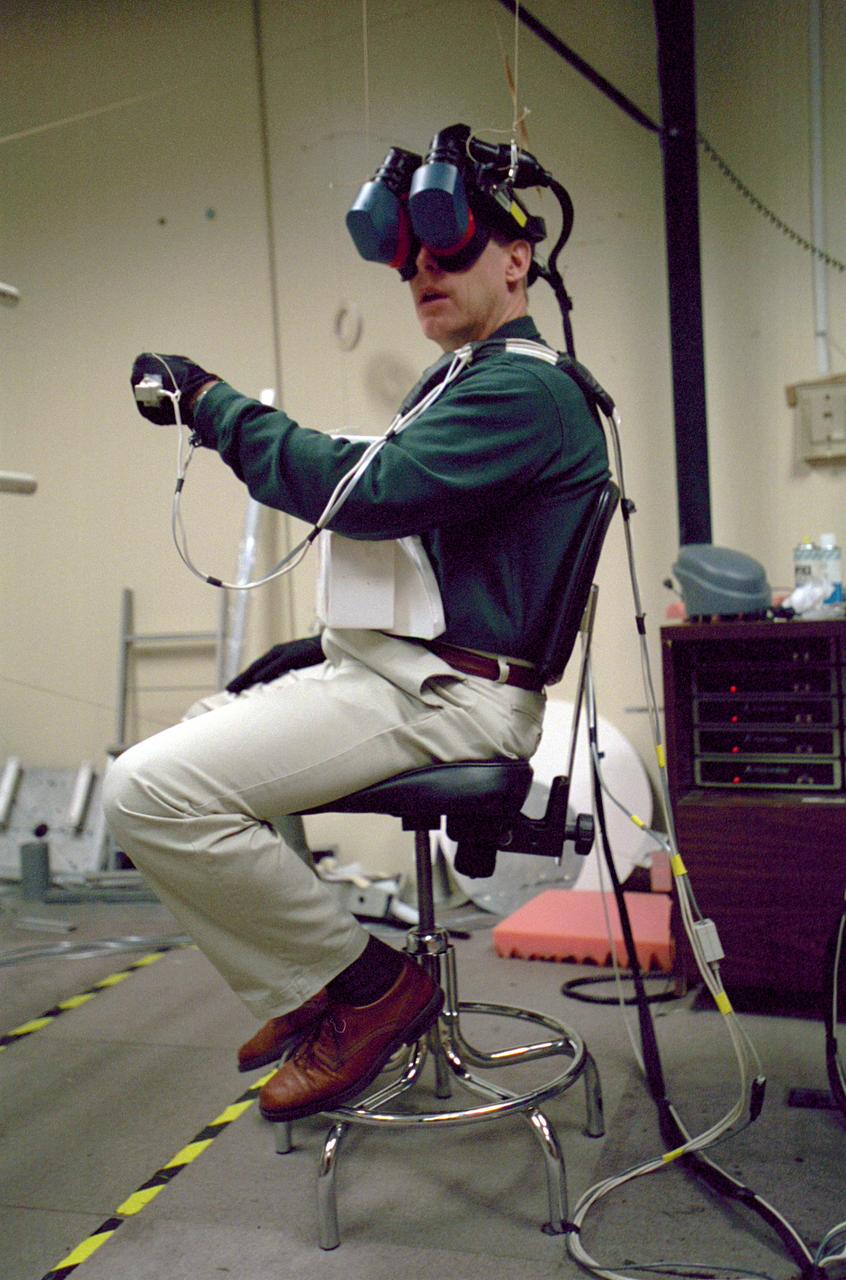
JSC2001-00754 (15 March 2001) --- Astronaut Patrick G. Forrester, STS-105 mission specialist, uses specialized gear in the virtual reality lab at the Johnson Space Center (JSC) to train for his duties aboard the Space Shuttle Discovery. This type of virtual reality training allows the astronauts to wear a helmet and special gloves while looking at computer displays simulating actual movements around the various locations on the International Space Station (ISS) hardware with which they will be working.
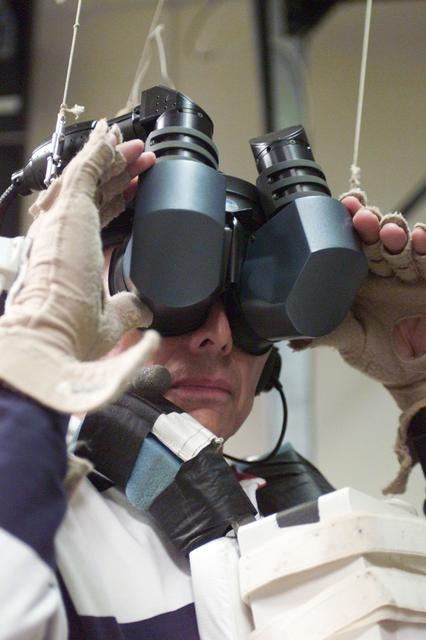
JSC2001-E-39088 (18 October 2001) --- Astronaut Franklin R. Chang-Diaz, STS-111 mission specialist, uses specialized gear in the virtual reality lab at the Johnson Space Center (JSC) to train for his duties aboard the Space Shuttle Endeavour. This type of virtual reality training allows the astronauts to wear a helmet and special gloves while looking at computer displays simulating actual movements around the various locations on the International Space Station (ISS) hardware with which they will be working.

JSC2011-E-006292 (24 Jan. 2011) --- NASA astronaut Nicole Stott, STS-133 mission specialist, uses the virtual reality lab in the Space Vehicle Mock-up Facility at NASA's Johnson Space Center to train for some of her duties aboard the space shuttle and space station. This type of computer interface, paired with virtual reality training hardware and software, helps to prepare crew members for dealing with space station elements. Photo credit: NASA or National Aeronautics and Space Administration

JSC2009-E-214342 (25 Sept. 2009) --- NASA astronaut Alan Poindexter, STS-131 commander; and Dorothy Metcalf-Lindenburger, mission specialist, use the virtual reality lab in the Space Vehicle Mock-up Facility at NASA's Johnson Space Center to train for some of their duties aboard the space shuttle and space station. This type of computer interface, paired with virtual reality training hardware and software, helps to prepare the entire team for dealing with space station elements.
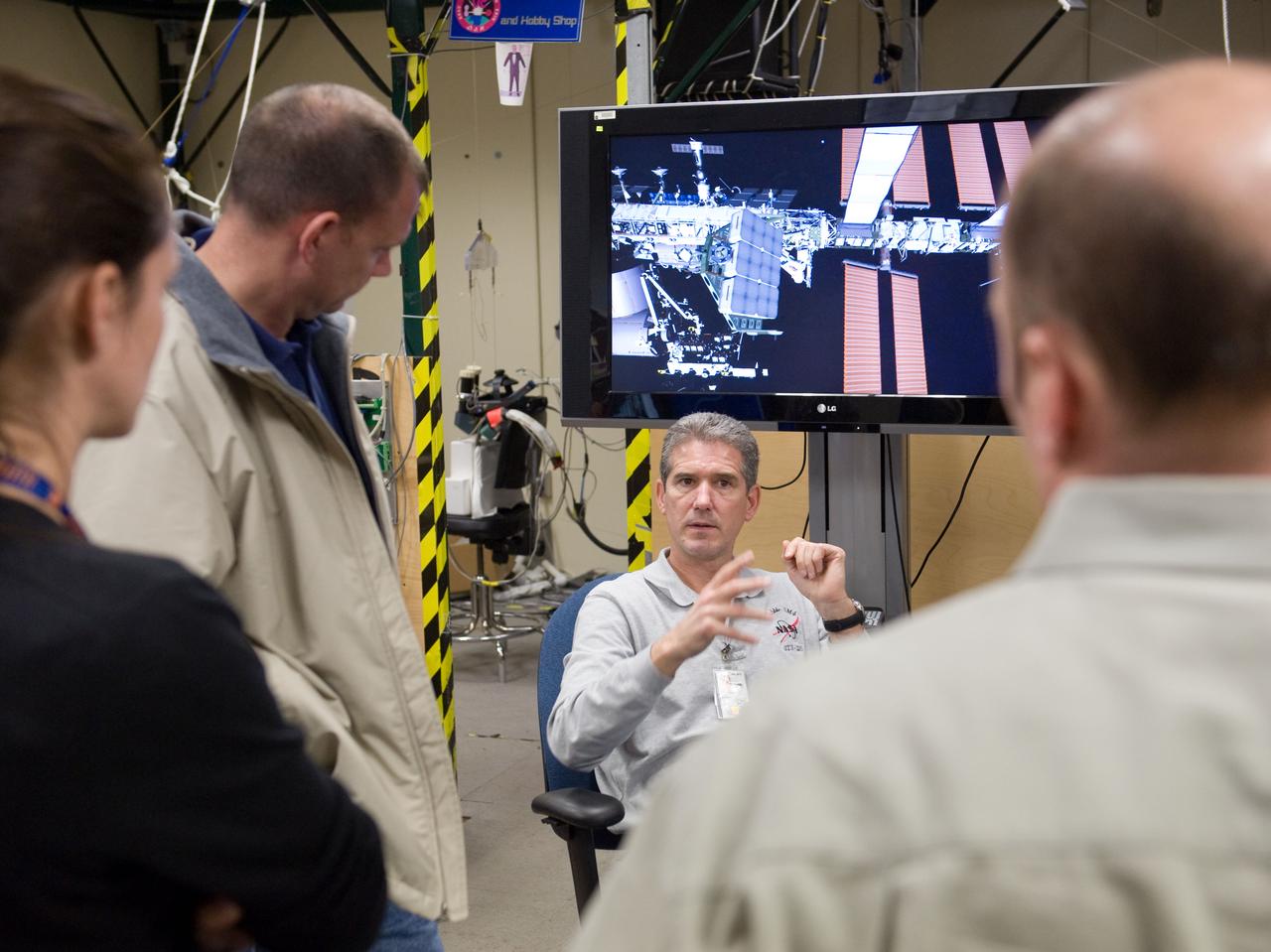
JSC2010-E-014950 (28 Jan. 2010) --- NASA astronauts Michael Good (facing camera), Garrett Reisman (right), both STS-132 mission specialists; and Tony Antonelli, pilot, use the virtual reality lab in the Space Vehicle Mock-up Facility at NASA's Johnson Space Center to train for some of their duties aboard the space shuttle and space station. This type of computer interface, paired with virtual reality training hardware and software, helps to prepare crew members for dealing with space station elements.
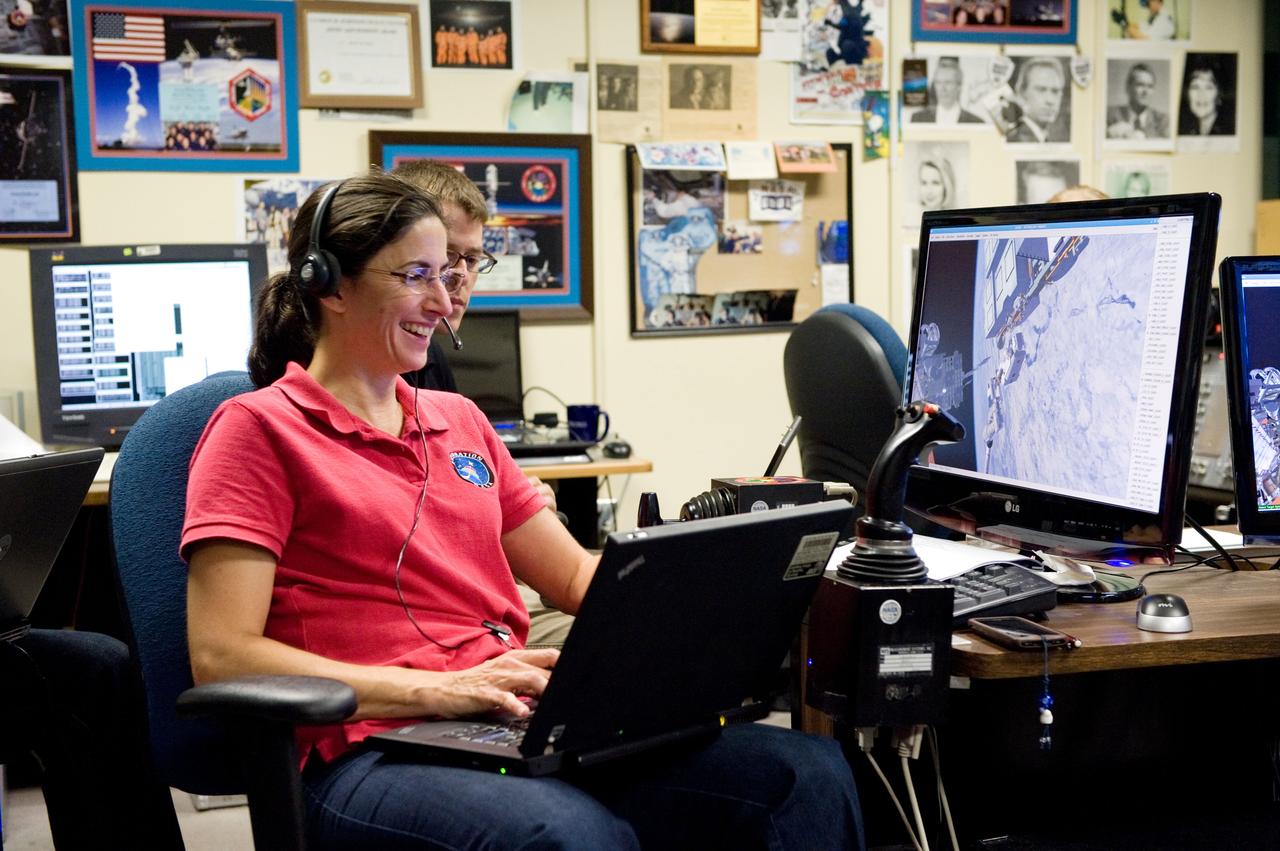
JSC2010-E-170882 (1 Oct. 2010) --- NASA astronaut Nicole Stott, STS-133 mission specialist, uses the virtual reality lab in the Space Vehicle Mock-up Facility at NASA's Johnson Space Center to train for some of her duties aboard the space shuttle and space station. This type of computer interface, paired with virtual reality training hardware and software, helps to prepare crew members for dealing with space station elements. Photo credit: NASA or National Aeronautics and Space Administration
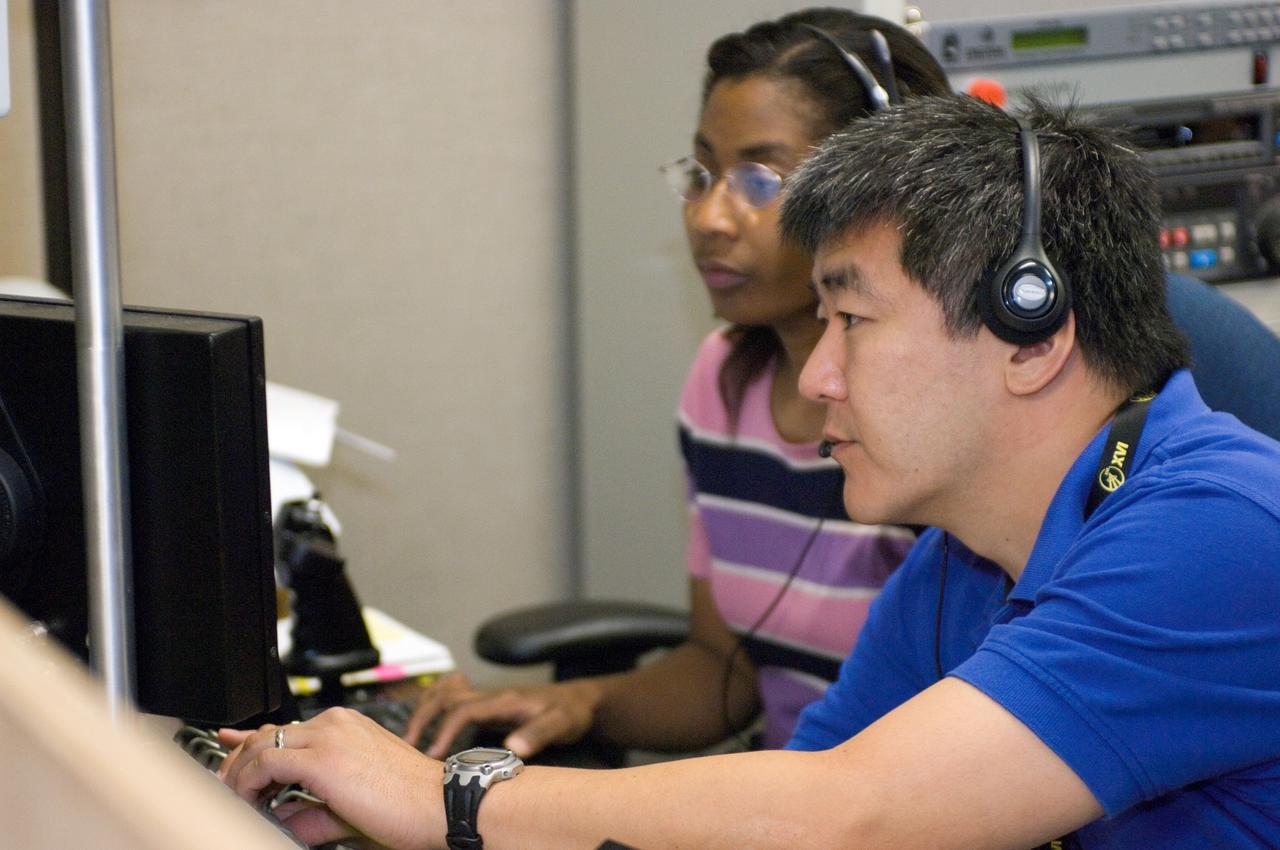
JSC2007-E-41541 (9 Aug. 2007) --- Astronauts Stephanie Wilson, STS-120 mission specialist, and Dan Tani, Expedition 16 flight engineer, use the virtual reality lab at Johnson Space Center to train for their duties aboard the space shuttle and space station. This type of computer interface, paired with virtual reality training hardware and software, helps to prepare the entire team for dealing with space station elements.
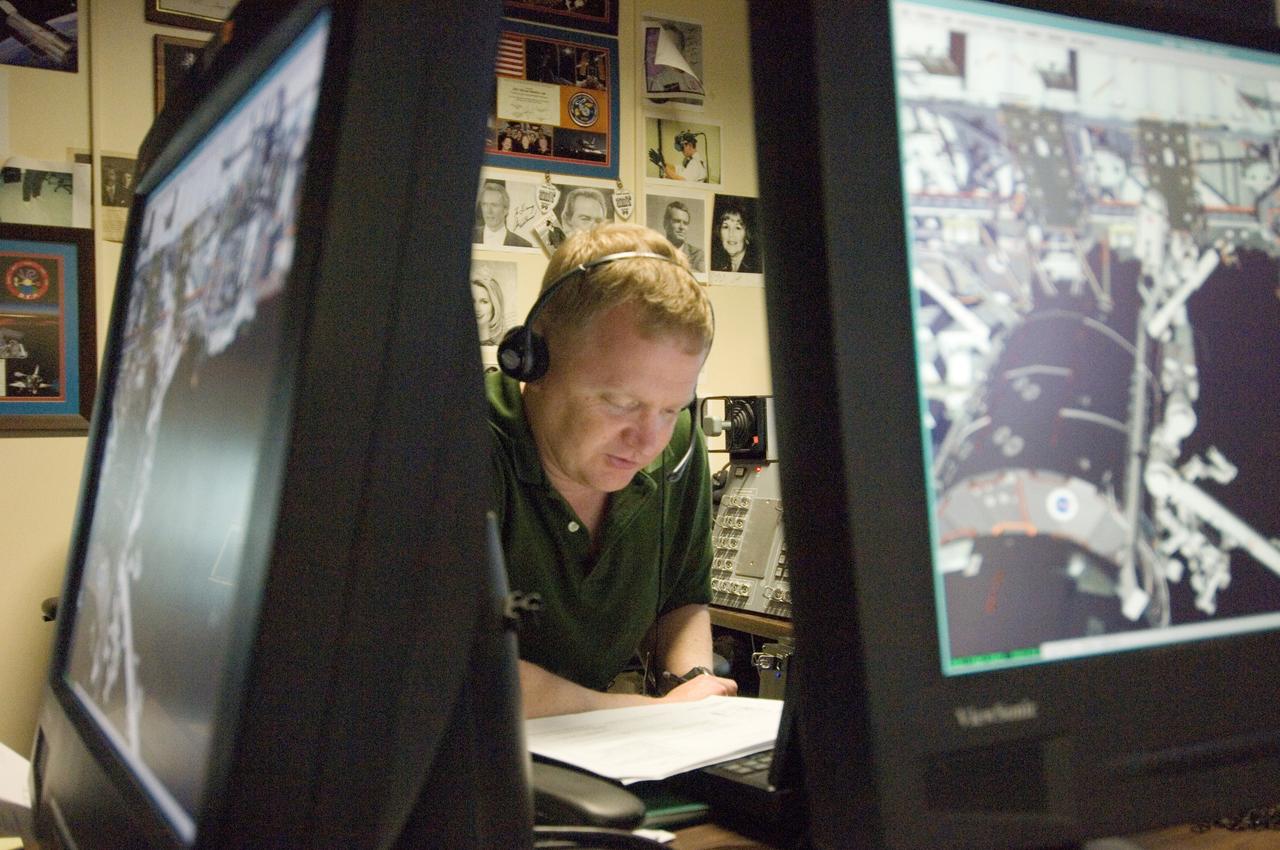
JSC2008-E-033771 (14 April 2008) --- Astronaut Eric A. Boe, STS-126 pilot, uses the virtual reality lab in the Space Vehicle Mockup Facility at NASA's Johnson Space Center to train for some of his duties aboard the space shuttle and space station. This type of computer interface, paired with virtual reality training hardware and software, helps to prepare the entire team for dealing with space station elements.
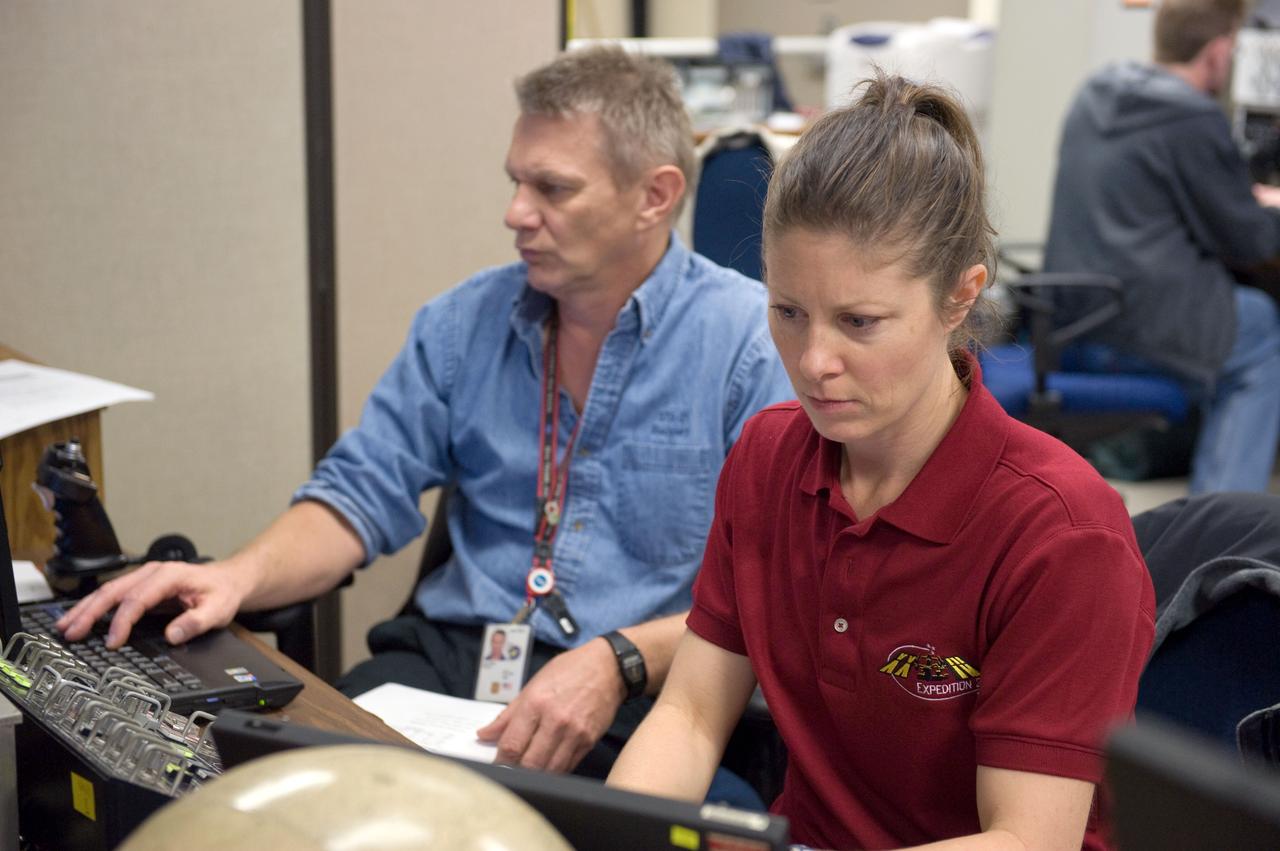
JSC2010-E-014949 (28 Jan. 2010) --- NASA astronauts Piers Sellers, STS-132 mission specialist; and Tracy Caldwell Dyson, Expedition 23/24 flight engineer, use the virtual reality lab in the Space Vehicle Mock-up Facility at NASA's Johnson Space Center to train for some of their duties aboard the space shuttle and space station. This type of computer interface, paired with virtual reality training hardware and software, helps to prepare crew members for dealing with space station elements.
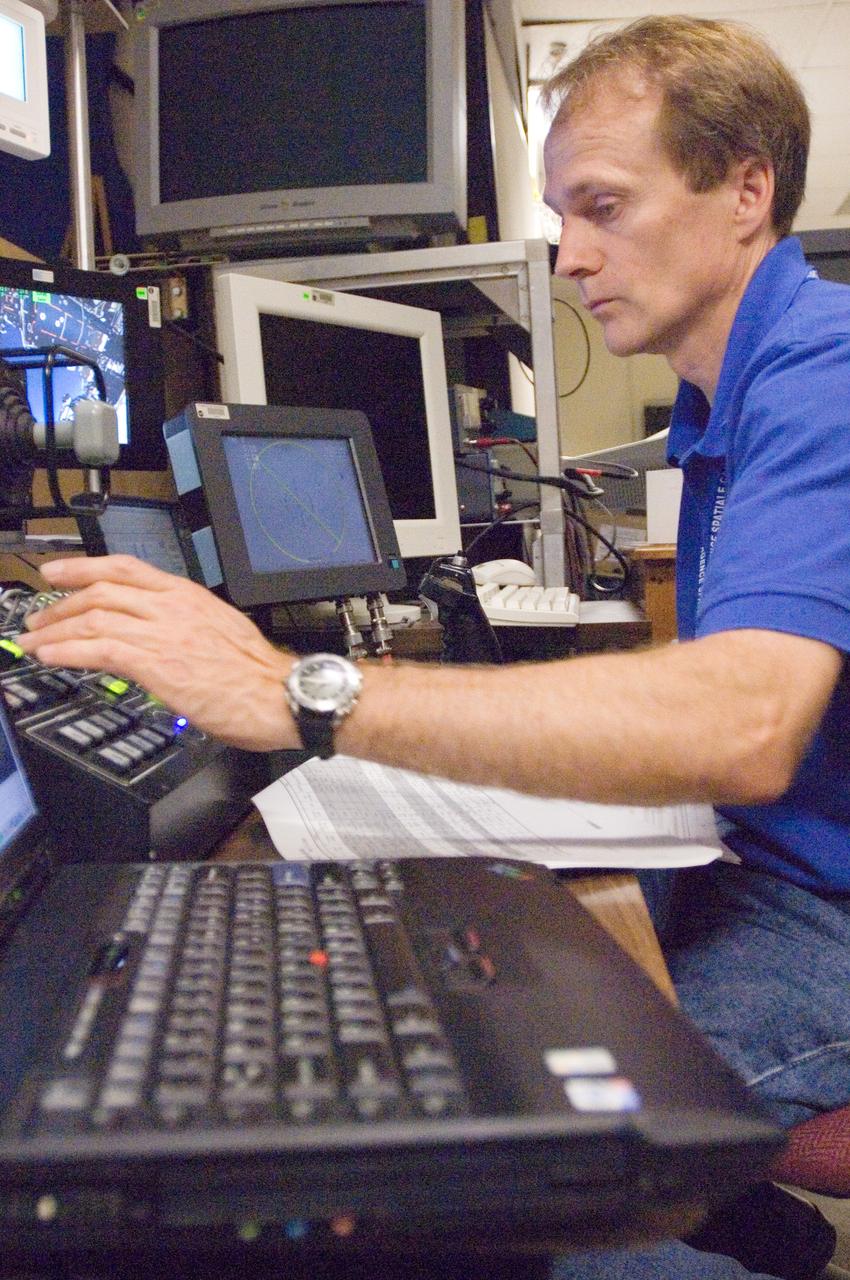
JSC2005-E-21191 (7 June 2005) --- Astronaut Steven G. MacLean, STS-115 mission specialist representing the Canadian Space Agency, uses the virtual reality lab at the Johnson Space Center to train for his duties aboard the space shuttle. This type of computer interface, paired with virtual reality training hardware and software, helps to prepare the entire team for dealing with space station elements.
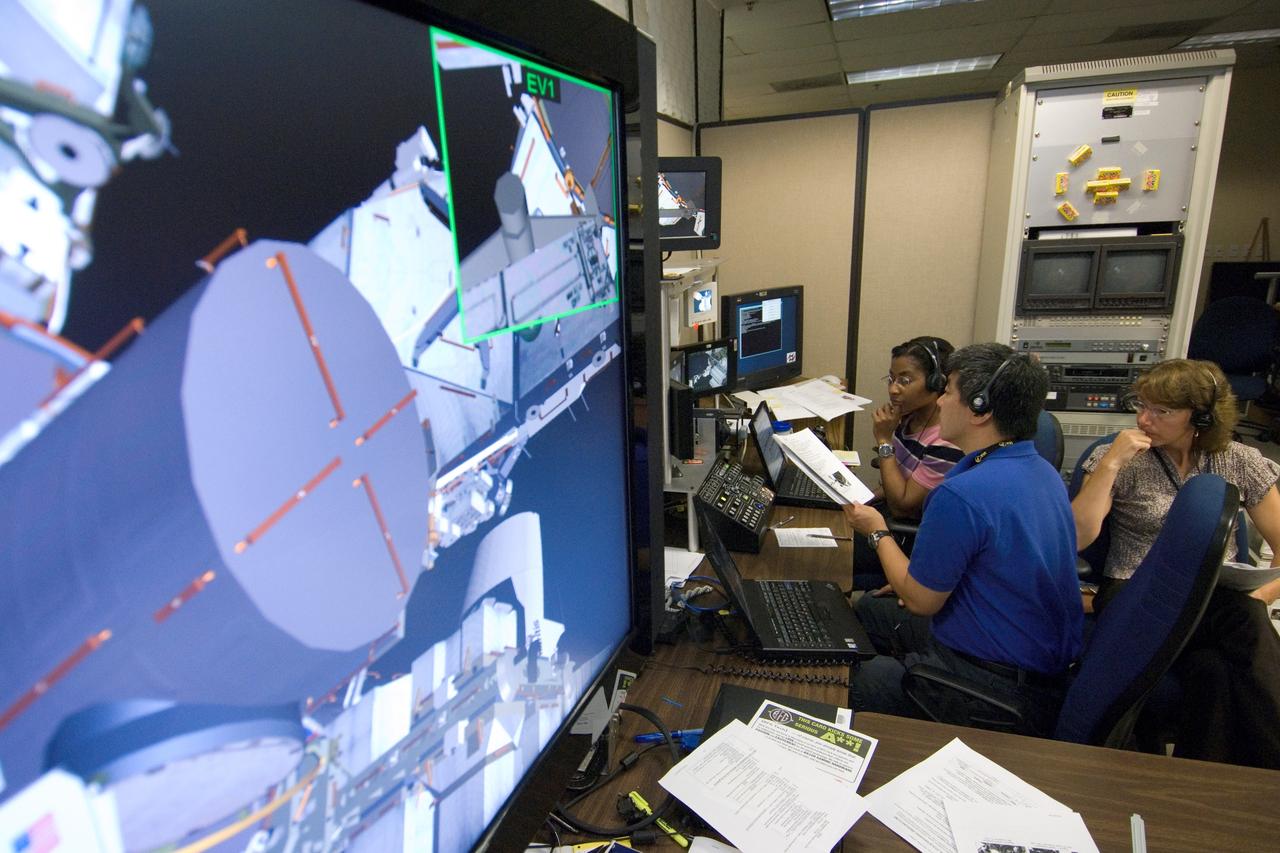
JSC2007-E-41538 (9 Aug. 2007) --- Astronauts Stephanie Wilson, STS-120 mission specialist; Sandra Magnus, Expedition 17 flight engineer; and Dan Tani, Expedition 16 flight engineer, use the virtual reality lab at Johnson Space Center to train for their duties aboard the space shuttle and space station. This type of computer interface, paired with virtual reality training hardware and software, helps to prepare the entire team for dealing with space station elements. A computer display is visible in the foreground.
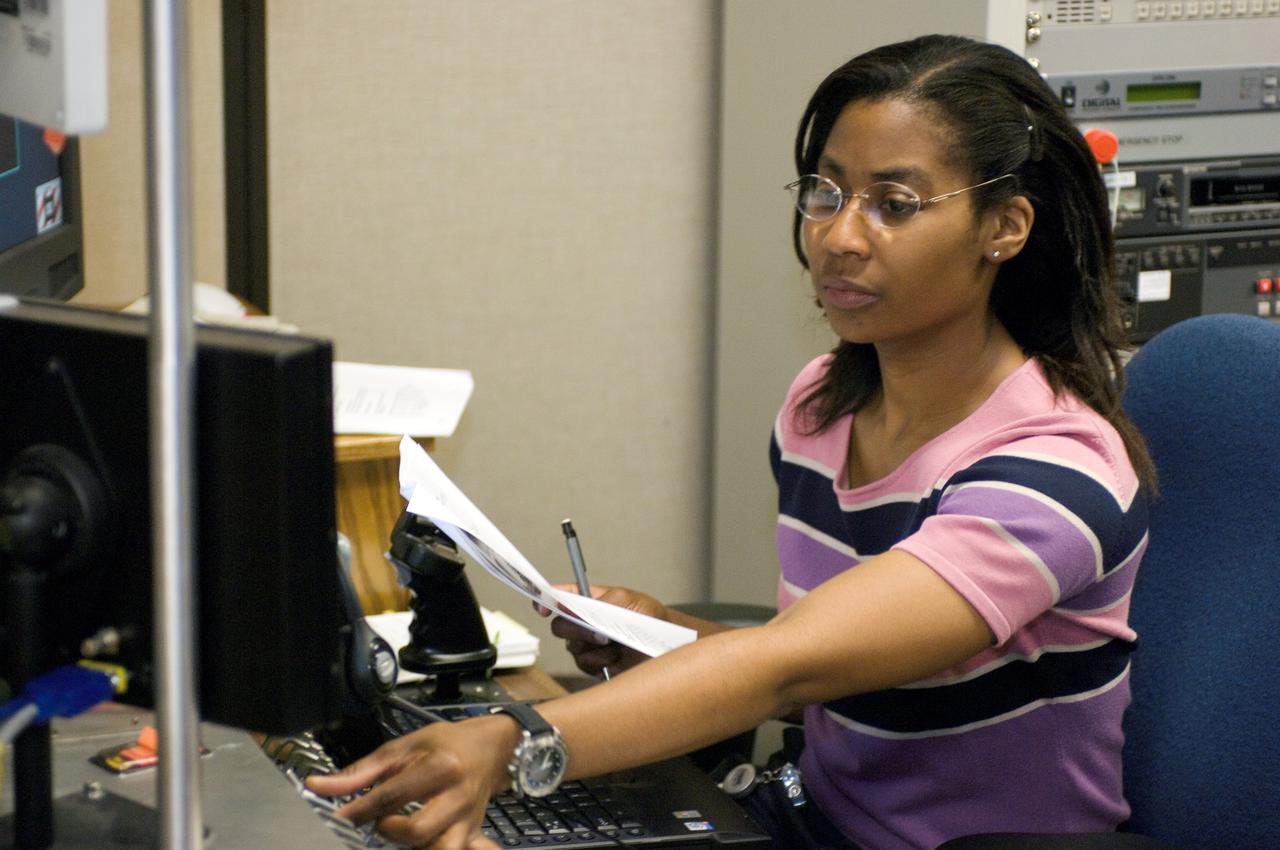
JSC2007-E-41532 (9 Aug. 2007) --- Astronaut Stephanie D. Wilson, STS-120 mission specialist, uses the virtual reality lab at Johnson Space Center to train for her duties aboard the space shuttle and space station. This type of computer interface, paired with virtual reality training hardware and software, helps to prepare the entire team for dealing with space station elements.
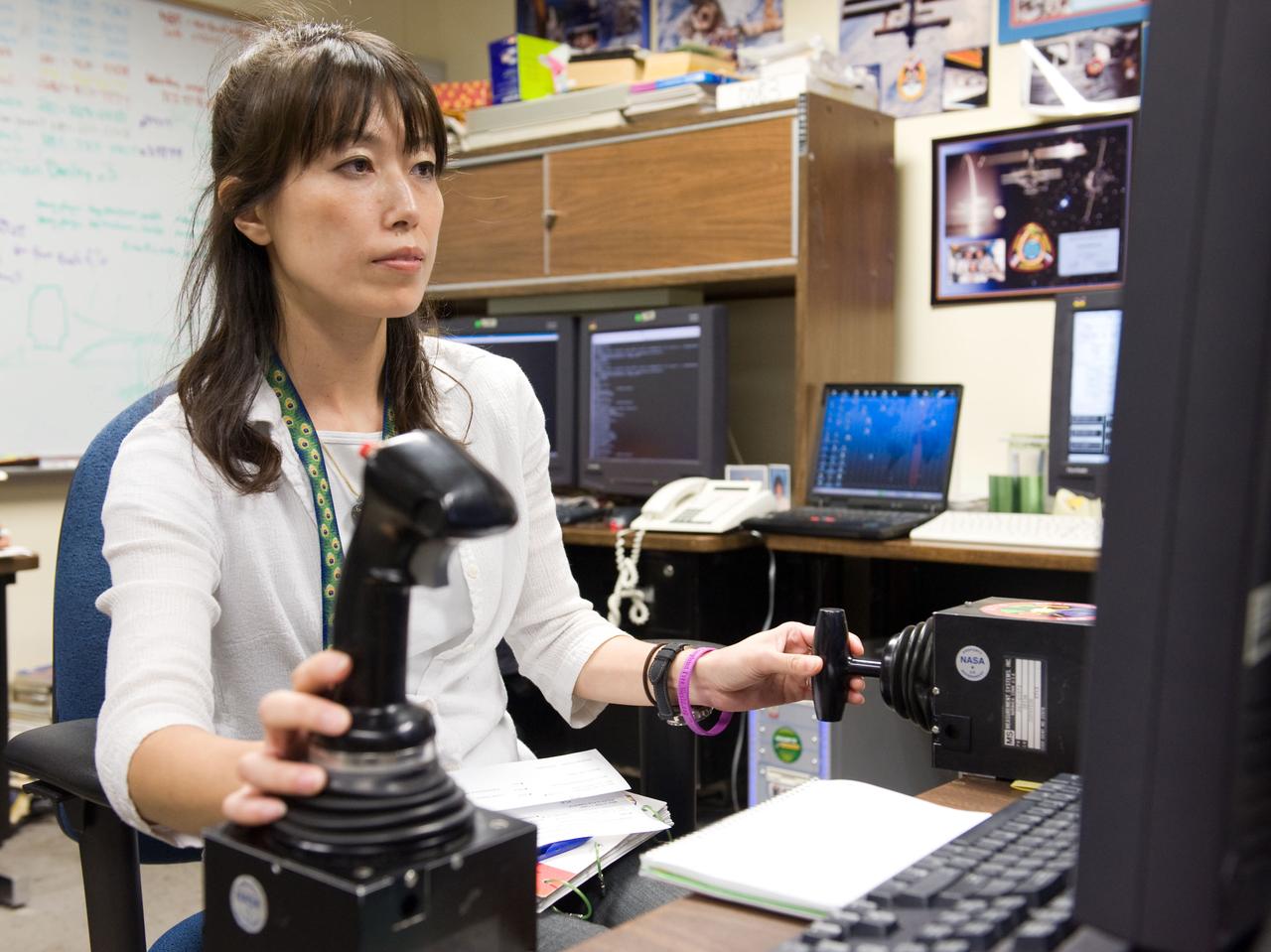
JSC2009-E-214346 (25 Sept. 2009) --- Japan Aerospace Exploration Agency (JAXA) astronaut Naoko Yamazaki, STS-131 mission specialist, uses the virtual reality lab in the Space Vehicle Mock-up Facility at NASA's Johnson Space Center to train for some of her duties aboard the space shuttle and space station. This type of computer interface, paired with virtual reality training hardware and software, helps to prepare the entire team for dealing with space station elements.
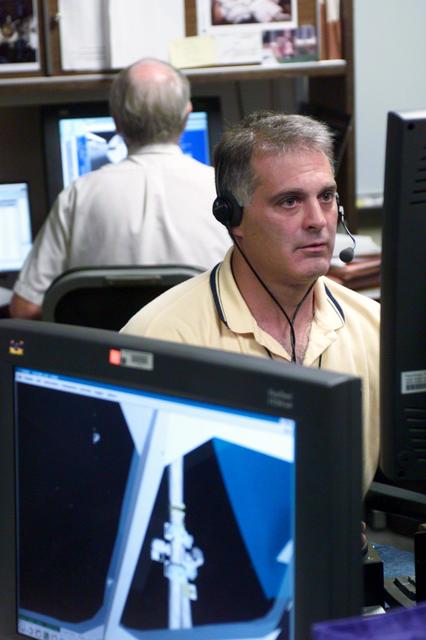
JSC2002-E-34622 (21 August 2002) --- Astronaut David A. Wolf, STS-112 mission specialist, uses the virtual reality lab at the Johnson Space Center (JSC) to train for his duties aboard the Space Shuttle Atlantis. This type of computer interface paired with virtual reality training hardware and software helps to prepare the entire team for dealing with ISS elements.
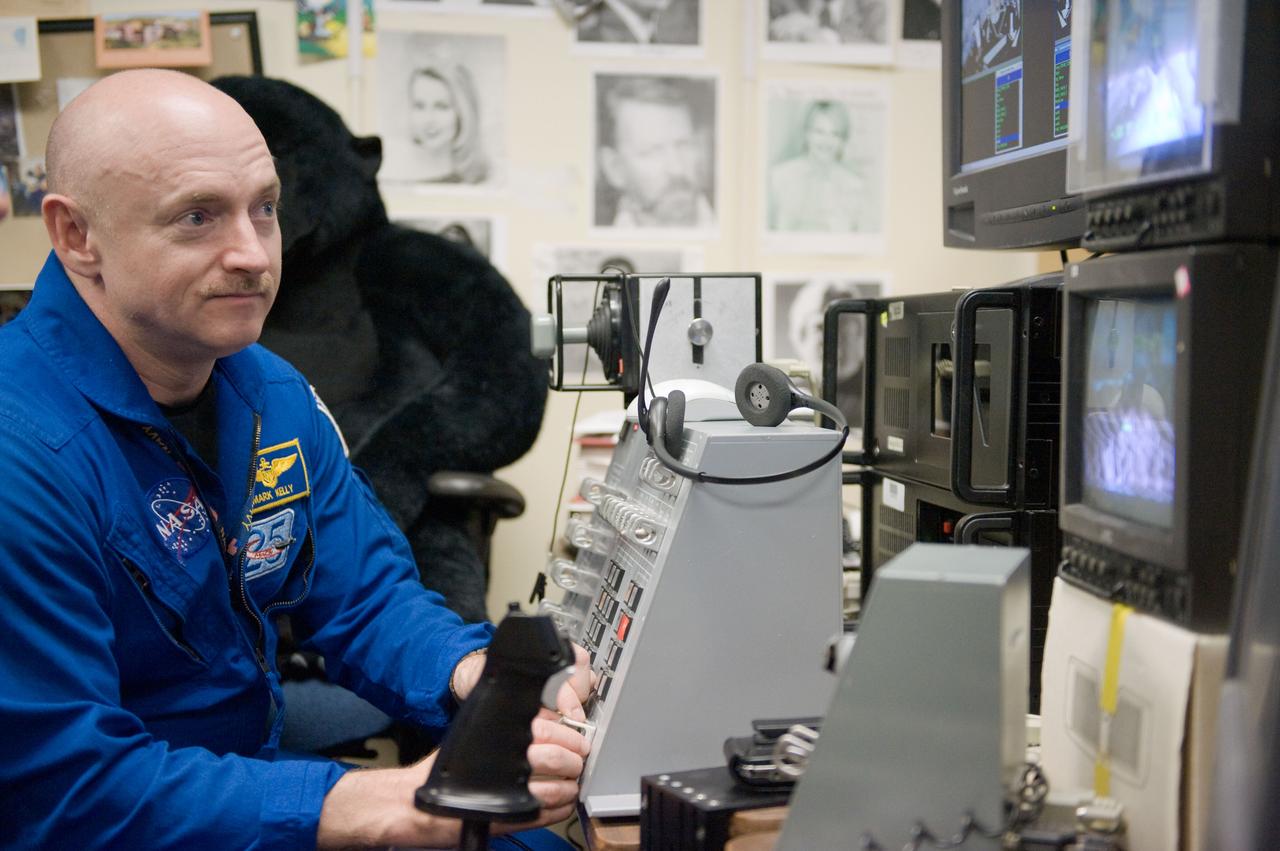
JSC2010-E-043667 (25 March 2010) --- NASA astronaut Mark Kelly, STS-134 commander, uses the virtual reality lab in the Space Vehicle Mock-up Facility at NASA's Johnson Space Center to train for some of his duties aboard the space shuttle and space station. This type of computer interface, paired with virtual reality training hardware and software, helps to prepare crew members for dealing with space station elements.
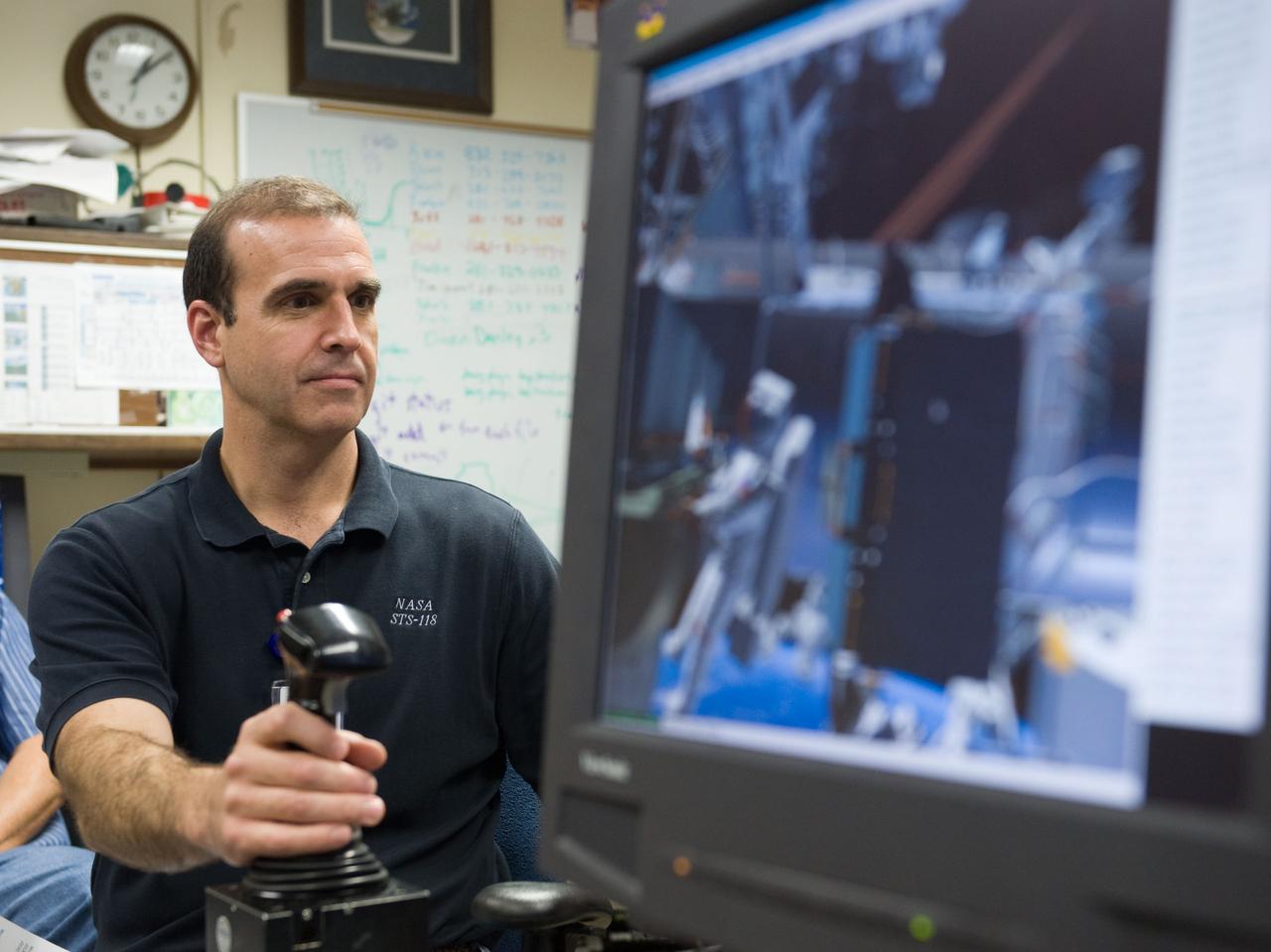
JSC2009-E-214323 (25 Sept. 2009) --- NASA astronaut Rick Mastracchio, STS-131 mission specialist, uses the virtual reality lab in the Space Vehicle Mock-up Facility at NASA's Johnson Space Center to train for some of his duties aboard the space shuttle and space station. This type of computer interface, paired with virtual reality training hardware and software, helps to prepare the entire team for dealing with space station elements.
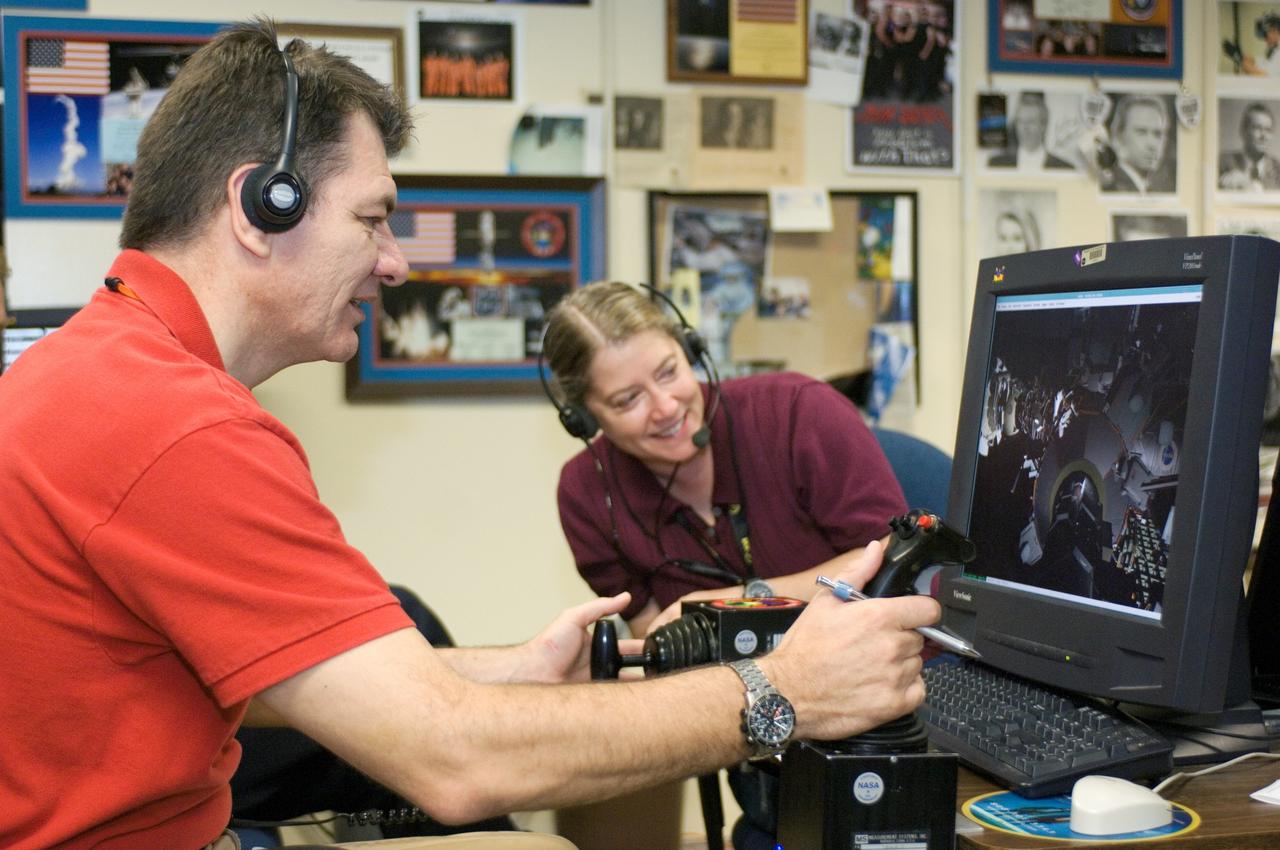
JSC2007-E-41540 (9 Aug. 2007) --- Astronauts Pamela A. Melroy, STS-120 commander, and European Space Agency's (ESA) Paolo Nespoli, mission specialist, use the virtual reality lab at Johnson Space Center to train for their duties aboard the space shuttle and space station. This type of computer interface, paired with virtual reality training hardware and software, helps to prepare the entire team for dealing with space station elements.
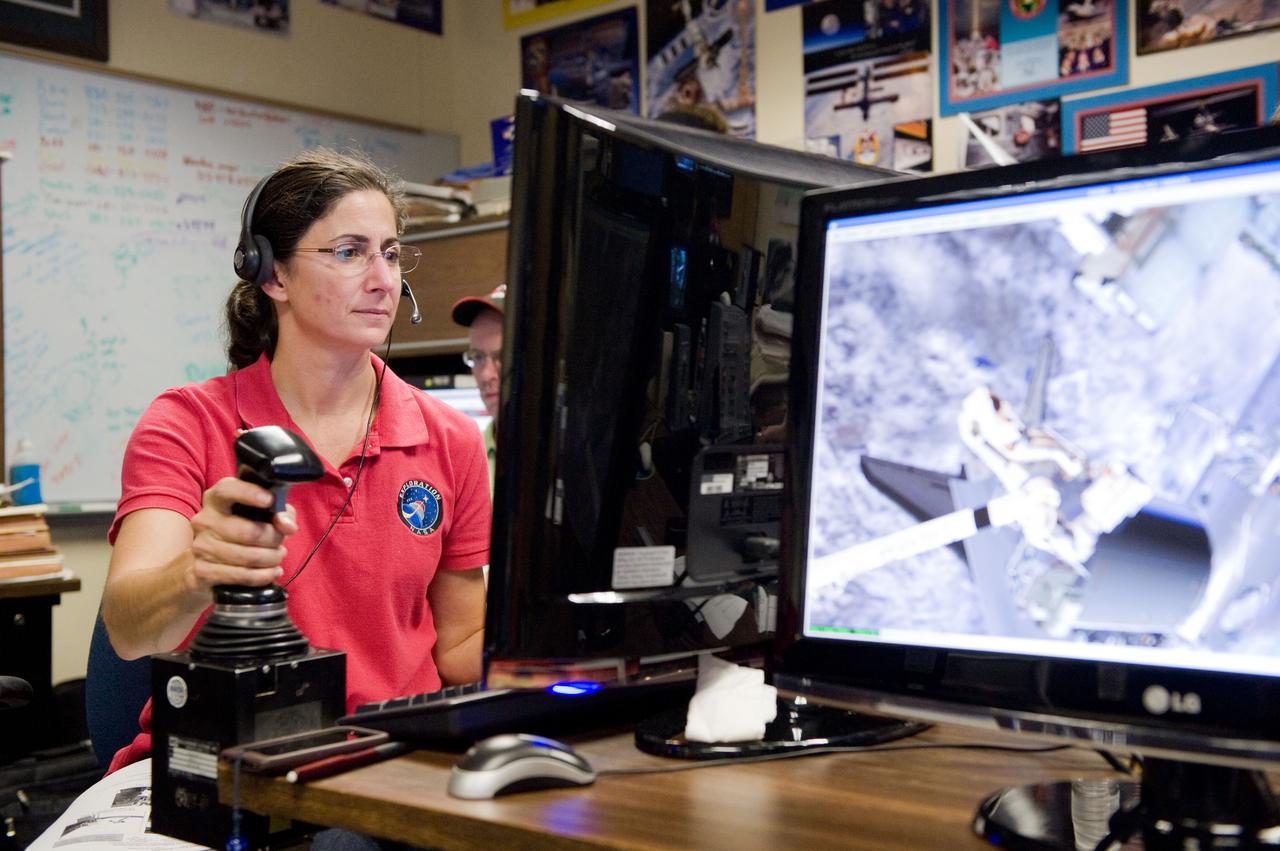
JSC2010-E-170888 (1 Oct. 2010) --- NASA astronaut Nicole Stott, STS-133 mission specialist, uses the virtual reality lab in the Space Vehicle Mock-up Facility at NASA's Johnson Space Center to train for some of her duties aboard the space shuttle and space station. This type of computer interface, paired with virtual reality training hardware and software, helps to prepare crew members for dealing with space station elements. Photo credit: NASA or National Aeronautics and Space Administration

JSC2010-E-043673 (25 March 2010) --- NASA astronauts Gregory H. Johnson, STS-134 pilot; and Shannon Walker, Expedition 24/25 flight engineer, use the virtual reality lab in the Space Vehicle Mock-up Facility at NASA's Johnson Space Center to train for some of their duties aboard the space shuttle and space station. This type of computer interface, paired with virtual reality training hardware and software, helps to prepare crew members for dealing with space station elements.
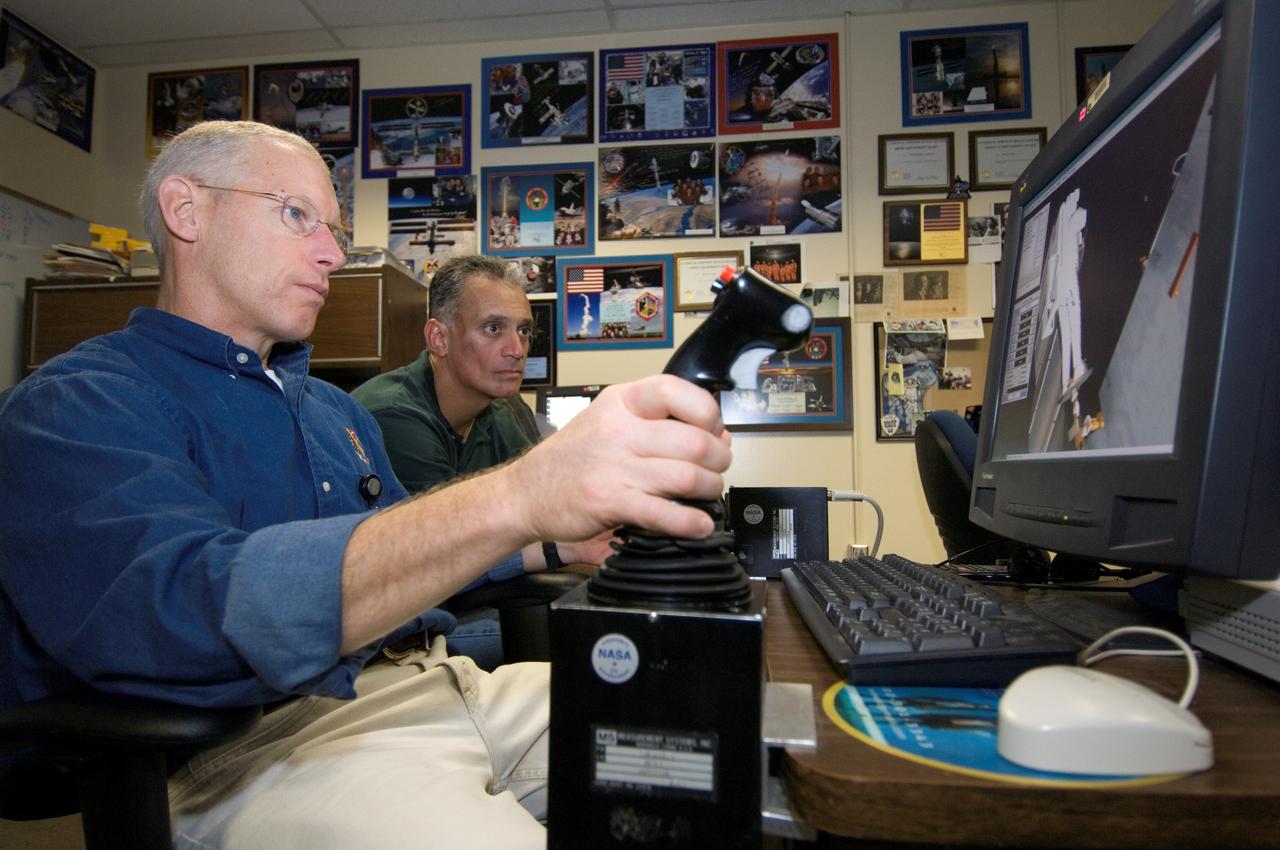
JSC2006-E-47420 (1 Nov. 2006) --- Astronauts Patrick G. Forrester (foreground) and John D. (Danny) Olivas, both STS-117 mission specialists, use the virtual reality lab at Johnson Space Center to train for their duties aboard the space shuttle and space station. This type of computer interface, paired with virtual reality training hardware and software, helps to prepare the entire team for dealing with space station elements.

JSC2010-E-043677 (25 March 2010) --- NASA astronaut Andrew Feustel, STS-134 mission specialist, uses the virtual reality lab in the Space Vehicle Mock-up Facility at NASA's Johnson Space Center to train for some of his duties aboard the space shuttle and space station. This type of computer interface, paired with virtual reality training hardware and software, helps to prepare crew members for dealing with space station elements.
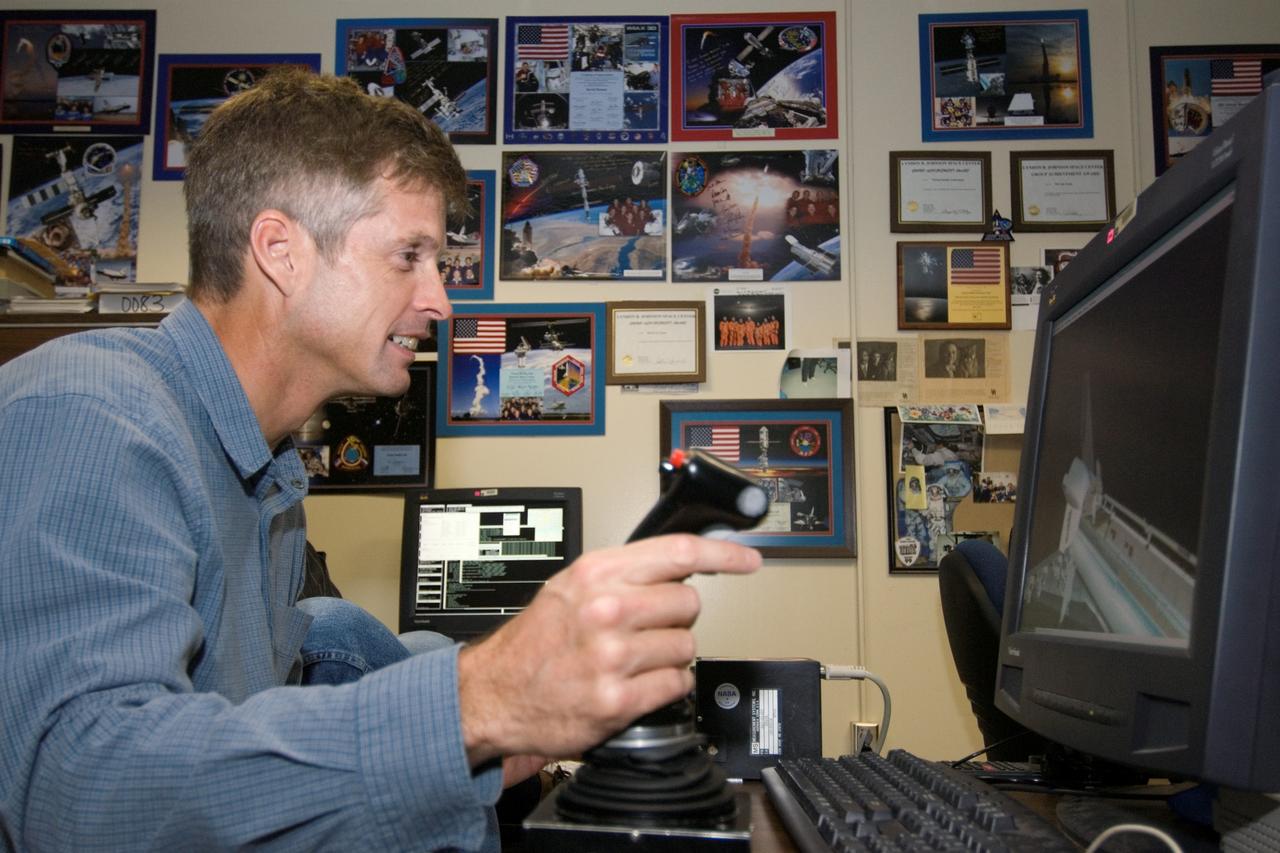
JSC2006-E-47612 (1 Nov. 2006) --- Astronaut Steven R. Swanson, STS-117 mission specialist, uses the virtual reality lab at Johnson Space Center to train for his duties aboard the space shuttle and space station. This type of computer interface, paired with virtual reality training hardware and software, helps to prepare the entire team for dealing with space station elements.
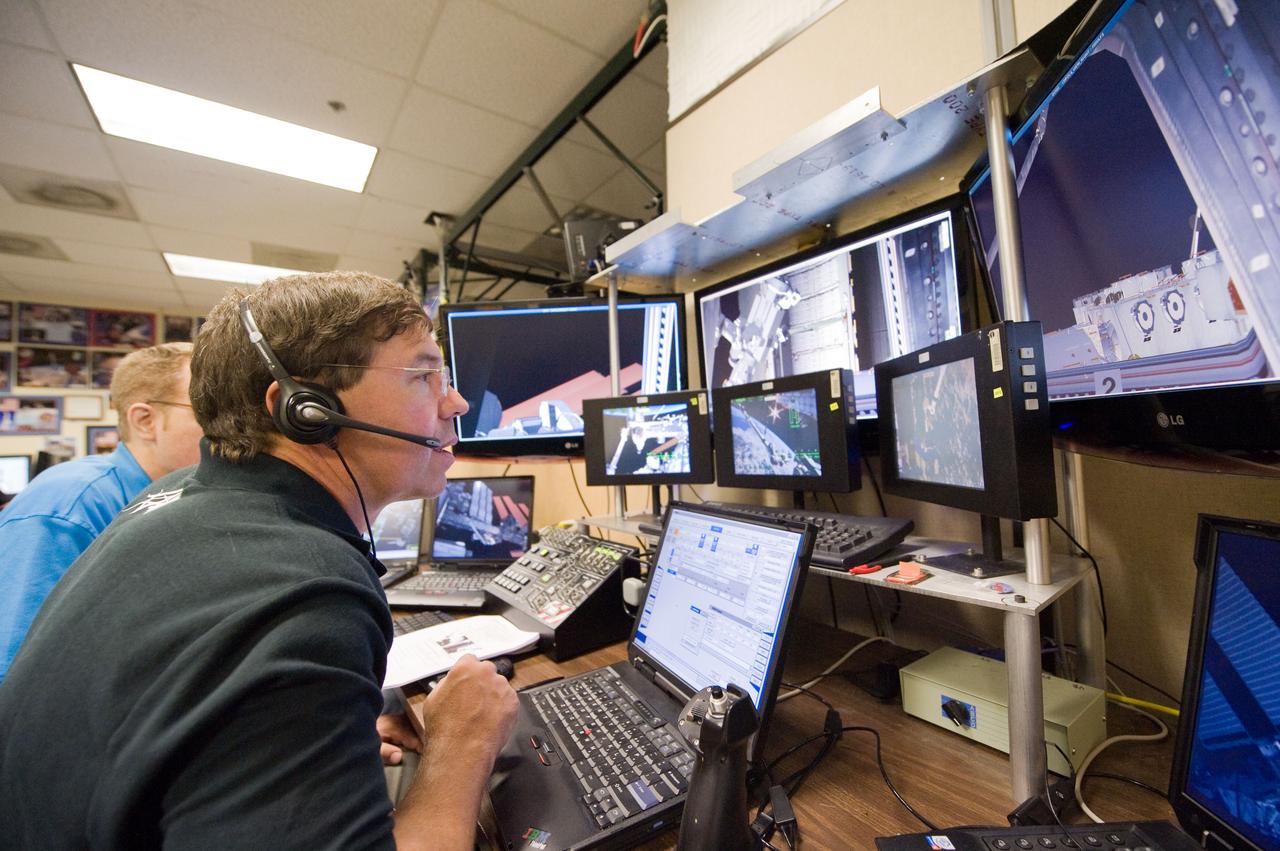
JSC2010-E-170878 (1 Oct. 2010) --- NASA astronaut Michael Barratt, STS-133 mission specialist, uses the virtual reality lab in the Space Vehicle Mock-up Facility at NASA's Johnson Space Center to train for some of his duties aboard the space shuttle and space station. This type of computer interface, paired with virtual reality training hardware and software, helps to prepare crew members for dealing with space station elements. Photo credit: NASA or National Aeronautics and Space Administration
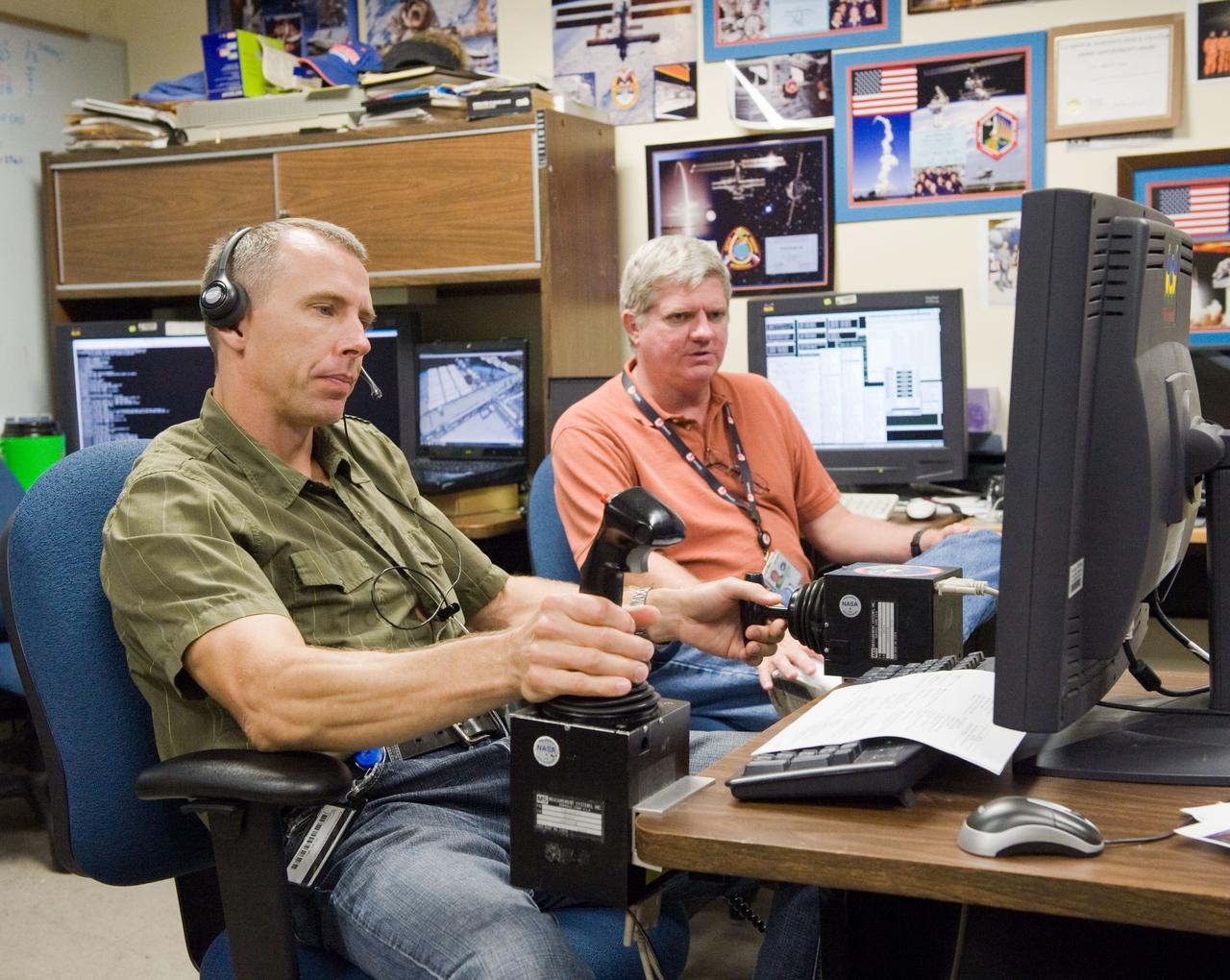
JSC2010-E-121049 (27 Aug. 2010) --- NASA astronaut Andrew Feustel (foreground), STS-134 mission specialist, uses the virtual reality lab in the Space Vehicle Mock-up Facility at NASA's Johnson Space Center to train for some of his duties aboard the space shuttle and space station. This type of computer interface, paired with virtual reality training hardware and software, helps to prepare crew members for dealing with space station elements. Photo credit: NASA or National Aeronautics and Space Administration

JSC2002-E-34629 (21 August 2002) --- Astronaut Sandra H. Magnus, STS-112 mission specialist, uses the virtual reality lab at the Johnson Space Center (JSC) to train for her duties aboard the Space Shuttle Atlantis. This type of computer interface paired with virtual reality training hardware and software helps to prepare the entire team for dealing with ISS elements.

JSC2011-E-006296 (24 Jan. 2011) --- NASA astronaut Steve Lindsey, STS-133 commander, uses the virtual reality lab in the Space Vehicle Mock-up Facility at NASA's Johnson Space Center to train for some of his duties aboard the space shuttle and space station. This type of computer interface, paired with virtual reality training hardware and software, helps to prepare crew members for dealing with space station elements. Photo credit: NASA or National Aeronautics and Space Administration

JSC2009-E-214329 (25 Sept. 2009) --- Japan Aerospace Exploration Agency (JAXA) astronaut Naoko Yamazaki, STS-131 mission specialist, uses the virtual reality lab in the Space Vehicle Mock-up Facility at NASA's Johnson Space Center to train for some of her duties aboard the space shuttle and space station. This type of computer interface, paired with virtual reality training hardware and software, helps to prepare the entire team for dealing with space station elements.
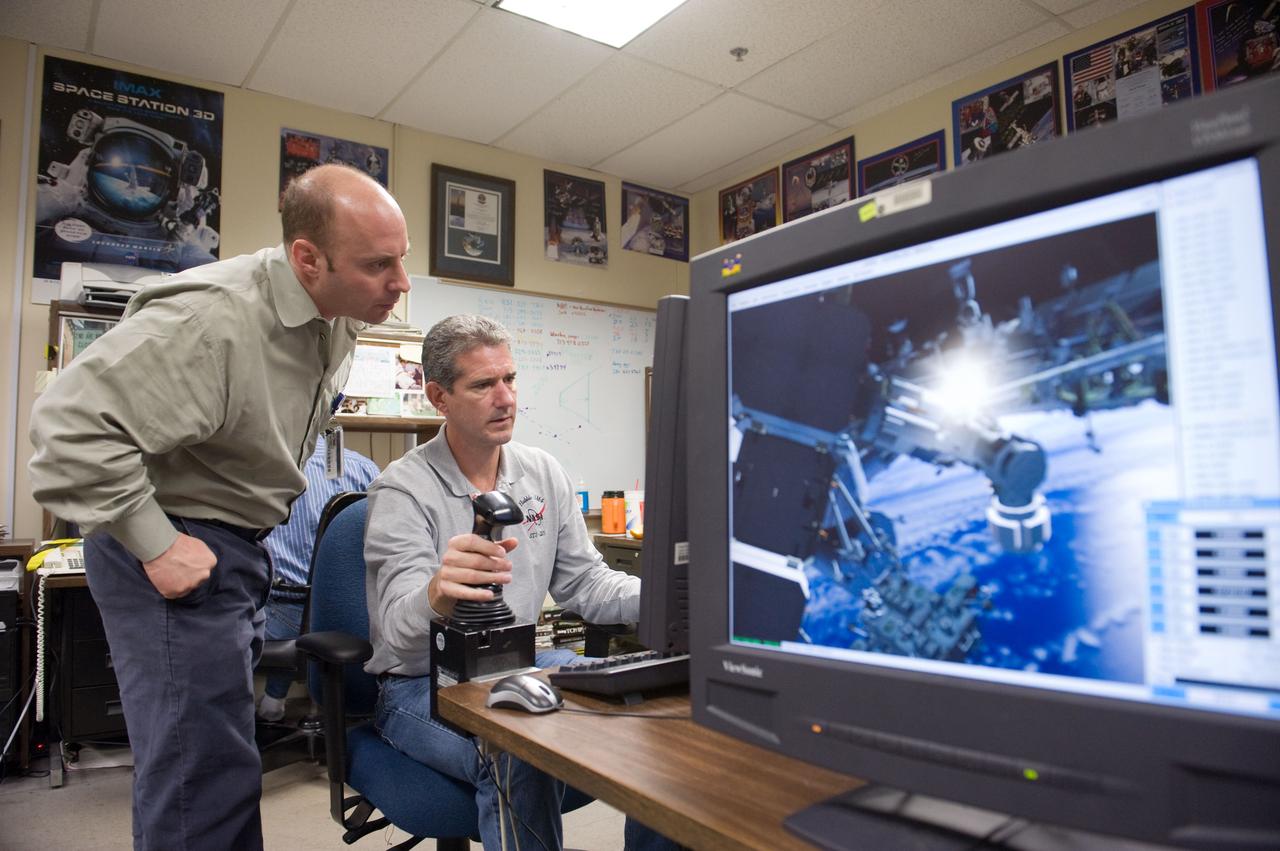
JSC2010-E-014952 (28 Jan. 2010) --- NASA astronauts Michael Good (seated) and Garrett Reisman, both STS-132 mission specialists, use the virtual reality lab in the Space Vehicle Mock-up Facility at NASA's Johnson Space Center to train for some of their duties aboard the space shuttle and space station. This type of computer interface, paired with virtual reality training hardware and software, helps to prepare crew members for dealing with space station elements.

JSC2011-E-006298 (24 Jan. 2011) --- NASA astronaut Eric Boe, STS-133 pilot, uses the virtual reality lab in the Space Vehicle Mock-up Facility at NASA's Johnson Space Center to train for some of his duties aboard the space shuttle and space station. This type of computer interface, paired with virtual reality training hardware and software, helps to prepare crew members for dealing with space station elements. Photo credit: NASA or National Aeronautics and Space Administration
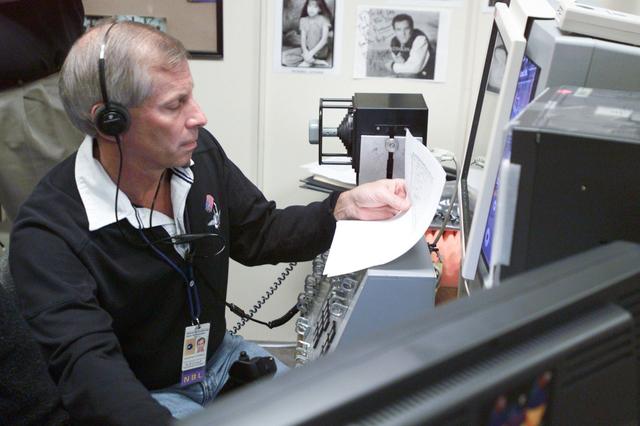
JSC2001-E-39087 (18 October 2001) --- Astronaut Kenneth D. Cockrell, STS-111 mission commander, uses the virtual reality lab at the Johnson Space Center (JSC) to train for his duties aboard the Space Shuttle Endeavour. This type of computer interface paired with virtual reality training hardware and software helps the entire team for dealing with ISS elements.

JSC2010-E-043680 (25 March 2010) --- NASA astronaut Andrew Feustel, STS-134 mission specialist, uses the virtual reality lab in the Space Vehicle Mock-up Facility at NASA's Johnson Space Center to train for some of his duties aboard the space shuttle and space station. This type of computer interface, paired with virtual reality training hardware and software, helps to prepare crew members for dealing with space station elements.

JSC2001-E-24459 (8 August 2001) --- Astronaut Nancy J. Currie, STS-109 mission specialist, uses the virtual reality lab at the Johnson Space Center (JSC) to train for some of her duties aboard the Space Shuttle Columbia. This type of computer interface paired with virtual reality training hardware and software helps to prepare the entire team to perform their duties during the fourth Hubble Space Telescope (HST) servicing mission.
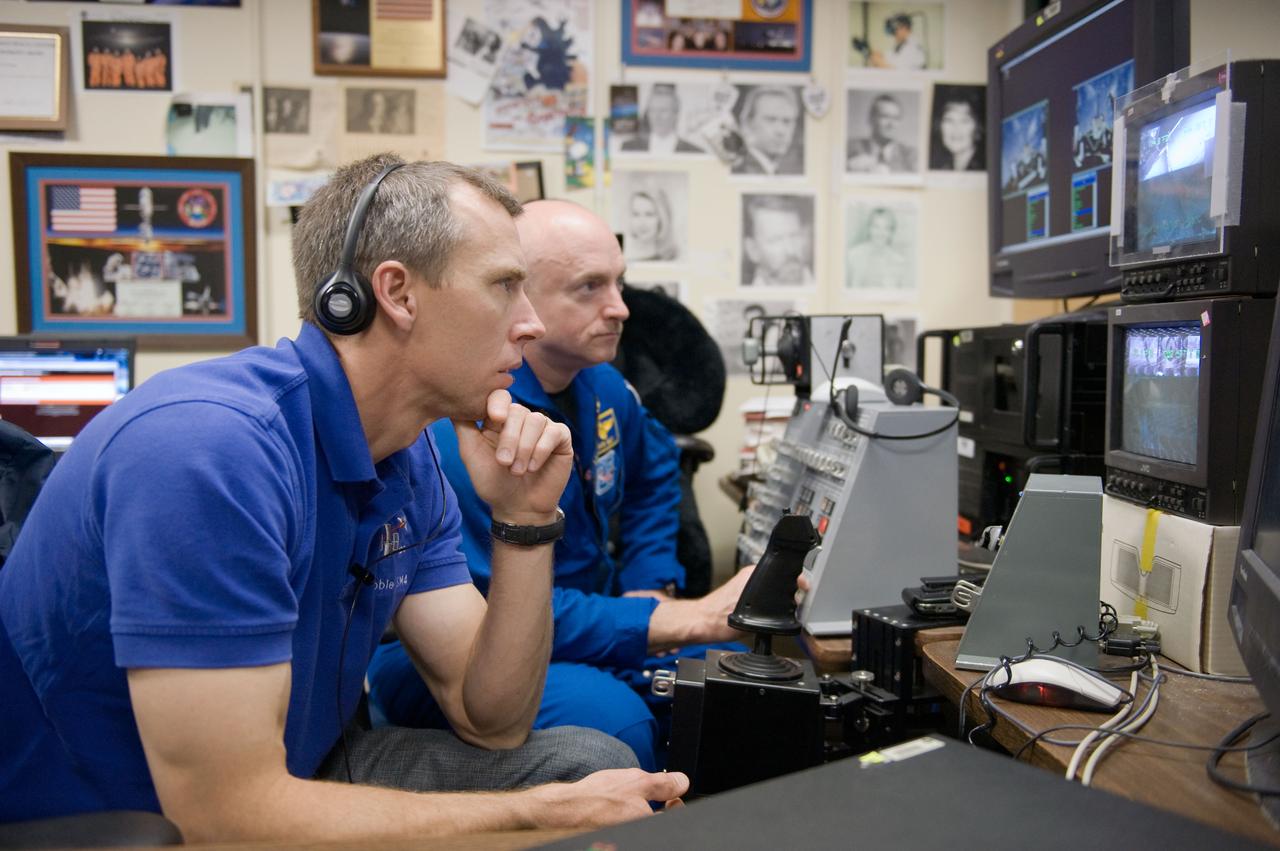
JSC2010-E-043668 (25 March 2010) --- NASA astronauts Mark Kelly (background), STS-134 commander; and Andrew Feustel, mission specialist, use the virtual reality lab in the Space Vehicle Mock-up Facility at NASA's Johnson Space Center to train for some of their duties aboard the space shuttle and space station. This type of computer interface, paired with virtual reality training hardware and software, helps to prepare crew members for dealing with space station elements.
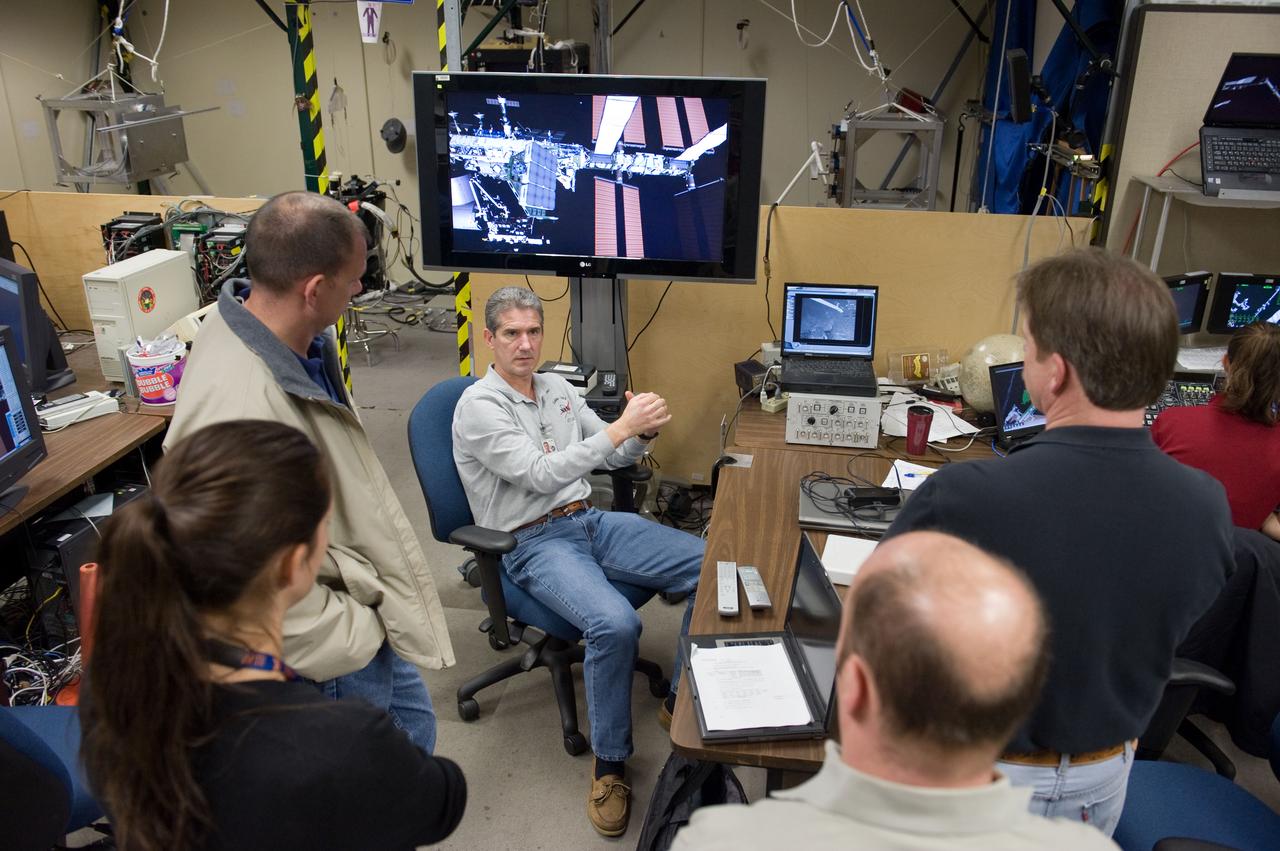
JSC2010-E-014951 (28 Jan. 2010) --- NASA astronauts Michael Good (seated), Garrett Reisman (right foreground), both STS-132 mission specialists; and Tony Antonelli, pilot, use the virtual reality lab in the Space Vehicle Mock-up Facility at NASA's Johnson Space Center to train for some of their duties aboard the space shuttle and space station. This type of computer interface, paired with virtual reality training hardware and software, helps to prepare crew members for dealing with space station elements.
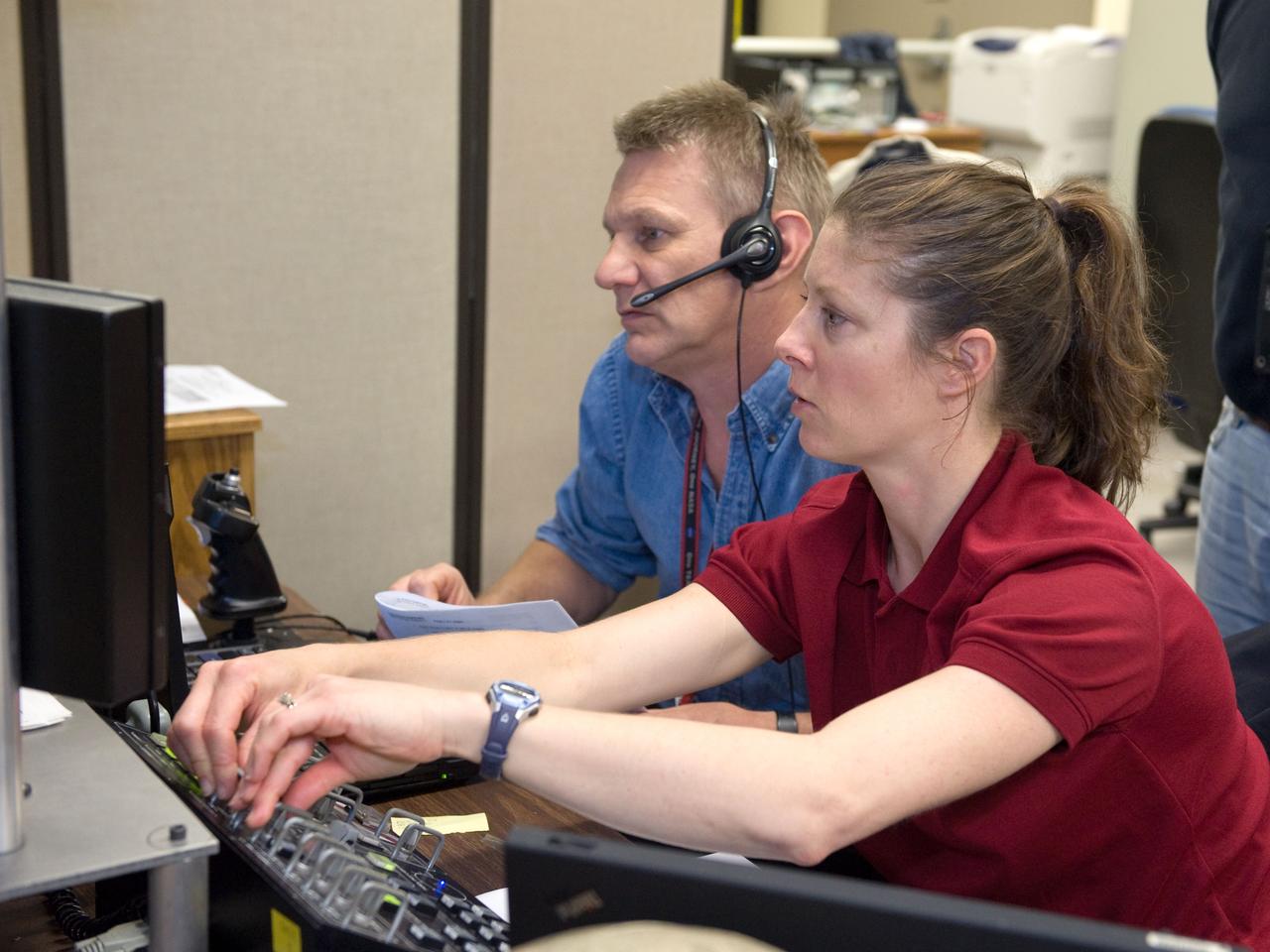
JSC2010-E-014953 (28 Jan. 2010) --- NASA astronauts Piers Sellers, STS-132 mission specialist; and Tracy Caldwell Dyson, Expedition 23/24 flight engineer, use the virtual reality lab in the Space Vehicle Mock-up Facility at NASA's Johnson Space Center to train for some of their duties aboard the space shuttle and space station. This type of computer interface, paired with virtual reality training hardware and software, helps to prepare crew members for dealing with space station elements.

JSC2010-E-043662 (25 March 2010) --- NASA astronauts Gregory H. Johnson, STS-134 pilot; and Shannon Walker, Expedition 24/25 flight engineer, use the virtual reality lab in the Space Vehicle Mock-up Facility at NASA's Johnson Space Center to train for some of their duties aboard the space shuttle and space station. This type of computer interface, paired with virtual reality training hardware and software, helps to prepare crew members for dealing with space station elements.
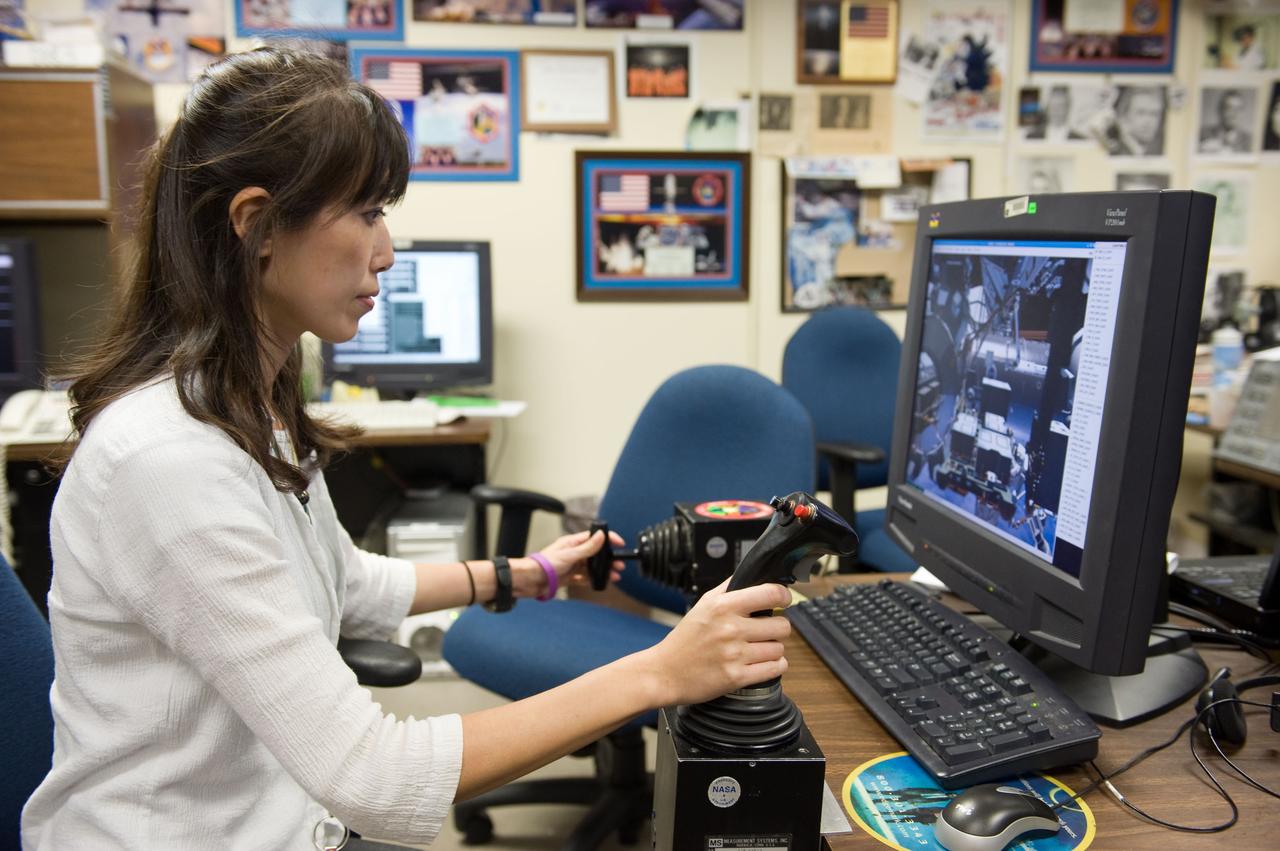
JSC2009-E-214328 (25 Sept. 2009) --- Japan Aerospace Exploration Agency (JAXA) astronaut Naoko Yamazaki, STS-131 mission specialist, uses the virtual reality lab in the Space Vehicle Mock-up Facility at NASA's Johnson Space Center to train for some of her duties aboard the space shuttle and space station. This type of computer interface, paired with virtual reality training hardware and software, helps to prepare the entire team for dealing with space station elements.
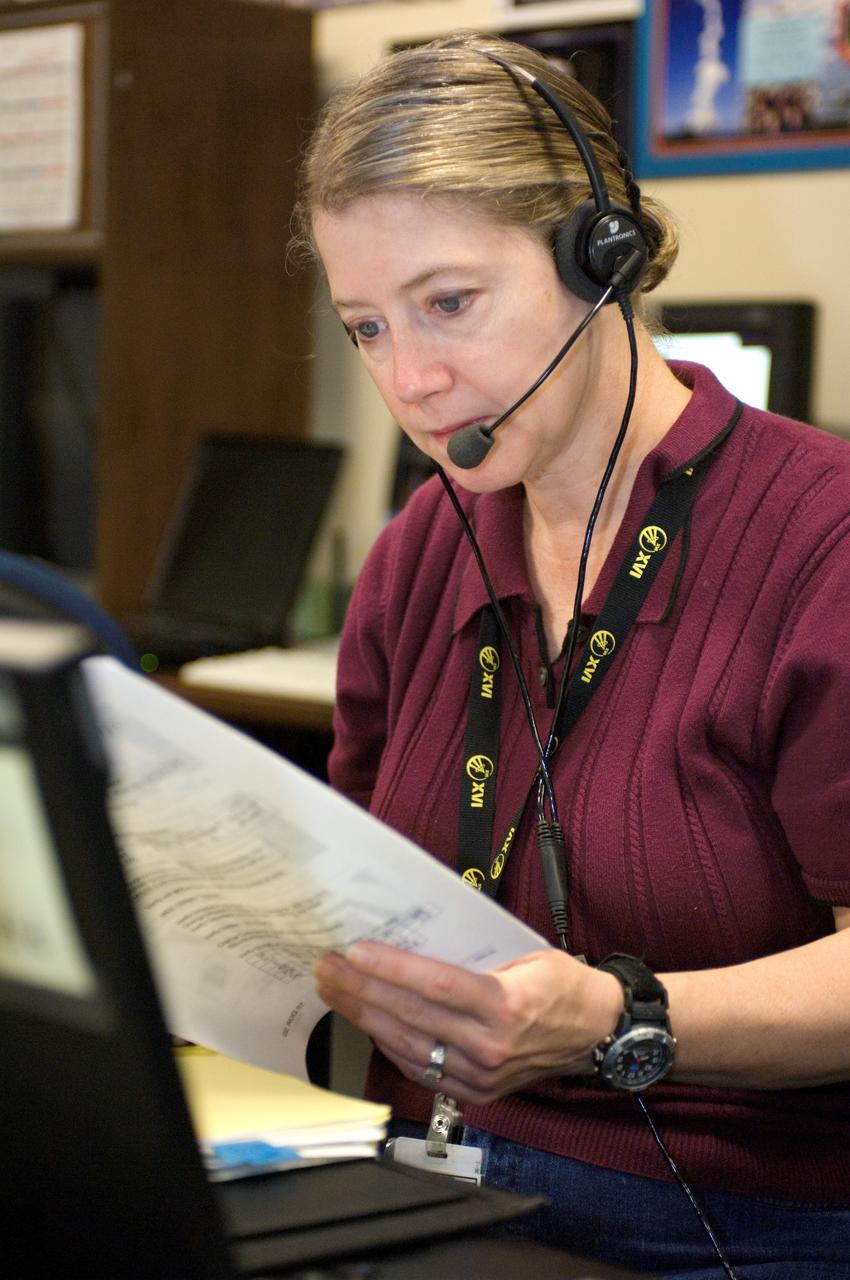
JSC2007-E-41531 (9 Aug. 2007) --- Astronaut Pamela A. Melroy, STS-120 commander, uses the virtual reality lab at Johnson Space Center to train for her duties aboard the space shuttle and space station. This type of computer interface, paired with virtual reality training hardware and software, helps to prepare the entire team for dealing with space station elements.

JSC2010-E-043661 (25 March 2010) --- NASA astronauts Gregory H. Johnson, STS-134 pilot; and Shannon Walker, Expedition 24/25 flight engineer, use the virtual reality lab in the Space Vehicle Mock-up Facility at NASA's Johnson Space Center to train for some of their duties aboard the space shuttle and space station. This type of computer interface, paired with virtual reality training hardware and software, helps to prepare crew members for dealing with space station elements.

JSC2001-E-24452 (8 August 2001) --- Astronauts John M. Grunsfeld (left), STS-109 payload commander, and Nancy J. Currie, mission specialist, use the virtual reality lab at the Johnson Space Center (JSC) to train for some of their duties aboard the Space Shuttle Columbia. This type of computer interface paired with virtual reality training hardware and software helps to prepare the entire team to perform its duties during the fourth Hubble Space Telescope (HST) servicing mission.
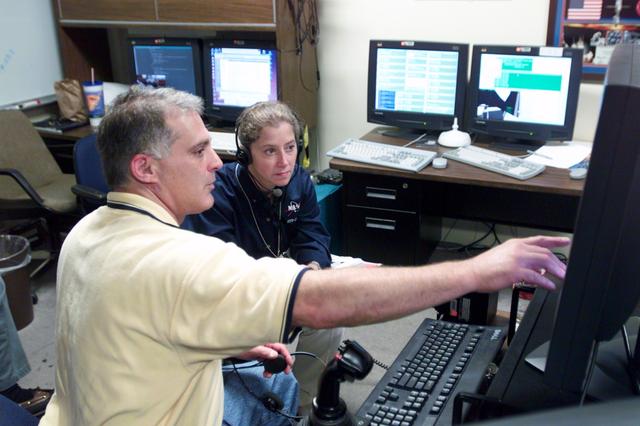
JSC2002-E-34627 (21 August 2002) --- Astronauts David A. Wolf (foreground) and Pamela A. Melroy, STS-112 mission specialist and pilot, respectively, use the virtual reality lab at the Johnson Space Center (JSC) to train for their duties aboard the Space Shuttle Atlantis. This type of computer interface paired with virtual reality training hardware and software helps to prepare the entire team for dealing with ISS elements.
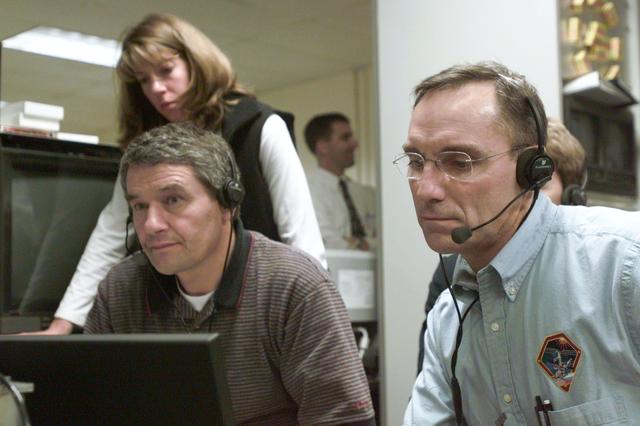
JSC2001-E-39082 (18 October 2001) --- Cosmonaut Valeri G. Korzun (left), Expedition Five mission commander, and astronaut Carl E. Walz, Expedition Four flight engineer, use the virtual reality lab at the Johnson Space Center (JSC) to train for their duties on the International Space Station (ISS). This type of computer interface paired with virtual reality training hardware and software helps the entire team for dealing with ISS elements. Korzun represents Rosaviakosmos.
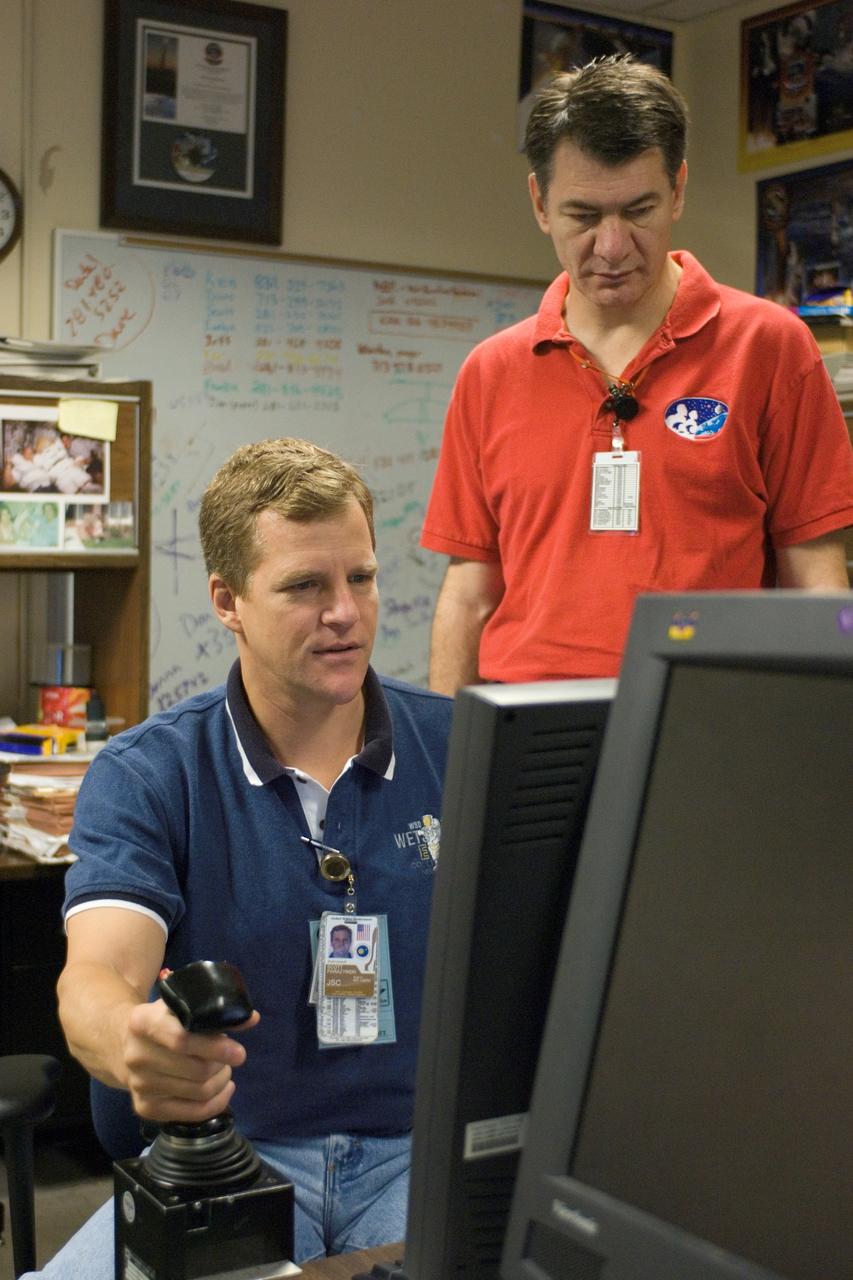
JSC2007-E-41528 (9 Aug. 2007) --- Astronauts Scott E. Parazynski (seated) and European Space Agency's (ESA) Paolo Nespoli, both STS-120 mission specialists, use the virtual reality lab at Johnson Space Center to train for their duties aboard the space shuttle and space station. This type of computer interface, paired with virtual reality training hardware and software, helps to prepare the entire team for dealing with space station elements.
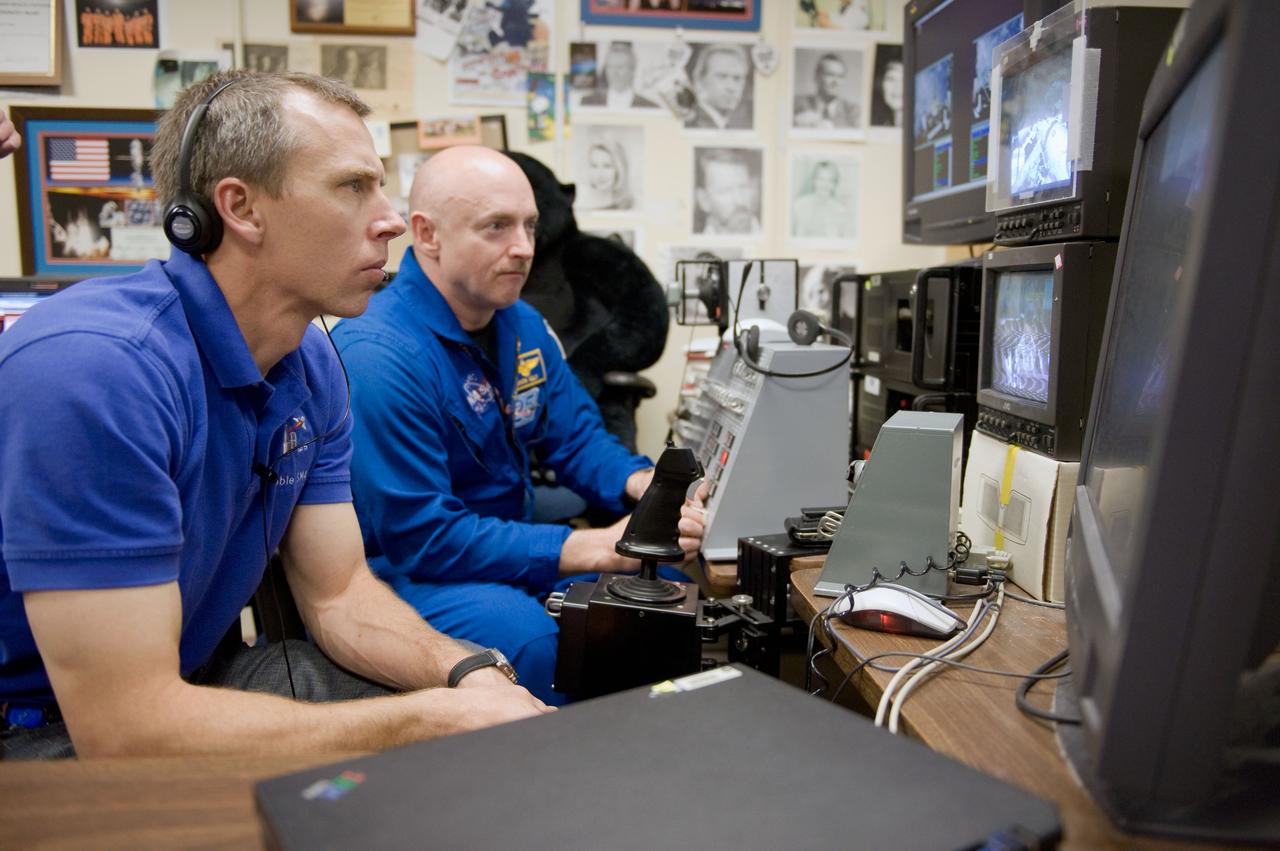
JSC2010-E-043666 (25 March 2010) --- NASA astronauts Mark Kelly (background), STS-134 commander; and Andrew Feustel, mission specialist, use the virtual reality lab in the Space Vehicle Mock-up Facility at NASA's Johnson Space Center to train for some of their duties aboard the space shuttle and space station. This type of computer interface, paired with virtual reality training hardware and software, helps to prepare crew members for dealing with space station elements.
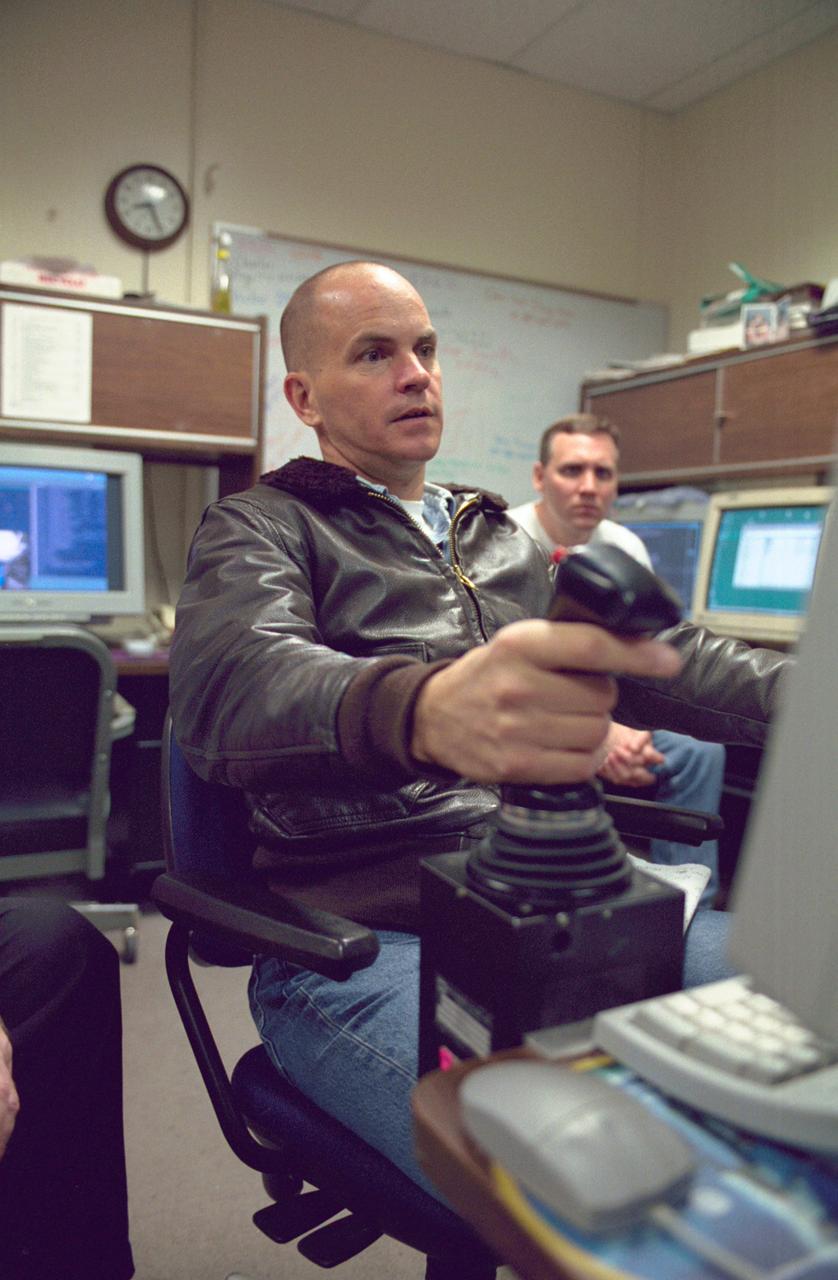
JSC2001-00758 (15 March 2001) --- Astronaut Frederick W. Sturckow, STS-105 pilot, uses the virtual reality lab at the Johnson Space Center (JSC) to train for his duties aboard the Space Shuttle Discovery. This type of computer interface paired with virtual reality training hardware and software helps to prepare the entire team for dealing with International Space Station (ISS) elements.
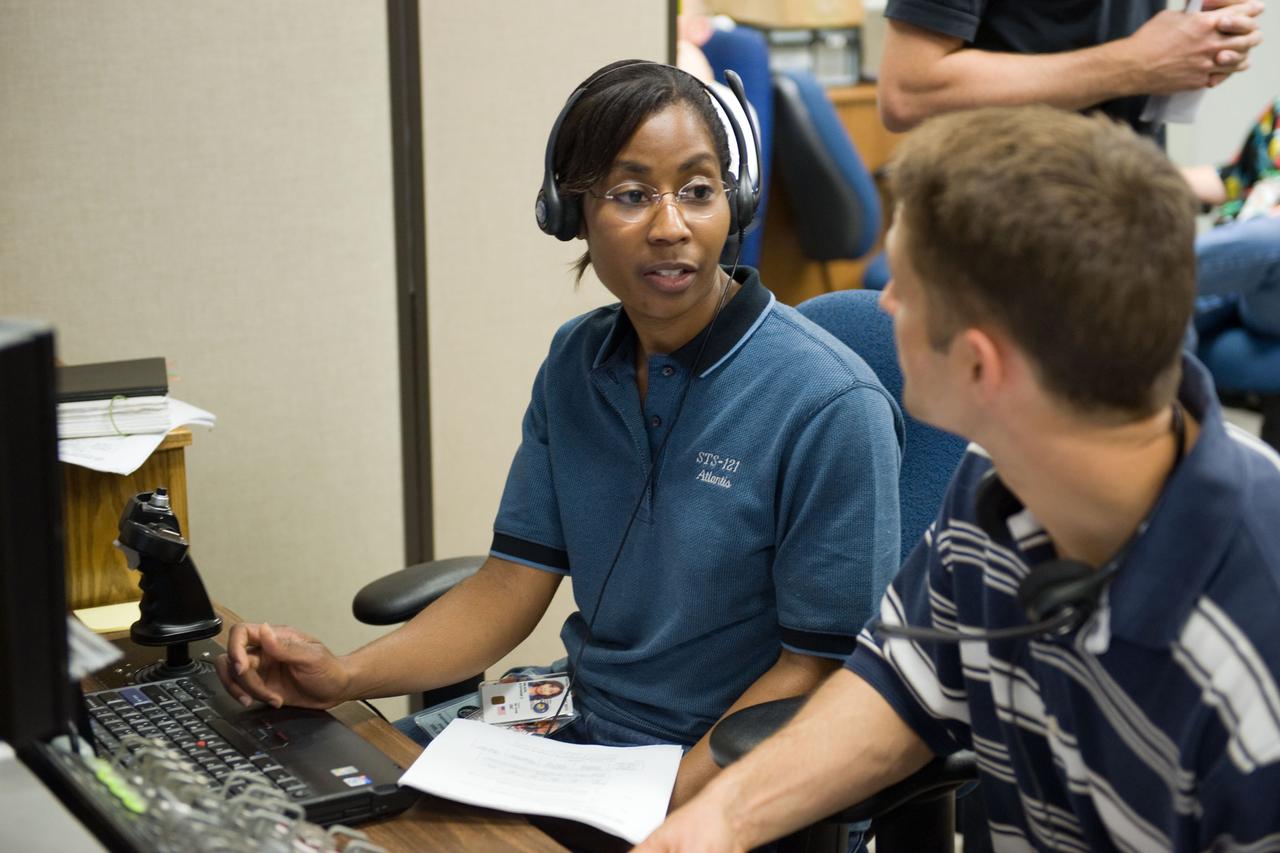
JSC2009-E-214321 (25 Sept. 2009) --- NASA astronauts James P. Dutton Jr., STS-131 pilot; and Stephanie Wilson, mission specialist, use the virtual reality lab in the Space Vehicle Mock-up Facility at NASA's Johnson Space Center to train for some of their duties aboard the space shuttle and space station. This type of computer interface, paired with virtual reality training hardware and software, helps to prepare the entire team for dealing with space station elements.
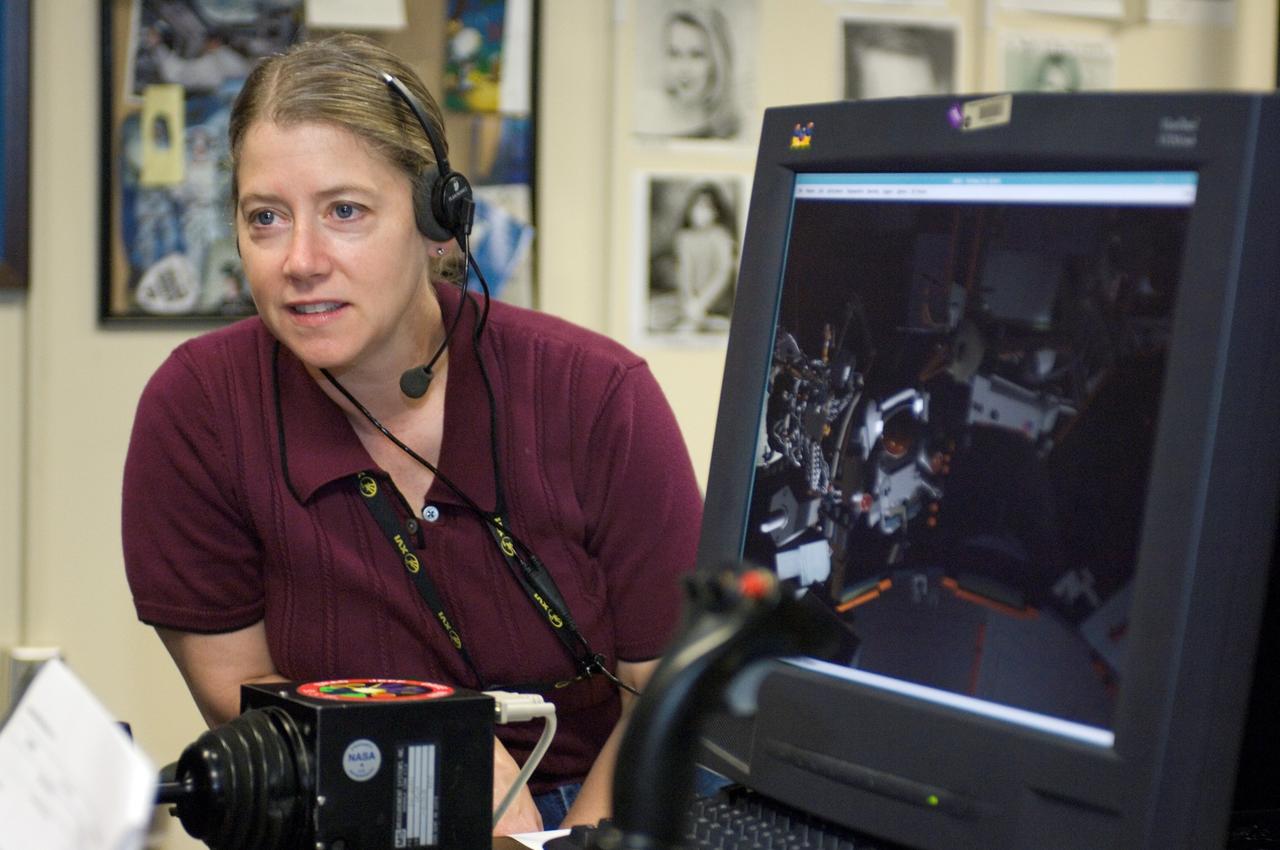
JSC2007-E-41539 (9 Aug. 2007) --- Astronaut Pamela A. Melroy, STS-120 commander, uses the virtual reality lab at Johnson Space Center to train for her duties aboard the space shuttle and space station. This type of computer interface, paired with virtual reality training hardware and software, helps to prepare the entire team for dealing with space station elements.
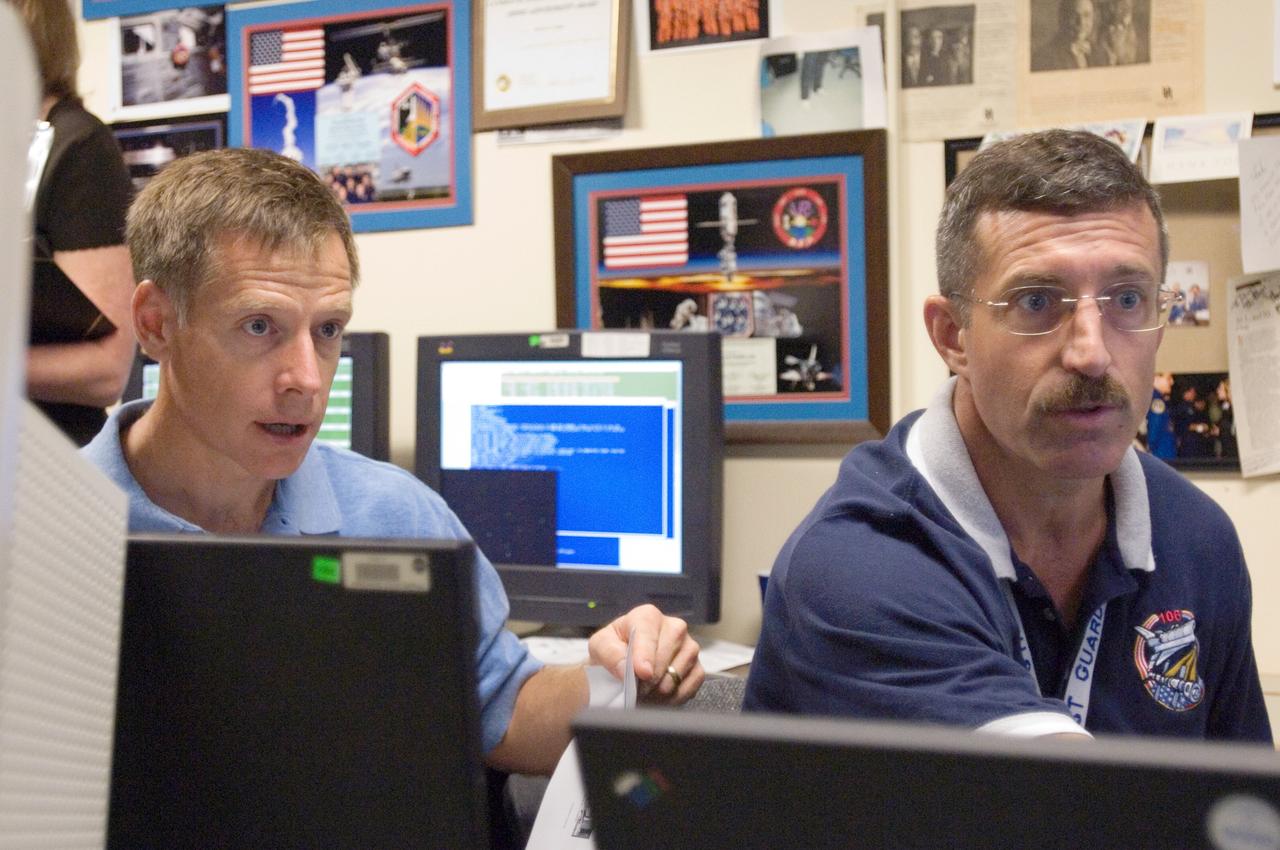
JSC2005-E-21192 (7 June 2005) --- Astronauts Christopher J. Ferguson (left), STS-115 pilot, and Daniel C. Burbank, mission specialist, use the virtual reality lab at the Johnson Space Center to train for their duties aboard the space shuttle. This type of computer interface, paired with virtual reality training hardware and software, helps to prepare the entire team for dealing with space station elements.
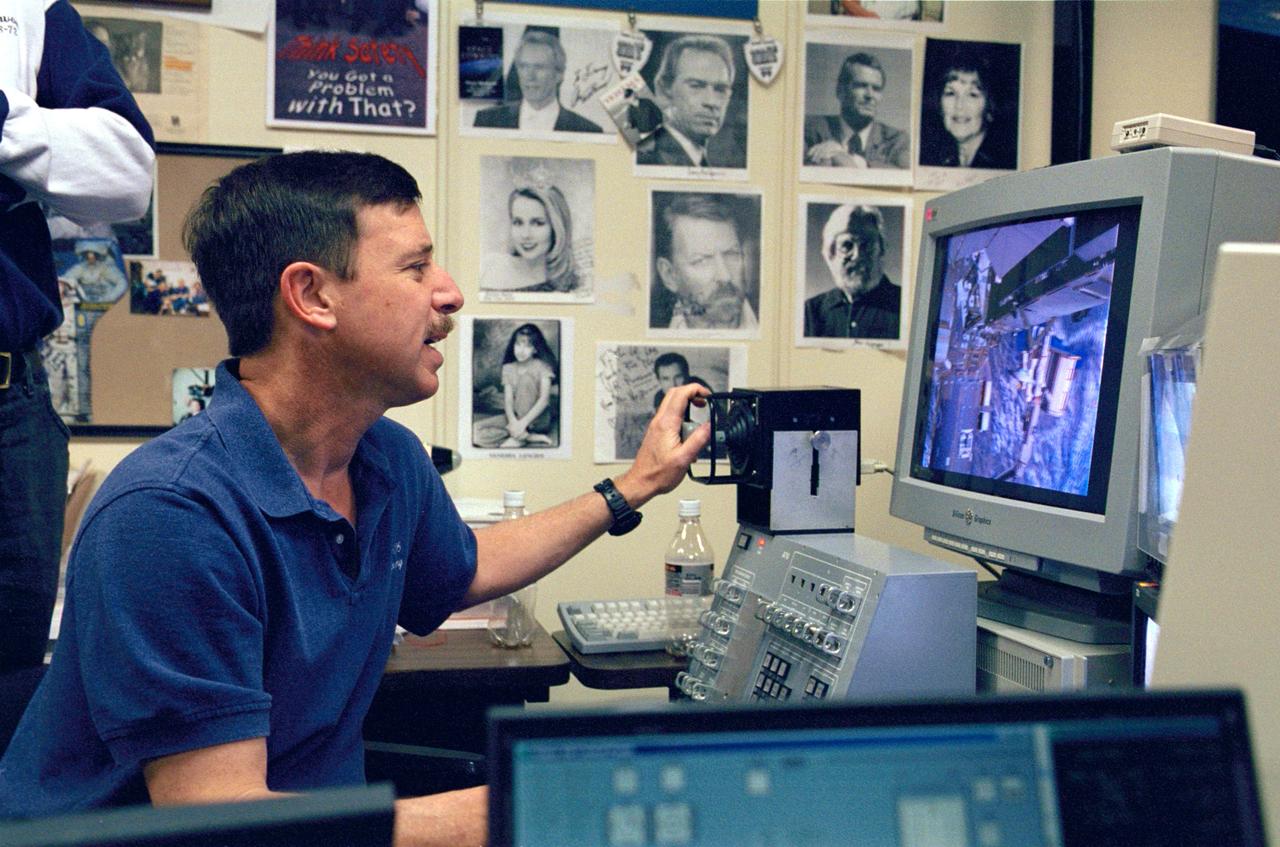
JSC2001-00751 (15 March 2001) --- Astronaut Scott J. Horowitz, STS-105 mission commander, uses the virtual reality lab at the Johnson Space Center (JSC) to train for his duties aboard the Space Shuttle Discovery. This type of computer interface paired with virtual reality training hardware and software helps to prepare the entire team for dealing with International Space Station (ISS) elements.
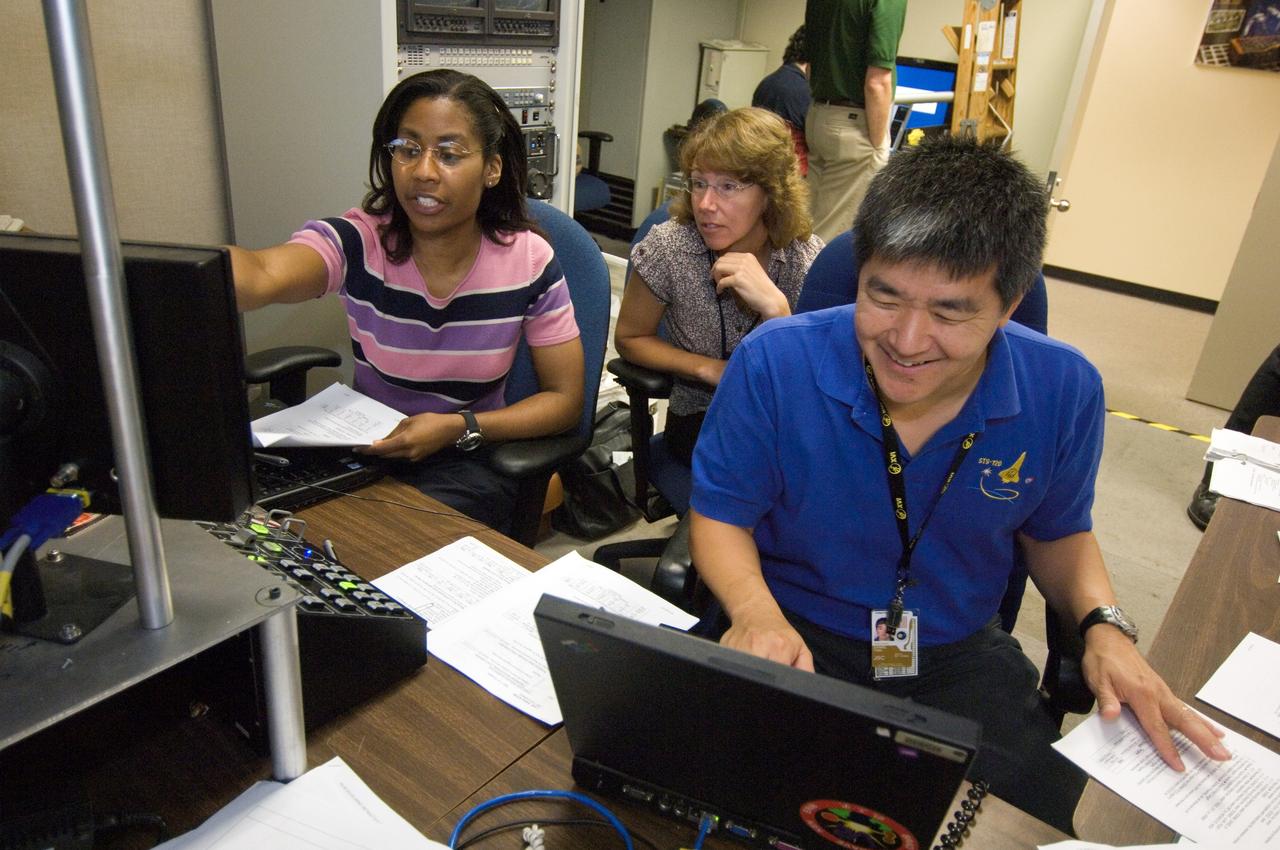
JSC2007-E-41533 (9 Aug. 2007) --- Astronauts Stephanie Wilson (left), STS-120 mission specialist; Sandra Magnus, Expedition 17 flight engineer; and Dan Tani, Expedition 16 flight engineer, use the virtual reality lab at Johnson Space Center to train for their duties aboard the space shuttle and space station. This type of computer interface, paired with virtual reality training hardware and software, helps to prepare the entire team for dealing with space station elements.
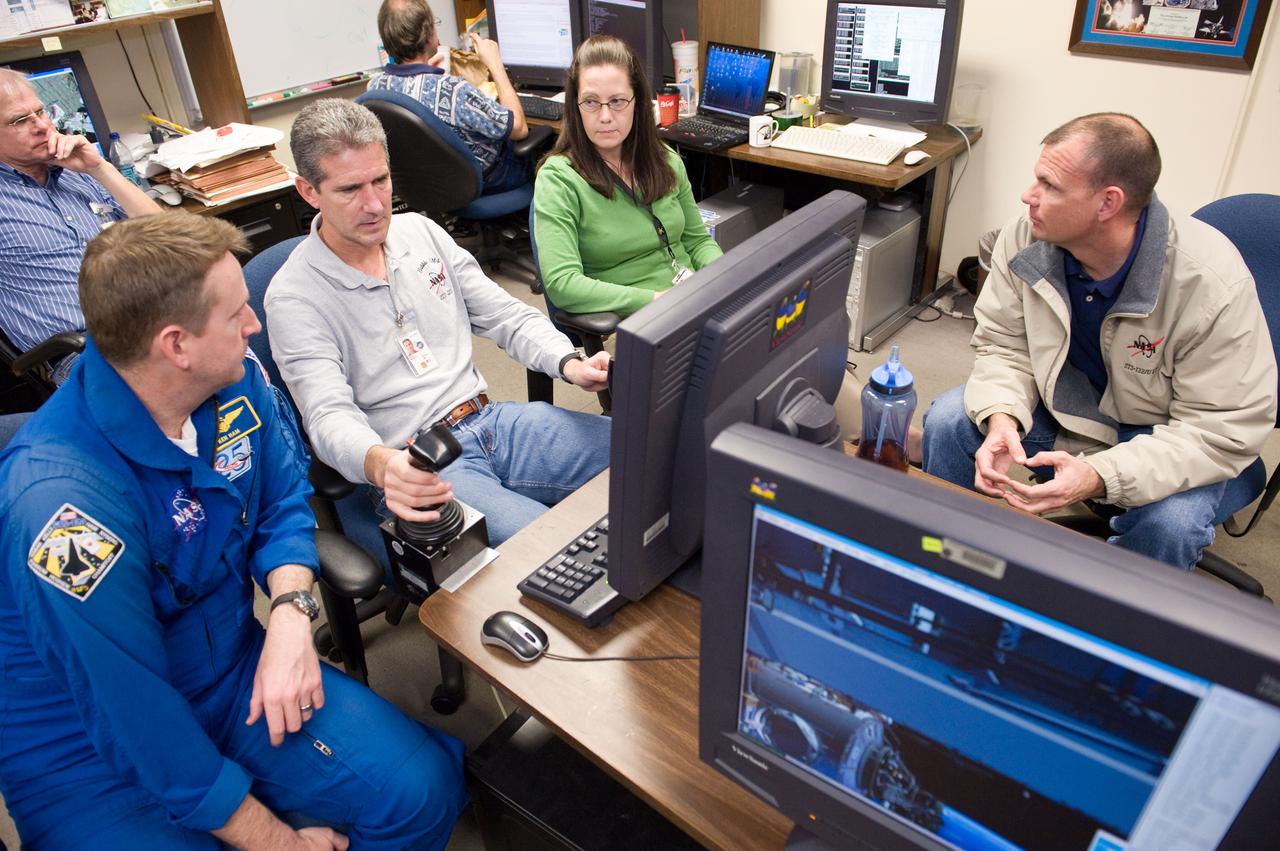
JSC2010-E-014956 (28 Jan. 2010) --- NASA astronauts Ken Ham (left foreground), STS-132 commander; Michael Good, mission specialist; and Tony Antonelli (right), pilot, use the virtual reality lab in the Space Vehicle Mock-up Facility at NASA's Johnson Space Center to train for some of their duties aboard the space shuttle and space station. This type of computer interface, paired with virtual reality training hardware and software, helps to prepare crew members for dealing with space station elements.
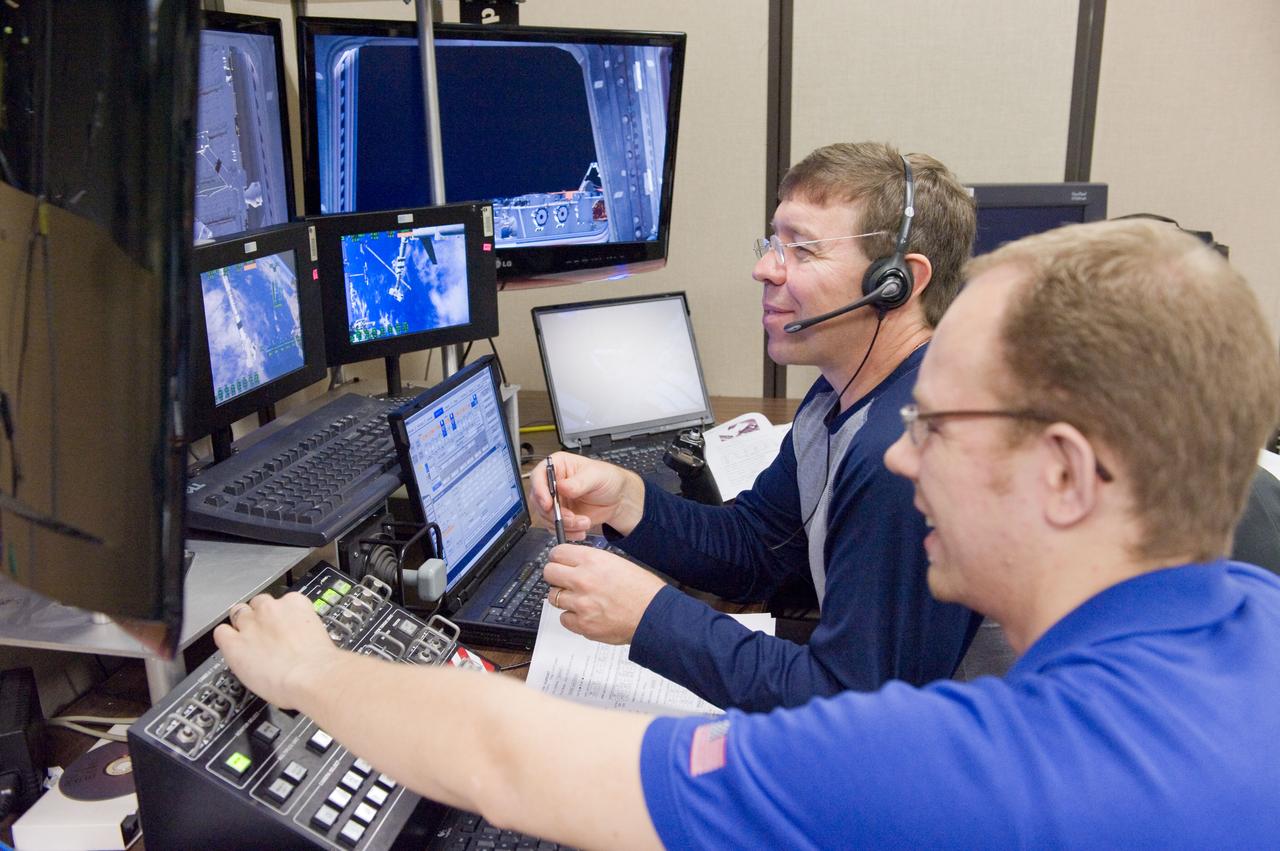
JSC2011-E-006297 (24 Jan. 2011) --- NASA astronaut Michael Barratt (background), STS-133 mission specialist, uses the virtual reality lab in the Space Vehicle Mock-up Facility at NASA's Johnson Space Center to train for some of his duties aboard the space shuttle and space station. This type of computer interface, paired with virtual reality training hardware and software, helps to prepare crew members for dealing with space station elements. Photo credit: NASA or National Aeronautics and Space Administration
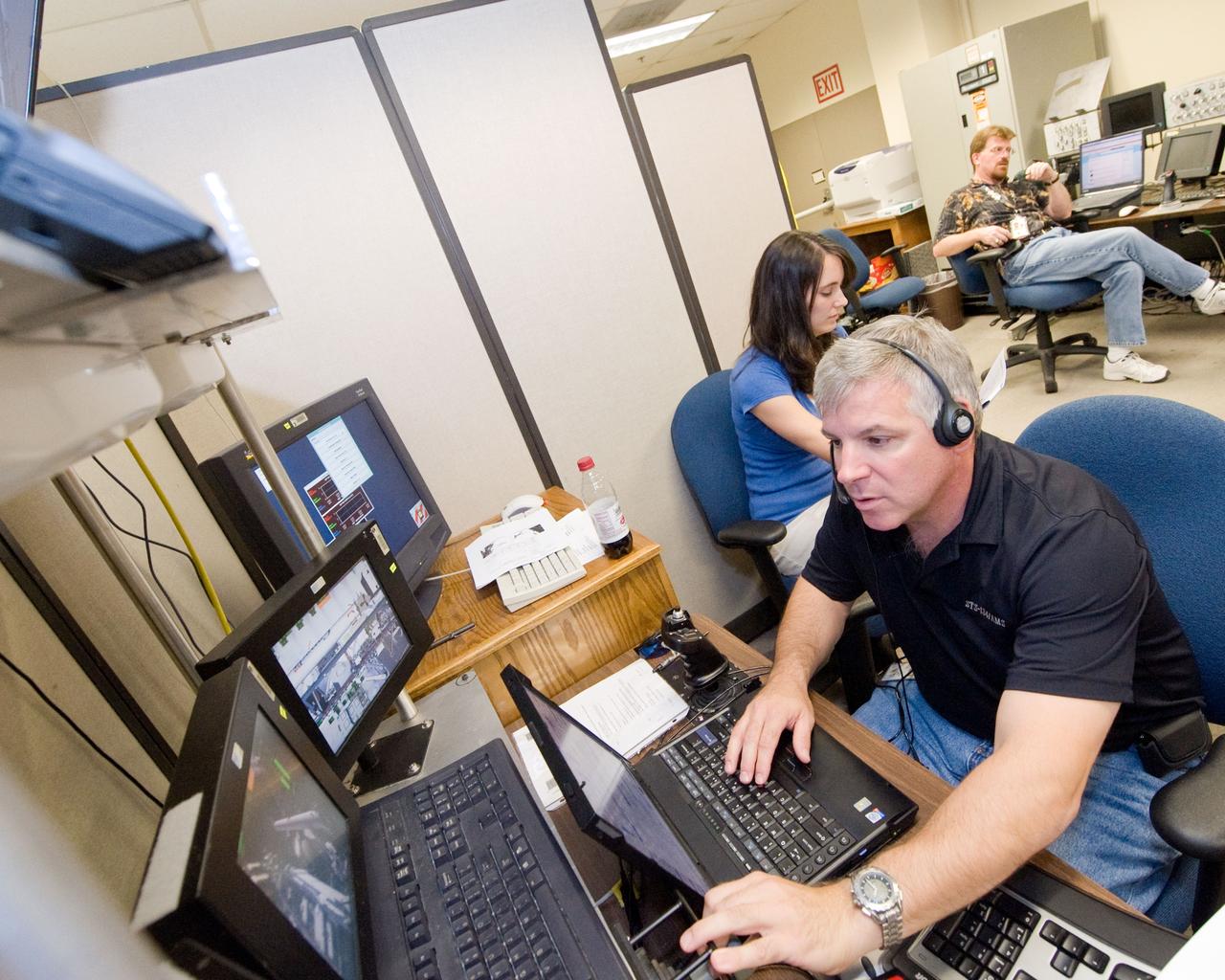
JSC2010-E-121056 (27 Aug. 2010) --- NASA astronaut Gregory H. Johnson, STS-134 pilot, uses the virtual reality lab in the Space Vehicle Mock-up Facility at NASA's Johnson Space Center to train for some of his duties aboard the space shuttle and space station. This type of computer interface, paired with virtual reality training hardware and software, helps to prepare crew members for dealing with space station elements. Photo credit: NASA or National Aeronautics and Space Administration
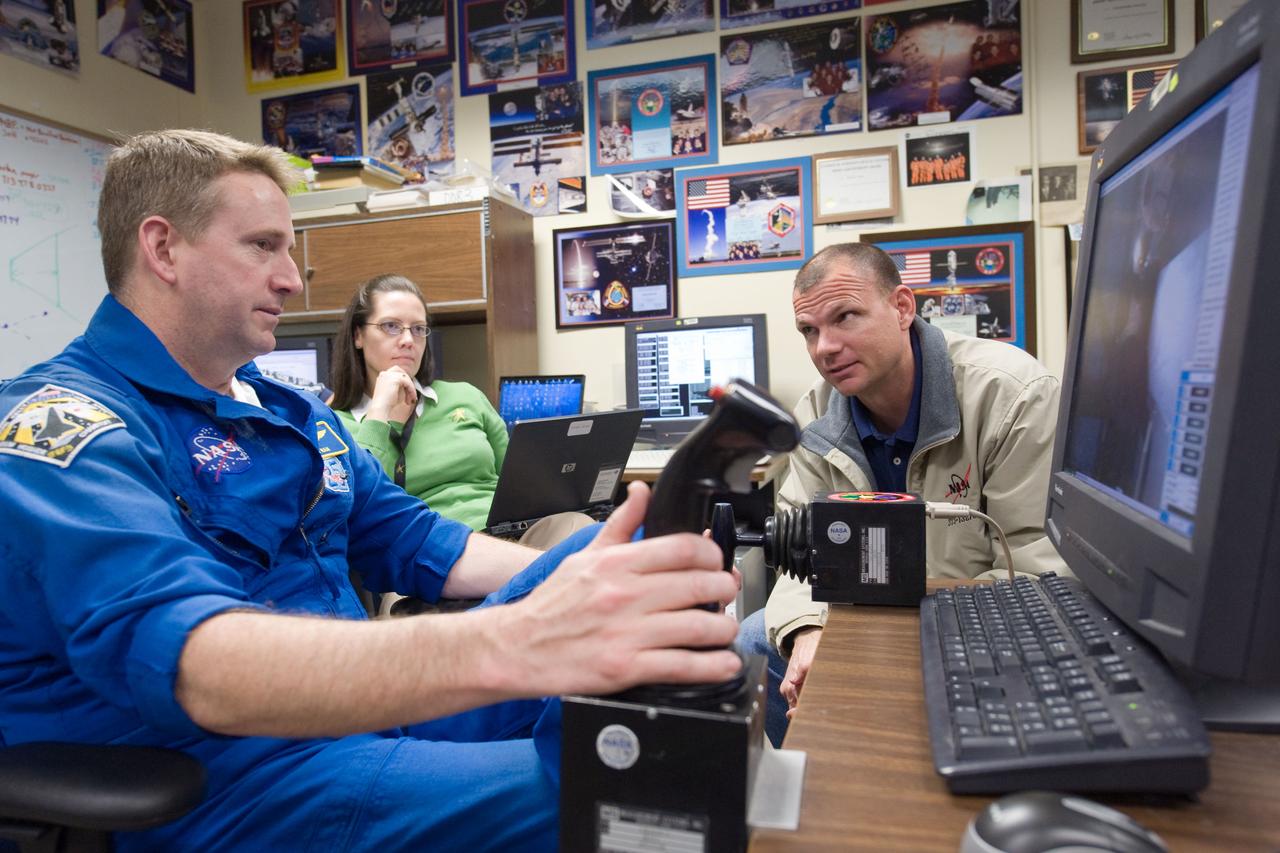
JSC2010-E-014963 (28 Jan. 2010) --- NASA astronauts Ken Ham (left), STS-132 commander; and Tony Antonelli, pilot, use the virtual reality lab in the Space Vehicle Mock-up Facility at NASA's Johnson Space Center to train for some of their duties aboard the space shuttle and space station. This type of computer interface, paired with virtual reality training hardware and software, helps to prepare crew members for dealing with space station elements.
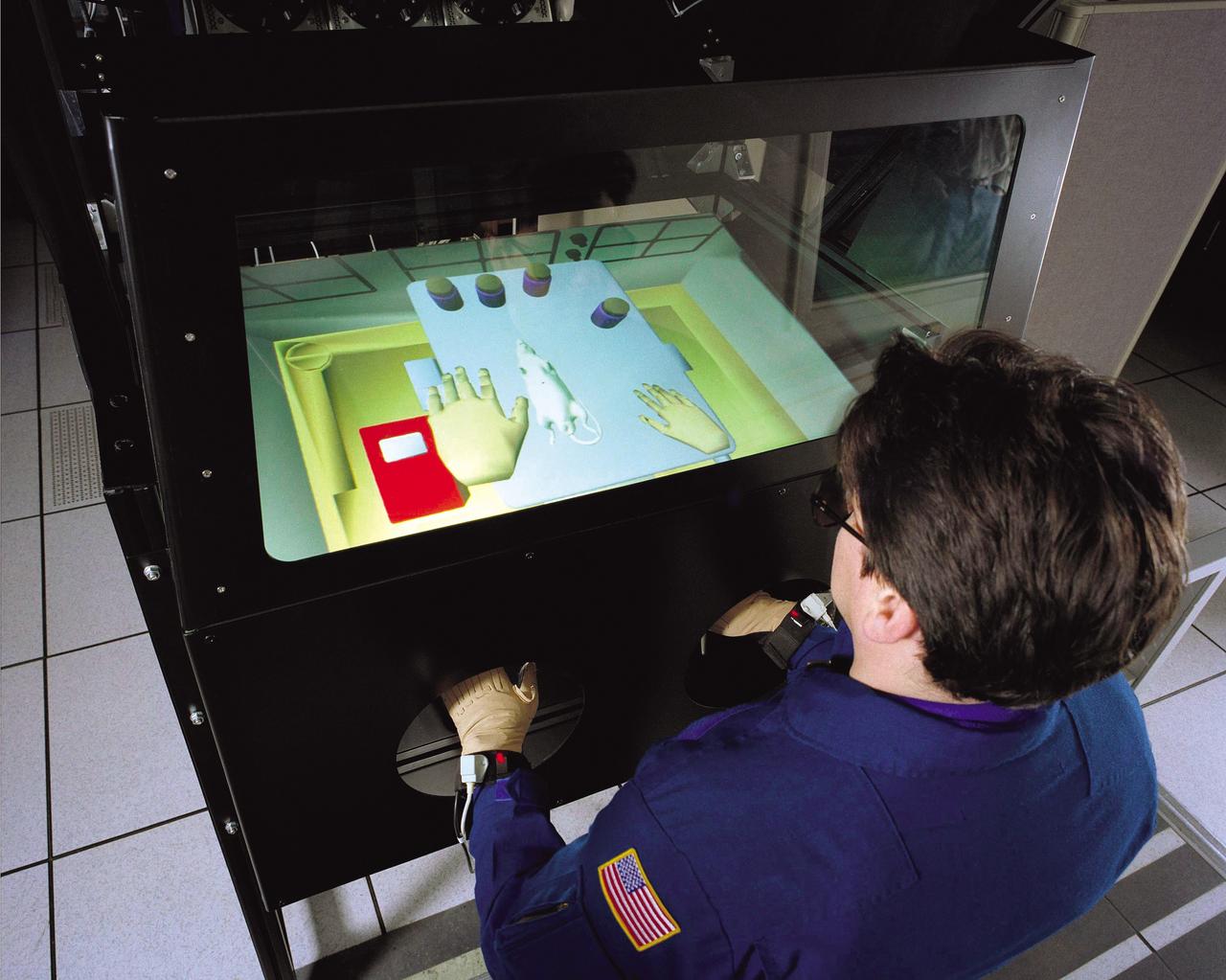
NASA’s Virtual Glovebox (VGX) was developed to allow astronauts on Earth to train for complex biology research tasks in space. The astronauts may reach into the virtual environment, naturally manipulating specimens, tools, equipment, and accessories in a simulated microgravity environment as they would do in space. Such virtual reality technology also provides engineers and space operations staff with rapid prototyping, planning, and human performance modeling capabilities. Other Earth based applications being explored for this technology include biomedical procedural training and training for disarming bio-terrorism weapons.
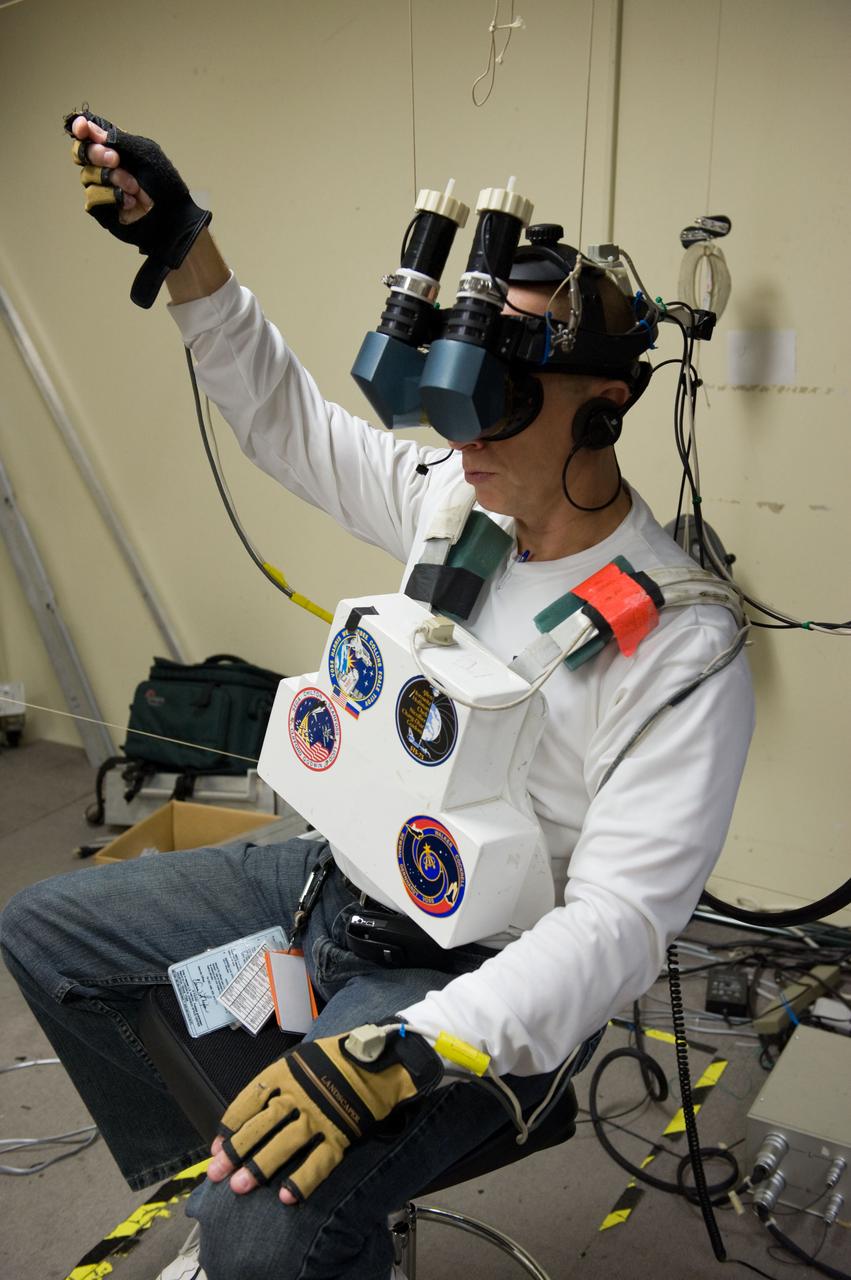
JSC2009-E-214340 (25 Sept. 2009) --- NASA astronaut Clayton Anderson, STS-131 mission specialist, uses virtual reality hardware in the Space Vehicle Mock-up Facility at NASA's Johnson Space Center to rehearse some of his duties on the upcoming mission to the International Space Station. This type of virtual reality training allows the astronauts to wear a helmet and special gloves while looking at computer displays simulating actual movements around the various locations on the station hardware with which they will be working.
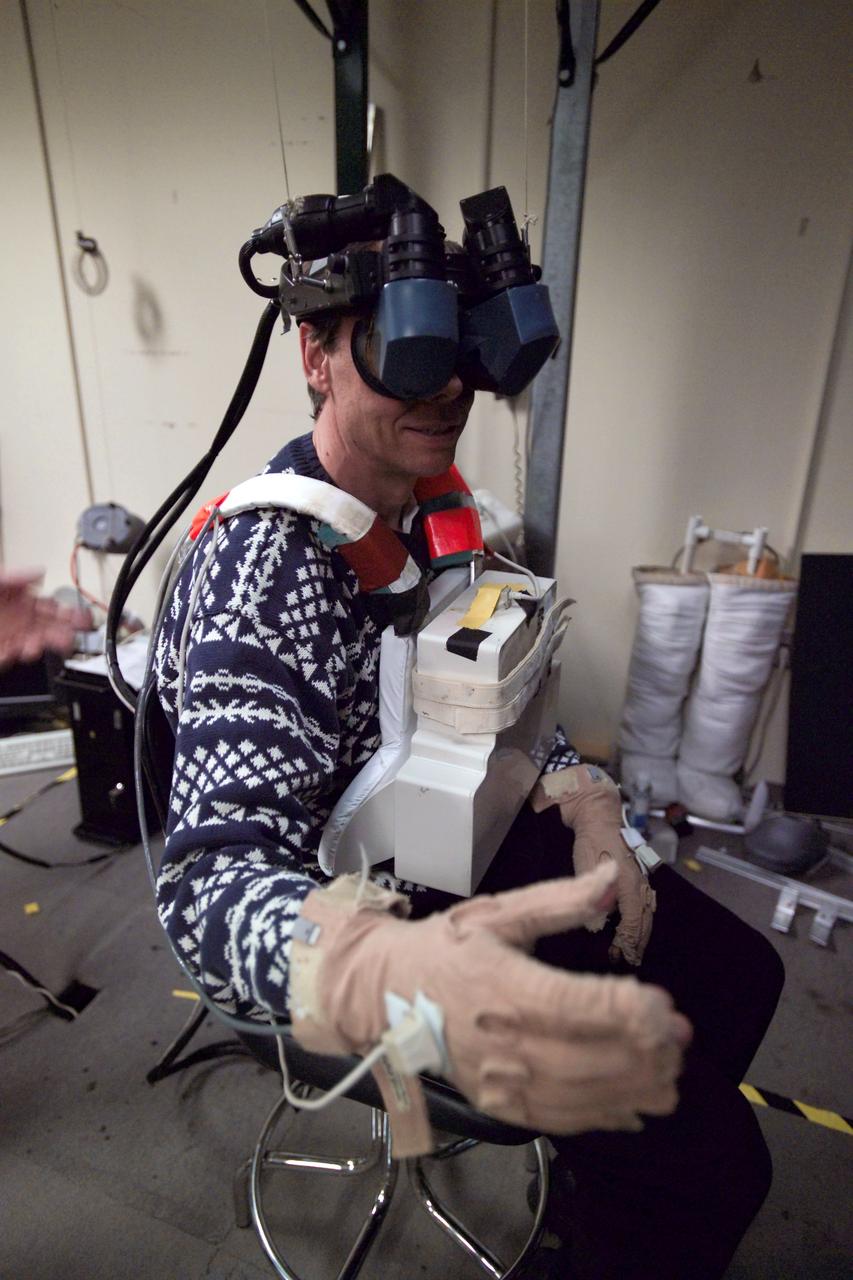
JSC2005-E-04513 (3 Feb. 2005) --- European Space Agency (ESA) astronaut Christer Fuglesang, STS-116 mission specialist, uses virtual reality hardware in the Space Vehicle Mockup Facility at the Johnson Space Center to rehearse some of his duties on the upcoming mission to the international space station. This type of virtual reality training allows the astronauts to wear a helmet and special gloves while looking at computer displays simulating actual movements around the various locations on the station hardware with which they will be working.
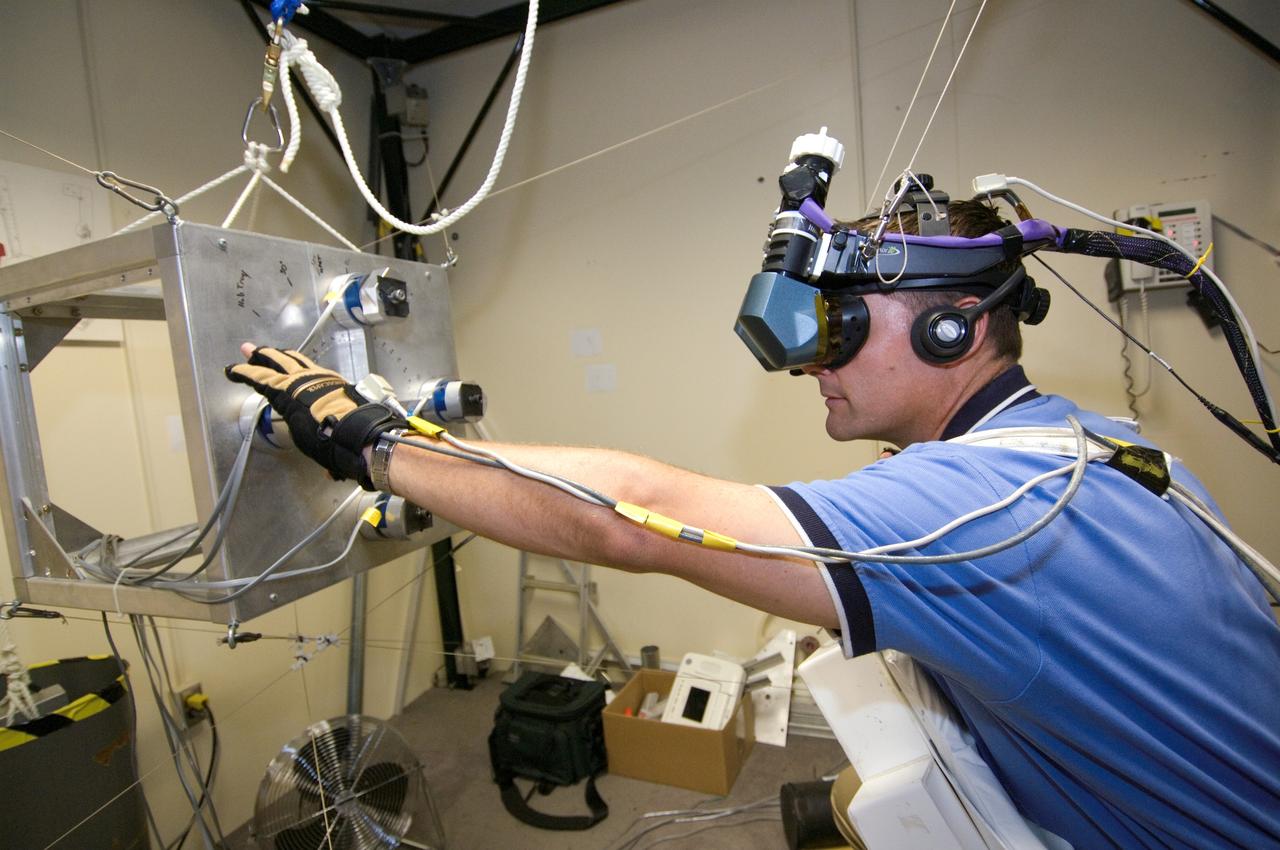
JSC2007-E-41537 (9 Aug. 2007) --- Astronaut Douglas H. Wheelock, STS-120 mission specialist, uses virtual reality hardware in the Space Vehicle Mockup Facility at Johnson Space Center to rehearse some of his duties on the upcoming mission to the International Space Station. This type of virtual reality training allows the astronauts to wear special gloves and other gear while looking at computer displays simulating actual movements around the various locations on the station hardware with which they will be working.
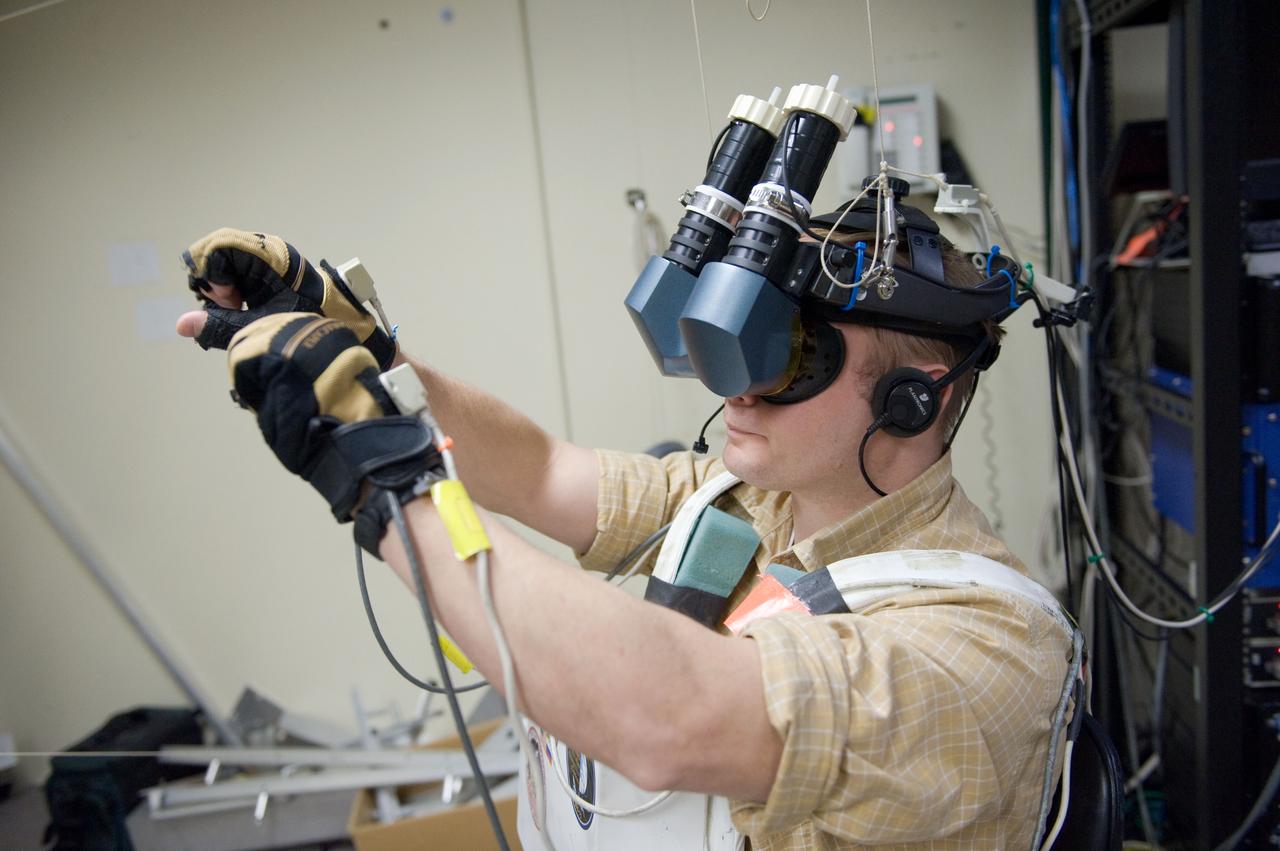
JSC2010-E-043685 (25 March 2010) --- NASA astronaut Michael Fincke, STS-134 mission specialist, uses virtual reality hardware in the Space Vehicle Mock-up Facility at NASA's Johnson Space Center to rehearse some of his duties on the upcoming mission to the International Space Station. This type of virtual reality training allows the astronauts to wear a helmet and special gloves while looking at computer displays simulating actual movements around the various locations on the station hardware with which they will be working.
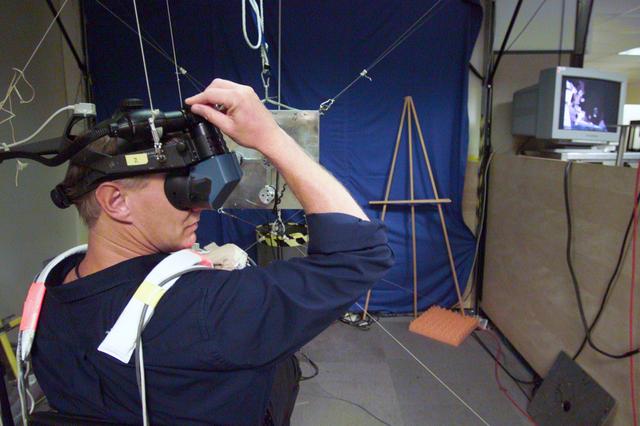
JSC2002-E-34618 (21 August 2002) --- Astronaut Piers J. Sellers, STS-112 mission specialist, uses virtual reality hardware in the Space Vehicle Mockup Facility at the Johnson Space Center (JSC) to rehearse some of his duties on the upcoming mission to the International Space Station (ISS). This type of virtual reality training allows the astronauts to wear a helmet and special gloves while looking at computer displays simulating actual movements around the various locations on the International Space Station (ISS) hardware with which they will be working.
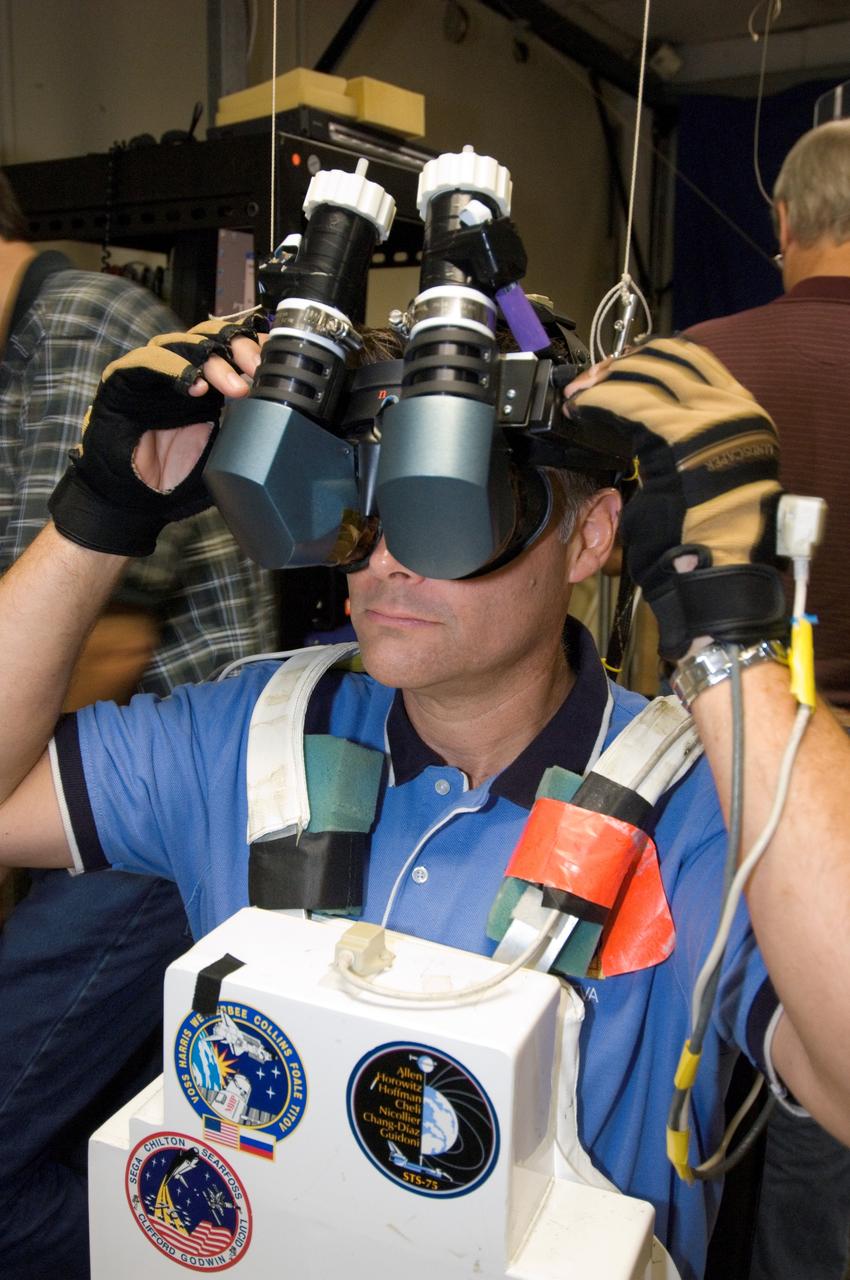
JSC2007-E-41535 (9 Aug. 2007) --- Astronaut Douglas H. Wheelock, STS-120 mission specialist, uses virtual reality hardware in the Space Vehicle Mockup Facility at Johnson Space Center to rehearse some of his duties on the upcoming mission to the International Space Station. This type of virtual reality training allows the astronauts to wear special gloves and other gear while looking at computer displays simulating actual movements around the various locations on the station hardware with which they will be working.
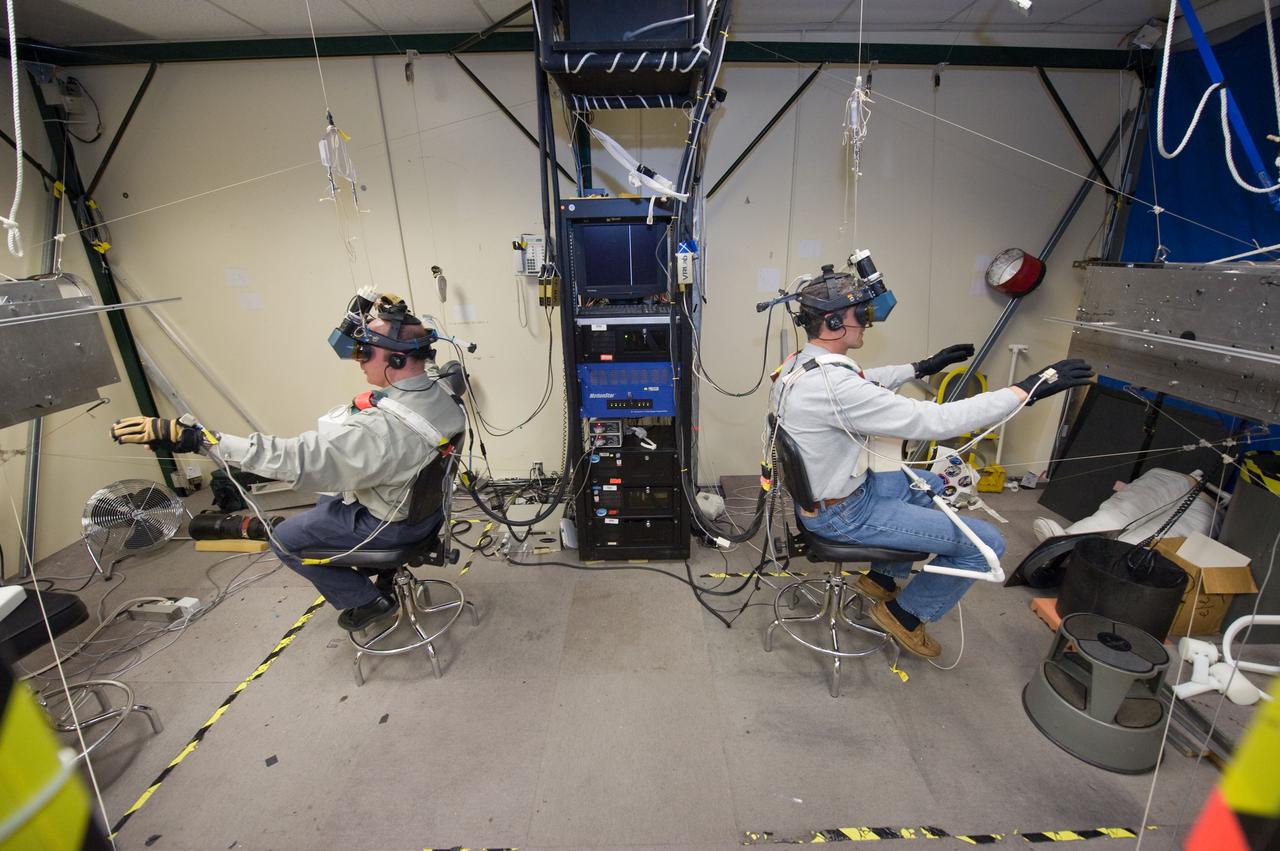
JSC2010-E-014960 (28 Jan. 2010) --- NASA astronauts Garrett Reisman (left) and Michael Good, both STS-132 mission specialists, use virtual reality hardware in the Space Vehicle Mock-up Facility at NASA's Johnson Space Center to rehearse some of their duties on the upcoming mission to the International Space Station. This type of virtual reality training allows the astronauts to wear a helmet and special gloves while looking at computer displays simulating actual movements around the various locations on the station hardware with which they will be working.
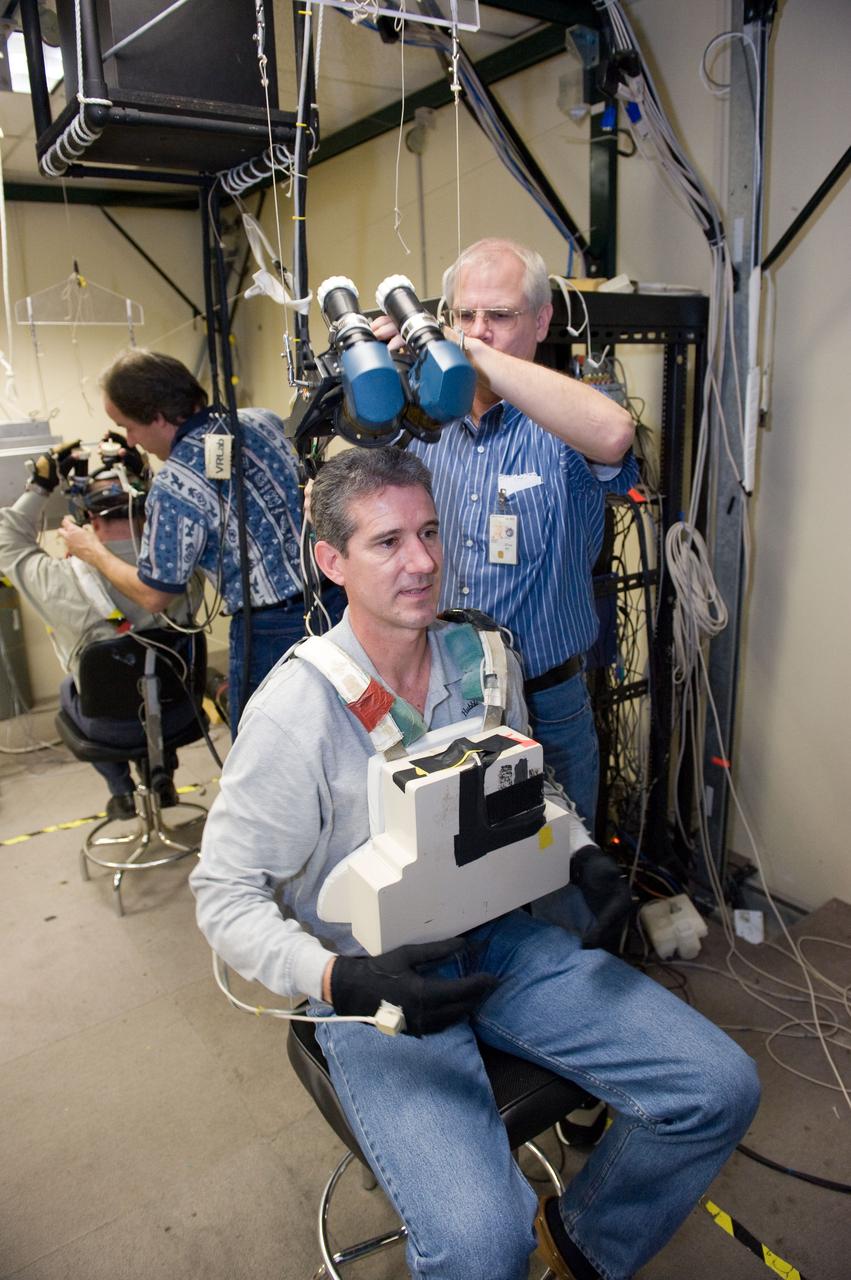
JSC2010-E-014957 (28 Jan. 2010) --- NASA astronaut Michael Good, STS-132 mission specialist, uses virtual reality hardware in the Space Vehicle Mock-up Facility at NASA's Johnson Space Center to rehearse some of his duties on the upcoming mission to the International Space Station. This type of virtual reality training allows the astronauts to wear a helmet and special gloves while looking at computer displays simulating actual movements around the various locations on the station hardware with which they will be working. David Homan assisted Good.
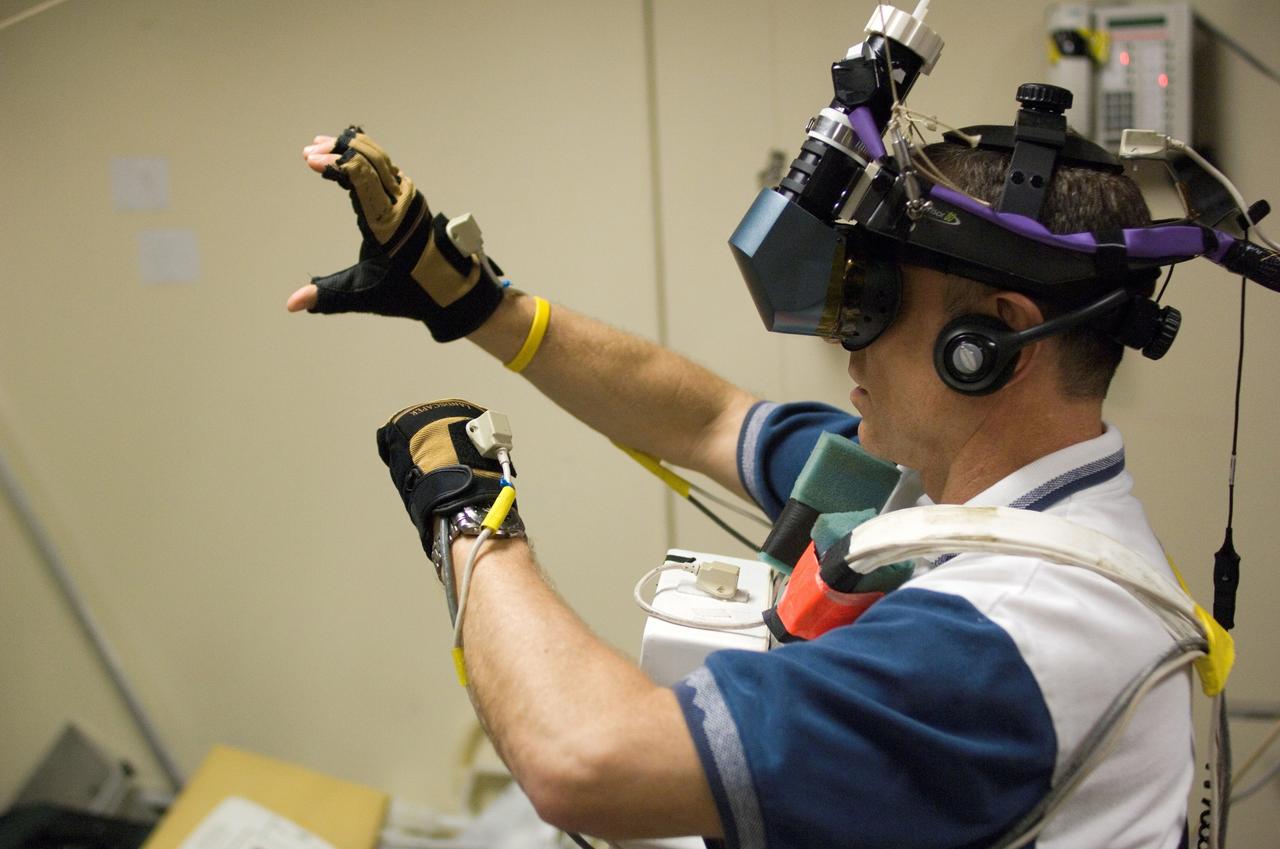
STS-118 astronaut and mission specialist Dafydd R. “Dave” Williams, representing the Canadian Space Agency, uses Virtual Reality Hardware in the Space Vehicle Mock Up Facility at the Johnson Space Center to rehearse some of his duties for the upcoming mission. This type of virtual reality training allows the astronauts to wear special gloves and other gear while looking at a computer that displays simulating actual movements around the various locations on the station hardware which with they will be working.
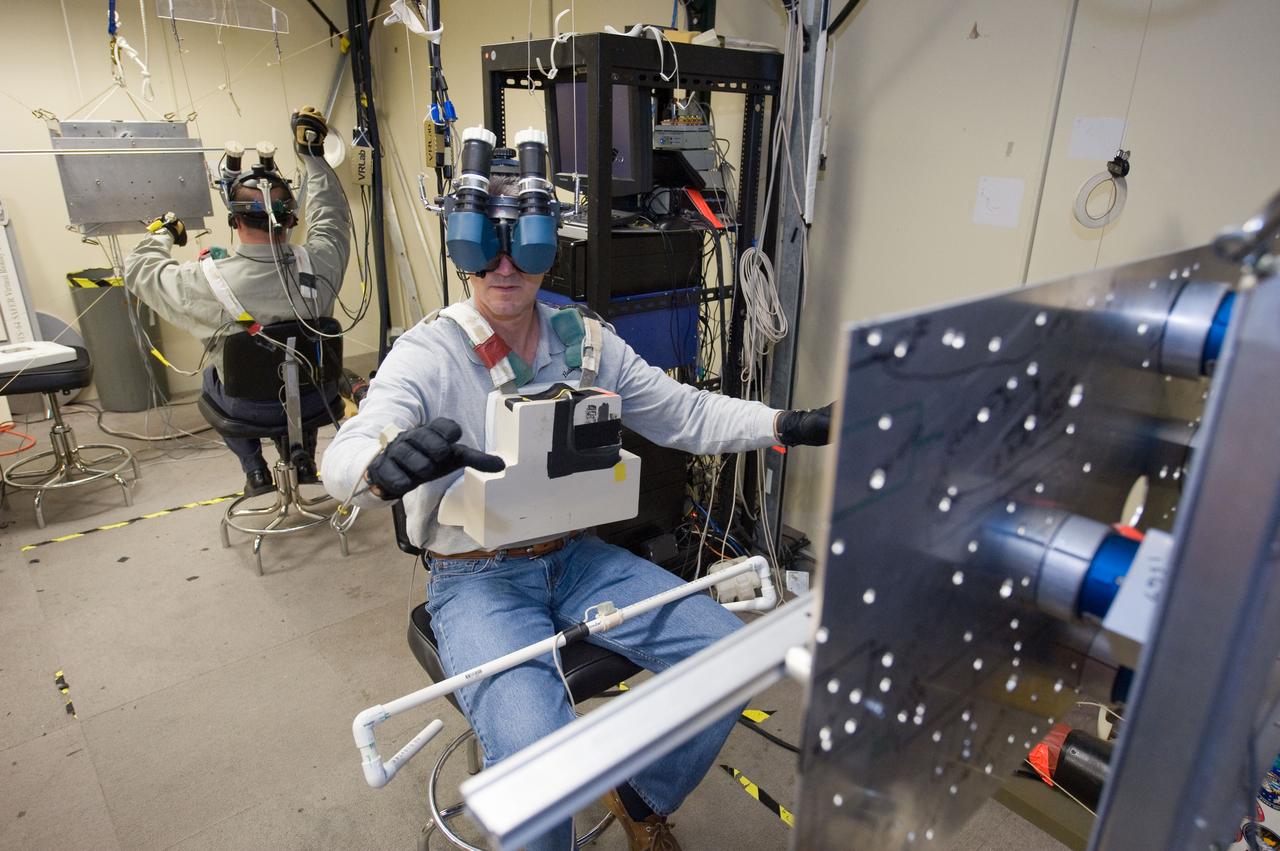
JSC2010-E-014962 (28 Jan. 2010) --- NASA astronauts Michael Good (foreground) and Garrett Reisman, both STS-132 mission specialists, use virtual reality hardware in the Space Vehicle Mock-up Facility at NASA's Johnson Space Center to rehearse some of their duties on the upcoming mission to the International Space Station. This type of virtual reality training allows the astronauts to wear a helmet and special gloves while looking at computer displays simulating actual movements around the various locations on the station hardware with which they will be working.
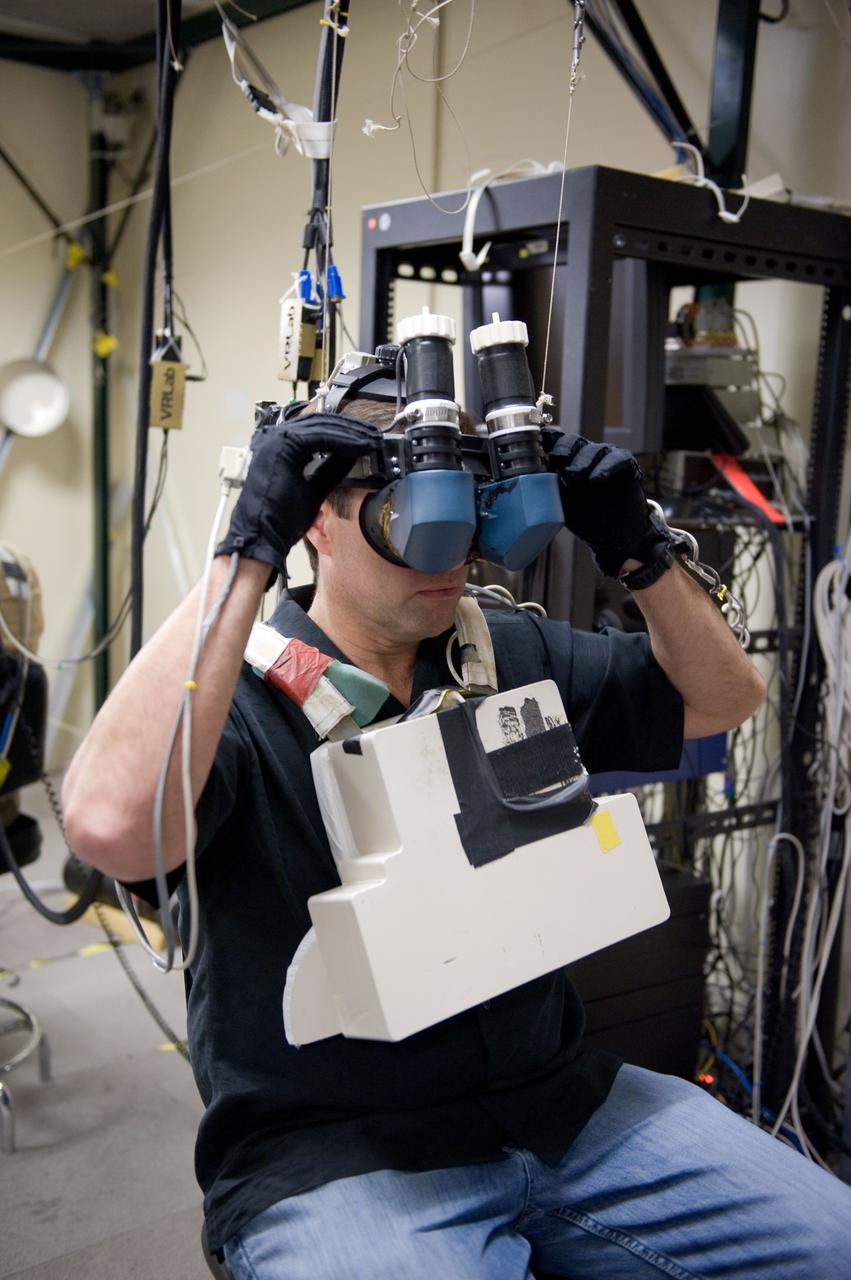
JSC2010-E-043660 (25 March 2010) --- NASA astronaut Greg Chamitoff, STS-134 mission specialist, uses virtual reality hardware in the Space Vehicle Mock-up Facility at NASA's Johnson Space Center to rehearse some of his duties on the upcoming mission to the International Space Station. This type of virtual reality training allows the astronauts to wear a helmet and special gloves while looking at computer displays simulating actual movements around the various locations on the station hardware with which they will be working.
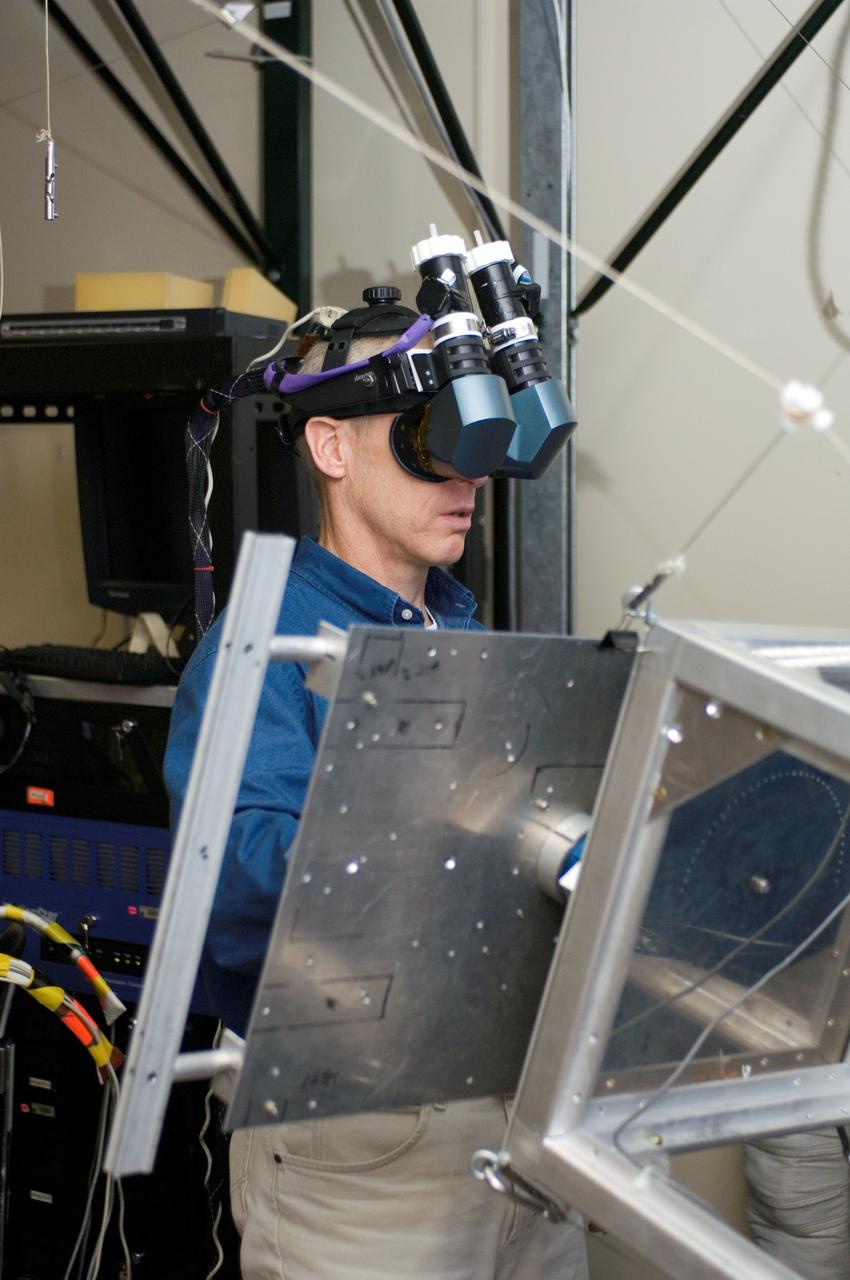
JSC2006-E-47421 (1 Nov. 2006) --- Astronaut Patrick G. Forrester, STS-117 mission specialist, uses virtual reality hardware in the Space Vehicle Mockup Facility at Johnson Space Center to rehearse some of his duties on the upcoming mission to the International Space Station. This type of virtual reality training allows the astronauts to wear a helmet and special gloves while looking at computer displays simulating actual movements around the various locations on the station hardware with which they will be working.
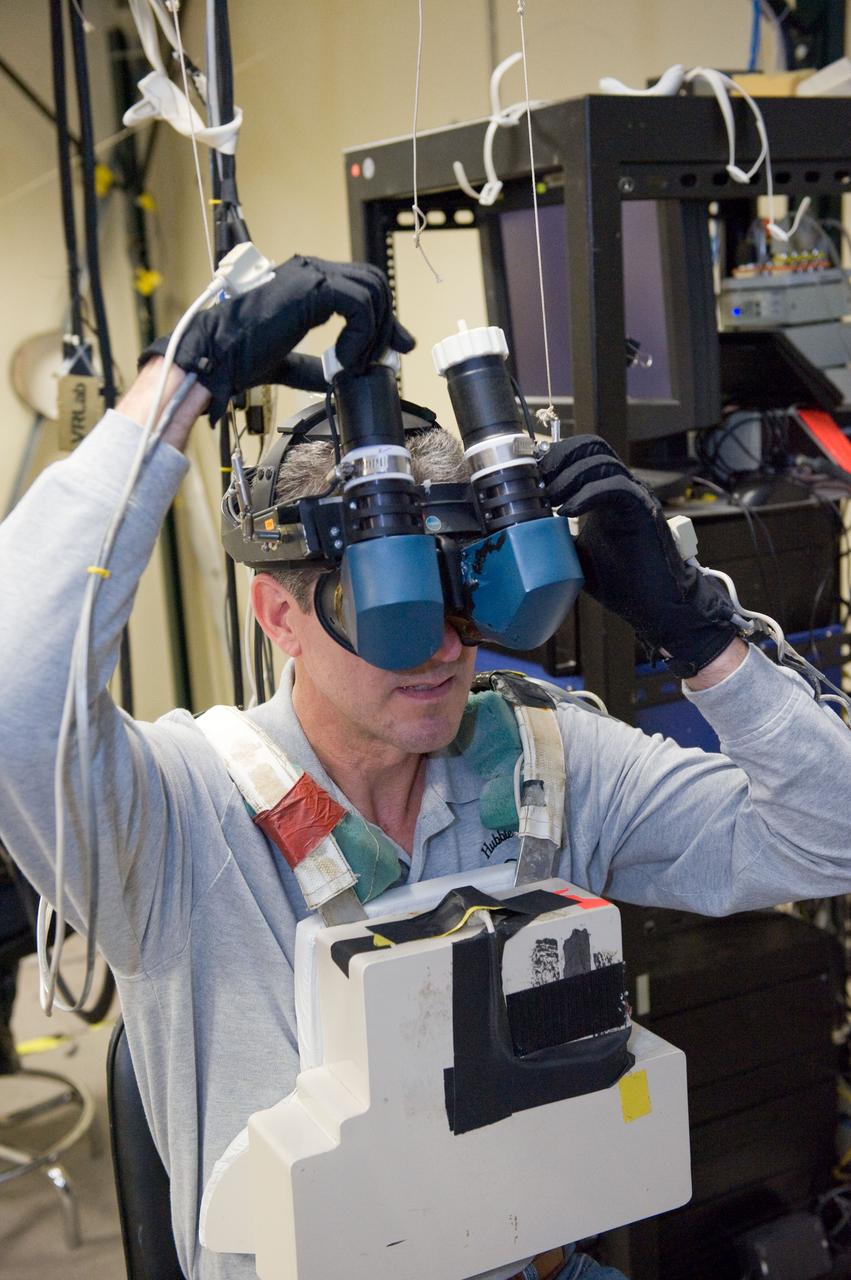
JSC2010-E-014958 (28 Jan. 2010) --- NASA astronaut Michael Good, STS-132 mission specialist, uses virtual reality hardware in the Space Vehicle Mock-up Facility at NASA's Johnson Space Center to rehearse some of his duties on the upcoming mission to the International Space Station. This type of virtual reality training allows the astronauts to wear a helmet and special gloves while looking at computer displays simulating actual movements around the various locations on the station hardware with which they will be working.
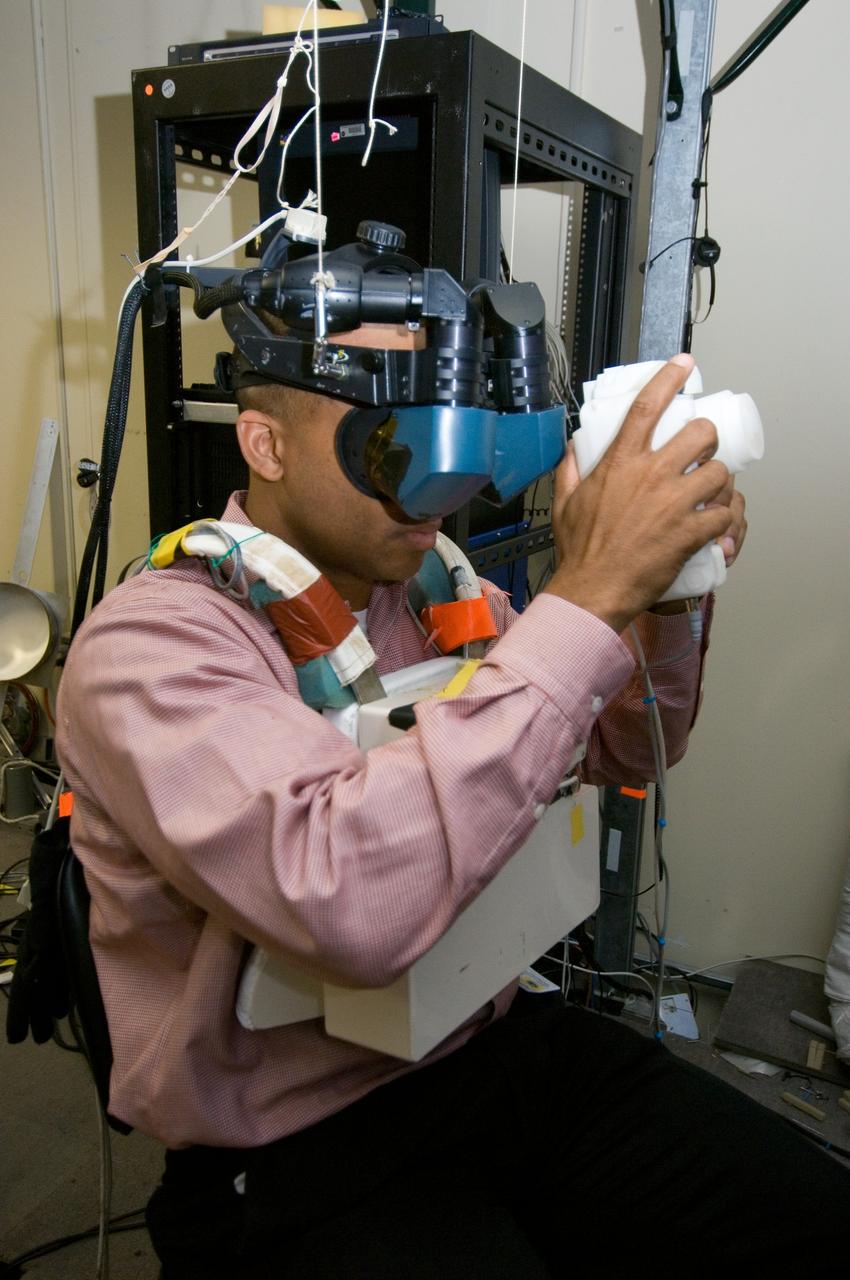
JSC2006-E-33306 (7 Aug. 2006) --- Astronaut Robert L. Curbeam, STS-116 mission specialist, uses virtual reality hardware in the Space Vehicle Mockup Facility at the Johnson Space Center to rehearse some of his duties on the upcoming mission to the International Space Station. This type of virtual reality training allows the astronauts to wear a helmet and special gloves while looking at computer displays simulating actual movements around the various locations on the station hardware with which they will be working.
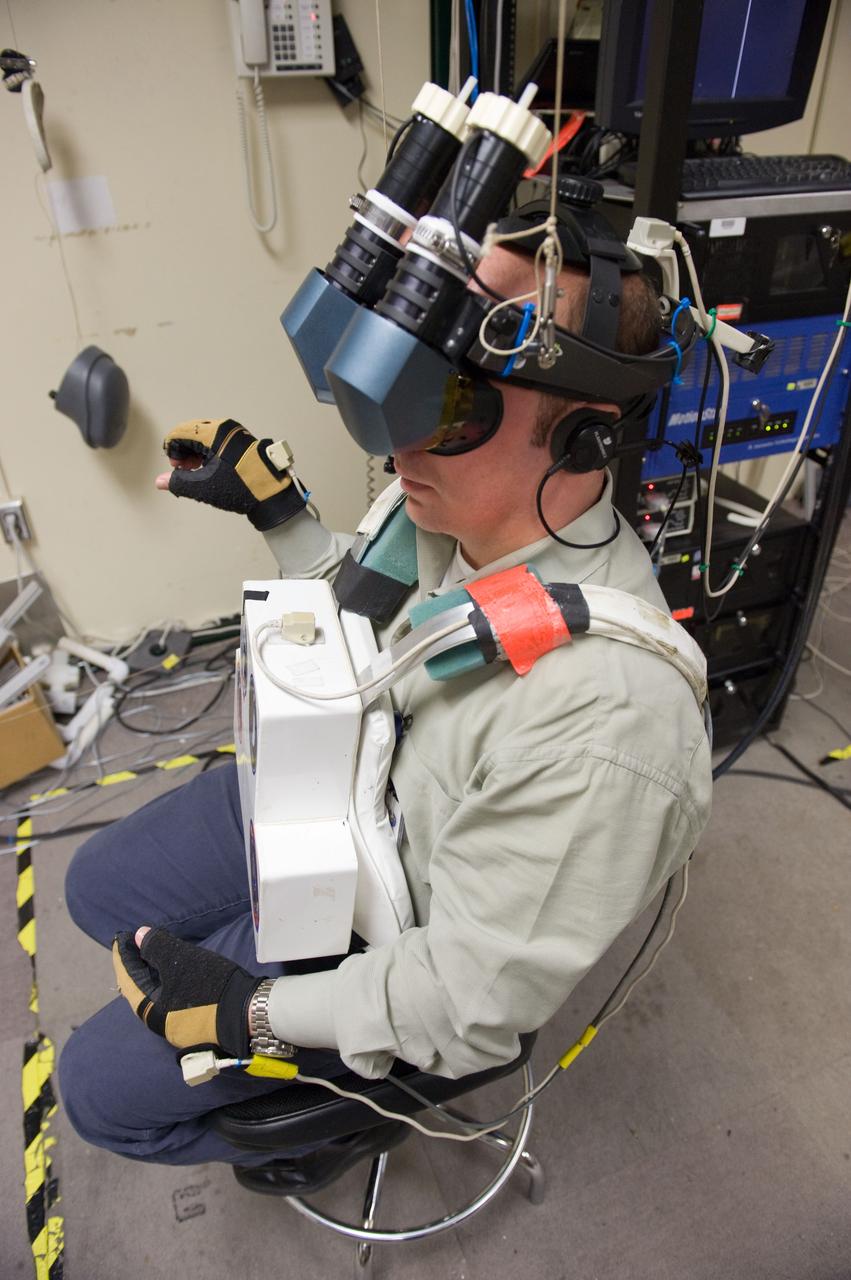
JSC2010-E-014959 (28 Jan. 2010) --- NASA astronaut Garrett Reisman, STS-132 mission specialist, uses virtual reality hardware in the Space Vehicle Mock-up Facility at NASA's Johnson Space Center to rehearse some of his duties on the upcoming mission to the International Space Station. This type of virtual reality training allows the astronauts to wear a helmet and special gloves while looking at computer displays simulating actual movements around the various locations on the station hardware with which they will be working.
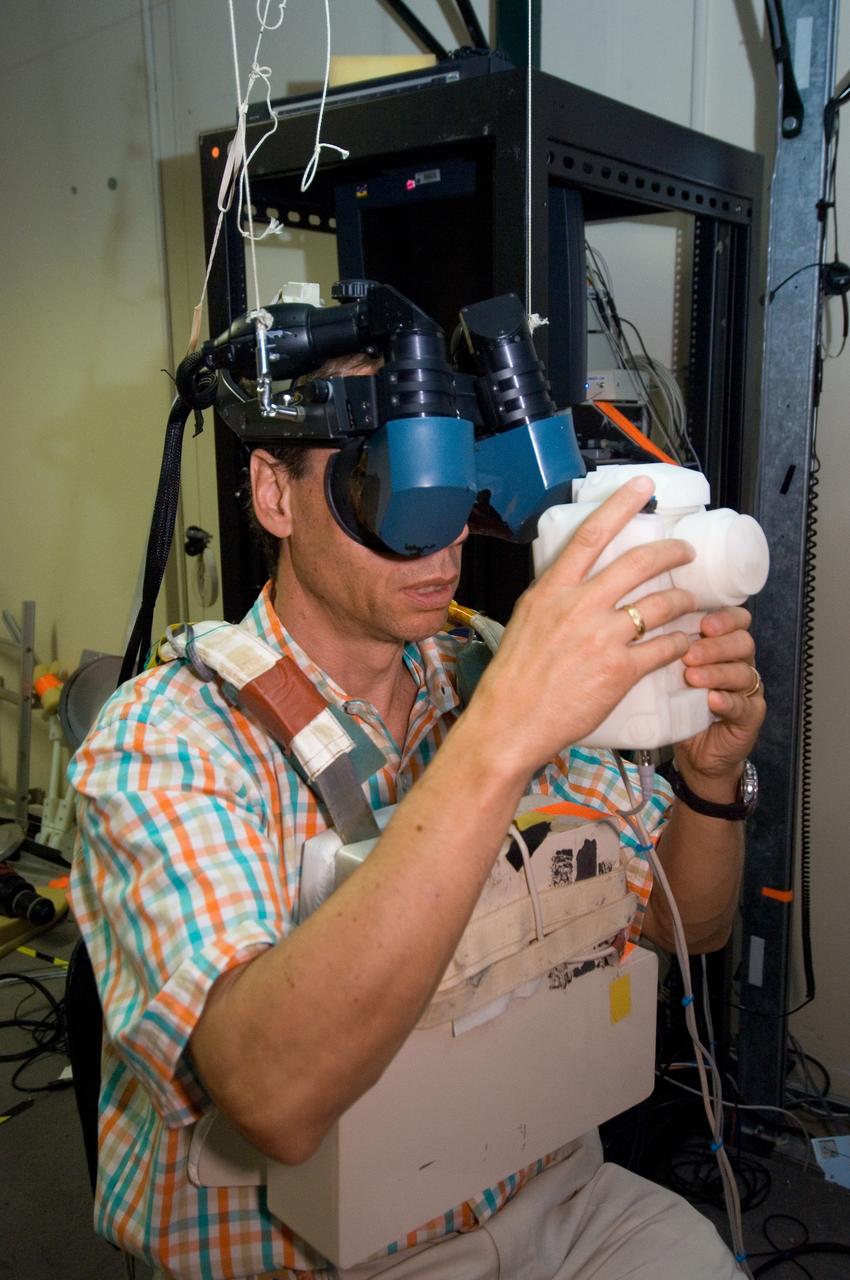
JSC2006-E-33309 (7 Aug. 2006) --- European Space Agency (ESA) astronaut Christer Fuglesang, STS-116 mission specialist, uses virtual reality hardware in the Space Vehicle Mockup Facility at the Johnson Space Center to rehearse some of his duties on the upcoming mission to the International Space Station. This type of virtual reality training allows the astronauts to wear a helmet and special gloves while looking at computer displays simulating actual movements around the various locations on the station hardware with which they will be working.
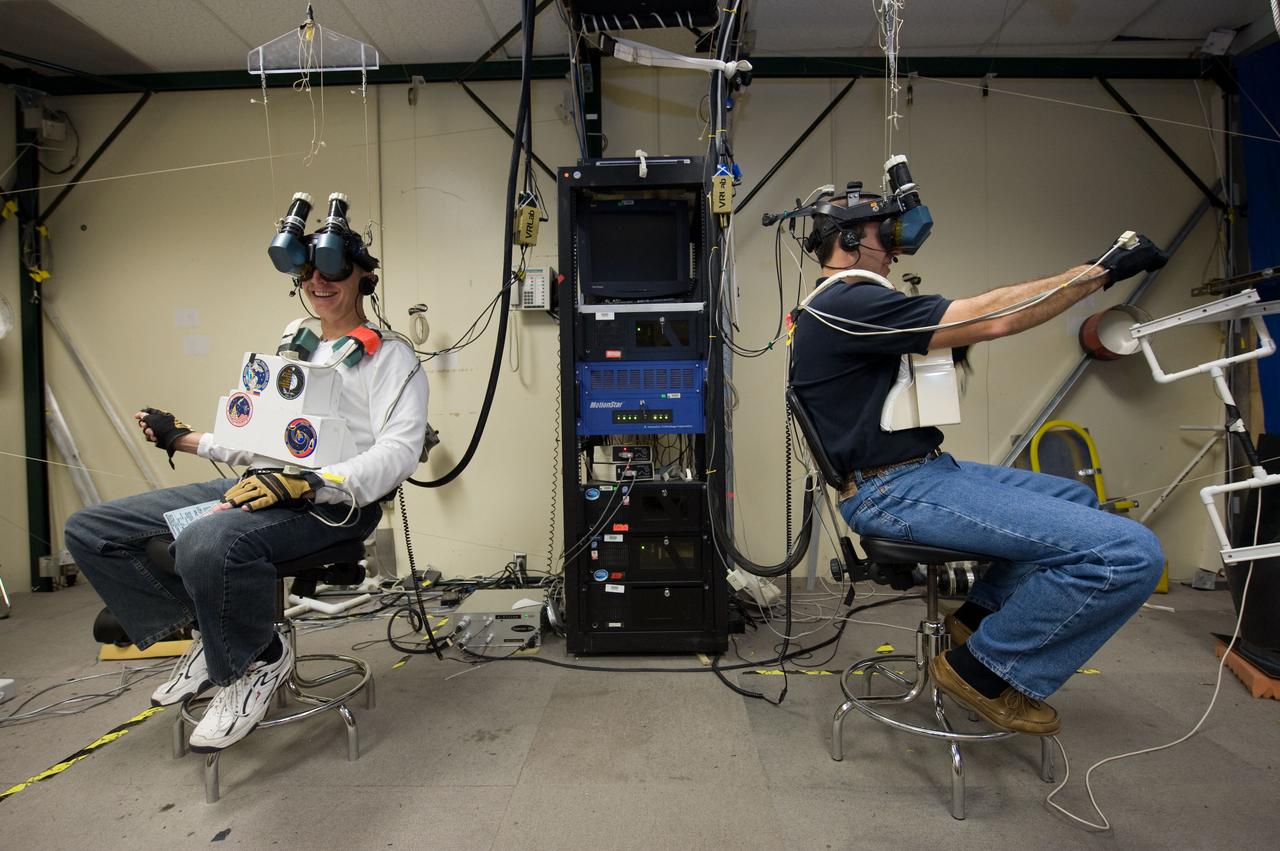
JSC2009-E-214341 (25 Sept. 2009) --- NASA astronauts Clayton Anderson (left) and Rick Mastracchio, both STS-131 mission specialists, use virtual reality hardware in the Space Vehicle Mock-up Facility at NASA's Johnson Space Center to rehearse some of their duties on the upcoming mission to the International Space Station. This type of virtual reality training allows the astronauts to wear a helmet and special gloves while looking at computer displays simulating actual movements around the various locations on the station hardware with which they will be working.
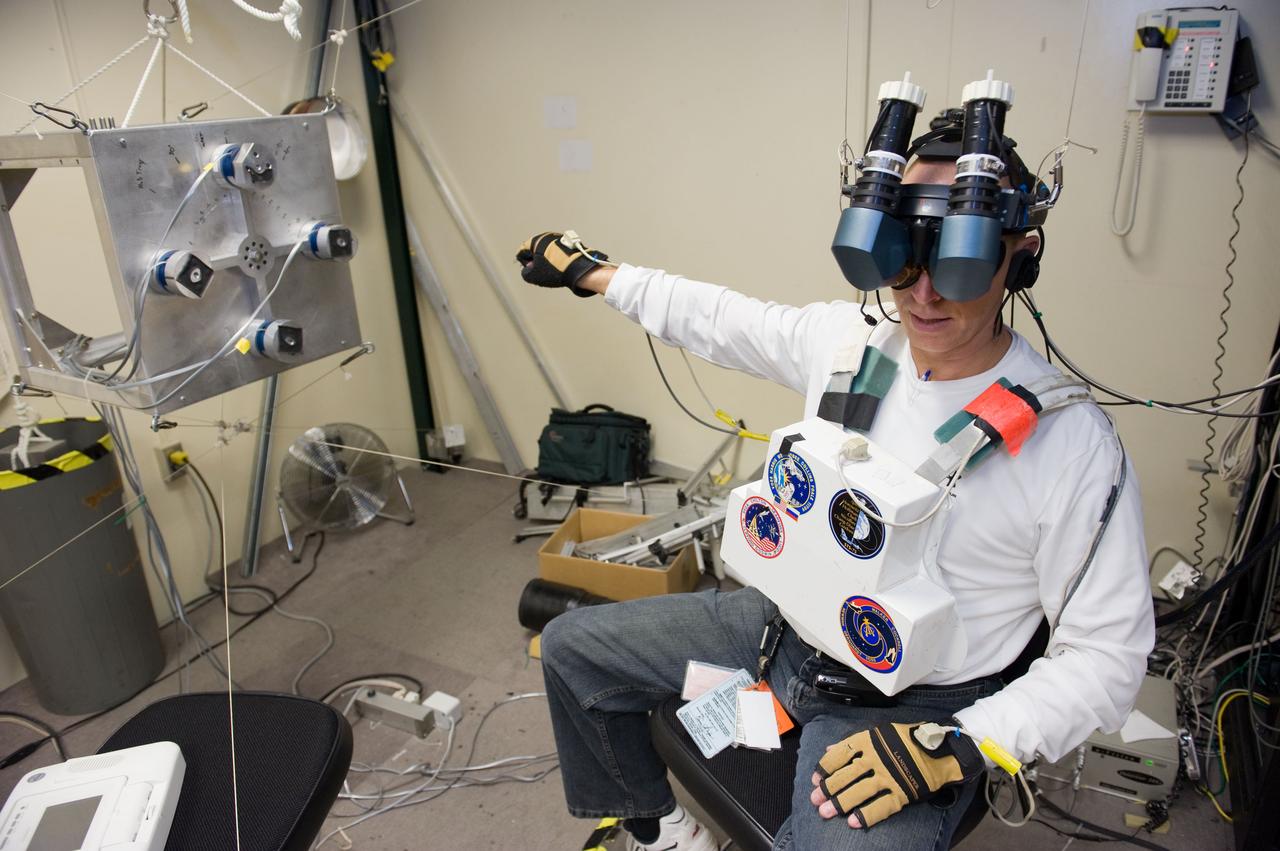
JSC2009-E-214335 (25 Sept. 2009) --- NASA astronaut Clayton Anderson, STS-131 mission specialist, uses virtual reality hardware in the Space Vehicle Mock-up Facility at NASA's Johnson Space Center to rehearse some of his duties on the upcoming mission to the International Space Station. This type of virtual reality training allows the astronauts to wear a helmet and special gloves while looking at computer displays simulating actual movements around the various locations on the station hardware with which they will be working.
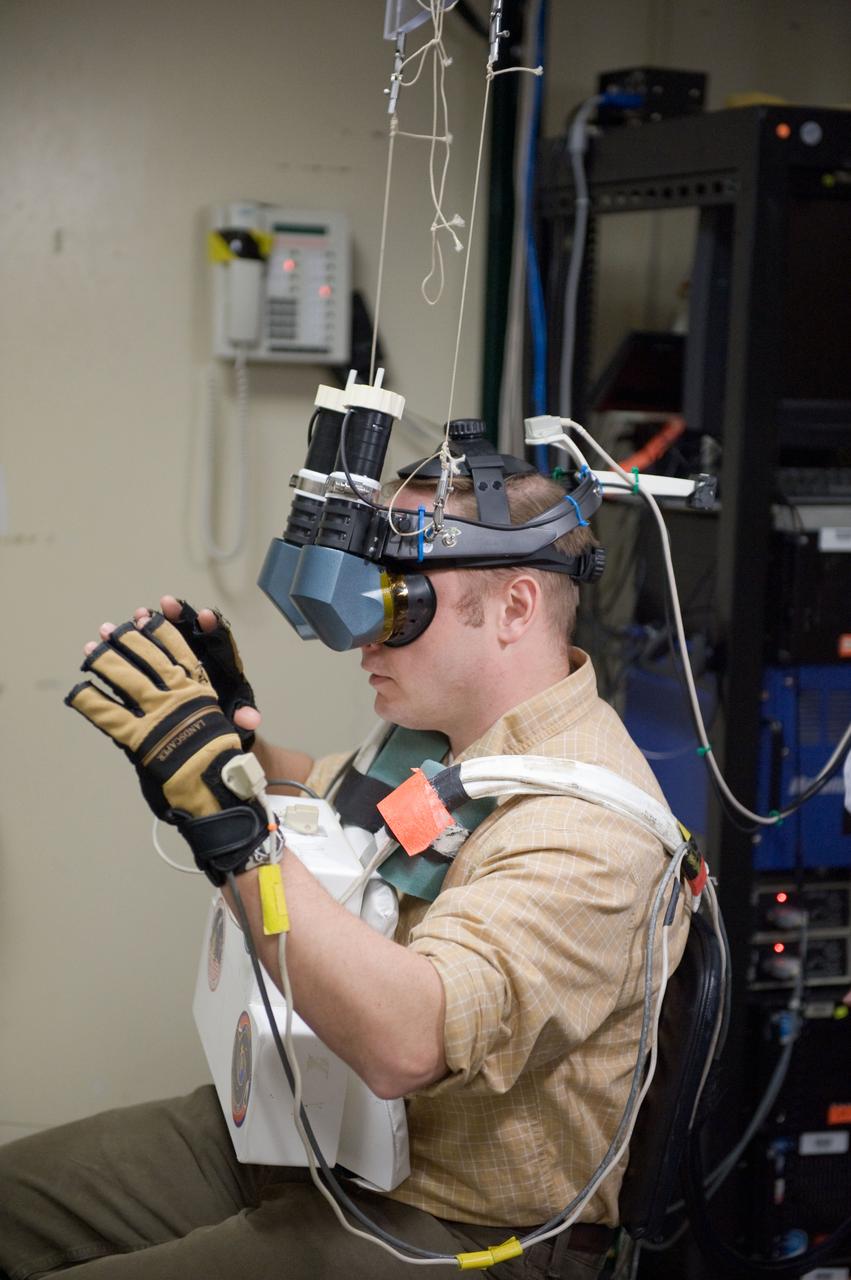
JSC2010-E-043659 (25 March 2010) --- NASA astronaut Michael Fincke, STS-134 mission specialist, uses virtual reality hardware in the Space Vehicle Mock-up Facility at NASA's Johnson Space Center to rehearse some of his duties on the upcoming mission to the International Space Station. This type of virtual reality training allows the astronauts to wear a helmet and special gloves while looking at computer displays simulating actual movements around the various locations on the station hardware with which they will be working.
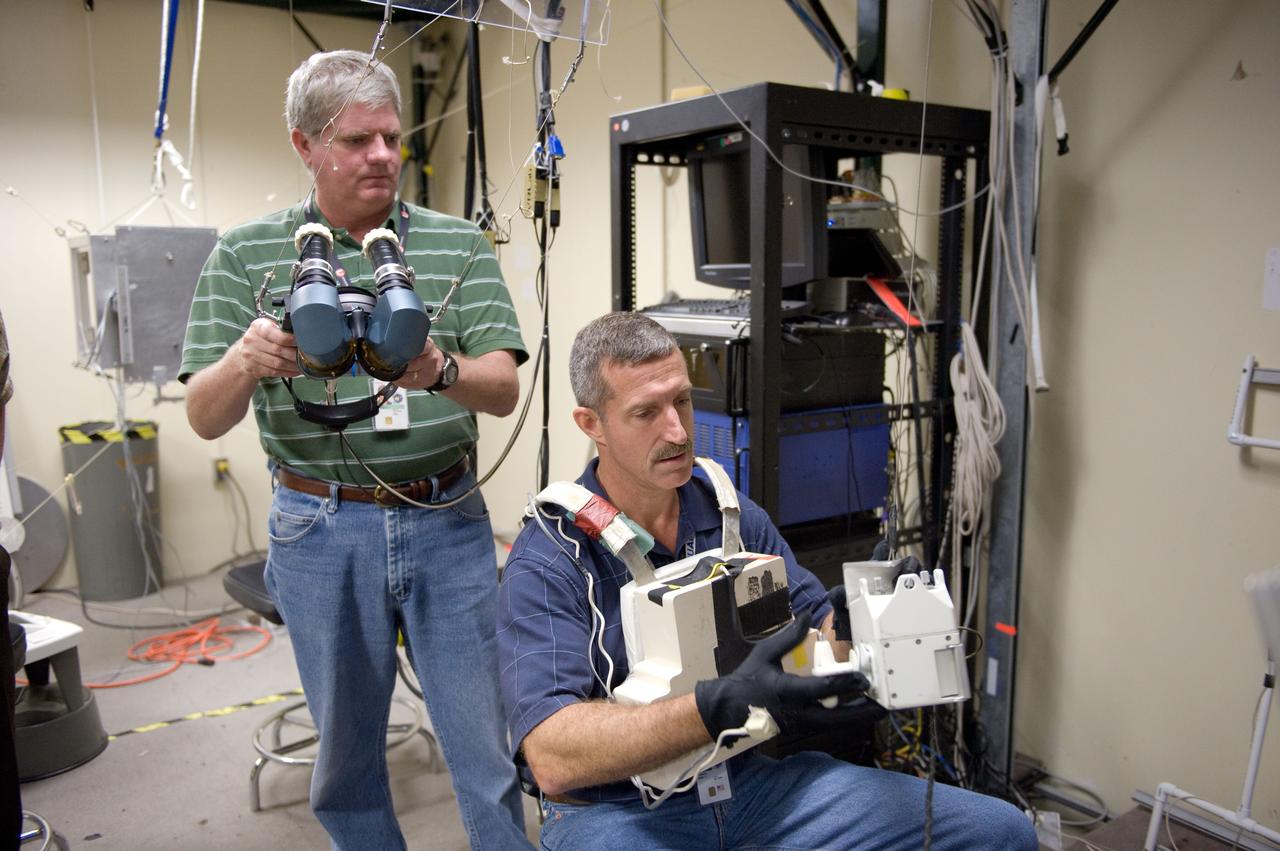
Expedition 29/30 astronaut Dan Burbank during SAFER Proficiency Training in the VR Lab. Photo Date: June 17, 2011. Location: Building 9 - Virtual Reality Lab. Photographer: Robert Markowitz
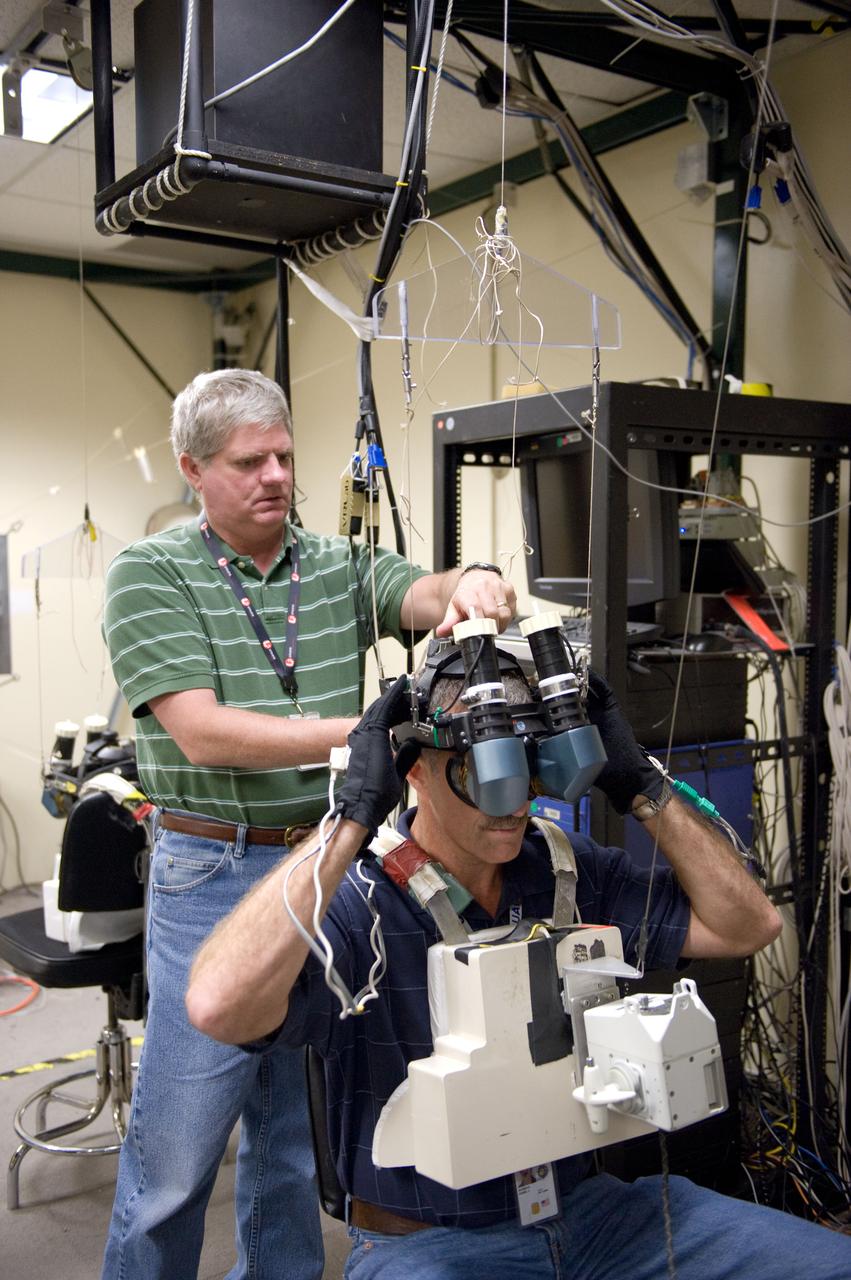
Expedition 29/30 astronaut Dan Burbank during SAFER Proficiency Training in the VR Lab. Photo Date: June 17, 2011. Location: Building 9 - Virtual Reality Lab. Photographer: Robert Markowitz
Expedition 29/30 astronaut Dan Burbank during SAFER Proficiency Training in the VR Lab. Photo Date: June 17, 2011. Location: Building 9 - Virtual Reality Lab. Photographer: Robert Markowitz
Expedition 29/30 astronaut Dan Burbank during SAFER Proficiency Training in the VR Lab. Photo Date: June 17, 2011. Location: Building 9 - Virtual Reality Lab. Photographer: Robert Markowitz
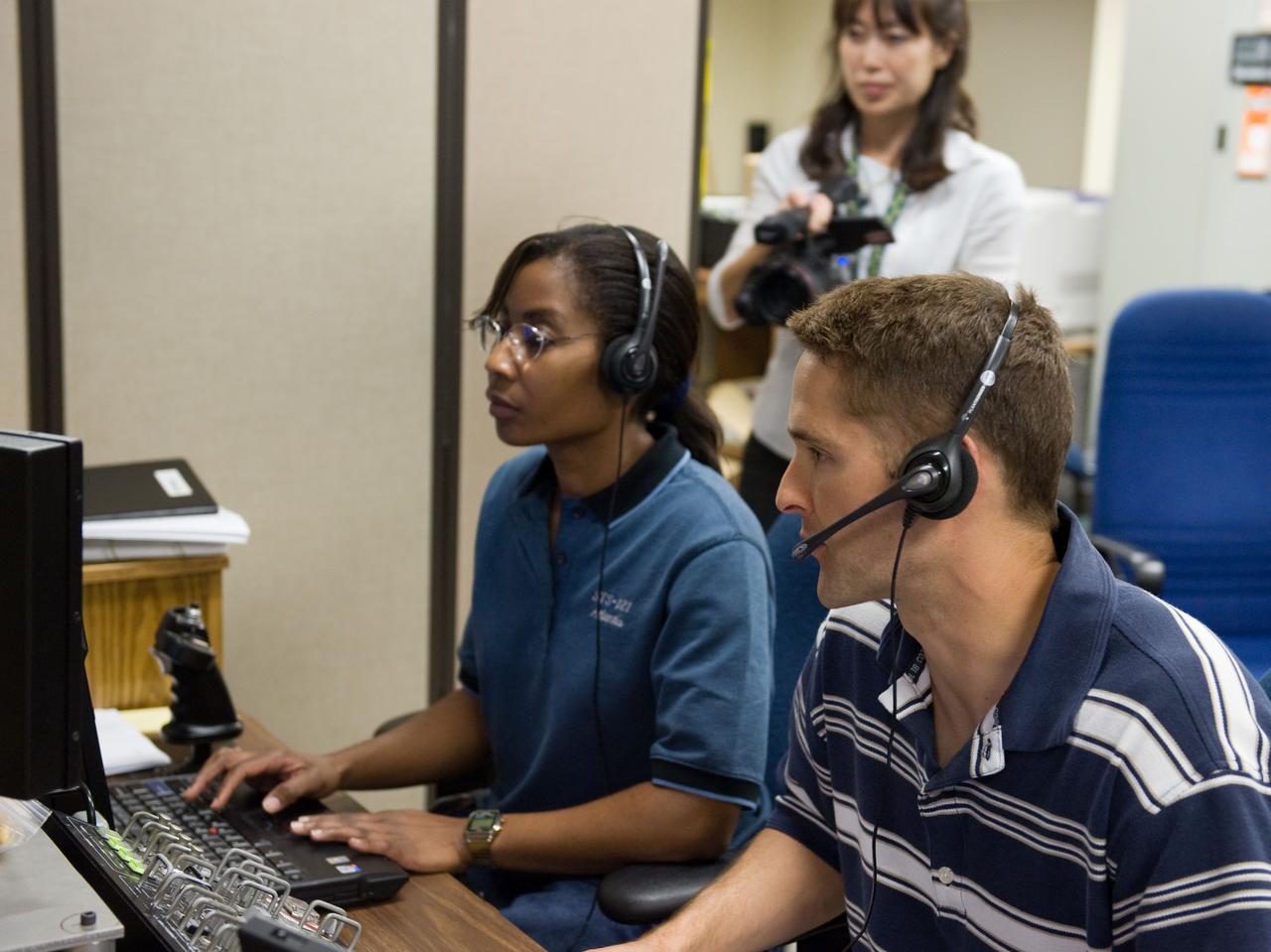
JSC2009-E-214338 (25 Sept. 2009) --- NASA astronauts James P. Dutton Jr., STS-131 pilot; and Stephanie Wilson, mission specialist, use the virtual reality lab in the Space Vehicle Mock-up Facility at NASA's Johnson Space Center to train for some of their duties aboard the space shuttle and space station. This type of computer interface, paired with virtual reality training hardware and software, helps to prepare the entire team for dealing with space station elements. Japan Aerospace Exploration Agency (JAXA) astronaut Naoko Yamazaki, mission specialist, is visible in the background.
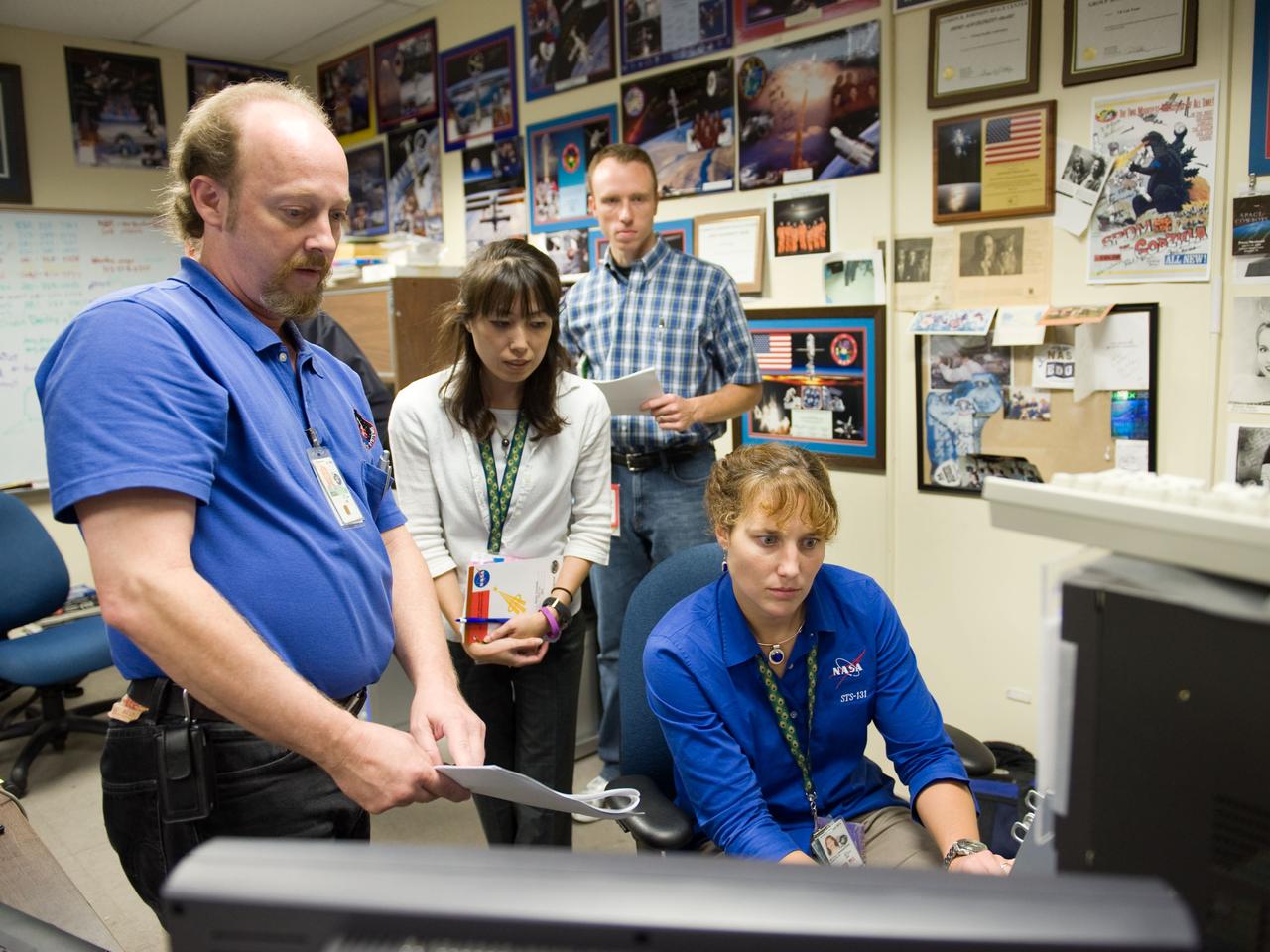
JSC2009-E-214320 (25 Sept. 2009) --- NASA astronaut Dorothy Metcalf-Lindenburger (seated) and Japan Aerospace Exploration Agency (JAXA) astronaut Naoko Yamazaki, both STS-131 mission specialists, use the virtual reality lab in the Space Vehicle Mock-up Facility at NASA's Johnson Space Center to train for some of their duties aboard the space shuttle and space station. This type of computer interface, paired with virtual reality training hardware and software, helps to prepare the entire team for dealing with space station elements. United Space Alliance crew instructor Stephan Kinstle (left) assisted the crew members.
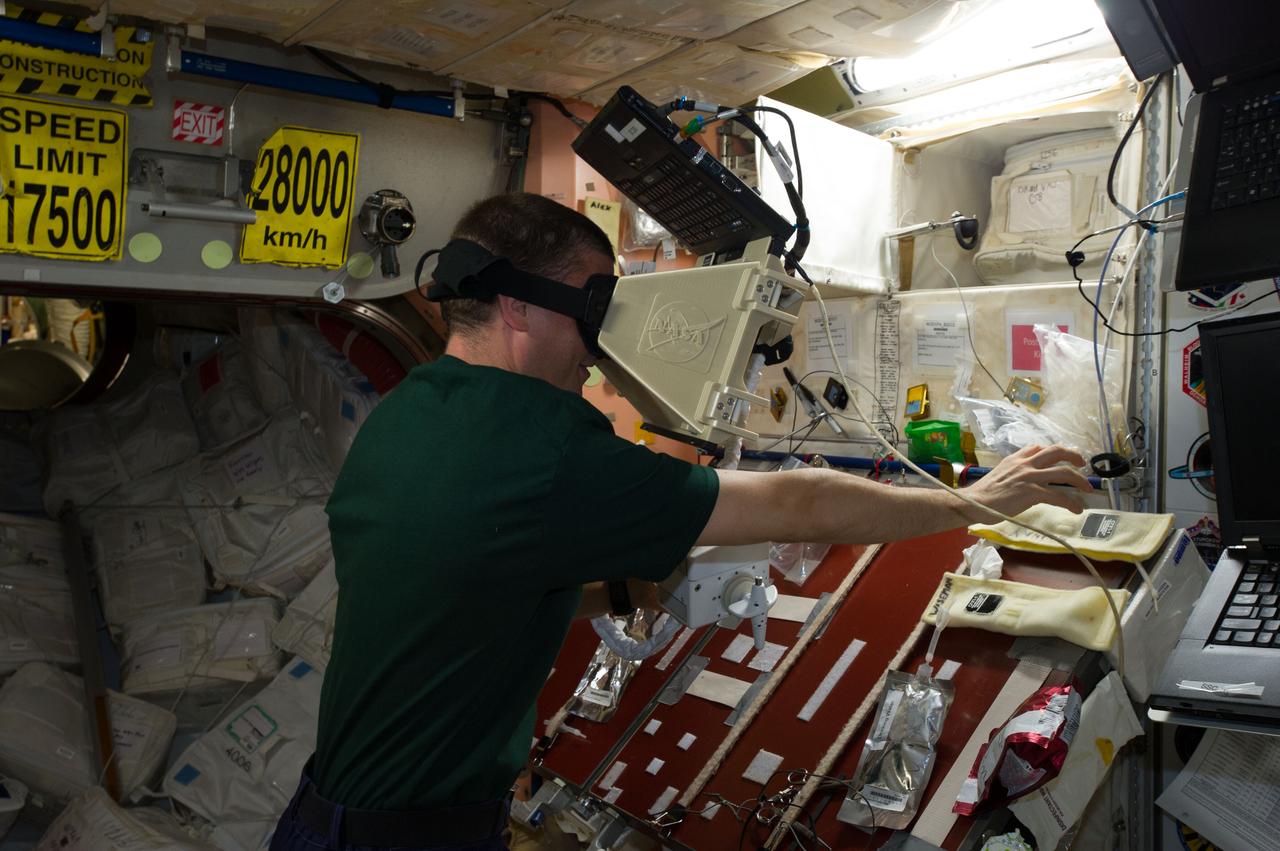
ISS040-E-088794 (5 Aug. 2014) --- In the Unity node of the International Space Station, NASA astronaut Reid Wiseman, Expedition 40 flight engineer, uses a laptop computer 3D virtual spacewalk trainer in preparation for two upcoming U.S. sessions of extravehicular activity (EVA).
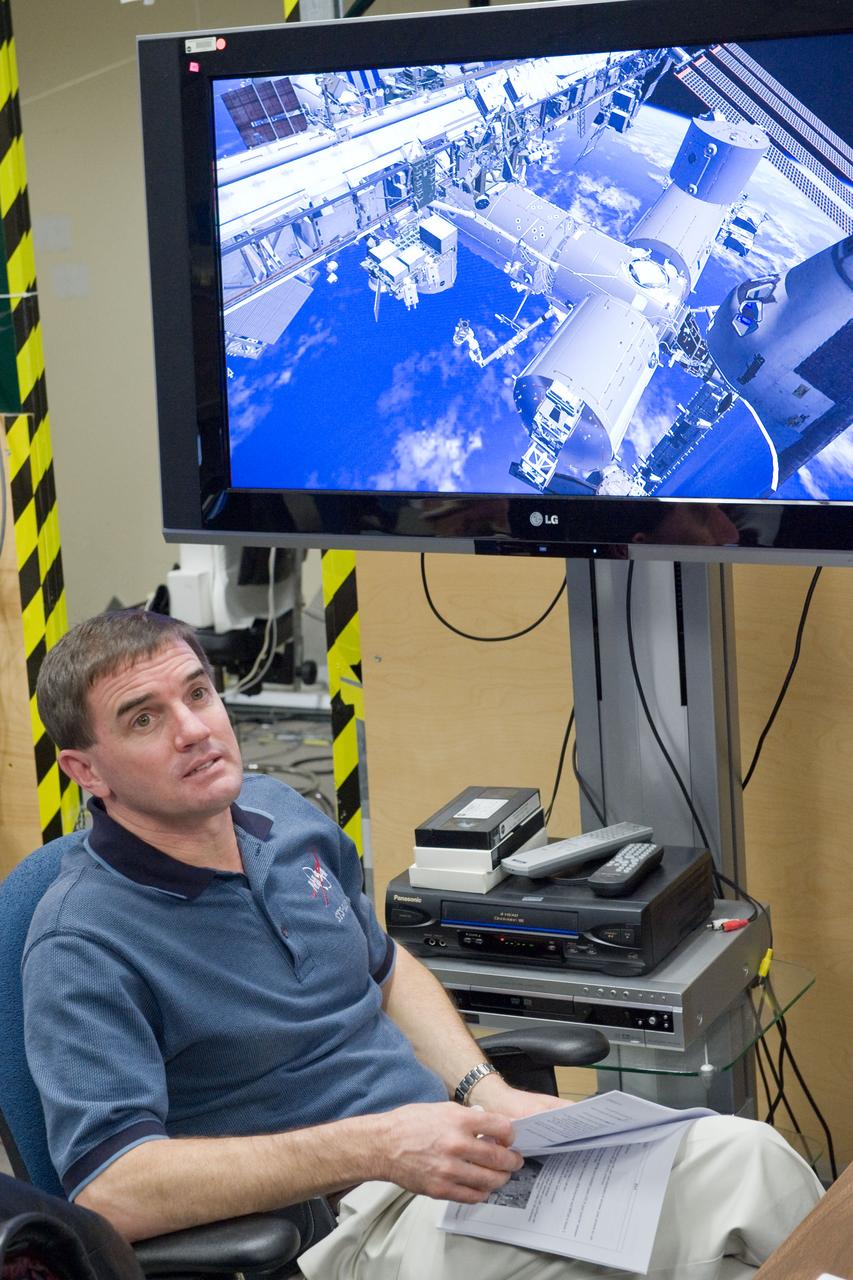
JSC2011-E-003203 (18 Jan. 2011) --- NASA astronaut Rex Walheim, STS-135 mission specialist, uses the virtual reality lab in the Space Vehicle Mock-up Facility at NASA's Johnson Space Center to train for some of his duties aboard the space shuttle and space station. This type of computer interface, paired with virtual reality training hardware and software, helps to prepare crew members for dealing with space station elements. STS-135 is planned to be the final mission of the space shuttle program. Photo credit: NASA or National Aeronautics and Space Administration
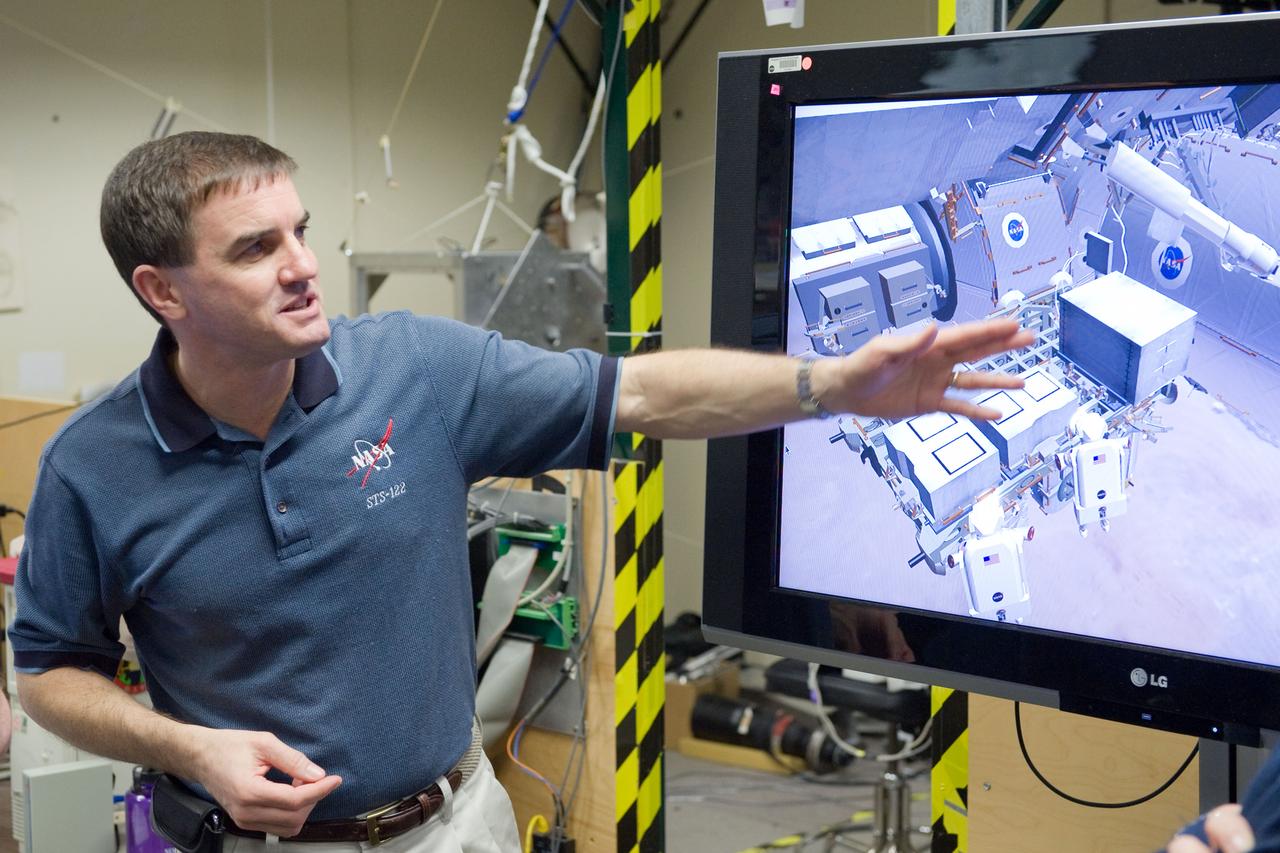
JSC2011-E-003207 (18 Jan. 2011) --- NASA astronaut Rex Walheim, STS-135 mission specialist, uses the virtual reality lab in the Space Vehicle Mock-up Facility at NASA's Johnson Space Center to train for some of his duties aboard the space shuttle and space station. This type of computer interface, paired with virtual reality training hardware and software, helps to prepare crew members for dealing with space station elements. STS-135 is planned to be the final mission of the space shuttle program. Photo credit: NASA or National Aeronautics and Space Administration
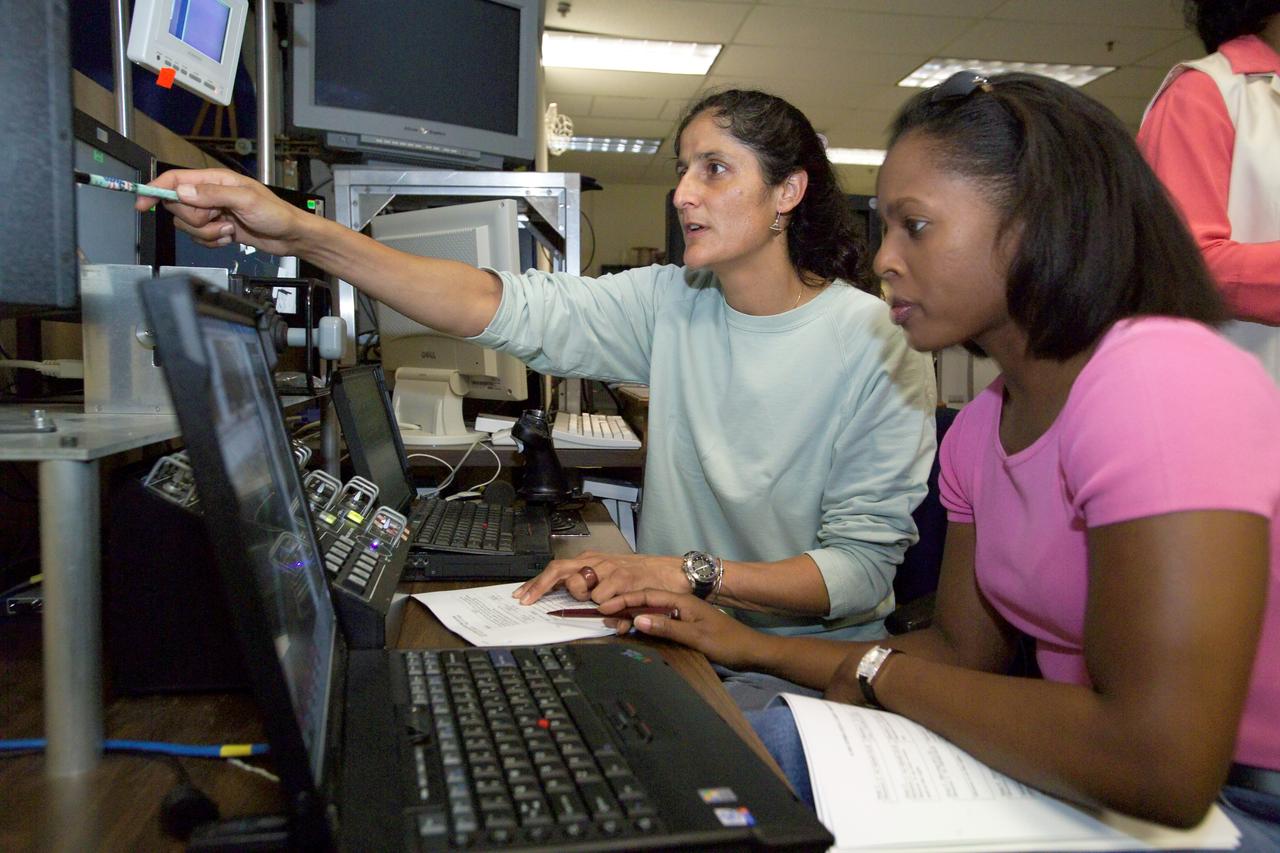
JSC2005-E-18147 (6 May 2005) --- Astronauts Sunita L. Williams (left), Expedition 14 flight engineer, and Joan E. Higginbotham, STS-116 mission specialist, use the virtual reality lab at the Johnson Space Center to train for their duties aboard the space shuttle. This type of computer interface, paired with virtual reality training hardware and software, helps to prepare the entire team for dealing with space station elements. Williams will join Expedition 14 in progress and serve as a flight engineer after traveling to the station on space shuttle mission STS-116.
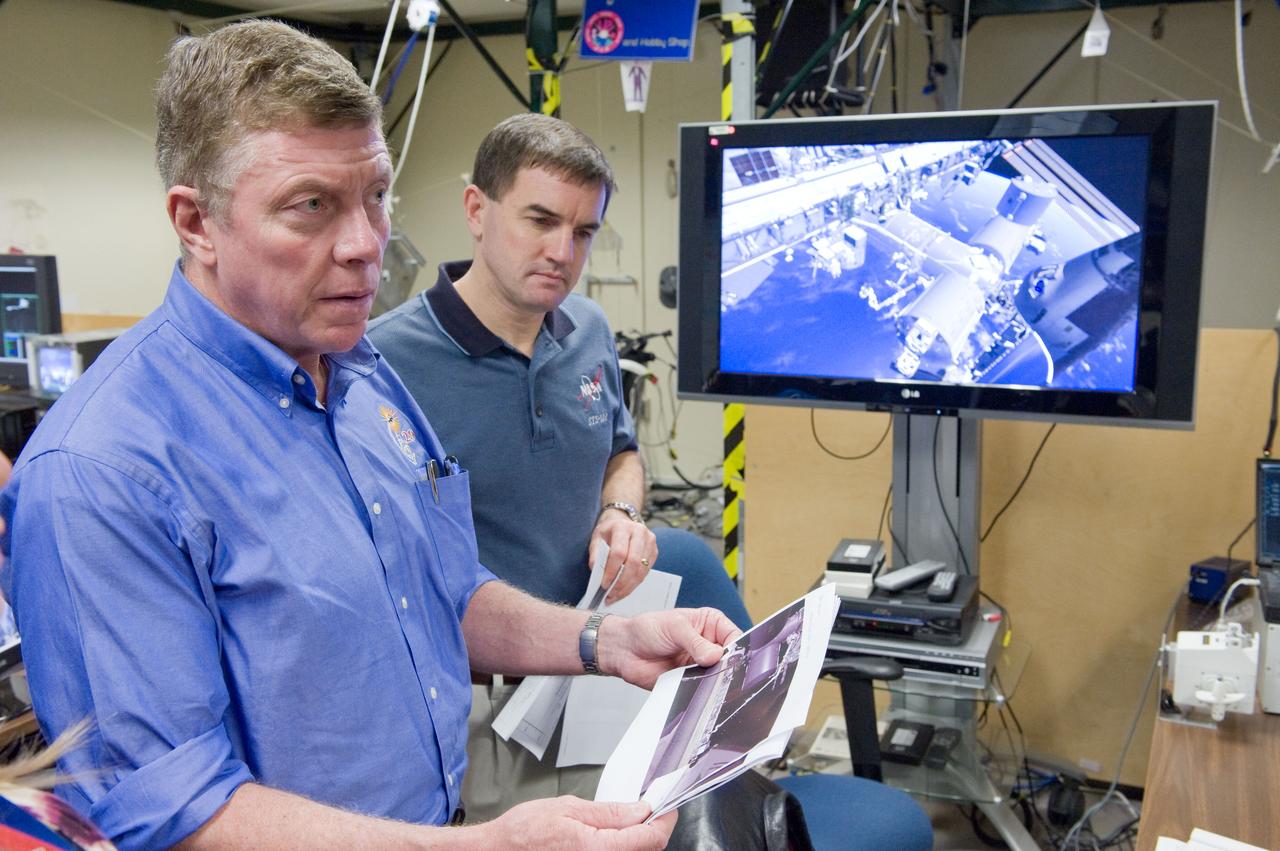
JSC2011-E-003204 (18 Jan. 2011) --- NASA astronauts Rex Walheim, STS-135 mission specialist; and Mike Fossum (foreground), Expedition 28 flight engineer and Expedition 29 commander; use the virtual reality lab in the Space Vehicle Mock-up Facility at NASA's Johnson Space Center to train for some of their duties aboard the space shuttle and space station. This type of computer interface, paired with virtual reality training hardware and software, helps to prepare crew members for dealing with space station elements. STS-135 is planned to be the final mission of the space shuttle program. Photo credit: NASA or National Aeronautics and Space Administration
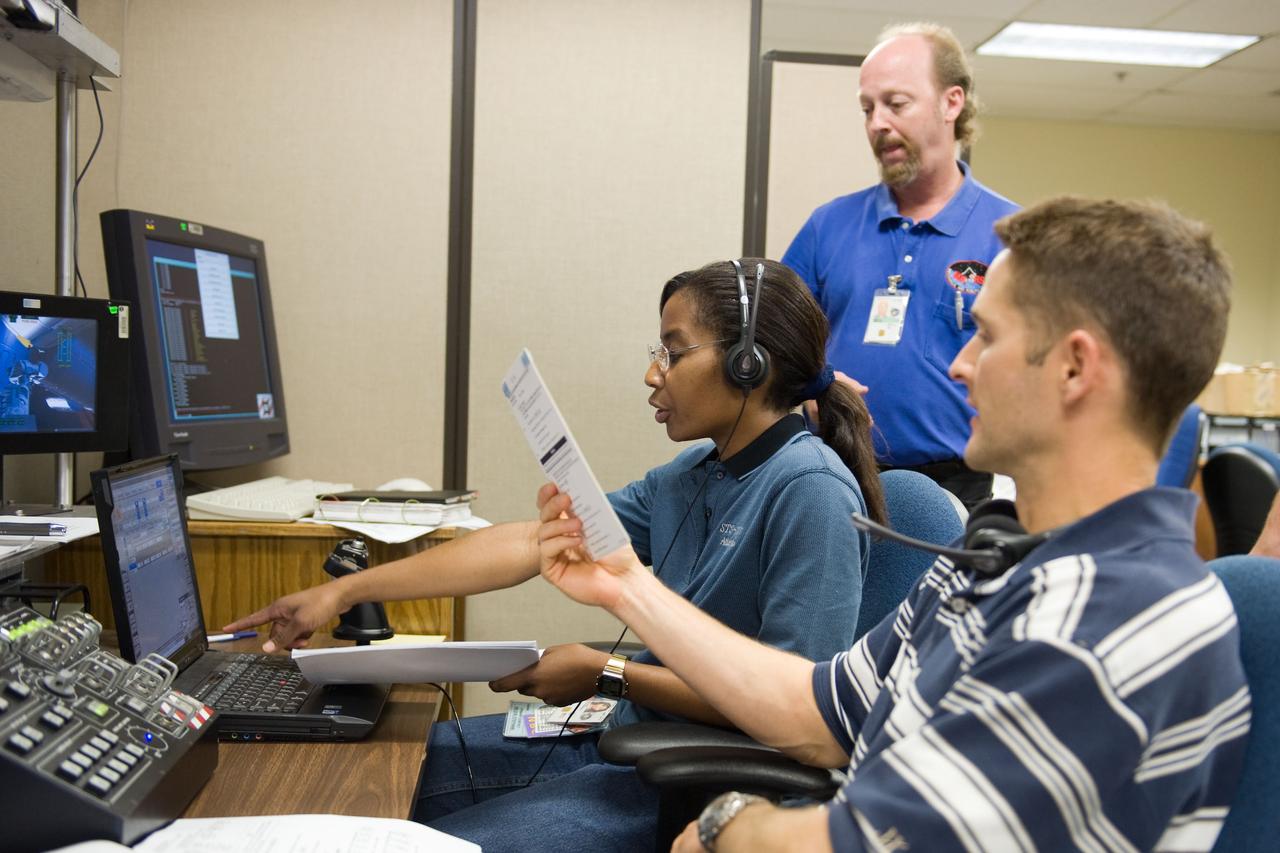
JSC2009-E-214322 (25 Sept. 2009) --- NASA astronauts James P. Dutton Jr., STS-131 pilot; and Stephanie Wilson, mission specialist, use the virtual reality lab in the Space Vehicle Mock-up Facility at NASA's Johnson Space Center to train for some of their duties aboard the space shuttle and space station. This type of computer interface, paired with virtual reality training hardware and software, helps to prepare the entire team for dealing with space station elements. United Space Alliance crew instructor Stephan Kinstle (background) assisted the crew members.
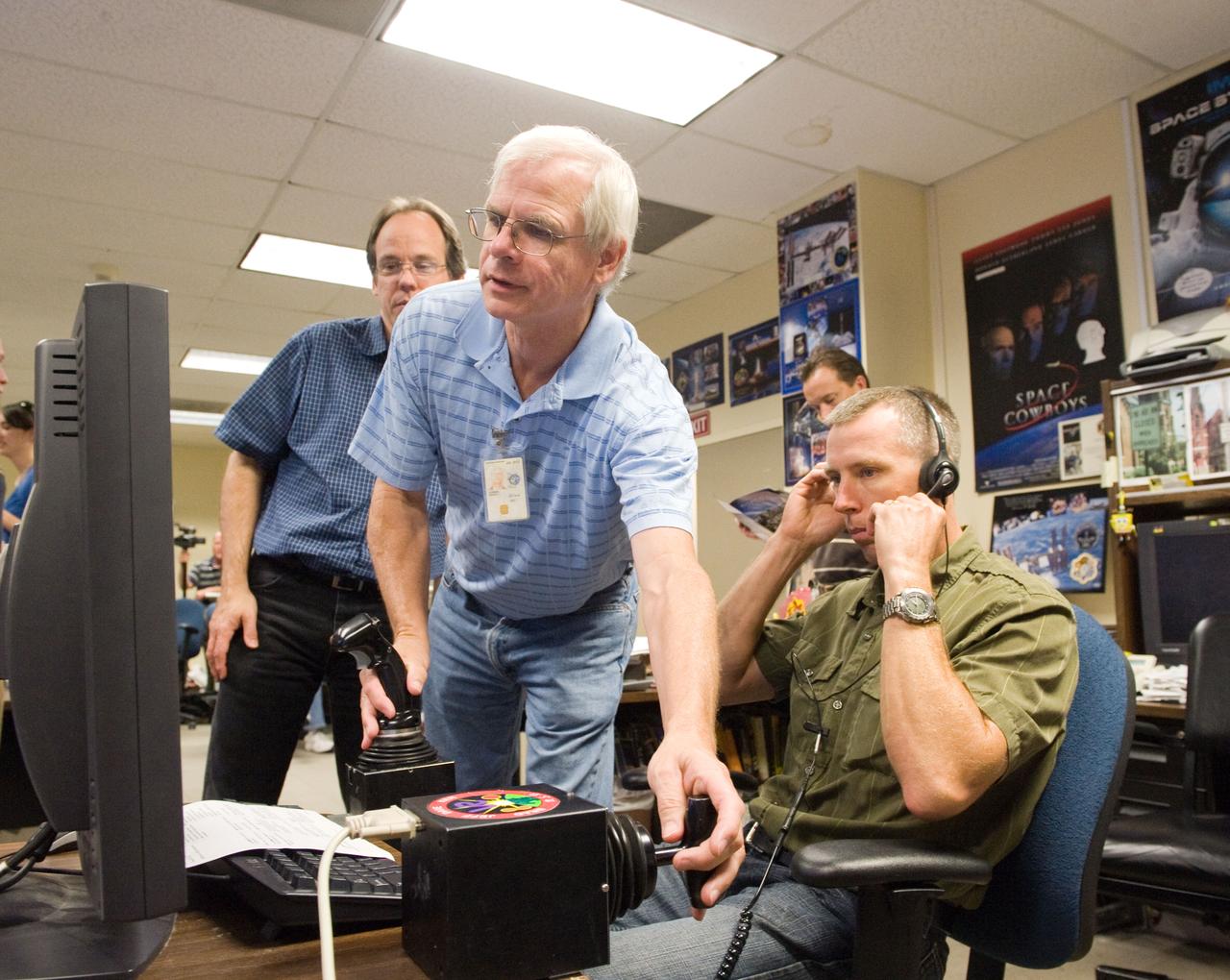
JSC2010-E-121045 (27 Aug. 2010) --- NASA astronaut Andrew Feustel (right), STS-134 mission specialist, uses the virtual reality lab in the Space Vehicle Mock-up Facility at NASA's Johnson Space Center to train for some of his duties aboard the space shuttle and space station. This type of computer interface, paired with virtual reality training hardware and software, helps to prepare crew members for dealing with space station elements. David Homan assisted Feustel. Photo credit: NASA or National Aeronautics and Space Administration
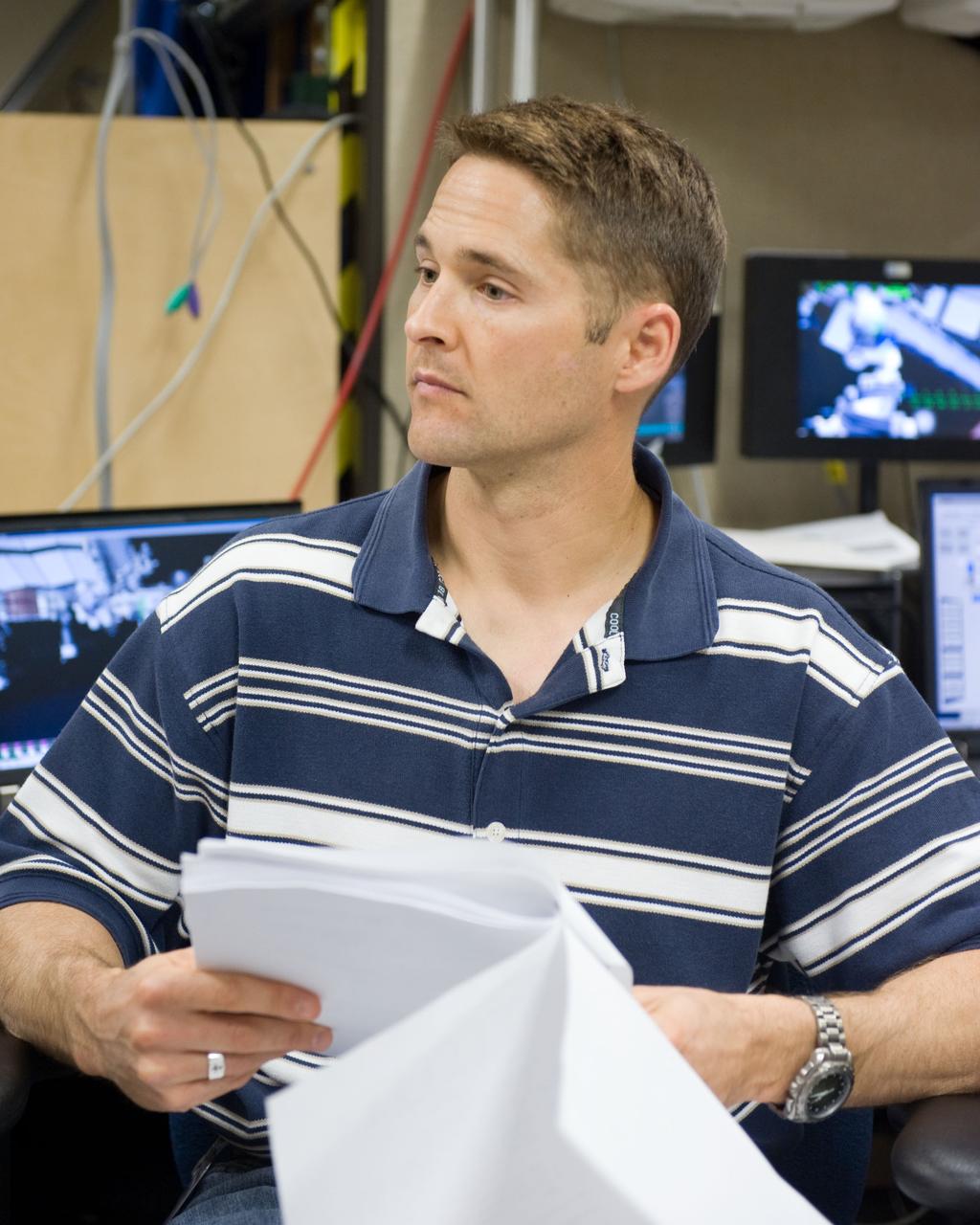
JSC2009-E-214326 (25 Sept. 2009) --- NASA astronaut James P. Dutton Jr., STS-131 pilot, is pictured during a training session in the virtual reality lab in the Space Vehicle Mock-up Facility at NASA's Johnson Space Center to train for some of his duties aboard the space shuttle and space station.
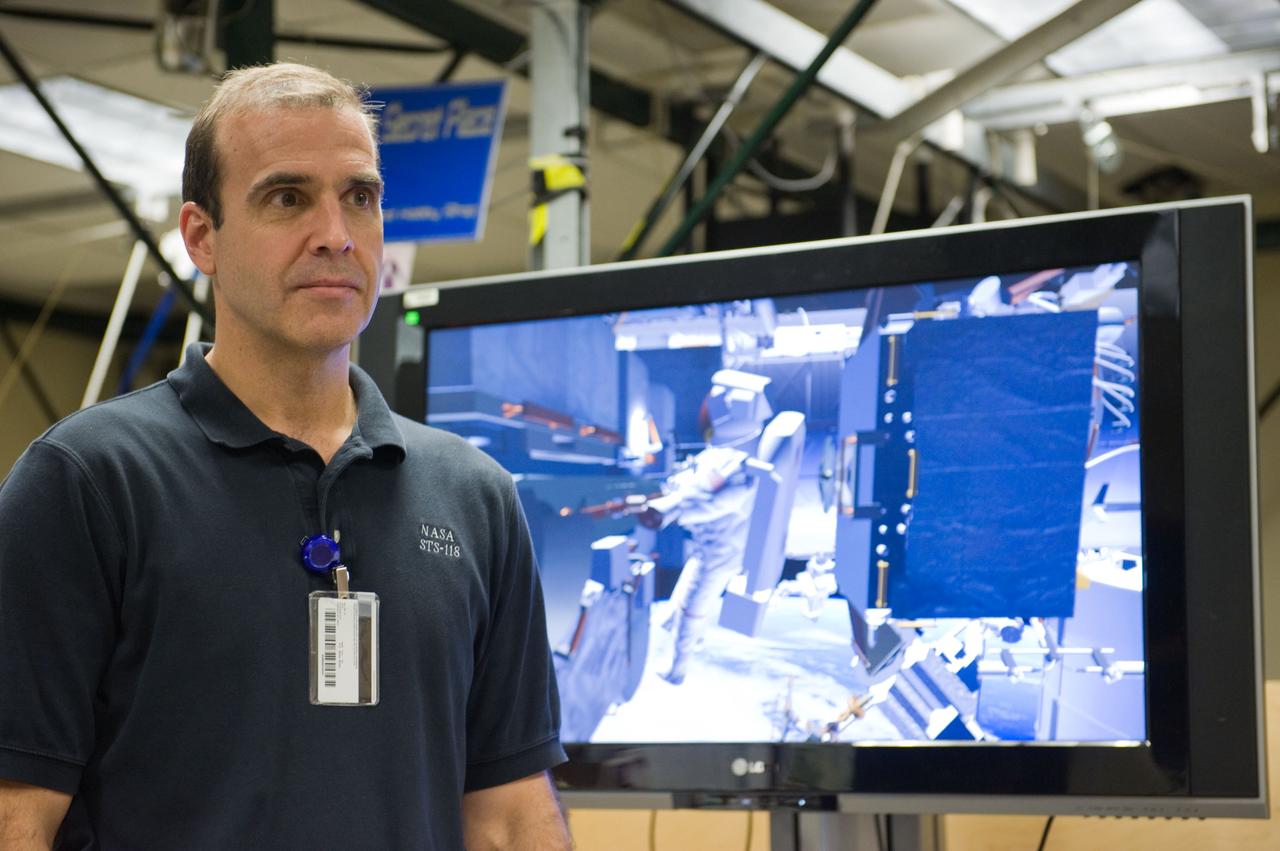
JSC2009-E-214327 (25 Sept. 2009) --- NASA astronaut Rick Mastracchio, STS-131 mission specialist, is pictured during a training session in the virtual reality lab in the Space Vehicle Mock-up Facility at NASA's Johnson Space Center to train for some of his duties aboard the space shuttle and space station.
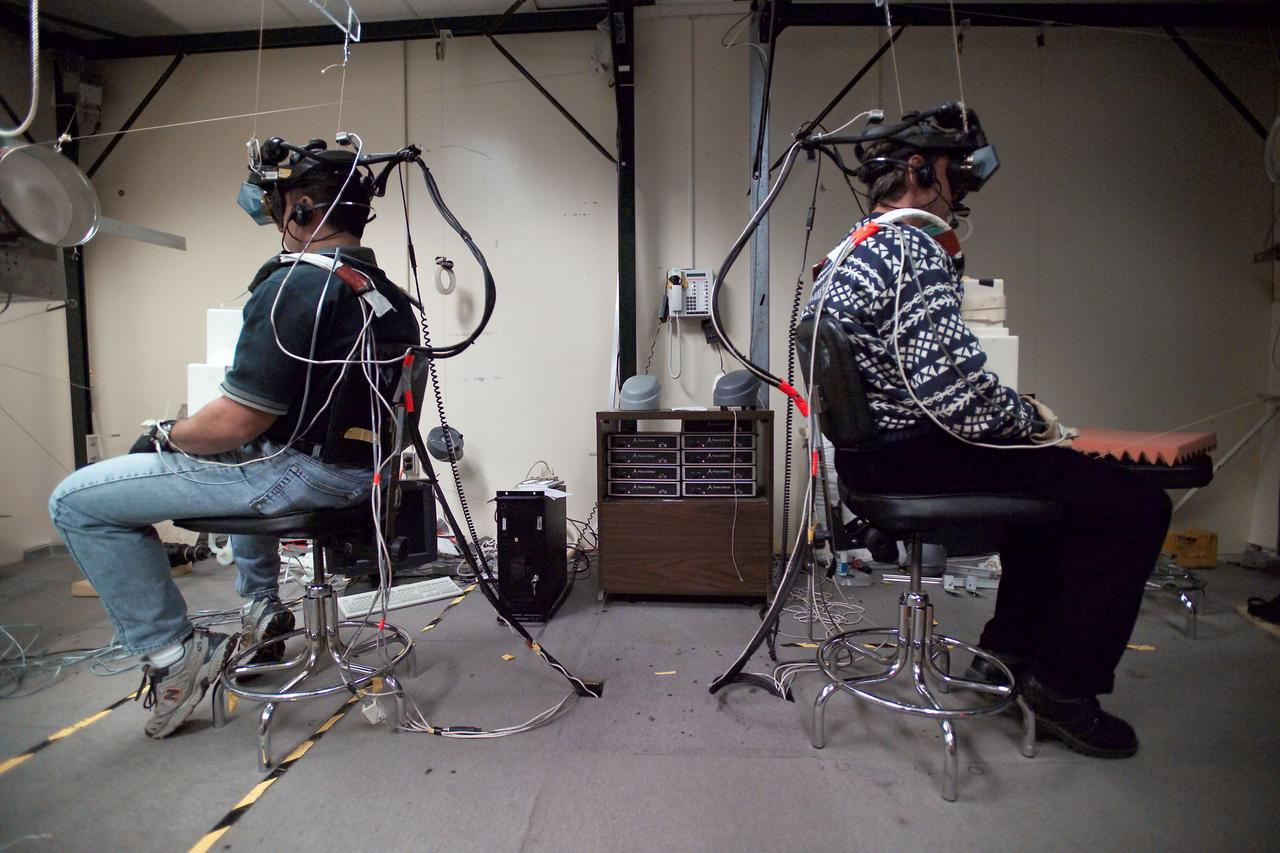
JSC2005-E-04515 (3 Feb. 2005) --- Astronauts Nicholas J.M. Patrick (left) and European Space Agency (ESA) astronaut Christer Fuglesang, both STS-116 mission specialists, use virtual reality hardware in the Space Vehicle Mockup Facility at the Johnson Space Center to rehearse some of their duties on the upcoming mission to the international space station. This type of virtual reality training allows the astronauts to wear a helmet and special gloves while looking at computer displays simulating actual movements around the various locations on the station hardware with which they will be working.