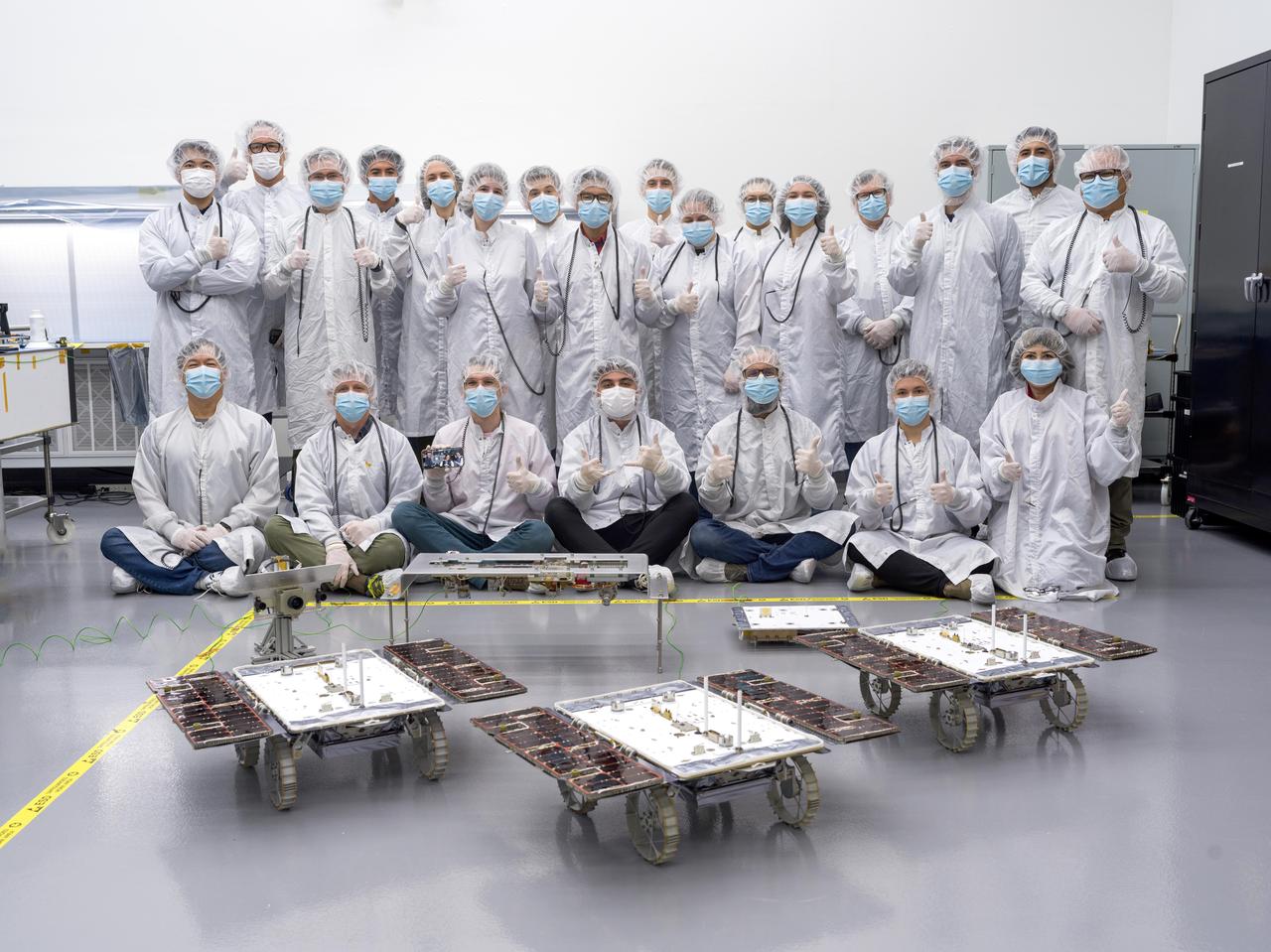
Members of the assembly, test, launch, and operations team for NASA's CADRE (Cooperative Autonomous Distributed Robotic Exploration) project pose in a clean room at the agency's Jet Propulsion Laboratory in Southern California on Jan. 26, 2024, with three lunar rovers after their completion. Bound for the Moon, CADRE is a technology demonstration designed to show that a group of robotic spacecraft can work together as a team to accomplish tasks and record data autonomously – without explicit commands from mission controllers on Earth. Seen behind the rovers are hardware elements that will be mounted on the lunar lander aboard which CADRE will arrive at the Moon: the situational awareness camera assembly (SACA), one of the deployers that will lower the rovers onto the lunar surface, and the base station with which the rovers will communicate via mesh network radios. Back row, from left: Wei Chen Wilson Yeh, Mark White, Nathan Cheek, Baylor de los Reyes, Jacqueline Sly, Blair Emanuel, Josh Miller, Jonathan Tan, Sawyer Brooks, Libby Boroson, Leroy Montalvo, Tonya Beatty, Bert Turney, George Dupas, Leo Ortiz, and Nelson Serrano. Front row, from left: Kristopher Sherril, Coleman Richdale, Russell Smith, Daniel Esguerra, Will Raff, Justin Schachter, and Clara Nguyen. Shown on the cellphone held by Smith are absent ATLO team members Ara Kourchians, Molly Shelton, and Randy Ballat. https://photojournal.jpl.nasa.gov/catalog/PIA26165
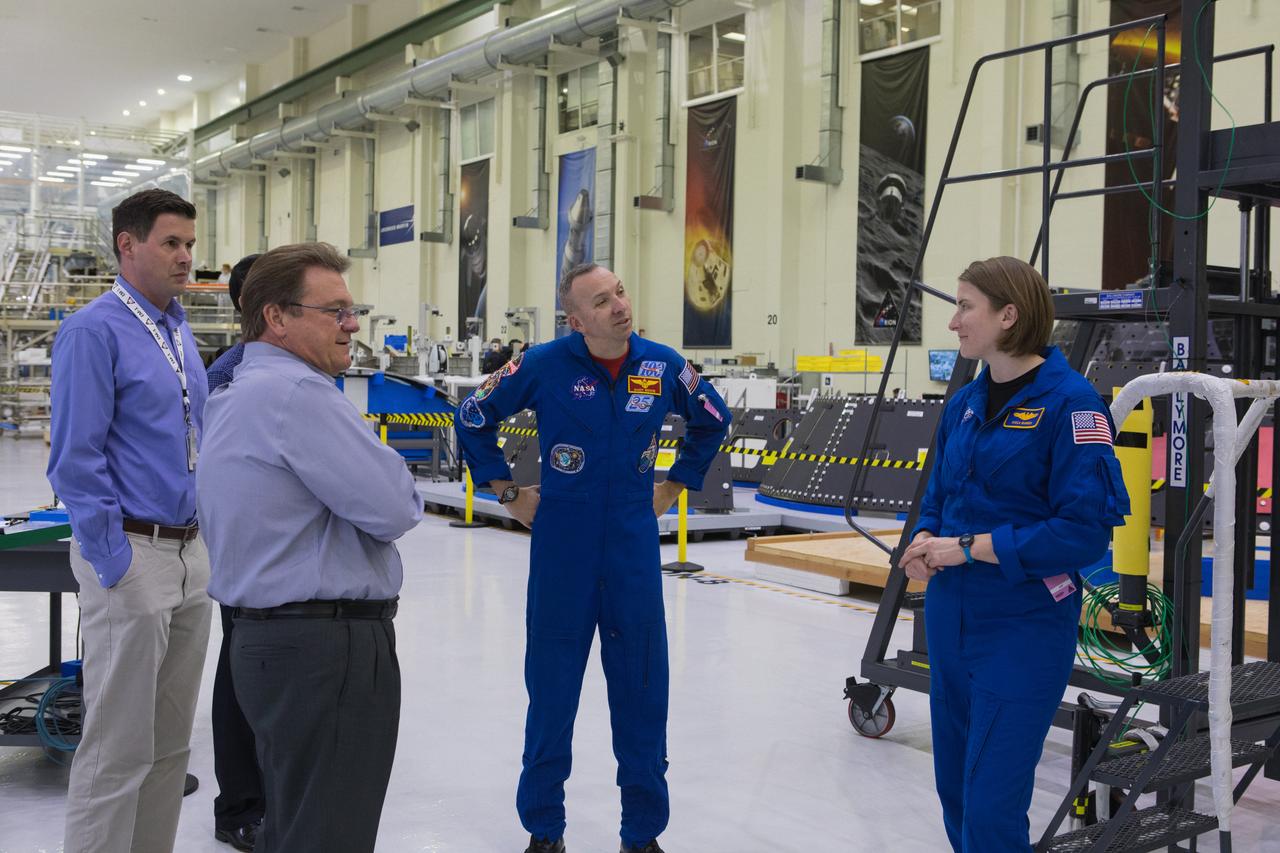
NASA astronaut Randy Bresnik, center, and astronaut candidate Kayla Barron, far right, tour the Operations and Checkout Building high bay at the agency’s Kennedy Space Center in Florida on Feb. 12, 2019. They viewed all of the hardware in the high bay that is being processed for Exploration Mission-1 and Exploration Mission-2. Accompanying them are Jules Schneider, director, Assembly, Test and Launch Operations (ATLO) with Lockheed Martin; Nathan Varn, senior manager, ATLO with Lockheed Martin; and Glenn Chin, deputy manager, NASA Orion Production Operations.
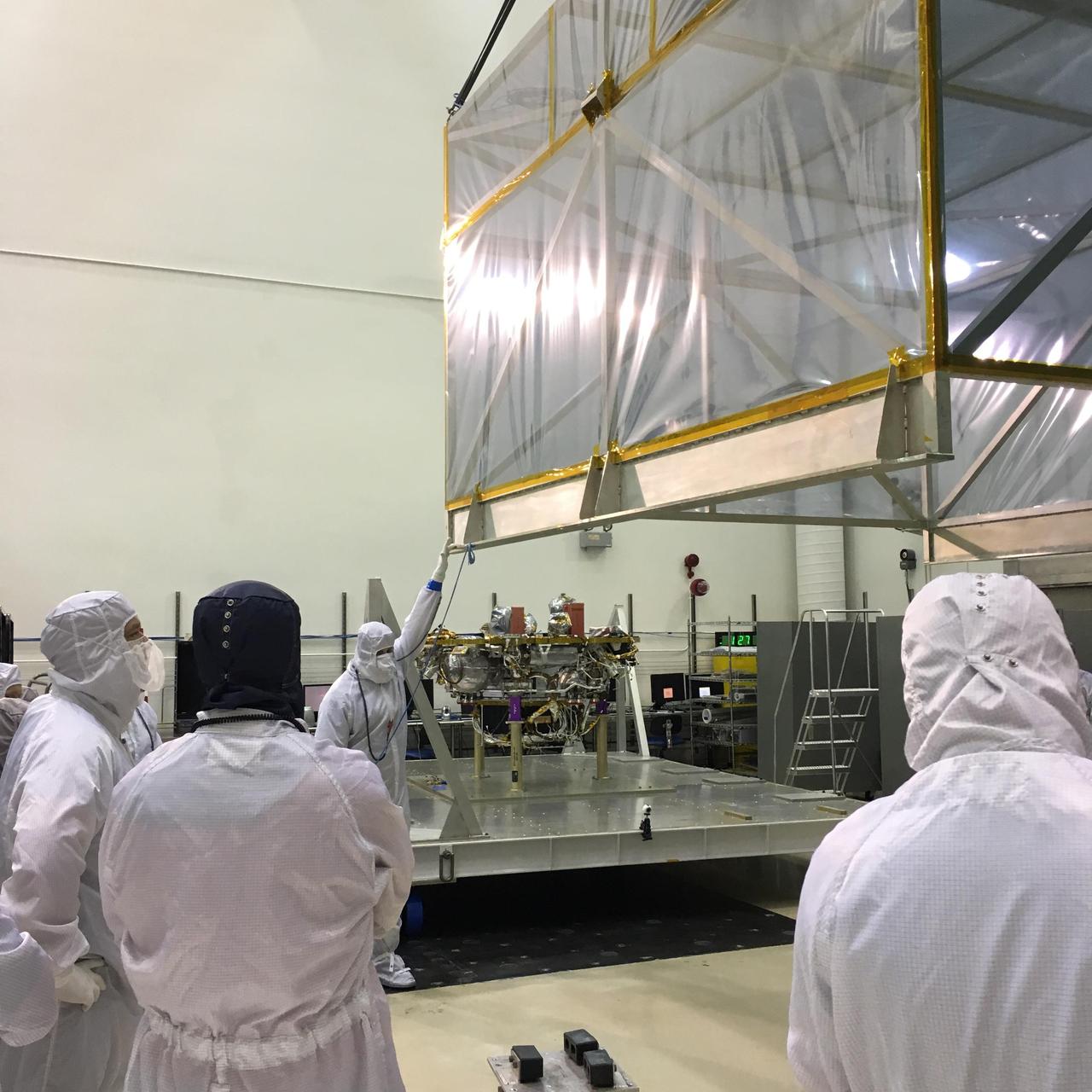
Members of the InSight mission's assembly, test and launch operations (ATLO) team remove the "birdcage" from NASA's InSight spacecraft, in this photo taken June 19, 2017, in a Lockheed Martin clean room facility in Littleton, Colorado. The birdcage is the inner layer of protective housing that shielded the spacecraft while in storage following a postponement of launch. It is made of a film that dissipates electrostatic conditions to protect the spacecraft from contamination. The InSight mission (for Interior Exploration using Seismic Investigations, Geodesy and Heat Transport) is scheduled to launch in May 2018 and land on Mars Nov. 26, 2018. It will investigate processes that formed and shaped Mars and will help scientists better understand the evolution of our inner solar system's rocky planets, including Earth. https://photojournal.jpl.nasa.gov/catalog/PIA21843
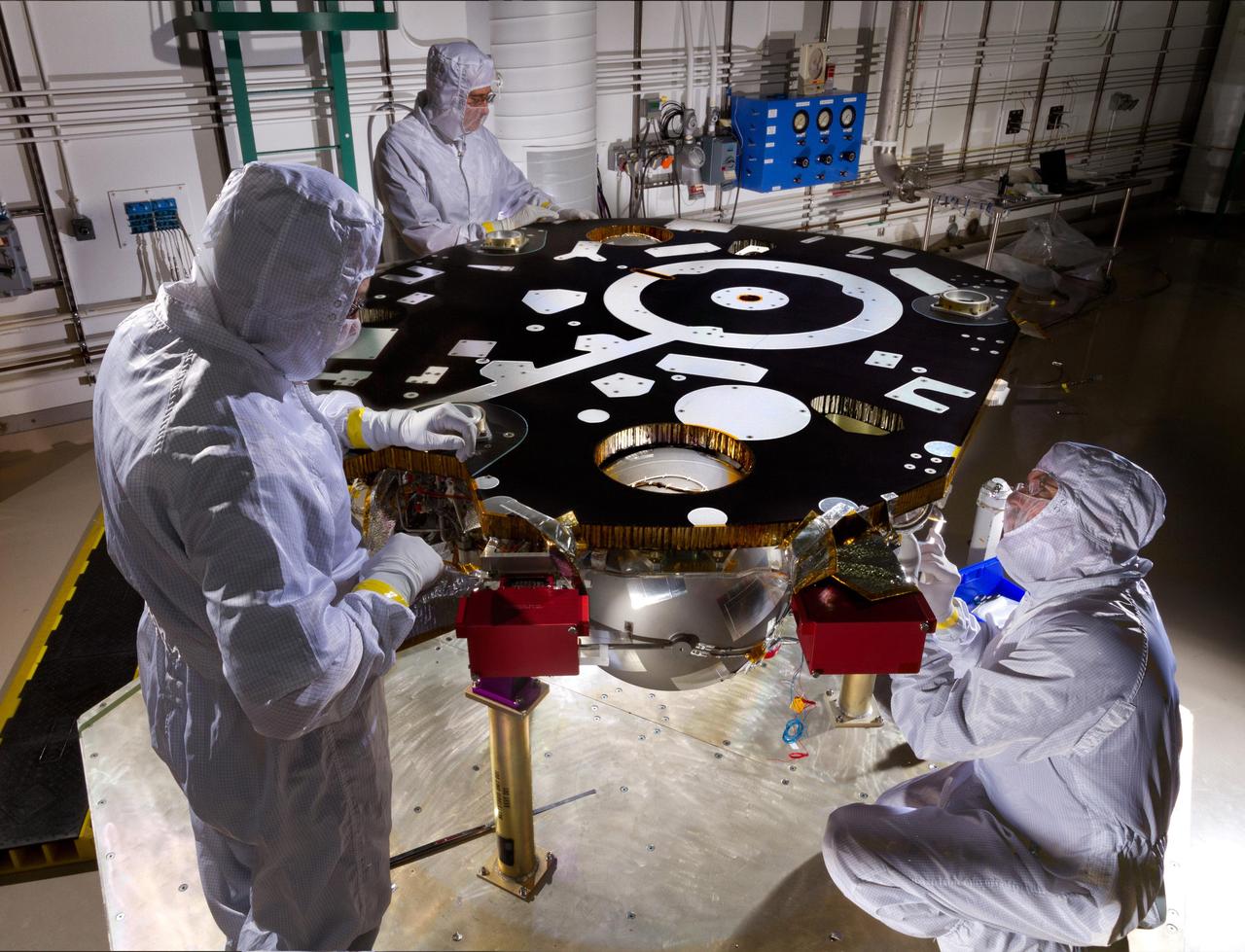
Technicians in a Lockheed Martin clean room near Denver prepare NASA's InSight Mars lander for propulsion proof and leak testing on Oct. 31, 2014. Following the test, the lander was moved to another clean room for the start of the mission's assembly, test and launch operations (ATLO) phase. The assembly portion of ATLO will last about six months. The InSight mission (for Interior Exploration using Seismic Investigations, Geodesy and Heat Transport) is scheduled to launch in March 2016 and land on Mars six months later. It will investigate processes that formed and shaped Mars and will help scientists better understand the evolution of our inner solar system's rocky planets, including Earth. Note: After thorough examination, NASA managers have decided to suspend the planned March 2016 launch of the Interior Exploration using Seismic Investigations Geodesy and Heat Transport (InSight) mission. The decision follows unsuccessful attempts to repair a leak in a section of the prime instrument in the science payload. http://photojournal.jpl.nasa.gov/catalog/PIA18884

KENNEDY SPACE CENTER, FLA. - Tom Shain, the MER ATLO logistics manager, holds a computer chip with about 35,000 laser-engraved signatures of visitors to the Mars Exploration Rovers at the Jet Propulsion Laboratory. He and Jim Lloyd, also with the program, will place the chip on the second rover to be launched to Mars (MER-1/MER-B); the first rover already has one. The signatures include those of senators, artists, and John Glenn. The identical Mars rovers are scheduled to launch June 5 and June 25 from Cape Canaveral Air Force Station.

KENNEDY SPACE CENTER, FLA. - Jim Lloyd (left) and MER ATLO Logistics Manager Tom Shain shake hands after placing on the Mars Exploration Rover 1 (MER-1) a computer chip with about 35,000 laser-engraved signatures of visitors to the rovers at the Jet Propulsion Laboratory. The signatures include those of senators, artists, and John Glenn. The handshake also represents the passing of the "flame" of logistics job responsibilities at JPL to Lloyd who will be replacing Shain after his retirement. The identical Mars rovers are scheduled to launch June 5 and June 25 from Cape Canaveral Air Force Station.
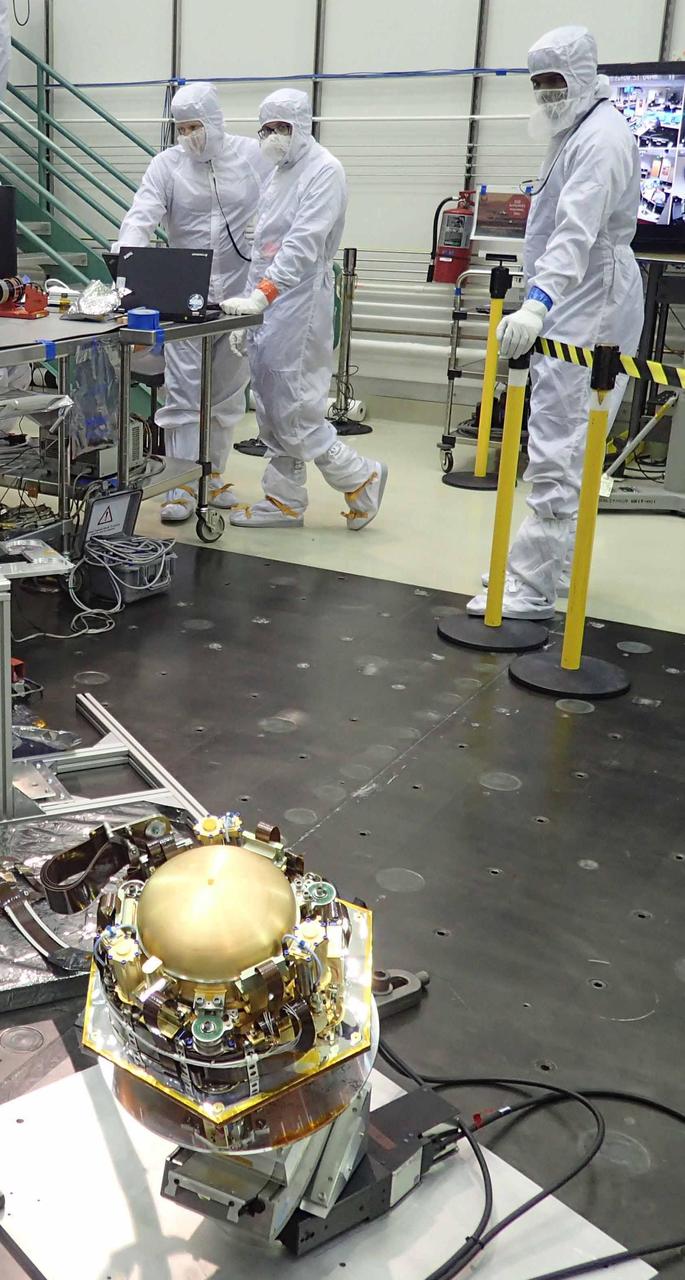
The Seismic Experiment for Interior Structure (SEIS) instrument for NASA's InSight mission to Mars undergoes a checkout for the spacecraft's assembly, test and launch operations (ATLO) in this photo taken July 20, 2017, in a Lockheed Martin clean room facility in Littleton, Colorado. The SEIS was provided by France's national space agency (CNES) with collaboration from the United States, the United Kingdom, Switzerland and Germany. The InSight mission (for Interior Exploration using Seismic Investigations, Geodesy and Heat Transport) is scheduled to launch in May 2018 and land on Mars Nov. 26, 2018. It will investigate processes that formed and shaped Mars and will help scientists better understand the evolution of our inner solar system's rocky planets, including Earth. https://photojournal.jpl.nasa.gov/catalog/PIA21846

A.J. Sandora, Lockheed Martin's GOES-R Series Mechanical Operations Assembly, Test and Launch Operations (ATLO) manager, speaks to members of social media in the Kennedy Space Center’s Press Site auditorium. The briefing focused on the National Oceanic and Atmospheric Administration's, or NOAA's, Geostationary Operational Environmental Satellite, or GOES-S. Built by Lockheed Martin Space Systems of Littleton, Colorado, the spacecraft is the second satellite in a series of next-generation NOAA weather satellites. It will launch to a geostationary position over the U.S. to provide images of storms and help predict weather forecasts, severe weather outlooks, watches, warnings, lightning conditions and longer-term forecasting. GOES-S is slated to lift off at 5:02 p.m. EST on March 1, 2018 aboard a United Launch Alliance Atlas V rocket.

Engineers at the Johns Hopkins Applied Physics Laboratory (APL) in Laurel, Maryland, inspect the propulsion module of NASA's Europa Clipper spacecraft. In 2022, this major piece of hardware, designed and built at APL, will ship to NASA's Jet Propulsion Laboratory in Southern California for assembly, test, and launch operations (ATLO). With an internal global ocean under a thick layer of ice, Jupiter's moon Europa may have the potential to harbor existing life. The Europa Clipper spacecraft will swoop around Jupiter on an elliptical path, dipping close to the moon on each flyby to collect data. Understanding Europa's habitability will help scientists better understand how life developed on Earth and the potential for finding life beyond our planet. Europa Clipper is set to launch in 2024. https://photojournal.jpl.nasa.gov/catalog/PIA24783
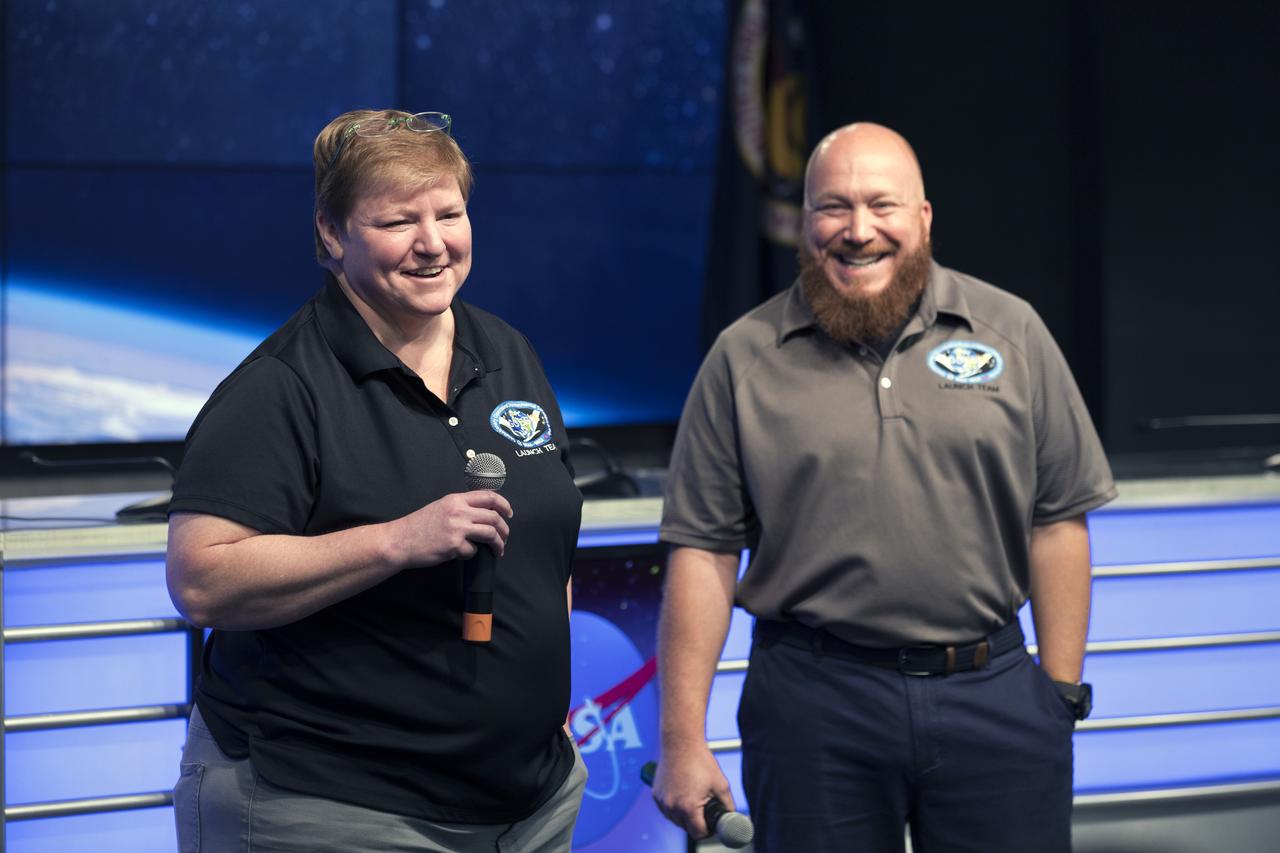
Pam Sullivan, NASA's GOES-R flight director, left, and A.J. Sandora, Lockheed Martin's GOES-R Series Mechanical Operations Assembly, Test and Launch Operations (ATLO) manager, speak to members of social media in the Kennedy Space Center’s Press Site auditorium. The briefing focused on the National Oceanic and Atmospheric Administration's, or NOAA's, Geostationary Operational Environmental Satellite, or GOES-S. The spacecraft is the second satellite in a series of next-generation NOAA weather satellites. It will launch to a geostationary position over the U.S. to provide images of storms and help predict weather forecasts, severe weather outlooks, watches, warnings, lightning conditions and longer-term forecasting. GOES-S is slated to lift off at 5:02 p.m. EST on March 1, 2018 aboard a United Launch Alliance Atlas V rocket.
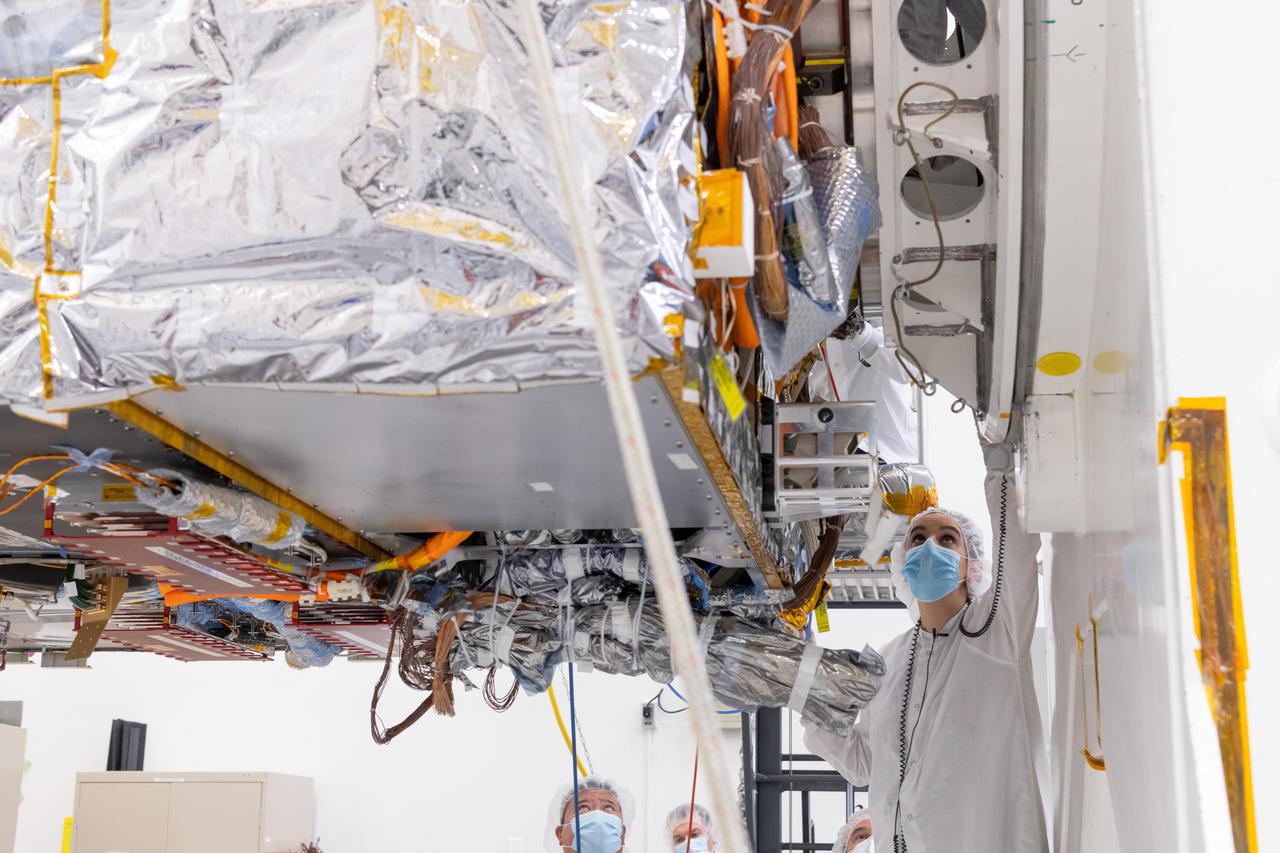
The Solar Electric Propulsion (SEP) Chassis of NASA's Psyche spacecraft is mounted onto a rotation fixture in High Bay 1 of the Spacecraft Assembly Facility at NASA's Jet Propulsion Laboratory in Southern California. This photo was taken March 28, 2021, just after the chassis — a major component of the Psyche spacecraft — was delivered to JPL by Maxar Technologies. Maxar's team in Palo Alto, California, designed and built the chassis, which includes all the primary and secondary structure and the hardware components needed for the high-power electrical system, the propulsion system, the thermal system, guidance and navigation sensors and actuators, and the high-gain antenna. The phase known as assembly test, and launch operations (ATLO) for Psyche is now underway at JPL. In this photo, ATLO Mechanical Lead Michelle Colizzi of JPL oversees the docking of the chassis to the dolly. Over the next year additional hardware will be added to the spacecraft including the command and data handling system, a power distribution assembly, the X-band telecommunications hardware suite, three science instruments (two imagers, two magnetometers, and a Gamma Ray Neutron Spectrometer), and a deep space optical communications technology demonstrator. The spacecraft will finish assembly and then undergo rigorous checkout and testing, before it's shipped to NASA's Kennedy Space Center in Cape Canaveral, Florida, for an August 2022 launch to the main asteroid belt. Psyche will arrive at the metal-rich asteroid of the same name in 2026, orbiting for 21 months to investigate its composition. Scientists think that Psyche is made up of mostly iron and nickel — similar to Earth's core. Exploring the asteroid could give valuable insight into how our own planet and others formed. https://photojournal.jpl.nasa.gov/catalog/PIA24476
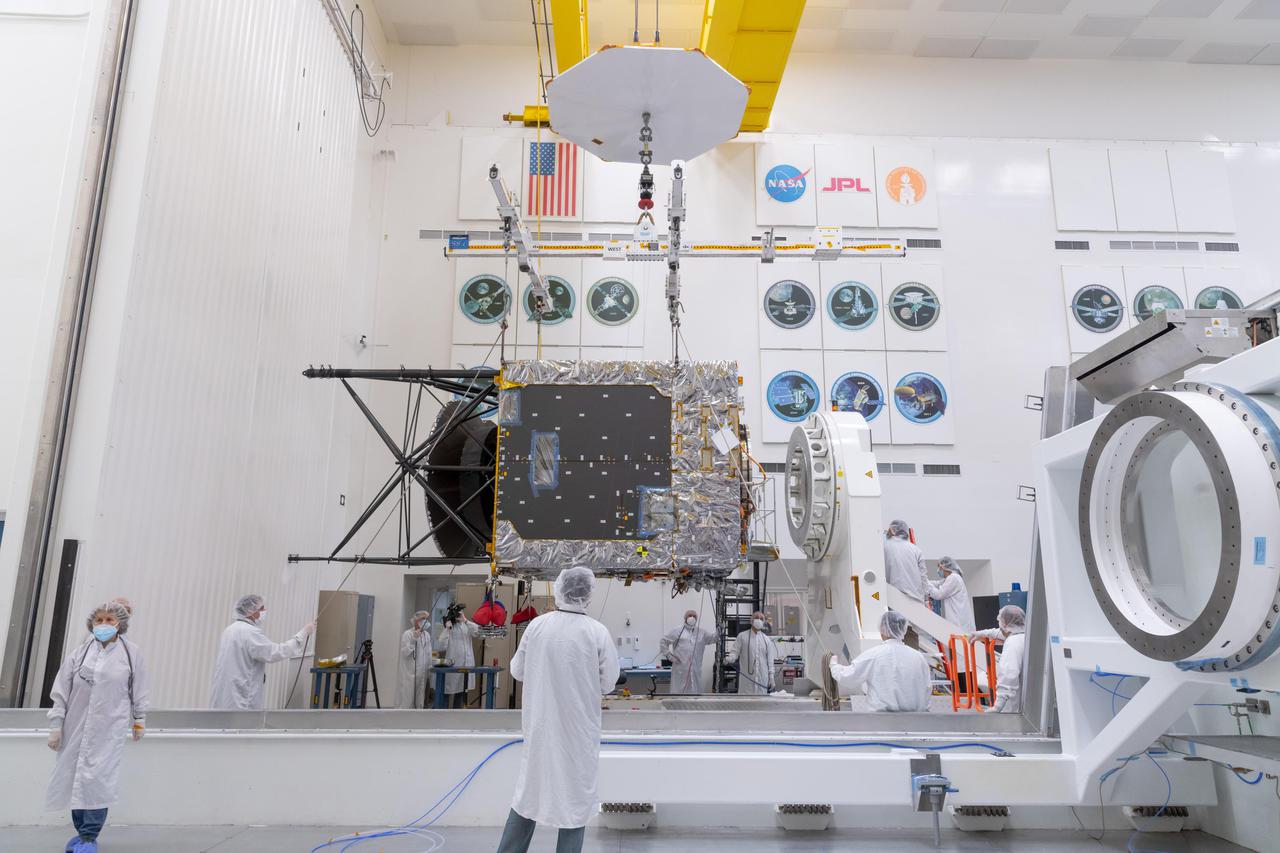
A major component of NASA's Psyche spacecraft has been delivered to the agency's Jet Propulsion Laboratory in Southern California, where the phase known as assembly, test, and launch operations (ATLO) is now underway. Taken on March 28, 2021, this photo shows the Solar Electric Propulsion (SEP) Chassis just after it was delivered to JPL by Maxar Technologies. Here, the chassis is about to be attached to the dolly in High Bay 1 of JPL's Spacecraft Assembly Facility. Maxar's team in Palo Alto, California, designed and built the SEP Chassis, which includes all the primary and secondary structure and the hardware components needed for the high-power electrical system, the propulsion system, the thermal system, guidance and navigation sensors and actuators, and the high-gain antenna. Over the next year additional hardware will be added to the spacecraft, including the command and data handling system, a power distribution assembly, the X-band telecommunications hardware suite, three science instruments (two imagers, two magnetometers, and a Gamma Ray Neutron Spectrometer), and a deep space optical communications technology demonstrator. The spacecraft will finish assembly and then undergo rigorous checkout and testing before being shipped to NASA's Kennedy Space Center in Cape Canaveral, Florida, for an August 2022 launch to the main asteroid belt. Psyche will arrive at the metal-rich asteroid of the same name in 2026, orbiting for 21 months to investigate its composition. Scientists think that Psyche is made up of mostly iron and nickel — similar to Earth's core. Exploring the asteroid could give valuable insight into how our own planet and others formed. https://photojournal.jpl.nasa.gov/catalog/PIA24474
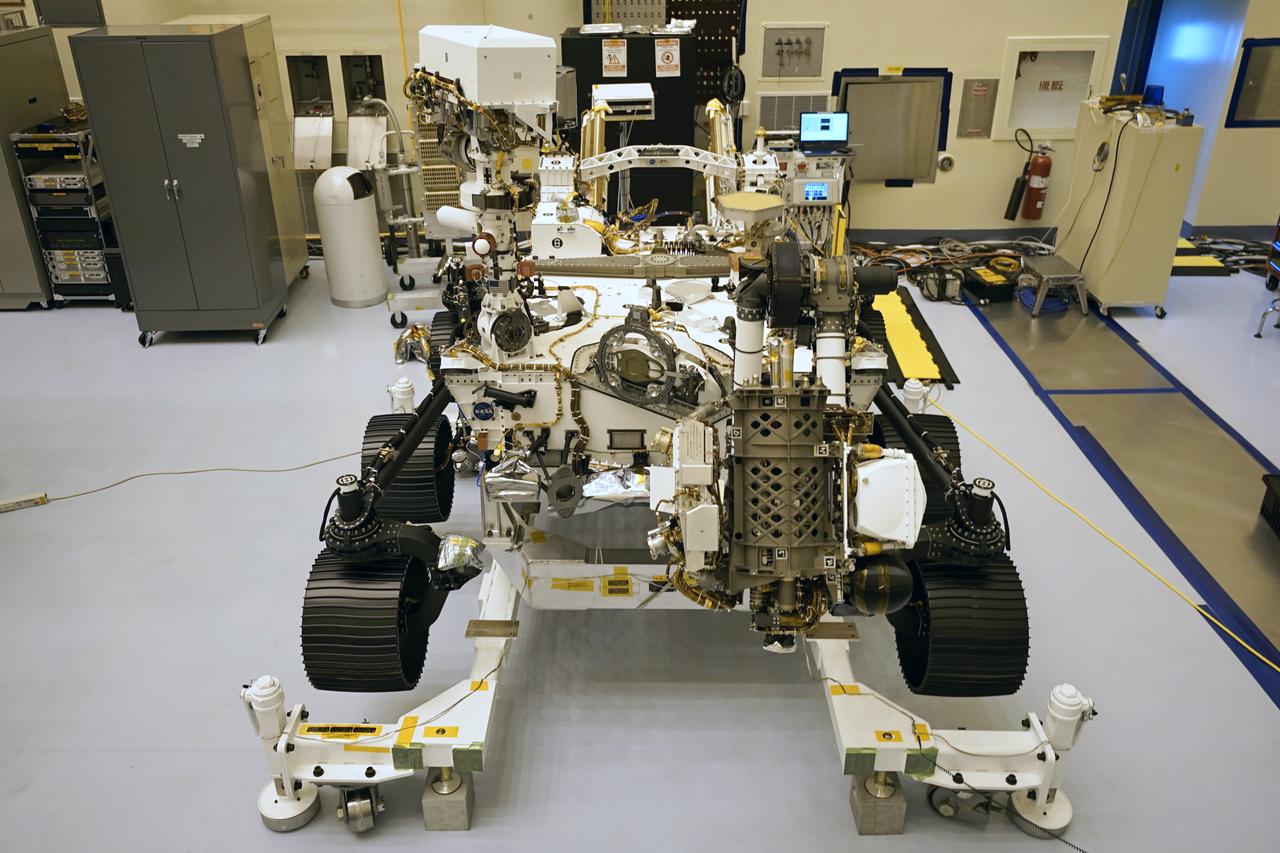
The “Send Your Name to Mars” logo is installed on the Mars Perseverance rover on March 16, 2020, inside the Payload Hazardous Servicing Facility at NASA’s Kennedy Space Center in Florida. When the rover lands on the Red Planet on Feb. 18, 2021, it will be carrying the names of more than 10 million people throughout the world. Those names were etched onto a microchip, which was placed aboard Perseverance. Liftoff aboard a United Launch Alliance Atlas V 541 rocket is targeted for mid-July from Cape Canaveral Air Force Station. NASA’s Launch Services Program based at Kennedy is managing the launch.
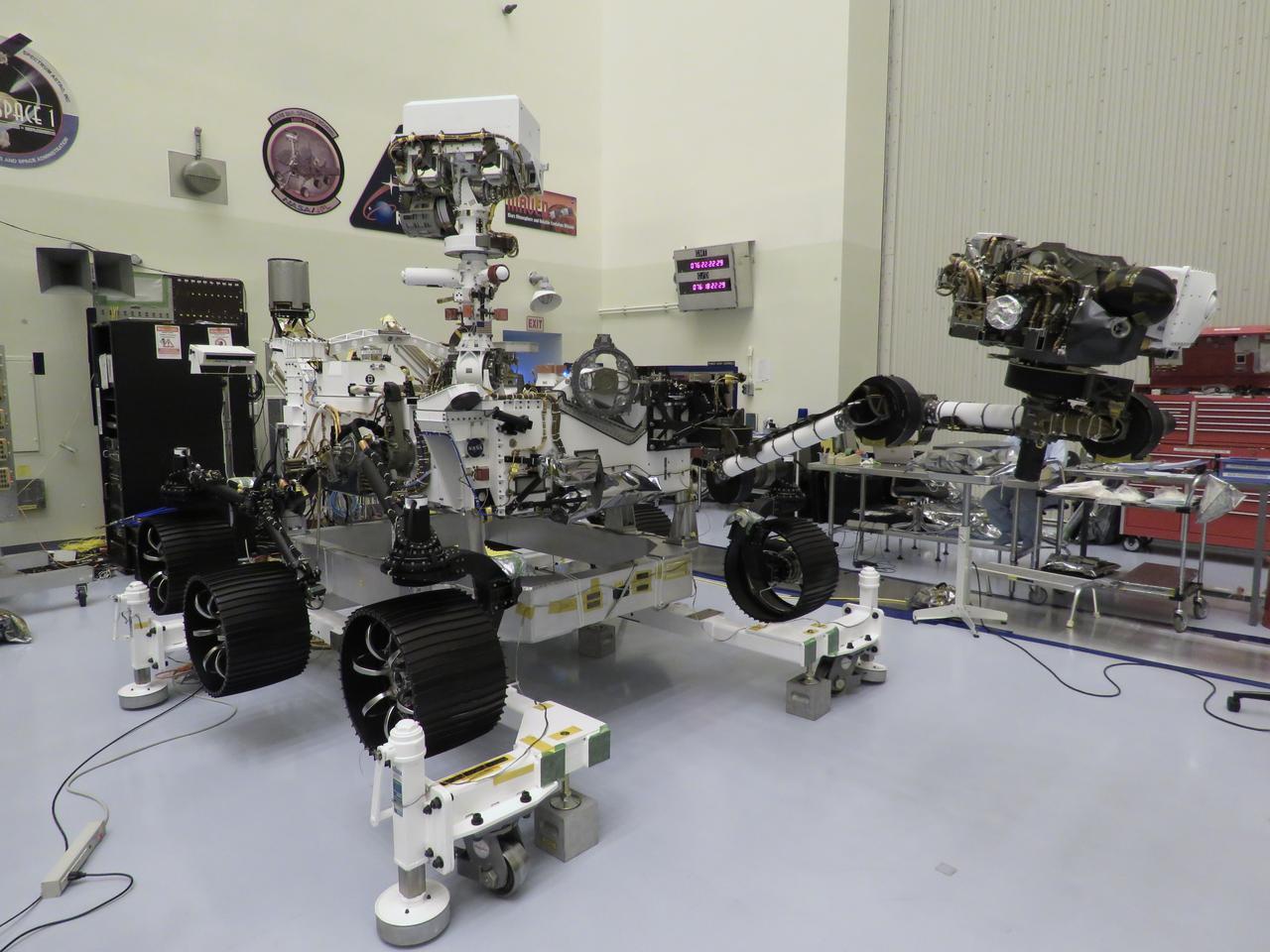
The “Send Your Name to Mars” logo is installed on the Mars Perseverance rover on March 16, 2020, inside the Payload Hazardous Servicing Facility at NASA’s Kennedy Space Center in Florida. When the rover lands on the Red Planet on Feb. 18, 2021, it will be carrying the names of more than 10 million people throughout the world. Those names were etched onto a microchip, which was placed aboard Perseverance. Liftoff aboard a United Launch Alliance Atlas V 541 rocket is targeted for mid-July from Cape Canaveral Air Force Station. NASA’s Launch Services Program based at Kennedy is managing the launch.
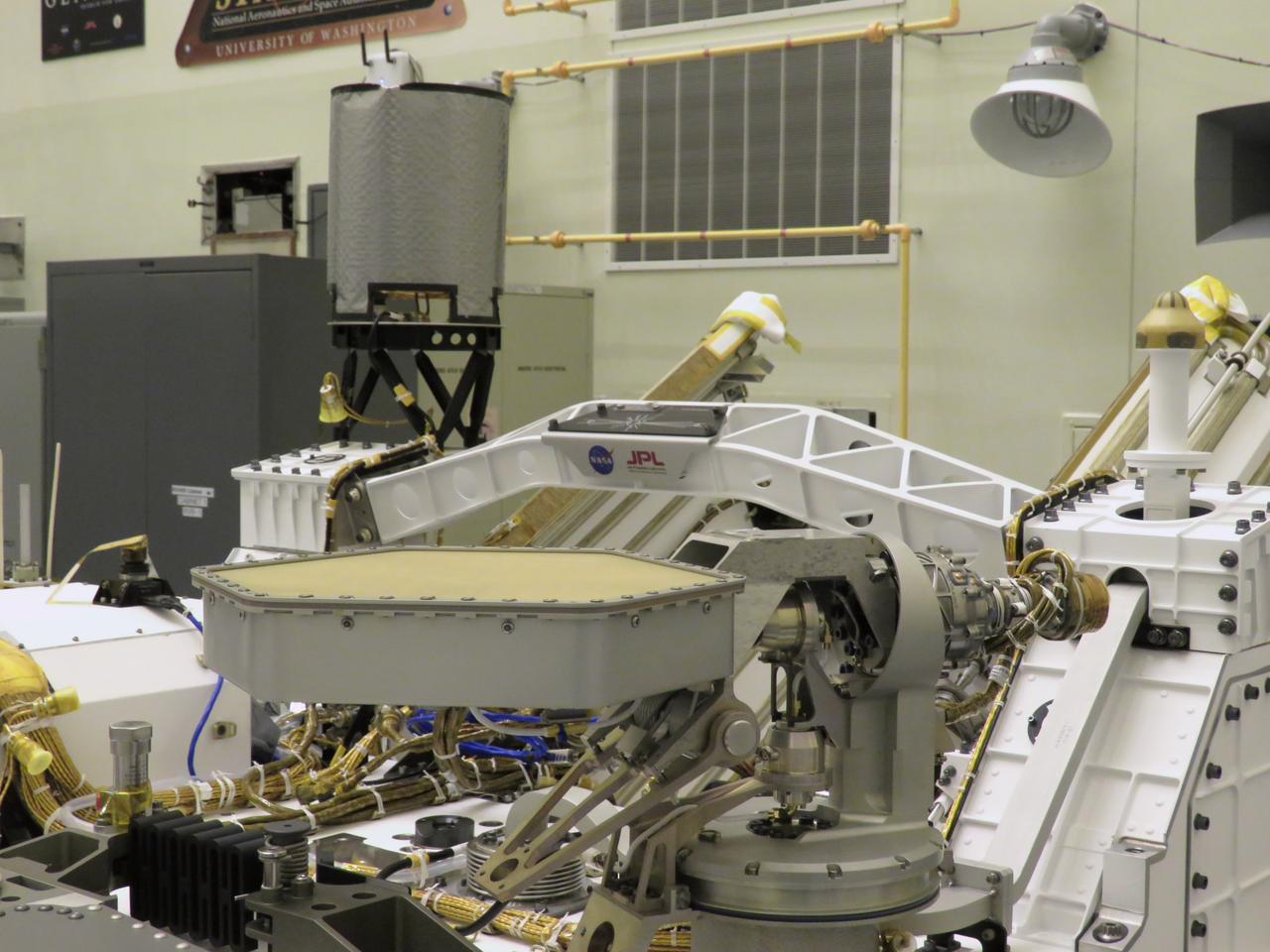
The “Send Your Name to Mars” logo is installed on the Mars Perseverance rover on March 16, 2020, inside the Payload Hazardous Servicing Facility at NASA’s Kennedy Space Center in Florida. When the rover lands on the Red Planet on Feb. 18, 2021, it will be carrying the names of more than 10 million people throughout the world. Those names were etched onto a microchip, which was placed aboard Perseverance. Liftoff aboard a United Launch Alliance Atlas V 541 rocket is targeted for mid-July from Cape Canaveral Air Force Station. NASA’s Launch Services Program based at Kennedy is managing the launch.

The “Send Your Name to Mars” logo is installed on the Mars Perseverance rover on March 16, 2020, inside the Payload Hazardous Servicing Facility at NASA’s Kennedy Space Center in Florida. When the rover lands on the Red Planet on Feb. 18, 2021, it will be carrying the names of more than 10 million people throughout the world. Those names were etched onto a microchip, which was placed aboard Perseverance. Liftoff aboard a United Launch Alliance Atlas V 541 rocket is targeted for mid-July from Cape Canaveral Air Force Station. NASA’s Launch Services Program based at Kennedy is managing the launch.
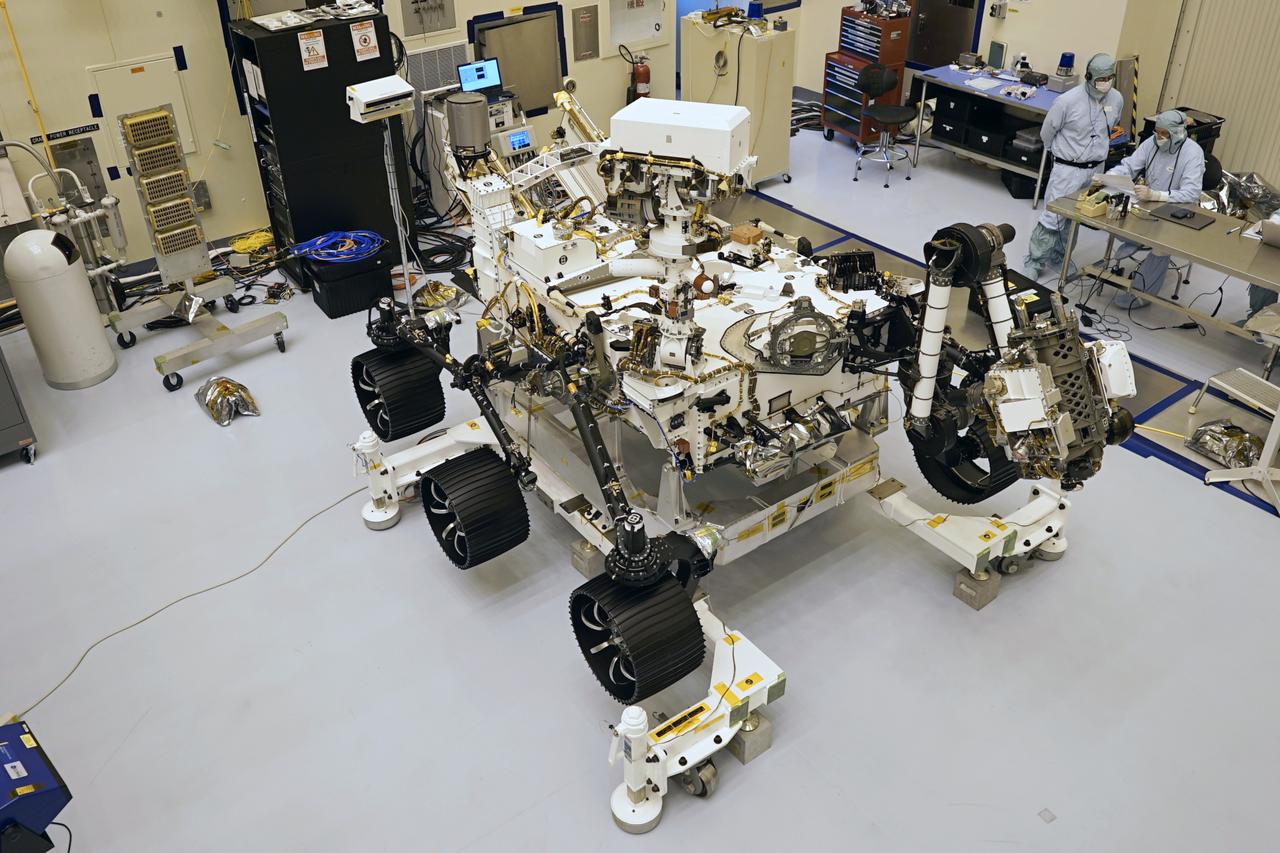
The “Send Your Name to Mars” logo is installed on the Mars Perseverance rover on March 16, 2020, inside the Payload Hazardous Servicing Facility at NASA’s Kennedy Space Center in Florida. When the rover lands on the Red Planet on Feb. 18, 2021, it will be carrying the names of more than 10 million people throughout the world. Those names were etched onto a microchip, which was placed aboard Perseverance. Liftoff aboard a United Launch Alliance Atlas V 541 rocket is targeted for mid-July from Cape Canaveral Air Force Station. NASA’s Launch Services Program based at Kennedy is managing the launch.The “Send Your Name to Mars” logo is installed on the Mars Perseverance rover on March 16, 2020, inside the Payload Hazardous Servicing Facility at NASA’s Kennedy Space Center in Florida. When the rover lands on the Red Planet on Feb. 18, 2021, it will be carrying the names of more than 10 million people throughout the world. Those names were etched onto a microchip, which was placed aboard Perseverance. Liftoff aboard a United Launch Alliance Atlas V 541 rocket is targeted for mid-July from Cape Canaveral Air Force Station. NASA’s Launch Services Program based at Kennedy is managing the launch.

A major component of NASA's Psyche spacecraft has been delivered to NASA's Jet Propulsion Laboratory in Southern California, where the phase known as assembly, test, and launch operations (ATLO) is now underway. This photo, shot March 28, 2021 shows engineers and technicians preparing to move the Solar Electric Propulsion (SEP) Chassis from its shipping container to a dolly in High Bay 1 of JPL's Spacecraft Assembly Facility. The photo was captured just after the chassis was delivered to JPL by Maxar Technologies. Maxar's team in Palo Alto, California, designed and built the SEP Chassis, which includes all the primary and secondary structure and the hardware components needed for the high-power electrical system, the propulsion system, the thermal system, guidance and navigation sensors and actuators, and the high-gain antenna. Over the next year, additional hardware will be added to the spacecraft including the command and data handling system, a power distribution assembly, the X-band telecommunications hardware suite, three science instruments (two imagers, two magnetometers, and a gamma ray neutron Spectrometer), and a deep space optical communications technology demonstrator. The spacecraft will finish assembly and then undergo rigorous checkout and testing before being shipped to NASA's Kennedy Space Center in Cape Canaveral, Florida, for an August 2022 launch to the main asteroid belt. Psyche will arrive at the metal-rich asteroid of the same name in 2026, orbiting for 21 months to investigate its composition. Scientists think that Psyche is made up of mostly iron and nickel — similar to Earth's core. Exploring the asteroid could give valuable insight into how our own planet and others formed. https://photojournal.jpl.nasa.gov/catalog/PIA24475

At NASA's Jet Propulsion Laboratory in Southern California, on June 7, 2024, clean room technicians use a crane to lift the lid of the Medium Articulating Transportation System (MATS) that will be used during the construction and transportation of components for NASA's Near-Earth Object Surveyor mission. Inside the MATS is the Medium Articulating Assembly Dolly (MAAD), a platform that will support the spacecraft's instrument enclosure, which is being constructed inside the High Bay 1 clean room at JPL's Spacecraft Assembly Facility. The MAAD is an articulating platform on which a spacecraft (or spacecraft components) can be mounted securely and positioned as required during assembly. It can tilt a spacecraft vertically and horizontally, rotating it 360 degrees. JPL plans to use the MAAD for future missions to reduce the number of crane lifts during assembly, test, and launch operations, known as ATLO. NEO Surveyor is the first mission to use the platform. NEO Surveyor's instrument enclosure contains the spacecraft's telescope, mirrors, and infrared sensors that will be used to detect, track, and characterize the most hazardous near-Earth objects. BAE Systems, Space Dynamics Laboratory, and Teledyne are among the aerospace and engineering companies contracted to build the spacecraft and its instrumentation. The Laboratory for Atmospheric and Space Physics at the University of Colorado, Boulder will support operations, and IPAC at Caltech in Pasadena, California, is responsible for processing survey data and producing the mission's data products. JPL manages the project; Caltech manages JPL for NASA. Launching no earlier than 2027, NEO Surveyor supports the objectives of NASA's Planetary Defense Coordination Office (PDCO) at NASA Headquarters in Washington. The NASA Authorization Act of 2005 directed NASA to discover and characterize at least 90% of the near-Earth objects more than 140 meters (460 feet) across that come within 30 million miles (48 million kilometers) of our planet's orbit. Objects of this size can cause significant regional damage, or worse, should they impact the Earth. https://photojournal.jpl.nasa.gov/catalog/PIA26382
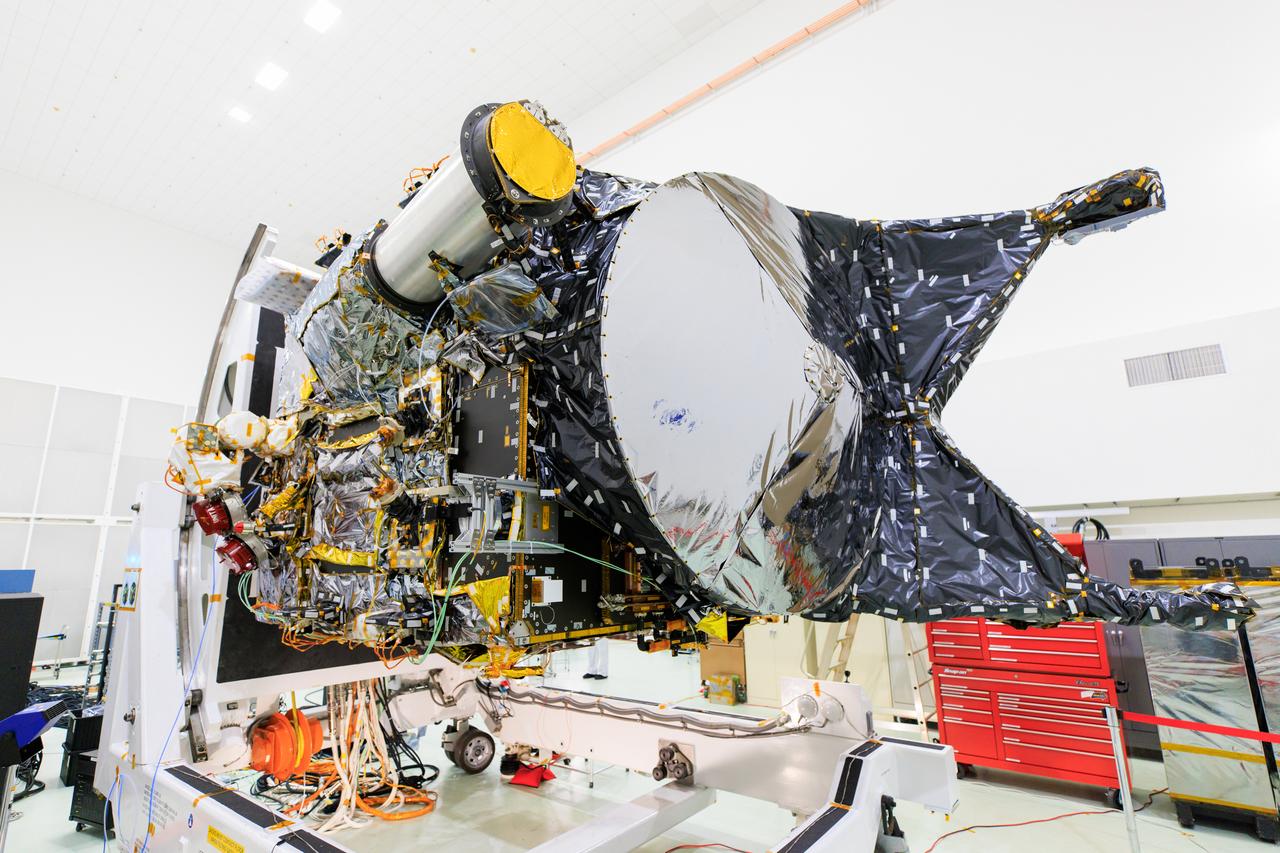
NASA's Psyche spacecraft is shown in a clean room on June 26, 2023, at Astrotech Space Operations Facility near the agency’s Kennedy Space Center in Florida. Engineers and technicians from NASA’s Jet Propulsion Laboratory in Southern California have begun final assembly, test, and launch operations on Psyche, with assembly of the spacecraft all but complete except for the installation of the solar arrays and the imagers. NASA’s Deep Space Optical Communications (DSOC) technology demonstration, testing high-data-rate laser communications, remains integrated into the spacecraft. A final suite of tests will be run on the vehicle, after which it will be fueled and then mated onto a SpaceX Falcon Heavy rocket just prior to launch, targeted for October 2023.
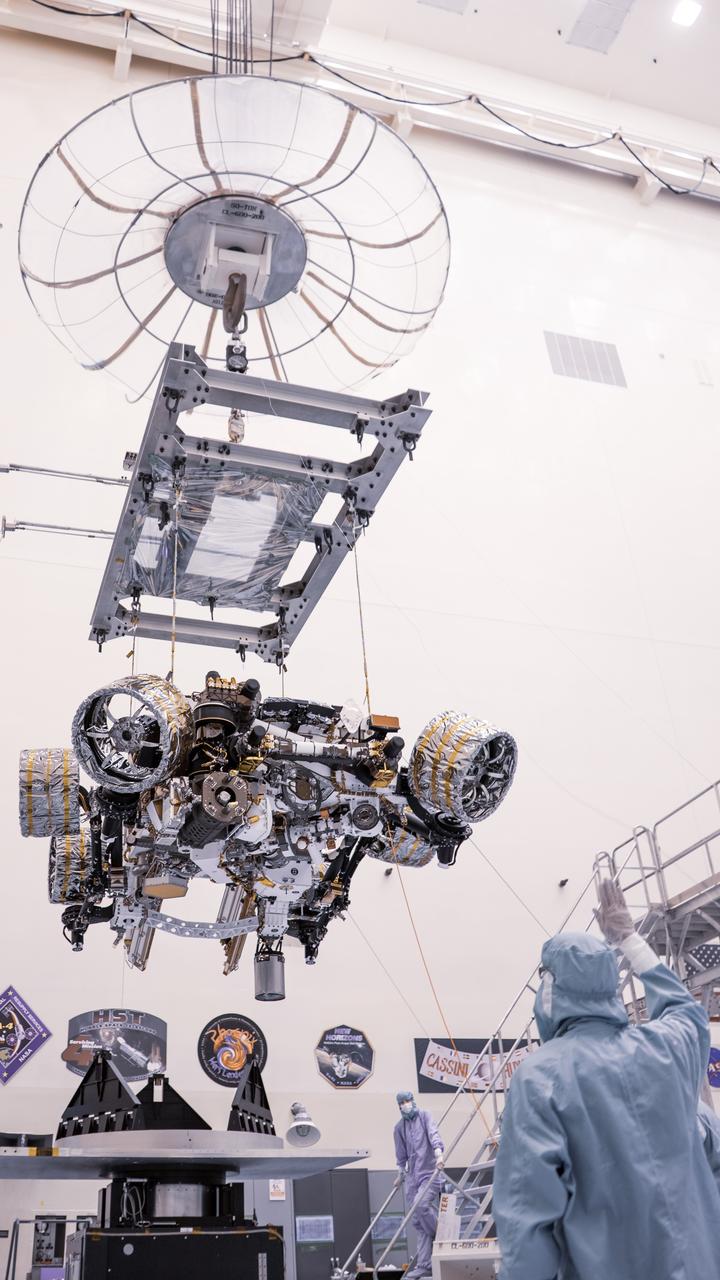
Engineers perform mass properties testing on NASA’s Mars Perseverance rover inside Kennedy Space Center’s Payload Hazardous Servicing Facility on April 7, 2020. The rover was rotated clockwise and counterclockwise on a spin table to determine the center of gravity, or the point at which weight is evenly dispersed on all sides. Establishing the rover’s center of gravity will help ensure the spacecraft will land on Mars as calculated. Perseverance will touch down on the Red Planet on Feb. 18, 2021. Liftoff aboard a United Launch Alliance Atlas V 541 rocket is targeted between July 17 and Aug. 5 from Cape Canaveral Air Force Station. NASA’s Launch Services Program based at Kennedy is managing the launch.
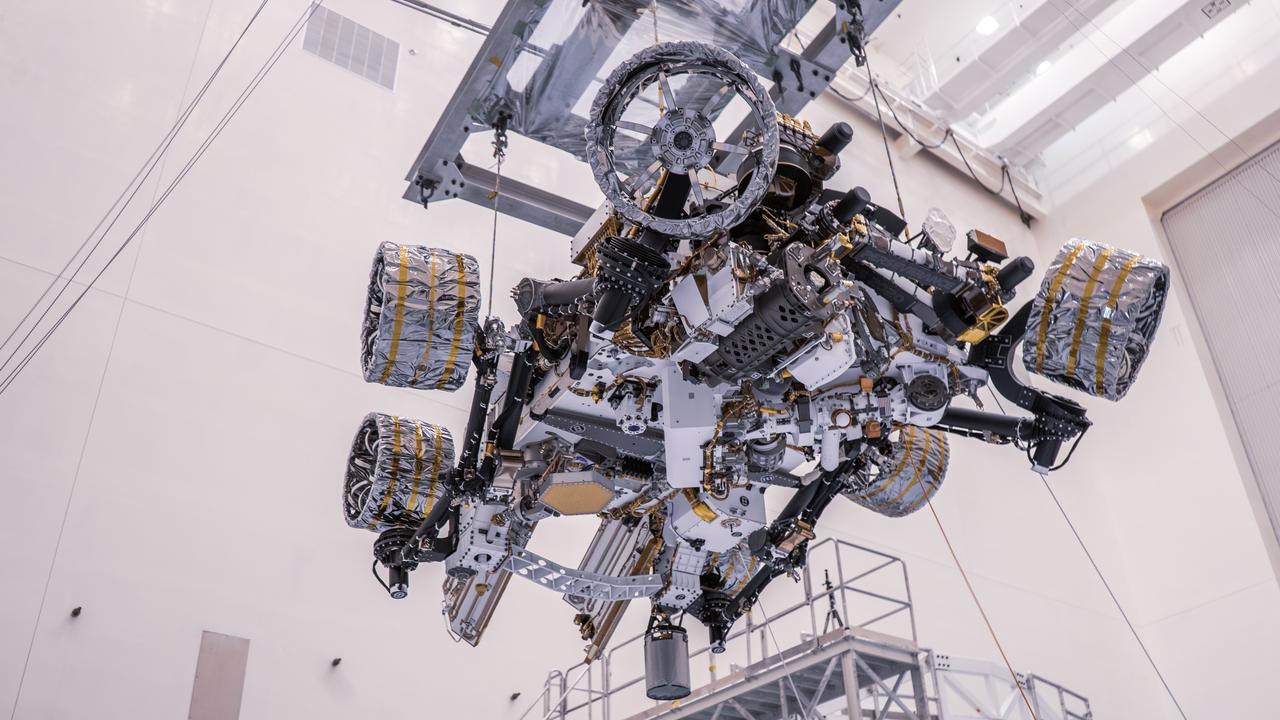
Engineers perform mass properties testing on NASA’s Mars Perseverance rover inside Kennedy Space Center’s Payload Hazardous Servicing Facility on April 7, 2020. The rover was rotated clockwise and counterclockwise on a spin table to determine the center of gravity, or the point at which weight is evenly dispersed on all sides. Establishing the rover’s center of gravity will help ensure the spacecraft will land on Mars as calculated. Perseverance will touch down on the Red Planet on Feb. 18, 2021. Liftoff aboard a United Launch Alliance Atlas V 541 rocket is targeted between July 17 and Aug. 5 from Cape Canaveral Air Force Station. NASA’s Launch Services Program based at Kennedy is managing the launch.
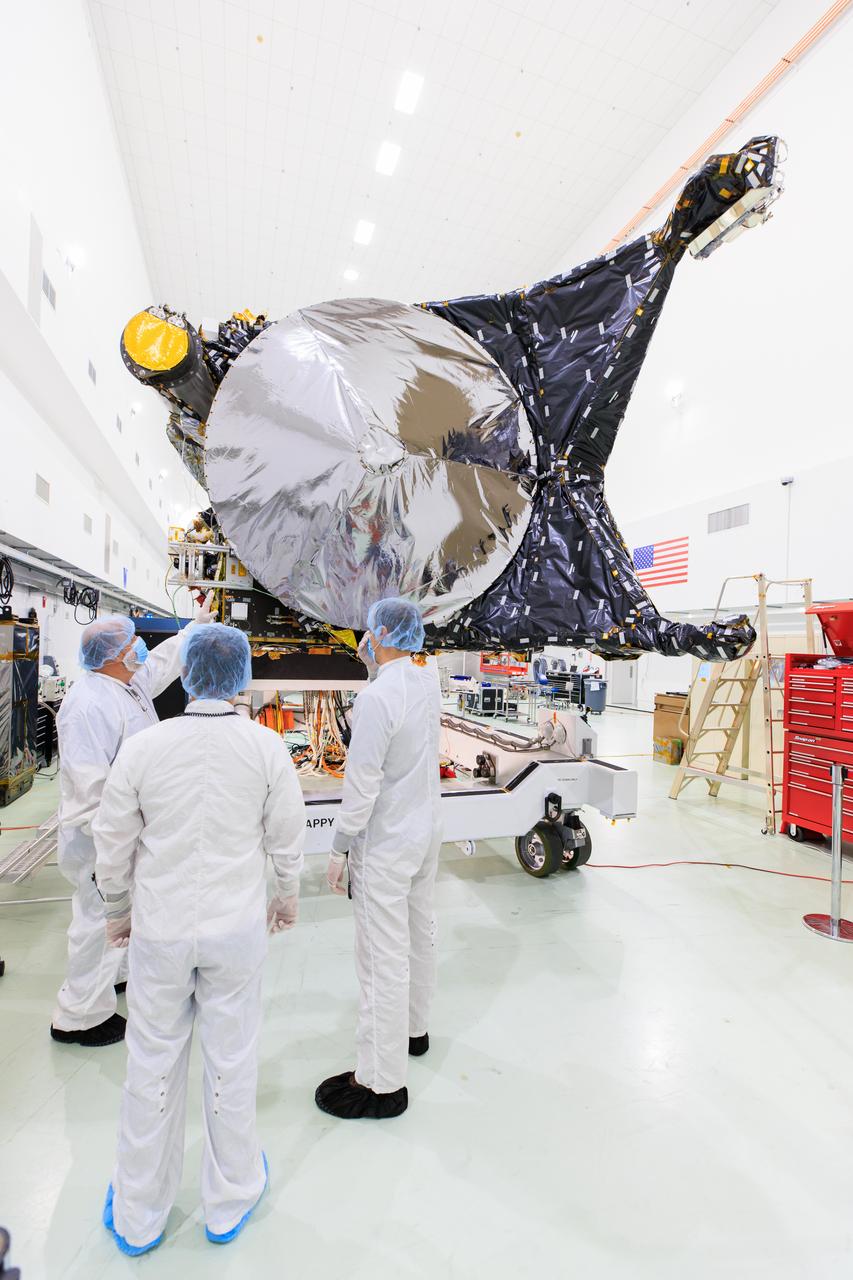
NASA's Psyche spacecraft is shown in a clean room on June 26, 2023, at Astrotech Space Operations Facility near the agency’s Kennedy Space Center in Florida. Engineers and technicians from NASA’s Jet Propulsion Laboratory in Southern California have begun final assembly, test, and launch operations on Psyche, with assembly of the spacecraft all but complete except for the installation of the solar arrays and the imagers. NASA’s Deep Space Optical Communications (DSOC) technology demonstration, testing high-data-rate laser communications, remains integrated into the spacecraft. A final suite of tests will be run on the vehicle, after which it will be fueled and then mated onto a SpaceX Falcon Heavy rocket just prior to launch, targeted for October 2023.
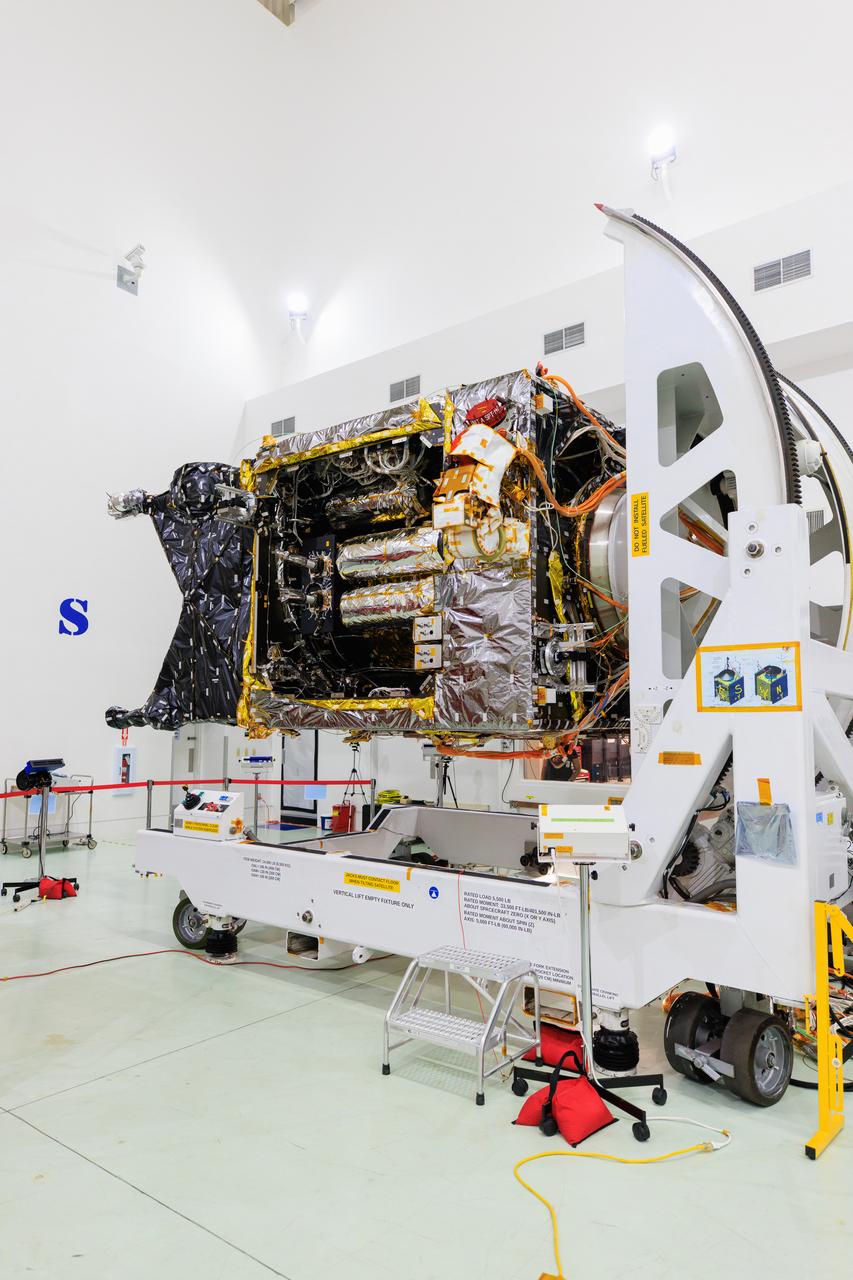
NASA's Psyche spacecraft is shown in a clean room on June 26, 2023, at Astrotech Space Operations Facility near the agency’s Kennedy Space Center in Florida. Engineers and technicians from NASA’s Jet Propulsion Laboratory in Southern California have begun final assembly, test, and launch operations on Psyche, with assembly of the spacecraft all but complete except for the installation of the solar arrays and the imagers. NASA’s Deep Space Optical Communications (DSOC) technology demonstration, testing high-data-rate laser communications, remains integrated into the spacecraft. A final suite of tests will be run on the vehicle, after which it will be fueled and then mated onto a SpaceX Falcon Heavy rocket just prior to launch, targeted for October 2023.

NASA's Psyche spacecraft is shown in a clean room on June 26, 2023, at Astrotech Space Operations Facility near the agency’s Kennedy Space Center in Florida. Engineers and technicians from NASA’s Jet Propulsion Laboratory in Southern California have begun final assembly, test, and launch operations on Psyche, with assembly of the spacecraft all but complete except for the installation of the solar arrays and the imagers. NASA’s Deep Space Optical Communications (DSOC) technology demonstration, testing high-data-rate laser communications, remains integrated into the spacecraft. A final suite of tests will be run on the vehicle, after which it will be fueled and then mated onto a SpaceX Falcon Heavy rocket just prior to launch, targeted for October 2023.
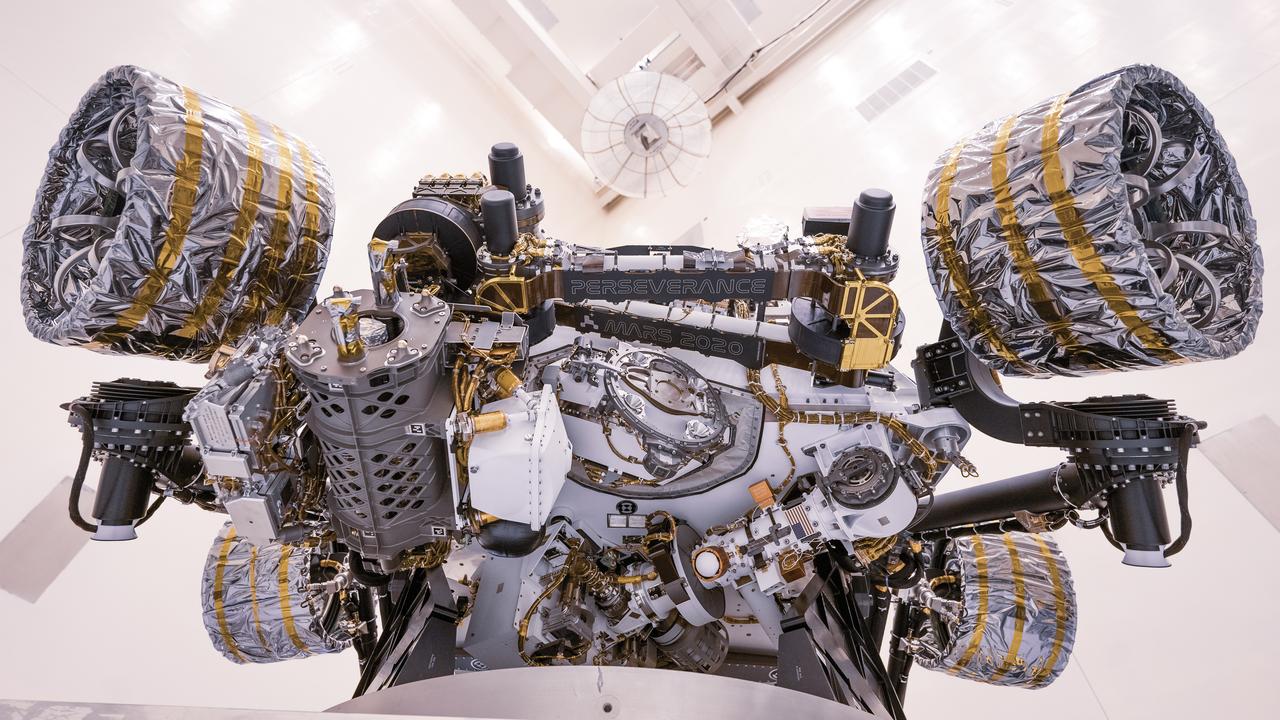
Engineers perform mass properties testing on NASA’s Mars Perseverance rover inside Kennedy Space Center’s Payload Hazardous Servicing Facility on April 7, 2020. The rover was rotated clockwise and counterclockwise on a spin table to determine the center of gravity, or the point at which weight is evenly dispersed on all sides. Establishing the rover’s center of gravity will help ensure the spacecraft will land on Mars as calculated. Perseverance will touch down on the Red Planet on Feb. 18, 2021. Liftoff aboard a United Launch Alliance Atlas V 541 rocket is targeted between July 17 and Aug. 5 from Cape Canaveral Air Force Station. NASA’s Launch Services Program based at Kennedy is managing the launch.
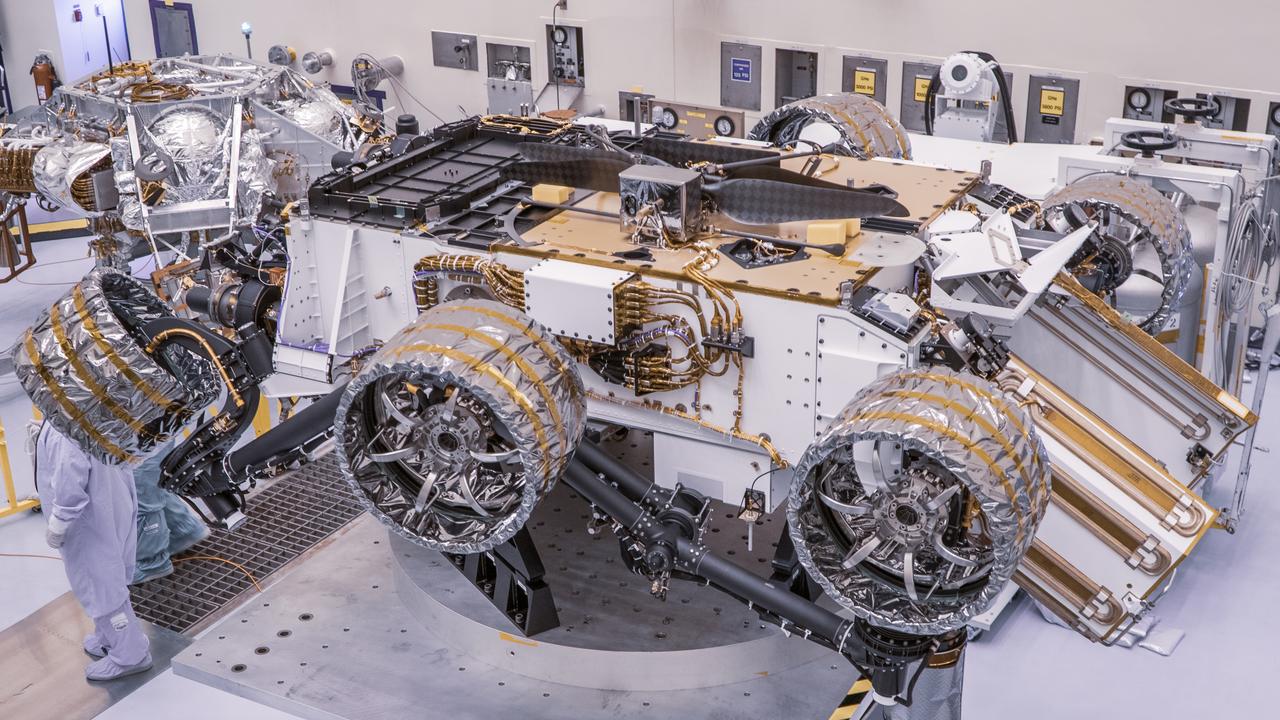
Engineers perform mass properties testing on NASA’s Mars Perseverance rover inside Kennedy Space Center’s Payload Hazardous Servicing Facility on April 7, 2020. The rover was rotated clockwise and counterclockwise on a spin table to determine the center of gravity, or the point at which weight is evenly dispersed on all sides. Establishing the rover’s center of gravity will help ensure the spacecraft will land on Mars as calculated. Perseverance will touch down on the Red Planet on Feb. 18, 2021. Liftoff aboard a United Launch Alliance Atlas V 541 rocket is targeted between July 17 and Aug. 5 from Cape Canaveral Air Force Station. NASA’s Launch Services Program based at Kennedy is managing the launch.
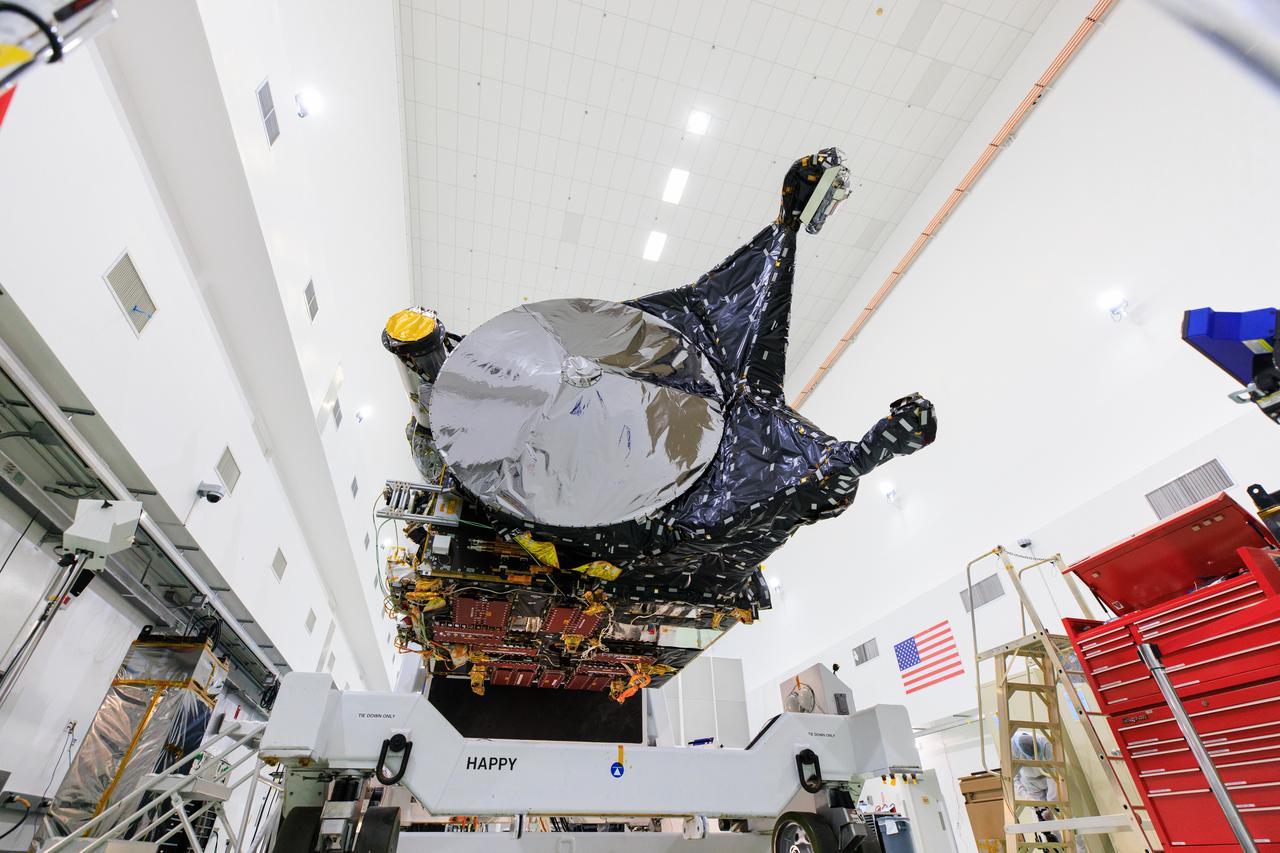
NASA's Psyche spacecraft is shown in a clean room on June 26, 2023, at Astrotech Space Operations Facility near the agency’s Kennedy Space Center in Florida. Engineers and technicians from NASA’s Jet Propulsion Laboratory in Southern California have begun final assembly, test, and launch operations on Psyche, with assembly of the spacecraft all but complete except for the installation of the solar arrays and the imagers. NASA’s Deep Space Optical Communications (DSOC) technology demonstration, testing high-data-rate laser communications, remains integrated into the spacecraft. A final suite of tests will be run on the vehicle, after which it will be fueled and then mated onto a SpaceX Falcon Heavy rocket just prior to launch, targeted for October 2023.
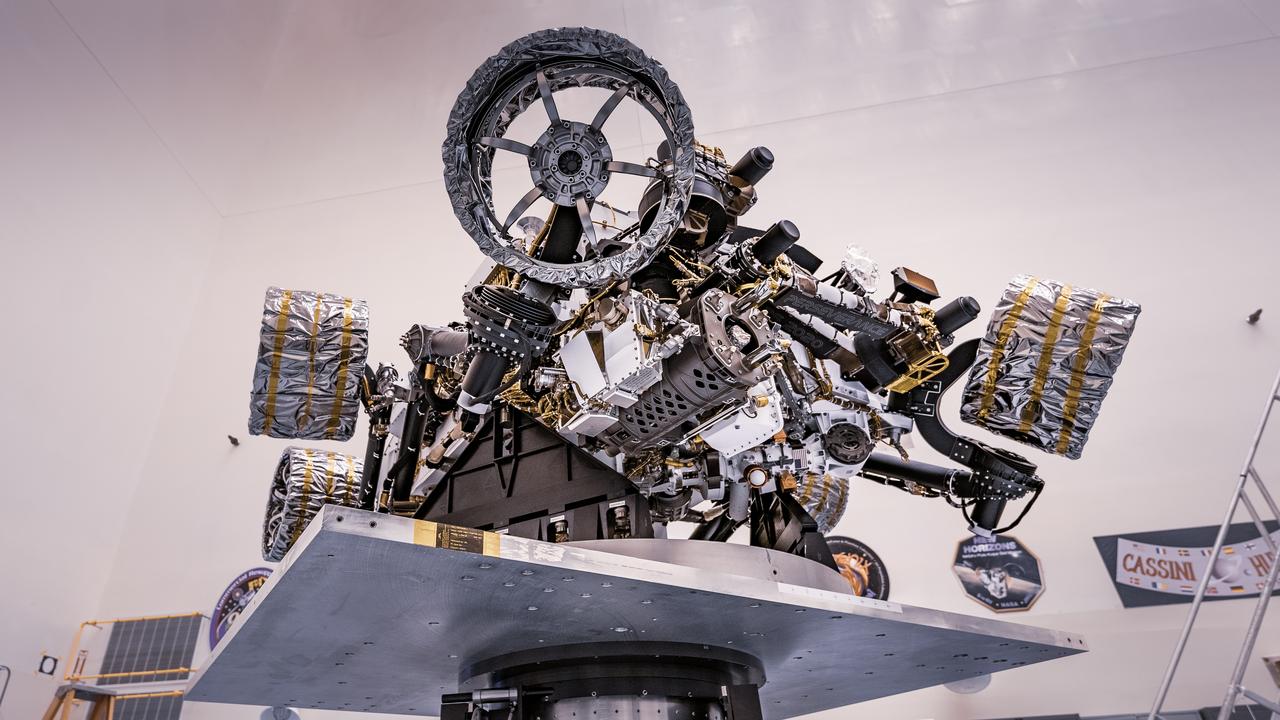
Engineers perform mass properties testing on NASA’s Mars Perseverance rover inside Kennedy Space Center’s Payload Hazardous Servicing Facility on April 7, 2020. The rover was rotated clockwise and counterclockwise on a spin table to determine the center of gravity, or the point at which weight is evenly dispersed on all sides. Establishing the rover’s center of gravity will help ensure the spacecraft will land on Mars as calculated. Perseverance will touch down on the Red Planet on Feb. 18, 2021. Liftoff aboard a United Launch Alliance Atlas V 541 rocket is targeted between July 17 and Aug. 5 from Cape Canaveral Air Force Station. NASA’s Launch Services Program based at Kennedy is managing the launch.
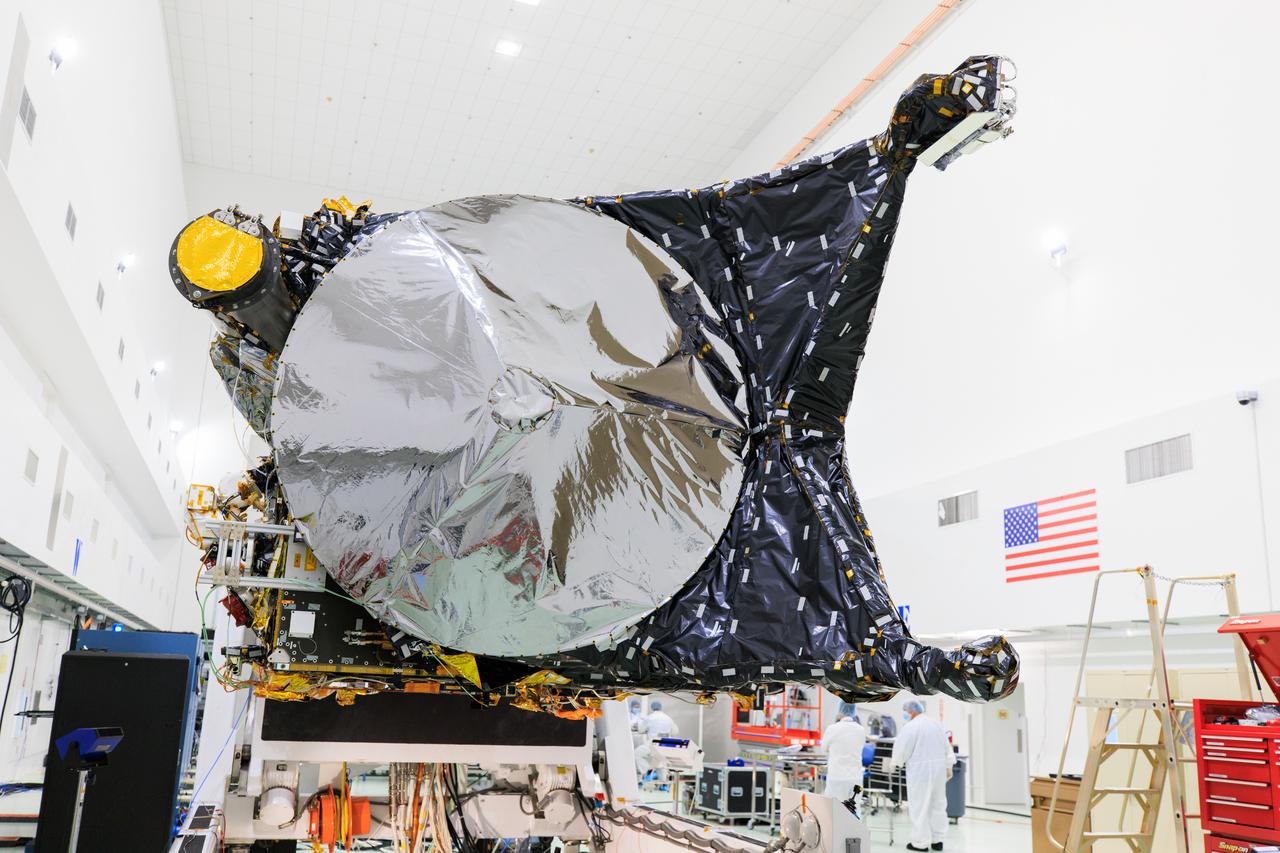
NASA's Psyche spacecraft is shown in a clean room on June 26, 2023, at Astrotech Space Operations Facility near the agency’s Kennedy Space Center in Florida. Engineers and technicians from NASA’s Jet Propulsion Laboratory in Southern California have begun final assembly, test, and launch operations on Psyche, with assembly of the spacecraft all but complete except for the installation of the solar arrays and the imagers. NASA’s Deep Space Optical Communications (DSOC) technology demonstration, testing high-data-rate laser communications, remains integrated into the spacecraft. A final suite of tests will be run on the vehicle, after which it will be fueled and then mated onto a SpaceX Falcon Heavy rocket just prior to launch, targeted for October 2023.
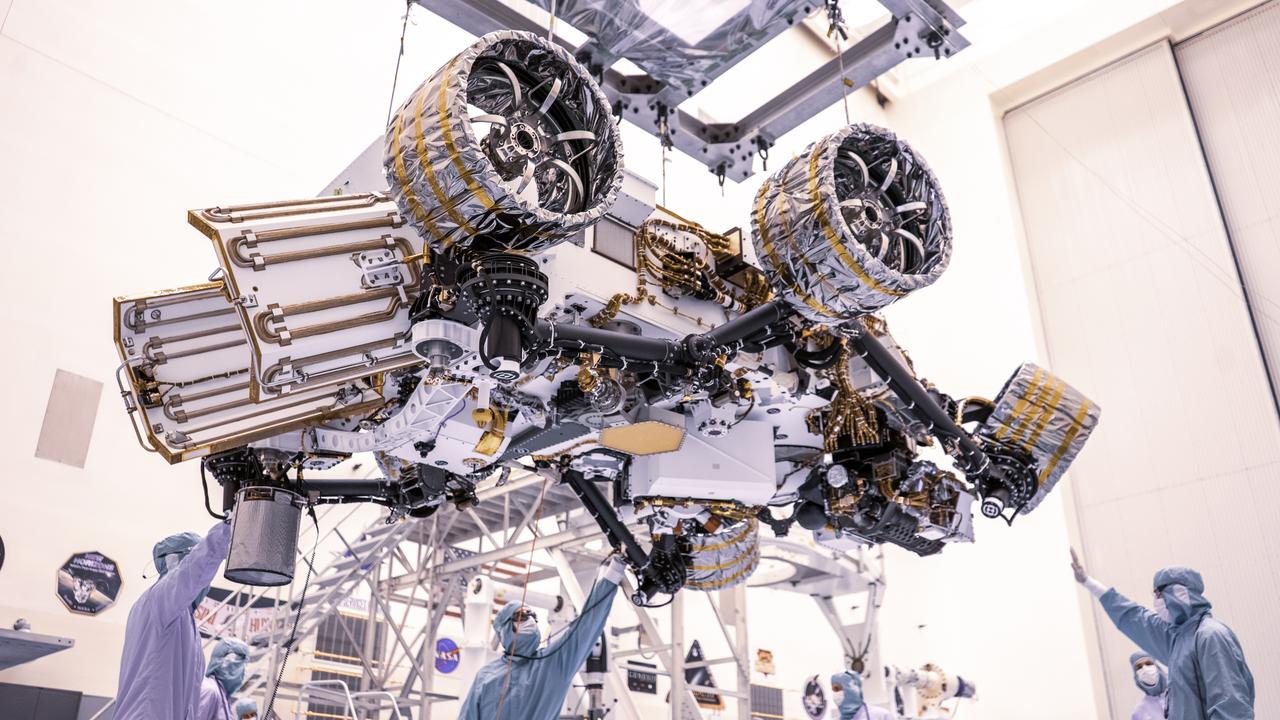
Engineers perform mass properties testing on NASA’s Mars Perseverance rover inside Kennedy Space Center’s Payload Hazardous Servicing Facility on April 7, 2020. The rover was rotated clockwise and counterclockwise on a spin table to determine the center of gravity, or the point at which weight is evenly dispersed on all sides. Establishing the rover’s center of gravity will help ensure the spacecraft will land on Mars as calculated. Perseverance will touch down on the Red Planet on Feb. 18, 2021. Liftoff aboard a United Launch Alliance Atlas V 541 rocket is targeted between July 17 and Aug. 5 from Cape Canaveral Air Force Station. NASA’s Launch Services Program based at Kennedy is managing the launch.
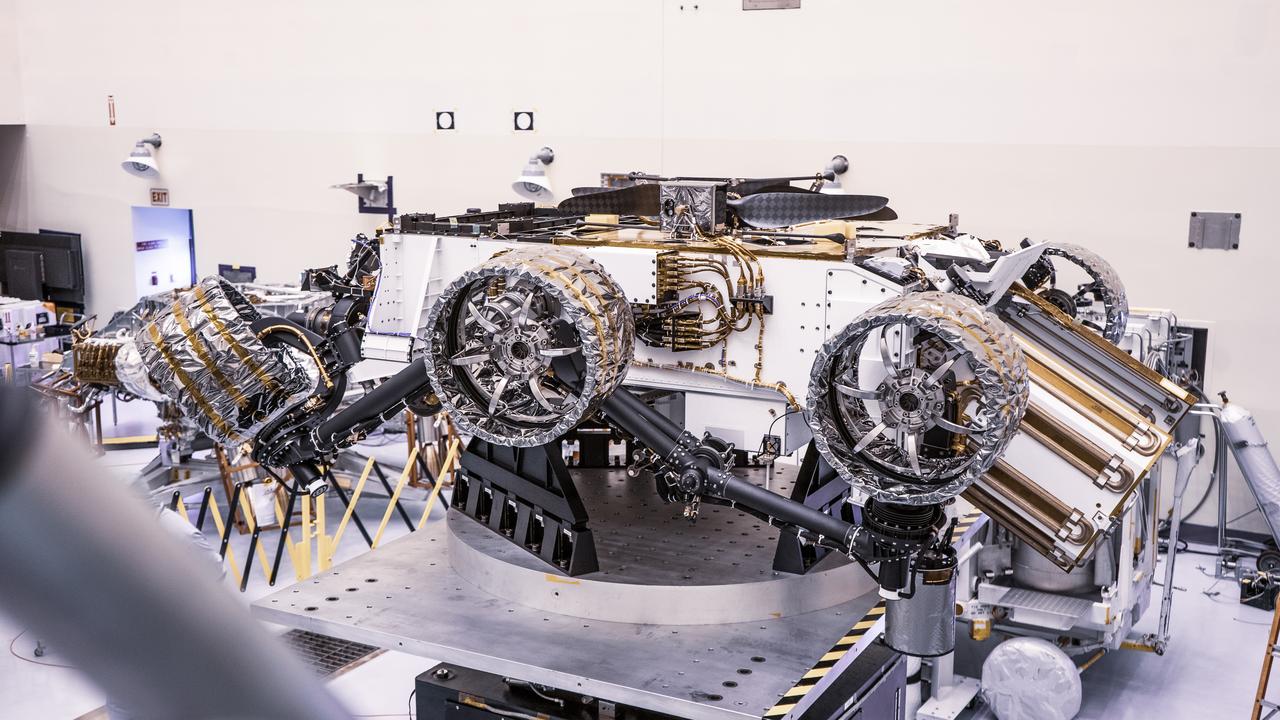
Engineers perform mass properties testing on NASA’s Mars Perseverance rover inside Kennedy Space Center’s Payload Hazardous Servicing Facility on April 7, 2020. The rover was rotated clockwise and counterclockwise on a spin table to determine the center of gravity, or the point at which weight is evenly dispersed on all sides. Establishing the rover’s center of gravity will help ensure the spacecraft will land on Mars as calculated. Perseverance will touch down on the Red Planet on Feb. 18, 2021. Liftoff aboard a United Launch Alliance Atlas V 541 rocket is targeted between July 17 and Aug. 5 from Cape Canaveral Air Force Station. NASA’s Launch Services Program based at Kennedy is managing the launch.
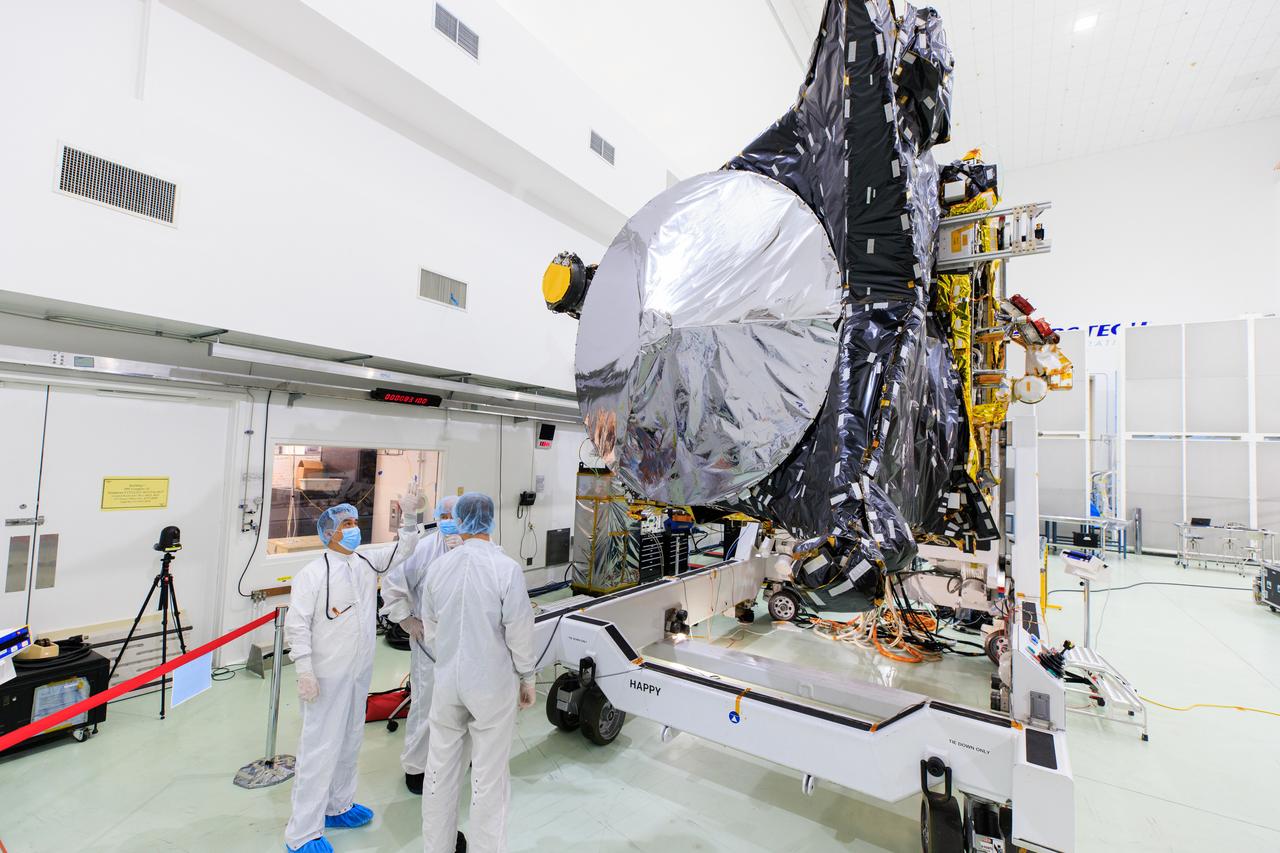
NASA's Psyche spacecraft is shown in a clean room on June 26, 2023, at Astrotech Space Operations Facility near the agency’s Kennedy Space Center in Florida. Engineers and technicians from NASA’s Jet Propulsion Laboratory in Southern California have begun final assembly, test, and launch operations on Psyche, with assembly of the spacecraft all but complete except for the installation of the solar arrays and the imagers. NASA’s Deep Space Optical Communications (DSOC) technology demonstration, testing high-data-rate laser communications, remains integrated into the spacecraft. A final suite of tests will be run on the vehicle, after which it will be fueled and then mated onto a SpaceX Falcon Heavy rocket just prior to launch, targeted for October 2023.
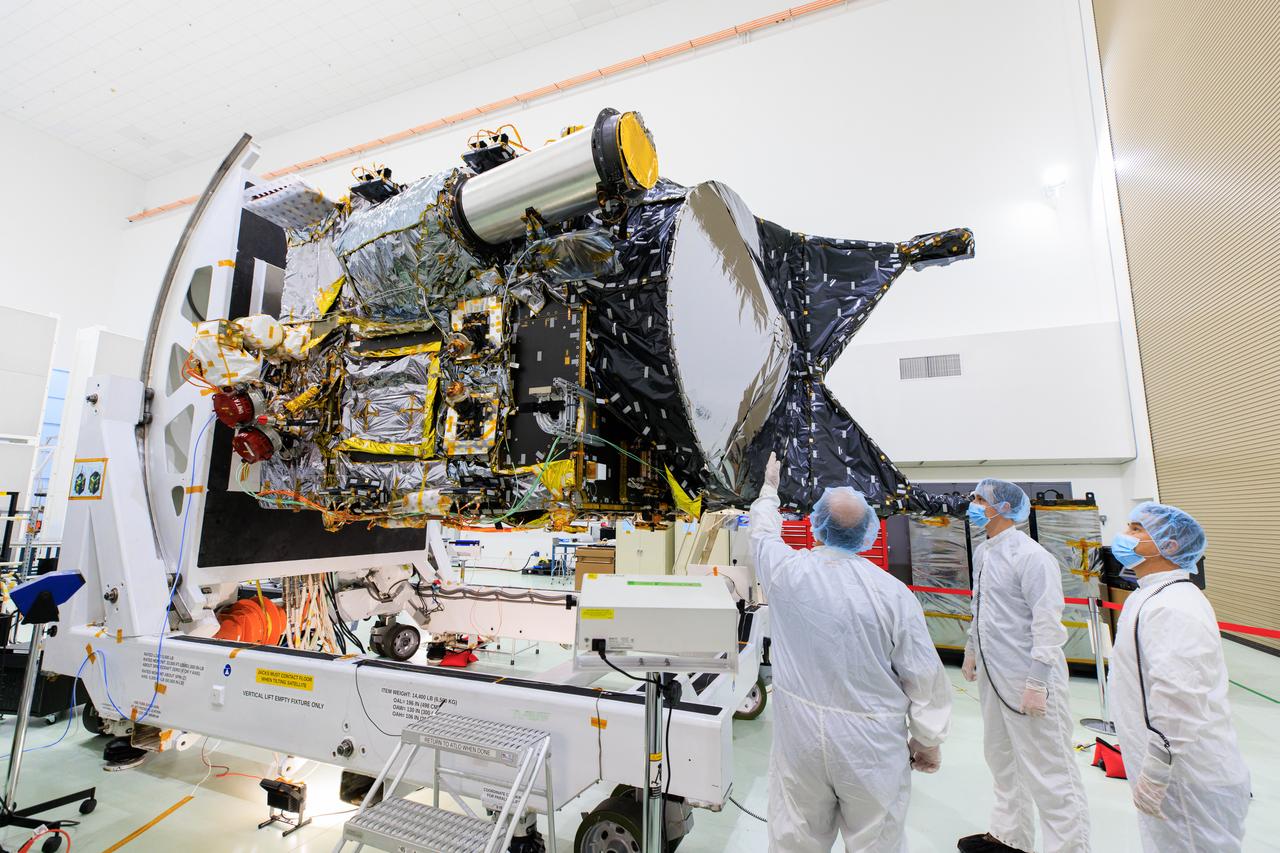
NASA's Psyche spacecraft is shown in a clean room on June 26, 2023, at Astrotech Space Operations Facility near the agency’s Kennedy Space Center in Florida. Engineers and technicians from NASA’s Jet Propulsion Laboratory in Southern California have begun final assembly, test, and launch operations on Psyche, with assembly of the spacecraft all but complete except for the installation of the solar arrays and the imagers. NASA’s Deep Space Optical Communications (DSOC) technology demonstration, testing high-data-rate laser communications, remains integrated into the spacecraft. A final suite of tests will be run on the vehicle, after which it will be fueled and then mated onto a SpaceX Falcon Heavy rocket just prior to launch, targeted for October 2023.
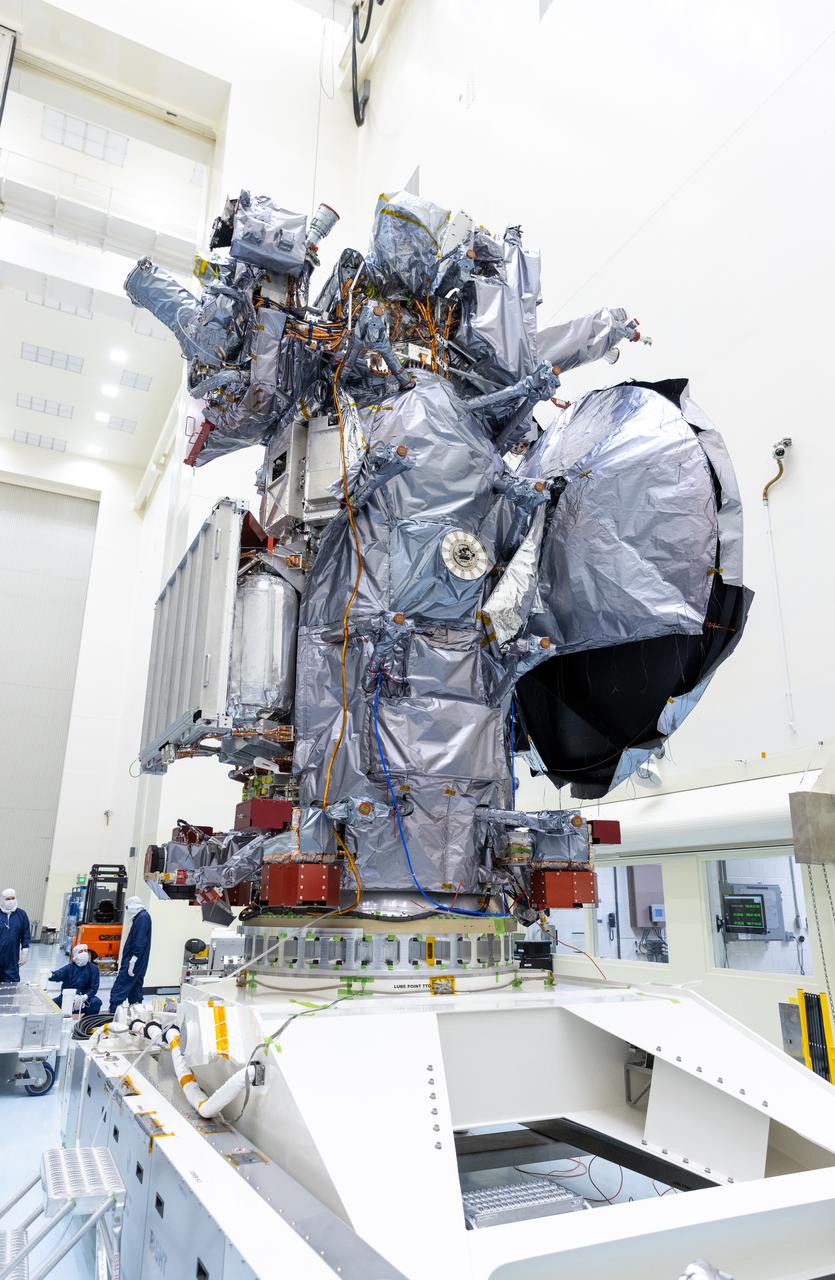
Technicians prepare to install the nearly 10 feet (3 meters) wide dish-shaped high-gain antenna to NASA’s Europa Clipper, a spacecraft to study Jupiter’s icy moon, at the agency’s Payload Hazardous Servicing Facility at Kennedy Space Center in Florida on Tuesday, June 18, 2024. The spacecraft will perform a series of flybys of the Jupiter moon Europa to gather data on its atmosphere, icy crust, and the ocean underneath, and the high-gain antenna will send the research data to scientists on Earth to determine if the moon can support habitable condition. The Europa Clipper spacecraft is scheduled to launch atop a SpaceX Falcon Heavy rocket from Kennedy’s Launch Complex 39A no earlier than October 2024.
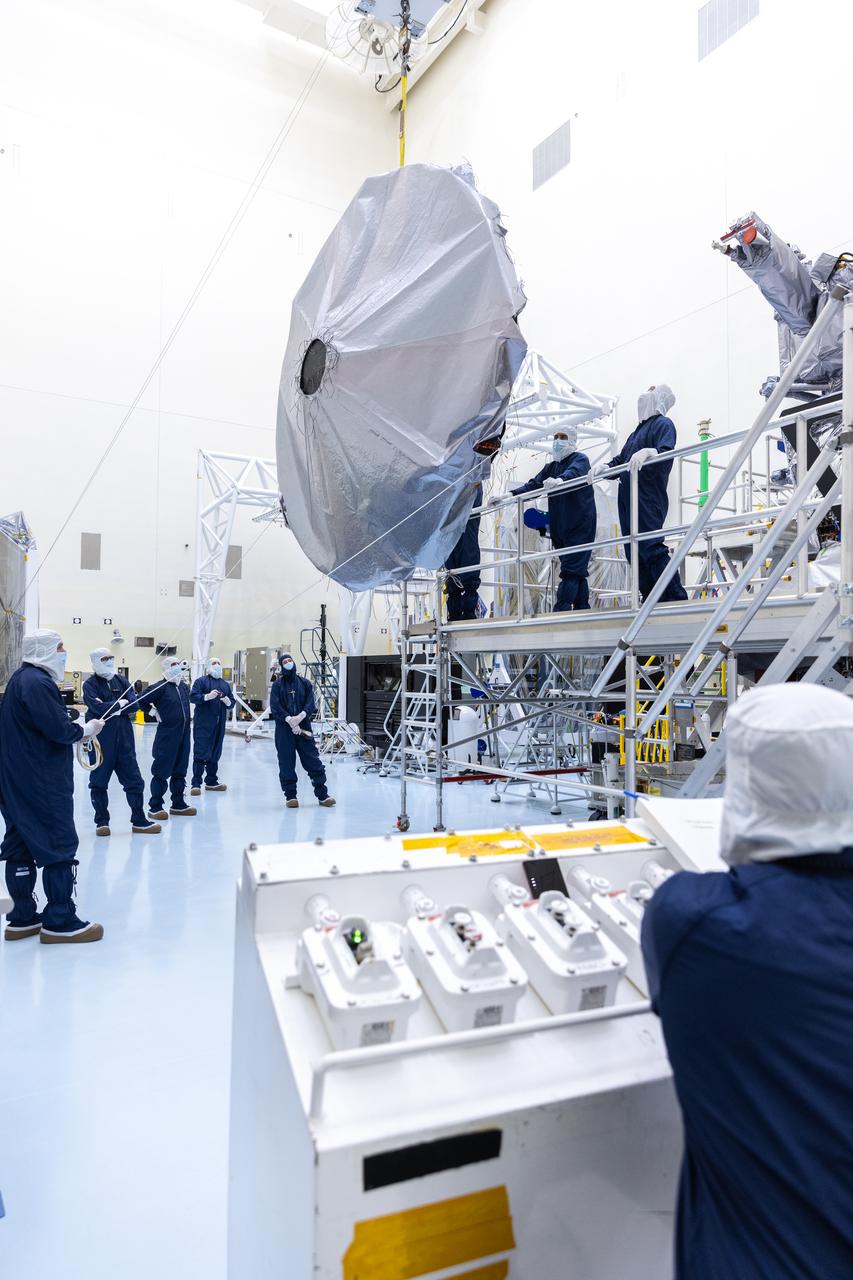
Technicians prepare to install the nearly 10 feet (3 meters) wide dish-shaped high-gain antenna to NASA’s Europa Clipper, a spacecraft to study Jupiter’s icy moon, at the agency’s Payload Hazardous Servicing Facility at Kennedy Space Center in Florida on Monday, June 17, 2024. The spacecraft will perform a series of flybys of the Jupiter moon Europa to gather data on its atmosphere, icy crust, and the ocean underneath, and the high-gain antenna will send the research data to scientists on Earth to determine if the moon can support habitable condition. The Europa Clipper spacecraft is scheduled to launch atop a SpaceX Falcon Heavy rocket from Kennedy’s Launch Complex 39A no earlier than October 2024.
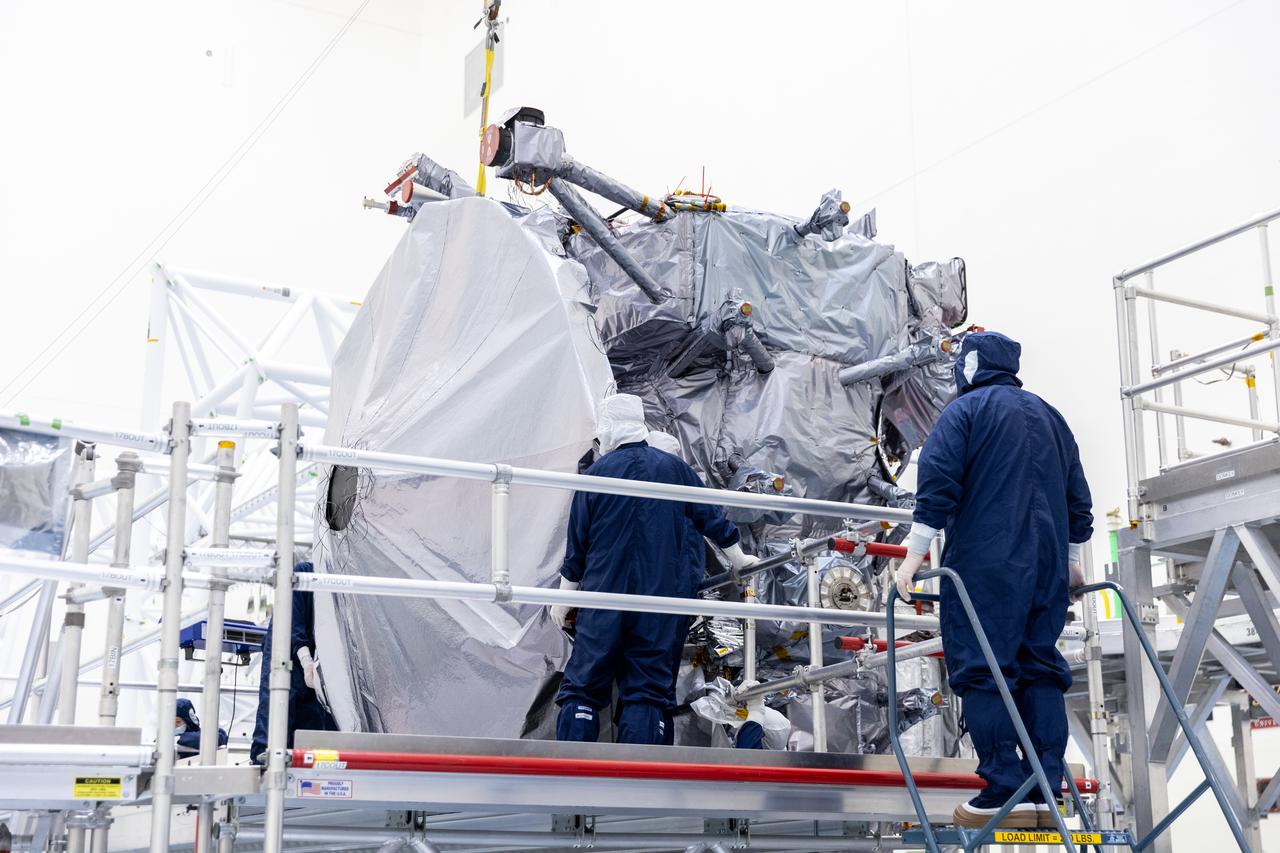
Technicians prepare to install the nearly 10 feet (3 meters) wide dish-shaped high-gain antenna to NASA’s Europa Clipper, a spacecraft to study Jupiter’s icy moon, at the agency’s Payload Hazardous Servicing Facility at Kennedy Space Center in Florida on Monday, June 17, 2024. The spacecraft will perform a series of flybys of the Jupiter moon Europa to gather data on its atmosphere, icy crust, and the ocean underneath, and the high-gain antenna will send the research data to scientists on Earth to determine if the moon can support habitable condition. The Europa Clipper spacecraft is scheduled to launch atop a SpaceX Falcon Heavy rocket from Kennedy’s Launch Complex 39A no earlier than October 2024.
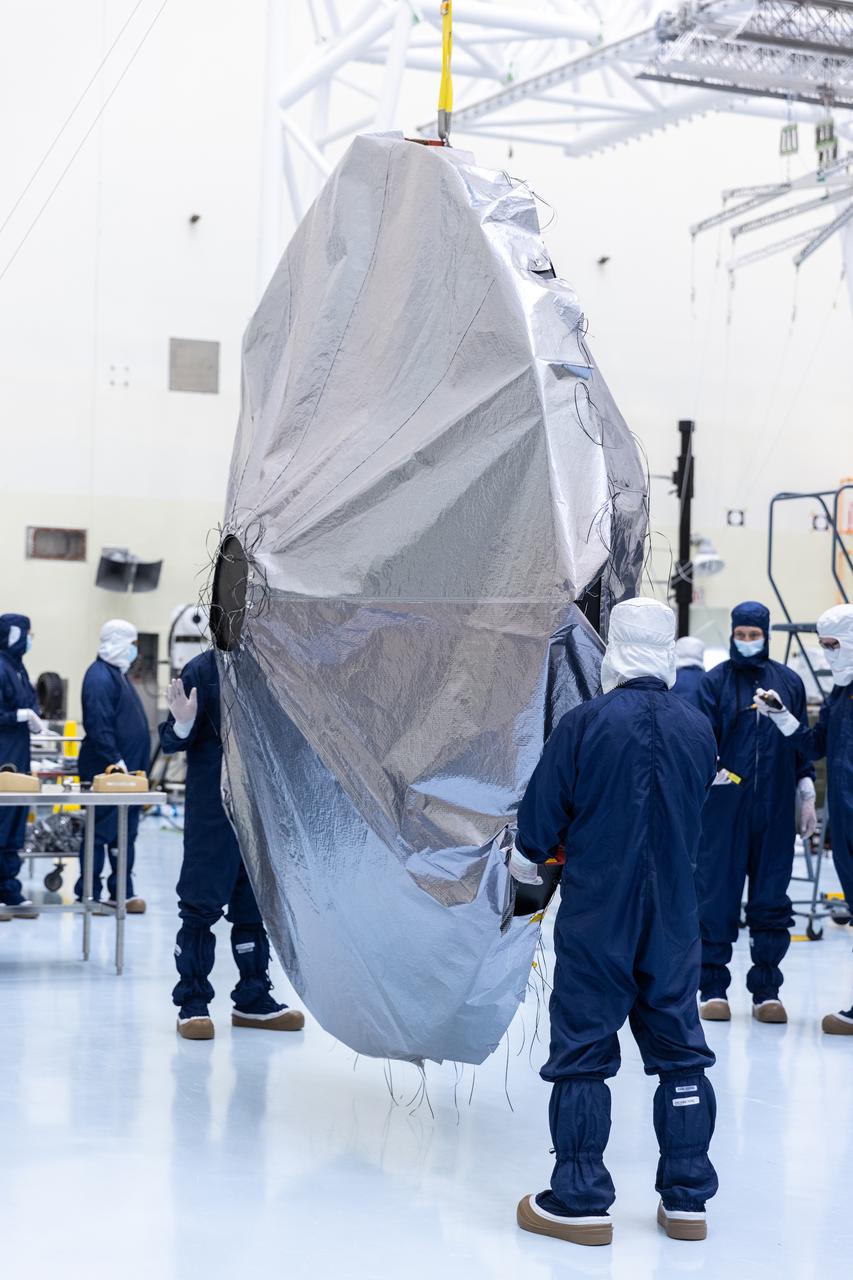
Technicians prepare to install the nearly 10 feet (3 meters) wide dish-shaped high-gain antenna to NASA’s Europa Clipper, a spacecraft to study Jupiter’s icy moon, at the agency’s Payload Hazardous Servicing Facility at Kennedy Space Center in Florida on Monday, June 17, 2024. The spacecraft will perform a series of flybys of the Jupiter moon Europa to gather data on its atmosphere, icy crust, and the ocean underneath, and the high-gain antenna will send the research data to scientists on Earth to determine if the moon can support habitable condition. The Europa Clipper spacecraft is scheduled to launch atop a SpaceX Falcon Heavy rocket from Kennedy’s Launch Complex 39A no earlier than October 2024.
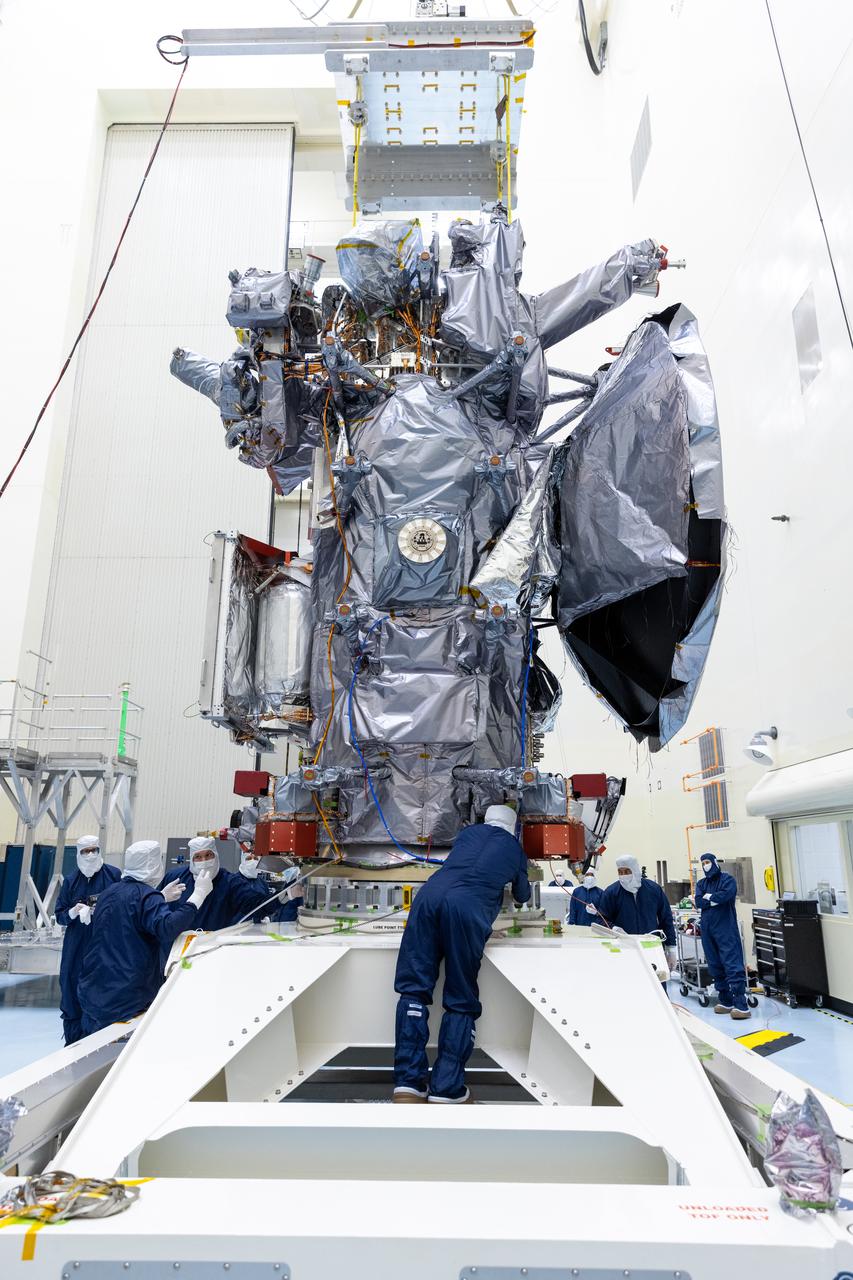
Technicians prepare to install the nearly 10 feet (3 meters) wide dish-shaped high-gain antenna to NASA’s Europa Clipper, a spacecraft to study Jupiter’s icy moon, at the agency’s Payload Hazardous Servicing Facility at Kennedy Space Center in Florida on Tuesday, June 18, 2024. The spacecraft will perform a series of flybys of the Jupiter moon Europa to gather data on its atmosphere, icy crust, and the ocean underneath, and the high-gain antenna will send the research data to scientists on Earth to determine if the moon can support habitable condition. The Europa Clipper spacecraft is scheduled to launch atop a SpaceX Falcon Heavy rocket from Kennedy’s Launch Complex 39A no earlier than October 2024.
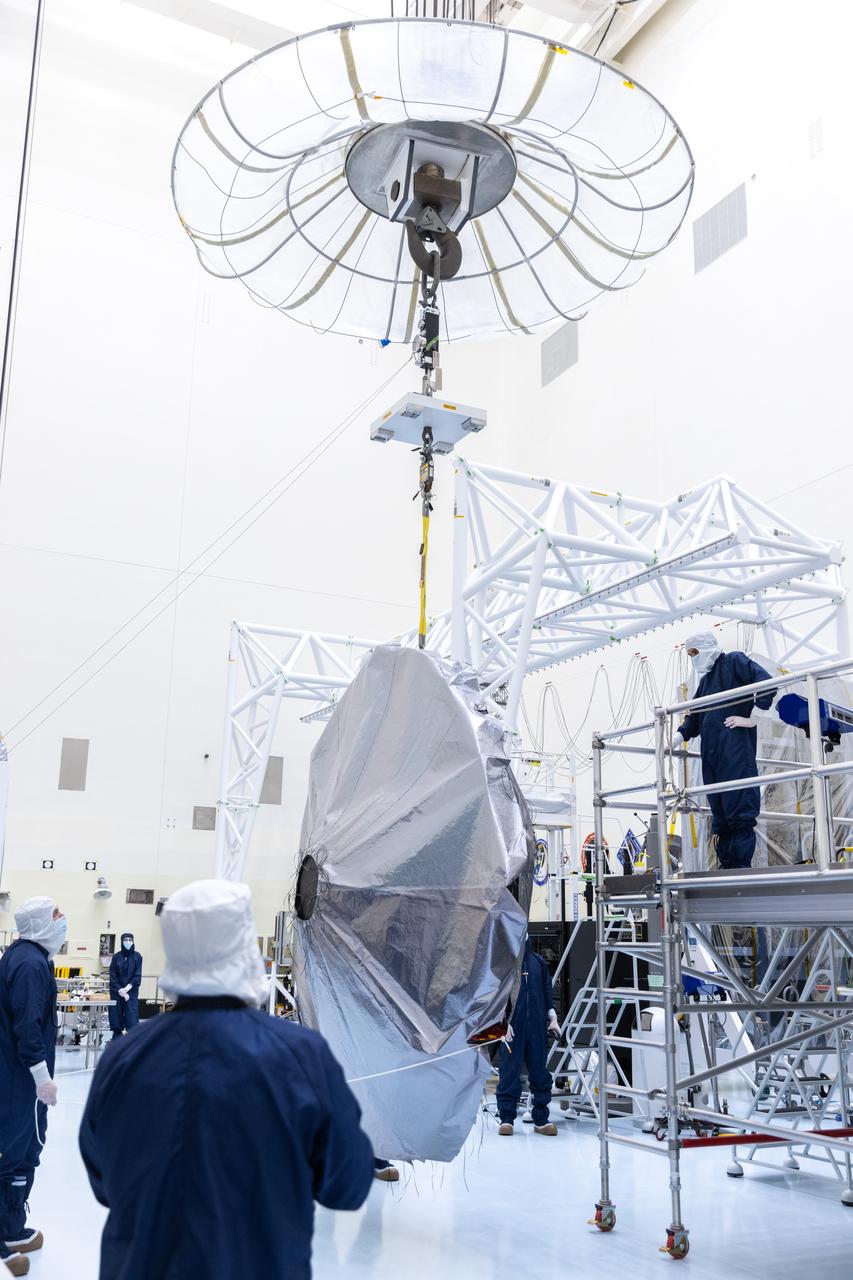
Technicians prepare to install the nearly 10 feet (3 meters) wide dish-shaped high-gain antenna to NASA’s Europa Clipper, a spacecraft to study Jupiter’s icy moon, at the agency’s Payload Hazardous Servicing Facility at Kennedy Space Center in Florida on Monday, June 17, 2024. The spacecraft will perform a series of flybys of the Jupiter moon Europa to gather data on its atmosphere, icy crust, and the ocean underneath, and the high-gain antenna will send the research data to scientists on Earth to determine if the moon can support habitable condition. The Europa Clipper spacecraft is scheduled to launch atop a SpaceX Falcon Heavy rocket from Kennedy’s Launch Complex 39A no earlier than October 2024.
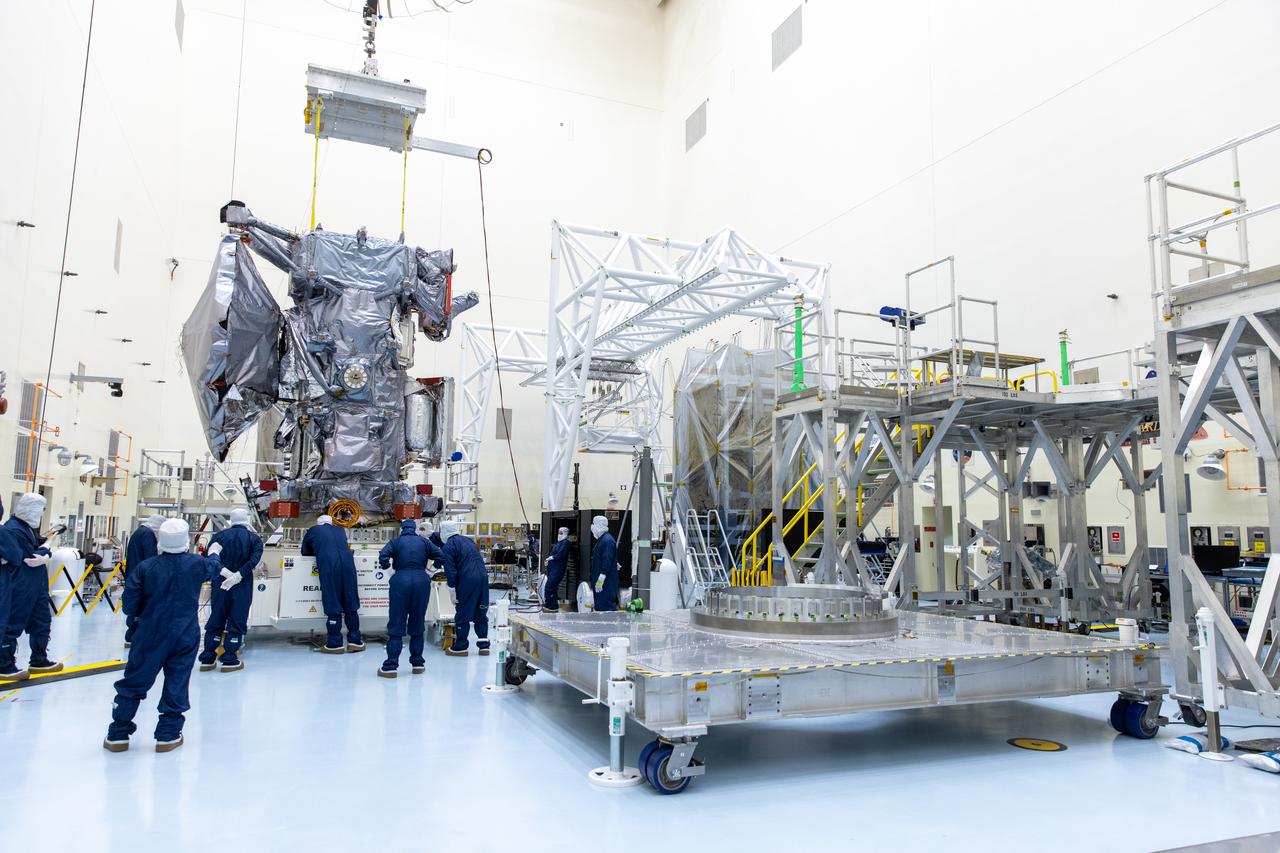
Technicians prepare to install the nearly 10 feet (3 meters) wide dish-shaped high-gain antenna to NASA’s Europa Clipper, a spacecraft to study Jupiter’s icy moon, at the agency’s Payload Hazardous Servicing Facility at Kennedy Space Center in Florida on Tuesday, June 18, 2024. The spacecraft will perform a series of flybys of the Jupiter moon Europa to gather data on its atmosphere, icy crust, and the ocean underneath, and the high-gain antenna will send the research data to scientists on Earth to determine if the moon can support habitable condition. The Europa Clipper spacecraft is scheduled to launch atop a SpaceX Falcon Heavy rocket from Kennedy’s Launch Complex 39A no earlier than October 2024.
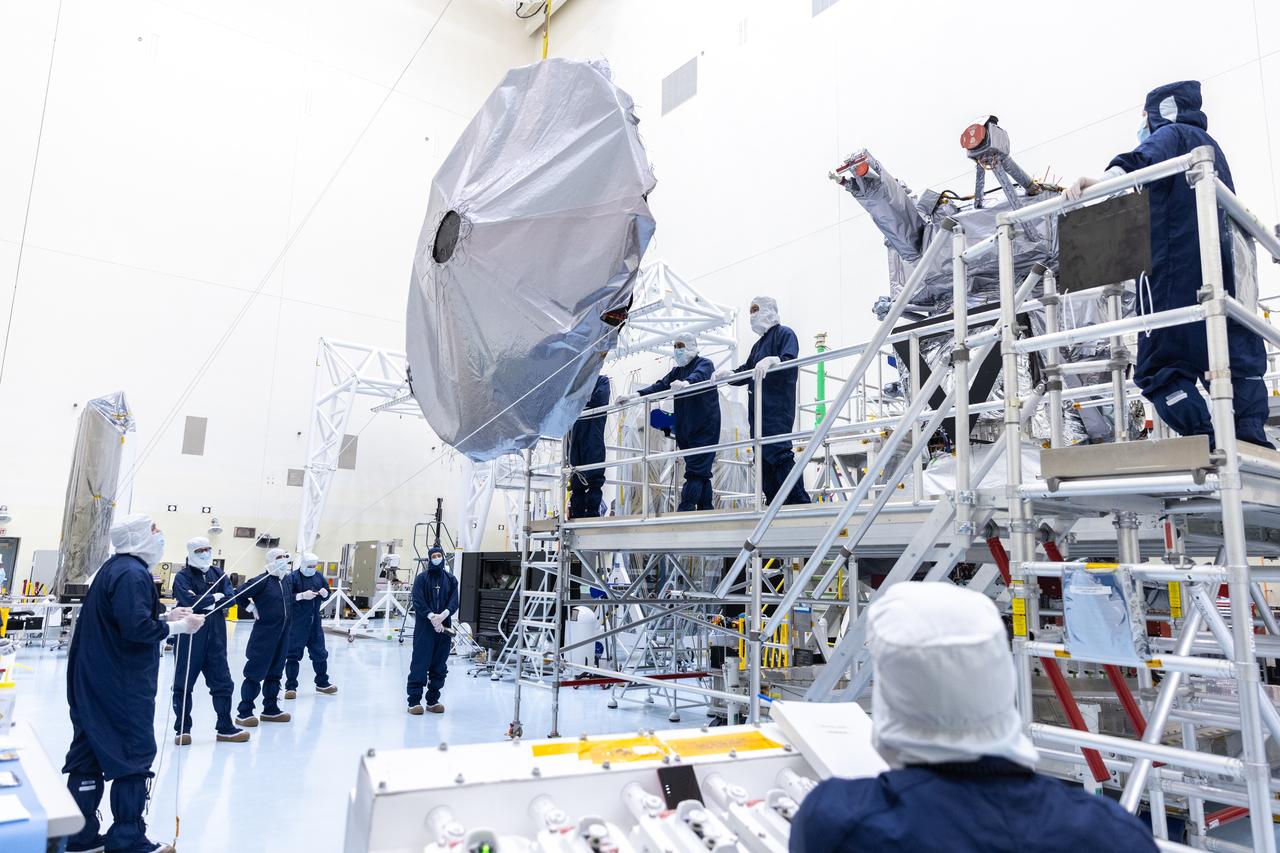
Technicians prepare to install the nearly 10 feet (3 meters) wide dish-shaped high-gain antenna to NASA’s Europa Clipper, a spacecraft to study Jupiter’s icy moon, at the agency’s Payload Hazardous Servicing Facility at Kennedy Space Center in Florida on Monday, June 17, 2024. The spacecraft will perform a series of flybys of the Jupiter moon Europa to gather data on its atmosphere, icy crust, and the ocean underneath, and the high-gain antenna will send the research data to scientists on Earth to determine if the moon can support habitable condition. The Europa Clipper spacecraft is scheduled to launch atop a SpaceX Falcon Heavy rocket from Kennedy’s Launch Complex 39A no earlier than October 2024.
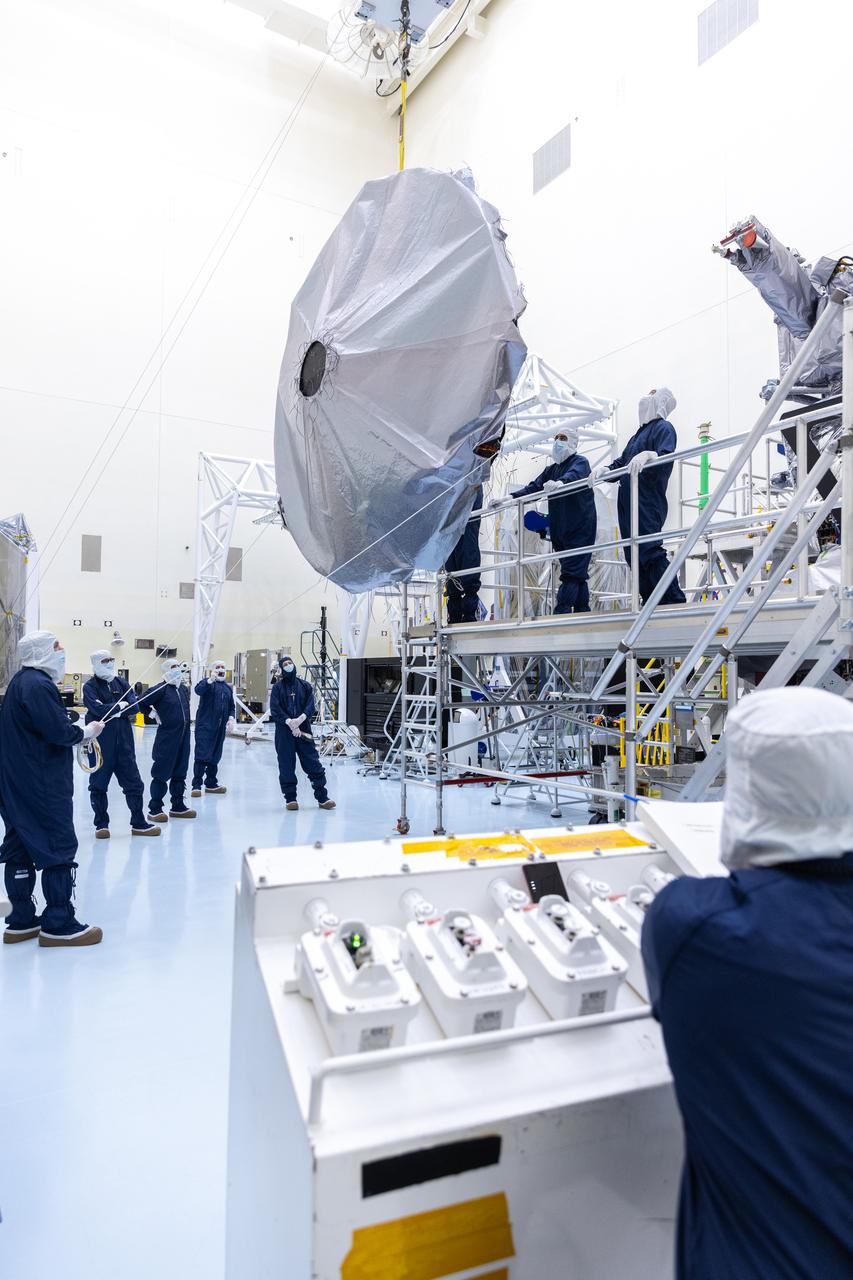
Technicians prepare to install the nearly 10 feet (3 meters) wide dish-shaped high-gain antenna to NASA’s Europa Clipper, a spacecraft to study Jupiter’s icy moon, at the agency’s Payload Hazardous Servicing Facility at Kennedy Space Center in Florida on Monday, June 17, 2024. The spacecraft will perform a series of flybys of the Jupiter moon Europa to gather data on its atmosphere, icy crust, and the ocean underneath, and the high-gain antenna will send the research data to scientists on Earth to determine if the moon can support habitable condition. The Europa Clipper spacecraft is scheduled to launch atop a SpaceX Falcon Heavy rocket from Kennedy’s Launch Complex 39A no earlier than October 2024.
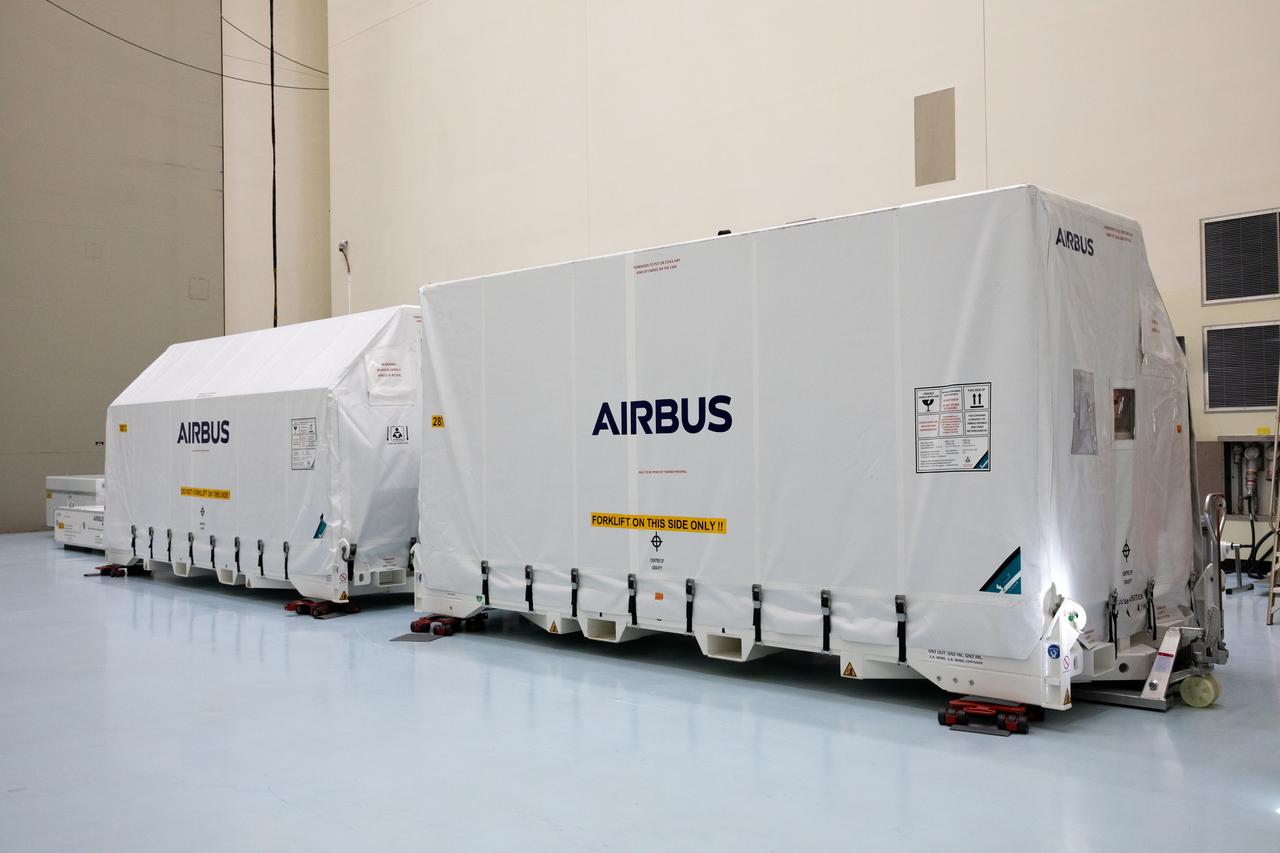
The transport carrier containing the five-panel solar arrays for NASA’s Europa Clipper spacecraft arrives at the Payload Hazardous Servicing Facility at the agency’s Kennedy Space Center in Florida on Wednesday, Feb. 21, 2024. The solar array travelled by air from Leiden, Netherlands, where Airbus workers assembled them over the last year, and then put on a barge to travel to the Port of Miami in Florida and loaded onto a semi-truck to be driven to Kennedy. The solar arrays will attach to the spacecraft to power it for the 1.8-billion-mile journey to study Jupiter’s icy moon, Europa. Launch on a SpaceX Falcon Heavy rocket is no earlier than October 2024.
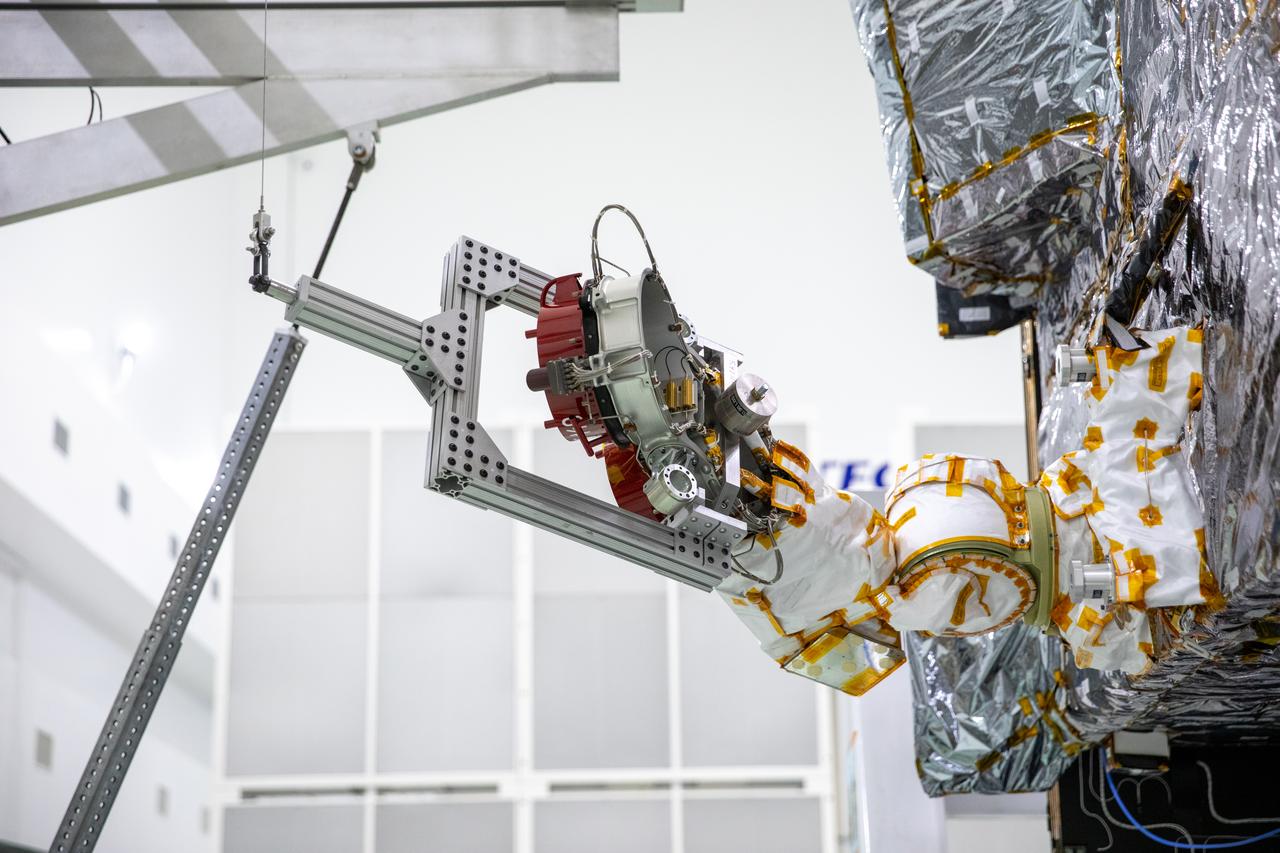
A team of engineers and technicians work on deploying and stowing stationary plasma thrusters (SPT) on NASA's Psyche spacecraft inside the Astrotech Space Operations Facility near the agency’s Kennedy Space Center in Florida on Aug. 4, 2023. This is part of the assembly, test, and launch operations preparations. The SPT are on a dual axis positioning mechanism (DAPM), and together they make a DSM, or DAPM-actuated SPT module. Psyche will launch atop a SpaceX Falcon Heavy rocket from Launch Complex 39A at Kennedy. Launch is targeted for Oct. 5, 2023. Riding with Psyche is a pioneering technology demonstration, NASA’s Deep Space Optical Communications (DSOC) experiment.
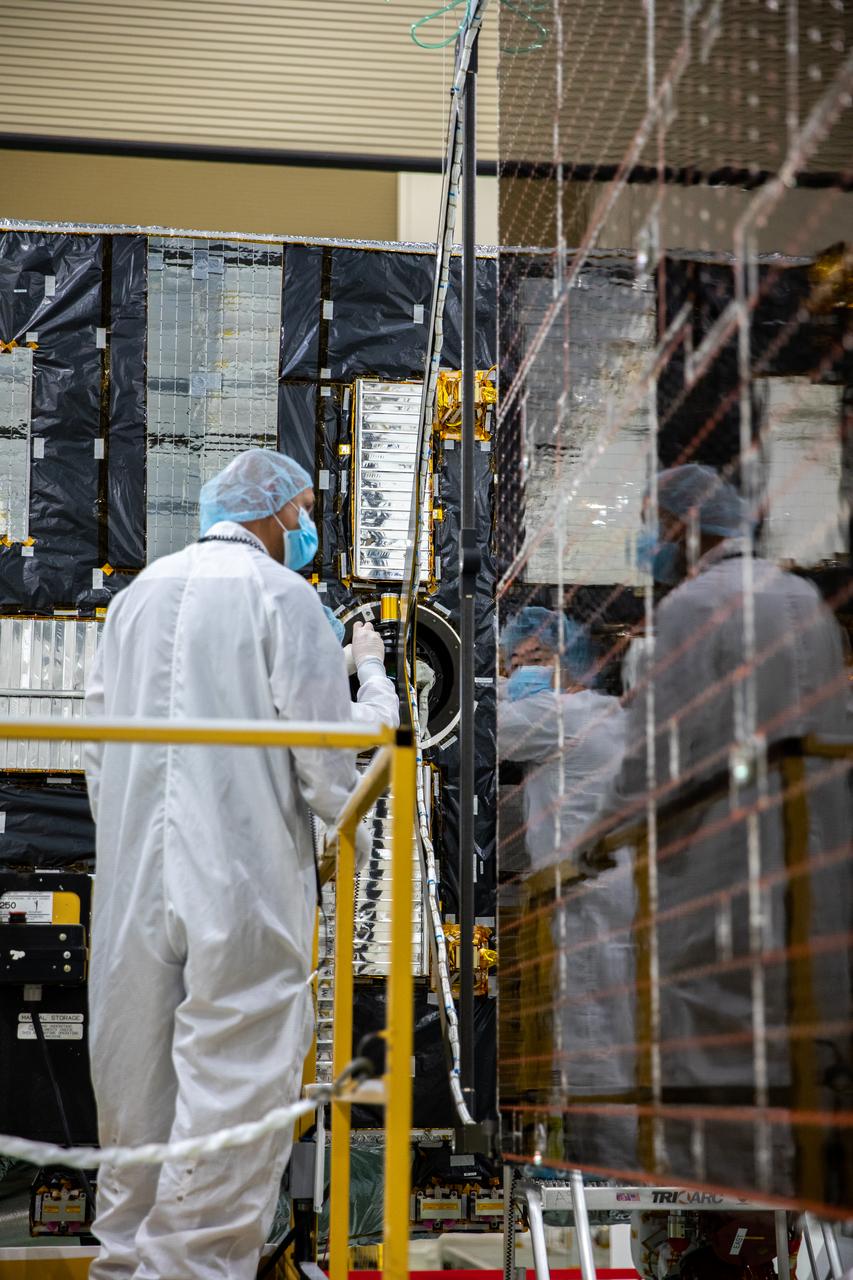
NASA team members prepare the twin solar arrays for integration with the agency’s Psyche spacecraft inside the Astrotech Space Operations Facility near the agency’s Kennedy Space Center in Florida on July 20, 2023. The solar arrays were shipped from Maxar Technologies, in San Jose, California. They are part of the solar electric propulsion system, provided by Maxar, that will power the spacecraft on its journey to explore a metal-rich asteroid. Psyche will launch atop a SpaceX Falcon Heavy rocket from Launch Complex 39A at Kennedy. Launch is targeted for Oct. 5, 2023. Riding with Psyche is a pioneering technology demonstration, NASA’s Deep Space Optical Communications (DSOC) experiment.
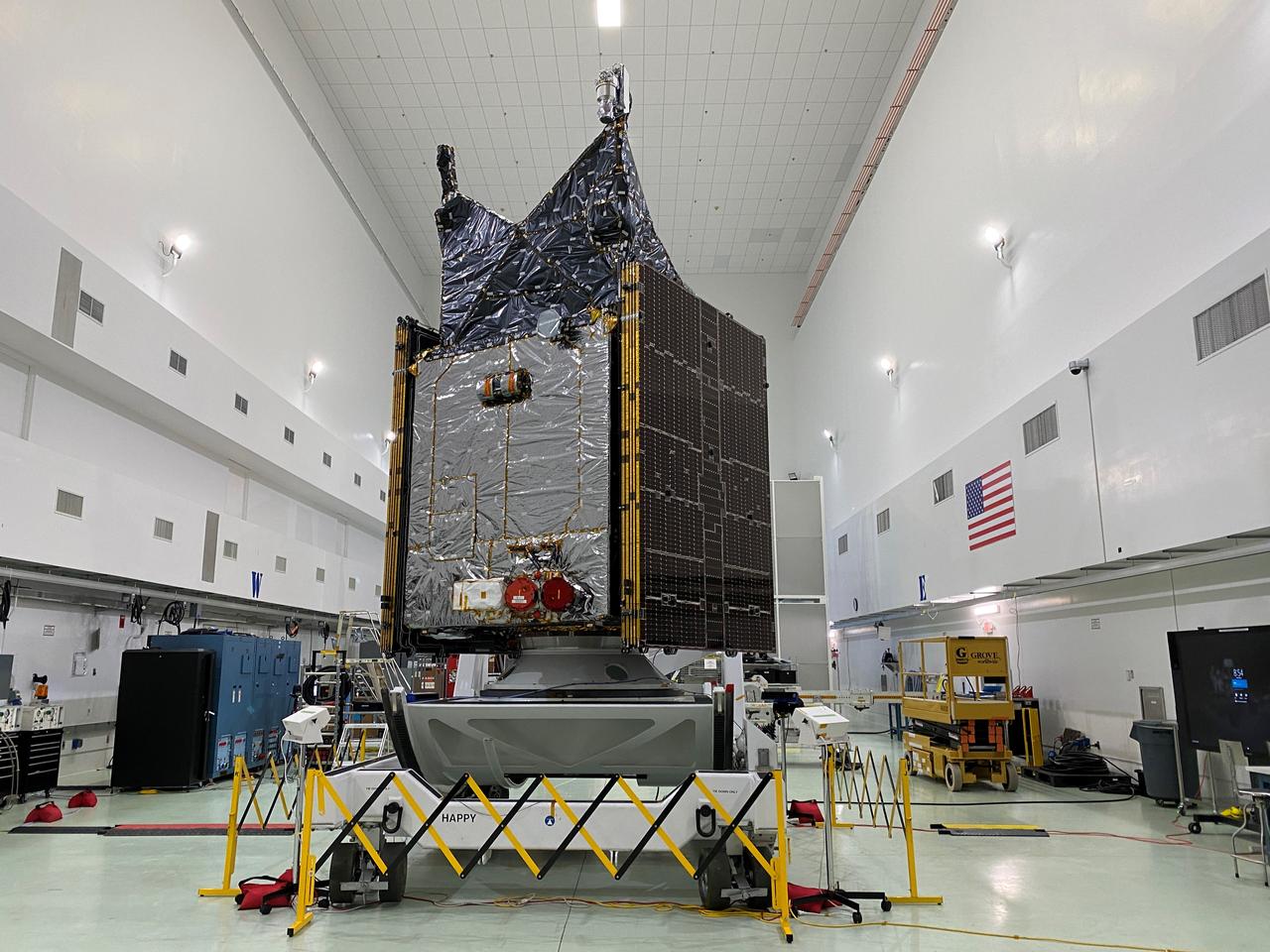
NASA’s Psyche spacecraft is made available to media for viewing inside a cleanroom at the Astrotech Space Operations Facility near Kennedy Space Center in Florida on Aug. 11, 2023. Psyche will launch atop a SpaceX Falcon Heavy rocket from Launch Complex 39A at Kennedy to explore a metal-rich asteroid. Launch is targeted for Oct. 5, 2023. Riding with Psyche is a pioneering technology demonstration, NASA’s Deep Space Optical Communications (DSOC) experiment.
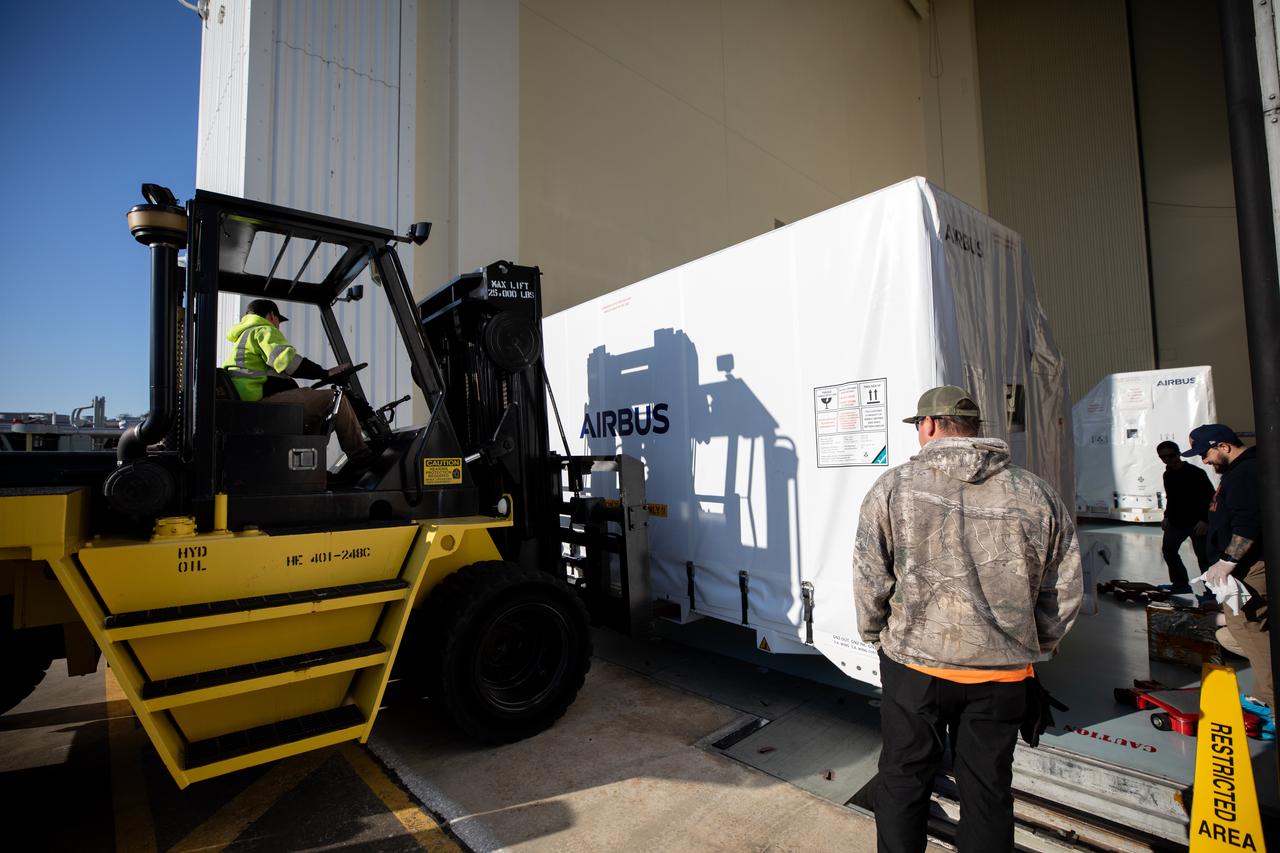
The transport carrier containing the five-panel solar arrays for NASA’s Europa Clipper spacecraft arrives at the Payload Hazardous Servicing Facility at the agency’s Kennedy Space Center in Florida on Wednesday, Feb. 21, 2024. The solar array travelled by air from Leiden, Netherlands, where Airbus workers assembled them over the last year, and then put on a barge to travel to the Port of Miami in Florida and loaded onto a semi-truck to be driven to Kennedy. The solar arrays will attach to the spacecraft to power it for the 1.8-billion-mile journey to study Jupiter’s icy moon, Europa. Launch on a SpaceX Falcon Heavy rocket is no earlier than October 2024.
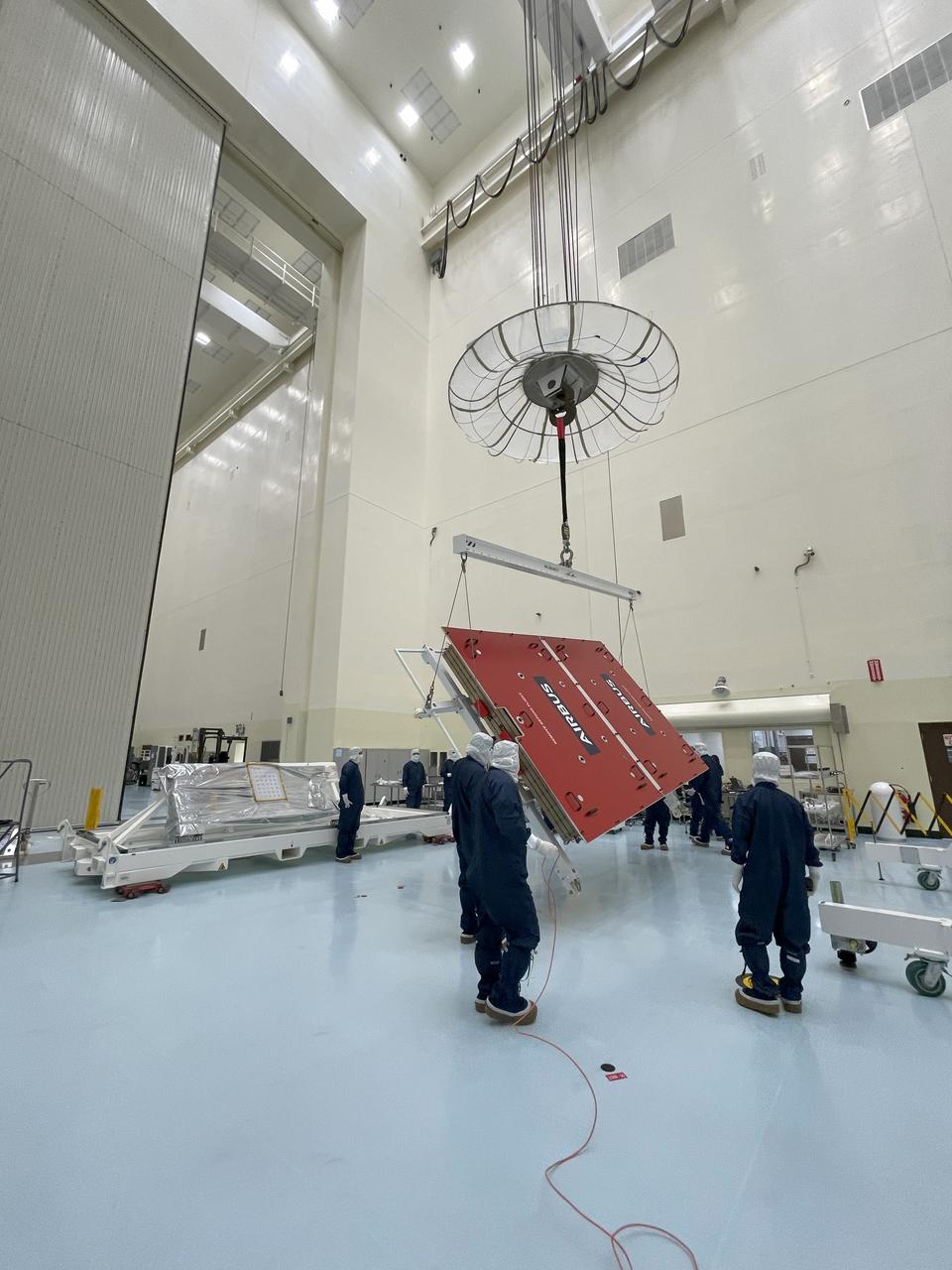
Technicians hoist a five-panel solar array protected by a lid for NASA’s Europa Clipper spacecraft at the Payload Hazardous Servicing Facility at the agency’s Kennedy Space Center in Florida on Tuesday, Feb. 27, 2024. The arrays are each 46.5 feet long (14.2 meters). With both solar arrays deployed, Europa Clipper will span more than 100 feet long, about the length of a basketball court. The solar arrays power the spacecraft so it can study Jupiter’s icy moon, Europa, which is more than five times as far from the Sun as the Earth. Launch on a SpaceX Falcon Heavy rocket is no earlier than October 2024.
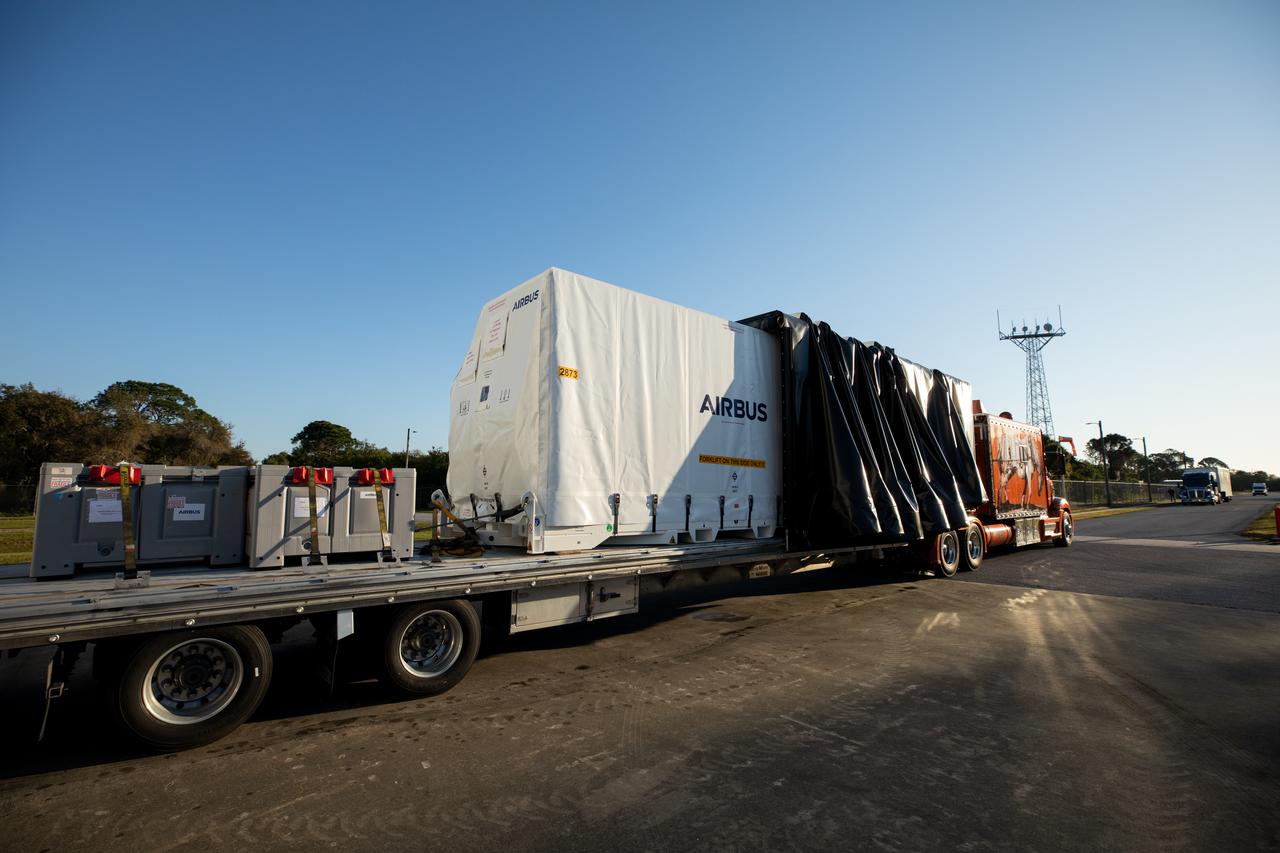
The transport carrier containing the five-panel solar arrays for NASA’s Europa Clipper spacecraft arrives at the Payload Hazardous Servicing Facility at the agency’s Kennedy Space Center in Florida on Wednesday, Feb. 21, 2024. The arrival completes the solar array journey which began in Leiden, Netherlands, where Airbus workers assembled them before shipping them by barge to Port of Miami in Florida and transporting them by truck to Kennedy. The solar arrays will attach to the spacecraft to power it on the 1.8-billion-mile journey to study Jupiter’s icy moon, Europa. Launch on a SpaceX Falcon Heavy rocket is no earlier than October 2024.
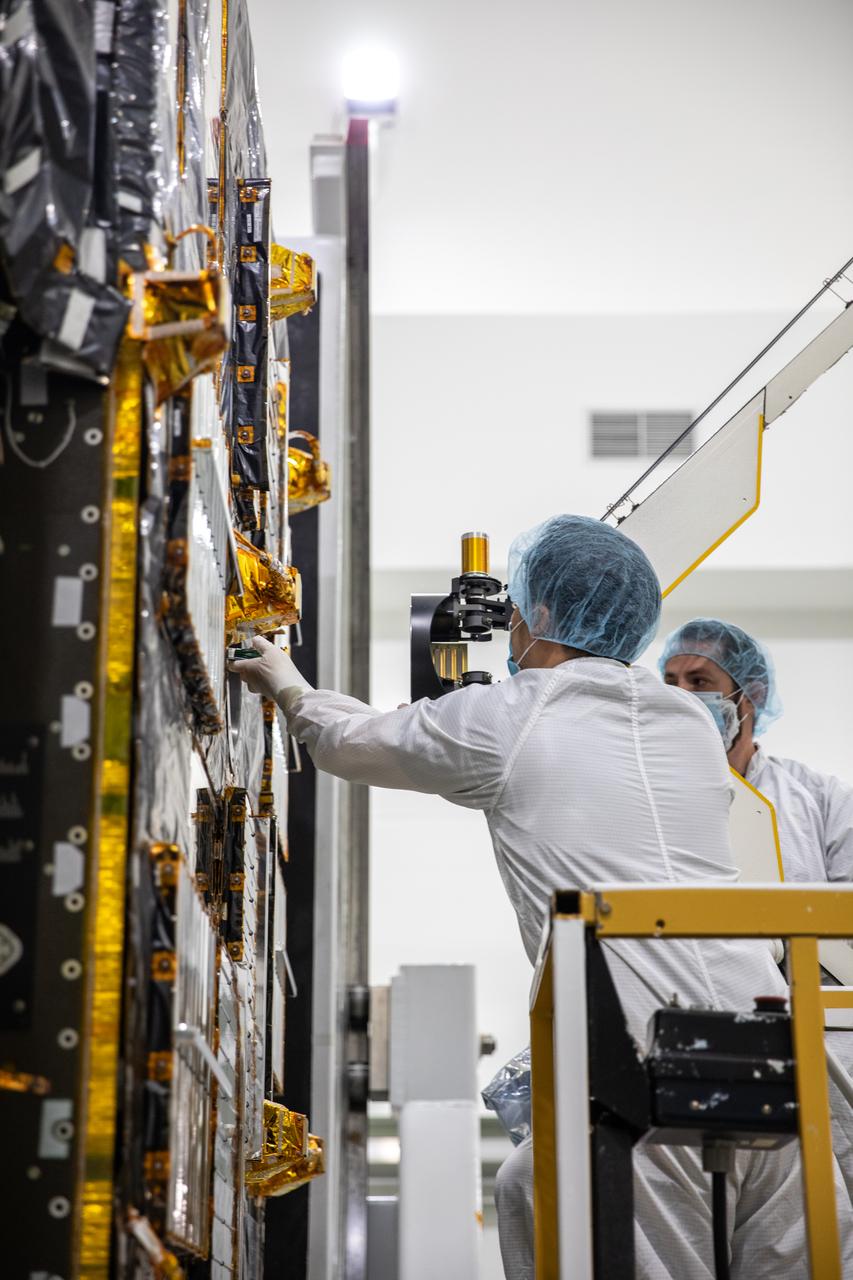
NASA team members prepare the agency’s Psyche spacecraft for integration with its twin solar arrays inside the Astrotech Space Operations Facility near the agency’s Kennedy Space Center in Florida on July 20, 2023. The solar arrays were shipped from Maxar Technologies, in San Jose, California. They are part of the solar electric propulsion system, provided by Maxar, that will power the spacecraft on its journey to explore a metal-rich asteroid. Psyche will launch atop a SpaceX Falcon Heavy rocket from Launch Complex 39A at Kennedy. Launch is targeted for Oct. 5, 2023. Riding with Psyche is a pioneering technology demonstration, NASA’s Deep Space Optical Communications (DSOC) experiment.
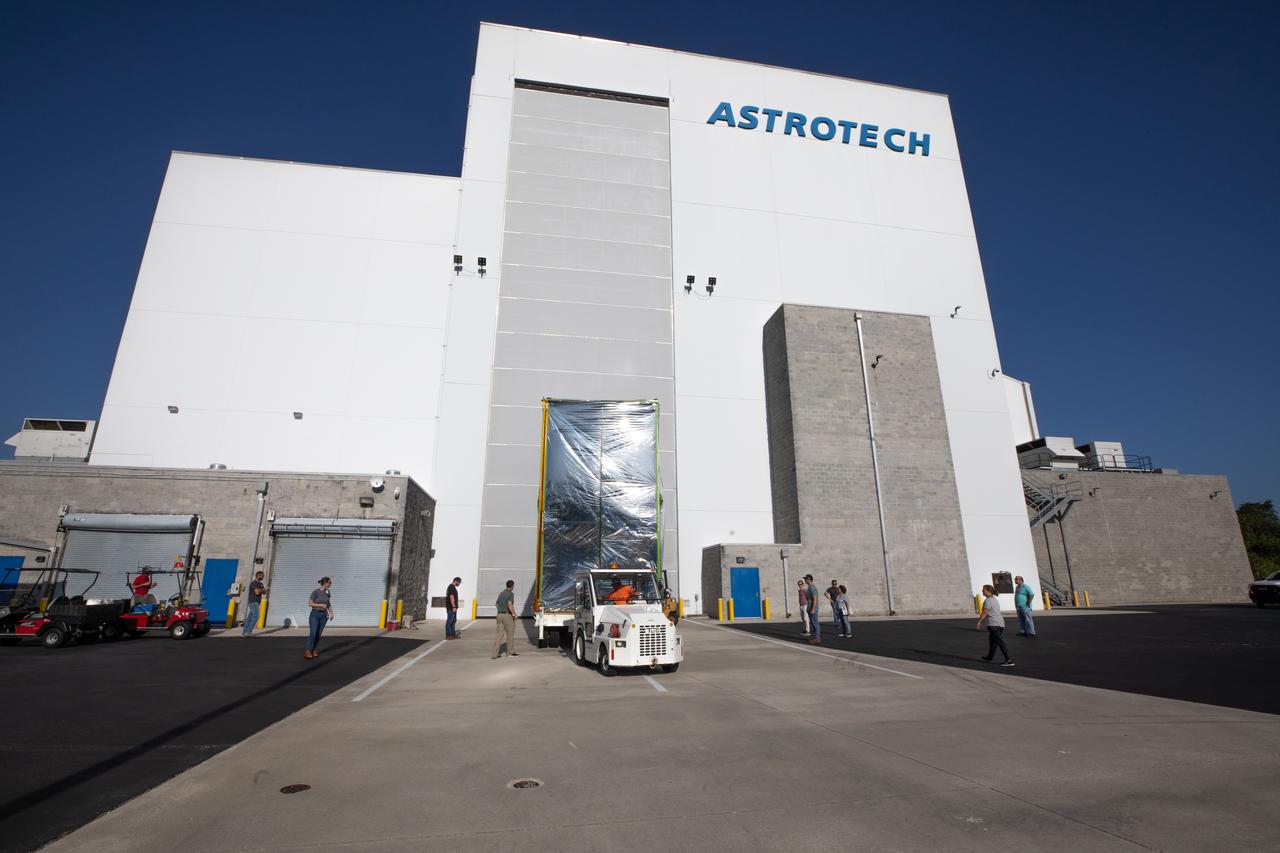
NASA’s Psyche spacecraft, secured for transport, arrived at the entrance to Building 9 at the Astrotech Space Operations Facility near the agency’s Kennedy Space Center in Florida on Aug. 14, 2023. Psyche will explore its namesake, a metal-rich asteroid orbiting the Sun between Mars and Jupiter. Psyche has NASA’s Deep Space Optical Communications (DSOC) technology demonstration onboard the spacecraft. DSOC will be the agency's first demonstration of optical communication beyond the Moon. Psyche will launch atop a SpaceX Falcon Heavy rocket from Launch Complex 39A at Kennedy. Launch is targeted for Oct. 5, 2023.
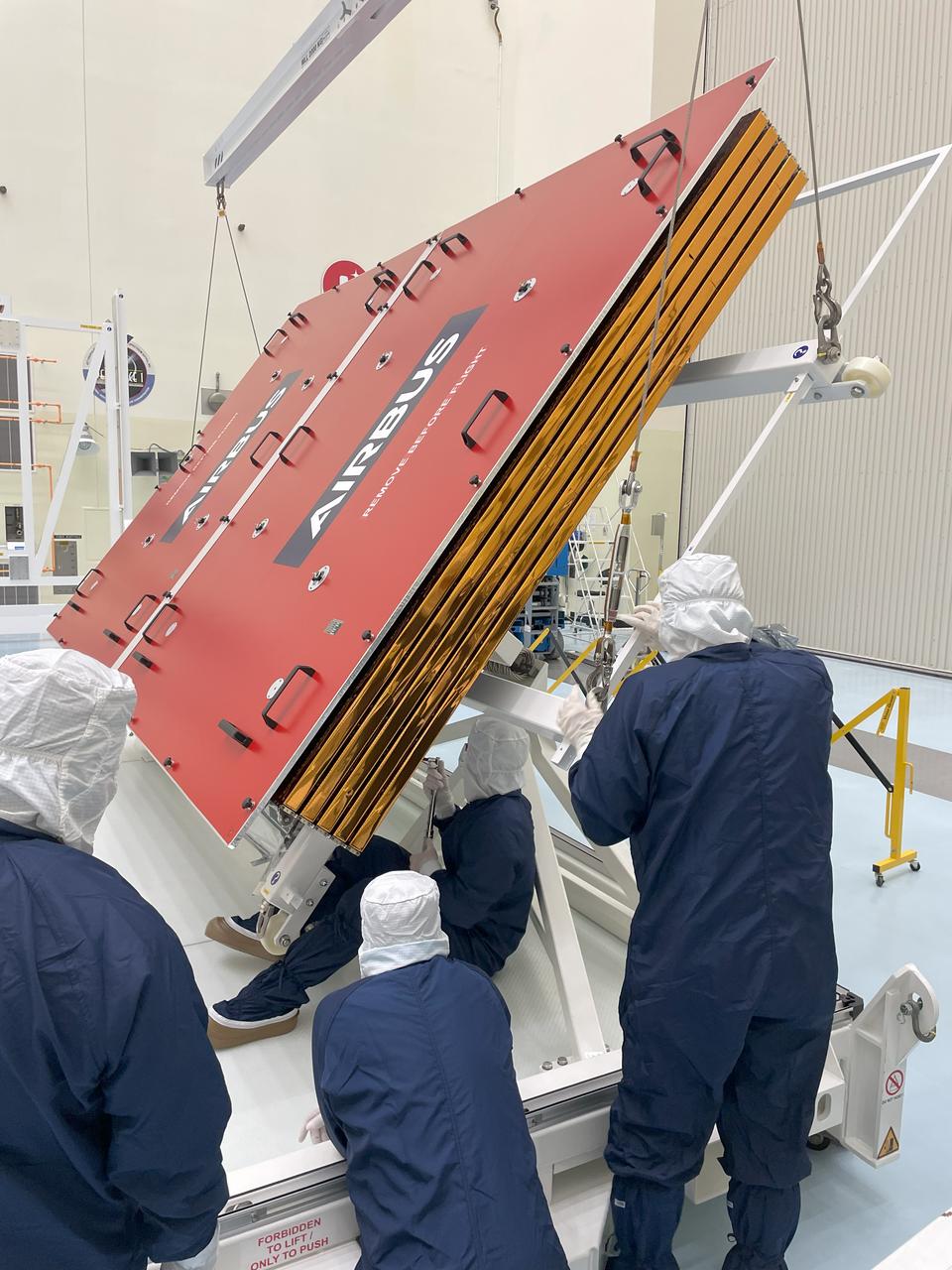
Technicians hoist a five-panel solar array protected by a lid for NASA’s Europa Clipper spacecraft at the Payload Hazardous Servicing Facility at the agency’s Kennedy Space Center in Florida on Tuesday, Feb. 27, 2024. The arrays are each 46.5 feet long (14.2 meters). With both solar arrays deployed, Europa Clipper will span more than 100 feet long, about the length of a basketball court. The solar arrays power the spacecraft so it can study Jupiter’s icy moon, Europa, which is more than five times as far from the Sun as the Earth. Launch on a SpaceX Falcon Heavy rocket is no earlier than October 2024.
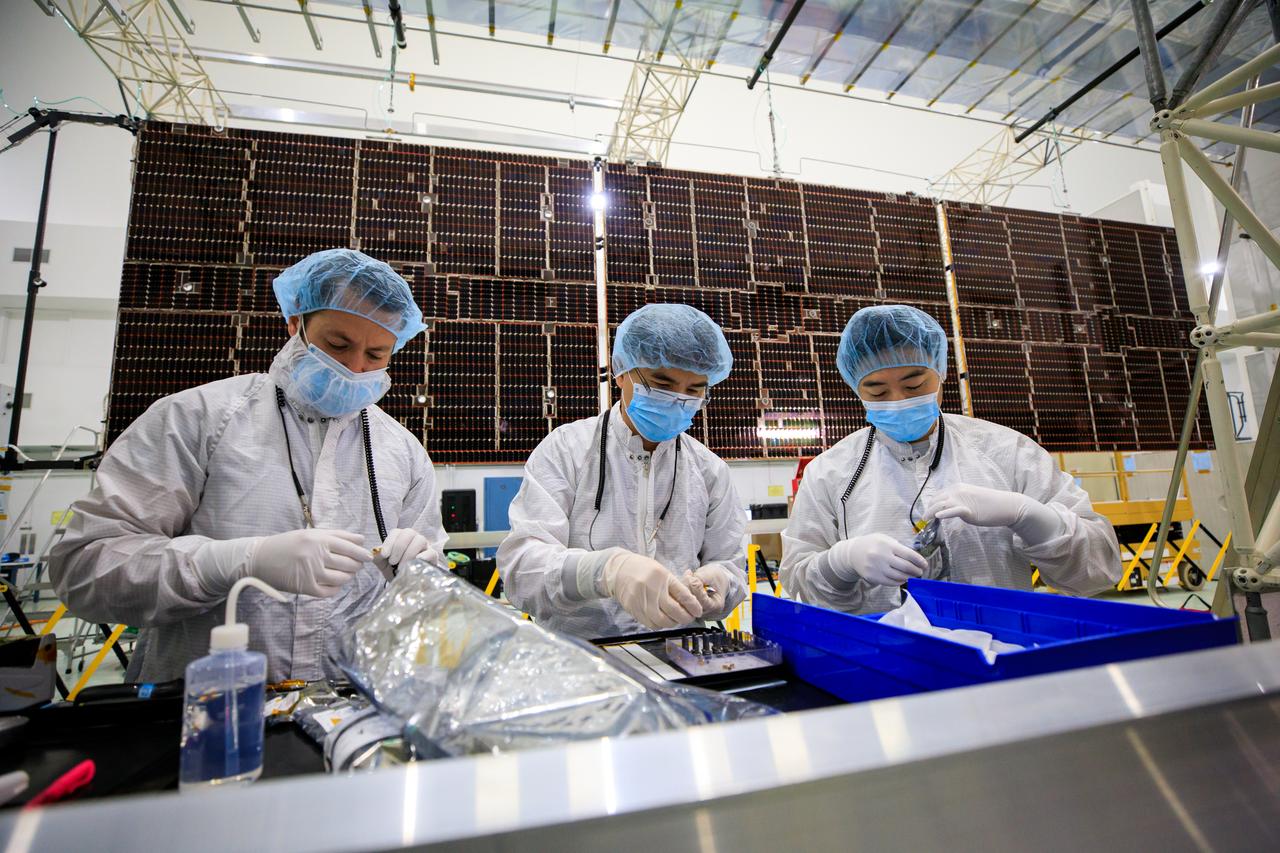
Team members prepare to integrate one of two solar arrays to the agency’s Psyche spacecraft inside the Astrotech Space Operations Facility near the agency’s Kennedy Space Center in Florida on July 24, 2023. The solar arrays were shipped from Maxar Technologies, in San Jose, California. They are part of the solar electric propulsion system, provided by Maxar, that will power the spacecraft on its journey to explore a metal-rich asteroid. Psyche will launch atop a SpaceX Falcon Heavy rocket from Launch Complex 39A at Kennedy. Launch is targeted for Oct. 5, 2023. Riding with Psyche is a pioneering technology demonstration, NASA’s Deep Space Optical Communications (DSOC) experiment.
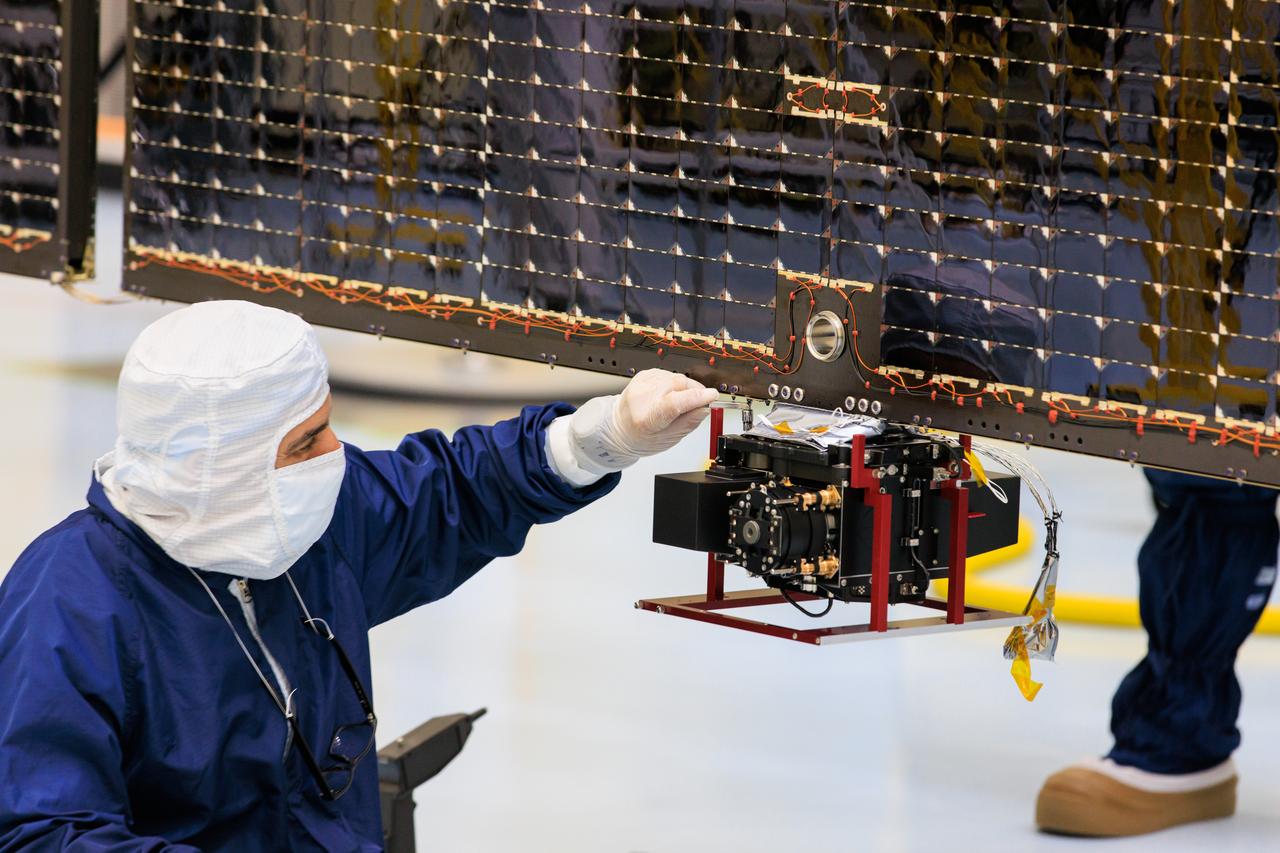
Technicians inside the Payload Hazardous Servicing Facility at NASA’s Kennedy Space Center in Florida install and test antennas on a solar array on Wednesday, March 20, 2024, for the agency’s Europa Clipper spacecraft which will study Jupiter’s icy moon Europa to determine if the planet has conditions that could support life. The REASON, (Radar for Europa Assessment and Sounding: Ocean to Near-surface) instrument will use the antennas to send both High Frequency (HF) and Very High Frequency (VHF) radio waves to penetrate up to 18 miles (30 kilometers) deep and search the ocean, measure ice thickness, and study the topography, composition, and roughness of Europa’s surface. The Europa Clipper spacecraft will ship to Florida later this year from NASA’s Jet Propulsion Lab in Southern California in preparation for launch aboard a SpaceX Falcon Heavy rocket from Kennedy’s Launch Complex 39A targeting October.
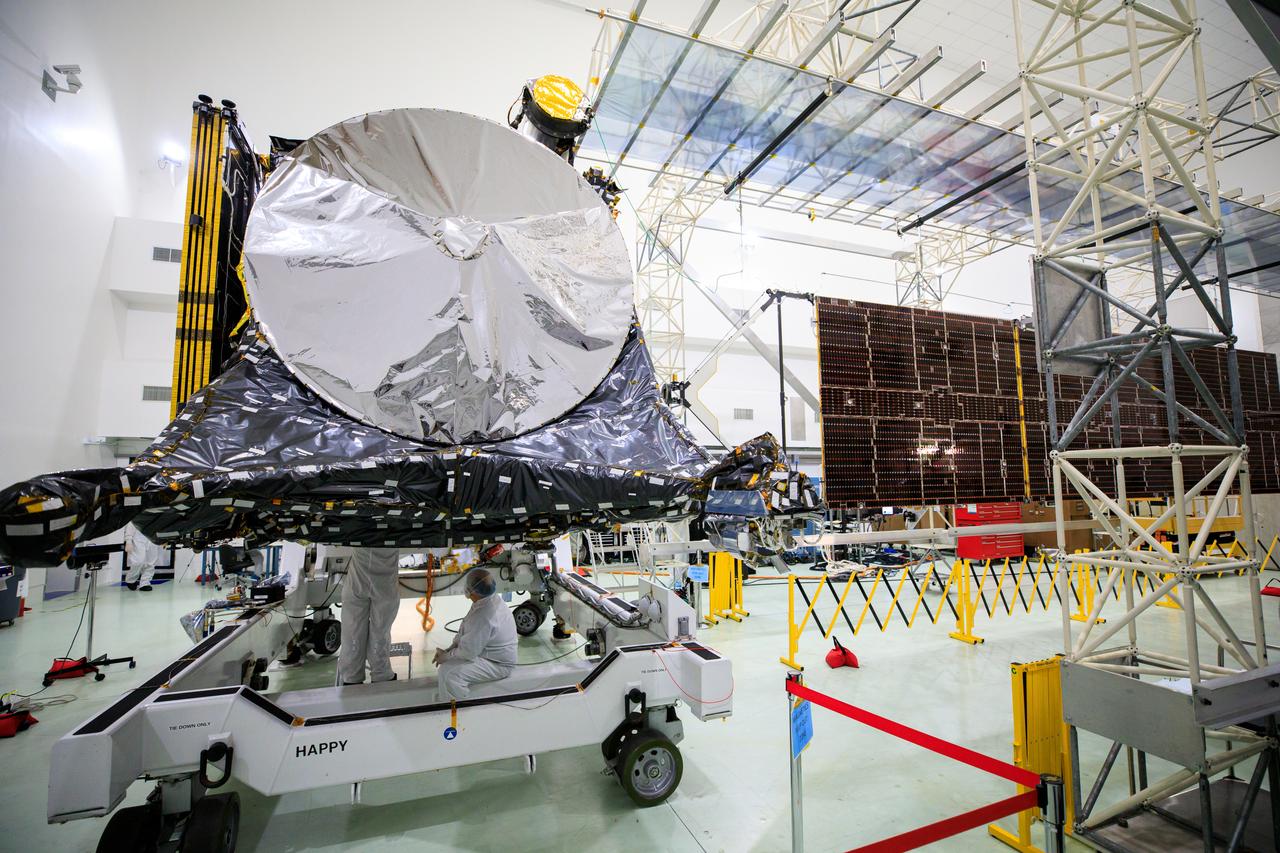
Team members prepare the agency’s Psyche spacecraft for integration with the second of two solar arrays inside the Astrotech Space Operations Facility near the agency’s Kennedy Space Center in Florida on July 24, 2023. The solar arrays were shipped from Maxar Technologies, in San Jose, California. They are part of the solar electric propulsion system, provided by Maxar, that will power the spacecraft on its journey to explore a metal-rich asteroid. Psyche will launch atop a SpaceX Falcon Heavy rocket from Launch Complex 39A at Kennedy. Launch is targeted for Oct. 5, 2023. Riding with Psyche is a pioneering technology demonstration, NASA’s Deep Space Optical Communications (DSOC) experiment.

Teams offload NASA’s largest planetary mission spacecraft, Europa Clipper, from a United States Air Force C-17 Globemaster III transport aircraft onto the flatbed of a heavy-lift truck at the Launch and Landing Facility at NASA’s Kennedy Space Center in Florida on Thursday, May 23, 2024. Crews transported Europa Clipper to the Payload Hazardous Servicing Facility at Kennedy to prepare it for launch aboard a SpaceX Falcon Heavy rocket later this year from Launch Complex 39A at the Florida spaceport. Europa Clipper will help determine if conditions exist below the surface Jupiter’s fourth largest moon, Europa, that could support life.
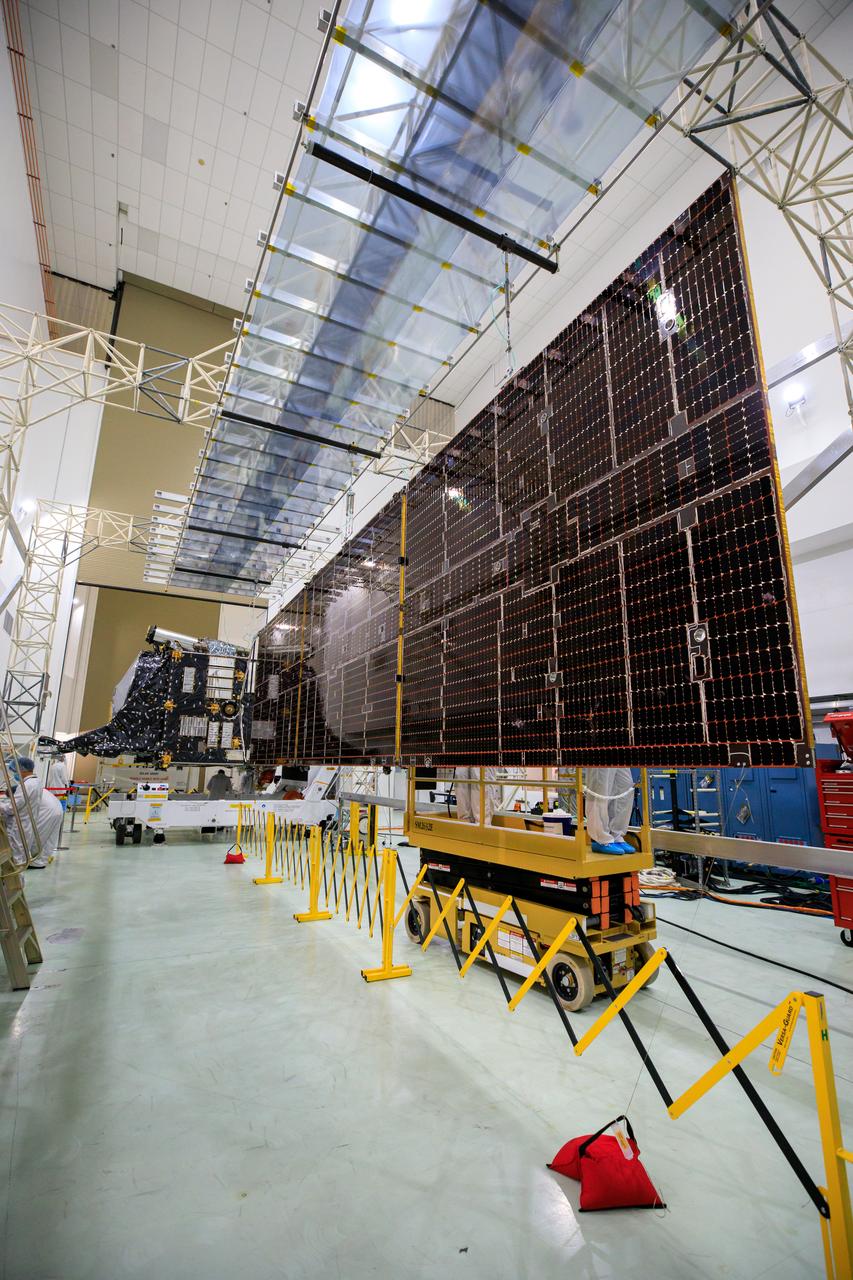
Technicians are preparing to integrate one of two solar arrays to NASA’s Psyche spacecraft inside the Astrotech Space Operations Facility near the agency’s Kennedy Space Center in Florida on July 24, 2023. The solar arrays were shipped from Maxar Technologies, in San Jose, California. They are part of the solar electric propulsion system, provided by Maxar, that will power the spacecraft on its journey to explore a metal-rich asteroid. Psyche will launch atop a SpaceX Falcon Heavy rocket from Launch Complex 39A at Kennedy. Launch is targeted for Oct. 5, 2023. Riding with Psyche is a pioneering technology demonstration, NASA’s Deep Space Optical Communications (DSOC) experiment.
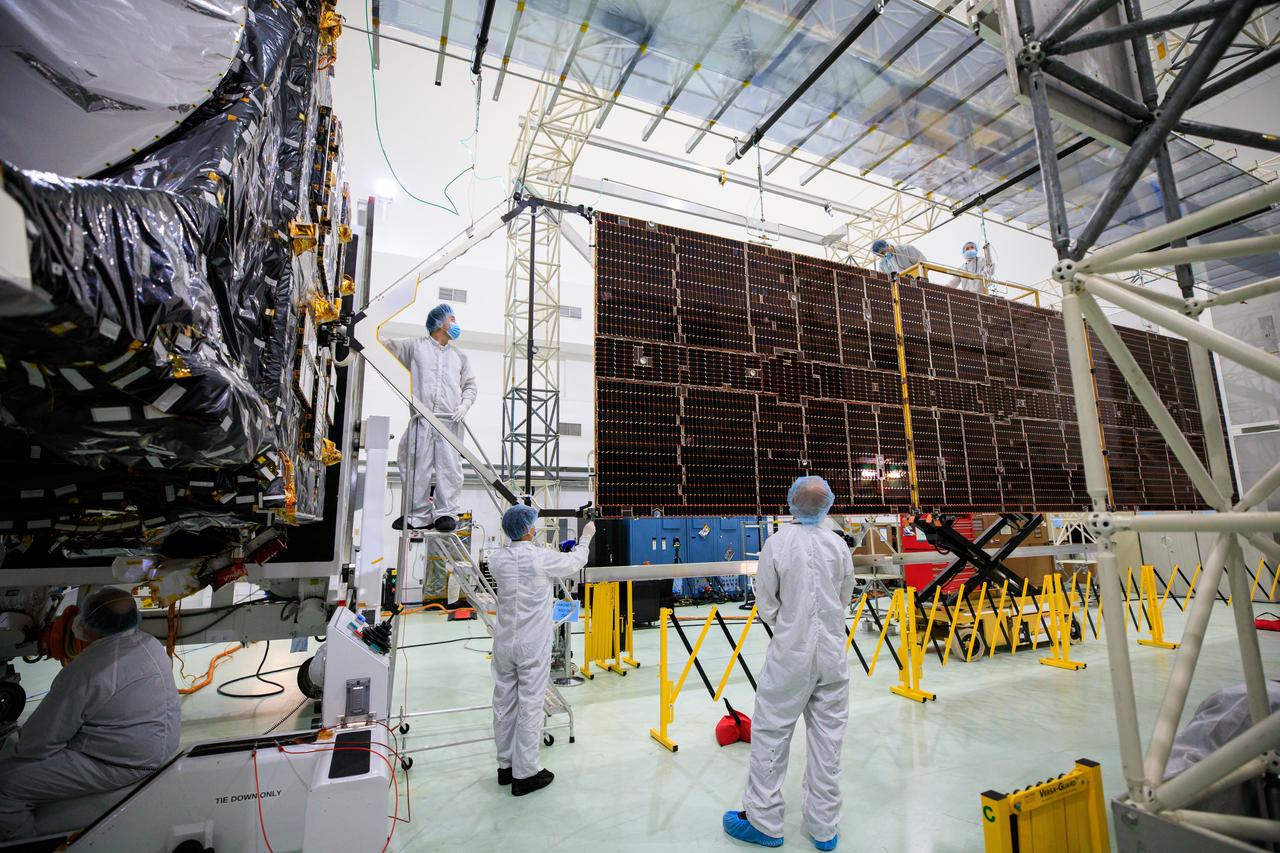
Team members prepare to integrate the second of two solar arrays with the agency’s Psyche spacecraft inside the Astrotech Space Operations Facility near the agency’s Kennedy Space Center in Florida on July 24, 2023. The solar arrays were shipped from Maxar Technologies, in San Jose, California. They are part of the solar electric propulsion system, provided by Maxar, that will power the spacecraft on its journey to explore a metal-rich asteroid. Psyche will launch atop a SpaceX Falcon Heavy rocket from Launch Complex 39A at Kennedy. Launch is targeted for Oct. 5, 2023. Riding with Psyche is a pioneering technology demonstration, NASA’s Deep Space Optical Communications (DSOC) experiment.
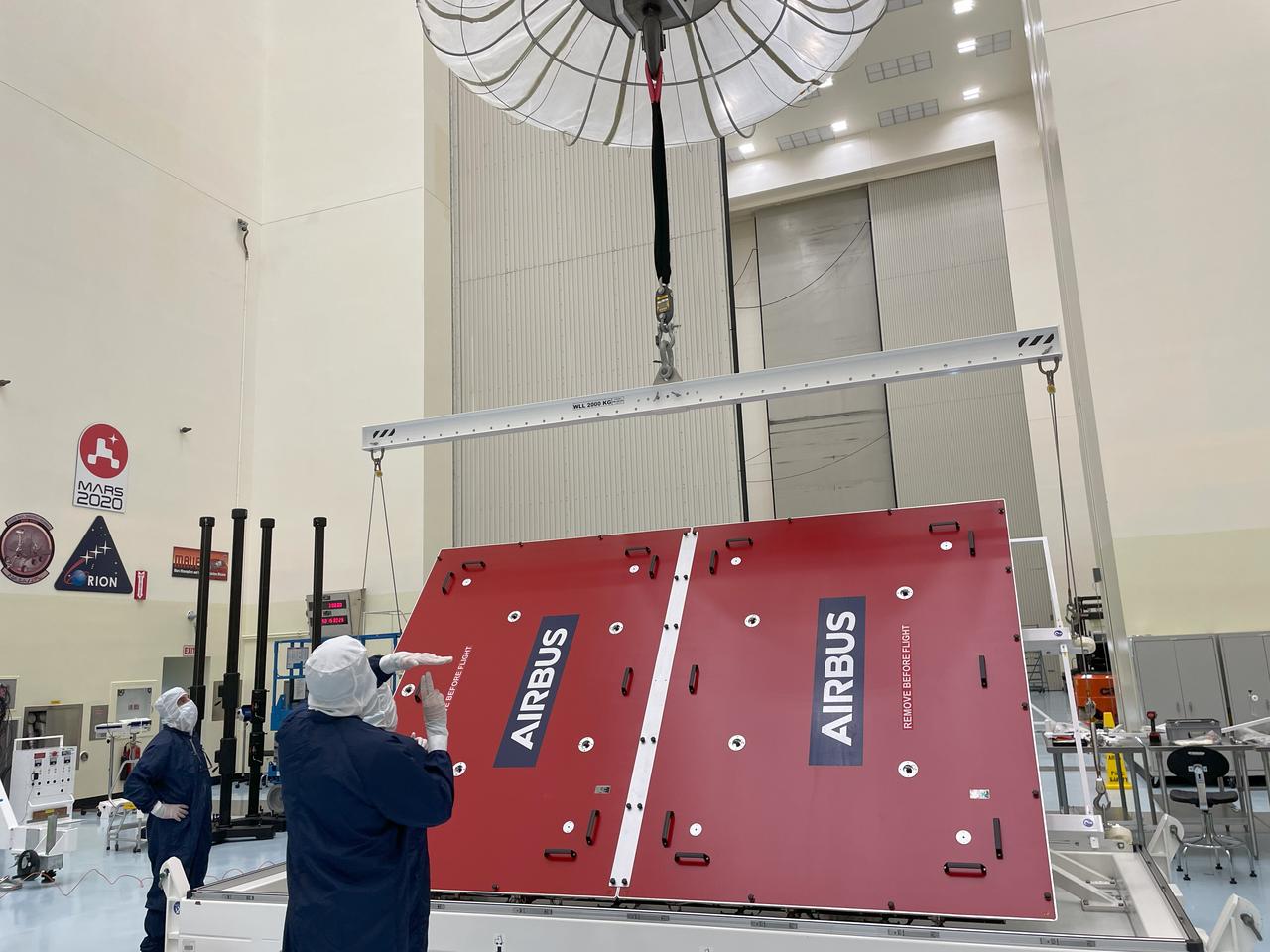
Technicians hoist a five-panel solar array protected by a lid for NASA’s Europa Clipper spacecraft at the Payload Hazardous Servicing Facility at the agency’s Kennedy Space Center in Florida on Tuesday, Feb. 27, 2024. The arrays are each 46.5 feet long (14.2 meters). With both solar arrays deployed, Europa Clipper will span more than 100 feet long, about the length of a basketball court. The solar arrays power the spacecraft so it can study Jupiter’s icy moon, Europa, which is more than five times as far from the Sun as the Earth. Launch on a SpaceX Falcon Heavy rocket is no earlier than October 2024.
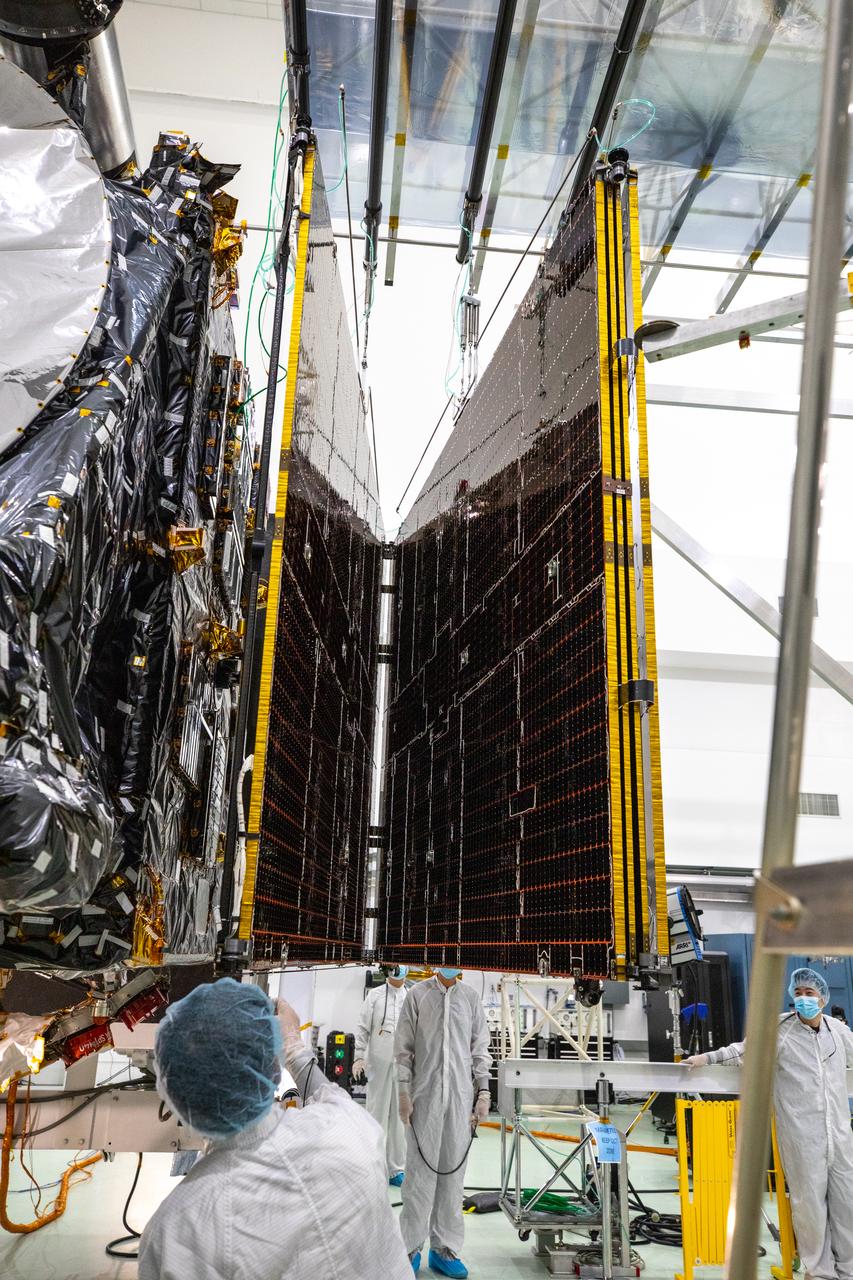
Team members retract the two solar arrays attached to NASA’s Psyche spacecraft inside the Astrotech Space Operations Facility near the agency’s Kennedy Space Center in Florida on July 25, 2023. The solar arrays, which were shipped from Maxar Technologies, in San Jose, California, are being stowed for launch. They are part of the solar electric propulsion system, provided by Maxar, that will power the spacecraft on its journey to explore a metal-rich asteroid. Psyche will launch atop a SpaceX Falcon Heavy rocket from Launch Complex 39A at Kennedy. Launch is targeted for Oct. 5, 2023. Riding with Psyche is a pioneering technology demonstration, NASA’s Deep Space Optical Communications (DSOC) experiment.
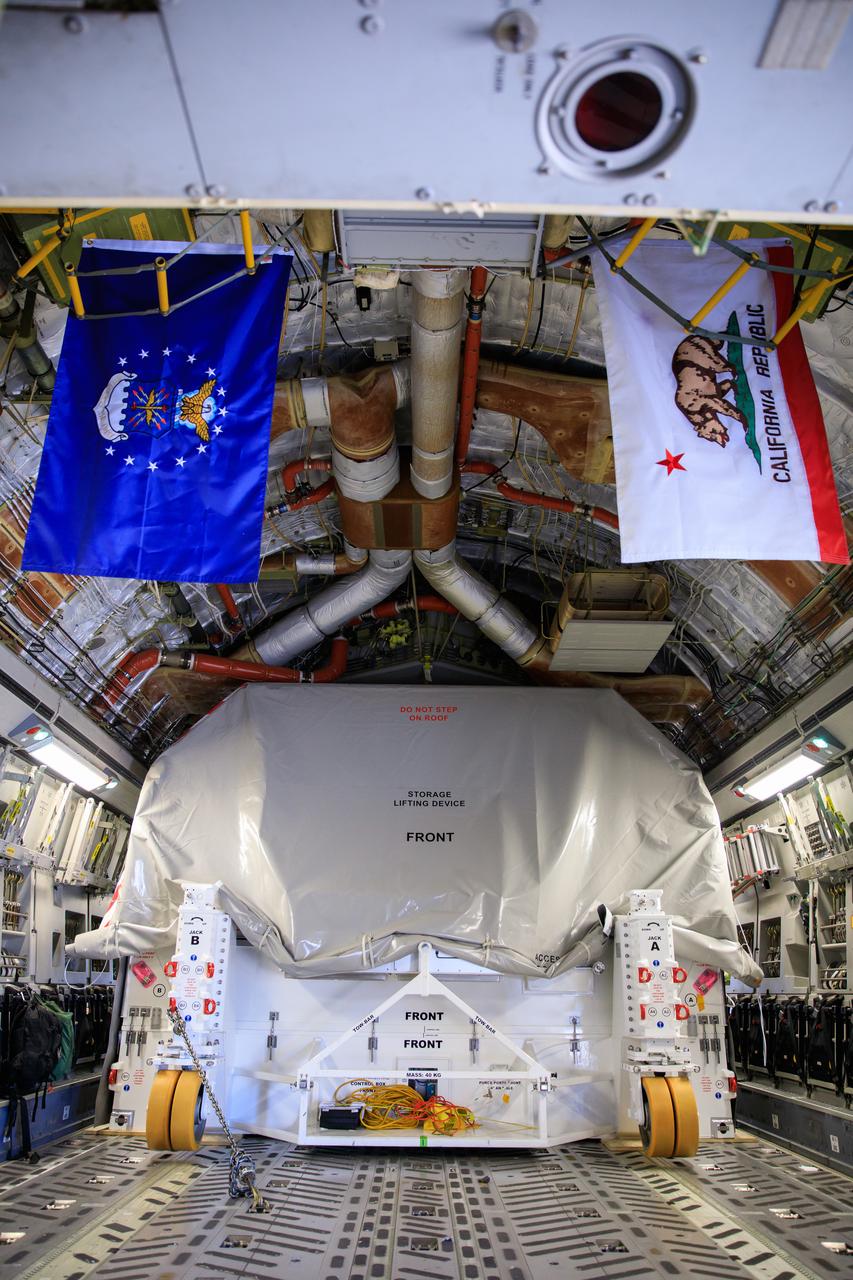
Teams offload NASA’s largest planetary mission spacecraft, Europa Clipper, from a United States Air Force C-17 Globemaster III transport aircraft onto the flatbed of a heavy-lift truck at the Launch and Landing Facility at NASA’s Kennedy Space Center in Florida on Thursday, May 23, 2024. Crews transported Europa Clipper to the Payload Hazardous Servicing Facility at Kennedy to prepare it for launch aboard a SpaceX Falcon Heavy rocket later this year from Launch Complex 39A at the Florida spaceport. Europa Clipper will help determine if conditions exist below the surface Jupiter’s fourth largest moon, Europa, that could support life.
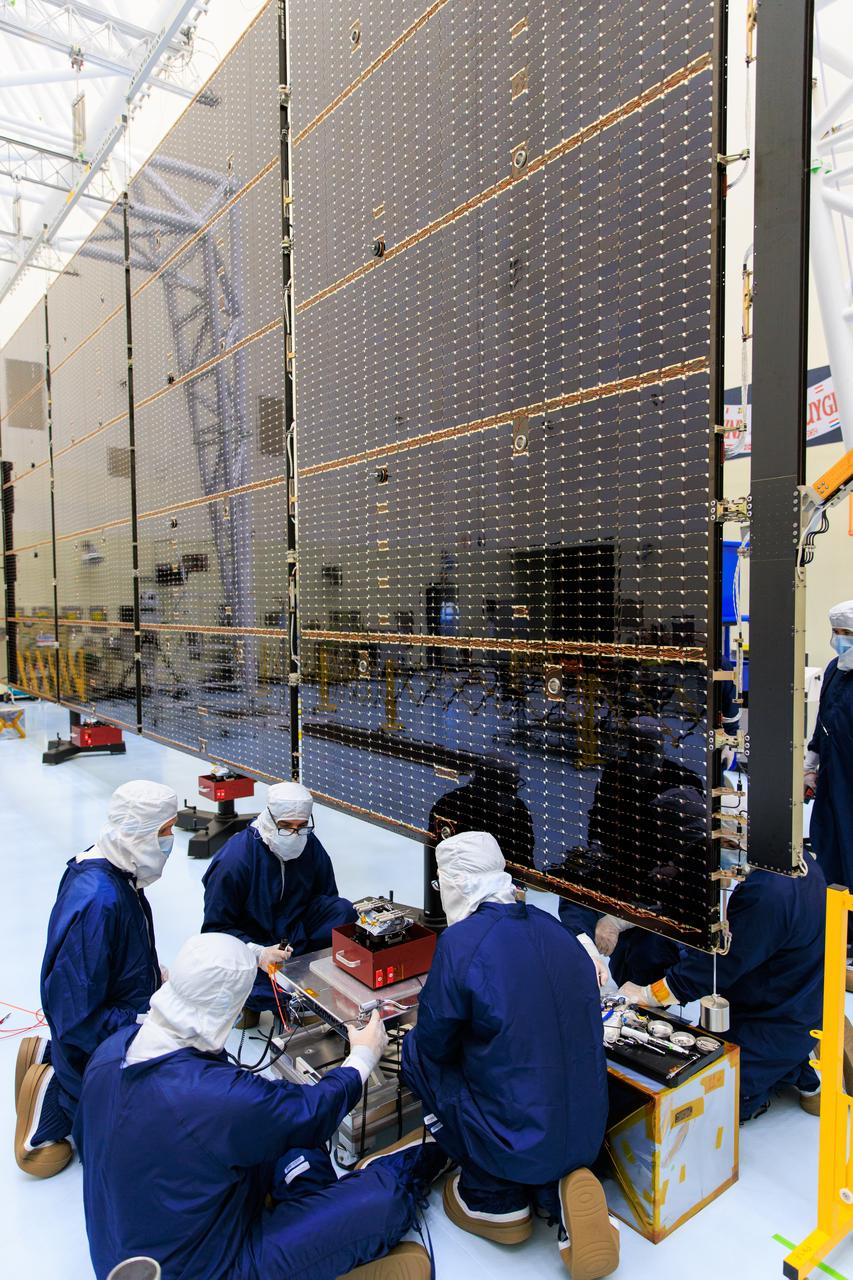
Technicians inside the Payload Hazardous Servicing Facility at NASA’s Kennedy Space Center in Florida install and test one of several antennas on a solar array Wednesday, March 20, 2024, for the agency’s Europa Clipper spacecraft which will study Jupiter’s icy moon Europa to determine if the planet has conditions that could support life. REASON, (Radar for Europa Assessment and Sounding: Ocean to Near-surface) instrument will use the antennas to send both High Frequency (HF) and Very High Frequency (VHF) radio waves to penetrate up to 18 miles (30 kilometers) deep and search the ocean, measure ice thickness, and study the topography, composition, and roughness of Europa’s surface. The Europa Clipper spacecraft will ship to Florida later this year from NASA’s Jet Propulsion Lab in Southern California in preparation for launch aboard a SpaceX Falcon Heavy rocket from Kennedy’s Launch Complex 39A targeting October 2024.
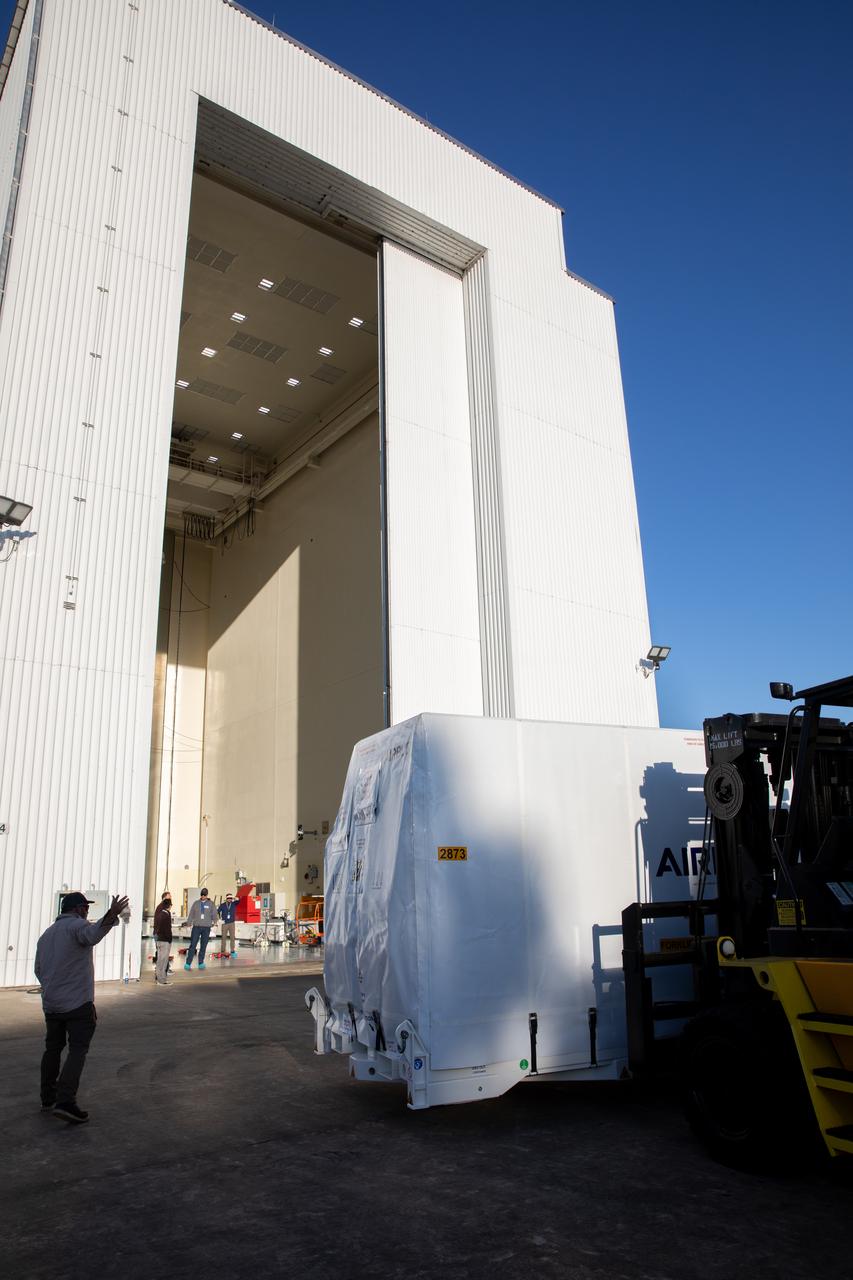
The transport carrier containing the five-panel solar arrays for NASA’s Europa Clipper spacecraft arrives at the Payload Hazardous Servicing Facility at the agency’s Kennedy Space Center in Florida on Wednesday, Feb. 21, 2024. The arrival completes the solar array journey which began in Leiden, Netherlands, where Airbus workers assembled them before shipping them by barge to Port of Miami in Florida and transporting them by truck to Kennedy. The solar arrays will attach to the spacecraft to power it on the 1.8-billion-mile journey to study Jupiter’s icy moon, Europa. Launch on a SpaceX Falcon Heavy rocket is no earlier than October 2024.

Team members begin to retract the second of two solar arrays attached to NASA’s Psyche spacecraft inside the Astrotech Space Operations Facility near the agency’s Kennedy Space Center in Florida on July 25, 2023. The solar arrays, which were shipped from Maxar Technologies, in San Jose, California, are being stowed for launch. They are part of the solar electric propulsion system, provided by Maxar, that will power the spacecraft on its journey to explore a metal-rich asteroid. Psyche will launch atop a SpaceX Falcon Heavy rocket from Launch Complex 39A at Kennedy. Launch is targeted for Oct. 5, 2023. Riding with Psyche is a pioneering technology demonstration, NASA’s Deep Space Optical Communications (DSOC) experiment.
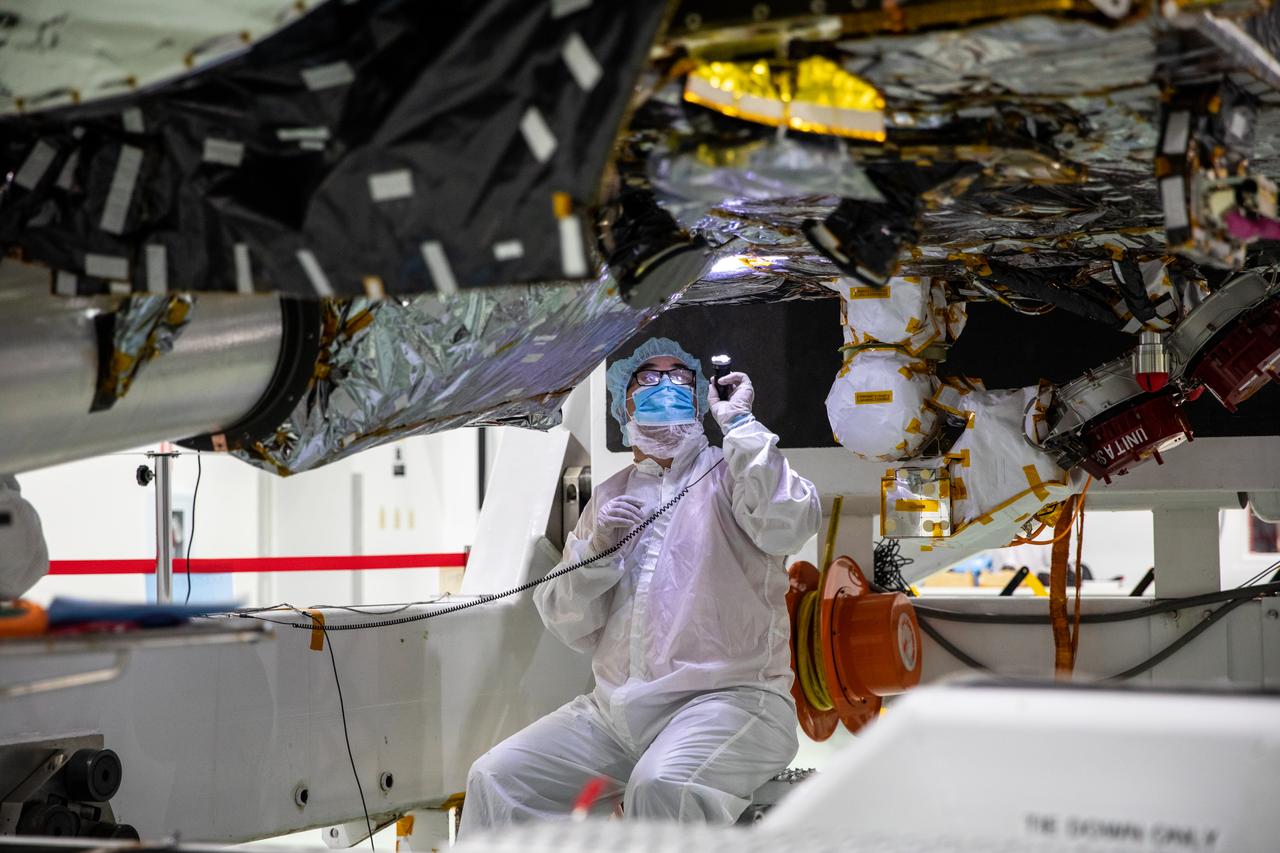
A NASA team member prepares the agency’s Psyche spacecraft for integration with its twin solar arrays inside the Astrotech Space Operations Facility near the agency’s Kennedy Space Center in Florida on July 20, 2023. The solar arrays were shipped from Maxar Technologies, in San Jose, California. They are part of the solar electric propulsion system, provided by Maxar, that will power the spacecraft on its journey to explore a metal-rich asteroid. Psyche will launch atop a SpaceX Falcon Heavy rocket from Launch Complex 39A at Kennedy. Launch is targeted for Oct. 5, 2023. Riding with Psyche is a pioneering technology demonstration, NASA’s Deep Space Optical Communications (DSOC) experiment.

Teams offload NASA’s largest planetary mission spacecraft, Europa Clipper, from a United States Air Force C-17 Globemaster III transport aircraft onto the flatbed of a heavy-lift truck at the Launch and Landing Facility at NASA’s Kennedy Space Center in Florida on Thursday, May 23, 2024. Crews transported Europa Clipper to the Payload Hazardous Servicing Facility at Kennedy to prepare it for launch aboard a SpaceX Falcon Heavy rocket later this year from Launch Complex 39A at the Florida spaceport. Europa Clipper will help determine if conditions exist below the surface Jupiter’s fourth largest moon, Europa, that could support life.
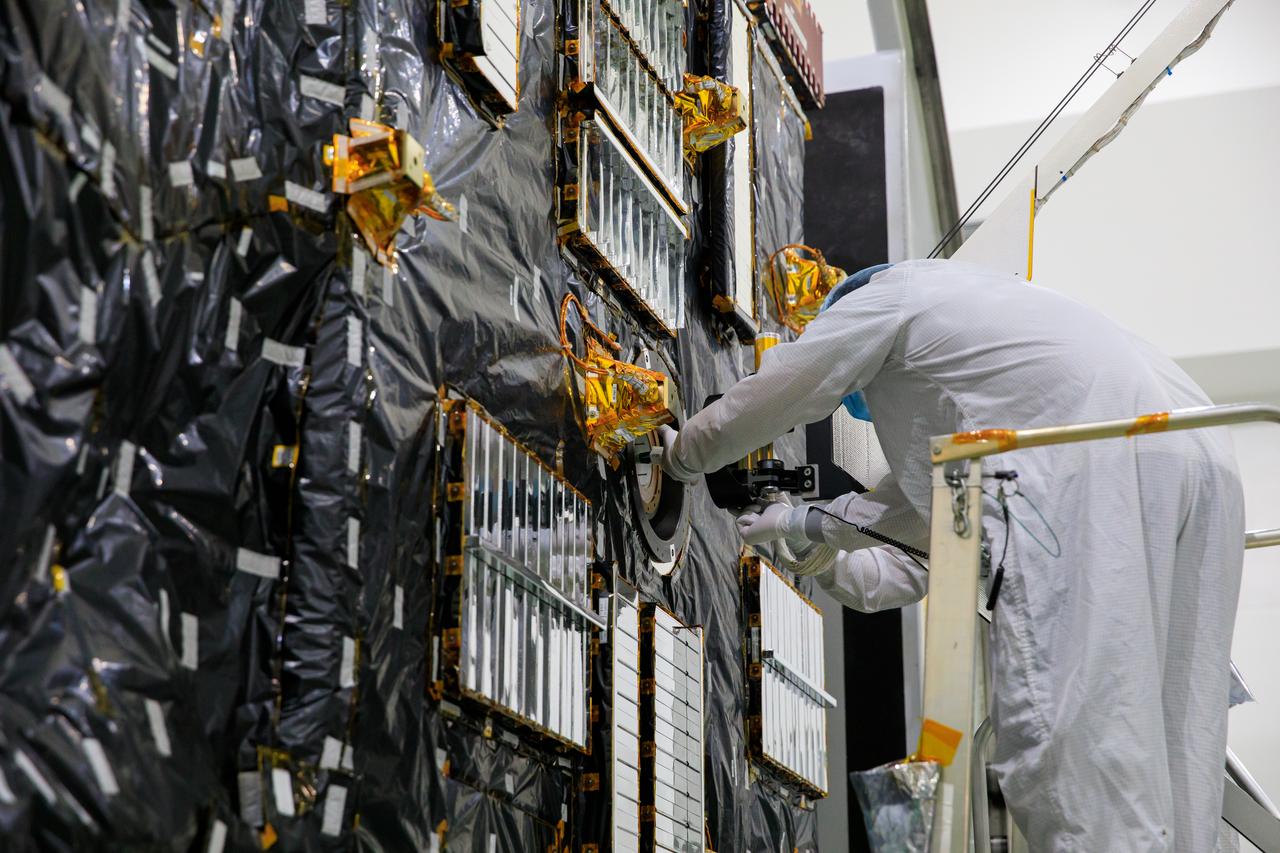
Team members prepare the agency’s Psyche spacecraft for integration with the second of two solar arrays inside the Astrotech Space Operations Facility near the agency’s Kennedy Space Center in Florida on July 24, 2023. The solar arrays were shipped from Maxar Technologies, in San Jose, California. They are part of the solar electric propulsion system, provided by Maxar, that will power the spacecraft on its journey to explore a metal-rich asteroid. Psyche will launch atop a SpaceX Falcon Heavy rocket from Launch Complex 39A at Kennedy. Launch is targeted for Oct. 5, 2023. Riding with Psyche is a pioneering technology demonstration, NASA’s Deep Space Optical Communications (DSOC) experiment.
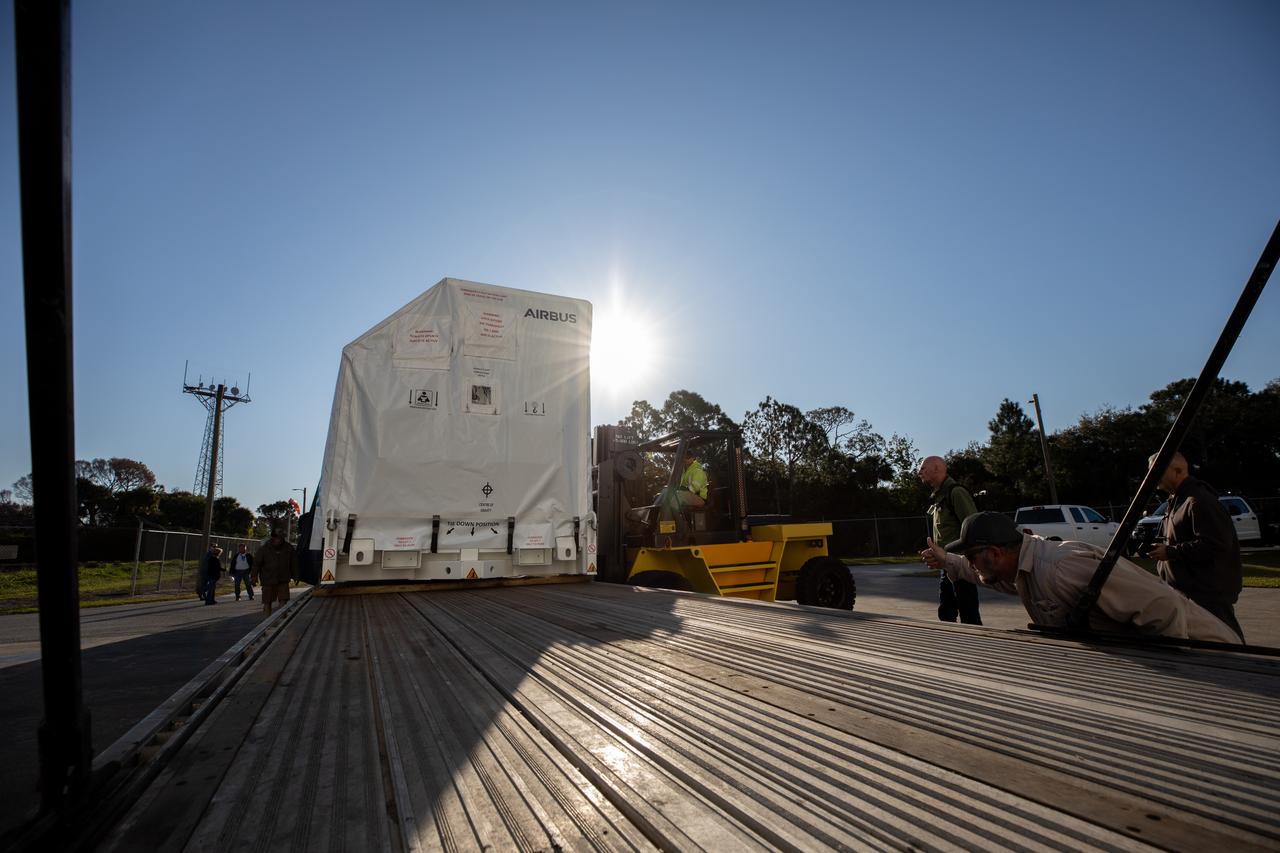
The transport carrier containing the five-panel solar arrays for NASA’s Europa Clipper spacecraft arrives at the Payload Hazardous Servicing Facility at the agency’s Kennedy Space Center in Florida on Wednesday, Feb. 21, 2024. The arrival completes the solar array journey which began in Leiden, Netherlands, where Airbus workers assembled them before shipping them by barge to Port of Miami in Florida and transporting them by truck to Kennedy. The solar arrays will attach to the spacecraft to power it on the 1.8-billion-mile journey to study Jupiter’s icy moon, Europa. Launch on a SpaceX Falcon Heavy rocket is no earlier than October 2024.
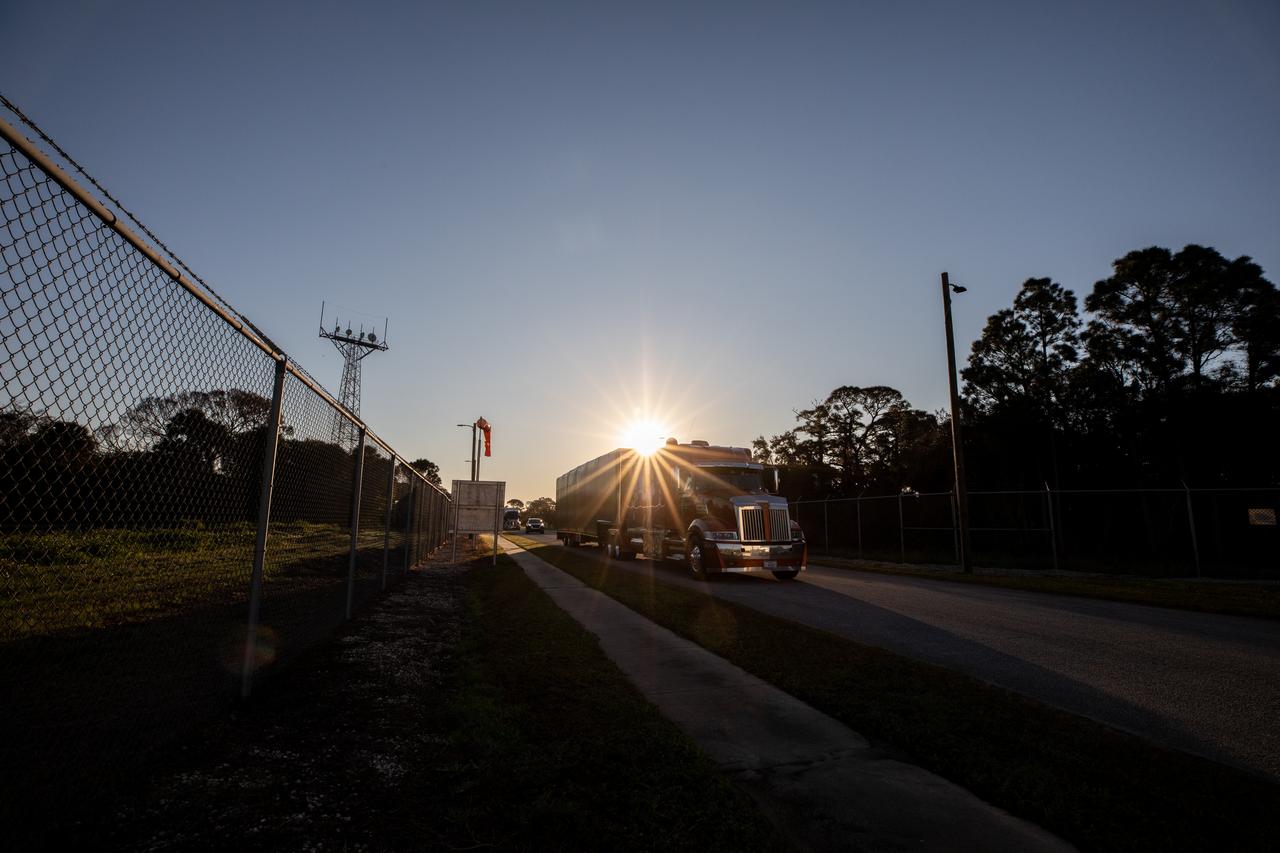
The transport carrier containing the five-panel solar arrays for NASA’s Europa Clipper spacecraft arrives at the Payload Hazardous Servicing Facility at the agency’s Kennedy Space Center in Florida on Wednesday, Feb. 21, 2024. The arrival completes the solar array journey which began in Leiden, Netherlands, where Airbus workers assembled them before shipping them by barge to Port of Miami in Florida and transporting them by truck to Kennedy. The solar arrays will attach to the spacecraft to power it on the 1.8-billion-mile journey to study Jupiter’s icy moon, Europa. Launch on a SpaceX Falcon Heavy rocket is no earlier than October 2024.
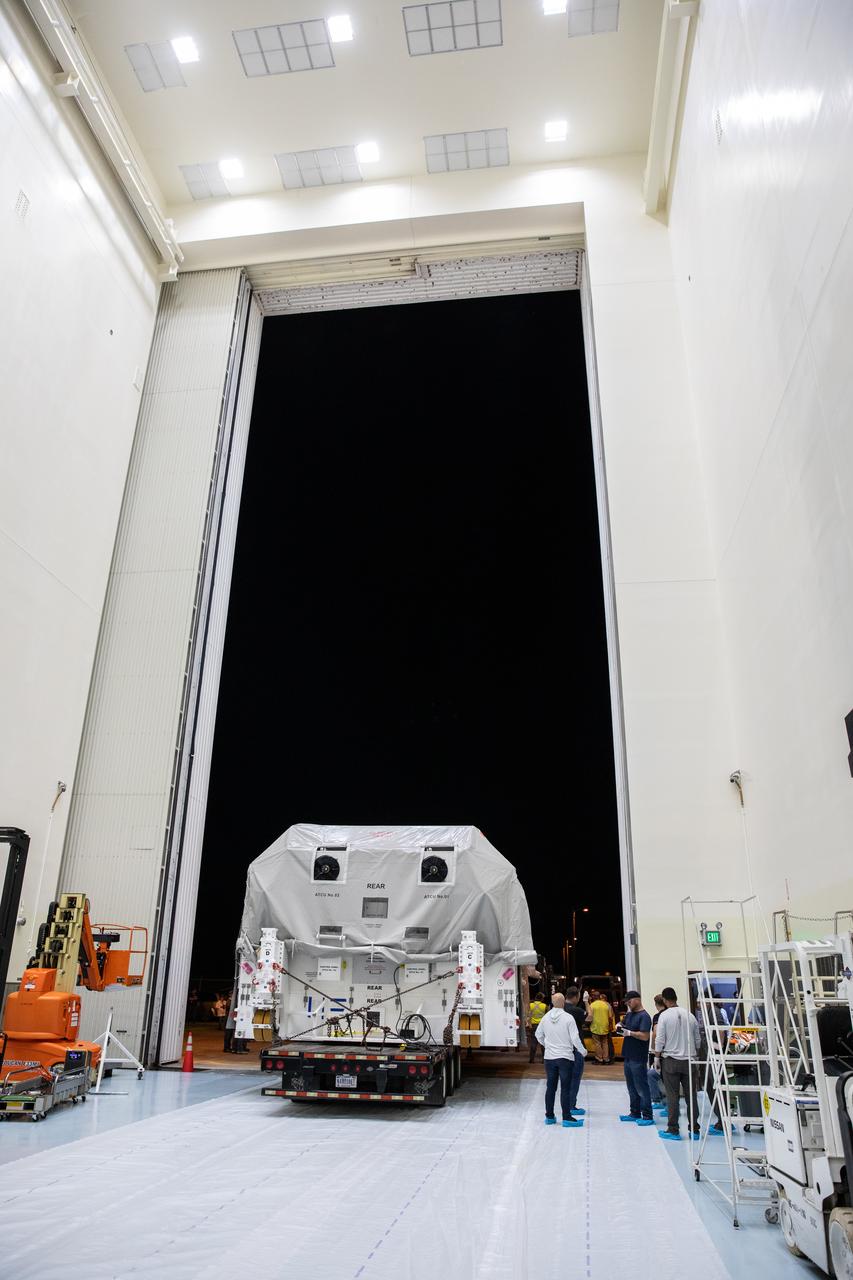
NASA’s largest planetary mission spacecraft, Europa Clipper, arrives at the Payload Hazardous Servicing Facility at the agency’s Kennedy Space Center in Florida on Thursday, May 23, 2024. Slated to launch aboard a SpaceX Falcon Heavy rocket later this year from Launch Complex 39A at Kennedy, Europa Clipper will help determine if life-sustaining conditions exist below the surface Jupiter’s fourth largest moon, Europa.
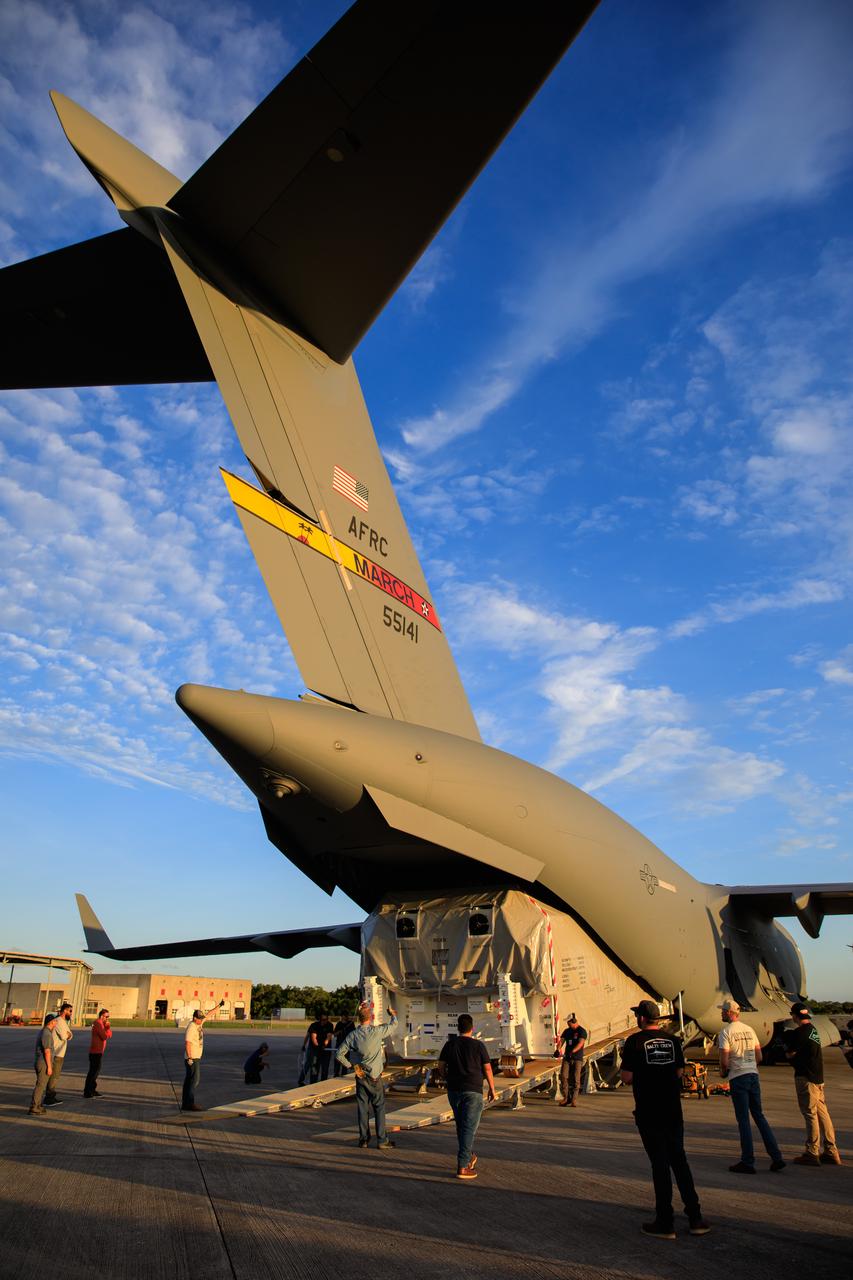
Teams offload NASA’s largest planetary mission spacecraft, Europa Clipper, from a United States Air Force C-17 Globemaster III transport aircraft onto the flatbed of a heavy-lift truck at the Launch and Landing Facility at NASA’s Kennedy Space Center in Florida on Thursday, May 23, 2024. Crews transported Europa Clipper to the Payload Hazardous Servicing Facility at Kennedy to prepare it for launch aboard a SpaceX Falcon Heavy rocket later this year from Launch Complex 39A at the Florida spaceport. Europa Clipper will help determine if conditions exist below the surface Jupiter’s fourth largest moon, Europa, that could support life.
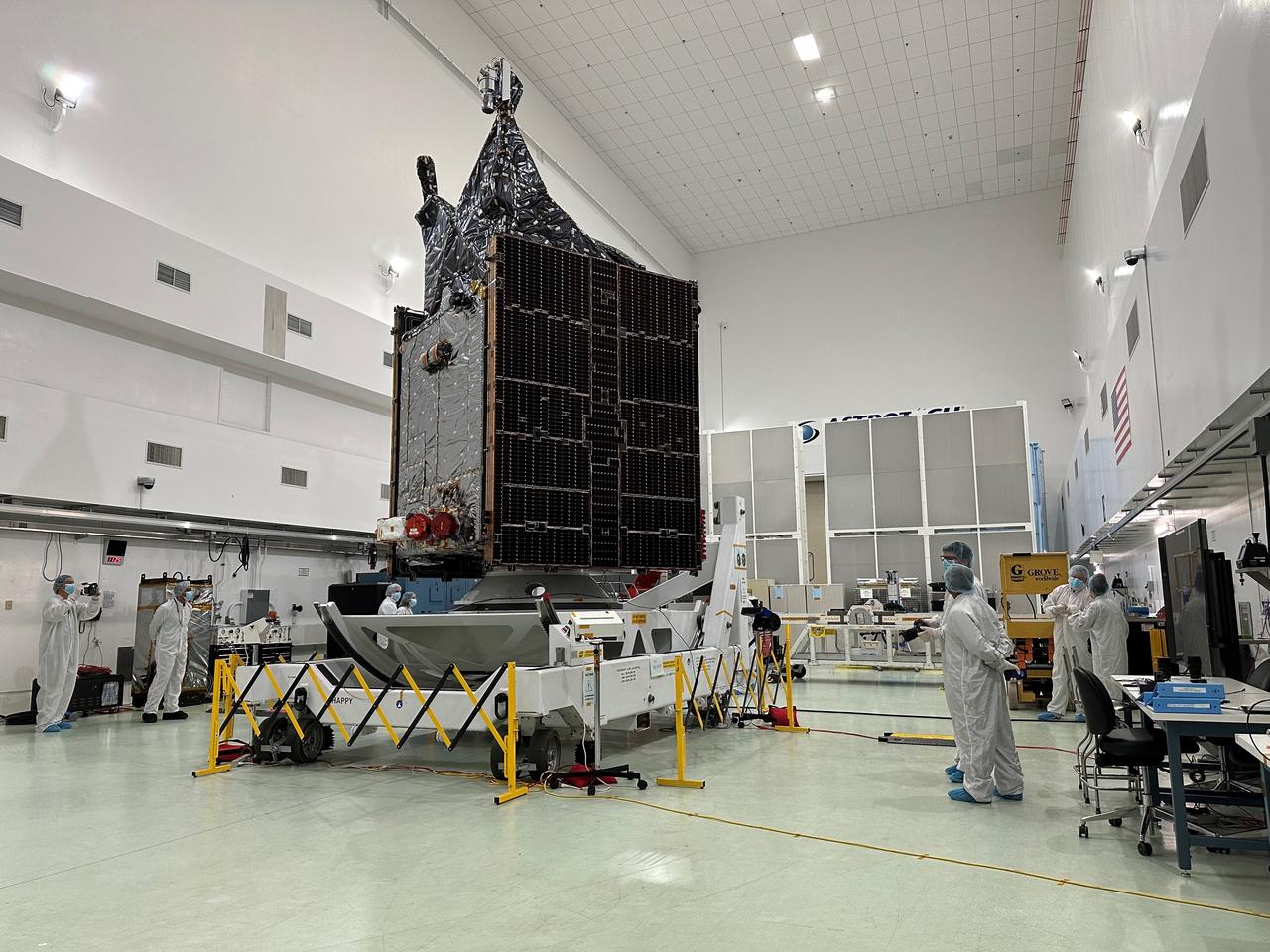
NASA’s Psyche spacecraft is made available to media for viewing inside a cleanroom at the Astrotech Space Operations Facility near Kennedy Space Center in Florida on Aug. 11, 2023. Psyche will launch atop a SpaceX Falcon Heavy rocket from Launch Complex 39A at Kennedy to explore a metal-rich asteroid. Launch is targeted for Oct. 5, 2023. Riding with Psyche is a pioneering technology demonstration, NASA’s Deep Space Optical Communications (DSOC) experiment.
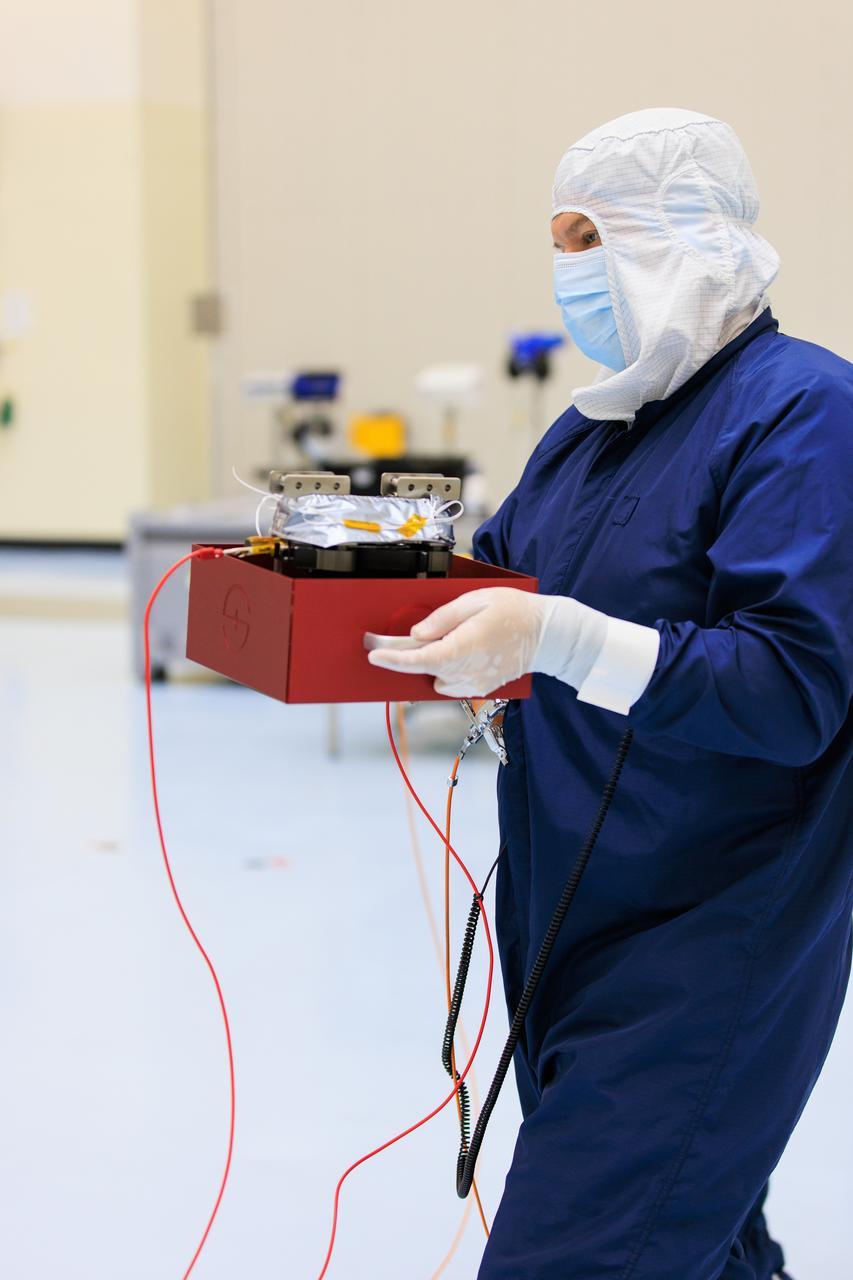
On Wednesday, March 20, 2024, a technician inside the Payload Hazardous Servicing Facility at NASA’s Kennedy Space Center in Florida carries an antenna that will attach to a solar array for the agency’s Europa Clipper spacecraft, which will study Jupiter’s icy moon Europa to determine if the planet has conditions that could support life. The REASON, (Radar for Europa Assessment and Sounding: Ocean to Near-surface) instrument will use the antennas to send both High Frequency (HF) and Very High Frequency (VHF) radio waves to penetrate up to 18 miles (30 kilometers) deep and search the ocean, measure ice thickness, and study the topography, composition, and roughness of Europa’s surface. The Europa Clipper spacecraft will ship to Florida later this year from NASA’s Jet Propulsion Lab in Southern California in preparation for launch aboard a SpaceX Falcon Heavy rocket from Kennedy’s Launch Complex 39A targeting October 2024.
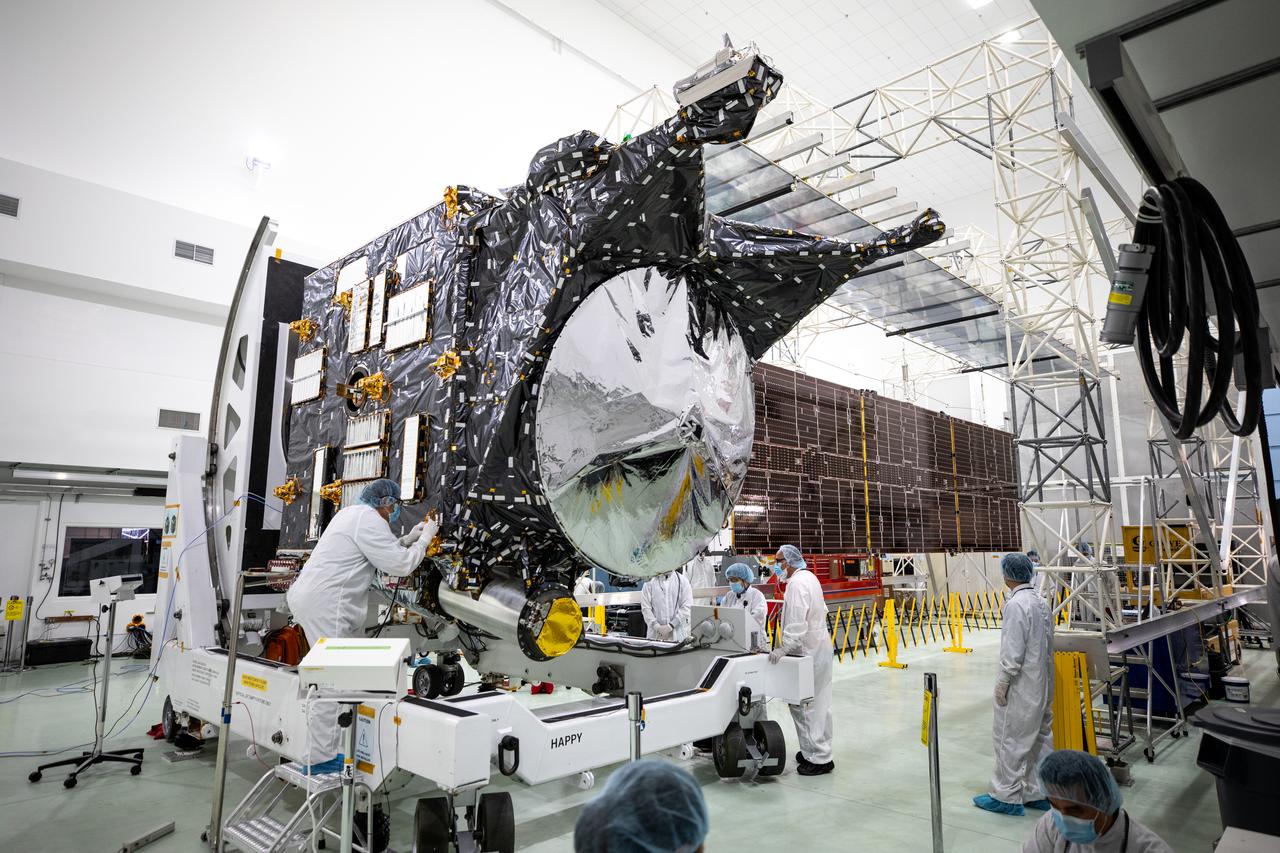
The first of two solar arrays for NASA’s Psyche spacecraft has been extended inside the Astrotech Space Operations Facility near the agency’s Kennedy Space Center in Florida on July 20, 2023. Technicians are preparing to integrate the solar arrays to the Psyche spacecraft. The solar arrays were shipped from Maxar Technologies, in San Jose, California. They are part of the solar electric propulsion system, provided by Maxar, that will power the spacecraft on its journey to explore a metal-rich asteroid. Psyche will launch atop a SpaceX Falcon Heavy rocket from Launch Complex 39A at Kennedy. Launch is targeted for Oct. 5, 2023. Riding with Psyche is a pioneering technology demonstration, NASA’s Deep Space Optical Communications (DSOC) experiment.
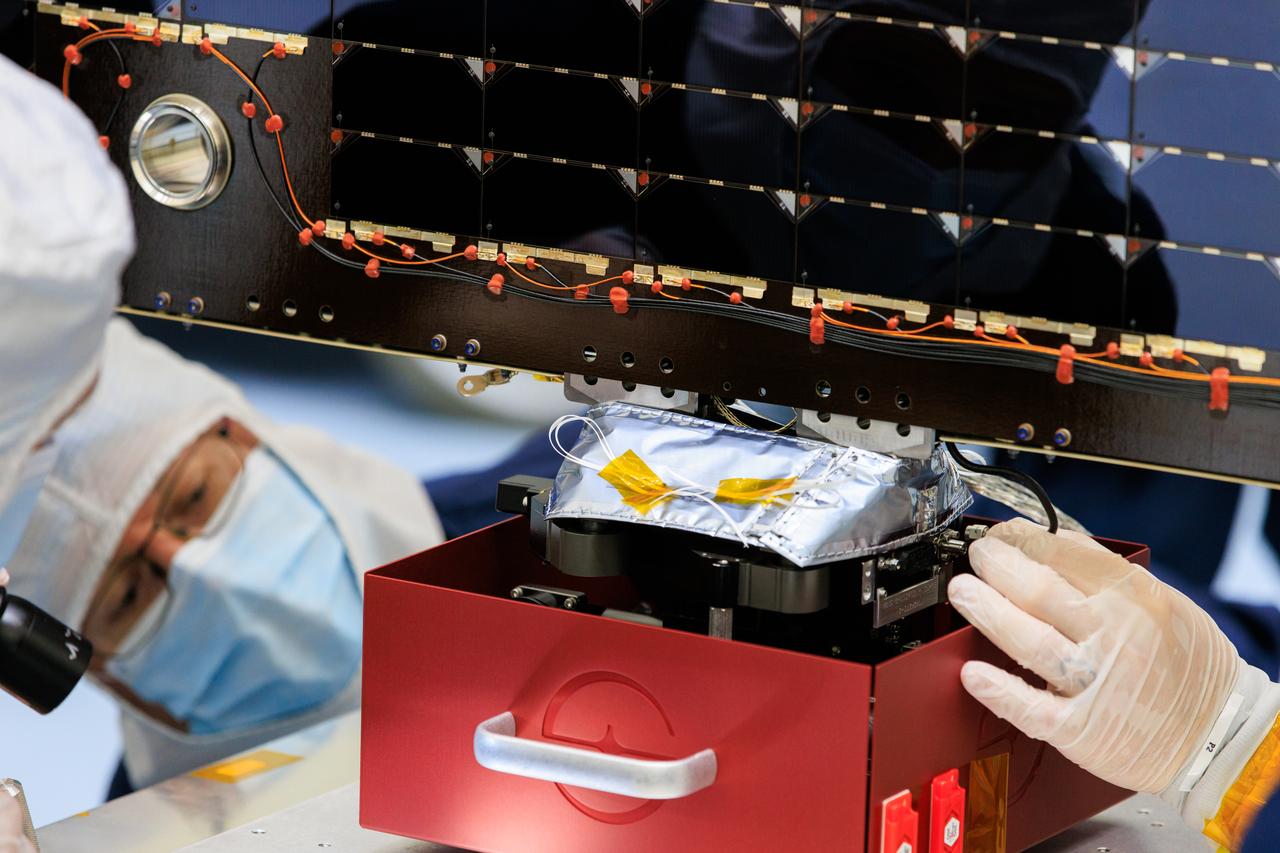
Technicians inside the Payload Hazardous Servicing Facility at NASA’s Kennedy Space Center in Florida install and test one of several antennas on a solar array Wednesday, March 20, 2024, for the agency’s Europa Clipper spacecraft which will study Jupiter’s icy moon, Europa, to determine if the planet can support life. REASON, (Radar for Europa Assessment and Sounding: Ocean to Near-surface) instrument will use the antennas to send both very high frequency radio waves and high frequency to penetrate up to 18 miles (30 kilometers) deep to search the ocean, measure ice thickness, and study the topography, composition, and roughness of Europa’s surface. The Europa Clipper spacecraft will ship to Florida later this year from NASA’s Jet Propulsion Lab in Southern California in preparation for launch aboard a SpaceX Falcon Heavy rocket from Kennedy’s Launch Complex 39A targeting October 2024.
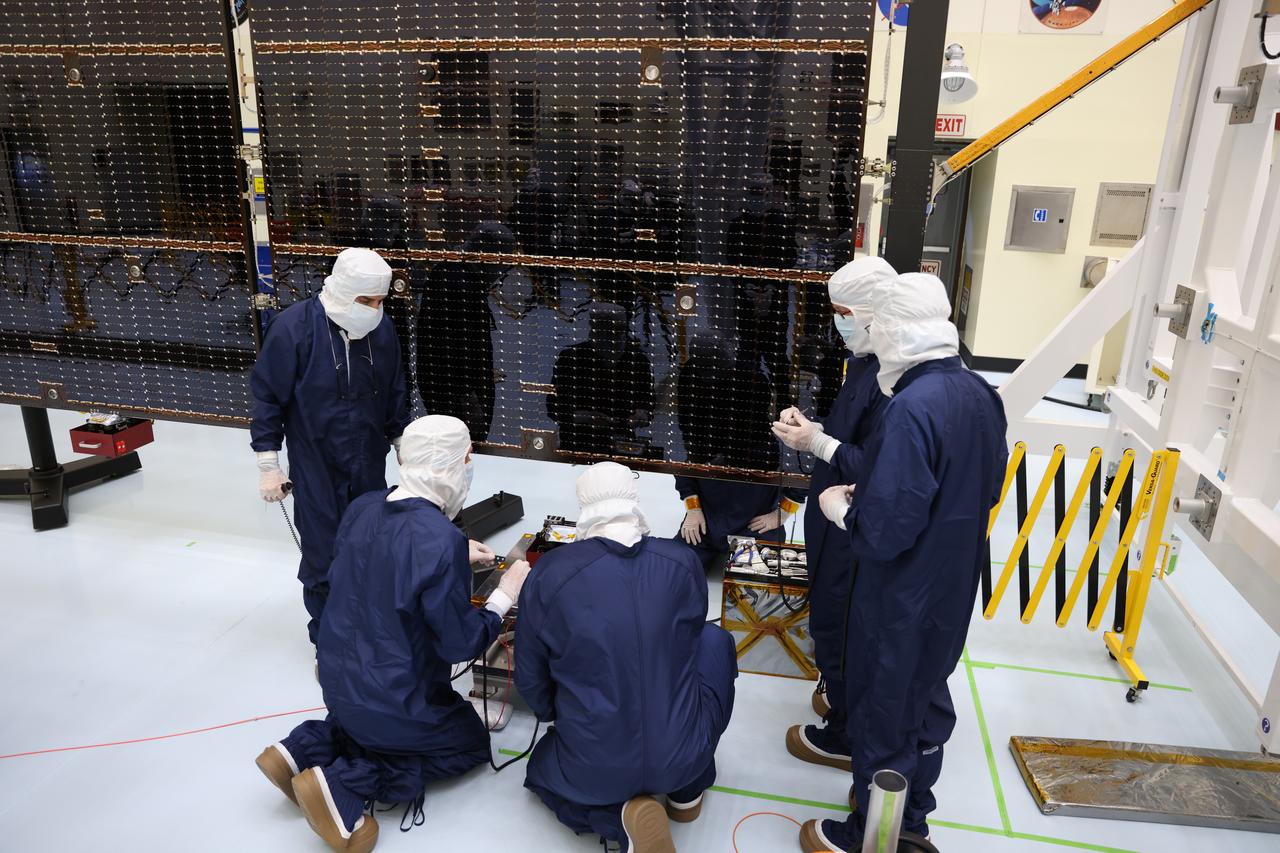
On March 20, technicians working inside the Payload Hazardous Servicing Facility at the agency’s Kennedy Space Center in Florida installed and began to test antennas on a solar array for NASA’s Europa Clipper spacecraft. The spacecraft will ship to Florida later this year from NASA’s Jet Propulsion Lab in Southern California in preparation for launch aboard a SpaceX Falcon Heavy rocket from Kennedy’s Launch Complex 39A. Europa Clipper is the largest spacecraft NASA has ever developed for a planetary mission, and it will seek to determine whether there are places below the surface of Jupiter’s icy moon, Europa, that could support life.
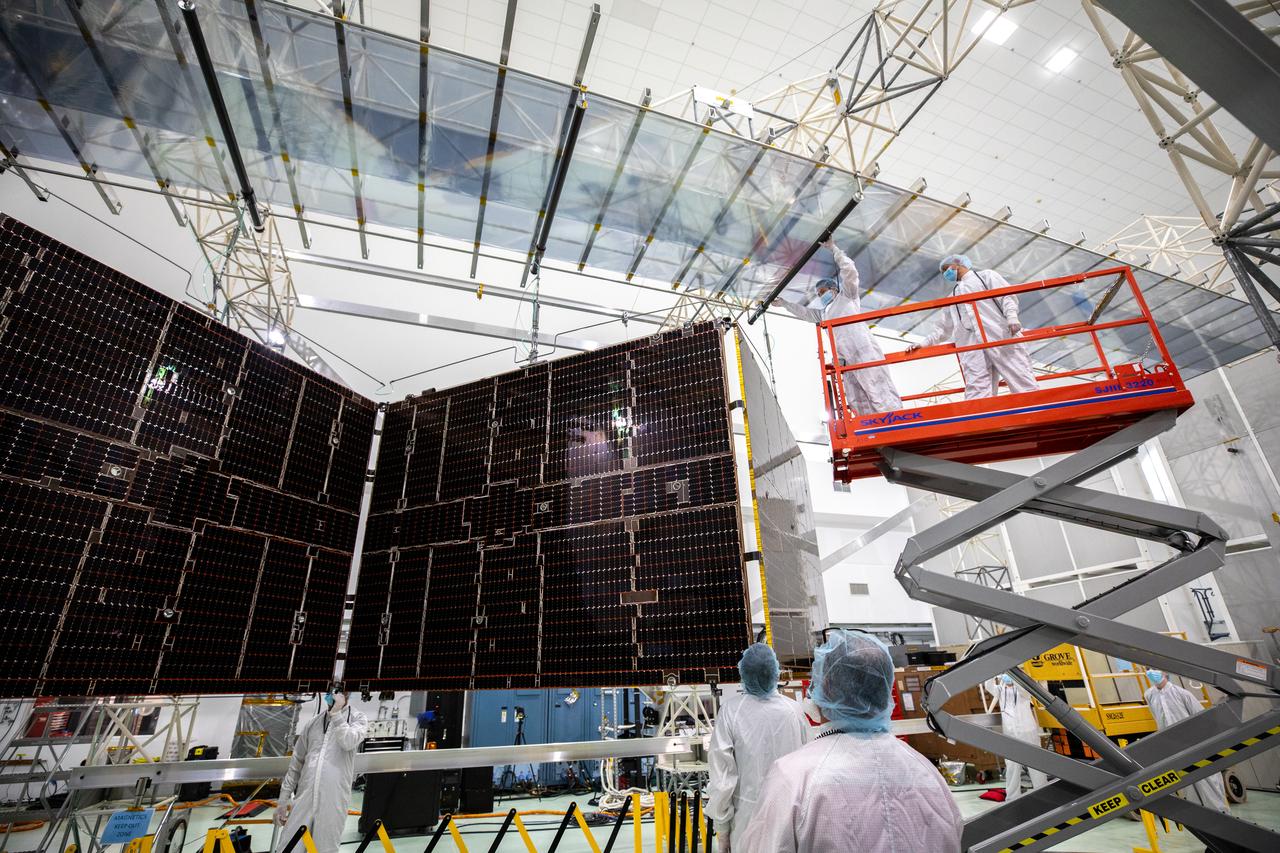
Technicians begin to retract one of the two solar arrays attached to NASA’s Psyche spacecraft inside the Astrotech Space Operations Facility near the agency’s Kennedy Space Center in Florida on July 25, 2023. The solar arrays, which were shipped from Maxar Technologies, in San Jose, California, are being stowed for launch. They are part of the solar electric propulsion system, provided by Maxar, that will power the spacecraft on its journey to explore a metal-rich asteroid. Psyche will launch atop a SpaceX Falcon Heavy rocket from Launch Complex 39A at Kennedy. Launch is targeted for Oct. 5, 2023. Riding with Psyche is a pioneering technology demonstration, NASA’s Deep Space Optical Communications (DSOC) experiment.
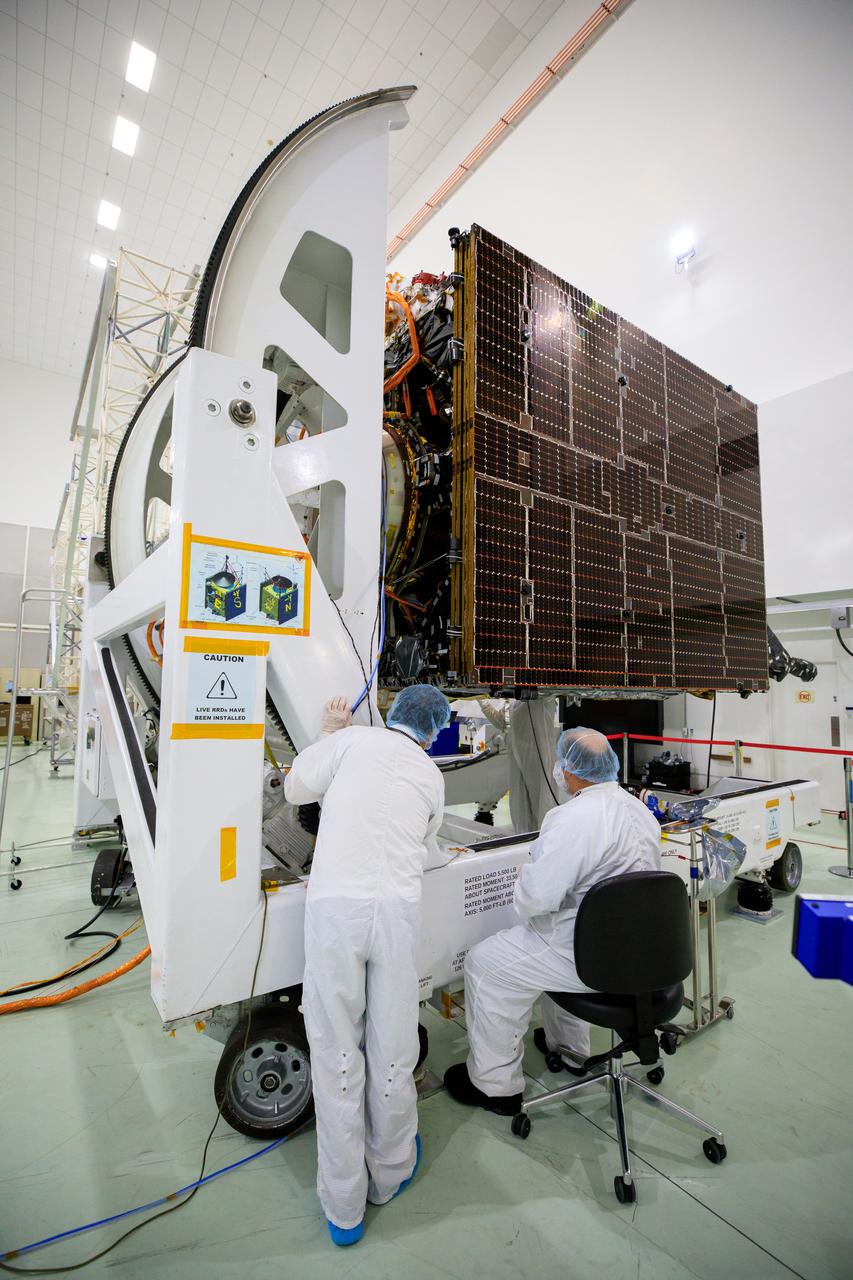
Team members prepare to integrate one of two solar arrays with NASA’s Psyche spacecraft inside the Astrotech Space Operations Facility near the agency’s Kennedy Space Center in Florida on July 24, 2023. The solar arrays were shipped from Maxar Technologies, in San Jose, California. They are part of the solar electric propulsion system, provided by Maxar, that will power the spacecraft on its journey to explore a metal-rich asteroid. Psyche will launch atop a SpaceX Falcon Heavy rocket from Launch Complex 39A at Kennedy. Launch is targeted for Oct. 5, 2023. Riding with Psyche is a pioneering technology demonstration, NASA’s Deep Space Optical Communications (DSOC) experiment.
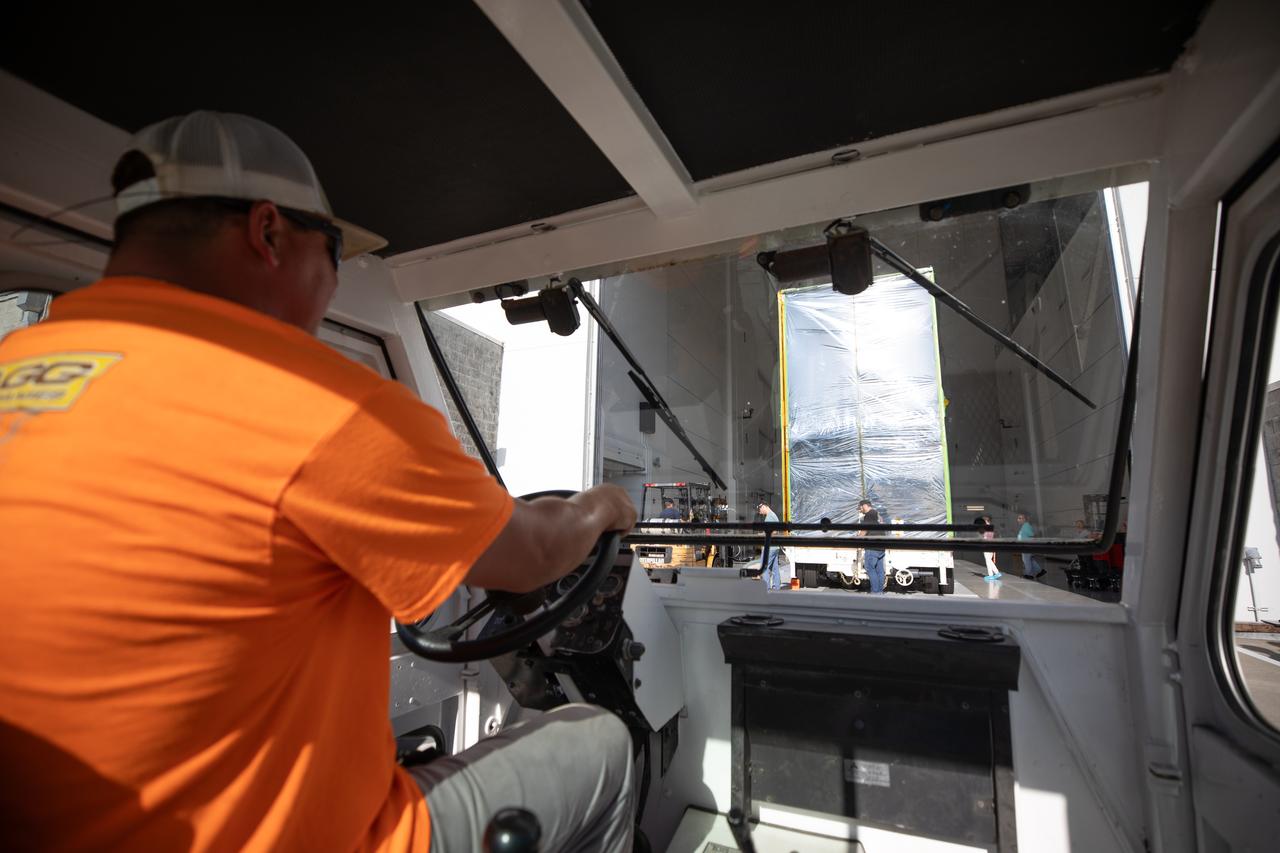
A driver uses a transport vehicle to move NASA’s Psyche spacecraft, secured for transport, into the entrance of Building 9 at the Astrotech Space Operations Facility near the agency’s Kennedy Space Center in Florida on Aug. 14, 2023. Psyche will explore its namesake, a metal-rich asteroid orbiting the Sun between Mars and Jupiter. Psyche has NASA’s Deep Space Optical Communications (DSOC) technology demonstration onboard the spacecraft. DSOC will be the agency's first demonstration of optical communication beyond the Moon. Psyche will launch atop a SpaceX Falcon Heavy rocket from Launch Complex 39A at Kennedy. Launch is targeted for Oct. 5, 2023.
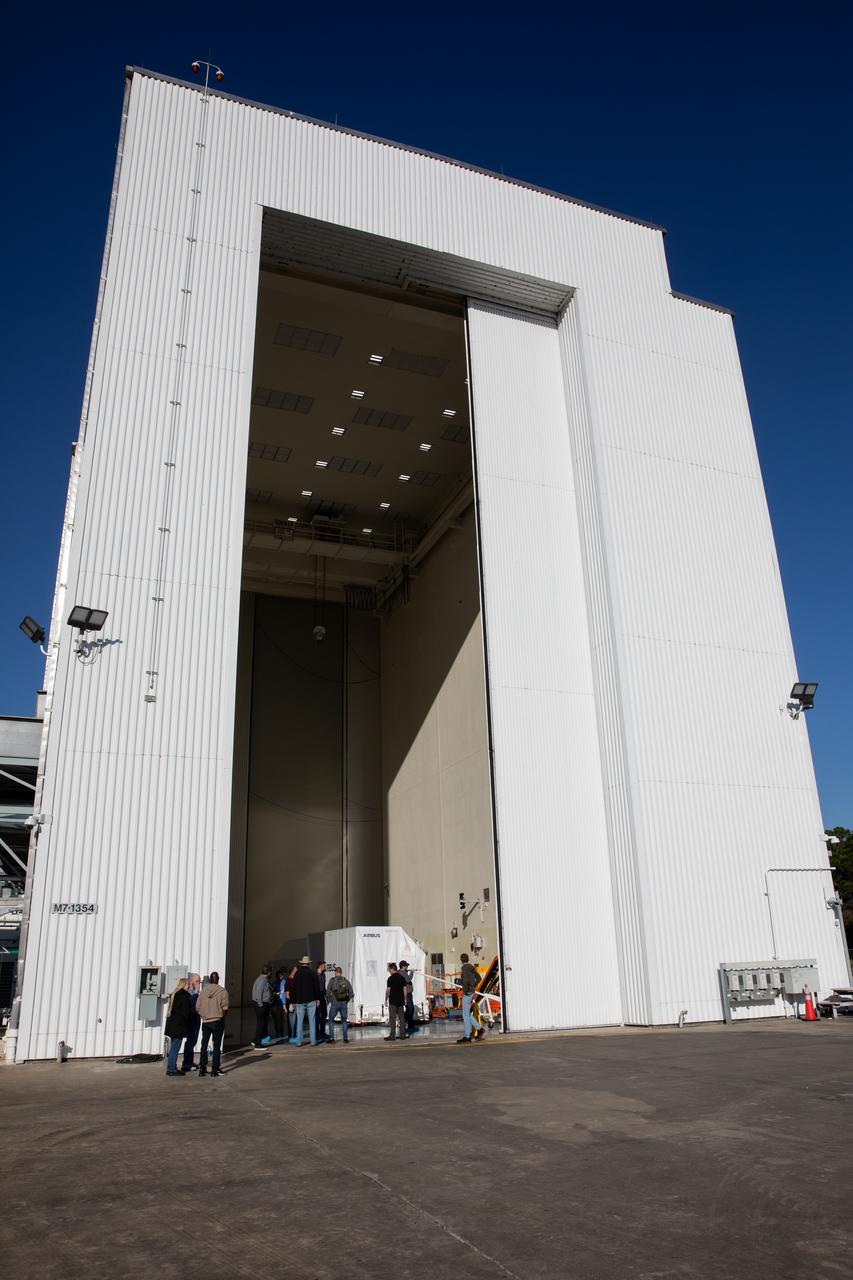
The transport carrier containing the five-panel solar arrays for NASA’s Europa Clipper spacecraft arrives at the Payload Hazardous Servicing Facility at the agency’s Kennedy Space Center in Florida on Wednesday, Feb. 21, 2024. The solar array travelled by air from Leiden, Netherlands, where Airbus workers assembled them over the last year, and then put on a barge to travel to the Port of Miami in Florida and loaded onto a semi-truck to be driven to Kennedy. The solar arrays will attach to the spacecraft to power it for the 1.8-billion-mile journey to study Jupiter’s icy moon, Europa. Launch on a SpaceX Falcon Heavy rocket is no earlier than October 2024.

NASA’s Psyche spacecraft is made available to media for viewing inside a cleanroom at the Astrotech Space Operations Facility near Kennedy Space Center in Florida on Aug. 11, 2023. Psyche will launch atop a SpaceX Falcon Heavy rocket from Launch Complex 39A at Kennedy to explore a metal-rich asteroid. Launch is targeted for Oct. 5, 2023. Riding with Psyche is a pioneering technology demonstration, NASA’s Deep Space Optical Communications (DSOC) experiment.
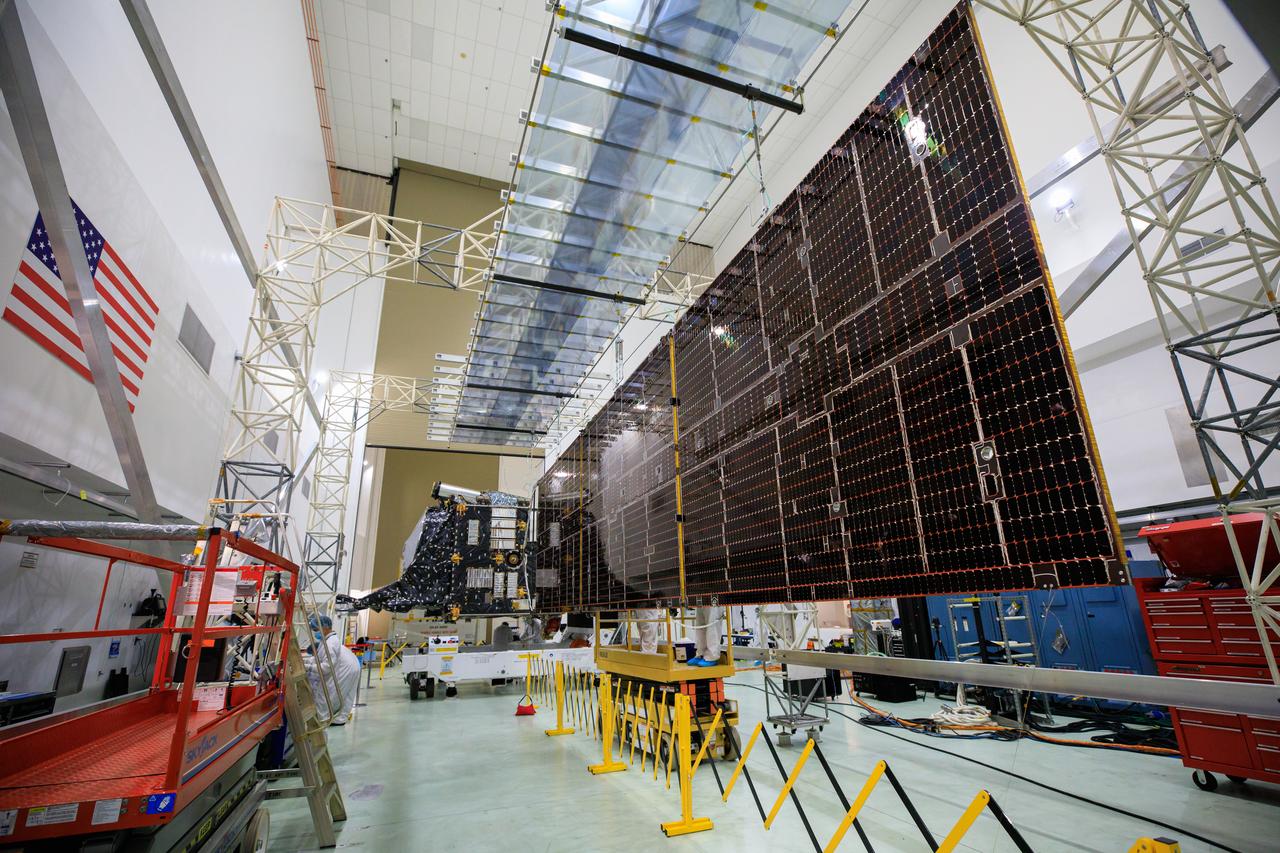
Technicians are preparing to integrate one of two solar arrays to NASA’s Psyche spacecraft inside the Astrotech Space Operations Facility near the agency’s Kennedy Space Center in Florida on July 24, 2023. The solar arrays were shipped from Maxar Technologies, in San Jose, California. They are part of the solar electric propulsion system, provided by Maxar, that will power the spacecraft on its journey to explore a metal-rich asteroid. Psyche will launch atop a SpaceX Falcon Heavy rocket from Launch Complex 39A at Kennedy. Launch is targeted for Oct. 5, 2023. Riding with Psyche is a pioneering technology demonstration, NASA’s Deep Space Optical Communications (DSOC) experiment.
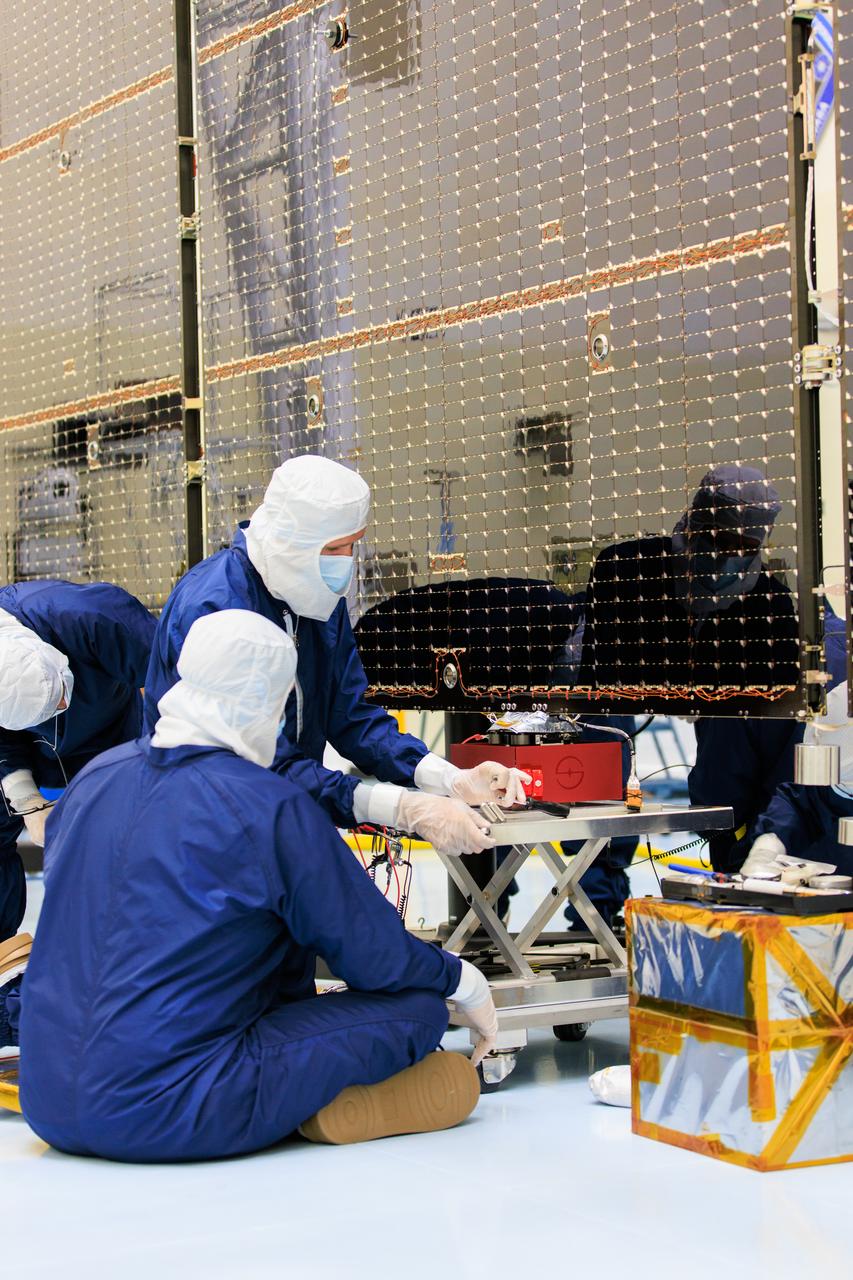
Technicians inside the Payload Hazardous Servicing Facility at NASA’s Kennedy Space Center in Florida install and test one of several antennas on a solar array Wednesday, March 20, 2024, for the agency’s Europa Clipper spacecraft which will study Jupiter’s icy moon Europa to determine if the planet has conditions that could support life. REASON, (Radar for Europa Assessment and Sounding: Ocean to Near-surface) instrument will use the antennas to send both High Frequency (HF) and Very High Frequency (VHF) radio waves to penetrate up to 18 miles (30 kilometers) deep and search the ocean, measure ice thickness, and study the topography, composition, and roughness of Europa’s surface. The Europa Clipper spacecraft will ship to Florida later this year from NASA’s Jet Propulsion Lab in Southern California in preparation for launch aboard a SpaceX Falcon Heavy rocket from Kennedy’s Launch Complex 39A targeting October 2024.
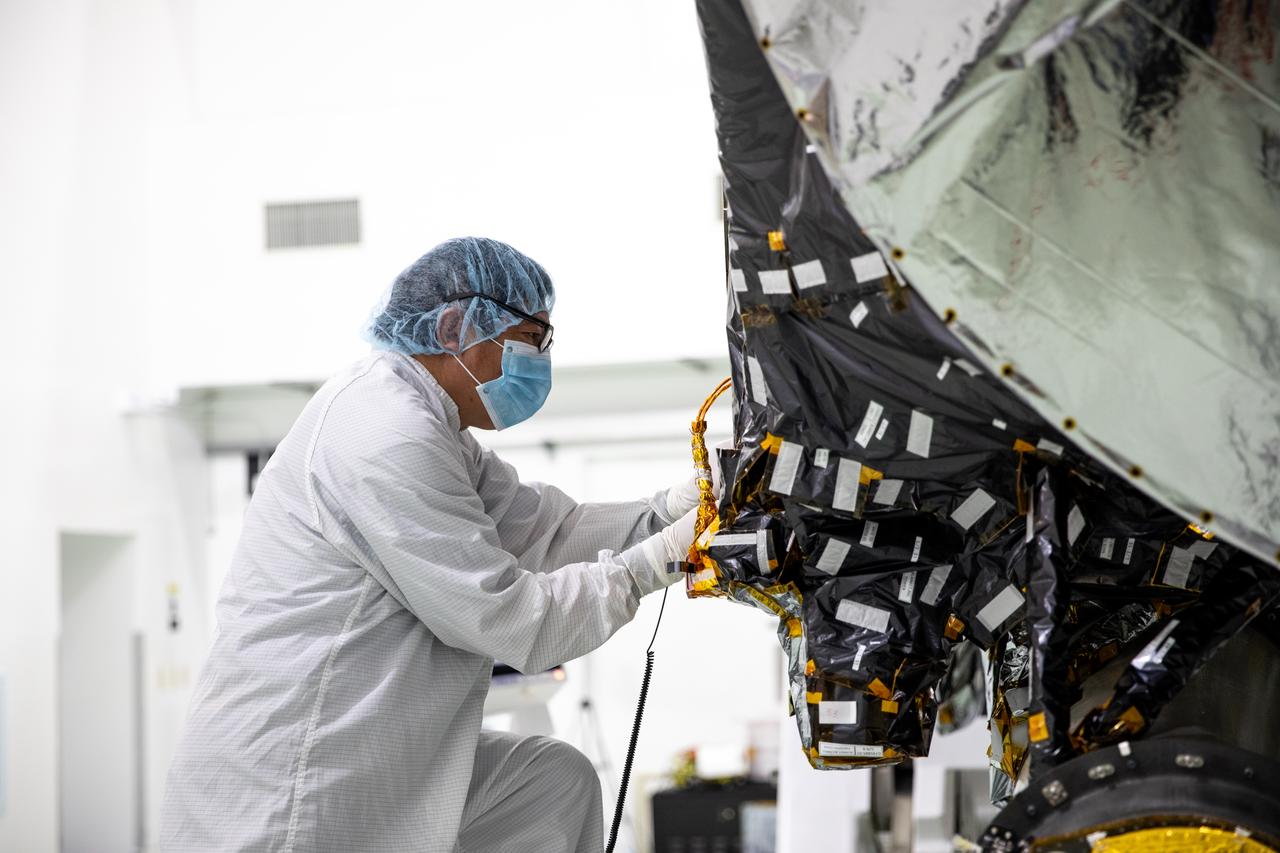
A NASA team member prepares the agency’s Psyche spacecraft for integration with its twin solar arrays inside the Astrotech Space Operations Facility near the agency’s Kennedy Space Center in Florida on July 20, 2023. The solar arrays were shipped from Maxar Technologies, in San Jose, California. They are part of the solar electric propulsion system, provided by Maxar, that will power the spacecraft on its journey to explore a metal-rich asteroid. Psyche will launch atop a SpaceX Falcon Heavy rocket from Launch Complex 39A at Kennedy. Launch is targeted for Oct. 5, 2023. Riding with Psyche is a pioneering technology demonstration, NASA’s Deep Space Optical Communications (DSOC) experiment.
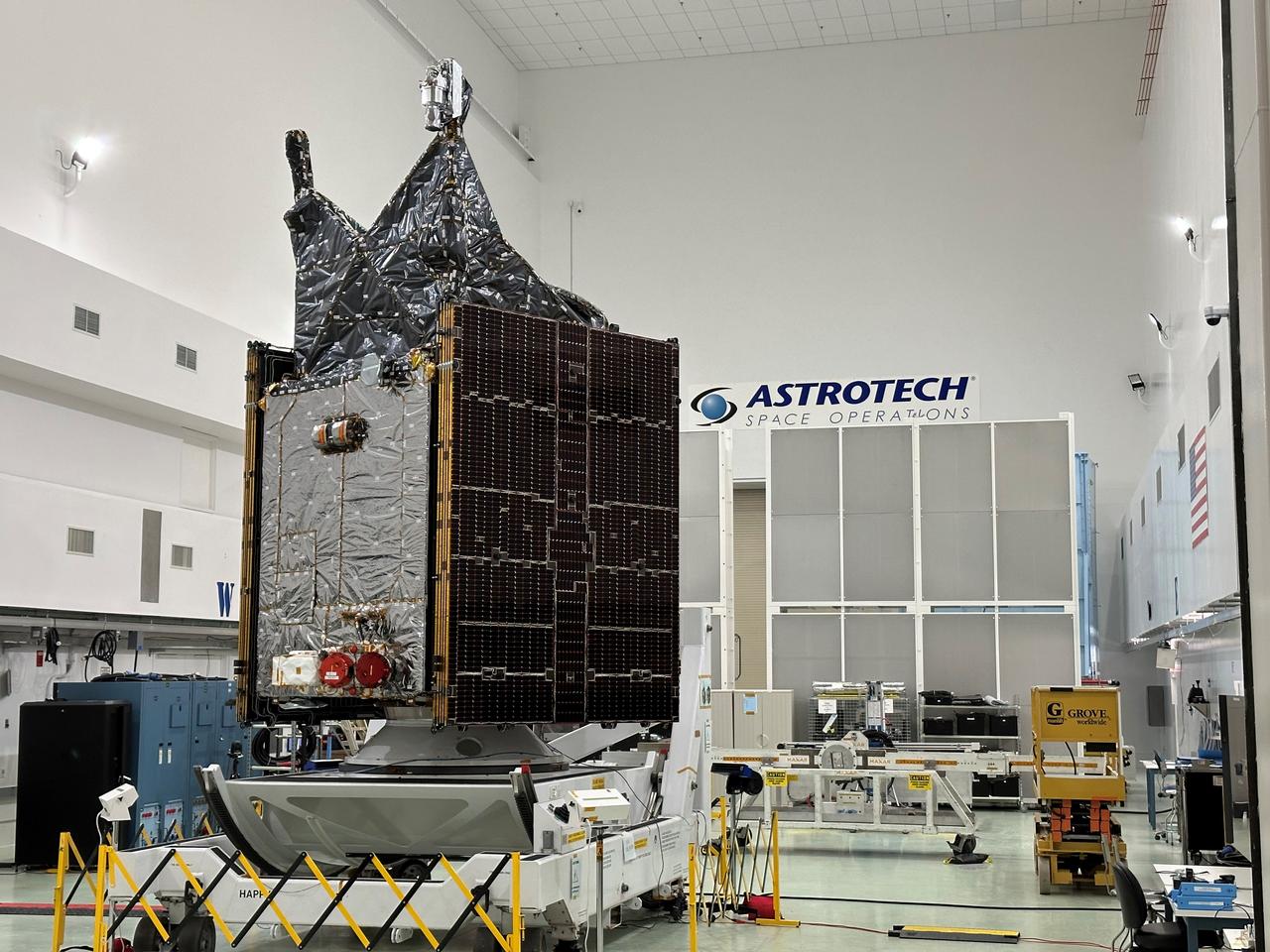
NASA’s Psyche spacecraft is made available to media for viewing inside a cleanroom at the Astrotech Space Operations Facility near Kennedy Space Center in Florida on Aug. 11, 2023. Psyche will launch atop a SpaceX Falcon Heavy rocket from Launch Complex 39A at Kennedy to explore a metal-rich asteroid. Launch is targeted for Oct. 5, 2023. Riding with Psyche is a pioneering technology demonstration, NASA’s Deep Space Optical Communications (DSOC) experiment.
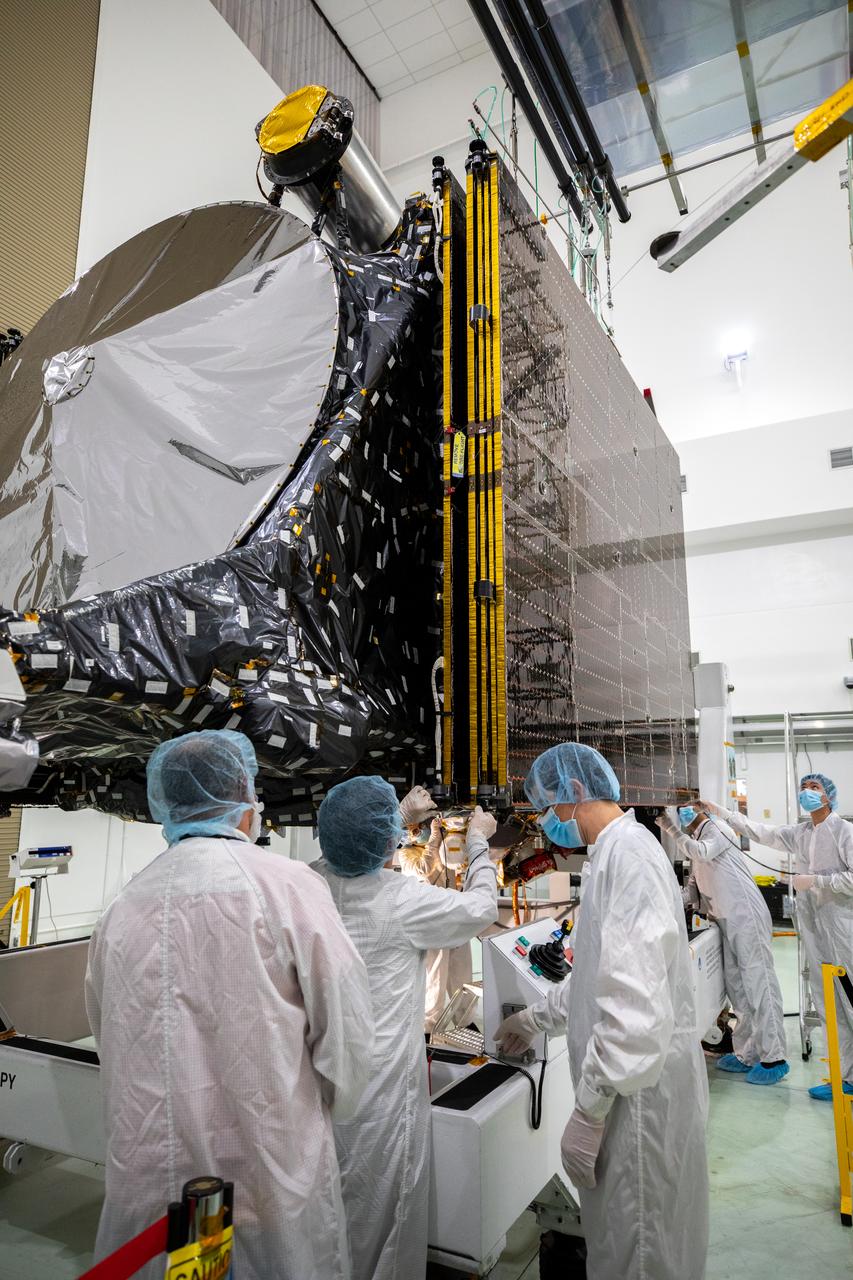
Team members retract the two solar arrays attached to NASA’s Psyche spacecraft inside the Astrotech Space Operations Facility near the agency’s Kennedy Space Center in Florida on July 25, 2023. The solar arrays, which were shipped from Maxar Technologies, in San Jose, California, are being stowed for launch. They are part of the solar electric propulsion system, provided by Maxar, that will power the spacecraft on its journey to explore a metal-rich asteroid. Psyche will launch atop a SpaceX Falcon Heavy rocket from Launch Complex 39A at Kennedy. Launch is targeted for Oct. 5, 2023. Riding with Psyche is a pioneering technology demonstration, NASA’s Deep Space Optical Communications (DSOC) experiment.
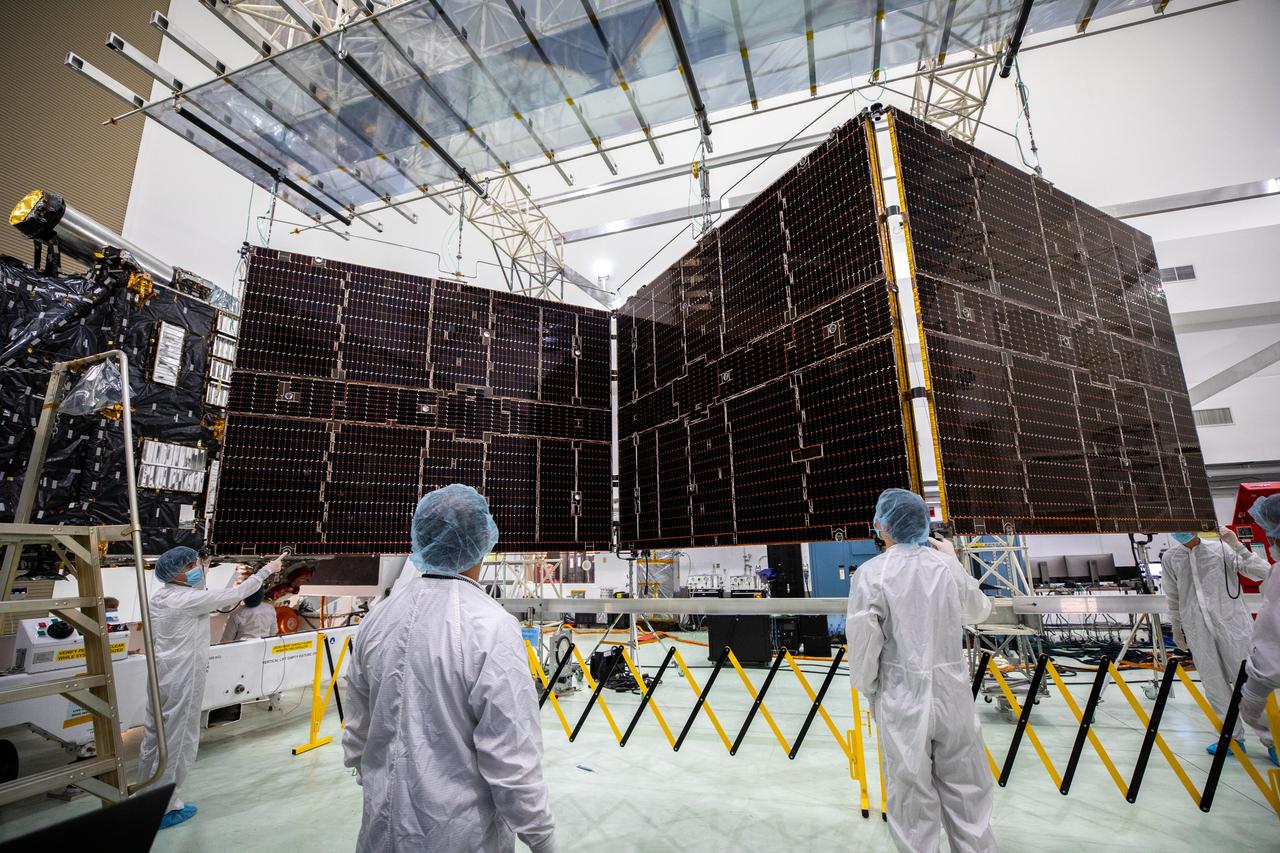
Technicians begin to retract one of the two solar arrays attached to NASA’s Psyche spacecraft inside the Astrotech Space Operations Facility near the agency’s Kennedy Space Center in Florida on July 25, 2023. The solar arrays, which were shipped from Maxar Technologies, in San Jose, California, are being stowed for launch. They are part of the solar electric propulsion system, provided by Maxar, that will power the spacecraft on its journey to explore a metal-rich asteroid. Psyche will launch atop a SpaceX Falcon Heavy rocket from Launch Complex 39A at Kennedy. Launch is targeted for Oct. 5, 2023. Riding with Psyche is a pioneering technology demonstration, NASA’s Deep Space Optical Communications (DSOC) experiment.
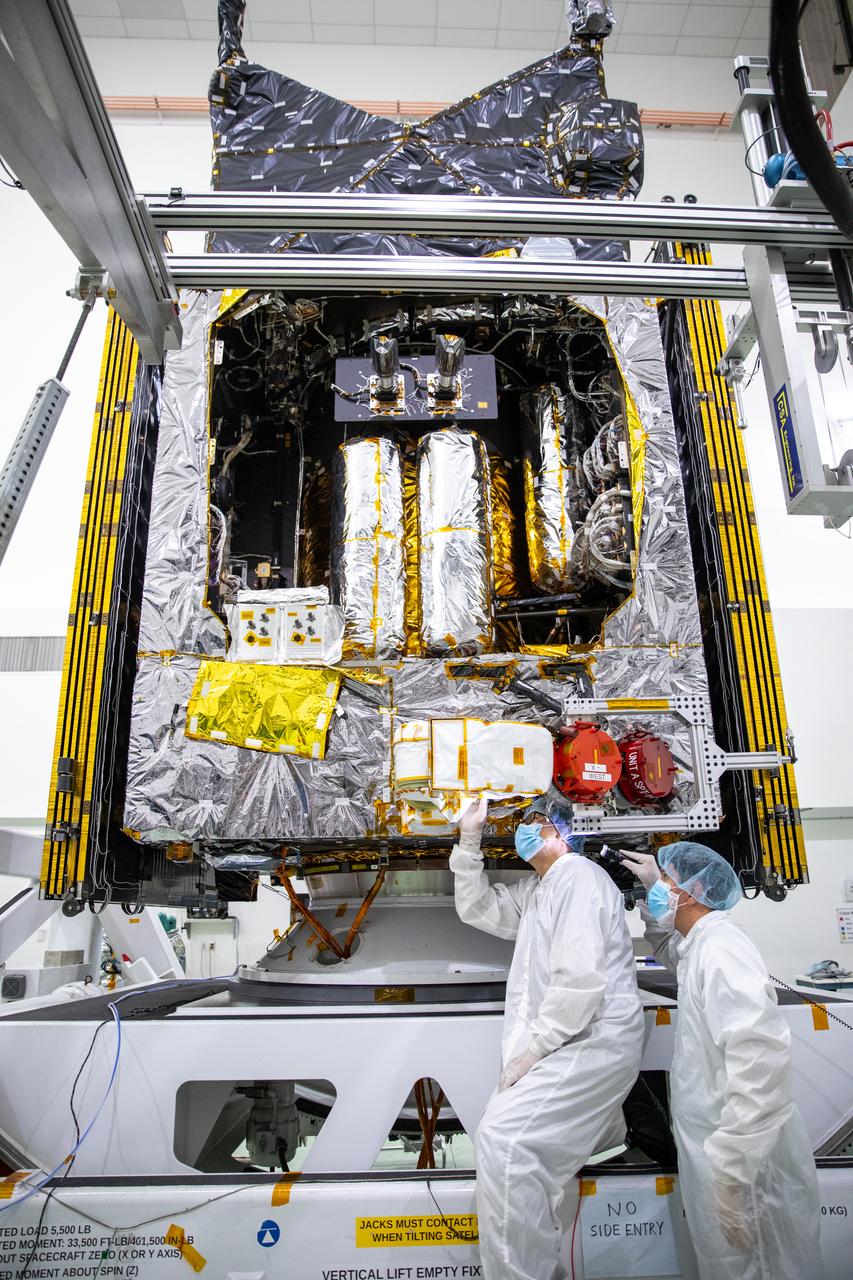
A team of engineers and technicians work on deploying and stowing stationary plasma thrusters (SPT) on NASA's Psyche spacecraft inside the Astrotech Space Operations Facility near the agency’s Kennedy Space Center in Florida on Aug. 4, 2023. This is part of the assembly, test, and launch operations preparations. The SPT are on a dual axis positioning mechanism (DAPM), and together they make a DSM, or DAPM-actuated SPT module. Psyche will launch atop a SpaceX Falcon Heavy rocket from Launch Complex 39A at Kennedy. Launch is targeted for Oct. 5, 2023. Riding with Psyche is a pioneering technology demonstration, NASA’s Deep Space Optical Communications (DSOC) experiment.
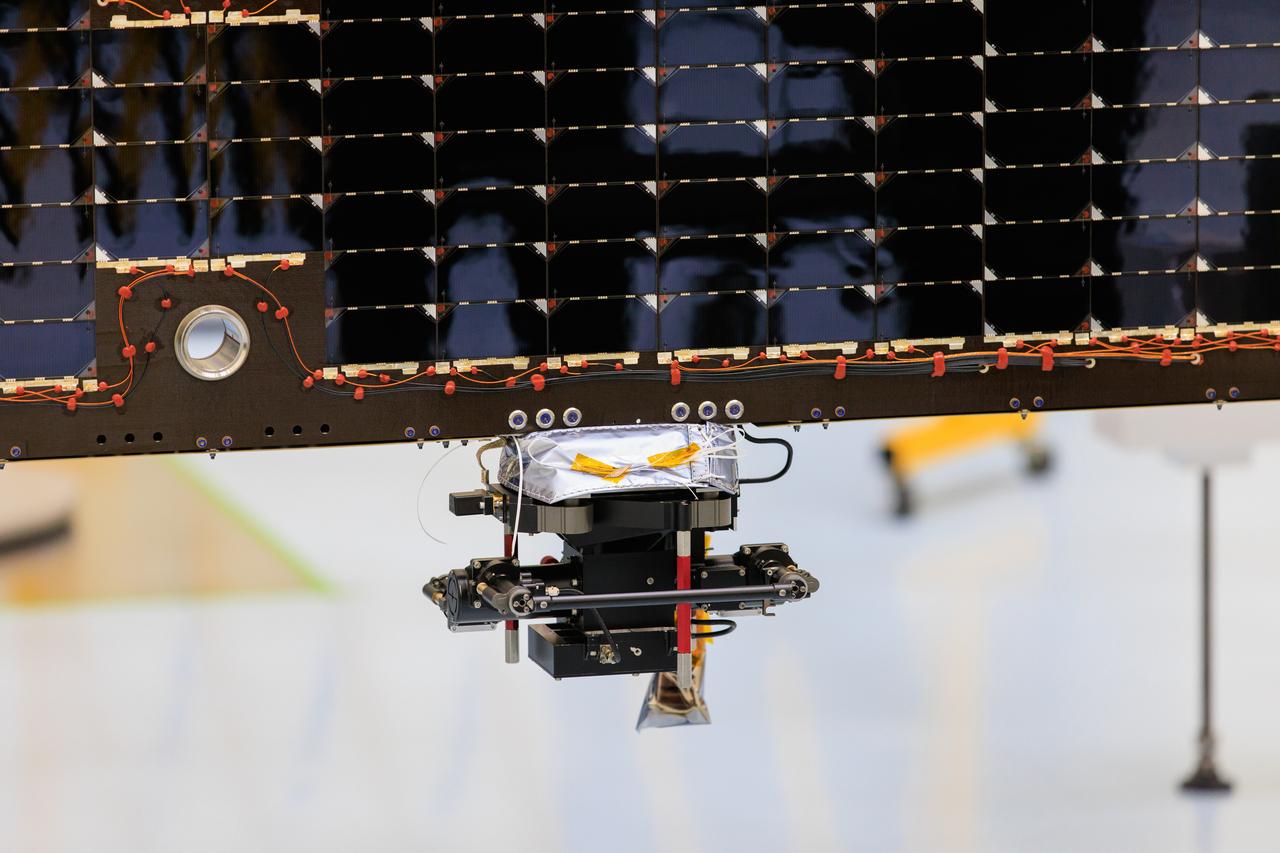
An antenna for the REASON, (Radar for Europa Assessment and Sounding: Ocean to Near-surface) instrument attaches to a solar array for NASA’s Europa Clipper spacecraft inside the Payload Hazardous Servicing Facility at the agency’s Kennedy Space Center in Florida on Wednesday, March 20, 2024. The Europa Clipper spacecraft will study Jupiter’s icy moon Europa, and the REASON instrument will use the antennas to send both both High Frequency (HF) and Very High Frequency (VHF) radio waves to penetrate up to 18 miles (30 kilometers) deep and search the ocean, measure ice thickness, and study the topography, composition, and roughness of Europa’s surface. The Europa Clipper spacecraft will ship to Florida later this year from NASA’s Jet Propulsion Lab in Southern California in preparation for launch aboard a SpaceX Falcon Heavy rocket from Kennedy’s Launch Complex 39A, targeting October.
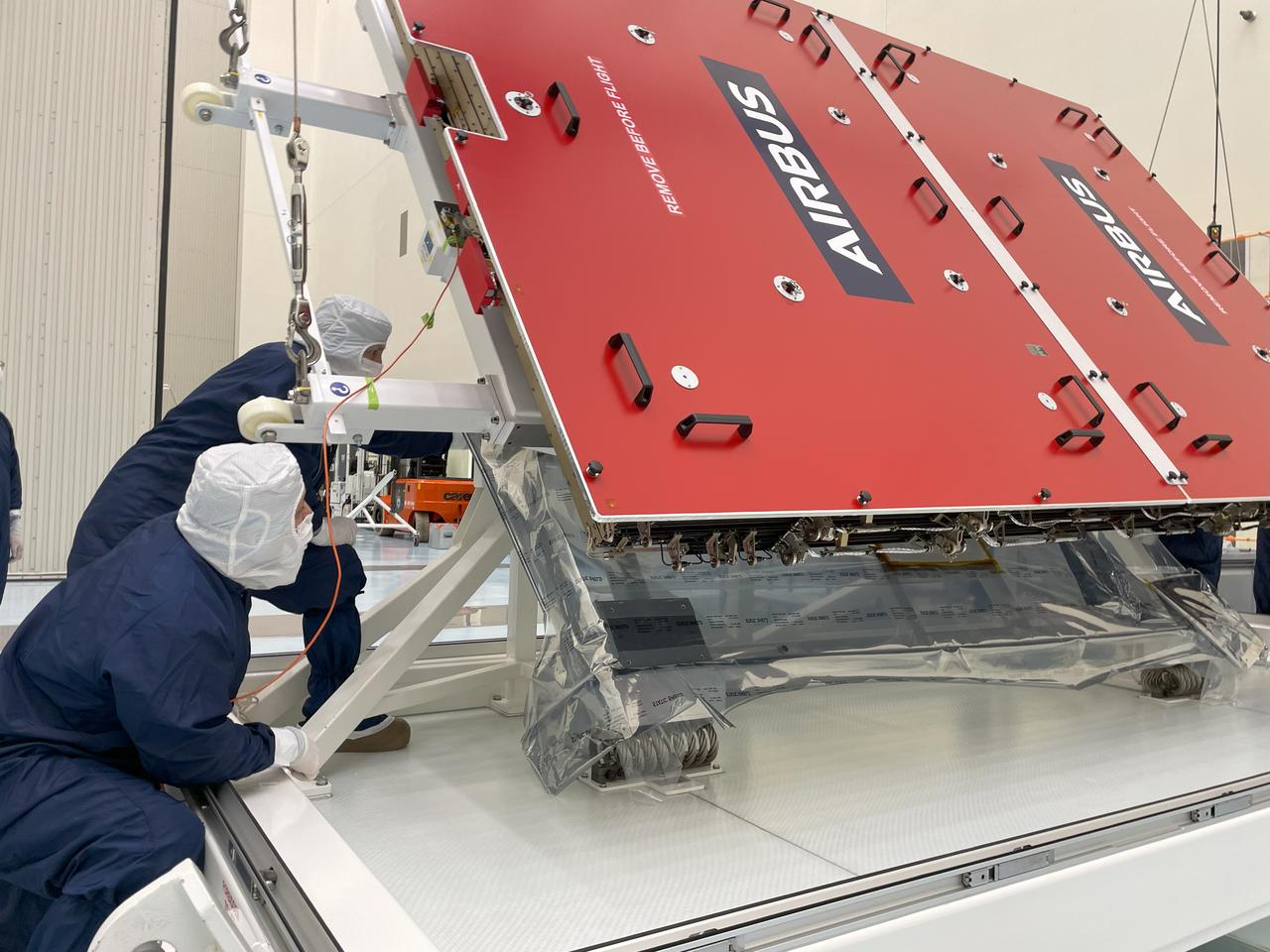
Technicians hoist a five-panel solar array protected by a lid for NASA’s Europa Clipper spacecraft at the Payload Hazardous Servicing Facility at the agency’s Kennedy Space Center in Florida on Tuesday, Feb. 27, 2024. The arrays are each 46.5 feet long (14.2 meters). With both solar arrays deployed, Europa Clipper will span more than 100 feet long, about the length of a basketball court. The solar arrays power the spacecraft so it can study Jupiter’s icy moon, Europa, which is more than five times as far from the Sun as the Earth. Launch on a SpaceX Falcon Heavy rocket is no earlier than October 2024.
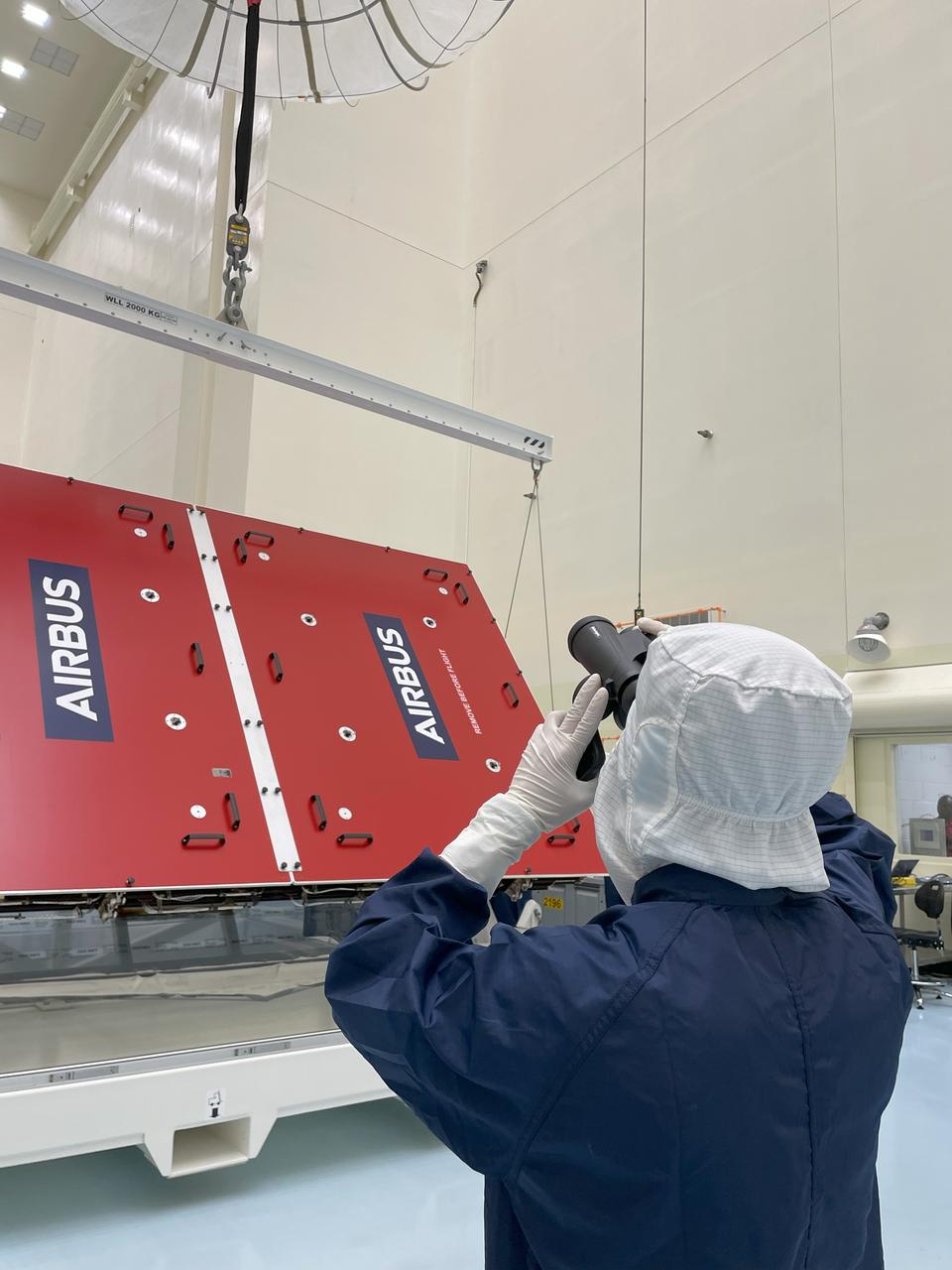
Technicians hoist a five-panel solar array protected by a lid for NASA’s Europa Clipper spacecraft at the Payload Hazardous Servicing Facility at the agency’s Kennedy Space Center in Florida on Tuesday, Feb. 27, 2024. The arrays are each 46.5 feet long (14.2 meters). With both solar arrays deployed, Europa Clipper will span more than 100 feet long, about the length of a basketball court. The solar arrays power the spacecraft so it can study Jupiter’s icy moon, Europa, which is more than five times as far from the Sun as the Earth. Launch on a SpaceX Falcon Heavy rocket is no earlier than October 2024.

Teams offload NASA’s largest planetary mission spacecraft, Europa Clipper, from a United States Air Force C-17 Globemaster III transport aircraft onto the flatbed of a heavy-lift truck at the Launch and Landing Facility at NASA’s Kennedy Space Center in Florida on Thursday, May 23, 2024. Crews transported Europa Clipper to the Payload Hazardous Servicing Facility at Kennedy to prepare it for launch aboard a SpaceX Falcon Heavy rocket later this year from Launch Complex 39A at the Florida spaceport. Europa Clipper will help determine if conditions exist below the surface Jupiter’s fourth largest moon, Europa, that could support life.
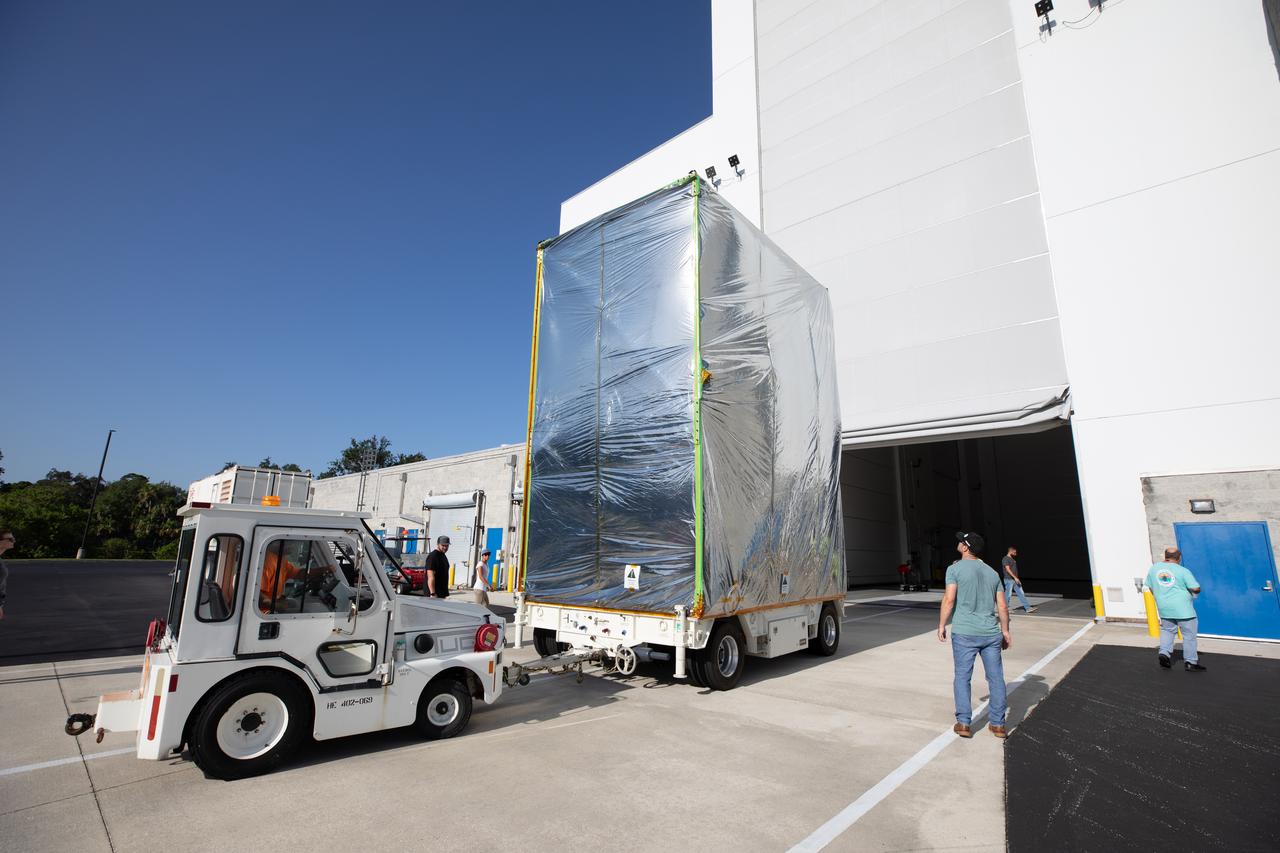
Technicians open the high bay door to Building 9 at the Astrotech Space Operations Facility near NASA’s Kennedy Space Center in Florida to allow entrance for the agency’s Psyche spacecraft, secured for transport, on Aug. 14, 2023. Psyche will explore its namesake, a metal-rich asteroid orbiting the Sun between Mars and Jupiter. Psyche has NASA’s Deep Space Optical Communications (DSOC) technology demonstration onboard the spacecraft. DSOC will be the agency's first demonstration of optical communication beyond the Moon. Psyche will launch atop a SpaceX Falcon Heavy rocket from Launch Complex 39A at Kennedy. Launch is targeted for Oct. 5, 2023.
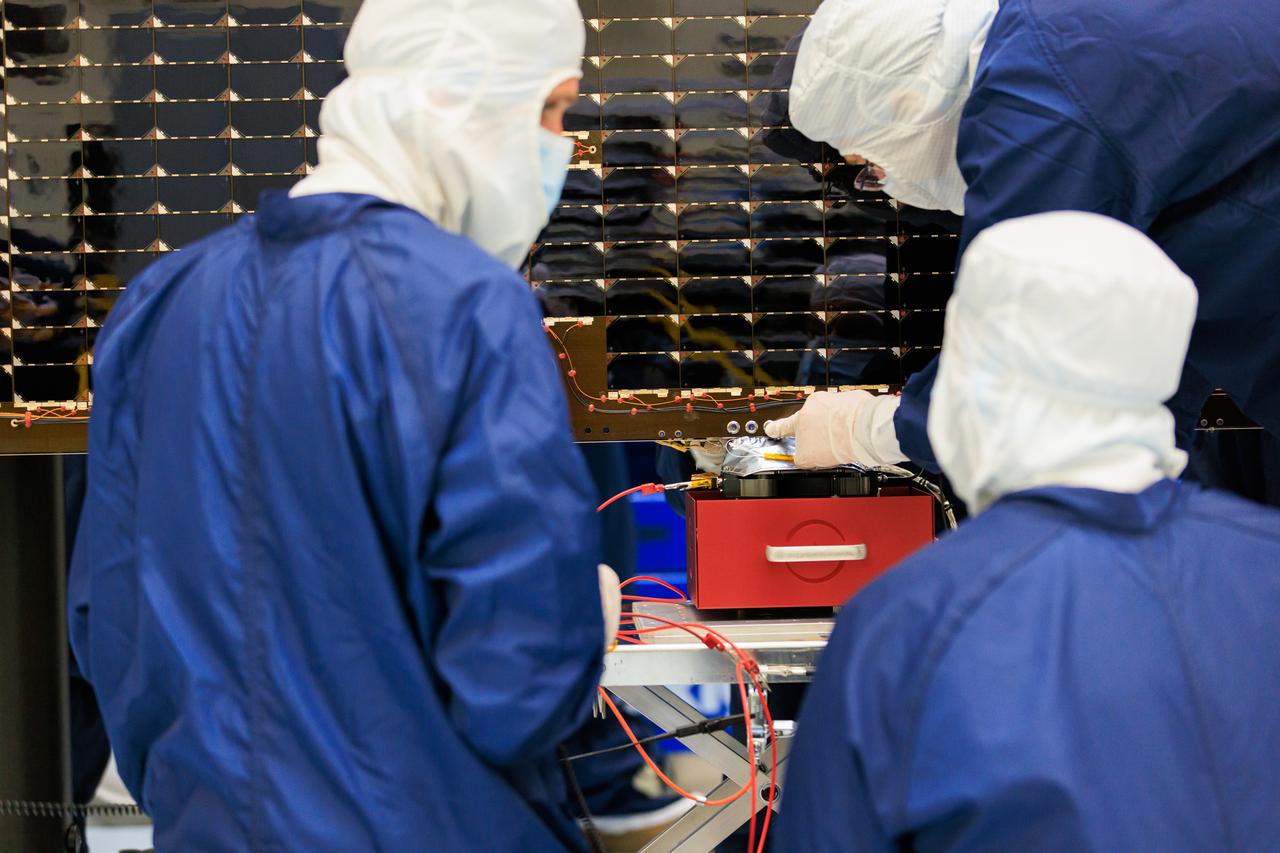
Technicians inside the Payload Hazardous Servicing Facility at NASA’s Kennedy Space Center in Florida install and test one of several antennas on a solar array Wednesday, March 20, 2024, for the agency’s Europa Clipper spacecraft which will study Jupiter’s icy moon Europa to determine if the planet has conditions that could support life. REASON, (Radar for Europa Assessment and Sounding: Ocean to Near-surface) instrument will use the antennas to send both High Frequency (HF) and Very High Frequency (VHF) radio waves to penetrate up to 18 miles (30 kilometers) deep and search the ocean, measure ice thickness, and study the topography, composition, and roughness of Europa’s surface. The Europa Clipper spacecraft will ship to Florida later this year from NASA’s Jet Propulsion Lab in Southern California in preparation for launch aboard a SpaceX Falcon Heavy rocket from Kennedy’s Launch Complex 39A targeting October 2024.
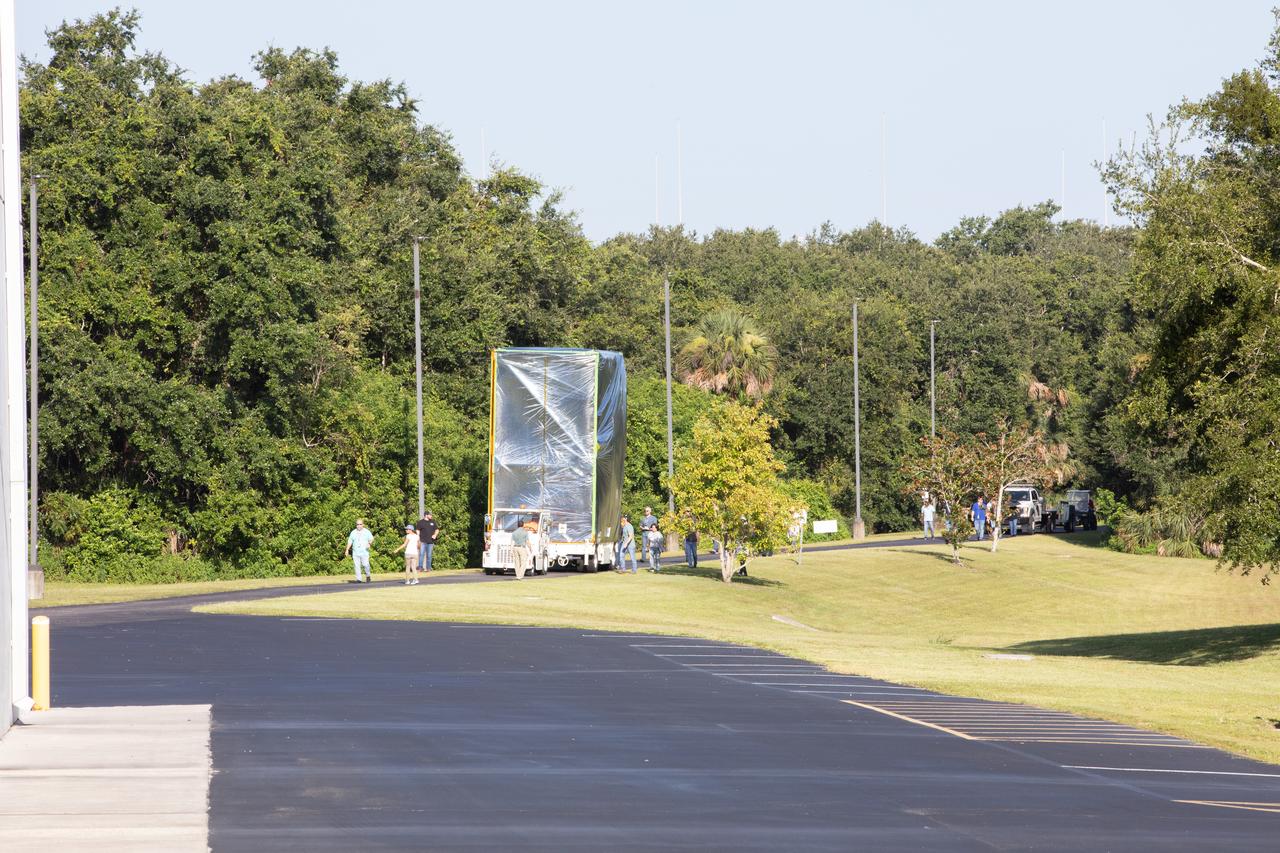
Technicians and engineers moved NASA’s Psyche spacecraft along the road to Building 9 at the Astrotech Space Operations Facility near the agency’s Kennedy Space Center in Florida on Aug. 14, 2023. Psyche will explore its namesake, a metal-rich asteroid orbiting the Sun between Mars and Jupiter. Psyche has NASA’s Deep Space Optical Communications (DSOC) technology demonstration onboard the spacecraft. DSOC will be the agency's first demonstration of optical communication beyond the Moon. Psyche will launch atop a SpaceX Falcon Heavy rocket from Launch Complex 39A at Kennedy. Launch is targeted for Oct. 5, 2023.

Teams offload NASA’s largest planetary mission spacecraft, Europa Clipper, from a United States Air Force C-17 Globemaster III transport aircraft onto the flatbed of a heavy-lift truck at the Launch and Landing Facility at NASA’s Kennedy Space Center in Florida on Thursday, May 23, 2024. Crews transported Europa Clipper to the Payload Hazardous Servicing Facility at Kennedy to prepare it for launch aboard a SpaceX Falcon Heavy rocket later this year from Launch Complex 39A at the Florida spaceport. Europa Clipper will help determine if conditions exist below the surface Jupiter’s fourth largest moon, Europa, that could support life.
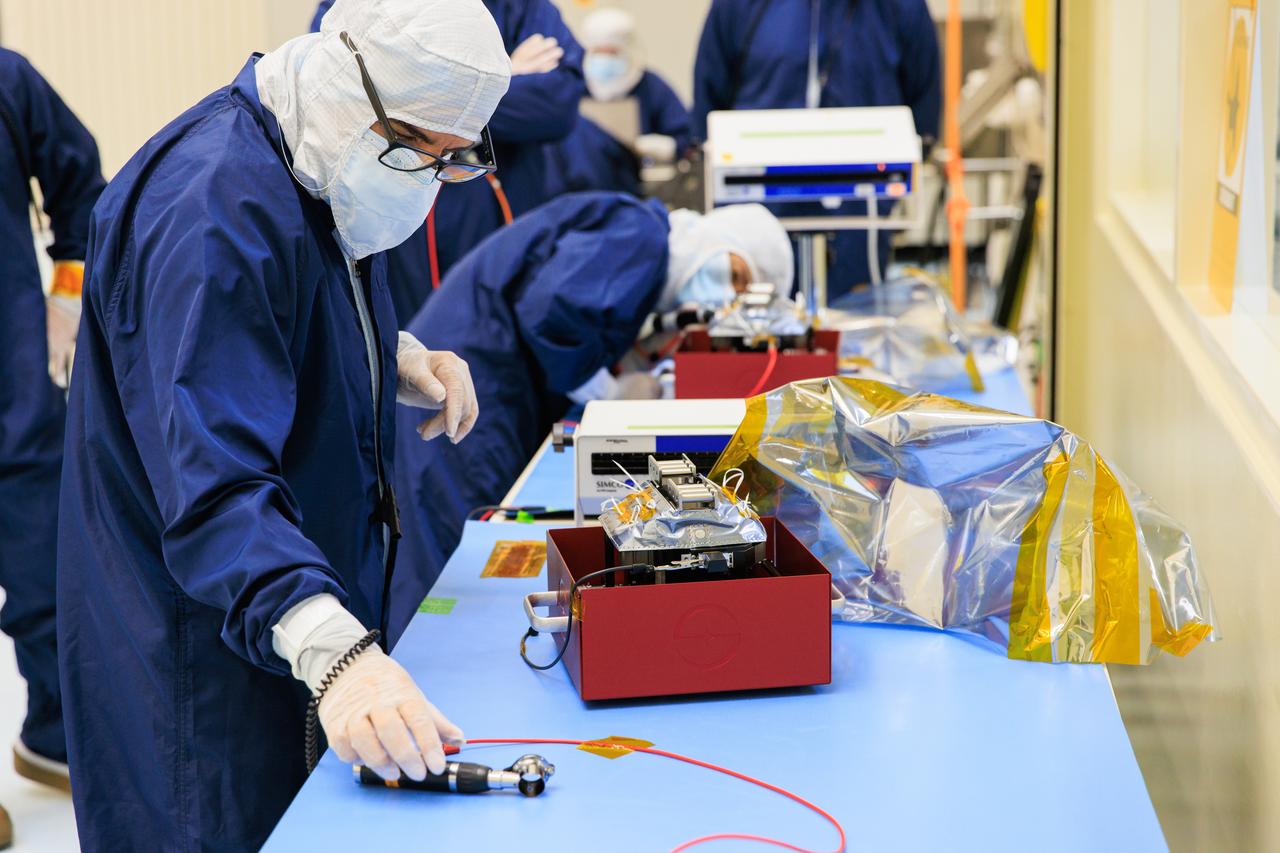
Technicians inside the Payload Hazardous Servicing Facility at NASA’s Kennedy Space Center in Florida test antennas on Wednesday, March 20, 2024, shortly before installing them on a solar array for the agency’s Europa Clipper spacecraft, which will study Jupiter’s icy moon Europa to determine if the planet has conditions that could support life. The REASON, (Radar for Europa Assessment and Sounding: Ocean to Near-surface) instrument will use the antennas to send both High Frequency (HF) and Very High Frequency (VHF) to penetrate up to 18 miles (30 kilometers) deep and search the ocean, measure ice thickness, and study the topography, composition, and roughness of Europa’s surface. The Europa Clipper spacecraft will ship to Florida later this year from NASA’s Jet Propulsion Lab in Southern California in preparation for launch aboard a SpaceX Falcon Heavy rocket from Kennedy’s Launch Complex 39A targeting October 2024.
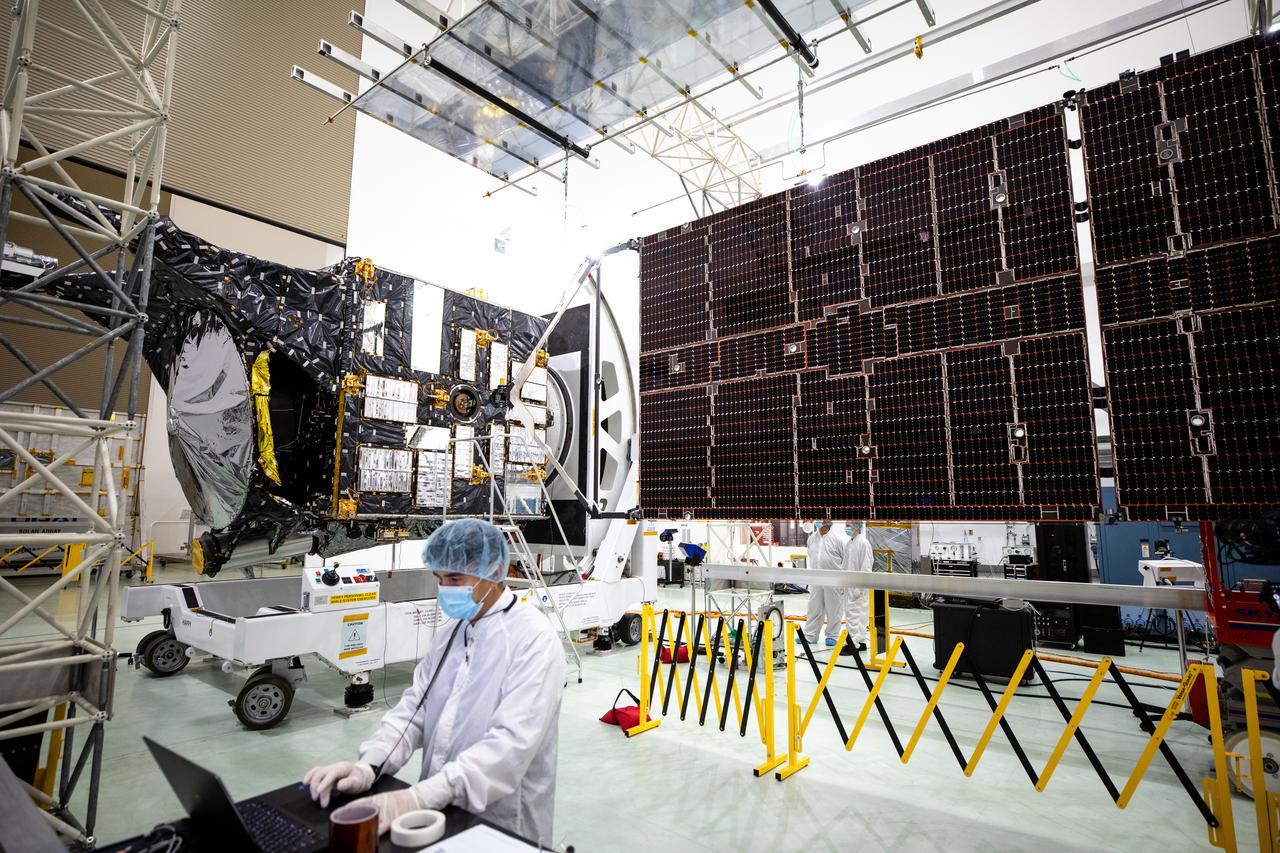
NASA team members prepare the agency’s Psyche spacecraft for integration with its twin solar arrays inside the Astrotech Space Operations Facility near the agency’s Kennedy Space Center in Florida on July 20, 2023. The solar arrays were shipped from Maxar Technologies, in San Jose, California. They are part of the solar electric propulsion system, provided by Maxar, that will power the spacecraft on its journey to explore a metal-rich asteroid. Psyche will launch atop a SpaceX Falcon Heavy rocket from Launch Complex 39A at Kennedy. Launch is targeted for Oct. 5, 2023. Riding with Psyche is a pioneering technology demonstration, NASA’s Deep Space Optical Communications (DSOC) experiment.
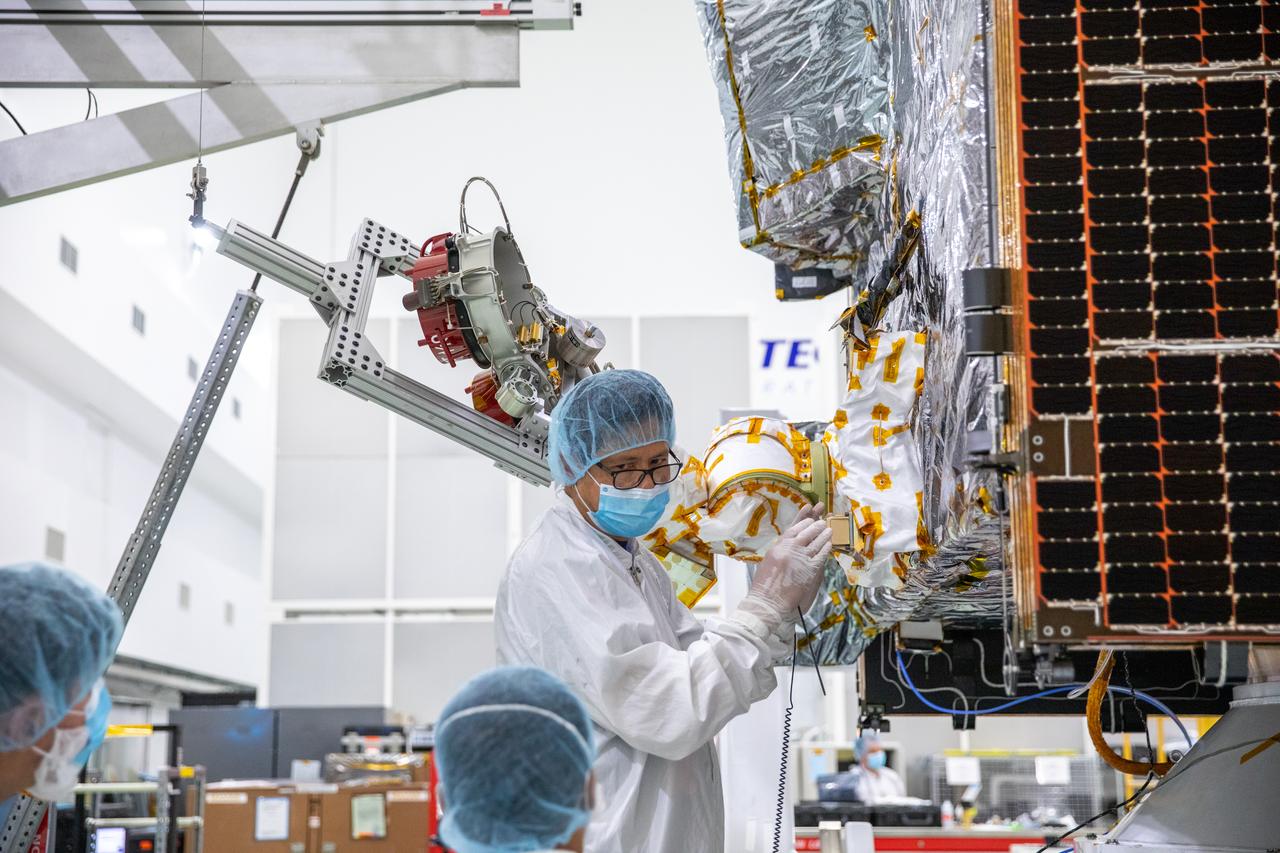
A team of engineers and technicians work on deploying and stowing stationary plasma thrusters (SPT) on NASA's Psyche spacecraft inside the Astrotech Space Operations Facility near the agency’s Kennedy Space Center in Florida on Aug. 4, 2023. This is part of the assembly, test, and launch operations preparations. The SPT are on a dual axis positioning mechanism (DAPM), and together they make a DSM, or DAPM-actuated SPT module. Psyche will launch atop a SpaceX Falcon Heavy rocket from Launch Complex 39A at Kennedy. Launch is targeted for Oct. 5, 2023. Riding with Psyche is a pioneering technology demonstration, NASA’s Deep Space Optical Communications (DSOC) experiment.