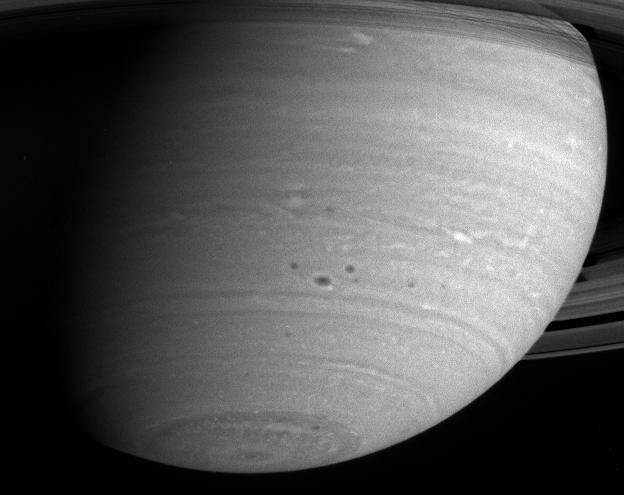
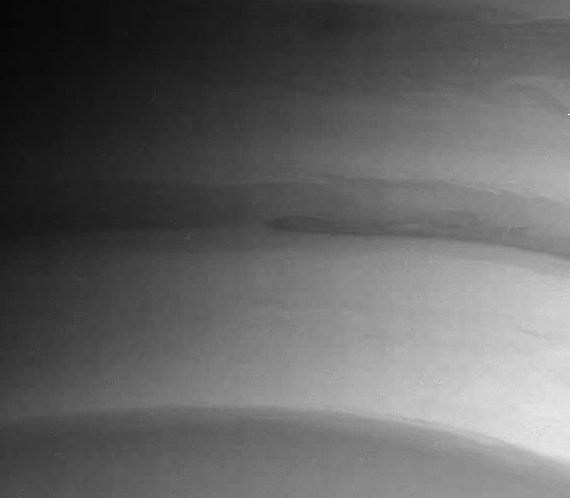
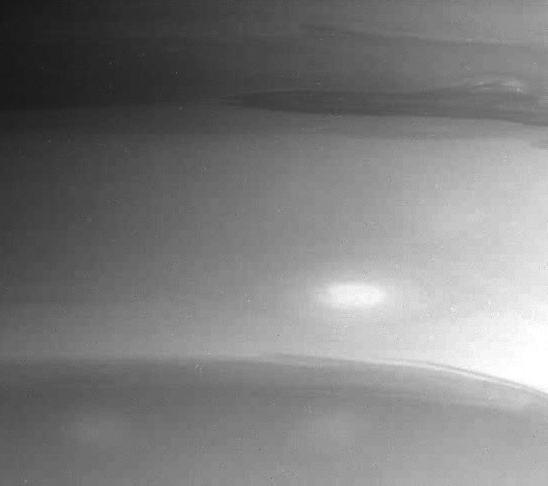
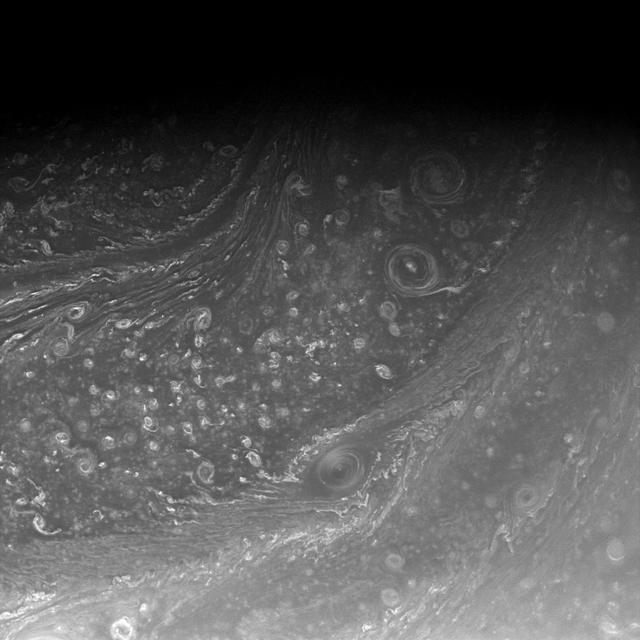
Saturn Atmosphere
Saturn Atmosphere
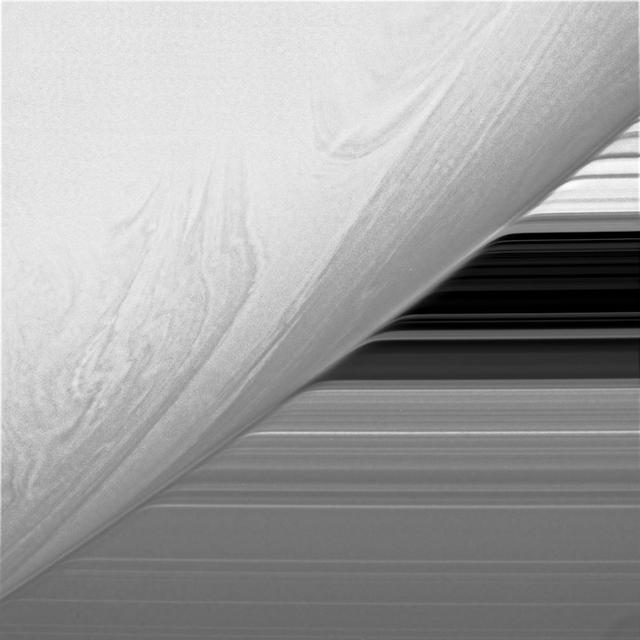
Atmospheric Illusion
Restless Atmosphere
Restless Atmosphere
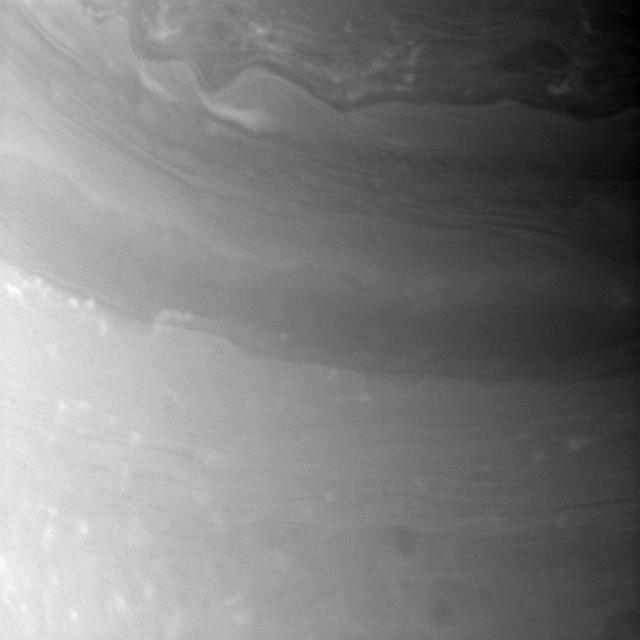
Atmospheric Intricacies
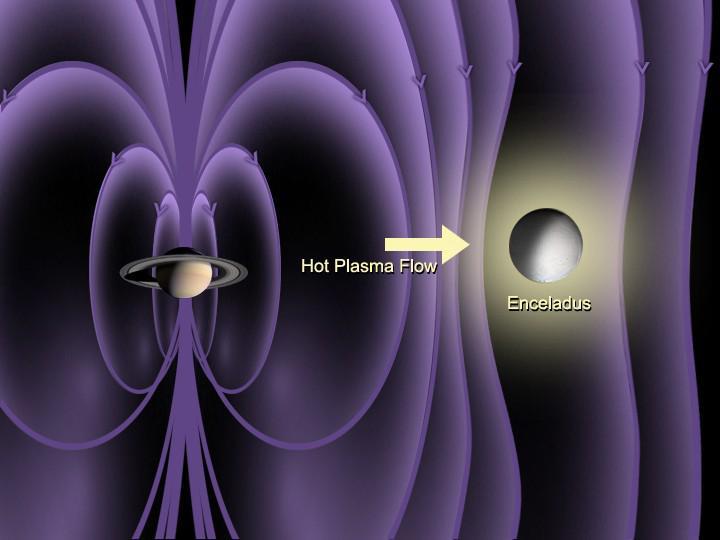
Atmosphere and Enceladus
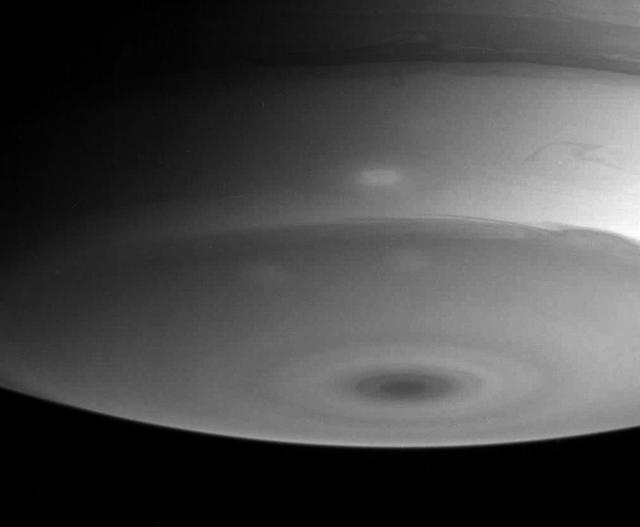
Active Atmosphere
Active Atmosphere
Funhouse Atmosphere
Funhouse Atmosphere
Angles in the Atmosphere
Atmosphere on Enceladus Artist Concept
Atmospheric Detail in the Near Infrared
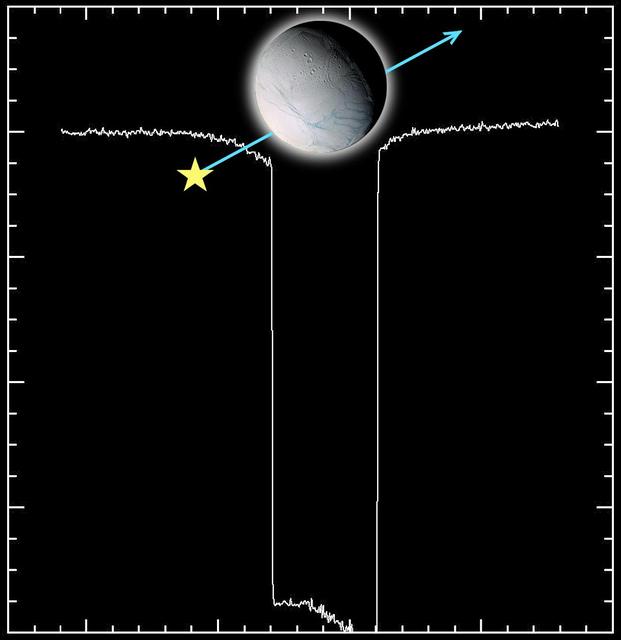
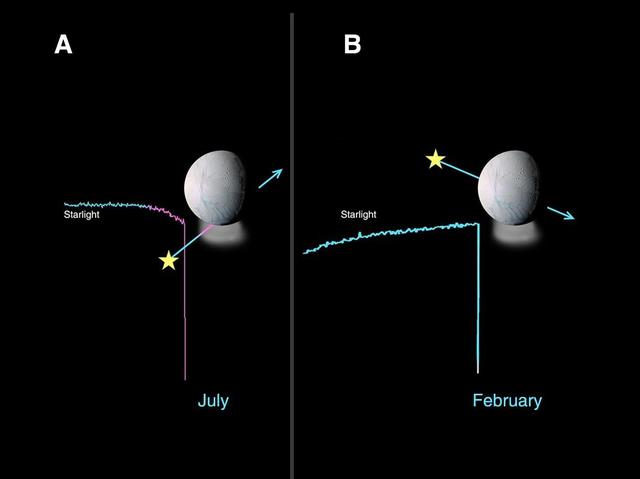
Enceladus Atmosphere -- Star Struck
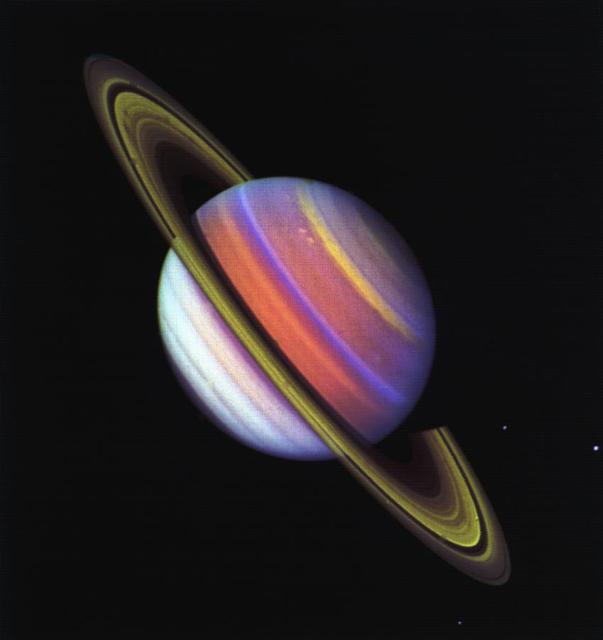
Atmospheric Effects in IR Color
Saturn Active Atmosphere
Atmosphere Detail in Infrared
Atmospheric Detail and Enceladus
Saturn Atmospheric Changes
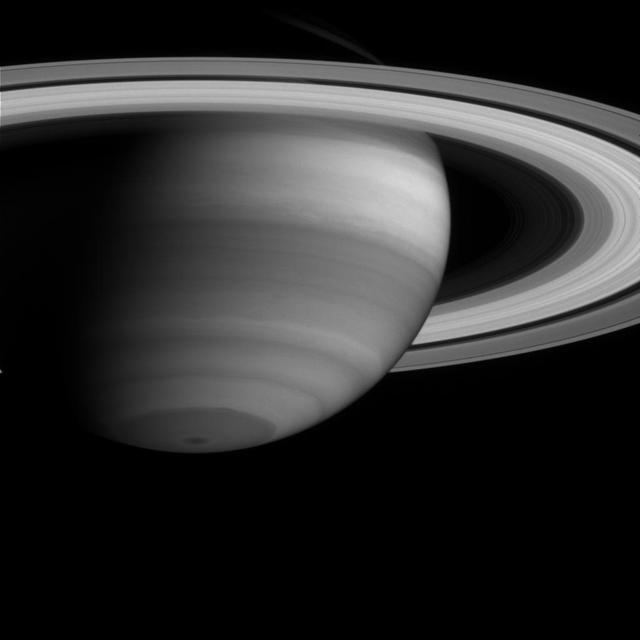
Saturn Atmosphere and Rings
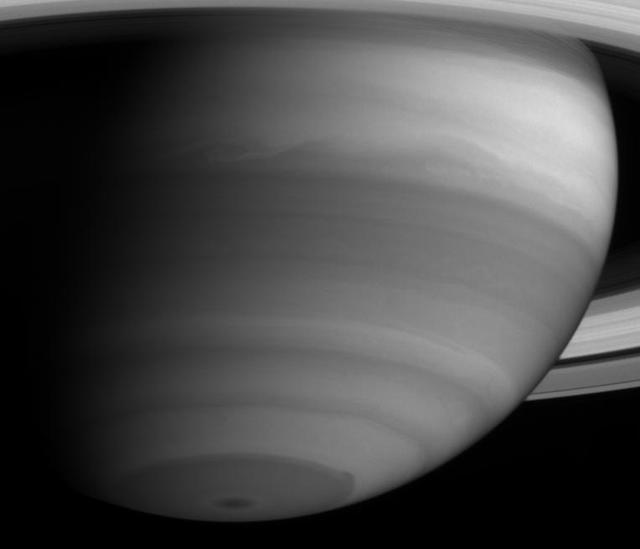
Southern Atmosphere Detail
Atmospheric Detail in Infrared
Storms in Saturn Atmosphere
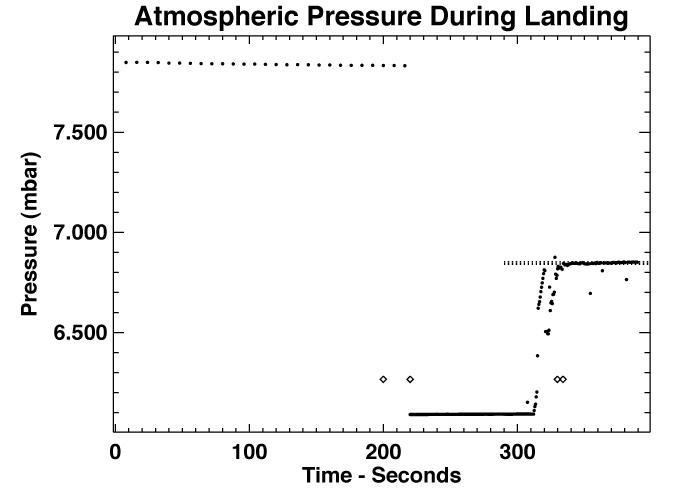
Atmospheric Pressure During Landing
High in the Titan Atmosphere
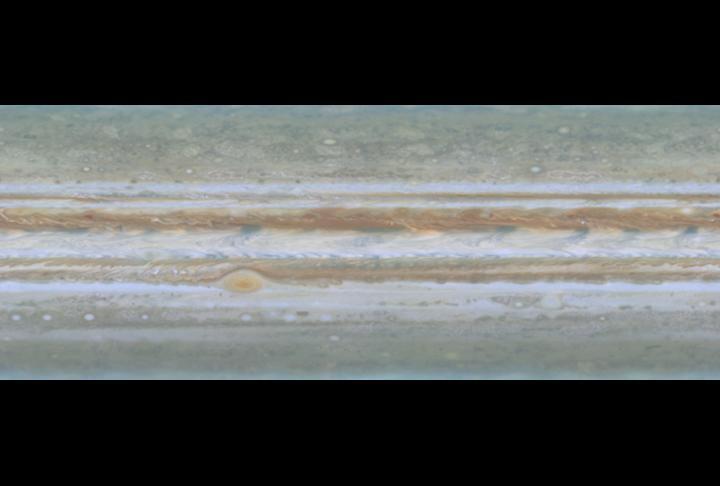
Jupiter Atmospheric Map
Case of the Lost Atmosphere
Probing Saturn Atmosphere
Enceladus Atmosphere Not Global
This illustration depicts charged particles from a solar storm stripping away charged particles of Mars' atmosphere, one of the processes of Martian atmosphere loss studied by NASA's MAVEN mission, beginning in 2014. Unlike Earth, Mars lacks a global magnetic field that could deflect charged particles emanating from the Sun.   https://photojournal.jpl.nasa.gov/catalog/PIA22076
Visualizing a Solar Storm's Effect on Mars Atmosphere (Illustration)
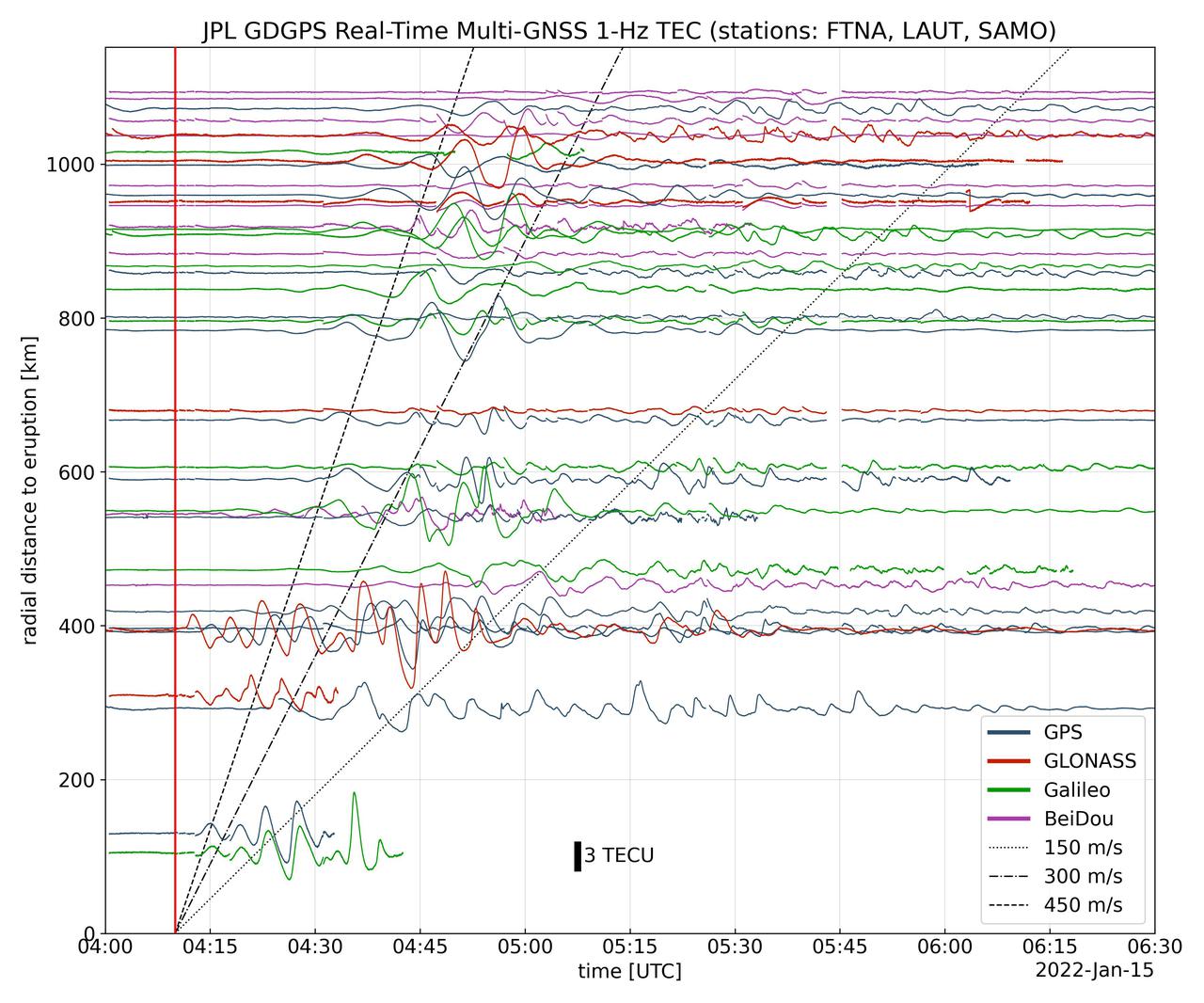
Real-time data collected by the Global Differential Global Positioning System network, operated by NASA's Jet Propulsion Laboratory, shows the atmospheric signature of the Hunga Tonga Hunga Ha'apai volcanic eruption in Tonga on Jan. 15, 2022.      The data is a measure of the density of electrons (known as total electron content units, or TECU) in the ionosphere – the outermost layer of the atmosphere, which starts between 50 and 56 miles (80 to 90 kilometers) above Earth's surface. Navigation radio signals, like those received by location sensors on smartphones, are broadcast by global navigation satellite systems (GNSS) and experience delays when passing through the ionosphere. The extent of the delay depends on the density of electrons within the path of the GNSS signal in this atmospheric layer.      When an explosive event such as a volcanic eruption or large earthquake injects energy into the atmosphere, the pressure waves from that event change the electron density in the ionosphere. These perturbations show up as tiny changes to the delays that GNSS radio signals usually experience as they pass through the atmosphere.      The vertical red line in the data plot indicates the time of the eruption. The horizontal squiggles show electron density profiles picked up in the signals of four GNSS constellations, or groups of satellites: GPS, GLONASS, Galileo, and BeiDou. The slanted dashed and dotted lines indicate the velocity of waves.  https://photojournal.jpl.nasa.gov/catalog/PIA24905
Tonga Eruption Atmospheric Wave
This graphic depicts what Mars atmosphere would have looked like to a viewer with ultraviolet-seeing eyes after a meteor shower on Oct. 19, 2014.
Emission from Ionized Magnesium in Mars Atmosphere After Comet Flyby
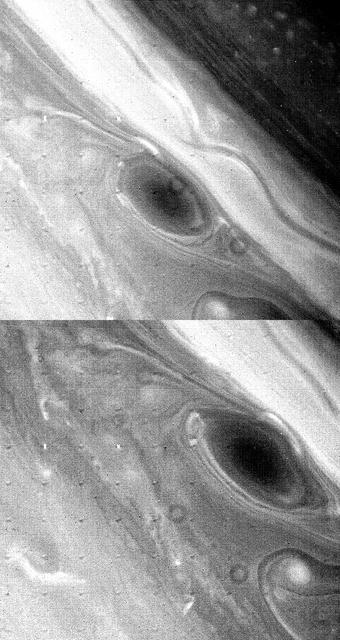
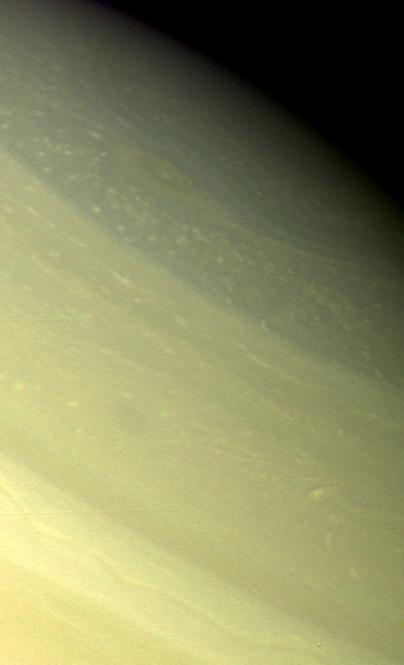
Large Brown Spot in Saturn Atmosphere
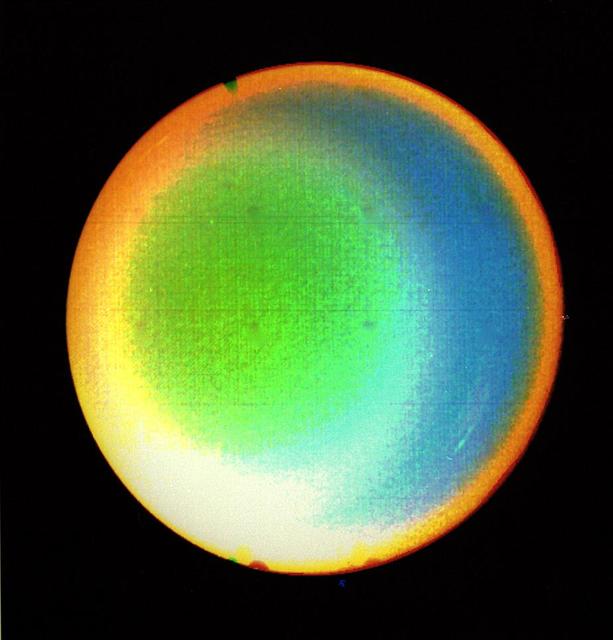
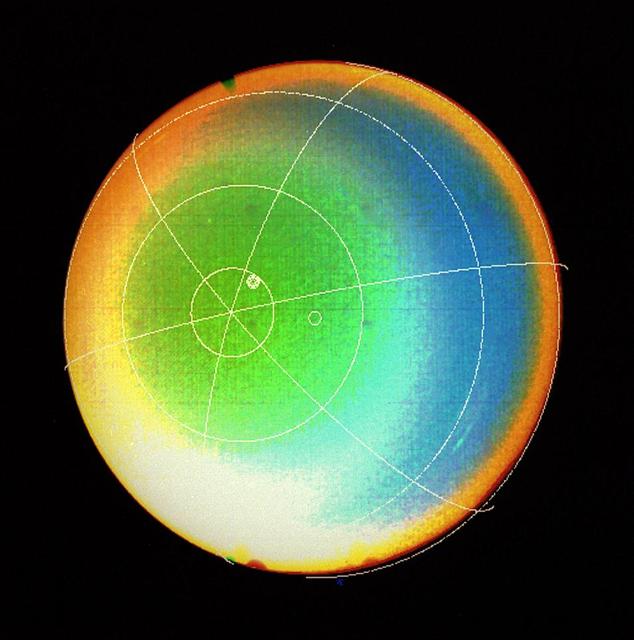
Processing brings out Uranus atmosphere in this image taken by NASA Voyager 2.
Uranus Atmosphere
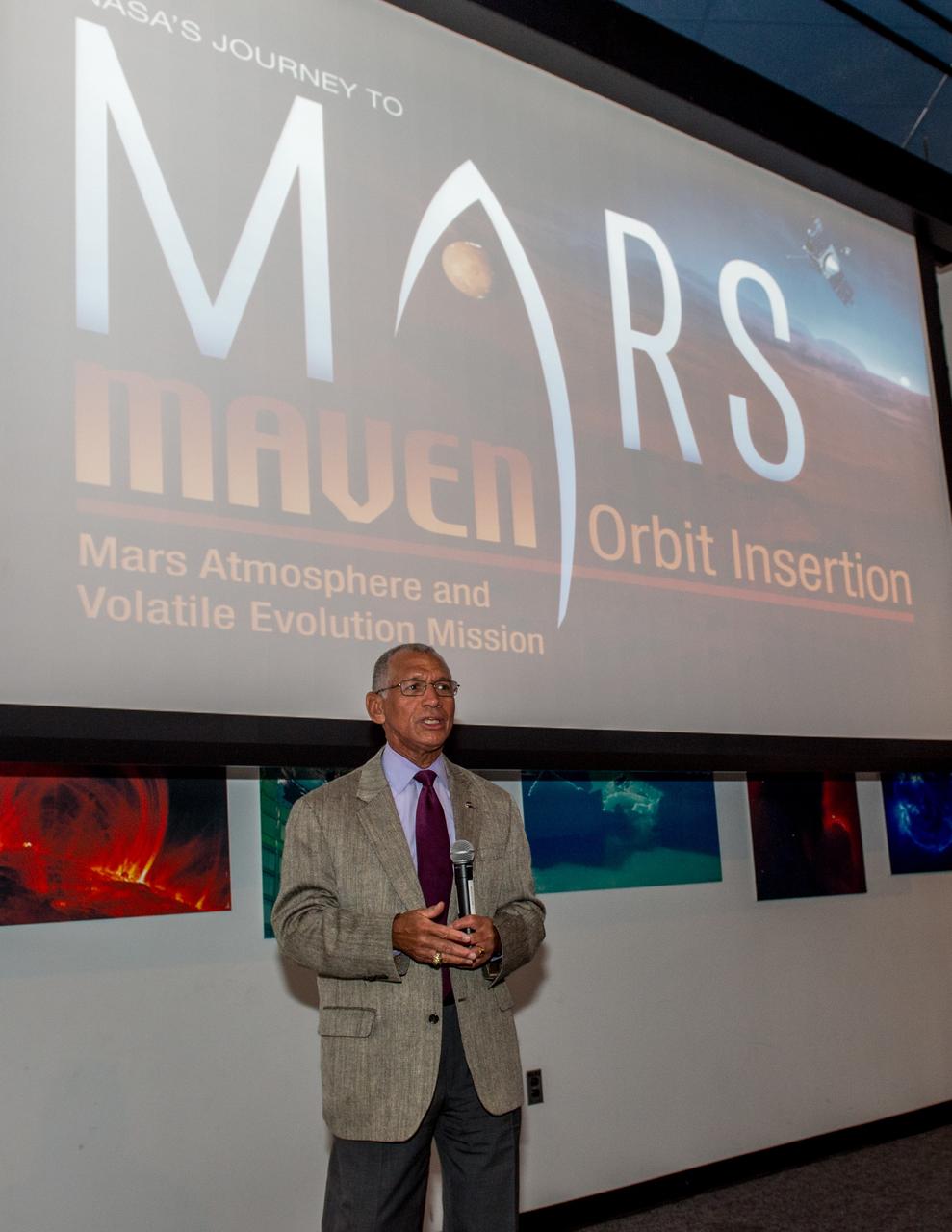
NASA Administrator Charlie Bolden at the Mars Atmosphere and Volatile Evolution Mission (MAVEN) ORBIT INSERTION event
NASA Administrator Charlie Bolden at the Mars Atmosphere and Vol
Magnetic Particles Are Found In The Martian Atmosphere  http://photojournal.jpl.nasa.gov/catalog/PIA00394
Magnetic Particles Are Found In The Martian Atmosphere
This computer enhancement of a NASA Voyager 2 image, emphasizes the high-level haze in Uranus upper atmosphere. Clouds are obscured by the overlying atmosphere.
Uranus Upper Atmosphere
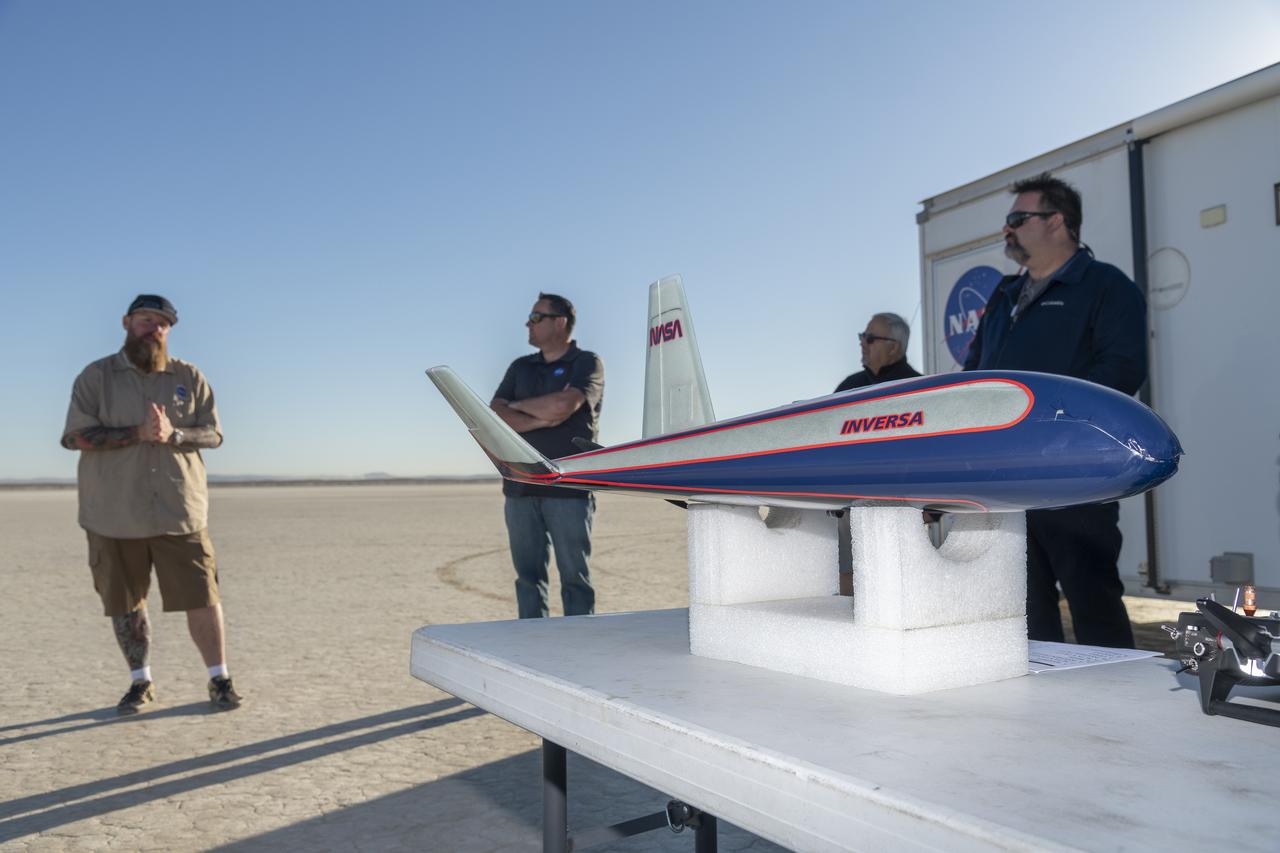
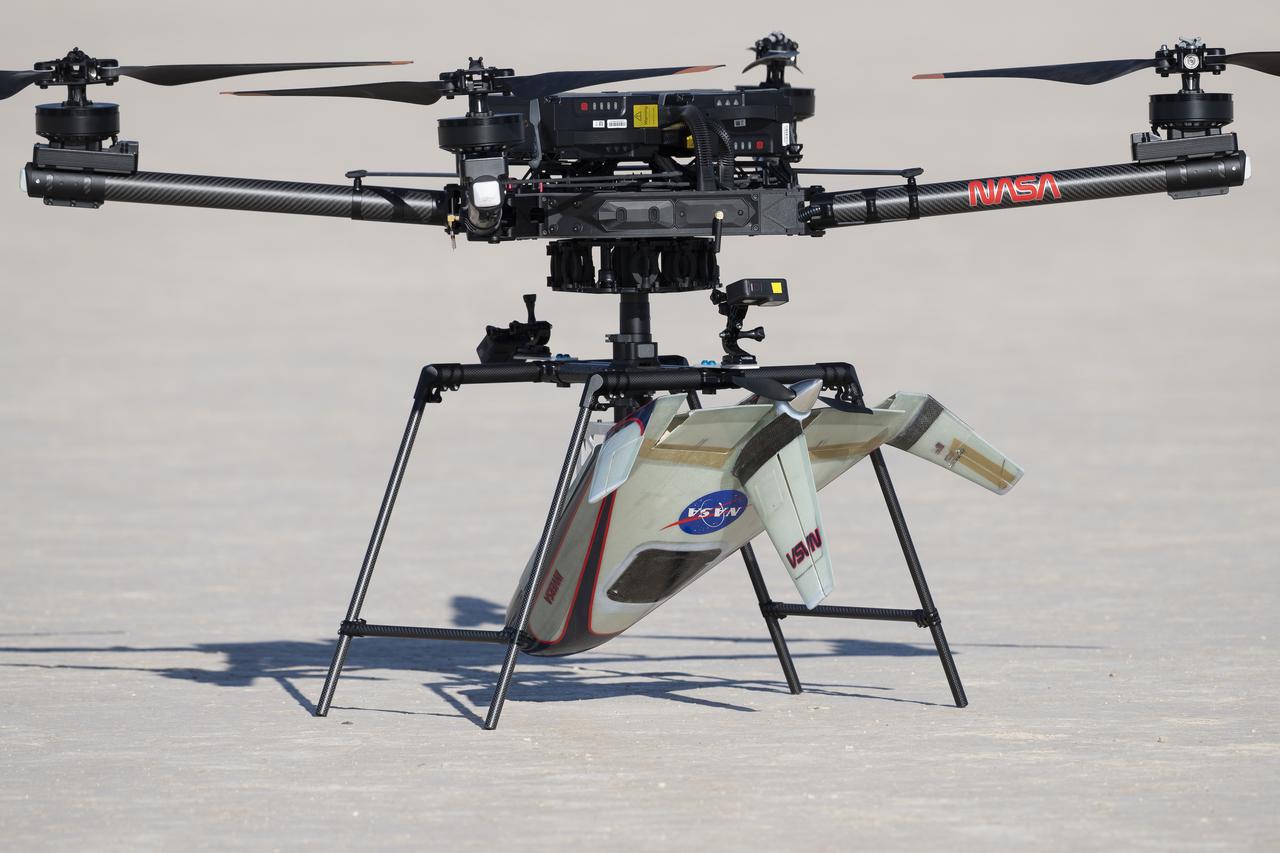
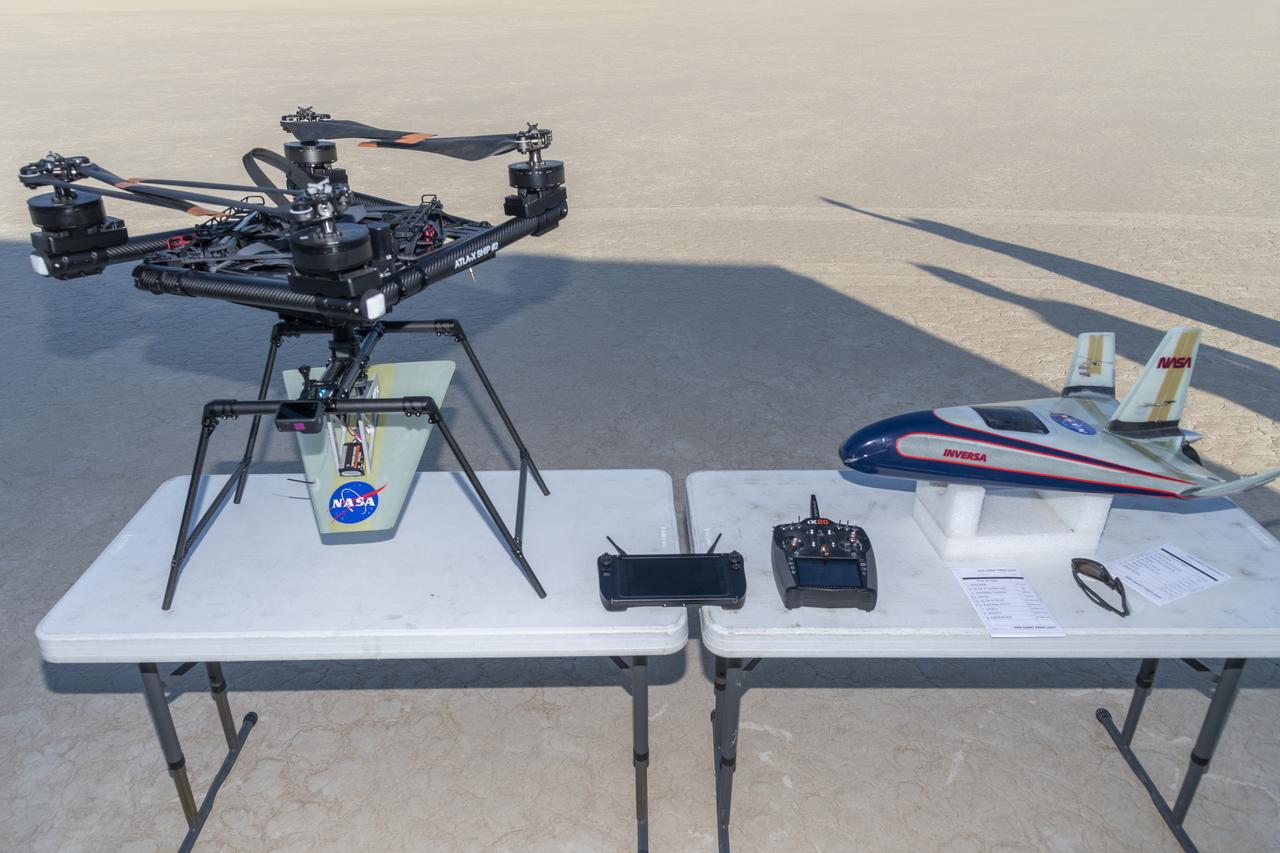
The atmospheric probe model on a stand is prepped for flight and release from a quad rotor remotely piloted aircraft. The probe successfully flew on Oct. 22, 2024, above Rogers Dry Lake, a flight area adjacent to NASA’s Armstrong Flight Research Center in Edwards, California. The probe was designed and built at the center. In the background from left are Justin Hall, chief pilot of small, unmanned aircraft systems; Justin Link, small unmanned aircraft systems pilot; communications writer Jay Levine; and John Bodylski, atmospheric probe principal investigator.
Atmospheric Probe Shows Promise in Test Flight
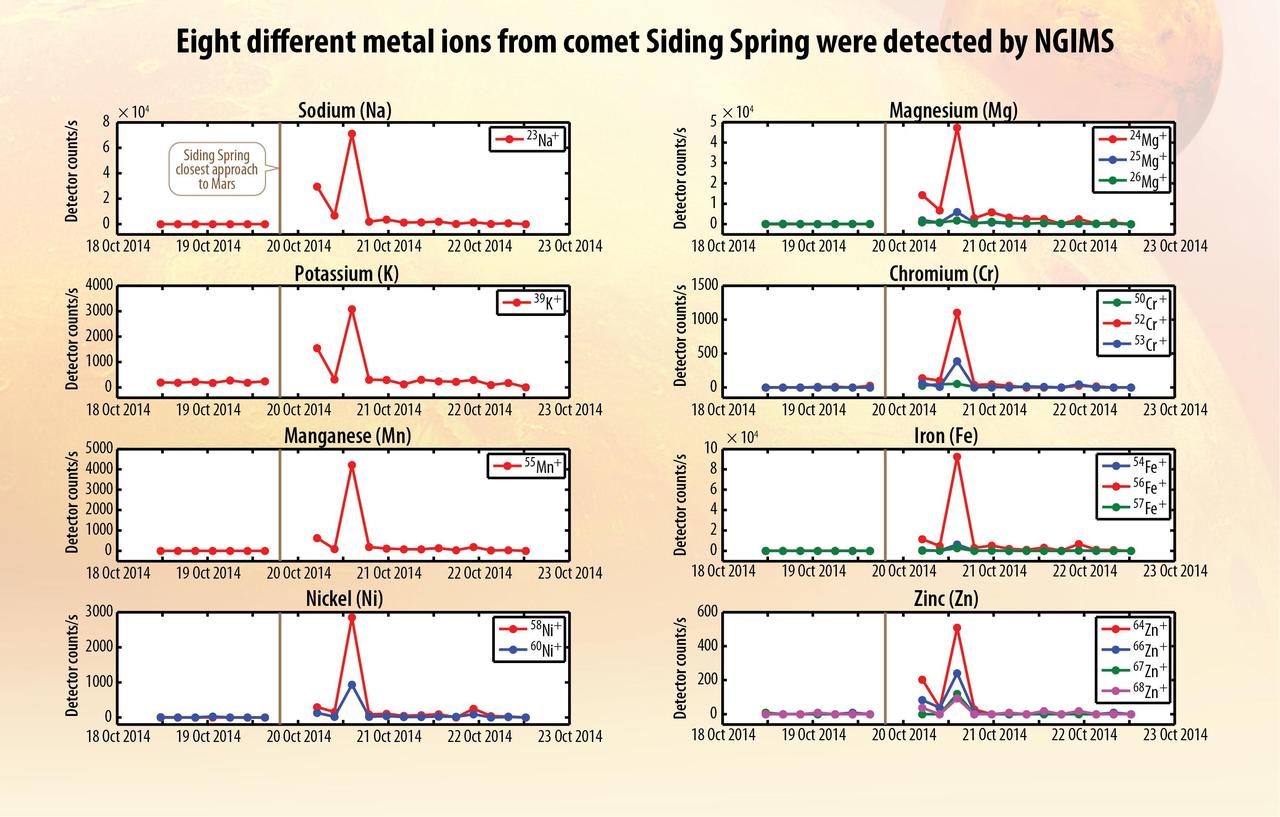
These eight graphs present data from the Neutral Gas and Ion Mass Spectrometer on NASA MAVEN orbiter identifying ions of different metals added to the Martian atmosphere shortly after comet C/2013 A1 Siding Spring sped close to Mars.
Ions of Eight Metals from Comet Dust Detected in Mars Atmosphere
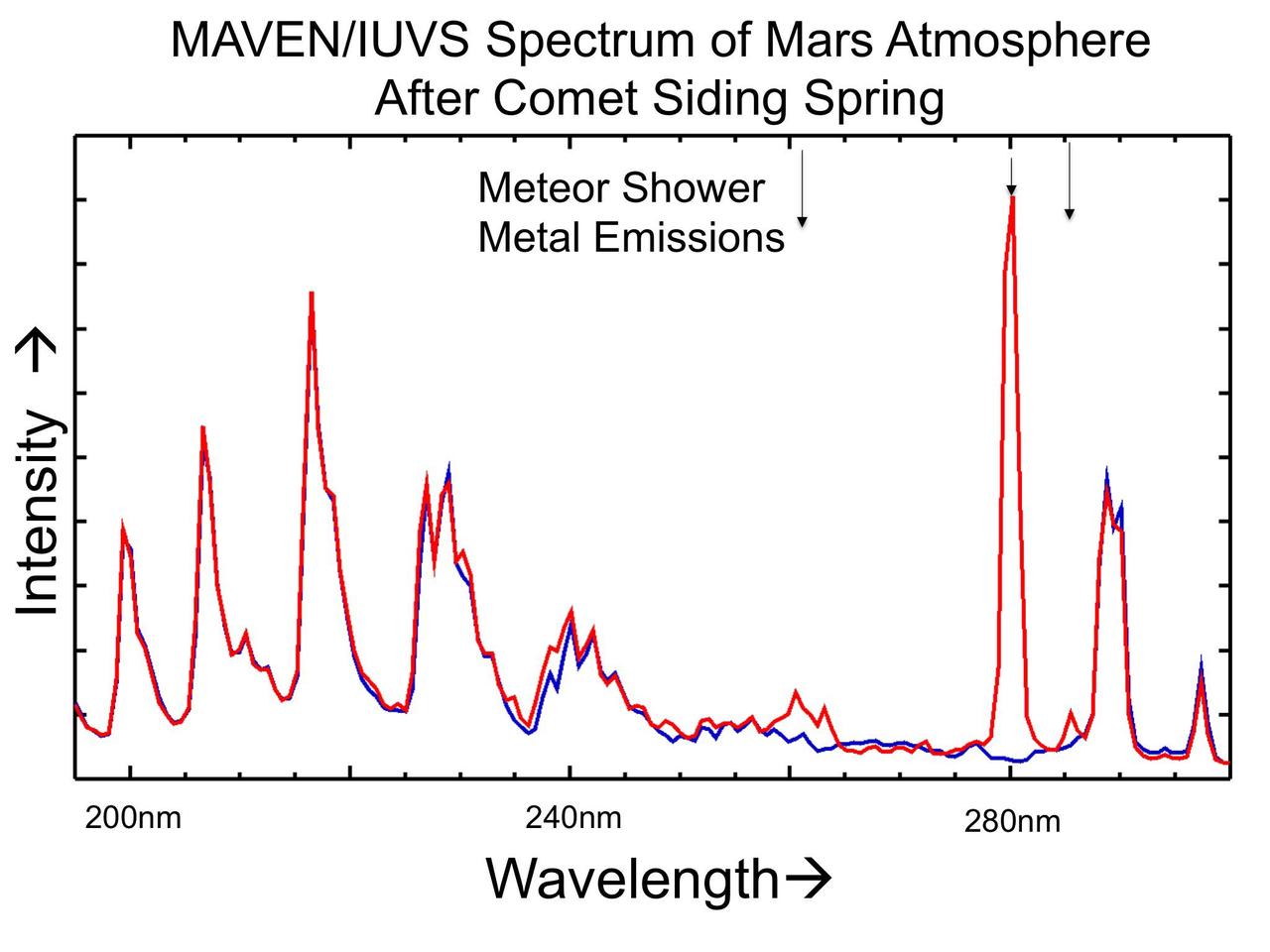
The places where the red line on this graph extends higher than the blue line show detection of metals added to the Martian atmosphere from dust particles released by a passing comet on Oct. 19, 2014. The graphed data are from NASA MAVEN spacecraft.
Comet Meteor Shower Put Magnesium and Iron into Martian Atmosphere
True-color (left) and false-color (right) mosaics of Jupiter's northern hemisphere between 10 and 50 degrees latitude. Jupiter's atmospheric motions are controlled by alternating eastward and westward bands of air between Jupiter's equator and polar regions. The direction and speed of these bands influences the color and texture of the clouds seen in this mosaic. The high and thin clouds are represented by light blue, deep clouds are reddish, and high and thick clouds are white. A high haze overlying a clear, deep atmosphere is represented by dark purple. This image was taken by NASA's Galileo spacecraft on April 3, 1997 at a distance of 1.4 million kilometers (.86 million miles).   http://photojournal.jpl.nasa.gov/catalog/PIA03000
Atmospheric Motion in Jupiter Northern Hemisphere
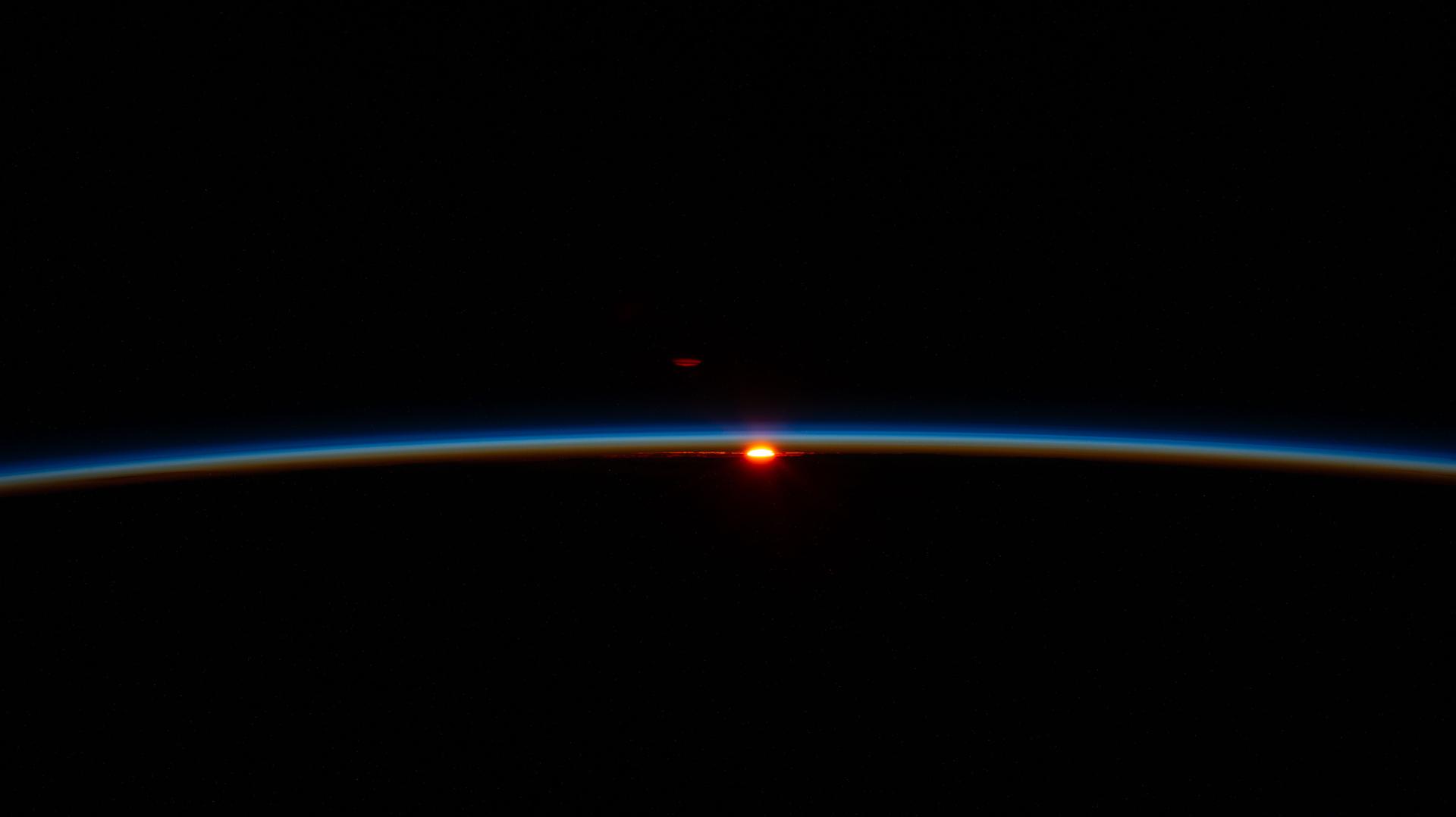
Earth atmosphere observation taken by the Expedition 35 crew aboard the ISS. The colors roughly denote the layers of the atmosphere (the orange troposphere, the white stratosphere, and the blue mesosphere).
Earth Atmosphere Observations taken by the Expedition 35 Crew
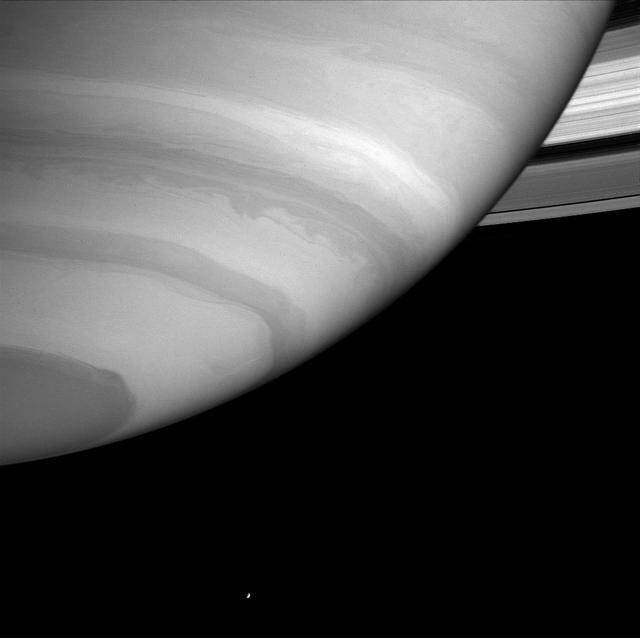
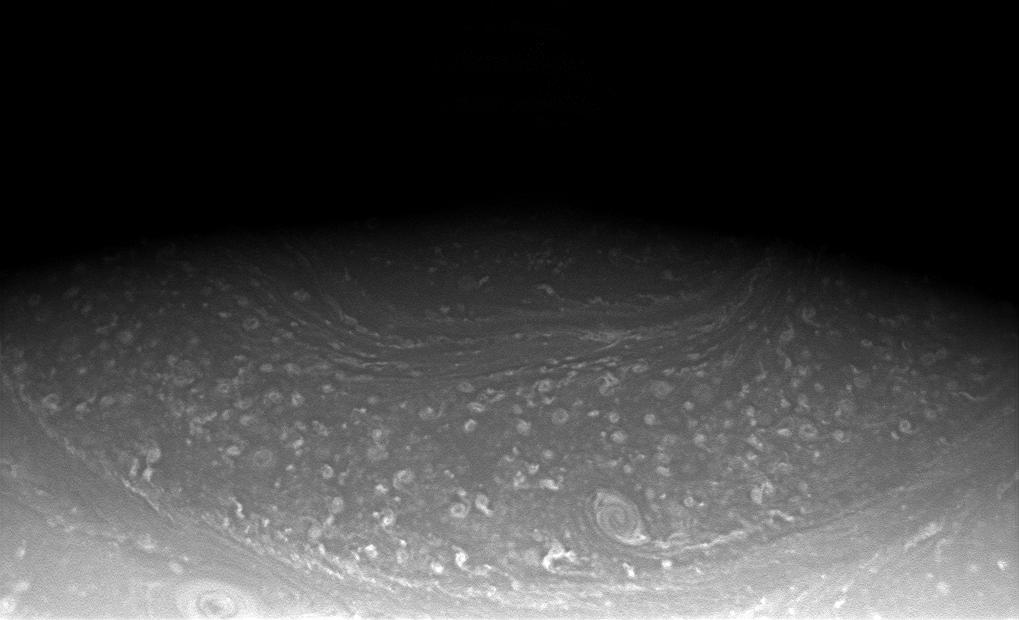
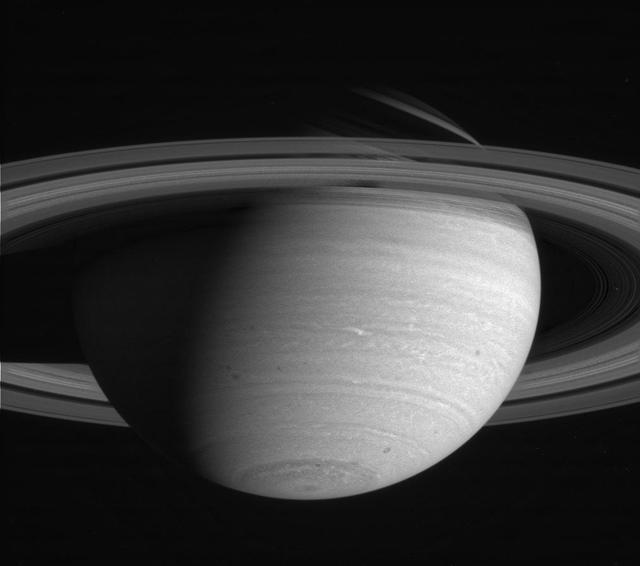
This stunning image from NASA Cassini spacecraft shows that Saturn atmosphere is an active and dynamic place, full of storms and powerful winds.
Energetic Atmosphere
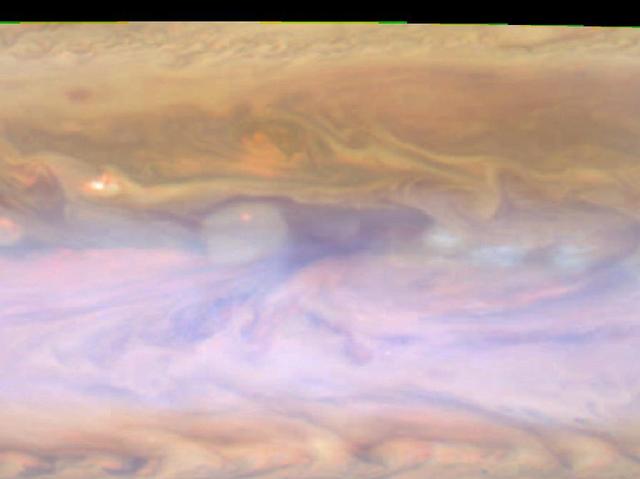
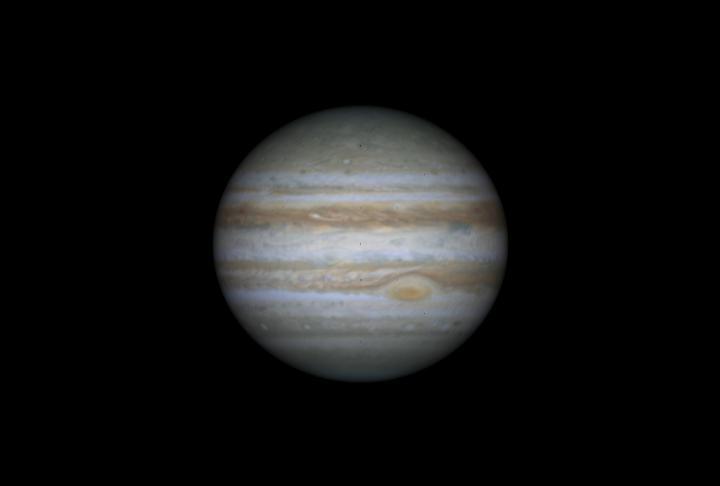
The dark hot spot in this false-color image from NASA Cassini spacecraft is a window deep into Jupiter atmosphere. All around it are layers of higher clouds, with colors indicating which layer of the atmosphere the clouds are in.
Peering Deep into Jupiter Atmosphere
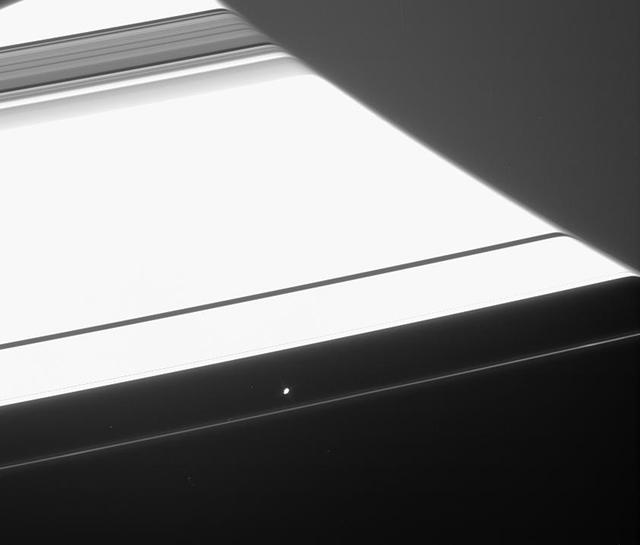
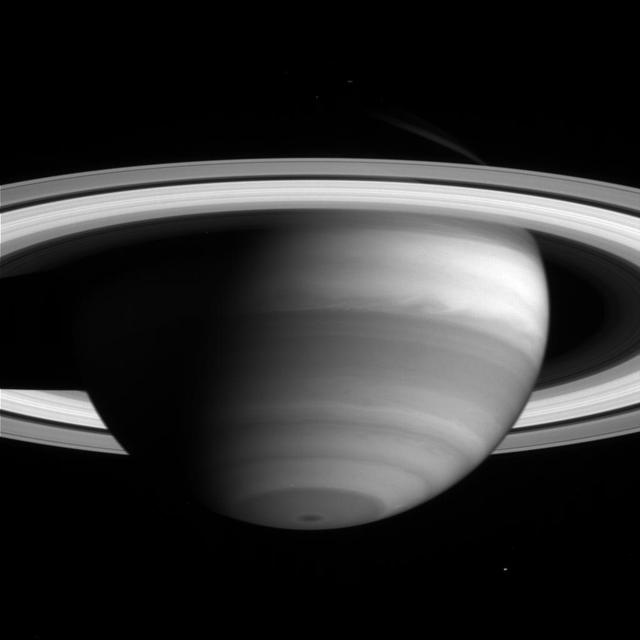
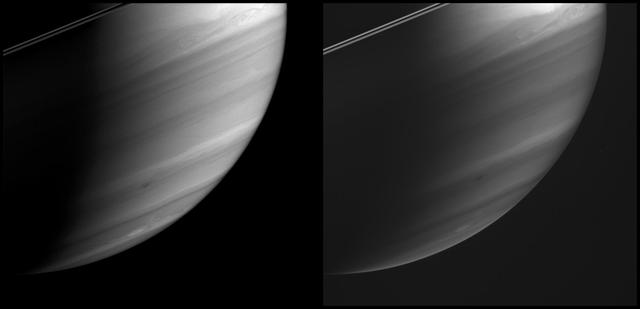
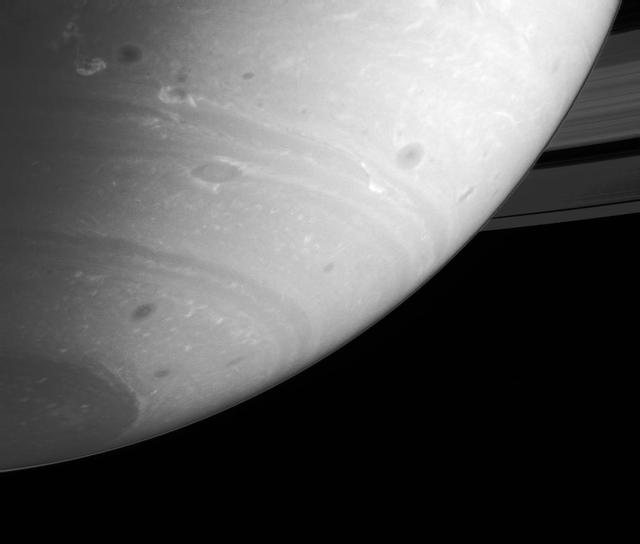
NASA Cassini spacecraft looks toward the limb of Saturn and, on the right of this image, views part of the rings through the planet atmosphere. Saturn atmosphere can distort the view of the rings from some angles.
Rings Through Atmosphere
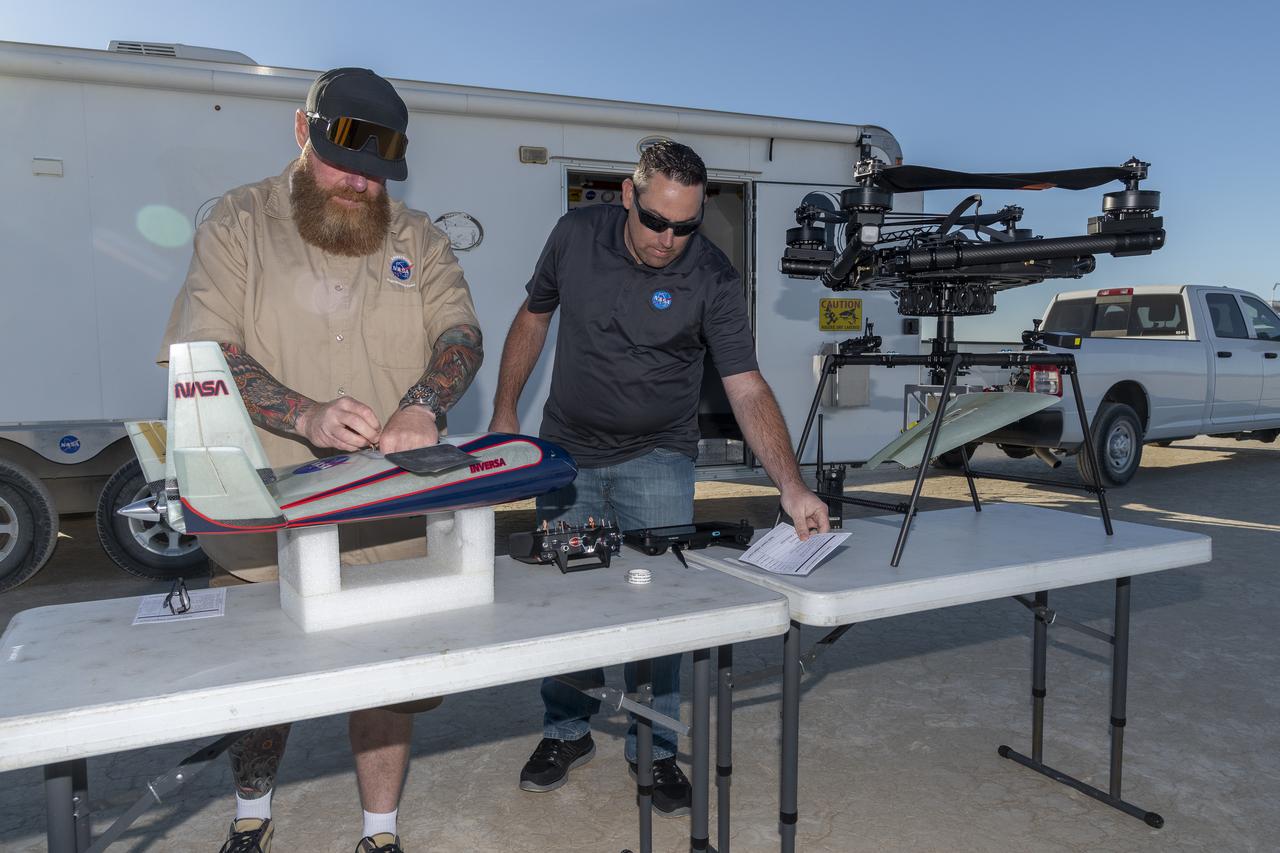
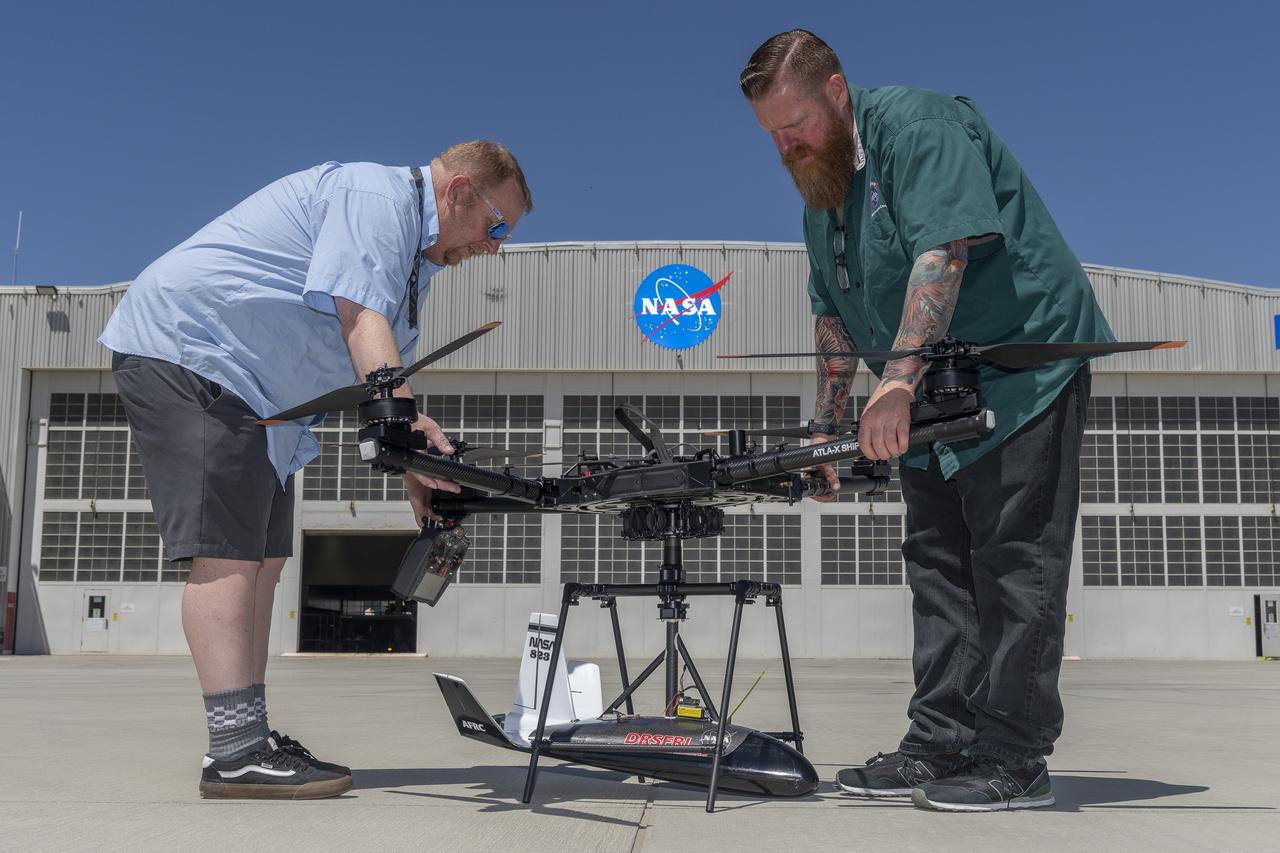
Justin Hall, chief pilot of small unmanned aircraft systems, prepares the atmospheric probe for flight above Rogers Dry Lake, a flight area adjacent NASA’s Armstrong Flight Research Center in Edwards, California. At right, Justin Link, small unmanned aircraft systems pilot, assists. The probe, designed and built at the center, flew after release from a quad rotor remotely piloted aircraft on Oct. 22, 2024.
Atmospheric Probe Shows Promise in Test Flight
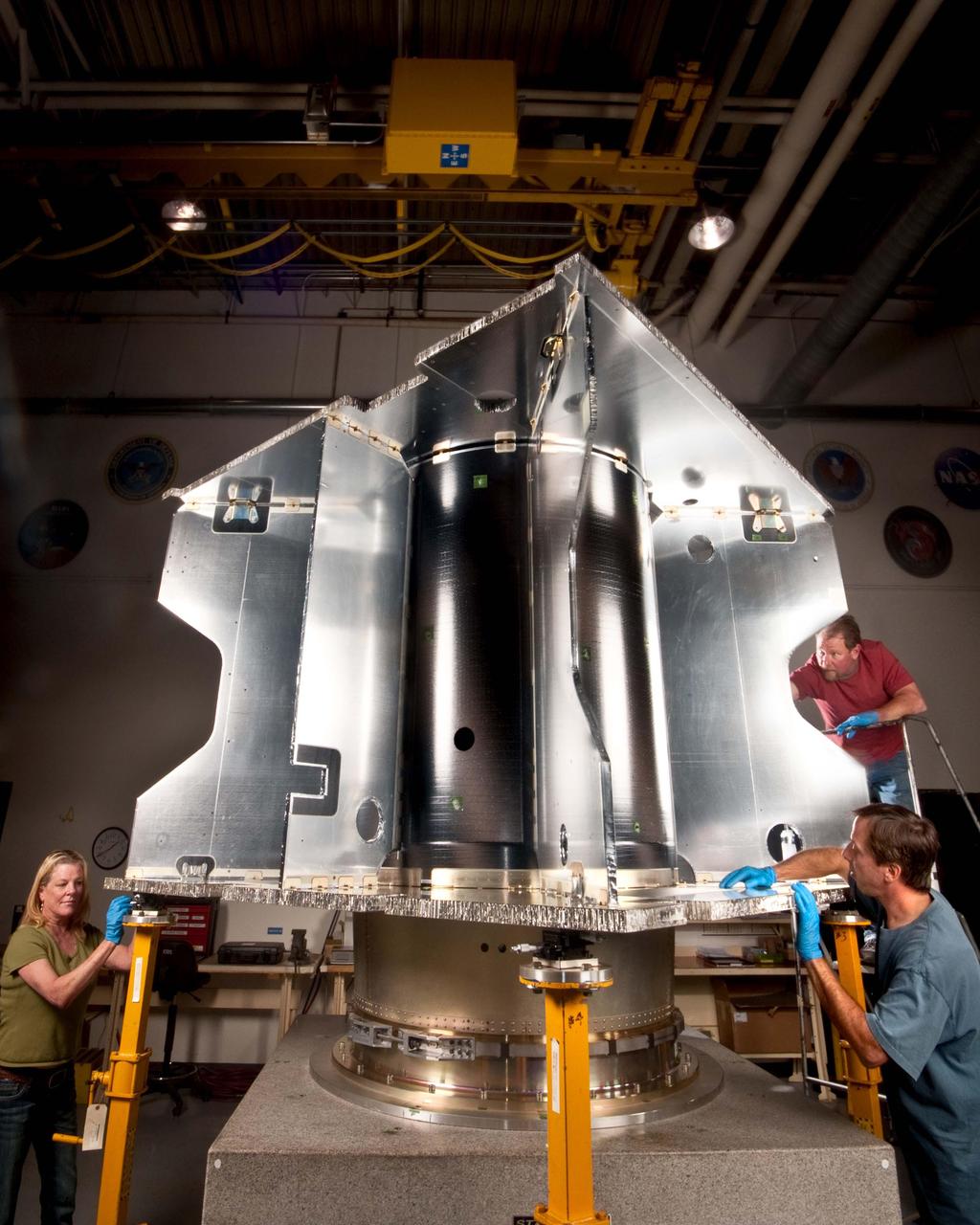
NASA Mars Atmosphere and Volatile EvolutioN MAVEN spacecraft is scheduled to launch in November 2013 and will be the first mission devoted to understanding the Martian upper atmosphere.
Primary Structure for MAVEN Spacecraft
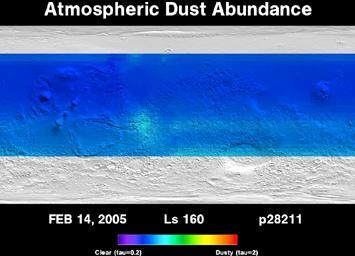
Three Years of Monitoring Mars Atmospheric Dust Animation
Using Methane Absorption to Probe Jupiter Atmosphere
Hubble Views Ancient Storm in the Atmosphere of Jupiter - Montage
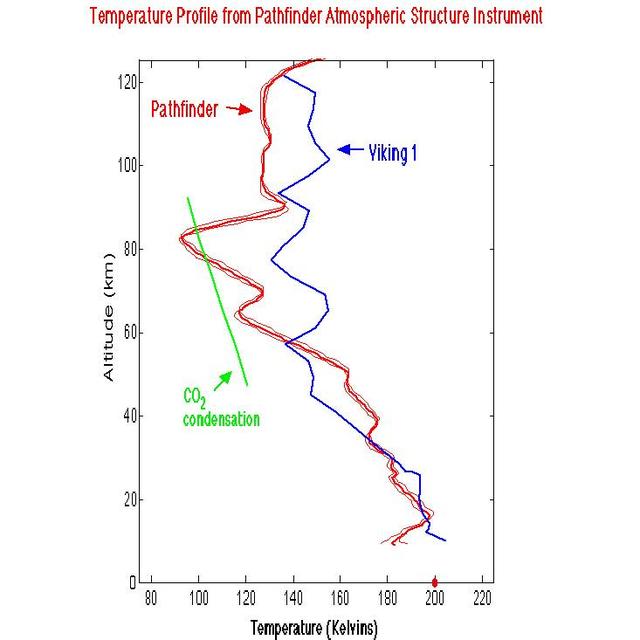
Temperature Profile from Pathfinder Atmospheric Structure Instrument
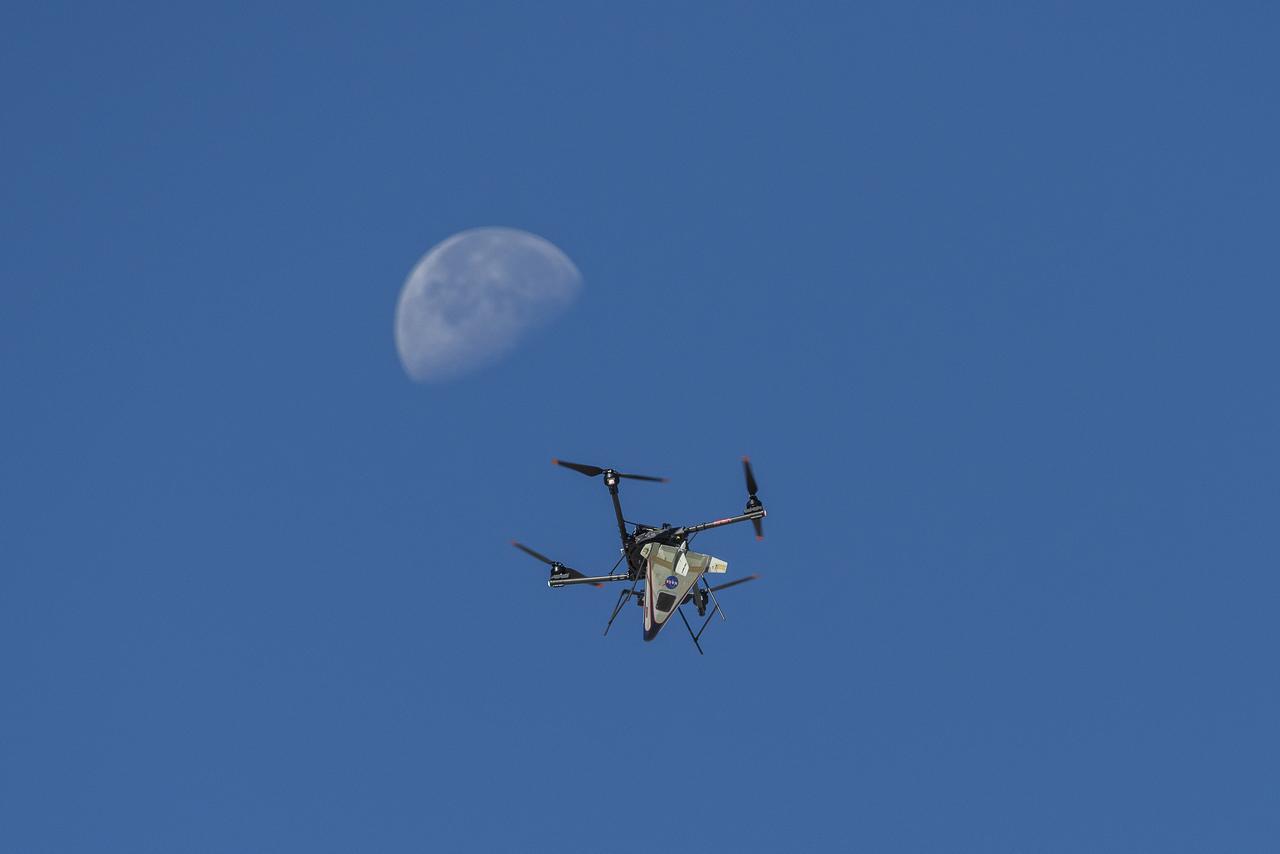
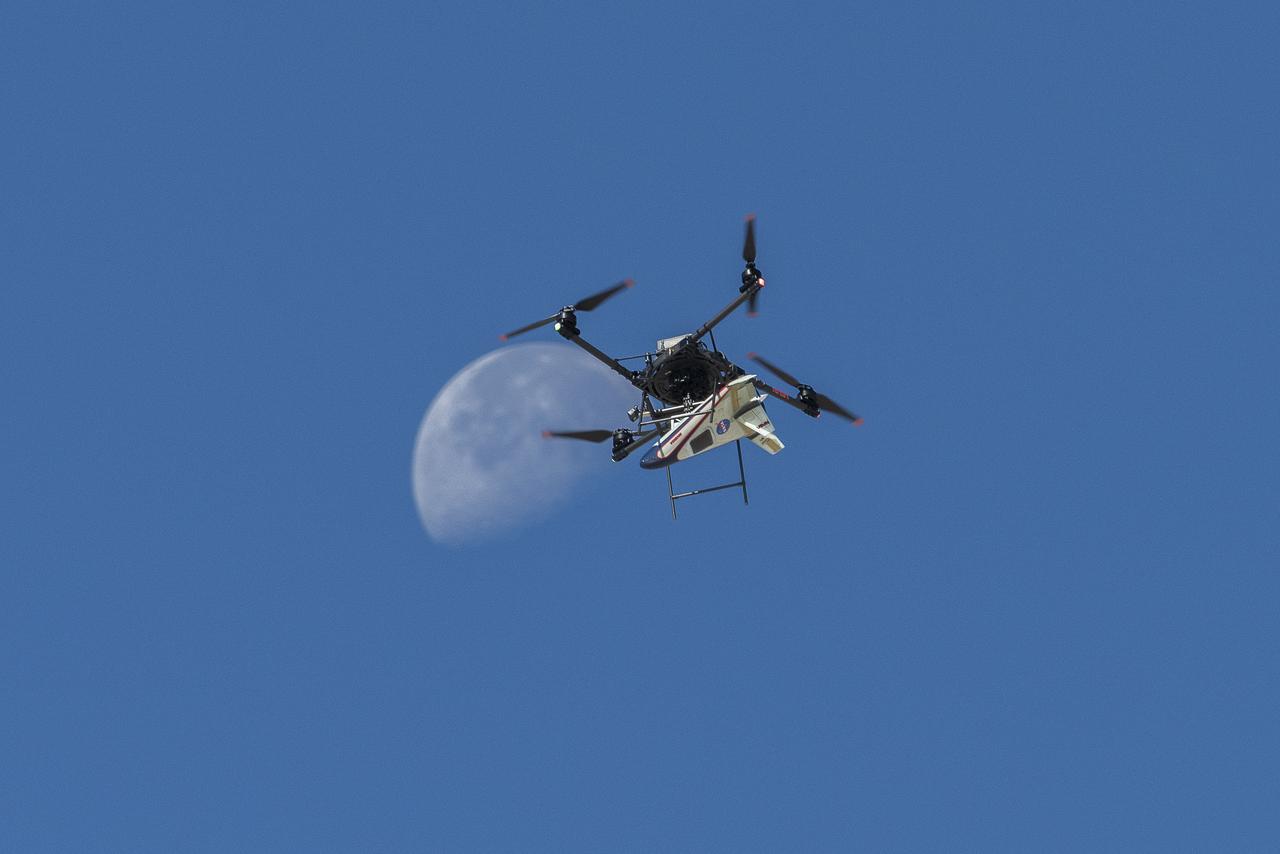
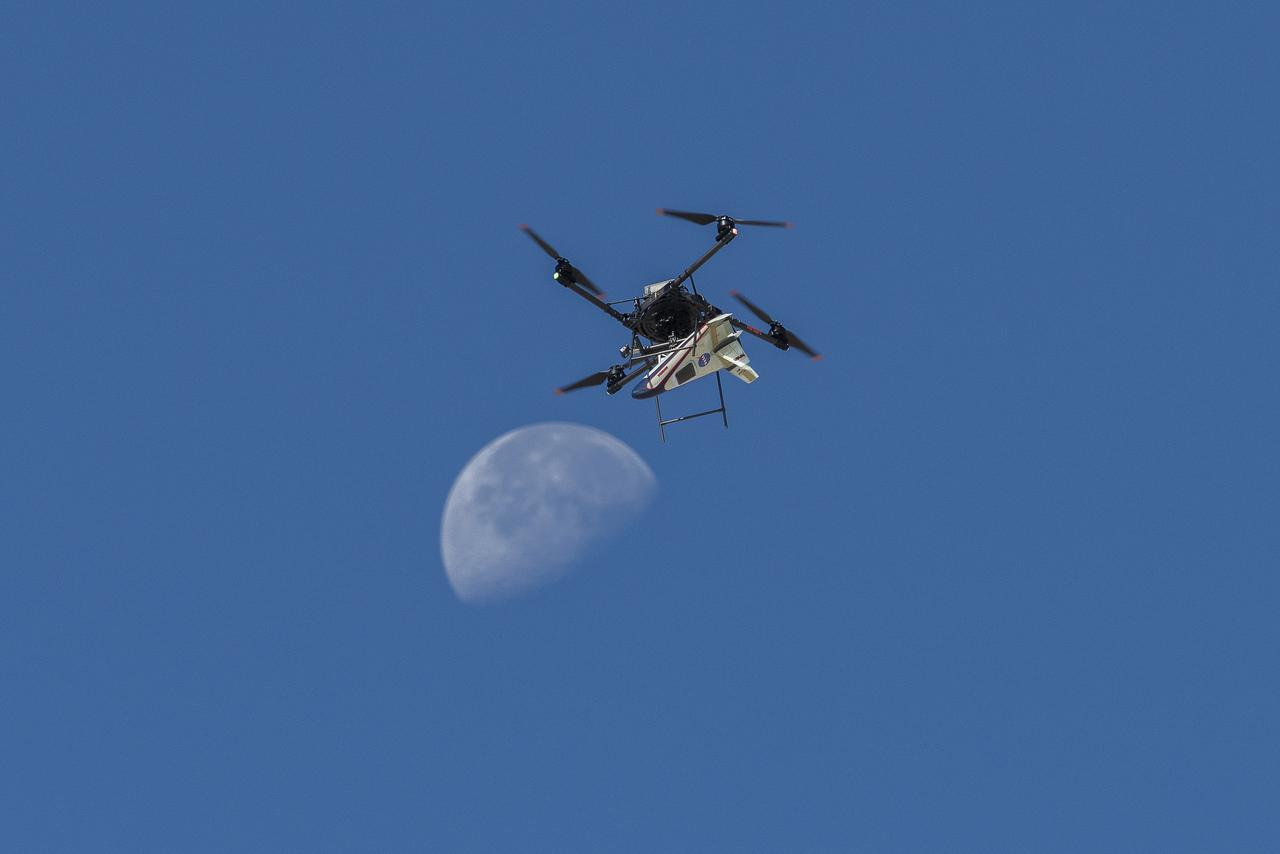
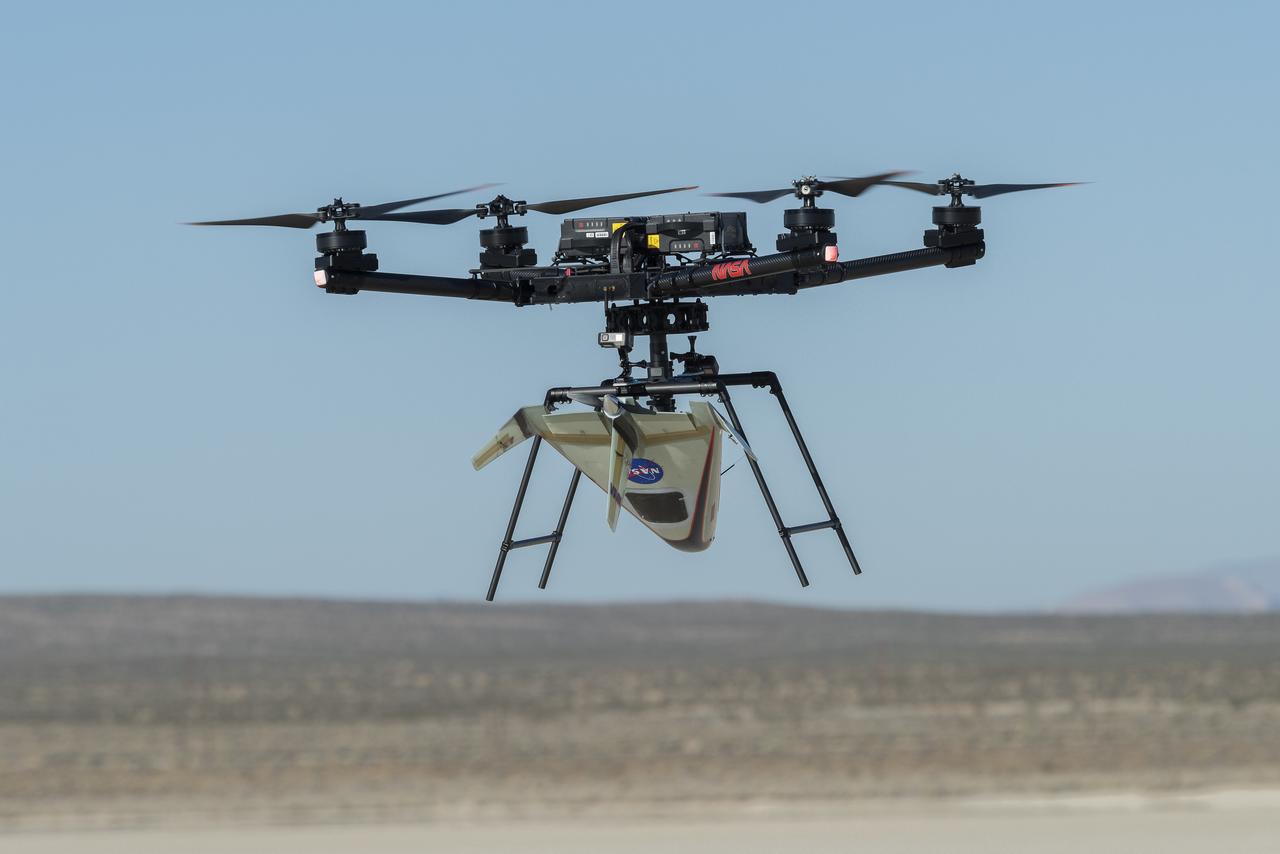
An atmospheric probe model attached upside down to a quad rotor remotely piloted aircraft ascends with the Moon visible on Oct. 22, 2024. The quad rotor aircraft released the probe above Rogers Dry Lake, a flight area adjacent NASA’s Armstrong Flight Research Center in Edwards, California. The probe was designed and built at the center.
Atmospheric Probe Shows Promise in Test Flight
A quad rotor remotely piloted aircraft releases the atmospheric probe model above Rogers Dry Lake, a flight area adjacent NASA’s Armstrong Flight Research Center in Edwards, California, on Oct. 22, 2024. The probe was designed and built at the center.
Atmospheric Probe Shows Promise in Test Flight
An atmospheric probe model attached upside down to a quad rotor remotely piloted aircraft ascends with the Moon visible on Oct. 22, 2024. The quad rotor aircraft released the probe above Rogers Dry Lake, a flight area adjacent NASA’s Armstrong Flight Research Center in Edwards, California. The probe was designed and built at the center.
Atmospheric Probe Shows Promise in Test Flight
An atmospheric probe model attached upside down to a quad rotor remotely piloted aircraft ascends with the Moon visible on Oct. 22, 2024. The quad rotor aircraft released the probe above Rogers Dry Lake, a flight area adjacent NASA’s Armstrong Flight Research Center in Edwards, California. The probe was designed and built at the center.
Atmospheric Probe Shows Promise in Test Flight
An atmospheric probe model attached upside down to a quad rotor remotely piloted aircraft ascends with the Moon visible on Oct. 22, 2024. The quad rotor aircraft released the probe above Rogers Dry Lake, a flight area adjacent NASA’s Armstrong Flight Research Center in Edwards, California. The probe was designed and built at the center.
Atmospheric Probe Shows Promise in Test Flight
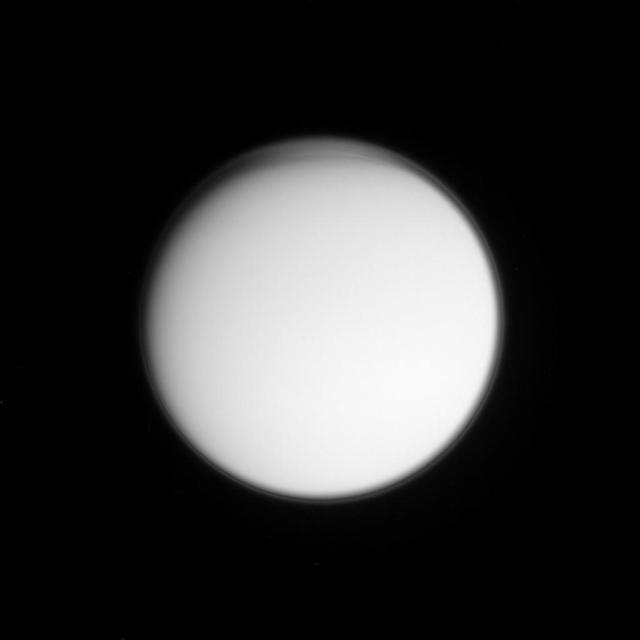
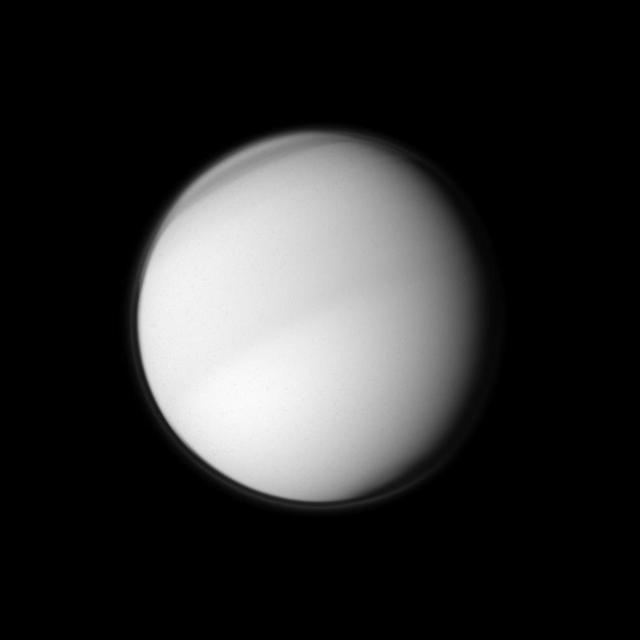
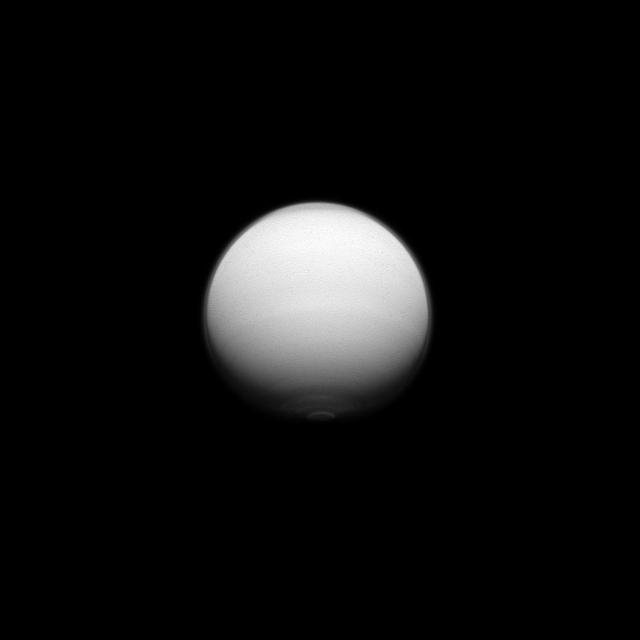
NASA Cassini spacecraft examines the characteristics of Titan atmosphere as it peers at Saturn largest moon using a filter sensitive to visible violet light.
Atmospheric Aspects
A latitude-longitude grid superimposed on this false color image obtained by NASA Voyager 2 in 1986 shows that Uranus atmosphere circulates in the same direction as the planet rotates.
Uranus Atmosphere
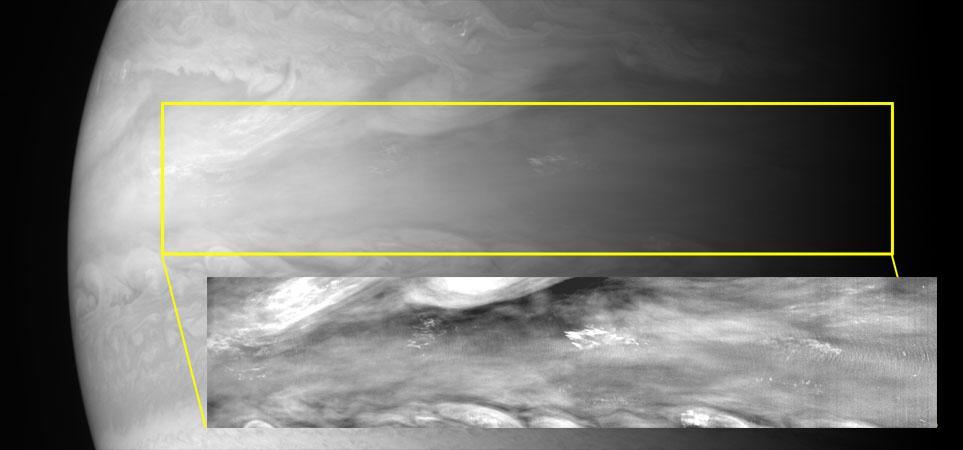
With its Multispectral Visible Imaging Camera MVIC, half of the Ralph instrument, New Horizons captured several pictures of mesoscale gravity waves in Jupiter equatorial atmosphere.
Atmospheric Waves
The Cassini spacecraft looks down on Titan north pole and unveils the  moon upper-most atmospheric hazes, creating the appearance of a halo  around Saturn largest moon.
Atmospheric Halo
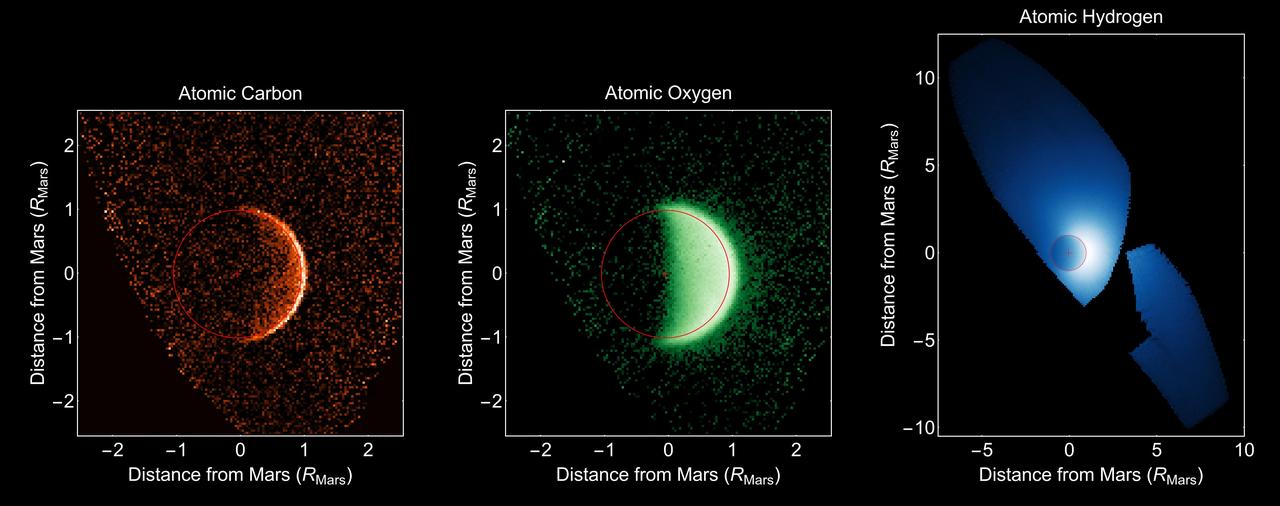
Three views of an escaping atmosphere around Mars, obtained by NASA MAVEN Imaging Ultraviolet Spectrograph, are shown here.
Ultraviolet Views of Martian Atmosphere
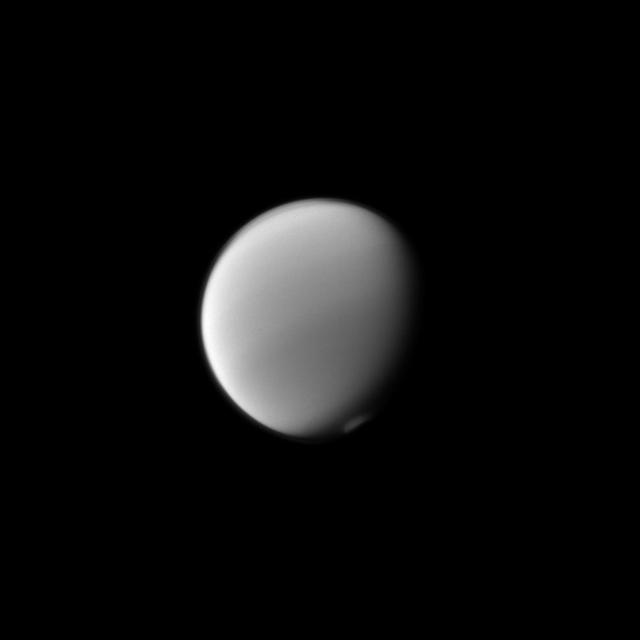
Titan atmosphere puts on a display with the detached haze to the north top of image and the polar vortex to the south as seen by NASA Cassini spacecraft.
Titan Polar Atmosphere
This graphic compares the atmospheric circulations of Earth and Jupiter. Earth contains one Ferrel cell (a mid-latitudinal cell where air flows poleward and eastward at the surface, and equatorward and westward at higher altitudes). On Jupiter, the circulation cells are depicted in aqua, and underlying jets streams in the pink region. The jet streams are characteristic for all depths associated with the cells.  Jupiter has eight Ferrel-like cells in the north and eight in the south, due to its large size and fast rotation. Each of these cells on Jupiter is at least 30 times larger than the equivalent cell on Earth. The main difference between the Jovian and terrestrial cells is that on Earth, the cell ends at the surface, while on gaseous Jupiter, it penetrates into the deeper layers of the atmosphere. Due to measuring limitations, it has yet to be determined how deep these cells extend.  https://photojournal.jpl.nasa.gov/catalog/PIA24965
Atmospheric Circulation Cells on Earth and Jupiter
Astronomers are using the NASA/ESA Hubble Space Telescope to study auroras — stunning light shows in a planet’s atmosphere — on the poles of the largest planet in the solar system, Jupiter. This observation program is supported by measurements made by NASA’s Juno spacecraft, currently on its way to Jupiter.  Jupiter, the largest planet in the solar system, is best known for its colorful storms, the most famous being the Great Red Spot. Now astronomers have focused on another beautiful feature of the planet, using Hubble's ultraviolet capabilities.  The extraordinary vivid glows shown in the new observations are known as auroras. They are created when high-energy particles enter a planet’s atmosphere near its magnetic poles and collide with atoms of gas. As well as producing beautiful images, this program aims to determine how various components of Jupiter’s auroras respond to different conditions in the solar wind, a stream of charged particles ejected from the sun.  This observation program is perfectly timed as NASA’s Juno spacecraft is currently in the solar wind near Jupiter and will enter the orbit of the planet in early July 2016. While Hubble is observing and measuring the auroras on Jupiter, Juno is measuring the properties of the solar wind itself; a perfect collaboration between a telescope and a space probe.  “These auroras are very dramatic and among the most active I have ever seen”, said Jonathan Nichols from the University of Leicester, U.K., and principal investigator of the study. “It almost seems as if Jupiter is throwing a firework party for the imminent arrival of Juno.” Read more: <a href="http://go.nasa.gov/294QswK" rel="nofollow">go.nasa.gov/294QswK</a>  Credits: NASA, ESA, and J. Nichols (University of Leicester)
Hubble Captures Vivid Auroras in Jupiter’s Atmosphere
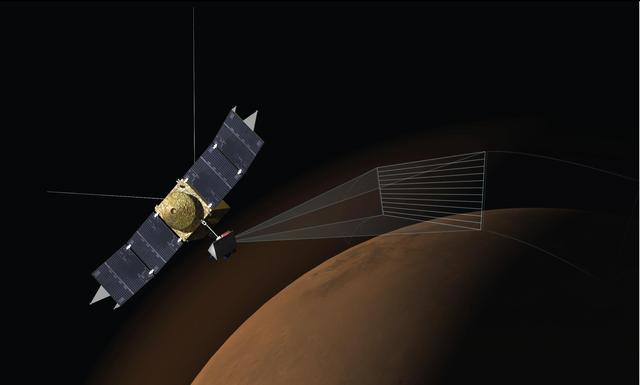
This artist concept depicts the Imaging Ultraviolet Spectrograph IUVS on NASA MAVEN spacecraft scanning the upper atmosphere of Mars. IUVS uses limb scans to map the chemical makeup and vertical structure across Mars upper atmosphere.
Artist Concept of MAVEN Imaging Ultraviolet Spectrograph at Work
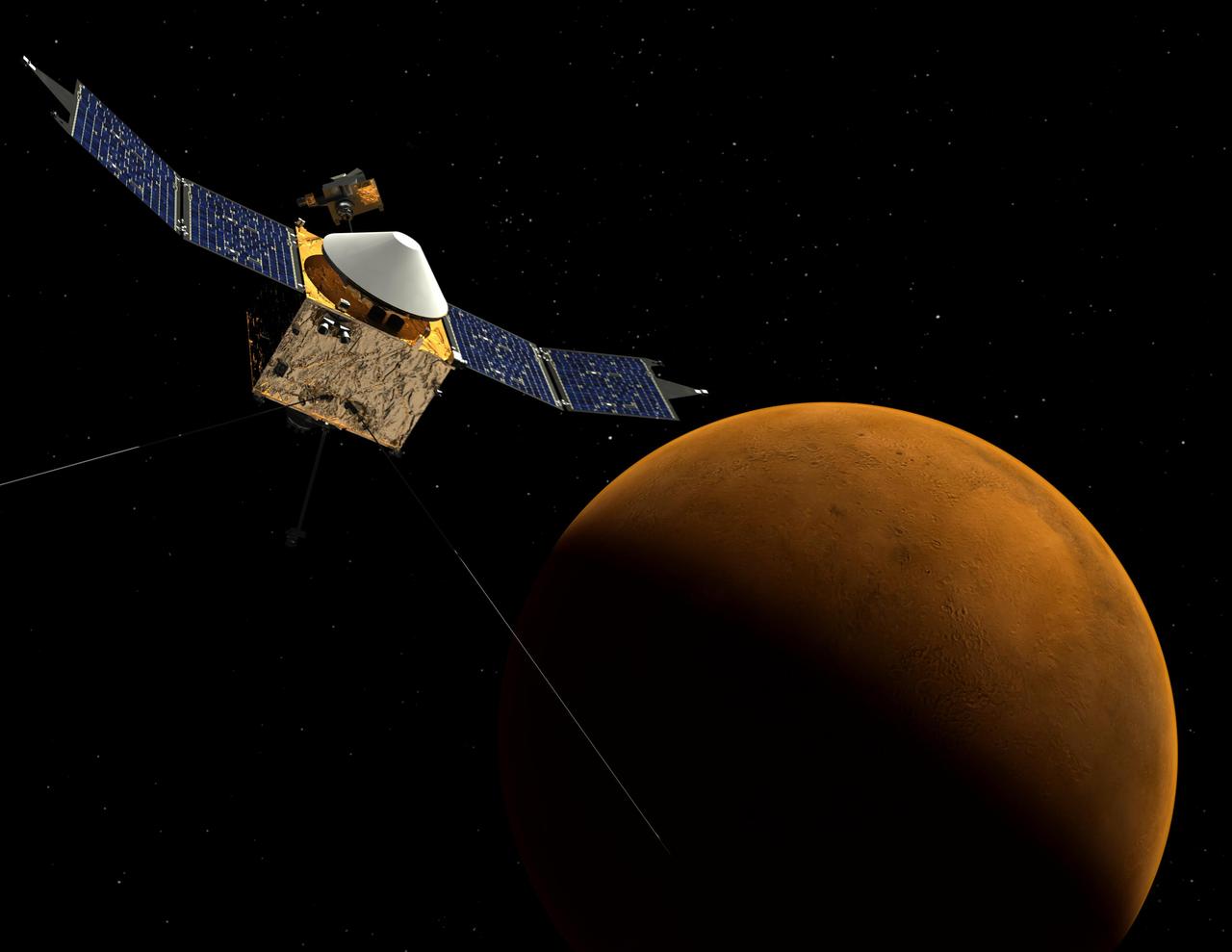
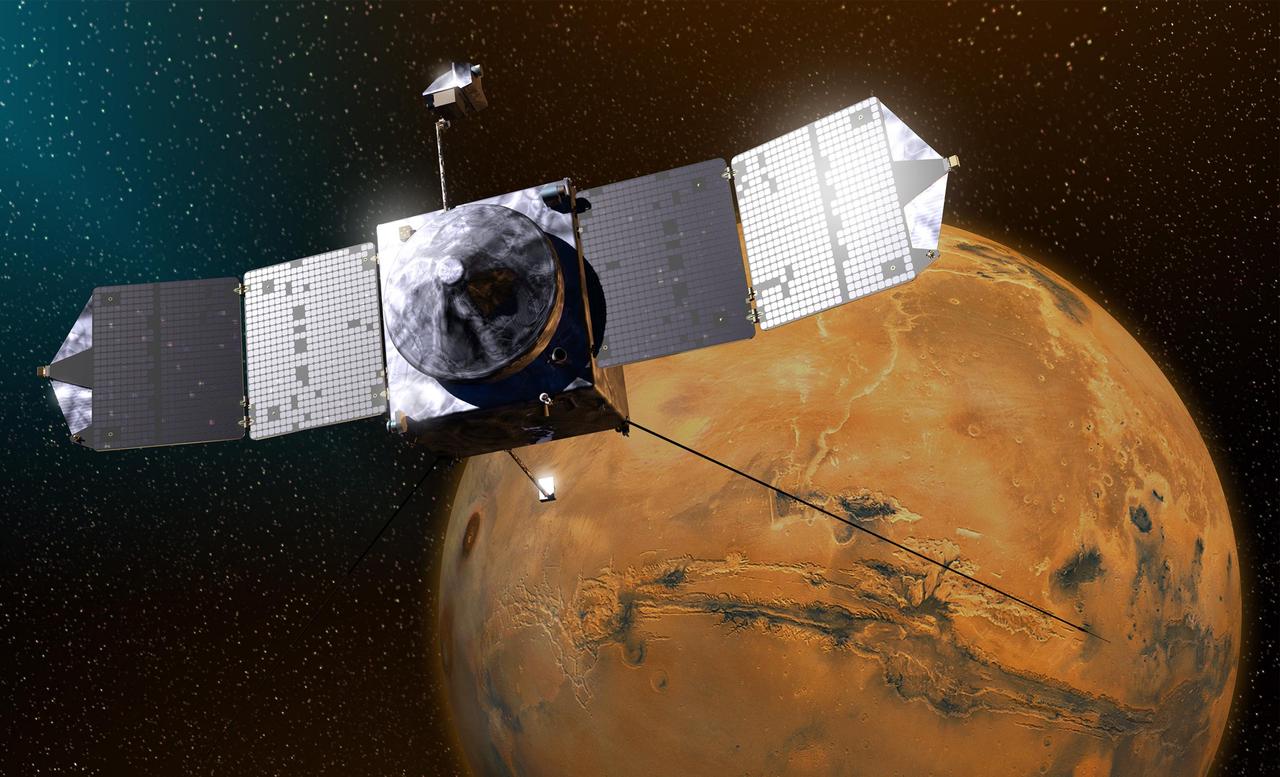
This artist concept depicts NASA Mars Atmosphere and Volatile EvolutioN MAVEN spacecraft near Mars. MAVEN is in development for launch in 2013 and will be the first mission devoted to understanding the Martian upper atmosphere.
MAVEN at Mars Artist Concept
Labeled line drawing entitled GALILEO PROBE identifies the deceleration module aft cover, descent module, and deceleration module aeroshell configurations and dimensions prior to and during entry into Jupiter's atmosphere.
Labeled line drawing of Galileo spacecraft's atmospheric probe
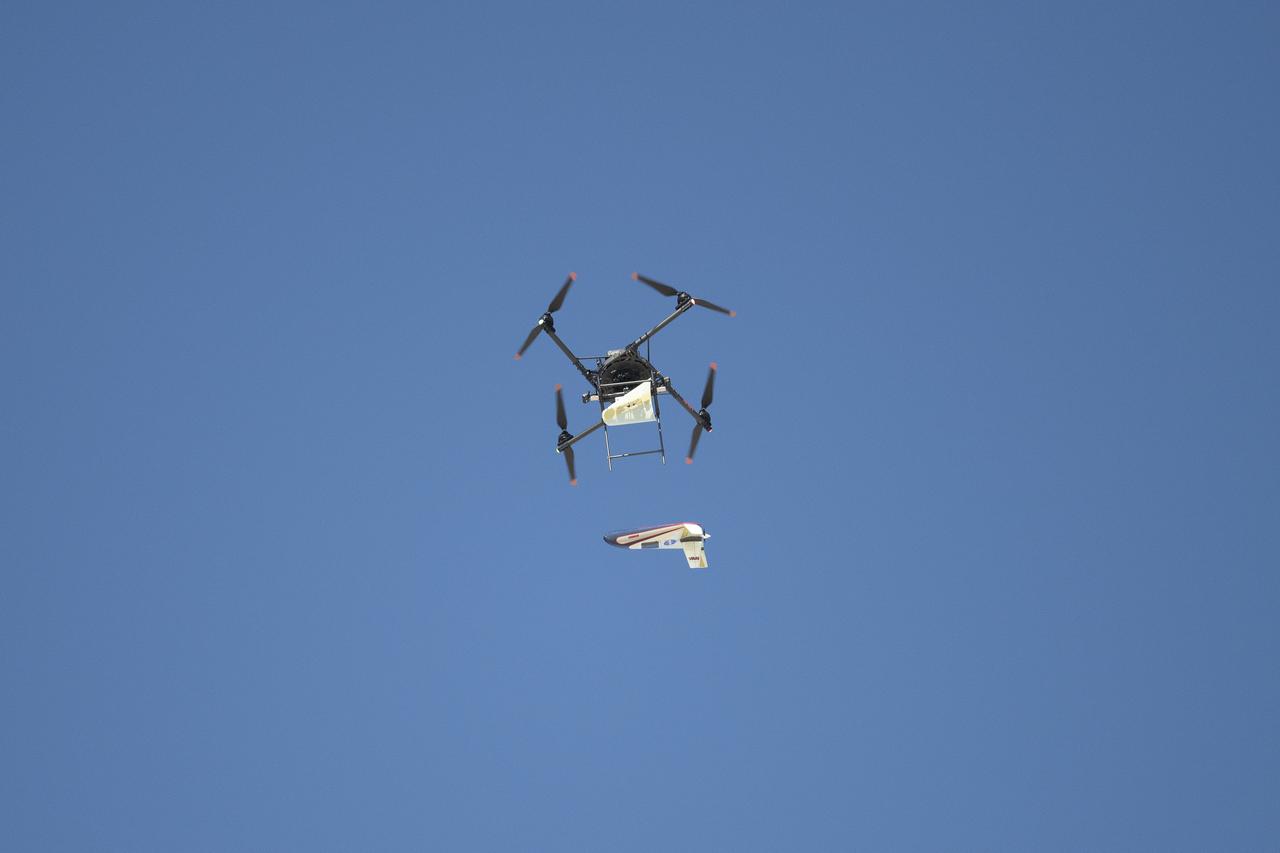
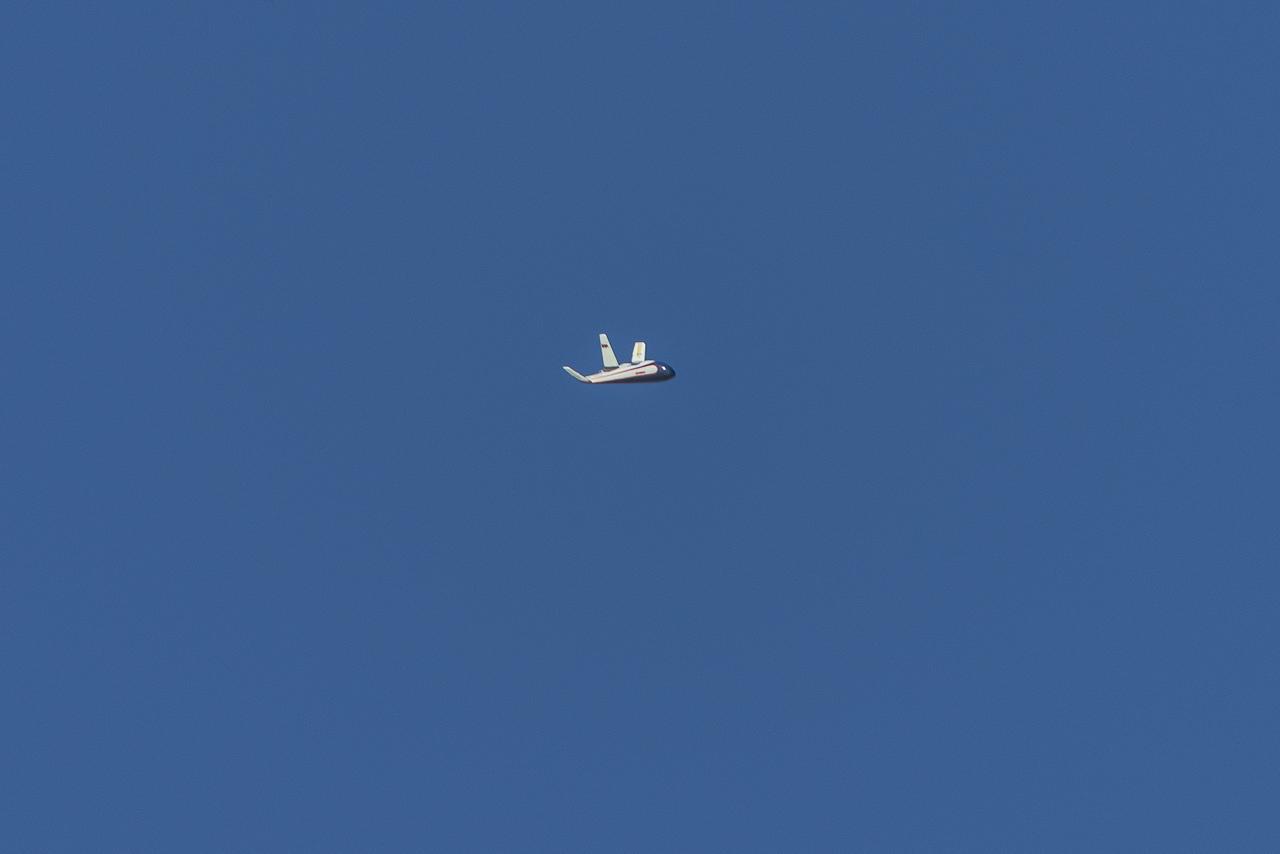
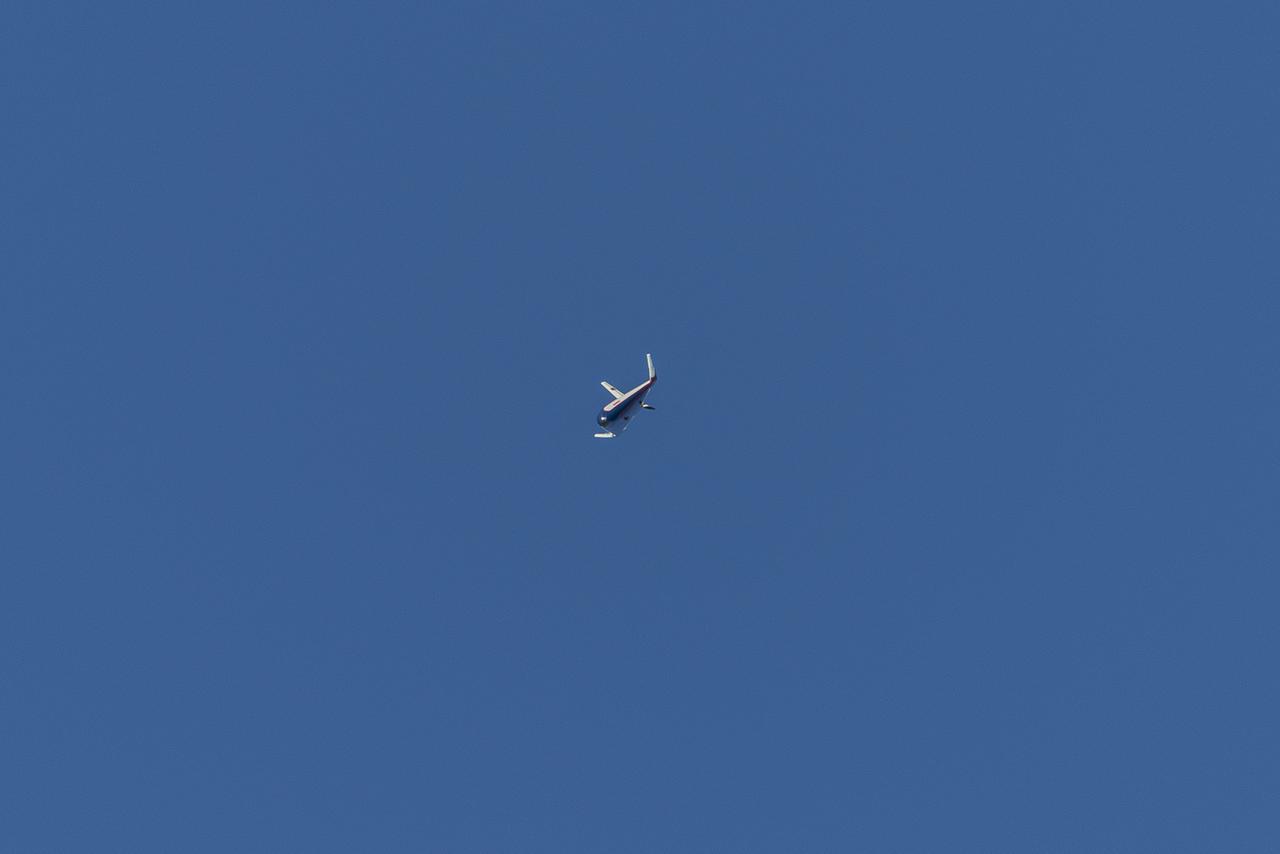
The atmospheric probe, right, flew after release from a quad rotor remotely piloted aircraft, left, on Oct. 22, 2024, above Rogers Dry Lake, a flight area adjacent to NASA’s Armstrong Flight Research Center in Edwards, California. The probe was designed and built at the center.
Atmospheric Probe Shows Promise in Test Flight
The atmospheric probe model flies free after release from a quad rotor remotely piloted aircraft above Rogers Dry Lake, a flight area adjacent NASA’s Armstrong Flight Research Center in Edwards, California, on Oct. 22, 2024. The probe was designed and built at the center.
Atmospheric Probe Shows Promise in Test Flight
Robert “Red” Jensen and Justin Hall position an atmospheric probe, its host cradle, and the rotorcraft that will air launch the probe at NASA’s Armstrong Flight Research Center in Edwards, California. Jensen and Hall are designers, technicians, and pilots at the center’s Dale Reed Subscale Flight Research Laboratory.
NASA Researchers Prepare Atmospheric Probe Prototype for Flight
The atmospheric probe model flies free after release from a quad rotor remotely piloted aircraft above Rogers Dry Lake, a flight area adjacent NASA’s Armstrong Flight Research Center in Edwards, California, on Oct. 22, 2024. The probe was designed and built at the center.
Atmospheric Probe Shows Promise in Test Flight
An atmospheric probe model attached upside down to a host quad rotor remotely piloted aircraft lifts off on Oct. 22, 2024. The quad rotor aircraft released the probe above Rogers Dry Lake, a flight area adjacent NASA’s Armstrong Flight Research Center in Edwards, California. The probe was designed and built at the center.
Atmospheric Probe Shows Promise in Test Flight
An atmospheric probe model is attached upside down to a quad rotor remotely piloted aircraft on Oct. 22, 2024. The quad rotor aircraft released the probe above Rogers Dry Lake, a flight area adjacent NASA’s Armstrong Flight Research Center in Edwards, California. The probe was designed and built at the center.
Atmospheric Probe Shows Promise in Test Flight
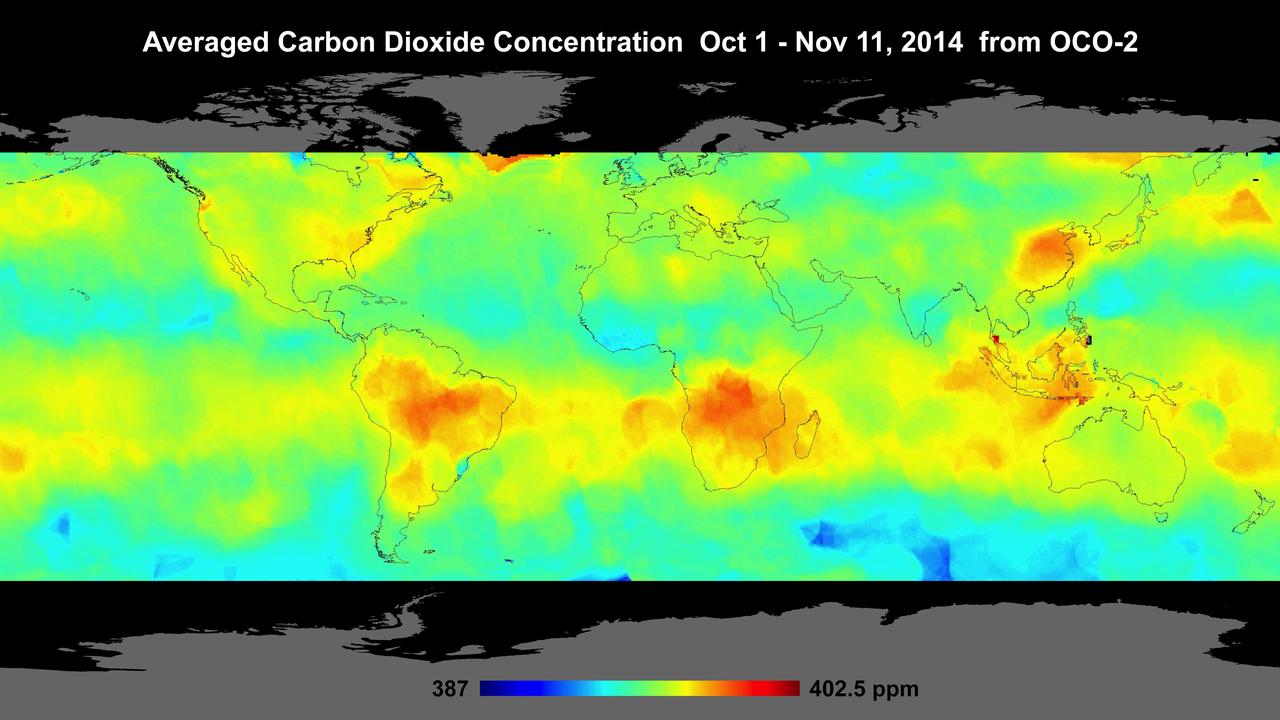
Global atmospheric carbon dioxide concentrations from Oct. 1 through Nov. 11, as recorded by NASA Orbiting Carbon Observatory-2.
Global Atmospheric Carbon Dioxide
Titan shows us its active polar atmosphere with the north polar hood and south polar vortex both on display in this image captured by NASA Cassini spacecraft.
Titan Varied Atmosphere
NASA Cassini spacecraft took narrow-angle images of Jupiter outer atmosphere, showing the giant planet as if it were constantly bathed in sunlight.
3-D Atmosphere Movie
NASA Cassini spacecraft took narrow-angle images of Jupiter outer atmosphere, showing the giant planet as if it were constantly bathed in sunlight.
2-D Atmosphere Movie
NASA Hubble Space Telescope peered deep into Uranus atmosphere to see clear and hazy layers created by a mixture of gases. Using infrared filters, Hubble captured detailed features of three layers of Uranus atmosphere.
Hubble Captures Detailed Image of Uranus Atmosphere
This diagram illustrates how hypothetical helium atmospheres might form. These would be on planets about the mass of Neptune, or smaller, which orbit tightly to their stars, whipping around in just days. They are thought to have cores of water or rock, surrounded by thick atmospheres of gas. Radiation from their nearby stars would boil off hydrogen and helium, but because hydrogen is lighter, more hydrogen would escape. It's also possible that planetary bodies, such as asteroids, could impact the planet, sending hydrogen out into space. Over time, the atmospheres would become enriched in helium.  With less hydrogen in the planets' atmospheres, the concentration of methane and water would go down. Both water and methane consist in part of hydrogen. Eventually, billions of years later (a "Gyr" equals one billion years), the abundances of the water and methane would be greatly reduced. Since hydrogen would not be abundant, the carbon would be forced to pair with oxygen, forming carbon monoxide.  NASA's Spitzer Space Telescope observed a proposed helium planet, GJ 436b, with these traits: it lacks methane, and appears to contain carbon monoxide. Future observations are needed to detect helium itself in the atmospheres of these planets, and confirm this theory.  http://photojournal.jpl.nasa.gov/catalog/PIA19345
How to Make a Helium Atmosphere
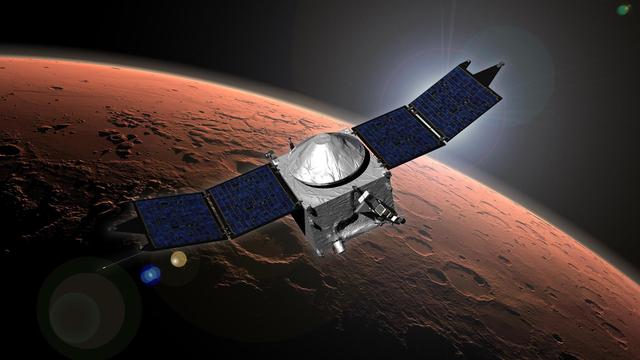
This artist concept depicts NASA Mars Atmosphere and Volatile EvolutioN MAVEN spacecraft near Mars.
MAVEN Artist Concept
This image shows an artist concept of NASA Mars Atmosphere and Volatile Evolution MAVEN mission.
MAVEN Artist Concept
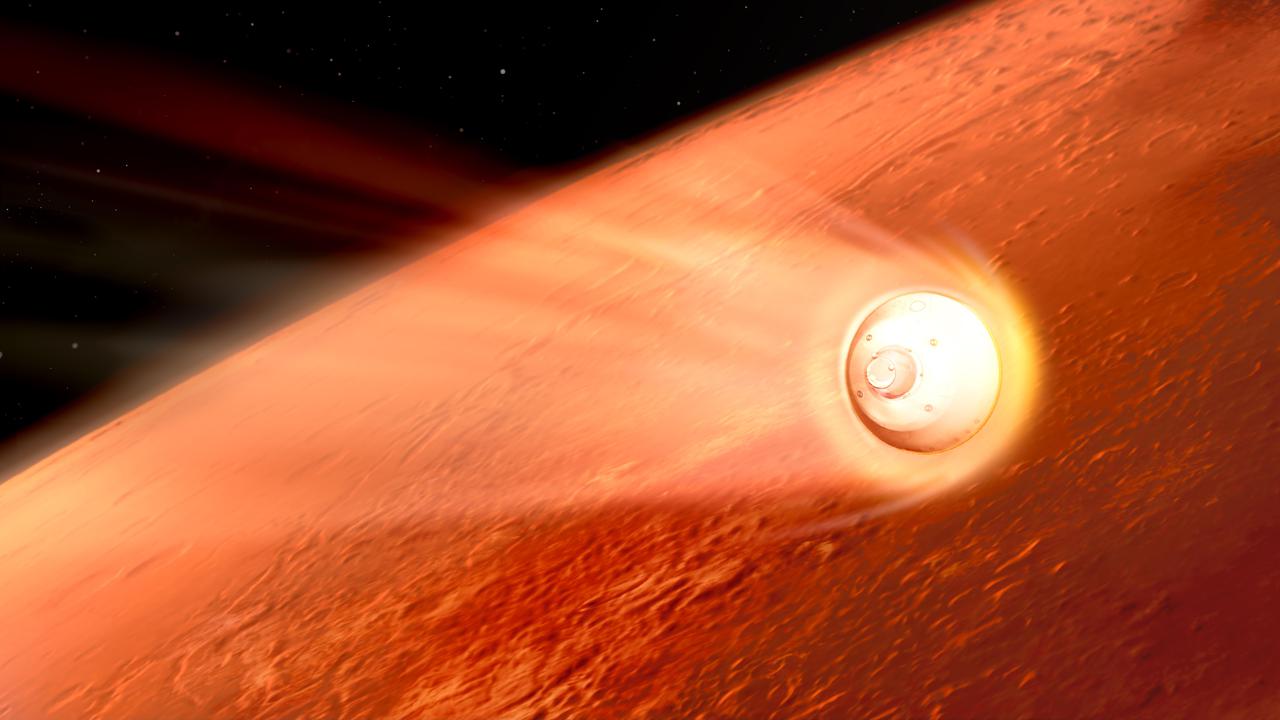
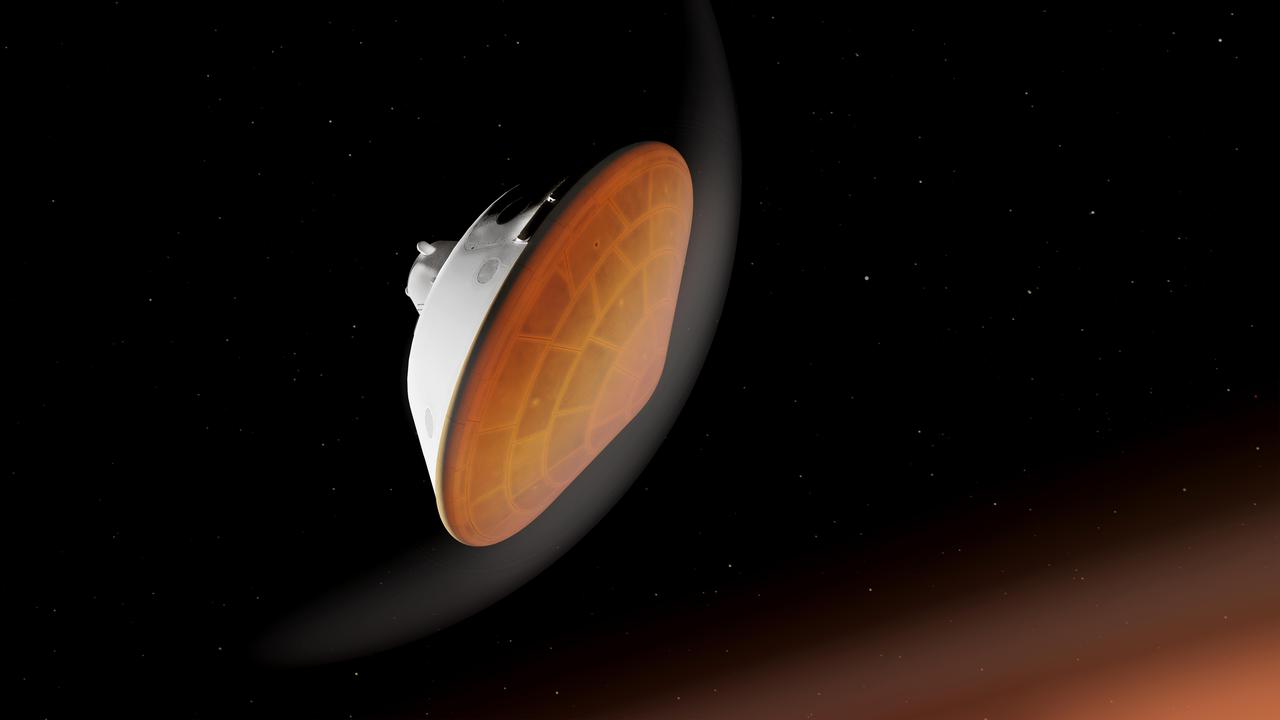
In this illustration of its descent to Mars, the spacecraft containing NASA's Perseverance rover slows down using the drag generated by its motion in the Martian atmosphere. Hundreds of critical events must execute perfectly and exactly on time for the rover to land on Mars safely on Feb. 18, 2021.  Entry, Descent, and Landing, or "EDL," begins when the spacecraft reaches the top of the Martian atmosphere, traveling nearly 12,500 mph (20,000 kph).  The cruise stage separates about 10 minutes before entering into the atmosphere, leaving the aeroshell, which encloses the rover and descent stage, to make the trip to the surface. The vehicle fires small thrusters on the backshell to reorient itself and make sure the heat shield is facing forward as it plunges into the atmosphere. As it descends through the atmosphere, the spacecraft fires these thrusters on its backshell to guide itself. The spacecraft uses the Martian atmosphere to brake, causing it to heat up dramatically. Peak heating occurs about 80 seconds after atmospheric entry, when the temperature at the external surface of the heat shield reaches about 2,370 degrees Fahrenheit (about 1,300 degrees Celsius). The rover is safe in the aeroshell, and reaches only about room temperature. Peak deceleration occurs about 10 seconds later (~90 seconds after atmospheric entry). The heat shield slows the spacecraft to under 1,000 mph (1,600 kph).  https://photojournal.jpl.nasa.gov/catalog/PIA24314
Perseverance Rover Decelerates in the Martian Atmosphere (Illustration)
A vortex, or large atmospheric storm, is visible in this color composite of NASA Voyager 2 Saturn images obtained Aug. 25, 1979 from a range of 1 million kilometers 620,000 miles.
Saturnian Atmospheric Storm
The Mars Climate Sounder instrument on NASA Mars Reconnaissance Orbiter maps the vertical distribution of temperatures, dust, water vapor and ice clouds in the Martian atmosphere as the orbiter flies a near-polar orbit.
Martian Atmosphere Profiles
Neptune's blue-green atmosphere is shown in greater detail than ever before by the Voyager 2 spacecraft as it rapidly approaches its encounter with the giant planet. This color image, produced from a distance of about 16 million kilometers, shows several complex and puzzling atmospheric features. The Great Dark Spot (GDS) seen at the center is about 13,000 km by 6,600 km in size -- as large along its longer dimension as the Earth. The bright, wispy "cirrus-type" clouds seen hovering in the vicinity of the GDS are higher in altitude than the dark material of unknown origin which defines its boundaries. A thin veil often fills part of the GDS interior, as seen on the image. The bright cloud at the southern (lower) edge of the GDS measures about 1,000 km in its north-south extent. The small, bright cloud below the GDS, dubbed the "scooter," rotates faster than the GDS, gaining about 30 degrees eastward (toward the right) in longitude every rotation. Bright streaks of cloud at the latitude of the GDS, the small clouds overlying it, and a dimly visible dark protrusion at its western end are examples of dynamic weather patterns on Neptune, which can change significantly on time scales of one rotation (about 18 hours).   https://photojournal.jpl.nasa.gov/catalog/PIA02245
Neptune Blue-green Atmosphere
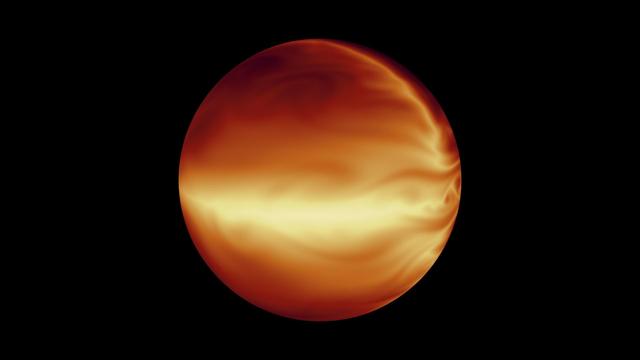
The turbulent atmosphere of a hot, gaseous planet known as HD 80606b is shown in this simulation based on data from NASA Spitzer Space Telescope.
Simulated Atmosphere of a Hot Gas Giant
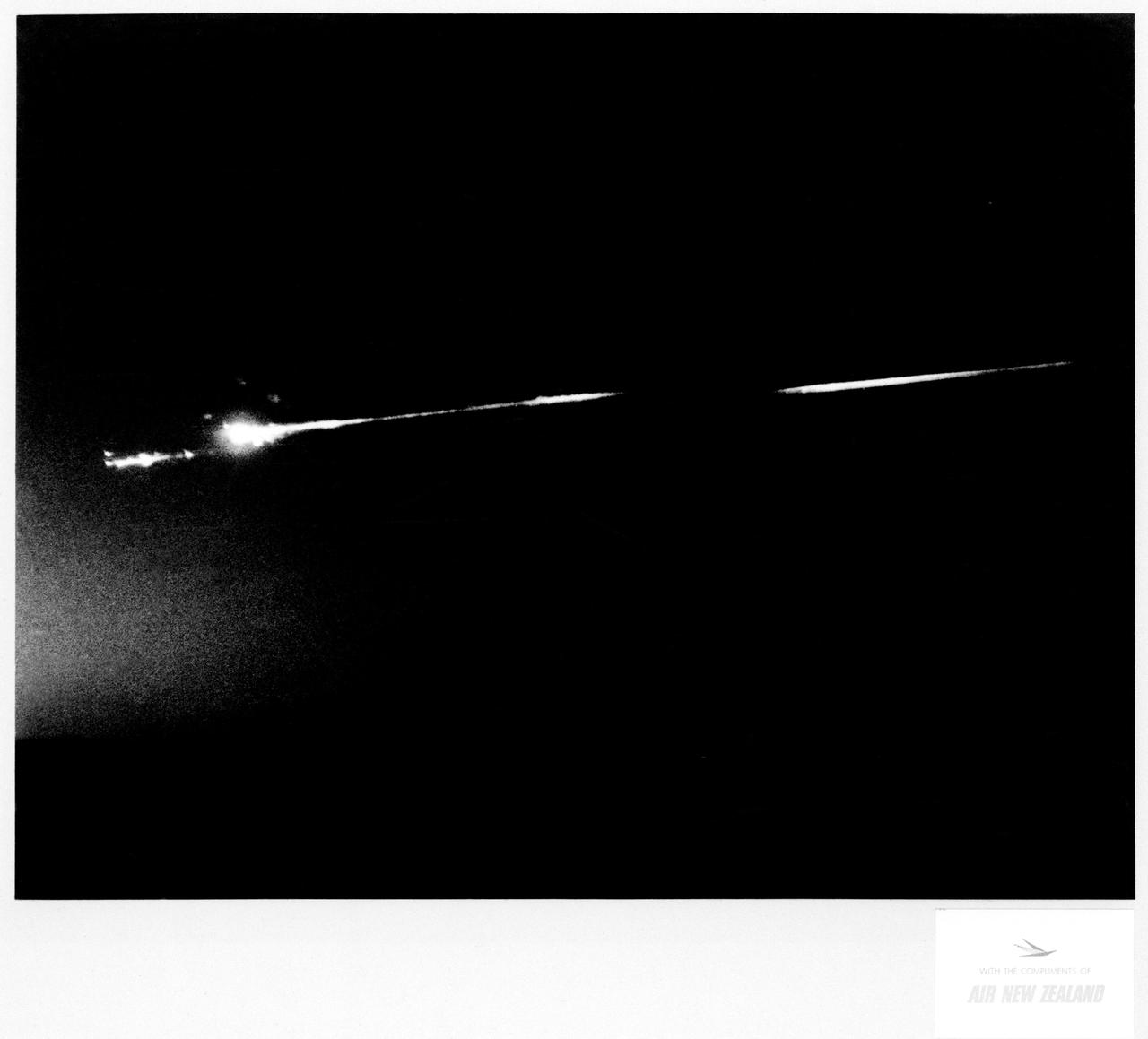
S70-17646 (18 April 1970) --- An unidentified airline passenger snapped these bright objects, believed to be the Apollo 13 Service Module (SM) and Lunar Module (LM) as they entered Earth's atmosphere over the Pacific Ocean on April 18, 1970.  The aircraft, an Air New Zealand DC-8 was midway between the Fiji Islands (Nandi Island to be specific) and Auckland, New Zealand, when the photograph was taken.  The crew men of the problem plagued Apollo 13 mission jettisoned the LM and SM prior to entering Earth's atmosphere in the Apollo 13 Command Module (CM).
Apollo 13 Service Module and Lunar Module as entering Earth's atmosphere
Hubble Views Ancient Storm in the Atmosphere of Jupiter - May, 1992
Hubble Views Ancient Storm in the Atmosphere of Jupiter - April, 1997
Hubble Views Ancient Storm in the Atmosphere of Jupiter - October, 1995
Hubble Views Ancient Storm in the Atmosphere of Jupiter - Full Disk
Hubble Views Ancient Storm in the Atmosphere of Jupiter - February, 1995
Hubble Views Ancient Storm in the Atmosphere of Jupiter - August, 1994
Jupiter Upper Atmospheric Winds Revealed in Ultraviolet Images by Hubble Telescope
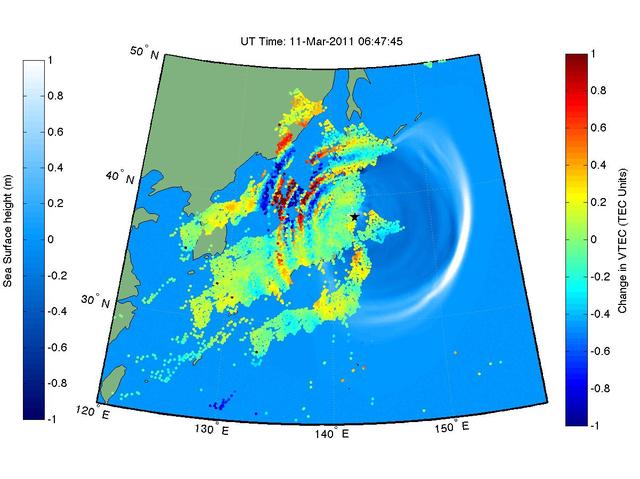
NASA Sees Tohoku-Oki Earthquake and Tsunami in Earth Upper Atmosphere
Hubble Views Ancient Storm in the Atmosphere of Jupiter - June, 1999
Hubble Views Ancient Storm in the Atmosphere of Jupiter - October, 1996
Hubble Views Ancient Storm in the Atmosphere of Jupiter - July, 1994
With its heat shield facing the planet, NASA's Perseverance rover begins its descent through the Martian atmosphere in this illustration. Hundreds of critical events must execute perfectly and exactly on time for the rover to land on Mars safely on Feb. 18, 2021.  Entry, Descent, and Landing, or "EDL," begins when the spacecraft reaches the top of the Martian atmosphere, traveling nearly 12,500 mph (20,000 kph).  The aeroshell, which encloses the rover and descent stage, makes the trip to the surface on its own. The vehicle fires small thrusters on the backshell to reorient itself and make sure the heat shield is facing forward as it plunges into the atmosphere.  https://photojournal.jpl.nasa.gov/catalog/PIA24313
Entering the Martian Atmosphere with the Perseverance Rover (Illustration)
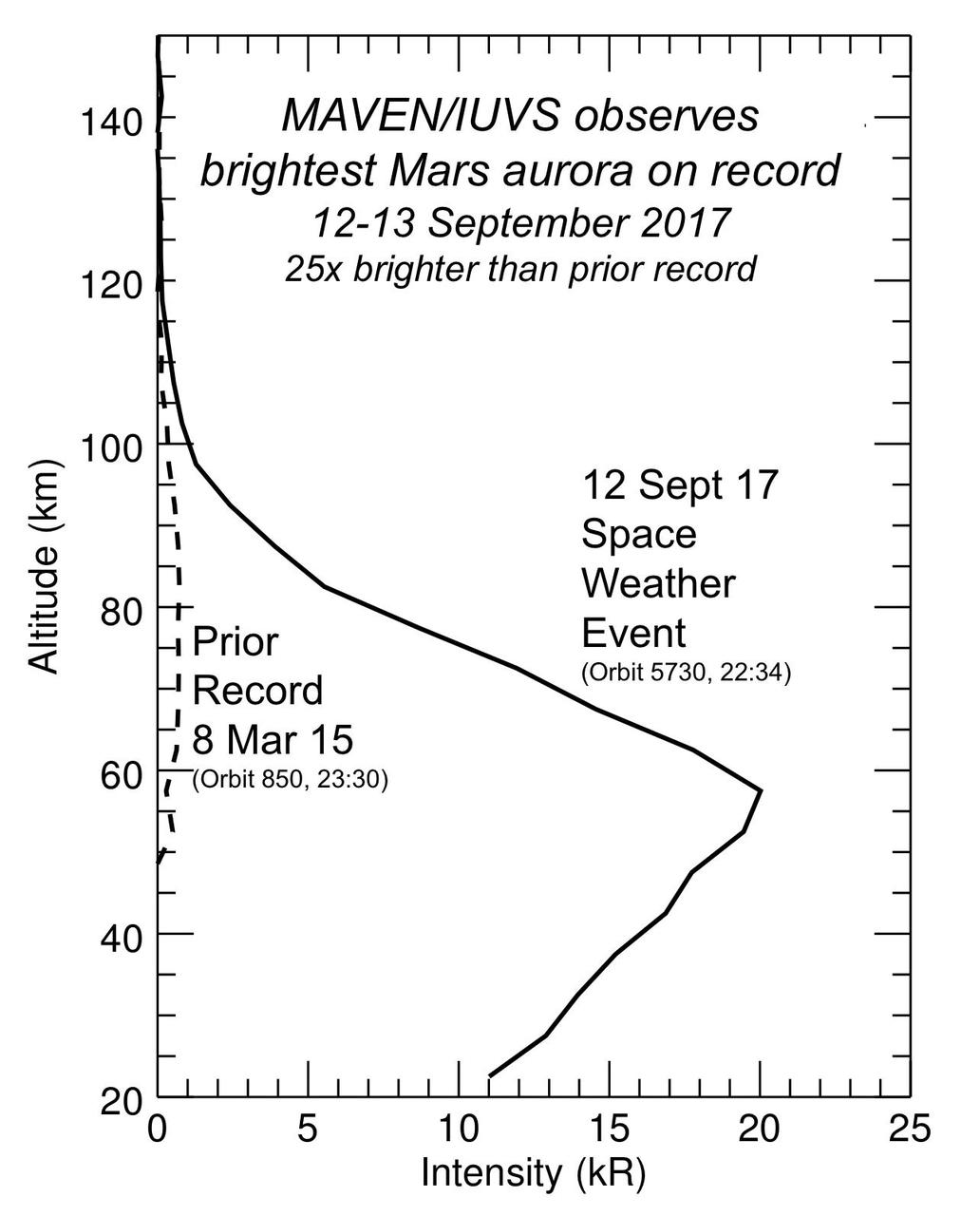
These profiles show the brightness of aurora emission in Mars' atmosphere at different altitudes. The data are from observations by the Imaging Ultraviolet Spectrograph instrument (IUVS) on NASA's Mars Atmosphere and Volatile Evolution orbiter, or MAVEN.  The solid black profile on the right shows the aurora during a September 2017 solar storm. Barely visible along the vertical axis is a dashed profile representing the previous brightest aurora seen by MAVEN, which occurred in March 2015.  The recent event is more than 25 times brighter than the previous brightest aurora seen by MAVEN, which has been orbiting Mars since September 2014.  https://photojournal.jpl.nasa.gov/catalog/PIA21857
Martian Aurora 25 Times Brighter Than Prior Brightest
The super-Earth exoplanet 55 Cancri e, depicted with its star in this artist's concept, likely has an atmosphere thicker than Earth's, with ingredients that could be similar to those of Earth's atmosphere, according to a 2017 study using data from NASA's Spitzer Space Telescope. Scientists say the planet may be entirely covered in lava. The planet is so close to its star that one face of the planet consistently faces the star, resulting in a dayside and a nightside.   https://photojournal.jpl.nasa.gov/catalog/PIA22069
55 Cancri e with Atmosphere (Artist's Concept)
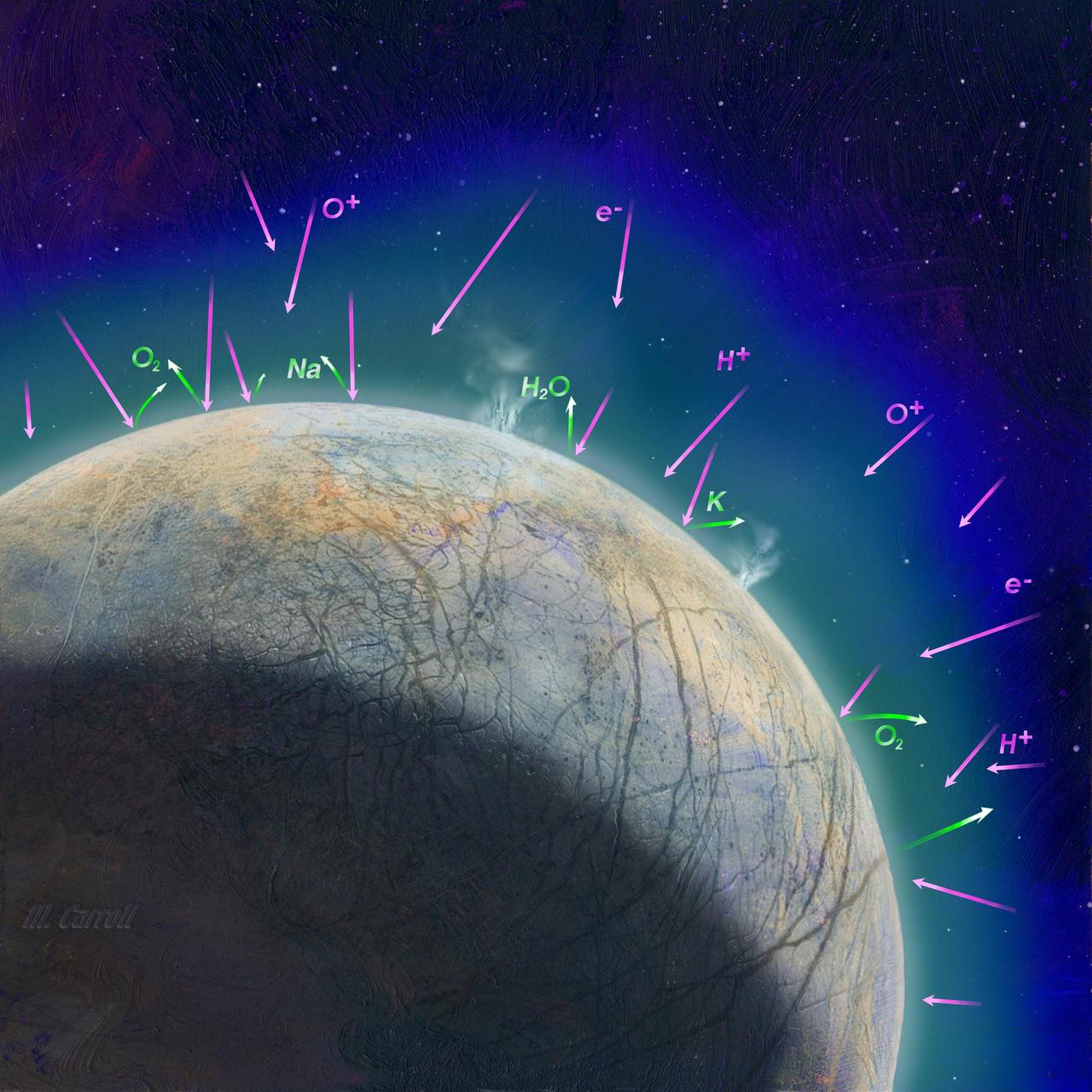
This artist's concept shows how scientists think the thin atmosphere on Jupiter's moon Europa is formed. It illustrates how the impact of high-energy, charged particles can kick up material from the surface and how possible plumes might also contribute to the atmosphere.  NASA's Europa Clipper mission aims to better understand the moon's atmosphere by measuring its chemical composition with the MAss Spectrometer for Planetary EXploration/Europa (MASPEX) and "sniffing" the dust grains blasted off the surface with the SUrface Dust Analyzer (SUDA). These two instruments will help scientists understand whether Europa harbors the composition and chemistry required to host life.  Europa Clipper's three main science objectives are to determine the thickness of the moon's icy shell and its interactions with the ocean below, to investigate its composition, and to characterize its geology. The mission's detailed exploration of Europa will help scientists better understand the astrobiological potential for habitable worlds beyond our planet.  https://photojournal.jpl.nasa.gov/catalog/PIA26107
Creation of Europa's Atmosphere (Artist's Concept)
An engineer in a control trailer at NASA's Kennedy Space Center in Florida monitors data before flights of agency F-18 jets to measure the effects of sonic booms. Several flights a day have been taking place the week of Aug. 21, 2017 as part of NASA's Sonic Booms in Atmospheric Turbulence, or SonicBAT II Program. NASA at Kennedy is partnering with the agency's Armstrong Flight Research Center in California, Langley Research Center in Virginia, and Space Florida for a program in which F-18 jets will take off from the Shuttle Landing Facility and fly at supersonic speeds while agency researchers measure the effects of low-altitude turbulence caused by sonic booms.
Sonic Booms in Atmospheric Turbulence (SonicBAT) Testing