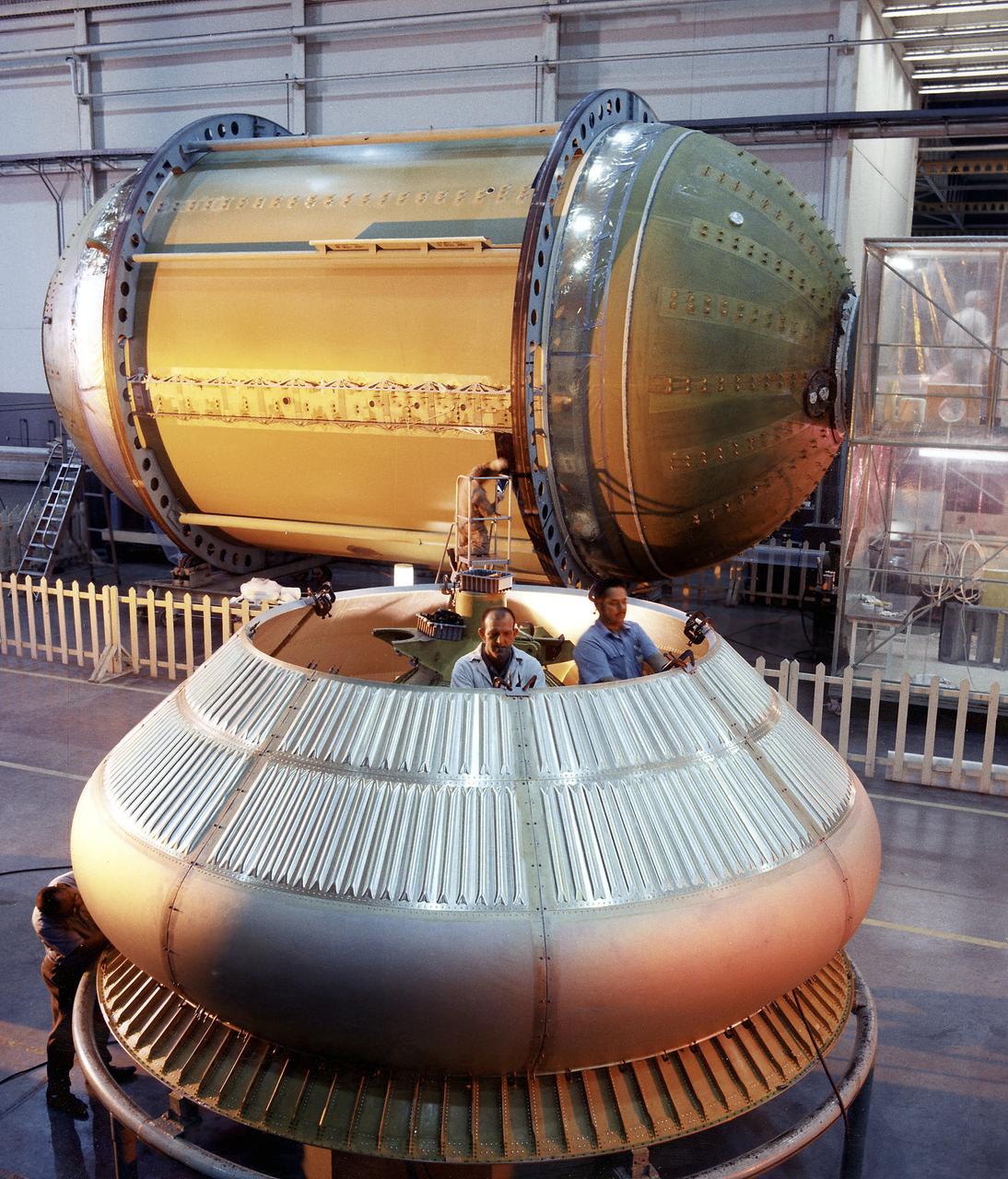
This photograph shows technicians installing the meteoroid shield on the Thruster Attitude Control Subsystem (TACS). At one end of the Orbital Workshop (OWS), the TACS provided short-term control of the attitude of the Skylab.
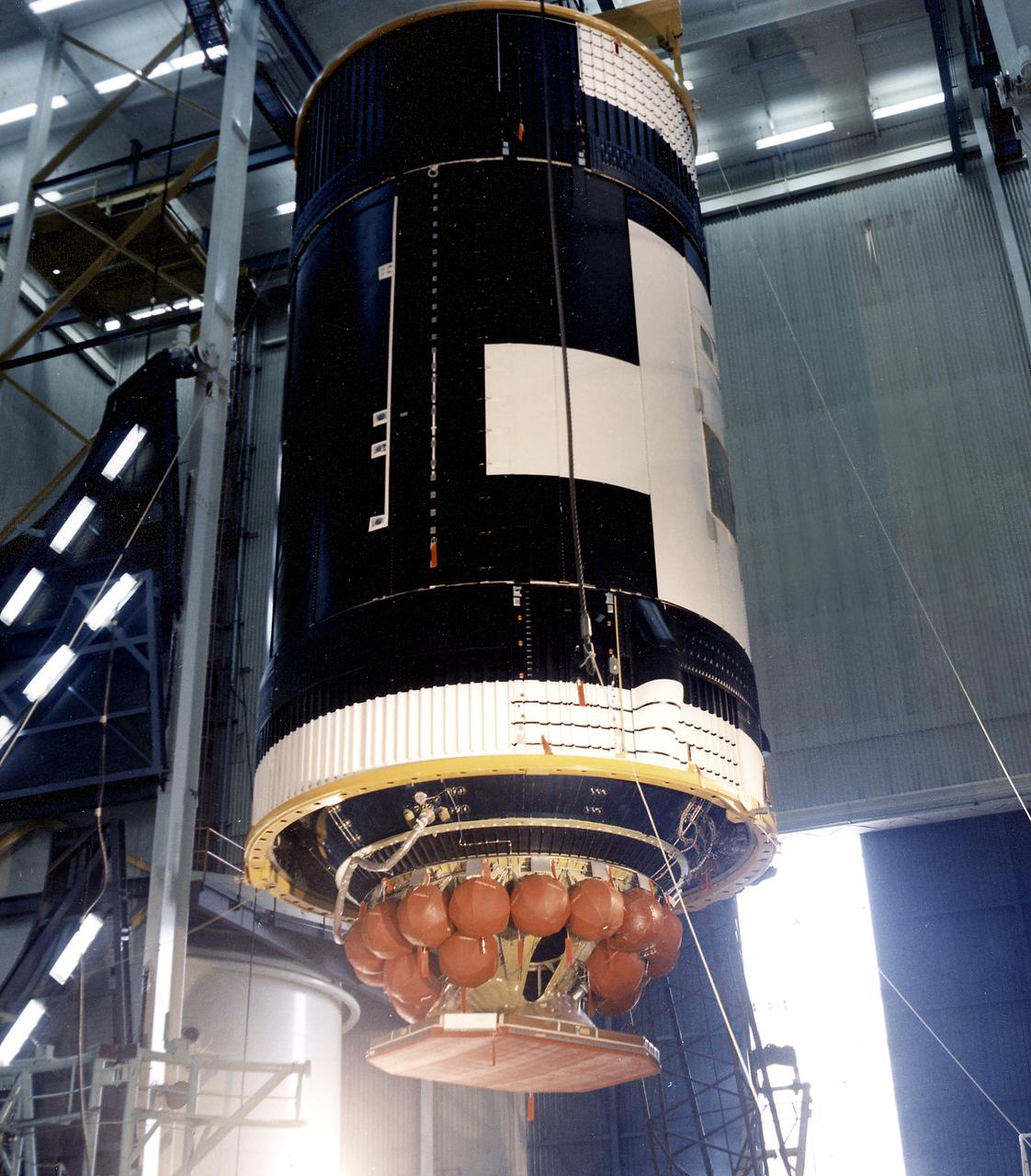
This photograph shows the Skylab Orbital Workshop (OWS) assembled, with its Thruster Attitude Control System (TACS) and radiator, ready for placing on the transporter. Twenty-two titanium spheres above the radiator housed the nitrogen required for operation of the TACS. At one end of the OWS, the TACS provided short-term control of the attitude of the Skylab.
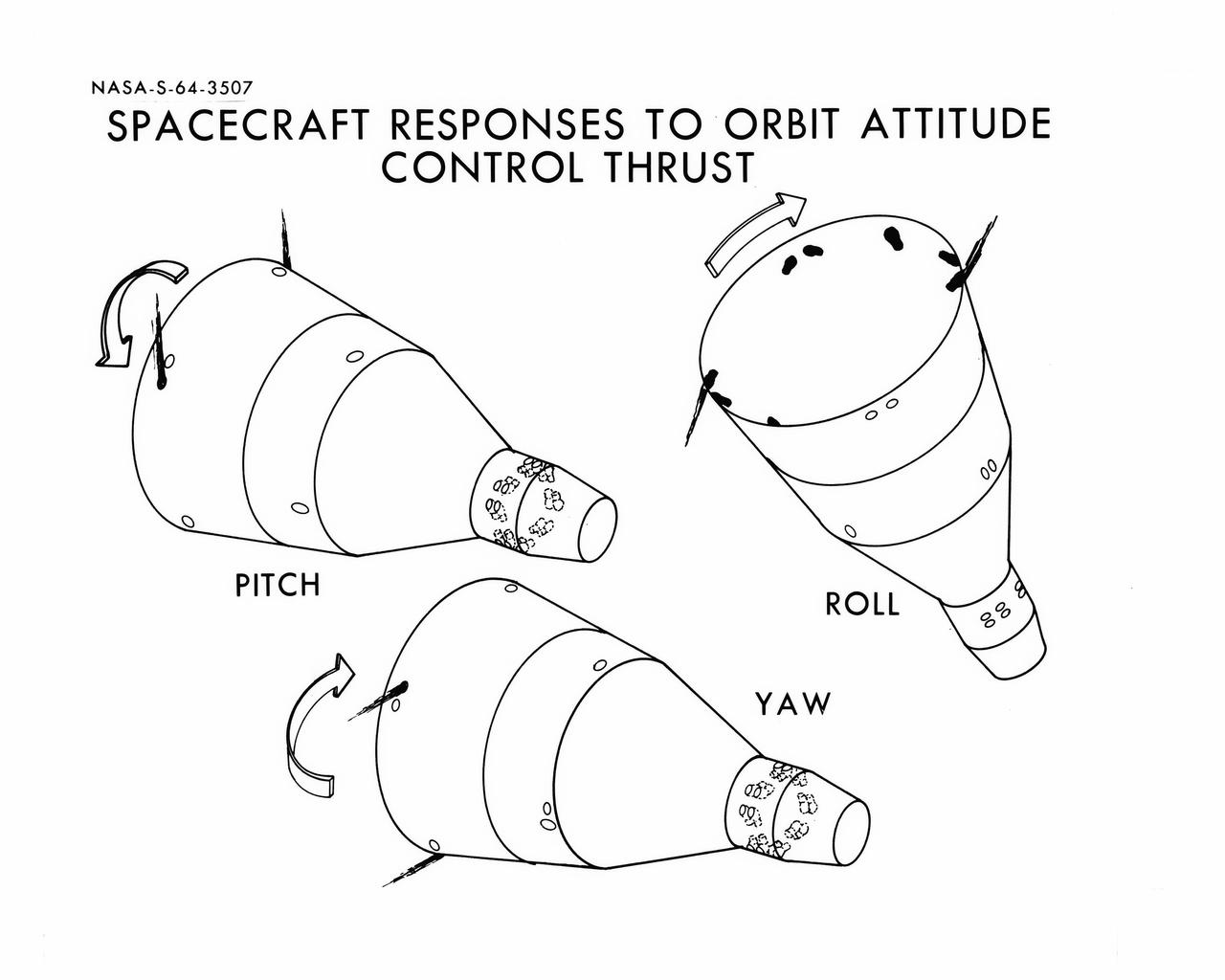
S64-03507 (1964) --- Diagrams shows Gemini spacecraft responses to orbital attitude systems's thrusters. Firing of appropriate combination of the thrusters cause pitch, roll and yaw.
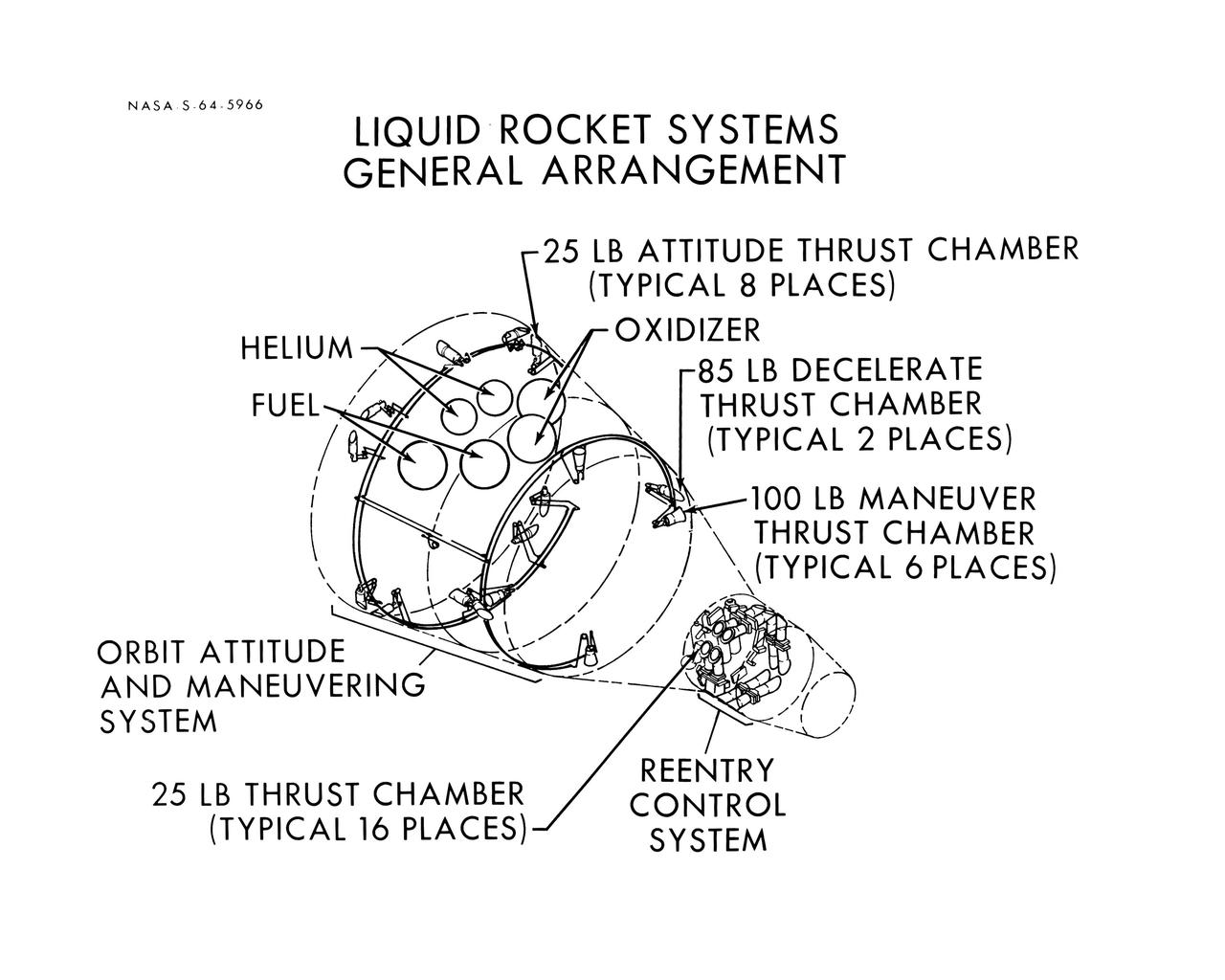
S64-05966 (1964) --- Diagram shows the general arrangement of the liquid rocket systems on the Gemini spacecraft are shown. The locations of the 25-pound, 85-pound and 100-pound thrusters of the orbital attitude and maneuver system and the 25-pound thrusters of the re-entry control system are shown.
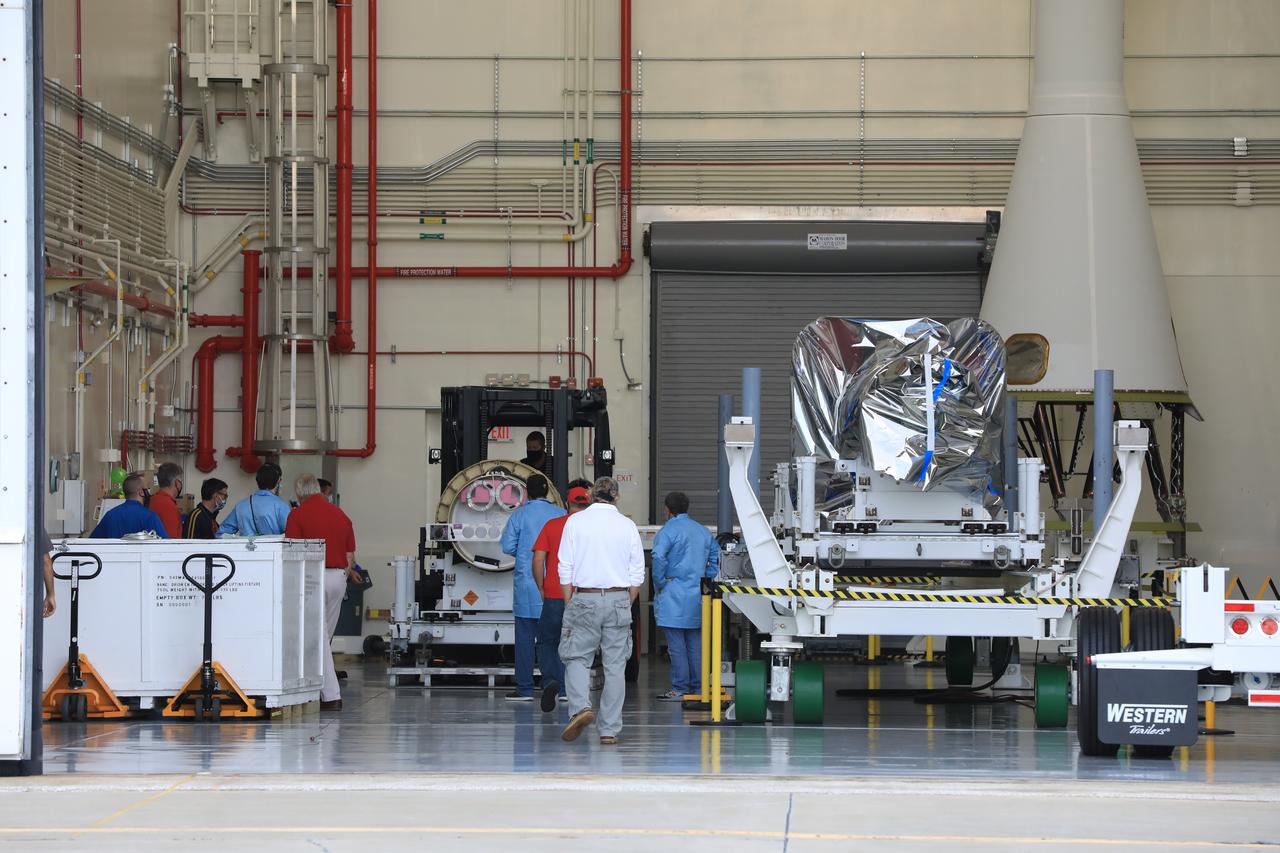
The last of three motors required to assemble the Launch Abort System for NASA’s Artemis II mission, the attitude control motor (ACM), arrives at Kennedy Space Center in Florida on August 28. The attitude control motor (ACM) was delivered by truck from Northrop Grumman’s manufacturing facility in Maryland, to the Launch Abort System Facility (LASF) at Kennedy. During launch of Orion atop the agency’s Space Launch System rocket, the LAS motors work together to separate the spacecraft from the rocket in the unlikely event of an emergency during launch. The LAS includes three motors – the launch abort motor, the jettison motor, and the attitude control motor—that once activated, will steer the spacecraft carrying the astronauts to safety. The ACM operates to keep Orion’s crew module on a controlled flight path in the event it needs to jettison and steer away from the rocket. Artemis II is the first crewed flight in a series of increasingly complex missions to the Moon that will lay the foundation for exploration of Mars and beyond. Artemis II will confirm all of the Orion spacecraft’s systems operate as designed in the actual environment of deep space with astronauts aboard. As part of the Artemis program, NASA will send the first woman and next man to the Moon in 2024.
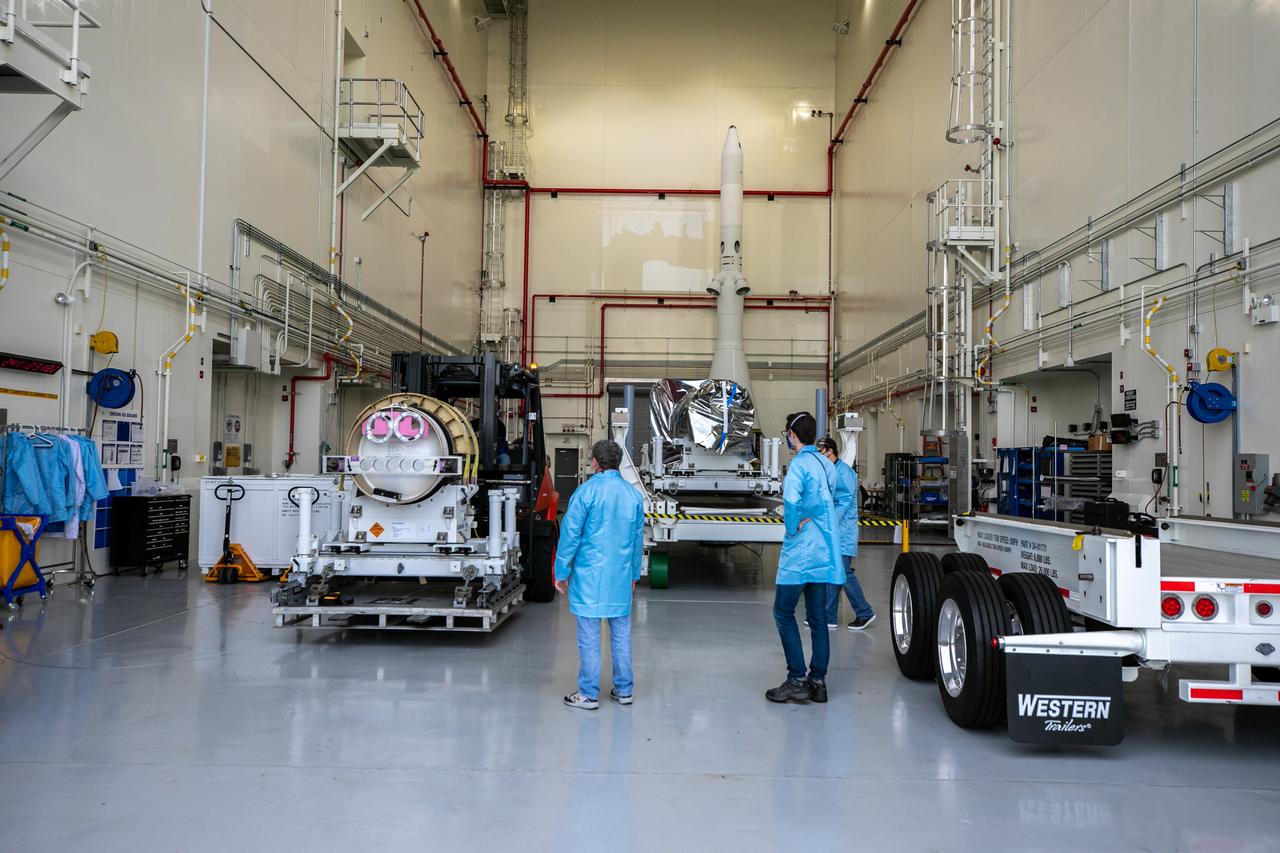
The last of three motors required to assemble the Launch Abort System for NASA’s Artemis II mission, the attitude control motor (ACM), arrives at Kennedy Space Center in Florida on August 28. The attitude control motor (ACM) was delivered by truck from Northrop Grumman’s manufacturing facility in Maryland, to the Launch Abort System Facility (LASF) at Kennedy. During launch of Orion atop the agency’s Space Launch System rocket, the LAS motors work together to separate the spacecraft from the rocket in the unlikely event of an emergency during launch. The LAS includes three motors – the launch abort motor, the jettison motor, and the attitude control motor—that once activated, will steer the spacecraft carrying the astronauts to safety. The ACM operates to keep Orion’s crew module on a controlled flight path in the event it needs to jettison and steer away from the rocket. Artemis II is the first crewed flight in a series of increasingly complex missions to the Moon that will lay the foundation for exploration of Mars and beyond. Artemis II will confirm all of the Orion spacecraft’s systems operate as designed in the actual environment of deep space with astronauts aboard. As part of the Artemis program, NASA will send the first woman and next man to the Moon in 2024.
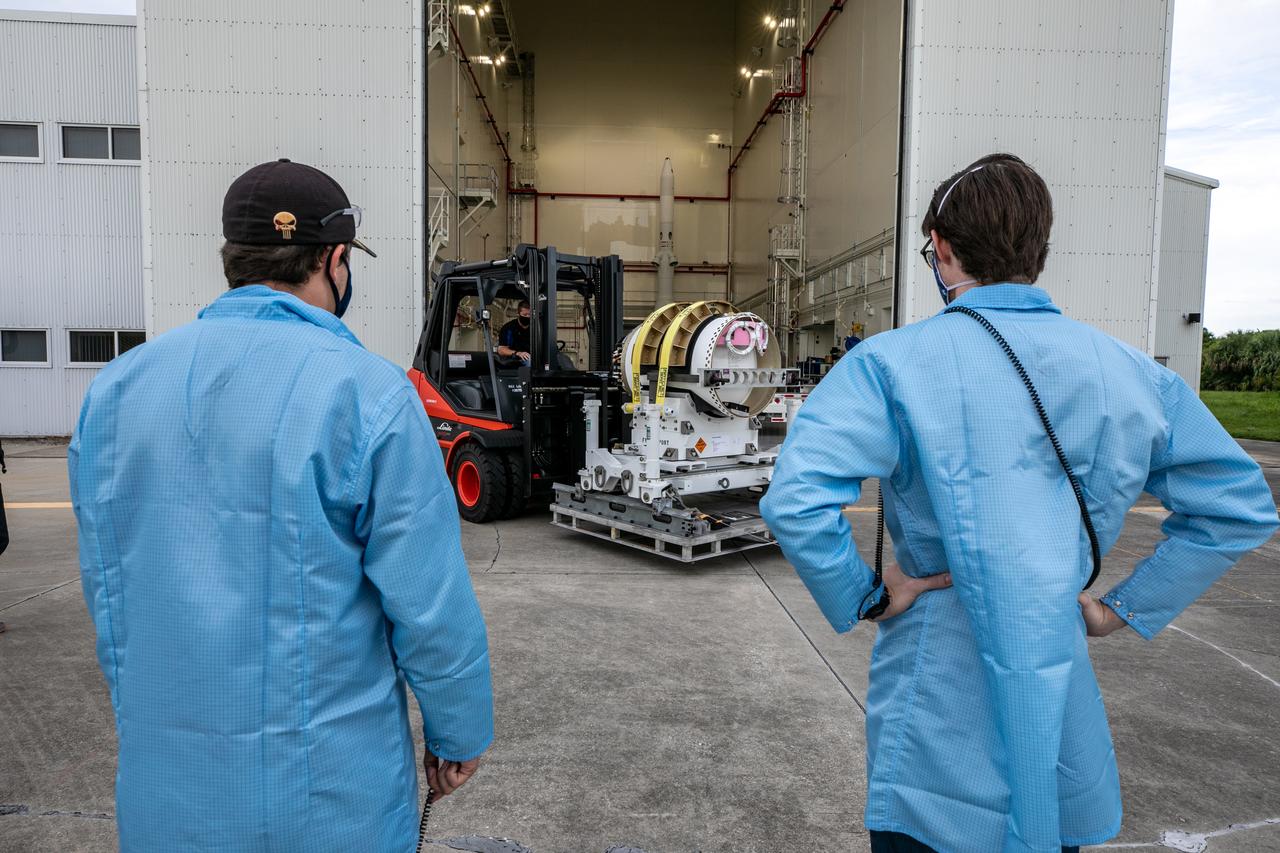
The last of three motors required to assemble the Launch Abort System for NASA’s Artemis II mission, the attitude control motor (ACM), arrives at Kennedy Space Center in Florida on August 28. The attitude control motor (ACM) was delivered by truck from Northrop Grumman’s manufacturing facility in Maryland, to the Launch Abort System Facility (LASF) at Kennedy. During launch of Orion atop the agency’s Space Launch System rocket, the LAS motors work together to separate the spacecraft from the rocket in the unlikely event of an emergency during launch. The LAS includes three motors – the launch abort motor, the jettison motor, and the attitude control motor—that once activated, will steer the spacecraft carrying the astronauts to safety. The ACM operates to keep Orion’s crew module on a controlled flight path in the event it needs to jettison and steer away from the rocket. Artemis II is the first crewed flight in a series of increasingly complex missions to the Moon that will lay the foundation for exploration of Mars and beyond. Artemis II will confirm all of the Orion spacecraft’s systems operate as designed in the actual environment of deep space with astronauts aboard. As part of the Artemis program, NASA will send the first woman and next man to the Moon in 2024.
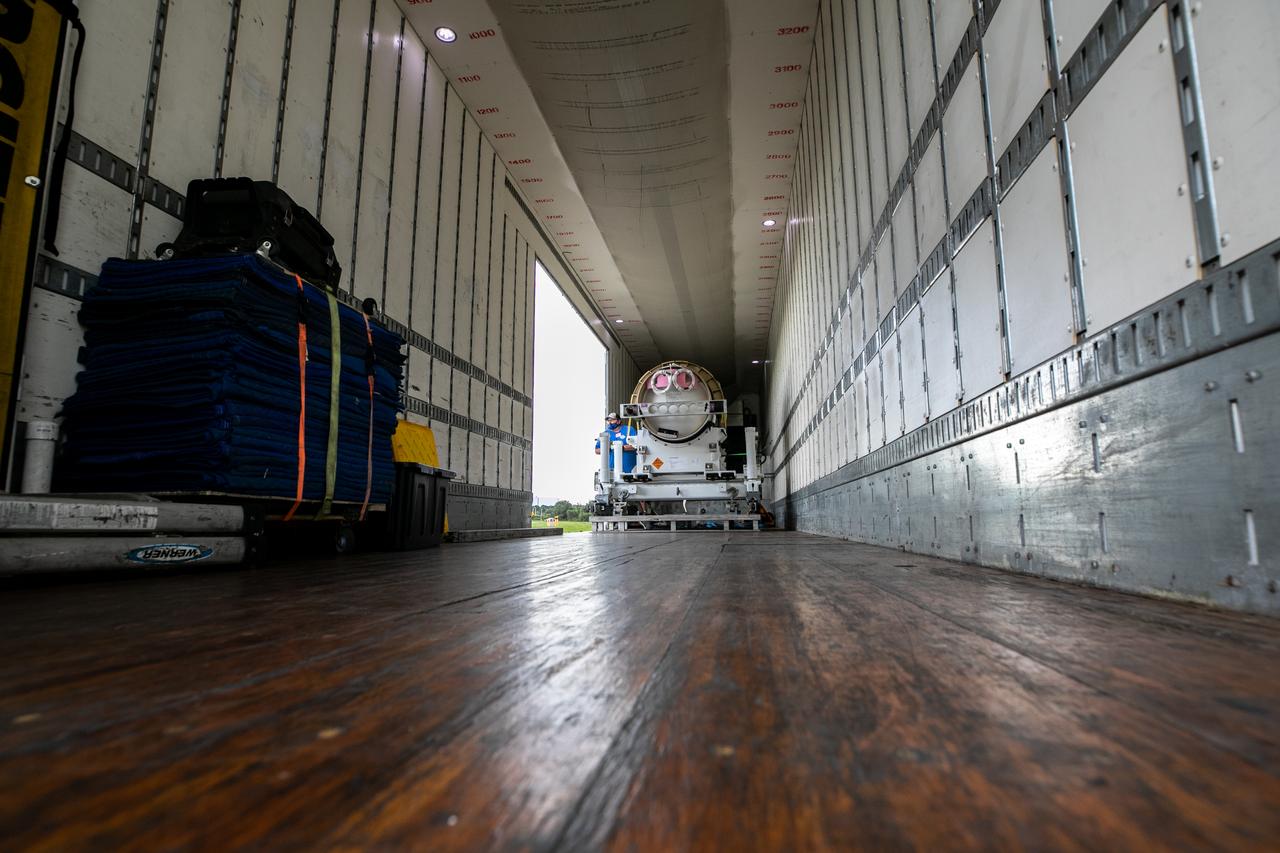
The last of three motors required to assemble the Launch Abort System for NASA’s Artemis II mission, the attitude control motor (ACM), arrives at Kennedy Space Center in Florida on August 28. The attitude control motor (ACM) was delivered by truck from Northrop Grumman’s manufacturing facility in Maryland, to the Launch Abort System Facility (LASF) at Kennedy. During launch of Orion atop the agency’s Space Launch System rocket, the LAS motors work together to separate the spacecraft from the rocket in the unlikely event of an emergency during launch. The LAS includes three motors – the launch abort motor, the jettison motor, and the attitude control motor—that once activated, will steer the spacecraft carrying the astronauts to safety. The ACM operates to keep Orion’s crew module on a controlled flight path in the event it needs to jettison and steer away from the rocket. Artemis II is the first crewed flight in a series of increasingly complex missions to the Moon that will lay the foundation for exploration of Mars and beyond. Artemis II will confirm all of the Orion spacecraft’s systems operate as designed in the actual environment of deep space with astronauts aboard. As part of the Artemis program, NASA will send the first woman and next man to the Moon in 2024.
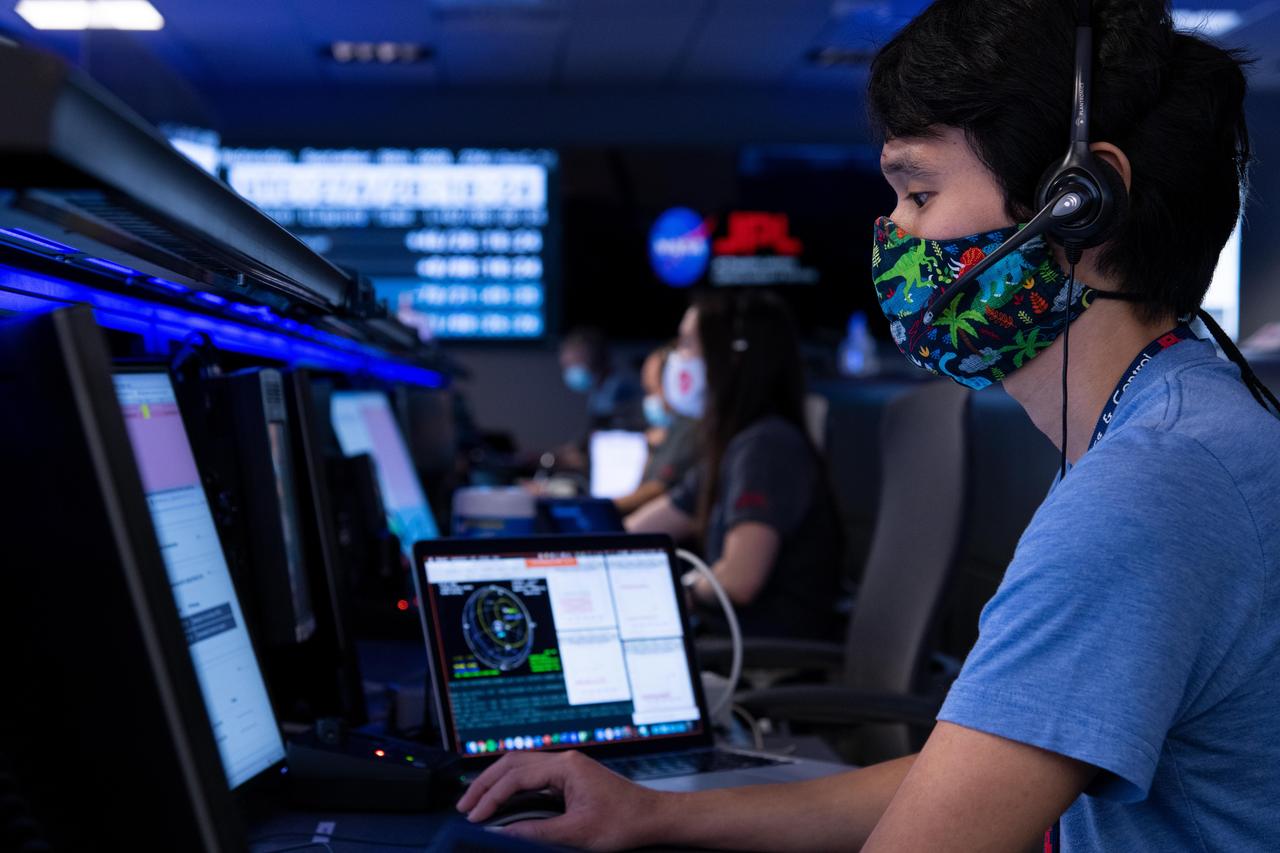
Attitude Control Systems lead Chris Pong donned a dinosaur-themed mask for his participation in the Mars 2020 mission's second trajectory correction maneuver at NASA's Jet Propulsion Laboratory in Southern California. The navigation team successfully sent commands to the spacecraft to adjust its flight path during its long cruise to Mars. https://photojournal.jpl.nasa.gov/catalog/PIA24191
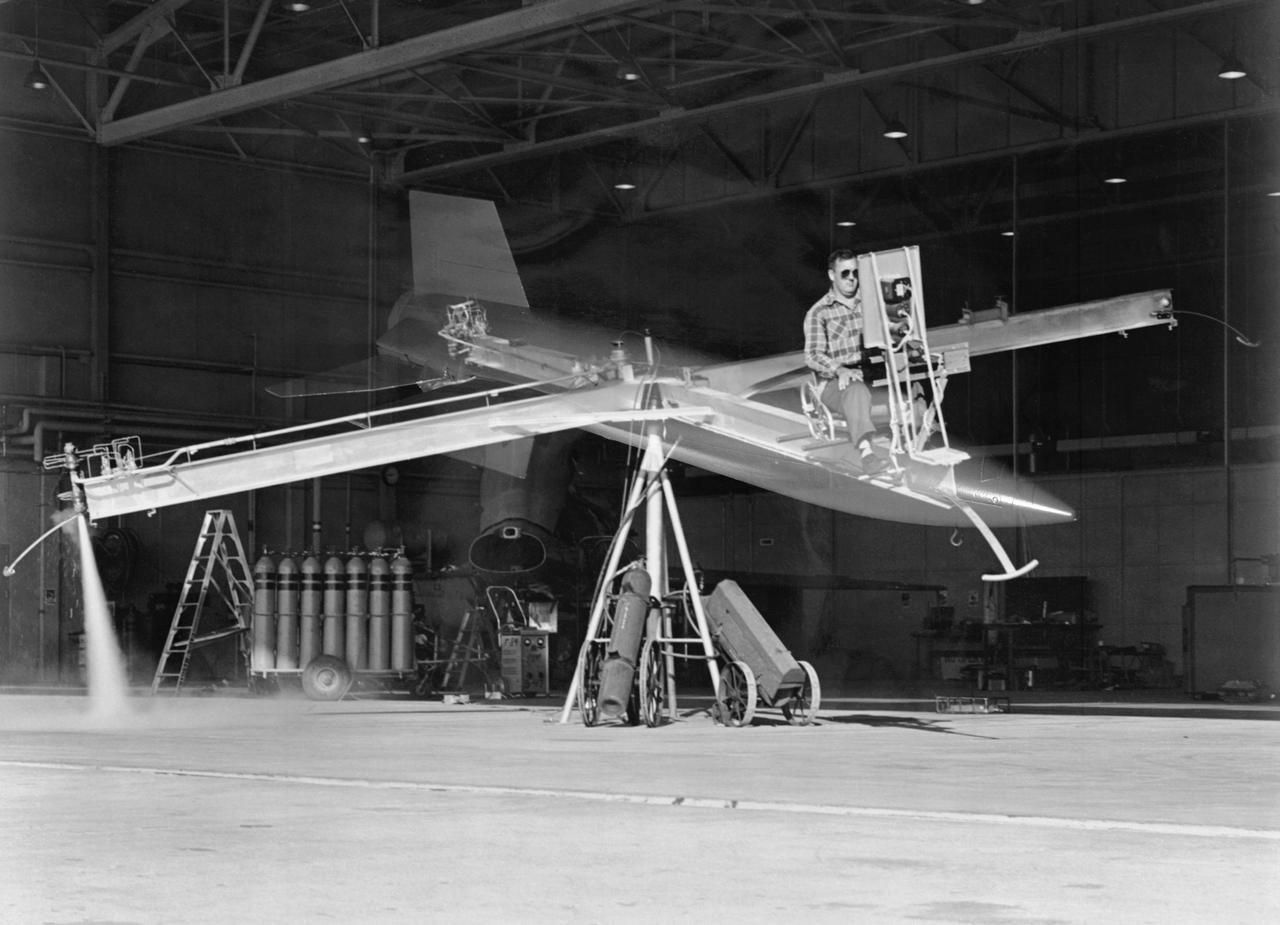
Attitude control simulator for X-15 studies at Langley, 1958. Photograph published in Engineer in Charge: A History of the Langley Aeronautical Laboratory, 1917-1958 by James R. Hansen (page 367).

Pictured is an artist's concept of the International Space Station (ISS) with solar panels fully deployed. In addition to the use of solar energy, the ISS will employ at least three types of propulsive support systems for its operation. The first type is to reboost the Station to correct orbital altitude to offset the effects of atmospheric and other drag forces. The second function is to maneuver the ISS to avoid collision with oribting bodies (space junk). The third is for attitude control to position the Station in the proper attitude for various experiments, temperature control, reboost, etc. The ISS, a gateway to permanent human presence in space, is a multidisciplinary laboratory, technology test bed, and observatory that will provide an unprecedented undertaking in scientific, technological, and international experimentation by cooperation of sixteen countries.
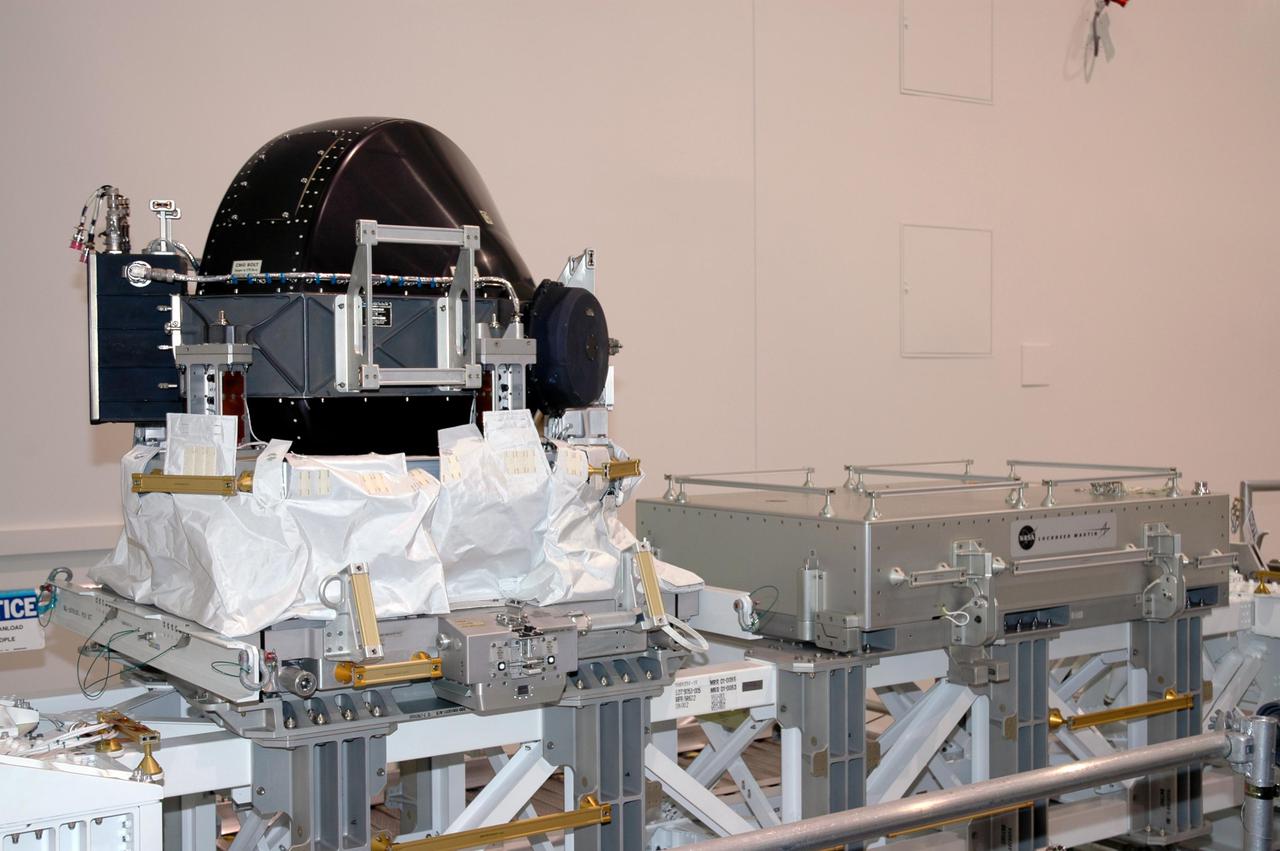
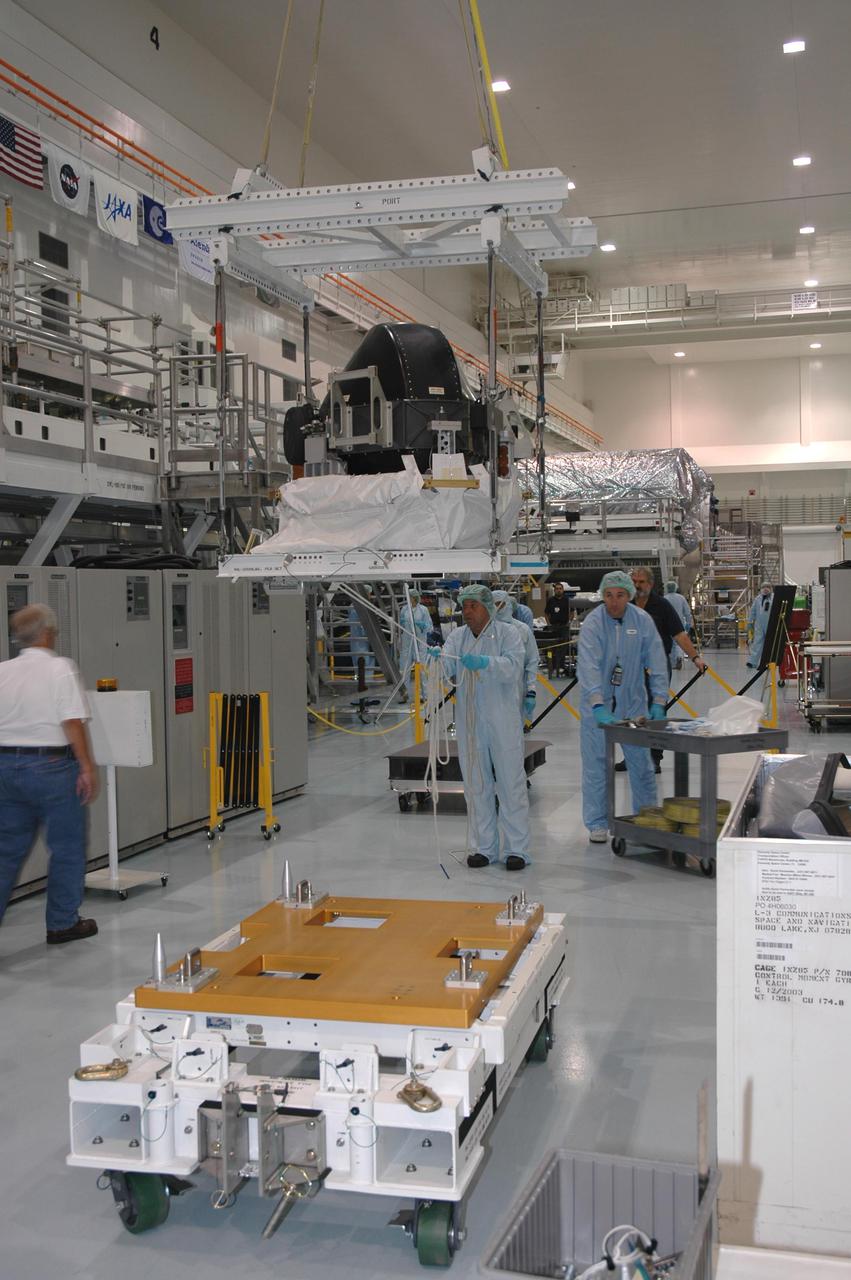
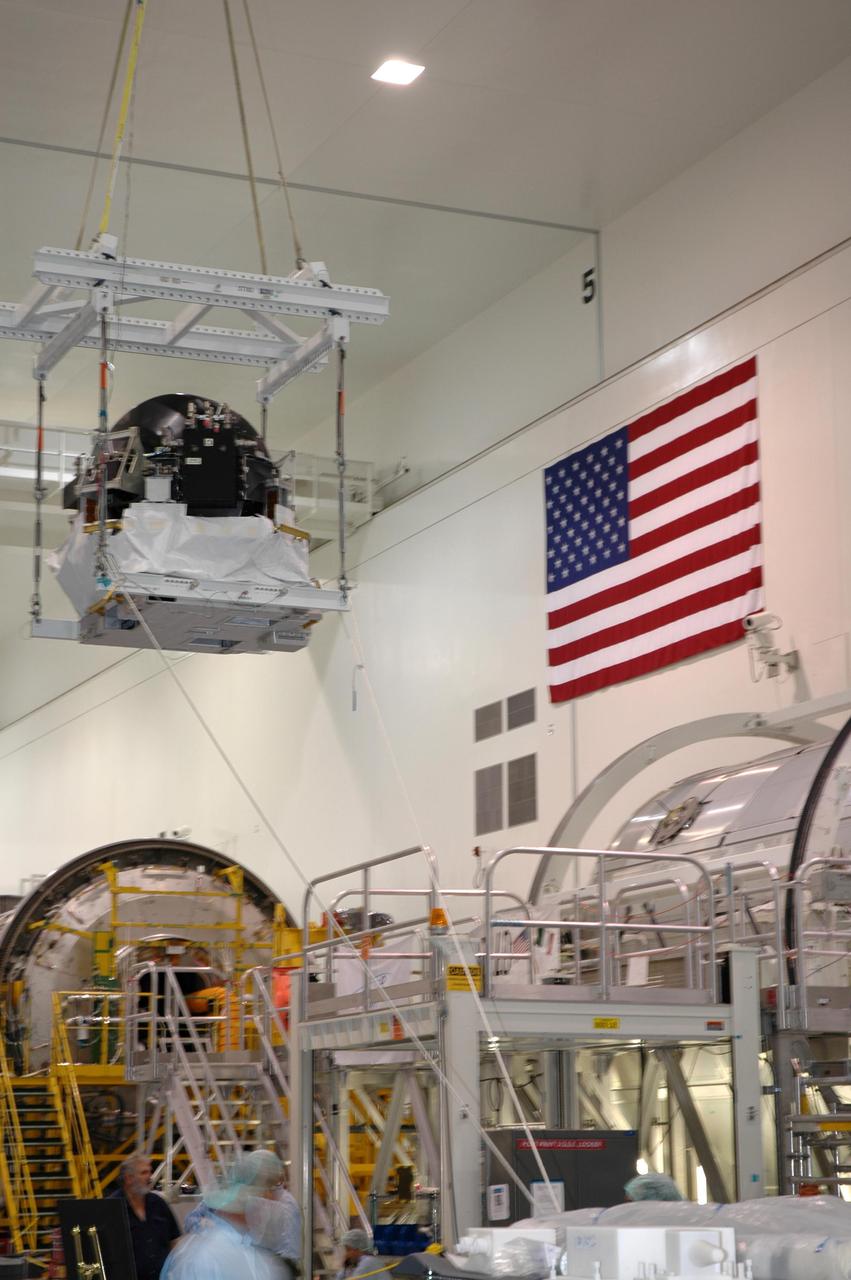
KENNEDY SPACE CENTER, FLA. - In the Space Station Processing Facility, the Control Moment Gyroscope (CMG) at left is being returned to the vendor for repair. The faulty CMG was removed from the International Space Station and replaced with a new one on mission STS-114 in August. A control moment gyroscope is an actuator used to apply very high attitude-control torques to agile spacecraft. The Space Station uses four massive control moment gyroscopes to maintain the Station’s orientation in space.
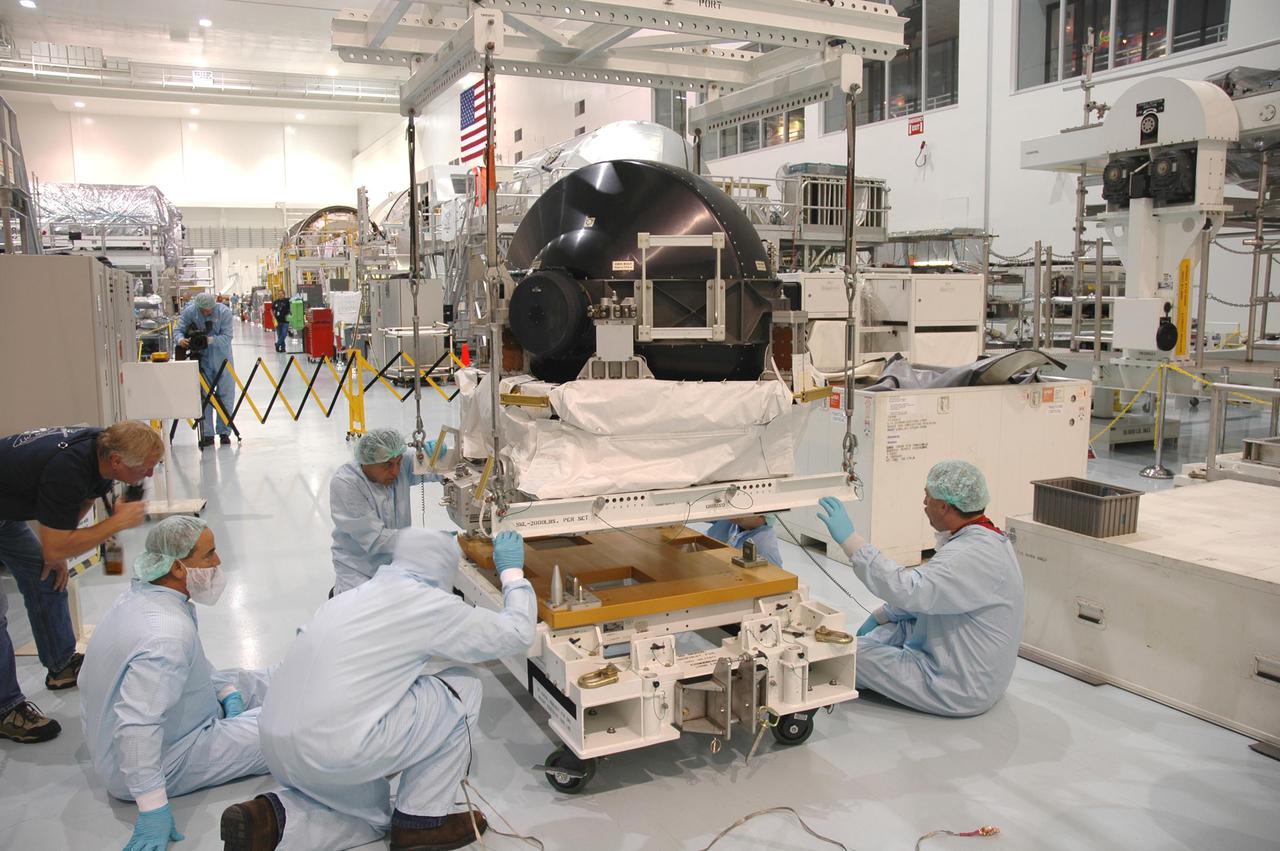
KENNEDY SPACE CENTER, FLA. - In the Space Station Processing Facility, workers help maneuver the Control Moment Gyroscope (CMG) onto a stand prior to its being returned to the vendor for repair. The faulty CMG was removed from the International Space Station and replaced with a new one on mission STS-114 in August. A control moment gyroscope is an actuator used to apply very high attitude-control torques to agile spacecraft. The Space Station uses four massive control moment gyroscopes to maintain the Station’s orientation in space.
KENNEDY SPACE CENTER, FLA. - In the Space Station Processing Facility, the Control Moment Gyroscope (CMG) is moved toward a stand prior to its being returned to the vendor for repair. The faulty CMG was removed from the International Space Station and replaced with a new one on mission STS-114 in August. A control moment gyroscope is an actuator used to apply very high attitude-control torques to agile spacecraft. The Space Station uses four massive control moment gyroscopes to maintain the Station’s orientation in space.
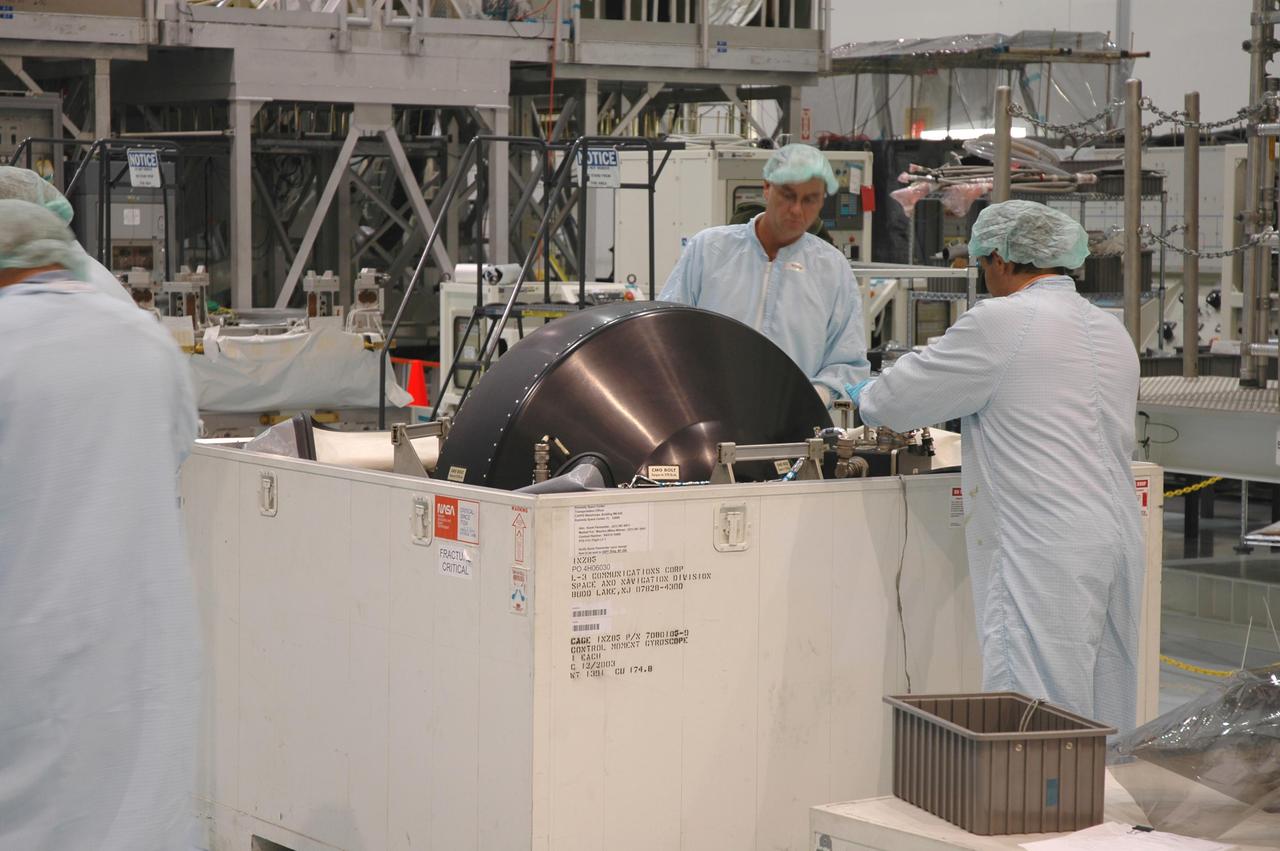
KENNEDY SPACE CENTER, FLA. - In the Space Station Processing Facility, workers oversee the packing of the Control Moment Gyroscope (CMG) in a shipping container. The faulty CMG was removed from the International Space Station and replaced with a new one on mission STS-114 in August. A control moment gyroscope is an actuator used to apply very high attitude-control torques to agile spacecraft. The Space Station uses four massive control moment gyroscopes to maintain the Station’s orientation in space.
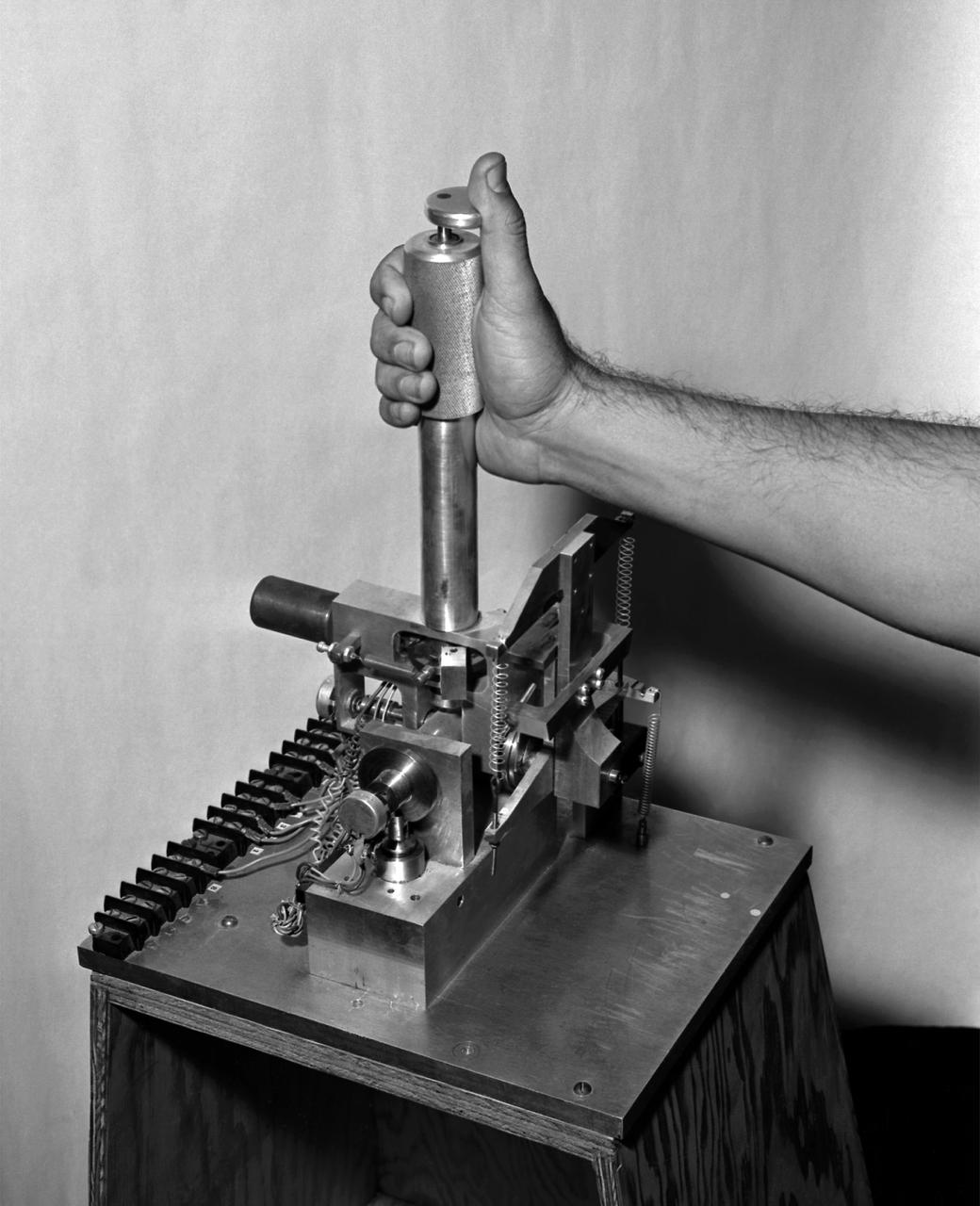
A photo of the control stick used on the Iron Cross Attitude Simulator. Although it resembled today's desktop computer flight sticks, its operation was different. As with a standard control stick, moving it back and forth raised and lowered the nose resulting in changes in pitch. Moving the stick to the right or left raised or lowered the wing, resulted in changes in roll. This control stick had a third axis, not found in standard control sticks. Twisting the stick to the right or left caused the airplane's nose to move horizontally in the same direction, resulting in changes in yaw.
KENNEDY SPACE CENTER, FLA. - The Control Moment Gyroscope (CMG) is moved across the floor of the Space Station Processing Facility. It is being transferred to a stand prior to its being returned to the vendor for repair. The faulty CMG was removed from the International Space Station and replaced with a new one on mission STS-114 in August. A control moment gyroscope is an actuator used to apply very high attitude-control torques to agile spacecraft. The Space Station uses four massive control moment gyroscopes to maintain the Station’s orientation in space.

iss067e188778 (July 16, 2022) --- NASA astronaut and Expedition 67 Flight Engineer Bob Hines activates a CubeLab Satellite to validate a new attitude control technology for small satellites. The experimental device, designed by the University of Kentucky in partnership with TangoLab, was launched to the International Space Station aboard Northrop Grumman's Cygnus space freighter.
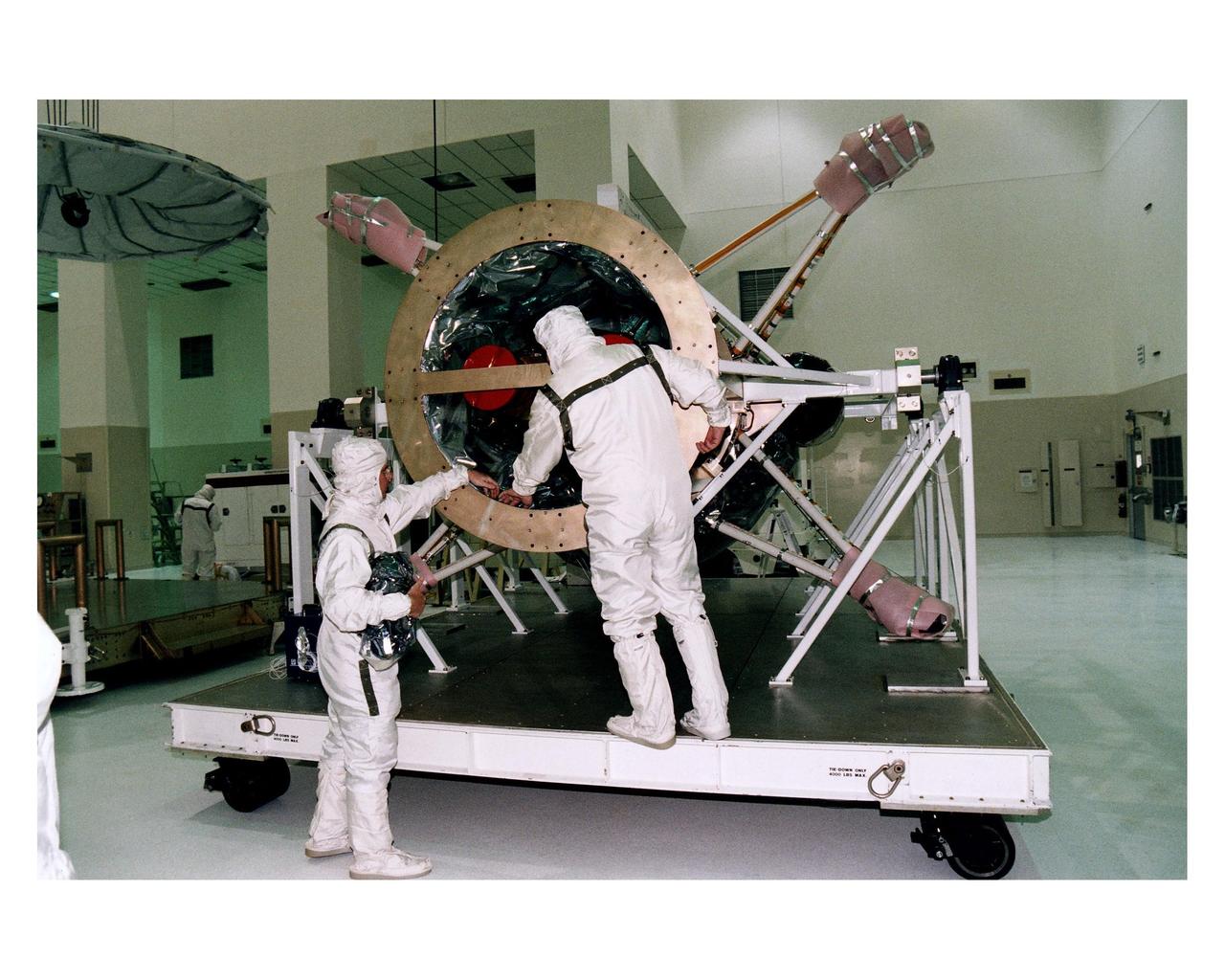
Workers take off the protective covering on the propulsion module for the Cassini spacecraft after uncrating the module at KSC's Spacecraft Assembly and Encapsulation Facility-2 (SAEF-2). The extended journey of 6.7 years to Saturn and the 4-year mission for Cassini once it gets there will require the spacecraft to carry a large amount of propellant for inflight trajectory-correction maneuvers and attitude control, particularly during the science observations. The propulsion module has redundant 445-newton main engines that burn nitrogen tetraoxide and monomethyl-hydrazine for main propulsion and 16 smaller 1-newton engines that burn hydrazine to control attitude and to correct small deviations from the spacecraft flight path. Cassini will be launched on a Titan IVB/Centaur expendable launch vehicle. Liftoff is targeted for October 6 from Launch Complex 40, Cape Canaveral Air Station
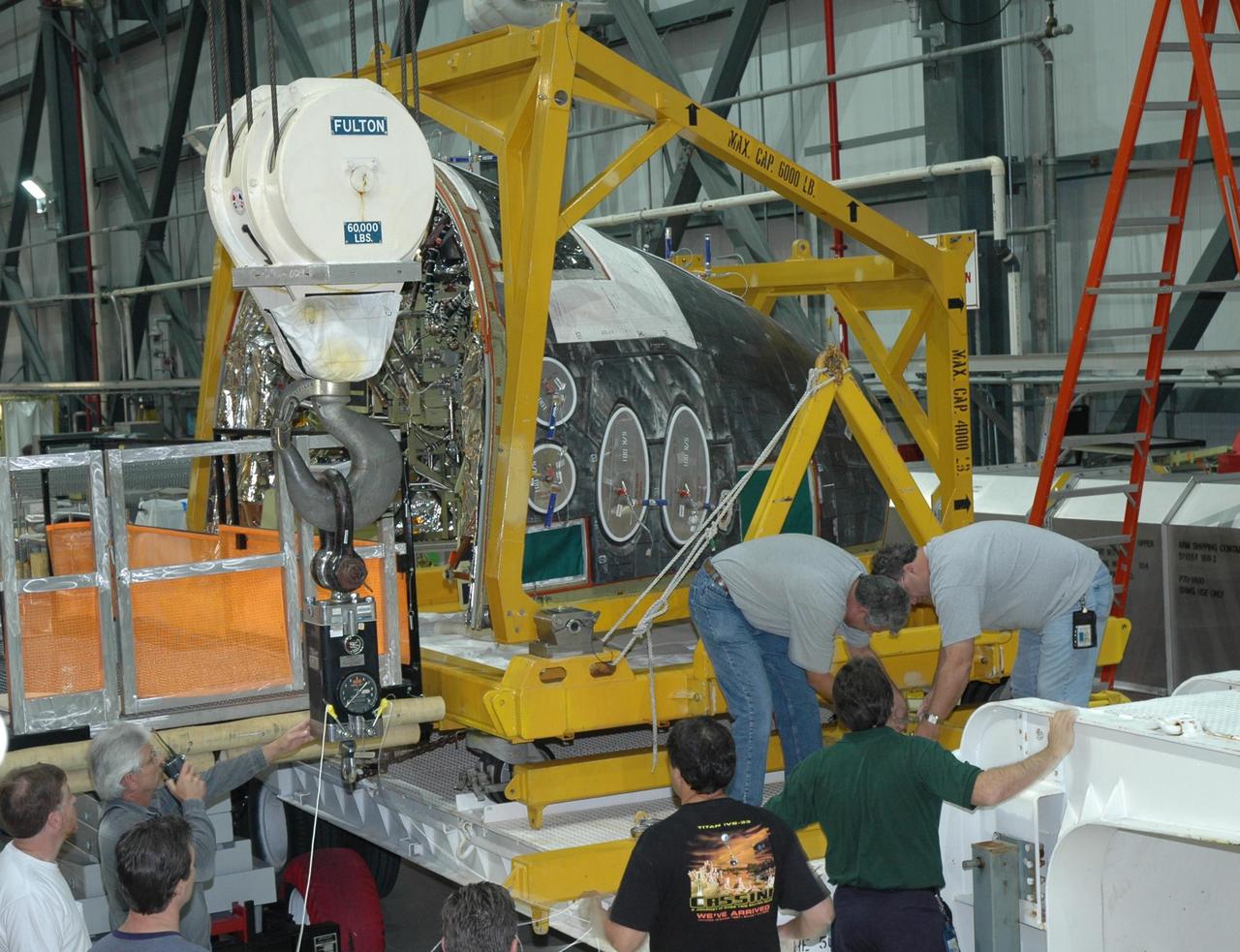
KENNEDY SPACE CENTER, FLA. -- Inside NASA Kennedy Space Center’s Orbiter Processing Facility Bay 1, workers make adjustments to the sling being placed round the forward reaction control system that will be installed on Atlantis. When ready, the shuttle equipment will be lifted for installation. The forward reaction control system is located in the forward fuselage nose area. During ascent of the space shuttle, it provides the thrust for attitude (rotational) maneuvers (pitch, yaw and roll) and for small velocity changes along the orbiter axis (translation maneuvers).
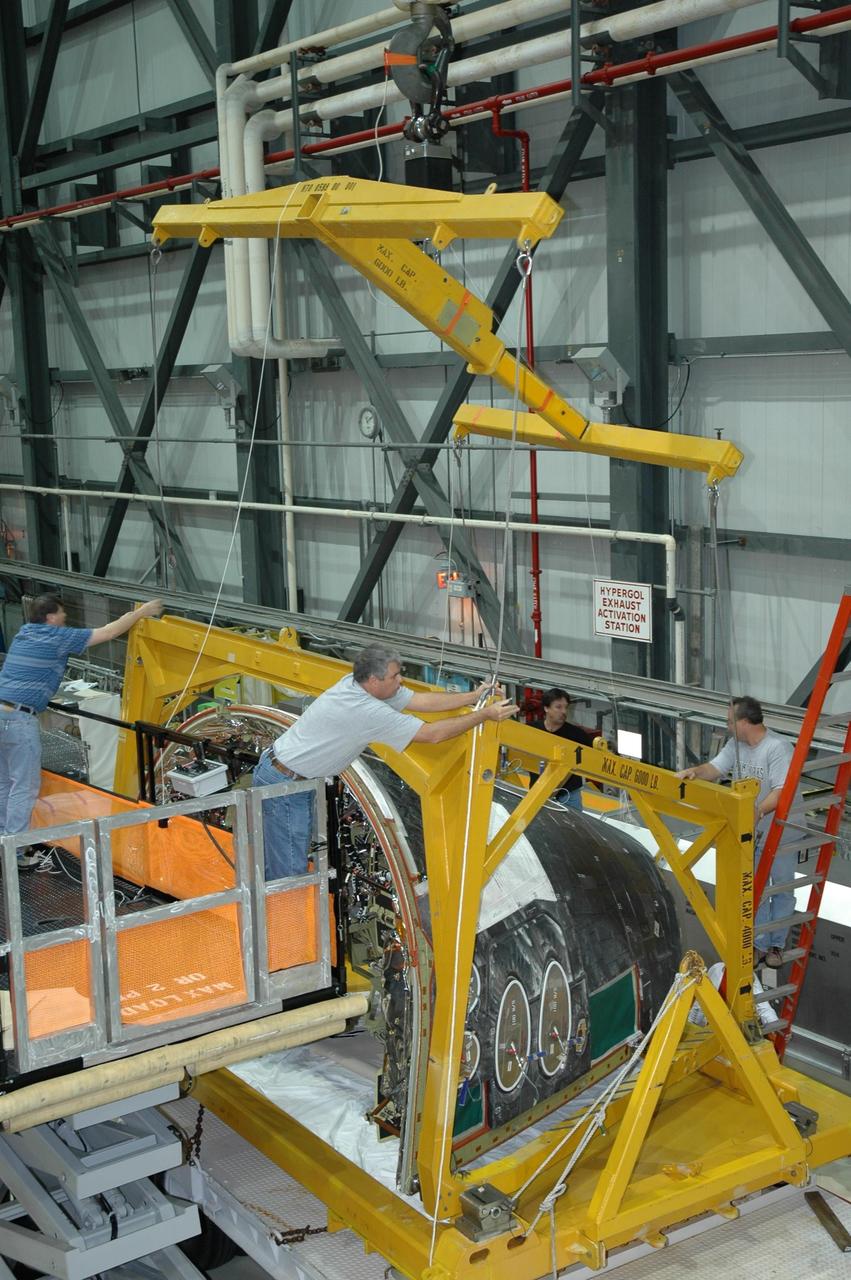
KENNEDY SPACE CENTER, FLA. -- Inside NASA Kennedy Space Center’s Orbiter Processing Facility Bay 1, workers secure the overhead crane to the sling placed round the forward reaction control system that will be installed on Atlantis. When ready, the shuttle equipment will be lifted for installation. The forward reaction control system is located in the forward fuselage nose area. During ascent of the space shuttle, it provides the thrust for attitude (rotational) maneuvers (pitch, yaw and roll) and for small velocity changes along the orbiter axis (translation maneuvers).
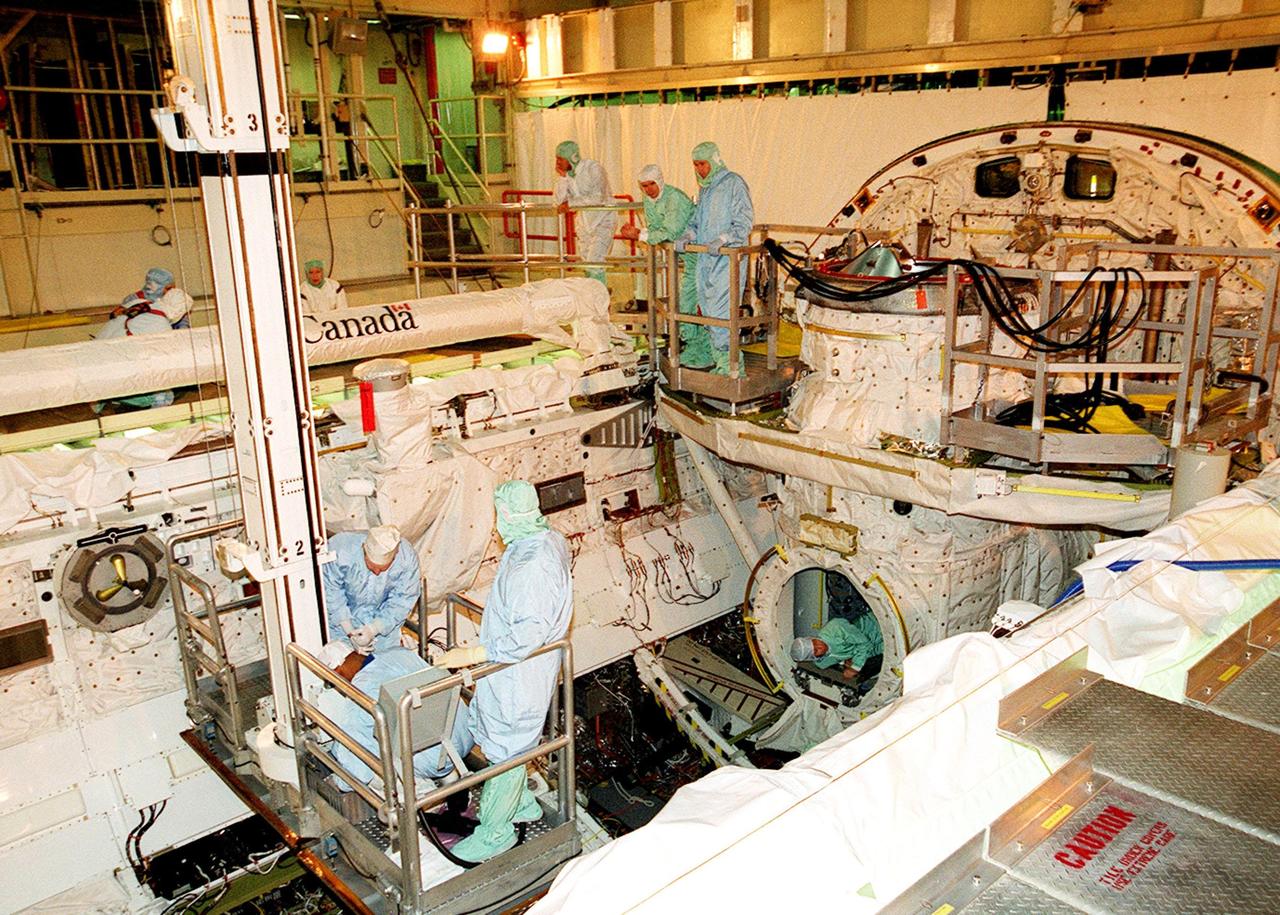
KENNEDY SPACE CENTER, FLA. -- The STS-98 crew looks over components of the equipment already installed in the payload bay of orbiter Atlantis, which is in the Orbiter Processing Facility bay 3. The crew is at KSC for Crew Equipment Interface Test activities. Launch on mission STS-98 is scheduled for Jan. 18, 2001. It will be transporting the U.S. Lab, Destiny, to the International Space Station with five system racks already installed inside of the module. After delivery of electronics in the lab, electrically powered attitude control for Control Moment Gyroscopes will be activated
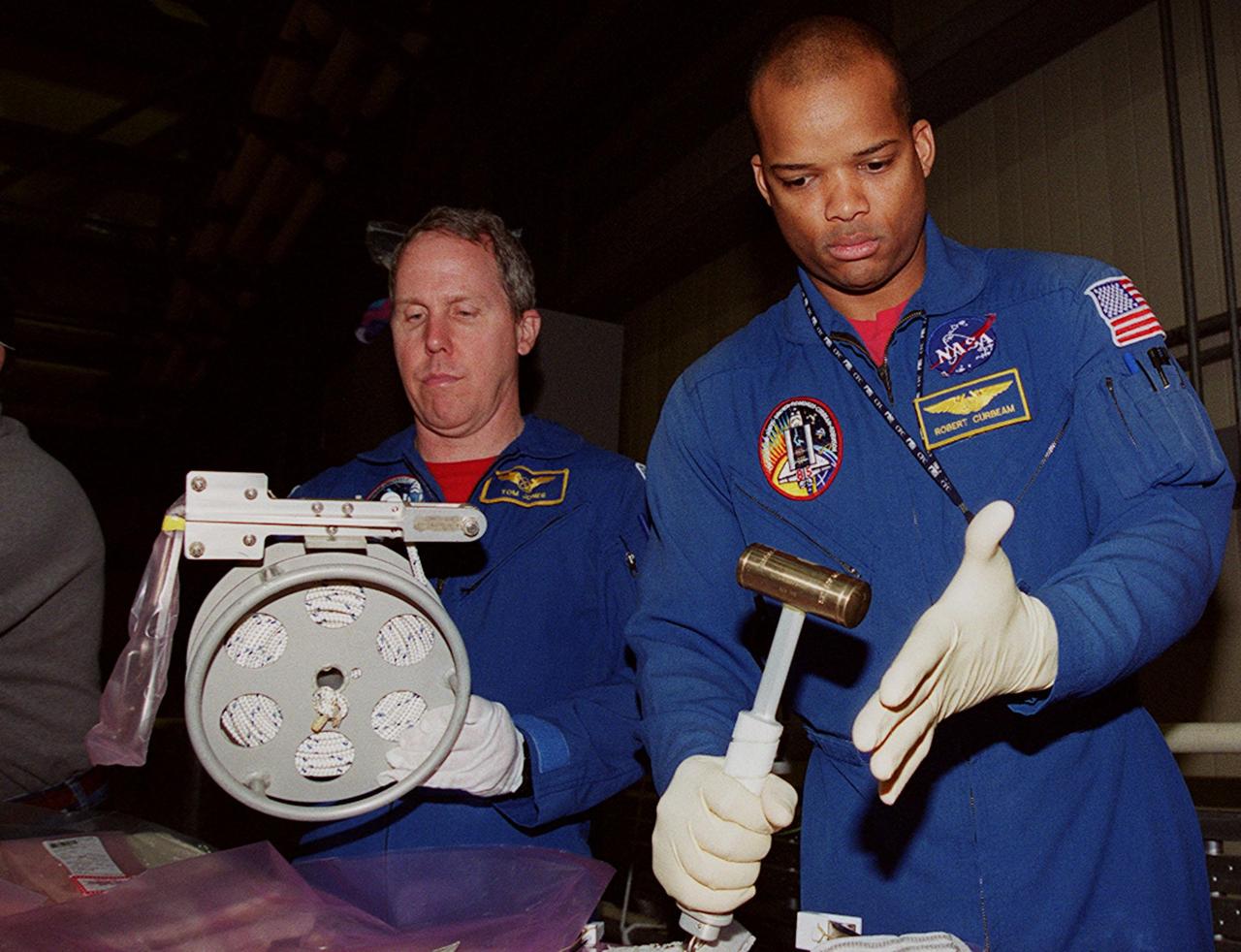
KENNEDY SPACE CENTER, FLA. -- In Orbiter Processing Facility bay 3, STS-98 Mission Specialists Tom Jones and Robert Curbeam test tools that will be used during extravehicular activities (EVA) on their mission. Scheduled for launch Jan. 18, 2001, STS-98 will be transporting the U.S. Lab, Destiny, to the International Space Station with five system racks already installed inside of the module. After delivery of electronics in the lab, electrically powered attitude control for Control Moment Gyroscopes will be activated
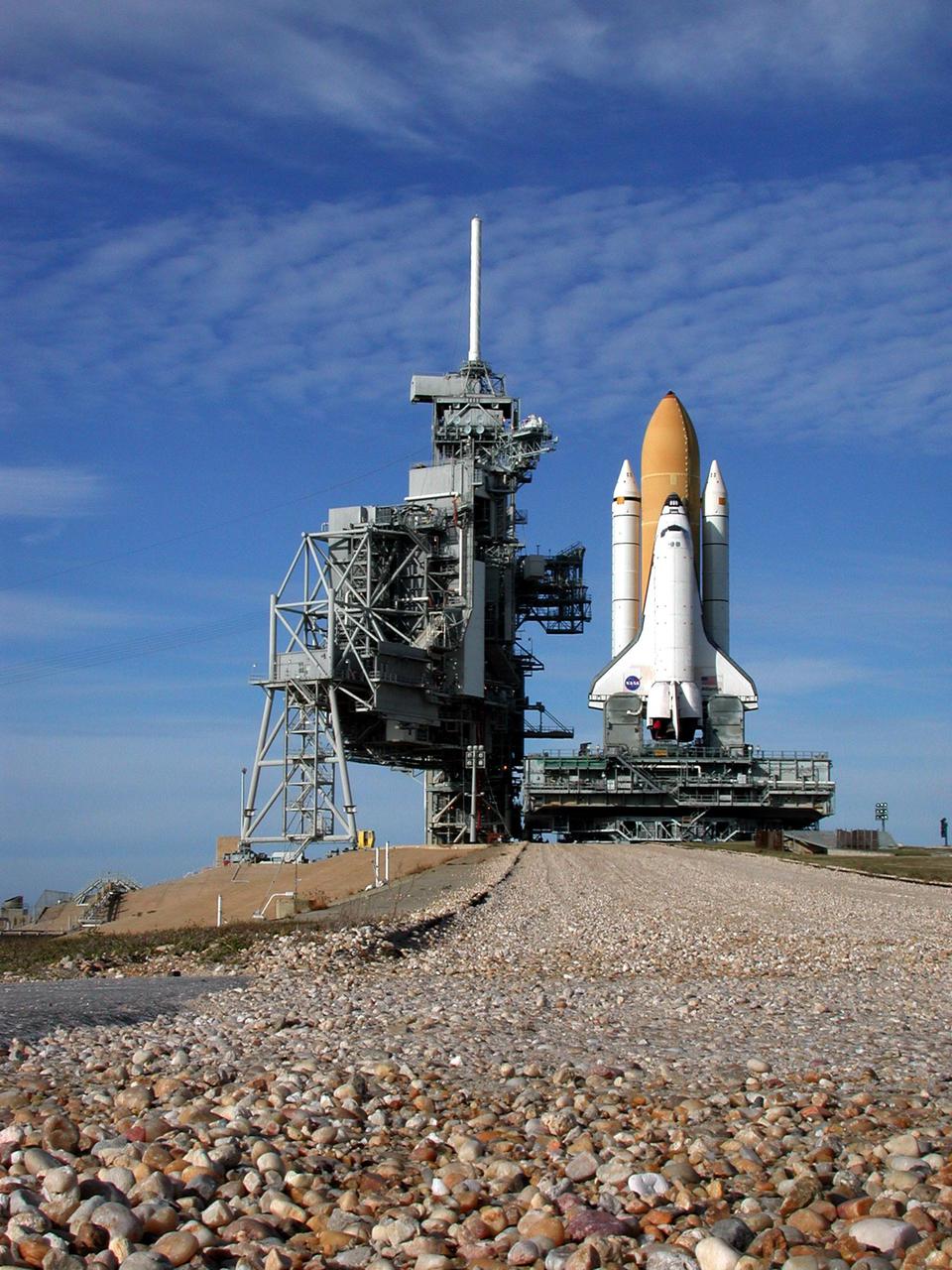
KENNEDY SPACE CENTER, Fla. -- At the top of the incline to Launch Pad 39A, Space Shuttle Atlantis nears the Rotating Service Structure (left). Atlantis will fly on mission STS-98, the seventh construction flight to the International Space Station, carrying the U.S. Laboratory, named Destiny. The lab will have five system racks already installed inside the module. After delivery of electronics in the lab, electrically powered attitude control for Control Moment Gyroscopes will be activated. Atlantis is scheduled for launch no earlier than Jan. 19, 2001, with a crew of five
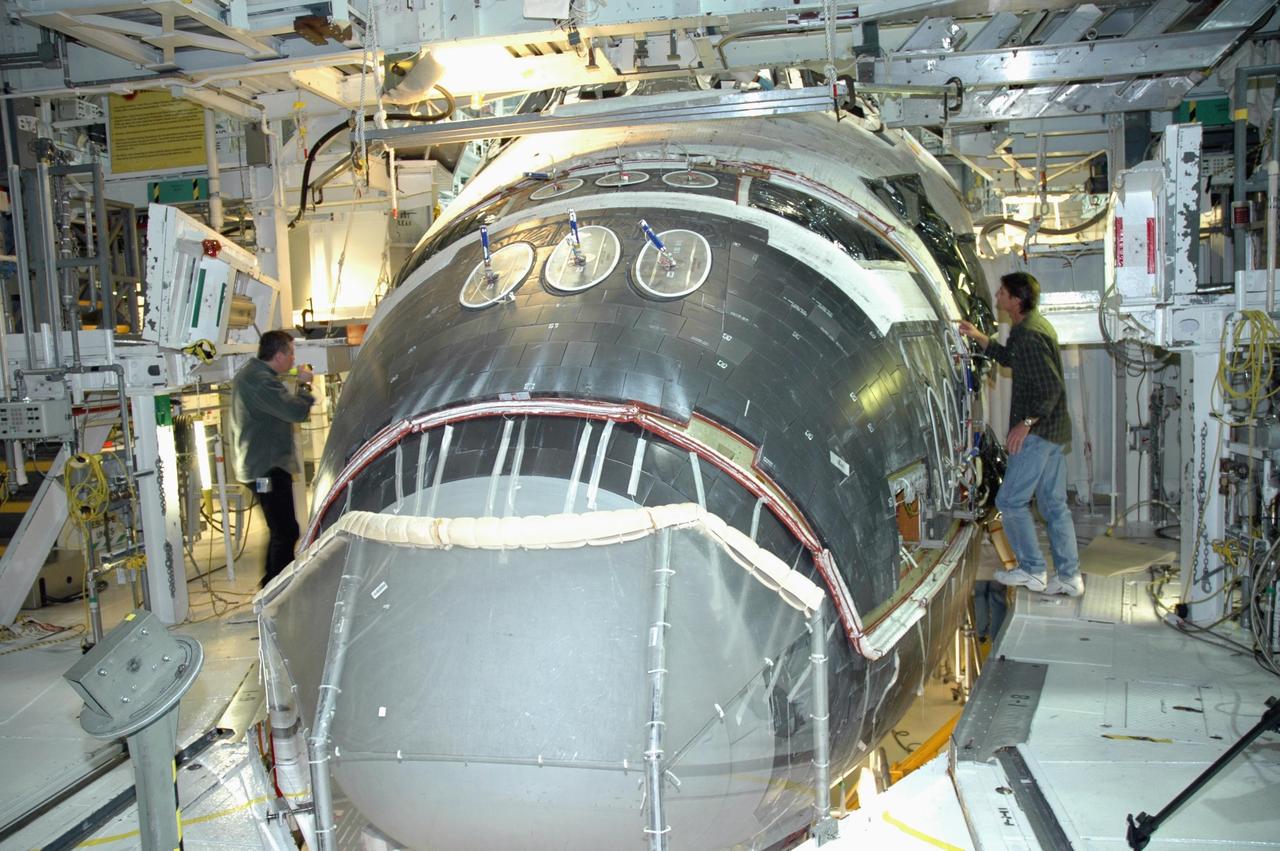
KENNEDY SPACE CENTER, FLA. -- In NASA Kennedy Space Center’s Orbiter Processing Facility Bay 1, workers are installing the forward reaction control system on Atlantis. The control system fits just behind the nose cone and provides the thrust for attitude (rotational) maneuvers (pitch, yaw and roll) and for small velocity changes along the orbiter axis (translation maneuvers). Processing of Atlantis is under way for mission STS-115, the 19th flight to the International Space Station.
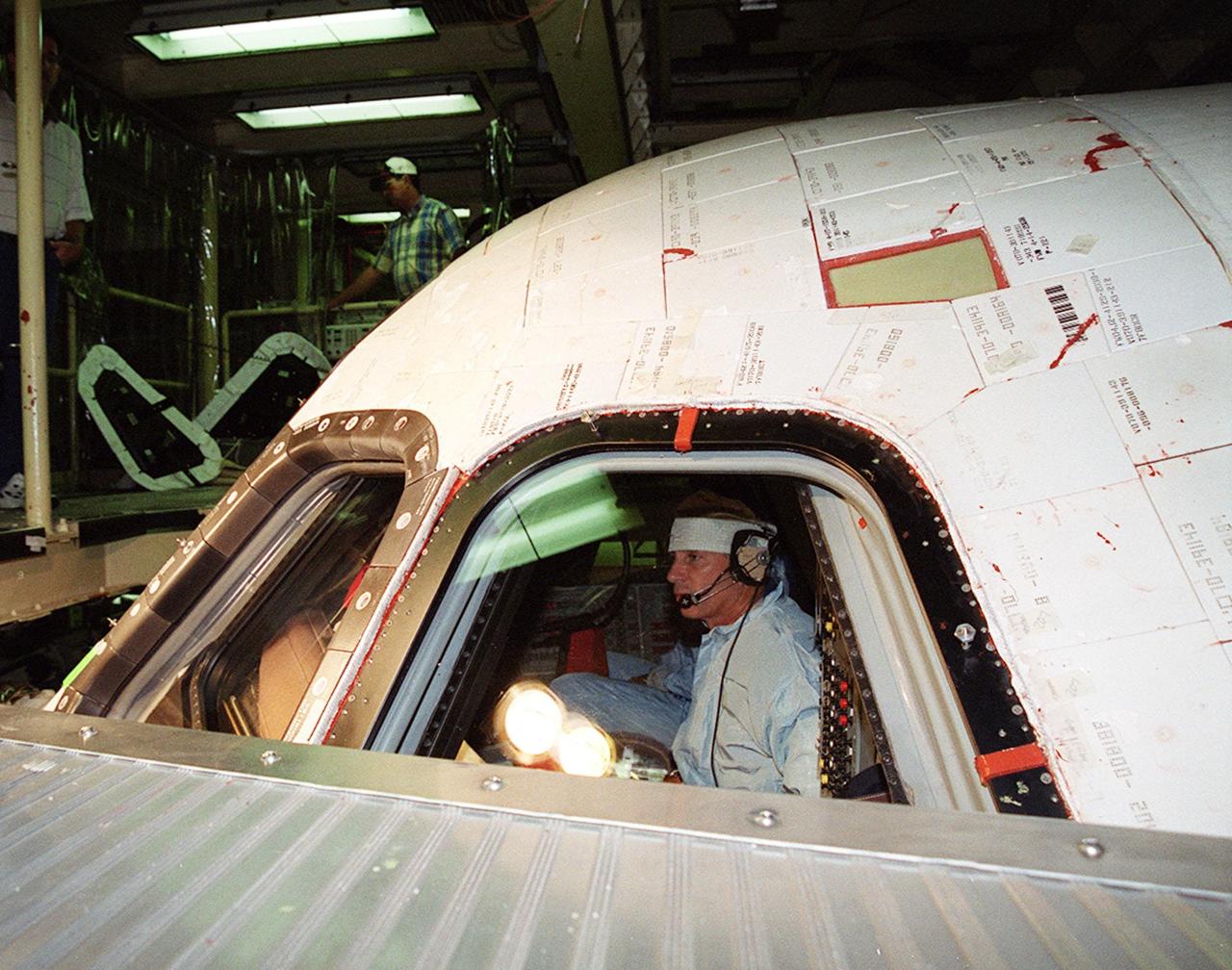
KENNEDY SPACE CENTER, FLA. -- In Orbiter Processing Facility bay 3, STS-98 Commander Ken Cockrell conducts window inspection, checking for leaks, in the cockpit of Atlantis. He and the rest of the crew are at KSC for Crew Equipment Interface Test activities. Launch on mission STS-98 is scheduled for Jan. 18, 2001. It will be transporting the U.S. Lab, Destiny, to the International Space Station with five system racks already installed inside of the module. After delivery of electronics in the lab, electrically powered attitude control for Control Moment Gyroscopes will be activated
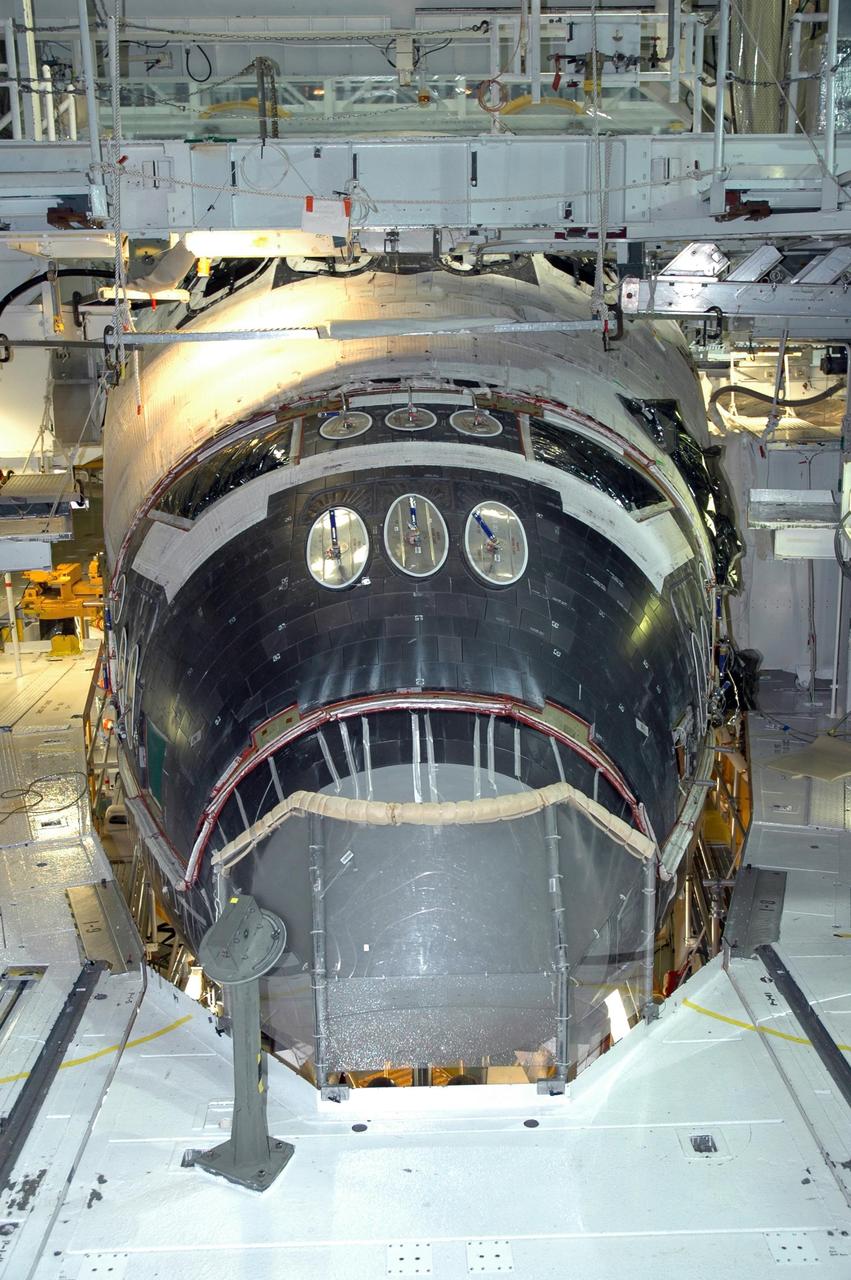
KENNEDY SPACE CENTER, FLA. -- In NASA Kennedy Space Center’s Orbiter Processing Facility Bay 1, installation of the forward reaction control system on Atlantis is complete. The control system fits just behind the nose cone and provides the thrust for attitude (rotational) maneuvers (pitch, yaw and roll) and for small velocity changes along the orbiter axis (translation maneuvers). Processing of Atlantis is under way for mission STS-115, the 19th flight to the International Space Station.
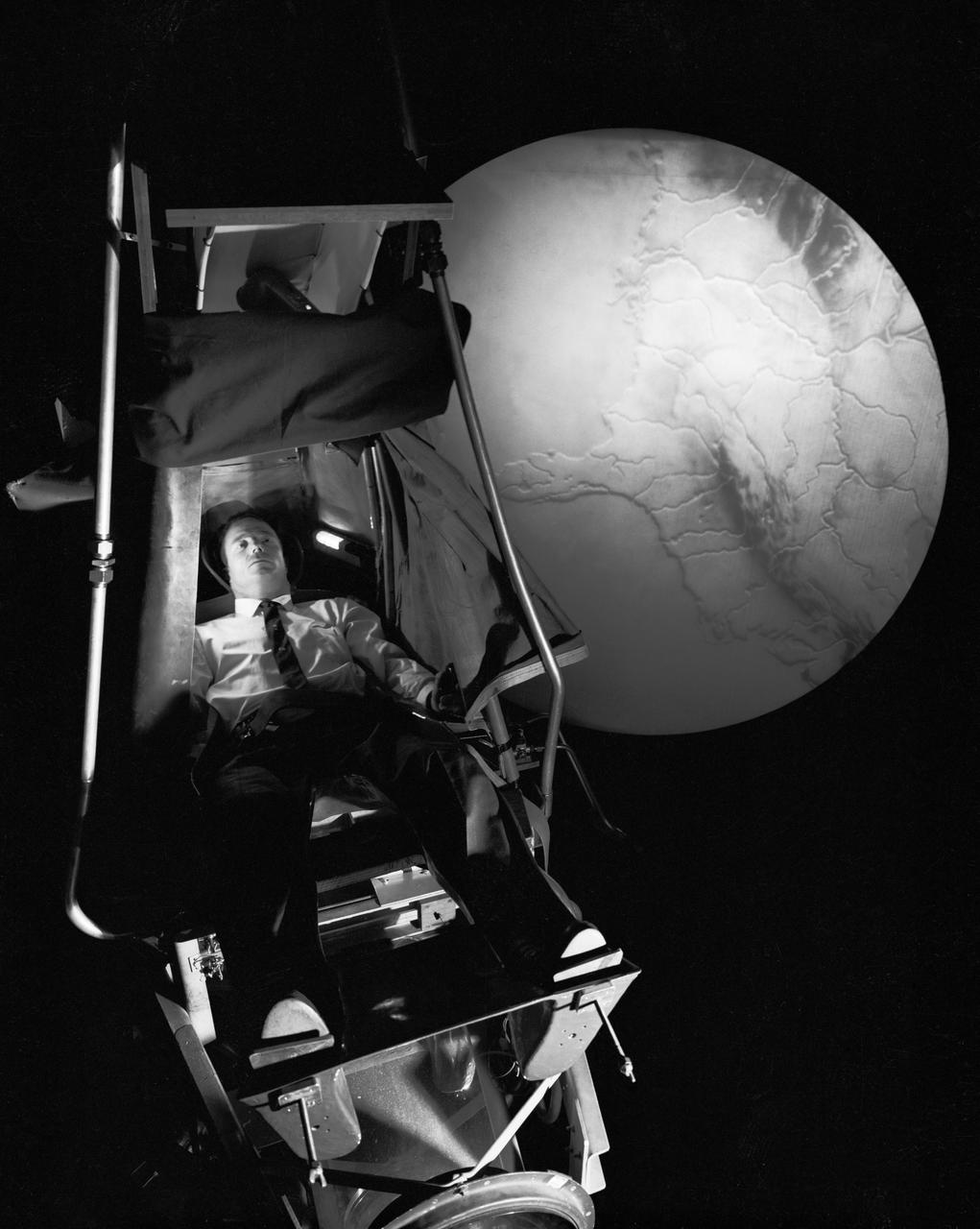
S62-01145 (1961) --- Project Mercury astronaut M. Scott Carpenter practices manual control of a spacecraft in the Air Lubricated Free Attitude (ALFA) trainer located at NASA?s Langley Air Force Base, Virginia. This trainer allows the astronaut to see the image of Earth?s surface at his feet while manually controlling the spacecraft. Carpenter has been selected as the prime pilot of the United States? second orbital flight. Photo credit: NASA
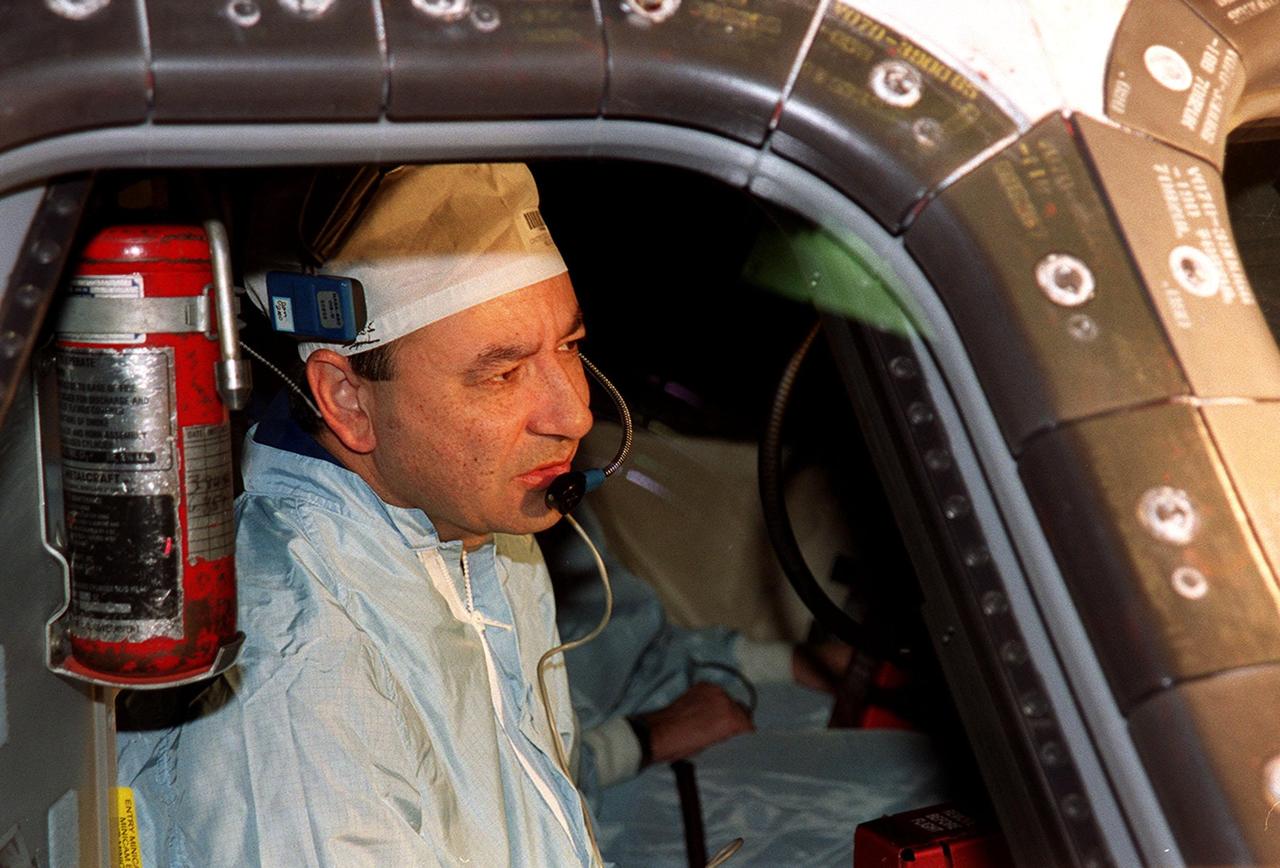
KENNEDY SPACE CENTER, FLA. -- In Orbiter Processing Facility bay 3, STS-98 Pilot Mark Polansky inspects the window in the cockpit of Atlantis. He and the rest of the crew are at KSC for Crew Equipment Interface Test activities. Launch on mission STS-98 is scheduled for Jan. 18, 2001. It will be transporting the U.S. Lab, Destiny, to the International Space Station with five system racks already installed inside of the module. After delivery of electronics in the lab, electrically powered attitude control for Control Moment Gyroscopes will be activated
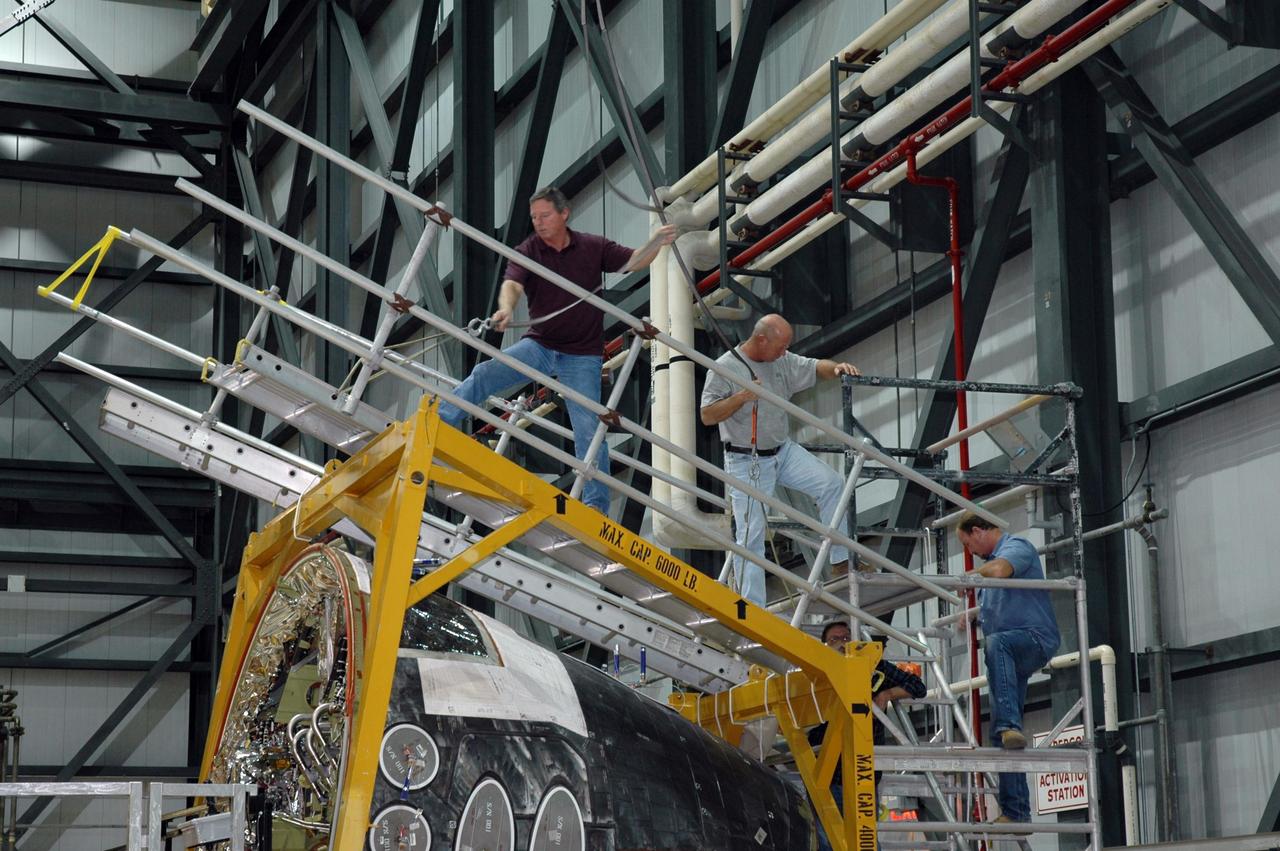
KENNEDY SPACE CENTER, FLA. -- Inside NASA Kennedy Space Center’s Orbiter Processing Facility Bay 1, workers move the sling into place around the forward reaction control system that will be installed on Atlantis. When ready, the shuttle equipment will be lifted for installation. The forward reaction control system is located in the forward fuselage nose area. During ascent of the space shuttle, it provides the thrust for attitude (rotational) maneuvers (pitch, yaw and roll) and for small velocity changes along the orbiter axis (translation maneuvers).
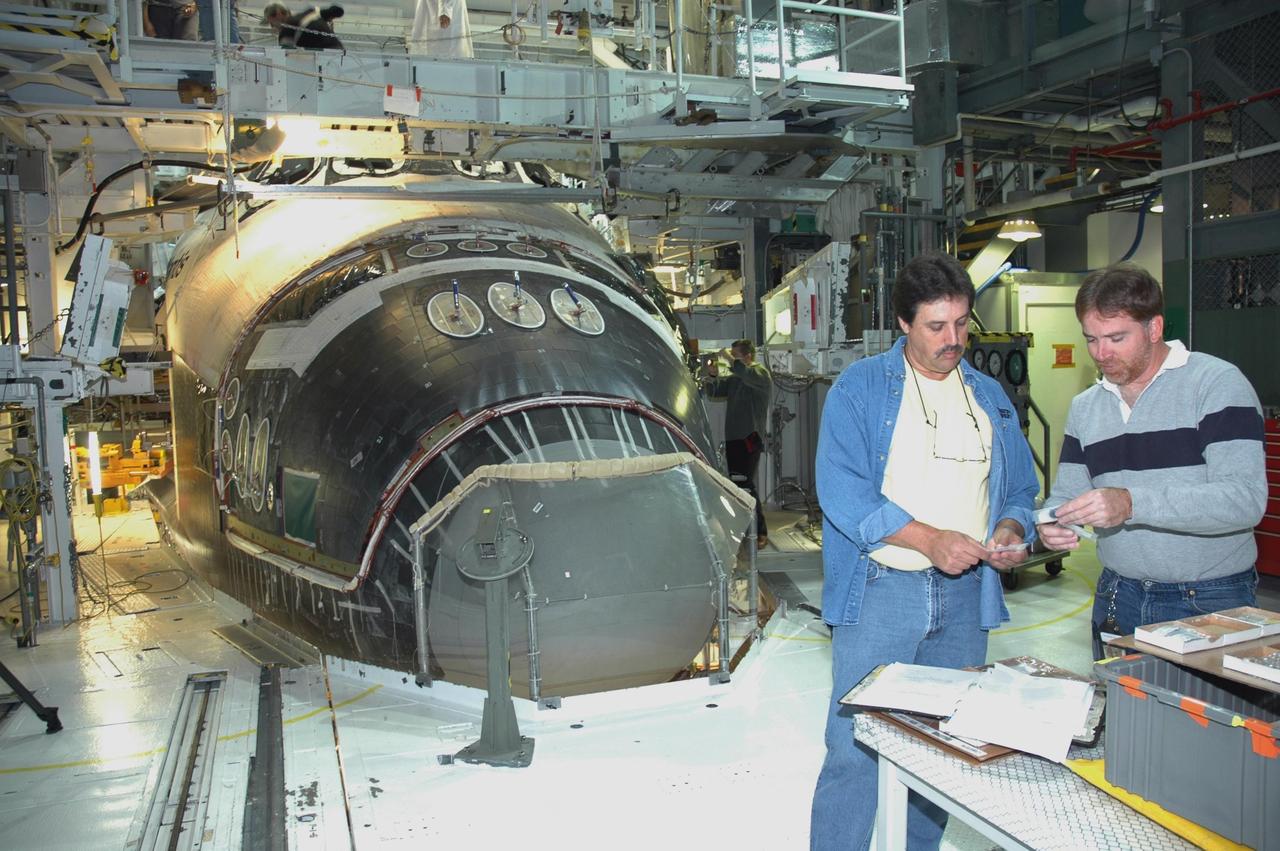
KENNEDY SPACE CENTER, FLA. -- In NASA Kennedy Space Center’s Orbiter Processing Facility Bay 1, technicians check details for the installation of the forward reaction control system on Atlantis (behind them). The control system fits just behind the nose cone and provides the thrust for attitude (rotational) maneuvers (pitch, yaw and roll) and for small velocity changes along the orbiter axis (translation maneuvers). Processing of Atlantis is under way for mission STS-115, the 19th flight to the International Space Station.
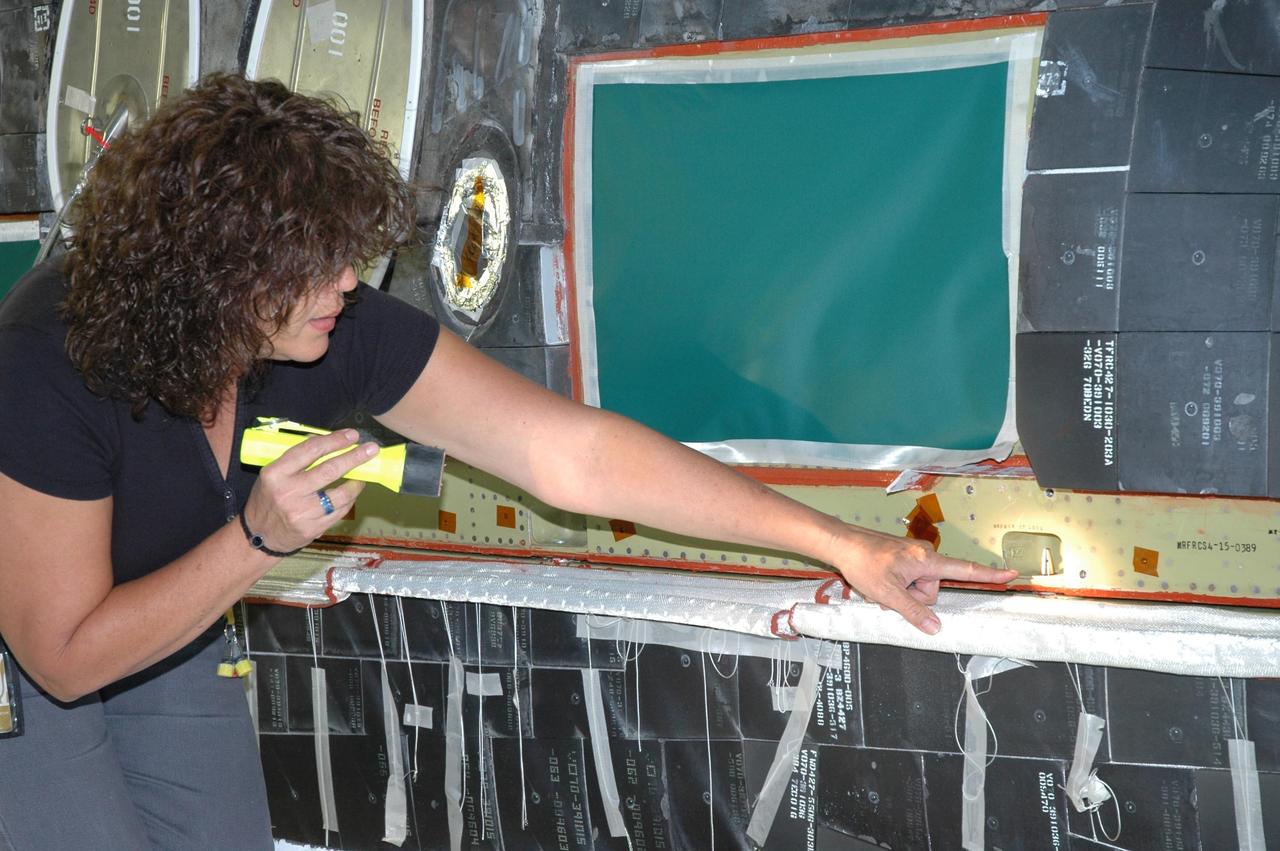
KENNEDY SPACE CENTER, FLA. -- In NASA Kennedy Space Center’s Orbiter Processing Facility Bay 1, a technician inspects a point of installation of the forward reaction control system on Atlantis. The control system fits just behind the nose cone and provides the thrust for attitude (rotational) maneuvers (pitch, yaw and roll) and for small velocity changes along the orbiter axis (translation maneuvers). Processing of Atlantis is under way for mission STS-115, the 19th flight to the International Space Station.
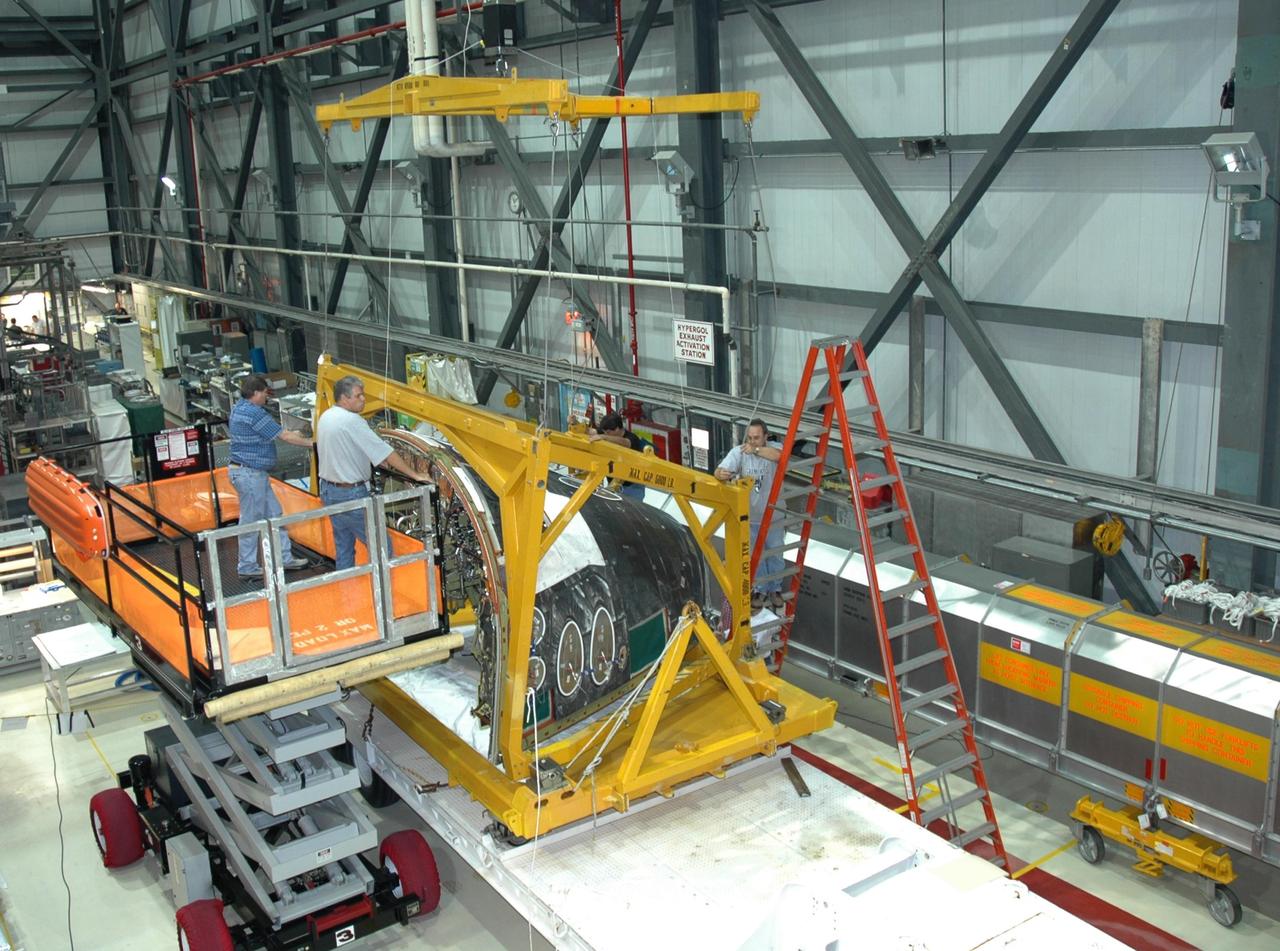
KENNEDY SPACE CENTER, FLA. -- Inside NASA Kennedy Space Center’s Orbiter Processing Facility Bay 1, workers get ready to lift the sling placed round the forward reaction control system that will be installed on Atlantis. The forward reaction control system is located in the forward fuselage nose area. During ascent of the space shuttle, it provides the thrust for attitude (rotational) maneuvers (pitch, yaw and roll) and for small velocity changes along the orbiter axis (translation maneuvers).
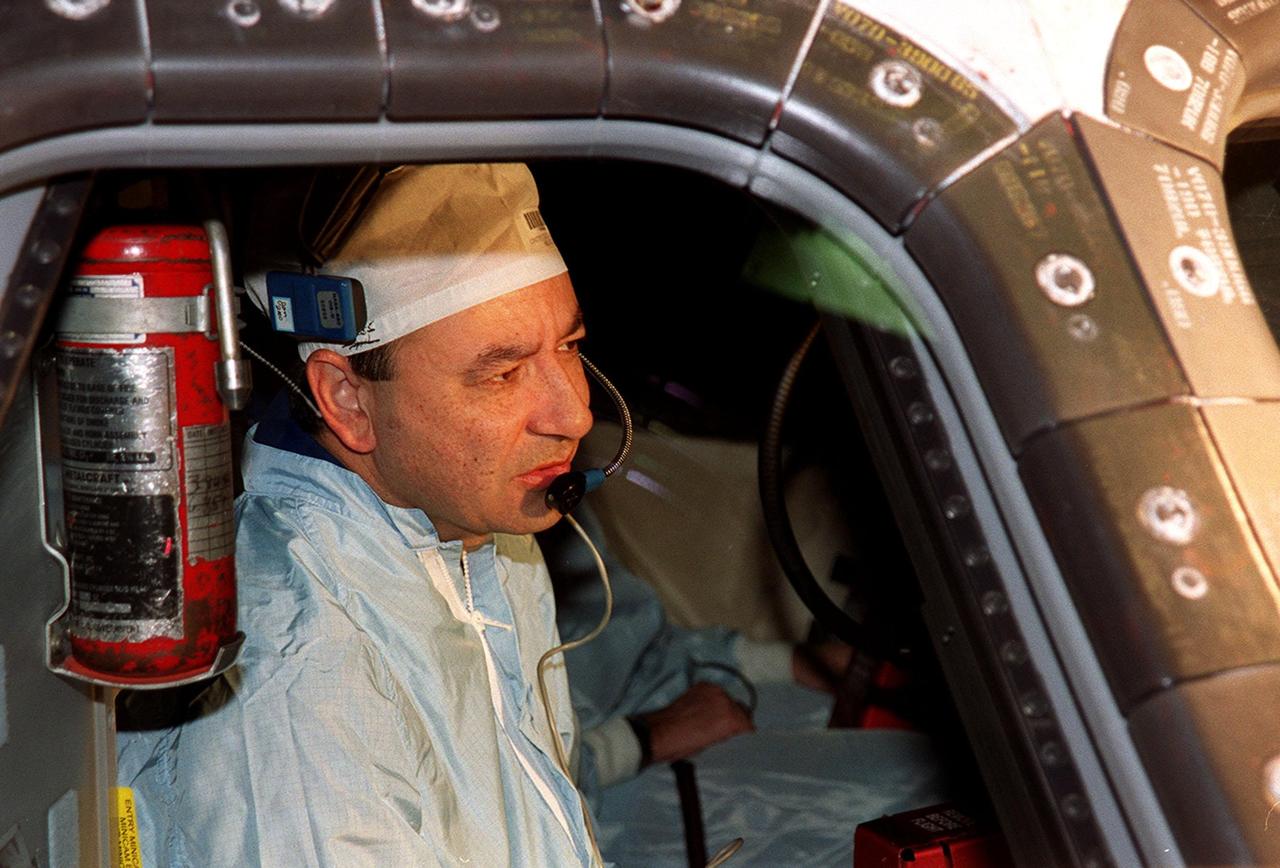
KENNEDY SPACE CENTER, FLA. -- In Orbiter Processing Facility bay 3, STS-98 Pilot Mark Polansky inspects the window in the cockpit of Atlantis. He and the rest of the crew are at KSC for Crew Equipment Interface Test activities. Launch on mission STS-98 is scheduled for Jan. 18, 2001. It will be transporting the U.S. Lab, Destiny, to the International Space Station with five system racks already installed inside of the module. After delivery of electronics in the lab, electrically powered attitude control for Control Moment Gyroscopes will be activated
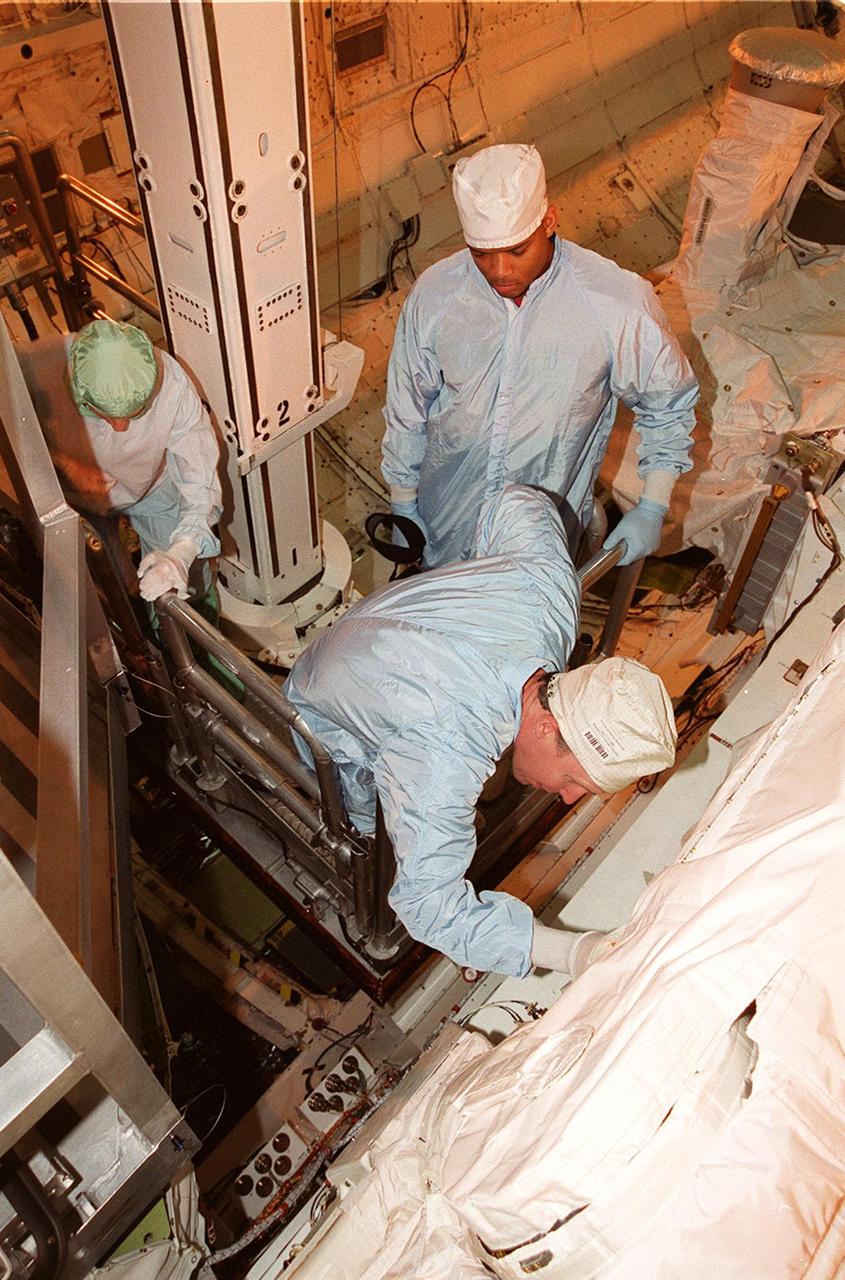
KENNEDY SPACE CENTER, FLA. -- Working on the Orbiter Docking System of orbiter Atlantis are Mission Specialists Tom Jones (leaning over) and Robert Curbeam. They and the rest of the crew are at KSC for Crew Equipment Interface Test activities. Launch on mission STS-98 is scheduled for Jan. 18, 2001. It will be transporting the U.S. Lab, Destiny, to the International Space Station with five system racks already installed inside of the module. After delivery of electronics in the lab, electrically powered attitude control for Control Moment Gyroscopes will be activated
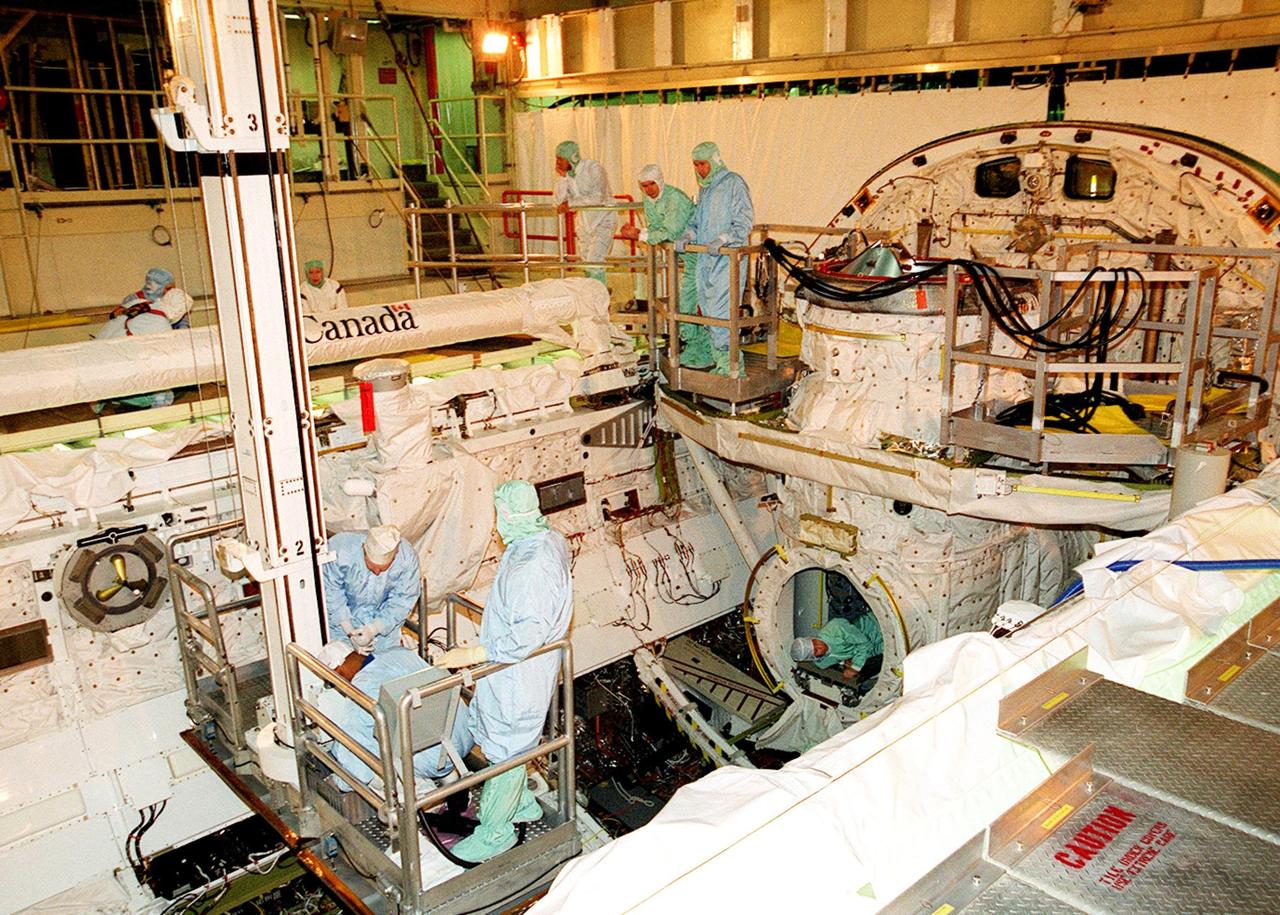
KENNEDY SPACE CENTER, FLA. -- The STS-98 crew looks over components of the equipment already installed in the payload bay of orbiter Atlantis, which is in the Orbiter Processing Facility bay 3. The crew is at KSC for Crew Equipment Interface Test activities. Launch on mission STS-98 is scheduled for Jan. 18, 2001. It will be transporting the U.S. Lab, Destiny, to the International Space Station with five system racks already installed inside of the module. After delivery of electronics in the lab, electrically powered attitude control for Control Moment Gyroscopes will be activated
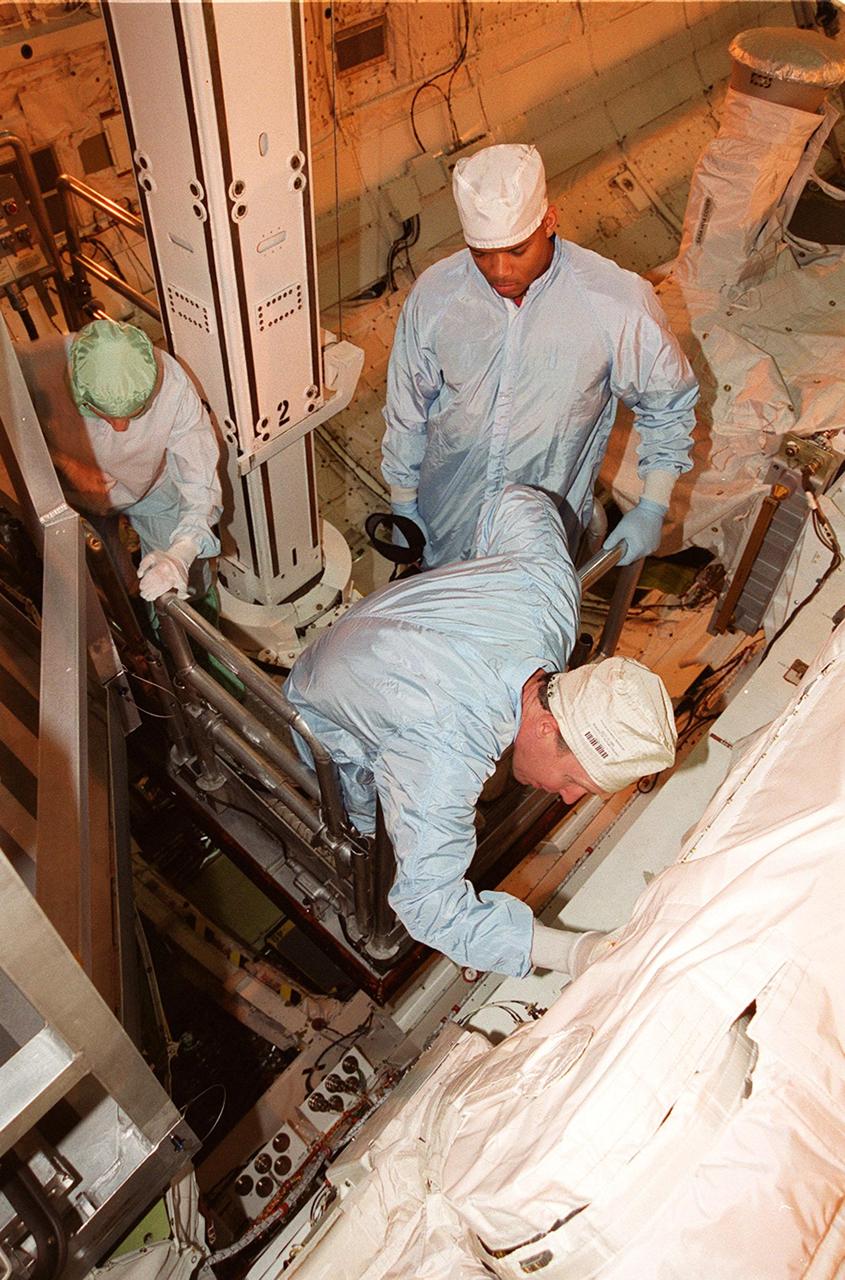
KENNEDY SPACE CENTER, FLA. -- Working on the Orbiter Docking System of orbiter Atlantis are Mission Specialists Tom Jones (leaning over) and Robert Curbeam. They and the rest of the crew are at KSC for Crew Equipment Interface Test activities. Launch on mission STS-98 is scheduled for Jan. 18, 2001. It will be transporting the U.S. Lab, Destiny, to the International Space Station with five system racks already installed inside of the module. After delivery of electronics in the lab, electrically powered attitude control for Control Moment Gyroscopes will be activated
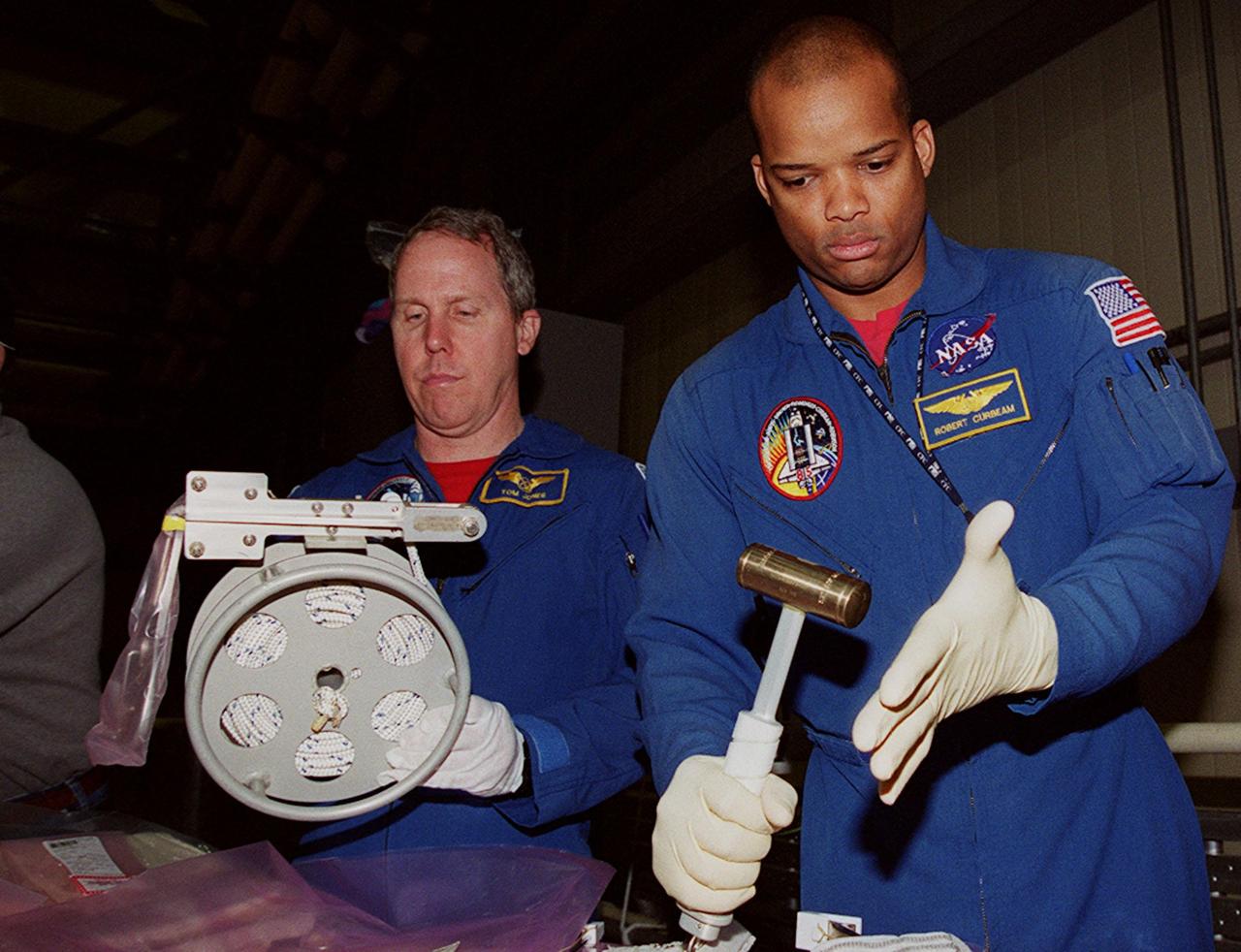
KENNEDY SPACE CENTER, FLA. -- In Orbiter Processing Facility bay 3, STS-98 Mission Specialists Tom Jones and Robert Curbeam test tools that will be used during extravehicular activities (EVA) on their mission. Scheduled for launch Jan. 18, 2001, STS-98 will be transporting the U.S. Lab, Destiny, to the International Space Station with five system racks already installed inside of the module. After delivery of electronics in the lab, electrically powered attitude control for Control Moment Gyroscopes will be activated
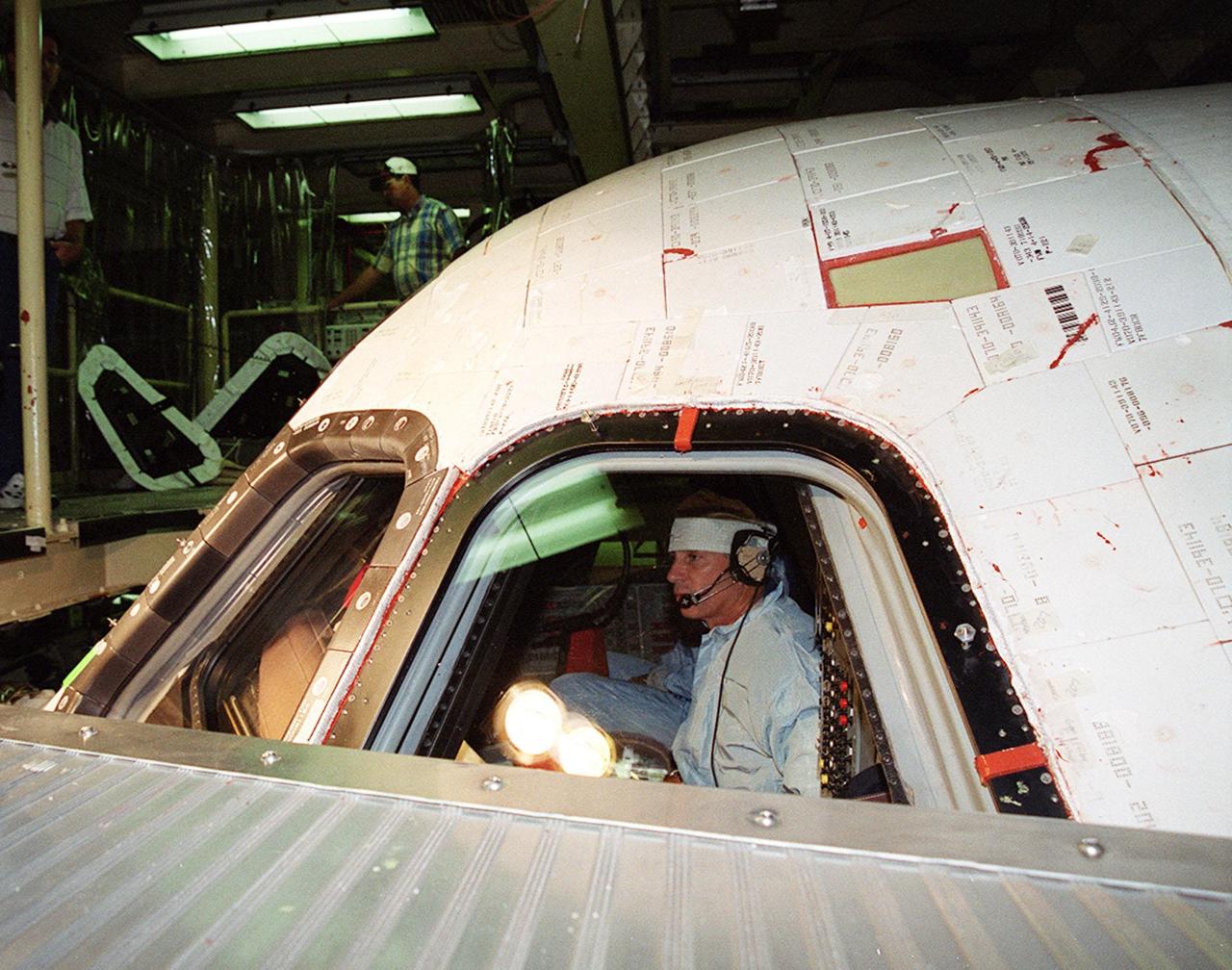
KENNEDY SPACE CENTER, FLA. -- In Orbiter Processing Facility bay 3, STS-98 Commander Ken Cockrell conducts window inspection, checking for leaks, in the cockpit of Atlantis. He and the rest of the crew are at KSC for Crew Equipment Interface Test activities. Launch on mission STS-98 is scheduled for Jan. 18, 2001. It will be transporting the U.S. Lab, Destiny, to the International Space Station with five system racks already installed inside of the module. After delivery of electronics in the lab, electrically powered attitude control for Control Moment Gyroscopes will be activated
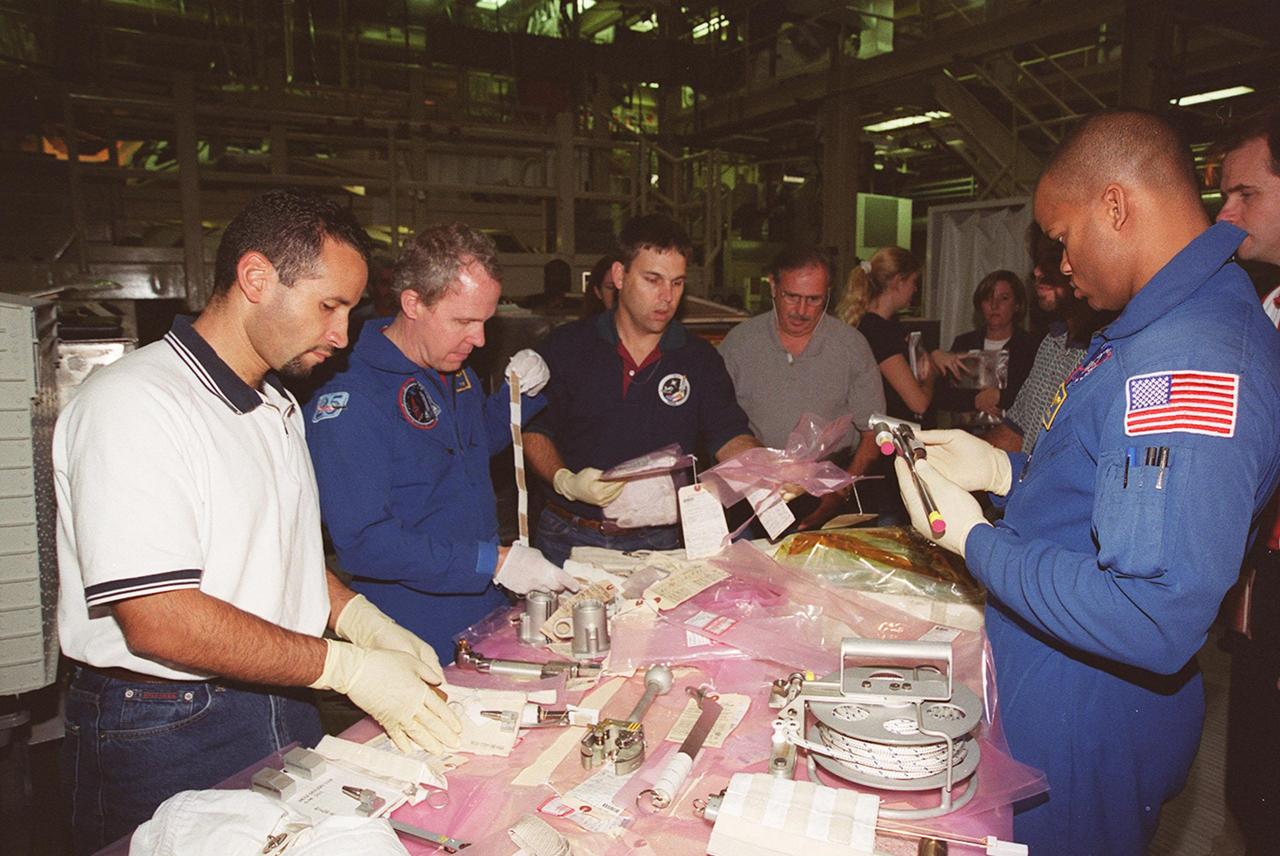
KENNEDY SPACE CENTER, FLA. -- In Orbiter Processing Facility bay 3, STS-98 Mission Specialists Tom Jones (second from left) and Robert Curbeam (right) test tools that will be used during extravehicular activities (EVA) on their mission. Scheduled for launch Jan. 18, 2001, STS-98 will be transporting the U.S. Lab, Destiny, to the International Space Station with five system racks already installed inside of the module. After delivery of electronics in the lab, electrically powered attitude control for Control Moment Gyroscopes will be activated
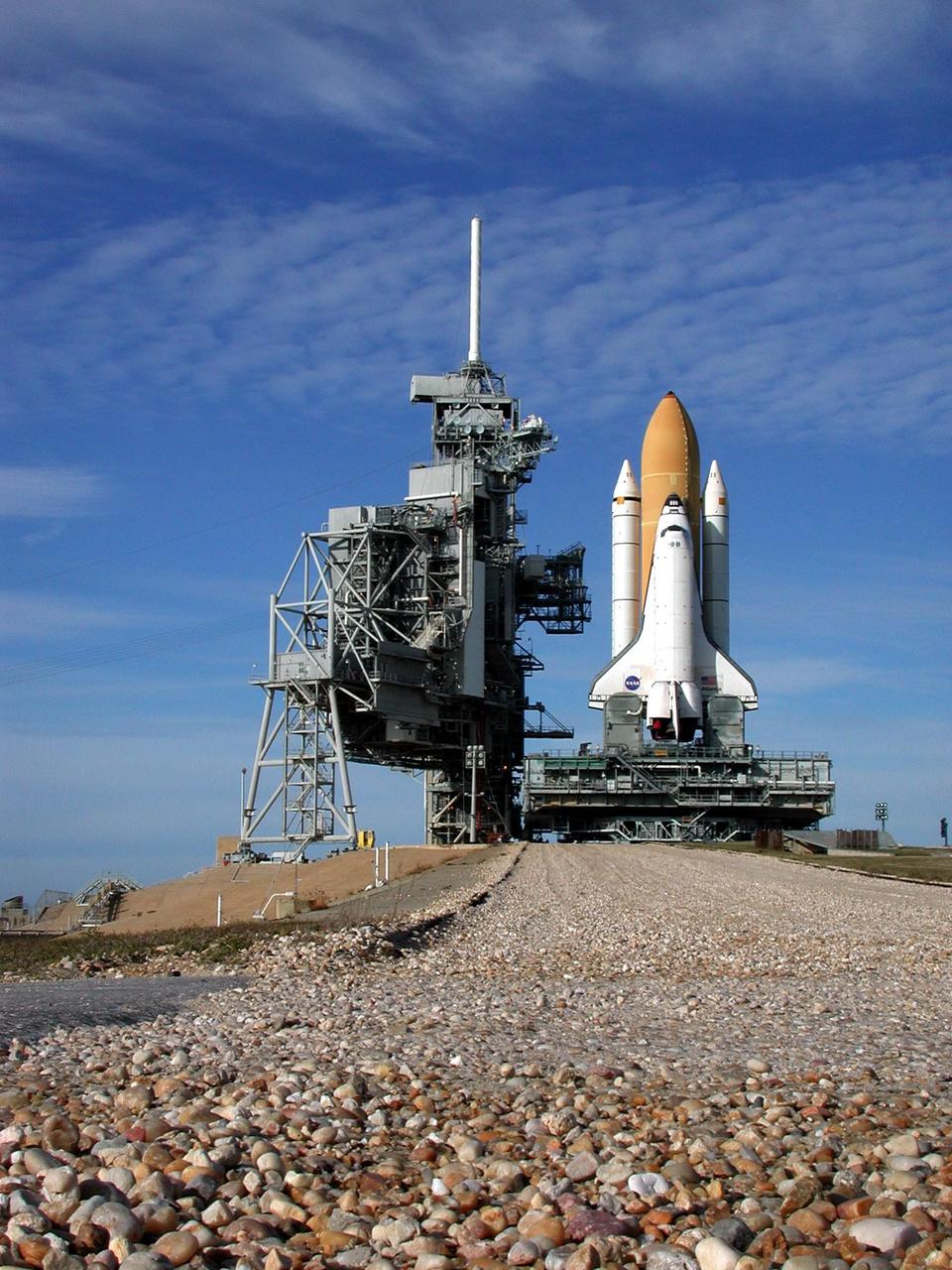
KENNEDY SPACE CENTER, Fla. -- At the top of the incline to Launch Pad 39A, Space Shuttle Atlantis nears the Rotating Service Structure (left). Atlantis will fly on mission STS-98, the seventh construction flight to the International Space Station, carrying the U.S. Laboratory, named Destiny. The lab will have five system racks already installed inside the module. After delivery of electronics in the lab, electrically powered attitude control for Control Moment Gyroscopes will be activated. Atlantis is scheduled for launch no earlier than Jan. 19, 2001, with a crew of five
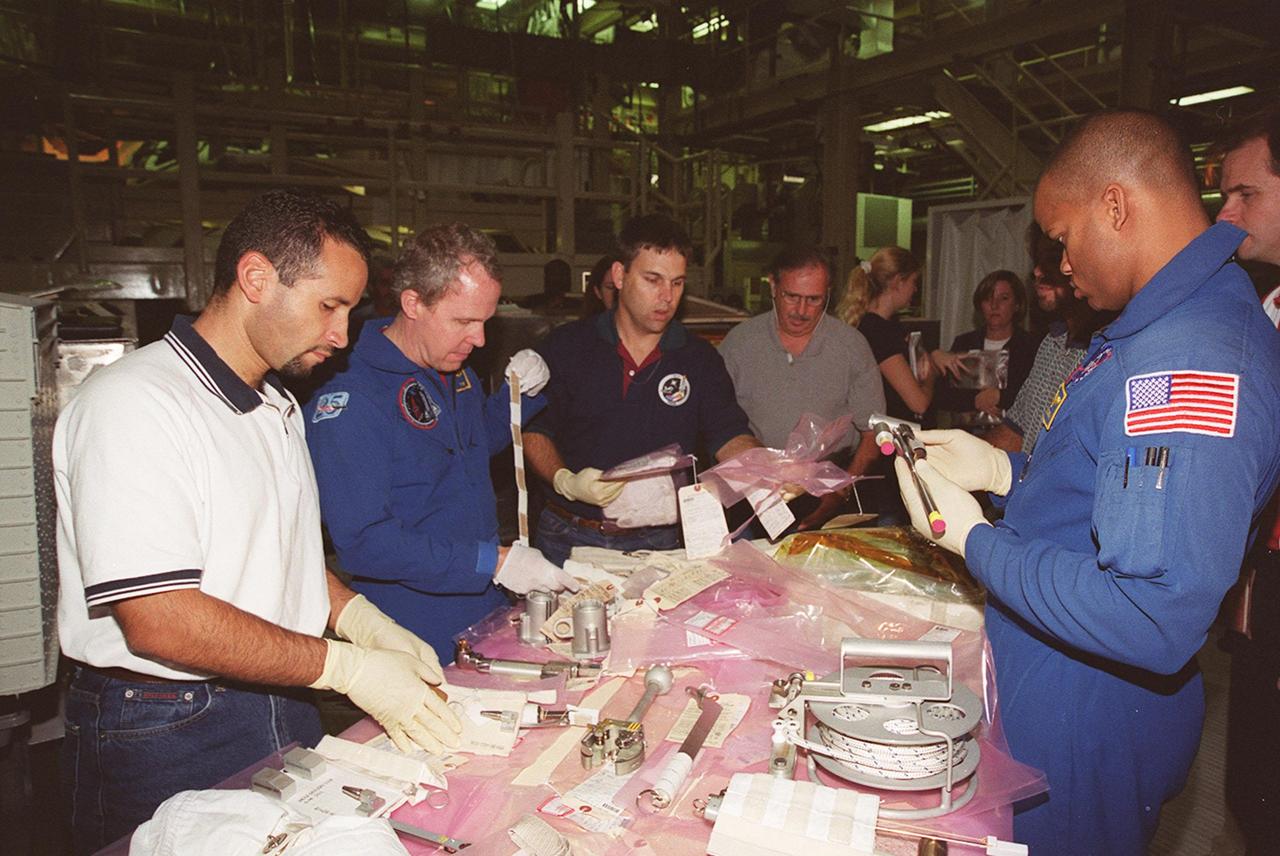
KENNEDY SPACE CENTER, FLA. -- In Orbiter Processing Facility bay 3, STS-98 Mission Specialists Tom Jones (second from left) and Robert Curbeam (right) test tools that will be used during extravehicular activities (EVA) on their mission. Scheduled for launch Jan. 18, 2001, STS-98 will be transporting the U.S. Lab, Destiny, to the International Space Station with five system racks already installed inside of the module. After delivery of electronics in the lab, electrically powered attitude control for Control Moment Gyroscopes will be activated
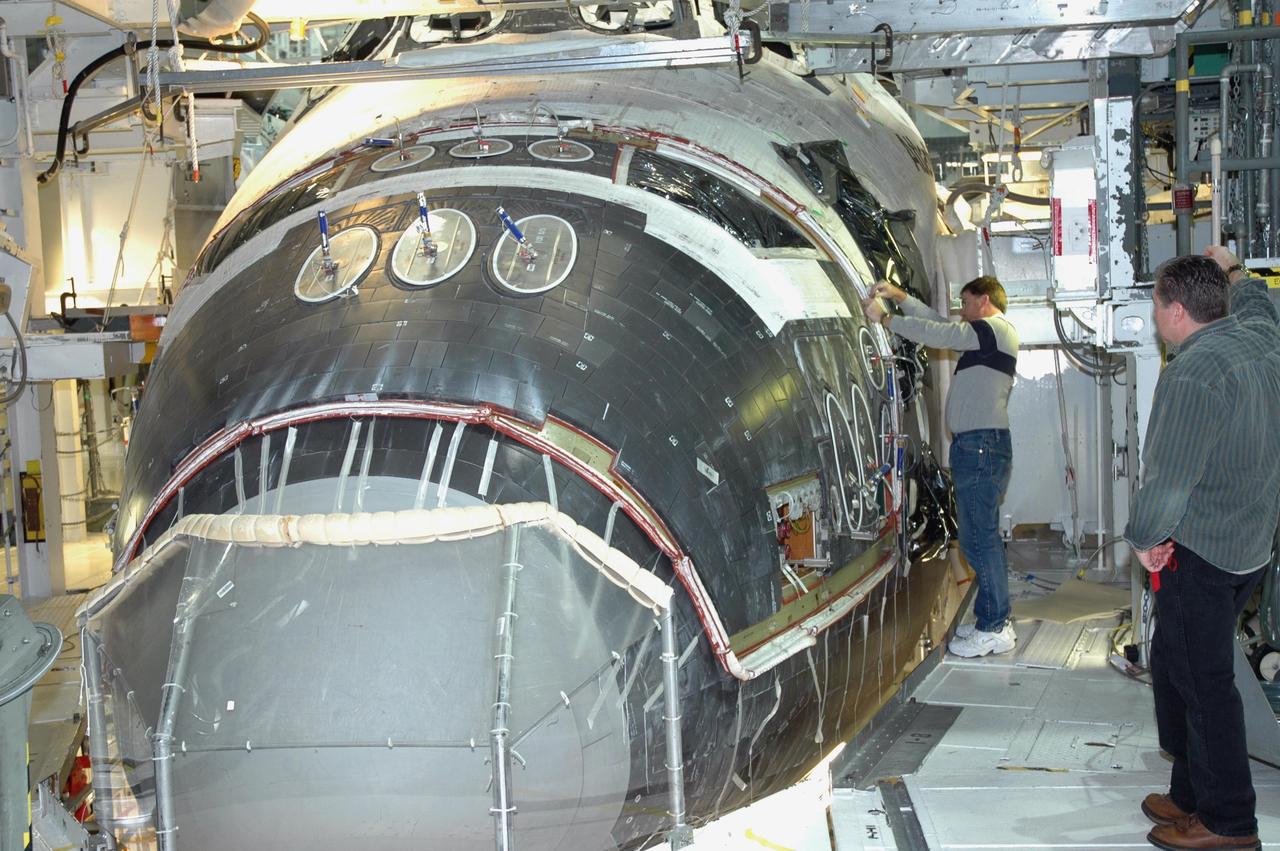
KENNEDY SPACE CENTER, FLA. -- In NASA Kennedy Space Center’s Orbiter Processing Facility Bay 1, workers are installing the forward reaction control system on Atlantis. The control system fits just behind the nose cone and provides the thrust for attitude (rotational) maneuvers (pitch, yaw and roll) and for small velocity changes along the orbiter axis (translation maneuvers). Processing of Atlantis is under way for mission STS-115, the 19th flight to the International Space Station.

KENNEDY SPACE CENTER, FLA. - In the Space Station Processing Facility, the Control Moment Gyroscope (CMG) is separated from its base and workers help guide it toward a shipping container for its return to the vendor for repair. The faulty CMG was removed from the International Space Station and replaced with a new one on mission STS-114 in August. A control moment gyroscope is an actuator used to apply very high attitude-control torques to agile spacecraft. The Space Station uses four massive control moment gyroscopes to maintain the Station’s orientation in space.
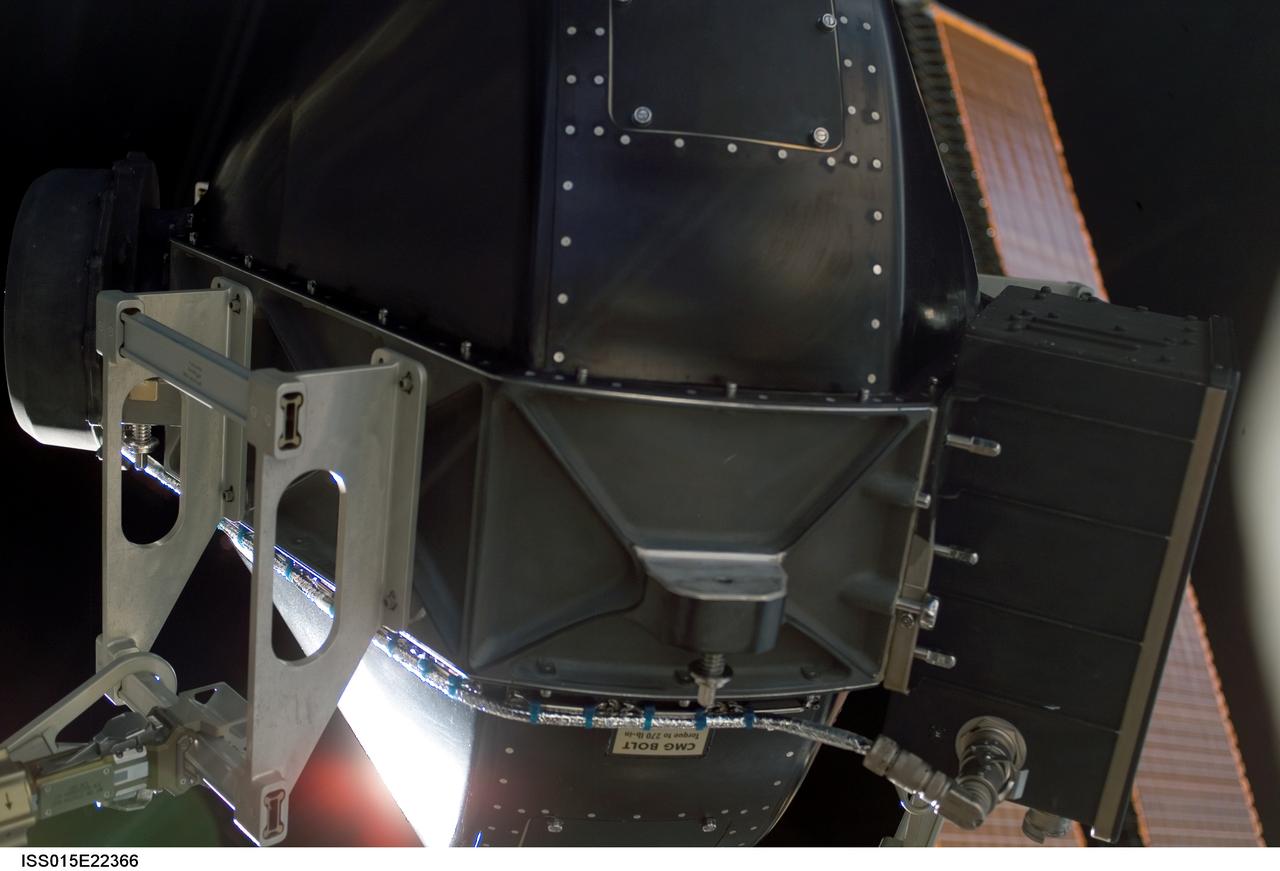
ISS015-E-22366 (13 Aug. 2007) --- A close-up view of the new control moment gyroscope (CMG) photographed by a crewmember during the mission's second planned session of extravehicular activity (EVA). During the spacewalk, Canadian Space Agency's astronaut Dave Williams (out of frame) and astronaut Rick Mastracchio (out of frame), both STS-118 mission specialists, removed a faulty control moment gyroscope (CMG-3) and installed a new CMG into the station's Z1 truss. The failed CMG will remain at its temporary stowage location on the station's exterior before it is returned to Earth on a later shuttle mission. The new gyroscope is one of four CMGs that are used to control the station's attitude in orbit.
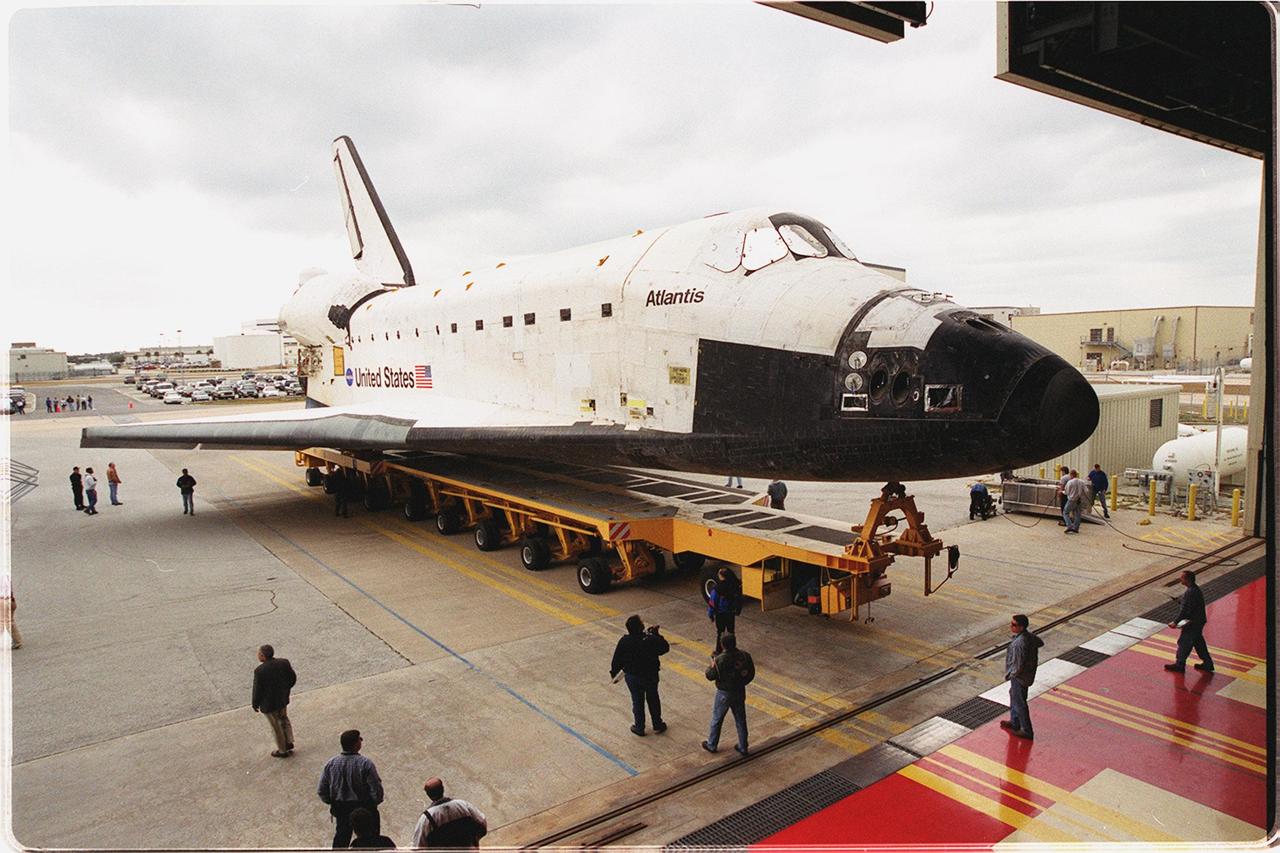
The orbiter Atlantis rolls out of the Orbiter Processing Facility bay 3 on its transporter. It is being transferred to the Vehicle Assembly Building where it will be raised to vertical and lifted up and into high bay 3 for stacking with its external tank and solid rocket boosters. Atlantis will fly on mission STS-98, the seventh construction flight to the International Space Station. The orbiter will carry in its payload bay the U.S. Laboratory, named Destiny, that will have five system racks already installed inside of the module. After delivery of electronics in the lab, electrically powered attitude control for Control Moment Gyroscopes will be activated. Atlantis is scheduled for launch on Jan. 18, 2001, at 2:44 a.m. EST, with a crew of five
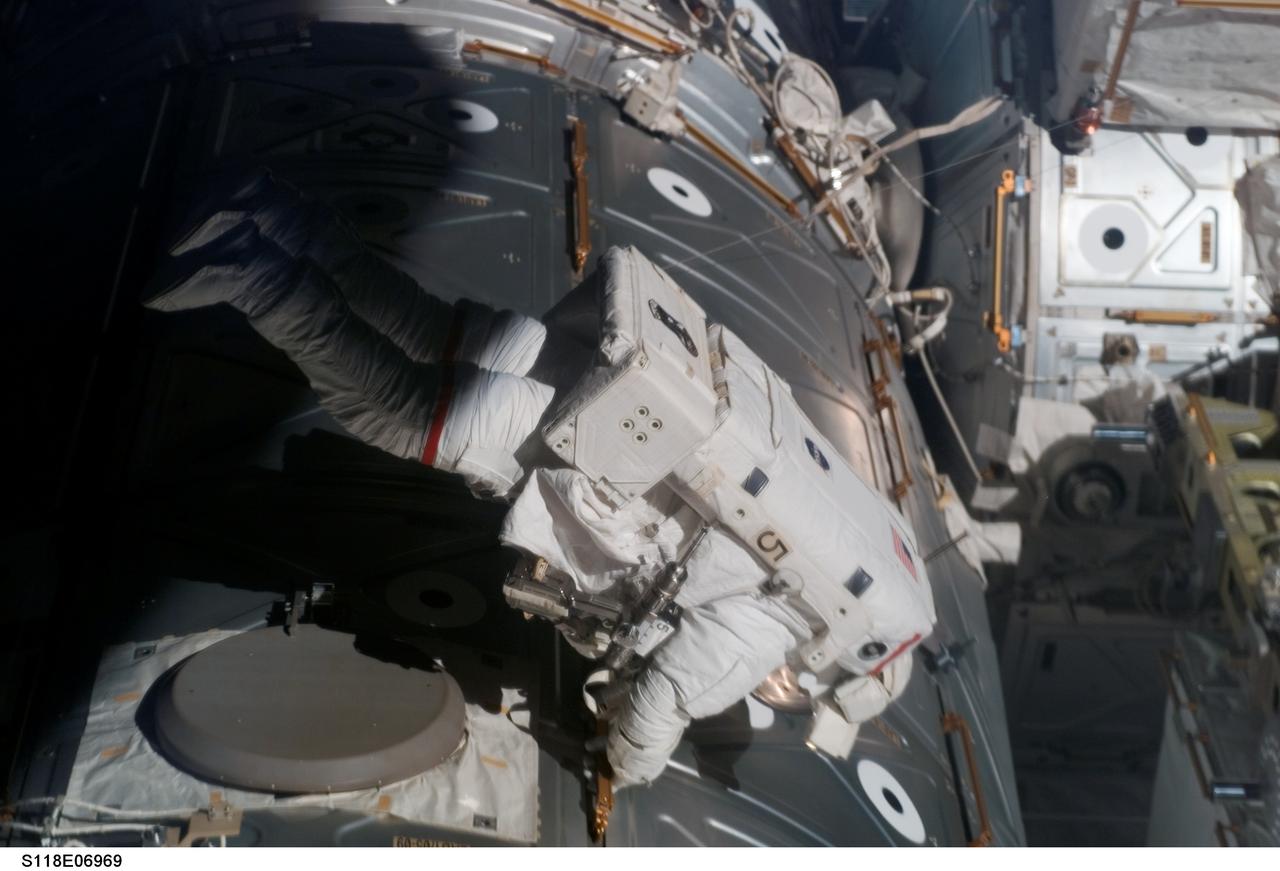
S118-E-06969 (13 Aug. 2007) --- Astronaut Rick Mastracchio, STS-118 mission specialist, participates in the mission's second planned session of extravehicular activity (EVA) as construction and maintenance continue on the International Space Station. During the 6-hour, 28-minute spacewalk, Mastracchio and astronaut Dave Williams (out of frame), mission specialist representing the Canadian Space Agency, removed a faulty control moment gyroscope (CMG-3) and installed a new CMG into the station's Z1 truss. The failed CMG will remain at its temporary stowage location on the station's exterior until it is returned to Earth on a later shuttle mission. The new gyroscope is one of four CMGs that are used to control the station's attitude in orbit.

In the Space Station Processing Facility, STS-98 Mission Specialist Marsha Ivins wields a tool on part of the U.S. Lab, Destiny. The crew is checking out equipment inside the lab as part of Crew Equipment Interface Test activities, becoming familiar with equipment it will be handling during the mission. Others in the crew are Commander Ken Cockrell, Pilot Mark Polansky and Mission Specialists Robert Curbeam and Thomas Jones. The mission will be transporting the Lab to the International Space Station with five system racks already installed inside of the module. With delivery of electronics in the lab, electrically powered attitude control for Control Moment Gyroscopes will be activated. The STS-98 launch is scheduled for Jan. 18, 2001
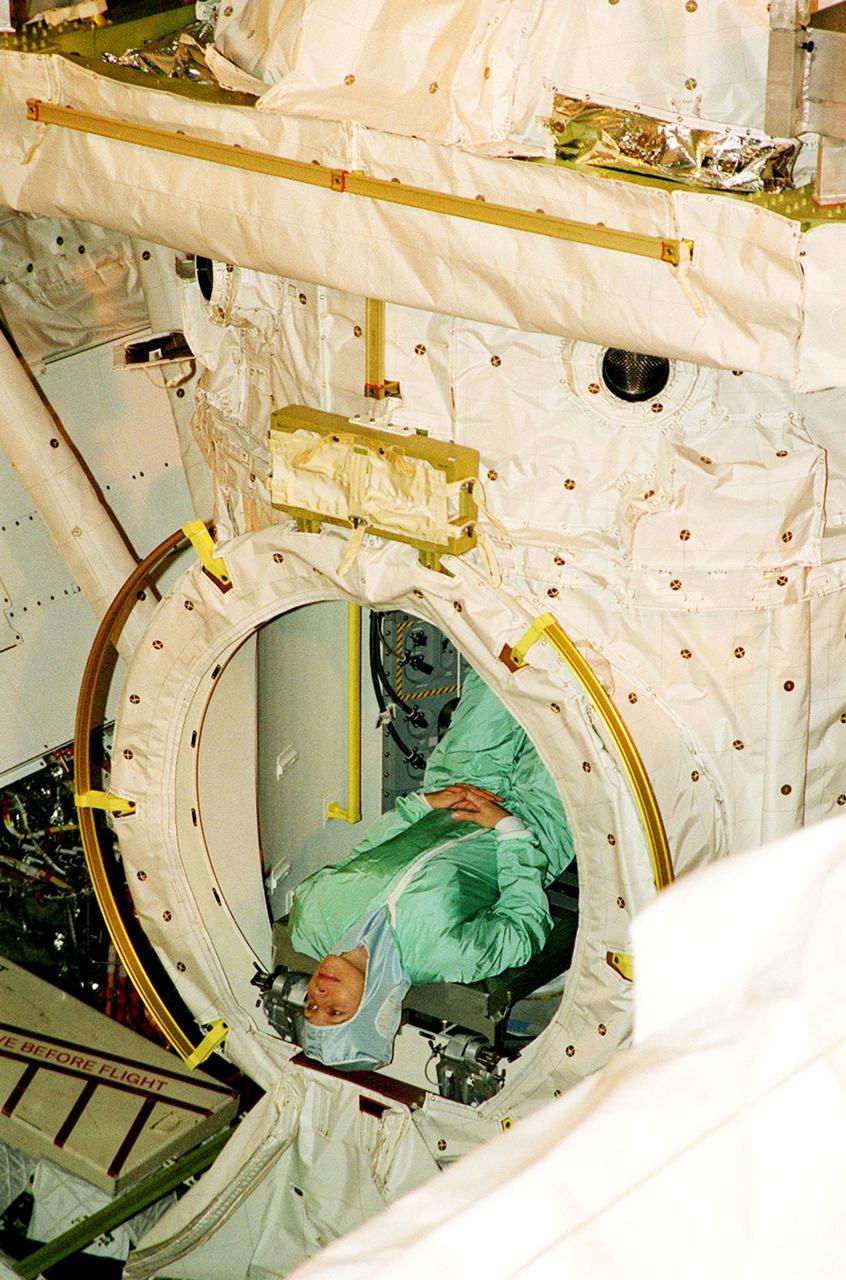
KENNEDY SPACE CENTER, FLA. -- STS-98 Mission Specialist Marsha Ivins takes a topsy-turvy look at the EVA hatch in the Orbiter Docking System, which is already installed in the payload bay of orbiter Atlantis. She and the rest of the crew are at KSC for Crew Equipment Interface Test activities. Launch on mission STS-98 is scheduled for Jan. 18, 2001. It will be transporting the U.S. Lab, Destiny, to the International Space Station with five system racks already installed inside of the module. After delivery of electronics in the lab, electrically powered attitude control for Control Moment Gyroscopes will be activated
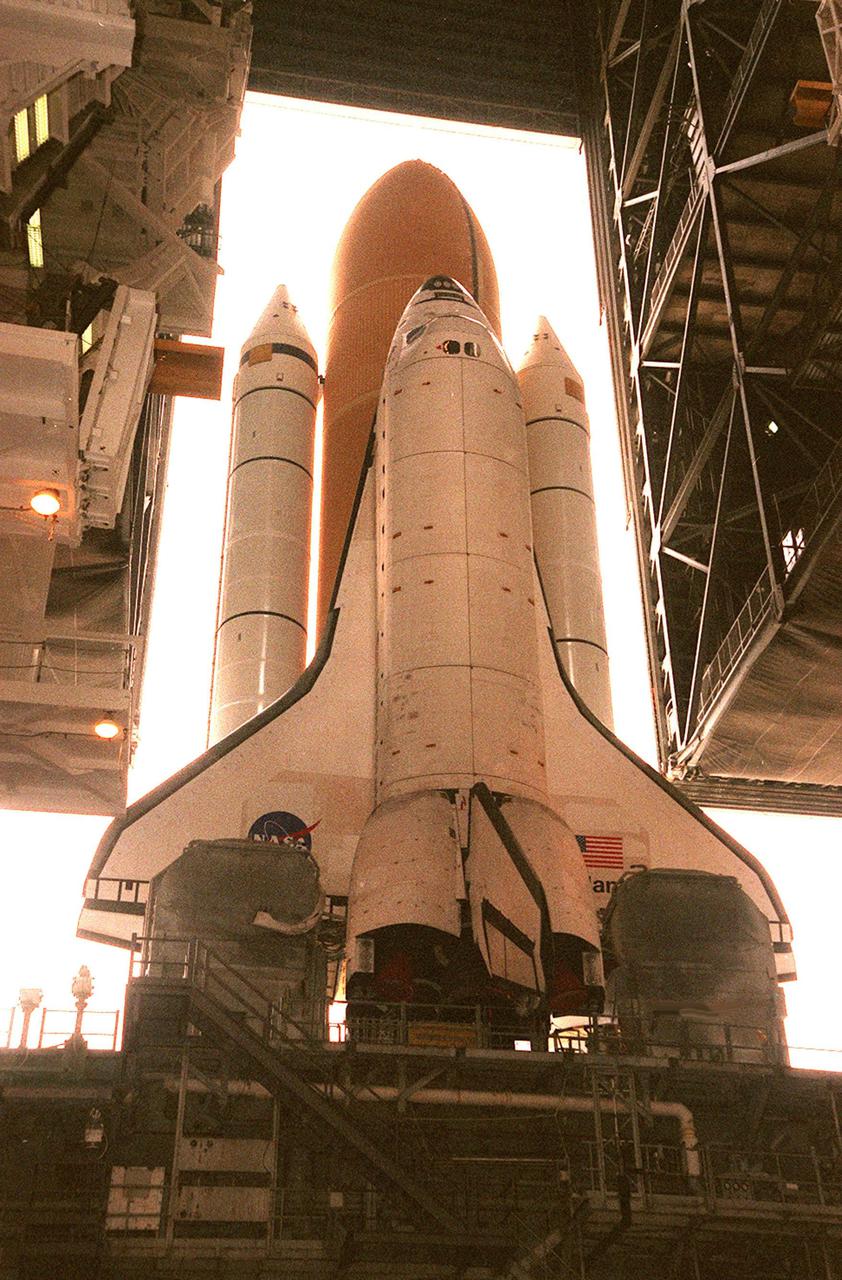
KENNEDY SPACE CENTER, FLA. -- Viewed from inside the Vehicle Assembly Building, Space Shuttle Atlantis moves back inside after an aborted rollout to Launch Pad 39A. Atlantis will fly on mission STS-98, the seventh construction flight to the International Space Station. The orbiter will carry in its payload bay the U.S. Laboratory, named Destiny, that will have five system racks already installed inside the module. After delivery of electronics in the lab, electrically powered attitude control for Control Moment Gyroscopes will be activated. Atlantis is scheduled for launch no earlier than Jan. 19, 2001, with a crew of five
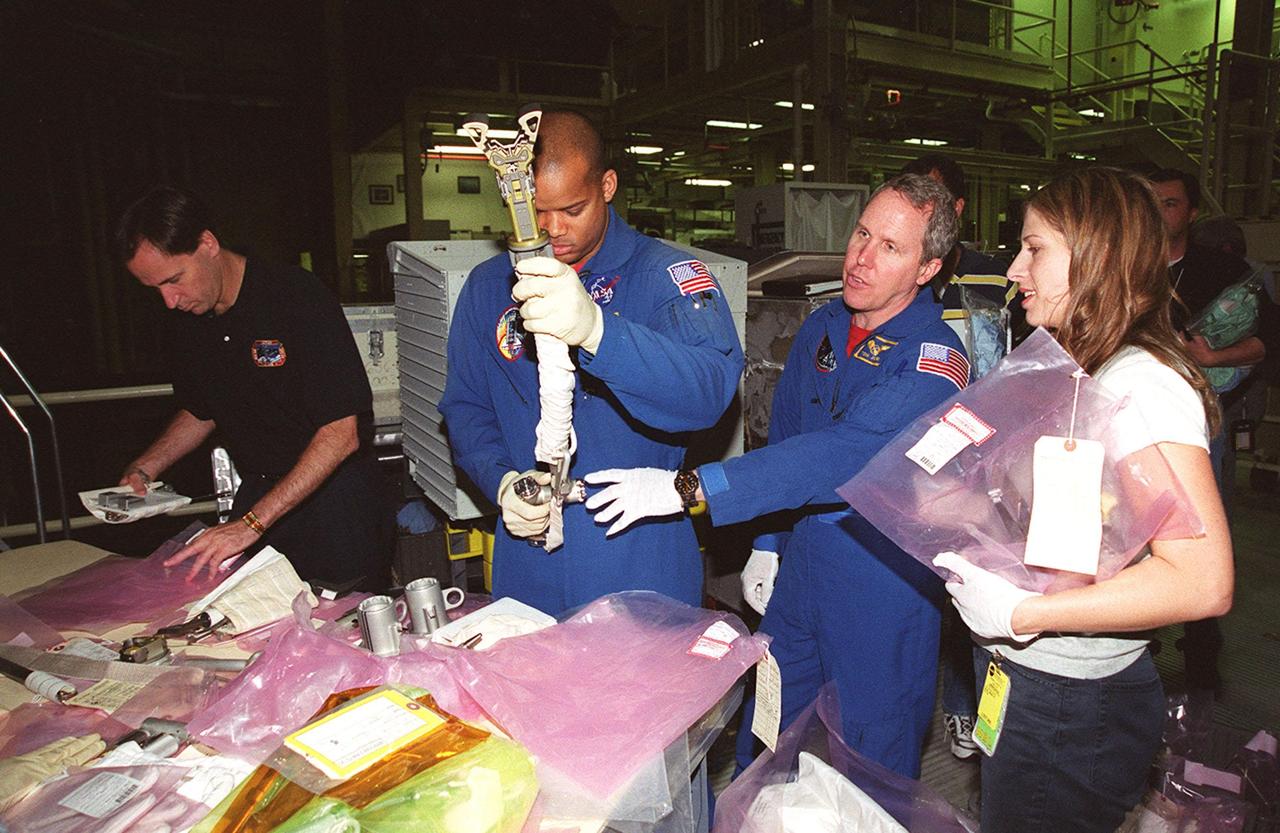
KENNEDY SPACE CENTER, FLA. -- In the Orbiter Processing Facility, STS-98 Mission Specialists Robert Curbeam (center left) and Tom Jones (center right) practice with tools that will be used on extravehicular activities on their mission. The STS-98 crew is at KSC for Crew Equipment Interface Test activities. Launch on mission STS-98 is scheduled for Jan. 18, 2001. It will be transporting the U.S. Lab, Destiny, to the International Space Station with five system racks already installed inside of the module. After delivery of electronics in the lab, electrically powered attitude control for Control Moment Gyroscopes will be activated
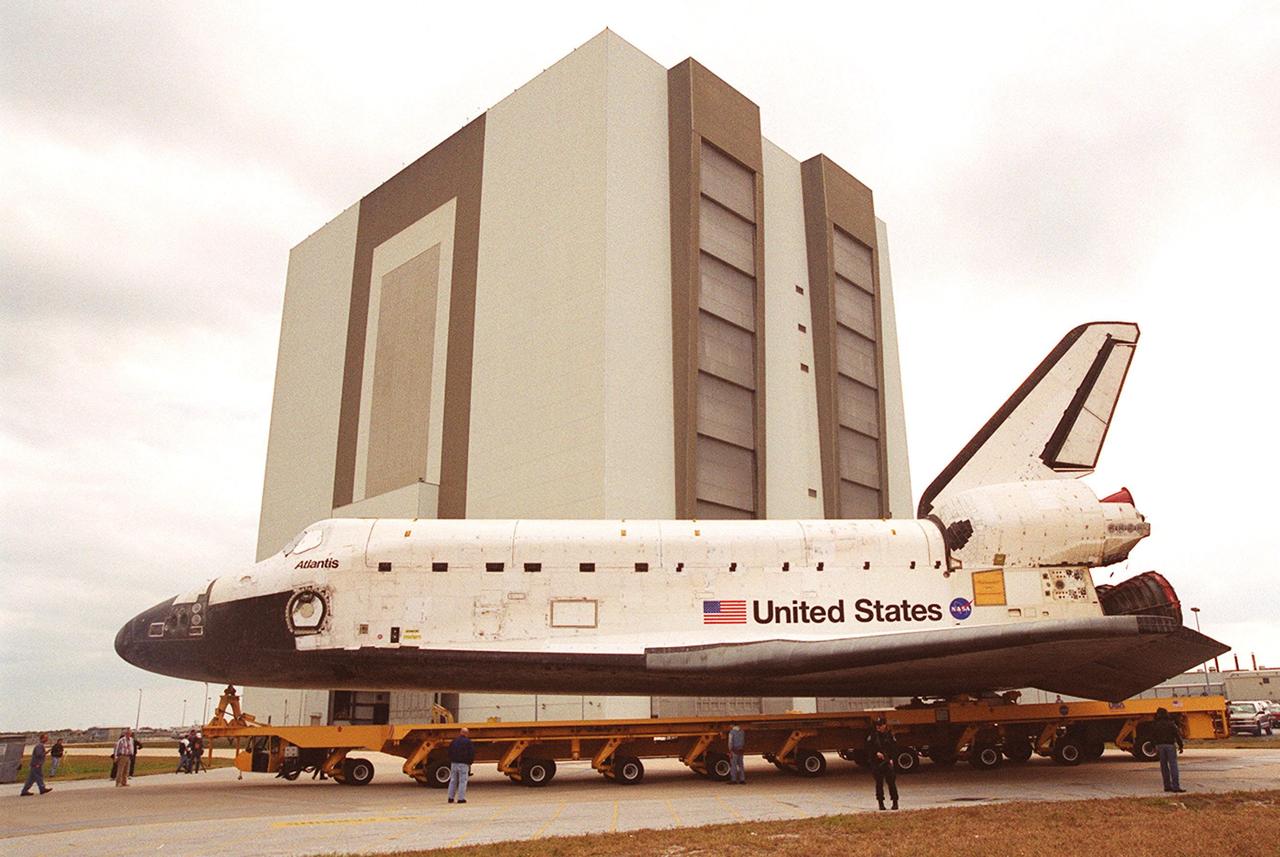
The orbiter Atlantis, on its transporter, heads into the turn toward the Vehicle Assembly Building, in the background. In the VAB it will be raised to vertical and lifted up and into high bay 3 for stacking with its external tank and solid rocket boosters. Atlantis will fly on mission STS-98, the seventh construction flight to the International Space Station. The orbiter will carry in its payload bay the U.S. Laboratory, named Destiny, that will have five system racks already installed inside of the module. After delivery of electronics in the lab, electrically powered attitude control for Control Moment Gyroscopes will be activated. Atlantis is scheduled for launch on Jan. 18, 2001, at 2:44 a.m. EST, with a crew of five
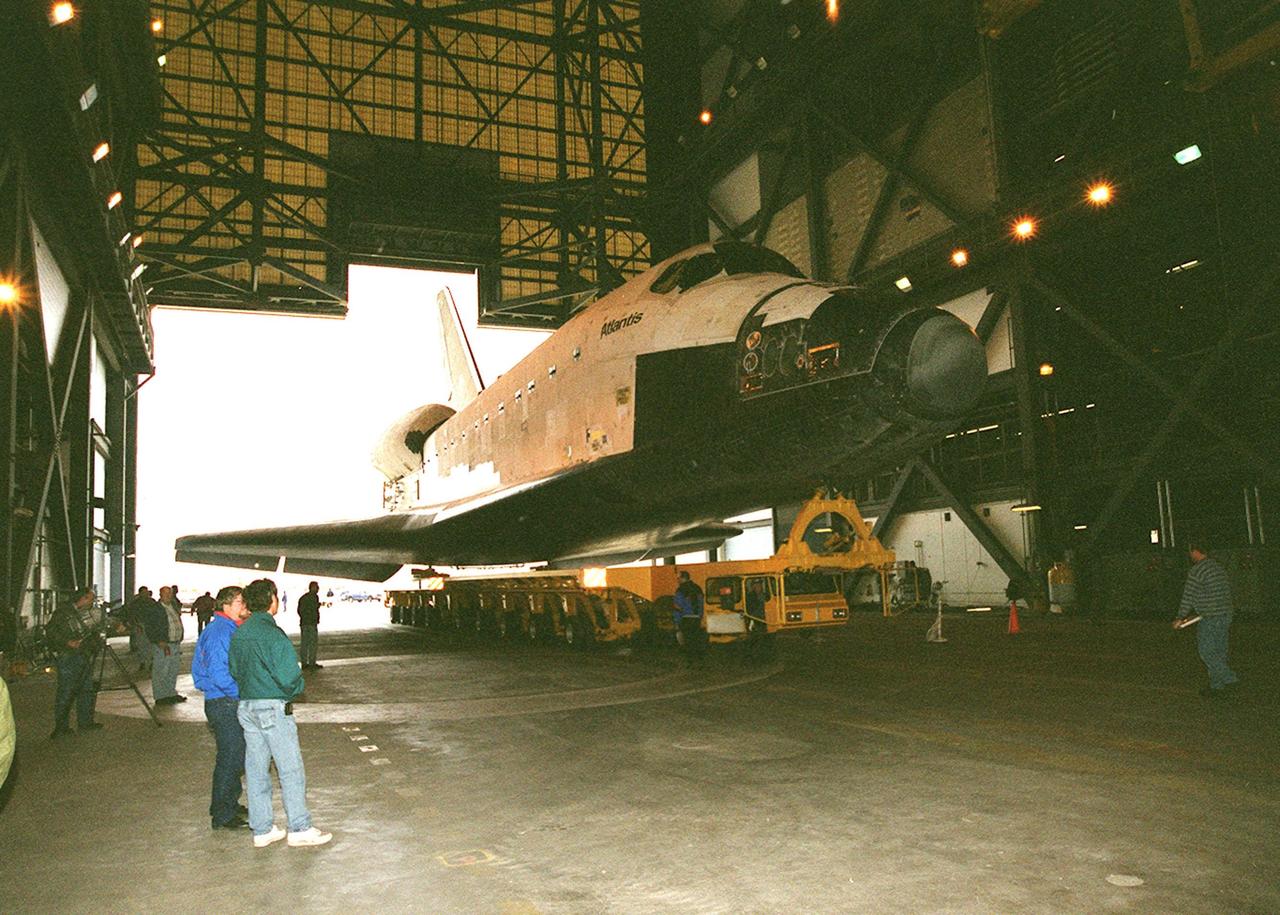
Atlantis rolls into the transfer aisle of the Vehicle Assembly Building where it will be raised to vertical and lifted into high bay 3 for stacking with its external tank and solid rocket boosters. Atlantis will fly on mission STS-98, the seventh construction flight to the International Space Station. The orbiter will carry in its payload bay the U.S. Laboratory, named Destiny, that will have five system racks already installed inside of the module. After delivery of electronics in the lab, electrically powered attitude control for Control Moment Gyroscopes will be activated. Atlantis is scheduled for launch on Jan. 18, 2001, at 2:44 a.m. EST, with a crew of five
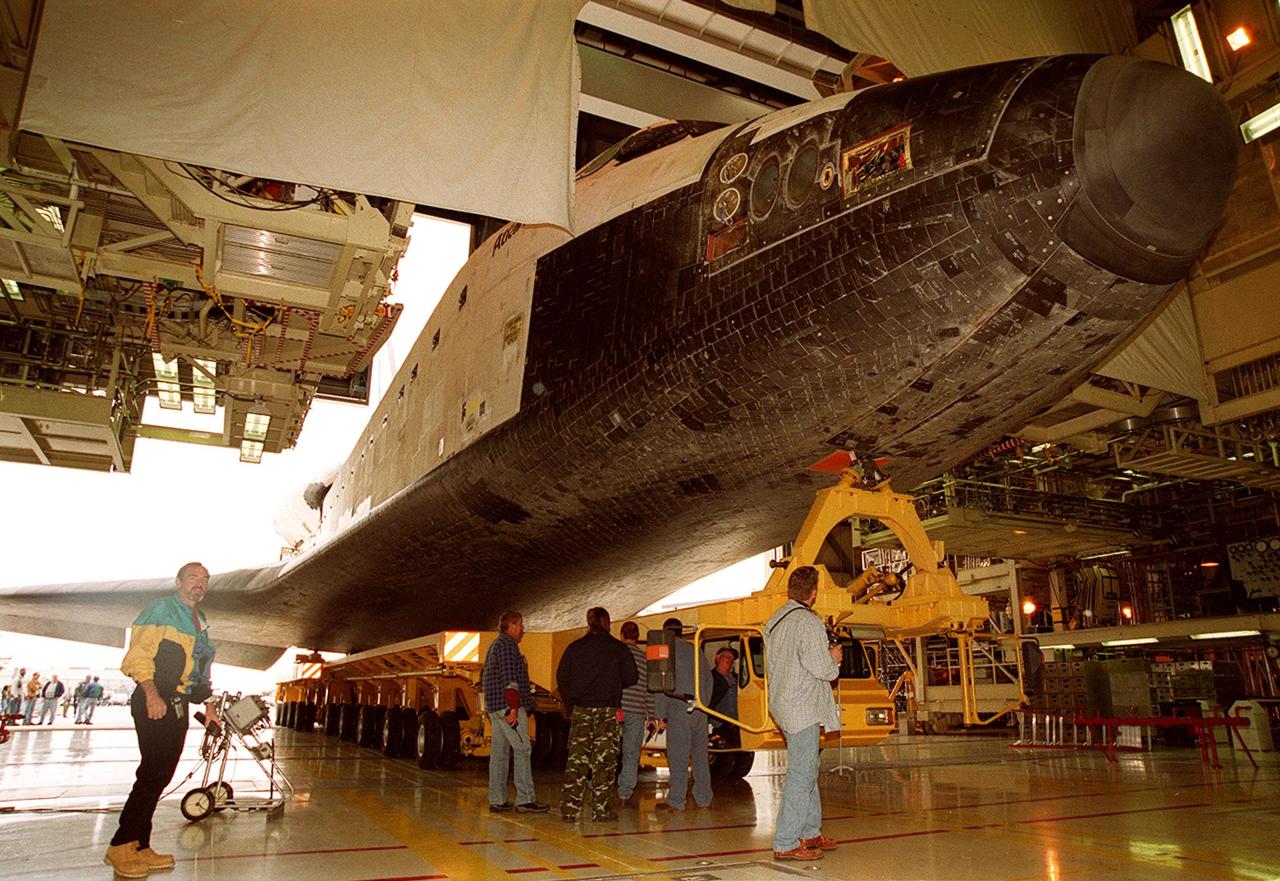
Viewed from inside Orbiter Processing Facility bay 3, Atlantis is ready for rollover to the Vehicle Assembly Building. In the VAB it will be raised to vertical and lifted up and into high bay 3 for stacking with its external tank and solid rocket boosters. Atlantis will fly on mission STS-98, the seventh construction flight to the International Space Station. The orbiter will carry in its payload bay the U.S. Laboratory, named Destiny, that will have five system racks already installed inside of the module. After delivery of electronics in the lab, electrically powered attitude control for Control Moment Gyroscopes will be activated. Atlantis is scheduled for launch on Jan. 18, 2001, at 2:44 a.m. EST, with a crew of five
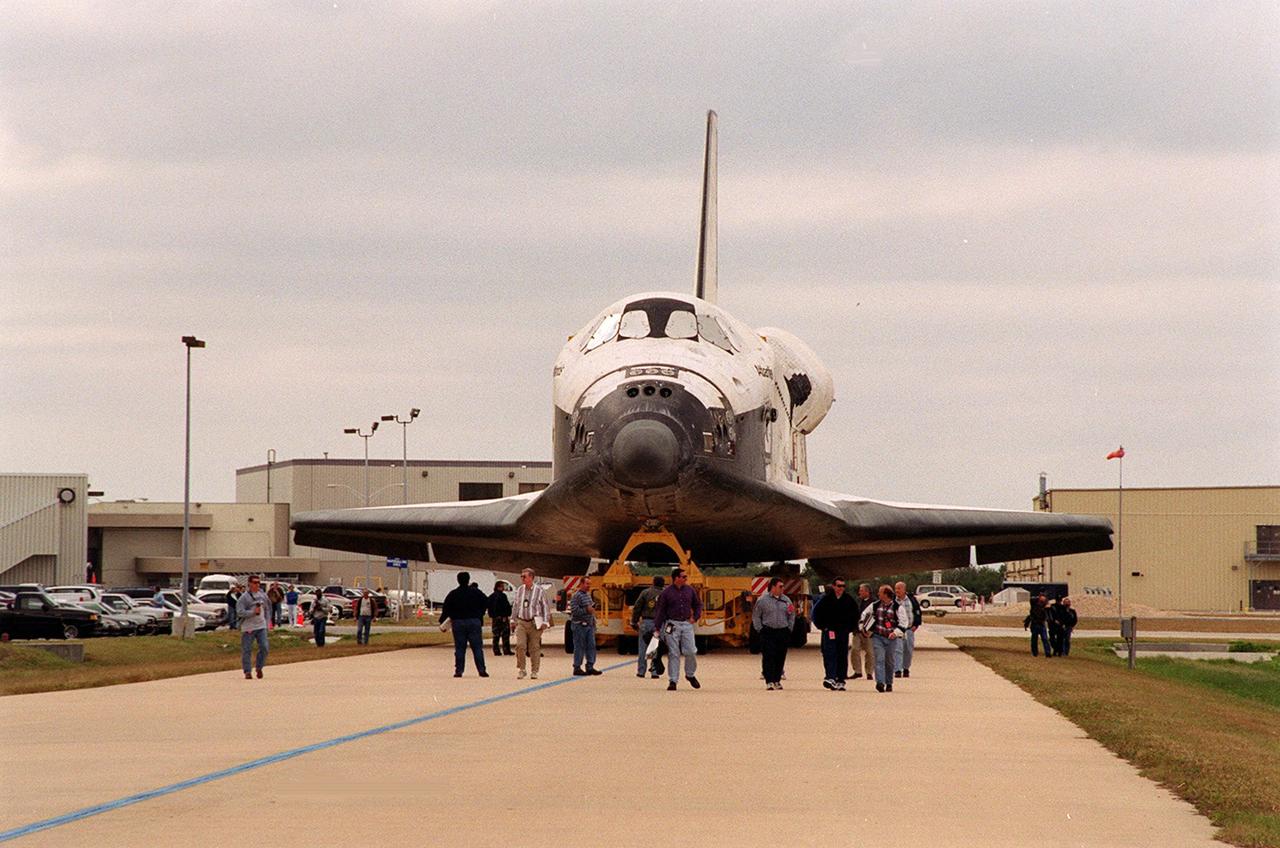
The orbiter Atlantis rolls away from the Orbiter Processing Facility bay 3 (in the background) to the Vehicle Assembly Building. In the VAB it will be raised to vertical and lifted up and into high bay 3 for stacking with its external tank and solid rocket boosters. Atlantis will fly on mission STS-98, the seventh construction flight to the International Space Station. The orbiter will carry in its payload bay the U.S. Laboratory, named Destiny, that will have five system racks already installed inside of the module. After delivery of electronics in the lab, electrically powered attitude control for Control Moment Gyroscopes will be activated. Atlantis is scheduled for launch on Jan. 18, 2001, at 2:44 a.m. EST, with a crew of five
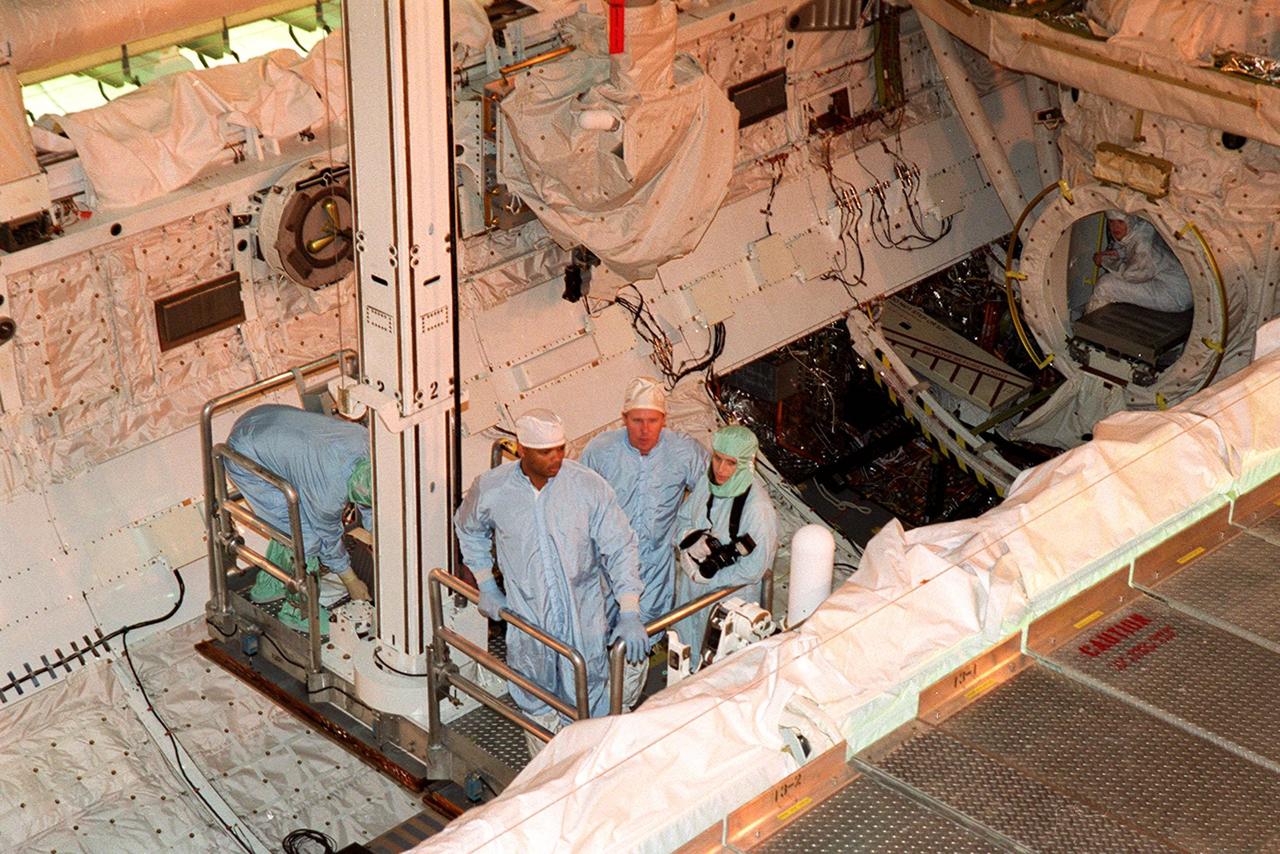
KENNEDY SPACE CENTER, FLA. -- Lowered into the payload bay of the orbiter Atlantis, some of the STS-98 crew (center of the photo) look over part of the payload. From left are Mission Specialists Robert Curbeam, Tom Jones and Marsha Ivins. They and the rest of the crew are at KSC for Crew Equipment Interface Test activities. Launch on mission STS-98 is scheduled for Jan. 18, 2001. It will be transporting the U.S. Lab, Destiny, to the International Space Station with five system racks already installed inside of the module. After delivery of electronics in the lab, electrically powered attitude control for Control Moment Gyroscopes will be activated
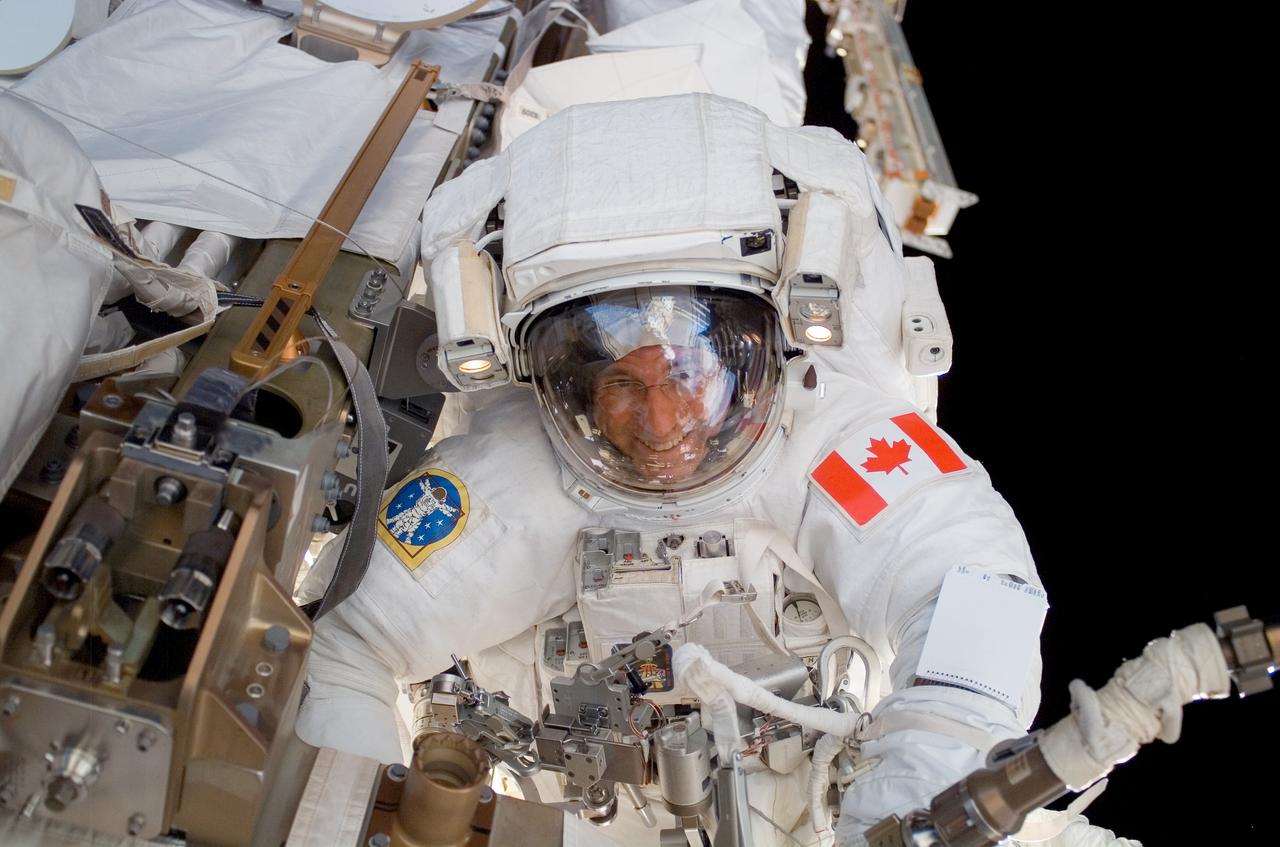
ISS015-E-22371 (13 Aug. 2007) --- Astronaut Dave Williams, STS-118 mission specialist representing the Canadian Space Agency, participates in the mission's second planned session of extravehicular activity (EVA) as construction and maintenance continue on the International Space Station. During the 6-hour, 28-minute spacewalk, Williams and astronaut Rick Mastracchio (out of frame), mission specialist, removed a faulty control moment gyroscope (CMG-3) and installed a new CMG into the station's Z1 truss. The failed CMG will remain at its temporary stowage location on the station's exterior until it is returned to Earth on a later shuttle mission. The new gyroscope is one of four CMGs that are used to control the station's attitude in orbit.

Atlantis rolls into the transfer aisle of the Vehicle Assembly Building where it will be raised to vertical and lifted into high bay 3 for stacking with its external tank and solid rocket boosters. Atlantis will fly on mission STS-98, the seventh construction flight to the International Space Station. The orbiter will carry in its payload bay the U.S. Laboratory, named Destiny, that will have five system racks already installed inside of the module. After delivery of electronics in the lab, electrically powered attitude control for Control Moment Gyroscopes will be activated. Atlantis is scheduled for launch on Jan. 18, 2001, at 2:44 a.m. EST, with a crew of five
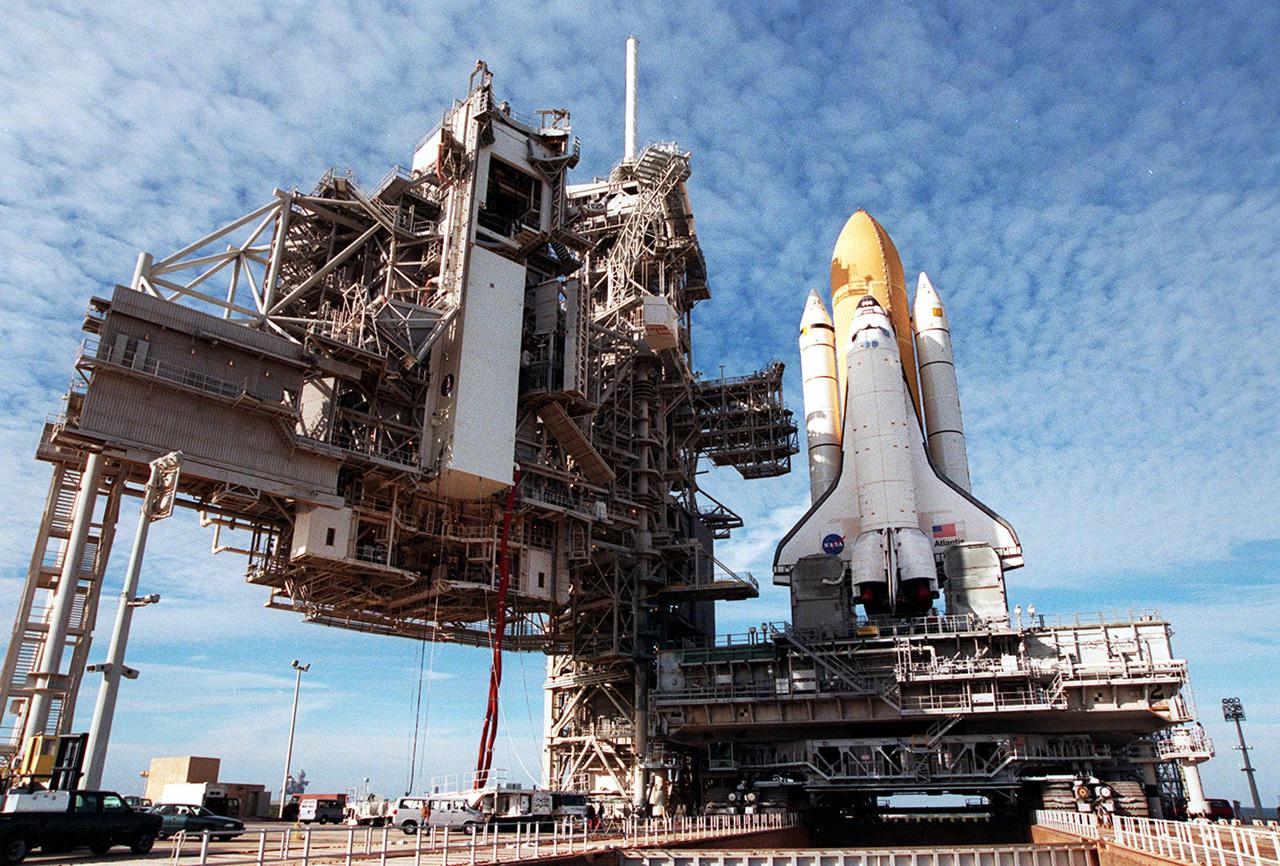
KENNEDY SPACE CENTER, Fla. -- Space Shuttle Atlantis reaches its destination, Launch Pad 39A, for liftoff no earlier than Jan. 19 on mission STS-98. To its immediate left is the Fixed Service Structure, with its 80-foot-tall white lighting mast on top. Further to the left is the Rotating Service Structure, where the white payload canister is being lifted to the Payload Changeout Room. The payload for the mission is the U.S. Lab Destiny, a key element in the construction of the International Space Station. The lab has five system racks for experiments already installed inside the module. After delivery of electronics in the lab, electrically powered attitude control for Control Moment Gyroscopes will be activated
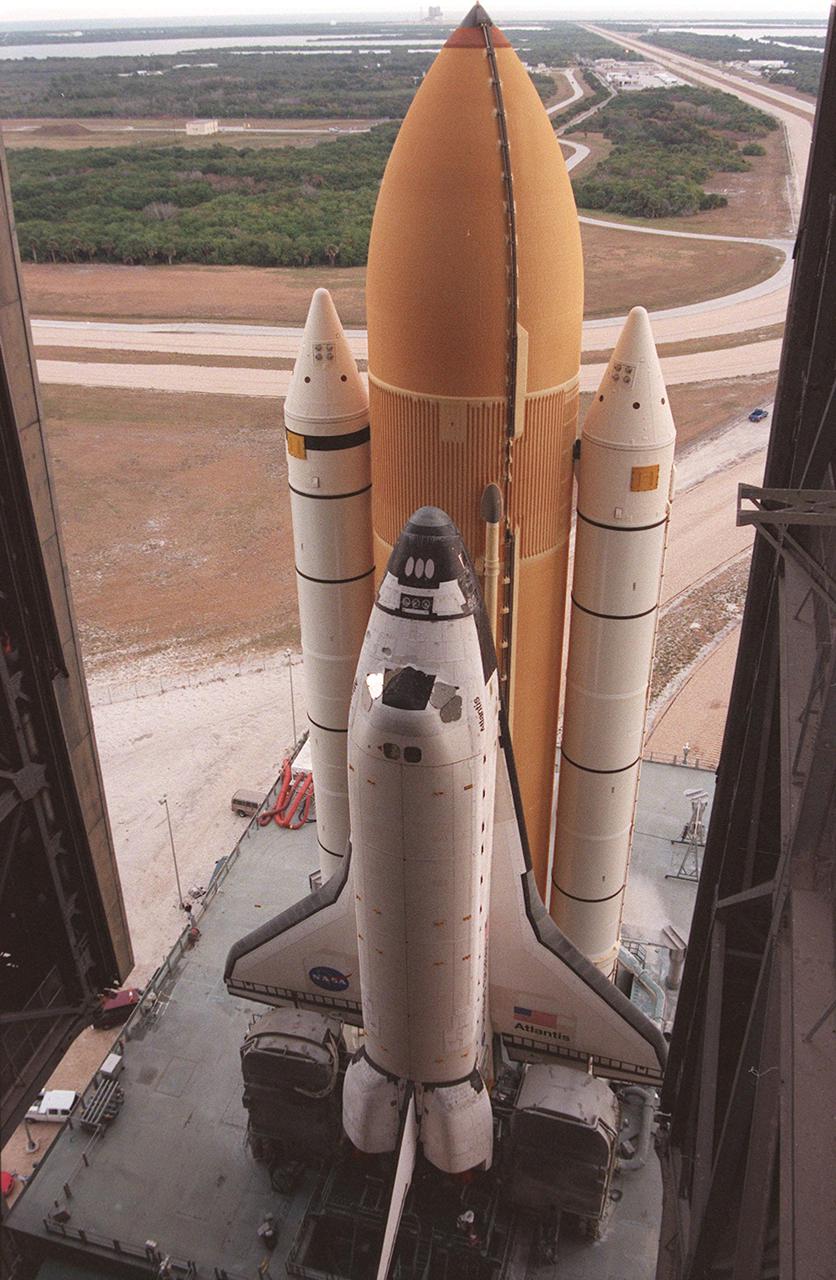
KENNEDY SPACE CENTER, FLA. -- Space Shuttle Atlantis moves through the doors of the Vehicle Assembly Building on its rollout to Launch Pad 39A. Atlantis will fly on mission STS-98, the seventh construction flight to the International Space Station. The orbiter will carry in its payload bay the U.S. Laboratory, named Destiny, that will have five system racks already installed inside the module. After delivery of electronics in the lab, electrically powered attitude control for Control Moment Gyroscopes will be activated. Atlantis is scheduled for launch no earlier than Jan. 19, 2001, with a crew of five
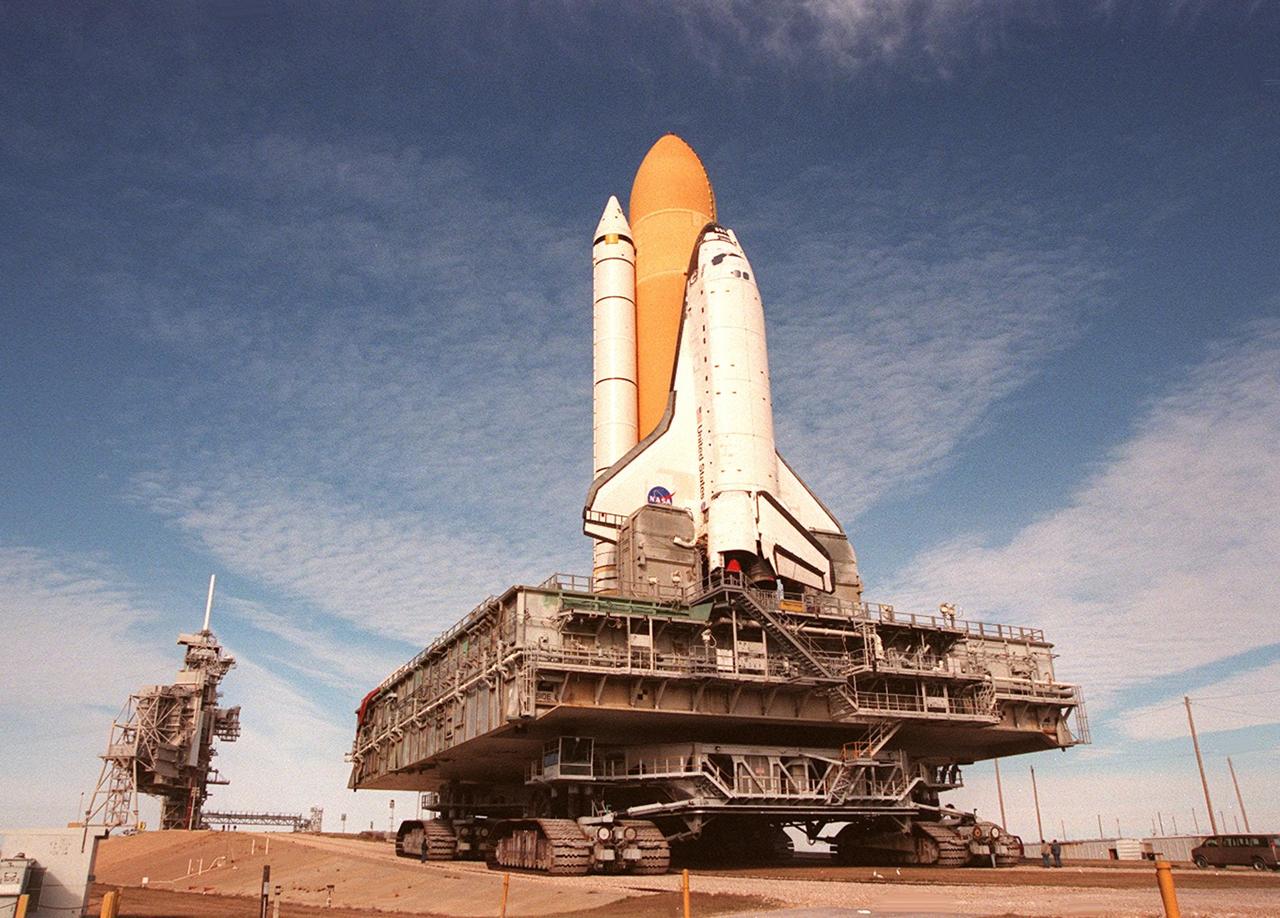
KENNEDY SPACE CENTER, Fla. -- Under wispy white clouds, Space Shuttle Atlantis slowly moves toward the Rotating and Fixed Service Structures on Launch Pad 39A. The 80-foot-tall white lighting mast is seen atop the FSS. Atlantis will fly on mission STS-98, the seventh construction flight to the International Space Station, carrying the U.S. Laboratory, named Destiny. The lab will have five system racks already installed inside the module. After delivery of electronics in the lab, electrically powered attitude control for Control Moment Gyroscopes will be activated. Atlantis is scheduled for launch no earlier than Jan. 19, 2001, with a crew of five
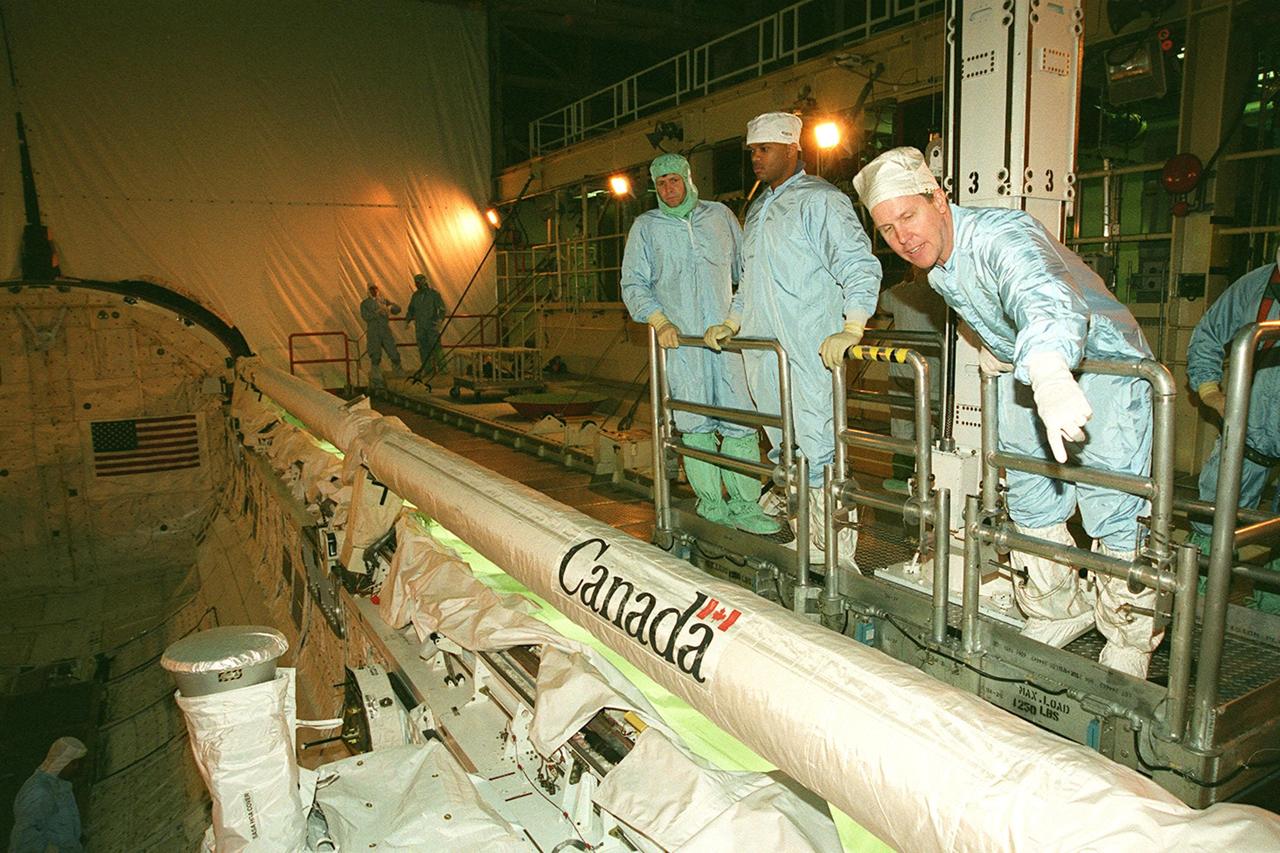
KENNEDY SPACE CENTER, FLA. -- Some of the STS-98 crew look over the Canadian robotic arm in the payload bay of orbiter Atlantis, which is undergoing testing in the Orbiter Processing Facility bay 3. At right, pointing, is Mission Specialist Tom Jones. Second from right is Mission Specialist Robert Curbeam. They and the rest of the crew are at KSC for Crew Equipment Interface Test activities. Launch on mission STS-98 is scheduled for Jan. 18, 2001. It will be transporting the U.S. Lab, Destiny, to the International Space Station with five system racks already installed inside of the module. After delivery of electronics in the lab, electrically powered attitude control for Control Moment Gyroscopes will be activated
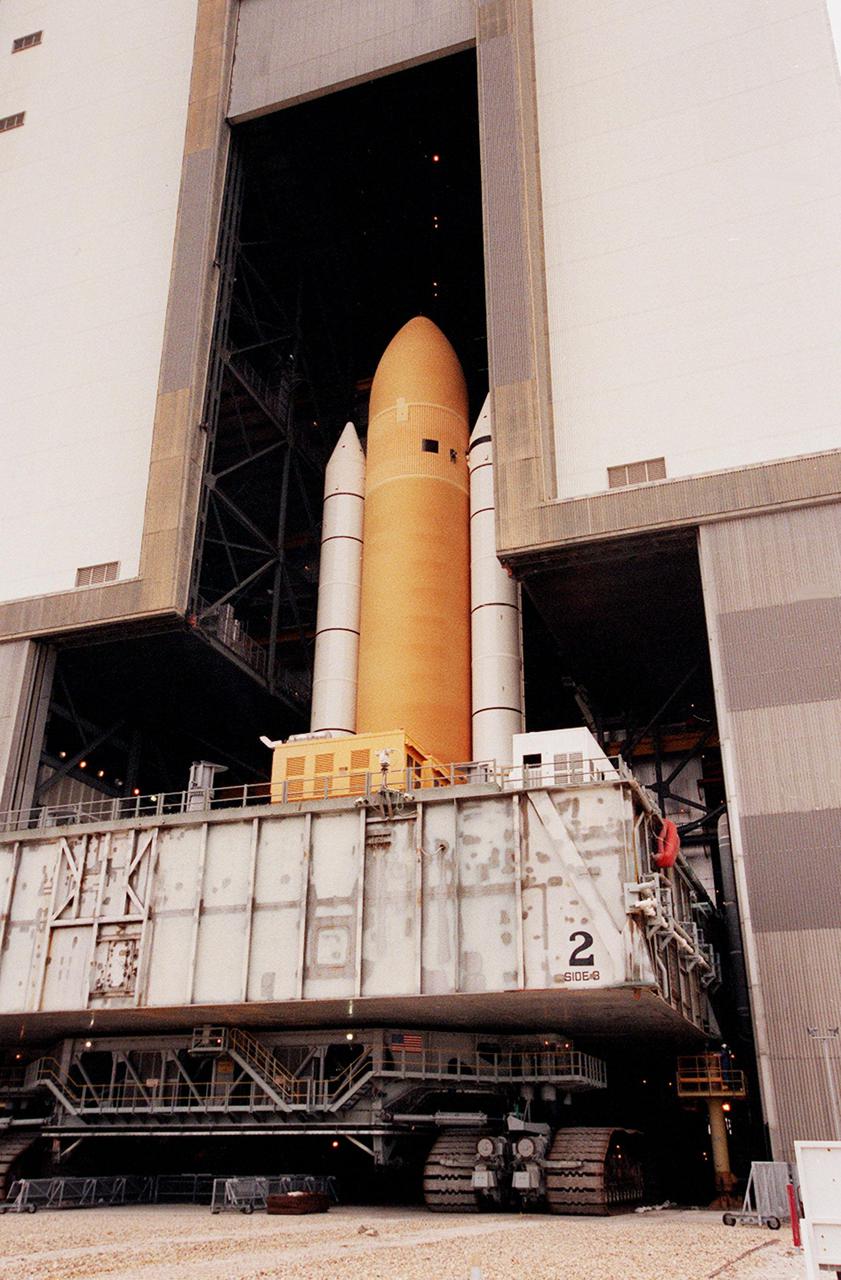
KENNEDY SPACE CENTER, FLA. -- Seen from outside, Space Shuttle Atlantis moves back inside the Vehicle Assembly Building after an aborted rollout to Launch Pad 39A. Atlantis will fly on mission STS-98, the seventh construction flight to the International Space Station. The orbiter will carry in its payload bay the U.S. Laboratory, named Destiny, that will have five system racks already installed inside the module. After delivery of electronics in the lab, electrically powered attitude control for Control Moment Gyroscopes will be activated. Atlantis is scheduled for launch no earlier than Jan. 19, 2001, with a crew of five
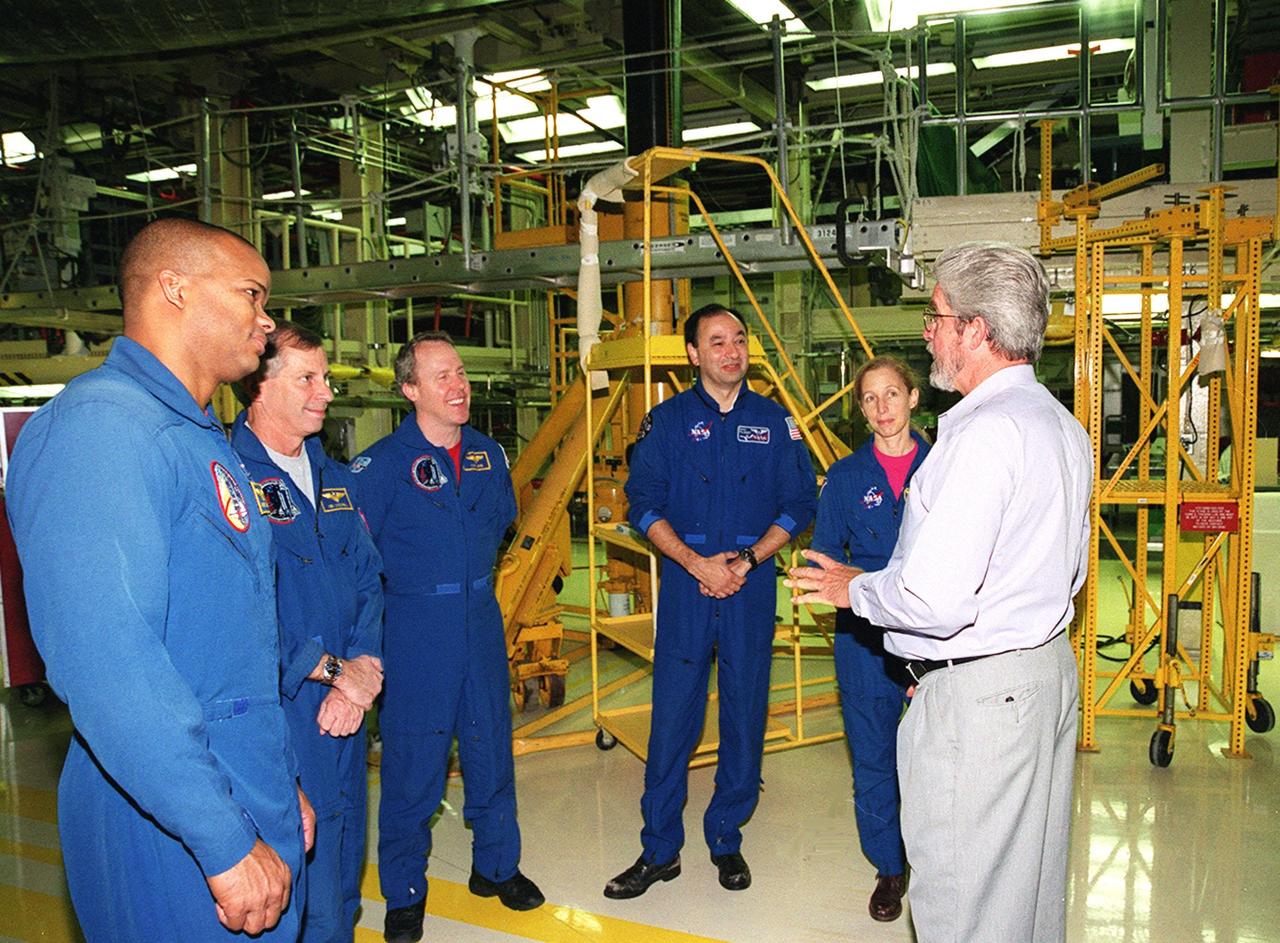
KENNEDY SPACE CENTER, FLA. -- In Orbiter Processing Facility bay 3, the STS-98 crew talks with United Space Alliance worker Larry Oshein (right). Standing left to right are Mission Specialist Robert Curbeam, Commander Ken Cockrell, Mission Specialist Tom Jones, and Mission Specialists Mark Polansky and Marsha Ivins. The crew is at KSC for Crew Equipment Interface Test activities. Launch on mission STS-98 is scheduled for Jan. 18, 2001. It will be transporting the U.S. Lab, Destiny, to the International Space Station with five system racks already installed inside of the module. After delivery of electronics in the lab, electrically powered attitude control for Control Moment Gyroscopes will be activated
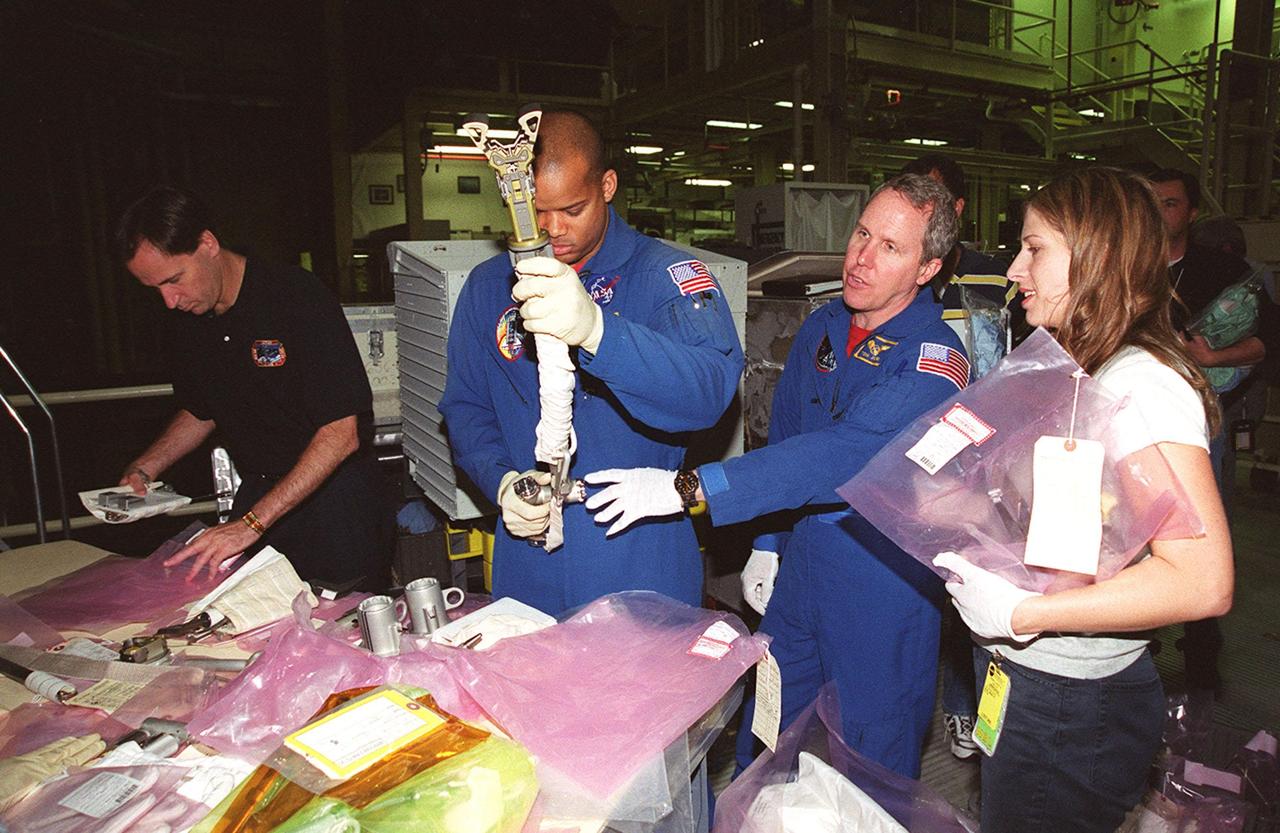
KENNEDY SPACE CENTER, FLA. -- In the Orbiter Processing Facility, STS-98 Mission Specialists Robert Curbeam (center left) and Tom Jones (center right) practice with tools that will be used on extravehicular activities on their mission. The STS-98 crew is at KSC for Crew Equipment Interface Test activities. Launch on mission STS-98 is scheduled for Jan. 18, 2001. It will be transporting the U.S. Lab, Destiny, to the International Space Station with five system racks already installed inside of the module. After delivery of electronics in the lab, electrically powered attitude control for Control Moment Gyroscopes will be activated

ISS015-E-22364 (13 Aug. 2007) --- Astronaut Dave Williams, STS-118 mission specialist representing the Canadian Space Agency, participates in the mission's second planned session of extravehicular activity (EVA) as construction and maintenance continue on the International Space Station. During the 6-hour, 28-minute spacewalk, Williams and astronaut Rick Mastracchio (out of frame), mission specialist, removed a faulty control moment gyroscope (CMG-3) and installed a new CMG into the station's Z1 truss. The failed CMG will remain at its temporary stowage location on the station's exterior until it is returned to Earth on a later shuttle mission. The new gyroscope is one of four CMGs that are used to control the station's attitude in orbit.
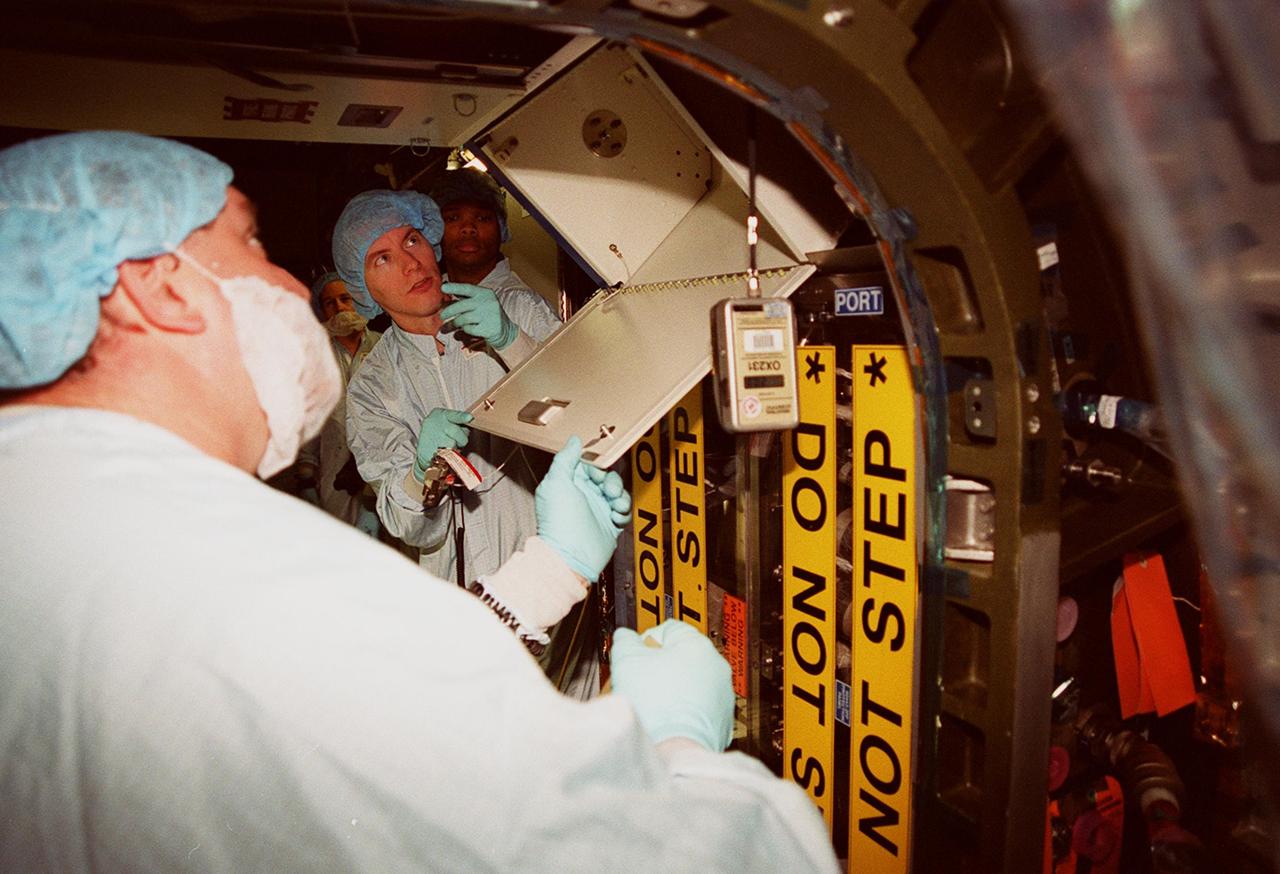
In the Space Station Processing Facility, members of the STS-98 crew check out components inside the U.S. Lab, Destiny, under the watchful eye of trainers. The crew comprises Commander Ken Cockrell, Pilot Mark Polansky and Mission Specialists Robert Curbeam, Thomas Jones and Marsha Ivins. They are taking part in Crew Equipment Interface Test activities, becoming familiar with equipment they will be handling during the mission. The mission will be transporting the Lab to the International Space Station with five system racks already installed inside of the module. With delivery of electronics in the lab, electrically powered attitude control for Control Moment Gyroscopes will be activated. The STS-98 launch is scheduled for Jan. 18, 2001
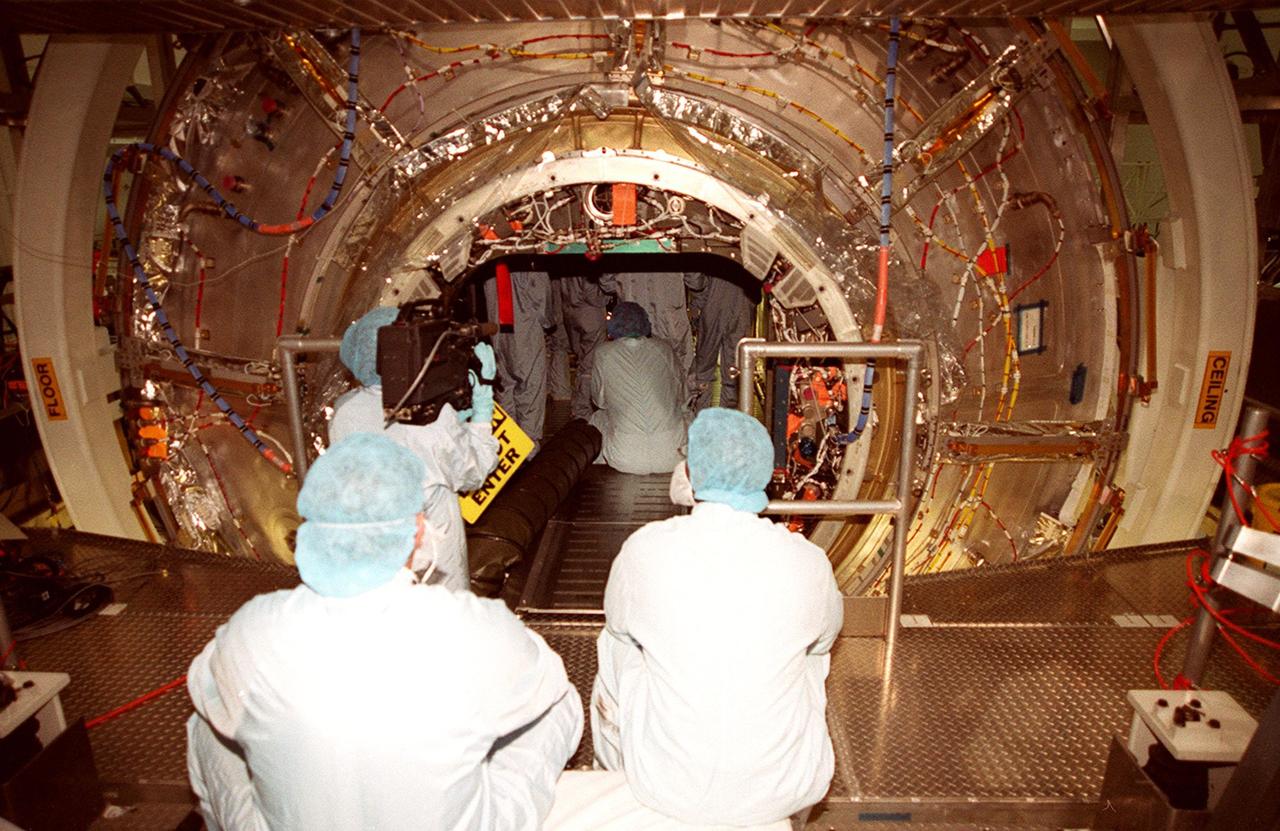
In the Space Station Processing Facility, workers in the foreground watch and wait while members of the STS-98 crew check out the U.S. Lab, Destiny in the background. The crew comprises Commander Ken Cockrell, Pilot Mark Polansky and Mission Specialists Robert Curbeam, Thomas Jones and Marsha Ivins. They are taking part in Crew Equipment Interface Test activities, becoming familiar with equipment they will be handling during the mission. The mission will be transporting the Lab to the International Space Station with five system racks already installed inside of the module. With delivery of electronics in the lab, electrically powered attitude control for Control Moment Gyroscopes will be activated. The STS-98 launch is scheduled for Jan. 18, 2001
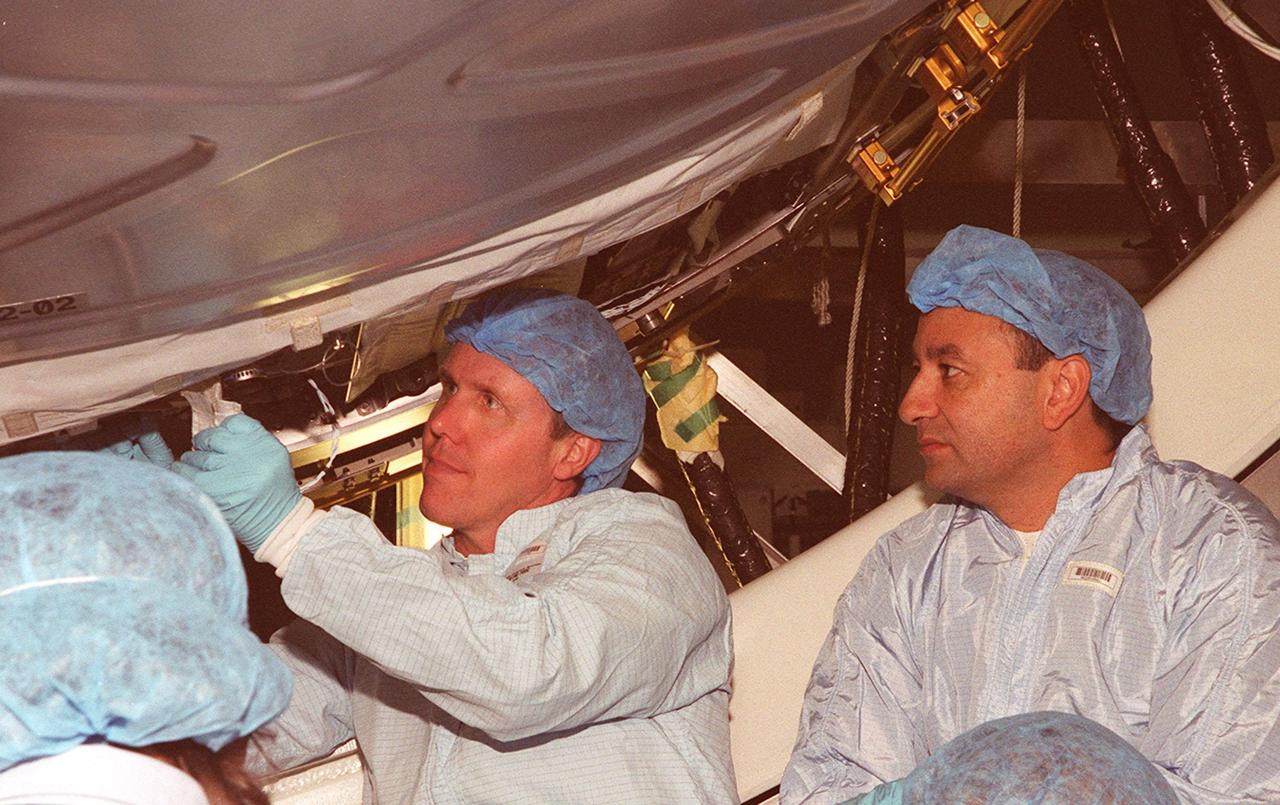
In the Space Station Processing Facility, STS-98 Mission Specialist Thomas Jones works on a part of the U.S. Lab, Destiny. Watching at right is Pilot Mark Polansky. Jones and Polansky, along with other crew members, are taking part in Crew Equipment Interface Test activities to become familiar with equipment they will be handling during the mission. Others in the crew are Commander Ken Cockrell and Mission Specialists Robert Curbeam and Marsha Ivins. The mission will be transporting the Lab to the International Space Station with five system racks already installed inside of the module. With delivery of electronics in the lab, electrically powered attitude control for Control Moment Gyroscopes will be activated. The STS-98 launch is scheduled for Jan. 18, 2001
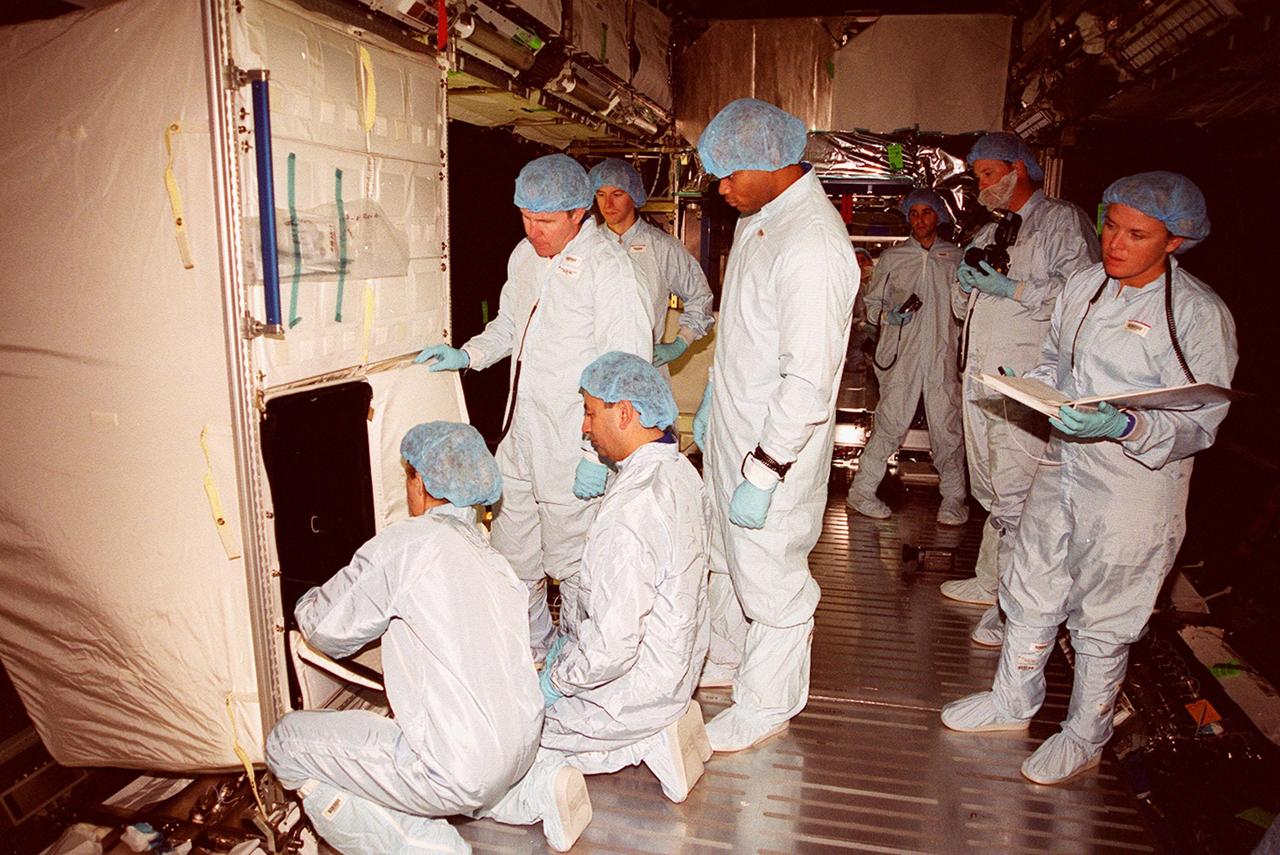
Inside the U.S. Lab, Destiny, members of the STS-98 crew work with technicians (in the background) to learn more about the equipment in the module. They are taking part in Crew Equipment Interface Test activities. At left, back to camera, is Mission Specialist Marsha Ivins. Standing are Mission Specialists Thomas Jones (left) and Robert Curbeam (right). Other crew members not seen are Commander Ken Cockrell and Pilot Mark Polansky. The mission will be transporting the Lab to the International Space Station with five system racks already installed inside of the module. With delivery of electronics in the lab, electrically powered attitude control for Control Moment Gyroscopes will be activated. The STS-98 launch is scheduled for Jan. 18, 2001
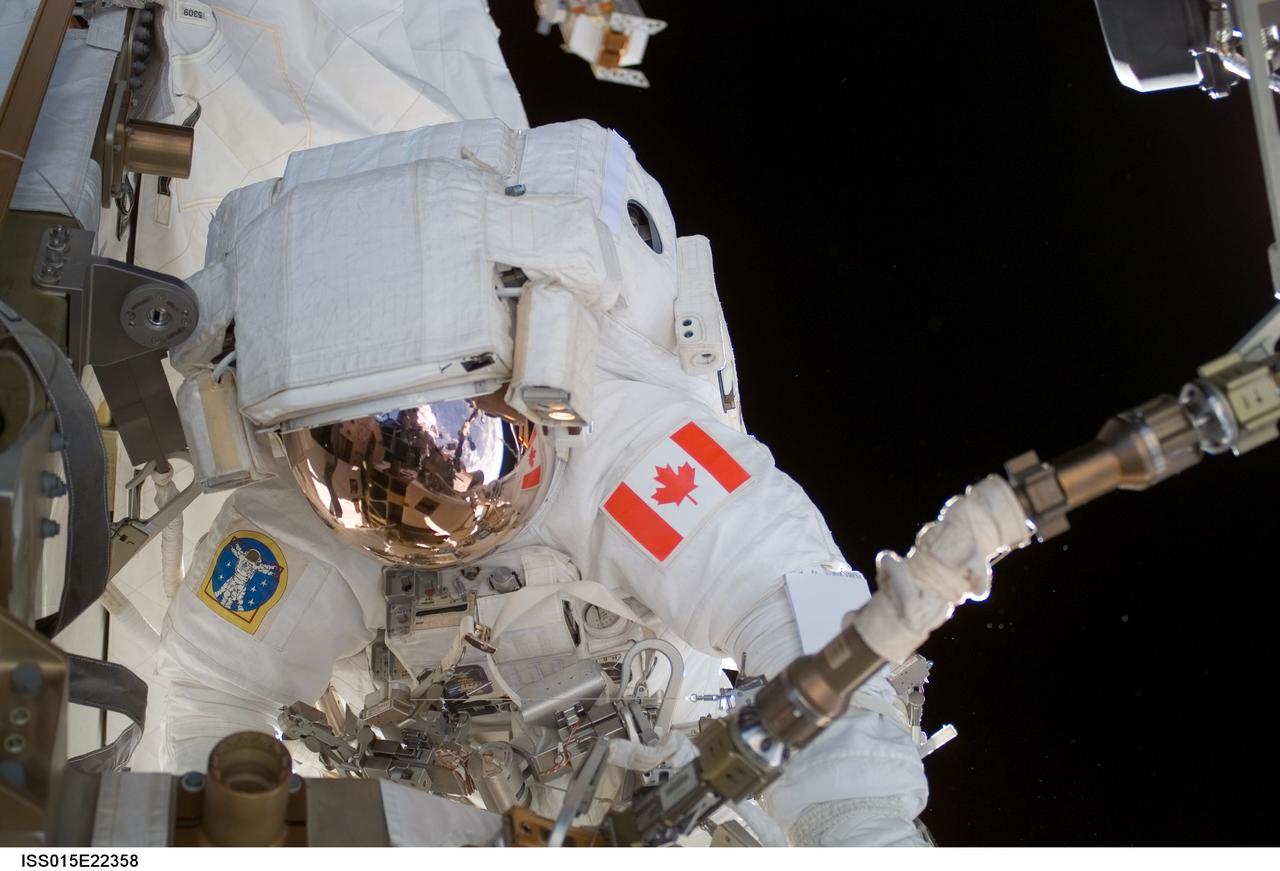
ISS015-E-22358 (13 Aug. 2007) --- Astronaut Dave Williams, STS-118 mission specialist representing the Canadian Space Agency, participates in the mission's second planned session of extravehicular activity (EVA) as construction and maintenance continue on the International Space Station. During the 6-hour, 28-minute spacewalk Williams and astronaut Rick Mastracchio (out of frame), mission specialist, removed a faulty control moment gyroscope (CMG-3) and installed a new CMG into the station's Z1 truss. The failed CMG will remain at its temporary stowage location on the station's exterior until it is returned to Earth on a later shuttle mission. The new gyroscope is one of four CMGs that are used to control the station's attitude in orbit.
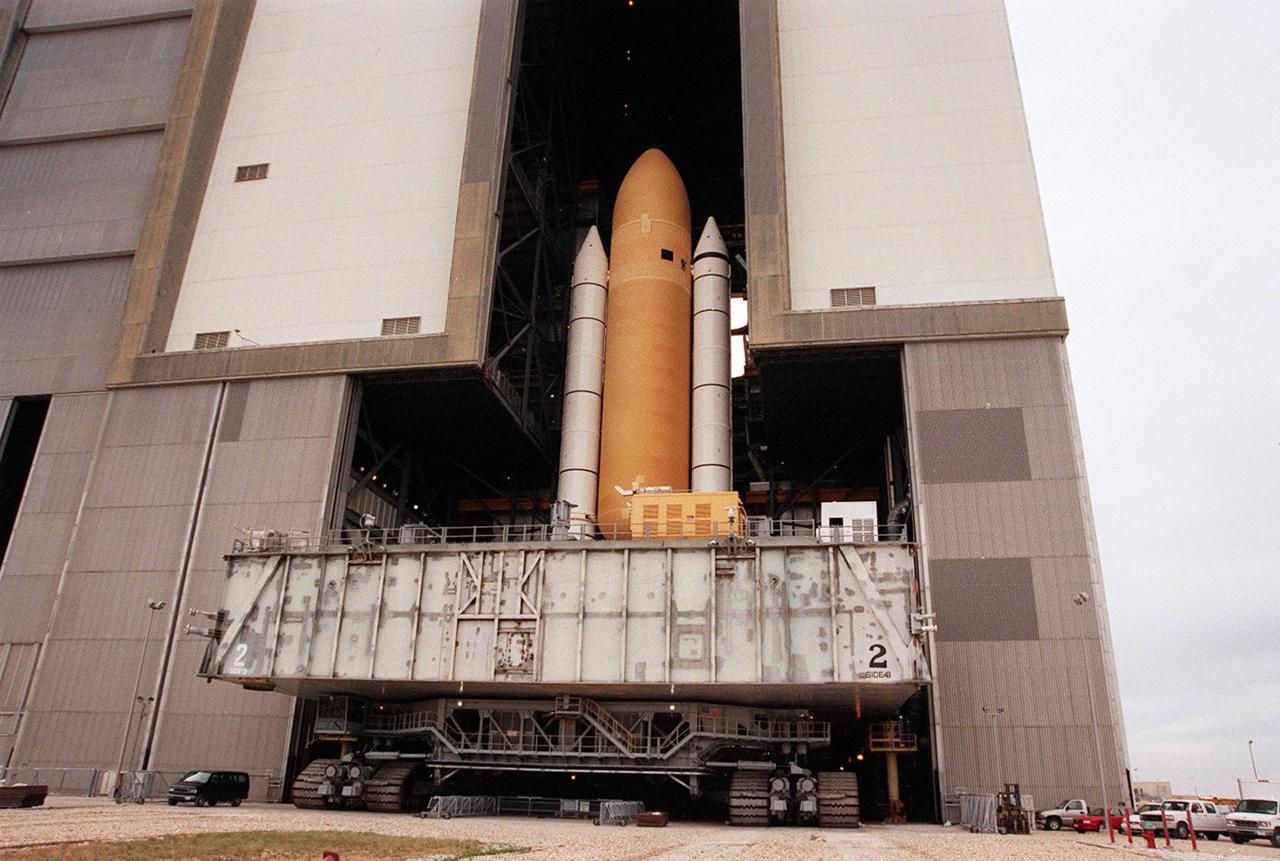
KENNEDY SPACE CENTER, FLA. -- Space Shuttle Atlantis moves back inside the Vehicle Assembly Building after an aborted rollout to Launch Pad 39A. Atlantis will fly on mission STS-98, the seventh construction flight to the International Space Station. The orbiter will carry in its payload bay the U.S. Laboratory, named Destiny, that will have five system racks already installed inside the module. After delivery of electronics in the lab, electrically powered attitude control for Control Moment Gyroscopes will be activated. Atlantis is scheduled for launch no earlier than Jan. 19, 2001, with a crew of five
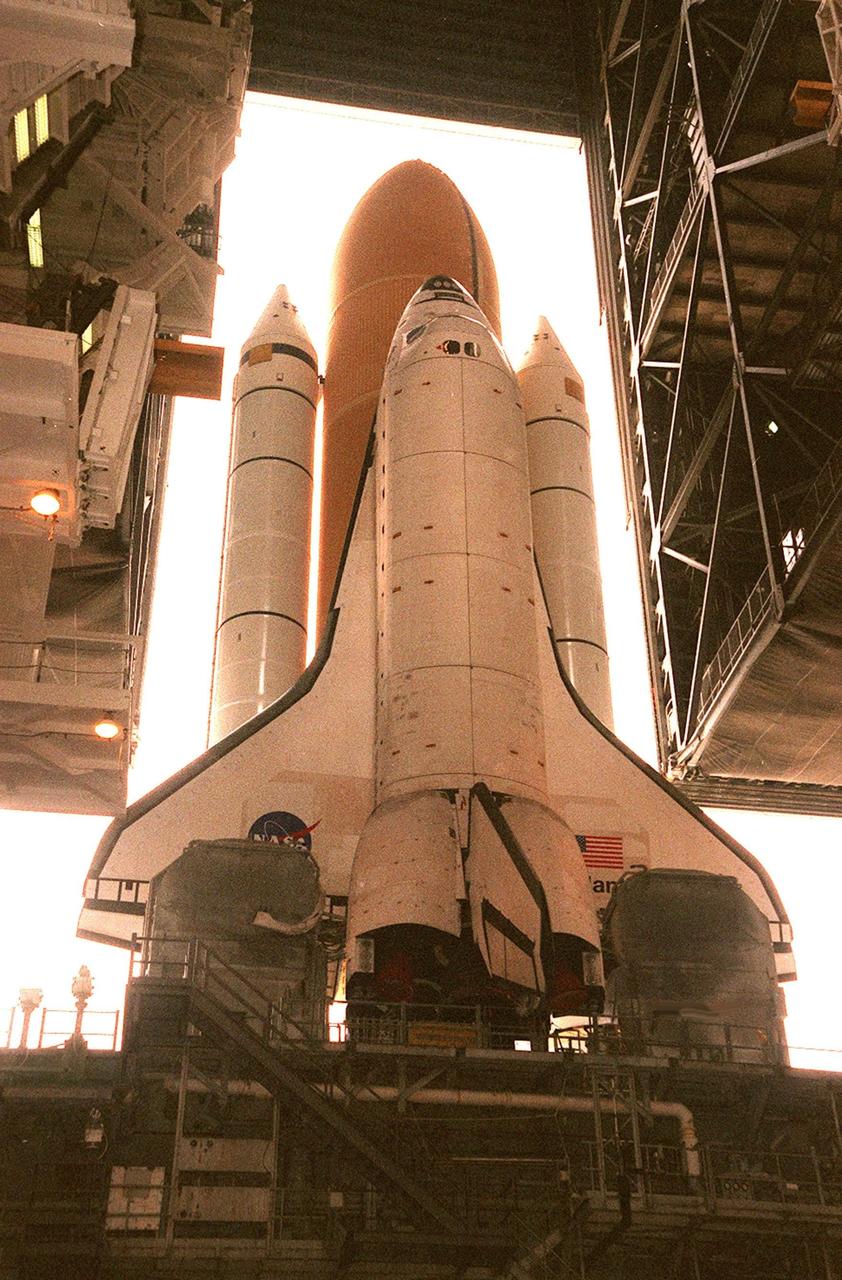
KENNEDY SPACE CENTER, FLA. -- Viewed from inside the Vehicle Assembly Building, Space Shuttle Atlantis moves back inside after an aborted rollout to Launch Pad 39A. Atlantis will fly on mission STS-98, the seventh construction flight to the International Space Station. The orbiter will carry in its payload bay the U.S. Laboratory, named Destiny, that will have five system racks already installed inside the module. After delivery of electronics in the lab, electrically powered attitude control for Control Moment Gyroscopes will be activated. Atlantis is scheduled for launch no earlier than Jan. 19, 2001, with a crew of five
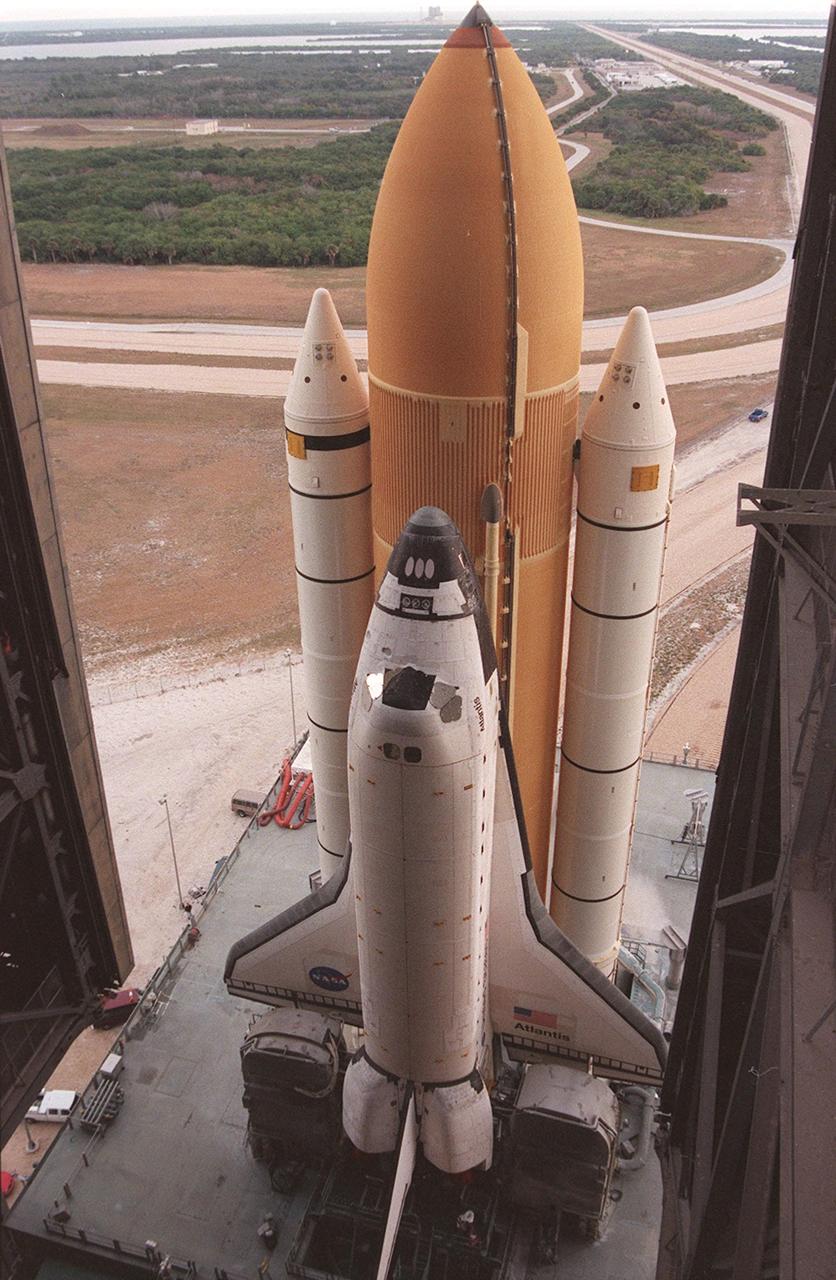
KENNEDY SPACE CENTER, FLA. -- Space Shuttle Atlantis moves through the doors of the Vehicle Assembly Building on its rollout to Launch Pad 39A. Atlantis will fly on mission STS-98, the seventh construction flight to the International Space Station. The orbiter will carry in its payload bay the U.S. Laboratory, named Destiny, that will have five system racks already installed inside the module. After delivery of electronics in the lab, electrically powered attitude control for Control Moment Gyroscopes will be activated. Atlantis is scheduled for launch no earlier than Jan. 19, 2001, with a crew of five
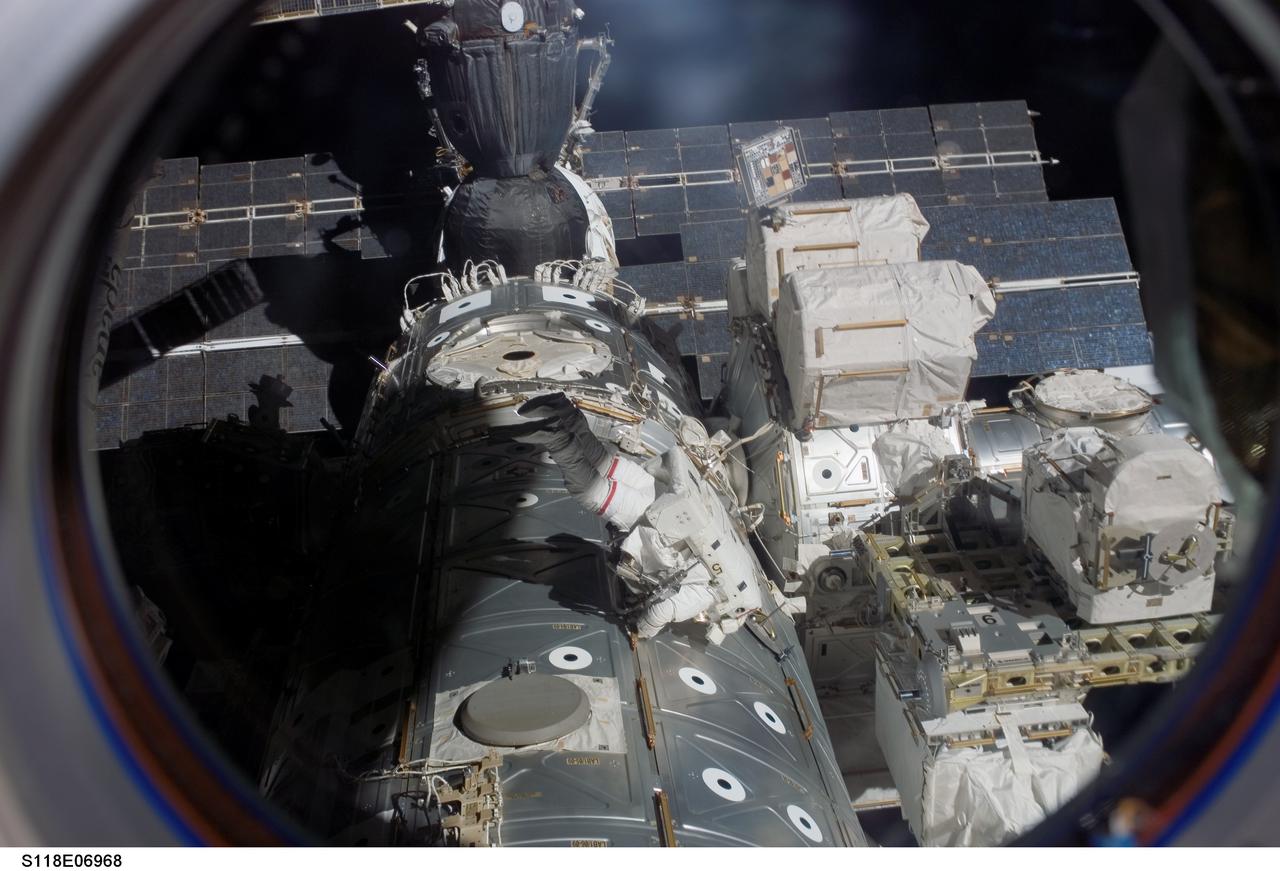
S118-E-06968 (13 Aug. 2007) --- Astronaut Rick Mastracchio, STS-118 mission specialist, participates in the mission's second planned session of extravehicular activity (EVA) as construction and maintenance continue on the International Space Station. During the 6-hour, 28-minute spacewalk, Mastracchio and astronaut Dave Williams (out of frame), mission specialist representing the Canadian Space Agency, removed a faulty control moment gyroscope (CMG-3) and installed a new CMG into the station's Z1 truss. The failed CMG will remain at its temporary stowage location on the station's exterior until it is returned to Earth on a later shuttle mission. The new gyroscope is one of four CMGs that are used to control the station's attitude in orbit.
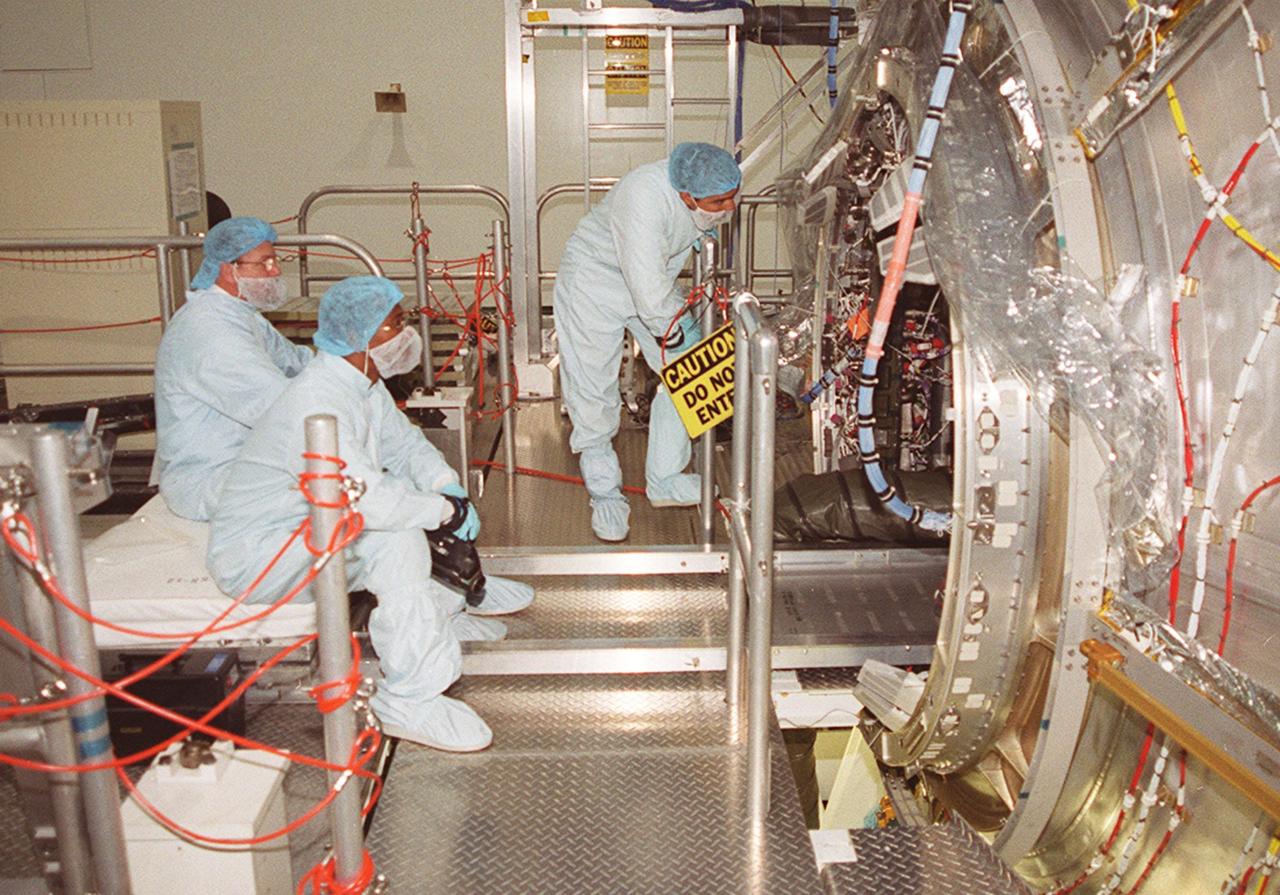
In the Space Station Processing Facility, workers at left watch while members of the STS-98 crew check out equipment inside the U.S. Lab, Destiny (at right). The crew comprises Commander Ken Cockrell, Pilot Mark Polansky and Mission Specialists Robert Curbeam, Thomas Jones and Marsha Ivins. They are taking part in Crew Equipment Interface Test activities, becoming familiar with equipment they will be handling during the mission. The mission will be transporting the Lab to the International Space Station with five system racks already installed inside of the module. With delivery of electronics in the lab, electrically powered attitude control for Control Moment Gyroscopes will be activated. The STS-98 launch is scheduled for Jan. 18, 2001
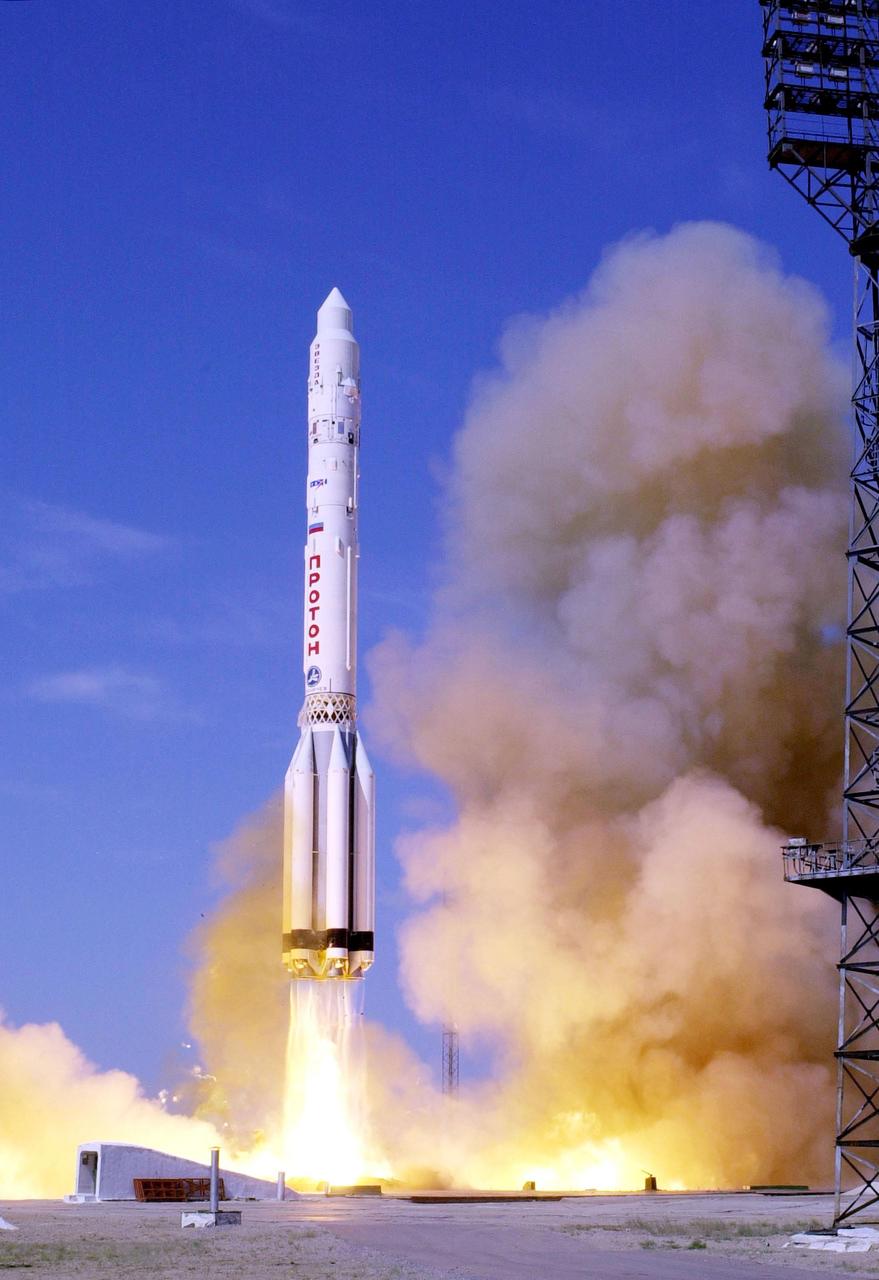
A Russian 3-stage Proton rocket blasts into the sky at 12:56 a.m. EDT with the Russian-built Zvezda module in a successful launch from Baikonur Cosmodrome, Kazakhstan. Zvezda is the primary Russian contribution to the International Space Station, serving as the early Station living quarters. It will also provide early propulsive attitude control and reboost capabilities and be the main docking port for Russian Progress cargo resupply vehicles. The third Station component, Zvezda will dock by remote control with the already orbiting Zarya and Unity modules at an altitude of about 245 by 230 statute miles. <i>(Image taken with Nikon D1 digital camera.)</i
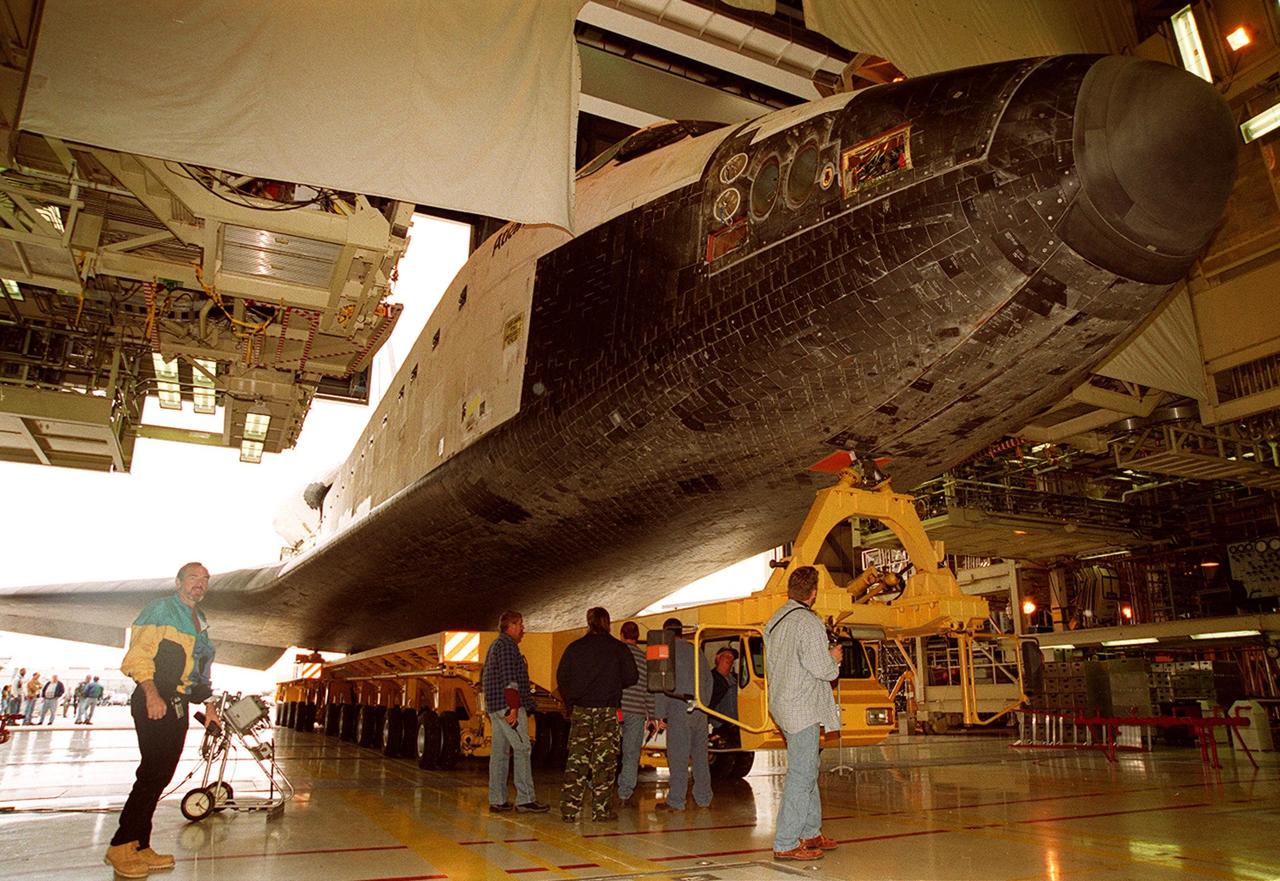
Viewed from inside Orbiter Processing Facility bay 3, Atlantis is ready for rollover to the Vehicle Assembly Building. In the VAB it will be raised to vertical and lifted up and into high bay 3 for stacking with its external tank and solid rocket boosters. Atlantis will fly on mission STS-98, the seventh construction flight to the International Space Station. The orbiter will carry in its payload bay the U.S. Laboratory, named Destiny, that will have five system racks already installed inside of the module. After delivery of electronics in the lab, electrically powered attitude control for Control Moment Gyroscopes will be activated. Atlantis is scheduled for launch on Jan. 18, 2001, at 2:44 a.m. EST, with a crew of five
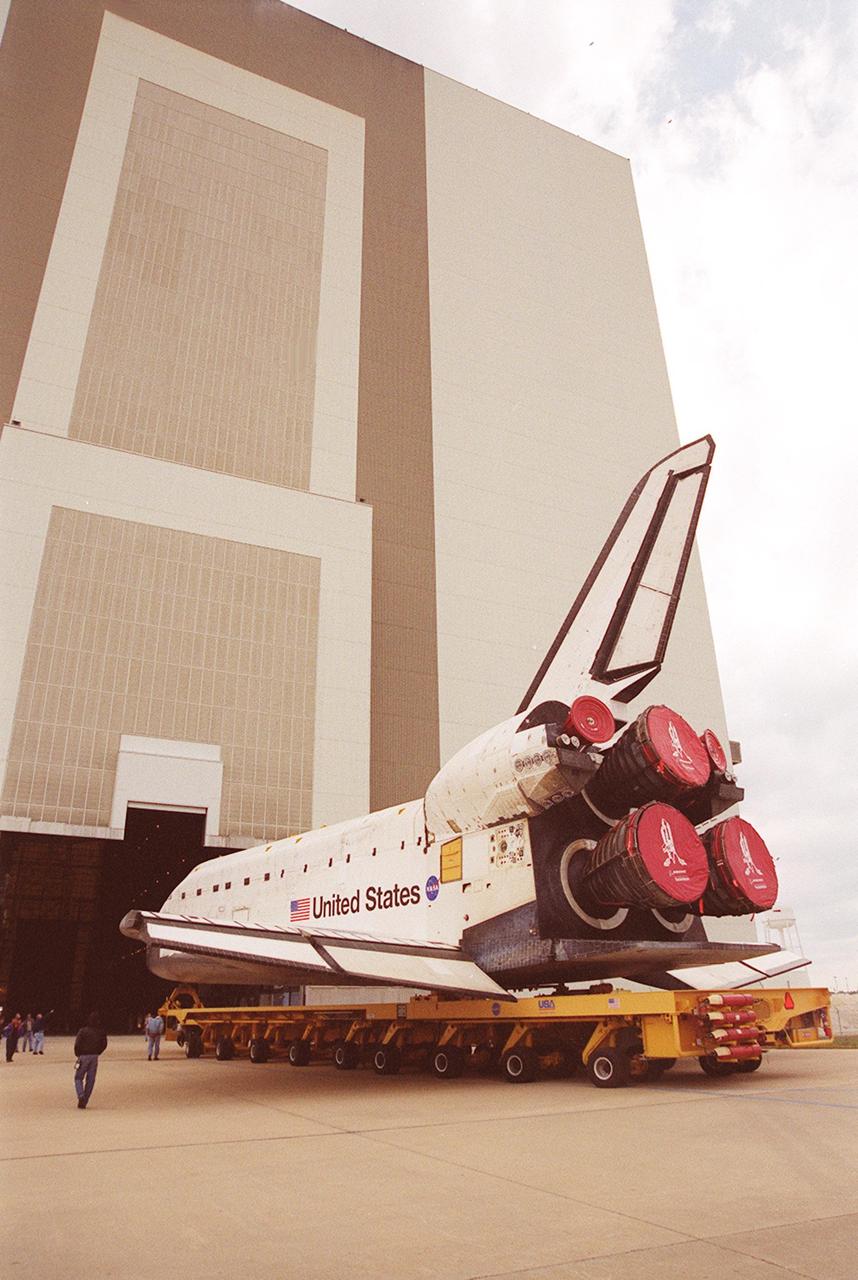
The orbiter Atlantis rolls toward the open door of the Vehicle Assembly Building after leaving the Orbiter Processing Facility bay 3. In the VAB it will be raised to vertical and lifted up and into high bay 3 for stacking with its external tank and solid rocket boosters. Atlantis will fly on mission STS-98, the seventh construction flight to the International Space Station. The orbiter will carry in its payload bay the U.S. Laboratory, named Destiny, that will have five system racks already installed inside of the module. After delivery of electronics in the lab, electrically powered attitude control for Control Moment Gyroscopes will be activated. Atlantis is scheduled for launch on Jan. 18, 2001, at 2:44 a.m. EST, with a crew of five
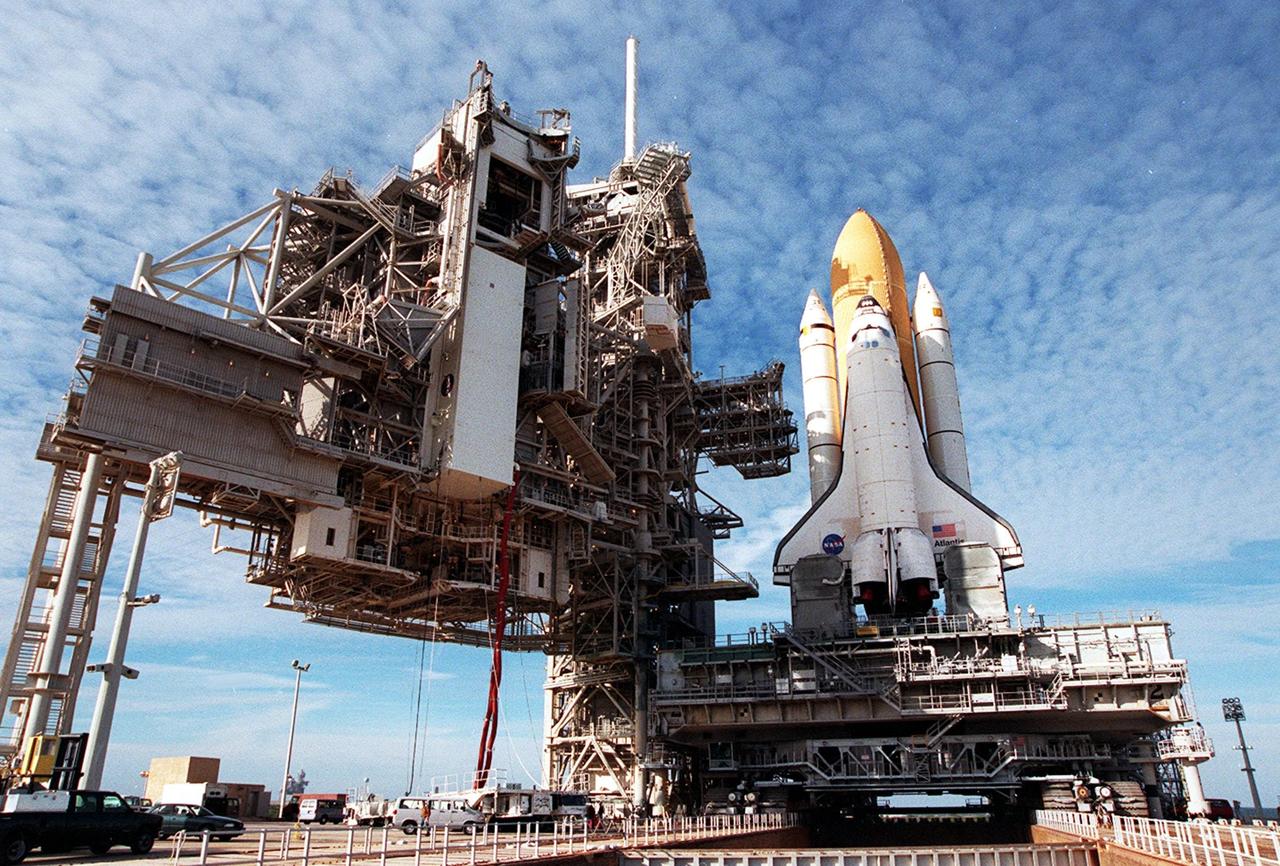
KENNEDY SPACE CENTER, Fla. -- Space Shuttle Atlantis reaches its destination, Launch Pad 39A, for liftoff no earlier than Jan. 19 on mission STS-98. To its immediate left is the Fixed Service Structure, with its 80-foot-tall white lighting mast on top. Further to the left is the Rotating Service Structure, where the white payload canister is being lifted to the Payload Changeout Room. The payload for the mission is the U.S. Lab Destiny, a key element in the construction of the International Space Station. The lab has five system racks for experiments already installed inside the module. After delivery of electronics in the lab, electrically powered attitude control for Control Moment Gyroscopes will be activated
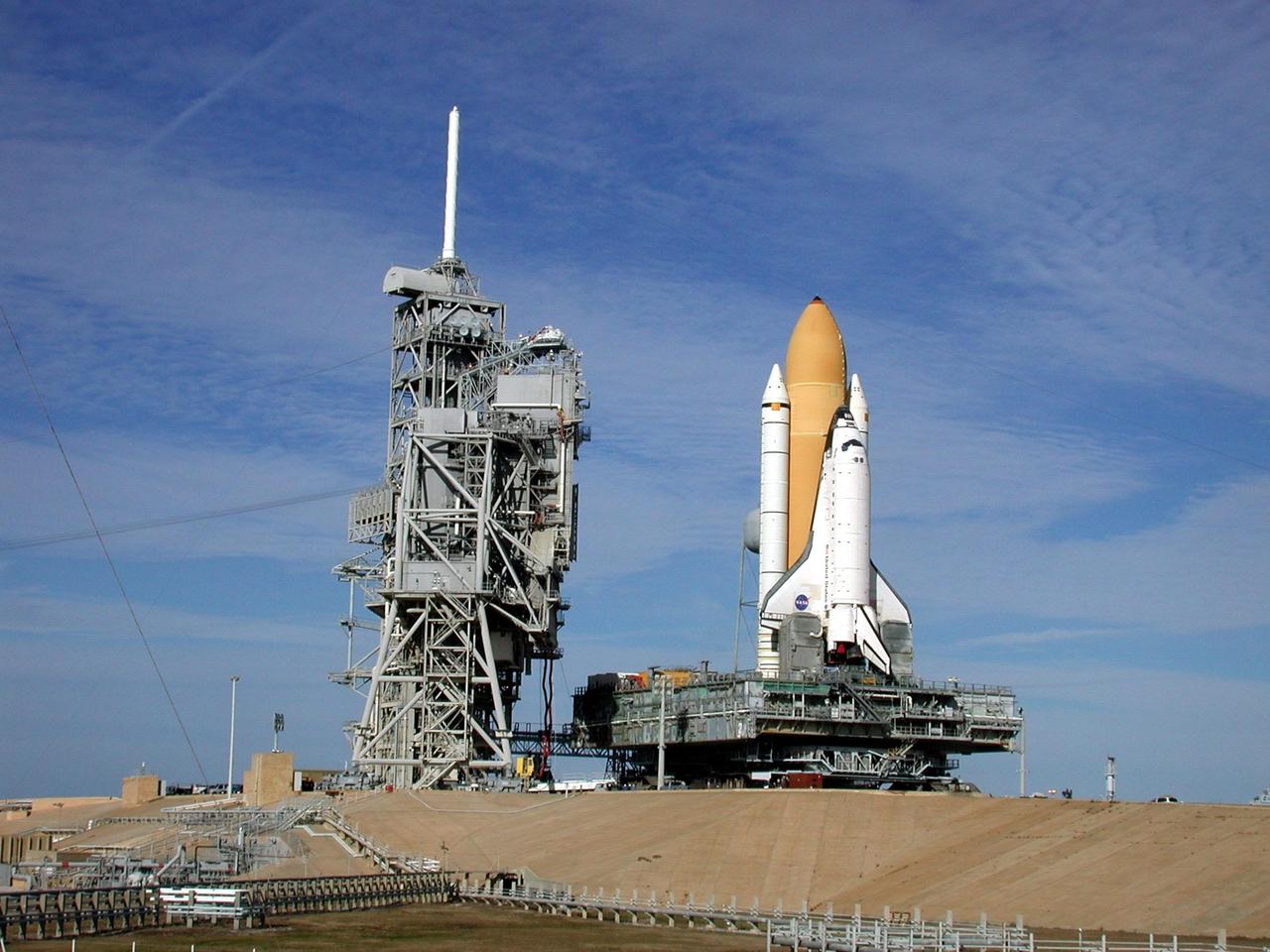
KENNEDY SPACE CENTER, Fla. -- Under wispy white morning clouds, Space Shuttle Atlantis nears the Rotating Service Structure on Launch Pad 39A. Atlantis will fly on mission STS-98, the seventh construction flight to the International Space Station, carrying the U.S. Laboratory, named Destiny. The lab will have five system racks already installed inside the module. After delivery of electronics in the lab, electrically powered attitude control for Control Moment Gyroscopes will be activated. Atlantis is scheduled for launch no earlier than Jan. 19, 2001, with a crew of five
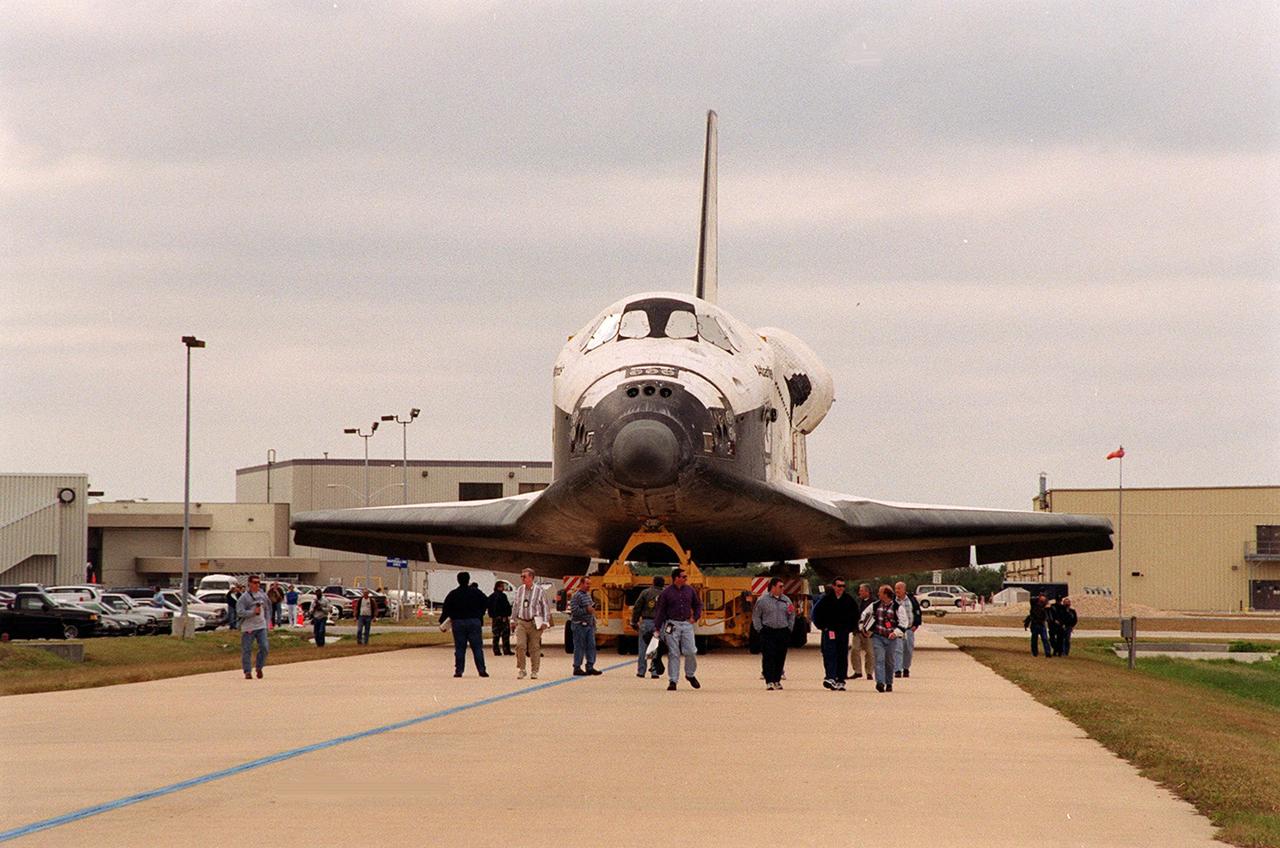
The orbiter Atlantis rolls away from the Orbiter Processing Facility bay 3 (in the background) to the Vehicle Assembly Building. In the VAB it will be raised to vertical and lifted up and into high bay 3 for stacking with its external tank and solid rocket boosters. Atlantis will fly on mission STS-98, the seventh construction flight to the International Space Station. The orbiter will carry in its payload bay the U.S. Laboratory, named Destiny, that will have five system racks already installed inside of the module. After delivery of electronics in the lab, electrically powered attitude control for Control Moment Gyroscopes will be activated. Atlantis is scheduled for launch on Jan. 18, 2001, at 2:44 a.m. EST, with a crew of five
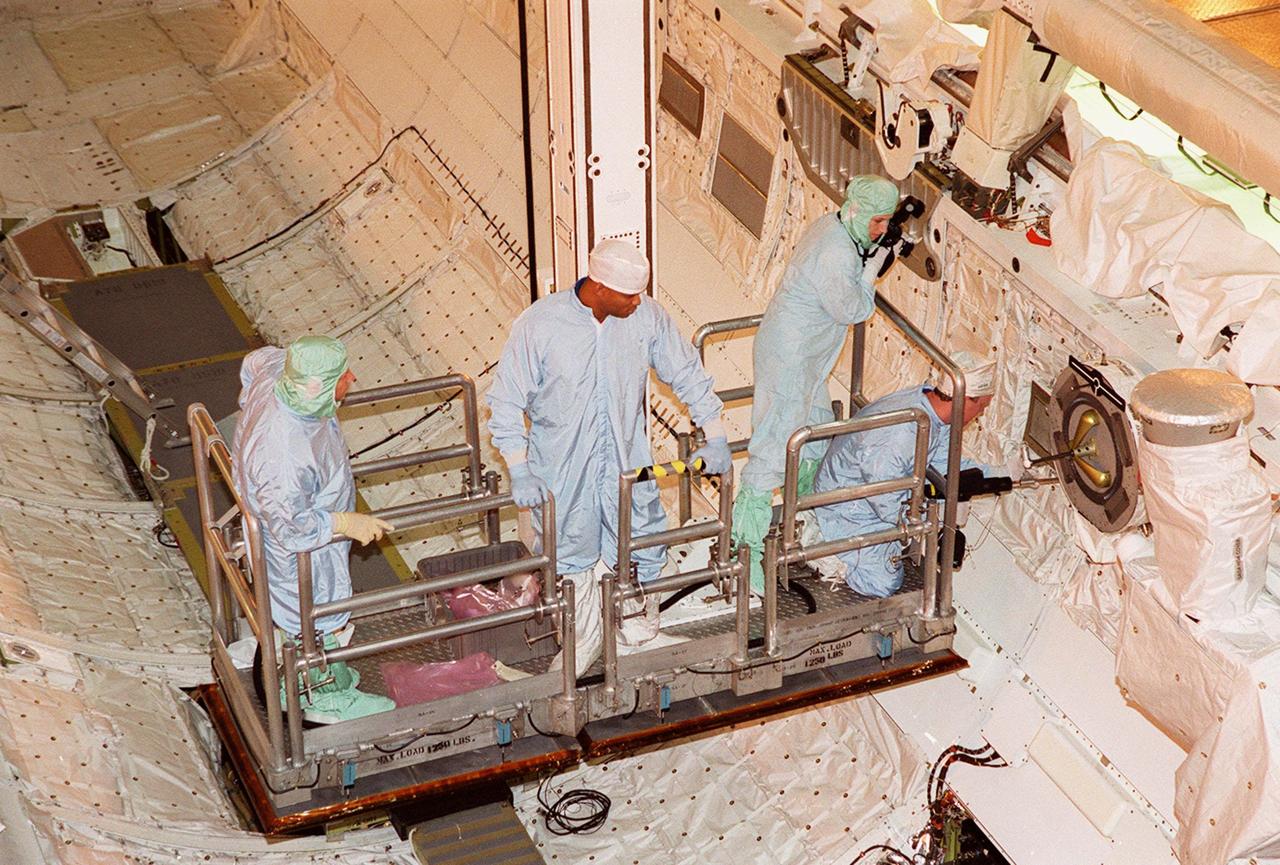
KENNEDY SPACE CENTER, FLA. -- Lowered into the payload bay of the orbiter Atlantis, some of the STS-98 crew look over part of the payload. At center is Mission Specialist Robert Curbeam; at right are Mission Specialists Marsha Ivins (standing) and Tom Jones (kneeling). They and the rest of the crew are at KSC for Crew Equipment Interface Test activities. Launch on mission STS-98 is scheduled for Jan. 18, 2001. It will be transporting the U.S. Lab, Destiny, to the International Space Station with five system racks already installed inside of the module. After delivery of electronics in the lab, electrically powered attitude control for Control Moment Gyroscopes will be activated
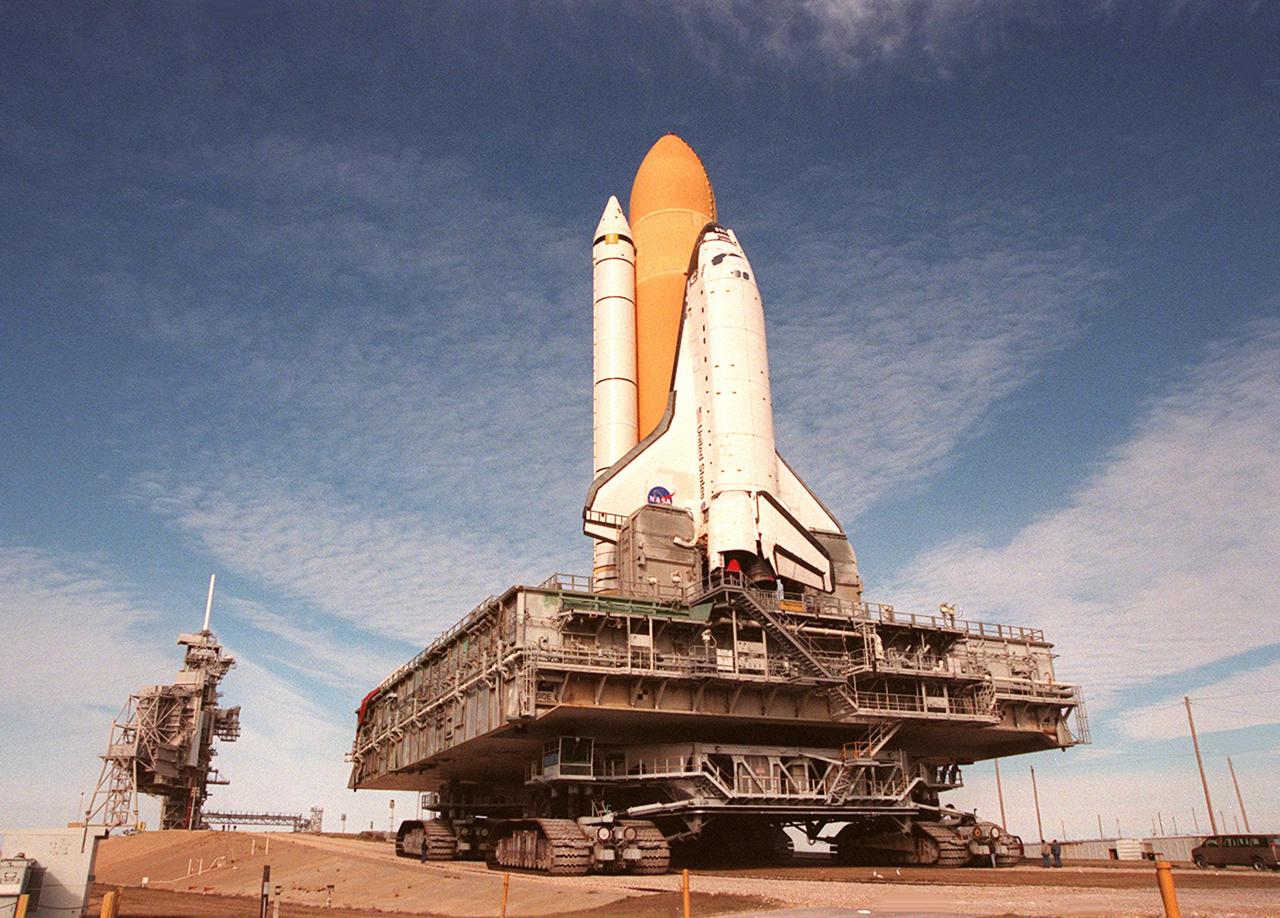
KENNEDY SPACE CENTER, Fla. -- Under wispy white clouds, Space Shuttle Atlantis slowly moves toward the Rotating and Fixed Service Structures on Launch Pad 39A. The 80-foot-tall white lighting mast is seen atop the FSS. Atlantis will fly on mission STS-98, the seventh construction flight to the International Space Station, carrying the U.S. Laboratory, named Destiny. The lab will have five system racks already installed inside the module. After delivery of electronics in the lab, electrically powered attitude control for Control Moment Gyroscopes will be activated. Atlantis is scheduled for launch no earlier than Jan. 19, 2001, with a crew of five
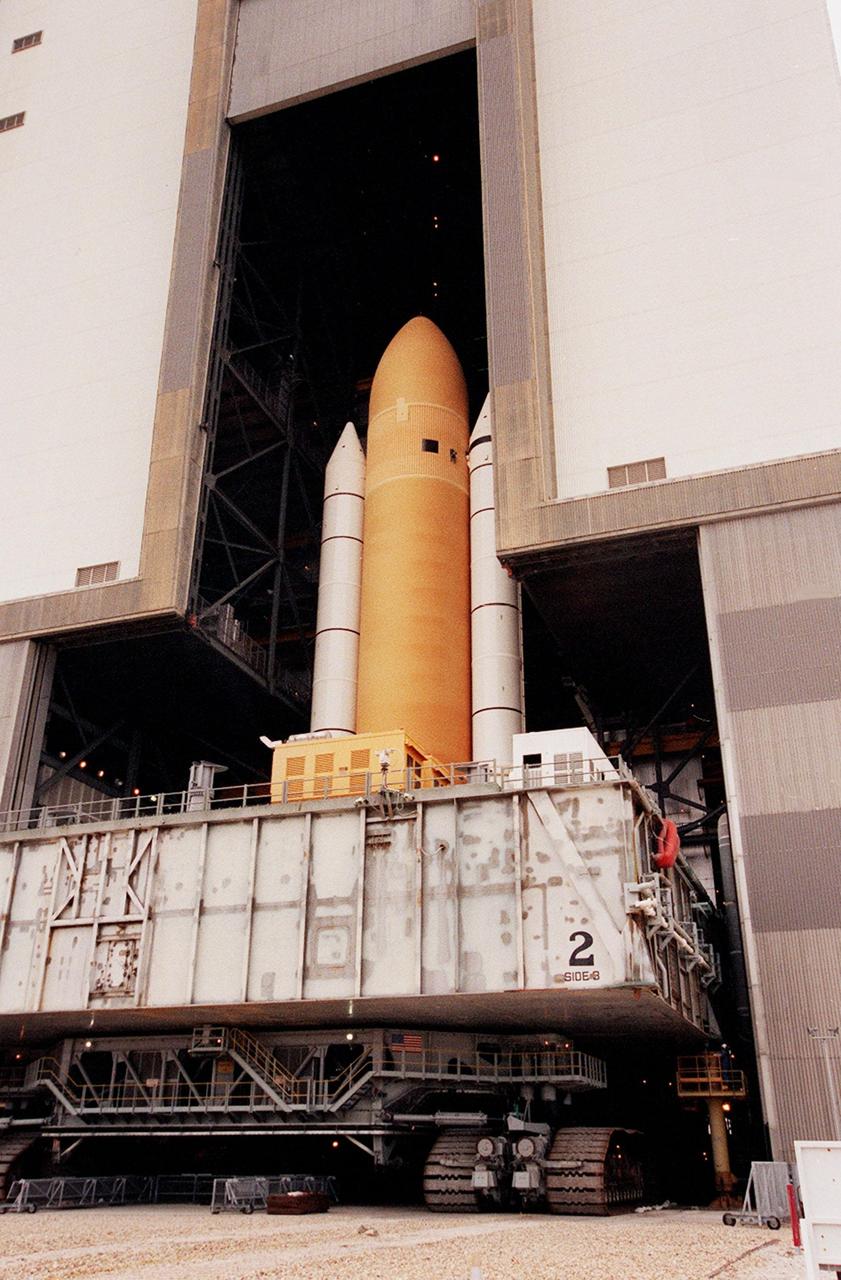
KENNEDY SPACE CENTER, FLA. -- Seen from outside, Space Shuttle Atlantis moves back inside the Vehicle Assembly Building after an aborted rollout to Launch Pad 39A. Atlantis will fly on mission STS-98, the seventh construction flight to the International Space Station. The orbiter will carry in its payload bay the U.S. Laboratory, named Destiny, that will have five system racks already installed inside the module. After delivery of electronics in the lab, electrically powered attitude control for Control Moment Gyroscopes will be activated. Atlantis is scheduled for launch no earlier than Jan. 19, 2001, with a crew of five
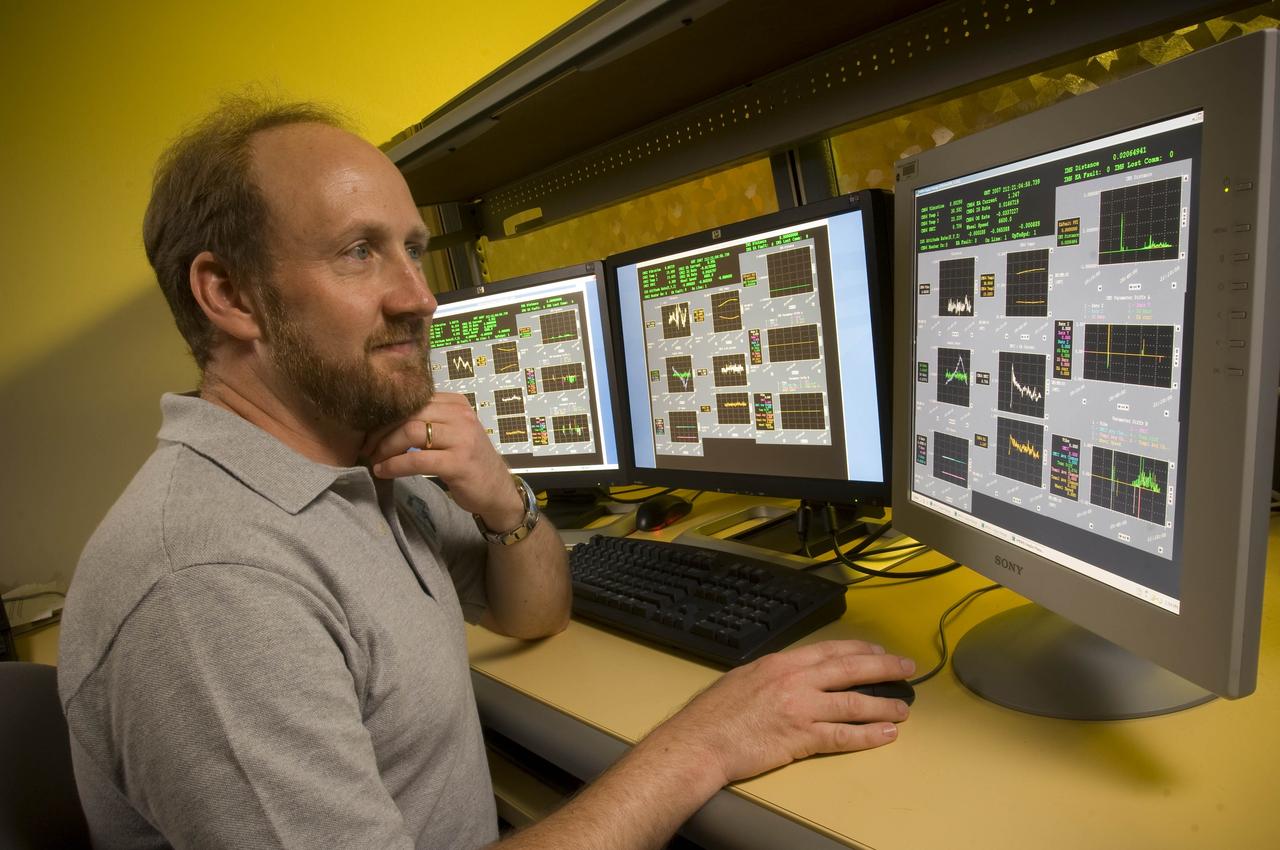
David L. Iverson of NASA Ames Research center, Moffett Field, California, led development of computer software to monitor the conditions of the gyroscopes that keep the International Space Station (ISS) properly oriented in space as the ISS orbits Earth. The gyroscopes are flywheels that control the station's attitude without the use of propellant fuel. NASA computer scientists designed the new software, the Inductive Monitoring System, to detect warning signs that precede a gyroscope's failure. According to NASA officials, engineers will add the new software tool to a group of existing tools to identify and track problems related to the gyroscopes. If the software detects warning signs, it will quickly warn the space station's mission control center.
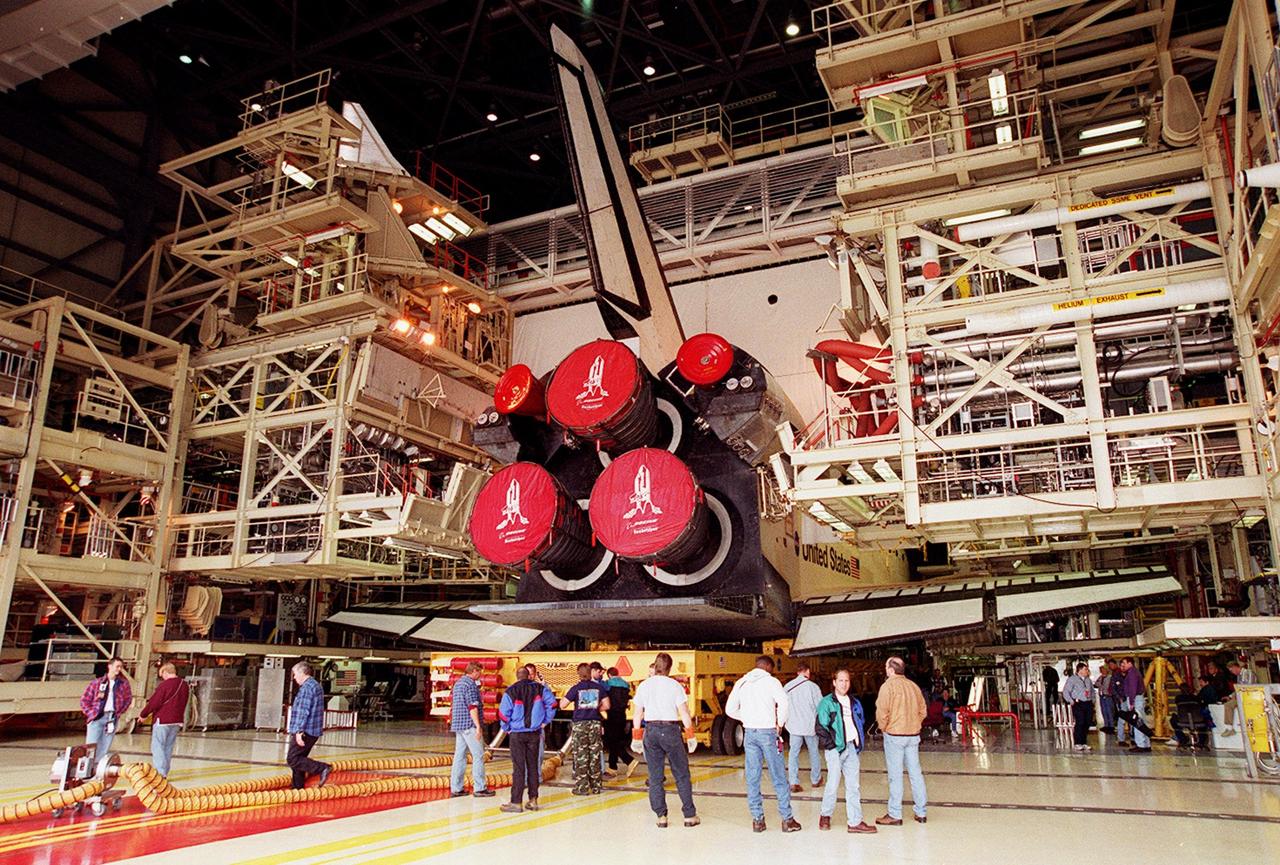
Inside Orbiter Processing Facility bay 3, Atlantis is ready for rollover to the Vehicle Assembly Building. In the VAB it will be raised to vertical and lifted up and into high bay 3 for stacking with its external tank and solid rocket boosters. Atlantis will fly on mission STS-98, the seventh construction flight to the International Space Station. The orbiter will carry in its payload bay the U.S. Laboratory, named Destiny, that will have five system racks already installed inside of the module. After delivery of electronics in the lab, electrically powered attitude control for Control Moment Gyroscopes will be activated. Atlantis is scheduled for launch on Jan. 18, 2001, at 2:44 a.m. EST, with a crew of five
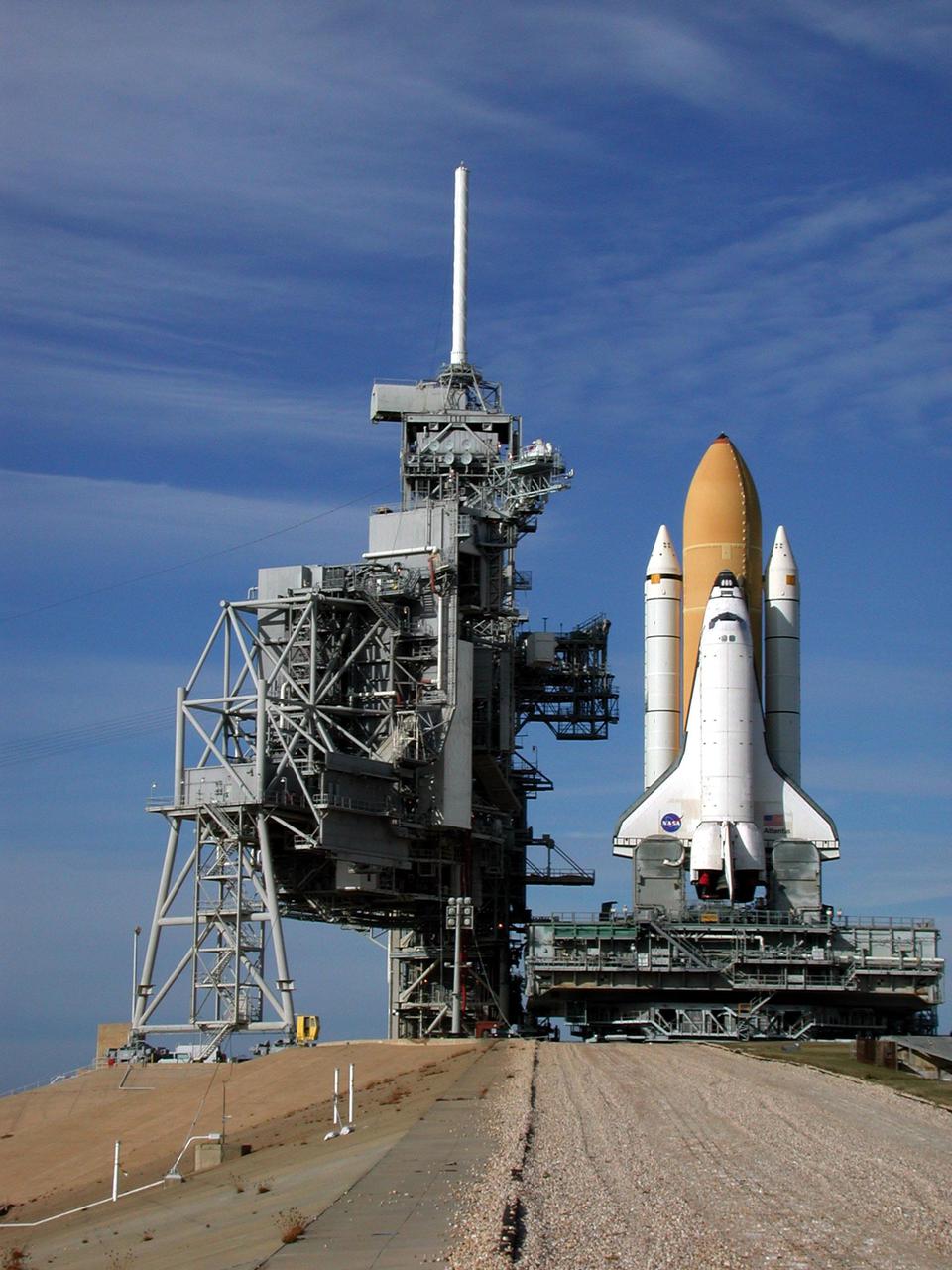
KENNEDY SPACE CENTER, Fla. -- At the top of Launch Pad 39A, Space Shuttle Atlantis closes in on the Rotating Service Structure (left). On the RSS, the payload canister can be seen half way up the structure as it is lifted to the Payload Changeout Room. Atlantis will fly on mission STS-98, the seventh construction flight to the International Space Station, carrying the U.S. Laboratory, named Destiny. The lab will have five system racks already installed inside the module. After delivery of electronics in the lab, electrically powered attitude control for Control Moment Gyroscopes will be activated. Atlantis is scheduled for launch no earlier than Jan. 19, 2001, with a crew of five
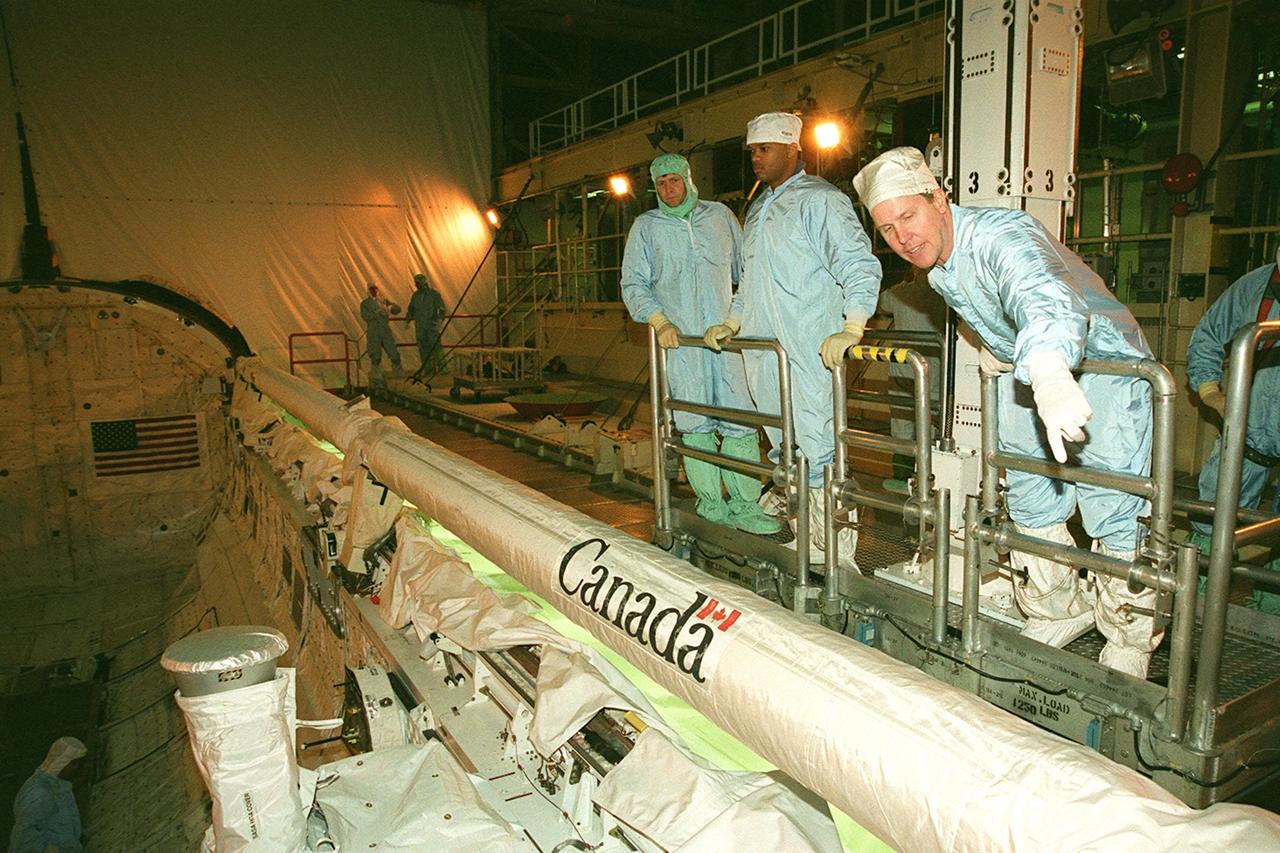
KENNEDY SPACE CENTER, FLA. -- Some of the STS-98 crew look over the Canadian robotic arm in the payload bay of orbiter Atlantis, which is undergoing testing in the Orbiter Processing Facility bay 3. At right, pointing, is Mission Specialist Tom Jones. Second from right is Mission Specialist Robert Curbeam. They and the rest of the crew are at KSC for Crew Equipment Interface Test activities. Launch on mission STS-98 is scheduled for Jan. 18, 2001. It will be transporting the U.S. Lab, Destiny, to the International Space Station with five system racks already installed inside of the module. After delivery of electronics in the lab, electrically powered attitude control for Control Moment Gyroscopes will be activated

The orbiter Atlantis, on its transporter, heads into the turn toward the Vehicle Assembly Building, in the background. In the VAB it will be raised to vertical and lifted up and into high bay 3 for stacking with its external tank and solid rocket boosters. Atlantis will fly on mission STS-98, the seventh construction flight to the International Space Station. The orbiter will carry in its payload bay the U.S. Laboratory, named Destiny, that will have five system racks already installed inside of the module. After delivery of electronics in the lab, electrically powered attitude control for Control Moment Gyroscopes will be activated. Atlantis is scheduled for launch on Jan. 18, 2001, at 2:44 a.m. EST, with a crew of five
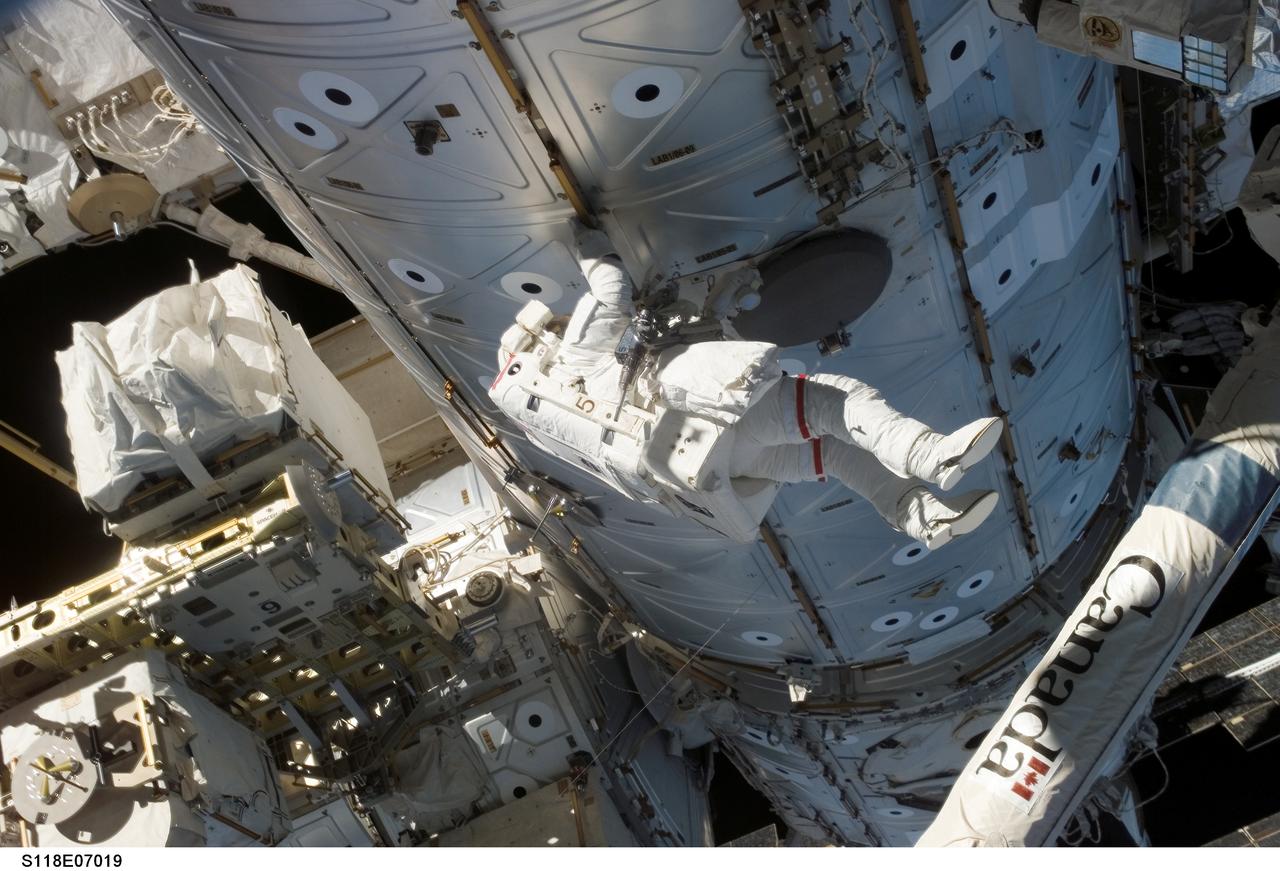
S118-E-07019 (13 Aug. 2007) --- Astronaut Rick Mastracchio, STS-118 mission specialist, participates in the mission's second planned session of extravehicular activity (EVA) as construction and maintenance continue on the International Space Station. During the 6-hour, 28-minute spacewalk, Mastracchio and astronaut Dave Williams (out of frame), mission specialist representing the Canadian Space Agency, removed a faulty control moment gyroscope (CMG-3) and installed a new CMG into the station's Z1 truss. The failed CMG will remain at its temporary stowage location on the station's exterior until it is returned to Earth on a later shuttle mission. The new gyroscope is one of four CMGs that are used to control the station's attitude in orbit.

Inside Orbiter Processing Facility bay 3, Atlantis is ready for rollover to the Vehicle Assembly Building. In the VAB it will be raised to vertical and lifted up and into high bay 3 for stacking with its external tank and solid rocket boosters. Atlantis will fly on mission STS-98, the seventh construction flight to the International Space Station. The orbiter will carry in its payload bay the U.S. Laboratory, named Destiny, that will have five system racks already installed inside of the module. After delivery of electronics in the lab, electrically powered attitude control for Control Moment Gyroscopes will be activated. Atlantis is scheduled for launch on Jan. 18, 2001, at 2:44 a.m. EST, with a crew of five
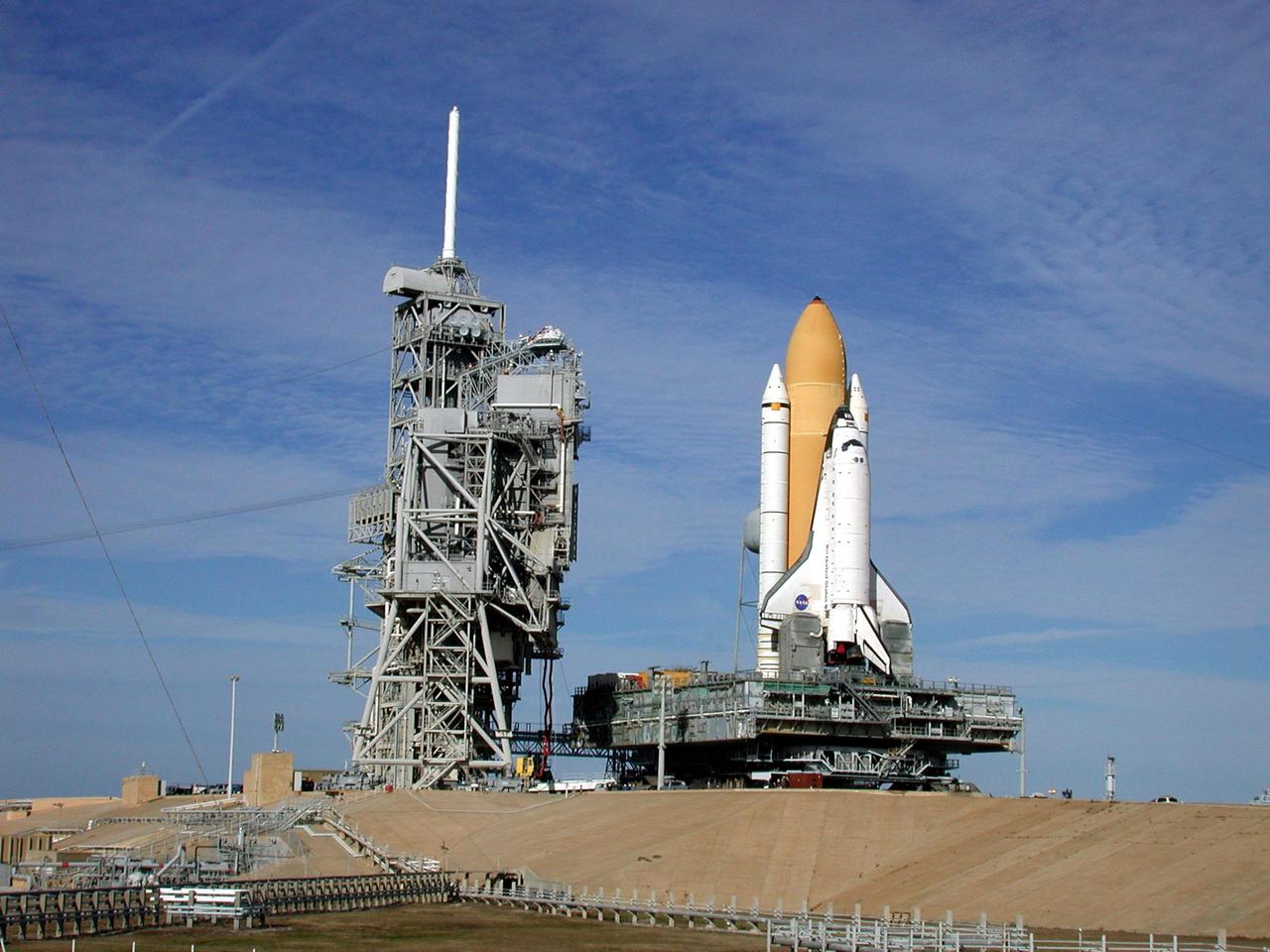
KENNEDY SPACE CENTER, Fla. -- Under wispy white morning clouds, Space Shuttle Atlantis nears the Rotating Service Structure on Launch Pad 39A. Atlantis will fly on mission STS-98, the seventh construction flight to the International Space Station, carrying the U.S. Laboratory, named Destiny. The lab will have five system racks already installed inside the module. After delivery of electronics in the lab, electrically powered attitude control for Control Moment Gyroscopes will be activated. Atlantis is scheduled for launch no earlier than Jan. 19, 2001, with a crew of five
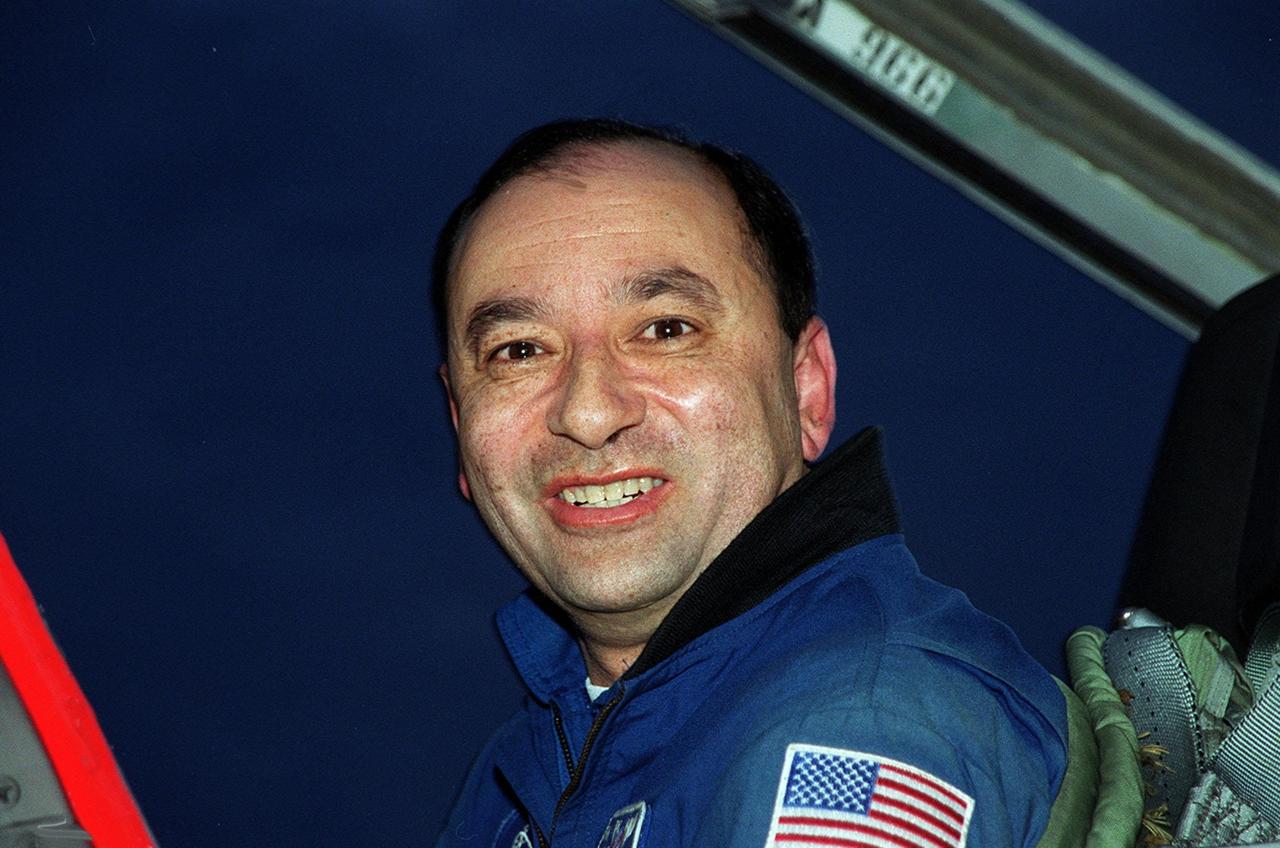
STS-98 Pilot Mark Polansky is pleased to arrive at KSC’s Shuttle Landing Facility for Terminal Countdown Test Activities. In preparation for the Jan. 19 launch, he and the rest of the crew Commander Ken Cockrell and Mission Specialists Robert Curbeam, Thomas Jones and Marsha Ivins will be training in emergency procedures from the pad, checking the payload and taking part in a simulated countdown. The payload for the mission is the U.S. Lab Destiny, a key element in the construction of the International Space Station. The lab has five system racks already installed inside the module. After delivery of electronics in the lab, electrically powered attitude control for Control Moment Gyroscopes will be activated. STS-98 is the seventh construction flight to the ISS.<br
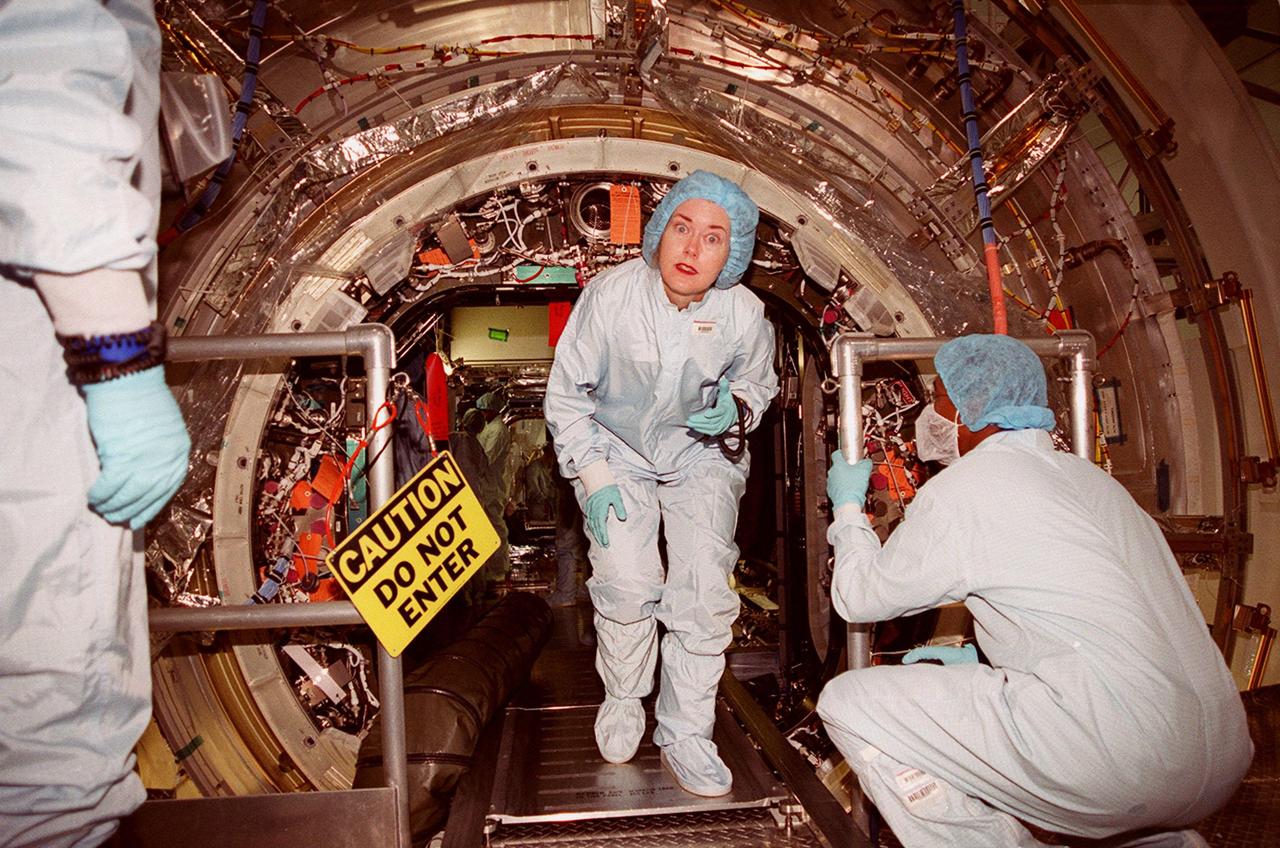
In the Space Station Processing Facility, a worker is surprised by the camera as she exits the U.S. Lab, Destiny. Inside the lab is the STS-98 crew, which is taking part in Crew Equipment Interface Test activities, becoming familiar with equipment it will be handling during the mission. The crew comprises Commander Ken Cockrell, Pilot Mark Polansky and Mission Specialists Robert Curbeam, Thomas Jones and Marsha Ivins. The mission will be transporting the Lab to the International Space Station with five system racks already installed inside of the module. With delivery of electronics in the lab, electrically powered attitude control for Control Moment Gyroscopes will be activated. The STS-98 launch is scheduled for Jan. 18, 2001
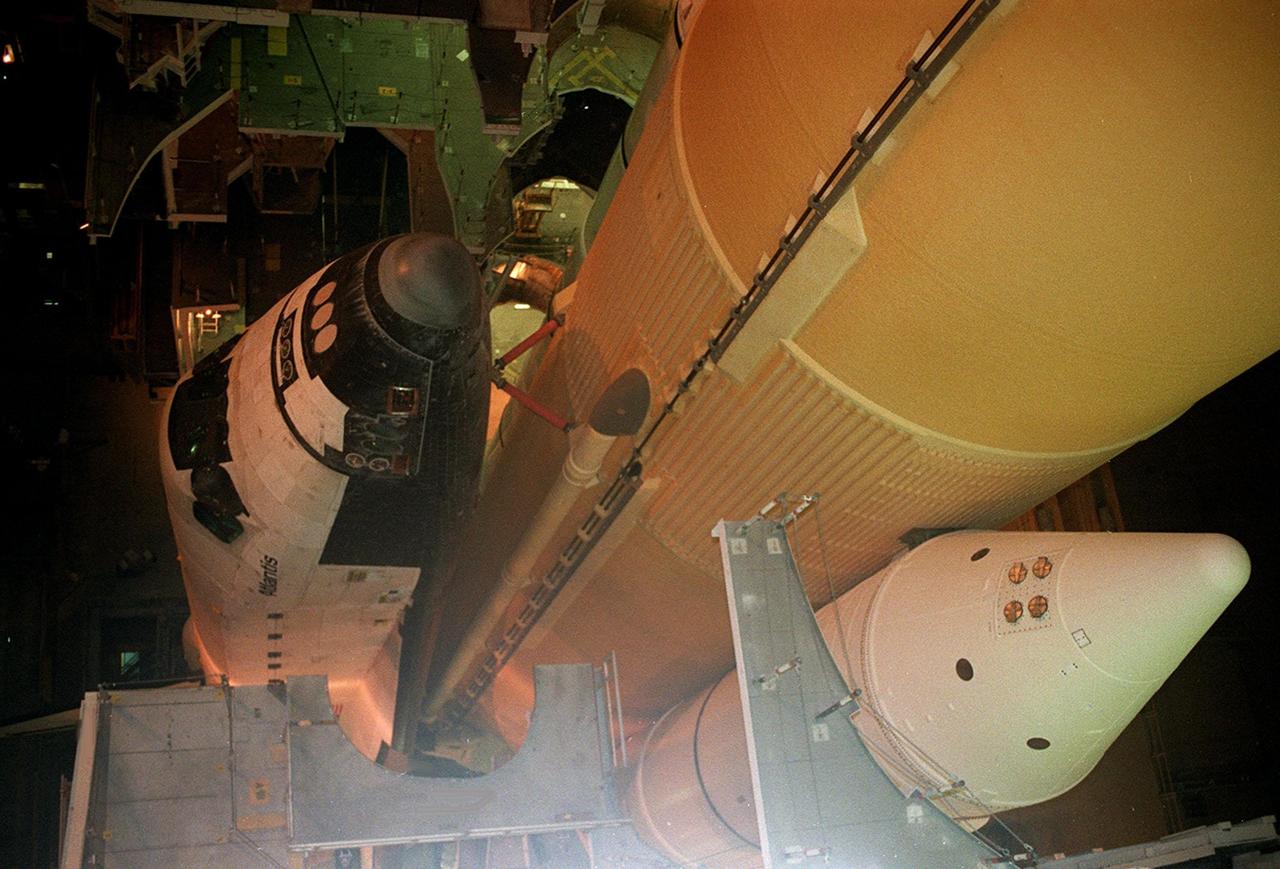
KENNEDY SPACE CENTER, FLA. -- In the Vehicle Assembly Building, Space Shuttle Atlantis is viewed from overhead just before beginning rollout to Launch Pad 39A. Atlantis will fly on mission STS-98, the seventh construction flight to the International Space Station. The orbiter will carry in its payload bay the U.S. Laboratory, named Destiny, that will have five system racks already installed inside the module. After delivery of electronics in the lab, electrically powered attitude control for Control Moment Gyroscopes will be activated. Atlantis is scheduled for launch no earlier than Jan. 19, 2001, with a crew of five
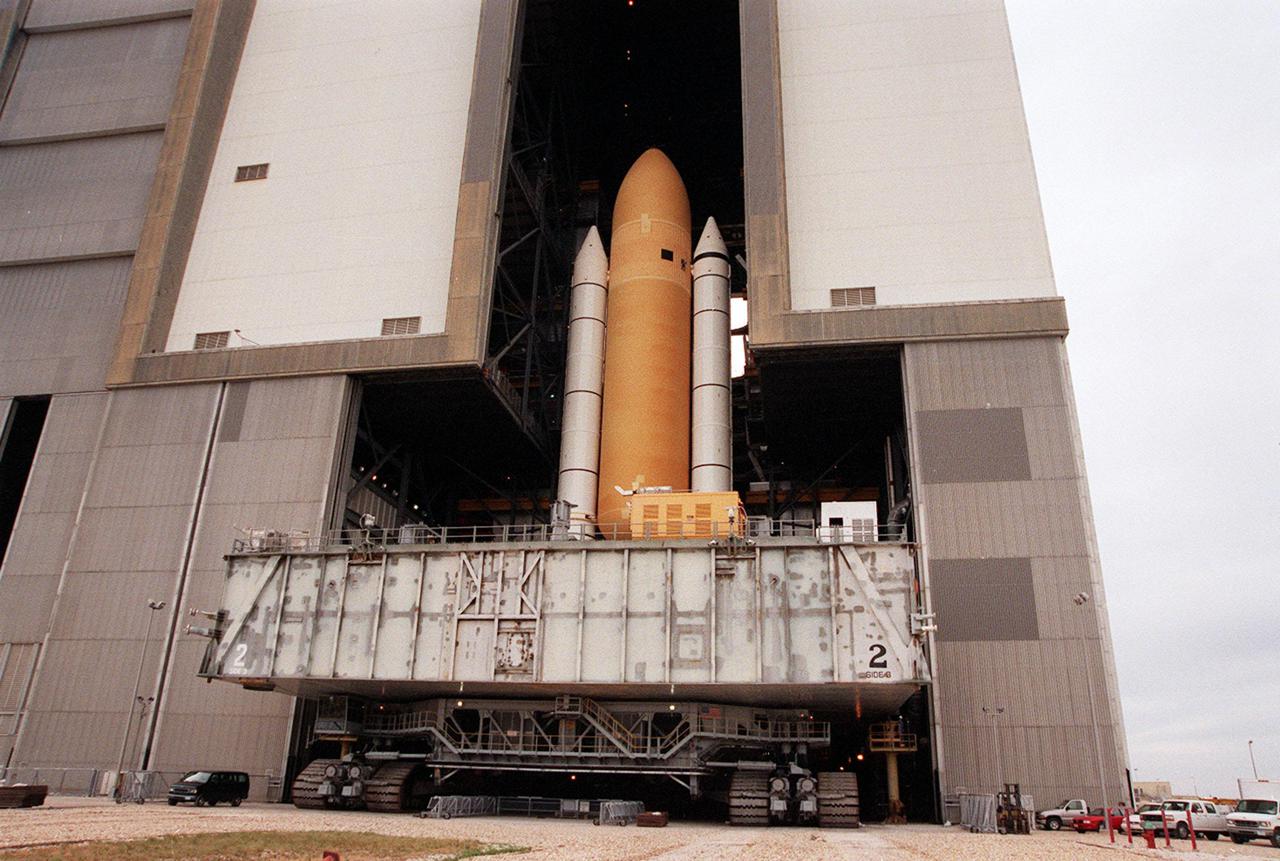
KENNEDY SPACE CENTER, FLA. -- Space Shuttle Atlantis moves back inside the Vehicle Assembly Building after an aborted rollout to Launch Pad 39A. Atlantis will fly on mission STS-98, the seventh construction flight to the International Space Station. The orbiter will carry in its payload bay the U.S. Laboratory, named Destiny, that will have five system racks already installed inside the module. After delivery of electronics in the lab, electrically powered attitude control for Control Moment Gyroscopes will be activated. Atlantis is scheduled for launch no earlier than Jan. 19, 2001, with a crew of five
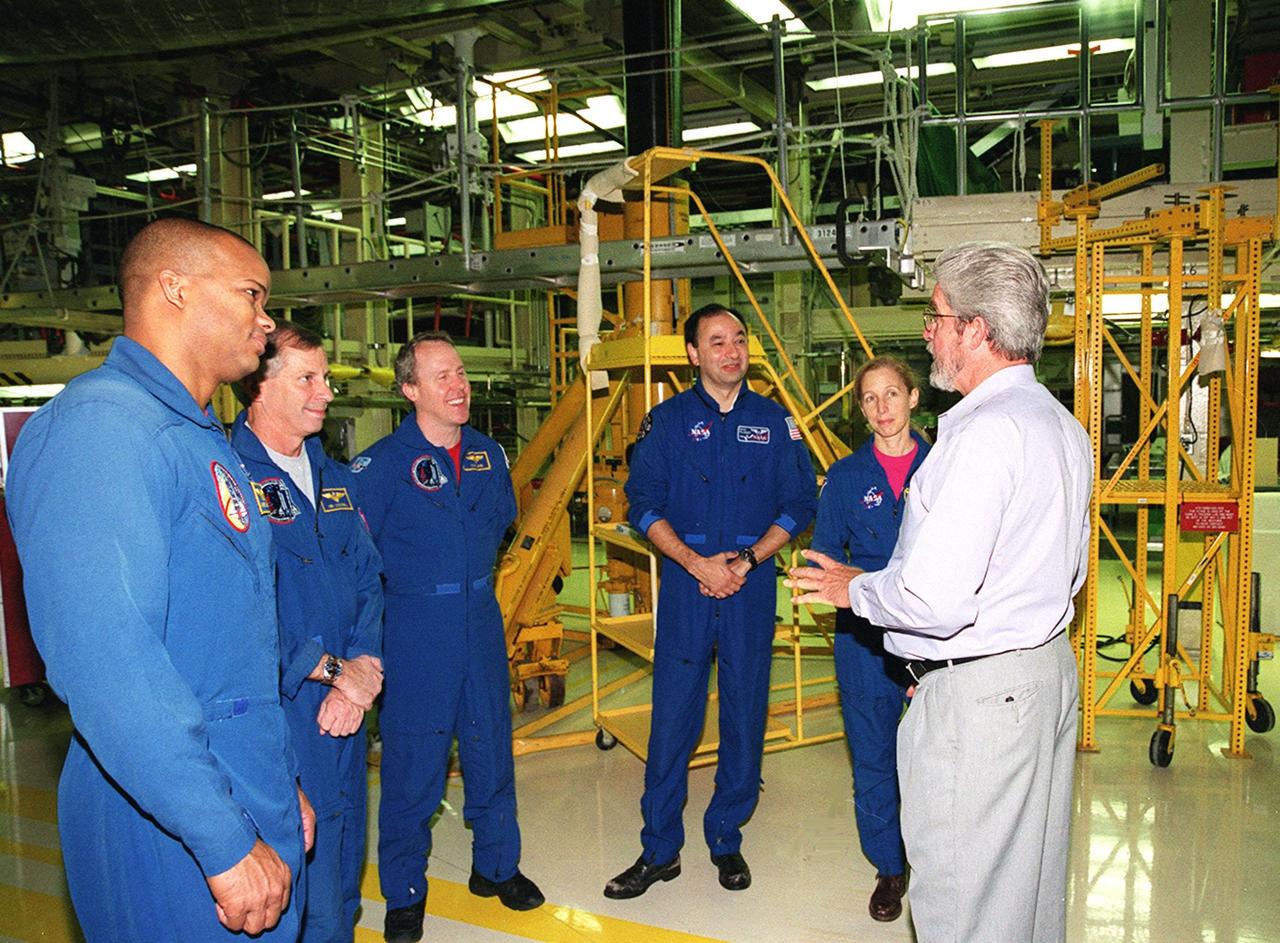
KENNEDY SPACE CENTER, FLA. -- In Orbiter Processing Facility bay 3, the STS-98 crew talks with United Space Alliance worker Larry Oshein (right). Standing left to right are Mission Specialist Robert Curbeam, Commander Ken Cockrell, Mission Specialist Tom Jones, and Mission Specialists Mark Polansky and Marsha Ivins. The crew is at KSC for Crew Equipment Interface Test activities. Launch on mission STS-98 is scheduled for Jan. 18, 2001. It will be transporting the U.S. Lab, Destiny, to the International Space Station with five system racks already installed inside of the module. After delivery of electronics in the lab, electrically powered attitude control for Control Moment Gyroscopes will be activated
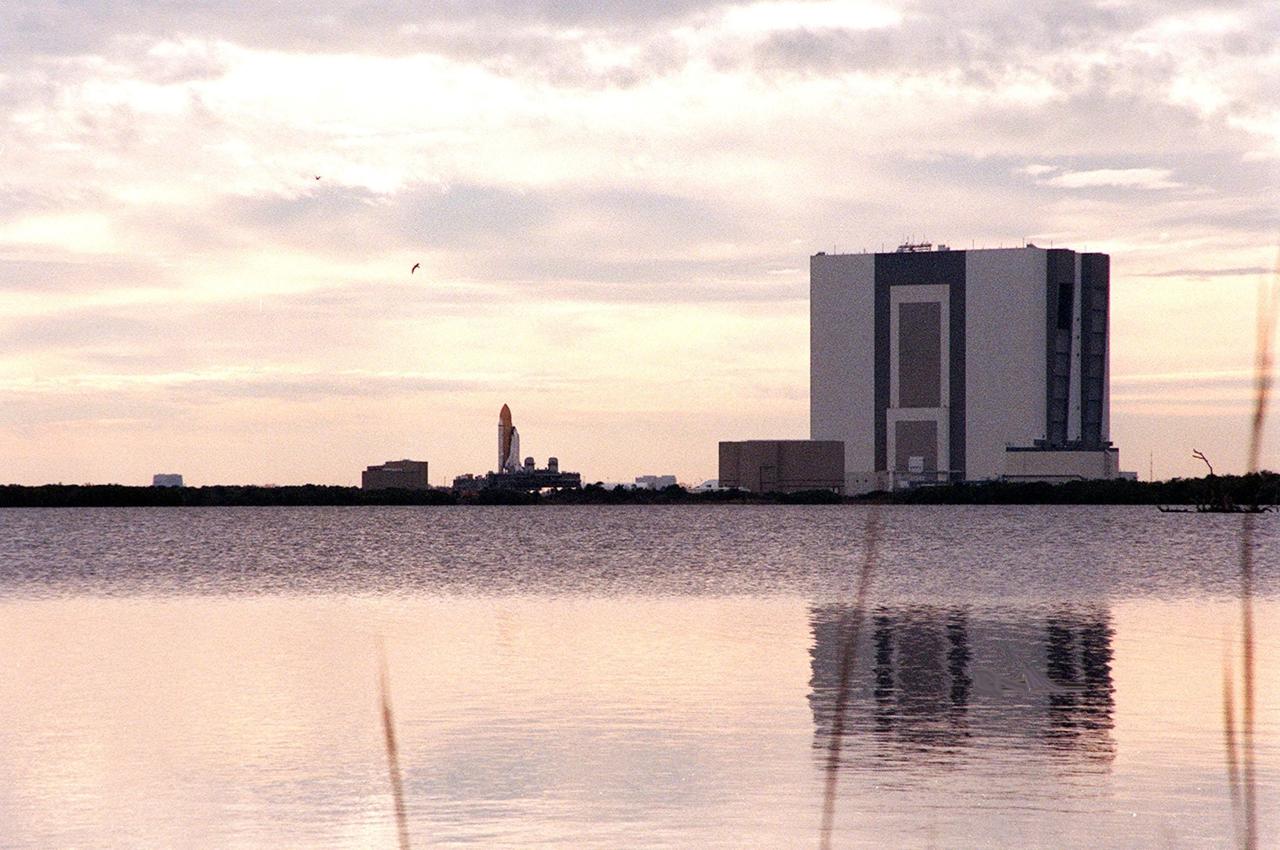
KENNEDY SPACE CENTER, Fla. -- Under cloudy skies, Space Shuttle Atlantis inches its way to Launch Pad 39A from the Vehicle Assembly Building (right). The journey is a distance of just over 3 miles. The water in the foreground is part of Banana Creek. Atlantis will fly on mission STS-98, the seventh construction flight to the International Space Station. The orbiter will carry in its payload bay the U.S. Laboratory, named Destiny, that will have five system racks already installed inside the module. After delivery of electronics in the lab, electrically powered attitude control for Control Moment Gyroscopes will be activated. Atlantis is scheduled for launch no earlier than Jan. 19, 2001, with a crew of five
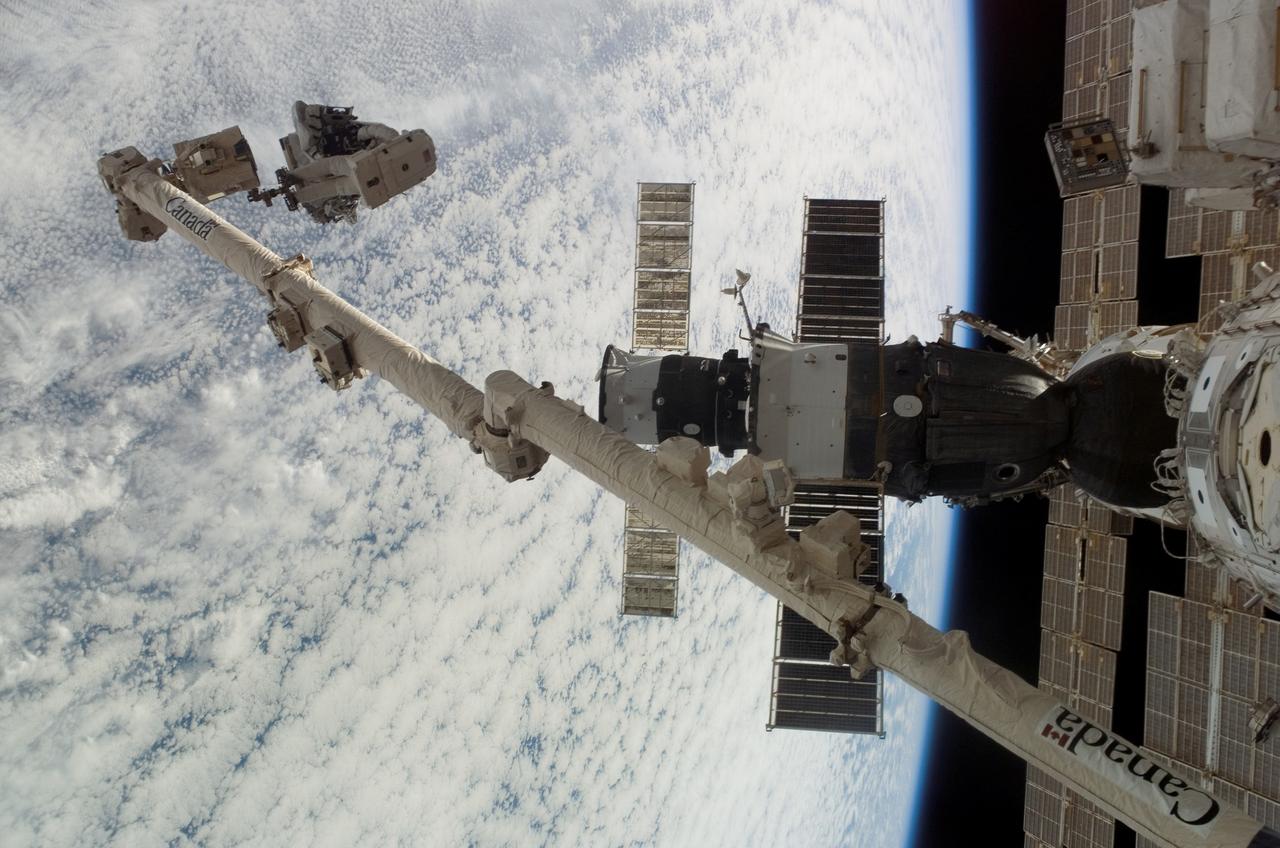
As the construction continued on the International Space Station (ISS), STS-118 astronaut and mission specialist, Dave Williams, representing the Canadian Space Agency, was anchored on the foot restraint of the Canadarm2 as he participated in the second session of Extra Vehicular Activity (EVA) for the mission. Assisting Williams was Rick Mastracchio (out of frame). During the 6 hour, 28 minute space walk, the two removed a faulty control moment gyroscope (CMG-3) and installed a new CMG into the Z1 truss. The failed CMG will remain in its temporary stowage location on the exterior of the station until it is returned to Earth on a later Shuttle mission. The new gyroscope is one of four CMGs that are used to control the orbital attitude of the station.