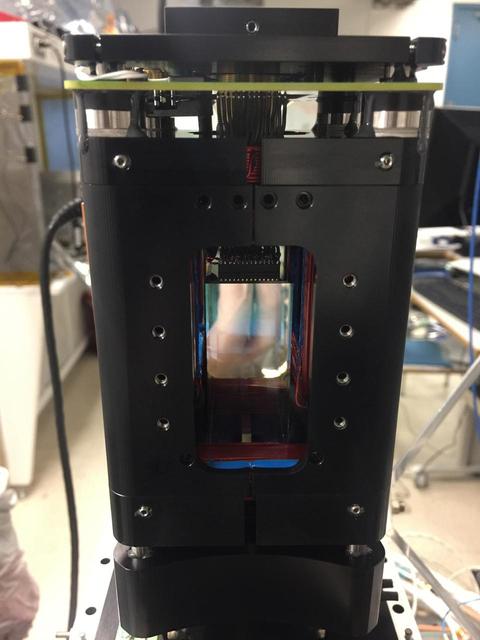
Shown here, the "physics package" inside NASA's Cold Atom Lab, where ultracold clouds of atoms called Bose-Einstein condensates are produced. https://photojournal.jpl.nasa.gov/catalog/PIA22563
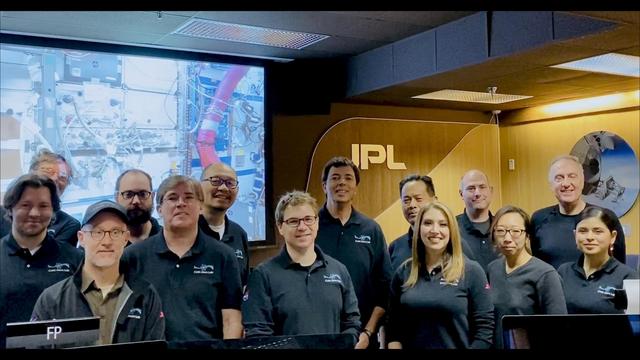
In January 2020, members of the Cold Atom Lab operations team assisted remotely in a hardware upgrade to Cold Atom Lab while the facility was still aboard the International Space Station. https://photojournal.jpl.nasa.gov/catalog/PIA23861
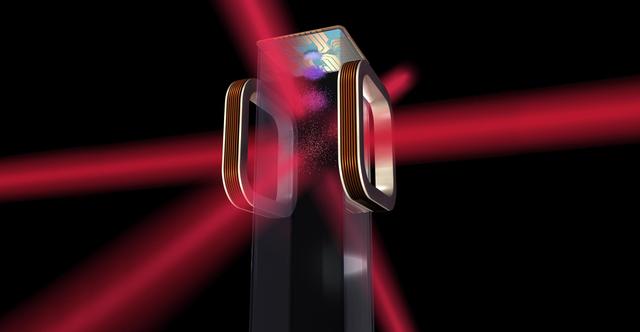
Artist concept of a magneto-optical trap and atom chip to be used by NASA Cold Atom Laboratory CAL aboard the International Space Station.

Astronaut Christina Koch assists with a hardware upgrade for NASA's Cold Atom Lab aboard the International Space Station in January 2020. https://photojournal.jpl.nasa.gov/catalog/PIA23862
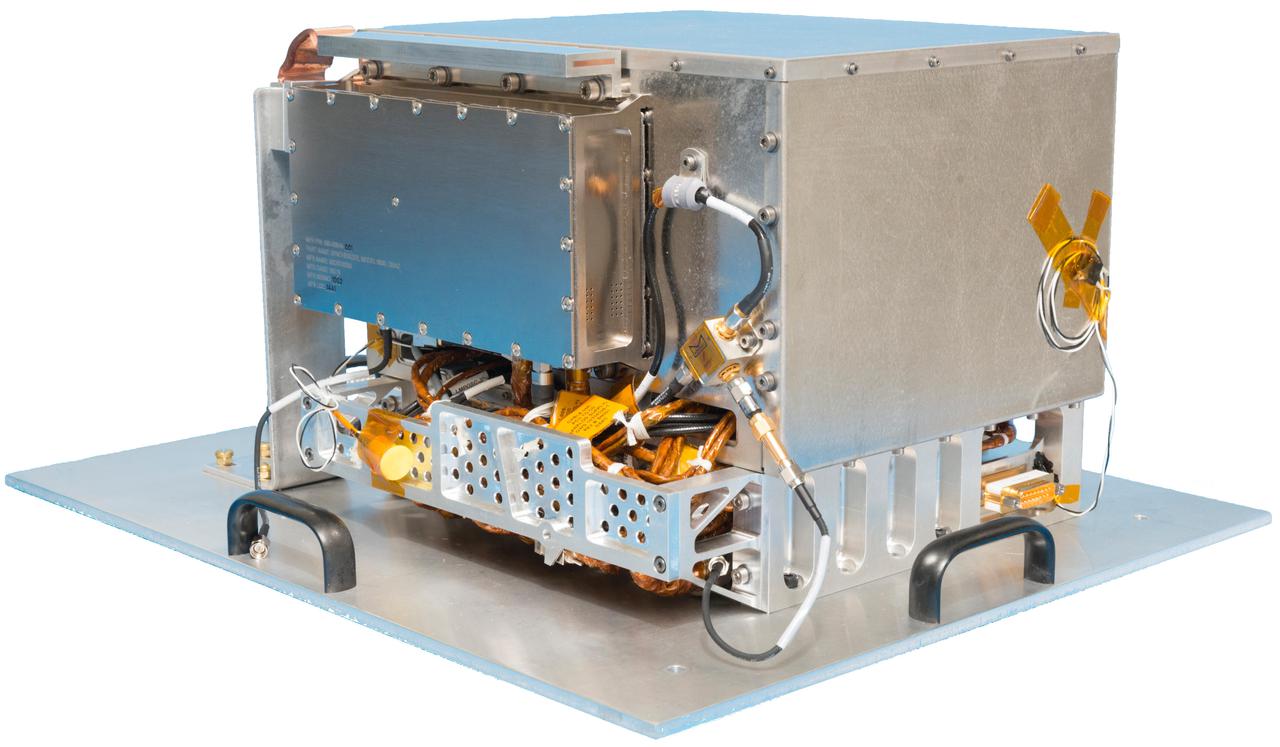
NASA's Deep Space Atomic Clock could revolutionize deep space navigation. One key requirement for the technology demonstration was a compact design. The complete hardware package is shown here and is only about 10 inches (25 centimeters) on each side. https://photojournal.jpl.nasa.gov/catalog/PIA24573
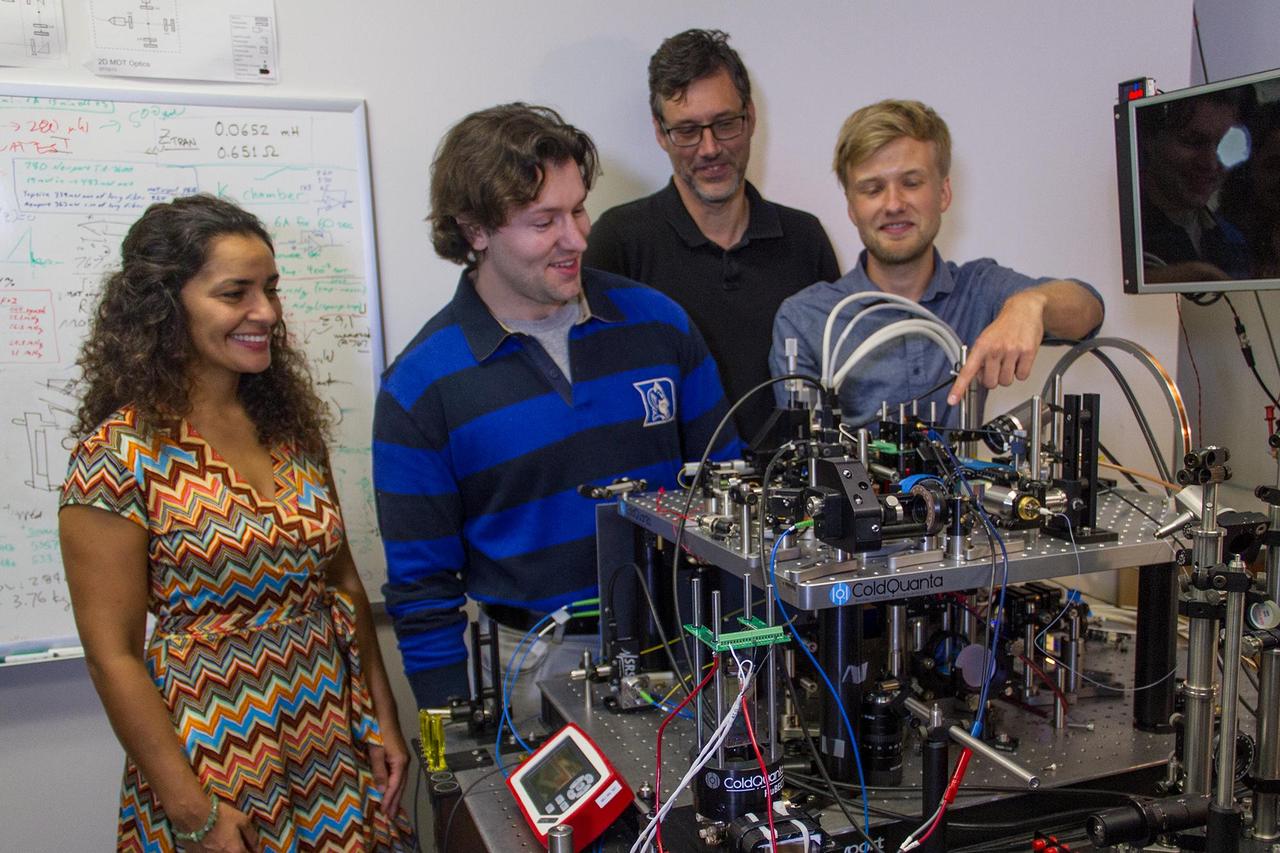
Members of the Cold Atom Laboratory team at NASA Jet Propulsion Laboratory are seen here with their ground-based testbed, which can reliably create a Bose-Einstein condensate.
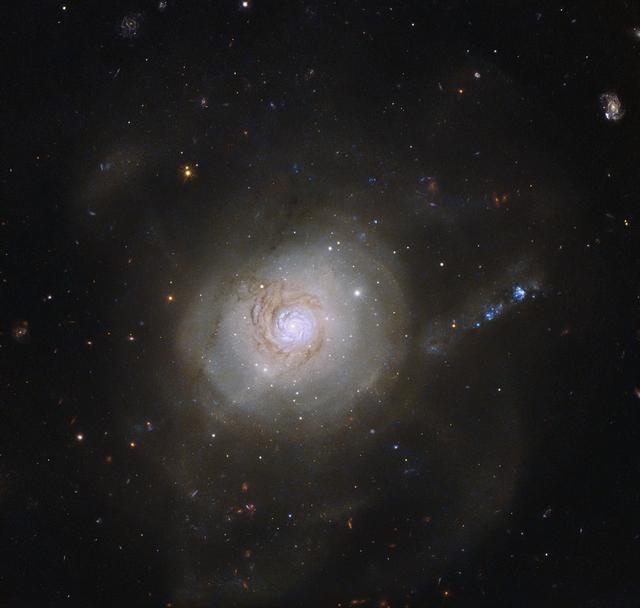
The spiral galaxy NGC 7252 has a superficial resemblance to an atomic nucleus surrounded by the loops of electronic orbits, and was informally dubbed the "Atoms for Peace" galaxy. These loops are well visible in a wider field of view image. This nickname is quite ironic, as the galaxy’s past was anything but peaceful. Its peculiar appearance is the result of a collision between two galaxies that took place about a billion years ago, which ripped both galaxies apart. The loop-like outer structures, likely made up of dust and stars flung outwards by the crash, but recalling orbiting electrons in an atom, are partly responsible for the galaxy’s nickname. This NASA/ESA Hubble Space Telescope image shows the inner parts of the galaxy, revealing a pinwheel-shaped disk that is rotating in a direction opposite to the rest of the galaxy. This disk resembles a spiral galaxy like our own galaxy, the Milky Way, but is only about 10,000 light-years across — about a tenth of the size of the Milky Way. It is believed that this whirling structure is a remnant of the galactic collision. It will most likely have vanished in a few billion years’ time, when NGC 7252 will have completed its merging process. Image credit: NASA & ESA, Acknowledgements: Judy Schmidt <b><a href="http://www.nasa.gov/audience/formedia/features/MP_Photo_Guidelines.html" rel="nofollow">NASA image use policy.</a></b> <b><a href="http://www.nasa.gov/centers/goddard/home/index.html" rel="nofollow">NASA Goddard Space Flight Center</a></b> enables NASA’s mission through four scientific endeavors: Earth Science, Heliophysics, Solar System Exploration, and Astrophysics. Goddard plays a leading role in NASA’s accomplishments by contributing compelling scientific knowledge to advance the Agency’s mission. <b>Follow us on <a href="http://twitter.com/NASAGoddardPix" rel="nofollow">Twitter</a></b> <b>Like us on <a href="http://www.facebook.com/pages/Greenbelt-MD/NASA-Goddard/395013845897?ref=tsd" rel="nofollow">Facebook</a></b> <b>Find us on <a href="http://instagrid.me/nasagoddard/?vm=grid" rel="nofollow">Instagram</a></b>

Astronaut Ricky Arnold assists with the installation of NASA's Cold Atom Laboratory (CAL) on the International Space Station. https://photojournal.jpl.nasa.gov/catalog/PIA22920
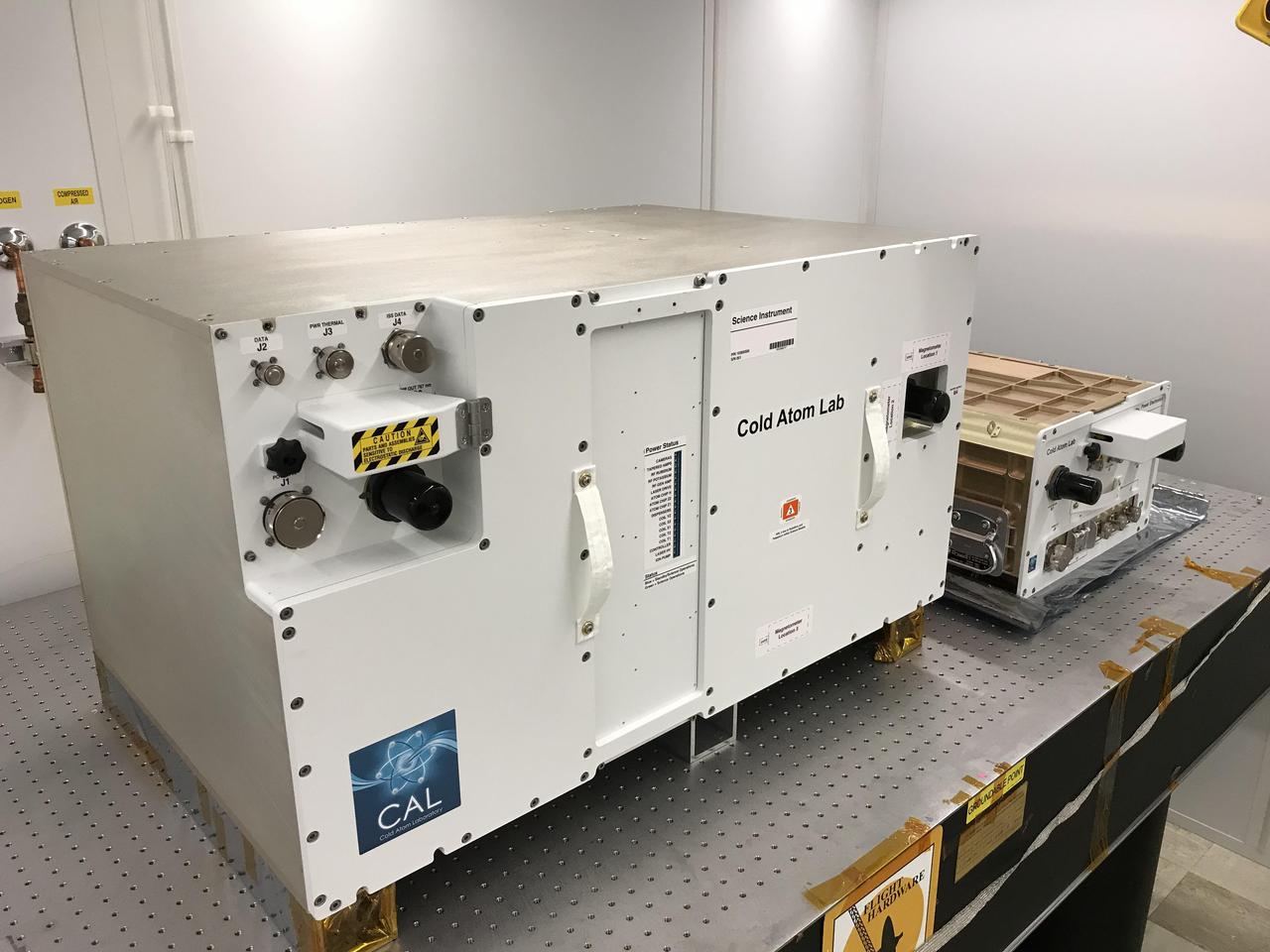
The Cold Atom Laboratory consists of two standardized containers that will be installed on the International Space Station. The larger container is called a "quad locker," and the smaller container is called a "single locker." The quad locker contains CAL's physics package, or the compartment where CAL will produce clouds of ultra-cold atoms. https://photojournal.jpl.nasa.gov/catalog/PIA22562
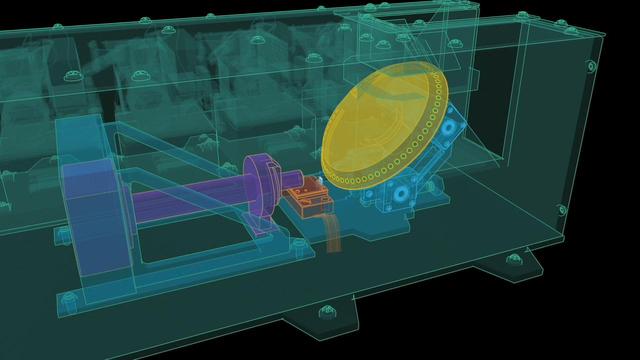
A scientific illustration of the operation of NASA Phoenix Mars Lander Atomic Force Microscope, or AFM. The AFM is part of Phoenix Microscopy, Electrochemistry, and Conductivity Analyzer, or MECA.
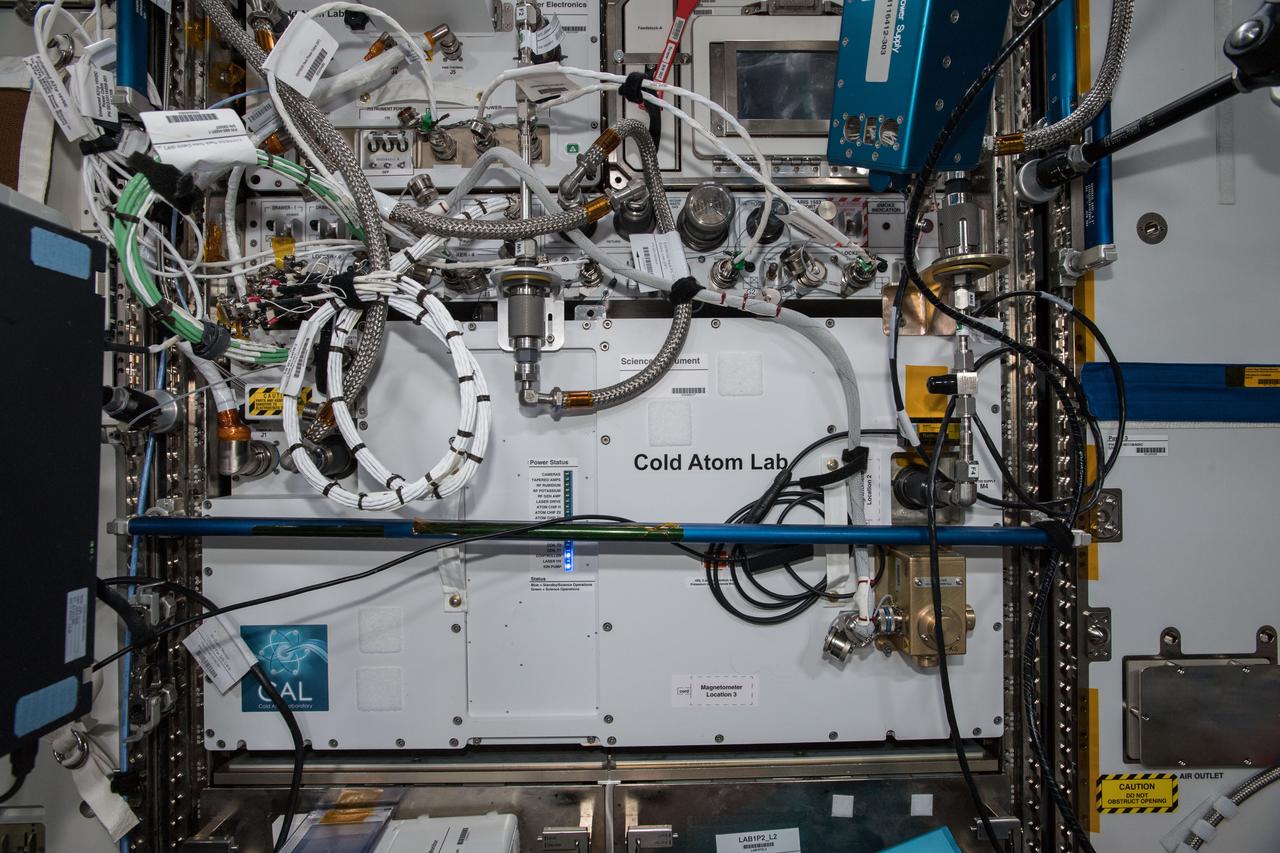
iss057e106407 (11/20/2018) -- A view of the Cold Atom Lab (CAL) in the Destiny module aboard the International Space Station (ISS). The Cold Atom Laboratory (CAL) produces clouds of atoms that are chilled to about one ten billionth of a degree above absolute zero -- much colder than the average temperature of deep space. At these low temperatures, atoms have almost no motion, allowing scientists to study fundamental behaviors and quantum characteristics that are difficult or impossible to probe at higher temperatures
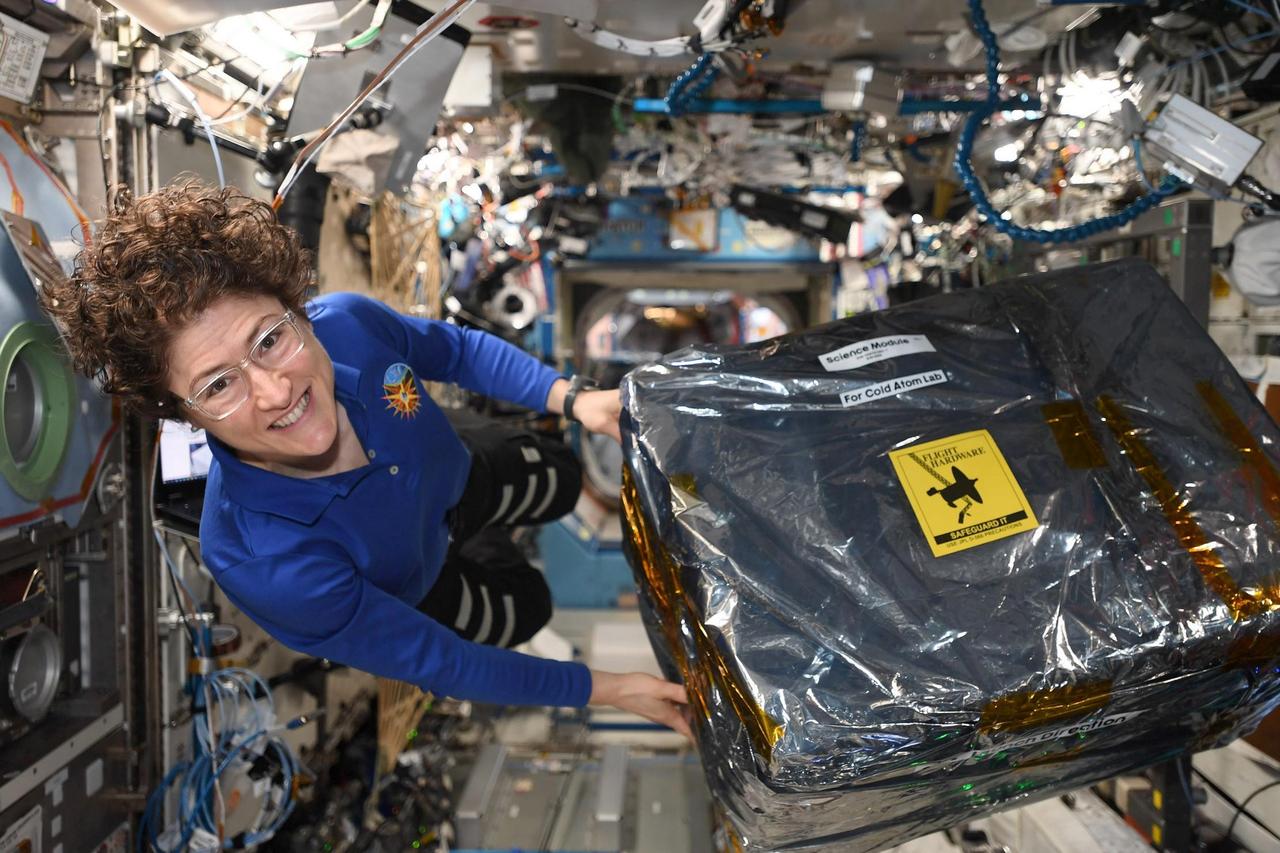
Astronaut Christina Koch unloads new hardware for the Cold Atom Lab aboard the International Space Station the week of Dec. 9, 2020. The Cold Atom Laboratory launched to the space station on May 21, 2018, aboard a Northrop Grumman (formerly Orbital ATK) Cygnus spacecraft from NASA's Wallops Flight Facility in Virginia. Designed and built at JPL, CAL is sponsored by the International Space Station Program at NASA's Johnson Space Center in Houston, and the Space Life and Physical Sciences Research and Applications (SLPSRA) Division of NASA's Human Exploration and Operations Mission Directorate at NASA Headquarters in Washington. https://photojournal.jpl.nasa.gov/catalog/PIA23404
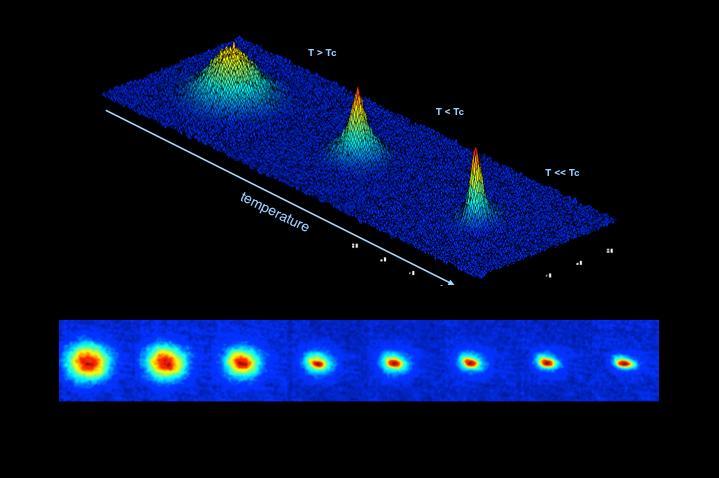
This sequence of false-color images shows the formation of a Bose-Einstein condensate in the Cold Atom Laboratory prototype at NASA Jet Propulsion Laboratory as the temperature gets progressively closer to absolute zero.
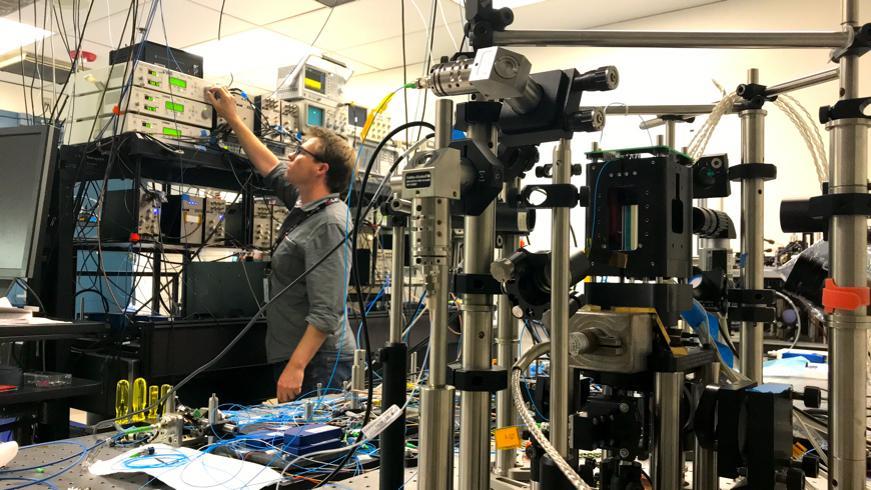
Cold Atom Laboratory (CAL) physicist David Aveline works in the CAL test bed, which is a replica of the CAL facility that stays on Earth. Scientists use the test bed to run tests and understand what is happening inside CAL while it is operating on the International Space Station. https://photojournal.jpl.nasa.gov/catalog/PIA23001
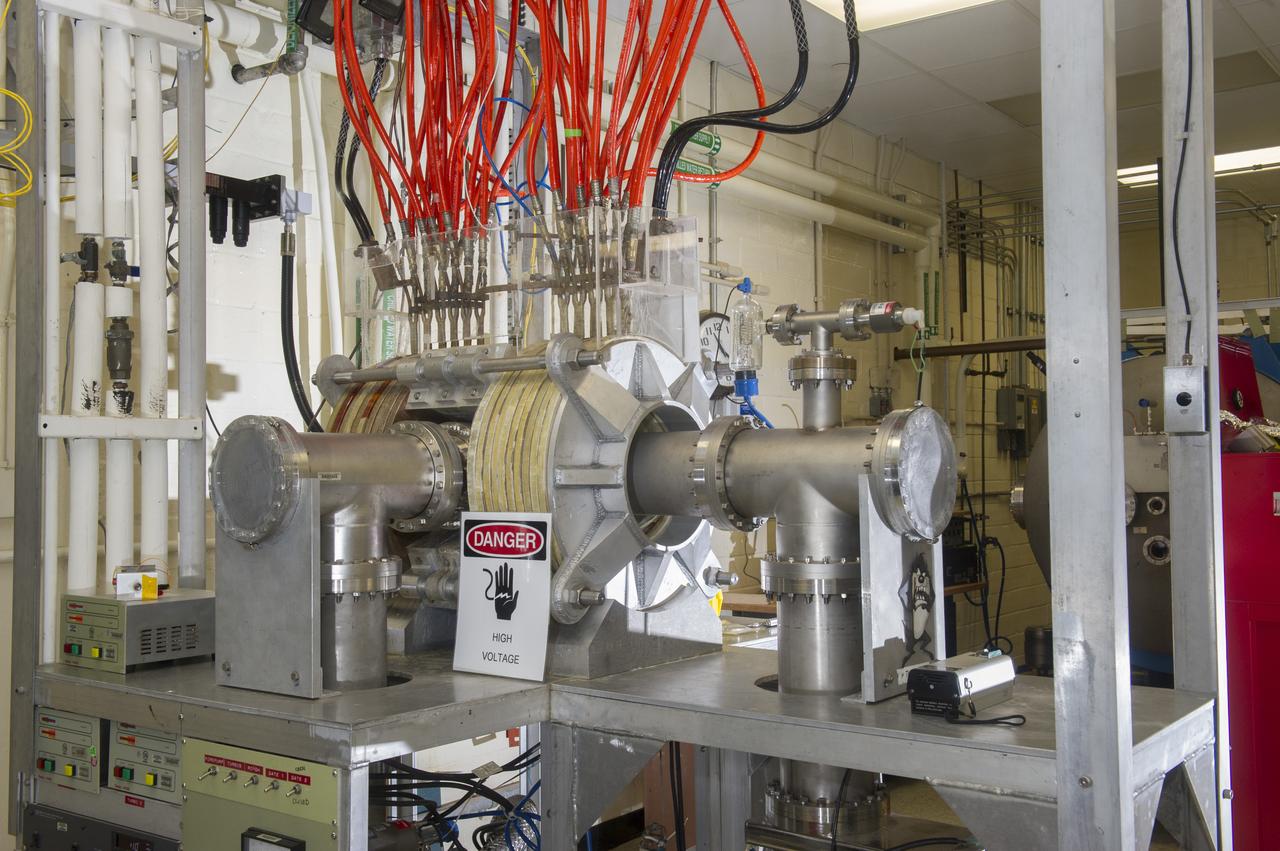
BLDG 4711 ATOMIC OXYGEN BEAM FACILITY
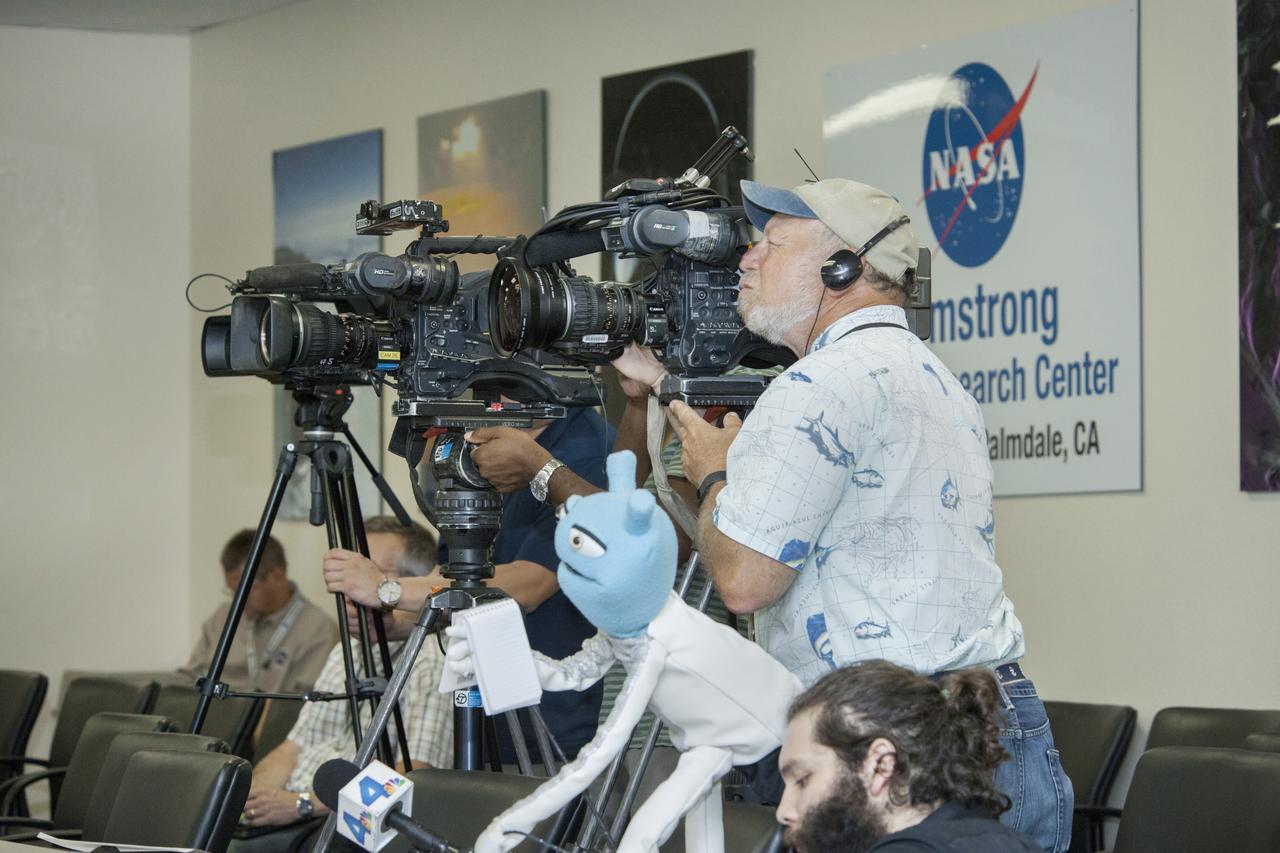
Media, including a puppeteer, participate in a press conference for the ATom airborne science mission which is studying the atmosphere.
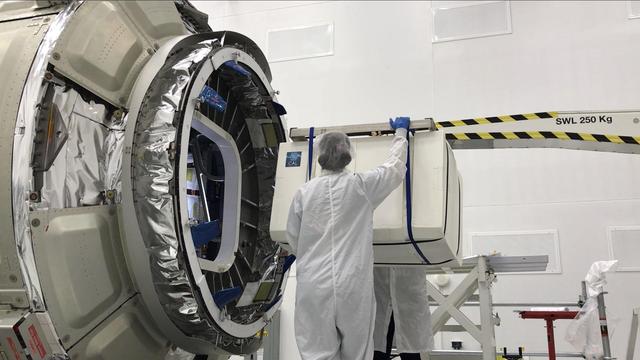
The Cold Atom Laboratory (CAL), packaged in a protective layer, is loaded onto a Northrop Grumman (formerly Orbital ATK) Cygnus spacecraft for its trip to the International Space Station. The facility launched in May 2018 from NASA's Wallops Flight Facility in Virginia. https://photojournal.jpl.nasa.gov/catalog/PIA22919
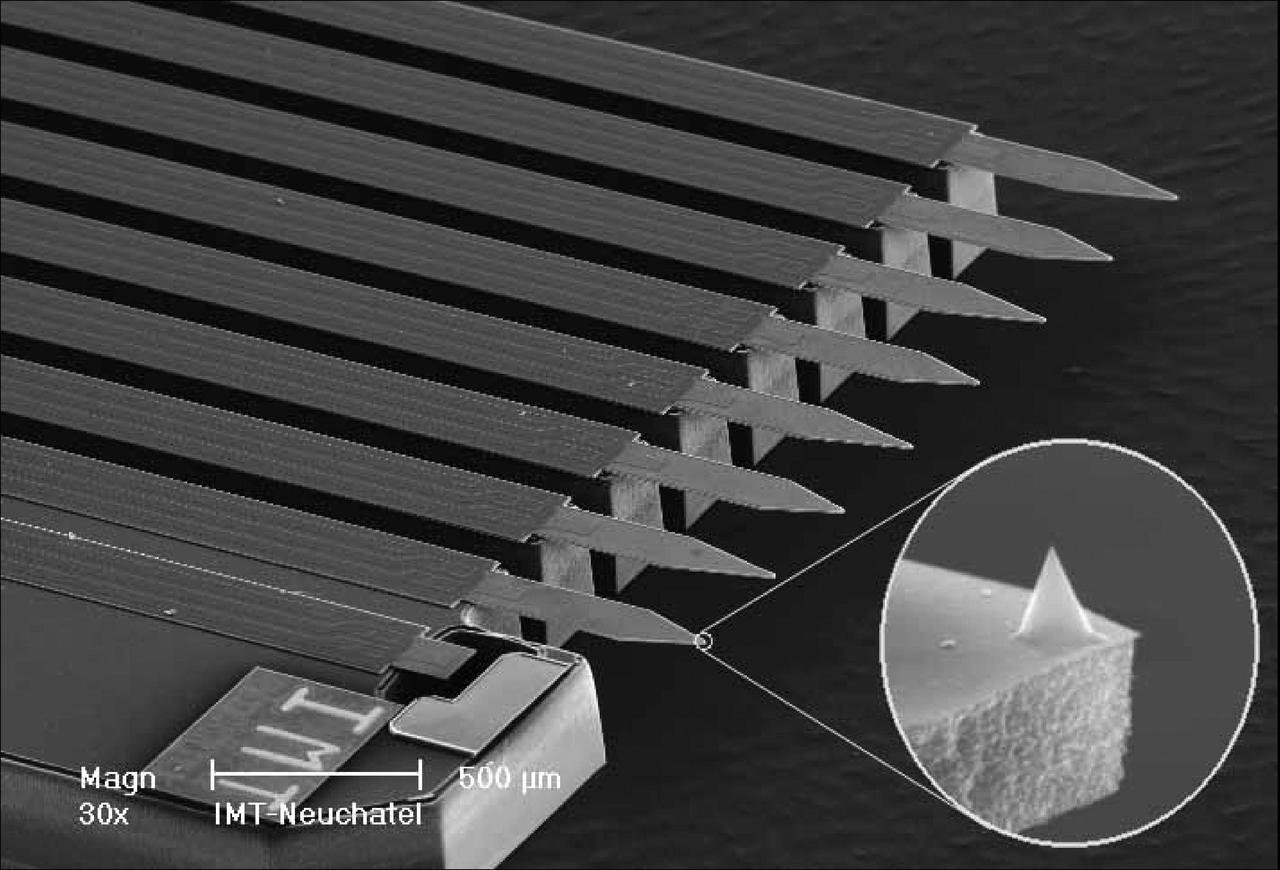
This image shows the eight sharp tips of the NASA Phoenix Mars Lander Atomic Force Microscope, or AFM. The AFM is part of Phoenix Microscopy, Electrochemistry, and Conductivity Analyzer, or MECA.
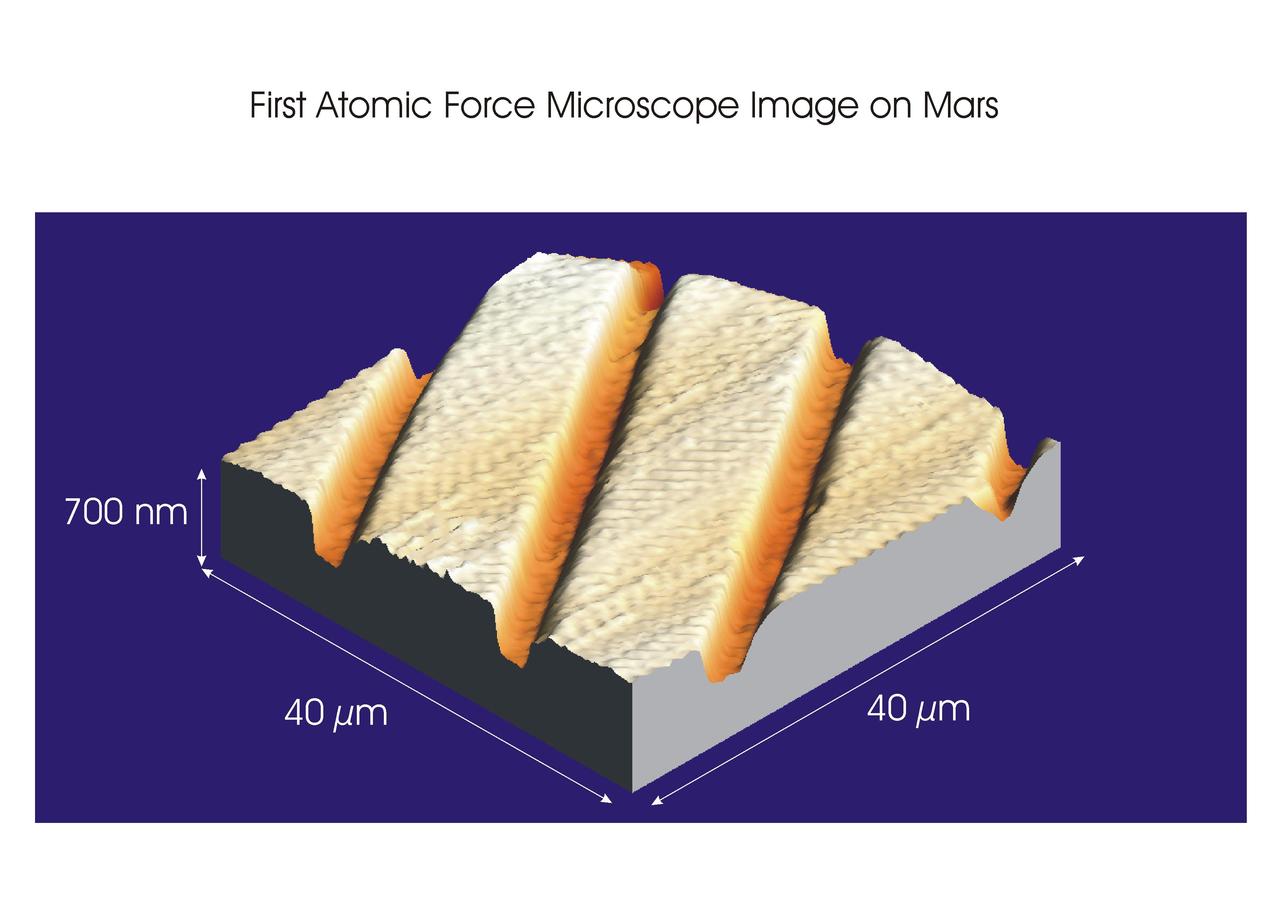
This calibration image presents three-dimensional data from the atomic force microscope on NASA Phoenix Mars Lander, showing surface details of a substrate on the microscope station sample wheel.

jsc2026e014319 (March 23, 2026) --- Preflight image of the SM-3X module during assembly and testing at NASA’s Jet Propulsion Laboratory in Southern California as part of the Cold Atom Lab (CAL). NASA’s CAL hosts multiple experiments that explore the fundamental nature of atoms by cooling them down to nearly absolute zero (the coldest temperature matter can reach). Science Module 3X increases the number of atoms produced for each experiment and allows scientists to gather more data and further expand the Cold Atom Lab’s research capabilities. Credit: NASA/JPL-Caltech.
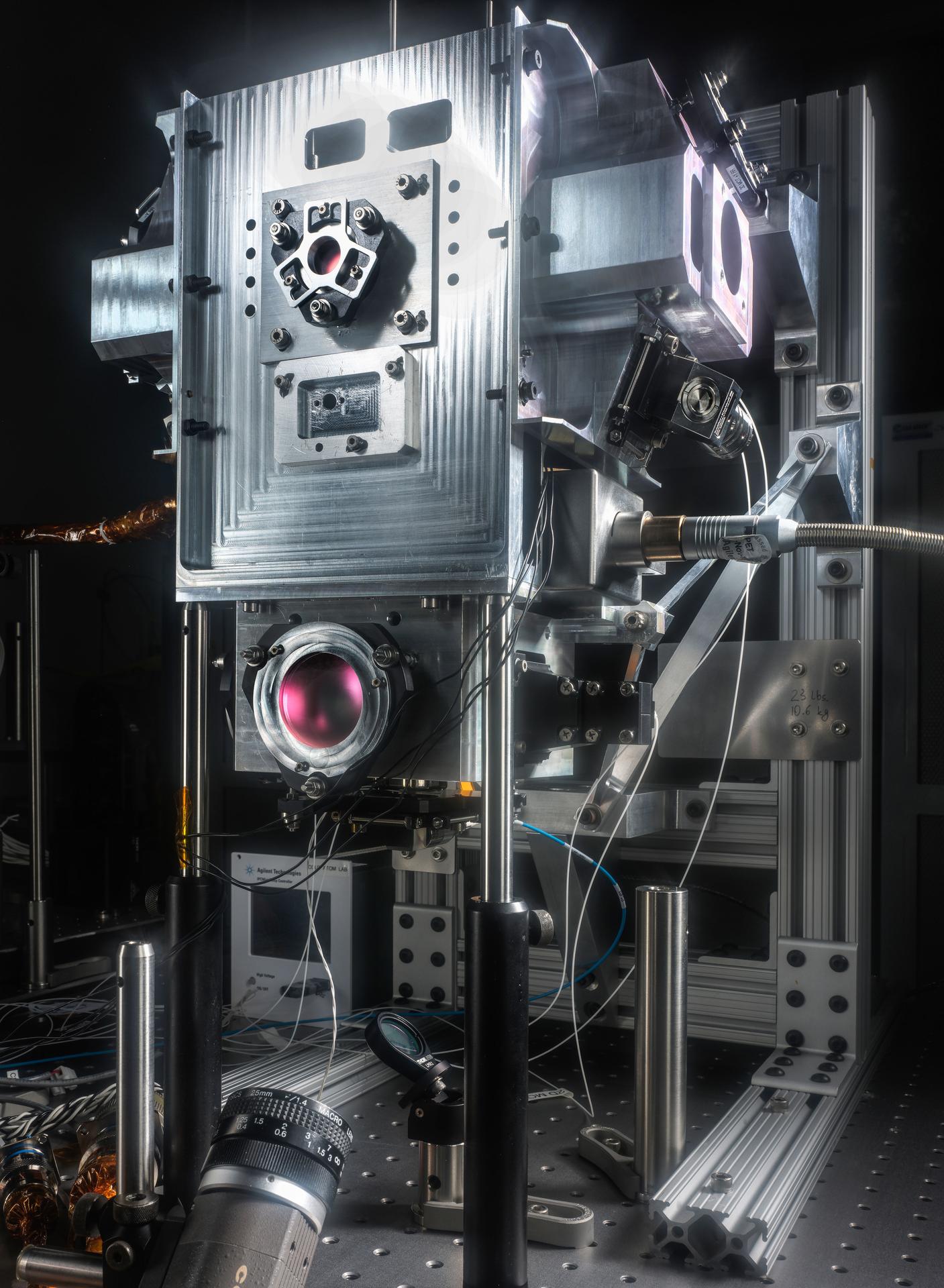
jsc2026e014318 (March 23, 2026) --- Preflight image of the SM-3X module as part of the Cold Atom Lab (CAL). NASA’s CAL hosts multiple experiments that explore the fundamental nature of atoms by cooling them down to nearly absolute zero (the coldest temperature matter can reach). The pink-colored coated mirrors on the front and sides reflect five sets of laser beams to pre-cool atoms before they are loaded into a magnetic trap. Radio frequencies from an internal antenna lower the temperature of the trapped atoms to the extreme cold needed to observe quantum phenomena. Credit: NASA/JPL-Caltech.
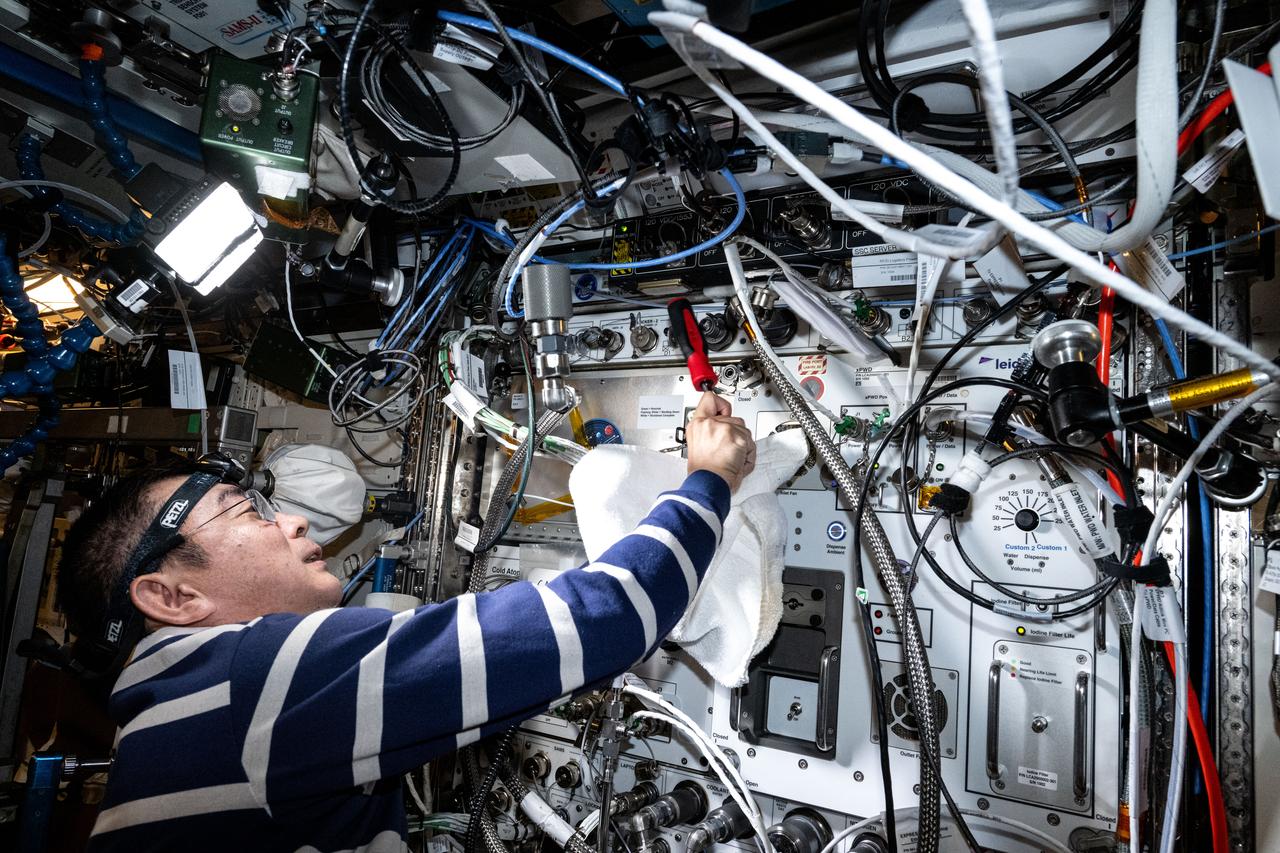
iss073e0431957 (Aug. 12, 2025) --- JAXA (Japan Aerospace Exploration Agency) astronaut and Expedition 73 Flight Engineer Kimiya Yui works on the Cold Atom Lab inside the International Space Station’s Destiny laboratory module. He replaced computer components in the physics research device, which chills atoms to temperatures below the average temperature of the universe enabling scientists to observe atomic wave functions and quantum behaviors not possible on Earth.
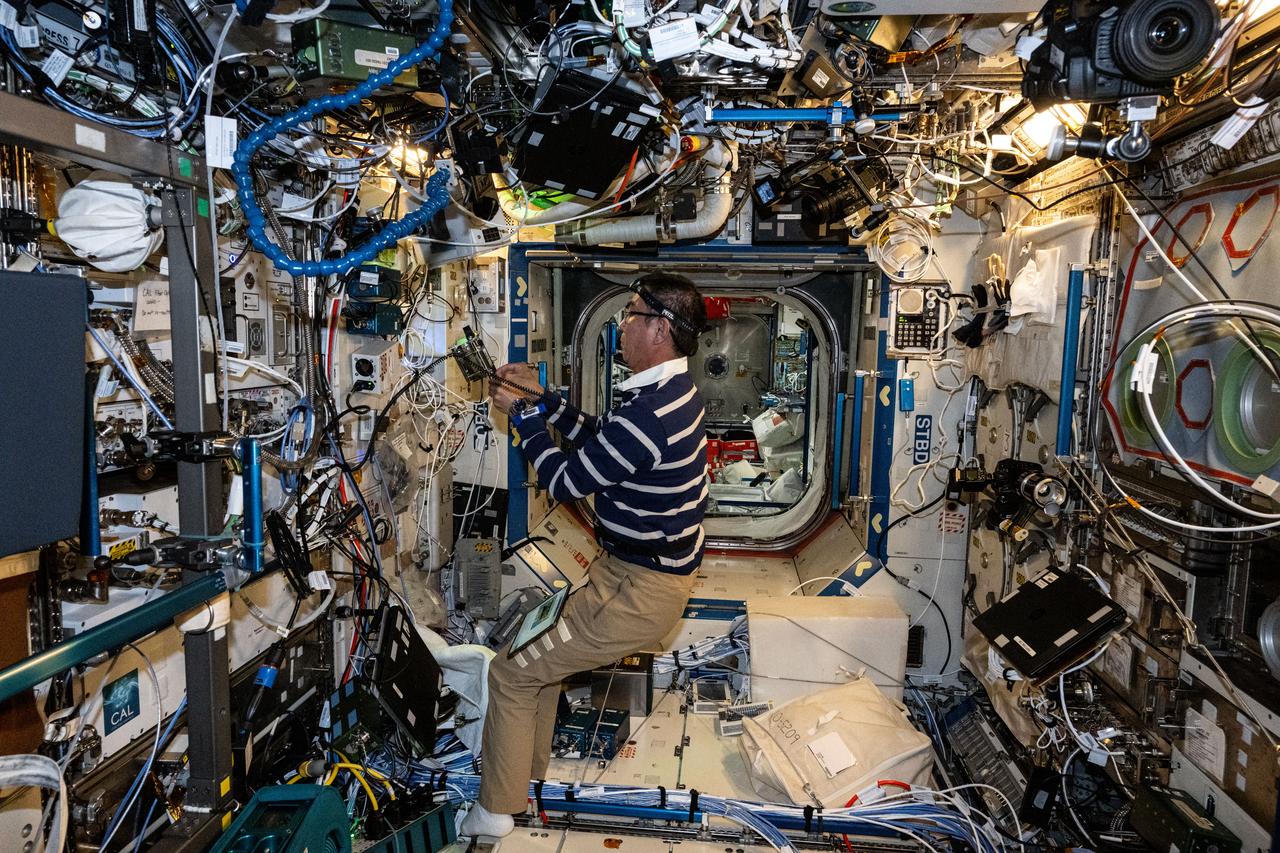
iss073e0431947 (Aug. 12, 2025) --- JAXA (Japan Aerospace Exploration Agency) astronaut and Expedition 73 Flight Engineer Kimiya Yui works on the Cold Atom Lab inside the International Space Station’s Destiny laboratory module. He replaced computer components in the physics research device, which chills atoms to temperatures below the average temperature of the universe enabling scientists to observe atomic wave functions and quantum behaviors not possible on Earth.
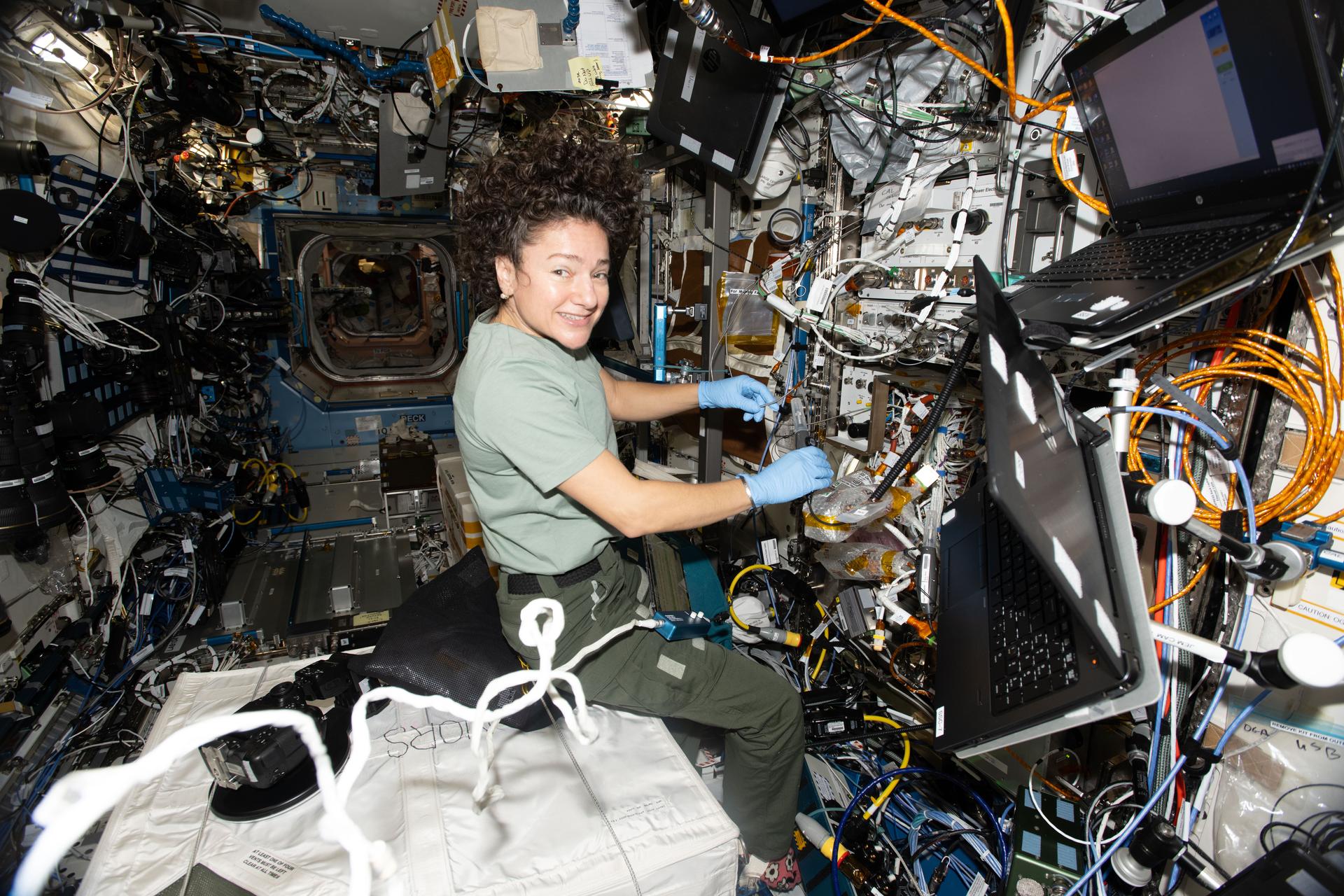
iss074e0545220 (May 4, 2026) --- NASA astronaut and Expedition 74 flight engineer Jessica Meir inspects sensitive fiber cables that emit light to help cool, trap, and study atoms with high accuracy inside the Cold Atom Lab (CAL) aboard the International Space Station. The CAL, a quantum research facility, chills atoms to near absolute zero, providing insights into atomic wave functions, general relativity, and dark matter. Credit: NASA/Jack Hathaway
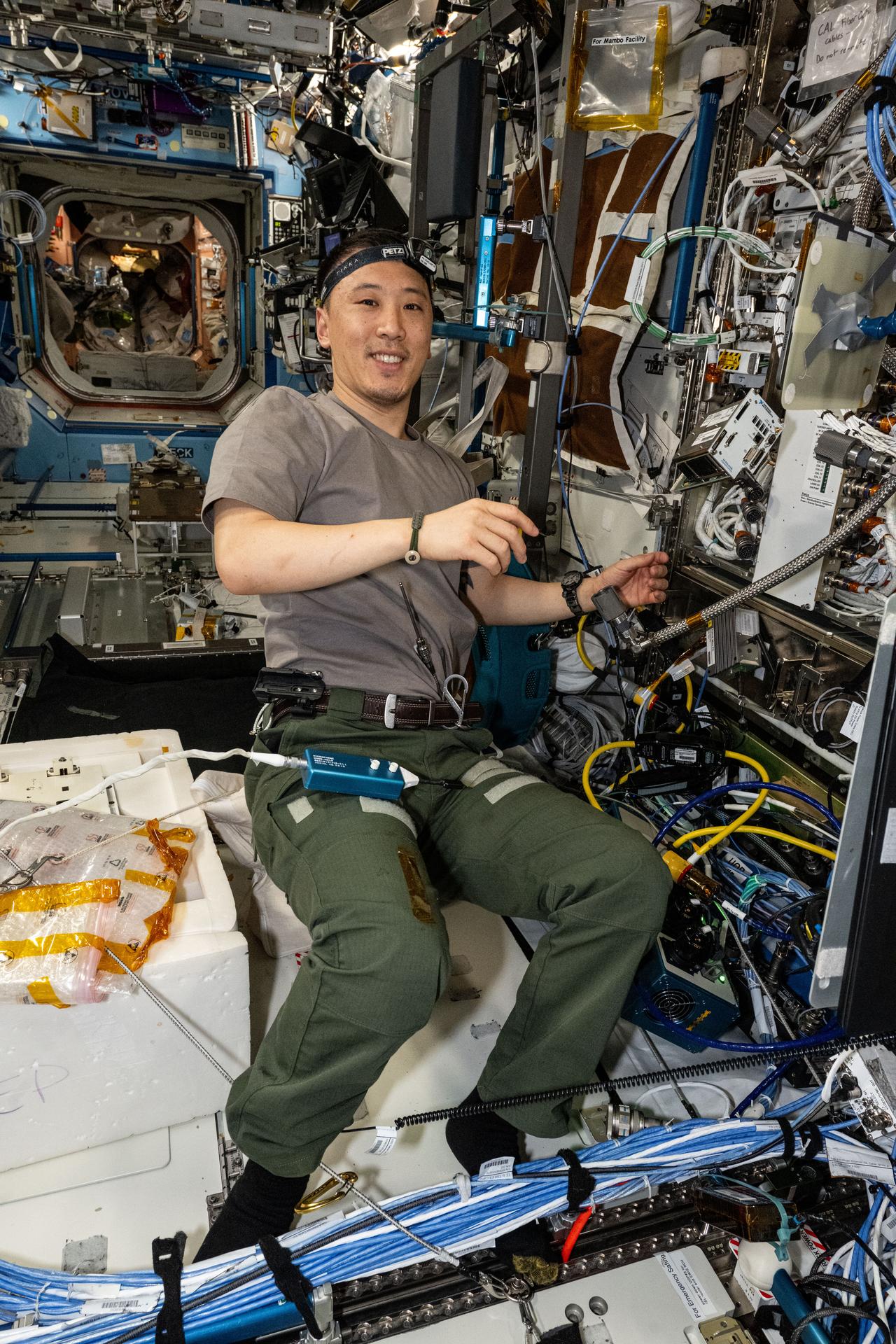
iss073e0817671 (Oct. 2, 2025) --- NASA astronaut and Expedition 73 Flight Engineer Jonny Kim replaces computer hardware inside the Cold Atom Lab aboard the International Space Station’s Destiny laboratory module. The Cold Atom Lab produces clouds of atoms chilled to about one ten-billionth of a degree above absolute zero—far colder than the average temperature of deep space. This extreme cold allows scientists to study fundamental behaviors and quantum characteristics that are difficult or impossible to observe on Earth.

The long wings of General Atomics Altair UAV are in evidence during a series of environmental monitoring missions for NOAA and NASA in the spring of 2005.

Technicians at General Atomics Aeronautical Systems, Inc., (GA-ASI) facility at Adelanto, Calif., carefully install a turboprop engine to the rear fuselage of NASA's Altair aircraft during final assembly operations.

Technician Dave Brown installs a drilling template during construction of the all-composite left wing of NASA's Altair aircraft at General Atomics Aeronautical Systems, Inc., (GA-ASI) facility at Adelanto, Calif.
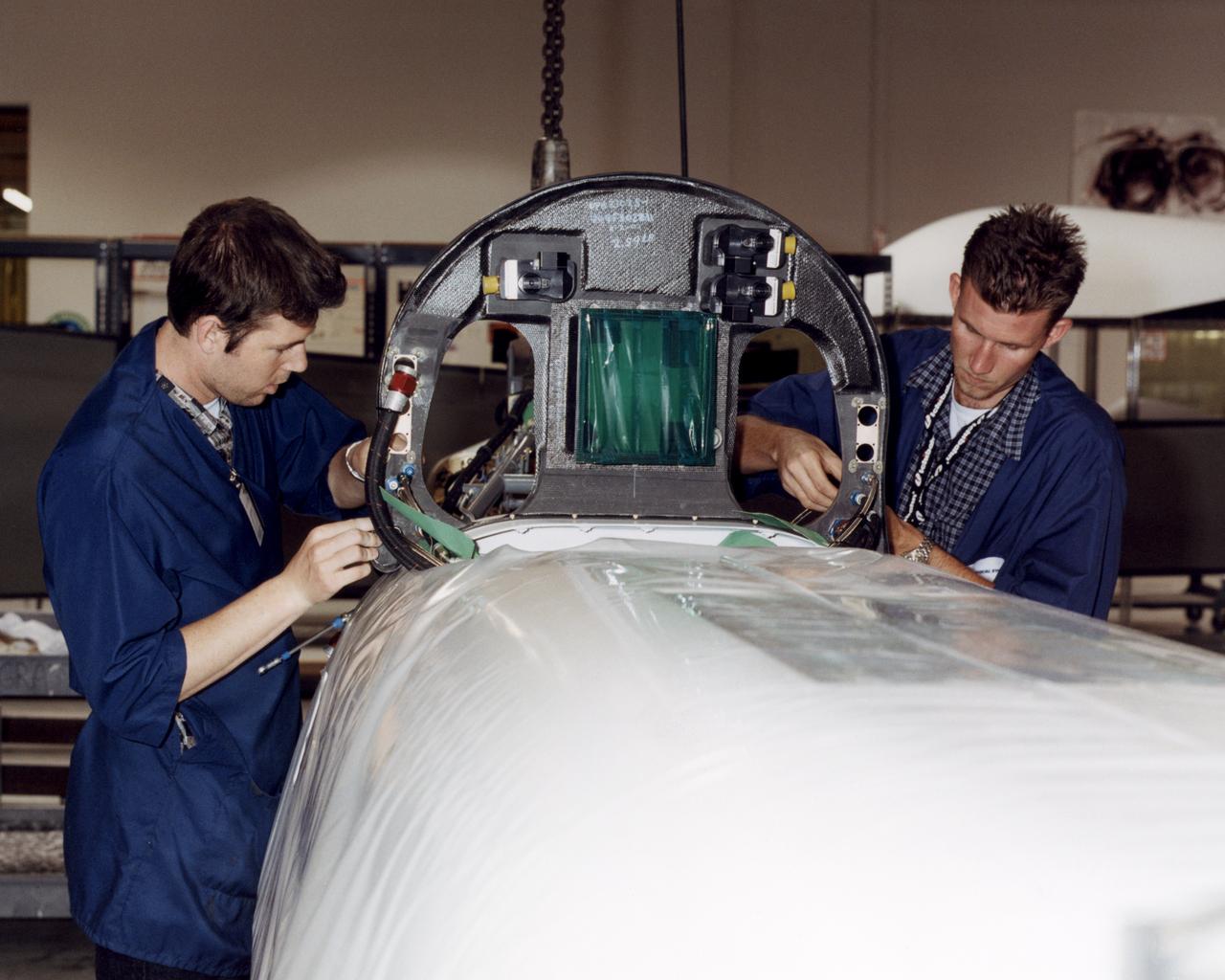
Technicians at General Atomics Aeronautical Systems, Inc., (GA-ASI) facility at Adelanto, Calif., carefully thread control lines through a bulkhead during engine installation on NASA's Altair aircraft.
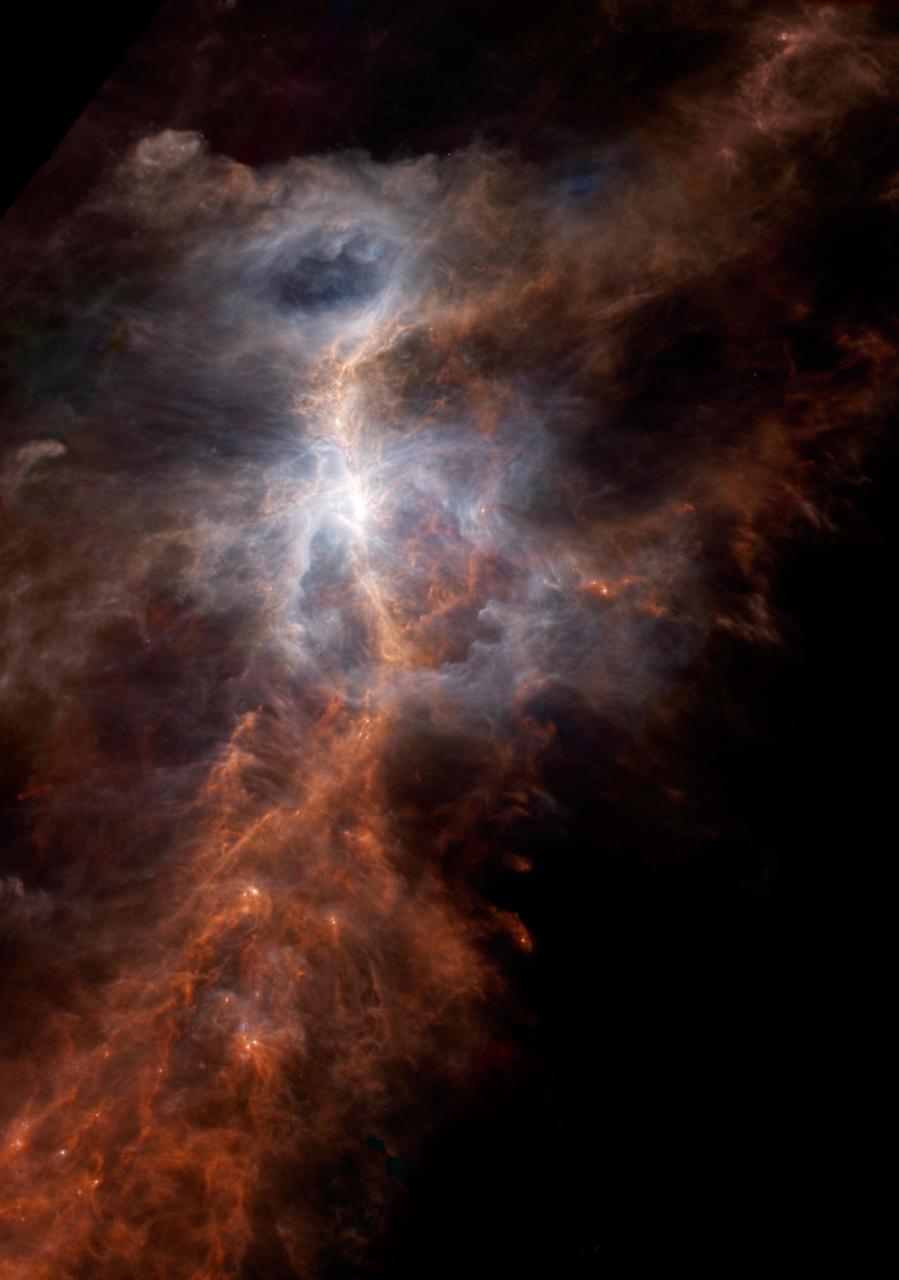
The dusty side of the Sword of Orion is illuminated in this striking infrared image from the European Space Agency's Hershel Space Observatory. This immense nebula is the closest large region of star formation, situated about 1,500 light years away in the constellation of Orion. The parts that are easily observed in visible light, known alternatively as the Orion Nebula or Messier 42, correspond to the light blue regions. This is the glow from the warmest dust, illuminated by clusters of hot stars that have only recently been born in this chaotic region. The red spine of material running from corner to corner reveals colder, denser filaments of dust and gas that are scattered throughout the Orion nebula. In visible light this would be a dark, opaque feature, hiding the reservoir of material from which stars have recently formed and will continue to form in the future. Herschel data from the PACS instrument observations, at wavelengths of 100 and 160 microns, is displayed in blue and green, respectively, while SPIRE 250-micron data is shown in red. Within the inset image, the emission from ionized carbon atoms (C+), overlaid in yellow, was isolated and mapped out from spectrographic data obtained by the HIFI instrument. http://photojournal.jpl.nasa.gov/catalog/PIA21073

NASA's Ikhana unmanned science demonstration aircraft, a civil variant of General Atomics' Predator B, lifts off from Grey Butte airfield in Southern California.

NASA's Ikhana unmanned science demonstration aircraft, a civil variant of General Atomics' Predator B, lifts off from Grey Butte airfield in Southern California.

NASA's Ikhana, a civil variant of General Atomics' Predator B unmanned aircraft, takes to the sky for a morning checkout flight from the Grey Butte airfield.

NASA's Ikhana unmanned long-endurance science aircraft, a civil variant of General Atomics' Predator B, takes to the sky over Southern California's high desert.

Straight wings, a Y-tail and a pusher propeller distinguish NASA's Ikhana, a civil version of General Atomics Aeronautical system's Predator B unmanned aircraft.

The narrow fuselage of NASA'S Ikhana unmanned science aircraft, a civil version of General Atomics' Predator B, is evident in this view from underneath.
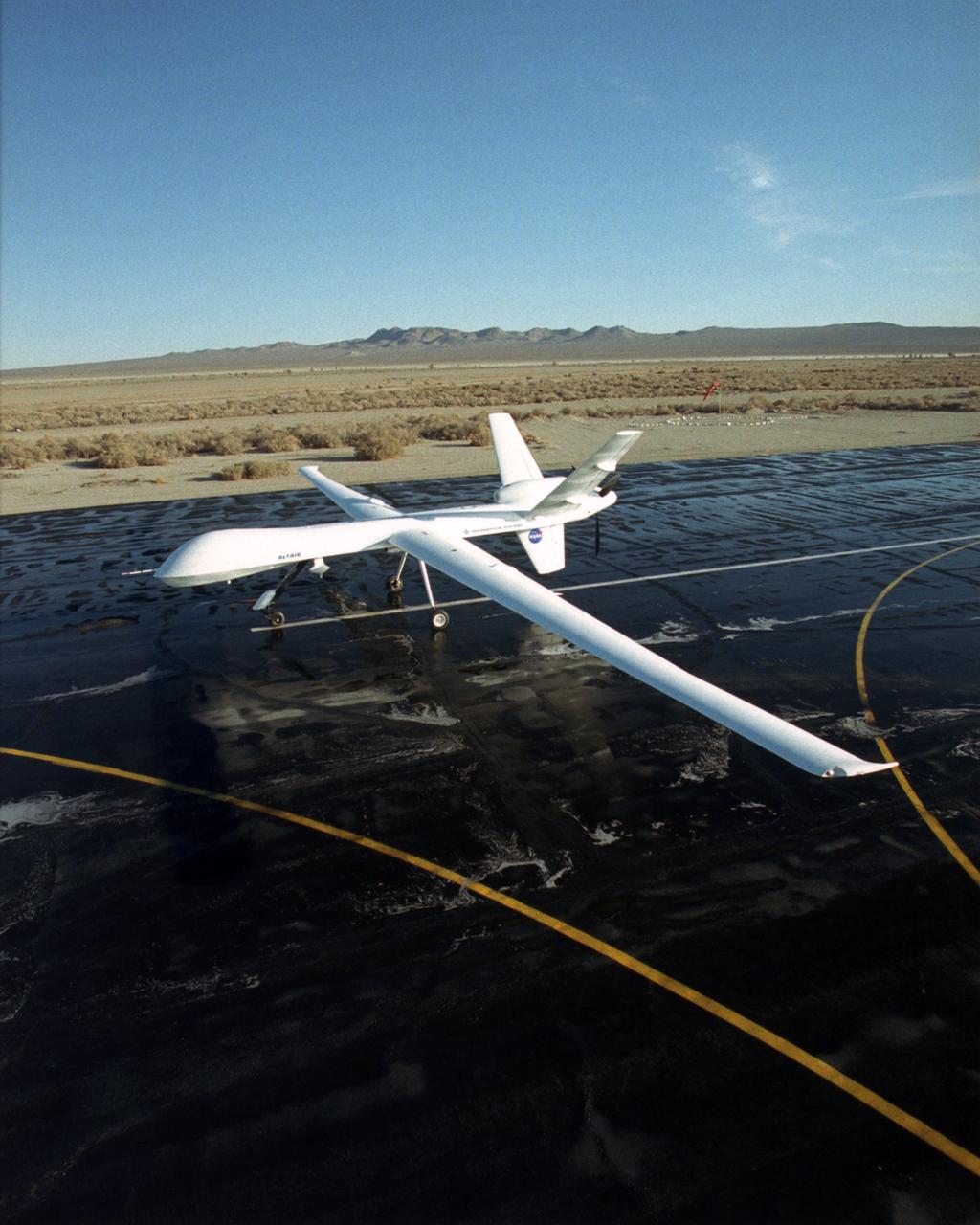
The Altair unmanned aerial vehicle (UAV), built by General Atomics Aeronautical Systems, Inc. for NASA, is poised for flight at GA-ASI's flight test facility at El Mirage, California.

Narrow wings, a Y-tail and rear engine layout distinguish NASA's Ikhana science aircraft, a civil variant of General Atomics' Predator B unmanned aircraft system.

Distinguished by its large nose payload bay, NASA's Ikhana unmanned aircraft does an engine run prior to takeoff from General Atomics' Grey Butte airfield.

Long wings, a V-tail with a ventral fin and a rear-mounted engine distinguish the Altair, an unmanned aerial vehicle built for NASA by General Atomics Aeronautical Systems, Inc.
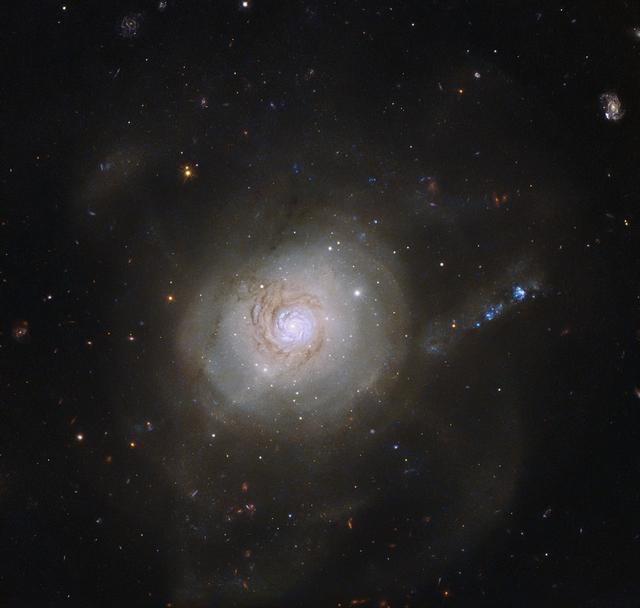
Only rarely does an astronomical object have a political association. However, the spiral galaxy NGC 7252 acquired exactly that when it was given an unusual nickname. In December 1953, the US President Dwight D. Eisenhower gave a speech advocating the use of nuclear power for peaceful purposes. This “Atoms for Peace” speech was significant for the scientific community, as it brought nuclear research into the public domain, and NGC 7252, which has a superficial resemblance to an atomic nucleus surrounded by the loops of electronic orbits, was dubbed the Atoms for Peace galaxy in honour of this. These loops are well visible in a wider field of view image. This nickname is quite ironic, as the galaxy’s past was anything but peaceful. Its peculiar appearance is the result of a collision between two galaxies that took place about a billion years ago, which ripped both galaxies apart. The loop-like outer structures, likely made up of dust and stars flung outwards by the crash, but recalling orbiting electrons in an atom, are partly responsible for the galaxy’s nickname. This NASA/ESA Hubble Space Telescope image shows the inner parts of the galaxy, revealing a pinwheel-shaped disc that is rotating in a direction opposite to the rest of the galaxy. This disc resembles a spiral galaxy like our own galaxy, the Milky Way, but is only about 10 000 light-years across — about a tenth of the size of the Milky Way. It is believed that this whirling structure is a remnant of the galactic collision. It will most likely have vanished in a few billion years’ time, when NGC 7252 will have completed its merging process.

General Atomics' uninhabited Altair flew a NOAA/NASA coastal mapping, mammal observation and marine monitoring mission off the California coast in late 2005.
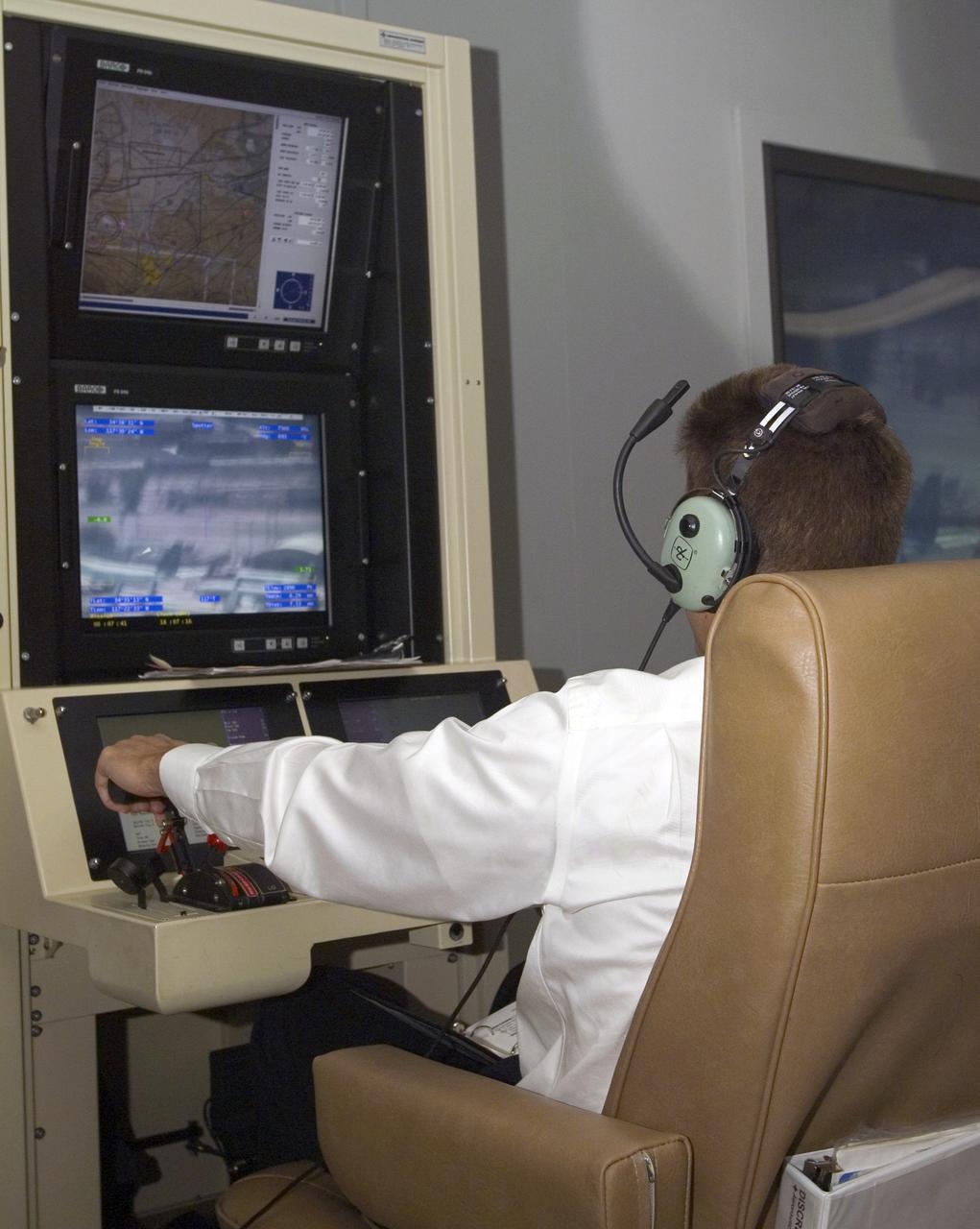
A pilot for General Atomics guides the Altair remotely operated aircraft from a ground control station using both visual and telemetered data.

General Atomics' uninhabited Altair flew a NOAA/NASA coastal mapping, mammal observation and marine monitoring mission off the California coast in late 2005.

General Atomics' uninhabited Altair flew a NOAA/NASA coastal mapping, mammal observation and marine monitoring mission off the California coast in late 2005.
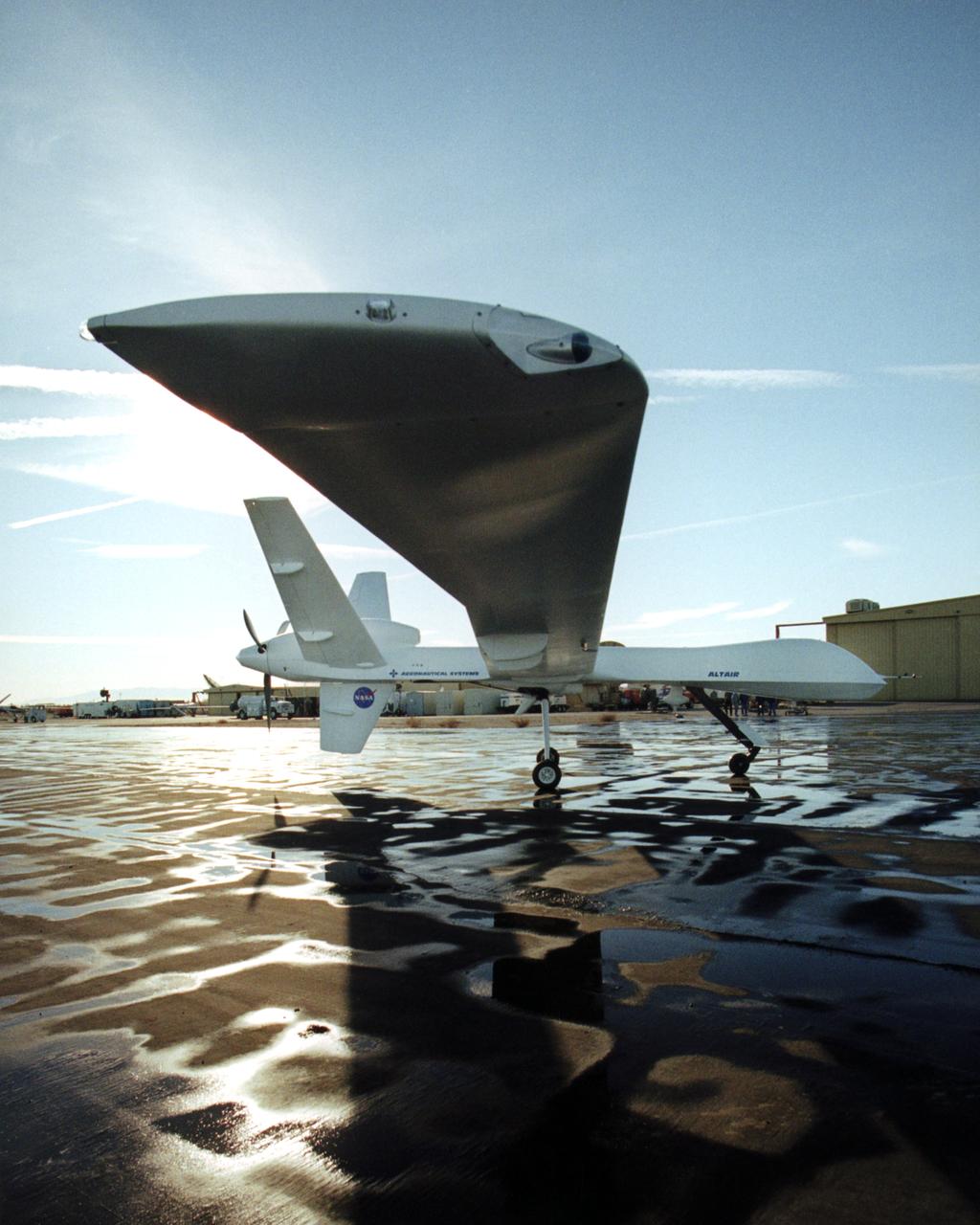
The Altair, a civil variant of the QM-9 Predator B unmanned aerial vehicle (UAV), shows off its lengthy high-aspect ratio wing while on the ramp at General Atomics Aeronautical Systems' flight test facility at El Mirage, California.

The left wing of NASA's Altair unmanned aerial vehicle (UAV) rests in a jig during construction at General Atomics Aeronautical Systems, Inc., (GA-ASI) facility at Adelanto, Calif.

Crew chief Joe Kinn gives NASA's Ikhana unmanned aircraft a final check during engine run-up prior to takeoff at General Atomics Aeronautical Systems' airfield.
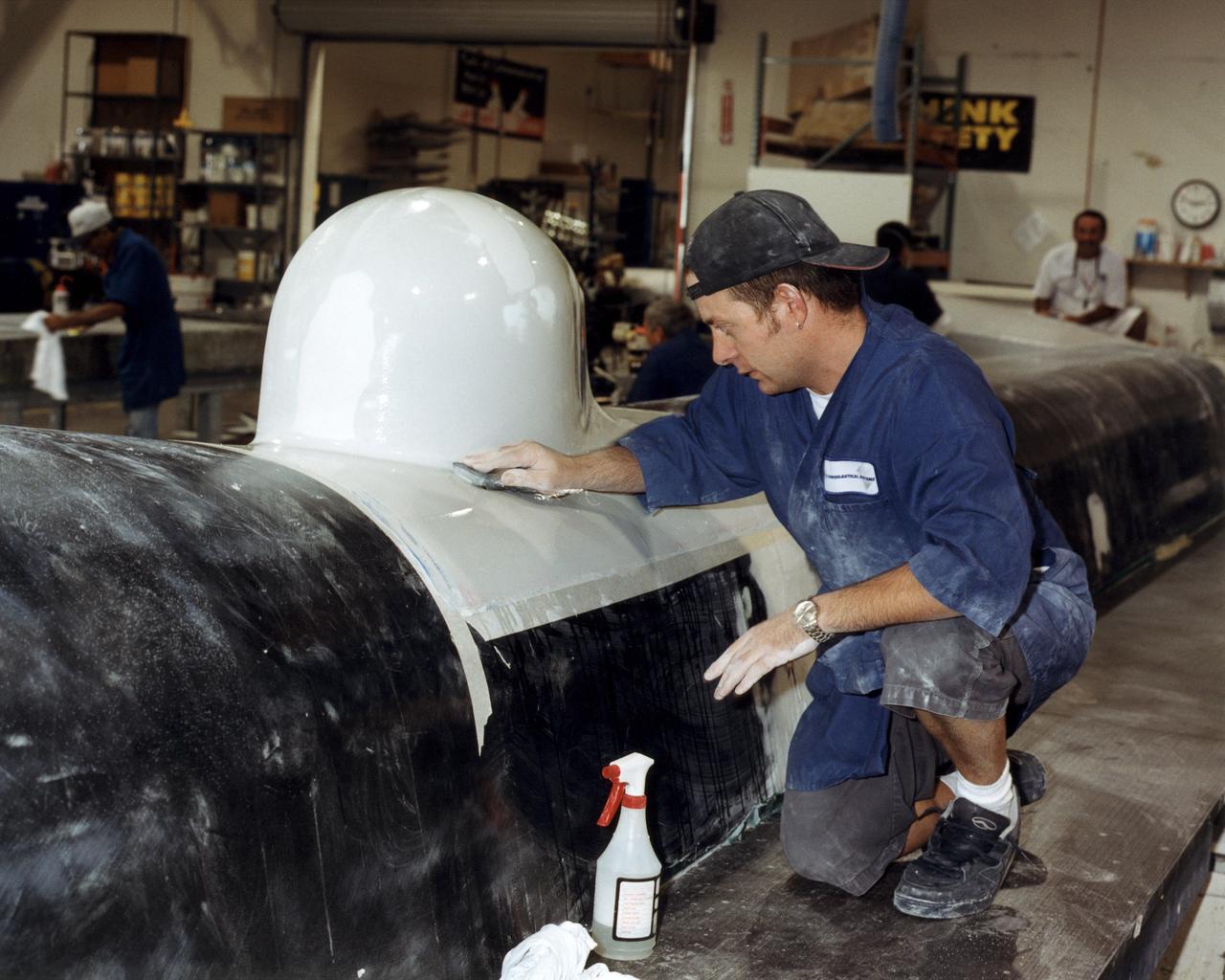
Technician Shawn Warren carefully smoothes out the composite skin of an instrument fairing<br>atop the upper fuselage of the Altair unmanned aerial vehicle (UAV) at General Atomics Aeronautical Systems, Inc., facility at Adelanto, Calif.
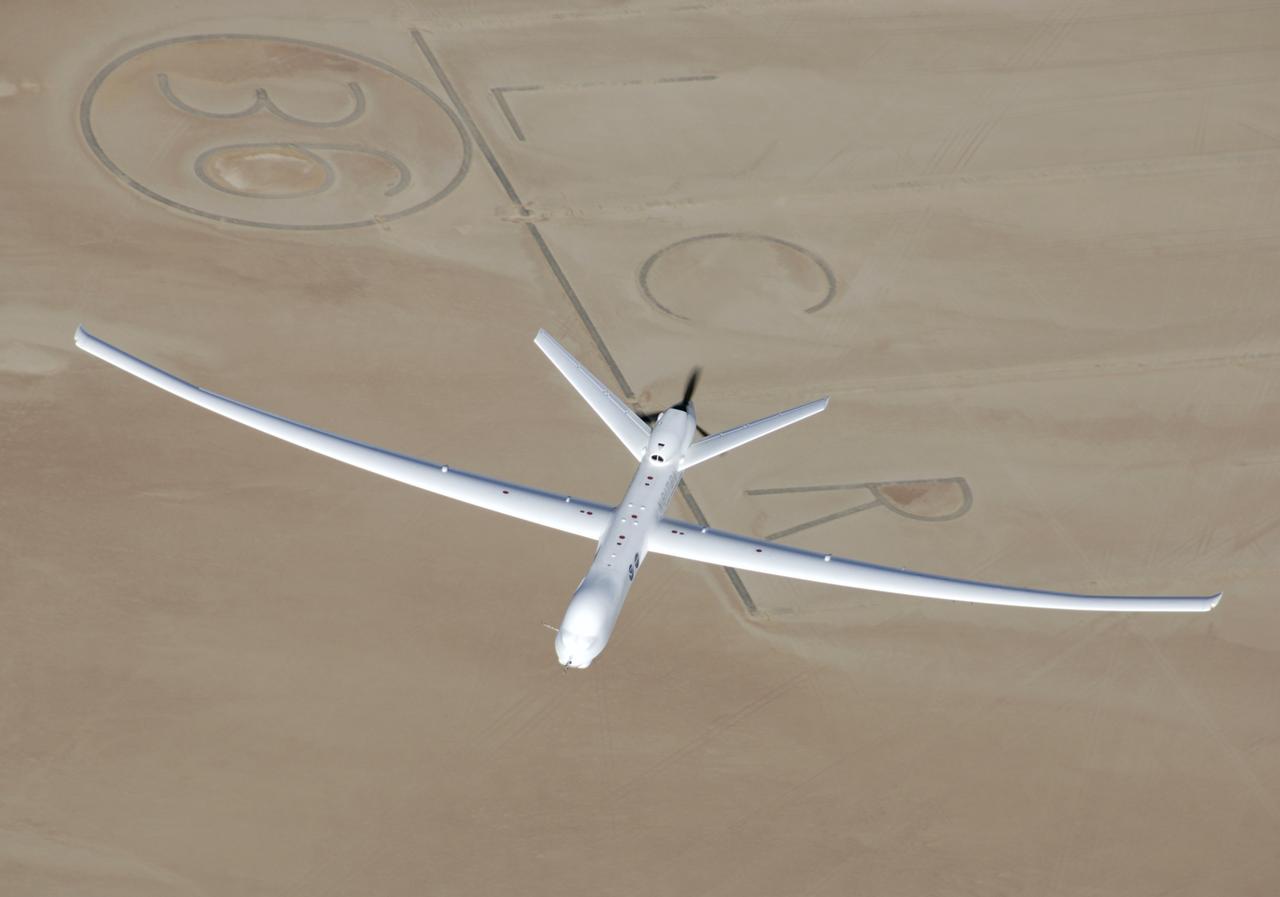
General Atomics' remotely-operated Altair soars over Rogers Dry Lake at Edwards Air Force Base during a NOAA/NASA earth science mission in November 2005.
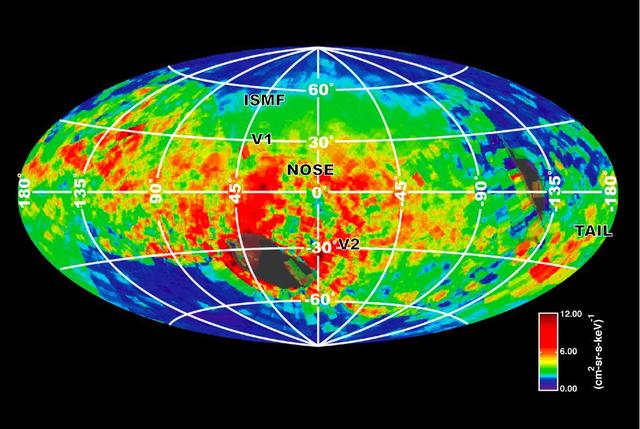
NASA Cassini spacecraft created this image of the bubble around our solar system based on emissions of particles known as energetic neutral atoms.
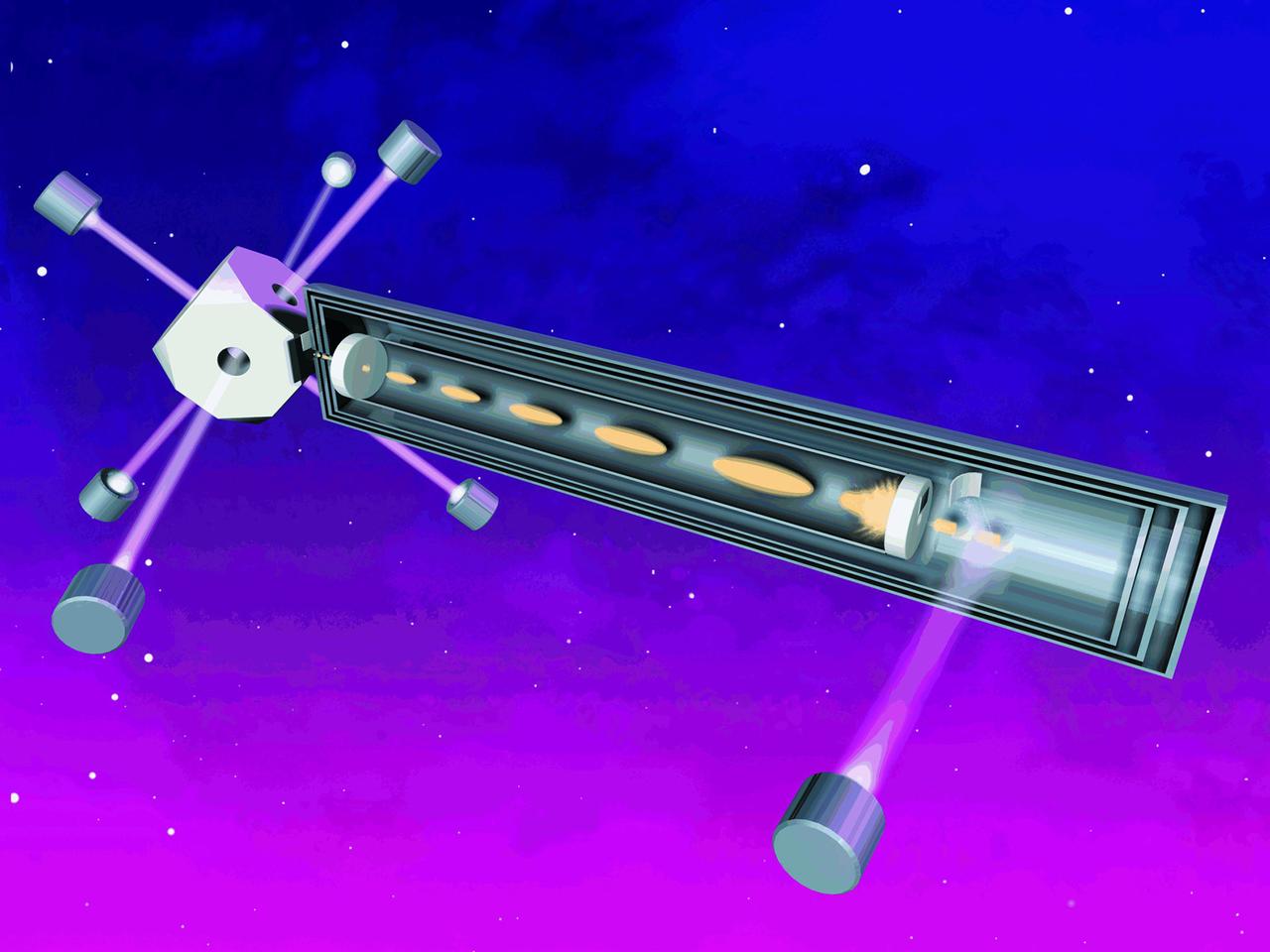
An artist's concept of the Primary Atomic Clock Reference System (PARCS) plarned to fly on the International Space Station (ISS). PARCS will make even more accurate atomic time available to everyone, from physicists testing Einstein's Theory of Relativity, to hikers using the Global Positioning System to find their way. In ground-based atomic clocks, lasers are used to cool and nearly stop atoms of cesium whose vibrations are used as the time base. The microgravity of space will allow the atoms to be suspended in the clock rather than circulated in an atomic fountain, as required on Earth. PARCS is being developed by the Jet Propulsion Laboratory with principal investigators at the National Institutes of Standards and Technology and the University of Colorado, Boulder. See also No. 0103191
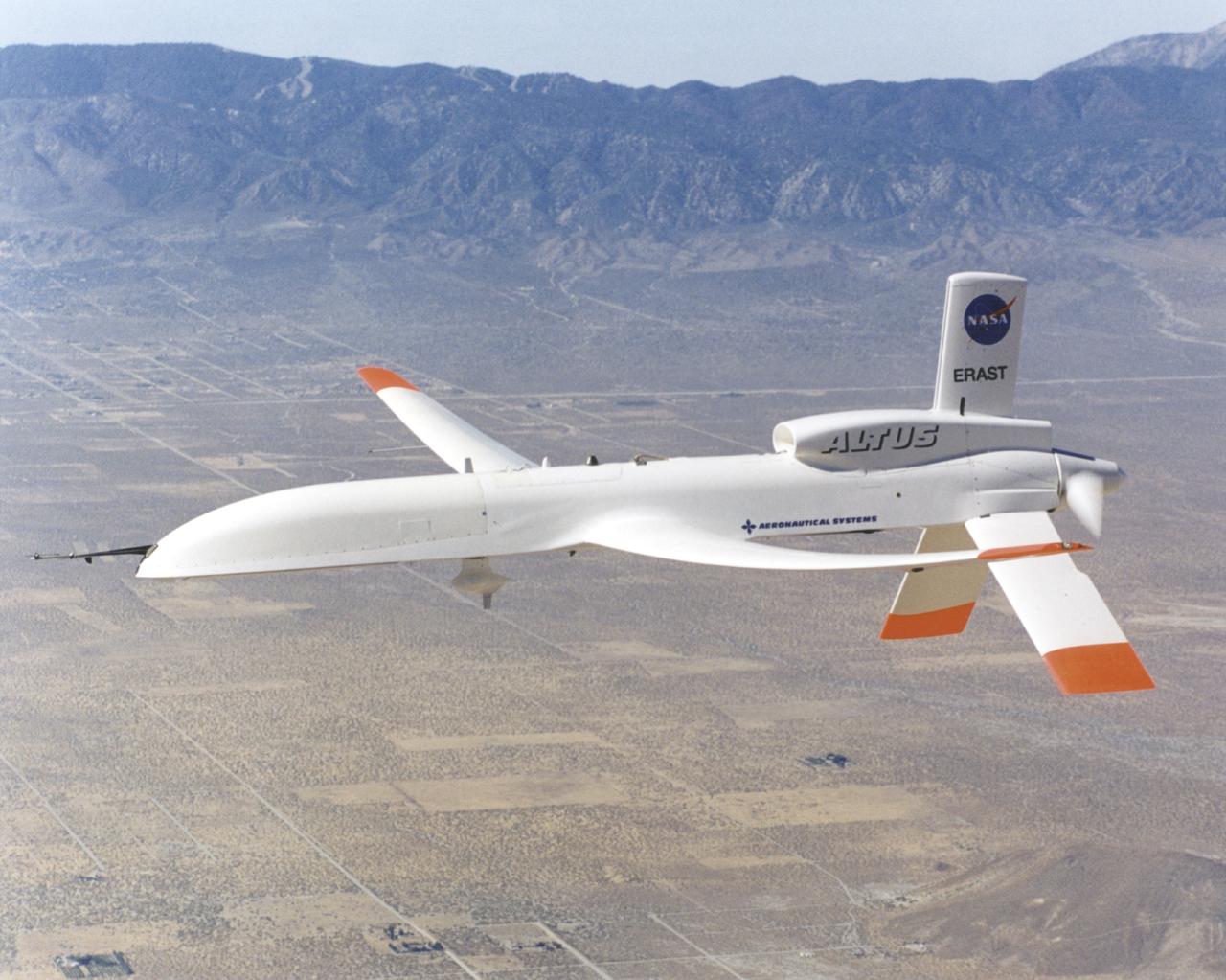
Altus II aircraft flying over southern California desert
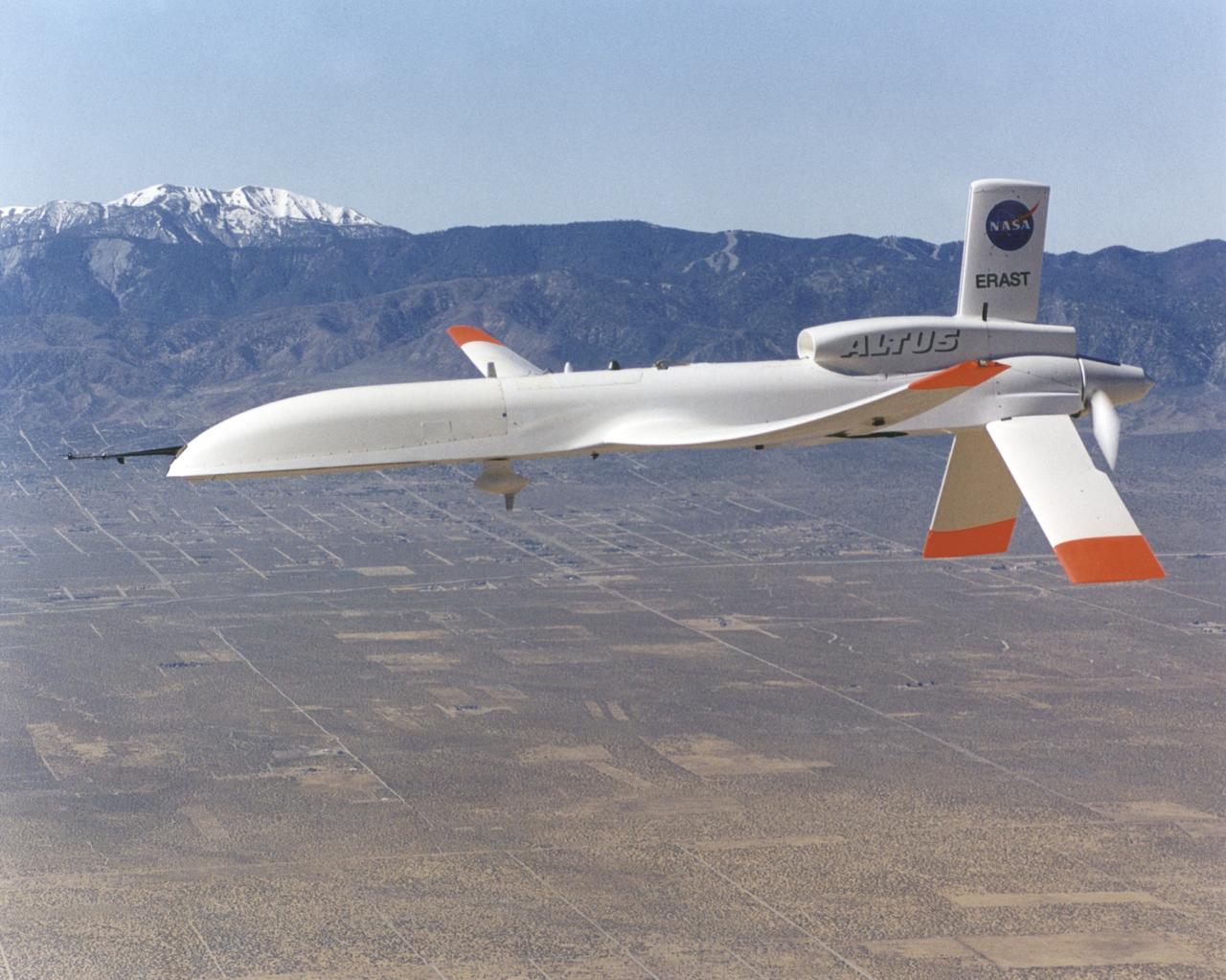
Altus II aircraft flying over southern California desert
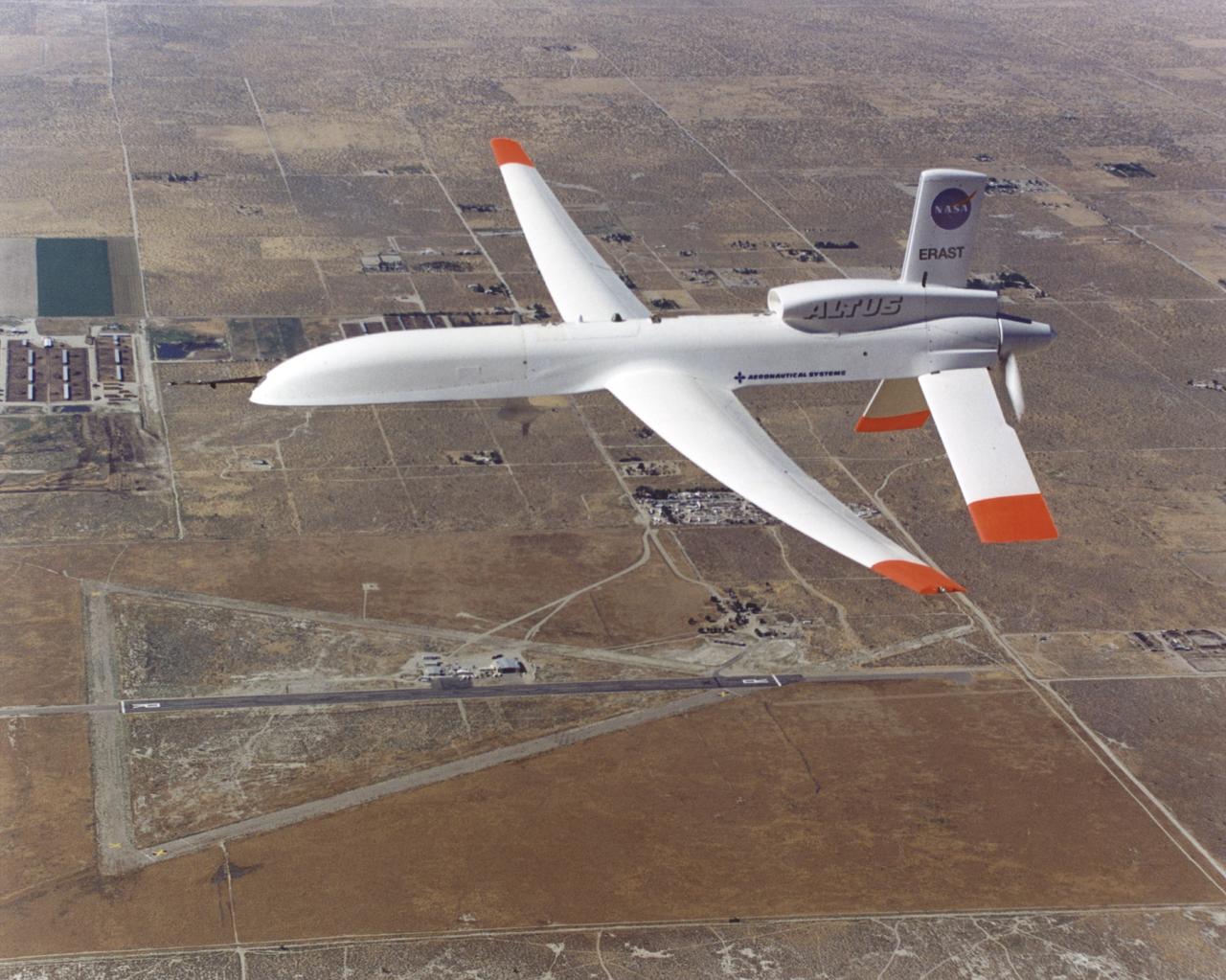
Altus II aircraft flying over southern California desert
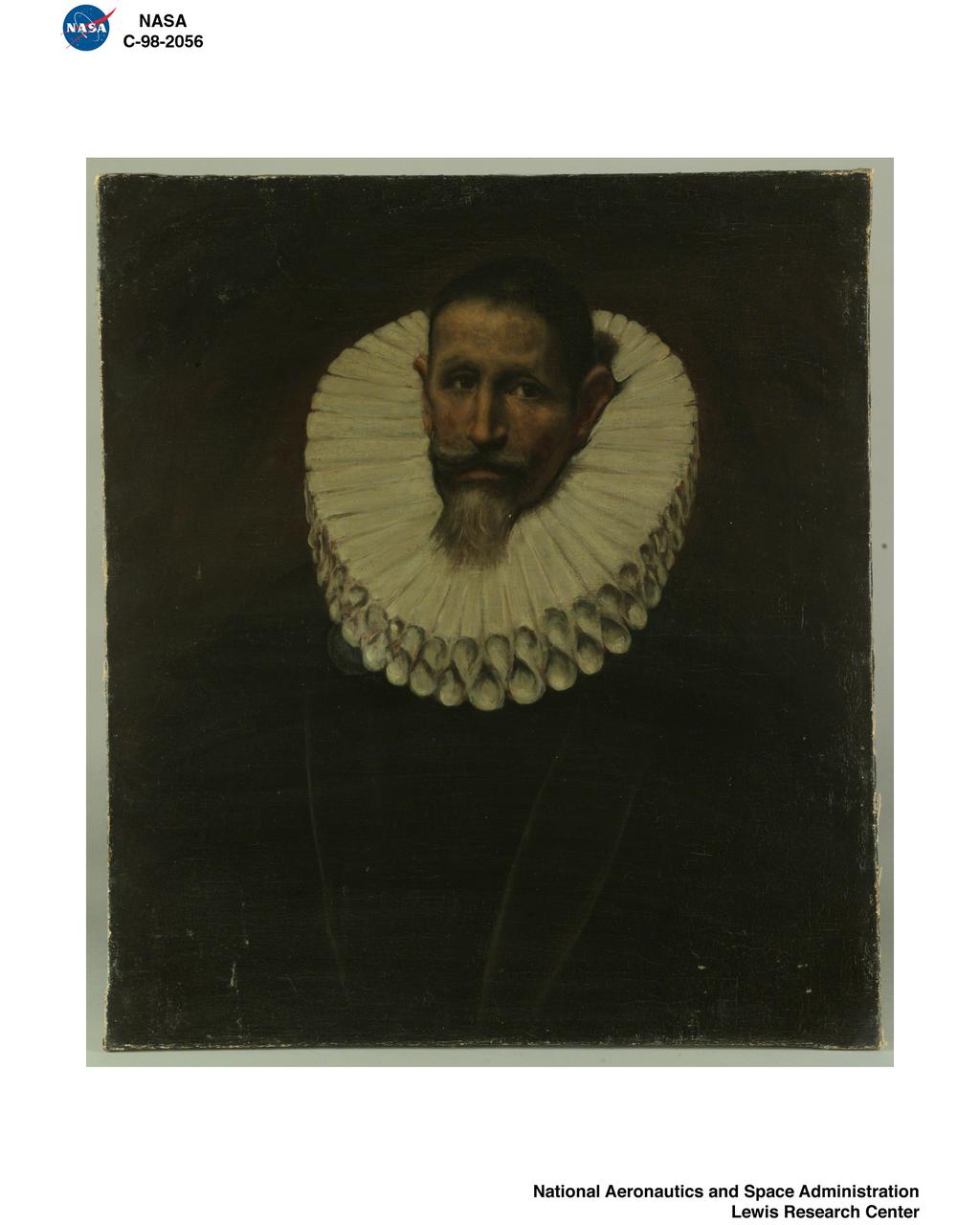
ATOMIC OXYGEN PAINTING RESTORATION
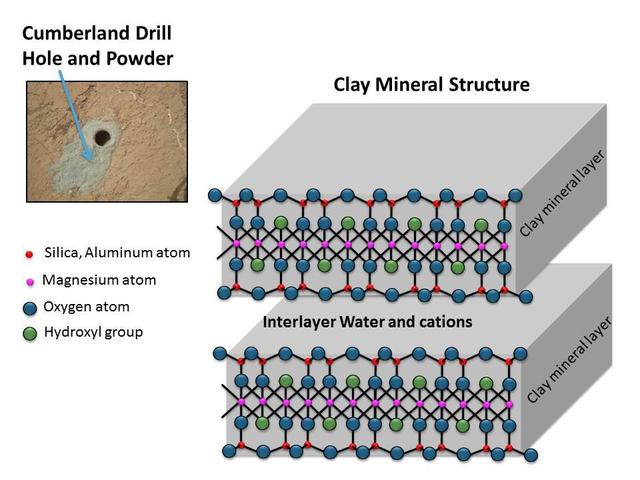
This schematic shows the atomic structure of the smallest units that make up the layers and interlayer region of clay minerals. This structure is similar to the clay mineral in drilled rock powder collected by NASA Curiosity Mars rover.
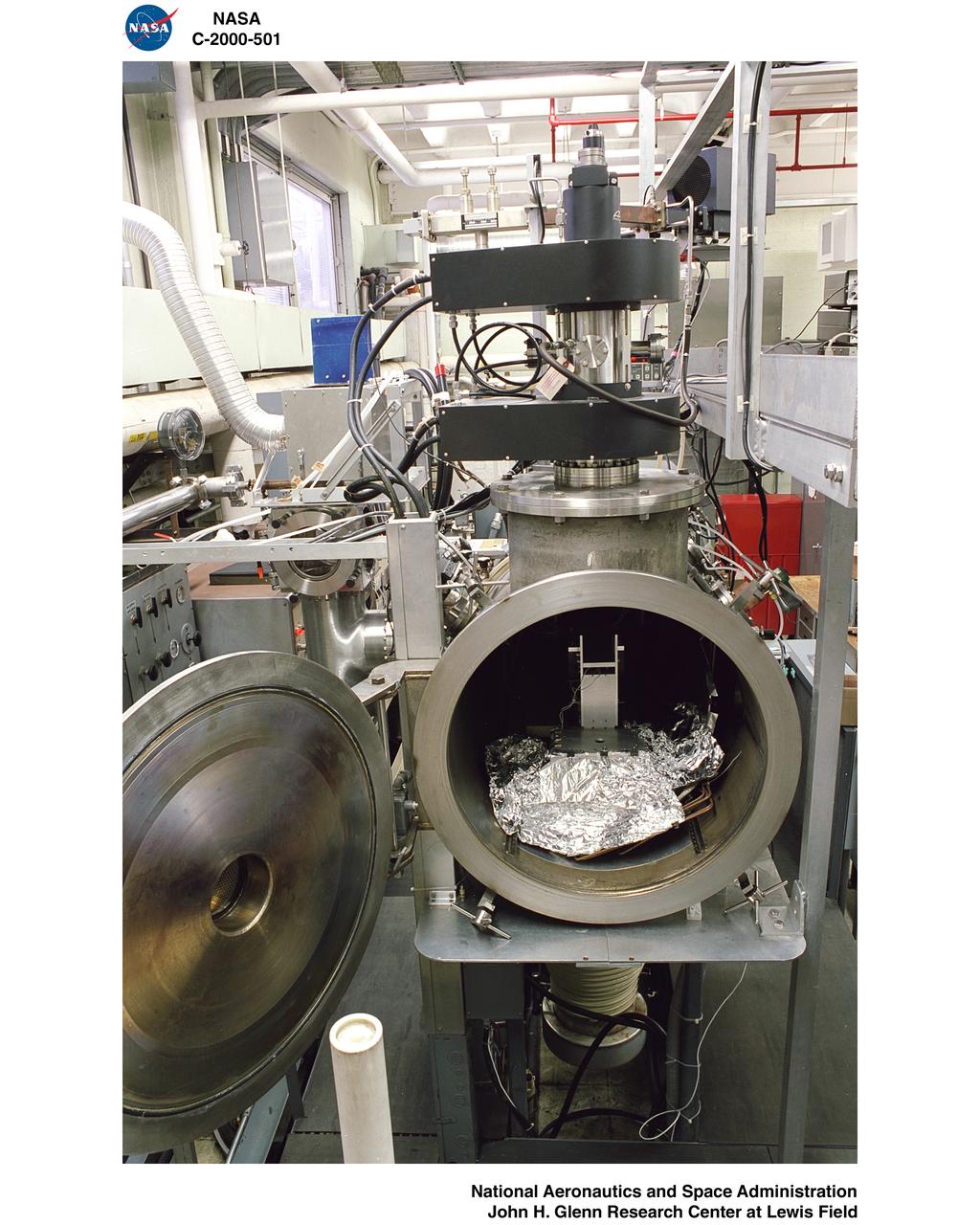
ATOMIC OXYGEN BEAM CONTAMINATION SYSTEM

NASA's Ikhana unmanned science demonstration aircraft, a civil variant of General Atomics' Predator B, on the runway at Edwards Air Force Base after its ferry flight to NASA's Dryden Flight Research Center. NASA took possession of the new aircraft in November, 2006, and it arrived at the NASA center at Edwards Air Force Base, Calif., on June 23, 2007.
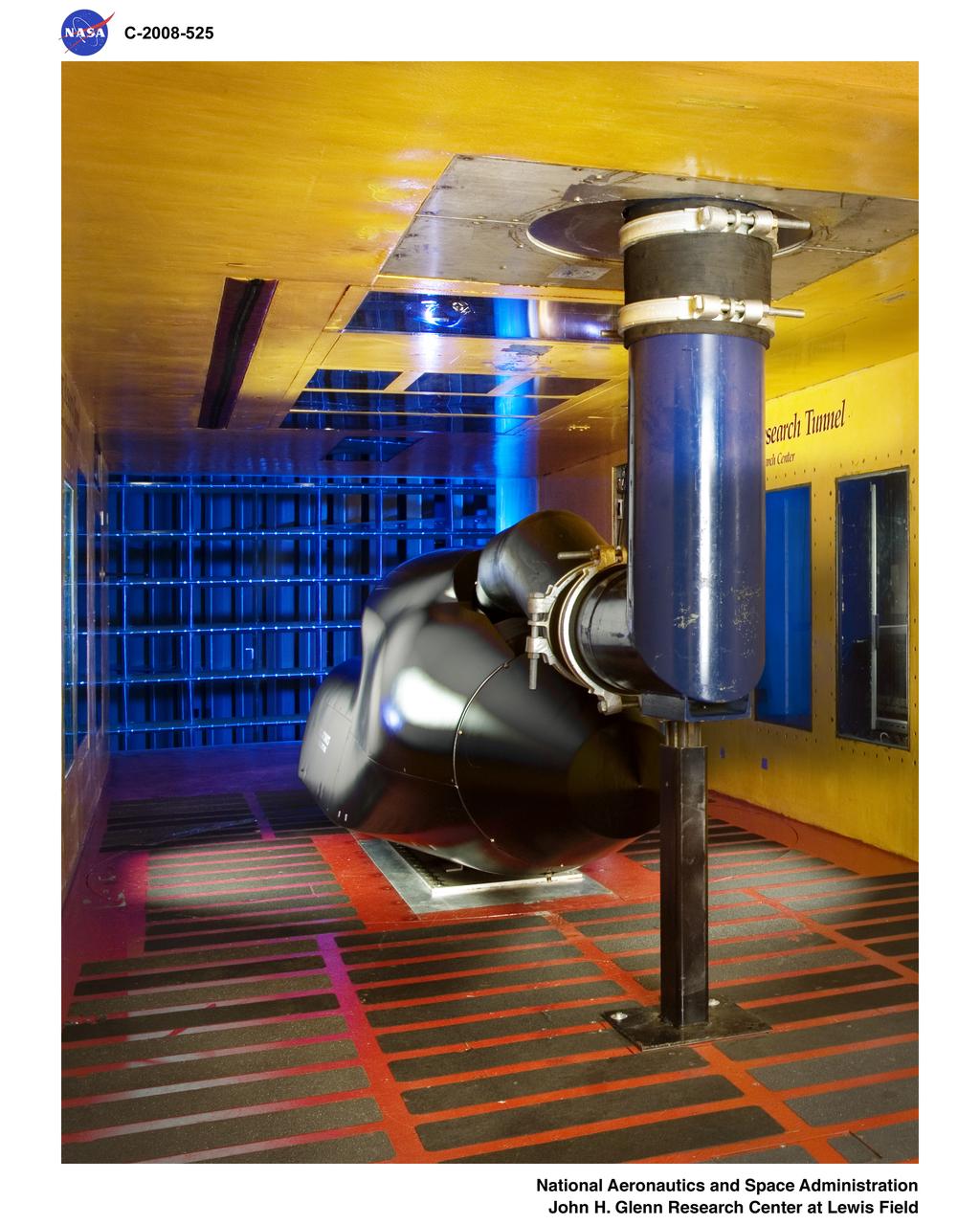
General Atomics - Predator B Inlet Model in the Icing Research Tunnel
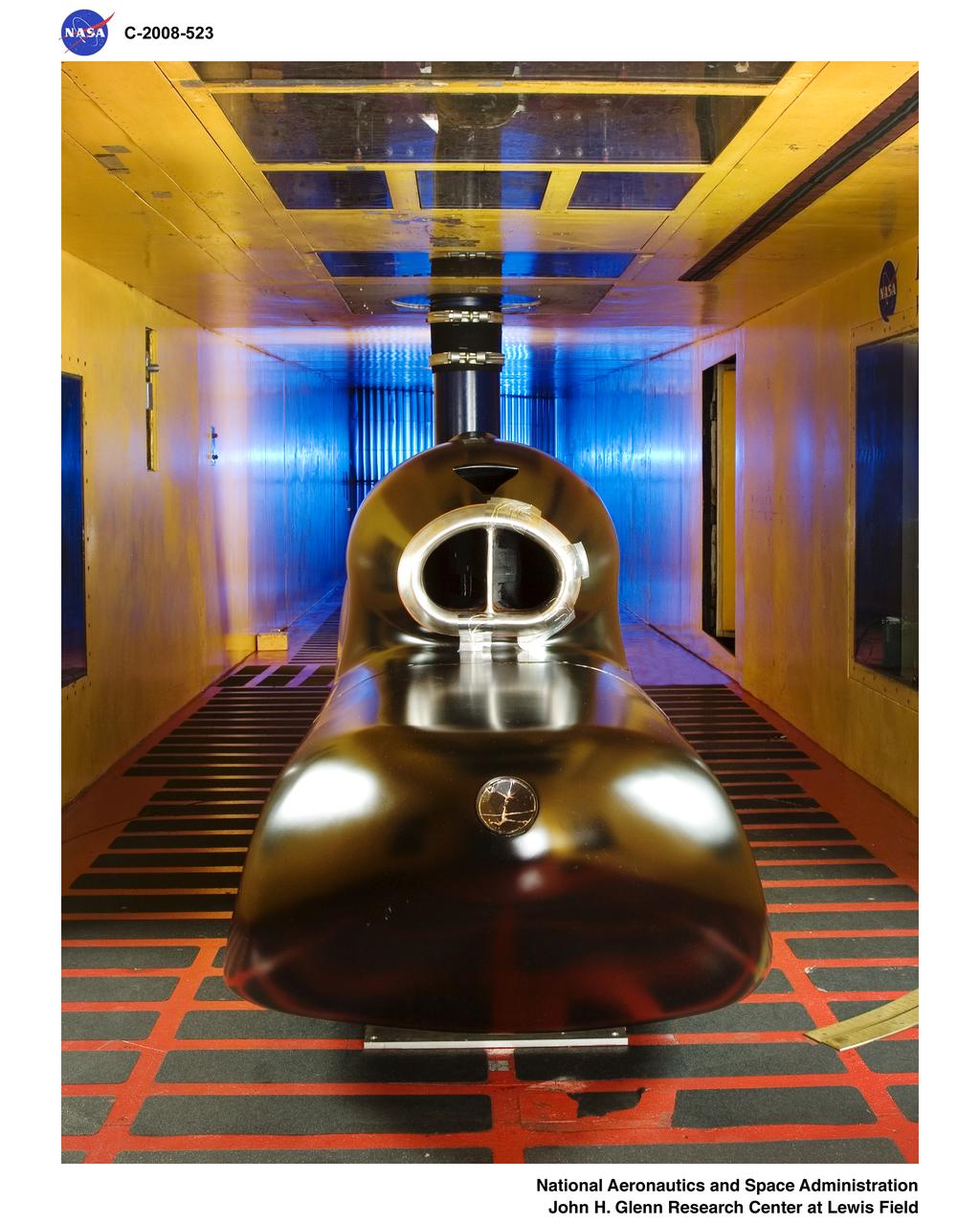
General Atomics - Predator B Inlet Model in the Icing Research Tunnel
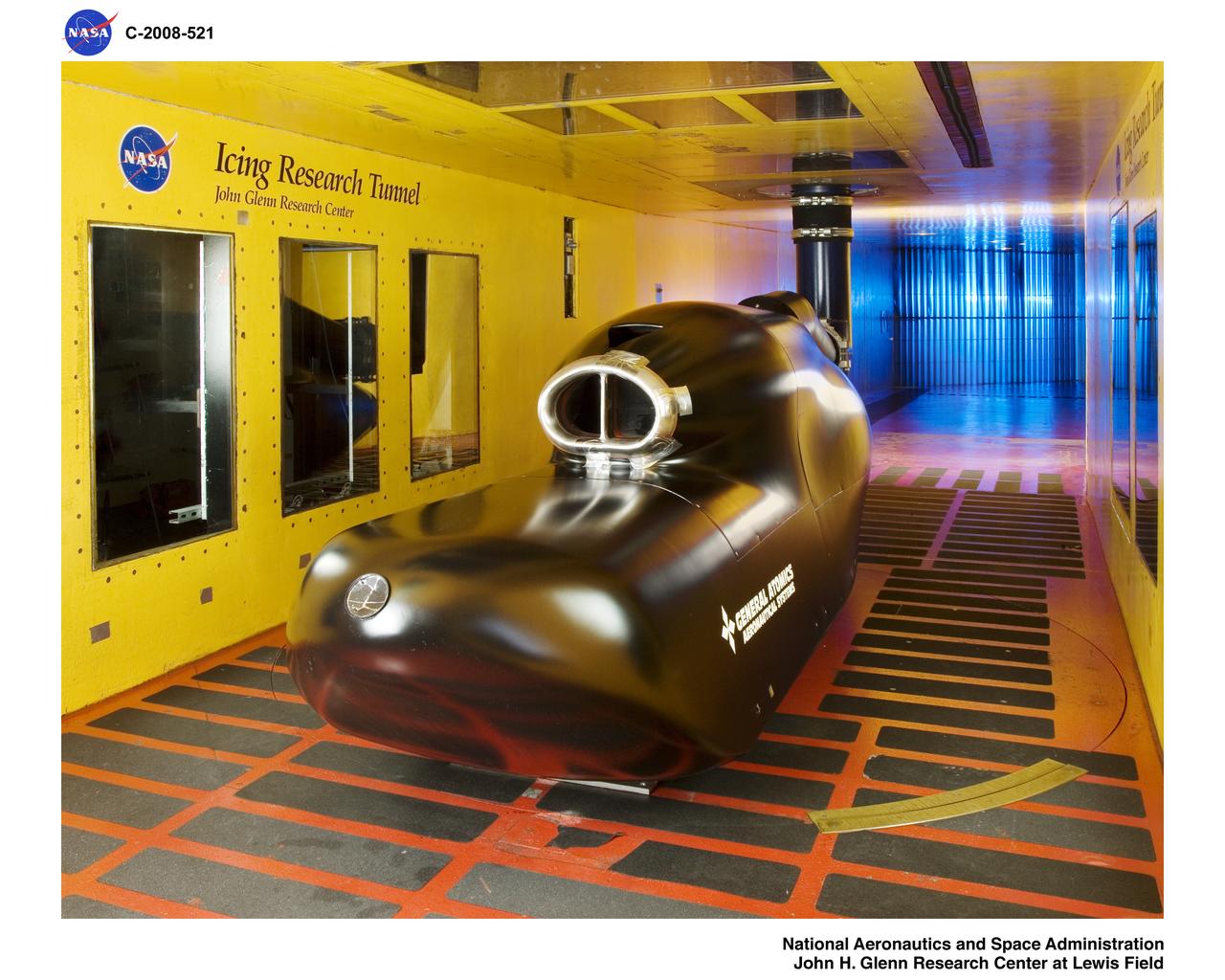
General Atomics - Predator B Inlet Model in the Icing Research Tunnel

CLEVELAND MUSEUM OF ART PAINTING FOR ATOMIC OXYGEN RESTORATION PROGRAM - HALF RESTORED

Red and Green colors predominate in this view of the Aurora Australis photographed from the Space Shuttle Discovery (STS-39) in May 1991 at the peak of the last geomagnetic maximum. The payload bay and tail of the shuttle can be seen on the left hand side of the picture. Auroras are caused when high-energy electrons pour down from the Earth's magnetosphere and collide with atoms. Red aurora occurs from 200 km to as high as 500 km altitude and is caused by the emission of 6300 Angstrom wavelength light from oxygen atoms. Green aurora occurs from about 100 km to 250 km altitude and is caused by the emission of 5577 Angstrom wavelength light from oxygen atoms. The light is emitted when the atoms return to their original unexcited state. At times of peaks in solar activity, there are more geomagnetic storms and this increases the auroral activity viewed on Earth and by astronauts from orbit.
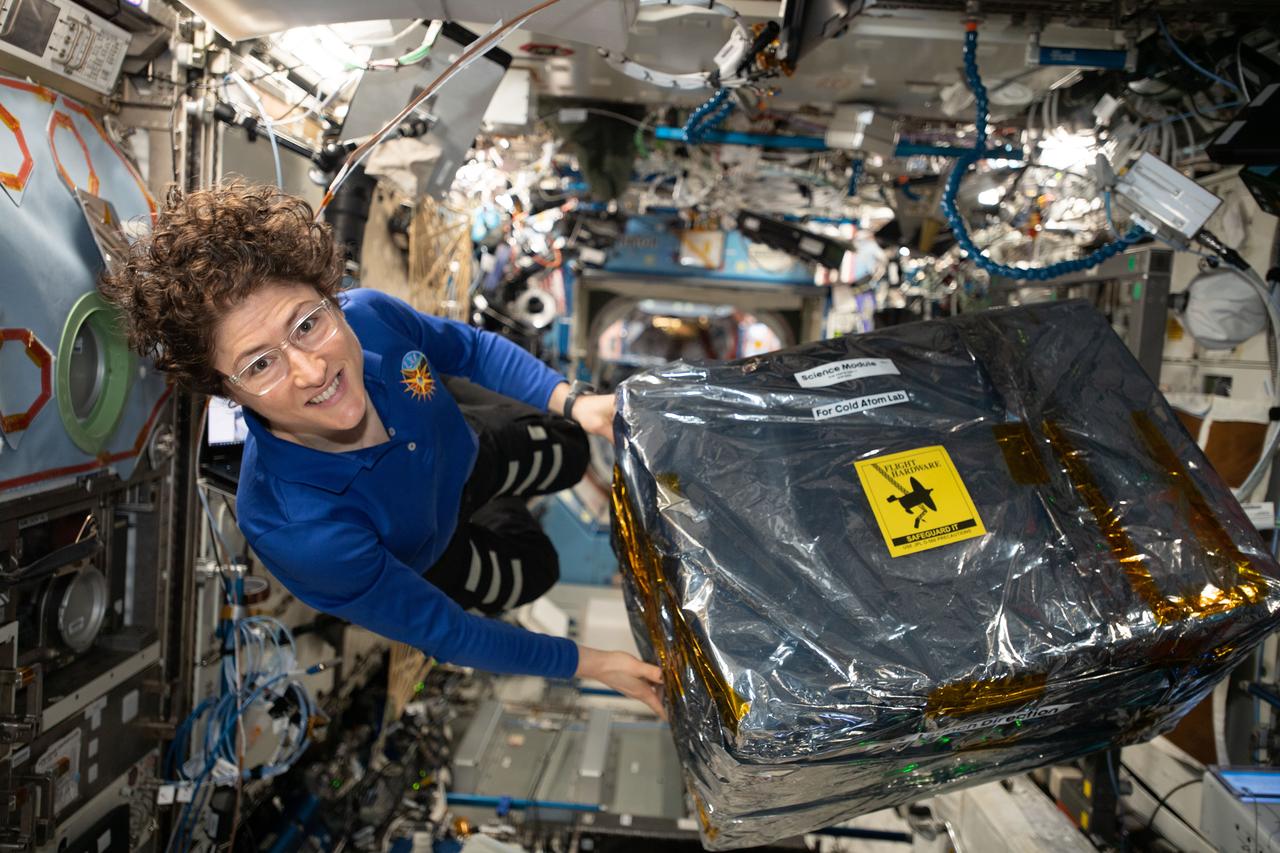
iss061e068045 (Dec. 9, 2019) --- NASA astronaut and Expedition 61 Flight Engineer Christina Koch handles science hardware stowed inside a cargo transfer bag retrieved from the SpaceX Dragon resupply ship. The hardware is part of the the Cold Atom Laboratory that produces clouds of atoms that are chilled to about one ten billionth of a degree above absolute zero -- much colder than the average temperature of deep space. At these low temperatures, atoms have almost no motion, allowing scientists to study fundamental behaviors and quantum characteristics that are difficult or impossible to probe at higher temperatures.

Dr. Mark Kasevich, Professor of Physics and Applied Physics at Stanford University presents a Director's Colloquium to Ames staff on 'Atom Interferometry'

Dr. Mark Kasevich, Professor of Physics and Applied Physics at Stanford University presents a Director's Colloquium to Ames staff on 'Atom Interferometry'

Dr. Mark Kasevich, Professor of Physics and Applied Physics at Stanford University presents a Director's Colloquium to Ames staff on 'Atom Interferometry'
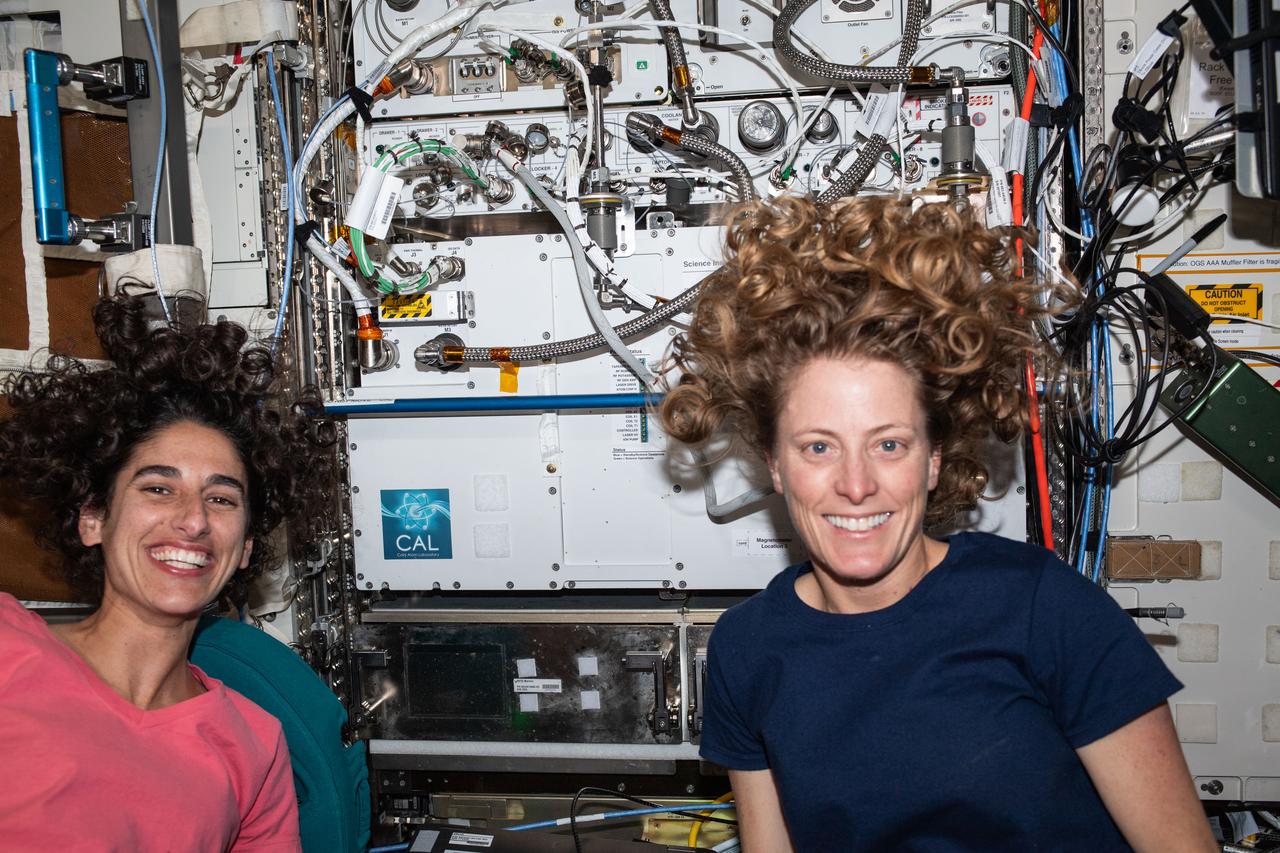
iss070e003191 (Oct. 12, 2023) --- Expedition 70 Flight Engineers (from left) Jasmin Moghbeli and Loral O'Hara, both from NASA, pose for a portrait in front of the International Space Station's Cold Atom Lab. The physics research device observes the quantum behavior of atoms chilled to about one ten billionth of a degree above absolute zero -- much colder than the average temperature of deep space.
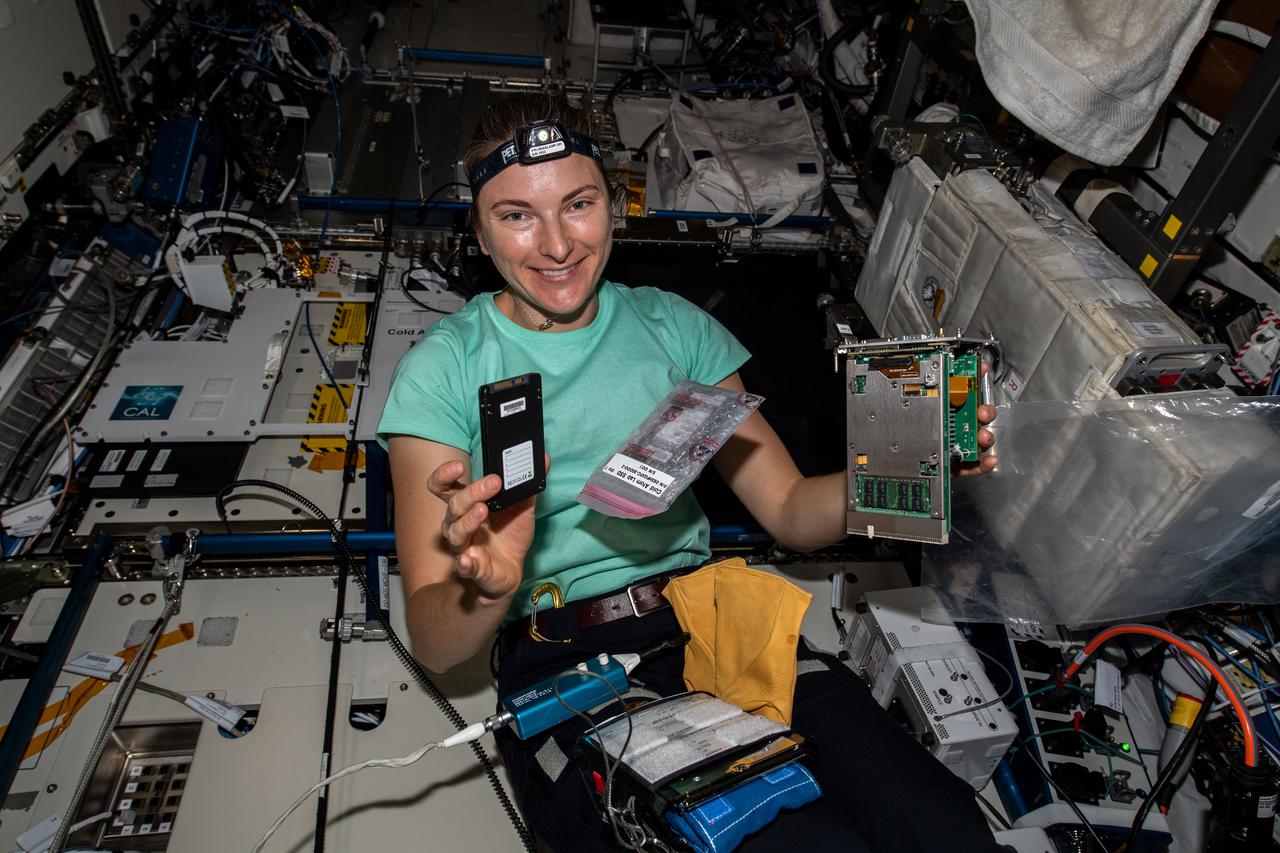
iss066e091400 (Dec. 16, 2021) --- NASA astronaut and Expedition 66 Flight Engineer Kayla Barron replaces computer hardware inside the International Space Station's Cold Atom Lab. The space physics device enables observations of atoms chilled to temperatures near absolute zero allowing scientists to study fundamental behaviors and quantum characteristics not possible on Earth.
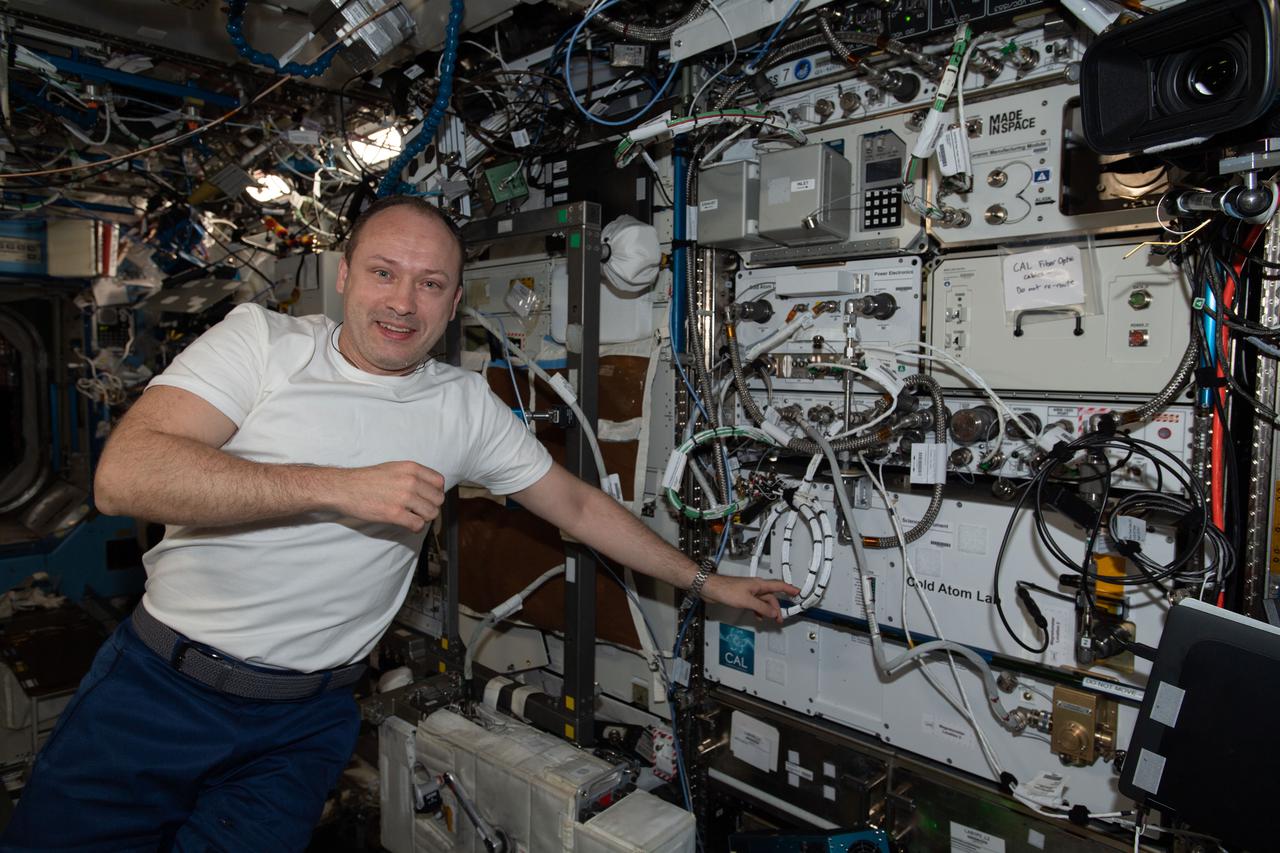
iss066e088442 (Dec. 11, 2021) --- Roscosmos cosmonaut and Soyuz MS-20 Commander Alexander Misurkin is pictured next to the Cold Atom Lab inside the International Space Station's U.S. Destiny module. The space physics research device enables observations of atoms chilled to temperatures near absolute zero allowing scientists to study fundamental behaviors and quantum characteristics not possible on Earth.
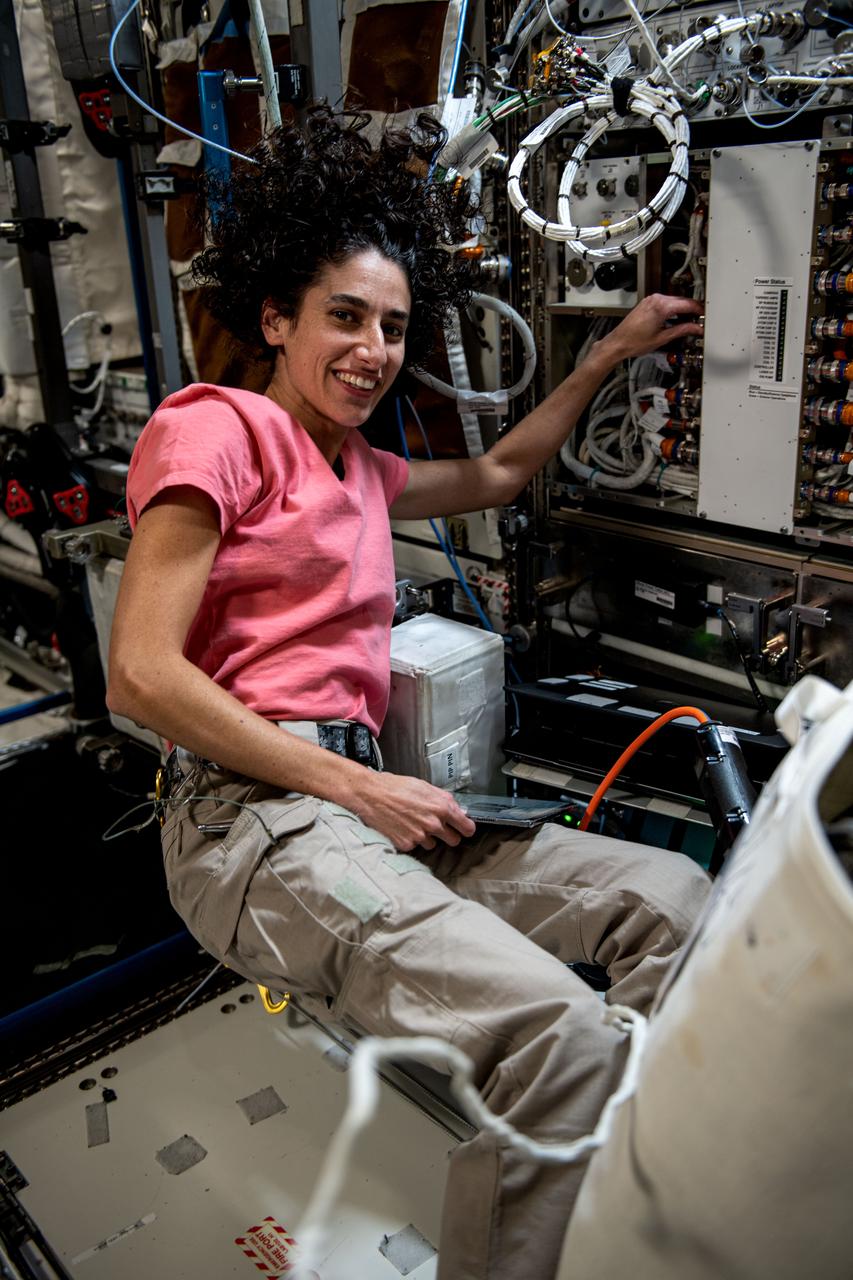
iss069e092237 (Sept. 25, 2023) --- NASA astronaut and Expedition 70 Flight Engineer Jasmin Moghbeli is pictured removing and replacing components inside the Cold Atom Lab aboard the International Space Station. The space physics device enables observations of atoms chilled to temperatures near absolute zero allowing scientists to study fundamental behaviors and quantum characteristics not possible on Earth.
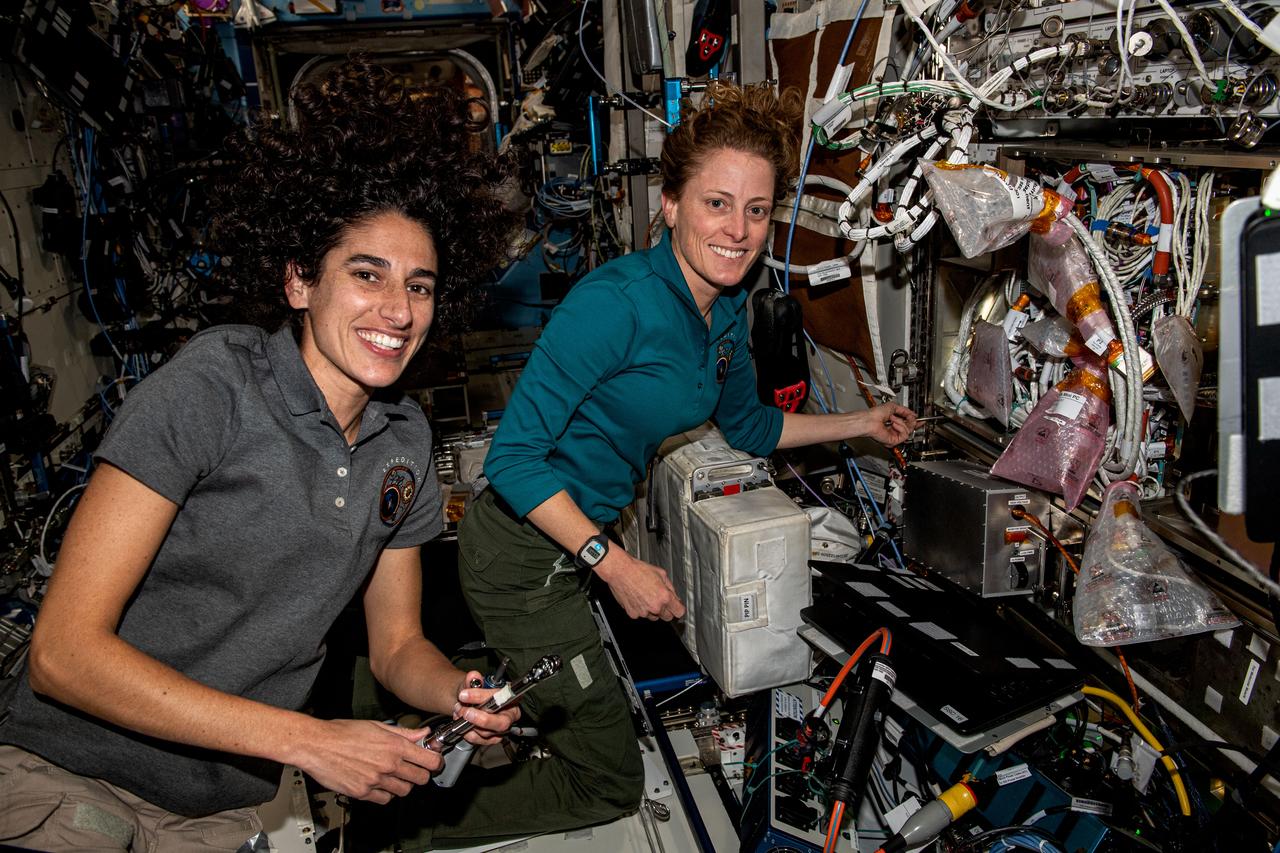
iss069e092348 (Sept. 26, 2023) --- NASA astronauts (from left) Jasmin Moghbeli and Loral O'Hara, both Expedition 70 Flight Engineers, partner together removing and replacing components inside the Cold Atom Lab aboard the International Space Station. The space physics device enables observations of atoms chilled to temperatures near absolute zero allowing scientists to study fundamental behaviors and quantum characteristics not possible on Earth.
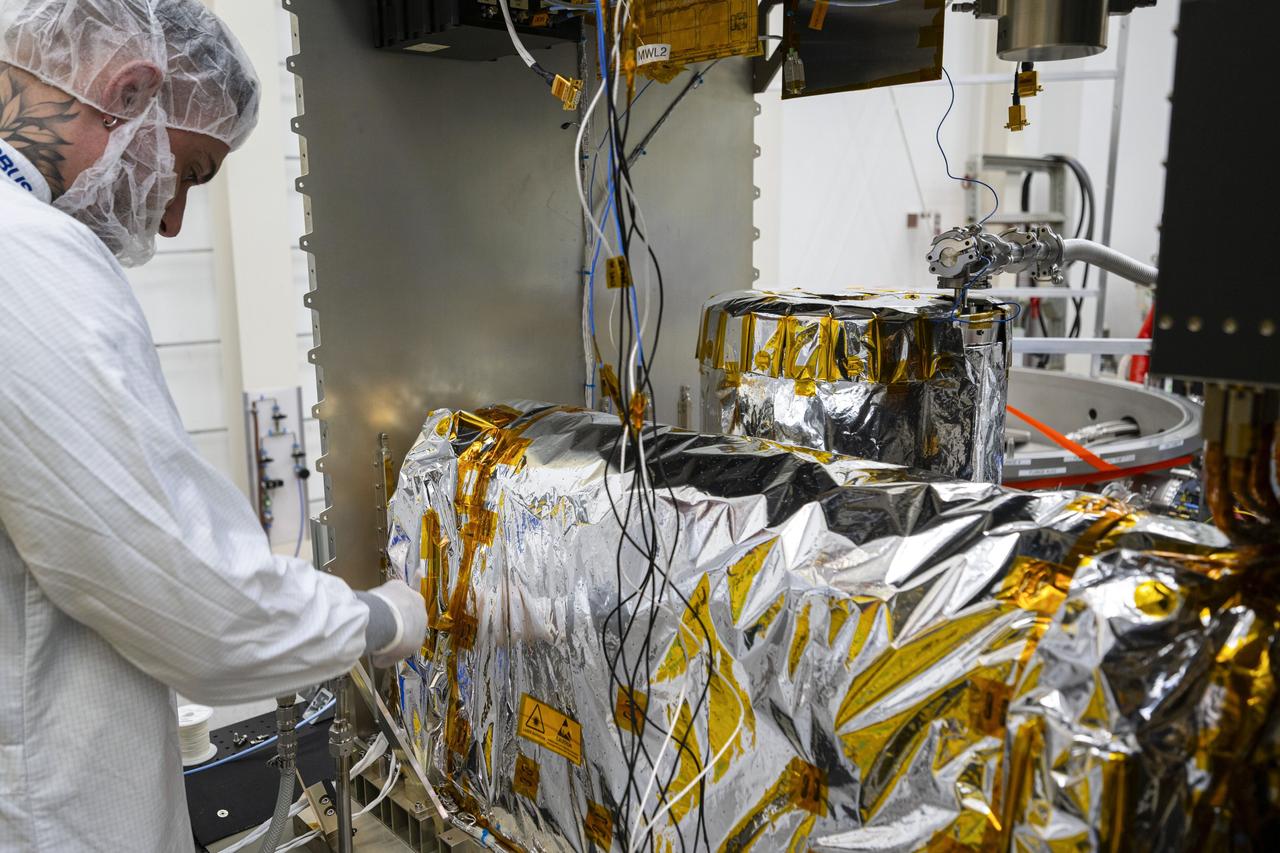
jsc2025e015677 (3/6/2025) --- The closure of the instrument panel of the Atomic Clock Ensemble in Space (ACES) has taken place at Airbus Friedrichshafen, Germany. ACES is an ESA instrument that tests fundamental physics, such as Einstein’s theory of general relativity, from the International Space Station. According to this theory, gravity affects the passing of time—time flies faster at the top of Mount Everest than at sea level. This effect has been proven in experiments on Earth, and ACES will make more precise measurements of this phenomenon and other fundamental physics such as the standard model of particle physics, as it flies 400 km high on the space station. ACES contains two clocks: PHARAO, a caesium atomic clock developed by the French Space Agency CNES, and the Space Hydrogen Maser developed by Spectratime, which uses hydrogen atoms as a frequency reference. The payload will be externally mounted to ESA’s Columbus laboratory on the space station. Image courtesy of S. Corvaja (ESA).
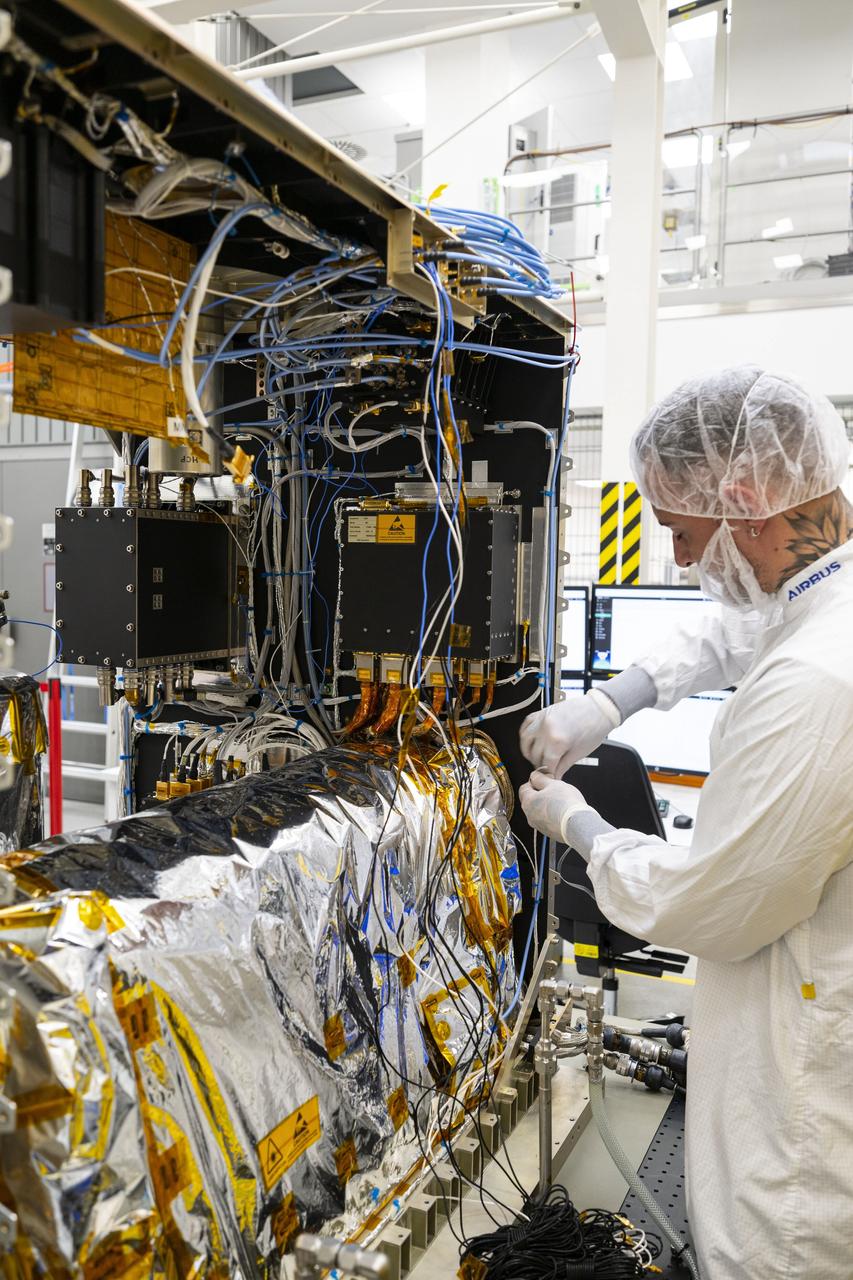
jsc2025e015678 (3/6/2025) --- The closure of the instrument panel of the Atomic Clock Ensemble in Space (ACES) has taken place at Airbus Friedrichshafen, Germany. ACES is an ESA instrument that tests fundamental physics, such as Einstein’s theory of general relativity, from the International Space Station. According to this theory, gravity affects the passing of time—time flies faster at the top of Mount Everest than at sea level. This effect has been proven in experiments on Earth, and ACES will make more precise measurements of this phenomenon and other fundamental physics such as the standard model of particle physics, as it flies 400 km high on the space station. ACES contains two clocks: PHARAO, a caesium atomic clock developed by the French Space Agency CNES, and the Space Hydrogen Maser developed by Spectratime, which uses hydrogen atoms as a frequency reference. The payload will be externally mounted to ESA’s Columbus laboratory on the space station. Image courtesy of S. Corvaja (ESA).
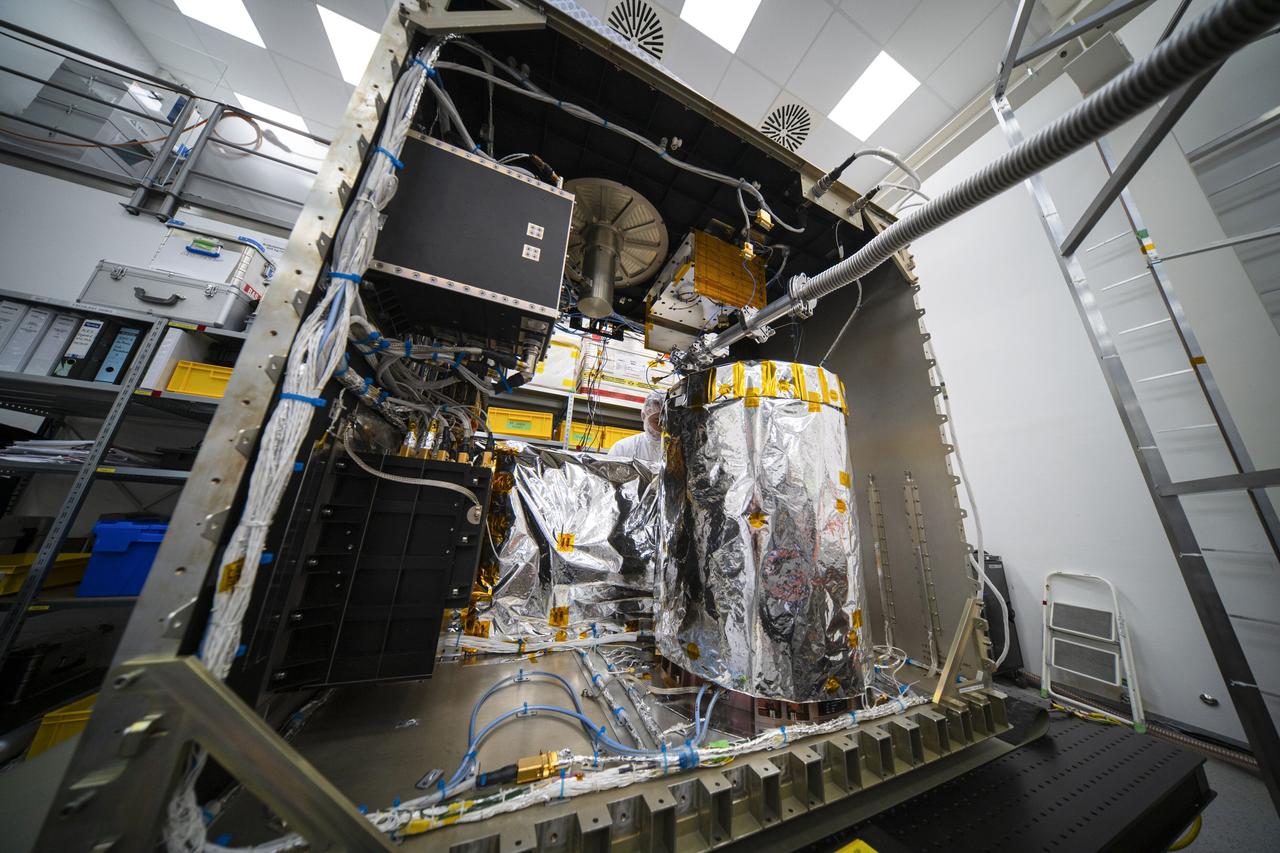
jsc2025e015680 (3/6/2025) --- The closure of the instrument panel of the Atomic Clock Ensemble in Space (ACES) has taken place at Airbus Friedrichshafen, Germany. ACES is an ESA instrument that tests fundamental physics, such as Einstein’s theory of general relativity, from the International Space Station. According to this theory, gravity affects the passing of time—time flies faster at the top of Mount Everest than at sea level. This effect has been proven in experiments on Earth, and ACES will make more precise measurements of this phenomenon and other fundamental physics such as the standard model of particle physics, as it flies 400 km high on the space station. ACES contains two clocks: PHARAO, a caesium atomic clock developed by the French Space Agency CNES, and the Space Hydrogen Maser developed by Spectratime, which uses hydrogen atoms as a frequency reference. The payload will be externally mounted to ESA’s Columbus laboratory on the space station. Image courtesy of S. Corvaja (ESA).
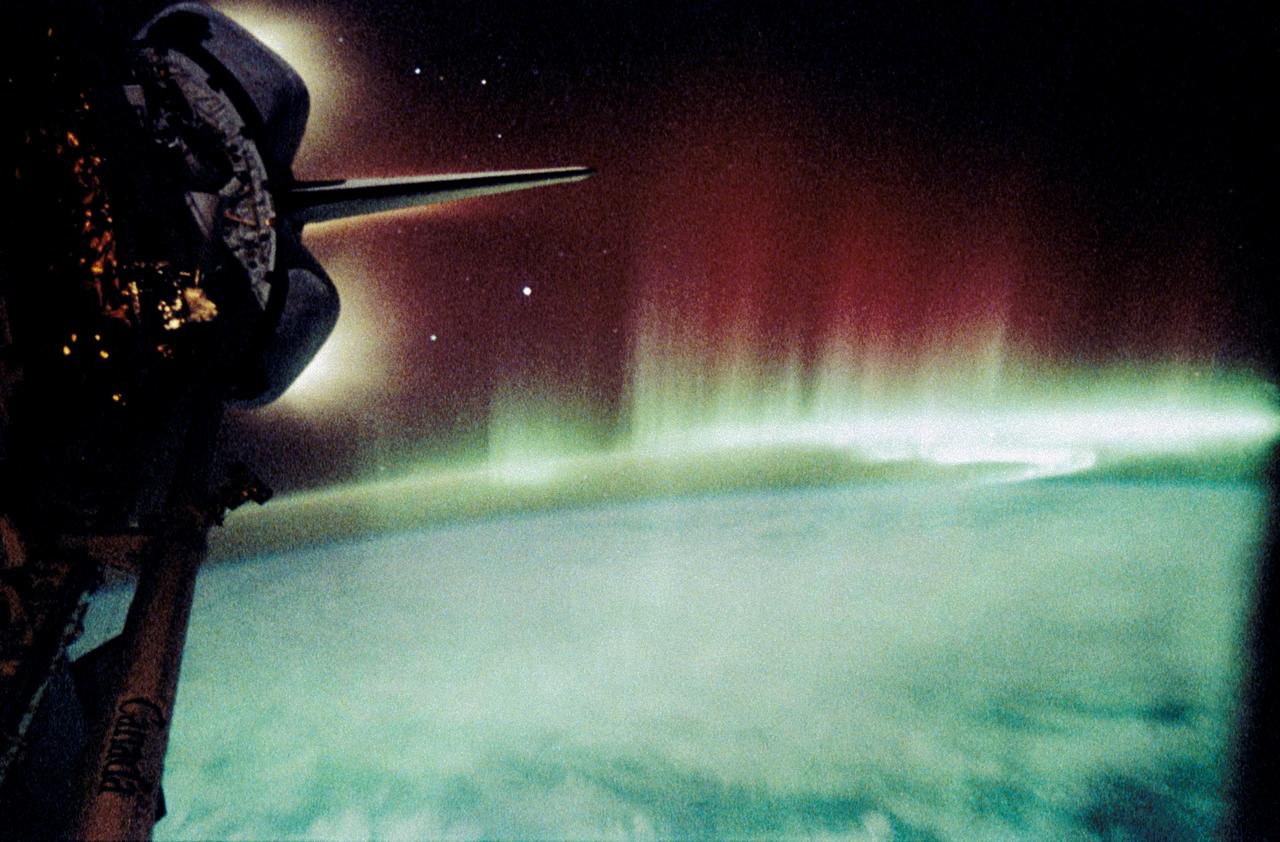
STS039-342-026 (28 April-6 May 1991) --- This view of the Aurora Australis, or Southern Lights, shows a band of airglow above the limb of Earth. Photo experts at NASA studying the mission photography identify the airglow as being in the 80-120 kilometer altitude region and attribute its existence to atomic oxygen (wavelength of 5,577 Angstroms), although other atoms can also contribute. The atomic oxygen airglow is usually most intense at altitudes around 65 degrees north and south latitude, and is most intense in the spring and fall of the year. The aurora phenomena is due to atmospheric oxygen and nitrogen being excited by the particles from the Van Allen Radiation belts which extend between the two geomagnetic poles. The red and green rays appear to extend upward to 200-300 kilometers, much higher than the usual upper limits of about 110 kilometers.
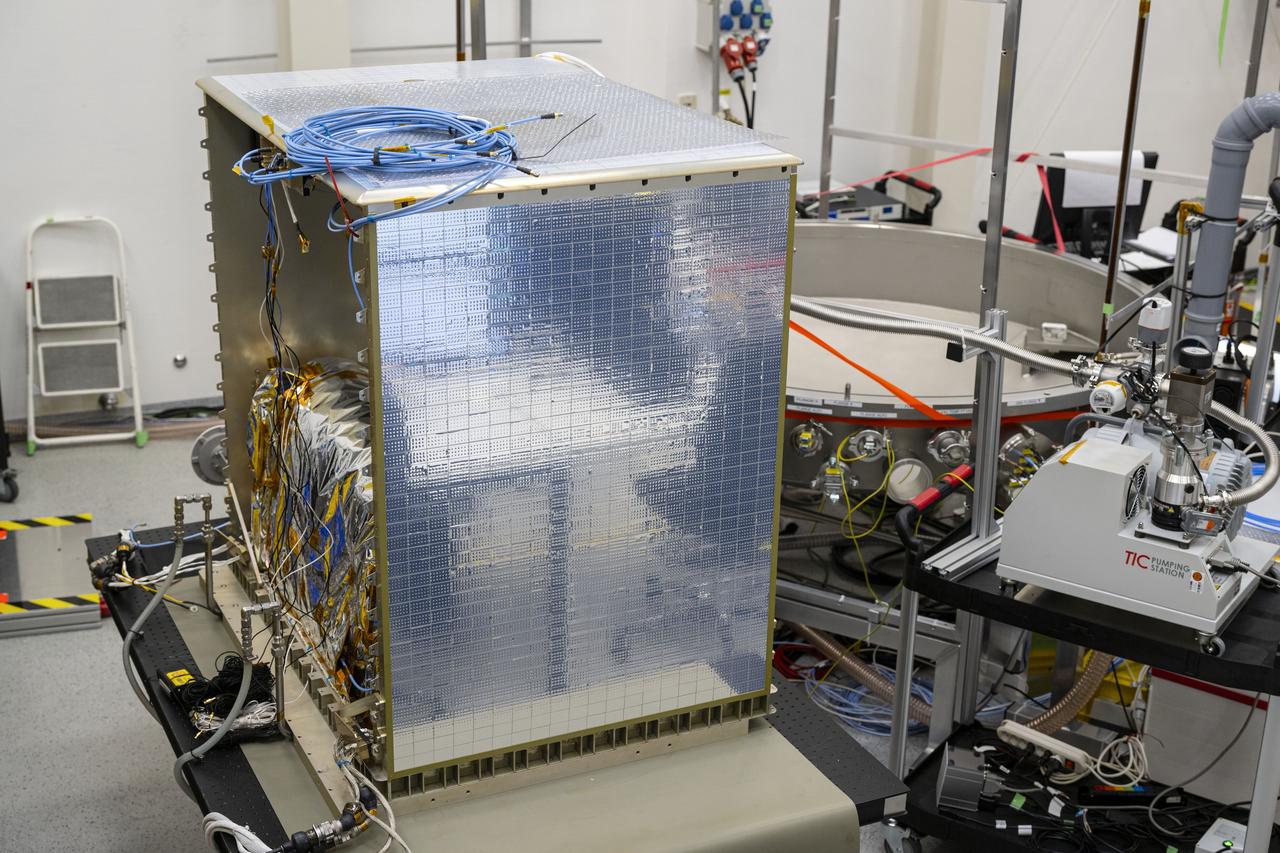
jsc2025e015679 (3/6/2025) --- The closure of the instrument panel of the Atomic Clock Ensemble in Space (ACES) has taken place at Airbus Friedrichshafen, Germany. ACES is an ESA instrument that tests fundamental physics, such as Einstein’s theory of general relativity, from the International Space Station. According to this theory, gravity affects the passing of time—time flies faster at the top of Mount Everest than at sea level. This effect has been proven in experiments on Earth, and ACES will make more precise measurements of this phenomenon and other fundamental physics such as the standard model of particle physics, as it flies 400 km high on the space station. ACES contains two clocks: PHARAO, a caesium atomic clock developed by the French Space Agency CNES, and the Space Hydrogen Maser developed by Spectratime, which uses hydrogen atoms as a frequency reference. The payload will be externally mounted to ESA’s Columbus laboratory on the space station. Image courtesy of S. Corvaja (ESA).
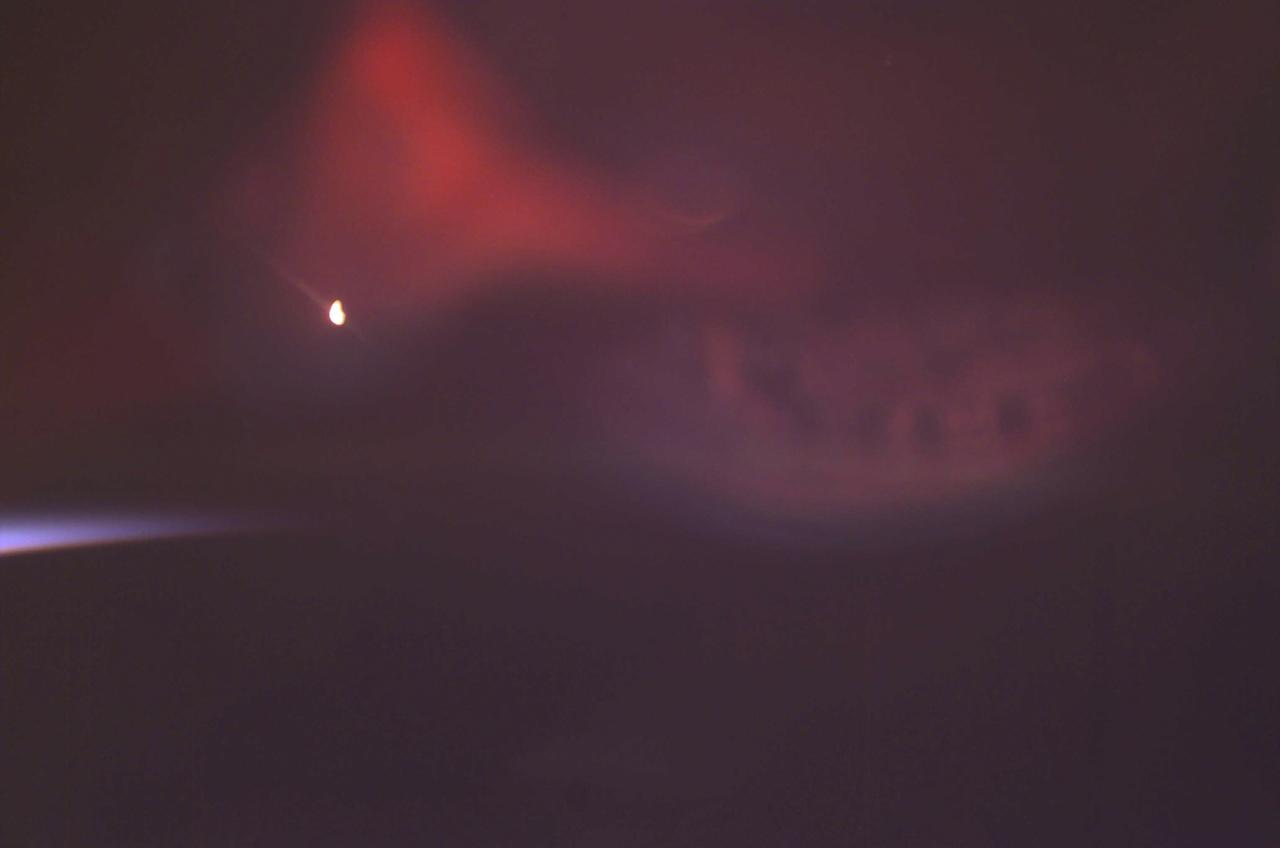
Auroras are caused when high-energy electrons pour down from the Earth's magnetosphere and collide with atoms. Red aurora, as captured here by a still digital camera aboard the International Space Station (ISS), occurs from 200 km to as high as 500 km altitude and is caused by the emission of 6300 Angstrom wavelength light from oxygen atoms. The light is emitted when the atoms return to their original unexcited state. The white spot in the image is from a light on inside of the ISS that is reflected off the inside of the window. The pale blue arch on the left side of the frame is sunlight reflecting off the atmospheric limb of the Earth. At times of peaks in solar activity, there are more geomagnetic storms and this increases the auroral activity viewed on Earth and by astronauts from orbit.
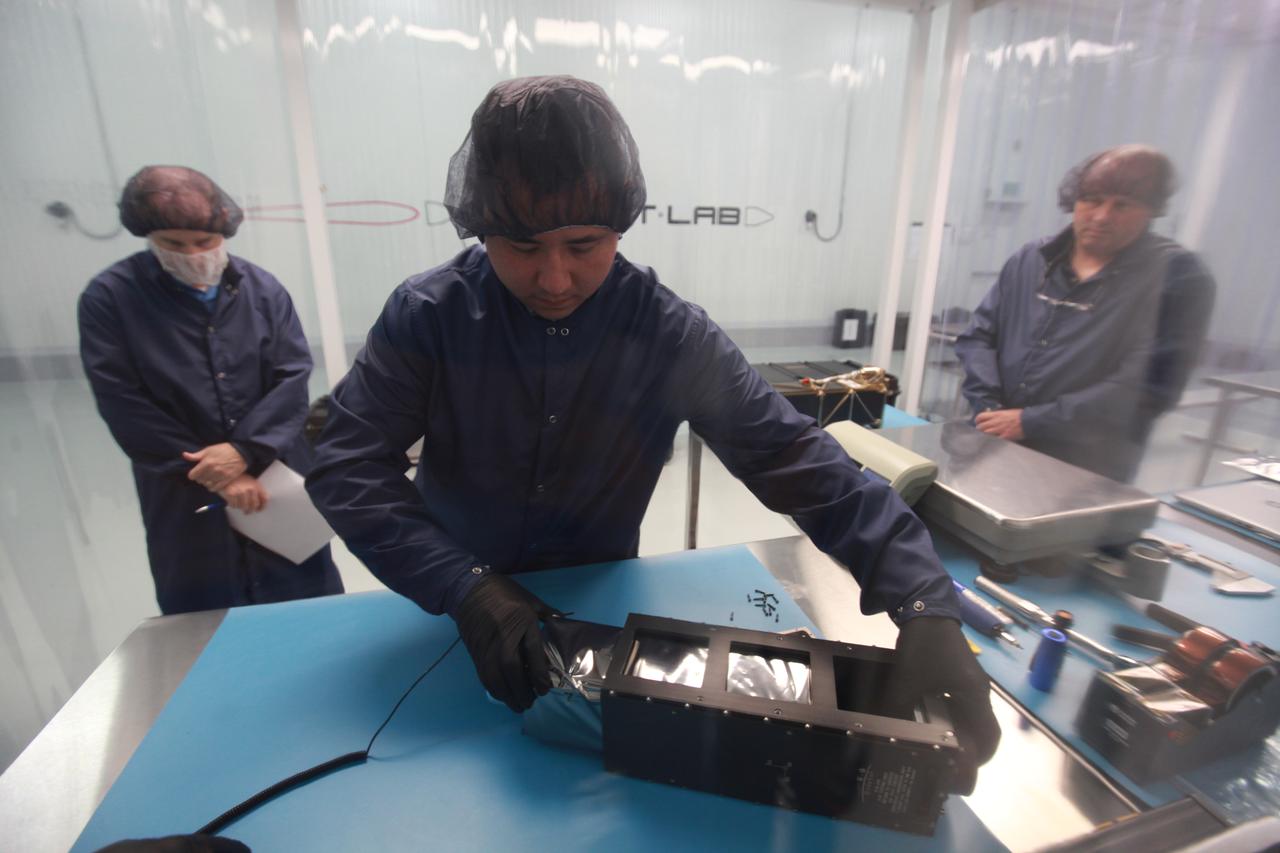
The NASA Langley Research Center (LaRC) Shields-1 CubeSat will demonstrate a research payload with materials durability experiments on emerging radiation shielding technologies. Shields-1 incorporates eight mdosimeters for radiation shielding experiments: one in the atomic number (Z)-grade radiation shielding vault, three behind experimental Z-grade radiation shielding samples developed at NASA LaRC, three behind baseline aluminum shielding samples, and one deep inside the research payload. The Z-grade is defined as an atomic number gradient of shielding materials using a low atomic number metal, such as aluminum, with a high atomic number material, like tantalum. The metals are fabricated into the vault structure. Also, Shields-1 measures a charge dissipation film resistance for technology development. The Shields-1 mission contributes to the SmallSat community with the development of technologies to increase the lifetimes of CubeSat missions from months to years in multiple radiation environments and increase the return on investment for scientific and commercial spacecraft.

The NASA Langley Research Center (LaRC) Shields-1 CubeSat will demonstrate a research payload with materials durability experiments on emerging radiation shielding technologies. Shields-1 incorporates eight mdosimeters for radiation shielding experiments: one in the atomic number (Z)-grade radiation shielding vault, three behind experimental Z-grade radiation shielding samples developed at NASA LaRC, three behind baseline aluminum shielding samples, and one deep inside the research payload. The Z-grade is defined as an atomic number gradient of shielding materials using a low atomic number metal, such as aluminum, with a high atomic number material, like tantalum. The metals are fabricated into the vault structure. Also, Shields-1 measures a charge dissipation film resistance for technology development. The Shields-1 mission contributes to the SmallSat community with the development of technologies to increase the lifetimes of CubeSat missions from months to years in multiple radiation environments and increase the return on investment for scientific and commercial spacecraft.
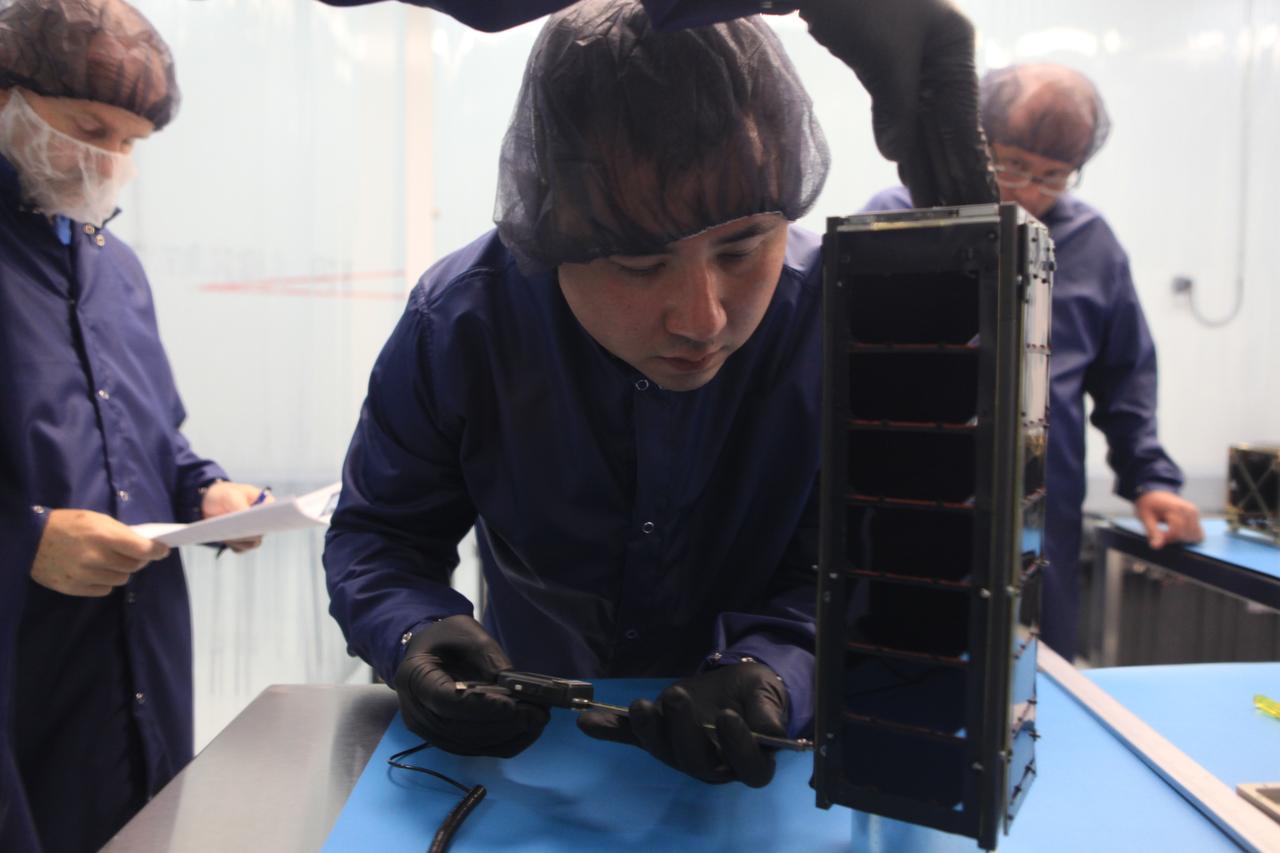
The NASA Langley Research Center (LaRC) Shields-1 CubeSat will demonstrate a research payload with materials durability experiments on emerging radiation shielding technologies. Shields-1 incorporates eight mdosimeters for radiation shielding experiments: one in the atomic number (Z)-grade radiation shielding vault, three behind experimental Z-grade radiation shielding samples developed at NASA LaRC, three behind baseline aluminum shielding samples, and one deep inside the research payload. The Z-grade is defined as an atomic number gradient of shielding materials using a low atomic number metal, such as aluminum, with a high atomic number material, like tantalum. The metals are fabricated into the vault structure. Also, Shields-1 measures a charge dissipation film resistance for technology development. The Shields-1 mission contributes to the SmallSat community with the development of technologies to increase the lifetimes of CubeSat missions from months to years in multiple radiation environments and increase the return on investment for scientific and commercial spacecraft.

A high-tech infrared imaging sensor in its underbelly pod, the Altair UAS flew repeated passes over the Esperanza fire to aid firefighting efforts.

Equipped with a pod-mounted infrared imaging sensor, the Altair UAS aided fire mapping efforts over wildfires in central and southern California in late 2006.
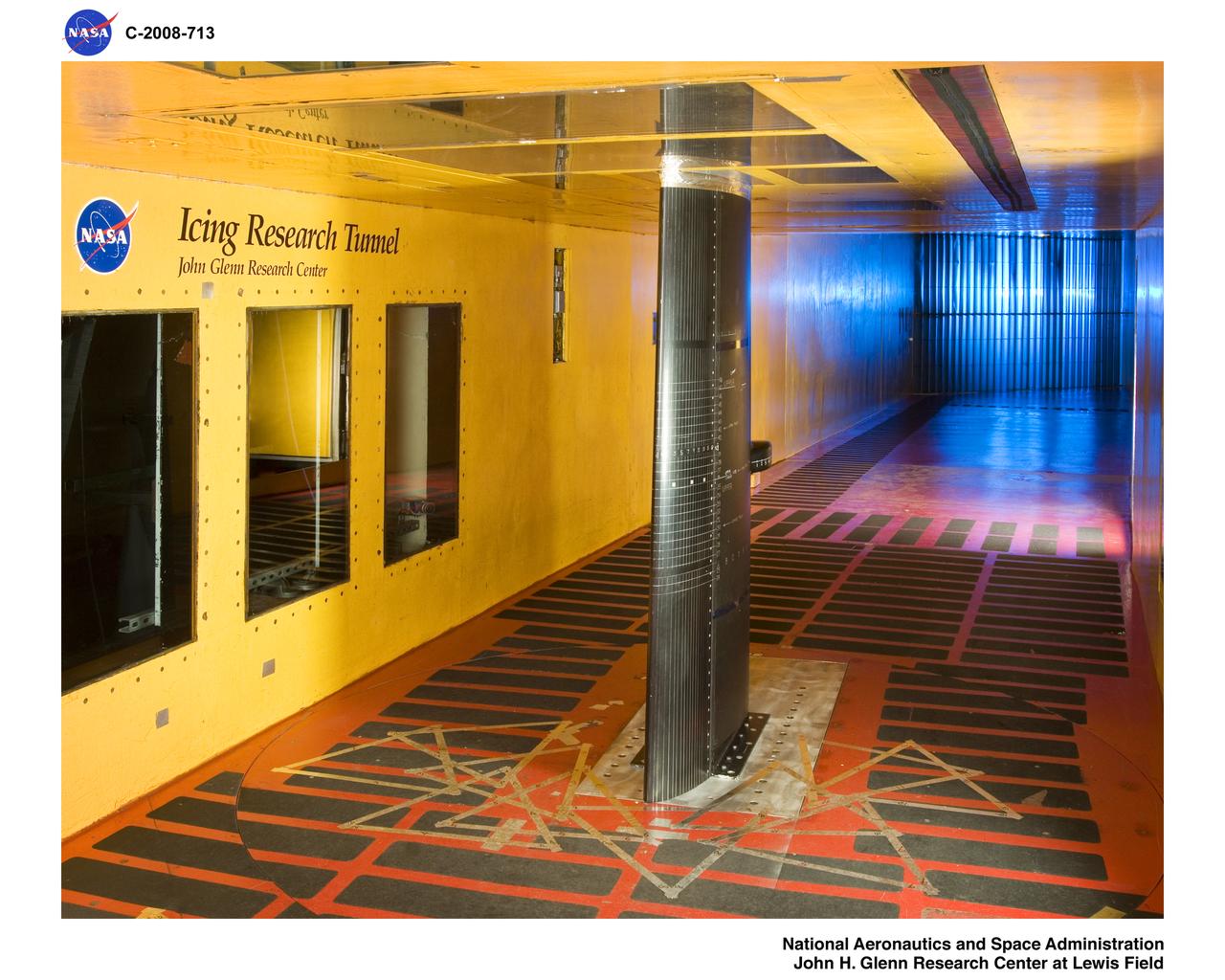
Leading Edge De-Icing Evaluation Test of the General Atomics Predator B Wing Section using Electro-Expulsive De-Icing System (EEDS) Testing conducted in cooperation with Wichita State University

Photographs of the Low Impact Docking System (LIDS); this hardware is a test for the ORION docking birthing system to connect the Crew Exploration Vehicle (CEV) to the International Space Station (ISS); atomic oxygen 12 inch seals testing
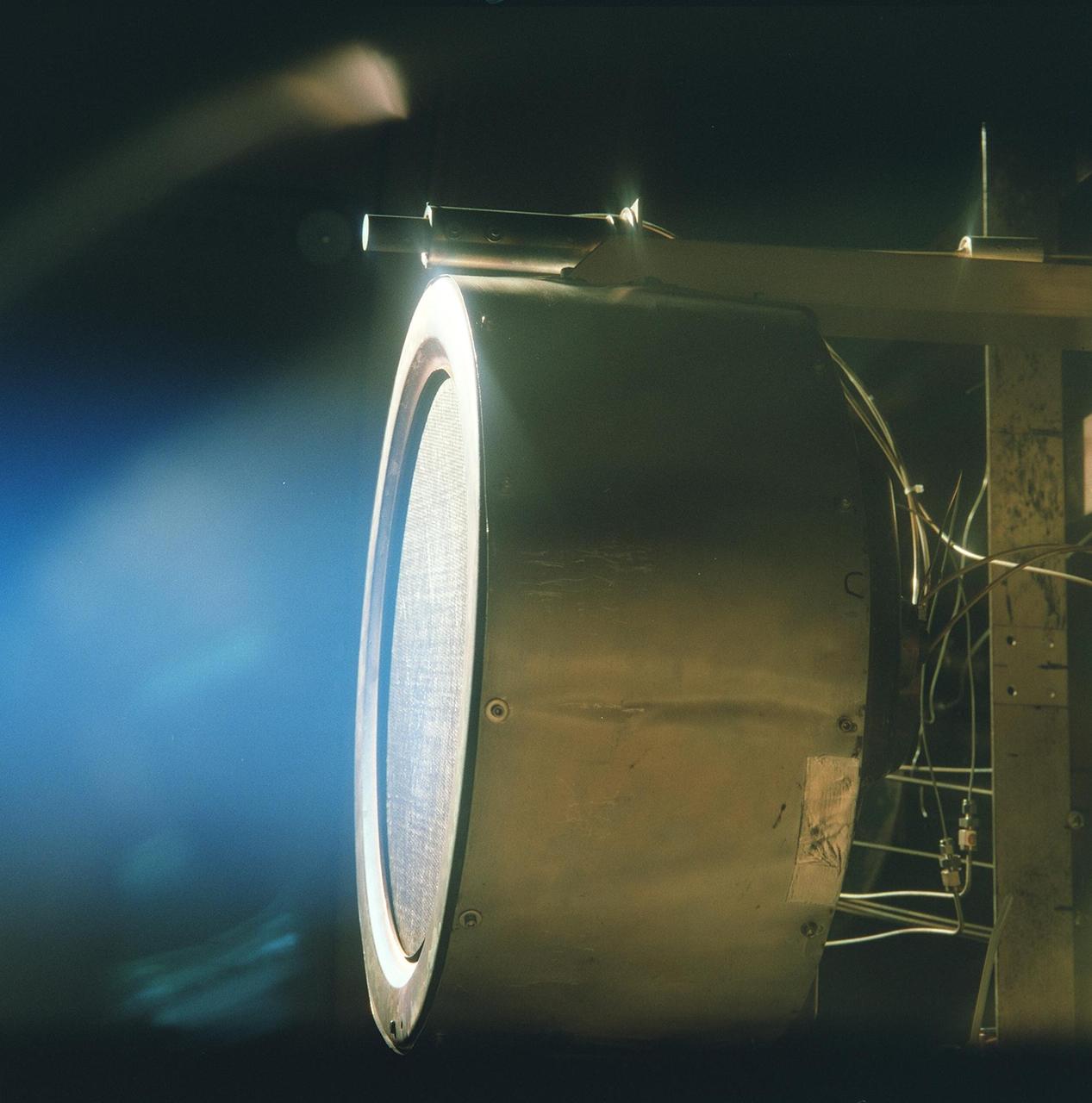
This image of a xenon ion engine prototype, photographed through a port of the vacuum chamber where it was being tested at NASA's Jet Propulsion Laboratory, shows the faint blue glow of charged atoms being emitted from the engine. The engine is now in an ongoing extended- life test, in a vacuum test chamber at JPL, and has run for almost 500 days (12,000 hours) and is scheduled to complete nearly 625 days (15,000 hours) by the end of 2001. A similar engine powers the New Millennium Program's flagship mission, Deep Space 1, which uses the ion engine in a trip through the solar system. The engine, weighing 17.6 pounds (8 kilograms), is 15.7 inches (40 centimeters) in diameter and 15.7 inches long. The actual thrust comes from accelerating and expelling positively charged xenon atoms, or ions. While the ions are fired in great numbers out the thruster at more than 110,000 kilometers (68,000 miles) per hour, their mass is so low that the engine produces a gentle thrust of only 90 millinewtons (20-thousandths of a pound). http://photojournal.jpl.nasa.gov/catalog/PIA04238
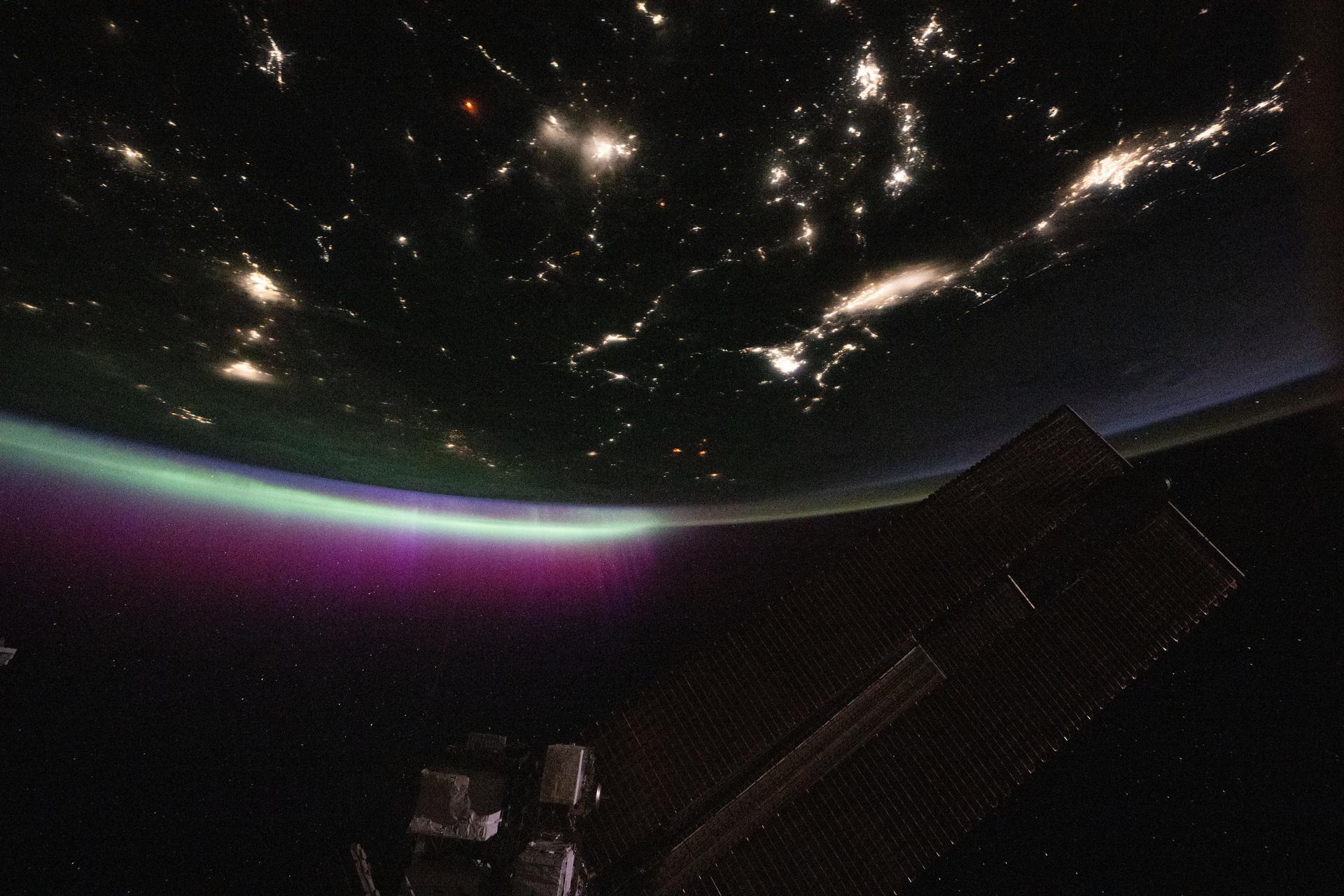
iss073e0780439 (Sept. 2, 2025) --- A diffuse aurora glows above Earth's horizon over Canada as its red and green hues shimmer like neon lights—an effect created by excited oxygen atoms high in the atmosphere. The city lights of the U.S.-Canadian Pacific Northwest (toward upper right) trace the continent eastward. The red aurora is produced by high-altitude oxygen atoms (~300 km), while the green glow comes from lower-altitude oxygen (~100 km), both excited by energetic electrons guided into the atmosphere by Earth's magnetic field during solar activity.
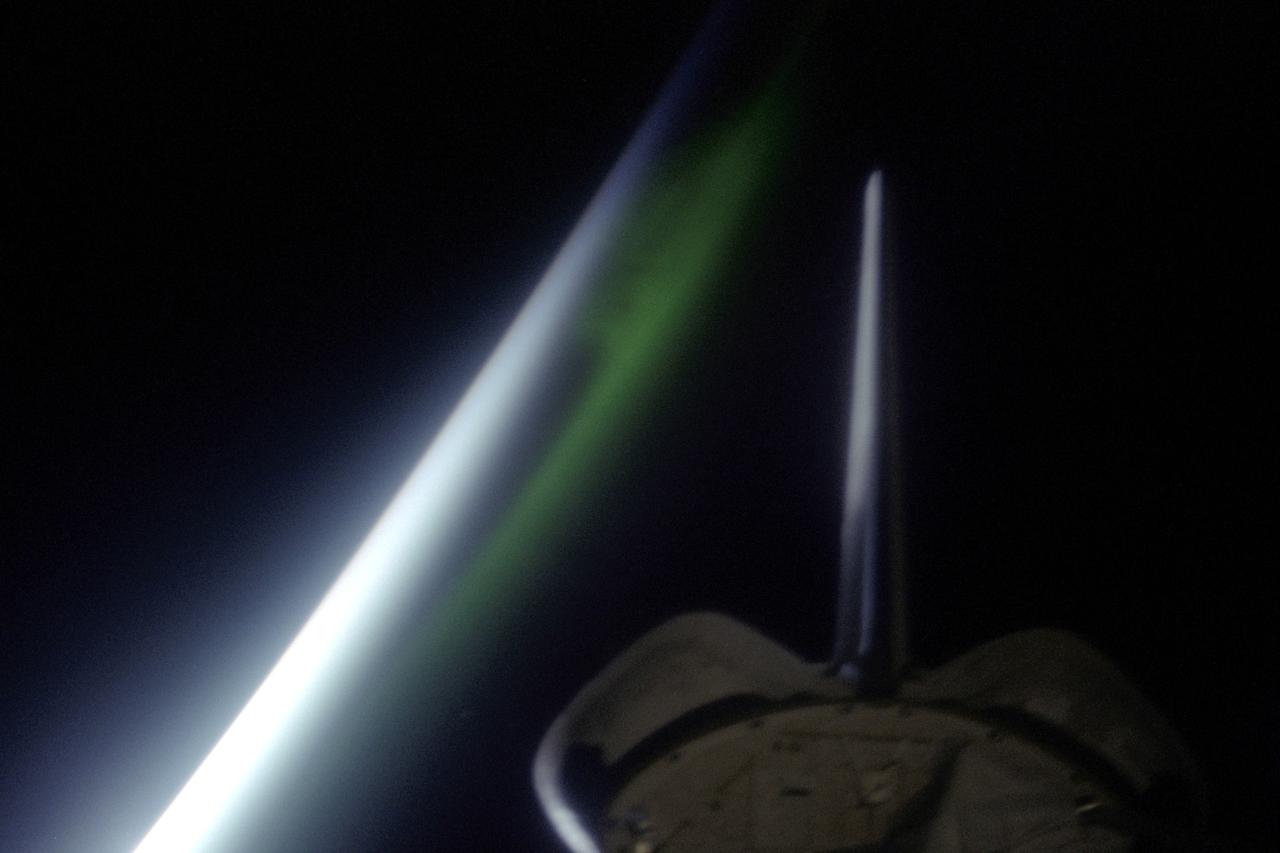
STS099-349-002 (11-22 February 2000) ---The Space Shuttle Endeavour's vertical stabilizer is visible in the foreground of this 35mm frame featuring airglow, the thin greenish band above the horizon. Airglow is radiation emitted by the atmosphere from a layer about 30 kilometers thick and about 100 kilometers altitude. The predominant emission in airglow is the green 5577-Angstrom wavelength emission from atomic oxygen atoms. Airglow is always and everywhere present in the atmosphere; it results from the recombination of molecules that have been broken apart by solar radiation during the day. But airglow is so faint that it can only be seen at night by looking "edge on" at the emission layer, such as the view astronauts have in orbit.
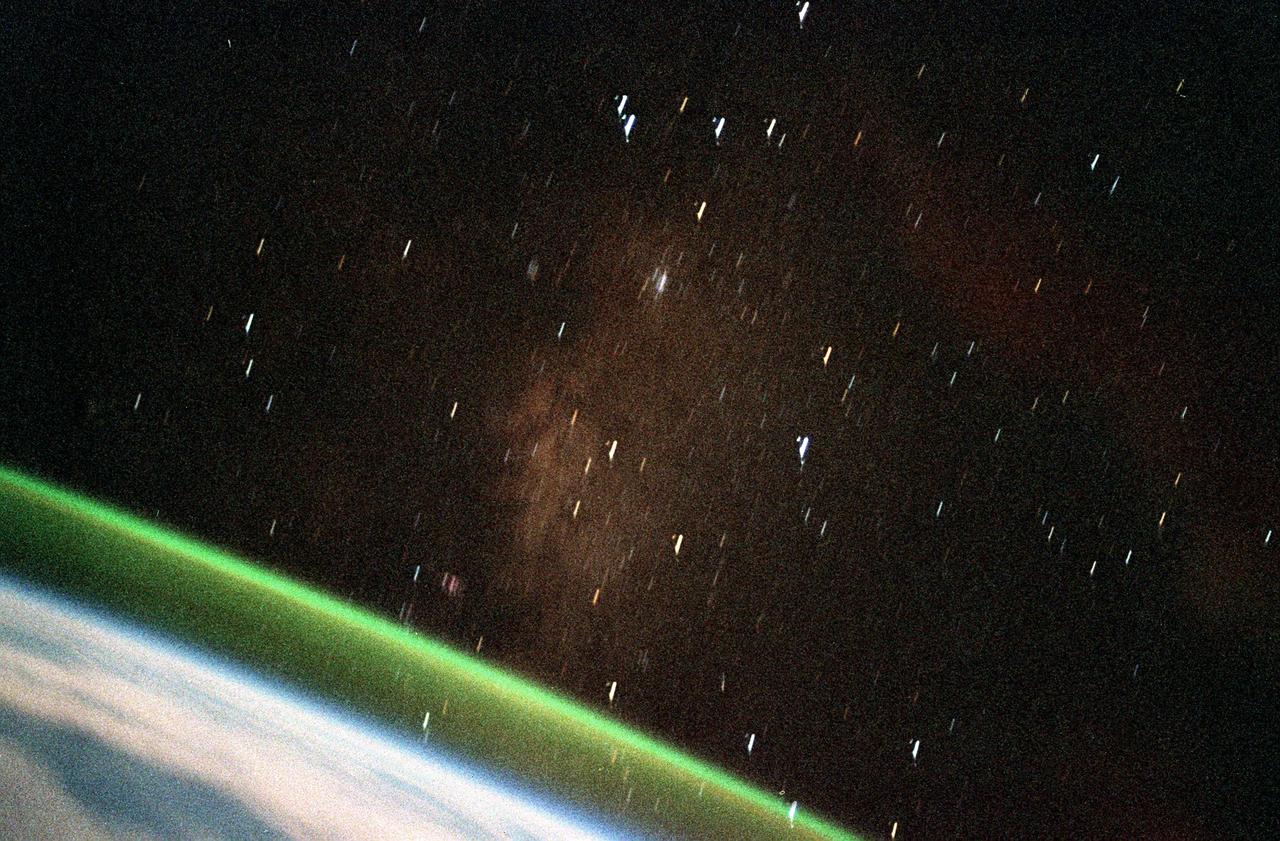
STS099-355-024 (11-22 February 2000) -- Two separate atmospheric optical phenomena appear in this 35mm photograph captured from the Space Shuttle Endeavour. The thin greenish band above the horizon is airglow; radiation emitted by the atmosphere from a layer about 30-kilometers thick and about 100-kilometers' altitude. The predominant emission in airglow is the green 5577-Angstrom wavelength emission from atomic oxygen atoms, which is also the predominant emission from the aurora. A yellow-orange color is also seen in airglow, which is the emission of the 5800-Angstrom wavelength from sodium atoms. Airglow is always present in the atmosphere; it results from the recombination of molecules that have been broken apart by solar radiation during the day. But airglow is so faint that it can only be seen at night by looking "edge on" at the emission layer, such as the view that astronauts have in Earth orbit. The other phenomenon in the photo appears to be a faint, diffuse red aurora. Red aurora occur from about 200 kilometers to as high as 500 kilometers altitude only in the auroral zones at polar latitudes. They are caused by the emission of 6300- Angstrom wavelength light from oxygen atoms that have been raised to a higher energy level (excited) by collisions with energetic electrons pouring down from the Earth's magnetosphere. The light is emitted when the atoms return to their original unexcited state. With the red light so faint in this picture, scientists are led to believe that the flux density of incoming electrons was small. Also, since there is no green aurora below the red, that indicates that the energy of the incoming electrons was low - higher energy electrons would penetrate deeper into the atmosphere where the green aurora is energized.
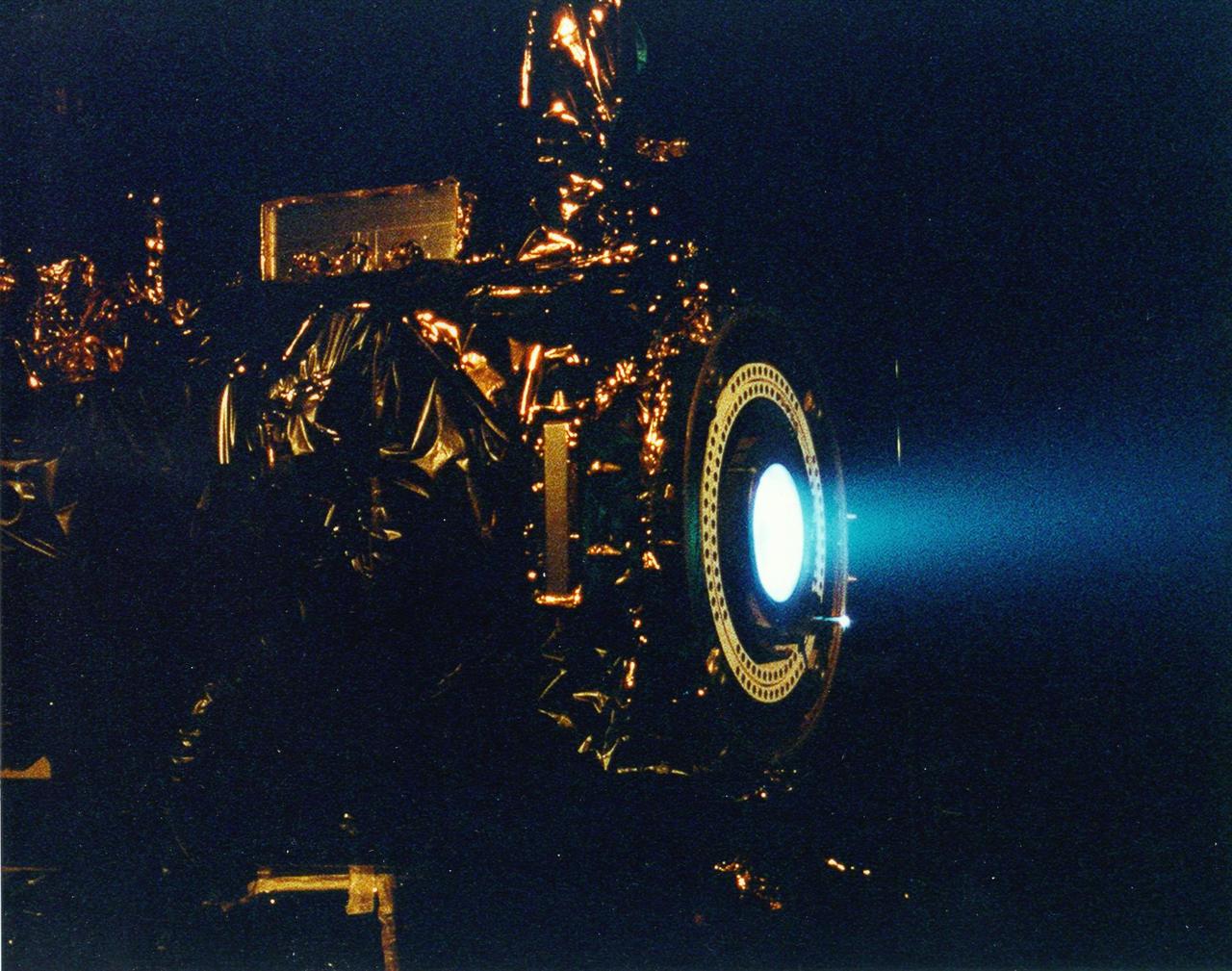
This image of a xenon ion engine, photographed through a port of the vacuum chamber where it was being tested at NASA's Jet Propulsion Laboratory, shows the faint blue glow of charged atoms being emitted from the engine. The ion propulsion engine is the first non-chemical propulsion to be used as the primary means of propelling a spacecraft. Though the thrust of the ion propulsion is about the same as the downward pressure of a single sheet of paper, by the end of the mission, the ion engine will have changed the spacecraft speed by about 13,700 kilometers/hour (8500 miles/hour). Even then, it will have expended only about 64 kg of its 81.5 kg supply of xenon propellant. http://photojournal.jpl.nasa.gov/catalog/PIA04247
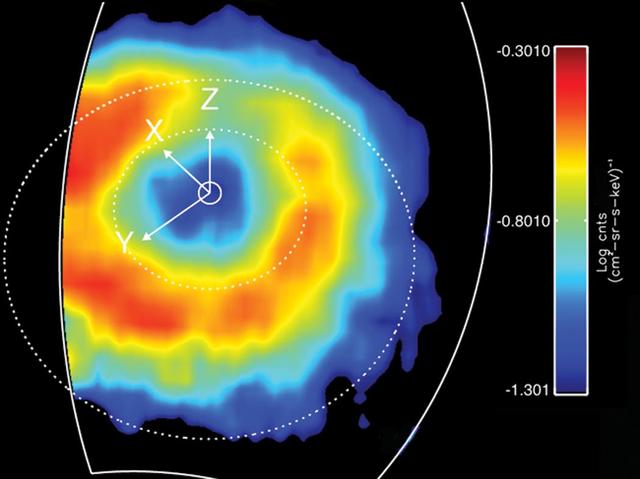
Like Earth, Saturn has an invisible ring of energetic ions trapped in its magnetic field. This feature is known as a "ring current." This ring current has been imaged with a special camera on Cassini sensitive to energetic neutral atoms. This is a false color map of the intensity of the energetic neutral atoms emitted from the ring current through a processed called charged exchange. In this process a trapped energetic ion steals and electron from cold gas atoms and becomes neutral and escapes the magnetic field. The Cassini Magnetospheric Imaging Instrument's ion and neutral camera records the intensity of the escaping particles, which provides a map of the ring current. In this image, the colors represent the intensity of the neutral emission, which is a reflection of the trapped ions. This "ring" is much farther from Saturn (roughly five times farther) than Saturn's famous icy rings. Red in the image represents the higher intensity of the particles, while blue is less intense. Saturn's ring current had not been mapped before on a global scale, only "snippets" or areas were mapped previously but not in this detail. This instrument allows scientists to produce movies (see PIA10083) that show how this ring changes over time. These movies reveal a dynamic system, which is usually not as uniform as depicted in this image. The ring current is doughnut shaped but in some instances it appears as if someone took a bite out of it. This image was obtained on March 19, 2007, at a latitude of about 54.5 degrees and radial distance 1.5 million kilometres (920,000 miles). Saturn is at the center, and the dotted circles represent the orbits of the moon's Rhea and Titan. The Z axis points parallel to Saturn's spin axis, the X axis points roughly sunward in the sun-spin axis plane, and the Y axis completes the system, pointing roughly toward dusk. The ion and neutral camera's field of view is marked by the white line and accounts for the cut-off of the image on the left. The image is an average of the activity over a (roughly) 3-hour period. http://photojournal.jpl.nasa.gov/catalog/PIA10094
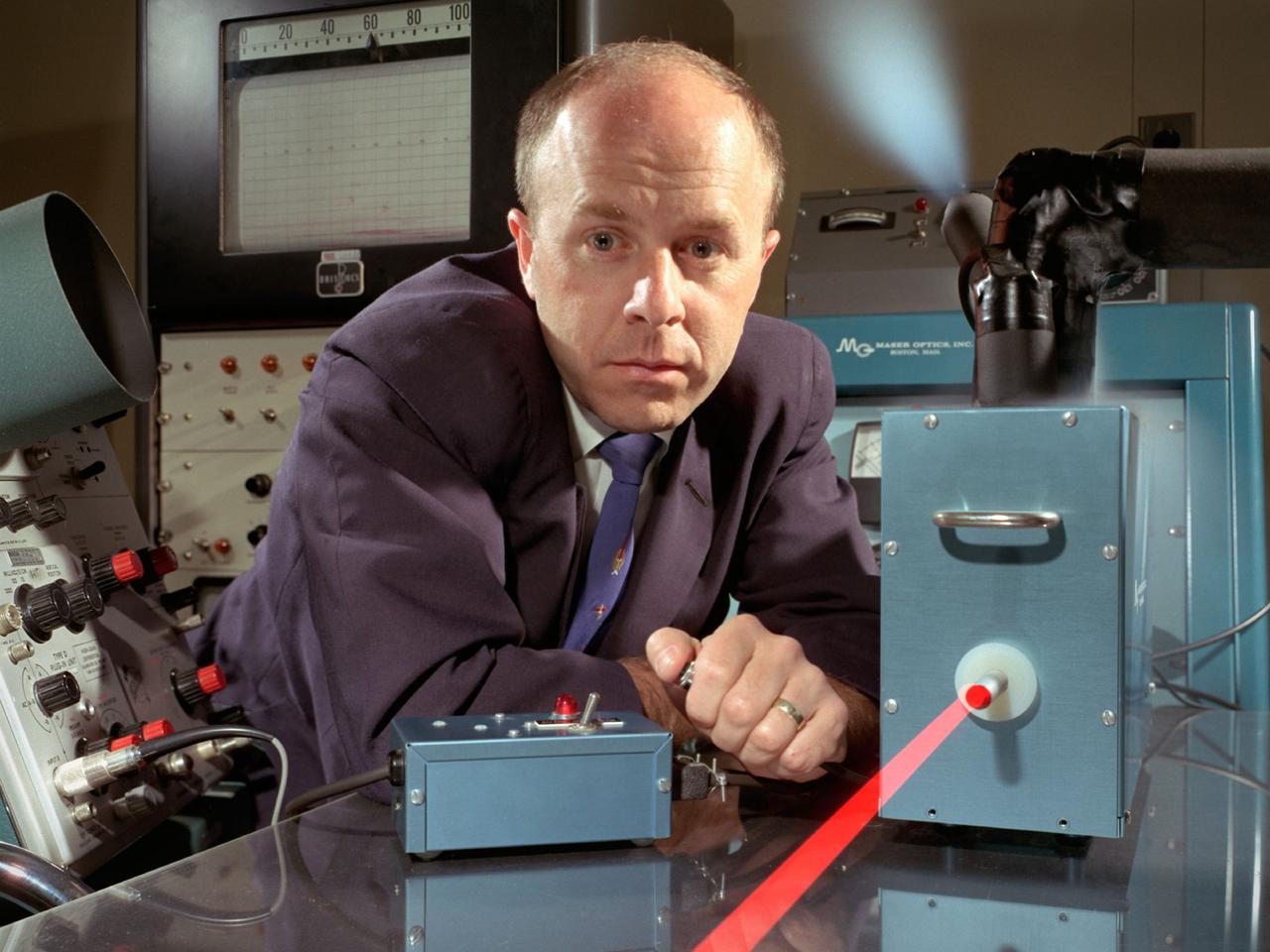
National Aeronautics and Space Administration (NASA) Lewis Research Center researcher Americo Forestieri aims a ruby laser beam at a crystal to determine the effects of its radiation. Forestieri was a researcher in the Electric Component Experiment Section of the Space Power System Division. Lewis was in the midst of a long-term effort to develop methods of delivering electrical power to spacecraft using nuclear, solar, or electrochemical technologies. Ruby lasers contain a ruby crystal with mirrors on either side. The laser action is created when a high-intensity lamp shines around the ruby and excites the electrons in the ruby’s chromium atoms. After the excitation, the electrons emit their ruby-red light. The mirrors reflect some of this red light back and forth inside the ruby which causes other excited chromium atoms to produce additional red light. This continues until the light pulse reaches high power levels and consumes all of the energy stored in the crystal. Forestieri used optical absorption and electron paramagnetic resonance techniques to study the extent and manner in which the radiation interacted with the samples. He determined that individual bands were assigned to specific electronic transitions. He also studied the atomic changes in the ruby crystals after irradiation. He found that complex interactions depend on the crystal pretreatment, purity, and irradiation dose.
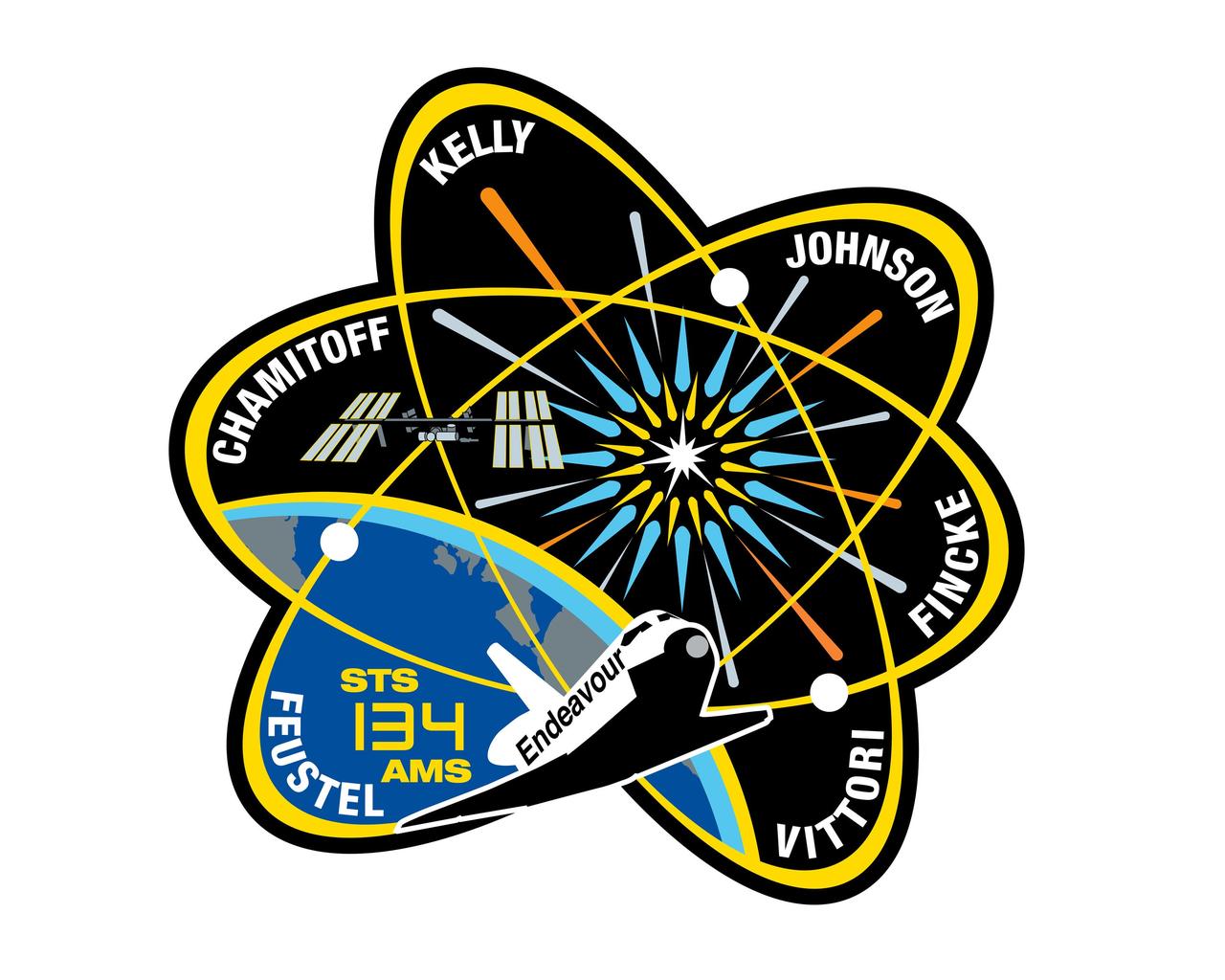
STS134-S-001 (March 2010) --- The design of the STS-134 crew patch highlights research on the International Space Station (ISS) focusing on the fundamental physics of the universe. On this mission, the crew of space shuttle Endeavour will install the Alpha Magnetic Spectrometer-2 (AMS) experiment -- a cosmic particle detector that utilizes the first-ever superconducting magnet to be flown in space. By studying sub-atomic particles in the background cosmic radiation, and searching for anti-matter and dark-matter, it will help scientists better understand the evolution and properties of our universe. The shape of the patch is inspired by the international atomic symbol, and represents the atom with orbiting electrons around the nucleus. The burst near the center refers to the big-bang theory and the origin of the universe. The shuttle Endeavour and ISS fly together into the sunrise over the limb of Earth, representing the dawn of a new age, understanding the nature of the universe. The NASA insignia design for shuttle flights is reserved for use by the astronauts and for other official use as the NASA administrator may authorize. Public availability has been approved only in the form of illustrations by the various news media. When and if there is any change in this policy, which we do not anticipate, it will be publicly announced.
![Atomic force microscopy uses laser technology to reveal a defect, a double-screw dislocation, on the surface of this crystal of canavalin, a major source of dietary protein for humans and domestic animals. When a crystal grows, attachment kinetics and transport kinetics are competing for control of the molecules. As a molecule gets close to the crystal surface, it has to attach properly for the crystal to be usable. NASA has funded investigators to look at those attachment kinetics from a theoretical standpoint and an experimental standpoint. Dr. Alex McPherson of the University of California, Irvine, is one of those investigators. He uses X-ray diffraction and atomic force microscopy in his laboratory to answer some of the many questions about how protein crystals grow. Atomic force microscopy provides a means of looking at how individual molecules are added to the surface of growing protein crystals. This helps McPherson understand the kinetics of protein crystal growth. McPherson asks, How fast do crystals grow? What are the forces involved? Investigators funded by NASA have clearly shown that such factors as the level of supersaturation and the rate of growth all affect the habit [characteristic arrangement of facets] of the crystal and the defects that occur in the crystal.](https://images-assets.nasa.gov/image/0101744/0101744~small.jpg)
Atomic force microscopy uses laser technology to reveal a defect, a double-screw dislocation, on the surface of this crystal of canavalin, a major source of dietary protein for humans and domestic animals. When a crystal grows, attachment kinetics and transport kinetics are competing for control of the molecules. As a molecule gets close to the crystal surface, it has to attach properly for the crystal to be usable. NASA has funded investigators to look at those attachment kinetics from a theoretical standpoint and an experimental standpoint. Dr. Alex McPherson of the University of California, Irvine, is one of those investigators. He uses X-ray diffraction and atomic force microscopy in his laboratory to answer some of the many questions about how protein crystals grow. Atomic force microscopy provides a means of looking at how individual molecules are added to the surface of growing protein crystals. This helps McPherson understand the kinetics of protein crystal growth. McPherson asks, How fast do crystals grow? What are the forces involved? Investigators funded by NASA have clearly shown that such factors as the level of supersaturation and the rate of growth all affect the habit [characteristic arrangement of facets] of the crystal and the defects that occur in the crystal.
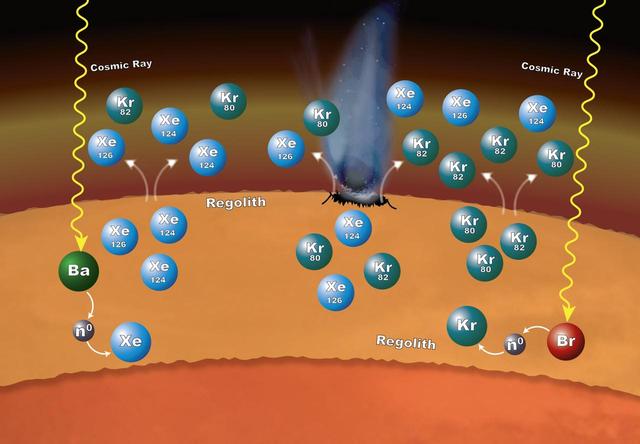
Chemistry that takes place in the surface material on Mars can explain why particular xenon (Xe) and krypton (Kr) isotopes are more abundant in the Martian atmosphere than expected. The isotopes -- variants that have different numbers of neutrons -- are formed in the loose rocks and material that make up the regolith -- the surface layer down to solid rock. The chemistry begins when cosmic rays penetrate into the surface material. If the cosmic rays strike an atom of barium (Ba), the barium can lose one or more of its neutrons (n0). Atoms of xenon can pick up some of those neutrons – a process called neutron capture – to form the isotopes xenon-124 and xenon-126. In the same way, atoms of bromine (Br) can lose some of their neutrons to krypton, leading to the formation of krypton-80 and krypton-82 isotopes. These isotopes can enter the atmosphere when the regolith is disturbed by impacts and abrasion, allowing gas to escape. http://photojournal.jpl.nasa.gov/catalog/PIA20847
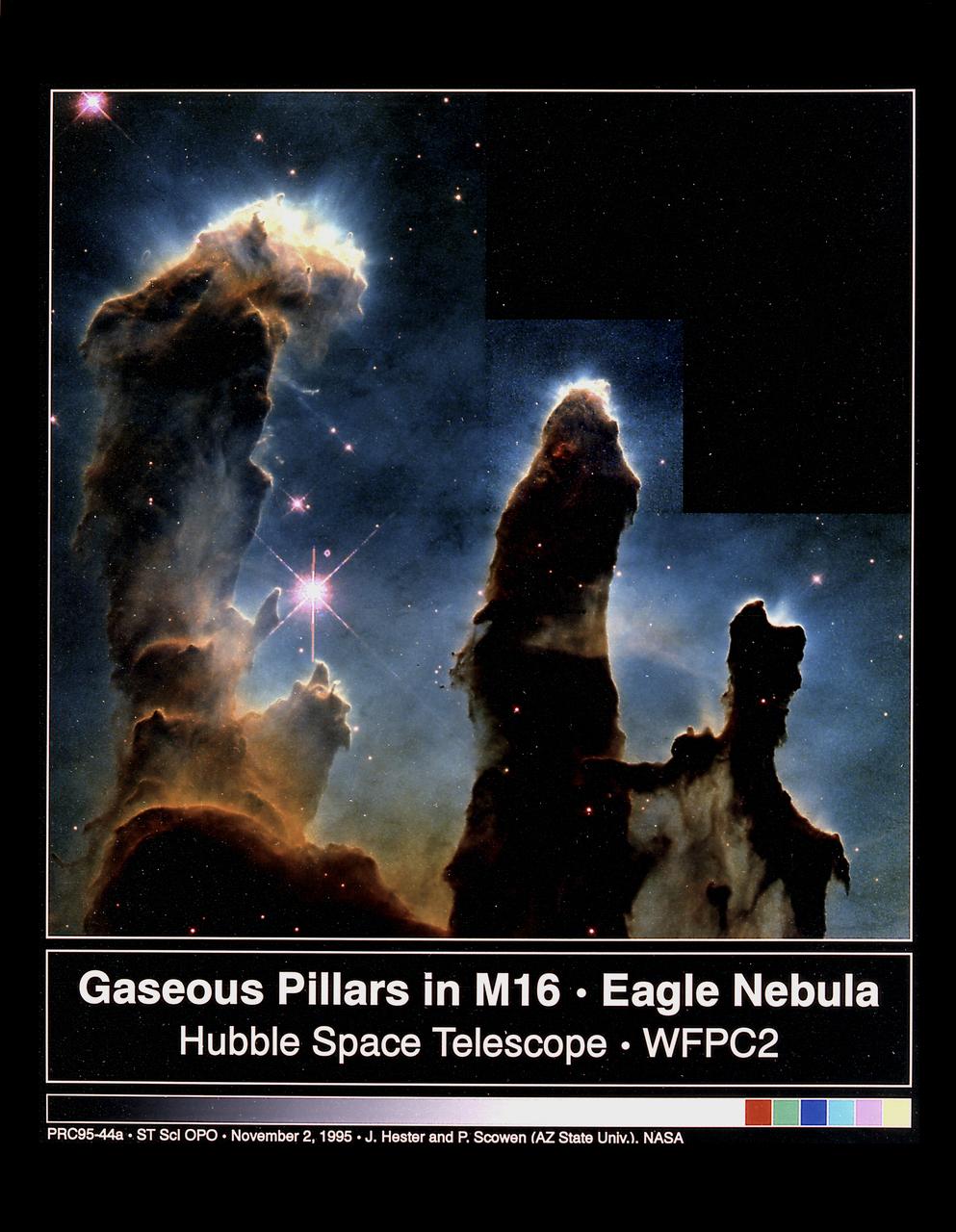
These eerie, dark, pillar-like structures are actually columns of cool interstellar hydrogen gas and dust that are also incubators for new stars. The pillars protrude from the interior wall of a dark molecular cloud like stalagmites from the floor of a cavern. They are part of the Eagle Nebula (also called M16), a nearby star-forming region 7,000 light-years away, in the constellation Serpens. The ultraviolet light from hot, massive, newborn stars is responsible for illuminating the convoluted surfaces of the columns and the ghostly streamers of gas boiling away from their surfaces, producing the dramatic visual effects that highlight the three-dimensional nature of the clouds. This image was taken on April 1, 1995 with the Hubble Space Telescope Wide Field Planetary Camera 2. The color image is constructed from three separate images taken in the light of emission from different types of atoms. Red shows emissions from singly-ionized sulfur atoms, green shows emissions from hydrogen, and blue shows light emitted by doubly-ionized oxygen atoms.
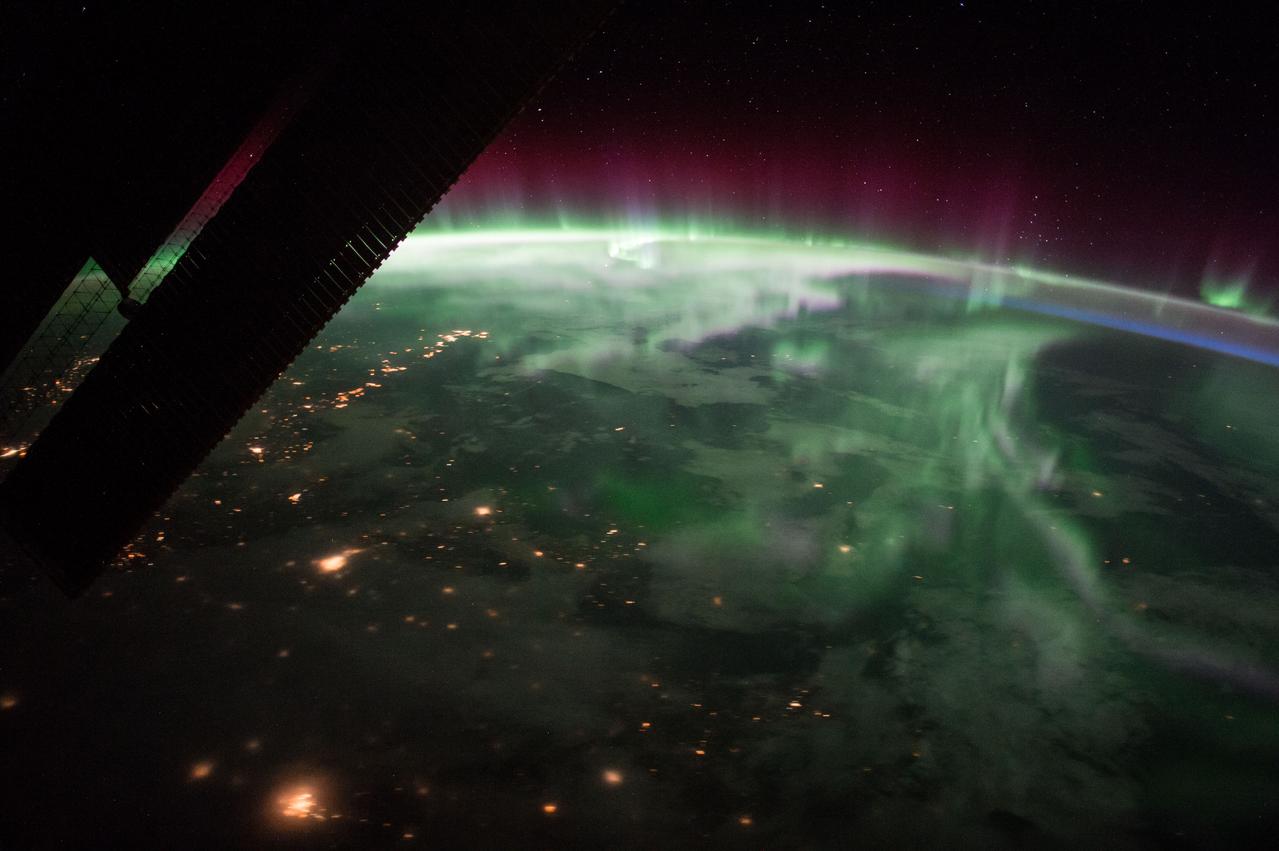
While orbiting 216 nautical miles (400 km) above earth, astronauts and cosmonauts had this view of aurora borealis above Canada. Auroras are a weather phenomenon caused by electrically-charged electrons and protons colliding with neutral atoms in the upper atmosphere. From space, the aurora show appears to blanket Earth with dancing lights.
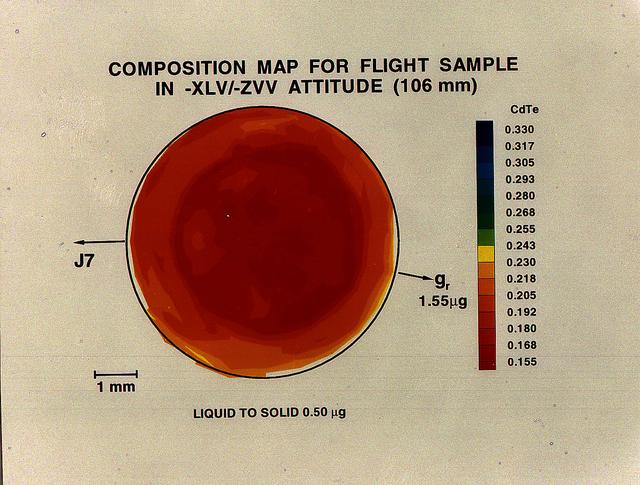
A semiconductor's usefulness is determined by how atoms are ordered within the crystal's underlying three-dimensional structure. While this mercury telluride and cadmium telluride alloy sample mixes completely in Earth -based laboratories, convective flows prevent them from mixing uniformly. In space, the ingredients mix more homogenously, resulting in a superior product.
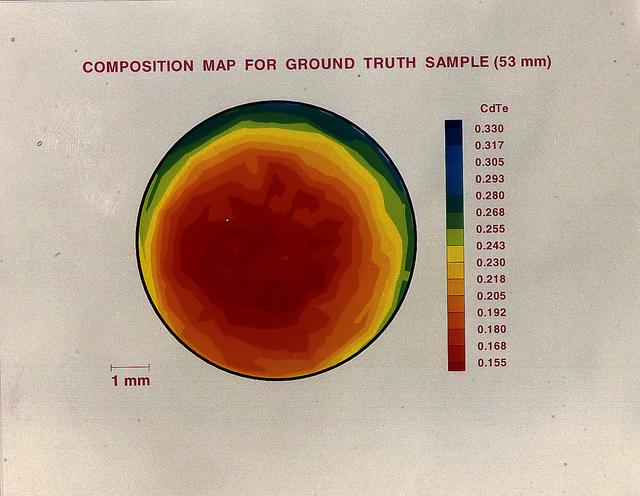
A semiconductor's usefulness is determined by how atoms are ordered within the crystal's underlying three-dimensional structure. While this mercury telluride and cadmium telluride alloy sample mixes completely in Earth -based laboratories, convective flows prevent them from mixing uniformly.