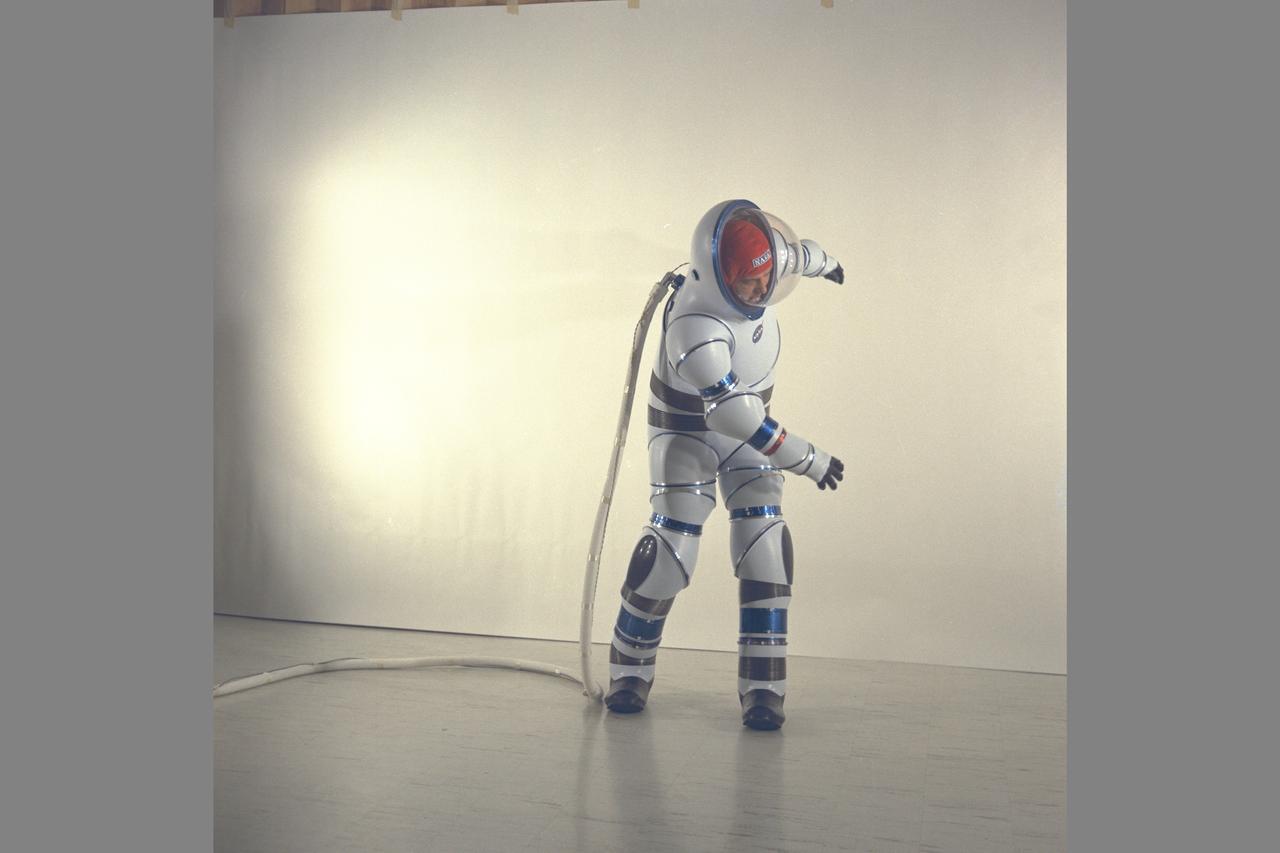
AX-2 Hard Space Suit with Vic Vykukal. Vykukal is the principal investigator of the AX space suit series.

AX-2 Hard Space Suit with Vic Vykukal. Vykukal is the principal investigator of the AX space suit series.
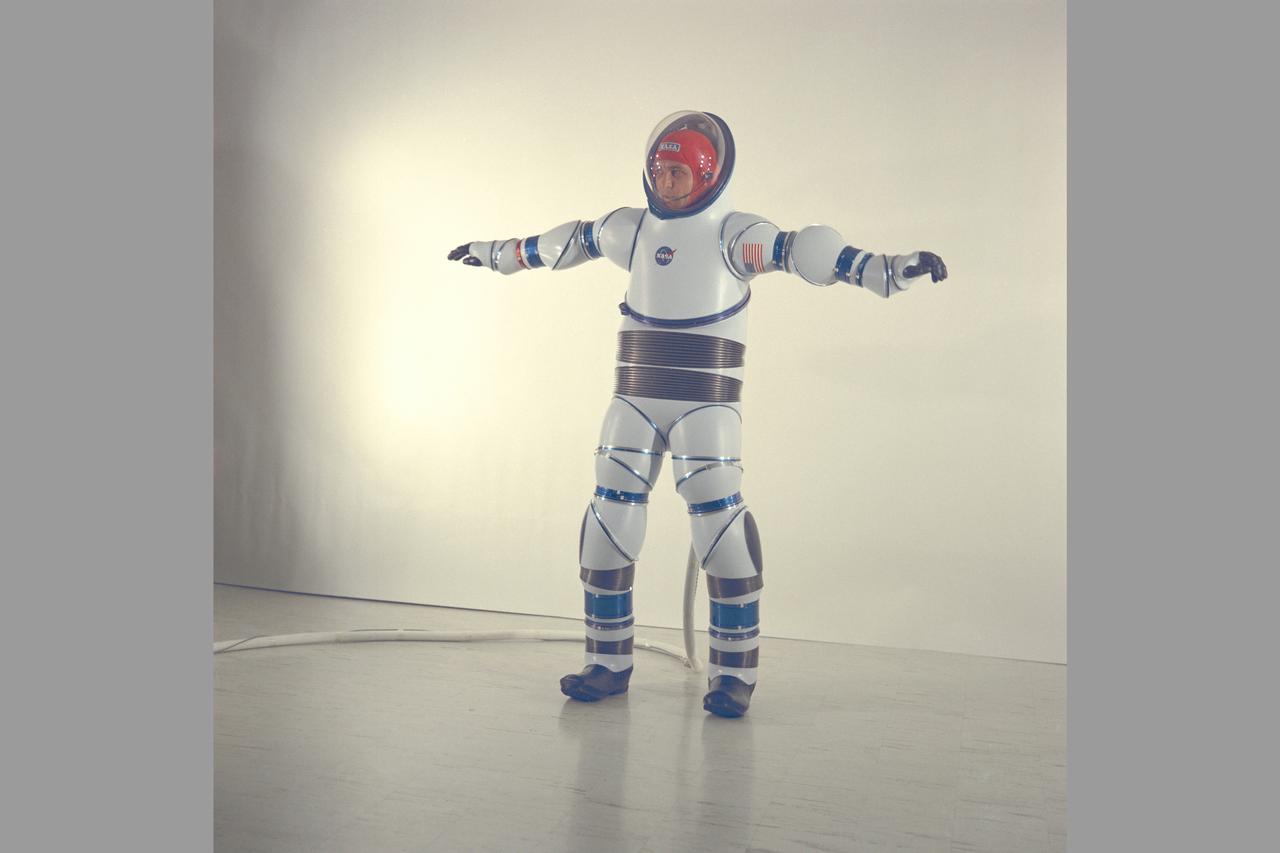
AX-2 Hard Space Suit with Vic Vykukal. Vykukal is the principal investigator of the AX space suit series.
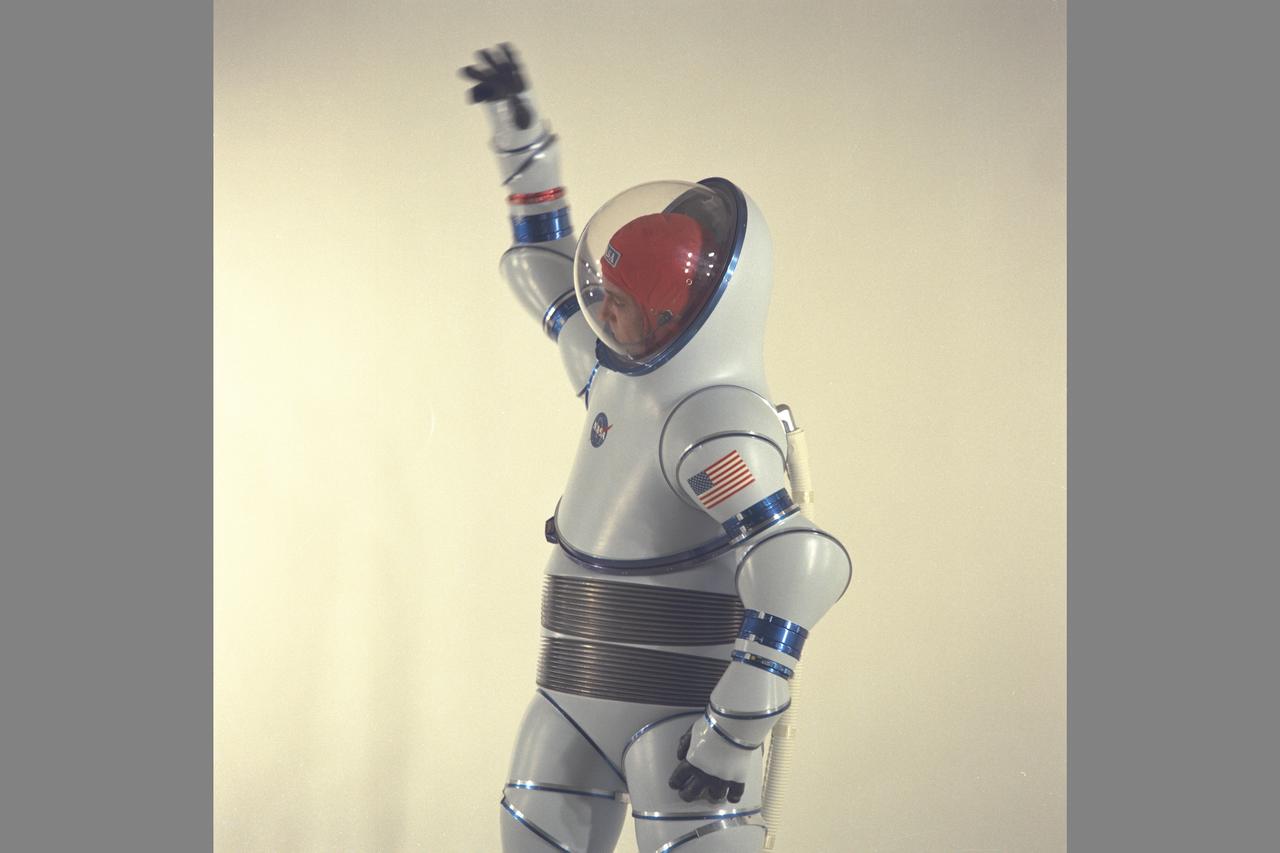
AX-2 Hard Space Suit with Vic Vykukal. Vykukal is the principal investigator of the AX space suit series.
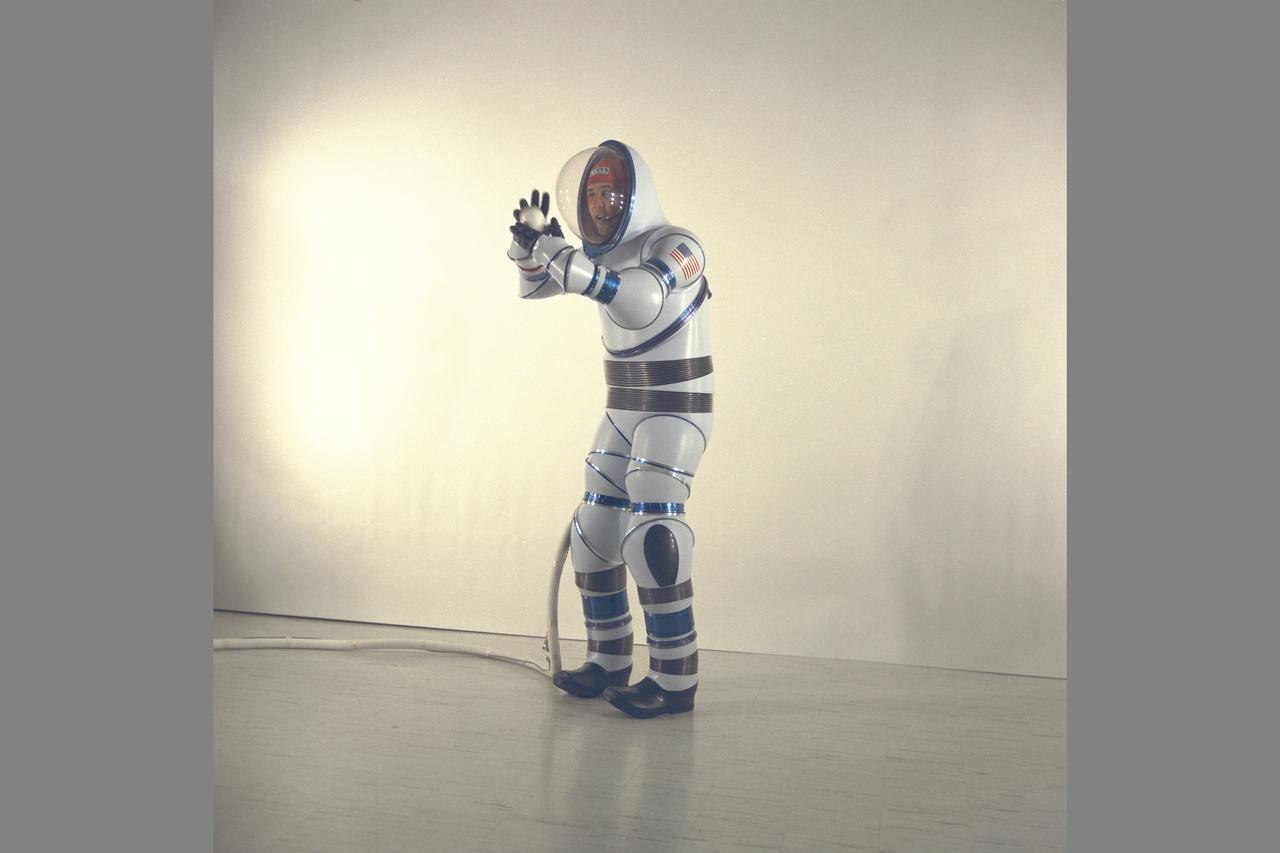
AX-2 Hard Space Suit with Vic Vykukal getting ready to pitch a baseball. Vykukal is the principal investigator of the AX space suit series.
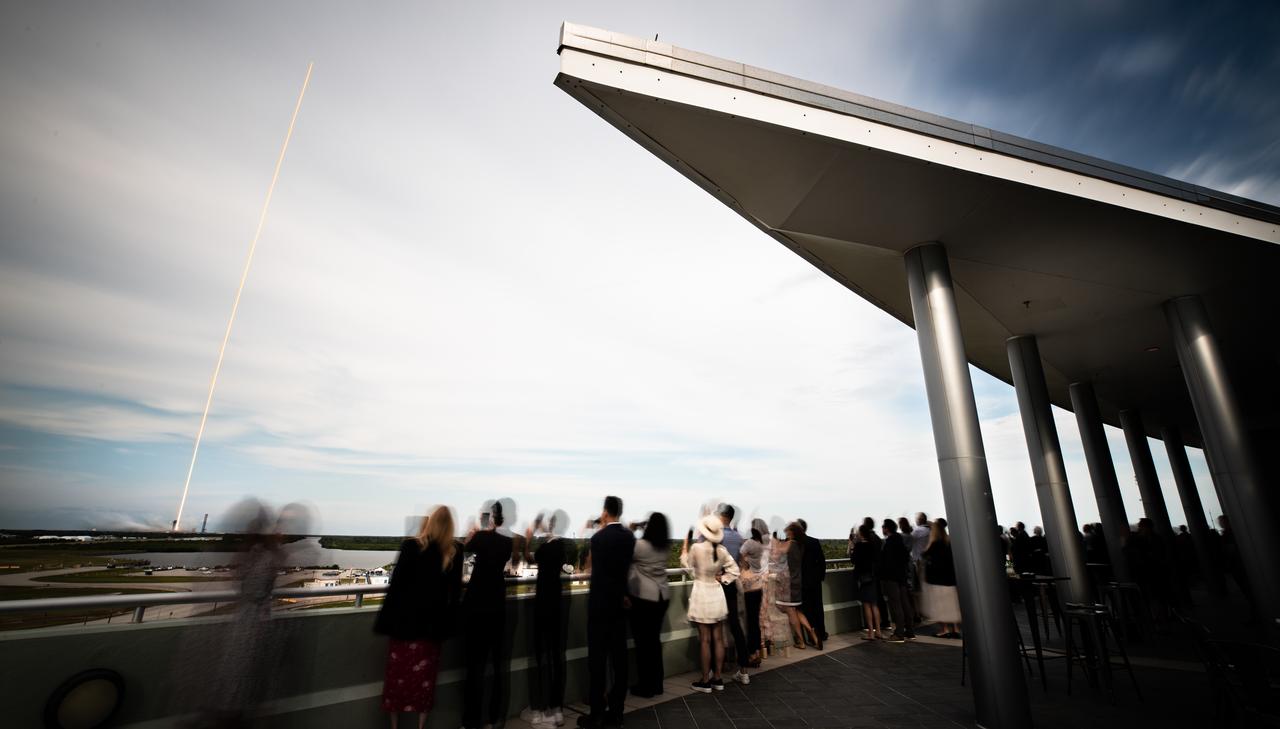
In this long exposure shot, a SpaceX Falcon 9 rocket, carrying the company’s Dragon spacecraft, soars upward after lifting off from NASA Kennedy Space Center’s Launch Complex 39A in Florida on May 21, 2023, for the Axiom Mission 2 (Ax-2) to the International Space Station. Ax-2 is the second all private astronaut mission to the International Space Station, sending Commander Peggy Whitson, Pilot John Shoffner, and Mission Specialists Ali Alqarni and Rayyanah Barnawi to the orbiting laboratory, where they will spend about 10 days conducting scientific research, outreach, and commercial activities. Liftoff occurred at 5:37 p.m. EDT.
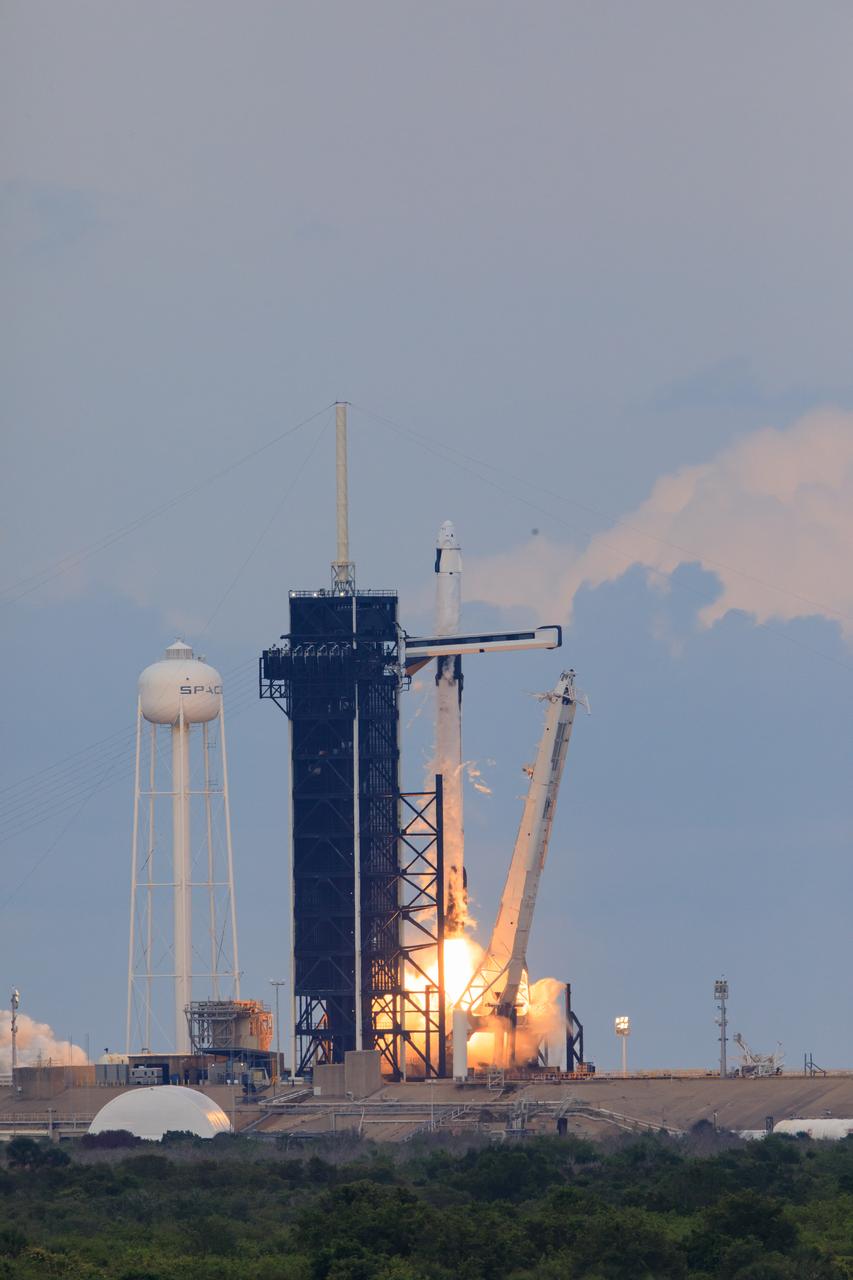
A SpaceX Falcon 9 rocket, carrying the company’s Dragon spacecraft, lifts off from NASA Kennedy Space Center’s Launch Complex 39A in Florida on May 21, 2023, for the Axiom Mission 2 (Ax-2) to the International Space Station. Ax-2 is the second all private astronaut mission to the International Space Station, sending Commander Peggy Whitson, Pilot John Shoffner, and Mission Specialists Ali Alqarni and Rayyanah Barnawi to the orbiting laboratory, where they will spend about 10 days conducting scientific research, outreach, and commercial activities. Liftoff occurred at 5:37 p.m. EDT.
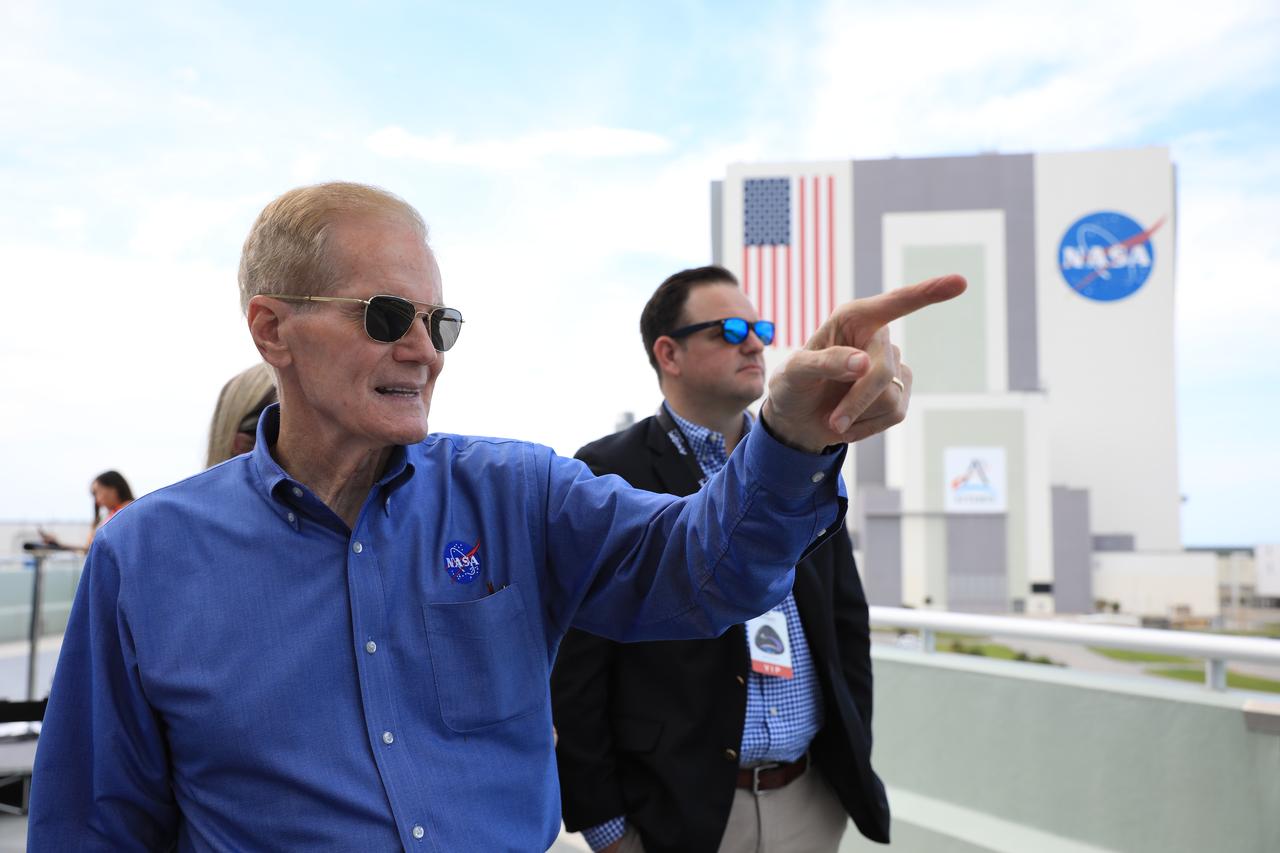
NASA Administrator Bill Nelson watches as a SpaceX Falcon 9 rocket and Crew Dragon spacecraft lifts off from Launch Complex 39A at the agency’s Kennedy Space Center in Florida for the Axiom Mission 2 (Ax-2) on May 21, 2023. Ax-2 is the second all private astronaut mission to the International Space Station, sending Commander Peggy Whitson, Pilot John Shoffner, and Mission Specialists Ali Alqarni and Rayyanah Barnawi to the orbiting laboratory, where they will spend about 10 days conducting scientific research, outreach, and commercial activities. Liftoff occurred at 5:37 p.m. EDT.
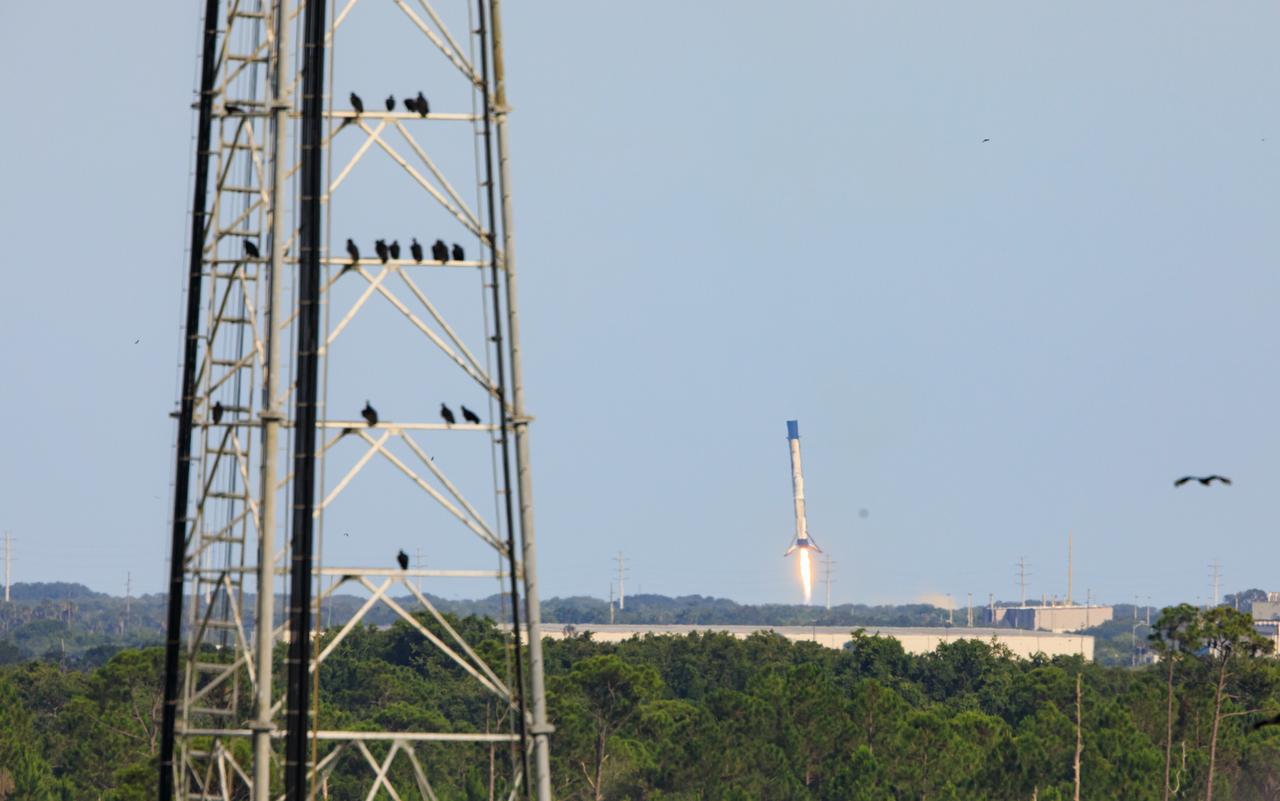
The first stage of a two-stage SpaceX Falcon 9 rocket makes its descent toward Landing Zone 1 at Cape Canaveral Space Force Station after lifting off from NASA Kennedy Space Center’s Launch Complex 39A in Florida for the Axiom Mission 2 (Ax-2) on May 21, 2023. Ax-2 is the second all private astronaut mission to the International Space Station, sending Commander Peggy Whitson, Pilot John Shoffner, and Mission Specialists Ali Alqarni and Rayyanah Barnawi to the orbiting laboratory, where they will spend about 10 days conducting scientific research, outreach, and commercial activities. Liftoff occurred at 5:37 p.m. EDT.
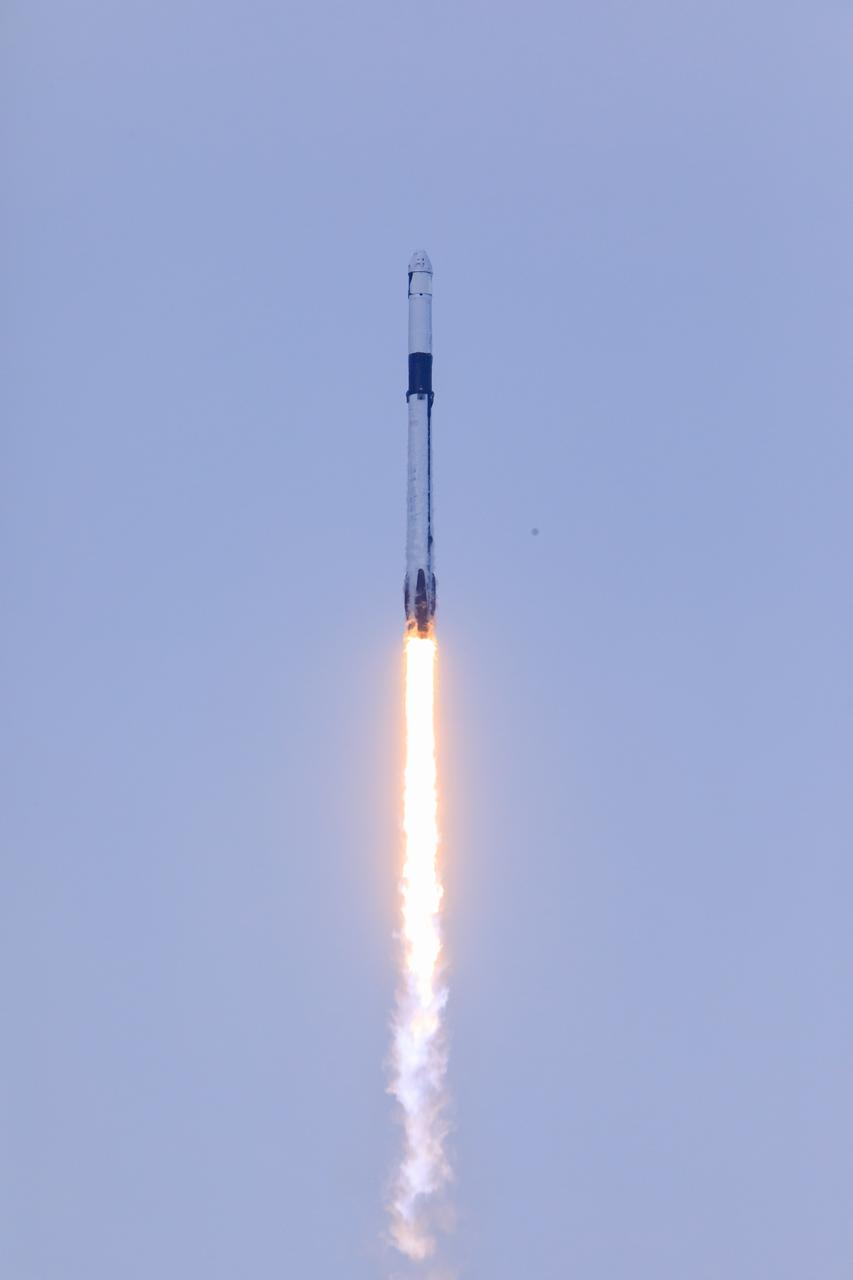
A SpaceX Falcon 9 rocket, carrying the company’s Dragon spacecraft, soars upward after lifting off from NASA Kennedy Space Center’s Launch Complex 39A in Florida on May 21, 2023, for the Axiom Mission 2 (Ax-2) to the International Space Station. Ax-2 is the second all private astronaut mission to the International Space Station, sending Commander Peggy Whitson, Pilot John Shoffner, and Mission Specialists Ali Alqarni and Rayyanah Barnawi to the orbiting laboratory, where they will spend about 10 days conducting scientific research, outreach, and commercial activities. Liftoff occurred at 5:37 p.m. EDT.
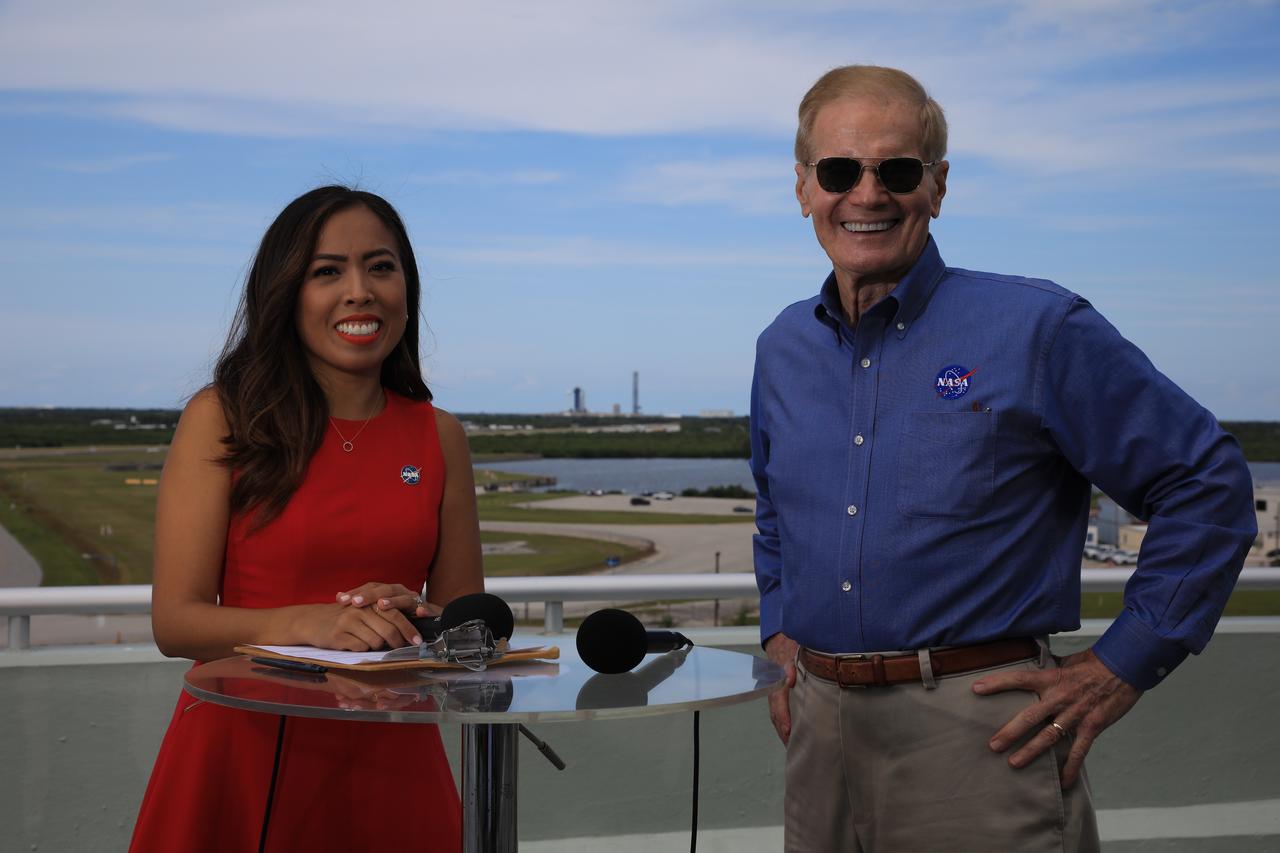
NASA Communications’ Megan Cruz (left) prepares to interview NASA Administrator Bill Nelson during a live broadcast ahead of the Axiom Mission 2 (Ax-2) launch from the agency’s Kennedy Space Center in Florida on May 21, 2023. Ax-2 is the second all private astronaut mission to the International Space Station, sending Commander Peggy Whitson, Pilot John Shoffner, and Mission Specialists Ali Alqarni and Rayyanah Barnawi to the orbiting laboratory, where they will spend about 10 days conducting scientific research, outreach, and commercial activities. Liftoff occurred at 5:37 p.m. EDT from Kennedy’s Launch Complex 39A.
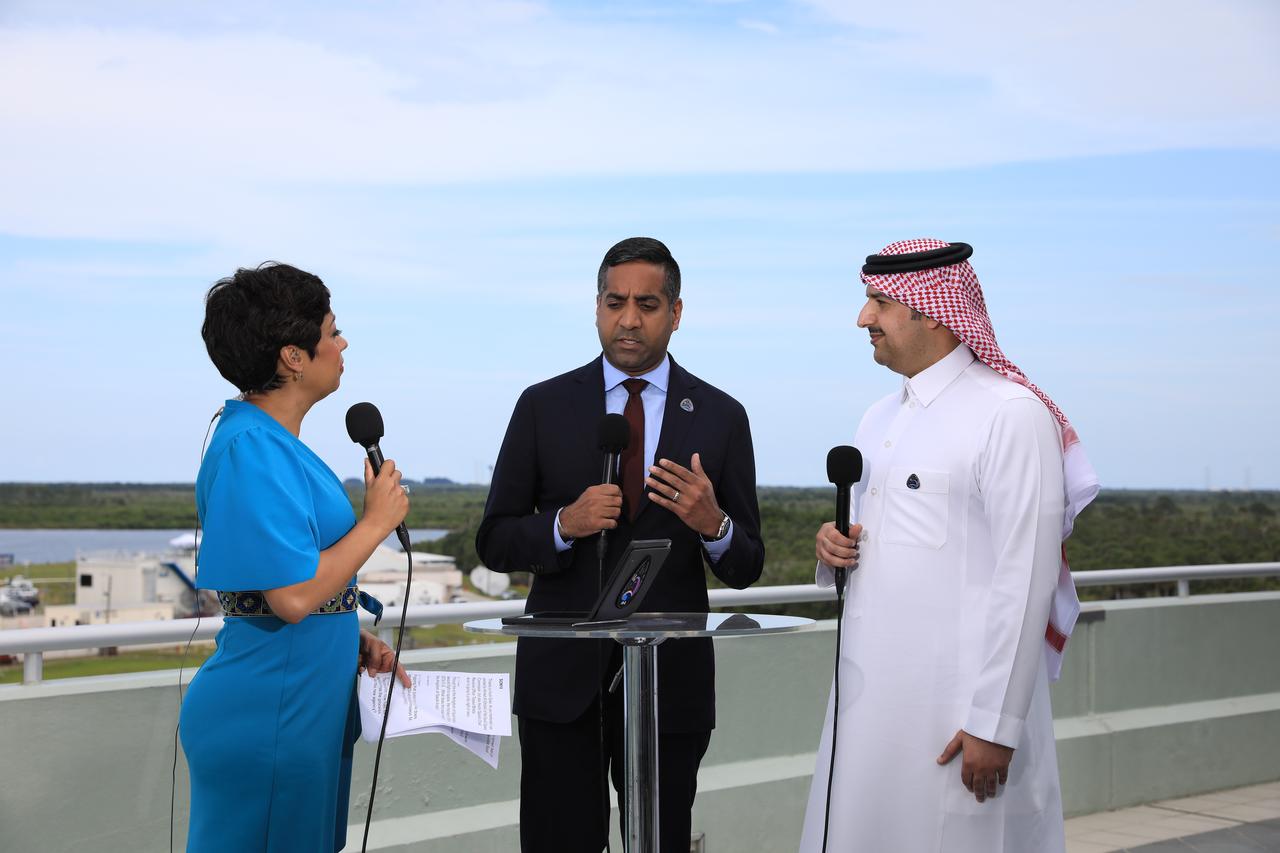
From left, Director of Digital Strategy for Axiom Space Sonya Gavankar McKay interviews Axiom Space Chief Revenue Officer Tejpaul Bhatia and Chief Development and Planning Officer of the Saudi Space Commission Ahmed Al-Ghofaili during a live broadcast ahead of the Axiom Mission 2 (Ax-2) launch from NASA’s Kennedy Space Center in Florida on May 21, 2023. Ax-2 is the second all private astronaut mission to the International Space Station, sending Commander Peggy Whitson, Pilot John Shoffner, and Mission Specialists Ali Alqarni and Rayyanah Barnawi to the orbiting laboratory, where they will spend about 10 days conducting scientific research, outreach, and commercial activities. Liftoff occurred at 5:37 p.m. EDT from Kennedy’s Launch Complex 39A.

Sonya Gavankar McKay (left), director of digital strategy for Axiom Space, prepares to interview Dr. Lucie Low, chief scientist for Axiom Space, during a live broadcast ahead of the Axiom Mission 2 (Ax-2) launch from NASA’s Kennedy Space Center in Florida on May 21, 2023. Ax-2 is the second all private astronaut mission to the International Space Station, sending Commander Peggy Whitson, Pilot John Shoffner, and Mission Specialists Ali Alqarni and Rayyanah Barnawi to the orbiting laboratory, where they will spend about 10 days conducting scientific research, outreach, and commercial activities. Liftoff occurred at 5:37 p.m. EDT from Kennedy’s Launch Complex 39A.
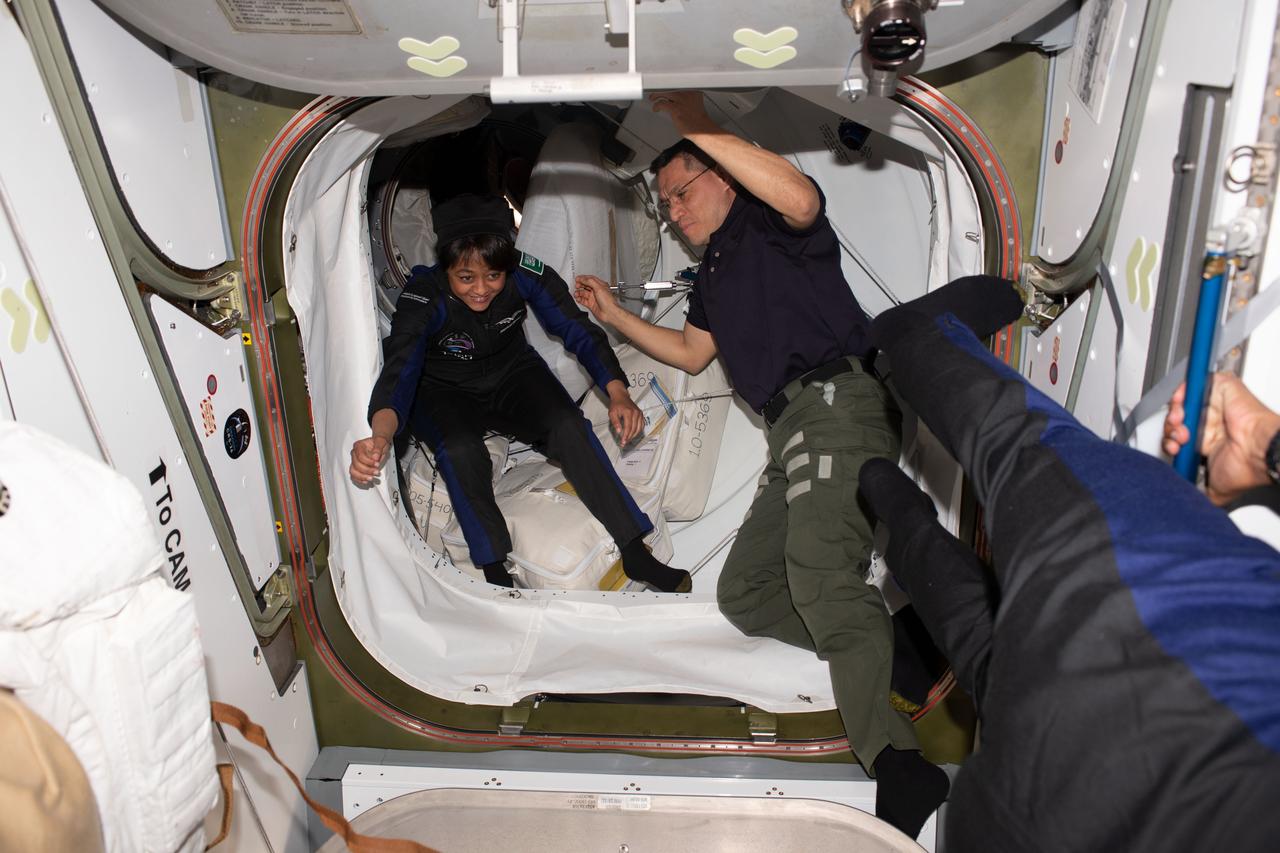
iss069e013999 (May 22, 2023) --- Axiom Space private astronaut and Axiom Mission-2 Mission Specialist Rayyanah Barnawi enters the International Space Station shortly after the hatches were opened between the orbital outpost and the SpaceX Dragon Freedom spacecraft. Welcoming her inside the vestibule between the station's Harmony module and Dragon is NASA astronaut and Expedition 69 Flight Engineer Frank Rubio.
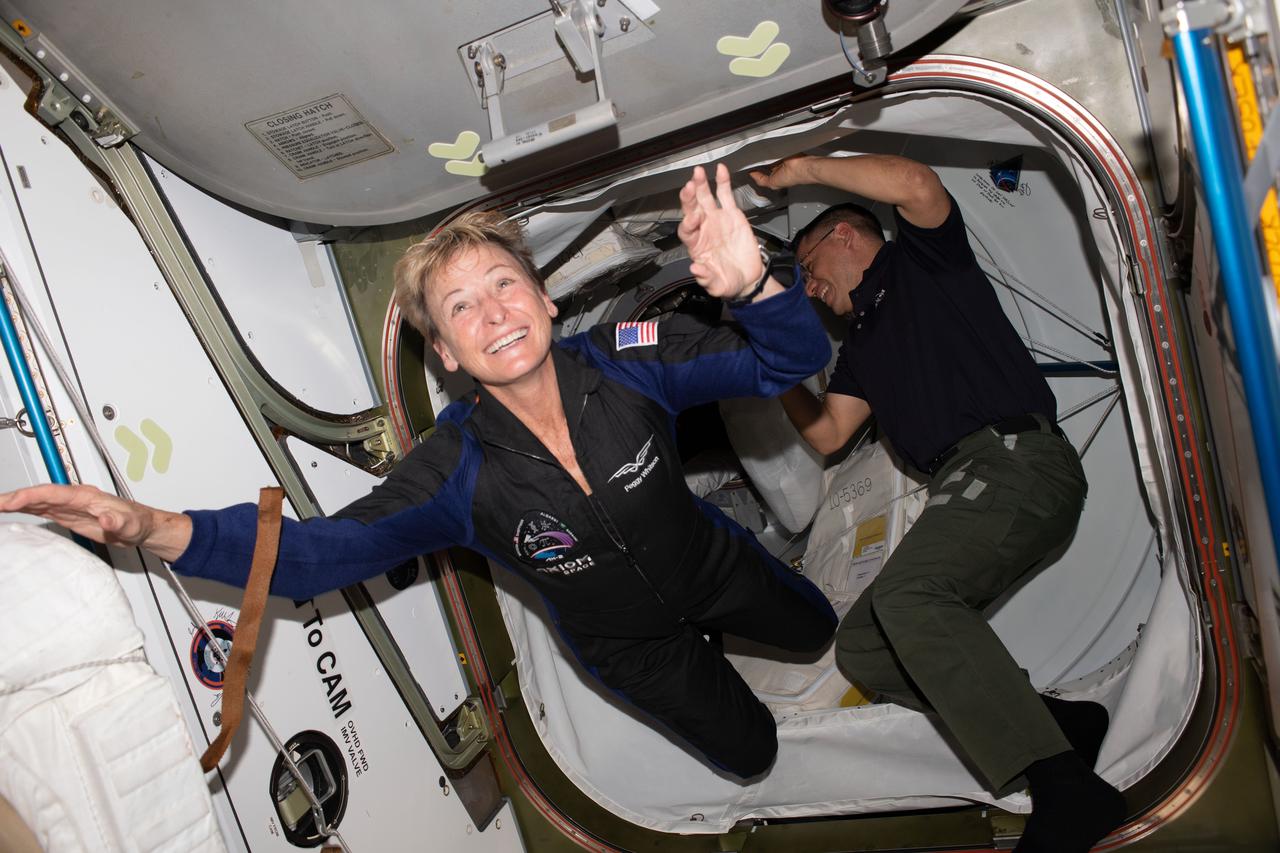
iss069e013989 (May 22, 2023) --- Axiom Space private astronaut and Axiom Mission-2 Commander Peggy Whitson enters the International Space Station shortly after the hatches were opened between the orbital outpost and the SpaceX Dragon Freedom spacecraft. Welcoming her inside the vestibule between the station's Harmony module and Dragon is NASA astronaut and Expedition 69 Flight Engineer Frank Rubio.
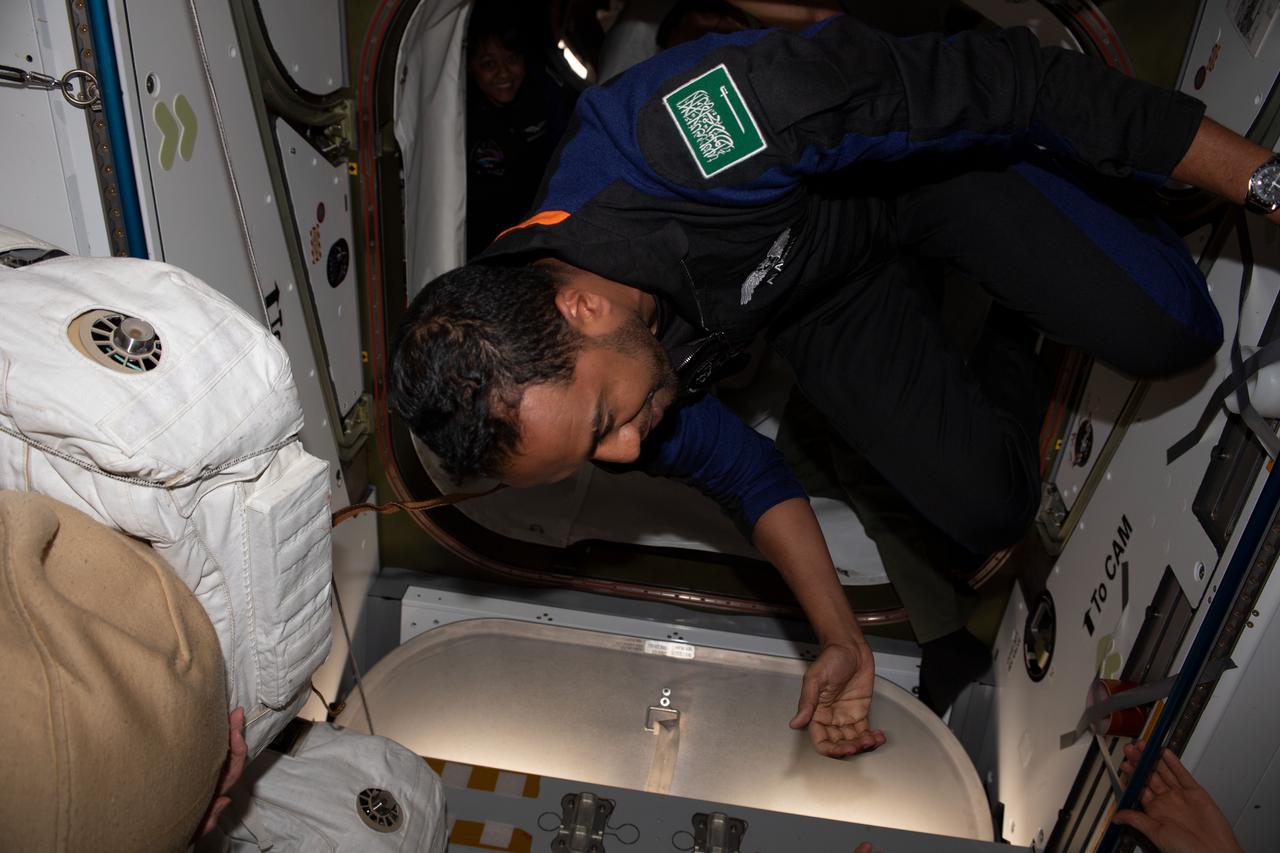
iss069e013996 (May 22, 2023) --- Axiom Space private astronaut and Axiom Mission-2 Mission Specialist Ali Alqarni enters the International Space Station shortly after the hatches were opened between the orbital outpost and the SpaceX Dragon Freedom spacecraft.
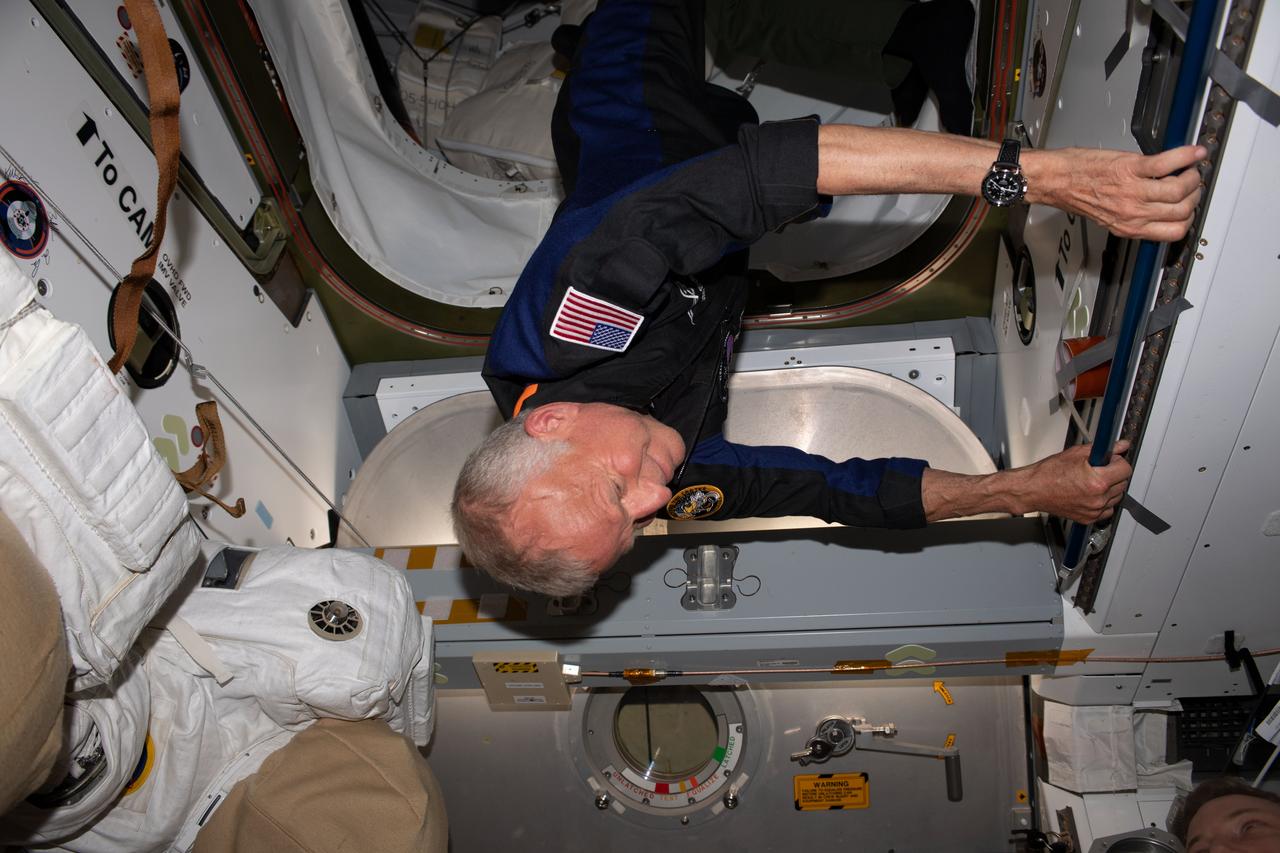
iss069e013992 (May 22, 2023) --- Axiom Space private astronaut and Axiom Mission-2 Pilot John Shoffner enters the International Space Station shortly after the hatches were opened between the orbital outpost and the SpaceX Dragon Freedom spacecraft.
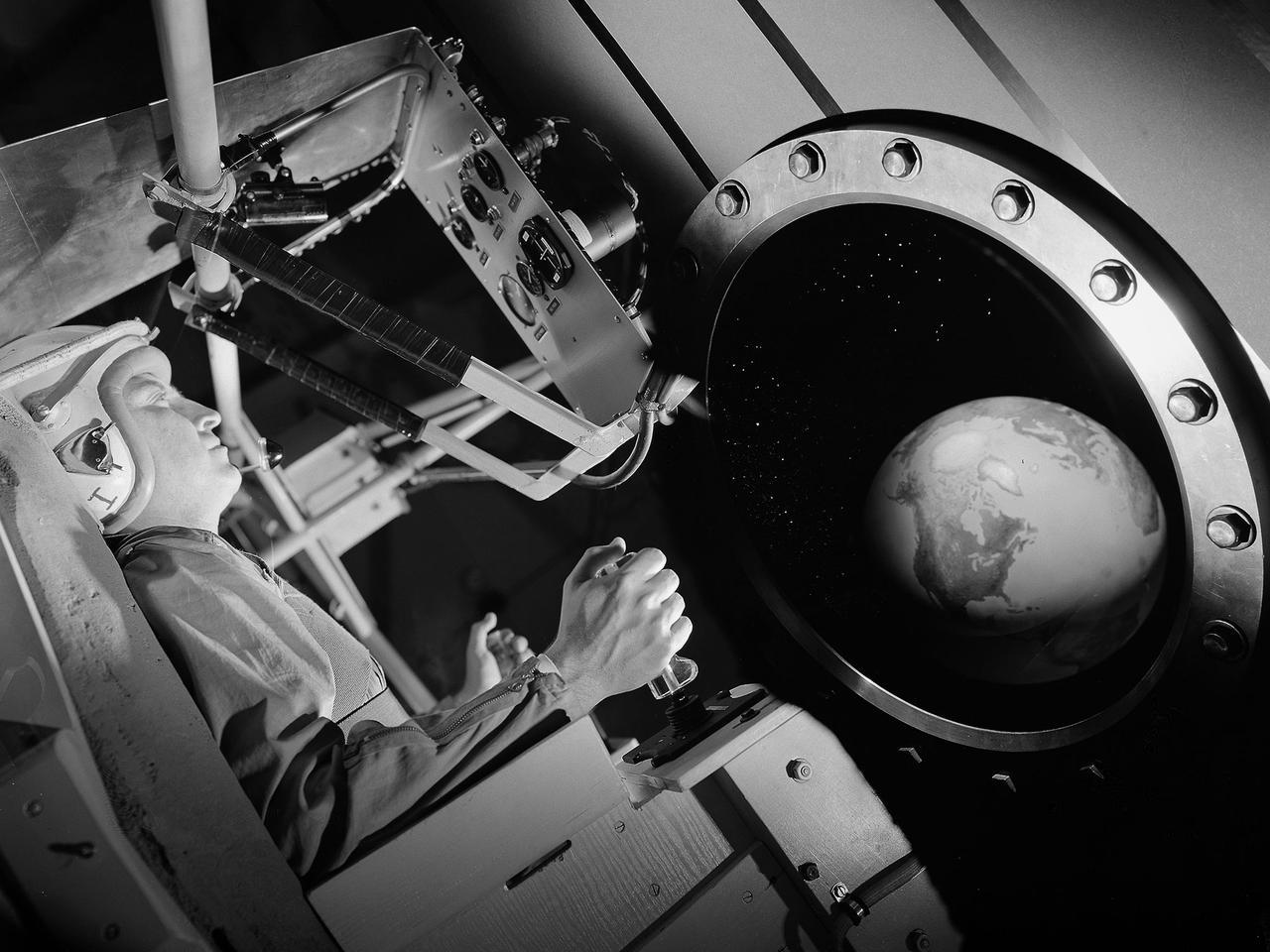
This composite image includes a photograph of pilot Joe Algranti testing the Multi-Axis Space Test Inertia Facility (MASTIF) inside Altitude Wind Tunnel at NASA’s Lewis Research Center with other images designed to simulate the interior of a Mercury space capsule. As part of the space agency’s preparations for Project Mercury missions, the seven Mercury astronauts traveled to Cleveland in early 1960 to train on the MASTIF. Researchers used the device to familiarize the astronauts with the sensations of an out-of-control spacecraft. The MASTIF was a three-axis rig with a pilot’s chair mounted in the center. An astronaut was secured in a foam couch in the center of the rig. The rig then spun on three axes from 2 to 50 rotations per minute. The astronauts used small nitrogen gas thrusters to bring the MASTIF under control. In the fall of 1959, prior to the astronauts’ visit, Lewis researcher James Useller and Algranti perfected and calibrated the MASTIF.
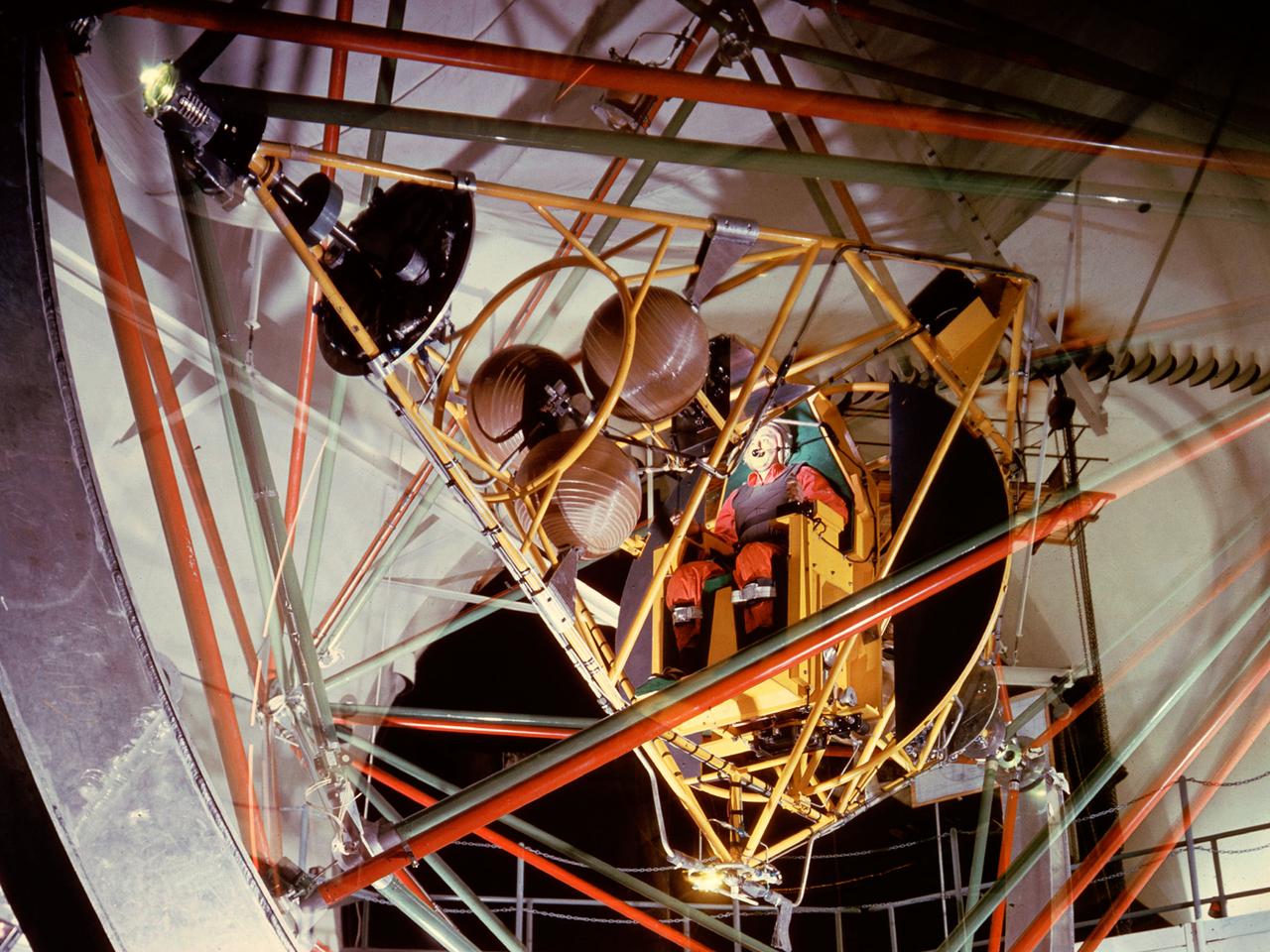
National Aeronautics and Space Administration (NASA) pilot Joe Algranti tests the Multi-Axis Space Test Inertia Facility (MASTIF) inside the Altitude Wind Tunnel while researcher Robert Miller looks on. The MASTIF was a three-axis rig with a pilot’s chair mounted in the center to train Project Mercury pilots to bring a spinning spacecraft under control. An astronaut was secured in a foam couch in the center of the rig. The rig then spun on three axes from 2 to 50 rotations per minute. Small nitrogen gas thrusters were used by the astronauts to bring the MASTIF under control. The device was originally designed in early 1959 without the chair and controllers. It was used by Lewis researchers to determine if the Lewis-designed autopilot system could rectify the capsule’s attitude following separation. If the control system failed to work properly, the heatshield would be out of place and the spacecraft would burn up during reentry. The system was flight tested during the September 1959 launch of the Lewis-assembled Big Joe capsule. The MASTIF was adapted in late 1959 for the astronaut training. NASA engineers added a pilot’s chair, a hand controller, and an instrument display to the MASTIF in order familiarize the astronauts with the sensations of an out-of-control spacecraft. NASA Lewis researcher James Useller and Algranti perfected and calibrated the MASTIF in the fall of 1959. In February and March 1960, the seven Project Mercury astronauts traveled to Cleveland to train on the MASTIF.

Jerrie Cobb prepares to operate the Multi-Axis Space Test Inertia Facility (MASTIF) inside the Altitude Wind Tunnel at the National Aeronautics and Space Administration (NASA) Lewis Research Center. The MASTIF was a three-axis rig with a pilot’s chair mounted in the center to train Project Mercury pilots to bring a spinning spacecraft under control. An astronaut was secured in a foam couch in the center of the rig. The rig was then spun on three axes from 2 to 50 rotations per minute. The pilots were tested on each of the three axis individually, then all three simultaneously. The two controllers in Cobb’s hands activated the small nitrogen gas thrusters that were used to bring the MASTIF under control. A makeshift spacecraft control panel was set up in front of the trainee’s face. Cobb was one of several female pilots who underwent the skill and endurance testing that paralleled that of the Project Mercury astronauts. In 1961 Jerrie Cobb was the first female to pass all three phases of the Mercury Astronaut Program. NASA rules, however, stipulated that only military test pilots could become astronauts and there were no female military test pilots. The seven Mercury astronauts had taken their turns on the MASTIF in February and March 1960.

Mercury astronaut John Glenn prepares for a test in the Multi-Axis Space Test Inertia Facility (MASTIF) inside the Altitude Wind Tunnel at the National Aeronautics and Space Administration (NASA) Lewis Research Center. The MASTIF was a three-axis test rig with a pilot’s chair mounted in the center. The device was designed to train Project Mercury pilots to bring a spinning spacecraft under control. An astronaut was secured in a foam couch in the center of the rig. The rig was then spun on three axes from 2 to 50 rotations per minute. Small nitrogen gas thrusters were used by the astronauts to bring the MASTIF under control. In February and March 1960, the seven Project Mercury astronauts traveled to Cleveland to train on the MASTIF. Warren North and a team of air force physicians were on hand to monitor their health. After being briefed by Lewis pilot Joe Algranti and researcher James Useller, the rider would climb into the rig and be secured in the chair, as seen in this photograph. A Lewis engineer would then slowly set the MASTIF in motion. It was the astronaut’s job to bring it under control. Each individual was required to accumulate 4.5 to 5 hours of MASTIF time. Glenn became the first American to orbit the earth on February 20, 1962 in the Friendship 7 Mercury capsule. In March 1999, the Lewis Research Center was renamed the John H. Glenn Research Center at Lewis Field.
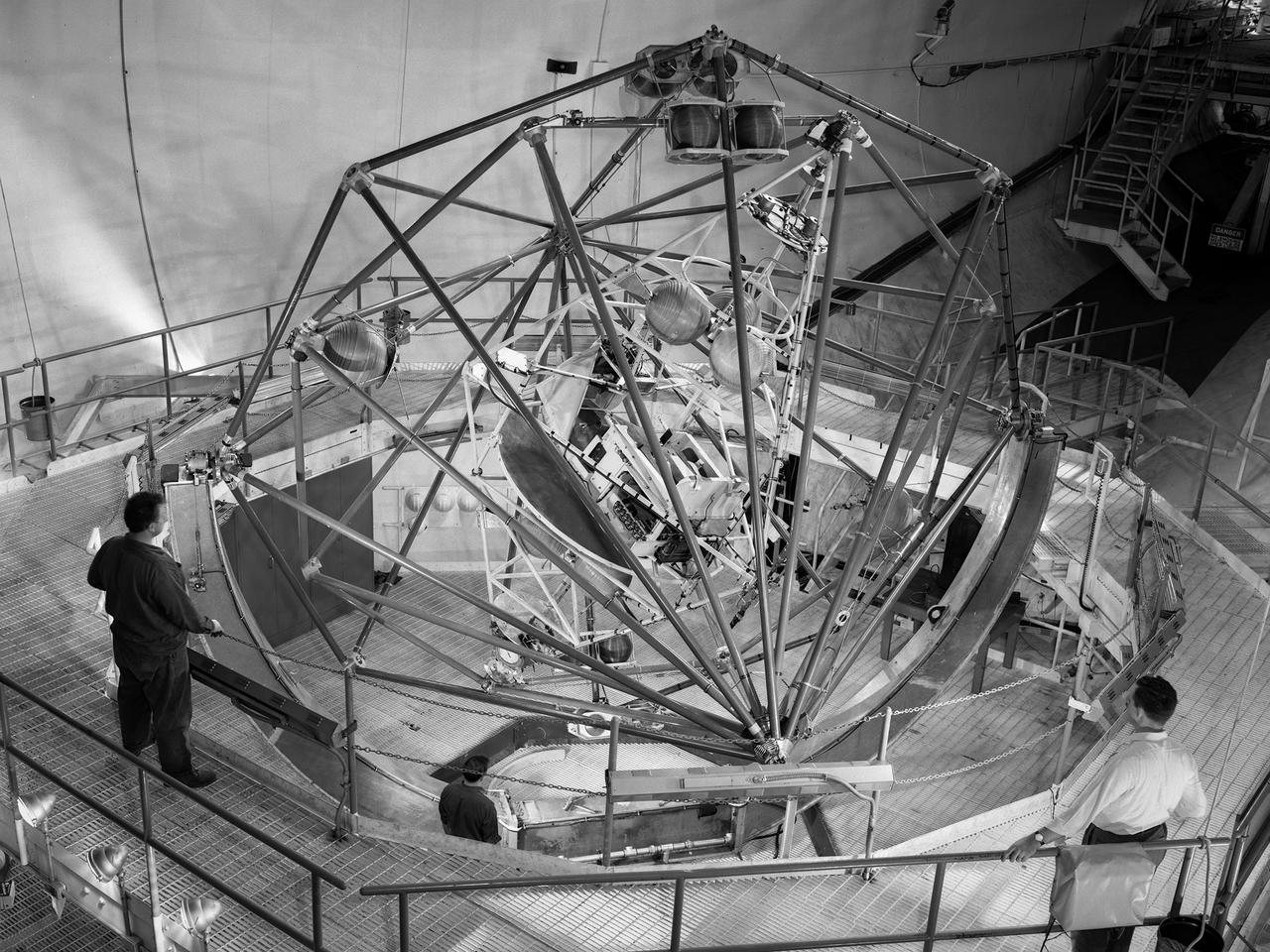
The Multi-Axis Space Test Inertial Facility (MASTIF) in the Altitude Wind Tunnel at the National Aeronautics and Space Administration (NASA) Lewis Research Center. Although the Mercury astronaut training and mission planning were handled by the Space Task Group at Langley Research Center, NASA Lewis played an important role in the program, beginning with the Big Joe launch. Big Joe was a singular attempt early in the program to use a full-scale Atlas booster and simulate the reentry of a mockup Mercury capsule without actually placing it in orbit. A unique three-axis gimbal rig was built inside Lewis’ Altitude Wind Tunnel to test Big Joe’s attitude controls. The control system was vital since the capsule would burn up on reentry if it were not positioned correctly. The mission was intended to assess the performance of the Atlas booster, the reliability of the capsule’s attitude control system and beryllium heat shield, and the capsule recovery process. The September 9, 1959 launch was a success for the control system and heatshield. Only a problem with the Atlas booster kept the mission from being a perfect success. The MASTIF was modified in late 1959 to train Project Mercury pilots to bring a spinning spacecraft under control. An astronaut was secured in a foam couch in the center of the rig. The rig then spun on three axes from 2 to 50 rotations per minute. Small nitrogen gas thrusters were used by the astronauts to bring the MASTIF under control.
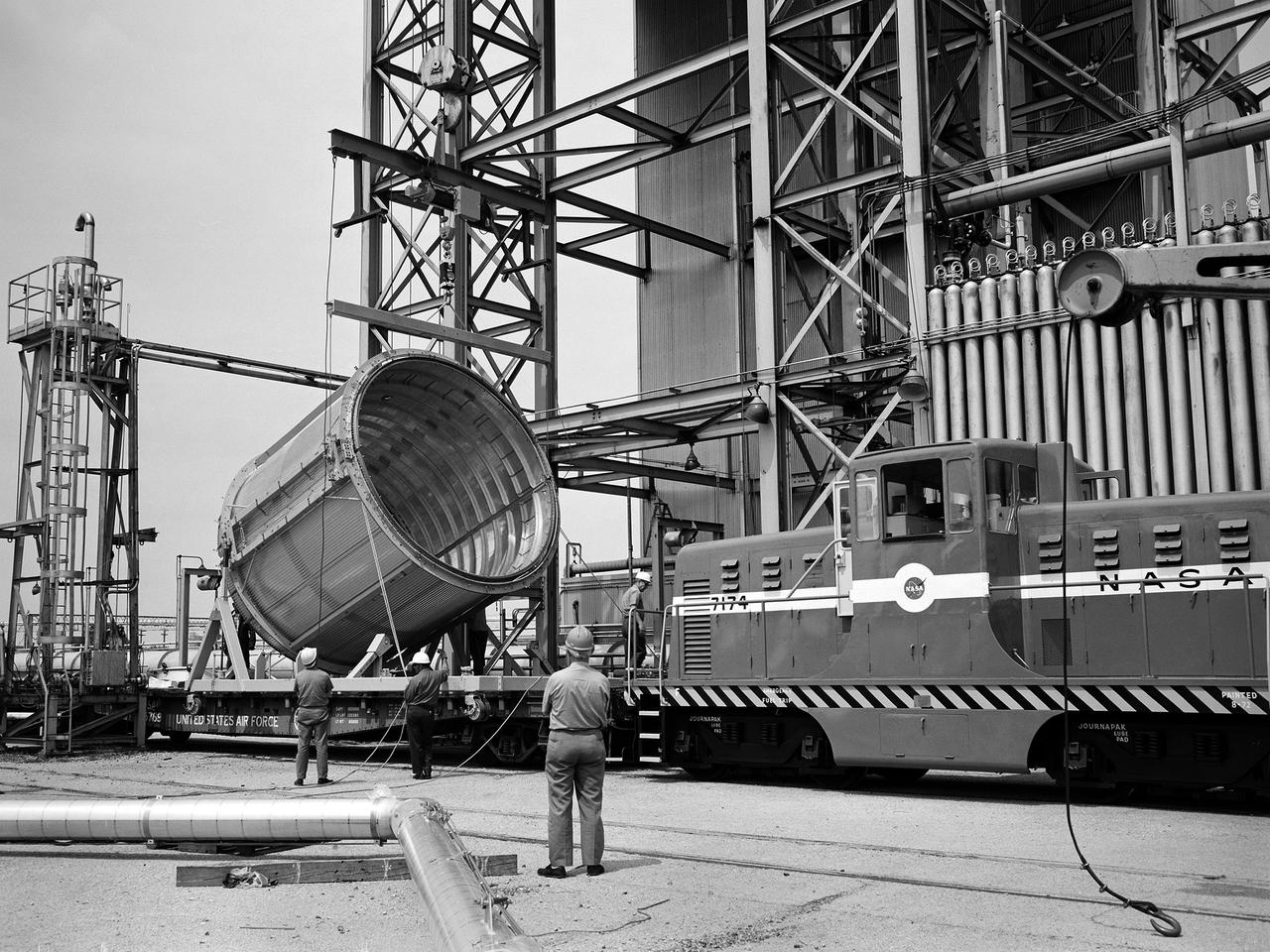
A section of the Centaur Standard Shroud transported to Nuclear Rocket Dynamics and Control Facility, or B-3 Test Stand, at the National Aeronautics and Space Administration’s (NASA) Plum Brook Station. B-3 was built in the early 1960s to test full-scale liquid hydrogen fuel systems in simulated altitude conditions. The facility was used in 1972, however, for testing of the Centaur Standard Shroud’s ejection system. In the late 1960s NASA engineers were planning the ambitious new Viking mission to send two rover vehicles to the surface of Mars. The Viking rovers were the heaviest payloads ever attempted and were over three times the weight of Atlas-Centaur’s previous heaviest payload. Consequently, NASA engineers selected the more powerful the Titan III rocket booster to mate with the Centaur. Concurrently, General Dynamics was in the process of introducing a new Centaur model for Titan—the D-1T. The biggest change for the D-1T was a completely new shroud designed by Lockheed, called the Centaur Standard Shroud. The shroud, its insulation, the Centaur ground-hold purge system, and the hydrogen tank venting system were all studied in B-3. After more than two years of preparations, the tests were run between April and July 1973. The tests determined the ultimate flight loads on two axes, established the Centaur’s load sharing, the level of propellant boiloff during launch holds, and the vent system capacity. The Centaur Standard Shroud performed flawlessly during the August 20 and September 9, 1975 launches of Viking 1 and 2.