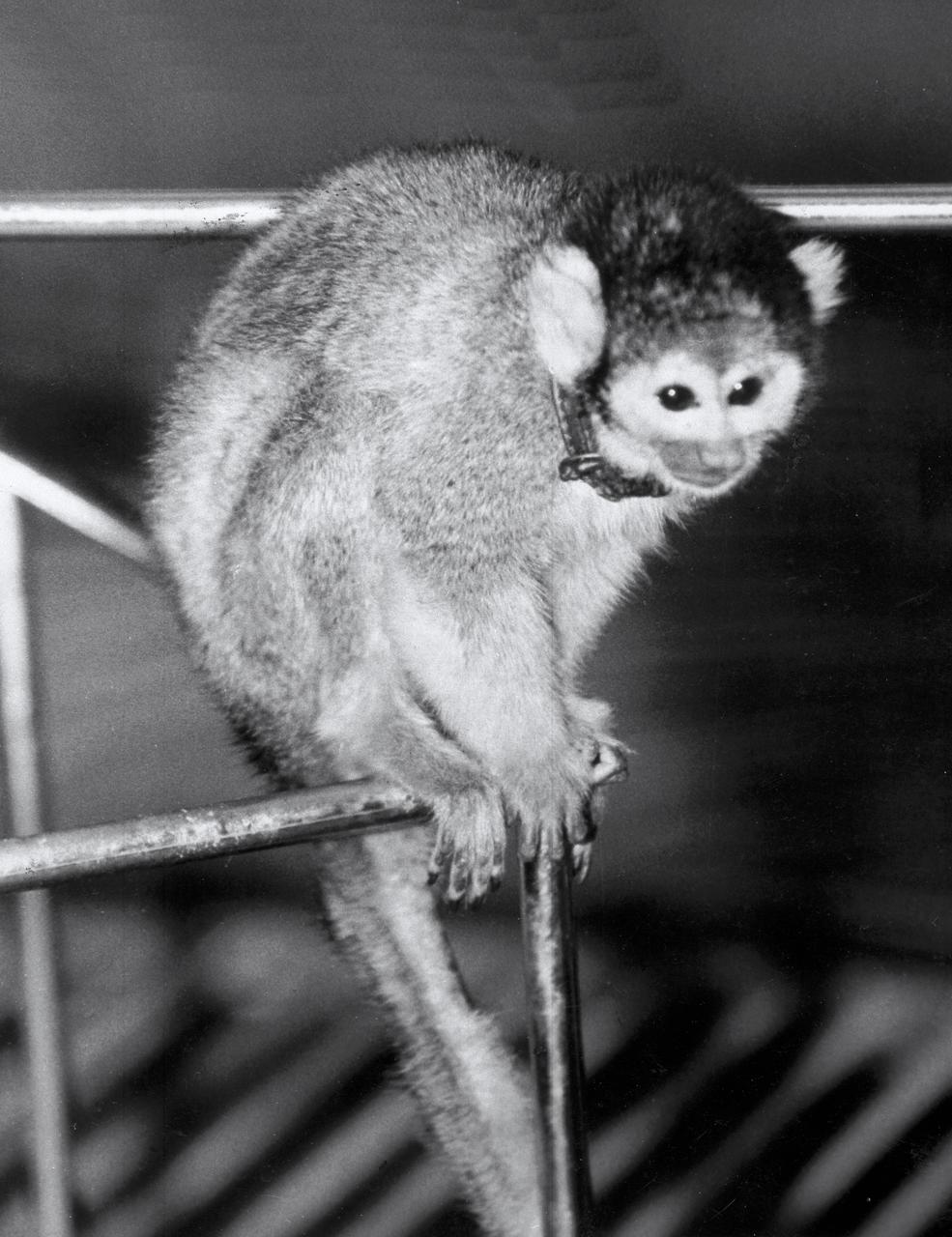
On May 28, 1959, a Jupiter Intermediate Range Ballistic Missile provided by a U.S. Army team in Redstone Arsenal, Alabama, launched a nose cone carrying Baker, A South American squirrel monkey and Able, An American-born rhesus monkey. This photograph shows Able after recovery of the nose cone of the Jupiter rocket by U.S.S. Kiowa.
Early Rockets
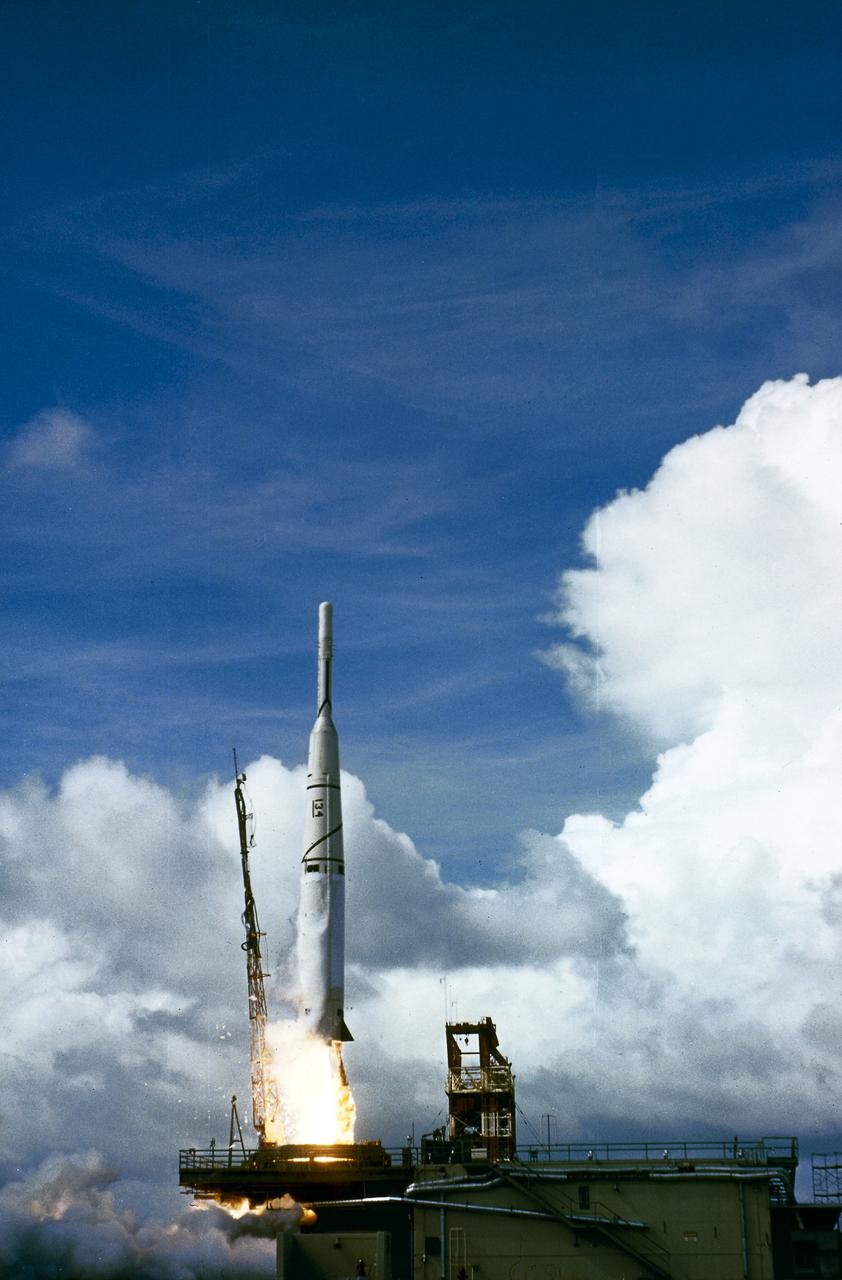
The launch of Thor/Able 3 launch vehicle on August 6, 1959, from the Atlantic Missile Range. The payload was Explorer VI for meteorology study.
Launch Vehicles
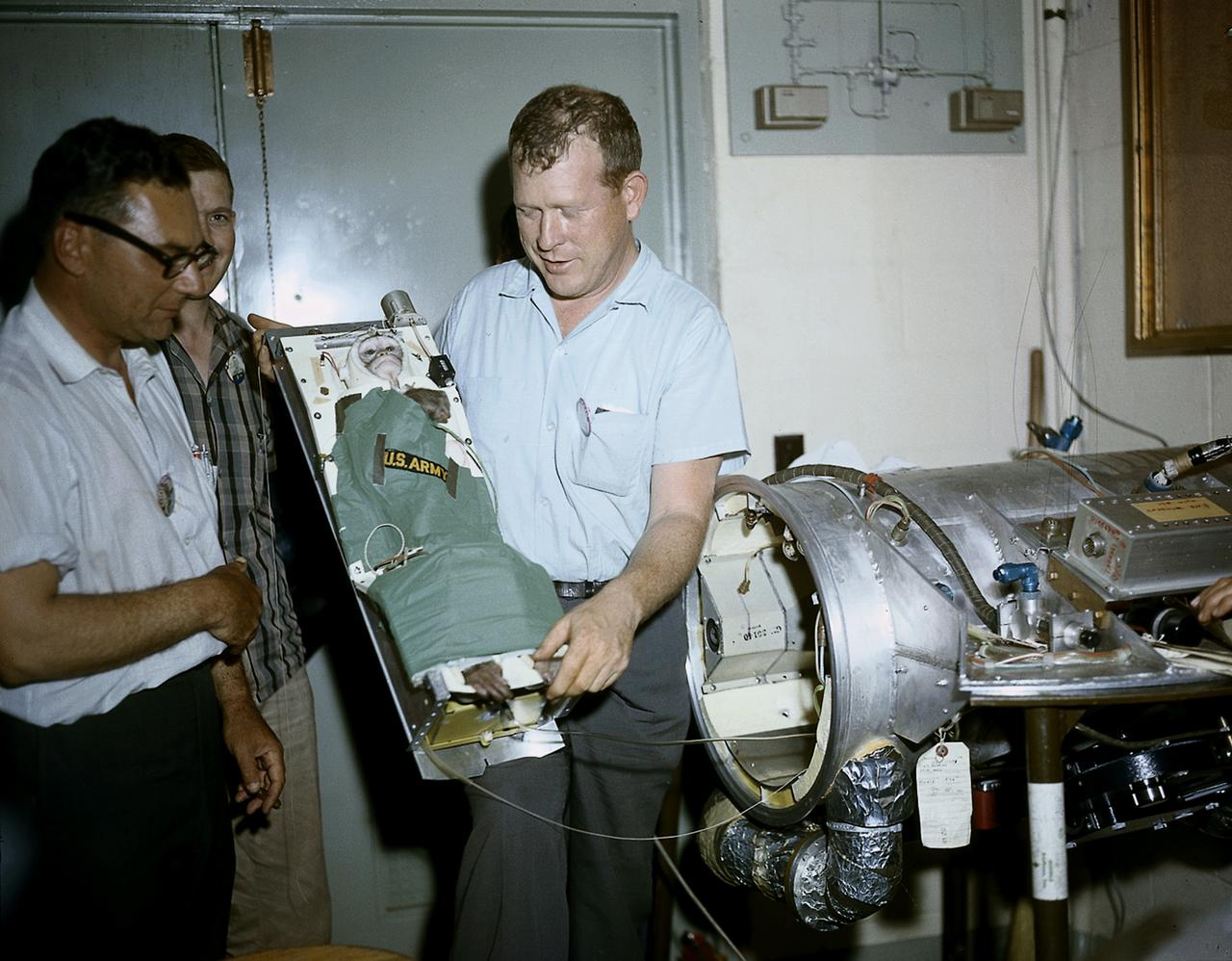
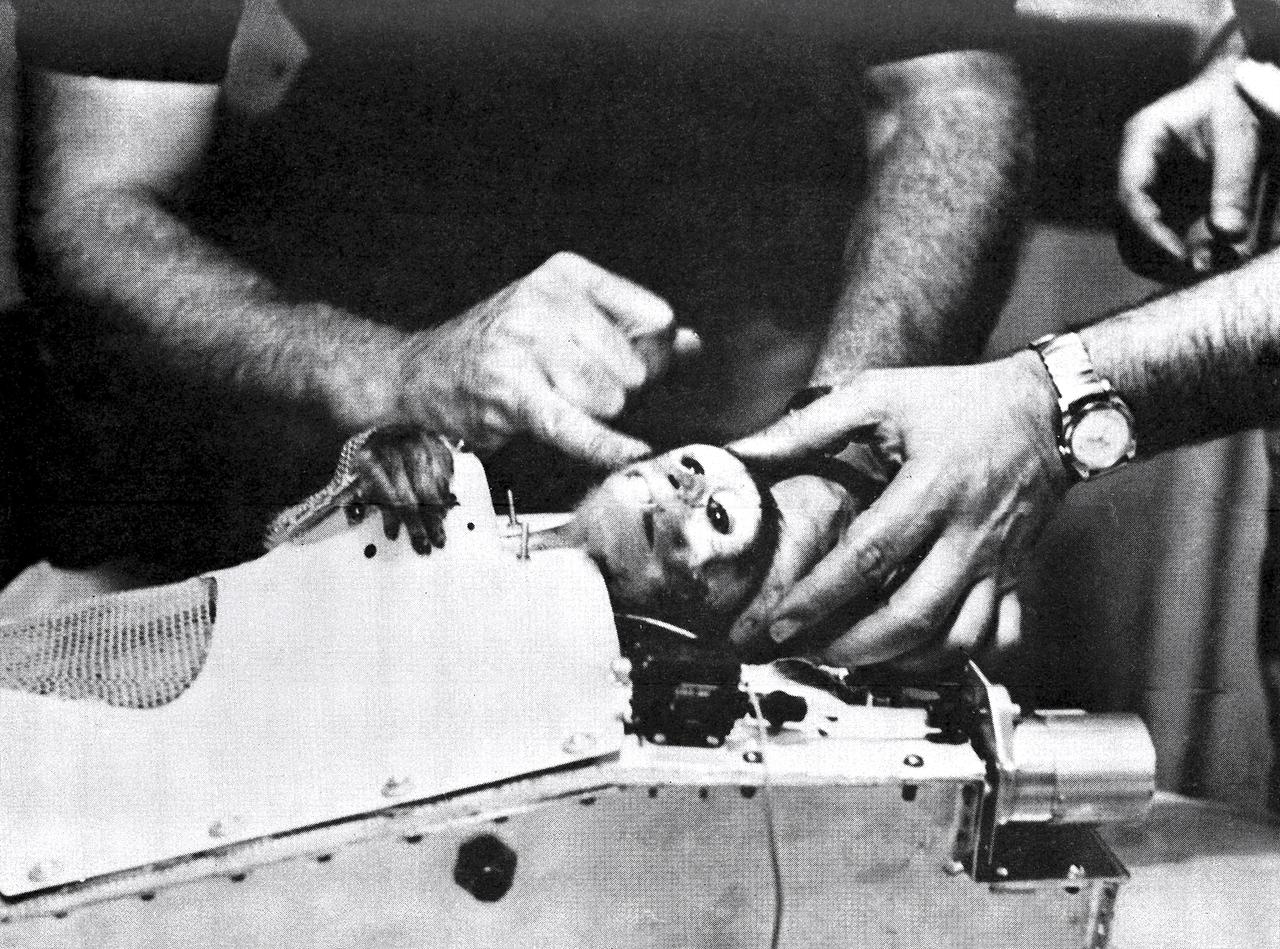
A squirrel monkey, Able, is being ready for placement into a capsule for a preflight test of Jupiter, AM-18 mission. AM-18 was launched on May 28, 1959 and also carried a rhesus monkey, Baker, into suborbit.
Early Rockets
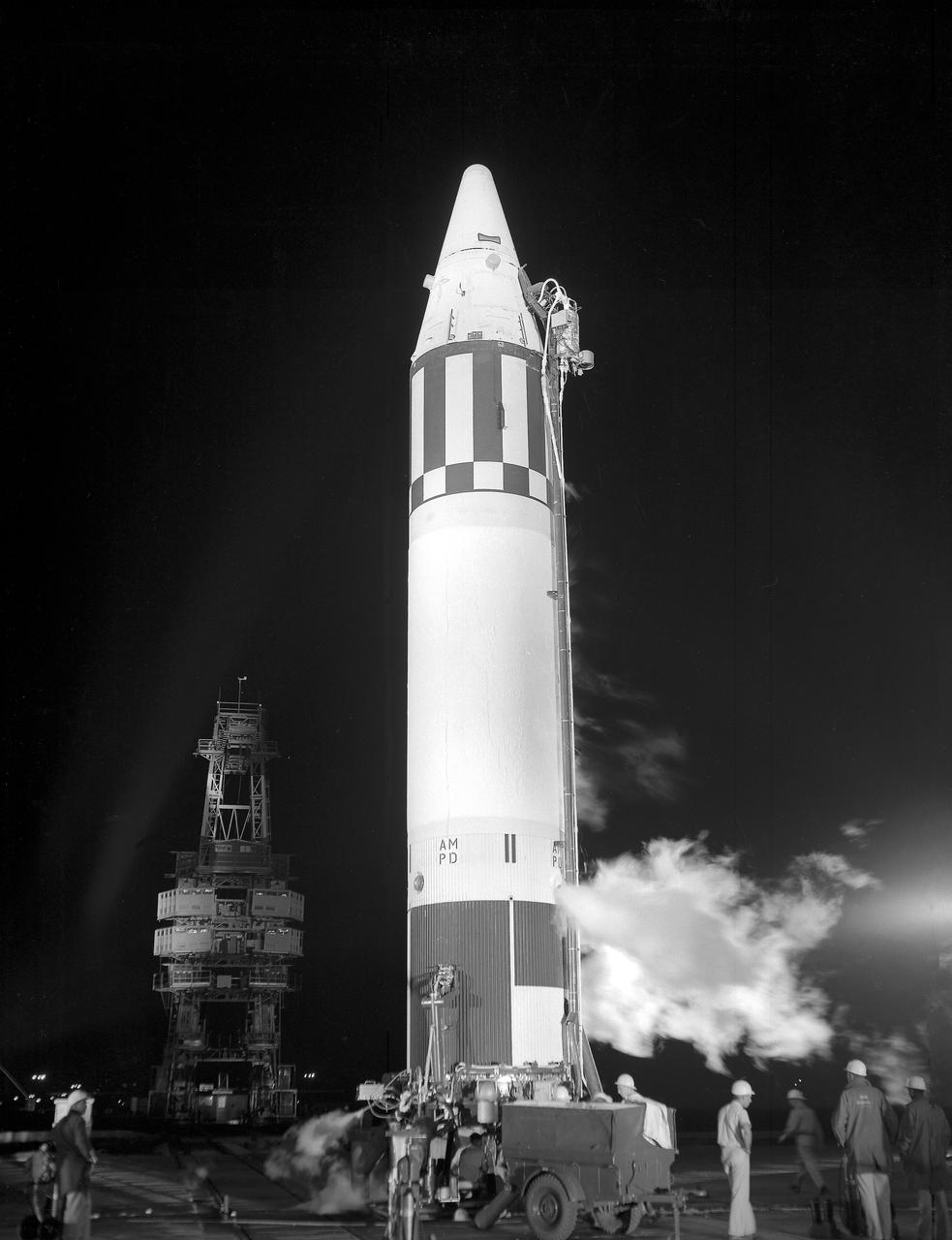
Jupiter (AM-18), suborbital primate flight with Able and Baker as its payload, being ready for launch, May 28, 1959
Early Rockets
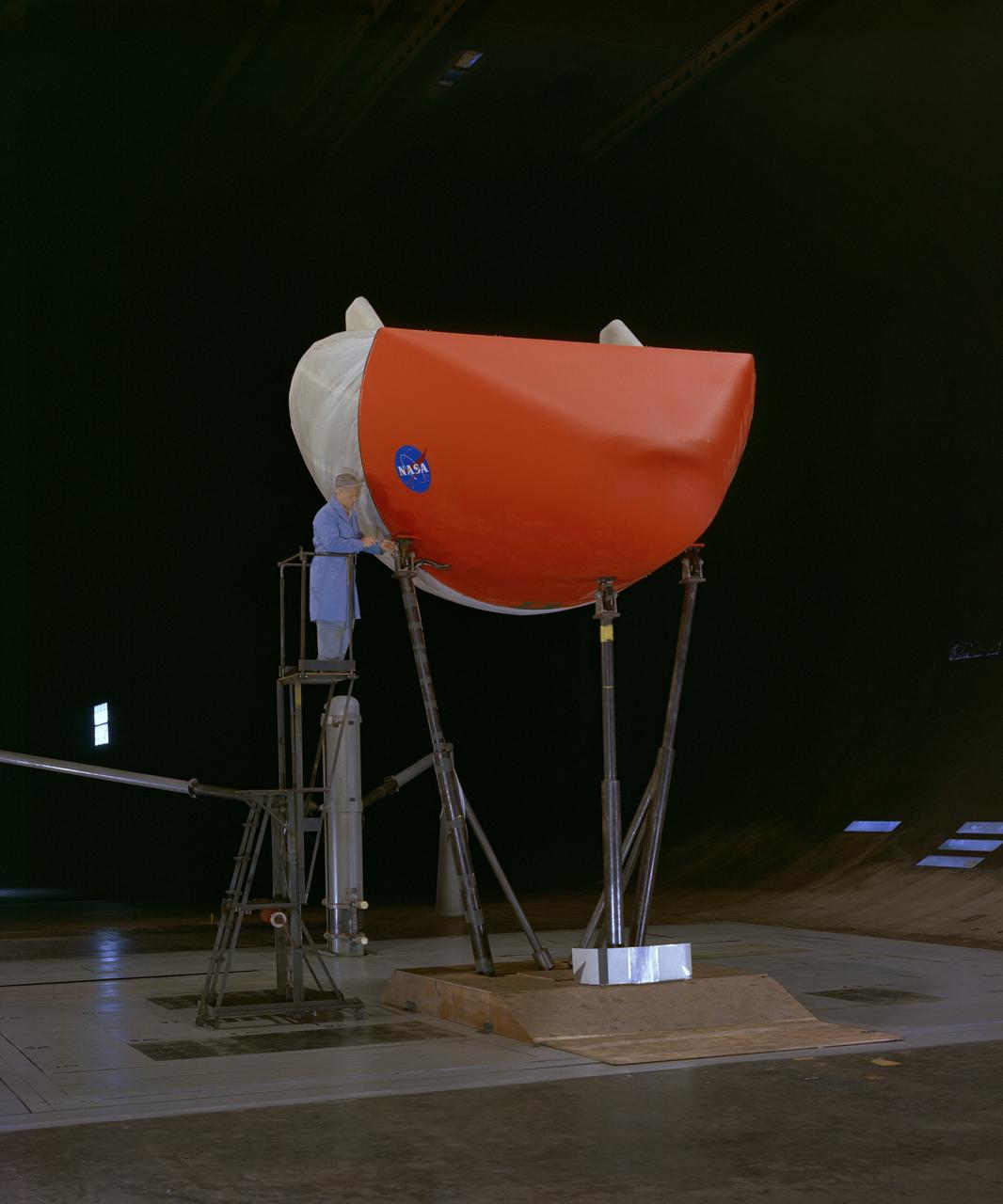
3/4 front view of M-1-L inflatable recovery able lifting body model in Ames 40x80 foot wind tunnel. Mechanic, Ray Schmorance included in picture.
M-1-L Inflatable Recovery able Lifting Body Model in Ames 40x80 foot Wind Tunnel.
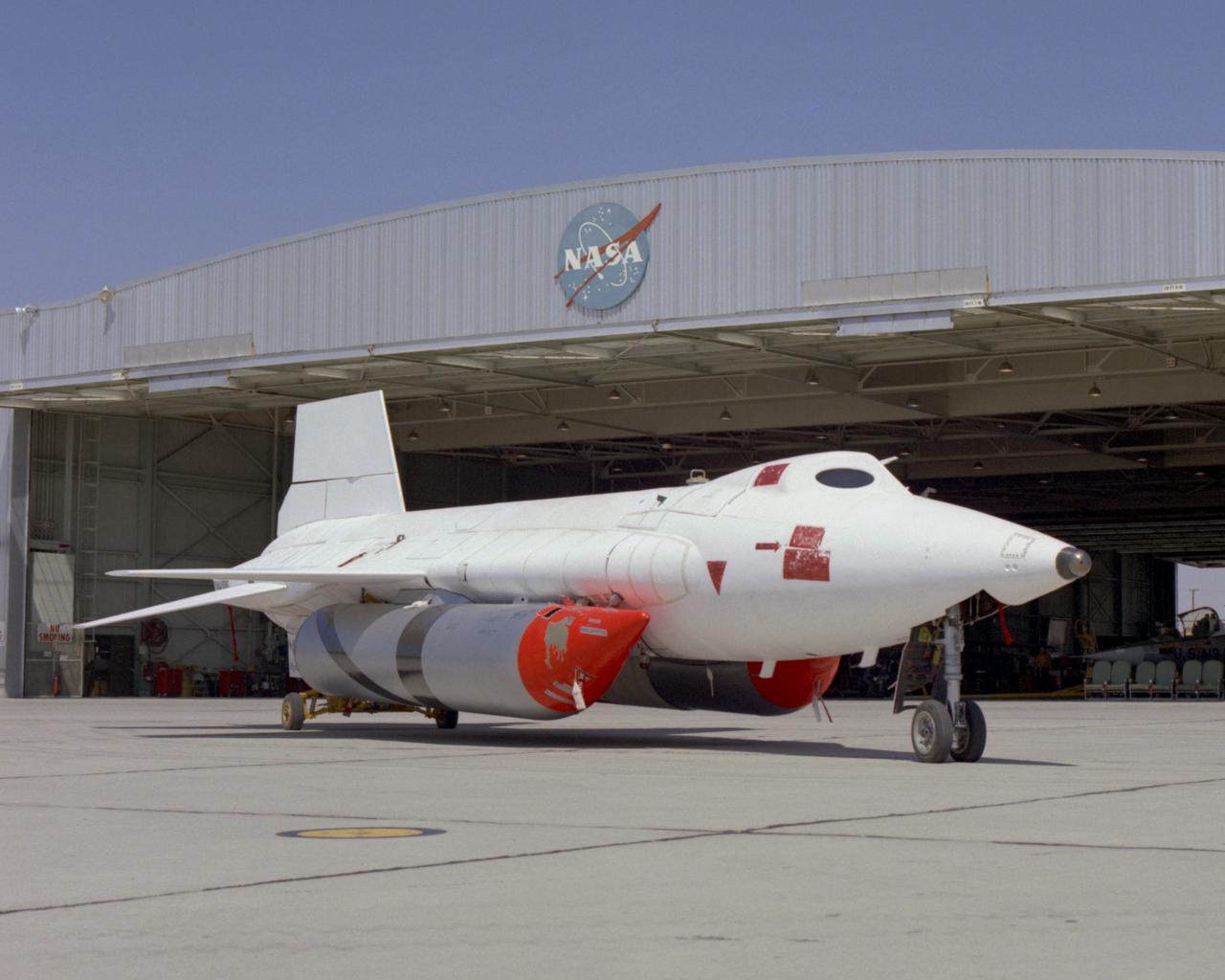
X-15A-2 with full scale ablative and external tanks installed parked in front of hangar. In June 1967, the X-15A-2 rocket-powered research aircraft received a full-scale ablative coating to protect the craft from the high temperatures associated with hypersonic flight (above Mach 5). This pink eraser-like substance, applied to the X-15A-2 aircraft (56-6671), was then covered with a white sealant coat before flight. This coating would help the #2 aircraft reach the record speed of 4,520 mph (Mach 6.7).
X-15A-2 with full scale ablative and external tanks installed parked in front of hangar
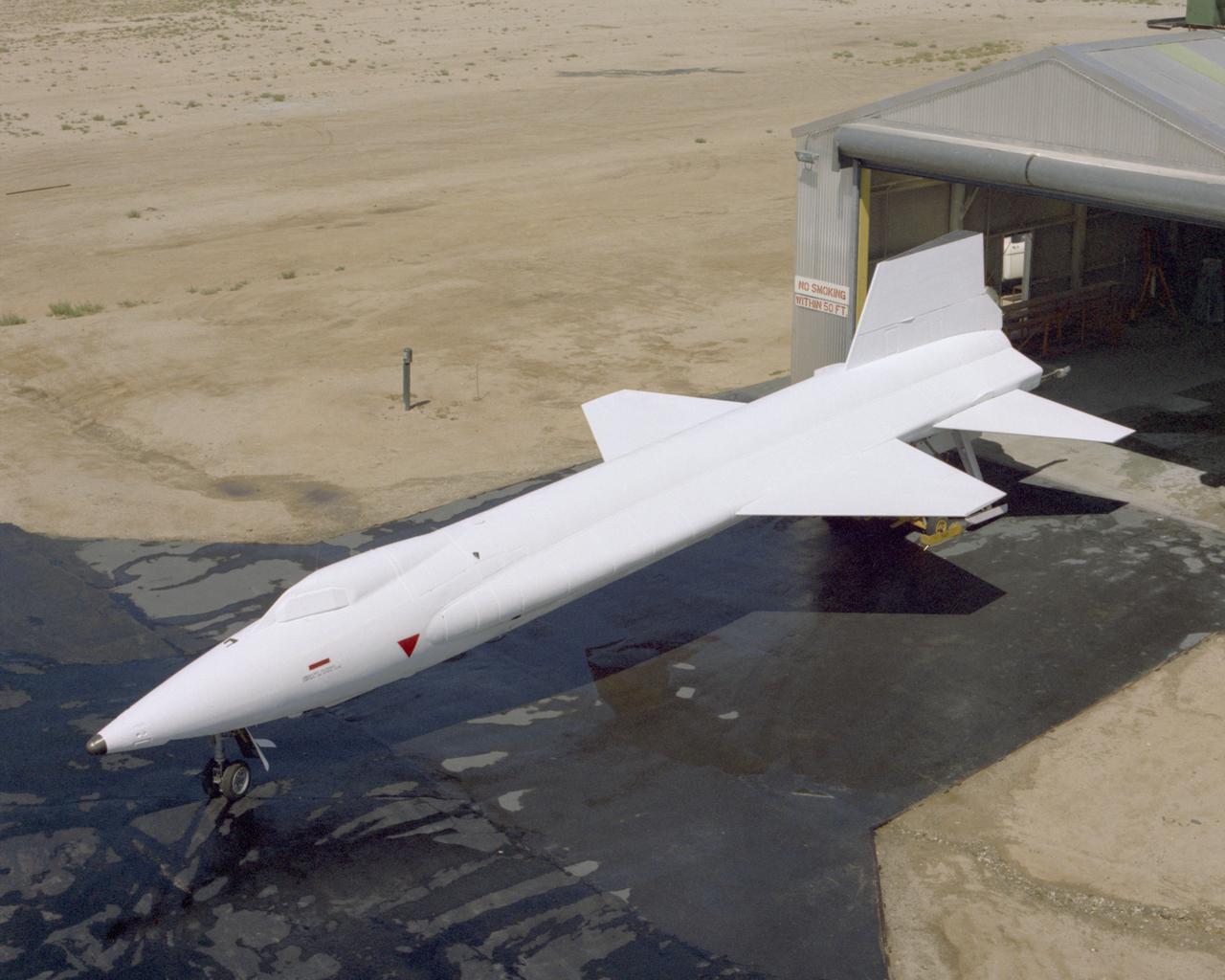
X-15A-2 is rolled out of the paint shop after having the full scale ablative applied. In June 1967, the X-15A-2 rocket-powered research aircraft received a full-scale ablative coating to protect the craft from the high temperatures associated with hypersonic flight (above Mach 5). This pink eraser-like substance, applied to the X-15A-2 aircraft (56-6671), was then covered with a white sealant coat before flight. This coating would help the #2 aircraft reach the record speed of 4,520 mph (Mach 6.7).
X-15A-2 is rolled out of the paint shop after having the full scale ablative applied
This diagram illustrates the earliest journeys of water in a young, forming star system. NASA Spitzer Space Telescope was able to probe a crucial phase of this stellar evolution.
Steamy Solar System
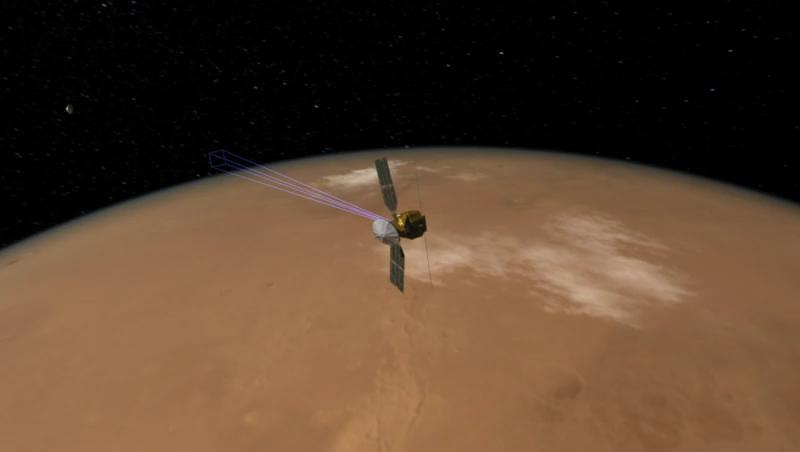
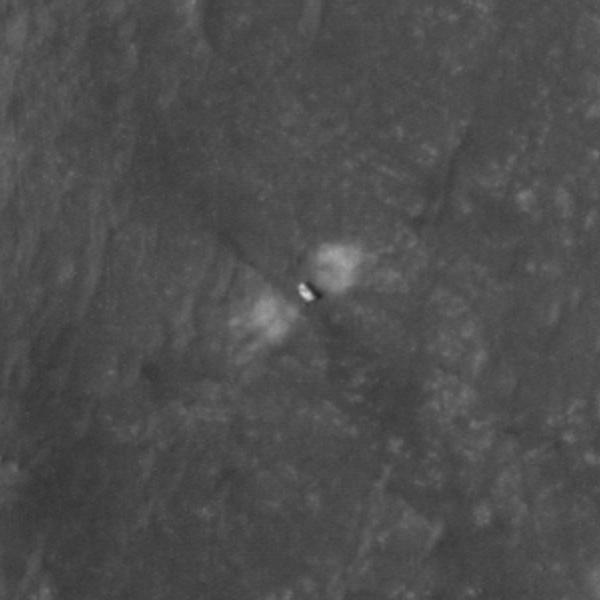
This image shows how NASA Mars Reconnaissance Orbiter was able to snap a picture of NASA Phoenix Mars Lander as it parachuted down to the surface of Mars.
How to Take a Picture of a Spacecraft Landing
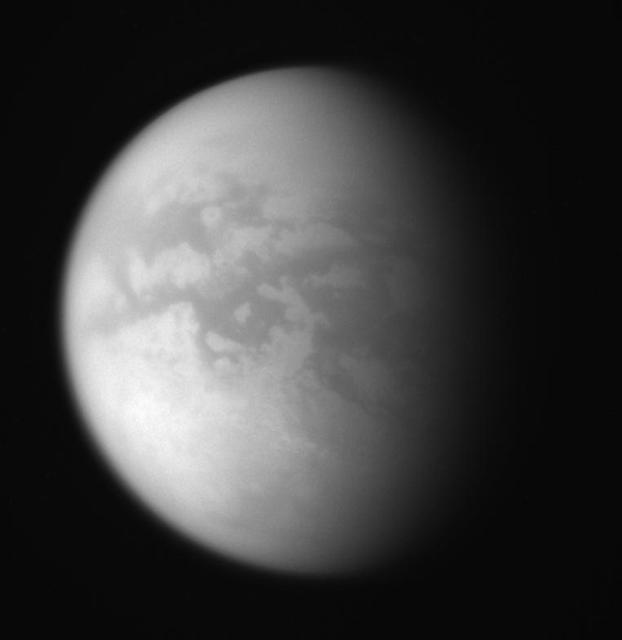
This remarkably clear view from that flyby shows the moon characteristically dark mid-latitudes, and more southern terrain than the Cassini spacecraft has usually been able to glimpse
Outbound View
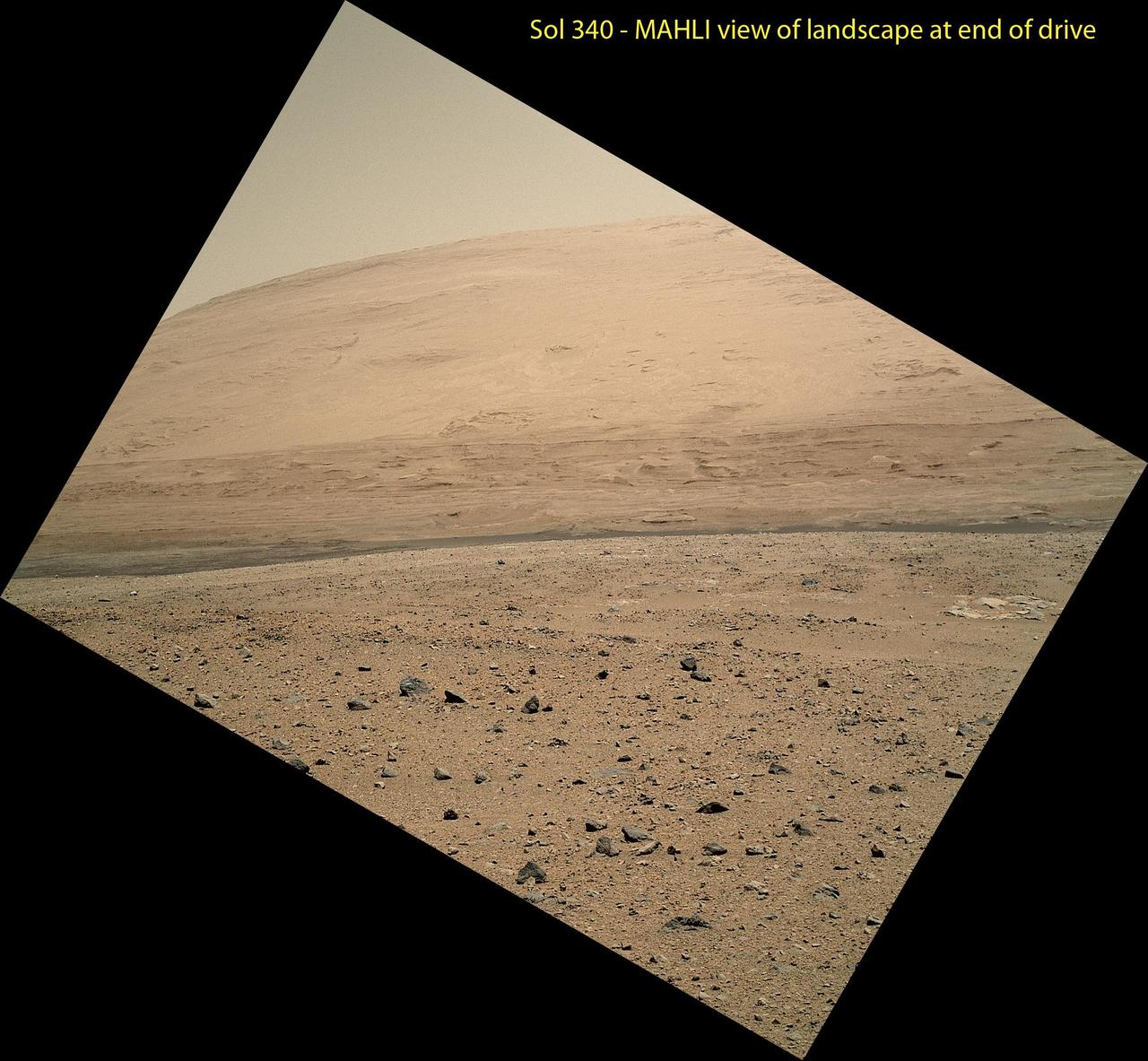
The MAHLI camera on NASA Curiosity rover is carried at an angle when the rover arm is stowed for driving. Still, the camera is able to record views of the terrain Curiosity is crossing in Gale Crater.
View From Curiosity Arm-Mounted Camera After a Long Drive
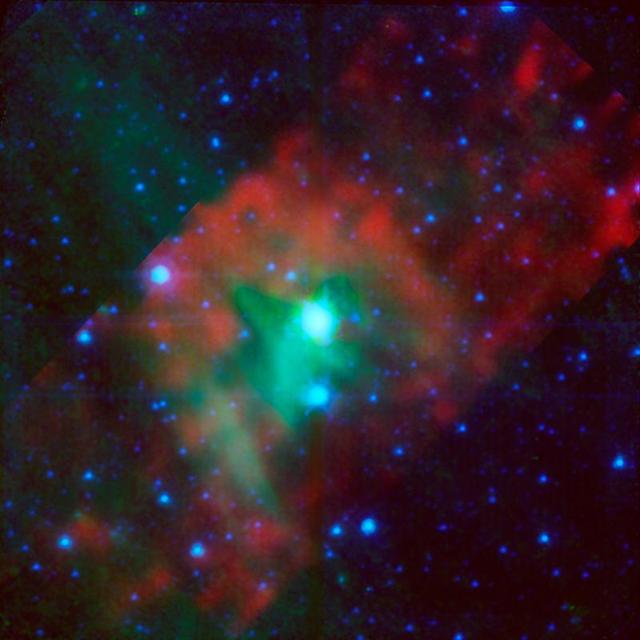
NASA Spitzer Space Telescope was able to show that a tandard candle used to measure cosmological distances is shrinking, a finding that affects precise measurements of the age, size and expansion rate of our universe.
Standard Candle in the Wind
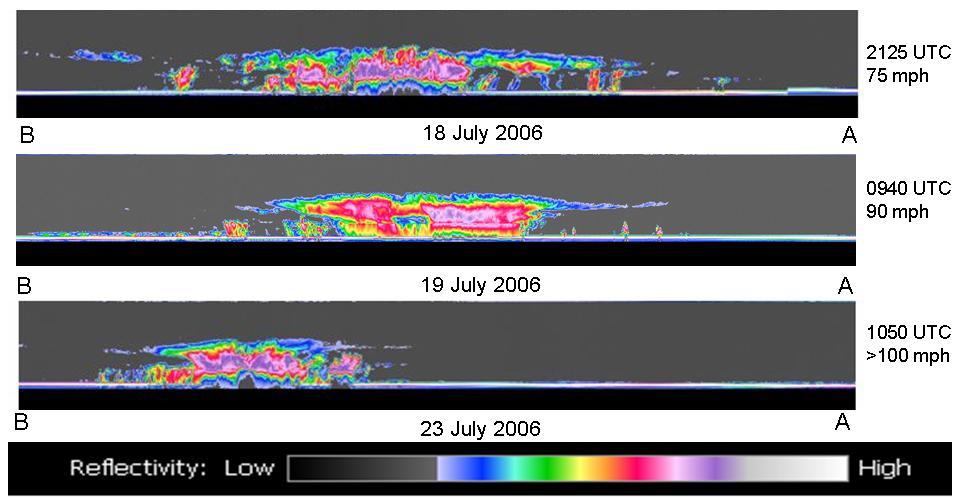
Hurricane Daniel intensified between July 18 and July 23rd. NASA new  CloudSat satellite was able to capture and confirm this transformation in  its side-view images of Hurricane Daniel as seen in this series of images
NASA CloudSat Captures Hurricane Daniel Transformation
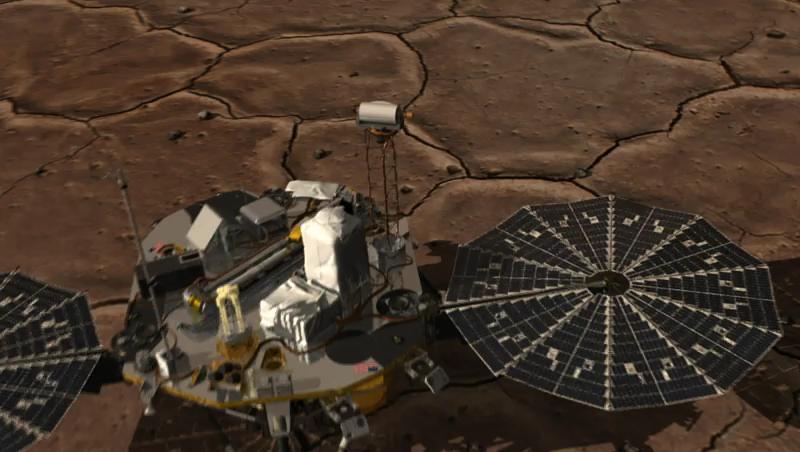
This image shows how NASA three-legged Phoenix Mars Lander is able to get a better look at its footing and the physical characteristics of the underlying soil on the surface of the Red Planet.
How Phoenix Gets a Look at its Footing
NASA NuSTAR will be able to identify individual black holes making up the diffuse X-ray glow, also called the X-ray background. At bottom right is a simulated view of what NuSTAR will see.
Bringing Black Holes Into Focus
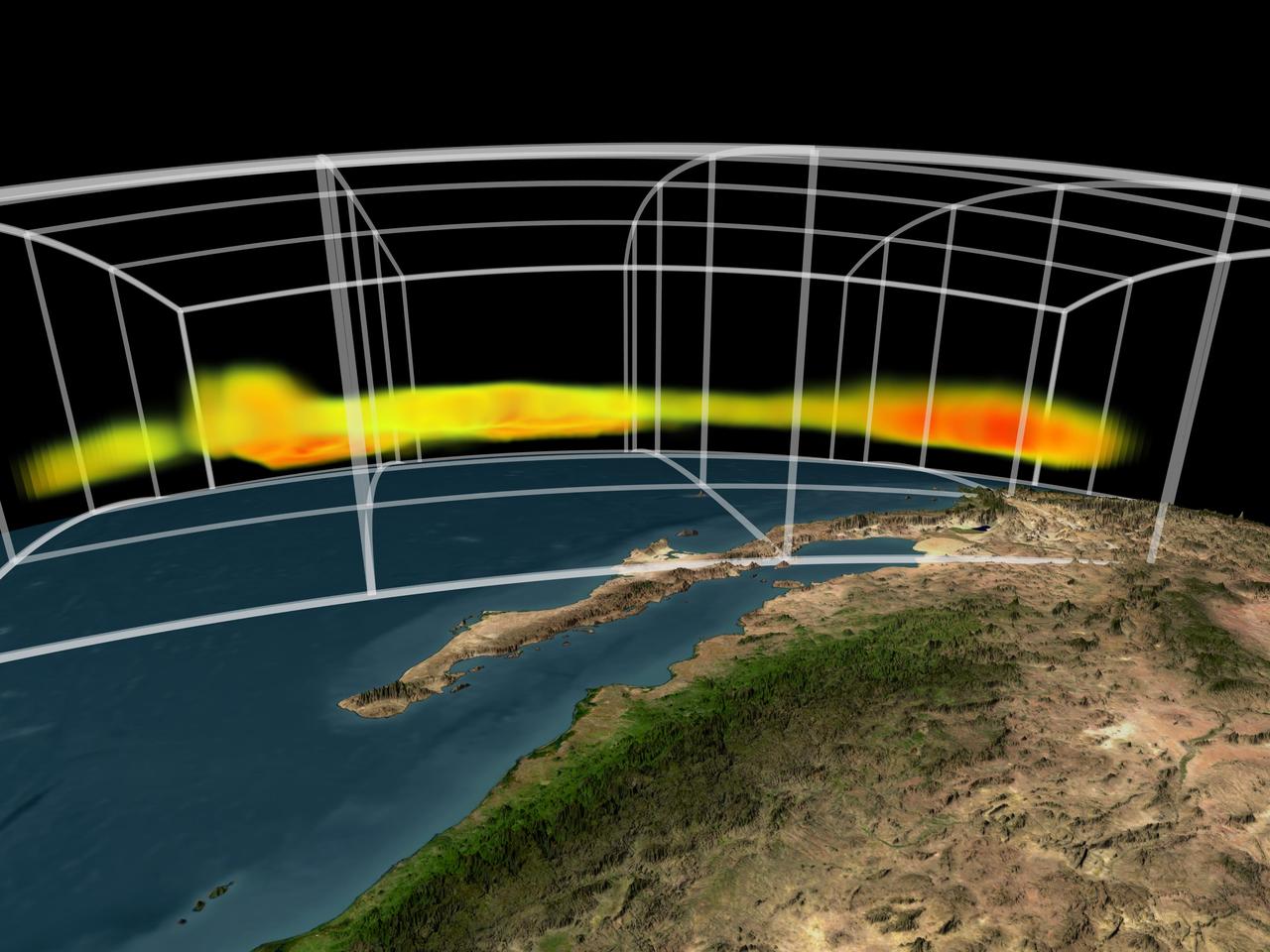
NASA Atmospheric Infrared Sounder instrument is able to peel back cloud cover to reveal 3-D structure of a storm water vapor content, information that can be used to improve weather forecast models.
AIRS Storm Front Approaching California animation
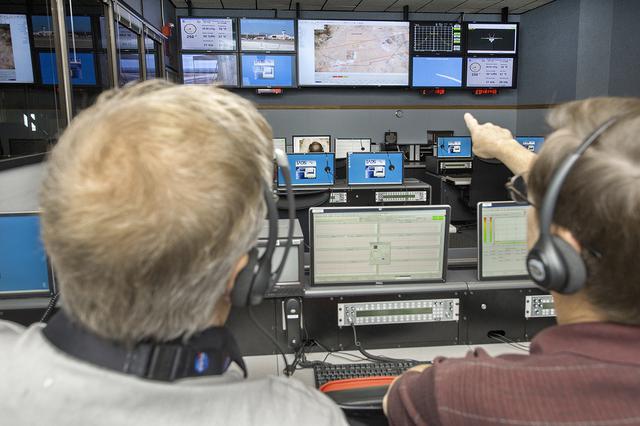
Engineers and researchers at NASA’s Armstrong Flight Research Center monitored the flights, and were able to observe the mapping of the sonic boom carpet from the F-18, from the center’s Mission Control Center.
NASA’s Improved Supersonic Cockpit Display Shows Precise Locations of Sonic Booms
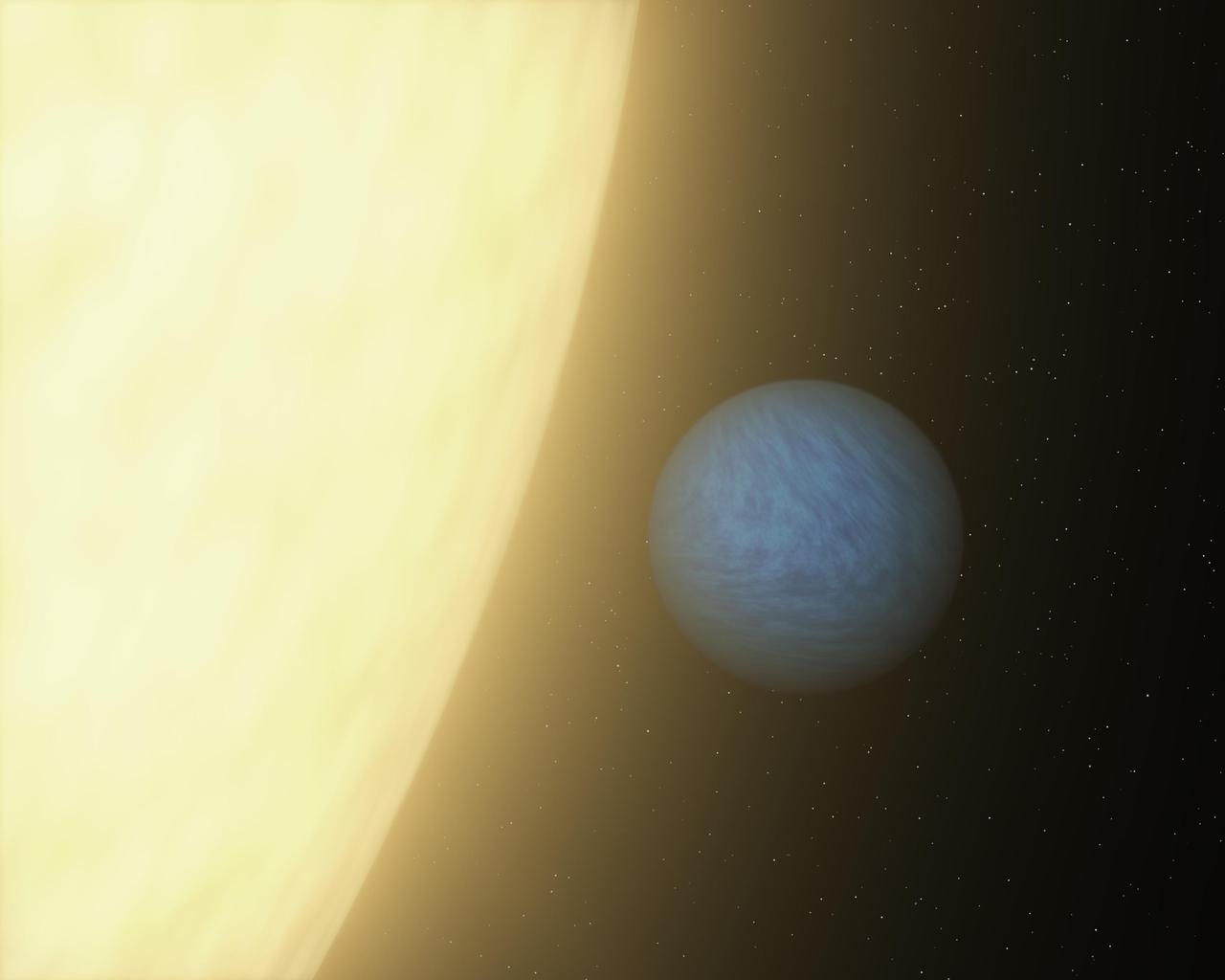
This artist concept shows how NASA Spitzer Space Telescope was able to detect a super Earth direct light for the first time using its sensitive heat-seeking infrared vision.
First-of-Its-Kind Glimpse at a Super Earth Artist Animation
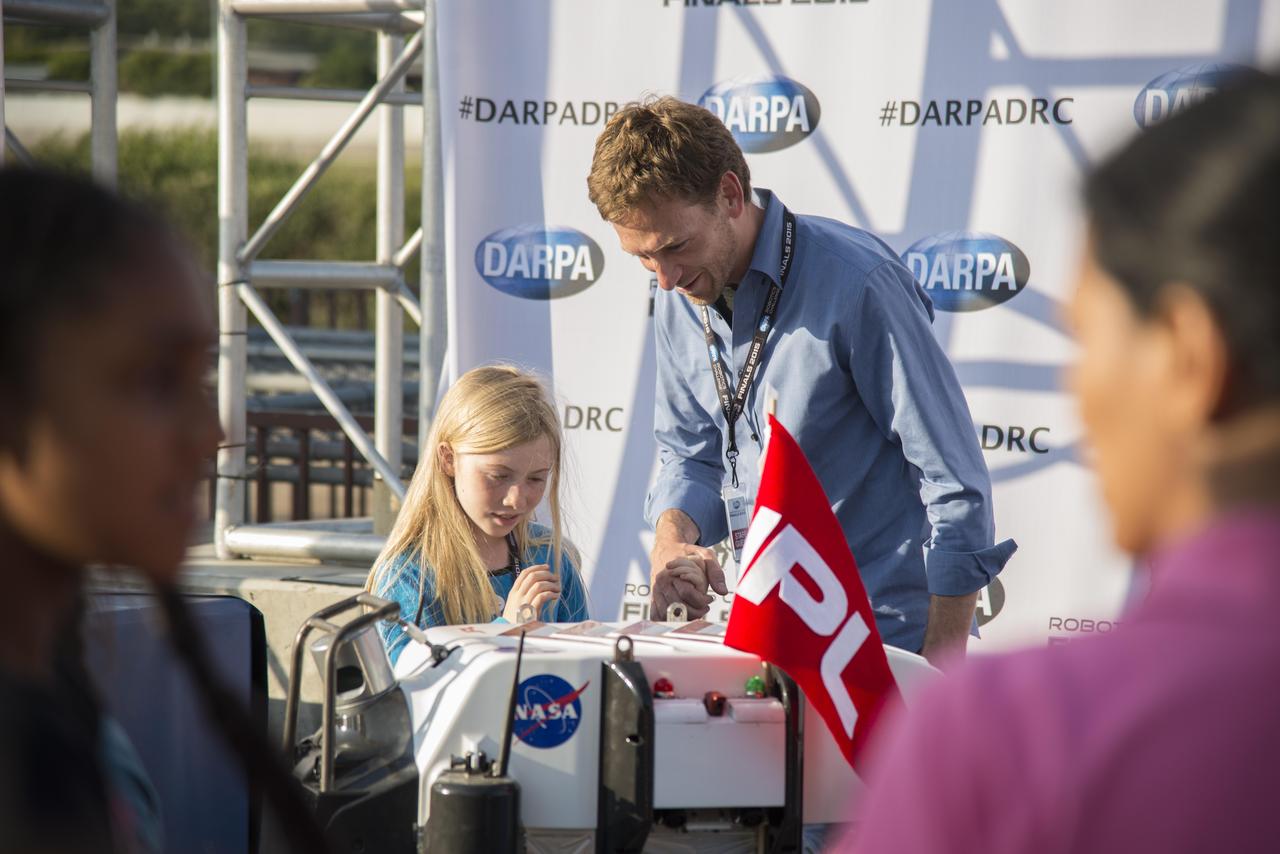
This image was taken on June 6, 2015 at the DARPA Robotics Challenge in Pomona, California. Following each competition run, spectators at the event were able to get a close-up look at the robot competitors and meet the teams who built them.   http://photojournal.jpl.nasa.gov/catalog/PIA19327
Meeting RoboSimian
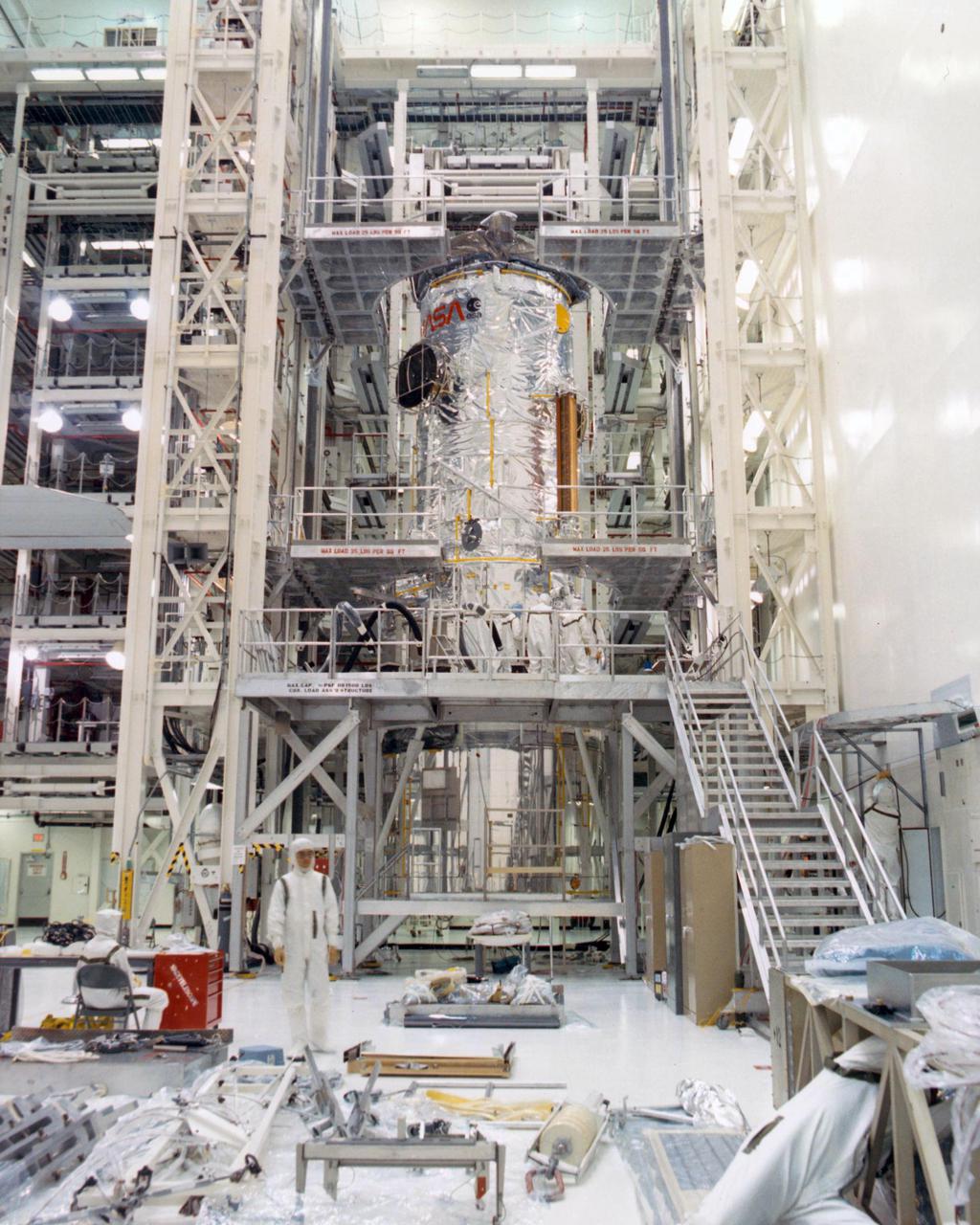
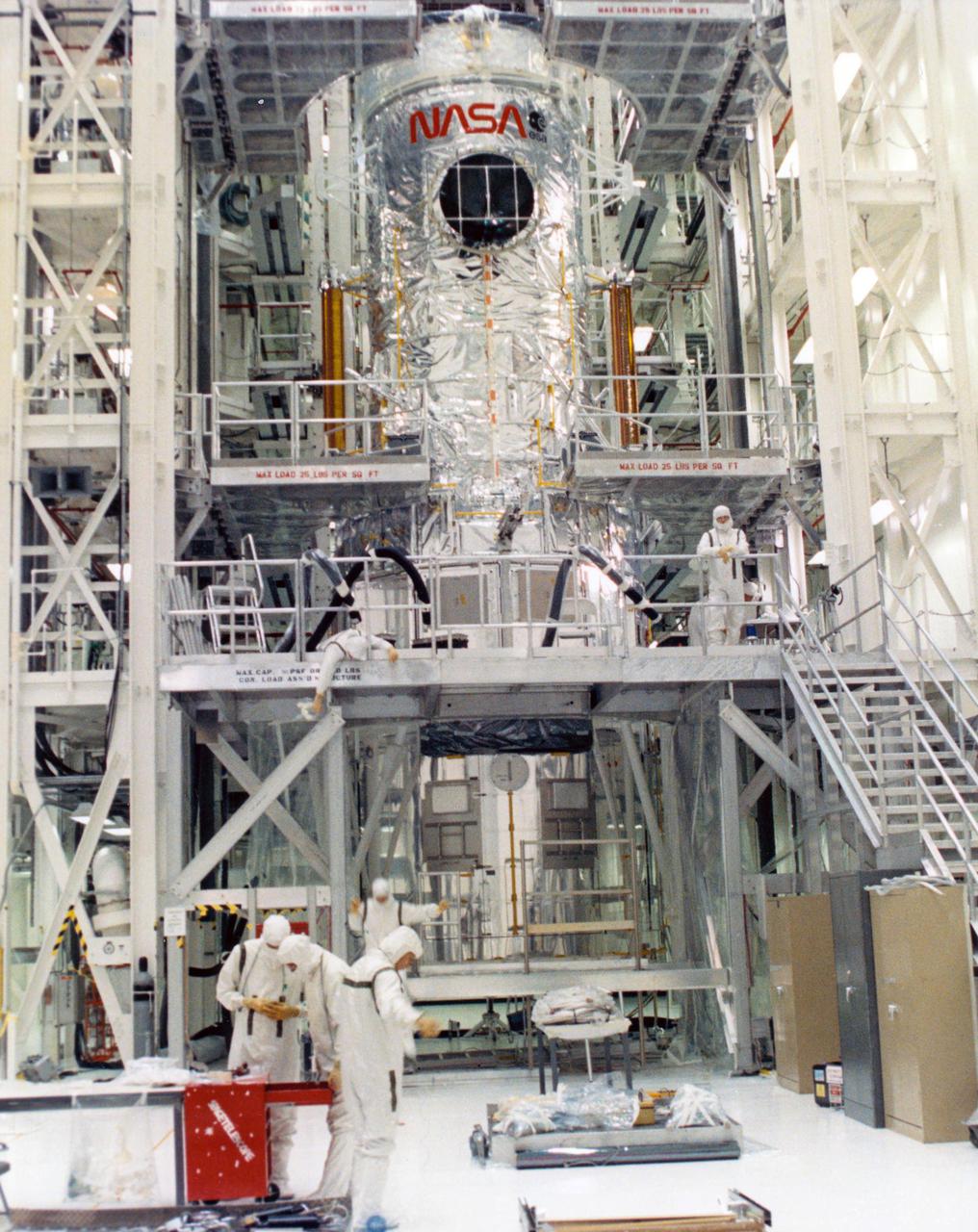
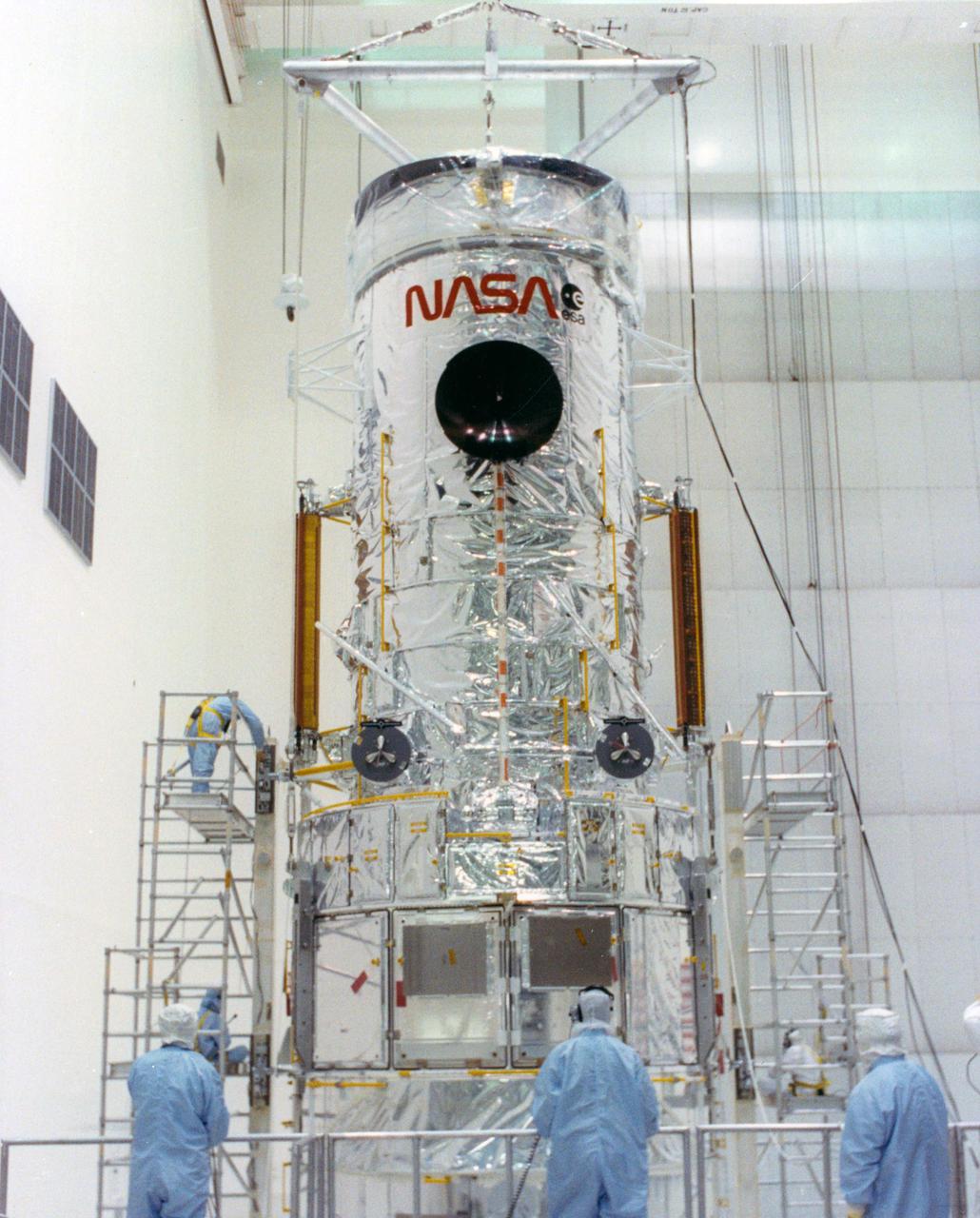
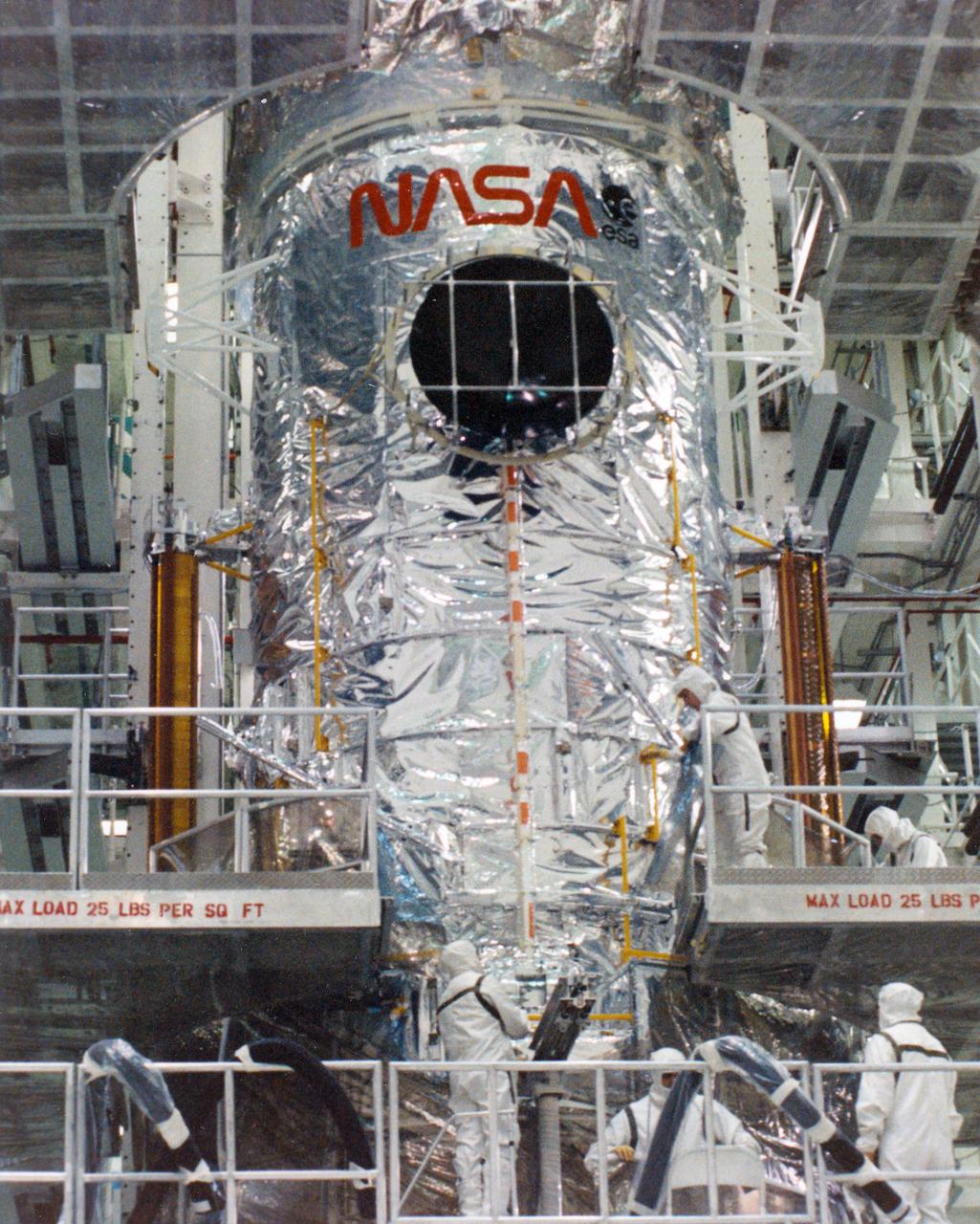
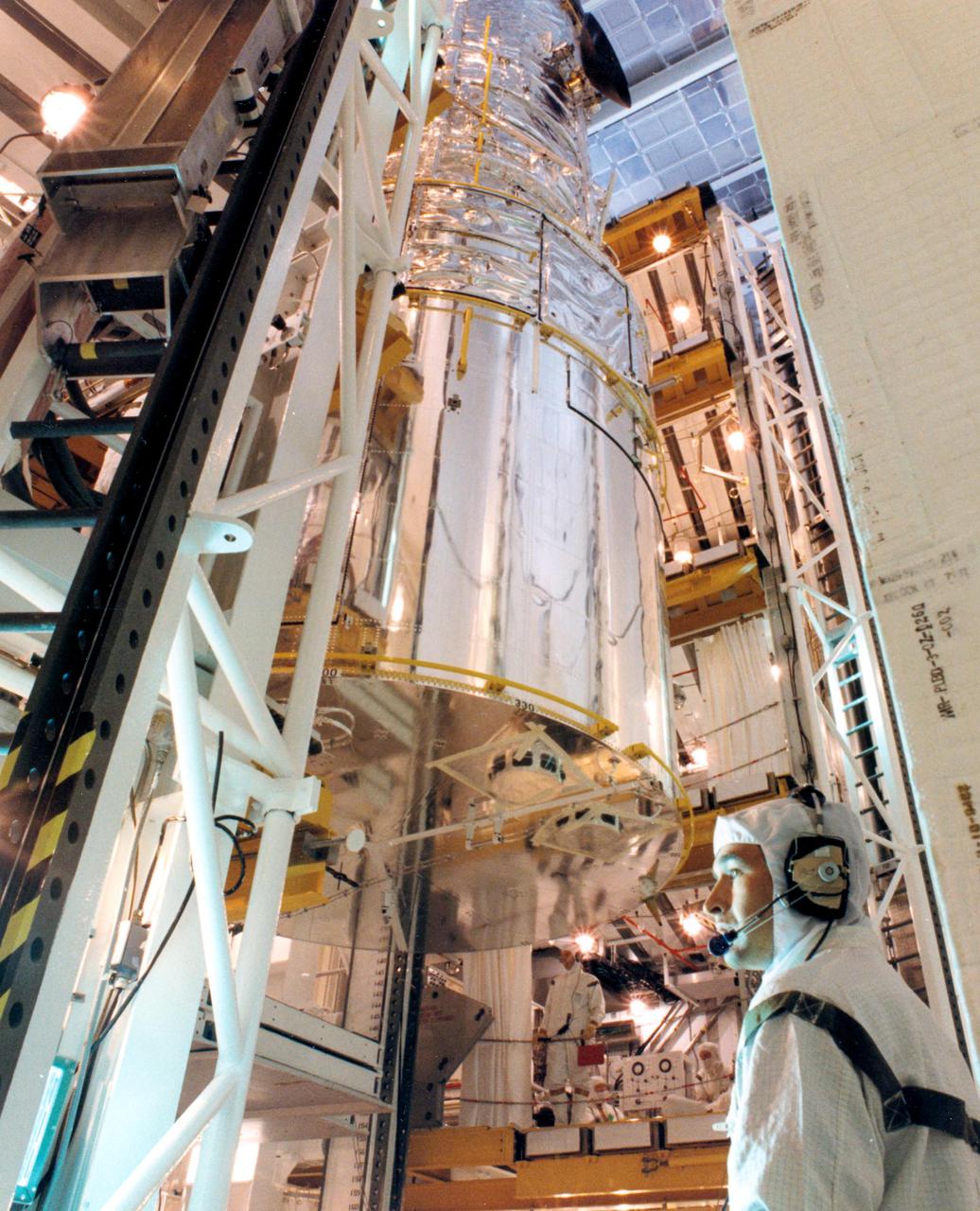
KENNEDY SPACE CENTER, FLA. -- The Hubble Space Telescope (HST) in a test cell at the Vertical Processing Facility has completed functional testing of its science instruments and is being readied for a final contamination inspection and cleaning.  With HST, astronomers will be able to view 97 percent of the known universe, and will be able to get pictures unlimited and undistorted by the Earth's atmosphere. Compared with earth-based observatories, the HST will be able to view celestial objects that are 50 times fainter, provide images that are 10 times sharper, and see objects that are seven times farther away. .
KSC-90pc-0402
KENNEDY SPACE CENTER, FLA. -- The Hubble Space Telescope (HST) in a test cell at the Vertical Processing Facility has completed functional testing of its science instruments and is being readied for a final contamination inspection and cleaning.  With HST, astronomers will be able to view 97 percent of the known universe, and will be able to get pictures unlimited and undistorted by the Earth's atmosphere. Compared with earth-based observatories, the HST will be able to view celestial objects that are 50 times fainter, provide images that are 10 times sharper, and see objects that are seven times farther away. .
KSC-90pc-0405
This image of the moon was obtained by the Galileo Solid State imaging system on Dec. 8 at 7 p.m. PST as NASA Galileo spacecraft passed the Earth and was able to view the lunar surface from a vantage point not possible from the Earth.  http://photojournal.jpl.nasa.gov/catalog/PIA00225
Far Side of the Moon
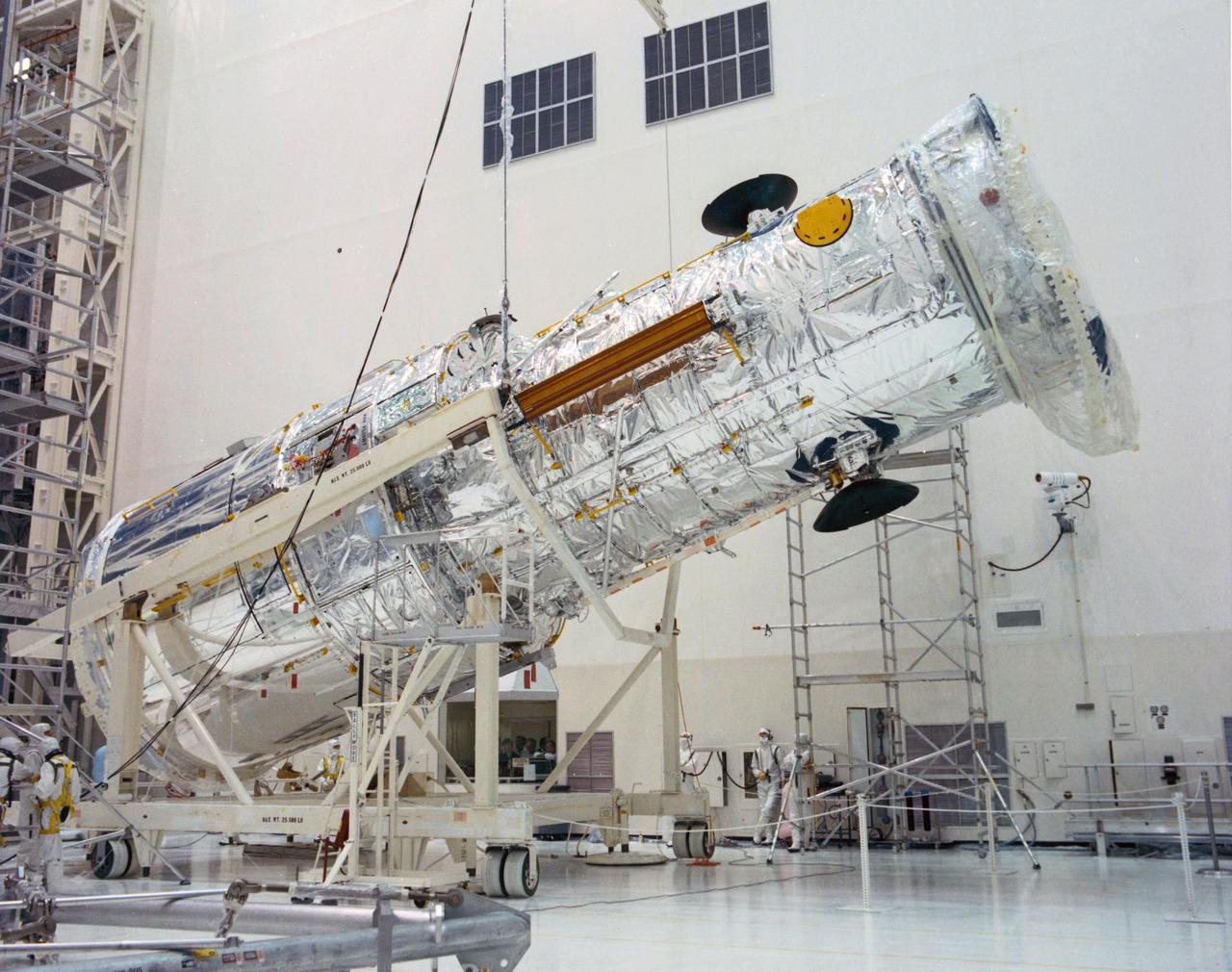
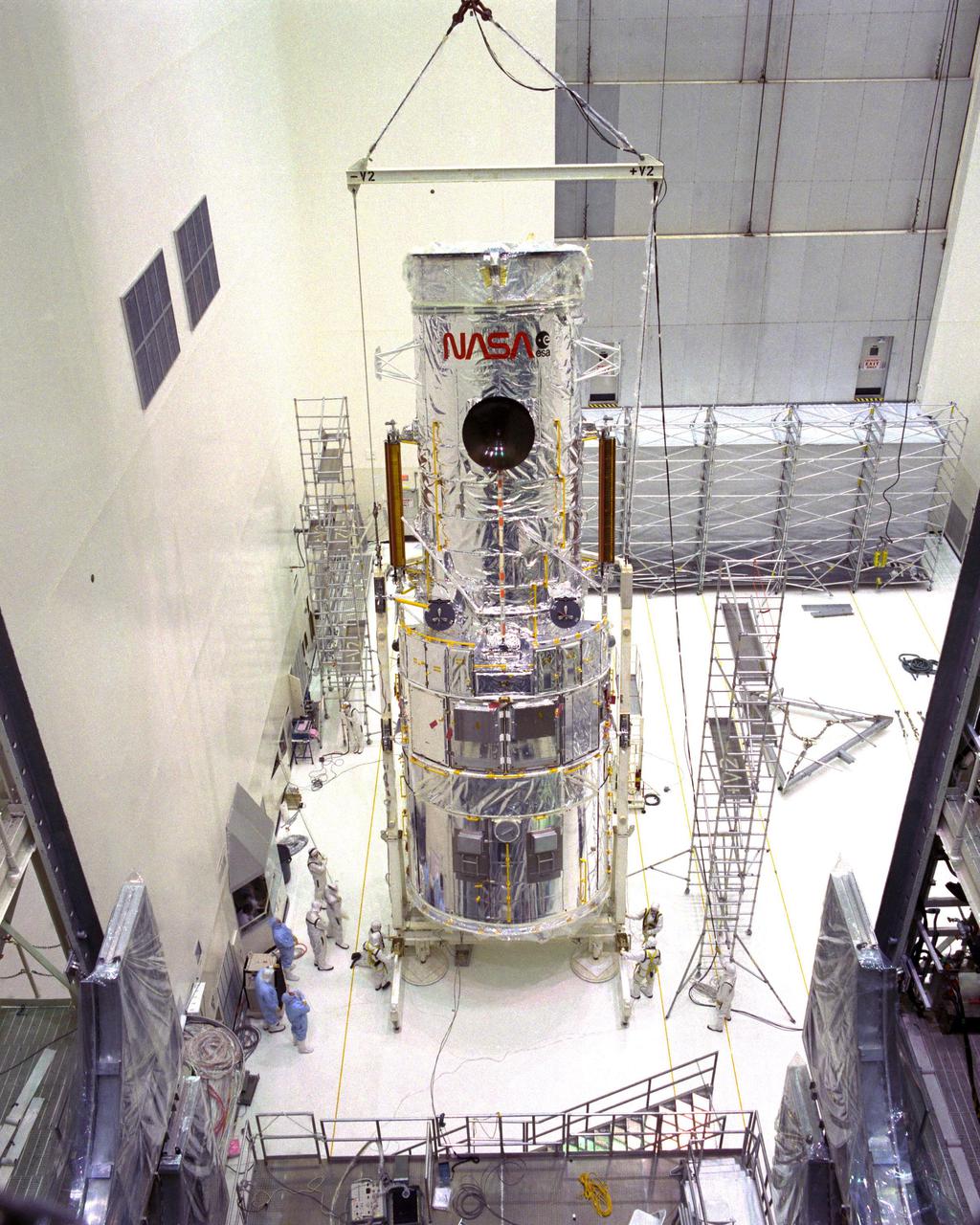
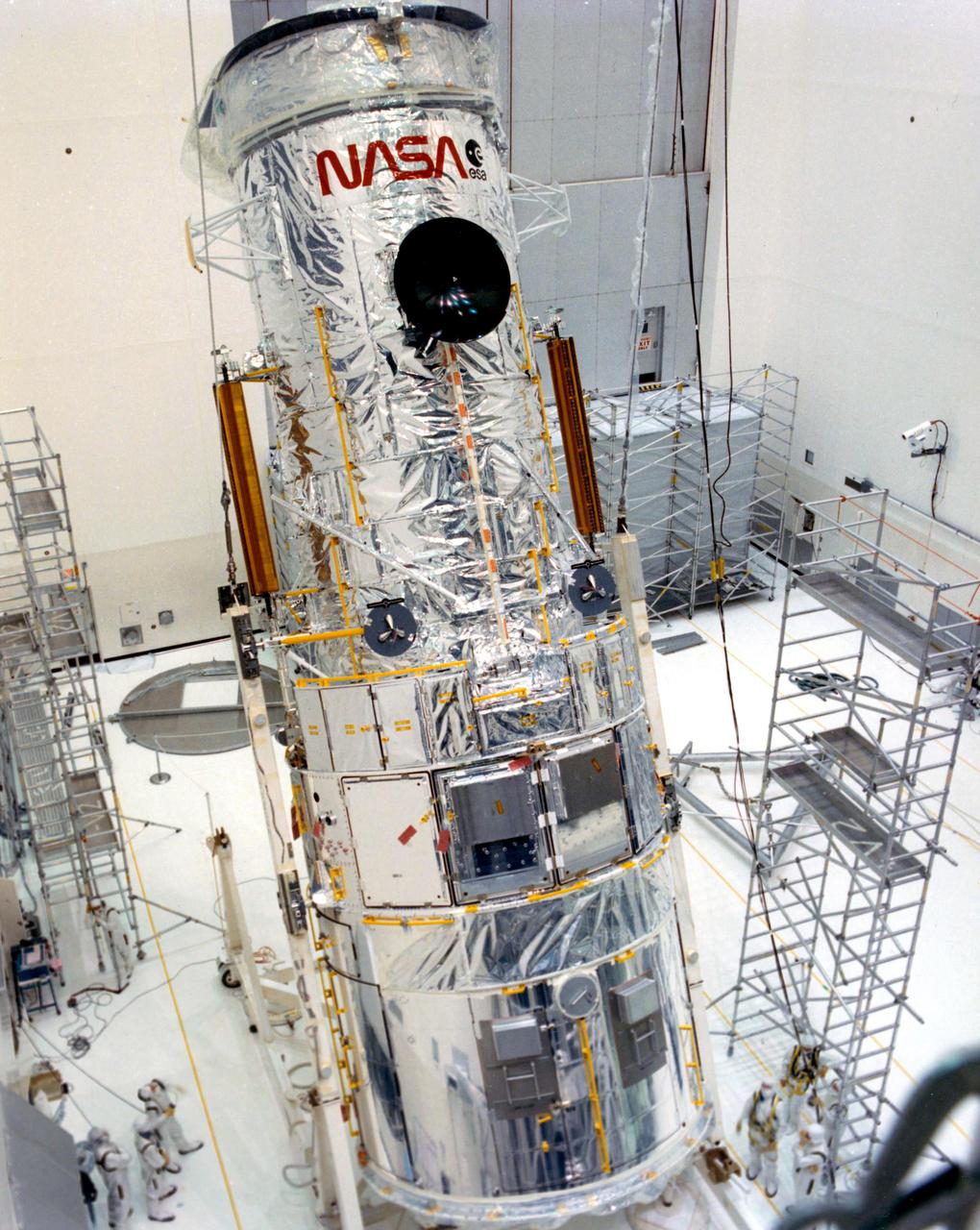
KENNEDY SPACE CENTER, FLA. -- The Hubble Space Telescope (HST) is lifted into the workstands in the Vertical Processing Facility as work begins at KSC to process the 94-inch primary mirror telescope for launch on Discovery on Space Shuttle Mission STS-31 in March 1990. With HST, astronomers will be able to view 97 percent of the known universe, and will be able to get pictures unlimited and undistorted by the Earth's atmosphere. Compared with earth-based observatories, the HST will be able to view celestial objects that are 50 times fainter, provide images that are 10 times sharper, and see objects that are seven times farther away. .
KSC-89pc-0954
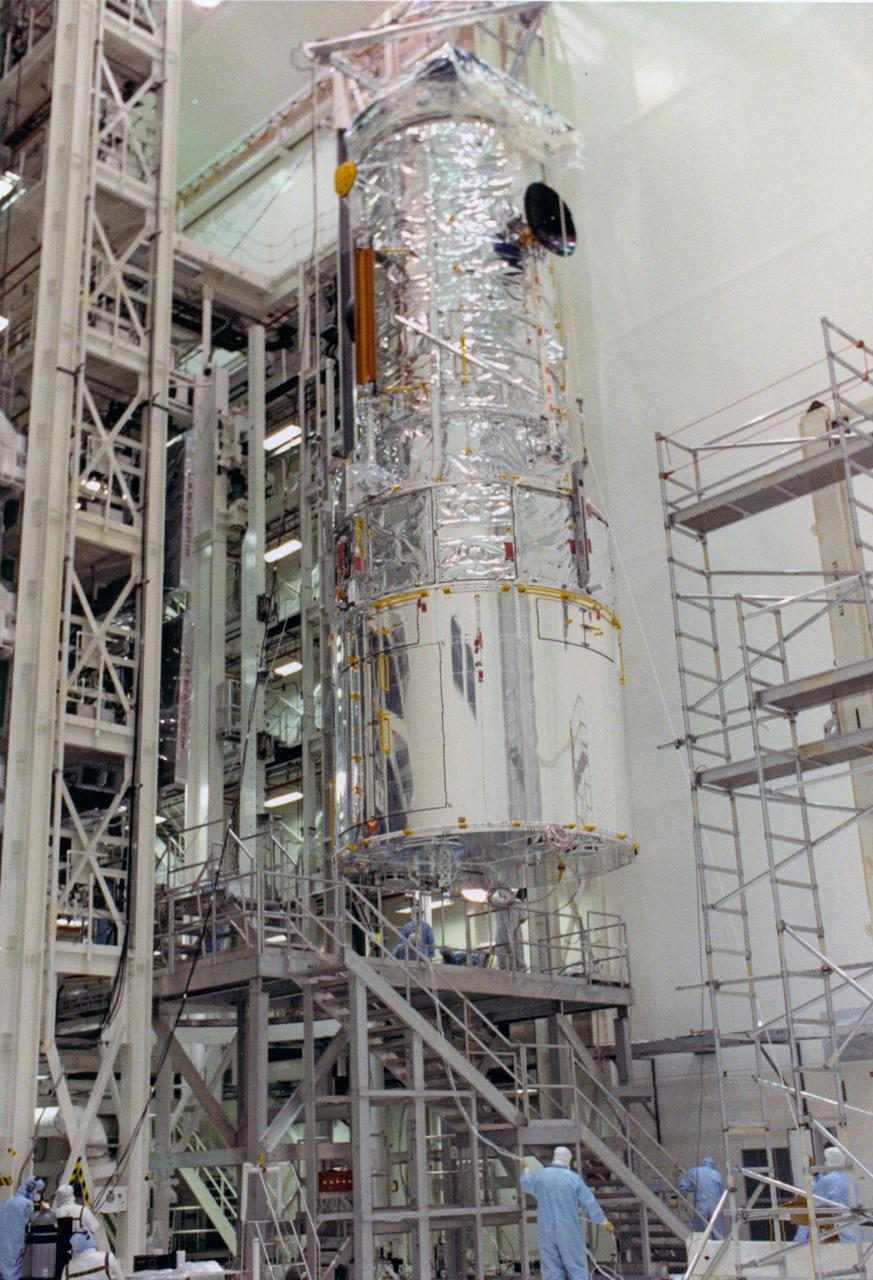
KENNEDY SPACE CENTER, FLA. -- The Hubble Space Telescope (HST) is lifted into the vertical position in the Vertical Processing Facility as work begins at KSC to process the 94-inch primary mirror telescope for launch on Discovery on Space Shuttle Mission STS-31 in March 1990. With HST, astronomers will be able to view 97 percent of the known universe, and will be able to get pictures unlimited and undistorted by the Earth's atmosphere. Compared with earth-based observatories, the HST will be able to view celestial objects that are 50 times fainter, provide images that are 10 times sharper, and see objects that are seven times farther away. .
KSC-89pc-0948
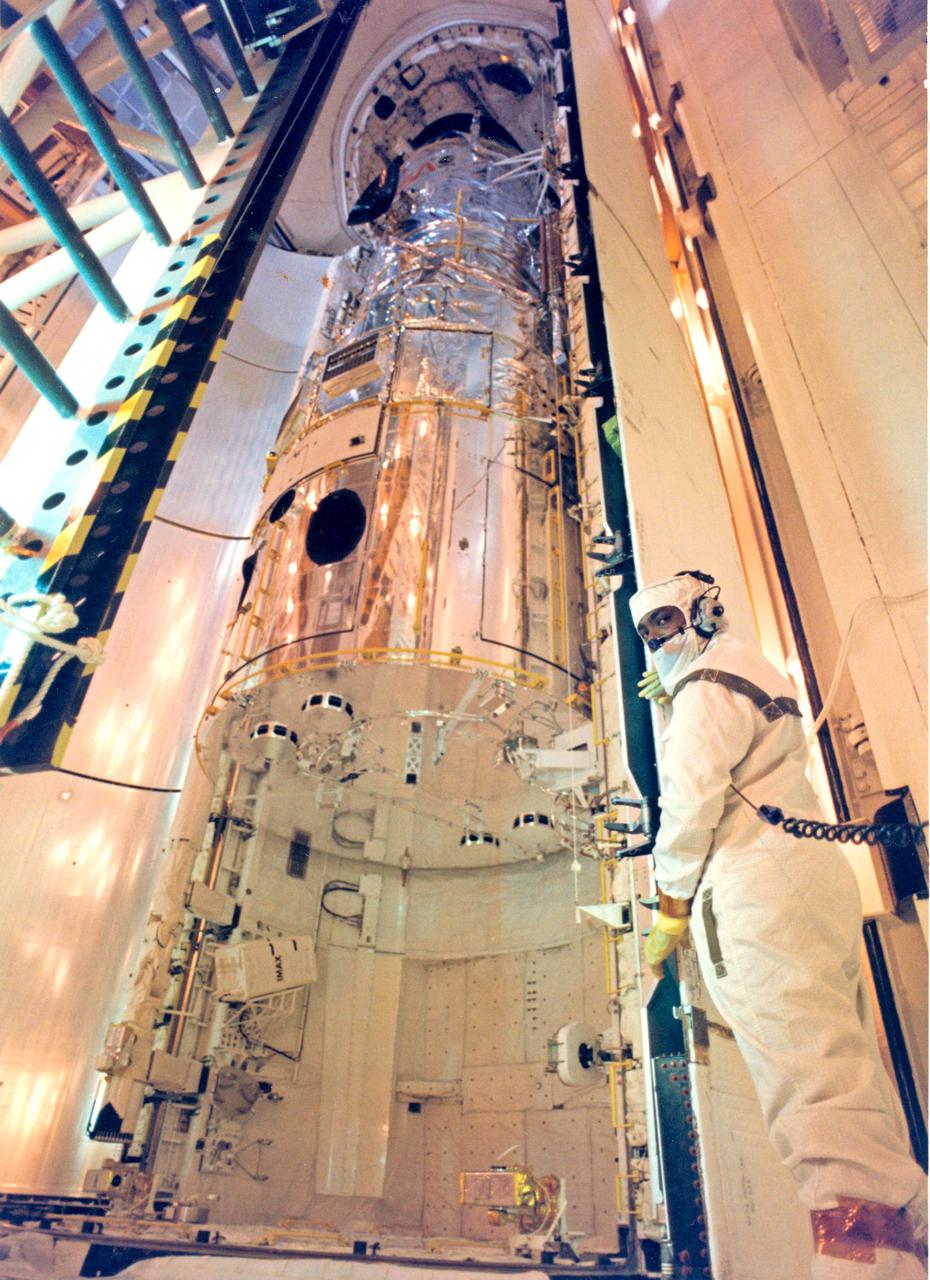
KENNEDY SPACE CENTER, FLA. -- A technician carefully monitors progress as Discovery's payload bay doors close around the Hubble Space Telescope (HST).  The payload bay was closed for flight at 6:24 a.m. Sunday, April 8.  The STS-31 launch is scheduled for 8:47 a.m. Tuesday, April 10.  With HST, astronomers will be able to view 97 percent of the known universe, and will be able to get pictures unlimited and undistorted by the Earth's atmosphere. Compared with earth-based observatories, the HST will be able to view celestial objects that are 50 times fainter, provide images that are 10 times sharper, and see objects that are seven times farther away.
KSC-90pc-0503
CAPE CANAVERAL, Fla. -- At the Kennedy Space Center in Florida, the Hubble Space Telescope is lifted into the vertical position in the Vertical Processing Facility as work begins to process the 94-inch primary mirror telescope for launch on the Discovery on STS-31 in March 1990. With Hubble, astronomers will be able to view 97 percent of the known universe, and will be able to get pictures unlimited and undistorted by the Earth’s atmosphere. Compared with Earth-based observatories, Hubble will be able to view celestial objects that are 50 times fainter, provide images that are 10 times sharper, and see objects that are seven times further away. Photo Credit: NASA
KSC-89pc-0947
KENNEDY SPACE CENTER, FLA. -- The Hubble Space Telescope (HST) is lifted into the workstands in the Vertical Processing Facility as work begins at KSC to process the 94-inch primary mirror telescope for launch on Discovery on Space Shuttle Mission STS-31 in March 1990. With HST, astronomers will be able to view 97 percent of the known universe, and will be able to get pictures unlimited and undistorted by the Earth's atmosphere. Compared with earth-based observatories, the HST will be able to view celestial objects that are 50 times fainter, provide images that are 10 times sharper, and see objects that are seven times farther away. .
KSC-89pc-1006
KENNEDY SPACE CENTER, FLA. -- The Hubble Space Telescope (HST) is lifted into the vertical position in the Vertical Processing Facility as work begins at KSC to process the 94-inch primary mirror telescope for launch on Discovery on Space Shuttle Mission STS-31 in March 1990. With HST, astronomers will be able to view 97 percent of the known universe, and will be able to get pictures unlimited and undistorted by the Earth's atmosphere. Compared with earth-based observatories, the HST will be able to view celestial objects that are 50 times fainter, provide images that are 10 times sharper, and see objects that are seven times farther away. .
KSC-89pc-0949
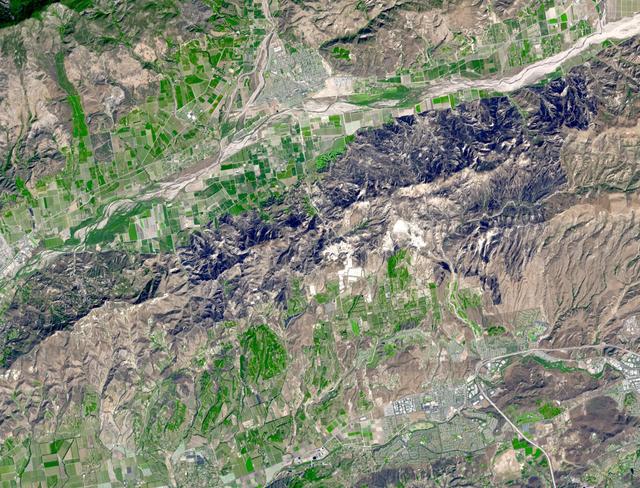
The Guiberson Fire in Ventura County, west of Los Angeles, burned more than 16,000 acres 25 square miles before firefighters were able to contain the blaze on Sept. 28, 2009. This image was acquired by NASA Terra spacecraft.
Guiberson Fire, Ventura County, Calif.
This artist concept depicts an ultra-dense dead star, called a white dwarf, passing in front of a small red star. NASA planet-hunting Kepler was able to detect gravitational lensing by measuring a strangely subtle dip in the star brightness.
Dead Star Warps Light of Red Star Artist Animation
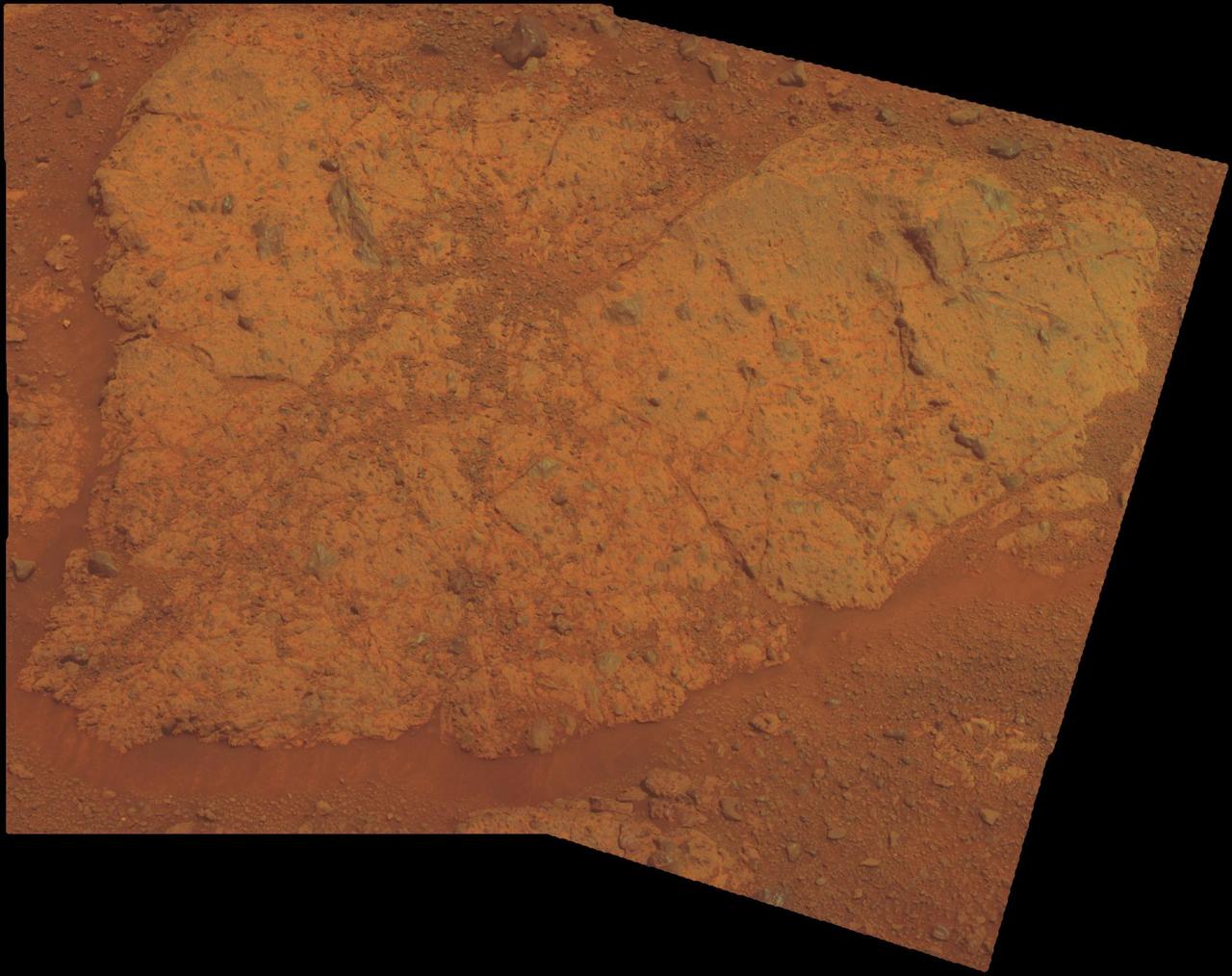
The view of Chester Lake from NASA Mars rover Opportunity is presented in approximate true color. This natural color is the rover team best estimate of what the scene would look like if humans were there and able to see it with their own eyes.
Chester Lake Bedrock on Rim of Endeavour Crater
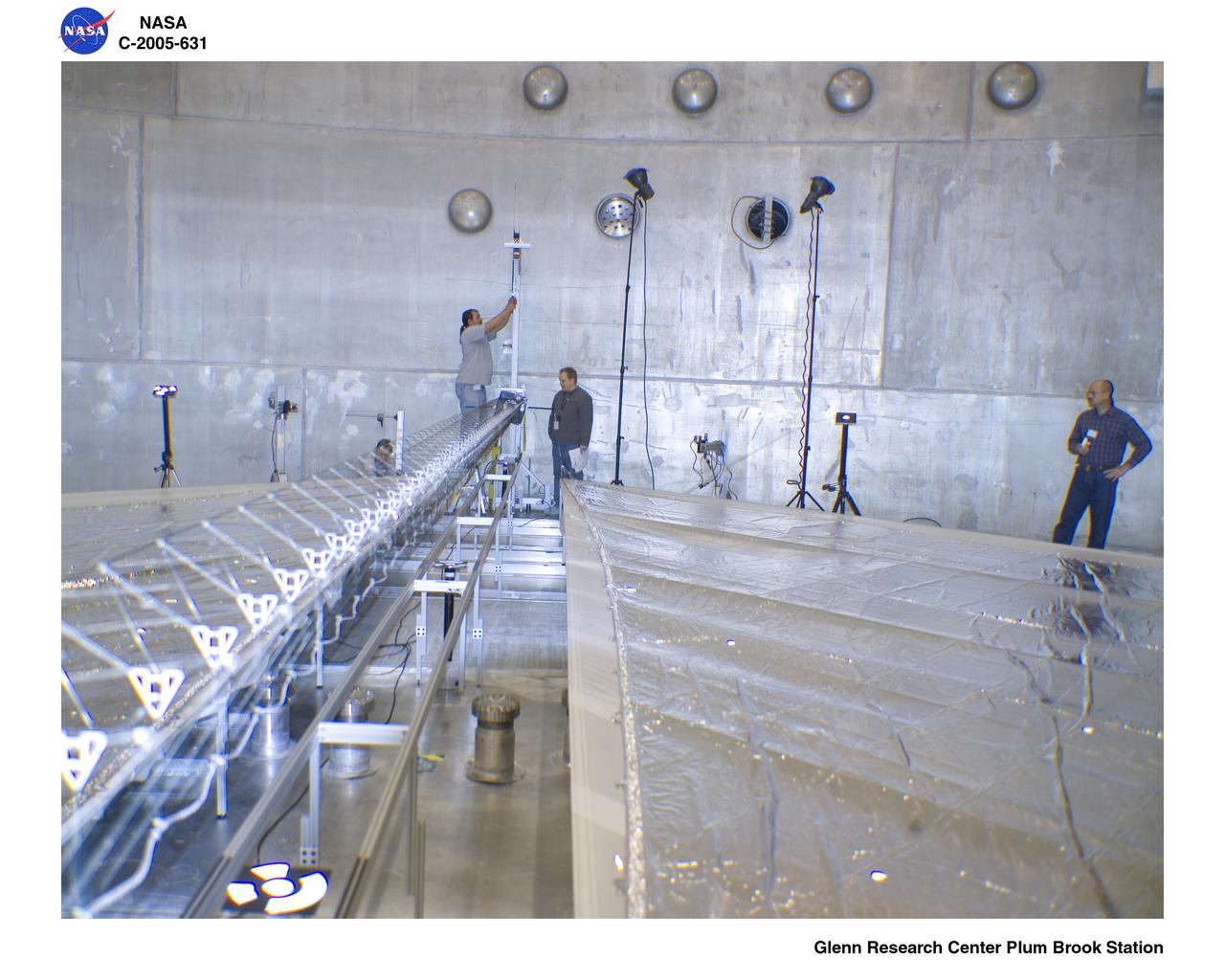
BTK Able 20 meter Solar Sail being deployed  with all four sections for the first time.  Solar sails are intended for deep space science missions.
GRC-2005-C-00631
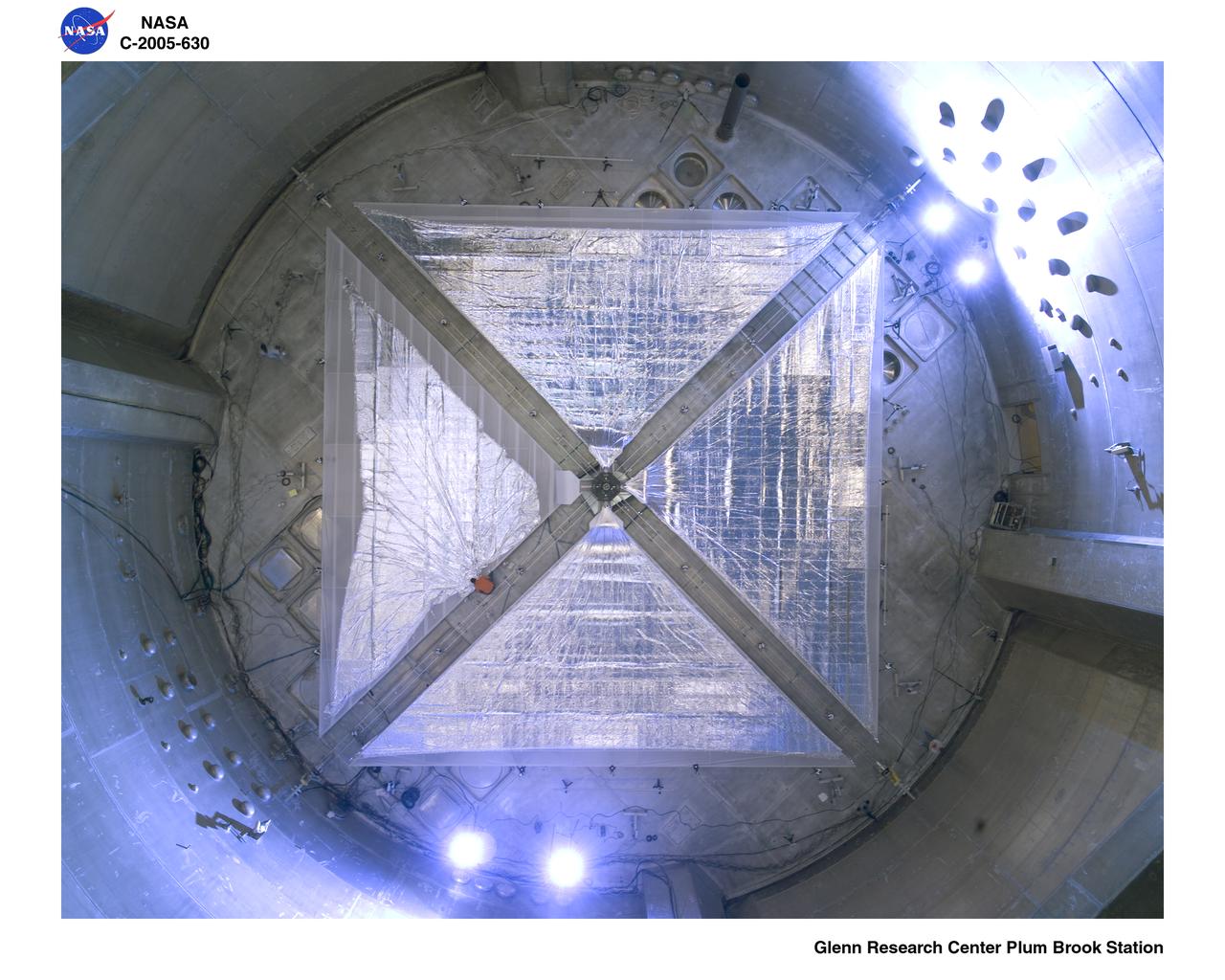
BTK Able 20 meter Solar Sail being deployed  with all four sections for the first time.  Solar sails are intended for deep space science missions.
GRC-2005-C-00630
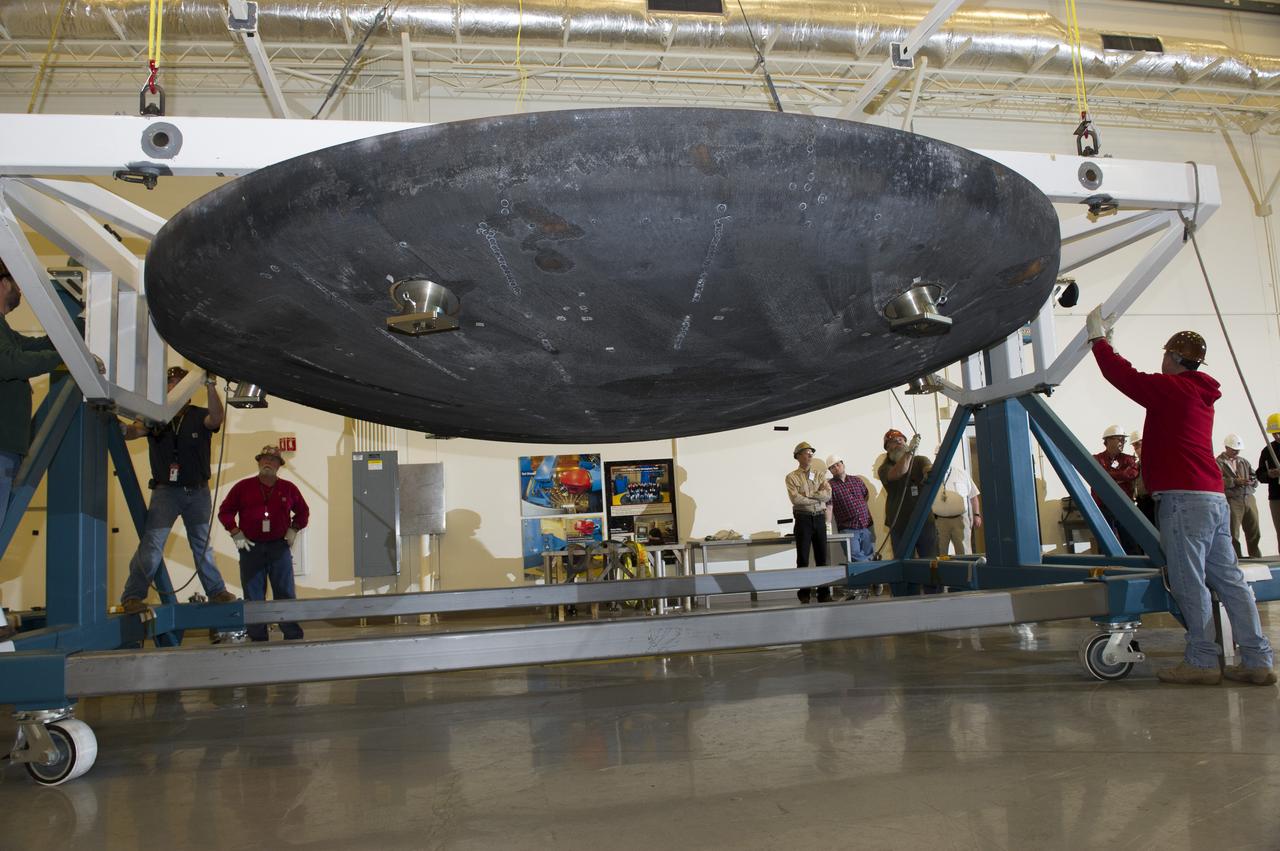
THE HEAT SHIELD ARRIVED MARCH 9 AT MARSHALL, WHERE EXPERTS FROM THE CENTER AND NASA’S AMES RESEARCH CENTER WILL EXTRACT SAMPLES OF THE ABLATIVE MATERIAL, OR AVCOAT
Orion Heat Shield
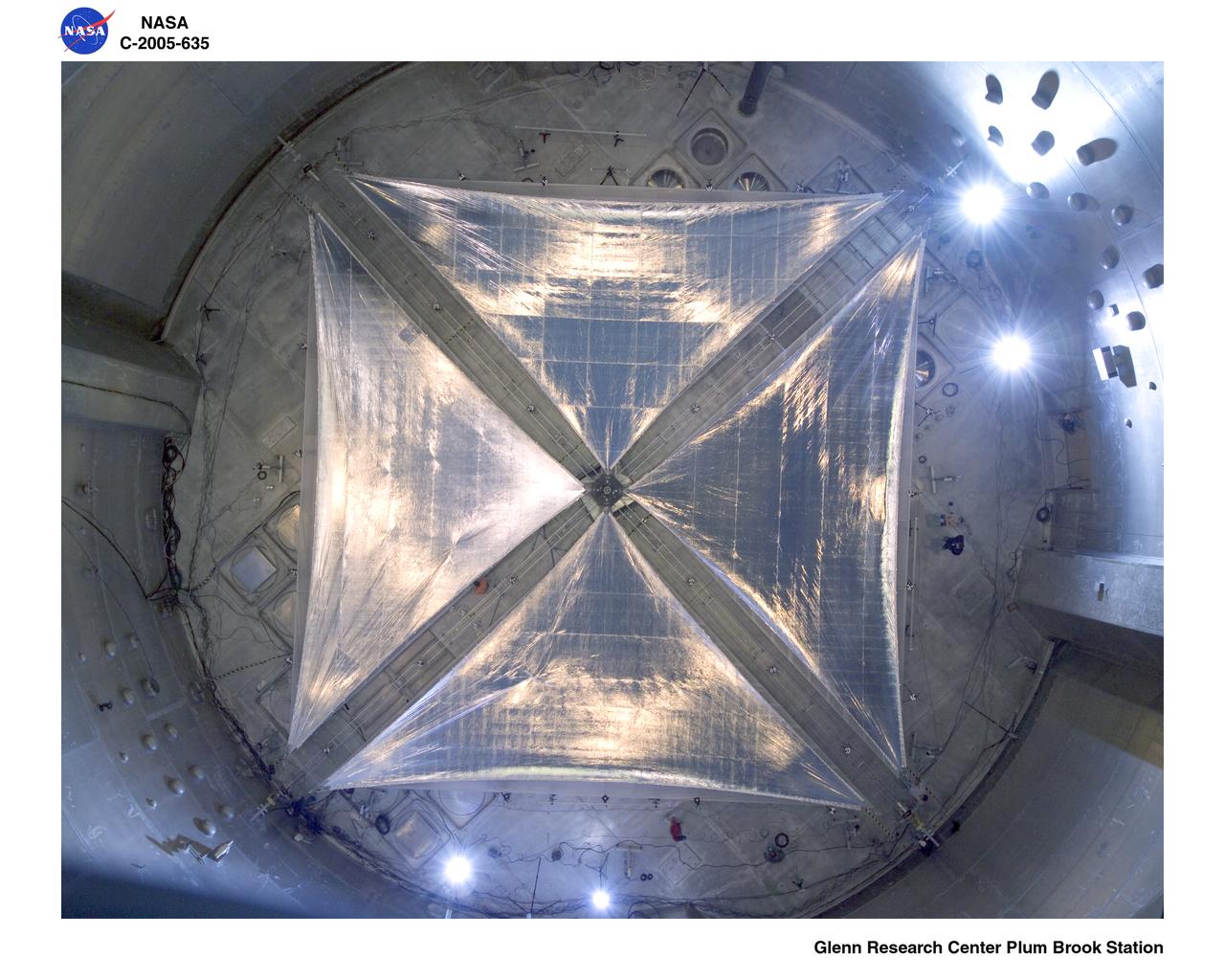
BTK Able 20 meter Solar Sail being deployed  with all four sections for the first time.  Solar sails are intended for deep space science missions.
GRC-2005-C-00635
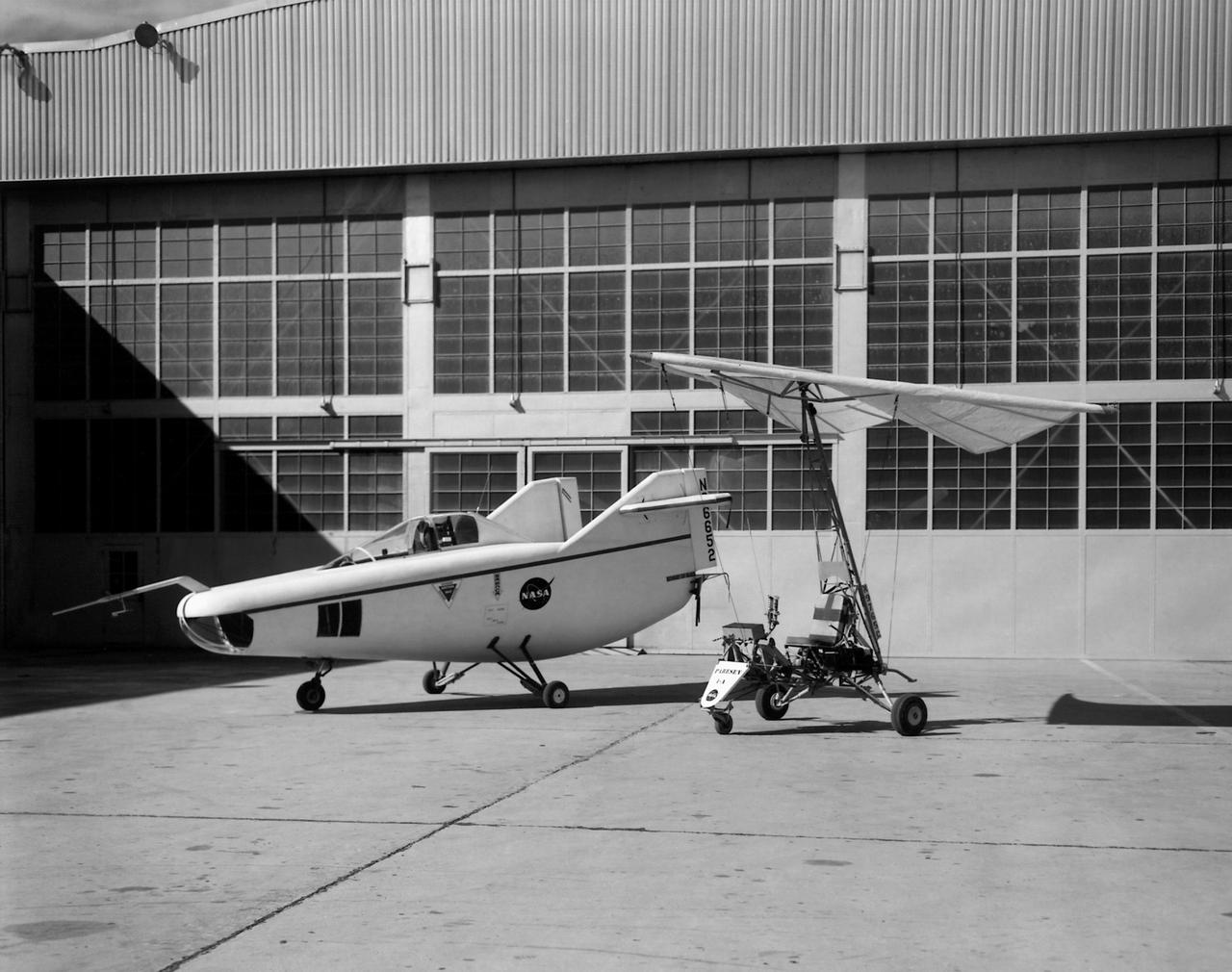
In this photo of the M2-F1 lifting body and the Paresev 1B on the ramp, the viewer sees two vehicles representing different approaches to building a research craft to simulate a spacecraft able to land on the ground instead of splashing down in the ocean as the Mercury capsules did. The M2-F1 was a lifting body, a shape able to re-enter from orbit and land. The Paresev (Paraglider Research Vehicle) used a Rogallo wing that could be (but never was) used to replace a conventional parachute for landing a capsule-type spacecraft, allowing it to make a controlled landing on the ground.
E-10598
On May 28, 1958, Jupiter Intermediate Range Ballistic Missile provided by U.S. Army team in Huntsville, Alabama, launched a nose cone carrying Baker, a South American squirrel monkey and Able, an American-born rhesus monkey. Baker, pictured here and commonly known as "Miss Baker", was later given a home at the U.S. Space and Rocket Center until her death on November 29, 1984. Able died in 1958. (Photo - Courtesy of Huntsville/Madison County Public Library)
Early Rockets
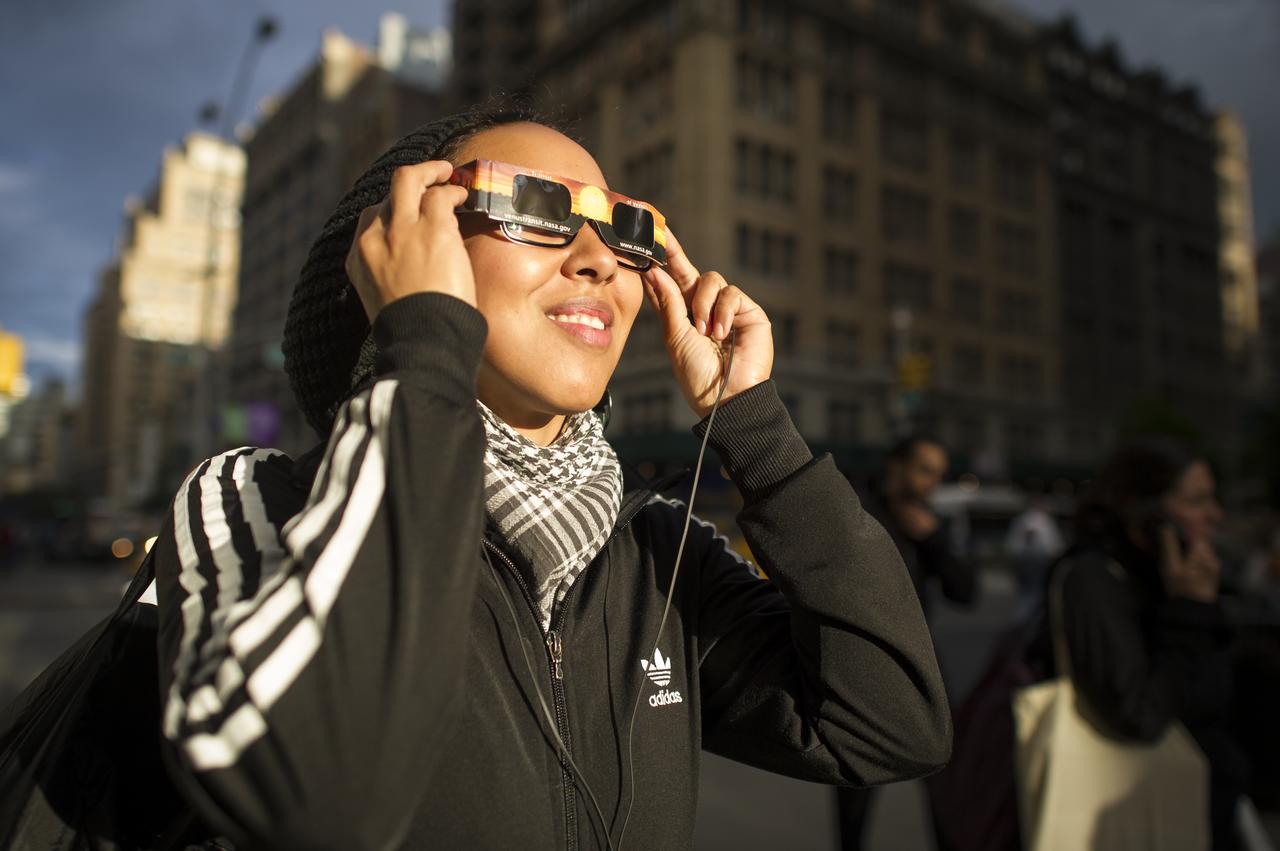
It appeared that New Yorkers were not going to be able to see the transit of the planet Venus across the Sun, but just before the transit was over the sun broke through the clouds and Yvette Lee Kang was able to catch a glimpse of the transit on Tuesday, June 5, 2012 in New York.  A transit of Venus occurs when the planet passes directly between the sun and earth.  This alignment is rare, coming in pairs that are eight years apart but separated by over a century.  The next Venus transit will be in December 2117.  Photo Credit: (NASA/Bill Ingalls)
Venus Transit
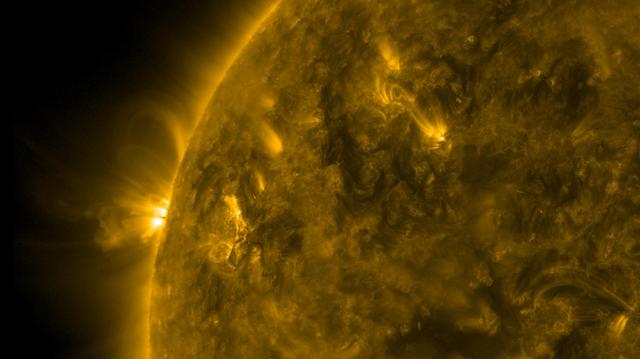
As an active region rotated into view, NASA Solar Dynamics Observatory was able to observe well-defined magnetic loops gyrating above the sun between Mar, 23-24, 2017. These loops appear because charged particles spinning along the magnetic field lines above this active region are made visible in this wavelength of extreme ultraviolet light. The video clip covers about a day and a half of activity.  Movies are available at https://photojournal.jpl.nasa.gov/catalog/PIA21583
Dynamic Loops in Profile
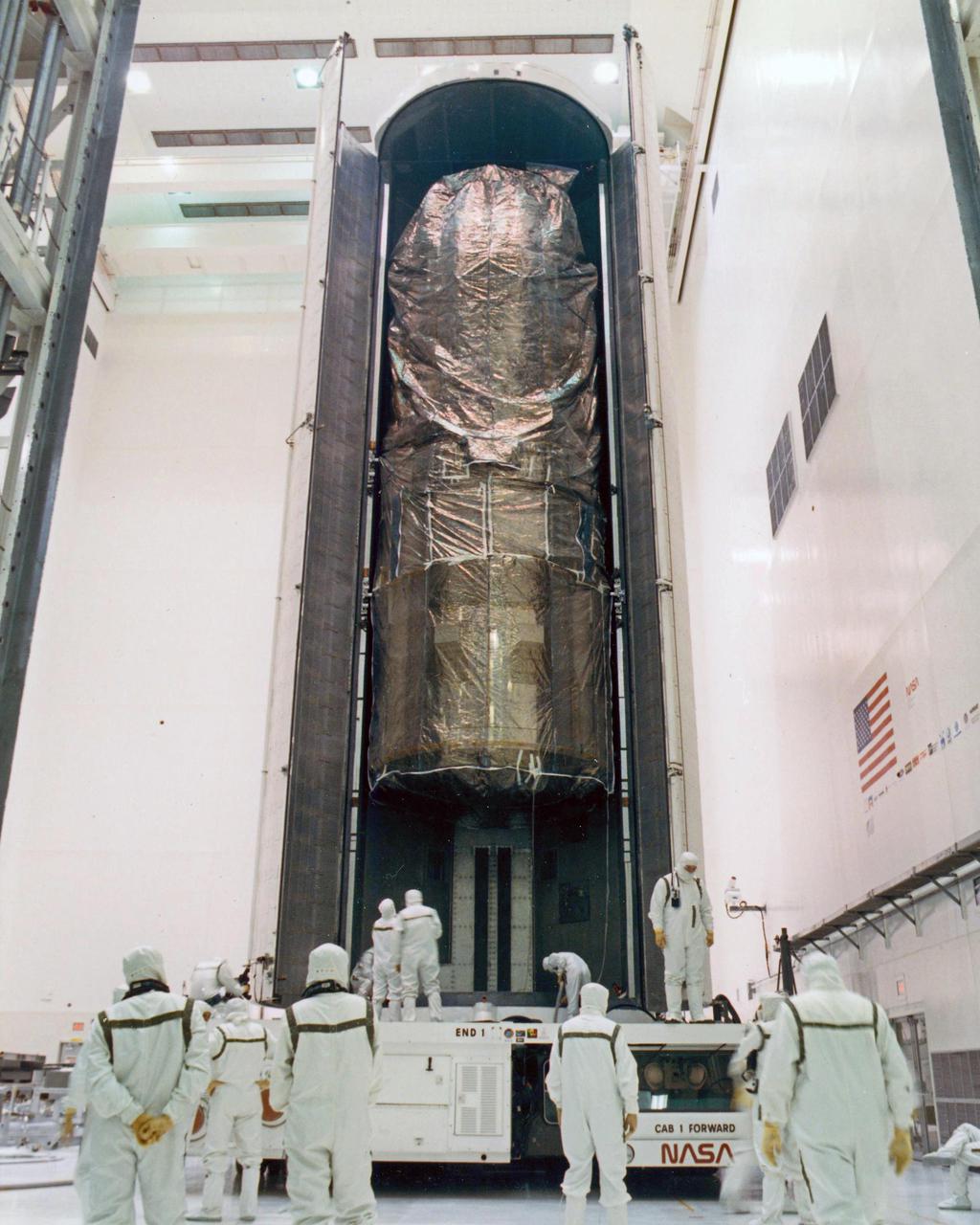
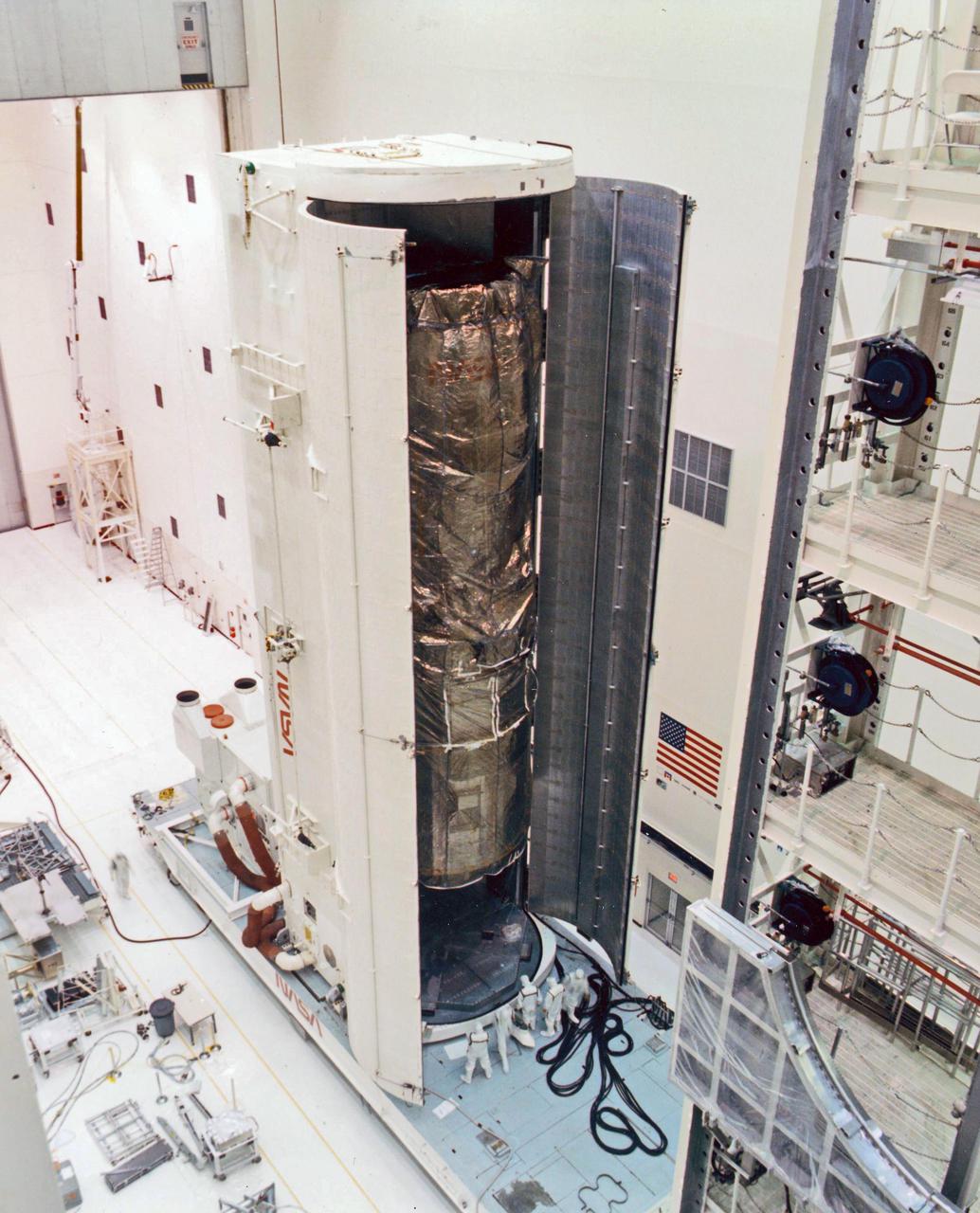
KENNEDY SPACE CENTER, FLA. -- In the Vertical Processing Facility, the Hubble Space Telescope (HST) has been installed in the payload canister and will ride atop the associated payload transporter for a 10-mile trip to Pad B on Launch Complex 39.  The telescope is contained within a protective cocoon which is a double bag sanitary liner.  This provides added cleanliness and protection and has been on HST since its arrival at KSC in October 1989.  It was removed immediately prior to installation of the telescope into the payload bay of the Space Shuttle Discovery.  With HST, astronomers will be able to view 97 percent of the known universe, and will be able to get pictures unlimited and undistorted by the Earth's atmosphere. Compared with earth-based observatories, the HST will be able to view celestial objects that are 50 times fainter, provide images that are 10 times sharper, and see objects that are seven times farther away. .
KSC-90pc-0457
KENNEDY SPACE CENTER, FLA. -- The bus-size Hubble Space Telescope (HST) is carefully being transferred on March 29 from the surgically clean Payload Changeout Room at Launch Pad 39B into the cargo bay of the orbiter Discovery.  The payload ground handling mechanism (left) is a device that extends the HST into the cargo bay (right), allowing workers to fasten it in place with four retention latches.  Deployment of Hubble will occur during the five-day flight of Space Shuttle Mission STS-31, set for April 10.  With HST, astronomers will be able to view 97 percent of the known universe, and will be able to get pictures unlimited and undistorted by the Earth's atmosphere. Compared with earth-based observatories, the HST will be able to view celestial objects that are 50 times fainter, provide images that are 10 times sharper, and see objects that are seven times farther away. .
KSC-90pc-0487
KENNEDY SPACE CENTER, FLA. -- In the Vertical Processing Facility at KSC, technicians begin to peel away the protective 'cocoon' from the lower portion of the Hubble Space Telescope (HST).  Removal from the upper portion has just been completed.  The cocoon is a sanitary liner which further assures cleanliness.  After the lower portion is cut away, there will be a final cleaning of the telescope and a contamination inspection.  A fresh cocoon will then be lowered over HST.  With HST, astronomers will be able to view 97 percent of the known universe, and will be able to get pictures unlimited and undistorted by the Earth's atmosphere. Compared with earth-based observatories, the HST will be able to view celestial objects that are 50 times fainter, provide images that are 10 times sharper, and see objects that are seven times farther away. .
KSC-90pc-0408
KENNEDY SPACE CENTER, FLA. -- In the Vertical Processing Facility, the Hubble Space Telescope (HST) has been installed in the payload canister and will ride atop the associated payload transporter for a 10-mile trip to Pad B on Launch Complex 39.  The telescope is contained within a protective cocoon which is a double bag sanitary liner.  This provides added cleanliness and protection and has been on HST since its arrival at KSC in October 1989.  It was removed immediately prior to installation of the telescope into the payload bay of the Space Shuttle Discovery.  With HST, astronomers will be able to view 97 percent of the known universe, and will be able to get pictures unlimited and undistorted by the Earth's atmosphere. Compared with earth-based observatories, the HST will be able to view celestial objects that are 50 times fainter, provide images that are 10 times sharper, and see objects that are seven times farther away. .
KSC-90pc-0456
The payload bay in the nose of NASA's Altair unmanned aerial vehicle (UAV) will be able to carry up to 700 lbs. of sensors, imaging equipment and other instruments for Earth science missions.
EC02-0188-24
Children anxiously anticipate the opening of a new playground at Kennedy Space Center’s Child Development Center on Aug. 10, 2023. The kids were able to enjoy the playground immediately following a ribbon cutting ceremony.
KSC Child Development Center (CDC) Playground Ribbon Cutting
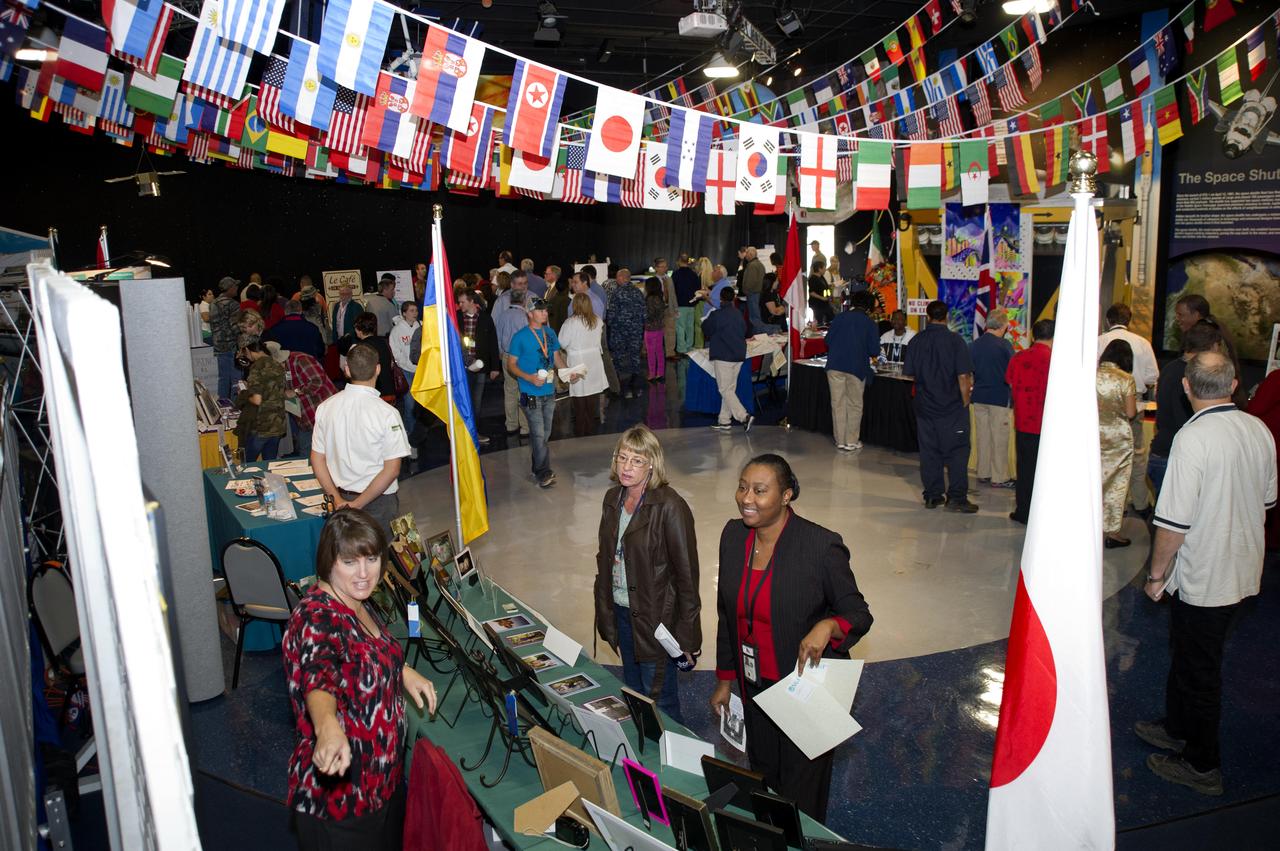
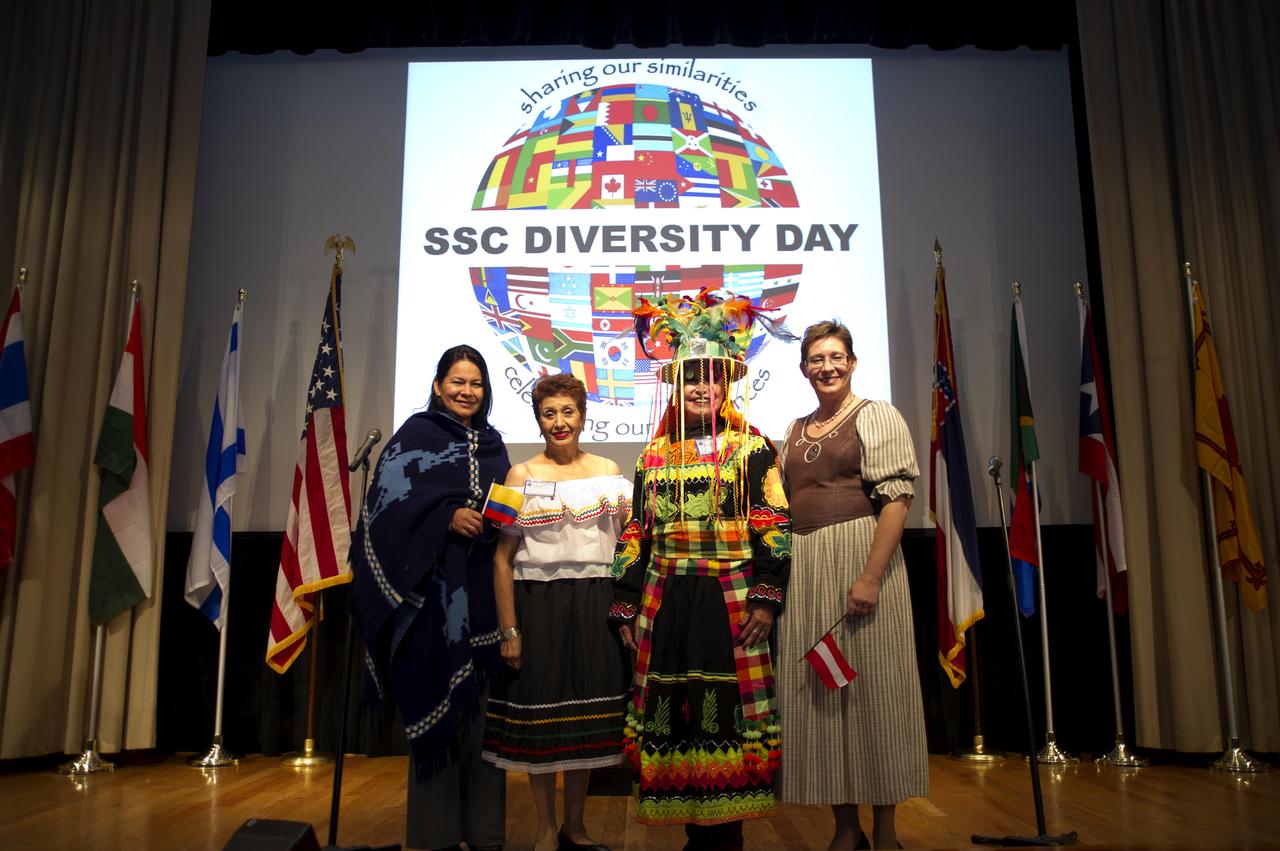
John C. Stennis Space Center employees enjoyed 2012 Diversity Day activities Oct. 31. During the day, Stennis employees were able to visit exhibits highlighting different cultures and participate in a range of activities.
2012 Diversity Day
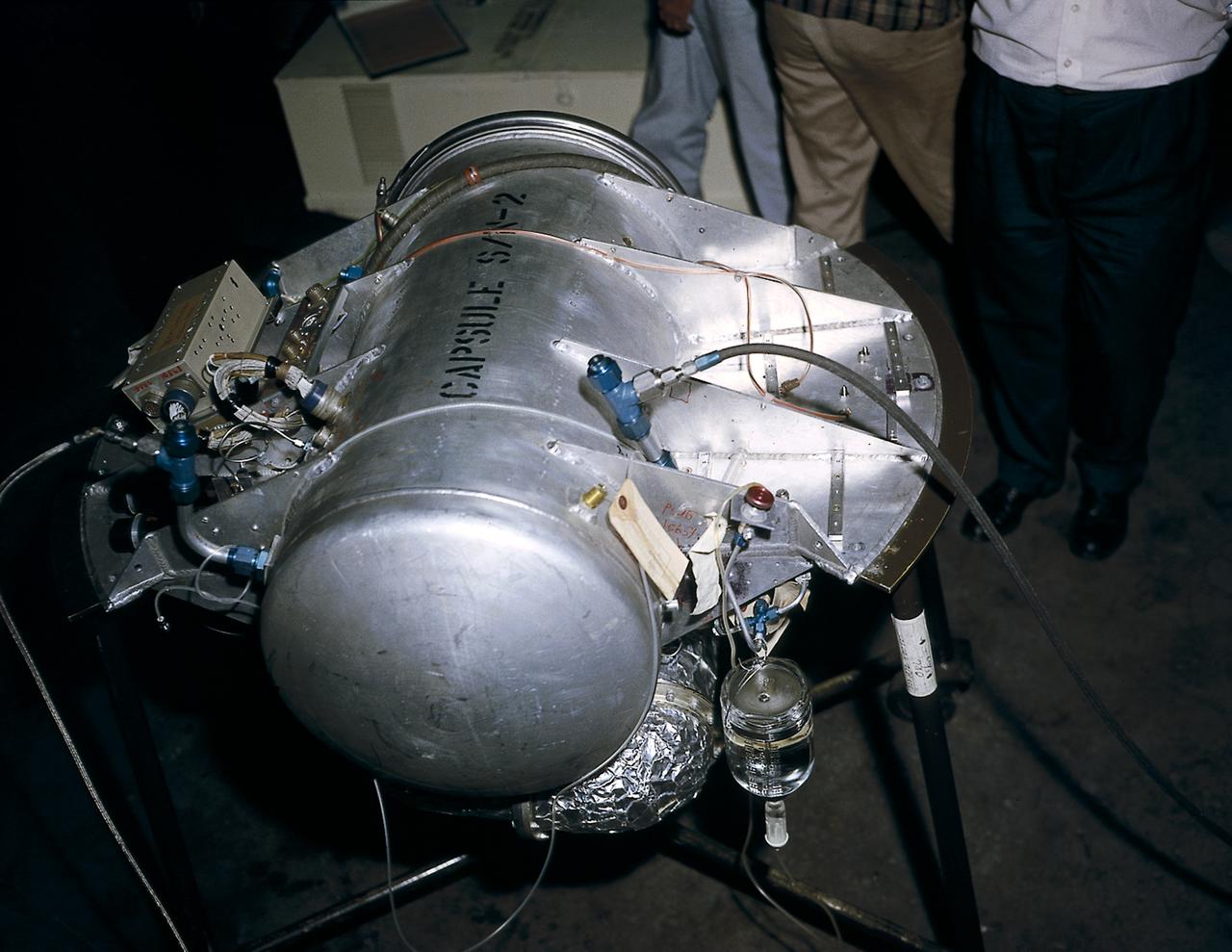
The capsule ready to be installed in the nose cone of Jupiter, AM-18, for pre-flight test, May 18, 1959. The capsule carried monkeys, Baker and Able, as the payload of AM-18 mission
Early Rockets
Children anxiously anticipate the opening of a new playground at Kennedy Space Center’s Child Development Center on Aug. 10, 2023. The kids were able to enjoy the playground immediately following a ribbon cutting ceremony.
KSC Child Development Center (CDC) Playground Ribbon Cutting
PTERA flies with the outer portion of its wings folded 70 degrees downward. The wings were able to fold in-flight thanks to a shape memory alloy material, which is triggered thermally and used in an actuator to move parts of the wing.
NASA Armstrong Flight Tests Shape Memory Alloy Onboard PTERA Testbed
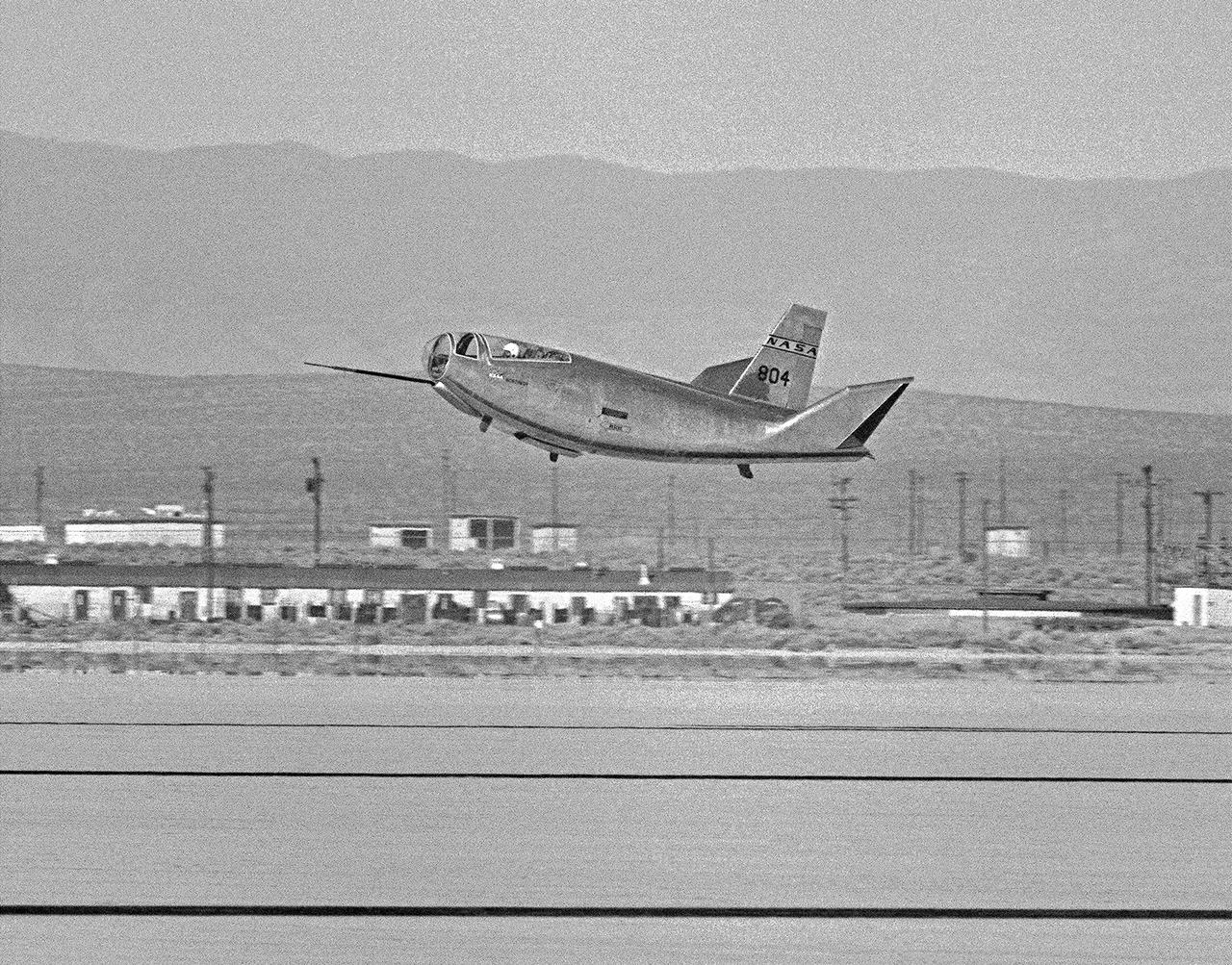
The HL-10 Lifting Body completes its first research flight with a landing on Rogers Dry Lake at Edwards AFB, California, on December 22, 1966. The HL-10 suffered from buffeting and poor control during the flight. Pilot Bruce Peterson was able to make a successful landing despite the severe problems. These were traced to airflow separation from the fins. As a result, the fins were no longer able to stabilize the vehicle. A small reshaping of the fins' leading edges cured the airflow separation, but it was not until March 15, 1968, that the second HL-10 flight occurred.
E-16207
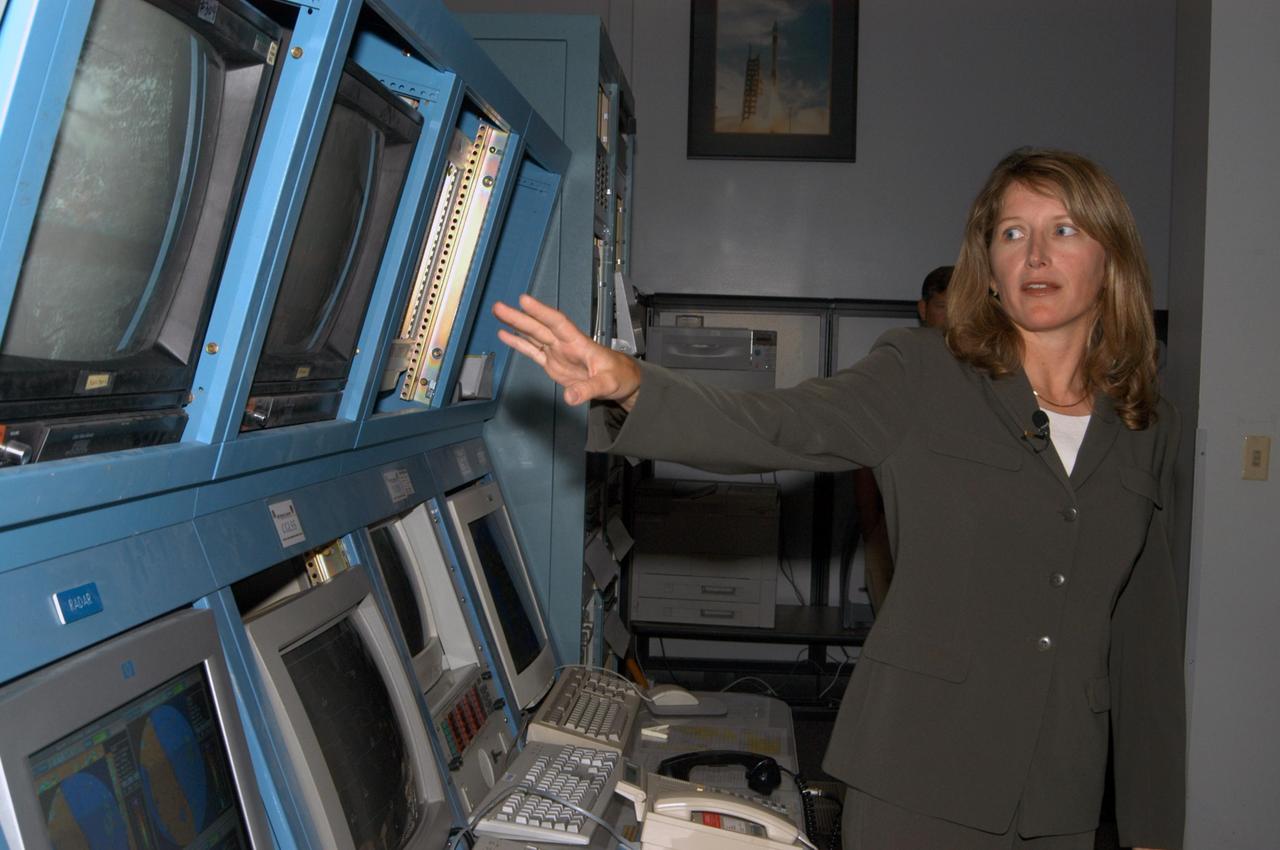
KENNEDY SPACE CENTER, FLA. -   At the Cape Canaveral forecast facility in Florida, Shuttle Weather Officer Kathy Winters briefs the media on how the launch weather forecast is developed.  Attendees also were able to meet the forecasters for the space shuttle and the expendable launch vehicles.  Also participating were members of the Applied Meteorology Unit who provide special expertise to the forecasters by analyzing and interpreting unusual or inconsistent weather data. The media were able to see the release of the Rawinsonde weather balloon carrying instruments aloft to be used as part of developing the forecast.  Photo credit: NASA/George Shelton
KSC-06pd1284
It appeared that New Yorkers were not going to be able to see the transit of the planet Venus across the Sun, but just before the transit was over the sun broke through the clouds and Liz Heller and Andriel Mesznik were able to catch a glimpse of the transit on Tuesday, June 5, 2012 in New York.  A transit of Venus occurs when the planet passes directly between the sun and earth.  This alignment is rare, coming in pairs that are eight years apart but separated by over a century.  The next Venus transit will be in December 2117.  Photo Credit: (NASA/Bill Ingalls)
Venus Transit
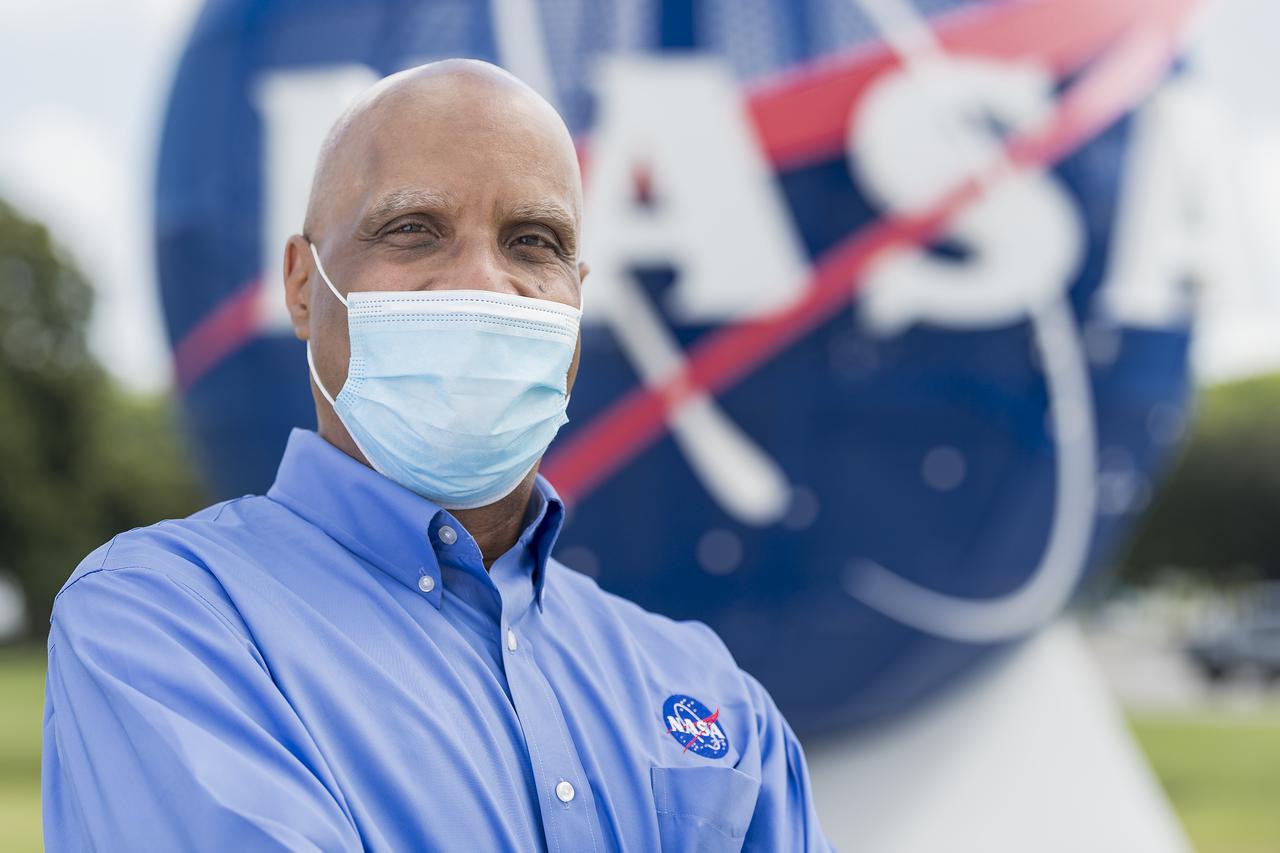
Portrait of Robin "Rob" Lee of the Office of Diversity & Equal Opp. Branch, in front of NASA Langley's "Meatball." The portrait was done for Thalia Patrinos at NASA Headquarters as part of "Faces of NASA" project.   Due to the COVID-19 pandemic, masks were mandated by Governor Northam in Virginia in public settings.  "Well, little did I know, even at a young age, he instilled in me the  importance of seeing people for people. And being able to help people  and being able to meet them in their time of need. And that carried me  throughout my entire life. Even still today.”  — Robin Lee, Director of  Office of Diversity and Equal Opportunity, Langley Research Center
Portrait of Robin "Rob" Lee
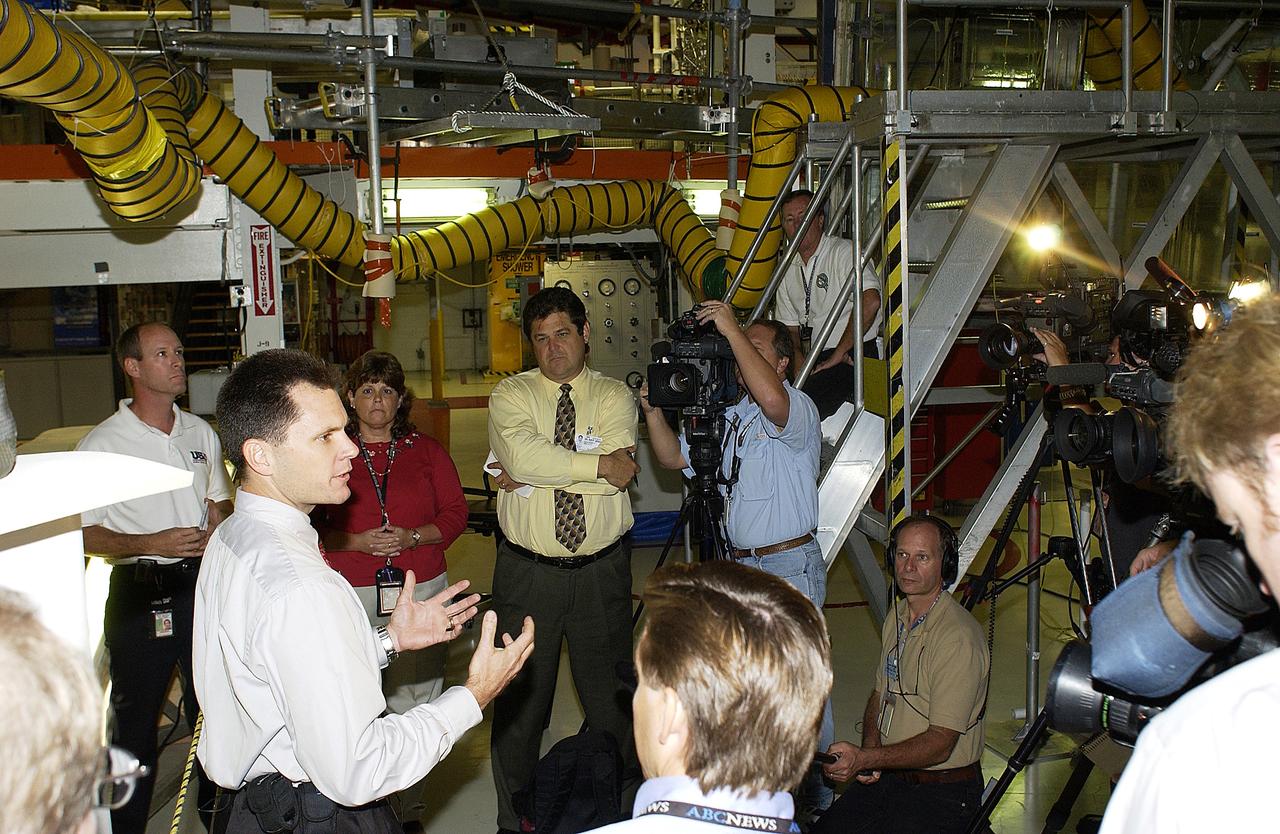
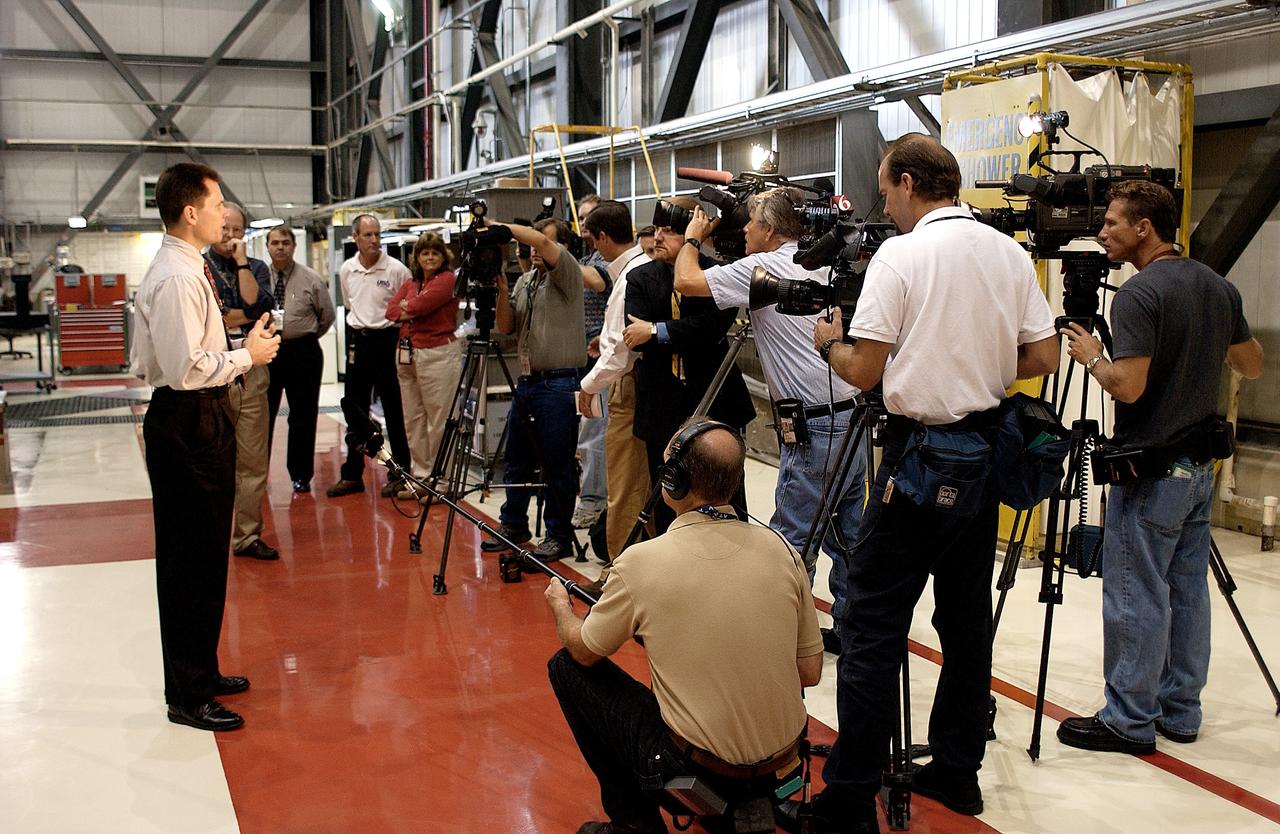
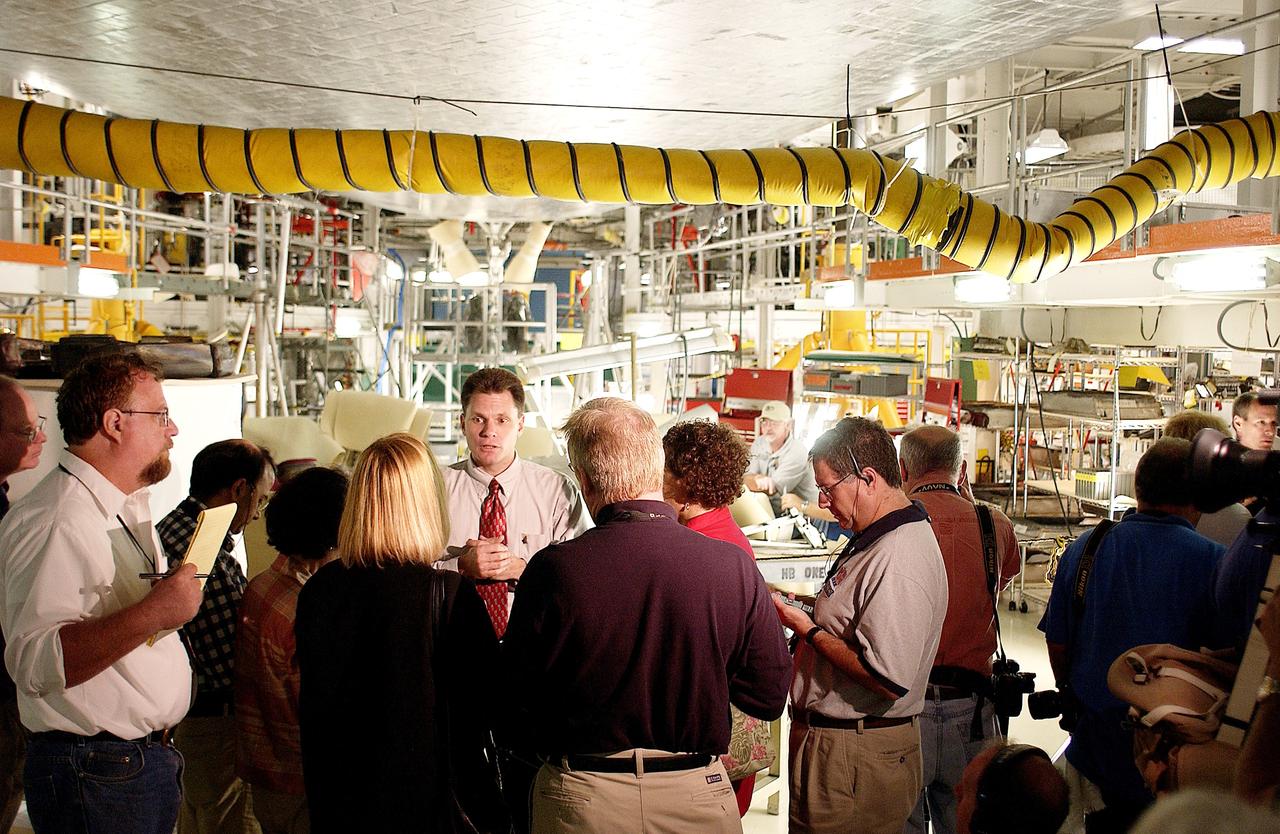
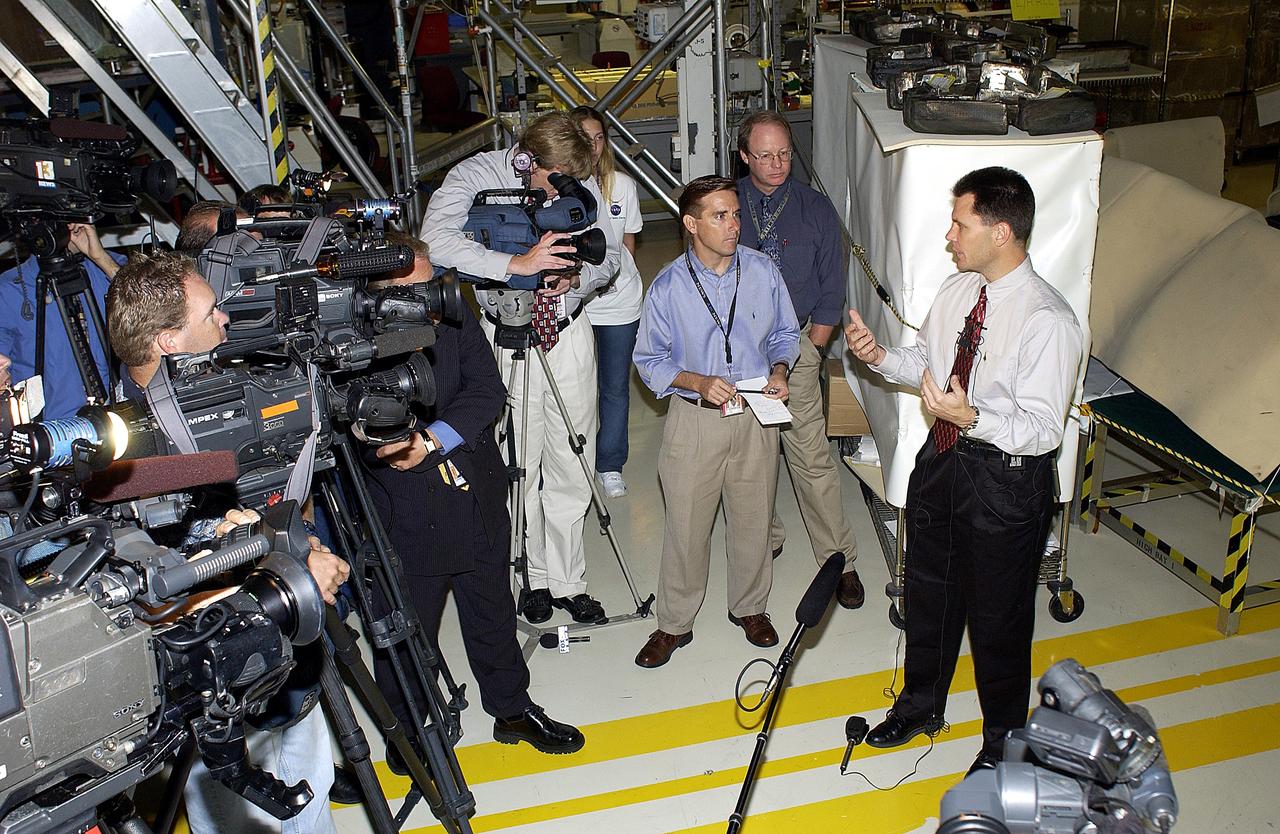
KENNEDY SPACE CENTER, FLA. -  NASA Vehicle Manager Scott Thurston (facing camera) talks to the media in the Orbiter Processing Facility.  The media was invited to see the orbiter Atlantis as it is being prepared for Return to Flight.  Both local and national reporters representing print and TV networks were able to see work in progress on Atlantis, including the reinstallation of the Reinforced Carbon-Carbon panels on the orbiter’s wing leading edge; wiring inspections; and checks of the engines in the Orbital Maneuvering System.
KENNEDY SPACE CENTER, FLA. - NASA Vehicle Manager Scott Thurston (facing camera) talks to the media in the Orbiter Processing Facility. The media was invited to see the orbiter Atlantis as it is being prepared for Return to Flight. Both local and national reporters representing print and TV networks were able to see work in progress on Atlantis, including the reinstallation of the Reinforced Carbon-Carbon panels on the orbiter’s wing leading edge; wiring inspections; and checks of the engines in the Orbital Maneuvering System.
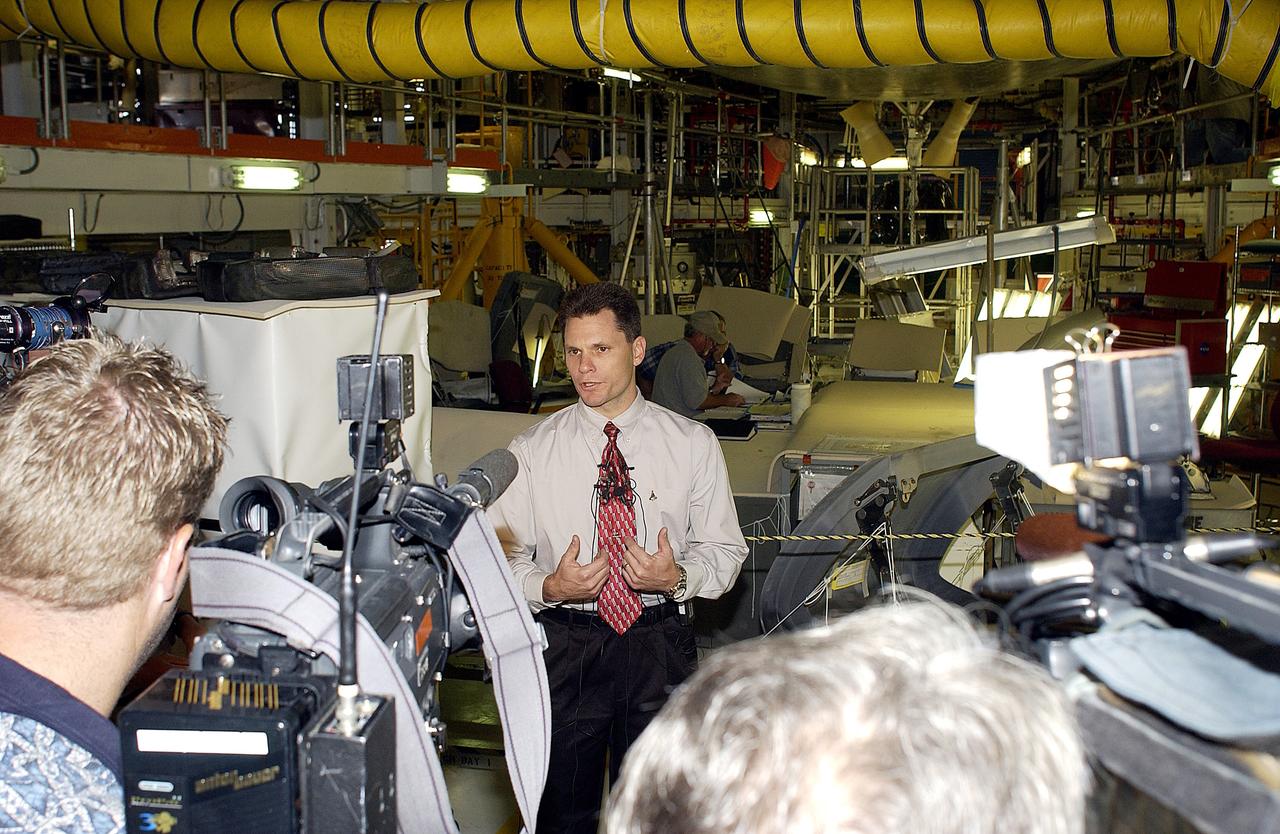
KENNEDY SPACE CENTER, FLA. -  NASA Vehicle Manager Scott Thurston talks to the media in the Orbiter Processing Facility.  The media was invited to see the orbiter Atlantis as it is being prepared for Return to Flight.  Both local and national reporters representing print and TV networks were able to see work in progress on Atlantis, including the reinstallation of the Reinforced Carbon-Carbon panels on the orbiter’s wing leading edge; wiring inspections; and checks of the engines in the Orbital Maneuvering System.
KENNEDY SPACE CENTER, FLA. - NASA Vehicle Manager Scott Thurston talks to the media in the Orbiter Processing Facility. The media was invited to see the orbiter Atlantis as it is being prepared for Return to Flight. Both local and national reporters representing print and TV networks were able to see work in progress on Atlantis, including the reinstallation of the Reinforced Carbon-Carbon panels on the orbiter’s wing leading edge; wiring inspections; and checks of the engines in the Orbital Maneuvering System.
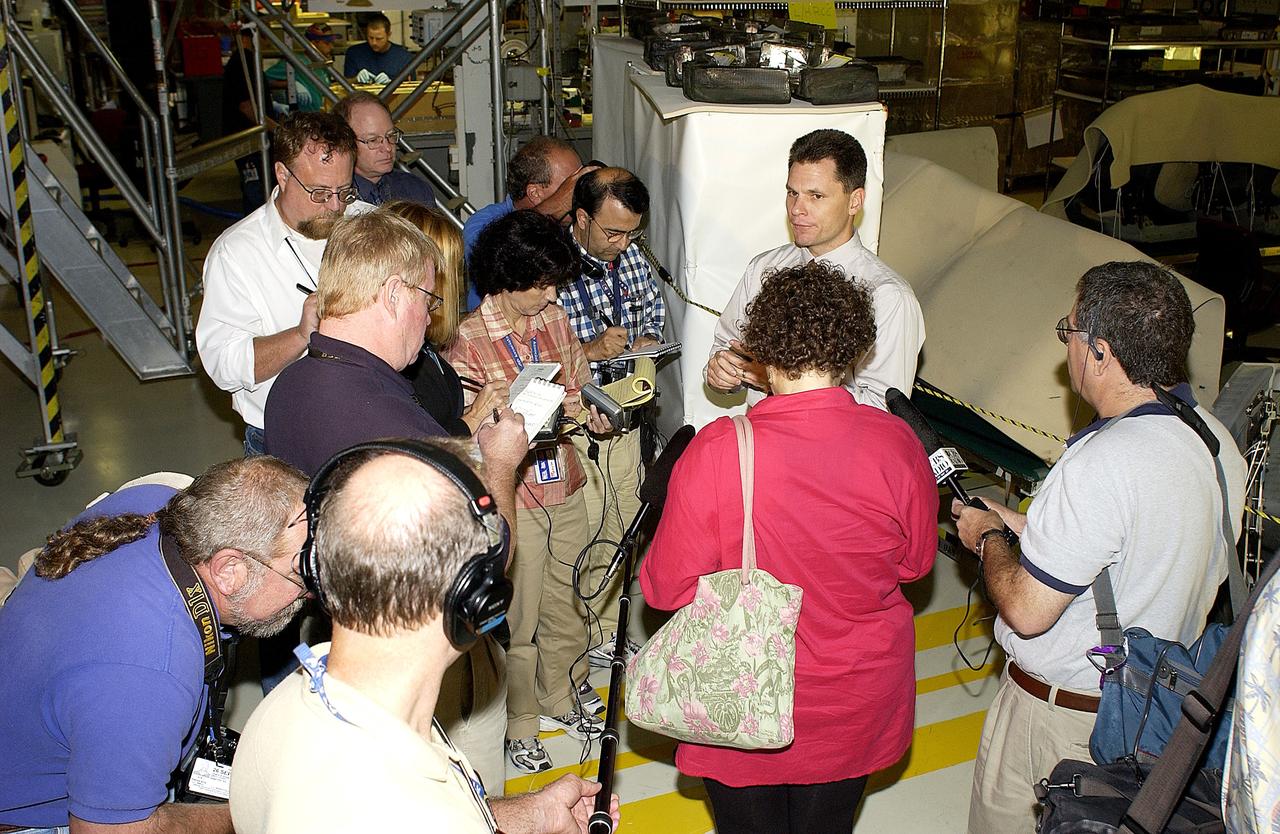
KENNEDY SPACE CENTER, FLA. - NASA Vehicle Manager Scott Thurston (left) talks to a phalanx of media in the Orbiter Processing Facility.  The media was invited to see the orbiter Atlantis as it is being prepared for Return to Flight.  Both local and national reporters representing print and TV networks were able to see work in progress on Atlantis, including the reinstallation of the Reinforced Carbon-Carbon panels on the orbiter’s wing leading edge; wiring inspections; and checks of the engines in the Orbital Maneuvering System.
KENNEDY SPACE CENTER, FLA. - NASA Vehicle Manager Scott Thurston (left) talks to a phalanx of media in the Orbiter Processing Facility. The media was invited to see the orbiter Atlantis as it is being prepared for Return to Flight. Both local and national reporters representing print and TV networks were able to see work in progress on Atlantis, including the reinstallation of the Reinforced Carbon-Carbon panels on the orbiter’s wing leading edge; wiring inspections; and checks of the engines in the Orbital Maneuvering System.
KENNEDY SPACE CENTER, FLA. -  NASA Vehicle Manager Scott Thurston (facing camera) talks to the media in the Orbiter Processing Facility.  The media was invited to see the orbiter Atlantis as it is being prepared for Return to Flight.  Both local and national reporters representing print and TV networks were able to see work in progress on Atlantis, including the reinstallation of the Reinforced Carbon-Carbon panels on the orbiter’s wing leading edge; wiring inspections; and checks of the engines in the Orbital Maneuvering System.
KENNEDY SPACE CENTER, FLA. - NASA Vehicle Manager Scott Thurston (facing camera) talks to the media in the Orbiter Processing Facility. The media was invited to see the orbiter Atlantis as it is being prepared for Return to Flight. Both local and national reporters representing print and TV networks were able to see work in progress on Atlantis, including the reinstallation of the Reinforced Carbon-Carbon panels on the orbiter’s wing leading edge; wiring inspections; and checks of the engines in the Orbital Maneuvering System.
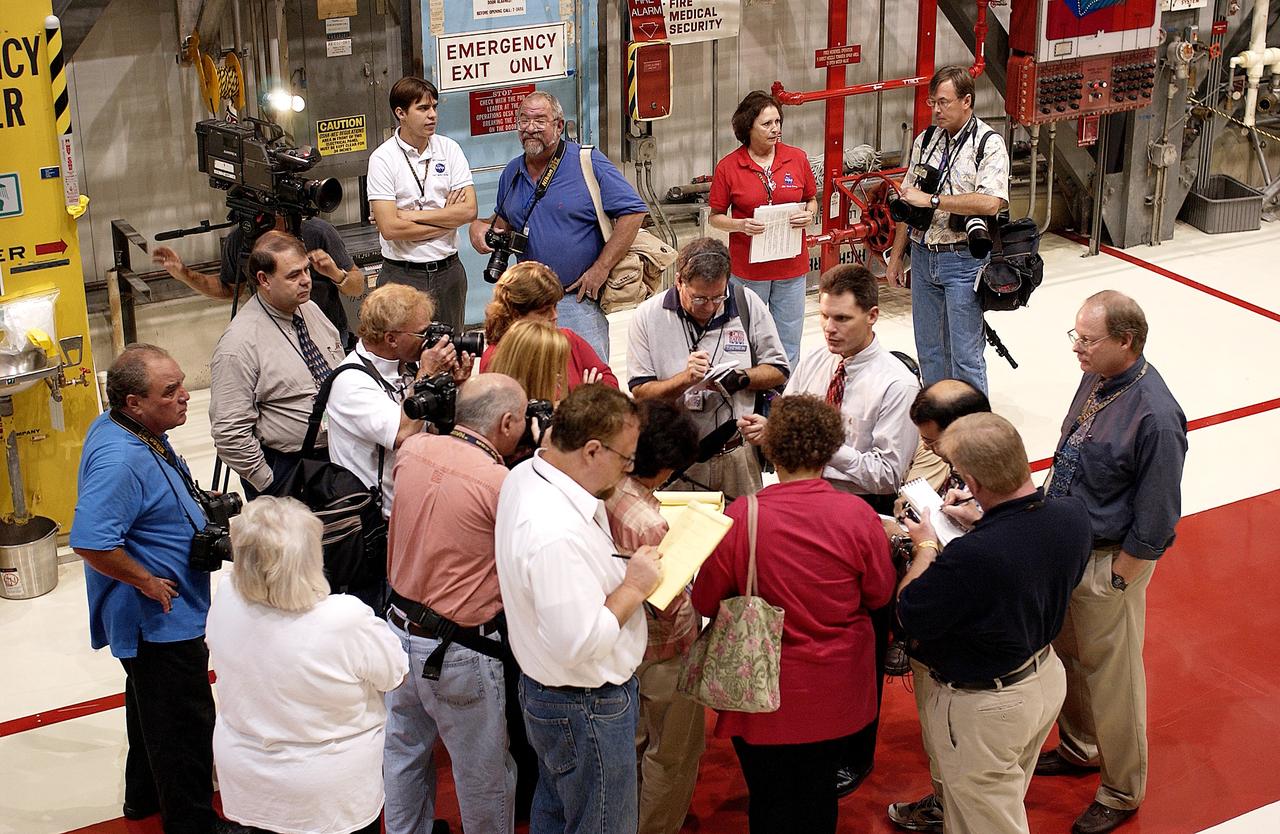
KENNEDY SPACE CENTER, FLA. -   The media gather around NASA Vehicle Manager Scott Thurston (white shirt, right) who talks about some of the work being done on the orbiter Atlantis as it is being prepared for Return to Flight in the Orbiter Processing Facility.   Both local and national reporters representing print and TV networks were able to see work in progress on Atlantis, including the reinstallation of the Reinforced Carbon-Carbon panels on the orbiter’s wing leading edge; wiring inspections; and checks of the engines in the Orbital Maneuvering System.
KENNEDY SPACE CENTER, FLA. - The media gather around NASA Vehicle Manager Scott Thurston (white shirt, right) who talks about some of the work being done on the orbiter Atlantis as it is being prepared for Return to Flight in the Orbiter Processing Facility. Both local and national reporters representing print and TV networks were able to see work in progress on Atlantis, including the reinstallation of the Reinforced Carbon-Carbon panels on the orbiter’s wing leading edge; wiring inspections; and checks of the engines in the Orbital Maneuvering System.
KENNEDY SPACE CENTER, FLA. -   NASA Vehicle Manager Scott Thurston (right)  talks to the media in the Orbiter Processing Facility.  The media was invited to see the orbiter Atlantis as it is being prepared for Return to Flight.  Both local and national reporters representing print and TV networks were able to see work in progress on Atlantis, including the reinstallation of the Reinforced Carbon-Carbon panels on the orbiter’s wing leading edge; wiring inspections; and checks of the engines in the Orbital Maneuvering System.  will be available to discuss the work and answer questions.
KENNEDY SPACE CENTER, FLA. - NASA Vehicle Manager Scott Thurston (right) talks to the media in the Orbiter Processing Facility. The media was invited to see the orbiter Atlantis as it is being prepared for Return to Flight. Both local and national reporters representing print and TV networks were able to see work in progress on Atlantis, including the reinstallation of the Reinforced Carbon-Carbon panels on the orbiter’s wing leading edge; wiring inspections; and checks of the engines in the Orbital Maneuvering System. will be available to discuss the work and answer questions.
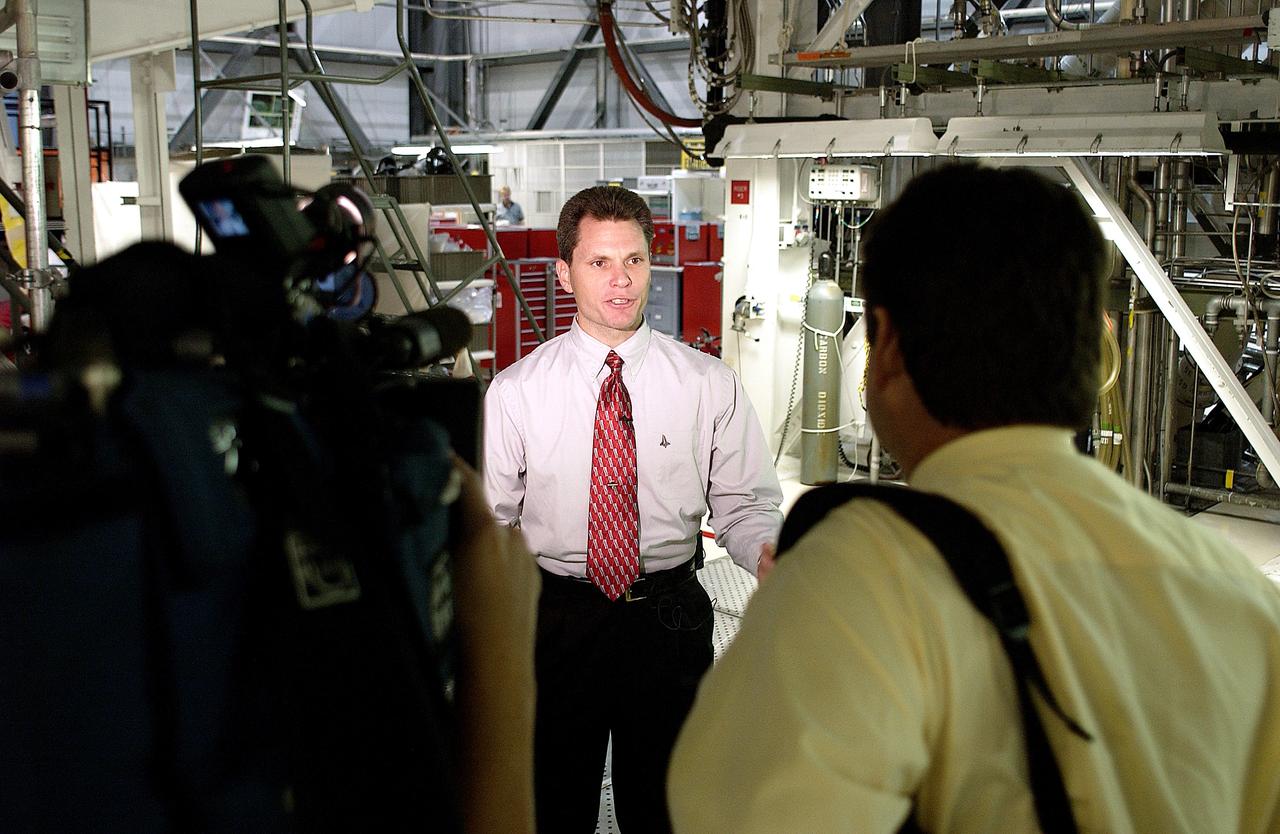
KENNEDY SPACE CENTER, FLA. -   NASA Vehicle Manager Scott Thurston (right)  talks to the media in the Orbiter Processing Facility .  The media was invited to see the orbiter Atlantis as it is being prepared for Return to Flight.  Both local and national reporters representing print and TV networks were able to see work in progress on Atlantis, including the reinstallation of the Reinforced Carbon-Carbon panels on the orbiter’s wing leading edge; wiring inspections; and checks of the engines in the Orbital Maneuvering System.
KENNEDY SPACE CENTER, FLA. - NASA Vehicle Manager Scott Thurston (right) talks to the media in the Orbiter Processing Facility . The media was invited to see the orbiter Atlantis as it is being prepared for Return to Flight. Both local and national reporters representing print and TV networks were able to see work in progress on Atlantis, including the reinstallation of the Reinforced Carbon-Carbon panels on the orbiter’s wing leading edge; wiring inspections; and checks of the engines in the Orbital Maneuvering System.
KENNEDY SPACE CENTER, FLA. -   NASA Vehicle Manager Scott Thurston talks to the media in the Orbiter Processing Facility.  The media was invited to see the orbiter Atlantis as it is being prepared for Return to Flight.  Both local and national reporters representing print and TV networks were able to see work in progress on Atlantis, including the reinstallation of the Reinforced Carbon-Carbon panels on the orbiter’s wing leading edge; wiring inspections; and checks of the engines in the Orbital Maneuvering System.
KENNEDY SPACE CENTER, FLA. - NASA Vehicle Manager Scott Thurston talks to the media in the Orbiter Processing Facility. The media was invited to see the orbiter Atlantis as it is being prepared for Return to Flight. Both local and national reporters representing print and TV networks were able to see work in progress on Atlantis, including the reinstallation of the Reinforced Carbon-Carbon panels on the orbiter’s wing leading edge; wiring inspections; and checks of the engines in the Orbital Maneuvering System.
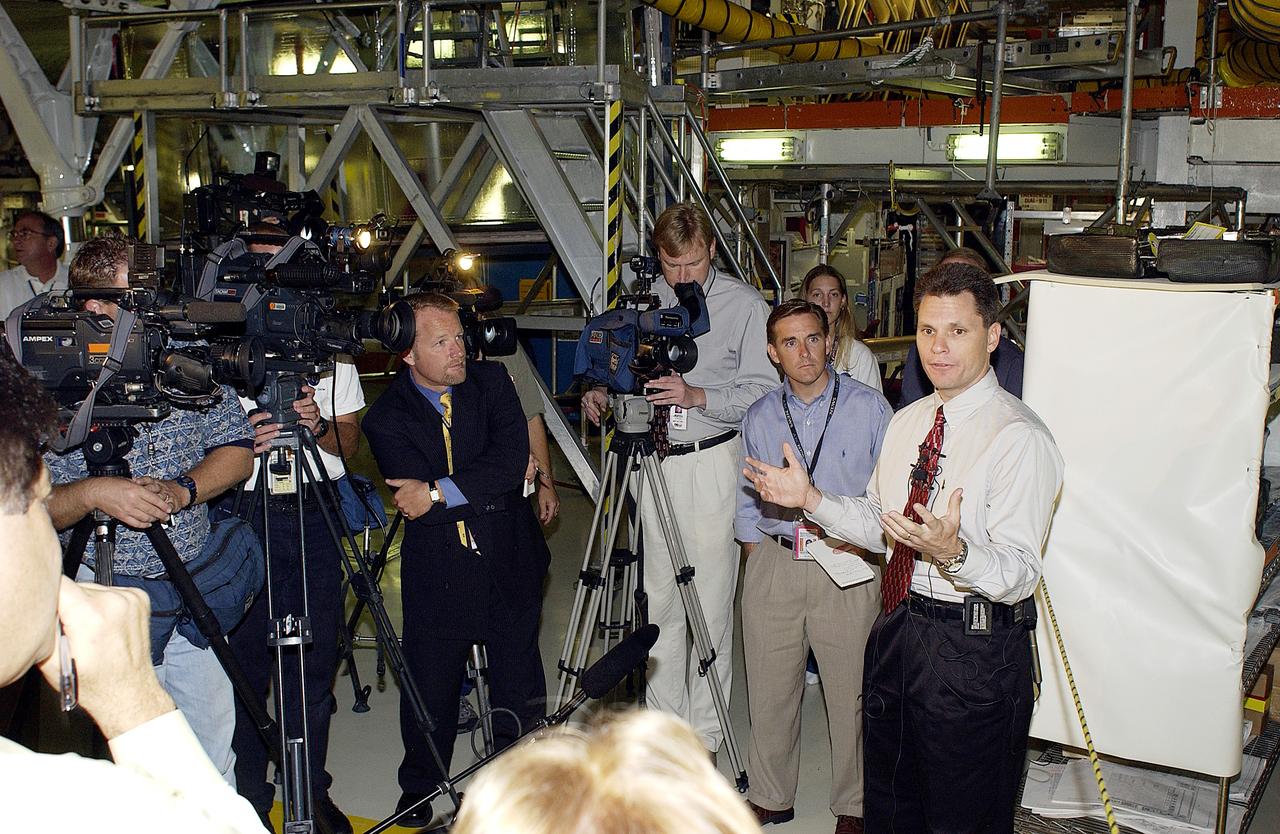
KENNEDY SPACE CENTER, FLA. -   NASA Vehicle Manager Scott Thurston (hands extended) talks to the media in the Orbiter Processing Facility.  The media was invited to see the orbiter Atlantis as it is being prepared for Return to Flight.  Both local and national reporters representing print and TV networks were able to see work in progress on Atlantis, including the reinstallation of the Reinforced Carbon-Carbon panels on the orbiter’s wing leading edge; wiring inspections; and checks of the engines in the Orbital Maneuvering System.
KENNEDY SPACE CENTER, FLA. - NASA Vehicle Manager Scott Thurston (hands extended) talks to the media in the Orbiter Processing Facility. The media was invited to see the orbiter Atlantis as it is being prepared for Return to Flight. Both local and national reporters representing print and TV networks were able to see work in progress on Atlantis, including the reinstallation of the Reinforced Carbon-Carbon panels on the orbiter’s wing leading edge; wiring inspections; and checks of the engines in the Orbital Maneuvering System.
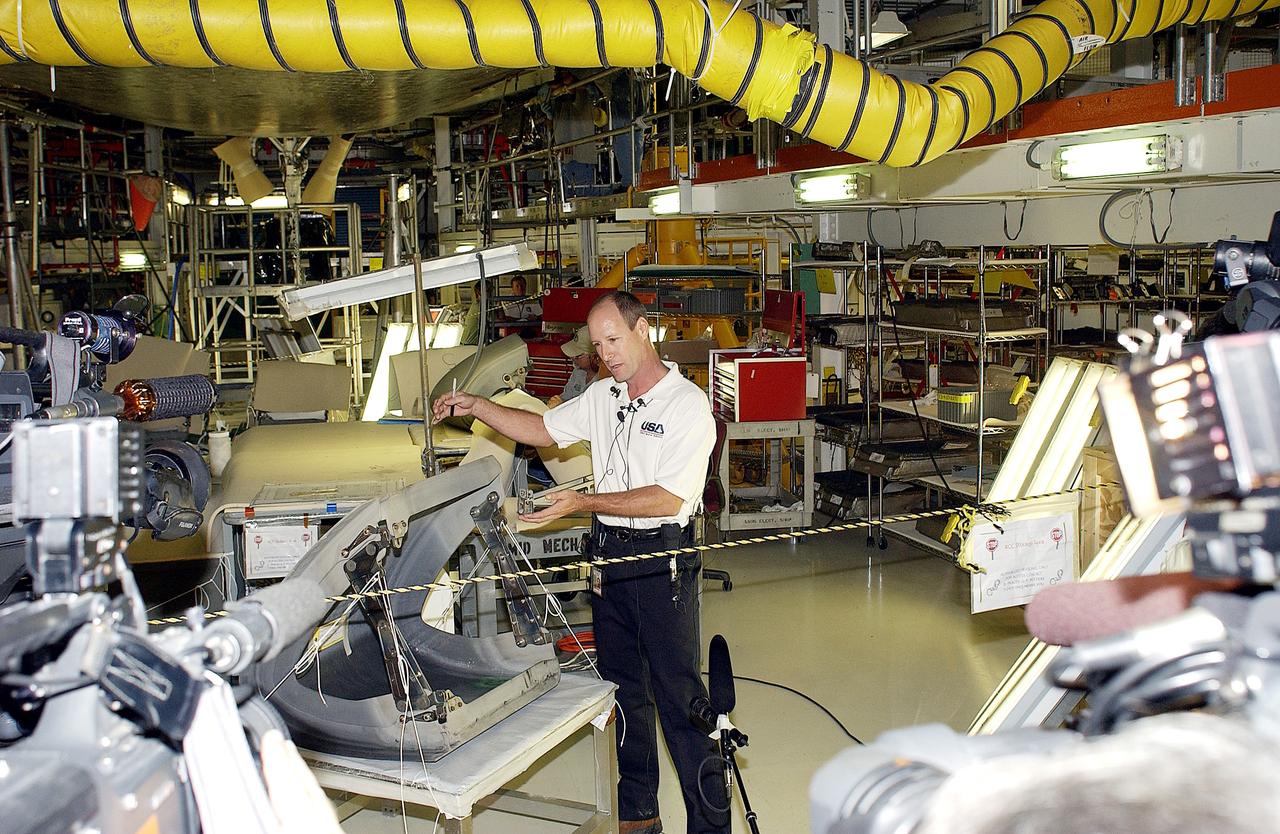
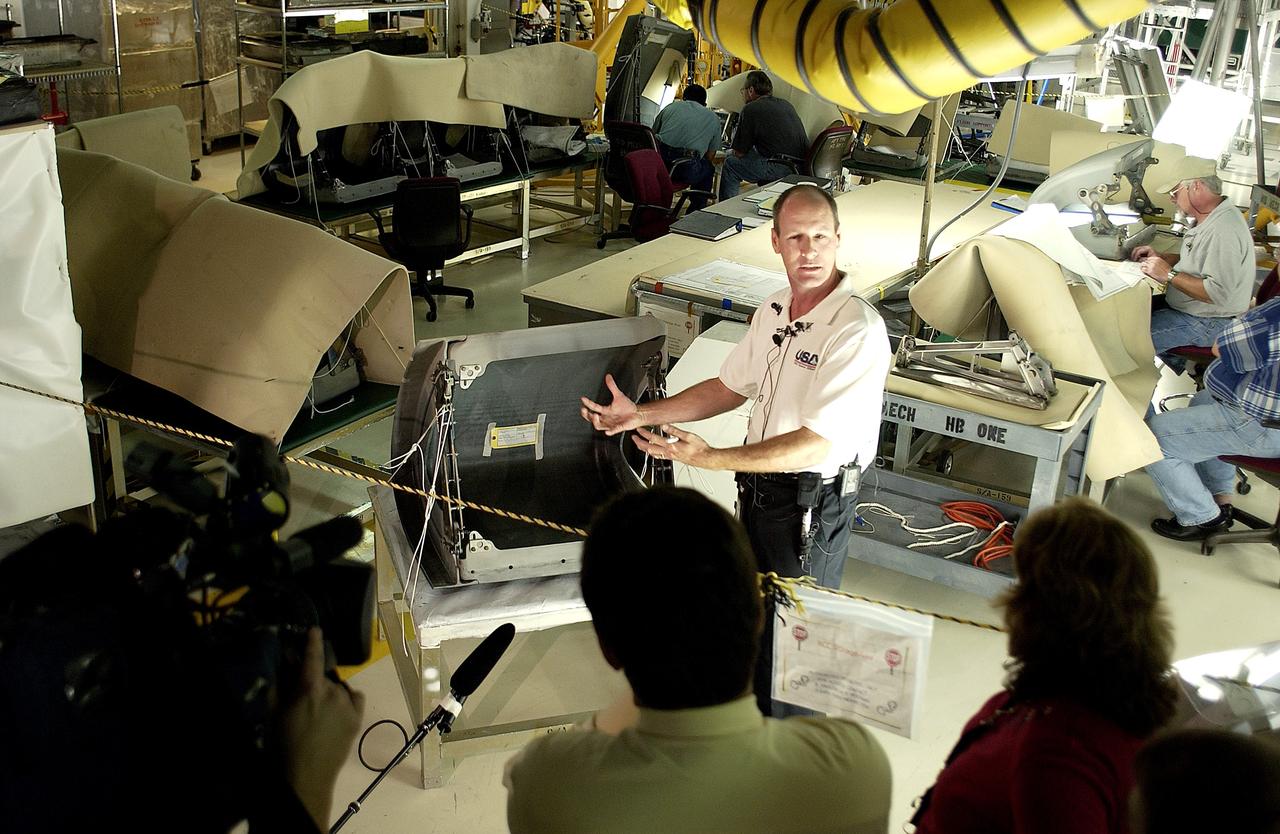
KENNEDY SPACE CENTER, FLA. -  In the Orbiter Processing Facility, Rick Beckwith (center), an orbiter engineer with United Space Alliance, explains to the media the reinstallation of the Reinforced Carbon-Carbon panels on the orbiter Atlantis’ wing leading edge.  The media was invited to tour the OPF at KSC and to see the orbiter Atlantis as it is being prepared for Return to Flight.  Both local and national reporters representing print and TV networks were able to see work in progress on Atlantis, also including wiring inspections and checks of the engines in the Orbital Maneuvering System.
KENNEDY SPACE CENTER, FLA. - In the Orbiter Processing Facility, Rick Beckwith (center), an orbiter engineer with United Space Alliance, explains to the media the reinstallation of the Reinforced Carbon-Carbon panels on the orbiter Atlantis’ wing leading edge. The media was invited to tour the OPF at KSC and to see the orbiter Atlantis as it is being prepared for Return to Flight. Both local and national reporters representing print and TV networks were able to see work in progress on Atlantis, also including wiring inspections and checks of the engines in the Orbital Maneuvering System.
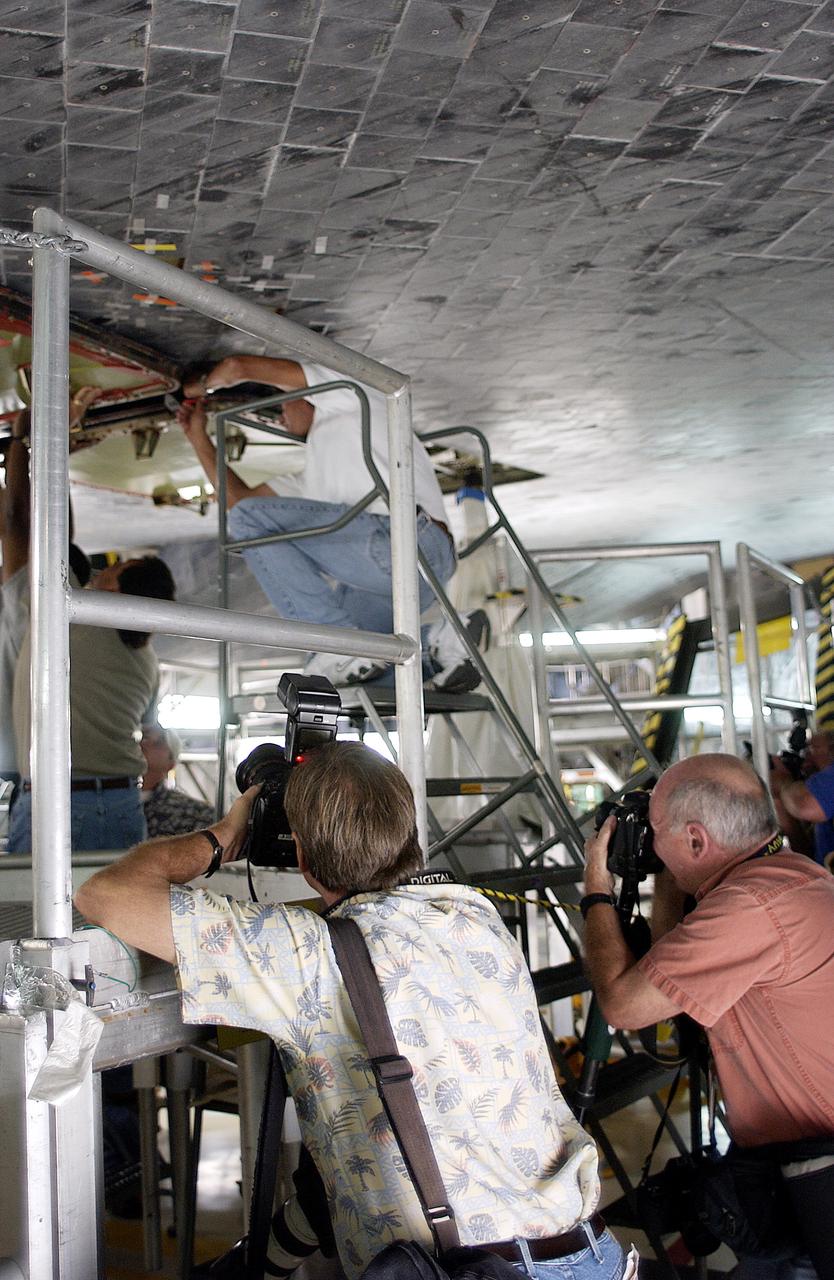
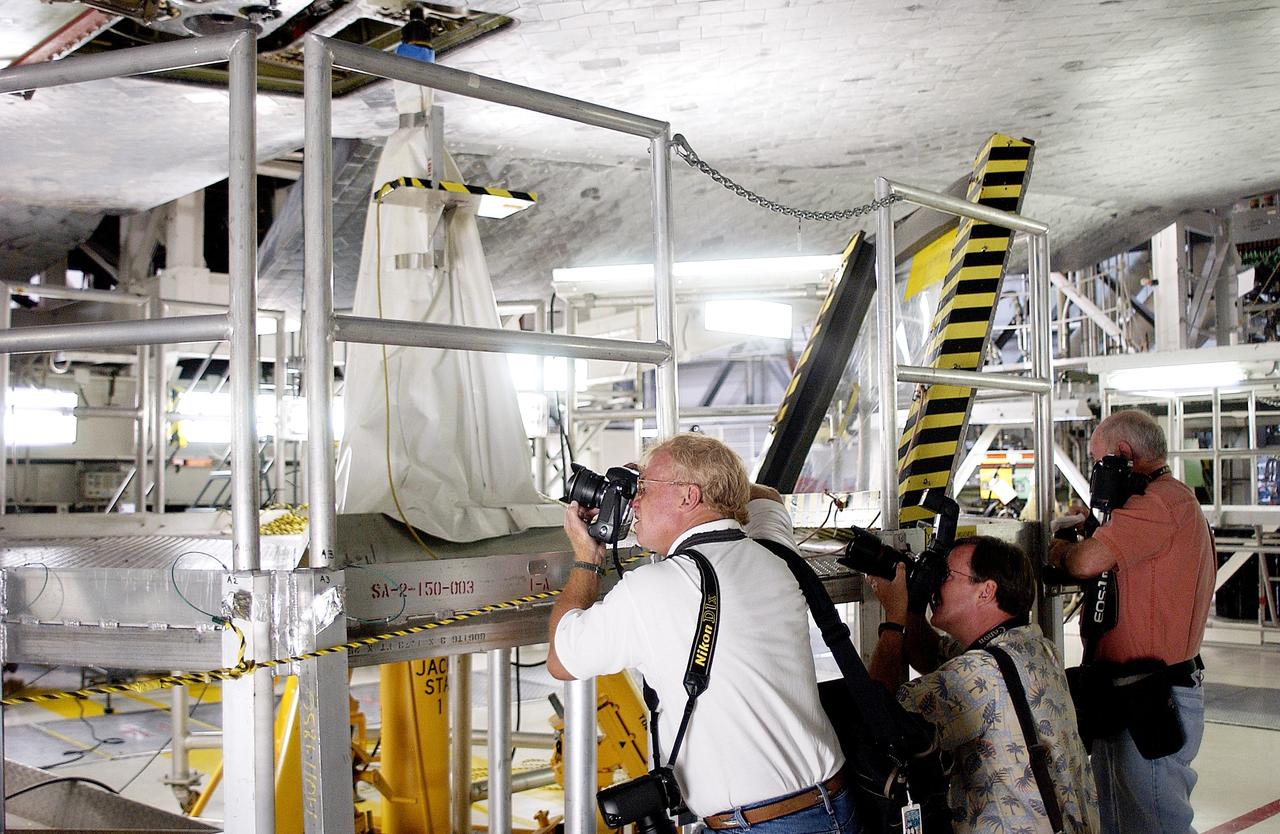
KENNEDY SPACE CENTER, FLA. -   In the Orbiter Processing Facility,  the media photograph work being done on the tiles on the orbiter Atlantis as it is being prepared for Return to Flight in the Orbiter Processing Facility.   Both local and national reporters representing print and TV networks were able to see work in progress on Atlantis, including the reinstallation of the Reinforced Carbon-Carbon panels on the orbiter’s wing leading edge; wiring inspections; and checks of the engines in the Orbital Maneuvering System.
KENNEDY SPACE CENTER, FLA. - In the Orbiter Processing Facility, the media photograph work being done on the tiles on the orbiter Atlantis as it is being prepared for Return to Flight in the Orbiter Processing Facility. Both local and national reporters representing print and TV networks were able to see work in progress on Atlantis, including the reinstallation of the Reinforced Carbon-Carbon panels on the orbiter’s wing leading edge; wiring inspections; and checks of the engines in the Orbital Maneuvering System.
KENNEDY SPACE CENTER, FLA. -  In the Orbiter Processing Facility,  the media photograph work being done on the tiles on the orbiter Atlantis as it is being prepared for Return to Flight in the Orbiter Processing Facility.   Both local and national reporters representing print and TV networks were able to see work in progress on Atlantis, including the reinstallation of the Reinforced Carbon-Carbon panels on the orbiter’s wing leading edge; wiring inspections; and checks of the engines in the Orbital Maneuvering System.
KENNEDY SPACE CENTER, FLA. - In the Orbiter Processing Facility, the media photograph work being done on the tiles on the orbiter Atlantis as it is being prepared for Return to Flight in the Orbiter Processing Facility. Both local and national reporters representing print and TV networks were able to see work in progress on Atlantis, including the reinstallation of the Reinforced Carbon-Carbon panels on the orbiter’s wing leading edge; wiring inspections; and checks of the engines in the Orbital Maneuvering System.
KENNEDY SPACE CENTER, FLA. -  In the Orbiter Processing Facility (OPF), Rick Beckwith, an orbiter engineer with United Space Alliance, explains to the media the reinstallation of the Reinforced Carbon-Carbon panels on the orbiter Atlantis’ wing leading edge.  The media was invited to tour the OPF at KSC and to see the orbiter Atlantis as it is being prepared for Return to Flight.  Both local and national reporters representing print and TV networks were able to see work in progress on Atlantis, also including wiring inspections and checks of the engines in the Orbital Maneuvering System.
KENNEDY SPACE CENTER, FLA. - In the Orbiter Processing Facility (OPF), Rick Beckwith, an orbiter engineer with United Space Alliance, explains to the media the reinstallation of the Reinforced Carbon-Carbon panels on the orbiter Atlantis’ wing leading edge. The media was invited to tour the OPF at KSC and to see the orbiter Atlantis as it is being prepared for Return to Flight. Both local and national reporters representing print and TV networks were able to see work in progress on Atlantis, also including wiring inspections and checks of the engines in the Orbital Maneuvering System.
KENNEDY SPACE CENTER, FLA. -  In the Orbiter Processing Facility (OPF), Rick Beckwith, an orbiter engineer with United Space Alliance, explains to the media the reinstallation of the Reinforced Carbon-Carbon panels on Atlantis’ wing leading edge.  The media was invited to tour the OPF at KSC and to see the orbiter Atlantis as it is being prepared for Return to Flight.  Both local and national reporters representing print and TV networks were able to see work in progress on Atlantis, also including wiring inspections and checks of the engines in the Orbital Maneuvering System.
KENNEDY SPACE CENTER, FLA. - In the Orbiter Processing Facility (OPF), Rick Beckwith, an orbiter engineer with United Space Alliance, explains to the media the reinstallation of the Reinforced Carbon-Carbon panels on Atlantis’ wing leading edge. The media was invited to tour the OPF at KSC and to see the orbiter Atlantis as it is being prepared for Return to Flight. Both local and national reporters representing print and TV networks were able to see work in progress on Atlantis, also including wiring inspections and checks of the engines in the Orbital Maneuvering System.
When an active region rotated into a profile view, SDO was able to capture the magnificent loops arching above an active region (Sept. 28-29, 2016). Active region are areas of strong magnetic fields. The magnetic field lines above these regions are illuminated by charged particles spiraling along them. The images were taken in a wavelength of extreme ultraviolet light. The video covers 12 hours of activity. The Earth was inset to give a sense of the scale of these towering arches.  Movies are available at http://photojournal.jpl.nasa.gov/catalog/PIA21101
Magnetic Field Arches
The High Resolution Imaging Experiment (HiRISE) camera aboard NASA's Mars Reconnaissance Orbiter (MRO) was able to capture this image of NASA's Perseverance rover on the surface of Mars. The image was taken on Feb. 19, 2021.  It is a close-up version of a larger image showing several parts of the Mars 2020 mission landing system that got the rover safely on the ground.  These close-ups of Mars 2020 hardware were processed to make them easier to see.  A key objective for Perseverance's mission on Mars is astrobiology, including the search for signs of ancient microbial life. The rover will characterize the planet's geology and past climate, pave the way for human exploration of the Red Planet, and be the first mission to collect and cache Martian rock and regolith (broken rock and dust).  Subsequent NASA missions, in cooperation with ESA (European Space Agency), would send spacecraft to Mars to collect these sealed samples from the surface and return them to Earth for in-depth analysis.  The Mars 2020 Perseverance mission is part of NASA's Moon to Mars exploration approach, which includes Artemis missions to the Moon that will help prepare for human exploration of the Red Planet.  https://photojournal.jpl.nasa.gov/catalog/PIA24334
Close-Up of Perseverance on the Martian Surface
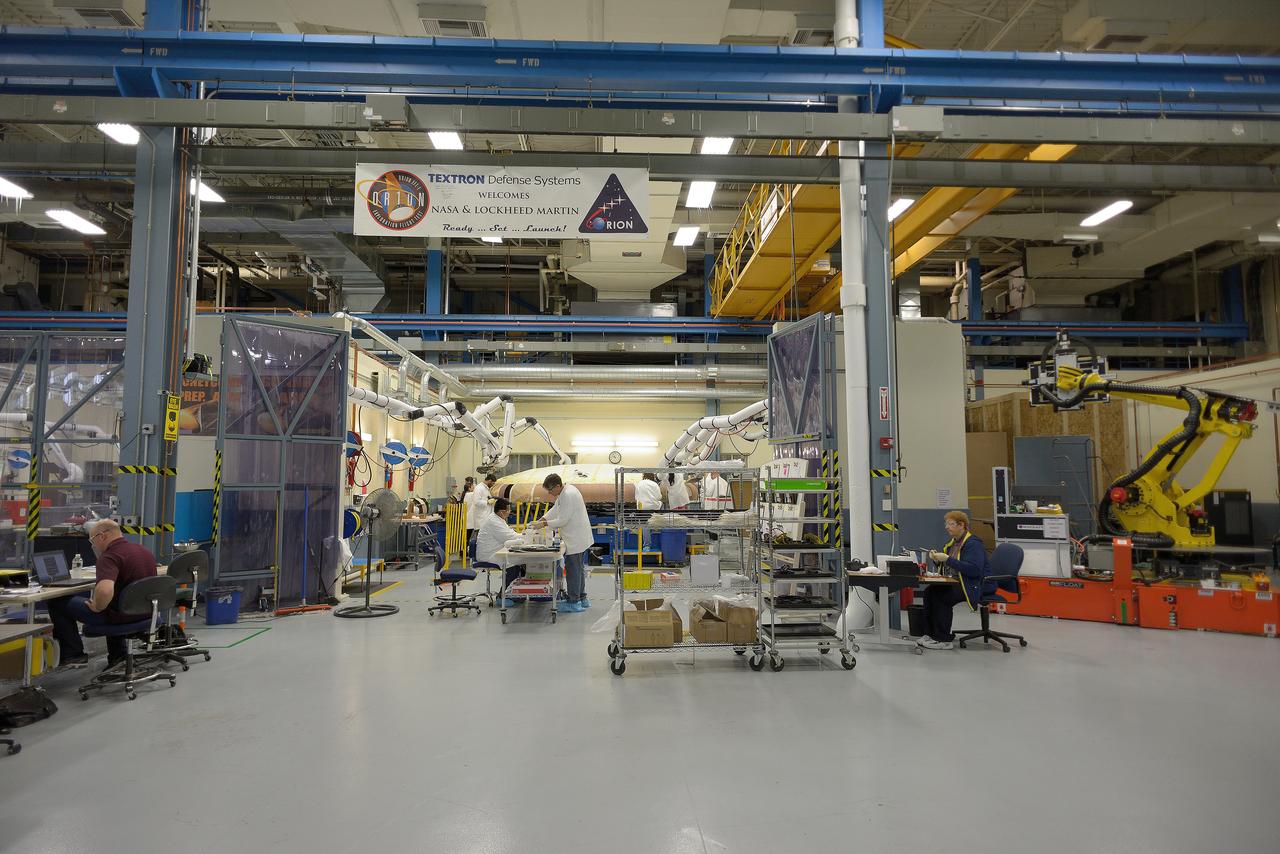
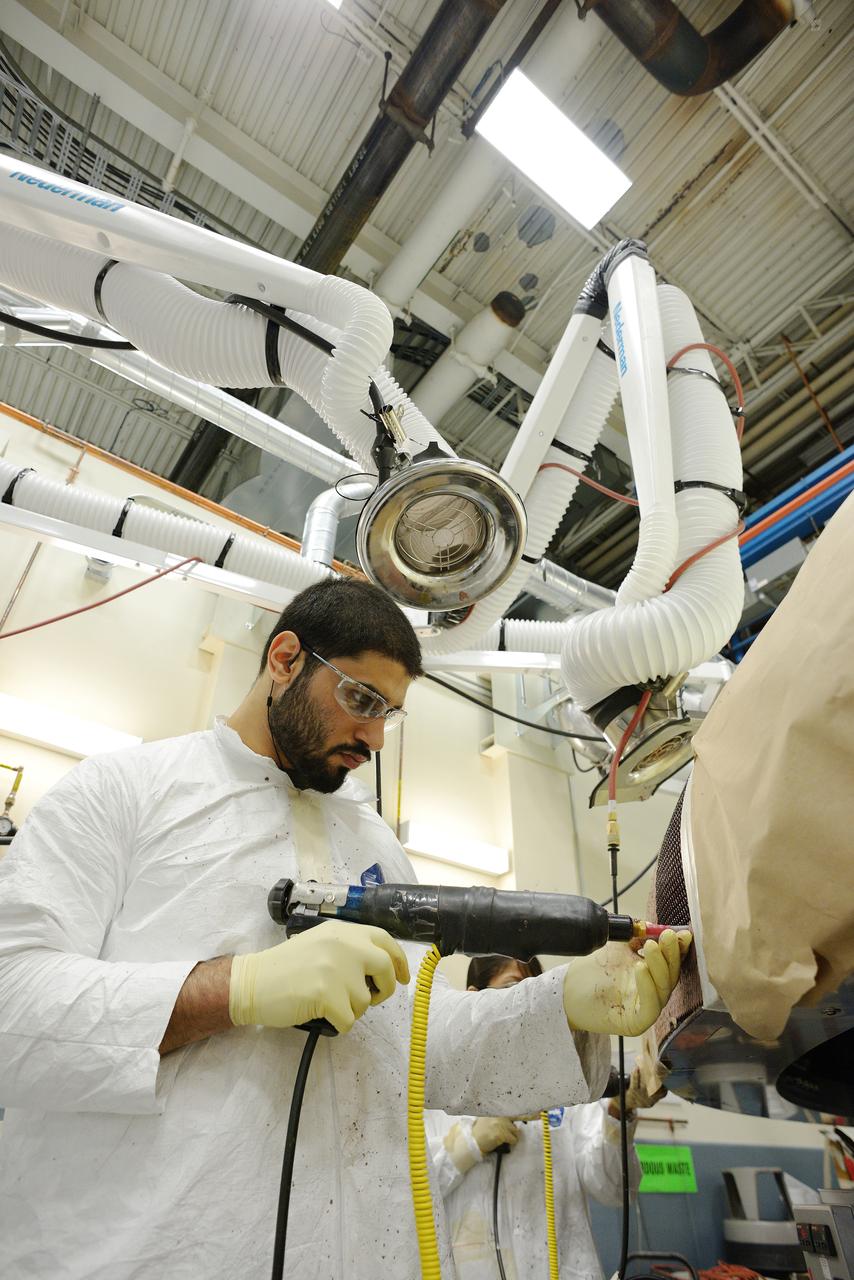
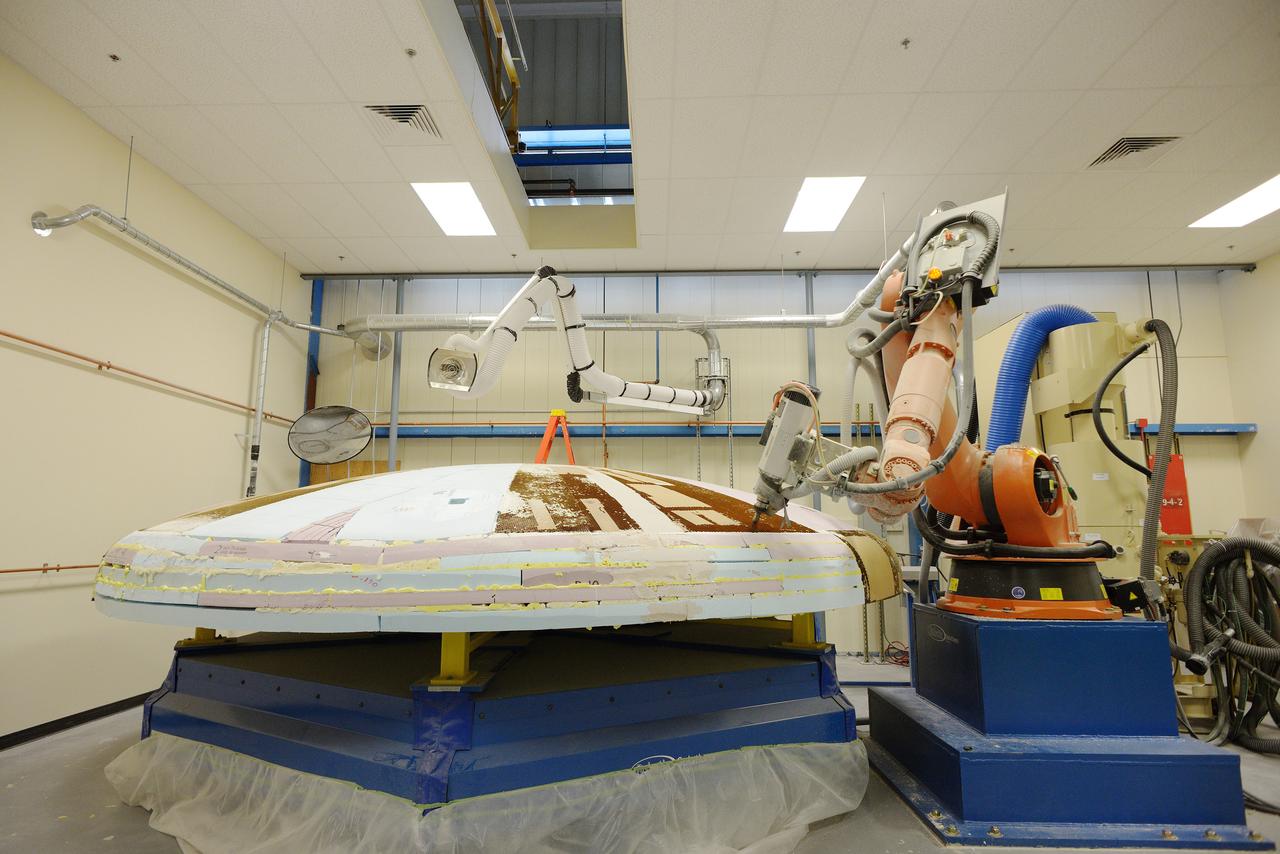
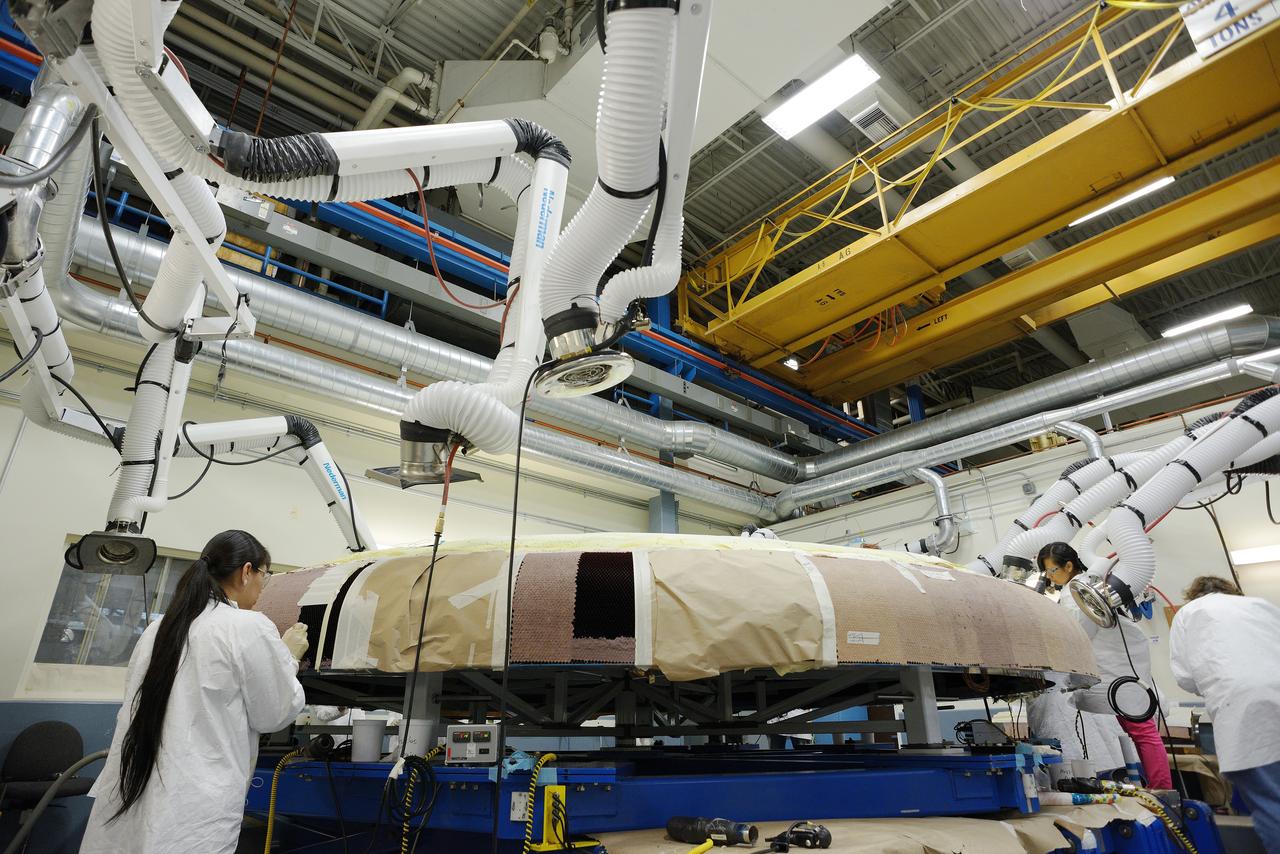
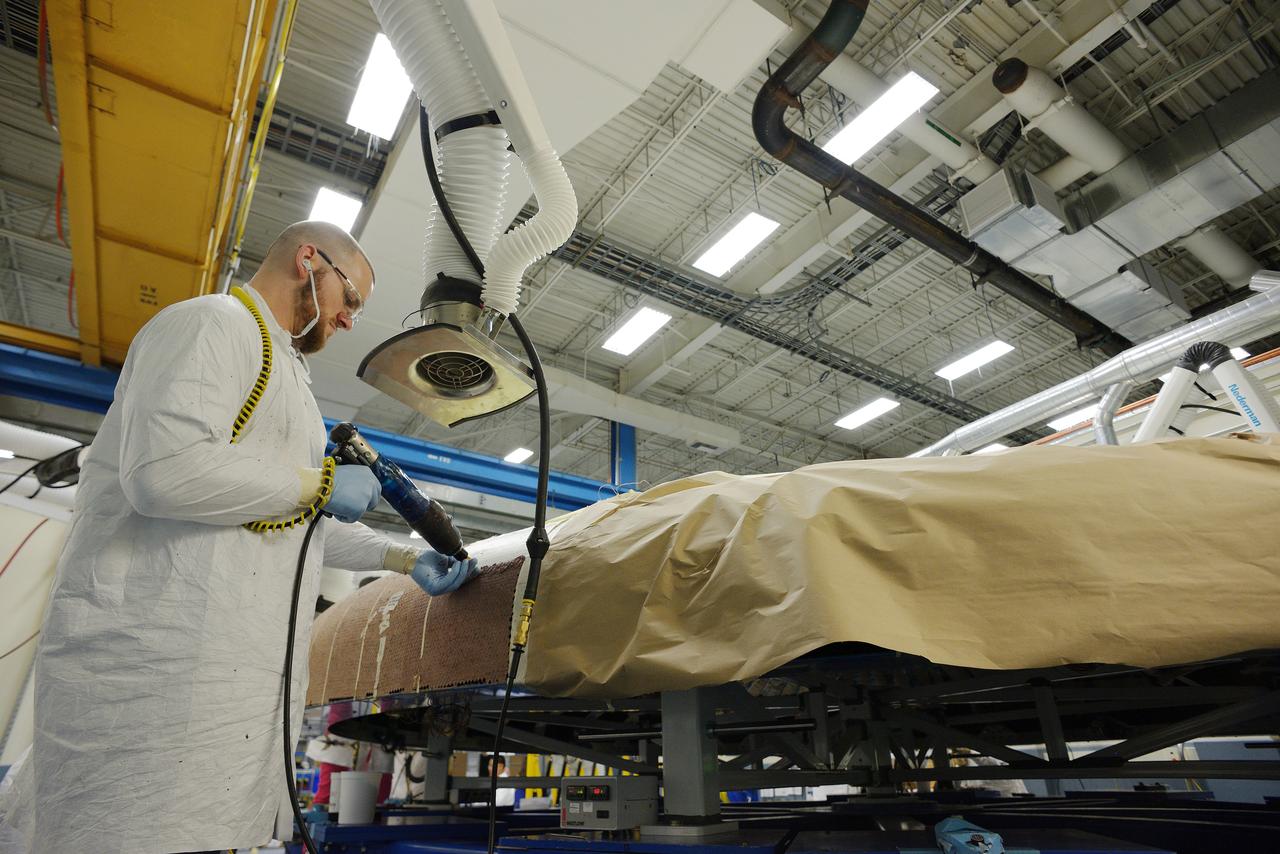
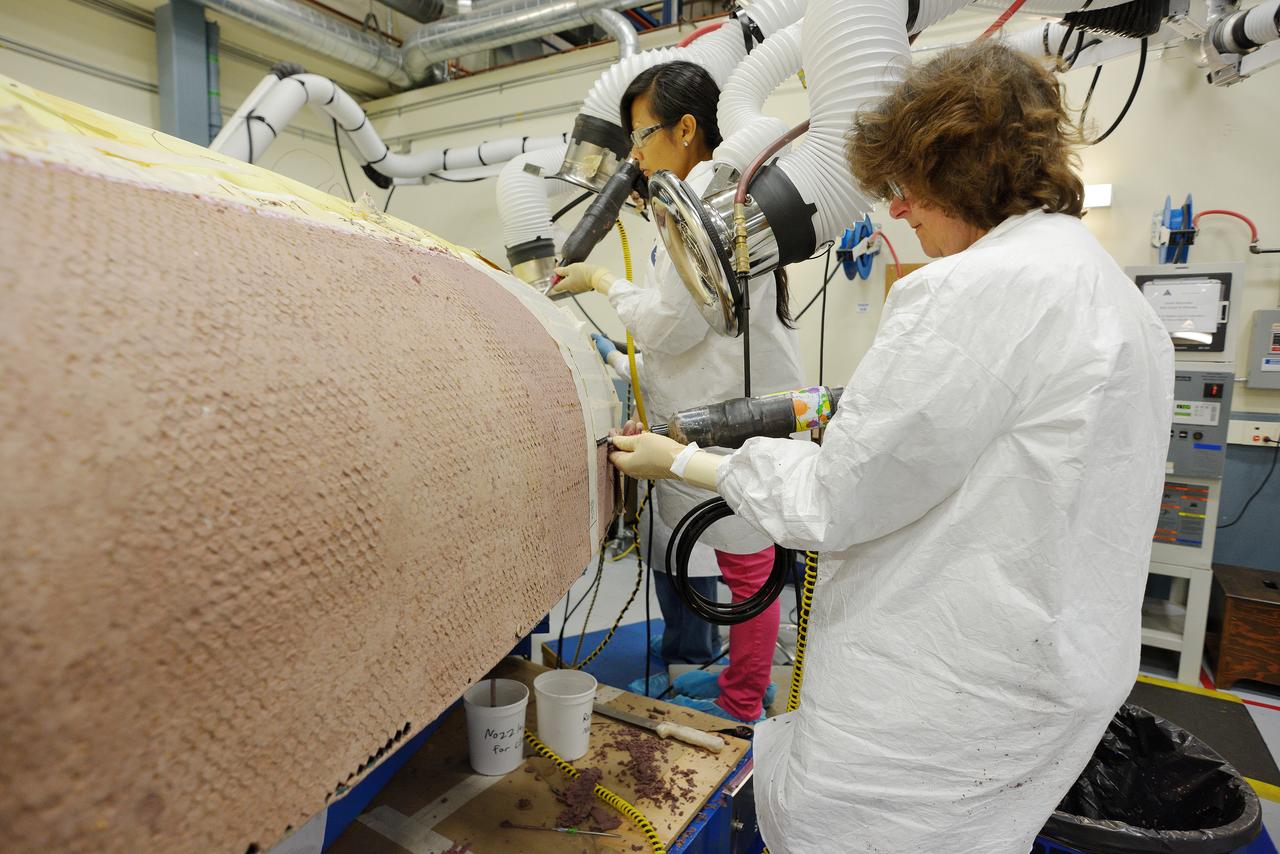
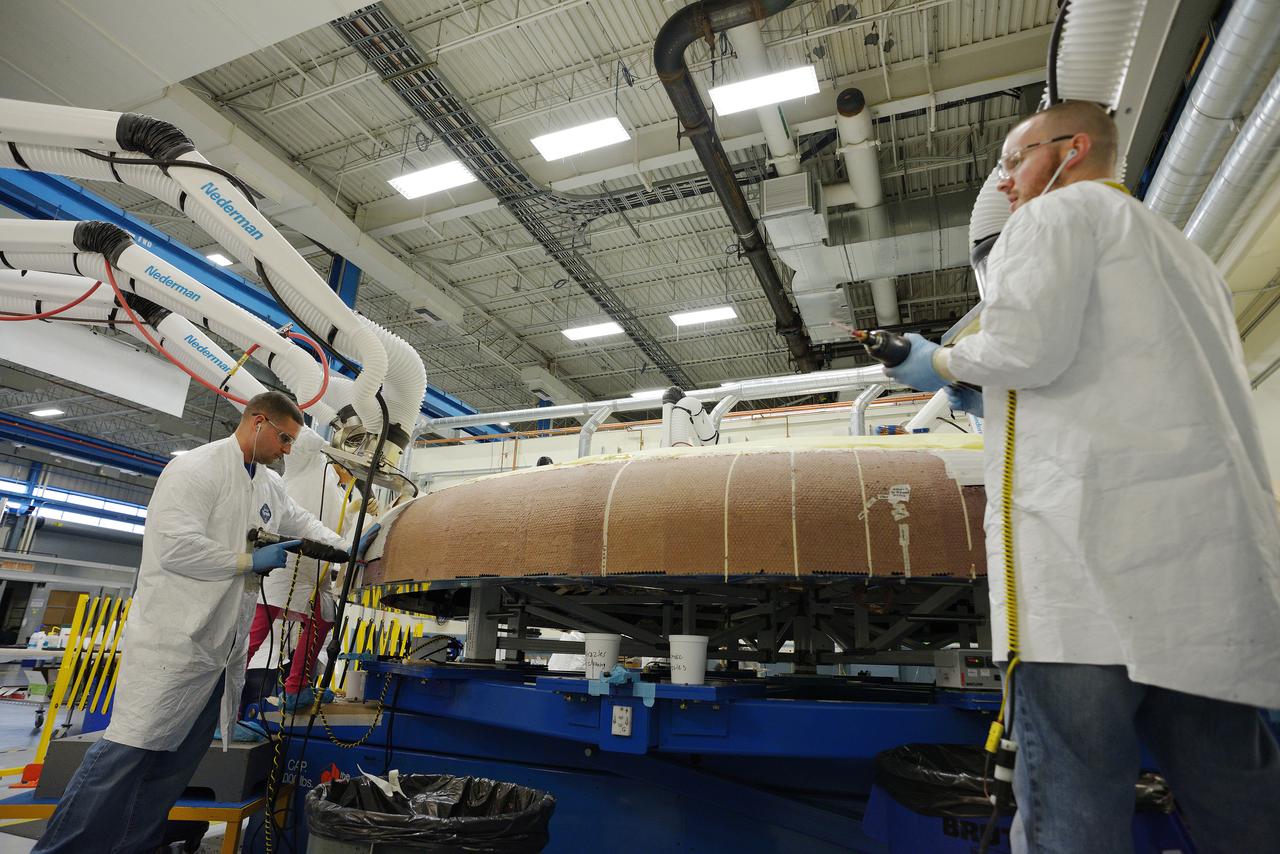
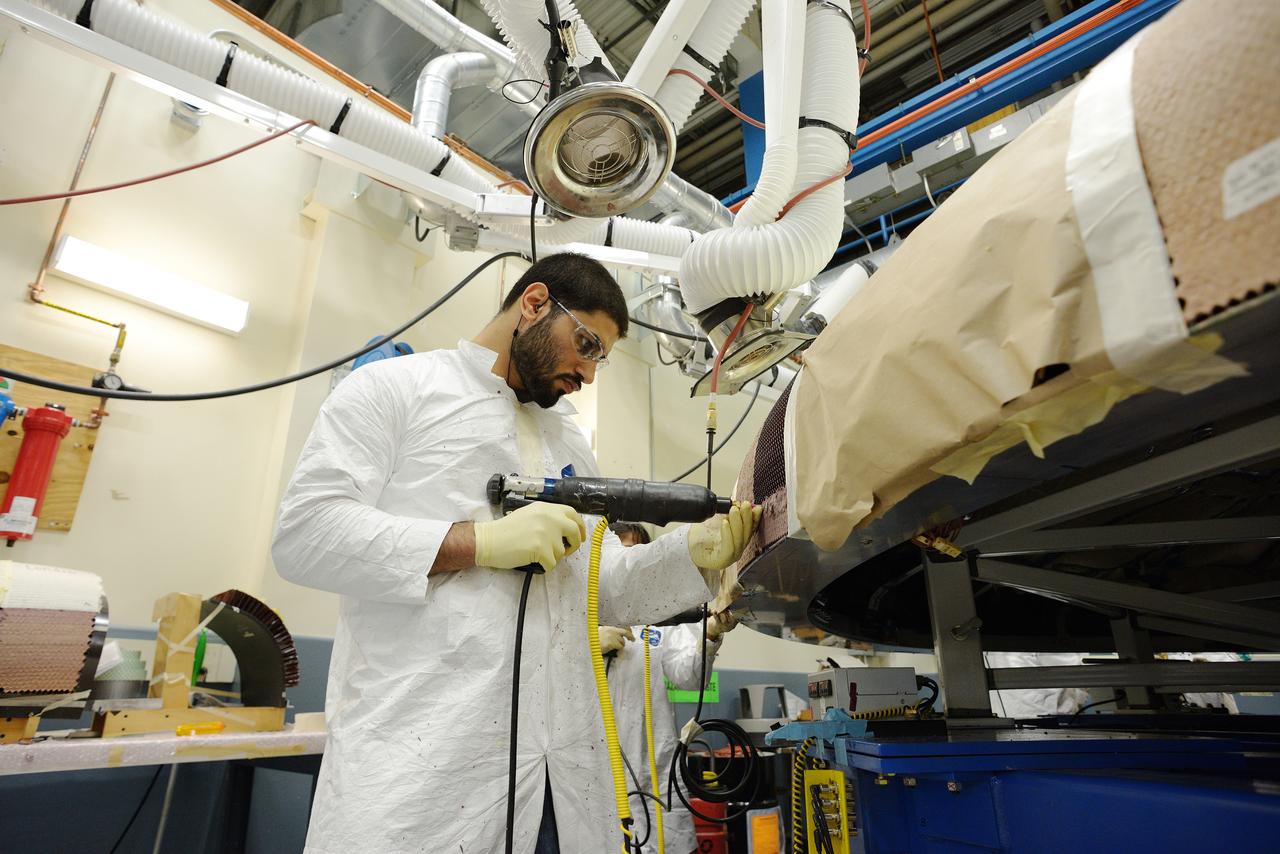
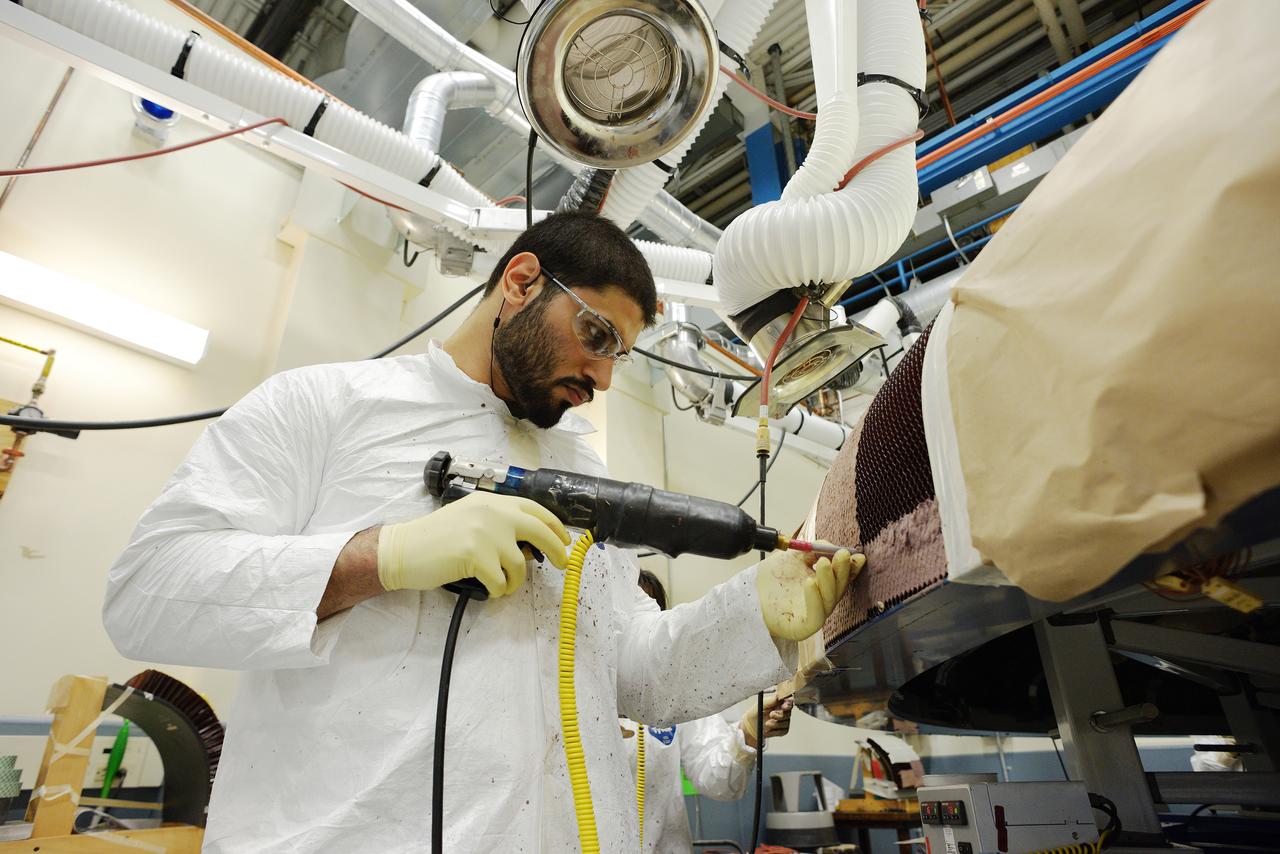
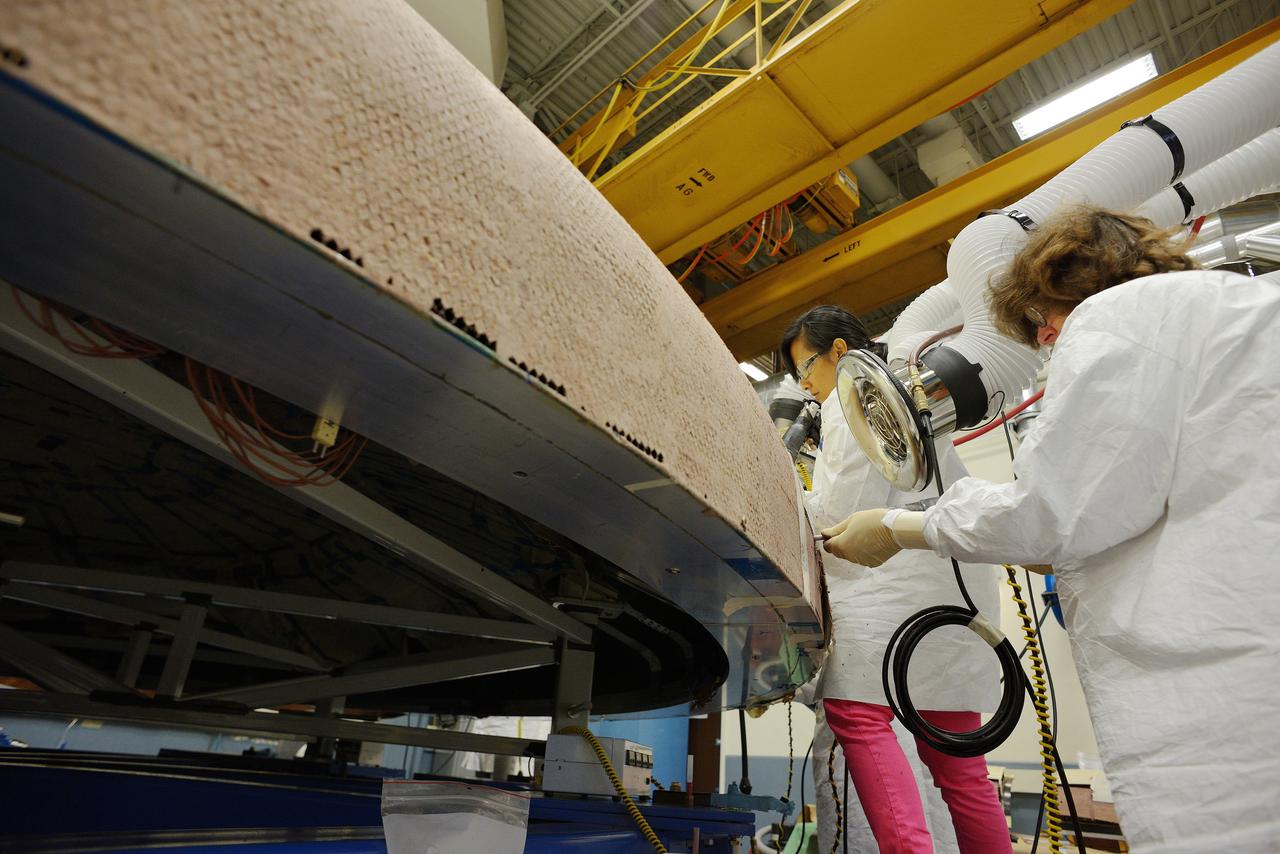
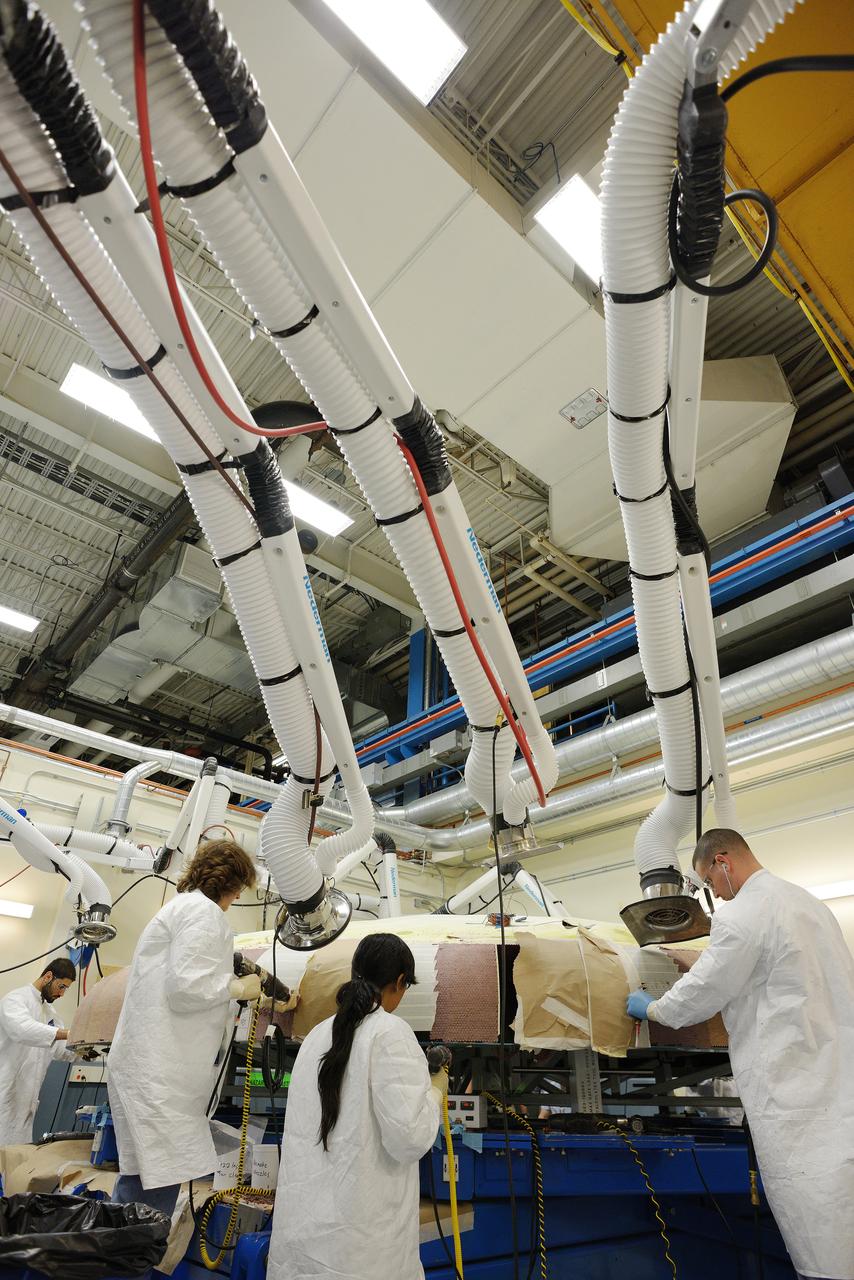
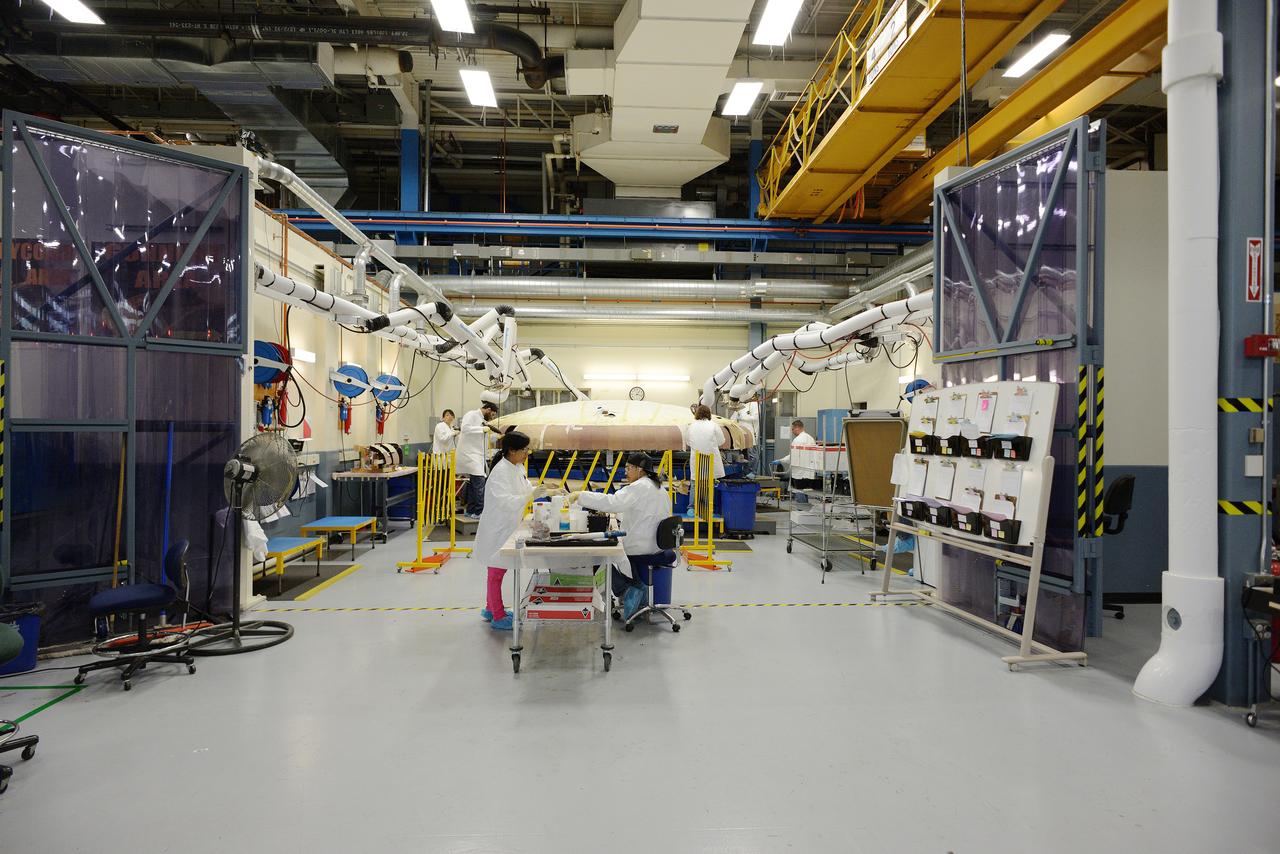
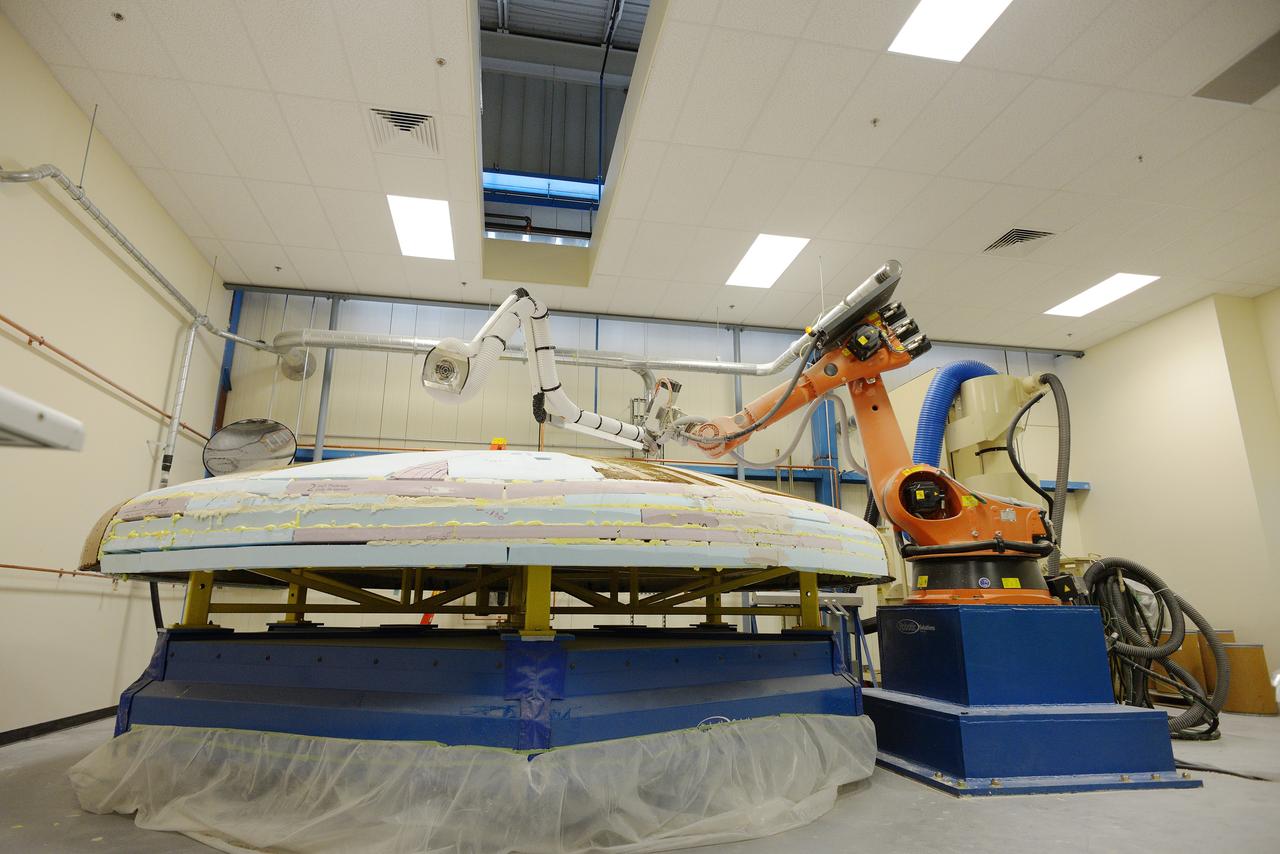
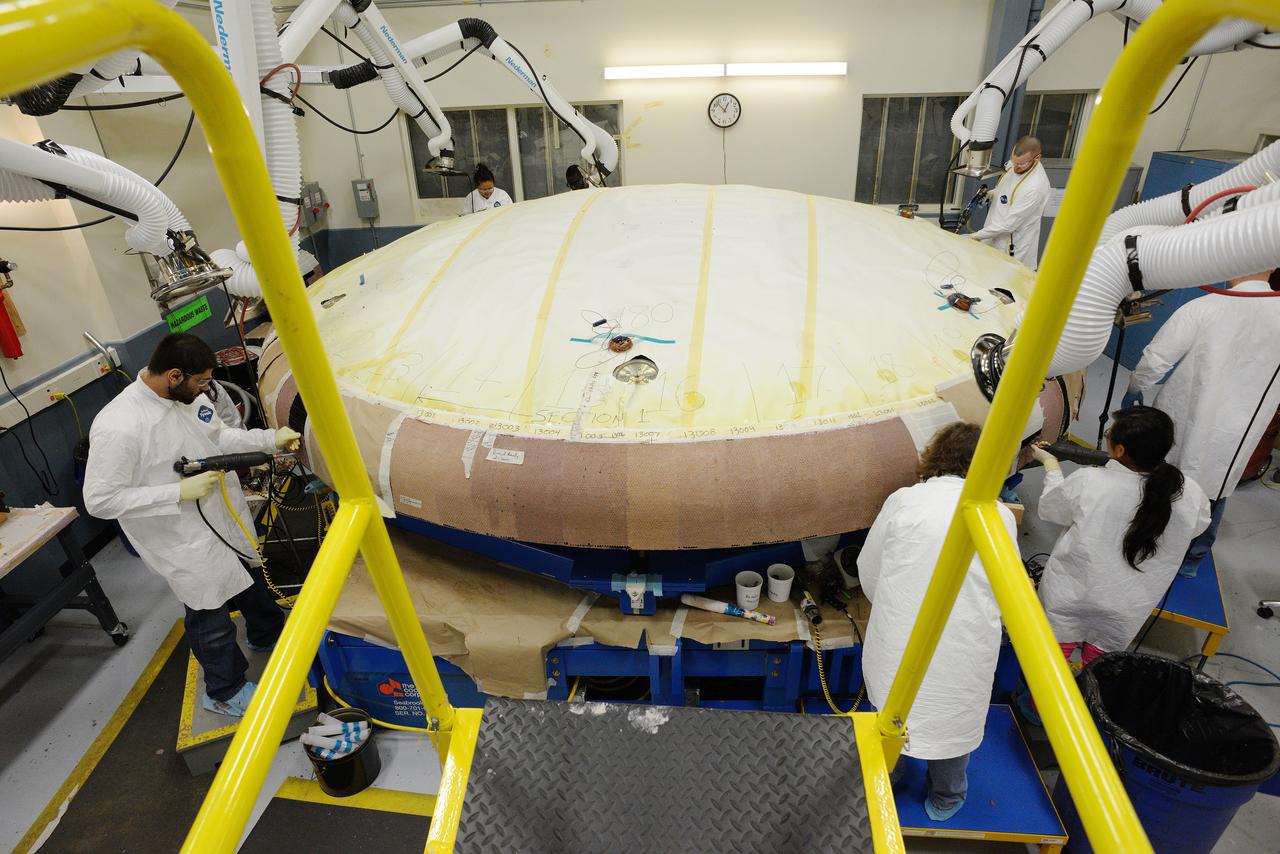
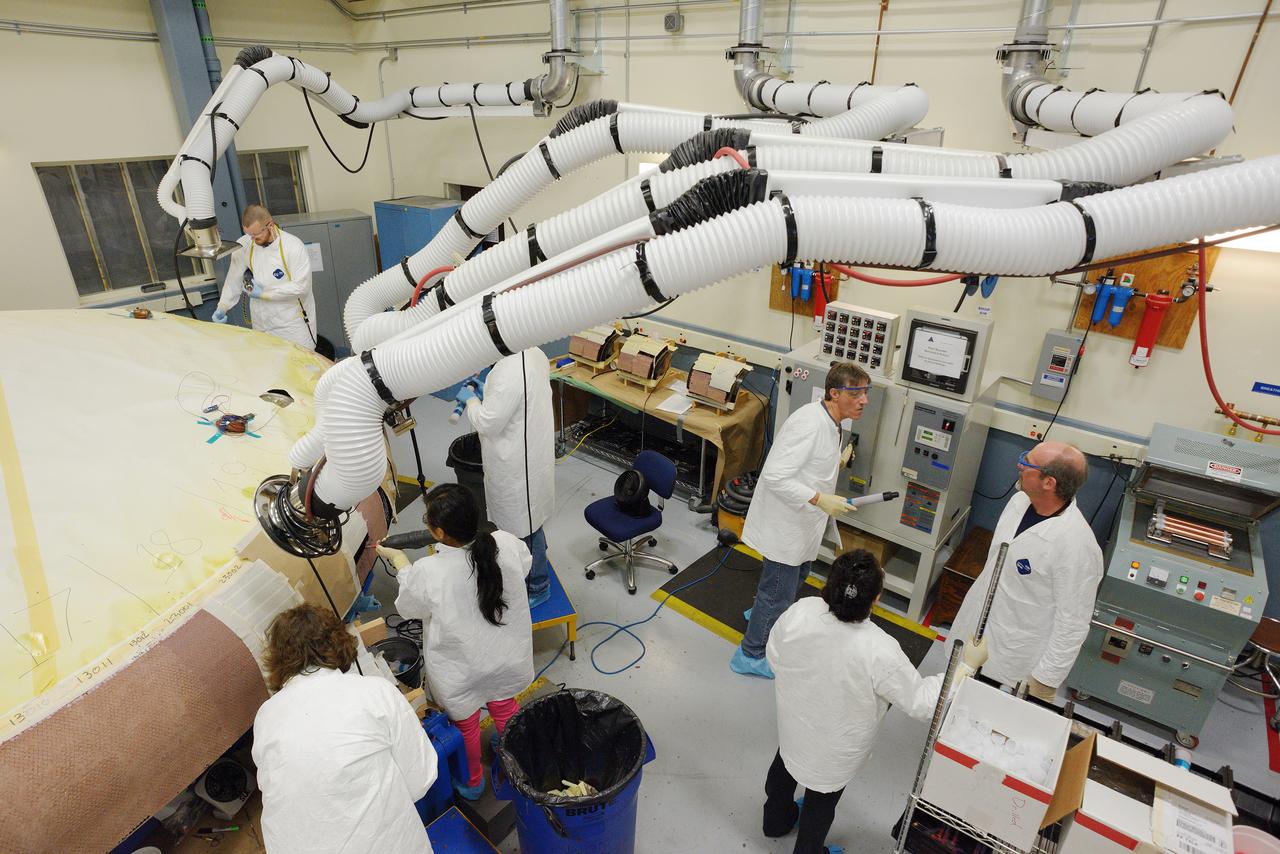
Technicians at Textron in Wimington, MA, apply Avcoat ablative material to the composite honeycomb structure attached to the Exploration Flight Test-1 (EFT-1) Orion heat shield carrier structure on May 22, 2013. Part of Batch image transfer from Flickr.
Orion EFT-1 heat shield manufacturing
Technicians at Textron in Wimington, MA, apply Avcoat ablative material to the composite honeycomb structure attached to the Exploration Flight Test-1 (EFT-1) Orion heat shield carrier structure on May 22, 2013. Part of Batch image transfer from Flickr.
Orion EFT-1 heat shield manufacturing
Technicians at Textron in Wimington, MA, apply Avcoat ablative material to the composite honeycomb structure attached to the Exploration Flight Test-1 (EFT-1) Orion heat shield carrier structure on May 22, 2013. Part of Batch image transfer from Flickr.
Orion EFT-1 heat shield manufacturing
Technicians at Textron in Wimington, MA, apply Avcoat ablative material to the composite honeycomb structure attached to the Exploration Flight Test-1 (EFT-1) Orion heat shield carrier structure on May 22, 2013. Part of Batch image transfer from Flickr.
Orion EFT-1 heat shield manufacturing
Technicians at Textron in Wimington, MA, apply Avcoat ablative material to the composite honeycomb structure attached to the Exploration Flight Test-1 (EFT-1) Orion heat shield carrier structure on May 22, 2013. Part of Batch image transfer from Flickr.
Orion EFT-1 heat shield manufacturing
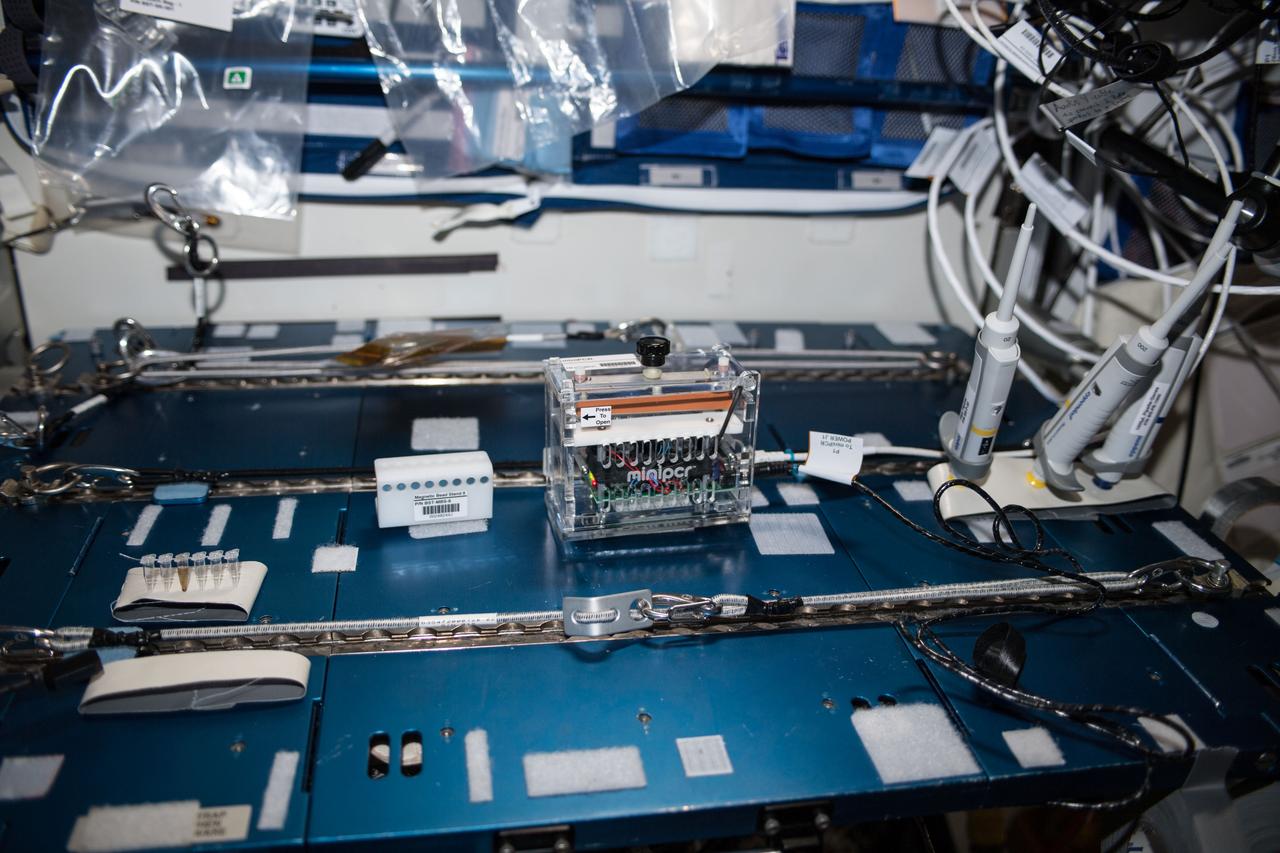
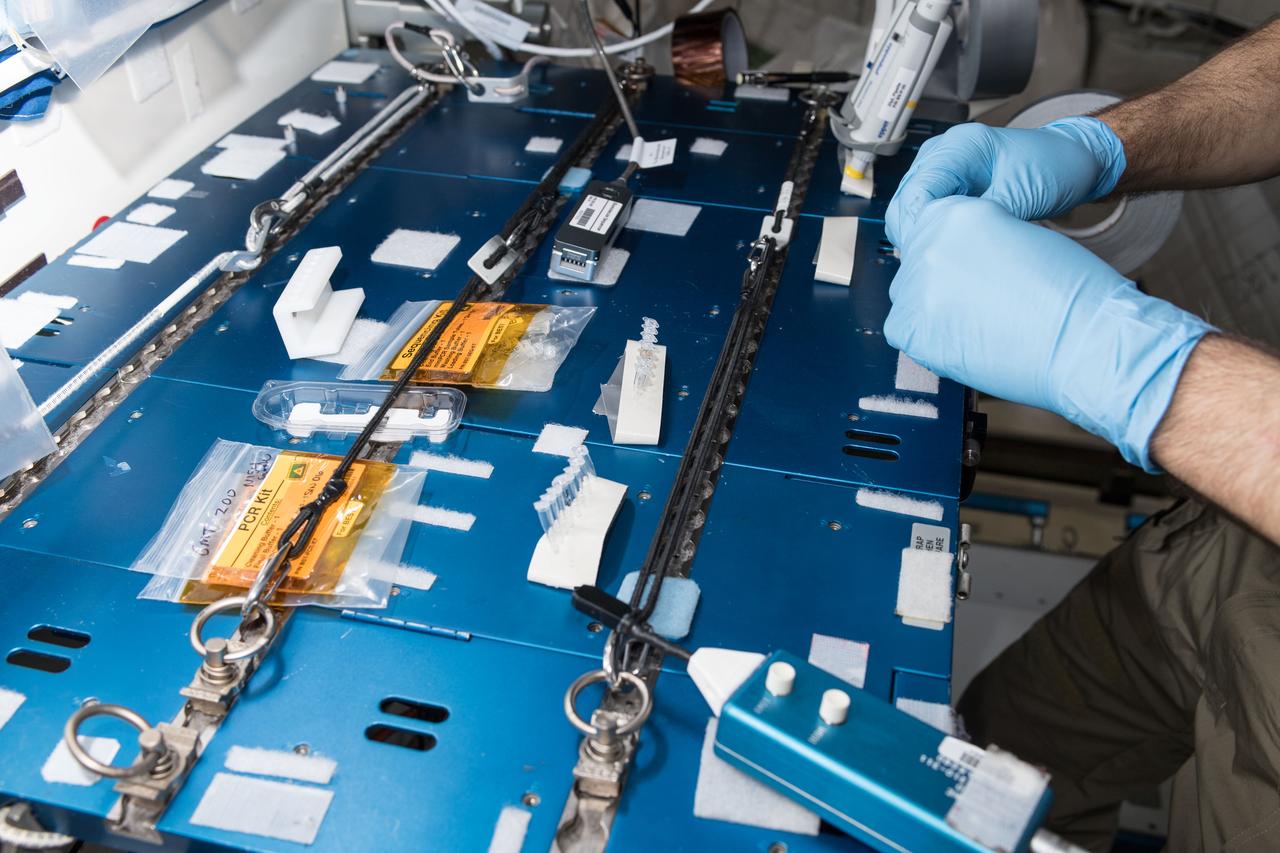
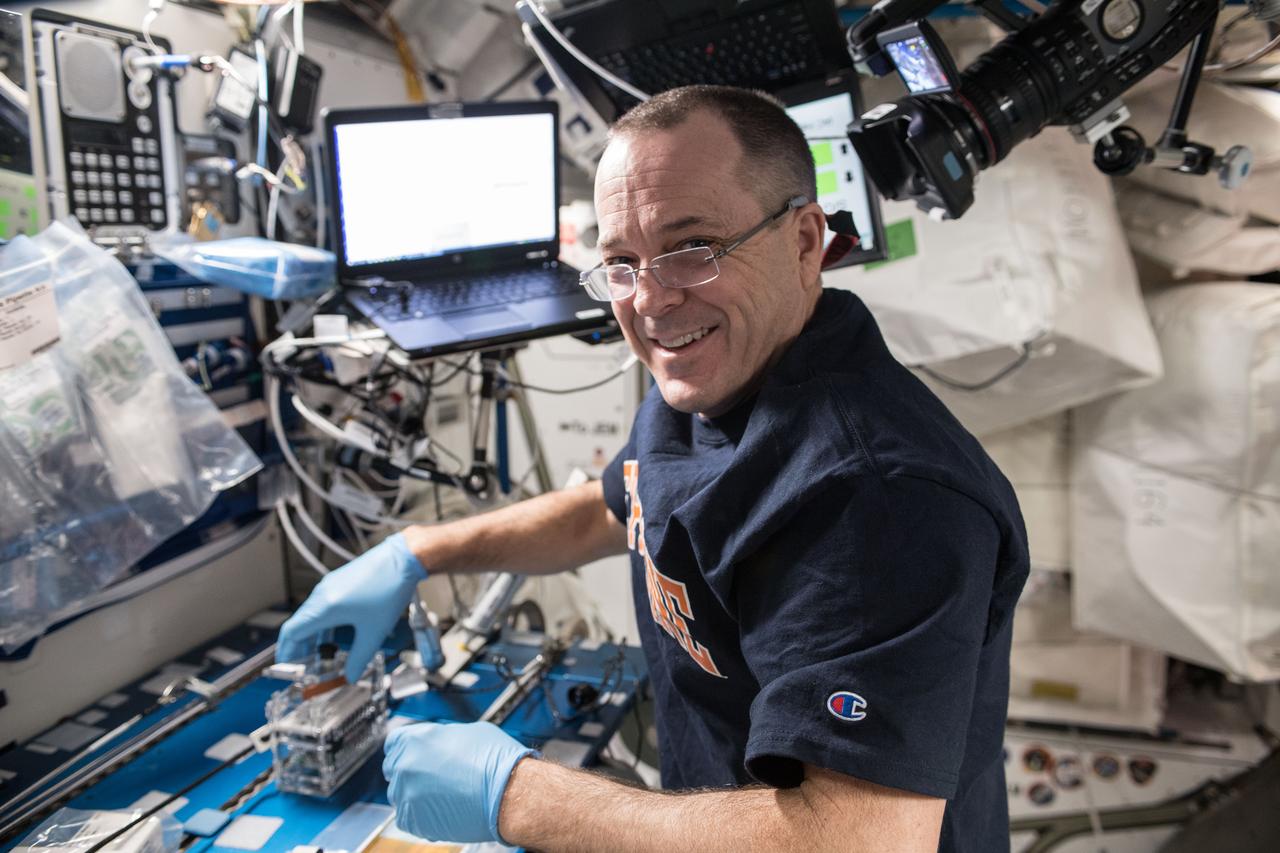
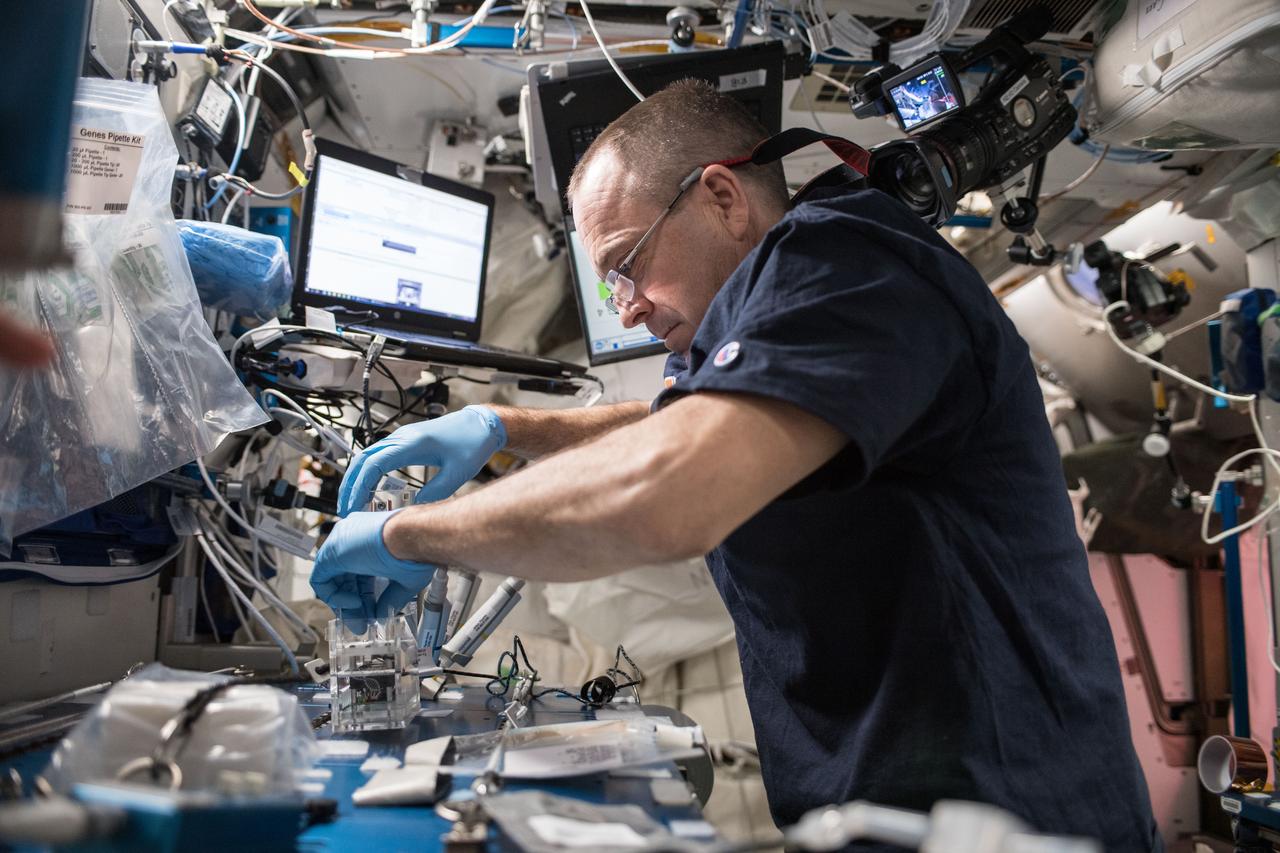
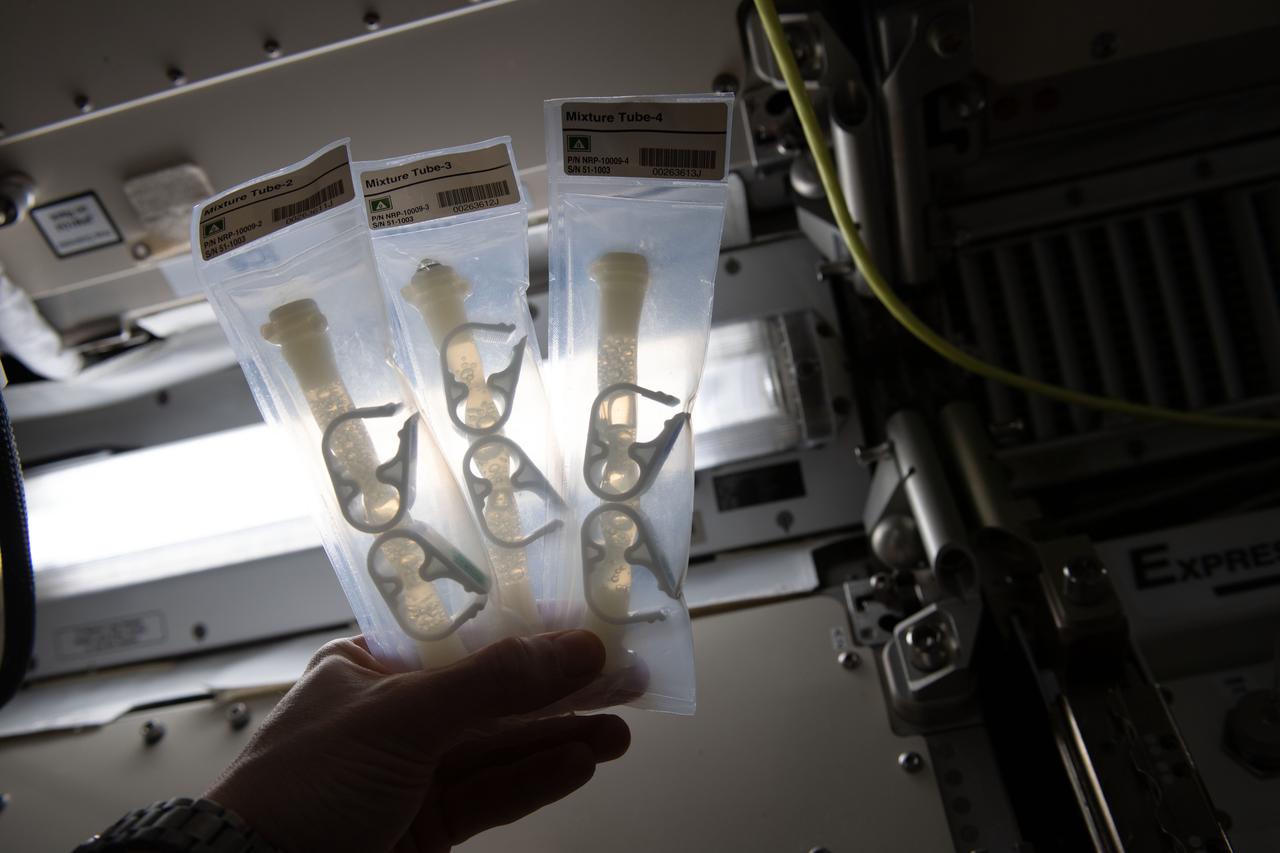
iss056e097517 (July 20, 2018) --- NASA astronaut Ricky Arnold swabbed surfaces in the International Space Station to collect microbe samples. He then processed the microbial DNA using the Biomolecule Sequencer, a device that enables DNA sequencing in microgravity, to identify microbes able to survive in microgravity.
Best Experiment 1 Part 3 - Biomolecule Sequencer
Technicians at Textron in Wimington, MA, apply Avcoat ablative material to the composite honeycomb structure attached to the Exploration Flight Test-1 (EFT-1) Orion heat shield carrier structure on May 22, 2013. Part of Batch image transfer from Flickr.
Orion EFT-1 heat shield manufacturing
Technicians at Textron in Wimington, MA, apply Avcoat ablative material to the composite honeycomb structure attached to the Exploration Flight Test-1 (EFT-1) Orion heat shield carrier structure on May 22, 2013. Part of Batch image transfer from Flickr.
Orion EFT-1 heat shield manufacturing
CAPE CANAVERAL, Fla. – Eight days after its encounter with the Earth, the Galileo spacecraft was able to look back and capture this remarkable view of the moon in orbit about the Earth, taken from a distance of about 6.2 million kilometers, or 3.9 million miles, on December 16.  Photo credit: NASA
KSC-92PC-2624
iss056e097421 (July 19, 2018) --- NASA astronaut Ricky Arnold swabbed surfaces in the International Space Station to collect microbe samples. He then processed the microbial DNA using the Biomolecule Sequencer, a device that enables DNA sequencing in microgravity, to identify microbes able to survive in microgravity.
Biomolecule Extraction and Sequencing Technology (BEST)
Technicians at Textron in Wimington, MA, apply Avcoat ablative material to the composite honeycomb structure attached to the Exploration Flight Test-1 (EFT-1) Orion heat shield carrier structure on May 22, 2013. Part of Batch image transfer from Flickr.
Orion EFT-1 heat shield manufacturing
Technicians at Textron in Wimington, MA, apply Avcoat ablative material to the composite honeycomb structure attached to the Exploration Flight Test-1 (EFT-1) Orion heat shield carrier structure on May 22, 2013. Part of Batch image transfer from Flickr.
Orion EFT-1 heat shield manufacturing
iss056e097438 (July 19, 2018) --- NASA astronaut Ricky Arnold swabbed surfaces in the International Space Station to collect microbe samples. He then processed the microbial DNA using the Biomolecule Sequencer, a device that enables DNA sequencing in microgravity, to identify microbes able to survive in microgravity.
Biomolecule Extraction and Sequencing Technology (BEST)
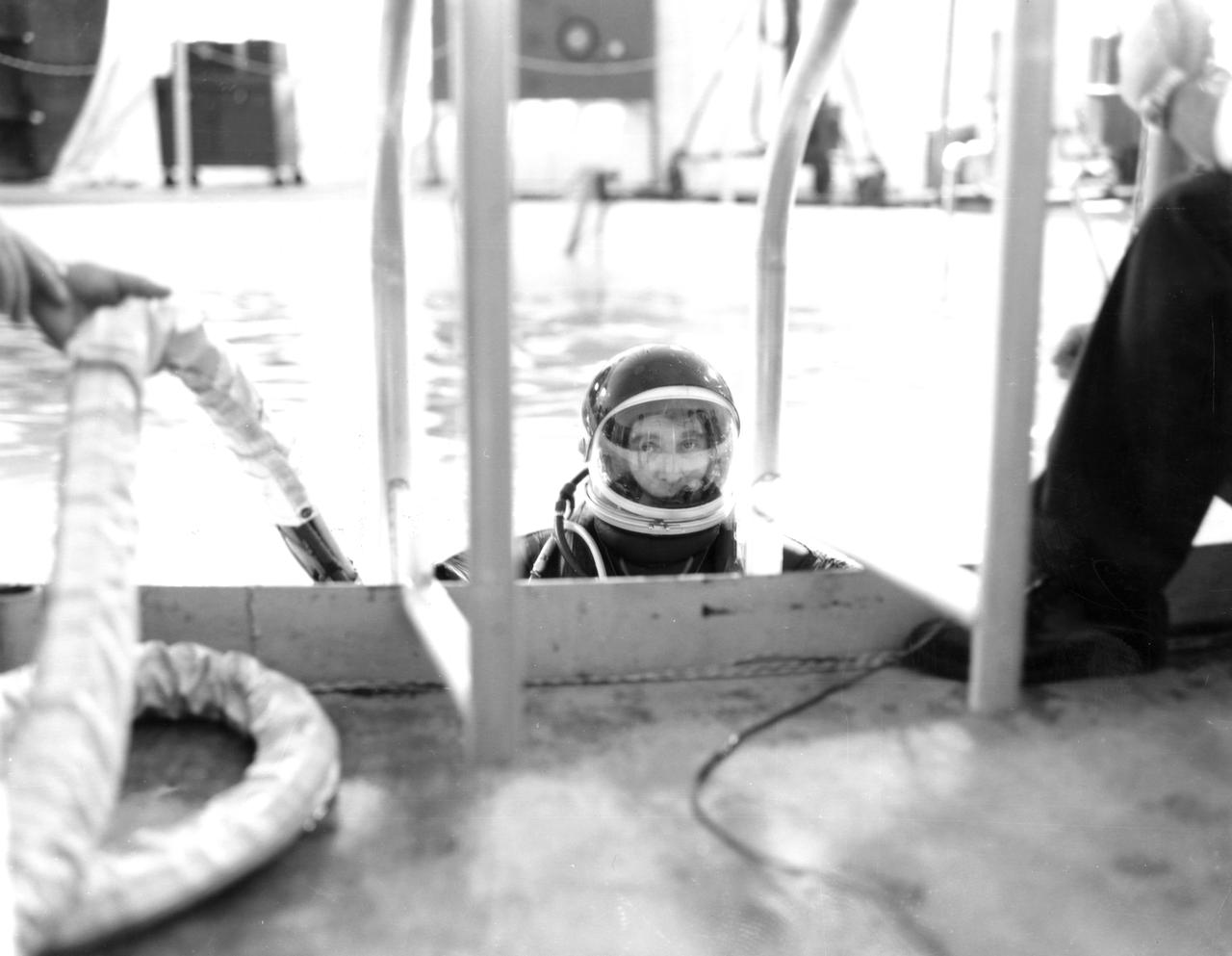
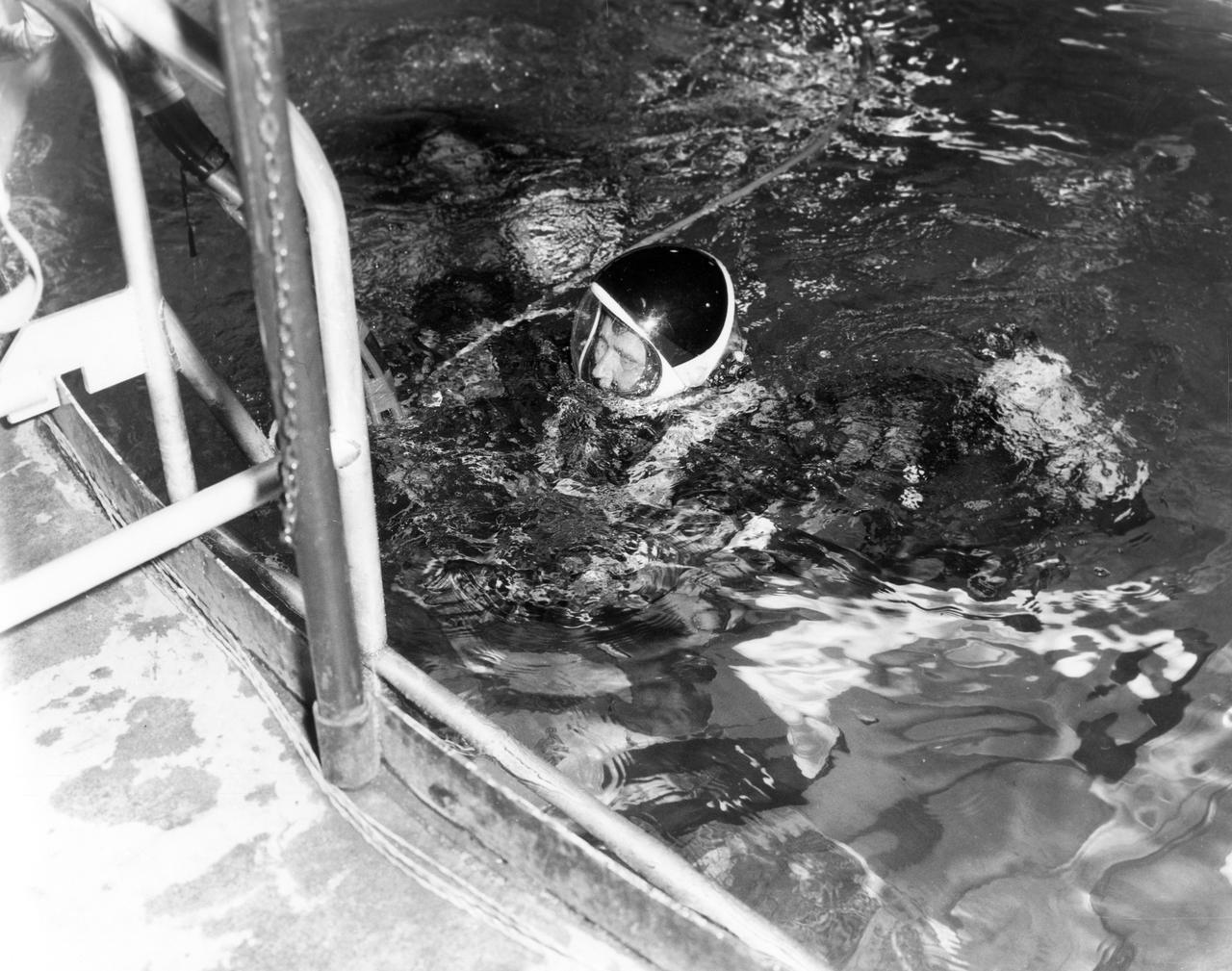
Marshall Space Flight Center (MSFC) Director, Dr. von Braun, submerges after spending some time under water in the MSFC Neutral Buoyancy Simulator (NBS). Weighted to a neutrally buoyant condition, Dr. von Braun was able to perform tasks underwater which simulated weightless conditions found in space.
Wernher von Braun
Marshall Space Flight Center (MSFC) Director, Dr. von Braun, submerges after spending some time under water in the MSFC Neutral Buoyancy Simulator (NBS). Weighted to a neutrally buoyant condition, Dr. von Braun was able to perform tasks underwater which simulated weightless conditions found in space.
Wernher von Braun
Technicians at Textron in Wimington, MA, apply Avcoat ablative material to the composite honeycomb structure attached to the Exploration Flight Test-1 (EFT-1) Orion heat shield carrier structure on May 22, 2013. Part of Batch image transfer from Flickr.
Orion EFT-1 heat shield manufacturing
Technicians at Textron in Wimington, MA, apply Avcoat ablative material to the composite honeycomb structure attached to the Exploration Flight Test-1 (EFT-1) Orion heat shield carrier structure on May 22, 2013. Part of Batch image transfer from Flickr.
Orion EFT-1 heat shield manufacturing
Technicians at Textron in Wimington, MA, apply Avcoat ablative material to the composite honeycomb structure attached to the Exploration Flight Test-1 (EFT-1) Orion heat shield carrier structure on May 22, 2013. Part of Batch image transfer from Flickr.
Orion EFT-1 heat shield manufacturing
Technicians at Textron in Wimington, MA, apply Avcoat ablative material to the composite honeycomb structure attached to the Exploration Flight Test-1 (EFT-1) Orion heat shield carrier structure on May 22, 2013. Part of Batch image transfer from Flickr.
Orion EFT-1 heat shield manufacturing
John C. Stennis Space Center employees enjoyed 2012 Diversity Day activities Oct. 31. During the day, Stennis employees were able to visit cultural exhibits and participate such events as an employee talent showcase, a car/motorcycle show, Stennis 'Family Feud' contests and a cultural dress parade.
2012 Diversity Day
Marshall Space Flight Center (MSFC) Director, Dr. von Braun, is shown fitted with suit and diving equipment as he prepares for a tryout in the MSFC Neutral Buoyancy Simulator (NBS). Weighted to a neutrally buoyant condition, Dr. von Braun was able to perform tasks underwater which simulated weightless conditions found in space.
Wernher von Braun
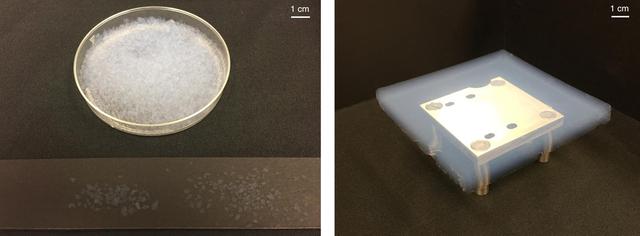
Scientists tested these samples of aerogel to see how they could be used as building materials on Mars. In an experiment, both the crushed and solid samples of aerogel were able to raise temperatures to melt water ice — ideal for a Martian greenhouse in which crops could grow.  https://photojournal.jpl.nasa.gov/catalog/PIA23342
Aerogel Samples
Technicians at Textron in Wimington, MA, apply Avcoat ablative material to the composite honeycomb structure attached to the Exploration Flight Test-1 (EFT-1) Orion heat shield carrier structure on May 22, 2013. Part of Batch image transfer from Flickr.
Orion EFT-1 heat shield manufacturing
Technicians at Textron in Wimington, MA, apply Avcoat ablative material to the composite honeycomb structure attached to the Exploration Flight Test-1 (EFT-1) Orion heat shield carrier structure on May 22, 2013. Part of Batch image transfer from Flickr.
Orion EFT-1 heat shield manufacturing
Documentation of NASA's partnership with the Houston Museum of Natural Science and Montana's Great Plains Dinosaur Museum to provide an insulated facility at Ellington Field in which the Leonardo Project Team was able to X-ray Leonardo, a 77 million year old dinosaur fossil.  View of the Brachylophosaurus fossil called Leonardo.
Dinosaur Fossil, Leonardo, at Ellington Field
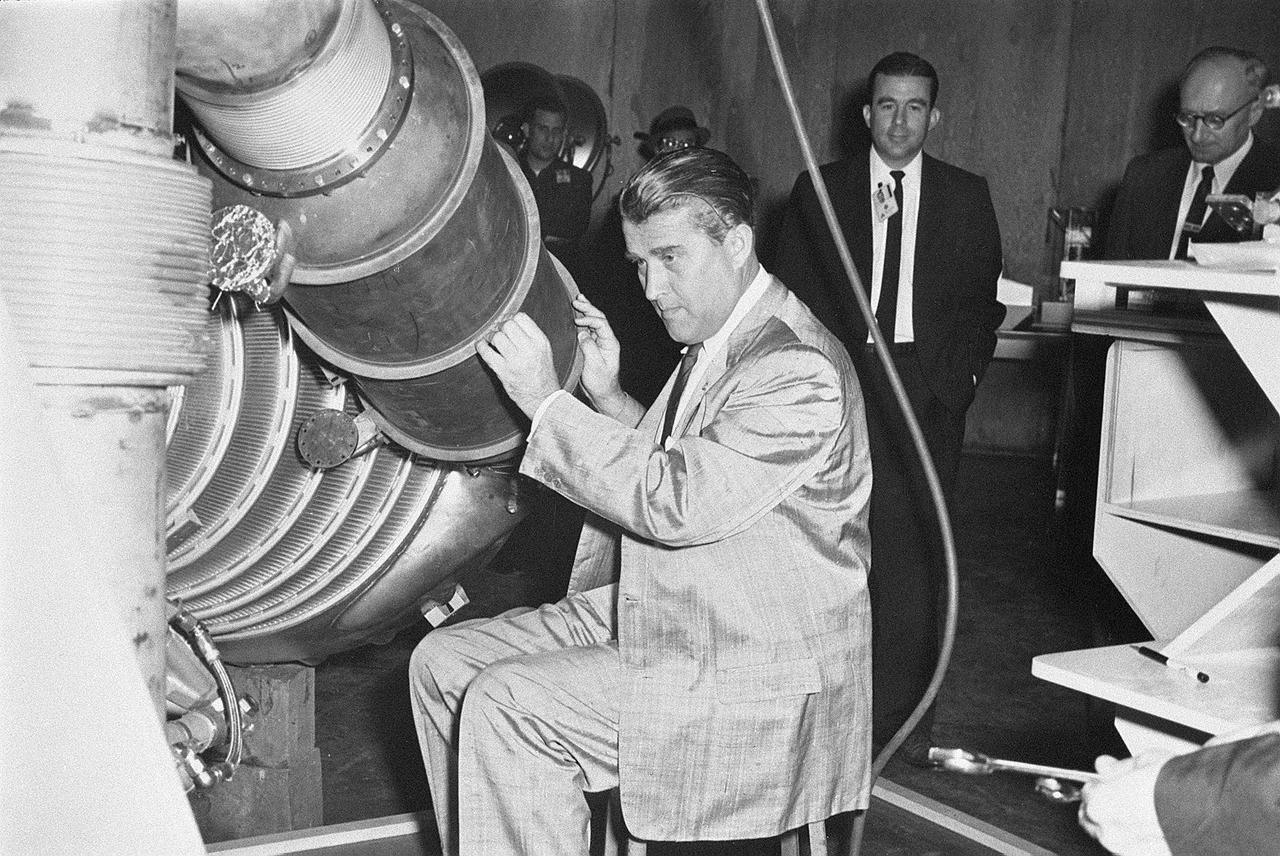
Dr. von Braun tried out a floating platform in the Marshall Space Flight Center Manufacturing Engineering Laboratory. This was a test rig to help determine how future astronauts will be able to perform maintenance tasks in the weightlessness in space. This photograph is believed to have been taken in 1961.
Wernher von Braun
iss056e097419 (July 19, 2018) --- NASA astronaut Ricky Arnold swabbed surfaces in the International Space Station to collect microbe samples. He then processed the microbial DNA using the Biomolecule Sequencer, a device that enables DNA sequencing in microgravity, to identify microbes able to survive in microgravity.
iss056e097419
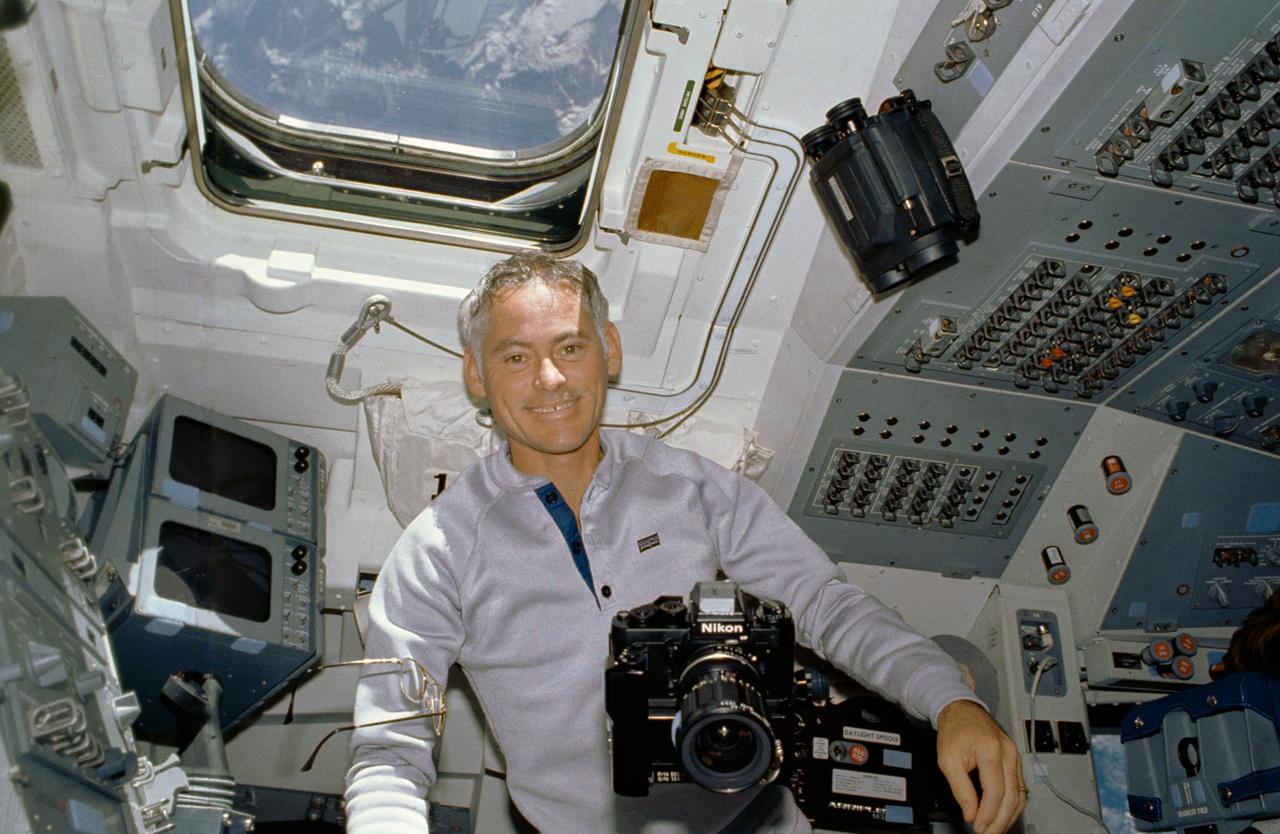
STS027-10-021 (2-6 Dec. 1988) --- Astronaut Richard M. (Mike) Mullane, STS-27 mission specialist, is able to handle a number of cameras with the aid of the microgravity in the shirt sleeve environment of the Earth-orbiting space shuttle Atlantis. Photo credit: NASA
STS-27 MS Mullane on aft flight deck with camera equipment
Technicians at Textron in Wimington, MA, apply Avcoat ablative material to the composite honeycomb structure attached to the Exploration Flight Test-1 (EFT-1) Orion heat shield carrier structure on May 22, 2013. Part of Batch image transfer from Flickr.
Orion EFT-1 heat shield manufacturing
Technicians at Textron in Wimington, MA, apply Avcoat ablative material to the composite honeycomb structure attached to the Exploration Flight Test-1 (EFT-1) Orion heat shield carrier structure on May 22, 2013. Part of Batch image transfer from Flickr.
Orion EFT-1 heat shield manufacturing
iss056e097429 (July 19, 2018) --- NASA astronaut Ricky Arnold swabbed surfaces in the International Space Station to collect microbe samples. He then processed the microbial DNA using the Biomolecule Sequencer, a device that enables DNA sequencing in microgravity, to identify microbes able to survive in microgravity.
Biomolecule Extraction and Sequencing Technology (BEST)