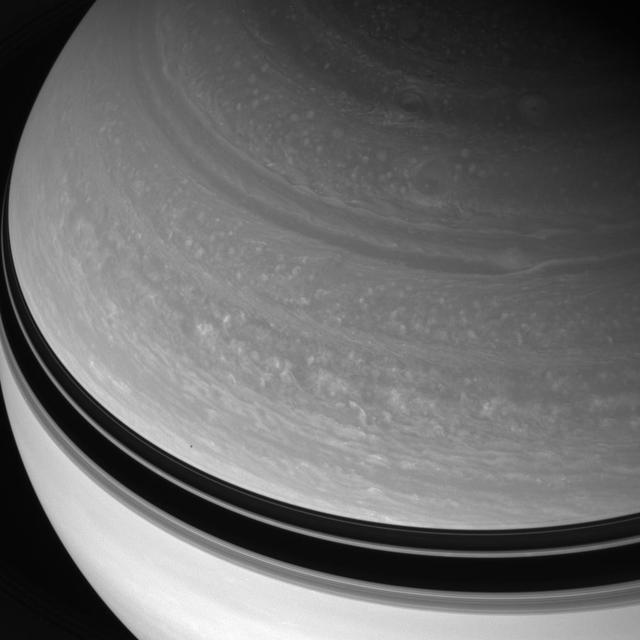
Above the Storms
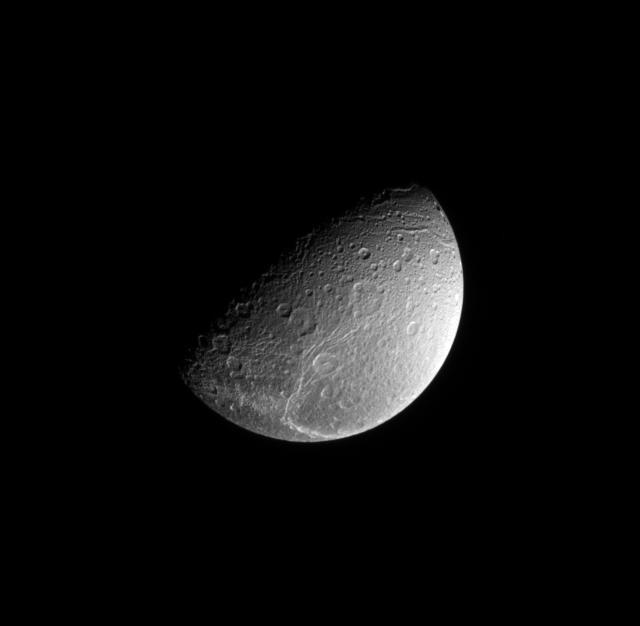
Above the Cracks
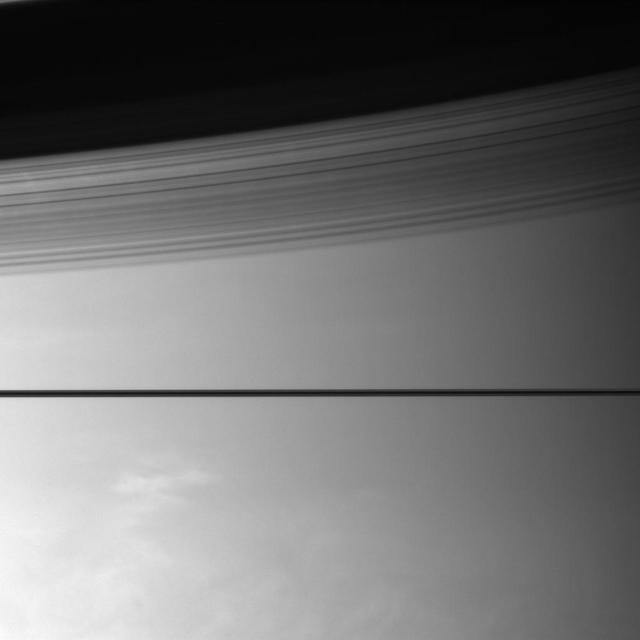
Above and Below
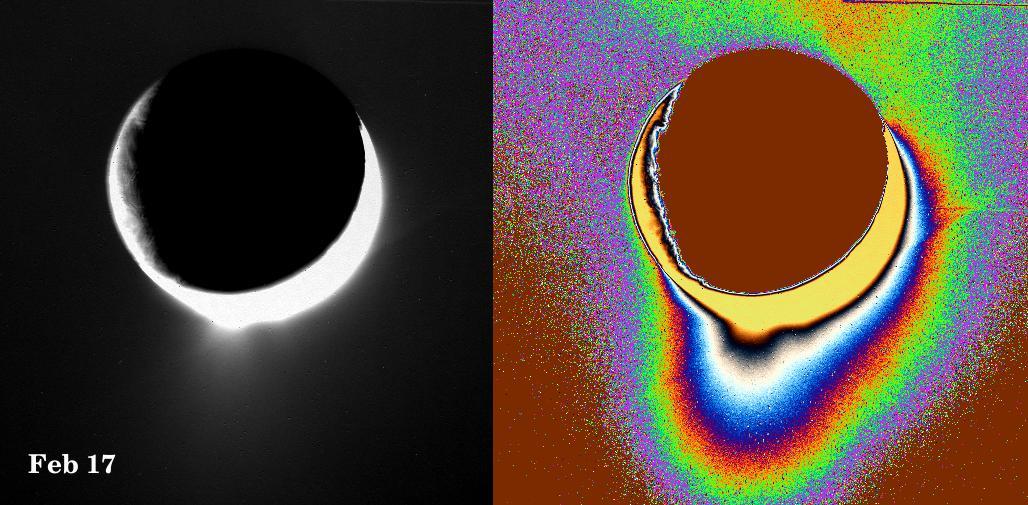
Spray Above Enceladus III
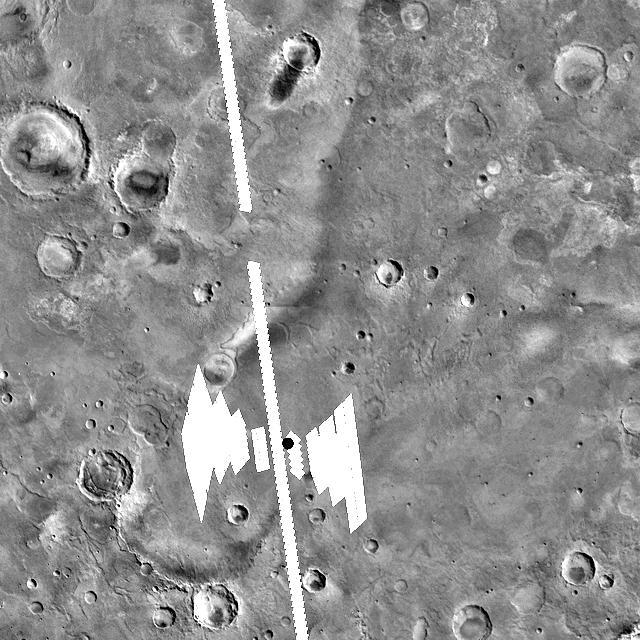
Footprints from Above
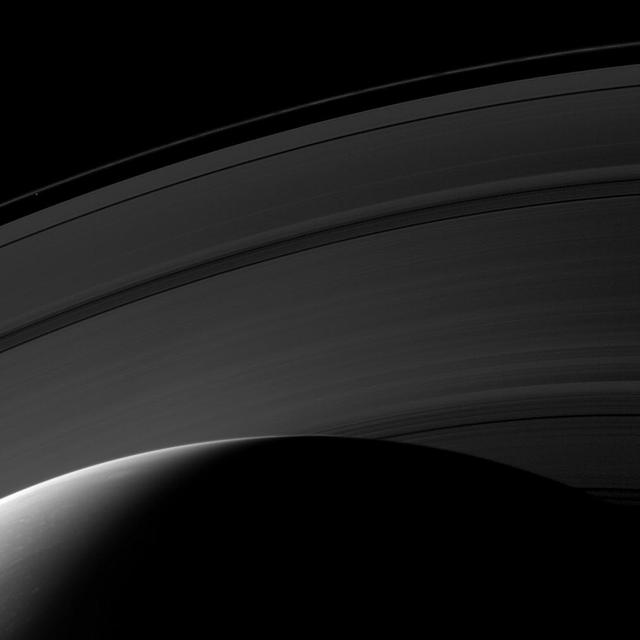
Daybreak From Above
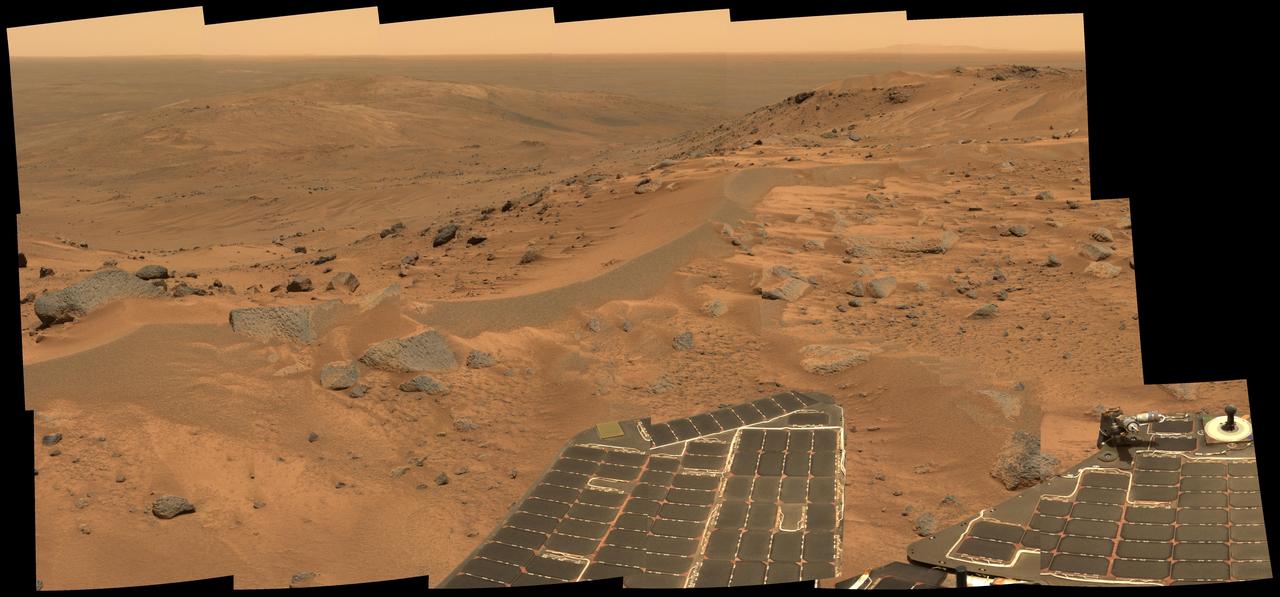
Postcard Above Tennessee Valley
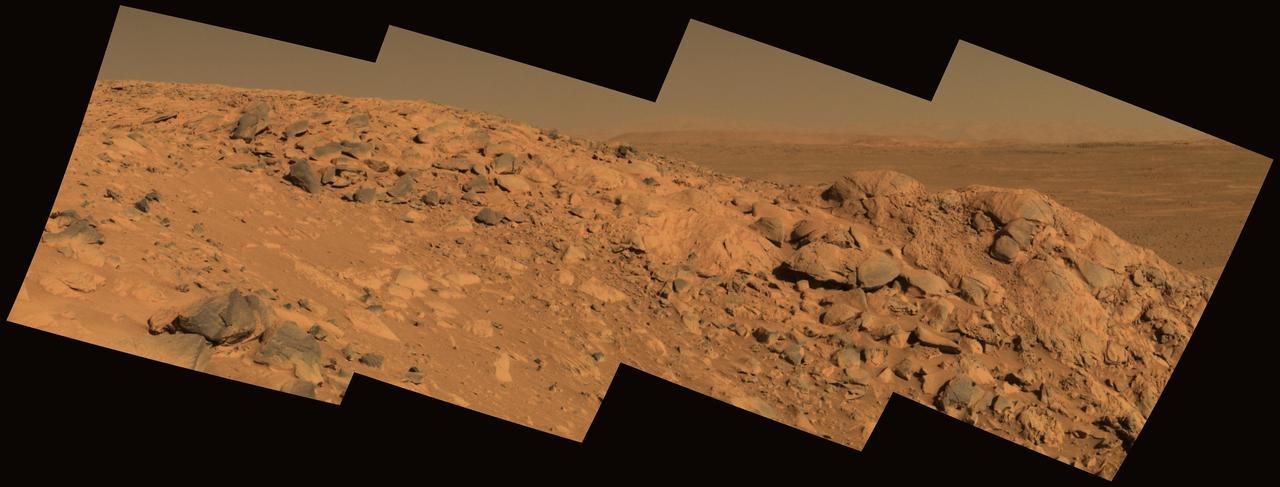
Perched Above Gusev Crater
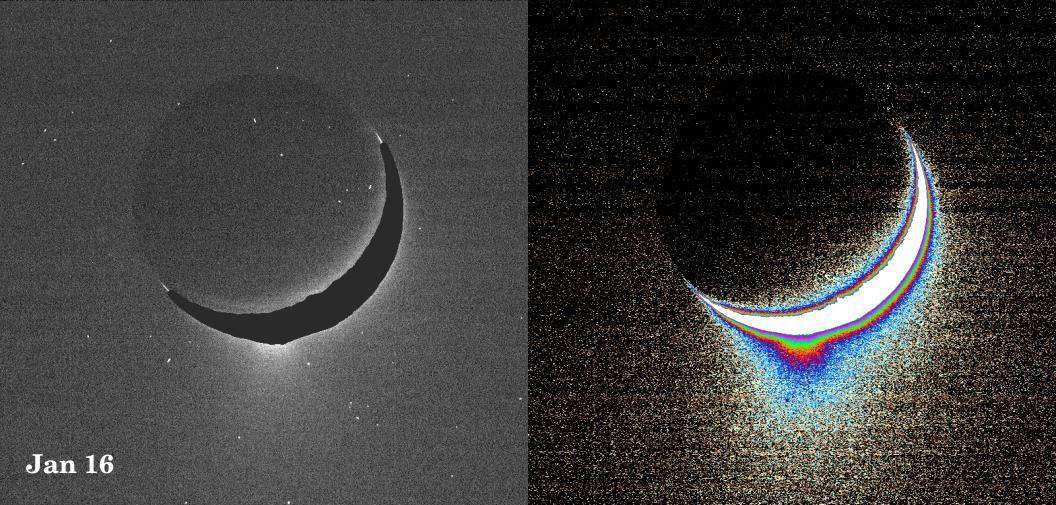
Spray Above Enceladus II
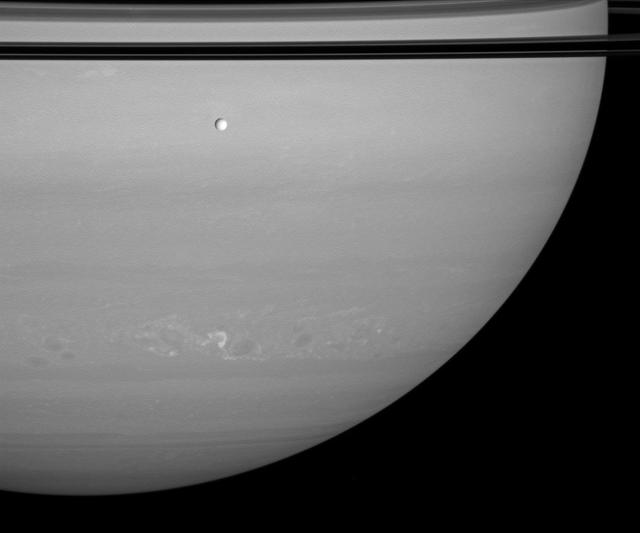
Peace Above, Turmoil Below

High Above Mimas

Mimas Above the Haze
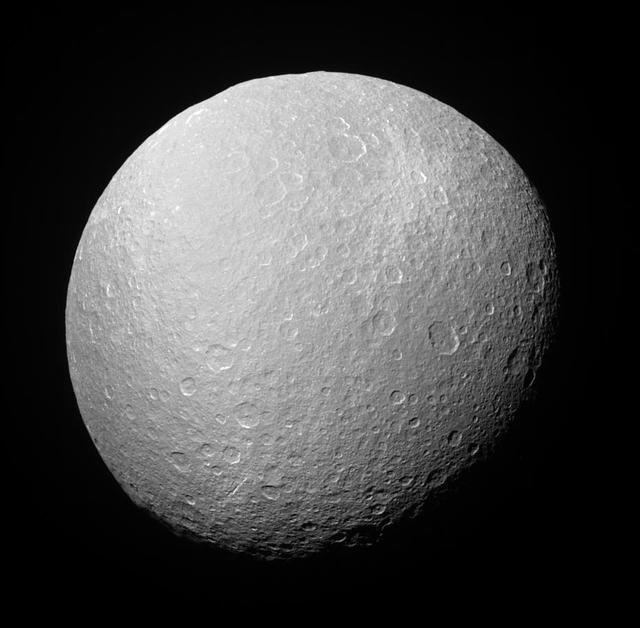
Above Rhea South Pole
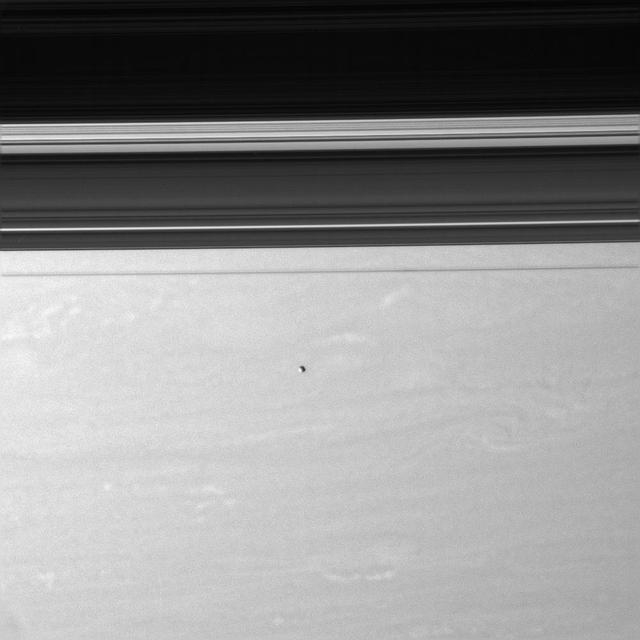
Epimetheus floats above Saturn swirling skies
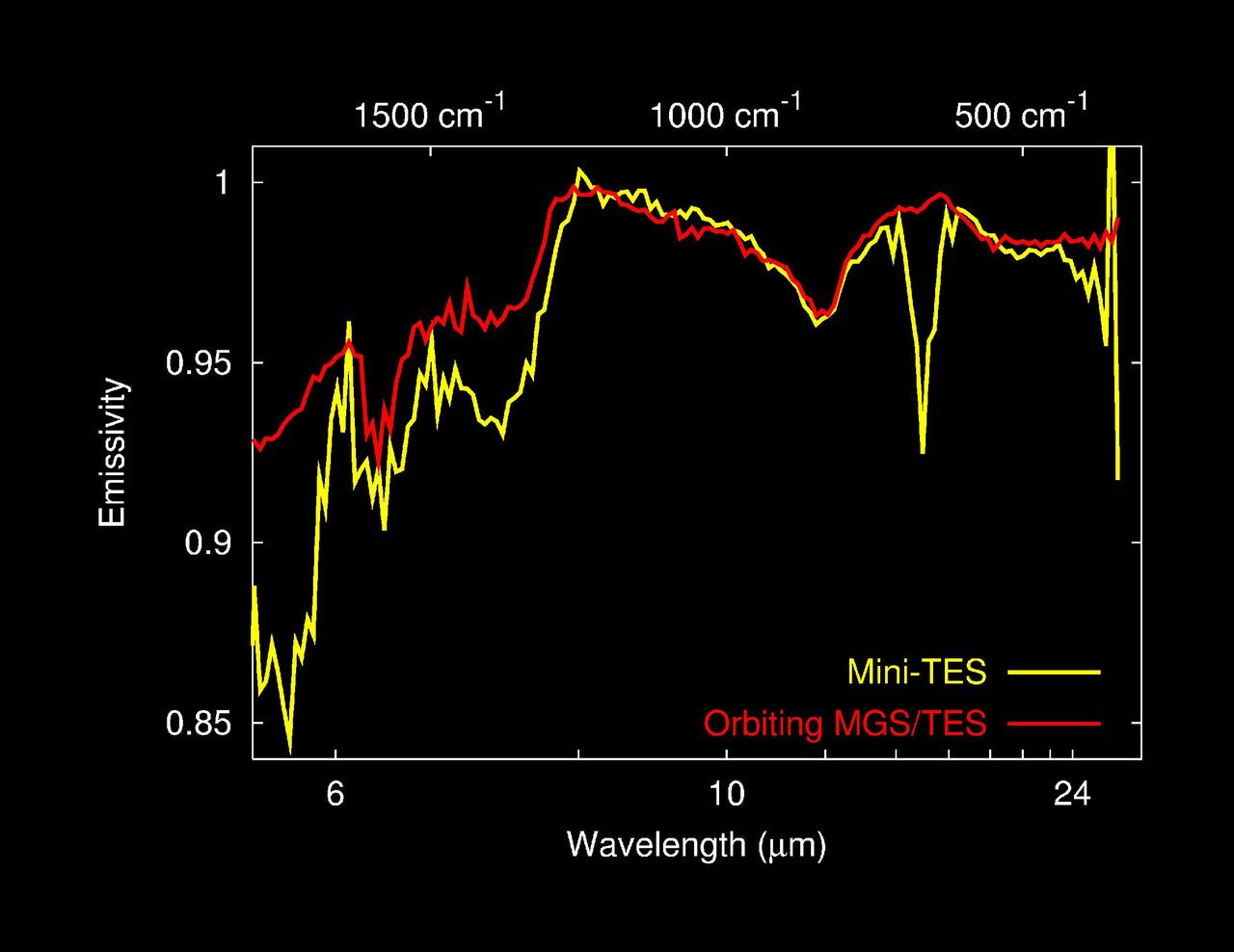
Dust Spectra from Above and Below
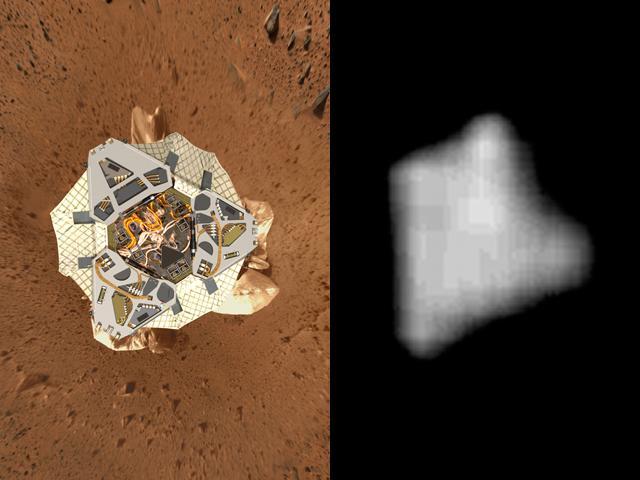
View from above Landing Site
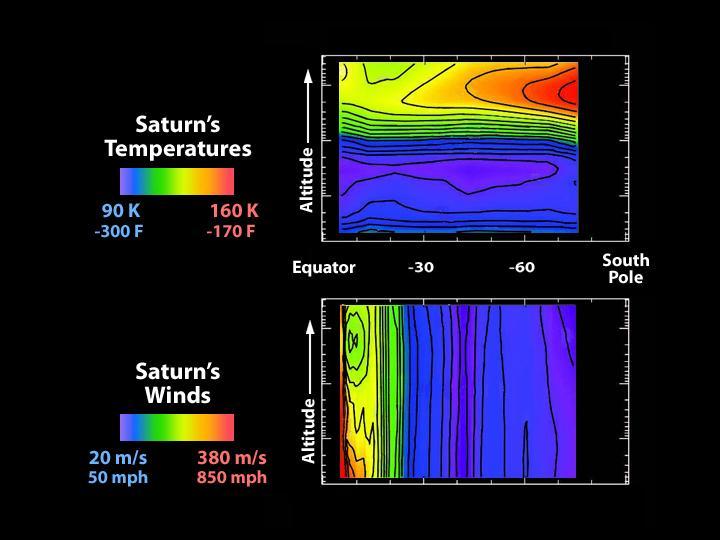
High Above Saturn Cloud Tops
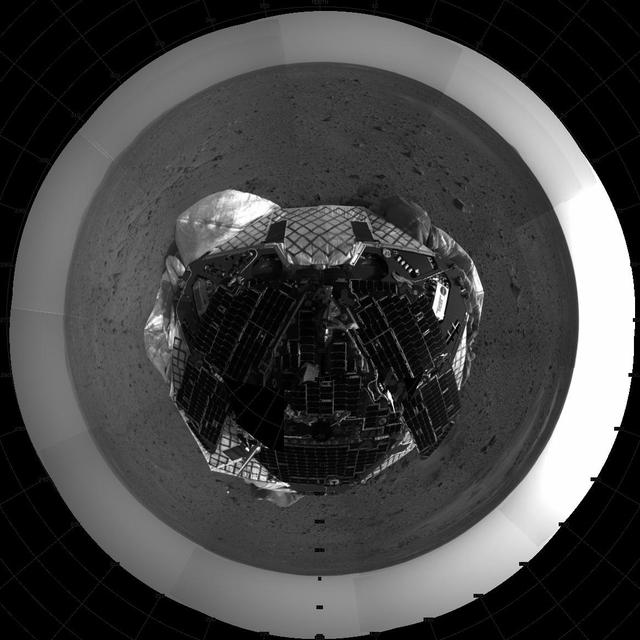
View From Above Spirit on Mars

Seasonal Air Temperatures Above Opportunity
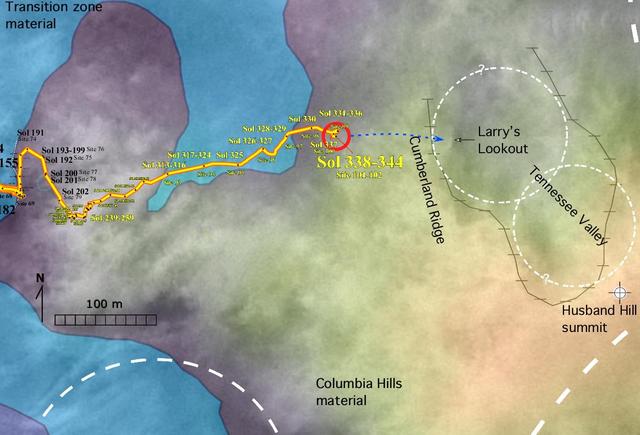
Gusev Crater Geology as Seen from Above
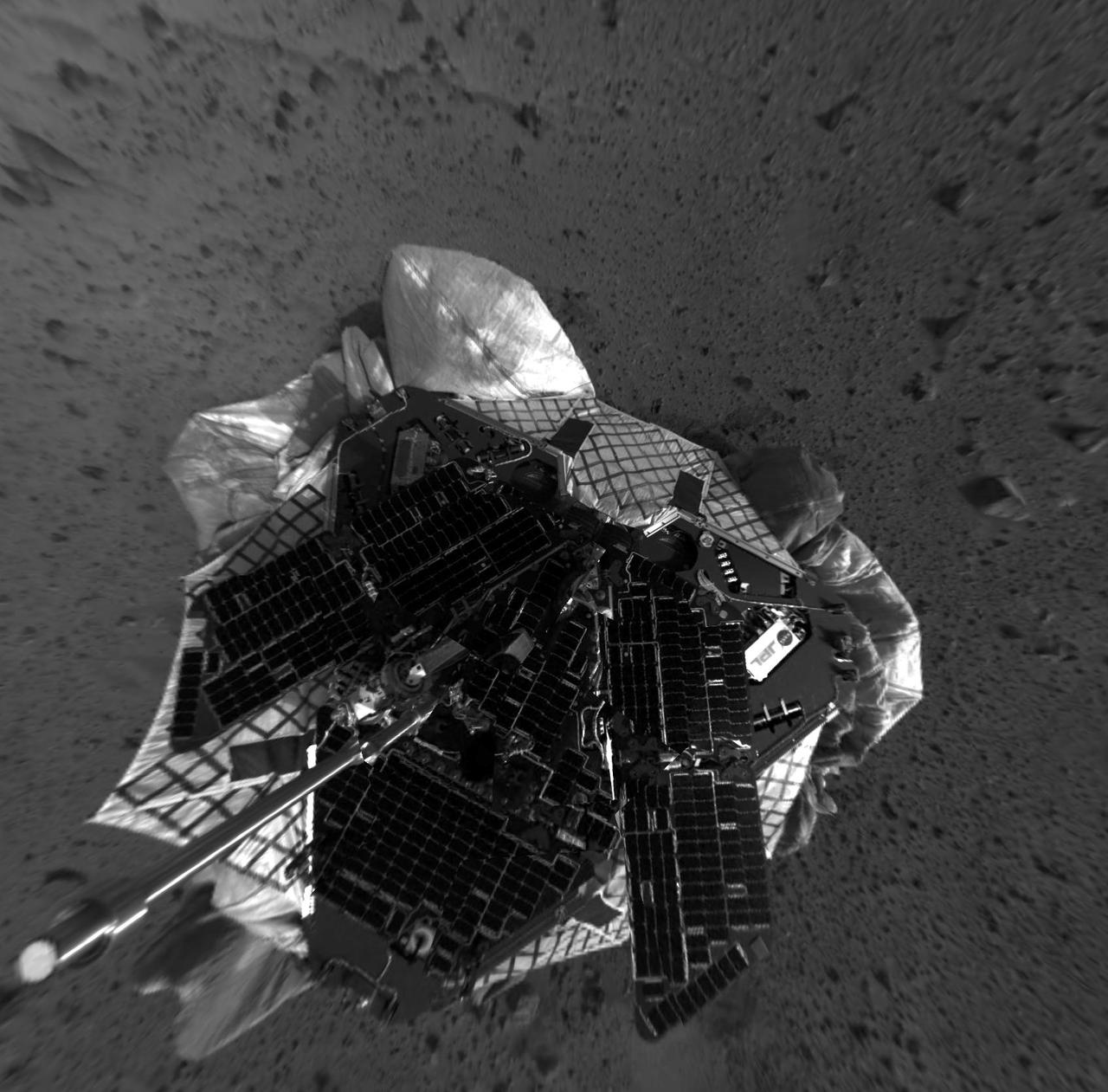
View From Above Spirit on Mars-2

This overhead shot of the X-59 assembly during Spring 2021 shows assembly with technicians working at the engine inlet section where the engine will be located on the aircraft. Lockheed Martin Photography By Garry Tice 1011 Lockheed Way, Palmdale, Ca. 93599 Event: Manufacture Area From Above Date: 3/30/2021
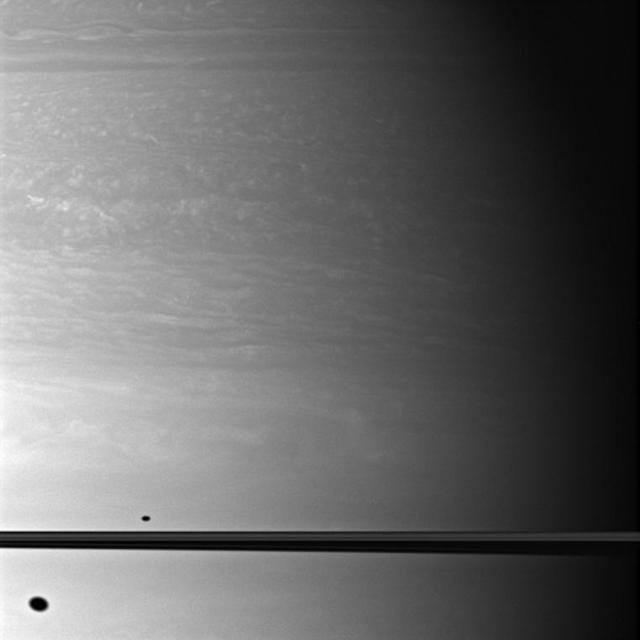
This image, taken by NASA Cassini spacecraft, shows the shadows of two moons as they appear on Saturn, above and below the plane of the planet rings.

iss069e008558 (May 3, 2-23) --- The waxing gibbous Moon is pictured from the International Space Station as it orbited 268 miles above the southern Atlantic Ocean.

Event: Manufacturing Area From Above A overhead view of the X-59 with its nose on. The X-59’s nose is 38-feet long – approximately one third of the length of the entire aircraft. The aircraft, under construction at Lockheed Martin Skunk Works in Palmdale, California, will demonstrate the ability to fly supersonic while reducing the loud sonic boom to a quiet sonic thump.

This overhead shot of the X-59 Quiet SuperSonic Technology or QueSST aircraft shows the assembly progress of the vehicle during Spring 2021. Pictured here you can see the nose (far left) which will later be mounted to the middle section in the photo known as the fuselage and the last section is the wing and tail in the far right of the photo. Lockheed Martin Photography By Garry Tice 1011 Lockheed Way, Palmdale, Ca. 93599 Event: Manufacture Area From Above Date: 3/30/2021

This overview shot of the X-59 Quiet Supersonic Technology or QueSST aircraft shows the vehicle before a major merger of three major aircraft sections – the fuselage, the wing, and the tail assembly – together, making it looks more like an airplane. Lockheed Martin Photography By Garry Tice 1011 Lockheed Way, Palmdale, Ca. 93599 Event: Manufacture Area From Above Date: 3/30/2021

This overhead shot of the X-59 Quiet SuperSonic Technology or QueSST aircraft shows the assembly progress of the vehicle during Spring 2021. In the left side of the picture, the fuselage which contains the cockpit is shown and the right side of the photo shows the wing and the tail section of the aircraft. Lockheed Martin Photography By Garry Tice 1011 Lockheed Way, Palmdale, Ca. 93599 Event: Manufacture Area From Above Date: 3/30/2021
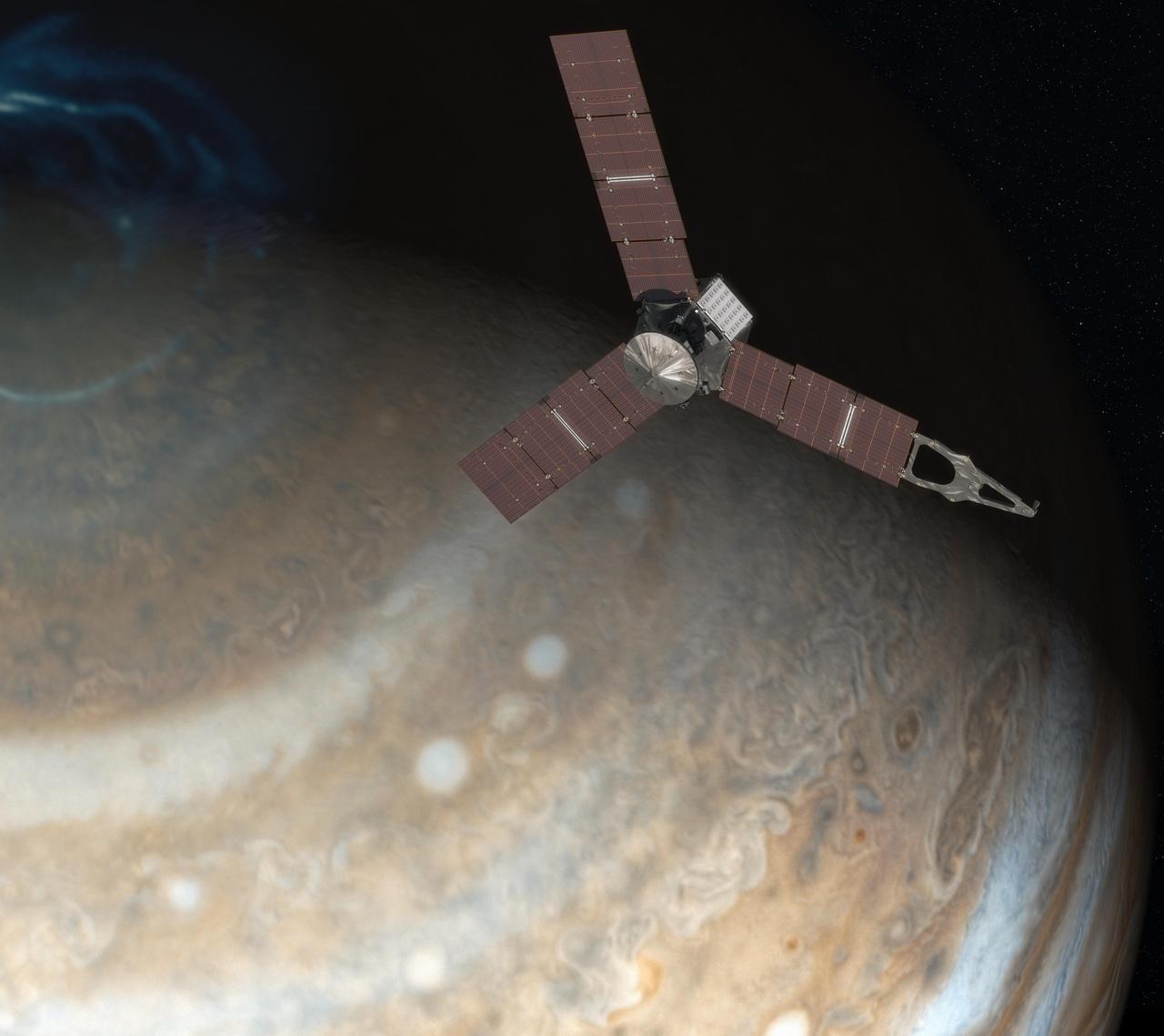
This artist rendering shows NASA Juno spacecraft above the north pole of Jupiter.

The X-59 Quiet SuperSonic Technology (QueSST) aircraft is taking shape at the Lockheed Martin Skunk Works facility in Palmdale, California. The team positioned the X-59 QueSST's nose at the front of the aircraft. As one of the more recognizable features of the X-59, the nose makes up almost a third of the aircraft length and will be essential in shaping shock waves during supersonic flight, resulting in quiet sonic thumps instead of loud sonic booms. The nose was attached and then removed from the front of the aircraft in preparation for its shipment to Fort Worth, Texas where it will undergo additional testing. The X-59 will fly at supersonic speeds above communities as part of the Low-Boom Flight Demonstration mission, during which NASA will gather community feedback to the sound of quiet supersonic flight. These findings will be shared with regulators to inform decisions on current restrictions of supersonic flight over land. Lockheed Martin Photography By Garry Tice 1011 Lockheed Way, Palmdale, Ca. 93599 Event: Manufacturing Area From Above Date: 8/18/2021 Additional Info:

Pictured here is an overhead view of the X-59 as it comes together for the major assembly merger in summer 2021. Lockheed Martin Photography By Garry Tice 1011 Lockheed Way, Palmdale, Ca. 93599 Event: Manufacturing Area From Above Date: 5/26/2021

Pictured is an overhead view of the X-59 as it comes together for the major assembly merger in summer 2021. Lockheed Martin Photography By Garry Tice 1011 Lockheed Way, Palmdale, Ca. 93599 Event: Manufacturing Area From Above Date: 5/26/2021
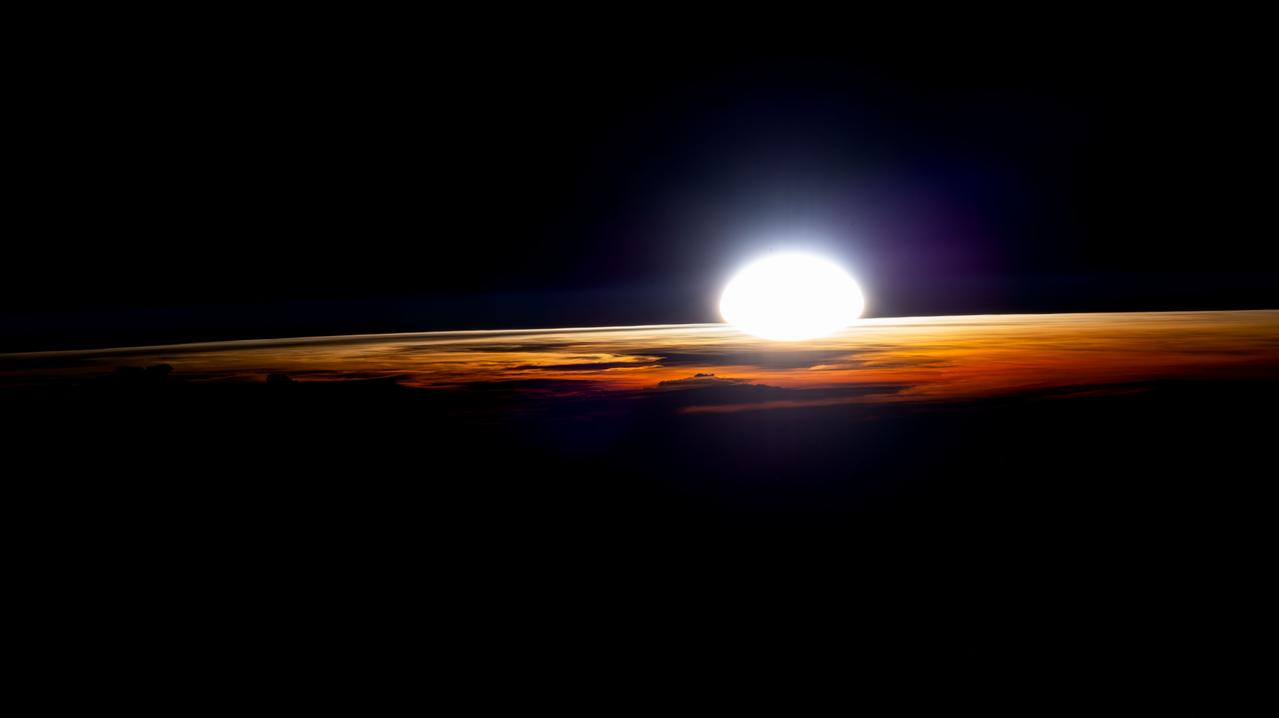
An orbital sunrise illuminates the cloud tops in this photograph from the International Space Station as it soared 262 miles above Namibia near the Atlantic coast.

This overhead view shows NASA’s X-59 Quiet SuperSonic Technology or QueSST aircraft as it comes together for the merger of its main parts – the wing, forward section and tail assembly. Lockheed Martin Photography By Garry Tice 1011 Lockheed Way, Palmdale, Ca. 93599 Event: Manufacturing Area From Above Date: 5/26/2021

Mariner 9 views Olympus Mons standing above the Martian Dust Storm
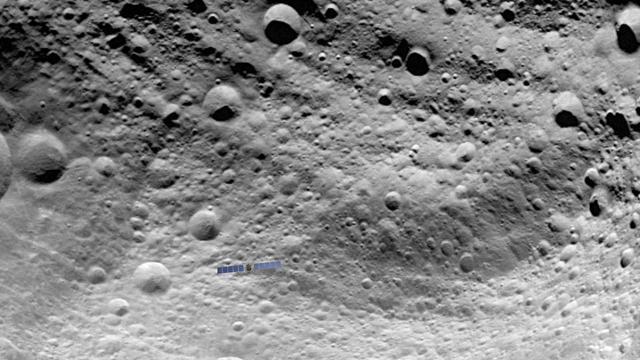
This image shows NASA Dawn spacecraft flying above Vesta, based on an artist concept of the surface of the giant asteroid.

iss058e001781 (Dec. 31, 2018) --- The SpaceX Dragon cargo craft is pictured attached to the International Space Station almost 257 miles above Quebec on New Year's Eve. The complex was flying into an orbital sunrise on a northwest to southeast track about to cross the Atlantic Ocean.

The team at Lockheed Martin Skunk Works in Palmdale, California, merged the major sections of the X-59 Quiet SuperSonic Technology aircraft, which includes the wing, tail assembly, and fuselage or forward section. This marks the first time the X-59 resembles an actual aircraft. (Pictured here is a overhead view of the X-59 as it comes together for the major assembly merger in summer 2021.) Lockheed Martin Photography By Garry Tice 1011 Lockheed Way, Palmdale, Ca. 93599 Event: Manufacturing Area From Above Date: 5/26/2021
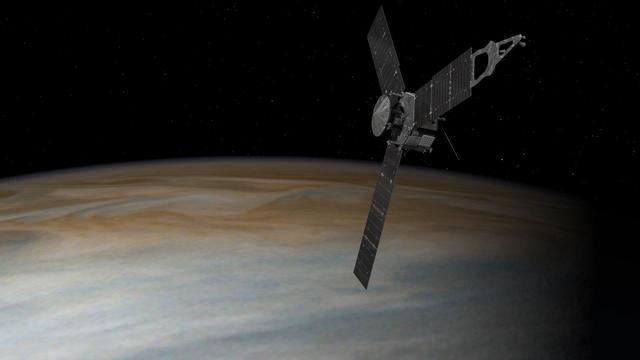
This illustration depicts NASA's Juno spacecraft in orbit above Jupiter. From its unique polar orbit, Juno will repeatedly dive between the planet and its intense belts of charged particle radiation. http://photojournal.jpl.nasa.gov/catalog/PIA20704
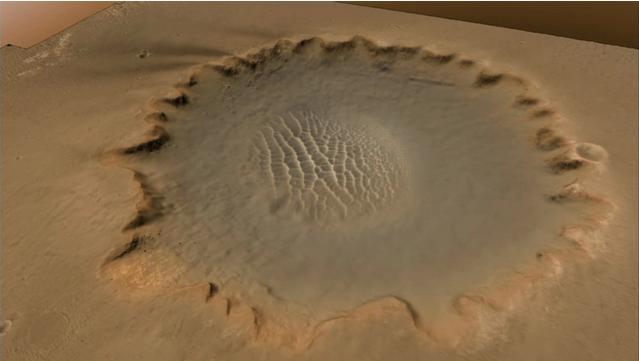
This animation shows a hypothetical flyover above Victoria Crater, where NASA Mars Exploration Rover Opportunity is perched on a rim. The rover is expected to begin rolling down into the crater in early July 2007.

This image is from Cassini's final observation of Saturn's icy moon Rhea (949 miles or 1,527 kilometers across) on May 2, 2017. The spacecraft was at the time high above the plane of Saturn's rings, looking down at Rhea's northern hemisphere. The northern rim of the giant Tirawa impact basin can be seen along the limb at left. (For a high-resolution view of Rhea, see PIA07763; Tirawa is the large basin at the one o'clock position in that view.) The image was taken in visible light with the Cassini spacecraft narrow-angle camera at a distance of approximately 230,000 miles (370,000 kilometers) from Rhea. Image scale is 1.2 miles (2 kilometers) per pixel. The Cassini spacecraft ended its mission on Sept. 15, 2017. https://photojournal.jpl.nasa.gov/catalog/PIA21354
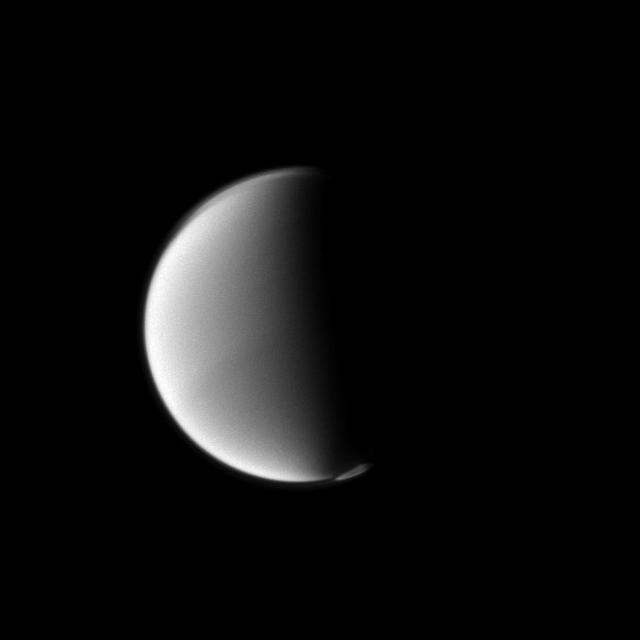
Titan south polar vortex seems to float above the moon south pole in this Cassini spacecraft view. The vortex, which is a mass of gas swirling around the south pole high in the moon atmosphere, can be seen in the lower right of this view.
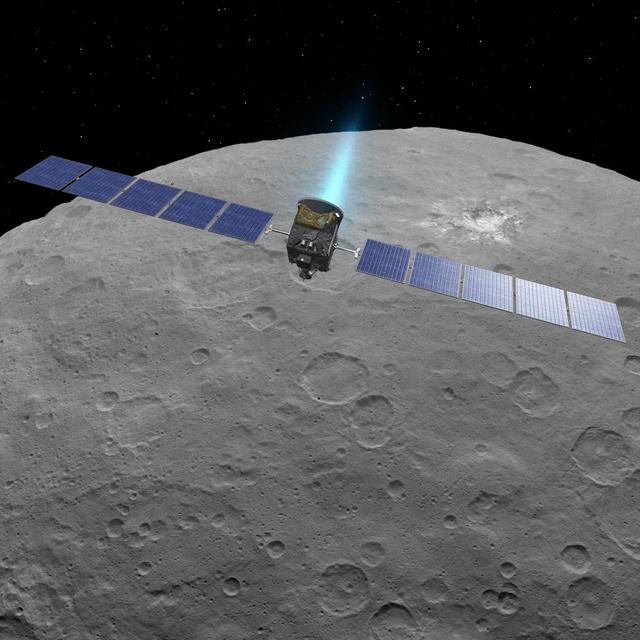
This artist concept shows NASA Dawn spacecraft above dwarf planet Ceres, as seen in images from the mission. http://photojournal.jpl.nasa.gov/catalog/PIA19598
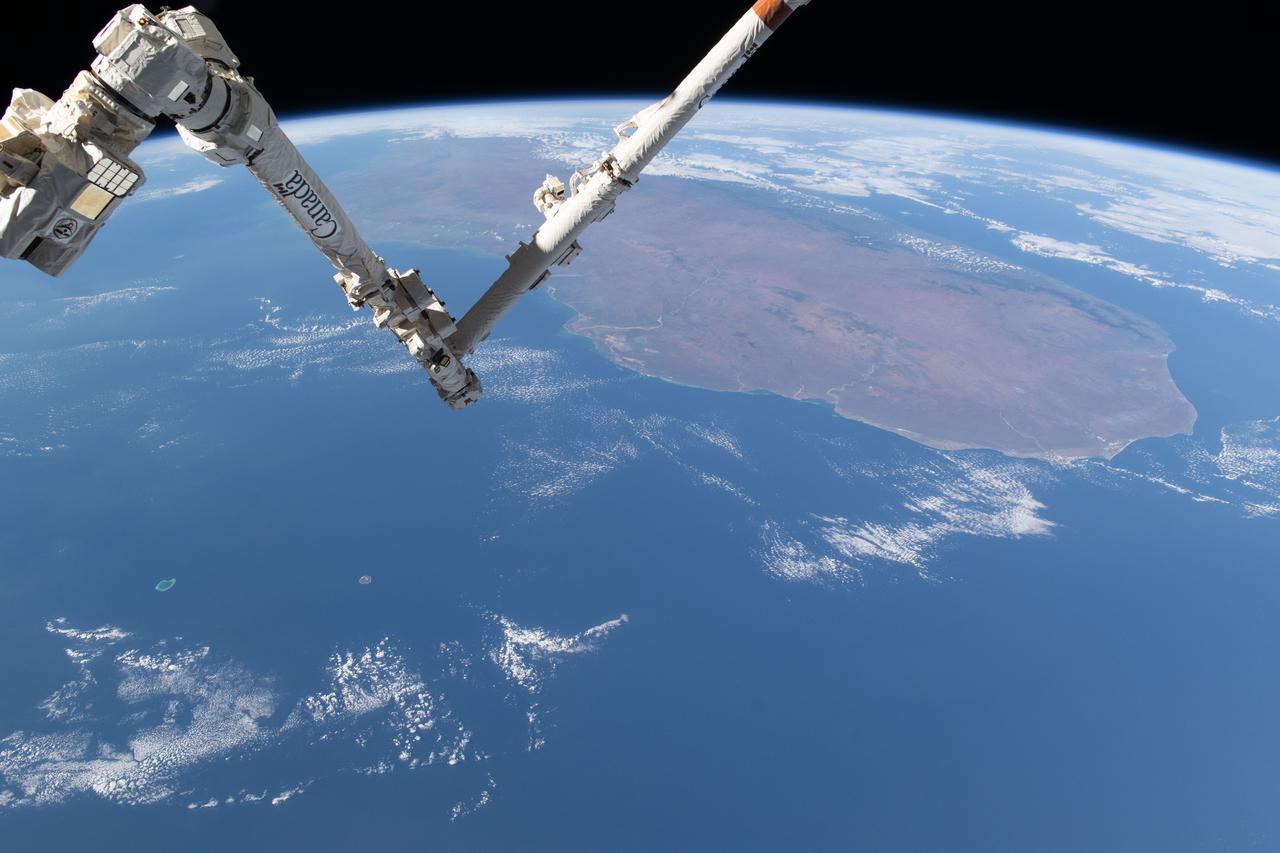
iss071e361950 (July 15, 2024) --- The International Space Station's 57.7-foot-long Canadarm2 robotic arm crosses the foreground as the orbital outpost soared 265 miles above the Mozambique Channel south of the African island nation of Madagascar.

iss058e002592 (Jan. 9, 2019) --- The SpaceX Dragon cargo craft is pictured attached to the International Space Station's Harmony module as the orbital complex flew 258 miles above the Indian Ocean off the eastern coast of South Africa.
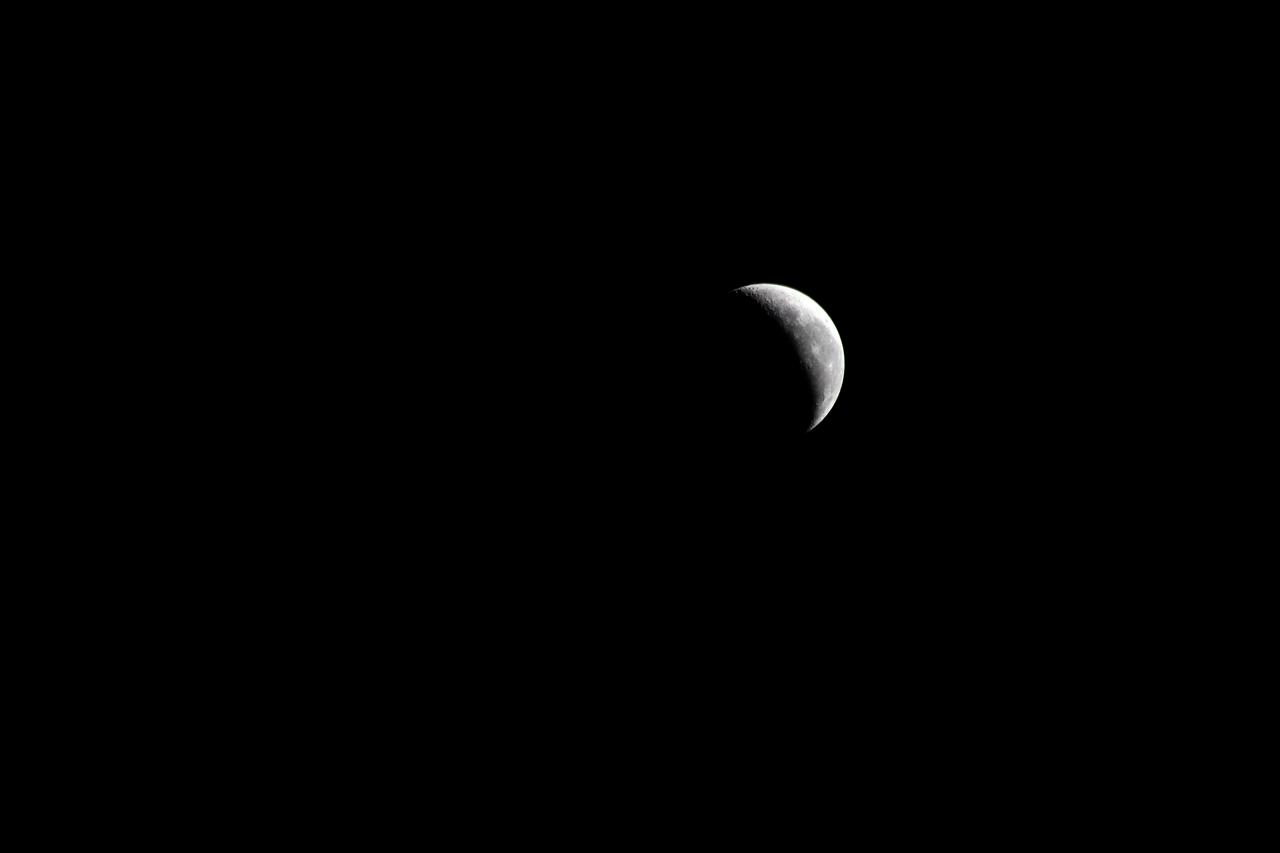
iss071e256627 (June 30, 2024) -- A waning crescent moon hangs against the black of space as the International Space Station orbited 258 miles above Italy.

iss071e406275 (July 27, 2024) -- The third quarter moon rises just above Earth's blue horizon as the International Space Station orbited 258 miles above the Red Sea.
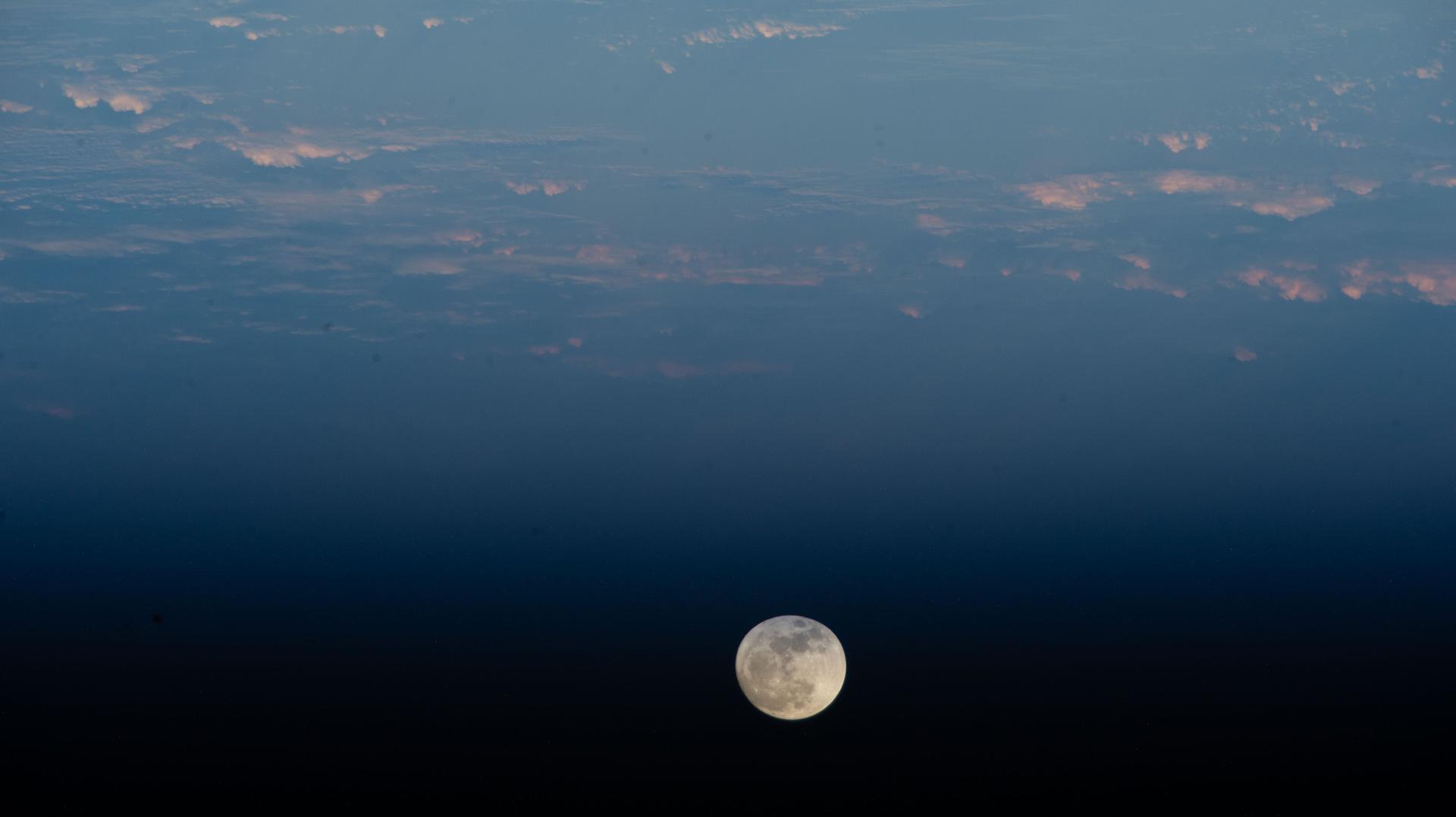
iss074e0623239 (May 30, 2026) --- A Waxing Gibbous Moon is pictured above the Pacific Ocean northeast of New Zealand in this photograph from the International Space Station as it orbited 266 miles above Earth. Credit: NASA
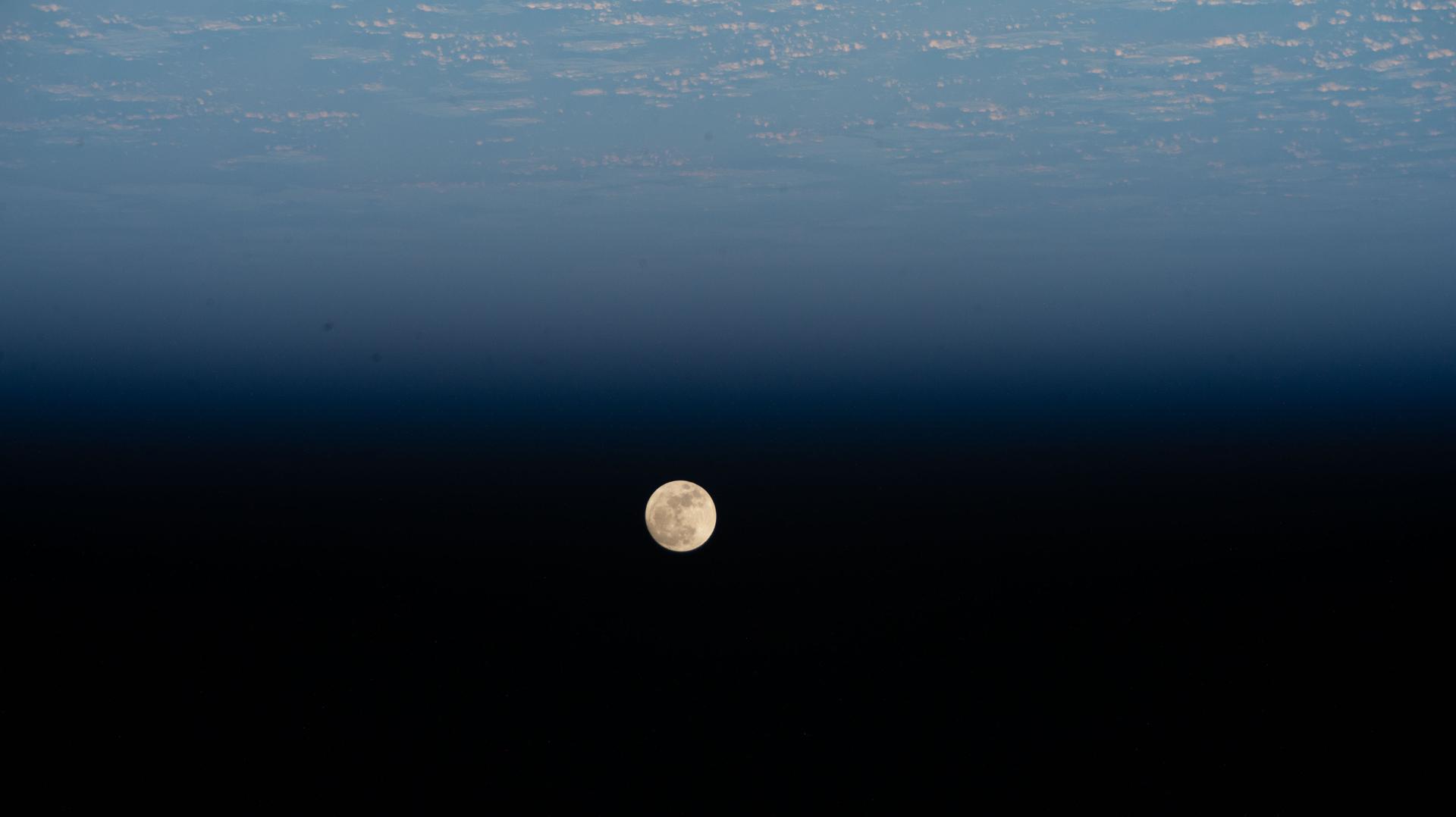
iss074e0623242 (May 30, 2026) --- A Waxing Gibbous Moon is pictured above the Pacific Ocean northeast of New Zealand in this photograph from the International Space Station as it orbited 266 miles above Earth. Credit: NASA
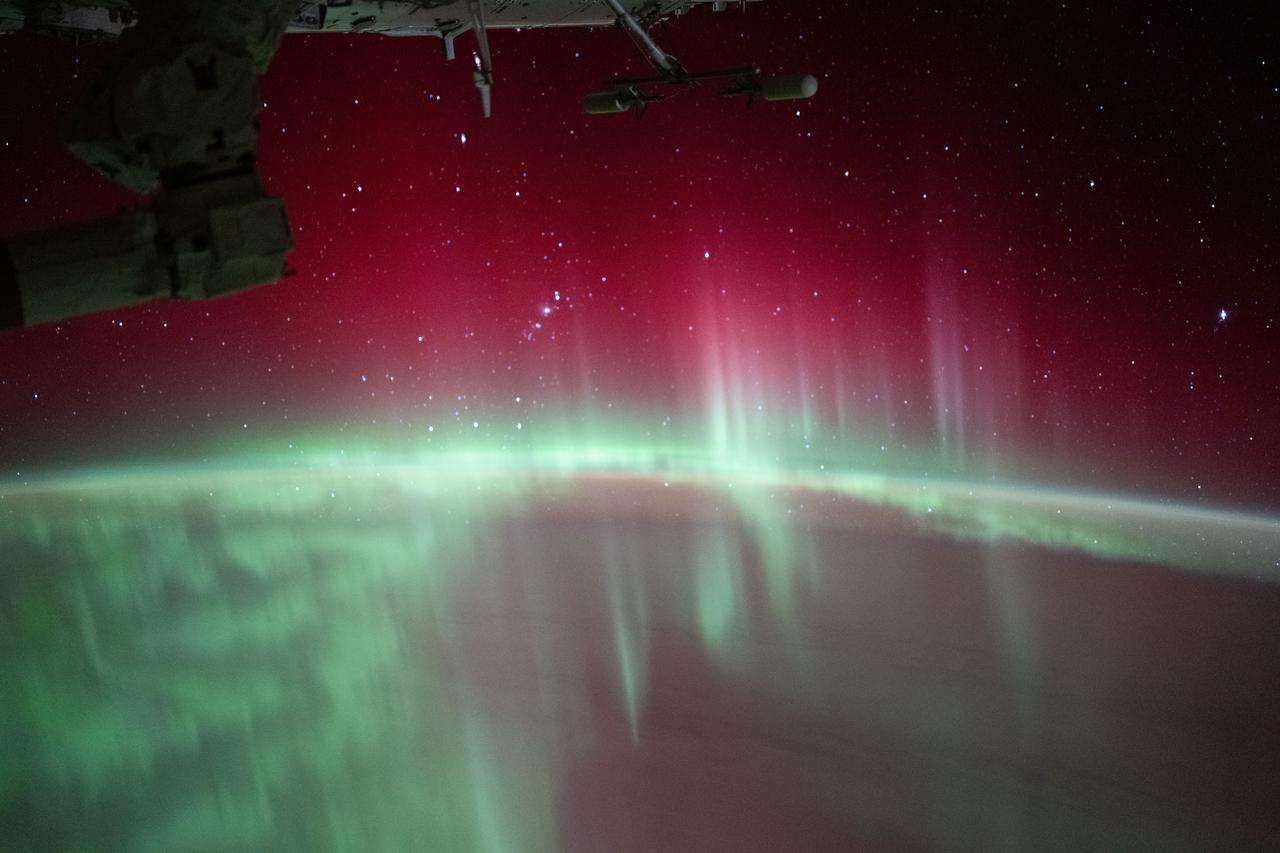
iss071e564695 (Aug. 11, 2024) -- In this long-exposure shot taken from the International Space Station as it orbited 268 miles above the Indian Ocean, stars glitter above green and red auroras swirling through Earth's atmosphere.

iss071e206529 (June 19, 2024) -- In the North Atlantic Ocean lies Bermuda, an archipelago of more than 180 islands and islets. As the International Space Station orbited 265 miles above, NASA astronaut Matthew Dominick captured this photo.
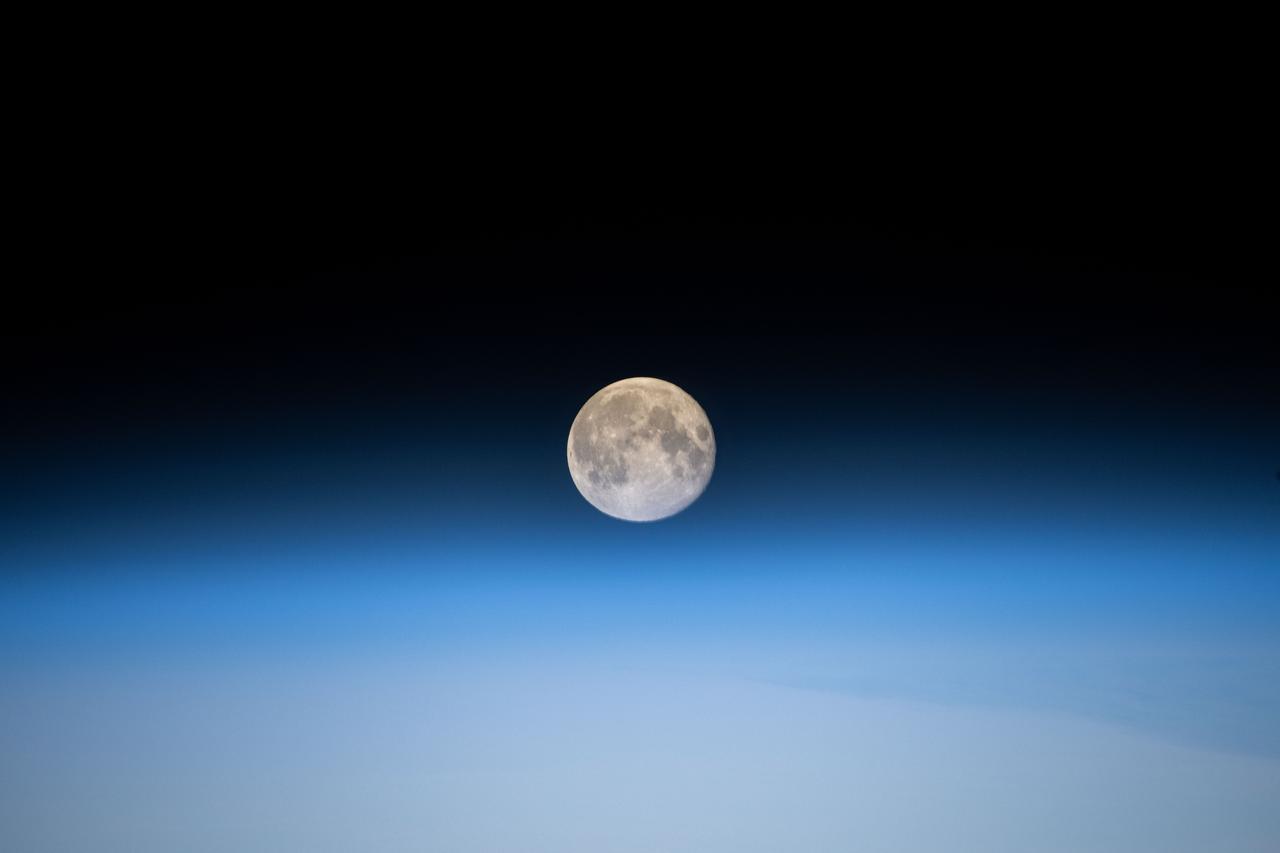
iss072e618284 (Feb. 10, 2025) --- The full Moon is pictured just above Earth's horizon from the International Space Station as it soared 260 miles over Durango, Mexico.
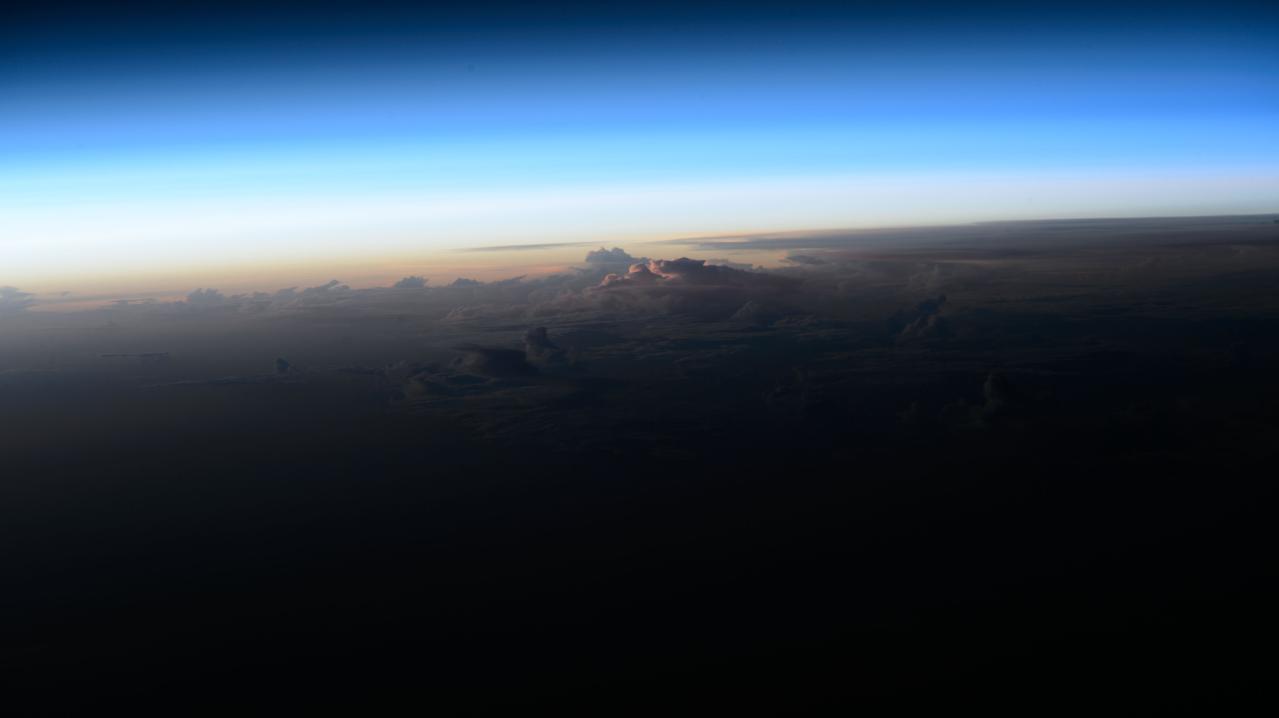
iss073e0028091 (May 11, 2025) --- An orbital sunrise breaks above the clouds in this photograph from the International Space Station as it soared 259 miles over the Atlantic Ocean due west of the African island nation of Cabo Verde.
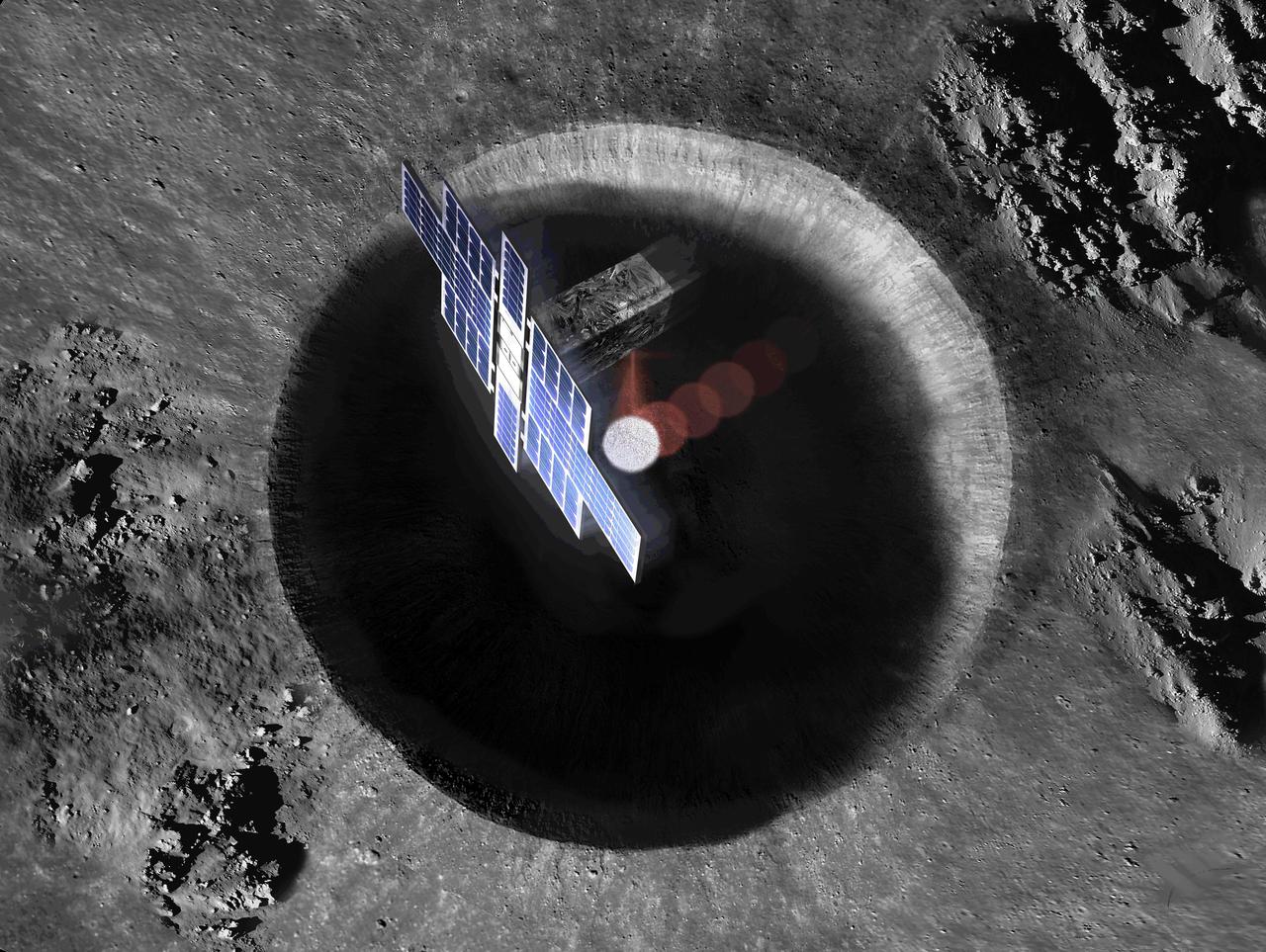
This artist's concept shows a view from above the Lunar Flashlight spacecraft, a six-unit CubeSat designed to search for ice on the Moon's surface using special lasers. The spacecraft uses its near-infrared lasers to shine light into shaded polar regions on the Moon, while an on-board reflectometer measures surface reflection and composition. https://photojournal.jpl.nasa.gov/catalog/PIA23132
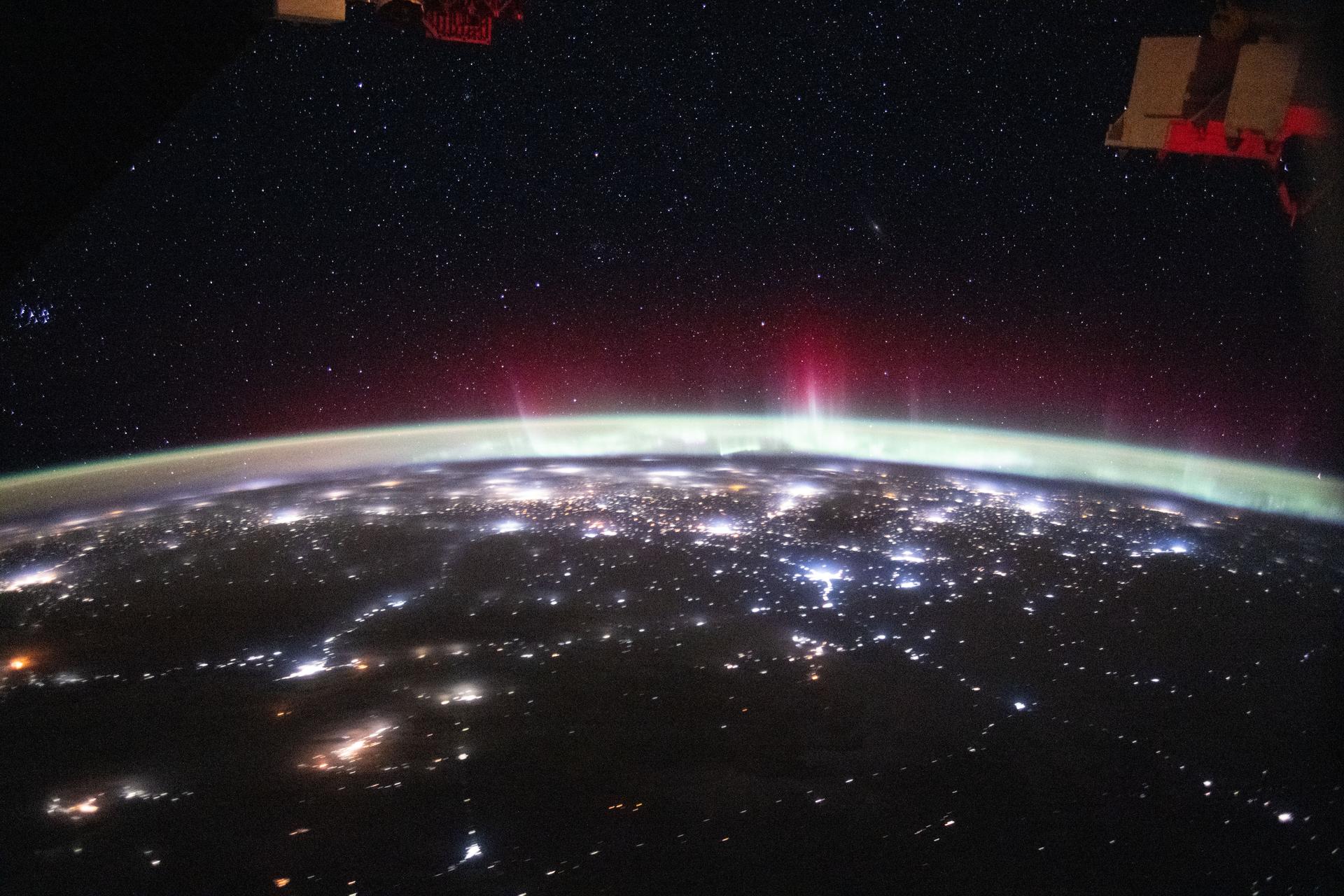
iss074e0324639 (Feb. 22, 2026) --- An aurora streams above Earth’s atmospheric glow, blanketing the city lights of Europe and Russia in this photograph taken at approximately 3:30 a.m. local time from the International Space Station as it orbited 263 miles above Central Asia. Credit: NASA/Chris Williams

iss074e0528083 (May 7, 2026) --- The aurora australis streams serenely above the Indian Ocean southwest of Perth, Australia, in this photograph taken at approximately 10:20 p.m. local time from the International Space Station as it orbited 268 miles above the Earth. Credit: ESA/Sophie Adenot
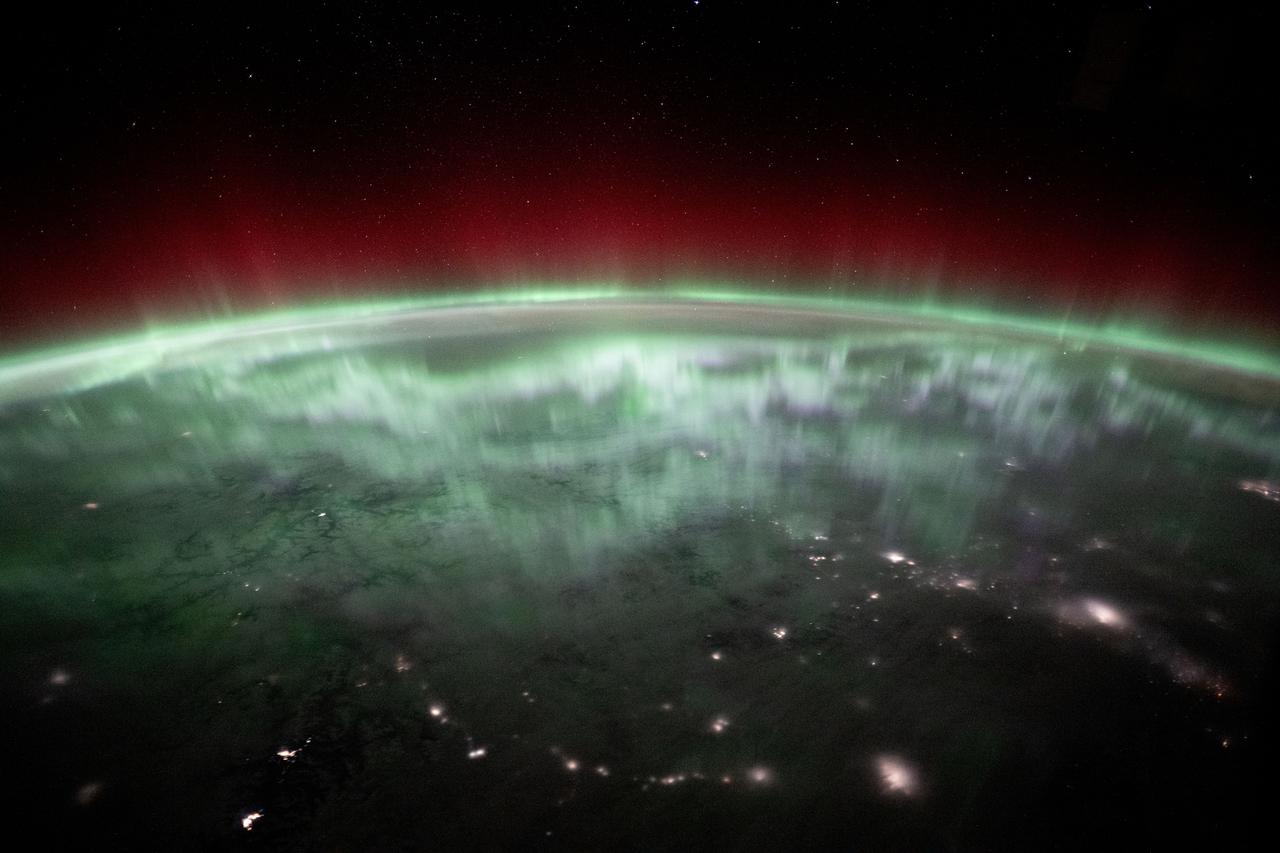
iss072e501410 (Jan. 4, 2025) --- An aurora shimmers and dances above the city lights of Canada in this photograph from the International Space Station as it orbited 259 miles above Vancouver, British Columbia, about 1:55 a.m. local time. Credit: NASA/Don Pettit
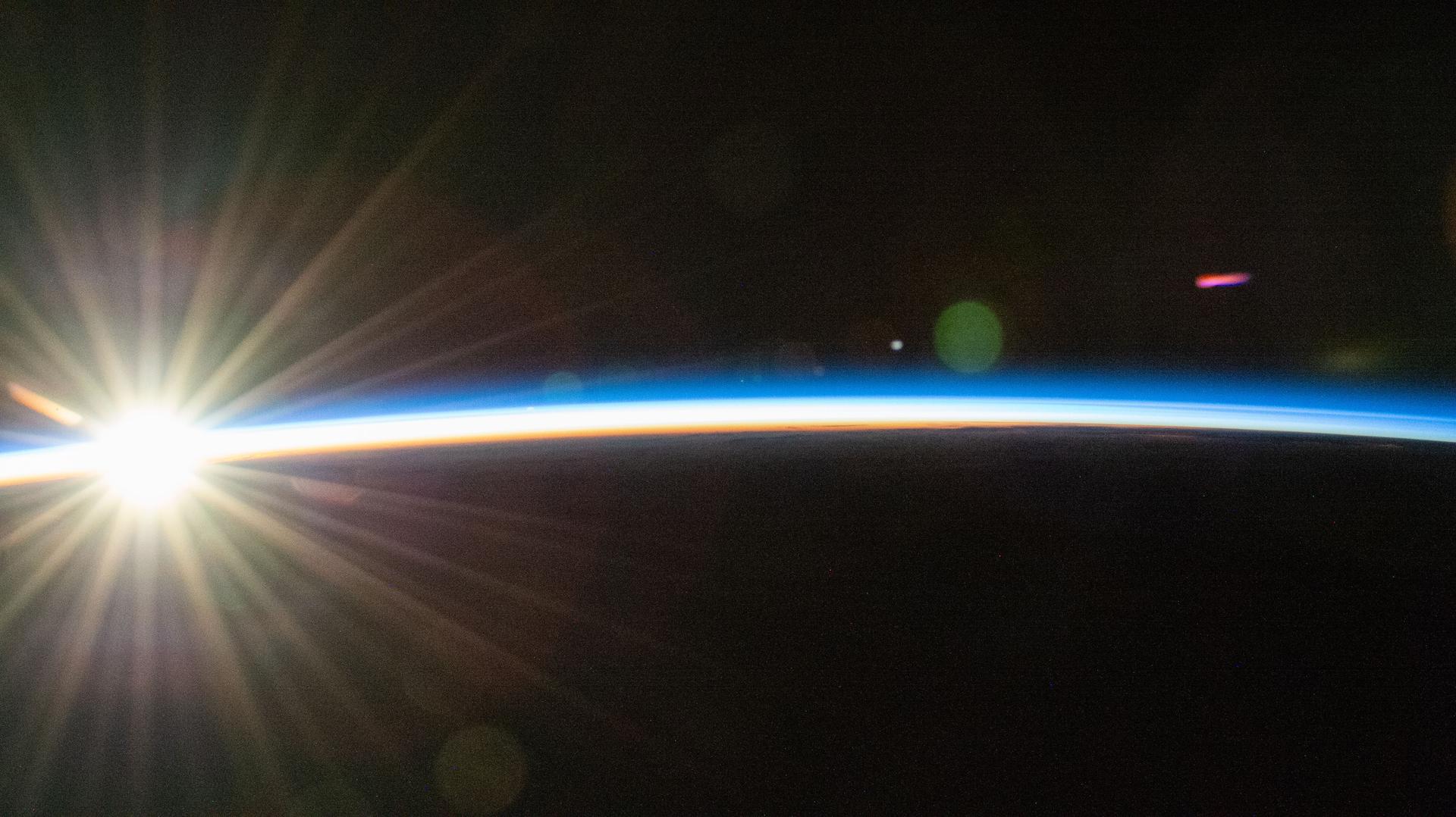
iss073e1068530 (Nov. 13, 2025) --- An orbital sunrise bursts above Earth's horizon and begins to illuminate the atmosphere in this photograph taken at approximately 4:11 a.m. local time from the International Space Station as it orbited 262 miles above the Pacific Ocean.
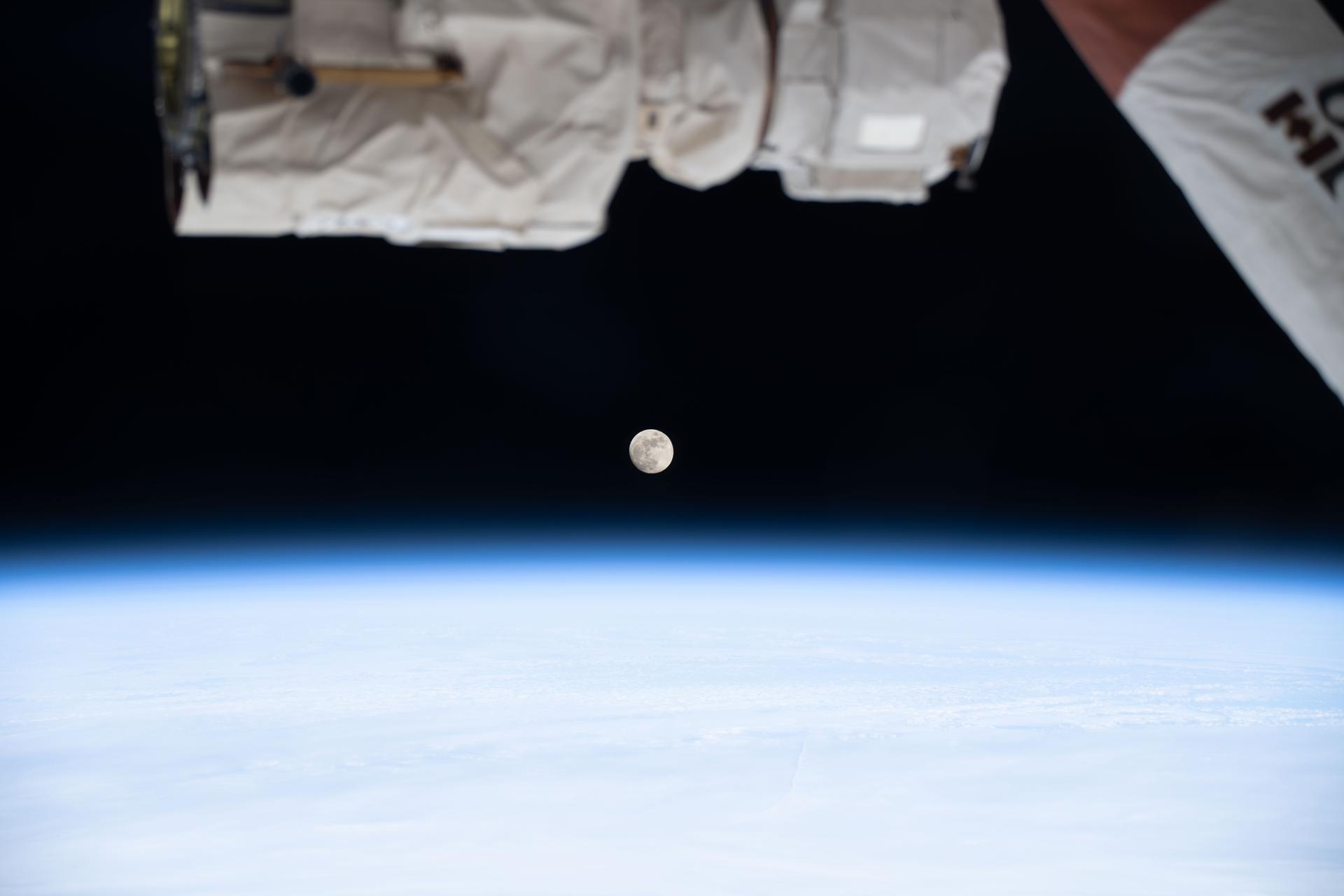
iss074e0431548 (March 31, 2026) --- A waxing gibbous Moon is pictured above Earth's atmosphere from the International Space Station as it soared 268 miles above far eastern Canada. A portion of the Canadarm2 robotic arm's latching end effector is captured in the top foreground of the image. Credit: NASA/Chris Williams
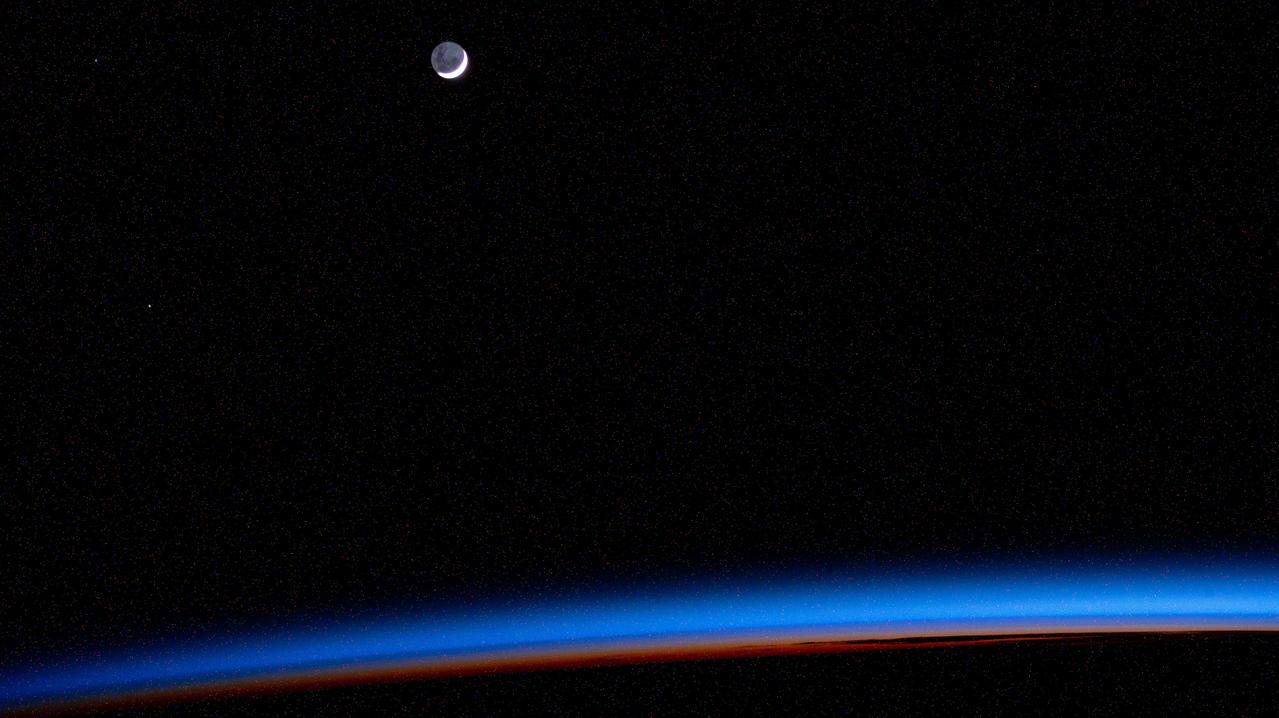
iss073e0118626 (May 25, 2025) --- An external high definition camera adjusted for night sensitivity took this photograph of the waning crescent Moon above Earth's horizon as the International Space Station orbited into a sunrise 270 miles above the Atlantic Ocean.
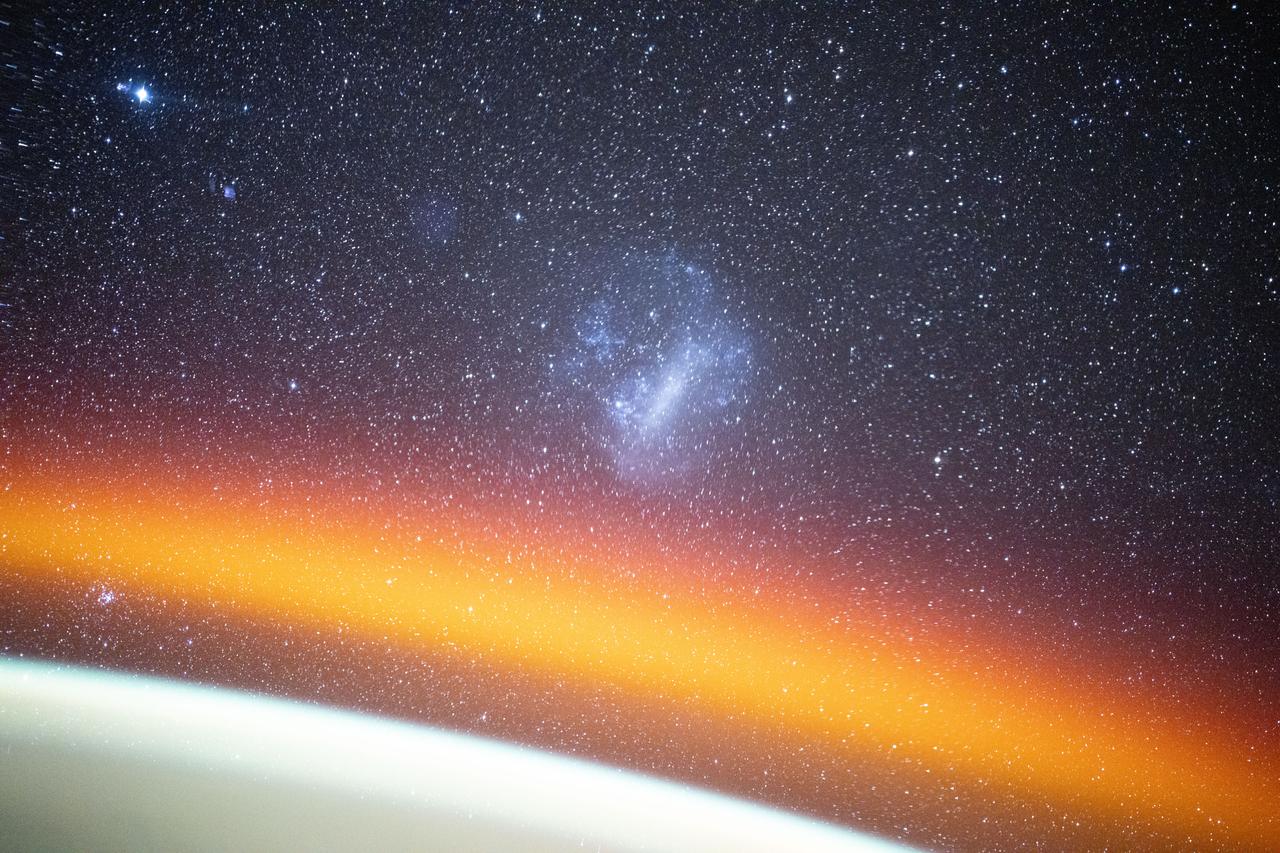
iss072e278609 (Nov. 26, 2024) --- The Large Magellanic Cloud among a starry backdrop above Earth's atmospheric glow highlights this long duration photograph from the International Space Station as it orbited 260 miles above the Pacific Ocean off the coast of Mexico. Credit: NASA/Don Pettit
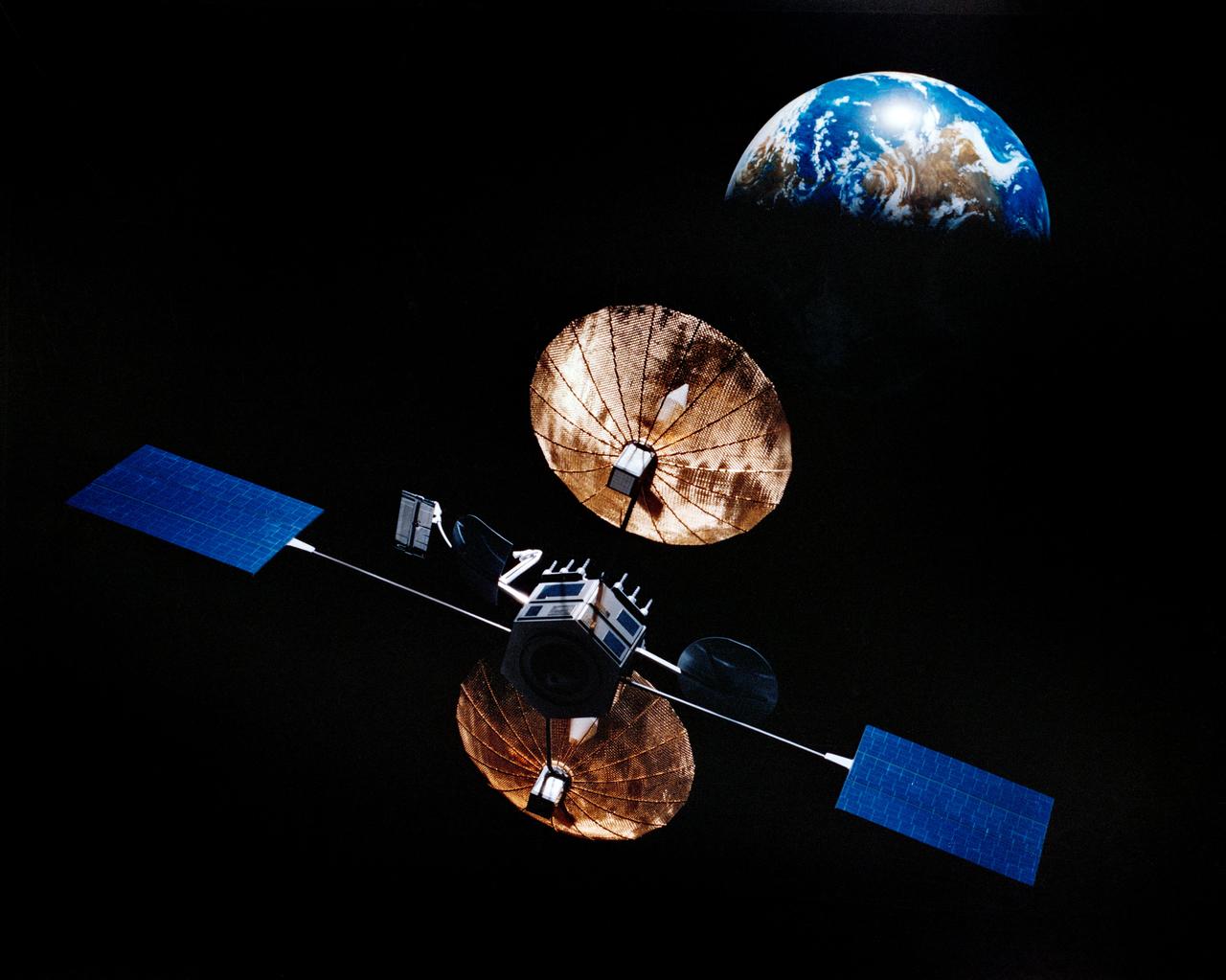
Artist concept of satellite with solar panels deployed in orbit above the earth.
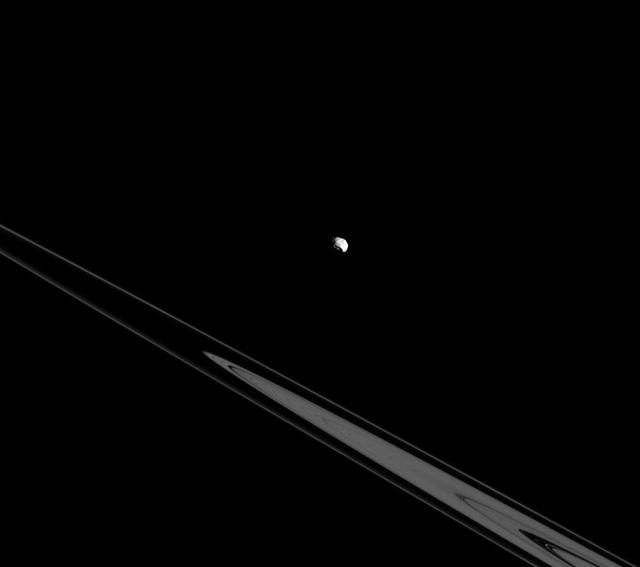
Although Epimetheus appears to be lurking above the rings here, it's actually just an illusion resulting from the viewing angle. In reality, Epimetheus and the rings both orbit in Saturn's equatorial plane. Inner moons and rings orbit very near the equatorial plane of each of the four giant planets in our solar system, but more distant moons can have orbits wildly out of the equatorial plane. It has been theorized that the highly inclined orbits of the outer, distant moons are remnants of the random directions from which they approached the planets they orbit. This view looks toward the unilluminated side of the rings from about -0.3 degrees below the ringplane. The image was taken in visible light with the Cassini spacecraft narrow-angle camera on July 26, 2015. The view was obtained at a distance of approximately 500,000 miles (800,000 kilometers) from Epimetheus and at a Sun-Epimetheus-spacecraft, or phase, angle of 62 degrees. Image scale is 3 miles (5 kilometers) per pixel. http://photojournal.jpl.nasa.gov/catalog/PIA18342
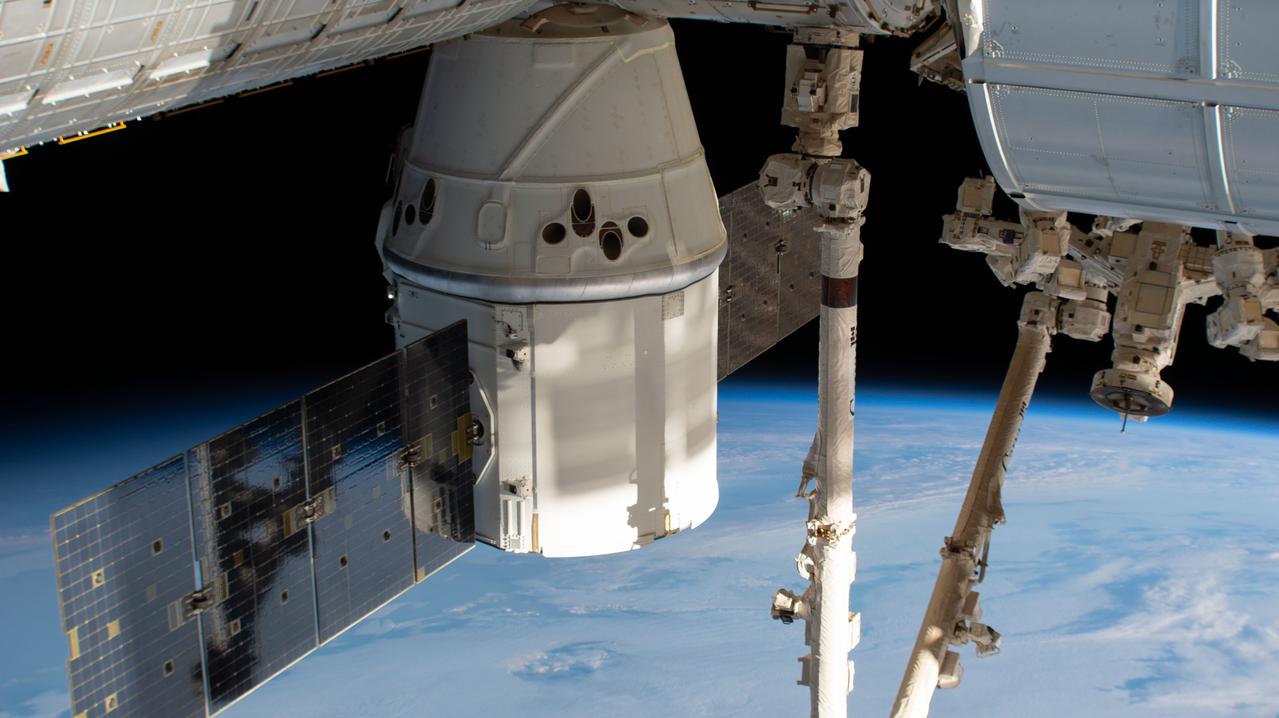
iss058e002241 (Jan. 7, 2019) --- The SpaceX Dragon cargo craft is pictured attached to the International Space Station's Harmony module as the orbital complex orbited 261 miles above the Indian Ocean southeast of the continent of Africa. The Canadarm2 robotic arm vertically splits the frame prior to grappling the spacecraft ahead of planned departure activities.

View of Yuri Alexievich Gagarin (first space traveler) photo and other photos,above Service Module (SM) hatch. The blue and white rosette on the left with the writing поÑа в коÑÐ¼Ð¾Ñ is the symbol and name of the Russian television program for children that covers cosmonautic and International Space Station (ISS) topics. Photo was taken during Expedition 34.

A overhead view of the X-59 with its nose on. The X-59’s nose is 38-feet long – approximately one third of the length of the entire aircraft. The plane is under construction at Lockheed Martin Skunk Works in Palmdale, California, will fly to demonstrate the ability to fly supersonic while reducing the loud sonic boom to a quiet sonic thump.

A panoramic side view of the left top of the X-59 supersonic plane with the tail on and the nose in the process of installation. The X-59’s nose is 38-feet long – approximately one third of the length of the entire aircraft. The aircraft, under construction at Lockheed Martin Skunk Works in Palmdale, California, will demonstrate the ability to fly supersonic while reducing the loud sonic boom to a quiet sonic thump.

An overhead view of the X-59 supersonic plane with the tail on and the nose in the process of installation. The X-59’s nose is 38-feet long – approximately one third of the length of the entire aircraft. The aircraft, under construction at Lockheed Martin Skunk Works in Palmdale, California, will demonstrate the ability to fly supersonic while reducing the loud sonic boom to a quiet sonic thump.
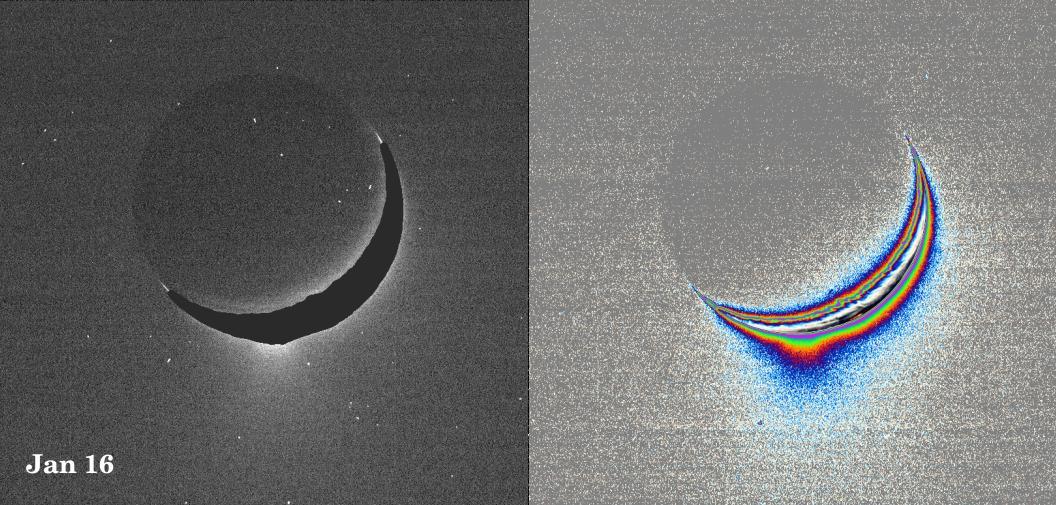
A fine spray of small, icy particles emanating from the warm, geologically unique province surrounding the south pole of Saturn’s moon Enceladus was observed in a Cassini narrow-angle camera image of the crescent moon taken on Jan. 16, 2005. Taken from a high-phase angle of 148 degrees -- a viewing geometry in which small particles become much easier to see -- the plume of material becomes more apparent in images processed to enhance faint signals. Imaging scientists have measured the light scattered by the plume's particles to determine their abundance and fall-off with height. Though the measurements of particle abundance are more certain within 100 kilometers (60 miles) of the surface, the values measured there are roughly consistent with the abundance of water ice particles measured by other Cassini instruments (reported in September, 2005) at altitudes as high as 400 kilometers (250 miles) above the surface. Imaging scientists, as reported in the journal Science on March 10, 2006, believe that the jets are geysers erupting from pressurized subsurface reservoirs of liquid water above 273 degrees Kelvin (0 degrees Celsius). The image at the left was taken in visible green light. A dark mask was applied to the moon's bright limb in order to make the plume feature easier to see. The image at the right has been color-coded to make faint signals in the plume more apparent. Images of other satellites (such as Tethys and Mimas) taken in the last 10 months from similar lighting and viewing geometries, and with identical camera parameters as this one, were closely examined to demonstrate that the plume towering above Enceladus' south pole is real and not a camera artifact. The images were acquired at a distance of about 209,400 kilometers (130,100 miles) from Enceladus. Image scale is about 1 kilometer (0.6 mile) per pixel. http://photojournal.jpl.nasa.gov/catalog/PIA07760

iss058e001534 (Dec. 28, 2018) --- The SpaceX Dragon cargo craft is pictured attached to the International Space Station's Harmony module as the orbital complex flew 256 miles above Alaska's Aleutian Islands in the Bering Sea.
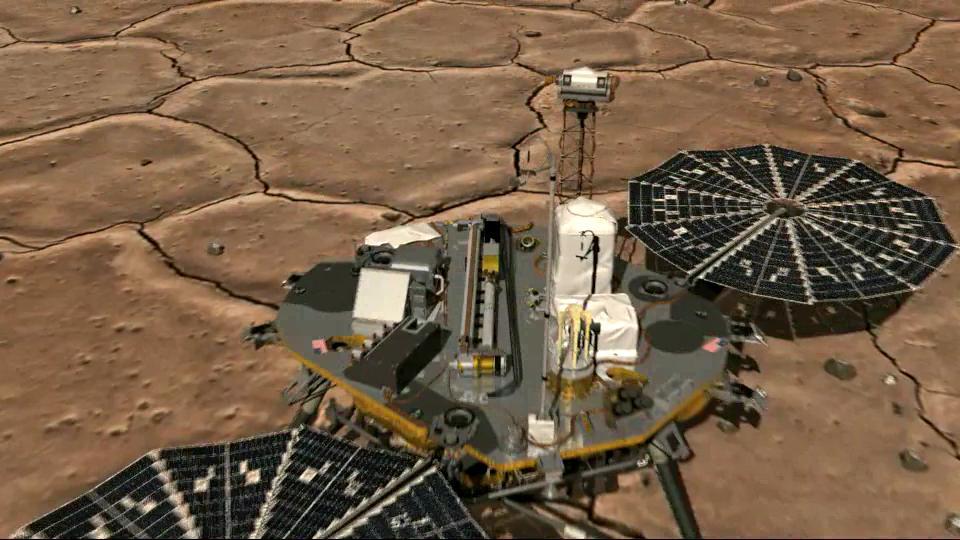
This artist image of an imaginary camera zooming in from above shows the location of the Robotic Arm Camera on NASA Phoenix Mars Lander as it acquires an image of the scoop at the end of the arm
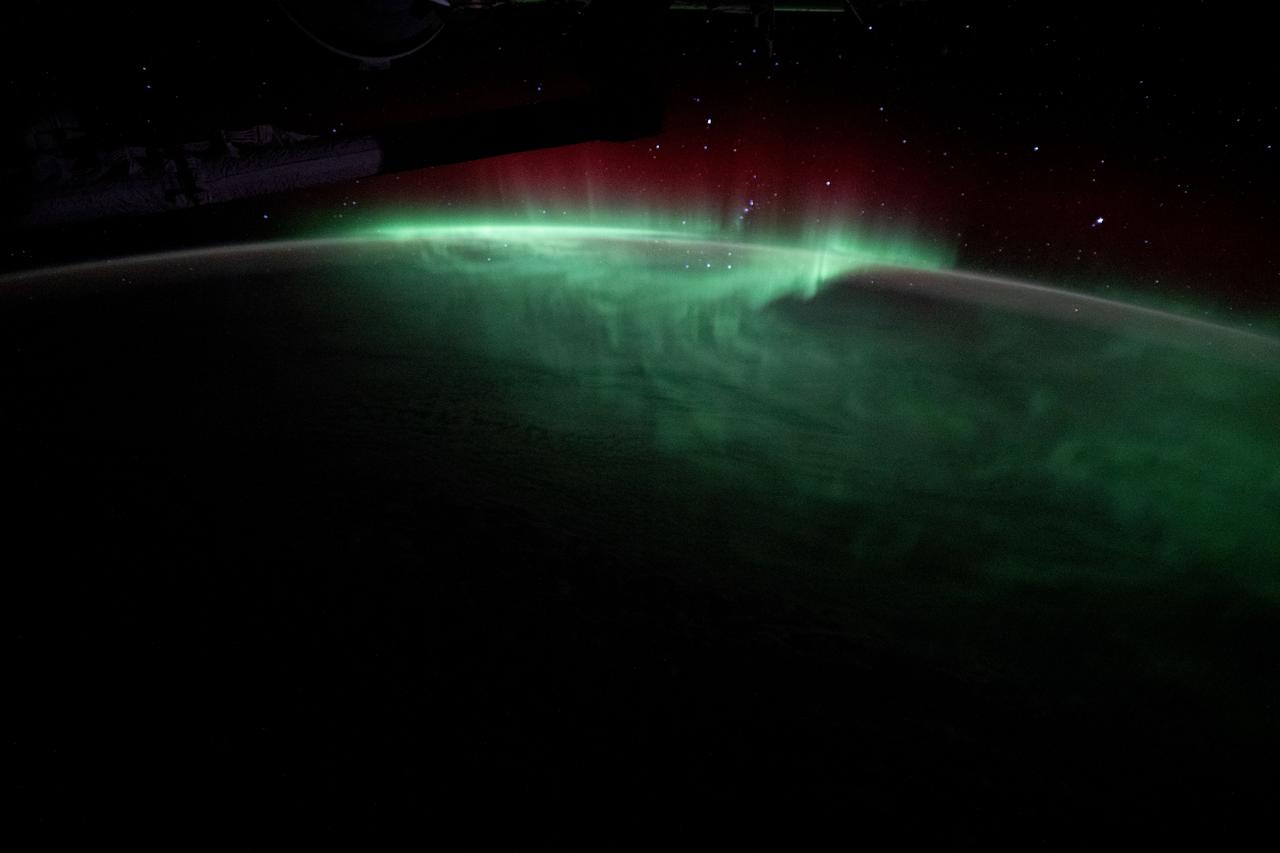
iss071e570863 (Aug. 10, 2024) -- Green aurora burst throughout Earth's nighttime atmosphere as the International Space Station orbited 270 miles above the Indian Ocean.
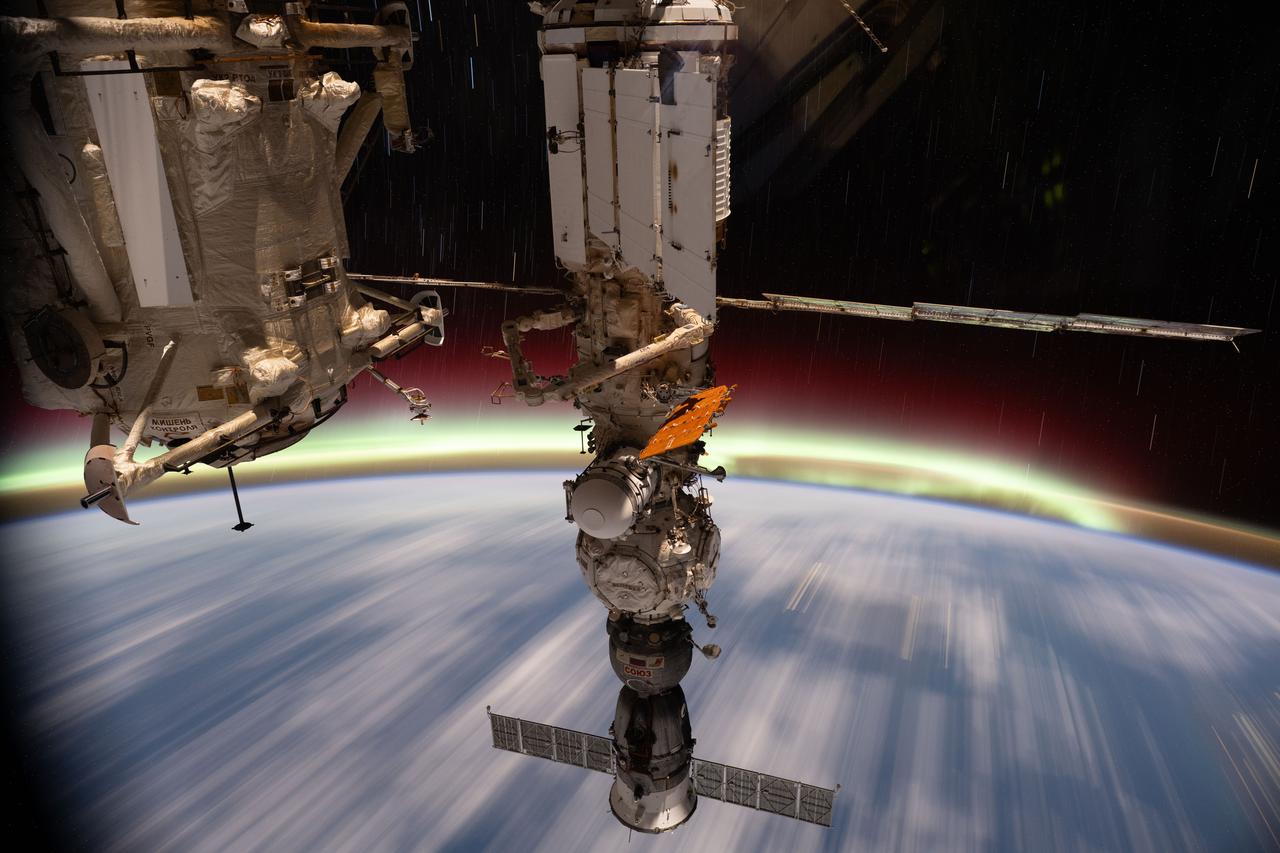
iss073e0608785 (June 13, 2025) --- The aurora australis streams above Earth's horizon in this long duration photograph taken from the International Space Station as it orbited 266 miles above the Tasman Sea off the coast of Sydney, Australia, at approximately 3:28 a.m. local time. Portions of the orbital outpost's Roscosmos segment are visible in the foreground, including (from left) the Rassvet module and the Soyuz MS-27 crew spacecraft docked to the Prichal module which is itself attached to the Nauka science module.
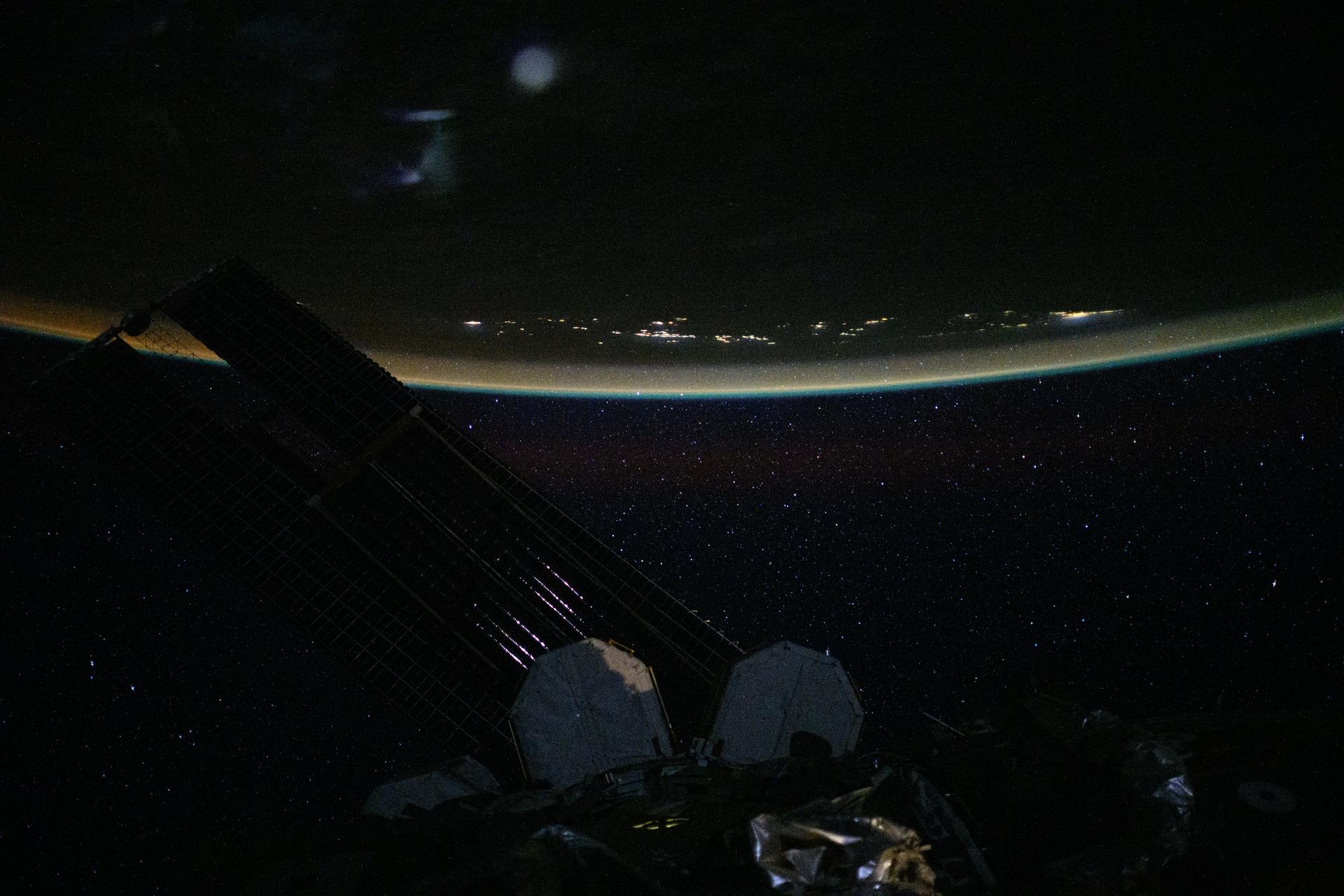
iss073e0850062 (Sept. 17, 2025) --- This serene, nighttime view from the International Space Station, captured from an altitude of 262 miles above the Coral Sea, reveals a star-filled sky with a soft, multi-colored atmospheric glow blanketing the city lights of the Solomon Islands. The image was taken at approximately 3:11 a.m. local time as the station orbited above the southwestern Pacific region.
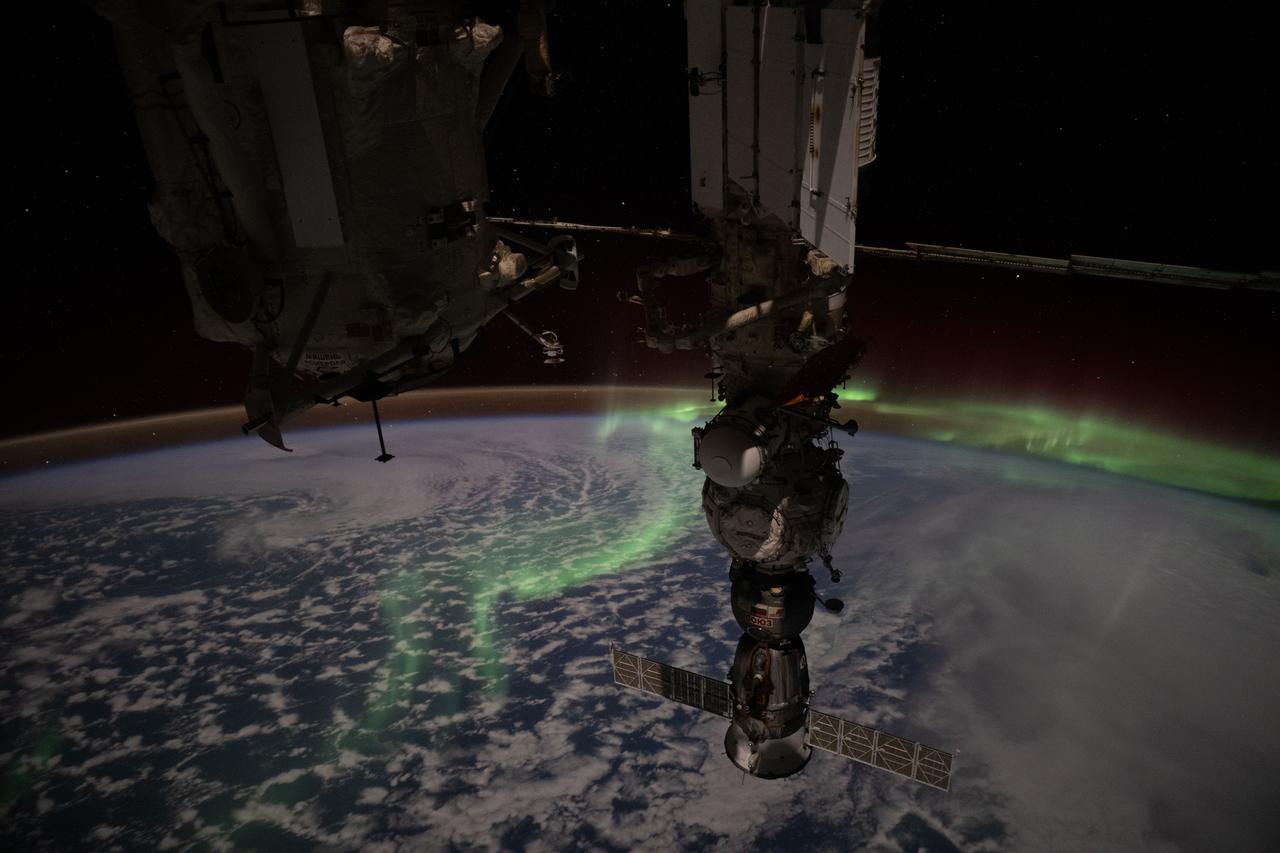
iss073e0608751 (June 13, 2025) --- The aurora australis streams above the Earth and into the atmospheric glow in this photograph taken from the International Space Station as it orbited 269 miles above the Indian Ocean midway between Australia and Antarctica at approximately 2:51 a.m. local time. Portions of the orbital outpost's Roscosmos segment are visible in the foreground, including (from left) the Rassvet module and the Soyuz MS-27 crew spacecraft docked to the Prichal module which is itself attached to the Nauka science module.
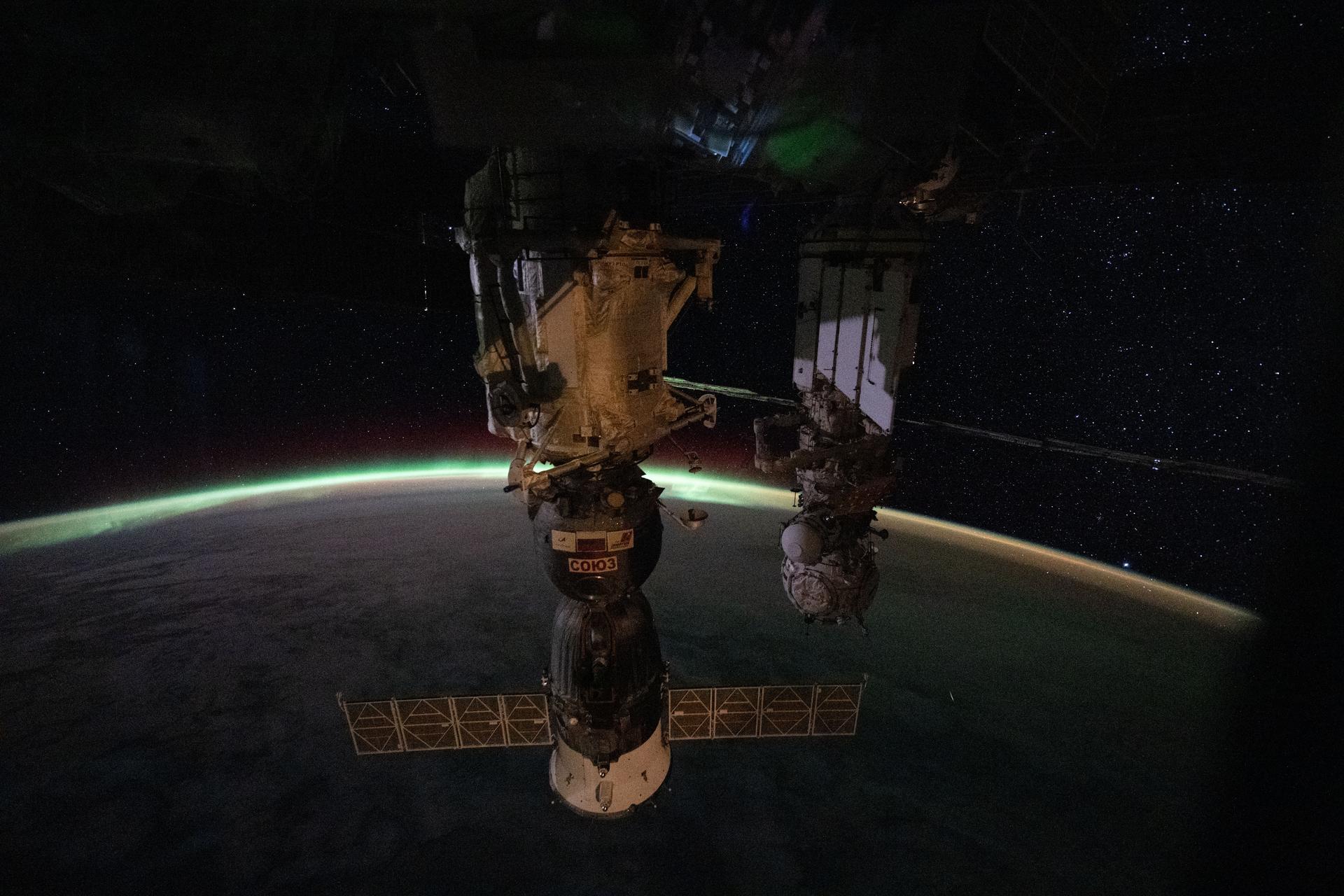
iss074e0504006 (April 12, 2026) --- The aurora australis arcs above Earth’s horizon and fades into the airglow as the International Space Station orbited 265 miles above the Indian Ocean east of Perth, Australia, at approximately 2:03 a.m. local time. In the foreground, the Soyuz MS-28 crew spacecraft is shown docked to the Rassvet module. In the background, the Pirs docking module is attached to the Nauka science module. Credit: NASA/Chris Williams
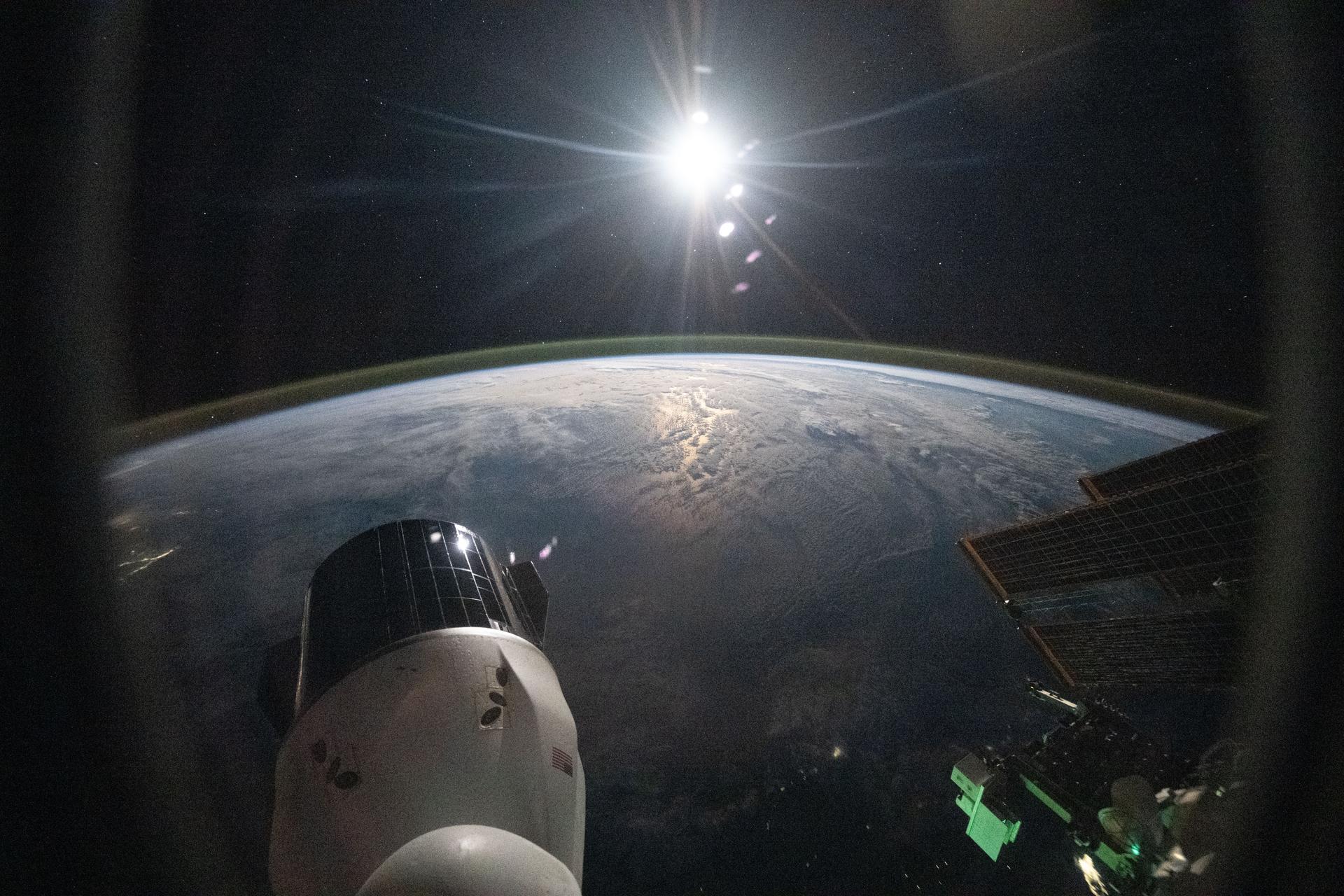
iss074e0222272 (Jan. 6, 2026) --- The sun begins setting above Earth's atmospheric glow blanketing a cloudy Atlantic Ocean. The International Space Station was orbiting 260 miles above the Earth off the coast of Florida when this photograph was taken. In the foreground, are a SpaceX Dragon spacecraft (lower left) and a set of the orbital outpost's solar arrays (right). Credit: JAXA/Kimiya Yui
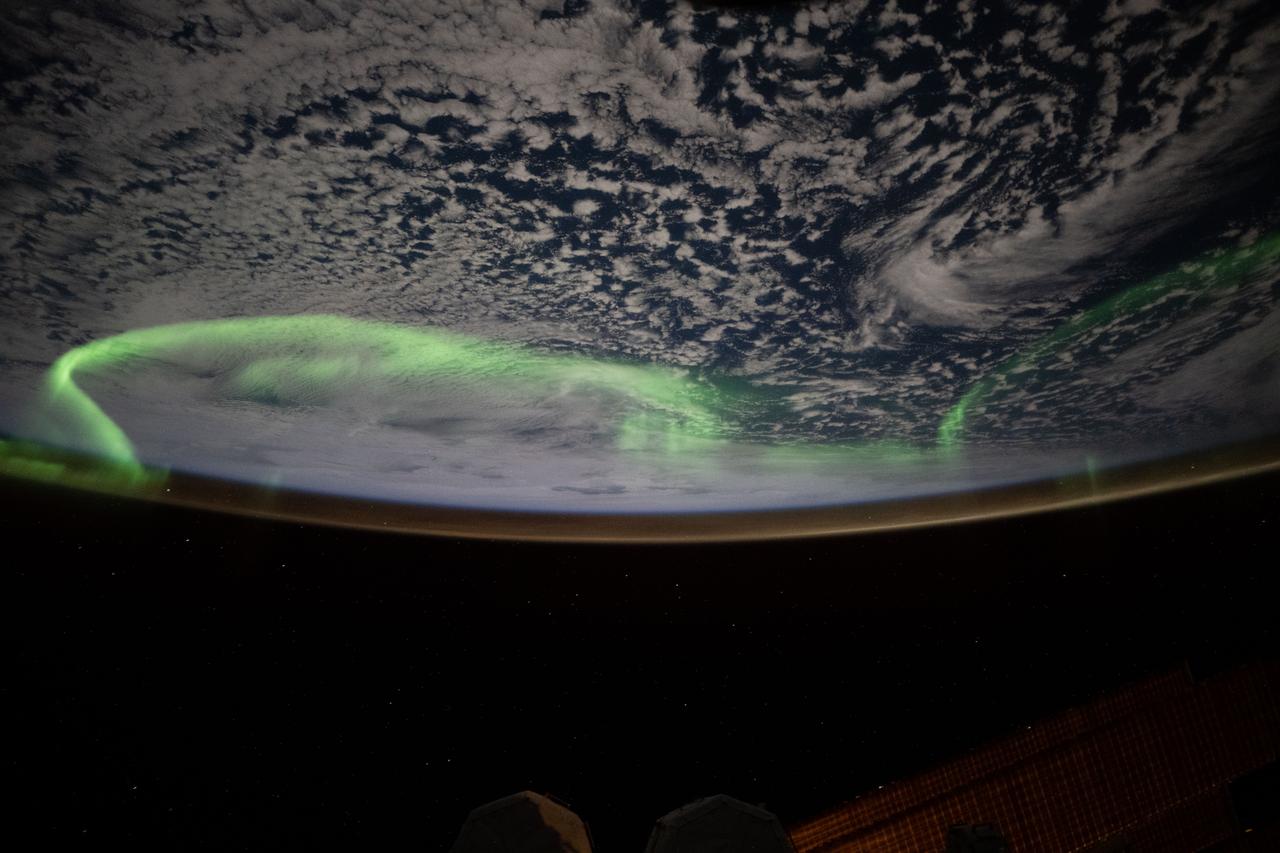
iss073e0247726 (June 12, 2025) --- The aurora australis arcs above a partly cloudy Indian Ocean in this photograph from the International Space Station as it orbited 269 miles above in between Australia and Antarctica.
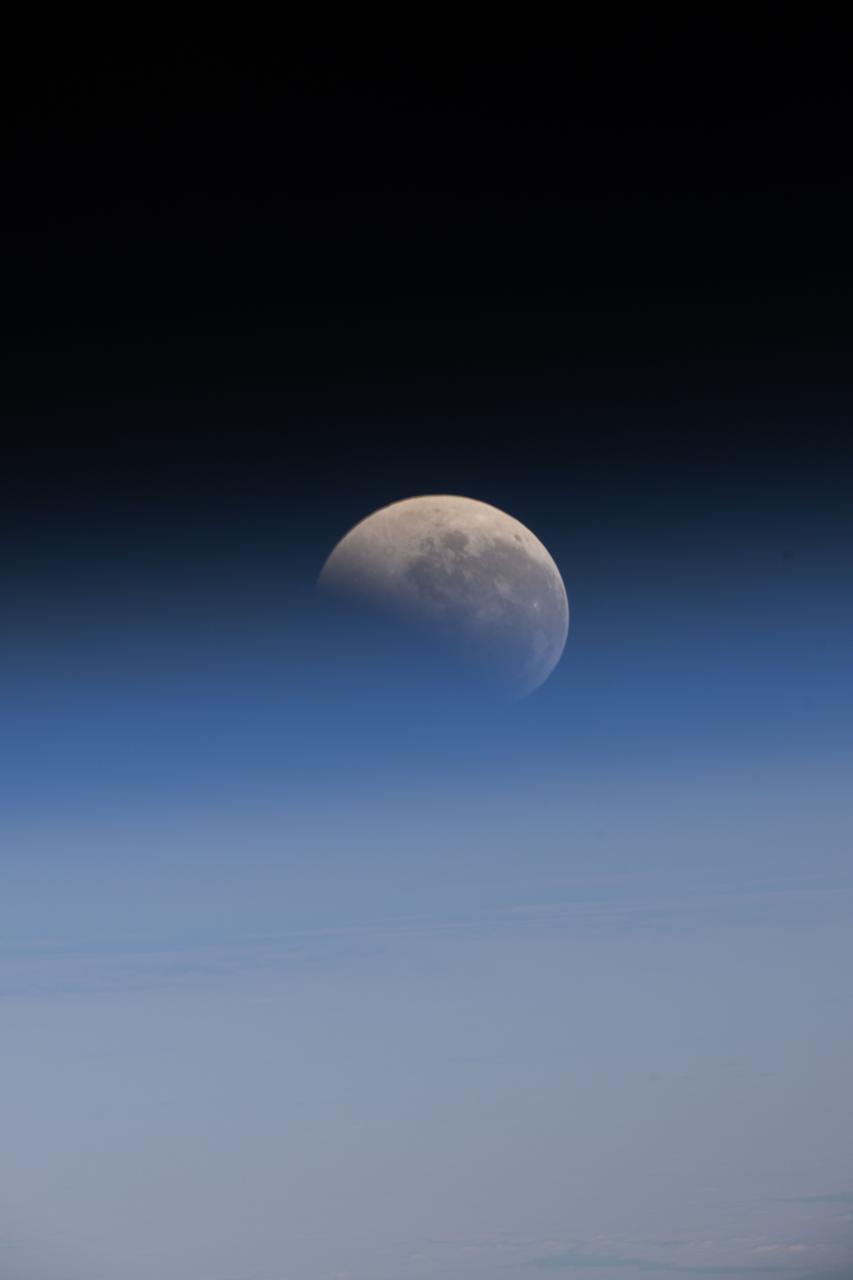
iss073e0611610 (Sept. 7, 2025) --- The lunar eclipse, also known as the Blood Moon, is pictured just above Earth's horizon from the International Space Station as it orbited 266 miles above the South Pacific Ocean.
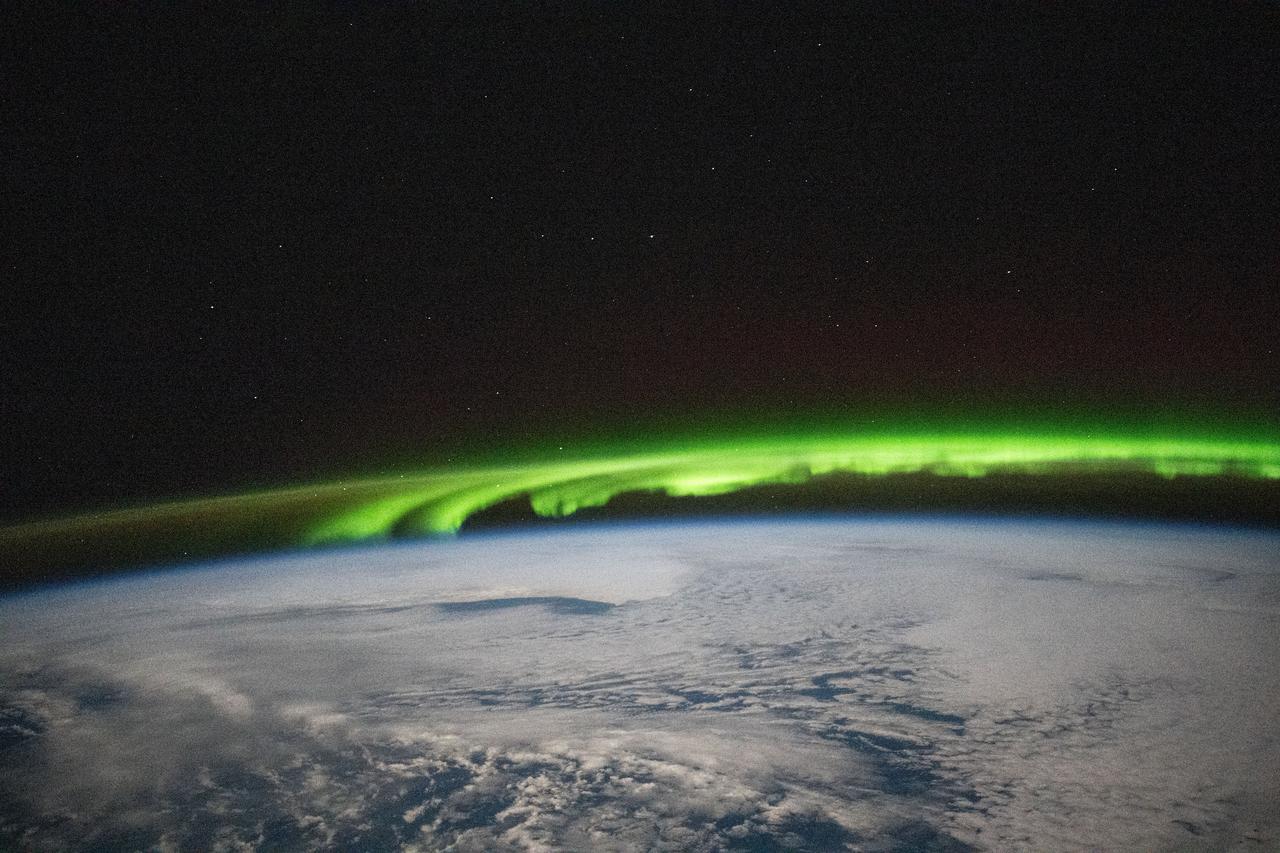
iss072e188141 (Nov. 15, 2024) --- A bright green aurora borealis streams above Earth's surface as the International Space Station orbited 269 miles above a cloudy North Pacific Ocean south of Alaska's Aleutian Islands.
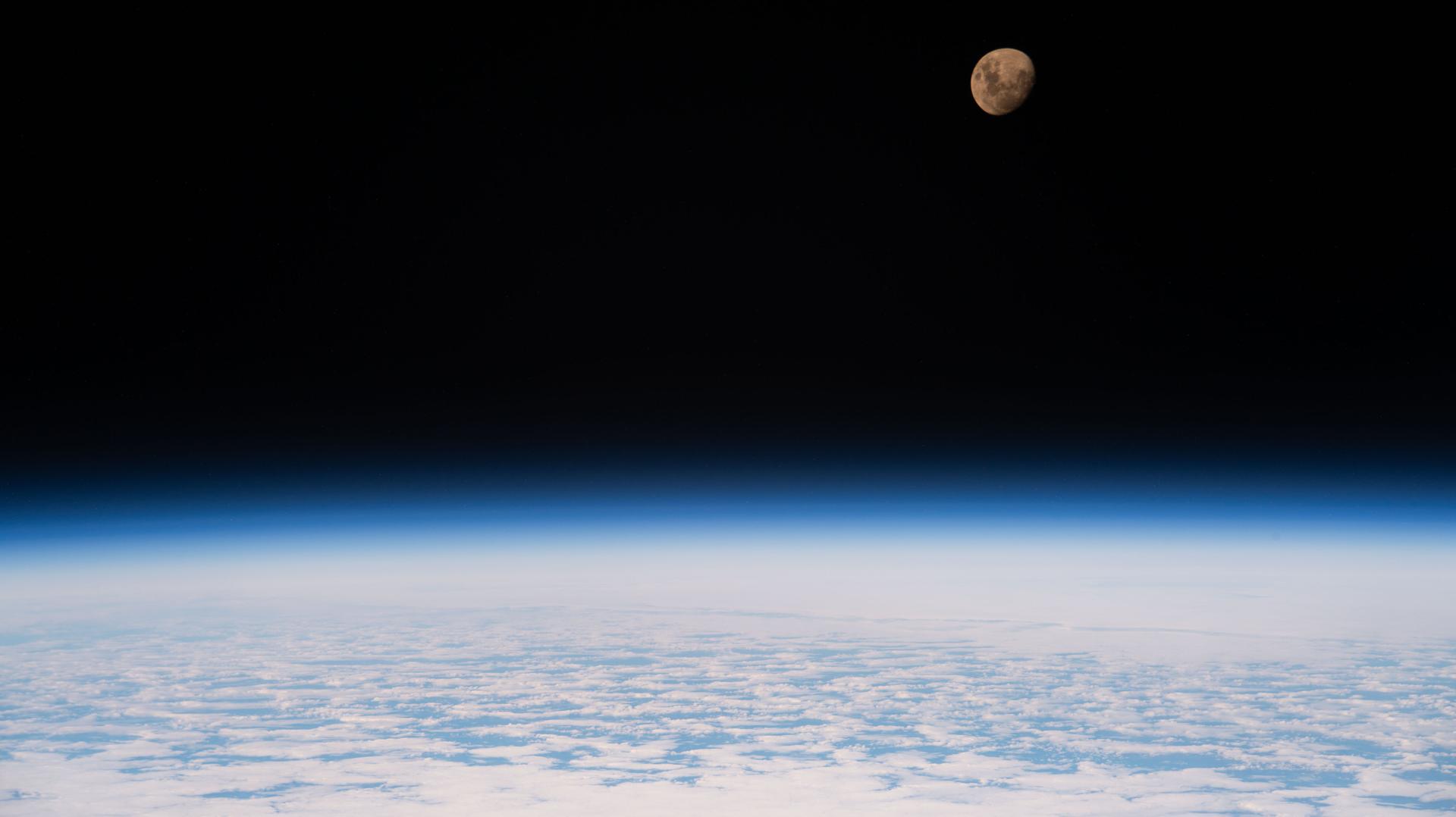
iss074e0777184 (June 1, 2026) --- The waxing gibbous Moon is pictured above Earth from the International Space Station as it orbited 264 miles above a partly cloudy Indian Ocean southeast of Madagascar. Credit: NASA
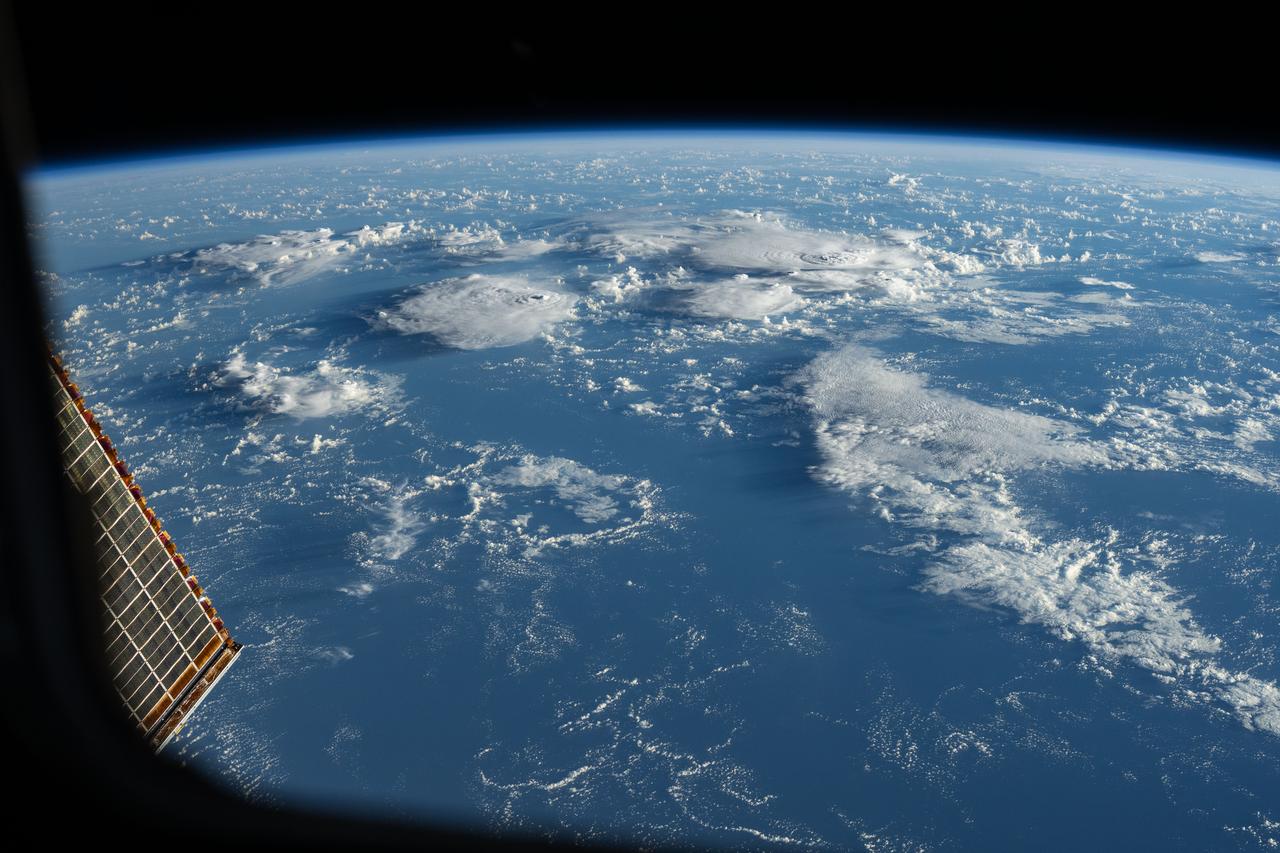
iss072e617674 (Feb. 1, 2025) --- Storm clouds rise above the South Pacific Ocean northwest of New Zealand in this photograph from the International Space Station as it orbited 264 miles above.
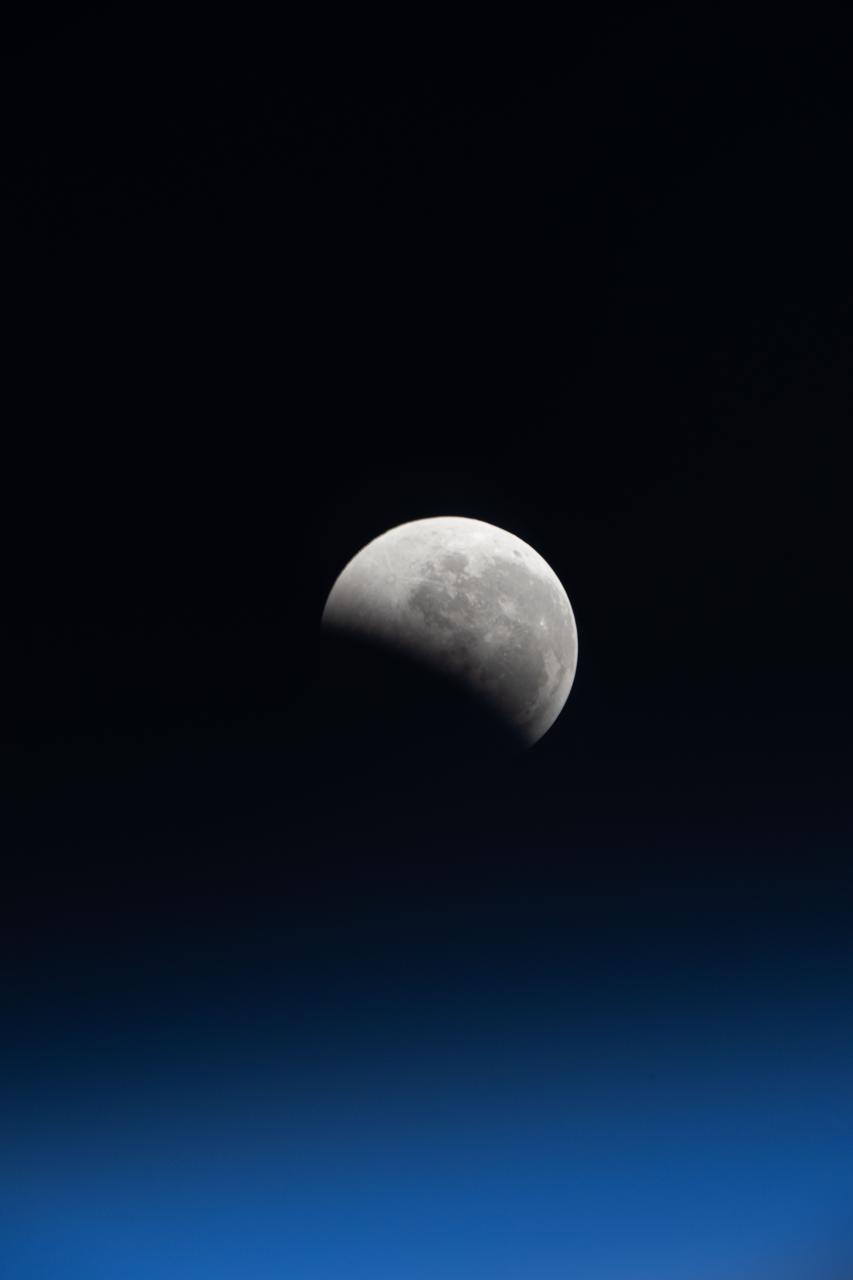
iss073e0611600 (Sept. 7, 2025) --- The lunar eclipse, also known as the Blood Moon, is pictured just above Earth's horizon from the International Space Station as it orbited 266 miles above the South Pacific Ocean.
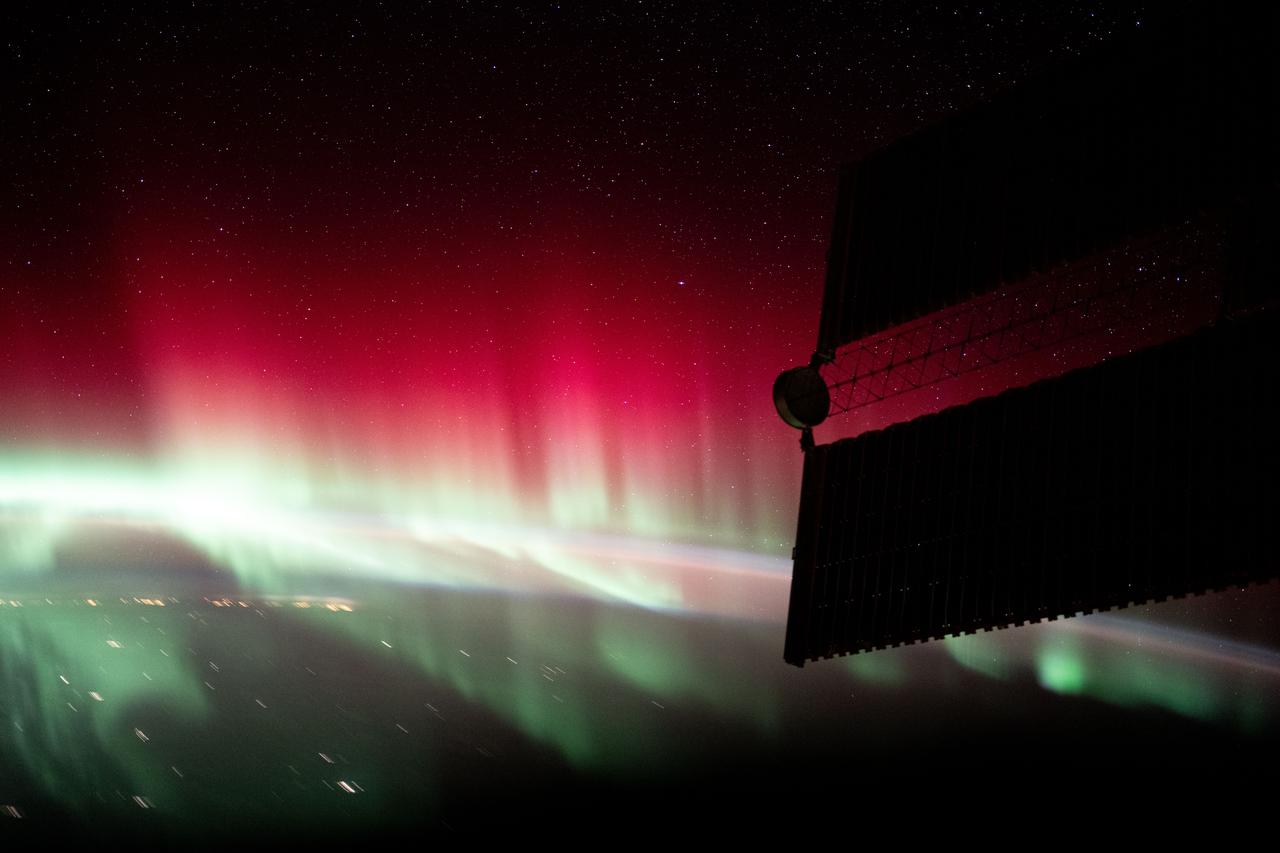
iss072e451023 (Jan. 4, 2025) --- A red and green aurora shimmers brightly above Ontario, Canada, near James Bay in this photograph from the International Space Station as it orbited 260 miles above North America.
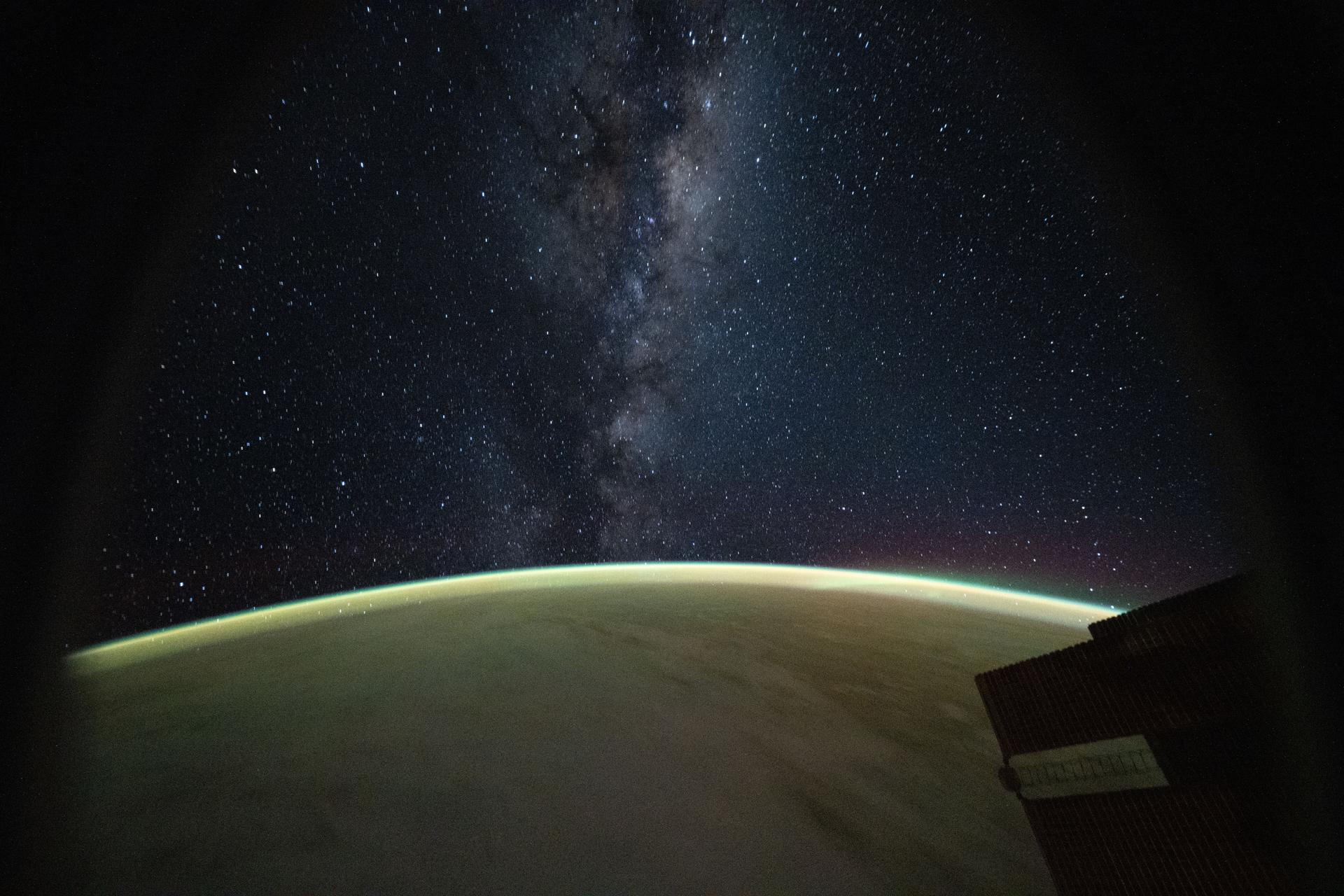
iss074e0521637 (April 13, 2026) --- This celestial image captured from a window on a SpaceX Dragon spacecraft docked to the International Space Station highlights the Milky Way rising above Earth's atmospheric glow. Credit: NASA/Chris Williams
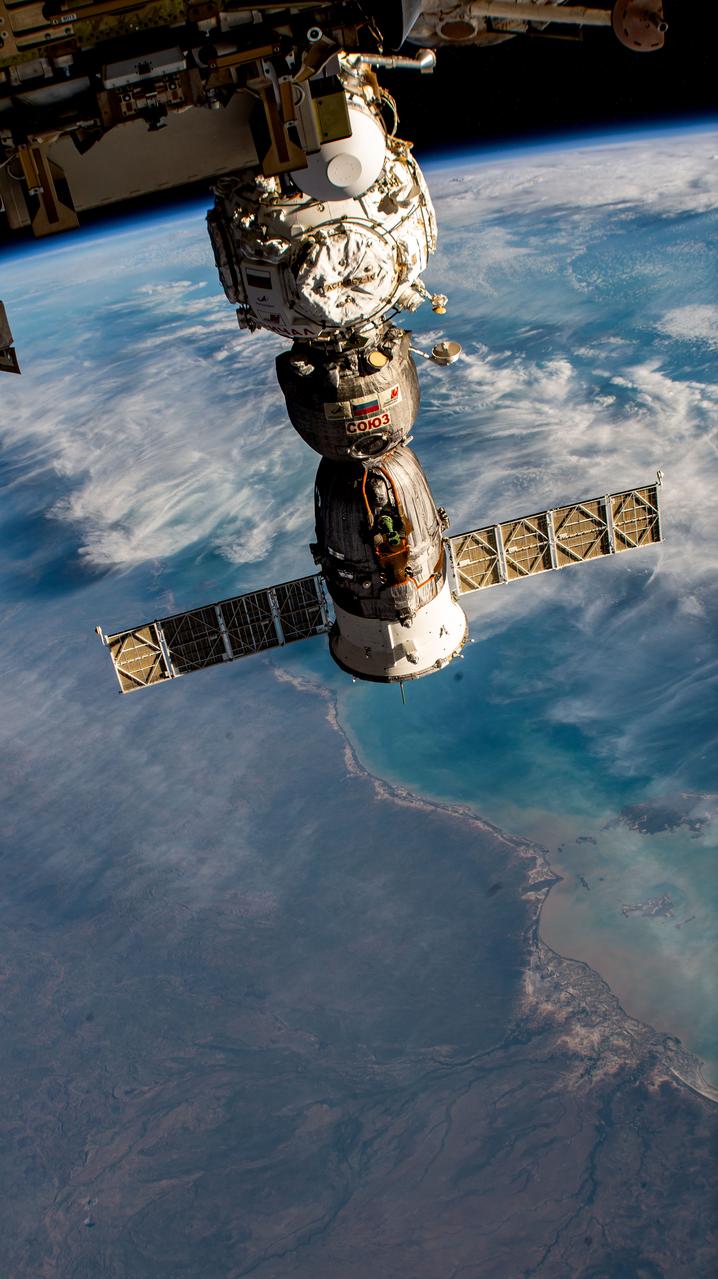
iss069e010174 (May 11, 2023) --- The Soyuz MS-23 crew ship is pictured docked to the Prichal docking module as the International Space Station orbited 264 miles above Queensland, Australia, near the coast of the Gulf of Carpentaria.
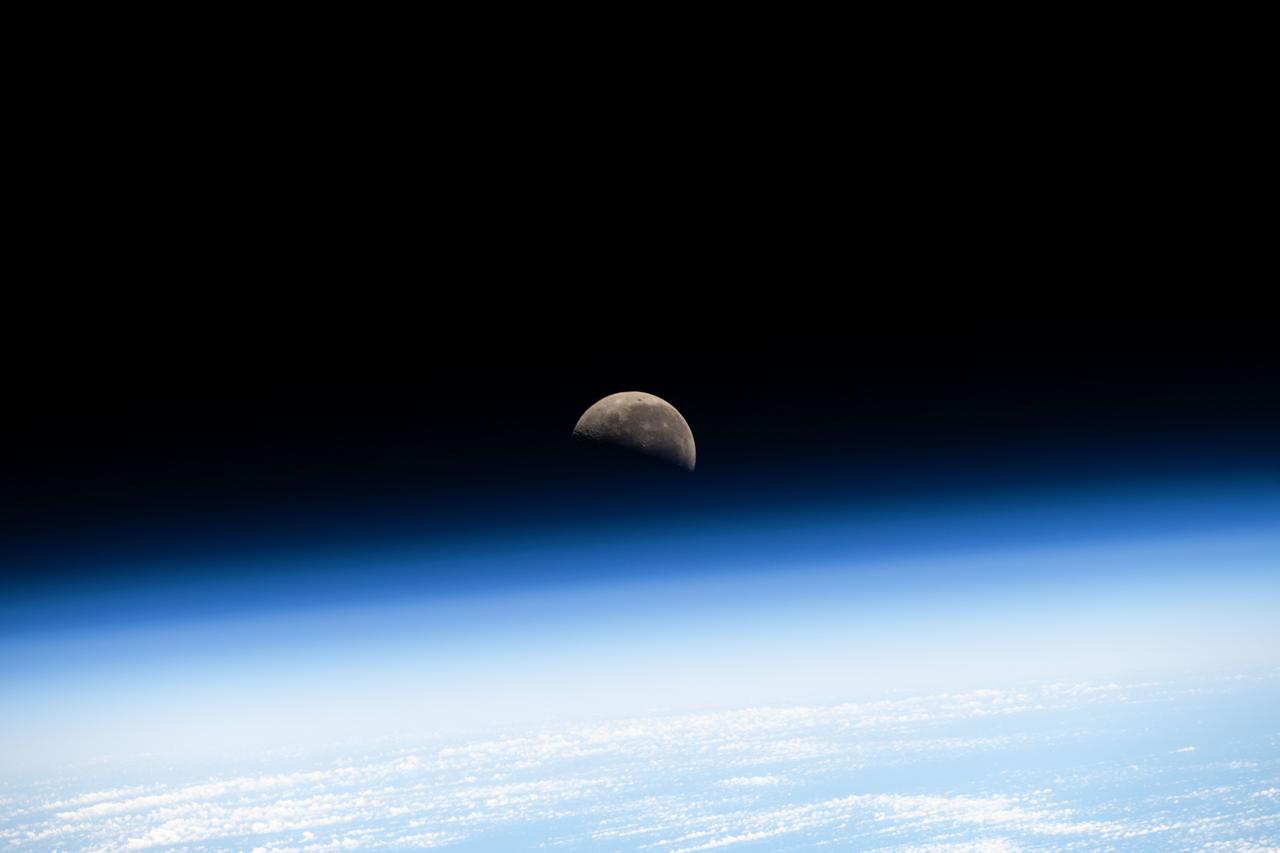
iss073e0077872 (May 20, 2025) --- The Last Quarter Moon is pictured above Earth's atmosphere from the International Space Station as it soared 260 miles over the Pacific Ocean southwest of Panama on the Latin American continent.
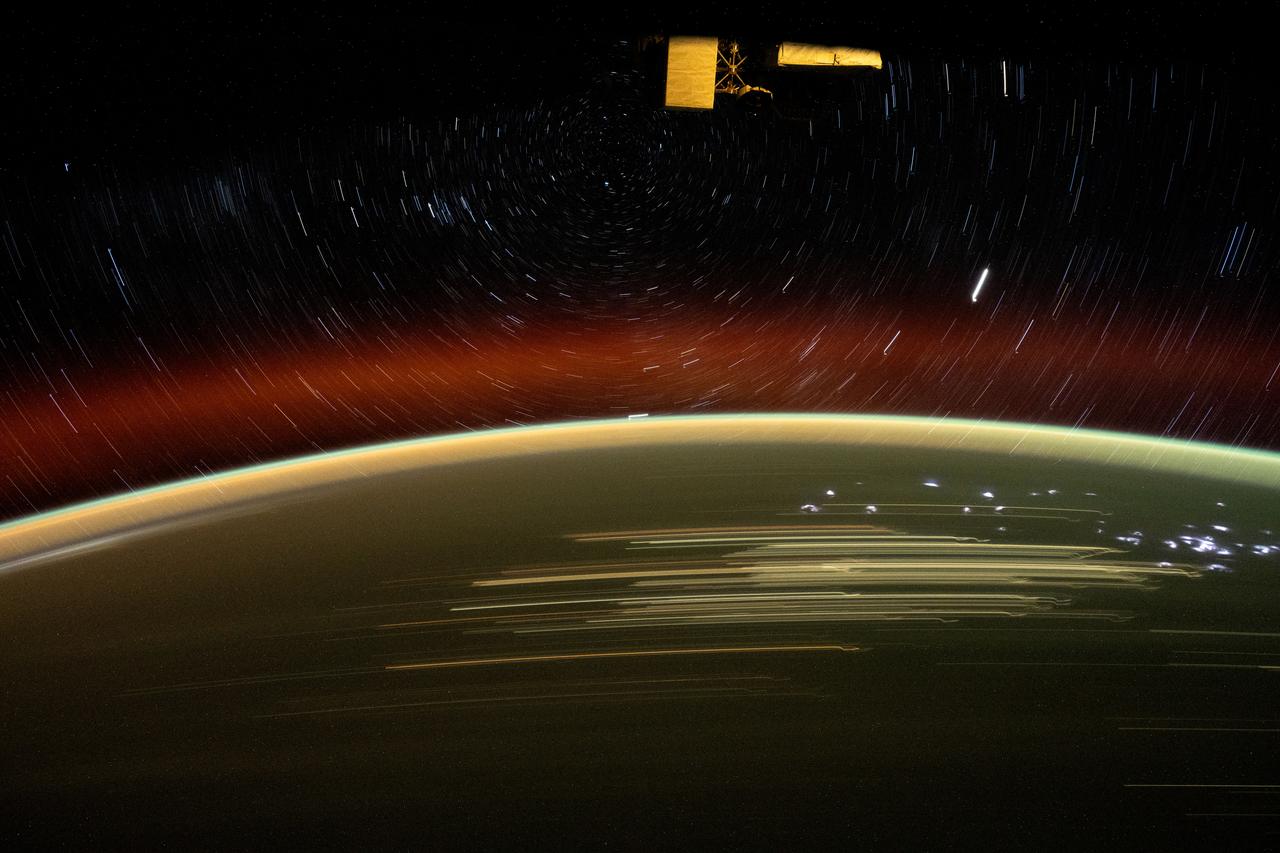
iss072e010734 (Oct. 1, 2024) -- As the International Space Station soared 266 miles over Western Australia, NASA astronaut Jeanette Epps captured this long-exposure shot of Earth at night and star trails glittering above the atmosphere.
![Oblique view of the crater complex near Ascraeus Lacus in the Tharsis region of Mars was taken by Mariner 9. It is the northernmost of the prominent dark spots observed by Mariner during its approach to the planet. The spot consists of several intersecting shallow crater-like depressions. The main crater is approximately 21 kilometers (13 miles) across, the whole complex about 40 kilometers (25 miles) across. The crater probably is in a relatively high area of the Martian surface, which accounts for its being visible above the dust storm. The faint circular features outside the crater are probably atmospheric. Mariner 9 was the first spacecraft to orbit another planet. The spacecraft was designed to continue the atmospheric studies begun by Mariners 6 and 7, and to map over 70% of the Martian surface from the lowest altitude (1500 kilometers [900 miles]) and at the highest resolutions (1 kilometer per pixel to 100 meters per pixel) of any previous Mars mission. Mariner 9 was launched on May 30, 1971 and arrived on November 14, 1971. http://photojournal.jpl.nasa.gov/catalog/PIA03100](https://images-assets.nasa.gov/image/PIA03100/PIA03100~medium.jpg)
Oblique view of the crater complex near Ascraeus Lacus in the Tharsis region of Mars was taken by Mariner 9. It is the northernmost of the prominent dark spots observed by Mariner during its approach to the planet. The spot consists of several intersecting shallow crater-like depressions. The main crater is approximately 21 kilometers (13 miles) across, the whole complex about 40 kilometers (25 miles) across. The crater probably is in a relatively high area of the Martian surface, which accounts for its being visible above the dust storm. The faint circular features outside the crater are probably atmospheric. Mariner 9 was the first spacecraft to orbit another planet. The spacecraft was designed to continue the atmospheric studies begun by Mariners 6 and 7, and to map over 70% of the Martian surface from the lowest altitude (1500 kilometers [900 miles]) and at the highest resolutions (1 kilometer per pixel to 100 meters per pixel) of any previous Mars mission. Mariner 9 was launched on May 30, 1971 and arrived on November 14, 1971. http://photojournal.jpl.nasa.gov/catalog/PIA03100

NASA's Juno spacecraft was a little more than one Earth diameter from Jupiter when it captured this mind-bending, color-enhanced view of the planet's tumultuous atmosphere. Jupiter completely fills the image, with only a hint of the terminator (where daylight fades to night) in the upper right corner, and no visible limb (the curved edge of the planet). Juno took this image of colorful, turbulent clouds in Jupiter's northern hemisphere on Dec. 16, 2017 at 9:43 a.m. PST (12:43 p.m. EST) from 8,292 miles (13,345 kilometers) above the tops of Jupiter's clouds, at a latitude of 48.9 degrees. The spatial scale in this image is 5.8 miles/pixel (9.3 kilometers/pixel).. Citizen scientists Gerald Eichstädt and Seán Doran processed this image using data from the JunoCam imager. https://photojournal.jpl.nasa.gov/catalog/PIA21973
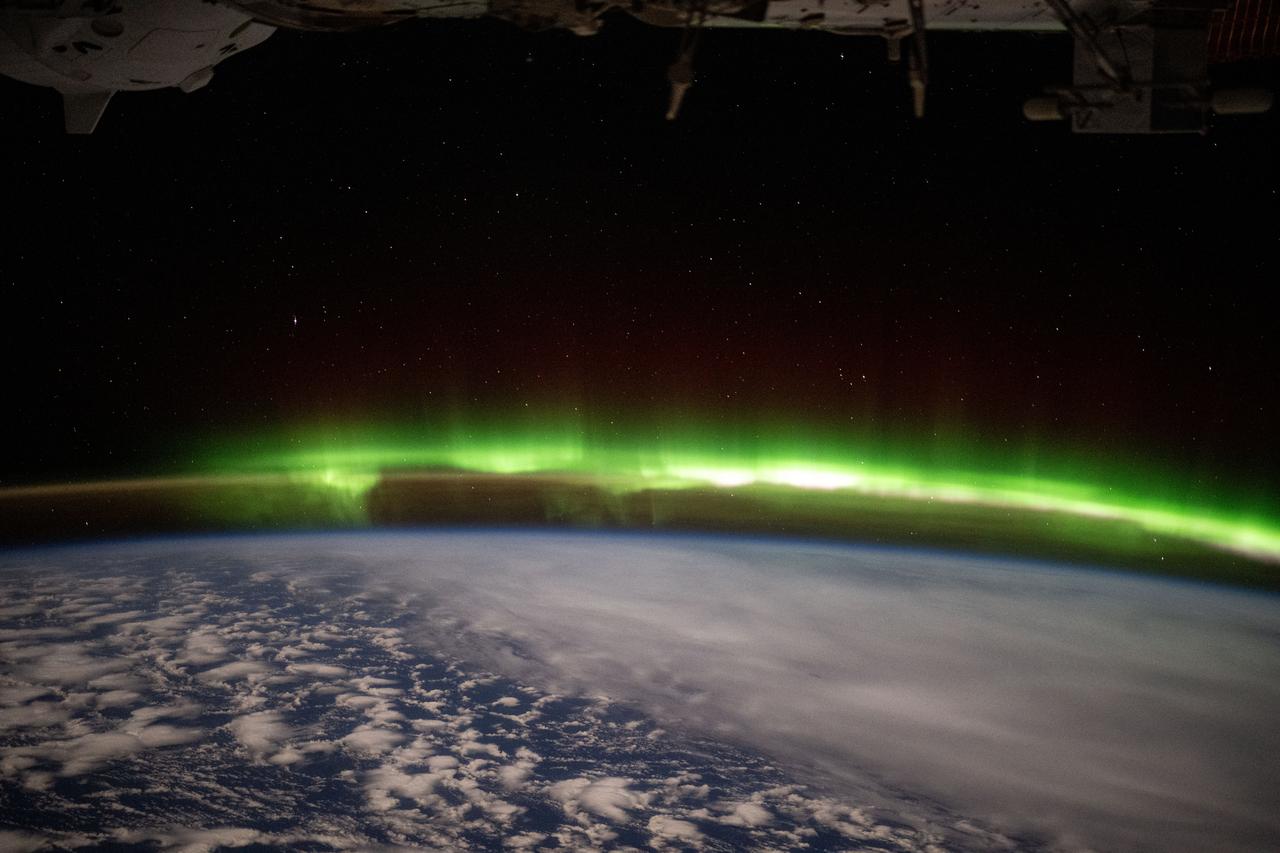
iss073e0246858 (June 9, 2025) --- A bright green aurora australis streams above Earth's horizon blanketing the atmospheric glow in this photograph from the International Space Station as it orbited 269 miles above a cloudy southern Indian Ocean midway between South Africa and Antarctica.
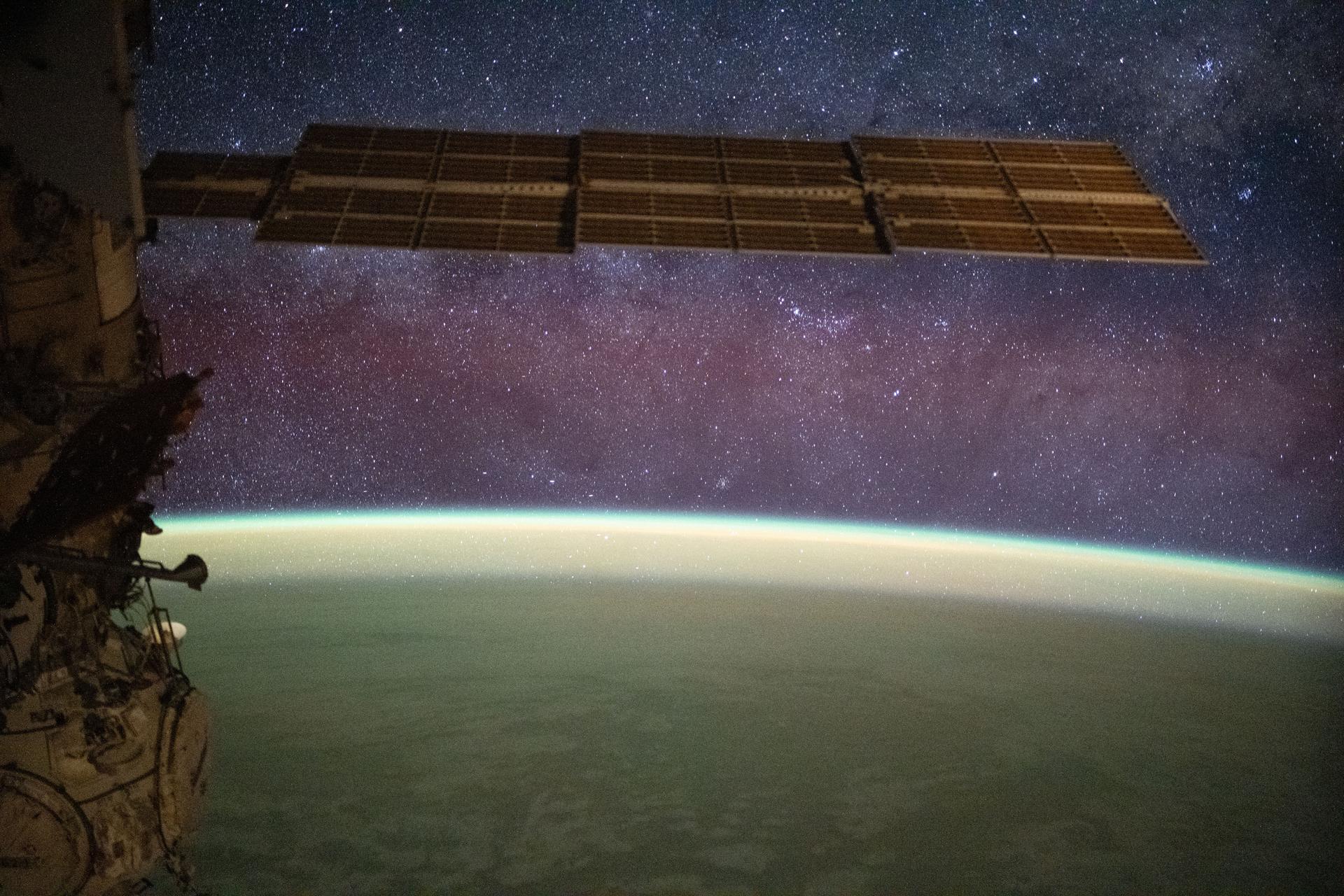
iss073e0982261 (Oct. 24, 2025) --- The Milky Way spans the night sky above a yellow-green airglow that blankets the Atlantic Ocean, midway between South America and Africa. This long-exposure photograph was taken from the International Space Station as it orbited 260 miles above Earth at approximately 11:19 p.m. local time.
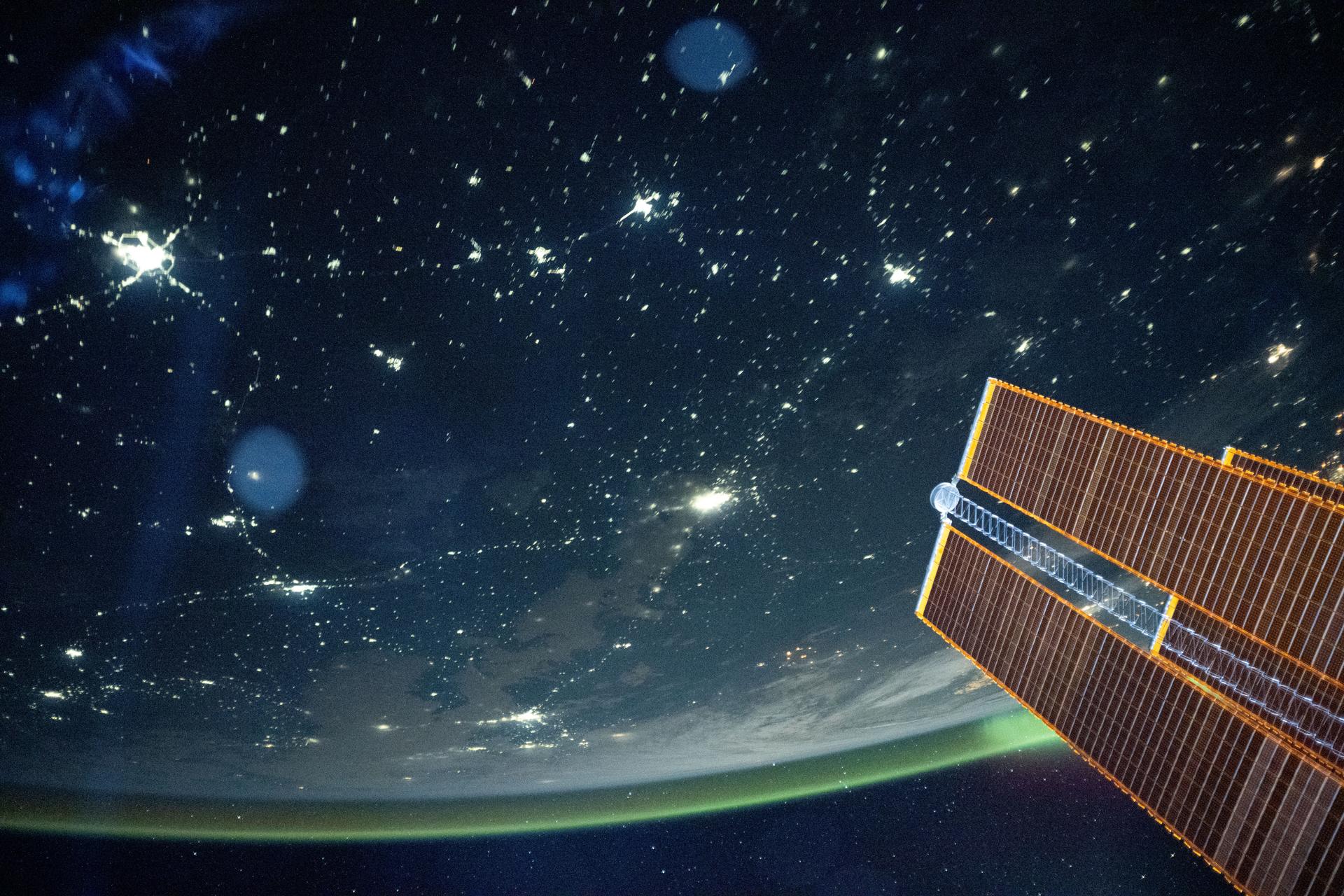
iss073e0823276 (Sept. 14, 2025) --- A tranquil, blue-green airglow blankets Earth's horizon above a sparsely populated region of Kazakhstan in this photograph taken from the International Space Station at approximately 9:33 p.m. local time while orbiting 263 miles above.
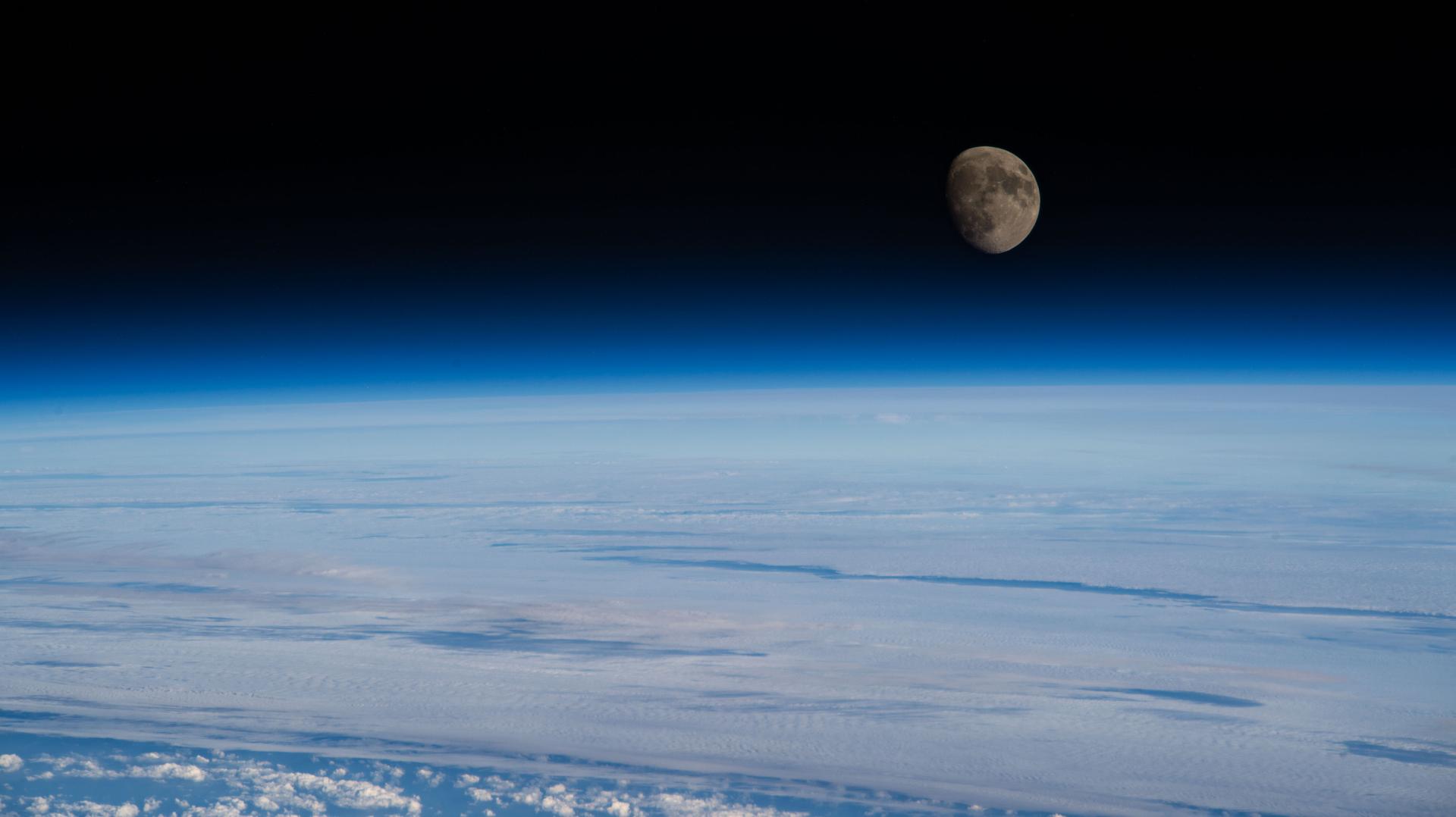
iss073e0819960 (Oct. 3, 2025) --- The waxing gibbous Moon rises above Earth’s blue atmosphere in this photograph taken from the International Space Station as it orbited 263 miles above a cloudy Atlantic Ocean off the coast of Quebec, Canada.
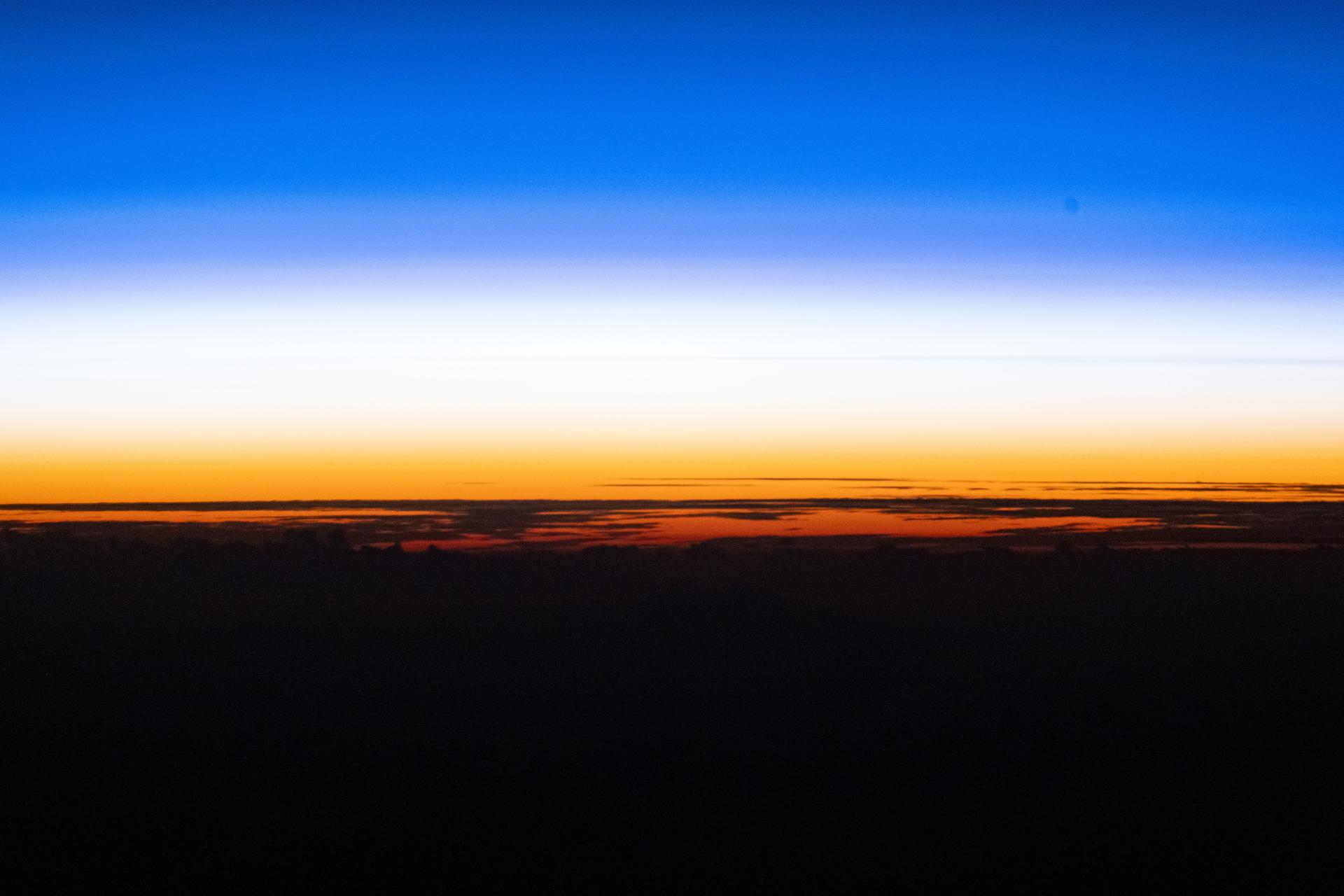
iss074e0046371 (Jan. 3, 2025) --- An orbital sunset silhouettes the cloud tops above the Pacific Ocean as the atmosphere along the horizon fades from orange to white, then to blue, in this photograph taken from the International Space Station while it orbited 262 miles above Earth. Credit: NASA/Chris Williams
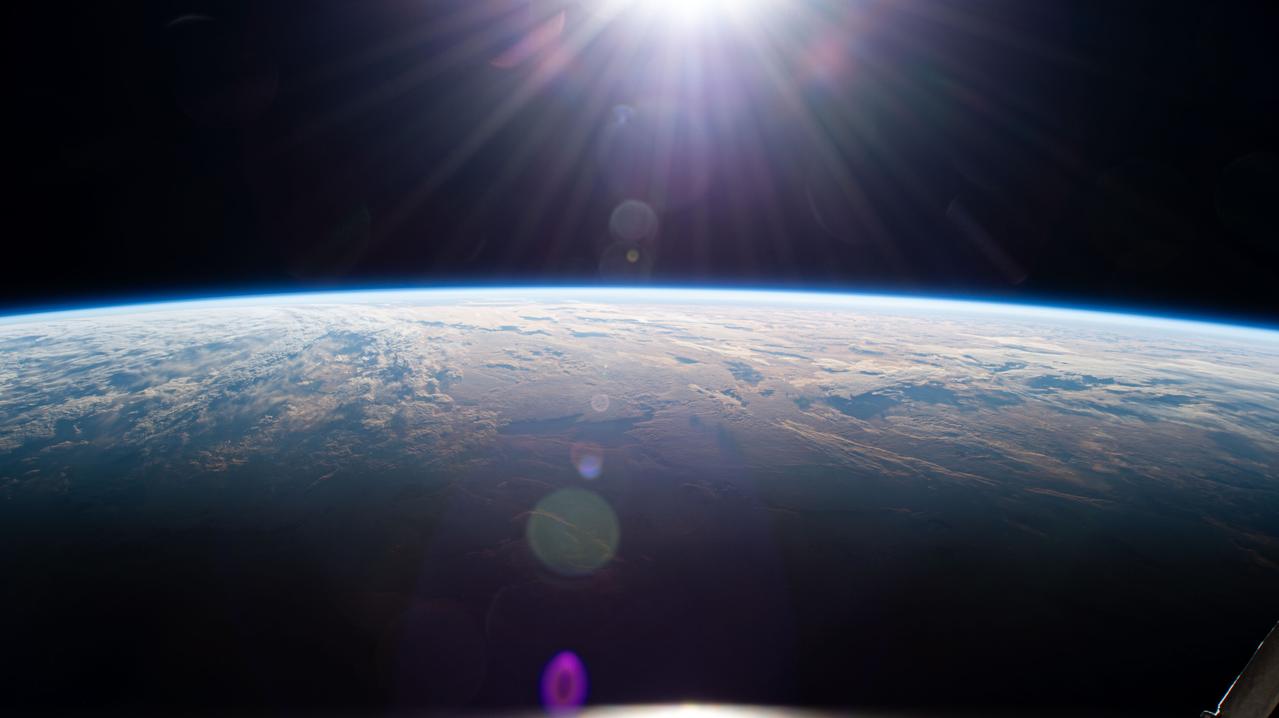
iss072e838362 (March 26, 2025) --- Sunrise above Earth's horizon begins illuminating a cloudy Indian Ocean and reveals the terminator, the dividing line between night and day, in this photograph from the International Space Station as it orbited 271 miles above.
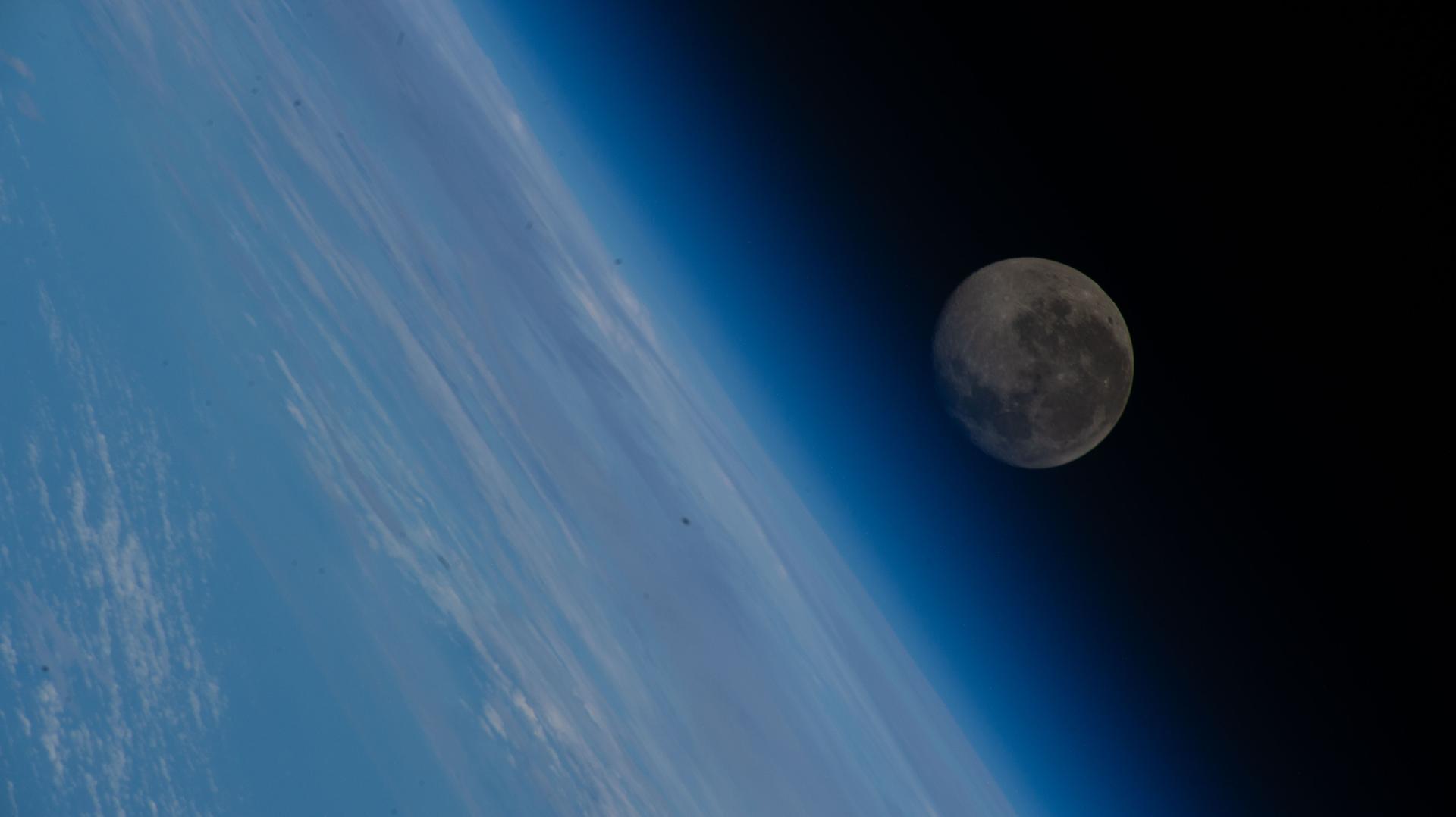
iss075e0085685 (Aug. 30, 2026) --- The waning gibbous Moon appears above Earth’s blue atmosphere in this image taken from the International Space Station while orbiting 258 miles above the coast of Hong Kong, China. Credit: NASA
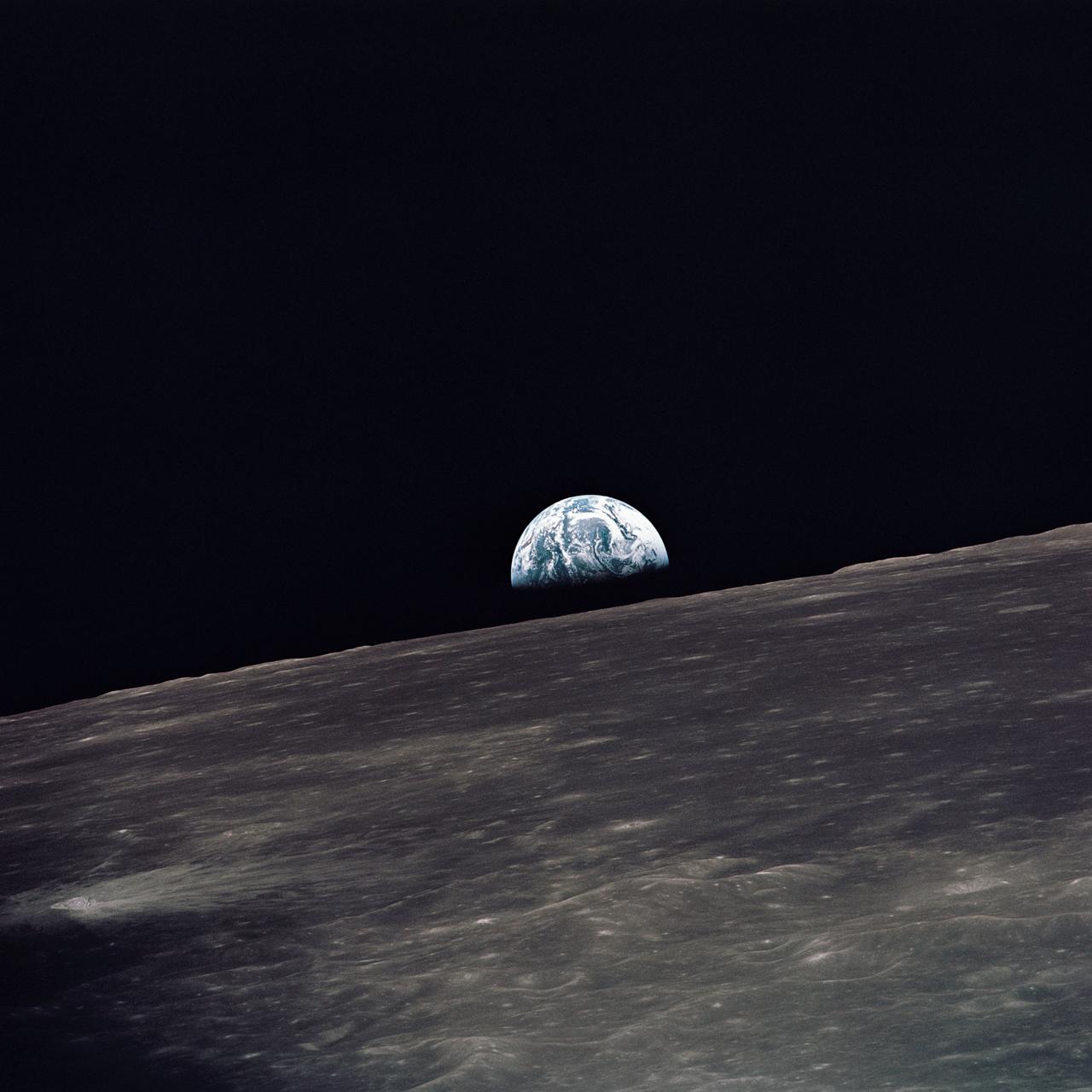
AS10-27-3890 (18-26 May 1969) --- A view of Earth rising above the lunar horizon photographed from the Apollo 10 Lunar Module, looking west in the direction of travel. The Lunar Module at the time the picture was taken was located above the lunar farside highlands at approximately 105 degrees east longitude.
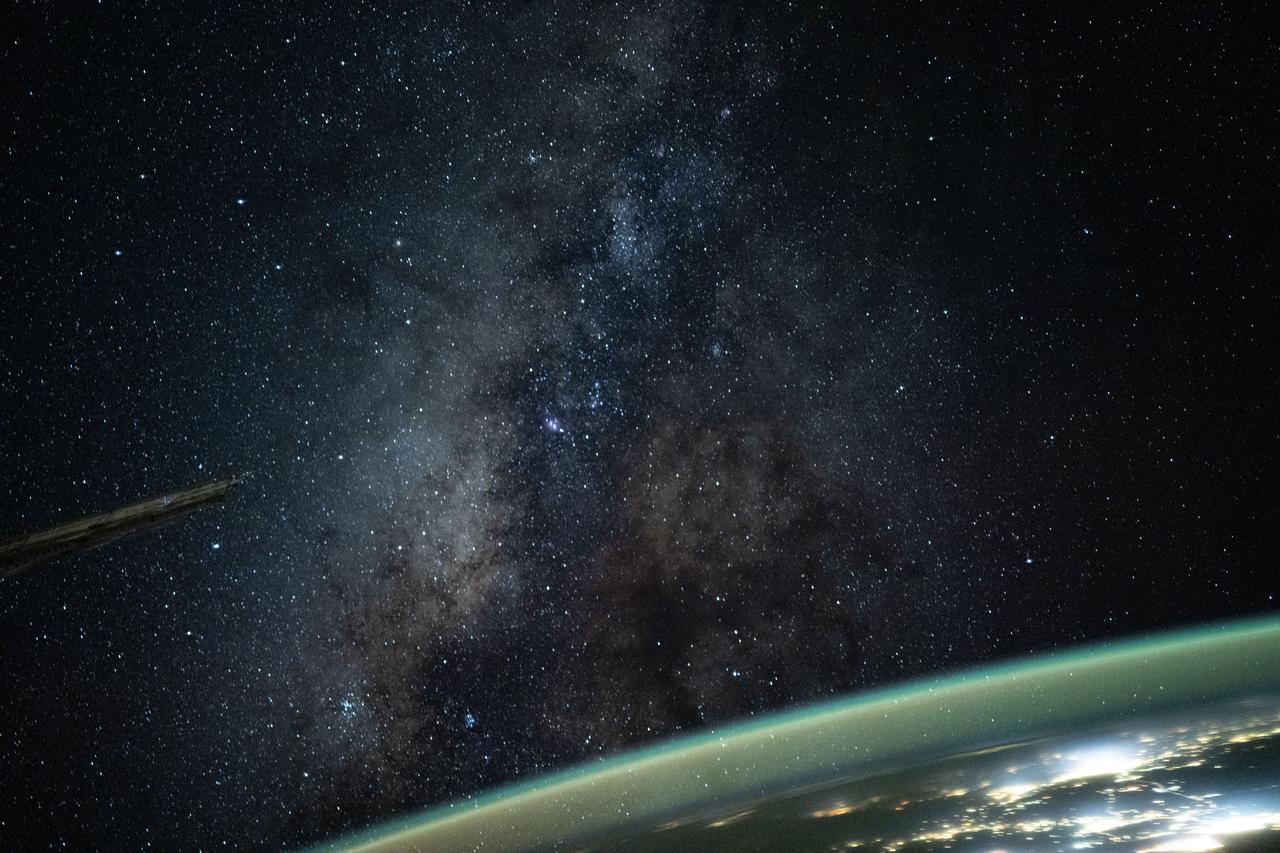
iss073e0516005 (Aug. 23, 2025) --- The Milky Way appears above Earth's bright atmospheric glow in this photograph from the International Space Station as it soared 261 miles above southern Iran at approximately 12:54 a.m. local time. The camera was configured for low light and long duration settings.

iss073e0247649 (June 10, 2025) --- The aurora australis arcs back and forth above a partly cloudy Indian Ocean in this photograph from the International Space Station as it orbited 270 miles above in between Australia and Antarctica. At center top, is the Rassvet module, at lower right, is the Soyuz MS-27 crew ship docked to the Prichal module.