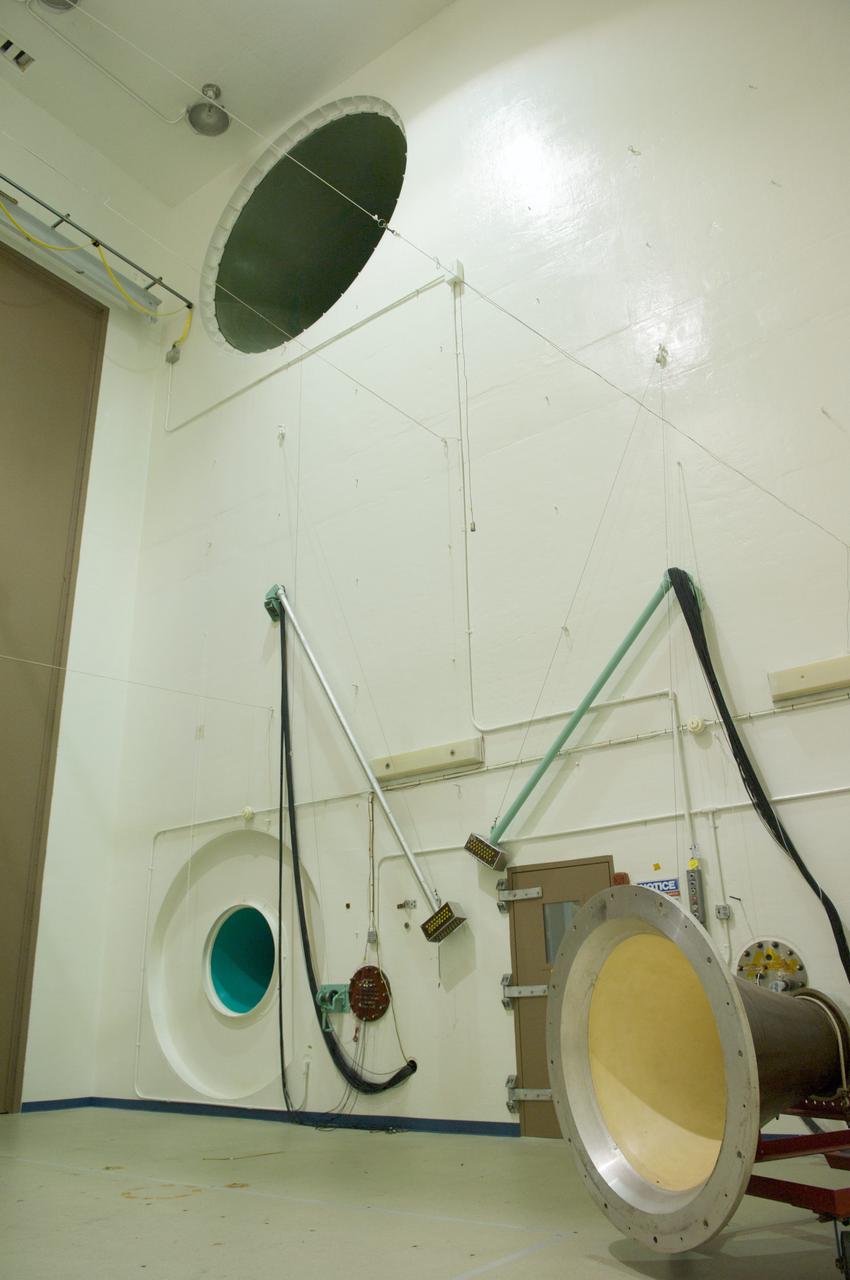
At Goddard, the engineers use the Acoustic Test Chamber, a 42-foot-tall chamber, with 6-foot-diameter speaker horns to replicate the launch environment. The horns use an altering flow of gaseous nitrogen to produce a sound level as high as 150 decibels for two-minute tests. That’s about the level of sound heard standing next to a jet engine during takeoff. The 6-foot-wide horns in this 42-foot-tall chamber can produce noise at levels as high as 150 dB. During the acoustics test, the speakers can still be heard outside of its insulated massive metal doors. Credits: NASA/Goddard/Chris Gunn <b><a href="http://www.nasa.gov/audience/formedia/features/MP_Photo_Guidelines.html" rel="nofollow">NASA image use policy.</a></b> <b><a href="http://www.nasa.gov/centers/goddard/home/index.html" rel="nofollow">NASA Goddard Space Flight Center</a></b> enables NASA’s mission through four scientific endeavors: Earth Science, Heliophysics, Solar System Exploration, and Astrophysics. Goddard plays a leading role in NASA’s accomplishments by contributing compelling scientific knowledge to advance the Agency’s mission. <b>Follow us on <a href="http://twitter.com/NASAGoddardPix" rel="nofollow">Twitter</a></b> <b>Like us on <a href="http://www.facebook.com/pages/Greenbelt-MD/NASA-Goddard/395013845897?ref=tsd" rel="nofollow">Facebook</a></b> <b>Find us on <a href="http://instagrid.me/nasagoddard/?vm=grid" rel="nofollow">Instagram</a></b>
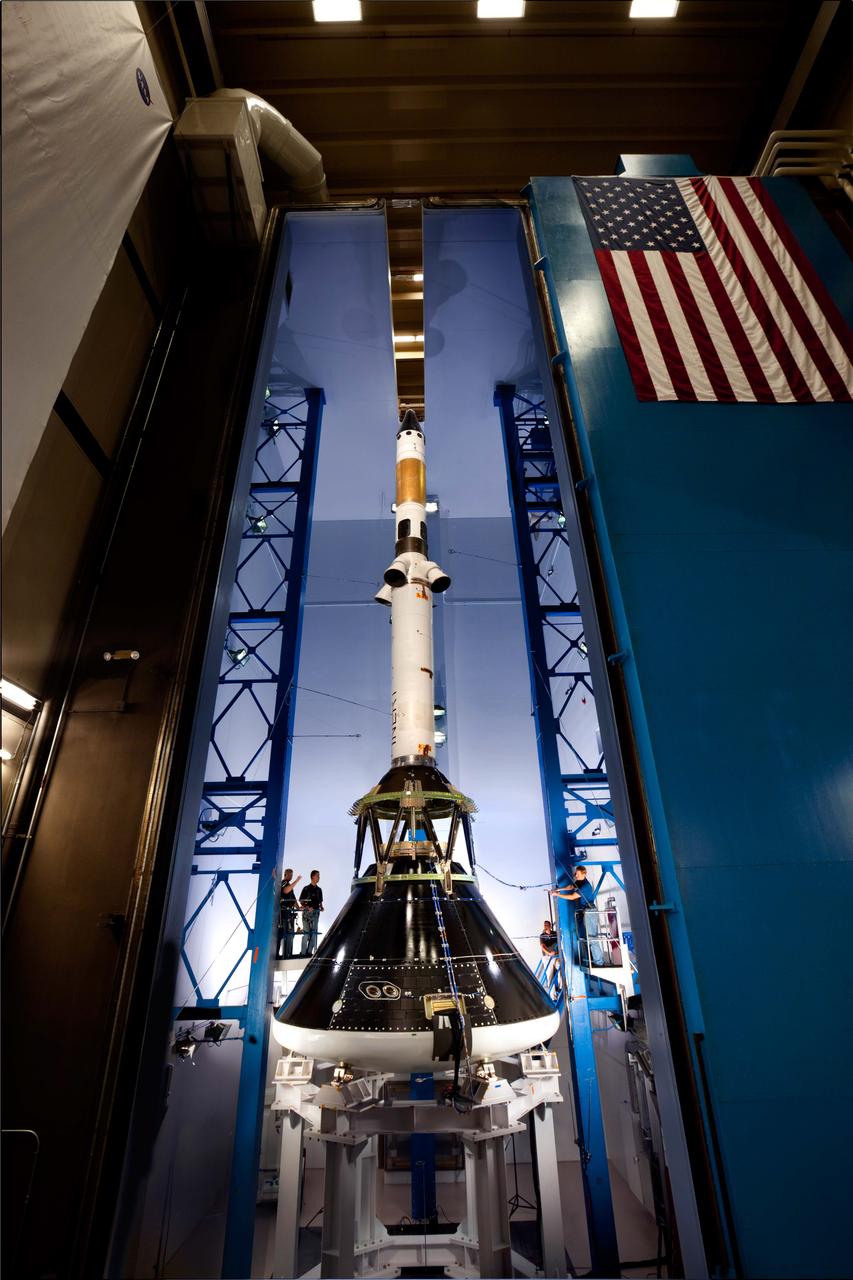
Technicians position microphones around the Orion launch abort system and crew module test articles in preparation for the second round of testing in the acoustic chamber at Lockheed Martin’s facilities near Denver on Aug. 16, 2011. The vehicle was bombarded by acoustic levels of 150 decibels to simulate conditions during launch and abort if necessary. Part of Batch image transfer from Flickr.
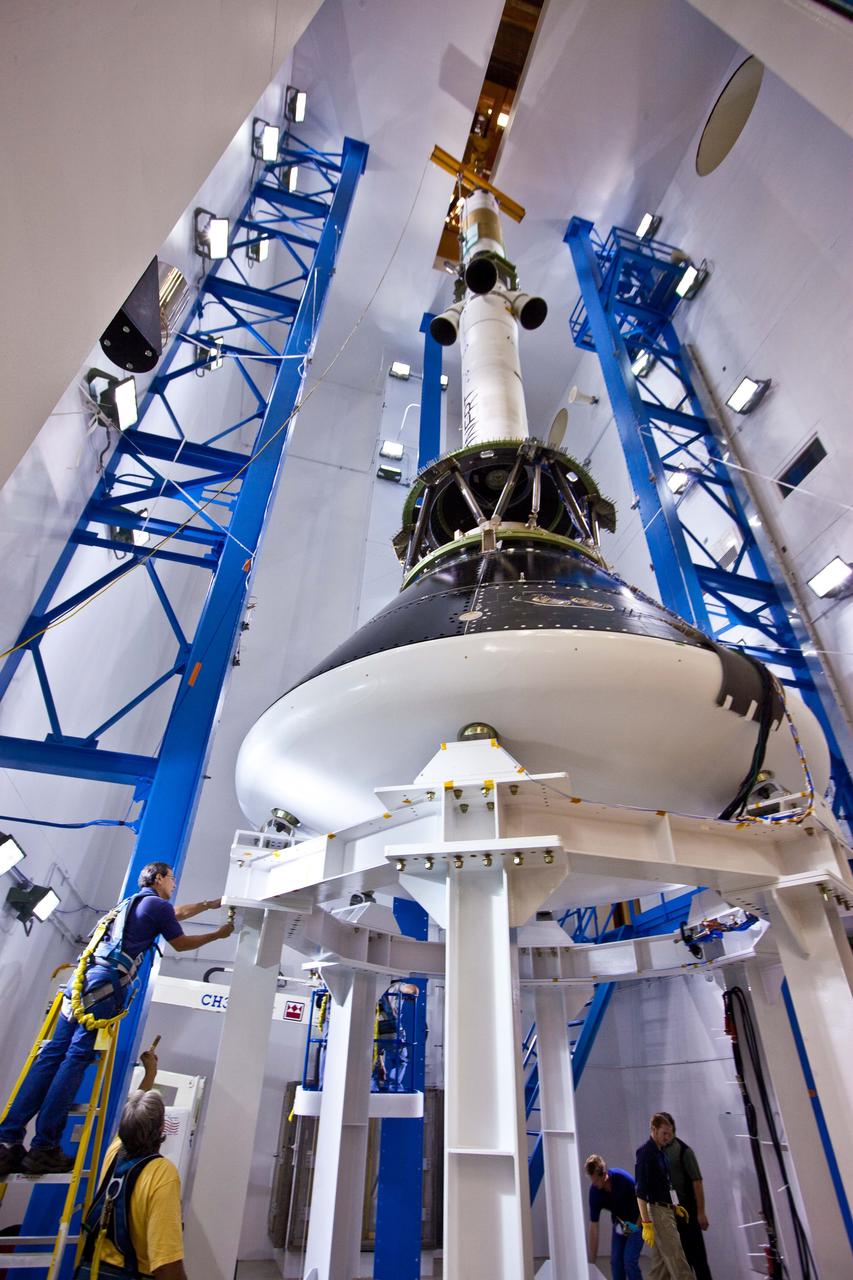
The Orion launch abort system and crew module test articles undergo stacking at Lockheed Martin’s facilities near Denver in preparation for acoustic testing on Aug. 15, 2011. To emulate the sound pressure levels experienced at launch, the tests exposed Orion and its launch abort system to acoustic levels exceeding 150 decibels, while hundreds of instruments record the vehicle’s response. Part of Batch image transfer from Flickr.
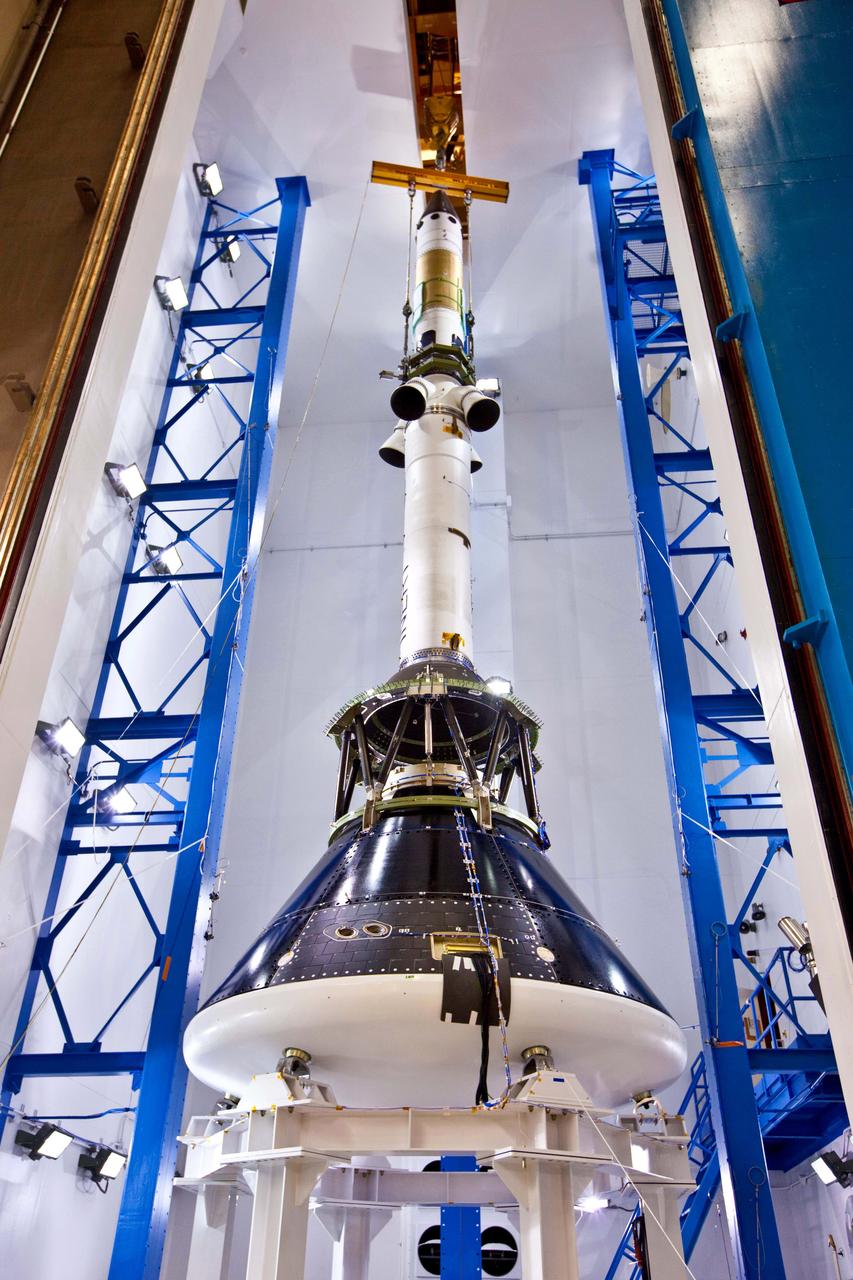
The Orion launch abort system and crew module test articles undergo stacking at Lockheed Martin’s facilities near Denver in preparation for acoustic testing on Aug. 15, 2011. To emulate the sound pressure levels experienced at launch, the tests exposed Orion and its launch abort system to acoustic levels exceeding 150 decibels, while hundreds of instruments record the vehicle’s response. Part of Batch image transfer from Flickr.

Mechanical engineering and integration technician, Lucas Keim, stands inside the Acoustics chamber at Goddard Space Flight Center, Greenbelt Md., Aug 24, 2023. This photo has been reviewed by OSAM1 project management and the Export Control Office and is released for public view. NASA/Mike Guinto
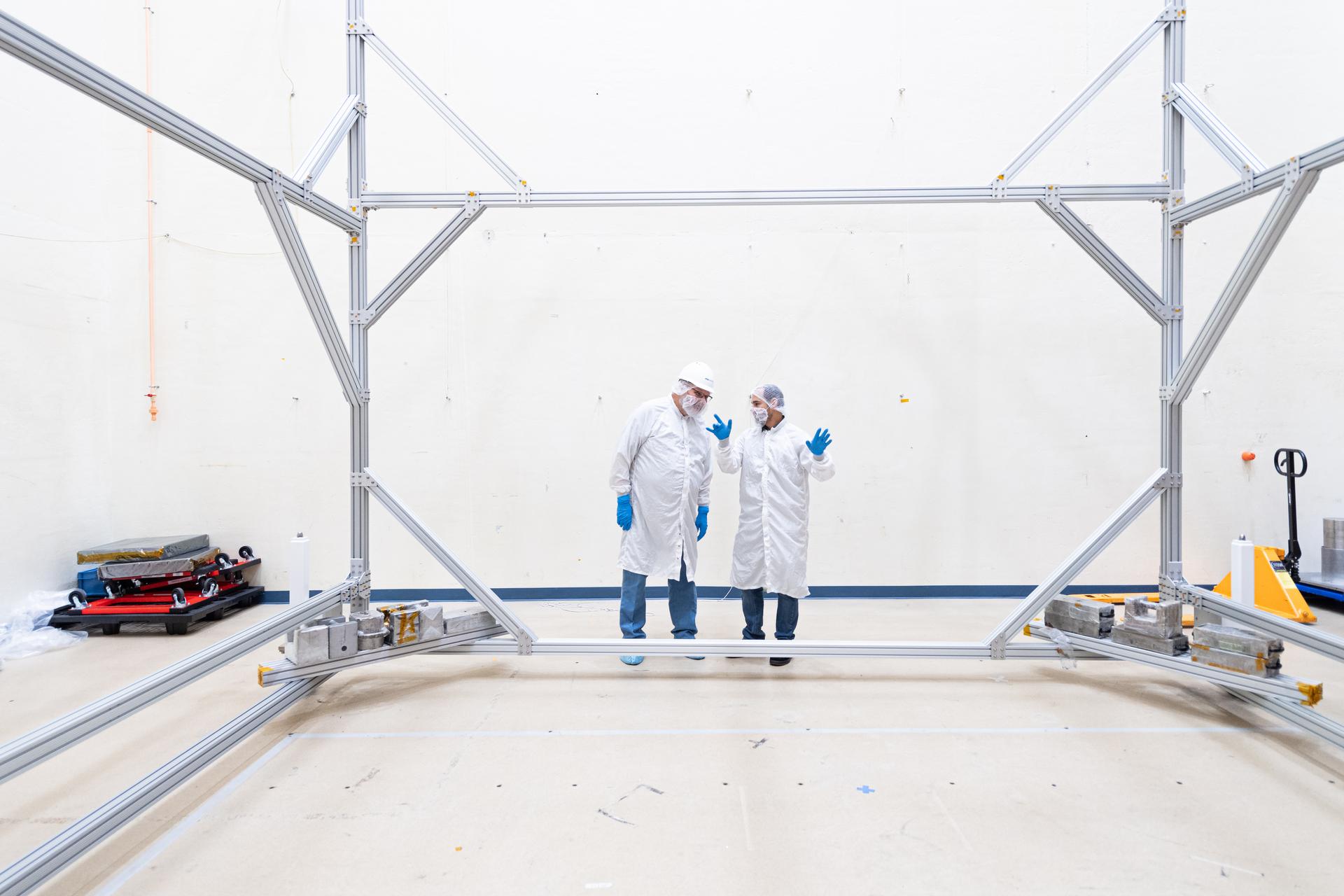
OSAM-1 engineer, Alvaro Haesbaert discusses the upcoming operations with Safety engineer, Paul Messanger inside the acoustics chamber at Goddard Space Flight Center, Greenbelt Md., Aug 25, 2023. This photo has been reviewed by OSAM1 project management and the Export Control Office and is released for public view. NASA/Mike Guinto
The NASA Administrator's Seal, painted onto the rear wall of the Acoustic Test Chamber at NASA's Goddard Space Flight Center in Greenbelt, Md.
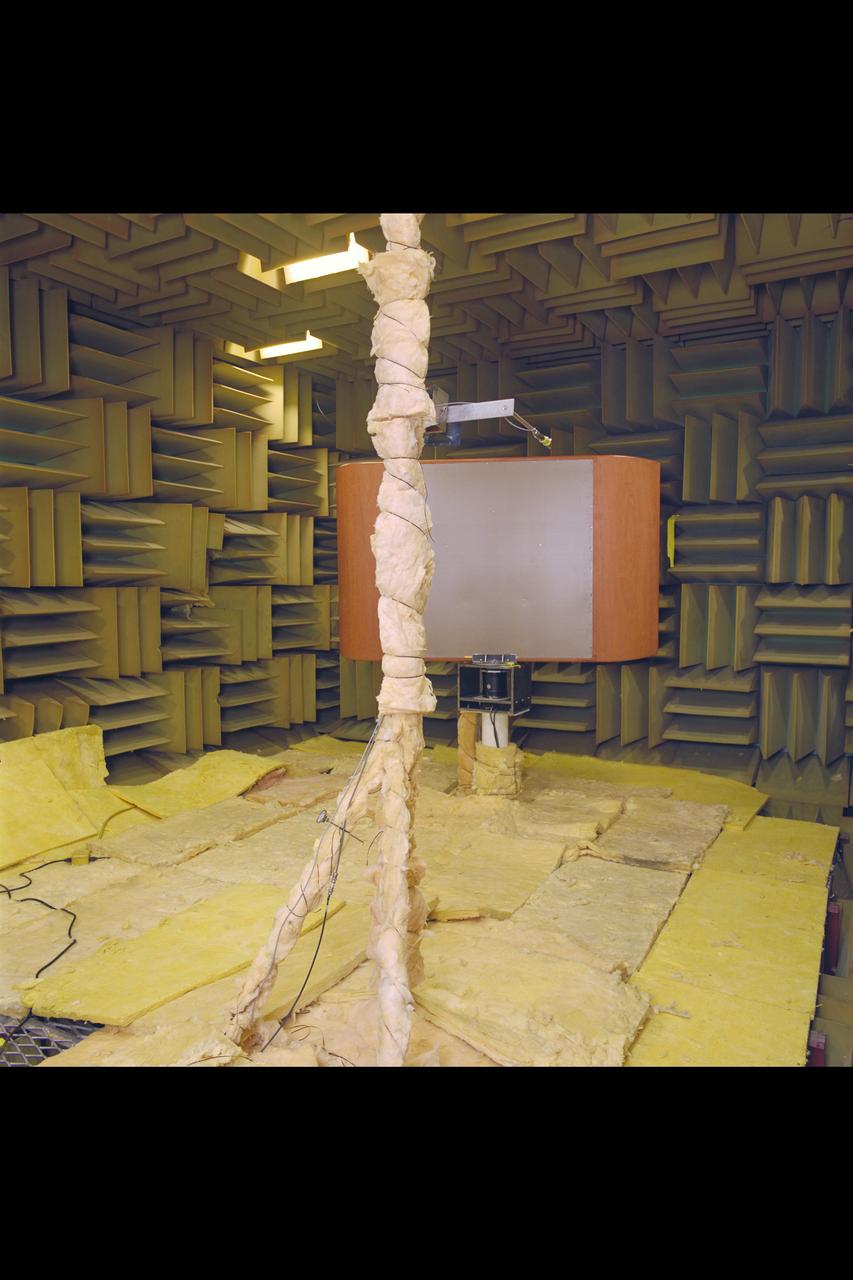
DC-10 Acoustic Array Calibration setup: N-221 Anechoic Chamber with S. Jaeger, S. Jovic, H. Hamid, M. Mosher and M. Watts
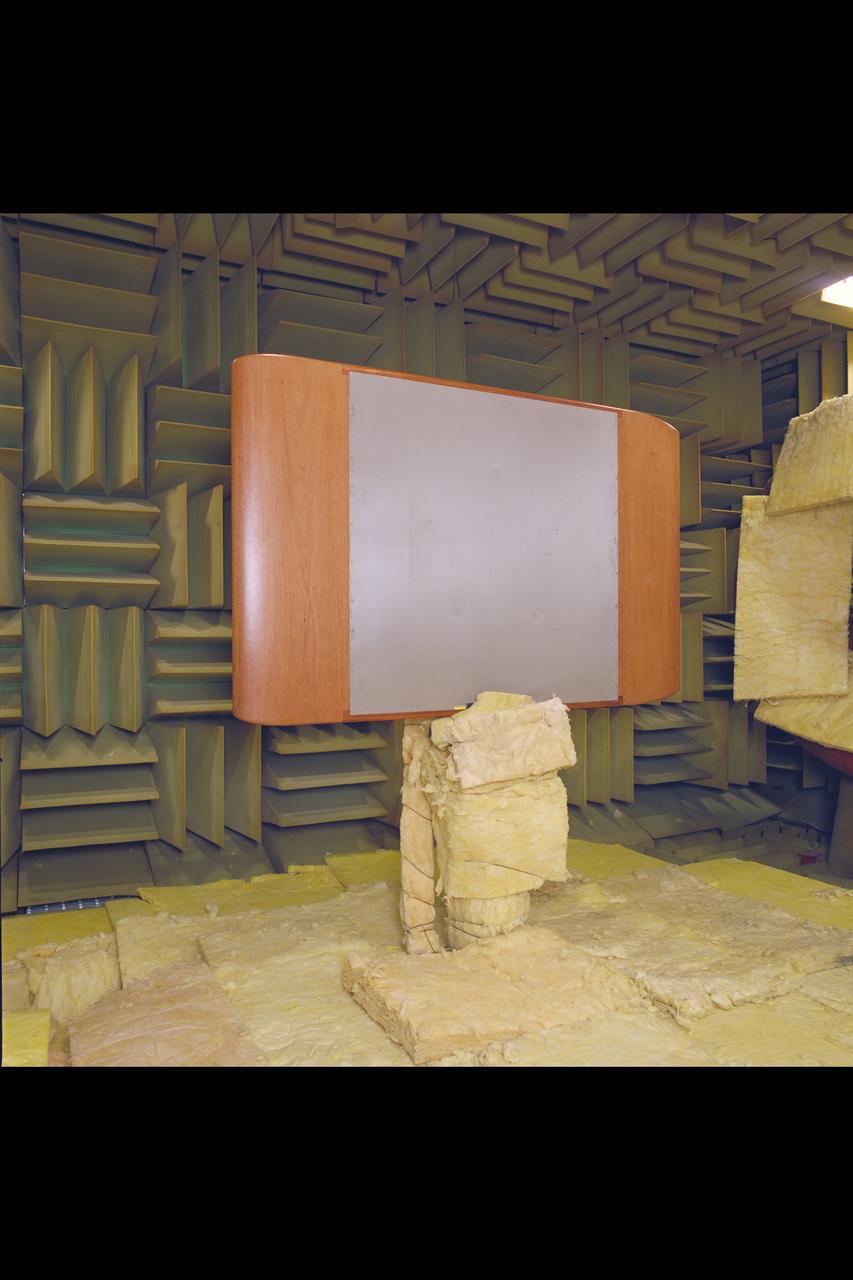
DC-10 Acoustic Array Calibration setup: N-221 Anechoic Chamber with S. Jaeger, S. Jovic, H. Hamid, M. Mosher and M. Watts
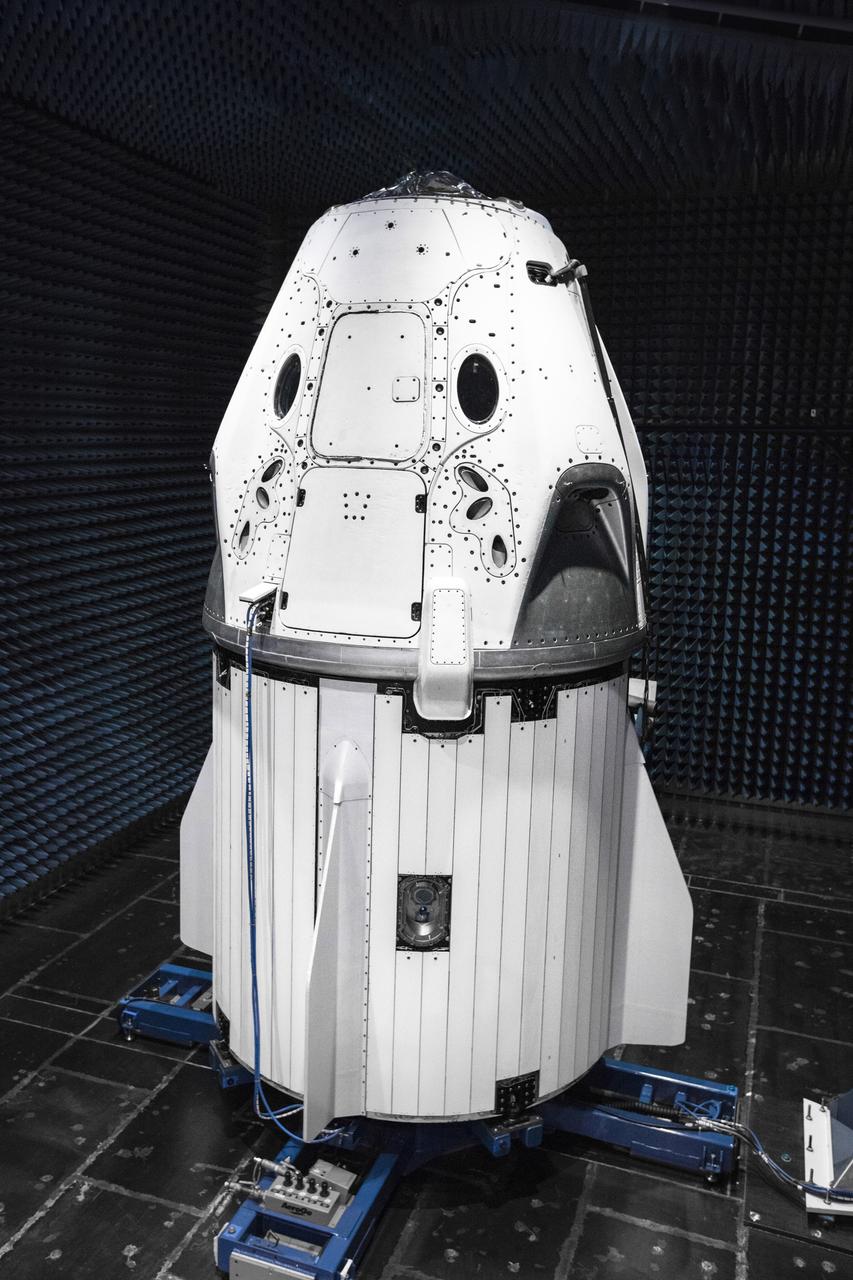
The SpaceX Crew Dragon spacecraft is in the anechoic chamber for electromagnetic interference testing on May 20, 2018, at NASA's Kennedy Space Center in Florida. The Crew Dragon will be shipped to the agency's Plum Brook Station test facility at Glenn Research City in Cleveland, Ohio, for testing in the Reverberant Acoustic Test Facility, the world's most powerful acoustic test chamber. Crew Dragon is being prepared for its first uncrewed test flight, targeted for August 2018.
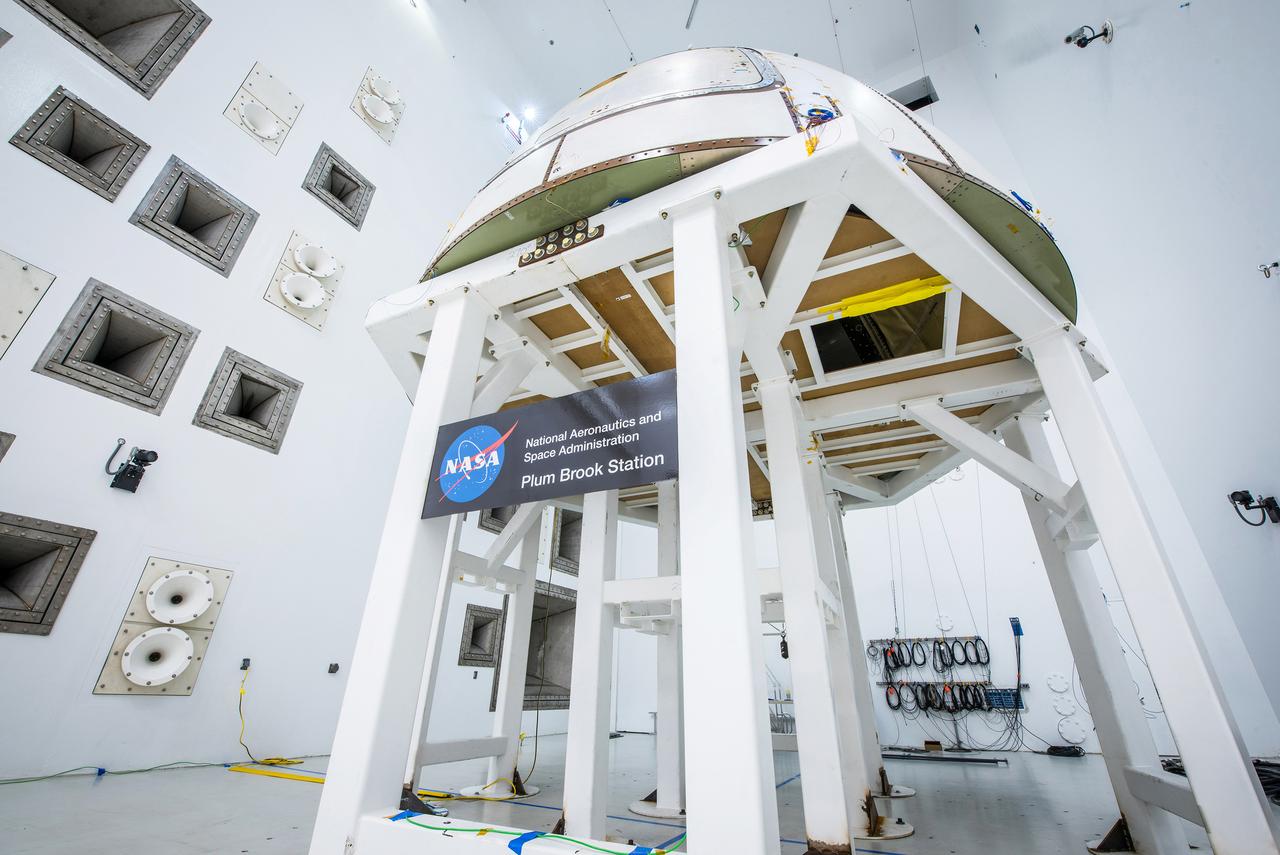
The ogive panels protect Orion's crew module from harsh acoustic conditions at launch and in case of an abort. Acoustic testing of the ogive hatch starts today at Space Power Facility at NASA Glenn Research Center's Plum Brook station in Sandusky, Ohio takes place on July 19, 2017. The ogive is installed in the Reverberant Acoustic Chamber where it will be blasted with 161 db of sound to simulate launch conditions.
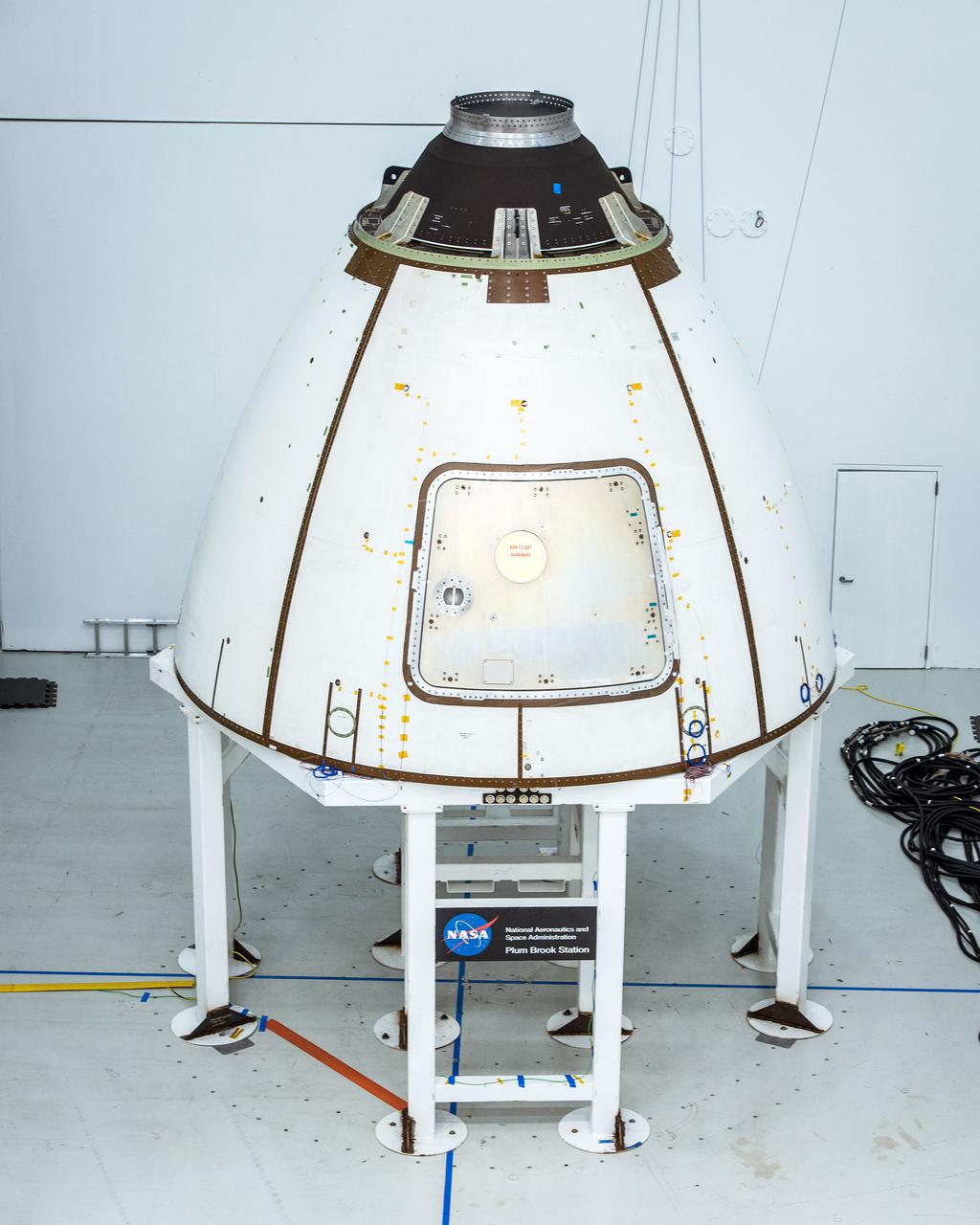
The ogive panels protect Orion's crew module from harsh acoustic conditions at launch and in case of an abort. Acoustic testing of the ogive hatch starts today at Space Power Facility at NASA Glenn Research Center's Plum Brook station in Sandusky, Ohio takes place on July 19, 2017. The ogive is installed in the Reverberant Acoustic Chamber where it will be blasted with 161 db of sound to simulate launch conditions.
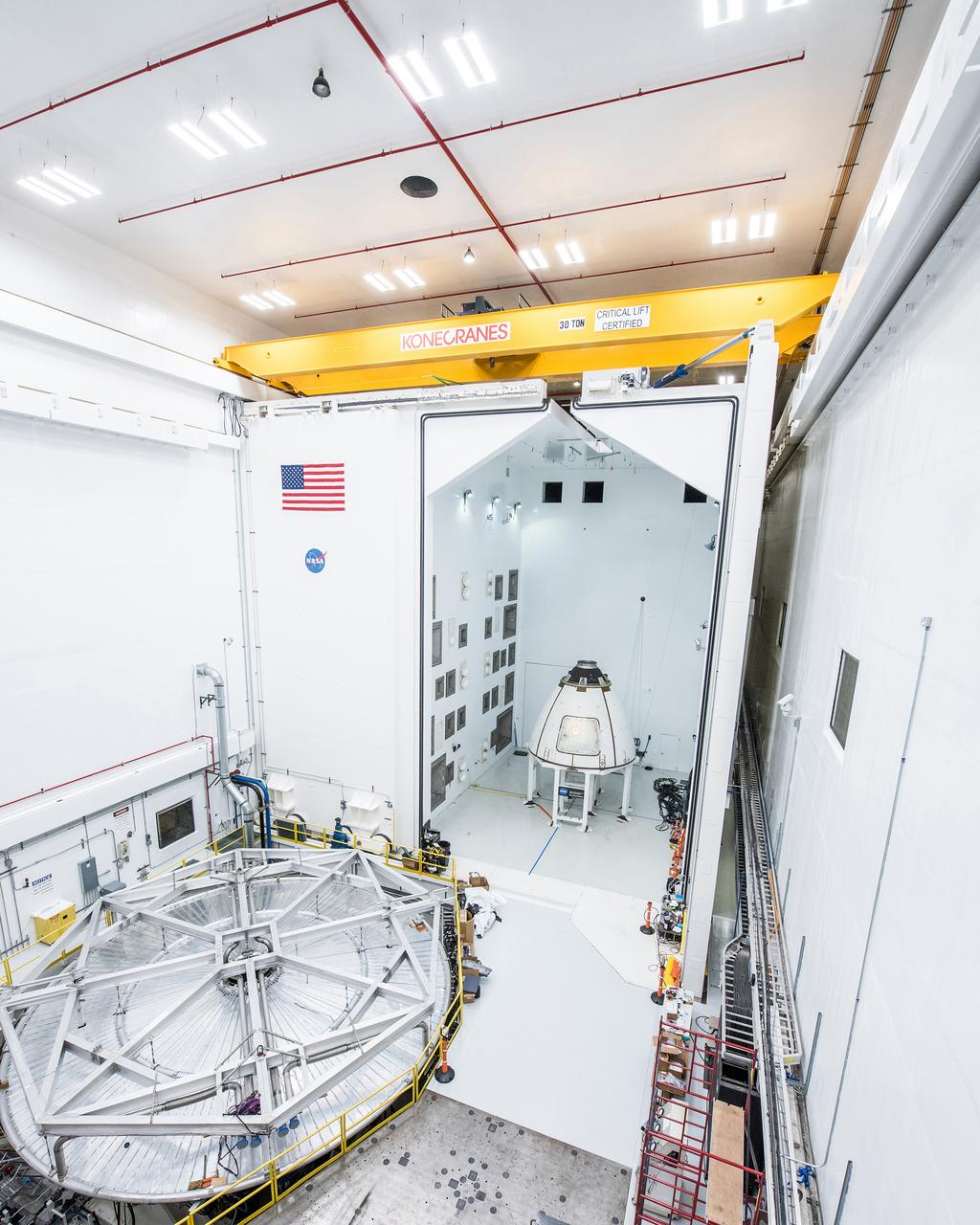
The ogive panels protect Orion's crew module from harsh acoustic conditions at launch and in case of an abort. Acoustic testing of the ogive hatch starts today at Space Power Facility at NASA Glenn Research Center's Plum Brook station in Sandusky, Ohio takes place on July 19, 2017. The ogive is installed in the Reverberant Acoustic Chamber where it will be blasted with 161 db of sound to simulate launch conditions.
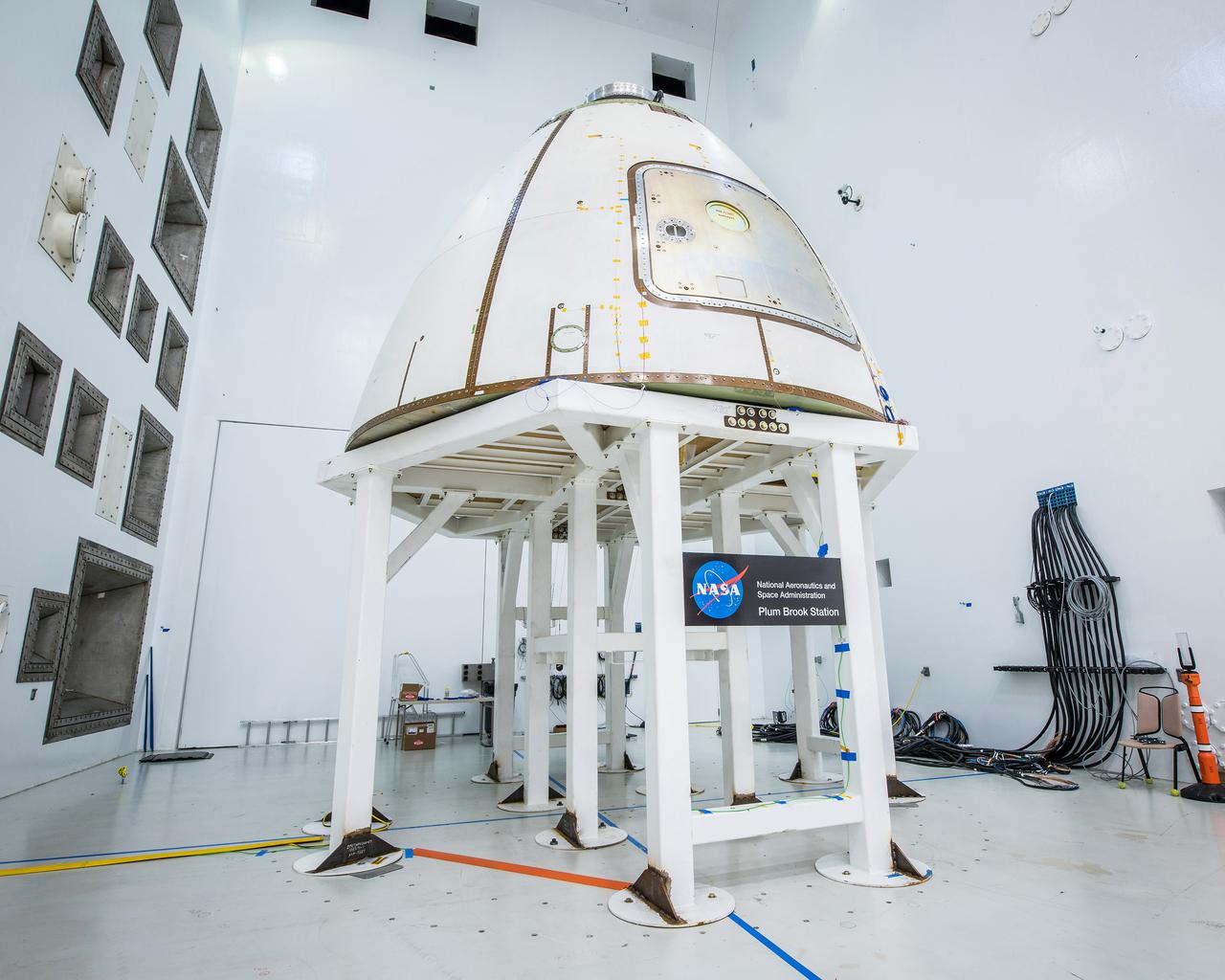
The ogive panels protect Orion's crew module from harsh acoustic conditions at launch and in case of an abort. Acoustic testing of the ogive hatch starts today at Space Power Facility at NASA Glenn Research Center's Plum Brook station in Sandusky, Ohio takes place on July 19, 2017. The ogive is installed in the Reverberant Acoustic Chamber where it will be blasted with 161 db of sound to simulate launch conditions.
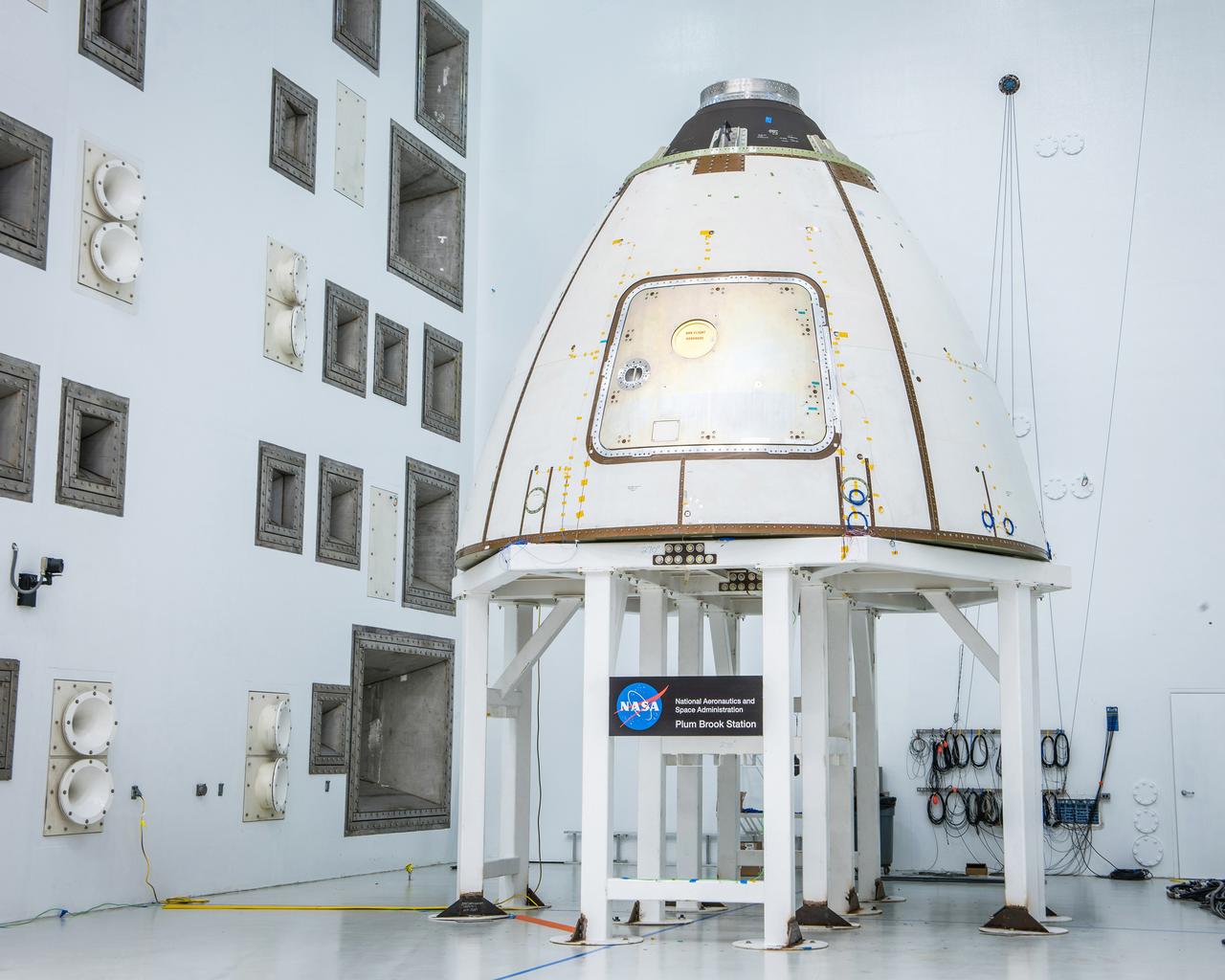
The ogive panels protect Orion's crew module from harsh acoustic conditions at launch and in case of an abort. Acoustic testing of the ogive hatch starts today at Space Power Facility at NASA Glenn Research Center's Plum Brook station in Sandusky, Ohio takes place on July 19, 2017. The ogive is installed in the Reverberant Acoustic Chamber where it will be blasted with 161 db of sound to simulate launch conditions.
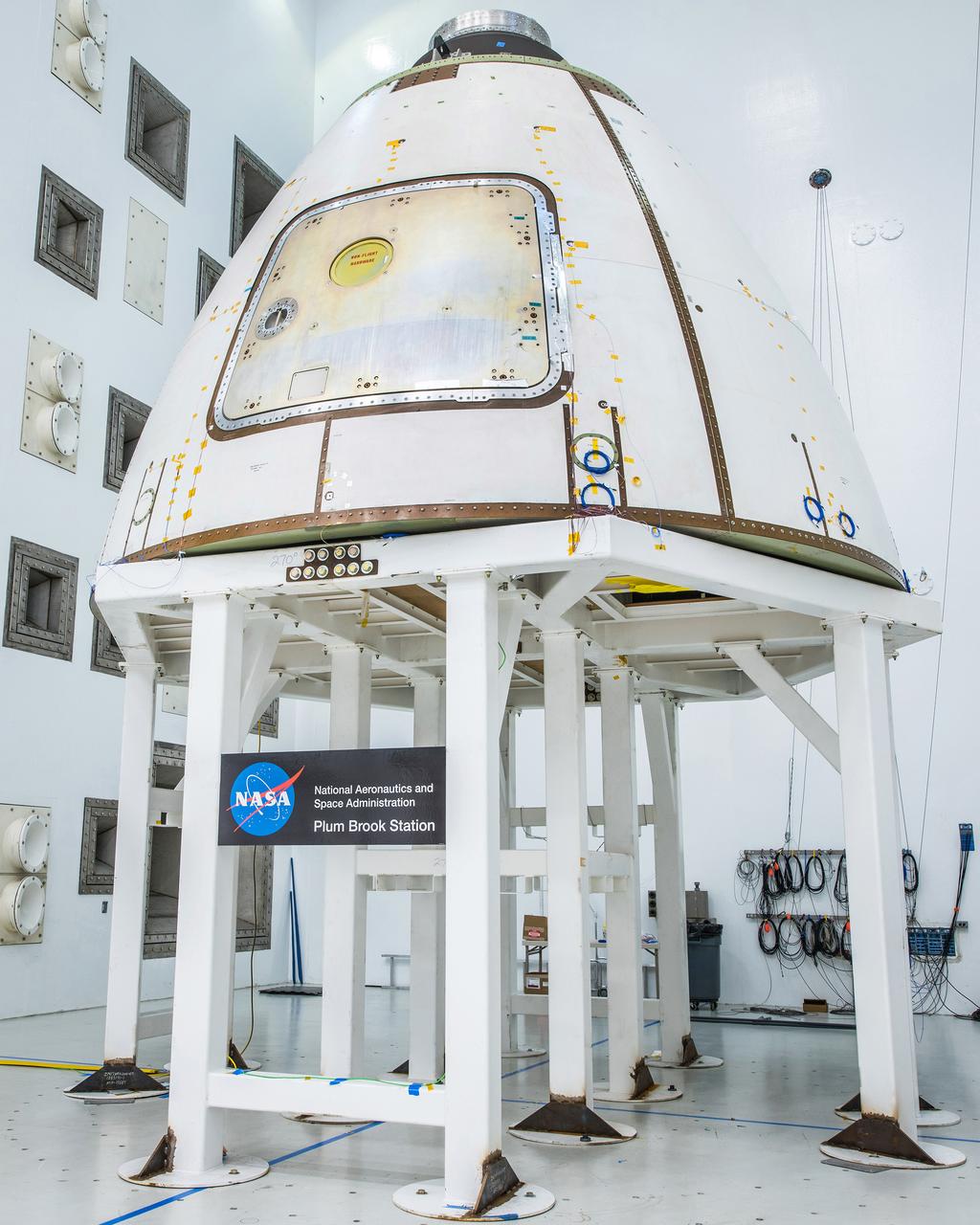
The ogive panels protect Orion's crew module from harsh acoustic conditions at launch and in case of an abort. Acoustic testing of the ogive hatch starts today at Space Power Facility at NASA Glenn Research Center's Plum Brook station in Sandusky, Ohio takes place on July 19, 2017. The ogive is installed in the Reverberant Acoustic Chamber where it will be blasted with 161 db of sound to simulate launch conditions.
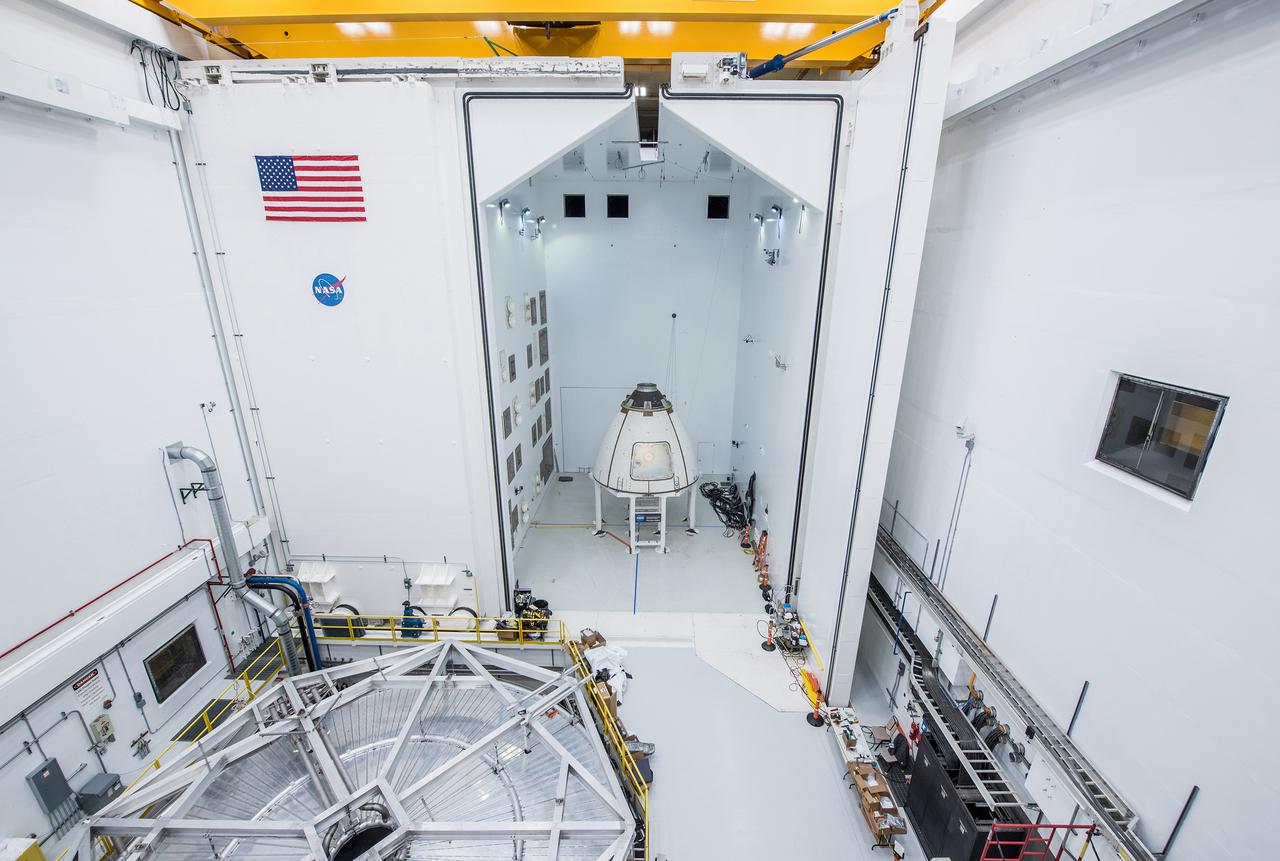
The ogive panels protect Orion's crew module from harsh acoustic conditions at launch and in case of an abort. Acoustic testing of the ogive hatch starts today at Space Power Facility at NASA Glenn Research Center's Plum Brook station in Sandusky, Ohio takes place on July 19, 2017. The ogive is installed in the Reverberant Acoustic Chamber where it will be blasted with 161 db of sound to simulate launch conditions.
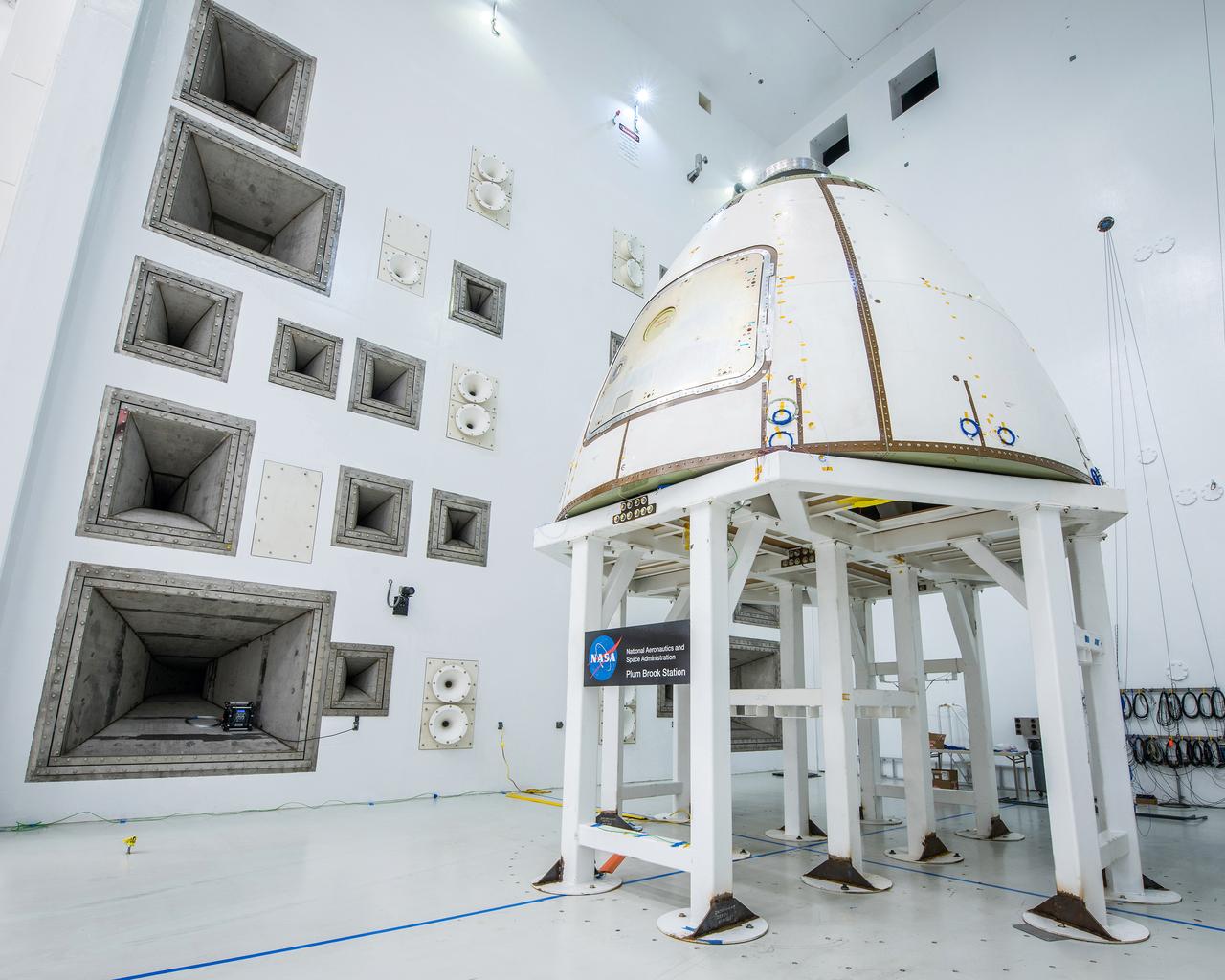
The ogive panels protect Orion's crew module from harsh acoustic conditions at launch and in case of an abort. Acoustic testing of the ogive hatch starts today at Space Power Facility at NASA Glenn Research Center's Plum Brook station in Sandusky, Ohio takes place on July 19, 2017. The ogive is installed in the Reverberant Acoustic Chamber where it will be blasted with 161 db of sound to simulate launch conditions.
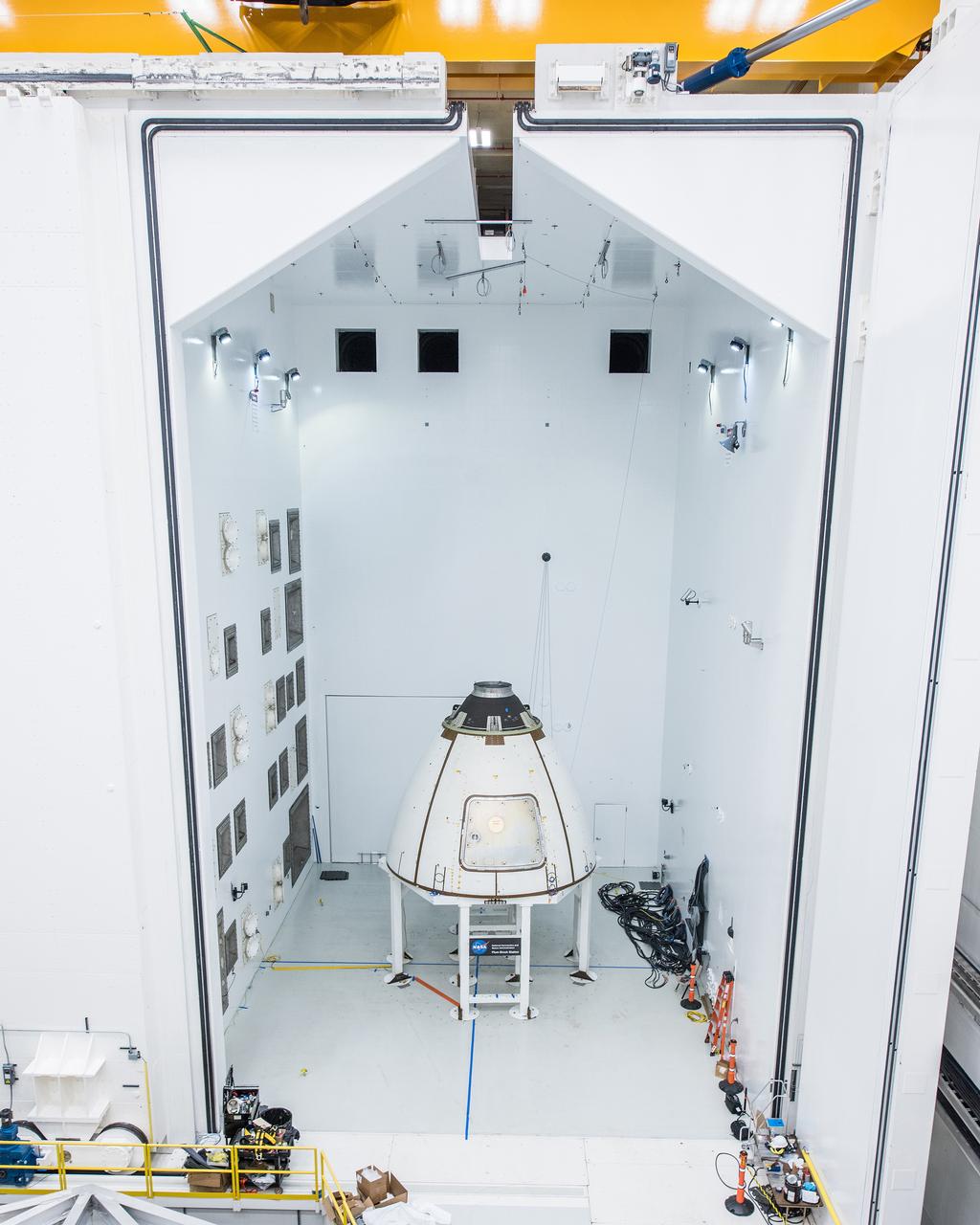
The ogive panels protect Orion's crew module from harsh acoustic conditions at launch and in case of an abort. Acoustic testing of the ogive hatch starts today at Space Power Facility at NASA Glenn Research Center's Plum Brook station in Sandusky, Ohio takes place on July 19, 2017. The ogive is installed in the Reverberant Acoustic Chamber where it will be blasted with 161 db of sound to simulate launch conditions.
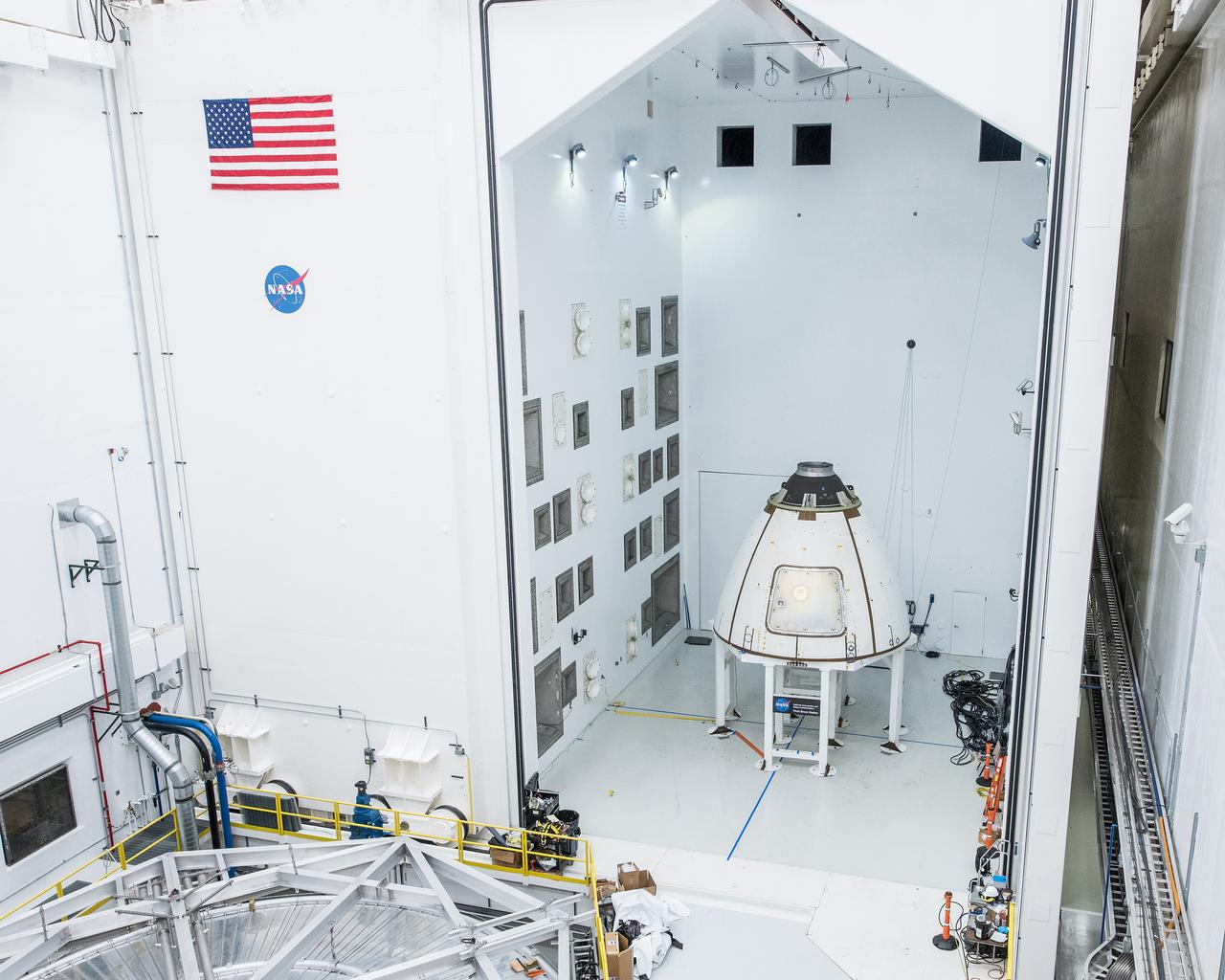
The ogive panels protect Orion's crew module from harsh acoustic conditions at launch and in case of an abort. Acoustic testing of the ogive hatch starts today at Space Power Facility at NASA Glenn Research Center's Plum Brook station in Sandusky, Ohio takes place on July 19, 2017. The ogive is installed in the Reverberant Acoustic Chamber where it will be blasted with 161 db of sound to simulate launch conditions.
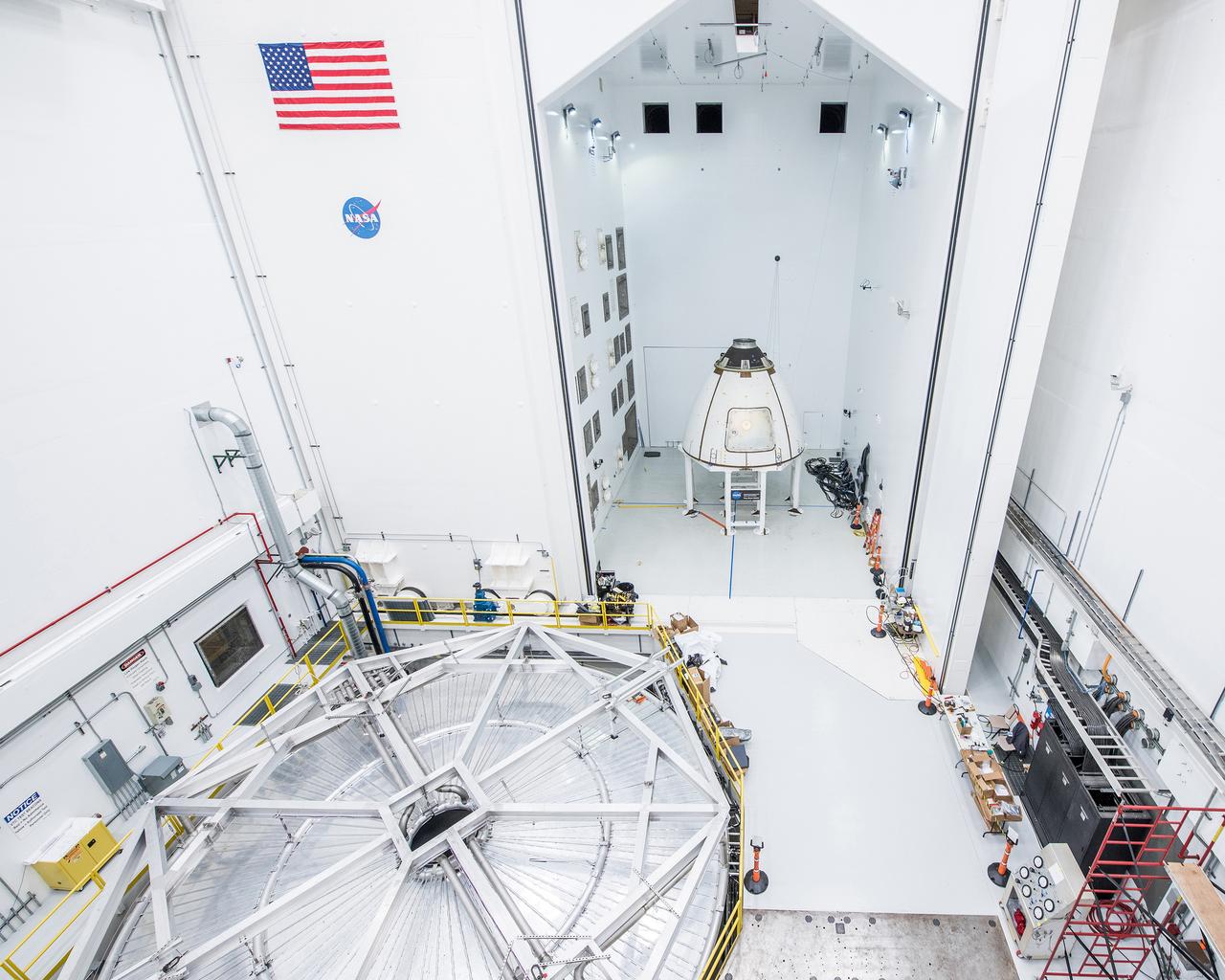
The ogive panels protect Orion's crew module from harsh acoustic conditions at launch and in case of an abort. Acoustic testing of the ogive hatch starts today at Space Power Facility at NASA Glenn Research Center's Plum Brook station in Sandusky, Ohio takes place on July 19, 2017. The ogive is installed in the Reverberant Acoustic Chamber where it will be blasted with 161 db of sound to simulate launch conditions.
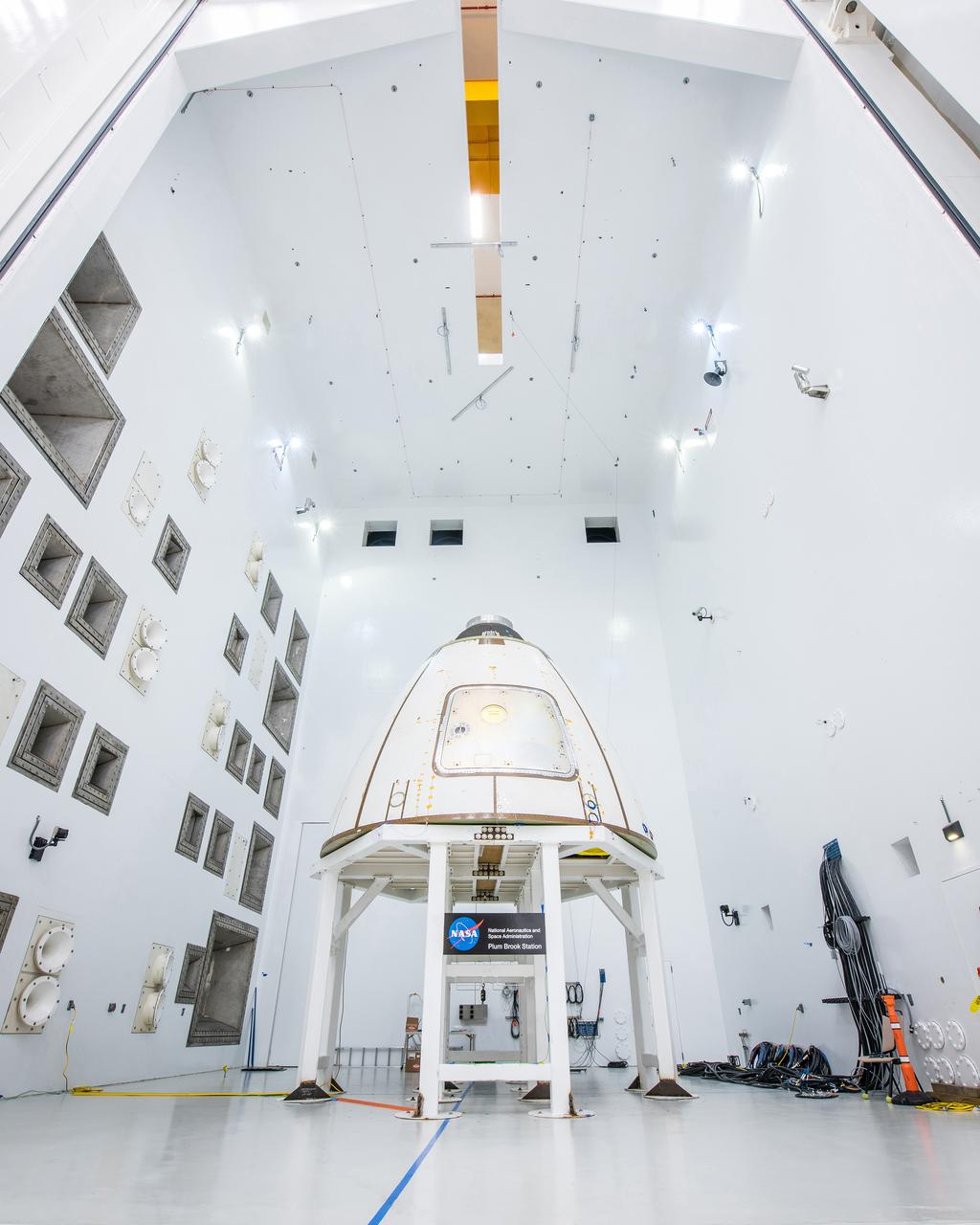
The ogive panels protect Orion's crew module from harsh acoustic conditions at launch and in case of an abort. Acoustic testing of the ogive hatch starts today at Space Power Facility at NASA Glenn Research Center's Plum Brook station in Sandusky, Ohio takes place on July 19, 2017. The ogive is installed in the Reverberant Acoustic Chamber where it will be blasted with 161 db of sound to simulate launch conditions.
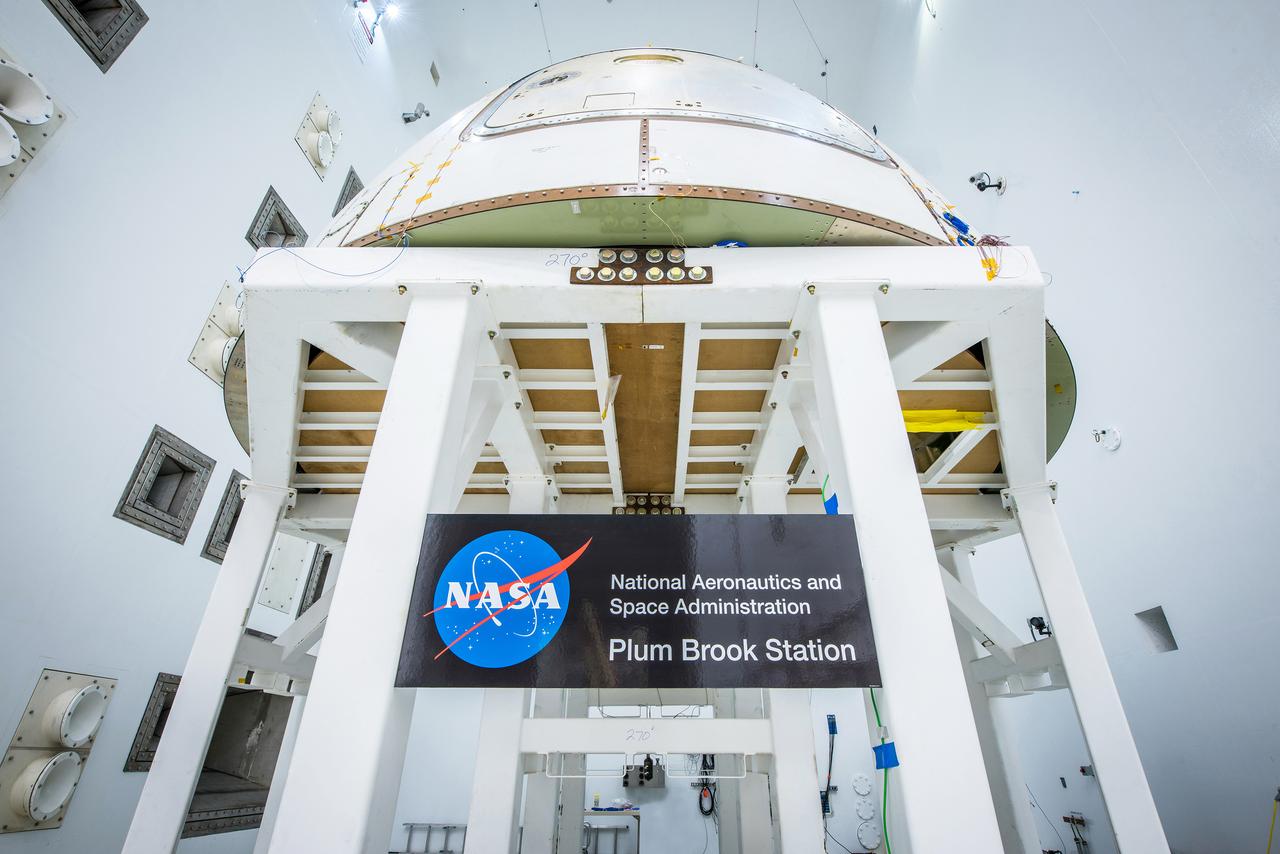
The ogive panels protect Orion's crew module from harsh acoustic conditions at launch and in case of an abort. Acoustic testing of the ogive hatch starts today at Space Power Facility at NASA Glenn Research Center's Plum Brook station in Sandusky, Ohio takes place on July 19, 2017. The ogive is installed in the Reverberant Acoustic Chamber where it will be blasted with 161 db of sound to simulate launch conditions.
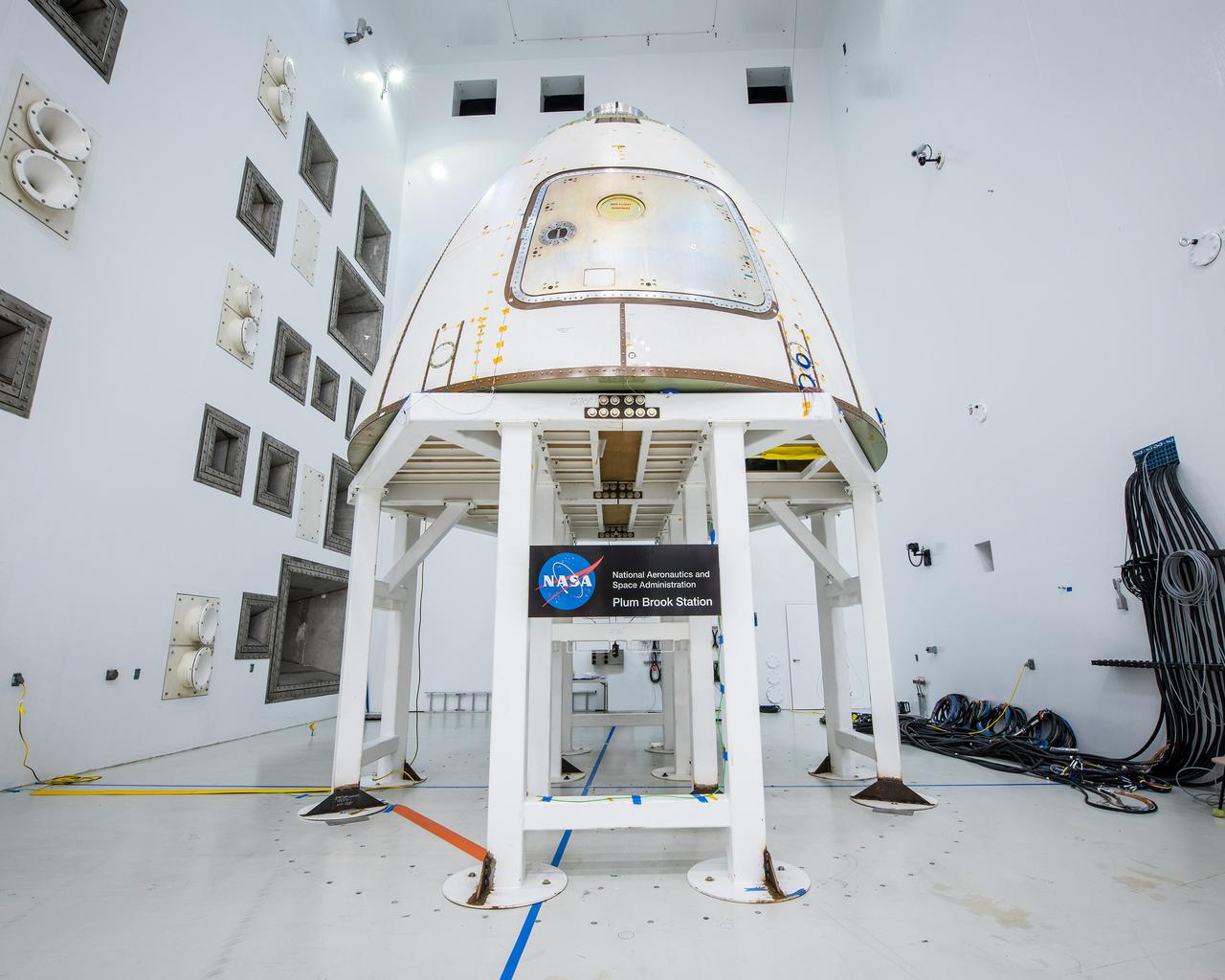
The ogive panels protect Orion's crew module from harsh acoustic conditions at launch and in case of an abort. Acoustic testing of the ogive hatch starts today at Space Power Facility at NASA Glenn Research Center's Plum Brook station in Sandusky, Ohio takes place on July 19, 2017. The ogive is installed in the Reverberant Acoustic Chamber where it will be blasted with 161 db of sound to simulate launch conditions.
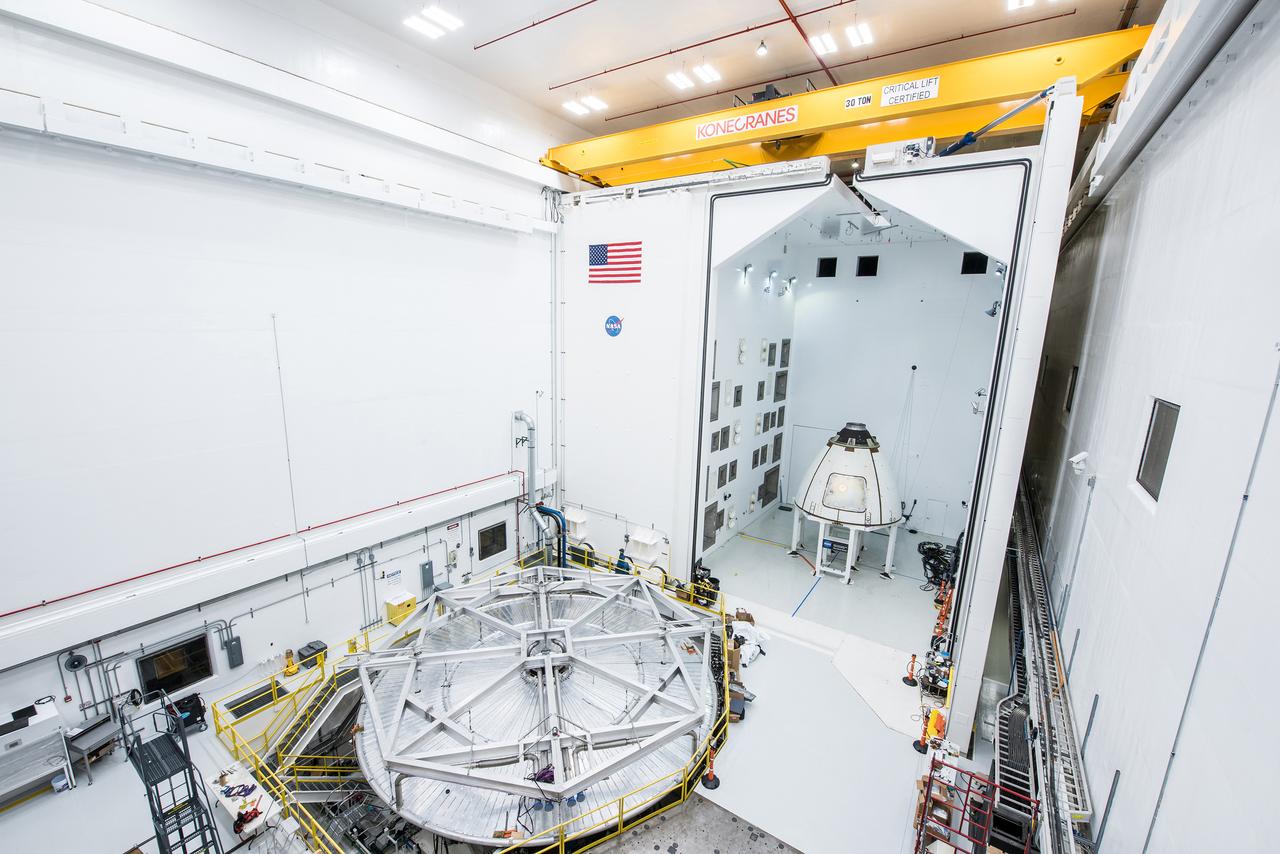
The ogive panels protect Orion's crew module from harsh acoustic conditions at launch and in case of an abort. Acoustic testing of the ogive hatch starts today at Space Power Facility at NASA Glenn Research Center's Plum Brook station in Sandusky, Ohio takes place on July 19, 2017. The ogive is installed in the Reverberant Acoustic Chamber where it will be blasted with 161 db of sound to simulate launch conditions.
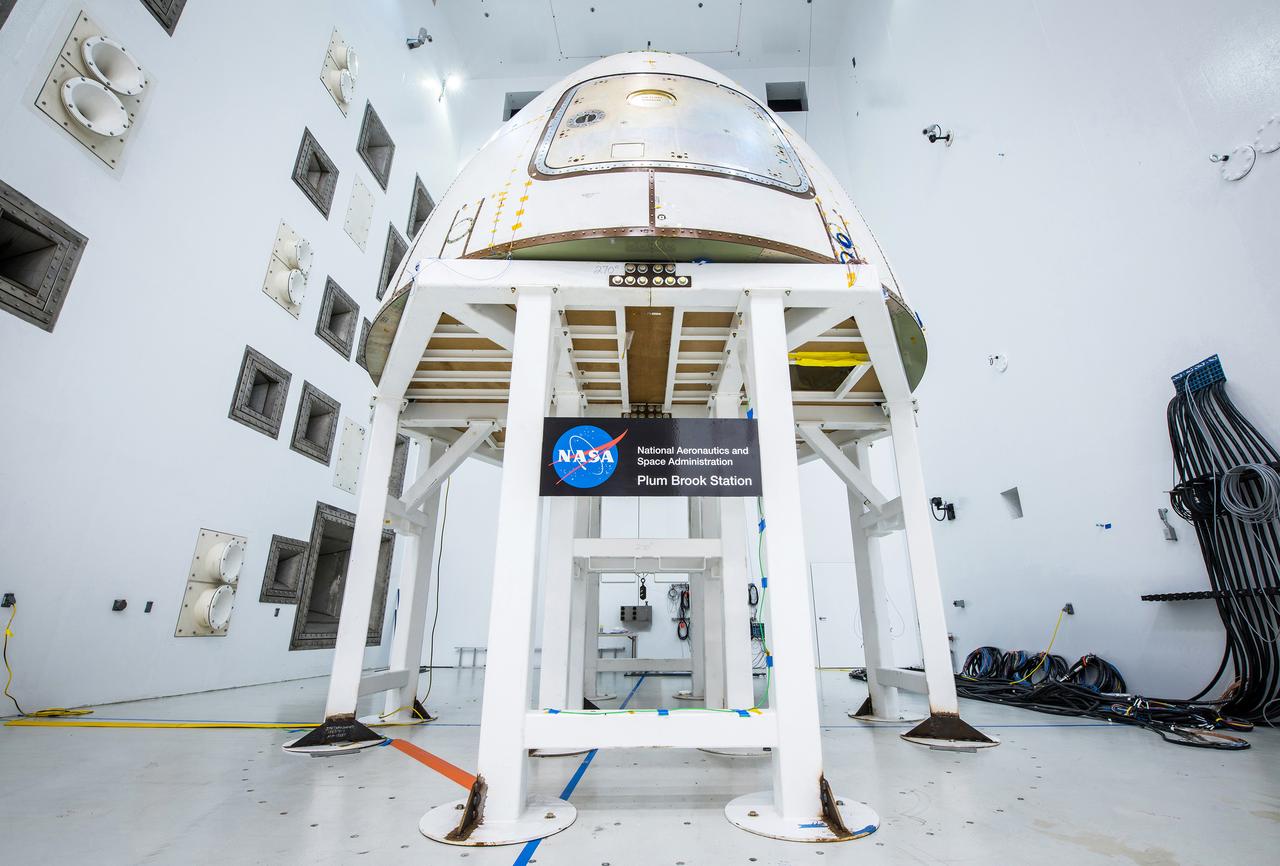
The ogive panels protect Orion's crew module from harsh acoustic conditions at launch and in case of an abort. Acoustic testing of the ogive hatch starts today at Space Power Facility at NASA Glenn Research Center's Plum Brook station in Sandusky, Ohio takes place on July 19, 2017. The ogive is installed in the Reverberant Acoustic Chamber where it will be blasted with 161 db of sound to simulate launch conditions.

jsc2022e004237 (11/8/2021) --- A Preflight image of the Acoustics to Manipulate Fluids investigation, the acoustic tweezer apparatus is installed inside the Microgravity Science Glovebox Engineering Unit. The sample chamber, shown in the upper the right side, is where fluid droplets are injected via a septum located on the right side and manipulated by an ultrasonic transducer located on the left side. Image courtesy of Dr. Robert Lirette.
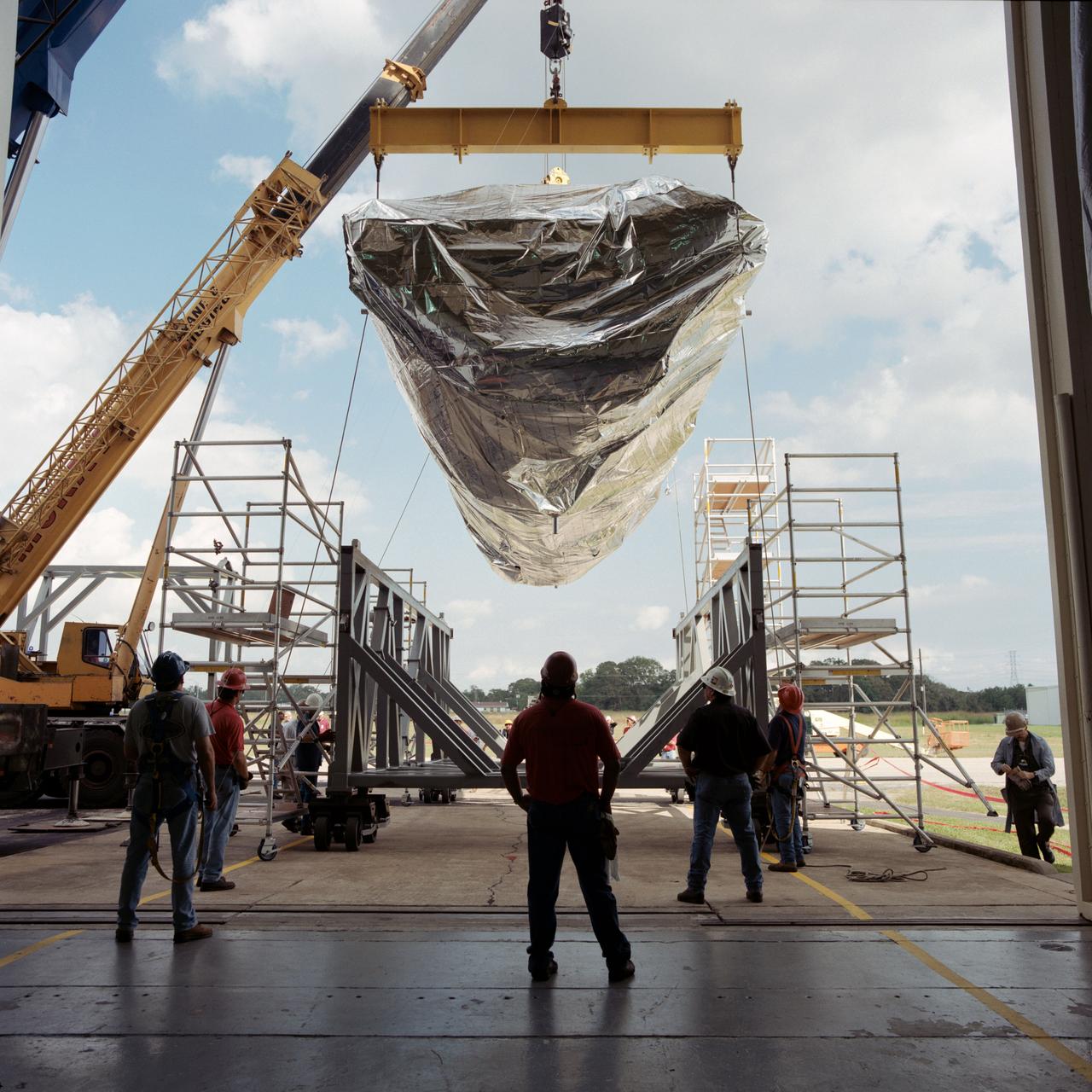
The S0 Truss is moved into the highbay of bldg 49 for Space Station Module acoustic test. Views include: S0 Truss moved into bldg 49 highbay (17342-53, 17370-71); a measuring stick is held near Truss (17354); Truss in acoustic chamber (17355-61, 17367); Truss in air above cradle (17362, 17364-66, 17368); Truss in cradle (17363).
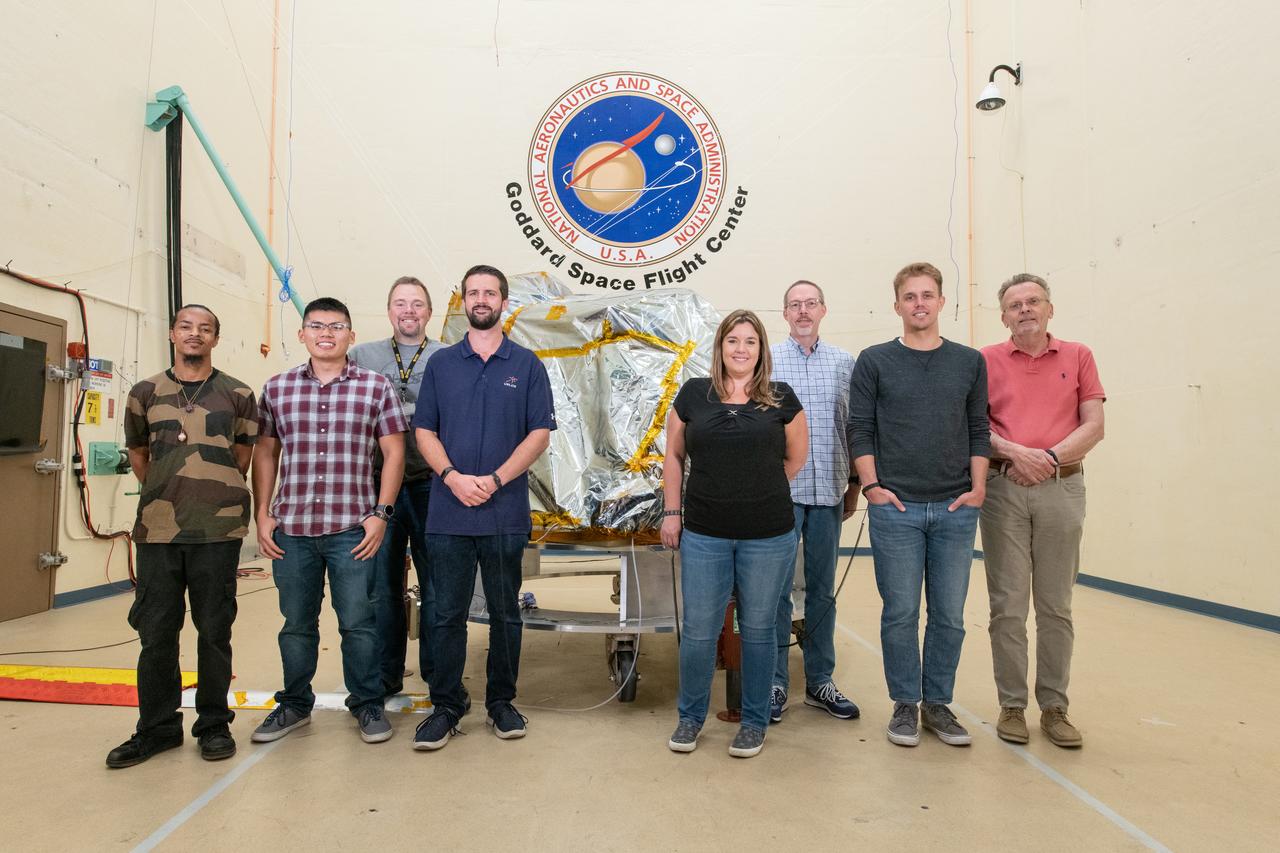
The Goddard Space Flight Center (GSFC) environmental testing team poses with the bagged Ocean Color Instrument (OCI) behind them in the acoustic chamber prior to testing. The acoustic testing will ensure that functionality of OCI is not impaired by severe launch environments. OCI is a highly advanced optical spectrometer that will be used to measure properties of light over portions of the electromagnetic spectrum. It will enable continuous measurement of light at finer wavelength resolution than previous NASA satellite sensors, extending key system ocean color data records for climate studies. OCI is PACE's (Plankton, Aerosol, Cloud, ocean Ecosystem) primary sensor built at Goddard Space Flight Center in Greenbelt, MD.

The Quiet Electric Engine V1 (QUEEN V1) experiment that was performed in the NASA GRC Acoustical Testing Laboratory (ATL). Equipment is installed in the anechoic chamber and in the adjacent control room. In response to the pervasive health and environmental problems associated with aviation noise and air pollution, NASA’s Quiet Electric Engine (QUEEN) team is working to increase the peace and quiet in the world by researching ways to make engines for large single-aisle aircraft safer, cleaner, and quieter.
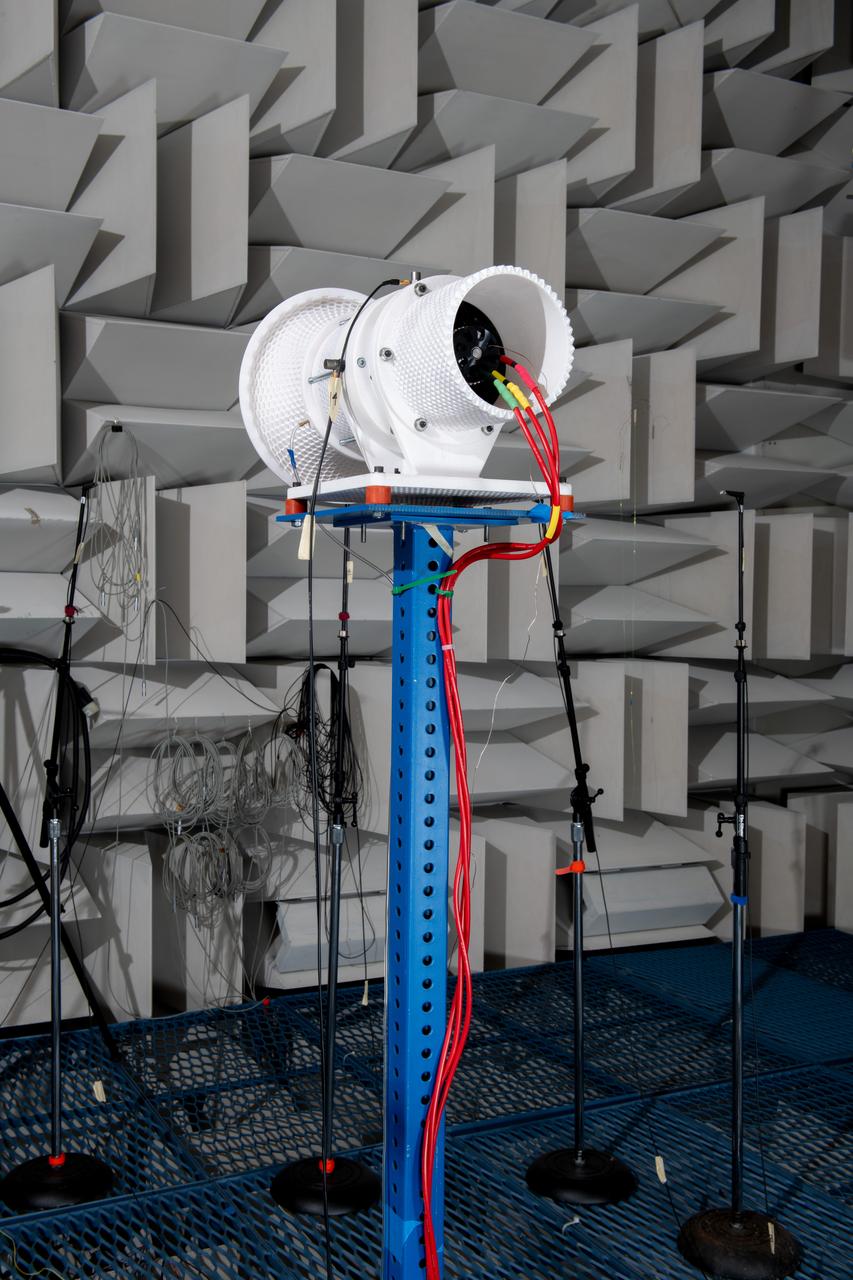
The Quiet Electric Engine V1 (QUEEN V1) experiment that was performed in the NASA GRC Acoustical Testing Laboratory (ATL). Equipment is installed in the anechoic chamber and in the adjacent control room. In response to the pervasive health and environmental problems associated with aviation noise and air pollution, NASA’s Quiet Electric Engine (QUEEN) team is working to increase the peace and quiet in the world by researching ways to make engines for large single-aisle aircraft safer, cleaner, and quieter.
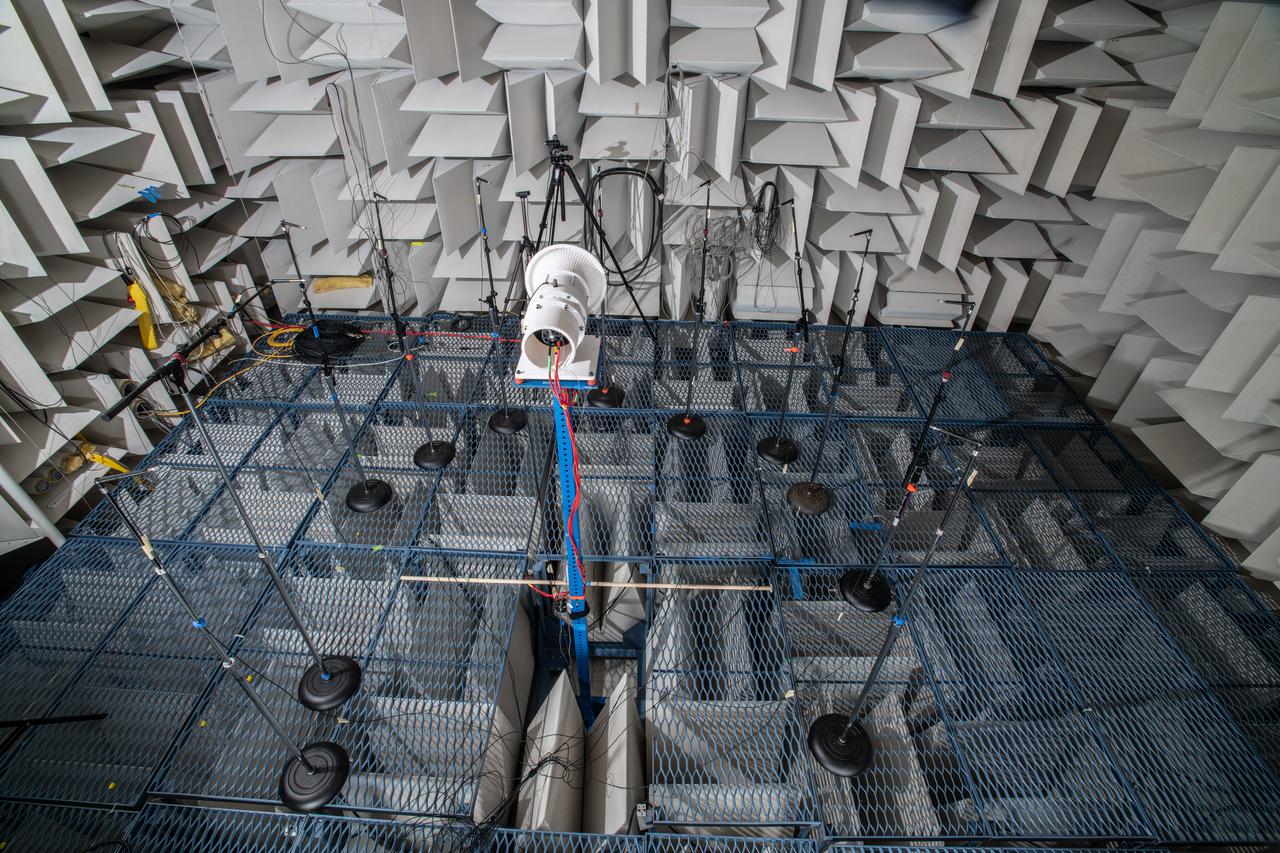
The Quiet Electric Engine V1 (QUEEN V1) experiment that was performed in the NASA GRC Acoustical Testing Laboratory (ATL). Equipment is installed in the anechoic chamber and in the adjacent control room. In response to the pervasive health and environmental problems associated with aviation noise and air pollution, NASA’s Quiet Electric Engine (QUEEN) team is working to increase the peace and quiet in the world by researching ways to make engines for large single-aisle aircraft safer, cleaner, and quieter.
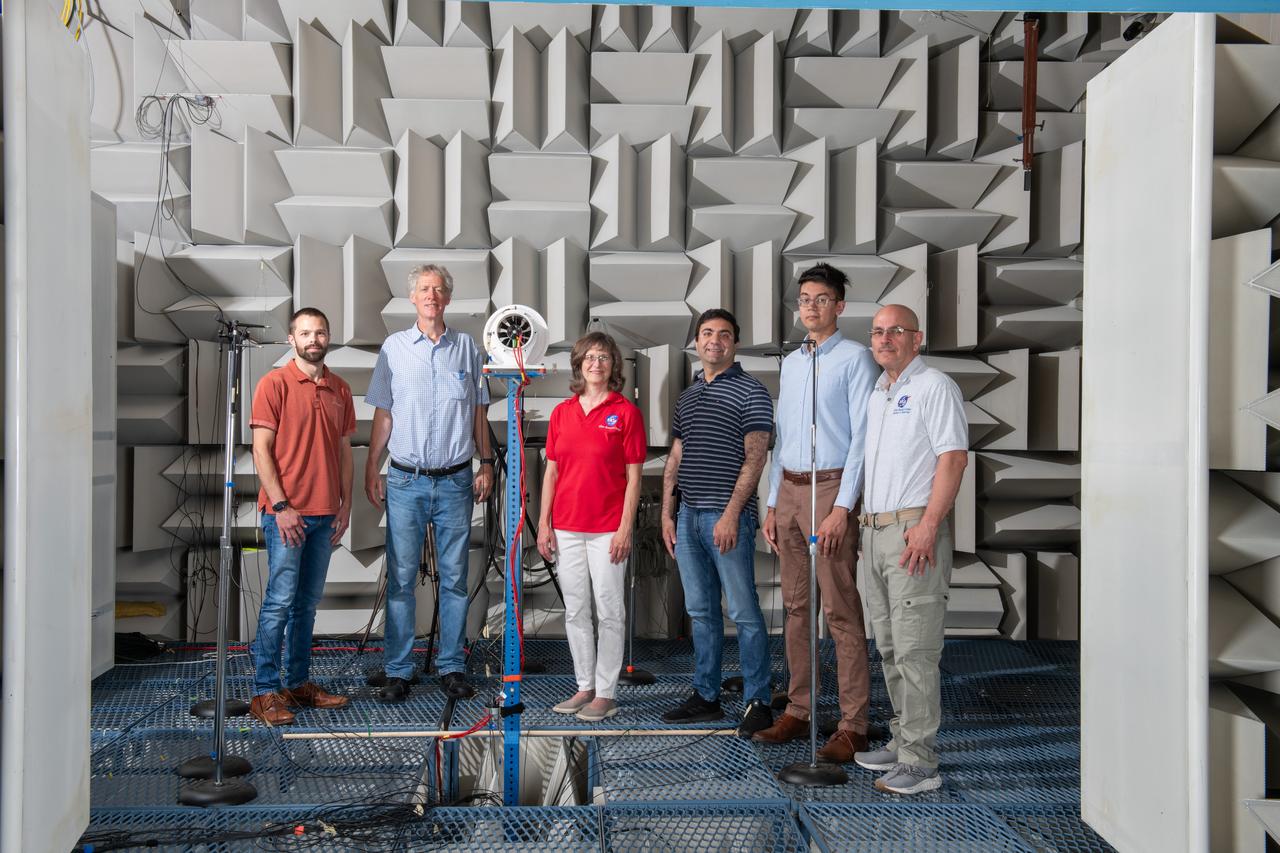
The Quiet Electric Engine V1 (QUEEN V1) experiment that was performed in the NASA GRC Acoustical Testing Laboratory (ATL). Equipment is installed in the anechoic chamber and in the adjacent control room. In response to the pervasive health and environmental problems associated with aviation noise and air pollution, NASA’s Quiet Electric Engine (QUEEN) team is working to increase the peace and quiet in the world by researching ways to make engines for large single-aisle aircraft safer, cleaner, and quieter.
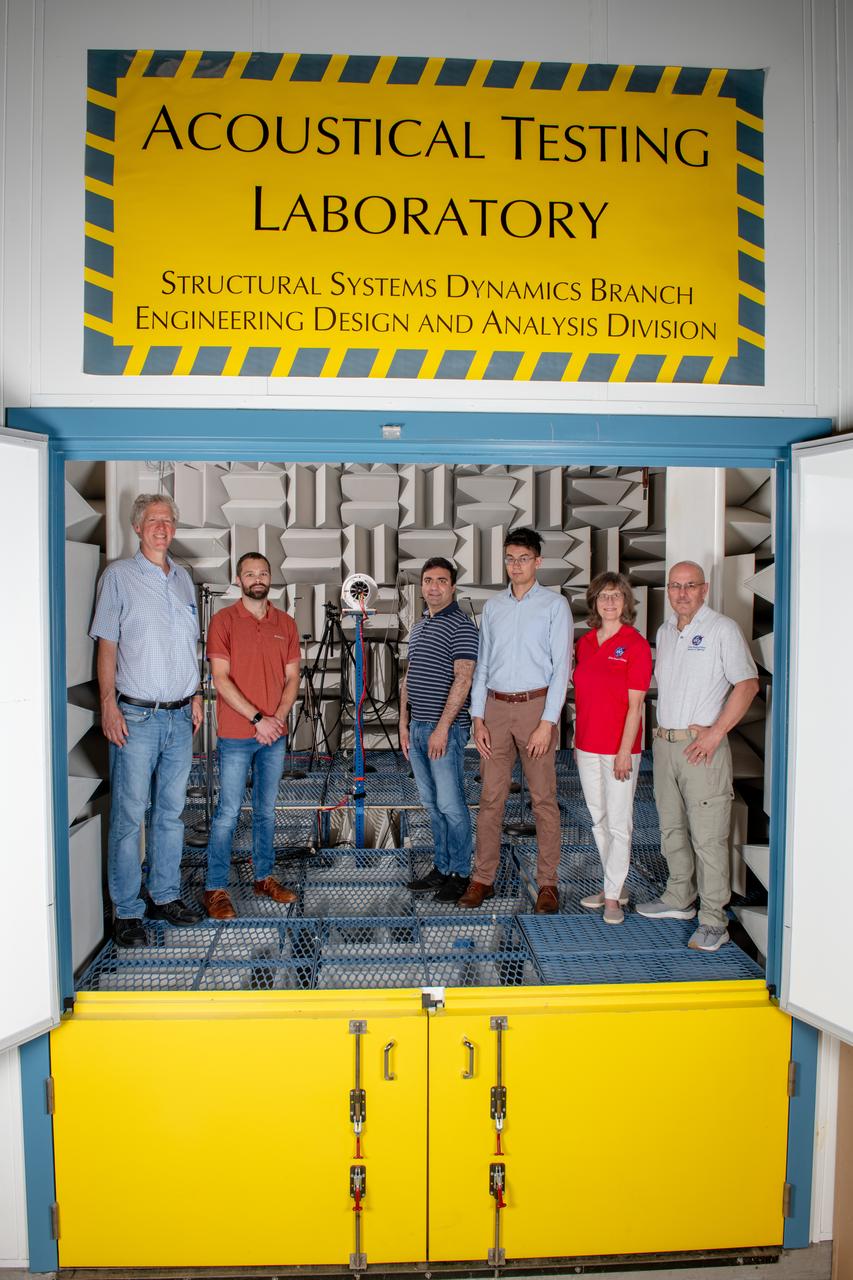
The Quiet Electric Engine V1 (QUEEN V1) experiment that was performed in the NASA GRC Acoustical Testing Laboratory (ATL). Equipment is installed in the anechoic chamber and in the adjacent control room. In response to the pervasive health and environmental problems associated with aviation noise and air pollution, NASA’s Quiet Electric Engine (QUEEN) team is working to increase the peace and quiet in the world by researching ways to make engines for large single-aisle aircraft safer, cleaner, and quieter.
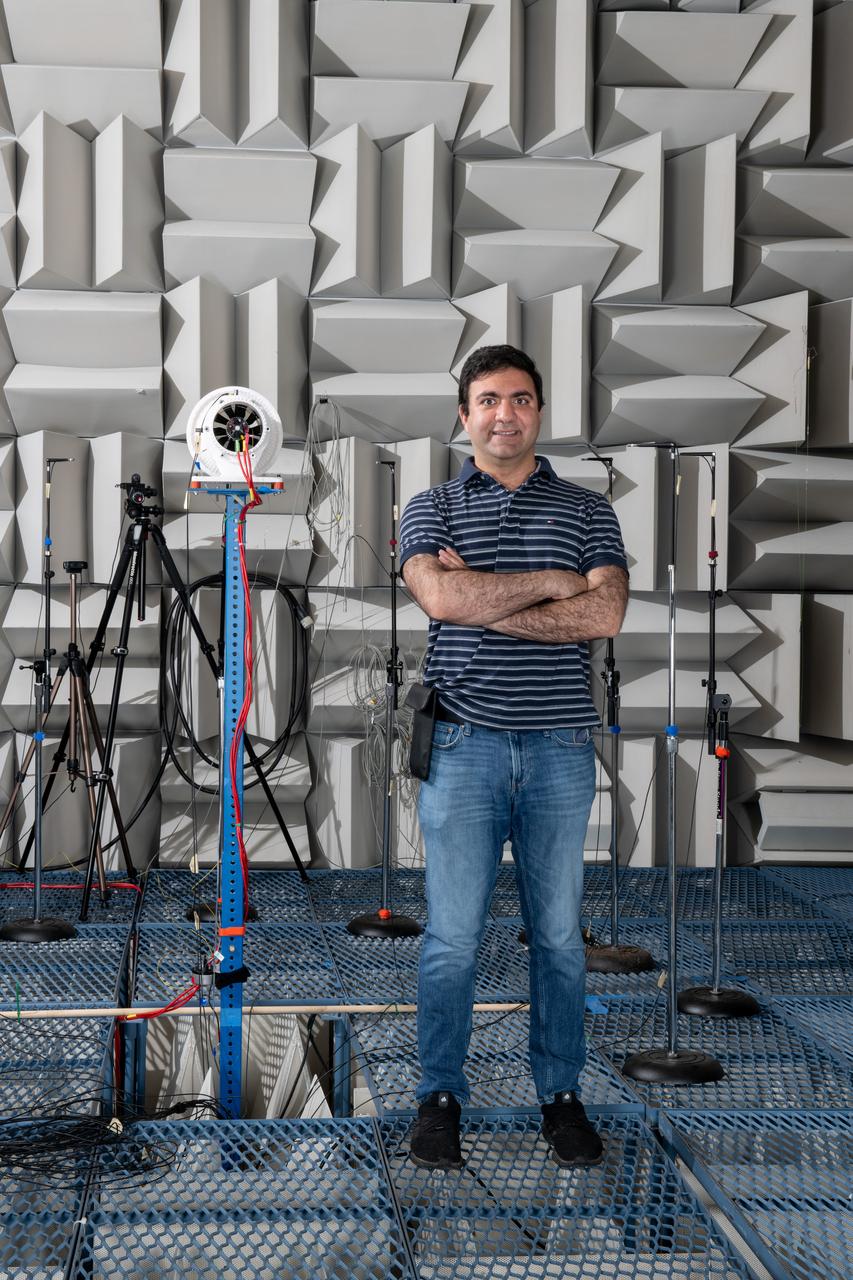
The Quiet Electric Engine V1 (QUEEN V1) experiment that was performed in the NASA GRC Acoustical Testing Laboratory (ATL). Equipment is installed in the anechoic chamber and in the adjacent control room. In response to the pervasive health and environmental problems associated with aviation noise and air pollution, NASA’s Quiet Electric Engine (QUEEN) team is working to increase the peace and quiet in the world by researching ways to make engines for large single-aisle aircraft safer, cleaner, and quieter. Posing with the experiment is aerospace engineer, Jonathan M. Goodman.
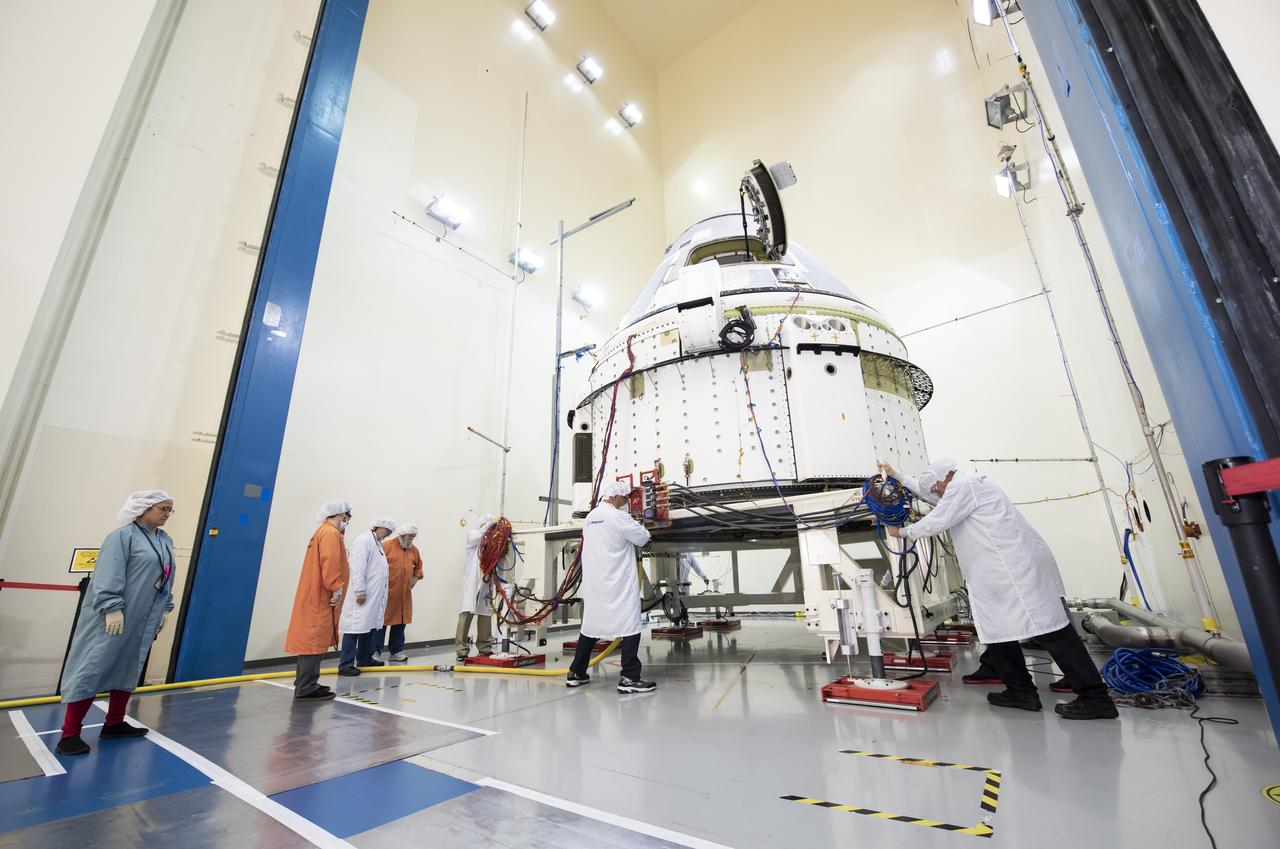
Technicians at Boeing’s Space Environment Test Facility in El Segundo, California position the CST-100 Starliner spacecraft inside an acoustics test chamber. This Starliner, slated to fly in Boeing’s Crew Flight Test (CFT), underwent an environmental qualification test campaign in March, experiencing rounds of acoustics vibration, thermal vacuum and electromagnetic interference and electromagnetic contamination testing. These tests prove Starliner’s design is capable of handling the harsh environments of launch, ascent and orbit and also prove that the electronics systems will operate in space and not interfere with other satellites or the International Space Station. CFT is Boeing’s crewed flight test of Starliner and part of NASA’s Commercial Crew Program, which will return human spaceflight launches into low-Earth orbit from U.S. soil.
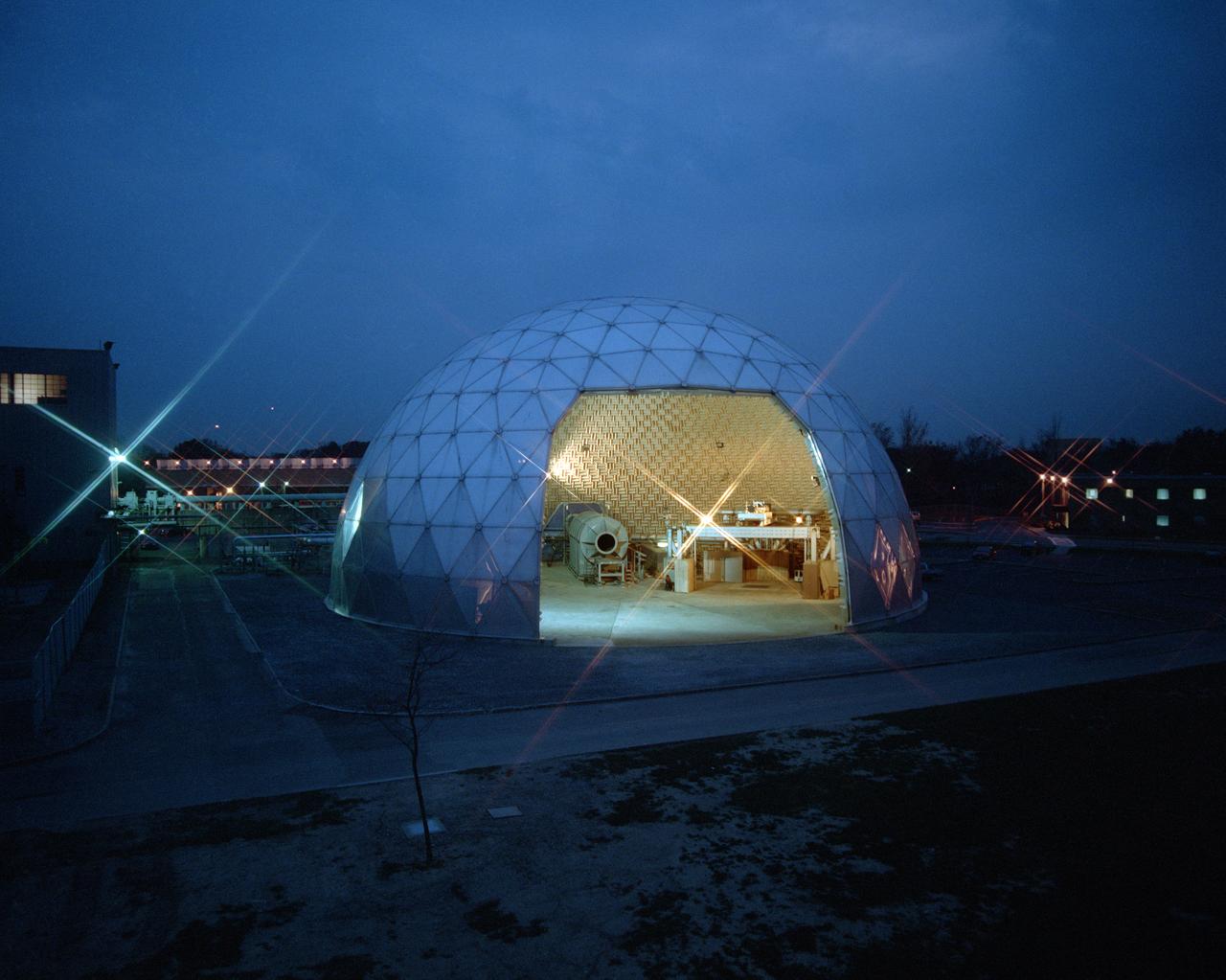
Modern jet engines are loud, but they used to be much louder. NASA’s Glenn Research Center has been at the forefront of the nation’s efforts to reduce aircraft engine noise for over 70 years. During this time, the center has built an array of test facilities to carry out this work, culminating in the Aero-Acoustic Propulsion Laboratory (AAPL), a world-class noise-reduction research facility. The AAPL, referred to as “the dome,” contains multiple test rigs enclosed in a large, echo-free chamber. The unique 130-foot diameter and 65-foot-high hemispherical structure stands out on Glenn’s campus. Its triangular sections make it appear like a golf ball rising from the ground. The interior is covered in spiky, fiberglass sound-dampening wedges and an overhead array of microphones that capture engine noise data.
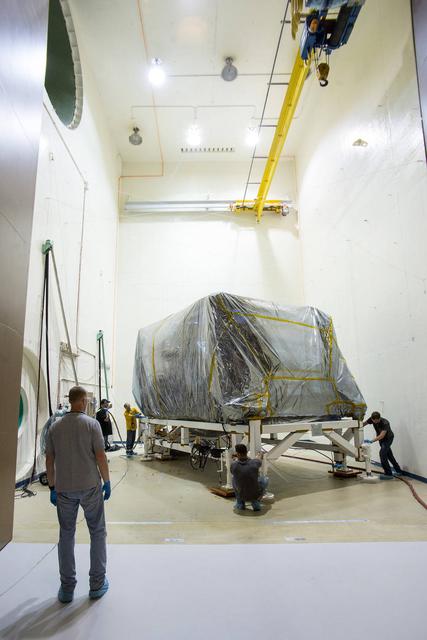
The ISIM structure wrapped up and waiting for sound testing in the acoustics chamber at NASA Goddard. Credits: NASA/Desiree Stover Read more: <a href="http://1.usa.gov/1KvoY4p" rel="nofollow">1.usa.gov/1KvoY4p</a> <b><a href="http://www.nasa.gov/audience/formedia/features/MP_Photo_Guidelines.html" rel="nofollow">NASA image use policy.</a></b> <b><a href="http://www.nasa.gov/centers/goddard/home/index.html" rel="nofollow">NASA Goddard Space Flight Center</a></b> enables NASA’s mission through four scientific endeavors: Earth Science, Heliophysics, Solar System Exploration, and Astrophysics. Goddard plays a leading role in NASA’s accomplishments by contributing compelling scientific knowledge to advance the Agency’s mission. <b>Follow us on <a href="http://twitter.com/NASAGoddardPix" rel="nofollow">Twitter</a></b> <b>Like us on <a href="http://www.facebook.com/pages/Greenbelt-MD/NASA-Goddard/395013845897?ref=tsd" rel="nofollow">Facebook</a></b> <b>Find us on <a href="http://instagrid.me/nasagoddard/?vm=grid" rel="nofollow">Instagram</a></b>
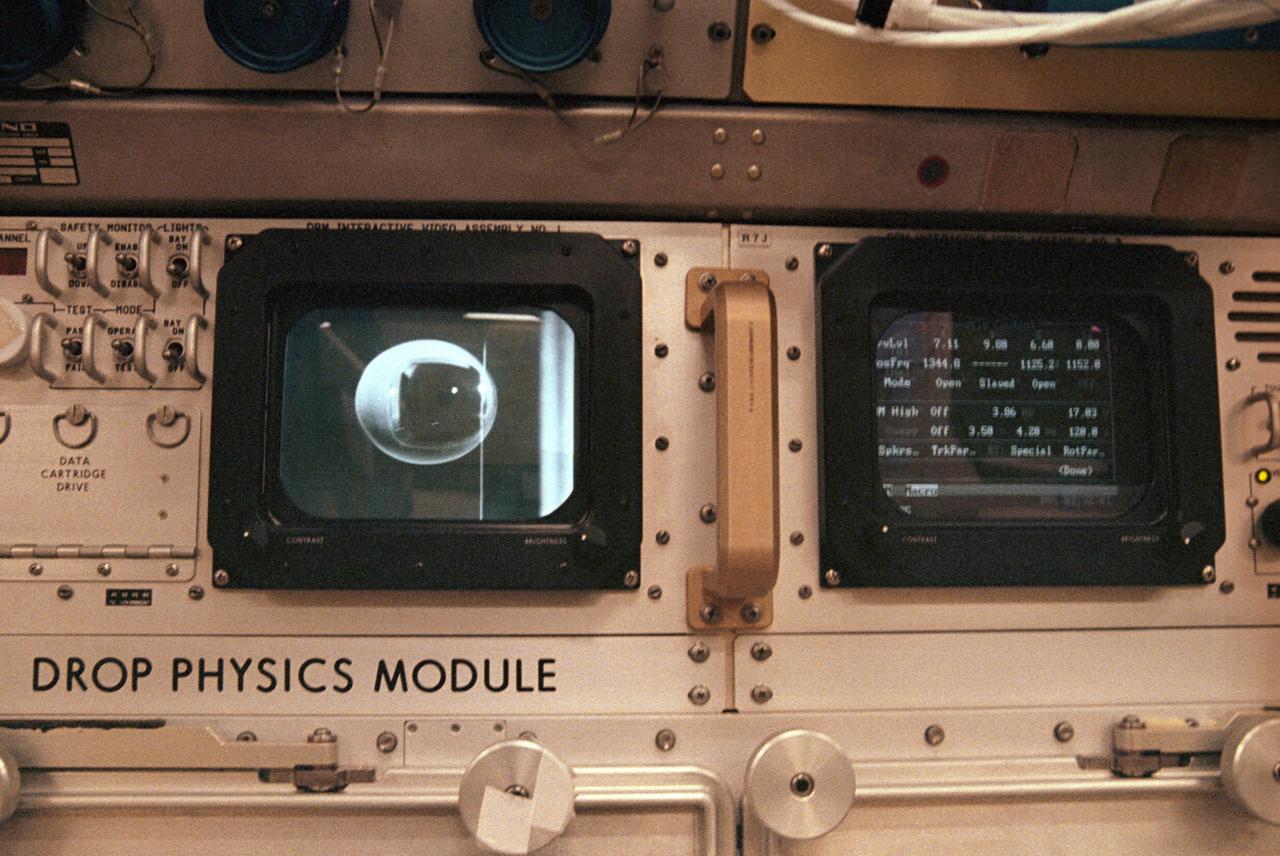
The first United States Microgravity Laboratory (USML-1) was one of NASA's science and technology programs that provided scientists an opportunity to research various scientific investigations in a weightlessness environment inside the Spacelab module. It also provided demonstrations of new equipment to help prepare for advanced microgravity research and processing aboard the Space Station. The USML-1 flew in orbit for extended periods, providing greater opportunities for research in materials science, fluid dynamics, biotechnology (crystal growth), and combustion science. This is a close-up view of the Drop Physics Module (DPM) in the USML science laboratory. The DPM was dedicated to the detailed study of the dynamics of fluid drops in microgravity: their equilibrium shapes, the dynamics of their flows, and their stable and chaotic behaviors. It also demonstrated a technique known as containerless processing. The DPM and microgravity combine to remove the effects of the container, such as chemical contamination and shape, on the sample being studied. Sound waves, generating acoustic forces, were used to suspend a sample in microgravity and to hold a sample of free drops away from the walls of the experiment chamber, which isolated the sample from potentially harmful external influences. The DPM gave scientists the opportunity to test theories of classical fluid physics, which have not been confirmed by experiments conducted on Earth. This image is a close-up view of the DPM. The USML-1 flew aboard the STS-50 mission on June 1992, and was managed by the Marshall Space Flight Center.
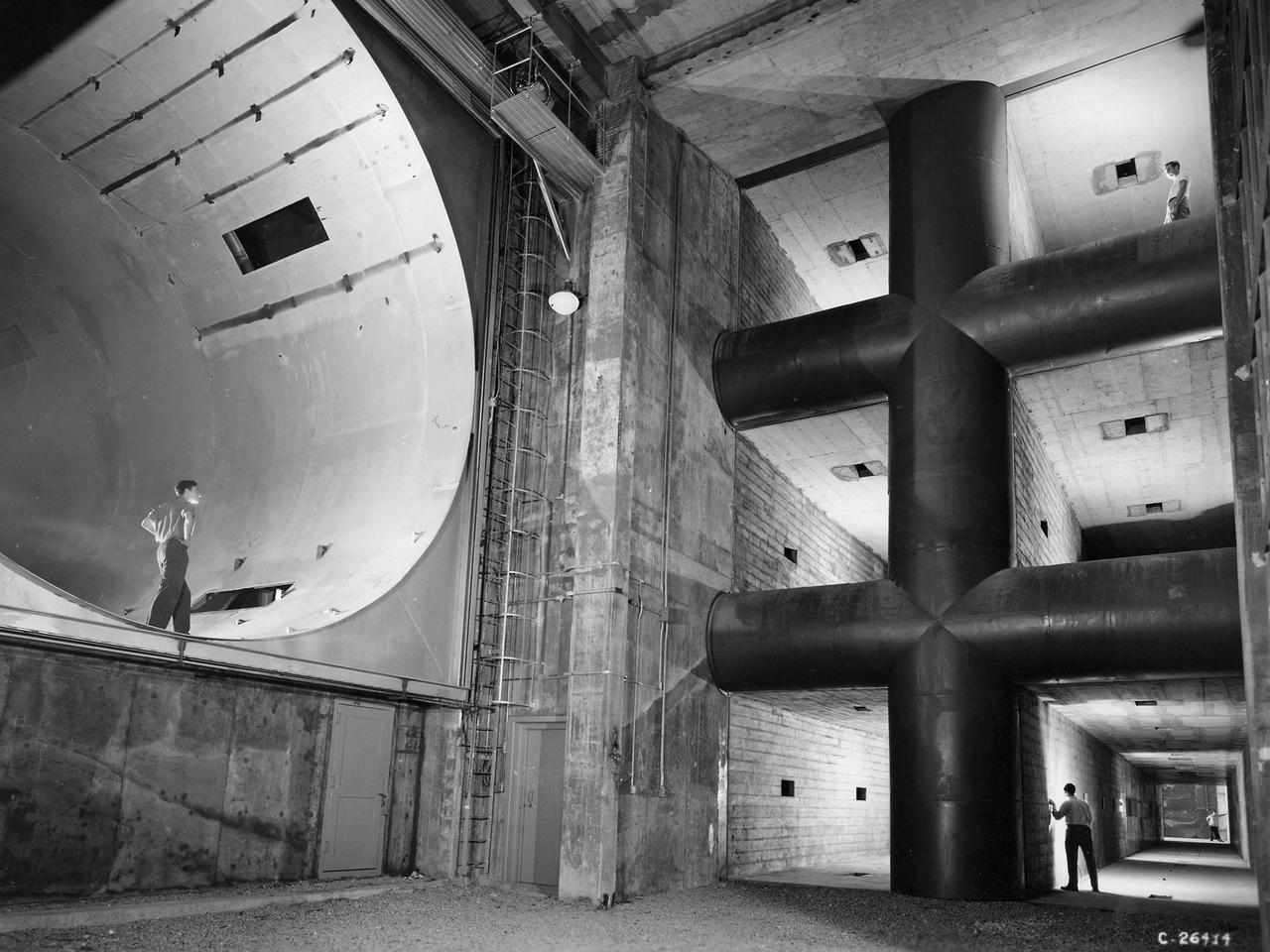
The 8- by 6-Foot Supersonic Wind Tunnel at the National Advisory Committee for Aeronautics (NACA) Lewis Flight Propulsion Laboratory was the largest supersonic wind tunnel in the nation at the time and the only one able to test full-scale engines at supersonic speeds. The 8- by 6 was designed as a non-return and open-throat tunnel. A large compressor created the air flow at one end of the tunnel, squeezed the flow to increase its velocity just before the test section, then reduced the velocity, and expelled it into the atmosphere at the other end of the tunnel. This design worked well for initial aerodynamic testing, but the local community was literally rattled by the noise and vibrations when researchers began running engines in the test section in January 1950. The NACA’s most modern wind tunnel was referred to as “an 87,000-horsepower bugle aimed at the heart of Cleveland.” NACA Lewis responded to the complaints by adding an acoustic housing at the end of the tunnel to dampen the noise. The structure included resonator chambers and a reinforced concrete muffler structure. Modifications continued over the years. A return leg was added, and a second test section, 9 -by 15-foot, was incorporated in the return leg in the 1960s. Since its initial operation in 1948, the 8- by 6-foot tunnel has been aggressively used to support the nation's aeronautics and space programs for the military, industry, and academia.
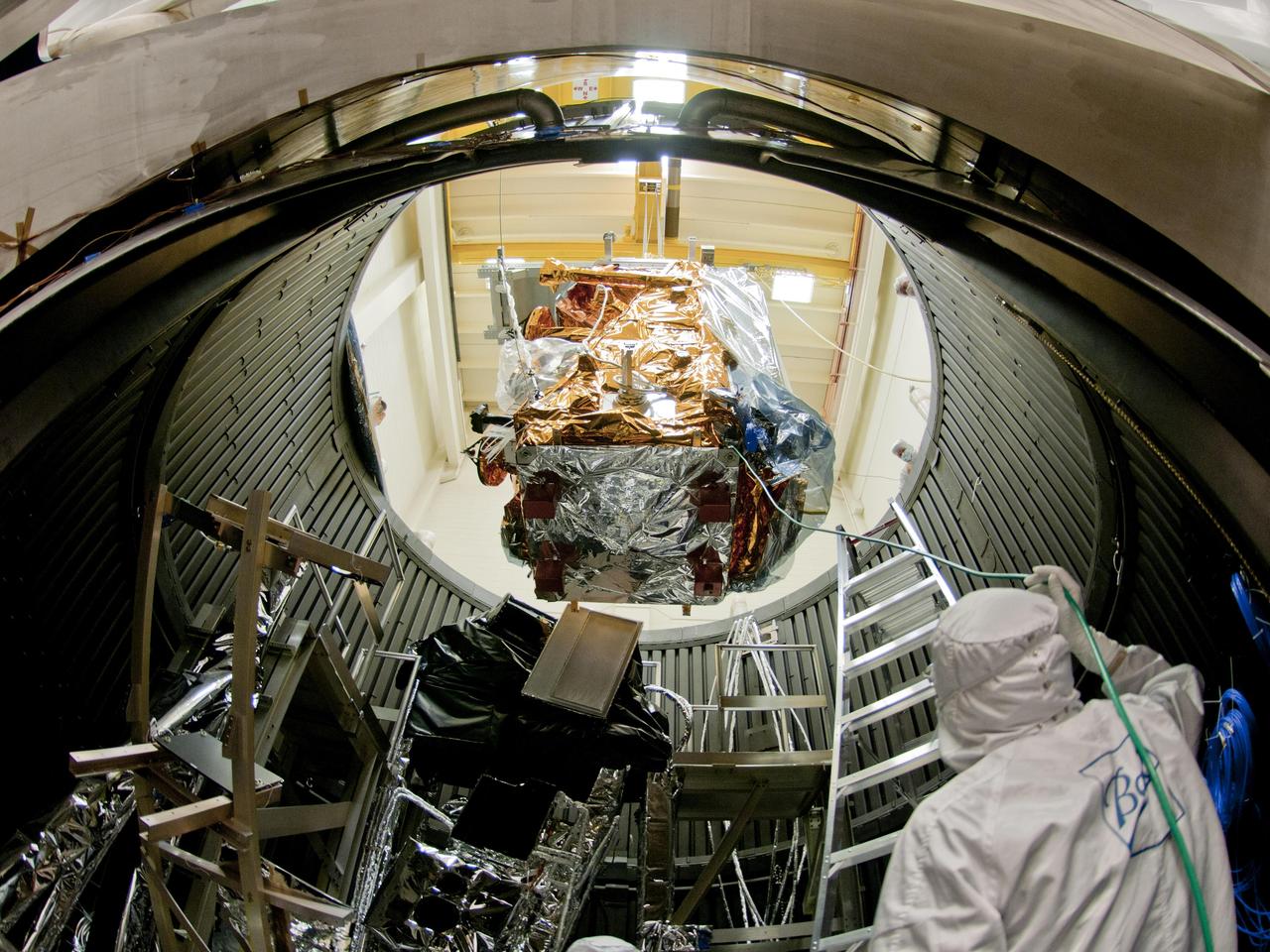
NPP is lowered into the thermal vacuum chamber. Once inside the Iron Maiden (visible in the lower left) is fitted in place. Then air is pumped out of the chamber and temperature extremes are applied to replicate orbit conditions. Credit: Ball Aerospace The NPP satellite sits surrounded by 144 rock concert speakers. They're stacked in a circle 16 feet high in a testing room at Ball Aerospace in Boulder, Colorado. As engineers set up for the environmental test, Pink Floyd's song "Money" plays gently in the background. The music stops. The room clears. Then the sound engineer wearing earplugs and headphones in the control room next door flips a switch. Slowly, the noise of thousands of pounds of exploding rocket fuel builds louder and louder until it blasts the satellite at a deafening 143.6 decibels -- loud enough to cause serious damage and pain to unprotected ears. "I was outside the building when they did the full level acoustics," says Glenn Iona, NPP Chief Engineer at NASA Goddard Space Flight Center, Greenbelt, Md. "and I could feel the ground shaking." To read more go to: <a href="http://www.nasa.gov/mission_pages/NPP/news/npp-testing.html" rel="nofollow">www.nasa.gov/mission_pages/NPP/news/npp-testing.html</a> <b><a href="http://www.nasa.gov/centers/goddard/home/index.html" rel="nofollow">NASA Goddard Space Flight Center</a></b> enables NASA’s mission through four scientific endeavors: Earth Science, Heliophysics, Solar System Exploration, and Astrophysics. Goddard plays a leading role in NASA’s accomplishments by contributing compelling scientific knowledge to advance the Agency’s mission. <b>Follow us on <a href="http://twitter.com/NASA_GoddardPix" rel="nofollow">Twitter</a></b> <b>Like us on <a href="http://www.facebook.com/pages/Greenbelt-MD/NASA-Goddard/395013845897?ref=tsd" rel="nofollow">Facebook</a></b> <b>Find us on <a href="http://web.stagram.com/n/nasagoddard/?vm=grid" rel="nofollow">Instagram</a></b>
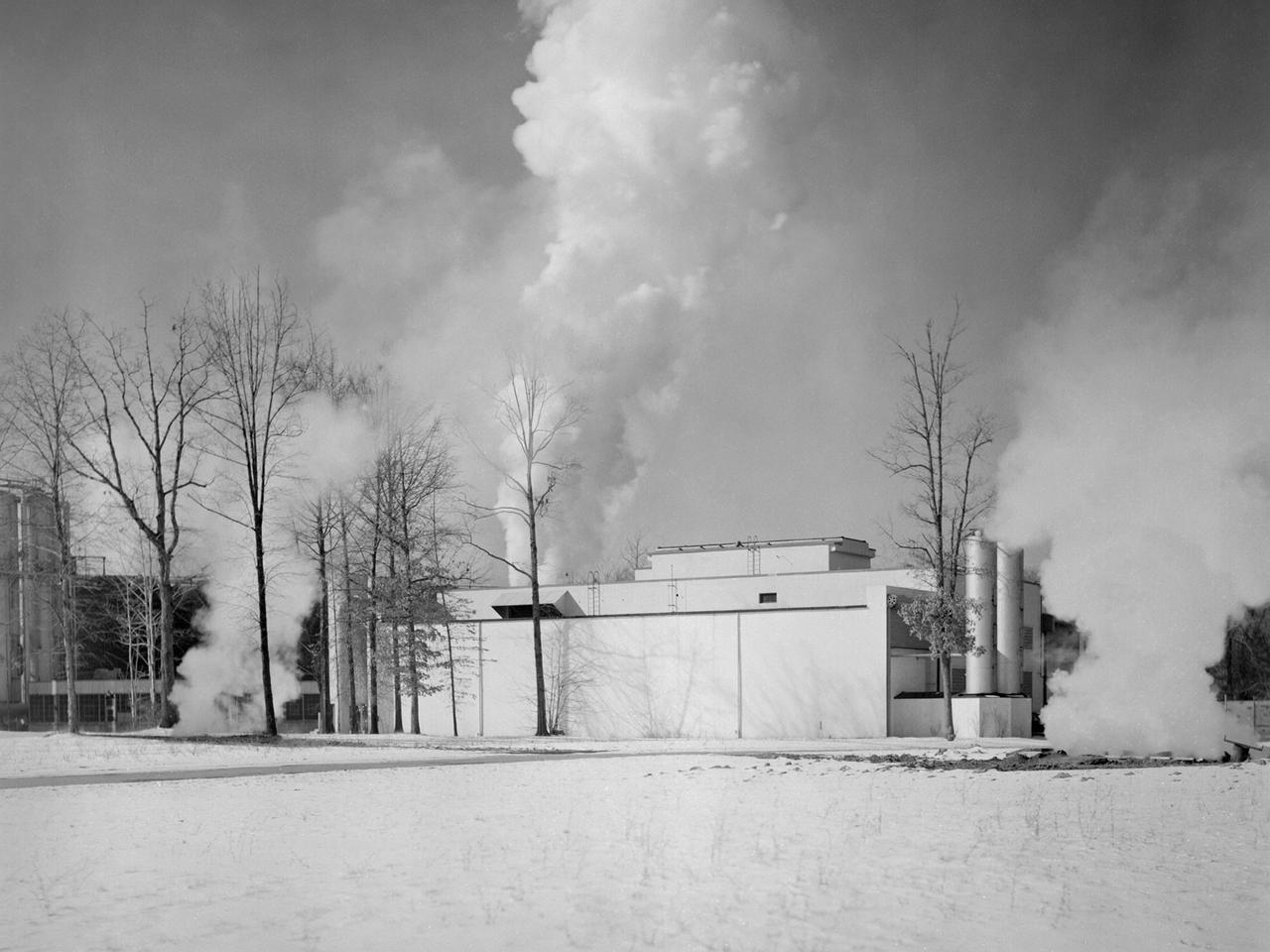
The Engine Propeller Research Building, referred to as the Prop House, emits steam from its acoustic silencers at the National Advisory Committee for Aeronautics (NACA) Lewis Flight Propulsion Laboratory. In 1942 the Prop House became the first completed test facility at the new NACA laboratory in Cleveland, Ohio. It contained four test cells designed to study large reciprocating engines. After World War II, the facility was modified to study turbojet engines. Two of the test cells were divided into smaller test chambers, resulting in a total of six engine stands. During this period the NACA Lewis Materials and Thermodynamics Division used four of the test cells to investigate jet engines constructed with alloys and other high temperature materials. The researchers operated the engines at higher temperatures to study stress, fatigue, rupture, and thermal shock. The Compressor and Turbine Division utilized another test cell to study a NACA-designed compressor installed on a full-scale engine. This design sought to increase engine thrust by increasing its airflow capacity. The higher stage pressure ratio resulted in a reduction of the number of required compressor stages. The last test cell was used at the time by the Engine Research Division to study the effect of high inlet densities on a jet engine. Within a couple years of this photograph the Prop House was significantly altered again. By 1960 the facility was renamed the Electric Propulsion Research Building to better describe its new role in electric propulsion.