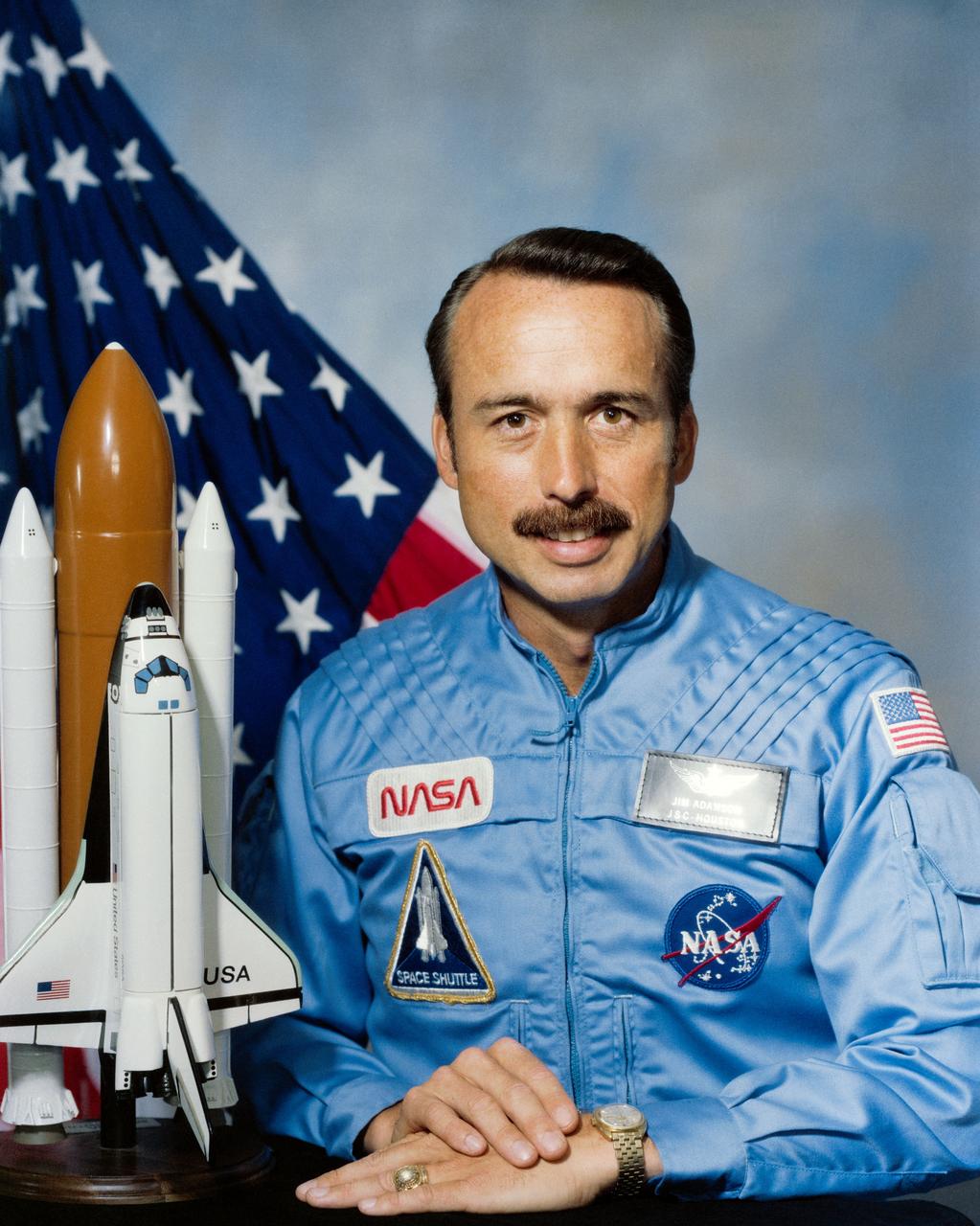
S84-40229 (22 Aug. 1984) --- Astronaut James C. Adamson.
ADAMSON, JAMES C. - PORTRAIT
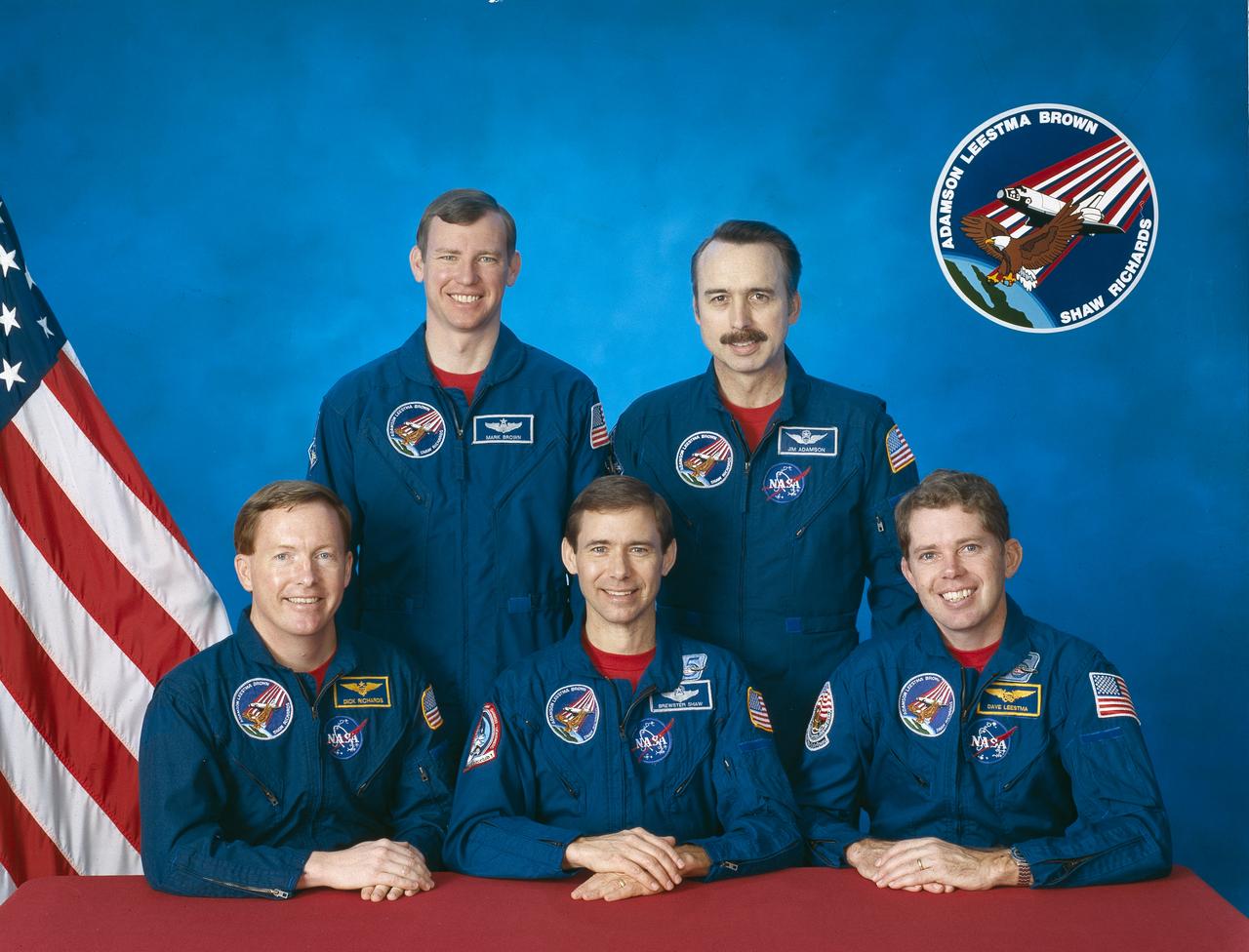
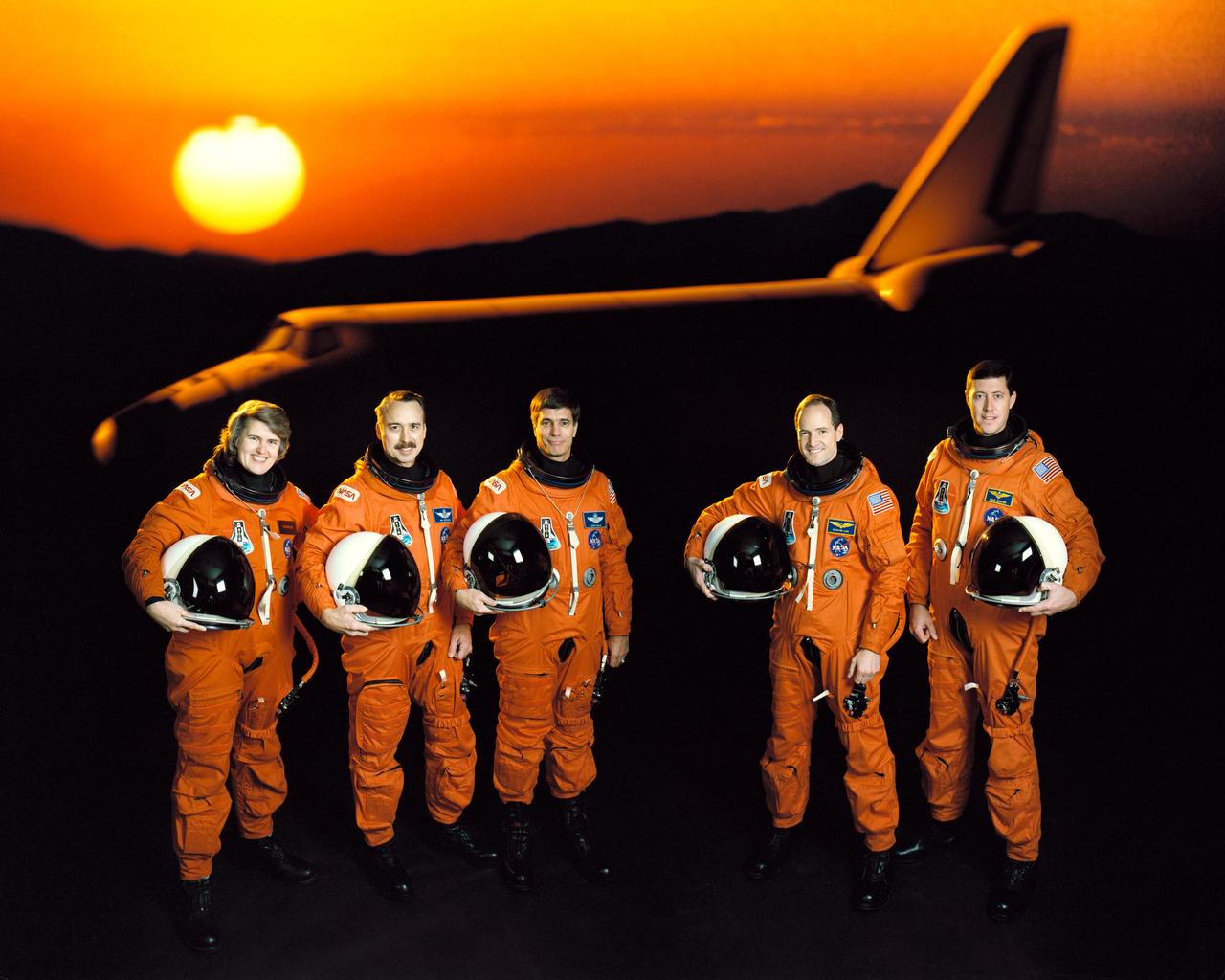
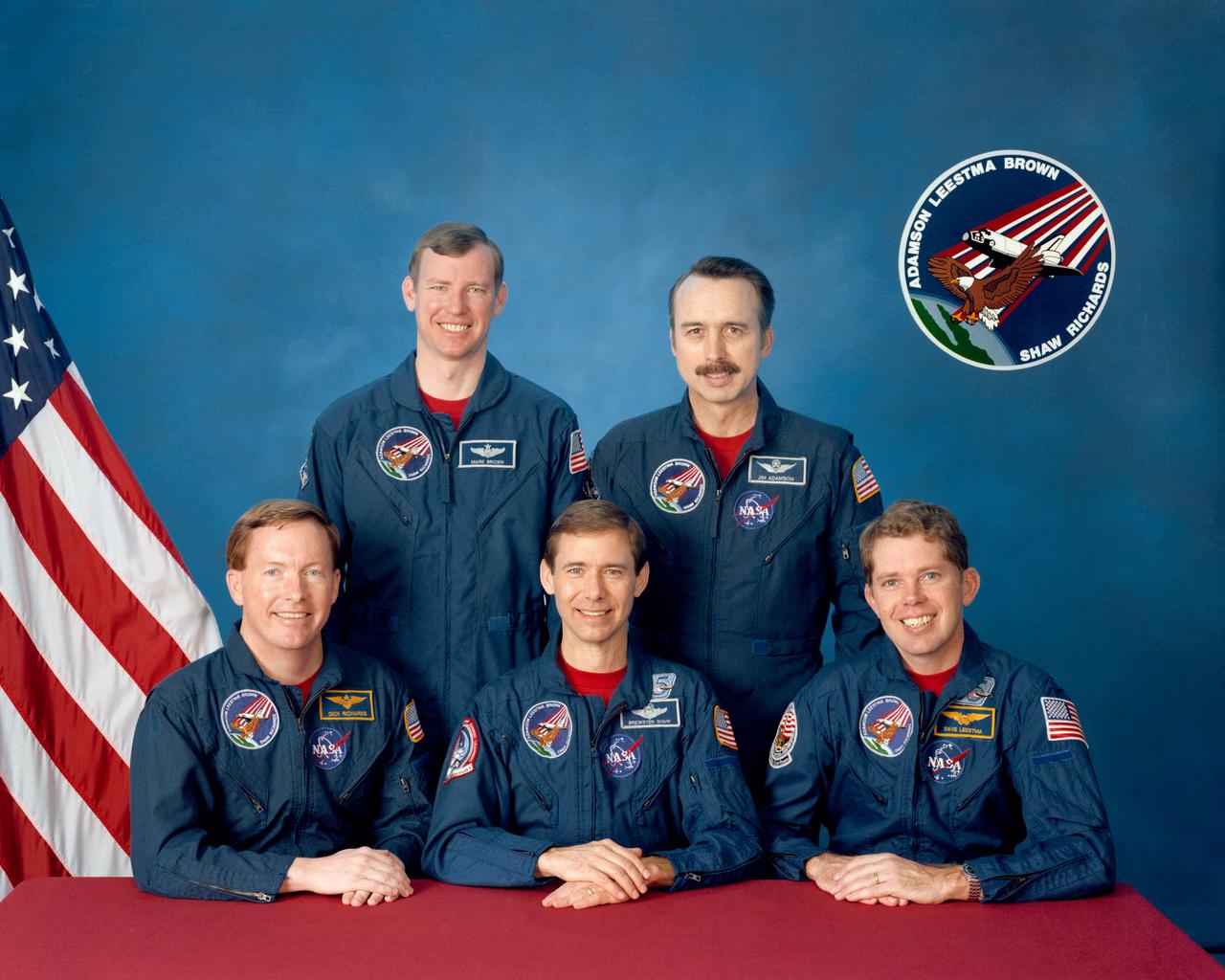
Five astronauts composed the STS-28 crew. Seated from left to right are Richard N. (Dick) Richards, pilot; Brewster H. Shaw, commander; and David C. Leestma, mission specialist 2. Standing, from left to right , are Mark N. Brown, mission specialist 3; and James C. (Jim)  Adamson, mission specialist 1. Launched aboard the Space Shuttle Columbia on August 8, 1989, the STS-28 mission was the 4th mission dedicated to the Department of Defense.
Space Shuttle Projects
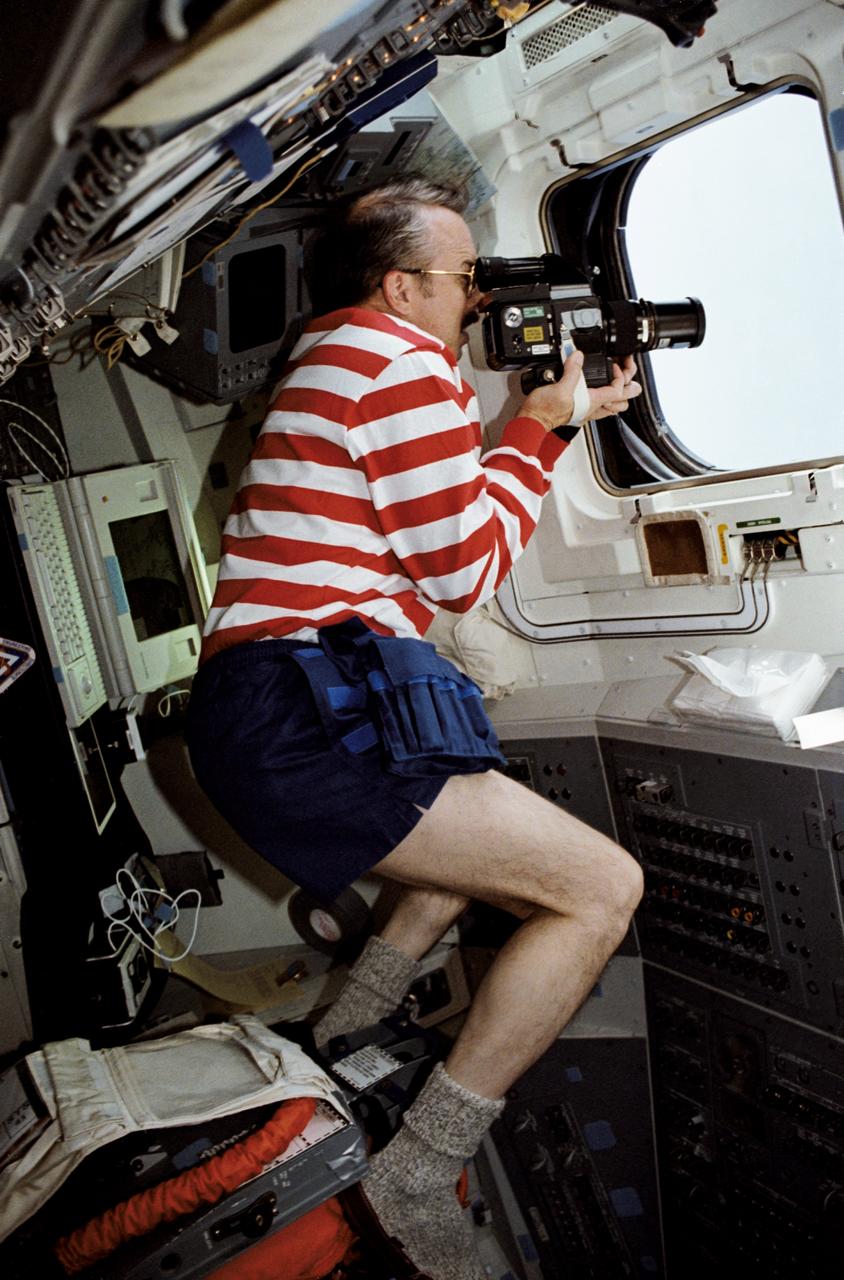
STS043-21-013 (2-11 August 1991) --- As on previous missions, Earth observations/photography played an important role on NASA’s STS-43 mission. That role is depicted in this scene showing astronaut James C. Adamson, mission specialist, aiming a still camera toward Earth through an overhead window on Space Shuttle Atlantis’ aft flight deck. The scene was recorded by a fellow crewmember using a 35mm camera.
STS-43 Mission Specialist (MS) Adamson uses camera on aft flight deck
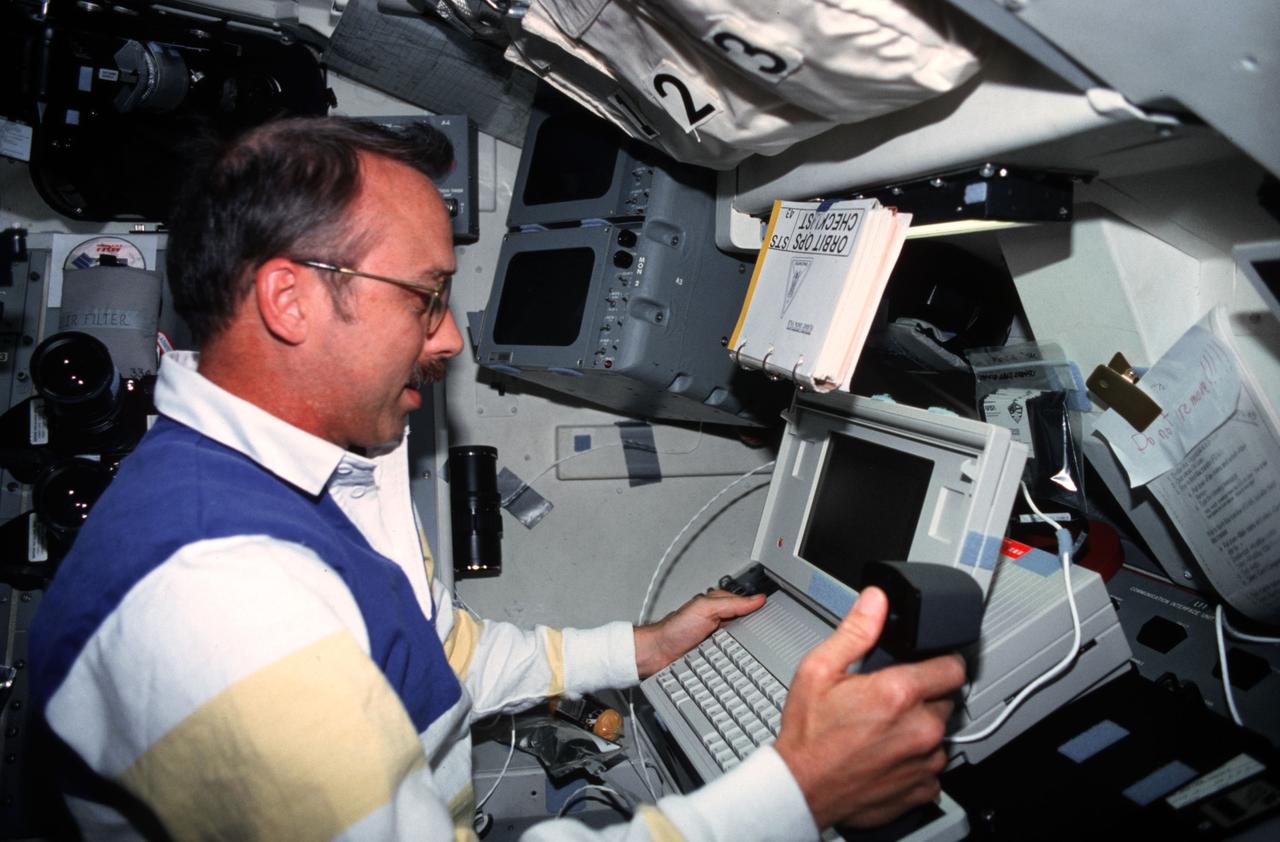
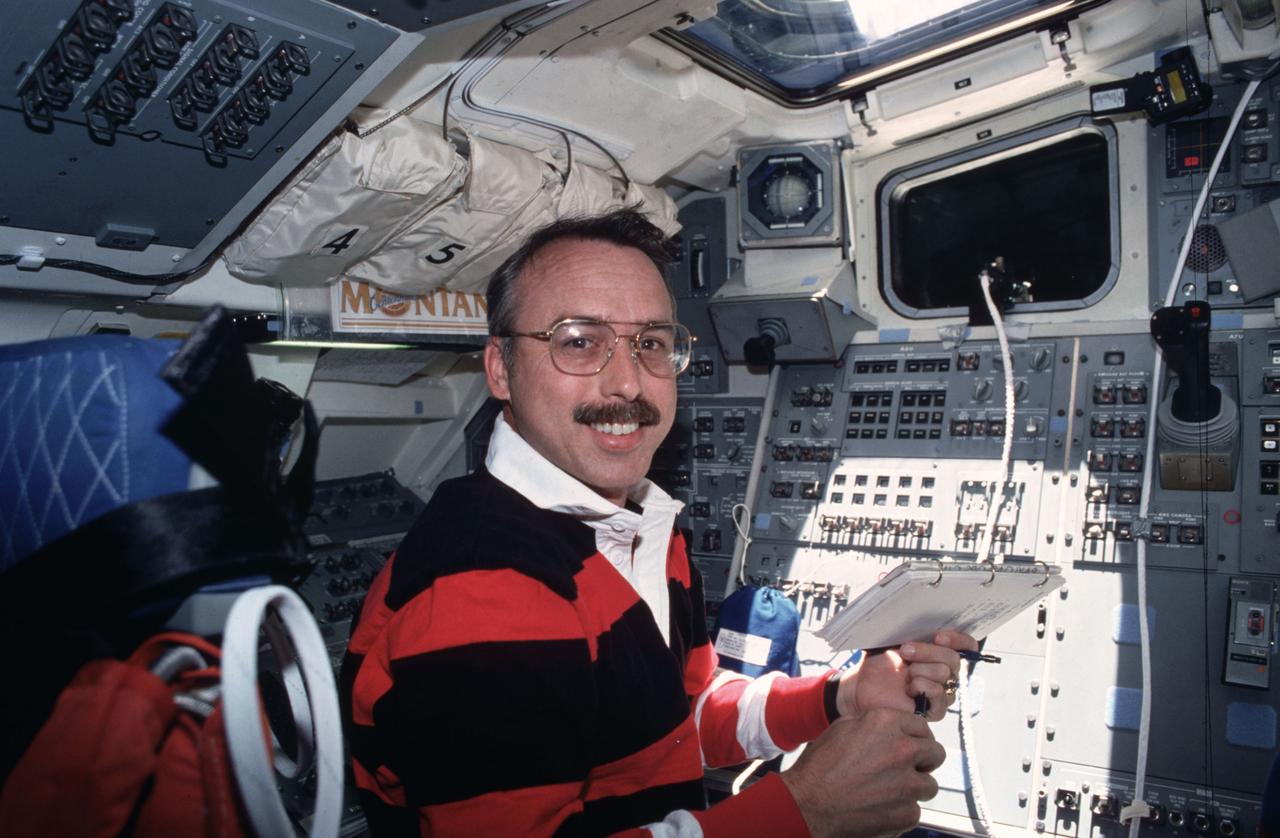
STS043-14-034   (2-11 Aug 1991) --- Astronaut James C. Adamson is pictured executing Development Test Objective (DTO) 1208, Space Station Cursor Control Device Evaluation II and Advanced Applications.  The purpose of the Cursor Control Device Experiment is to evaluate human performance under space flight conditions of cursor control devices which are similar to the devices under consideration for use onboard space station computers.  Here, the mission specialists uses a thumbball/handgrip control device.  Each crewmember evaluated the different types of cursor control devices during the nine-day STS-43 mission.  Other methods of cursor control evaluated were the built-in trackball, a side mounted trackball with restraints and an optical pad with mouse.
STS-43 MS Adamson conducts DTO 1208 using laptop on OV-104's flight deck
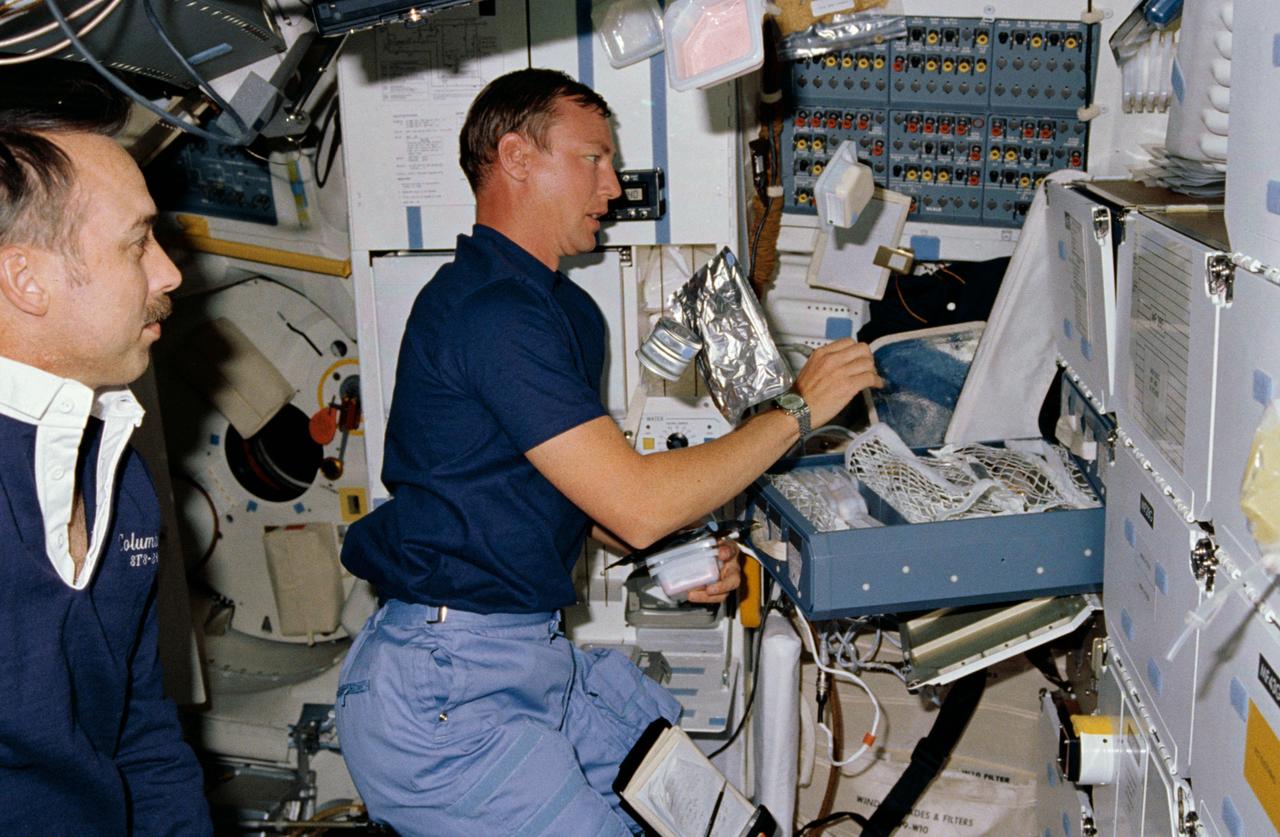
STS028-13-013 (August 1989) --- Astronaut Mark N. Brown, STS-28 mission specialist, assembles various components of a meal at the stowage locker area of Columbia's middeck, as James C. Adamson, mission specialist, looks on.
STS-28 Columbia, OV-102, MS Brown juggles food containers on middeck
STS043-04-038 (2-11 Aug 1991) --- Astronaut James C.  Adamson, STS-43 mission specialist, checks on an experiment on Atlantis? flight deck.  Part of the experiment, Optical Communications Through the Shuttle Window (OCTW), can be seen mounted in upper right.  The OCTW system consists of two modules, one inside the orbiter crew cabin (as pictured here) and one in the payload bay. The crew compartment version houses an optoelectronic transmitter/receiver pair for video and digital  subsystems, test circuitry and interface circuitry. The payload bay module serves as a repeater station.  During operation a signal is transmitted through the shuttle window to a bundle of optical fiber cables mounted in the payload bay near an aft window. The cables carry optical signals from the crew compartment equipment to the OCTW payload bay module.  The signals are returned via optical fiber cable to the aft flight deck window, retransmitted through the window, and received by the crew compartment equipment.
STS-43 MS Adamson checks OCTW experiment on OV-104's aft flight deck
KENNEDY SPACE CENTER, FLA.  - As the Stafford-Covey Return to Flight Task Group (SCTG) tours the Orbiter Processing Facility, Richard O. Covey (second from left), former Space Shuttle commander, points to equipment.  Covey is co-chair of the SCTG along with Thomas P. Stafford, Apollo commander. Others in the photo are William Wegner, James Adamson and Joe Engle.  Chartered by NASA Administrator Sean O’Keefe, the task group will perform an independent assessment of NASA’s implementation of the final recommendations by the Columbia Accident Investigation Board.
KENNEDY SPACE CENTER, FLA. - As the Stafford-Covey Return to Flight Task Group (SCTG) tours the Orbiter Processing Facility, Richard O. Covey (second from left), former Space Shuttle commander, points to equipment. Covey is co-chair of the SCTG along with Thomas P. Stafford, Apollo commander. Others in the photo are William Wegner, James Adamson and Joe Engle. Chartered by NASA Administrator Sean O’Keefe, the task group will perform an independent assessment of NASA’s implementation of the final recommendations by the Columbia Accident Investigation Board.
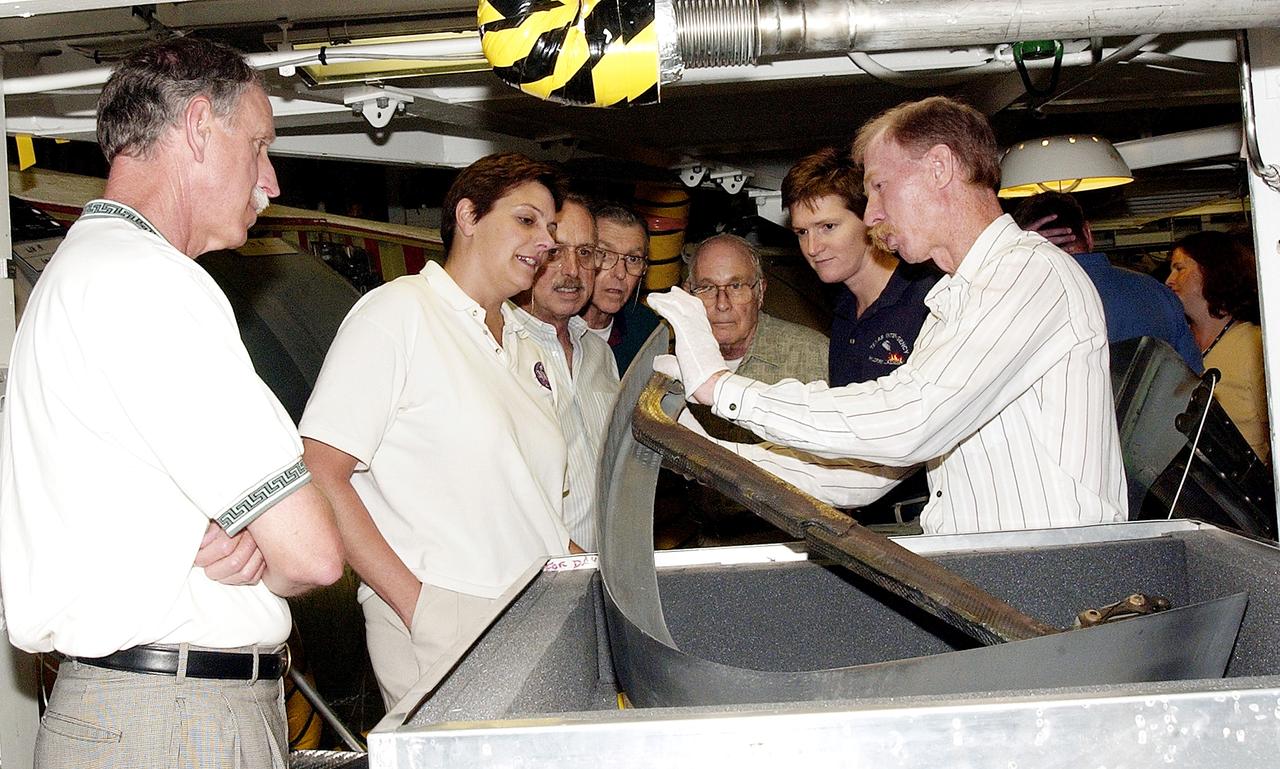
KENNEDY SPACE CENTER, FLA.  - On a tour of the Orbiter Processing Facility, members of the Stafford-Covey Return to Flight Task Group (RTFTG) look at a Reinforced Carbon-Carbon panels with a T-seal held by Tom Roberts, with United Space Alliance.  From left are Richard O. Covey, former Space Shuttle commander, Dr. Kathryn Clark, James Adamson, Joe Engle, William Wegner and Dr. Amy Donahue.  Chairing the task group are Covey and Thomas P. Stafford, Apollo commander.  Chartered by NASA Administrator Sean O’Keefe, the task group will perform an independent assessment of NASA’s implementation of the final recommendations by the Columbia Accident Investigation Board.
KENNEDY SPACE CENTER, FLA. - On a tour of the Orbiter Processing Facility, members of the Stafford-Covey Return to Flight Task Group (RTFTG) look at a Reinforced Carbon-Carbon panels with a T-seal held by Tom Roberts, with United Space Alliance. From left are Richard O. Covey, former Space Shuttle commander, Dr. Kathryn Clark, James Adamson, Joe Engle, William Wegner and Dr. Amy Donahue. Chairing the task group are Covey and Thomas P. Stafford, Apollo commander. Chartered by NASA Administrator Sean O’Keefe, the task group will perform an independent assessment of NASA’s implementation of the final recommendations by the Columbia Accident Investigation Board.
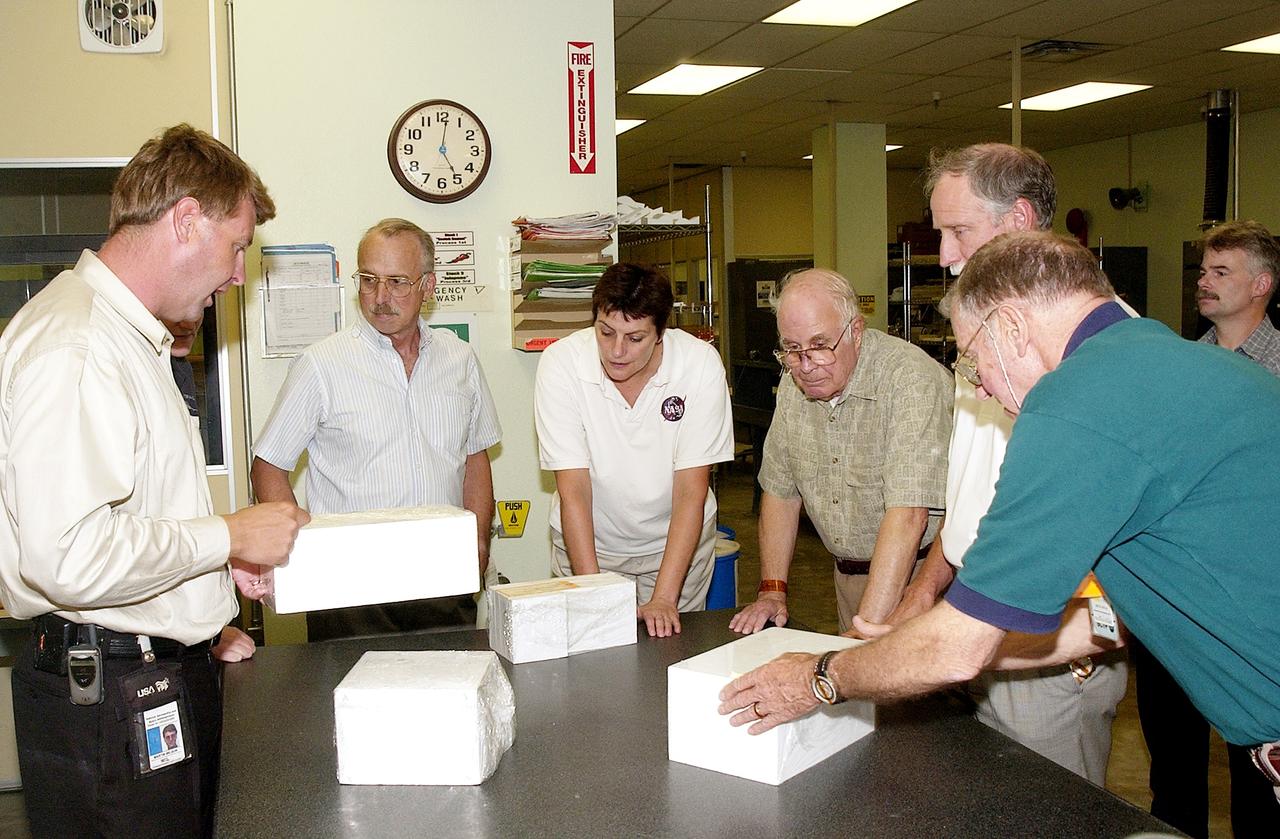
KENNEDY SPACE CENTER, FLA.  -  On a tour of the Tile Shop, members of the Stafford-Covey Return to Flight Task Group (SCTG) learn about PU-tiles, part of an orbiter’s Thermal Protection System.   At left is Martin Wilson, with United Space Alliance.  Others (left to right) around the table are James Adamson, Dr. Kathryn Clark, William Wegner, Richard Covey and Joe Engle.  Covey, former Space Shuttle commander, is co-chair of the  SCTG, along with Thomas P. Stafford, Apollo commander.  Chartered by NASA Administrator Sean O’Keefe, the task group will perform an independent assessment of NASA’s implementation of the final recommendations by the Columbia Accident Investigation Board.
KENNEDY SPACE CENTER, FLA. - On a tour of the Tile Shop, members of the Stafford-Covey Return to Flight Task Group (SCTG) learn about PU-tiles, part of an orbiter’s Thermal Protection System. At left is Martin Wilson, with United Space Alliance. Others (left to right) around the table are James Adamson, Dr. Kathryn Clark, William Wegner, Richard Covey and Joe Engle. Covey, former Space Shuttle commander, is co-chair of the SCTG, along with Thomas P. Stafford, Apollo commander. Chartered by NASA Administrator Sean O’Keefe, the task group will perform an independent assessment of NASA’s implementation of the final recommendations by the Columbia Accident Investigation Board.
On August 8, 1989, the 4th mission dedicated to the Department of Defense (DOD), STS-28, lifted off from Kennedy Space Center’s (KSC) launch pad 39B. The five day mission included a crew of five: Richard N. (Dick) Richards, pilot; Brewster H. Shaw, commander; and mission specialists David C. Leestma, Mark N. Brown, and James C. (Jim) Adamson.
Space Shuttle Projects
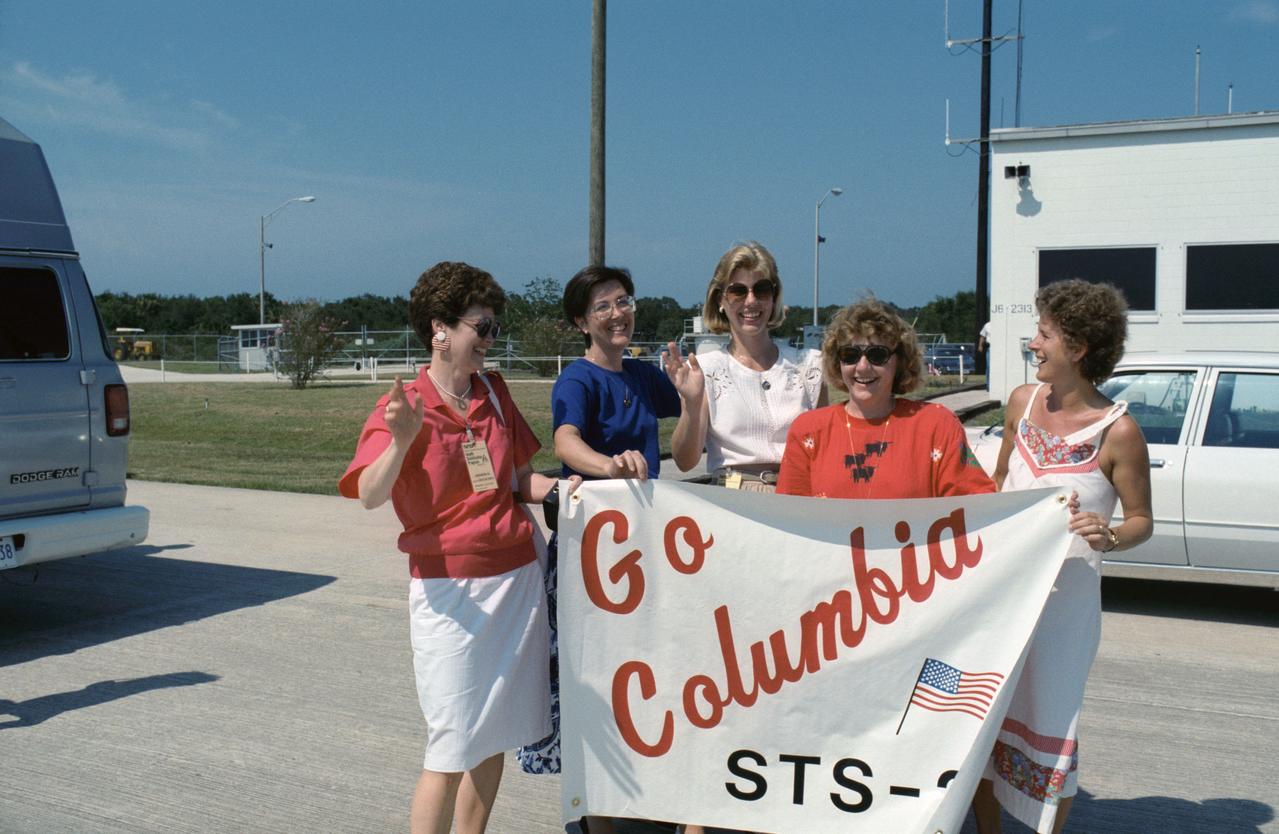
STS028-S-009 (5 Aug 1989) --- Wives of the STS-28 crewmembers display a banner upon the arrival of the astronauts in Florida to begin preparing for their Aug. 8 launch. Left to right are Susan Adamson, Kathleen Ann Shaw, Lynne A. Brown, Lois Richards and Patti K. Leestma.  The banner reads, "Go Columbia, STS-28."  Launch for the Department of Defense (DOD)-devoted  mission is scheduled for August 8.
STS-28 crewmembers' wives at KSC shuttle landing facility (SLF) with banner
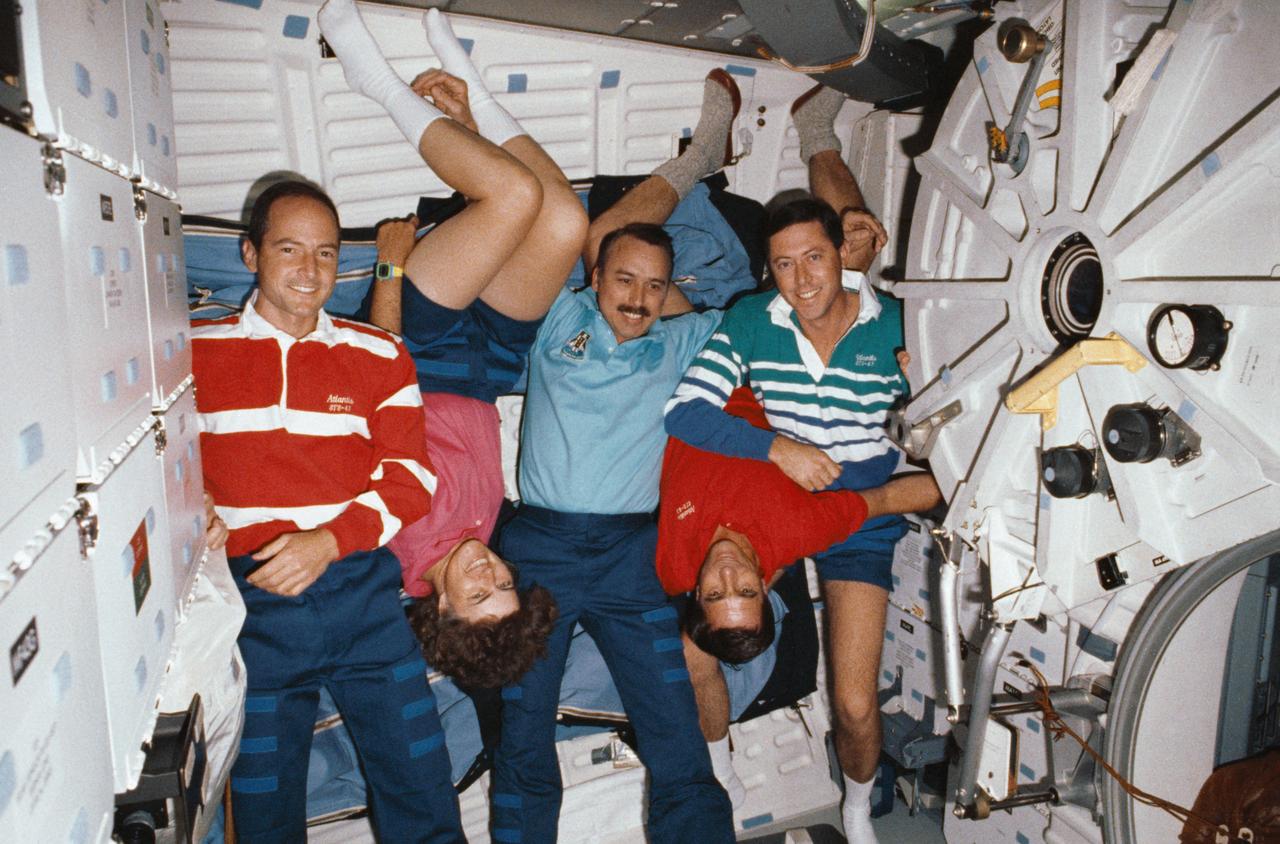
STS043-40-029 (2-11 Aug 1991) --- The five crewmembers on NASA's STS-43 mission pose for the traditional in-flight crew portrait.  The photo should be oriented with Atlantis' middeck hatch on the right.  Left to right are astronauts G. David Low, Shannon W.  Lucid and James C. Adamson, all mission specialists; John E.  Blaha, mission commander; and Michael A. Baker, pilot.
STS-43 crewmembers pose for onorbit (in space) portrait on OV-104's middeck
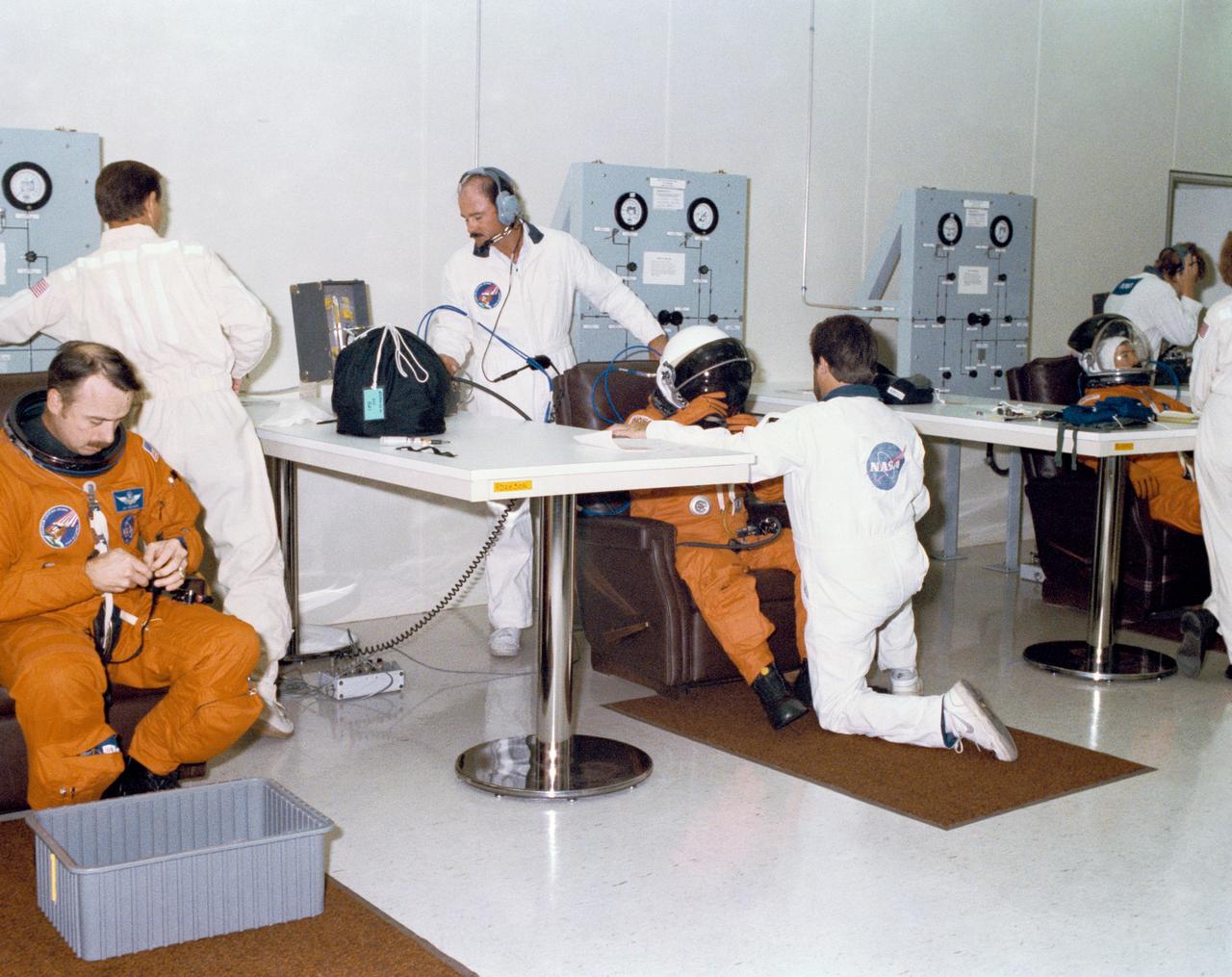
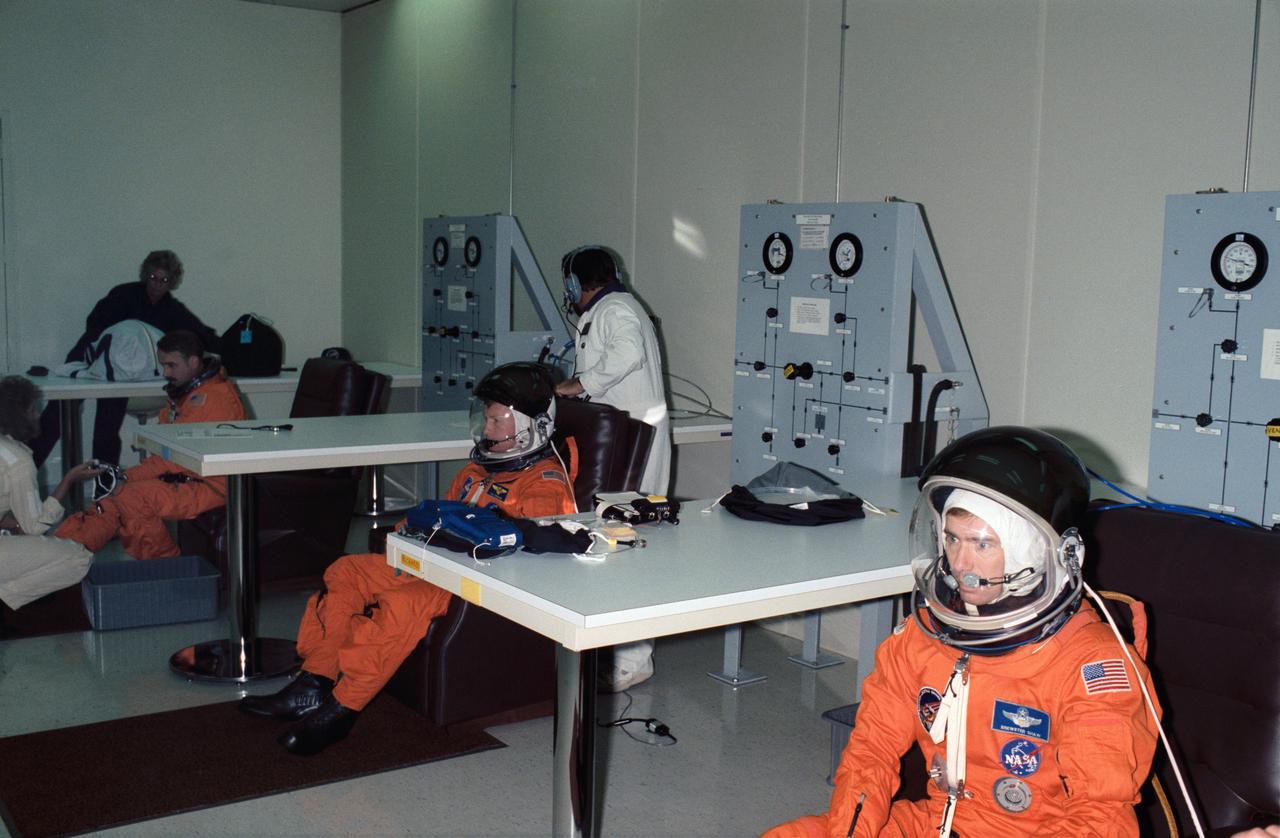
S89-41091 (18 July 1989) --- During the Terminal Countdown Demonstration Test (TCDT), STS-28 crew members are assisted with suiting up in the Operations and Checkout Building prior to departing for pad 39-B. STS-28 and the Space Shuttle Columbia are scheduled to be launched in early August on a Department of Defense dedicated mission. The crew for STS-28 are Commander Brewster H. Shaw; Pilot Richard N. Richards; and Mission Specialists Mark N. Brown, James C. Adamson, and David C. Leestma.
KSC supplied views of the STS 28 crew suiting up, at breakfast and
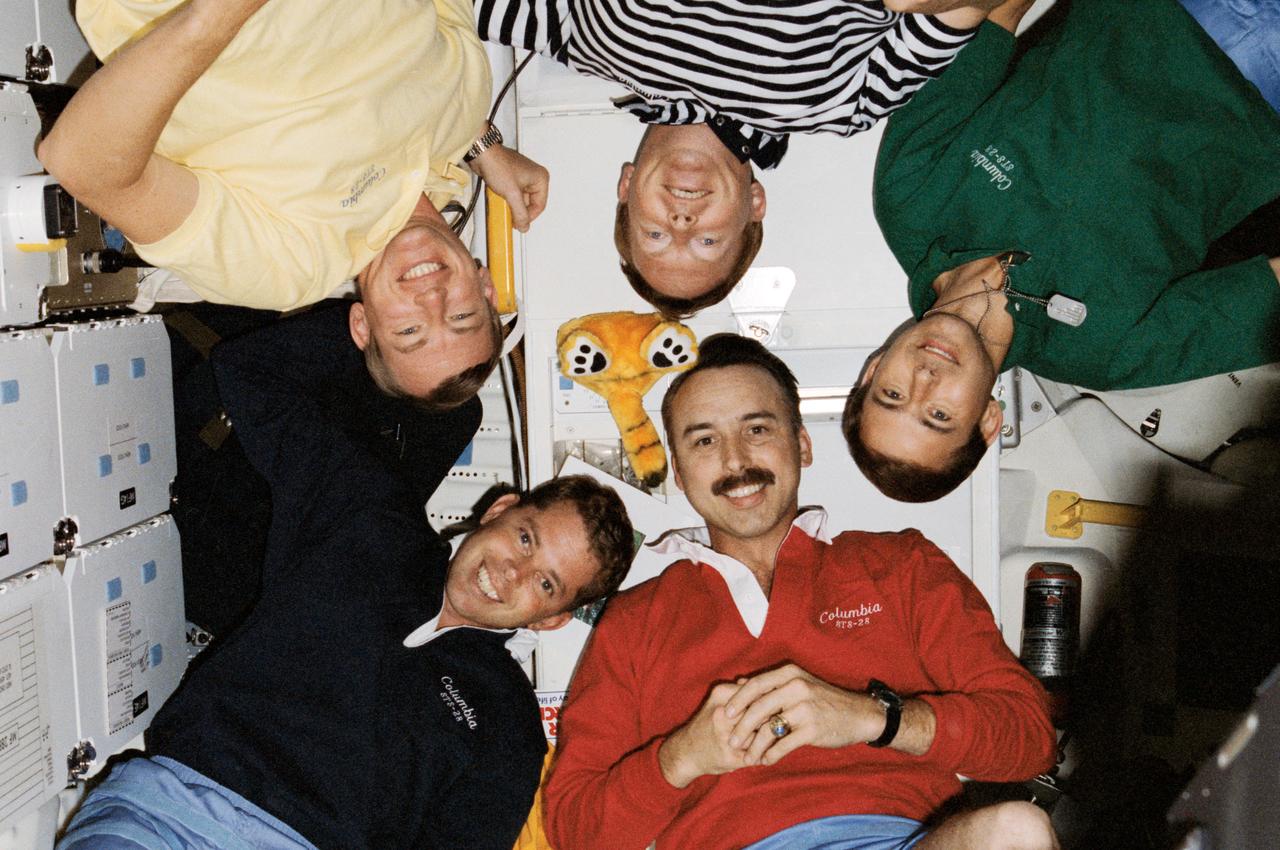
STS028-22-030 (August 1989) --- An in-space crew portrait of the astronauts for the STS-28 mission.  Brewster H. Shaw Jr., mission commander, is at lower left corner.  Others are, clockwise from Shaw's position, James C. Adamson, David C. Leestma and Mark N. Brown, all mission specialists; and Richard N. Richards, pilot.  The photo was taken on the middeck of the earth-orbiting Columbia.
STS-28 Columbia, OV-102, crewmembers pose for group portrait on middeck
STS043-S-002 (May 1991) --- These five astronauts have been assigned to fly aboard the Space Shuttle Atlantis for NASA's STS-43 mission.  Astronaut John E. Blaha (center) is mission commander. Other crew members are, left to right, astronauts Shannon W. Lucid, James C. Adamson and G. David Low, all mission specialists; and Michael A. Baker, pilot.
STS-43 official crew portrait
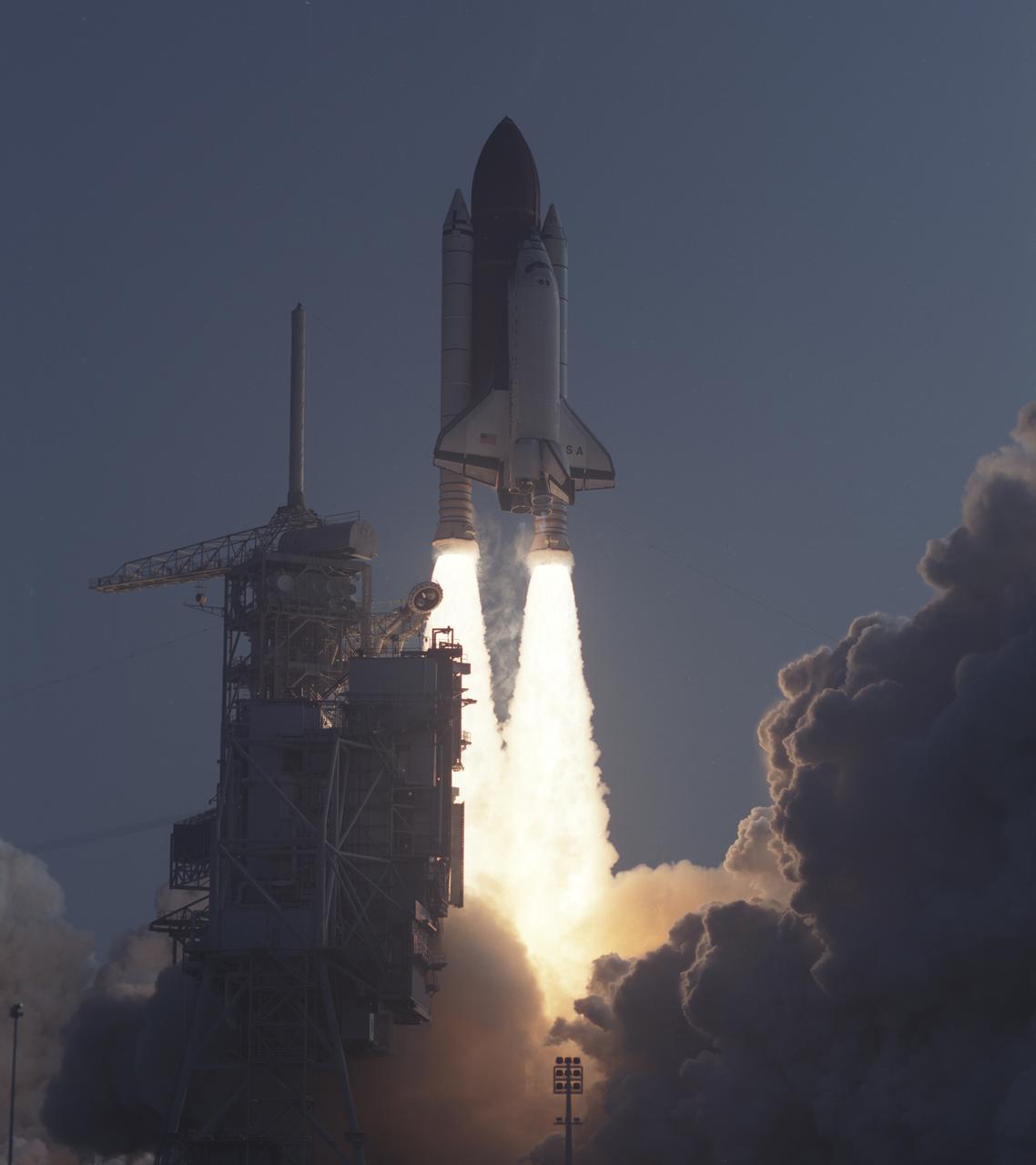
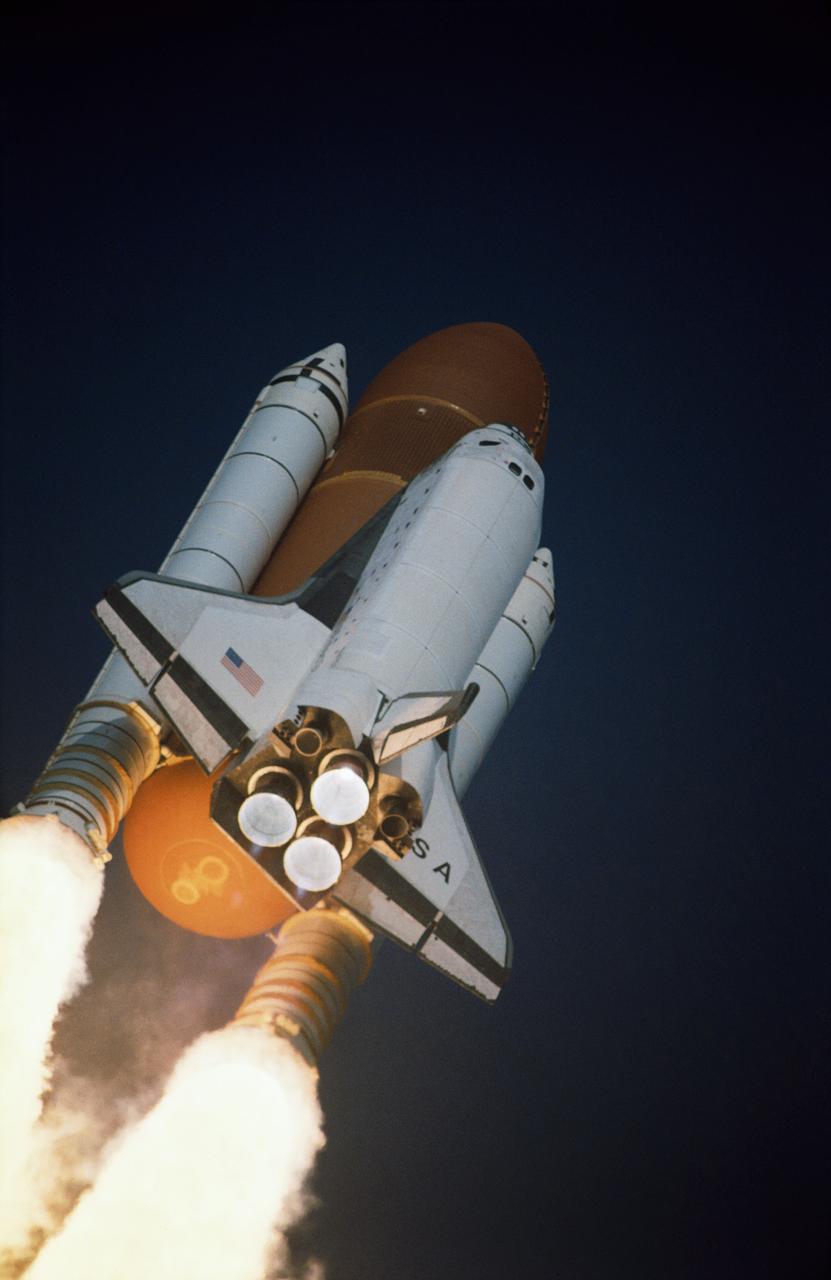
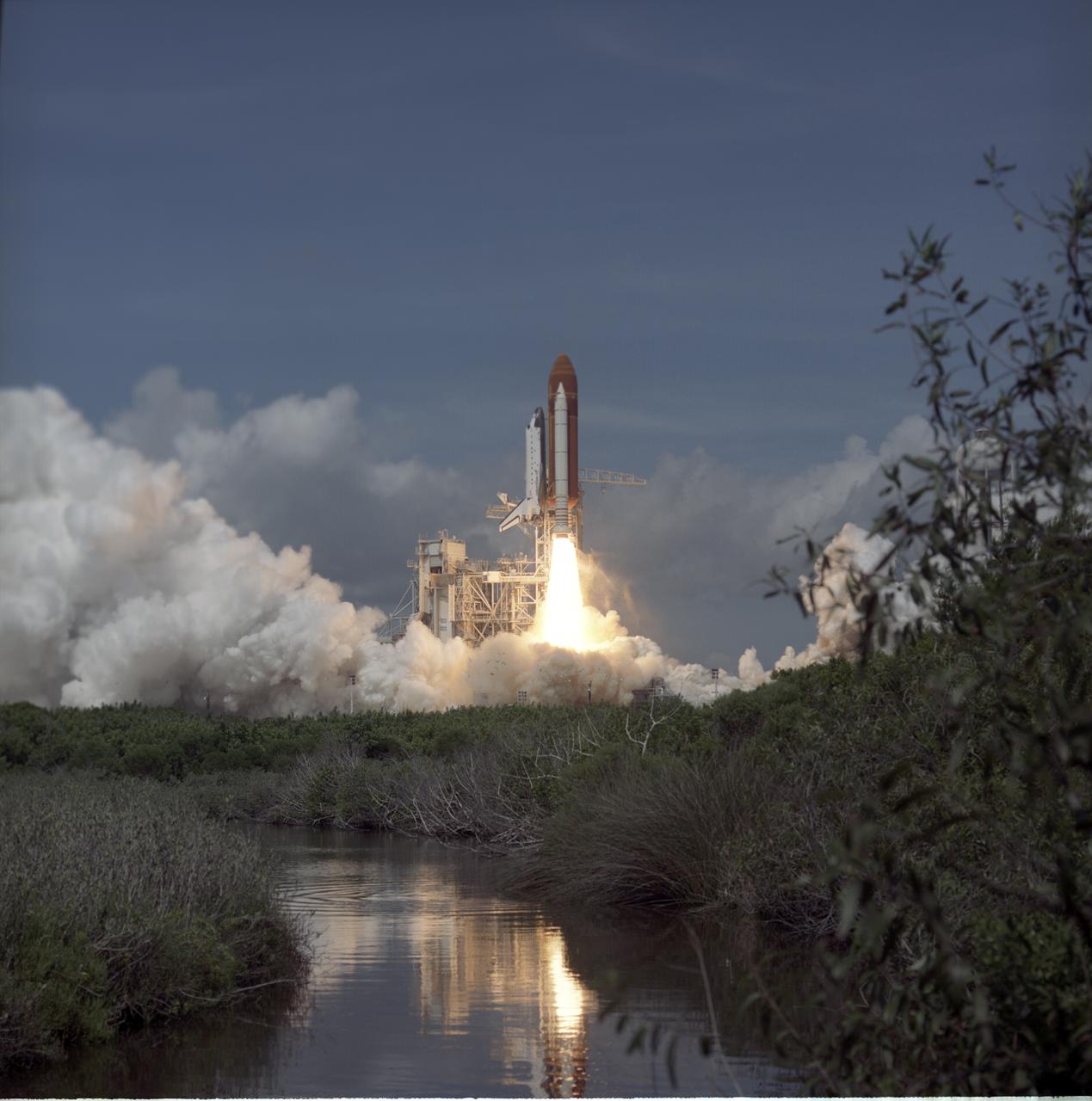
STS028-S-006 (8 Aug 1989) ---  A low-angle view shows Columbia soaring toward space just after clearing the tower at Launch Pad 39-B for the STS-28 mission.  The spacecraft renews  flight after a period of three and a half years, this time with five crewmembers aboard. Onboard the spacecraft are Astronauts Brewster H. Shaw Jr., Richard N. Richards, David C. Leestma, James C. Adamson and Mark N. Brown.  The last time Columbia was in space was in January of 1986.
STS-28 Columbia, OV-102, lifts off from KSC Launch Complex LC Pad 39B
Launched aboard the Space Shuttle Atlantis on August 2, 1991, the STS-43 mission’s primary payload was the Tracking and Data Relay Satellite 5 (TDRS-5) attached to an Inertial Upper Stage (IUS), which became the 4th member of an orbiting TDRS cluster. The flight crew consisted of five astronauts: John E. Blaha, commander; Michael A. Baker, pilot; Shannon W. Lucid, mission specialist 1; James C. Adamson, mission specialist 2; and G. David Low, mission specialist 3.
Space Shuttle Projects
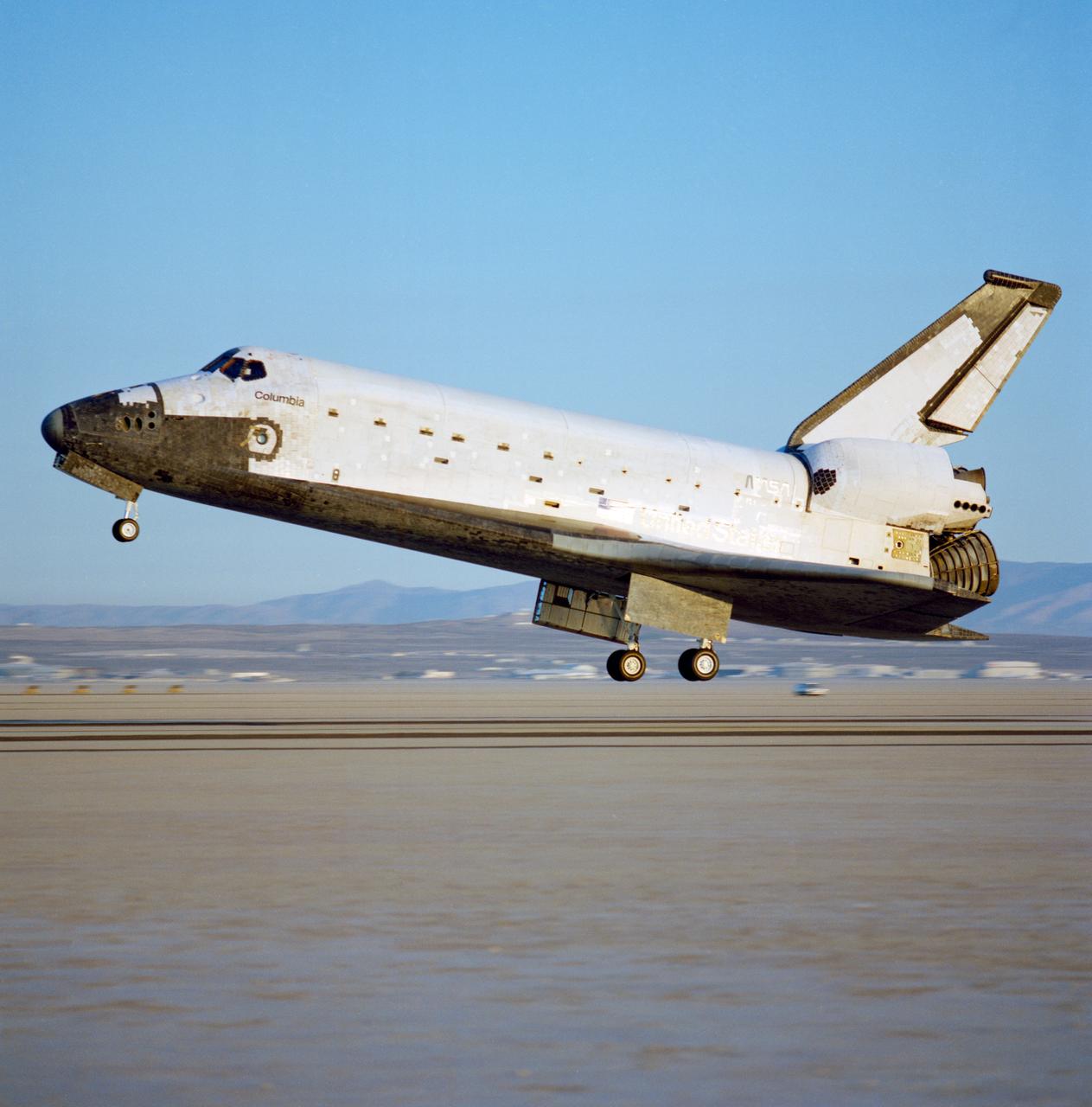
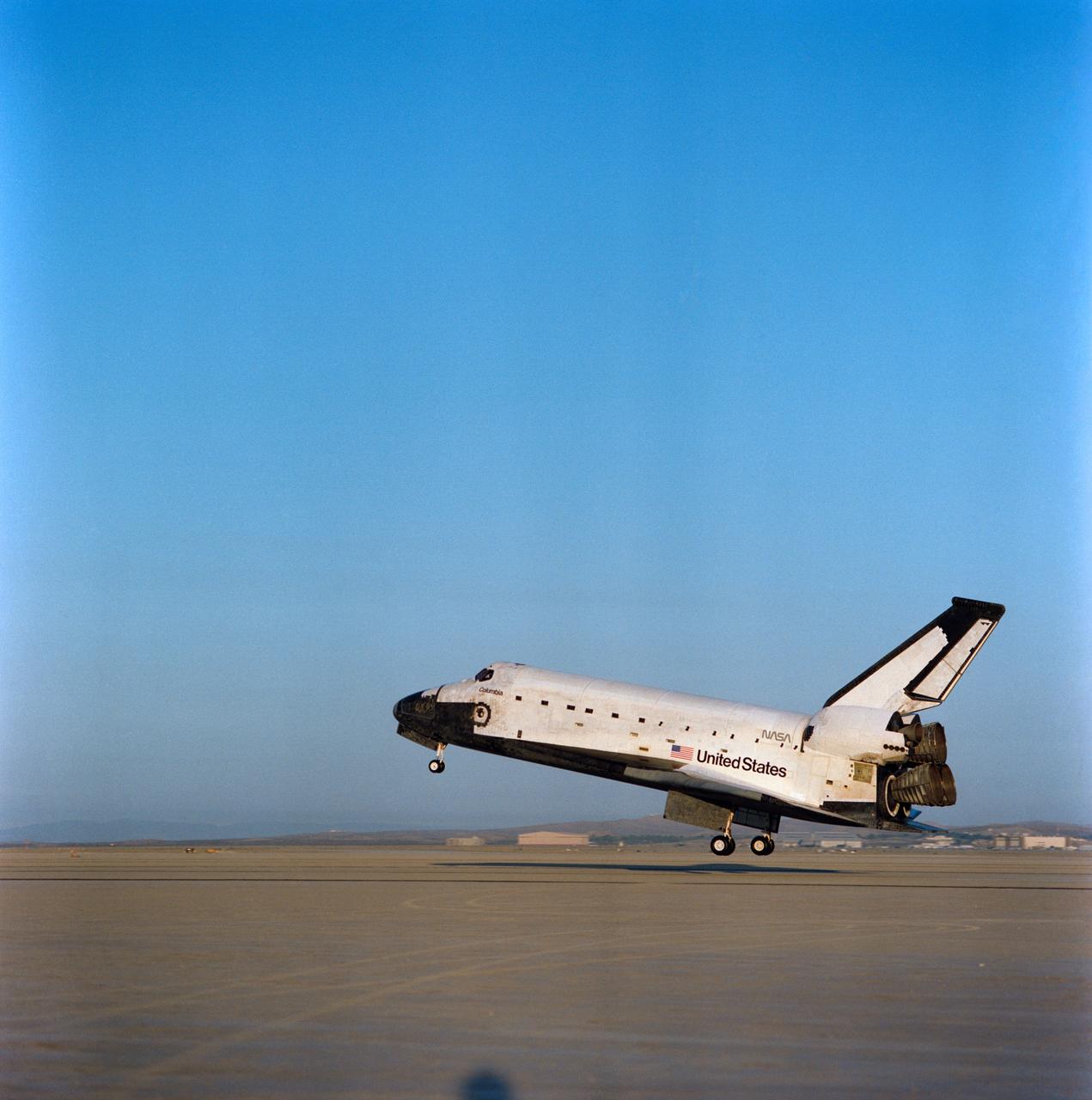
STS028-S-013 (13 Aug 1989) --- The Space Shuttle Columbia is captured on film just prior to main gear touchdown at Edwards Air Force Base in Southern California.  The landing marked a successful end to a five-day DOD-devoted mission.  Onboard the spacecraft were Astronauts Brewster H. Shaw Jr., Richard N. Richards, David C. Leestma, James C.  Adamson and Mark N. Brown.
STS-28 Columbia, OV-102, landing at Edwards Air Force Base (EAFB) California
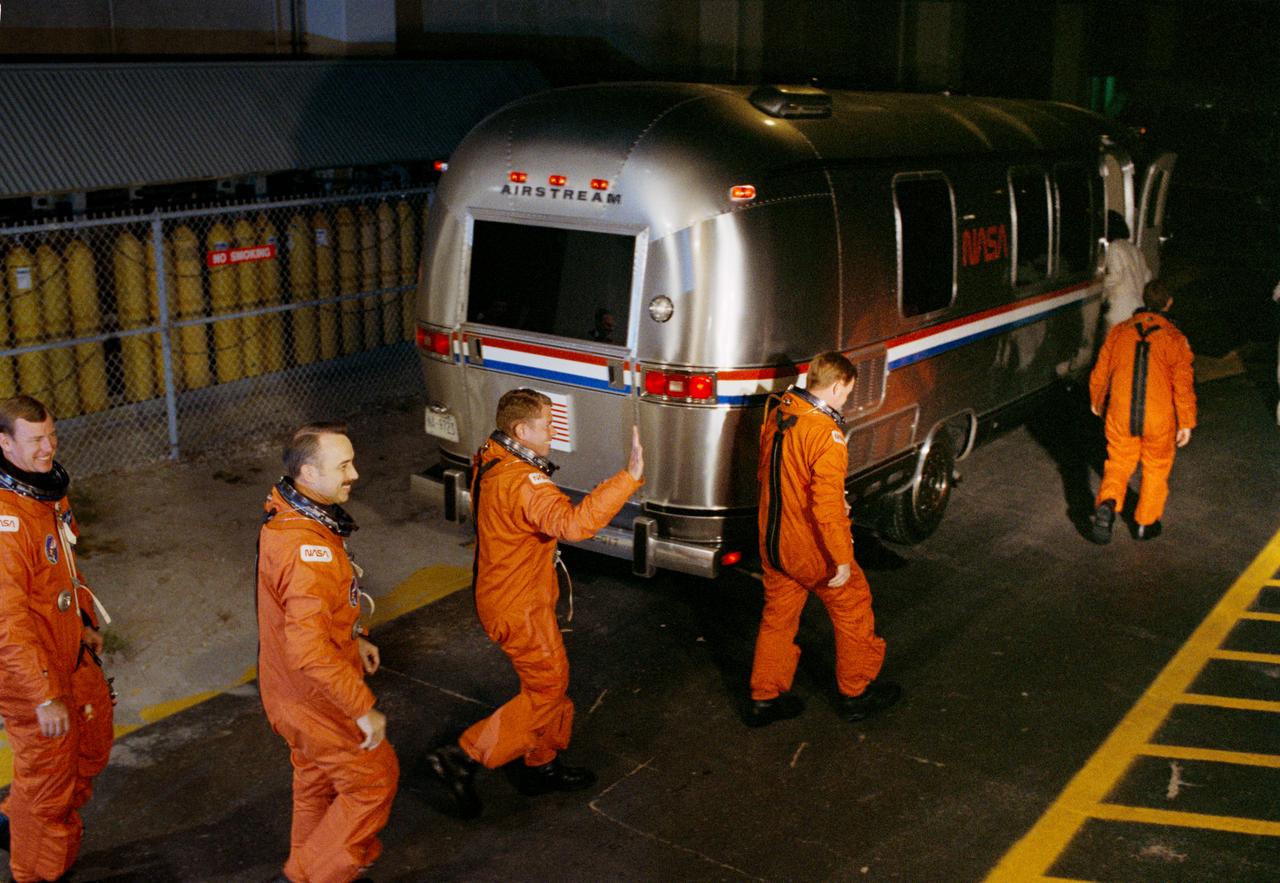
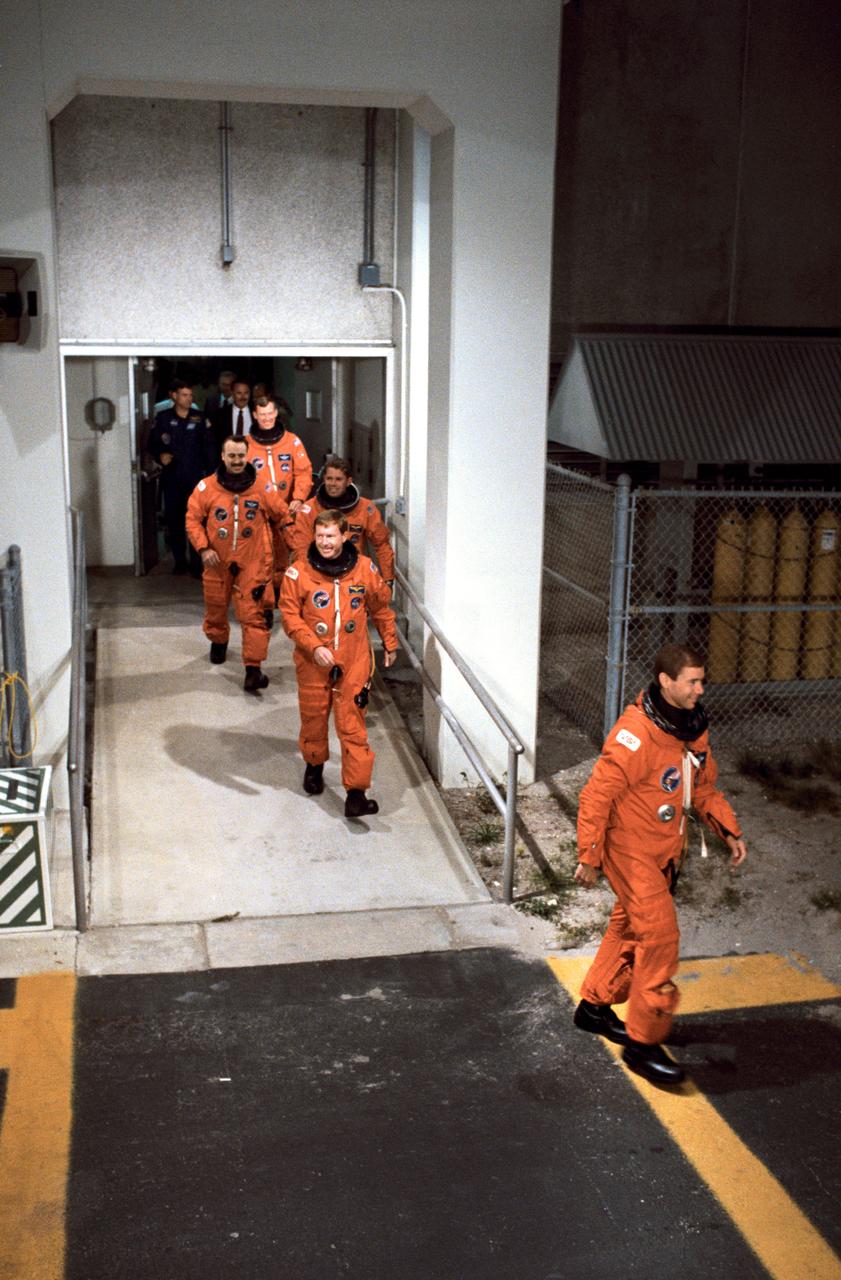
STS028-S-002 (8 Aug 1989)  --- The five astronaut crewmembers for STS-28 leave the Operations and Checkout (O&C) Building to board a transfer van en route to Launch Complex 39 for a date with Columbia.  Left to right are Astronauts Mark N. Brown, James C. Adamson, David C. Leestma, Richard N. Richards and Brewster H. Shaw Jr.
STS-28 Columbia, OV-102, crewmembers leave KSC O&C Bldg en route to LC Pad 39
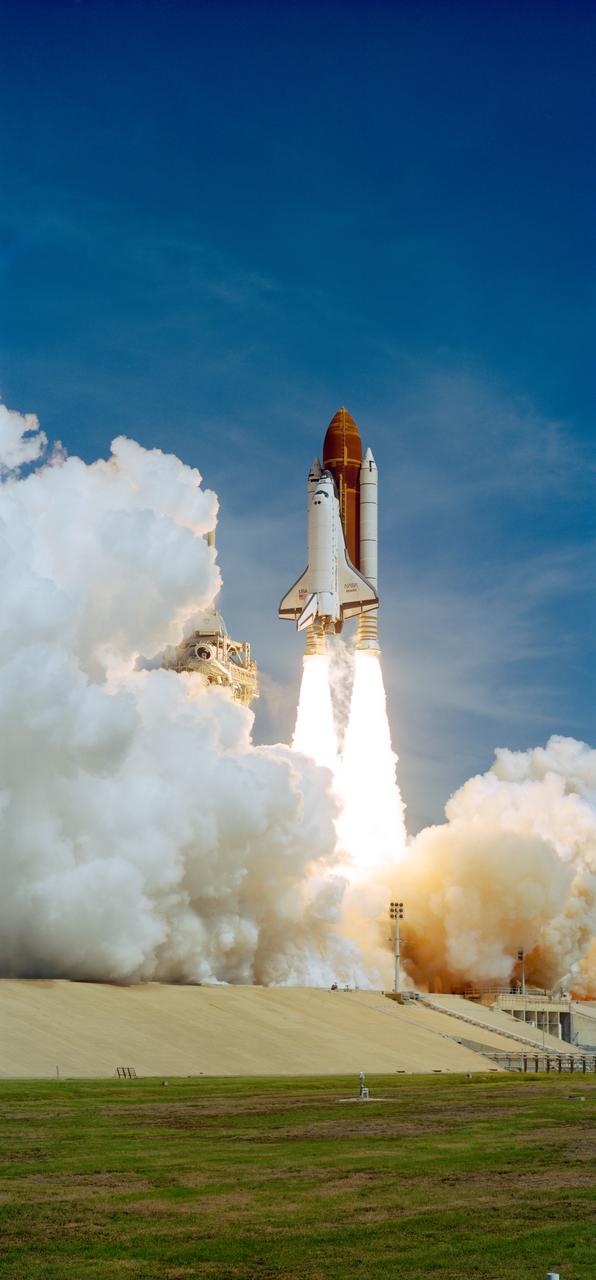
STS028-S-007 (8 Aug 1989) ---  Columbia is pictured just prior to clearing the tower at Launch Pad 39-B.  The spacecraft renews flight after a period of three and a half years, this time with five crewmembers aboard for STS-28. Onboard the spacecraft are Astronauts Brewster H. Shaw Jr., Richard N. Richards, David C. Leestma, James C. Adamson and Mark N. Brown.  The last time Columbia was in space was in January of 1986.
STS-28 Columbia, Orbiter Vehicle (OV) 102, lifts off from KSC LC Pad 39B
STS028-S-005 (8 Aug 1989) --- Three of five STS-28 astronaut crewmembers are pictured during their suiting up process in preparation for spending several days aboard space shuttle Columbia in earth orbit.  Astronaut Brewster H. Shaw Jr., mission commander, is in the foreground.  Others pictured in the orange suits used for ascent and entry are Richard N. Richards (center), pilot; and James C.  Adamson, one of three mission specialists.  Out of the frame are  David C. Leestma and Mark N. Brown, mission specialists.
STS-28 crewmembers don LESs prior to Columbia, OV-102, launch
STS028-S-008 (8 Aug 1989) --- A side view shows Columbia clearing the launch tower during the STS-28 liftoff. Columbia renews spaceflight after a period of three and a half years, this time with five crewmembers aboard for a DOD-devoted mission. Onboard the spacecraft are Astronauts Brewster H.  Shaw Jr., Richard N.  Richards, David C. Leestma, James C. Adamson and Mark N.  Brown.  The last time Columbia was in space was in January of 1986.
STS-28 Columbia, OV-102, lifts off from KSC Launch Complex (LC) Pad 39B
Launched aboard the Space Shuttle Atlantis on August 2, 1991, the STS-43 mission’s primary payload was the Tracking and Data Relay Satellite 5 (TDRS-5) attached to an Inertial Upper Stage (IUS), which became the 4th member of an orbiting TDRS cluster. The flight crew consisted of 5 astronauts: John E. Blaha, commander; Michael A. Baker, pilot; Shannon W. Lucid, mission specialist 1; James C. Adamson, mission specialist 2; and G. David Low, mission specialist 3.
Space Shuttle Projects
On August 8, 1989, the 4th mission dedicated to the Department of Defense (DOD), STS-28, lifted off from Kennedy Space Center’s (KSC) launch pad 39B. The five day mission included a crew of five: Richard N. (Dick) Richards, pilot; Brewster H. Shaw, commander; and mission specialists David C. Leestma, Mark N. Brown, and James C. (Jim) Adamson.
Space Shuttle Projects
STS028-S-018 (13 Aug 1989) --- The Space shuttle Columbia is captured on film just prior to main gear touchdown at Edwards Air Force Base in Southern California.  The landing marked a successful end to a five-day Department of Defense (DOD)-devoted mission.  Onboard the spacecraft were astronauts Brewster H. Shaw Jr., Richard N. Richards, David C. Leestma, James C.  Adamson and Mark N. Brown.
STS-28 Columbia, OV-102, landing at Edwards Air Force Base (EAFB) California
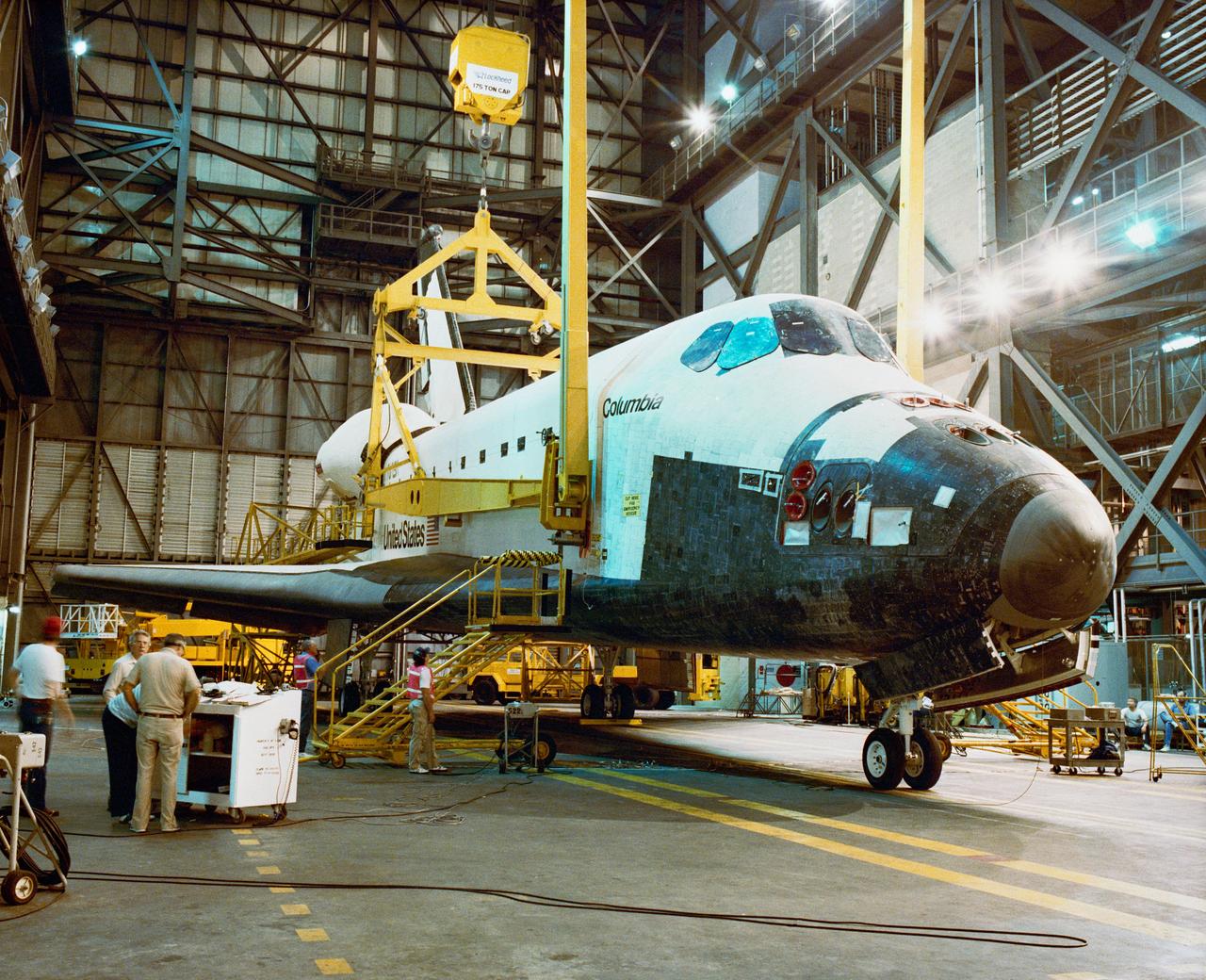
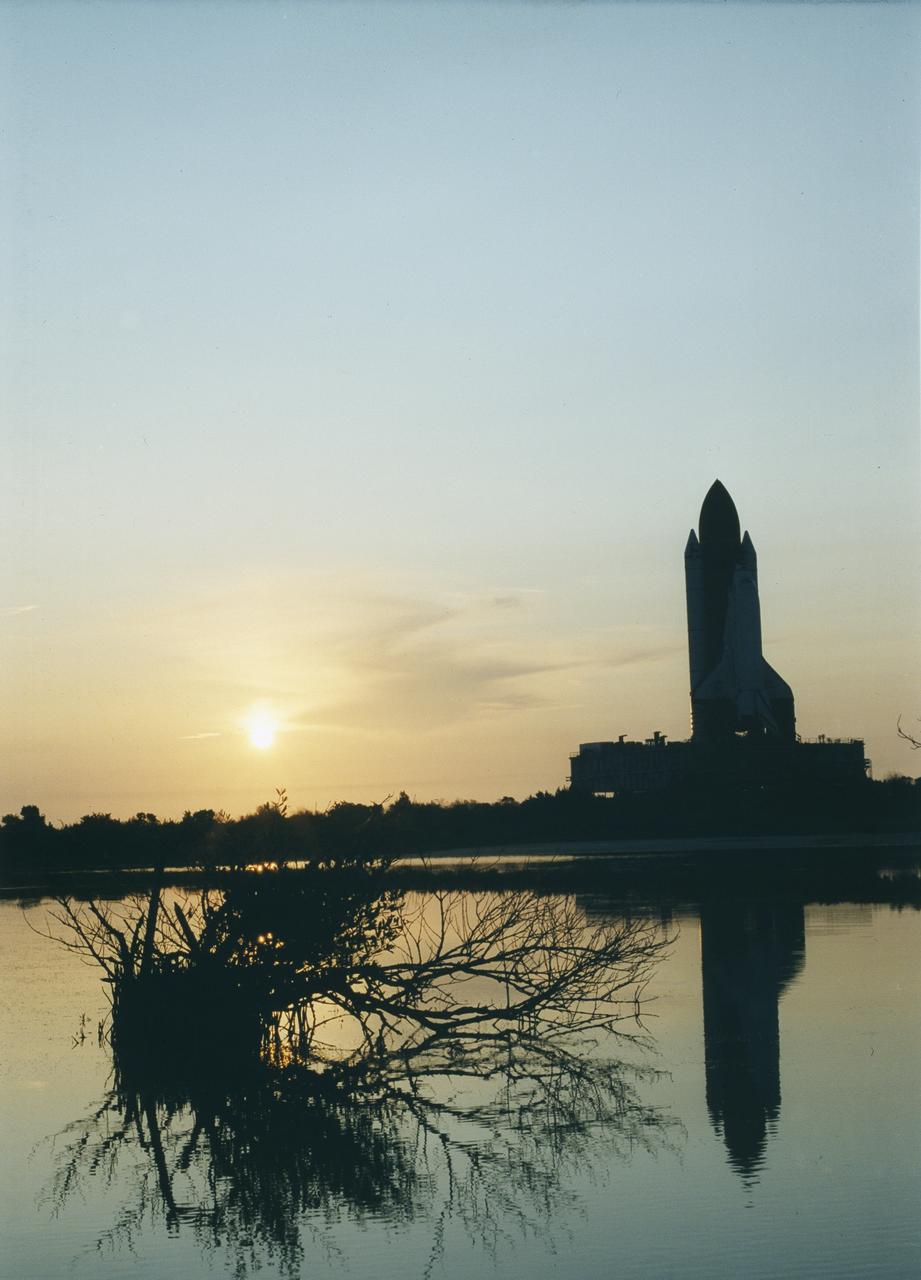
S89-39624 (3 July 1989) --- Following rollover from the Orbiter Processing Facility, the orbiter Columbia is prepared for mating with the ET/SRB stack in the Vehicle Assembly Building transfer aisle as work continues toward an early August launch of Space Shuttle Mission STS-28.  STS-28 is a Department of Defense dedicated mission.  Crew members for the mission are:  Commander Brewster H. Shaw, Pilot Richard N. Richards, and Mission Specialists Mark N. Brown, James C. Adamson, and David C. Leestma.
STS-28 Columbia, OV-102, ET/SRB mating preparations at KSC VAB
S89-29370 (March 1989) --- These five astronauts have been assigned to man the Space Shuttle Columbia for STS-28, a Department of Defense-devoted mission scheduled for July of this year. Brewster H. Shaw (center, front) is mission commander; and Richard N. Richards (left) is pilot. Mission specialists are, left to right, Mark N. Brown, James C.  Adamson and David C. Leestma (seated).
STS-28 Columbia, OV-102, official crew portrait
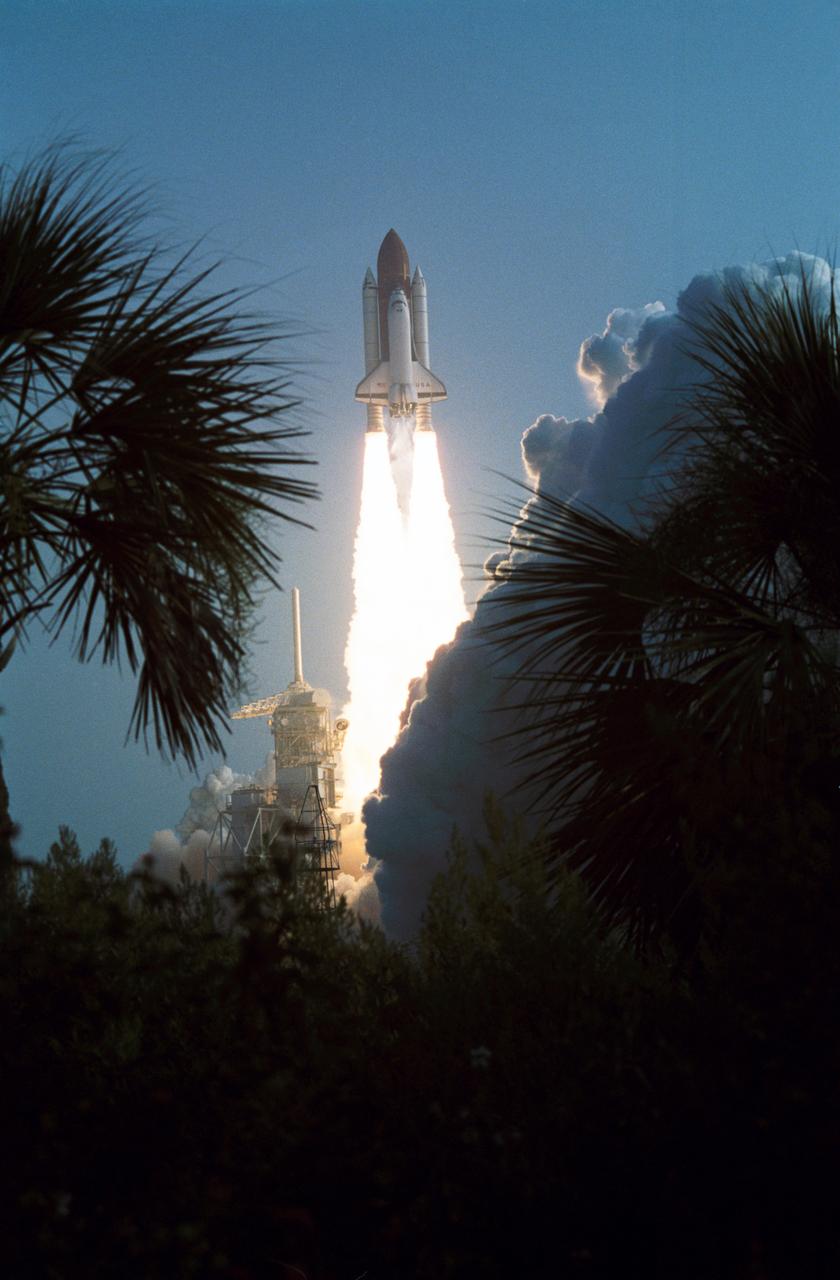
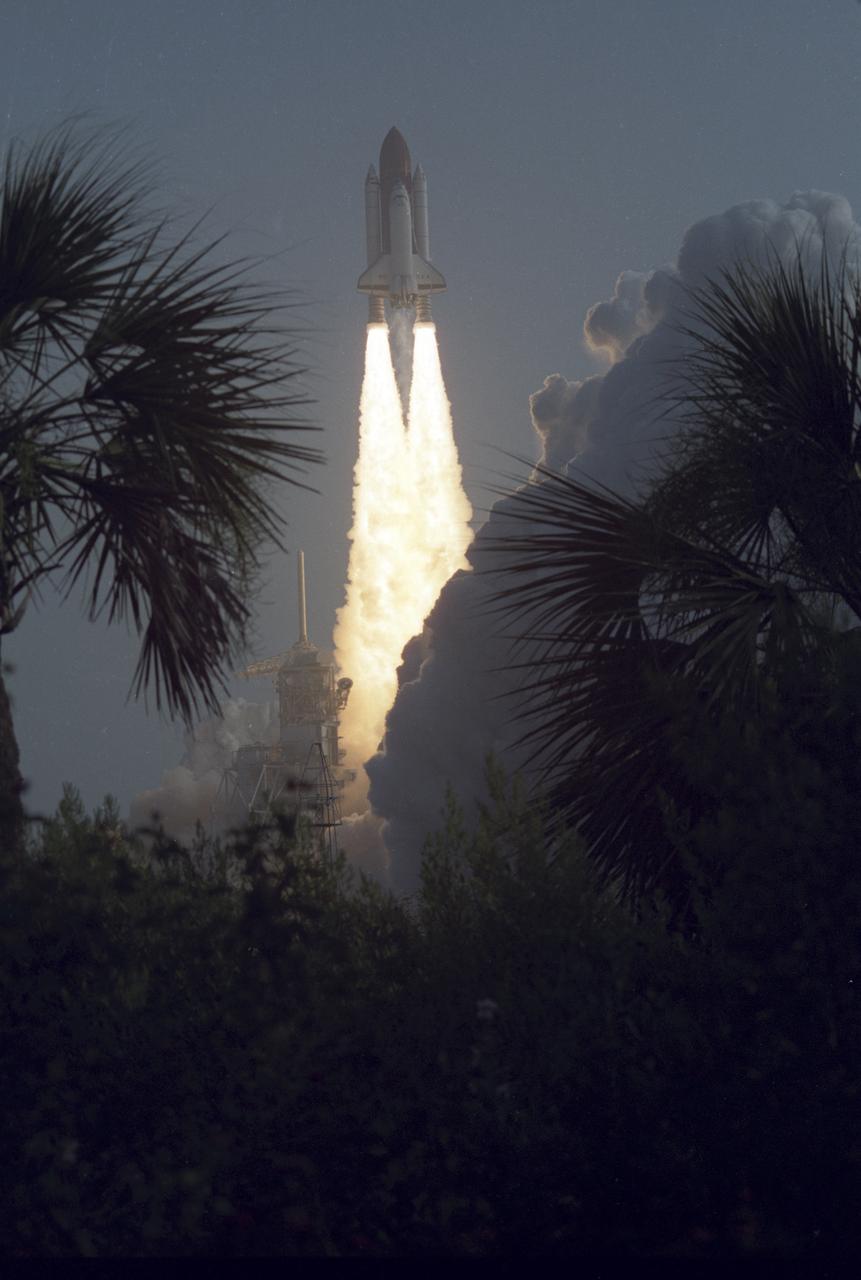
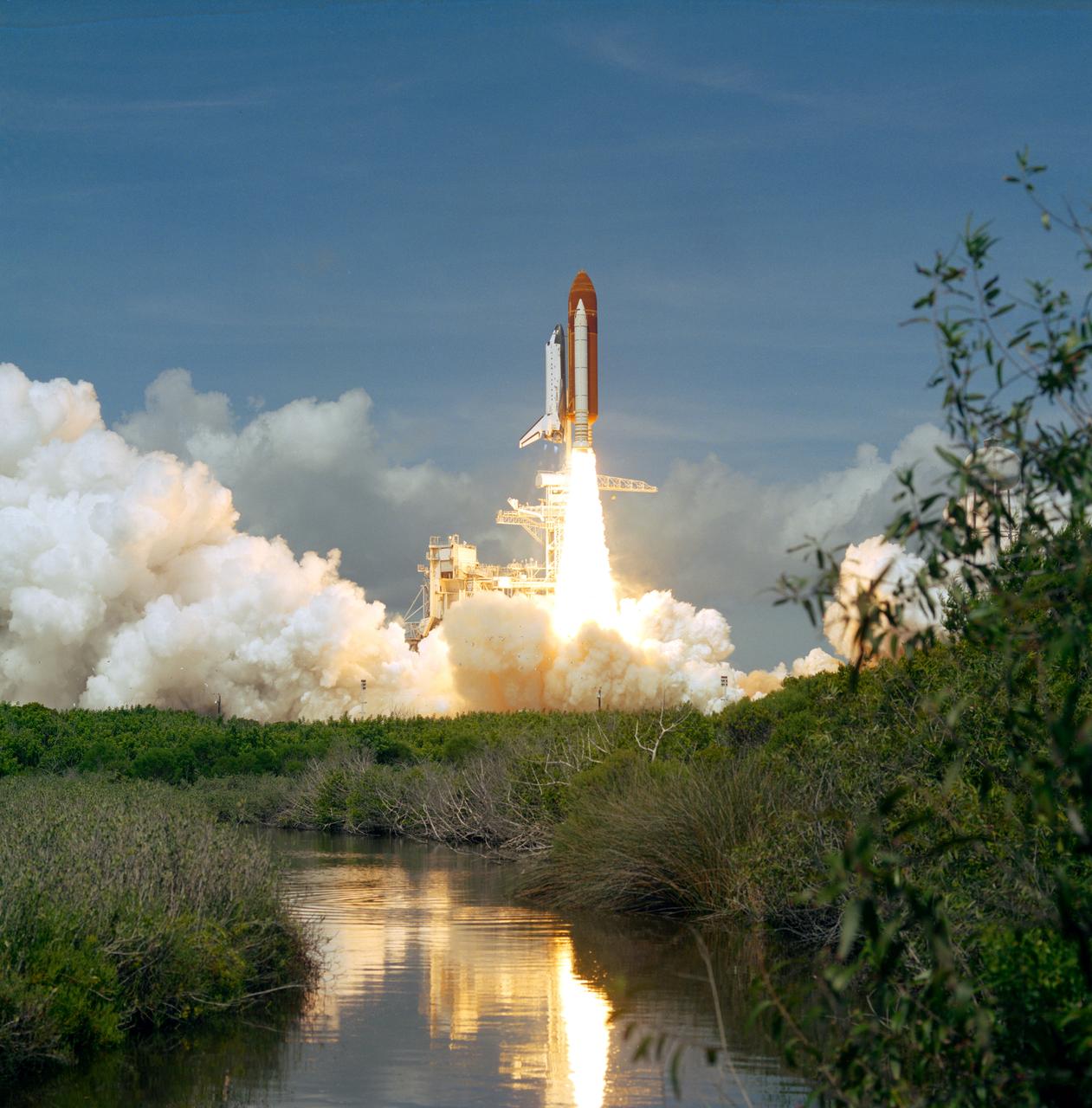
STS028-S-004 (8 Aug. 1989) --- Framed by Florida vegetation, Space Shuttle Columbia soars toward space for the STS-28 mission from Launch Pad 39-B. The spacecraft renews flight after a period of three and a half years, this time with five crewmembers aboard. Onboard the spacecraft are astronauts Brewster H. Shaw Jr., Richard N. Richards, David C. Leestma, James C. Adamson and Mark N. Brown. The last time Columbia was in space was in January of 1986.
STS-28 Columbia, OV-102, lifts off from KSC Launch Complex Pad 39B
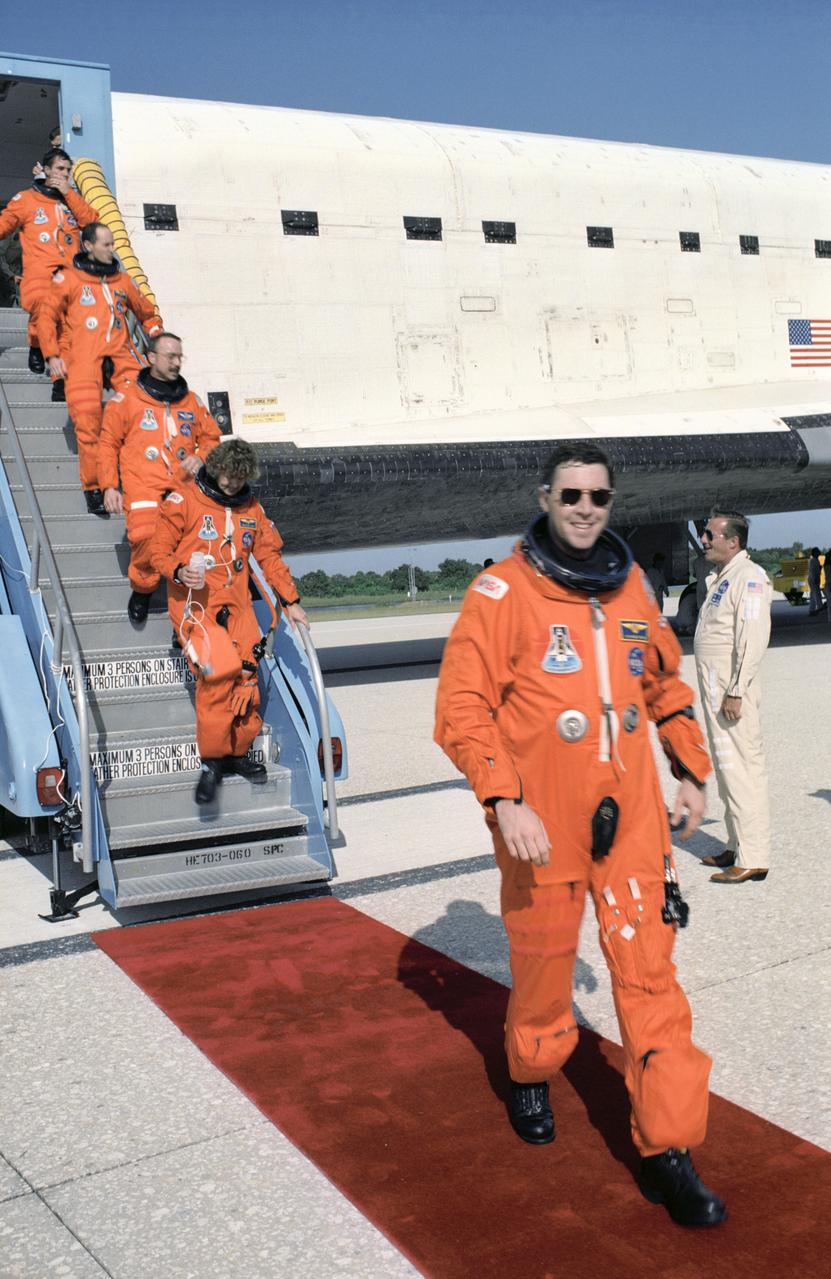
STS043-S-145 (11 Aug 1991) --- STS-43 crewmembers, wearing launch and entry suits (LESs), egress Atlantis, Orbiter Vehicle (OV) 104, via mobile stairway after landing on runway 15 at the Kennedy Space Center (KSC) Shuttle Landing Facility (SLF). Leading the crew and the first to step onto the red carpet is Pilot Michael A. Baker. He is followed by Mission Specialist (MS) Shannon W. Lucid, MS James C. Adamson, MS G. David Low, and Commander John E. Blaha. OV-104's fuselage is visible in the background.
STS-43 crewmembers egress Atlantis, OV-104, after landing at KSC runway 15
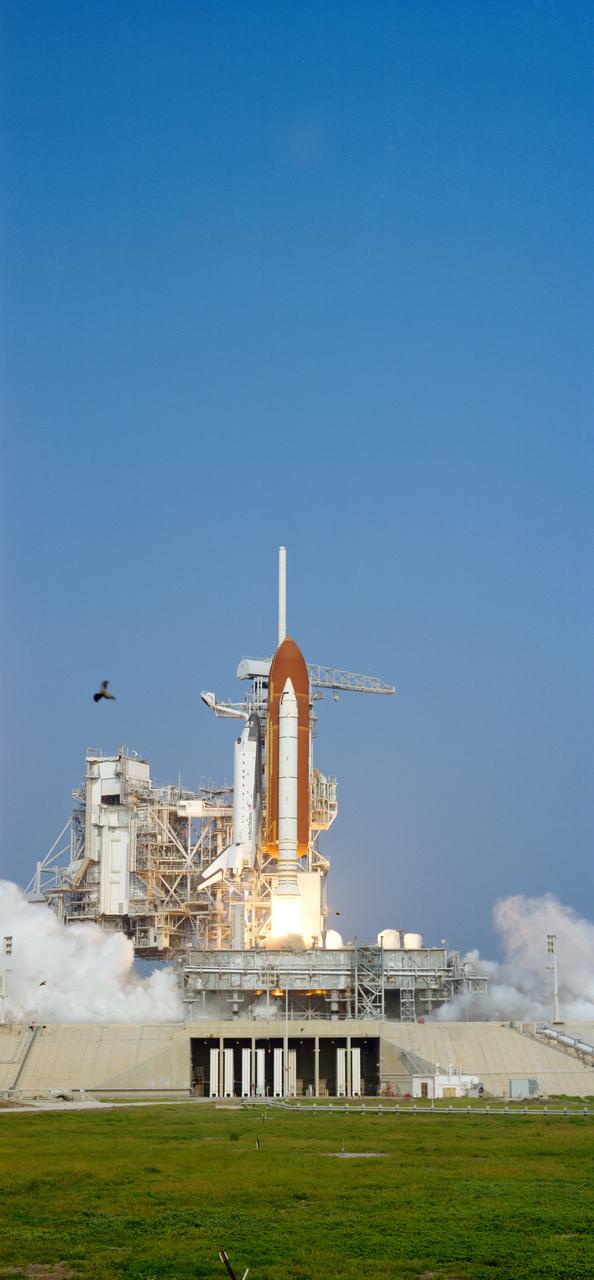
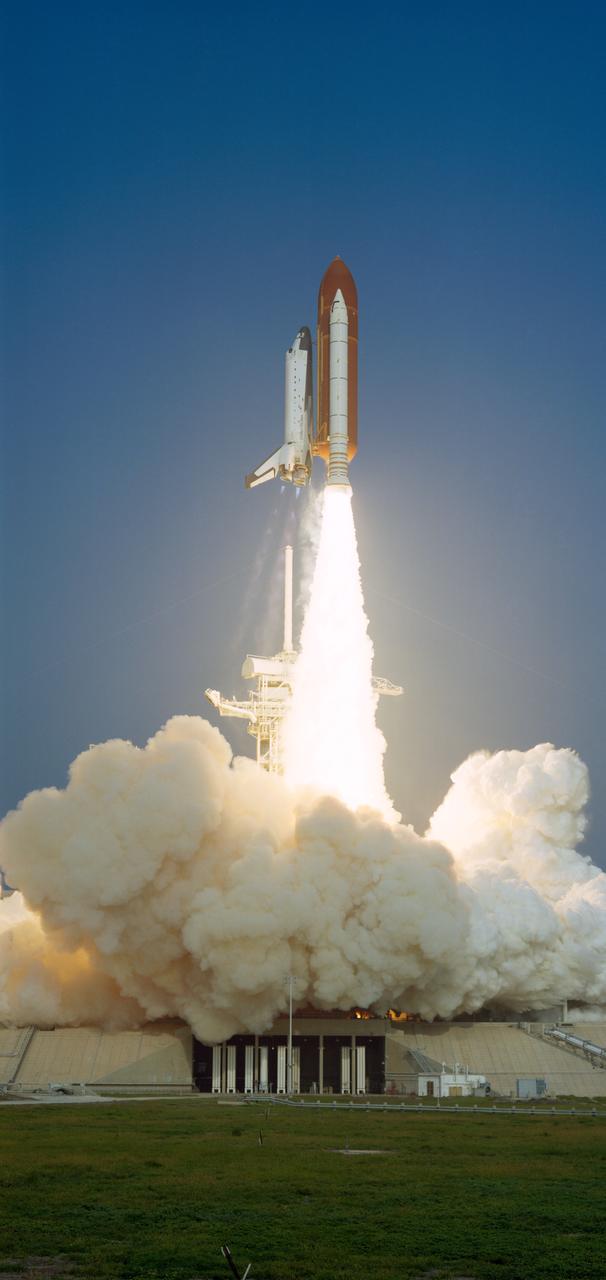
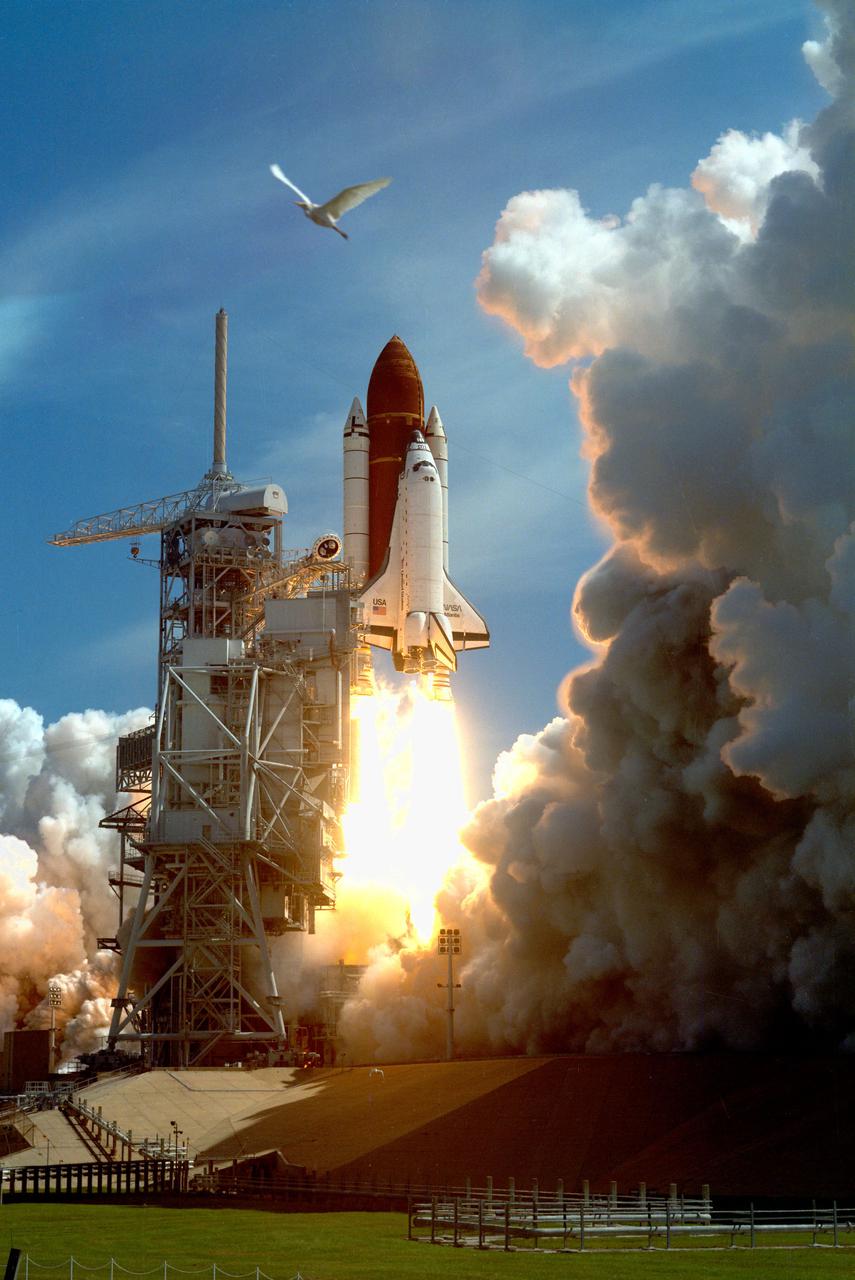
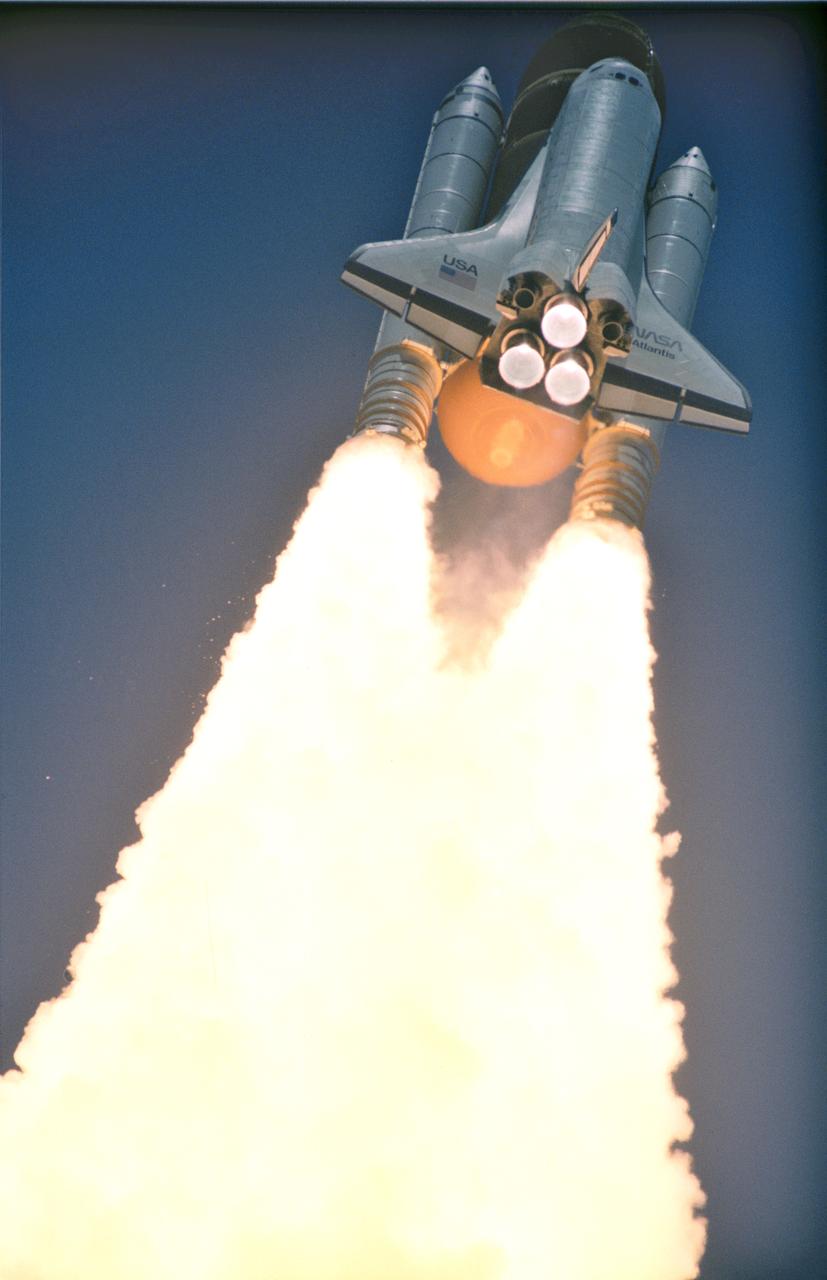
STS043-S-090 (2 Aug 1991) --- The Space Shuttle Atlantis soars toward space to begin a scheduled nine-day mission.  The 11:02:00 a.m. (EDT) liftoff from Launch Pad 39A came at the beginning of the launch window.  Onboard the spacecraft were astronauts John E. Blaha, mission commander; Michael A. Baker, pilot; and Shannon W. Lucid, James C. Adamson and G. David Low, all mission specialists.  Six hours after this picture was taken, the astronauts deployed the Tracking and Data Relay Satellite (TDRS-E).
STS-43 Atlantis, OV-104, lifts off from KSC Launch Complex (LC) Pad 39A
STS043-S-088 (2 Aug 1991) --- A low angle, 35mm view of the Space Shuttle Atlantis as it soars toward space to begin a scheduled nine-day mission.  The 11:02:00 a.m. (EDT) liftoff from Launch Pad 39A came at the beginning of the launch window.  Onboard the spacecraft were astronauts John E. Blaha, mission commander; Michael A. Baker, pilot; and Shannon W. Lucid, James C. Adamson and G. David Low, all mission specialists.  Six hours after this picture was taken, the astronauts deployed the Tracking and Data Relay Satellite (TDRS-E).
STS-43 Atlantis, OV-104, soars into space after liftoff from KSC LC Pad 39A
STS043-S-087 (2 Aug 1991) --- The Space Shuttle Atlantis soars toward space to begin a scheduled nine-day mission.  The 11:02:00 a.m. (EDT) liftoff from Launch Pad 39A came at the beginning of the launch window.  Onboard the spacecraft were astronauts John E. Blaha, mission commander; Michael A. Baker, pilot; and Shannon W. Lucid, James C. Adamson and G. David Low, all mission specialists.  Six hours after this picture was taken, the astronauts deployed the Tracking and Data Relay Satellite (TDRS-E).
STS-43 Atlantis, OV-104, lifts off from KSC Launch Complex (LC) Pad 39A
STS028-S-001 (8 Aug 1989) --- The five astronaut crewmembers for STS-28 leave the operations and checkout building to board a transfer van en route to Launch Complex 39 for a date with Columbia.  Front to back are Brewster H. Shaw Jr., Richard N. Richards, David C. Leestma, James C. Adamson and Mark N. Brown.  At the rear of the line are Astronaut Michael L. Coats, acting chief of the astronaut office; and Donald R. Puddy, director of flight crew operations at JSC.  Coats later flew a NASA Shuttle training aircraft for pre-launch and launch monitoring activities.
STS-28 Columbia, OV-102, crewmembers leave KSC O&C Bldg en route to LC Pad 39
KENNEDY SPACE CENTER, FLA. -  The Space Shuttle Atlantis breaks free from the confines of Earth as it soars towards space to begin its STS-43 nine-day mission.  The 11:02 a.m. EDT liftoff from Launch Pad 39A was at the opening of the launch window.  The five-member crew will conduct a variety of activities, including the primary objective of deploying the fourth Tracking and Data Relay Satellite TDRS-E.  Crew members are Mission Commander John E. Blaha, Pilot Michael E. Baker, and Mission Specialists Shannon W. Lucid, James C. Adamson and G. David Low. Photo Credit: NASA
KSC-91pc-1403
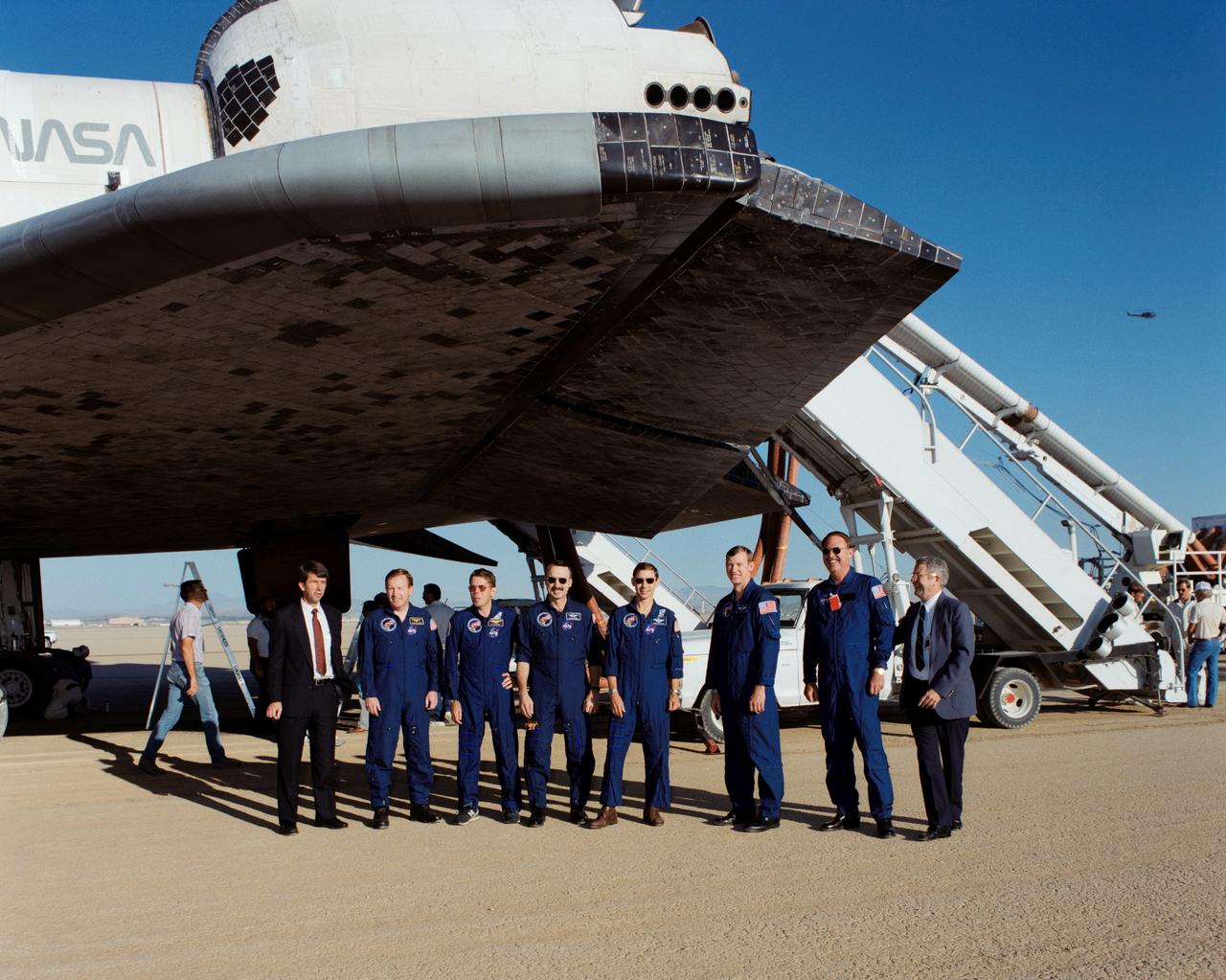
STS028-S-014 (13 Aug. 1989) --- The five astronaut crewmembers for STS-28 pose near the Space Shuttle Columbia after spending five days in Earth orbit for a DOD-devoted mission. They were greeted and are flanked here by William B. Lenoir (left), NASA Associate Administrator for Spaceflight; Donald R. Puddy (second right), director of flight crew operations; and Rear Adm. Richard H. Truly (right), NASA Administrator. The astronauts are, from left to right, Richard N.  Richards, David C. Leestma, James C. Adamson, Brewster H. Shaw Jr. and Mark N. Brown.
STS-28 crew poses for group portrait during post landing activities
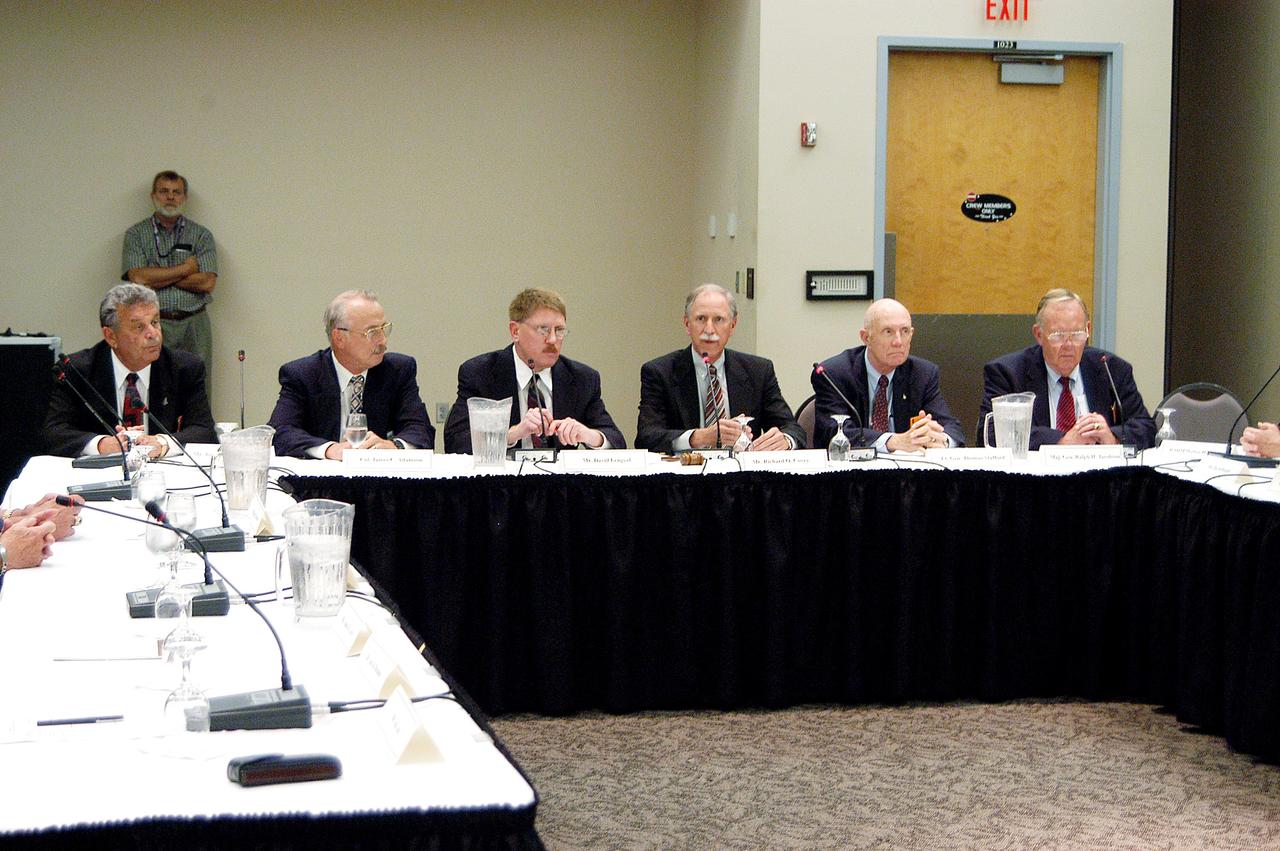
KENNEDY SPACE CENTER, FLA.  -  The Return To Flight Task Group (RTFTG) holds the first public meeting at the Debus Center, KSC Visitor Complex.  Members and staff at this table, from left, are Joseph W. Cuzzupolui, retired Army Col. James C. Adamson, David Lenyel, co-chairs Richard O. Covey and retired Air Force Lt. Gen. Thomas Stafford, and retired Air Force Maj. Gen. Ralph H. Jacobson.  Covey is a former astronaut and Shuttle commander.  Stafford is a former astronaut and Apollo commander.  The RTFTG was at KSC to conduct organizational activities, tour Space Shuttle facilities and receive briefings on Shuttle-related topics.  The task group was chartered by NASA Administrator Sean O’Keefe to perform an independent assessment of NASA’s implementation of the final recommendations of the Columbia Accident Investigation Board.
KENNEDY SPACE CENTER, FLA. - The Return To Flight Task Group (RTFTG) holds the first public meeting at the Debus Center, KSC Visitor Complex. Members and staff at this table, from left, are Joseph W. Cuzzupolui, retired Army Col. James C. Adamson, David Lenyel, co-chairs Richard O. Covey and retired Air Force Lt. Gen. Thomas Stafford, and retired Air Force Maj. Gen. Ralph H. Jacobson. Covey is a former astronaut and Shuttle commander. Stafford is a former astronaut and Apollo commander. The RTFTG was at KSC to conduct organizational activities, tour Space Shuttle facilities and receive briefings on Shuttle-related topics. The task group was chartered by NASA Administrator Sean O’Keefe to perform an independent assessment of NASA’s implementation of the final recommendations of the Columbia Accident Investigation Board.
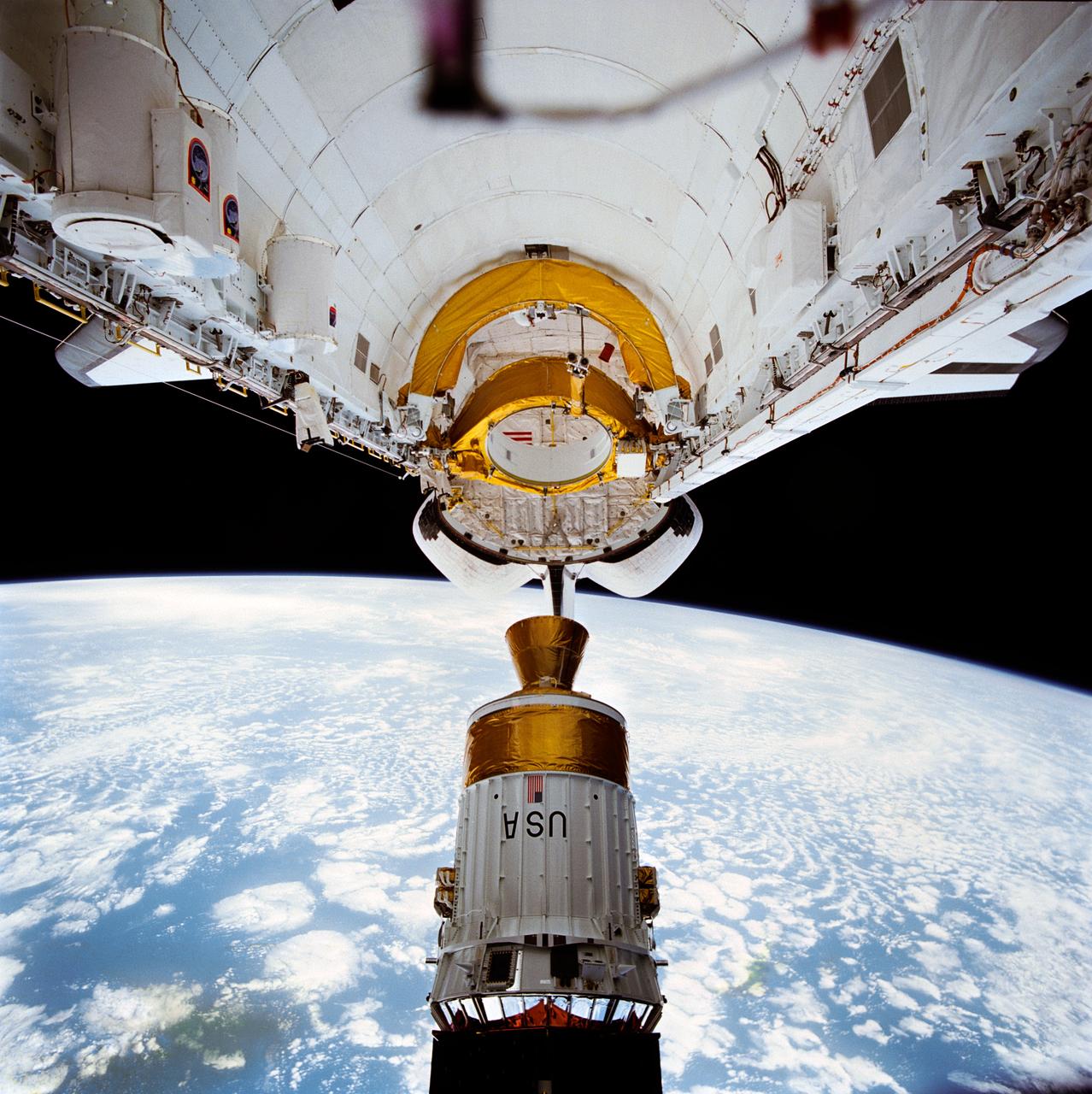
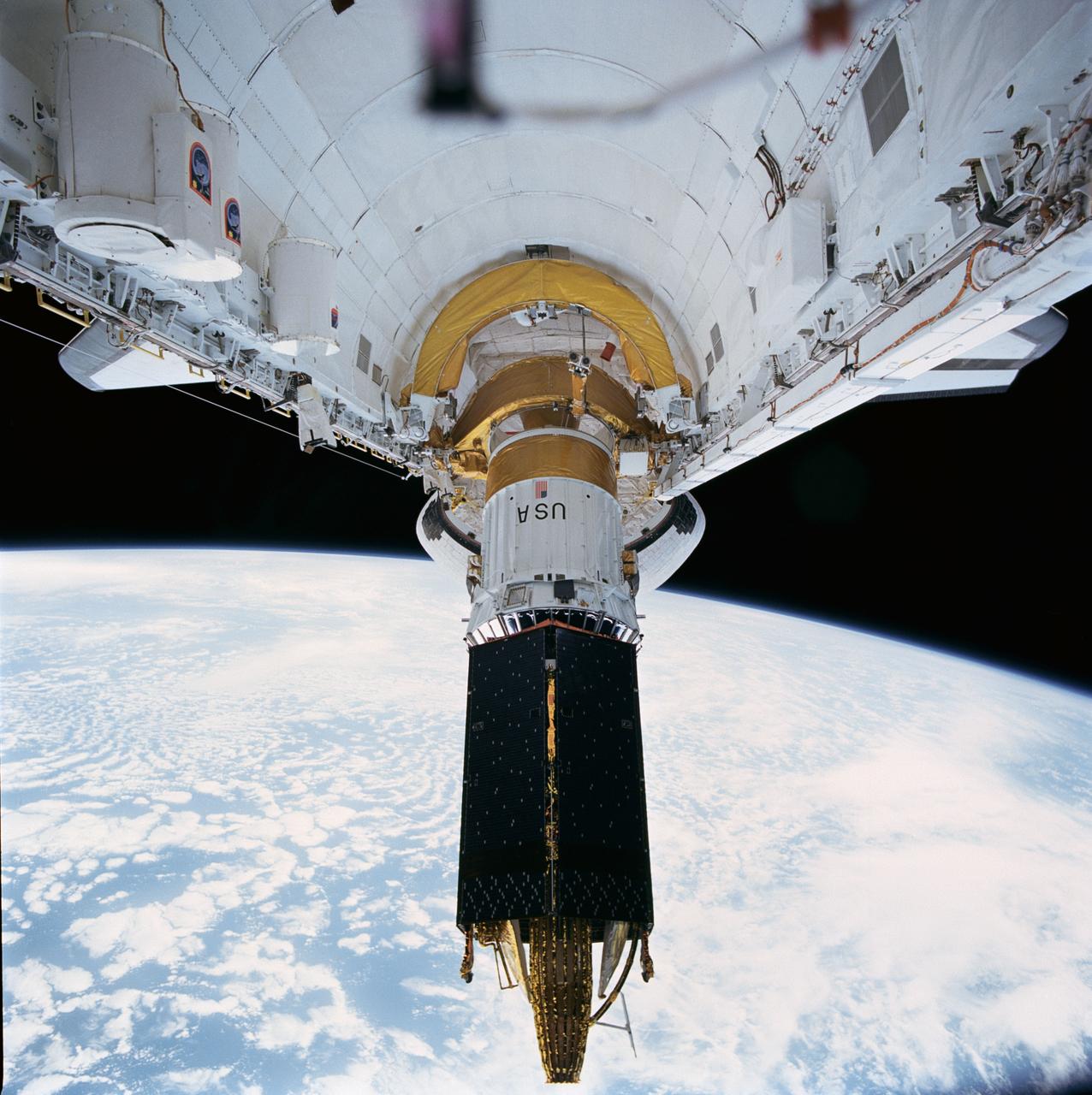
STS043-72-002 (2 Aug 1991) --- The Tracking and Data Relay Satellite (TDRS-E), leaves the payload bay of the earth-orbiting Atlantis a mere six hours after the Space Shuttle was launched from Pad 39A at Kennedy Space Center, Florida. TDRS, built by TRW, will be placed in a geosynchronous orbit and after on-orbit testing, which requires several weeks, will be designated TDRS-5.  The communications satellite will replace TDRS-3 at 174 degrees West longitude.  The backbone of NASA's space-to-ground communications, the Tracking and Data Relay satellites have increased NASA's ability to send and receive data to spacecraft in low-earth orbit to more than 85 percent of the time.  The five astronauts of the STS 43 mission are John E. Blaha, mission commander, Michael A. Baker, pilot, and Shannon W. Lucid, G. David Low, and James C. Adamson, all mission specialists.
STS-43 TDRS-E / IUS in OV-104's PLB ASE aft frame tilt actuator (AFTA) table
STS043-72-059 (2 Aug 1991) --- The Tracking and Data Relay Satellite (TDRS-E), leaves the payload bay of the earth-orbiting Atlantis a mere six hours after the Space Shuttle was launched from Pad 39A at Kennedy Space Center, Florida.  TDRS, built by TRW, will be placed in a geosynchronous orbit and after on-orbit testing, which requires several weeks, will be designated TDRS-5.  The communications satellite will replace TDRS-3 at 174 degrees West longitude.  The backbone of NASA's space-to-ground communications, the Tracking and Data Relay satellites have increased NASA's ability to send and receive data to spacecraft in low-earth orbit to more than 85 percent of the time.  The five astronauts of the STS 43 mission are John E. Blaha, mission commander, Michael A. Baker, pilot, and Shannon W.  Lucid, G.  David Low, and James C. Adamson, all mission specialists.
STS-43 TDRS-E / IUS is deployed from OV-104's payload bay (PLB)
KENNEDY SPACE CENTER, FLA. --  Seventeen new astronaut candidates visited the Vehicle Assembly Building as part of an orientation tour of KSC facilities.  Here they are grouped around one of the external fuel tanks in the transfer aisle of the VAB.  This latest group of candidates is the tenth chosen since the original seven Mercury astronauts.  [From left, Michael J. McCulley, Curtis L. Brown Jr., Frank L. Culbertson Jr., Kathryn C. Thornton, Mark N. Brown, Mark C. Lee, Kenneth D. Cameron, John H. Casper, L. Blaine Hammond Jr., Charles Lacy Veach (deceased), James C. Adamson, William M. Shepherd, Sidney M. Gutierrez, Marsha S. Ivins, David G. Low, Michael J. Smith (deceased), Ellen S. Baker, Sonny Carter (deceased).]
KSC-84p-339
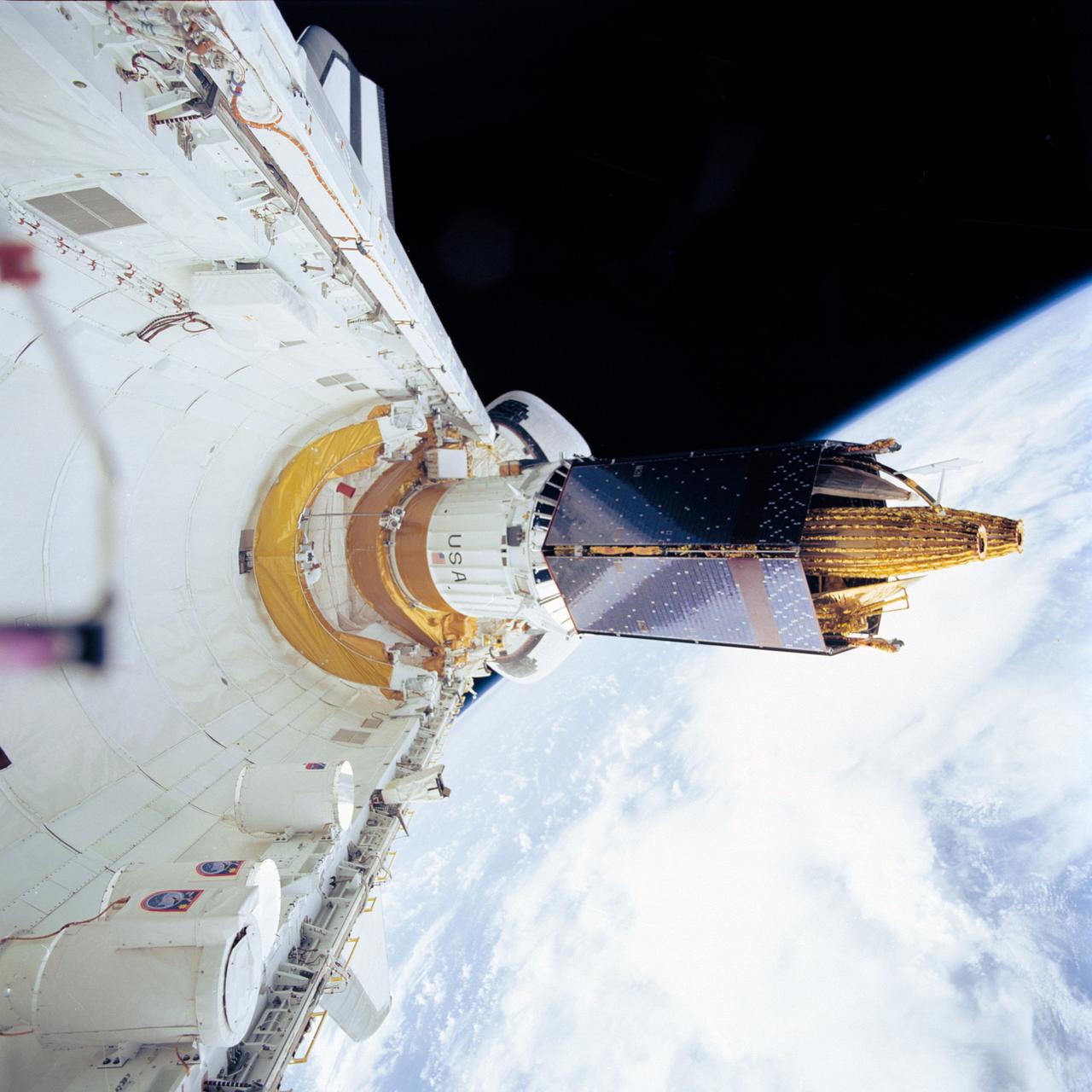
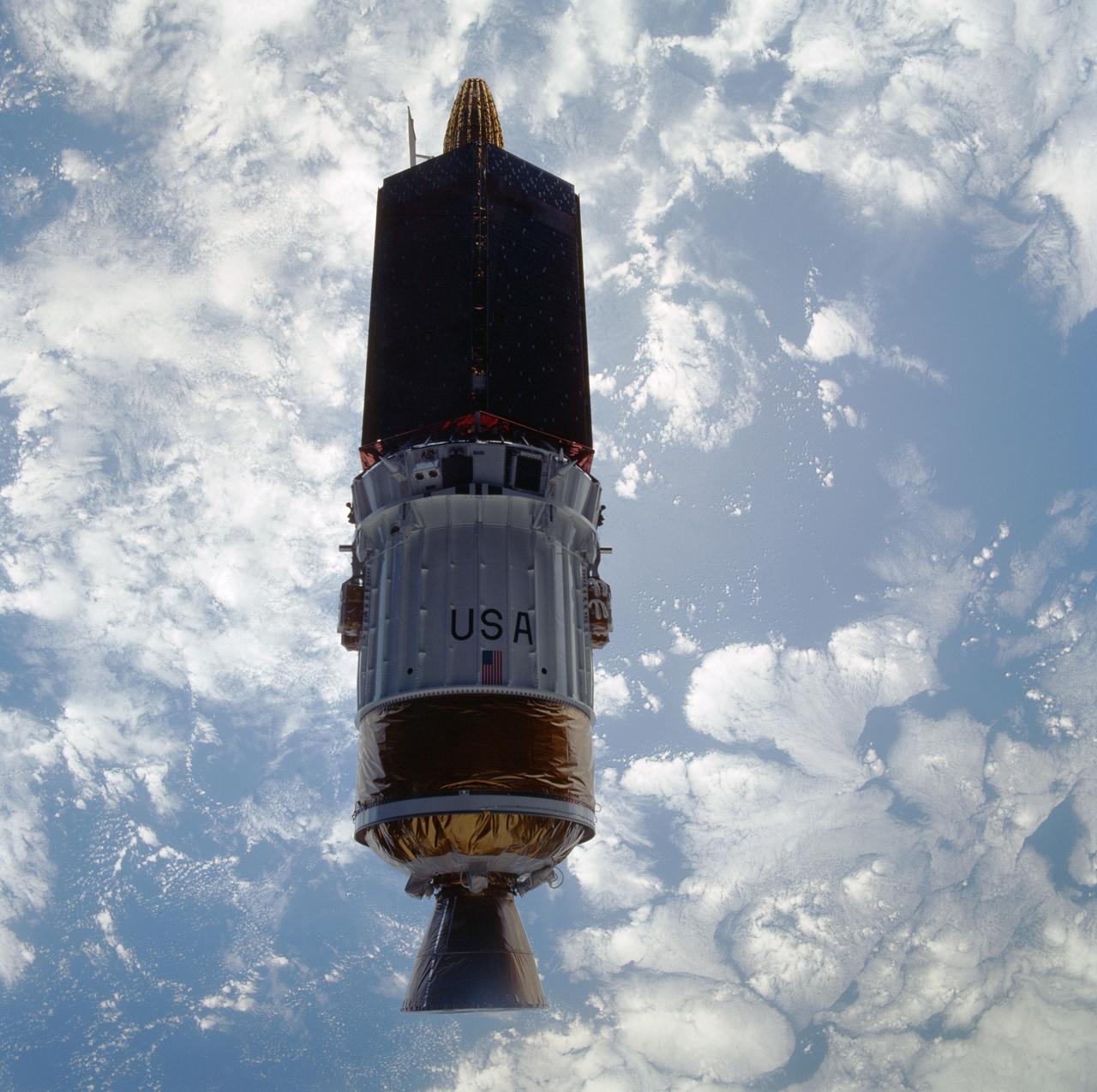
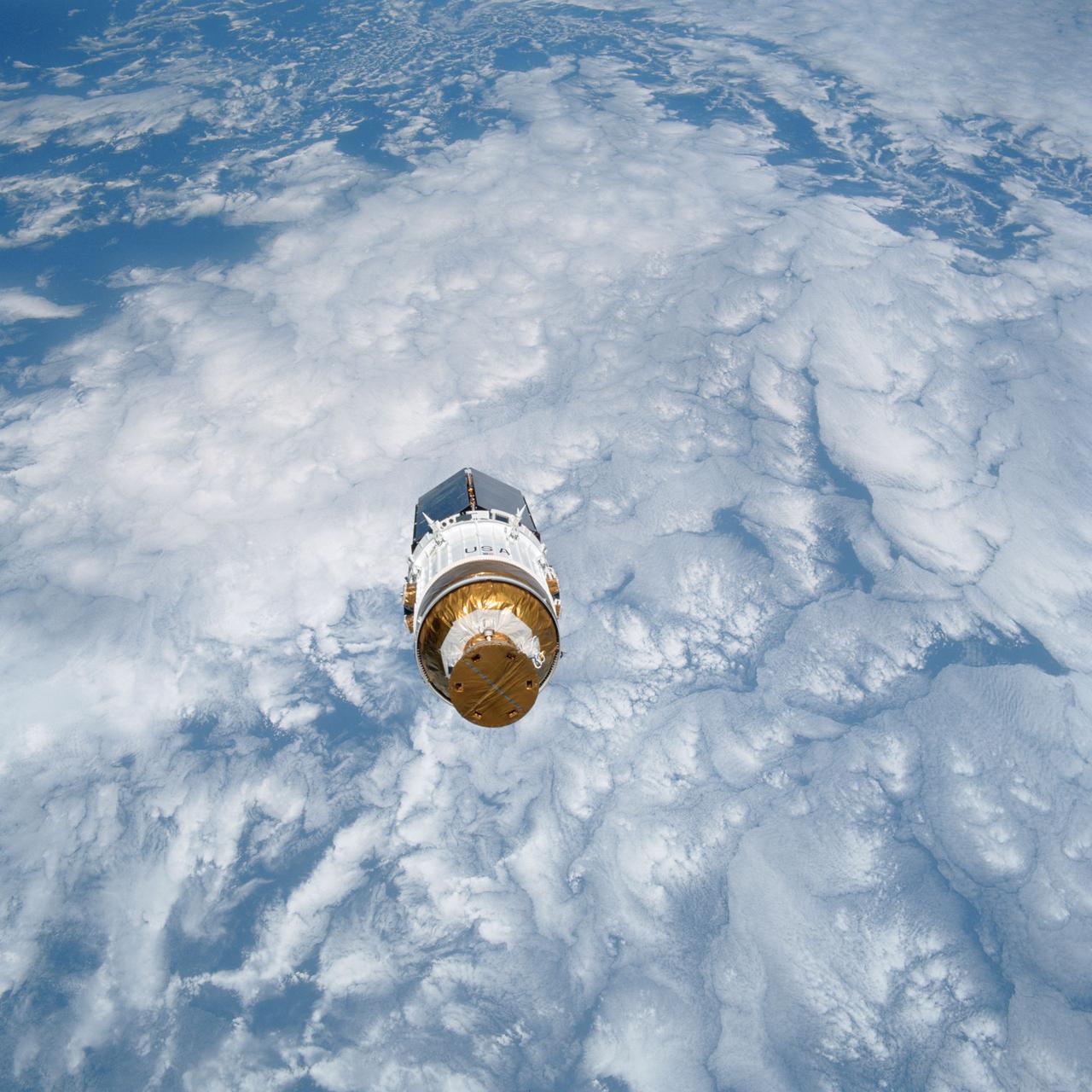
STS043-601-033 (2 Aug 1991) --- The Tracking and Data Relay Satellite (TDRS-E), is seen almost as a silhouette in this 70mm image.  The TDRS spacecraft was captured on film as it moved away from the earth-orbiting Atlantis a mere six hours after the shuttle was launched from Pad 39A at Kennedy Space Center, Florida.  TDRS, built by TRW, will be placed in a geosynchronous orbit and after on-orbit testing, which requires several weeks, will be designated TDRS-5.  The communications satellite will replace TDRS-3 at 174 degrees west longitude.  The backbone of NASA's space-to-ground communications, the Tracking and Data Relay Satellites have increased NASA's ability to send and receive data to spacecraft in low-earth orbit to more than  85 percent of the time.  Before TDRS, NASA relied solely on a system of ground stations that permitted communications only 15 percent of the time.  Increased coverage has allowed on-orbit repairs, live television broadcast from space and continuous dialogues between astronaut crews and ground control during critical periods such as space shuttle landings.  The five astronauts of the STS-43   are John E. Blaha, mission commander, Michael a. Baker, pilot, and mission specialists Shannon W. Lucid, G. David Low and James C. Adamson.
STS-43 TDRS-E & IUS over the Pacific Ocean after deployment from OV-104's PLB
STS043-601-042 (2 Aug 1991)  --- The Tracking and Data Relay Satellite (TDRS-E), is backdropped against an interesting cloud pattern over blue water soon after leaving the payload bay of the Earth-orbiting Space Shuttle Atlantis.  The deployment came a mere six hours after the Space Shuttle was launched from Pad 39A at Kennedy Space Center (KSC), Florida.  TDRS, built by TRW, will be placed in a geosynchronous-orbit and after on orbit testing, which requires several weeks, will be designated TDRS-5.  The communications satellite will replace TDRS-3 at 174 degrees west longitude.  The backbone of NASA's space-to-ground communications, the Tracking and Data Relay satellites have increased NASA's ability to send and receive data to spacecraft in low-Earth orbit to more than 85 percent of the time.  The five astronauts of the STS-43 mission are John E. Blaha, mission commander, Michael A. Baker, pilot, and Shannon W. Lucid, G. David Low, and James C. Adamson, all mission specialists.
STS-43 TDRS-E & IUS over the Pacific Ocean after deployment from OV-104's PLB
STS043-72-020 (2 Aug 1991) --- The Tracking and Data Relay Satellite (TDRS-E), is loosened from its restraint device and begins to leave the payload bay of the earth-orbiting Atlantis.  The deployment came a mere six hours after the Space Shuttle was launched from Pad 39A at Kennedy Space Center, Florida.  TDRS, built by TRW, will be placed in a geosynchronous orbit and after on-orbit testing, which requires several weeks, will be designated TDRS-5.  The communications satellite will replace TDRS-3 at 174 degrees West longitude.  The backbone of NASA's space-to-ground communications, the Tracking and Data Relay satellites have increased NASA's ability to send and receive data to spacecraft in low-earth orbit to more than 85 percent of the time.  The five astronauts of the STS 43 mission are John E. Blaha, mission commander, Michael A. Baker, pilot, and Shannon W. Lucid, G.  David Low, and James C.  Adamson, all mission specialists.
STS-43 TDRS-E / IUS is deployed from OV-104's payload bay (PLB)
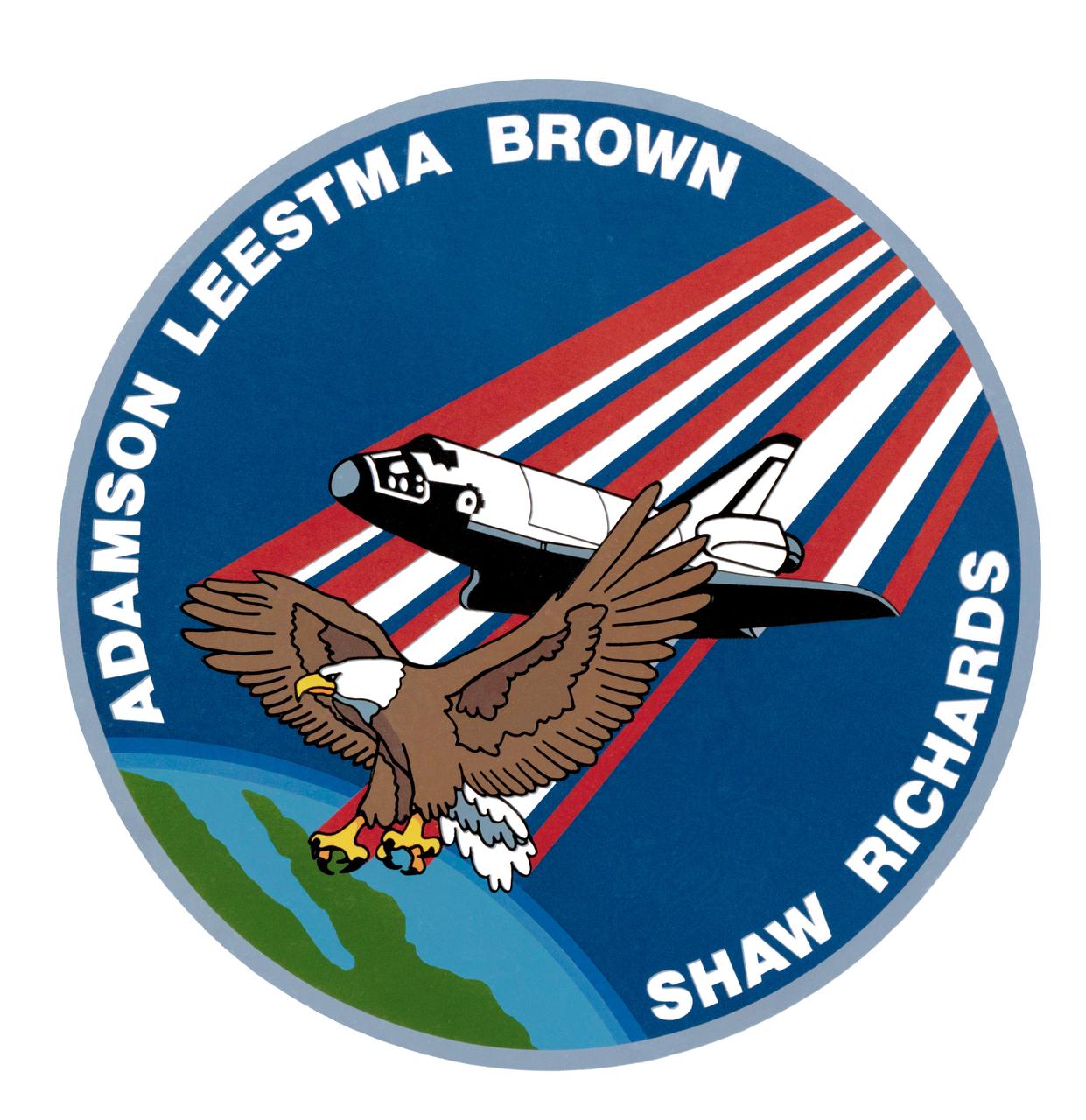
S88-40309 (7 Nov. 1988) --- The STS-28 insignia was designed by the astronaut crew, who said it portrays the pride the American people have in their manned spaceflight program. It depicts America (the eagle) guiding the space program (the space shuttle) safely home from an orbital mission. The view looks south on Baja California and the west coast of the United States as the space travelers re-enter the atmosphere. The hypersonic contrails created by the eagle and shuttle represent the American flag. The crew called the simple boldness of the design symbolic of America's unfaltering commitment to leadership in the exploration and development of space. Crew members for STS-28 are astronauts Brewster H. Shaw Jr.,commander; Richard N. Richards, pilot; and David C. Leestma, Mark N. Brown and James C.  Adamson, mission specialists.     The NASA insignia design for space shuttle flights is reserved for use by the astronauts and for other official use as the NASA Administrator may authorize. Public availability has been approved only in the forms of illustrations by the various news media. When and if there is any change in this policy, which is not anticipated, the change will be publicly announced. Photo credit: NASA
STS-28 Columbia - Orbiter Vehicle (OV)-102 - Crew Insignia