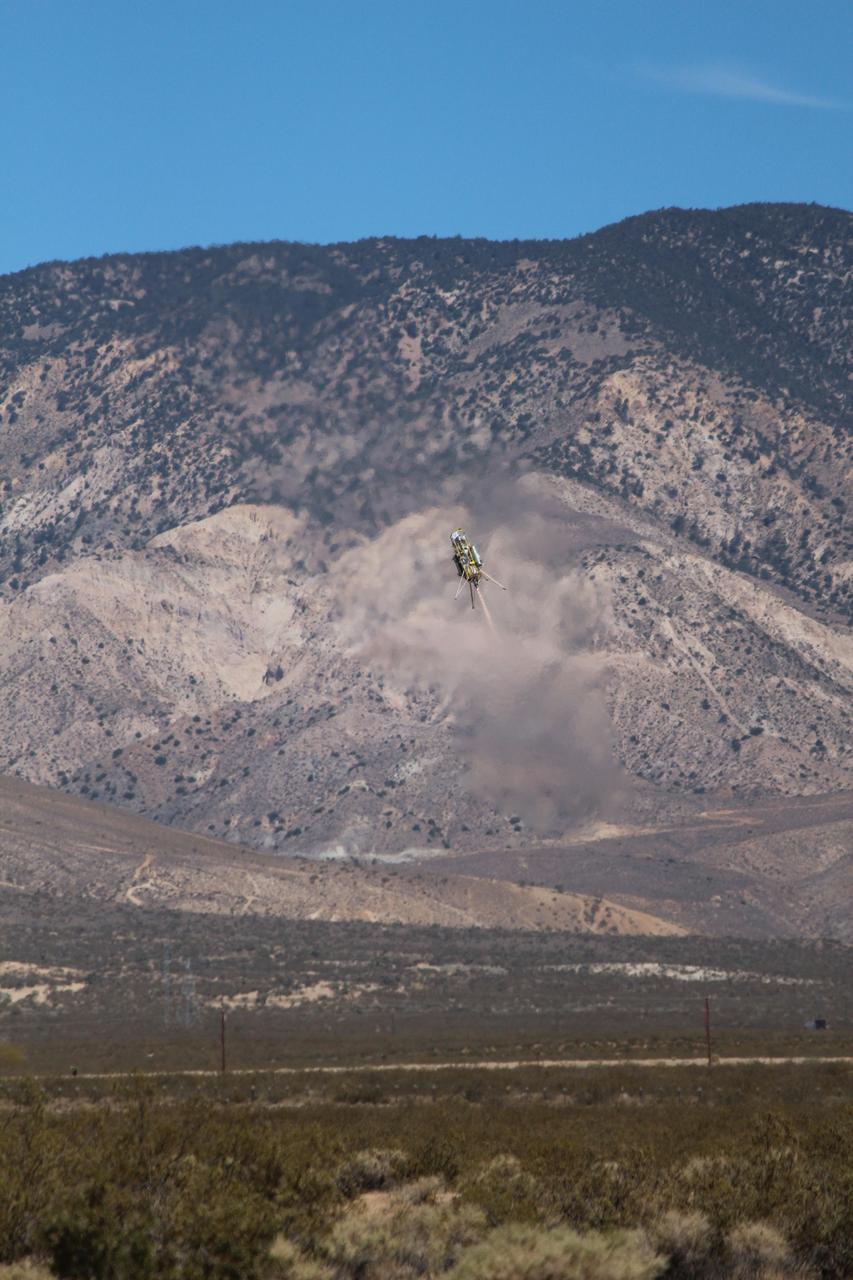
This image was taken during a flight test of JPL Autonomous Descent and Ascent Powered-Flight Testbed ADAPT. The testbed was flown aboard a Masten Space System Xombie rocket.-Flight Testbed ADAPT.
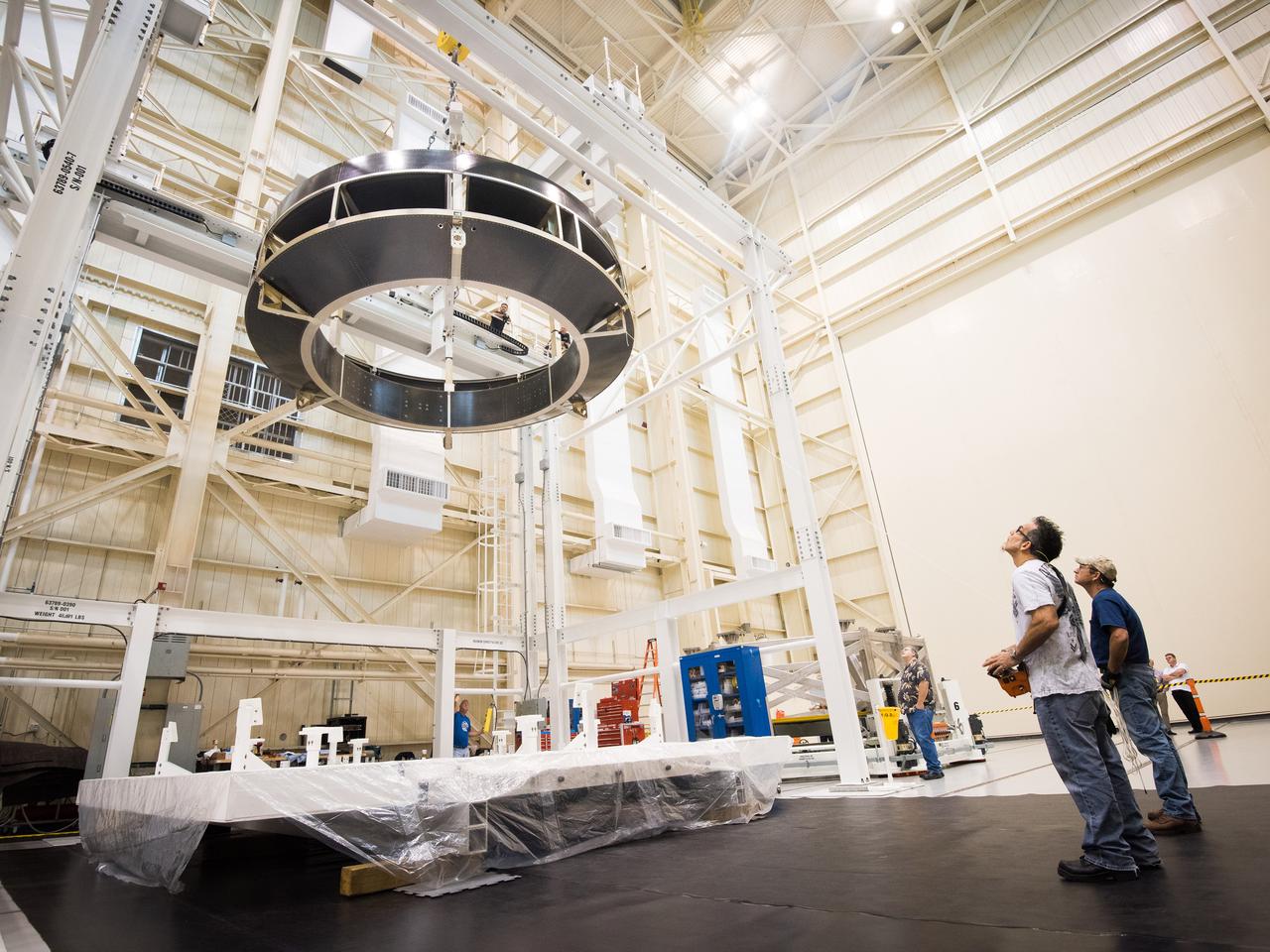
Offloading of the Orion Crew Module Adapter, CMA, at Plum Brook Station. The adapter will connect Orion’s crew module to a service module provided by ESA (European Space Agency). NASA is preparing for a series of tests that will check out the Orion European Service Module, a critical part of the spacecraft that will be launched on future missions to an asteroid and on toward Mars.
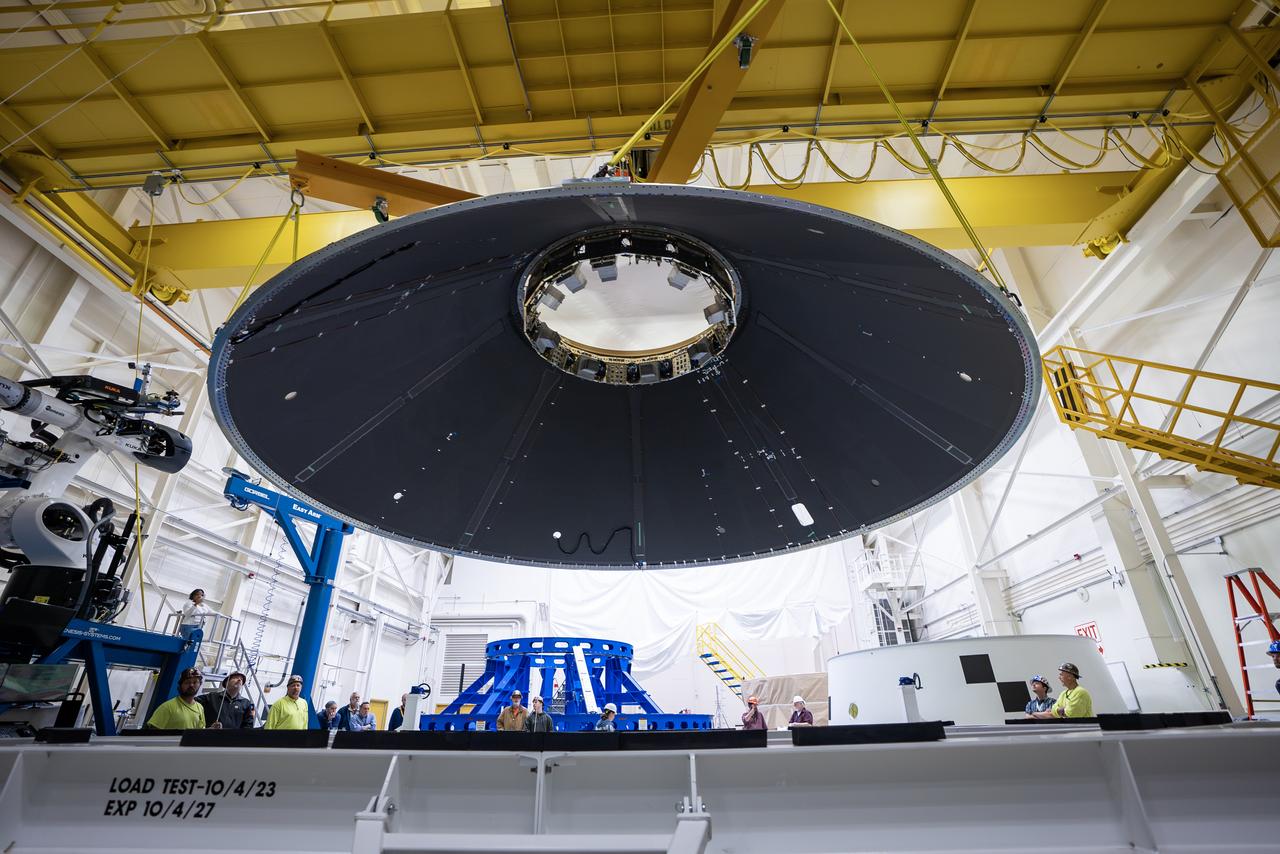
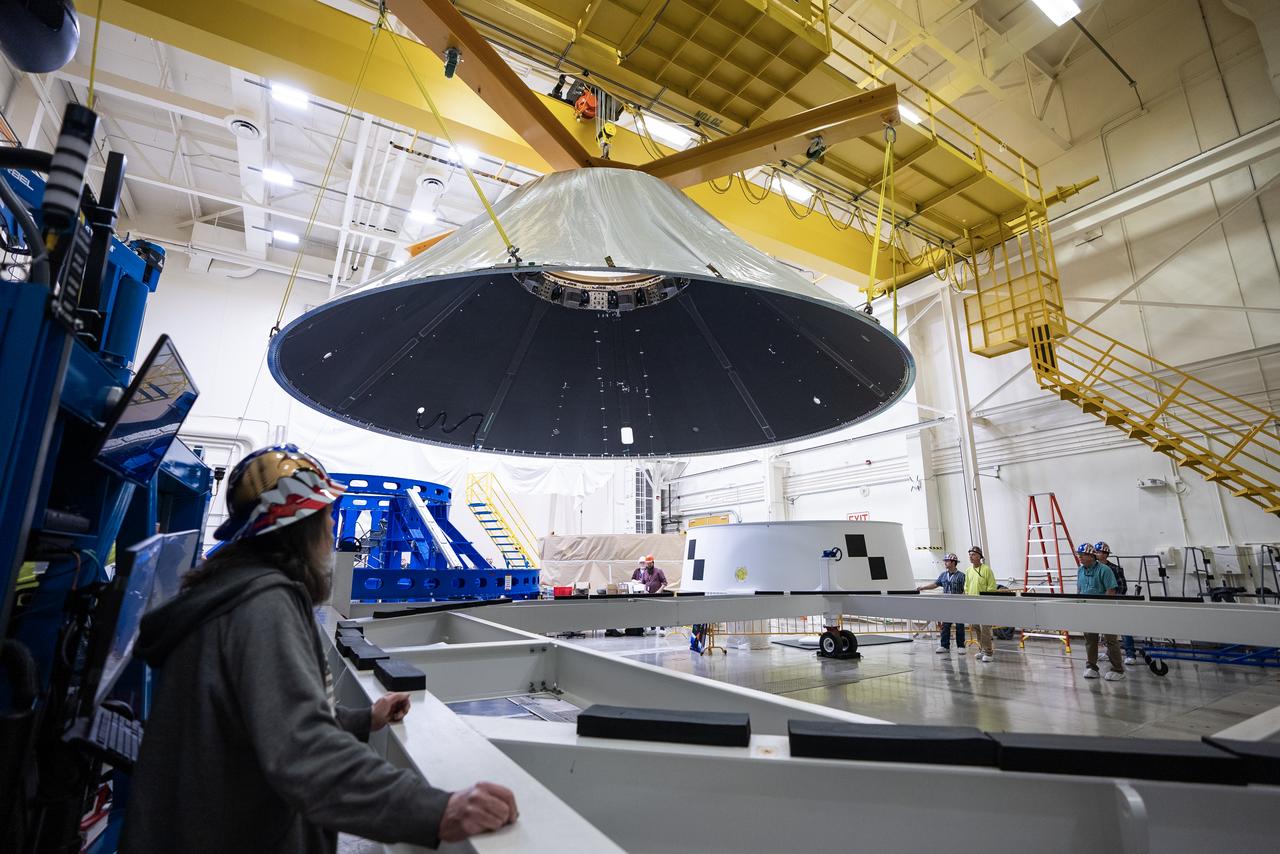
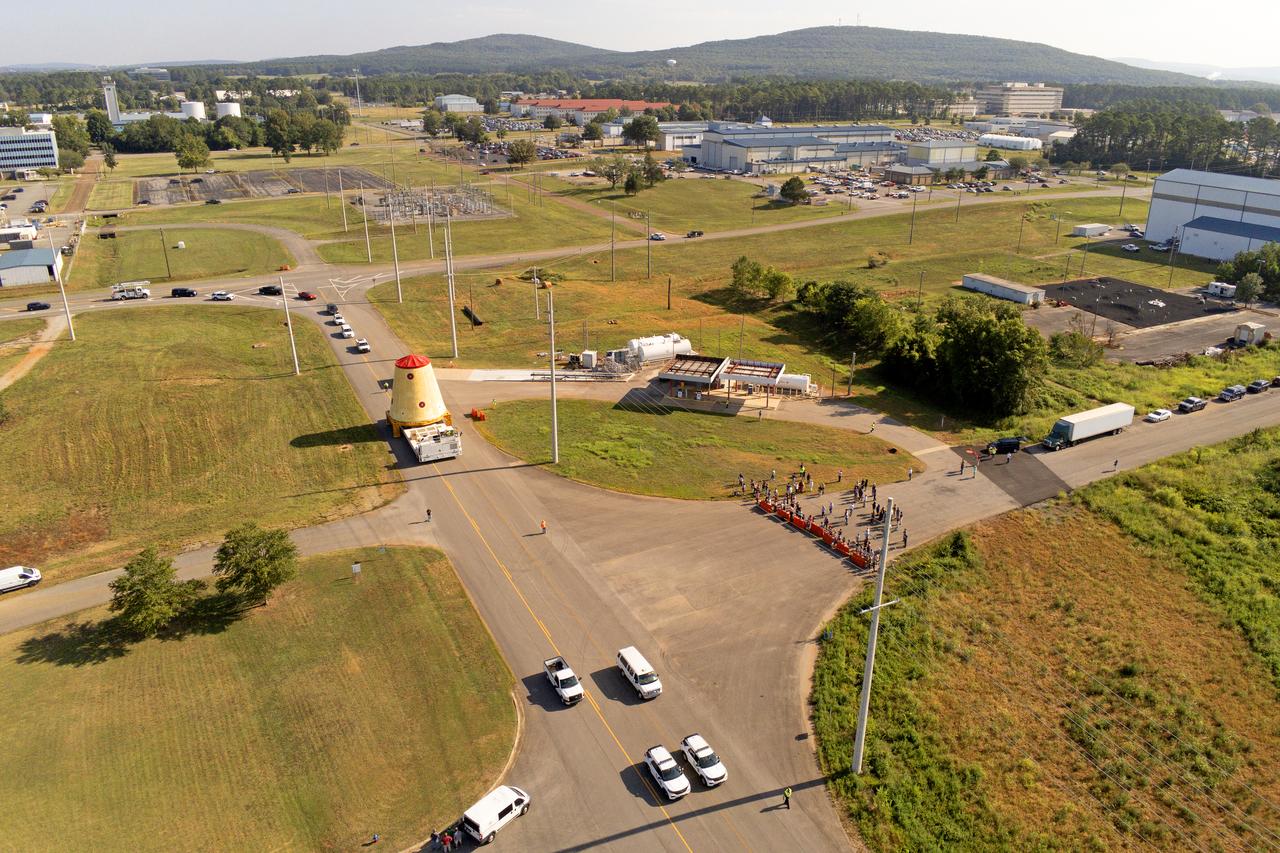
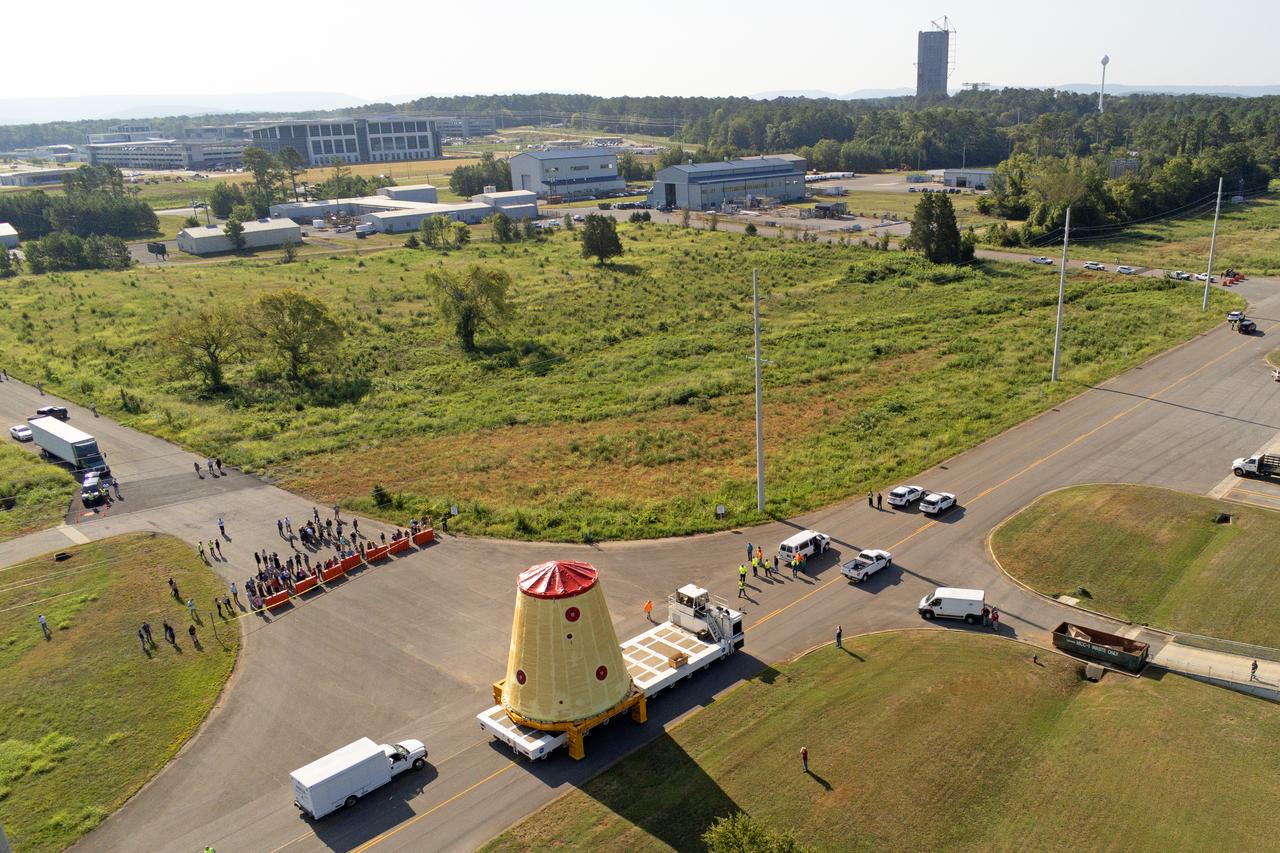
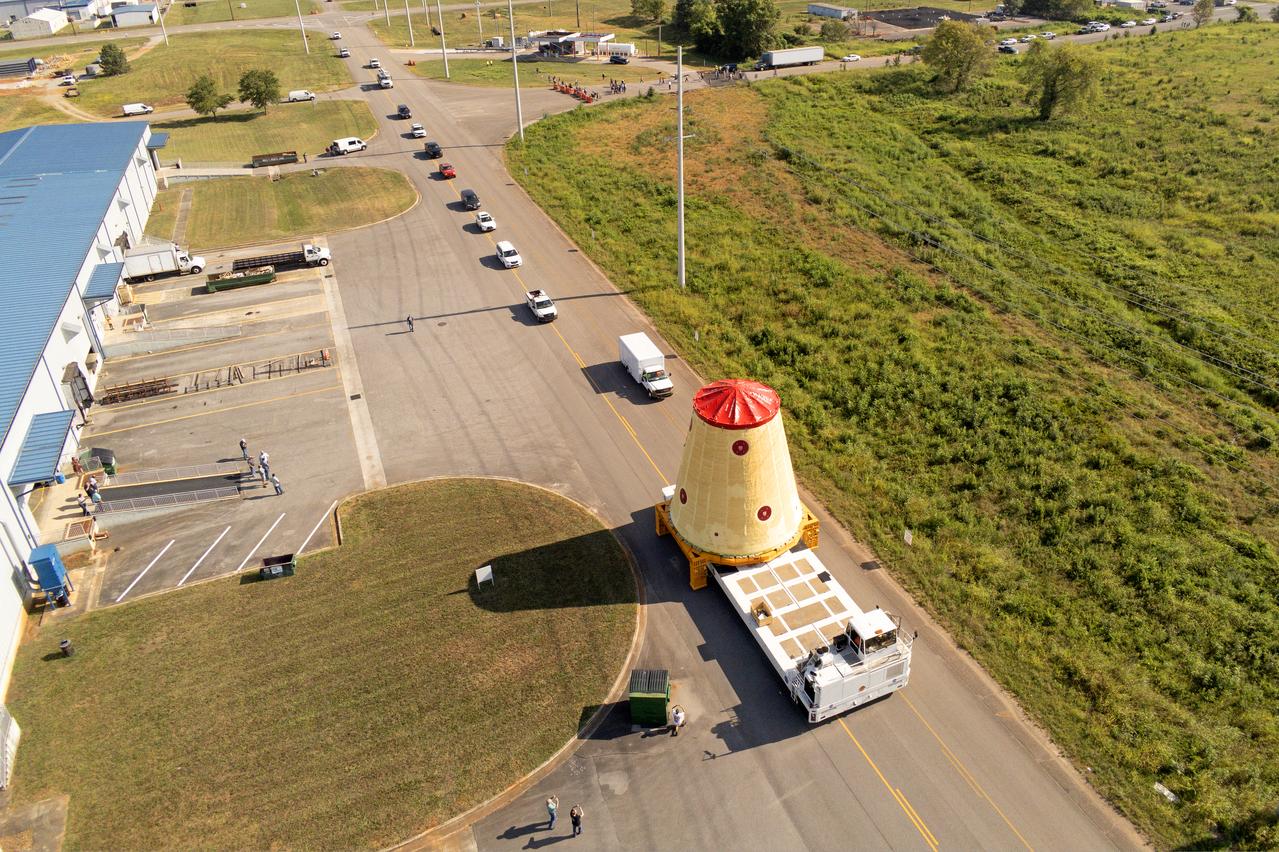
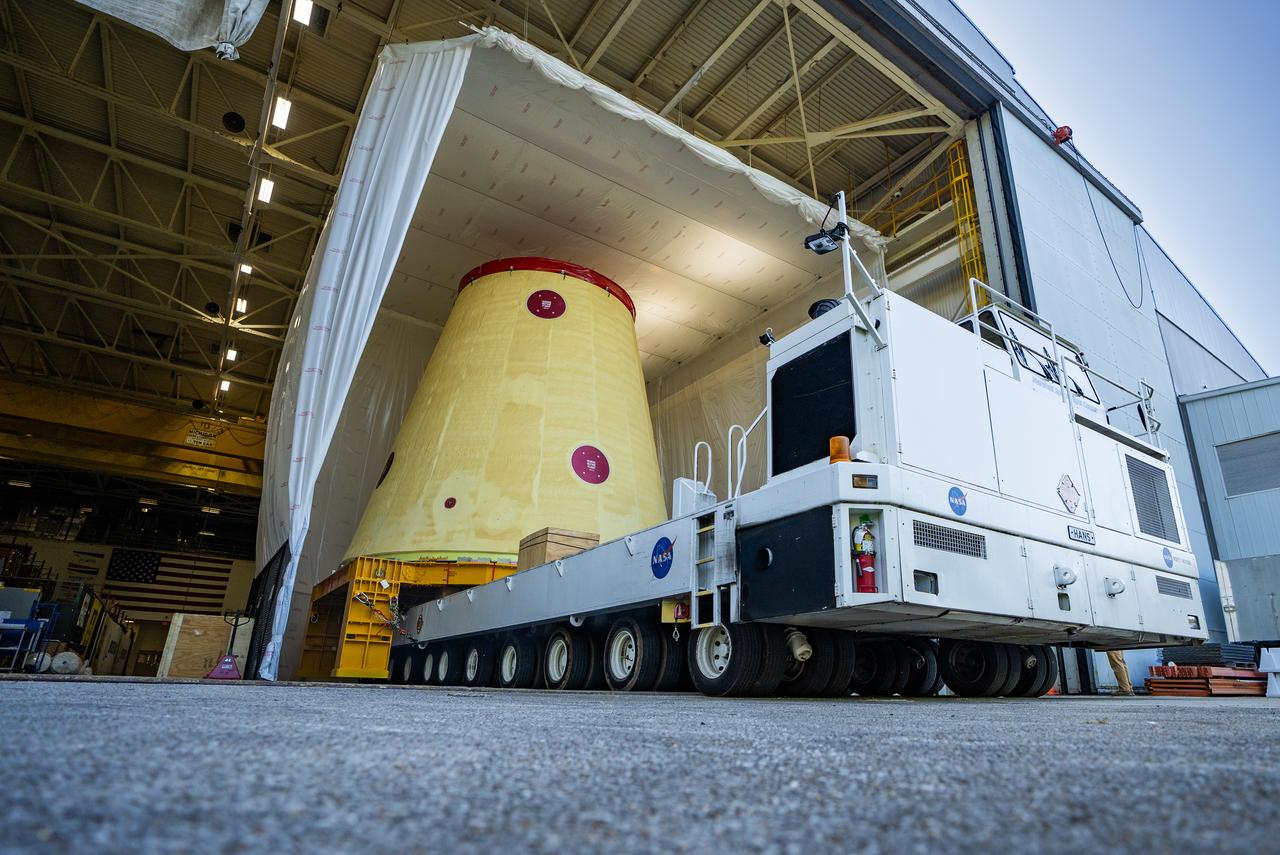
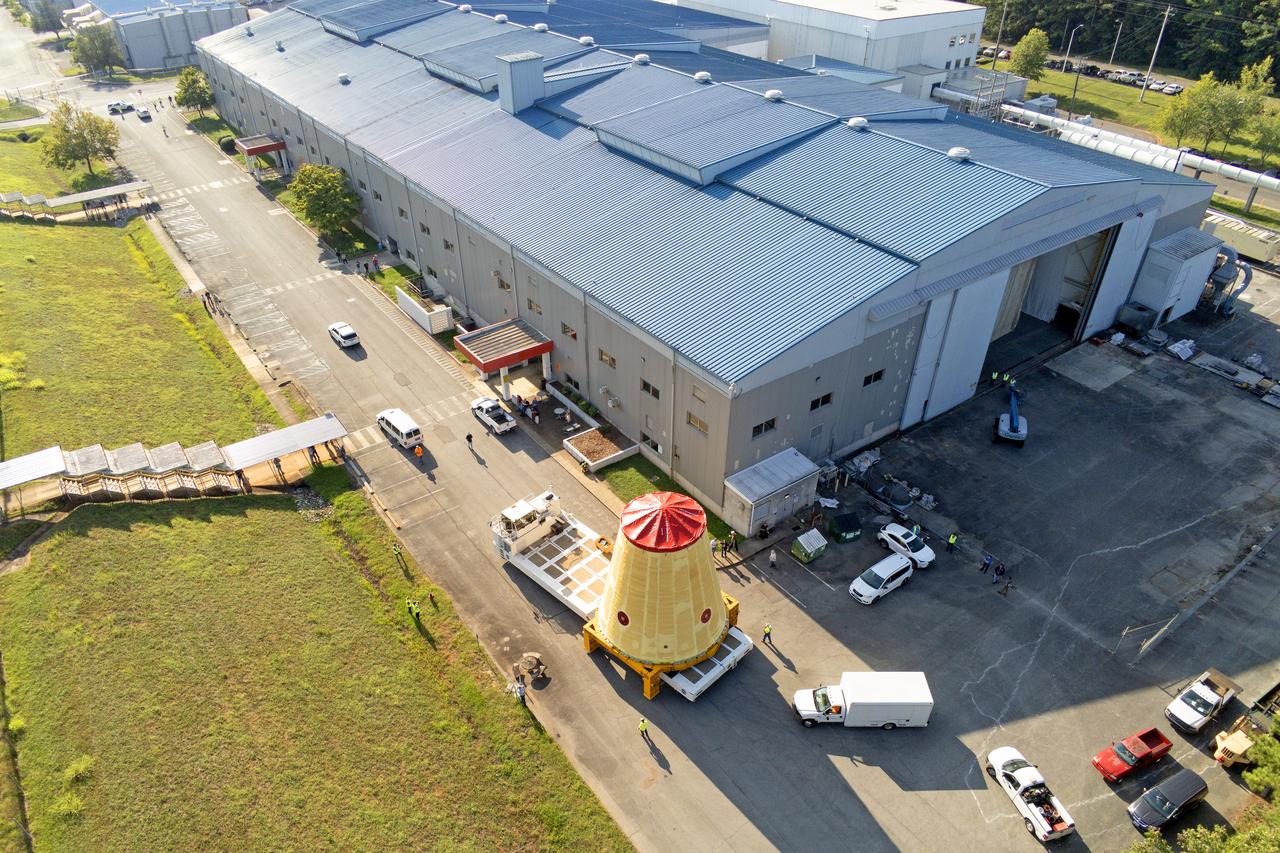
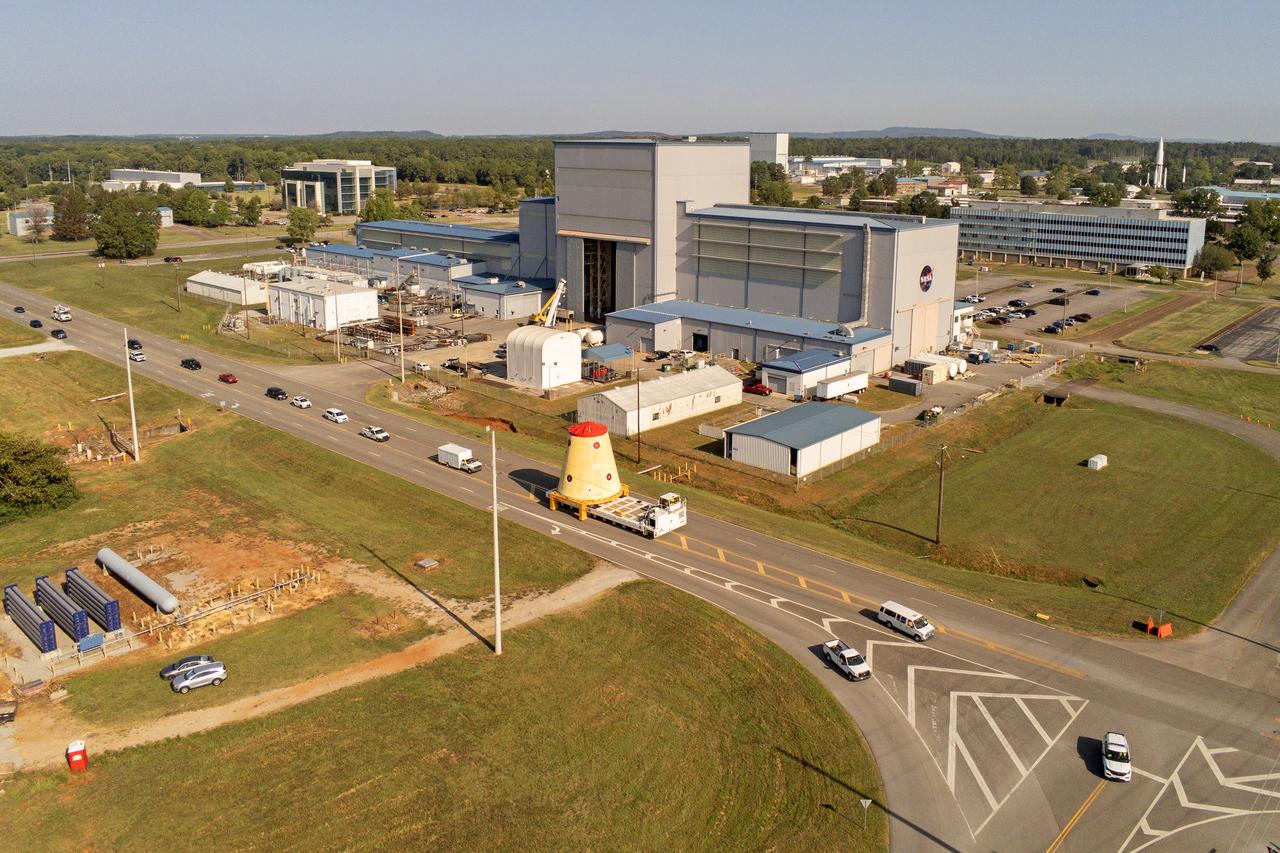
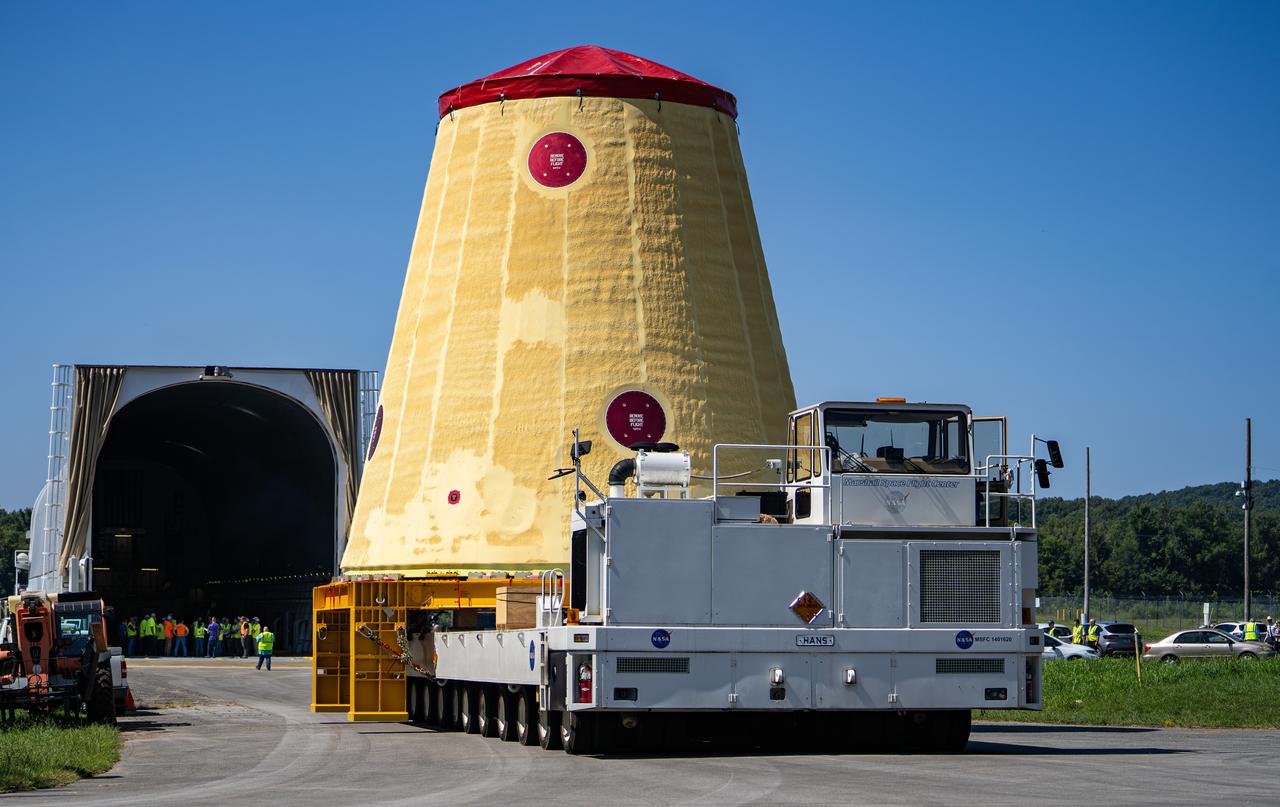
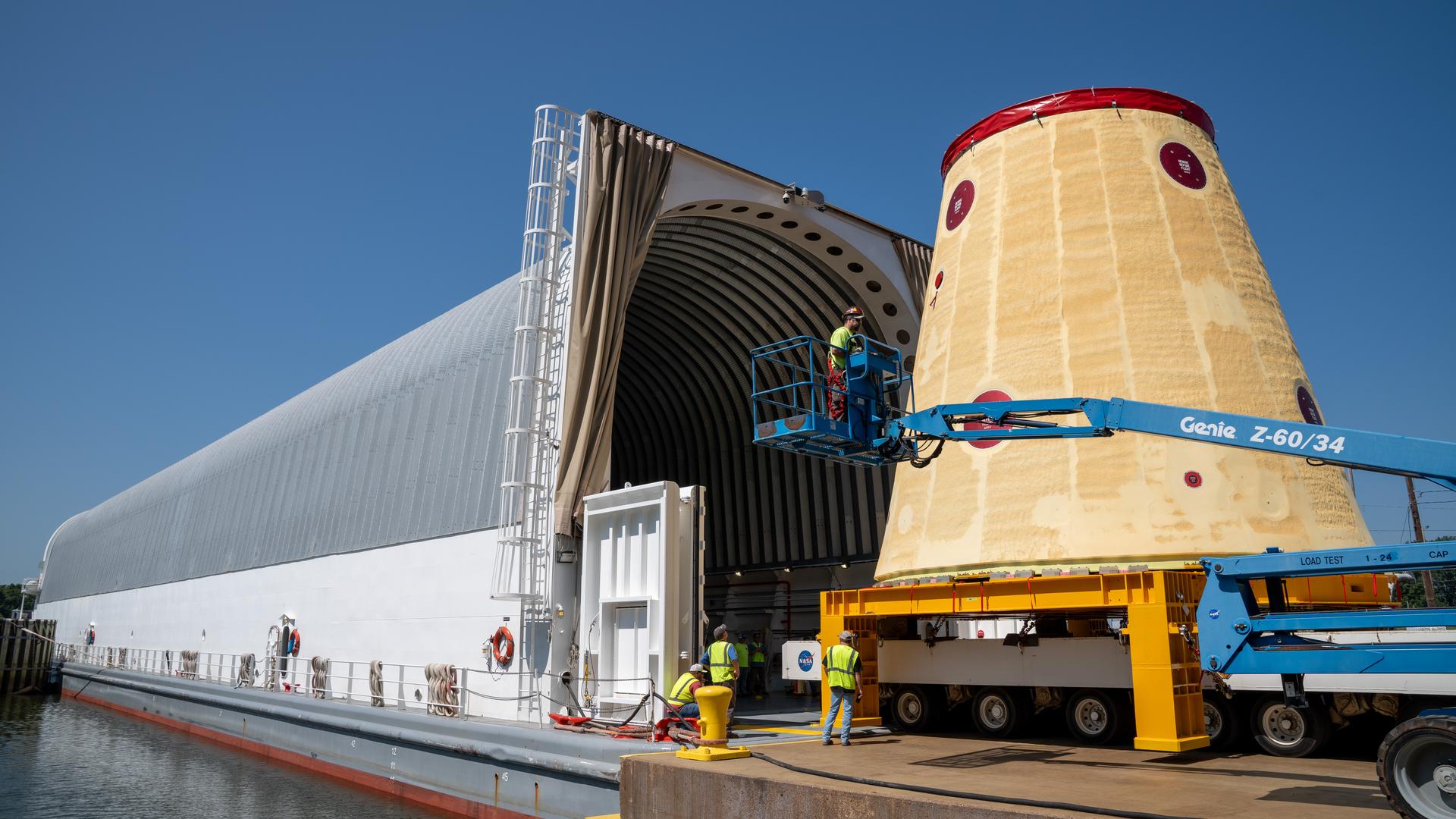
These photos and videos show how NASA manufactured and prepared to transport the payload adapter in February inside Building 4708 at NASA’s Marshall Space Flight Center in Huntsville, Alabama. Prior to moving the hardware for testing, teams installed the New Explorations Secondary Transport component, called the NEST, into the top of the engineering development unit. The NEST component will allow the hardware to hold a series of secondary payloads, or small satellites. The cone-shaped payload adapter is about 8.5 feet tall and features two metal rings and eight composite panels. The adapter, which will debut on NASA’s Artemis IV mission, is an evolution from the Orion stage adapter used in the Block 1 configuration of the rocket for the first three Artemis missions. It will be housed inside the universal stage adapter atop the rocket’s more powerful in-space stage, called the exploration upper stage. The payload adapter, like the launch vehicle stage adapter and the Orion stage adapter, is fully manufactured and tested at Marshall, which manages the SLS Program. NASA is working to land the first woman, first person of color, and its first international partner astronaut on the Moon under Artemis. SLS is part of NASA’s backbone for deep space exploration, along with the Orion spacecraft and Gateway in orbit around the Moon and commercial human landing systems, next-generational spacesuits, and rovers on the lunar surface. SLS is the only rocket that can send Orion, astronauts, and supplies to the Moon in a single launch.
These photos and videos show how NASA manufactured and prepared to transport the payload adapter in February inside Building 4708 at NASA’s Marshall Space Flight Center in Huntsville, Alabama. Prior to moving the hardware for testing, teams installed the New Explorations Secondary Transport component, called the NEST, into the top of the engineering development unit. The NEST component will allow the hardware to hold a series of secondary payloads, or small satellites. The cone-shaped payload adapter is about 8.5 feet tall and features two metal rings and eight composite panels. The adapter, which will debut on NASA’s Artemis IV mission, is an evolution from the Orion stage adapter used in the Block 1 configuration of the rocket for the first three Artemis missions. It will be housed inside the universal stage adapter atop the rocket’s more powerful in-space stage, called the exploration upper stage. The payload adapter, like the launch vehicle stage adapter and the Orion stage adapter, is fully manufactured and tested at Marshall, which manages the SLS Program. NASA is working to land the first woman, first person of color, and its first international partner astronaut on the Moon under Artemis. SLS is part of NASA’s backbone for deep space exploration, along with the Orion spacecraft and Gateway in orbit around the Moon and commercial human landing systems, next-generational spacesuits, and rovers on the lunar surface. SLS is the only rocket that can send Orion, astronauts, and supplies to the Moon in a single launch.
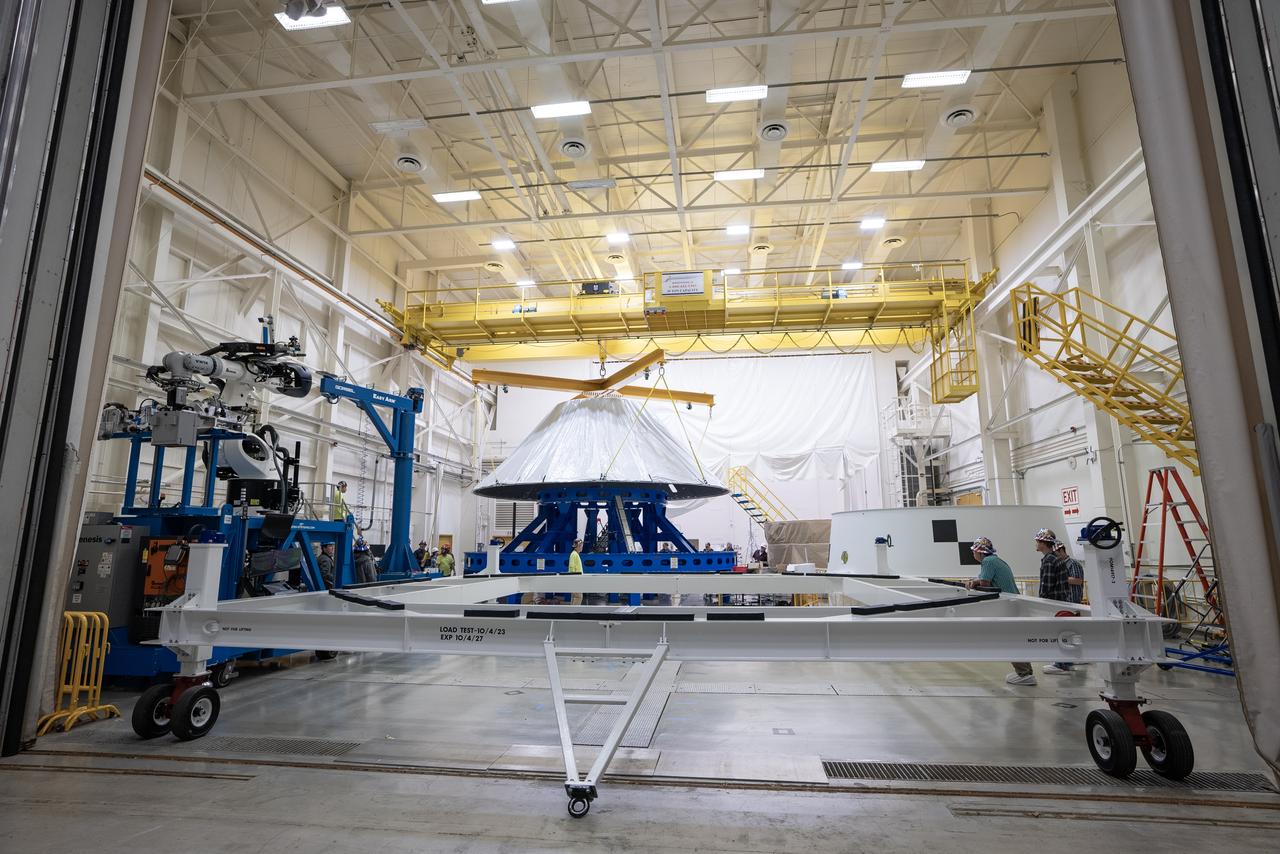
These photos and videos show how NASA manufactured and prepared to transport the payload adapter in February inside Building 4708 at NASA’s Marshall Space Flight Center in Huntsville, Alabama. Prior to moving the hardware for testing, teams installed the New Explorations Secondary Transport component, called the NEST, into the top of the engineering development unit. The NEST component will allow the hardware to hold a series of secondary payloads, or small satellites. The cone-shaped payload adapter is about 8.5 feet tall and features two metal rings and eight composite panels. The adapter, which will debut on NASA’s Artemis IV mission, is an evolution from the Orion stage adapter used in the Block 1 configuration of the rocket for the first three Artemis missions. It will be housed inside the universal stage adapter atop the rocket’s more powerful in-space stage, called the exploration upper stage. The payload adapter, like the launch vehicle stage adapter and the Orion stage adapter, is fully manufactured and tested at Marshall, which manages the SLS Program. NASA is working to land the first woman, first person of color, and its first international partner astronaut on the Moon under Artemis. SLS is part of NASA’s backbone for deep space exploration, along with the Orion spacecraft and Gateway in orbit around the Moon and commercial human landing systems, next-generational spacesuits, and rovers on the lunar surface. SLS is the only rocket that can send Orion, astronauts, and supplies to the Moon in a single launch.
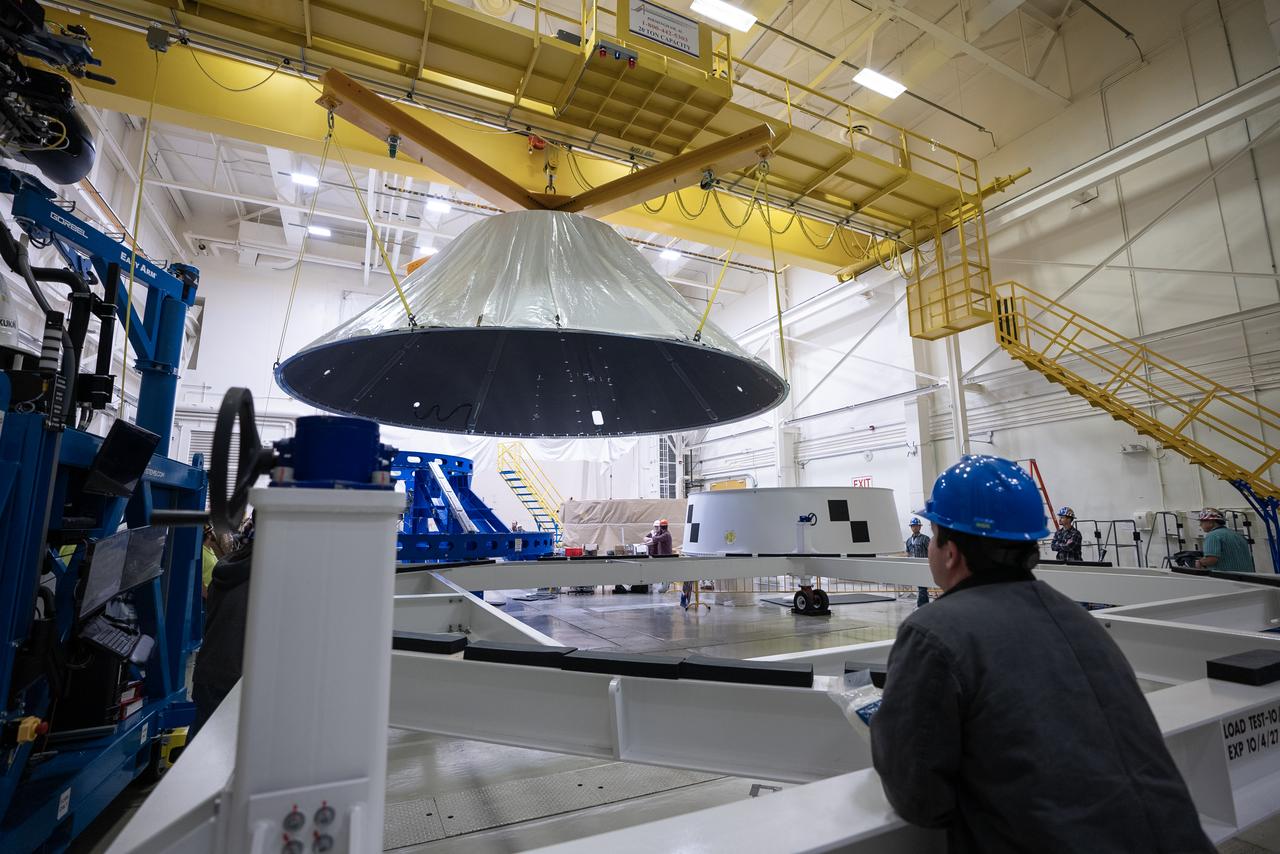
These photos and videos show how NASA manufactured and prepared to transport the payload adapter in February inside Building 4708 at NASA’s Marshall Space Flight Center in Huntsville, Alabama. Prior to moving the hardware for testing, teams installed the New Explorations Secondary Transport component, called the NEST, into the top of the engineering development unit. The NEST component will allow the hardware to hold a series of secondary payloads, or small satellites. The cone-shaped payload adapter is about 8.5 feet tall and features two metal rings and eight composite panels. The adapter, which will debut on NASA’s Artemis IV mission, is an evolution from the Orion stage adapter used in the Block 1 configuration of the rocket for the first three Artemis missions. It will be housed inside the universal stage adapter atop the rocket’s more powerful in-space stage, called the exploration upper stage. The payload adapter, like the launch vehicle stage adapter and the Orion stage adapter, is fully manufactured and tested at Marshall, which manages the SLS Program. NASA is working to land the first woman, first person of color, and its first international partner astronaut on the Moon under Artemis. SLS is part of NASA’s backbone for deep space exploration, along with the Orion spacecraft and Gateway in orbit around the Moon and commercial human landing systems, next-generational spacesuits, and rovers on the lunar surface. SLS is the only rocket that can send Orion, astronauts, and supplies to the Moon in a single launch.
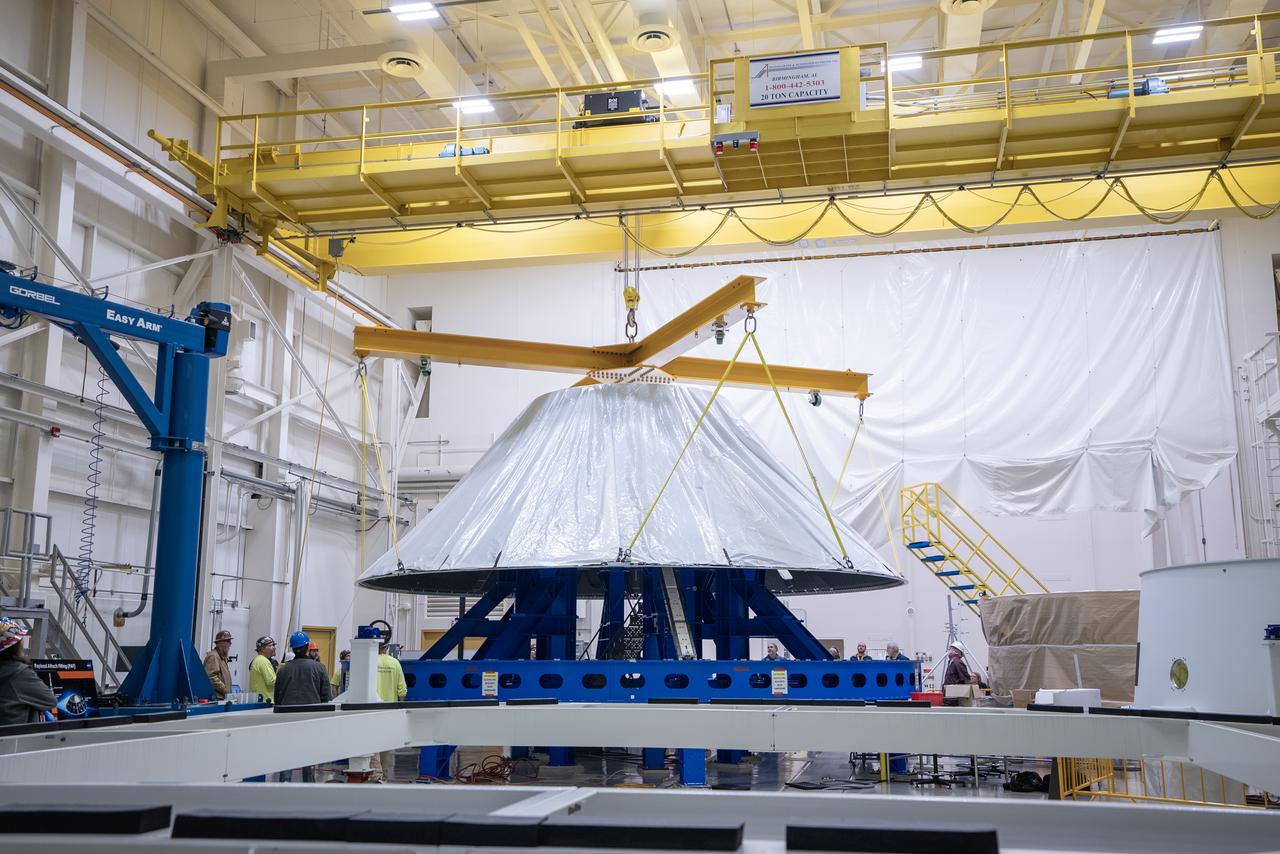
These photos and videos show how NASA manufactured and prepared to transport the payload adapter in February inside Building 4708 at NASA’s Marshall Space Flight Center in Huntsville, Alabama. Prior to moving the hardware for testing, teams installed the New Explorations Secondary Transport component, called the NEST, into the top of the engineering development unit. The NEST component will allow the hardware to hold a series of secondary payloads, or small satellites. The cone-shaped payload adapter is about 8.5 feet tall and features two metal rings and eight composite panels. The adapter, which will debut on NASA’s Artemis IV mission, is an evolution from the Orion stage adapter used in the Block 1 configuration of the rocket for the first three Artemis missions. It will be housed inside the universal stage adapter atop the rocket’s more powerful in-space stage, called the exploration upper stage. The payload adapter, like the launch vehicle stage adapter and the Orion stage adapter, is fully manufactured and tested at Marshall, which manages the SLS Program. NASA is working to land the first woman, first person of color, and its first international partner astronaut on the Moon under Artemis. SLS is part of NASA’s backbone for deep space exploration, along with the Orion spacecraft and Gateway in orbit around the Moon and commercial human landing systems, next-generational spacesuits, and rovers on the lunar surface. SLS is the only rocket that can send Orion, astronauts, and supplies to the Moon in a single launch.
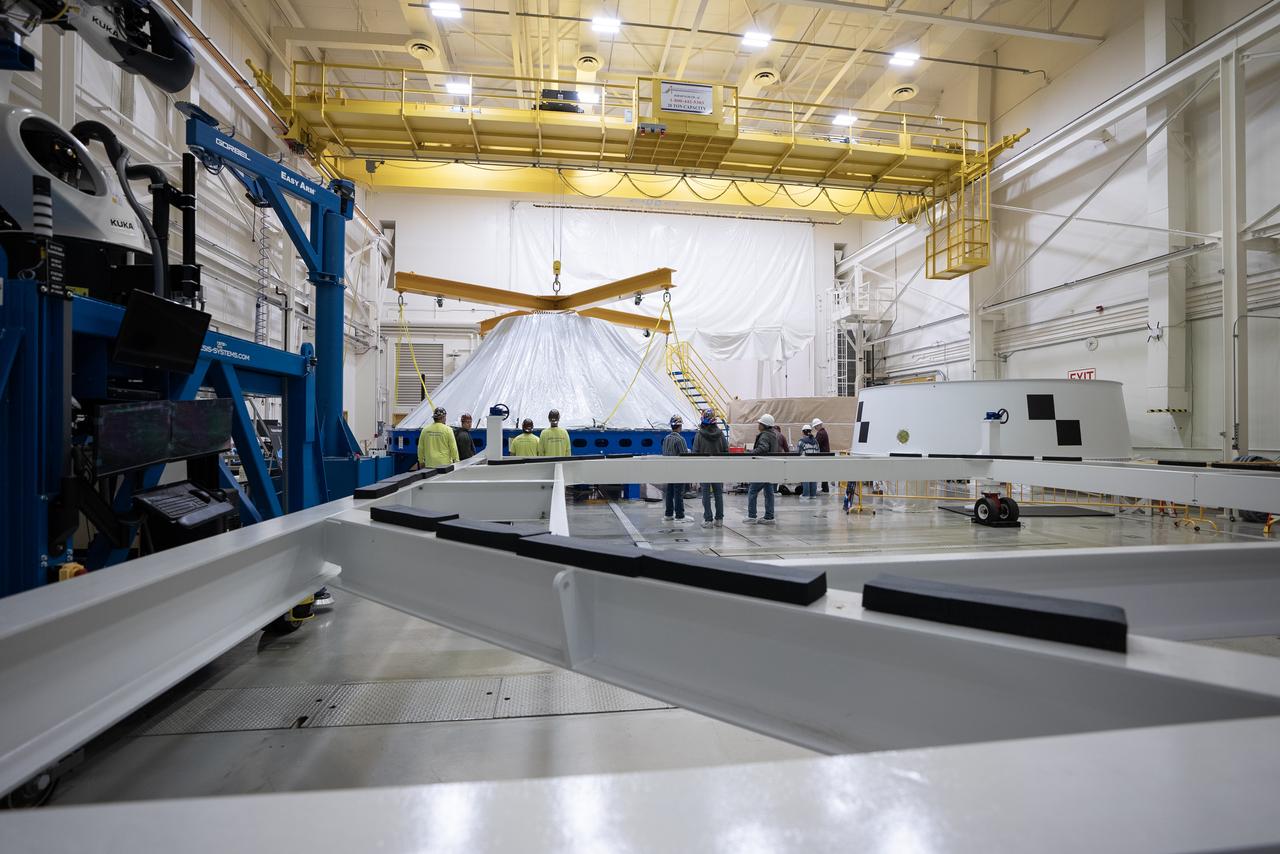
These photos and videos show how NASA manufactured and prepared to transport the payload adapter in February inside Building 4708 at NASA’s Marshall Space Flight Center in Huntsville, Alabama. Prior to moving the hardware for testing, teams installed the New Explorations Secondary Transport component, called the NEST, into the top of the engineering development unit. The NEST component will allow the hardware to hold a series of secondary payloads, or small satellites. The cone-shaped payload adapter is about 8.5 feet tall and features two metal rings and eight composite panels. The adapter, which will debut on NASA’s Artemis IV mission, is an evolution from the Orion stage adapter used in the Block 1 configuration of the rocket for the first three Artemis missions. It will be housed inside the universal stage adapter atop the rocket’s more powerful in-space stage, called the exploration upper stage. The payload adapter, like the launch vehicle stage adapter and the Orion stage adapter, is fully manufactured and tested at Marshall, which manages the SLS Program. NASA is working to land the first woman, first person of color, and its first international partner astronaut on the Moon under Artemis. SLS is part of NASA’s backbone for deep space exploration, along with the Orion spacecraft and Gateway in orbit around the Moon and commercial human landing systems, next-generational spacesuits, and rovers on the lunar surface. SLS is the only rocket that can send Orion, astronauts, and supplies to the Moon in a single launch.
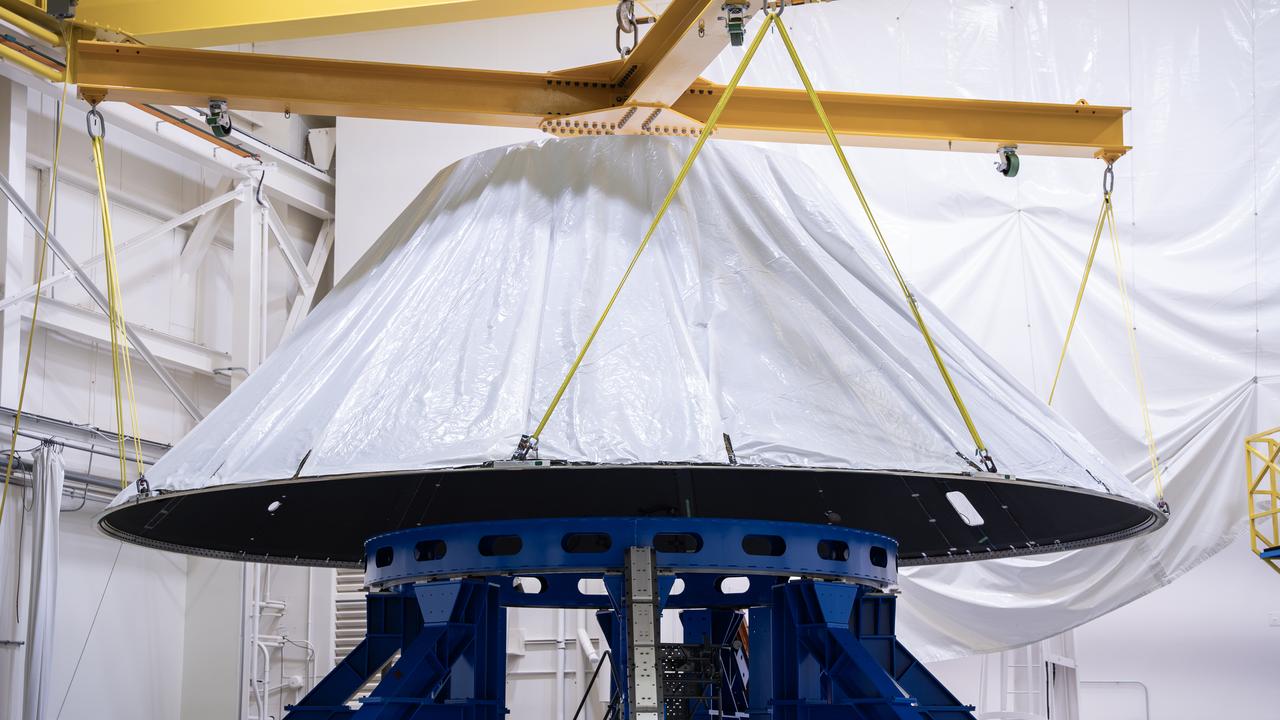
These photos and videos show how NASA manufactured and prepared to transport the payload adapter in February inside Building 4708 at NASA’s Marshall Space Flight Center in Huntsville, Alabama. Prior to moving the hardware for testing, teams installed the New Explorations Secondary Transport component, called the NEST, into the top of the engineering development unit. The NEST component will allow the hardware to hold a series of secondary payloads, or small satellites. The cone-shaped payload adapter is about 8.5 feet tall and features two metal rings and eight composite panels. The adapter, which will debut on NASA’s Artemis IV mission, is an evolution from the Orion stage adapter used in the Block 1 configuration of the rocket for the first three Artemis missions. It will be housed inside the universal stage adapter atop the rocket’s more powerful in-space stage, called the exploration upper stage. The payload adapter, like the launch vehicle stage adapter and the Orion stage adapter, is fully manufactured and tested at Marshall, which manages the SLS Program. NASA is working to land the first woman, first person of color, and its first international partner astronaut on the Moon under Artemis. SLS is part of NASA’s backbone for deep space exploration, along with the Orion spacecraft and Gateway in orbit around the Moon and commercial human landing systems, next-generational spacesuits, and rovers on the lunar surface. SLS is the only rocket that can send Orion, astronauts, and supplies to the Moon in a single launch.
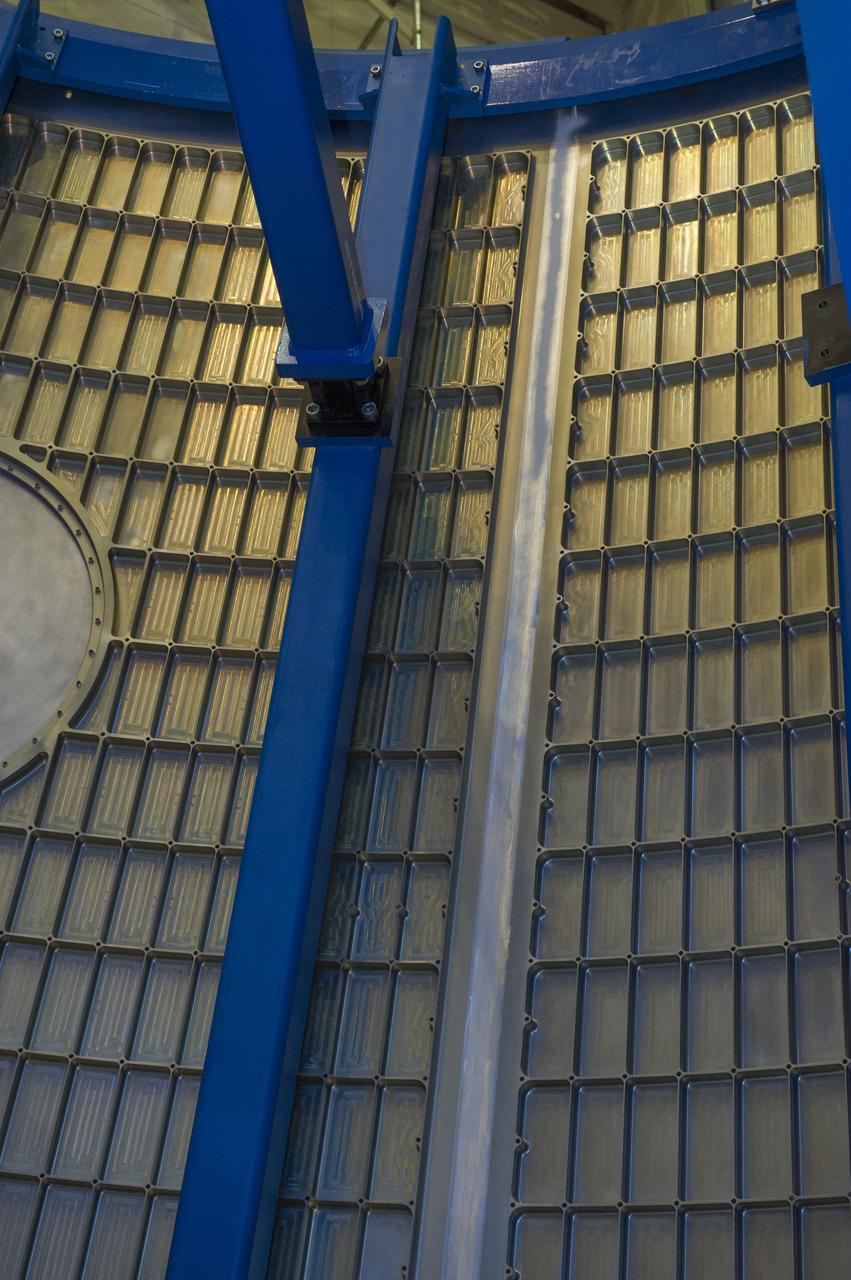
Launch Vehicle Stage Adapter Aft Cone Weld #1
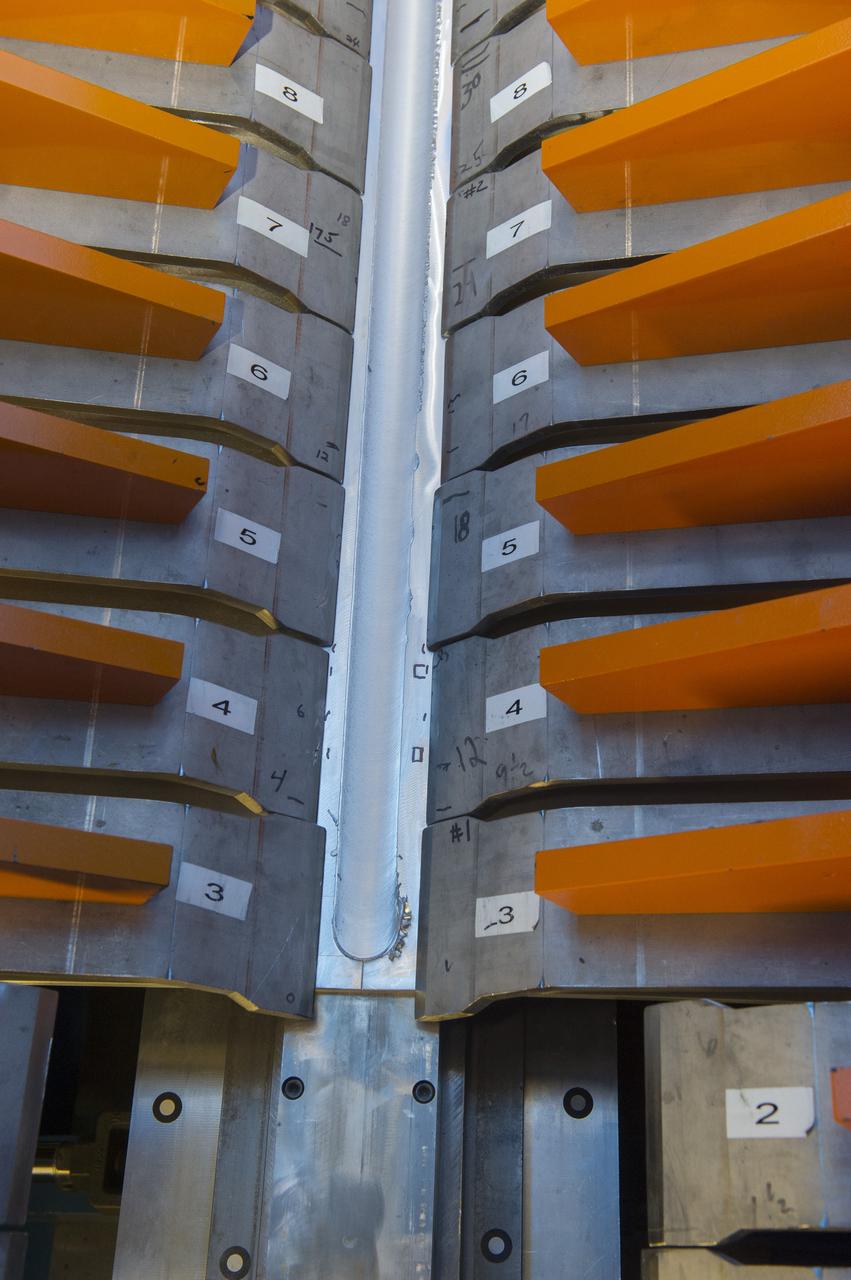
Launch Vehicle Stage Adapter Aft Cone Weld #1
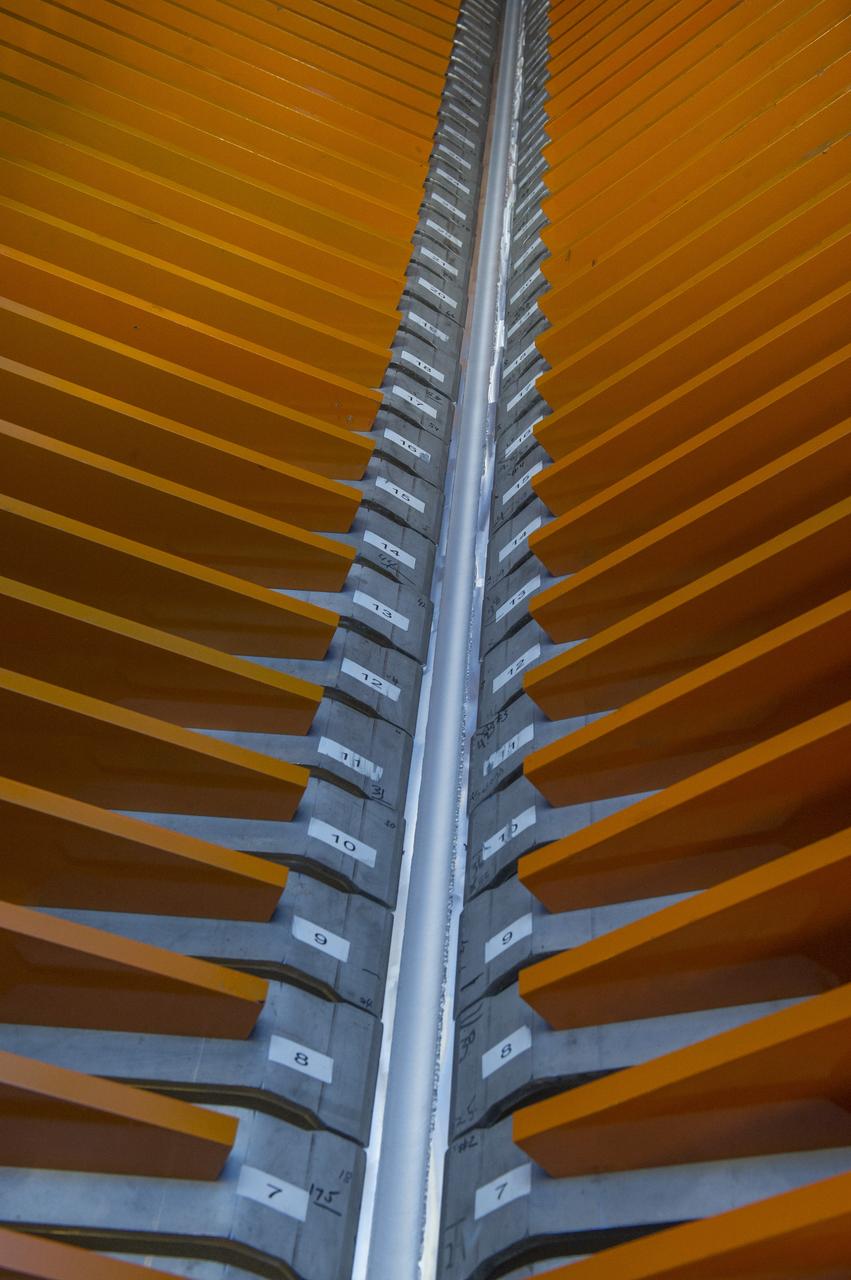
Launch Vehicle Stage Adapter Aft Cone Weld #1
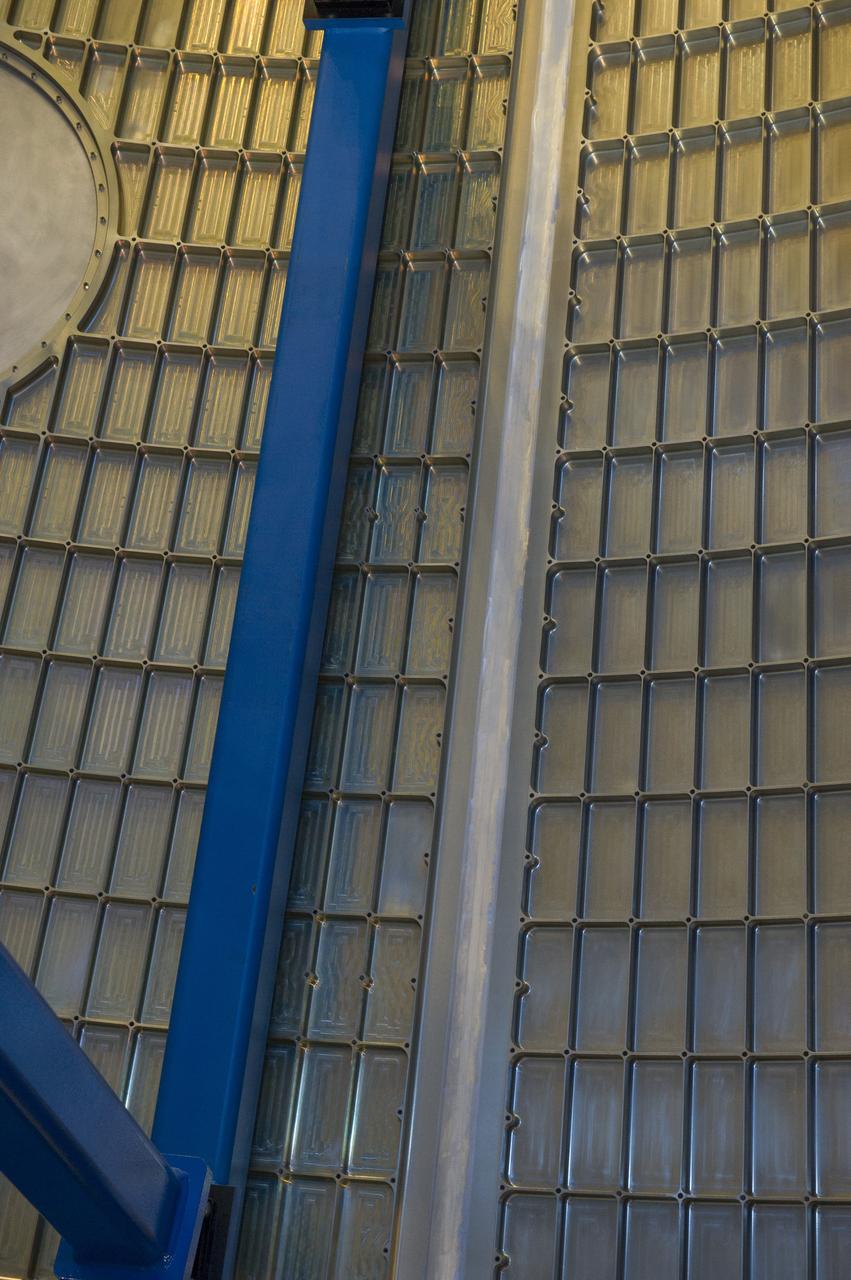
Launch Vehicle Stage Adapter Aft Cone Weld #1
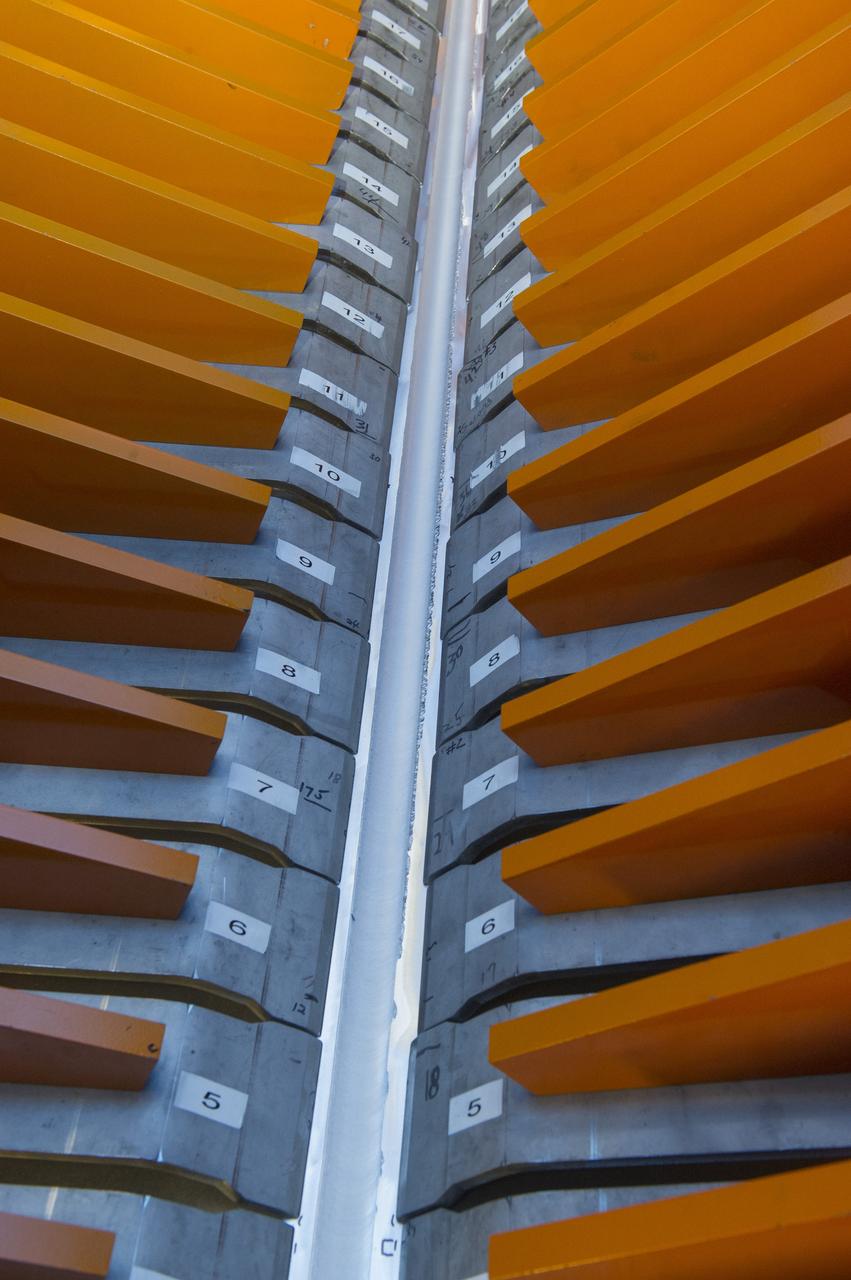
Launch Vehicle Stage Adapter Aft Cone Weld #1
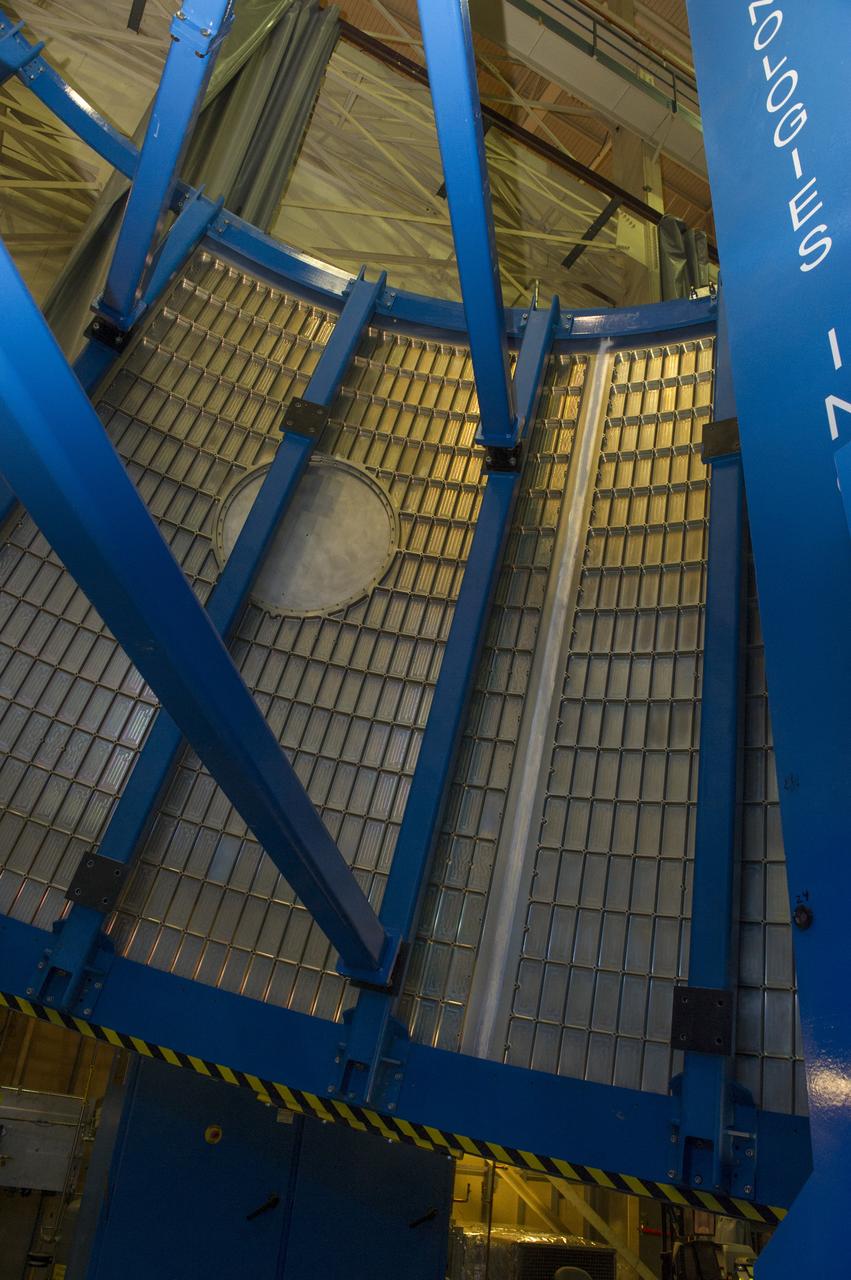
Launch Vehicle Stage Adapter Aft Cone Weld #1
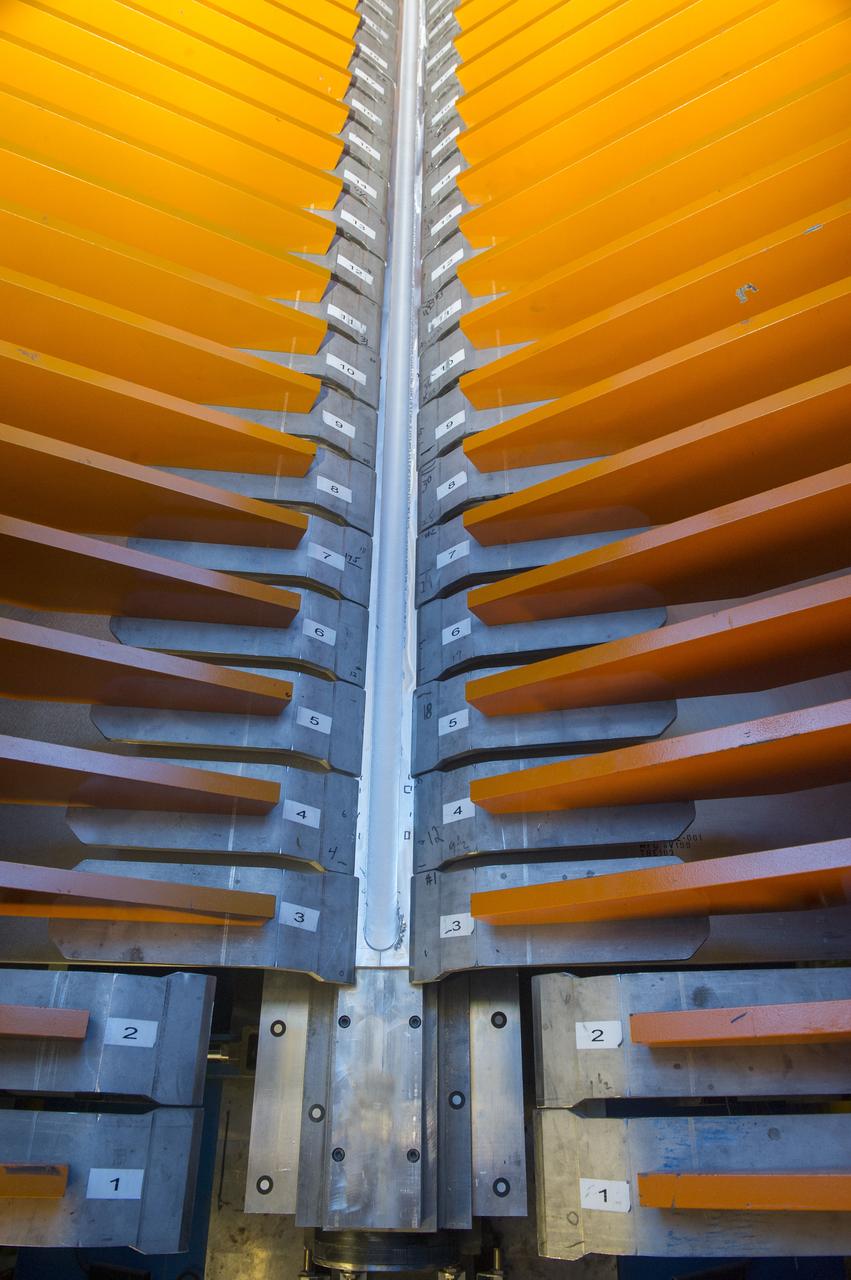
Launch Vehicle Stage Adapter Aft Cone Weld #1
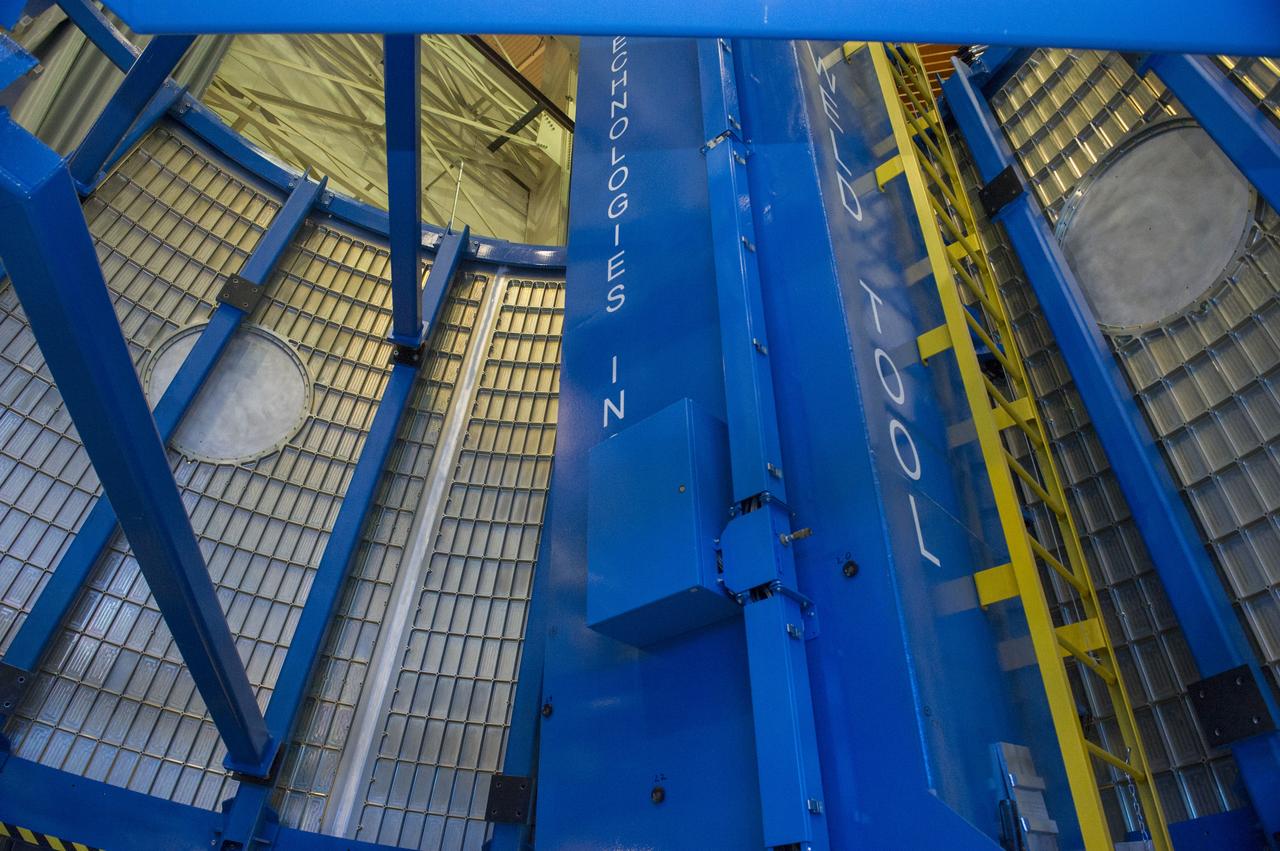
Launch Vehicle Stage Adapter Aft Cone Weld #1
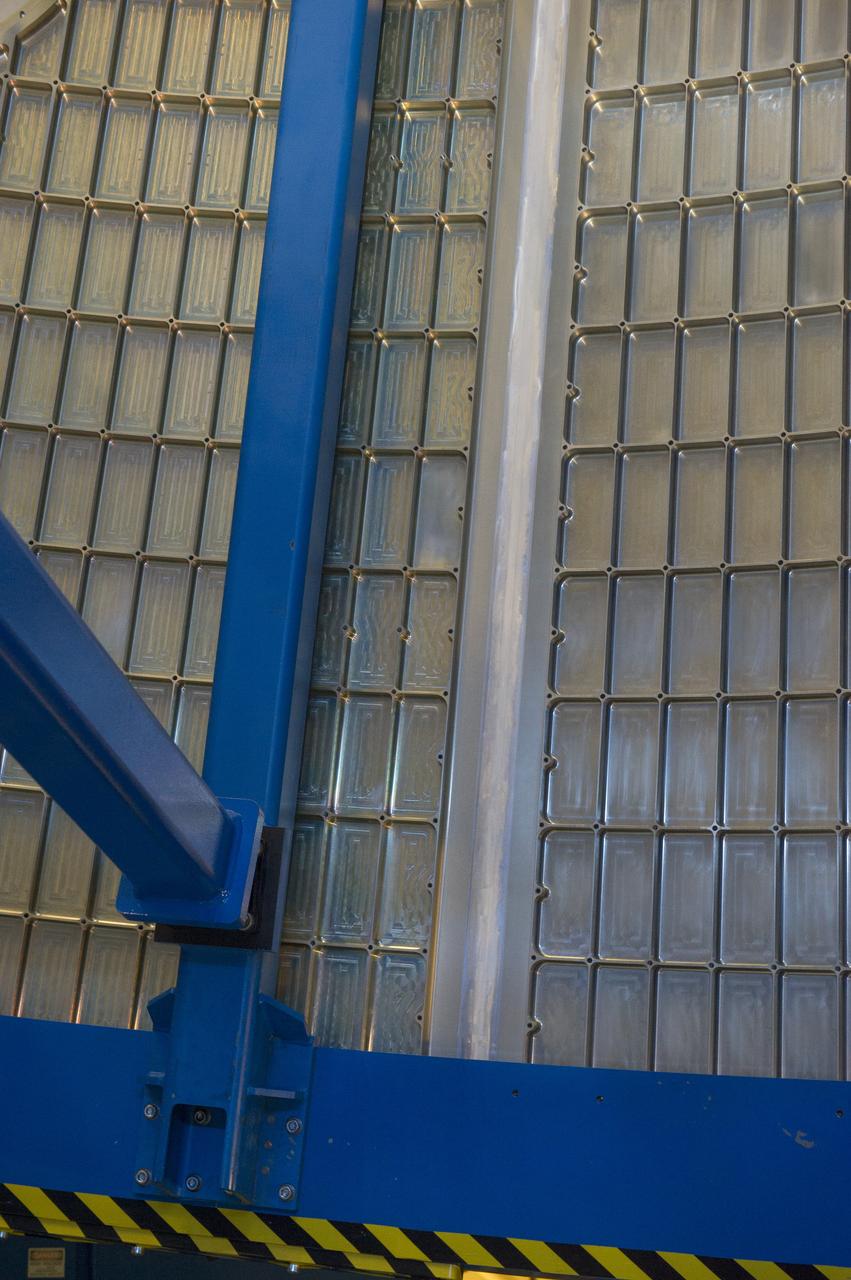
4619/160Launch Vehicle Stage Adapter Aft Cone Weld #1
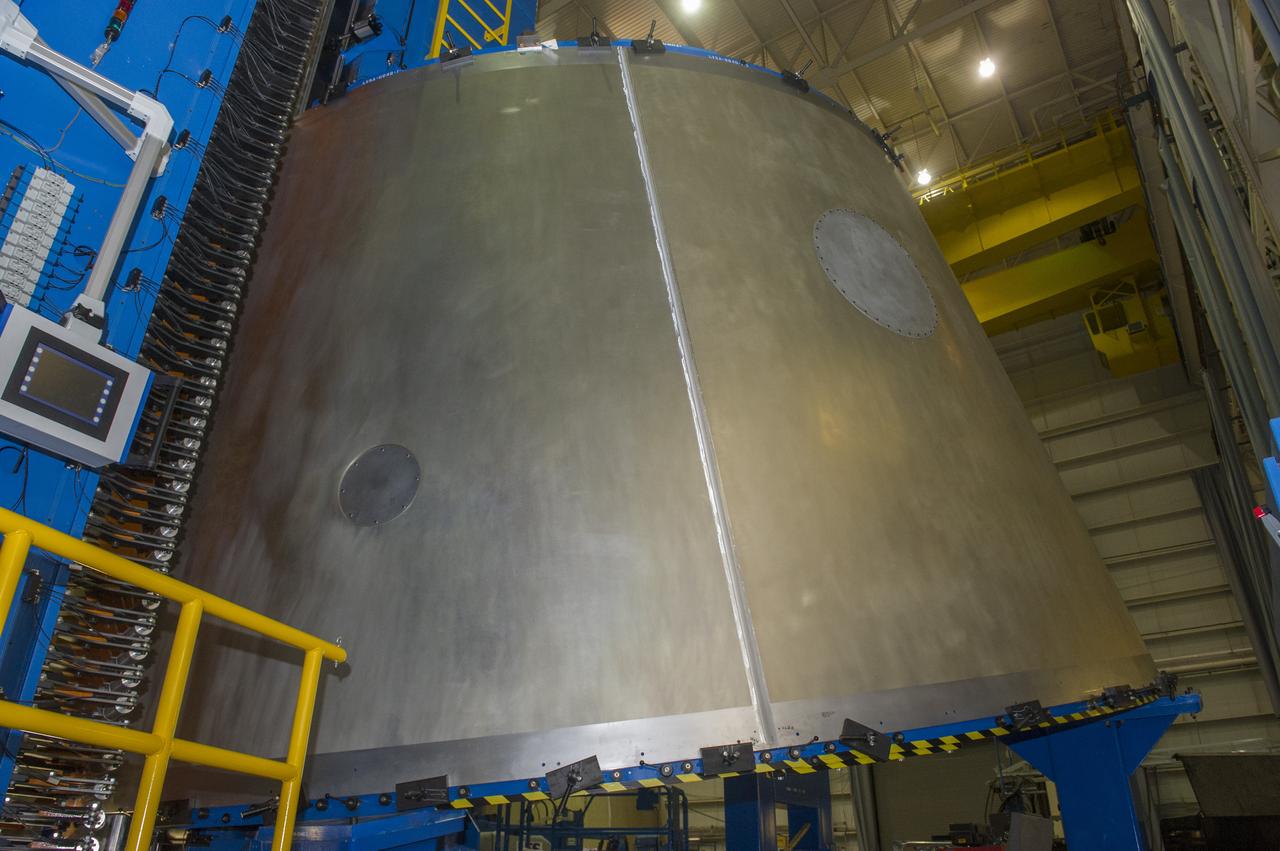
Launch Vehicle Stage Adapter Aft Cone Weld #1
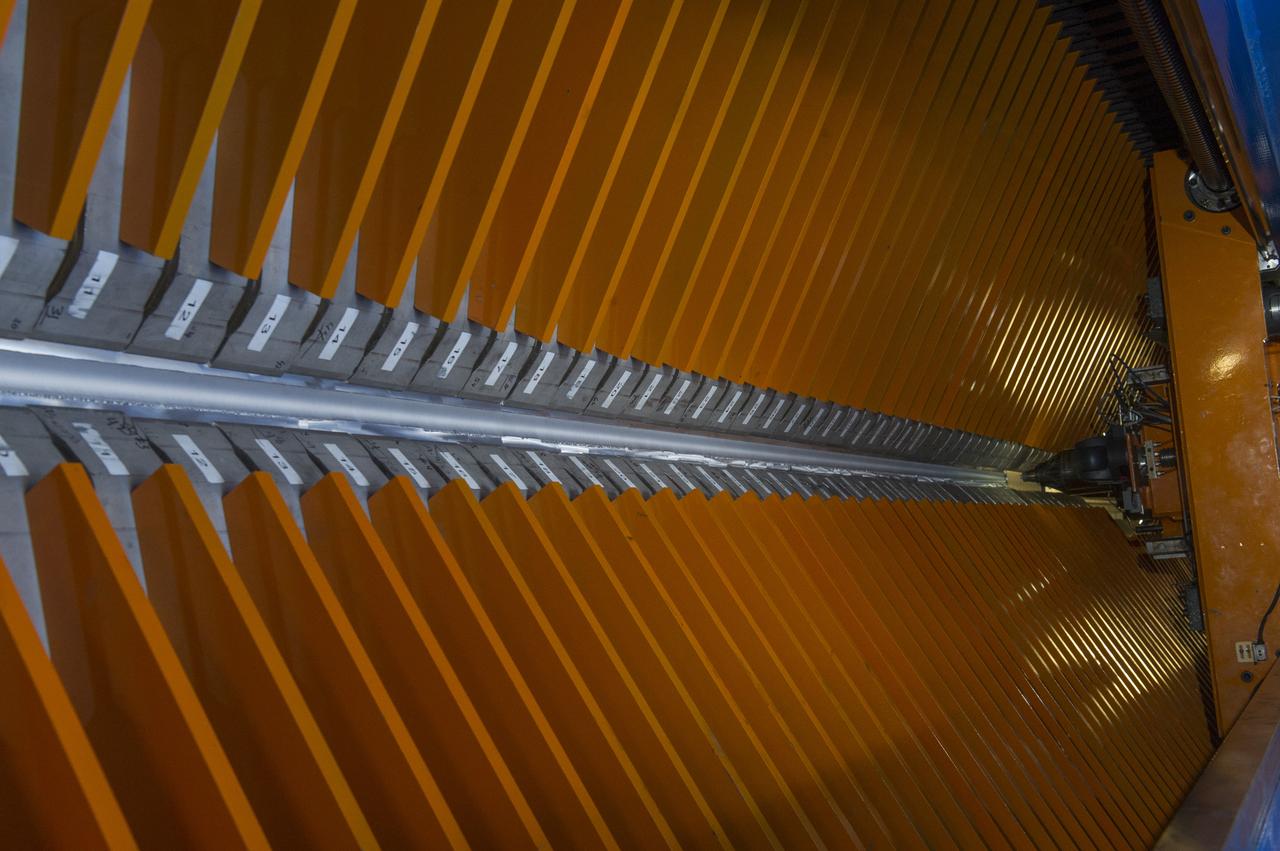
Launch Vehicle Stage Adapter Aft Cone Weld #1
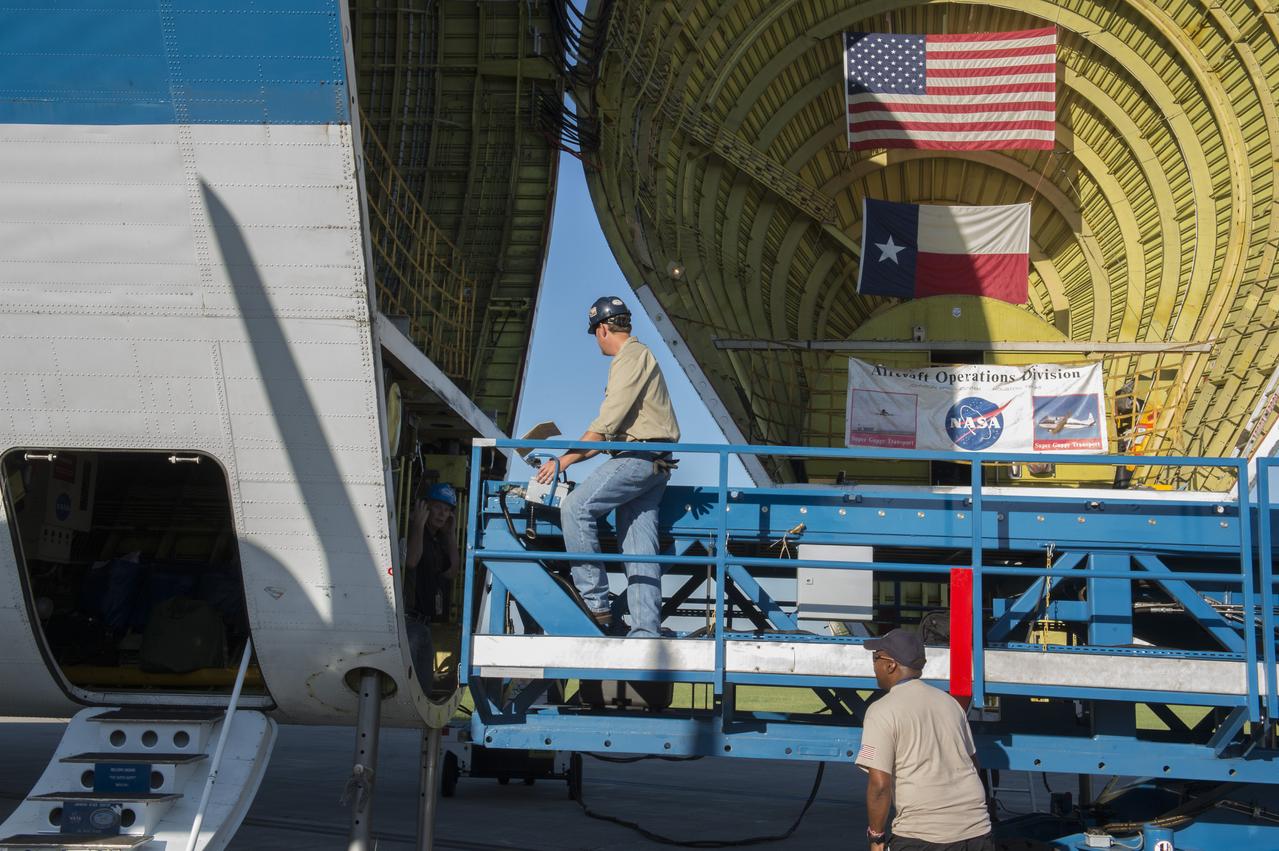
The platform which will be used to load the Orion stage adapter is being positioned in front of the cargo bay of NASA's Super Guppie aircraft. The adapter is being flown to Denver, Colorado for further testing.
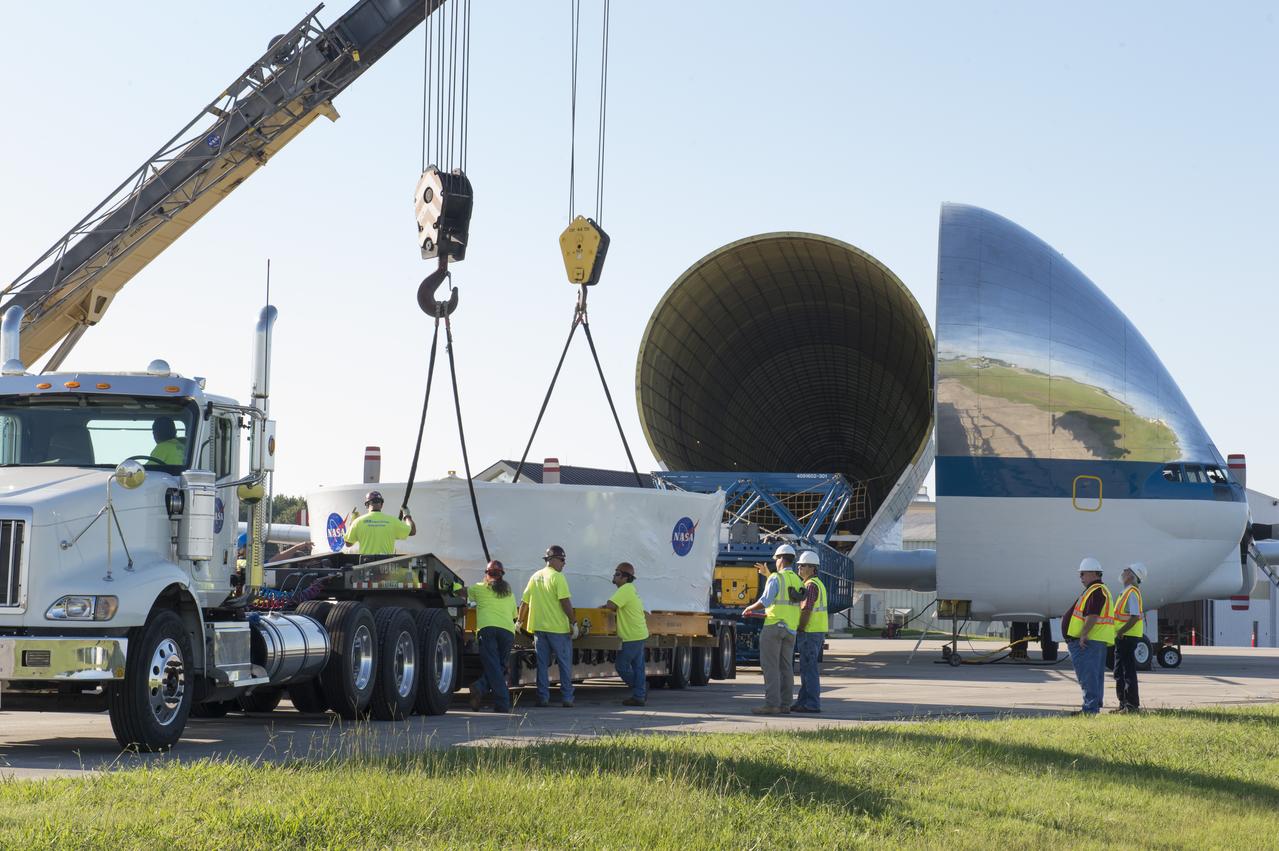
The Orion stage adapter is being positioned for lifting onto the loading platform before being loaded into NASA's Super Guppie aircraft. The adapter will be flown to Denver, Colorado for further testing.
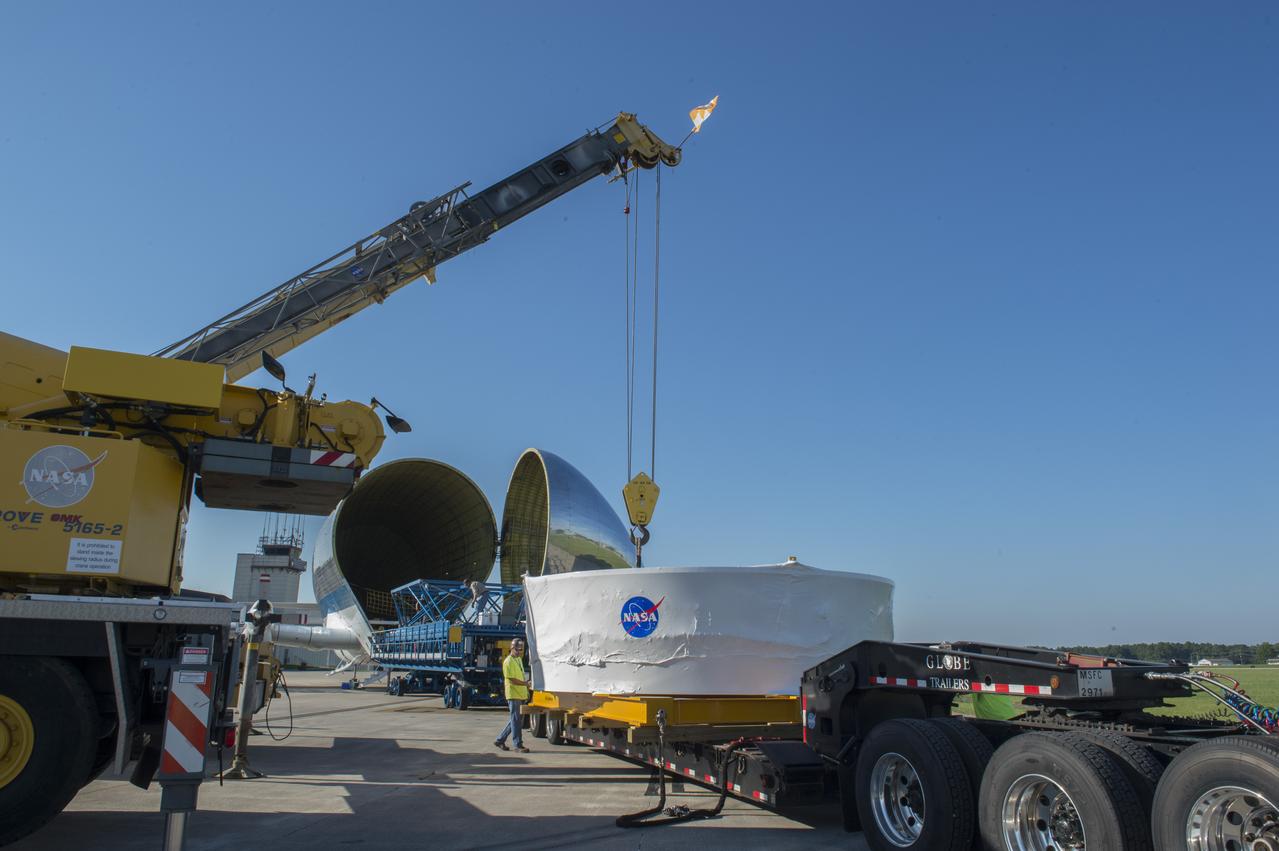
The Orion stage adapter is being positioned for lifting onto the loading platform before being loaded into NASA's Super Guppie aircraft. The adapter will be flown to Denver, Colorado for further testing.
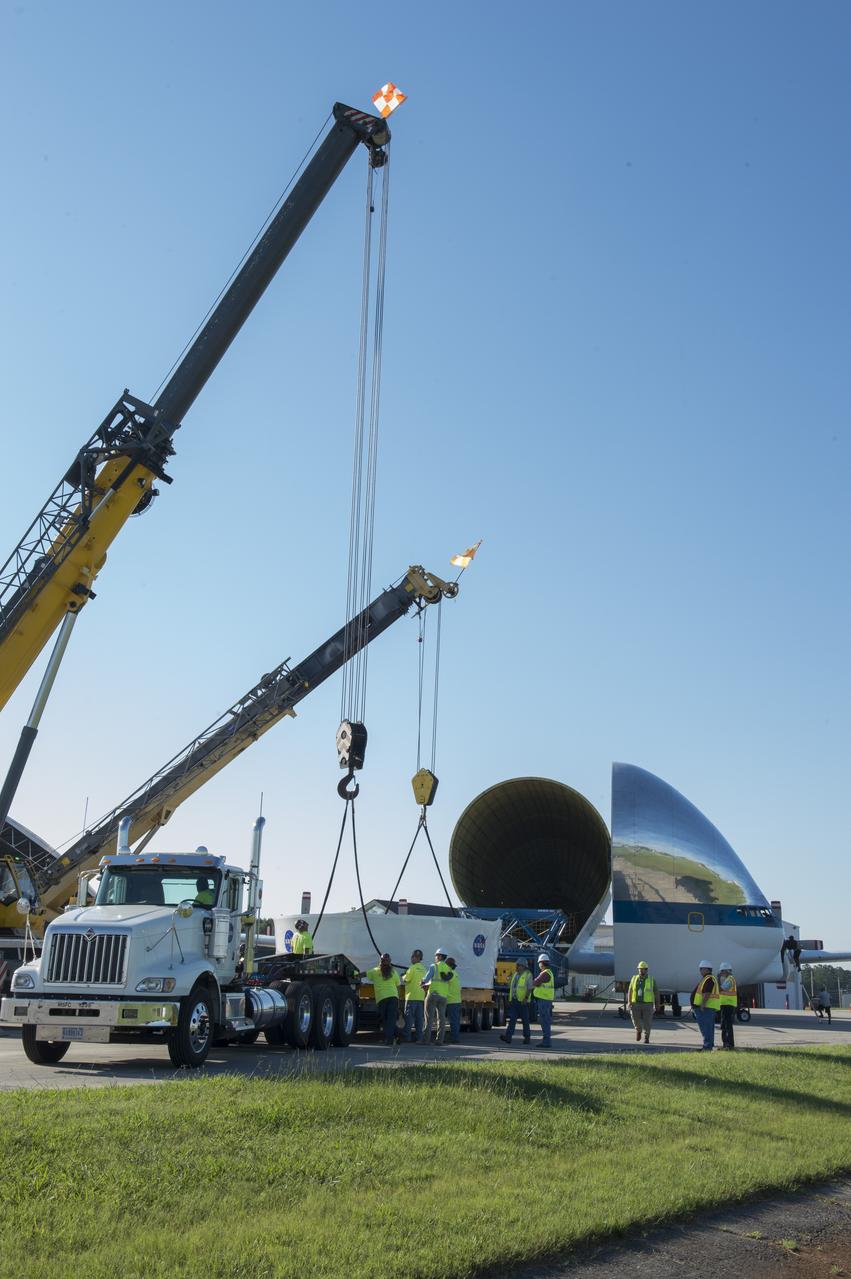
The Orion stage adapter is being positioned for lifting onto the loading platform before being loaded into NASA's Super Guppie aircraft. The adapter will be flown to Denver, Colorado for further testing.
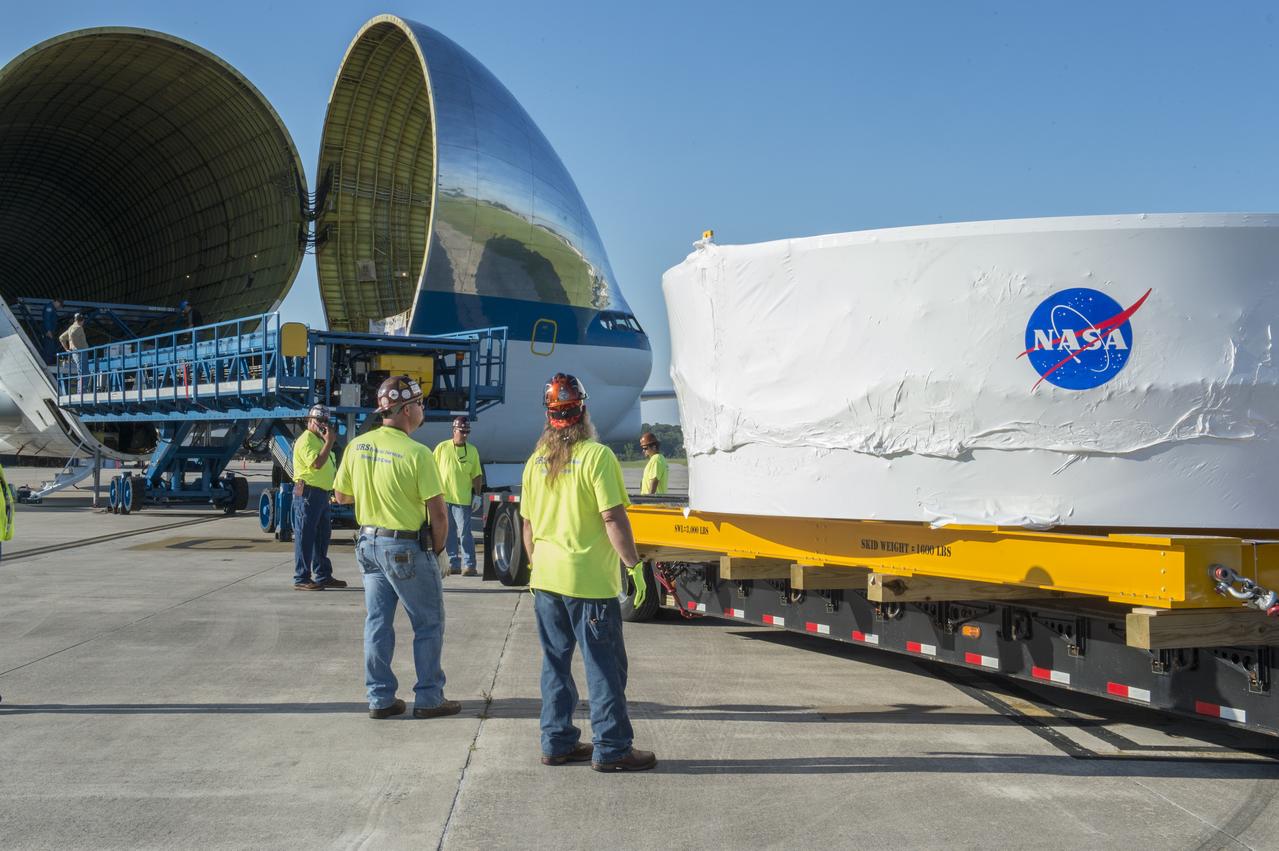
The Orion stage adapter is being positioned for lifting onto the loading platform before being loaded into NASA's Super Guppie aircraft. The adapter will be flown to Denver, Colorado for further testing.
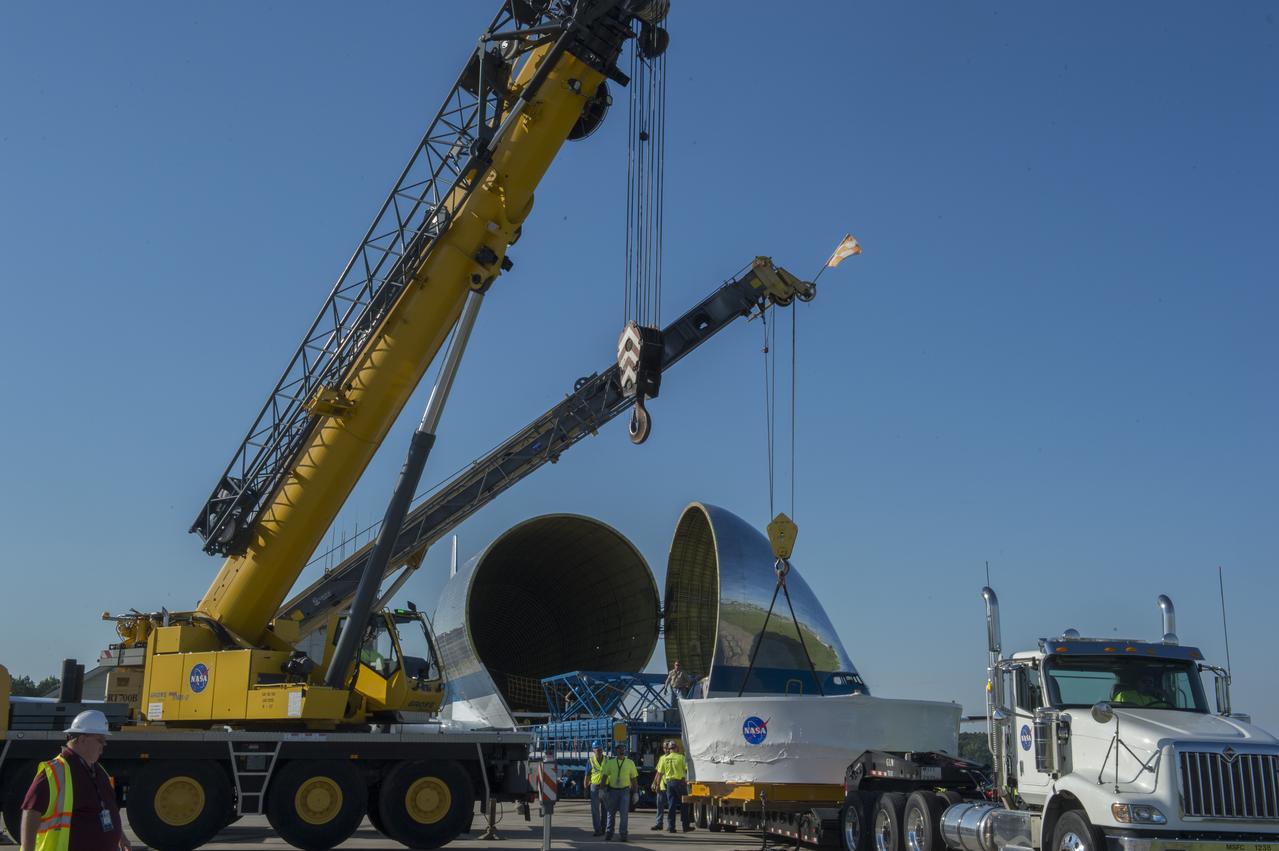
The Orion stage adapter is being positioned for lifting onto the loading platform before being loaded into NASA's Super Guppie aircraft. The adapter will be flown to Denver, Colorado for further testing.
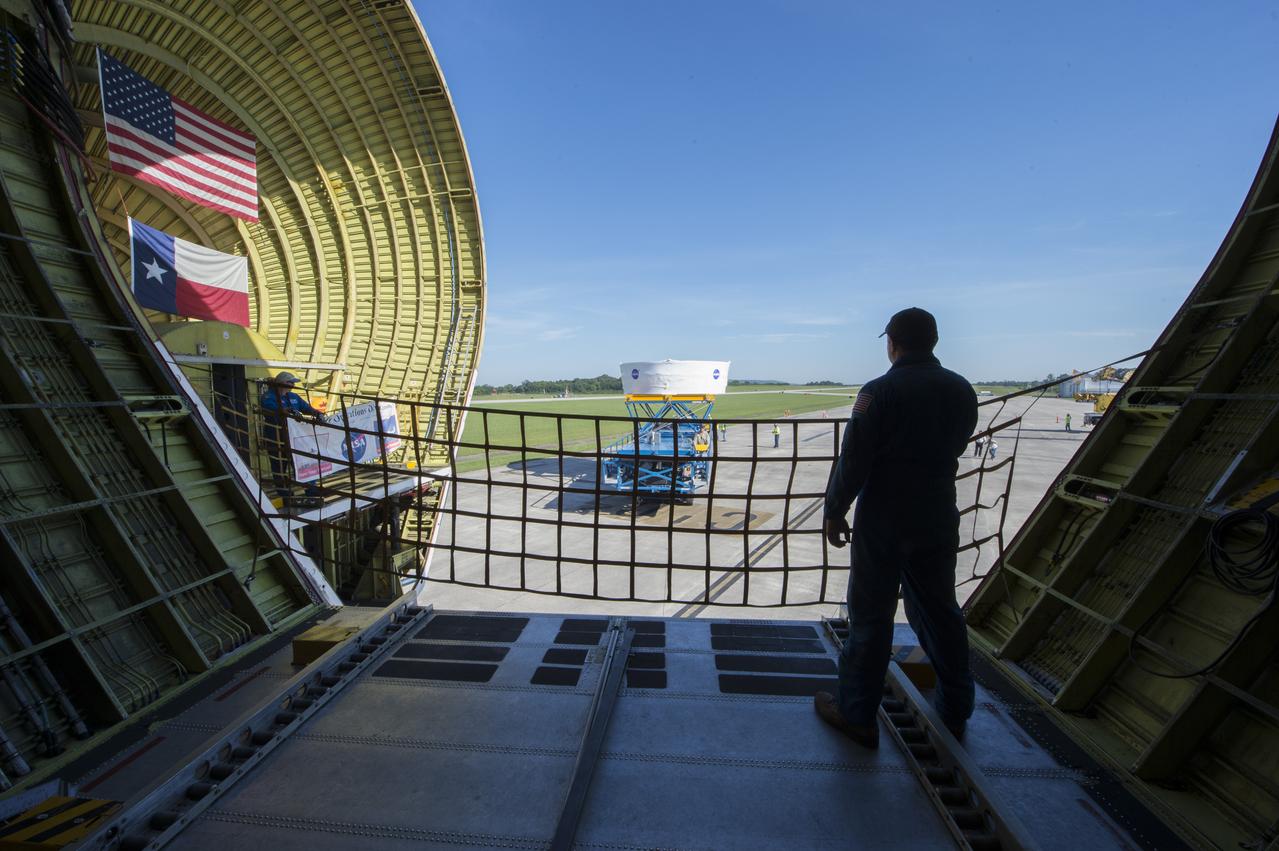
The Orion stage adapter is shown in the background from inside the cargo bay of NASA's Super Guppie. The stage adapter is being flown to Denver, Colorado where it will undergo further testing.
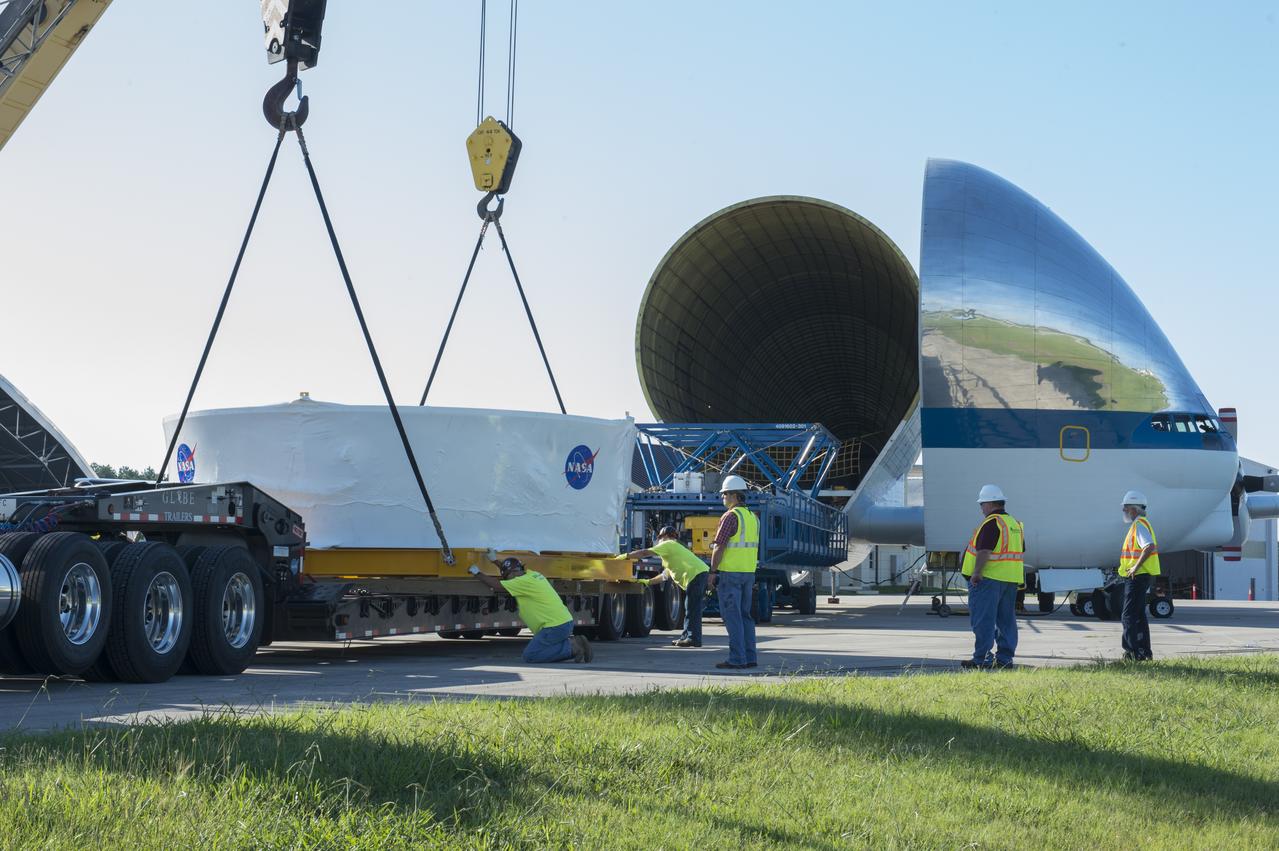
The Orion stage adapter is being positioned for lifting onto the loading platform before being loaded into NASA's Super Guppie aircraft. The adapter will be flown to Denver, Colorado for further testing.
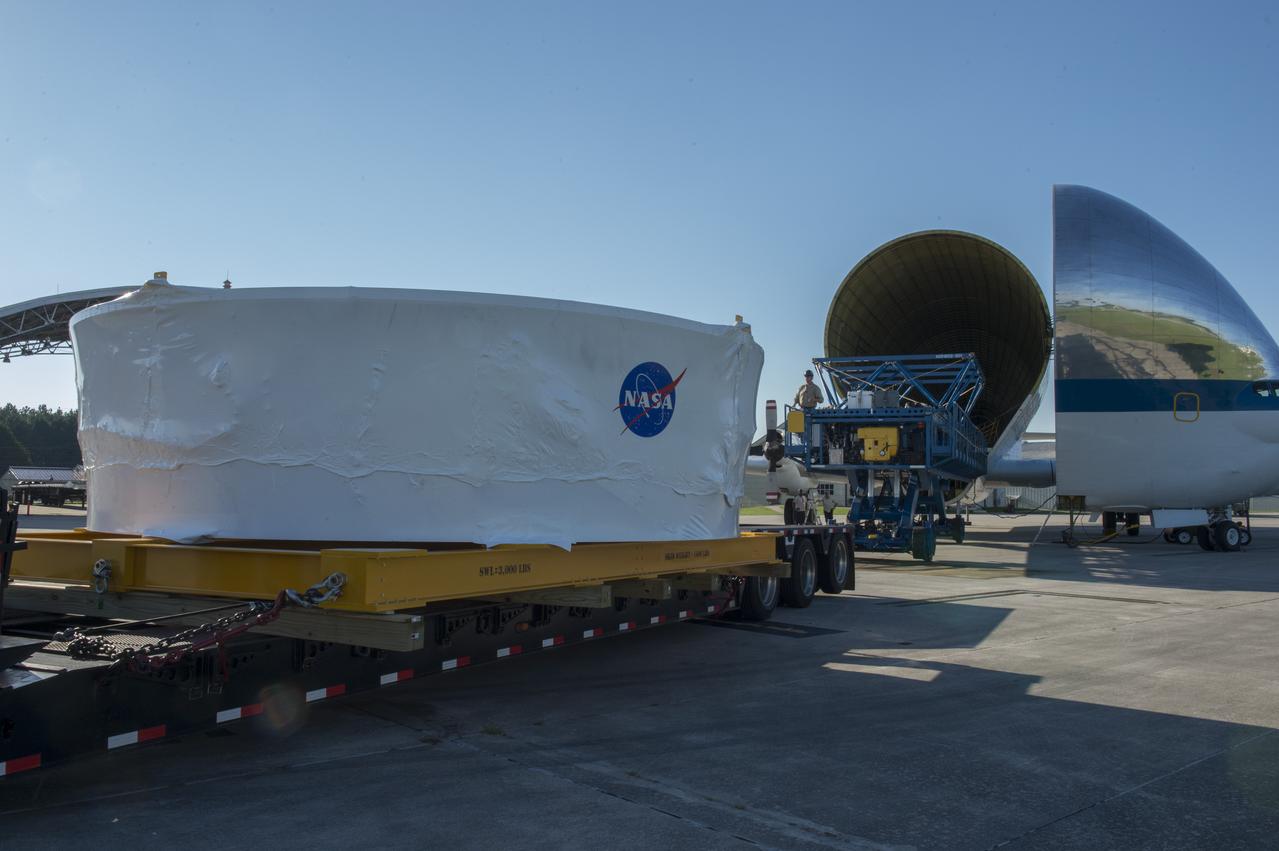
The Orion stage adapter is being positioned for lifting onto the loading platform before being loaded into NASA's Super Guppie aircraft. The adapter will be flown to Denver, Colorado for further testing.
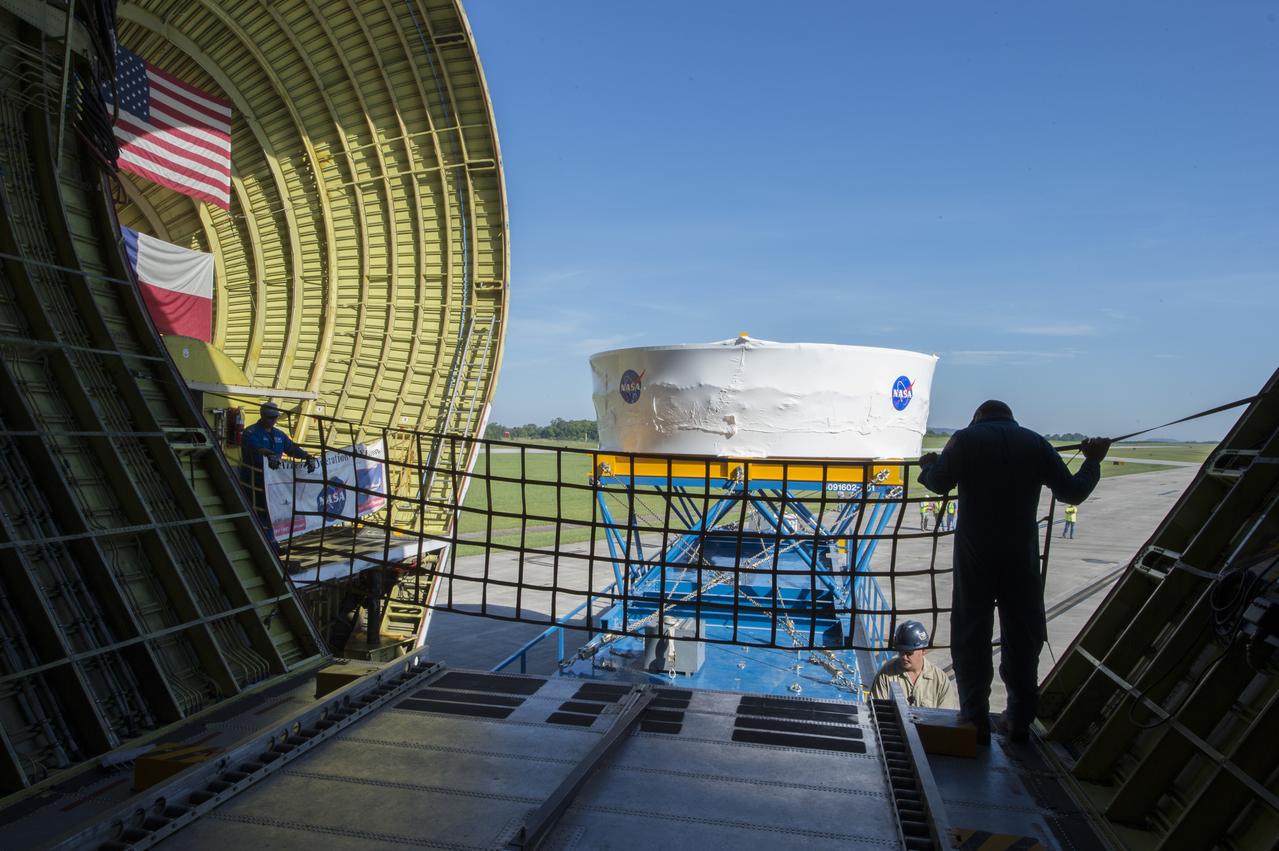
The Orion stage adapter is shown in the background from inside the cargo bay of NASA's Super Guppie. The stage adapter is being flown to Denver, Colorado where it will undergo further testing.
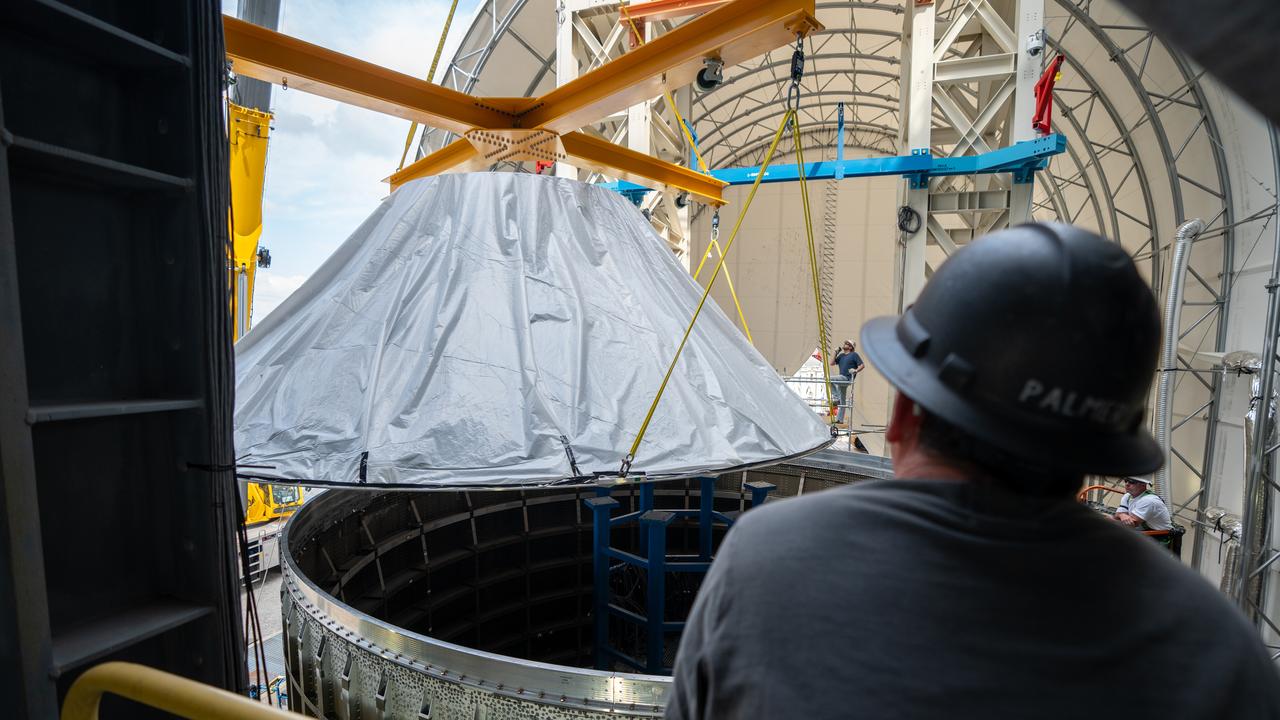
These photos and videos show how crews at NASA’s Marshall Space Flight Center in Huntsville, Alabama, moved and installed the payload adapter that will be used in the Block 1B configuration of the SLS (Space Launch System) rocket from Building 4708, where it was manufactured, into Structural Test Stand 4697 at NASA’s Marshall Space Flight Center on March 13. Teams at Marshall will begin structural testing the engineering development unit of the payload adapter – an exact replica of the flight version of the hardware – this spring. The cone-shaped payload adapter is about 8.5 feet tall and features two metal rings and eight composite panels. The adapter, which will debut on NASA’s Artemis IV mission, is an evolution from the Orion stage adapter used in the Block 1 configuration of the first three Artemis missions. It will be housed inside the universal stage adapter atop the rocket’s more powerful in-space stage, called the exploration upper stage. The payload adapter, like the launch vehicle stage adapter and the Orion stage adapter, is fully manufactured and tested at Marshall, which manages the SLS Program. NASA is working to land the first woman, first person of color, and its first international partner astronaut on the Moon under Artemis. SLS is part of NASA’s backbone for deep space exploration, along with the Orion spacecraft and Gateway in orbit around the Moon and commercial human landing systems, next-generational spacesuits, and rovers on the lunar surface. SLS is the only rocket that can send Orion, astronauts, and supplies to the Moon in a single launch.
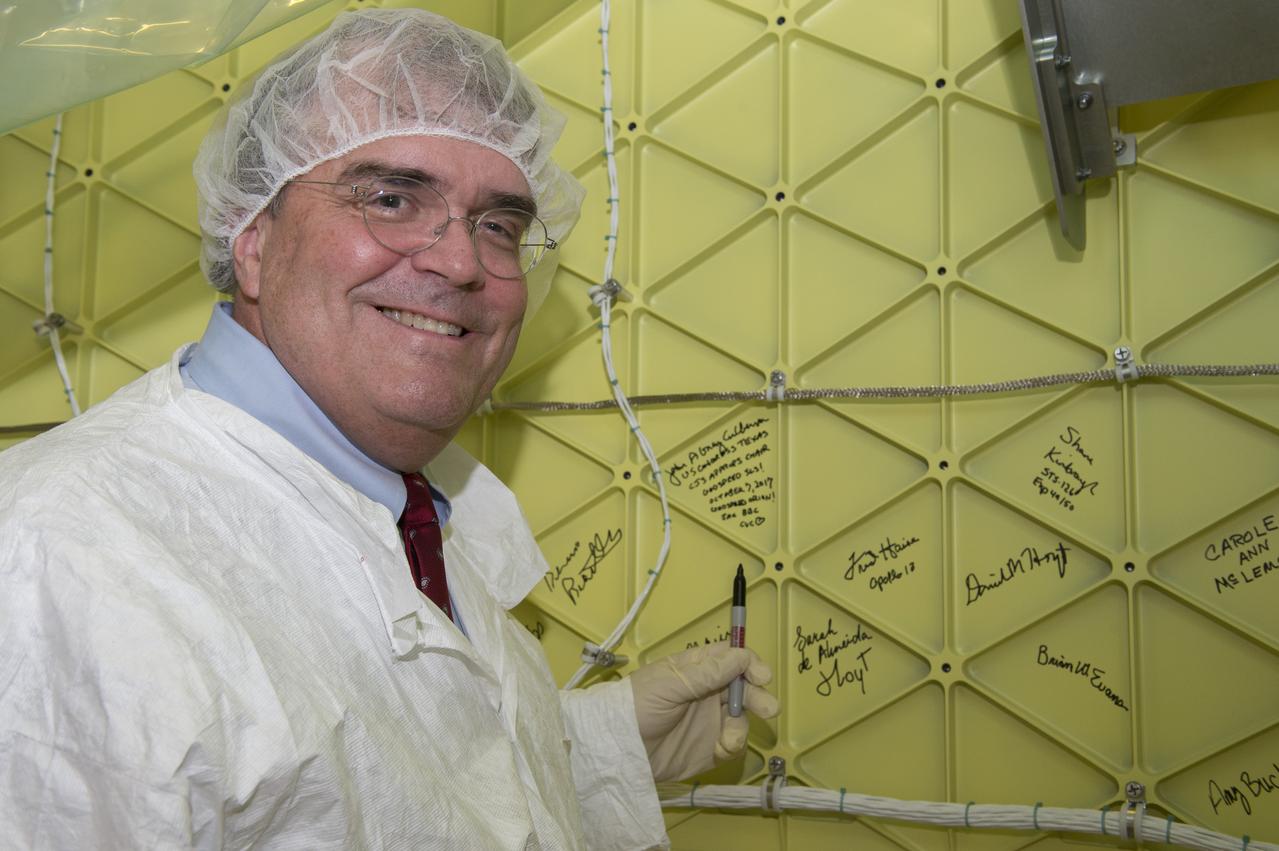
John Culberson, U.S. Congressman, 7th District Texas & Chairman, House Appropriations CJS Committee signs his name on the Orion Stage Adapter while touring MSFC on October 6, 2017.
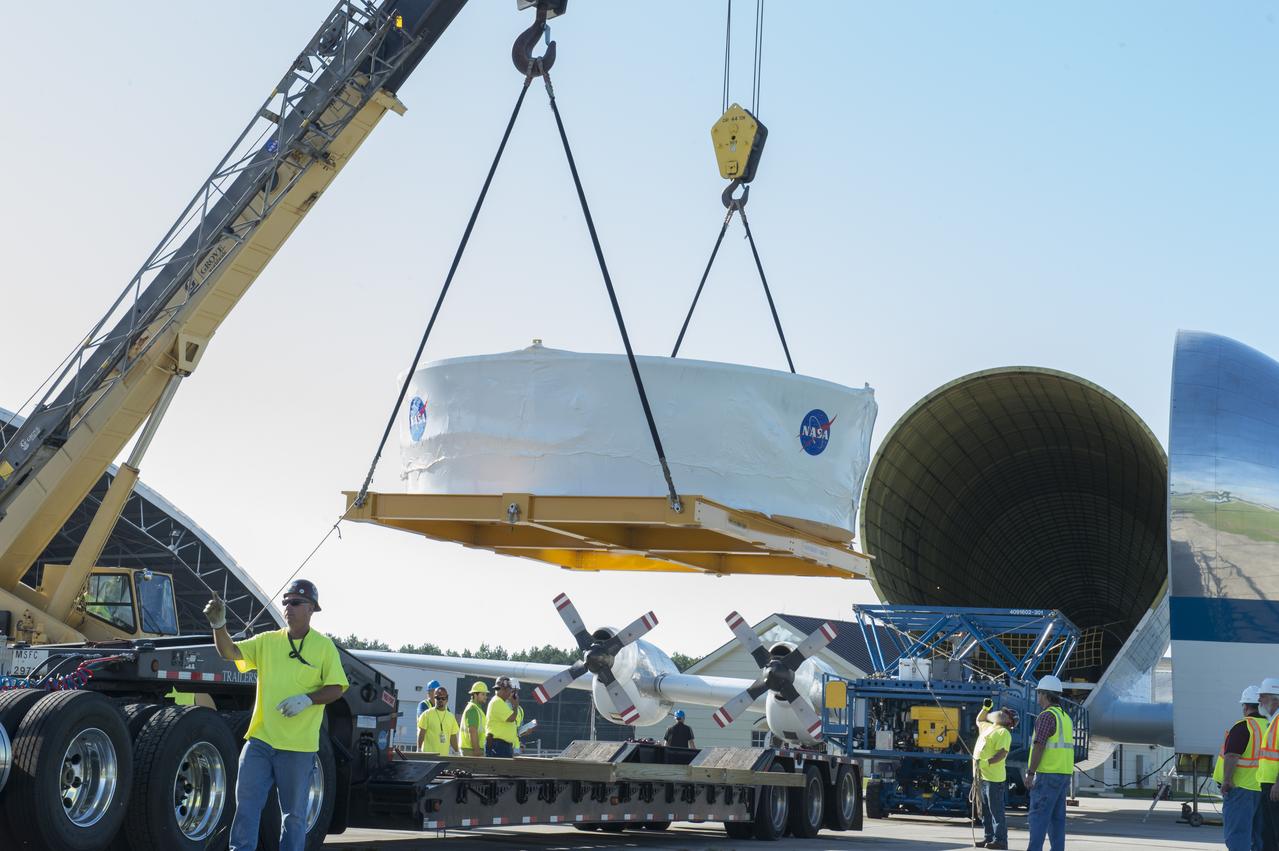
The Orion stage adapter is being lifted for placement onto the loading platform for NASA's Super Guppie aircraft before being flown to Denver, Colorado for further testing.
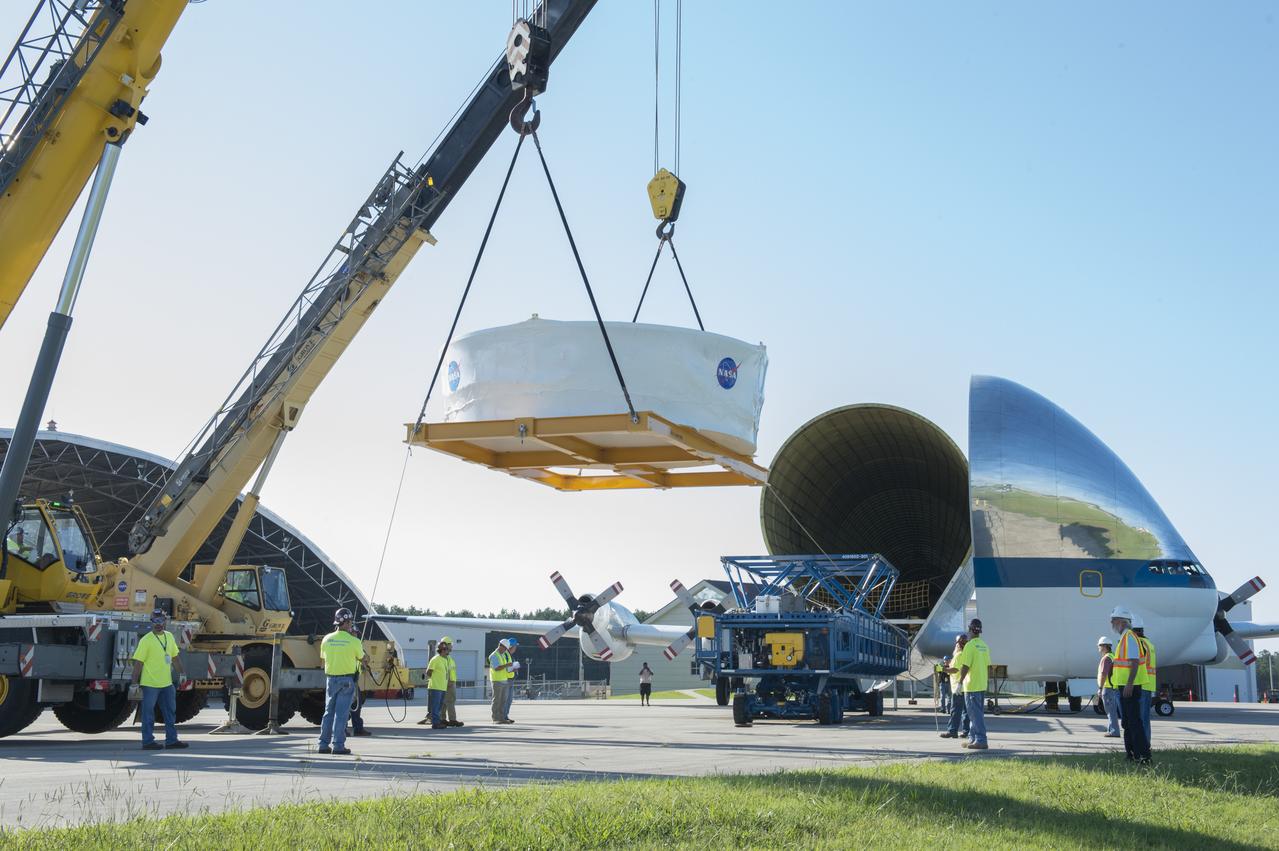
The Orion stage adapter is being lifted for placement onto the loading platform for NASA's Super Guppie aircraft before being flown to Denver, Colorado for further testing.
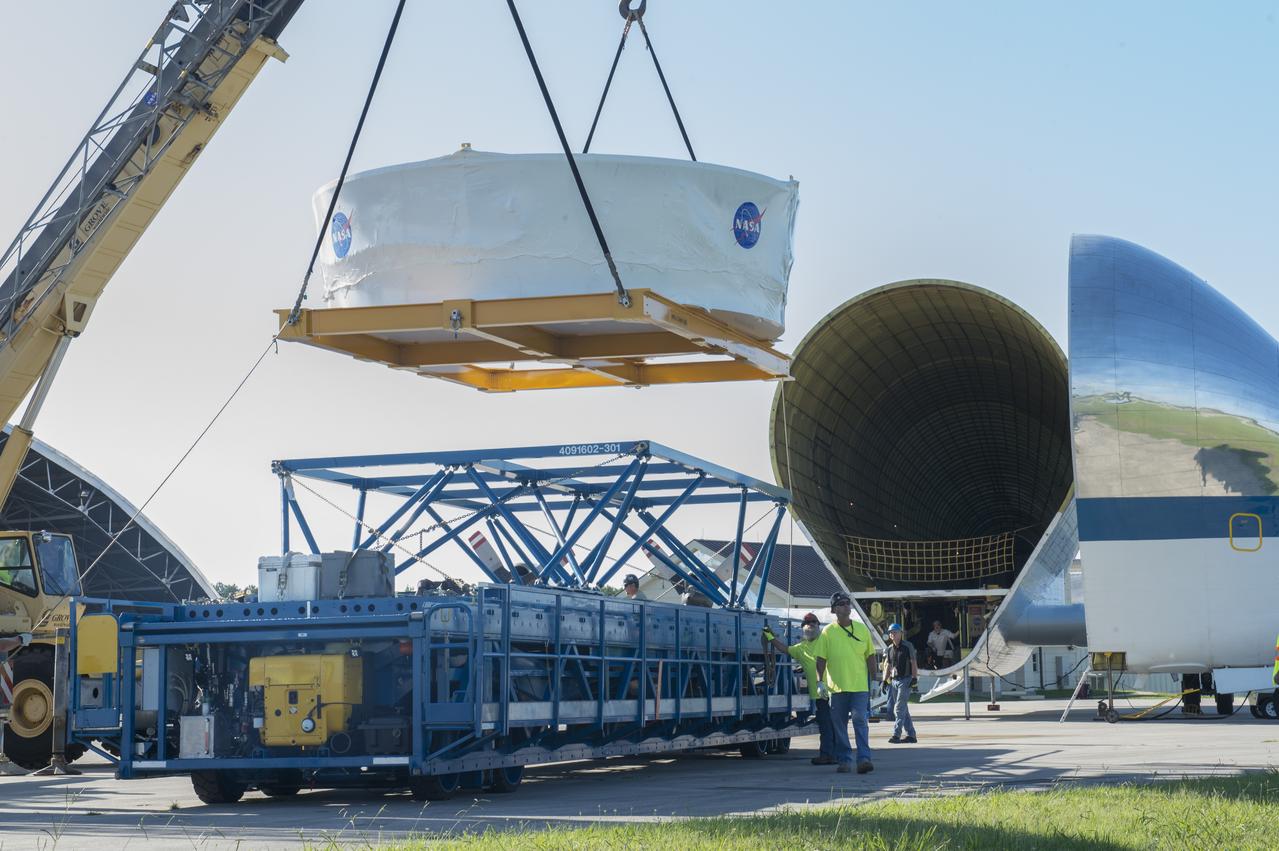
The Orion stage adapter is being lifted for placement onto the loading platform for NASA's Super Guppie aircraft before being flown to Denver, Colorado for further testing.
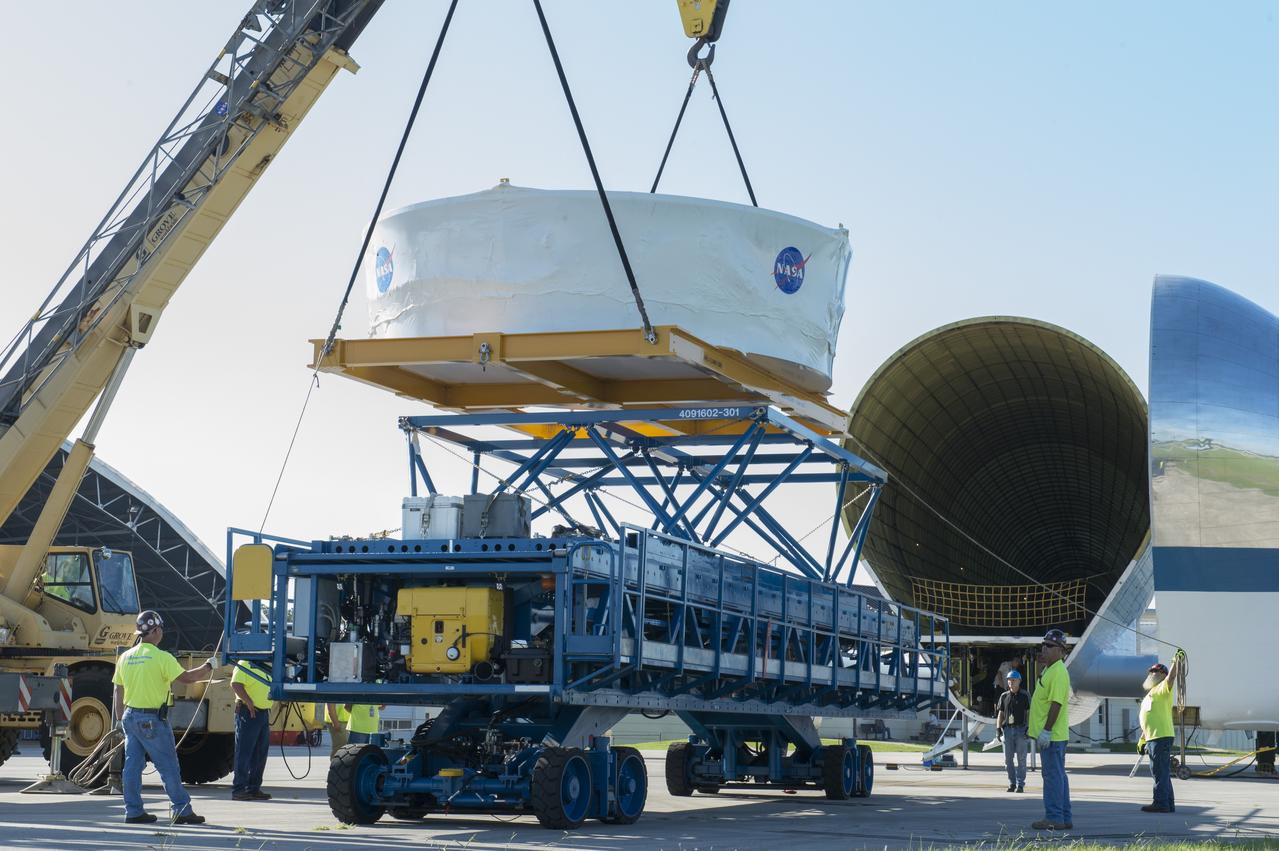
The Orion stage adapter is being lifted for placement onto the loading platform for NASA's Super Guppie aircraft before being flown to Denver, Colorado for further testing.
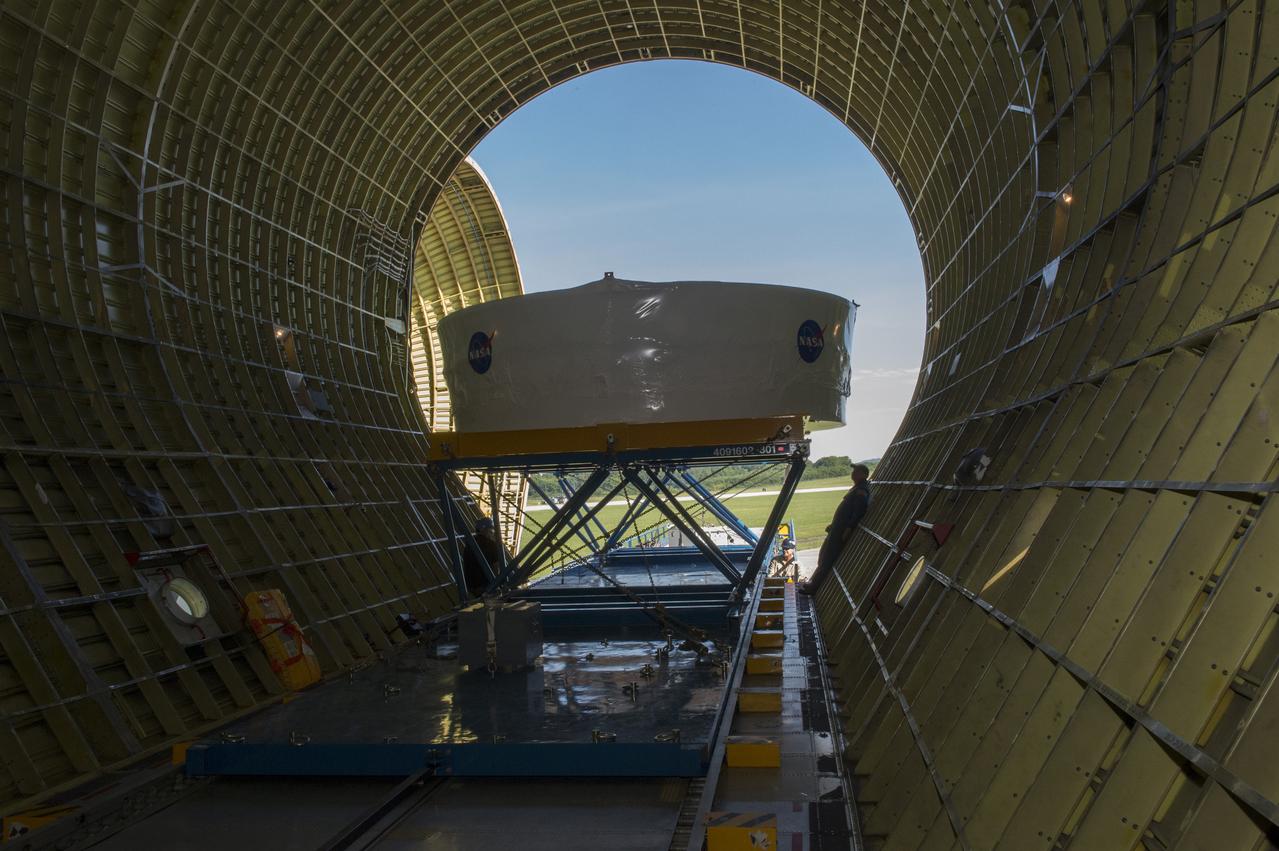
The Orion stage adapter is being placed inside the cargo bay of NASA's Super Guppie aircraft before being flown to Denver, Colorado for further testing.
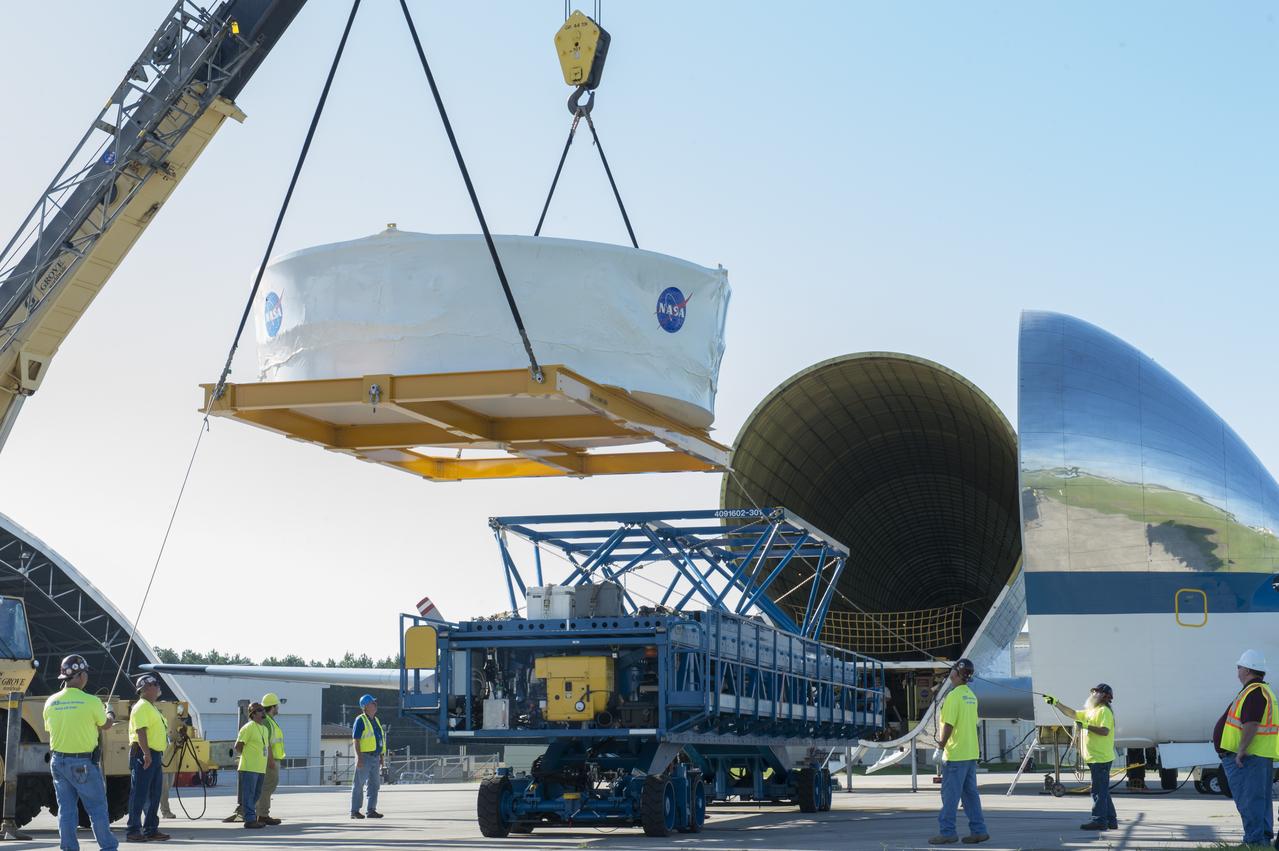
The Orion stage adapter is being lifted for placement onto the loading platform for NASA's Super Guppie aircraft before being flown to Denver, Colorado for further testing.
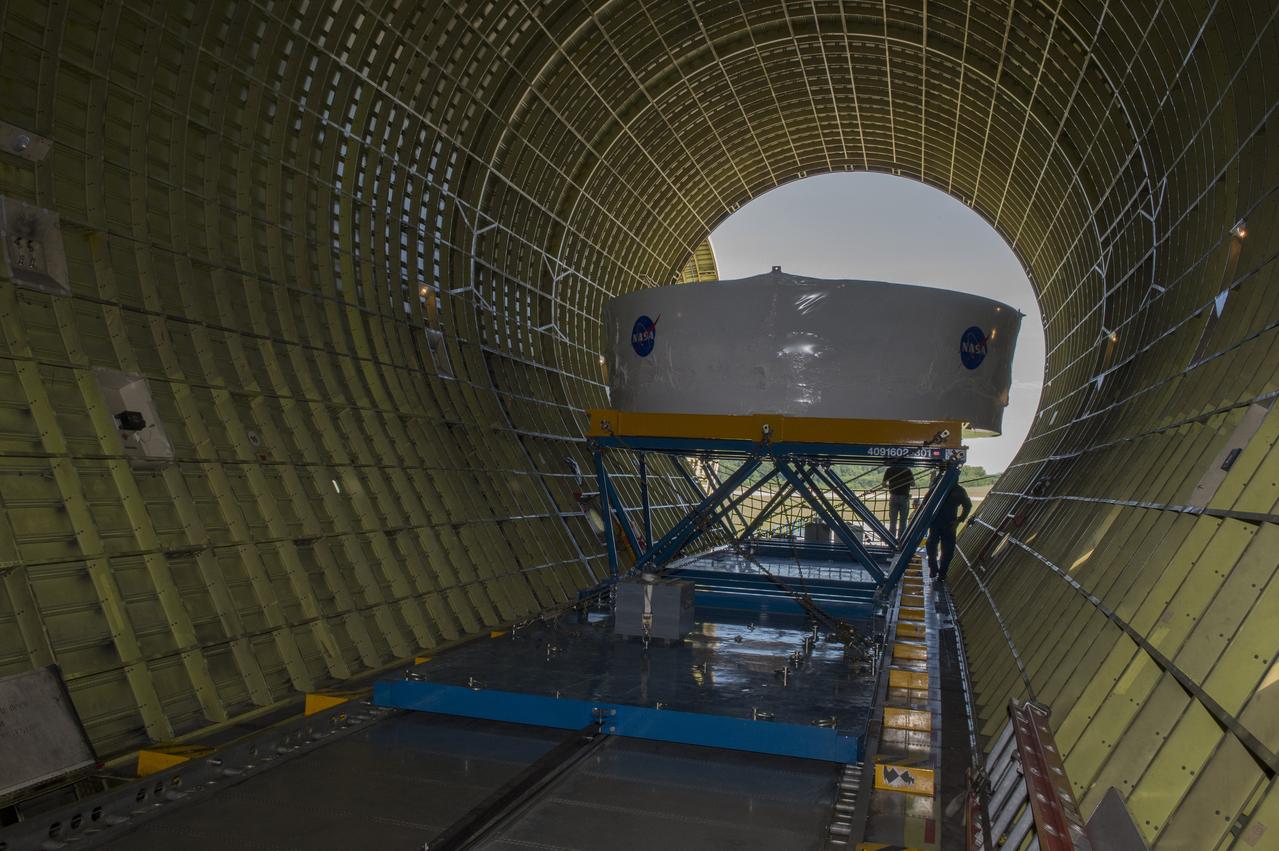
The Orion stage adapter is being placed inside the cargo bay of NASA's Super Guppie aircraft before being flown to Denver, Colorado for further testing.
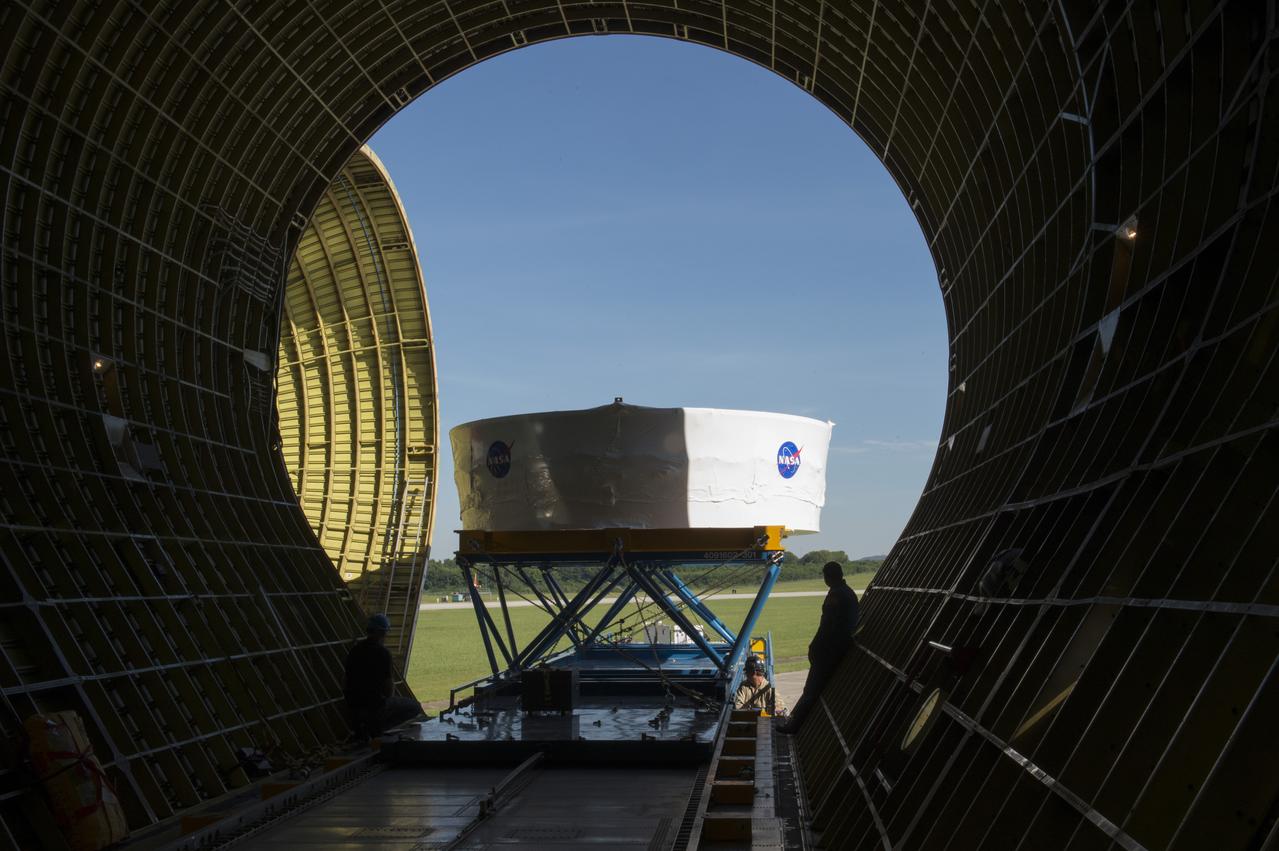
The Orion stage adapter is being placed inside the cargo bay of NASA's Super Guppie aircraft before being flown to Denver, Colorado for further testing.
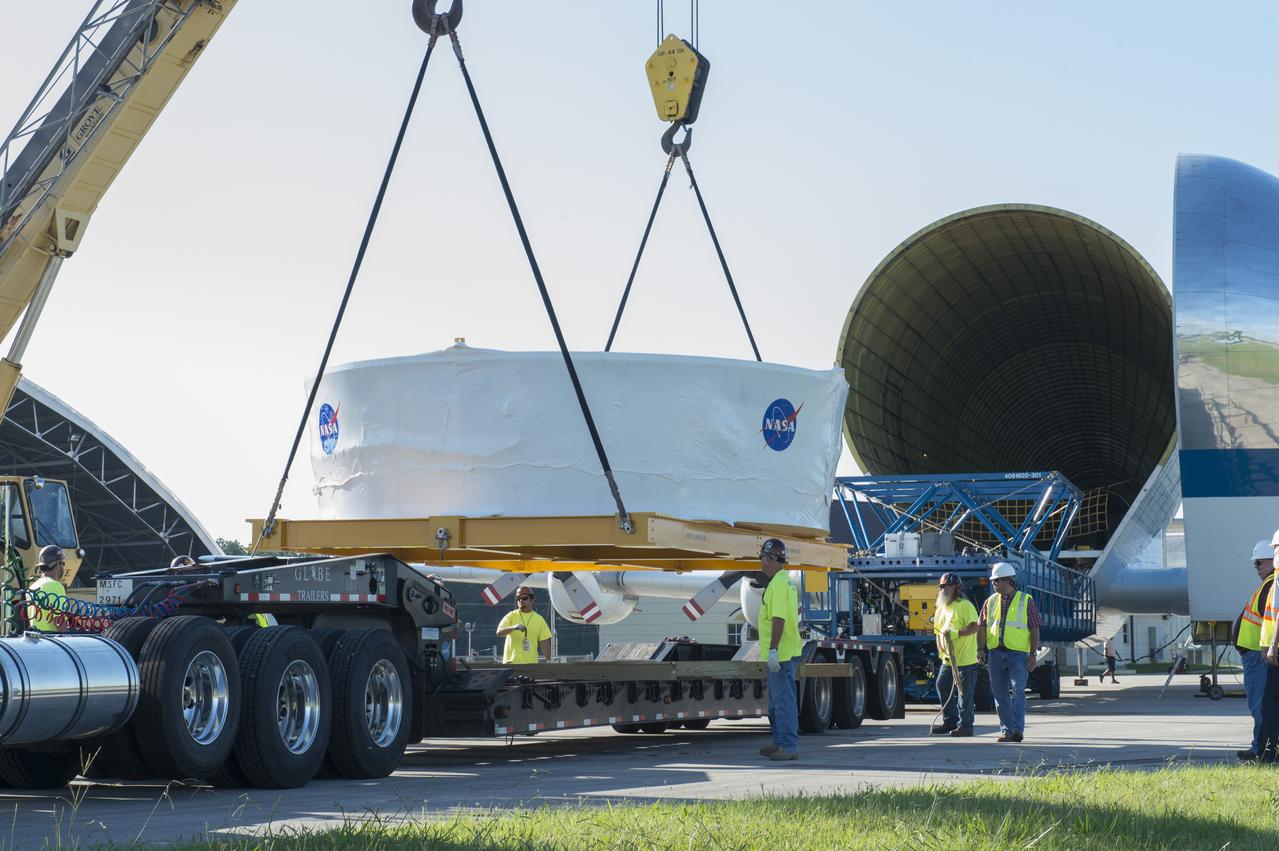
The Orion stage adapter is being lifted for placement onto the loading platform for NASA's Super Guppie aircraft before being flown to Denver, Colorado for further testing.
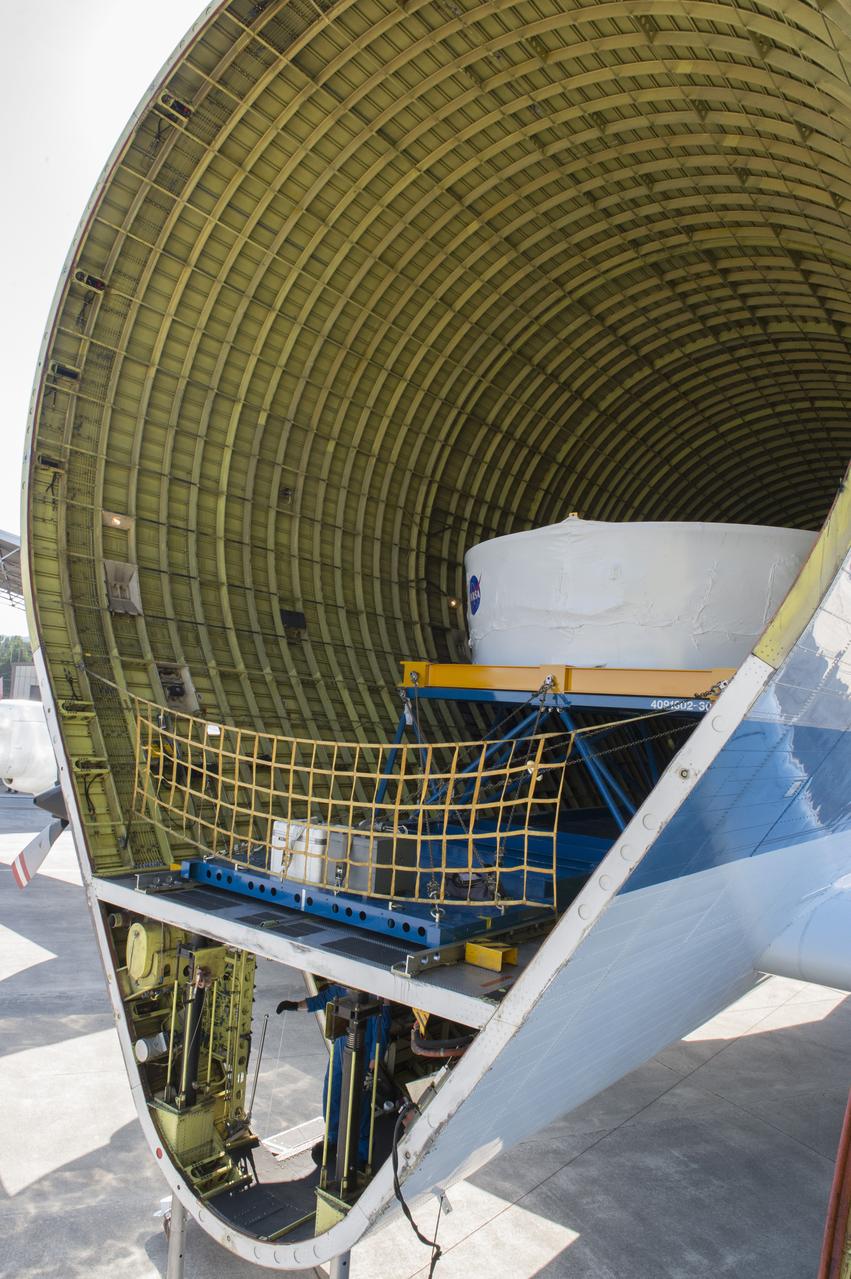
The Orion stage adapter shown inside the cargo bay of NASA's Super Guppie aircraft prior to being flown to Denver, Colorado for further testing.
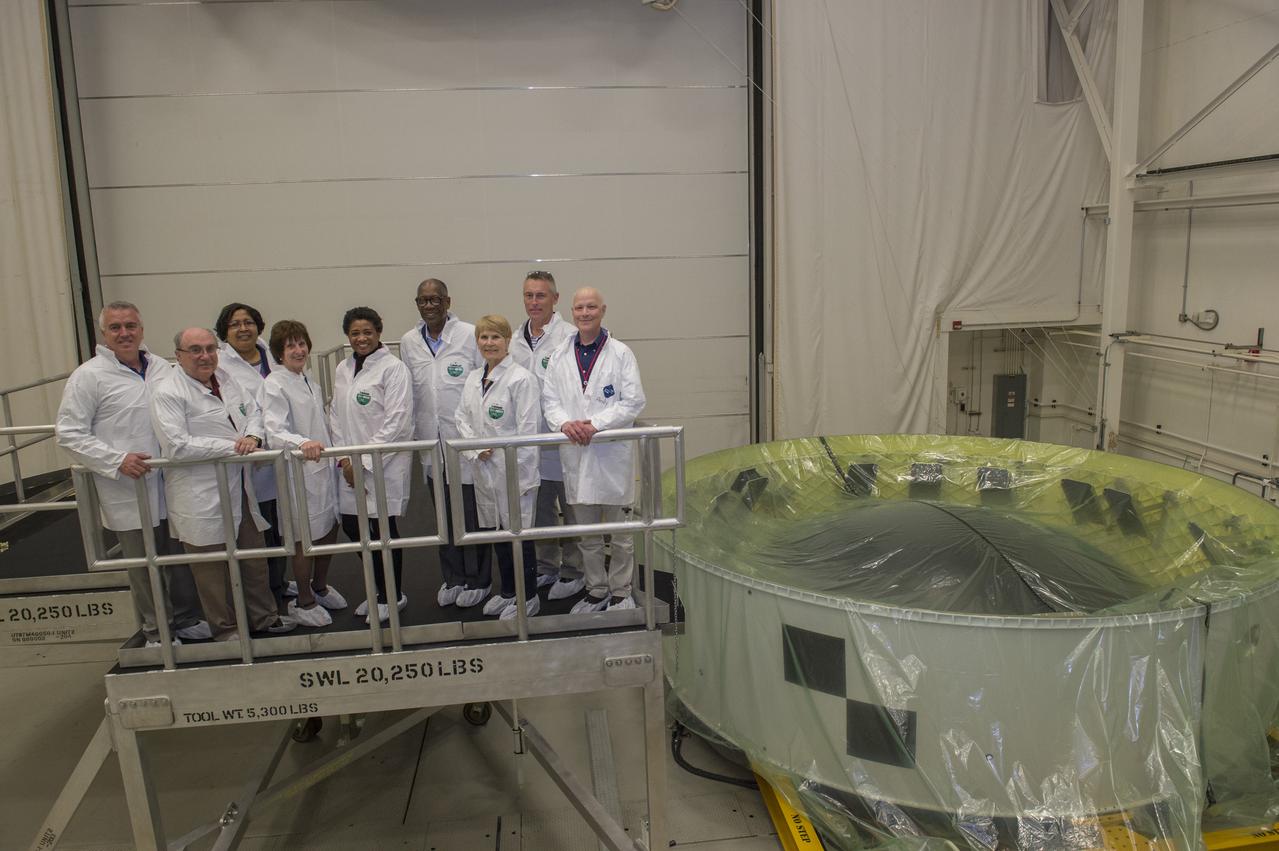
ASAP, (Aerospace Safety Advisory Panel), members, Dr. Sandra Magnus, Dr. Donald P. McErlean, Dr. George Nield, Captain Christopher Saindon, Mr. David West, Dr. Patricia Sanders, Ms. Carol Hamilton, Ms. Evette Whatley, Ms. Paula Frankel, view LVSA, (Launch Vehicle Stage Adapter), and Orion Stage Adapter. Members were escorted to buildings 4707 and 4708 by Andrew Schorr, Deputy Manager for Spacecraft/Payload Integration & Evolution Office (SPIE)
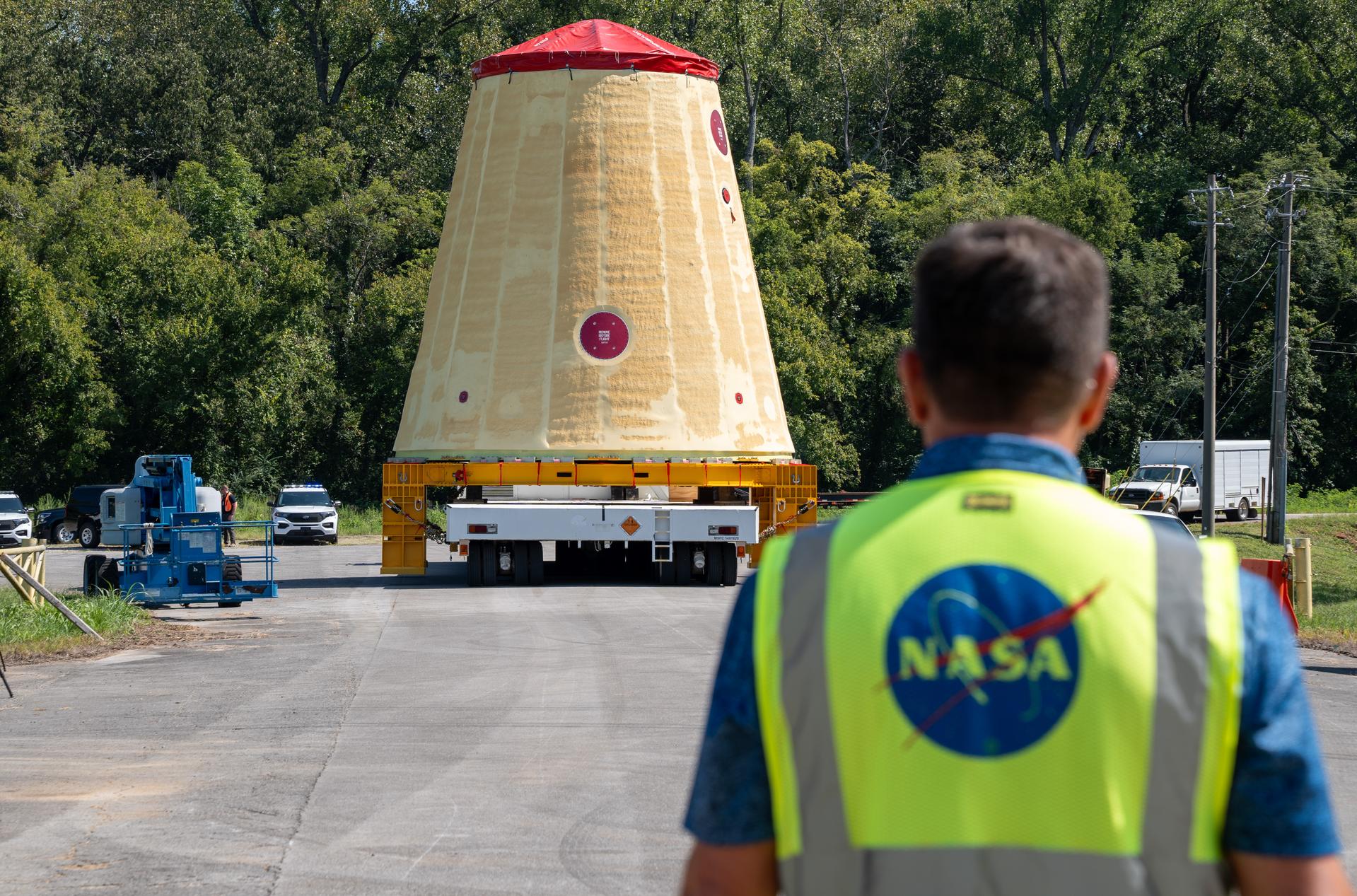
NASA rolled out a key piece of space flight hardware for the SLS (Space Launch System) rocket for the first crewed mission of NASA’s Artemis campaign from Marshall Space Flight Center in Huntsville, Alabama, on Wednesday, Aug. 21 for shipment to the agency’s spaceport in Florida. The cone-shaped launch vehicle stage adapter connects the rocket’s core stage to the upper stage and helps protect the upper stage’s engine that will help propel the Artemis II test flight around the Moon, slated for 2025. Manufactured by prime contractor Teledyne Brown Engineering and the Jacobs Space Exploration Group’s ESSCA (Engineering Services and Science Capability Augmentation) contract using NASA Marshall’s self-reacting friction-stir robotic and vertical weld tools. Crews moved the adapter out of NASA Marshall’s Building 4708 to the agency’s Pegasus barge Aug. 21. The barge will ferry the adapter first to NASA’s Michoud Assembly Facility in New Orleans, where crews will pick up additional SLS hardware for future Artemis missions, before traveling to NASA Kennedy. Once in Florida, the adapter will join the recently delivered core stage. There, teams with NASA’s Exploration Ground Systems will prepare the adapter for stacking and launch.
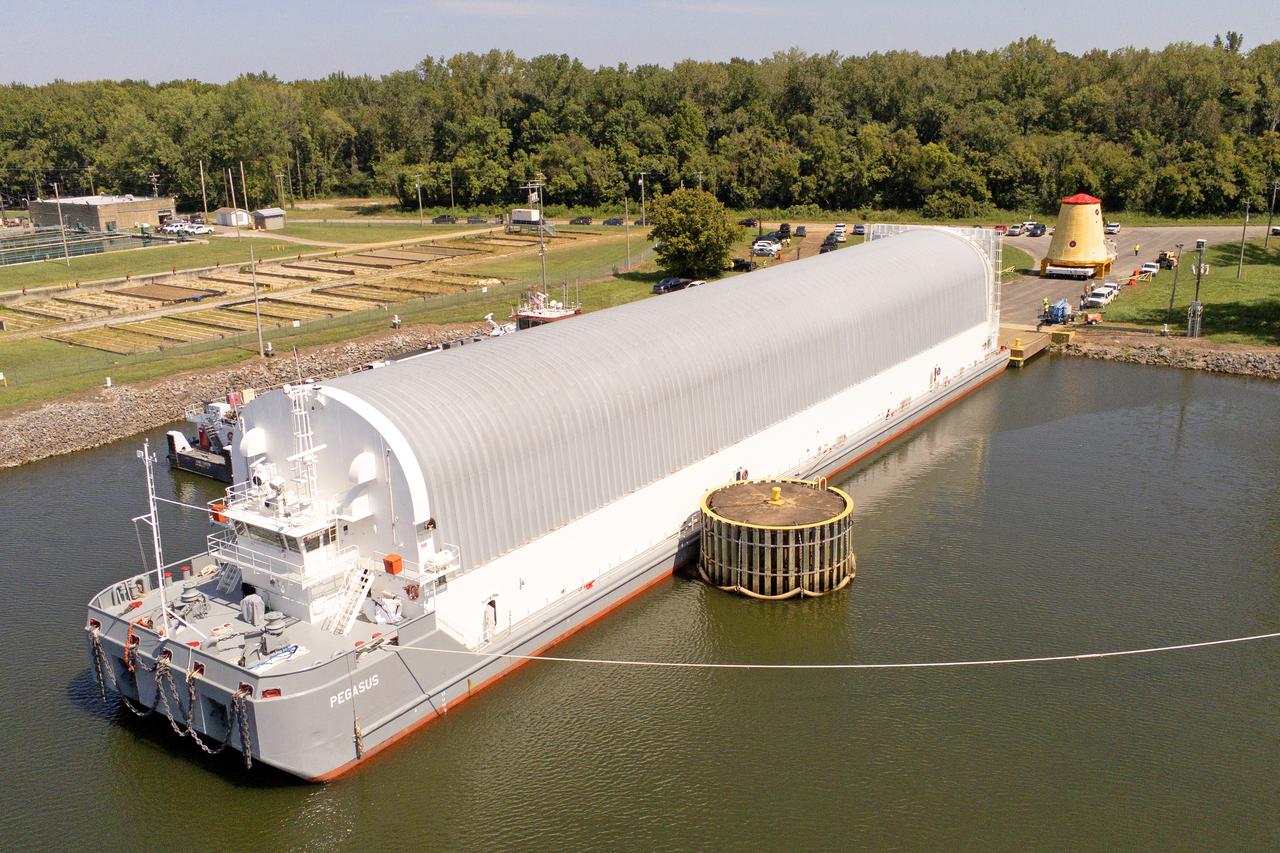
NASA rolled out a key piece of space flight hardware for the SLS (Space Launch System) rocket for the first crewed mission of NASA’s Artemis campaign from Marshall Space Flight Center in Huntsville, Alabama, on Wednesday, Aug. 21 for shipment to the agency’s spaceport in Florida. The cone-shaped launch vehicle stage adapter connects the rocket’s core stage to the upper stage and helps protect the upper stage’s engine that will help propel the Artemis II test flight around the Moon, slated for 2025. Manufactured by prime contractor Teledyne Brown Engineering and the Jacobs Space Exploration Group’s ESSCA (Engineering Services and Science Capability Augmentation) contract using NASA Marshall’s self-reacting friction-stir robotic and vertical weld tools. Crews moved the adapter out of NASA Marshall’s Building 4708 to the agency’s Pegasus barge Aug. 21. The barge will ferry the adapter first to NASA’s Michoud Assembly Facility in New Orleans, where crews will pick up additional SLS hardware for future Artemis missions, before traveling to NASA Kennedy. Once in Florida, the adapter will join the recently delivered core stage. There, teams with NASA’s Exploration Ground Systems will prepare the adapter for stacking and launch.
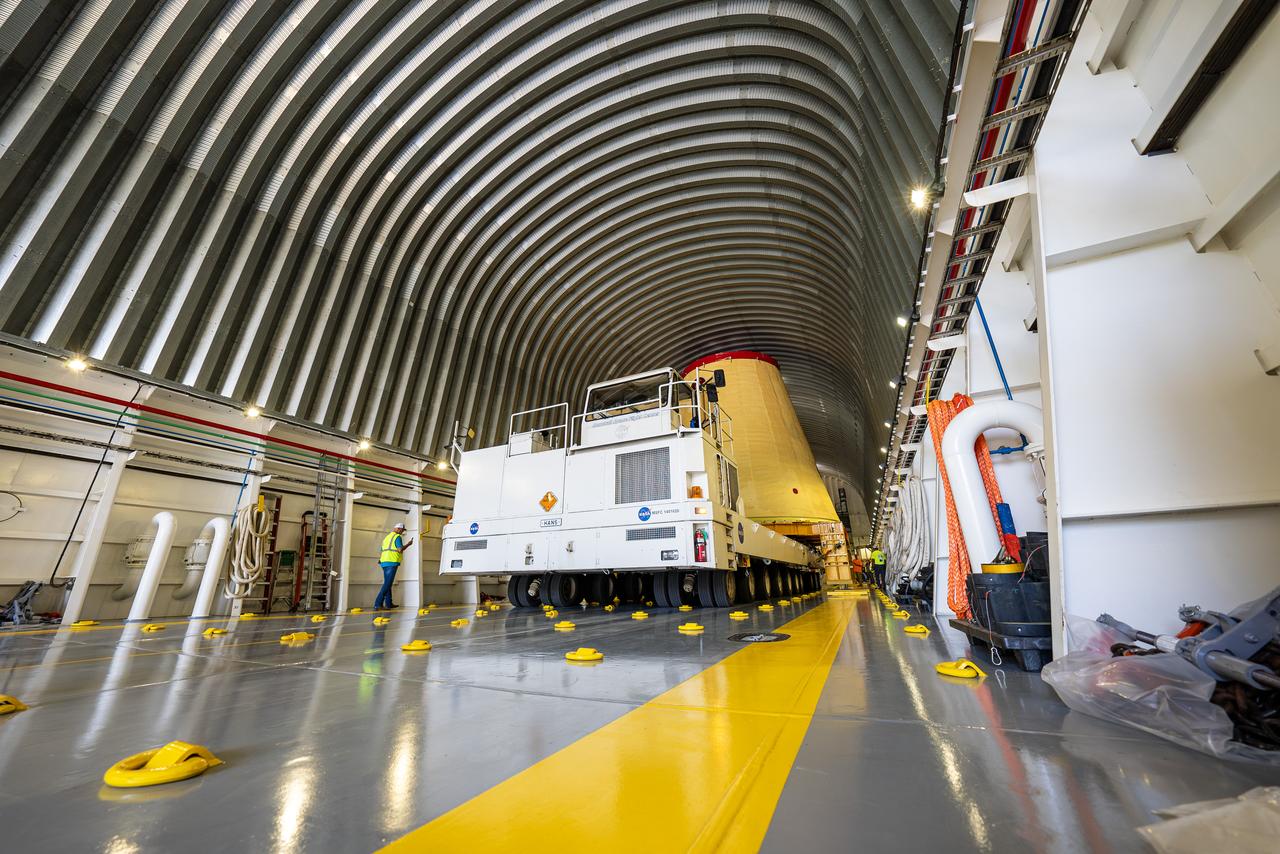
NASA rolled out a key piece of space flight hardware for the SLS (Space Launch System) rocket for the first crewed mission of NASA’s Artemis campaign from Marshall Space Flight Center in Huntsville, Alabama, on Wednesday, Aug. 21 for shipment to the agency’s spaceport in Florida. The cone-shaped launch vehicle stage adapter connects the rocket’s core stage to the upper stage and helps protect the upper stage’s engine that will help propel the Artemis II test flight around the Moon, slated for 2025. Manufactured by prime contractor Teledyne Brown Engineering and the Jacobs Space Exploration Group’s ESSCA (Engineering Services and Science Capability Augmentation) contract using NASA Marshall’s self-reacting friction-stir robotic and vertical weld tools. Crews moved the adapter out of NASA Marshall’s Building 4708 to the agency’s Pegasus barge Aug. 21. The barge will ferry the adapter first to NASA’s Michoud Assembly Facility in New Orleans, where crews will pick up additional SLS hardware for future Artemis missions, before traveling to NASA Kennedy. Once in Florida, the adapter will join the recently delivered core stage. There, teams with NASA’s Exploration Ground Systems will prepare the adapter for stacking and launch.
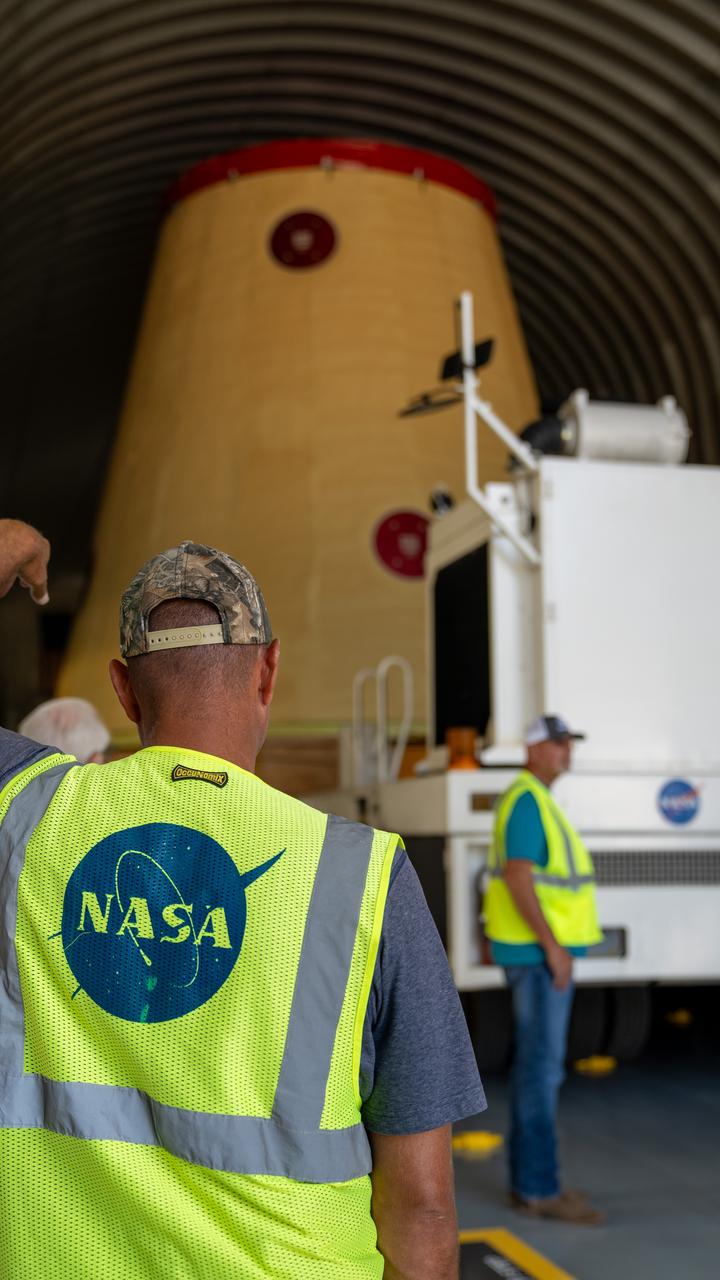
NASA rolled out a key piece of space flight hardware for the SLS (Space Launch System) rocket for the first crewed mission of NASA’s Artemis campaign from Marshall Space Flight Center in Huntsville, Alabama, on Wednesday, Aug. 21 for shipment to the agency’s spaceport in Florida. The cone-shaped launch vehicle stage adapter connects the rocket’s core stage to the upper stage and helps protect the upper stage’s engine that will help propel the Artemis II test flight around the Moon, slated for 2025. Manufactured by prime contractor Teledyne Brown Engineering and the Jacobs Space Exploration Group’s ESSCA (Engineering Services and Science Capability Augmentation) contract using NASA Marshall’s self-reacting friction-stir robotic and vertical weld tools. Crews moved the adapter out of NASA Marshall’s Building 4708 to the agency’s Pegasus barge Aug. 21. The barge will ferry the adapter first to NASA’s Michoud Assembly Facility in New Orleans, where crews will pick up additional SLS hardware for future Artemis missions, before traveling to NASA Kennedy. Once in Florida, the adapter will join the recently delivered core stage. There, teams with NASA’s Exploration Ground Systems will prepare the adapter for stacking and launch.
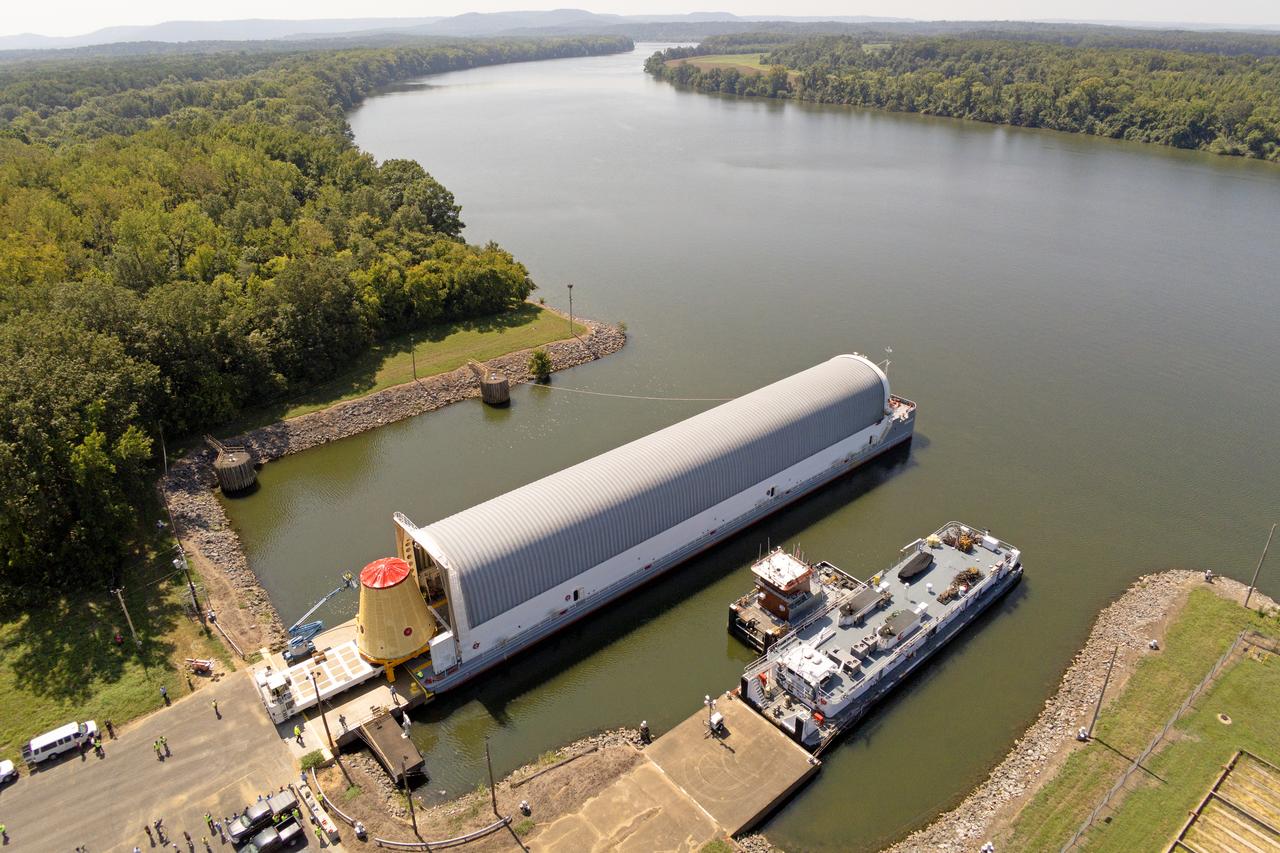
NASA rolled out a key piece of space flight hardware for the SLS (Space Launch System) rocket for the first crewed mission of NASA’s Artemis campaign from Marshall Space Flight Center in Huntsville, Alabama, on Wednesday, Aug. 21 for shipment to the agency’s spaceport in Florida. The cone-shaped launch vehicle stage adapter connects the rocket’s core stage to the upper stage and helps protect the upper stage’s engine that will help propel the Artemis II test flight around the Moon, slated for 2025. Manufactured by prime contractor Teledyne Brown Engineering and the Jacobs Space Exploration Group’s ESSCA (Engineering Services and Science Capability Augmentation) contract using NASA Marshall’s self-reacting friction-stir robotic and vertical weld tools. Crews moved the adapter out of NASA Marshall’s Building 4708 to the agency’s Pegasus barge Aug. 21. The barge will ferry the adapter first to NASA’s Michoud Assembly Facility in New Orleans, where crews will pick up additional SLS hardware for future Artemis missions, before traveling to NASA Kennedy. Once in Florida, the adapter will join the recently delivered core stage. There, teams with NASA’s Exploration Ground Systems will prepare the adapter for stacking and launch.
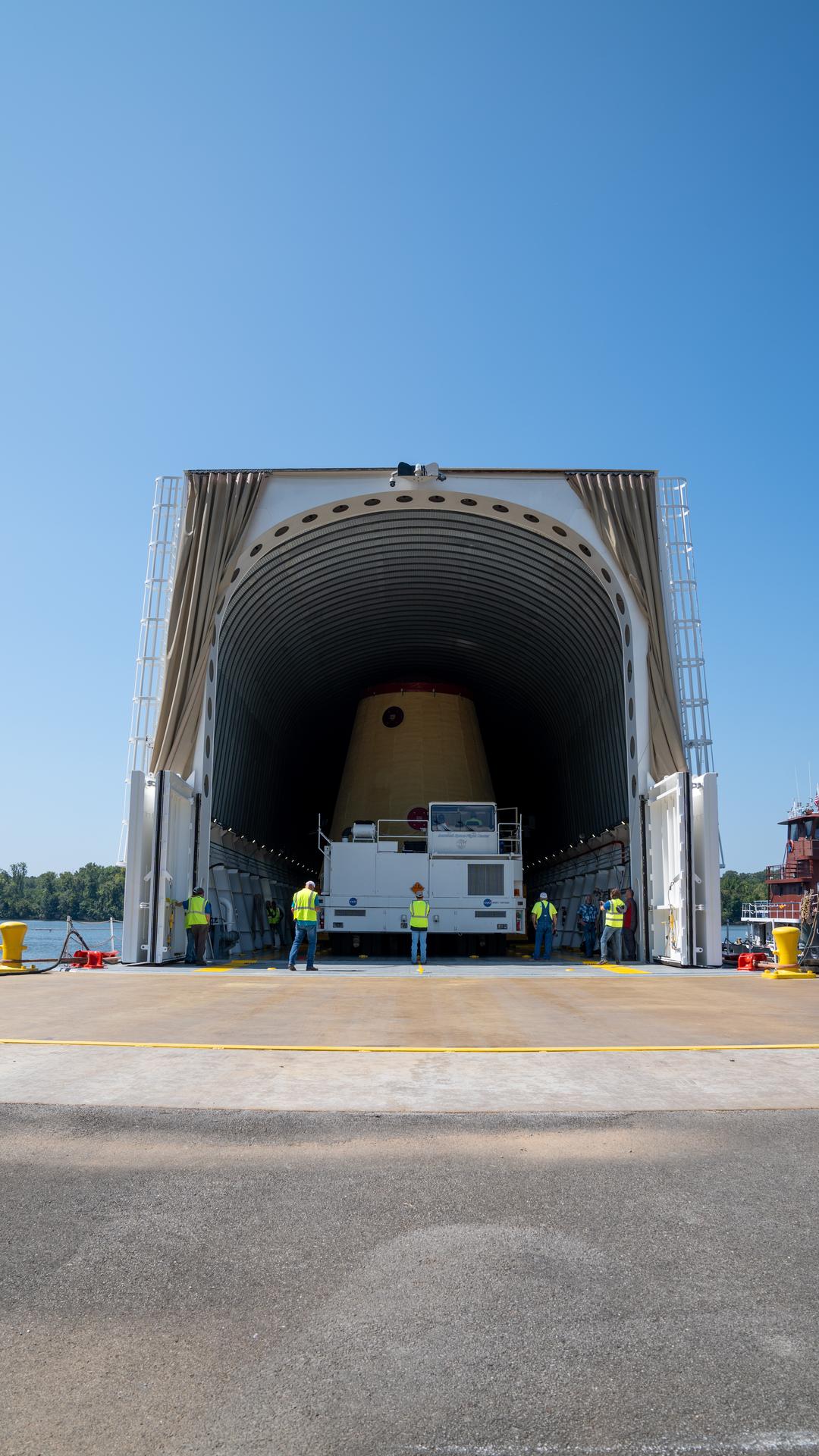
NASA rolled out a key piece of space flight hardware for the SLS (Space Launch System) rocket for the first crewed mission of NASA’s Artemis campaign from Marshall Space Flight Center in Huntsville, Alabama, on Wednesday, Aug. 21 for shipment to the agency’s spaceport in Florida. The cone-shaped launch vehicle stage adapter connects the rocket’s core stage to the upper stage and helps protect the upper stage’s engine that will help propel the Artemis II test flight around the Moon, slated for 2025. Manufactured by prime contractor Teledyne Brown Engineering and the Jacobs Space Exploration Group’s ESSCA (Engineering Services and Science Capability Augmentation) contract using NASA Marshall’s self-reacting friction-stir robotic and vertical weld tools. Crews moved the adapter out of NASA Marshall’s Building 4708 to the agency’s Pegasus barge Aug. 21. The barge will ferry the adapter first to NASA’s Michoud Assembly Facility in New Orleans, where crews will pick up additional SLS hardware for future Artemis missions, before traveling to NASA Kennedy. Once in Florida, the adapter will join the recently delivered core stage. There, teams with NASA’s Exploration Ground Systems will prepare the adapter for stacking and launch.
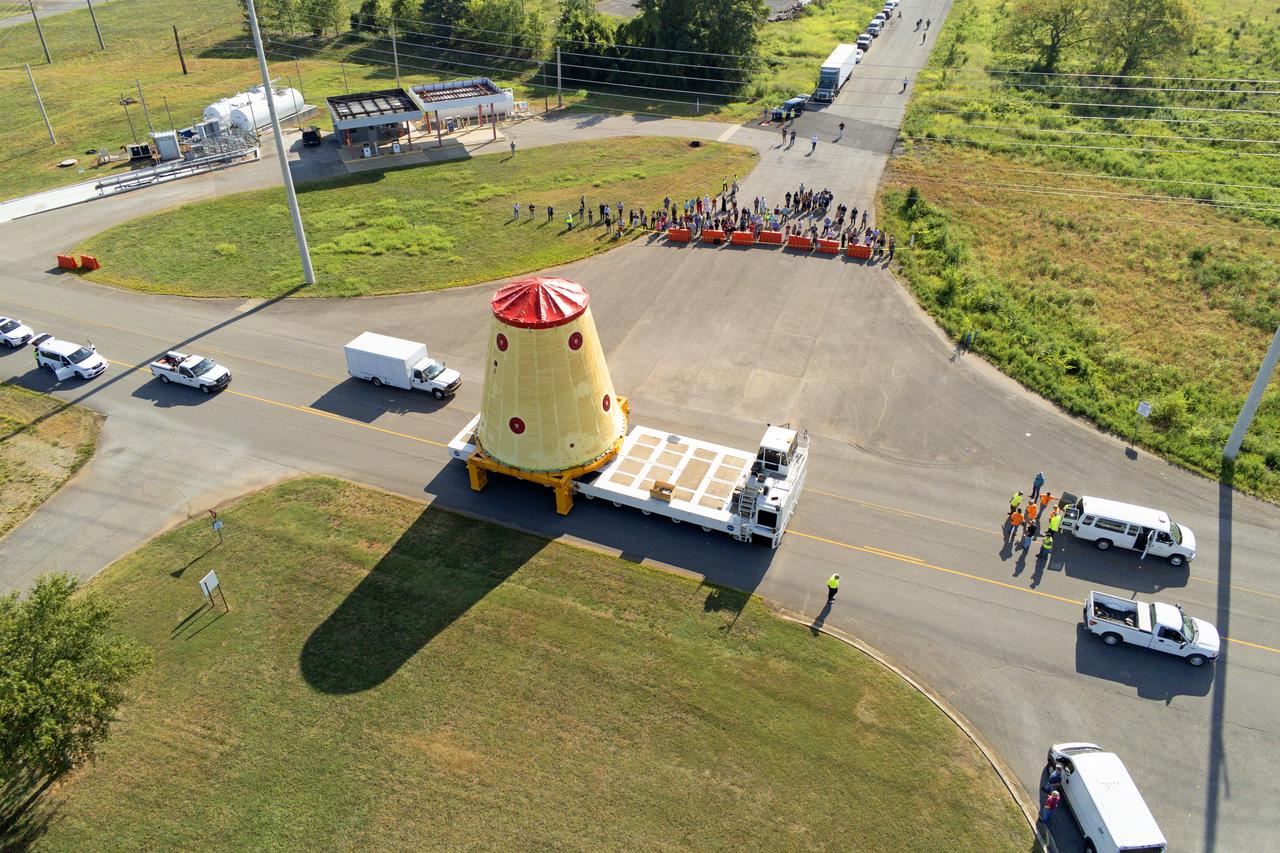
NASA rolled out a key piece of space flight hardware for the SLS (Space Launch System) rocket for the first crewed mission of NASA’s Artemis campaign from Marshall Space Flight Center in Huntsville, Alabama, on Wednesday, Aug. 21 for shipment to the agency’s spaceport in Florida. The cone-shaped launch vehicle stage adapter connects the rocket’s core stage to the upper stage and helps protect the upper stage’s engine that will help propel the Artemis II test flight around the Moon, slated for 2025. Manufactured by prime contractor Teledyne Brown Engineering and the Jacobs Space Exploration Group’s ESSCA (Engineering Services and Science Capability Augmentation) contract using NASA Marshall’s self-reacting friction-stir robotic and vertical weld tools. Crews moved the adapter out of NASA Marshall’s Building 4708 to the agency’s Pegasus barge Aug. 21. The barge will ferry the adapter first to NASA’s Michoud Assembly Facility in New Orleans, where crews will pick up additional SLS hardware for future Artemis missions, before traveling to NASA Kennedy. Once in Florida, the adapter will join the recently delivered core stage. There, teams with NASA’s Exploration Ground Systems will prepare the adapter for stacking and launch.
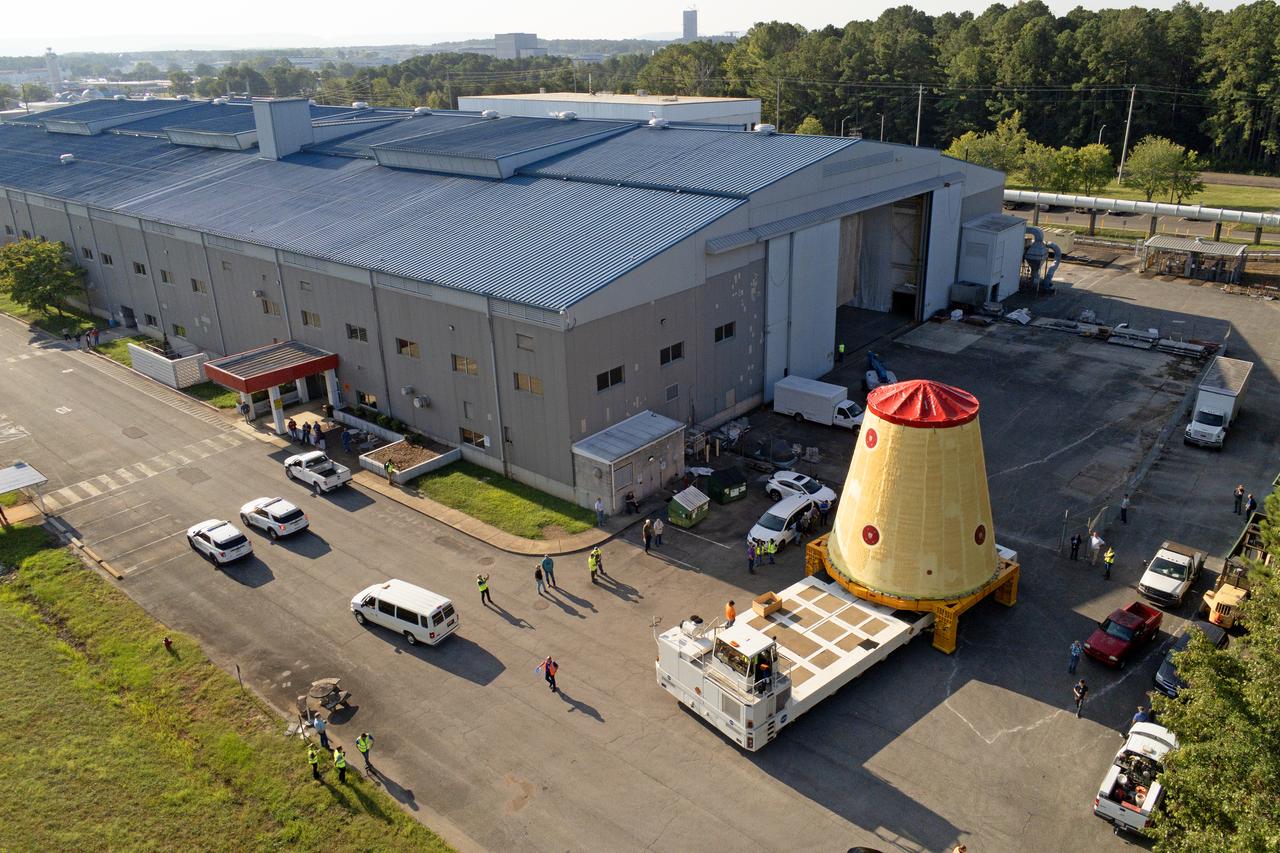
NASA rolled out a key piece of space flight hardware for the SLS (Space Launch System) rocket for the first crewed mission of NASA’s Artemis campaign from Marshall Space Flight Center in Huntsville, Alabama, on Wednesday, Aug. 21 for shipment to the agency’s spaceport in Florida. The cone-shaped launch vehicle stage adapter connects the rocket’s core stage to the upper stage and helps protect the upper stage’s engine that will help propel the Artemis II test flight around the Moon, slated for 2025. Manufactured by prime contractor Teledyne Brown Engineering and the Jacobs Space Exploration Group’s ESSCA (Engineering Services and Science Capability Augmentation) contract using NASA Marshall’s self-reacting friction-stir robotic and vertical weld tools. Crews moved the adapter out of NASA Marshall’s Building 4708 to the agency’s Pegasus barge Aug. 21. The barge will ferry the adapter first to NASA’s Michoud Assembly Facility in New Orleans, where crews will pick up additional SLS hardware for future Artemis missions, before traveling to NASA Kennedy. Once in Florida, the adapter will join the recently delivered core stage. There, teams with NASA’s Exploration Ground Systems will prepare the adapter for stacking and launch.
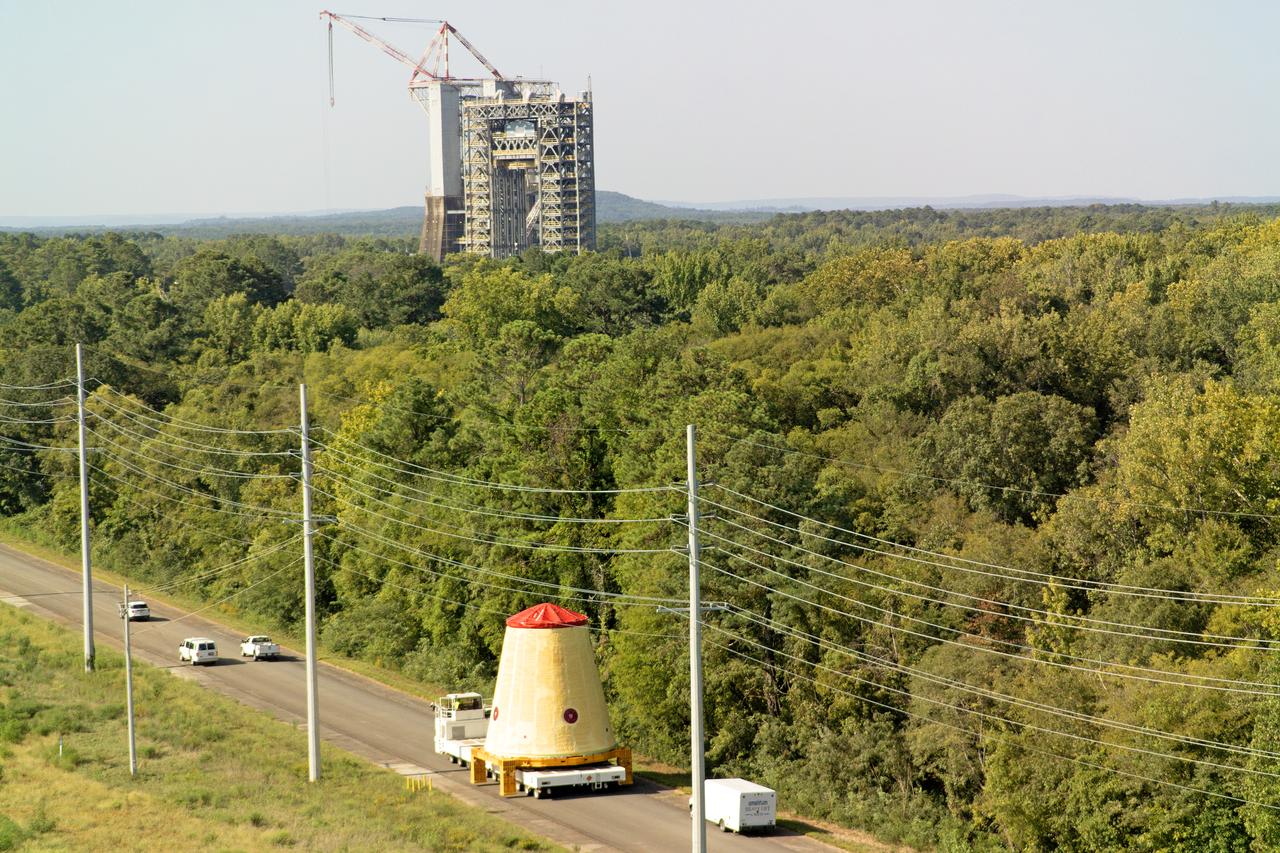
NASA rolled out a key piece of space flight hardware for the SLS (Space Launch System) rocket for the first crewed mission of NASA’s Artemis campaign from Marshall Space Flight Center in Huntsville, Alabama, on Wednesday, Aug. 21 for shipment to the agency’s spaceport in Florida. The cone-shaped launch vehicle stage adapter connects the rocket’s core stage to the upper stage and helps protect the upper stage’s engine that will help propel the Artemis II test flight around the Moon, slated for 2025. Manufactured by prime contractor Teledyne Brown Engineering and the Jacobs Space Exploration Group’s ESSCA (Engineering Services and Science Capability Augmentation) contract using NASA Marshall’s self-reacting friction-stir robotic and vertical weld tools. Crews moved the adapter out of NASA Marshall’s Building 4708 to the agency’s Pegasus barge Aug. 21. The barge will ferry the adapter first to NASA’s Michoud Assembly Facility in New Orleans, where crews will pick up additional SLS hardware for future Artemis missions, before traveling to NASA Kennedy. Once in Florida, the adapter will join the recently delivered core stage. There, teams with NASA’s Exploration Ground Systems will prepare the adapter for stacking and launch.
NASA rolled out a key piece of space flight hardware for the SLS (Space Launch System) rocket for the first crewed mission of NASA’s Artemis campaign from Marshall Space Flight Center in Huntsville, Alabama, on Wednesday, Aug. 21 for shipment to the agency’s spaceport in Florida. The cone-shaped launch vehicle stage adapter connects the rocket’s core stage to the upper stage and helps protect the upper stage’s engine that will help propel the Artemis II test flight around the Moon, slated for 2025. Manufactured by prime contractor Teledyne Brown Engineering and the Jacobs Space Exploration Group’s ESSCA (Engineering Services and Science Capability Augmentation) contract using NASA Marshall’s self-reacting friction-stir robotic and vertical weld tools. Crews moved the adapter out of NASA Marshall’s Building 4708 to the agency’s Pegasus barge Aug. 21. The barge will ferry the adapter first to NASA’s Michoud Assembly Facility in New Orleans, where crews will pick up additional SLS hardware for future Artemis missions, before traveling to NASA Kennedy. Once in Florida, the adapter will join the recently delivered core stage. There, teams with NASA’s Exploration Ground Systems will prepare the adapter for stacking and launch.
NASA rolled out a key piece of space flight hardware for the SLS (Space Launch System) rocket for the first crewed mission of NASA’s Artemis campaign from Marshall Space Flight Center in Huntsville, Alabama, on Wednesday, Aug. 21 for shipment to the agency’s spaceport in Florida. The cone-shaped launch vehicle stage adapter connects the rocket’s core stage to the upper stage and helps protect the upper stage’s engine that will help propel the Artemis II test flight around the Moon, slated for 2025. Manufactured by prime contractor Teledyne Brown Engineering and the Jacobs Space Exploration Group’s ESSCA (Engineering Services and Science Capability Augmentation) contract using NASA Marshall’s self-reacting friction-stir robotic and vertical weld tools. Crews moved the adapter out of NASA Marshall’s Building 4708 to the agency’s Pegasus barge Aug. 21. The barge will ferry the adapter first to NASA’s Michoud Assembly Facility in New Orleans, where crews will pick up additional SLS hardware for future Artemis missions, before traveling to NASA Kennedy. Once in Florida, the adapter will join the recently delivered core stage. There, teams with NASA’s Exploration Ground Systems will prepare the adapter for stacking and launch.
NASA rolled out a key piece of space flight hardware for the SLS (Space Launch System) rocket for the first crewed mission of NASA’s Artemis campaign from Marshall Space Flight Center in Huntsville, Alabama, on Wednesday, Aug. 21 for shipment to the agency’s spaceport in Florida. The cone-shaped launch vehicle stage adapter connects the rocket’s core stage to the upper stage and helps protect the upper stage’s engine that will help propel the Artemis II test flight around the Moon, slated for 2025. Manufactured by prime contractor Teledyne Brown Engineering and the Jacobs Space Exploration Group’s ESSCA (Engineering Services and Science Capability Augmentation) contract using NASA Marshall’s self-reacting friction-stir robotic and vertical weld tools. Crews moved the adapter out of NASA Marshall’s Building 4708 to the agency’s Pegasus barge Aug. 21. The barge will ferry the adapter first to NASA’s Michoud Assembly Facility in New Orleans, where crews will pick up additional SLS hardware for future Artemis missions, before traveling to NASA Kennedy. Once in Florida, the adapter will join the recently delivered core stage. There, teams with NASA’s Exploration Ground Systems will prepare the adapter for stacking and launch.
NASA rolled out a key piece of space flight hardware for the SLS (Space Launch System) rocket for the first crewed mission of NASA’s Artemis campaign from Marshall Space Flight Center in Huntsville, Alabama, on Wednesday, Aug. 21 for shipment to the agency’s spaceport in Florida. The cone-shaped launch vehicle stage adapter connects the rocket’s core stage to the upper stage and helps protect the upper stage’s engine that will help propel the Artemis II test flight around the Moon, slated for 2025. Manufactured by prime contractor Teledyne Brown Engineering and the Jacobs Space Exploration Group’s ESSCA (Engineering Services and Science Capability Augmentation) contract using NASA Marshall’s self-reacting friction-stir robotic and vertical weld tools. Crews moved the adapter out of NASA Marshall’s Building 4708 to the agency’s Pegasus barge Aug. 21. The barge will ferry the adapter first to NASA’s Michoud Assembly Facility in New Orleans, where crews will pick up additional SLS hardware for future Artemis missions, before traveling to NASA Kennedy. Once in Florida, the adapter will join the recently delivered core stage. There, teams with NASA’s Exploration Ground Systems will prepare the adapter for stacking and launch.
NASA rolled out a key piece of space flight hardware for the SLS (Space Launch System) rocket for the first crewed mission of NASA’s Artemis campaign from Marshall Space Flight Center in Huntsville, Alabama, on Wednesday, Aug. 21 for shipment to the agency’s spaceport in Florida. The cone-shaped launch vehicle stage adapter connects the rocket’s core stage to the upper stage and helps protect the upper stage’s engine that will help propel the Artemis II test flight around the Moon, slated for 2025. Manufactured by prime contractor Teledyne Brown Engineering and the Jacobs Space Exploration Group’s ESSCA (Engineering Services and Science Capability Augmentation) contract using NASA Marshall’s self-reacting friction-stir robotic and vertical weld tools. Crews moved the adapter out of NASA Marshall’s Building 4708 to the agency’s Pegasus barge Aug. 21. The barge will ferry the adapter first to NASA’s Michoud Assembly Facility in New Orleans, where crews will pick up additional SLS hardware for future Artemis missions, before traveling to NASA Kennedy. Once in Florida, the adapter will join the recently delivered core stage. There, teams with NASA’s Exploration Ground Systems will prepare the adapter for stacking and launch.
NASA rolled out a key piece of space flight hardware for the SLS (Space Launch System) rocket for the first crewed mission of NASA’s Artemis campaign from Marshall Space Flight Center in Huntsville, Alabama, on Wednesday, Aug. 21 for shipment to the agency’s spaceport in Florida. The cone-shaped launch vehicle stage adapter connects the rocket’s core stage to the upper stage and helps protect the upper stage’s engine that will help propel the Artemis II test flight around the Moon, slated for 2025. Manufactured by prime contractor Teledyne Brown Engineering and the Jacobs Space Exploration Group’s ESSCA (Engineering Services and Science Capability Augmentation) contract using NASA Marshall’s self-reacting friction-stir robotic and vertical weld tools. Crews moved the adapter out of NASA Marshall’s Building 4708 to the agency’s Pegasus barge Aug. 21. The barge will ferry the adapter first to NASA’s Michoud Assembly Facility in New Orleans, where crews will pick up additional SLS hardware for future Artemis missions, before traveling to NASA Kennedy. Once in Florida, the adapter will join the recently delivered core stage. There, teams with NASA’s Exploration Ground Systems will prepare the adapter for stacking and launch.
NASA rolled out a key piece of space flight hardware for the SLS (Space Launch System) rocket for the first crewed mission of NASA’s Artemis campaign from Marshall Space Flight Center in Huntsville, Alabama, on Wednesday, Aug. 21 for shipment to the agency’s spaceport in Florida. The cone-shaped launch vehicle stage adapter connects the rocket’s core stage to the upper stage and helps protect the upper stage’s engine that will help propel the Artemis II test flight around the Moon, slated for 2025. Manufactured by prime contractor Teledyne Brown Engineering and the Jacobs Space Exploration Group’s ESSCA (Engineering Services and Science Capability Augmentation) contract using NASA Marshall’s self-reacting friction-stir robotic and vertical weld tools. Crews moved the adapter out of NASA Marshall’s Building 4708 to the agency’s Pegasus barge Aug. 21. The barge will ferry the adapter first to NASA’s Michoud Assembly Facility in New Orleans, where crews will pick up additional SLS hardware for future Artemis missions, before traveling to NASA Kennedy. Once in Florida, the adapter will join the recently delivered core stage. There, teams with NASA’s Exploration Ground Systems will prepare the adapter for stacking and launch.
NASA rolled out a key piece of space flight hardware for the SLS (Space Launch System) rocket for the first crewed mission of NASA’s Artemis campaign from Marshall Space Flight Center in Huntsville, Alabama, on Wednesday, Aug. 21 for shipment to the agency’s spaceport in Florida. The cone-shaped launch vehicle stage adapter connects the rocket’s core stage to the upper stage and helps protect the upper stage’s engine that will help propel the Artemis II test flight around the Moon, slated for 2025. Manufactured by prime contractor Teledyne Brown Engineering and the Jacobs Space Exploration Group’s ESSCA (Engineering Services and Science Capability Augmentation) contract using NASA Marshall’s self-reacting friction-stir robotic and vertical weld tools. Crews moved the adapter out of NASA Marshall’s Building 4708 to the agency’s Pegasus barge Aug. 21. The barge will ferry the adapter first to NASA’s Michoud Assembly Facility in New Orleans, where crews will pick up additional SLS hardware for future Artemis missions, before traveling to NASA Kennedy. Once in Florida, the adapter will join the recently delivered core stage. There, teams with NASA’s Exploration Ground Systems will prepare the adapter for stacking and launch.
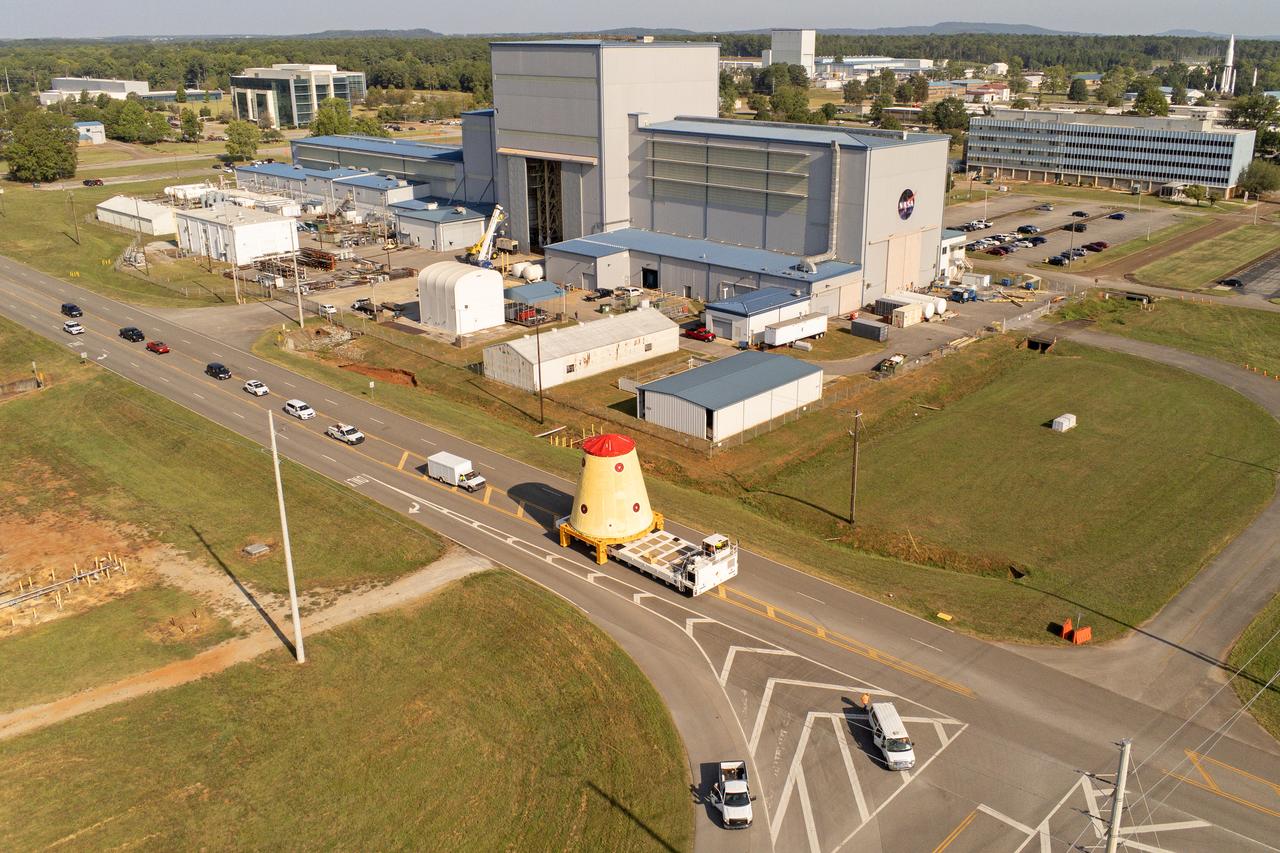
NASA rolled out a key piece of space flight hardware for the SLS (Space Launch System) rocket for the first crewed mission of NASA’s Artemis campaign from Marshall Space Flight Center in Huntsville, Alabama, on Wednesday, Aug. 21 for shipment to the agency’s spaceport in Florida. The cone-shaped launch vehicle stage adapter connects the rocket’s core stage to the upper stage and helps protect the upper stage’s engine that will help propel the Artemis II test flight around the Moon, slated for 2025. Manufactured by prime contractor Teledyne Brown Engineering and the Jacobs Space Exploration Group’s ESSCA (Engineering Services and Science Capability Augmentation) contract using NASA Marshall’s self-reacting friction-stir robotic and vertical weld tools. Crews moved the adapter out of NASA Marshall’s Building 4708 to the agency’s Pegasus barge Aug. 21. The barge will ferry the adapter first to NASA’s Michoud Assembly Facility in New Orleans, where crews will pick up additional SLS hardware for future Artemis missions, before traveling to NASA Kennedy. Once in Florida, the adapter will join the recently delivered core stage. There, teams with NASA’s Exploration Ground Systems will prepare the adapter for stacking and launch.
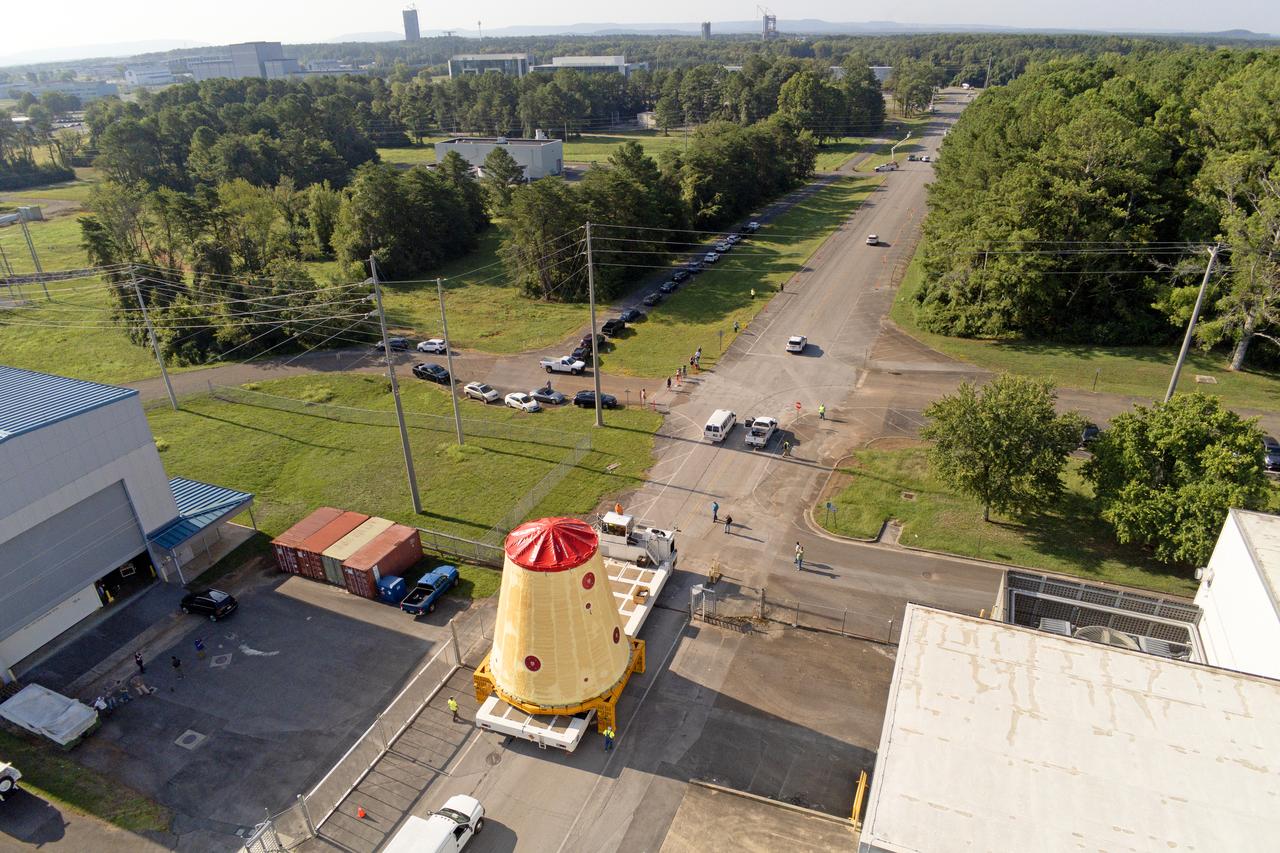
NASA rolled out a key piece of space flight hardware for the SLS (Space Launch System) rocket for the first crewed mission of NASA’s Artemis campaign from Marshall Space Flight Center in Huntsville, Alabama, on Wednesday, Aug. 21 for shipment to the agency’s spaceport in Florida. The cone-shaped launch vehicle stage adapter connects the rocket’s core stage to the upper stage and helps protect the upper stage’s engine that will help propel the Artemis II test flight around the Moon, slated for 2025. Manufactured by prime contractor Teledyne Brown Engineering and the Jacobs Space Exploration Group’s ESSCA (Engineering Services and Science Capability Augmentation) contract using NASA Marshall’s self-reacting friction-stir robotic and vertical weld tools. Crews moved the adapter out of NASA Marshall’s Building 4708 to the agency’s Pegasus barge Aug. 21. The barge will ferry the adapter first to NASA’s Michoud Assembly Facility in New Orleans, where crews will pick up additional SLS hardware for future Artemis missions, before traveling to NASA Kennedy. Once in Florida, the adapter will join the recently delivered core stage. There, teams with NASA’s Exploration Ground Systems will prepare the adapter for stacking and launch.

NASA rolled out a key piece of space flight hardware for the SLS (Space Launch System) rocket for the first crewed mission of NASA’s Artemis campaign from Marshall Space Flight Center in Huntsville, Alabama, on Wednesday, Aug. 21 for shipment to the agency’s spaceport in Florida. The cone-shaped launch vehicle stage adapter connects the rocket’s core stage to the upper stage and helps protect the upper stage’s engine that will help propel the Artemis II test flight around the Moon, slated for 2025. Manufactured by prime contractor Teledyne Brown Engineering and the Jacobs Space Exploration Group’s ESSCA (Engineering Services and Science Capability Augmentation) contract using NASA Marshall’s self-reacting friction-stir robotic and vertical weld tools. Crews moved the adapter out of NASA Marshall’s Building 4708 to the agency’s Pegasus barge Aug. 21. The barge will ferry the adapter first to NASA’s Michoud Assembly Facility in New Orleans, where crews will pick up additional SLS hardware for future Artemis missions, before traveling to NASA Kennedy. Once in Florida, the adapter will join the recently delivered core stage. There, teams with NASA’s Exploration Ground Systems will prepare the adapter for stacking and launch.
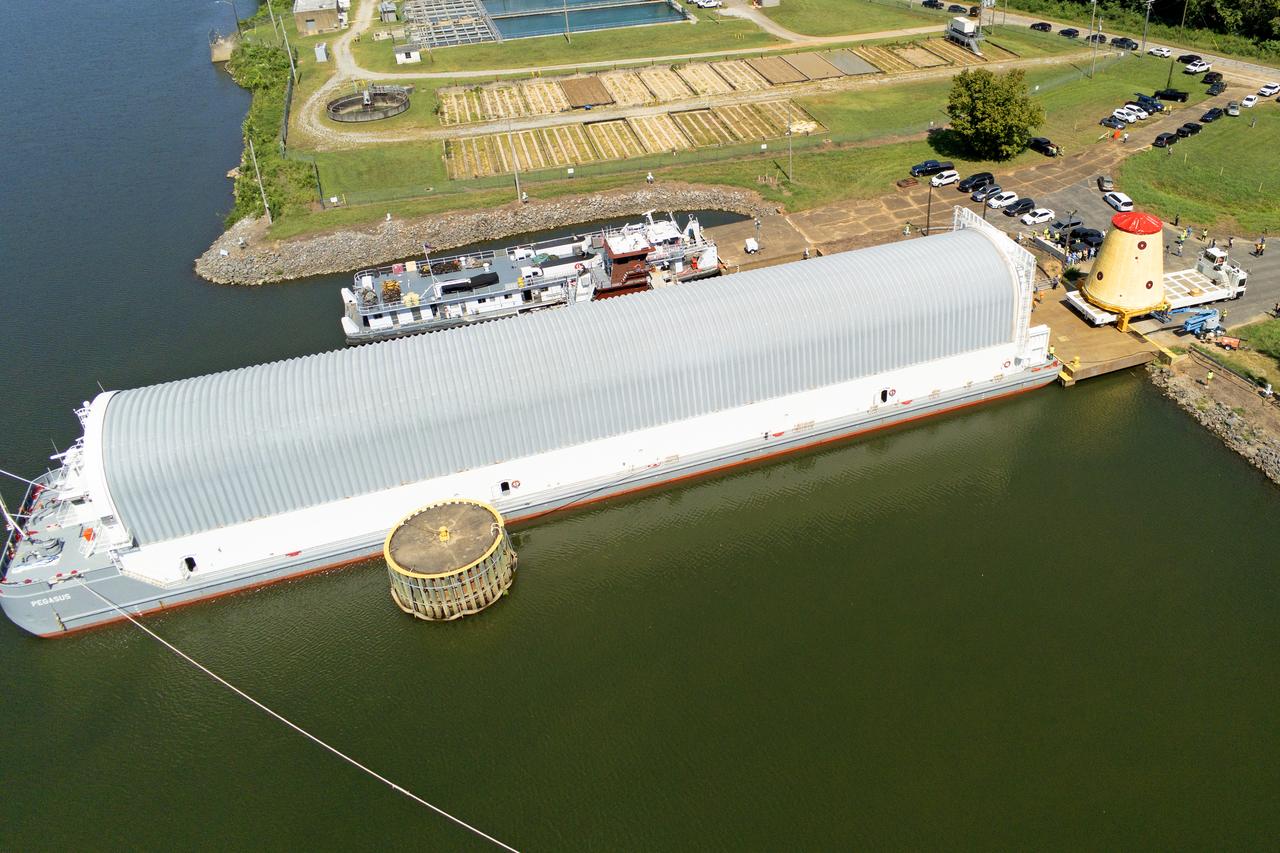
These images and videos show NASA rolling out a key piece of space flight hardware for the SLS (Space Launch System) rocket for the first crewed mission of NASA’s Artemis campaign from Marshall Space Flight Center in Huntsville, Alabama, on Wednesday, Aug. 21 for shipment to the agency’s spaceport in Florida. The cone-shaped launch vehicle stage adapter connects the rocket’s core stage to the upper stage and helps protect the upper stage’s engine that will help propel the Artemis II test flight around the Moon, slated for 2025. Manufactured by prime contractor Teledyne Brown Engineering and the Jacobs Space Exploration Group’s ESSCA (Engineering Services and Science Capability Augmentation) contract using NASA Marshall’s self-reacting friction-stir robotic and vertical weld tools. Crews moved the adapter out of NASA Marshall’s Building 4708 to the agency’s Pegasus barge Aug. 21. The barge will ferry the adapter first to NASA’s Michoud Assembly Facility in New Orleans, where crews will pick up additional SLS hardware for future Artemis missions, before traveling to NASA Kennedy. Once in Florida, the adapter will join the recently delivered core stage. There, teams with NASA’s Exploration Ground Systems will prepare the adapter for stacking and launch.
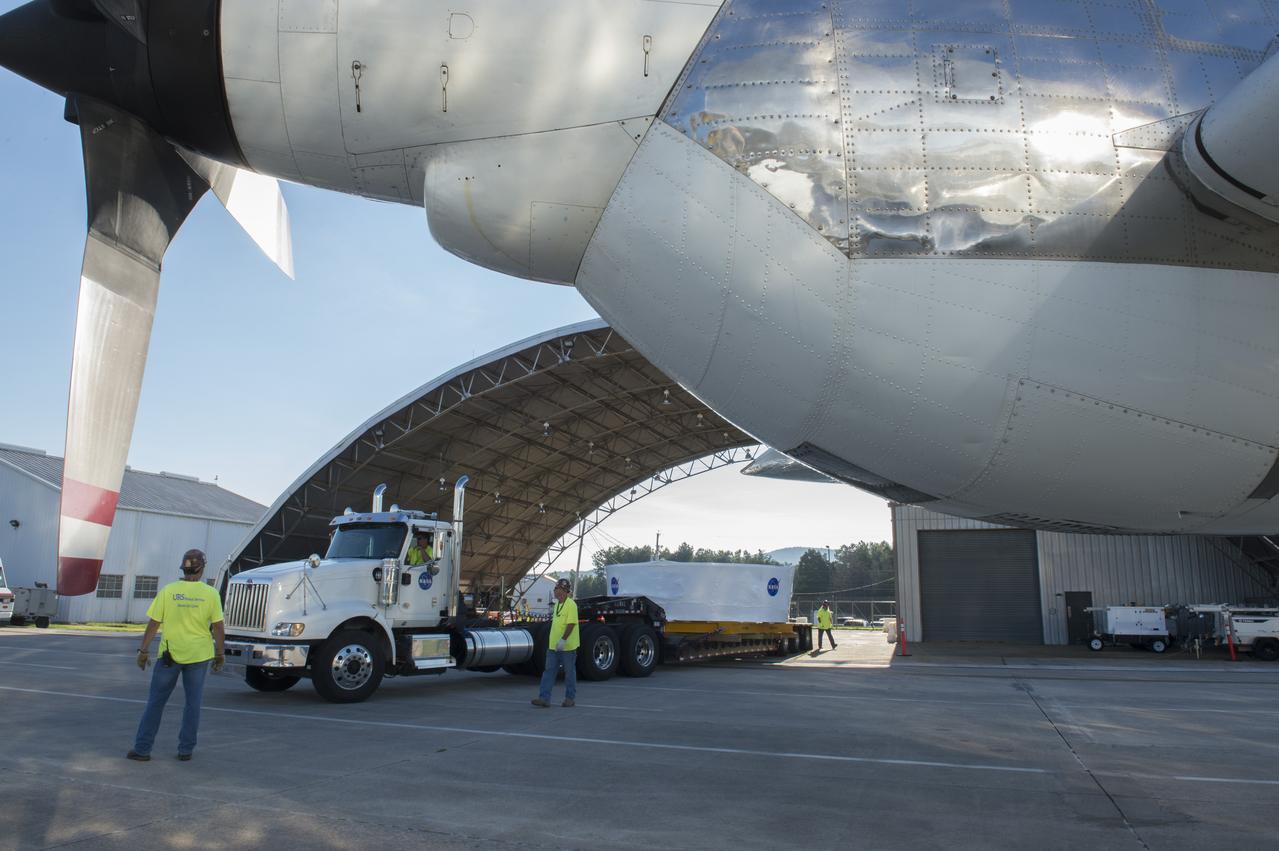
The Orion stage adapter arrives at Redstone Airfield where it will be loaded into NASA's Super Guppie aircraft for transportation to Denver, Colorado where it will undergo further testing.
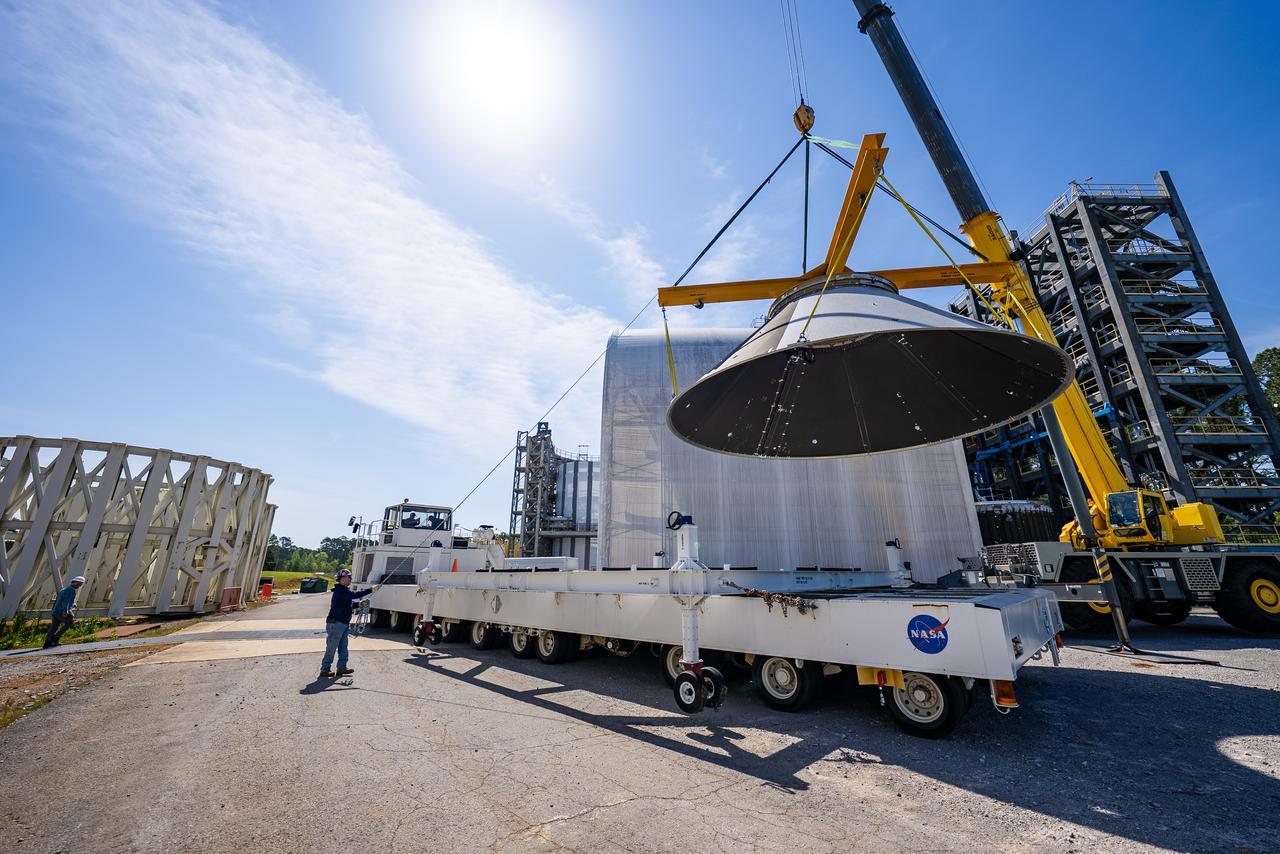
Technicians at NASA’s Marshall Space Flight Center in Huntsville, Alabama, are seen in these images taken April 17, 2025, moving the payload adapter test article from Building 4697 to Building 4705 for storage. This move marks the end of structural testing for the test article. Next, engineers will complete the qualification article and conduct additional for further testing before building the final flight hardware. Manufactured at Marshall, the test article underwent extensive and rigorous testing to validate the design before engineers finalized the configuration for the flight article. The newly completed composite payload adapter is an evolution from the Orion stage adapter to be used in the upgraded Block 1B configuration of the SLS (Space Launch System) rocket, debuting with Artemis IV.
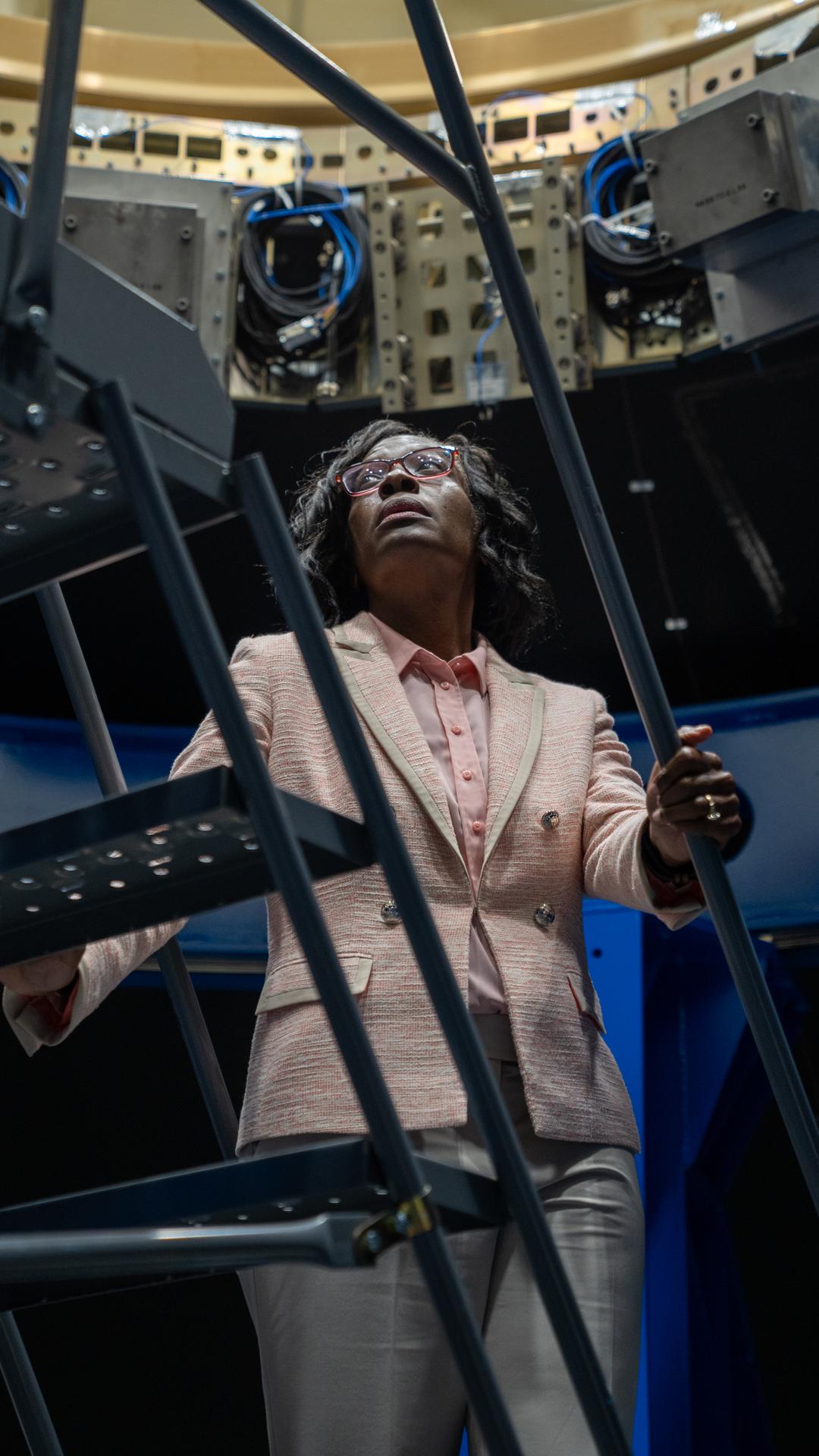
Lakiesha Hawkins, Assistant Deputy Associate Administrator for the Moon to Mars (M2M) Program within the Exploration Systems Development Mission Directorate (ESDMD), takes a peek at the Payload Adapter test article at Marshall Space Flight Center. The adapter, which will debut on NASA’s Artemis IV mission, is an evolution from the Orion stage adapter used in the Block 1 configuration of the rocket for the first three Artemis missions. It will be housed inside the universal stage adapter atop the rocket’s more powerful in-space stage, called the exploration upper stage. The payload adapter, like the launch vehicle stage adapter and the Orion stage adapter, is fully manufactured and tested at Marshall, which manages the SLS Program.
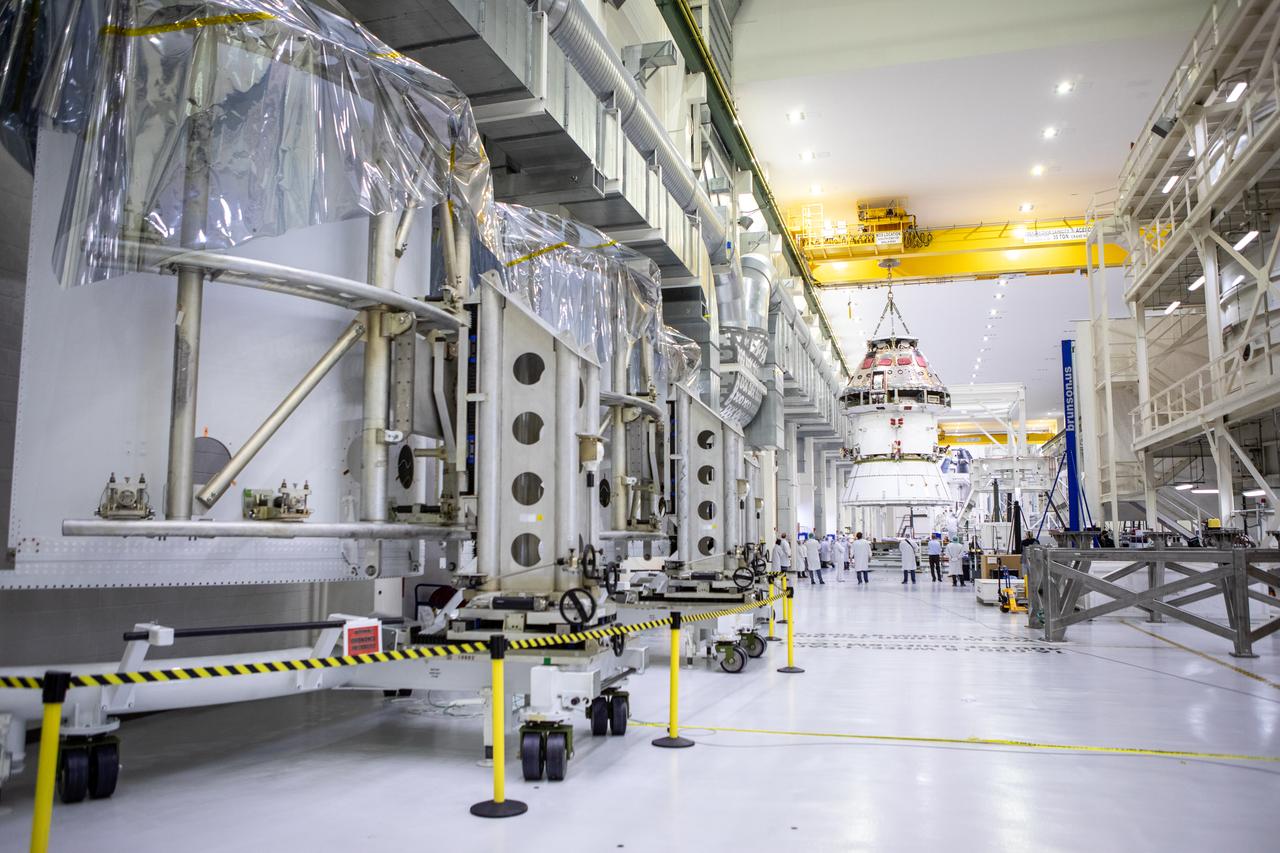
Technicians at NASA’s Kennedy Space Center in Florida work to safely return the Artemis I Orion spacecraft to the FAST cell after completing the installation of the spacecraft adapter (SA) cone inside the Neil Armstrong Operations and Checkout Building on Aug. 20, 2020. This is one of the final major hardware operations the spacecraft will undergo during closeout processing prior to being integrated with the Space Launch System (SLS) rocket in preparation for the first Artemis mission. The spacecraft adapter cone connects the bottom portion of Orion’s service module to the top part of the rocket known as the interim cryogenic propulsion stage (ICPS). In view at left in the foreground are the Spacecraft Adapter Jettison Fairing panels that will protect Orion’s service module from the environment around it during the ascent. Orion will fly on the agency’s Artemis I mission – the first in a series of increasingly complex missions to the Moon that will ultimately lead to the exploration of Mars.
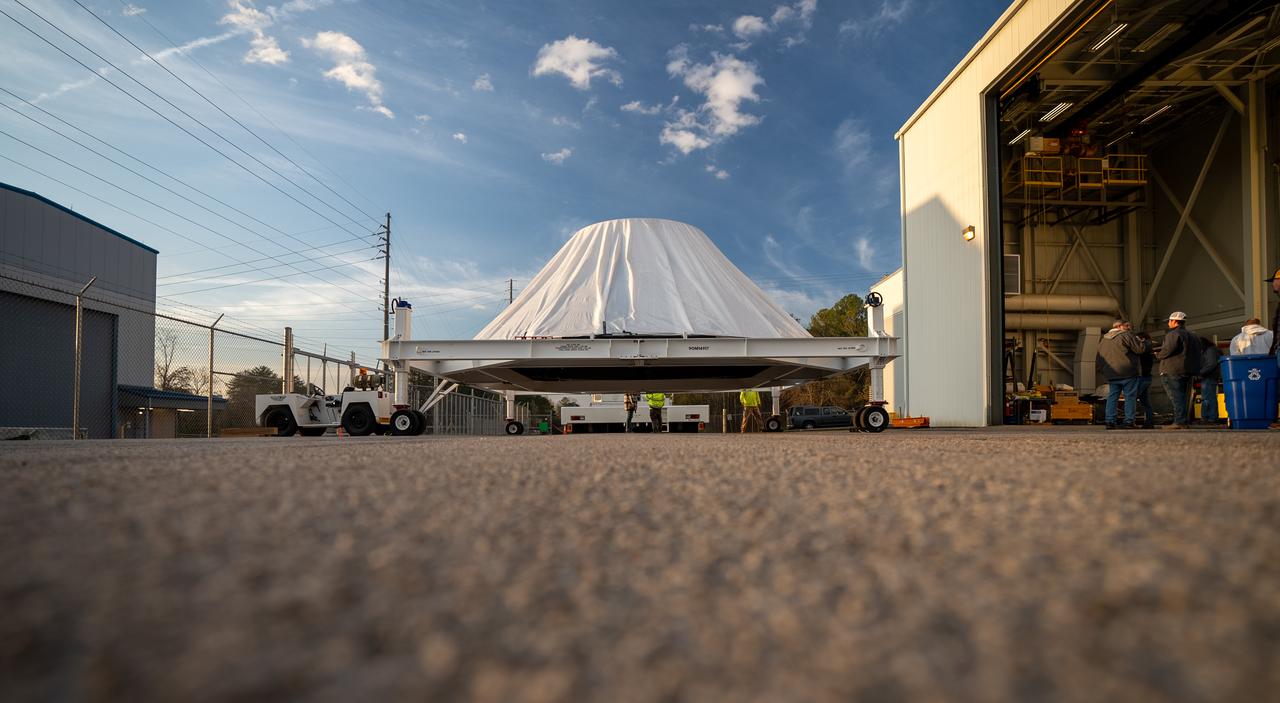
These photos and videos show how crews at NASA’s Marshall Space Flight Center in Huntsville, Alabama, moved and installed the payload adapter that will be used in the Block 1B configuration of the SLS (Space Launch System) rocket from Building 4708, where it was manufactured, into Structural Test Stand 4697 at NASA’s Marshall Space Flight Center on March 13. Teams at Marshall will begin structural testing the engineering development unit of the payload adapter – an exact replica of the flight version of the hardware – this spring. The cone-shaped payload adapter is about 8.5 feet tall and features two metal rings and eight composite panels. The adapter, which will debut on NASA’s Artemis IV mission, is an evolution from the Orion stage adapter used in the Block 1 configuration of the first three Artemis missions. It will be housed inside the universal stage adapter atop the rocket’s more powerful in-space stage, called the exploration upper stage. The payload adapter, like the launch vehicle stage adapter and the Orion stage adapter, is fully manufactured and tested at Marshall, which manages the SLS Program. NASA is working to land the first woman, first person of color, and its first international partner astronaut on the Moon under Artemis. SLS is part of NASA’s backbone for deep space exploration, along with the Orion spacecraft and Gateway in orbit around the Moon and commercial human landing systems, next-generational spacesuits, and rovers on the lunar surface. SLS is the only rocket that can send Orion, astronauts, and supplies to the Moon in a single launch.
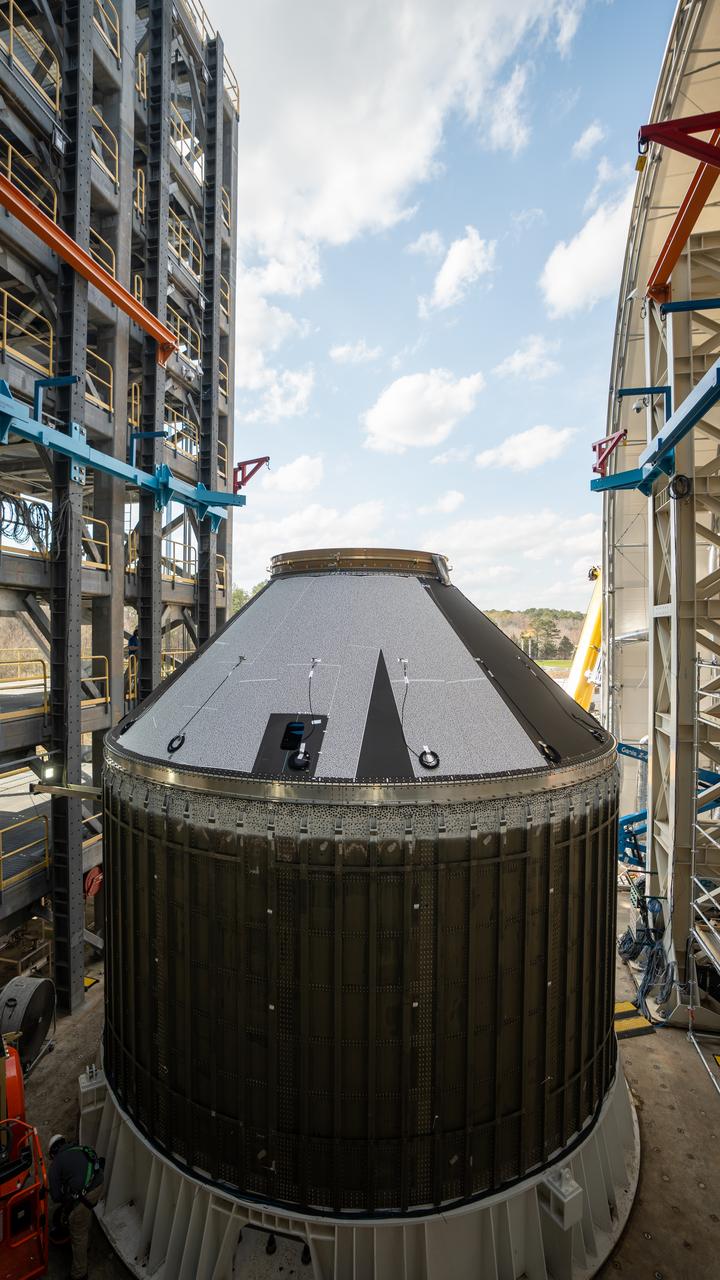
These photos and videos show how crews at NASA’s Marshall Space Flight Center in Huntsville, Alabama, moved and installed the payload adapter that will be used in the Block 1B configuration of the SLS (Space Launch System) rocket from Building 4708, where it was manufactured, into Structural Test Stand 4697 at NASA’s Marshall Space Flight Center on March 13. Teams at Marshall will begin structural testing the engineering development unit of the payload adapter – an exact replica of the flight version of the hardware – this spring. The cone-shaped payload adapter is about 8.5 feet tall and features two metal rings and eight composite panels. The adapter, which will debut on NASA’s Artemis IV mission, is an evolution from the Orion stage adapter used in the Block 1 configuration of the first three Artemis missions. It will be housed inside the universal stage adapter atop the rocket’s more powerful in-space stage, called the exploration upper stage. The payload adapter, like the launch vehicle stage adapter and the Orion stage adapter, is fully manufactured and tested at Marshall, which manages the SLS Program. NASA is working to land the first woman, first person of color, and its first international partner astronaut on the Moon under Artemis. SLS is part of NASA’s backbone for deep space exploration, along with the Orion spacecraft and Gateway in orbit around the Moon and commercial human landing systems, next-generational spacesuits, and rovers on the lunar surface. SLS is the only rocket that can send Orion, astronauts, and supplies to the Moon in a single launch.
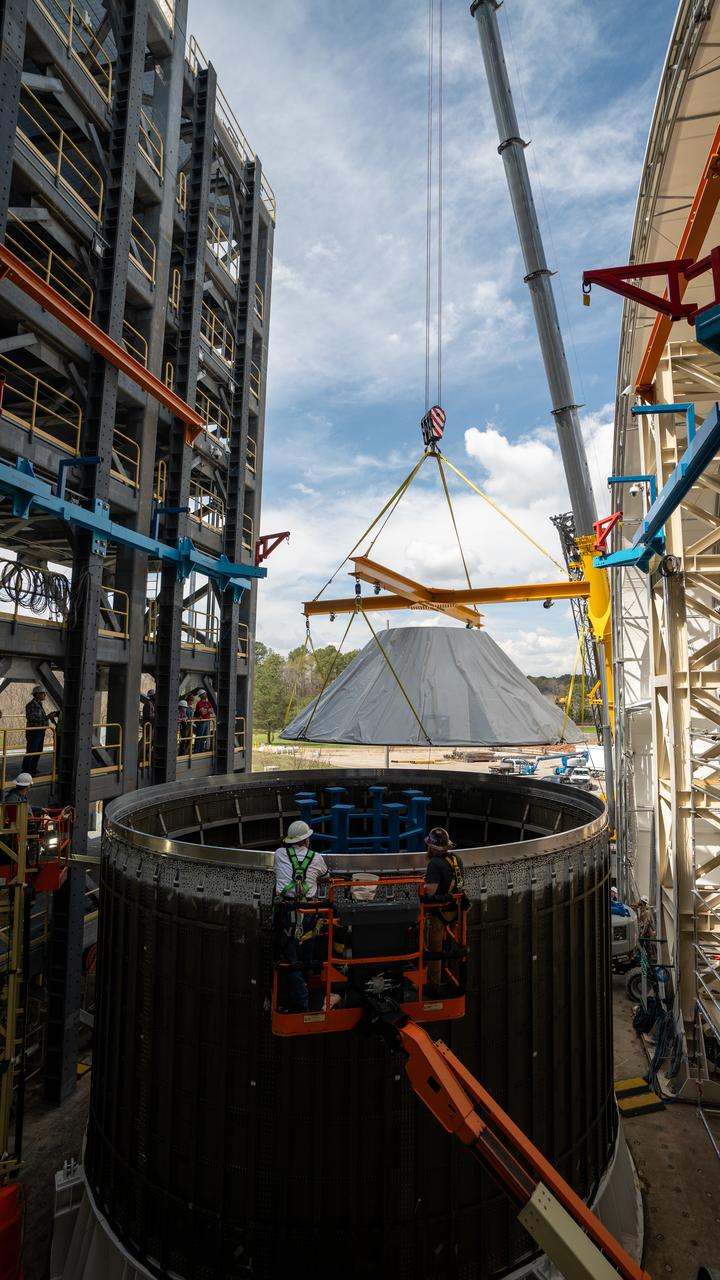
These photos and videos show how crews at NASA’s Marshall Space Flight Center in Huntsville, Alabama, moved and installed the payload adapter that will be used in the Block 1B configuration of the SLS (Space Launch System) rocket from Building 4708, where it was manufactured, into Structural Test Stand 4697 at NASA’s Marshall Space Flight Center on March 13. Teams at Marshall will begin structural testing the engineering development unit of the payload adapter – an exact replica of the flight version of the hardware – this spring. The cone-shaped payload adapter is about 8.5 feet tall and features two metal rings and eight composite panels. The adapter, which will debut on NASA’s Artemis IV mission, is an evolution from the Orion stage adapter used in the Block 1 configuration of the first three Artemis missions. It will be housed inside the universal stage adapter atop the rocket’s more powerful in-space stage, called the exploration upper stage. The payload adapter, like the launch vehicle stage adapter and the Orion stage adapter, is fully manufactured and tested at Marshall, which manages the SLS Program. NASA is working to land the first woman, first person of color, and its first international partner astronaut on the Moon under Artemis. SLS is part of NASA’s backbone for deep space exploration, along with the Orion spacecraft and Gateway in orbit around the Moon and commercial human landing systems, next-generational spacesuits, and rovers on the lunar surface. SLS is the only rocket that can send Orion, astronauts, and supplies to the Moon in a single launch.
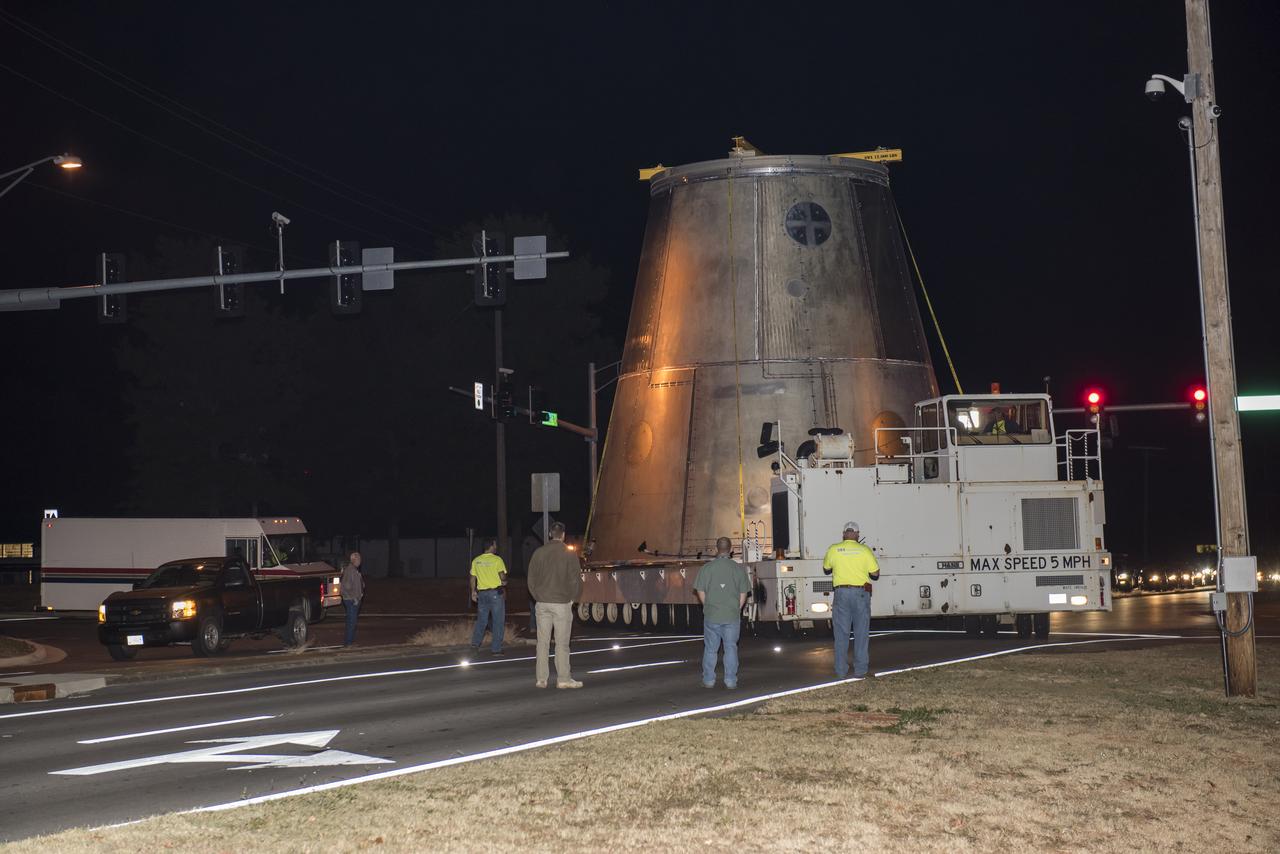
A SLS LAUNCH VEHICLE STAGE ADAPTER IS MOVED FROM THE VERTICAL WELD TOOL STATION IN MSFC’S BUILDING 4755 TO THE WEST TEST AREA’S TEST STAND 4699 WHERE IT WILL UNDERGO FURTHER TESTING OF ITS ABILITY TO WITHSTAND THE STRESSES RELATED TO LAUNCH AND SPACE TRAVEL.
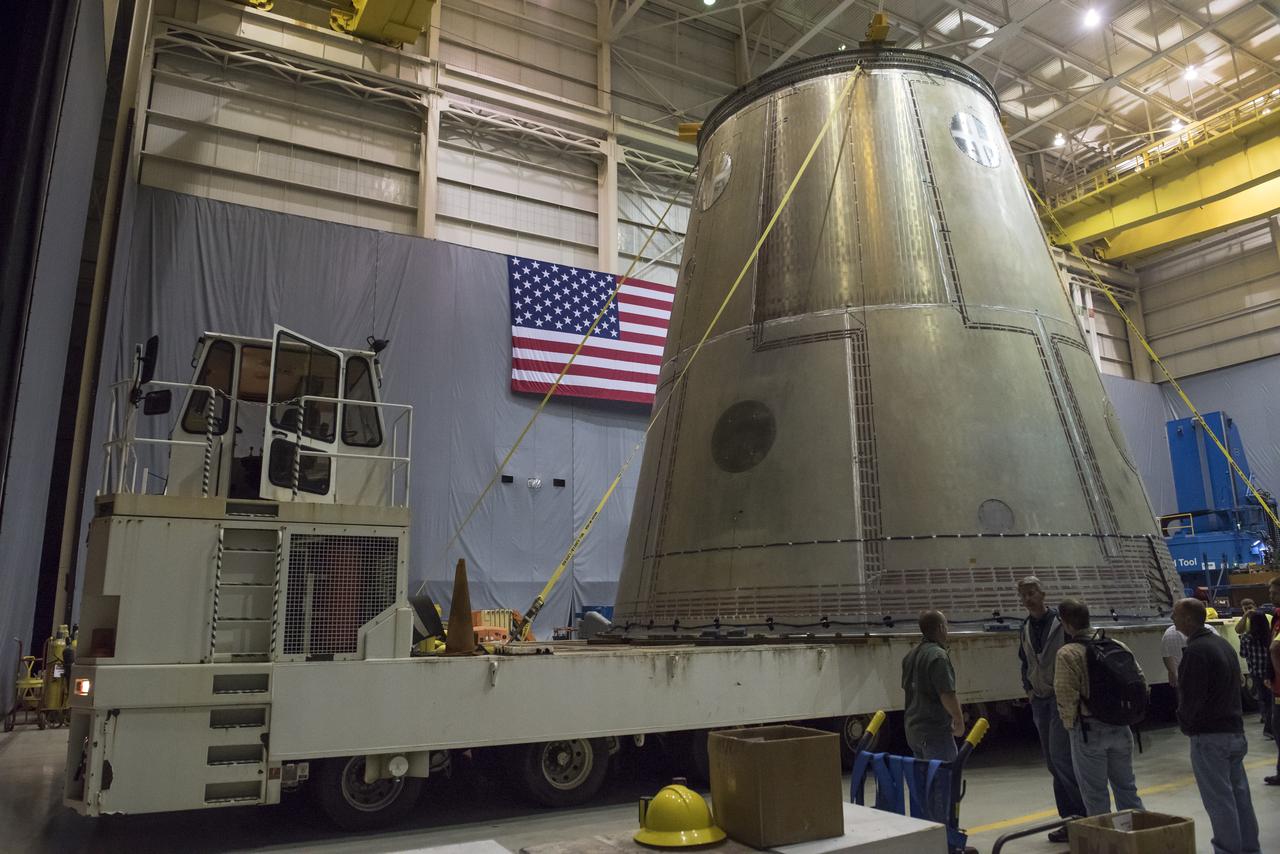
A SLS LAUNCH VEHICLE STAGE ADAPTER IS MOVED FROM THE VERTICAL WELD TOOL STATION IN MSFC’S BUILDING 4755 TO THE WEST TEST AREA’S TEST STAND 4699 WHERE IT WILL UNDERGO FURTHER TESTING OF ITS ABILITY TO WITHSTAND THE STRESSES RELATED TO LAUNCH AND SPACE TRAVEL.
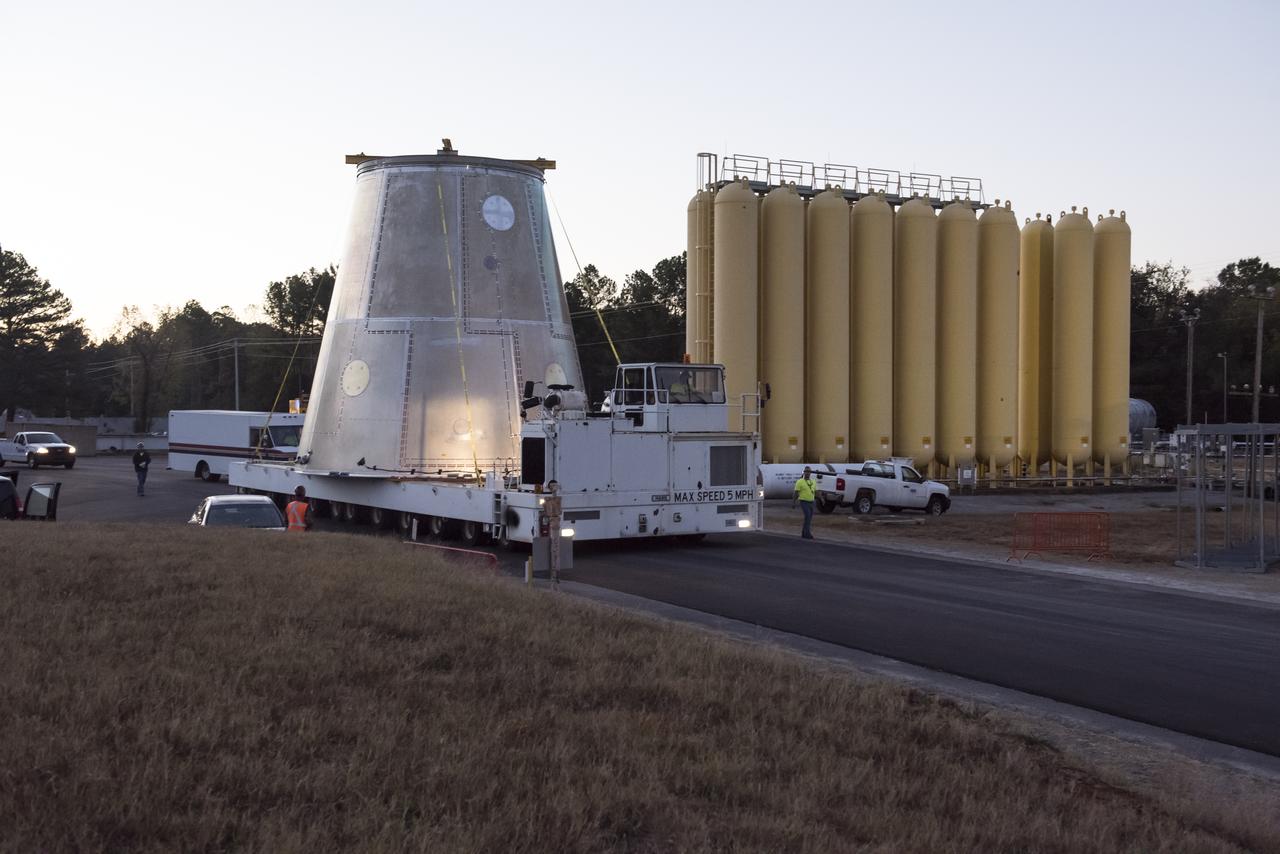
A SLS LAUNCH VEHICLE STAGE ADAPTER IS MOVED FROM THE VERTICAL WELD TOOL STATION IN MSFC’S BUILDING 4755 TO THE WEST TEST AREA’S TEST STAND 4699 WHERE IT WILL UNDERGO FURTHER TESTING OF ITS ABILITY TO WITHSTAND THE STRESSES RELATED TO LAUNCH AND SPACE TRAVEL.
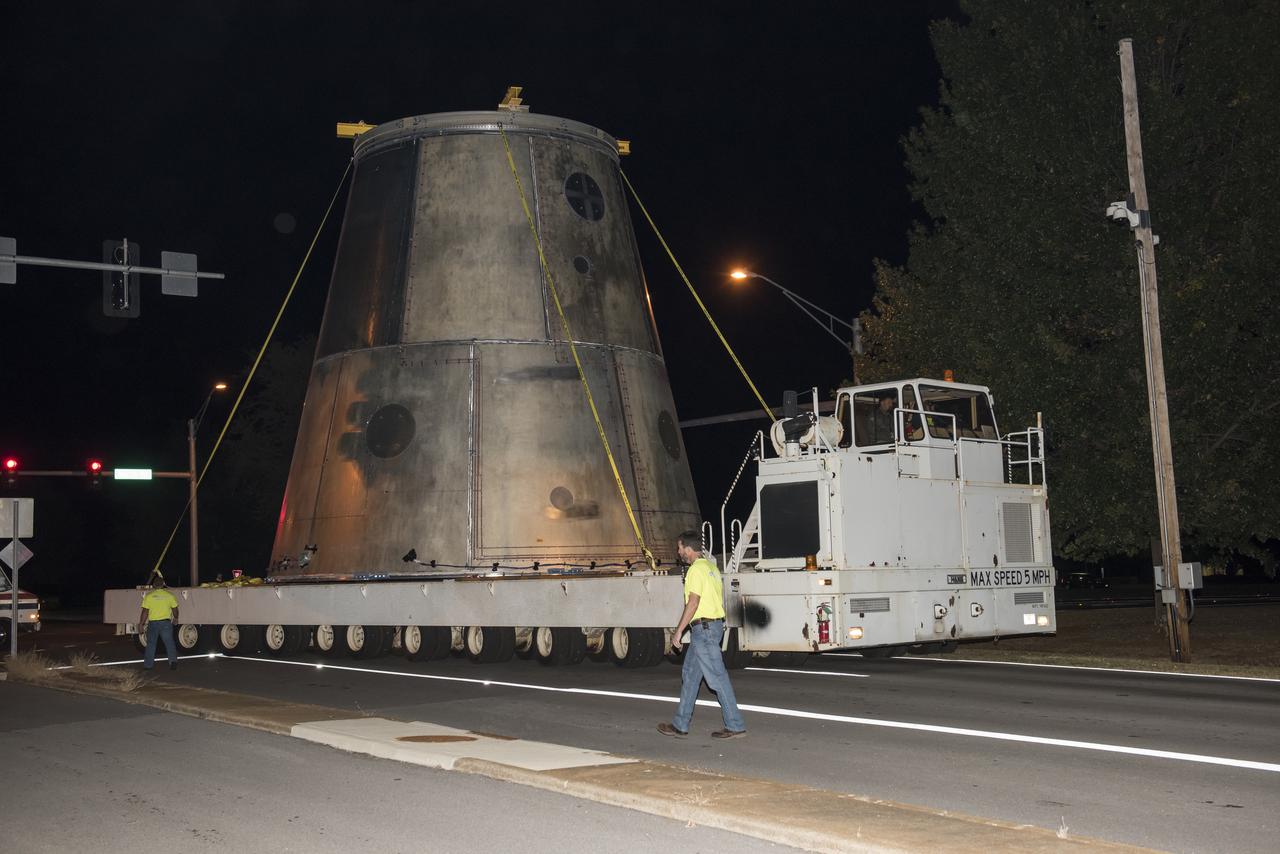
A SLS LAUNCH VEHICLE STAGE ADAPTER IS MOVED FROM THE VERTICAL WELD TOOL STATION IN MSFC’S BUILDING 4755 TO THE WEST TEST AREA’S TEST STAND 4699 WHERE IT WILL UNDERGO FURTHER TESTING OF ITS ABILITY TO WITHSTAND THE STRESSES RELATED TO LAUNCH AND SPACE TRAVEL.
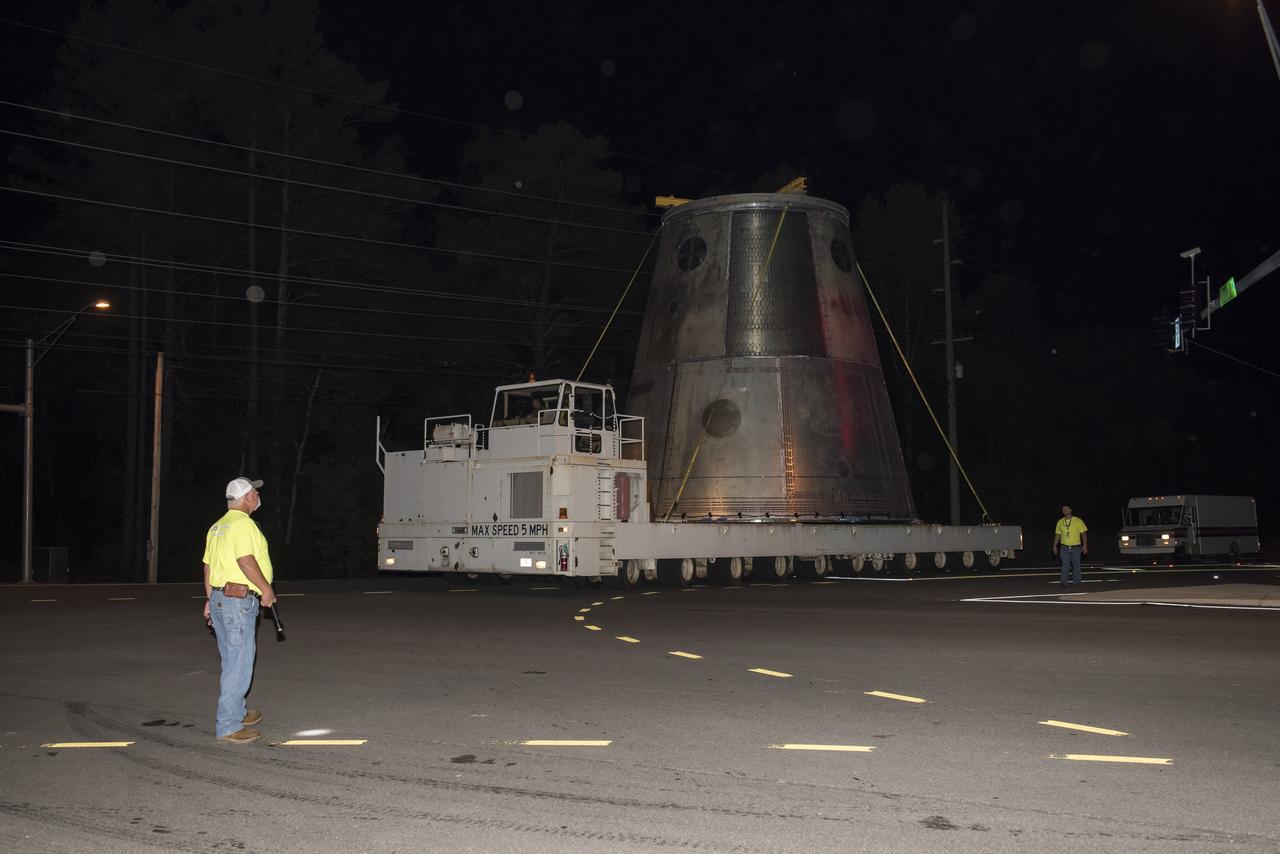
A SLS LAUNCH VEHICLE STAGE ADAPTER IS MOVED FROM THE VERTICAL WELD TOOL STATION IN MSFC’S BUILDING 4755 TO THE WEST TEST AREA’S TEST STAND 4699 WHERE IT WILL UNDERGO FURTHER TESTING OF ITS ABILITY TO WITHSTAND THE STRESSES RELATED TO LAUNCH AND SPACE TRAVEL.
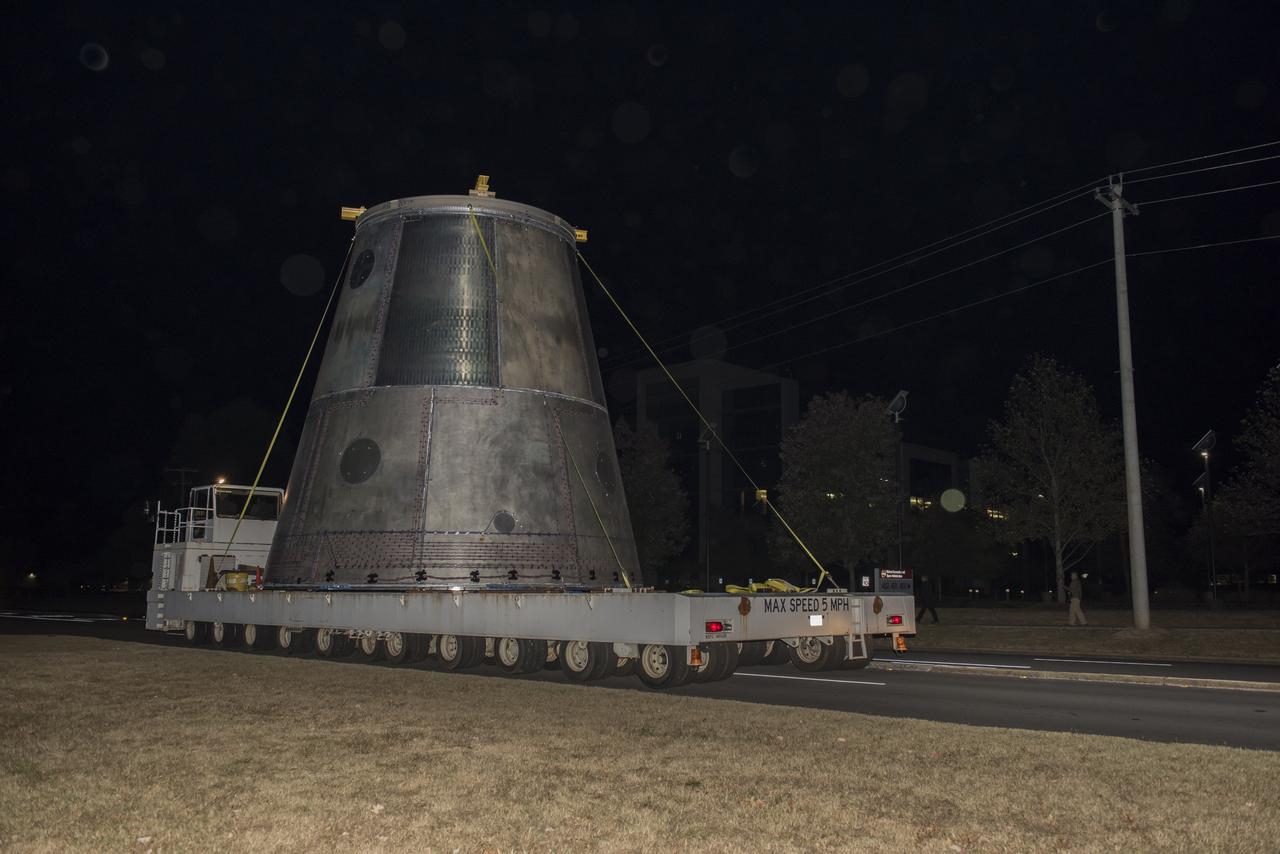
A SLS LAUNCH VEHICLE STAGE ADAPTER IS MOVED FROM THE VERTICAL WELD TOOL STATION IN MSFC’S BUILDING 4755 TO THE WEST TEST AREA’S TEST STAND 4699 WHERE IT WILL UNDERGO FURTHER TESTING OF ITS ABILITY TO WITHSTAND THE STRESSES RELATED TO LAUNCH AND SPACE TRAVEL.
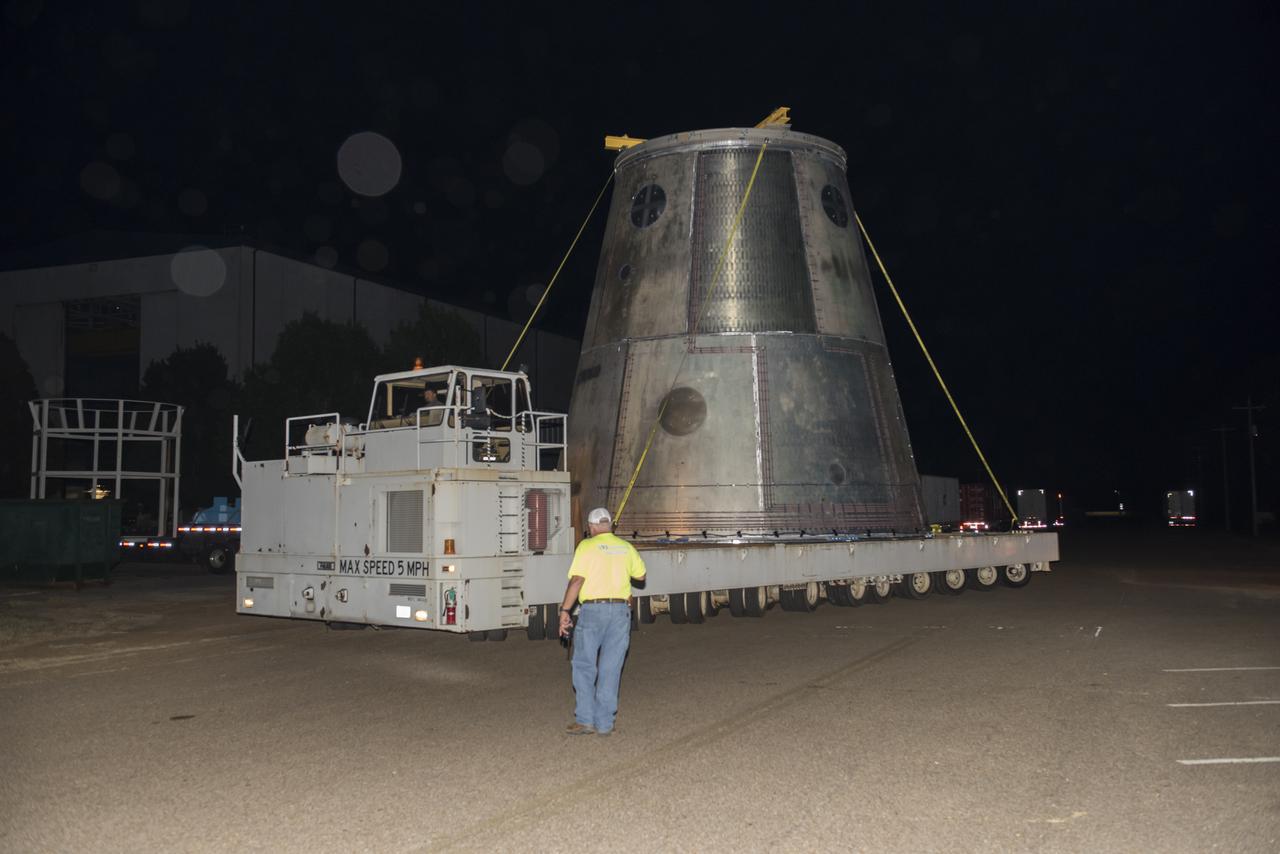
A SLS LAUNCH VEHICLE STAGE ADAPTER IS MOVED FROM THE VERTICAL WELD TOOL STATION IN MSFC’S BUILDING 4755 TO THE WEST TEST AREA’S TEST STAND 4699 WHERE IT WILL UNDERGO FURTHER TESTING OF ITS ABILITY TO WITHSTAND THE STRESSES RELATED TO LAUNCH AND SPACE TRAVEL.
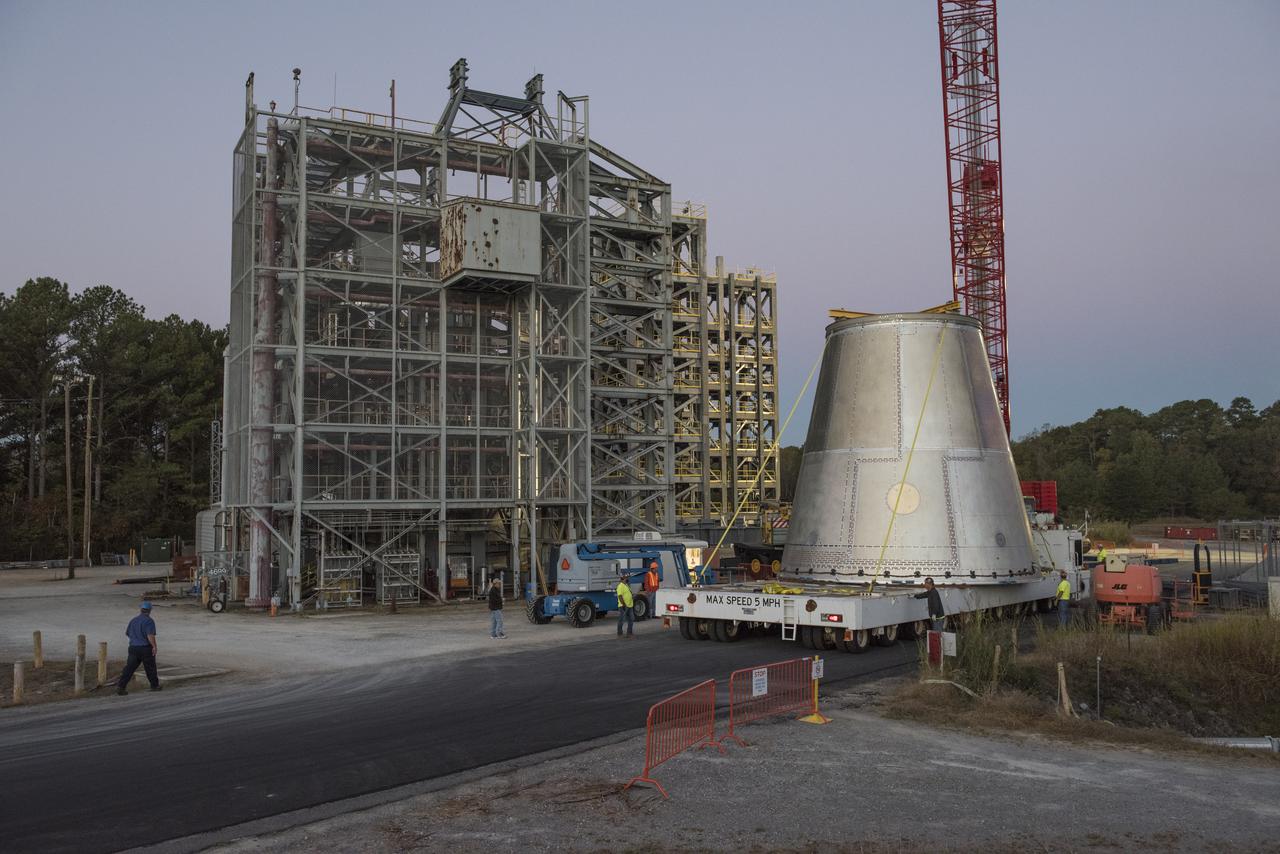
A SLS LAUNCH VEHICLE STAGE ADAPTER IS MOVED FROM THE VERTICAL WELD TOOL STATION IN MSFC’S BUILDING 4755 TO THE WEST TEST AREA’S TEST STAND 4699 WHERE IT WILL UNDERGO FURTHER TESTING OF ITS ABILITY TO WITHSTAND THE STRESSES RELATED TO LAUNCH AND SPACE TRAVEL.
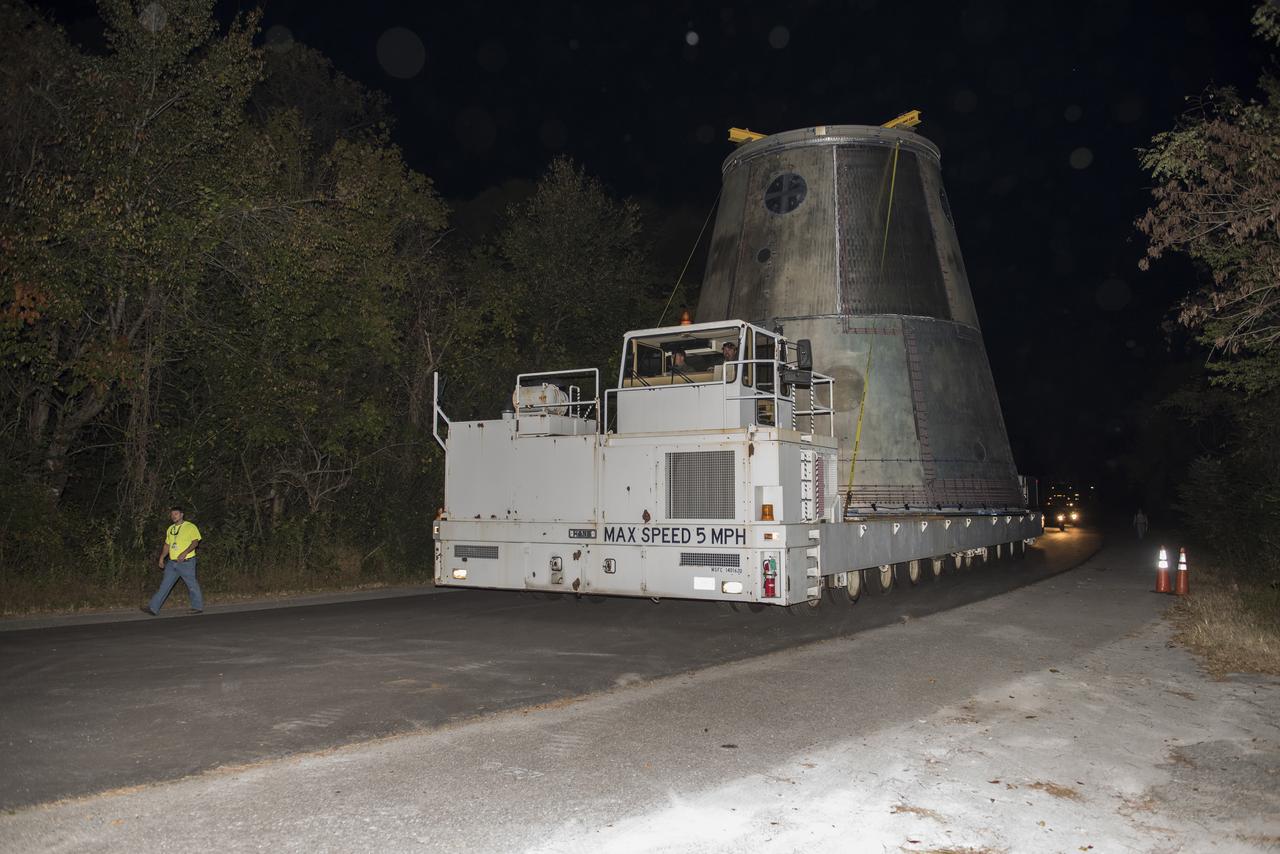
A SLS LAUNCH VEHICLE STAGE ADAPTER IS MOVED FROM THE VERTICAL WELD TOOL STATION IN MSFC’S BUILDING 4755 TO THE WEST TEST AREA’S TEST STAND 4699 WHERE IT WILL UNDERGO FURTHER TESTING OF ITS ABILITY TO WITHSTAND THE STRESSES RELATED TO LAUNCH AND SPACE TRAVEL.
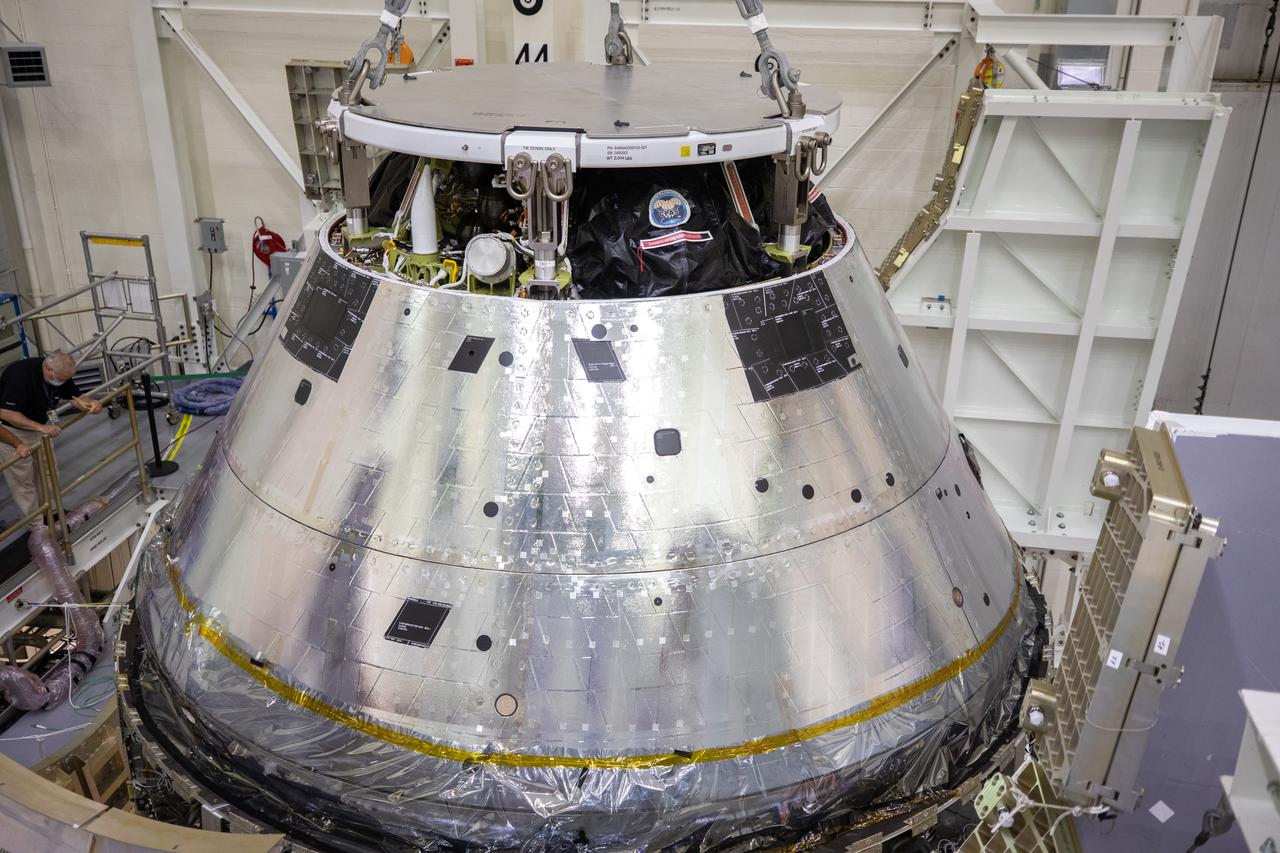
The Artemis I Orion spacecraft is lowered by crane into the FAST cell after installation of the spacecraft adapter (SA) cone was completed inside the Neil Armstrong Operations and Checkout Building on Aug. 20, 2020. This is one of the final major hardware operations the spacecraft will undergo during closeout processing prior to being integrated with the Space Launch System (SLS) rocket in preparation for the first Artemis mission. The spacecraft adapter cone connects the bottom portion of Orion’s service module to the top part of the rocket known as the interim cryogenic propulsion stage (ICPS). Orion will fly on the agency’s Artemis I mission – the first in a series of increasingly complex missions to the Moon that will ultimately lead to the exploration of Mars.
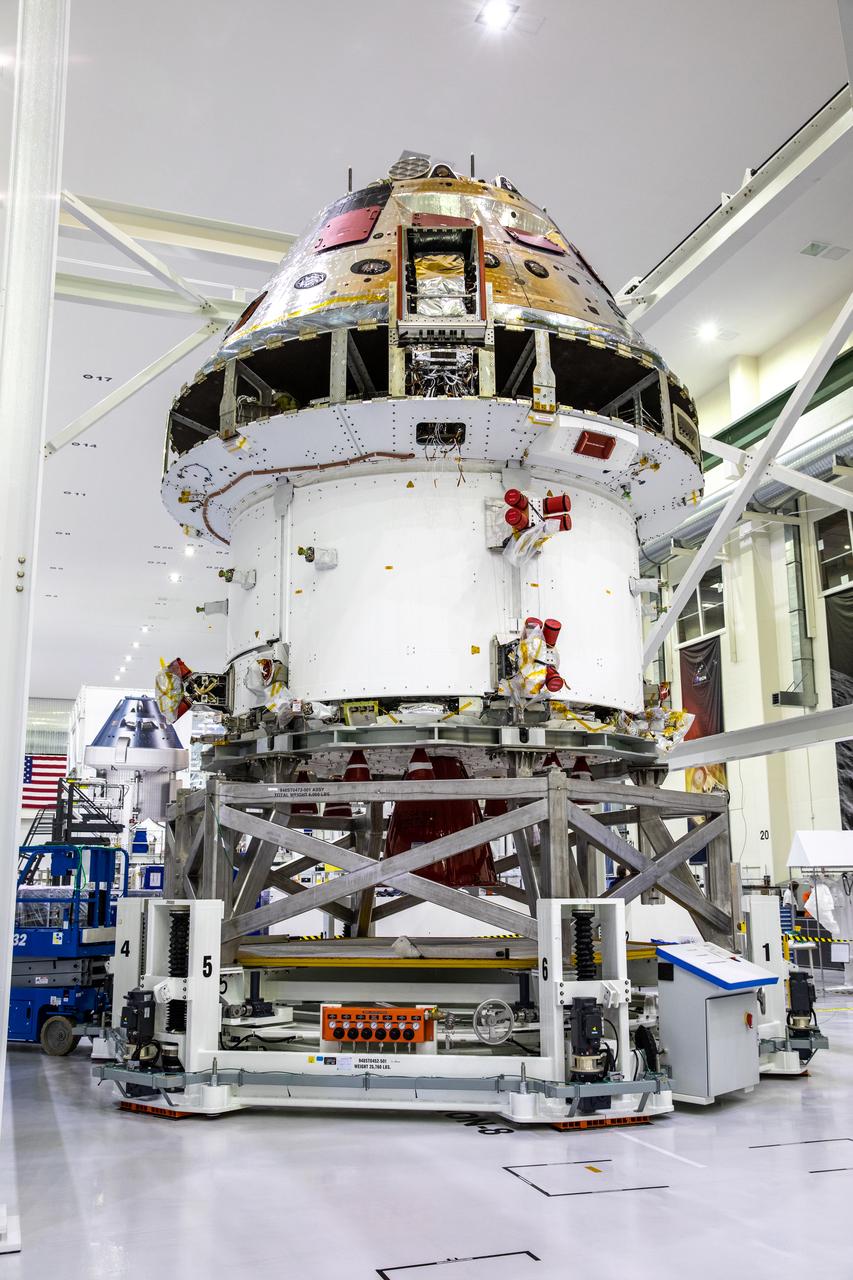
Installation of the spacecraft adapter (SA) cone to the Artemis I Orion spacecraft is in progress inside the Neil Armstrong Operations and Checkout Building at NASA’s Kennedy Space Center in Florida on Aug. 6, 2020. This is one of the final major hardware operations the spacecraft will undergo during closeout processing prior to being integrated with the Space Launch System (SLS) rocket in preparation for the first Artemis mission. The spacecraft adapter cone connects the bottom portion of Orion’s service module to the top part of the rocket known as the interim cryogenic propulsion stage (ICPS). Orion will fly on the agency’s Artemis I mission – the first in a series of increasingly complex missions to the Moon that will ultimately lead to the exploration of Mars.
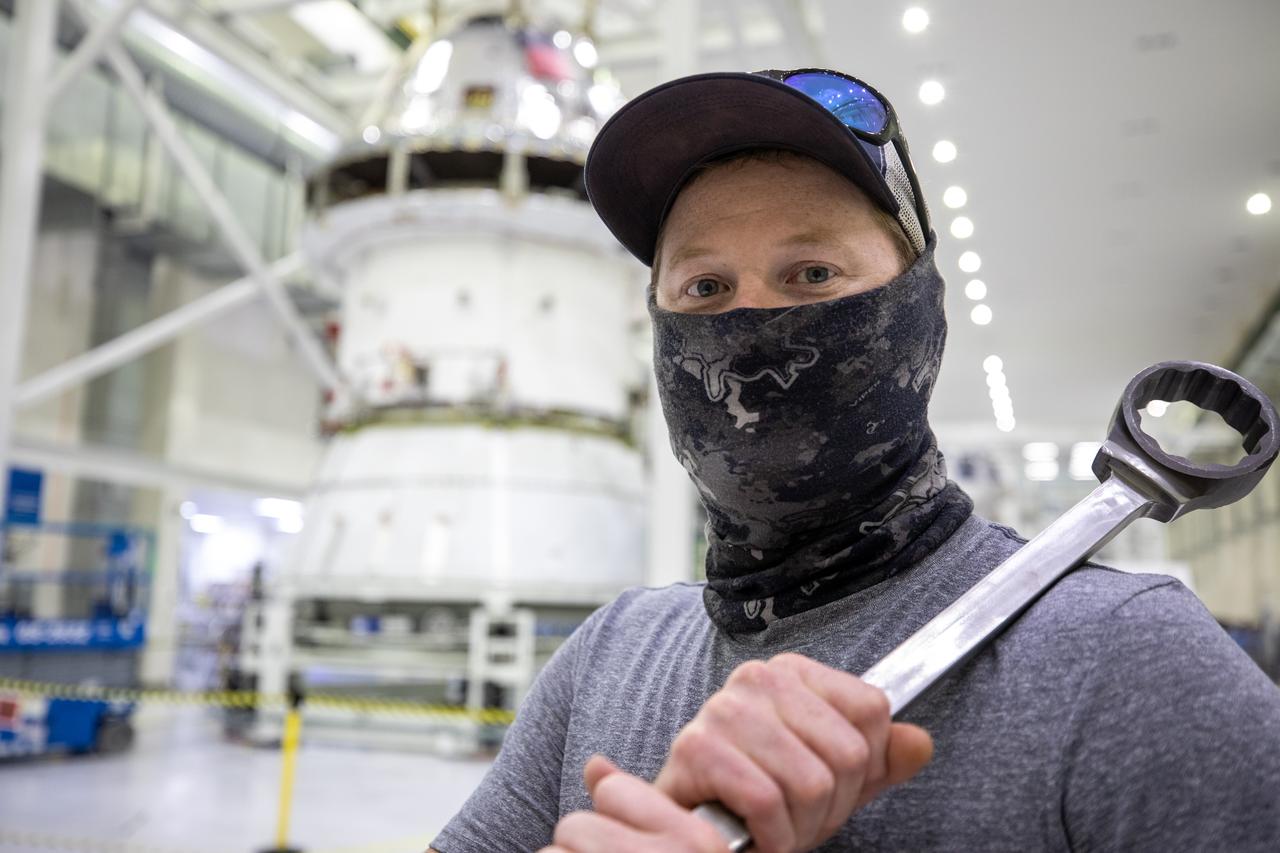
ASRC technician Chris Slack assists with the installation of the spacecraft adapter (SA) cone to the Artemis I Orion spacecraft inside the Neil Armstrong Operations and Checkout Building at NASA’s Kennedy Space Center on Aug. 10, 2020. This is one of the final major hardware operations the spacecraft will undergo during closeout processing prior to being integrated with the Space Launch System (SLS) rocket in preparation for the first Artemis mission. The spacecraft adapter cone connects the bottom portion of Orion’s service module to the top part of the rocket known as the interim cryogenic propulsion stage (ICPS). Orion will fly on the agency’s Artemis I mission – the first in a series of increasingly complex missions to the Moon that will ultimately lead to the exploration of Mars.
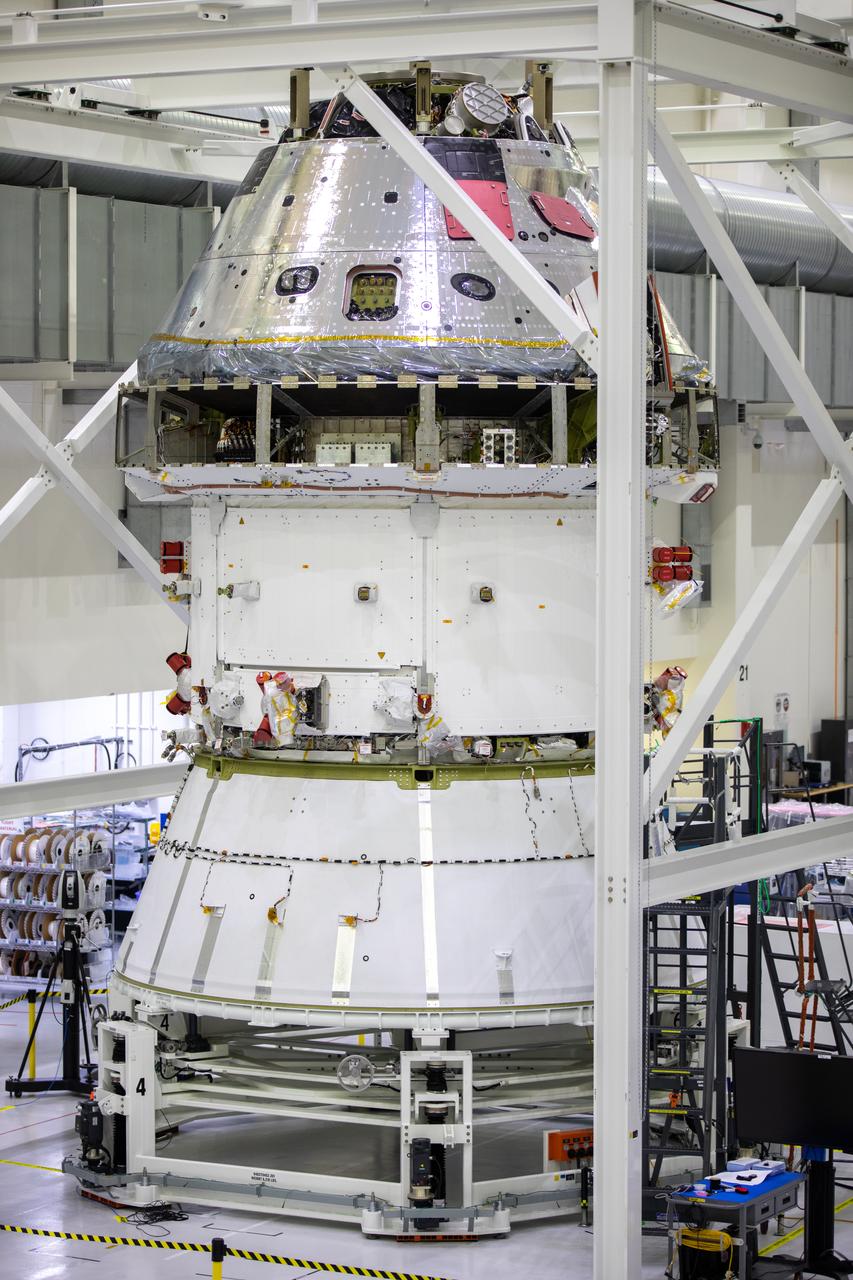
Installation of the spacecraft adapter (SA) cone to the Artemis I Orion spacecraft shown in progress inside the Neil Armstrong Operations and Checkout Building on Aug. 10, 2020. This is one of the final major hardware operations the spacecraft will undergo during closeout processing prior to being integrated with the Space Launch System (SLS) rocket in preparation for the first Artemis mission. The spacecraft adapter cone connects the bottom portion of Orion’s service module to the top part of the rocket known as the interim cryogenic propulsion stage (ICPS). Orion will fly on the agency’s Artemis I mission – the first in a series of increasingly complex missions to the Moon that will ultimately lead to the exploration of Mars.
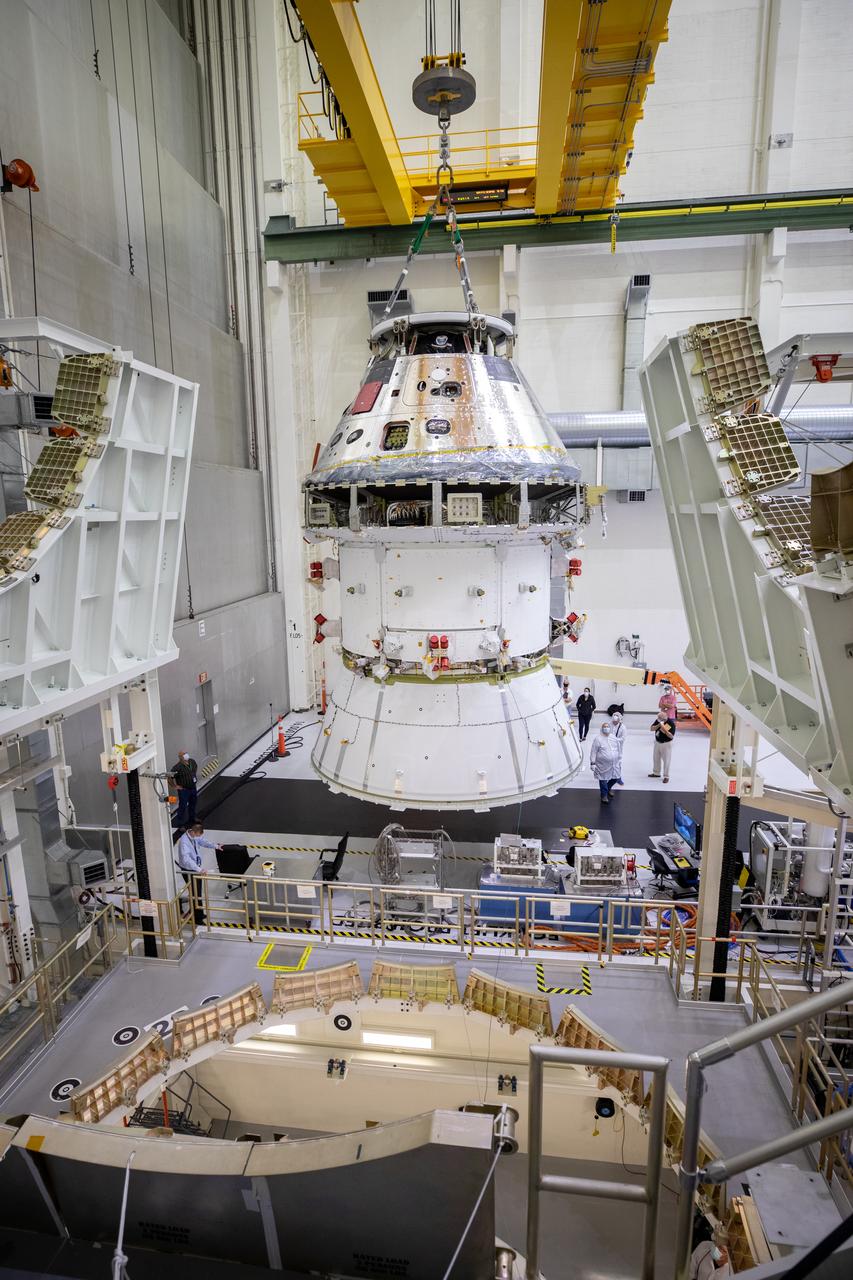
The Artemis I Orion spacecraft with its spacecraft adapter cone attached, is moved by crane into the FAST cell inside the Neil Armstrong Operations and Checkout Building at NASA’s Kennedy Space Center in Florida on Aug. 20, 2020. This is one of the final major hardware operations the spacecraft will undergo during closeout processing prior to being integrated with the Space Launch System (SLS) rocket in preparation for the first Artemis mission. The spacecraft adapter cone connects the bottom portion of Orion’s service module to the top part of the rocket known as the interim cryogenic propulsion stage (ICPS). Orion will fly on the agency’s Artemis I mission – the first in a series of increasingly complex missions to the Moon that will ultimately lead to the exploration of Mars.
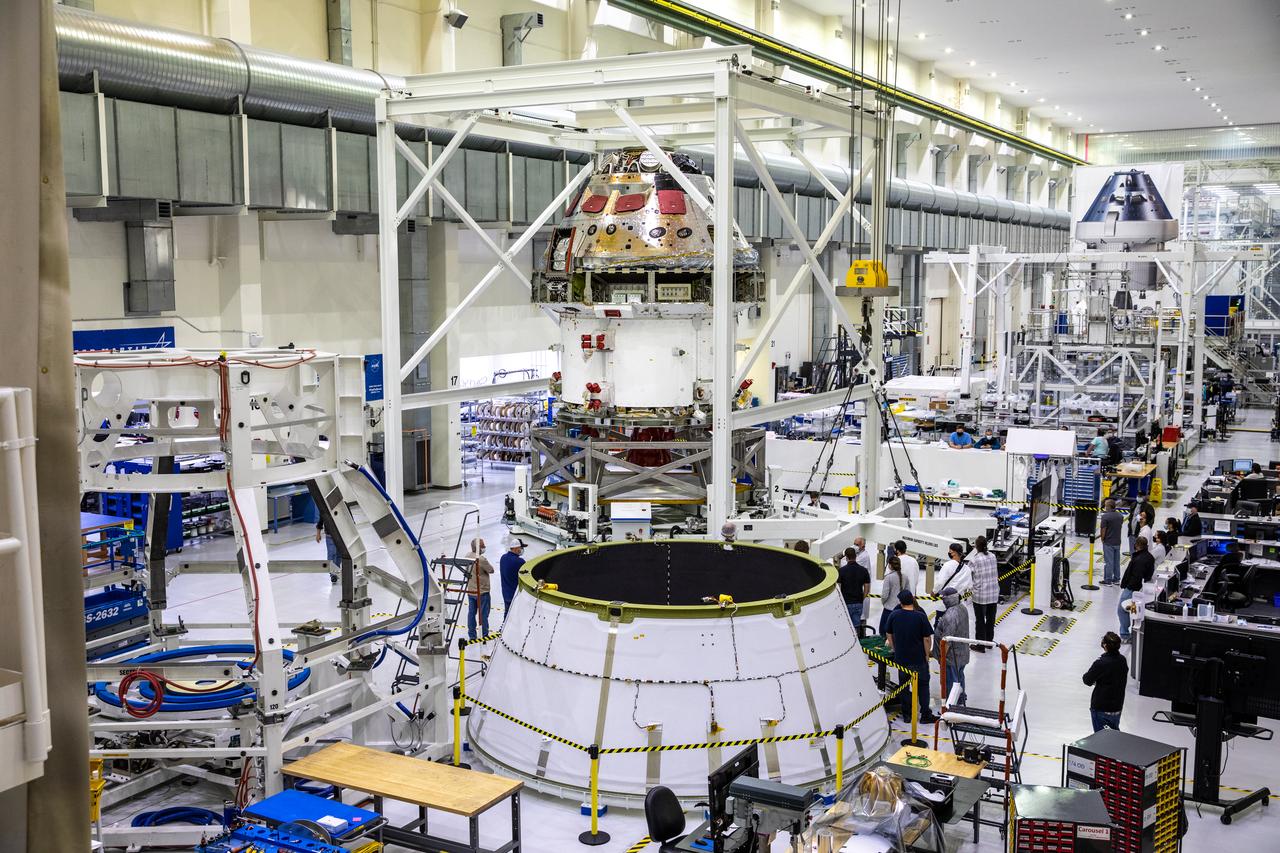
Installation of the spacecraft adapter (SA) cone to the Artemis I Orion spacecraft shown in progress inside the Neil Armstrong Operations and Checkout Building on Aug. 10, 2020. This is one of the final major hardware operations the spacecraft will undergo during closeout processing prior to being integrated with the Space Launch System (SLS) rocket in preparation for the first Artemis mission. The spacecraft adapter cone connects the bottom portion of Orion’s service module to the top part of the rocket known as the interim cryogenic propulsion stage (ICPS). Orion will fly on the agency’s Artemis I mission – the first in a series of increasingly complex missions to the Moon that will ultimately lead to the exploration of Mars.
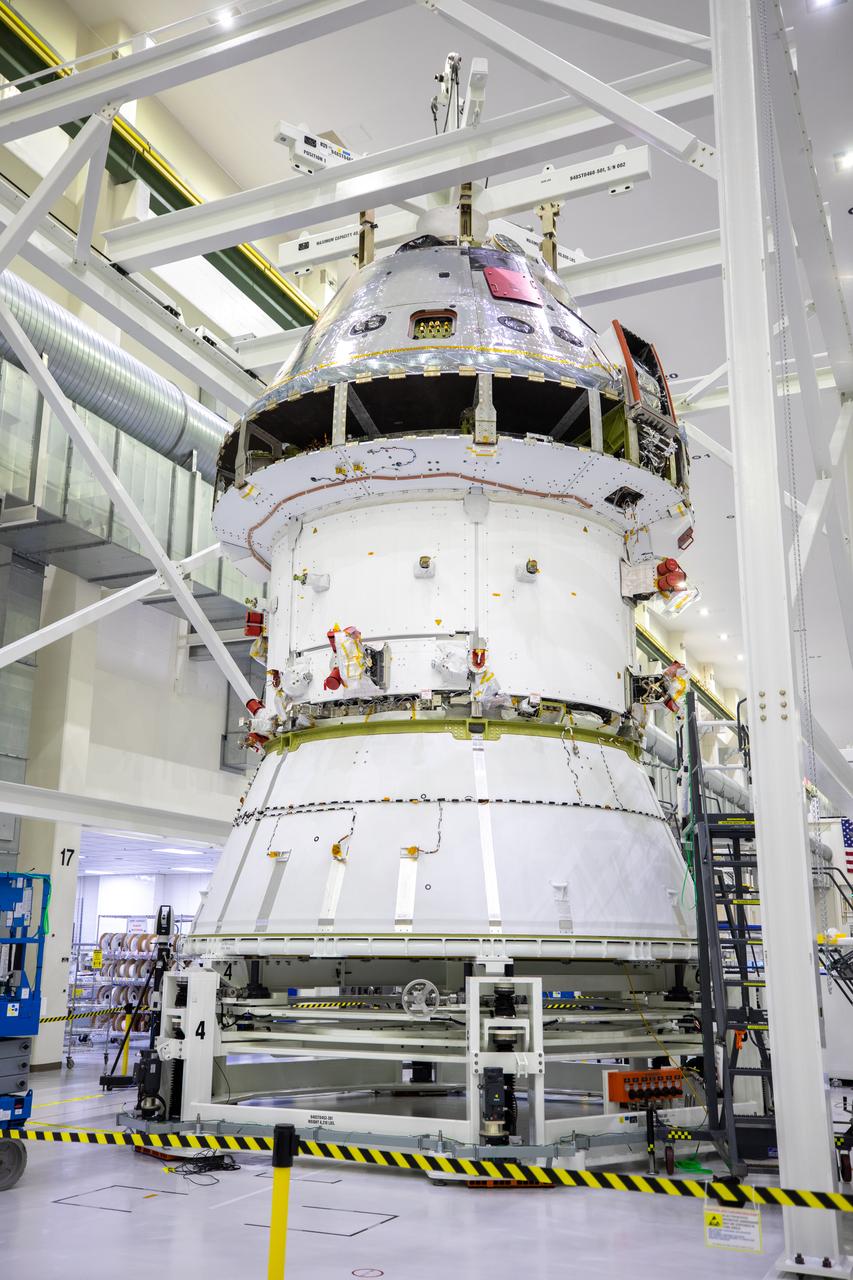
Installation of the spacecraft adapter (SA) cone to the Artemis I Orion spacecraft is in progress inside the Neil Armstrong Operations and Checkout Building at NASA’s Kennedy Space Center in Florida on Aug. 6, 2020. This is one of the final major hardware operations the spacecraft will undergo during closeout processing prior to being integrated with the Space Launch System (SLS) rocket in preparation for the first Artemis mission. The spacecraft adapter cone connects the bottom portion of Orion’s service module to the top part of the rocket known as the interim cryogenic propulsion stage (ICPS). Orion will fly on the agency’s Artemis I mission – the first in a series of increasingly complex missions to the Moon that will ultimately lead to the exploration of Mars.
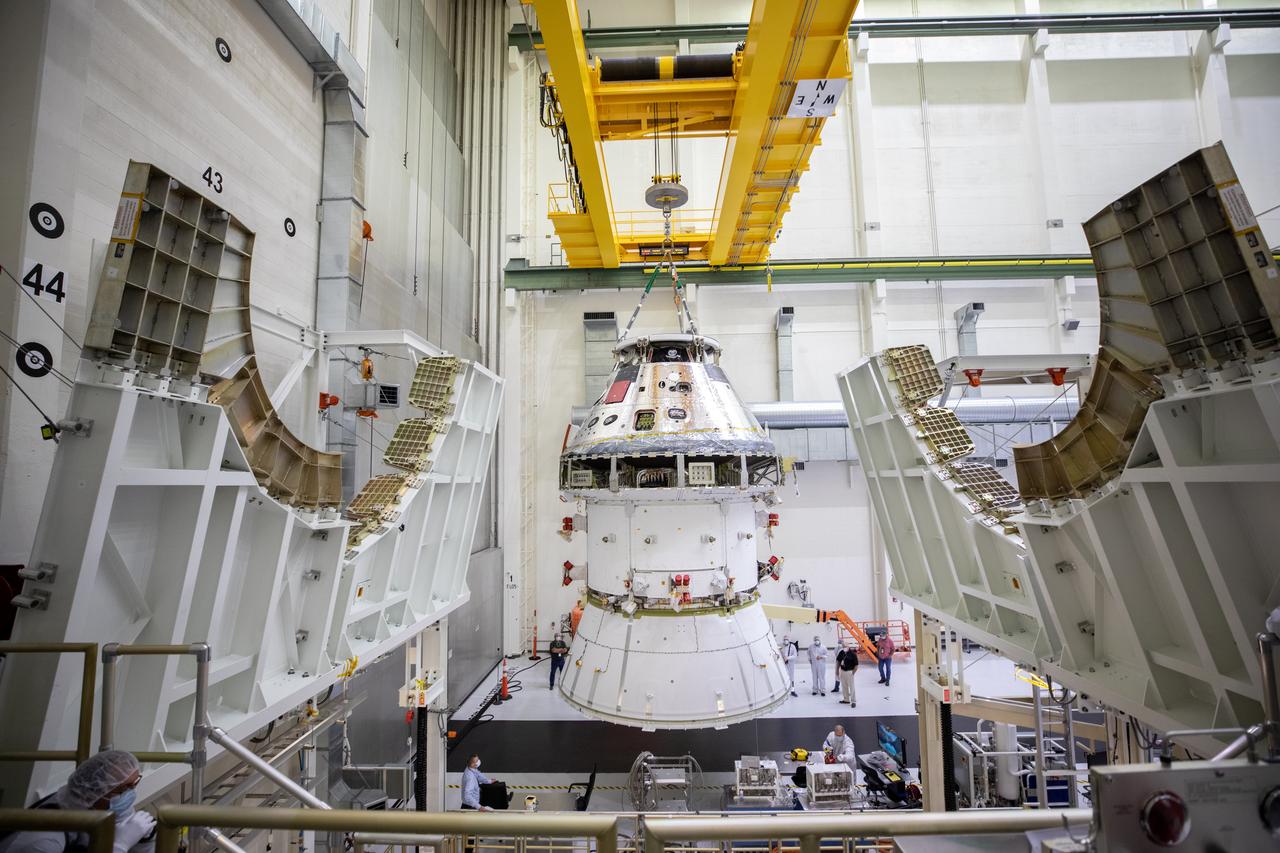
The Artemis I Orion spacecraft with its spacecraft adapter cone attached, is moved by crane into the FAST cell inside the Neil Armstrong Operations and Checkout Building at NASA’s Kennedy Space Center in Florida on Aug. 20, 2020. This is one of the final major hardware operations the spacecraft will undergo during closeout processing prior to being integrated with the Space Launch System (SLS) rocket in preparation for the first Artemis mission. The spacecraft adapter cone connects the bottom portion of Orion’s service module to the top part of the rocket known as the interim cryogenic propulsion stage (ICPS). Orion will fly on the agency’s Artemis I mission – the first in a series of increasingly complex missions to the Moon that will ultimately lead to the exploration of Mars.
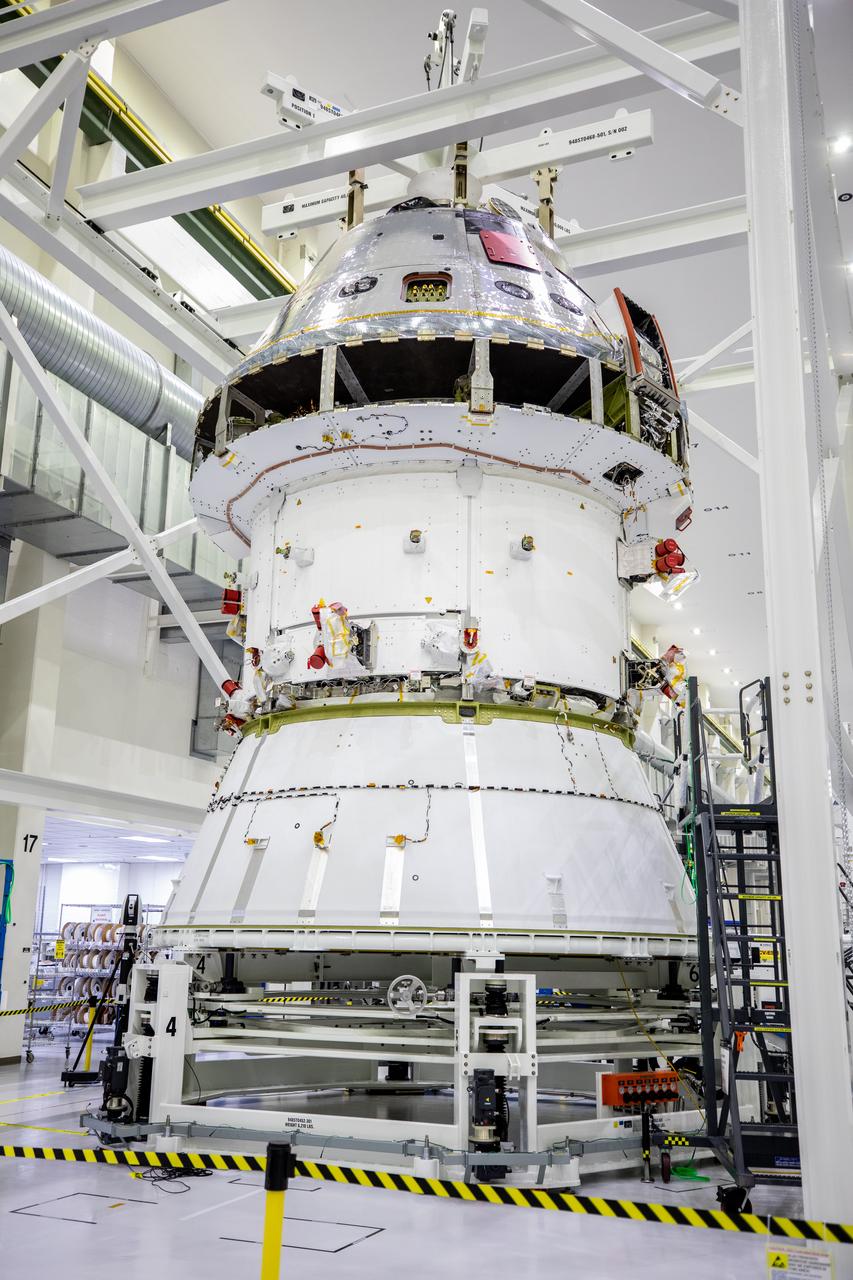
Installation of the spacecraft adapter (SA) cone to the Artemis I Orion spacecraft shown in progress inside the Neil Armstrong Operations and Checkout Building on Aug. 10, 2020. This is one of the final major hardware operations the spacecraft will undergo during closeout processing prior to being integrated with the Space Launch System (SLS) rocket in preparation for the first Artemis mission. The spacecraft adapter cone connects the bottom portion of Orion’s service module to the top part of the rocket known as the interim cryogenic propulsion stage (ICPS). Orion will fly on the agency’s Artemis I mission – the first in a series of increasingly complex missions to the Moon that will ultimately lead to the exploration of Mars.
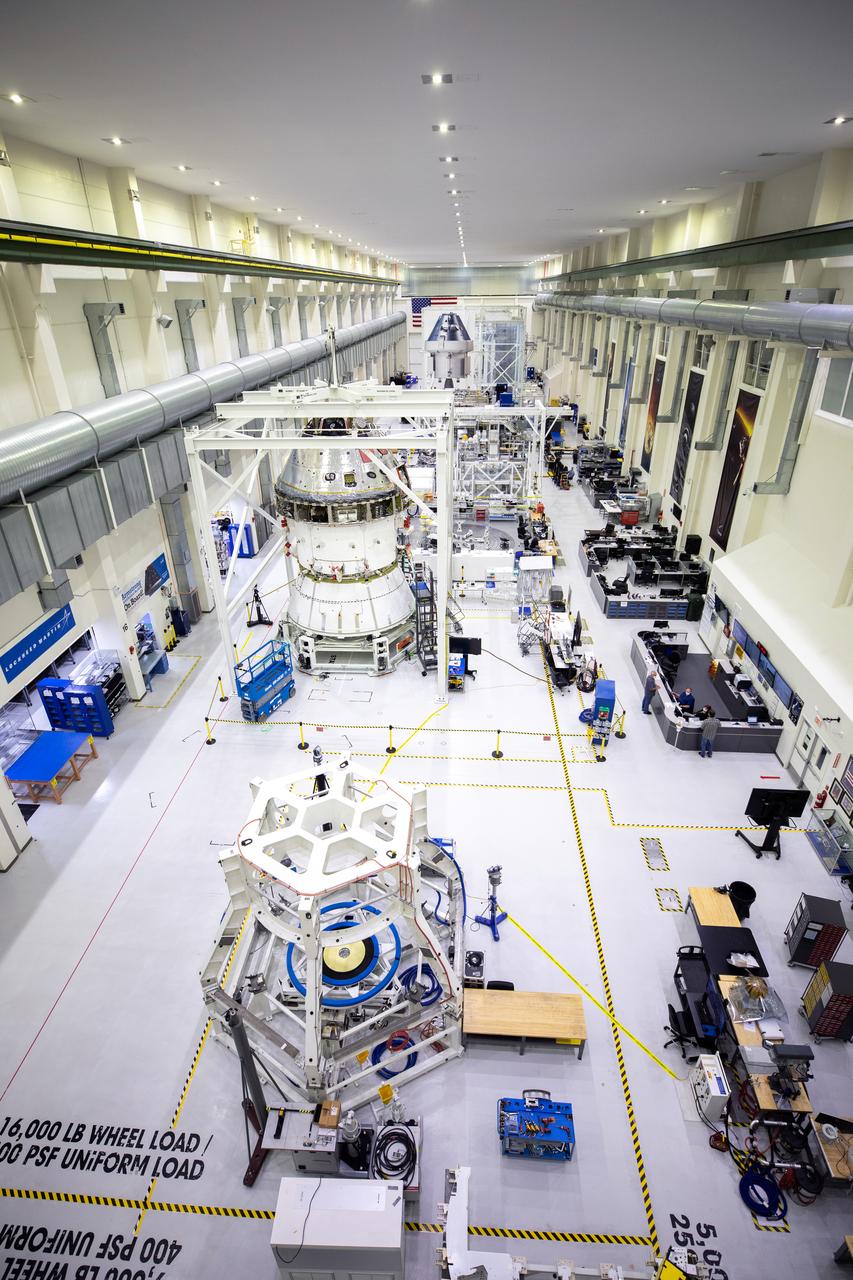
Installation of the spacecraft adapter (SA) cone to the Artemis I Orion spacecraft shown in progress inside the Neil Armstrong Operations and Checkout Building on Aug. 10, 2020. This is one of the final major hardware operations the spacecraft will undergo during closeout processing prior to being integrated with the Space Launch System (SLS) rocket in preparation for the first Artemis mission. The spacecraft adapter cone connects the bottom portion of Orion’s service module to the top part of the rocket known as the interim cryogenic propulsion stage (ICPS). Orion will fly on the agency’s Artemis I mission – the first in a series of increasingly complex missions to the Moon that will ultimately lead to the exploration of Mars.
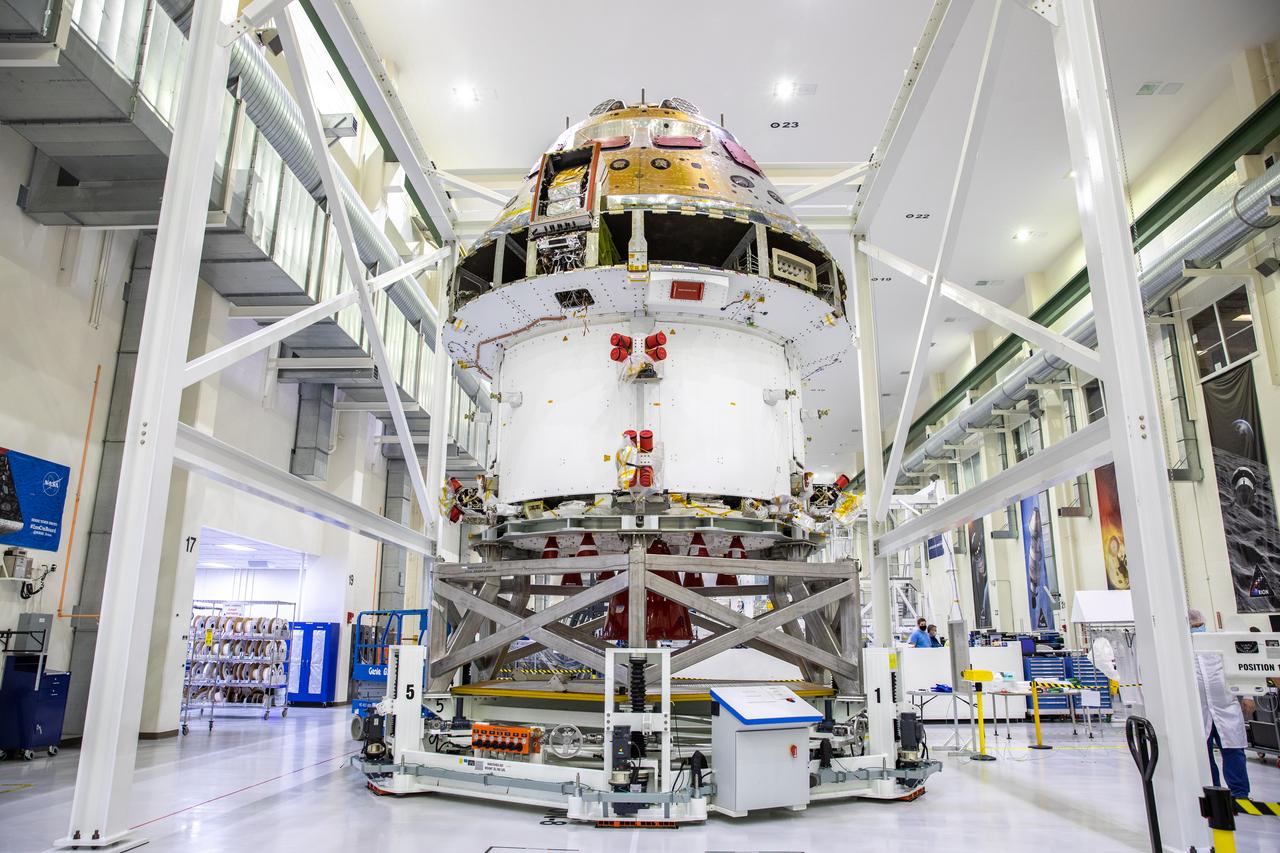
Installation of the spacecraft adapter (SA) cone to the Artemis I Orion spacecraft is in progress inside the Neil Armstrong Operations and Checkout Building at NASA’s Kennedy Space Center in Florida on Aug. 6, 2020. This is one of the final major hardware operations the spacecraft will undergo during closeout processing prior to being integrated with the Space Launch System (SLS) rocket in preparation for the first Artemis mission. The spacecraft adapter cone connects the bottom portion of Orion’s service module to the top part of the rocket known as the interim cryogenic propulsion stage (ICPS). Orion will fly on the agency’s Artemis I mission – the first in a series of increasingly complex missions to the Moon that will ultimately lead to the exploration of Mars.
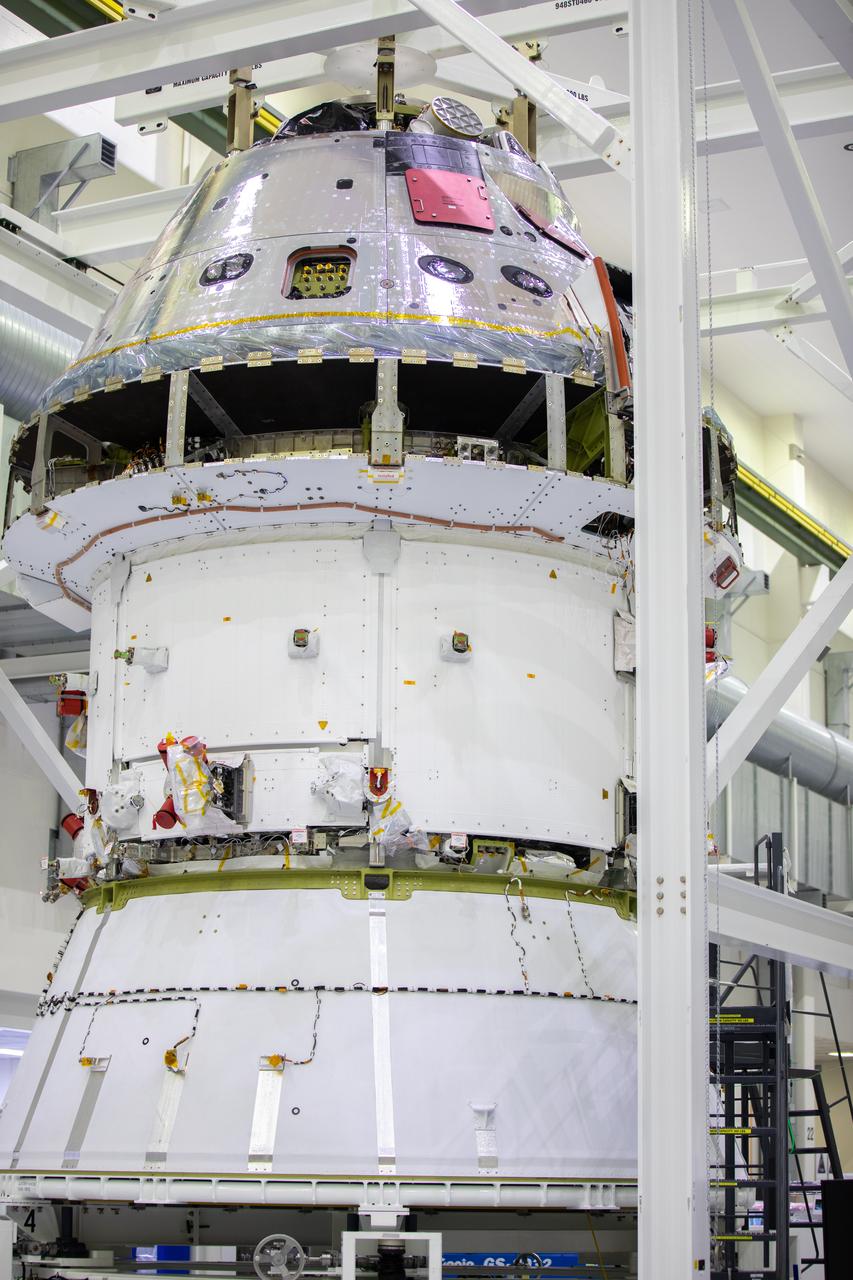
Installation of the spacecraft adapter (SA) cone to the Artemis I Orion spacecraft shown in progress inside the Neil Armstrong Operations and Checkout Building on Aug. 10, 2020. This is one of the final major hardware operations the spacecraft will undergo during closeout processing prior to being integrated with the Space Launch System (SLS) rocket in preparation for the first Artemis mission. The spacecraft adapter cone connects the bottom portion of Orion’s service module to the top part of the rocket known as the interim cryogenic propulsion stage (ICPS). Orion will fly on the agency’s Artemis I mission – the first in a series of increasingly complex missions to the Moon that will ultimately lead to the exploration of Mars.
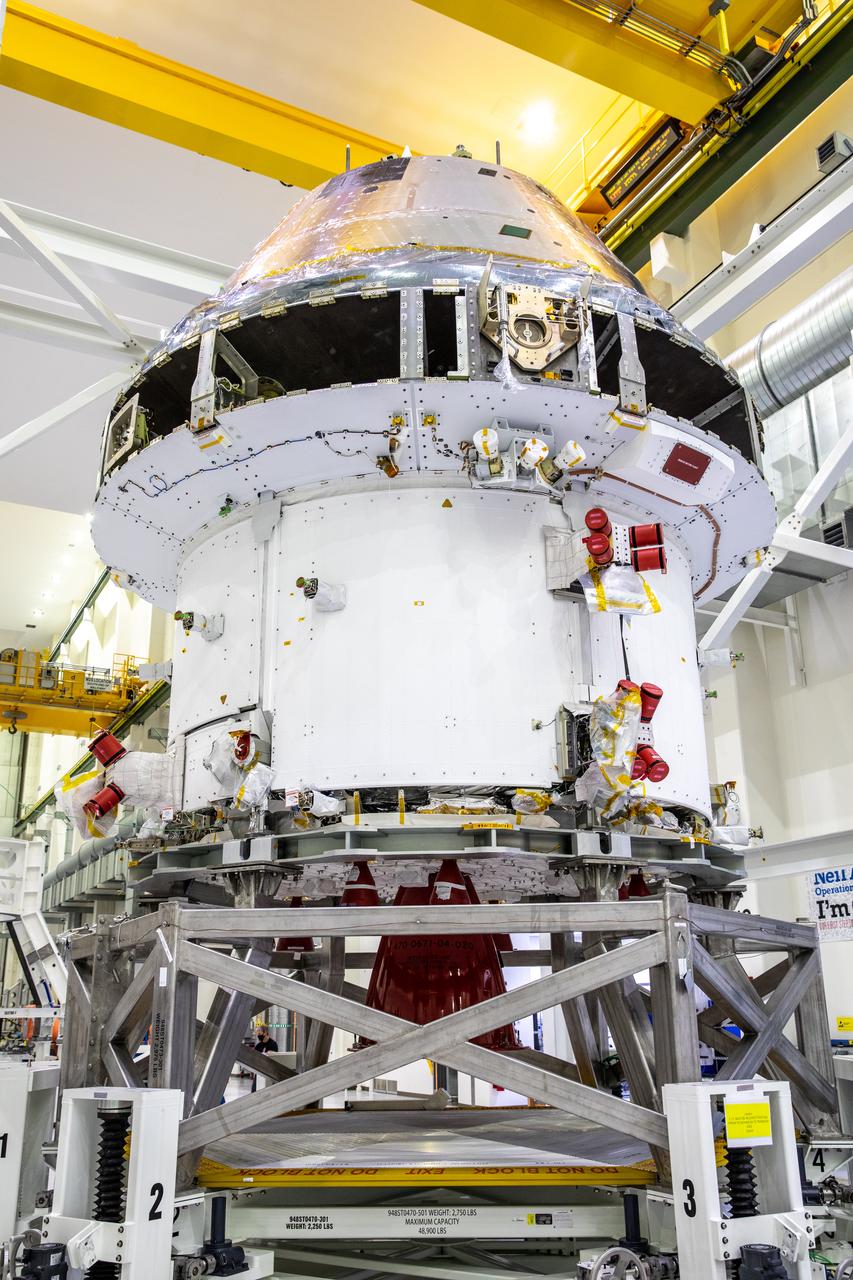
Installation of the spacecraft adapter (SA) cone to the Artemis I Orion spacecraft is in progress inside the Neil Armstrong Operations and Checkout Building at NASA’s Kennedy Space Center in Florida on Aug. 6, 2020. This is one of the final major hardware operations the spacecraft will undergo during closeout processing prior to being integrated with the Space Launch System (SLS) rocket in preparation for the first Artemis mission. The spacecraft adapter cone connects the bottom portion of Orion’s service module to the top part of the rocket known as the interim cryogenic propulsion stage (ICPS). Orion will fly on the agency’s Artemis I mission – the first in a series of increasingly complex missions to the Moon that will ultimately lead to the exploration of Mars.

Installation of the spacecraft adapter (SA) cone to the Artemis I Orion spacecraft shown in progress inside the Neil Armstrong Operations and Checkout Building on Aug. 10, 2020. This is one of the final major hardware operations the spacecraft will undergo during closeout processing prior to being integrated with the Space Launch System (SLS) rocket in preparation for the first Artemis mission. The spacecraft adapter cone connects the bottom portion of Orion’s service module to the top part of the rocket known as the interim cryogenic propulsion stage (ICPS). Orion will fly on the agency’s Artemis I mission – the first in a series of increasingly complex missions to the Moon that will ultimately lead to the exploration of Mars.
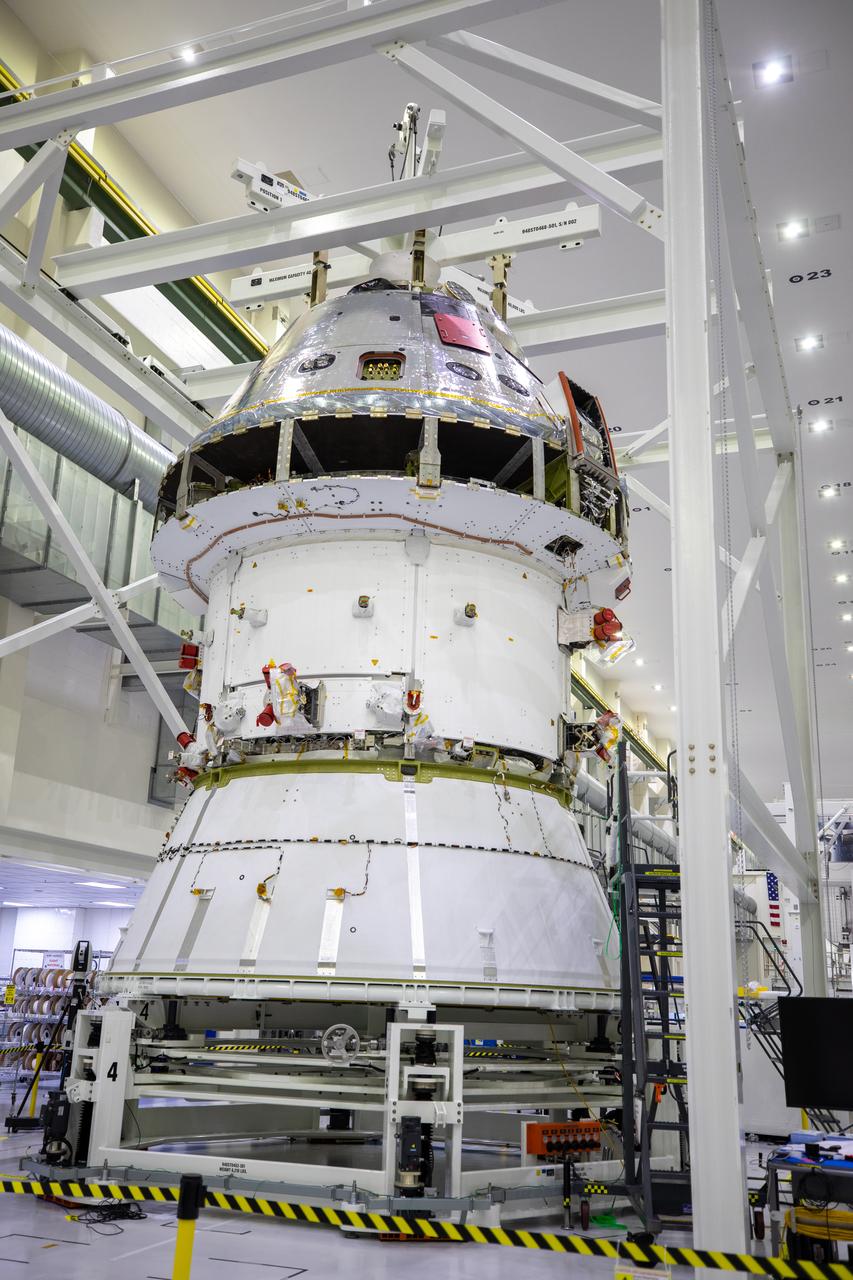
Installation of the spacecraft adapter (SA) cone to the Artemis I Orion spacecraft shown in progress inside the Neil Armstrong Operations and Checkout Building on Aug. 10, 2020. This is one of the final major hardware operations the spacecraft will undergo during closeout processing prior to being integrated with the Space Launch System (SLS) rocket in preparation for the first Artemis mission. The spacecraft adapter cone connects the bottom portion of Orion’s service module to the top part of the rocket known as the interim cryogenic propulsion stage (ICPS). Orion will fly on the agency’s Artemis I mission – the first in a series of increasingly complex missions to the Moon that will ultimately lead to the exploration of Mars.
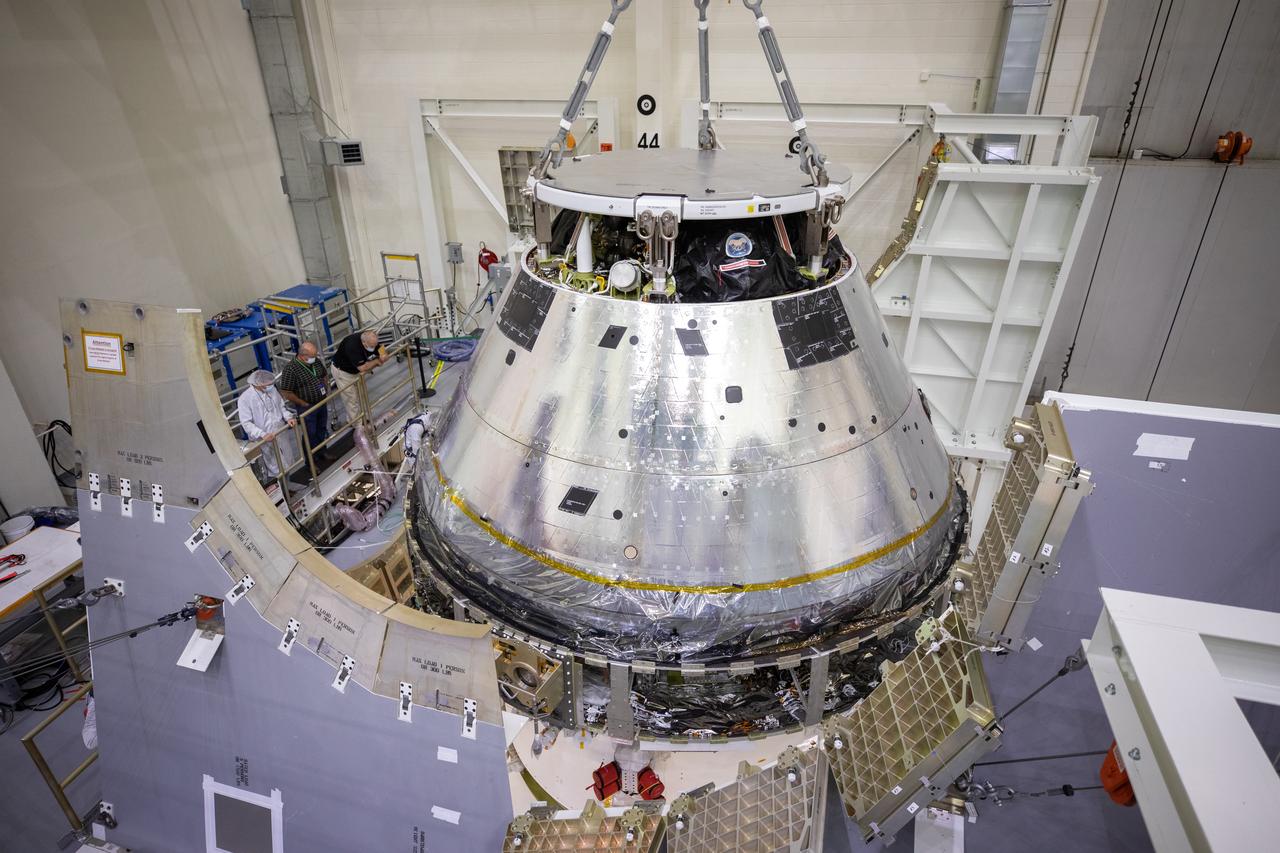
The Artemis I Orion spacecraft is lowered by crane into the FAST cell after installation of the spacecraft adapter (SA) cone was completed inside the Neil Armstrong Operations and Checkout Building on Aug. 20, 2020. This is one of the final major hardware operations the spacecraft will undergo during closeout processing prior to being integrated with the Space Launch System (SLS) rocket in preparation for the first Artemis mission. The spacecraft adapter cone connects the bottom portion of Orion’s service module to the top part of the rocket known as the interim cryogenic propulsion stage (ICPS). Orion will fly on the agency’s Artemis I mission – the first in a series of increasingly complex missions to the Moon that will ultimately lead to the exploration of Mars.
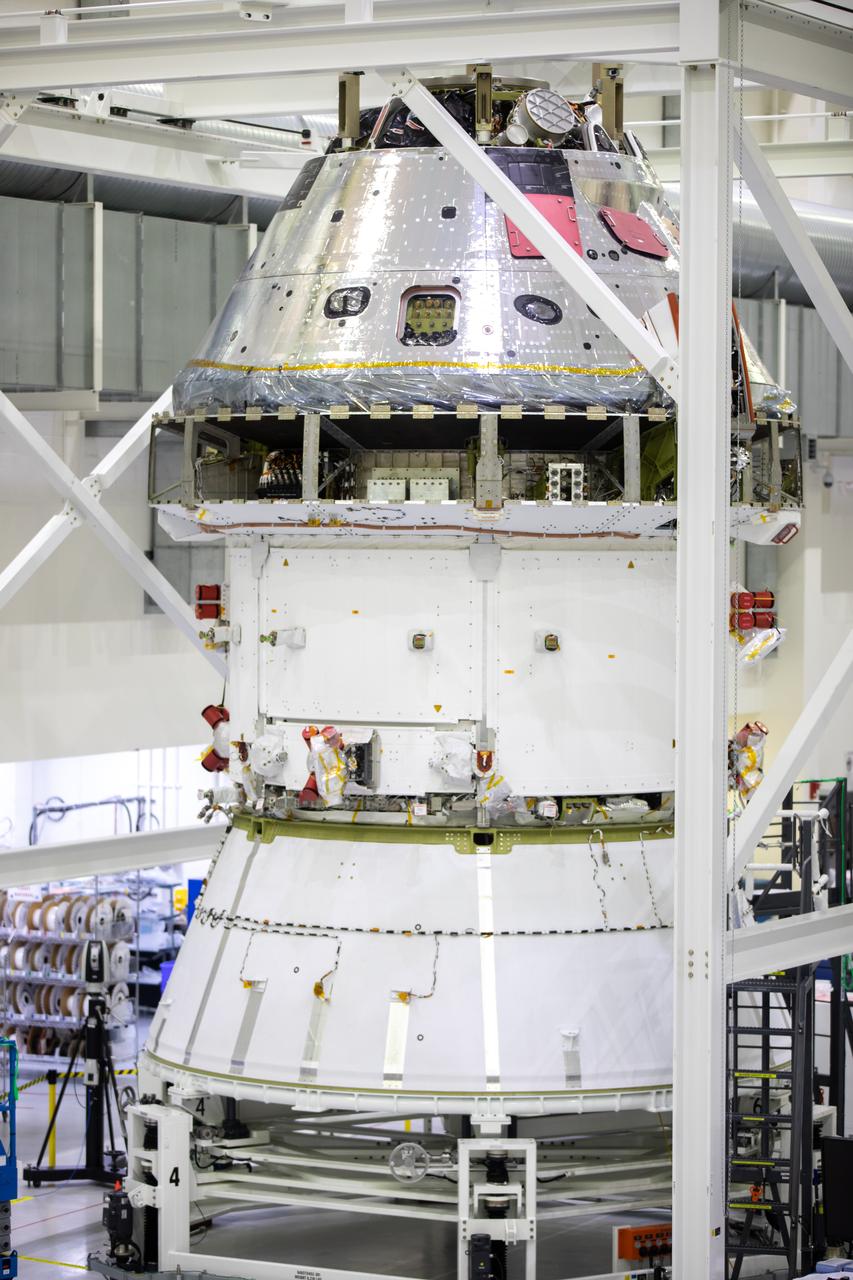
Installation of the spacecraft adapter (SA) cone to the Artemis I Orion spacecraft shown in progress inside the Neil Armstrong Operations and Checkout Building on Aug. 10, 2020. This is one of the final major hardware operations the spacecraft will undergo during closeout processing prior to being integrated with the Space Launch System (SLS) rocket in preparation for the first Artemis mission. The spacecraft adapter cone connects the bottom portion of Orion’s service module to the top part of the rocket known as the interim cryogenic propulsion stage (ICPS). Orion will fly on the agency’s Artemis I mission – the first in a series of increasingly complex missions to the Moon that will ultimately lead to the exploration of Mars.
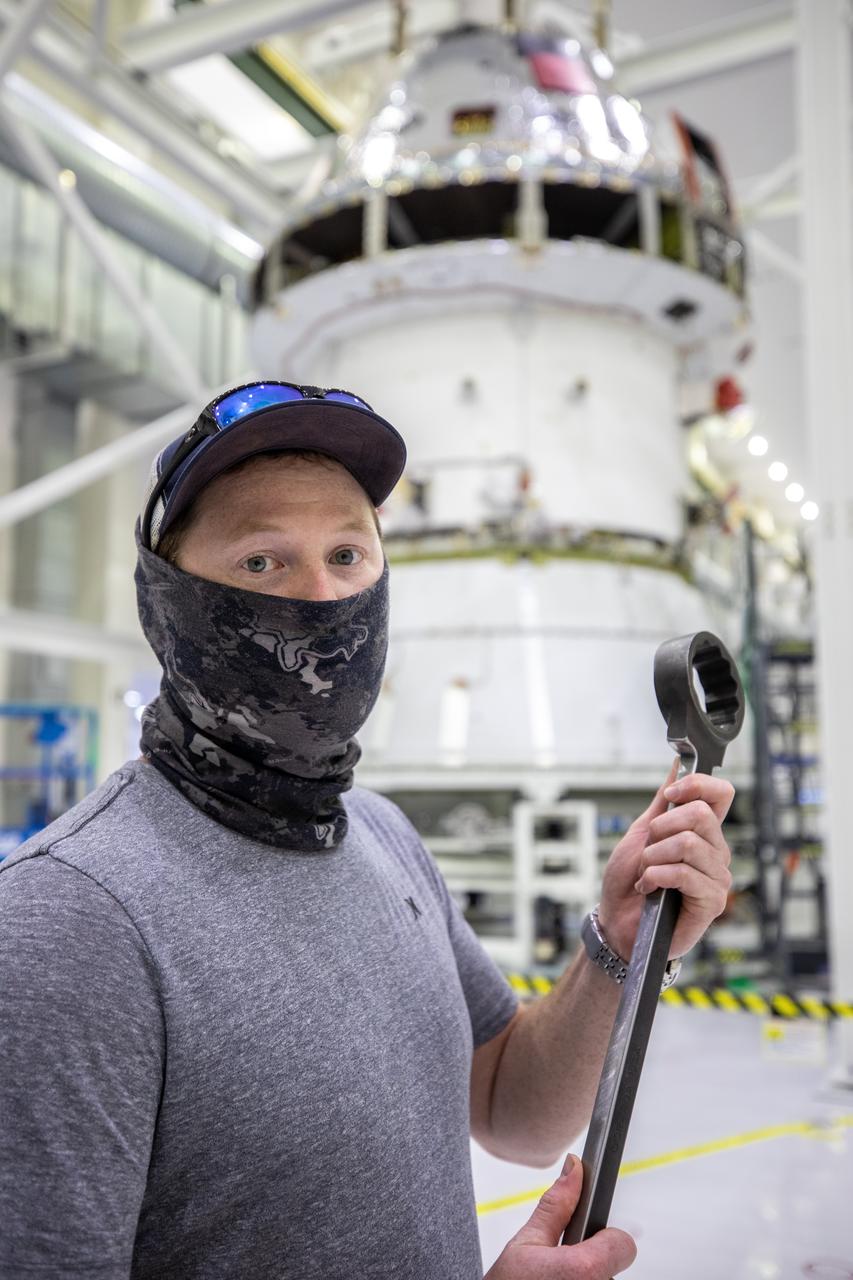
ASRC technician Chris Slack assists with the installation of the spacecraft adapter (SA) cone to the Artemis I Orion spacecraft inside the Neil Armstrong Operations and Checkout Building at NASA’s Kennedy Space Center on Aug. 10, 2020. This is one of the final major hardware operations the spacecraft will undergo during closeout processing prior to being integrated with the Space Launch System (SLS) rocket in preparation for the first Artemis mission. The spacecraft adapter cone connects the bottom portion of Orion’s service module to the top part of the rocket known as the interim cryogenic propulsion stage (ICPS). Orion will fly on the agency’s Artemis I mission – the first in a series of increasingly complex missions to the Moon that will ultimately lead to the exploration of Mars.
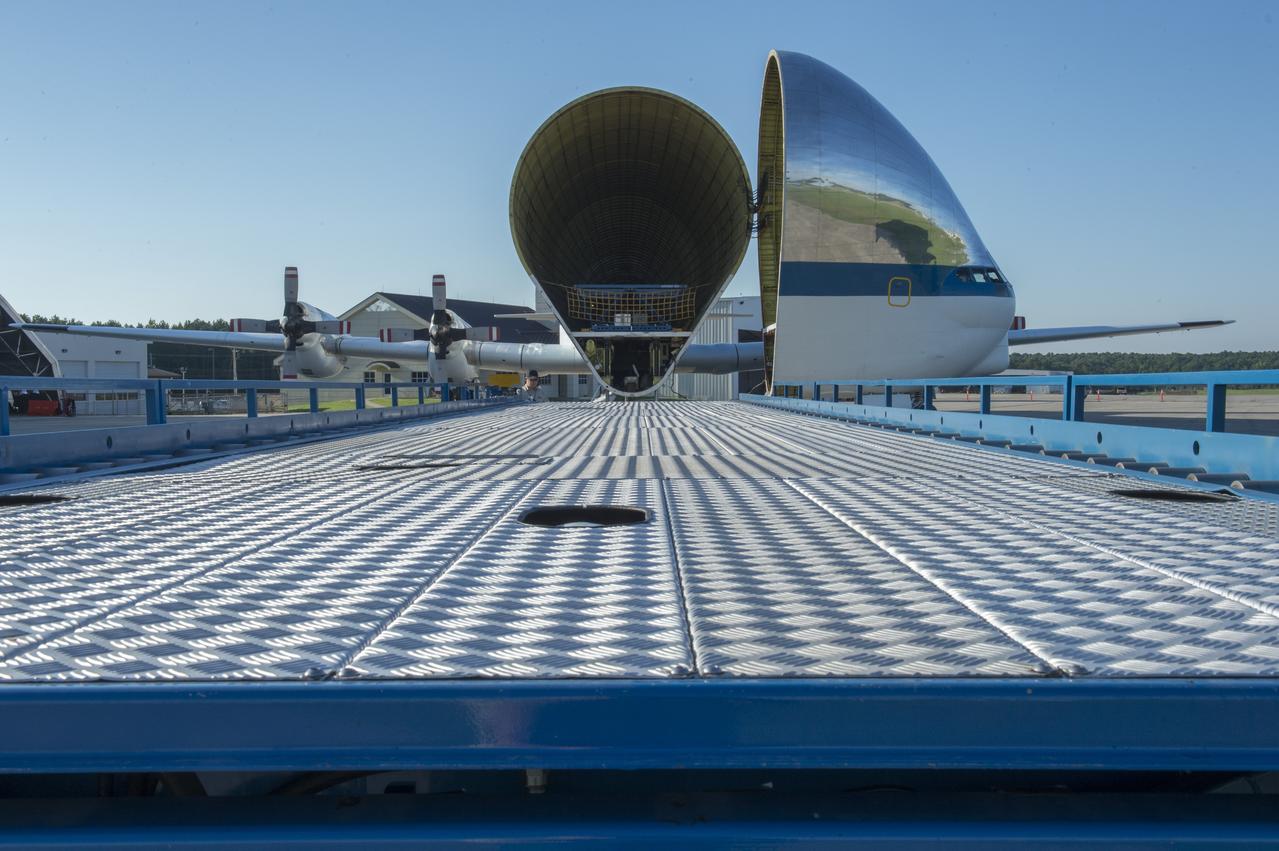
The platform which will be used to load the Orion stage adapter into NASA's Super Guppie aircraft is shown in the foreground with the Guppie aircraft in the background
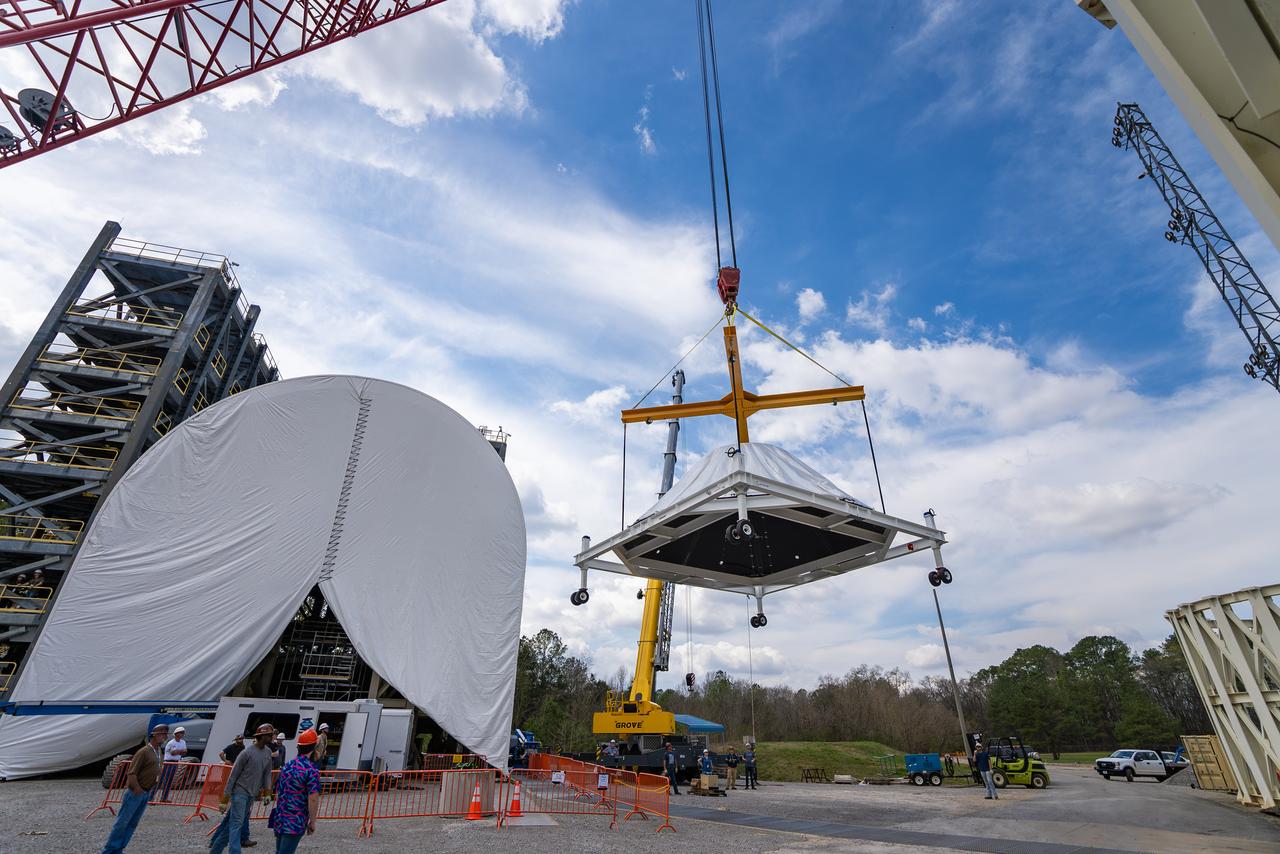
These photos and videos show how crews at NASA’s Marshall Space Flight Center in Huntsville, Alabama, moved and installed the payload adapter that will be used in the Block 1B configuration of the SLS (Space Launch System) rocket from Building 4708, where it was manufactured, into Structural Test Stand 4697 at NASA’s Marshall Space Flight Center on March 13. Teams at Marshall will begin structural testing the engineering development unit of the payload adapter – an exact replica of the flight version of the hardware – this spring. The cone-shaped payload adapter is about 8.5 feet tall and features two metal rings and eight composite panels. The adapter, which will debut on NASA’s Artemis IV mission, is an evolution from the Orion stage adapter used in the Block 1 configuration of the first three Artemis missions. It will be housed inside the universal stage adapter atop the rocket’s more powerful in-space stage, called the exploration upper stage. The payload adapter, like the launch vehicle stage adapter and the Orion stage adapter, is fully manufactured and tested at Marshall, which manages the SLS Program. NASA is working to land the first woman, first person of color, and its first international partner astronaut on the Moon under Artemis. SLS is part of NASA’s backbone for deep space exploration, along with the Orion spacecraft and Gateway in orbit around the Moon and commercial human landing systems, next-generational spacesuits, and rovers on the lunar surface. SLS is the only rocket that can send Orion, astronauts, and supplies to the Moon in a single launch.