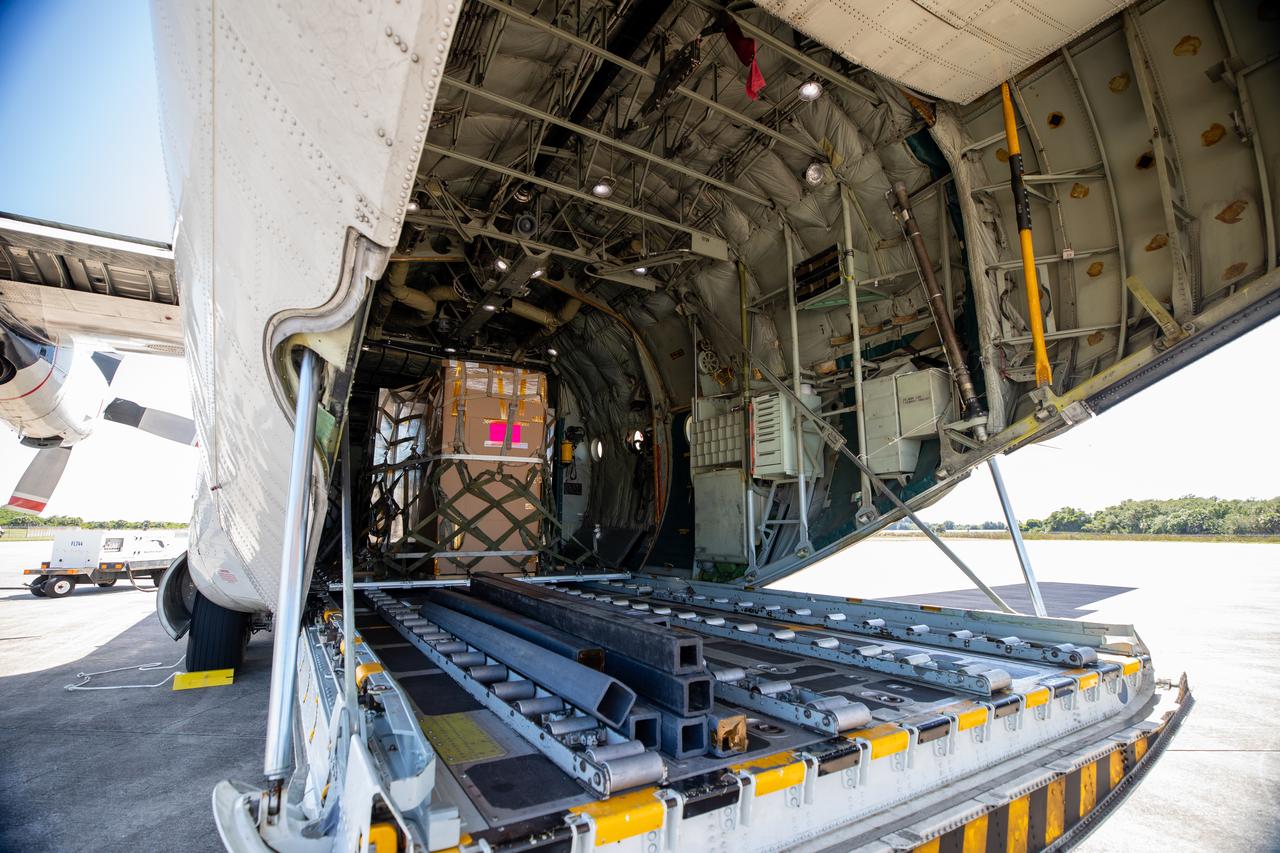
NASA’s C-130 aircraft cargo hold is open for offloading of the Adaptive Caching Assembly (ACA) for NASA’s Mars Perseverance rover at Kennedy Space Center’s Launch and Landing Facility in Florida on May 11, 2020. The ACA consists of seven motors and more than 3,000 parts, all working in unison to collect samples from the surface of Mars. A chief component of the assembly is the Sample Handling Arm, which will move sample tubes to the main robotic arm's coring drill and then transfer the filled sample tubes into a space to be sealed and stored. The Mars Perseverance rover is scheduled to launch in mid-July atop a United Launch Alliance Atlas V 541 rocket from Pad 41 at nearby Cape Canaveral Air Force Station. The rover is part of NASA’s Mars Exploration Program, a long-term effort of robotic exploration of the Red Planet. The rover will search for habitable conditions in the ancient past and signs of past microbial life on Mars. The Launch Services Program at Kennedy is responsible for launch management.
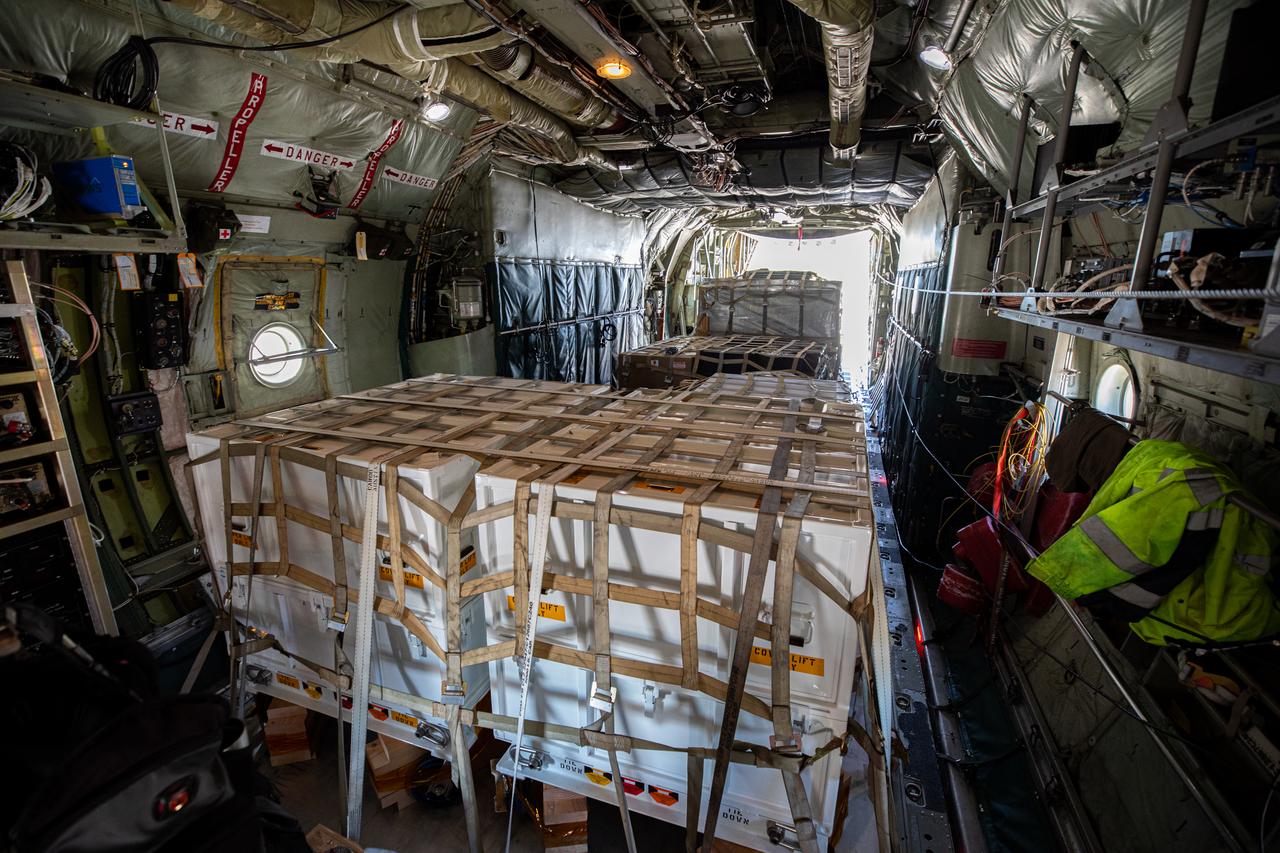
Preparations are underway to offload the Adaptive Caching Assembly (ACA) for NASA’s Mars Perseverance rover from the agency’s C-130 aircraft at Kennedy Space Center’s Launch and Landing Facility in Florida on May 11, 2020. The ACA consists of seven motors and more than 3,000 parts, all working in unison to collect samples from the surface of Mars. A chief component of the assembly is the Sample Handling Arm, which will move sample tubes to the main robotic arm's coring drill and then transfer the filled sample tubes into a space to be sealed and stored. The Mars Perseverance rover is scheduled to launch in mid-July atop a United Launch Alliance Atlas V 541 rocket from Pad 41 at nearby Cape Canaveral Air Force Station. The rover is part of NASA’s Mars Exploration Program, a long-term effort of robotic exploration of the Red Planet. The rover will search for habitable conditions in the ancient past and signs of past microbial life on Mars. The Launch Services Program at Kennedy is responsible for launch management.

Workers use a special handling device to offload the Adaptive Caching Assembly (ACA) for NASA’s Mars Perseverance rover from the agency’s C-130 aircraft at Kennedy Space Center’s Launch and Landing Facility in Florida on May 11, 2020. The ACA consists of seven motors and more than 3,000 parts, all working in unison to collect samples from the surface of Mars. A chief component of the assembly is the Sample Handling Arm, which will move sample tubes to the main robotic arm's coring drill and then transfer the filled sample tubes into a space to be sealed and stored. The Mars Perseverance rover is scheduled to launch in mid-July atop a United Launch Alliance Atlas V 541 rocket from Pad 41 at nearby Cape Canaveral Air Force Station. The rover is part of NASA’s Mars Exploration Program, a long-term effort of robotic exploration of the Red Planet. The rover will search for habitable conditions in the ancient past and signs of past microbial life on Mars. The Launch Services Program at Kennedy is responsible for launch management.
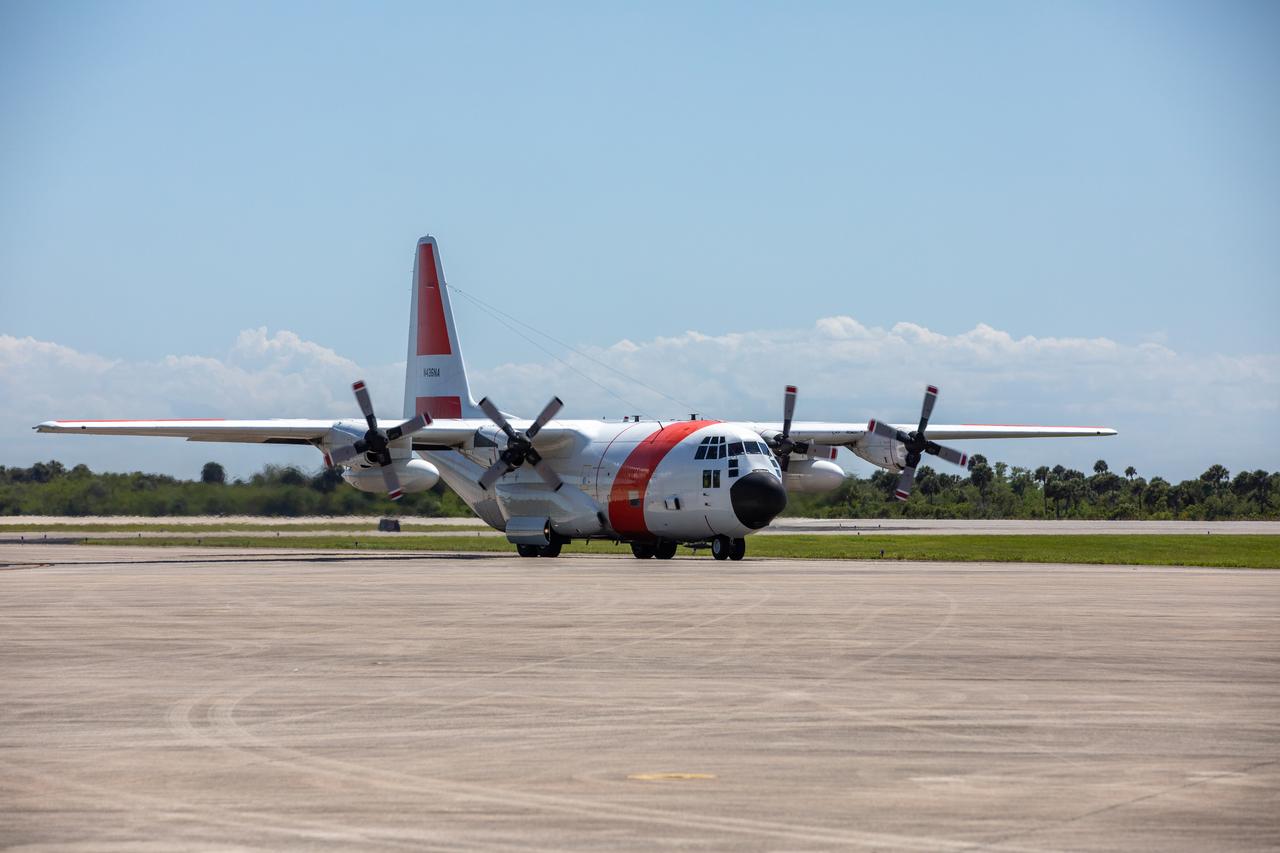
The Adaptive Caching Assembly (ACA) for NASA’s Mars Perseverance rover arrives aboard NASA’s C-130 aircraft at the Launch and Landing Facility at the agency’s Kennedy Space Center in Florida on May 11, 2020. The ACA consists of seven motors and more than 3,000 parts, all working in unison to collect samples from the surface of Mars. A chief component of the assembly is the Sample Handling Arm, which will move sample tubes to the main robotic arm's coring drill and then transfer the filled sample tubes into a space to be sealed and stored. The Mars Perseverance rover is scheduled to launch in mid-July atop a United Launch Alliance Atlas V 541 rocket from Pad 41 at nearby Cape Canaveral Air Force Station. The rover is part of NASA’s Mars Exploration Program, a long-term effort of robotic exploration of the Red Planet. The rover will search for habitable conditions in the ancient past and signs of past microbial life on Mars. The Launch Services Program at Kennedy is responsible for launch management.
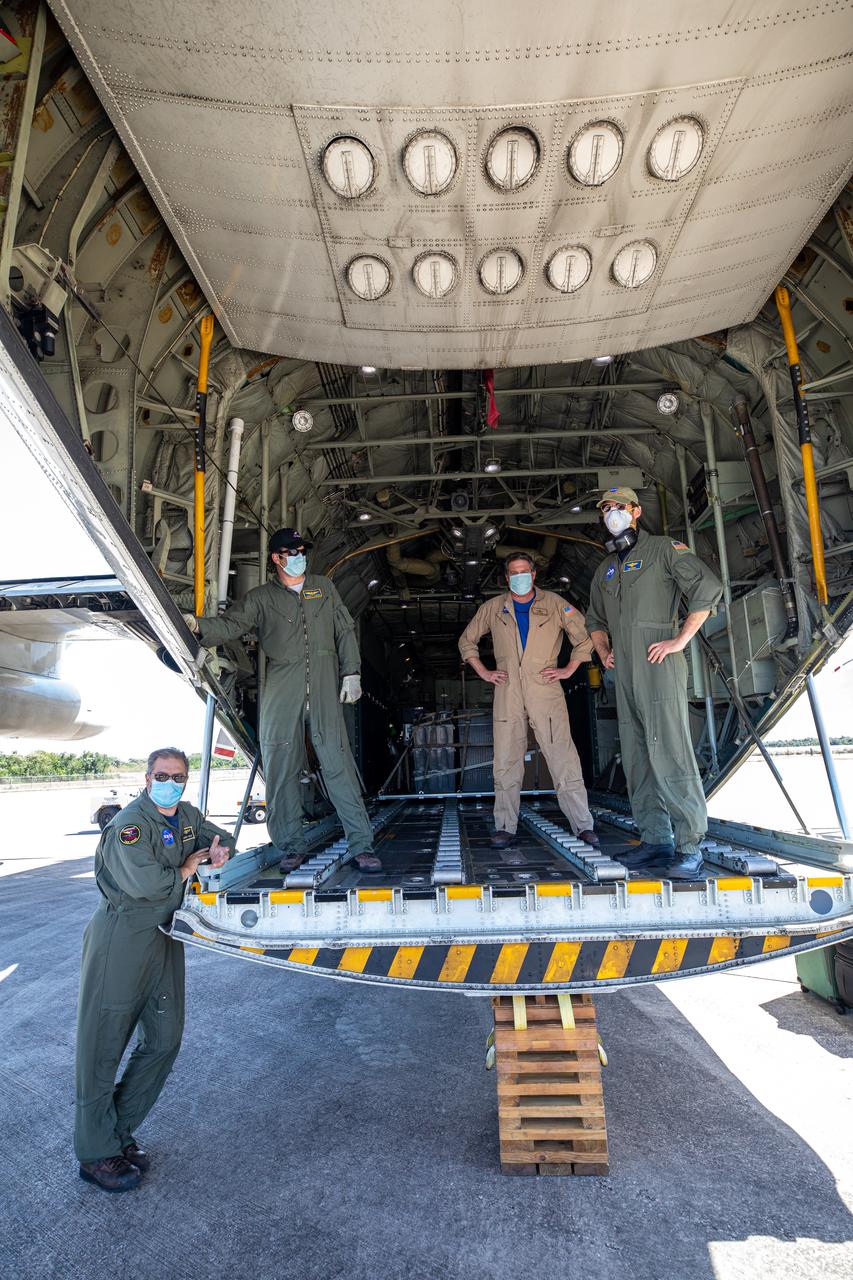
Workers prepare to offload the Adaptive Caching Assembly (ACA) for NASA’s Mars Perseverance rover from the agency’s C-130 aircraft at Kennedy Space Center’s Launch and Landing Facility in Florida on May 11, 2020. The ACA consists of seven motors and more than 3,000 parts, all working in unison to collect samples from the surface of Mars. A chief component of the assembly is the Sample Handling Arm, which will move sample tubes to the main robotic arm's coring drill and then transfer the filled sample tubes into a space to be sealed and stored. The Mars Perseverance rover is scheduled to launch in mid-July atop a United Launch Alliance Atlas V 541 rocket from Pad 41 at nearby Cape Canaveral Air Force Station. The rover is part of NASA’s Mars Exploration Program, a long-term effort of robotic exploration of the Red Planet. The rover will search for habitable conditions in the ancient past and signs of past microbial life on Mars. The Launch Services Program at Kennedy is responsible for launch management.
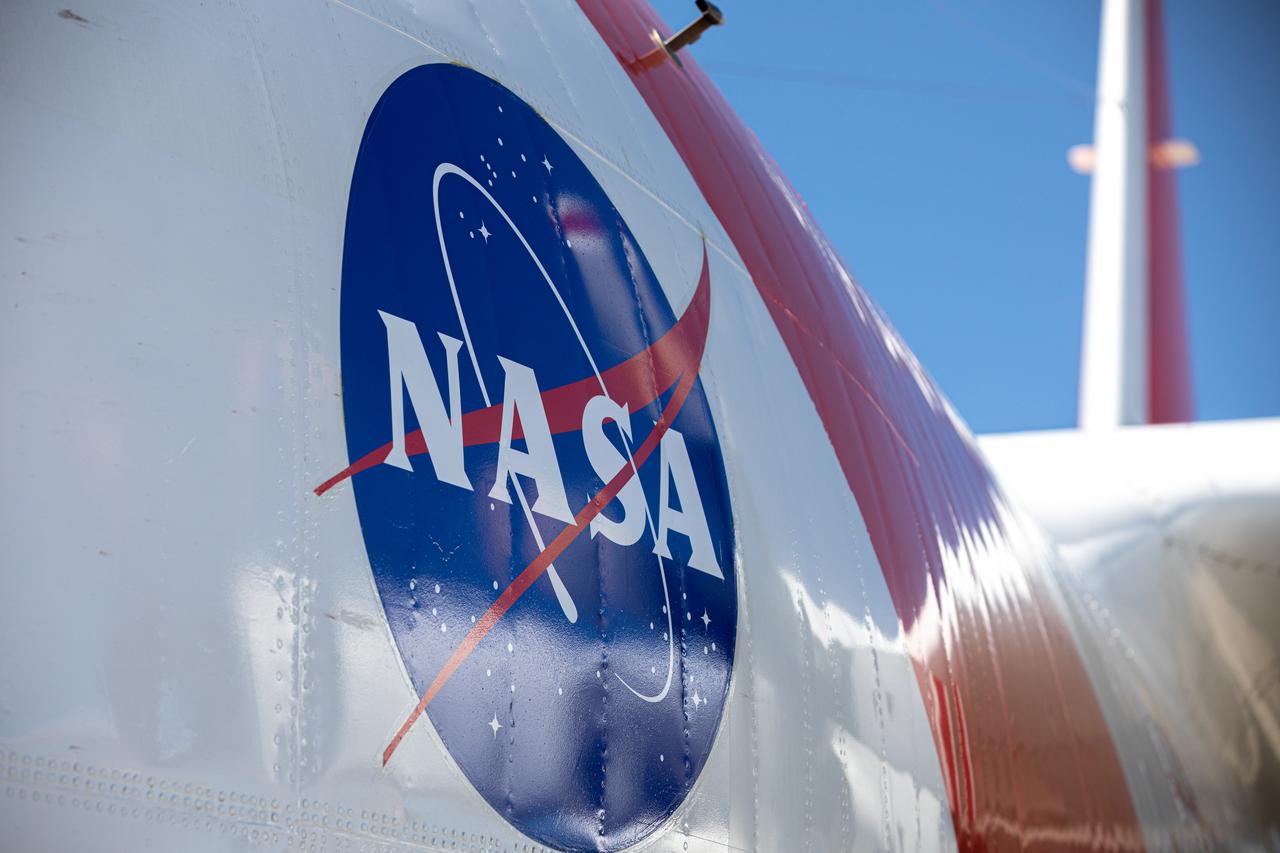
A close-up view of NASA’s C-130 aircraft that carries the Adaptive Caching Assembly (ACA) for NASA’s Mars Perseverance rover as it arrives at Kennedy Space Center’s Launch and Landing Facility in Florida on May 11, 2020. The ACA consists of seven motors and more than 3,000 parts, all working in unison to collect samples from the surface of Mars. A chief component of the assembly is the Sample Handling Arm, which will move sample tubes to the main robotic arm's coring drill and then transfer the filled sample tubes into a space to be sealed and stored. The Mars Perseverance rover is scheduled to launch in mid-July atop a United Launch Alliance Atlas V 541 rocket from Pad 41 at nearby Cape Canaveral Air Force Station. The rover is part of NASA’s Mars Exploration Program, a long-term effort of robotic exploration of the Red Planet. The rover will search for habitable conditions in the ancient past and signs of past microbial life on Mars. The Launch Services Program at Kennedy is responsible for launch management.
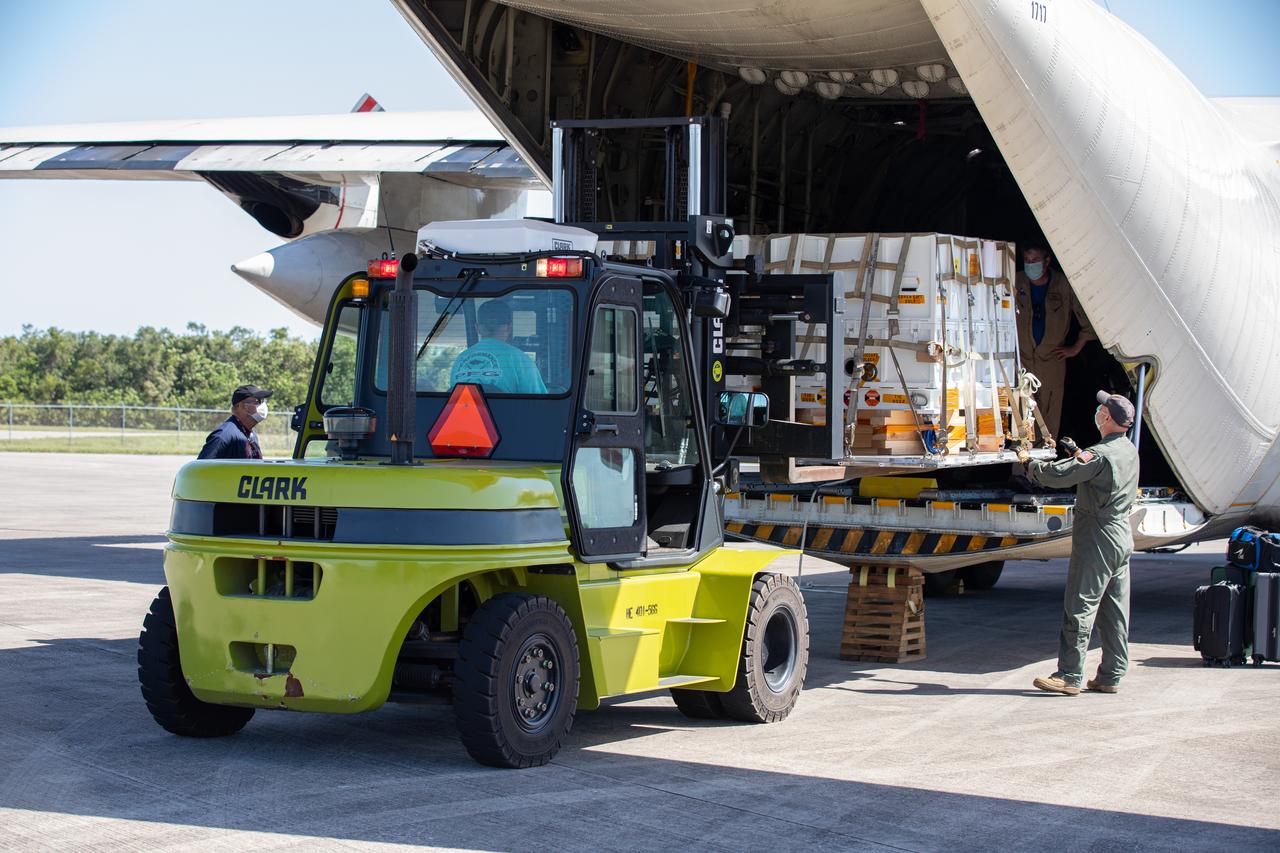
Workers offload the Adaptive Caching Assembly (ACA) for NASA’s Mars Perseverance rover from the agency’s C-130 aircraft at Kennedy Space Center’s Launch and Landing Facility in Florida on May 11, 2020. The ACA consists of seven motors and more than 3,000 parts, all working in unison to collect samples from the surface of Mars. A chief component of the assembly is the Sample Handling Arm, which will move sample tubes to the main robotic arm's coring drill and then transfer the filled sample tubes into a space to be sealed and stored. The Mars Perseverance rover is scheduled to launch in mid-July atop a United Launch Alliance Atlas V 541 rocket from Pad 41 at nearby Cape Canaveral Air Force Station. The rover is part of NASA’s Mars Exploration Program, a long-term effort of robotic exploration of the Red Planet. The rover will search for habitable conditions in the ancient past and signs of past microbial life on Mars. The Launch Services Program at Kennedy is responsible for launch management.
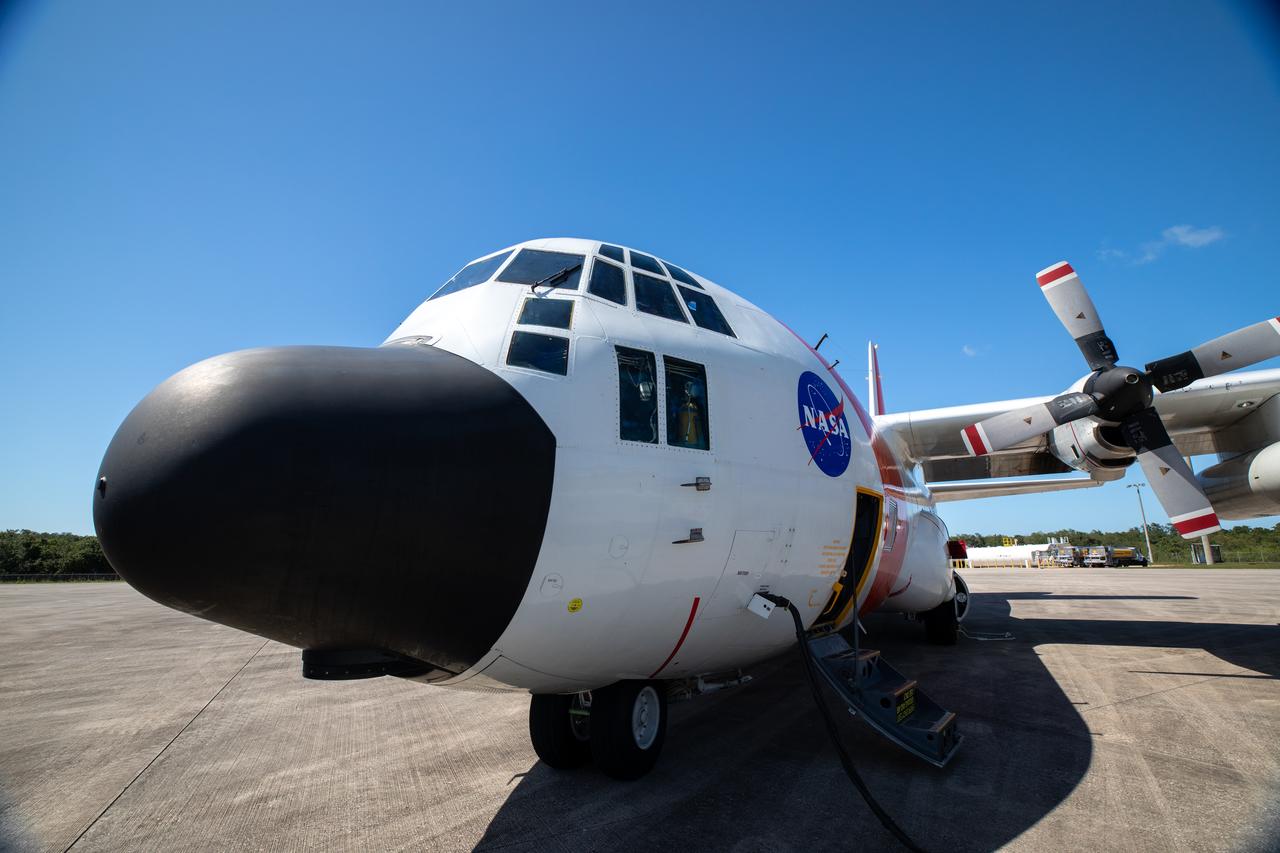
NASA’s C-130 aircraft arrives at Kennedy Space Center’s Launch and Landing Facility in Florida on May 11, 2020, carrying the Adaptive Caching Assembly (ACA) for NASA’s Mars Perseverance rover The ACA consists of seven motors and more than 3,000 parts, all working in unison to collect samples from the surface of Mars. A chief component of the assembly is the Sample Handling Arm, which will move sample tubes to the main robotic arm's coring drill and then transfer the filled sample tubes into a space to be sealed and stored. The Mars Perseverance rover is scheduled to launch in mid-July atop a United Launch Alliance Atlas V 541 rocket from Pad 41 at nearby Cape Canaveral Air Force Station. The rover is part of NASA’s Mars Exploration Program, a long-term effort of robotic exploration of the Red Planet. The rover will search for habitable conditions in the ancient past and signs of past microbial life on Mars. The Launch Services Program at Kennedy is responsible for launch management.
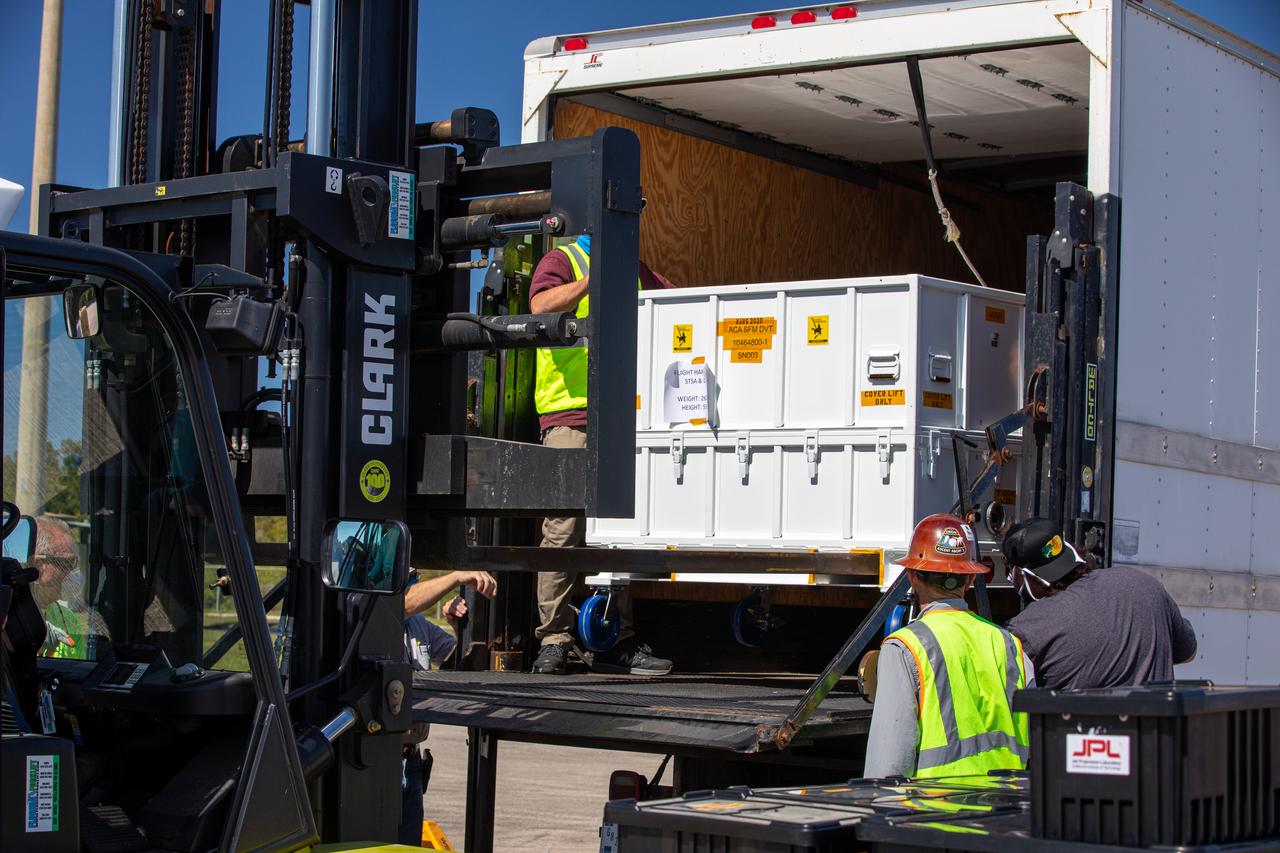
Workers use a special handling device to offload the Adaptive Caching Assembly (ACA) for NASA’s Mars Perseverance rover from the agency’s C-130 aircraft at Kennedy Space Center’s Launch and Landing Facility in Florida on May 11, 2020. The ACA consists of seven motors and more than 3,000 parts, all working in unison to collect samples from the surface of Mars. A chief component of the assembly is the Sample Handling Arm, which will move sample tubes to the main robotic arm's coring drill and then transfer the filled sample tubes into a space to be sealed and stored. The Mars Perseverance rover is scheduled to launch in mid-July atop a United Launch Alliance Atlas V 541 rocket from Pad 41 at nearby Cape Canaveral Air Force Station. The rover is part of NASA’s Mars Exploration Program, a long-term effort of robotic exploration of the Red Planet. The rover will search for habitable conditions in the ancient past and signs of past microbial life on Mars. The Launch Services Program at Kennedy is responsible for launch management.
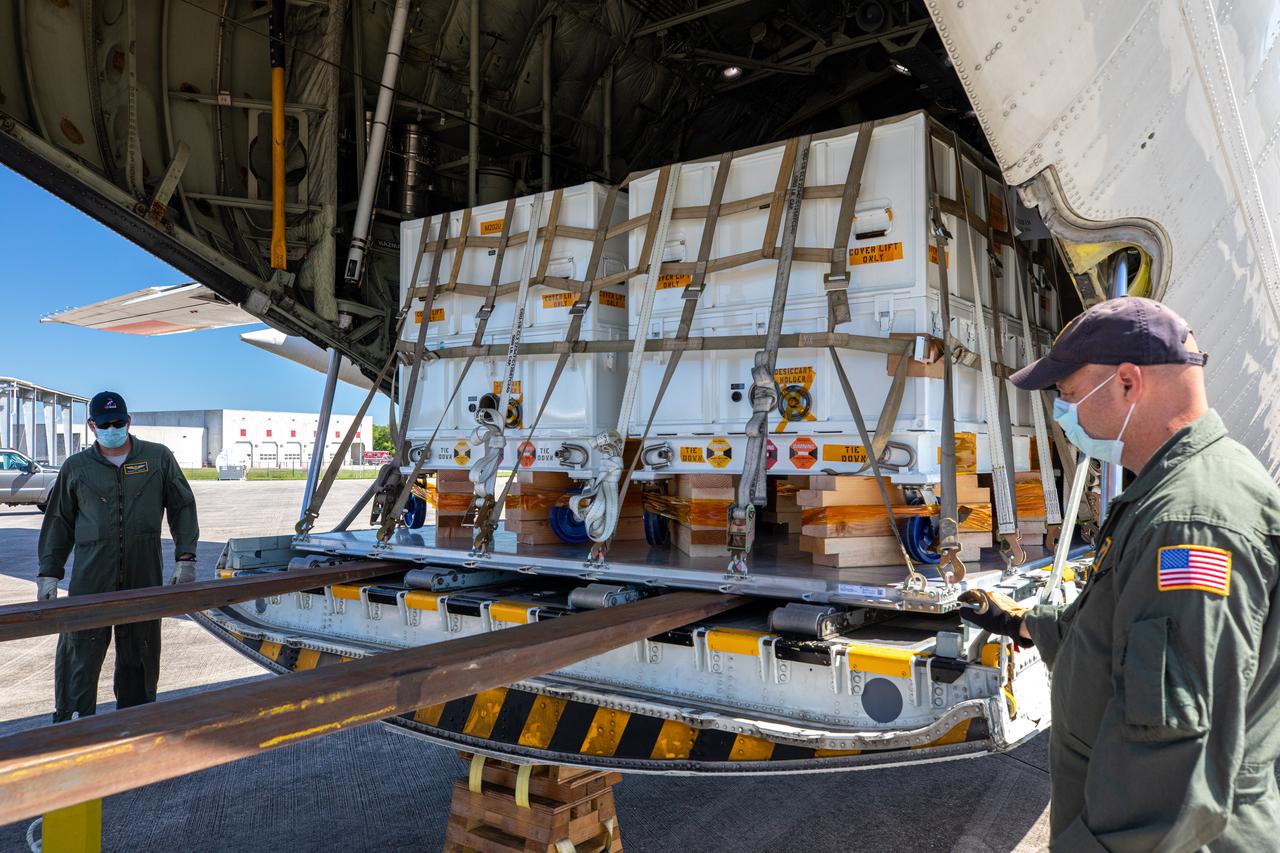
Workers begin to offload the Adaptive Caching Assembly (ACA) for NASA’s Mars Perseverance rover from the agency’s C-130 aircraft at Kennedy Space Center’s Launch and Landing Facility in Florida on May 11, 2020. The ACA consists of seven motors and more than 3,000 parts, all working in unison to collect samples from the surface of Mars. A chief component of the assembly is the Sample Handling Arm, which will move sample tubes to the main robotic arm's coring drill and then transfer the filled sample tubes into a space to be sealed and stored. The Mars Perseverance rover is scheduled to launch in mid-July atop a United Launch Alliance Atlas V 541 rocket from Pad 41 at nearby Cape Canaveral Air Force Station. The rover is part of NASA’s Mars Exploration Program, a long-term effort of robotic exploration of the Red Planet. The rover will search for habitable conditions in the ancient past and signs of past microbial life on Mars. The Launch Services Program at Kennedy is responsible for launch management.
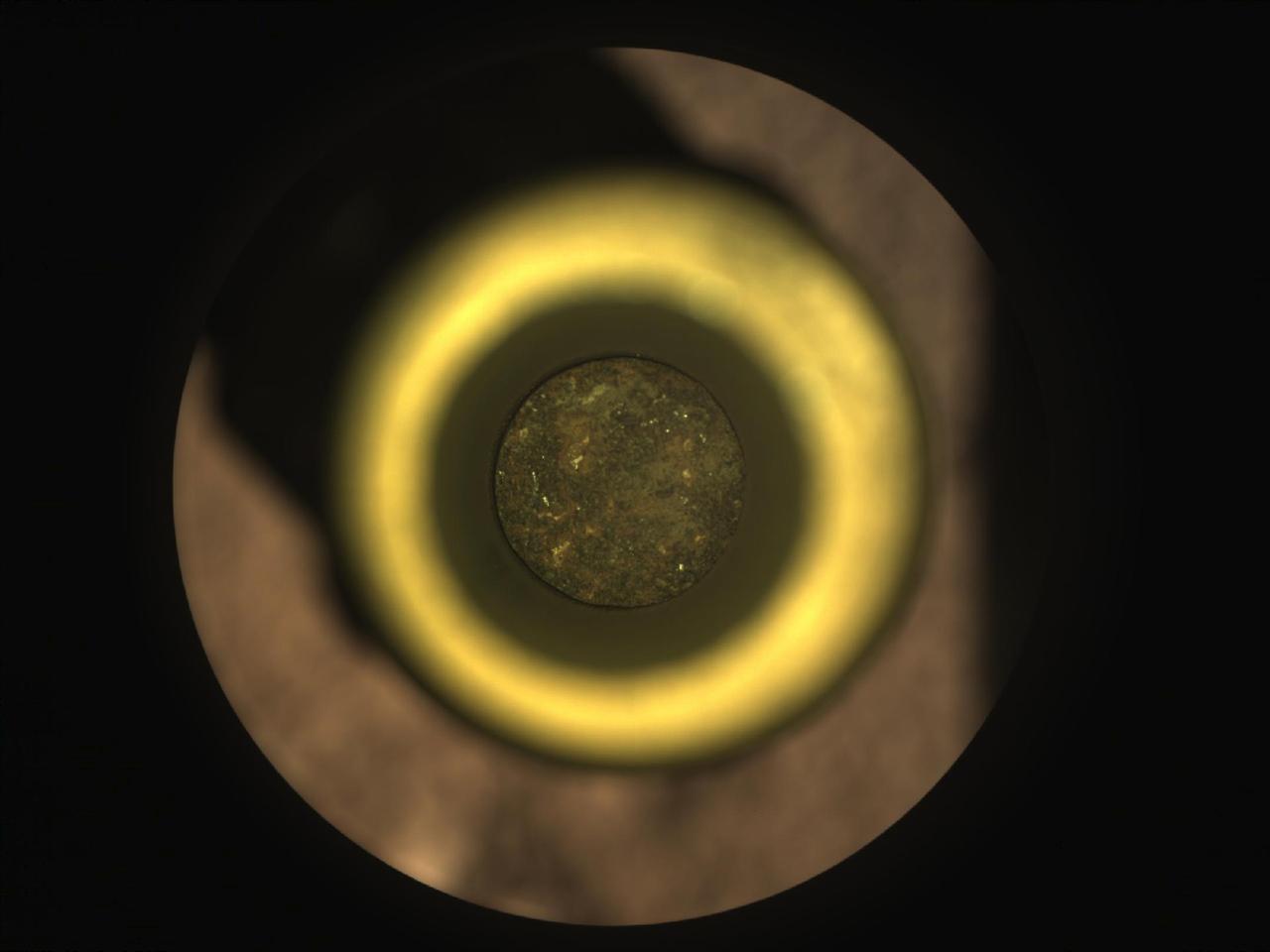
The first cored sample of Mars rock is visible (at center) inside a titanium sample collection tube in this from the Sampling and Caching System Camera (known as CacheCam) of NASA's Perseverance rover. The image was taken on Sept. 6, 2021 (the 194th sol, or Martian day, of the mission), prior to the system attaching and sealing a metal cap onto the tube. The image was taken so the cored-rock sample would be in focus. The seemingly dark ring surrounding the sample is a portion of the sample tube's inner wall. The bright gold-colored ring surrounding the tube and sample is the "bearing race," an asymmetrical flange that assists in shearing off a sample once the coring drill has bored into a rock. The outermost, mottled-brown disc in this image is a portion of the sample handling arm inside the rover's adaptive caching assembly. An additional set of images shows the tube and its cored sample during CacheCam imaging inspection. A key objective for Perseverance's mission on Mars is astrobiology, including the search for signs of ancient microbial life. The rover will characterize the planet's geology and past climate, pave the way for human exploration of the Red Planet, and be the first mission to collect and cache Martian rock and regolith (broken rock and dust). Subsequent NASA missions, in cooperation with ESA (European Space Agency), would send spacecraft to Mars to collect these sealed samples from the surface and return them to Earth for in-depth analysis. The Mars 2020 Perseverance mission is part of NASA's Moon to Mars exploration approach, which includes Artemis missions to the Moon that will help prepare for human exploration of the Red Planet. Movie available at https://photojournal.jpl.nasa.gov/catalog/PIA24806
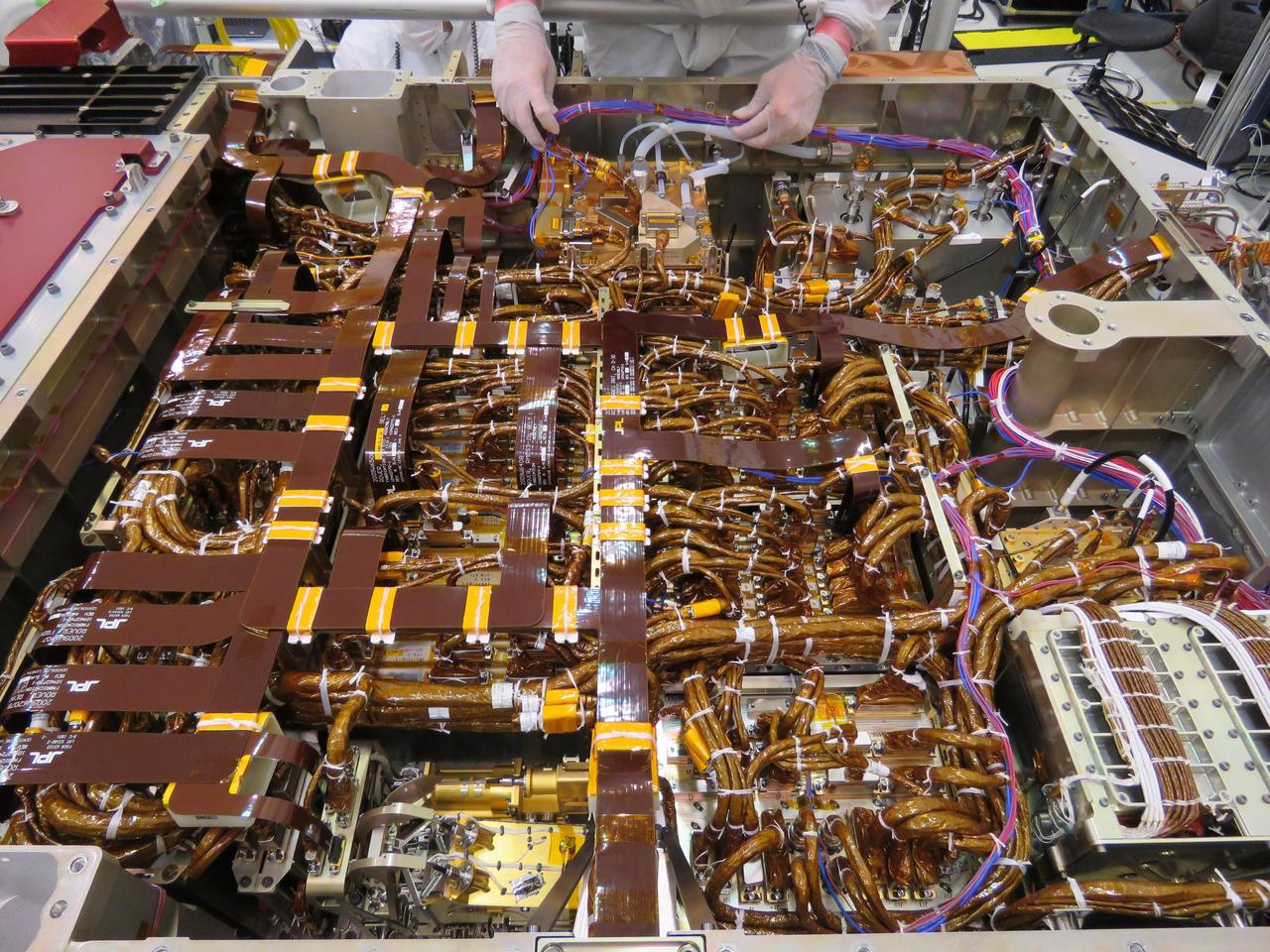
In the image, taken on June 1, 2019, an engineer in the Spacecraft Assembly Facility's High Bay 1 at NASA's Jet Propulsion Laboratory in Pasadena, California, can be seen working on the exposed belly of the Mars 2020 rover. It has been inverted to allow the 2020 engineers and technicians easier access. The front of the rover is on camera left. The engineer is inspecting wiring directly above the Mars Oxygen In-Situ Resource Utilization Experiment (MOXIE) instrument. MOXIE will demonstrate a way that future explorers might produce oxygen from the Martian atmosphere for propellant and for breathing. In the foreground, just to the left of center and distinctive because of the relative lack of wiring, is the body unit for the SuperCam instrument. The mast unit for SuperCam instrument, which will provide imaging, chemical composition analysis, and mineralogy from its high perch at the top of the rover's remote sensing mast was installed June 25. To the far left, covered by a red-colored shield, is the bay where the Adaptive Caching Assembly (ACA) will document, analyze and process for storage samples of Mars rock and soil for future return to Earth. https://photojournal.jpl.nasa.gov/catalog/PIA23312