
Title: W-8 Fan Acoustic Casing Treatment Test on the Source Diagnostic Test Rotor Alone Hardware Program: Advanced Air Vehicles Program (AAVP) Project: Advanced Air Transport Technology (AATT) Sub-project: Aircraft Noise Reduction (ANR) Weekly Highlight: · Acoustic Casing Treatment Testing Completed in the W-8 Single Stage Axial Compressor Facility: Testing of Acoustic Casing Treatments on the Source Diagnostic Test (SDT) rotor alone hardware which had begun in early January was completed on Thursday, February 16th. Four different over-the-rotor acoustic casing treatment concepts were tested along with two baseline configurations. Testing included steady-aerodynamic measurements of fan performance, hotfilm turbulence measurements, and inlet acoustic measurements with an in-duct array. These measurements will be used to assess the aerodynamic and acoustic impact of fan acoustic casing treatments on a high bypass ratio fan at TRL 3. This test was the last of 3 planned tests of potential over-the-rotor acoustic casing treatments. The first treatment test was completed in the Normal Incidence Tube (NIT) at Langley Research Center (LaRC) in Fall 2015 and the second was completed on the Advanced Noise Control Fan (ANCF) in the Aero-Acoustic Propulsion Laboratory (AAPL) in Winter 2016. This work is supported by the Aircraft Noise Reduction (ANR) subproject of the Advanced Air Transport Technology (AATT) Project. (POC: LTV/ Rick Bozak 3-5160)

NASA's Dryden Flight Research Center marked its 60th anniversary as the aerospace agency's lead center for atmospheric flight research and operations in 2006. In connection with that milestone, hundreds of the center's staff and retirees gathered in nearby Lancaster, Calif., in November 2006 to reflect on the center's challenges and celebrate its accomplishments over its six decades of advancing the state-of-the-art in aerospace technology. The center had its beginning in 1946 when a few engineers from the National Advisory Committee for Aeronautics' Langley Memorial Aeronautical Laboratory were detailed to Muroc Army Air Base (now Edwards Air Force Base) in Southern California's high desert to support the joint Army Air Force / NACA / Bell Aircraft XS-1 research airplane program. Since that inauspicious beginning, the center has been at the forefront of many of the advances in aerospace technology by validating advanced concepts through actual in-flight research and testing. Dryden is uniquely situated to take advantage of the excellent year-round flying weather, remote area, and visibility to test some of the nation�s most exciting aerospace vehicles. Today, NASA Dryden is NASA's premier flight research and test organization, continuing to push the envelope in the validation of high-risk aerospace technology and space exploration concepts, and in conducting airborne environmental and space science missions in the 21st century.

This photograph depicts an air-breathing rocket engine prototype in the test bay at the General Applied Science Lab facility in Ronkonkoma, New York. Air-breathing engines, known as rocket based, combined-cycle engines, get their initial take-off power from specially designed rockets, called air-augmented rockets, that boost performance about 15 percent over conventional rockets. When the vehicle's velocity reaches twice the speed of sound, the rockets are turned off and the engine relies totally on oxygen in the atmosphere to burn hydrogen fuel, as opposed to a rocket that must carry its own oxygen, thus reducing weight and flight costs. Once the vehicle has accelerated to about 10 times the speed of sound, the engine converts to a conventional rocket-powered system to propel the craft into orbit or sustain it to suborbital flight speed. NASA's Advanced Space Transportation Program at Marshall Space Flight Center, along with several industry partners and collegiate forces, is developing this technology to make space transportation affordable for everyone from business travelers to tourists. The goal is to reduce launch costs from today's price tag of $10,000 per pound to only hundreds of dollars per pound. NASA's series of hypersonic flight demonstrators currently include three air-breathing vehicles: the X-43A, X-43B and X-43C.

NASA's F/A-18 Hornet is seen here in a banked turn over Rogers Dry Lake in the Mojave desert on an early research flight. It was flown by NASA's Dryden Flight Research Center, Edwards, California, in a multi-year, joint NASA/DOD/industry program, the former Navy fighter was modified into a unique Systems Research Aircraft (SRA) to investigate a host of new technologies in the areas of flight controls, airdata sensing and advanced computing. One of the more than 20 experiments tested aboard the SRA F-18 was an advanced air data sensing system which used a group of pressure taps flush-mounted on the forward fuselage to measure both altitude and wind speed and direction--critical data for flight control and research investigations. The Real-Time Flush Air Data Sensing system concept was evaluated for possible use on the X-33 and X-34 resuable space-launch vehicles. The primary goal of the SRA program was to validate through flight research cutting-edge technologies which could benefit future aircraft and spacecraft by improving efficiency and performance, reducing weight and complexity, with a resultant reduction on development and operational costs.

An artist's rendering of the air-breathing, hypersonic X-43B, the third and largest of NASA's Hyper-X series flight demonstrators, which could fly later this decade. Revolutionizing the way we gain access to space is NASA's primary goal for the Hypersonic Investment Area, managed for NASA by the Advanced Space Transportation Program at the Marshall Space Flight Center in Huntsville, Alabama. The Hypersonic Investment area, which includes leading-edge partners in industry and academia, will support future generation reusable vehicles and improved access to space. These technology demonstrators, intended for flight testing by decade's end, are expected to yield a new generation of vehicles that routinely fly about 100,000 feet above Earth's surface and reach sustained speeds in excess of Mach 5 (3,750 mph), the point at which "supersonic" flight becomes "hypersonic" flight. The flight demonstrators, the Hyper-X series, will be powered by air-breathing rocket or turbine-based engines, and ram/scramjets. Air-breathing engines, known as combined-cycle systems, achieve their efficiency gains over rocket systems by getting their oxygen for combustion from the atmosphere, as opposed to a rocket that must carry its oxygen. Once a hypersonic vehicle has accelerated to more than twice the speed of sound, the turbine or rockets are turned off, and the engine relies solely on oxygen in the atmosphere to burn fuel. When the vehicle has accelerated to more than 10 to 15 times the speed of sound, the engine converts to a conventional rocket-powered system to propel the craft into orbit or sustain it to suborbital flight speed. NASA's series of hypersonic flight demonstrators includes three air-breathing vehicles: the X-43A, X-43B and X-43C.

KENNEDY SPACE CENTER, FLA. - At Vandenberg Air Force Base in California, Orbital Sciences Corporation technicians complete attachment of the Demonstration of Autonomous Rendezvous Technology (DART) spacecraft and Orbital Sciences Pegasus launch vehicle, to the Stargazer L-1011 aircraft above. The Pegasus XL will launch DART at approximately 40,000 feet above the Pacific Ocean into a circular polar orbit of approximately 475 miles. DART was designed and built for NASA by Orbital Sciences as an advanced flight demonstrator to locate and maneuver near an orbiting satellite. The DART spacecraft weighs about 800 pounds and is nearly 6 feet long and 3 feet in diameter. The DART satellite provides a key step in establishing autonomous rendezvous capabilities for the U.S. Space Program. While previous rendezvous and docking efforts have been piloted by astronauts, the unmanned DART satellite will have computers and cameras to perform its rendezvous functions.

KENNEDY SPACE CENTER, FLA. - At Vandenberg Air Force Base in California, Orbital Sciences Corporation technicians get ready to attach the Demonstration of Autonomous Rendezvous Technology (DART) spacecraft and Orbital Sciences Pegasus launch vehicle, mated earlier, to the Stargazer L-1011 aircraft above. The Pegasus XL will launch DART at approximately 40,000 feet above the Pacific Ocean into a circular polar orbit of approximately 475 miles. DART was designed and built for NASA by Orbital Sciences as an advanced flight demonstrator to locate and maneuver near an orbiting satellite. The DART spacecraft weighs about 800 pounds and is nearly 6 feet long and 3 feet in diameter. The DART satellite provides a key step in establishing autonomous rendezvous capabilities for the U.S. Space Program. While previous rendezvous and docking efforts have been piloted by astronauts, the unmanned DART satellite will have computers and cameras to perform its rendezvous functions.
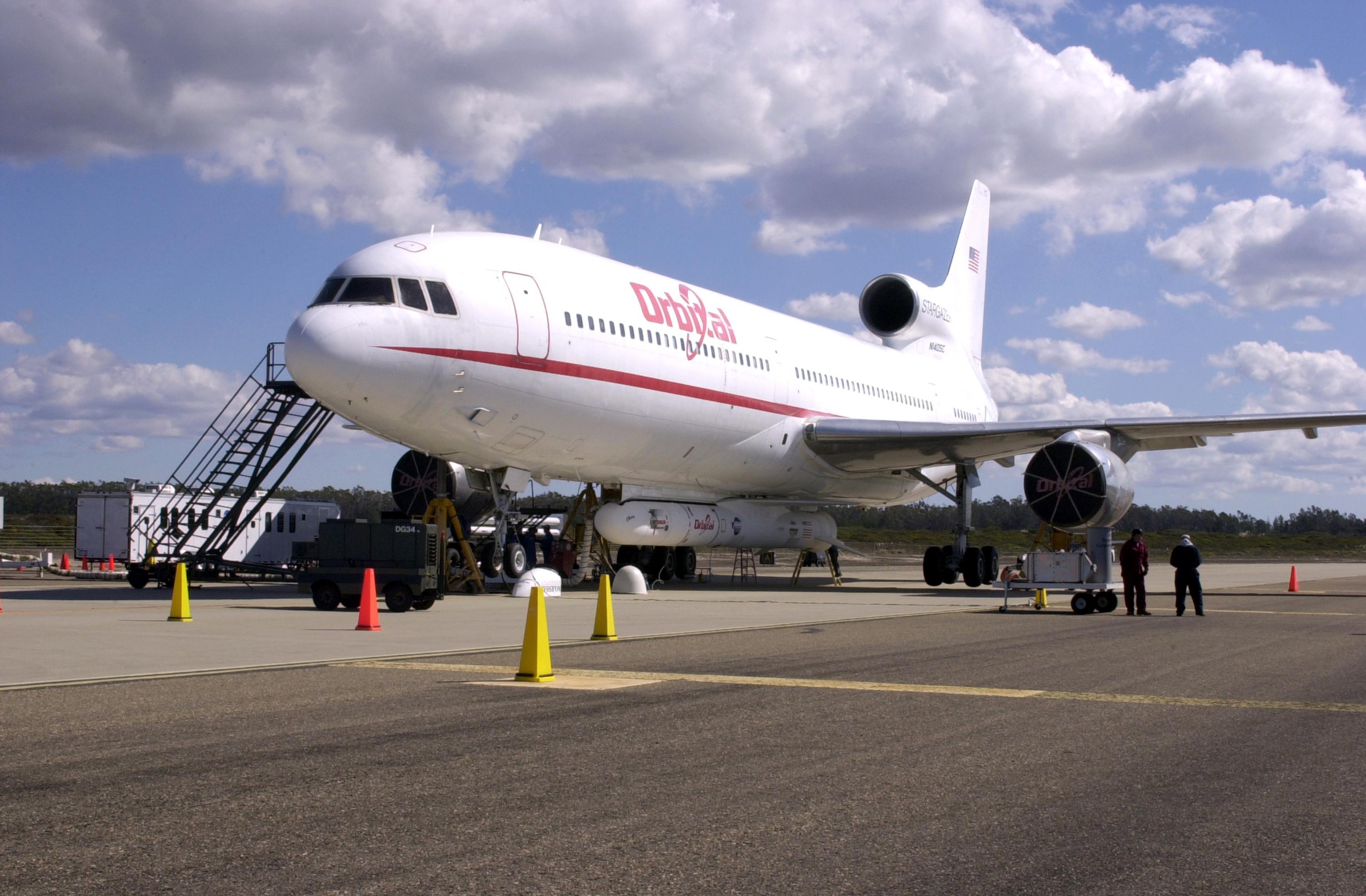
KENNEDY SPACE CENTER, FLA. - At Vandenberg Air Force Base in California, Orbital Sciences Corporation’s Stargazer L-1011 aircraft is ready for flight with the Demonstration of Autonomous Rendezvous Technology (DART) spacecraft and Orbital Sciences Pegasus launch vehicle attached underneath. The Pegasus XL will launch DART at approximately 40,000 feet above the Pacific Ocean into a circular polar orbit of approximately 475 miles. DART was designed and built for NASA by Orbital Sciences as an advanced flight demonstrator to locate and maneuver near an orbiting satellite. The DART spacecraft weighs about 800 pounds and is nearly 6 feet long and 3 feet in diameter. The DART satellite provides a key step in establishing autonomous rendezvous capabilities for the U.S. Space Program. While previous rendezvous and docking efforts have been piloted by astronauts, the unmanned DART satellite will have computers and cameras to perform its rendezvous functions.

KENNEDY SPACE CENTER, FLA. - At Vandenberg Air Force Base in California, the Demonstration of Autonomous Rendezvous Technology (DART) is mated to the belly of the Orbital Sciences Corporation Stargazer L-1011 aircraft. DART was designed and built for NASA by Orbital Sciences as an advanced flight demonstrator to locate and maneuver near an orbiting satellite. The DART spacecraft weighs about 800 pounds and is nearly 6 feet long and 3 feet in diameter. From beneath the belly of the Orbital Sciences L-1011 aircraft, the Pegasus XL vehicle will launch DART into a circular polar orbit of approximately 475 miles. The DART satellite provides a key step in establishing autonomous rendezvous capabilities for the U.S. Space Program. While previous rendezvous and docking efforts have been piloted by astronauts, the unmanned DART satellite will have computers and cameras to perform its rendezvous functions.
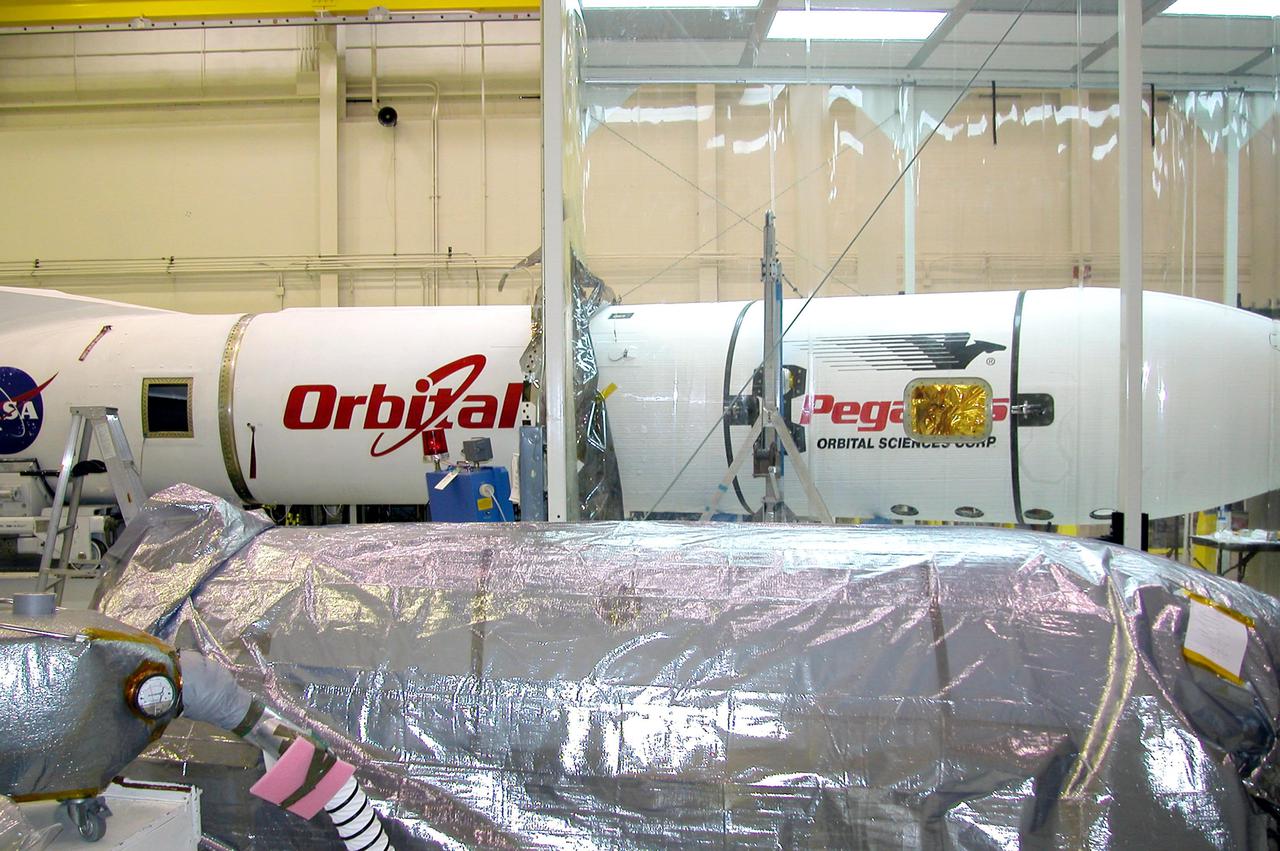
KENNEDY SPACE CENTER, FLA. - At Vandenberg Air Force Base in California, the Demonstration of Autonomous Rendezvous Technology (DART) is encapsulated and ready to be moved to the runway where it will be attached to the Orbital Sciences Corporation Stargazer L-1011 aircraft. DART was designed and built for NASA by Orbital Sciences as an advanced flight demonstrator to locate and maneuver near an orbiting satellite. The DART spacecraft weighs about 800 pounds and is nearly 6 feet long and 3 feet in diameter. From beneath the belly of the Orbital Sciences L-1011 aircraft, the Pegasus XL vehicle will launch DART into a circular polar orbit of approximately 475 miles. The DART satellite provides a key step in establishing autonomous rendezvous capabilities for the U.S. Space Program. While previous rendezvous and docking efforts have been piloted by astronauts, the unmanned DART satellite will have computers and cameras to perform its rendezvous functions.
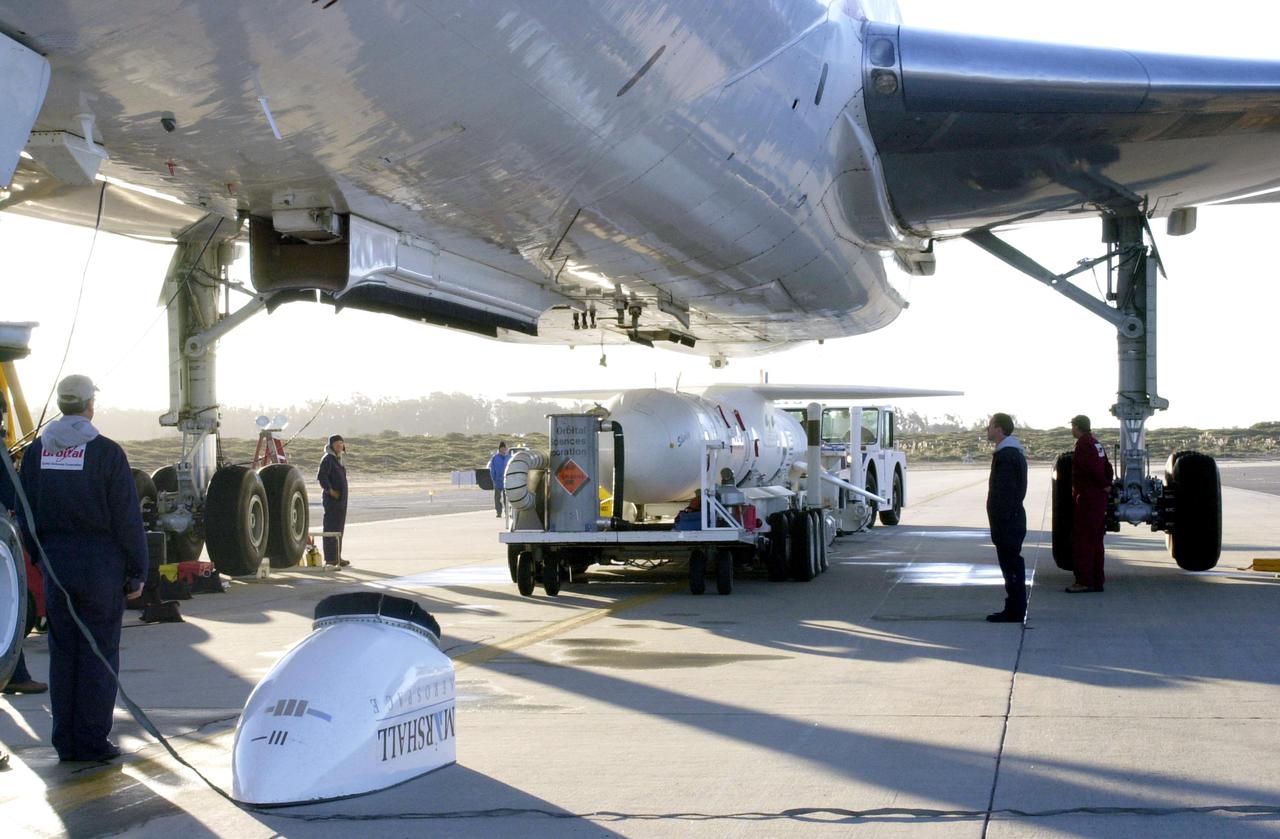
KENNEDY SPACE CENTER, FLA. - The Demonstration of Autonomous Rendezvous Technology (DART) spacecraft and Orbital Sciences Pegasus launch vehicle, mated earlier, arrive at the Vandenberg Air Force Base runway for mating to the belly of the Stargazer L-1011 aircraft (foreground). The Pegasus XL will launch DART at approximately 40,000 feet above the Pacific Ocean into a circular polar orbit of approximately 475 miles. DART was designed and built for NASA by Orbital Sciences as an advanced flight demonstrator to locate and maneuver near an orbiting satellite. The DART spacecraft weighs about 800 pounds and is nearly 6 feet long and 3 feet in diameter. The DART satellite provides a key step in establishing autonomous rendezvous capabilities for the U.S. Space Program. While previous rendezvous and docking efforts have been piloted by astronauts, the unmanned DART satellite will have computers and cameras to perform its rendezvous functions.
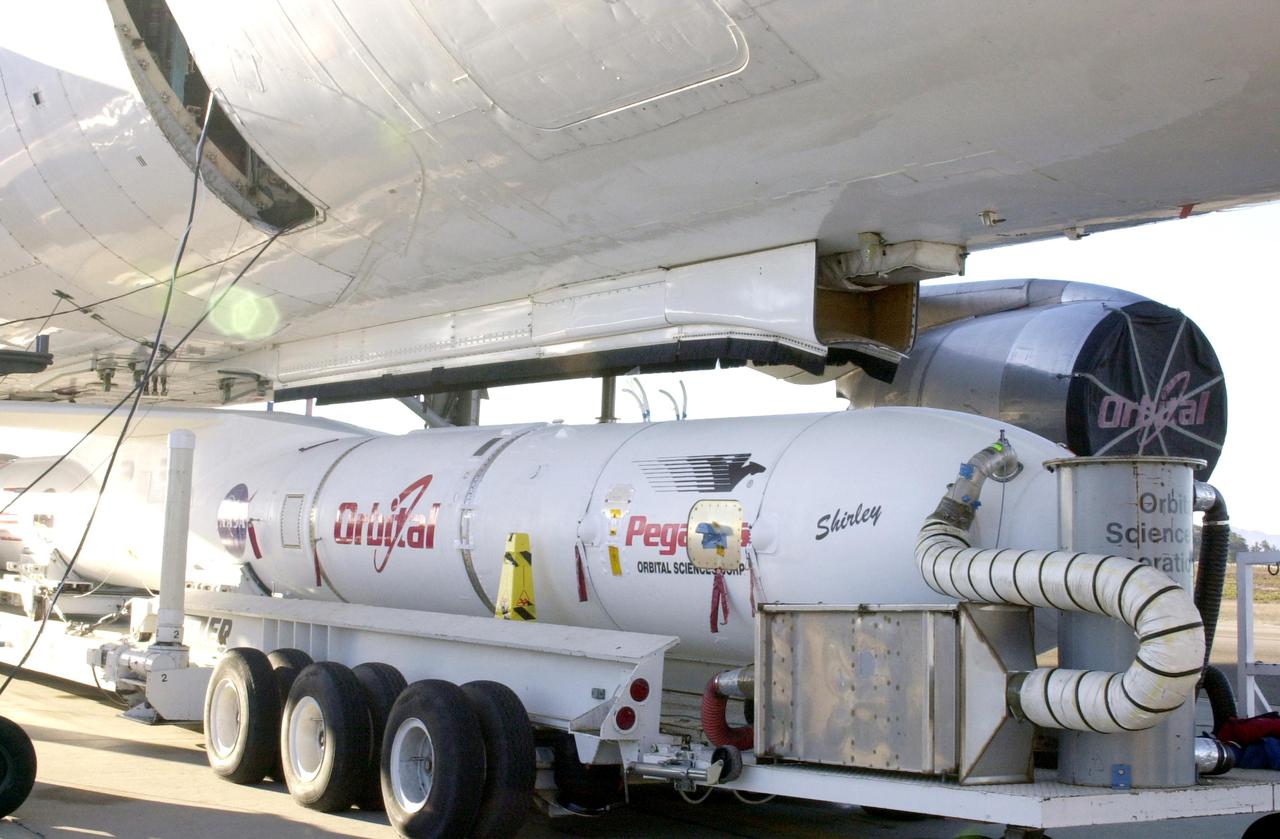
KENNEDY SPACE CENTER, FLA. - At Vandenberg Air Force Base in California, the Demonstration of Autonomous Rendezvous Technology (DART) spacecraft and Orbital Sciences Pegasus launch vehicle, mated earlier, are being attached to the Stargazer L-1011 aircraft above. The Pegasus XL will launch DART at approximately 40,000 feet above the Pacific Ocean into a circular polar orbit of approximately 475 miles. DART was designed and built for NASA by Orbital Sciences as an advanced flight demonstrator to locate and maneuver near an orbiting satellite. The DART spacecraft weighs about 800 pounds and is nearly 6 feet long and 3 feet in diameter. The DART satellite provides a key step in establishing autonomous rendezvous capabilities for the U.S. Space Program. While previous rendezvous and docking efforts have been piloted by astronauts, the unmanned DART satellite will have computers and cameras to perform its rendezvous functions.

KENNEDY SPACE CENTER, FLA. - At Vandenberg Air Force Base in California, the Demonstration of Autonomous Rendezvous Technology (DART) is mated to the belly of the Orbital Sciences Corporation Stargazer L-1011 aircraft. DART was designed and built for NASA by Orbital Sciences as an advanced flight demonstrator to locate and maneuver near an orbiting satellite. The DART spacecraft weighs about 800 pounds and is nearly 6 feet long and 3 feet in diameter. From beneath the belly of the Orbital Sciences L-1011 aircraft, the Pegasus XL vehicle will launch DART into a circular polar orbit of approximately 475 miles. The DART satellite provides a key step in establishing autonomous rendezvous capabilities for the U.S. Space Program. While previous rendezvous and docking efforts have been piloted by astronauts, the unmanned DART satellite will have computers and cameras to perform its rendezvous functions.
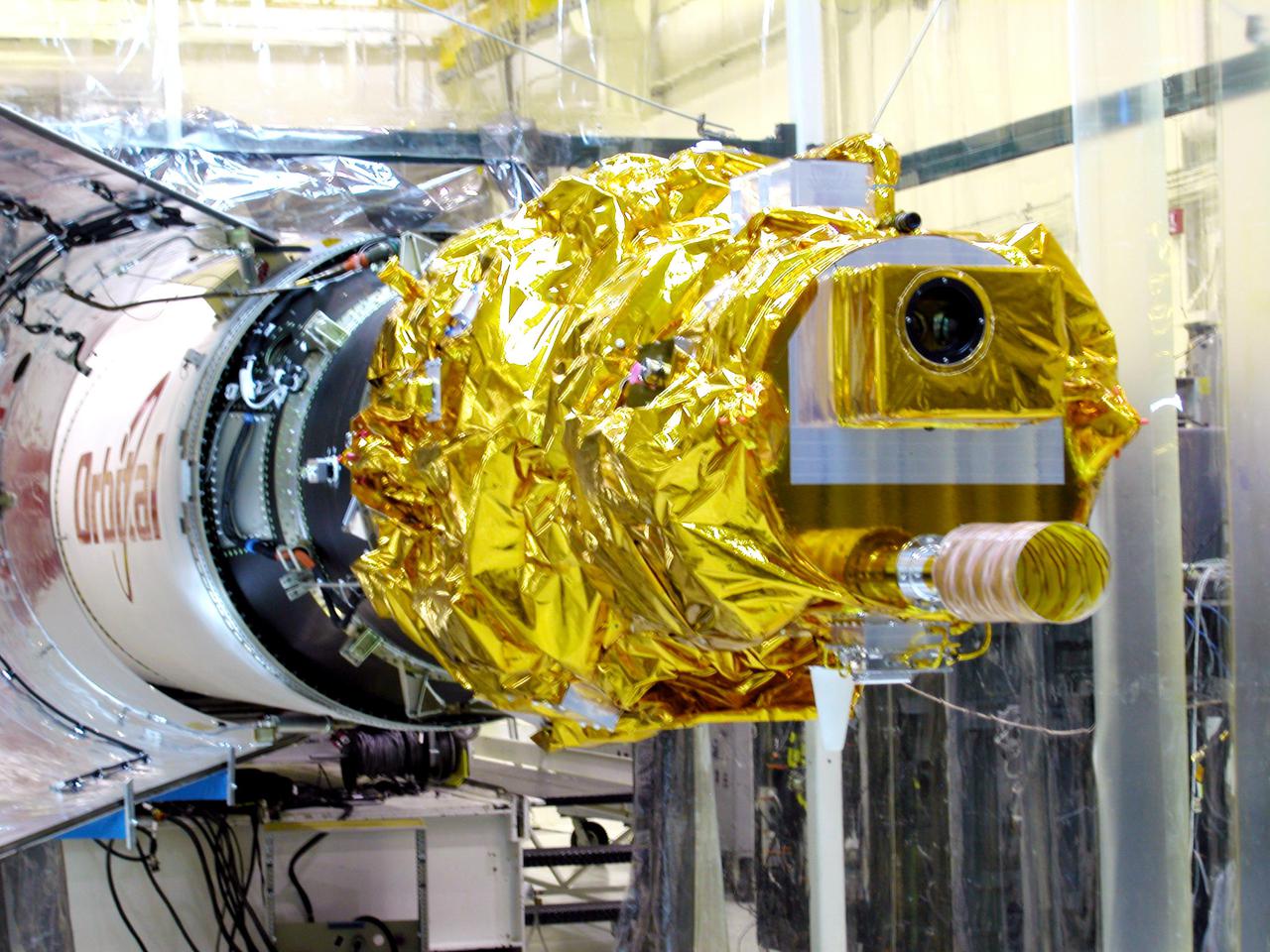
KENNEDY SPACE CENTER, FLA. - At Vandenberg Air Force Base in California, the Demonstration of Autonomous Rendezvous Technology (DART) waits for fairing installation. The fairing will encapsulate DART and protect it while on the launch pad and during ascent. DART was designed and built for NASA by Orbital Sciences as an advanced flight demonstrator to locate and maneuver near an orbiting satellite. The DART spacecraft weighs about 800 pounds and is nearly 6 feet long and 3 feet in diameter. From beneath the belly of the Orbital Sciences L-1011 aircraft, the Pegasus XL vehicle will launch DART into a circular polar orbit of approximately 475 miles. The DART satellite provides a key step in establishing autonomous rendezvous capabilities for the U.S. Space Program. While previous rendezvous and docking efforts have been piloted by astronauts, the unmanned DART satellite will have computers and cameras to perform its rendezvous functions.
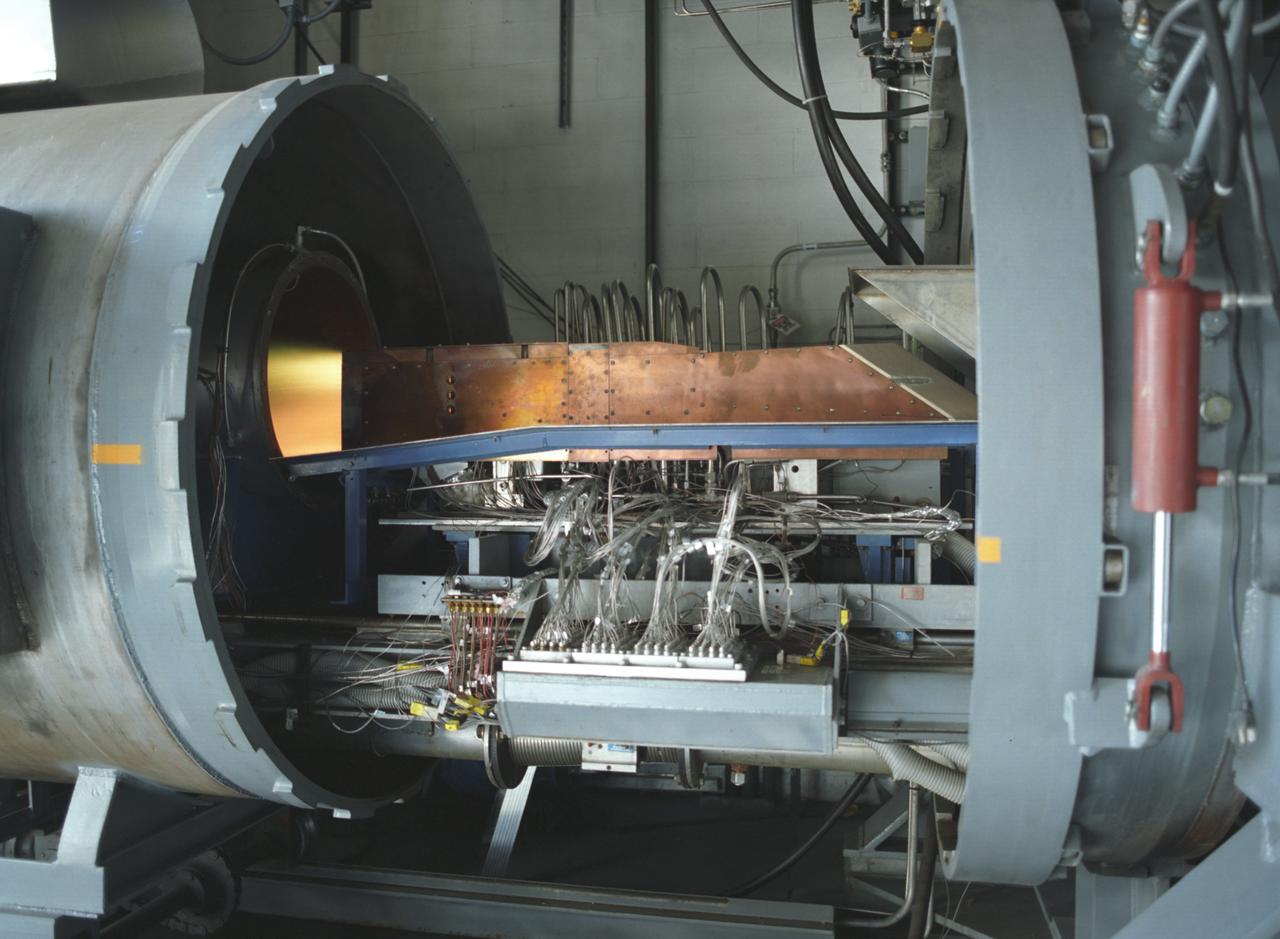
This photograph depicts an air-breathing rocket engine that completed an hour or 3,600 seconds of testing at the General Applied Sciences Laboratory in Ronkonkoma, New York. Referred to as ARGO by its design team, the engine is named after the mythological Greek ship that bore Jason and the Argonauts on their epic voyage of discovery. Air-breathing engines, known as rocket based, combined-cycle engines, get their initial take-off power from specially designed rockets, called air-augmented rockets, that boost performance about 15 percent over conventional rockets. When the vehicle's velocity reaches twice the speed of sound, the rockets are turned off and the engine relies totally on oxygen in the atmosphere to burn hydrogen fuel, as opposed to a rocket that must carry its own oxygen, thus reducing weight and flight costs. Once the vehicle has accelerated to about 10 times the speed of sound, the engine converts to a conventional rocket-powered system to propel the craft into orbit or sustain it to suborbital flight speed. NASA's Advanced SpaceTransportation Program at Marshall Space Flight Center, along with several industry partners and collegiate forces, is developing this technology to make space transportation affordable for everyone from business travelers to tourists. The goal is to reduce launch costs from today's price tag of $10,000 per pound to only hundreds of dollars per pound. NASA's series of hypersonic flight demonstrators currently include three air-breathing vehicles: the X-43A, X-43B and X-43C.
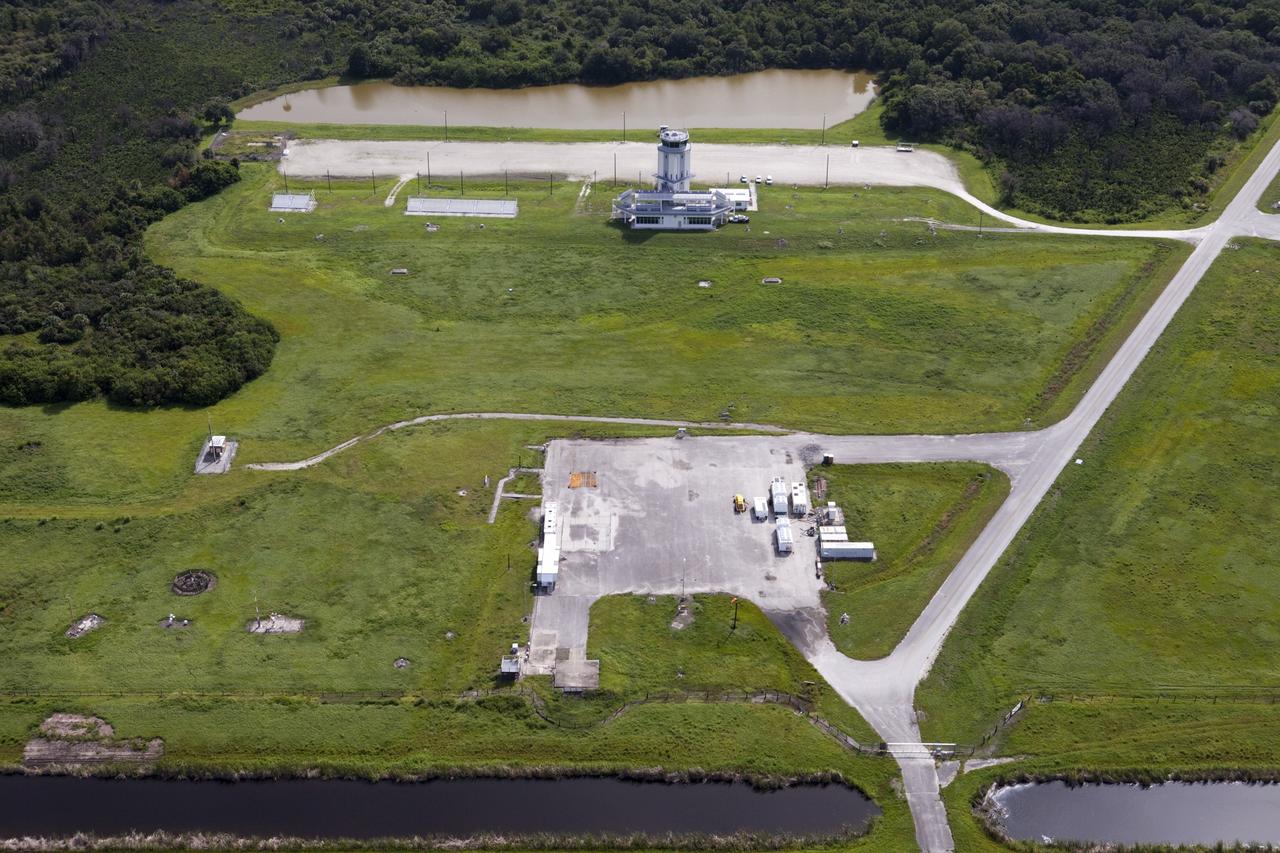
CAPE CANAVERAL, Fla. – This aerial view shows the Shuttle Landing Facility’s air traffic control tower at the Kennedy Space Center in Florida. Just below the tower is the mid-field park site used for runway support vehicles. At the north end of the runway, a rock and crater-filled planetary scape has been built so engineers can test the Autonomous Landing and Hazard Avoidance Technology, or ALHAT system on the Project Morpheus lander. Testing will demonstrate ALHAT’s ability to provide required navigation data negotiating the Morpheus lander away from risks during descent. Checkout of the prototype lander has been ongoing at NASA’s Johnson Space Center in Houston in preparation for its first free flight. The SLF site will provide the lander with the kind of field necessary for realistic testing. Project Morpheus is one of 20 small projects comprising the Advanced Exploration Systems, or AES, program in NASA’s Human Exploration and Operations Mission Directorate. AES projects pioneer new approaches for rapidly developing prototype systems, demonstrating key capabilities and validating operational concepts for future human missions beyond Earth orbit. For more information on Project Morpheus, visit http://www.nasa.gov/centers/johnson/exploration/morpheus/index.html Photo credit: NASA/Kim Shiflett
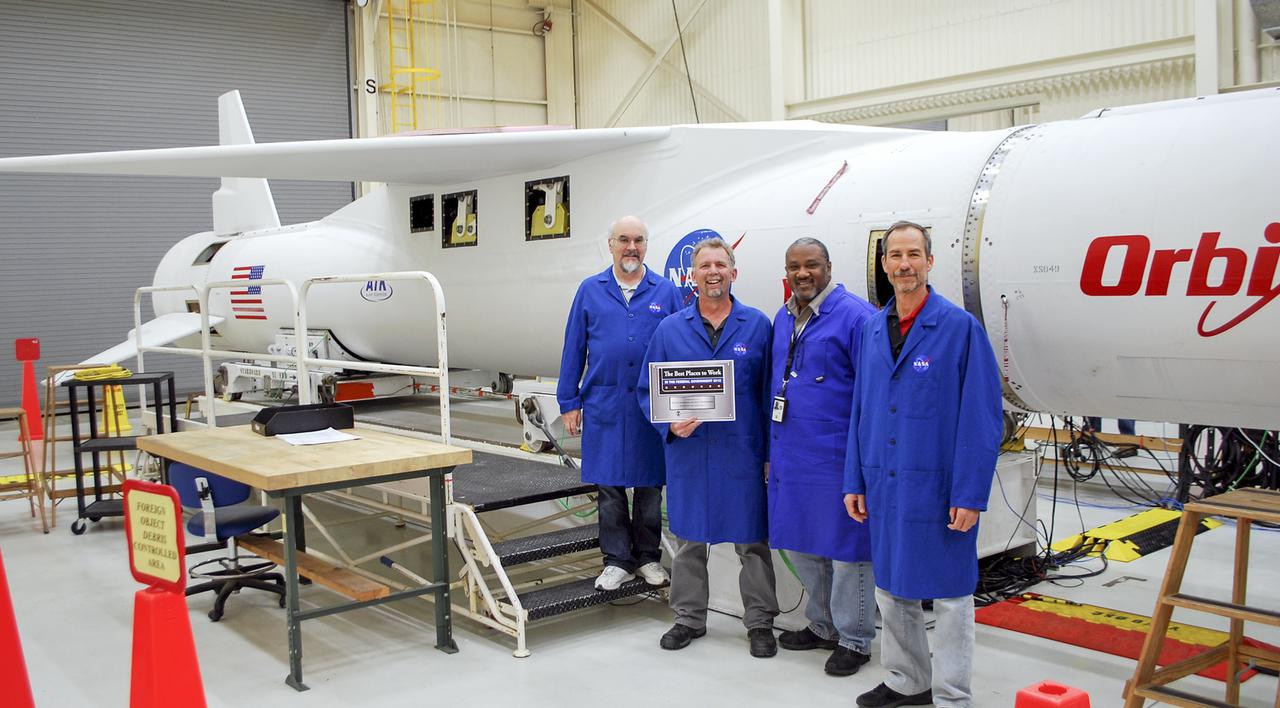
VANDENBERG AIR FORCE BASE, Calif. – Kennedy Space Center Resident Office personnel representing the NASA Launch Services Program at Vandenberg Air Force Base in California, display the Best Places to Work in the Federal Government plaque. NASA ranked No. 1 the “large” category, those which have more than 15,000 employees. From the left are Bob Rasmison, Randy Beaudoin, Kevin Monette, and Jeff Ehrsam. Rasmison and Ehrsam work together in integration and engineering as the spacecraft's liaison at the processing facility and pre-launch site locations. Beaudoin is an electrical engineer that follows manufacturing, assembly and integration of electrical systems and components to insure compliance with technical specifications and standards. Monette is the Safety and Mission Assurance representative providing independent assessment to help determine residual risk associated with launch vehicle flight readiness. They are standing next to the Orbital Sciences Corporation's Pegasus rocket which will launch the Interface Region Imaging Spectrograph IRIS spacecraft. Scheduled for launch from Vandenberg Air Force Base no earlier than June 26, 2013, IRIS will open a new window of discovery by tracing the flow of energy and plasma through the chromospheres and transition region into the sun’s corona using spectrometry and imaging. IRIS fills a crucial gap in our ability to advance studies of the sun-to-Earth connection by tracing the flow of energy and plasma through the foundation of the corona and the region around the sun known as the heliosphere. For more information, visit http:__iris.gsfc.nasa.gov Photo credit: NASA_Randy Beaudoin