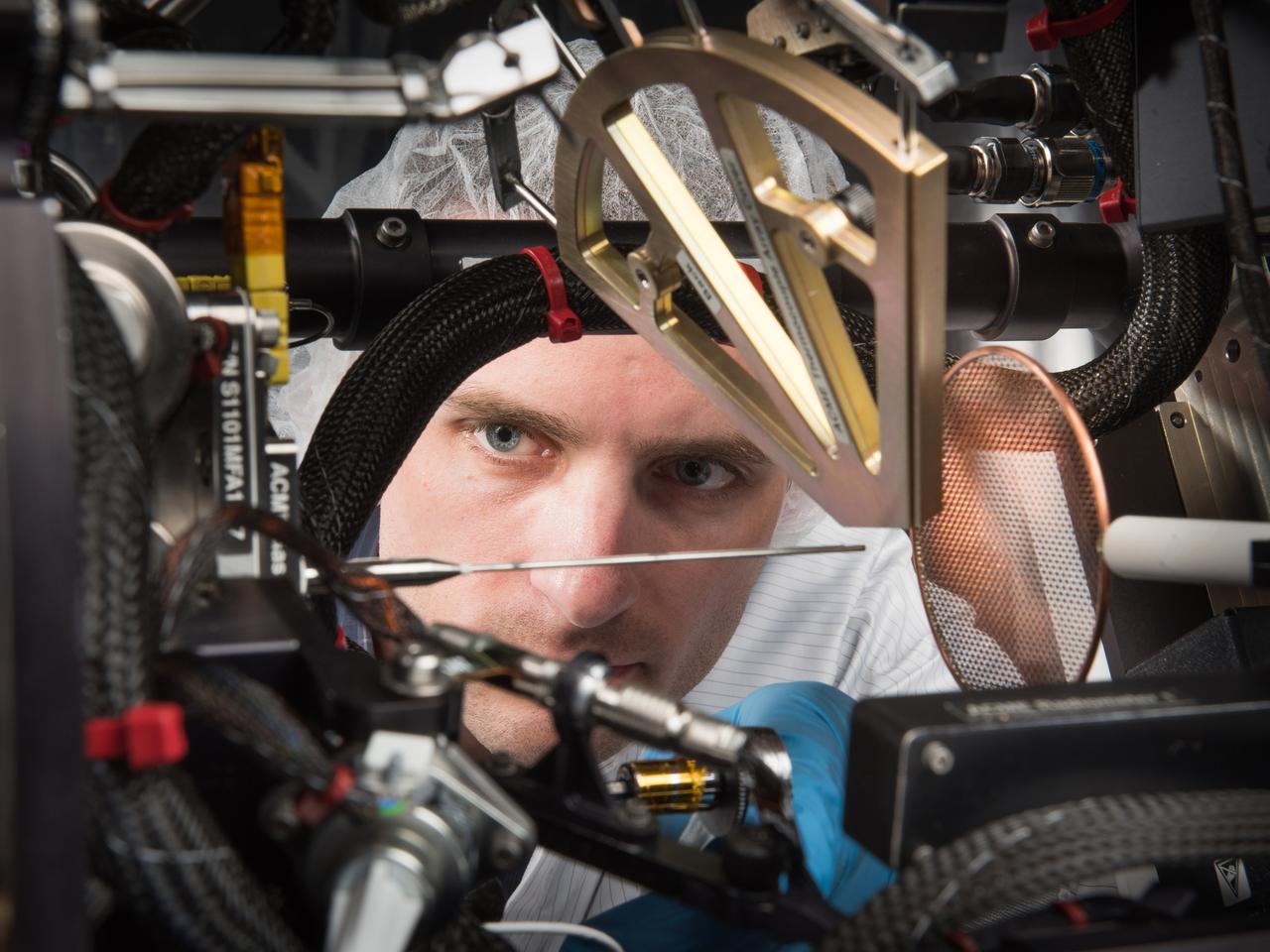
NASA Glenn engineer Christopher Mroczka inspects the gas-jet burner within the Advanced Combustion via Microgravity Experiments, ACME insert for the Combustion Integrated Rack, CIR. The apparatus allows researchers to conduct experiments with flames of gaseous fuels on the International Space Station, ISS
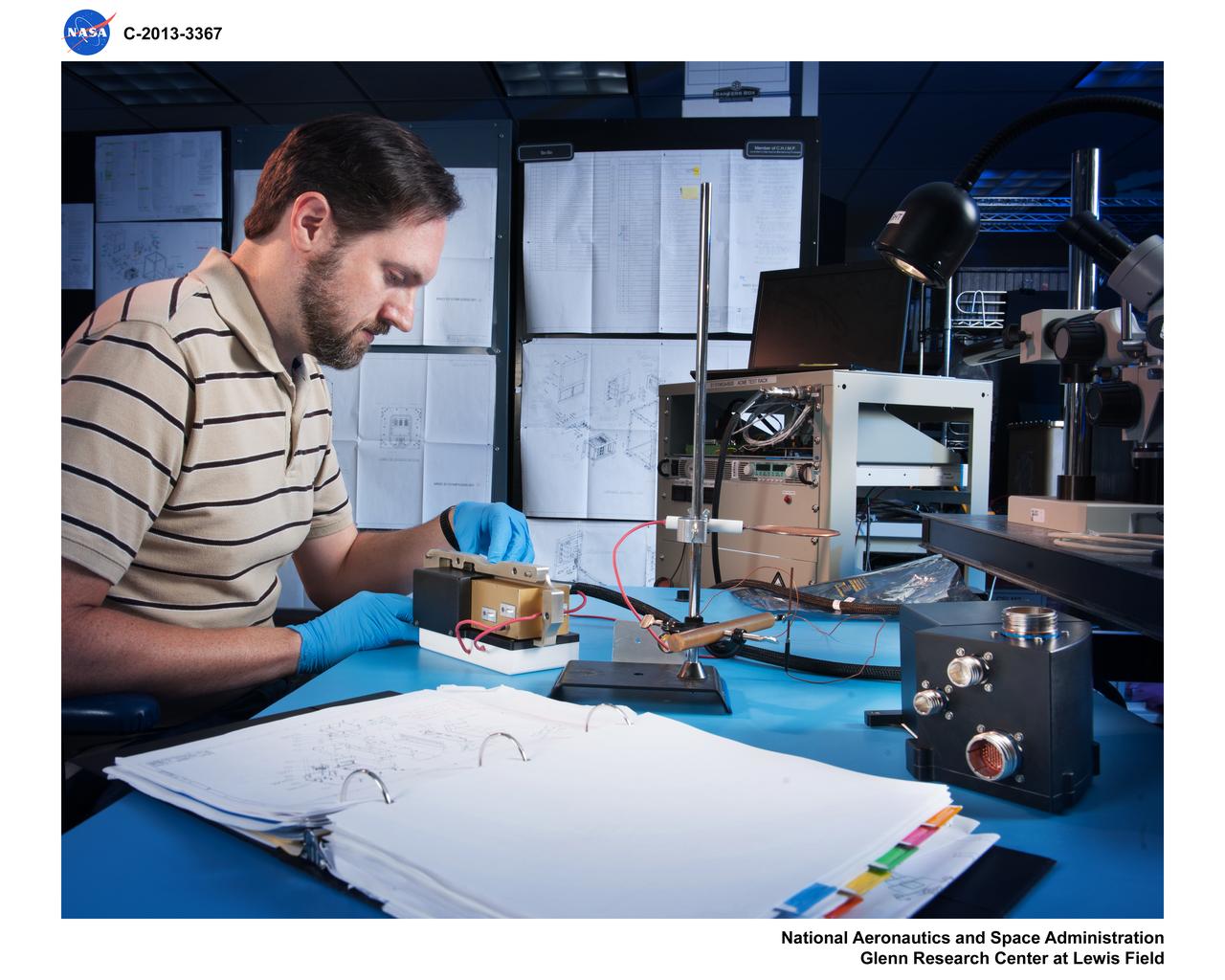
Mechanical Engineer Adrian Drake inspects engineering model hardware built to generate a high-voltage electric field for the Electric-Field Effects on Laminar Diffusion Flames (E-FIELD Flames) experiment of the Advanced Combustion via Microgravity Experiments (ACME) project. ACME’s small computer (i.e., the Cube) for data acquisition and control within the CIR combustion chamber is seen in the right foreground. The E-FIELD Flames tests were conducted in the Combustion Integrated Rack (CIR) on the International Space Station (ISS) in 2018.
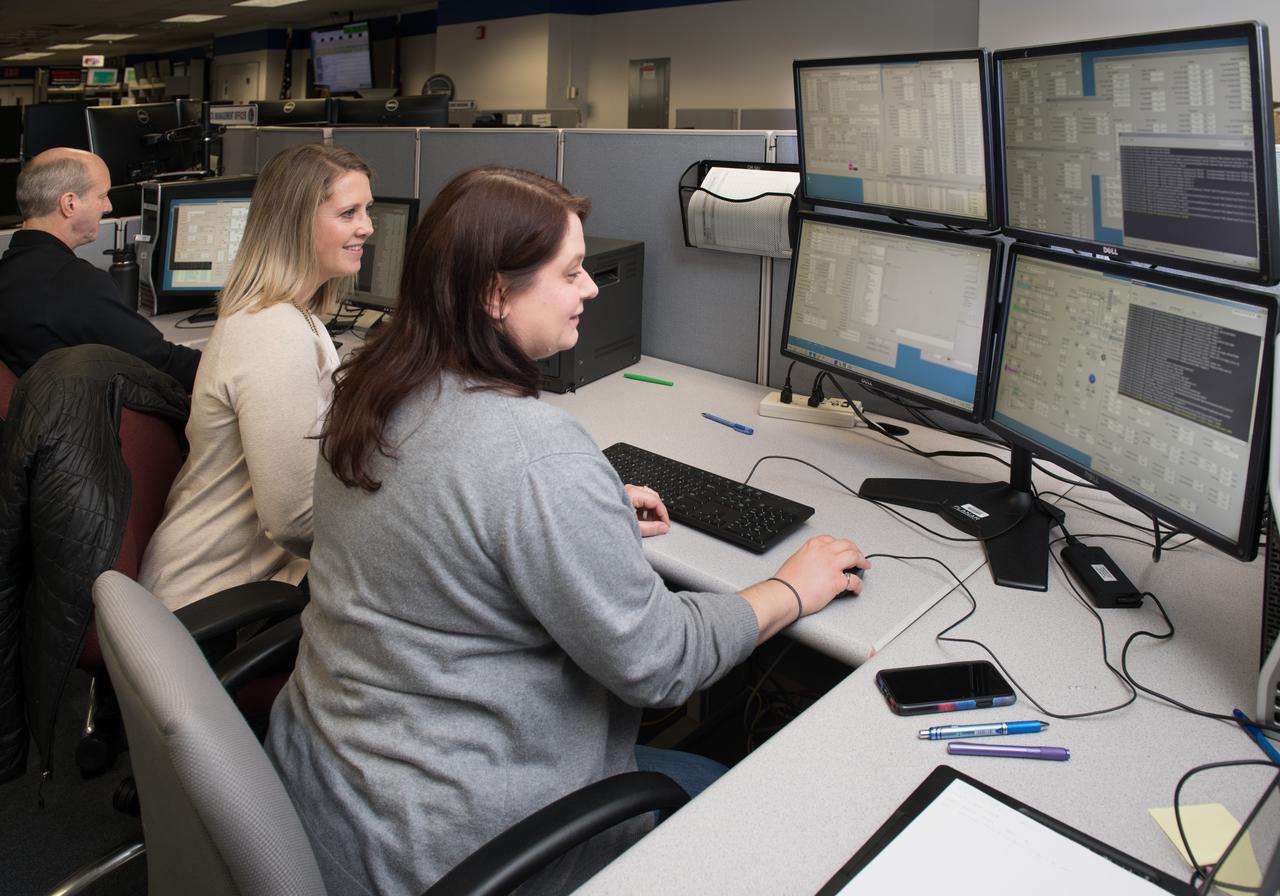
Testing of software with ground hardware for the Structue and Response of Spherical Diffusion Flames, s-Flame, experiment - of the Advanced Combustion via Microgravity Experiments, ACME, project conducted in the ISS Combustion Integrated Rack, CIR - by ACME Software Engineer Jeffrey Eggers, Operations Lead Angela Adams, and Planning Lead Melani Smajdek in the Telescience Support Center, TSC, also known as the Glenn ISS Payload Operations Center, GIPOC
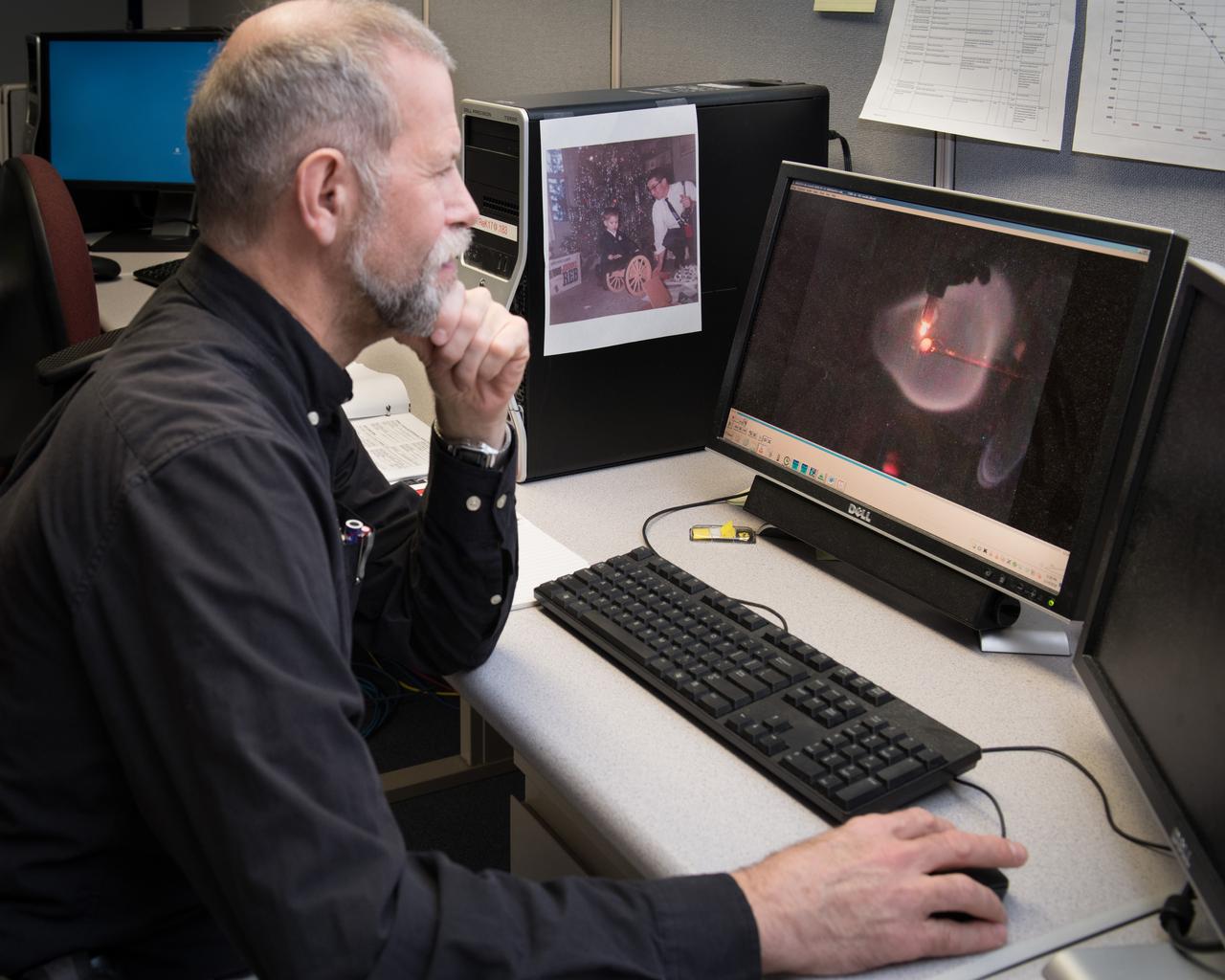
Review of ISS data from the Structure and Response of Spherical Diffusion Flames (s-Flame) experiment - of the Advanced Combustion via Microgravity Experiments. ACME project conducted in the Combustion Integrated Rack, CIR - by ACME Project Scientist Dennis Stocker in the Telescience Support Center,TSC, also known as the Glenn ISS Payload Operations Center, GIPOC
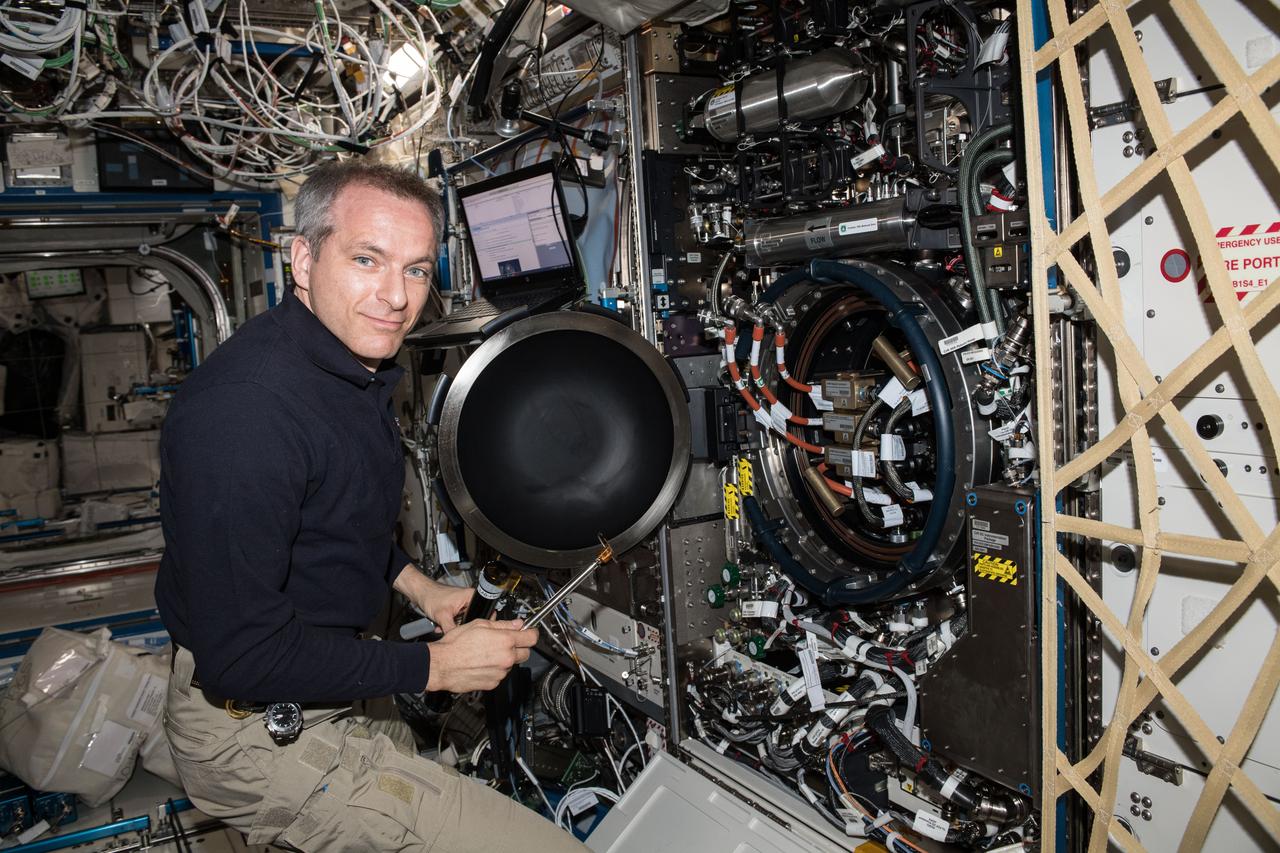
iss058e026380 (Feb. 26, 2019) --- Astronaut David Saint-Jacques of the Canadian Space Agency is inside the U.S. Destiny laboratory module working on the Combustion Integrated Rack. Saint-Jacques replaced fuel flow controllers inside the device for the Advanced Combustion via Microgravity Experiments which are a set of five independent studies of gaseous flames.
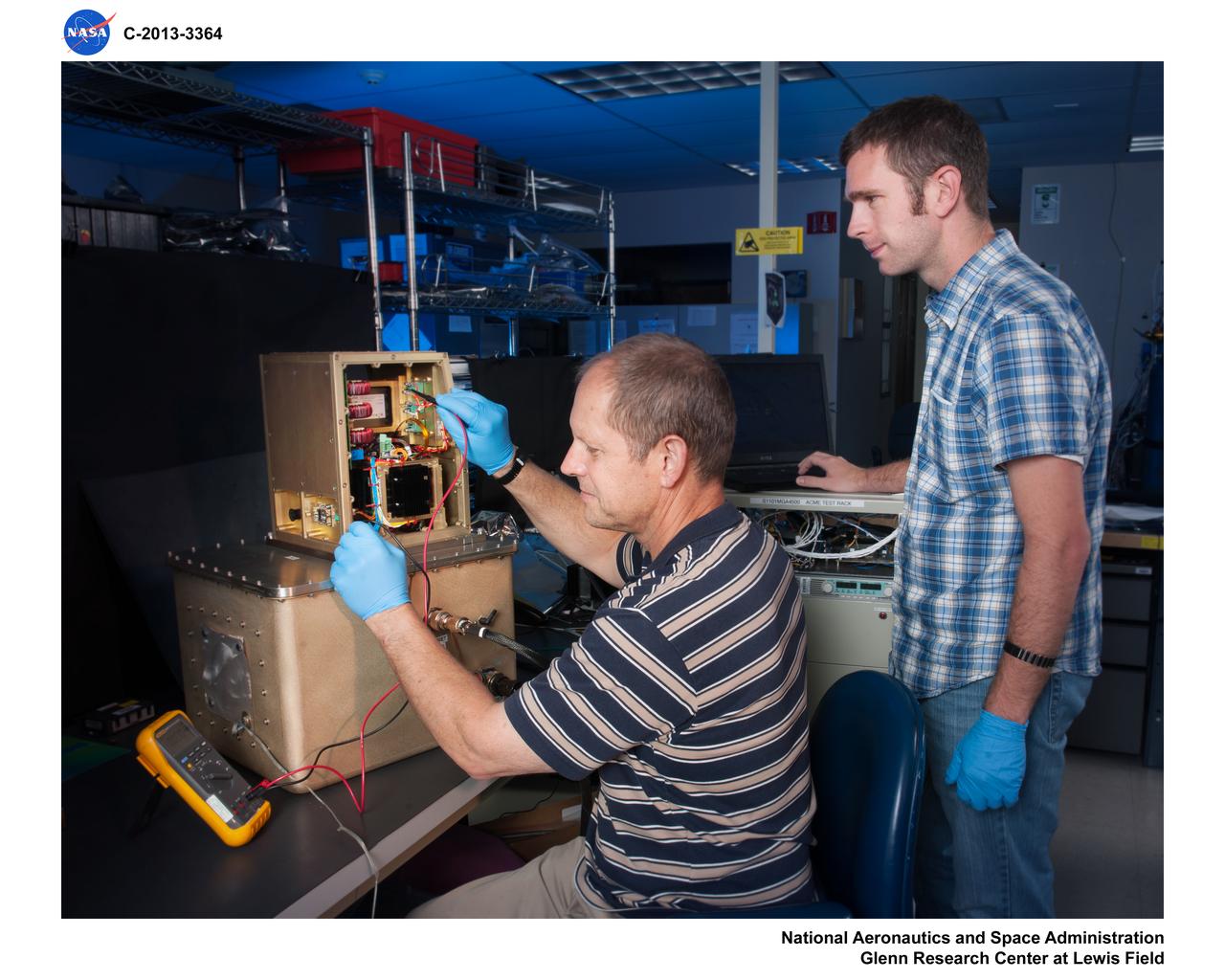
Advanced Combustion via Microgravity Experiments, Engineering Model, EM, Avionics Package atop PI Location Simulator
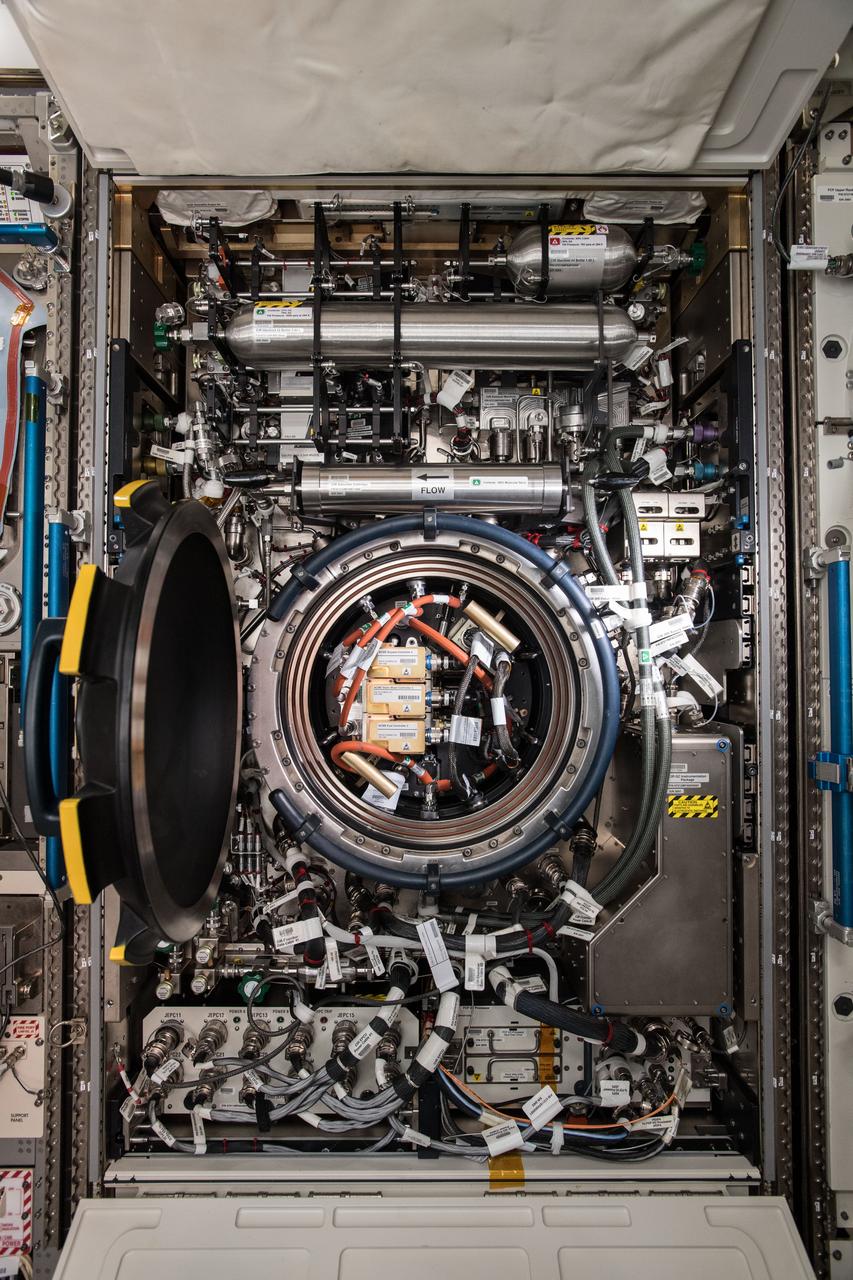
iss056e130654 (Aug. 10, 2018) --- The Combustion Integration Rack (CIR), pictured in its open configuration, is located in the U.S. Destiny laboratory module and includes an optics bench, combustion chamber, fuel and oxidizer control, and five different cameras for performing combustion experiments safely in microgravity.
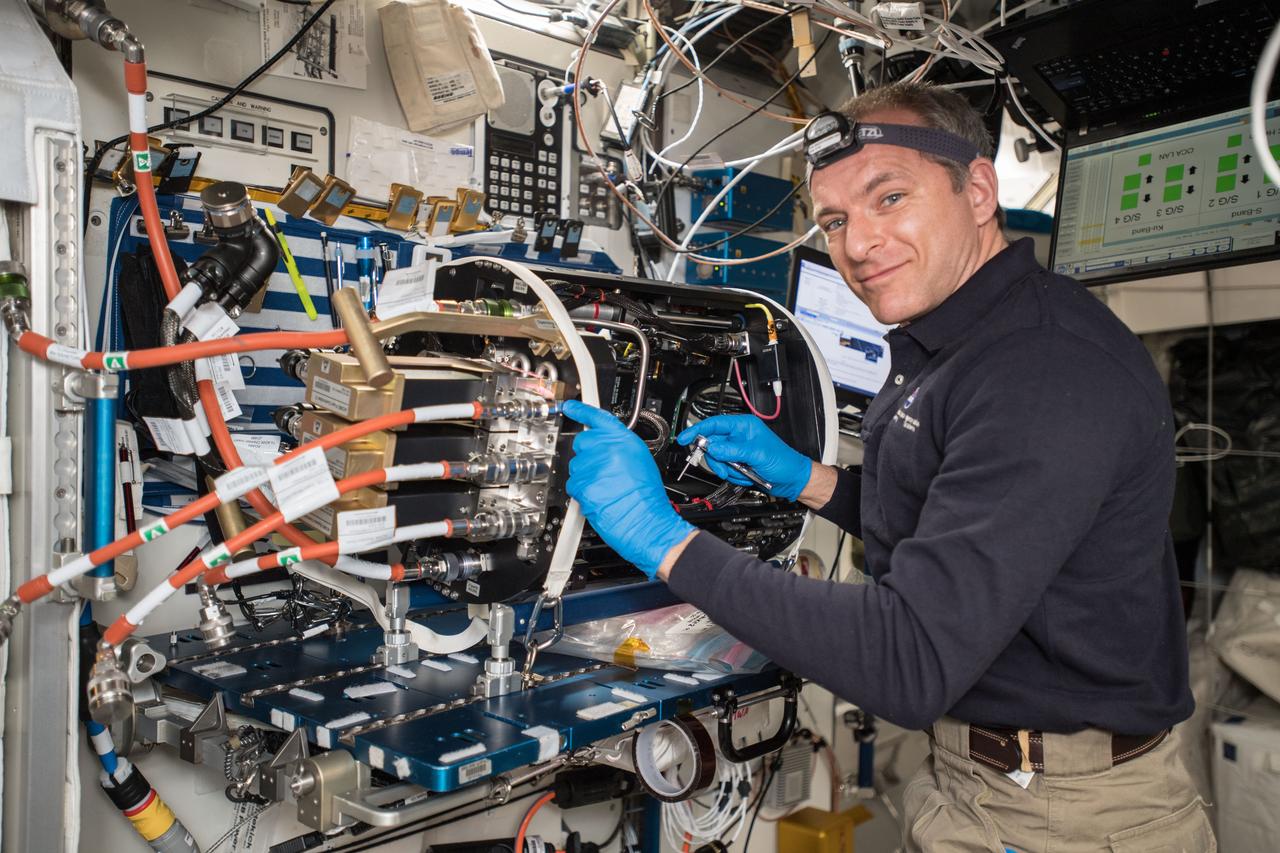
iss058e008801 (Jan. 31, 2019) --- Astronaut David Saint-Jacques of the Canadian Space Agency replaces a control unit and a radiometer inside the Combustion Integrated Rack's (CIR) ACME (Advanced Combustion via Microgravity Experiments) Chamber Insert. The replacement work in the chamber was done on the Unity module's work surface area. The CIR is a fuel and flame research rack housed inside the Destiny laboratory module.
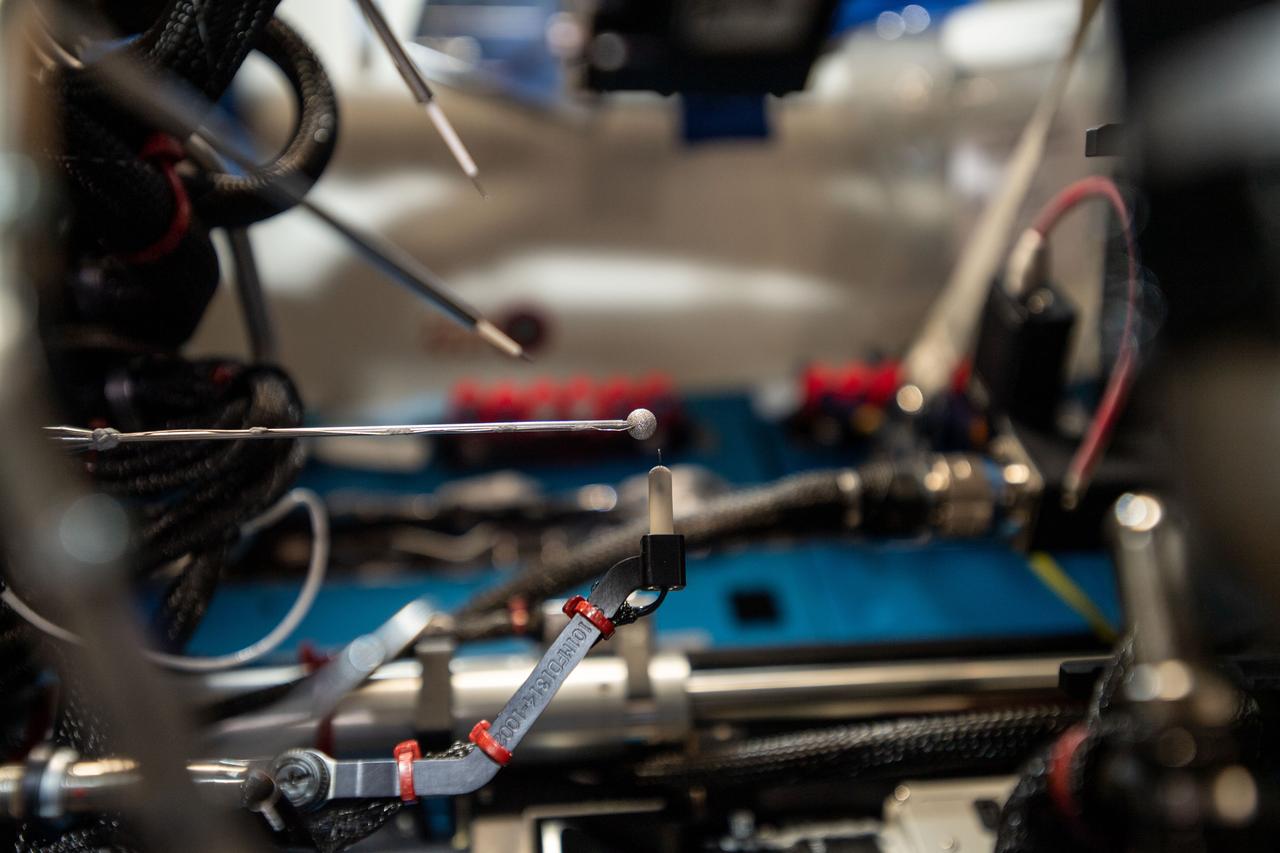
iss059e103188 (6/14/2019) --- Photo documentation taken aboard the International Space Station (ISS) during the Fluids and Combustion Facility (FCF) Combustion Integration Rack (CIR) / Advanced Combustion via Microgravity Experiments (ACME) / Flame Design hardware replacement.
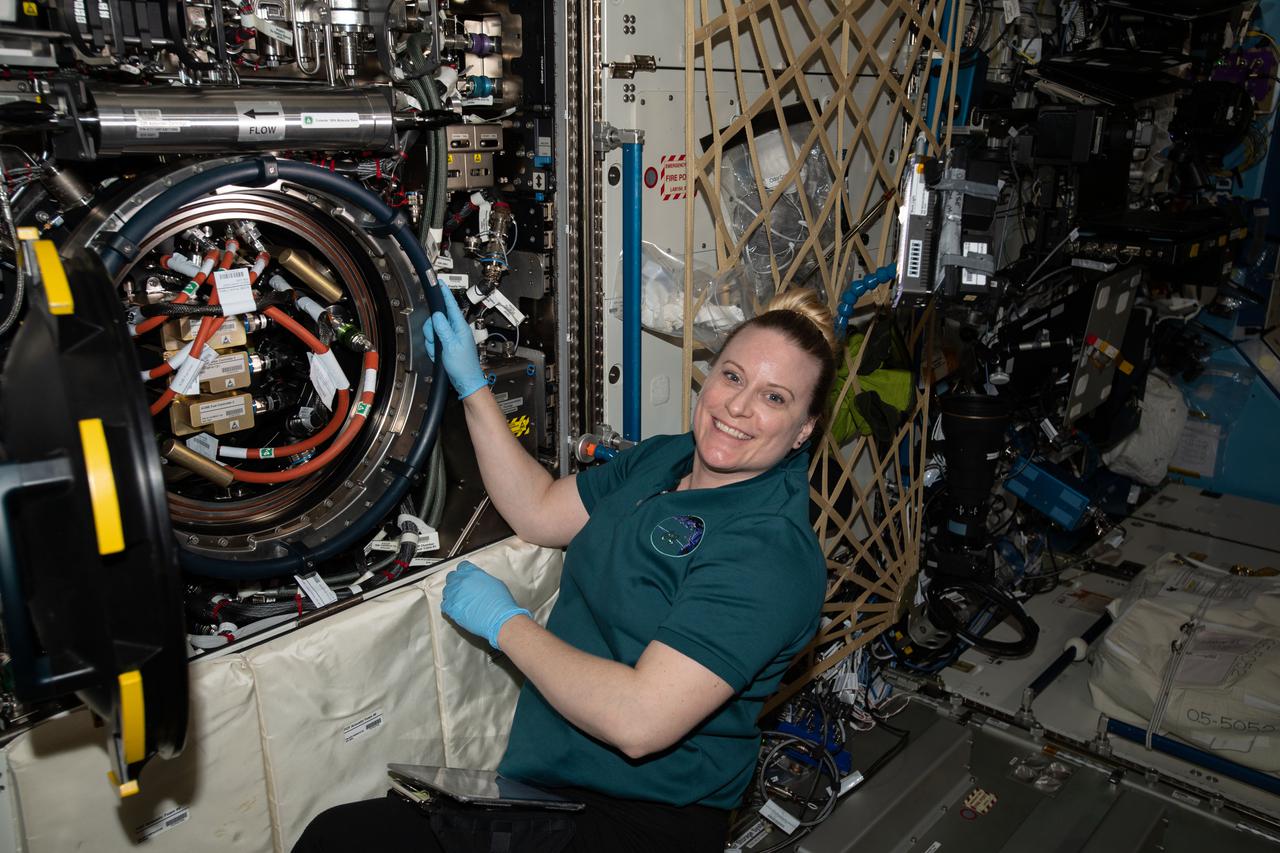
iss064e040971 (March 9, 2021) --- NASA astronaut and Expedition 64 Flight Engineer Kate Rubins opens the Combustion Integrated Rack's combustion chamber to access ACME, or Advanced Combustion via Microgravity Experiments, hardware located in the U.S. Destiny laboratory module.
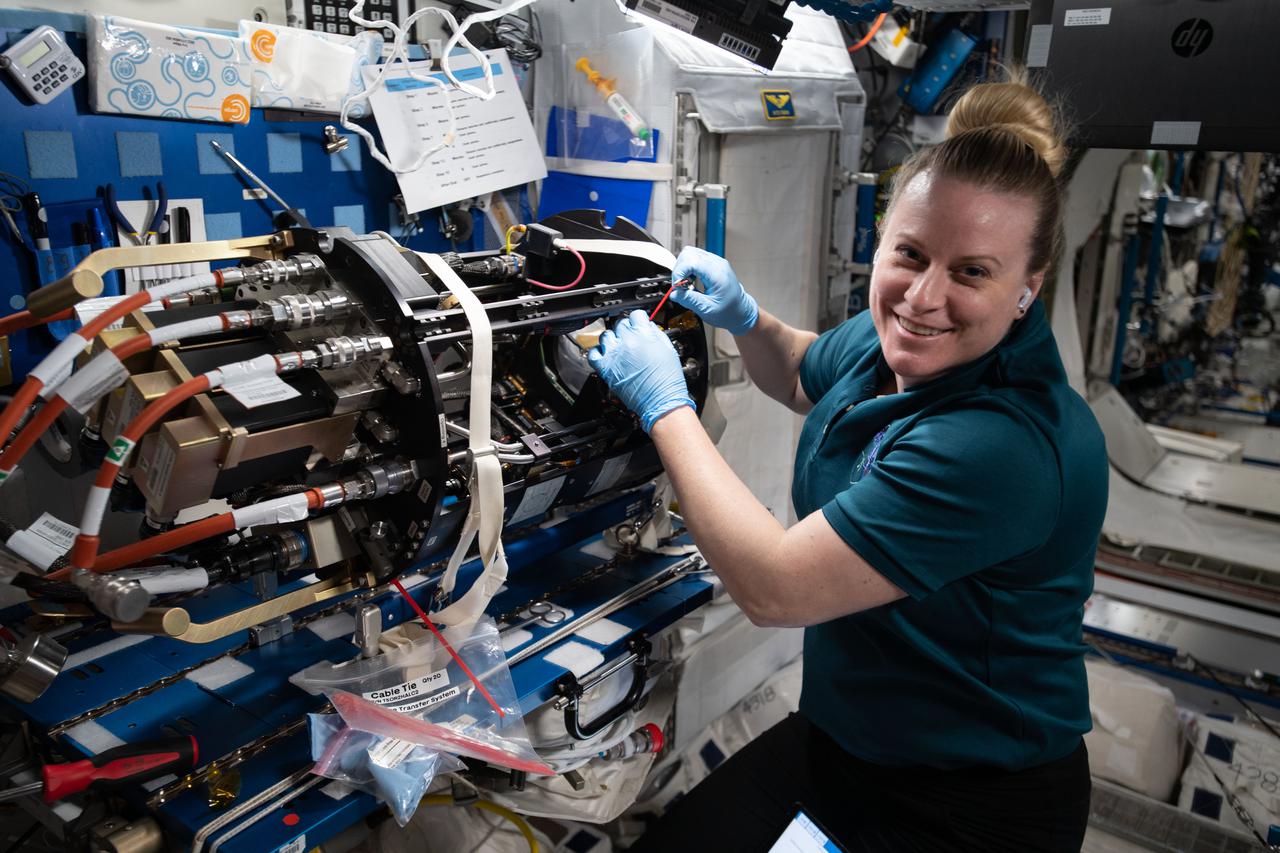
iss064e040953 (March 9, 2021) --- NASA astronaut and Expedition 64 Flight Engineer Kate Rubins replaces and cleans hardware supporting a suite of studies known as ACME, or Advanced Combustion via Microgravity Experiments, located in the Combustion Integrated Rack. Rubins performs the work on ACME's chamber insert in the Unity module's Maintenance Work Area.
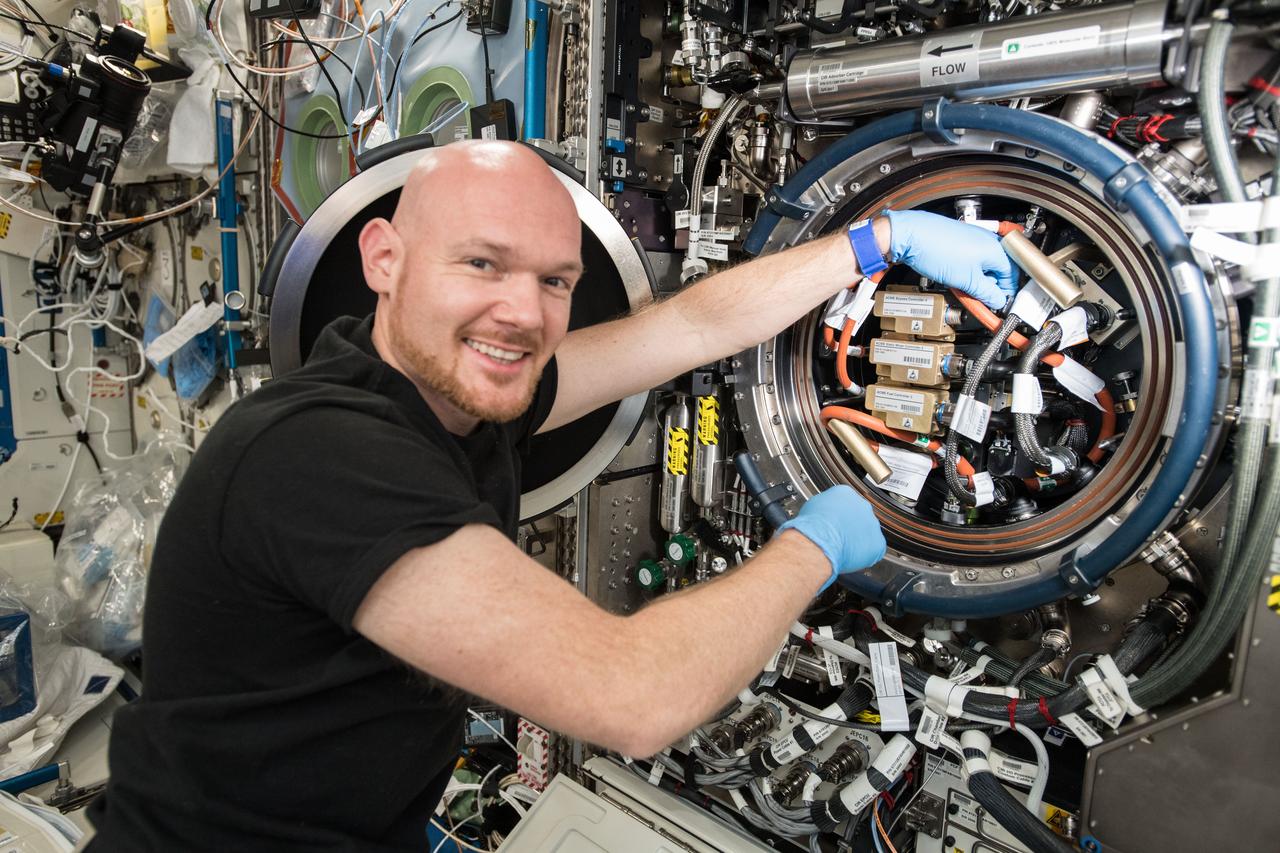
iss056e130647 (Aug. 10, 2018) --- Astronaut Alexander Gerst of ESA (European Space Agency) works inside the Combustion Integrated Rack replacing gear for a set of five independent studies of gaseous flames called ACME, or Advanced Combustion via Microgravity Experiments.
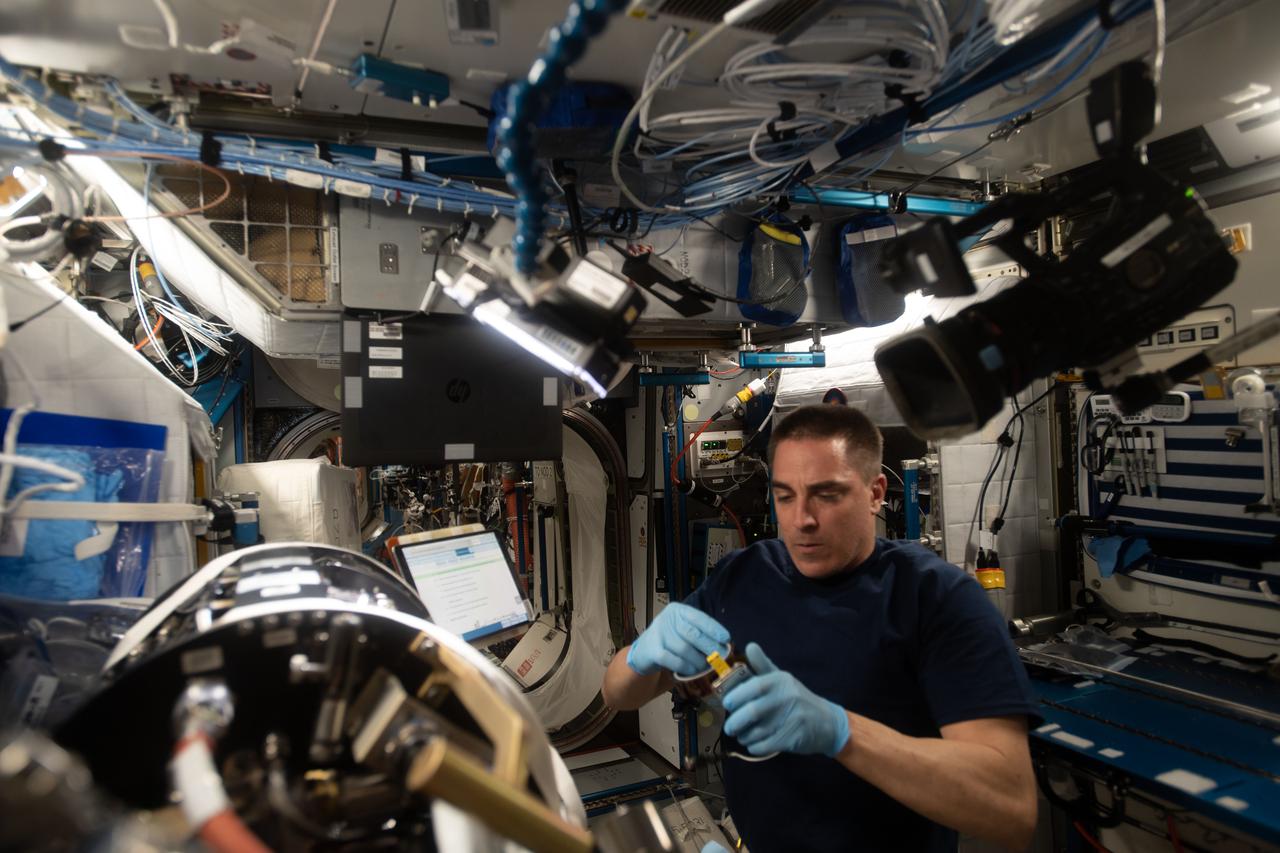
iss063e078755 (Aug. 27, 2020) --- NASA astronaut and Expedition 63 Commander Chris Cassidy replaces components inside the Combustion Integrated Rack to support a series of ongoing flame and fuel studies known as Advanced Combustion via Microgravity Experiments (ACME).
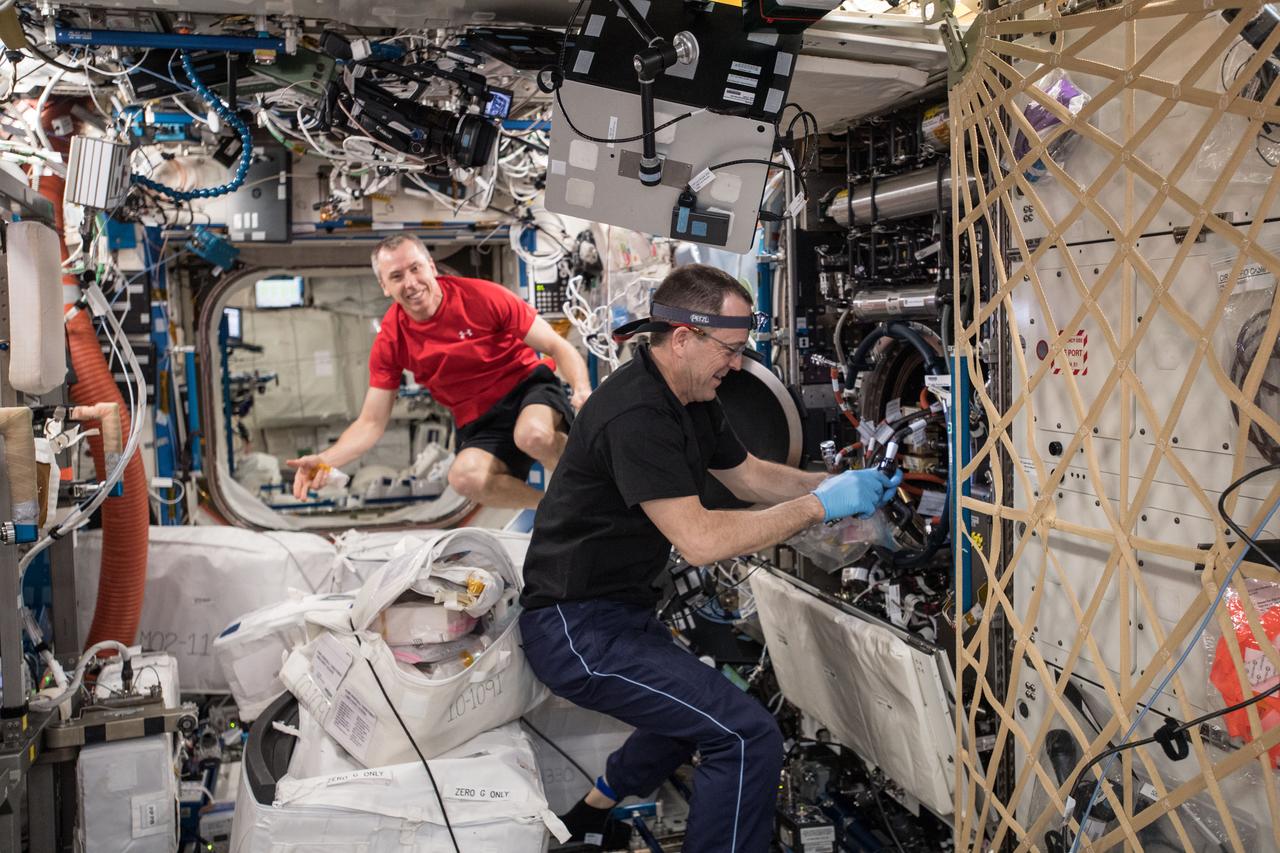
iss056e021157 (June 19, 2018) --- Expedition 56 Flight Engineer Ricky Arnold of NASA (foreground) performs maintenance inside the Combustion Integrated Rack to set up the Advanced Combustion via Microgravity Experiments (ACME), a series of five independent studies of gaseous flames. Expedition 56 Commander Drew Feustel of NASA is seen in the background.
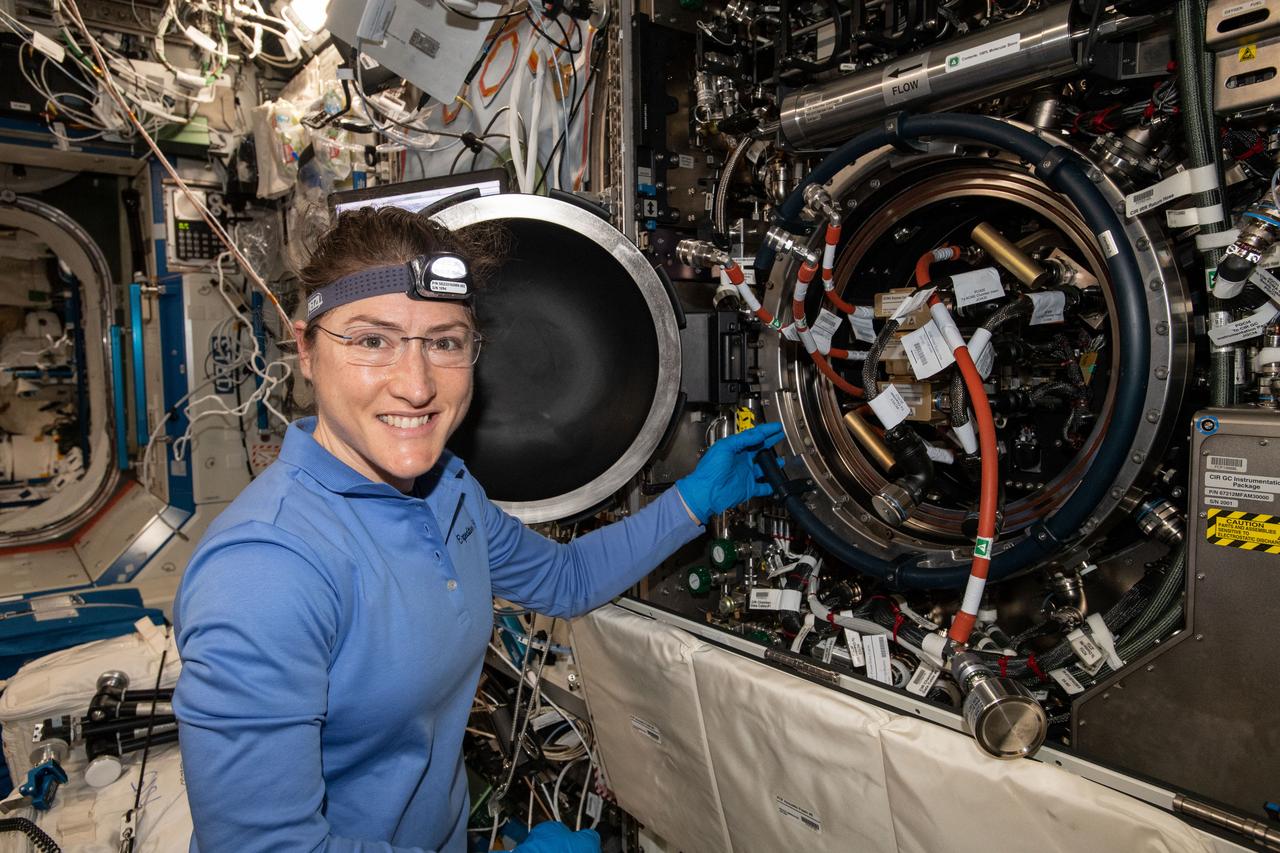
iss059e017127 (April 9, 2018) --- NASA astronaut and Expedition 59 Flight Engineer Christina Koch works inside the U.S. Destiny laboratory module's Combustion Integrated Rack. She was replacing hardware for a series of experiments collectively known as Advanced Combustion via Microgravity Experiments (ACME). ACME is a set of six independent studies researching improved fuel efficiency and reduced pollutant production in practical combustion on Earth, as well as spacecraft fire prevention through innovative research focused on materials flammability.
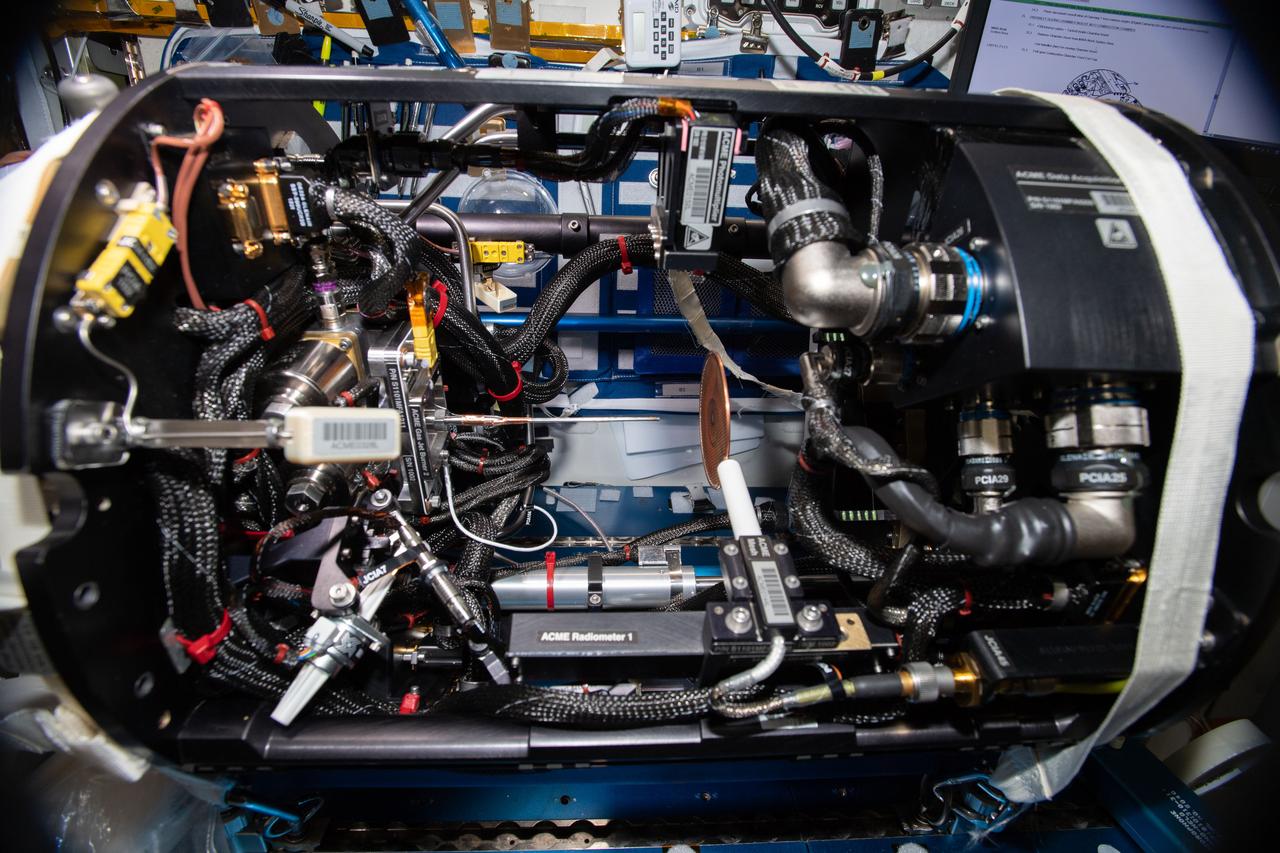
iss057e055269 (10/22/2018) --- Photo documentation of the Combustion Integrated Rack (CIR) Combustion Chamber, with Advanced Combustion via Microgravity Experiments (ACME) Mesh installed, during operations (OPS) to reconfigure CIR ACME hardware for the Electric-Field Effects on Laminar Diffusion Flames (E-FIELD Flames) experiment aboard the International Space Station (ISS).
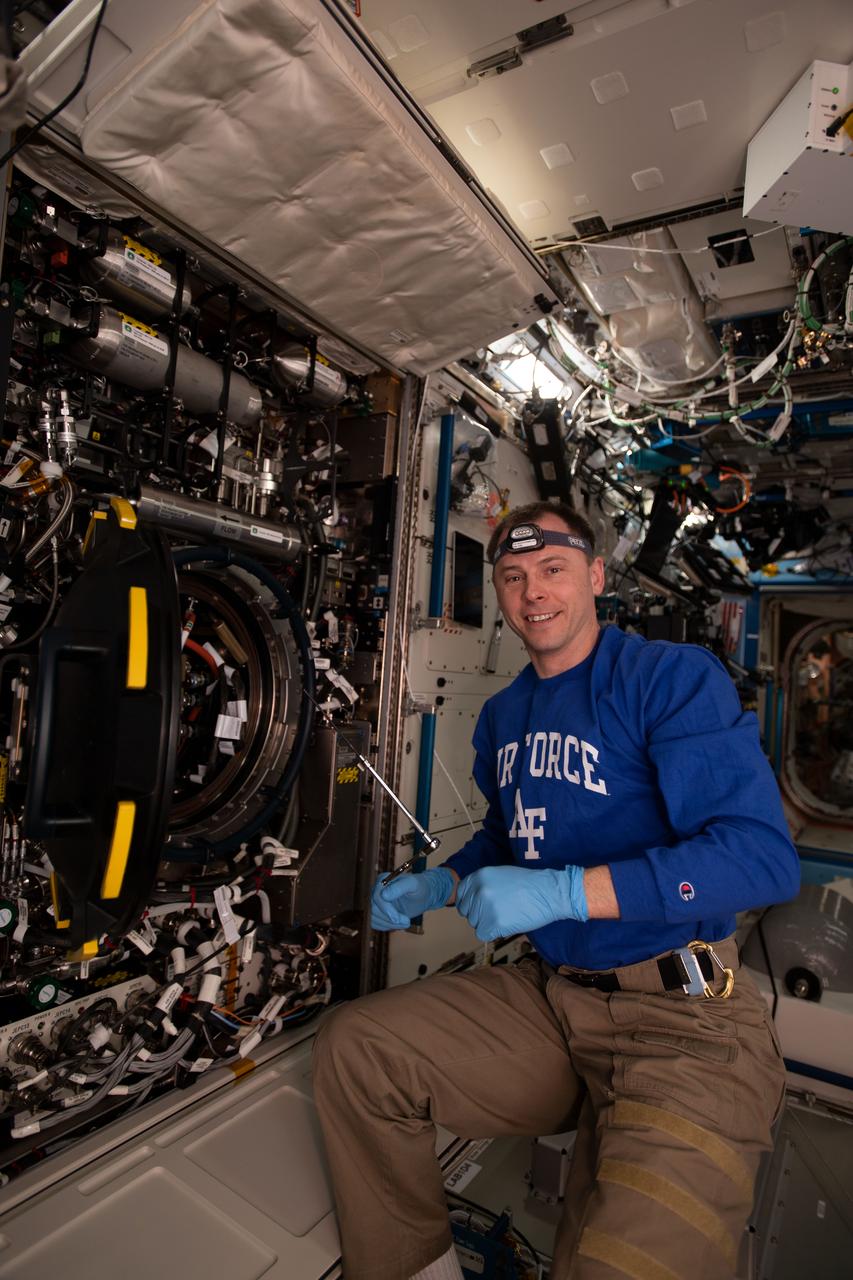
iss059e085880 (May 31, 2019) --- NASA astronaut Nick Hague replaces hardware inside the Combustion Integrated Rack supporting the Advanced Combustion via Microgravity Experiments (ACME). ACME is a set of five independent studies researching improved fuel efficiency and reduced pollutant production in practical combustion on Earth, as well as spacecraft fire prevention through innovative research focused on materials flammability.
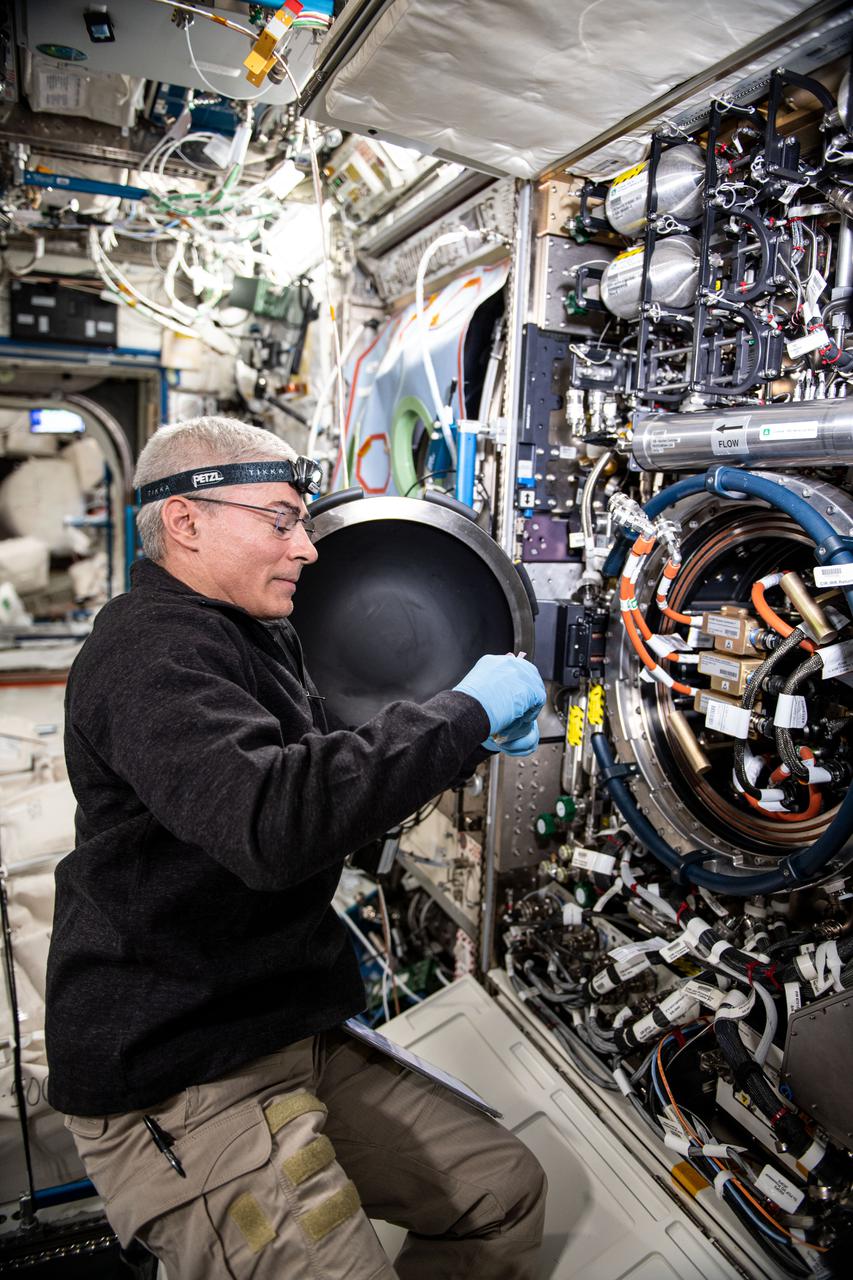
iss065e369687 (Sept. 8, 2021) ----NASA astronaut and Expedition 65 Flight Engineer Mark Vande Hei replaces an igniter inside the U.S. Destiny laboratory module's Combustion Integrated Rack for the ACME series of space combustion studies. ACME, or the Advanced Combustion via Microgravity Experiments, is a set of six independent studies of gaseous flames that seeks to improve fuel efficiency and reduce pollutants on Earth, and improve spacecraft fire prevention by focusing on decreasing the flammability of materials.
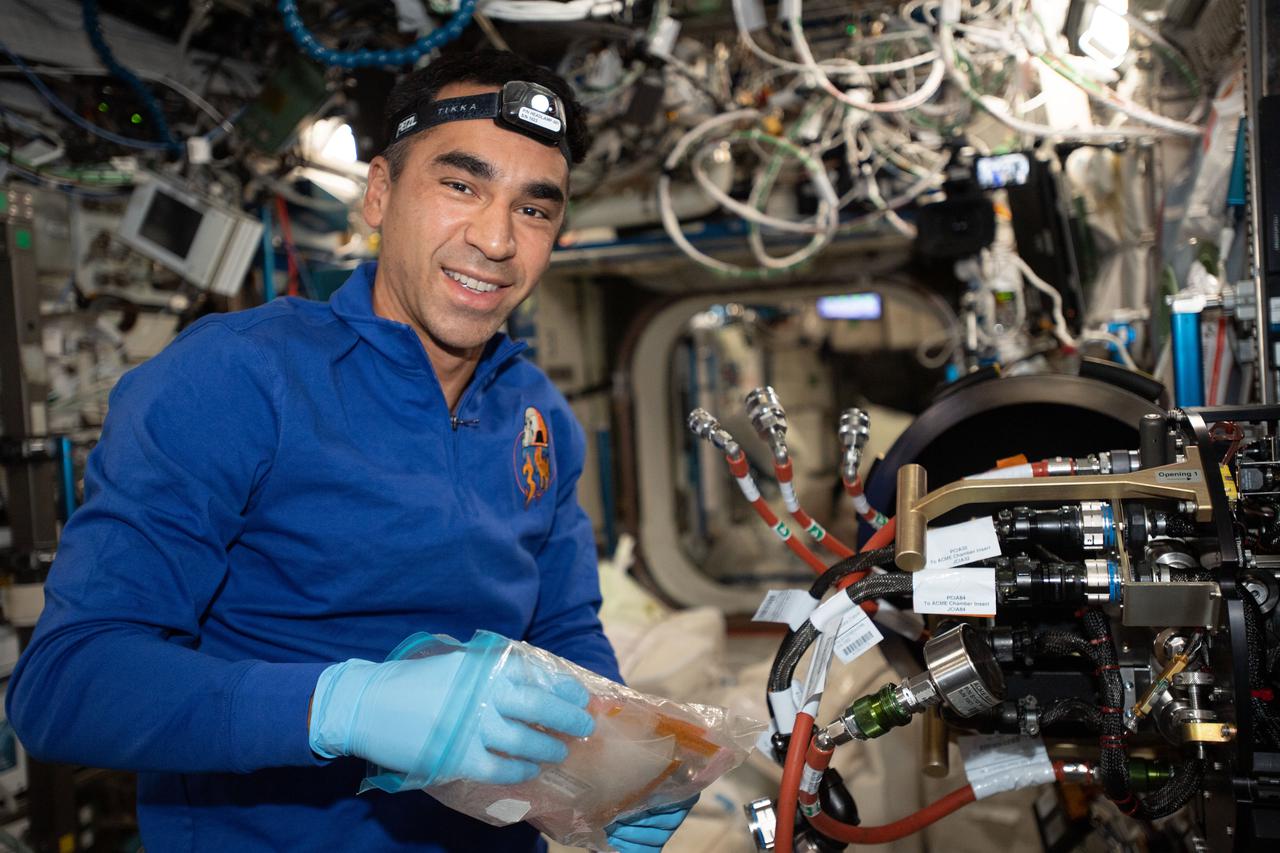
iss066e114415 (Jan. 6, 2022) --- NASA astronaut and Expedition 66 Flight Engineer Raja Chari replaces hardware inside the Combustion Integrated Rack that supports the ACME (Advanced Combustion via Microgravity Experiments) study. ACME is a series of six independent studies of gaseous flames seeking to improve fuel efficiency, reduce pollution, and promote spacecraft fire prevention.
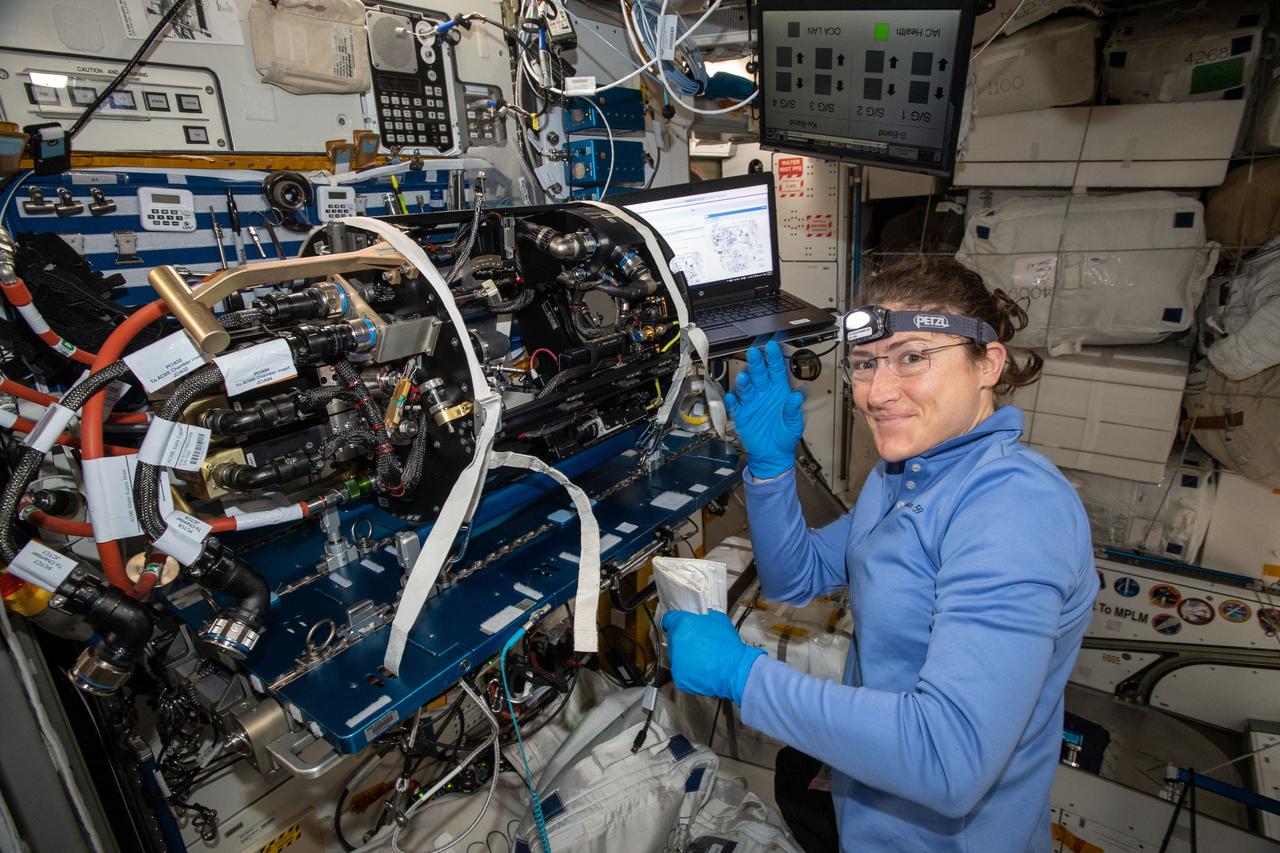
iss059e017072 (April 9, 2018) --- NASA astronaut and Expedition 59 Flight Engineer Christina Koch works on the Unity module's Maintenance Work Area where the Advanced Combustion via Microgravity Experiments (ACME) Chamber Insert was attached for hardware replacement. ACME is a set of five independent studies researching improved fuel efficiency and reduced pollutant production in practical combustion on Earth, as well as spacecraft fire prevention through innovative research focused on materials flammability.
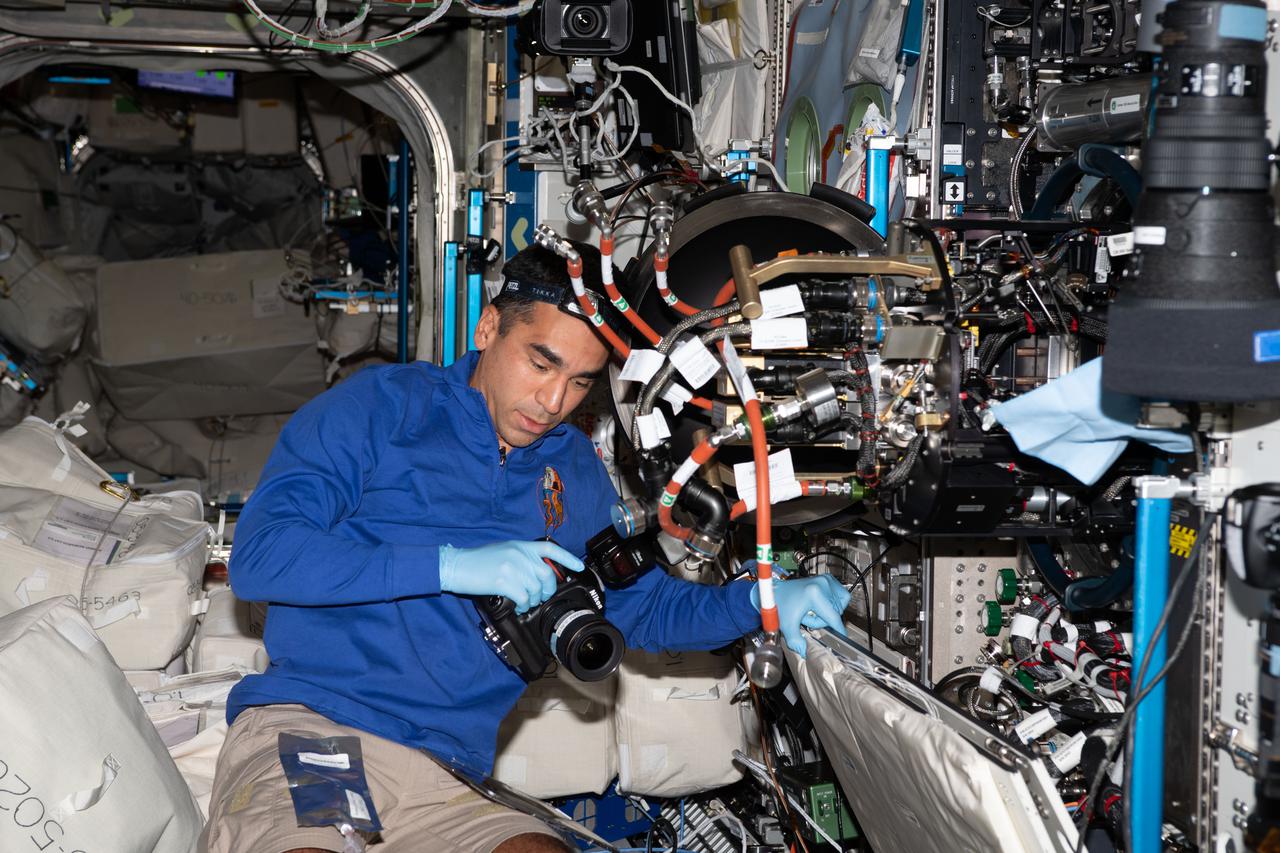
iss066e114301 (Jan. 17, 2022) --- NASA astronaut and Expedition 66 Flight Engineer Raja Chari replaces hardware inside the Combustion Integrated Rack that supports the ACME (Advanced Combustion via Microgravity Experiments) study. ACME is a series of six independent studies of gaseous flames seeking to improve fuel efficiency, reduce pollution, and promote spacecraft fire prevention.
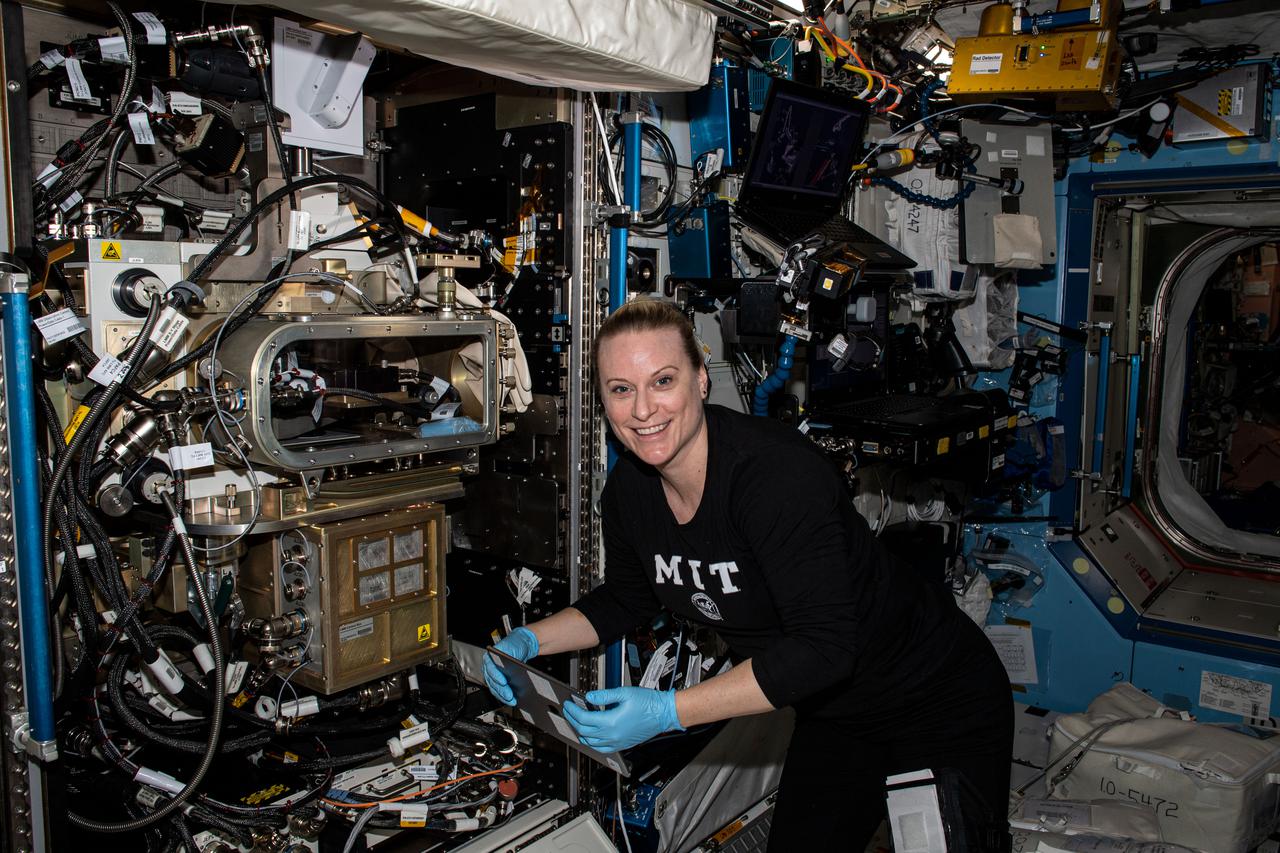
iss064e022911 (Jan. 14, 2021) --- NASA astronaut and Expedition 64 Flight Engineer Kate Rubins sets up the ACME (Advanced Combustion via Microgravity Experiments) study inside the U.S. Destiny laboratory module's Combustion Integrated Rack. ACME is a set of six independent studies exploring ways to increase fuel efficiency, reduce pollutants and improve fire safety on Earth and in space.
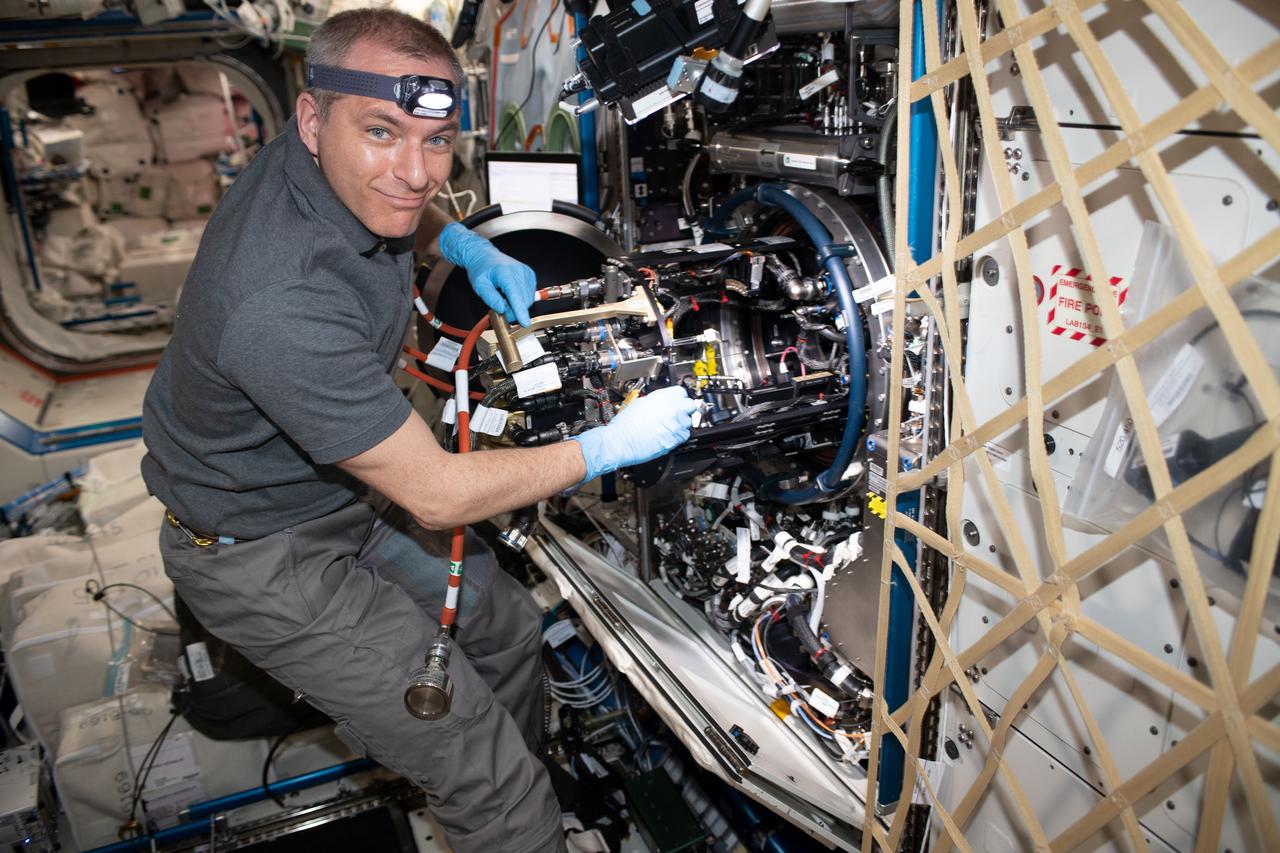
iss059e060847 (May 12, 2019) --- Astronaut David Saint-Jacques of the Canadian Space Agency works on the Combustion Integrated Rack located inside the U.S. Destiny laboratory module. Saint-Jacques was working on hardware supporting the Advanced Combustion via Microgravity Experiments (ACME). ACME is a set of five independent studies of gaseous flames exploring improved fuel efficiency, reduced pollution and spacecraft fire prevention.