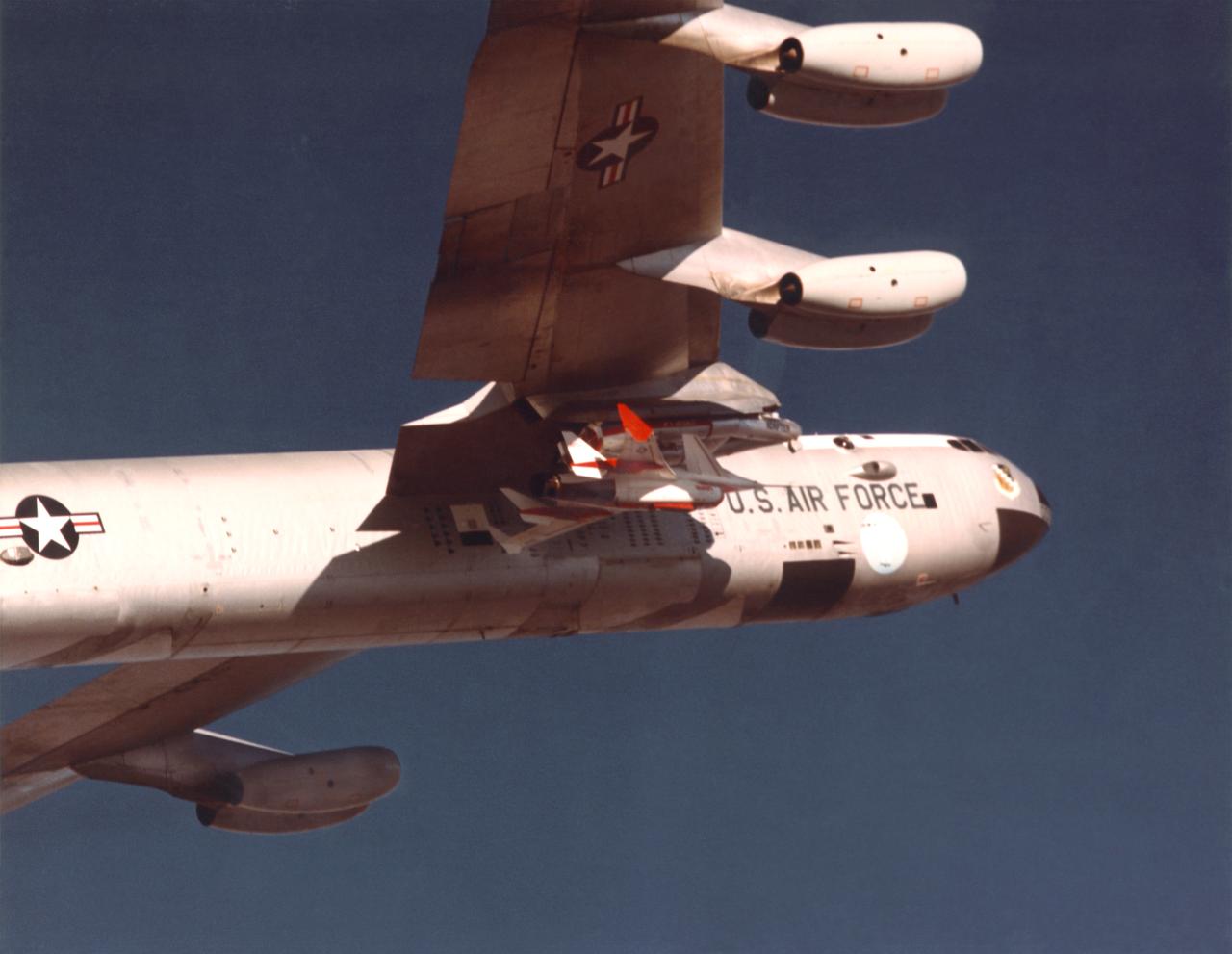
The Highly Maneuverable Aircraft Technology (HiMAT) research vehicle is shown here mated to a wing pylon on NASA’s B-52 mothership aircraft. The HiMAT was a technology demonstrator to test structures and configurations for advanced fighter concepts. Over the course of more than 40 years, the B-52 proved a valuable workhorse for NASA’s Dryden Flight Research Center (under various names), launching a wide variety of vehicles and conducting numerous other research flights.
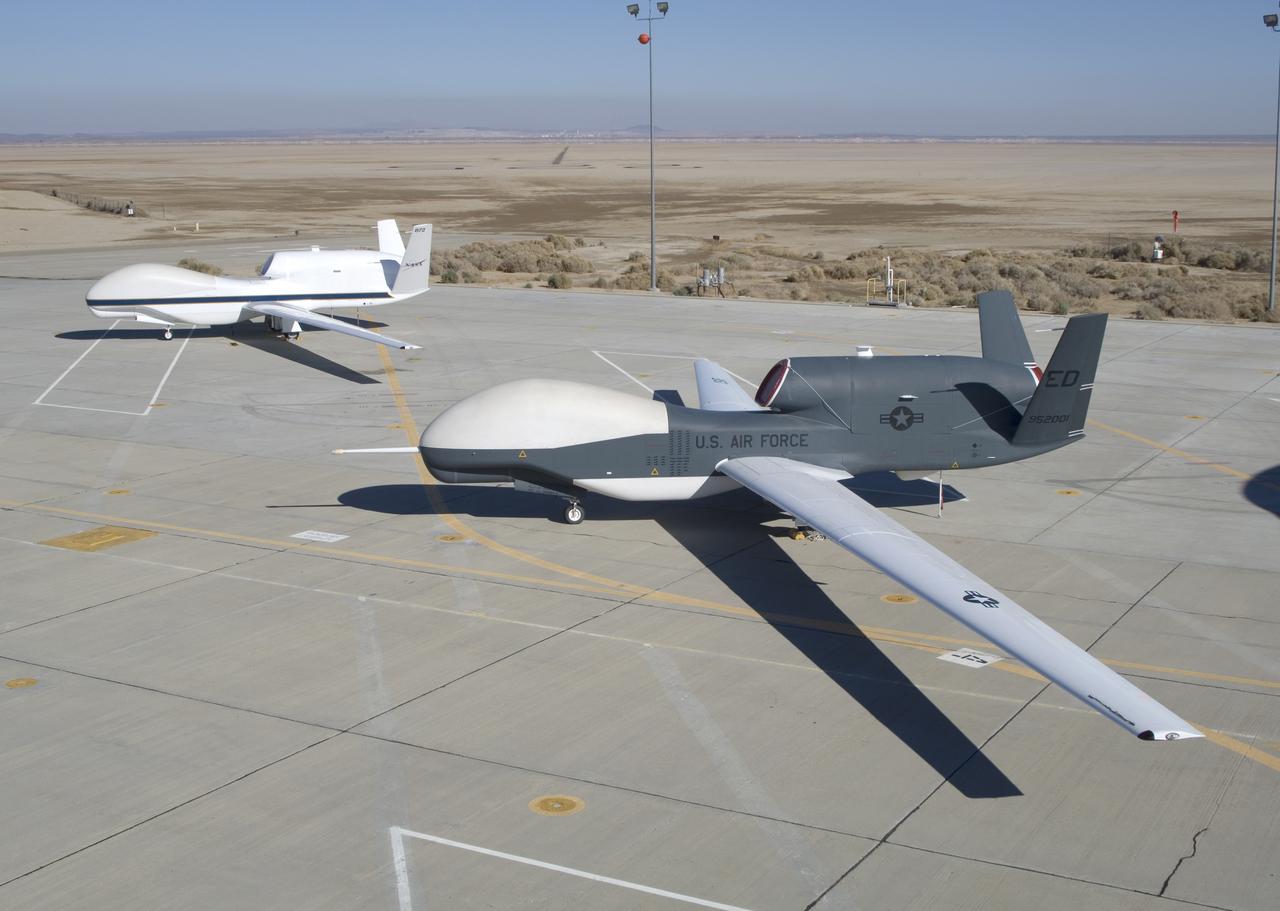
NASA's two Global Hawks, one sporting a NASA paint scheme, the other in its prior Air Force livery, are shown on the ramp at the Dryden Flight Research Center.
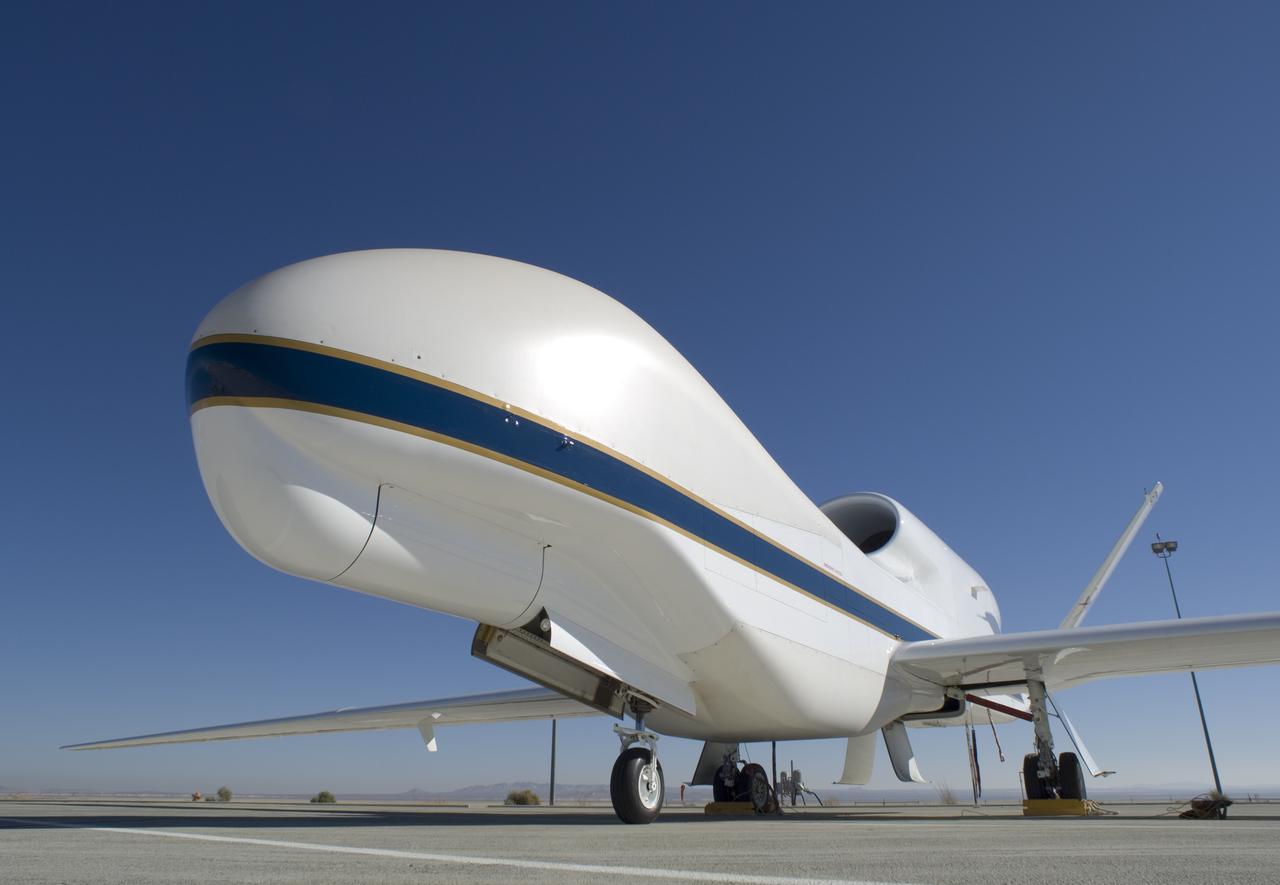
One of NASA's Global Hawk unmanned science aircraft displays its bulbous nose while parked on the ramp at NASA's Dryden Flight Research Center, Edwards, Calif.
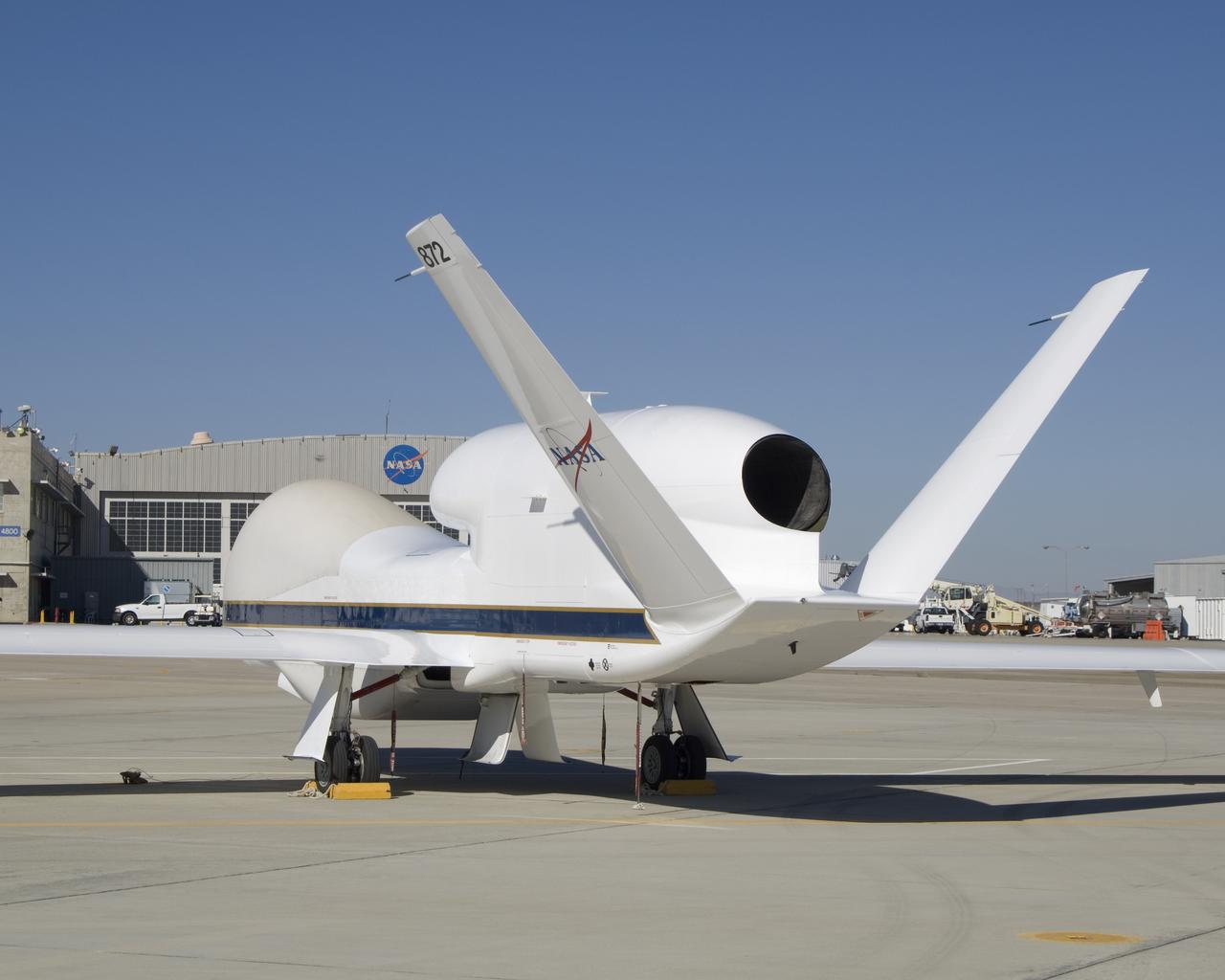
The above-the-fuselage engine and V-tail distinguish one of NASA's two Global Hawk unmanned aircraft parked on the ramp at the Dryden Flight Research Center.
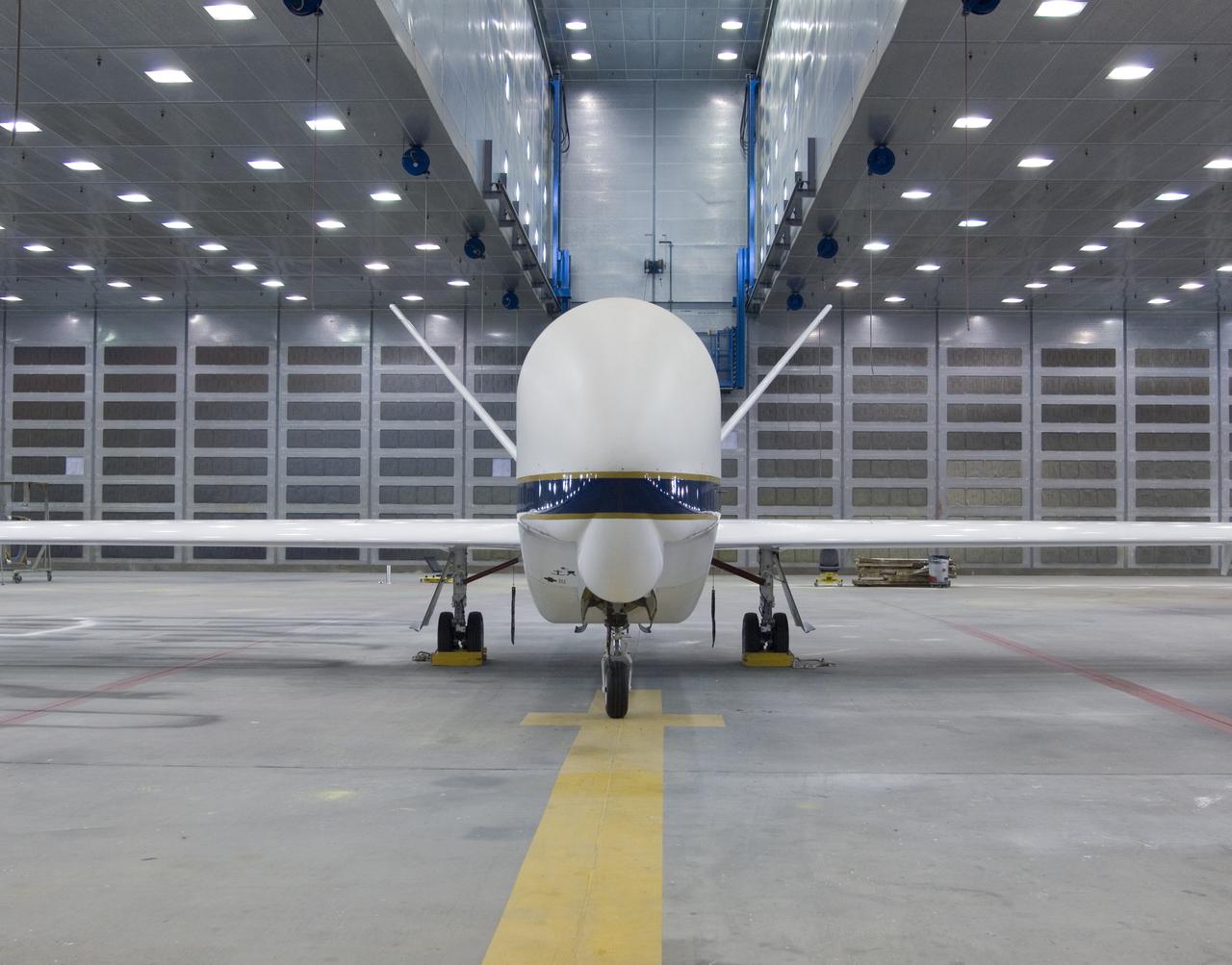
The bulbous nose of one of NASA's Global Hawk unmanned aircraft sports a blue-and-white paint scheme after repainting in the Edwards Air Force Base paint shop.
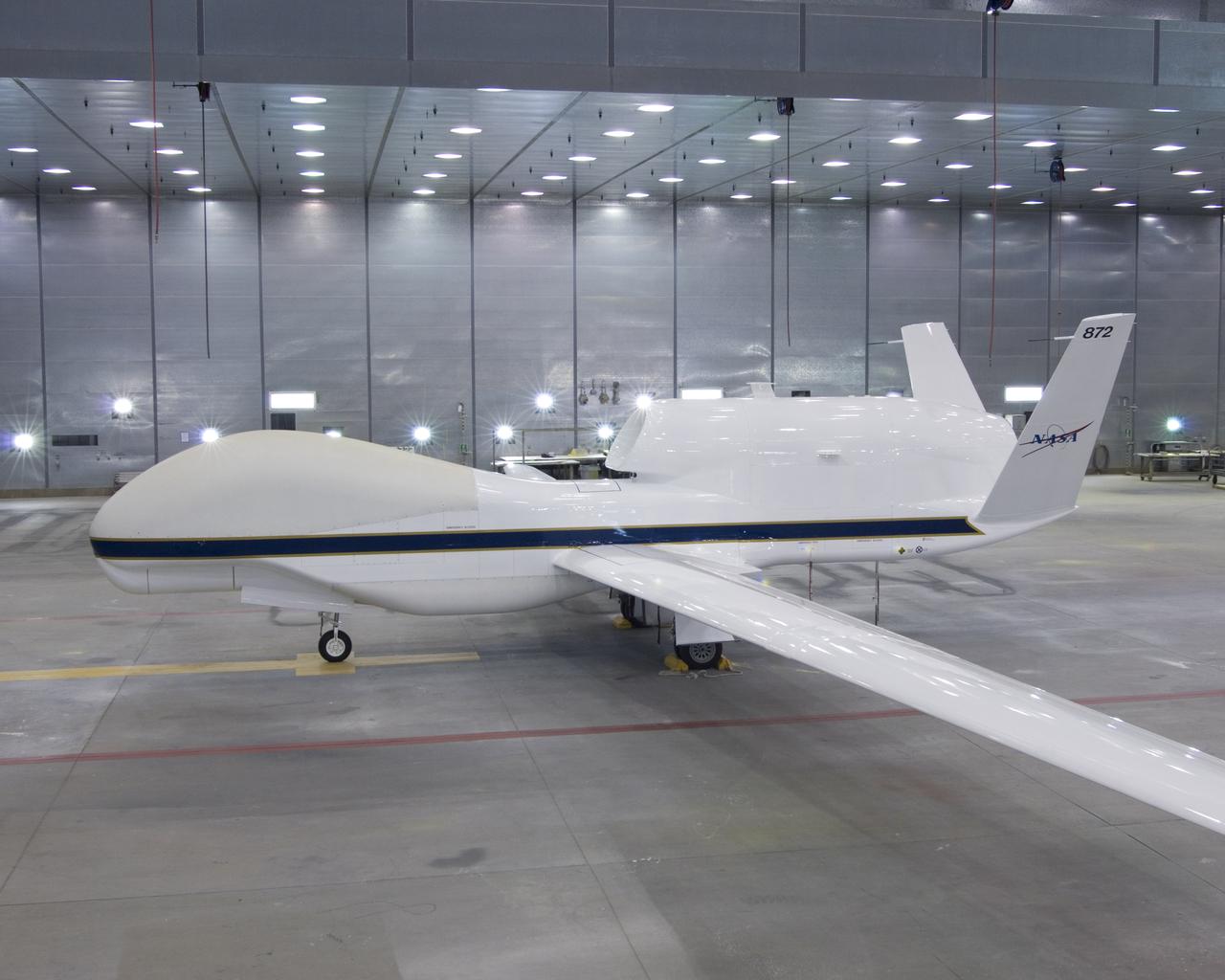
One of NASA's two Global Hawk unmanned aircraft shows off its new blue-and-white livery shortly after being repainted in the Edwards Air Force Base paint hangar.
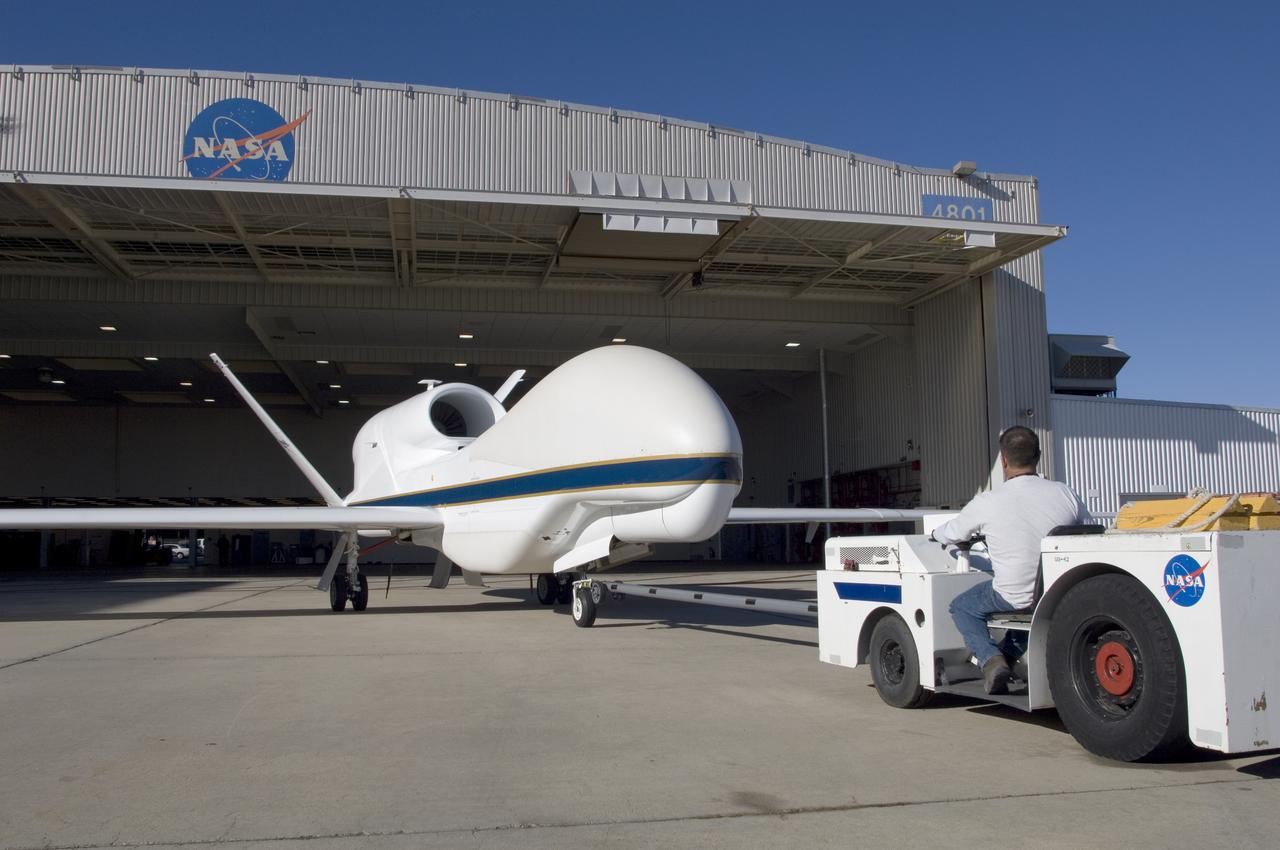
A ground crewman maneuvers one of NASA's Global Hawk unmanned science aircraft into Hangar 4801 at NASA's Dryden Flight Research Center, Edwards, Calif.
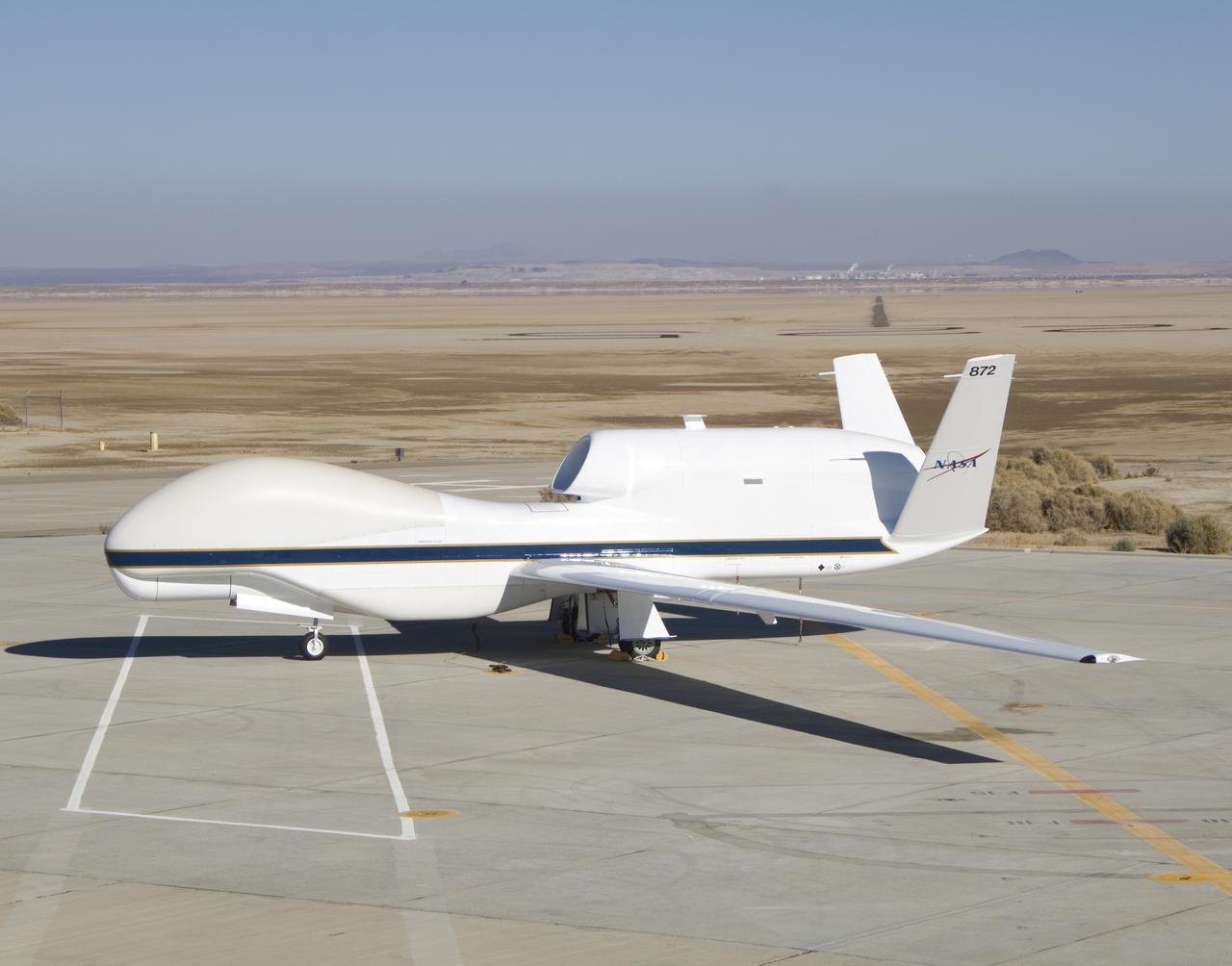
In its new white-and-blue NASA livery, an early development model of the Global Hawk unmanned aircraft rests on the ramp at the Dryden Flight Research Center.
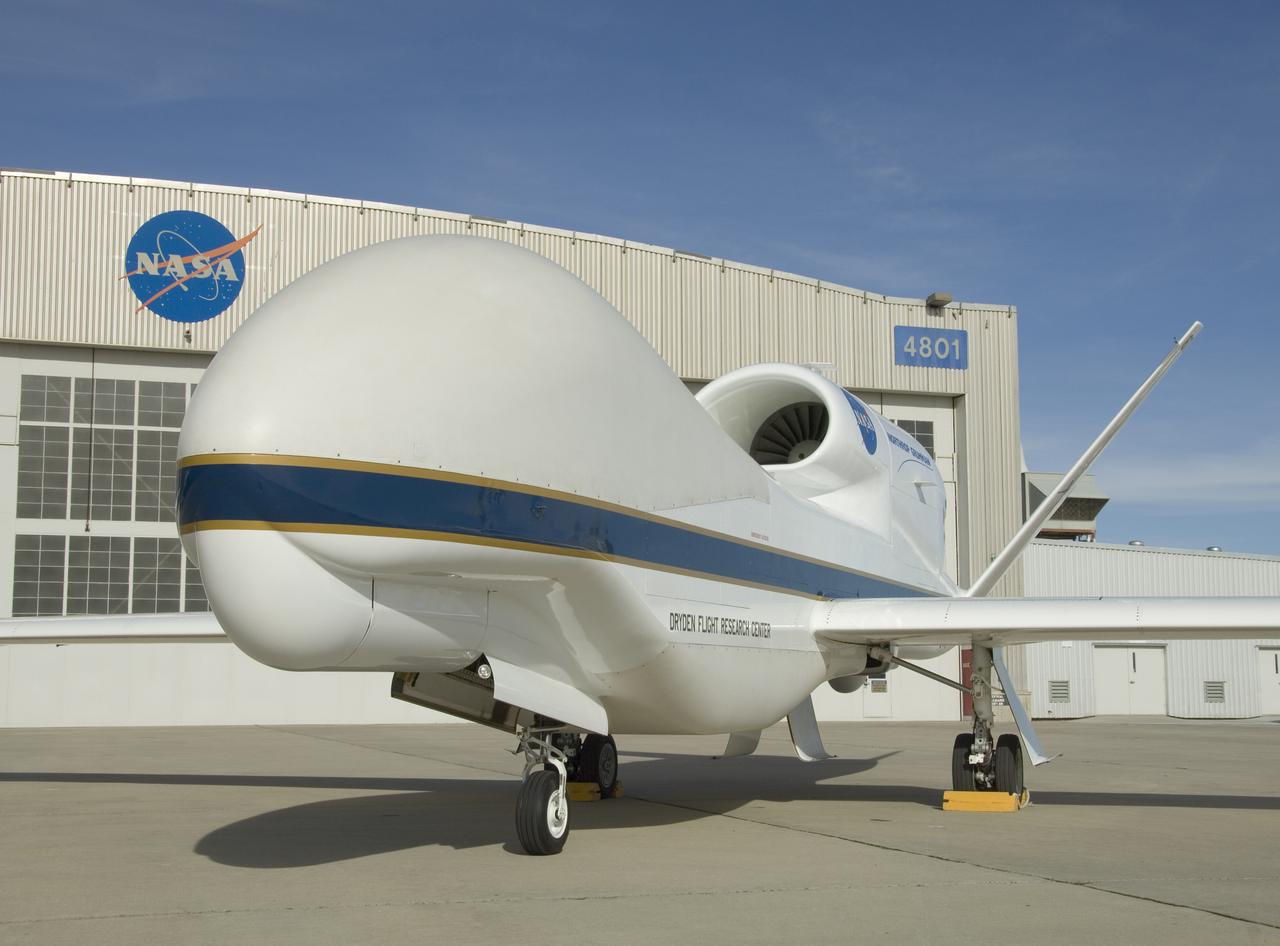
The bulbous nose of one of NASA's two Global Hawk unmanned high-altitude aircraft houses communications and sensor payloads on Earth science missions.
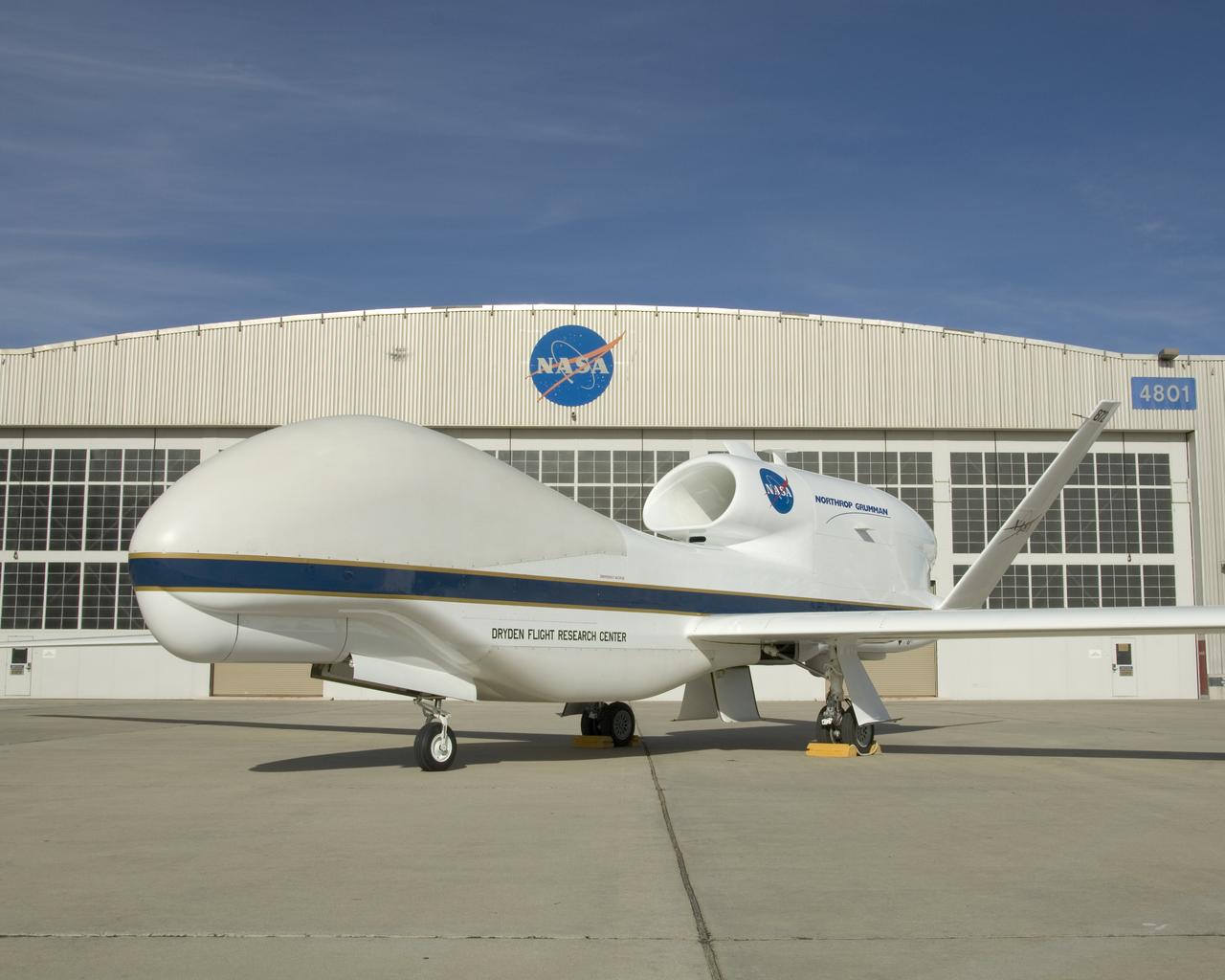
One of NASA's two Global Hawk unmanned high-altitude aircraft shows off its blue-and-white livery in front of its hangar at NASA's Dryden Flight Research Center.
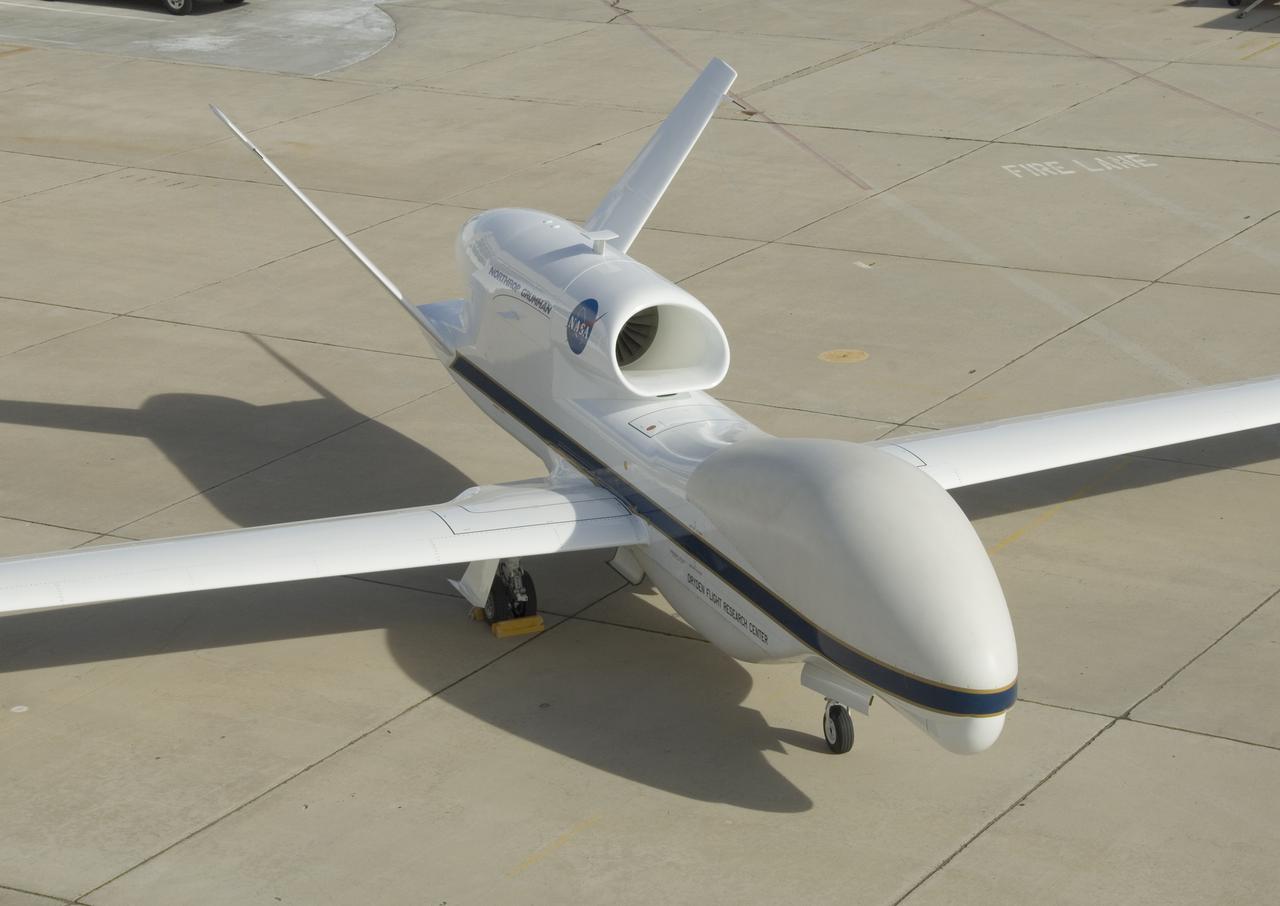
This Global Hawk unmanned aircraft is one of two that are used by NASA for Earth science missions and by Northrop Grumman for follow-on developmental testing.
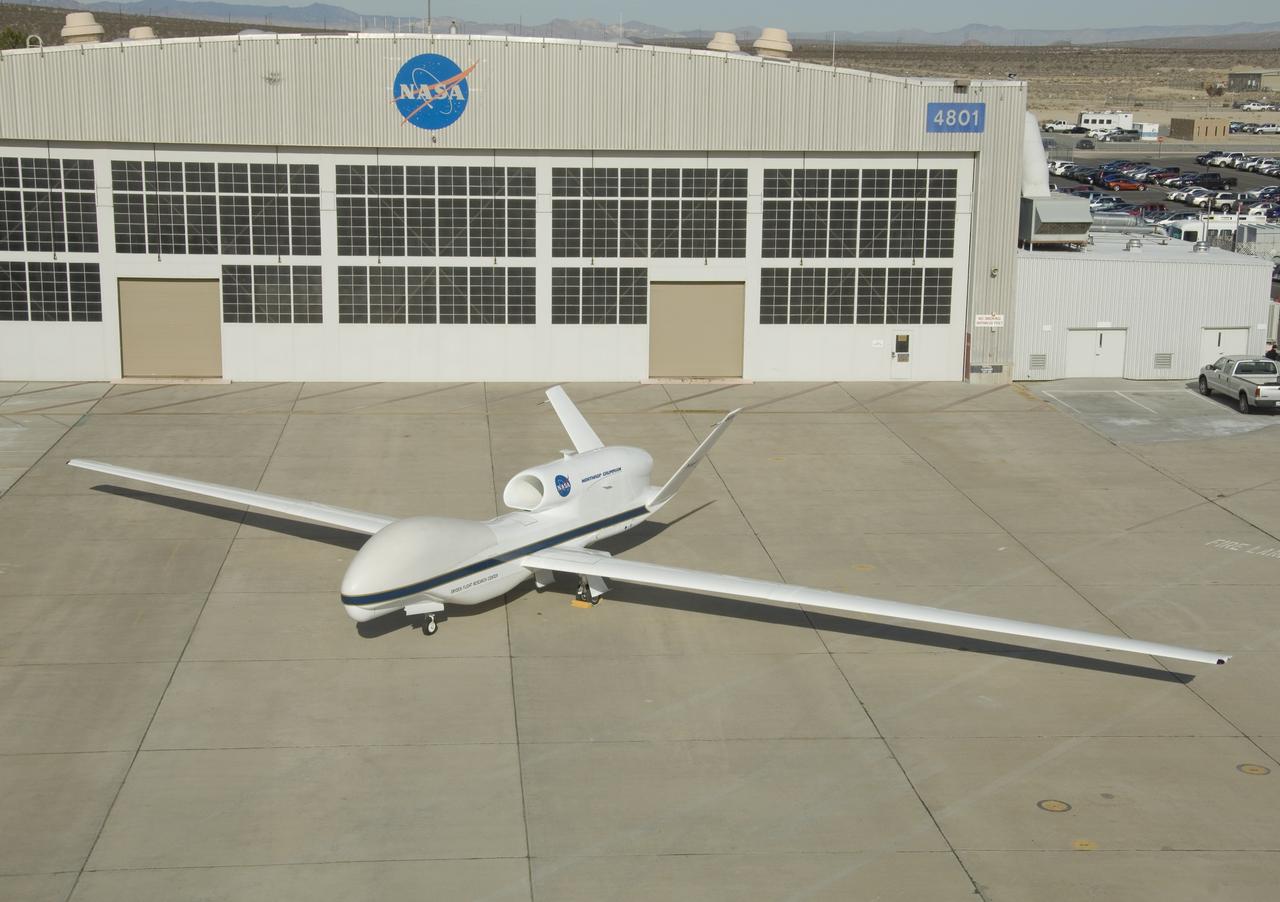
One of NASA's two Global Hawk high-altitude unmanned science aircraft displays its contours outside its hangar at NASA's Dryden Flight Research Center.
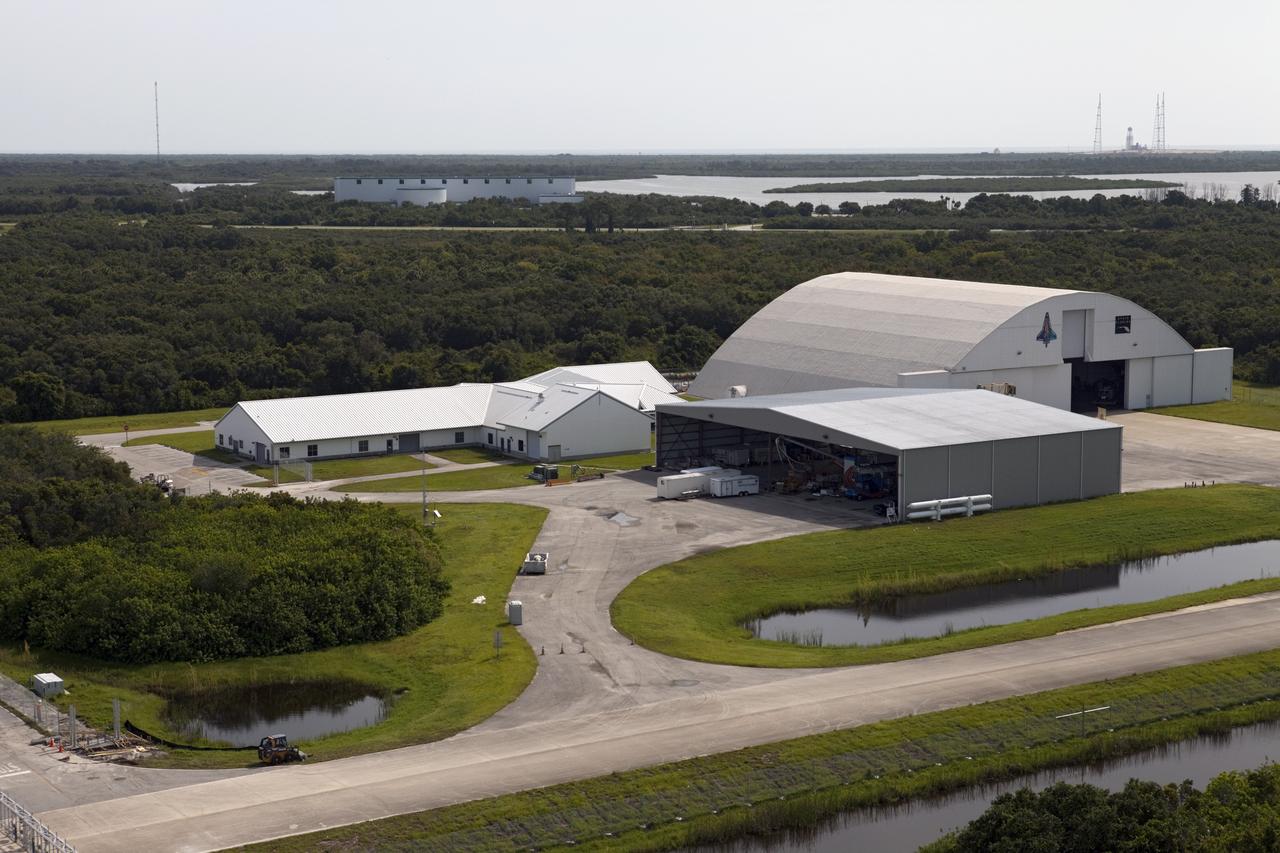
CAPE CANAVERAL, Fla. – This aerial view shows a 50,000-square-foot hangar located on the Shuttle Landing Facility at the Kennedy Space Center, Fla., providing shelter and storage for NASA and non-NASA aircraft and maintenance operations. Adjacent to the hangar is an operations building housing personnel who support operations at the 15,000-foot long concrete runway. At the north end of the runway, a rock and crater-filled planetary scape has been built so engineers can test the Autonomous Landing and Hazard Avoidance Technology, or ALHAT system on the Project Morpheus lander. Testing will demonstrate ALHAT’s ability to provide required navigation data negotiating the Morpheus lander away from risks during descent. Checkout of the prototype lander has been ongoing at NASA’s Johnson Space Center in Houston in preparation for its first free flight. The SLF site will provide the lander with the kind of field necessary for realistic testing. Project Morpheus is one of 20 small projects comprising the Advanced Exploration Systems, or AES, program in NASA’s Human Exploration and Operations Mission Directorate. AES projects pioneer new approaches for rapidly developing prototype systems, demonstrating key capabilities and validating operational concepts for future human missions beyond Earth orbit. For more information on Project Morpheus, visit http://www.nasa.gov/centers/johnson/exploration/morpheus/index.html Photo credit: NASA/Kim Shiflett