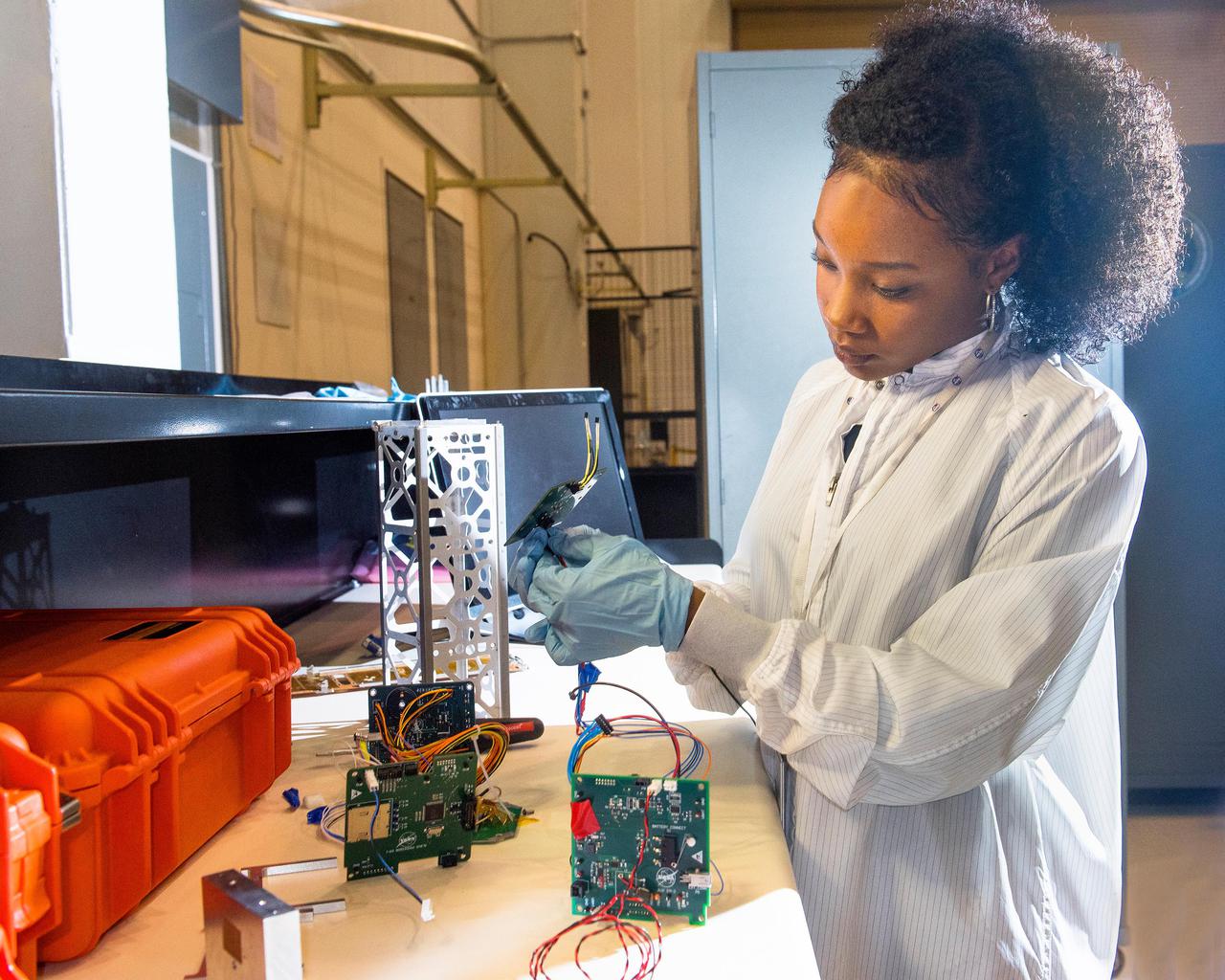
Advanced eLectrical Bus (ALBus) CubeSat: From Build to Flight A new CubeSat, launched Sunday, December 16, will test high power electric systems and the use of unique shape memory alloy (SMA) components for the first time. CubeSats are very small, lightweight satellites, about the size of a loaf of bread, and typically operate within a power range of 5-20 watts. Lower power systems are typically used in CubeSats because of size and weight limits, while higher power systems and components cause excessive heat. Completely designed and led by a team of 12 early career scientists and engineers at NASA’s Glenn Research Center in Cleveland, the Advanced Electrical Bus, or ALBus, will be the first CubeSat to demonstrate power management and distribution of a 100-watt electrical system. The CubeSat will also employ a custom-built SMA release mechanism and hinges to deploy solar arrays and conduct electricity.
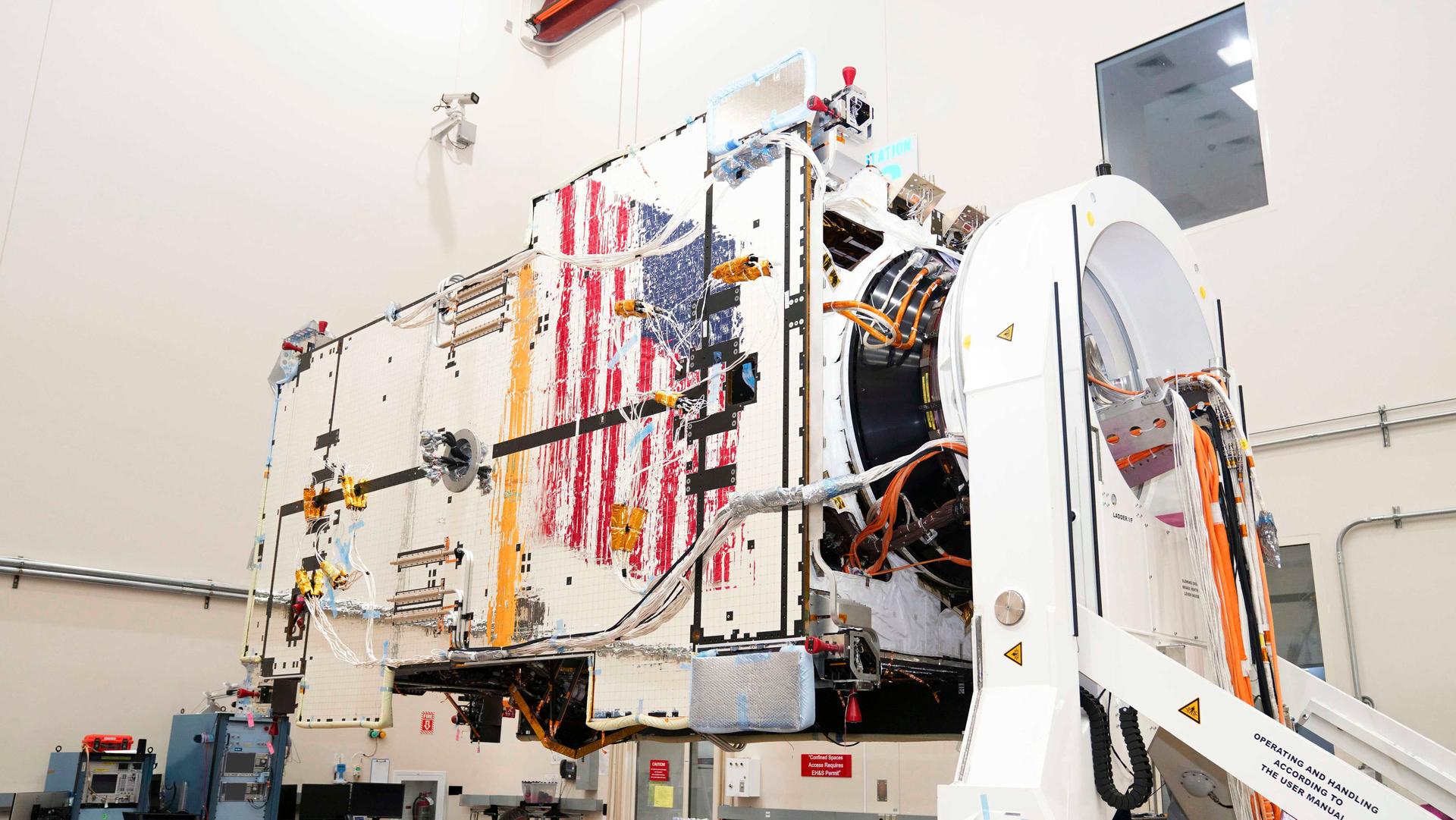
Gateway’s Power and Propulsion Element (PPE) undergoes battery installations at Lanteris Space Systems in Palo Alto, California, in January 2026. PPE is a 60-kilowatt solar electric propulsion spacecraft that will supply the lunar space station with power, high-rate communications, attitude control, orbit maintenance, and orbit transfer capabilities. Its design is based on Lanteris Space Systems’ commercial 1300 bus, enhanced with the most powerful Advanced Electric Propulsion System (AEPS) thrusters and the largest roll-out solar arrays (ROSAs) ever developed. Lanteris Space Systems is the lead industry partner for PPE’s design, manufacturing, and integration.
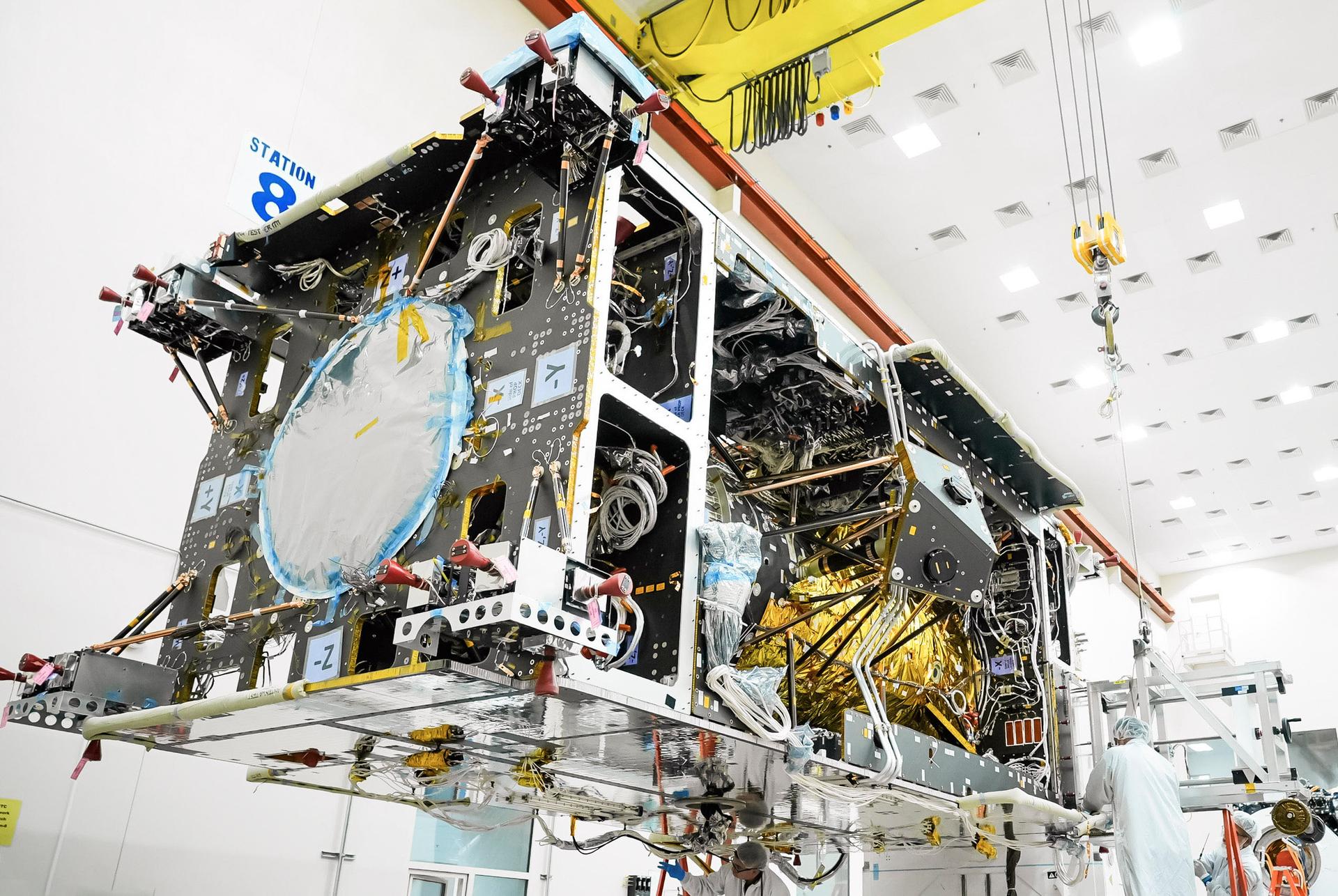
Gateway’s Power and Propulsion Element (PPE) undergoes battery installations at Lanteris Space Systems in Palo Alto, California, in January 2026. PPE is a 60-kilowatt solar electric propulsion spacecraft that will supply the lunar space station with power, high-rate communications, attitude control, orbit maintenance, and orbit transfer capabilities. Its design is based on Lanteris Space Systems’ commercial 1300 bus, enhanced with the most powerful Advanced Electric Propulsion System (AEPS) thrusters and the largest roll-out solar arrays (ROSAs) ever developed. Lanteris Space Systems is the lead industry partner for PPE’s design, manufacturing, and integration.
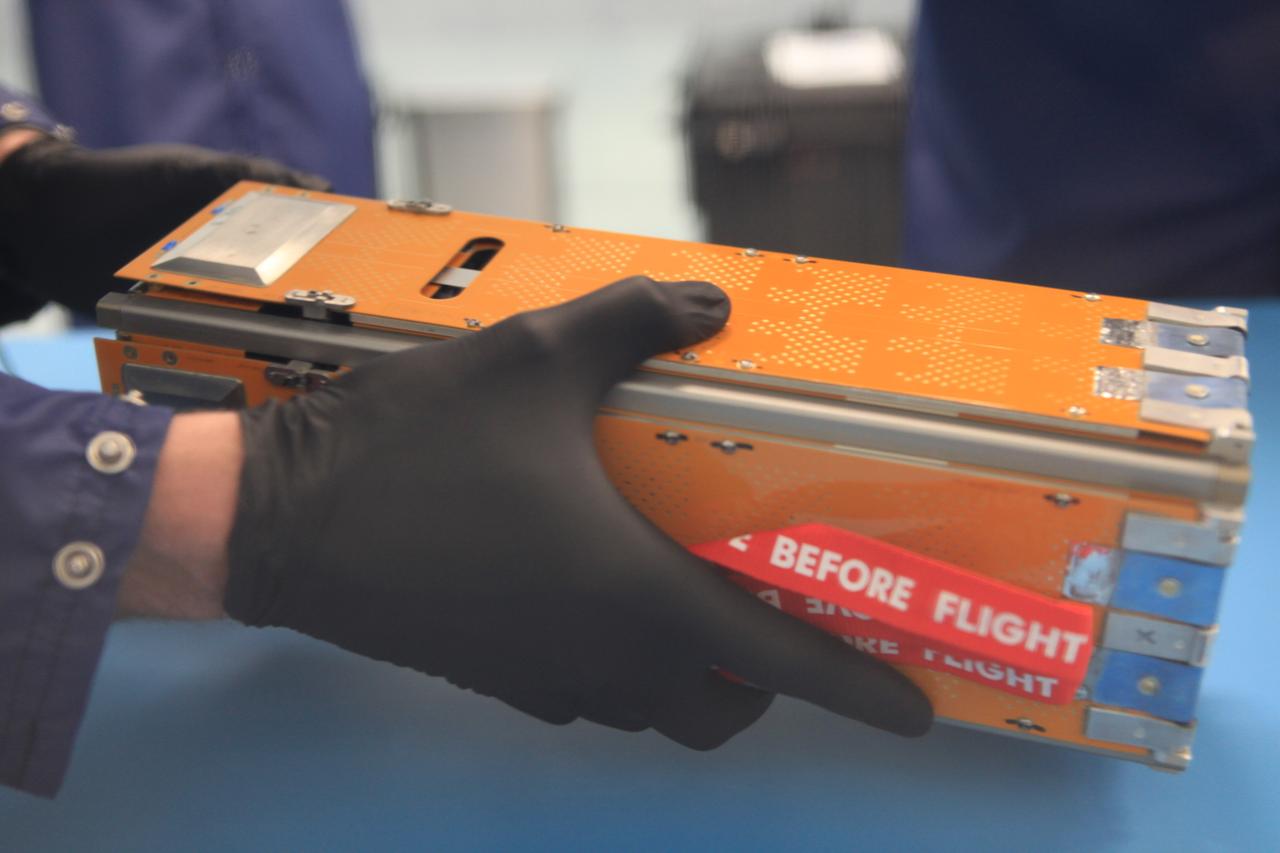
The Advanced Electrical Bus (ALBus) mission is a technology demonstration of resettable Shape Memory Alloy (SMA) mechanisms for deployable solar arrays and a pathfinder for high power density CubeSats. The mission has two primary objectives. The first is to demonstrate the functionality of the novel SMA activated solar array mechanisms in the on-orbit environment. The second objective is to assess the system level ability to charge a high capacity battery, distribute 100 W of electrical power and thermally control the 3-U CubeSat system. Performance from the mission will be used to mature the SMA mechanism designs for CubeSat applications and plan for future high power density CubeSat missions.
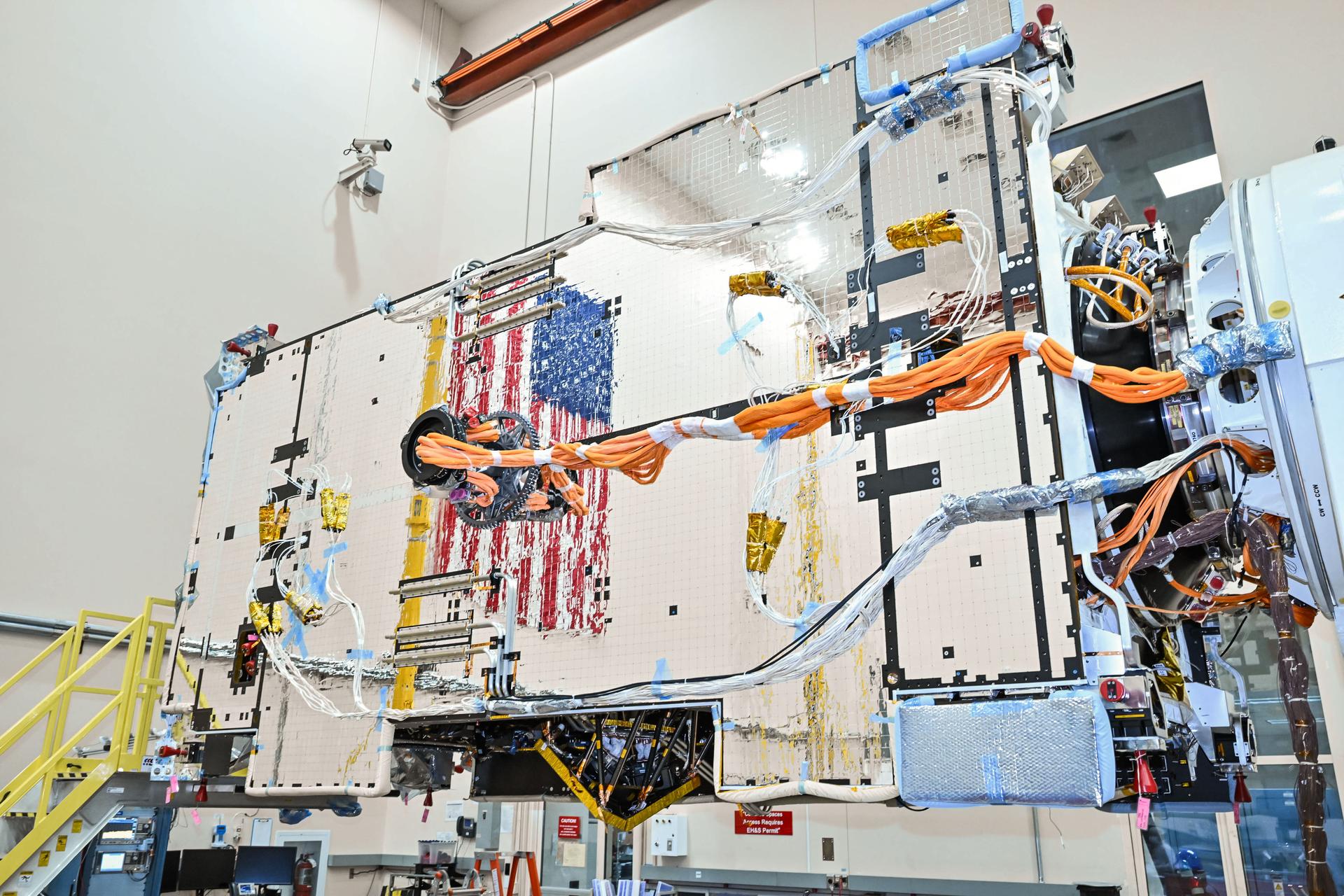
Gateway’s Power and Propulsion Element (PPE) undergoes flight software uploads at Lanteris Space Systems in Palo Alto, California, in January 2026. PPE is a 60-kilowatt solar electric propulsion spacecraft that will supply the lunar space station with power, high-rate communications, attitude control, orbit maintenance, and orbit transfer capabilities. Its design is based on Lanteris Space Systems’ commercial 1300 bus, enhanced with the most powerful Advanced Electric Propulsion System (AEPS) thrusters and the largest roll-out solar arrays (ROSAs) ever developed. Lanteris Space Systems is the lead industry partner for PPE’s design, manufacturing, and integration.
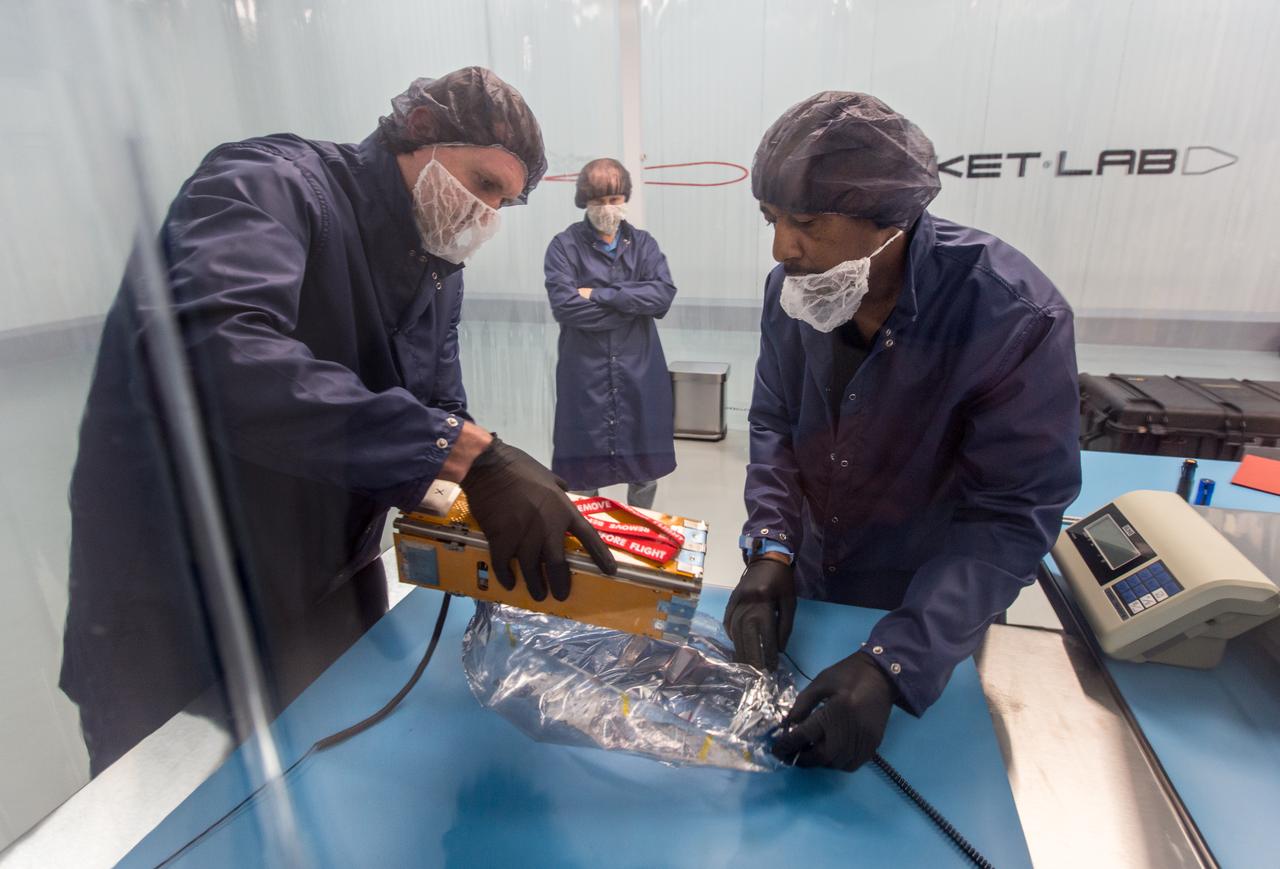
The Advanced Electrical Bus (ALBus) mission is a technology demonstration of resettable Shape Memory Alloy (SMA) mechanisms for deployable solar arrays and a pathfinder for high power density CubeSats. The mission has two primary objectives. The first is to demonstrate the functionality of the novel SMA activated solar array mechanisms in the on-orbit environment. The second objective is to assess the system level ability to charge a high capacity battery, distribute 100 W of electrical power and thermally control the 3-U CubeSat system. Performance from the mission will be used to mature the SMA mechanism designs for CubeSat applications and plan for future high power density CubeSat missions.
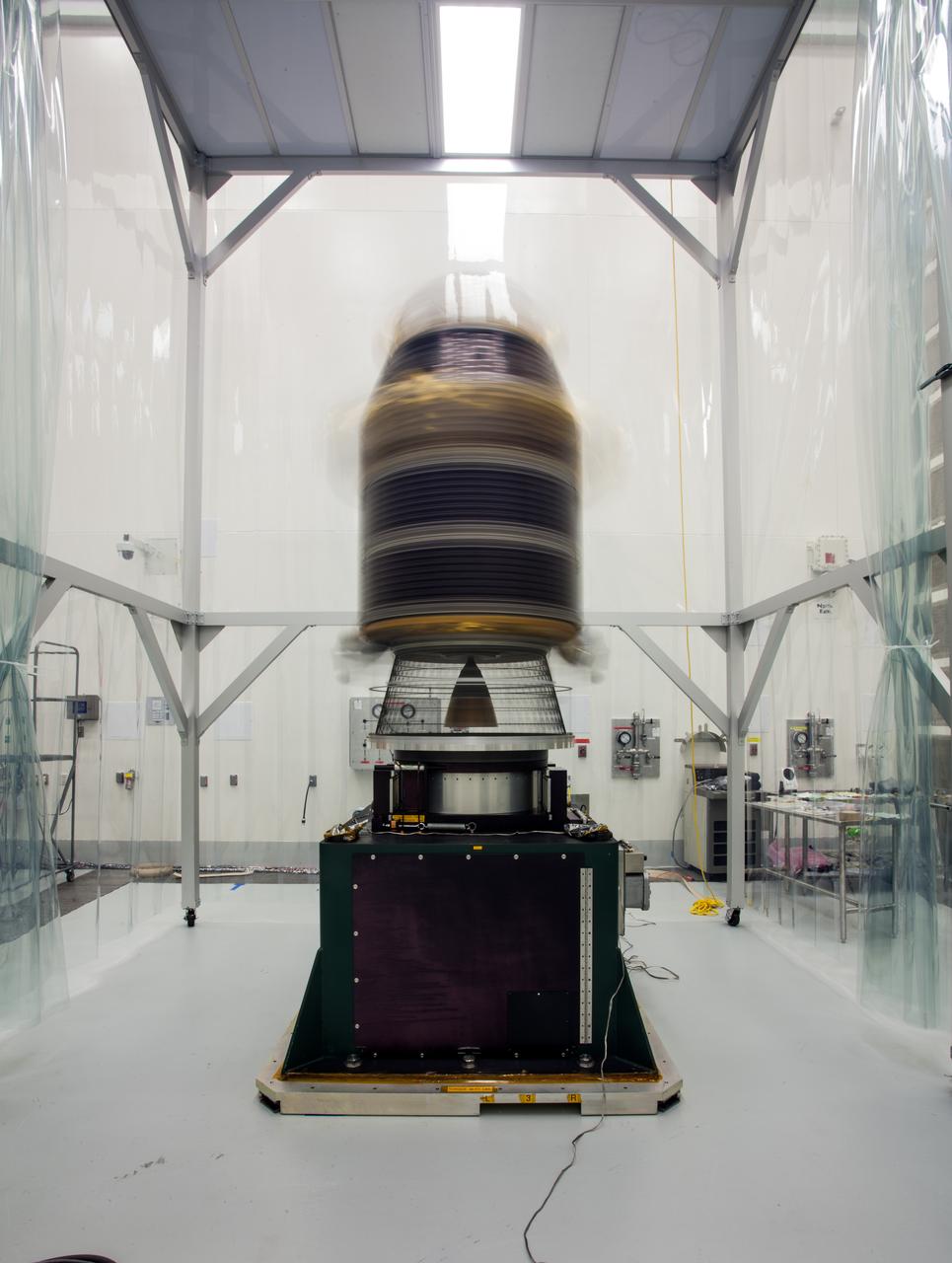
During preparations for NASA's Lunar Atmosphere and Dust Environment Explorer (LADEE) observatory launch on Sept. 6, 2013, the spacecraft went through final preparations and close-outs, which included checking alignment after its cross-country shipment, checking the propulsion system for leaks, inspecting and repairing solar panels, and final electrical tests. After these activities were completed, more challenging portions of the launch preparations began: spin testing and fueling. To make sure that the spacecraft is perfectly balanced for flight, engineers mounted it onto a spin table and rotate it at high speeds, approximately one revolution per second. The team measured any offsets during the spinning, and then added small weights to the spacecraft to balance it. Once the spacecraft was balanced dry, the team loaded the propulsion tanks with fuel, oxidizer, and pressurant. The spin testing was performed again "wet," or with fuel, in order to see if the balance changed with the full fuel tanks. Engineers from NASA's Ames Research Center in Moffett Field, Calif., have now successfully completed launch preparation activities for LADEE, which has been encapsulated into the nose-cone of the Minotaur V rocket at NASA's Wallops Flight Facility in Virginia. LADEE is ready to launch when the window opens on Friday. Image Credit: NASA ----- What is LADEE? The Lunar Atmosphere and Dust Environment Explorer (LADEE) is designed to study the Moon's thin exosphere and the lunar dust environment. An "exosphere" is an atmosphere that is so thin and tenuous that molecules don't collide with each other. Studying the Moon's exosphere will help scientists understand other planetary bodies with exospheres too, like Mercury and some of Jupiter's bigger moons. The orbiter will determine the density, composition and temporal and spatial variability of the Moon's exosphere to help us understand where the species in the exosphere come from and the role of the solar wind, lunar surface and interior, and meteoric infall as sources. The mission will also examine the density and temporal and spatial variability of dust particles that may get lofted into the atmosphere. The mission also will test several new technologies, including a modular spacecraft bus that may reduce the cost of future deep space missions and demonstrate two-way high rate laser communication for the first time from the Moon. LADEE now is ready to launch when the window opens on Sept. 6, 2013. Read more: <a href="http://www.nasa.gov/ladee" rel="nofollow">www.nasa.gov/ladee</a> <b><a href="http://www.nasa.gov/audience/formedia/features/MP_Photo_Guidelines.html" rel="nofollow">NASA image use policy.</a></b> <b><a href="http://www.nasa.gov/centers/goddard/home/index.html" rel="nofollow">NASA Goddard Space Flight Center</a></b> enables NASA’s mission through four scientific endeavors: Earth Science, Heliophysics, Solar System Exploration, and Astrophysics. Goddard plays a leading role in NASA’s accomplishments by contributing compelling scientific knowledge to advance the Agency’s mission. <b>Follow us on <a href="http://twitter.com/NASA_GoddardPix" rel="nofollow">Twitter</a></b> <b>Like us on <a href="http://www.facebook.com/pages/Greenbelt-MD/NASA-Goddard/395013845897?ref=tsd" rel="nofollow">Facebook</a></b> <b>Find us on <a href="http://instagram.com/nasagoddard?vm=grid" rel="nofollow">Instagram</a></b>