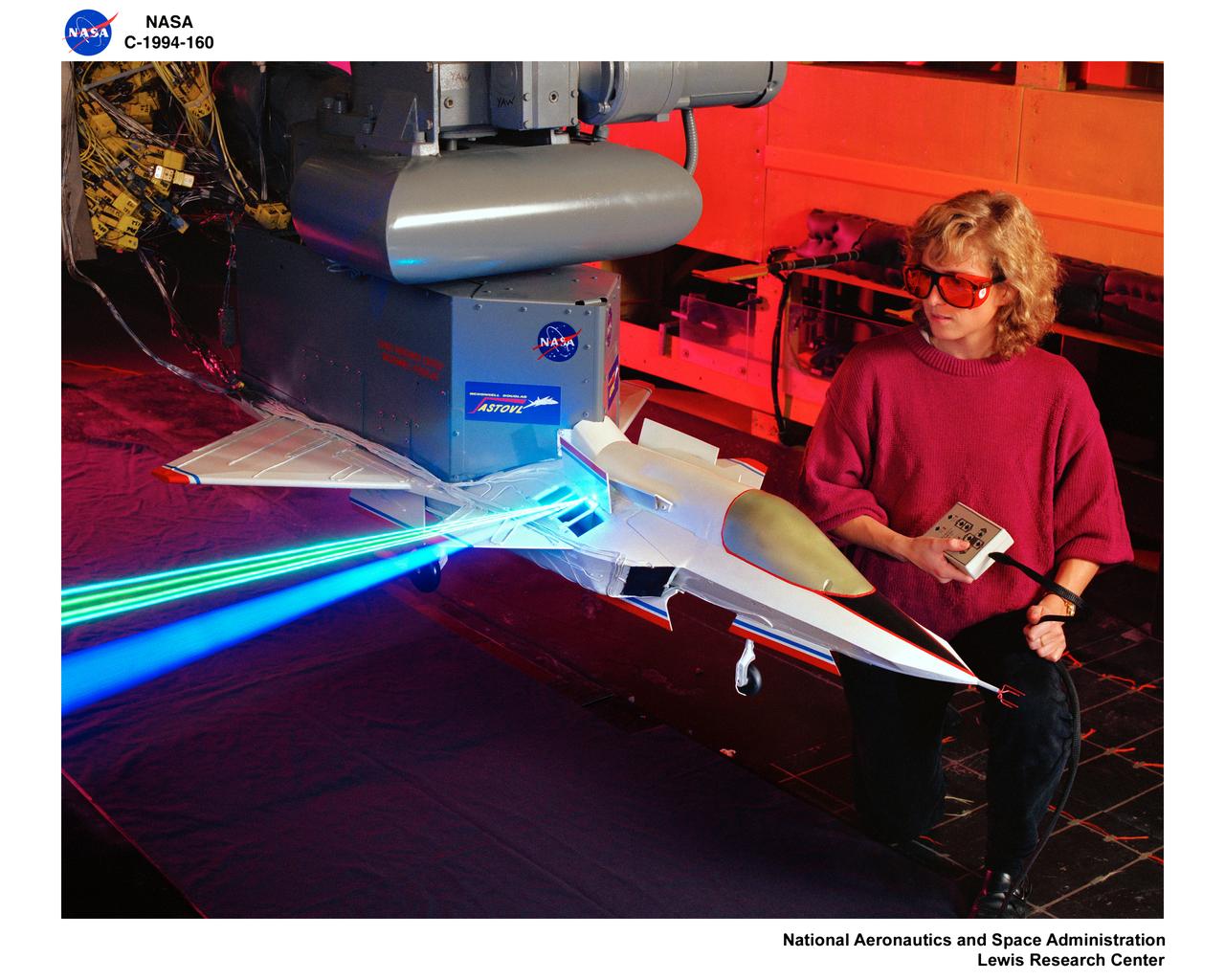
LASER Velocimetry System for Flow Measurement. Advanced Short Takeoff and Vertical Landing, ASTOVL model n the 9x15 foot Low Speed Wind Tunnel, LSWT
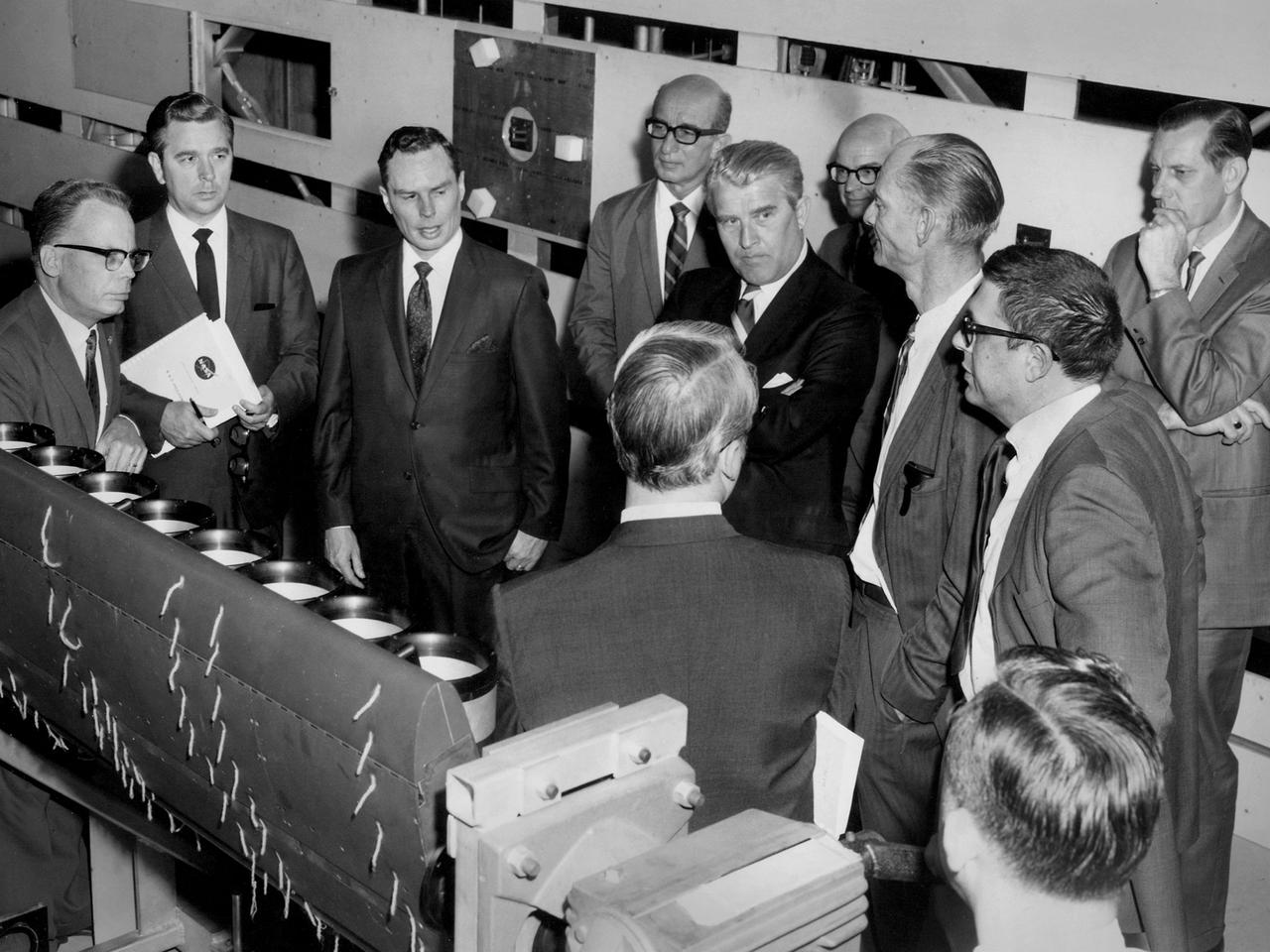
Werner von Braun, National Aeronautics and Space Administration (NASA) Deputy Associate Administrator for Planning, among a group from Headquarters touring the Lewis Research Center in Cleveland, Ohio. Lewis Special Projects Chief Newell Sanders, left, describes a Short Takeoff and Landing wing-propulsion model. Lewis had recently converted the return leg of its 8- by 6-Foot Supersonic Wind Tunnel into the 9- by 15-Foot Low Speed Wind Tunnel to investigate Vertical and Short Takeoff and Landing propulsion systems. Gathered from the left near Sanders are James Daniels, Headquarters Executive Secretary; Oran Hicks, Acting Associate Administrator for the Headquarters Office of Advanced Research and Technology; Eugene Manganiello, Lewis Deputy Director; von Braun; Dr. Walter Olson, Lewis Assistant Director; Bruce Lundin, Lewis Director and Dr. Bernard Lubarsky, Lewis Assistant Director. Just months before this photograph, NASA asked von Braun to give up his post as Director of the Marshall Space Flight Center after nearly ten years in order to head up the strategic planning effort for the agency from Washington DC. Von Braun retired from NASA two years later.
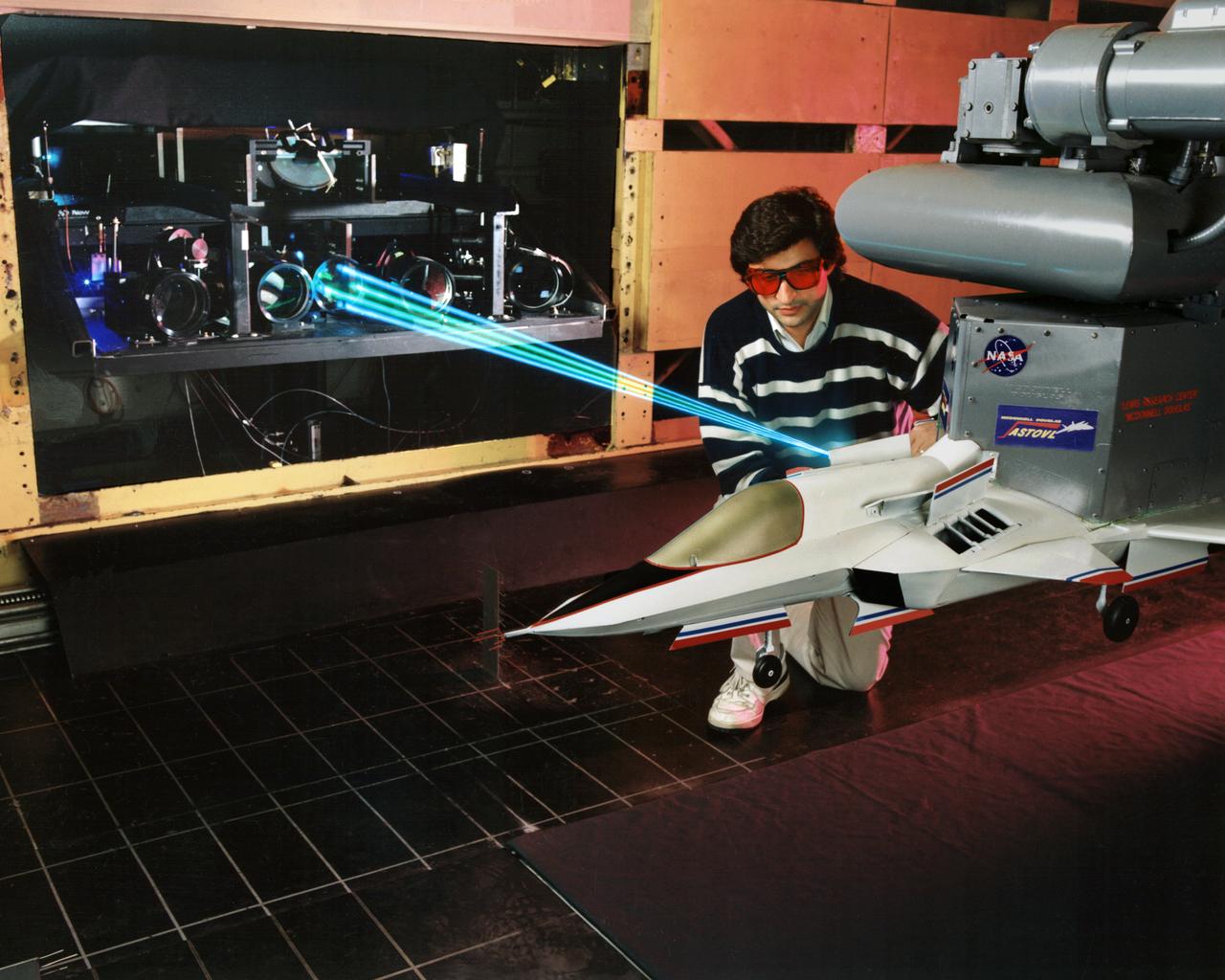
A spectrally resolved Rayleigh/Mie scattering diagnostic was developed to measure temperature and wing span wise velocity in the vicinity of an ASTOVL aircraft model tested in the Lewis, now Glenn, 9x15 Low Speed Wind Tunnel. Shown is a Fabry-Perot interferometer that uses only the blue light from a laser to measure static temperature and velocity near the lift nozzles and suction systems.
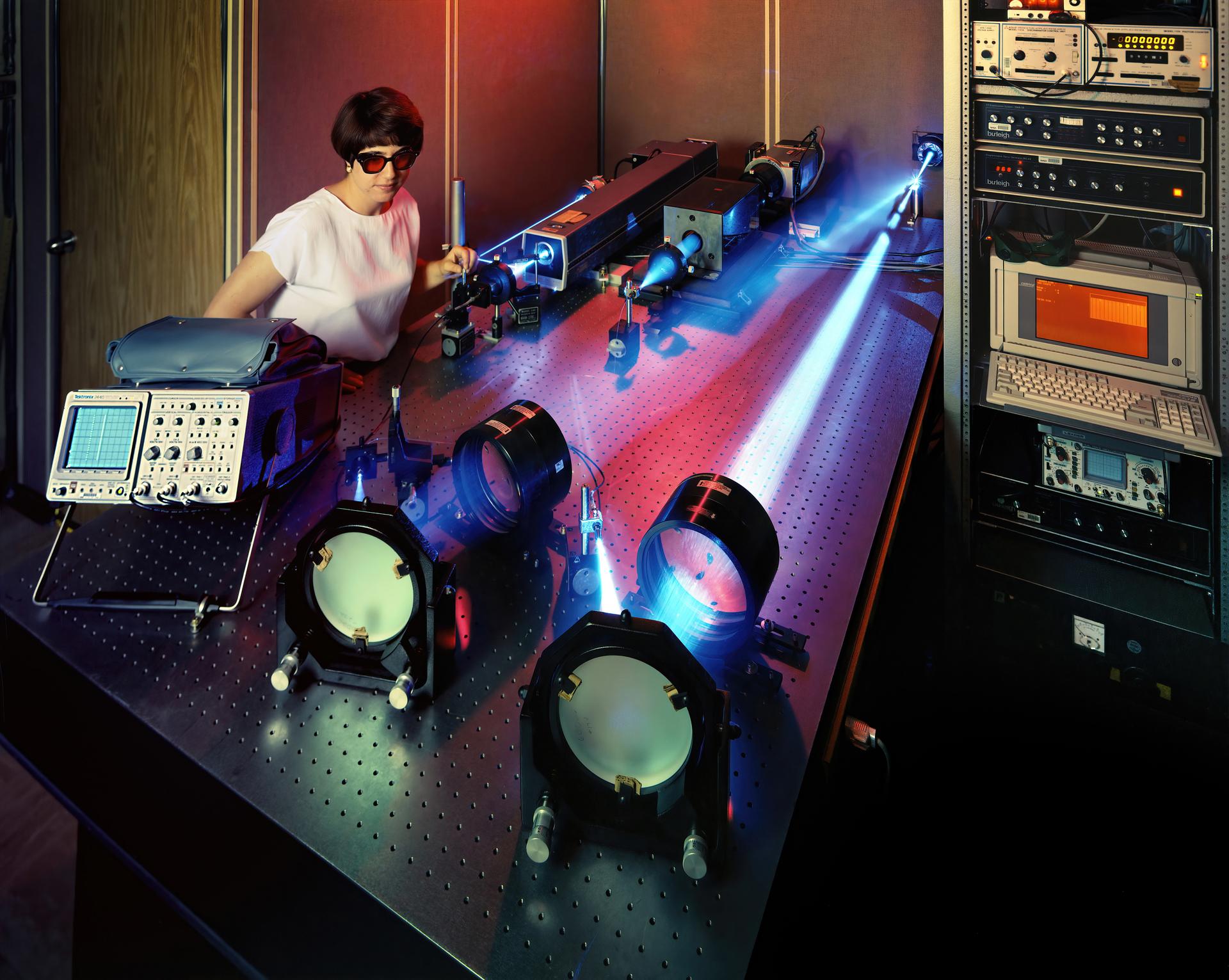
A spectrally resolved Rayleigh/Mie scattering diagnostic was developed to measure temperature and wingspan wise velocity in the vicinity of an ASTOVL aircraft model tested in the Lewis, now Glenn, 9x15 Low Speed Wind Tunnel. This was done for the Phase III hot gas ingestion study of ground-effect flow-field on such aircraft during hover or vertical landing.

National Aeronautics and Space Administration (NASA) researcher John Carpenter inspects an aircraft model with a four-fan thrust reverser which would be studied in the 9- by 15-Foot Low Speed Wind Tunnel at the Lewis Research Center. Thrust reversers were introduced in the 1950s as a means for slowing high-speed jet aircraft during landing. Engineers sought to apply the technology to Vertical and Short Takeoff and Landing (VSTOL) aircraft in the 1970s. The new designs would have to take into account shorter landing areas, noise levels, and decreased thrust levels. A balance was needed between the thrust reverser’s efficiency, its noise generation, and the engine’s power setting. This model underwent a series of four tests in the 9- by 15-foot tunnel during April and May 1974. The model, with a high-wing configuration and no tail, was equipped with four thrust-reverser engines. The investigations included static internal aerodynamic tests on a single fan/reverser, wind tunnel isolated fan/reverser thrust tests, installation effects on a four-fan airplane model in a wind tunnel, and single reverser acoustic tests. The 9-by 15 was built inside the return leg of the 8- by 6-Foot Supersonic Wind Tunnel in 1968. The facility generates airspeeds from 0 to 175 miles per hour to evaluate the aerodynamic performance and acoustic characteristics of nozzles, inlets, and propellers, and investigate hot gas re-ingestion of advanced VSTOL concepts. John Carpenter was a technician in the Wind Tunnels Service Section of the Test Installations Division.