
NASA Associate Administrator for the Aeronautics Research Mission Directorate Bob Pearce speaks on stage prior to the unveiling of the agency’s X-59 quiet supersonic research aircraft at a January 12, 2024 event at Lockheed Martin Skunk Works in Palmdale, California. The X-59 is the centerpiece of NASA’s Quesst mission, which seeks to solve one of the major barriers to supersonic flight over land, currently banned in the United States, by making sonic booms quieter.

NASA Associate Administrator for the Aeronautics Research Mission Directorate Bob Pearce speaks on stage prior to the unveiling of the agency’s X-59 quiet supersonic research aircraft at a January 12, 2024 event at Lockheed Martin Skunk Works in Palmdale, California. The X-59 is the centerpiece of NASA’s Quesst mission, which seeks to solve one of the major barriers to supersonic flight over land, currently banned in the United States, by making sonic booms quieter.

NASA Associate Administrator for the Aeronautics Research Mission Directorate Bob Pearce speaks on stage prior to the unveiling of the agency’s X-59 quiet supersonic research aircraft at a January 12, 2024 event at Lockheed Martin Skunk Works in Palmdale, California. The X-59 is the centerpiece of NASA’s Quesst mission, which seeks to solve one of the major barriers to supersonic flight over land, currently banned in the United States, by making sonic booms quieter.

NASA Aeronautics and center leadership gather inside the viewing area of the main control room at NASA’s Armstrong Flight Research Center in Edwards, California, on Tuesday, Oct. 28, 2025. The group watches in real time as flight controllers and engineers receive updates from the aircraft during its historic first flight in support of the agency’s Quesst mission.

NASA Aeronautics and center leadership gather inside the viewing area of the main control room at NASA’s Armstrong Flight Research Center in Edwards, California, on Tuesday, Oct. 28, 2025. The group watches in real time as flight controllers and engineers receive updates from the aircraft during its historic first flight in support of the agency’s Quesst mission.

NASA Aeronautics and center leadership gather inside the viewing area of the main control room at NASA’s Armstrong Flight Research Center in Edwards, California, on Tuesday, Oct. 28, 2025. The group watches in real time as flight controllers and engineers receive updates from the aircraft during its historic first flight in support of the agency’s Quesst mission.

NASA Aeronautics and center leadership gather inside the viewing area of the main control room at NASA’s Armstrong Flight Research Center in Edwards, California, on Tuesday, Oct. 28, 2025. The group watches in real time as flight controllers and engineers receive updates from the aircraft during its historic first flight in support of the agency’s Quesst mission.

NASA Aeronautics and center leadership gather inside the viewing area of the main control room at NASA’s Armstrong Flight Research Center in Edwards, California, on Tuesday, Oct. 28, 2025. The group watches in real time as flight controllers and engineers receive updates from the aircraft during its historic first flight in support of the agency’s Quesst mission.

NASA Aeronautics and center leadership gather inside the viewing area of the main control room at NASA’s Armstrong Flight Research Center in Edwards, California, on Tuesday, Oct. 28, 2025. The group watches in real time as flight controllers and engineers receive updates from the aircraft during its historic first flight in support of the agency’s Quesst mission.

NASA Aeronautics and center leadership gather inside the viewing area of the main control room at NASA’s Armstrong Flight Research Center in Edwards, California, on Tuesday, Oct. 28, 2025. The group watches in real time as flight controllers and engineers receive updates from the aircraft during its historic first flight in support of the agency’s Quesst mission.
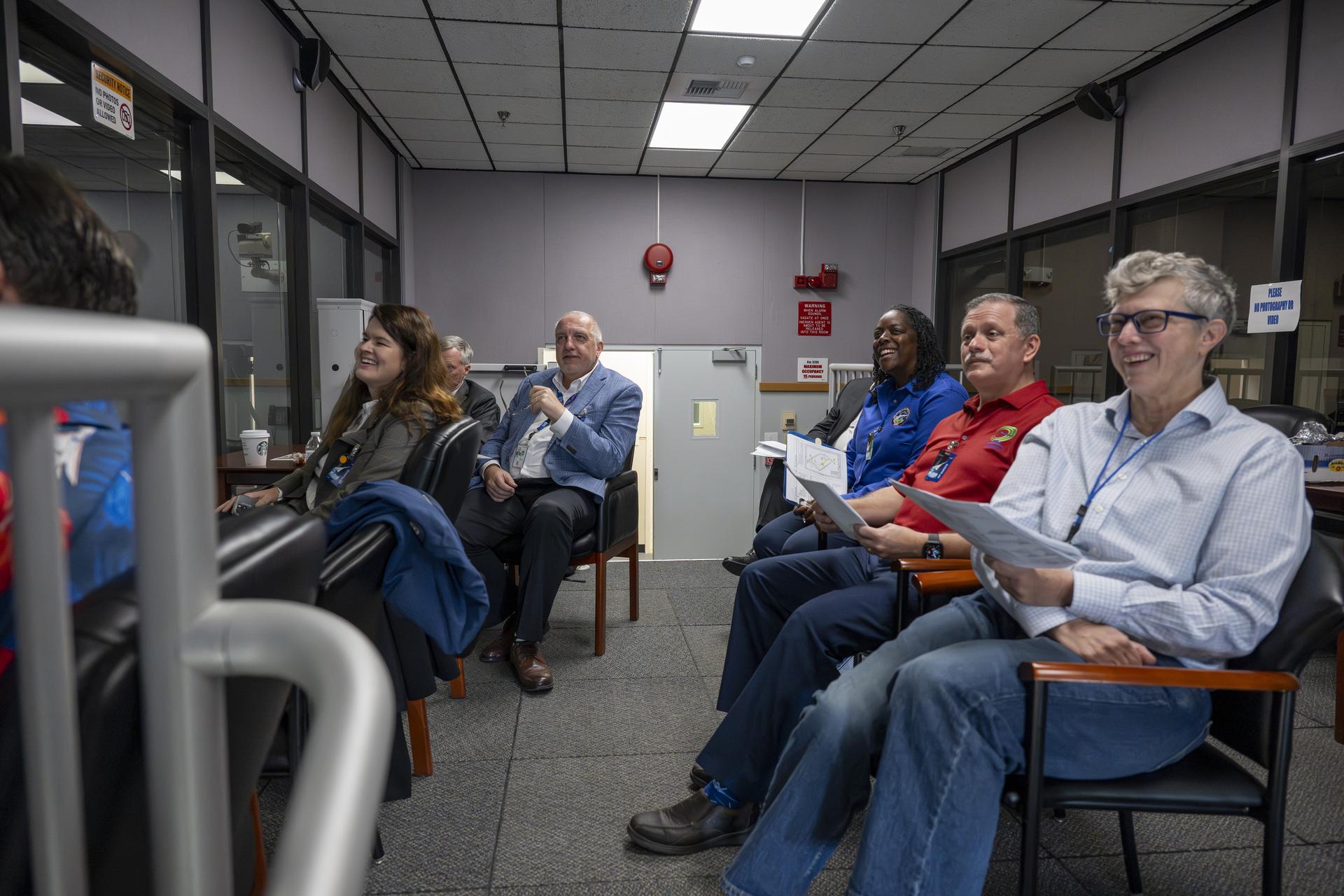
NASA Aeronautics and center leadership gather inside the viewing area of the main control room at NASA’s Armstrong Flight Research Center in Edwards, California, on Tuesday, Oct. 28, 2025. The group watches in real time as flight controllers and engineers receive updates from the aircraft during its historic first flight in support of the agency’s Quesst mission.

NASA Aeronautics and center leadership gather inside the viewing area of the main control room at NASA’s Armstrong Flight Research Center in Edwards, California, on Tuesday, Oct. 28, 2025. The group watches in real time as flight controllers and engineers receive updates from the aircraft during its historic first flight in support of the agency’s Quesst mission.
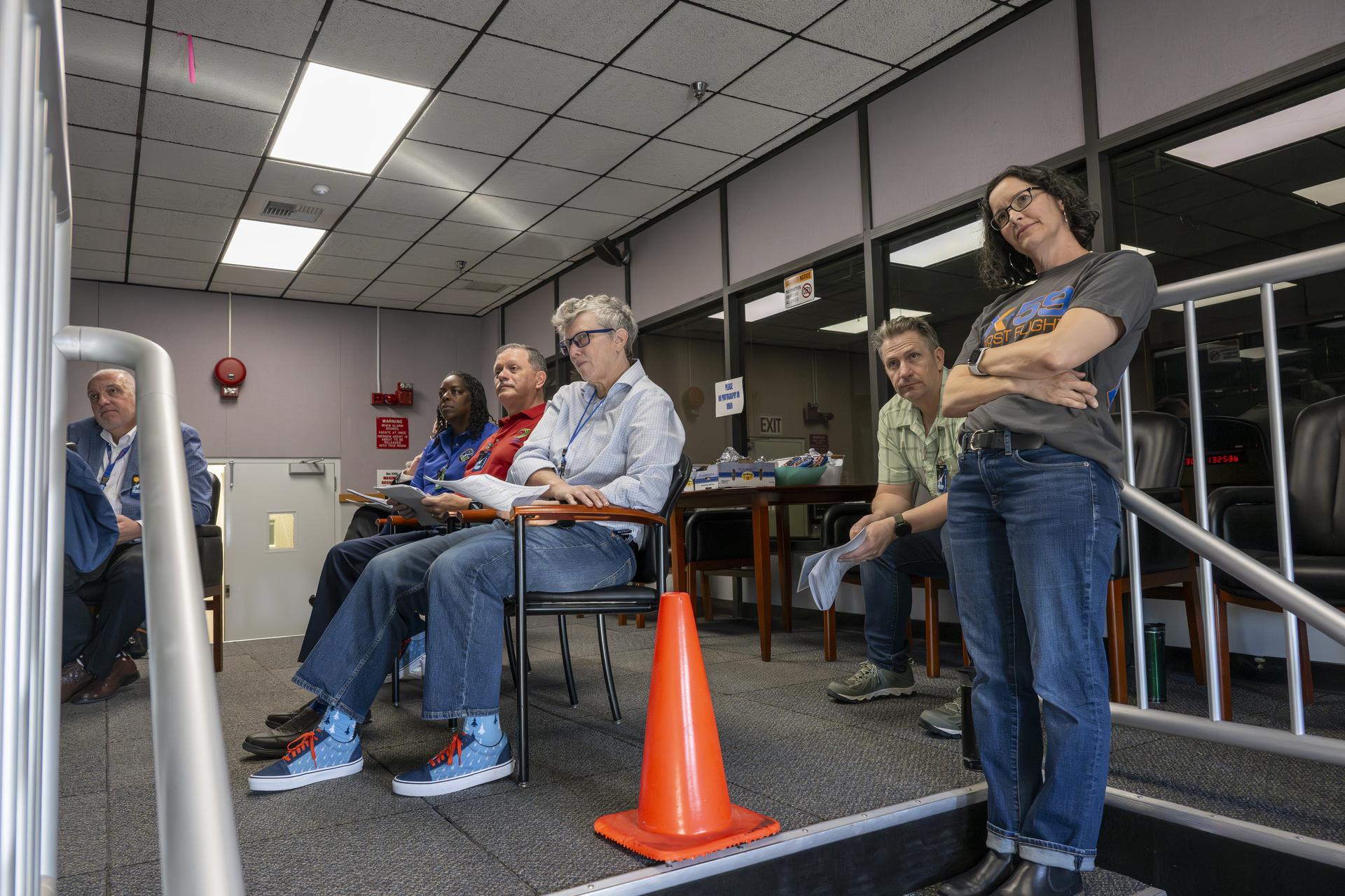
NASA Aeronautics and center leadership gather inside the viewing area of the main control room at NASA’s Armstrong Flight Research Center in Edwards, California, on Tuesday, Oct. 28, 2025. The group watches in real time as flight controllers and engineers receive updates from the aircraft during its historic first flight in support of the agency’s Quesst mission.

NASA Aeronautics and center leadership gather inside the viewing area of the main control room at NASA’s Armstrong Flight Research Center in Edwards, California, on Tuesday, Oct. 28, 2025. The group watches in real time as flight controllers and engineers receive updates from the aircraft during its historic first flight in support of the agency’s Quesst mission.

NASA Aeronautics and center leadership gather inside the viewing area of the main control room at NASA’s Armstrong Flight Research Center in Edwards, California, on Tuesday, Oct. 28, 2025. The group watches in real time as flight controllers and engineers receive updates from the aircraft during its historic first flight in support of the agency’s Quesst mission.
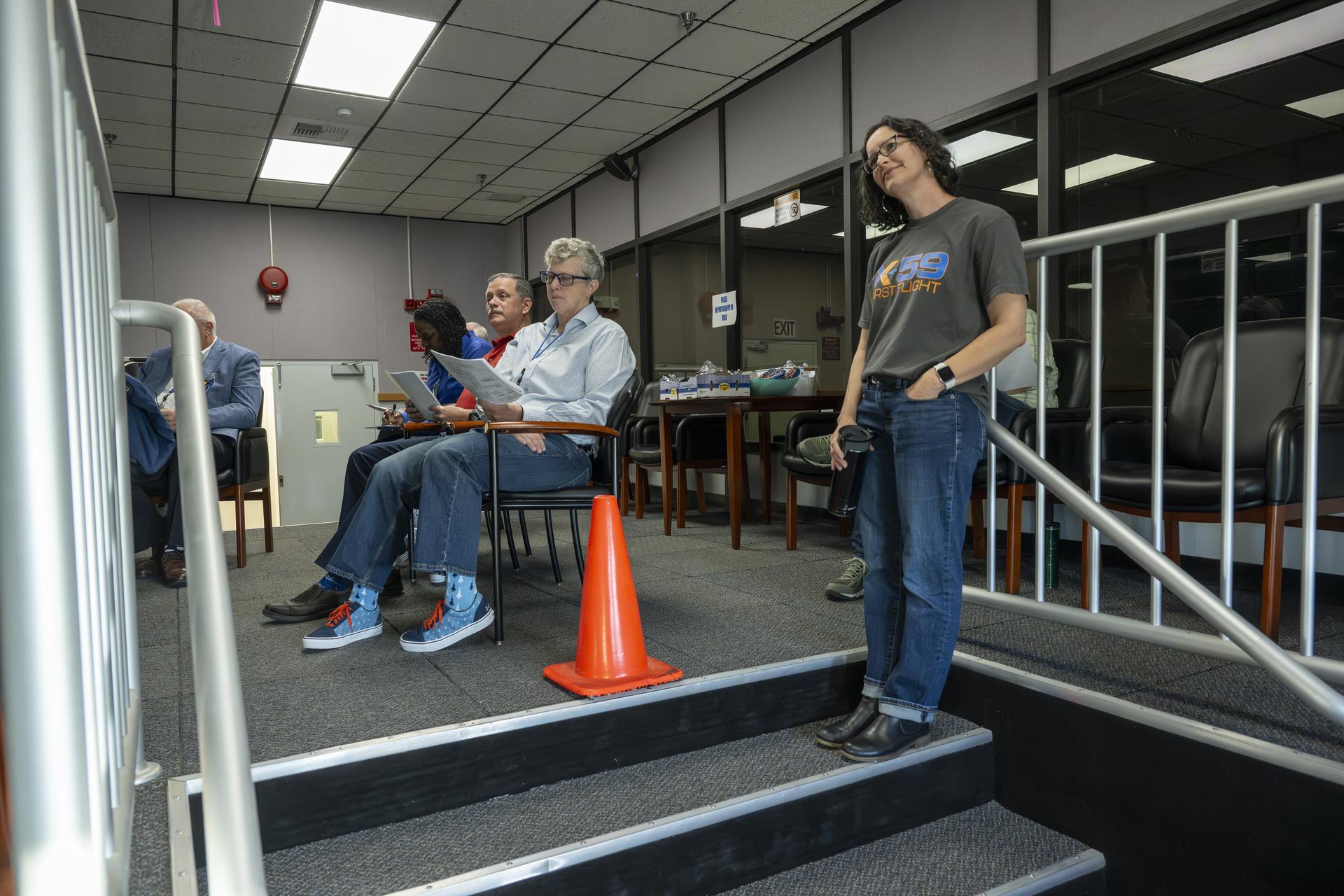
NASA Aeronautics and center leadership gather inside the viewing area of the main control room at NASA’s Armstrong Flight Research Center in Edwards, California, on Tuesday, Oct. 28, 2025. The group watches in real time as flight controllers and engineers receive updates from the aircraft during its historic first flight in support of the agency’s Quesst mission.

NASA Aeronautics and center leadership gather inside the viewing area of the main control room at NASA’s Armstrong Flight Research Center in Edwards, California, on Tuesday, Oct. 28, 2025. The group watches in real time as flight controllers and engineers receive updates from the aircraft during its historic first flight in support of the agency’s Quesst mission.

NASA's F-15B Aeronautics Research Test Bed performs a calibration flight of the shock-sensing probe over Edwards, California, on Aug. 6, 2024. The probe will measure shock waves from NASA's X-59.

NASA's F-15B Aeronautics Research Test Bed performs a calibration flight of the shock-sensing probe over Edwards, California, on Aug. 6, 2024. The probe will measure shock waves from NASA's X-59.

NASA's F-15B Aeronautics Research Test Bed performs a calibration flight of the shock-sensing probe over Edwards, California, on Aug. 6, 2024. The probe will measure shock waves from NASA's X-59.

NASA's F-15B Aeronautics Research Test Bed performs a calibration flight of the shock-sensing probe over Edwards, California, on Aug. 6, 2024. The probe will measure shock waves from NASA's X-59.
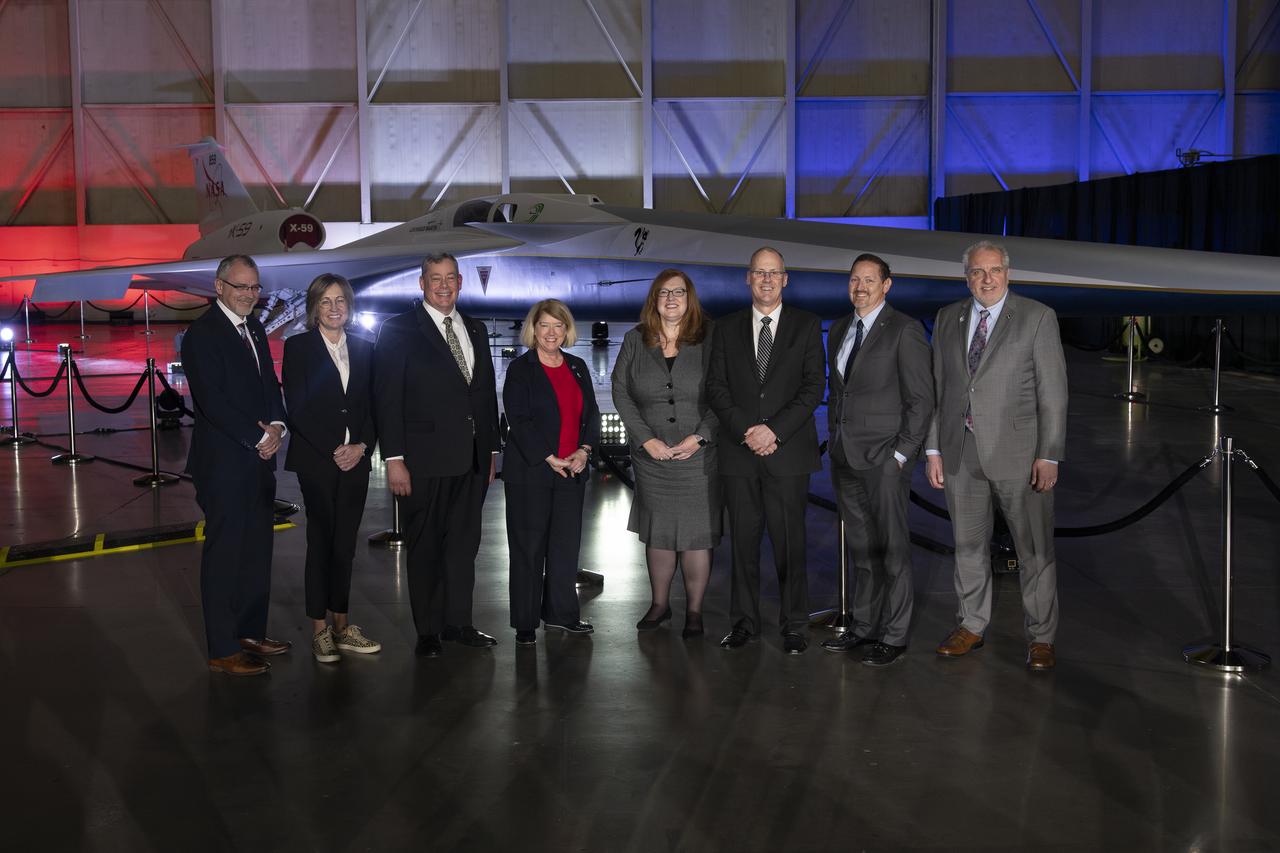
(from left to right) NASA Associate Administrator Jim Free, California Senior Economic Advisor to the Governor Dee Dee Myers, Lockheed Martin Executive Vice President of Aeronautics Greg Ulmer, NASA Deputy Administrator Pam Melroy, Low Boom Flight Demonstrator Project Manager Cathy Bahm, Lockheed Martin X-59 Project Manager David Richardson, Lockheed Martin Skunk Works Vice President and General Manager John Clark, and NASA Associate Administrator for the Aeronautics Research Mission Directorate Bob Pearce pose in front of the agency’s X-59 quiet supersonic research aircraft at a January 12, 2024 event at Lockheed Martin Skunk Works in Palmdale, California. The X-59 is the centerpiece of NASA’s Quesst mission, which seeks to solve one of the major barriers to supersonic flight over land, currently banned in the United States, by making sonic booms quieter.

NASA leadership, ground crew, and support personnel gather to congratulate test pilot Nils Larson following his first flight of the X-59 on Tuesday, Oct. 28, 2025. The moment captures years of design, integration, and ground testing and marks the beginning of a new chapter in NASA’s aeronautics research legacy.

NASA leadership, ground crew, and support personnel gather to congratulate test pilot Nils Larson following his first flight of the X-59 on Tuesday, Oct. 28, 2025. The moment captures years of design, integration, and ground testing and marks the beginning of a new chapter in NASA’s aeronautics research legacy.

NASA leadership, ground crew, and support personnel gather to congratulate test pilot Nils Larson following his first flight of the X-59 on Tuesday, Oct. 28, 2025. The moment captures years of design, integration, and ground testing and marks the beginning of a new chapter in NASA’s aeronautics research legacy.

NASA leadership, ground crew, and support personnel gather to congratulate test pilot Nils Larson following his first flight of the X-59 on Tuesday, Oct. 28, 2025. The moment captures years of design, integration, and ground testing and marks the beginning of a new chapter in NASA’s aeronautics research legacy.

NASA leadership, ground crew, and support personnel gather to congratulate test pilot Nils Larson following his first flight of the X-59 on Tuesday, Oct. 28, 2025. The moment captures years of design, integration, and ground testing and marks the beginning of a new chapter in NASA’s aeronautics research legacy.

NASA leadership, ground crew, and support personnel gather to congratulate test pilot Nils Larson following his first flight of the X-59 on Tuesday, Oct. 28, 2025. The moment captures years of design, integration, and ground testing and marks the beginning of a new chapter in NASA’s aeronautics research legacy.
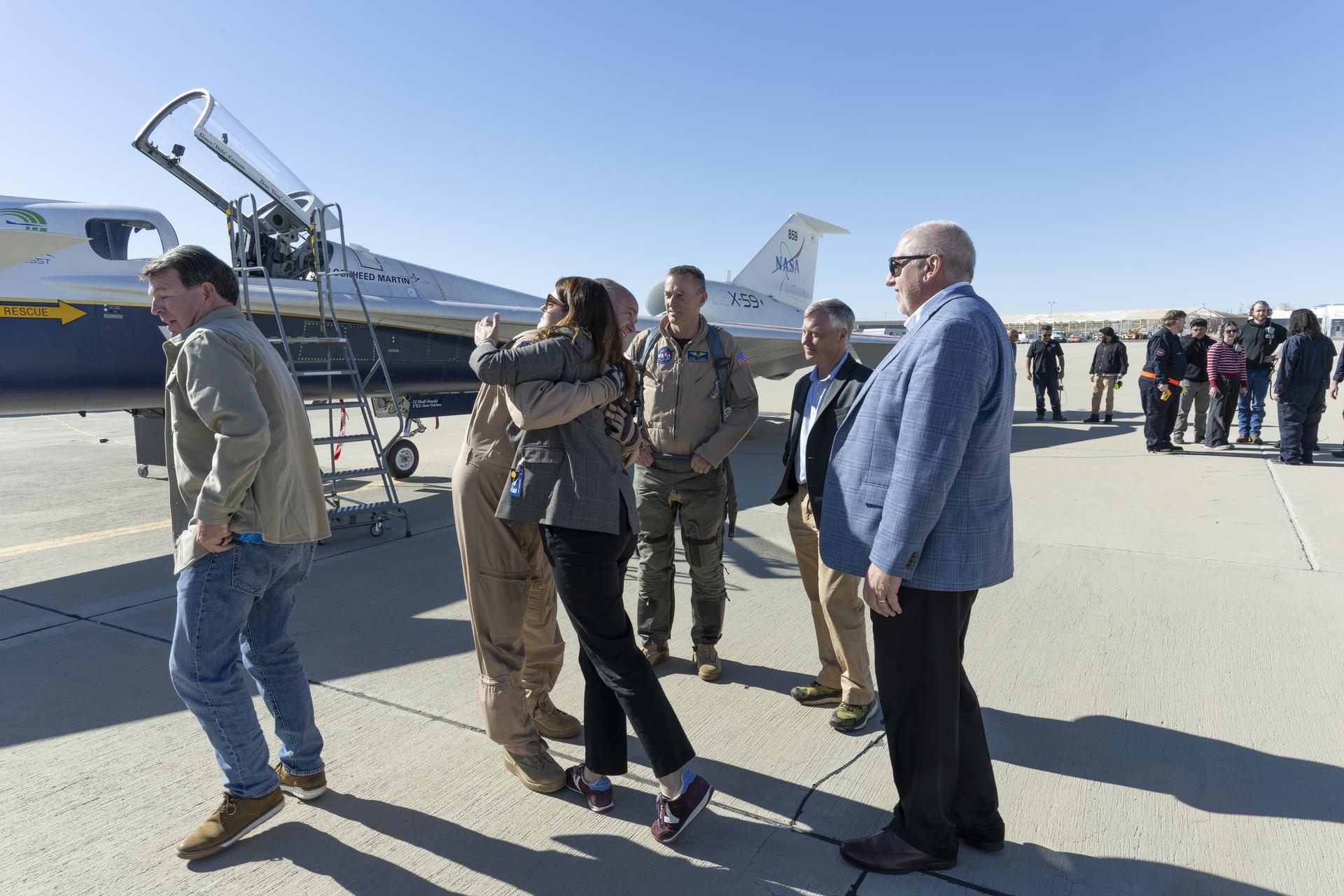
NASA leadership, ground crew, and support personnel gather to congratulate test pilot Nils Larson following his first flight of the X-59 on Tuesday, Oct. 28, 2025. The moment captures years of design, integration, and ground testing and marks the beginning of a new chapter in NASA’s aeronautics research legacy.

NASA leadership, ground crew, and support personnel gather to congratulate test pilot Nils Larson following his first flight of the X-59 on Tuesday, Oct. 28, 2025. The moment captures years of design, integration, and ground testing and marks the beginning of a new chapter in NASA’s aeronautics research legacy.

NASA leadership, ground crew, and support personnel gather to congratulate test pilot Nils Larson following his first flight of the X-59 on Tuesday, Oct. 28, 2025. The moment captures years of design, integration, and ground testing and marks the beginning of a new chapter in NASA’s aeronautics research legacy.

NASA leadership, ground crew, and support personnel gather to congratulate test pilot Nils Larson following his first flight of the X-59 on Tuesday, Oct. 28, 2025. The moment captures years of design, integration, and ground testing and marks the beginning of a new chapter in NASA’s aeronautics research legacy.
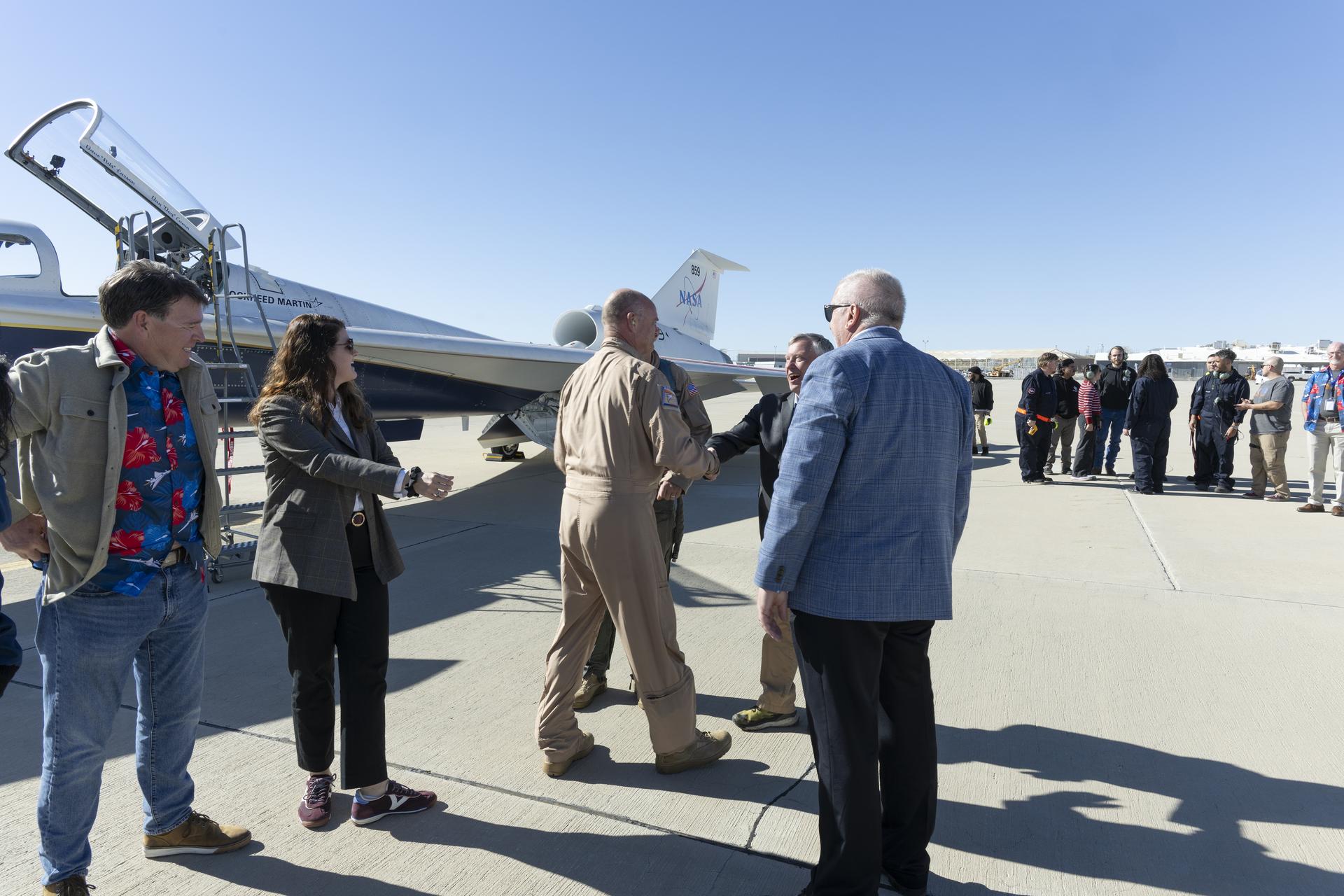
NASA leadership, ground crew, and support personnel gather to congratulate test pilot Nils Larson following his first flight of the X-59 on Tuesday, Oct. 28, 2025. The moment captures years of design, integration, and ground testing and marks the beginning of a new chapter in NASA’s aeronautics research legacy.
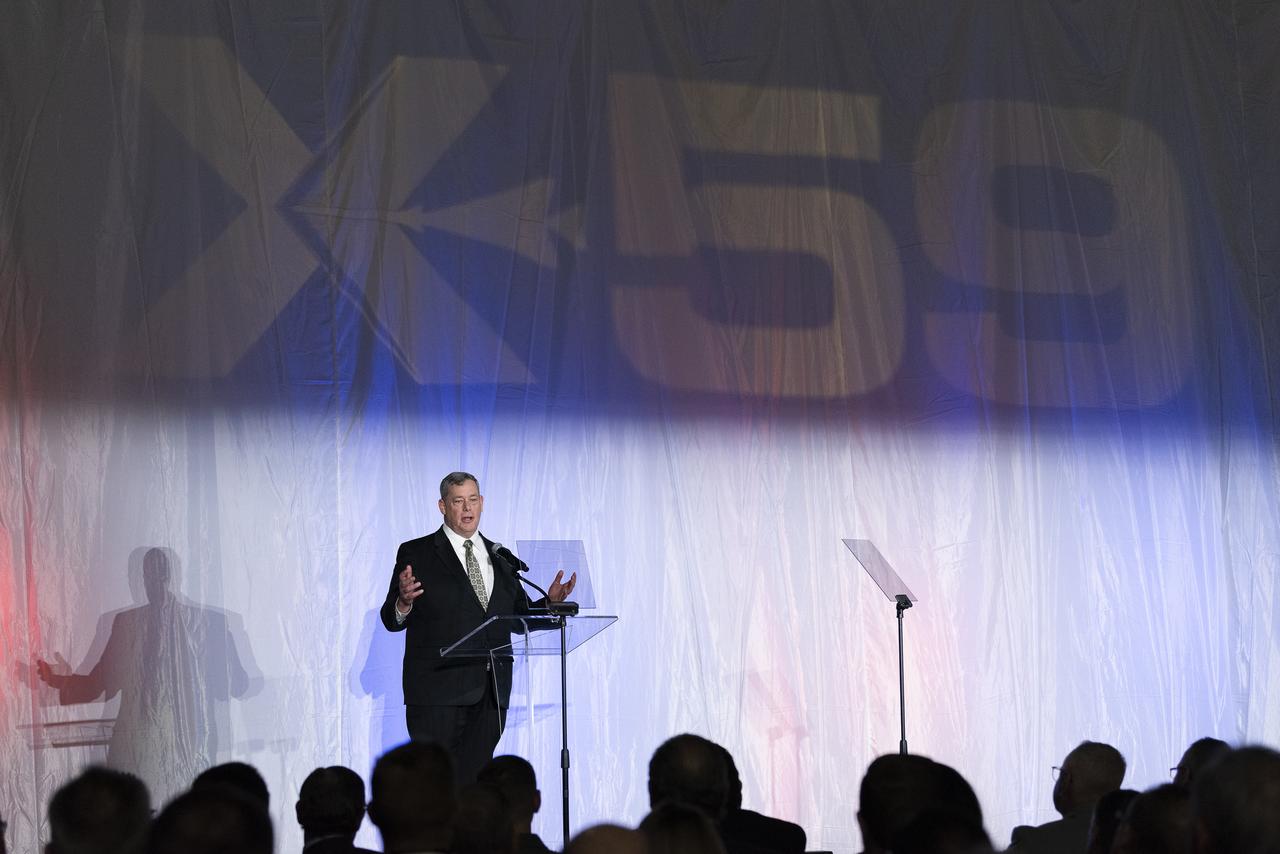
Lockheed Martin Aeronautics Executive Vice President Greg Ulmer speaks on stage prior to the unveiling of the agency’s X-59 quiet supersonic research aircraft at a January 12, 2024 event at Lockheed Martin Skunk Works in Palmdale, California. The X-59 is the centerpiece of NASA’s Quesst mission, which seeks to solve one of the major barriers to supersonic flight over land, currently banned in the United States, by making sonic booms quieter.
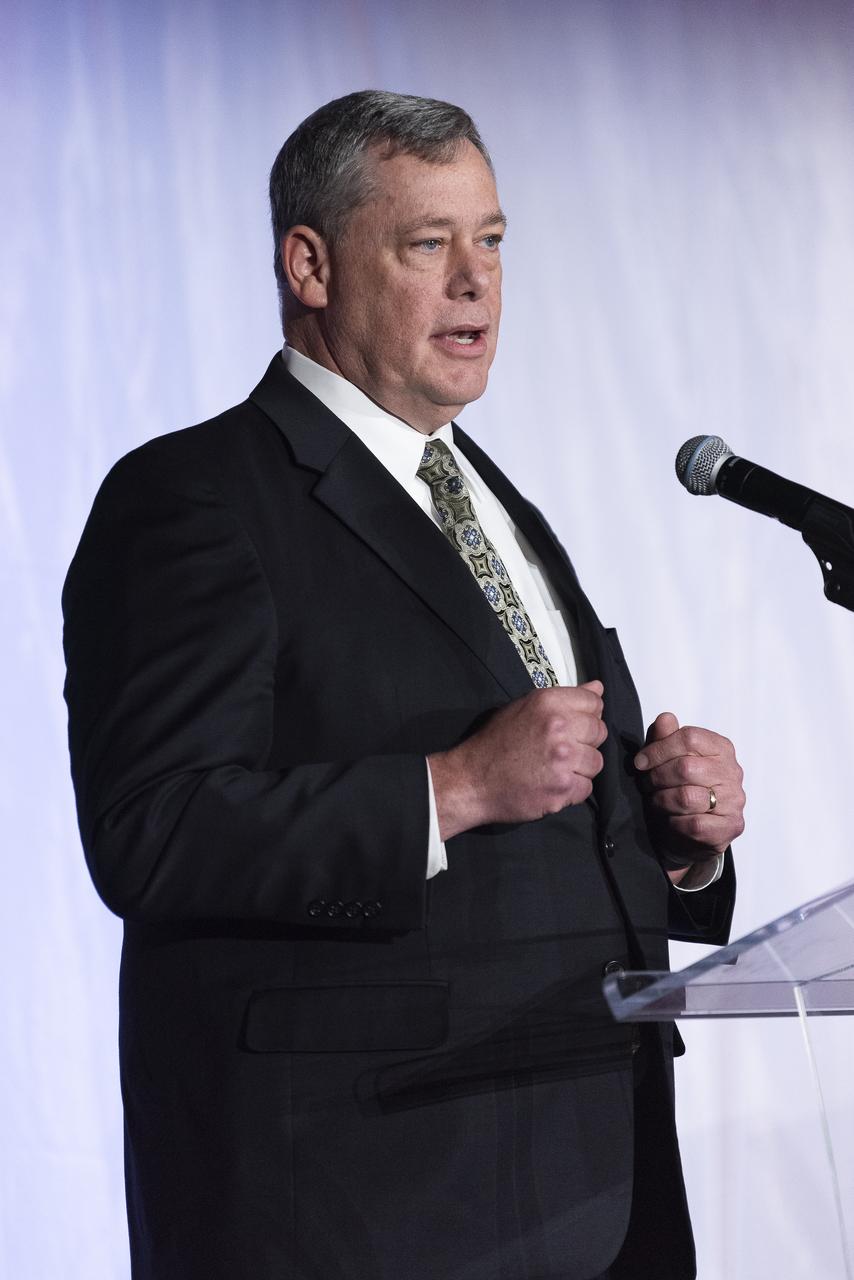
Lockheed Martin Aeronautics Executive Vice President Greg Ulmer speaks on stage prior to the unveiling of the agency’s X-59 quiet supersonic research aircraft at a January 12, 2024 event at Lockheed Martin Skunk Works in Palmdale, California. The X-59 is the centerpiece of NASA’s Quesst mission, which seeks to solve one of the major barriers to supersonic flight over land, currently banned in the United States, by making sonic booms quieter.
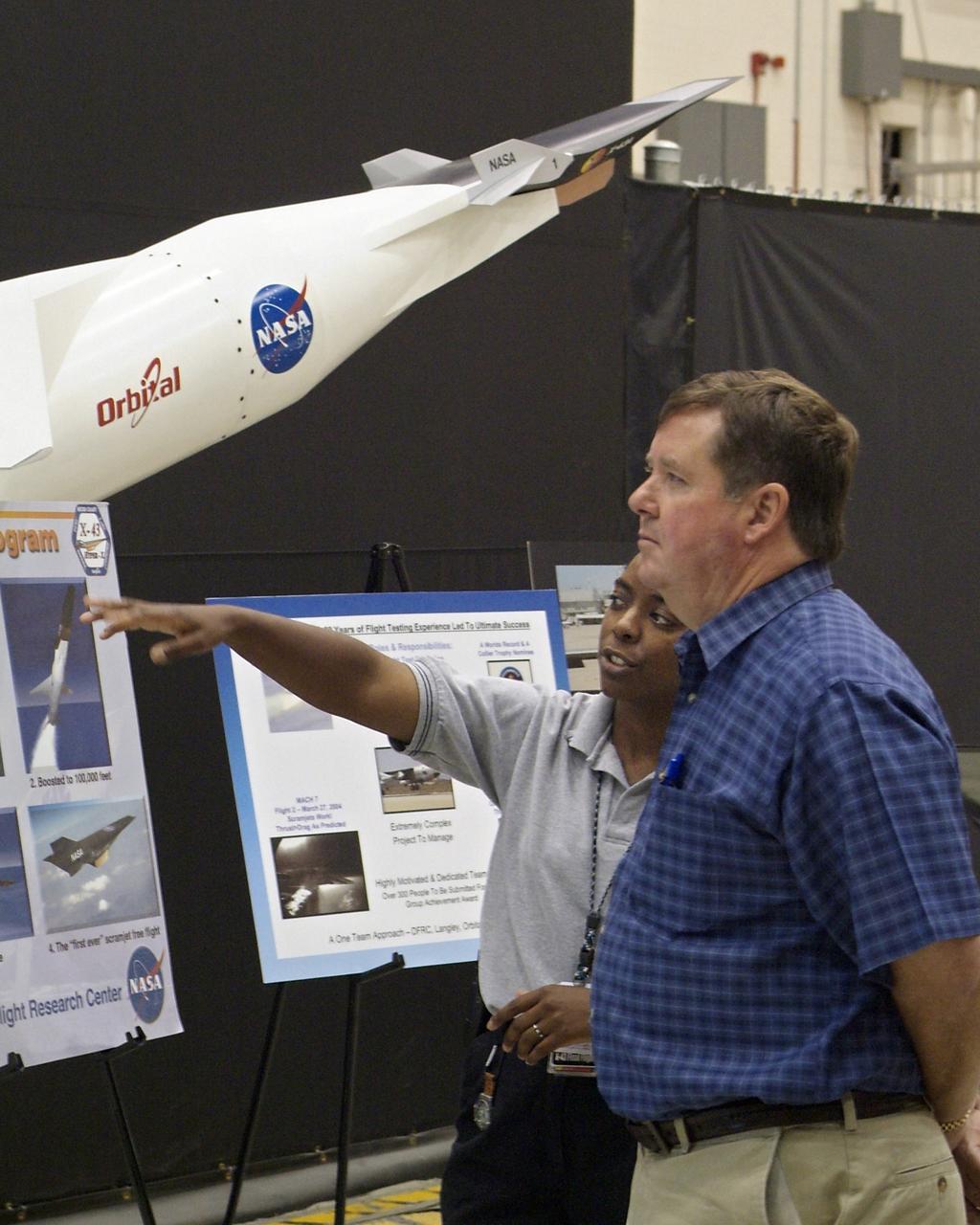
Rep. Ken Calvert, (R-Calif.), chairman of the House Subcommittee on Space and Aeronautics, received an update on the mission of NASA's Dryden Flight Research Center during a visit on June 2, 2005. Rep. Calvert, accompanied by several staff members, was briefed by center management on the Dryden's role as a flight research institution, and then reviewed some of the center's recent, current and upcoming flight research projects during a tour of the facility. During the afternoon, Rep. Calvert received similar briefings on a variety of projects at several aerospace development firms at the Civilian Flight Test Center in Mojave. Rep. Calvert's tour of NASA Dryden was the second in a series of visits to all 10 NASA field centers to better acquaint him with the roles and responsibilities of each center.
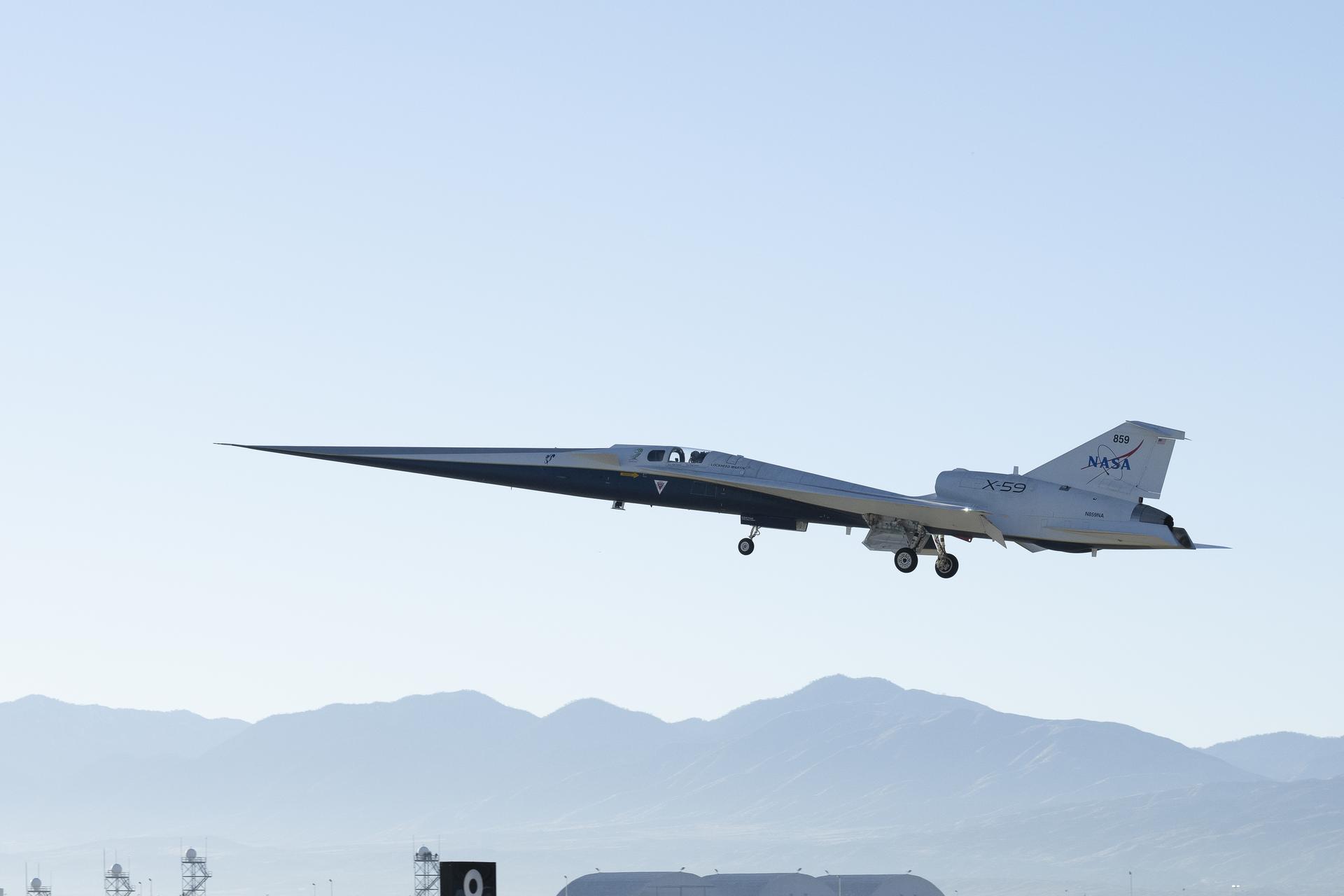
NASA’s X-59 quiet supersonic research aircraft lifts off for its first flight Tuesday, Oct. 28, 2025, from U.S. Air Force Plant 42 in Palmdale, California. The aircraft’s first flight marks the start of flight testing for NASA’s Quesst mission, the result of years of design, integration, and ground testing and begins a new chapter in NASA’s aeronautics research legacy.

NASA’s X-59 quiet supersonic research aircraft lifts off for its first flight Tuesday, Oct. 28, 2025, from U.S. Air Force Plant 42 in Palmdale, California. The aircraft’s first flight marks the start of flight testing for NASA’s Quesst mission, the result of years of design, integration, and ground testing and begins a new chapter in NASA’s aeronautics research legacy.

NASA’s X-59 quiet supersonic research aircraft took off for its first flight Tuesday, Oct. 28, 2025, from U.S. Air Force Plant 42 in Palmdale, California. The aircraft’s first flight marks the start of flight testing for NASA’s Quesst mission and begins a new chapter in NASA’s aeronautics research legacy.
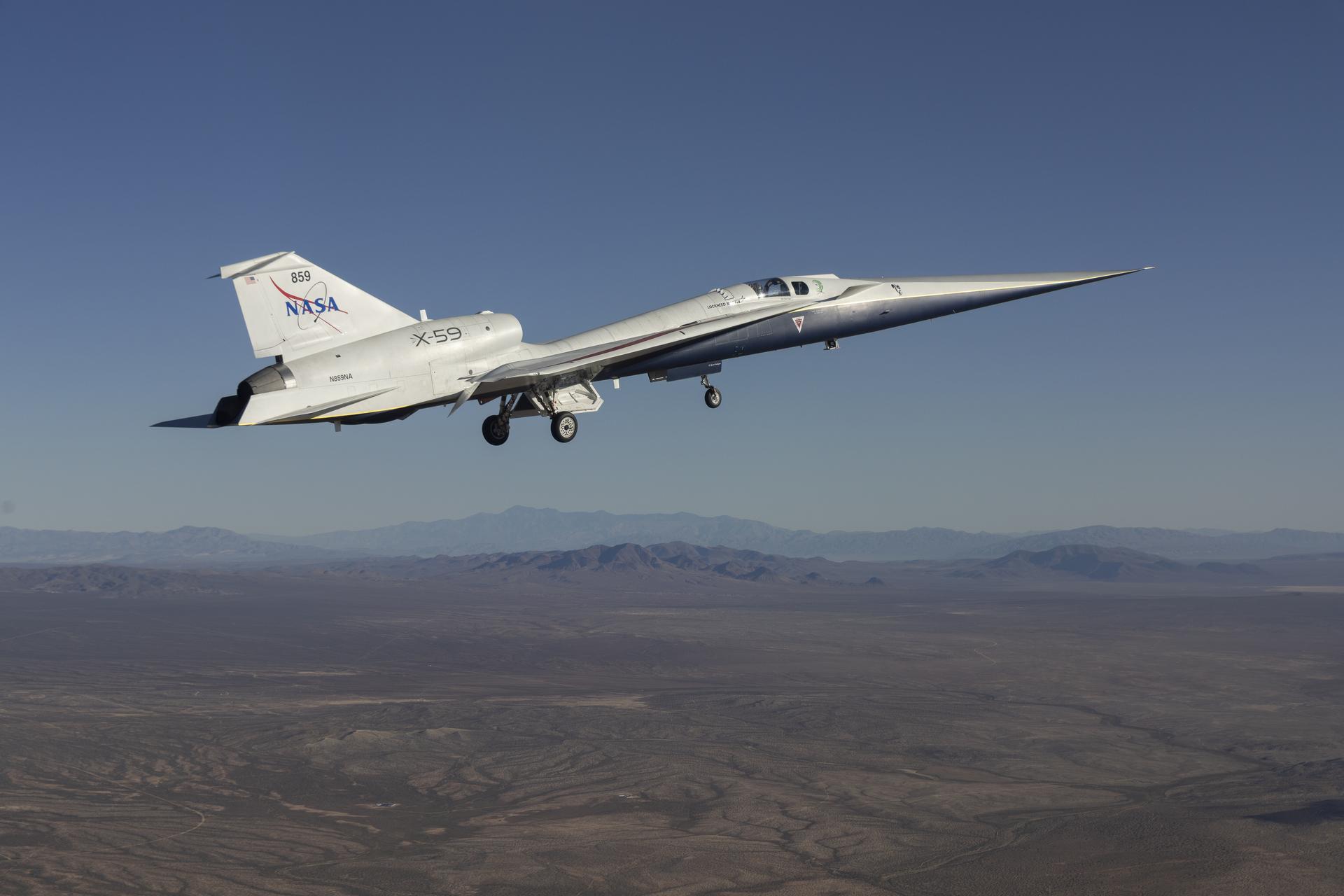
NASA’s X-59 quiet supersonic research aircraft lifts off for its first flight Tuesday, Oct. 28, 2025, from U.S. Air Force Plant 42 in Palmdale, California. The aircraft’s first flight marks the start of flight testing for NASA’s Quesst mission, the result of years of design, integration, and ground testing and begins a new chapter in NASA’s aeronautics research legacy.

NASA’s X-59 quiet supersonic research aircraft lifts off for its first flight Tuesday, Oct. 28, 2025, from U.S. Air Force Plant 42 in Palmdale, California. The aircraft’s first flight marks the start of flight testing for NASA’s Quesst mission, the result of years of design, integration, and ground testing and begins a new chapter in NASA’s aeronautics research legacy.

NASA’s X-59 quiet supersonic research aircraft lifts off for its first flight Tuesday, Oct. 28, 2025, from U.S. Air Force Plant 42 in Palmdale, California. The aircraft’s first flight marks the start of flight testing for NASA’s Quesst mission, the result of years of design, integration, and ground testing and begins a new chapter in NASA’s aeronautics research legacy.

NASA’s X-59 quiet supersonic research aircraft lifts off for its first flight Tuesday, Oct. 28, 2025, from U.S. Air Force Plant 42 in Palmdale, California. The aircraft’s first flight marks the start of flight testing for NASA’s Quesst mission, the result of years of design, integration, and ground testing and begins a new chapter in NASA’s aeronautics research legacy.
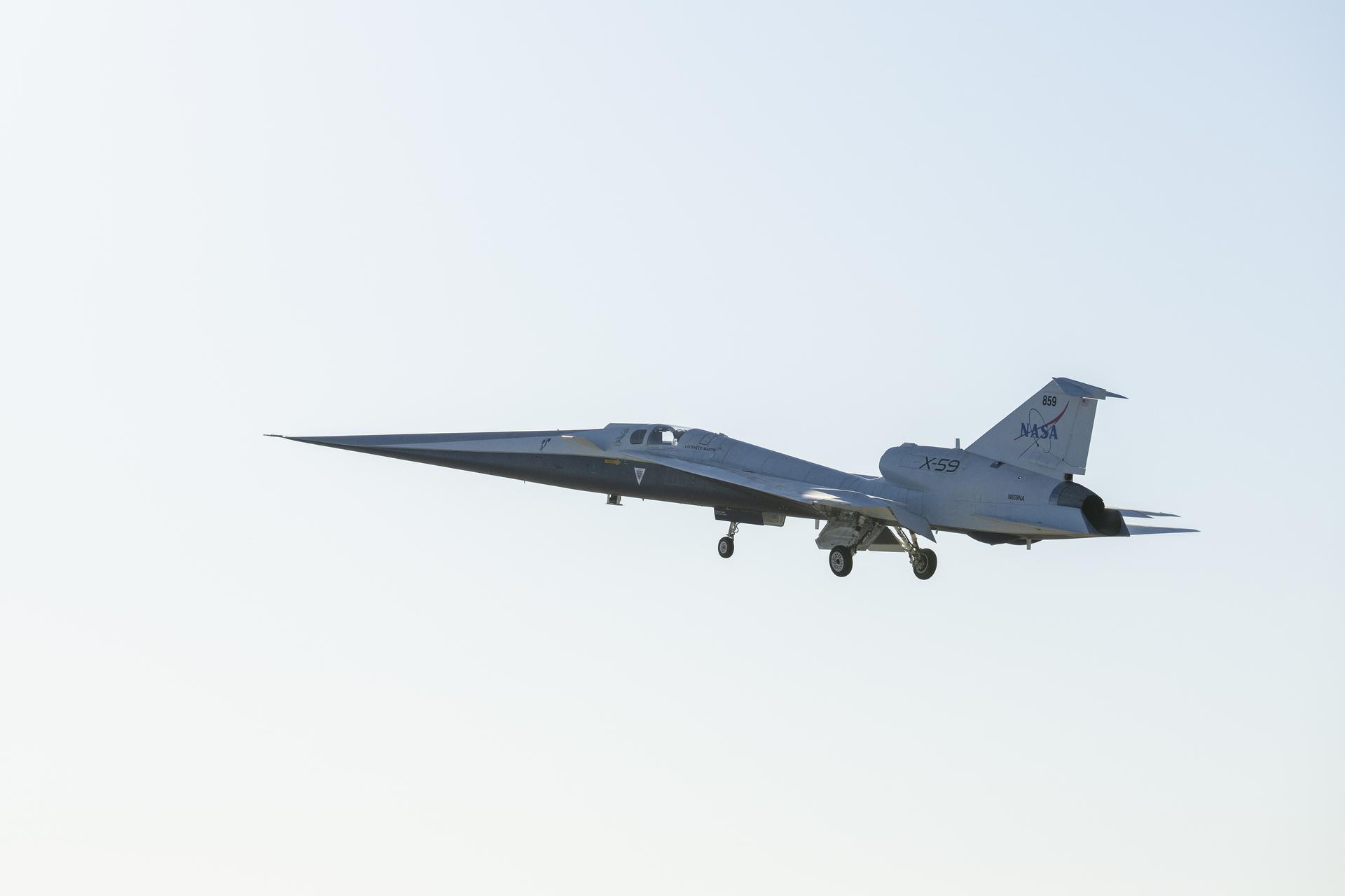
NASA’s X-59 quiet supersonic research aircraft took off for its first flight Tuesday, Oct. 28, 2025, from U.S. Air Force Plant 42 in Palmdale, California. The aircraft’s first flight marks the start of flight testing for NASA’s Quesst mission and begins a new chapter in NASA’s aeronautics research legacy.

NASA’s X-59 quiet supersonic research aircraft lifts off for its first flight Tuesday, Oct. 28, 2025, from U.S. Air Force Plant 42 in Palmdale, California. The aircraft’s first flight marks the start of flight testing for NASA’s Quesst mission, the result of years of design, integration, and ground testing and begins a new chapter in NASA’s aeronautics research legacy.

NASA’s X-59 quiet supersonic research aircraft lifts off for its first flight Tuesday, Oct. 28, 2025, from U.S. Air Force Plant 42 in Palmdale, California. The aircraft’s first flight marks the start of flight testing for NASA’s Quesst mission, the result of years of design, integration, and ground testing and begins a new chapter in NASA’s aeronautics research legacy.

NASA’s X-59 quiet supersonic research aircraft lifts off for its first flight Tuesday, Oct. 28, 2025, from U.S. Air Force Plant 42 in Palmdale, California. The aircraft’s first flight marks the start of flight testing for NASA’s Quesst mission, the result of years of design, integration, and ground testing and begins a new chapter in NASA’s aeronautics research legacy.
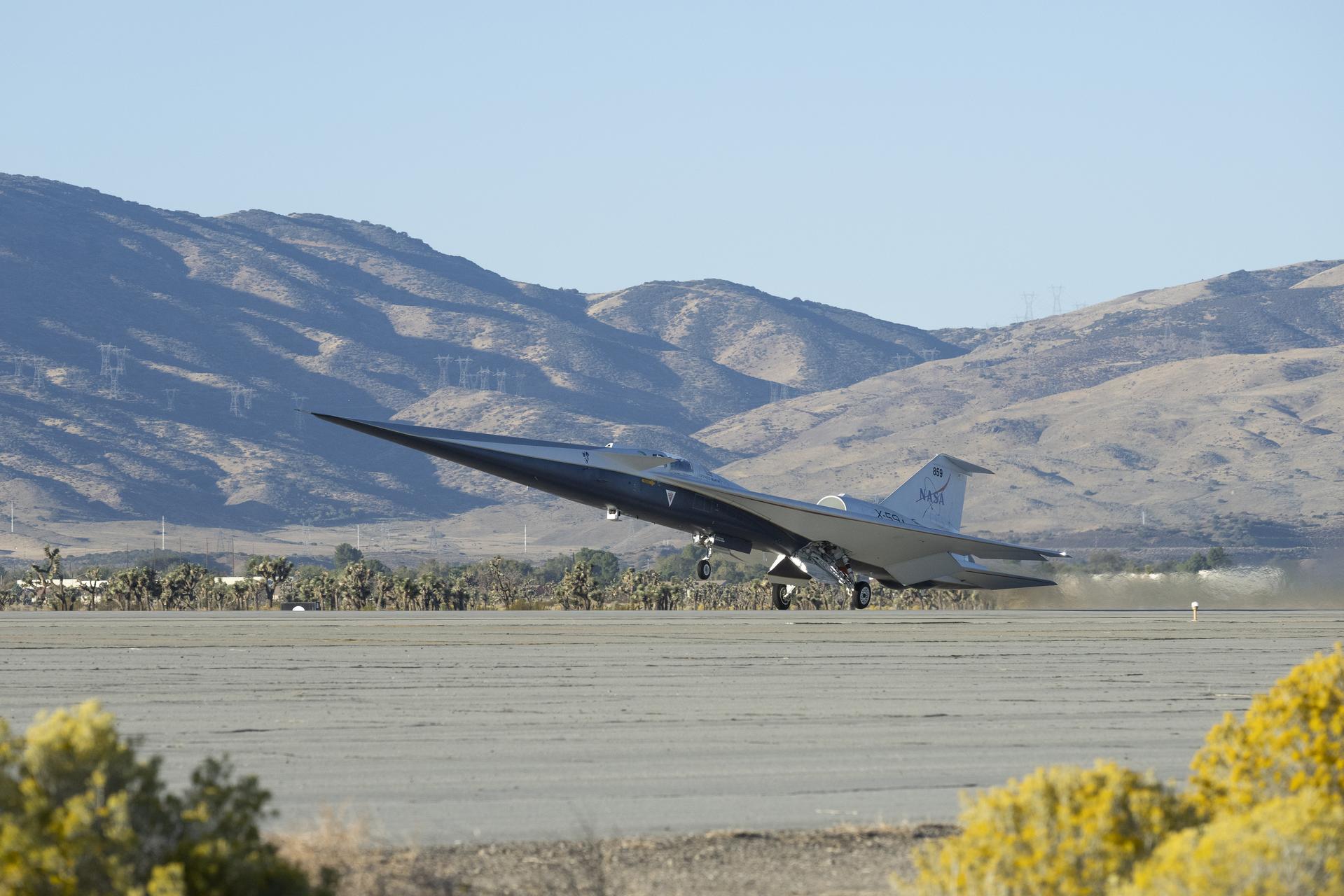
NASA’s X-59 quiet supersonic research aircraft lifts off for its first flight Tuesday, Oct. 28, 2025, from U.S. Air Force Plant 42 in Palmdale, California. The aircraft’s first flight marks the start of flight testing for NASA’s Quesst mission, the result of years of design, integration, and ground testing and begins a new chapter in NASA’s aeronautics research legacy.

NASA’s X-59 quiet supersonic research aircraft lifts off for its first flight Tuesday, Oct. 28, 2025, from U.S. Air Force Plant 42 in Palmdale, California. The aircraft’s first flight marks the start of flight testing for NASA’s Quesst mission, the result of years of design, integration, and ground testing and begins a new chapter in NASA’s aeronautics research legacy.
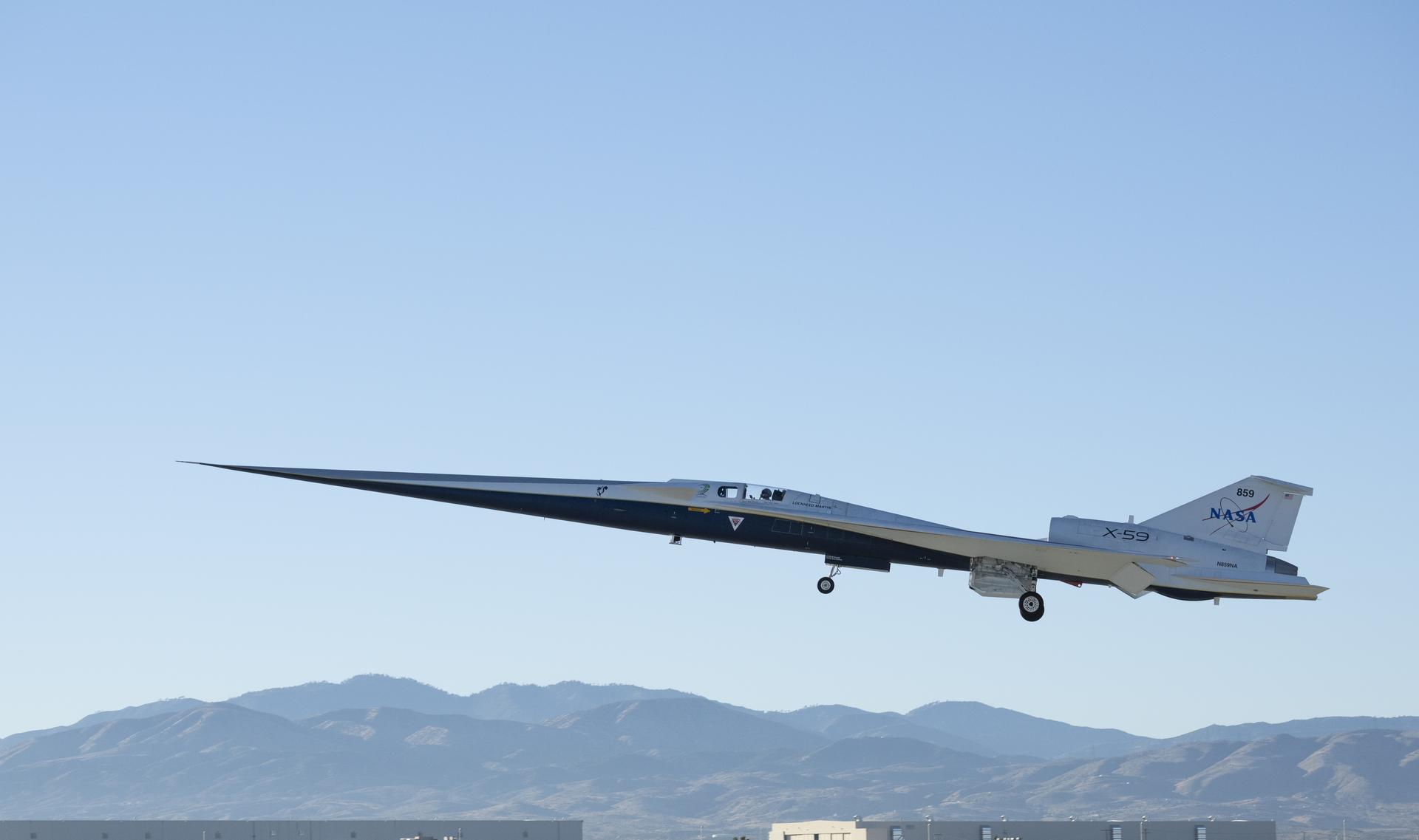
NASA’s X-59 quiet supersonic research aircraft lifts off for its first flight Tuesday, Oct. 28, 2025, from U.S. Air Force Plant 42 in Palmdale, California. The aircraft’s first flight marks the start of flight testing for NASA’s Quesst mission, the result of years of design, integration, and ground testing and begins a new chapter in NASA’s aeronautics research legacy.

NASA’s X-59 quiet supersonic research aircraft took off for its first flight Tuesday, Oct. 28, 2025, from U.S. Air Force Plant 42 in Palmdale, California. The aircraft’s first flight marks the start of flight testing for NASA’s Quesst mission and begins a new chapter in NASA’s aeronautics research legacy.
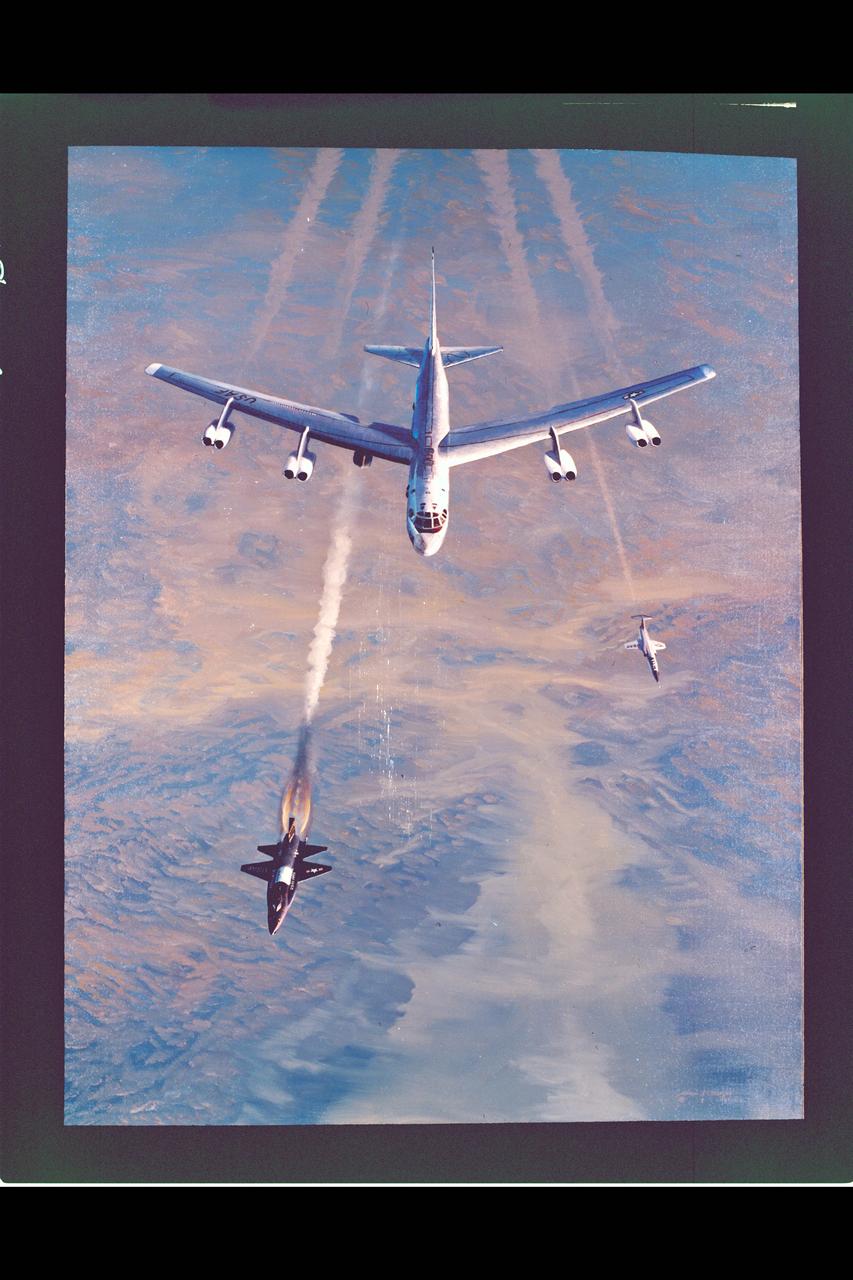
Artist: W.S. Phillips Aeronautics Art: X-15 Hypersonic Final (HQ ref: 84-HC-281 & 84-H-285)
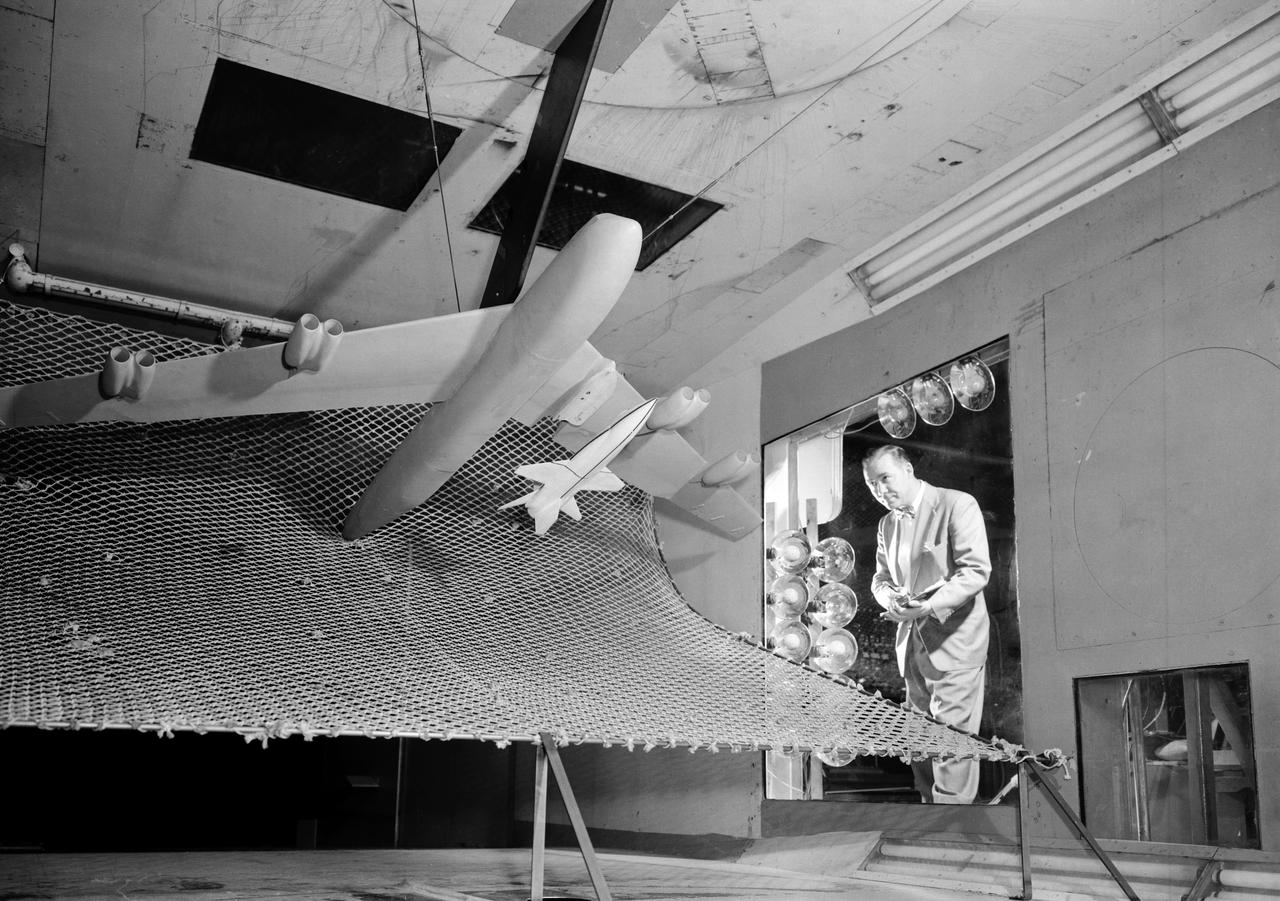
A one-twentieth scale model of the X-15 originally suspended beneath the wing of a B-52 is observed by a scientist of the National Aeronautics and Space Administration (NASA) as it leaves the bomber model in tests to determine the release characteristics and drop motion of the research airplane. Caption: The aerodynamics of air launching the North American X-15 being investigated in the 300MPH Low Speed 7x10 Tunnel, about 1957. Photograph published in Engineer in Charge: A History of the Langley Aeronautical Laboratory, 1917-1958 by James R. Hansen. Page 366. Photograph also published in Sixty Years of Aeronautical Research 1917-1977 By David A. Anderton. A NASA publication. Page 49.
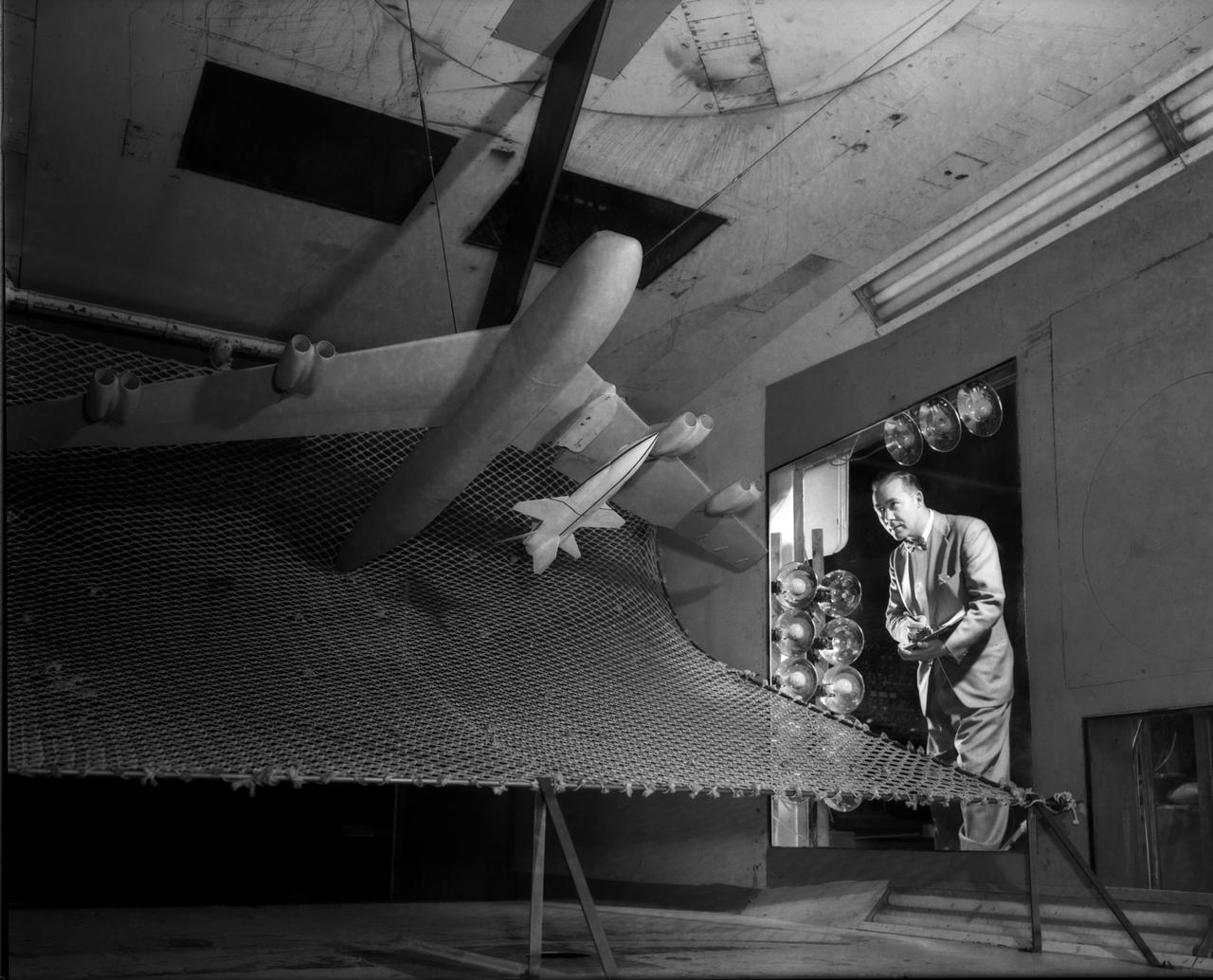
A one-twentieth scale model of the X-15 originally suspended beneath the wing of a B-52 is observed by a scientist of the National Aeronautics and Space Administration (NASA) as it leaves the bomber model in tests to determine the release characteristics and drop motion of the research airplane. Caption: The aerodynamics of air launching the North American X-15 being investigated in the 300MPH Low Speed 7x10 Tunnel, about 1957. Photograph published in Engineer in Charge: A History of the Langley Aeronautical Laboratory, 1917-1958 by James R. Hansen. Page 366. Photograph also published in Sixty Years of Aeronautical Research 1917-1977 By David A. Anderton. A NASA publication. Page 49.
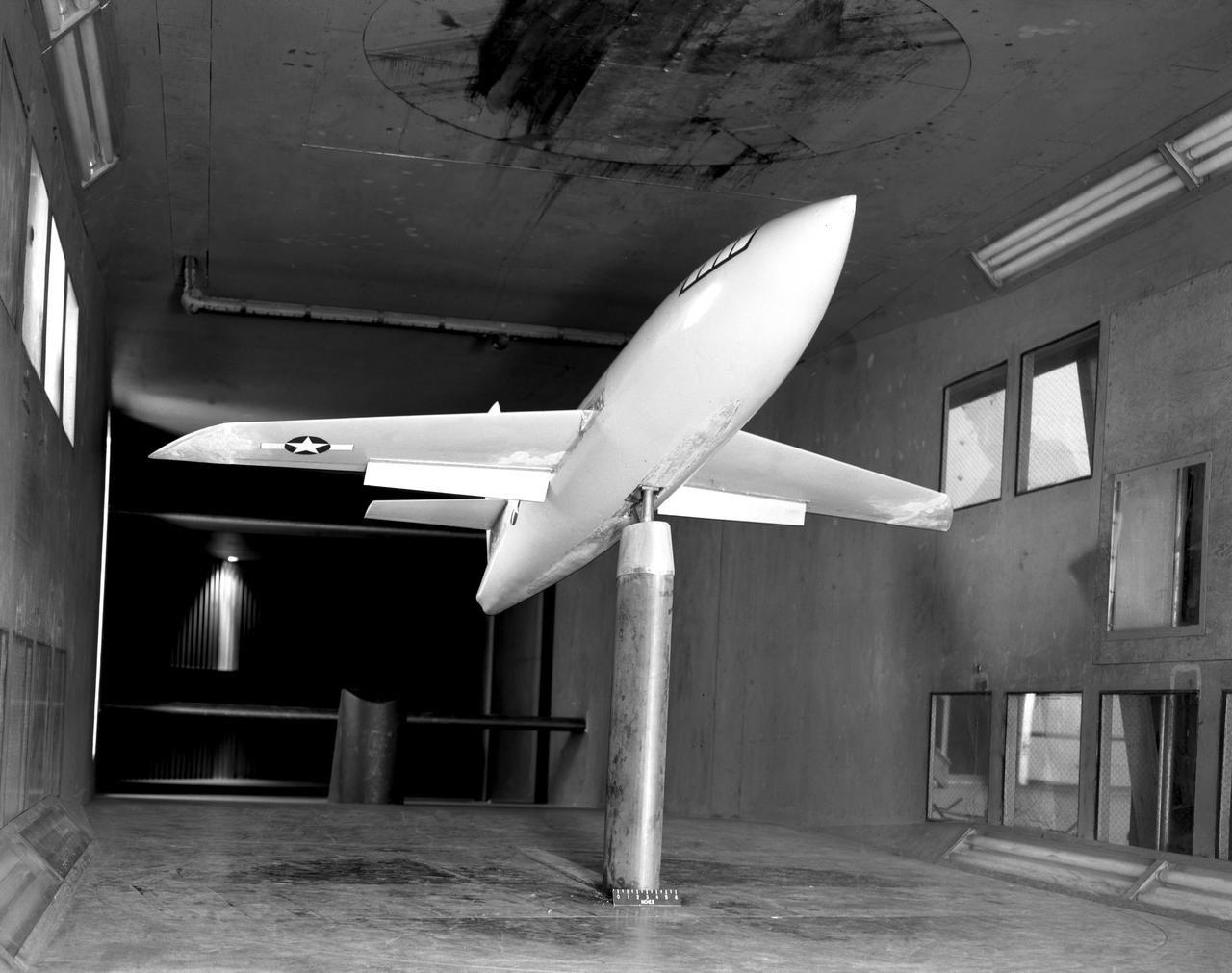
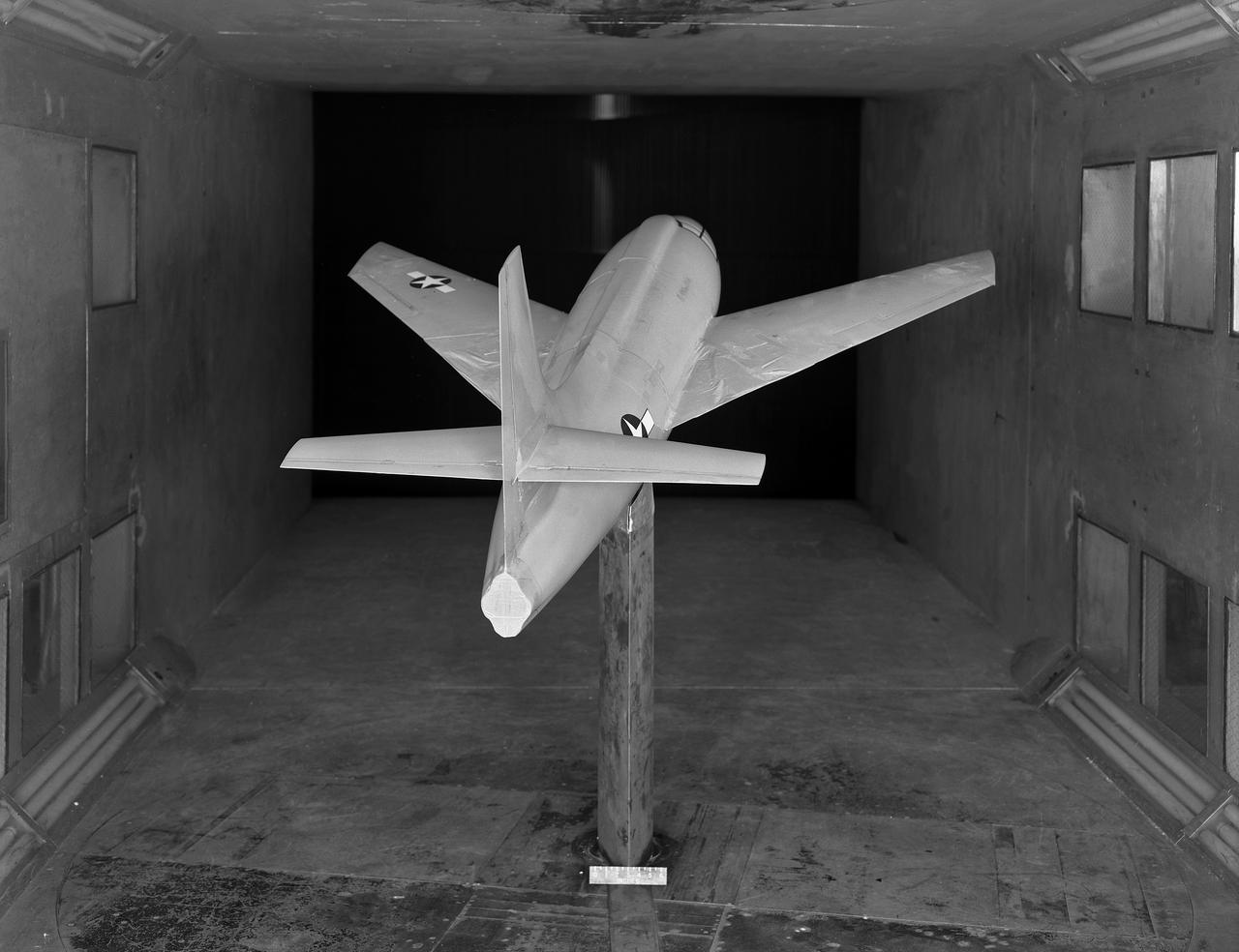
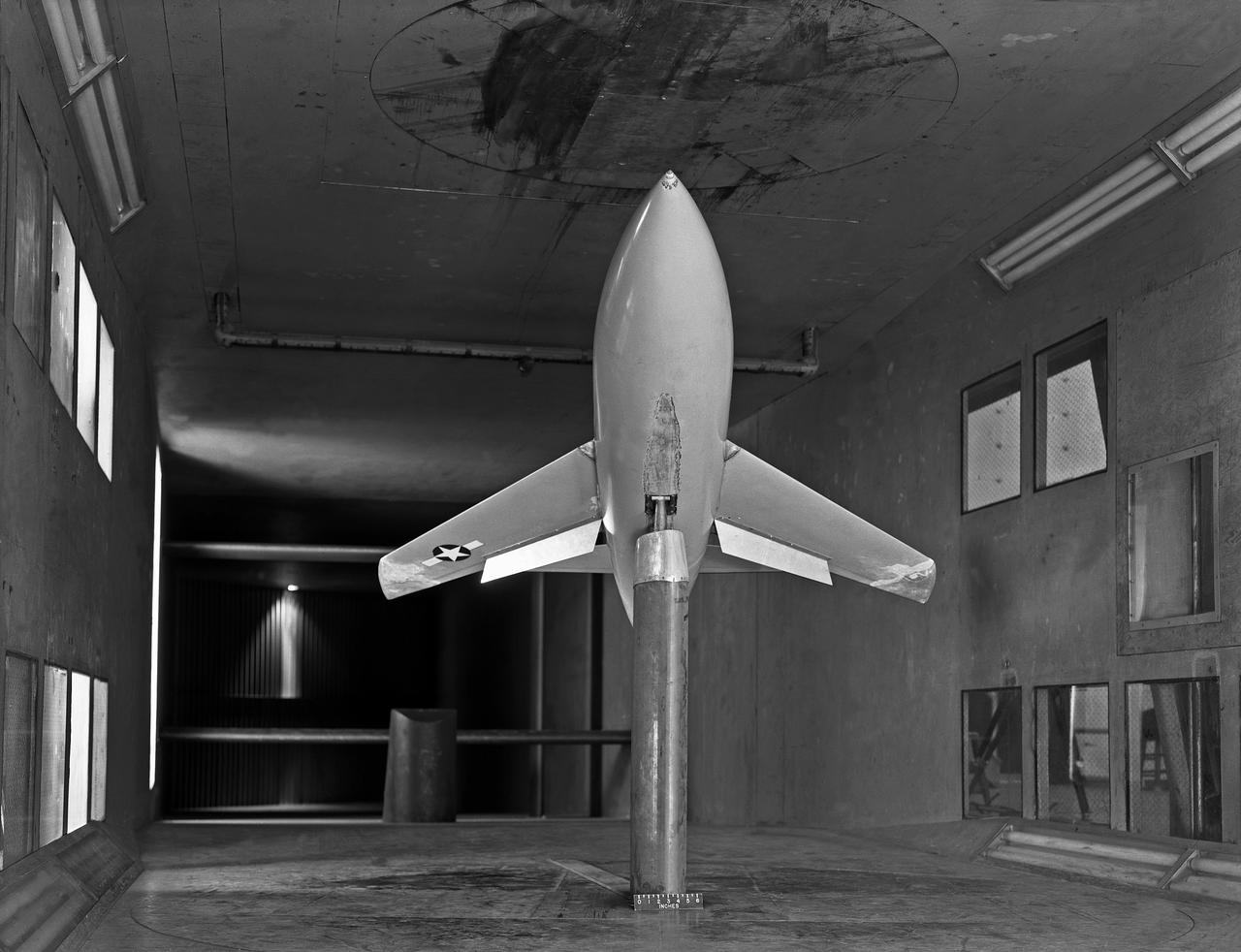
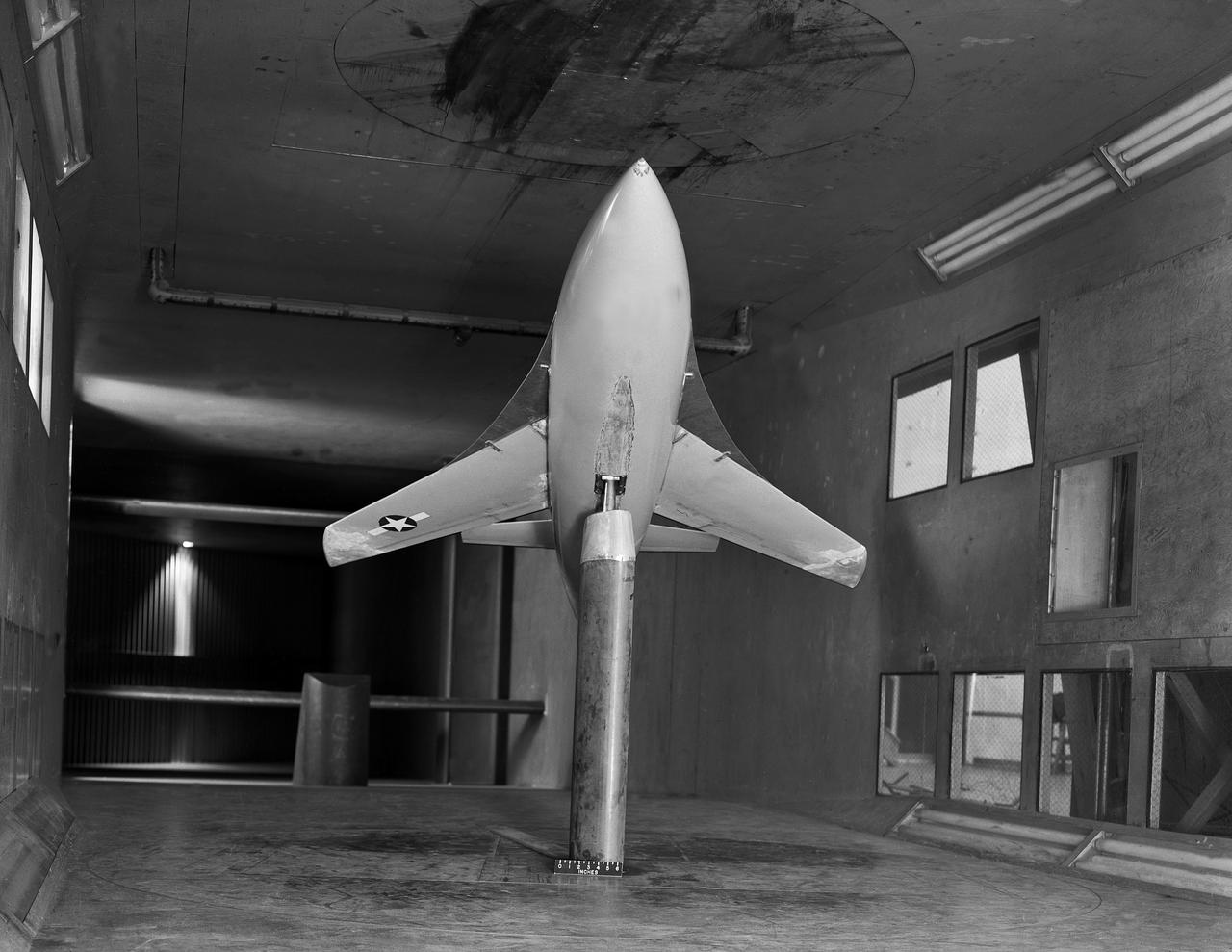
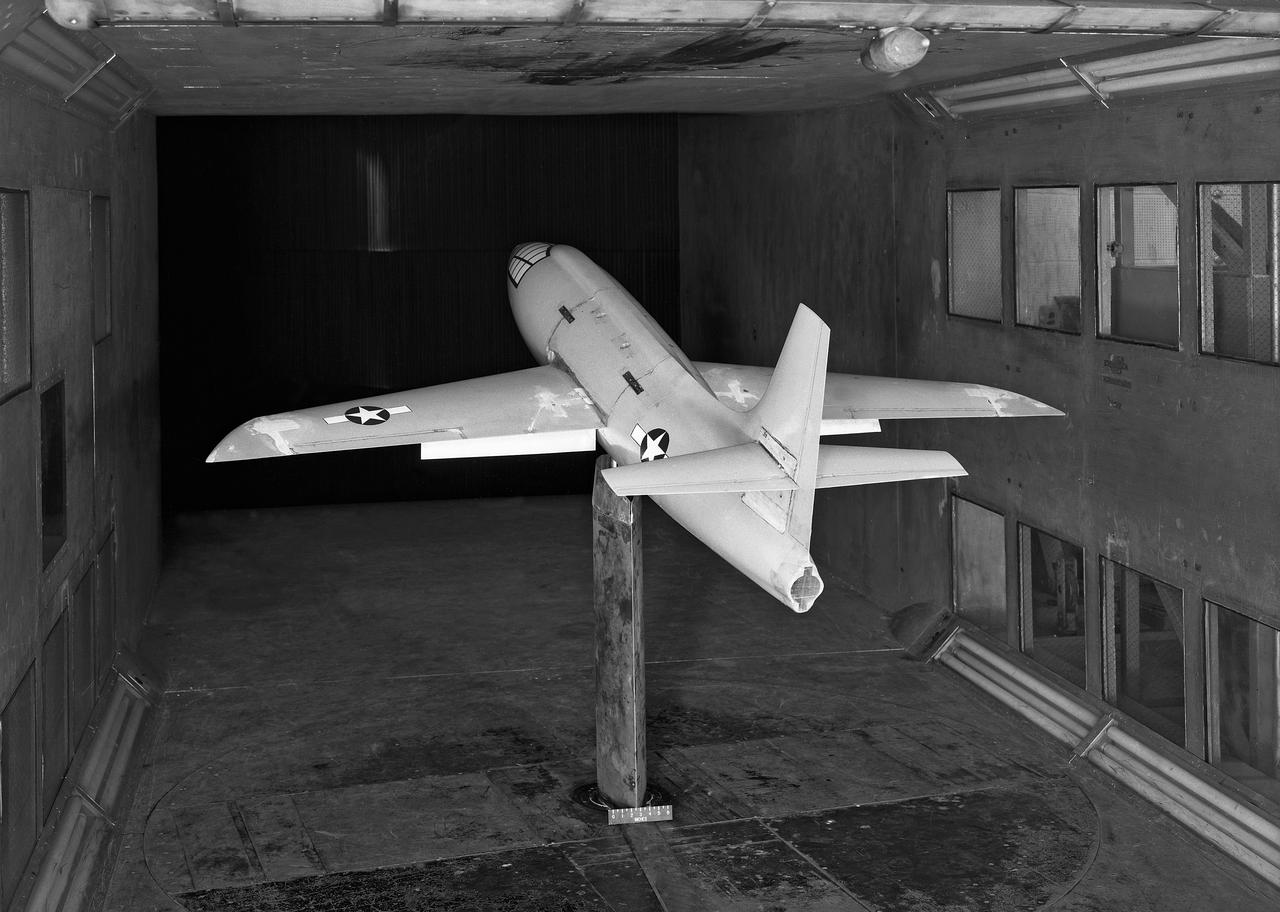
Modified Bell X-1 model pioneered variable-sweep studies in 1947. Photograph published in Sixty Years of Aeronautical Research 1917-1977 By David A. Anderton. A NASA publication, page 52.Modified Bell X-1 model pioneered variable-sweep studies in 1947. Photograph published in Sixty Years of Aeronautical Research 1917-1977 By David A. Anderton. A NASA publication, page 52.
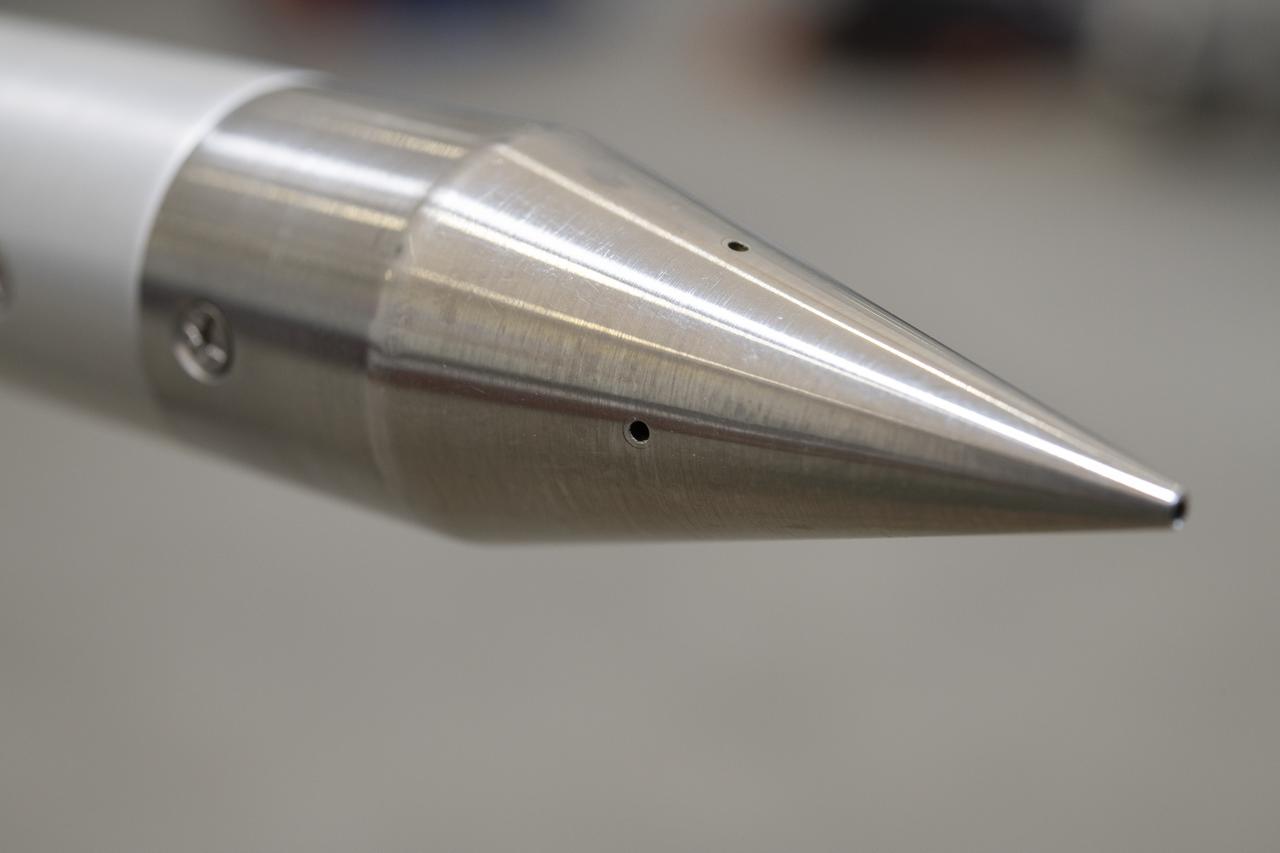
A close-up of NASA’s shock-sensing probe highlights its pressure ports, designed to measure air pressure changes during supersonic flight. The probe will be mounted on NASA’s F-15B Aeronautics Research Test Bed for calibration flights, validating its ability to measure shock waves generated by the X-59 as part of NASA's Quesst mission.
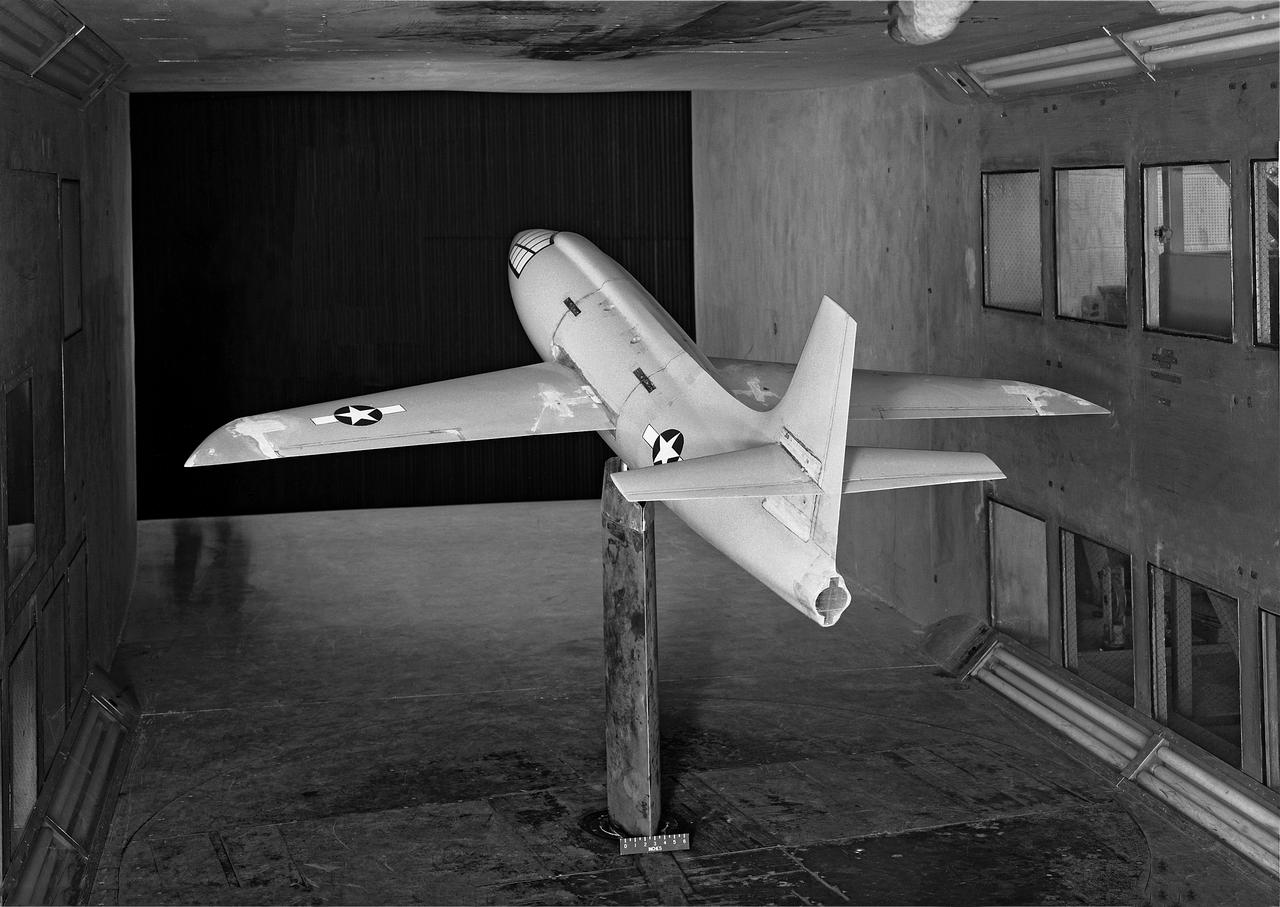
Modified Bell X-1 model pioneered variable-sweep studies in 1947. Photograph published in Sixty Years of Aeronautical Research 1917-1977 By David A. Anderton. A NASA publication, page 52.
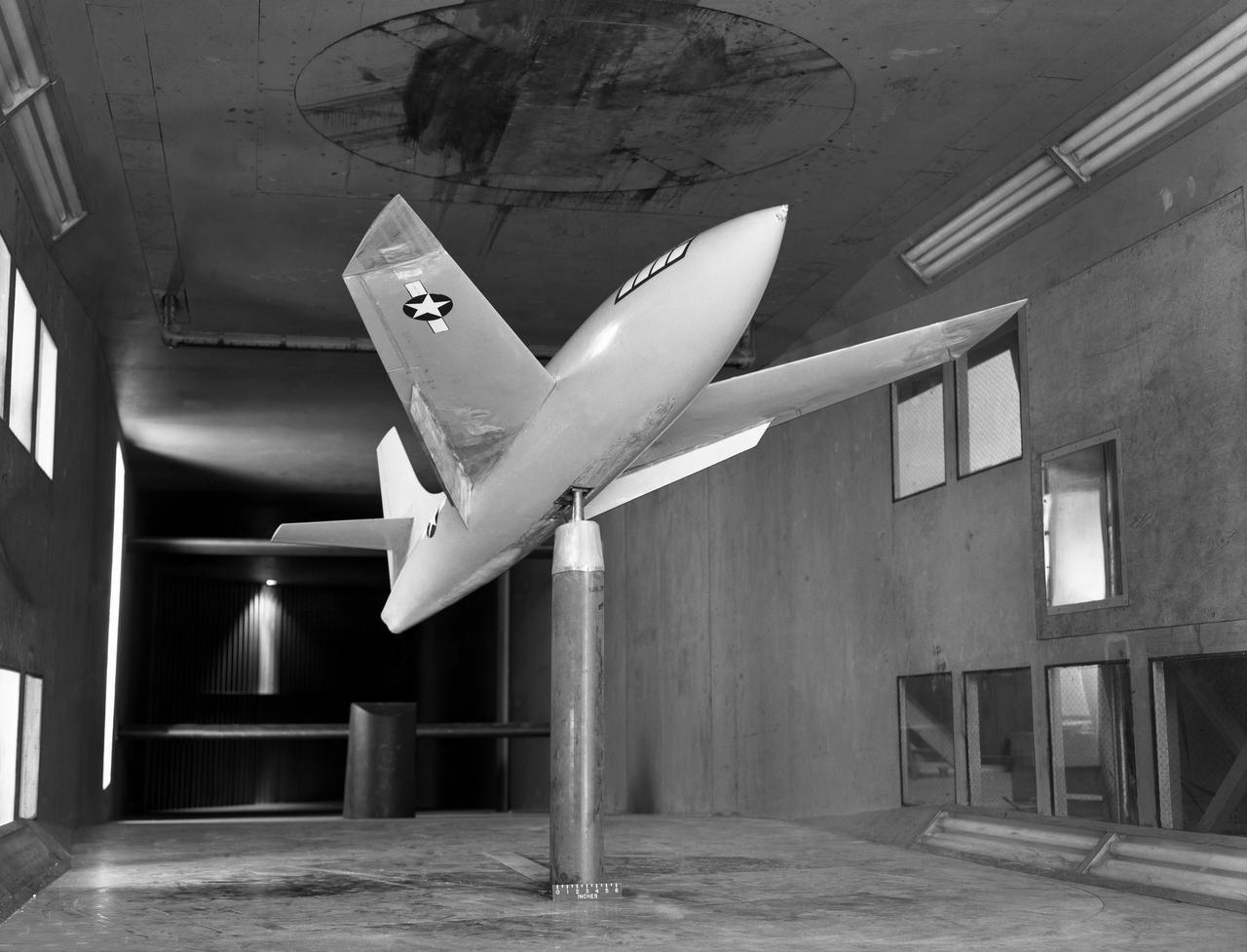
Modified Bell X-1 model pioneered variable-sweep studies in 1947. Photograph published in Sixty Years of Aeronautical Research 1917-1977 By David A. Anderton. A NASA publication, page 52.
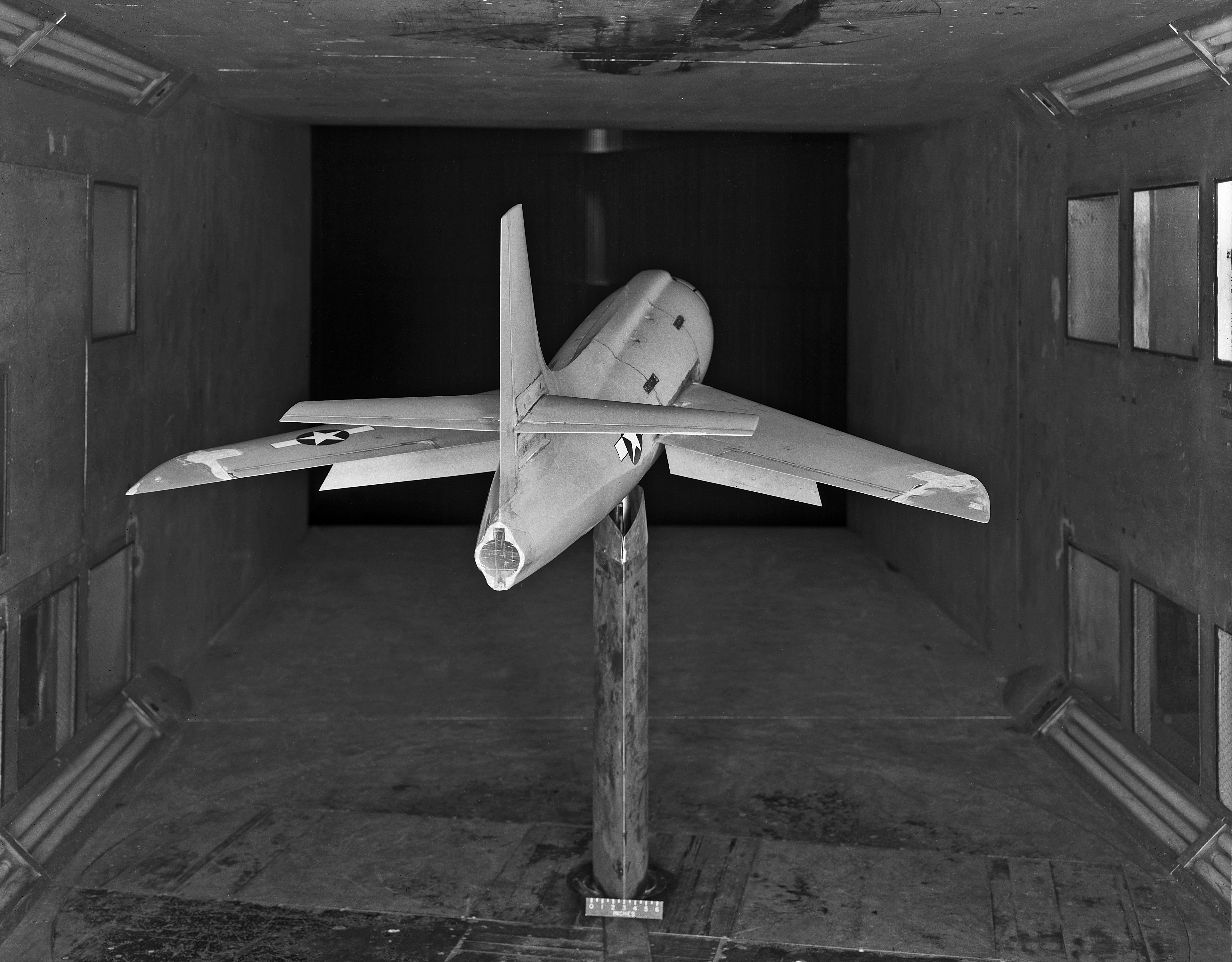
Modified Bell X-1 model pioneered variable-sweep studies in 1947. Photograph published in Sixty Years of Aeronautical Research 1917-1977 By David A. Anderton. A NASA publication, page 52.
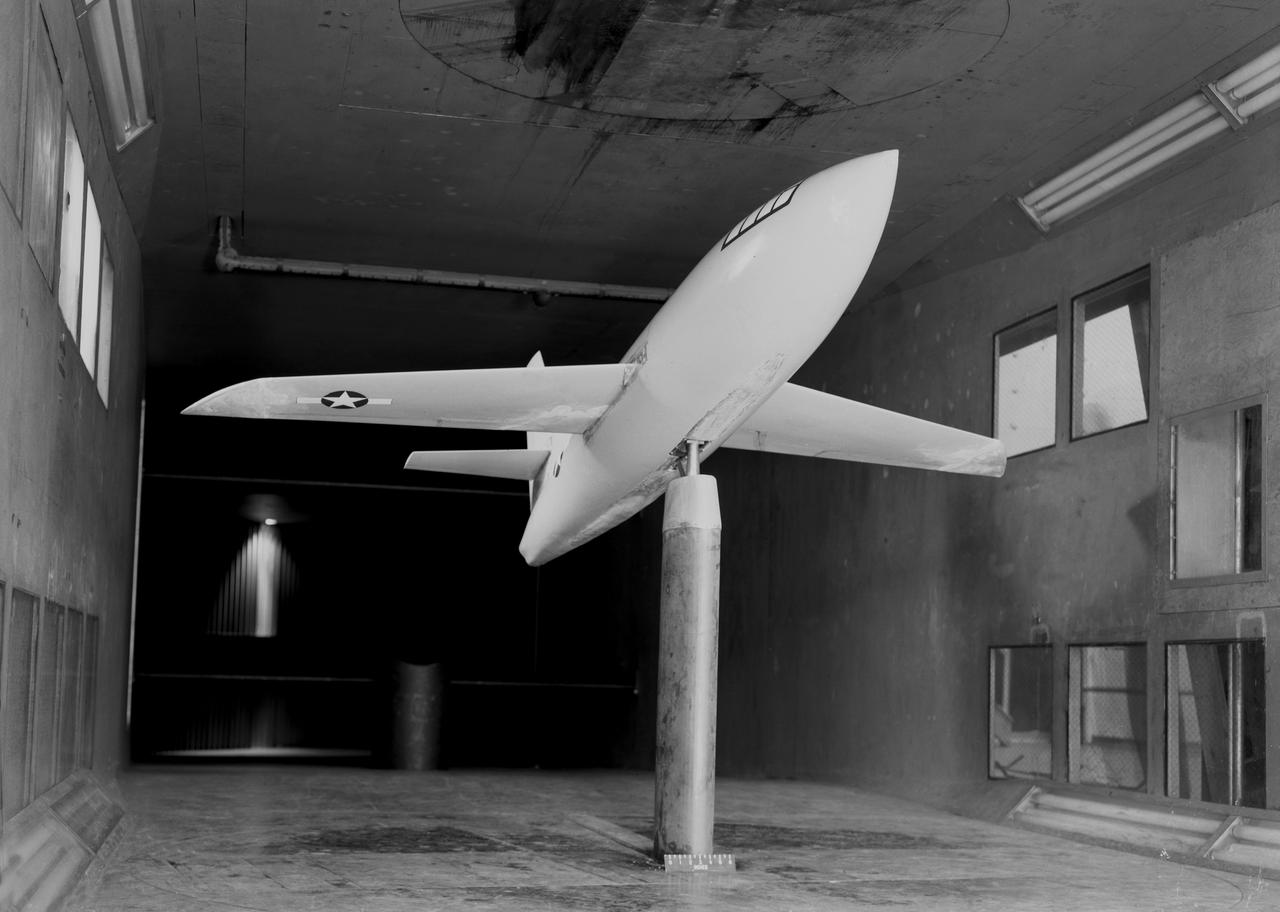
Modified Bell X-1 model pioneered variable-sweep studies in 1947. Photograph published in Sixty Years of Aeronautical Research 1917-1977 By David A. Anderton. A NASA publication, page 52.
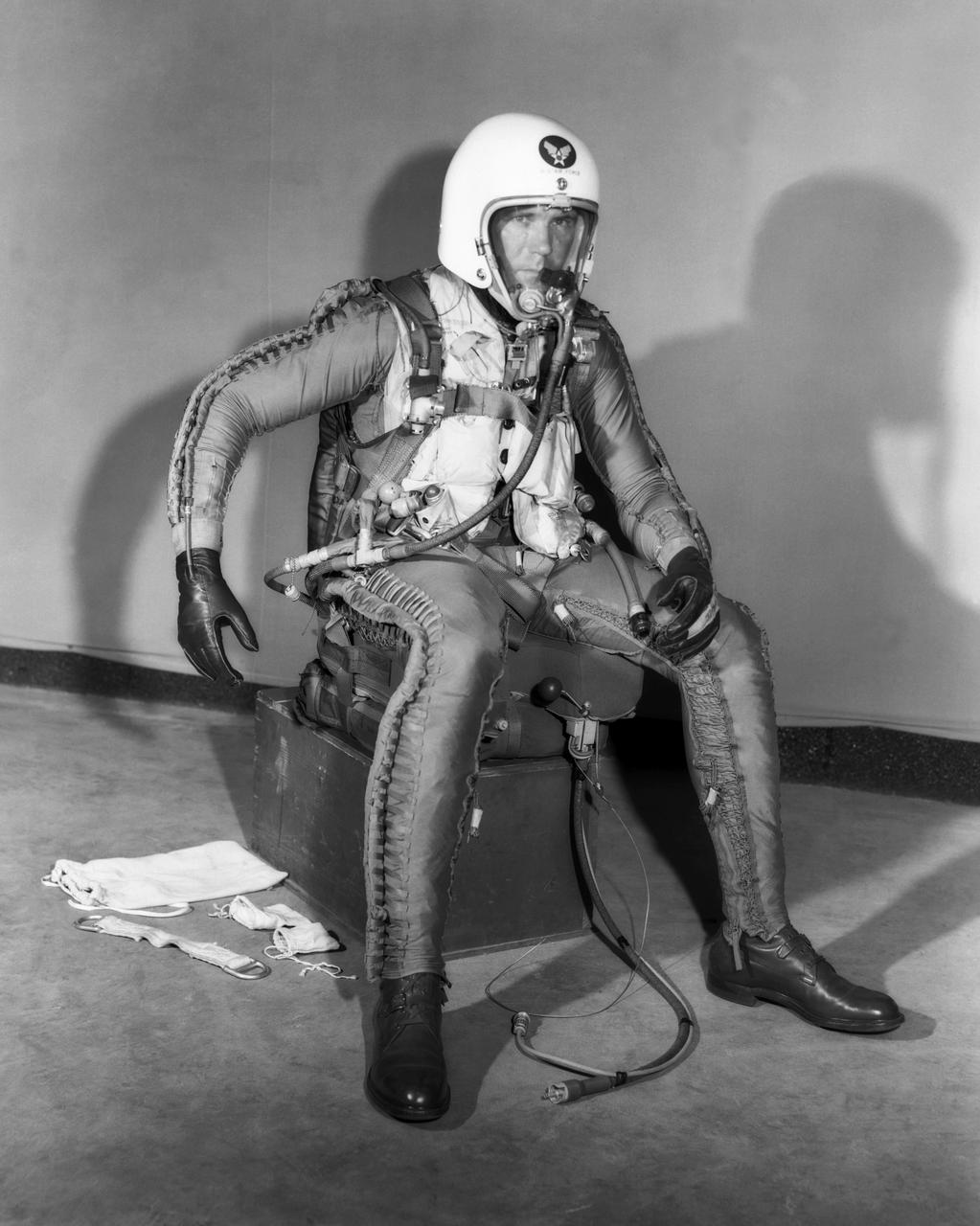
Robert Champine in X-Series Pressure Suit. Photograph published in Engineer in Charge: A History of the Langley Aeronautical Laboratory, 1917-1958 by James R. Hansen. Page 305.
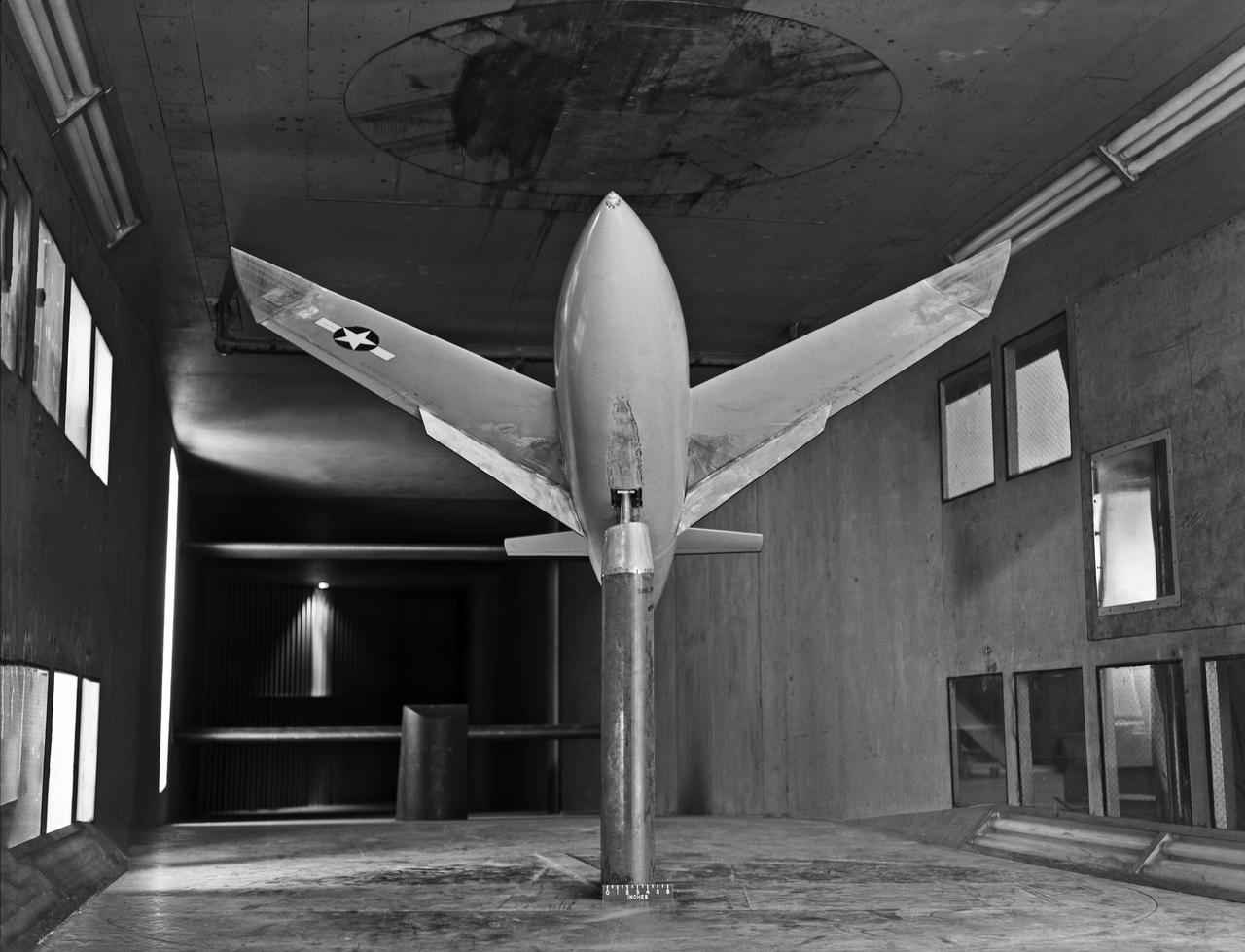
Modified Bell X-1 model pioneered variable-sweep studies in 1947. Photograph published in Sixty Years of Aeronautical Research 1917-1977 By David A. Anderton. A NASA publication, page 52.
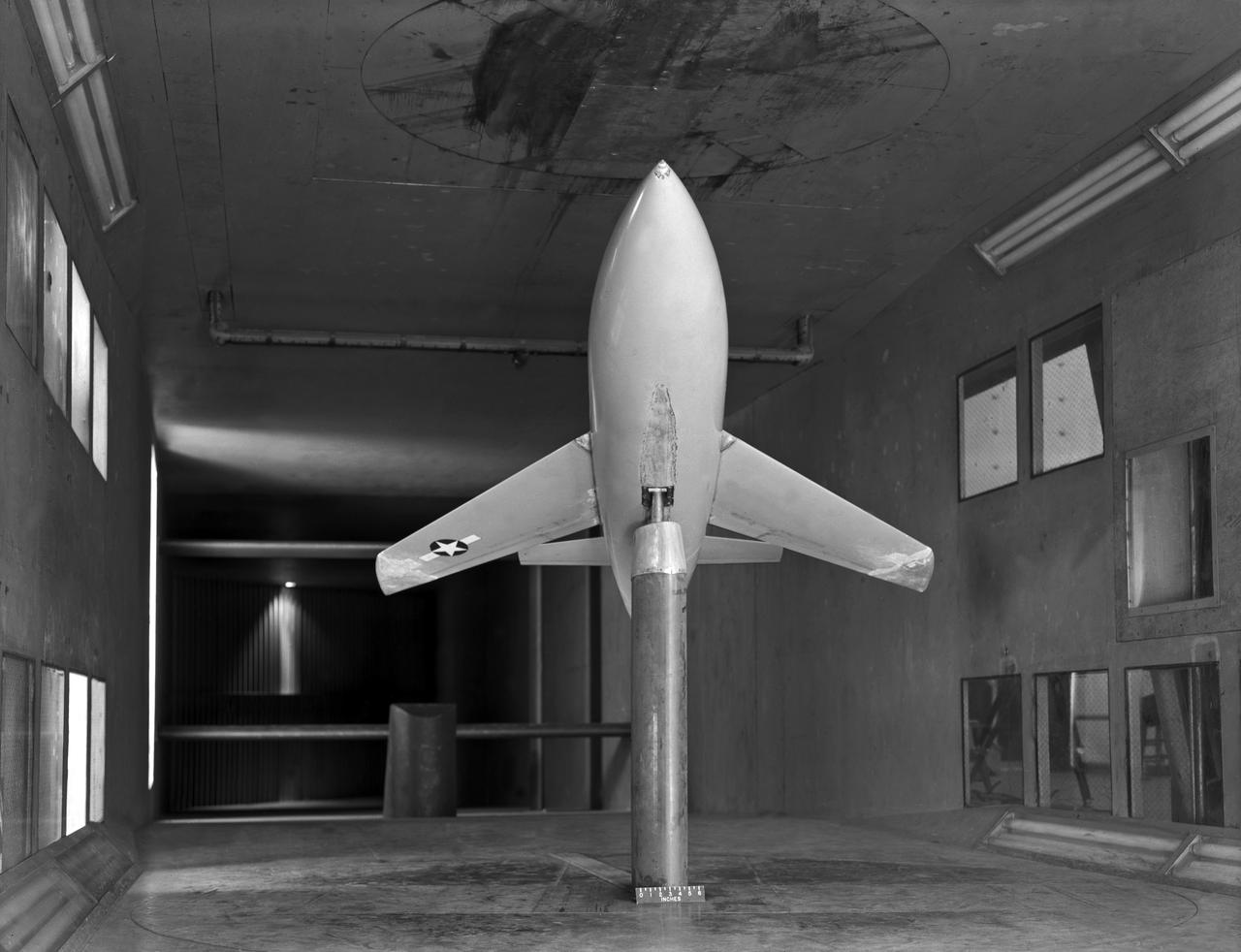
Modified Bell X-1 model pioneered variable-sweep studies in 1947. Photograph published in Sixty Years of Aeronautical Research 1917-1977 By David A. Anderton. A NASA publication, page 52.
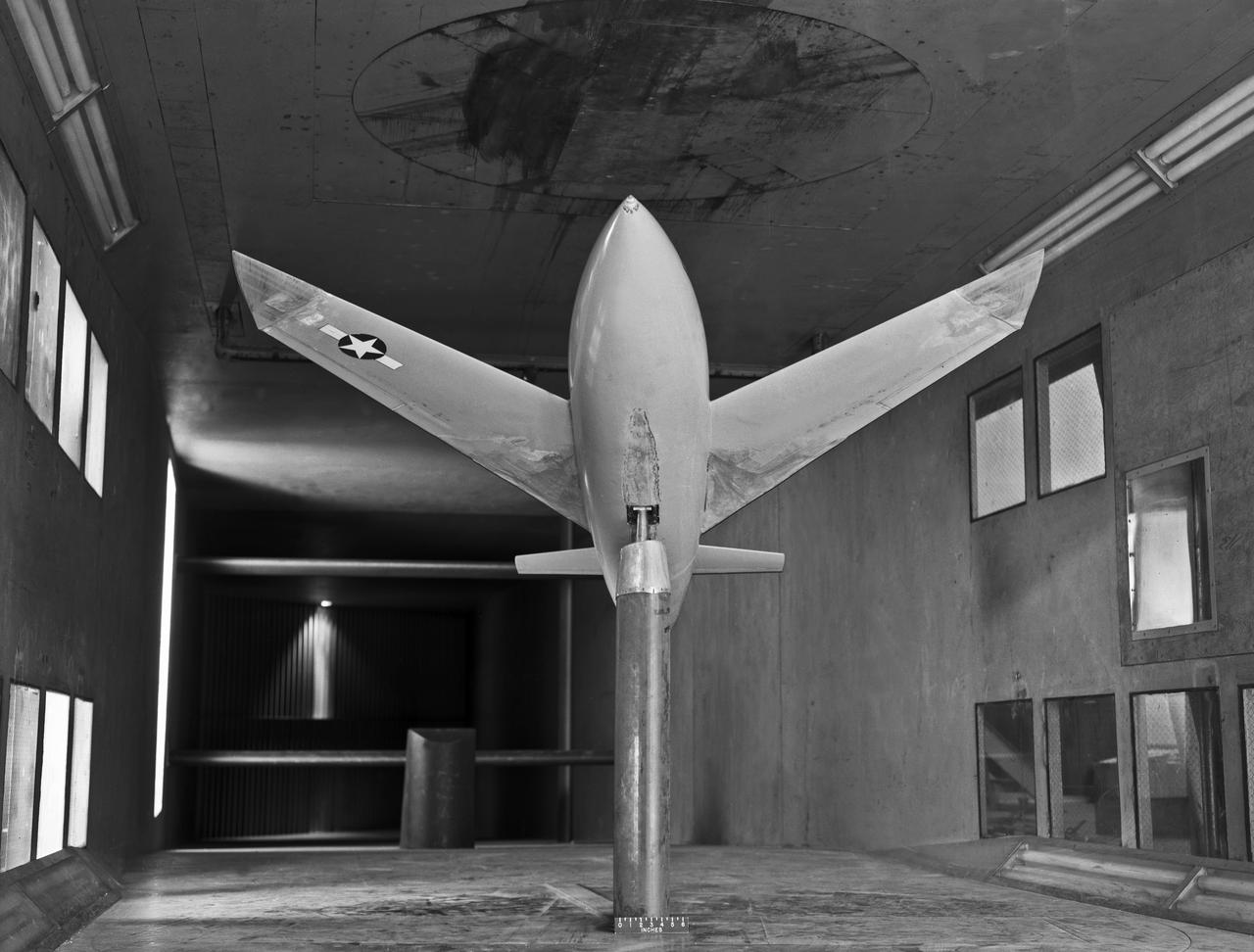
Modified Bell X-1 model pioneered variable-sweep studies in 1947. Photograph published in Sixty Years of Aeronautical Research 1917-1977 By David A. Anderton. A NASA publication, page 52.
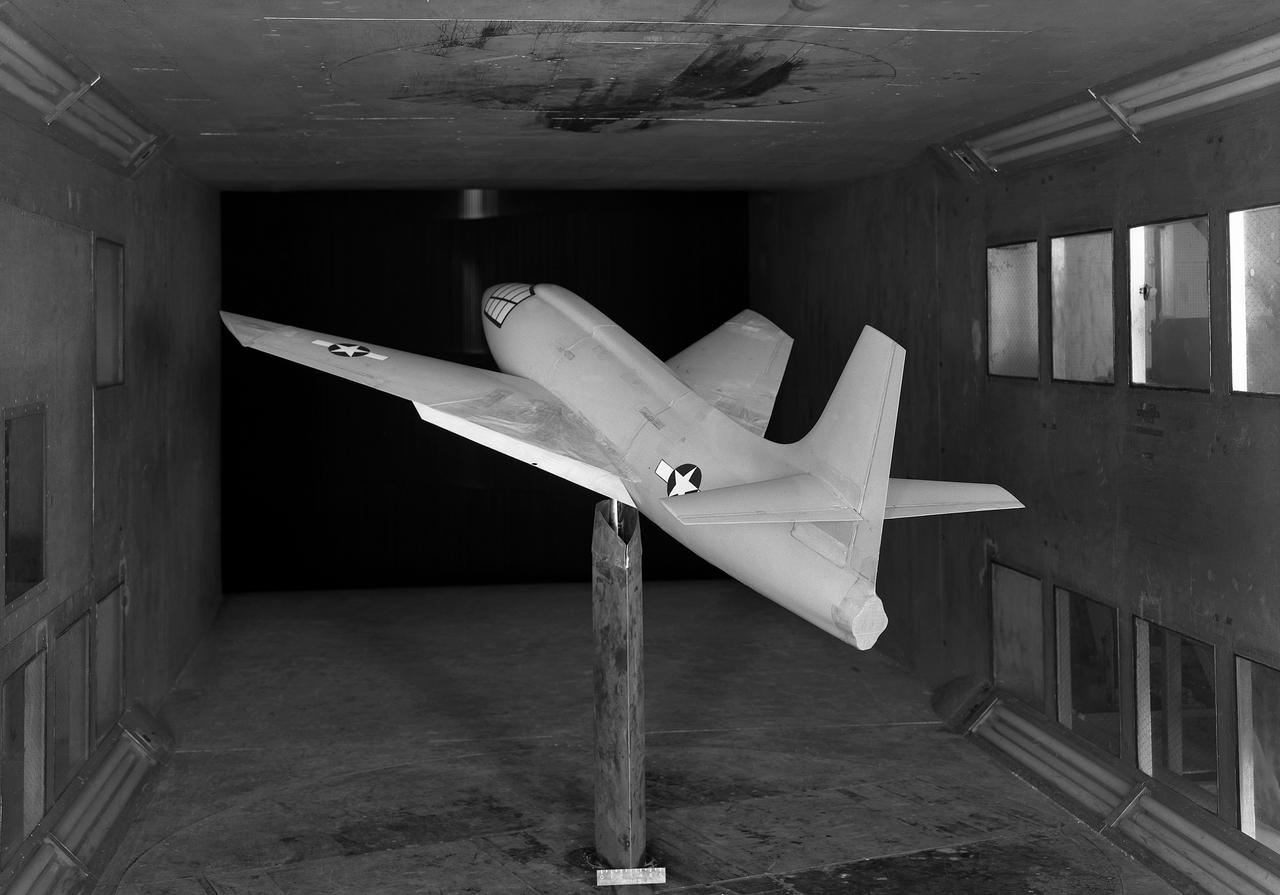
Modified Bell X-1 model pioneered variable-sweep studies in 1947. Photograph published in Sixty Years of Aeronautical Research 1917-1977 By David A. Anderton. A NASA publication, page 52.
Modified Bell X-1 model pioneered variable-sweep studies in 1947. Photograph published in Sixty Years of Aeronautical Research 1917-1977 By David A. Anderton. A NASA publication, page 52.
Modified Bell X-1 model pioneered variable-sweep studies in 1947. Photograph published in Sixty Years of Aeronautical Research 1917-1977 By David A. Anderton. A NASA publication, page 52.
Modified Bell X-1 model pioneered variable-sweep studies in 1947. Photograph published in Sixty Years of Aeronautical Research 1917-1977 By David A. Anderton. A NASA publication, page 52.
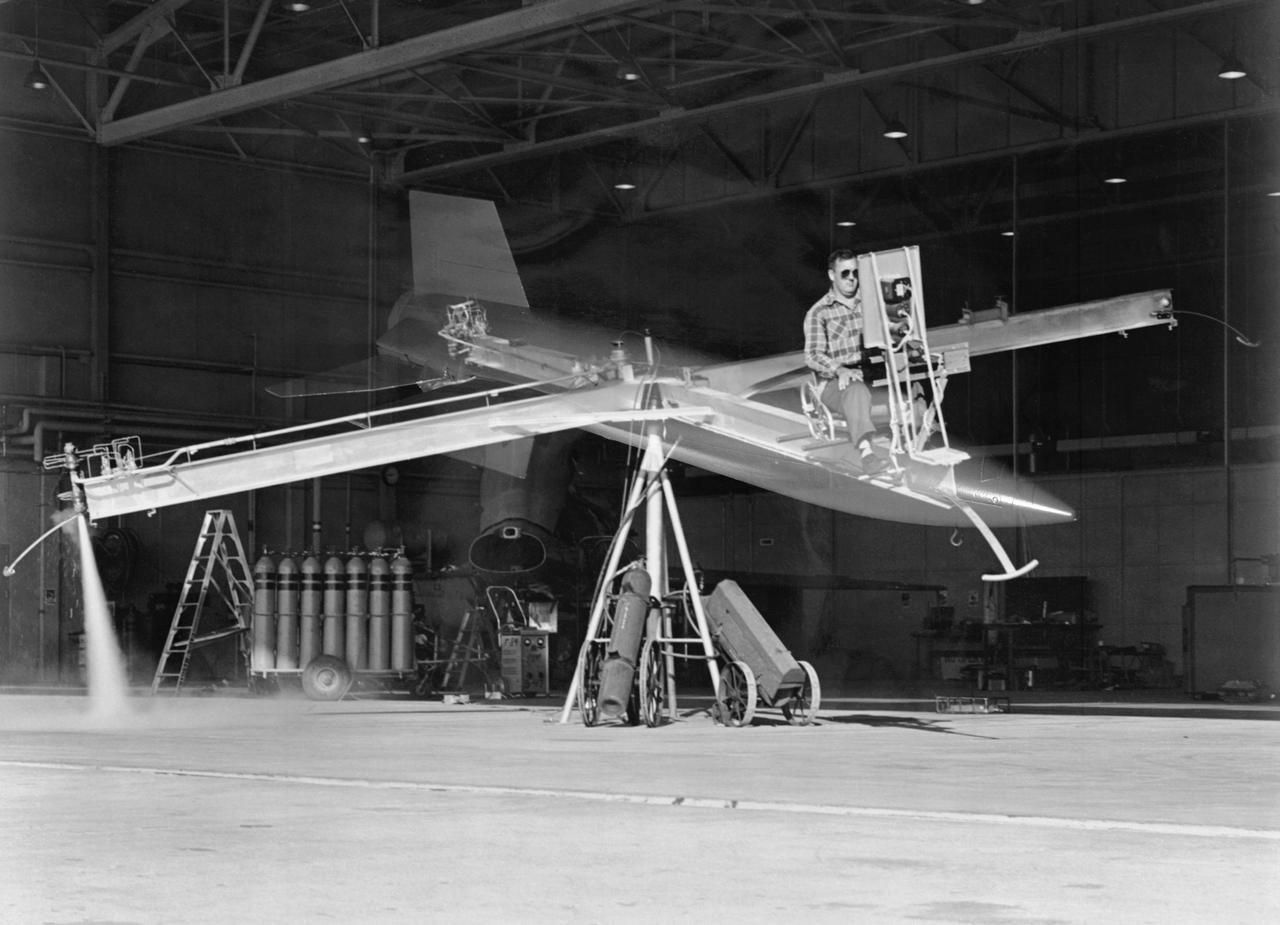
Attitude control simulator for X-15 studies at Langley, 1958. Photograph published in Engineer in Charge: A History of the Langley Aeronautical Laboratory, 1917-1958 by James R. Hansen (page 367).
Modified Bell X-1 model pioneered variable-sweep studies in 1947. Photograph published in Sixty Years of Aeronautical Research 1917-1977 By David A. Anderton. A NASA publication, page 52.
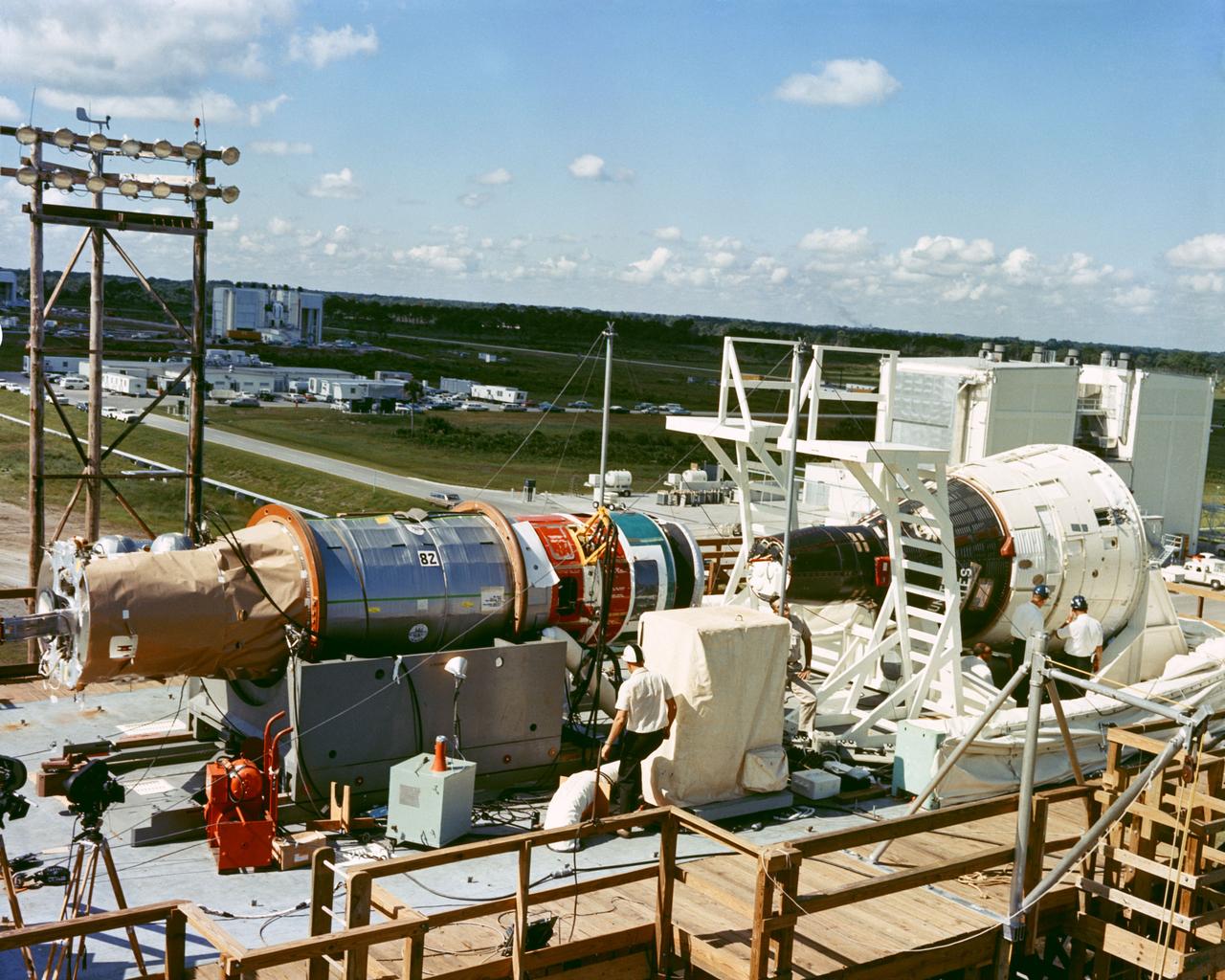
S65-52015 (1965) --- The Gemini-6 spacecraft (right) and the Agena Target Vehicle (left) on the Boresite Range Tower for the Plan-X docking exercise. Photo credit: NASA or National Aeronautics and Space Administration
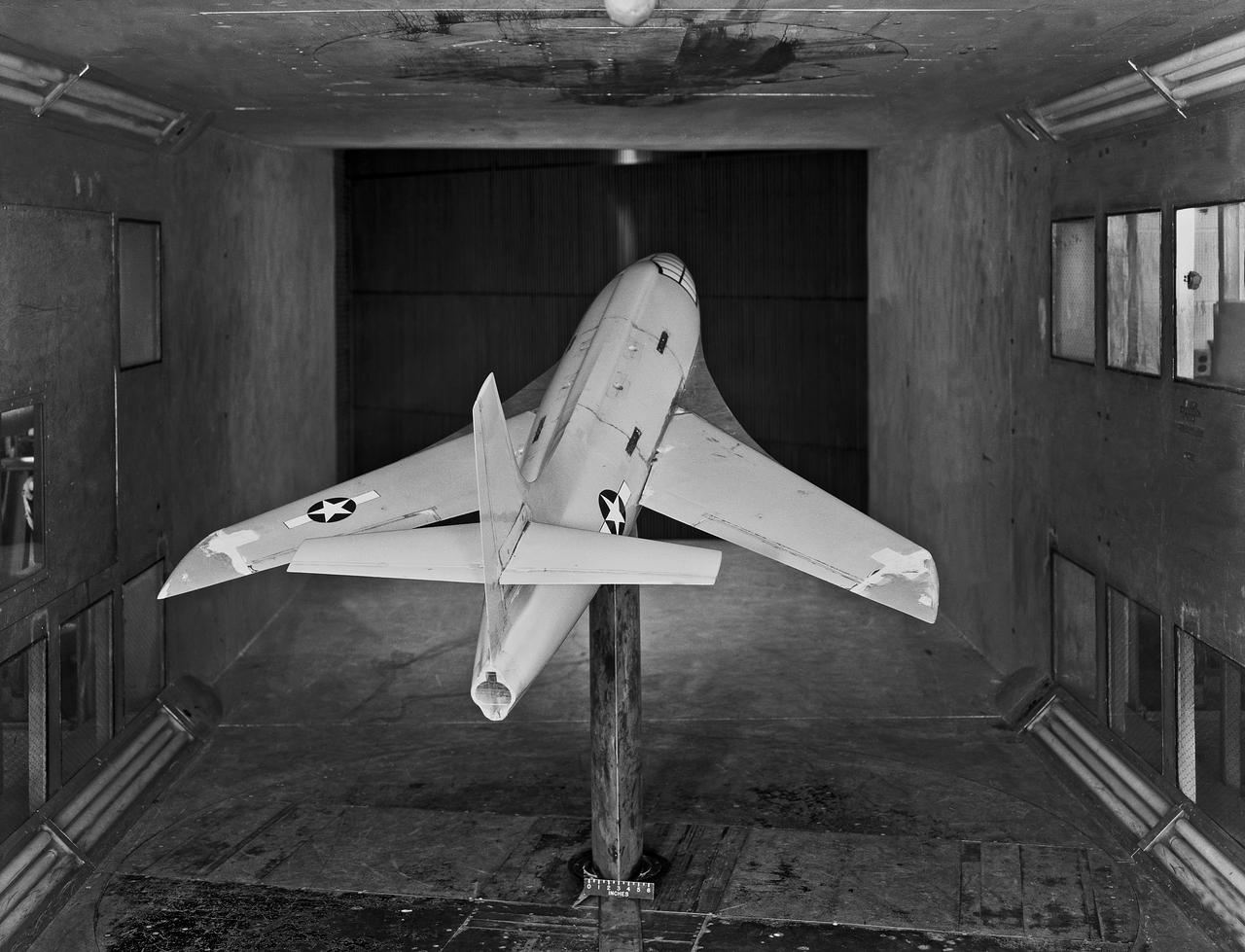
Modified Bell X-1 model pioneered variable-sweep studies in 1947. Photograph published in Sixty Years of Aeronautical Research 1917-1977 By David A. Anderton. A NASA publication, page 52.
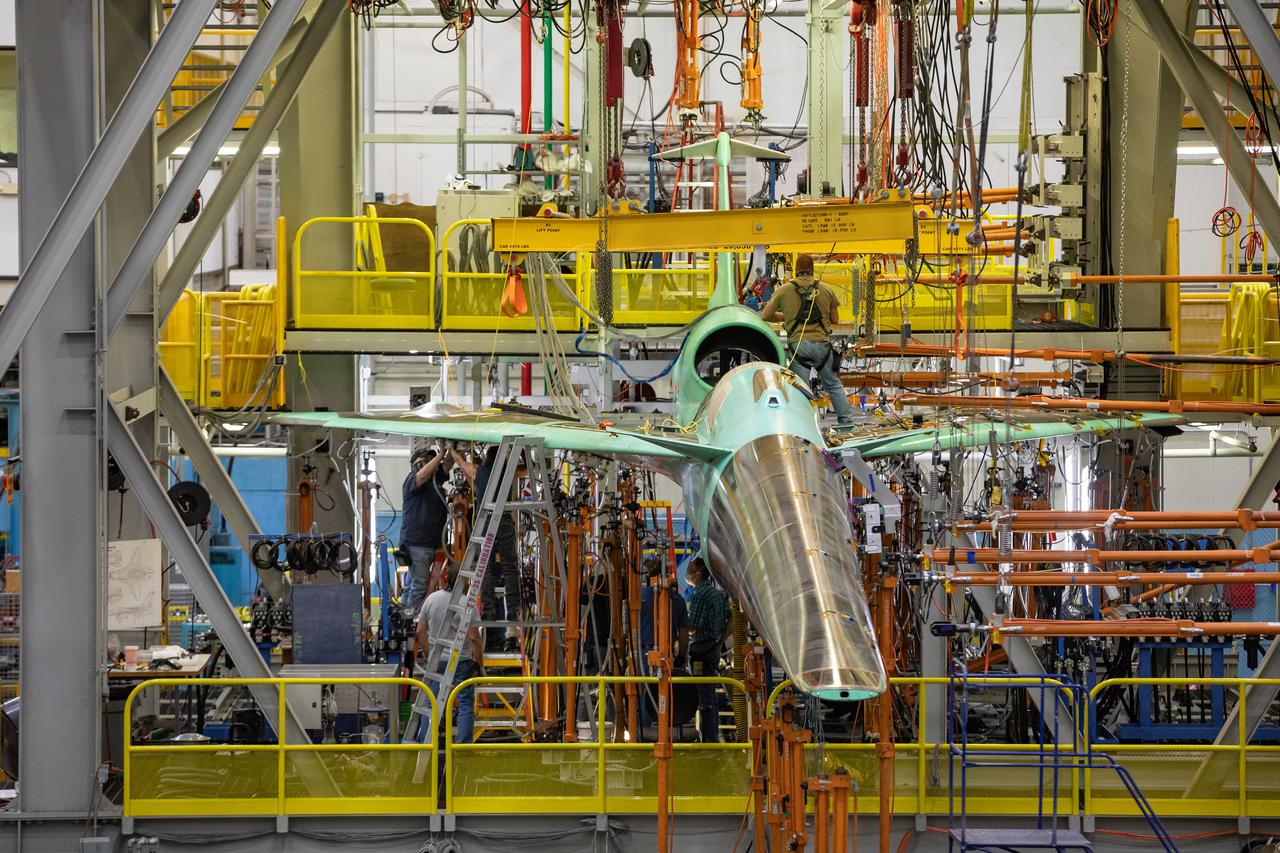
NASA’s X-59 Quiet SuperSonic Technology airplane undergoes structural stress tests at a Lockheed Martin facility in Fort Worth, Texas. Lockheed Martin Aeronautics Company - Fort Worth - Chris Hanoch Subject: X-59 - Various Angles in Test Fixture FP#: 21-03420 POC: Analiese Smith, Chris Higgins Other info: X-59 in Fort Worth, testing; high angle shots in fixture 1-10-22
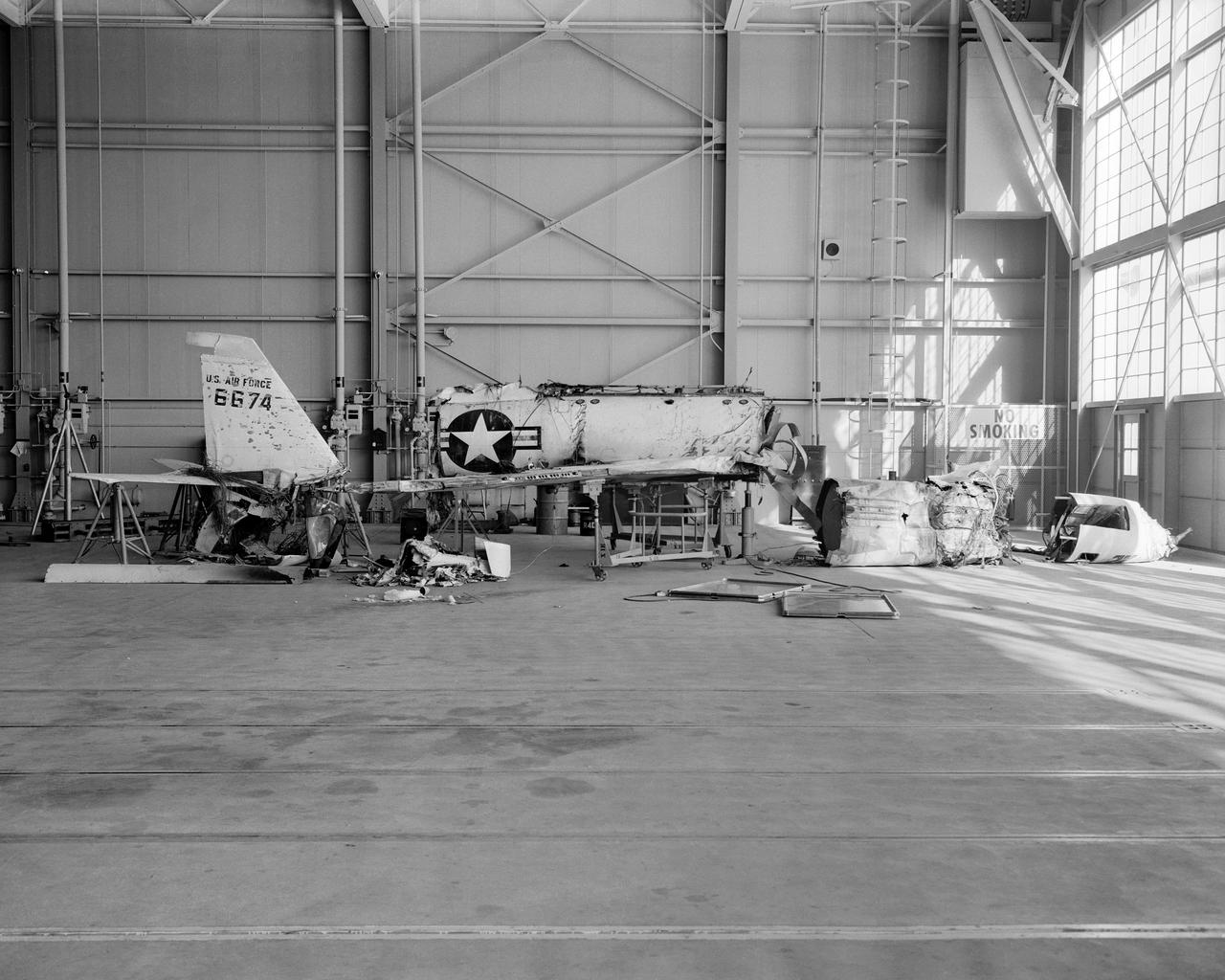
The X-2, initially an Air Force program, was scheduled to be transferred to the civilian National Advisory Committee for Aeronautics (NACA) for scientific research. The Air Force delayed turning the aircraft over to the NACA in the hope of attaining Mach 3 in the airplane. The service requested and received a two-month extension to qualify another Air Force test pilot, Capt. Miburn "Mel" Apt, in the X-2 and attempt to exceed Mach 3. After several ground briefings in the simulator, Apt (with no previous rocket plane experience) made his flight on 27 September 1956. Apt raced away from the B-50 under full power, quickly outdistancing the F-100 chase planes. At high altitude, he nosed over, accelerating rapidly. The X-2 reached Mach 3.2 (2,094 mph) at 65,000 feet. Apt became the first man to fly more than three times the speed of sound. Still above Mach 3, he began an abrupt turn back to Edwards. This maneuver proved fatal as the X-2 began a series of diverging rolls and tumbled out of control. Apt tried to regain control of the aircraft. Unable to do so, Apt separated the escape capsule. Too late, he attempted to bail out and was killed when the capsule impacted on the Edwards bombing range. The rest of the X-2 crashed five miles away. The wreckage of the X-2 rocket plane was later taken to NACA's High Speed Flight Station for analysis following the crash.
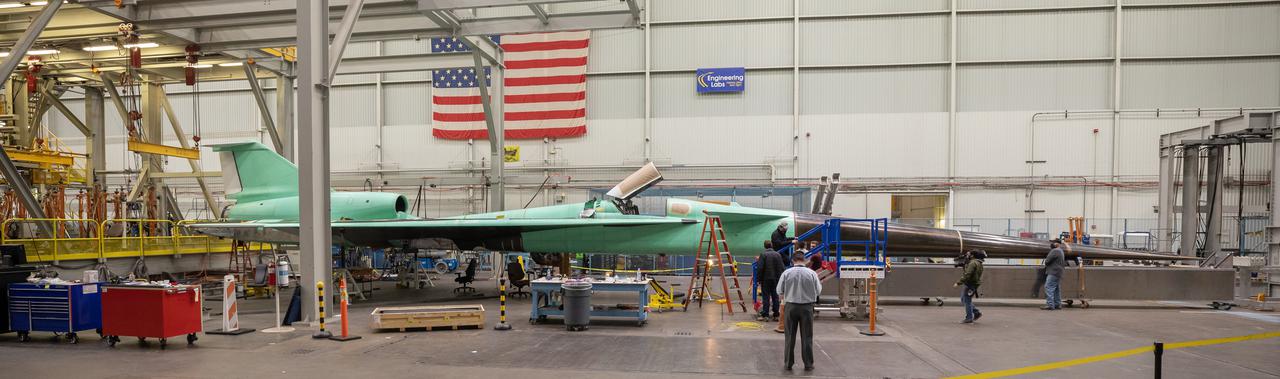
This panoramic side view of NASA’s X-59 Quiet SuperSonic Technology airplane shows the aircraft sitting on jacks at a Lockheed Martin test facility in Fort Worth, Texas. Lockheed Martin Aeronautics Company - Fort Worth - Chris Hanoch Subject: SEG 230 Nose Attachement FP#: 21-03420 POC: Analiese Smith, Chris Higgins Other info: X-59 in Fort Worth, testing
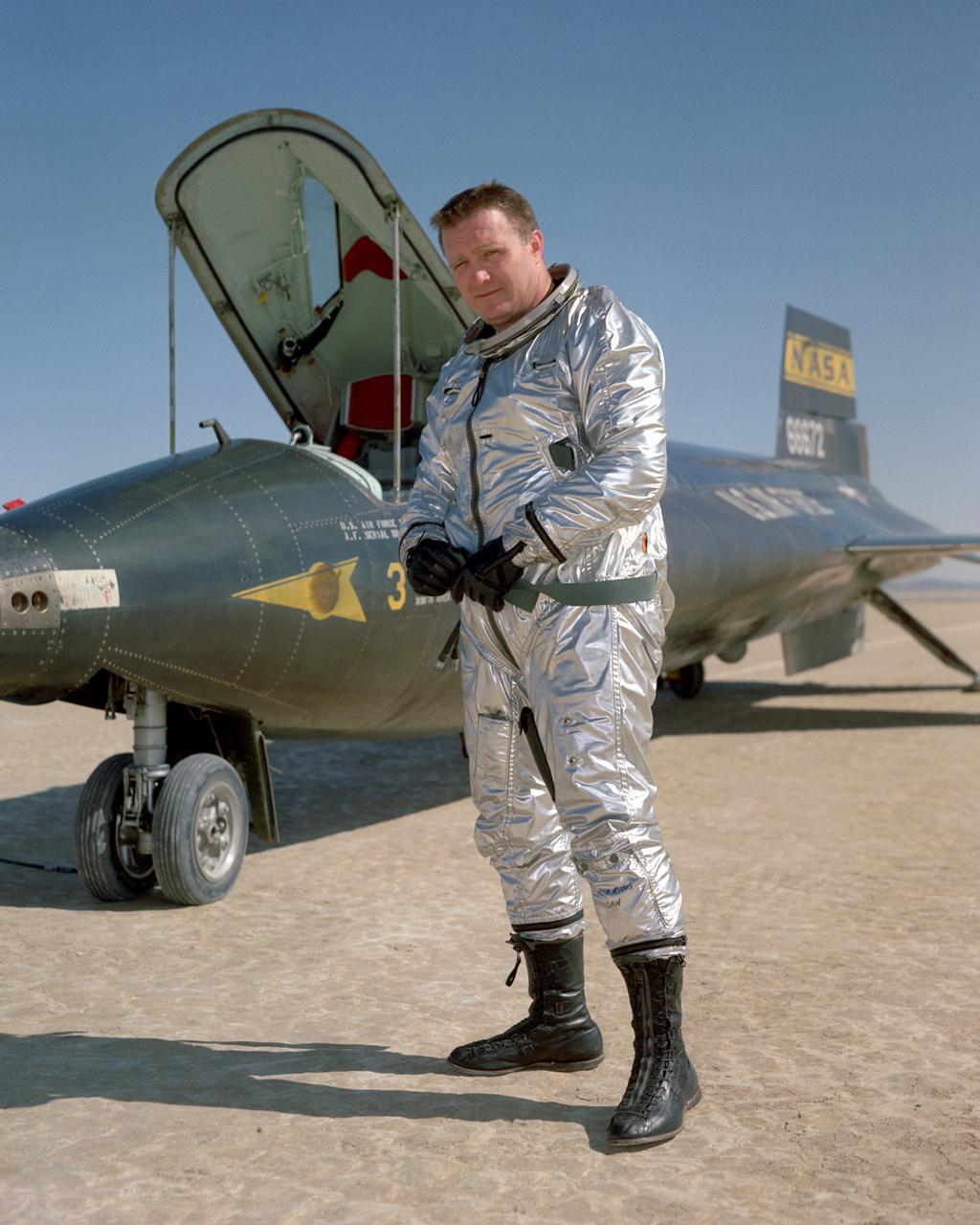
John B. McKay was one of the first pilots assigned to the X-15 flight research program at NASA's Flight Research Center, Edwards, Calif. As a civilian research pilot and aeronautical engineer, he made 30 flights in X-15s from October 28, 1960, until September 8, 1966. His peak altitude was 295,600 feet, and his highest speed was 3863 mph (Mach 5.64). McKay was with the NACA and NASA from February 8,1951 until October 5, 1971 and specialized in high-speed flight research programs. He began as an NACA intern, but assumed pilot status on July 11, 1952. In addition to the X-l5, he flew such experimental aircraft as the D-558-1, D-558-2, X-lB, and the X-lE. He has also served as a research pilot on flight programs involving the F-100, F-102, F-104, and the F-107. Born on December 8, 1922, in Portsmouth, Va., McKay graduated from Virginia Polytechnic Institute in 195O with a Bachelor of Science degree in Aeronautical Engineering. During World War II he served as a Navy pilot in the Pacific Theater, earning the Air Medal and Two Clusters, and a Presidential Unit Citation. McKay wrote several technical papers, and was a member of the American Institute of Aeronautics and Astronautics, as well as the Society of Experimental Test Pilots. He passed away on April 27, 1975.
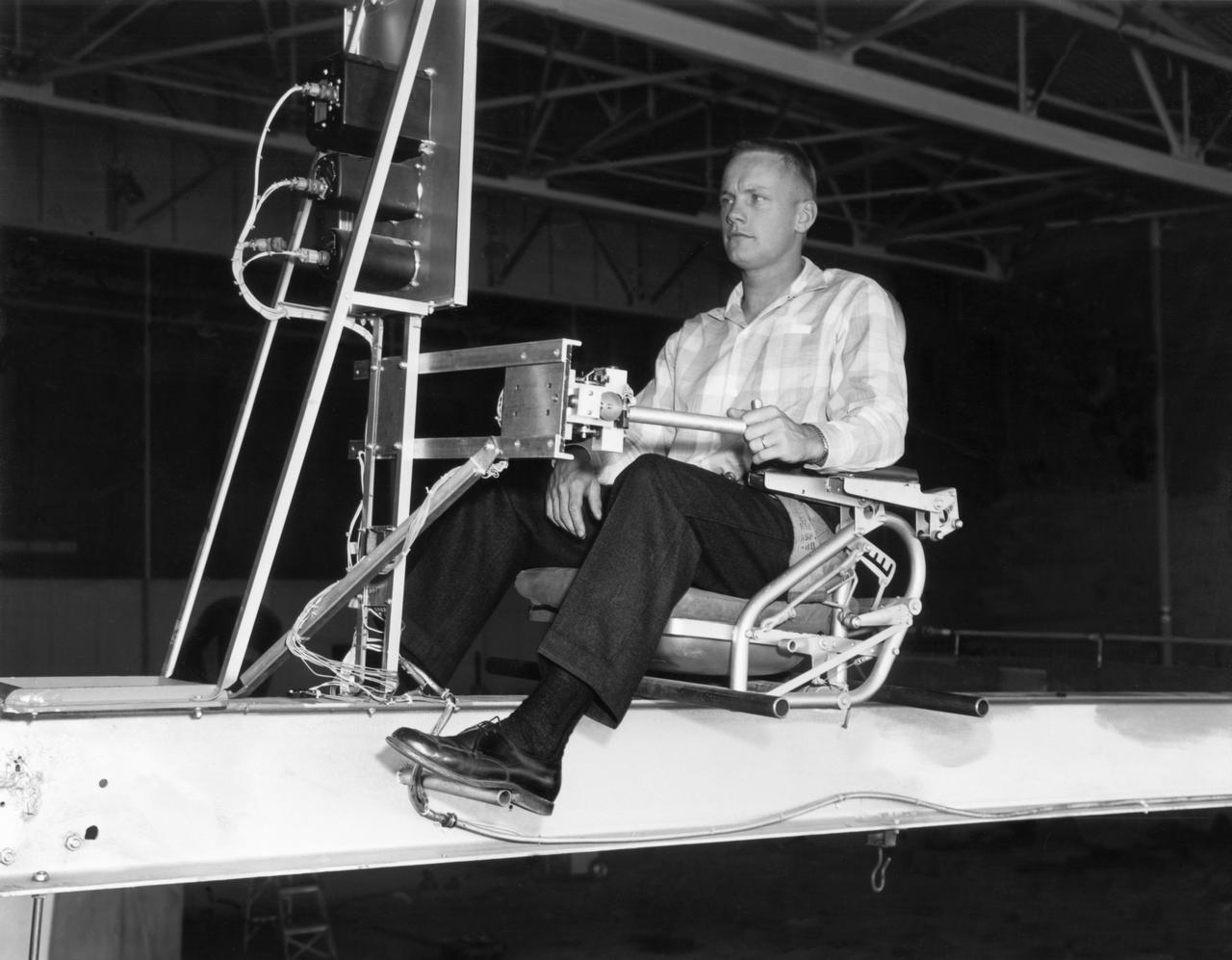
Famed astronaut Neil A. Armstrong, the first man to set foot on the moon during the historic Apollo 11 space mission in July 1969, served for seven years as a research pilot at the NACA-NASA High-Speed Flight Station, now the Dryden Flight Research Center, at Edwards, California, before he entered the space program. Armstrong joined the National Advisory Committee for Aeronautics (NACA) at the Lewis Flight Propulsion Laboratory (later NASA's Lewis Research Center, Cleveland, Ohio, and today the Glenn Research Center) in 1955. Later that year, he transferred to the High-Speed Flight Station at Edwards as an aeronautical research scientist and then as a pilot, a position he held until becoming an astronaut in 1962. He was one of nine NASA astronauts in the second class to be chosen. As a research pilot Armstrong served as project pilot on the F-100A and F-100C aircraft, F-101, and the F-104A. He also flew the X-1B, X-5, F-105, F-106, B-47, KC-135, and Paresev. He left Dryden with a total of over 2450 flying hours. He was a member of the USAF-NASA Dyna-Soar Pilot Consultant Group before the Dyna-Soar project was cancelled, and studied X-20 Dyna-Soar approaches and abort maneuvers through use of the F-102A and F5D jet aircraft. Armstrong was actively engaged in both piloting and engineering aspects of the X-15 program from its inception. He completed the first flight in the aircraft equipped with a new flow-direction sensor (ball nose) and the initial flight in an X-15 equipped with a self-adaptive flight control system. He worked closely with designers and engineers in development of the adaptive system, and made seven flights in the rocket plane from December 1960 until July 1962. During those fights he reached a peak altitude of 207,500 feet in the X-15-3, and a speed of 3,989 mph (Mach 5.74) in the X-15-1. Armstrong has a total of 8 days and 14 hours in space, including 2 hours and 48 minutes walking on the Moon. In March 1966 he was commander of the Gemini 8 or
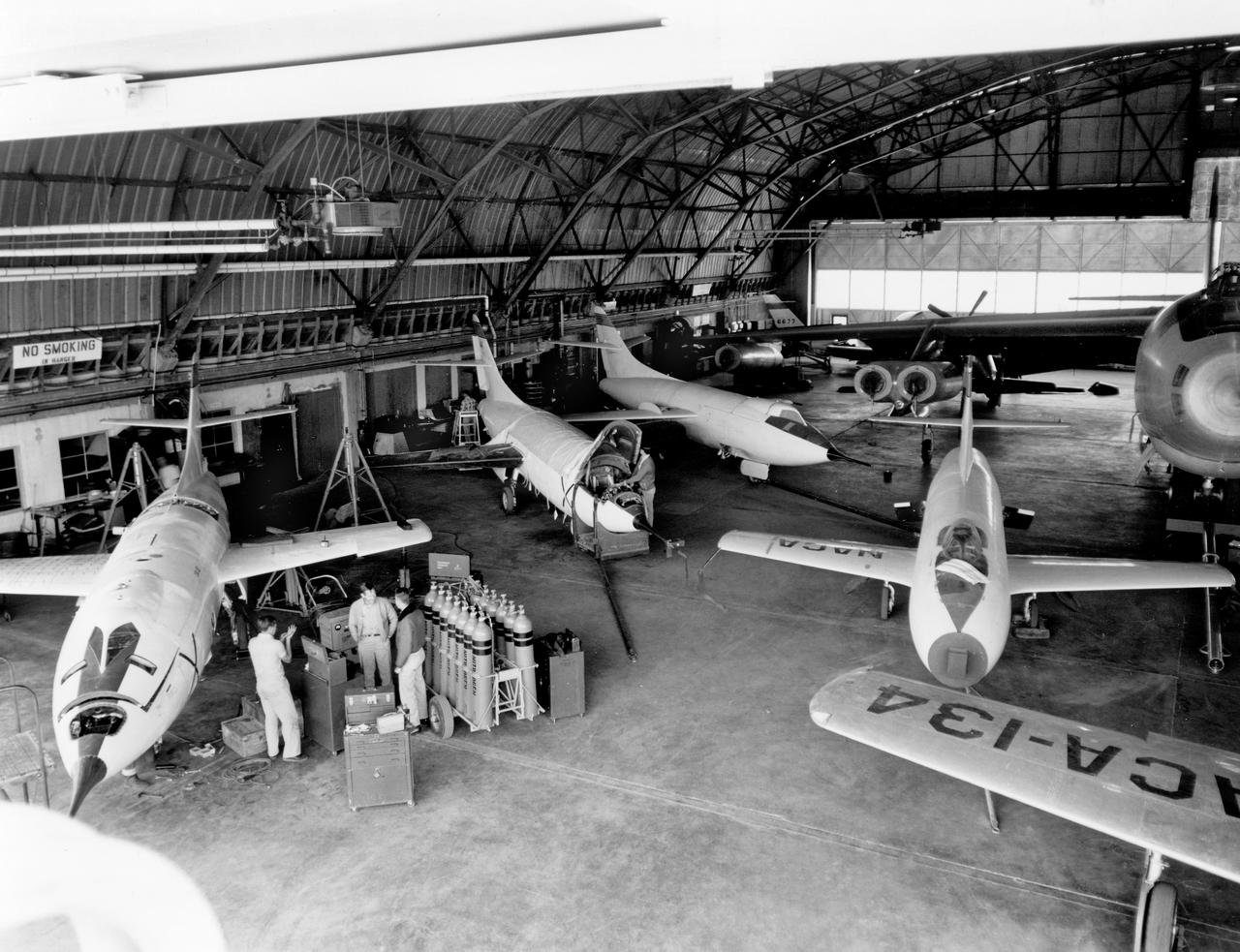
The aircraft in this 1953 photo of the National Advisory Committee for Aeronautics (NACA) hangar at South Base of Edwards Air Force Base showed the wide range of research activities being undertaken. On the left side of the hangar are the three D-558-2 research aircraft. These were designed to test swept wings at supersonic speeds approaching Mach 2. The front D-558-2 is the third built (NACA 145/Navy 37975). It has been modified with a leading-edge chord extension. This was one of a number of wing modifications, using different configurations of slats and/or wing fences, to ease the airplane's tendency to pitch-up. NACA 145 had both a jet and a rocket engine. The middle aircraft is NACA 144 (Navy 37974), the second built. It was all-rocket powered, and Scott Crossfield made the first Mach 2 flight in this aircraft on November 20, 1953. The aircraft in the back is D-558-2 number 1. NACA 143 (Navy 37973) was also carried both a jet and a rocket engine in 1953. It had been used for the Douglas contractor flights, then was turned over to the NACA. The aircraft was not converted to all-rocket power until June 1954. It made only a single NACA flight before NACA's D-558-2 program ended in 1956. Beside the three D-558-2s is the third D-558-1. Unlike the supersonic D-558-2s, it was designed for flight research at transonic speeds, up to Mach 1. The D-558-1 was jet-powered, and took off from the ground. The D-558-1's handling was poor as it approached Mach 1. Given the designation NACA 142 (Navy 37972), it made a total of 78 research flights, with the last in June 1953. In the back of the hangar is the X-4 (Air Force 46-677). This was a Northrop-built research aircraft which tested a swept wing design without horizontal stabilizers. The aircraft proved unstable in flight at speeds above Mach 0.88. The aircraft showed combined pitching, rolling, and yawing motions, and the design was considered unsuitable. The aircraft, the second X-4 built, was then used as a pilot traine
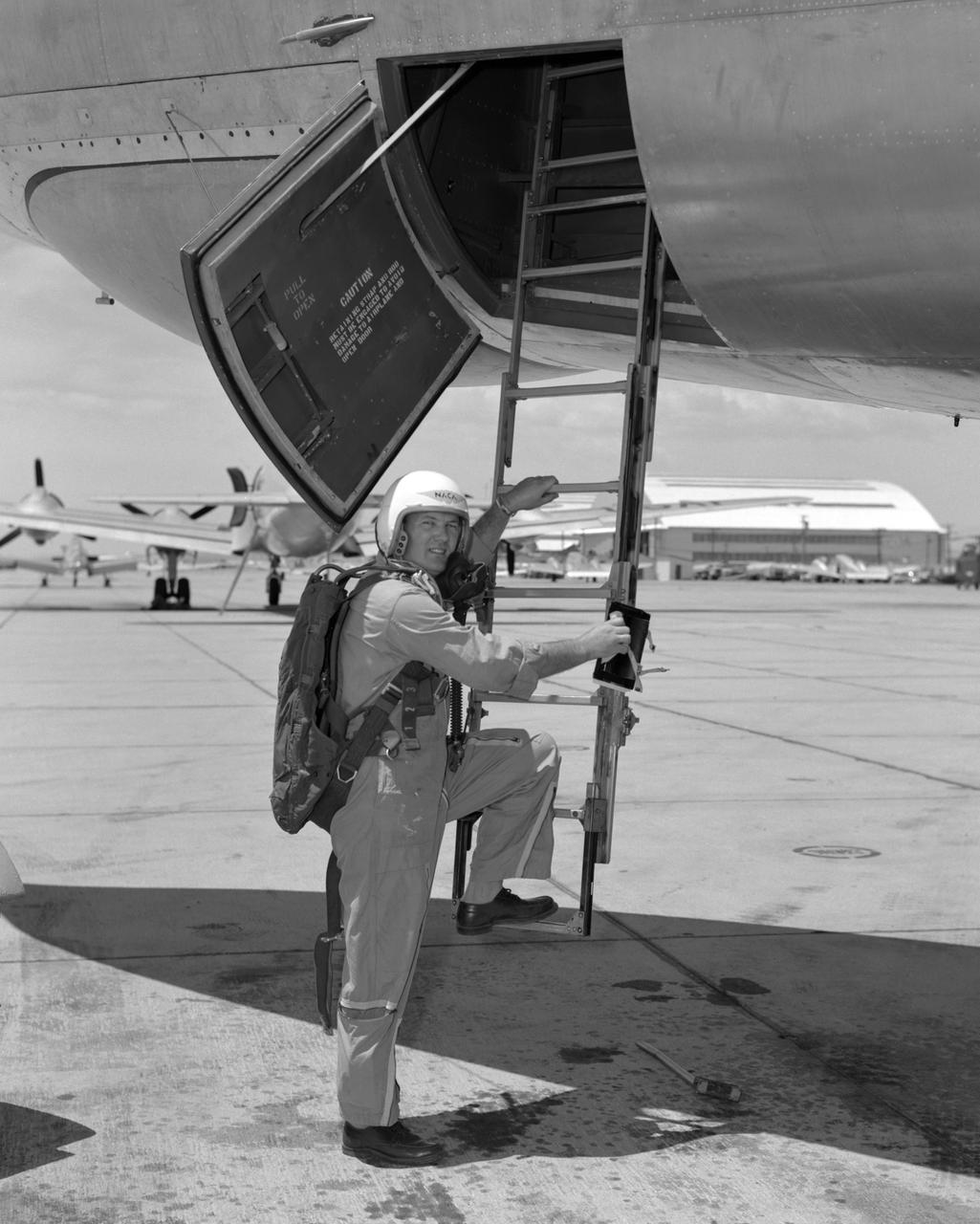
From December 10, 1966, until his retirement on February 27, 1976, Stanley P. Butchart served as Chief (later, Director) of Flight Operations at NASA's Flight Research Center (renamed on March 26, 1976, the Hugh L. Dryden Flight Research Center). Initially, his responsibilities in this position included the Research Pilots Branch, a Maintenance and Manufacturing Branch, and an Operations Engineering Branch, the last of which not only included propulsion and electrical/electronic sections but project engineers for the X-15 and lifting bodies. During his tenure, however, the responsibilities of his directorate came to include not only Flight Test Engineering Support but Flight Systems and Loads laboratories. Before becoming Chief of Flight Operations, Butchart had served since June of 1966 as head of the Research Pilots Branch (Chief Pilot) and then as acting chief of Flight Operations. He had joined the Center (then known as the National Advisory Committee for Aeronautics' High-Speed Flight Research Station) as a research pilot on May 10, 1951. During his career as a research pilot, he flew a great variety of research and air-launch aircraft including the D-558-I, D-558-II, B-29 (plus its Navy version, the P2B), X-4, X-5, KC-135, CV-880, CV-990, B-47, B-52, B-747, F-100A, F-101, F-102, F-104, PA-30 Twin Comanche, JetStar, F-111, R4D, B-720, and B-47. Although previously a single-engine pilot, he became the Center's principal multi-engine pilot during a period of air-launches in which the pilot of the air-launch aircraft (B-29 or P2B) basically directed the operations. It was he who called for the chase planes before each drop, directed the positioning of fire rescue vehicles, and released the experimental aircraft after ensuring that all was ready for the drop. As pilot of the B-29 and P2B, Butchart launched the X-1A once, the X-1B 13 times, the X-1E 22 times, and the D-558-II 102 times. In addition, he towed the M2-F1 lightweight lifting body 14 times behind an R4
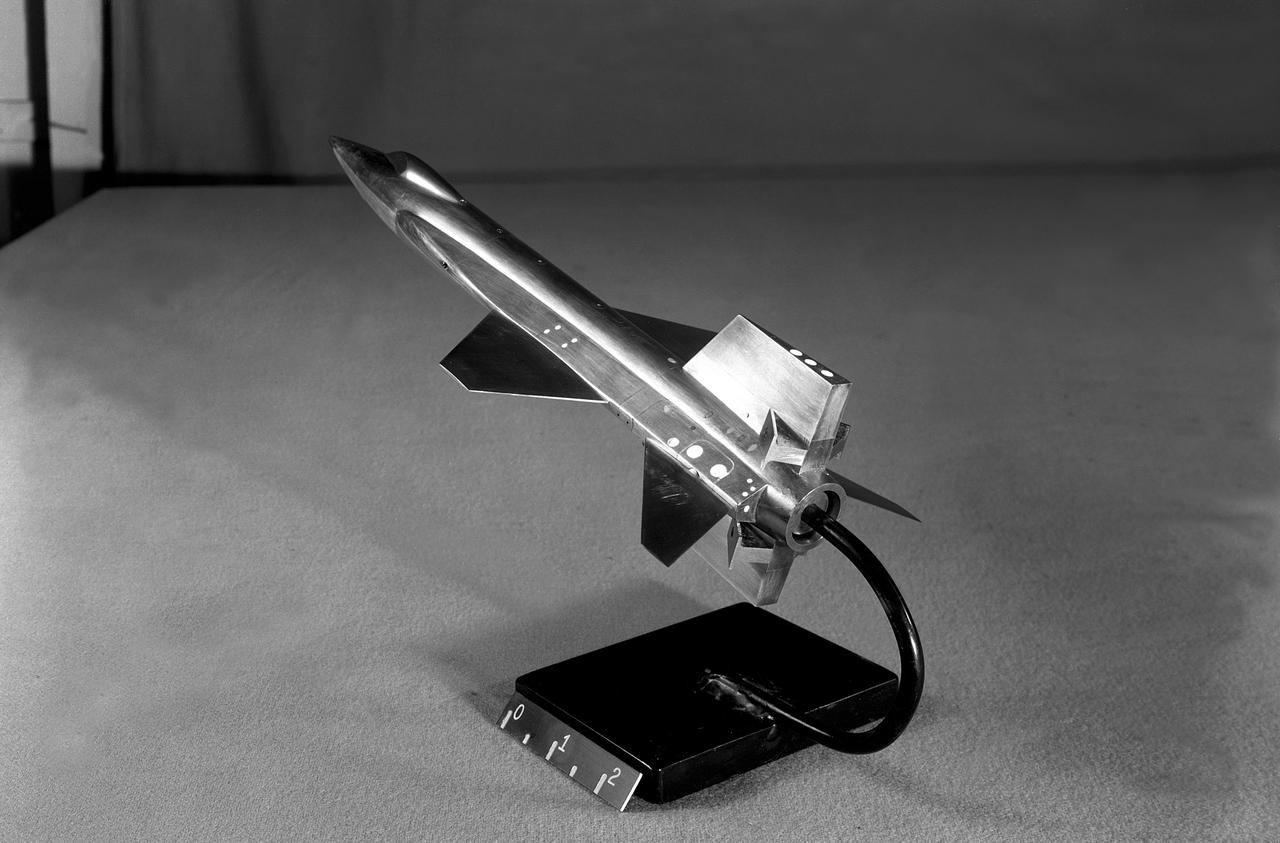
This scale-model of North American's initial X-15 design was tested in North American and NACA wind tunnels note the conventional tail and fuselage side-tunnels that extend far toward the aircraft nose. North American engineers would determine that the variable wedge-angle stabilizer created a weight issue, and aeronautical testing by Langley engineers confirmed that the side-tunnels made the design less stable.
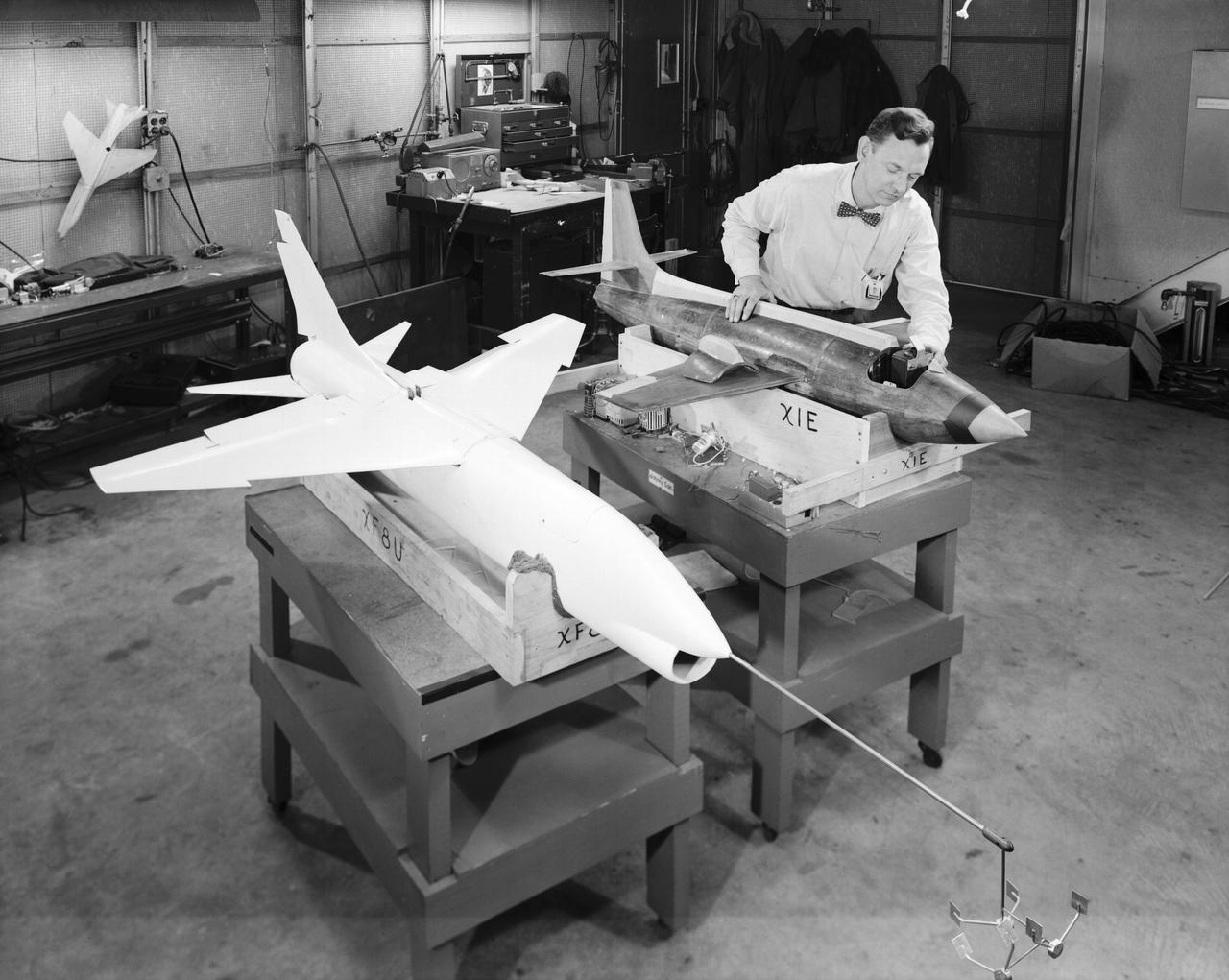
L57-660 A technician prepares dynamic models of the Bell X-1E and the Vought XF-8U Crusader for wind tunnel testing in 1957. The Crusader was then the Navy's fastest aircraft- maximum speed Mach 1.75 at 35,000 Feet. Photograph published in Engineer in Charge: A History of the Langley Aeronautical Laboratory, 1917-1958 by James R. Hansen. Page 307.
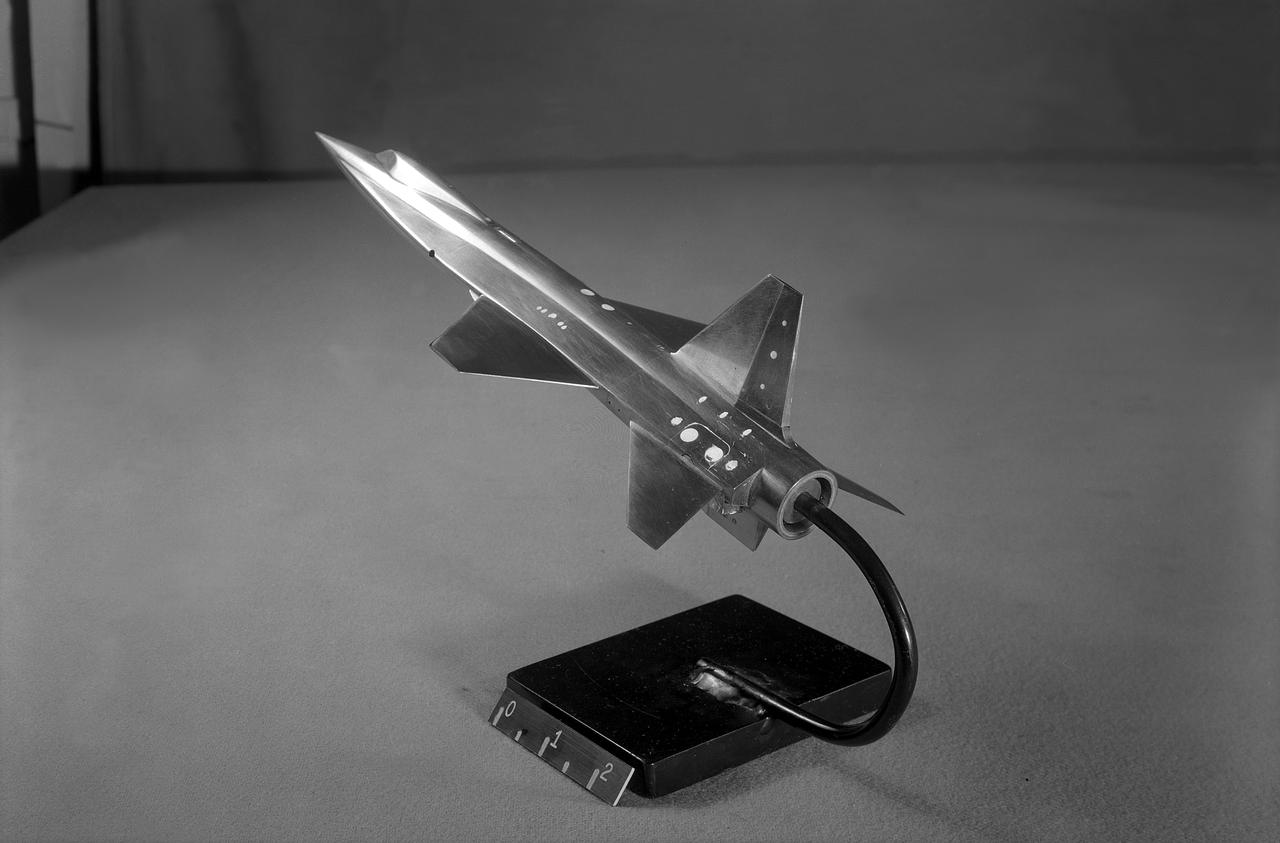
This scale-model of North American's initial X-15 design was tested in North American and NACA wind tunnels note the conventional tail and fuselage side-tunnels that extend far toward the aircraft nose. North American engineers would determine that the variable wedge-angle stabilizer created a weight issue, and aeronautical testing by Langley engineers confirmed that the side-tunnels made the design less stable.

X-15 launch techniques were investigated using on-twentieth scale models mounted in the 7x10 FT Tunnel. -- Photograph published in Winds of Change, 75th Anniversary NASA publication (page 67), by James Schultz. -- Photograph also published in Sixty Years of Aeronautical Research 1917-1977 - a NASA publication (page 49), by David A. Anderton.
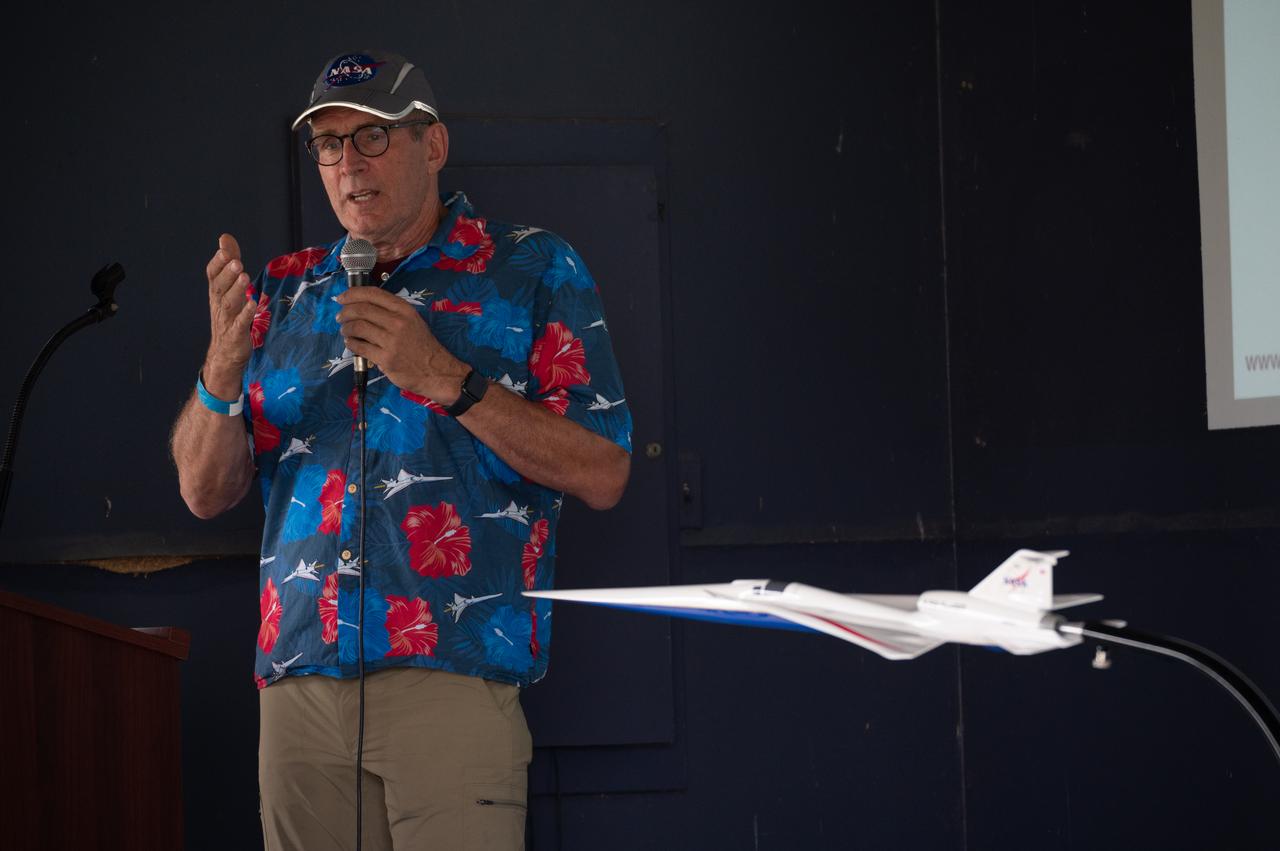
AirVenture at Oshkosh 2024
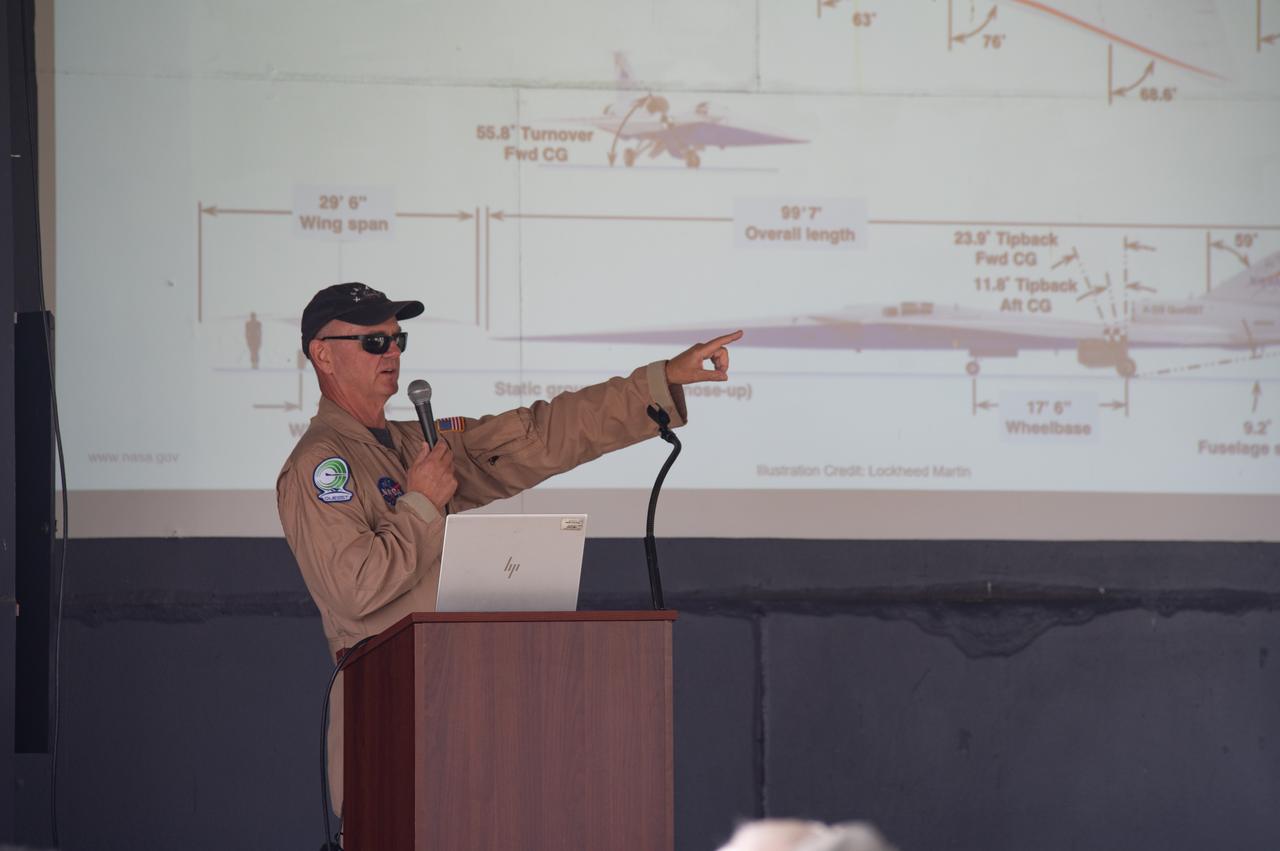
AirVenture at Oshkosh 2023
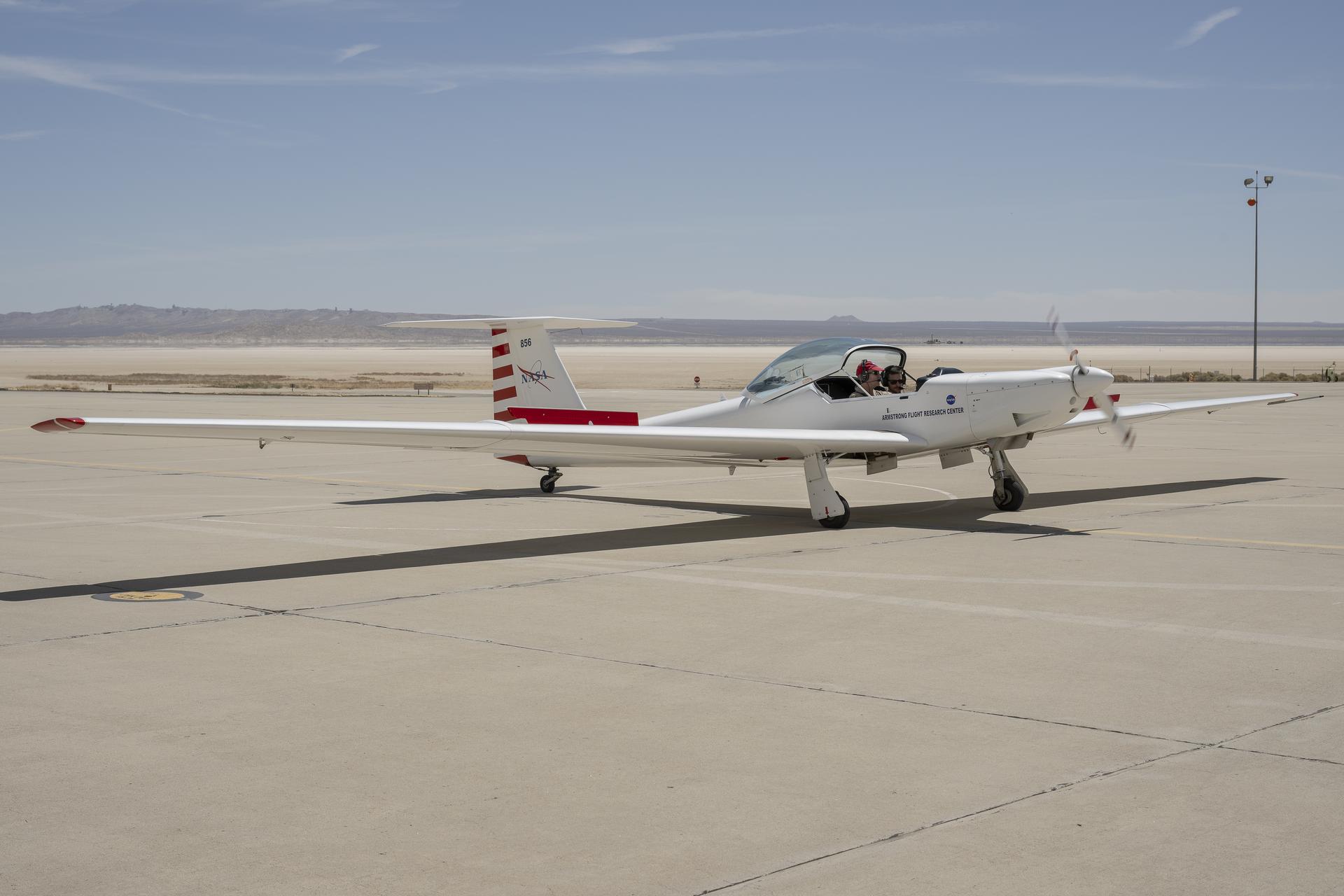
A NASA TG-14 sits on the ramp at NASA’s Armstrong Flight Research Center in Edwards, California, on Monday, Aug. 4, 2025, to support NASA’s Quesst mission.
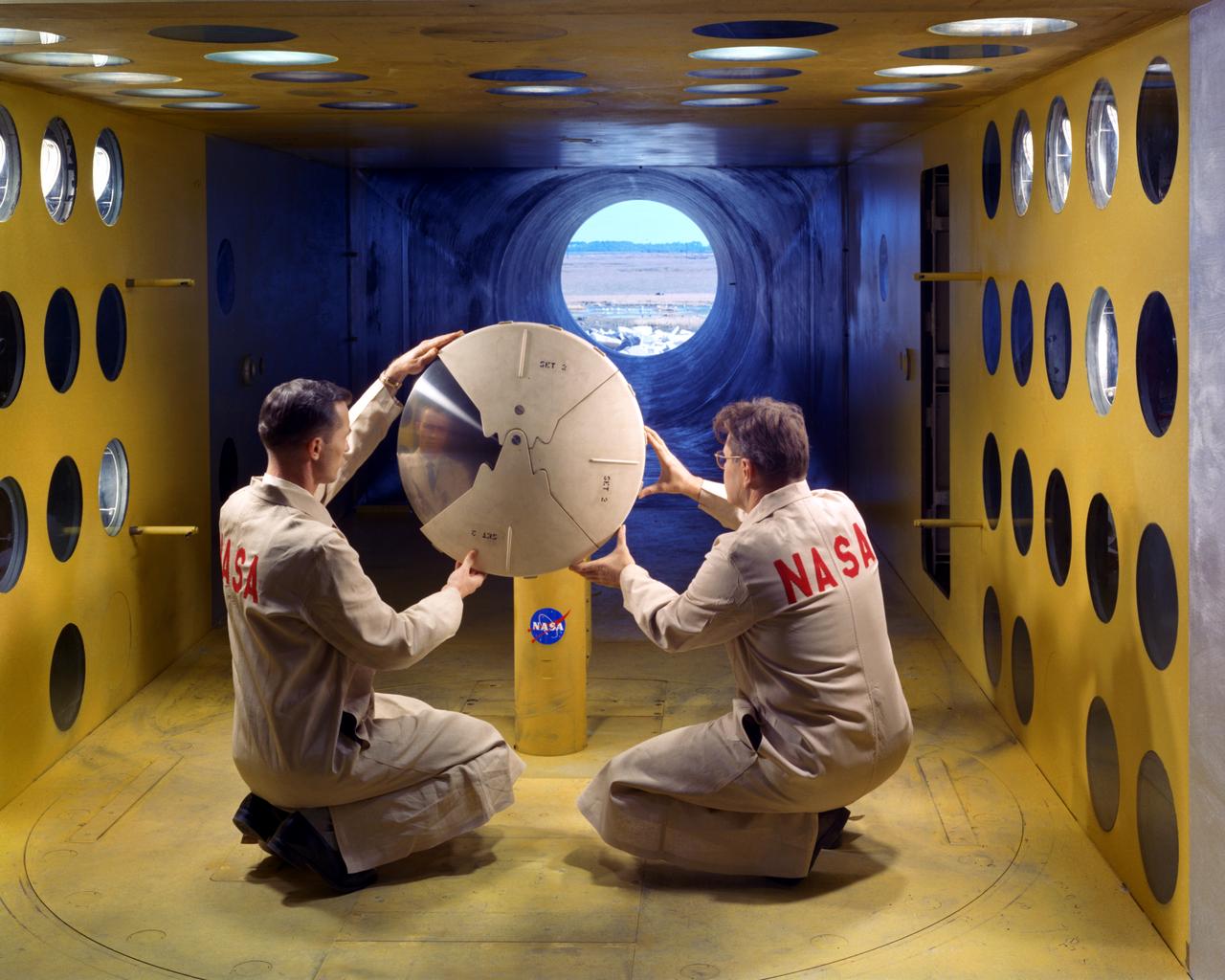
As part of the project FIRE study, technicians ready materials to be subjected to high temperatures that will simulate the effects of re-entry heating. Tests of various space capsule materials for Project FIRE were conducted. Photographed in the 9 X 6 Foot Thermal Structures Tunnel. Photograph published in Winds of Change, 75th Anniversary NASA publication, by James Schultz (page 78). Photograph also published in Engineer in Charge: A History of the Langley Aeronautical Laboratory, 1917-1958 by James R. Hansen (page 476). Also Published in the book " A Century at Langley" by Joseph Chambers. Pg. 92
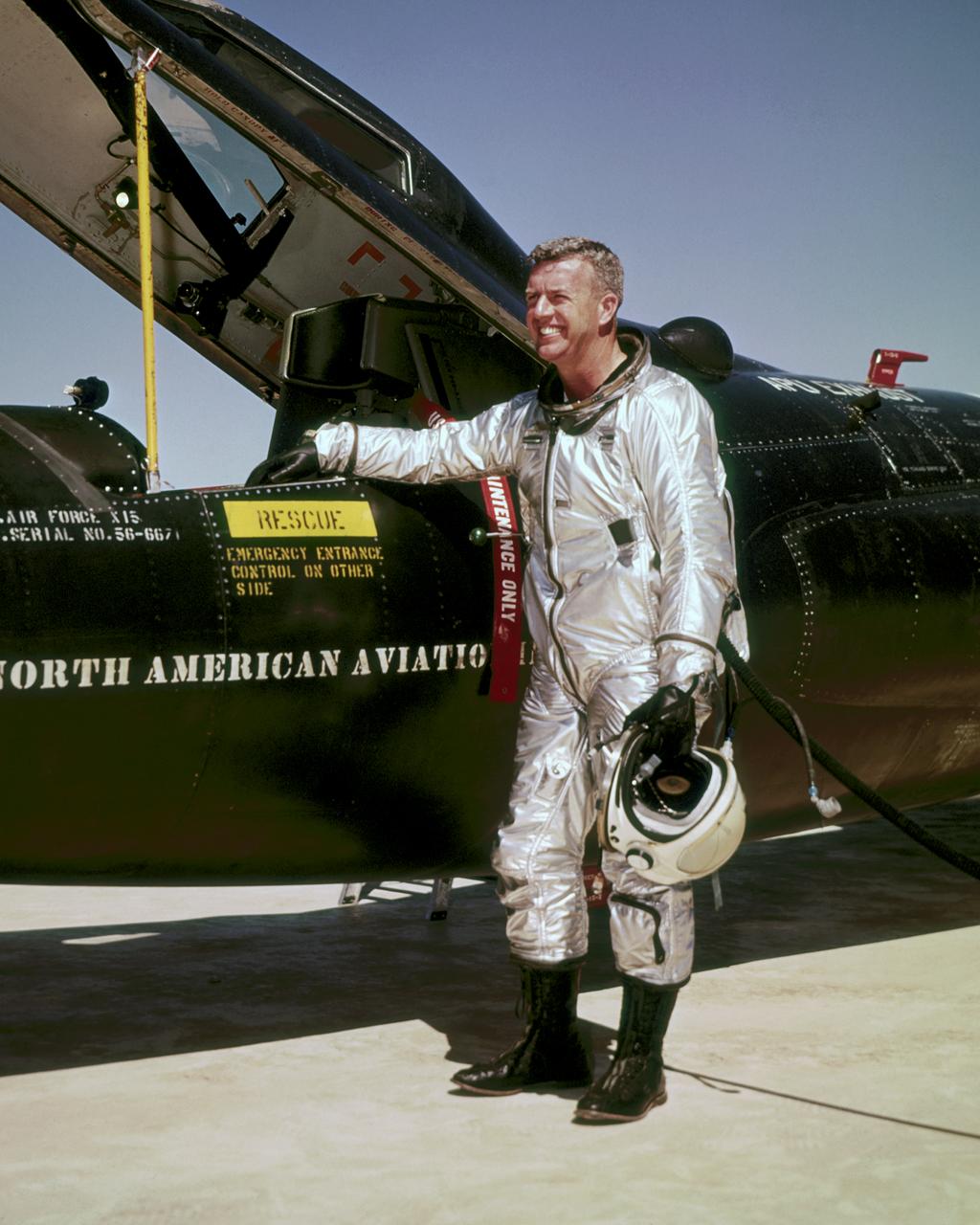
Joseph A. Walker was a Chief Research Pilot at the NASA Dryden Flight Research Center during the mid-1960s. He joined the NACA in March 1945, and served as project pilot at the Edwards flight research facility on such pioneering research projects as the D-558-1, D-558-2, X-1, X-3, X-4, X-5, and the X-15. He also flew programs involving the F-100, F-101, F-102, F-104, and the B-47. Walker made the first NASA X-15 flight on March 25, 1960. He flew the research aircraft 24 times and achieved its fastest speed and highest altitude. He attained a speed of 4,104 mph (Mach 5.92) during a flight on June 27, 1962, and reached an altitude of 354,300 feet on August 22, 1963 (his last X-15 flight). He was the first man to pilot the Lunar Landing Research Vehicle (LLRV) that was used to develop piloting and operational techniques for lunar landings. Walker was born February 20, 1921, in Washington, Pa. He lived there until graduating from Washington and Jefferson College in 1942, with a B.A. degree in Physics. During World War II he flew P-38 fighters for the Air Force, earning the Distinguished Flying Cross and the Air Medal with Seven Oak Clusters. Walker was the recipient of many awards during his 21 years as a research pilot. These include the 1961 Robert J. Collier Trophy, 1961 Harmon International Trophy for Aviators, the 1961 Kincheloe Award and 1961 Octave Chanute Award. He received an honorary Doctor of Aeronautical Sciences degree from his alma mater in June of 1962. Walker was named Pilot of the Year in 1963 by the National Pilots Association. He was a charter member of the Society of Experimental Test Pilots, and one of the first to be designated a Fellow. He was fatally injured on June 8, 1966, in a mid-air collision between an F-104 he was piloting and the XB-70.
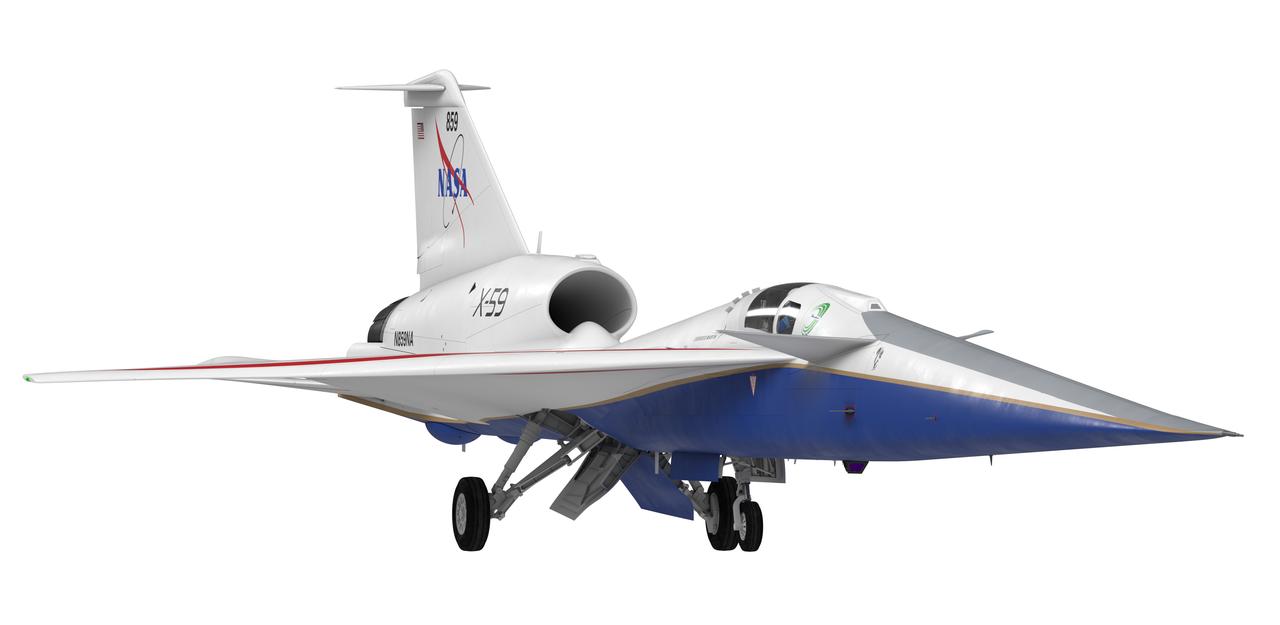
Artist concept of the X-59 three forths view
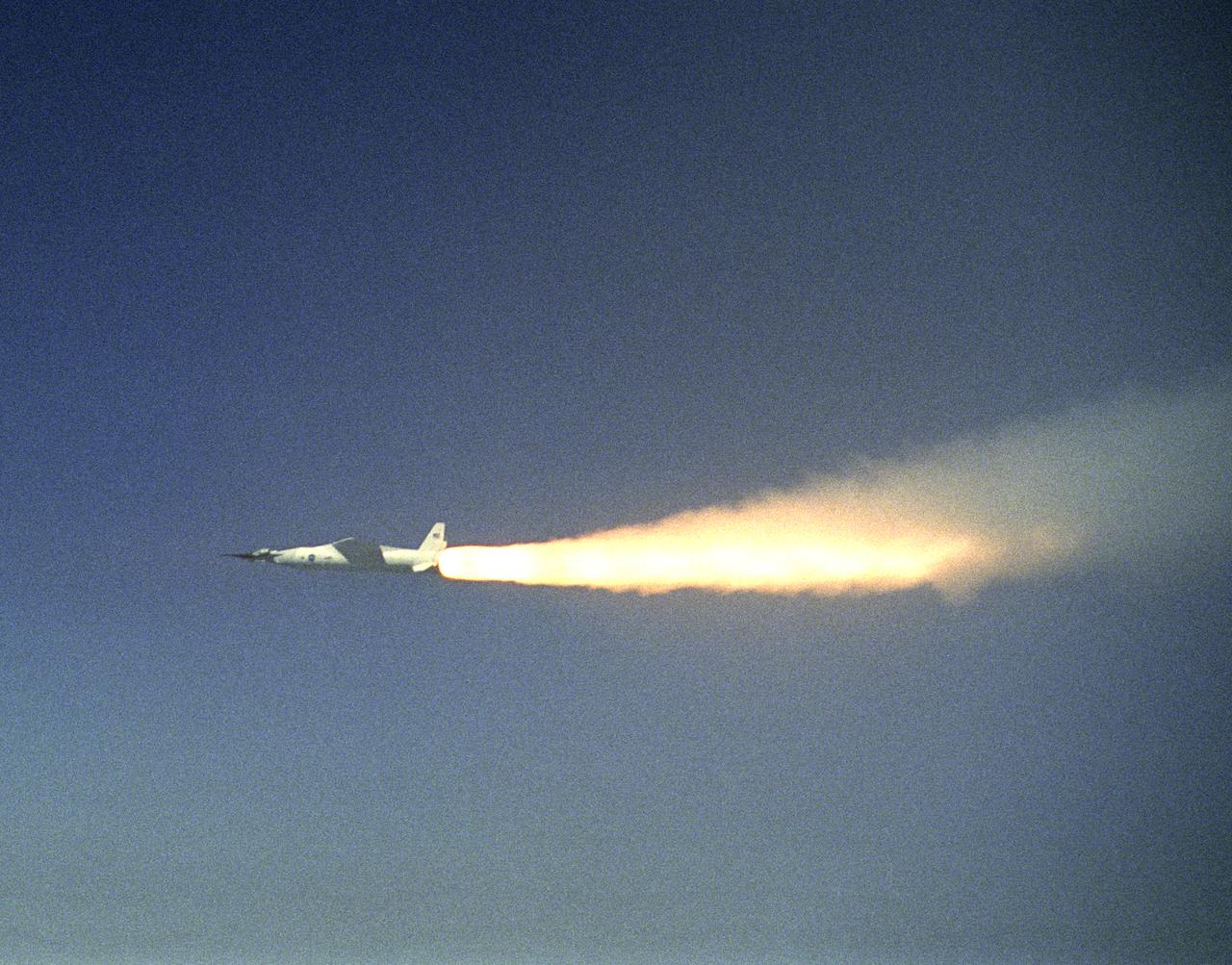
The second X-43A hypersonic research aircraft and its modified Pegasus booster rocket accelerate after launch from NASA's B-52B launch aircraft over the Pacific Ocean on March 27, 2004. The mission originated from the NASA Dryden Flight Research Center at Edwards Air Force Base, Calif. Minutes later the X-43A separated from the Pegasus booster and accelerated to its intended speed of Mach 7. In a combined research effort involving Dryden, Langley, and several industry partners, NASA demonstrated the value of its X-43A hypersonic research aircraft, as it became the first air-breathing, unpiloted, scramjet-powered plane to fly freely by itself. The March 27 flight, originating from NASA's Dryden Flight Research Center, began with the Agency's B-52B launch aircraft carrying the X-43A out to the test range over the Pacific Ocean off the California coast. The X-43A was boosted up to its test altitude of about 95,000 feet, where it separated from its modified Pegasus booster and flew freely under its own power. Two very significant aviation milestones occurred during this test flight: first, controlled accelerating flight at Mach 7 under scramjet power, and second, the successful stage separation at high dynamic pressure of two non-axisymmetric vehicles. To top it all off, the flight resulted in the setting of a new aeronautical speed record. The X-43A reached a speed of over Mach 7, or about 5,000 miles per hour faster than any known aircraft powered by an air-breathing engine has ever flown.
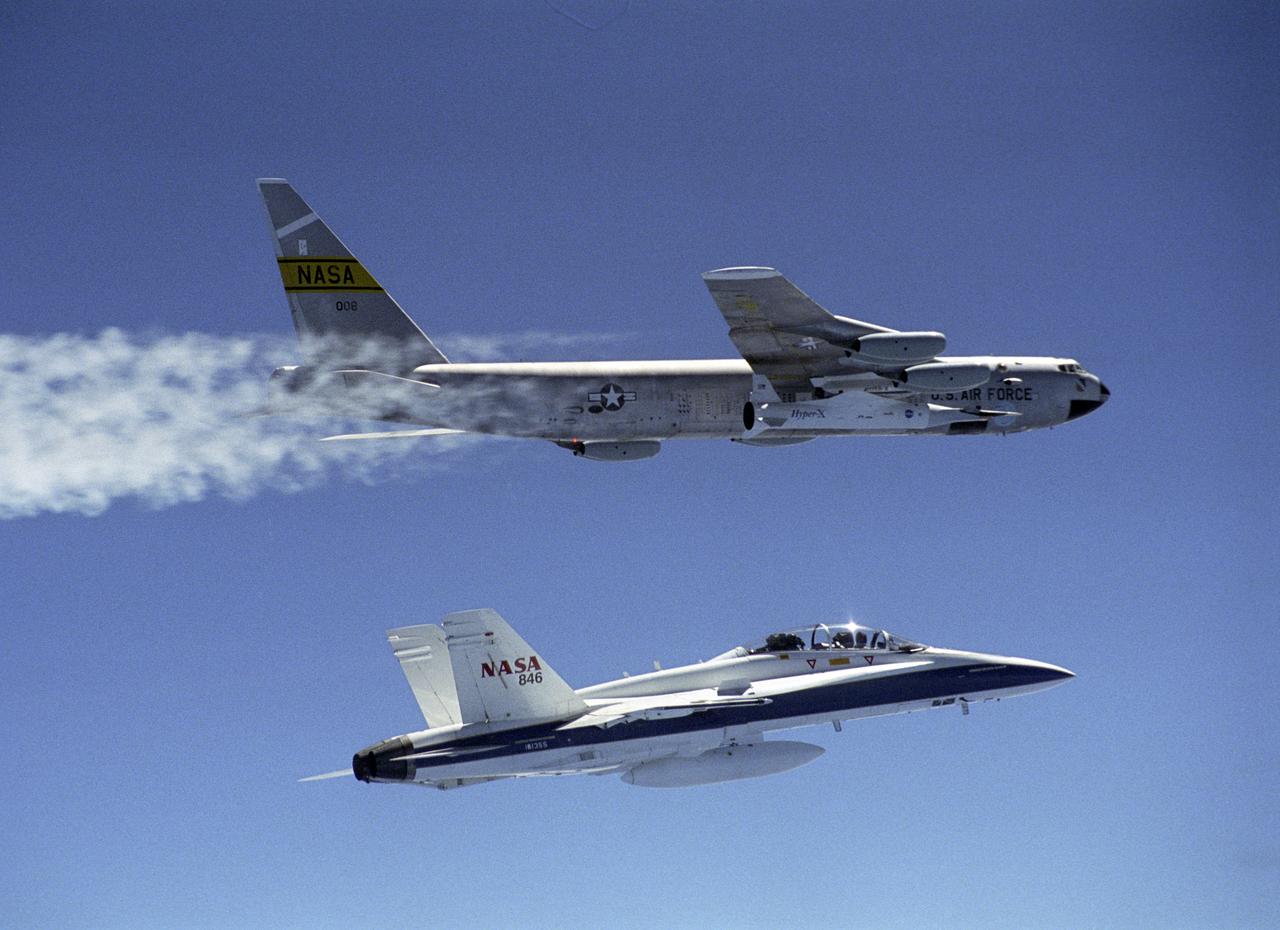
The second X-43A hypersonic research aircraft, attached to a modified Pegasus booster rocket and followed by a chase F-18, was taken to launch altitude by NASA's B-52B launch aircraft from the NASA Dryden Flight Research Center at Edwards Air Force Base, Calif., on March 27, 2004. About an hour later the Pegasus booster was released from the B-52 to accelerate the X-43A to its intended speed of Mach 7. In a combined research effort involving Dryden, Langley, and several industry partners, NASA demonstrated the value of its X-43A hypersonic research aircraft, as it became the first air-breathing, unpiloted, scramjet-powered plane to fly freely by itself. The March 27 flight, originating from NASA's Dryden Flight Research Center, began with the Agency's B-52B launch aircraft carrying the X-43A out to the test range over the Pacific Ocean off the California coast. The X-43A was boosted up to its test altitude of about 95,000 feet, where it separated from its modified Pegasus booster and flew freely under its own power. Two very significant aviation milestones occurred during this test flight: first, controlled accelerating flight at Mach 7 under scramjet power, and second, the successful stage separation at high dynamic pressure of two non-axisymmetric vehicles. To top it all off, the flight resulted in the setting of a new aeronautical speed record. The X-43A reached a speed of over Mach 7, or about 5,000 miles per hour faster than any known aircraft powered by an air-breathing engine has ever flown.
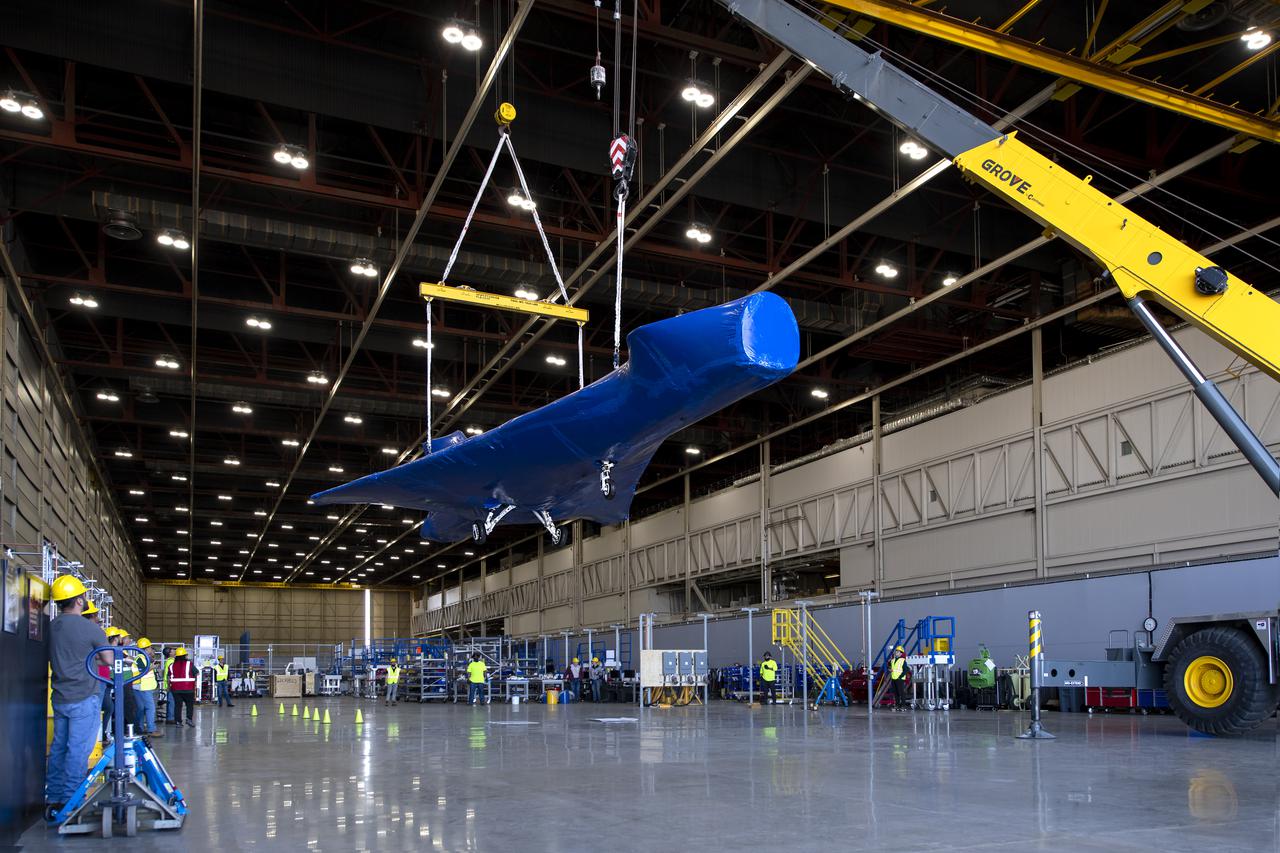
The X-59, NASA’s quiet supersonic technology experimental aircraft, is suspended in the air at Lockheed Martin’s Skunk Works facility in Palmdale, California, following several months of critical ground testing in Ft. Worth, Texas
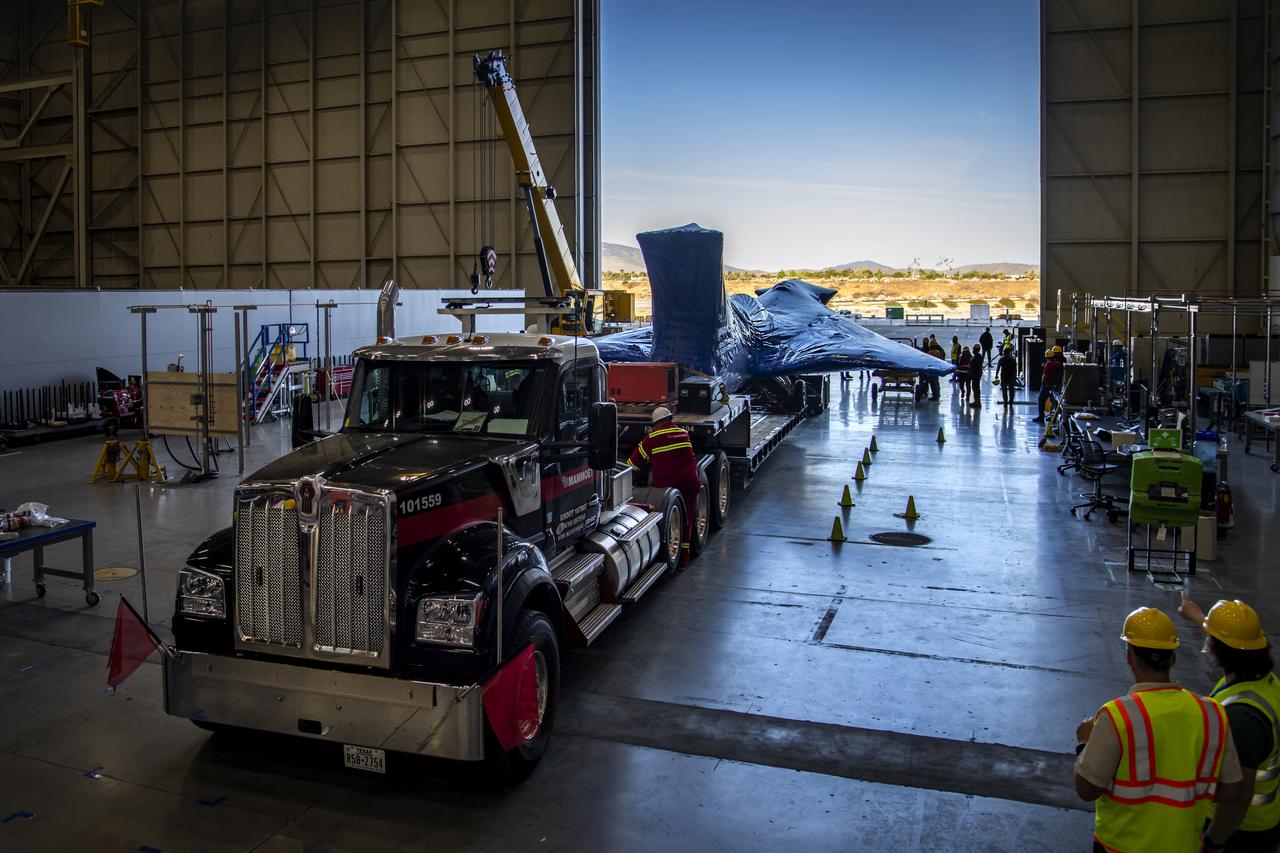
The X-59, NASA’s quiet supersonic technology experimental aircraft, arrives back at Lockheed Martin’s Skunk Works facility in Palmdale, California, following several months of critical ground testing in Ft. Worth, Texas
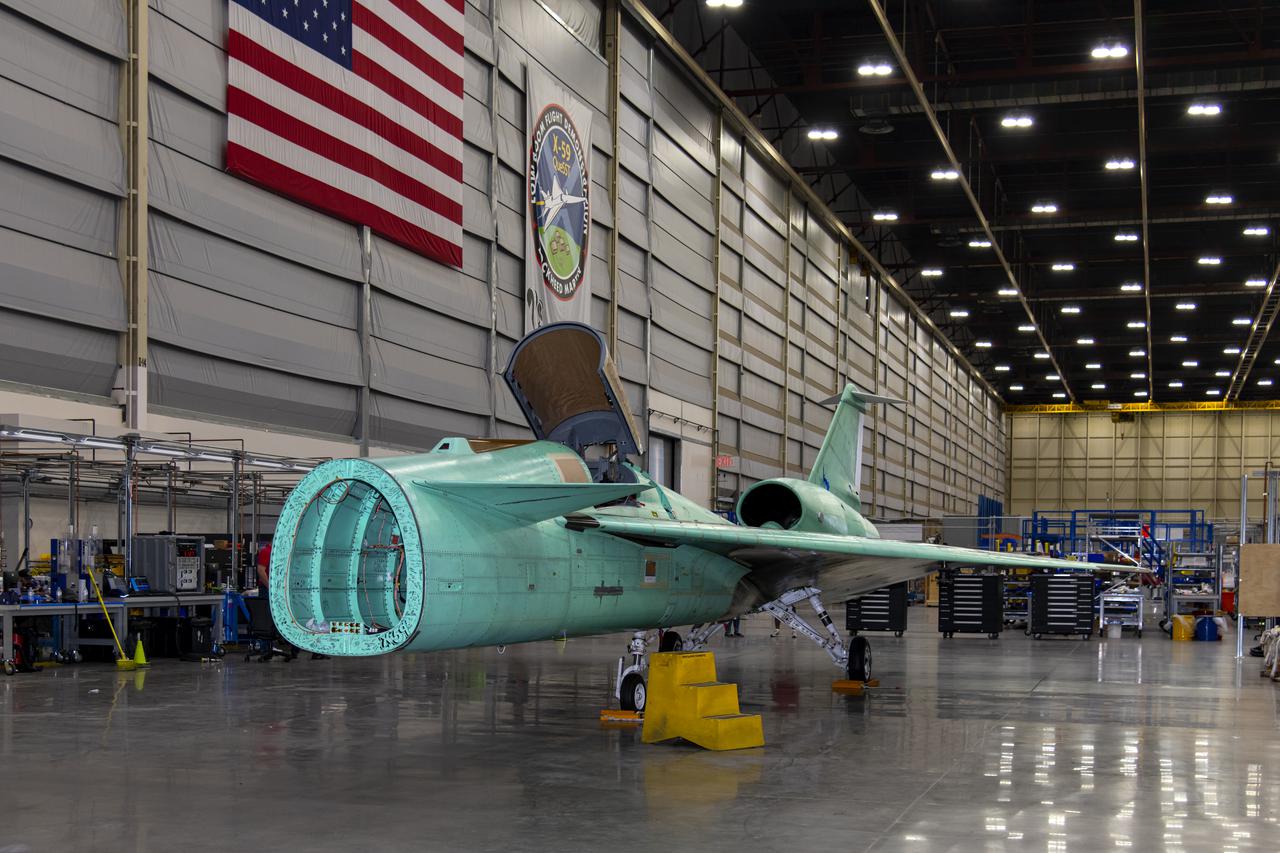
The X-59, NASA's quiet supersonic technology experimental aircraft, sits in Lockheed Martin's Skunk Works facility in Palmdale, California, following its return from several months of critical ground testing in Ft. Worth, Texas
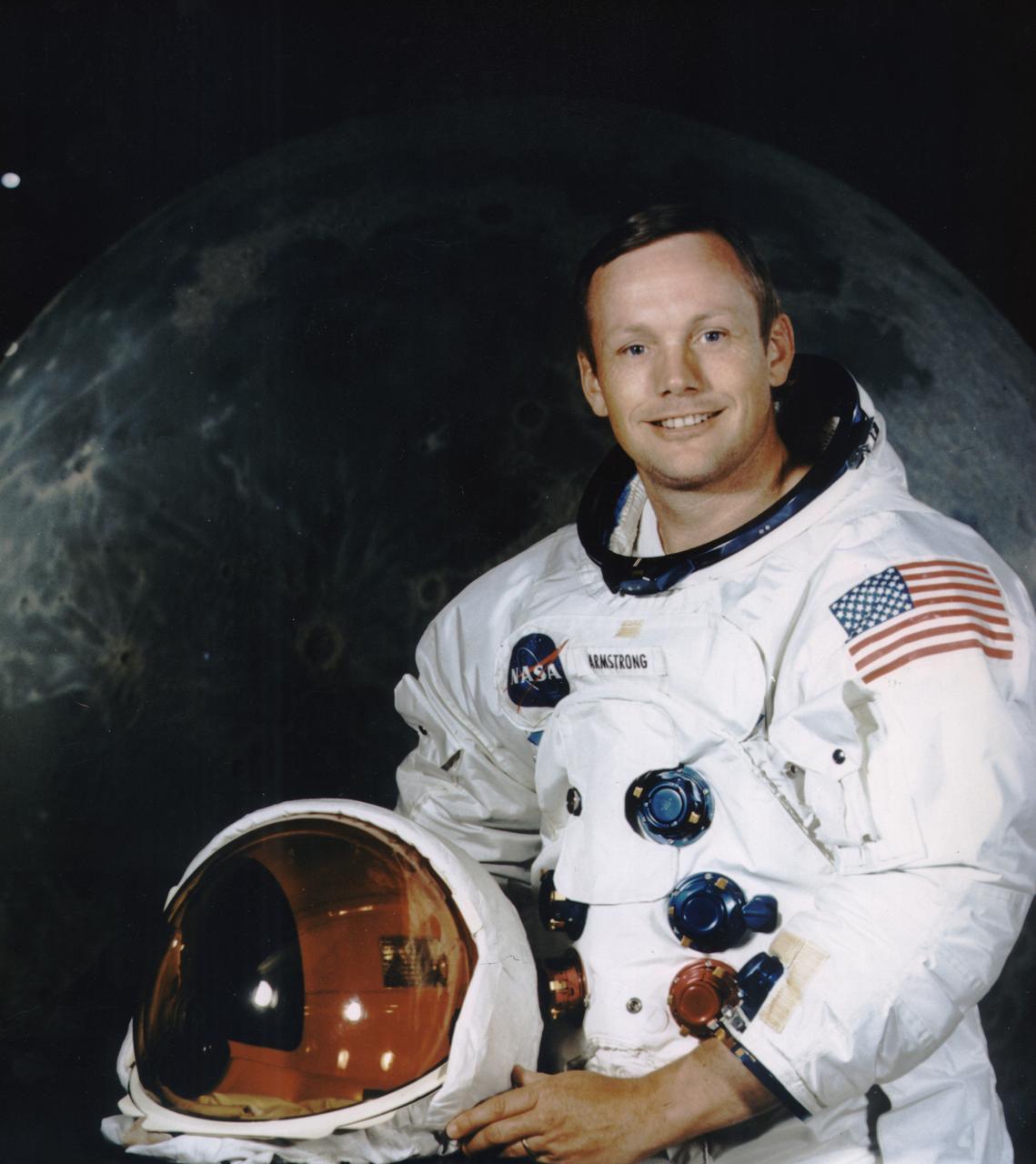
Neil Armstrong, donned in his space suit, poses for his official Apollo 11 portrait. Armstrong began his flight career as a naval aviator. He flew 78 combat missions during the Korean War. Armstrong joined the NASA predecessor, NACA (National Advisory Committee for Aeronautics), as a research pilot at the Lewis Laboratory in Cleveland and later transferred to the NACA High Speed Flight Station at Edwards AFB, California. He was a project pilot on many pioneering high speed aircraft, including the 4,000 mph X-15. He has flown over 200 different models of aircraft, including jets, rockets, helicopters, and gliders. In 1962, Armstrong was transferred to astronaut status. He served as command pilot for the Gemini 8 mission, launched March 16, 1966, and performed the first successful docking of two vehicles in space. In 1969, Armstrong was commander of Apollo 11, the first manned lunar landing mission, and gained the distinction of being the first man to land a craft on the Moon and the first man to step on its surface. Armstrong subsequently held the position of Deputy Associate Administrator for Aeronautics, NASA Headquarters Office of Advanced Research and Technology, from 1970 to 1971. He resigned from NASA in 1971.
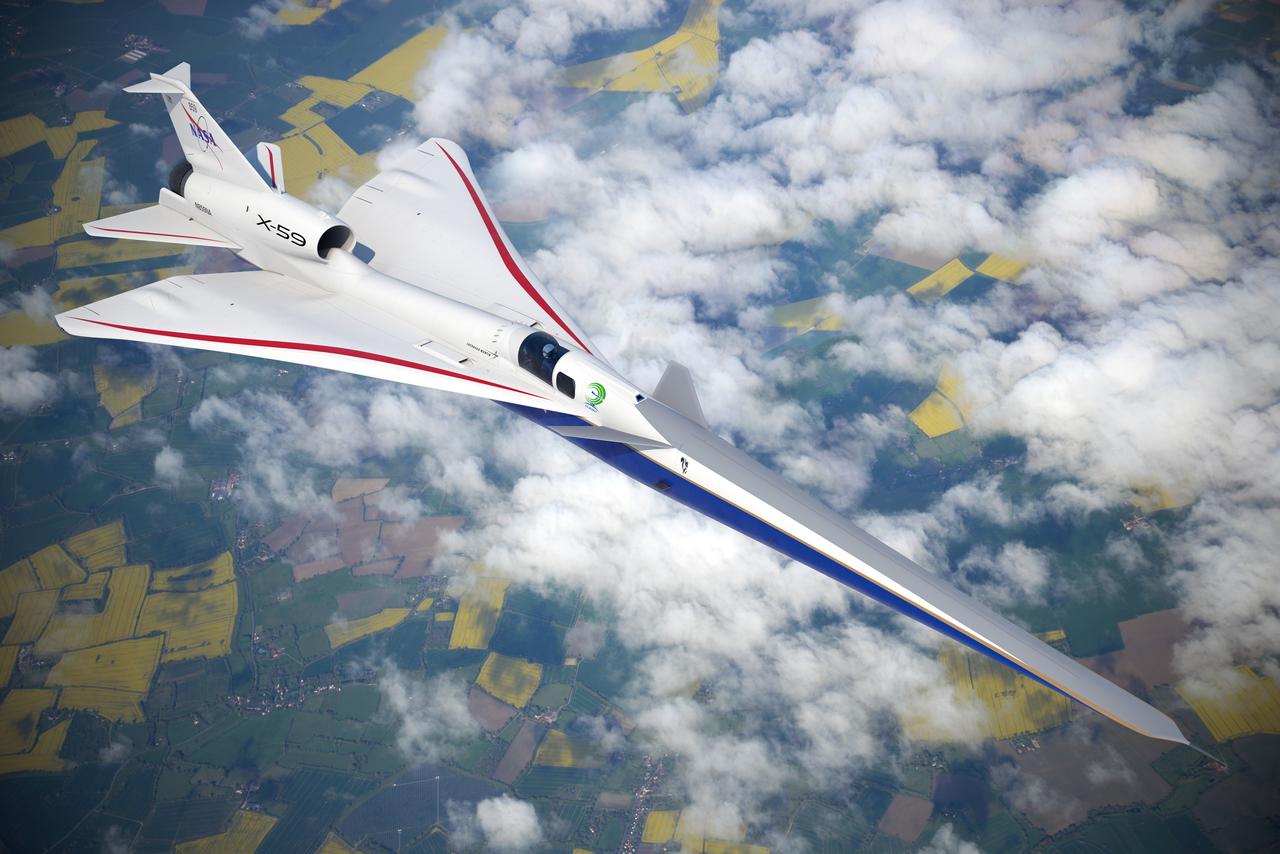
Artist illustration of the X-59 in flight over land.
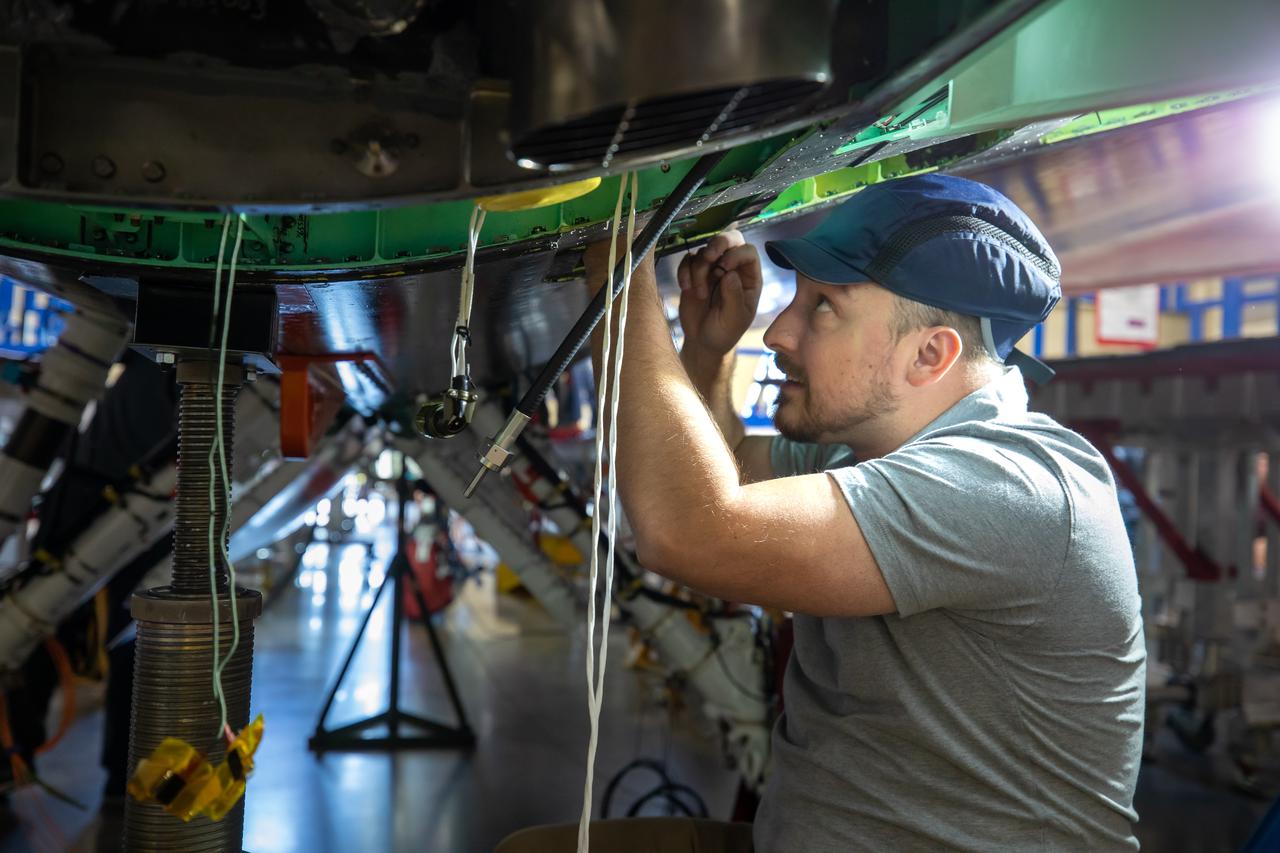
A Lockheed Martin Skunk Works technician works to complete wiring on the X-59 aircraft in preparation for the power-on system checkouts. Once complete, the X-59 aircraft will demonstrate the ability to fly supersonic while reducing the loud sonic boom to a quiet sonic thump and help enable commercial supersonic air travel over land. This aircraft is the centerpiece of NASA’s Quesst mission.
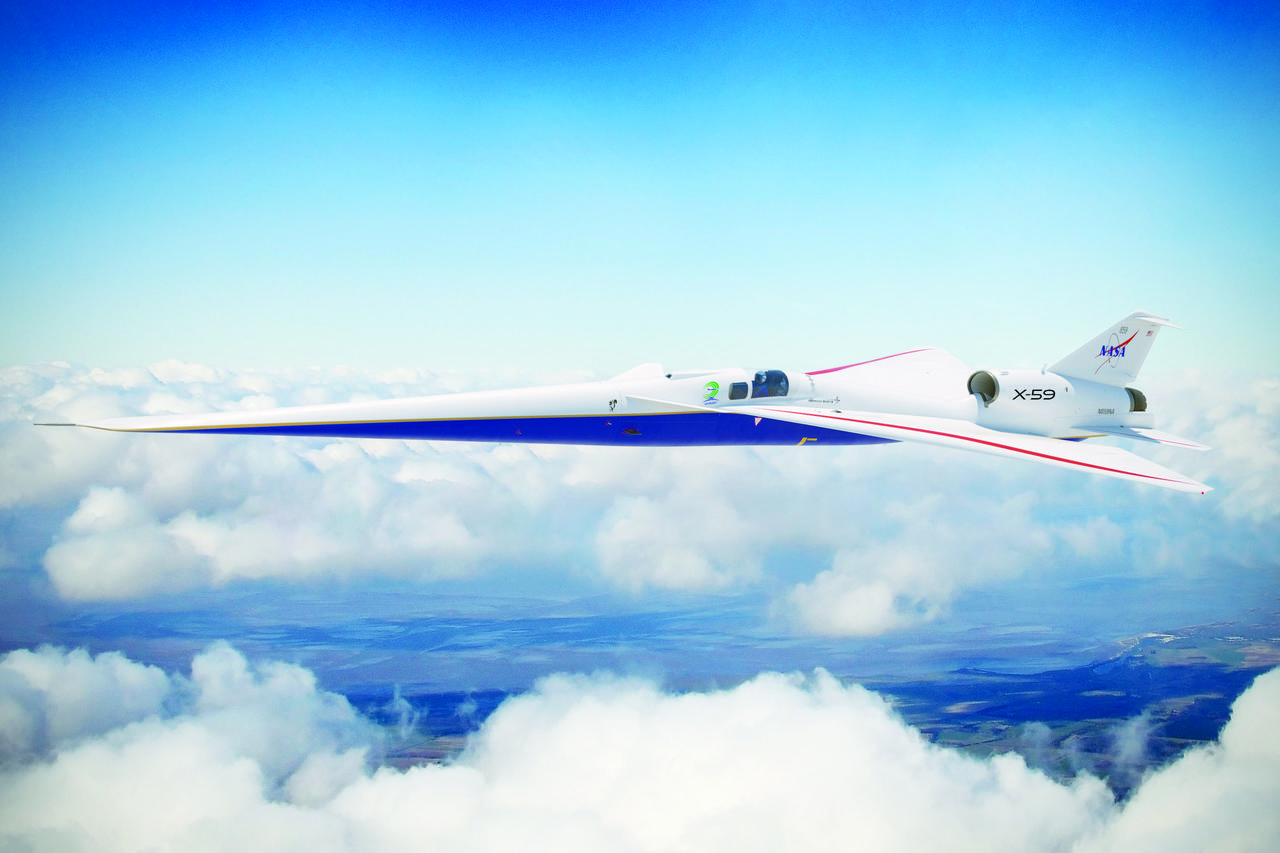
Artist illustration of the X-59 in flight above the clouds with land below, flying left.

Here is an image of the X-59’s 13-foot General Electric F414 engine as the team prepares for a fit check. Making sure components, like the aircraft’s hydraulic lines, which help control functions like brakes or landing gear, and wiring of the engine, fit properly is essential to the aircraft’s safety. Once complete, the X-59 aircraft will demonstrate the ability to fly supersonic while reducing the loud sonic boom to a quiet sonic thump and help enable commercial supersonic air travel over land.
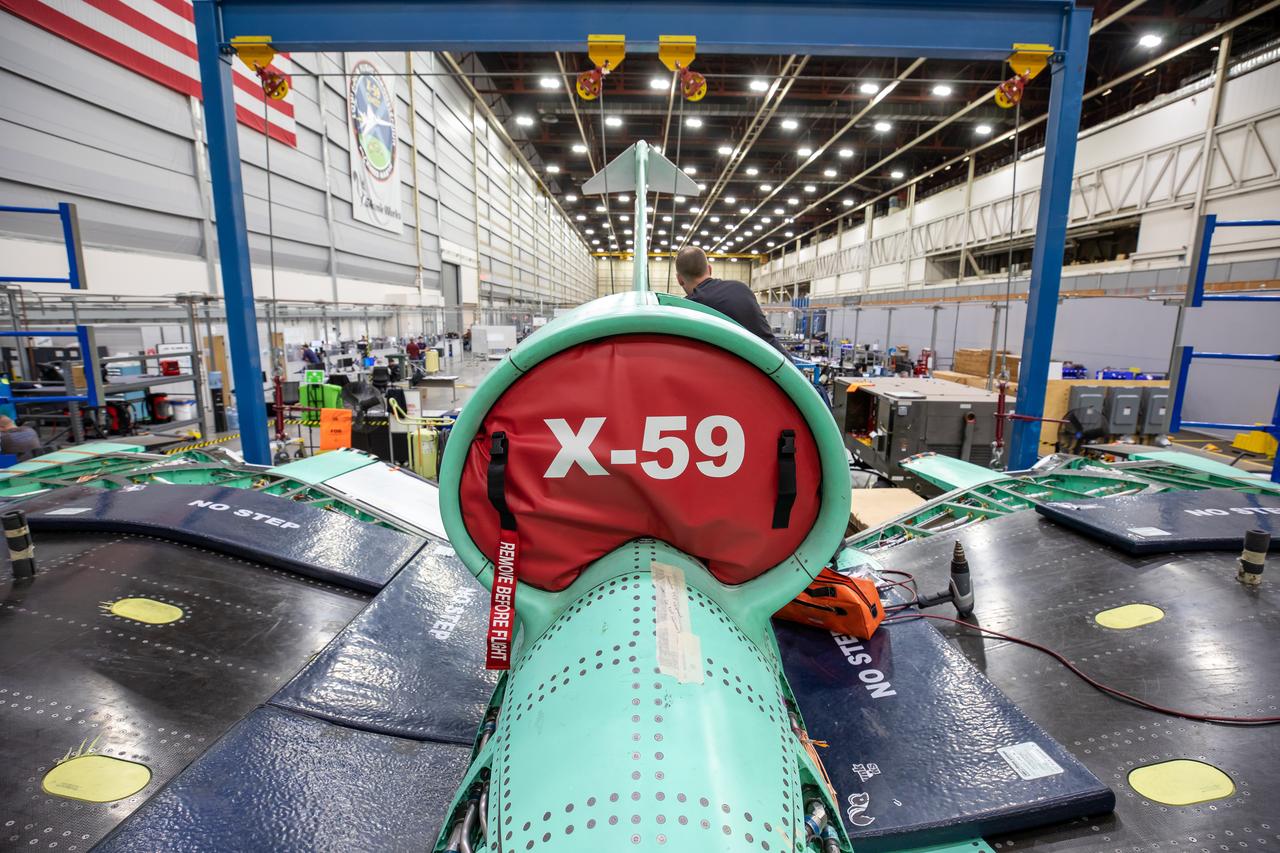
This is an image of the X-59 inlet with a safety covering. The inlet’s purpose is to adjust air speeds before they pass through the aircraft’s engine. The purpose of the covering is to protect the inlet and engine from foreign objects.