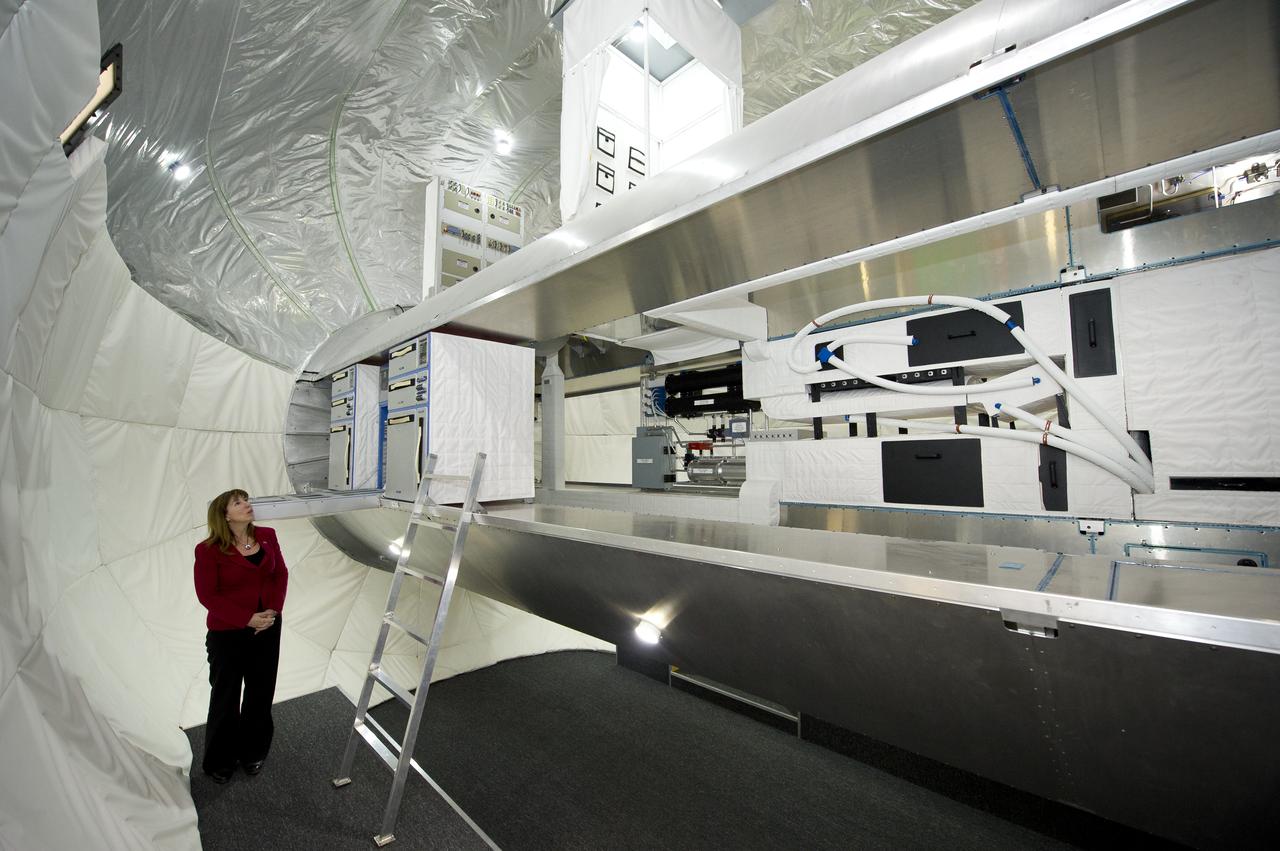
NASA Deputy Administrator Lori Garver views the inside of a full scale mockup of Bigelow Aerospace's Space Station Alpha during a tour of the Bigelow Aerospace facilities by the company's President Robert Bigelow on Friday, Feb. 4, 2011, in Las Vegas. NASA has been discussing potential partnership opportunities with Bigelow for its inflatable habitat technologies as part of NASA's goal to develop innovative technologies to ensure that the U.S. remains competitive in future space endeavors. Photo Credit: (NASA/Bill Ingalls)

Bigelow Aerospace President Robert Bigelow talks during a press conference shortly after he and NASA Deputy Administrator Lori Garver toured the Bigelow Aerospace facilities on Friday, Feb. 4, 2011, in Las Vegas. NASA has been discussing potential partnership opportunities with Bigelow for its inflatable habitat technologies as part of NASA's goal to develop innovative technologies to ensure that the U.S. remains competitive in future space endeavors. Photo Credit: (NASA/Bill Ingalls)
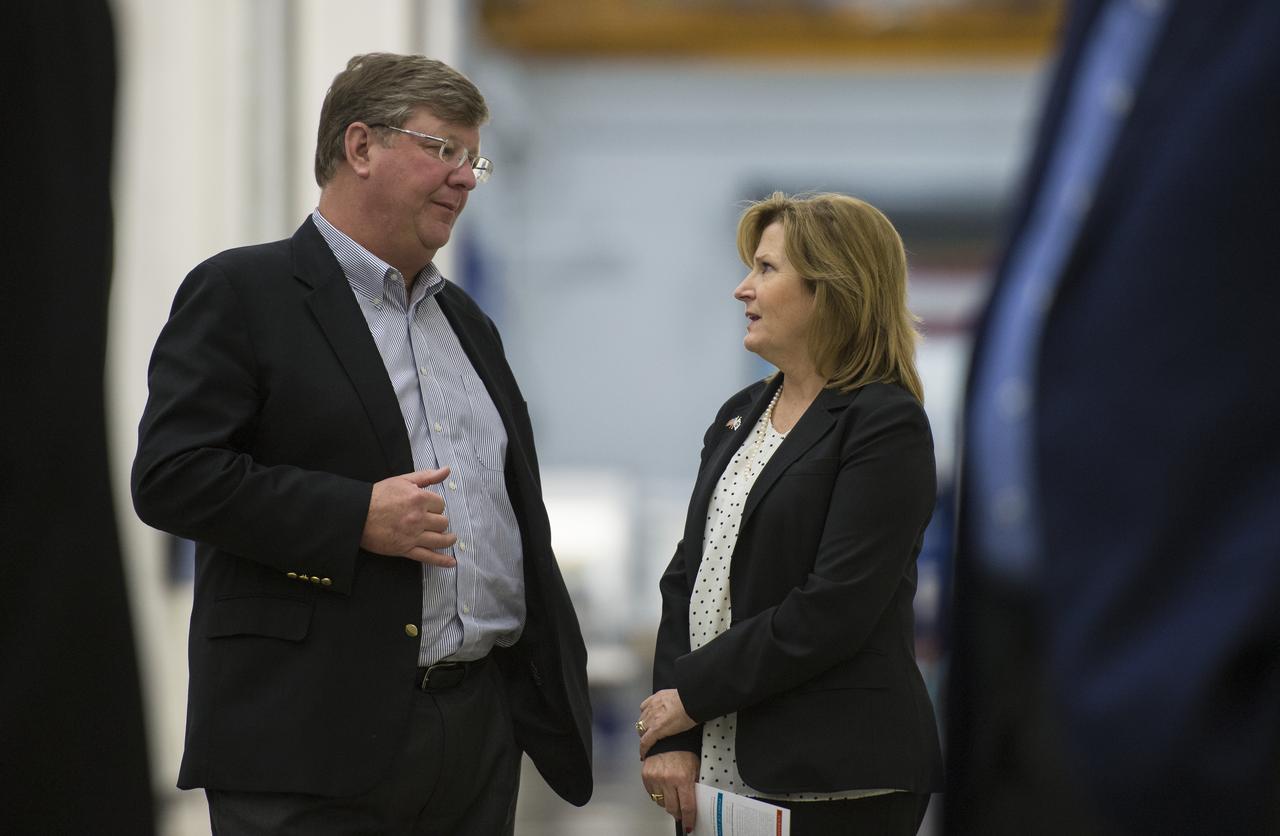
Acting NASA Deputy Administrator Lesa Roe, right, speaks with Rob Strain, president of Ball Aerospace, Thursday, April 6, 2017 during a visit to Ball Aerospace in Boulder, Colo. Photo Credit: (NASA/Joel Kowsky)
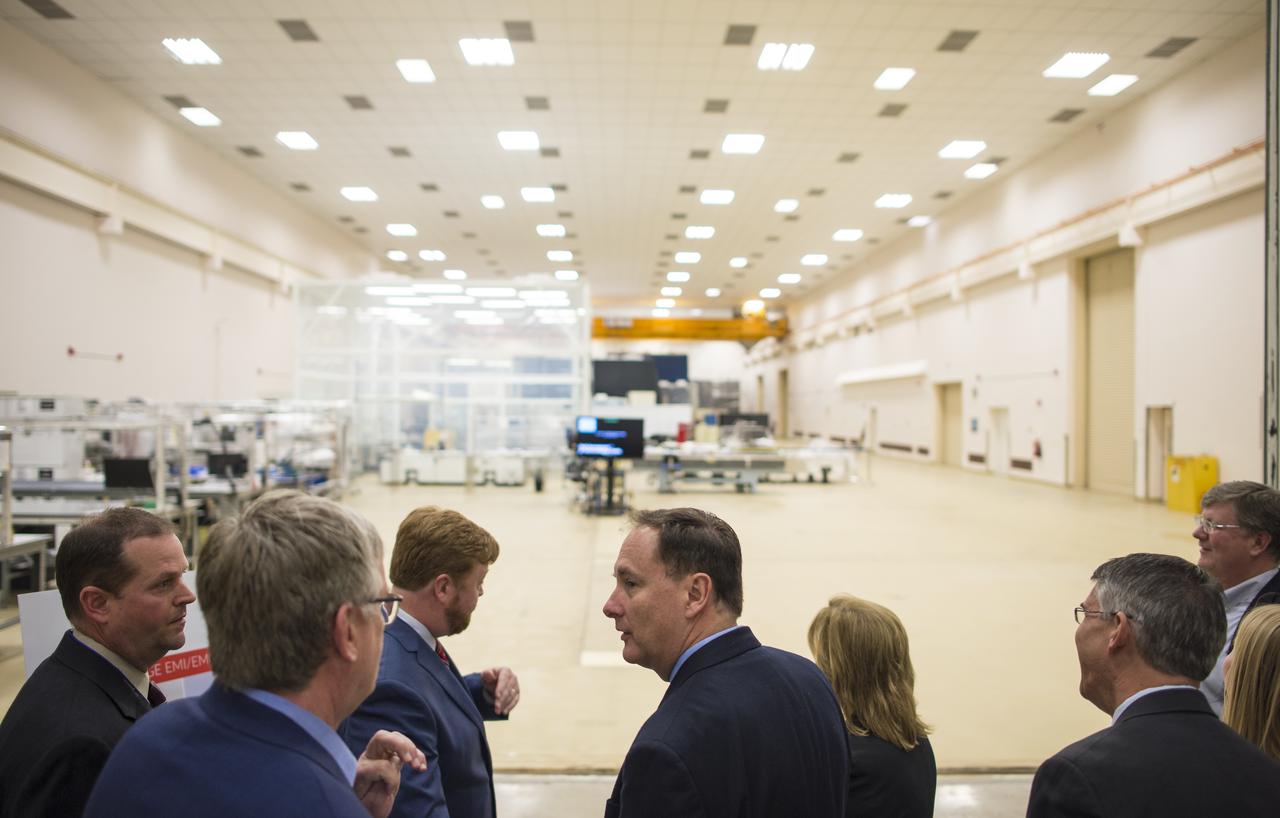
Acting NASA Administrator Robert Lightfoot, center, is seen during a visit to the environmental test facilities at Ball Aerospace, Thursday, April 6, 2017 in Boulder, Colo. Photo Credit: (NASA/Joel Kowsky)
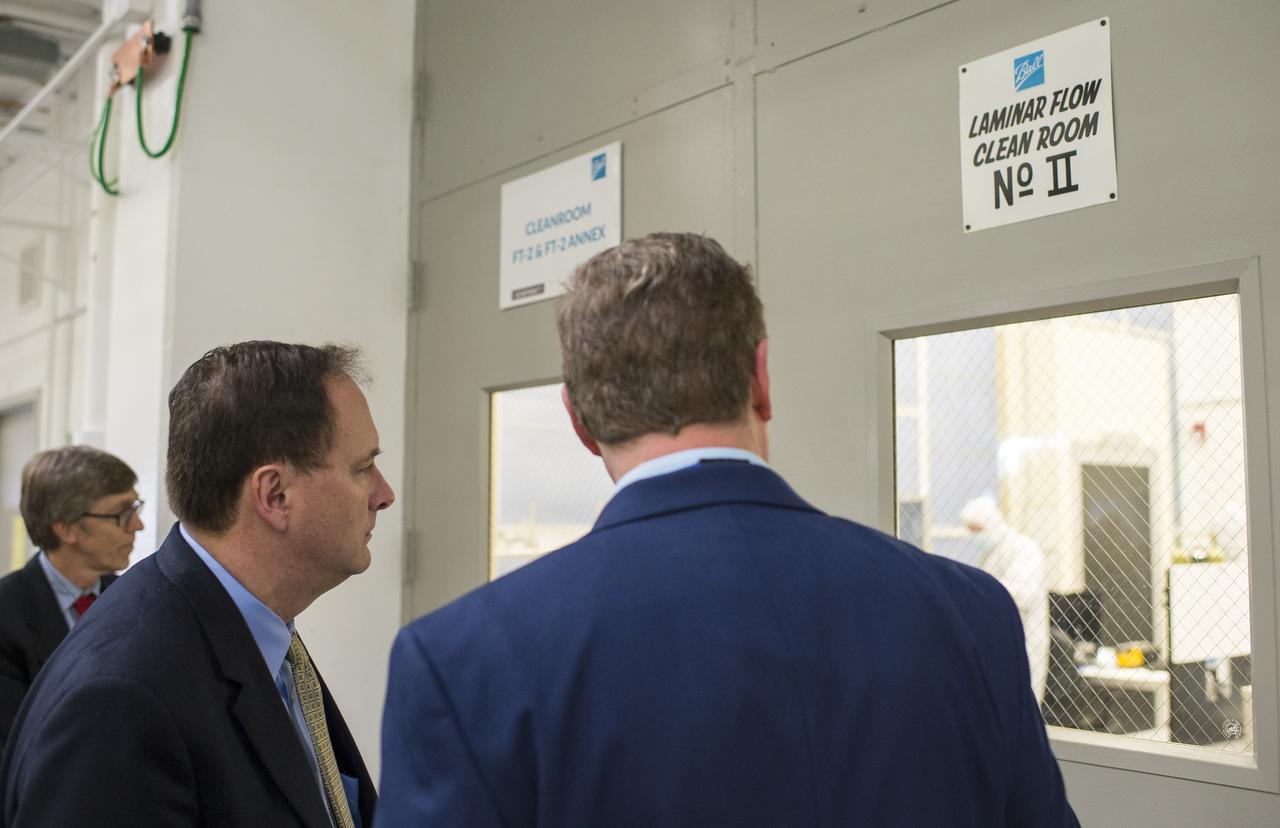
Acting NASA Administrator Robert Lightfoot, left, views a clean room with Tim Schoenweis, senior project engineer for the Ozone Mapping Profiler Suite (OMPS) at Ball Aerospace, right, Thursday, April 6, 2017 at Ball Aerospace in Boulder, Colo. Photo Credit: (NASA/Joel Kowsky)
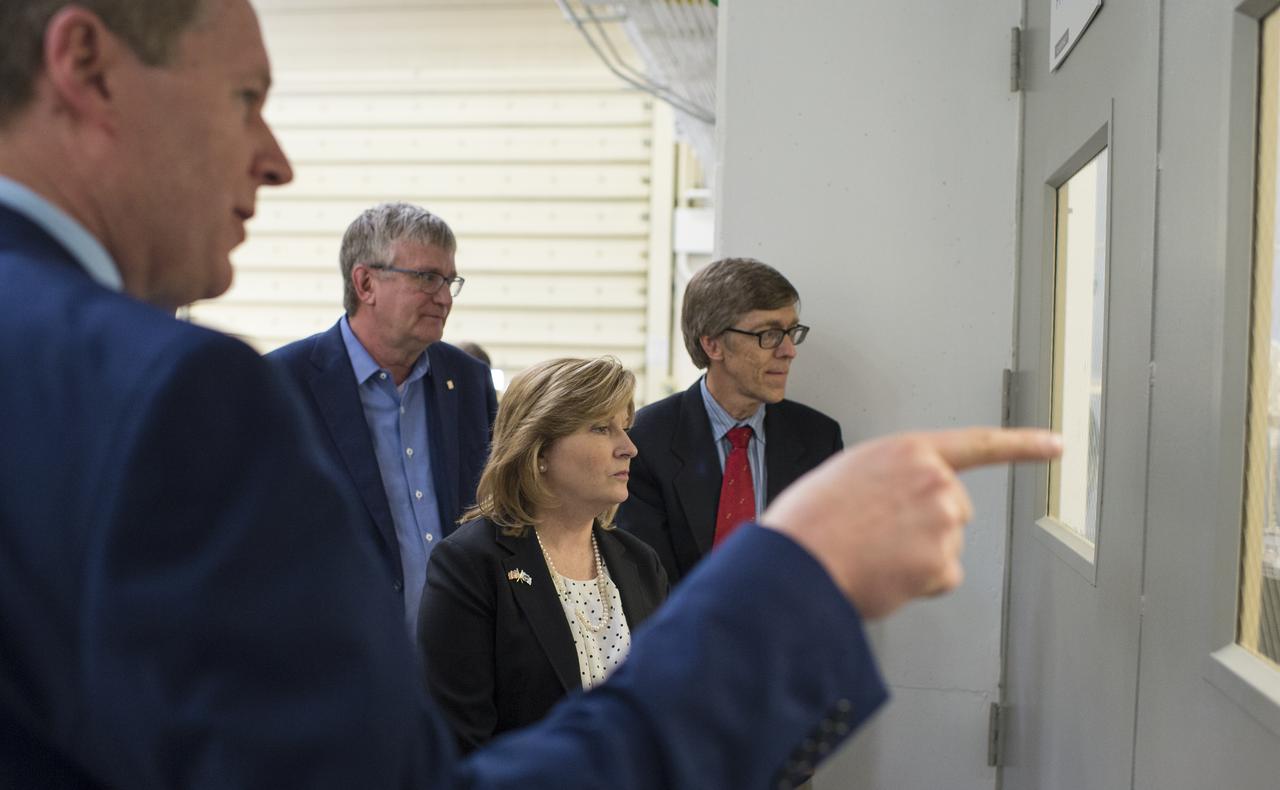
Acting NASA Deputy Administrator Lesa Roe, center, views a clean room with Tim Schoenweis, senior project engineer for the Ozone Mapping Profiler Suite (OMPS) at Ball Aerospace, left, Thursday, April 6, 2017 at Ball Aerospace in Boulder, Colo. Photo Credit: (NASA/Joel Kowsky)

NASA Deputy Administrator Lori Garver talks during a press conference shortly after she was given a tour of the Bigelow Aerospace facilities by the company's President Robert Bigelow on Friday, Feb. 4, 2011, in Las Vegas. NASA has been discussing potential partnership opportunities with Bigelow for its inflatable habitat technologies as part of NASA's goal to develop innovative technologies to ensure that the U.S. remains competitive in future space endeavors. Photo Credit: (NASA/Bill Ingalls)
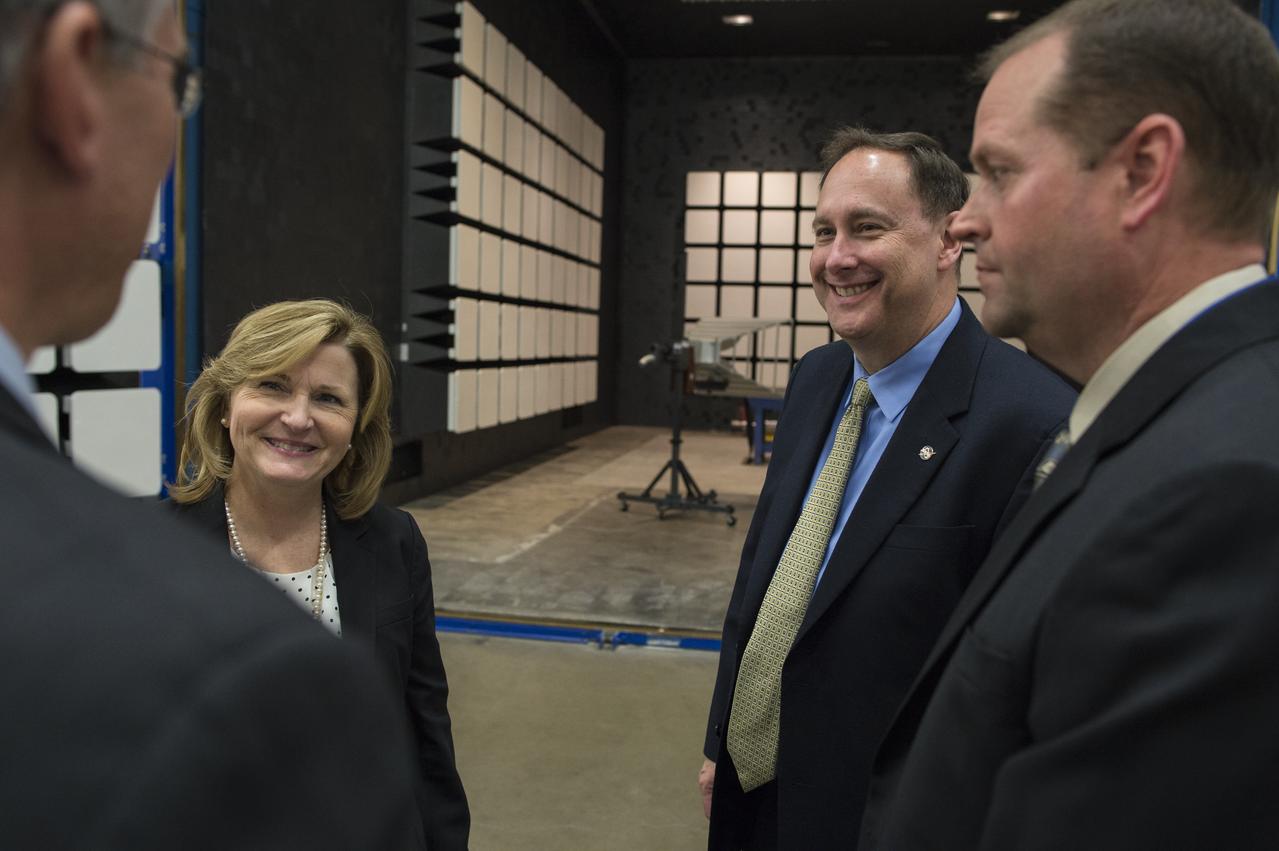
Acting NASA Deputy Administrator Lesa Roe, second from left, and acting NASA Administrator Robert Lightfoot, second from left, are seen with Mike Gazarik, vice president of Engineering at Ball Aerospace, left and Shawn Conley, test operations manager at Ball Aerospace, left, in front of the large semi-anechoic chamber, Thursday, April 6, 2017 during a visit to Ball Aerospace in Boulder, Colo. Photo Credit: (NASA/Joel Kowsky)
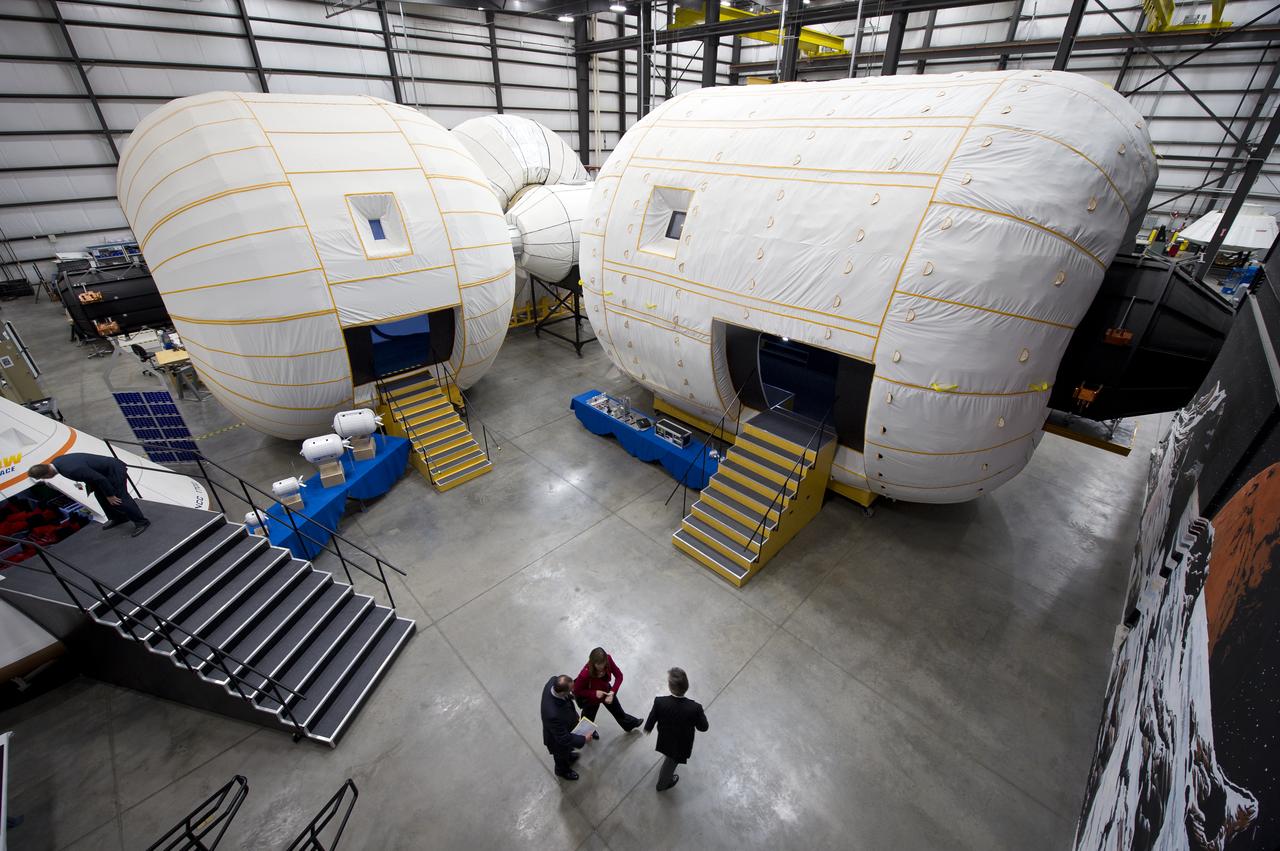
NASA Deputy Administrator Lori Garver is given a tour of the Bigelow Aerospace facilities by the company's President Robert Bigelow on Friday, Feb. 4, 2011, in Las Vegas. NASA has been discussing potential partnership opportunities with Bigelow for its inflatable habitat technologies as part of NASA's goal to develop innovative technologies to ensure that the U.S. remains competitive in future space endeavors. Photo Credit: (NASA/Bill Ingalls)
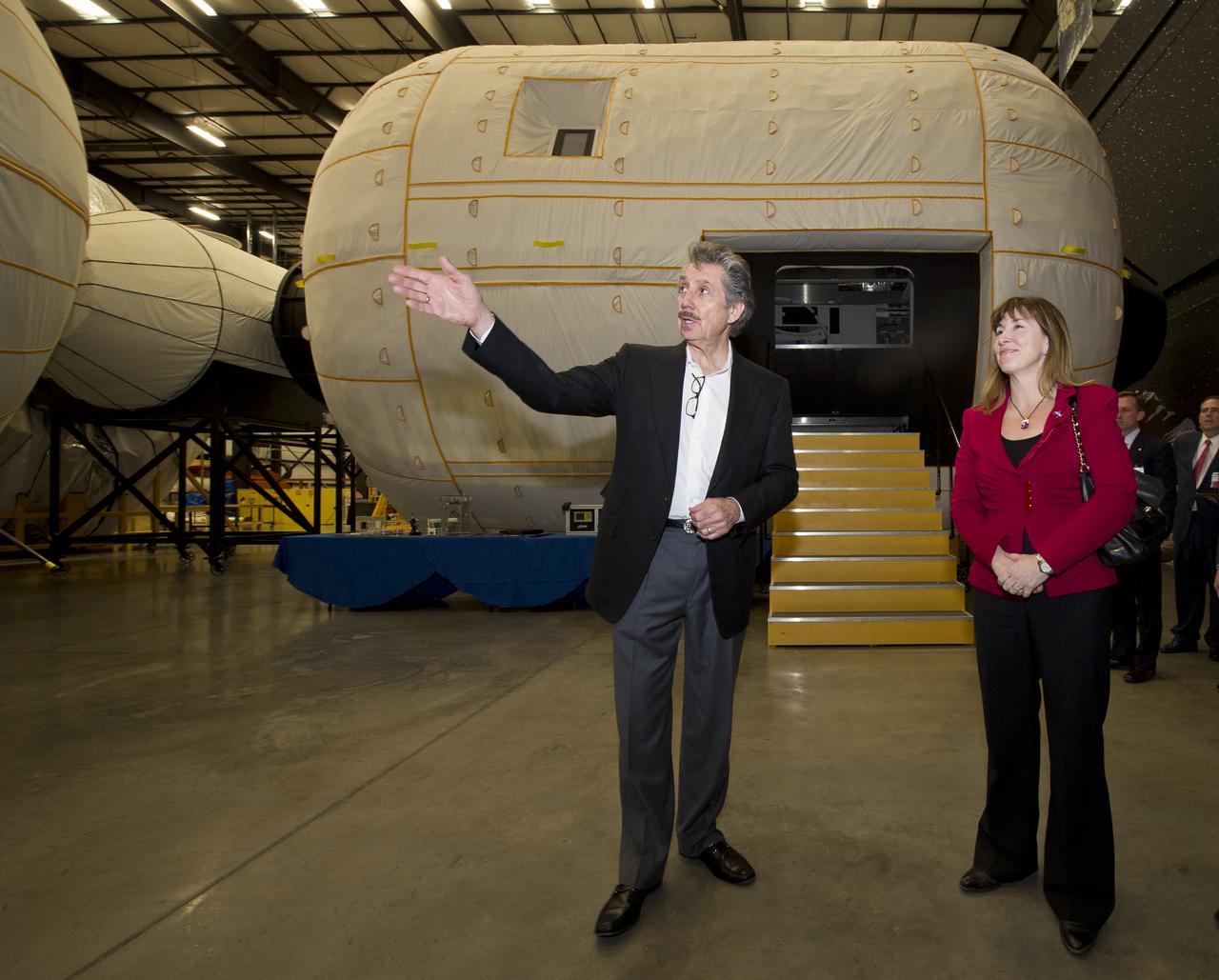
NASA Deputy Administrator Lori Garver is given a tour of the Bigelow Aerospace facilities by the company's President Robert Bigelow on Friday, Feb. 4, 2011, in Las Vegas. NASA has been discussing potential partnership opportunities with Bigelow for its inflatable habitat technologies as part of NASA's goal to develop innovative technologies to ensure that the U.S. remains competitive in future space endeavors. Photo Credit: (NASA/Bill Ingalls)

Michael Dean, senior project engineer for the Joint Polar Satellite System (JPSS) program at Ball Aerospace, right, speaks with acting NASA Deputy Administrator Lesa Roe, second from left, and acting NASA Administrator Robert Lightfoot, center, about the 20ft. by 24 ft. vertical thermal vacuum chamber, Thursday, April 6, 2017 during a visit to Ball Aerospace in Boulder, Colo. Photo Credit: (NASA/Joel Kowsky)
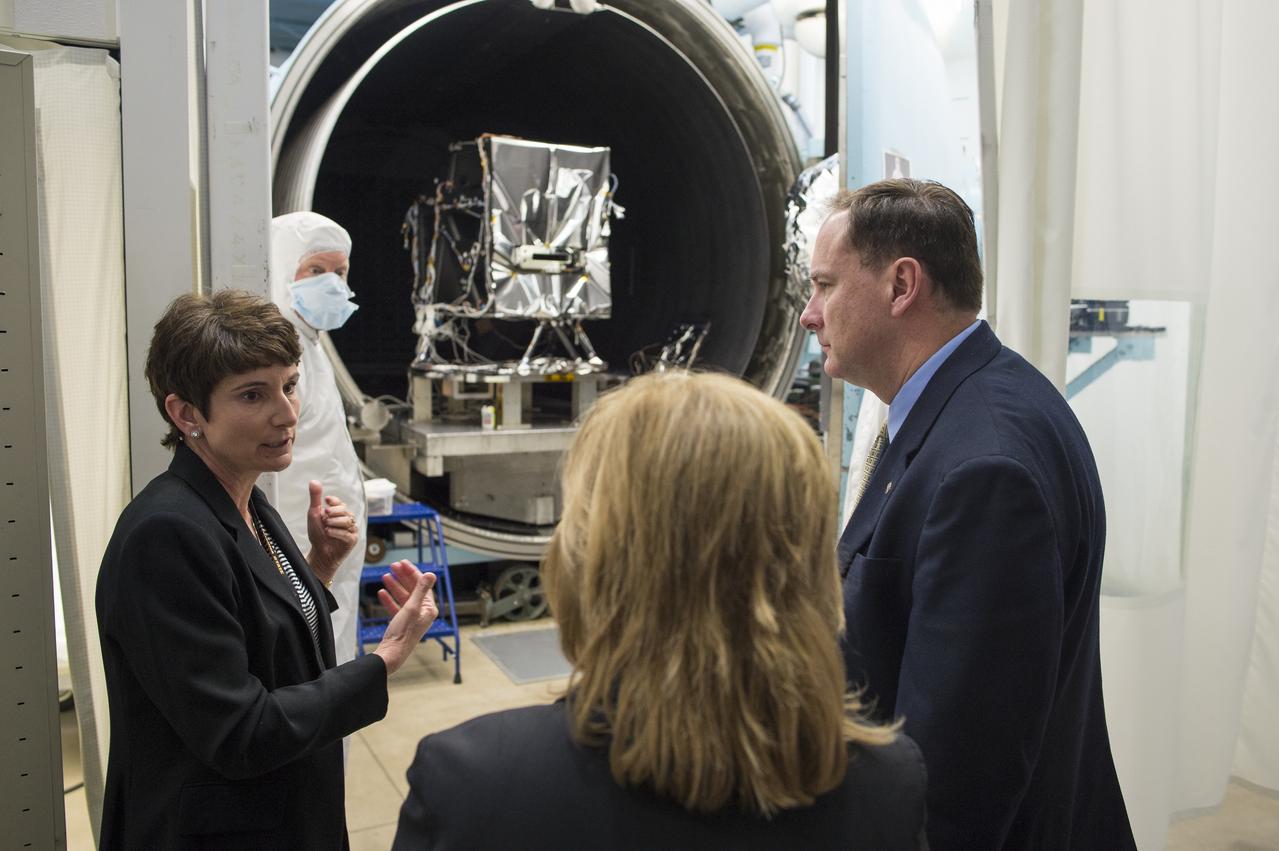
Leanne Presley, Operational Land Imager-2 (OLI-2) program manager at Ball Aerospace, left, speaks with acting NASA Deputy Administrator Lesa Roe, center, and acting NASA Administrator Robert Lightfoot in front of a thermal vacuum chamber used to test satellite optics, Thursday, April 6, 2017 during a visit to Ball Aerospace in Boulder, Colo. The Operation Land Imager-2 (OLI-2) is being build for Landsat 9, a collaboration between NASA and the U.S. Geological Survey that will continue the Landsat Program's 40-year data record of monitoring the Earth's landscapes from space. Photo Credit: (NASA/Joel Kowsky)

Aerospace Career Education, Organization of Black Aerospace Professionals, OBAP Cleveland ACE Academy Day
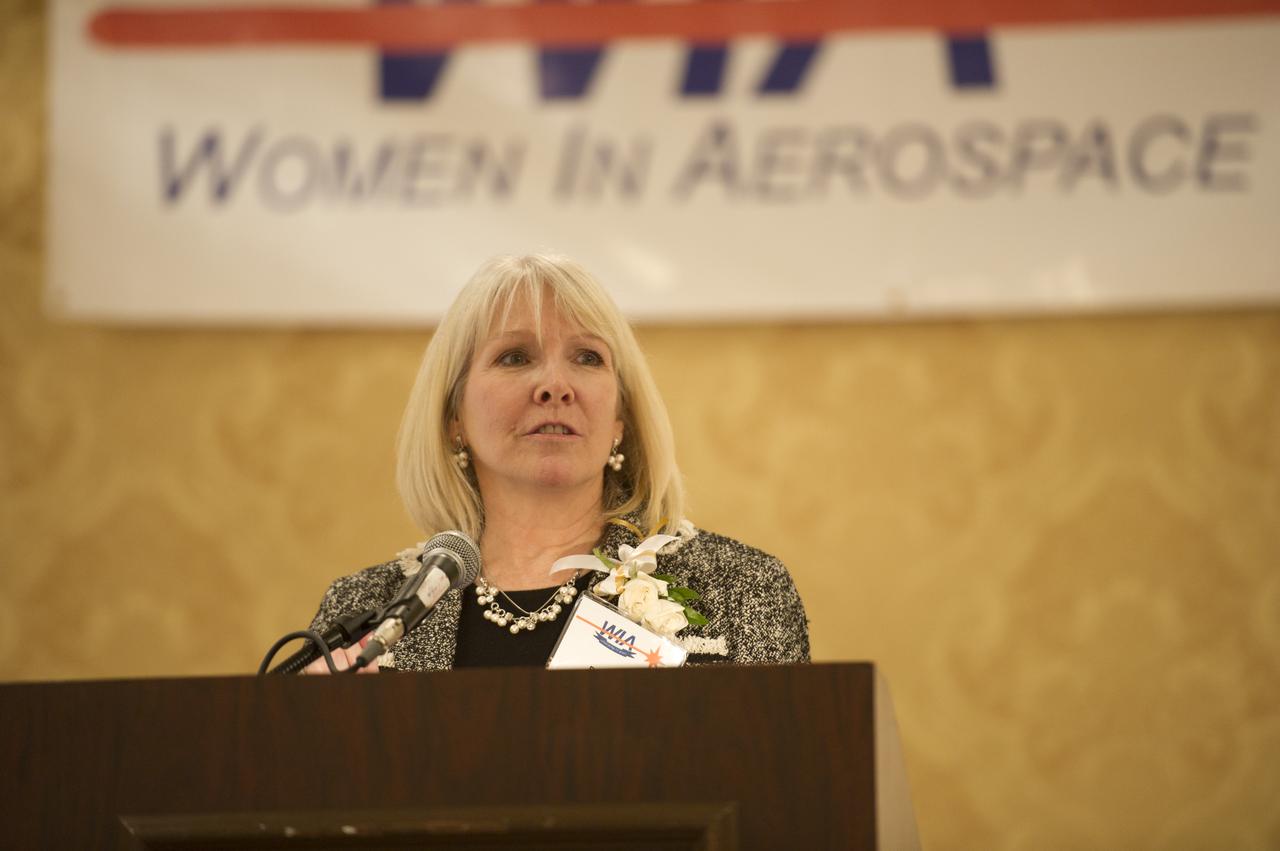
NASA Headquarters Program Planning Specialist Beth Beck speaks after being given the Women in Aerospace's Aerospace Awareness Award at the organization's annual awards ceremony and banquet held at the Ritz-Carlton Hotel in Arlington, VA on Tuesday, Oct. 26, 2010. Four current NASA leaders and one retiree were recognized for their work by Women in Aerospace. The event celebrates women's professional excellence in aerospace and honors women who have made outstanding contributions to the aerospace community. Photo Credit: (NASA/Bill Ingalls)

NASA Deputy Administrator Lori Garver speaks after being given the Women in Aerospace's Outstanding Member Award at the organization's annual awards ceremony and banquet held at the Ritz-Carlton Hotel in Arlington, VA on Tuesday, Oct. 26, 2010. Four current NASA leaders and one retiree were recognized for their work by Women in Aerospace. The event celebrates women's professional excellence in aerospace and honors women who have made outstanding contributions to the aerospace community. Photo Credit: (NASA/Bill Ingalls)
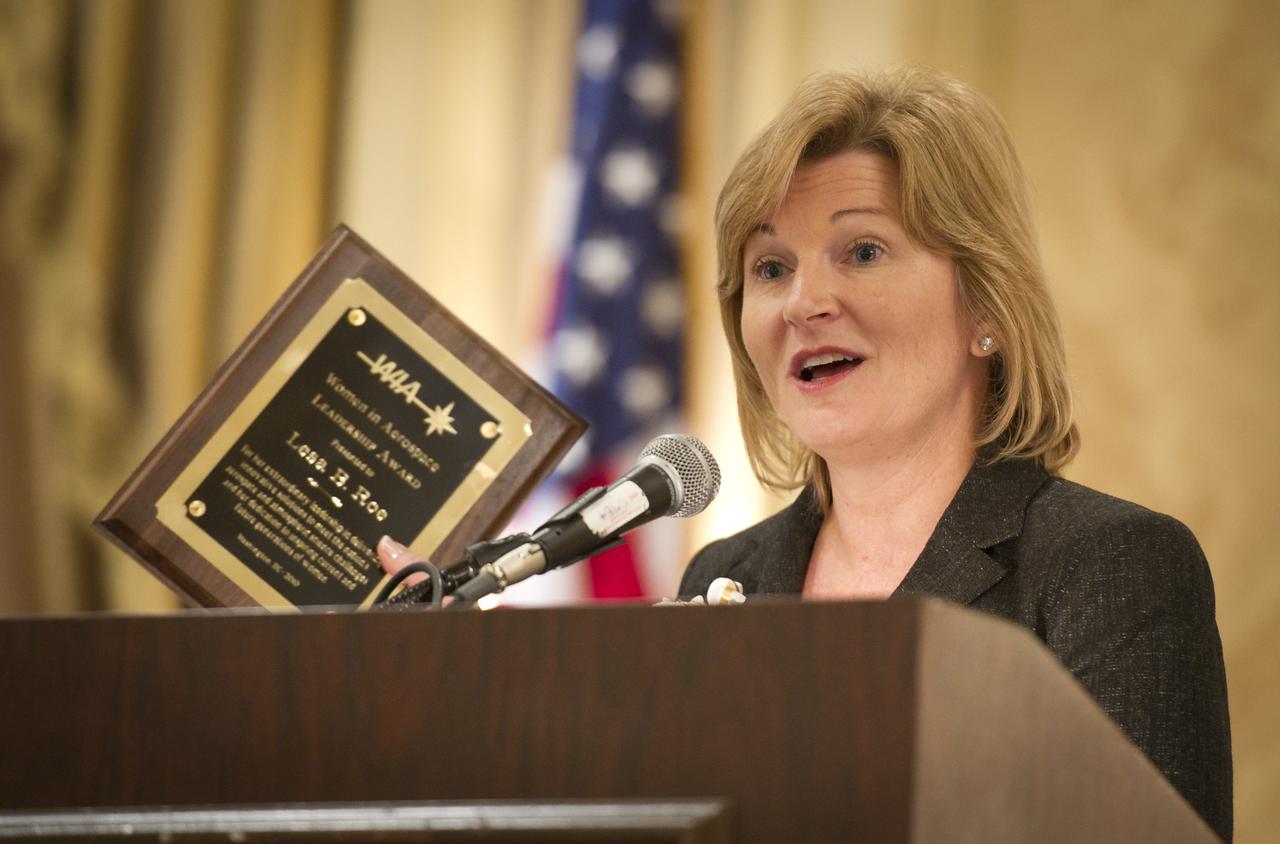
NASA's Langley Research Center Lesa Roe speaks after being given the Women in Aerospace's Leadership Award at the organization's annual awards ceremony and banquet held at the Ritz-Carlton Hotel in Arlington, VA on Tuesday, Oct. 26, 2010. Four current NASA leaders and one retiree were recognized for their work by Women in Aerospace. The event celebrates women's professional excellence in aerospace and honors women who have made outstanding contributions to the aerospace community. Photo Credit: (NASA/Bill Ingalls)

President and founder of Bigelow Aerospace Robert T. Bigelow, talks during a media briefing where he and NASA Deputy Administrator Lori Garver discussed their $17.8 million contract to provide a Bigelow Expandable Activity Module (BEAM) to the International Space Station to test expandable space habitat technology, Wednesday, Jan. 16, 2013 at Bigelow Aerospace in Las Vegas. BEAM is scheduled to arrive at the space station in 2015 for a two-year technology demonstration. Photo Credit: (NASA/Bill Ingalls)

NASA Deputy Administrator Lori Garver talks during a media briefing where she and President and founder of Bigelow Aerospace Robert T. Bigelow, discussed their $17.8 million contract to provide a Bigelow Expandable Activity Module (BEAM) to the International Space Station to test expandable space habitat technology, Wednesday, Jan. 16, 2013 at Bigelow Aerospace in Las Vegas. BEAM is scheduled to arrive at the space station in 2015 for a two-year technology demonstration. Photo Credit: (NASA/Bill Ingalls)
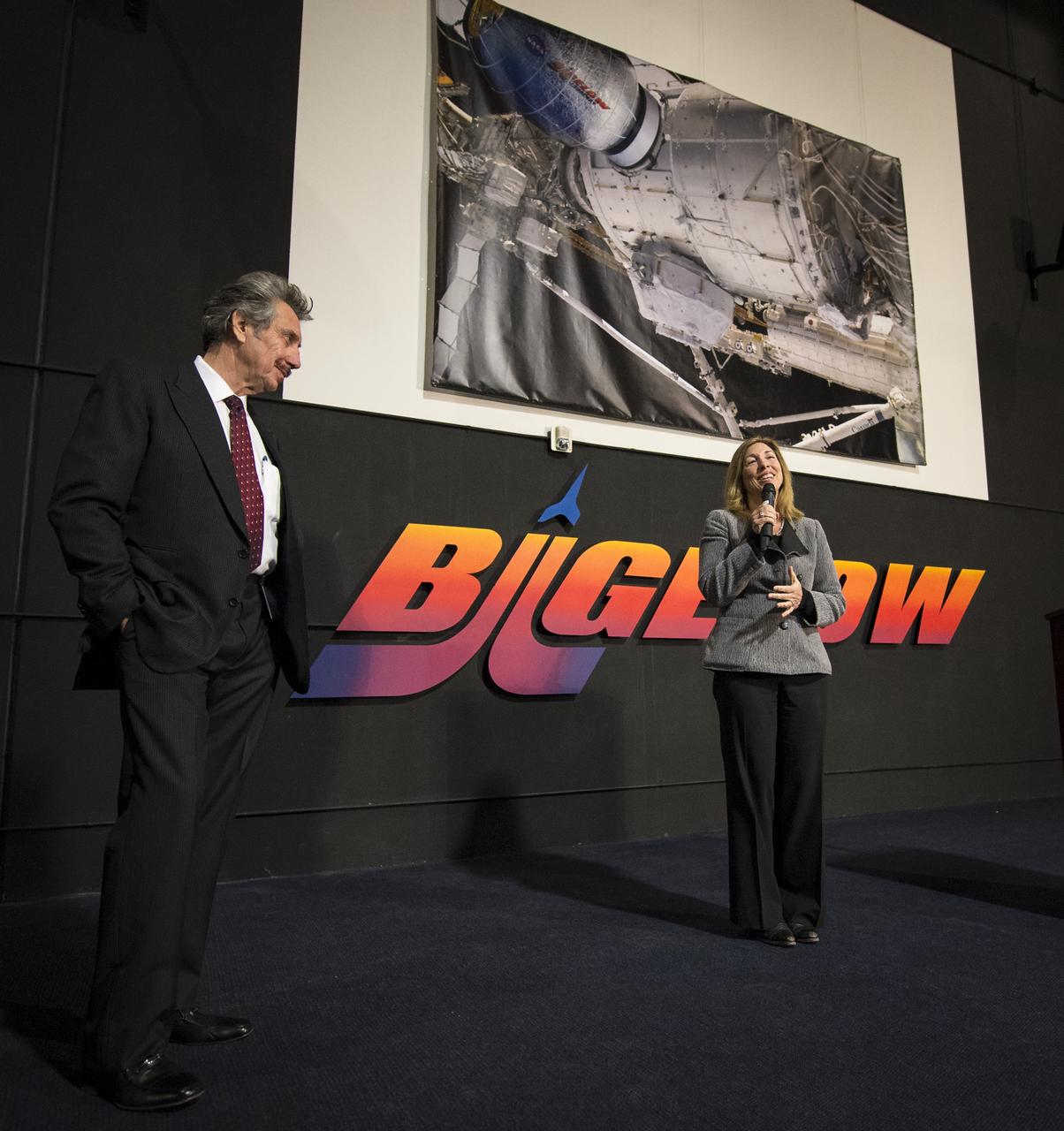
NASA Deputy Administrator Lori Garver and President and founder of Bigelow Aerospace Robert T. Bigelow, announce a planned addition to the International Space Station that will use the orbiting laboratory to test expandable space habitat technology during a press conference held at Bigelow Aerospace on Wednesday, Jan. 16, 2013 in Las Vegas. The $17.8 million contract with Bigelow Aerospace will provide a Bigelow Expandable Activity Module (BEAM), which is scheduled to arrive at the space station in 2015 for a two-year technology demonstration. Photo Credit: (NASA/Bill Ingalls)
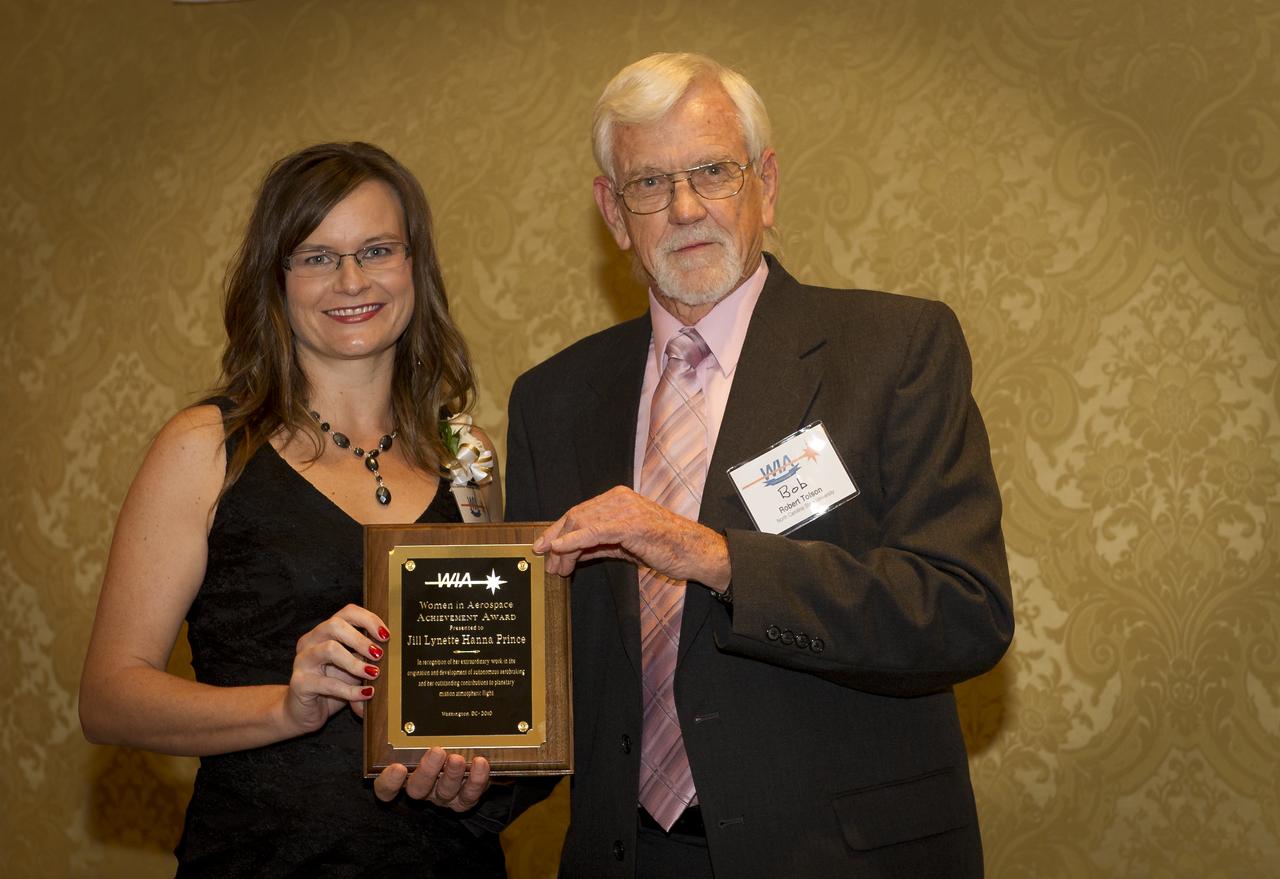
NASA Langley Aerospace Engineer Jill Lynette Hanna Prince receives the Women in Aerospace Achievement in Aerospace award from North Carolina State Professor Robert Tolson during the Women in Aerospace organization's annual awards ceremony and banquet held at the Ritz-Carlton Hotel in Arlington, VA on Tuesday, Oct. 26, 2010. Four current NASA leaders and one retiree were recognized for their work by Women in Aerospace. The event celebrates women's professional excellence in aerospace and honors women who have made outstanding contributions to the aerospace community. Photo Credit: (NASA/Bill Ingalls)

NASA Administrator Charlie Bolden holds up a photograph showing four female Astronauts onboard the Space Station during his presentation at the Women in Aerospace (WIA) organization's annual awards ceremony and banquet at the Ritz-Carlton Hotel in Arlington, VA on Tuesday, Oct. 26, 2010. Bolden presented Women in Aerospace's Outstanding Member Award to NASA Deputy Administrator Lori Garver, noting her ongoing leadership and participation in Women in Aerospace and her passion and dedication to opening the high frontier of space to the everyday person. Photo Credit: (NASA/Bill Ingalls)
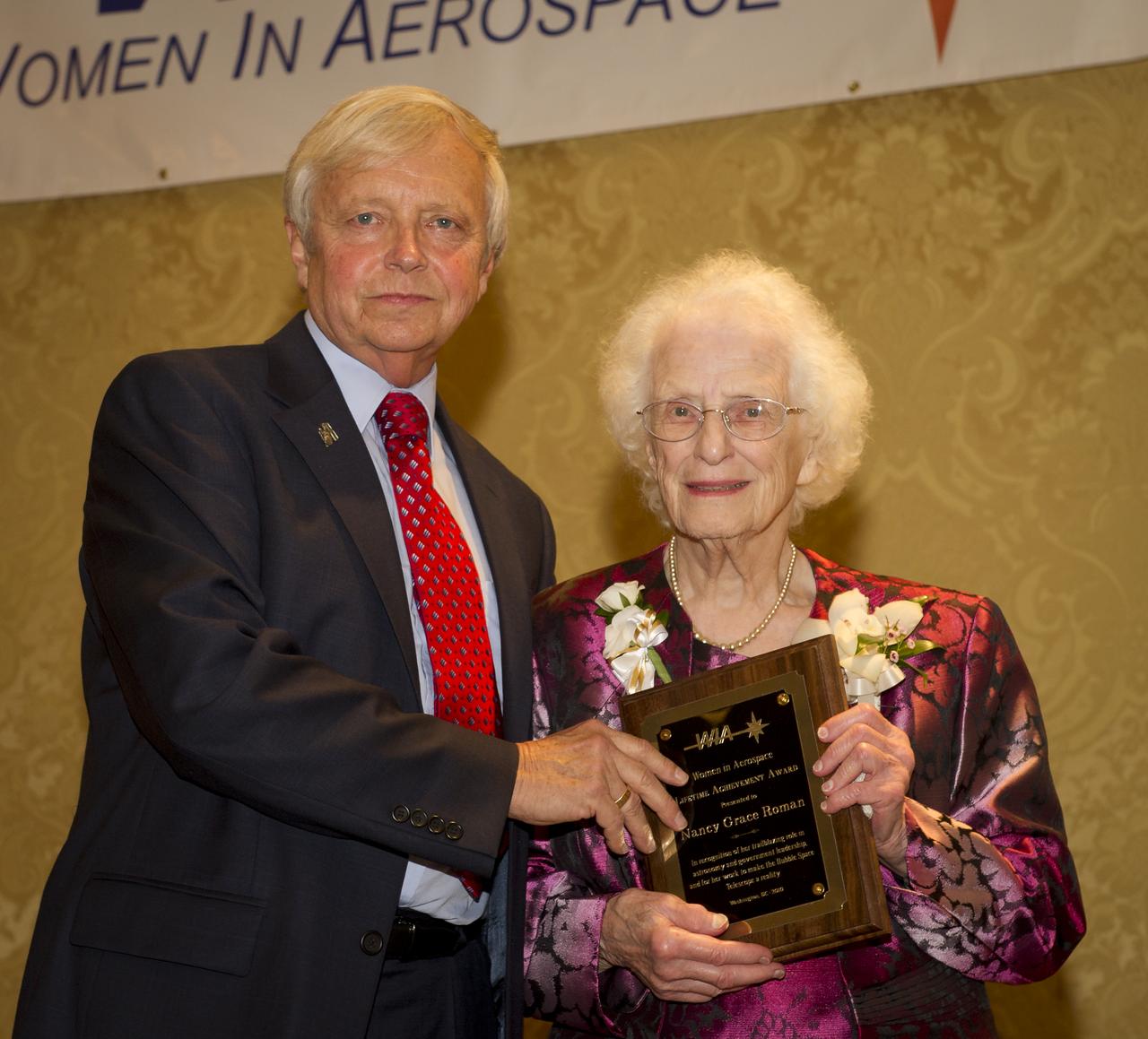
NASA's Associate Administrator of the Science Mission Directorate Dr. Edward J. Weiler presents the Women in Aerospace's Lifetime Achievement Award to retired NASA chief astronomer Nancy Grace Roman at the organization's annual awards ceremony and banquet held at the Ritz-Carlton Hotel in Arlington, VA on Tuesday, Oct. 26, 2010. Four current NASA leaders and one retiree were recognized for their work by Women in Aerospace. The event celebrates women's professional excellence in aerospace and honors women who have made outstanding contributions to the aerospace community. Photo Credit: (NASA/Bill Ingalls)

The new Aerospace Communications Facility allows researchers to develop various types of communication, including RF, cellular, optical, and quantum to support the agency’s Artemis and Advanced Air Mobility Missions.
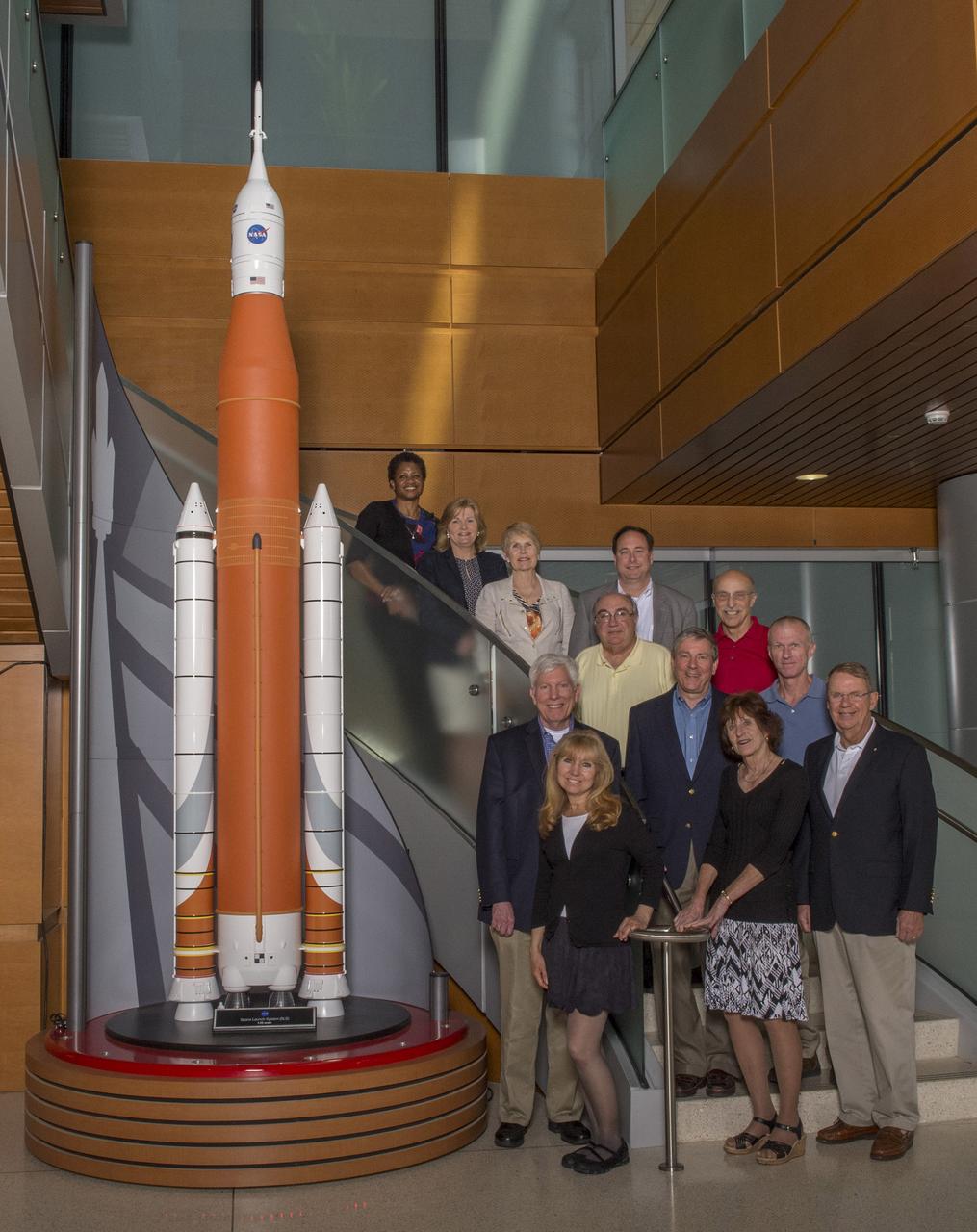
LESA ROE, SECOND FROM TOP, AND ROBERT LIGHTFOOT, FOURTH FROM TOP, POSE WITH MEMBERS OF THE AEROSPACE SAFETY ADVISORY PANEL, (ASAP), IN BLDG 4220 LOBBY

Portrait of Orion Service Module Spacecraft Adapter Jettisonable (SAJ) Hardware Lead Engineer Lizalyn Smith. Ms. Smith participated in various 'Hidden Figures to Modern Figures' events sponsored by NASA Glenn Research Center to encourage students to pursue STEM-based careers.
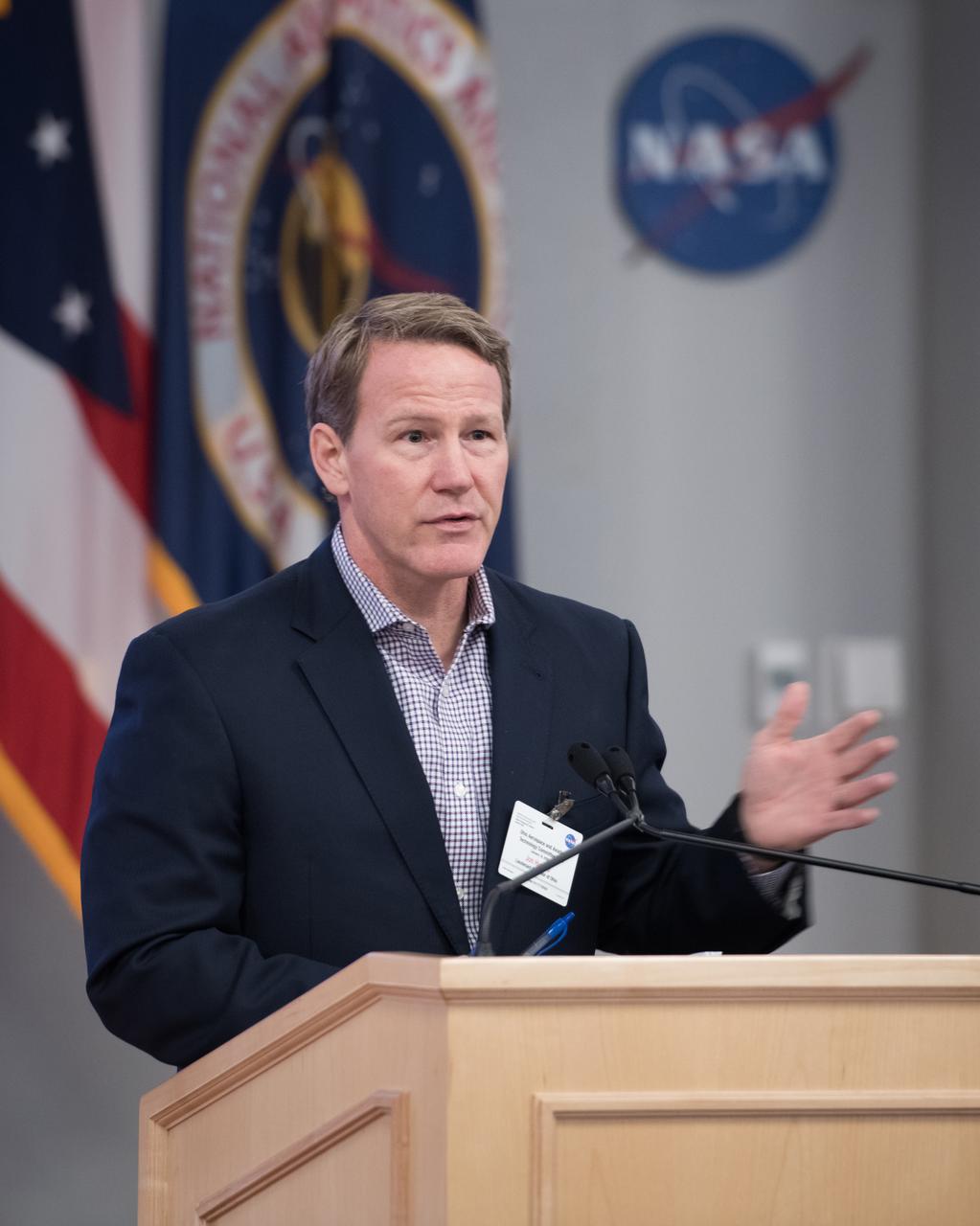
Visit by the Ohio Aerospace and Aviation Technology Committee, OAATC
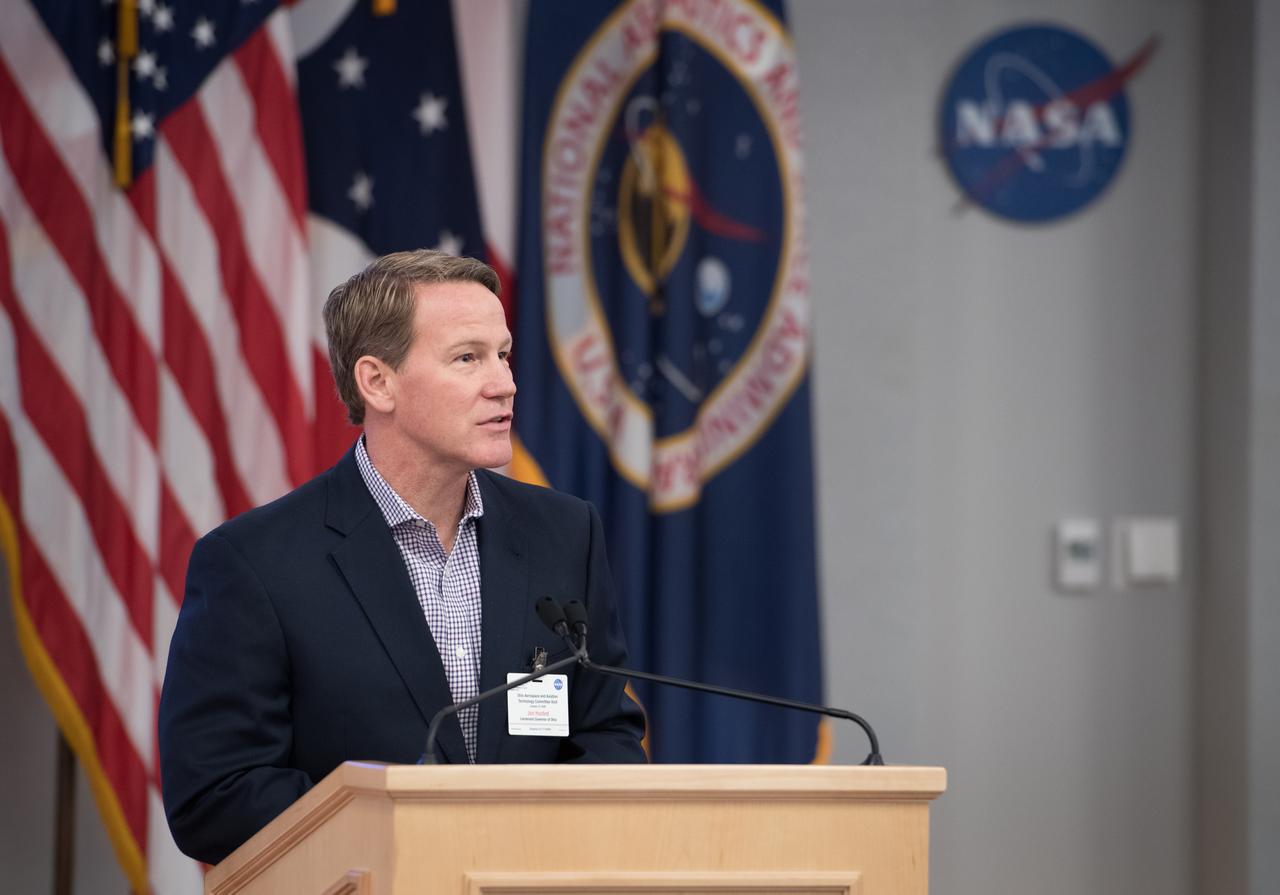
Visit by the Ohio Aerospace and Aviation Technology Committee, OAATC

Japan Aerospace Exploration Agency (JAXA) President Hiroshi Yamakawa discusses the historic agreement signed April 9th at NASA Headquarters, between the United States and Japan to advance sustainable human exploration of the Moon, Wednesday, April 10, 2024, at the Japan Aerospace Exploration Agency (JAXA) offices in Washington. Under the agreement, Japan will design, develop, and operate a pressurized rover for crewed and uncrewed exploration on the Moon. NASA will provide the launch and delivery of the rover to the Moon as well as two Japanese astronaut missions to the lunar surface. Photo Credit: Photo Credit: (NASA/Bill Ingalls)
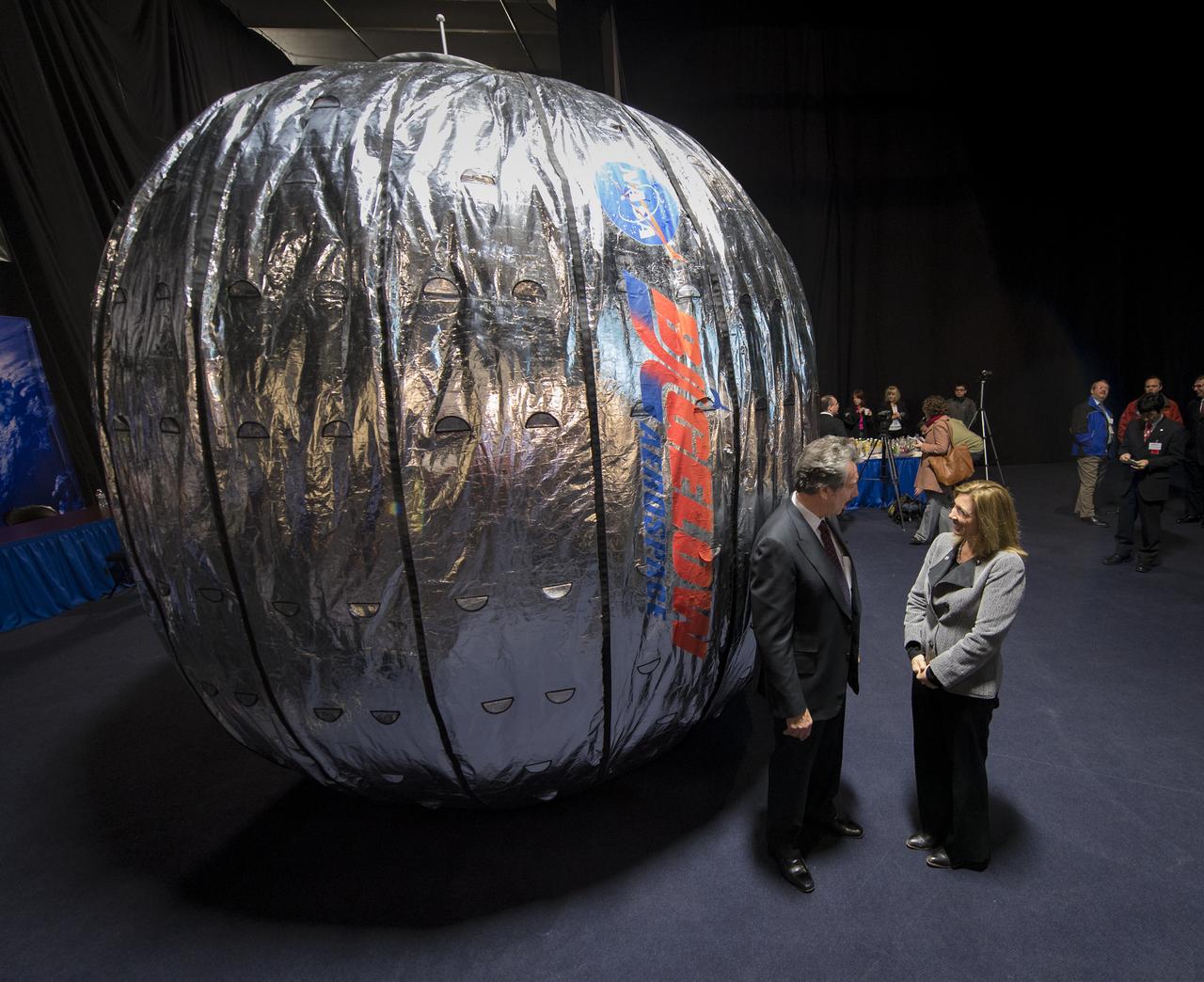
NASA Deputy Administrator Lori Garver and President and founder of Bigelow Aerospace Robert T. Bigelow talk while standing next to the Bigelow Expandable Activity Module (BEAM) during a media briefing where it is was announced that the BEAM expandable space habitat technology will be tested on the International Space Station, Wednesday, Jan. 16, 2013 in Las Vegas. BEAM is scheduled to arrive at the space station in 2015 for a two-year technology demonstration. Photo Credit: (NASA/Bill Ingalls)
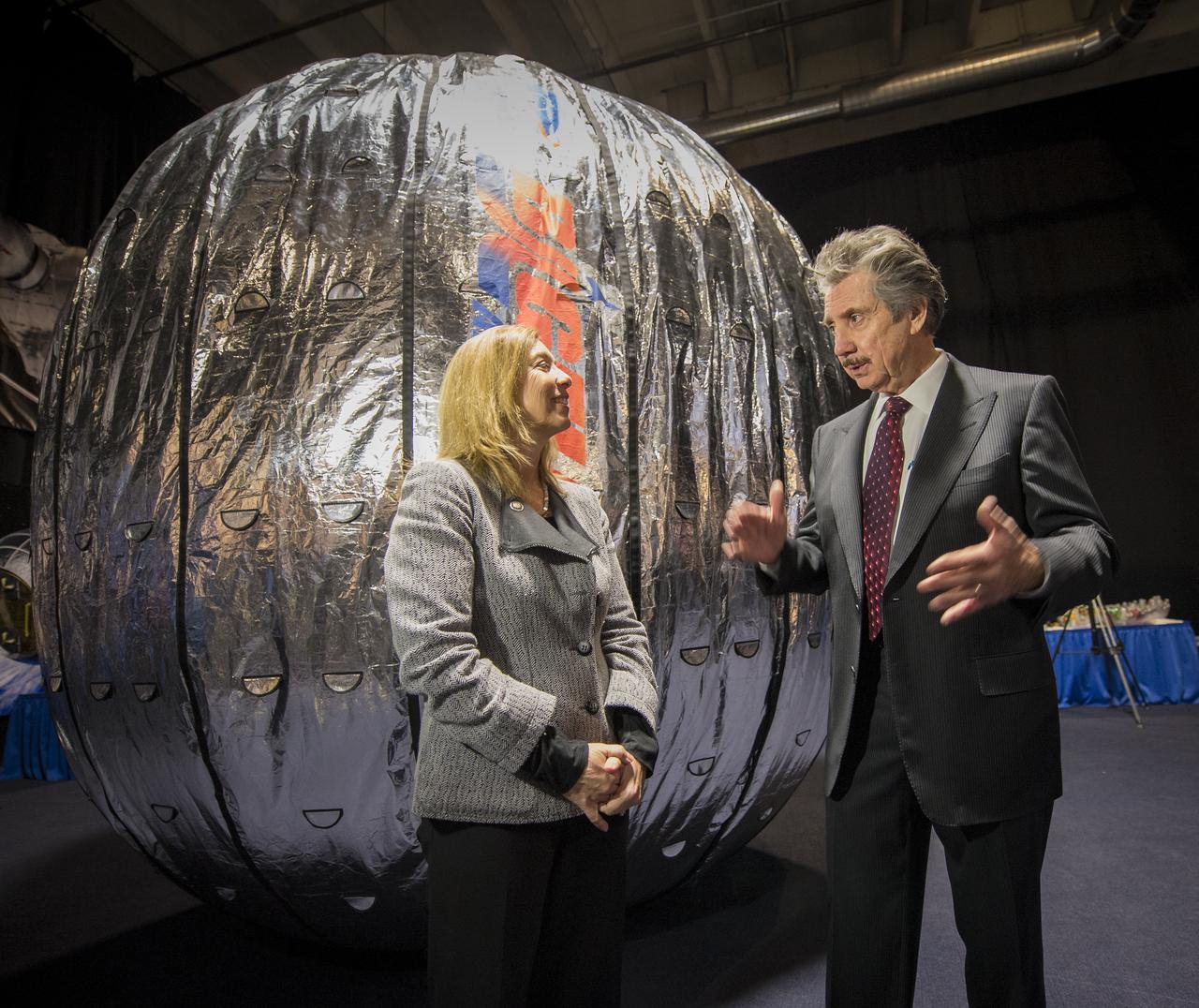
NASA Deputy Administrator Lori Garver and President and founder of Bigelow Aerospace Robert T. Bigelow talk while standing next to the Bigelow Expandable Activity Module (BEAM) during a media briefing where is was announced that the BEAM expandable space habitat technology will be tested on the International Space Station, Wednesday, Jan. 16, 2013 in Las Vegas. BEAM is scheduled to arrive at the space station in 2015 for a two-year technology demonstration. Photo Credit: (NASA/Bill Ingalls)
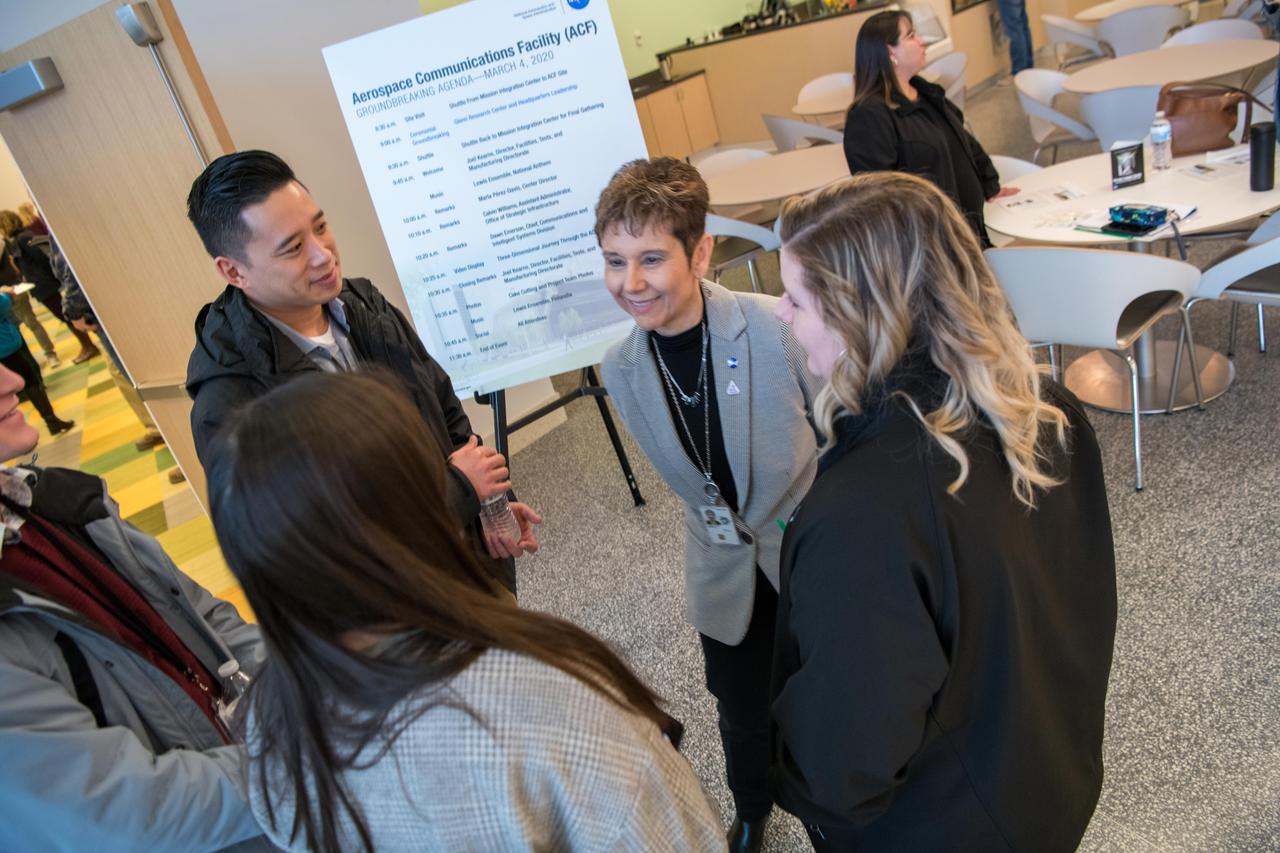
Aerospace Communications Facility, ACF Groundbreaking Ceremony
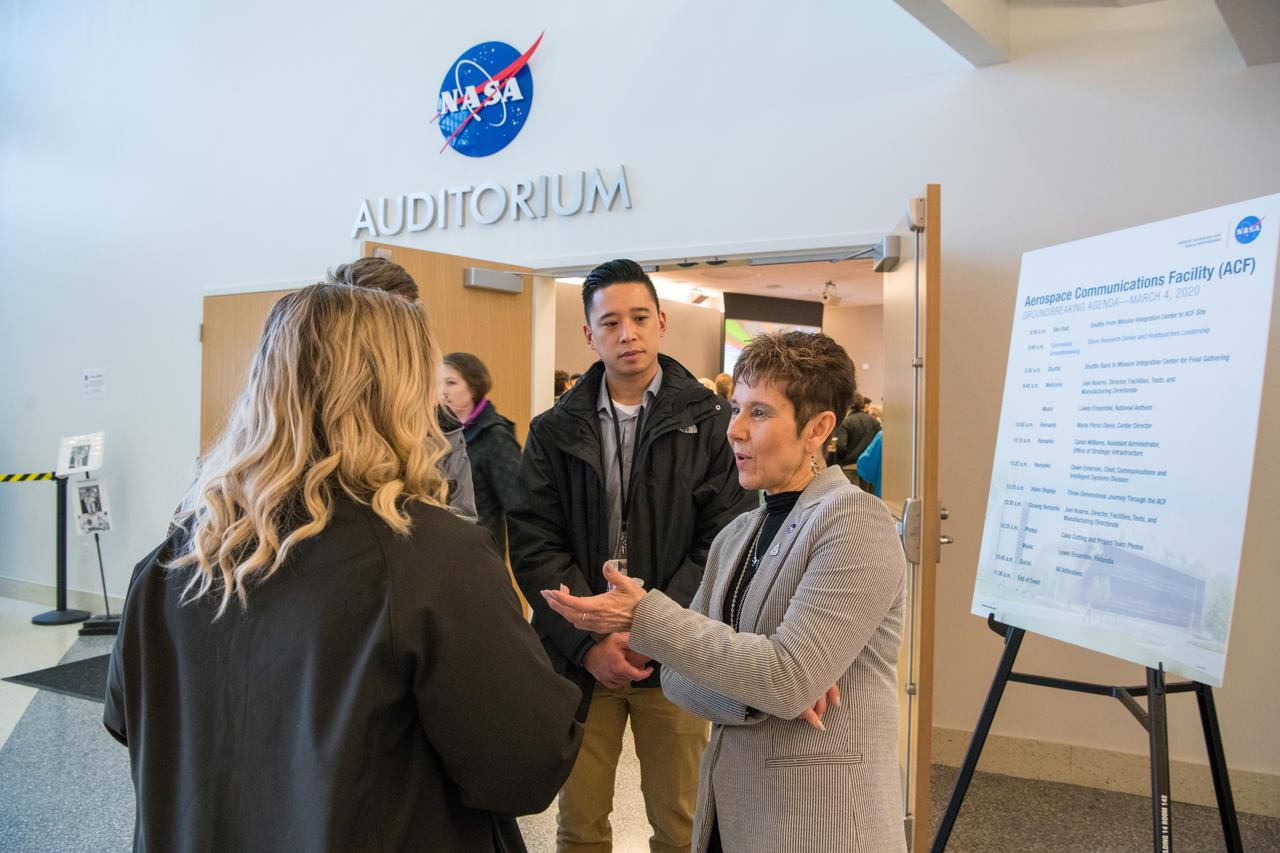
Aerospace Communications Facility, ACF Groundbreaking Ceremony

Visit by the Ohio Aerospace and Aviation Technology Committee, OAATC
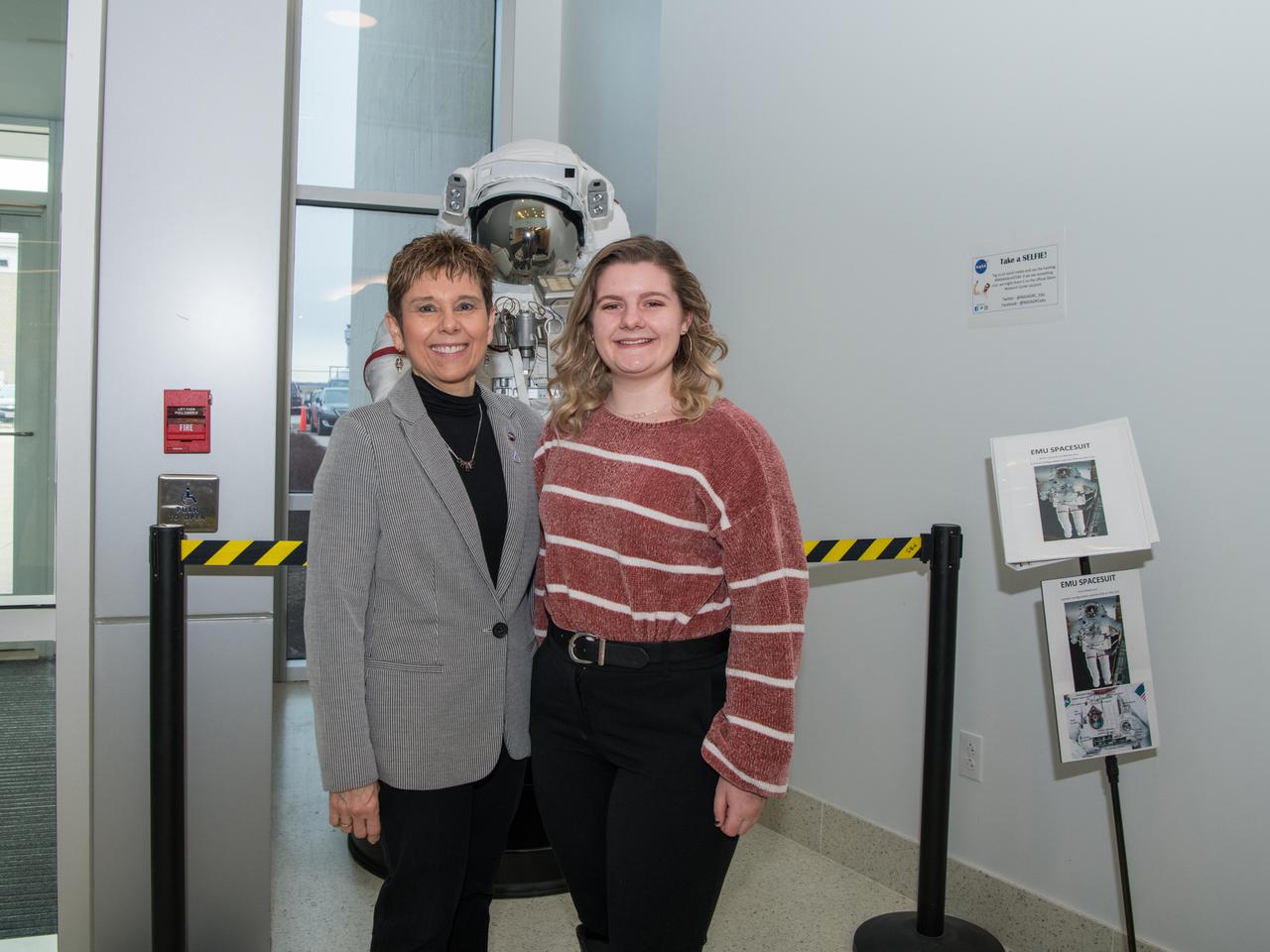
Aerospace Communications Facility, ACF Groundbreaking Ceremony

Aerospace Communications Facility, ACF Groundbreaking Ceremony
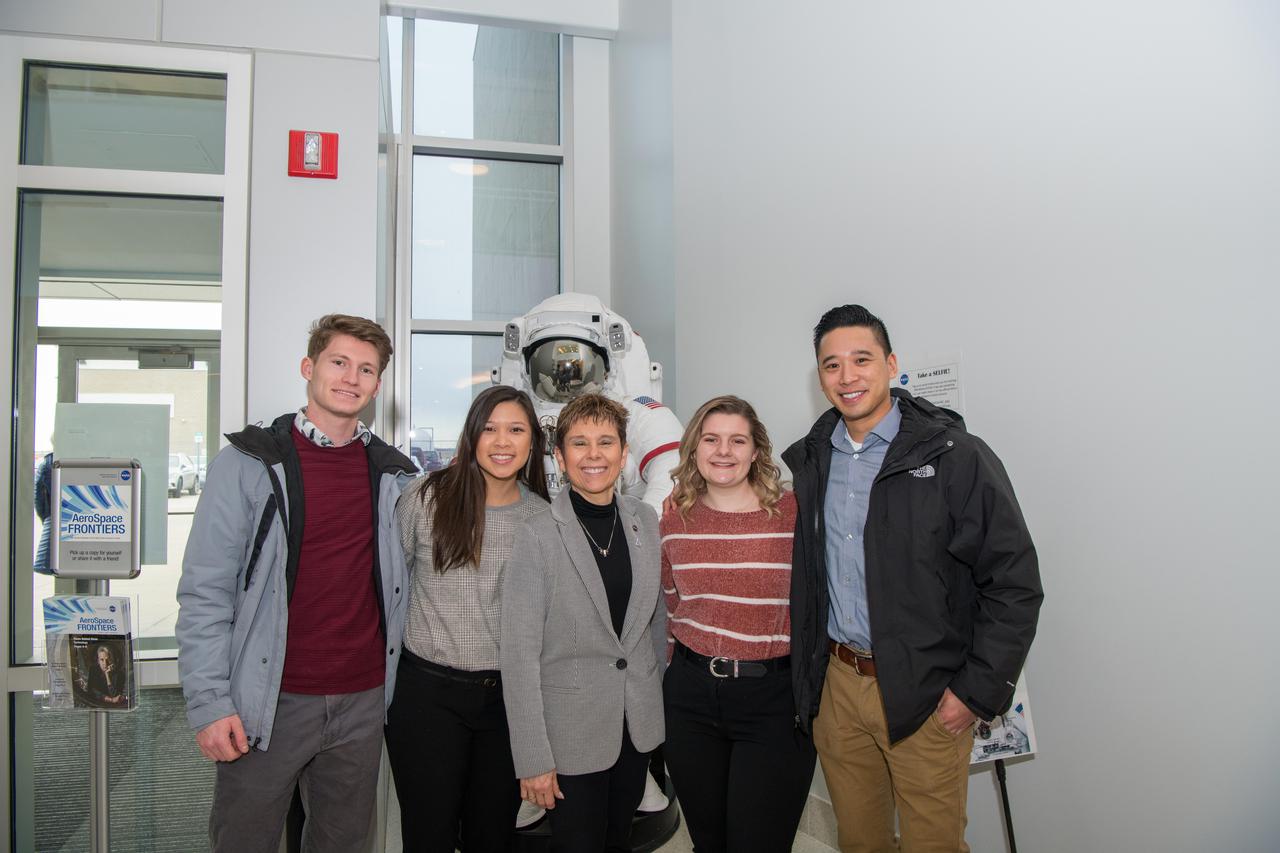
Aerospace Communications Facility, ACF Groundbreaking Ceremony
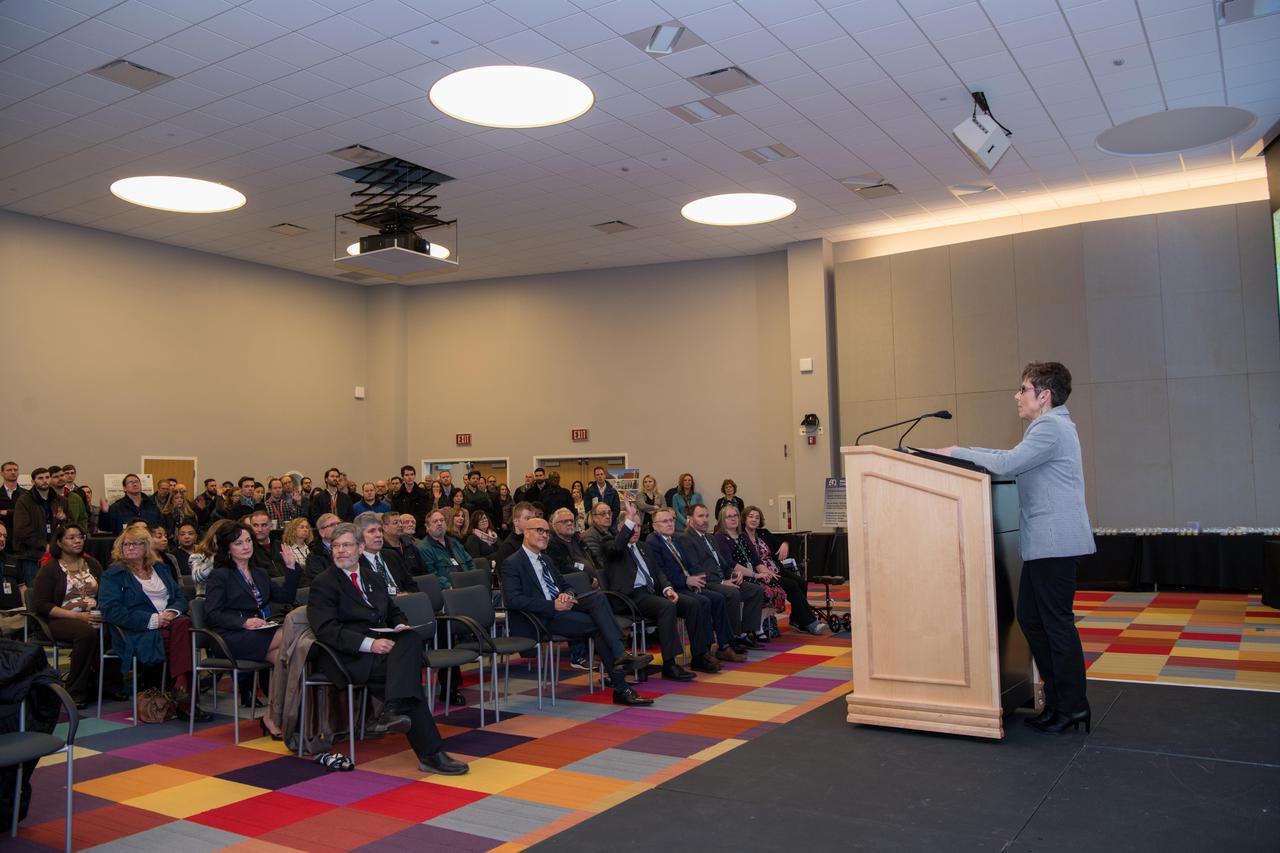
Aerospace Communications Facility, ACF Groundbreaking Ceremony
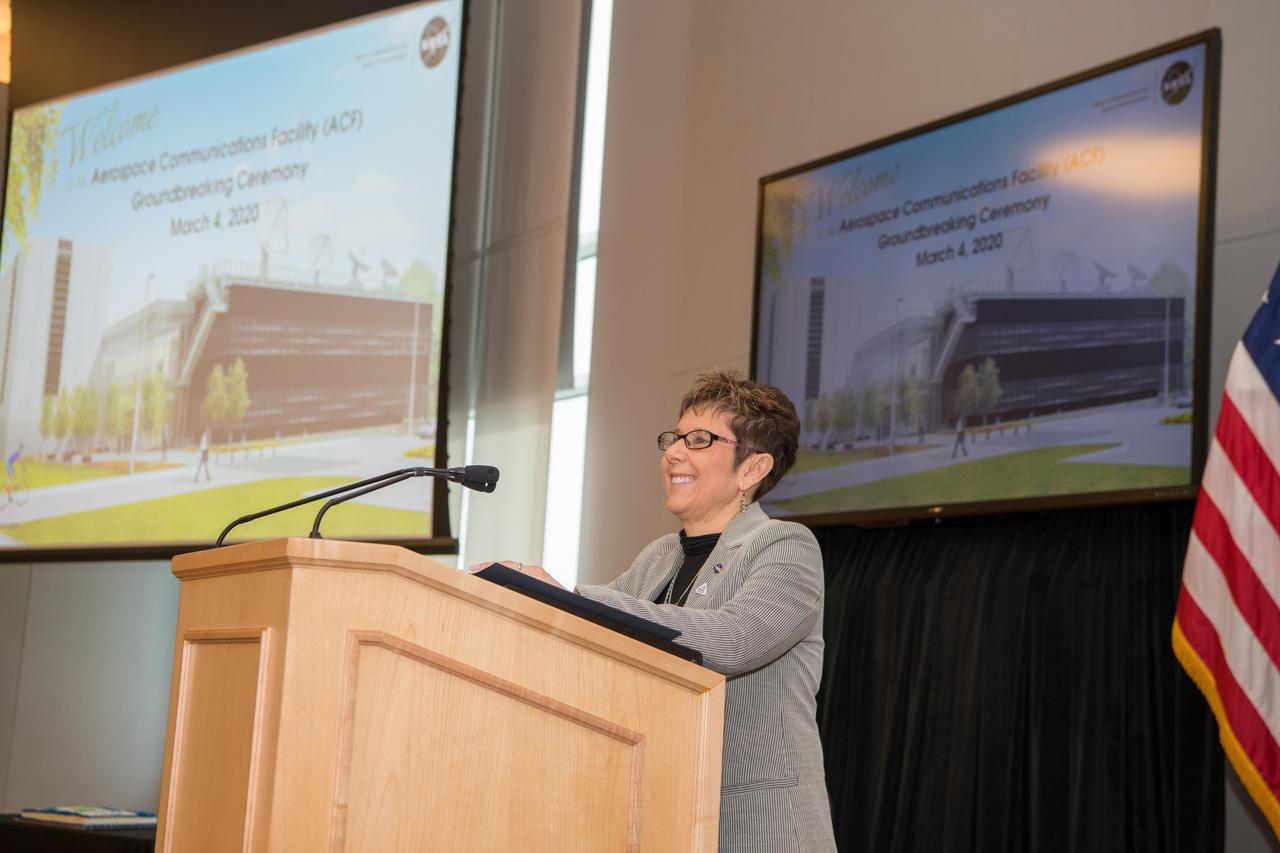
Aerospace Communications Facility, ACF Groundbreaking Ceremony
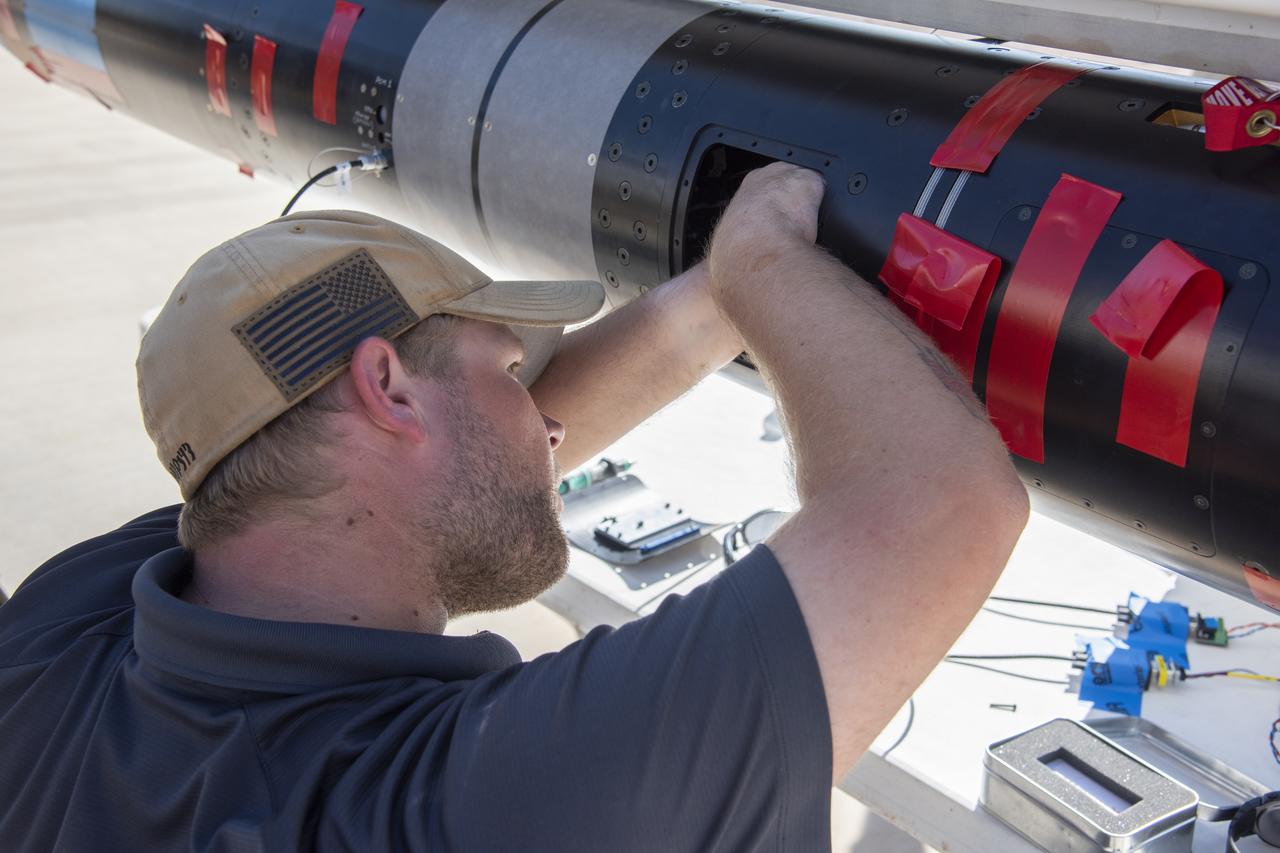
UP Aerospace employees preparing their SpaceLoft rocket to carry NASA technologies for testing in microgravity.
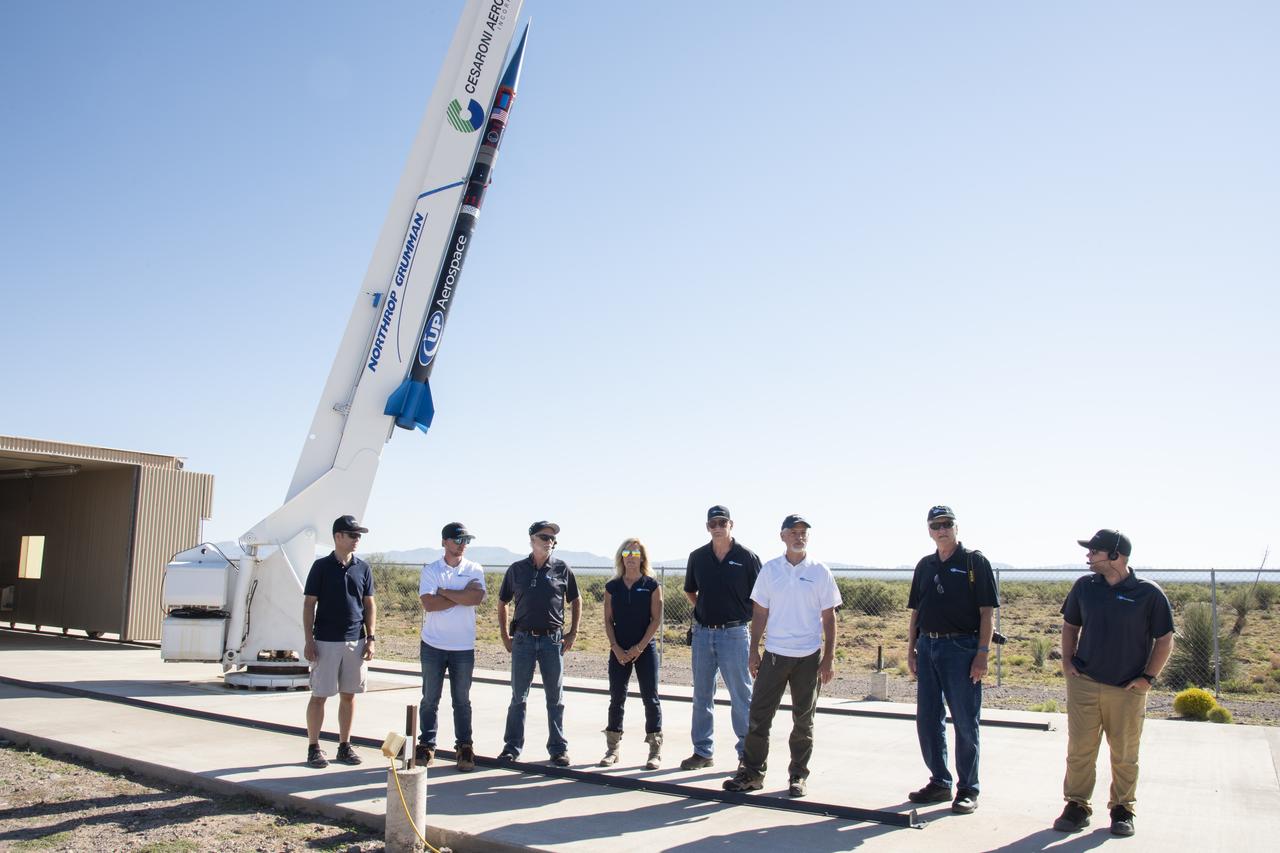
UP Aerospace employees preparing their SpaceLoft rocket to carry NASA technologies for testing in microgravity
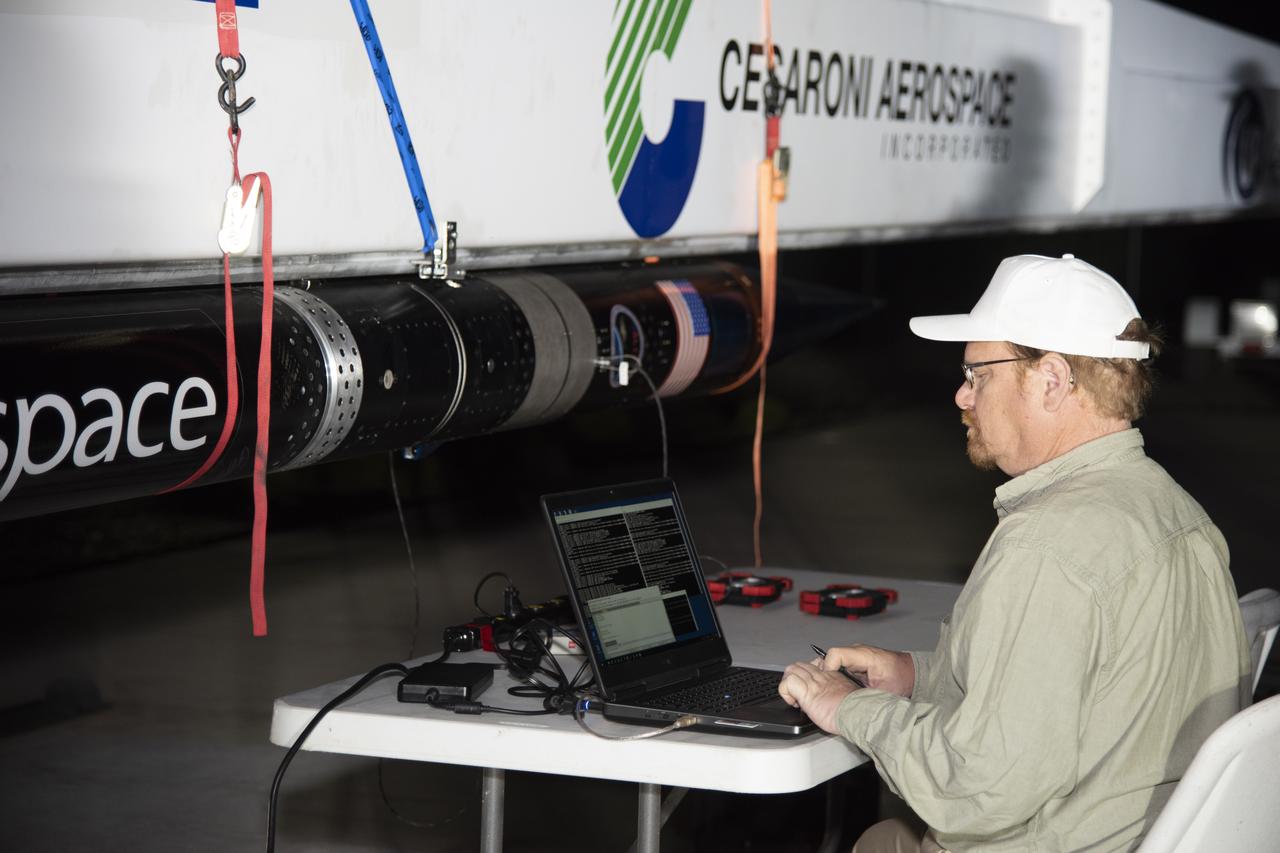
UP Aerospace employees preparing their SpaceLoft rocket to carry NASA technologies for testing in microgravity.
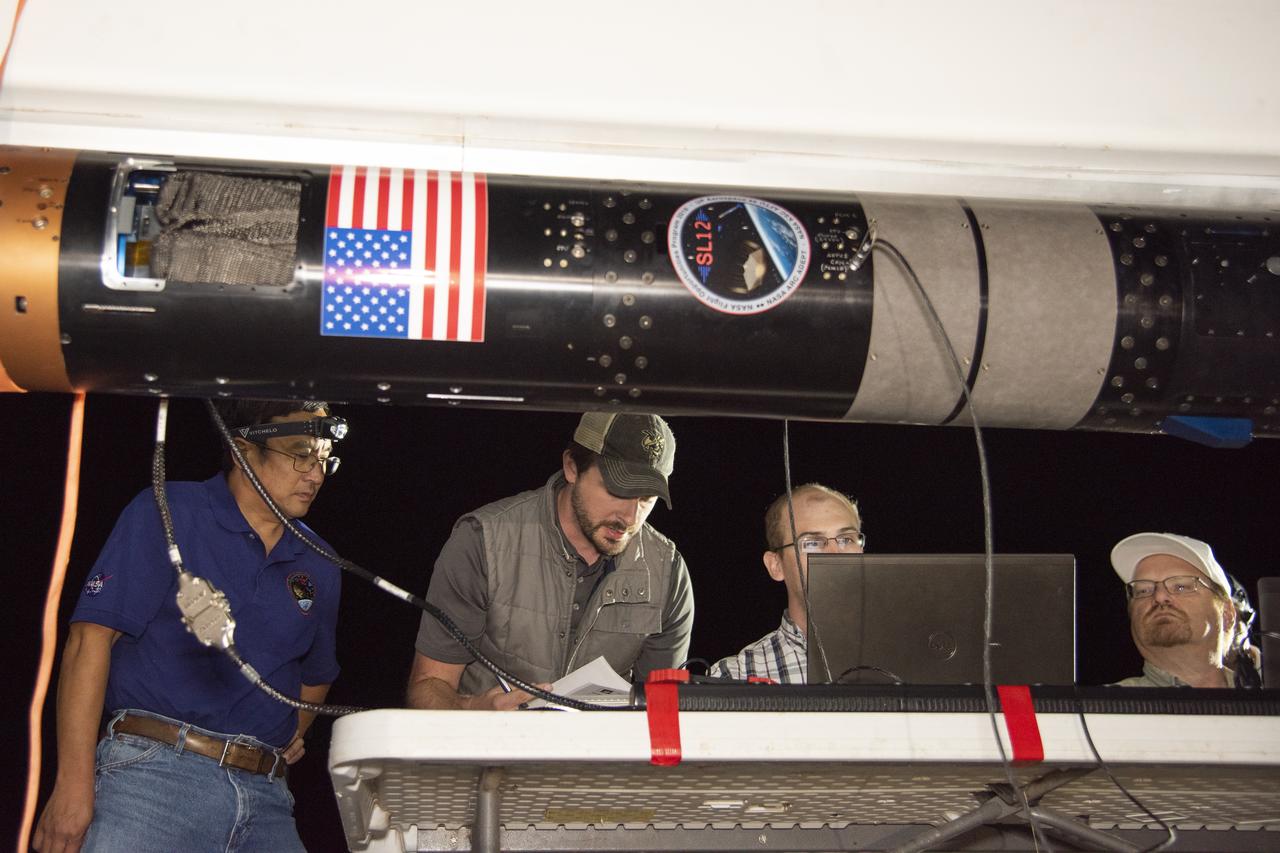
UP Aerospace employees preparing their SpaceLoft rocket to carry NASA technologies for testing in microgravity.
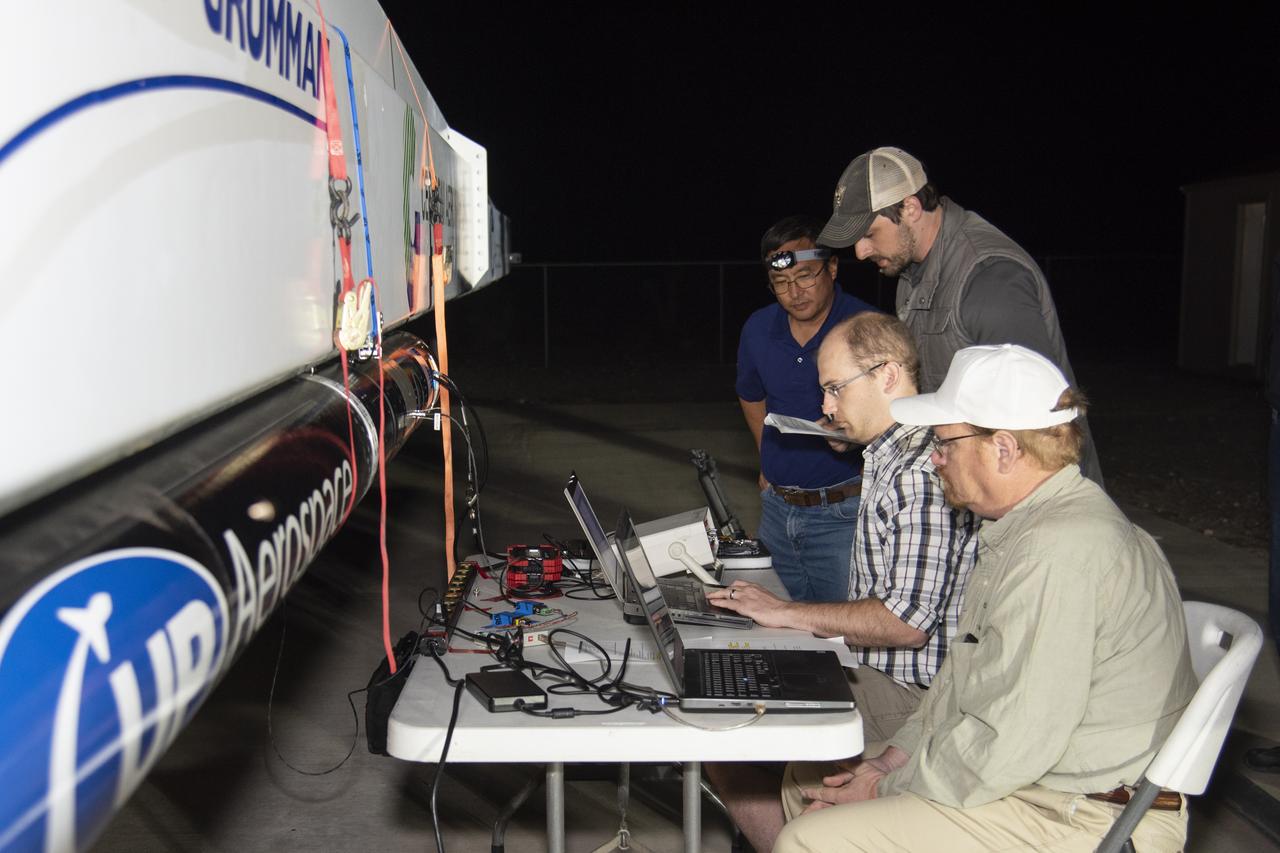
UP Aerospace employees preparing their SpaceLoft rocket to carry NASA technologies for testing in microgravity.
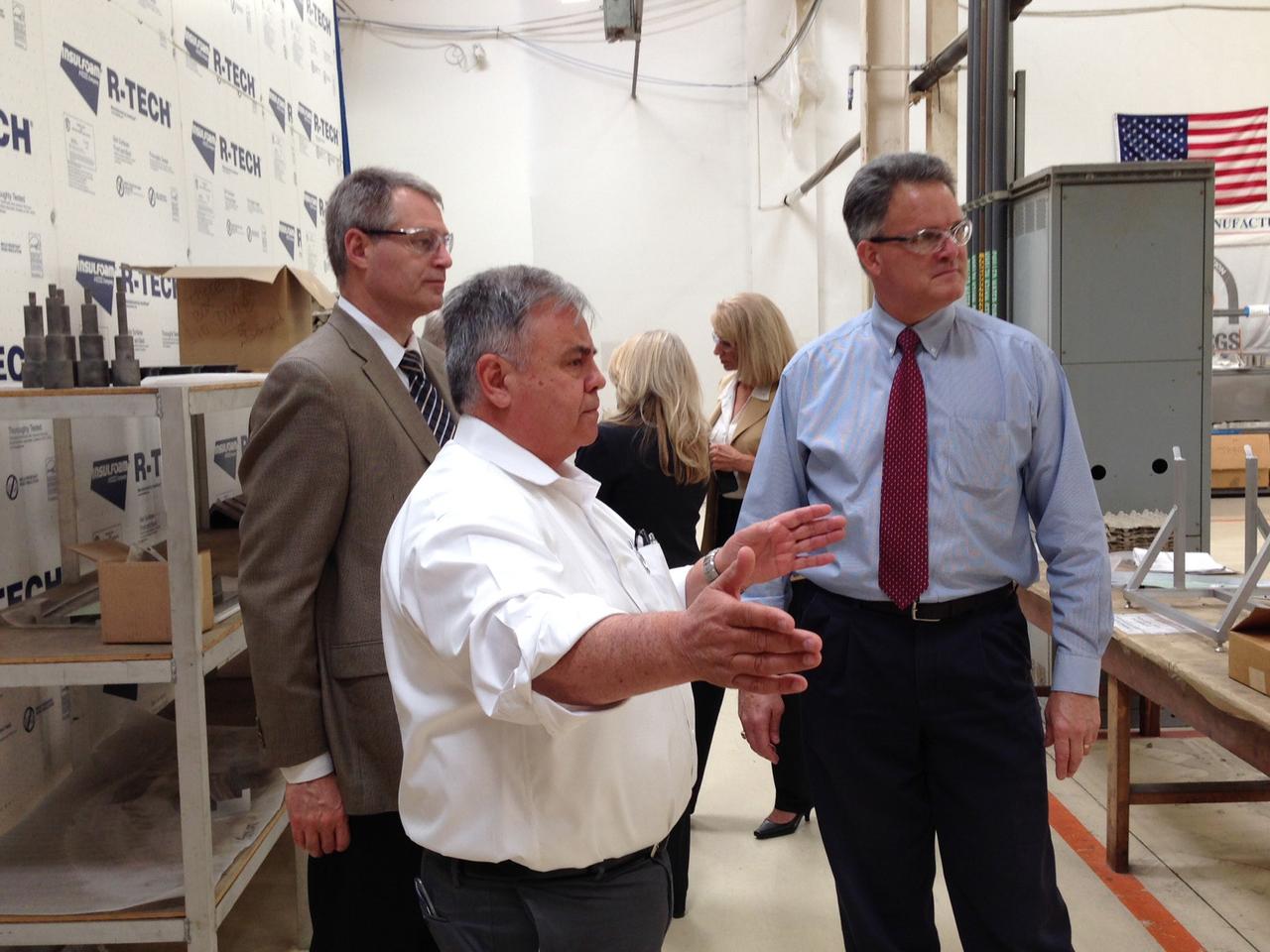
The Orion team visits Coast Aerospace Manufacturing in Placentia, CA on Jan. 28, 2014. Part of Batch image transfer from Flickr.
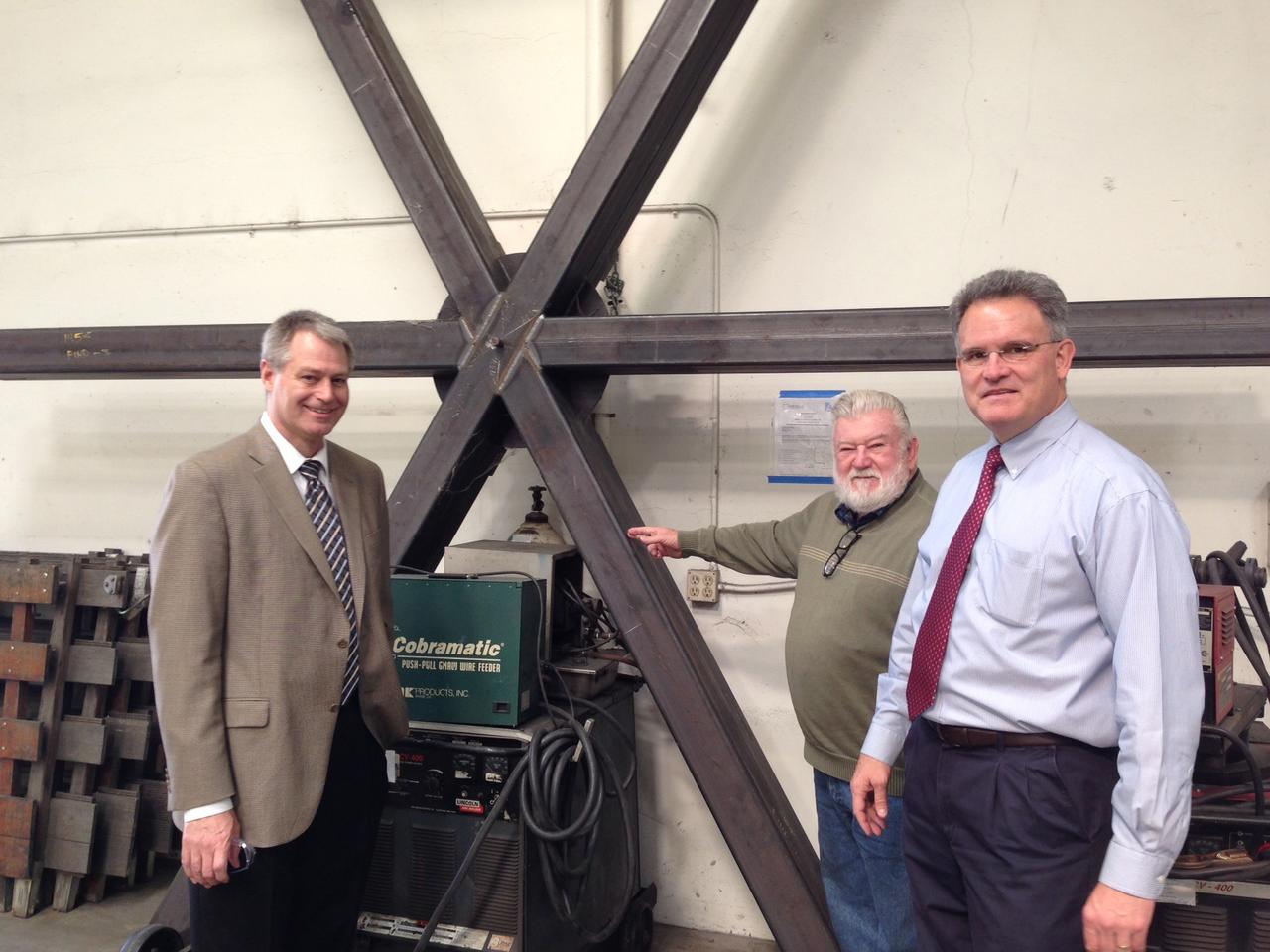
The Orion team visits Coast Aerospace Manufacturing in Placentia, CA on Jan. 28, 2014. Part of Batch image transfer from Flickr.
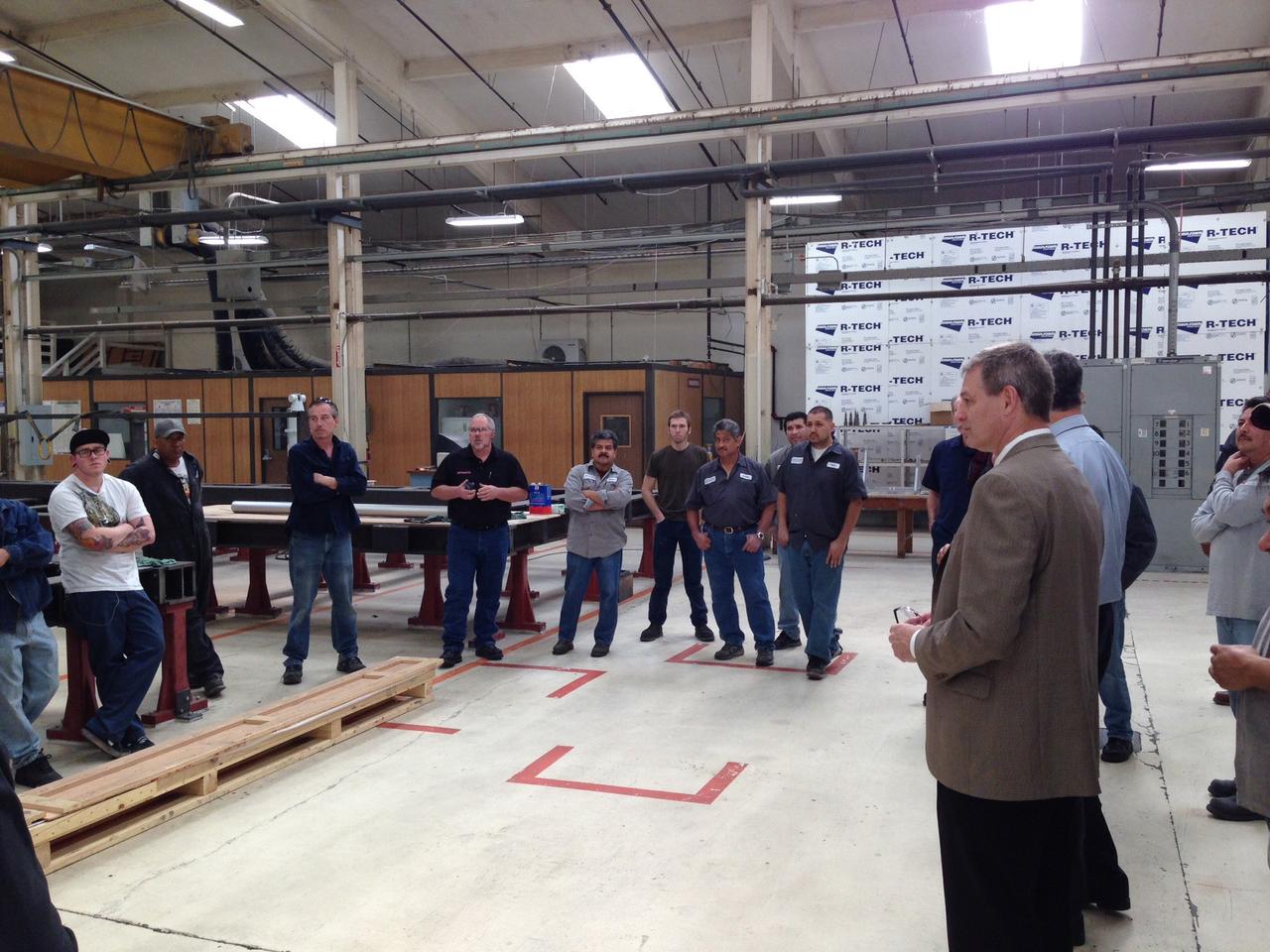
The Orion team visits Coast Aerospace Manufacturing in Placentia, CA on Jan. 28, 2014. Part of Batch image transfer from Flickr.

The Orion team visits Coast Aerospace Manufacturing in Placentia, CA on Jan. 28, 2014. Part of Batch image transfer from Flickr.
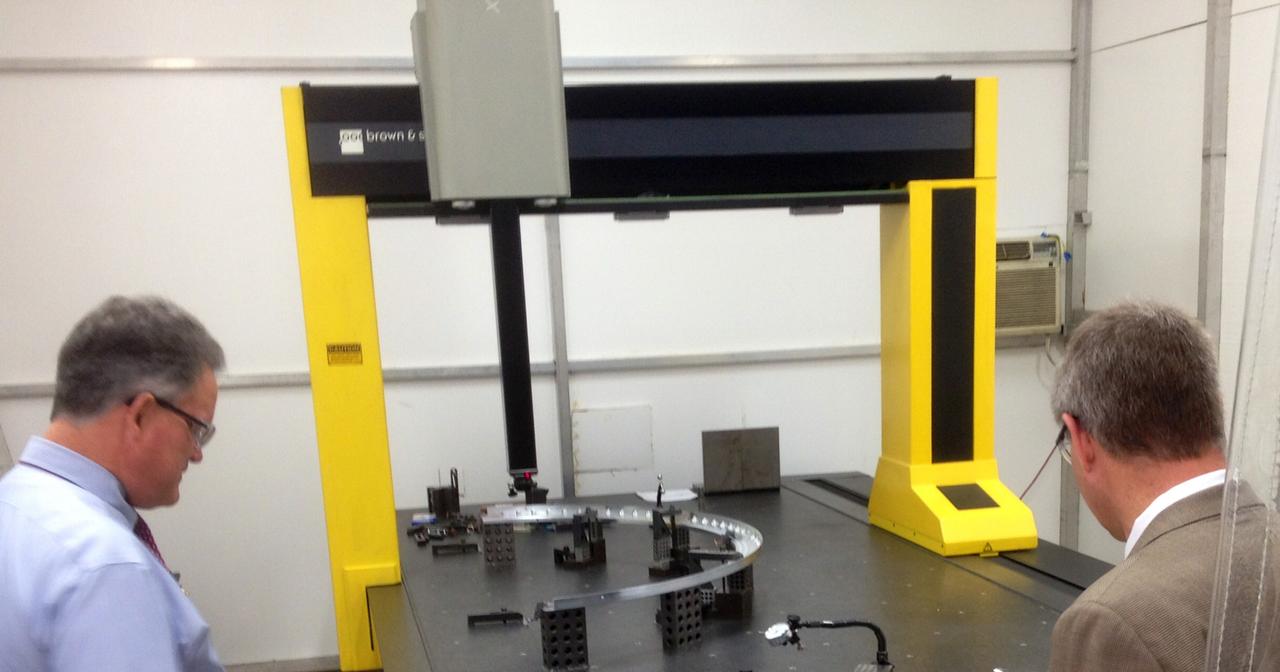
The Orion team visits Coast Aerospace Manufacturing in Placentia, CA on Jan. 28, 2014. Part of Batch image transfer from Flickr.

The Orion team visits Coast Aerospace Manufacturing in Placentia, CA on Jan. 28, 2014. Part of Batch image transfer from Flickr.

NASA Extravehicular Activity and Human Surface Mobility Program Lara Kearney discusses the historic agreement signed April 9th at NASA Headquarters, between the United States and Japan to advance sustainable human exploration of the Moon, Wednesday, April 10, 2024, at the Japan Aerospace Exploration Agency (JAXA) offices in Washington. Under the agreement, Japan will design, develop, and operate a pressurized rover for crewed and uncrewed exploration on the Moon. NASA will provide the launch and delivery of the rover to the Moon as well as two Japanese astronaut missions to the lunar surface. Photo Credit: Photo Credit: (NASA/Bill Ingalls)

NASA Pressurized Rover Project Manager Danny Newswander discusses the historic agreement signed April 9th at NASA Headquarters, between the United States and Japan to advance sustainable human exploration of the Moon, Wednesday, April 10, 2024, at the Japan Aerospace Exploration Agency (JAXA) offices in Washington. Under the agreement, Japan will design, develop, and operate a pressurized rover for crewed and uncrewed exploration on the Moon. NASA will provide the launch and delivery of the rover to the Moon as well as two Japanese astronaut missions to the lunar surface. Photo Credit: Photo Credit: (NASA/Bill Ingalls)

A model of the Pressurized lunar rover is seen during a briefing discussing the historic agreement signed April 9th at NASA Headquarters, between the United States and Japan to advance sustainable human exploration of the Moon, Wednesday, April 10, 2024, at the Japan Aerospace Exploration Agency (JAXA) offices in Washington. Under the agreement, Japan will design, develop, and operate a pressurized rover for crewed and uncrewed exploration on the Moon. NASA will provide the launch and delivery of the rover to the Moon as well as two Japanese astronaut missions to the lunar surface. Photo Credit: Photo Credit: (NASA/Bill Ingalls)

Japan’s Minister of Education, Culture, Sports, Science and Technology Masahito Moriyama discusses the historic agreement signed April 9th at NASA Headquarters, between the United States and Japan to advance sustainable human exploration of the Moon, Wednesday, April 10, 2024, at the Japan Aerospace Exploration Agency (JAXA) offices in Washington. Under the agreement, Japan will design, develop, and operate a pressurized rover for crewed and uncrewed exploration on the Moon. NASA will provide the launch and delivery of the rover to the Moon as well as two Japanese astronaut missions to the lunar surface. Photo Credit: Photo Credit: (NASA/Bill Ingalls)

A model of the Pressurized lunar rover is seen during a briefing discussing the historic agreement signed April 9th at NASA Headquarters, between the United States and Japan to advance sustainable human exploration of the Moon, Wednesday, April 10, 2024, at the Japan Aerospace Exploration Agency (JAXA) offices in Washington. Under the agreement, Japan will design, develop, and operate a pressurized rover for crewed and uncrewed exploration on the Moon. NASA will provide the launch and delivery of the rover to the Moon as well as two Japanese astronaut missions to the lunar surface. Photo Credit: Photo Credit: (NASA/Bill Ingalls)

NASA’s Glenn Research Center opened the doors to a brand-new mission-focused facility that will support the agency’s Artemis and Advanced Air Mobility missions. On Aug. 30, NASA management and local officials cut the ribbon to the Aerospace Communications Facility (ACF), a new building designed for advanced radio frequency (RF) and optical communication technology research and development. Photo Credit: (NASA/Sara Lowthian-Hanna)

Japan Aerospace Exploration Agency (JAXA) President Hiroshi Yamakawa, left, Japan’s Minister of Education, Culture, Sports, Science and Technology Masahito Moriyama, and NASA Administrator Bill Nelson, right, are seen during a briefing where they discussed the historic agreement signed April 9th at NASA Headquarters, between the United States and Japan to advance sustainable human exploration of the Moon, Wednesday, April 10, 2024, at the Japan Aerospace Exploration Agency (JAXA) offices in Washington. Under the agreement, Japan will design, develop, and operate a pressurized rover for crewed and uncrewed exploration on the Moon. NASA will provide the launch and delivery of the rover to the Moon as well as two Japanese astronaut missions to the lunar surface. Photo Credit: Photo Credit: (NASA/Bill Ingalls)
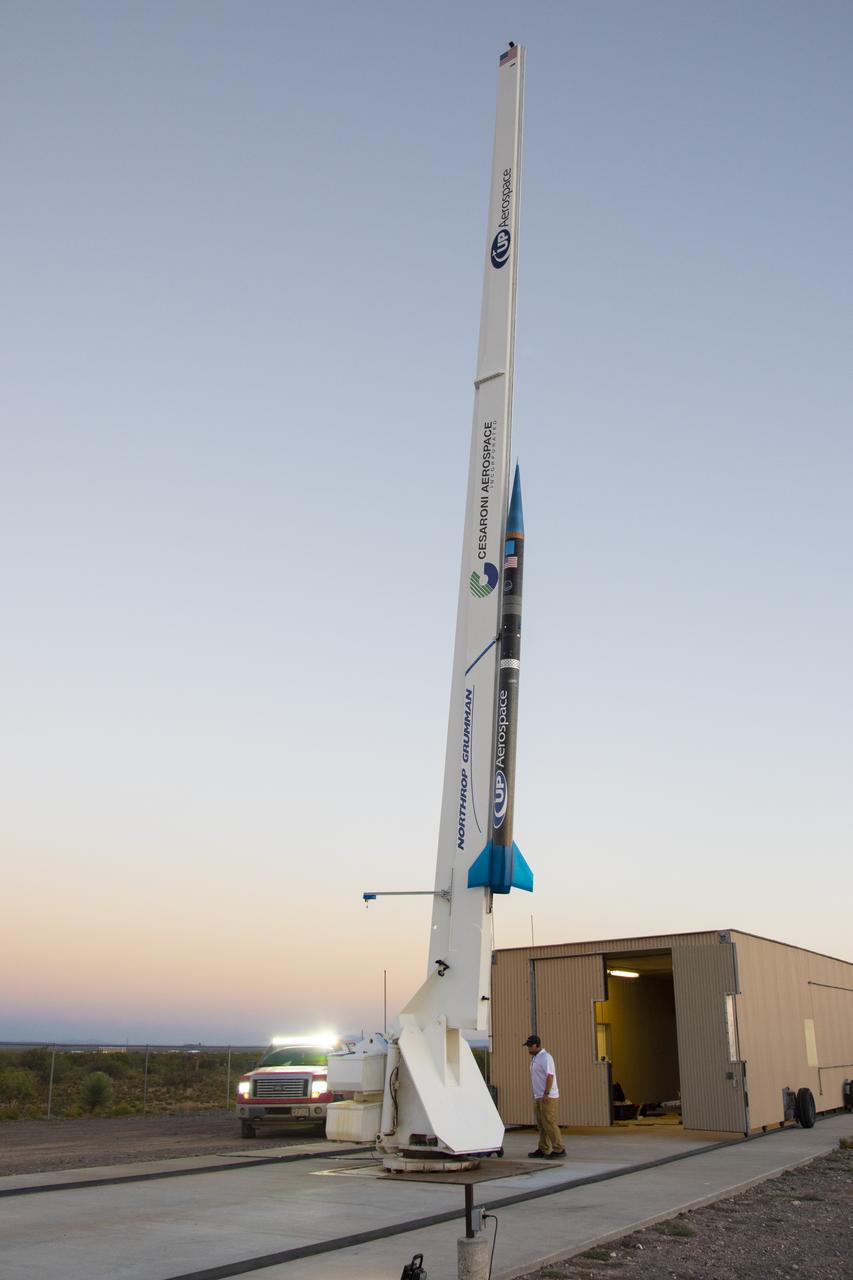
NASA's Flight Opportunities funds flight of space technology on UP Aerospace's rocket poised to launch at Spaceport America in New Mexico.
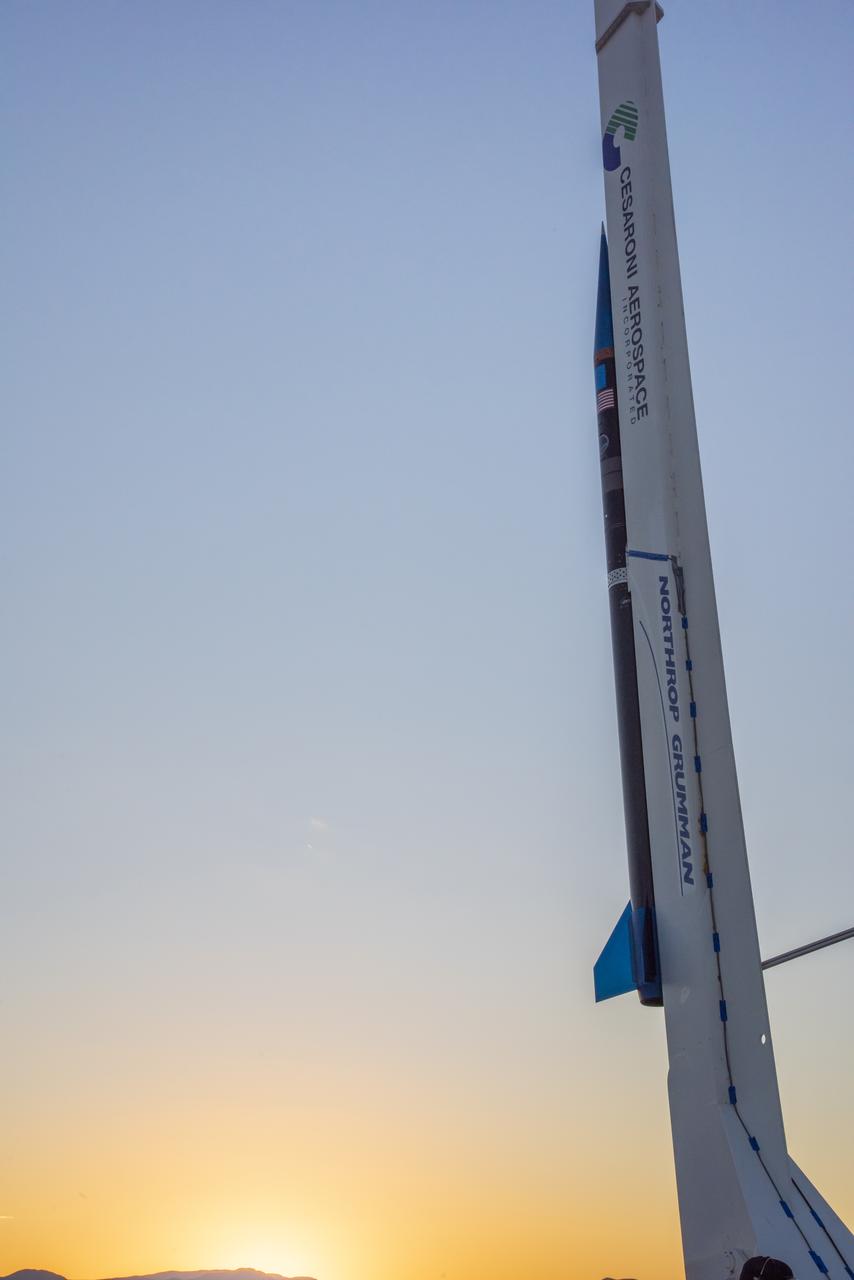
NASA’s Flight Opportunities funds flight of space technology on UP Aerospace’s rocket poised to launch at Spaceport America in New Mexico.
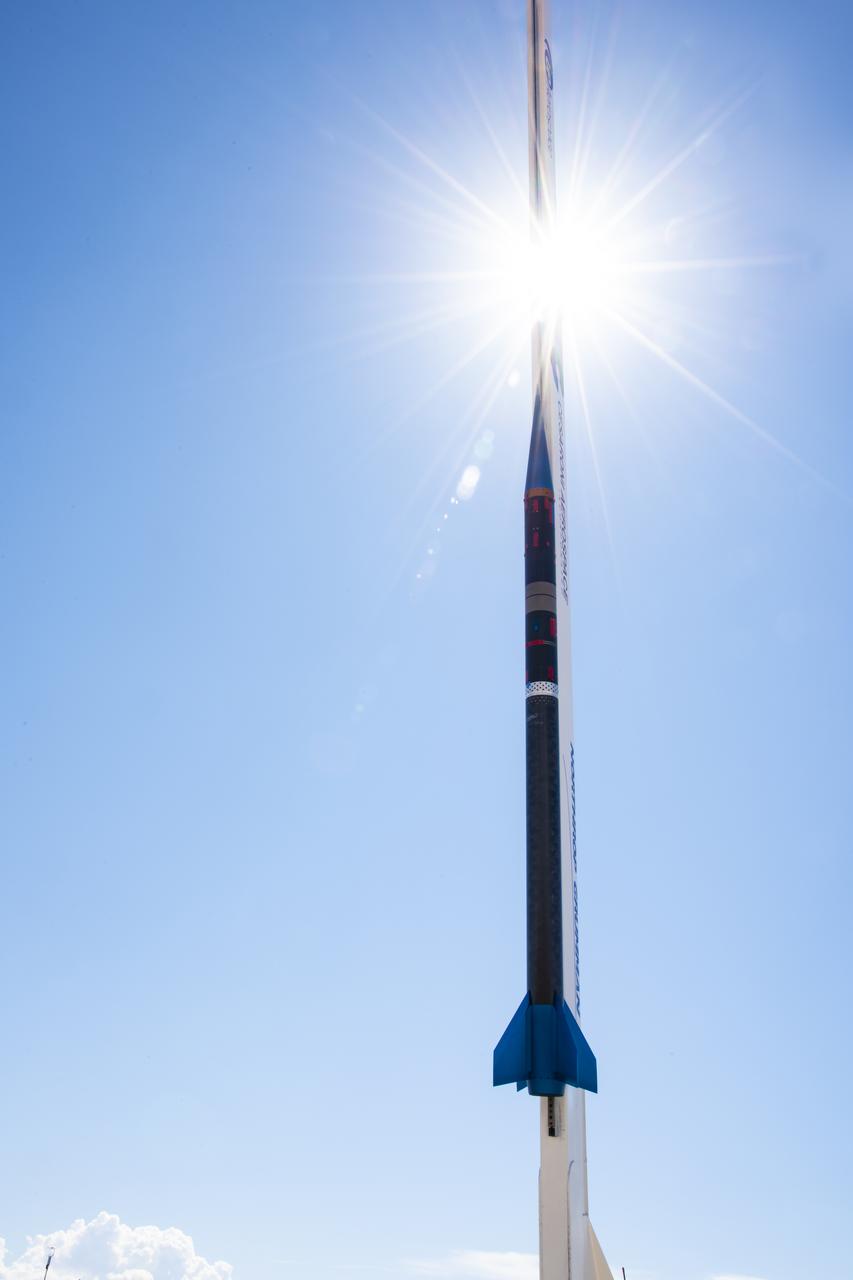
NASA's Flight Opportunities funds flight of space technology on UP Aerospace's rocket poised to launch at Spaceport America in New Mexico.
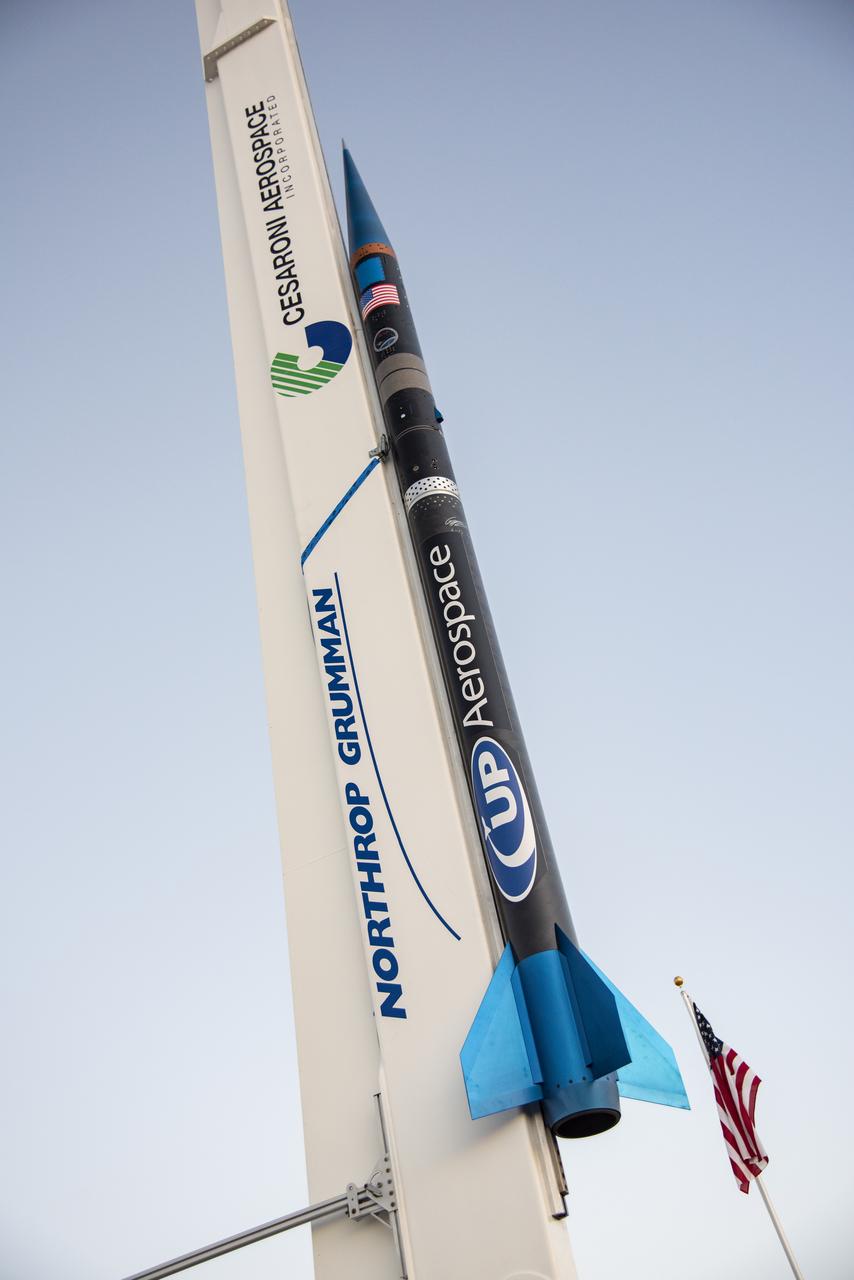
NASA’s Flight Opportunities funds flight of space technology on UP Aerospace’s rocket poised to launch at Spaceport America in New Mexico.

NASA's Flight Opportunities funds flight of space technology on UP Aerospace's rocket poised to launch at Spaceport America in New Mexico.
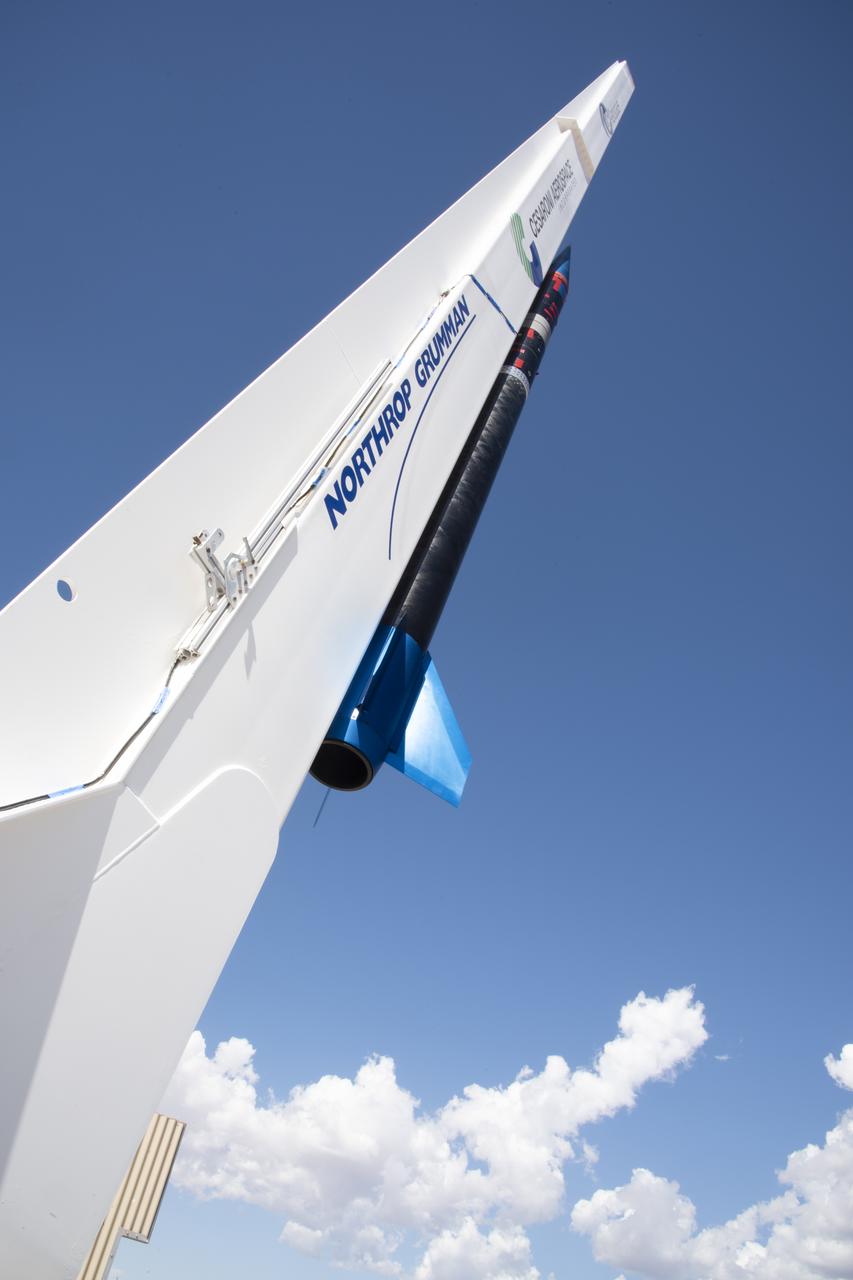
NASA's Flight Opportunities funds flight of space technology on UP Aerospace's rocket poised to launch at Spaceport America in New Mexico.
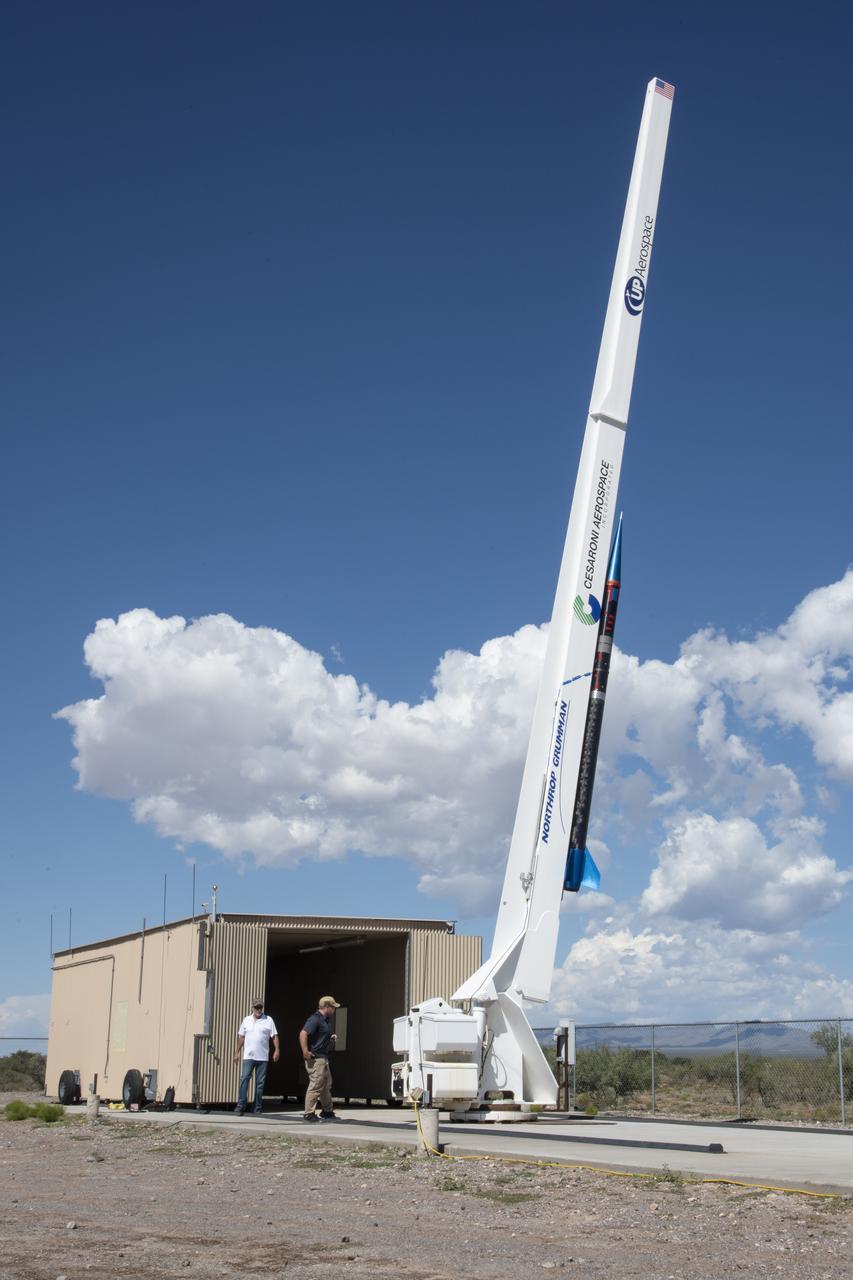
NASA's Flight Opportunities funds flight of space technology on UP Aerospace's rocket poised to launch at Spaceport America in New Mexico.
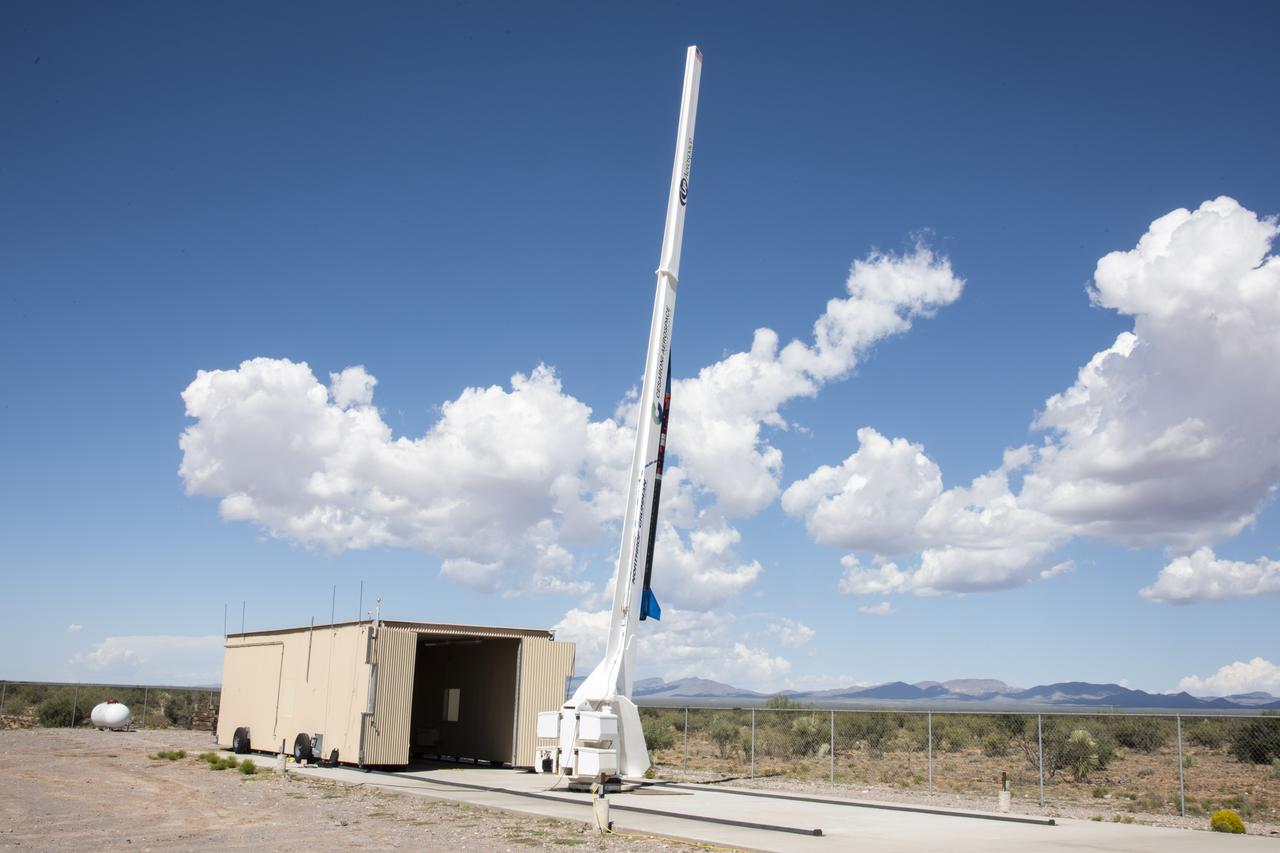
NASA’s Flight Opportunities funds flight of space technology on UP Aerospace’s rocket poised to launch at Spaceport America in New Mexico.
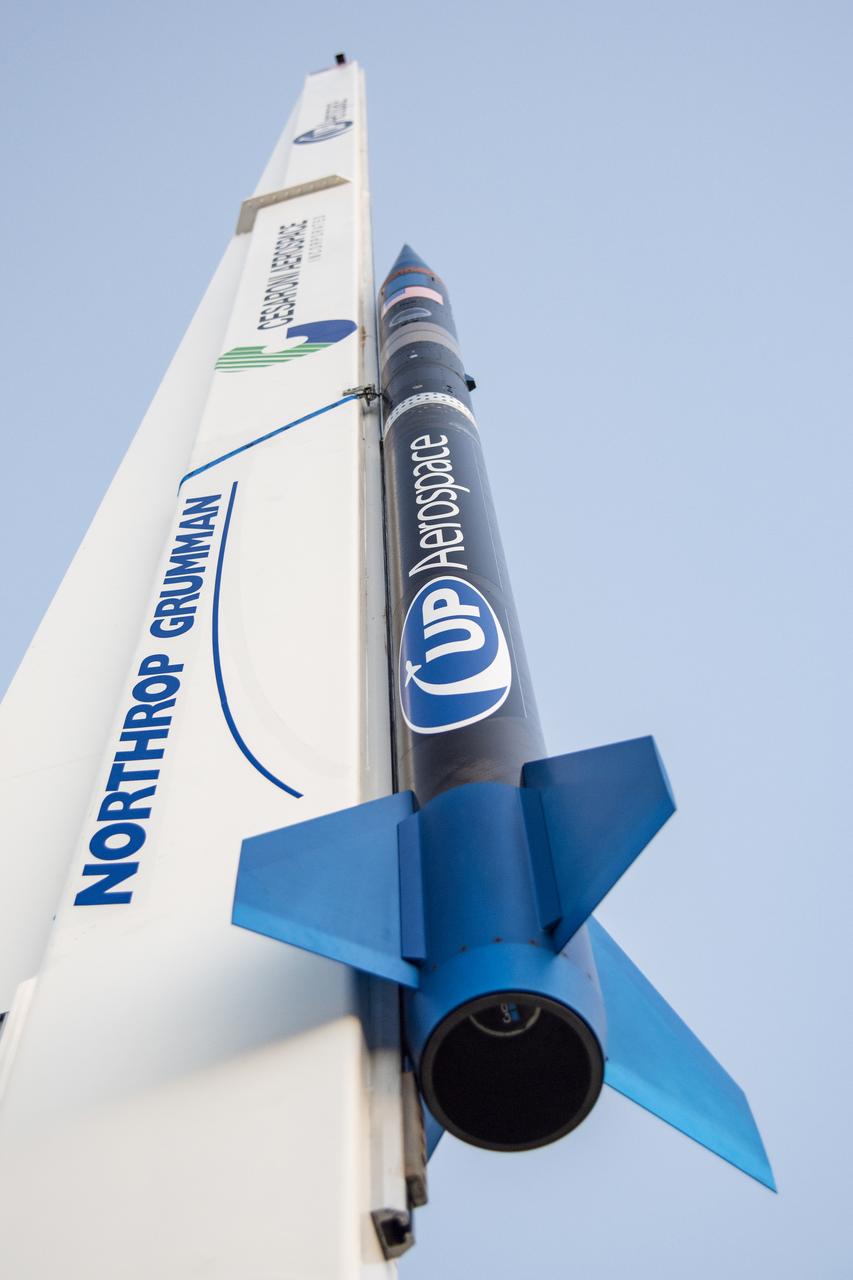
NASA’s Flight Opportunities funds flight of space technology on UP Aerospace’s rocket poised to launch at Spaceport America in New Mexico.

NASA Administrator Bill Nelson discusses the historic agreement signed April 9th at NASA Headquarters, between the United States and Japan to advance sustainable human exploration of the Moon, Wednesday, April 10, 2024, at the Japan Aerospace Exploration Agency (JAXA) offices in Washington. Under the agreement, Japan will design, develop, and operate a pressurized rover for crewed and uncrewed exploration on the Moon. NASA will provide the launch and delivery of the rover to the Moon as well as two Japanese astronaut missions to the lunar surface. Photo Credit: Photo Credit: (NASA/Bill Ingalls)

NASA Administrator Bill Nelson discusses the historic agreement signed April 9th at NASA Headquarters, between the United States and Japan to advance sustainable human exploration of the Moon, Wednesday, April 10, 2024, at the Japan Aerospace Exploration Agency (JAXA) offices in Washington. Under the agreement, Japan will design, develop, and operate a pressurized rover for crewed and uncrewed exploration on the Moon. NASA will provide the launch and delivery of the rover to the Moon as well as two Japanese astronaut missions to the lunar surface. Photo Credit: Photo Credit: (NASA/Bill Ingalls)

NASA Administrator Bill Nelson discusses the historic agreement signed April 9th at NASA Headquarters, between the United States and Japan to advance sustainable human exploration of the Moon, Wednesday, April 10, 2024, at the Japan Aerospace Exploration Agency (JAXA) offices in Washington. Under the agreement, Japan will design, develop, and operate a pressurized rover for crewed and uncrewed exploration on the Moon. NASA will provide the launch and delivery of the rover to the Moon as well as two Japanese astronaut missions to the lunar surface. Photo Credit: Photo Credit: (NASA/Bill Ingalls)

NASA Administrator Bill Nelson discusses the historic agreement signed April 9th at NASA Headquarters, between the United States and Japan to advance sustainable human exploration of the Moon, Wednesday, April 10, 2024, at the Japan Aerospace Exploration Agency (JAXA) offices in Washington. Under the agreement, Japan will design, develop, and operate a pressurized rover for crewed and uncrewed exploration on the Moon. NASA will provide the launch and delivery of the rover to the Moon as well as two Japanese astronaut missions to the lunar surface. Photo Credit: Photo Credit: (NASA/Bill Ingalls)
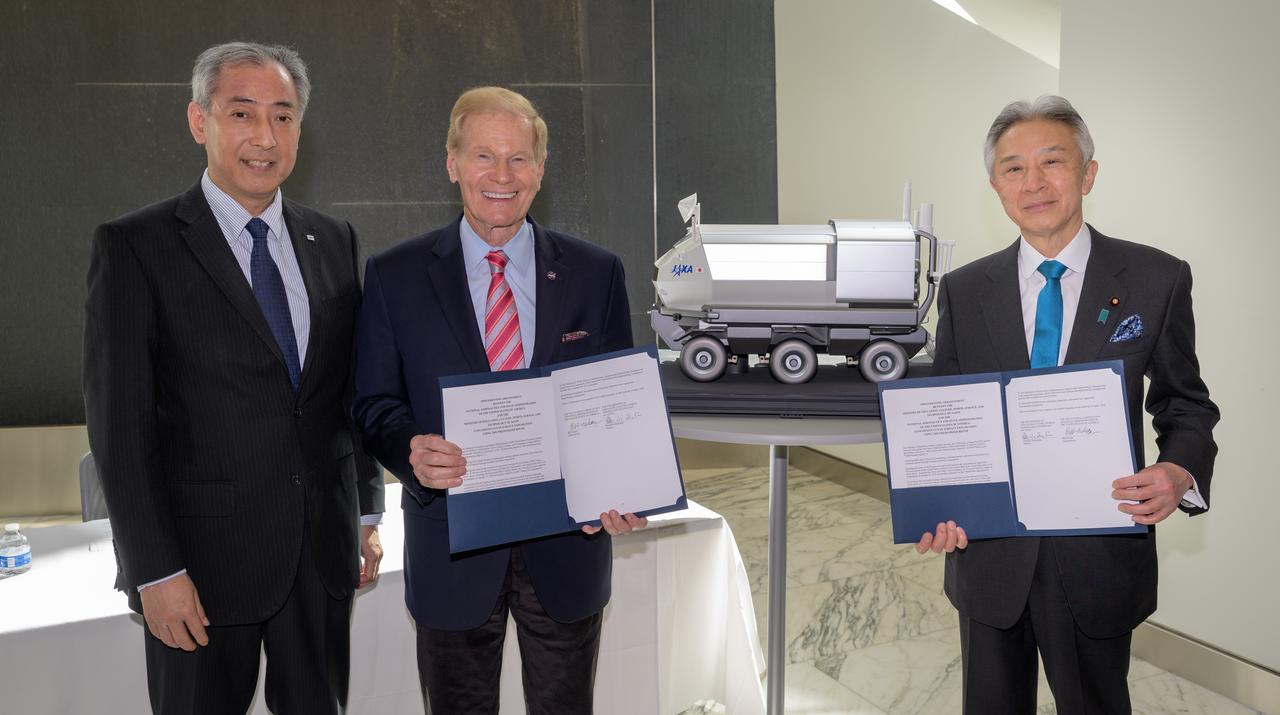
Japan Aerospace Exploration Agency (JAXA) President Hiroshi Yamakawa, left, NASA Administrator Bill Nelson, and Japan’s Minister of Education, Culture, Sports, Science and Technology Masahito Moriyama, right, pose for a group photograph holding the historic agreement signed April 9th at NASA Headquarters, between the United States and Japan to advance sustainable human exploration of the Moon, Wednesday, April 10, 2024, at the Japan Aerospace Exploration Agency (JAXA) offices in Washington. Under the agreement, Japan will design, develop, and operate a pressurized rover for crewed and uncrewed exploration on the Moon. NASA will provide the launch and delivery of the rover to the Moon as well as two Japanese astronaut missions to the lunar surface. Photo Credit: Photo Credit: (NASA/Bill Ingalls)
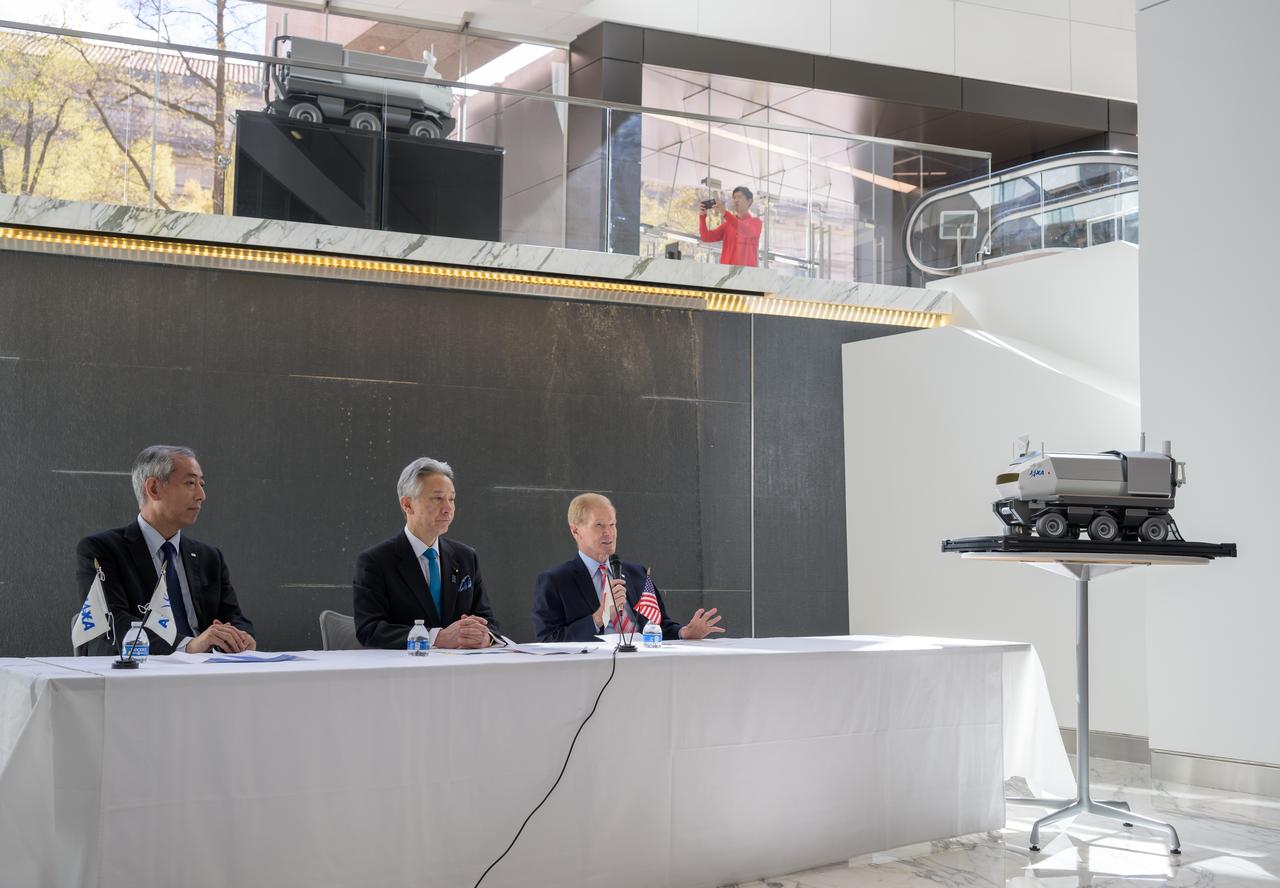
Japan Aerospace Exploration Agency (JAXA) President Hiroshi Yamakawa, left, Japan’s Minister of Education, Culture, Sports, Science and Technology Masahito Moriyama, and NASA Administrator Bill Nelson, right, are seen during a briefing where they discussed the historic agreement signed April 9th at NASA Headquarters, between the United States and Japan to advance sustainable human exploration of the Moon, Wednesday, April 10, 2024, at the Japan Aerospace Exploration Agency (JAXA) offices in Washington. Under the agreement, Japan will design, develop, and operate a pressurized rover for crewed and uncrewed exploration on the Moon. NASA will provide the launch and delivery of the rover to the Moon as well as two Japanese astronaut missions to the lunar surface. Photo Credit: Photo Credit: (NASA/Bill Ingalls)
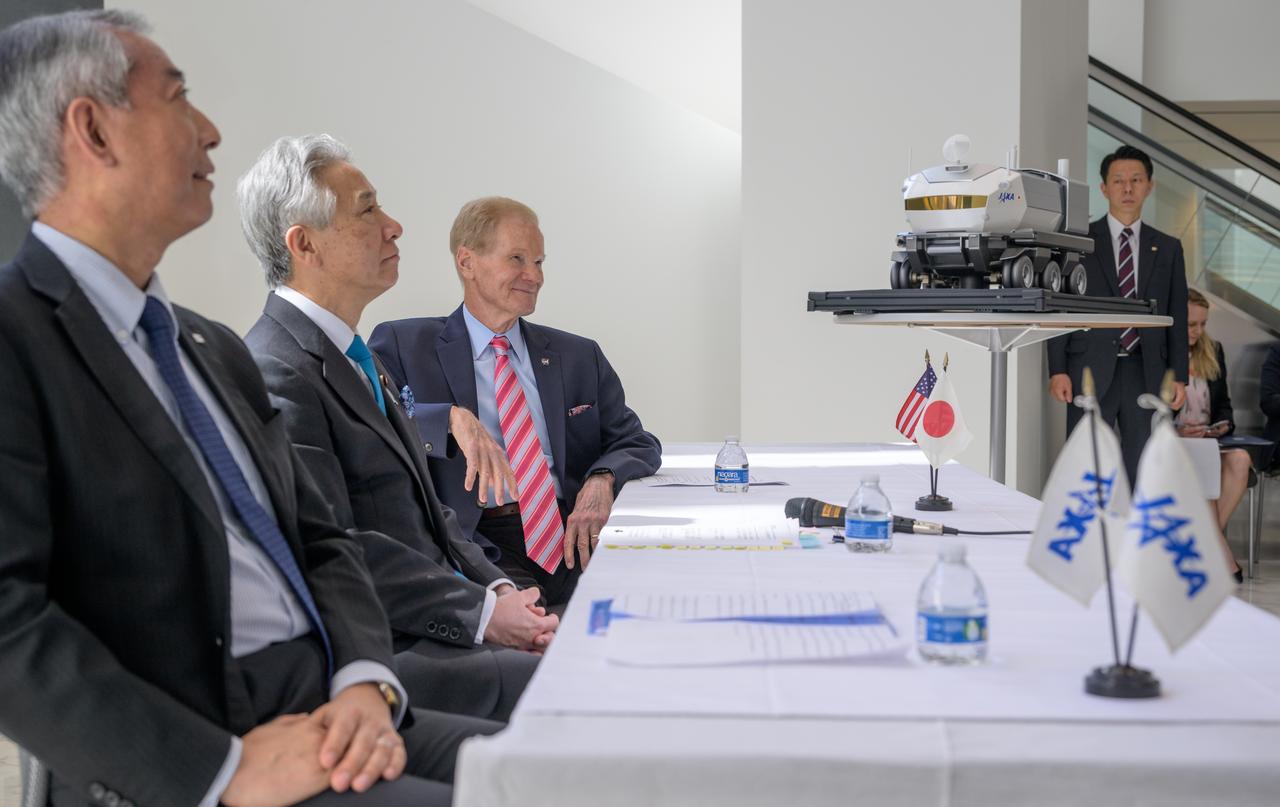
Japan Aerospace Exploration Agency (JAXA) President Hiroshi Yamakawa, left, Japan’s Minister of Education, Culture, Sports, Science and Technology Masahito Moriyama, and NASA Administrator Bill Nelson, right, are seen during a briefing where they discussed the historic agreement signed April 9th at NASA Headquarters, between the United States and Japan to advance sustainable human exploration of the Moon, Wednesday, April 10, 2024, at the Japan Aerospace Exploration Agency (JAXA) offices in Washington. Under the agreement, Japan will design, develop, and operate a pressurized rover for crewed and uncrewed exploration on the Moon. NASA will provide the launch and delivery of the rover to the Moon as well as two Japanese astronaut missions to the lunar surface. Photo Credit: Photo Credit: (NASA/Bill Ingalls)
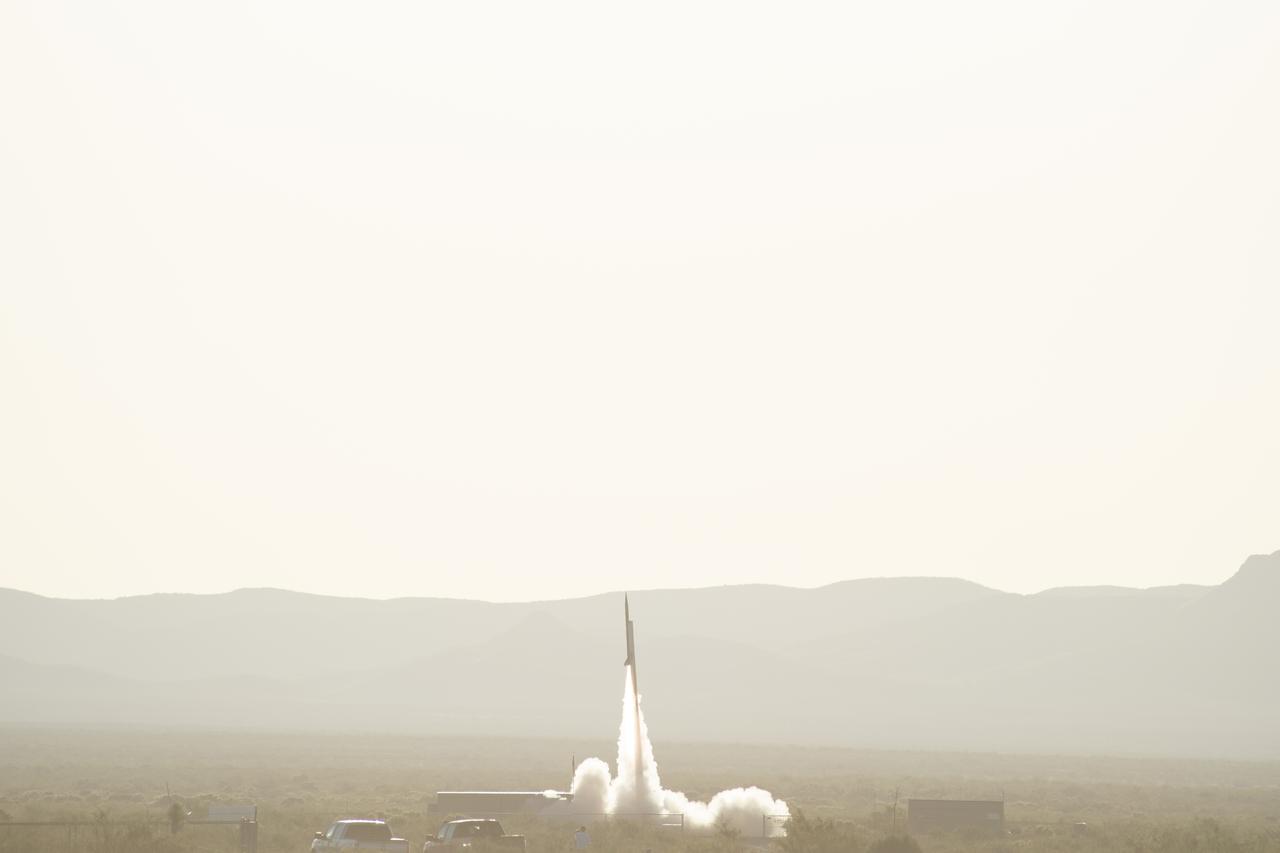
UP Aerospace SpaceLoft rocket launched into space Sept 12, 2018 from Spaceport America in New Mexico carrying three NASA technologies onboard to test in microgravity.
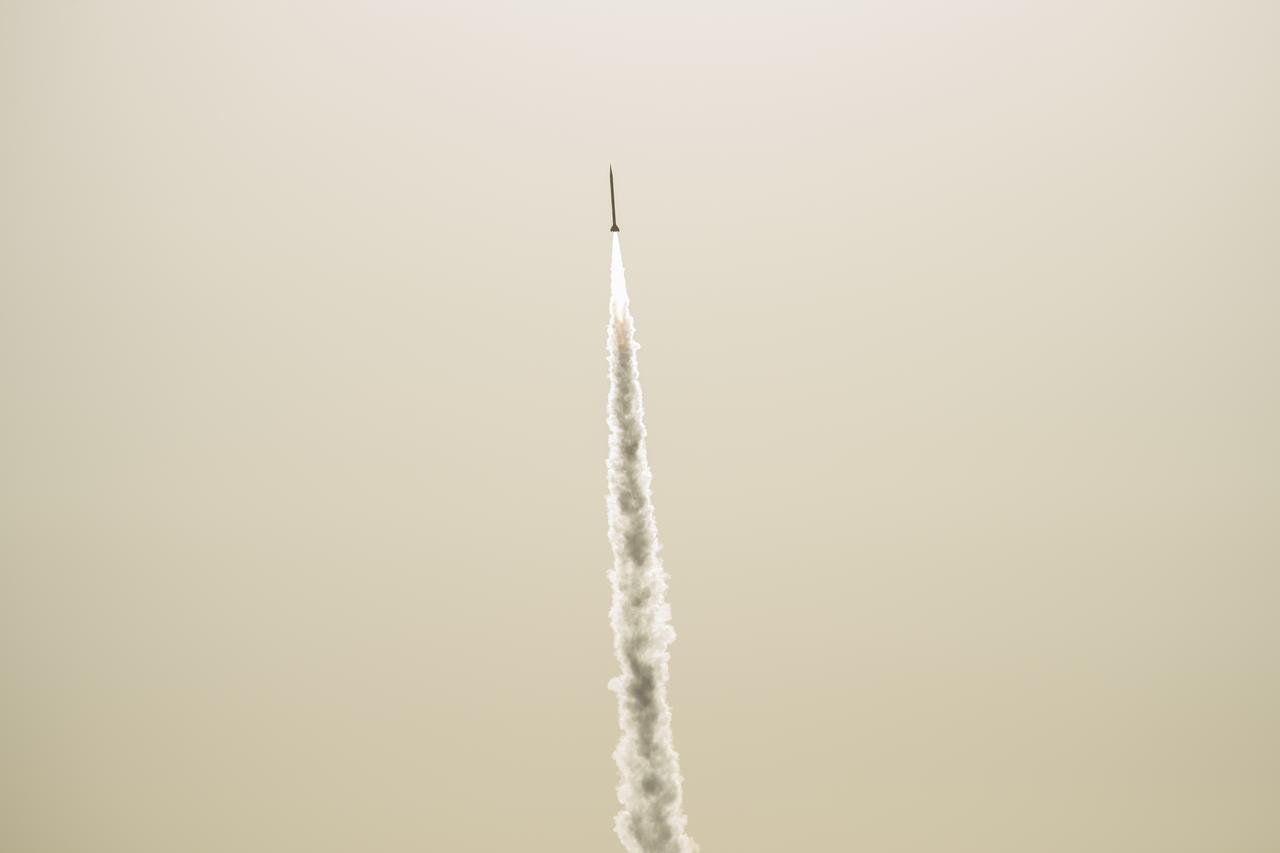
UP Aerospace SpaceLoft rocket launched into space Sept 12, 2018 from Spaceport America in New Mexico carrying three NASA technologies onboard to test in microgravity.

UP Aerospace SpaceLoft rocket launched into space Sept 12, 2018 from Spaceport America in New Mexico carrying three NASA technologies onboard to test in microgravity.
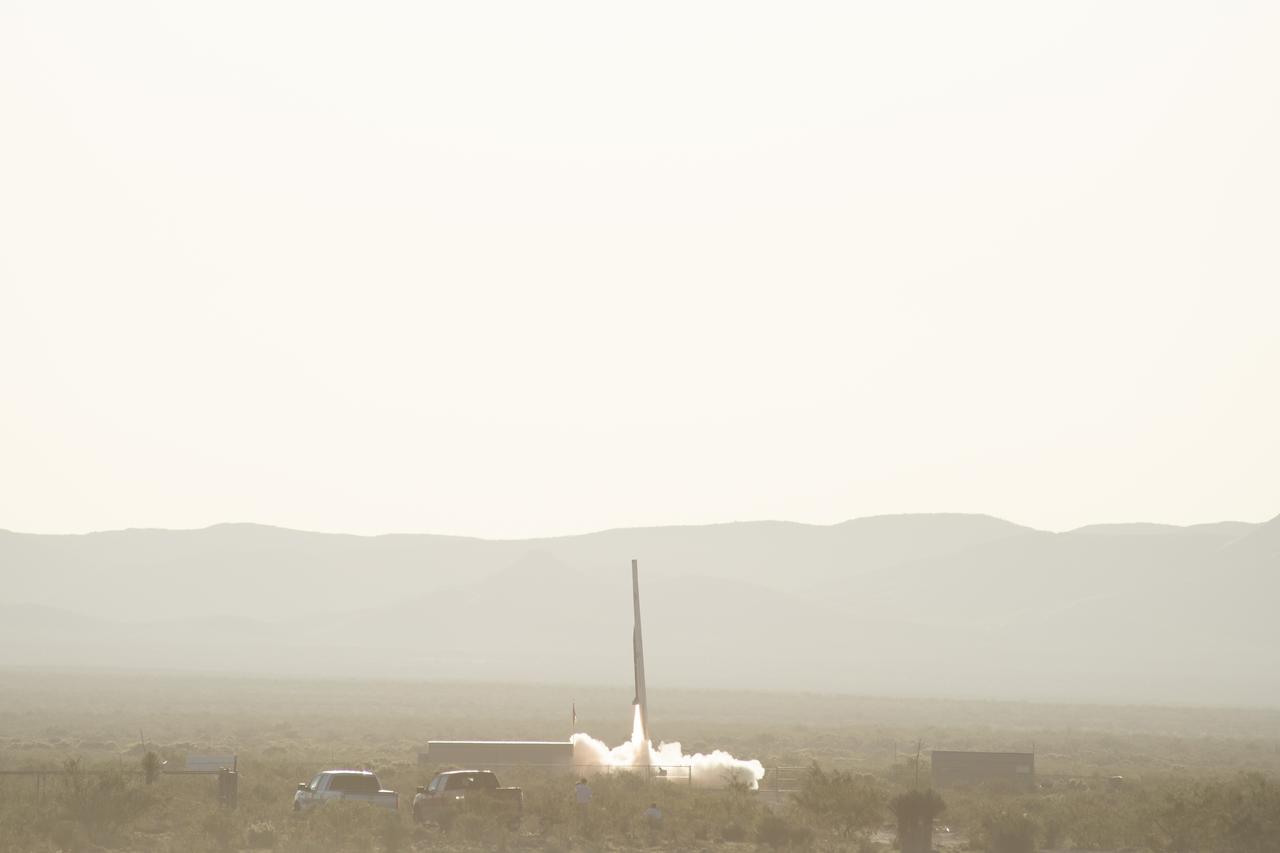
UP Aerospace SpaceLoft rocket launched into space Sept 12, 2018 from Spaceport America in New Mexico carrying three NASA technologies onboard to test in microgravity.
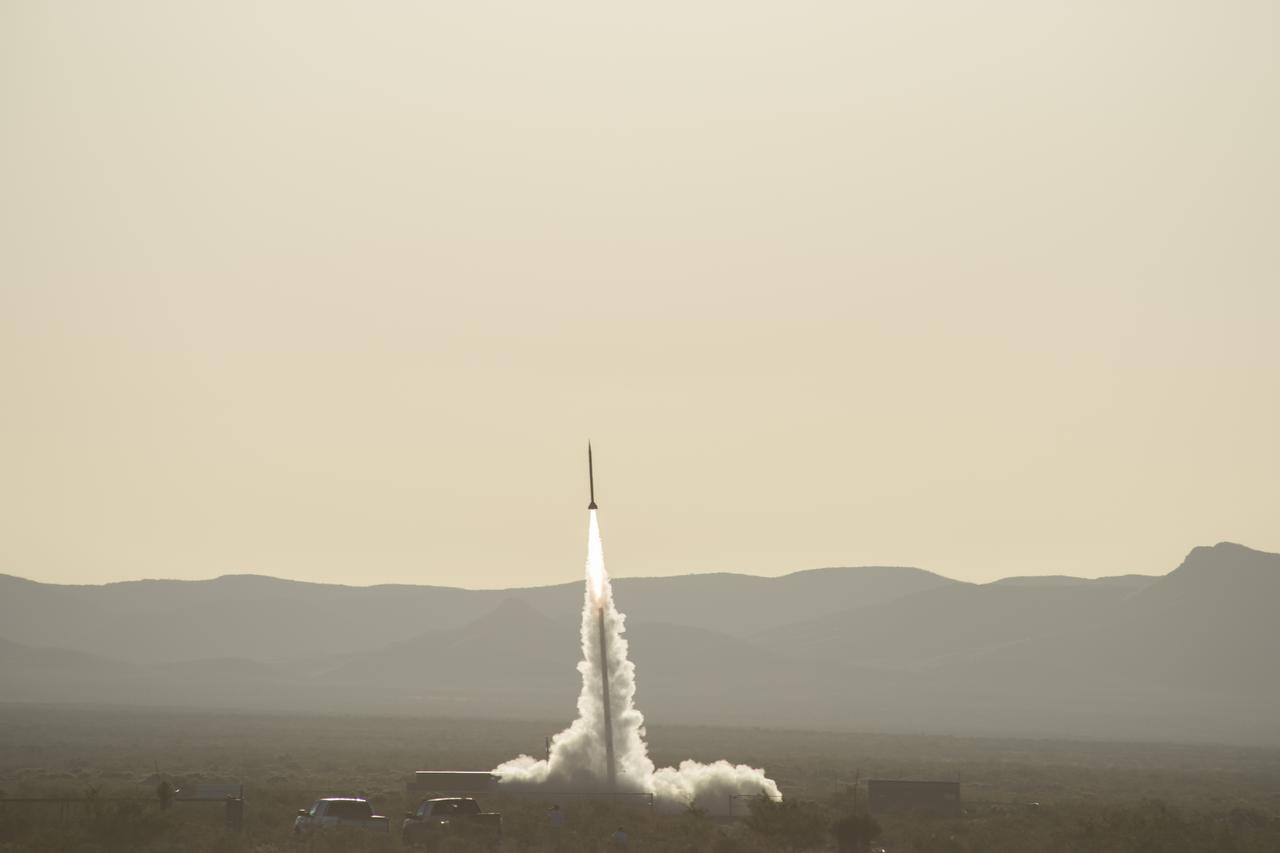
UP Aerospace SpaceLoft rocket launched into space Sept 12, 2018 from Spaceport America in New Mexico carrying three NASA technologies onboard to test in microgravity.

NASA Glenn Research Center Director and Senior Management at the Aerospace Communications Facility, ACF Groundbreaking Ceremony
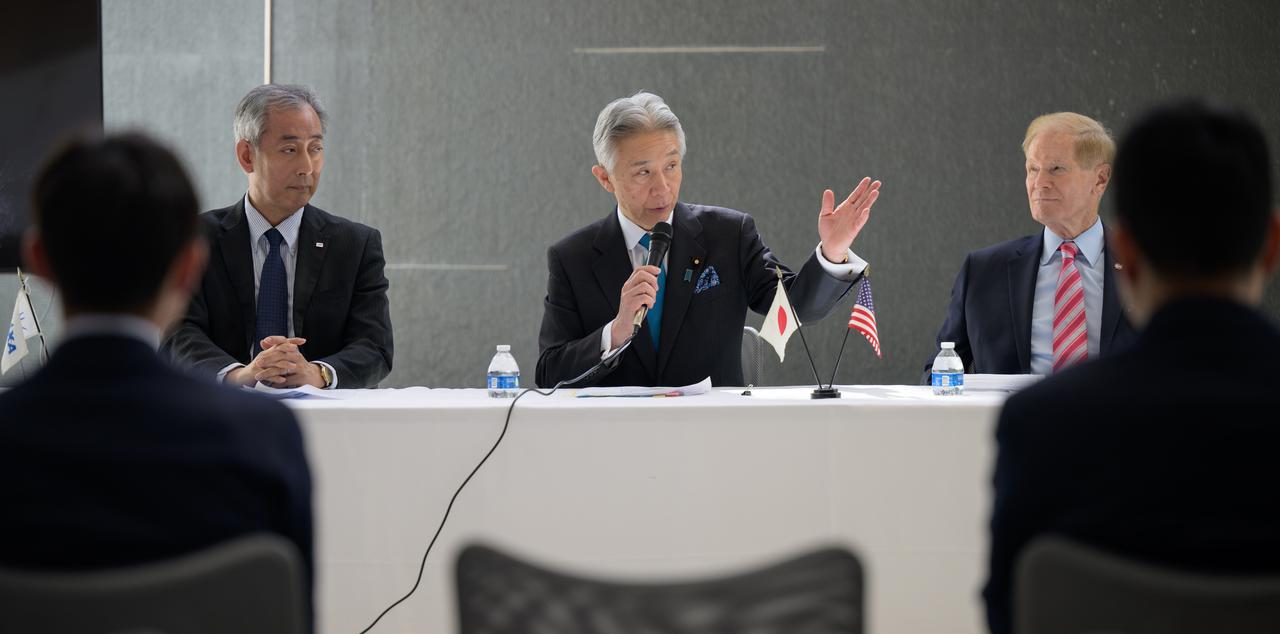
Japan’s Minister of Education, Culture, Sports, Science and Technology Masahito Moriyama, center, discusses the historic agreement signed April 9th at NASA Headquarters, between the United States and Japan to advance sustainable human exploration of the Moon, Wednesday, April 10, 2024, at the Japan Aerospace Exploration Agency (JAXA) offices in Washington. Under the agreement, Japan will design, develop, and operate a pressurized rover for crewed and uncrewed exploration on the Moon. NASA will provide the launch and delivery of the rover to the Moon as well as two Japanese astronaut missions to the lunar surface. Photo Credit: Photo Credit: (NASA/Bill Ingalls)

NASA Pressurized Rover Project Manager Danny Newswander, left, NASA Administrator Bill Nelson, and NASA Extravehicular Activity and Human Surface Mobility Program Lara Kearney, right, discuss the historic agreement signed April 9th at NASA Headquarters, between the United States and Japan to advance sustainable human exploration of the Moon, Wednesday, April 10, 2024, at the Japan Aerospace Exploration Agency (JAXA) offices in Washington. Under the agreement, Japan will design, develop, and operate a pressurized rover for crewed and uncrewed exploration on the Moon. NASA will provide the launch and delivery of the rover to the Moon as well as two Japanese astronaut missions to the lunar surface. Photo Credit: Photo Credit: (NASA/Bill Ingalls)
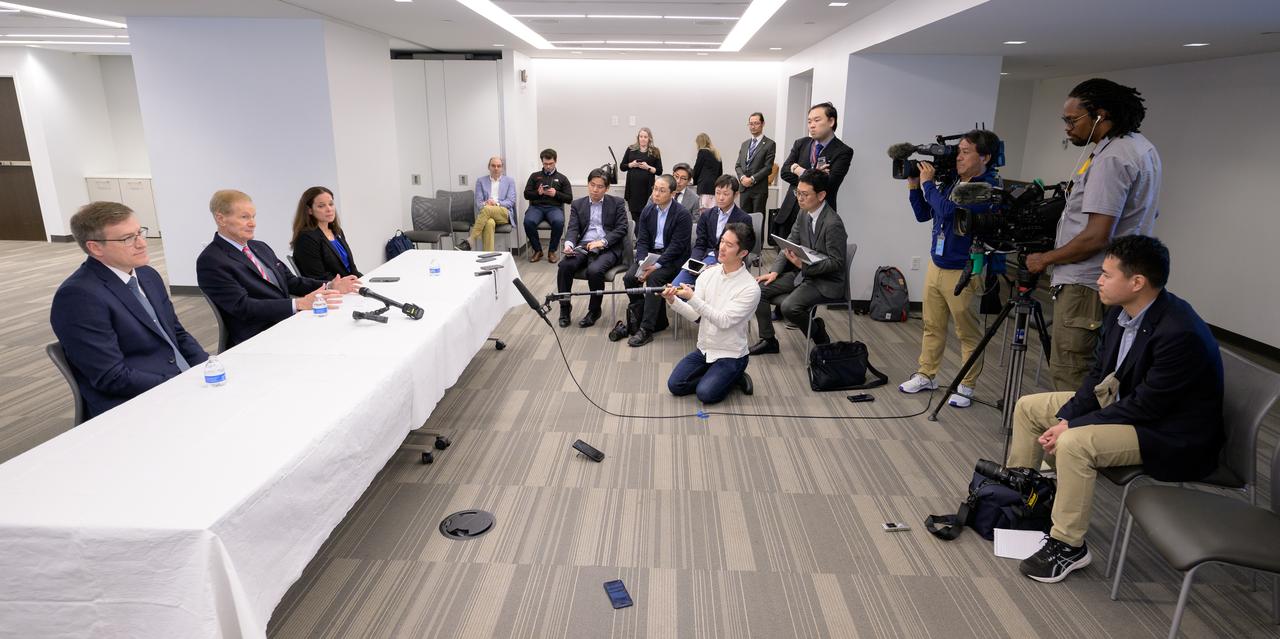
NASA Pressurized Rover Project Manager Danny Newswander, left, NASA Administrator Bill Nelson, and NASA Extravehicular Activity and Human Surface Mobility Program Lara Kearney, right, discuss the historic agreement signed April 9th at NASA Headquarters, between the United States and Japan to advance sustainable human exploration of the Moon, Wednesday, April 10, 2024, at the Japan Aerospace Exploration Agency (JAXA) offices in Washington. Under the agreement, Japan will design, develop, and operate a pressurized rover for crewed and uncrewed exploration on the Moon. NASA will provide the launch and delivery of the rover to the Moon as well as two Japanese astronaut missions to the lunar surface. Photo Credit: Photo Credit: (NASA/Bill Ingalls)
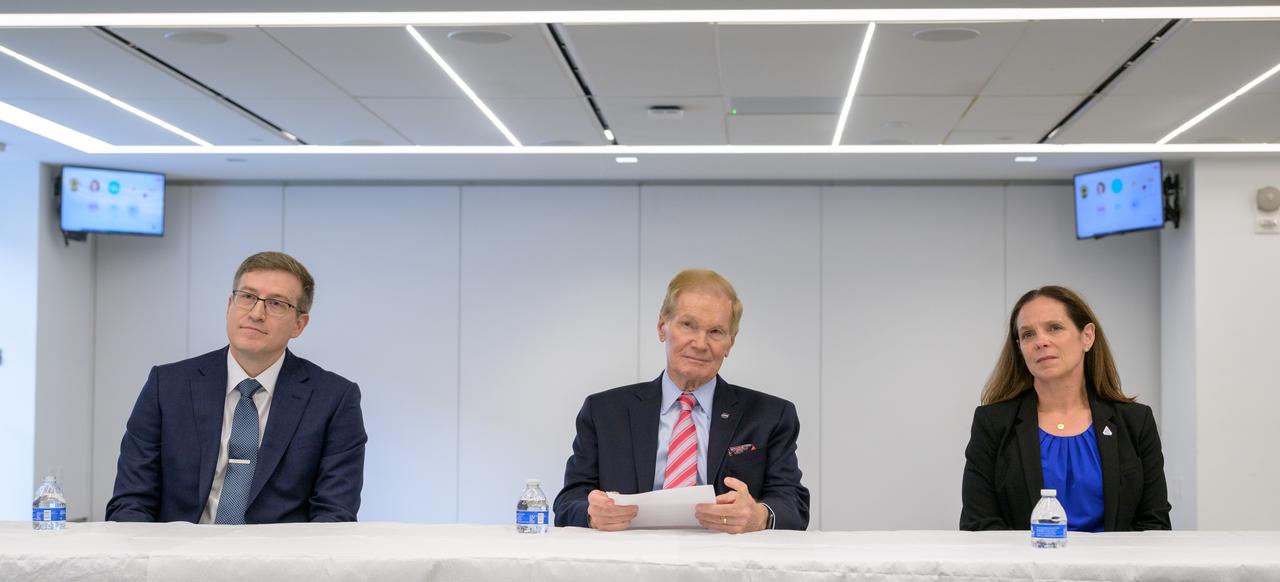
NASA Pressurized Rover Project Manager Danny Newswander, left, NASA Administrator Bill Nelson, and NASA Extravehicular Activity and Human Surface Mobility Program Lara Kearney, right, discuss the historic agreement signed April 9th at NASA Headquarters, between the United States and Japan to advance sustainable human exploration of the Moon, Wednesday, April 10, 2024, at the Japan Aerospace Exploration Agency (JAXA) offices in Washington. Under the agreement, Japan will design, develop, and operate a pressurized rover for crewed and uncrewed exploration on the Moon. NASA will provide the launch and delivery of the rover to the Moon as well as two Japanese astronaut missions to the lunar surface. Photo Credit: Photo Credit: (NASA/Bill Ingalls)

Rebecca Spyke-Keiser, NASA's Associate Deputy Administrator for policy integration, gives opening remarks at the Women, Innovation and Aerospace event celebrating Women's History Month at the George Washington University Jack Morton Auditorium, Thursday, March 8, 2012 in Washington. The WIA day-long event will help to foster a discussion for students and early career professionals about how to continue to encourage women to enter and succeed in the field of aerospace. Photo Credit: (NASA/Carla Cioffi)

Marcia Smith, President, spacepolicyonline.com, participates in a panel discussion at the Women, Innovation and Aerospace event celebrating Women's History Month at the George Washington University Jack Morton Auditorium, Thursday, March 8, 2012 in Washington. The WIA day-long event will help to foster a discussion for students and early career professionals about how to continue to encourage women to enter and succeed in the field of aerospace. Photo Credit: (NASA/Carla Cioffi)

NASA Deputy Administrator, Lori Garver, far right, gives the keynote address at the Women, Innovation and Aerospace event celebrating Women's History Month at the George Washington University Jack Morton Auditorium, Thursday, March 8, 2012 in Washington. The WIA day-long event will help to foster a discussion for students and early career professionals about how to continue to encourage women to enter and succeed in the field of aerospace. Photo Credit: (NASA/Carla Cioffi)

Kathy Sullivan, NOAA (National Oceanic and Atmospheric Administration) Deputy Administrator and former NASA astronaut, participates in a panel discussion at the Women, Innovation and Aerospace event celebrating Women's History Month at the George Washington University Jack Morton Auditorium, Thursday, March 8, 2012 in Washington. The WIA day-long event will help to foster a discussion for students and early career professionals about how to continue to encourage women to enter and succeed in the field of aerospace. Photo Credit: (NASA/Carla Cioffi)

NASA Deputy Administrator, Lori Garver, gives the keynote address at the Women, Innovation and Aerospace event celebrating Women's History Month at the George Washington University Jack Morton Auditorium, Thursday, March 8, 2012 in Washington. The WIA day-long event will help to foster a discussion for students and early career professionals about how to continue to encourage women to enter and succeed in the field of aerospace. Photo Credit: (NASA/Carla Cioffi)

NASA Deputy Administrator, Lori Garver, gives the keynote address at the Women, Innovation and Aerospace event celebrating Women's History Month at the George Washington University Jack Morton Auditorium, Thursday, March 8, 2012 in Washington. The WIA day-long event will help to foster a discussion for students and early career professionals about how to continue to encourage women to enter and succeed in the field of aerospace. Photo Credit: (NASA/Carla Cioffi)

NASA Deputy Administrator, Lori Garver, gives the keynote address at the Women, Innovation and Aerospace event celebrating Women's History Month at the George Washington University Jack Morton Auditorium, Thursday, March 8, 2012 in Washington. The WIA day-long event will help to foster a discussion for students and early career professionals about how to continue to encourage women to enter and succeed in the field of aerospace. Photo Credit: (NASA/Carla Cioffi)

Catherine Didion, Senior Fellow, National Academy of Engineering, participates in a panel discussion at the Women, Innovation and Aerospace event celebrating Women's History Month at the George Washington University Jack Morton Auditorium, Thursday, March 8, 2012 in Washington. The WIA day-long event will help to foster a discussion for students and early career professionals about how to continue to encourage women to enter and succeed in the field of aerospace. Photo Credit: (NASA/Carla Cioffi)

Veronica Villalobos, Director, Office of Diversity and Inclusion, Office of Personnel Management, participates in a panel discussion at the Women, Innovation and Aerospace event celebrating Women's History Month at the George Washington University Jack Morton Auditorium, Thursday, March 8, 2012 in Washington. The WIA day-long event will help to foster a discussion for students and early career professionals about how to continue to encourage women to enter and succeed in the field of aerospace. Photo Credit: (NASA/Carla Cioffi)
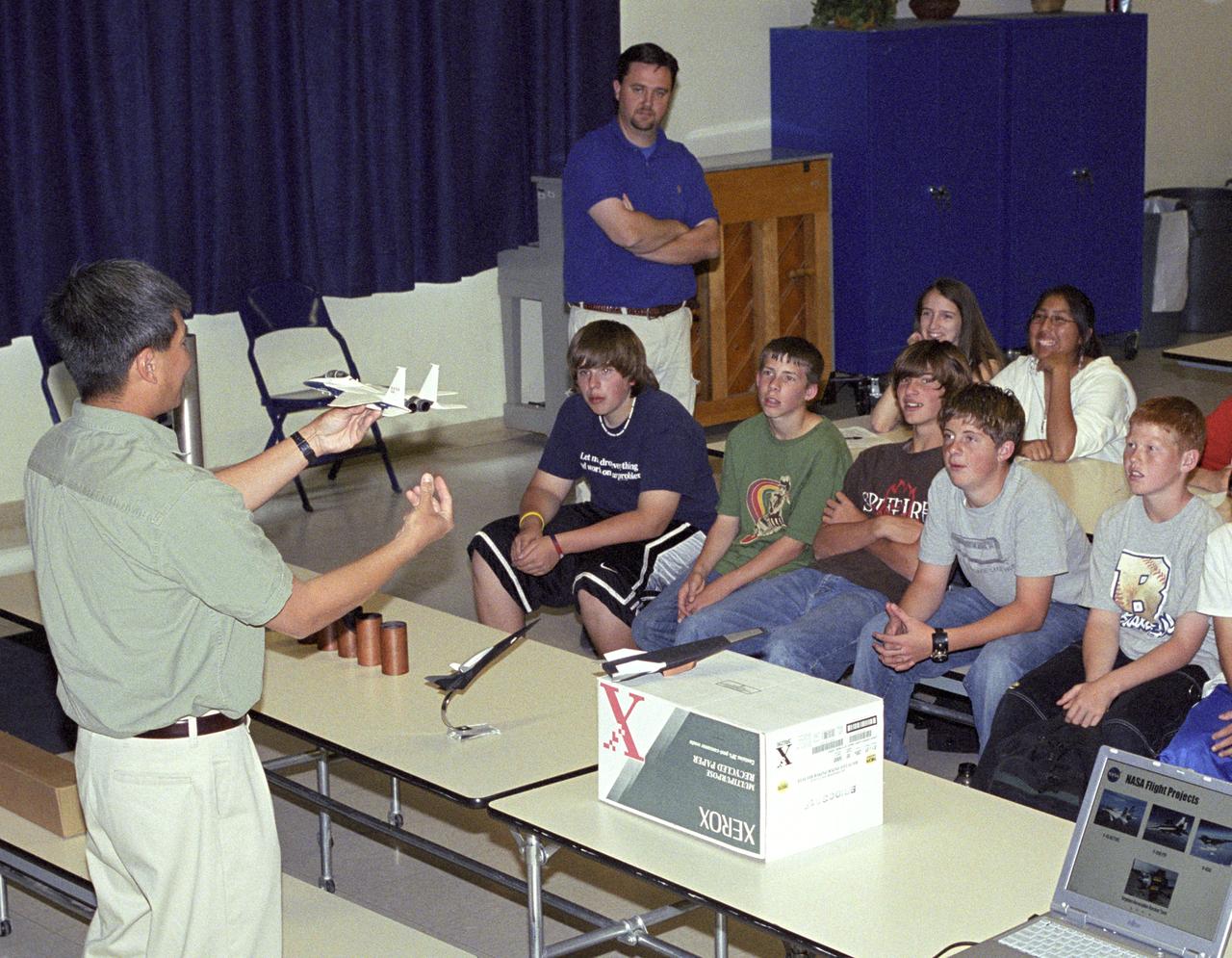
NASA Dryden aerospace engineer Trong Bui explains the dynamics of flight to a group of Edwards Middle School students during a recent Career Day presentation.
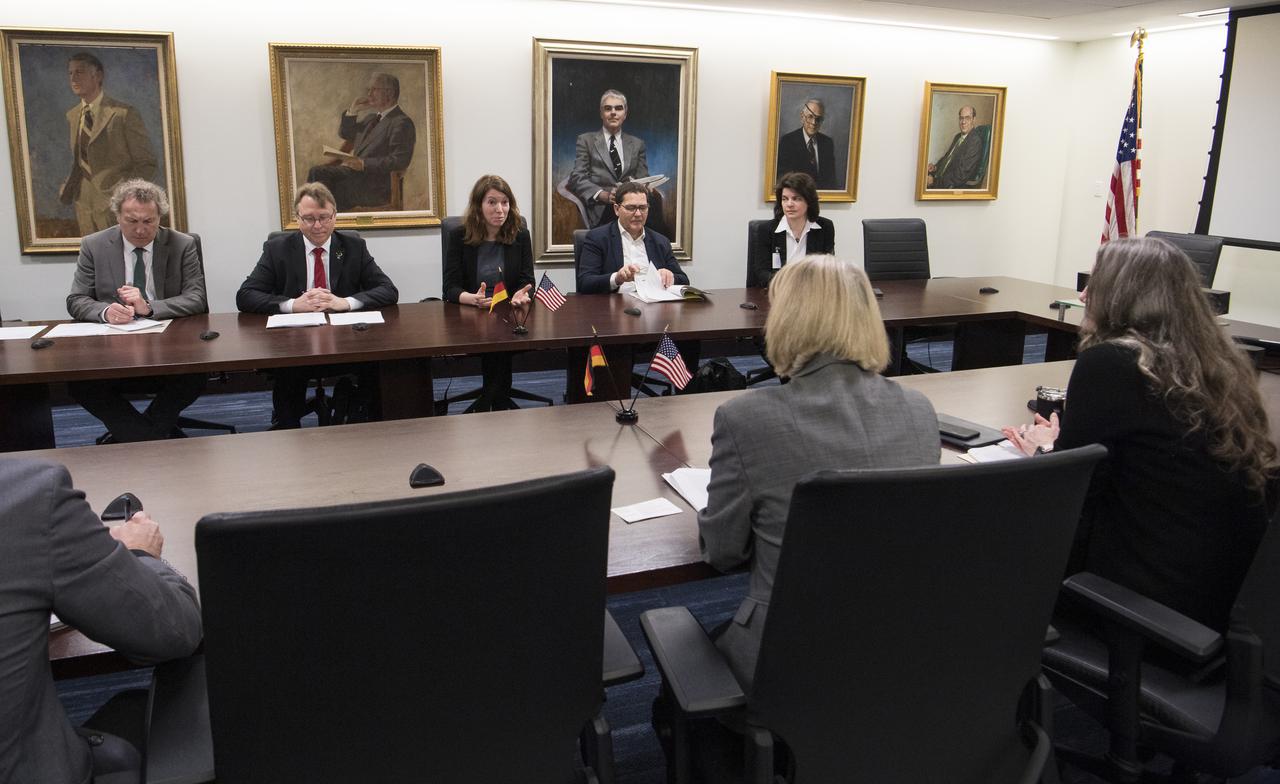
From left to right, Head of Science and Technology Section, German Embassy, Dr. René Haak; Head of the German Aerospace Center’s (DLR) Washington Office, Mr. Marc Jochemich; the Federal Government Coordinator of German Aerospace Policy, Dr. Anna Christmann; Deputy Director General, Federal Ministry for Economic Affairs and Climate Action (BMWK), Holger Schlienkamp; Head of Division, BMWK, Claudia Andree, speak with NASA Office of International and Interagency Relations Deputy Associate Administrator, Meredith McKay, front right, and NASA Deputy Administrator Pam Melroy, during a meeting, Thursday, March 31, 2022, at NASA Headquarters in Washington DC. Photo Credit: (NASA/Aubrey Gemignani)
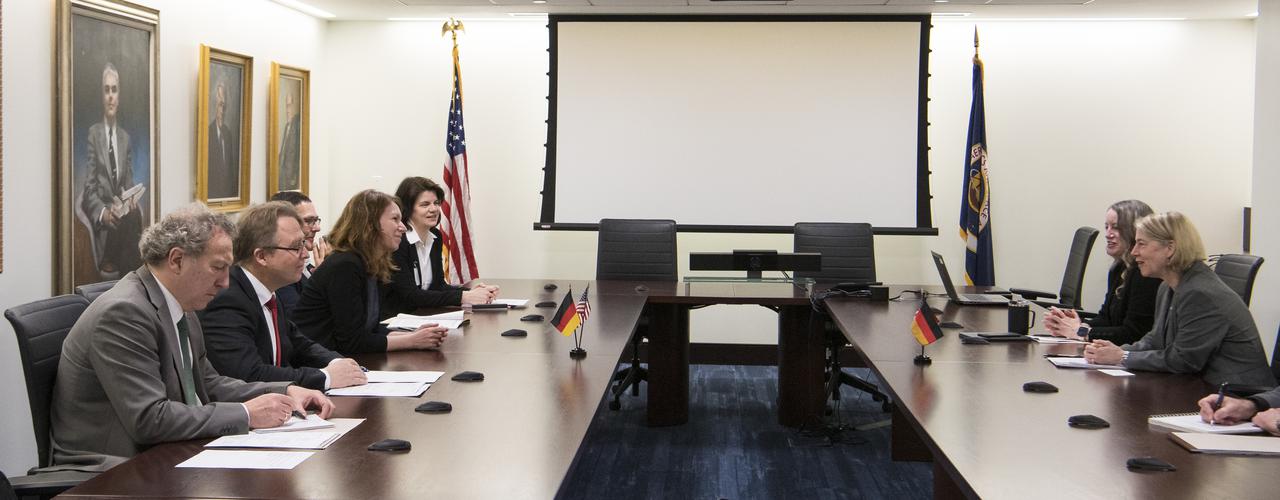
From left to right, Head of Science and Technology Section, German Embassy, Dr. René Haak; Head of the German Aerospace Center’s (DLR) Washington Office, Mr. Marc Jochemich; the Federal Government Coordinator of German Aerospace Policy, Dr. Anna Christmann; Deputy Director General, Federal Ministry for Economic Affairs and Climate Action (BMWK), Holger Schlienkamp; Head of Division, BMWK, Claudia Andree; NASA Office of International and Interagency Relations Deputy Associate Administrator, Meredith McKay; and NASA Deputy Administrator Pam Melroy speak during a meeting, Thursday, March 31, 2022, at NASA Headquarters in Washington DC. Photo Credit: (NASA/Aubrey Gemignani)
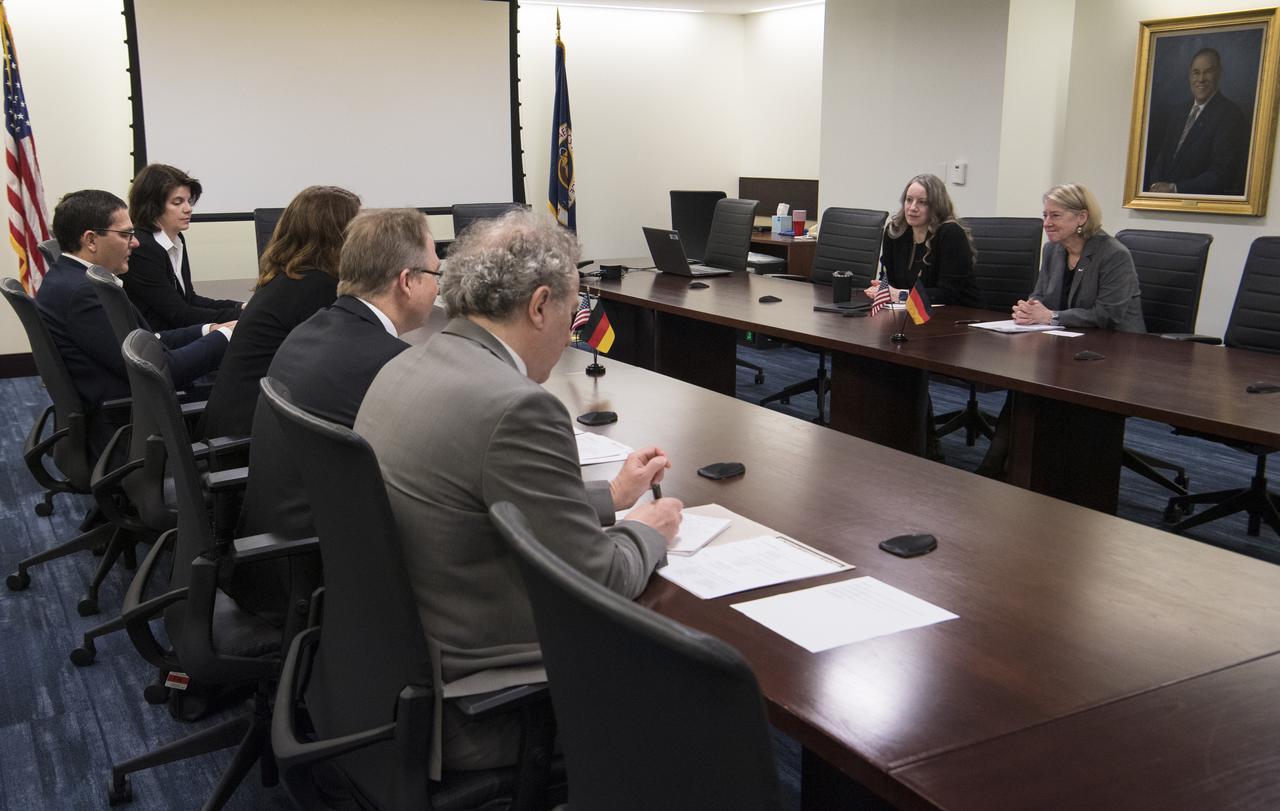
From left to right, Head of Science and Technology Section, German Embassy, Dr. René Haak; Head of the German Aerospace Center’s (DLR) Washington Office, Mr. Marc Jochemich; the Federal Government Coordinator of German Aerospace Policy, Dr. Anna Christmann; Deputy Director General, Federal Ministry for Economic Affairs and Climate Action (BMWK), Holger Schlienkamp; Head of Division, BMWK, Claudia Andree; NASA Office of International and Interagency Relations Deputy Associate Administrator, Meredith McKay; and NASA Deputy Administrator Pam Melroy speak during a meeting, Thursday, March 31, 2022, at NASA Headquarters in Washington DC. Photo Credit: (NASA/Aubrey Gemignani)
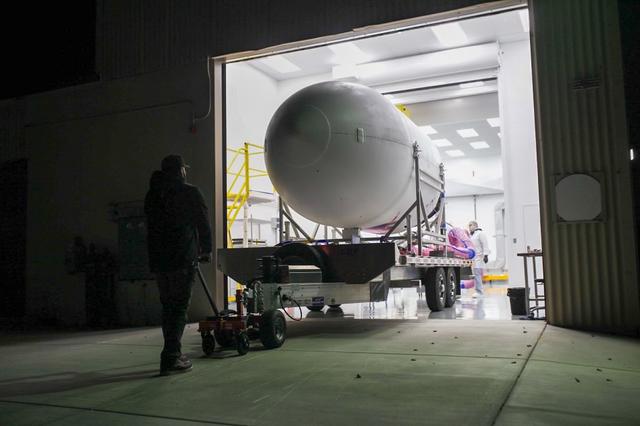
Firefly Aerospace’s Alpha rocket carrying eight CubeSats as part of NASA’s CubeSat Launch Initiative’s (CSLI) ELaNa (Educational Launch of Nanosatellites) 43 mission rolls out of the company’s Payload Processing Facility to Space Launch Complex 2 at Vandenberg Space Force Base, California, on Sunday, June 30, 2024. Firefly Aerospace is one of three companies selected to fly small satellites to space under NASA’s Launch Services Program Venture-Class Launch Services Demonstration 2 (VCLS Demo 2) contract awarded in December 2020.
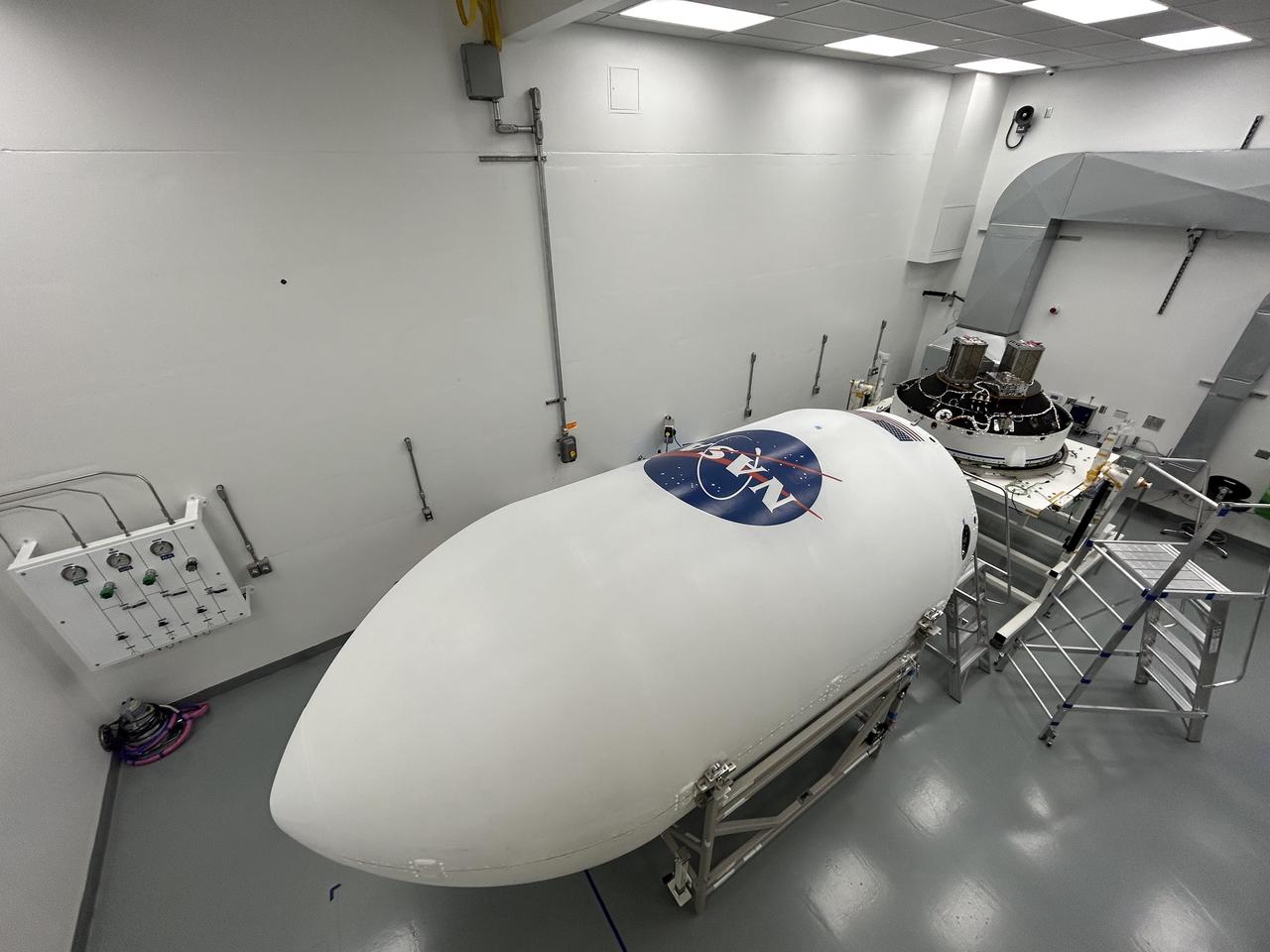
Technicians inside Firefly Aerospace’s Payload Processing Facility at Vandenberg Space Force Base, California, integrate eight CubeSats as part of NASA’s CubeSat Launch Initiative’s (CSLI) ELaNa (Educational Launch of Nanosatellites) 43 mission into payload fairings on Sunday, June 30, 2024. The mission will launch on the company’s Alpha rocket from Vandenberg’s Space Launch Complex 2. Firefly Aerospace is one of three companies selected to fly small satellites to space under NASA’s Launch Services Program Venture-Class Launch Services Demonstration 2 (VCLS Demo 2) contract awarded in December 2020.
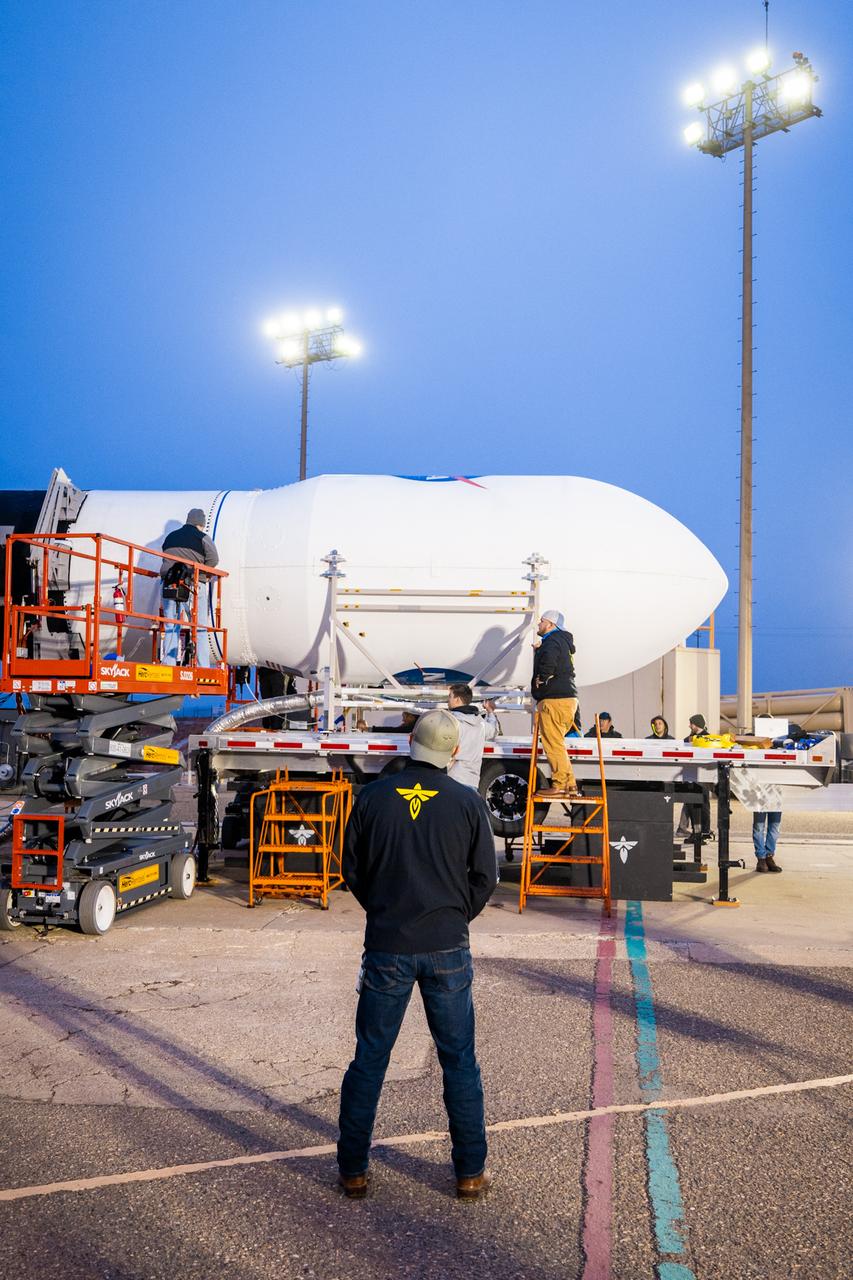
Firefly Aerospace’s Alpha rocket carrying eight CubeSats as part of NASA’s CubeSat Launch Initiative’s (CSLI) ELaNa (Educational Launch of Nanosatellites) 43 mission rolls out of the company’s Payload Processing Facility to Space Launch Complex 2 at Vandenberg Space Force Base, California, on Sunday, June 30, 2024. Firefly Aerospace is one of three companies selected to fly small satellites to space under NASA’s Launch Services Program Venture-Class Launch Services Demonstration 2 (VCLS Demo 2) contract awarded in December 2020.
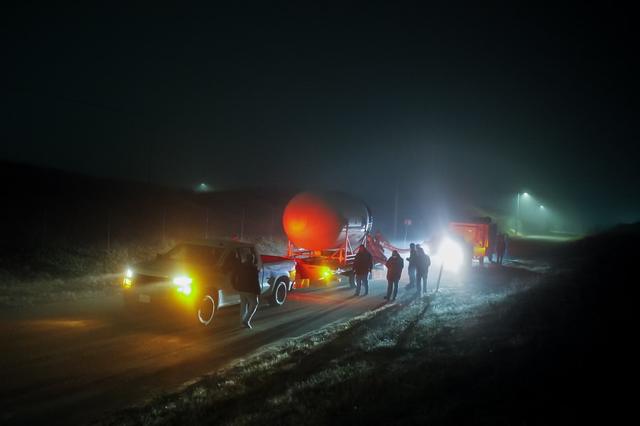
Firefly Aerospace’s Alpha rocket carrying eight CubeSats as part of NASA’s CubeSat Launch Initiative’s (CSLI) ELaNa (Educational Launch of Nanosatellites) 43 mission rolls out of the company’s Payload Processing Facility to Space Launch Complex 2 at Vandenberg Space Force Base, California, on Sunday, June 30, 2024. Firefly Aerospace is one of three companies selected to fly small satellites to space under NASA’s Launch Services Program Venture-Class Launch Services Demonstration 2 (VCLS Demo 2) contract awarded in December 2020.
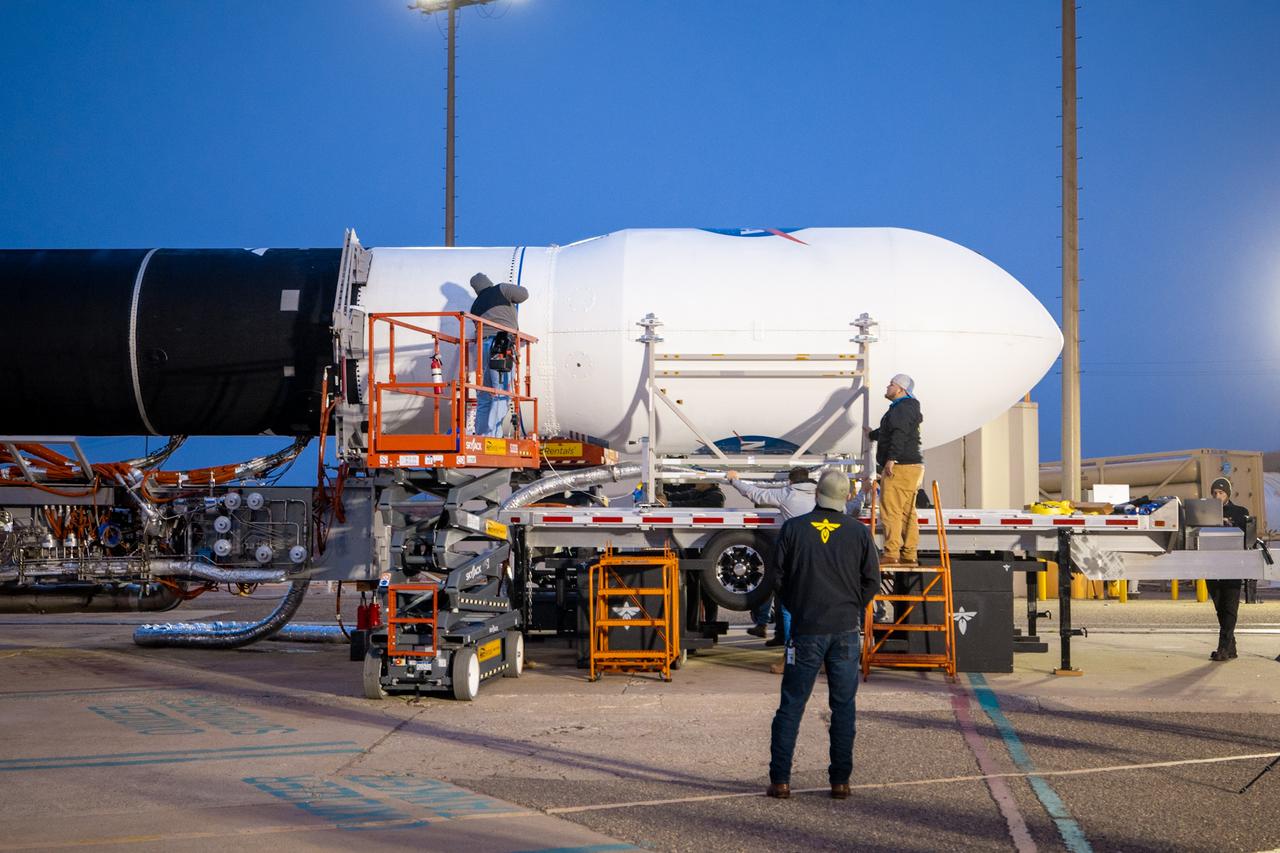
Firefly Aerospace’s Alpha rocket carrying eight CubeSats as part of NASA’s CubeSat Launch Initiative’s (CSLI) ELaNa (Educational Launch of Nanosatellites) 43 mission rolls out of the company’s Payload Processing Facility to Space Launch Complex 2 at Vandenberg Space Force Base, California, on Sunday, June 30, 2024. Firefly Aerospace is one of three companies selected to fly small satellites to space under NASA’s Launch Services Program Venture-Class Launch Services Demonstration 2 (VCLS Demo 2) contract awarded in December 2020.