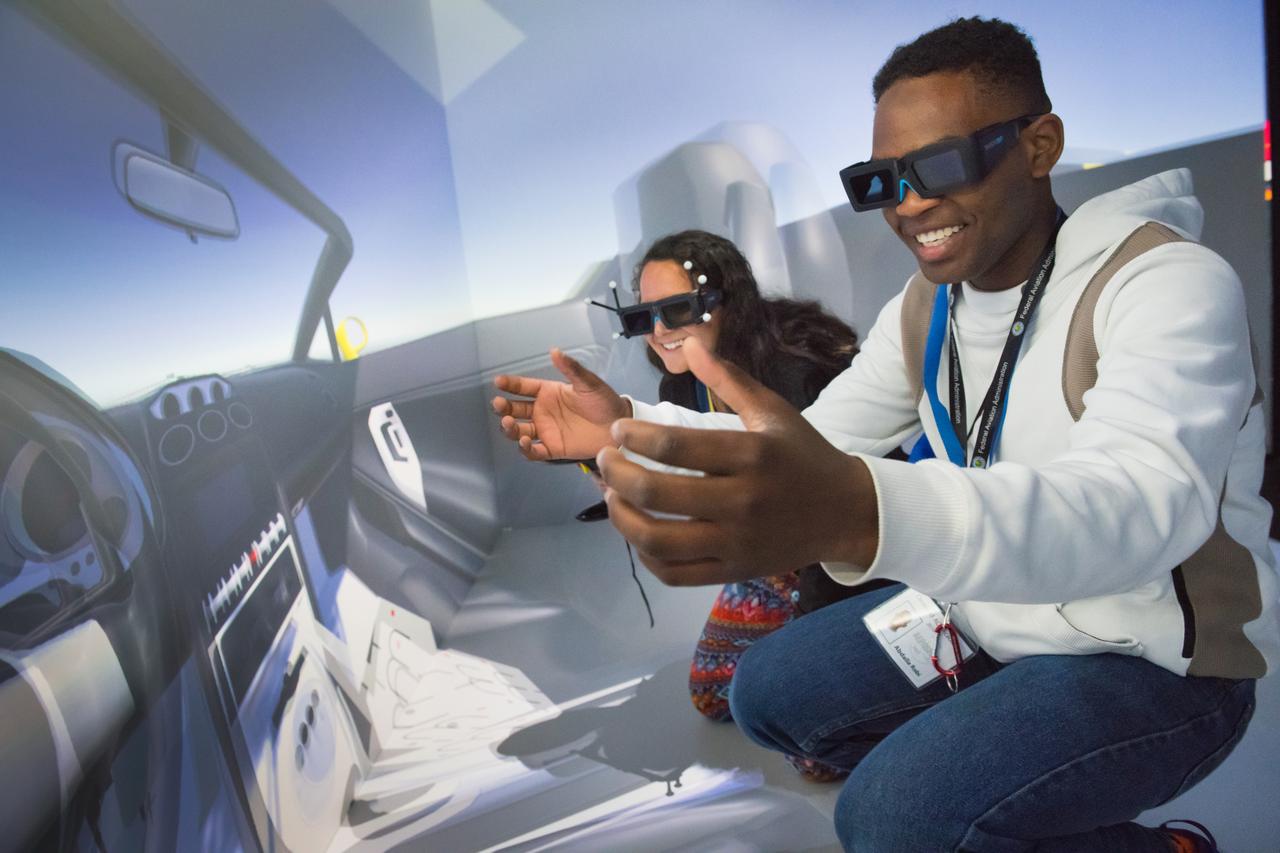
Aerospace Career Education, Organization of Black Aerospace Professionals, OBAP Cleveland ACE Academy Day
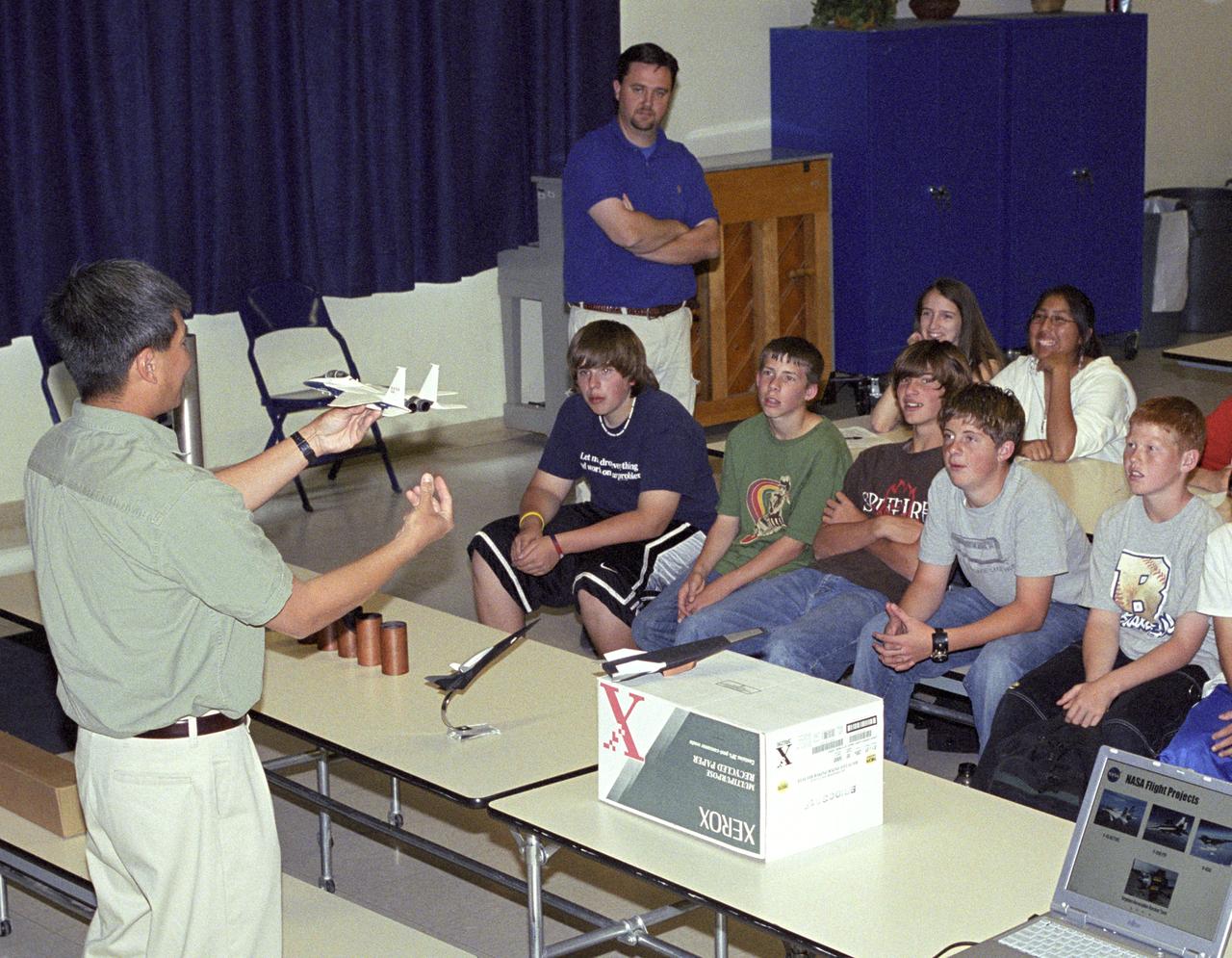
NASA Dryden aerospace engineer Trong Bui explains the dynamics of flight to a group of Edwards Middle School students during a recent Career Day presentation.
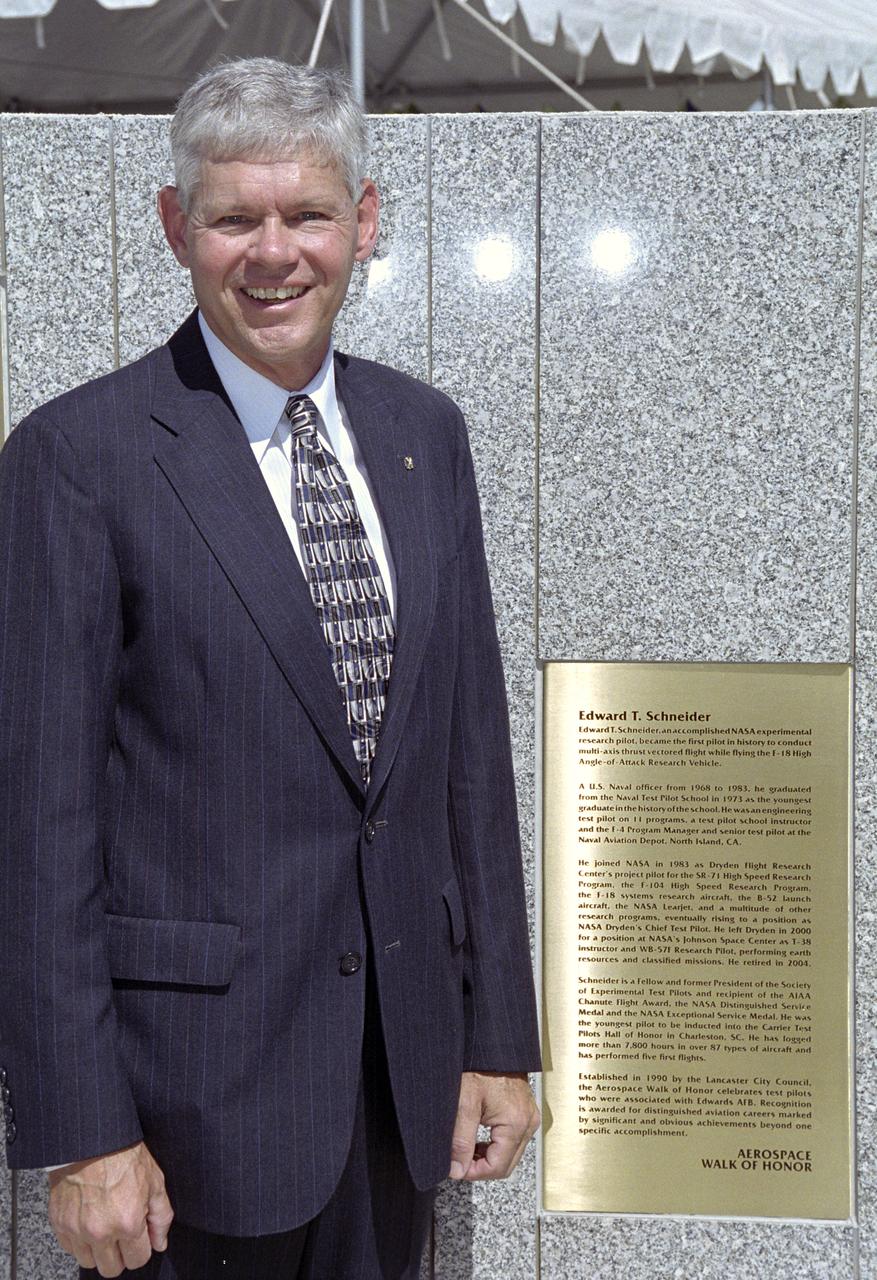
Former NASA research pilot Eddie Schneider was on hand when a brass plaque summarizing his career was unveiled during the 2005 Aerospace Walk of Honor ceremonies in Lancaster, California.
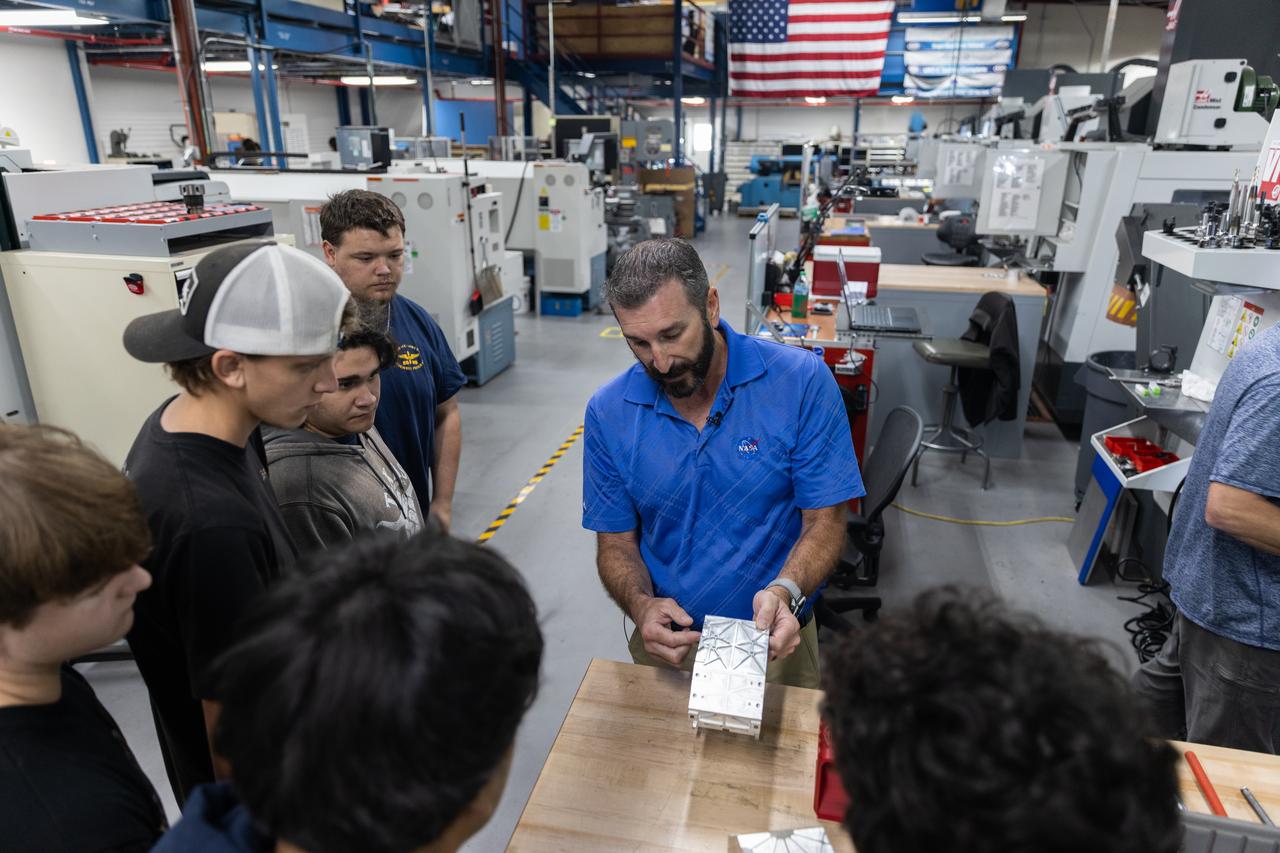
Students from Eau Gallie High School in Melbourne, Florida, visited the Prototype Development Laboratory at NASA’s Kennedy Space Center in Florida on Monday, April 28, 2025. The STEM participants have an interest in technical trades and learned about the technicians at the Prototype Development Laboratory who design, fabricate, and test protypes, test articles, and test support equipment.
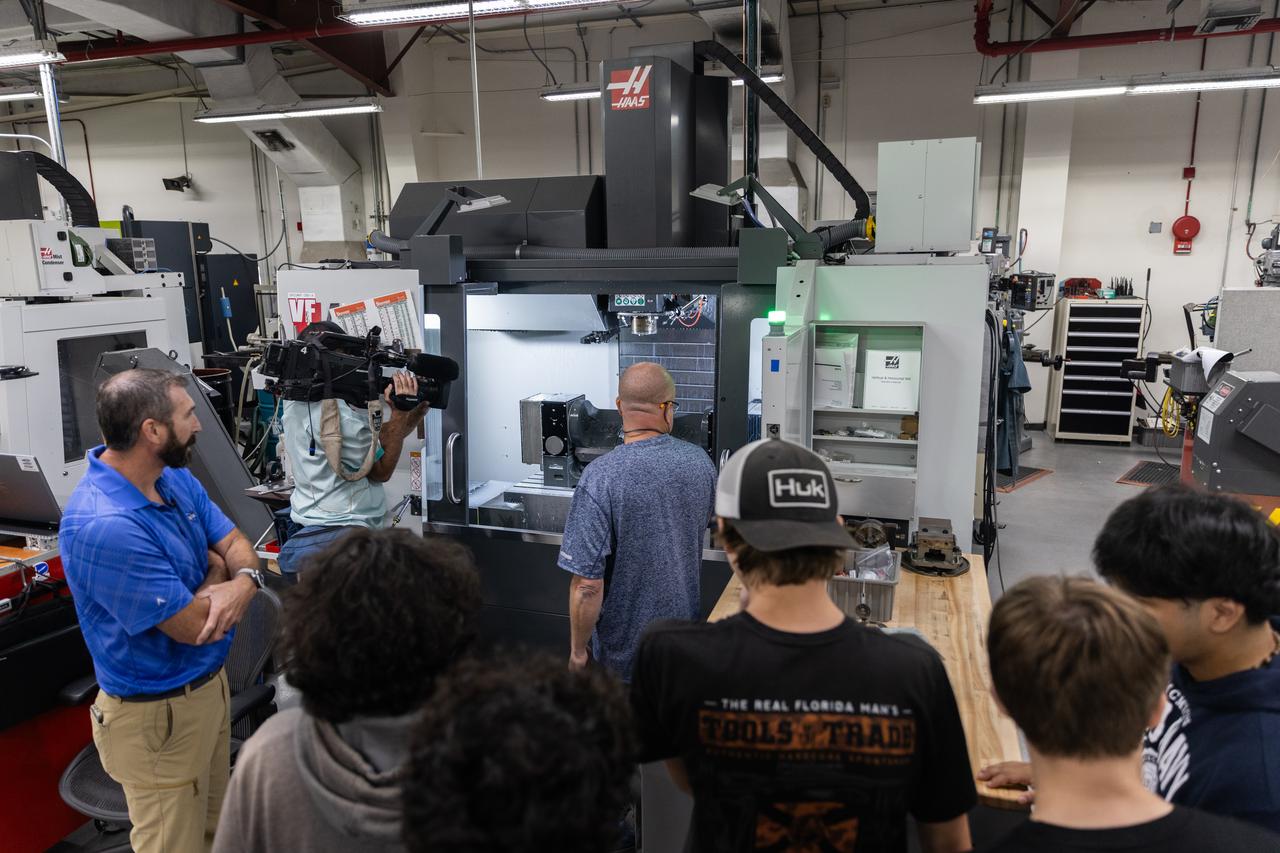
Students from Eau Gallie High School in Melbourne, Florida, visited the Prototype Development Laboratory at NASA’s Kennedy Space Center in Florida on Monday, April 28, 2025. The STEM participants have an interest in technical trades and learned about the technicians at the Prototype Development Laboratory who design, fabricate, and test protypes, test articles, and test support equipment.

Rebecca Spyke-Keiser, NASA's Associate Deputy Administrator for policy integration, gives opening remarks at the Women, Innovation and Aerospace event celebrating Women's History Month at the George Washington University Jack Morton Auditorium, Thursday, March 8, 2012 in Washington. The WIA day-long event will help to foster a discussion for students and early career professionals about how to continue to encourage women to enter and succeed in the field of aerospace. Photo Credit: (NASA/Carla Cioffi)
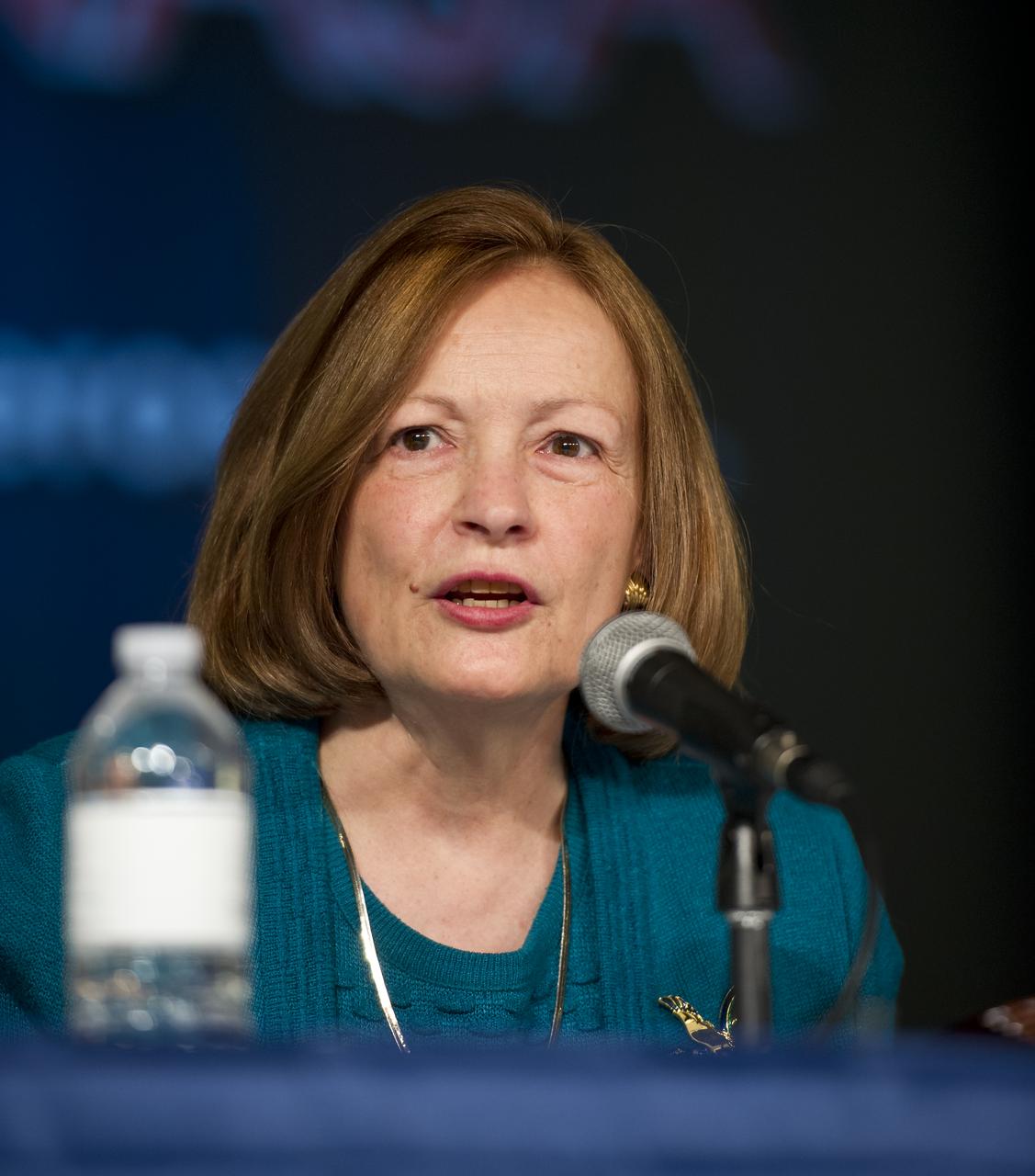
Marcia Smith, President, spacepolicyonline.com, participates in a panel discussion at the Women, Innovation and Aerospace event celebrating Women's History Month at the George Washington University Jack Morton Auditorium, Thursday, March 8, 2012 in Washington. The WIA day-long event will help to foster a discussion for students and early career professionals about how to continue to encourage women to enter and succeed in the field of aerospace. Photo Credit: (NASA/Carla Cioffi)

NASA Deputy Administrator, Lori Garver, far right, gives the keynote address at the Women, Innovation and Aerospace event celebrating Women's History Month at the George Washington University Jack Morton Auditorium, Thursday, March 8, 2012 in Washington. The WIA day-long event will help to foster a discussion for students and early career professionals about how to continue to encourage women to enter and succeed in the field of aerospace. Photo Credit: (NASA/Carla Cioffi)

Kathy Sullivan, NOAA (National Oceanic and Atmospheric Administration) Deputy Administrator and former NASA astronaut, participates in a panel discussion at the Women, Innovation and Aerospace event celebrating Women's History Month at the George Washington University Jack Morton Auditorium, Thursday, March 8, 2012 in Washington. The WIA day-long event will help to foster a discussion for students and early career professionals about how to continue to encourage women to enter and succeed in the field of aerospace. Photo Credit: (NASA/Carla Cioffi)
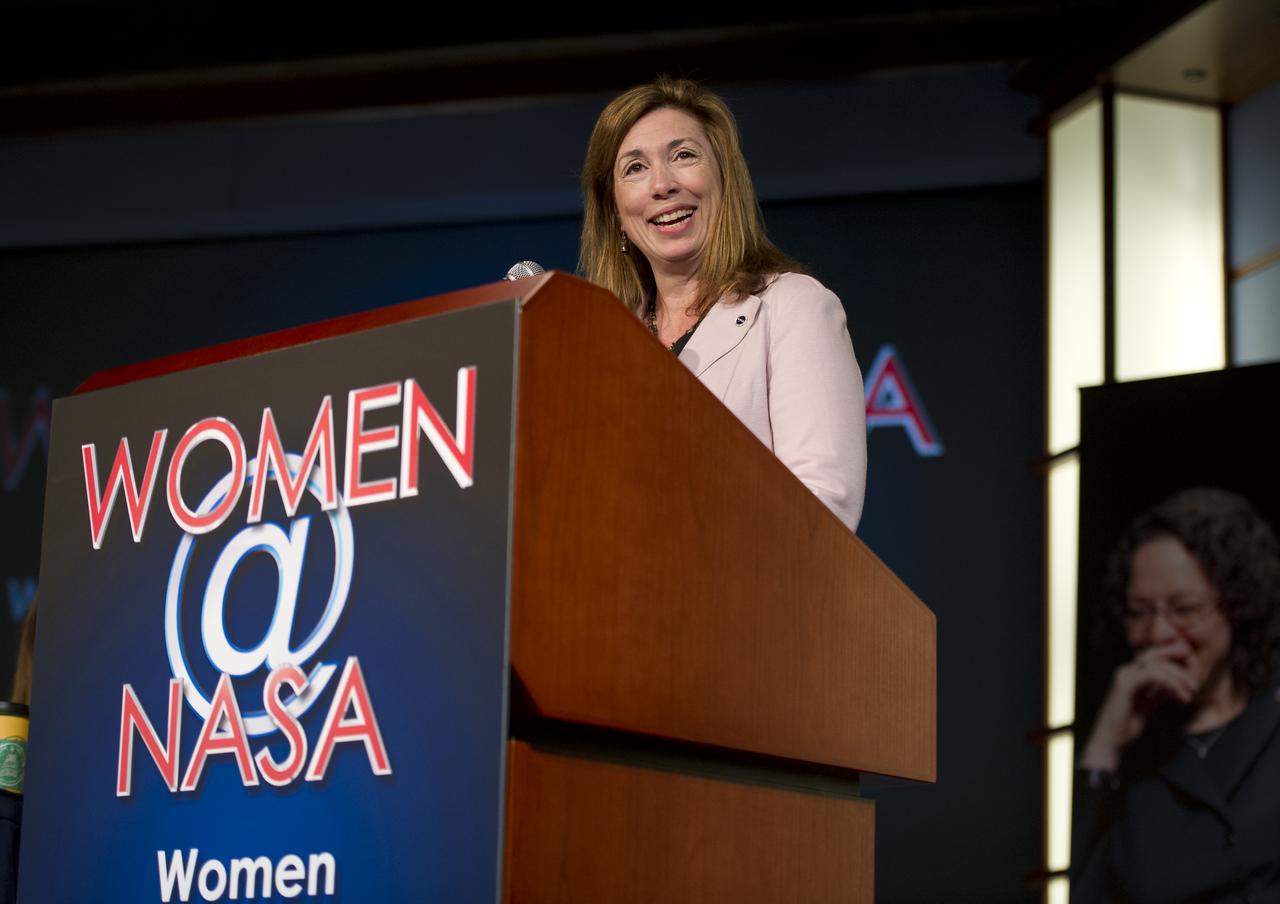
NASA Deputy Administrator, Lori Garver, gives the keynote address at the Women, Innovation and Aerospace event celebrating Women's History Month at the George Washington University Jack Morton Auditorium, Thursday, March 8, 2012 in Washington. The WIA day-long event will help to foster a discussion for students and early career professionals about how to continue to encourage women to enter and succeed in the field of aerospace. Photo Credit: (NASA/Carla Cioffi)
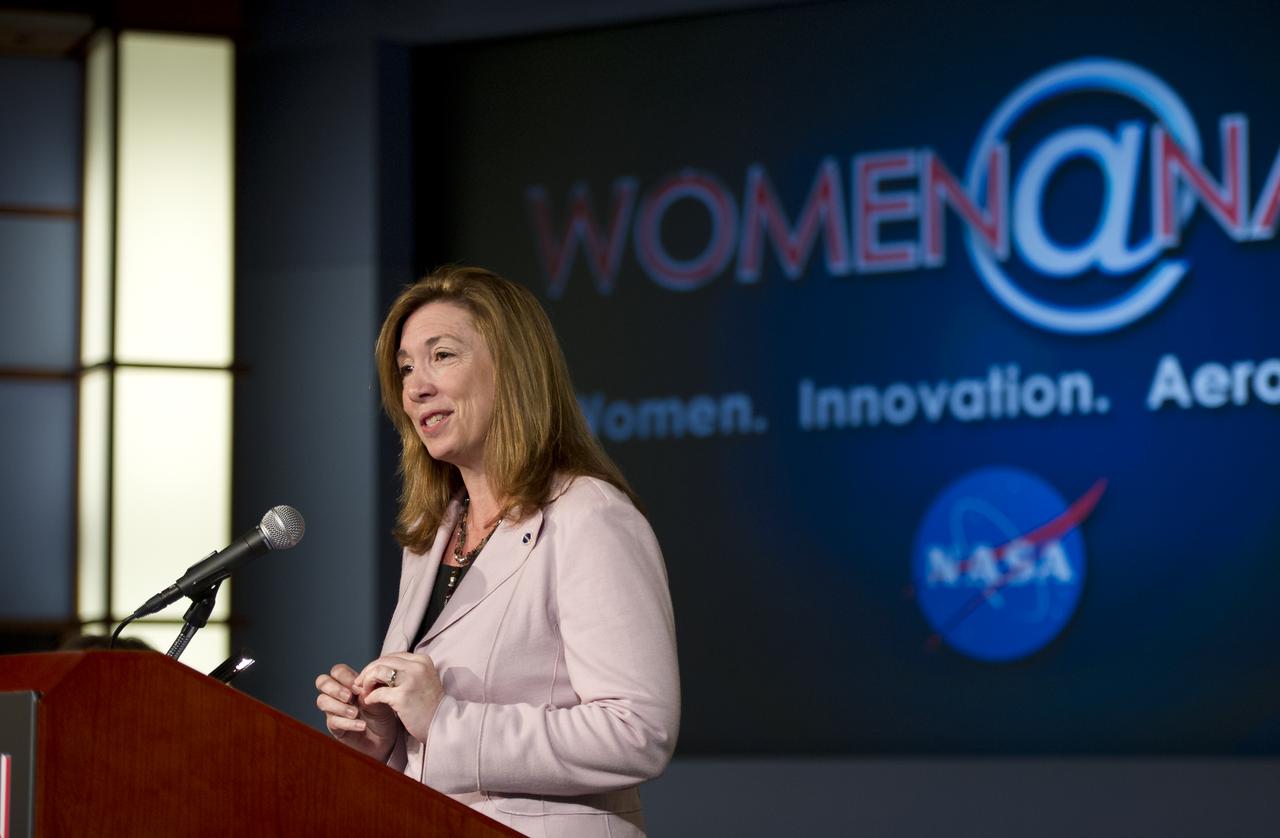
NASA Deputy Administrator, Lori Garver, gives the keynote address at the Women, Innovation and Aerospace event celebrating Women's History Month at the George Washington University Jack Morton Auditorium, Thursday, March 8, 2012 in Washington. The WIA day-long event will help to foster a discussion for students and early career professionals about how to continue to encourage women to enter and succeed in the field of aerospace. Photo Credit: (NASA/Carla Cioffi)
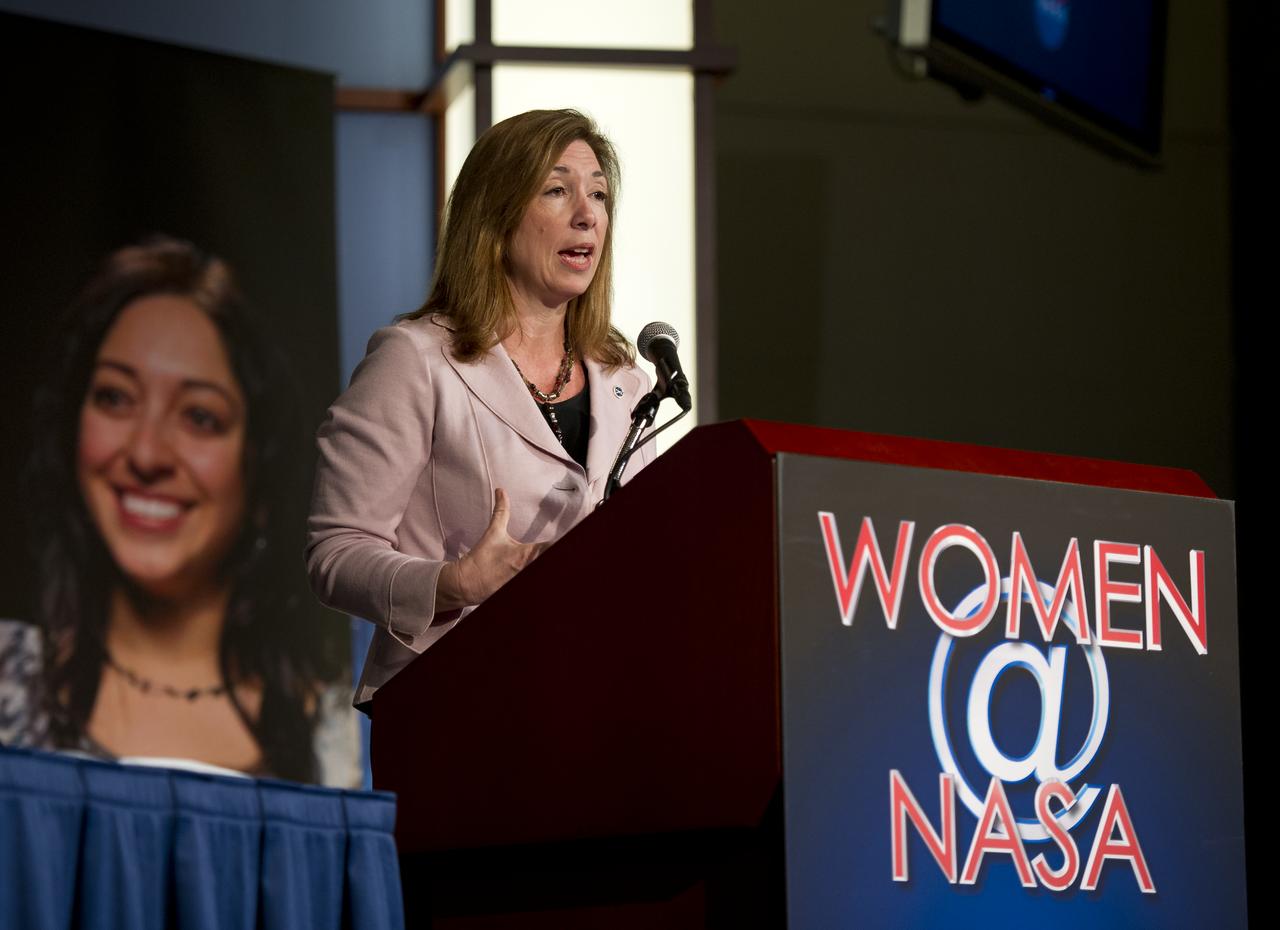
NASA Deputy Administrator, Lori Garver, gives the keynote address at the Women, Innovation and Aerospace event celebrating Women's History Month at the George Washington University Jack Morton Auditorium, Thursday, March 8, 2012 in Washington. The WIA day-long event will help to foster a discussion for students and early career professionals about how to continue to encourage women to enter and succeed in the field of aerospace. Photo Credit: (NASA/Carla Cioffi)
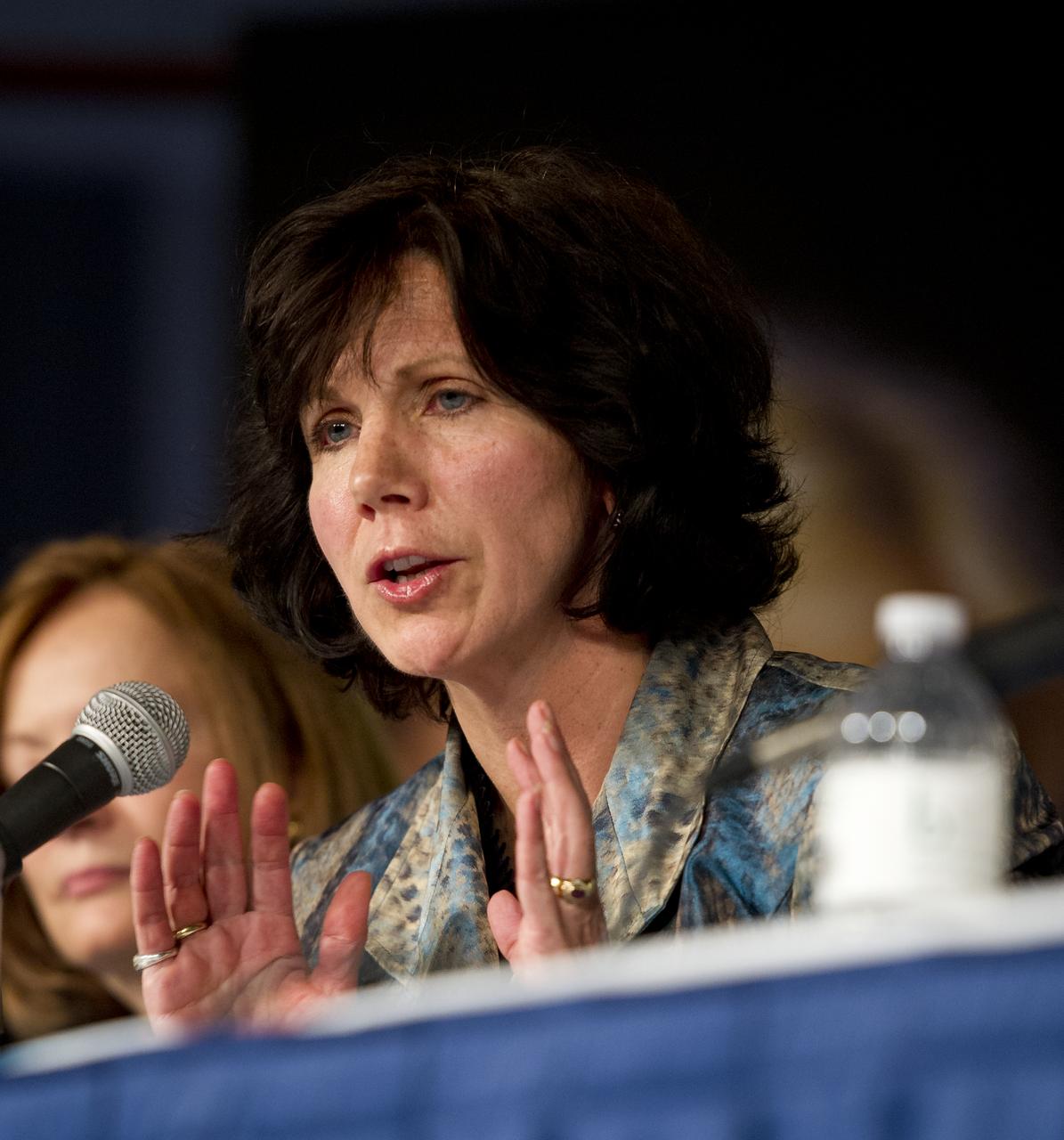
Catherine Didion, Senior Fellow, National Academy of Engineering, participates in a panel discussion at the Women, Innovation and Aerospace event celebrating Women's History Month at the George Washington University Jack Morton Auditorium, Thursday, March 8, 2012 in Washington. The WIA day-long event will help to foster a discussion for students and early career professionals about how to continue to encourage women to enter and succeed in the field of aerospace. Photo Credit: (NASA/Carla Cioffi)

Veronica Villalobos, Director, Office of Diversity and Inclusion, Office of Personnel Management, participates in a panel discussion at the Women, Innovation and Aerospace event celebrating Women's History Month at the George Washington University Jack Morton Auditorium, Thursday, March 8, 2012 in Washington. The WIA day-long event will help to foster a discussion for students and early career professionals about how to continue to encourage women to enter and succeed in the field of aerospace. Photo Credit: (NASA/Carla Cioffi)
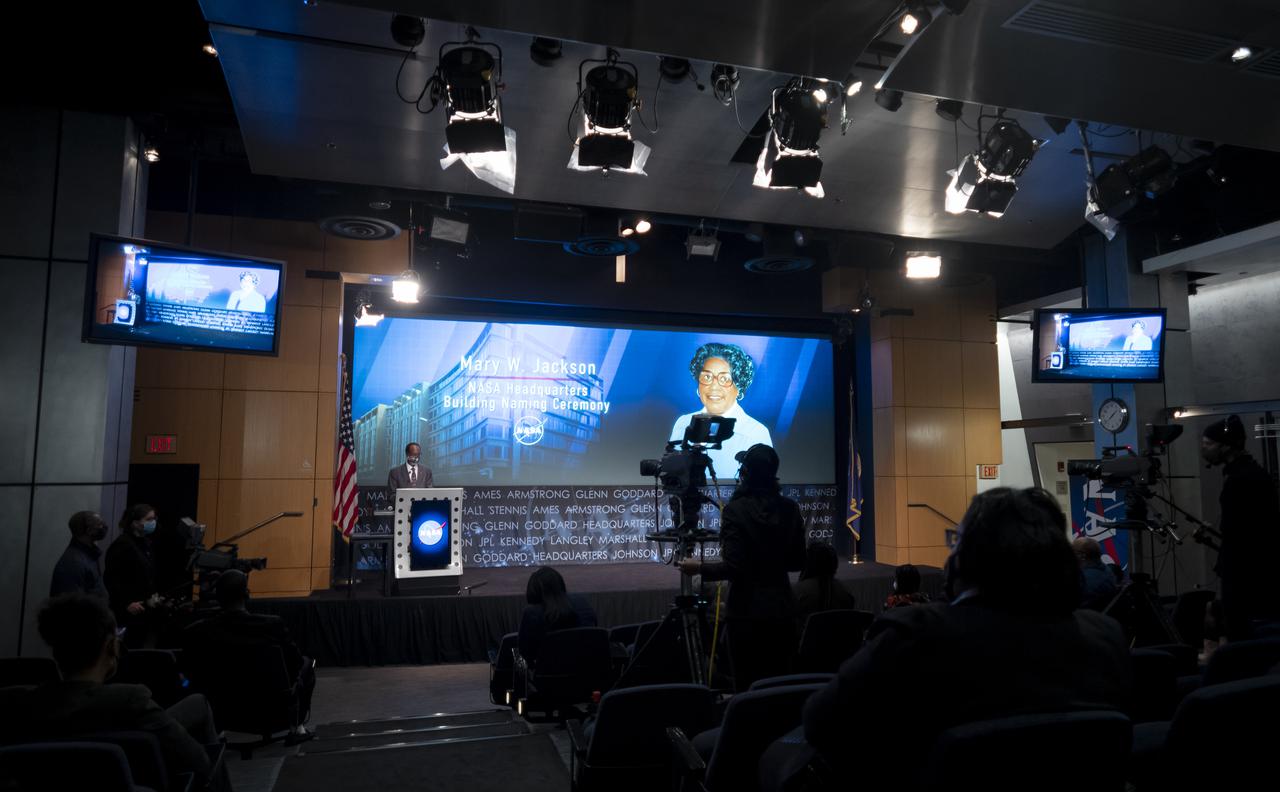
Clayton Turner, Director of NASA's Langley Research Center, speaks during a ceremony officially naming the NASA Headquarters building in honor of Mary W. Jackson, Friday, Feb. 26, 2021, at NASA Headquarters in Washington, DC. Mary W. Jackson, the first African American female engineer at NASA, began her career with the agency in the segregated West Area Computing Unit of NASA’s Langley Research Center in Hampton, Virginia. The mathematician and aerospace engineer went on to lead programs influencing the hiring and promotion of women in NASA's science, technology, engineering, and mathematics careers. In 2019, she posthumously received the Congressional Gold Medal. Photo Credit: (NASA/Joel Kowsky)
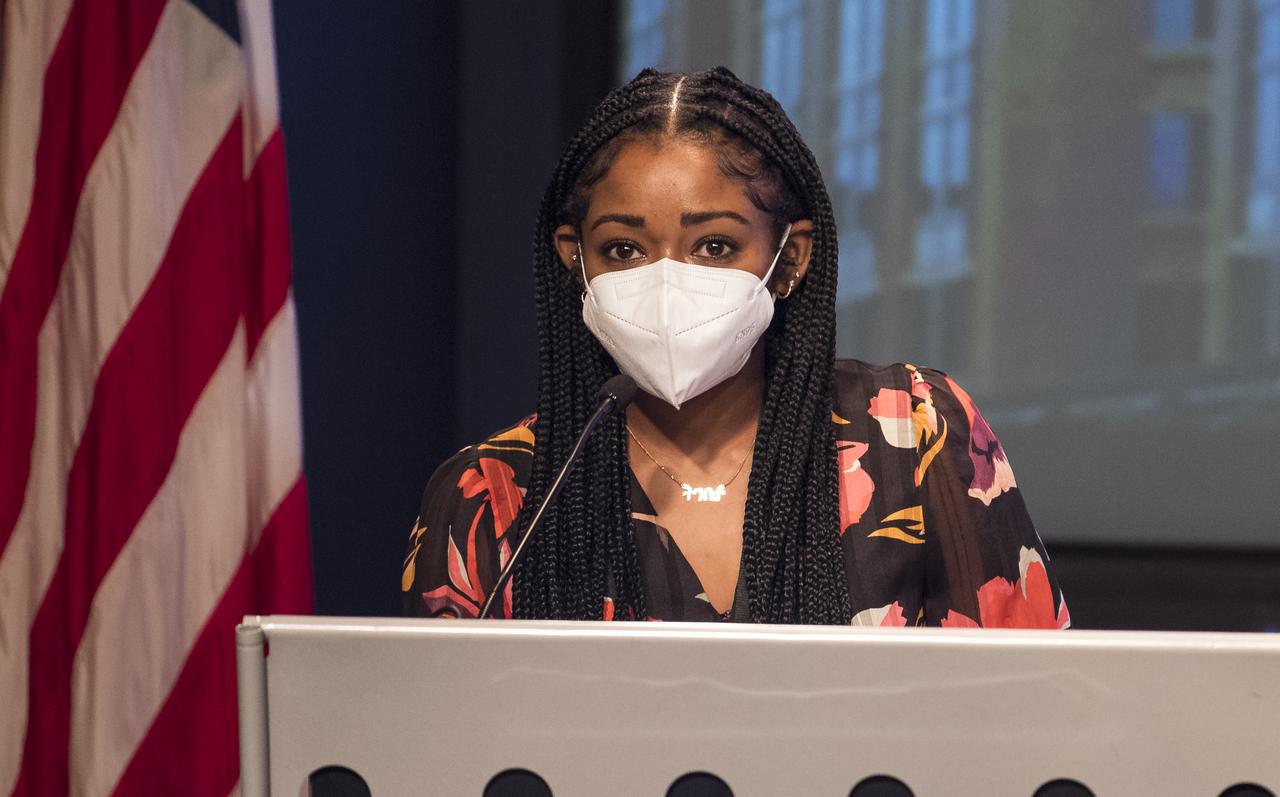
Artist Tenbeete Solomon, also known as Trap Bob, speaks during a ceremony officially naming the NASA Headquarters building in honor of Mary W. Jackson, Friday, Feb. 26, 2021, at NASA Headquarters in Washington, DC. Mary W. Jackson, the first African American female engineer at NASA, began her career with the agency in the segregated West Area Computing Unit of NASA’s Langley Research Center in Hampton, Virginia. The mathematician and aerospace engineer went on to lead programs influencing the hiring and promotion of women in NASA's science, technology, engineering, and mathematics careers. In 2019, she posthumously received the Congressional Gold Medal. Photo Credit: (NASA/Joel Kowsky)
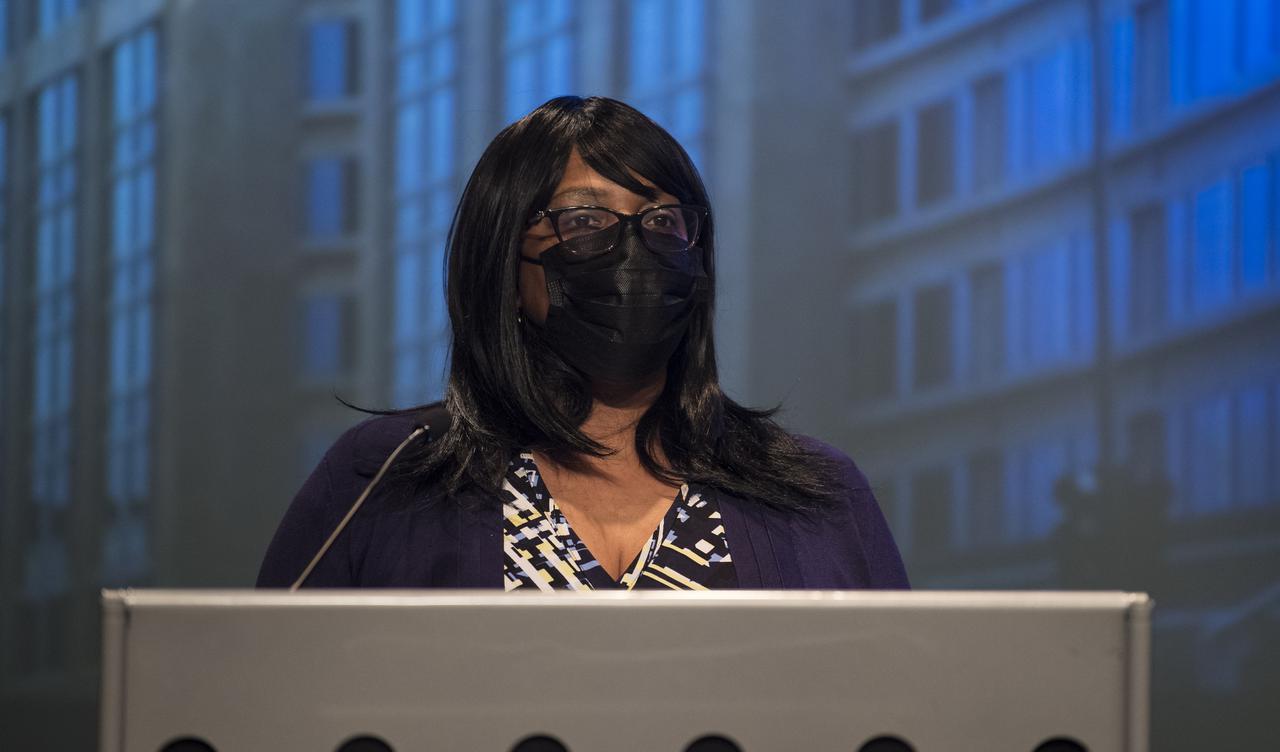
Wanda Jackson, granddaughter of Mary W. Jackson, speaks during a ceremony officially naming the NASA Headquarters building in honor of Mary W. Jackson, Friday, Feb. 26, 2021, at NASA Headquarters in Washington, DC. Mary W. Jackson, the first African American female engineer at NASA, began her career with the agency in the segregated West Area Computing Unit of NASA’s Langley Research Center in Hampton, Virginia. The mathematician and aerospace engineer went on to lead programs influencing the hiring and promotion of women in NASA's science, technology, engineering, and mathematics careers. In 2019, she posthumously received the Congressional Gold Medal. Photo Credit: (NASA/Joel Kowsky)
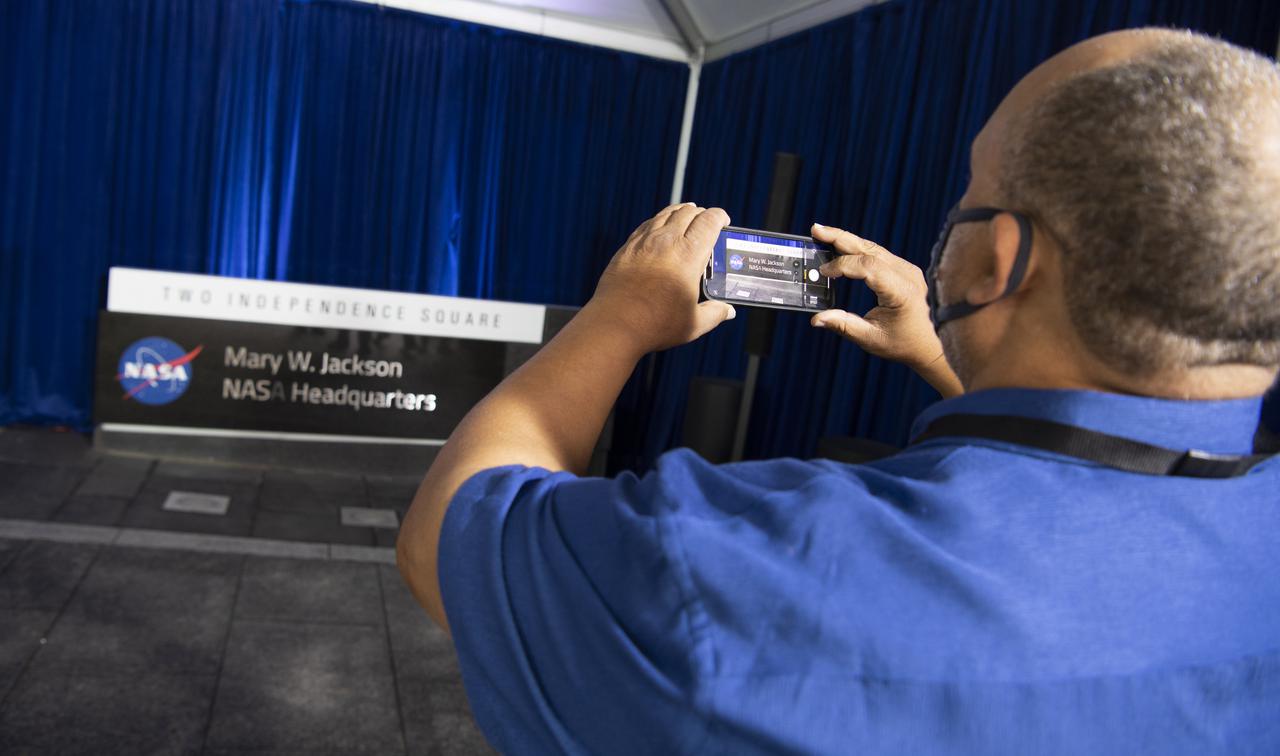
Raymond Lewis, son-in-law of Mary W. Jackson, takes a picture of the Mary W. Jackson NASA Headquarters sign following a ceremony officially naming the building, Friday, Feb. 26, 2021, at NASA Headquarters in Washington, DC. Mary W. Jackson, the first African American female engineer at NASA, began her career with the agency in the segregated West Area Computing Unit of NASA’s Langley Research Center in Hampton, Virginia. The mathematician and aerospace engineer went on to lead programs influencing the hiring and promotion of women in NASA's science, technology, engineering, and mathematics careers. In 2019, she posthumously received the Congressional Gold Medal. Photo Credit: (NASA/Joel Kowsky)
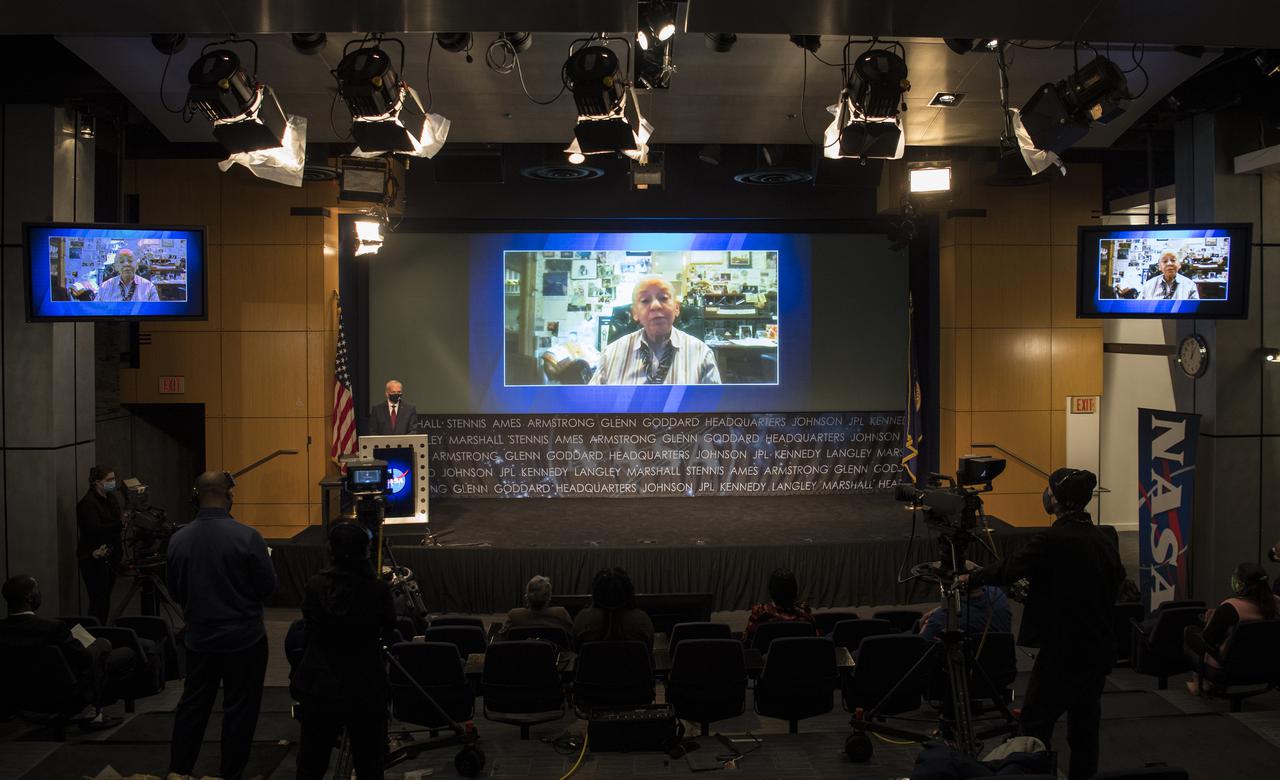
Poet Nikki Giovanni is seen onscreen in a pre-recorded video during a ceremony officially naming the NASA Headquarters building in honor of Mary W. Jackson, Friday, Feb. 26, 2021, at NASA Headquarters in Washington, DC. Mary W. Jackson, the first African American female engineer at NASA, began her career with the agency in the segregated West Area Computing Unit of NASA’s Langley Research Center in Hampton, Virginia. The mathematician and aerospace engineer went on to lead programs influencing the hiring and promotion of women in NASA's science, technology, engineering, and mathematics careers. In 2019, she posthumously received the Congressional Gold Medal. Photo Credit: (NASA/Joel Kowsky)
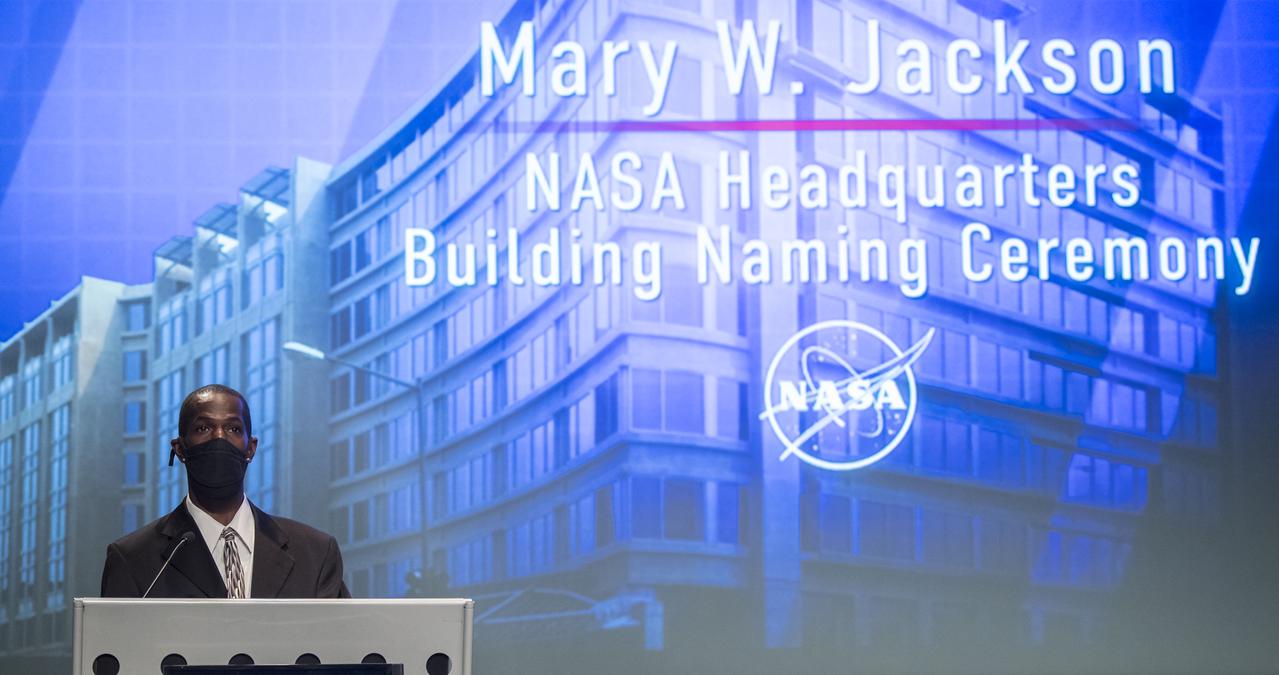
Bryan Jackson, grandson of Mary W. Jackson, speaks during a ceremony officially naming the NASA Headquarters building in honor of Mary W. Jackson, Friday, Feb. 26, 2021, at NASA Headquarters in Washington, DC. Mary W. Jackson, the first African American female engineer at NASA, began her career with the agency in the segregated West Area Computing Unit of NASA’s Langley Research Center in Hampton, Virginia. The mathematician and aerospace engineer went on to lead programs influencing the hiring and promotion of women in NASA's science, technology, engineering, and mathematics careers. In 2019, she posthumously received the Congressional Gold Medal. Photo Credit: (NASA/Joel Kowsky)
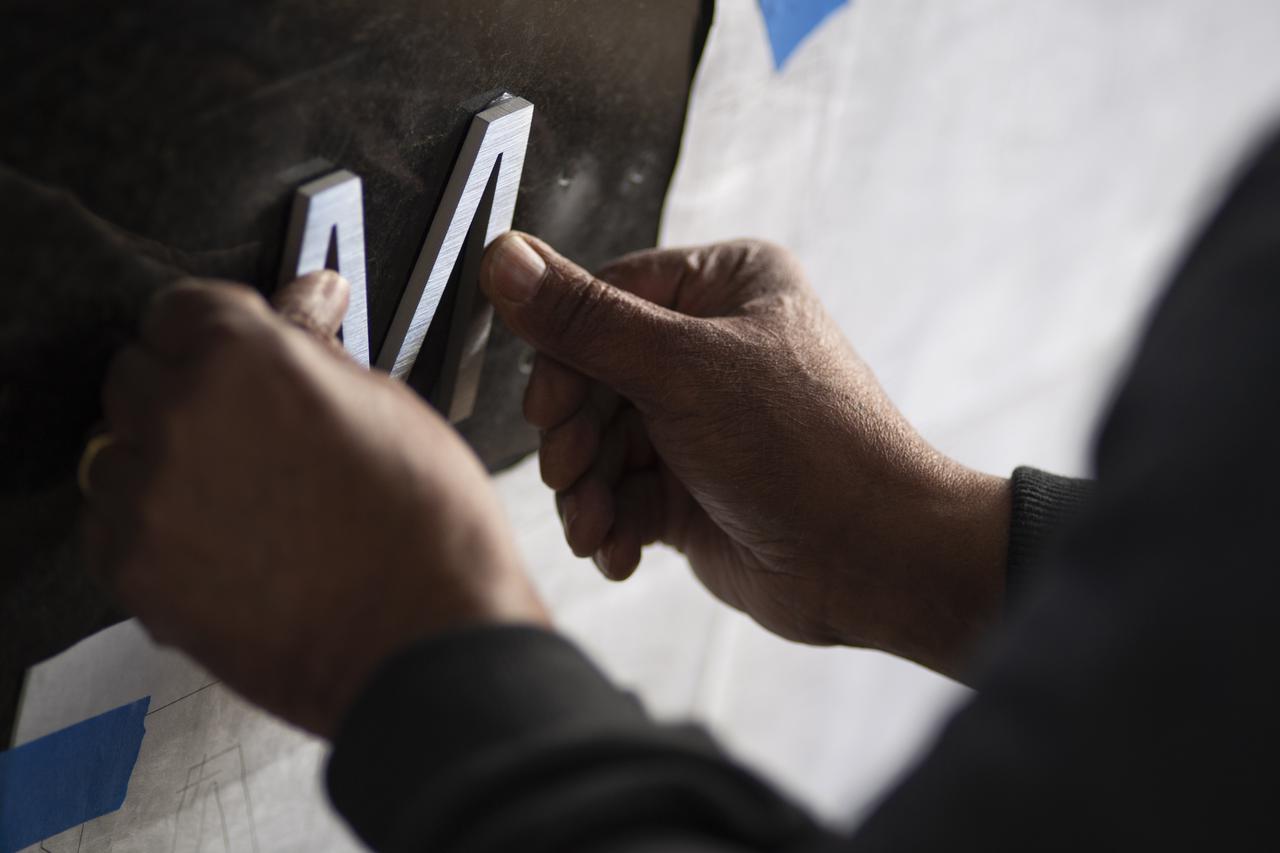
The Mary W. Jackson NASA Headquarters sign is installed ahead of the building naming ceremony, Thursday, Feb. 25, 2021, at NASA Headquarters in Washington, DC. Mary W. Jackson, the first African American female engineer at NASA, began her career with the agency in the segregated West Area Computing Unit of NASA’s Langley Research Center in Hampton, Virginia. The mathematician and aerospace engineer went on to lead programs influencing the hiring and promotion of women in NASA's science, technology, engineering, and mathematics careers. In 2019, she posthumously received the Congressional Gold Medal. Photo Credit: (NASA/Joel Kowsky)
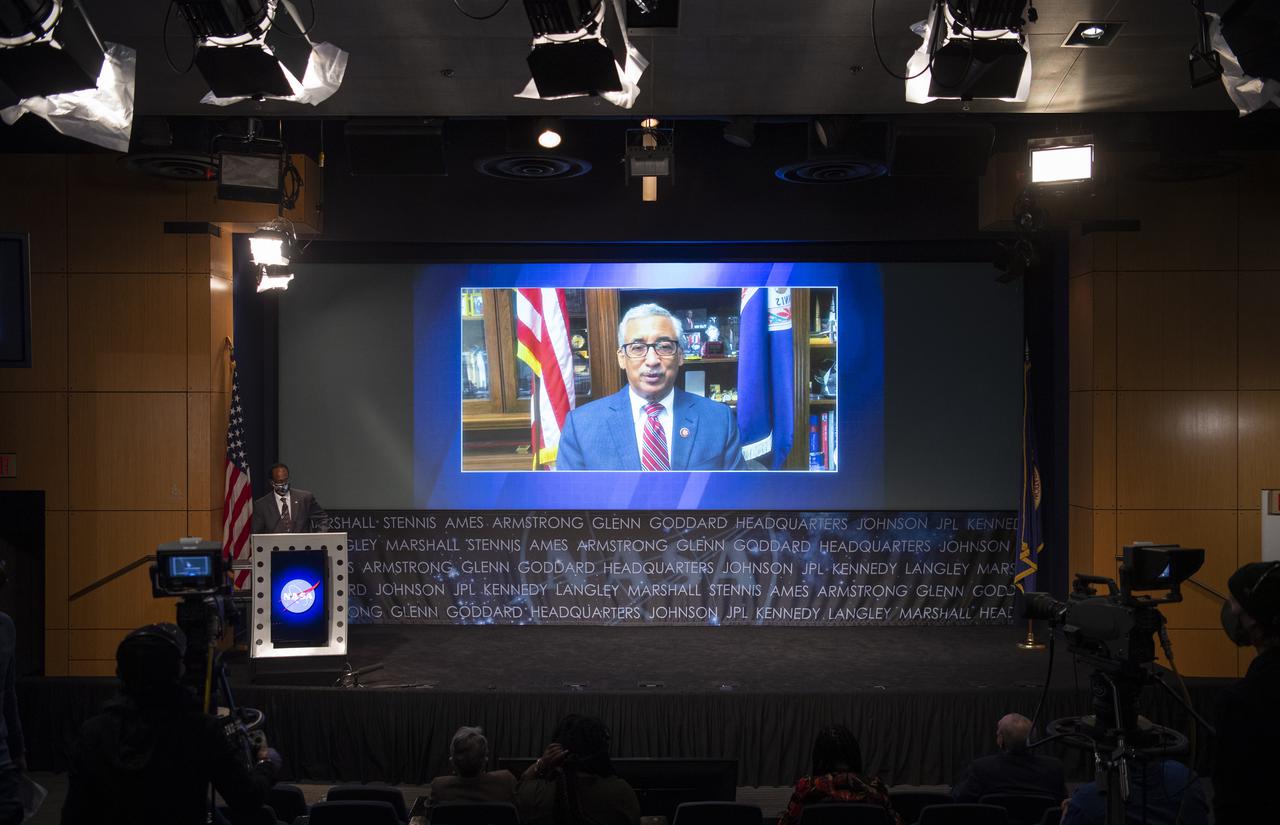
Rep. Bobby Scott (D-Va.), is seen onscreen in a pre-recorded message during a ceremony officially naming the NASA Headquarters building in honor of Mary W. Jackson, Friday, Feb. 26, 2021, at NASA Headquarters in Washington, DC. Mary W. Jackson, the first African American female engineer at NASA, began her career with the agency in the segregated West Area Computing Unit of NASA’s Langley Research Center in Hampton, Virginia. The mathematician and aerospace engineer went on to lead programs influencing the hiring and promotion of women in NASA's science, technology, engineering, and mathematics careers. In 2019, she posthumously received the Congressional Gold Medal. Photo Credit: (NASA/Joel Kowsky)
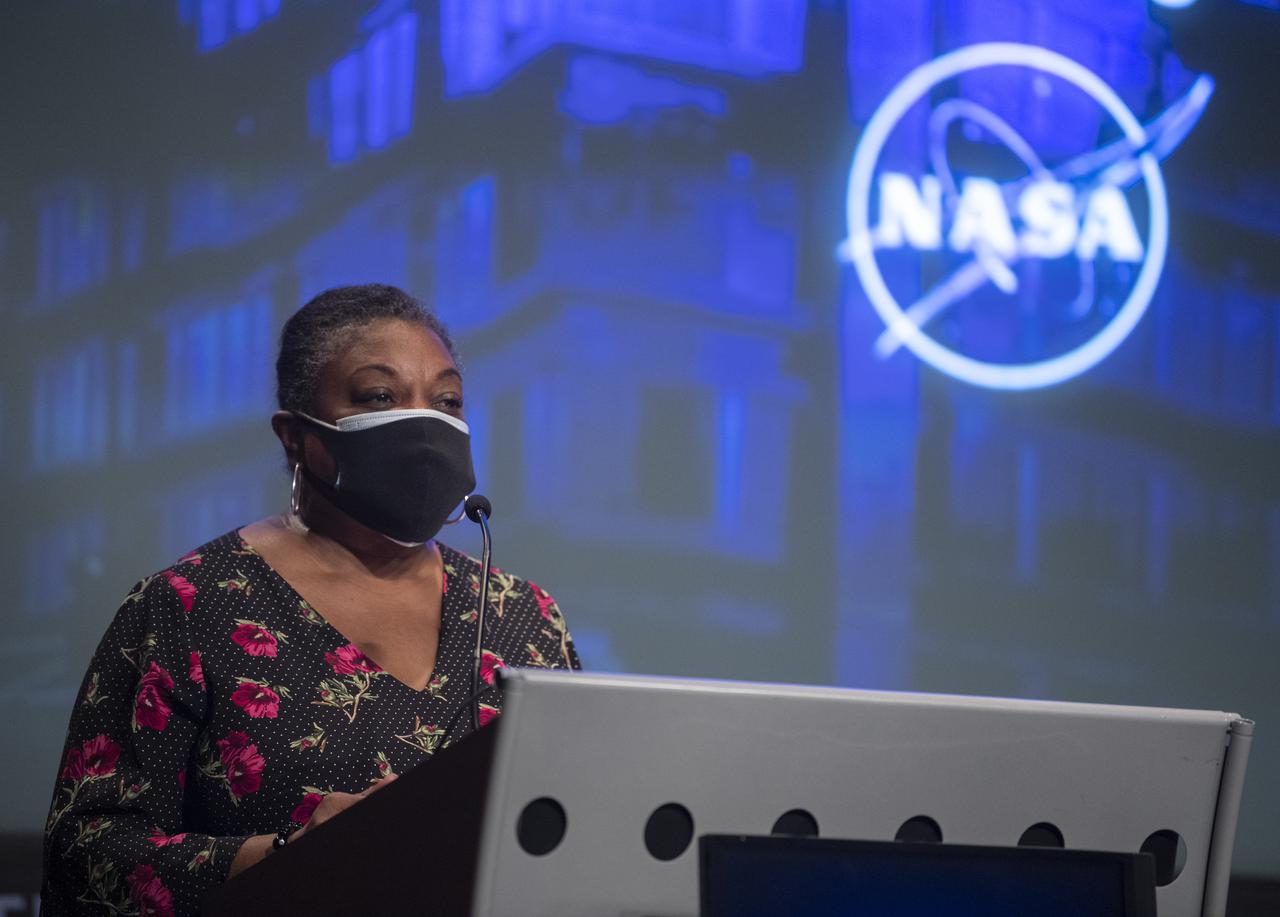
Deputy Mayor Lucinda M. Babers speaks during a ceremony officially naming the NASA Headquarters building in honor of Mary W. Jackson, Friday, Feb. 26, 2021, at NASA Headquarters in Washington, DC. Mary W. Jackson, the first African American female engineer at NASA, began her career with the agency in the segregated West Area Computing Unit of NASA’s Langley Research Center in Hampton, Virginia. The mathematician and aerospace engineer went on to lead programs influencing the hiring and promotion of women in NASA's science, technology, engineering, and mathematics careers. In 2019, she posthumously received the Congressional Gold Medal. Photo Credit: (NASA/Joel Kowsky)
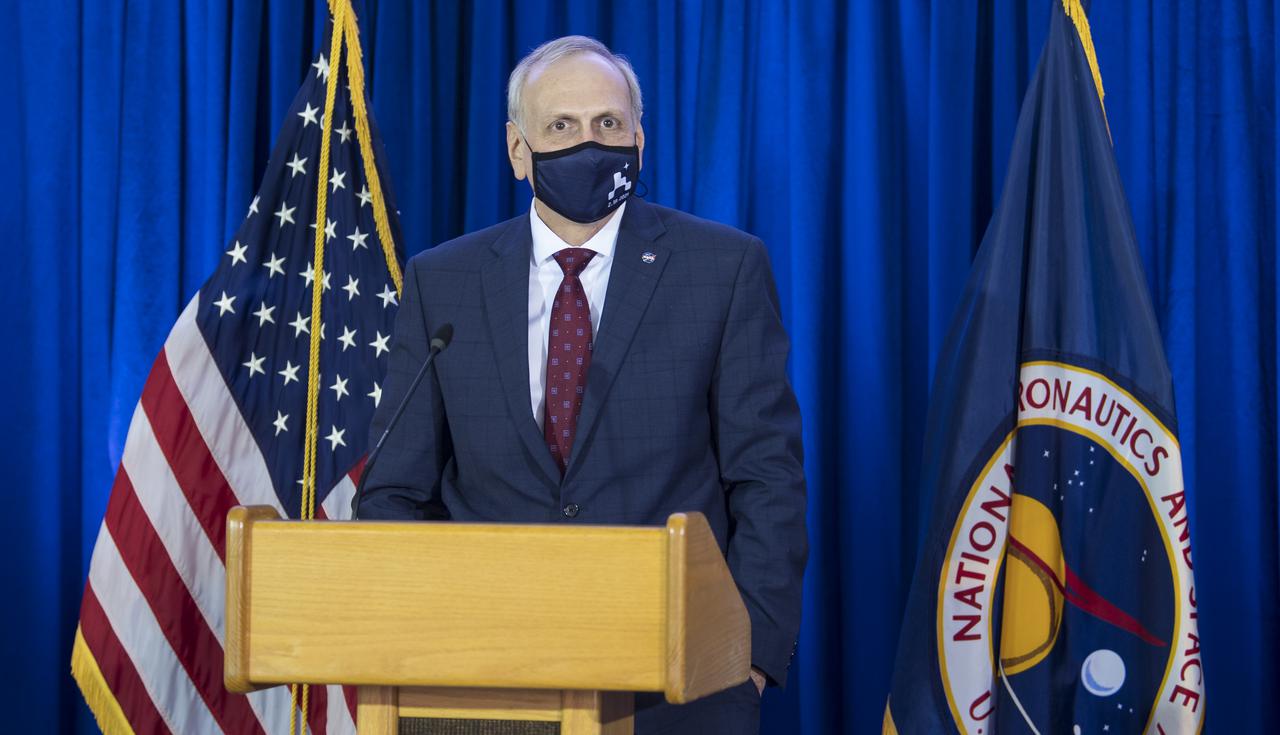
Acting NASA Administrator Steve Jurzyck speaks during a ceremony officially naming the NASA Headquarters building in honor of Mary W. Jackson, Friday, Feb. 26, 2021, at NASA Headquarters in Washington, DC. Mary W. Jackson, the first African American female engineer at NASA, began her career with the agency in the segregated West Area Computing Unit of NASA’s Langley Research Center in Hampton, Virginia. The mathematician and aerospace engineer went on to lead programs influencing the hiring and promotion of women in NASA's science, technology, engineering, and mathematics careers. In 2019, she posthumously received the Congressional Gold Medal. Photo Credit: (NASA/Joel Kowsky)
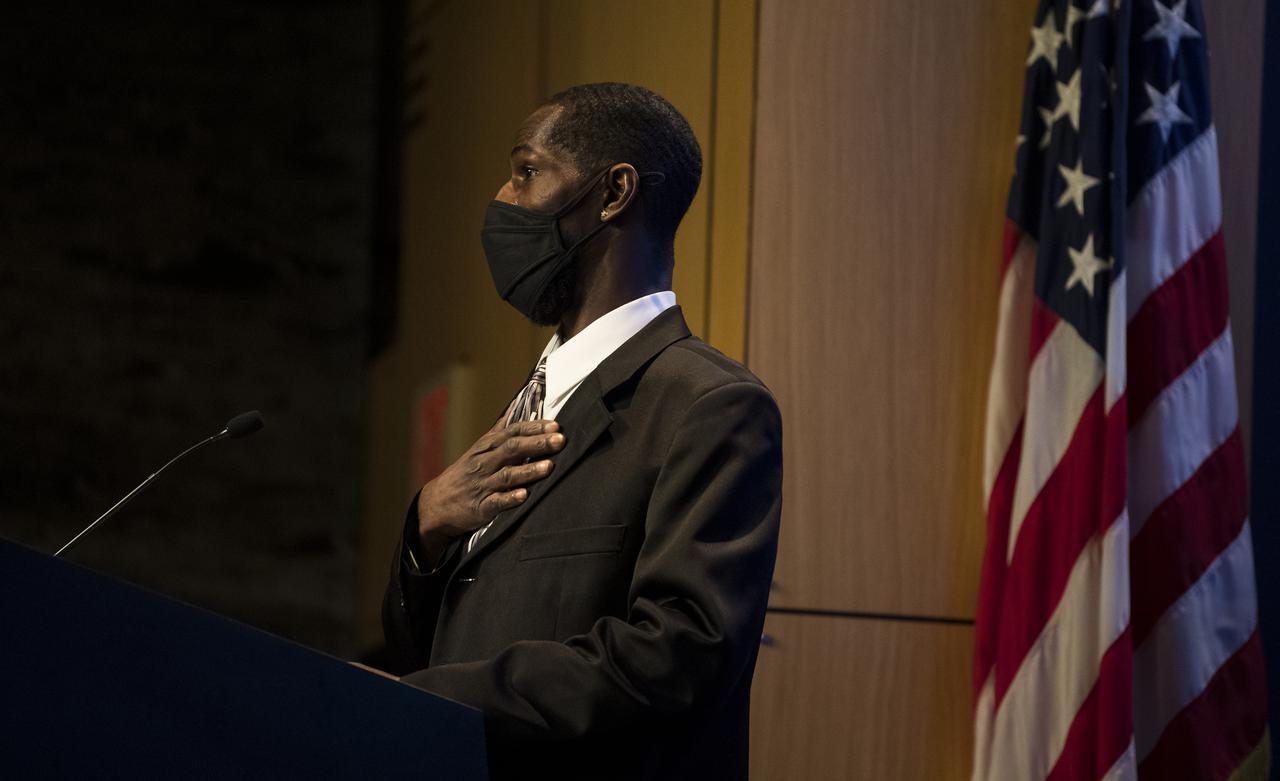
Bryan Jackson, grandson of Mary W. Jackson, speaks during a ceremony officially naming the NASA Headquarters building in honor of Mary W. Jackson, Friday, Feb. 26, 2021, at NASA Headquarters in Washington, DC. Mary W. Jackson, the first African American female engineer at NASA, began her career with the agency in the segregated West Area Computing Unit of NASA’s Langley Research Center in Hampton, Virginia. The mathematician and aerospace engineer went on to lead programs influencing the hiring and promotion of women in NASA's science, technology, engineering, and mathematics careers. In 2019, she posthumously received the Congressional Gold Medal. Photo Credit: (NASA/Joel Kowsky)
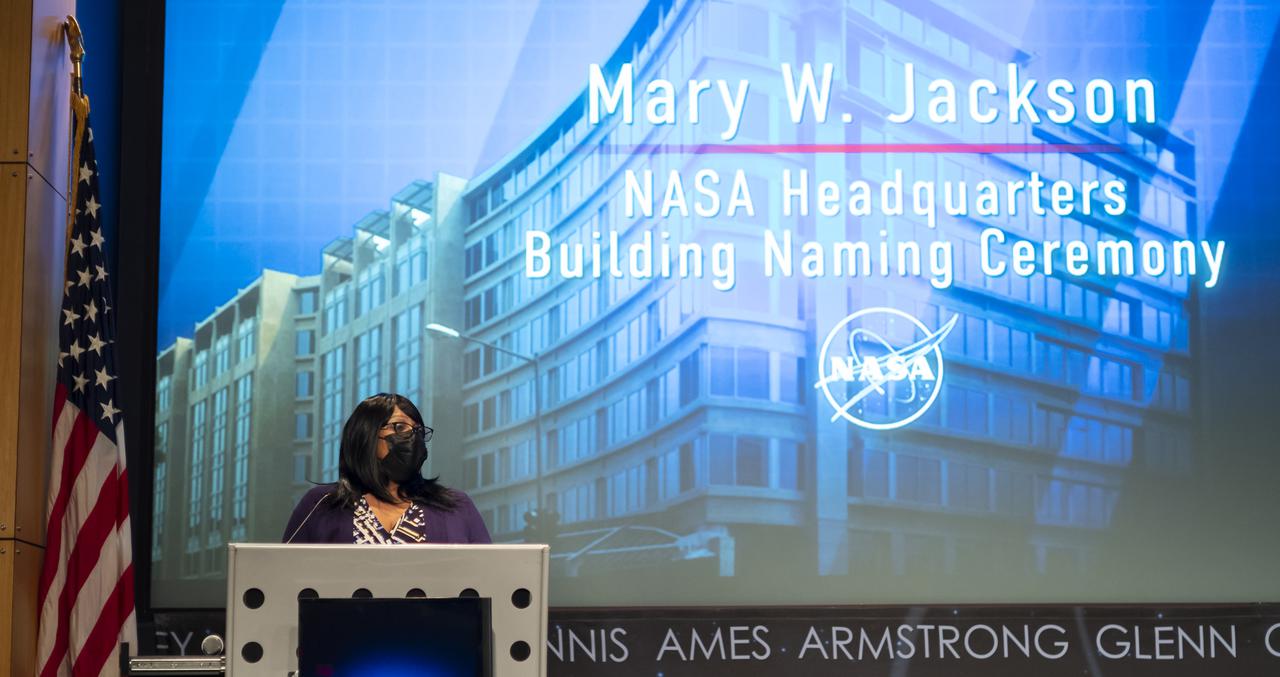
Wanda Jackson, granddaughter of Mary W. Jackson, speaks during a ceremony officially naming the NASA Headquarters building in honor of Mary W. Jackson, Friday, Feb. 26, 2021, at NASA Headquarters in Washington, DC. Mary W. Jackson, the first African American female engineer at NASA, began her career with the agency in the segregated West Area Computing Unit of NASA’s Langley Research Center in Hampton, Virginia. The mathematician and aerospace engineer went on to lead programs influencing the hiring and promotion of women in NASA's science, technology, engineering, and mathematics careers. In 2019, she posthumously received the Congressional Gold Medal. Photo Credit: (NASA/Joel Kowsky)
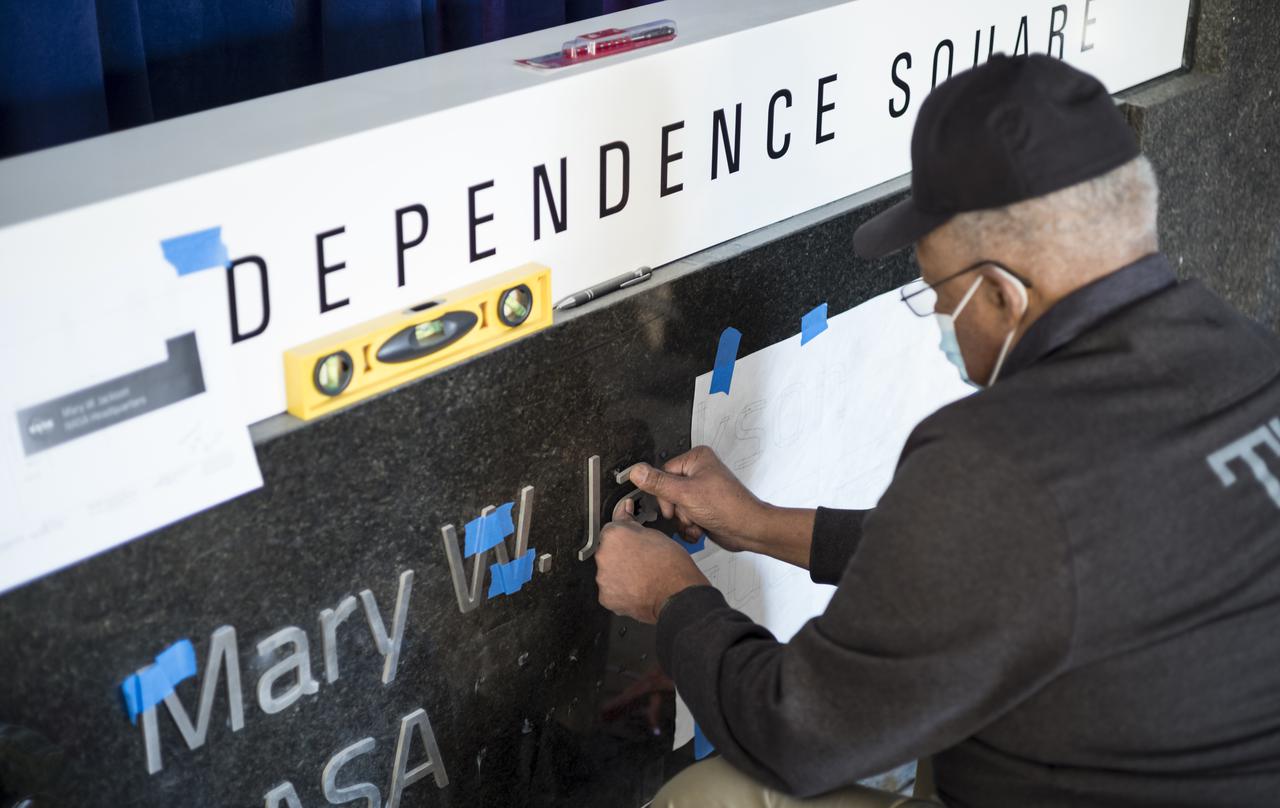
The Mary W. Jackson NASA Headquarters sign is installed ahead of the building naming ceremony, Thursday, Feb. 25, 2021, at NASA Headquarters in Washington, DC. Mary W. Jackson, the first African American female engineer at NASA, began her career with the agency in the segregated West Area Computing Unit of NASA’s Langley Research Center in Hampton, Virginia. The mathematician and aerospace engineer went on to lead programs influencing the hiring and promotion of women in NASA's science, technology, engineering, and mathematics careers. In 2019, she posthumously received the Congressional Gold Medal. Photo Credit: (NASA/Joel Kowsky)
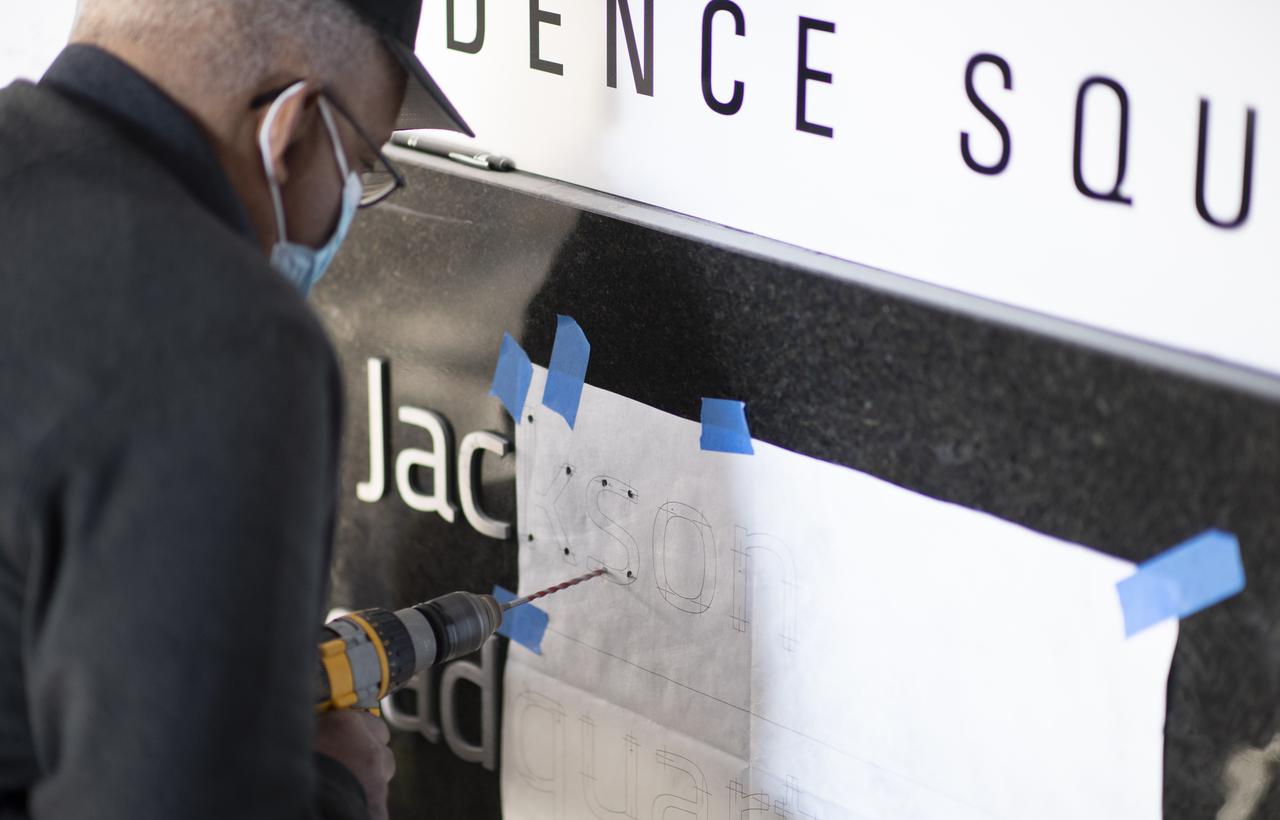
The Mary W. Jackson NASA Headquarters sign is installed ahead of the building naming ceremony, Thursday, Feb. 25, 2021, at NASA Headquarters in Washington, DC. Mary W. Jackson, the first African American female engineer at NASA, began her career with the agency in the segregated West Area Computing Unit of NASA’s Langley Research Center in Hampton, Virginia. The mathematician and aerospace engineer went on to lead programs influencing the hiring and promotion of women in NASA's science, technology, engineering, and mathematics careers. In 2019, she posthumously received the Congressional Gold Medal. Photo Credit: (NASA/Joel Kowsky)
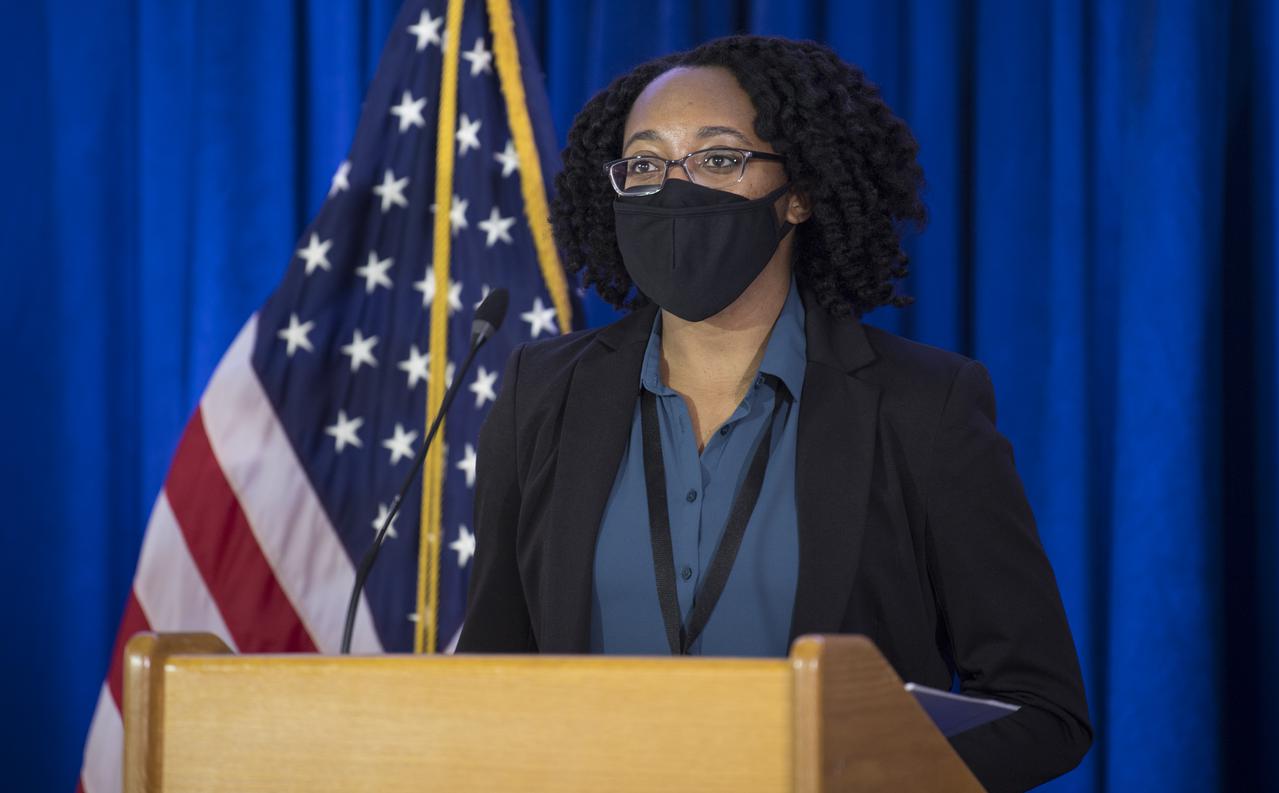
Yolanda Shea, a physical research scientist at NASA's Langley Research Center, speaks during a ceremony officially naming the NASA Headquarters building in honor of Mary W. Jackson, Friday, Feb. 26, 2021, at NASA Headquarters in Washington, DC. Mary W. Jackson, the first African American female engineer at NASA, began her career with the agency in the segregated West Area Computing Unit of NASA’s Langley Research Center in Hampton, Virginia. The mathematician and aerospace engineer went on to lead programs influencing the hiring and promotion of women in NASA's science, technology, engineering, and mathematics careers. In 2019, she posthumously received the Congressional Gold Medal. Photo Credit: (NASA/Joel Kowsky)
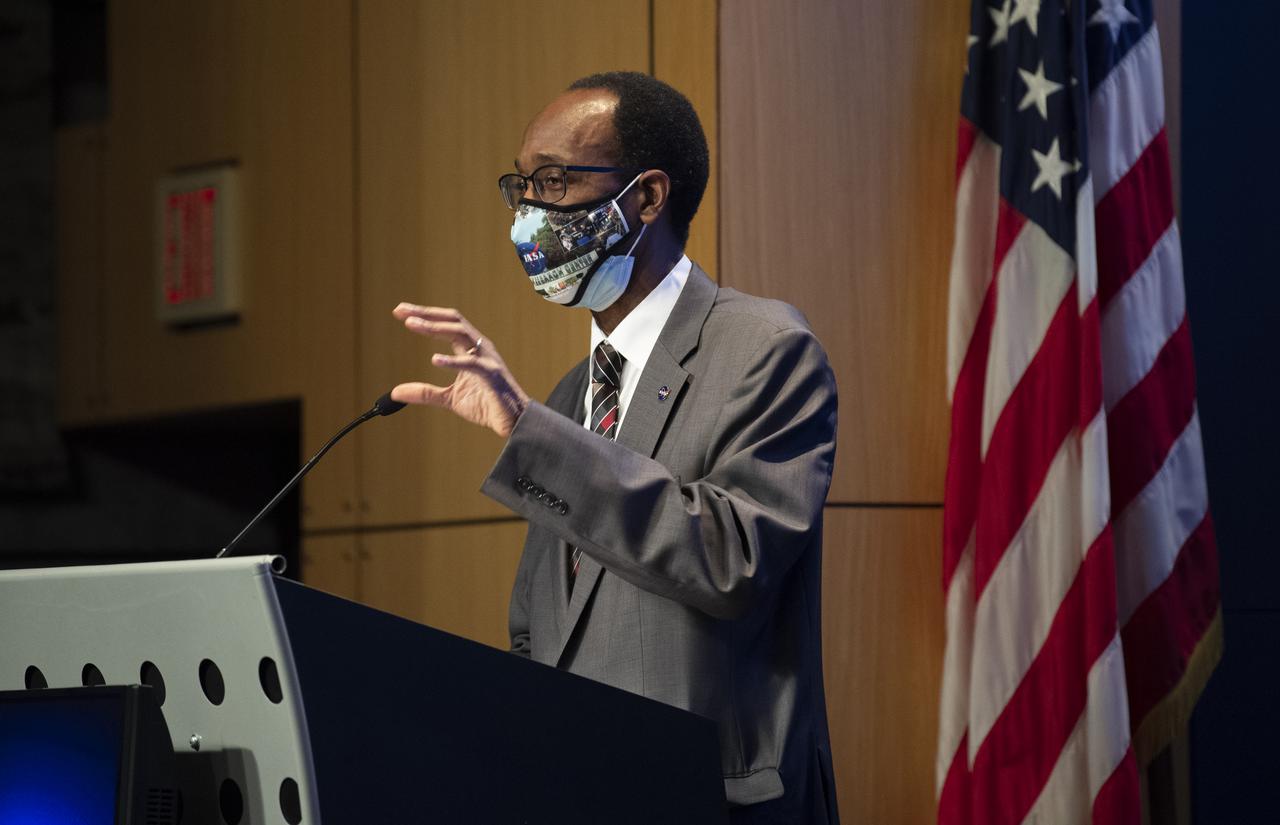
Clayton Turner, Director of NASA's Langley Research Center, speaks during a ceremony officially naming the NASA Headquarters building in honor of Mary W. Jackson, Friday, Feb. 26, 2021, at NASA Headquarters in Washington, DC. Mary W. Jackson, the first African American female engineer at NASA, began her career with the agency in the segregated West Area Computing Unit of NASA’s Langley Research Center in Hampton, Virginia. The mathematician and aerospace engineer went on to lead programs influencing the hiring and promotion of women in NASA's science, technology, engineering, and mathematics careers. In 2019, she posthumously received the Congressional Gold Medal. Photo Credit: (NASA/Joel Kowsky)
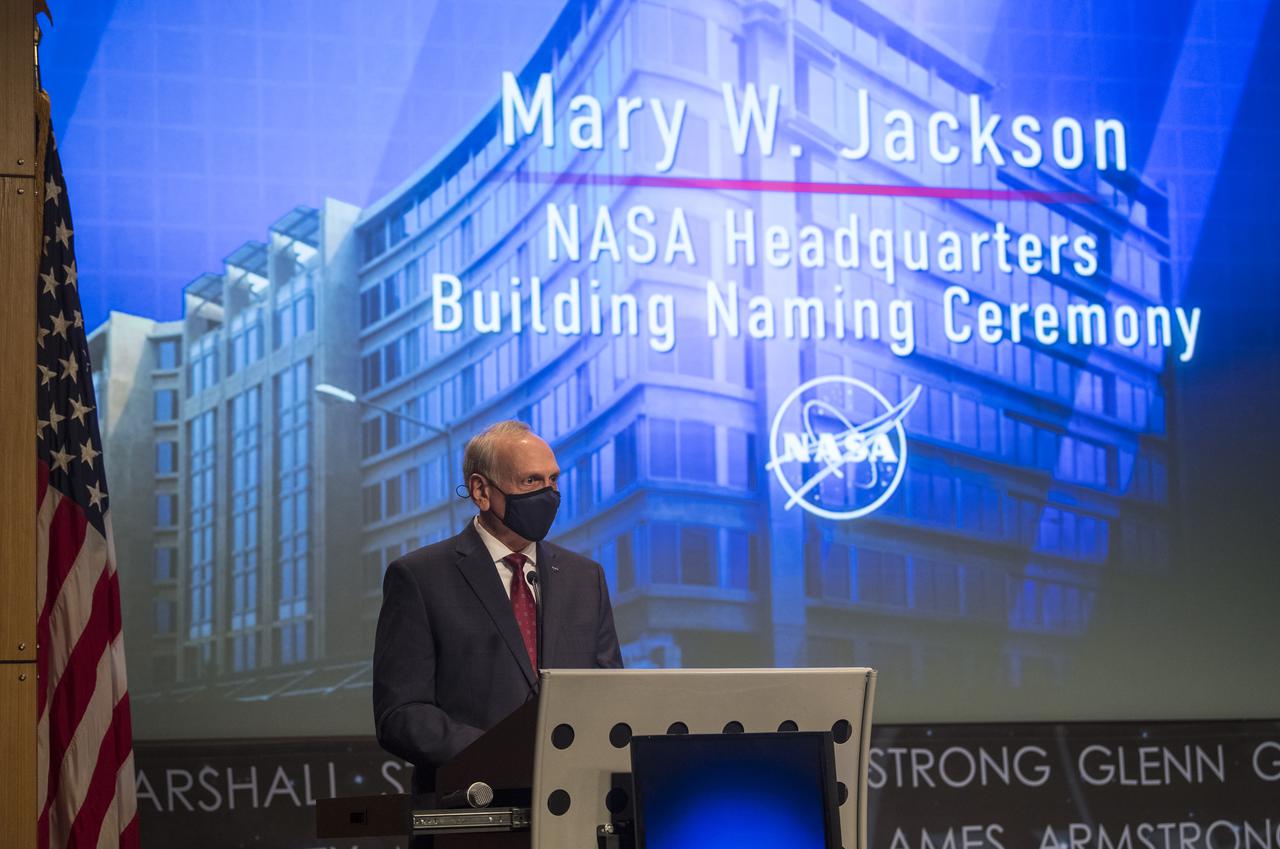
Acting NASA Administrator Steve Jurzyck speaks during a ceremony officially naming the NASA Headquarters building in honor of Mary W. Jackson, Friday, Feb. 26, 2021, at NASA Headquarters in Washington, DC. Mary W. Jackson, the first African American female engineer at NASA, began her career with the agency in the segregated West Area Computing Unit of NASA’s Langley Research Center in Hampton, Virginia. The mathematician and aerospace engineer went on to lead programs influencing the hiring and promotion of women in NASA's science, technology, engineering, and mathematics careers. In 2019, she posthumously received the Congressional Gold Medal. Photo Credit: (NASA/Joel Kowsky)
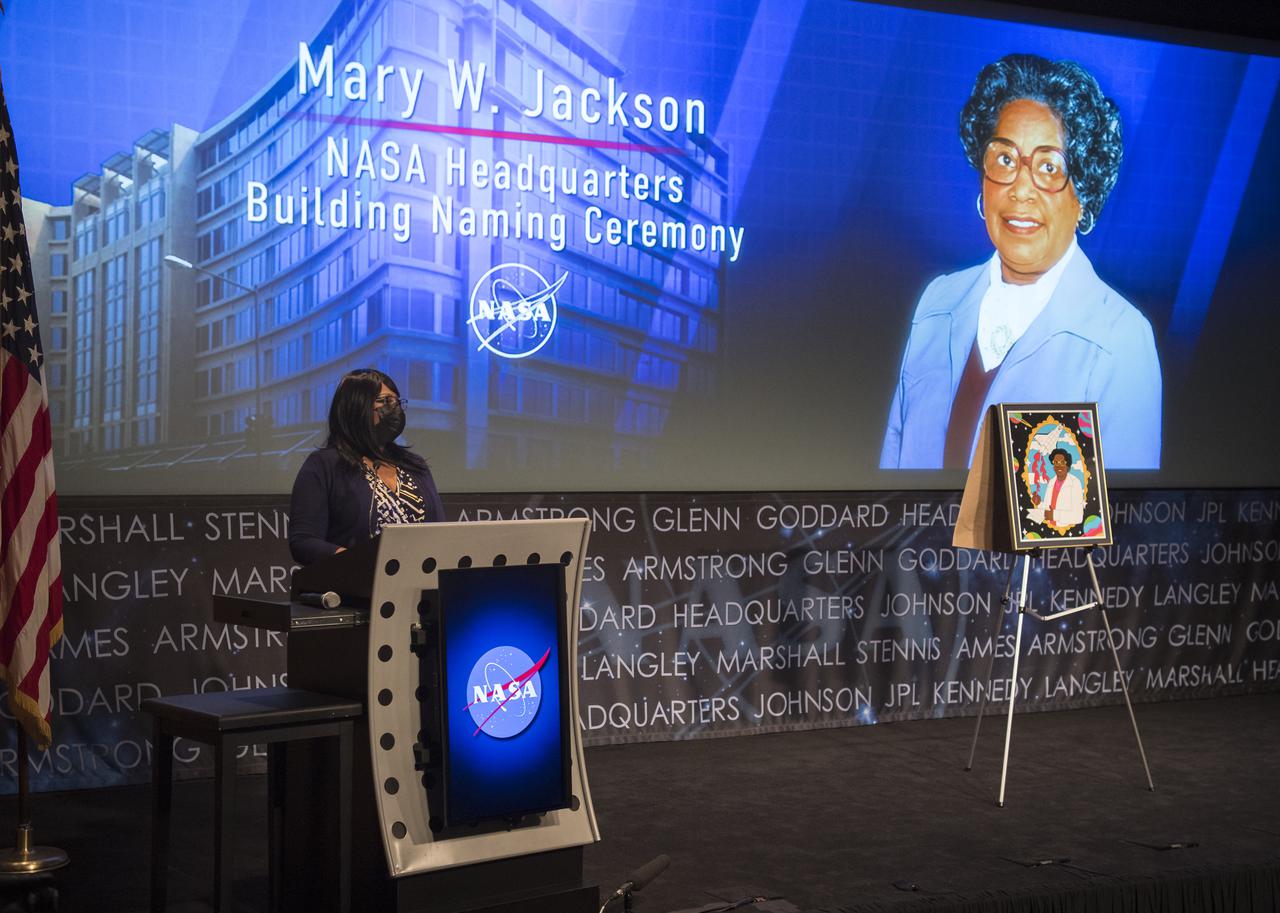
Wanda Jackson, granddaughter of Mary W. Jackson, speaks during a ceremony officially naming the NASA Headquarters building in honor of Mary W. Jackson, Friday, Feb. 26, 2021, at NASA Headquarters in Washington, DC. Mary W. Jackson, the first African American female engineer at NASA, began her career with the agency in the segregated West Area Computing Unit of NASA’s Langley Research Center in Hampton, Virginia. The mathematician and aerospace engineer went on to lead programs influencing the hiring and promotion of women in NASA's science, technology, engineering, and mathematics careers. In 2019, she posthumously received the Congressional Gold Medal. Photo Credit: (NASA/Joel Kowsky)
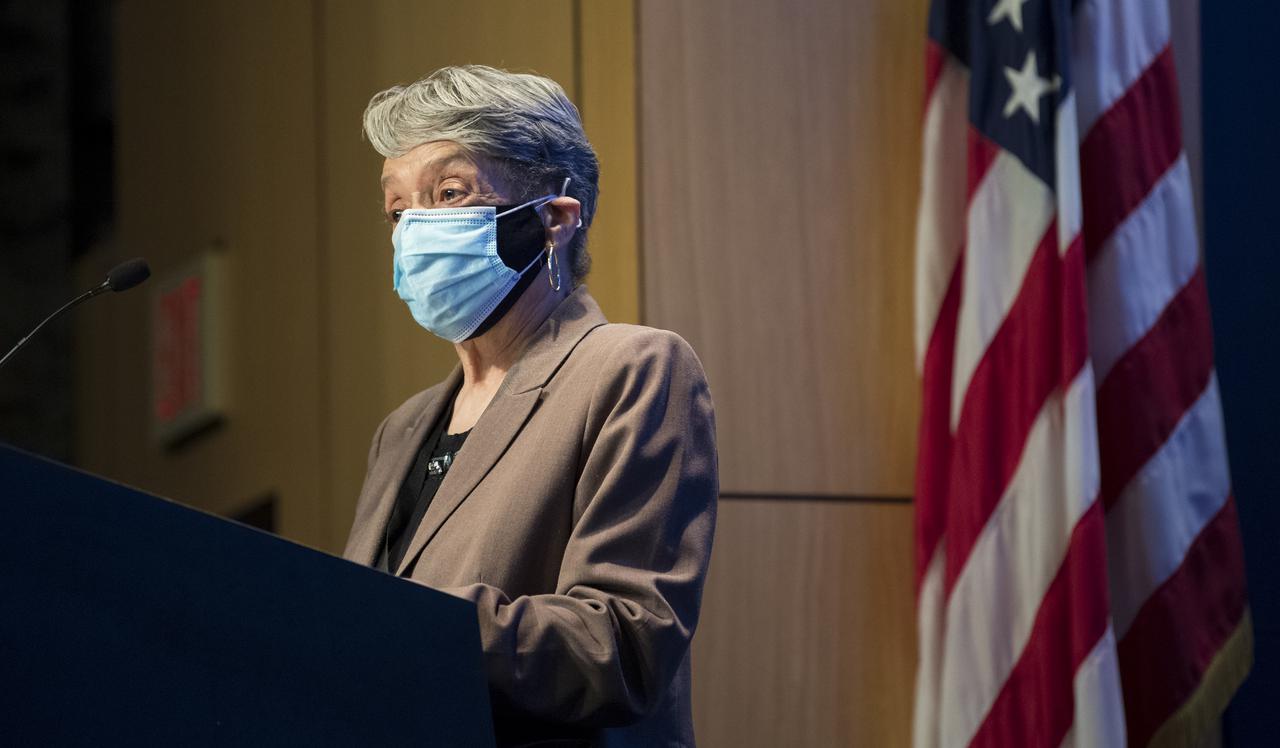
Christine Darden, retired NASA engineer and "Hidden Figure,” speaks during a ceremony officially naming the NASA Headquarters building in honor of Mary W. Jackson, Friday, Feb. 26, 2021, at NASA Headquarters in Washington, DC. Mary W. Jackson, the first African American female engineer at NASA, began her career with the agency in the segregated West Area Computing Unit of NASA’s Langley Research Center in Hampton, Virginia. The mathematician and aerospace engineer went on to lead programs influencing the hiring and promotion of women in NASA's science, technology, engineering, and mathematics careers. In 2019, she posthumously received the Congressional Gold Medal. Photo Credit: (NASA/Joel Kowsky)
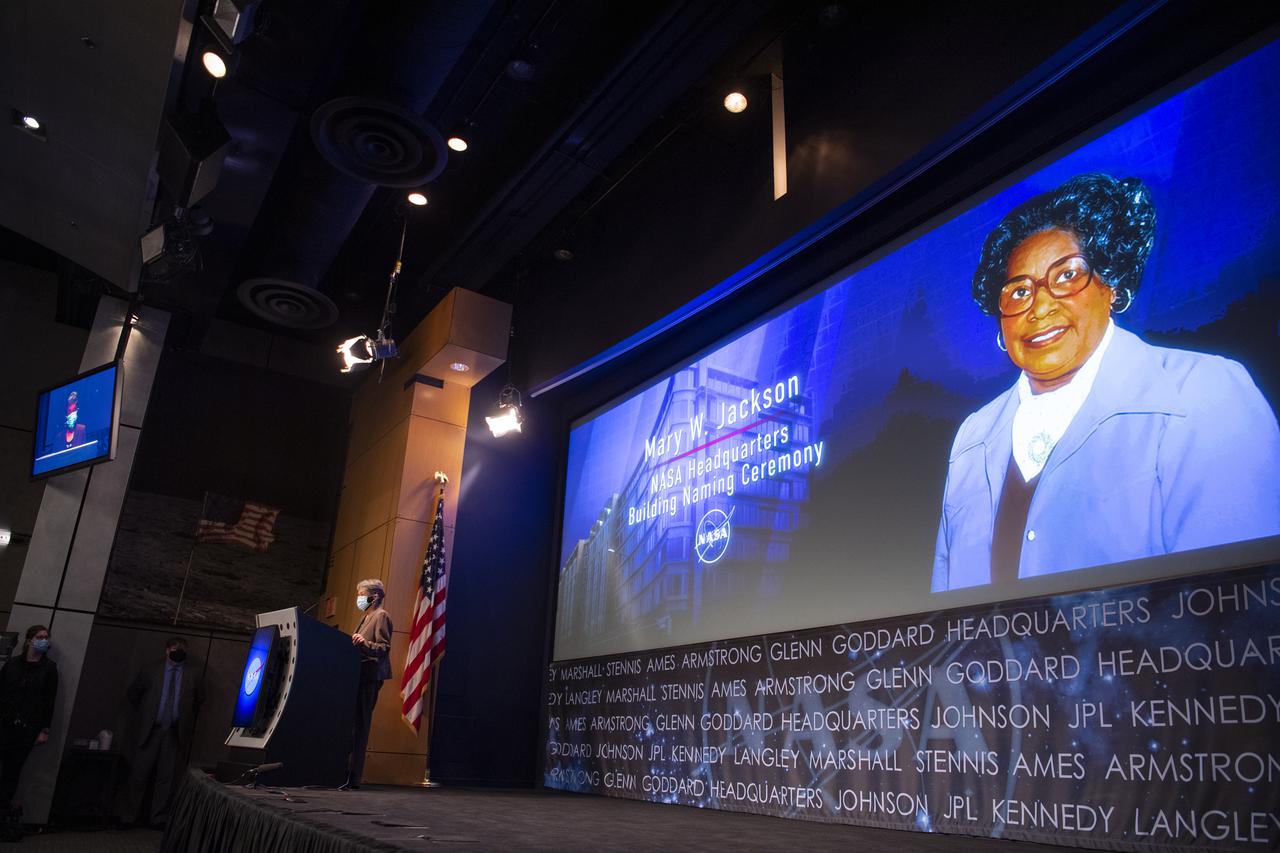
Christine Darden, retired NASA engineer and "Hidden Figure,” speaks during a ceremony officially naming the NASA Headquarters building in honor of Mary W. Jackson, Friday, Feb. 26, 2021, at NASA Headquarters in Washington, DC. Mary W. Jackson, the first African American female engineer at NASA, began her career with the agency in the segregated West Area Computing Unit of NASA’s Langley Research Center in Hampton, Virginia. The mathematician and aerospace engineer went on to lead programs influencing the hiring and promotion of women in NASA's science, technology, engineering, and mathematics careers. In 2019, she posthumously received the Congressional Gold Medal. Photo Credit: (NASA/Joel Kowsky)
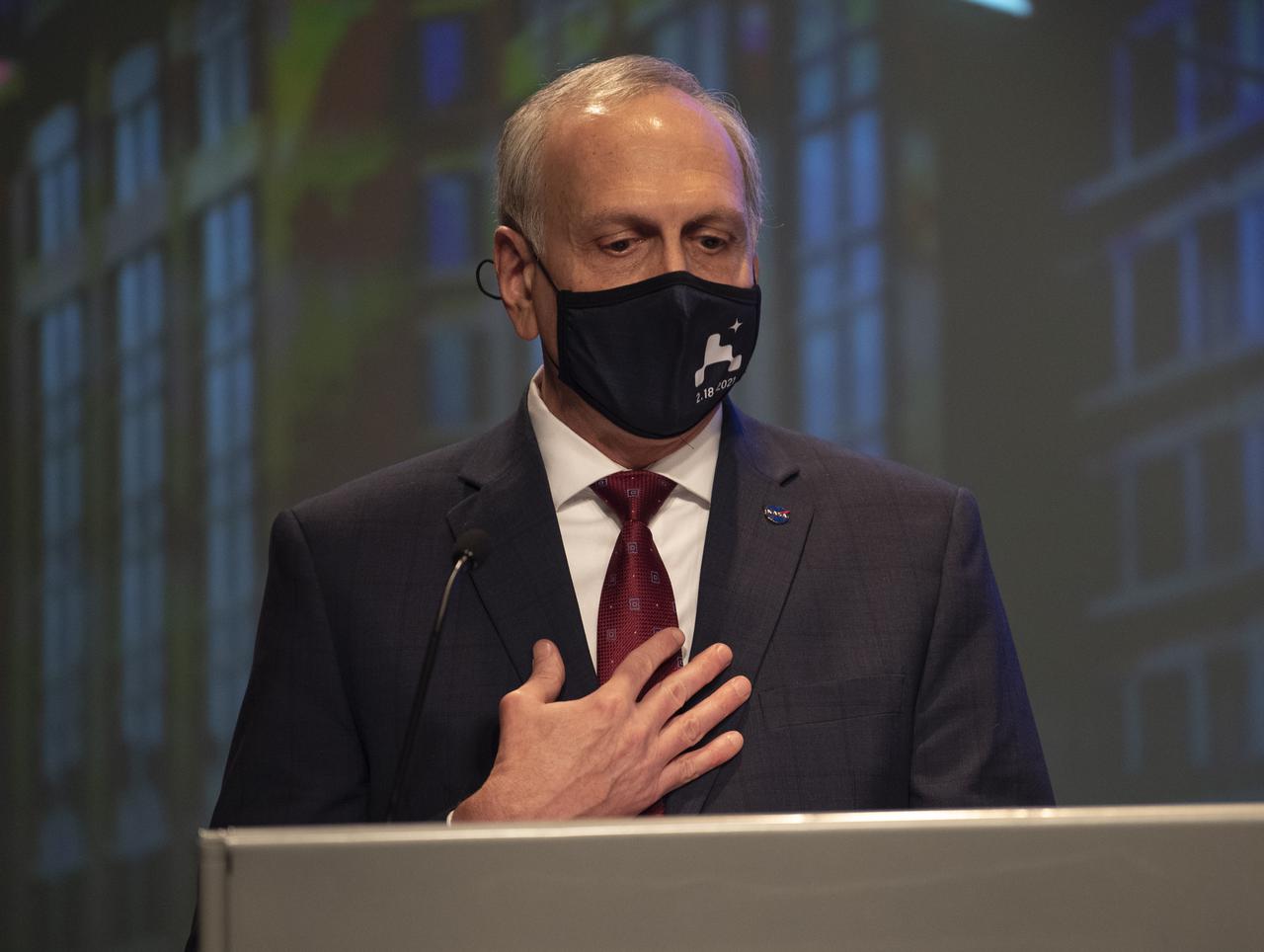
Acting NASA Administrator Steve Jurzyck speaks during a ceremony officially naming the NASA Headquarters building in honor of Mary W. Jackson, Friday, Feb. 26, 2021, at NASA Headquarters in Washington, DC. Mary W. Jackson, the first African American female engineer at NASA, began her career with the agency in the segregated West Area Computing Unit of NASA’s Langley Research Center in Hampton, Virginia. The mathematician and aerospace engineer went on to lead programs influencing the hiring and promotion of women in NASA's science, technology, engineering, and mathematics careers. In 2019, she posthumously received the Congressional Gold Medal. Photo Credit: (NASA/Joel Kowsky)
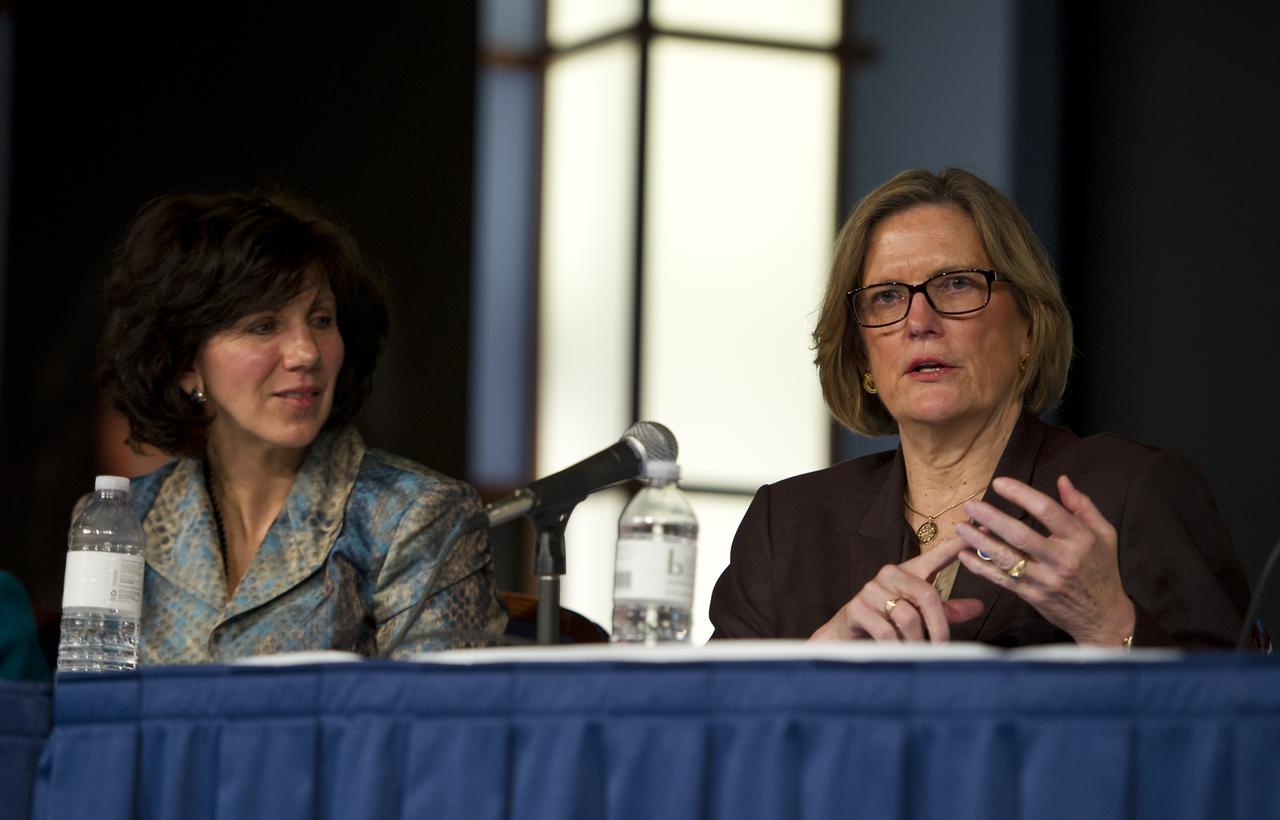
Kathy Sullivan, right, NOAA (National Oceanic and Atmospheric Administration) Deputy Administrator and former NASA astronaut, participates in a panel discussion at the Women, Innovation and Aerospace event celebrating Women's History Month at the George Washington University Jack Morton Auditorium, Thursday, March 8, 2012 in Washington. Sullivan is joined by Catherine Didion, Senior Fellow, National Academy of Engineering. The WIA day-long event will help to foster a discussion for students and early career professionals about how to continue to encourage women to enter and succeed in the field of aerospace. Photo Credit: (NASA/Carla Cioffi)
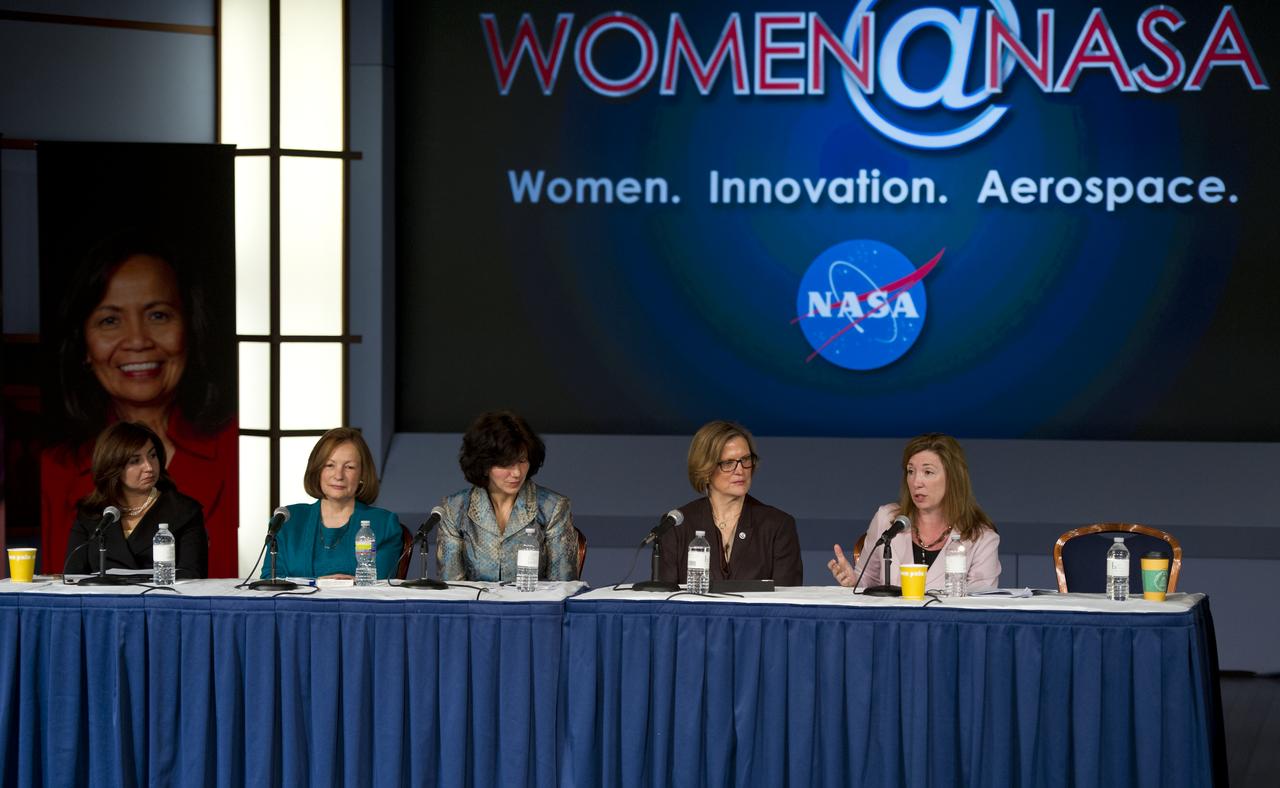
Lori Garver (far right) NASA Deputy Administrator, participates in a panel discussion at the Women, Innovation and Aerospace event celebrating Women's History Month at the George Washington University Jack Morton Auditorium, Thursday, March 8, 2012 in Washington. Garver is seen with Kathy Sullivan, NOAA Deputy Administrator; Catherine Didion, Senior Fellow, National Academy of Engineering; Marcia Smith, President, spacepolicyonline.com and Veronica Villalobos, Director, Office of Diversity and Inclusion, Office of Personnel Management (far left). The WIA day-long event will help to foster a discussion for students and early career professionals about how to continue to encourage women to enter and succeed in the field of aerospace. Photo Credit: (NASA/Carla Cioffi)
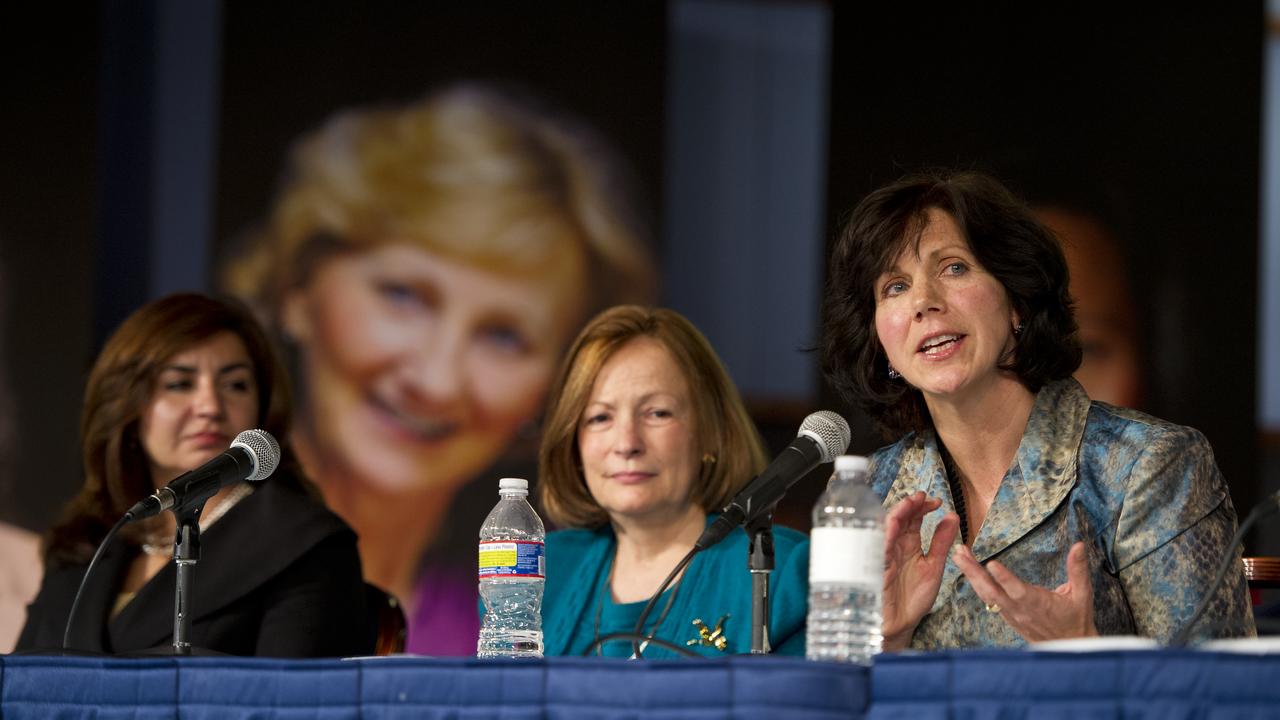
Catherine Didion, far right, Senior Fellow, National Academy of Engineering, participates in a panel discussion at the Women, Innovation and Aerospace event celebrating Women's History Month at the George Washington University Jack Morton Auditorium, Thursday, March 8, 2012 in Washington. Didion is joined by Marcia Smith, President, Space Policy Online.com, and Veronica Villalobos, Director, Office of Diversity and Inclusion, Office of Personnel Management, far left. The WIA day-long event will help to foster a discussion for students and early career professionals about how to continue to encourage women to enter and succeed in the field of aerospace. Photo Credit: (NASA/Carla Cioffi)
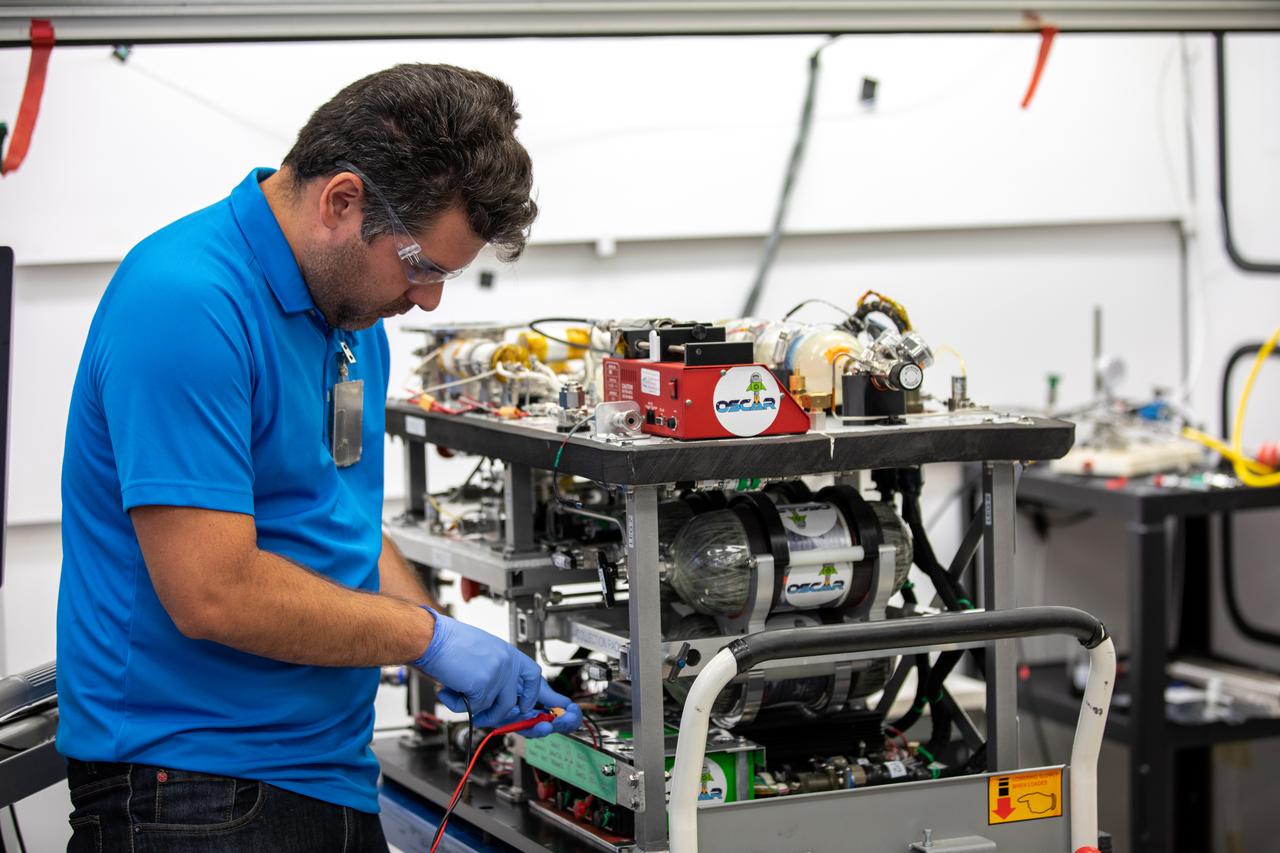
Jaime Toro, an aerospace/mechanical engineer and member of the Orbital Syngas Commodity Augmentation Reactor (OSCAR) team, performs ground testing at NASA’s Kennedy Space Center in Florida. The tests are in preparation for a scheduled suborbital flight test later this year, facilitated by NASA’s Flight Opportunities program. Begun as an Early Career Initiative project, OSCAR evaluates technology to make use of trash and human waste generated during long-duration spaceflight.
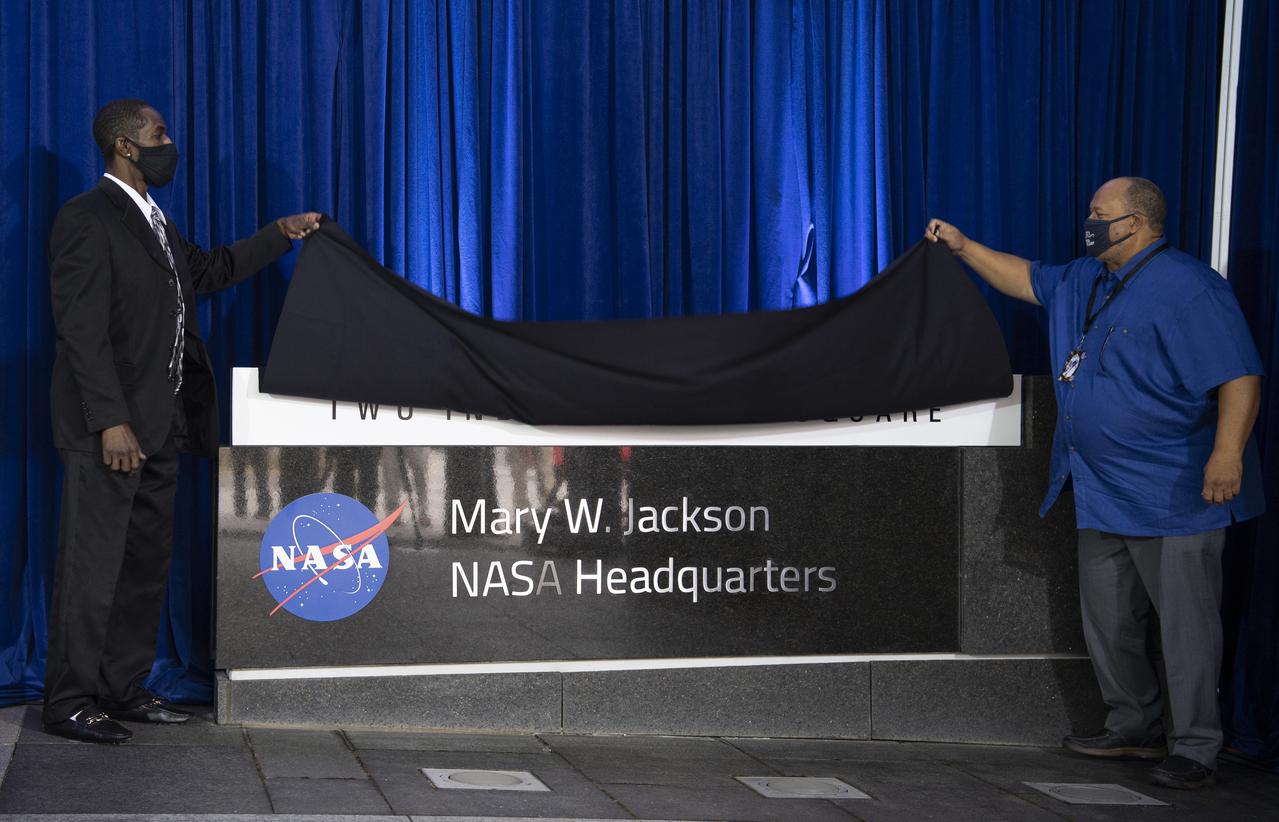
Bryan Jackson, grandson of Mary W. Jackson, left, and Raymond Lewis, son-in-law of Mary W. Jackson, right, unveil the Mary W. Jackson NASA Headquarters sign during a ceremony officially naming the building, Friday, Feb. 26, 2021, at NASA Headquarters in Washington, DC. Mary W. Jackson, the first African American female engineer at NASA, began her career with the agency in the segregated West Area Computing Unit of NASA’s Langley Research Center in Hampton, Virginia. The mathematician and aerospace engineer went on to lead programs influencing the hiring and promotion of women in NASA's science, technology, engineering, and mathematics careers. In 2019, she posthumously received the Congressional Gold Medal. Photo Credit: (NASA/Joel Kowsky)
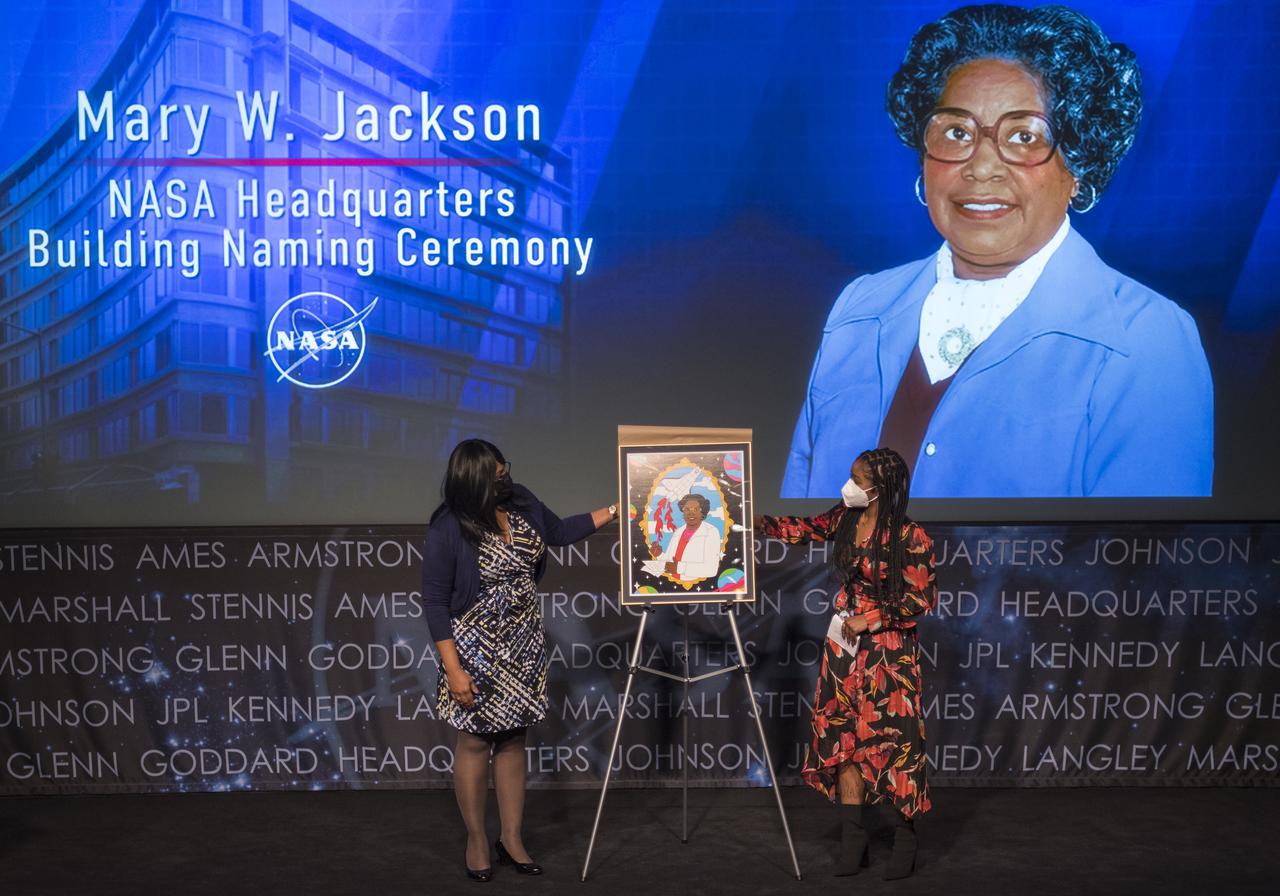
Artist Tenbeete Solomon, also known as Trap Bob, right, presents her artwork honoring Mary W. Jackson to Wanda Jackson, granddaughter of Mary W. Jackson, left, during a ceremony officially naming the NASA Headquarters building in honor of Mary W. Jackson, Friday, Feb. 26, 2021, at NASA Headquarters in Washington, DC. Mary W. Jackson, the first African American female engineer at NASA, began her career with the agency in the segregated West Area Computing Unit of NASA’s Langley Research Center in Hampton, Virginia. The mathematician and aerospace engineer went on to lead programs influencing the hiring and promotion of women in NASA's science, technology, engineering, and mathematics careers. In 2019, she posthumously received the Congressional Gold Medal. Photo Credit: (NASA/Joel Kowsky)
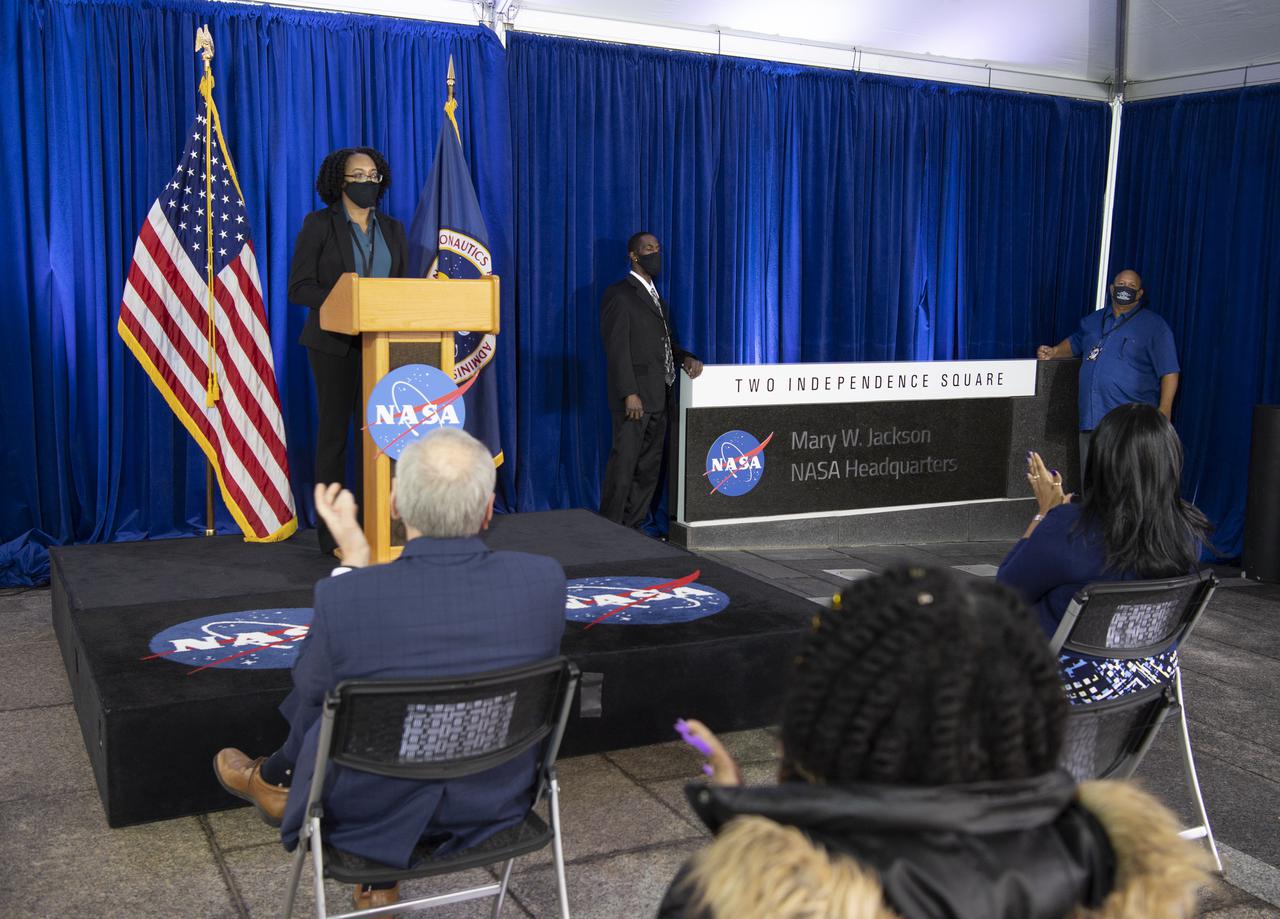
The Mary W. Jackson NASA Headquarters sign is seen after being unveiled by Bryan Jackson, grandson of Mary W. Jackson, and Raymond Lewis, son-in-law of Mary W. Jackson, during a ceremony officially naming the building, Friday, Feb. 26, 2021, at NASA Headquarters in Washington, DC. Mary W. Jackson, the first African American female engineer at NASA, began her career with the agency in the segregated West Area Computing Unit of NASA’s Langley Research Center in Hampton, Virginia. The mathematician and aerospace engineer went on to lead programs influencing the hiring and promotion of women in NASA's science, technology, engineering, and mathematics careers. In 2019, she posthumously received the Congressional Gold Medal. Photo Credit: (NASA/Joel Kowsky)
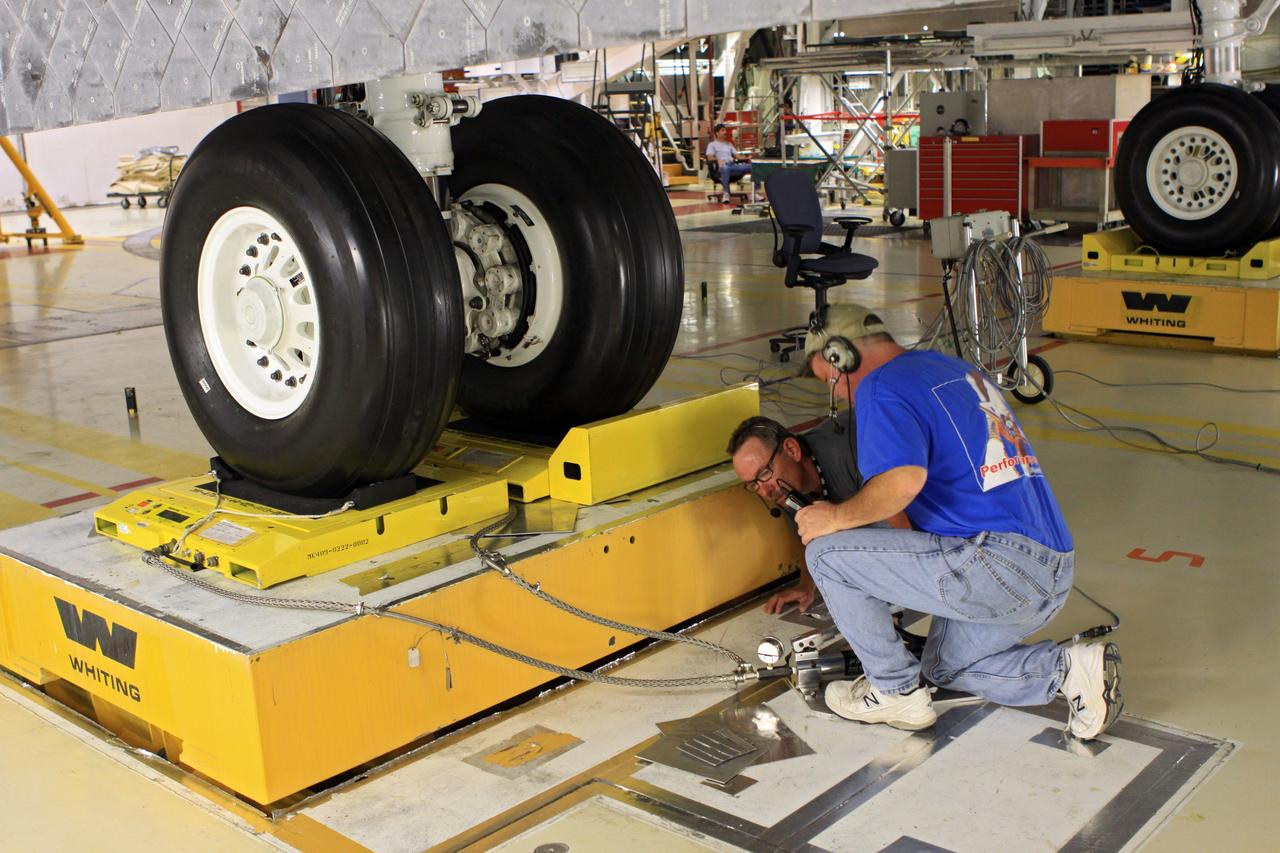
CAPE CANAVERAL, Fla. – In Orbiter Processing Facility Bay 2 at NASA’s Kennedy Space Center in Florida, United Space Alliance aerospace Quality Assurance inspector Dave Bliss, left, and Spherion aerospace technician Scott Palmer complete weight and center of gravity checks on the space shuttle Endeavour. The work is part of Transition and Retirement of the remaining space shuttles, Endeavour and Atlantis. Endeavour is being prepared for public display at the California Science Center in Los Angeles. Its ferry flight to California is targeted for mid-September. Endeavour was the last space shuttle added to NASA’s orbiter fleet. Over the course of its 19-year career, Endeavour spent 299 days in space during 25 missions. For more information, visit http://www.nasa.gov/transition Photo credit: NASA/ Jim Grossmann
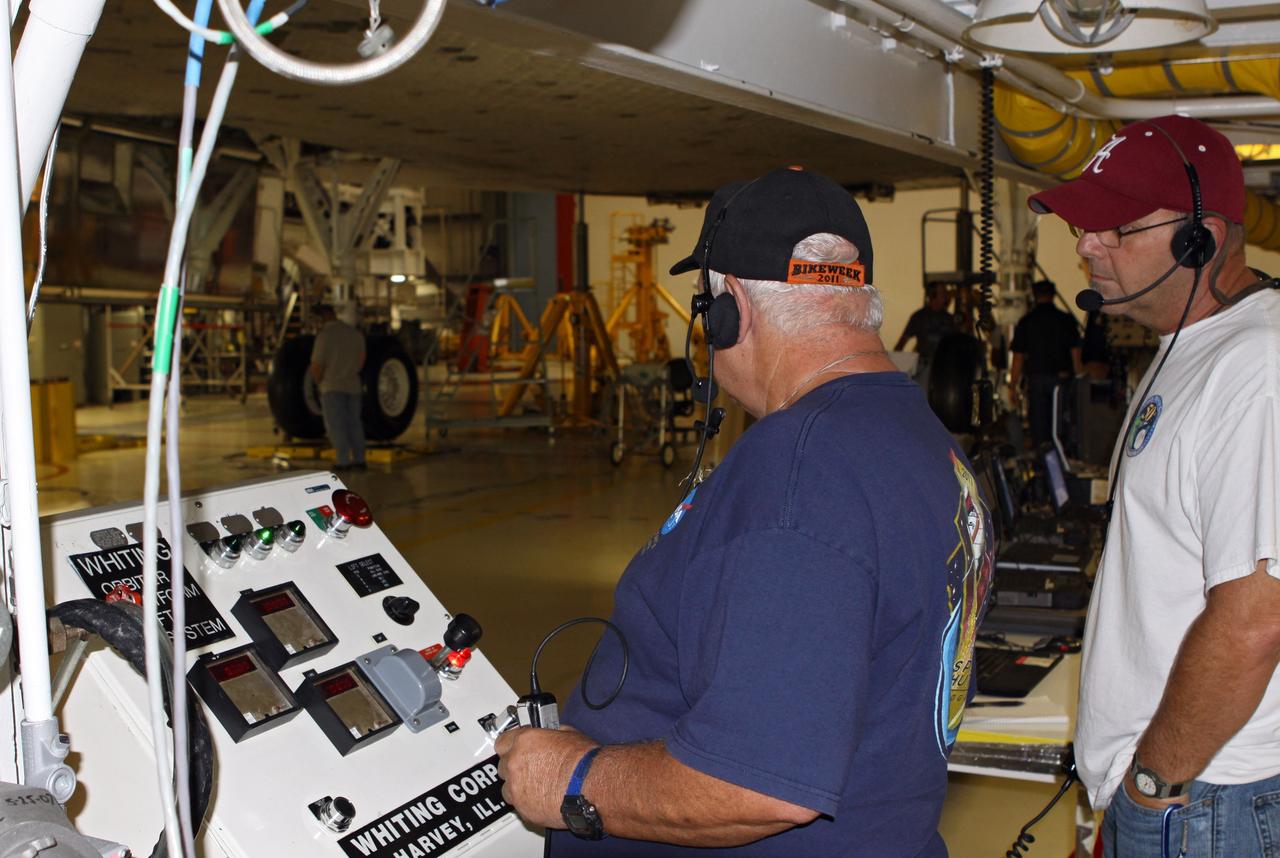
CAPE CANAVERAL, Fla. – In Orbiter Processing Facility Bay 2 at NASA’s Kennedy Space Center in Florida, United Space Alliance USA aerospace technician Jim Reed and USA aerospace quality assurance inspector Rob Lewis complete weight and center of gravity checks on the space shuttle Endeavour. The work is part of Transition and Retirement of the remaining space shuttles, Endeavour and Atlantis. Endeavour is being prepared for public display at the California Science Center in Los Angeles. Its ferry flight to California is targeted for mid-September. Endeavour was the last space shuttle added to NASA’s orbiter fleet. Over the course of its 19-year career, Endeavour spent 299 days in space during 25 missions. For more information, visit http://www.nasa.gov/transition Photo credit: NASA/ Jim Grossmann
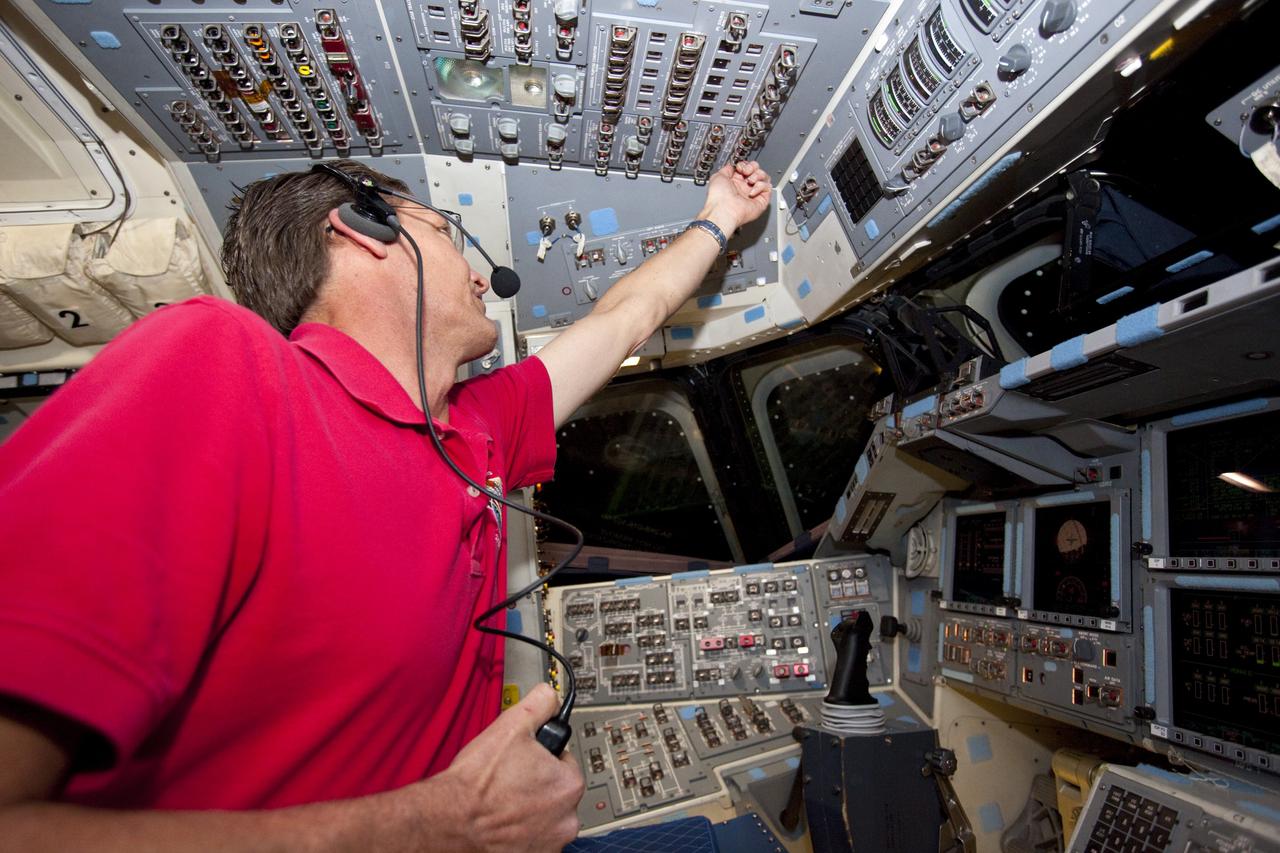
CAPE CANAVERAL, Fla. – In Orbiter Processing Facility-2 at NASA's Kennedy Space Center in Florida, United Space Alliance senior aerospace technician and spacecraft operator Charles J. Beason toggles the switches on space shuttle Endeavour’s flight deck during Space Shuttle Program transition and retirement activities. Endeavour is being prepared for public display at the California Science Center in Los Angeles. Over the course of its 19-year career, Endeavour spent 299 days in space during 25 missions. For more information, visit http://www.nasa.gov/shuttle. Photo credit: NASA/Dimitri Gerondidakis
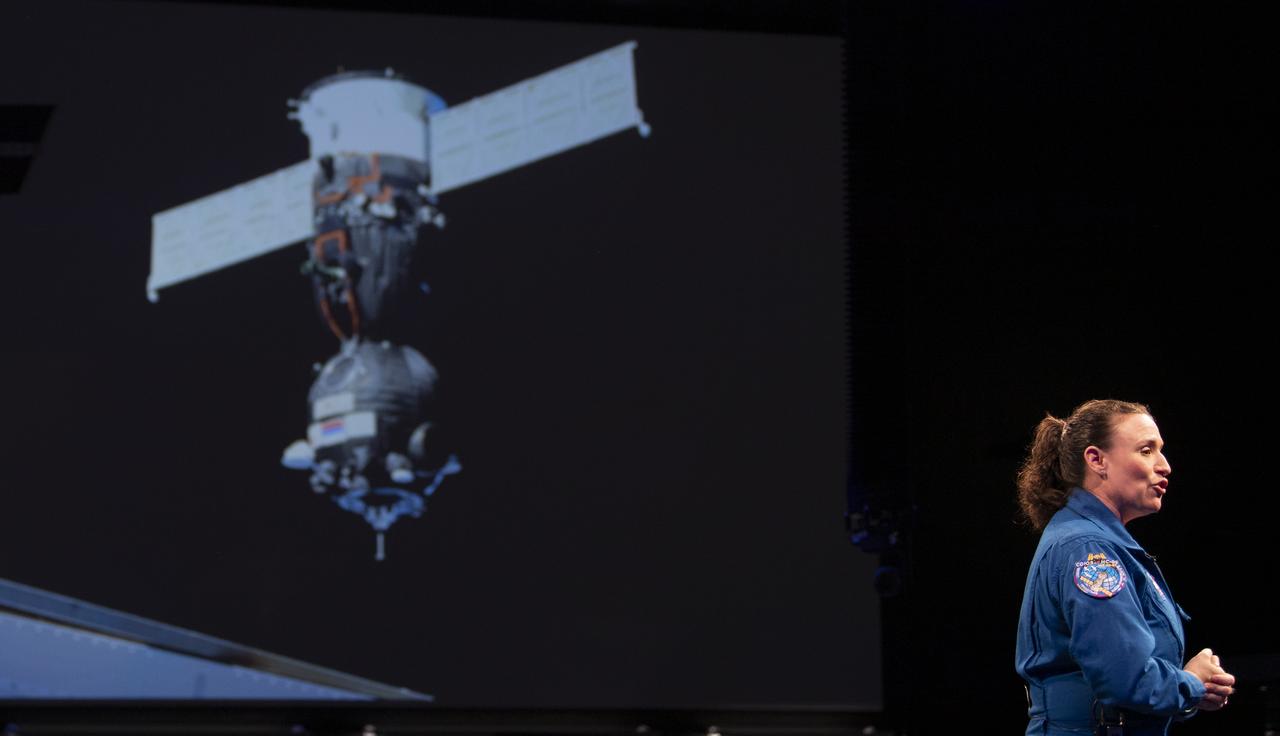
NASA astronaut Serena Auñón-Chancellor speaks about her time onboard the International Space Station during "What's New in Aerospace" Friday, June 14, 2019 the Smithsonian's National Air and Space Museum in Washington, DC. Auñón-Chancellor spent 197 days living and working onboard the orbital laboratory as part of Expeditions 56 and 57, contributing to hundreds of experiments in biology, biotechnology, physical science, and Earth science while there. She began her career at NASA as a flight surgeon before being selected as an astronaut in 2009. Photo Credit: (NASA/Joel Kowsky)
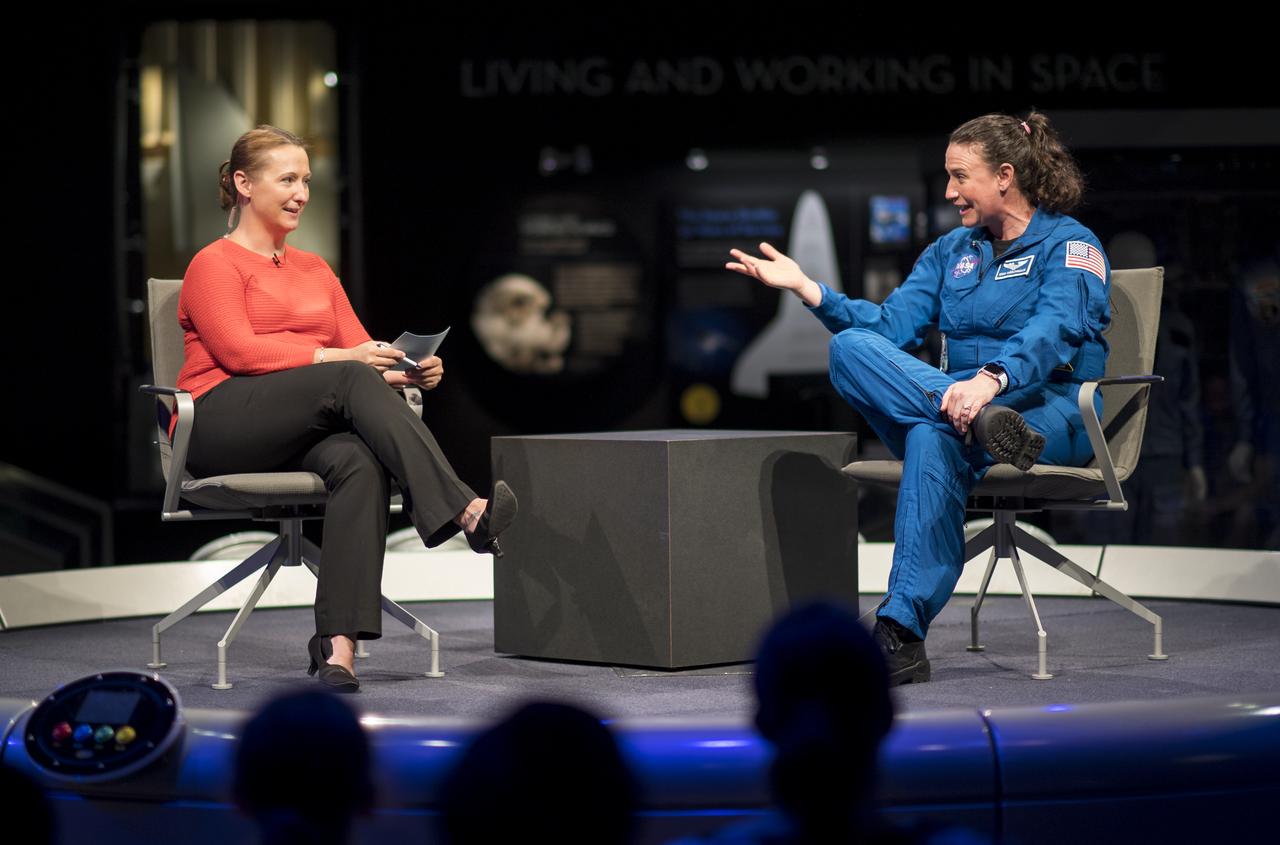
Smithsonian National Air and Space Museum curator Jennifer Levasseu speaks with NASA astronaut Serena Auñón-Chancellor about her time onboard the International Space Station during "What's New in Aerospace" Friday, June 14, 2019 the Smithsonian's National Air and Space Museum in Washington, DC. Auñón-Chancellor spent 197 days living and working onboard the orbital laboratory as part of Expeditions 56 and 57, contributing to hundreds of experiments in biology, biotechnology, physical science, and Earth science while there. She began her career at NASA as a flight surgeon before being selected as an astronaut in 2009. Photo Credit: (NASA/Joel Kowsky)
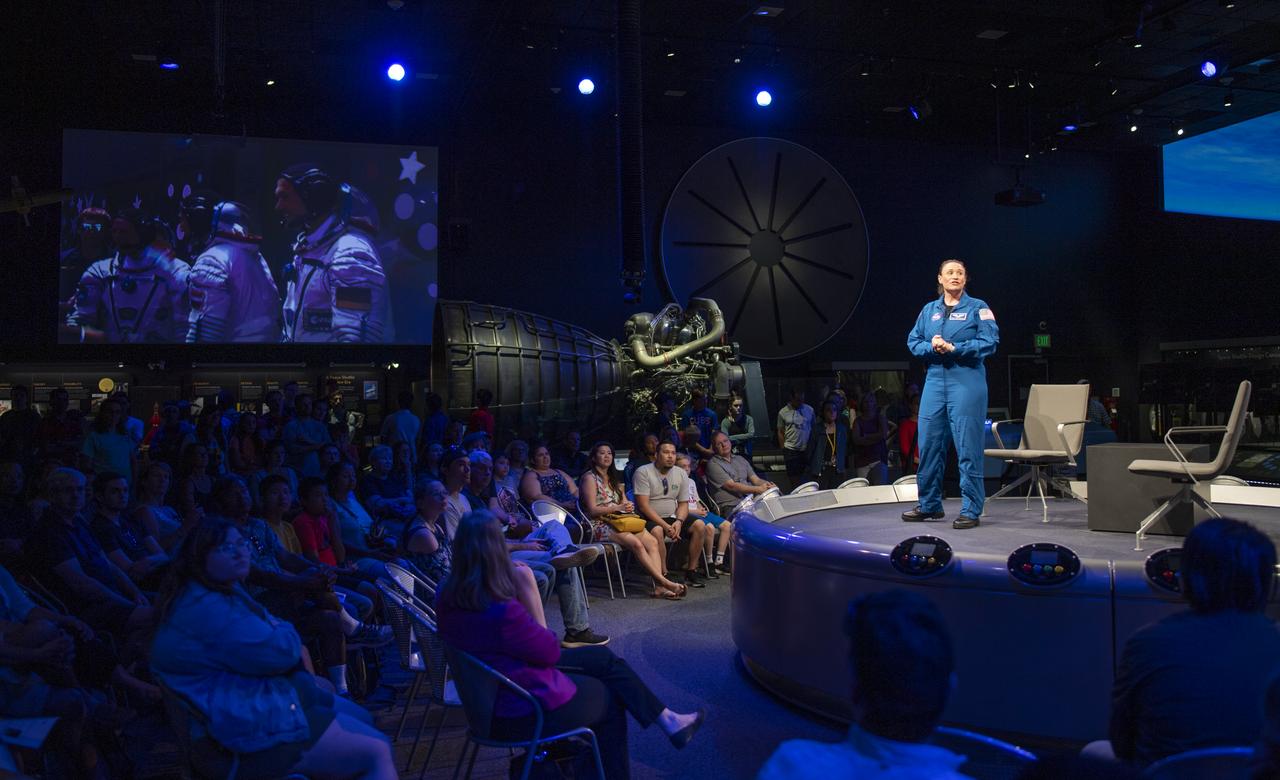
NASA astronaut Serena Auñón-Chancellor speaks about her time onboard the International Space Station during "What's New in Aerospace" Friday, June 14, 2019 the Smithsonian's National Air and Space Museum in Washington, DC. Auñón-Chancellor spent 197 days living and working onboard the orbital laboratory as part of Expeditions 56 and 57, contributing to hundreds of experiments in biology, biotechnology, physical science, and Earth science while there. She began her career at NASA as a flight surgeon before being selected as an astronaut in 2009. Photo Credit: (NASA/Joel Kowsky)
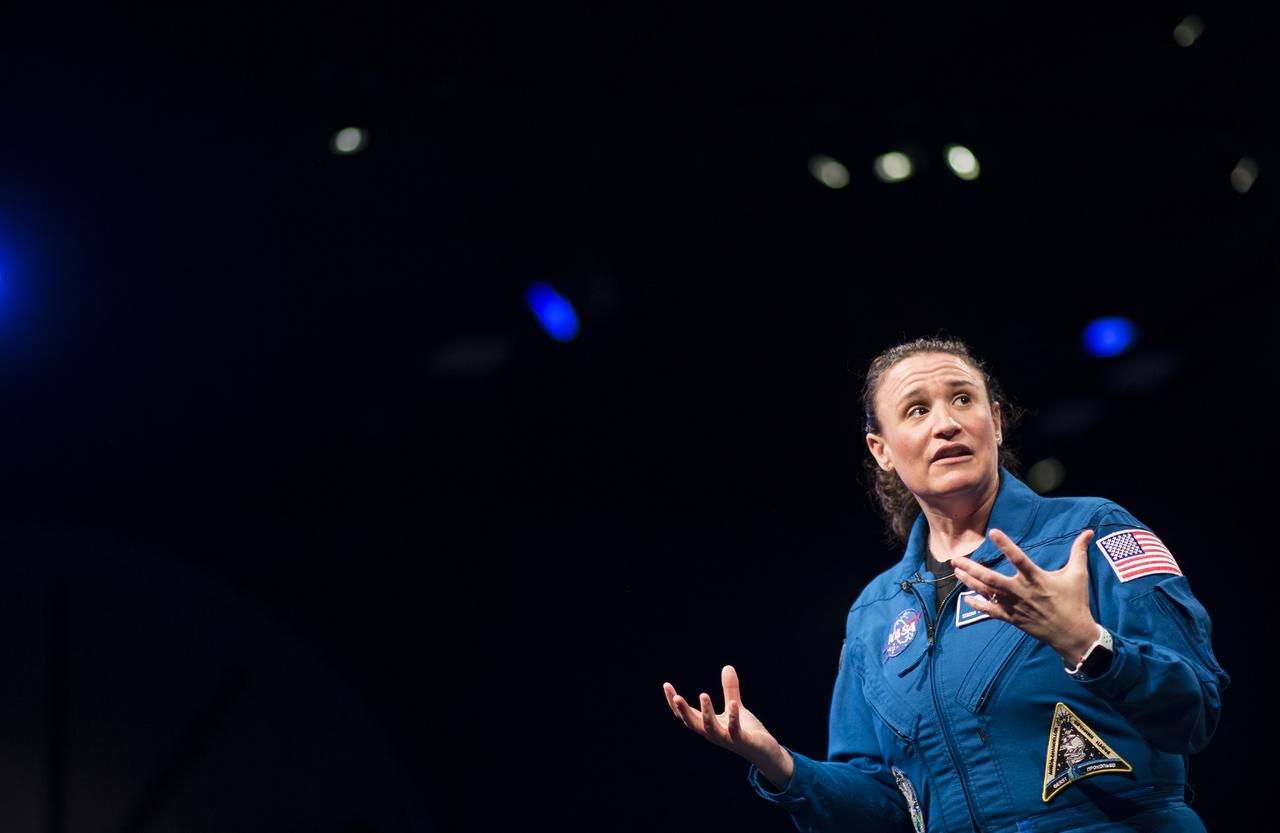
NASA astronaut Serena Auñón-Chancellor speaks about her time onboard the International Space Station during "What's New in Aerospace" Friday, June 14, 2019 the Smithsonian's National Air and Space Museum in Washington, DC. Auñón-Chancellor spent 197 days living and working onboard the orbital laboratory as part of Expeditions 56 and 57, contributing to hundreds of experiments in biology, biotechnology, physical science, and Earth science while there. She began her career at NASA as a flight surgeon before being selected as an astronaut in 2009. Photo Credit: (NASA/Joel Kowsky)
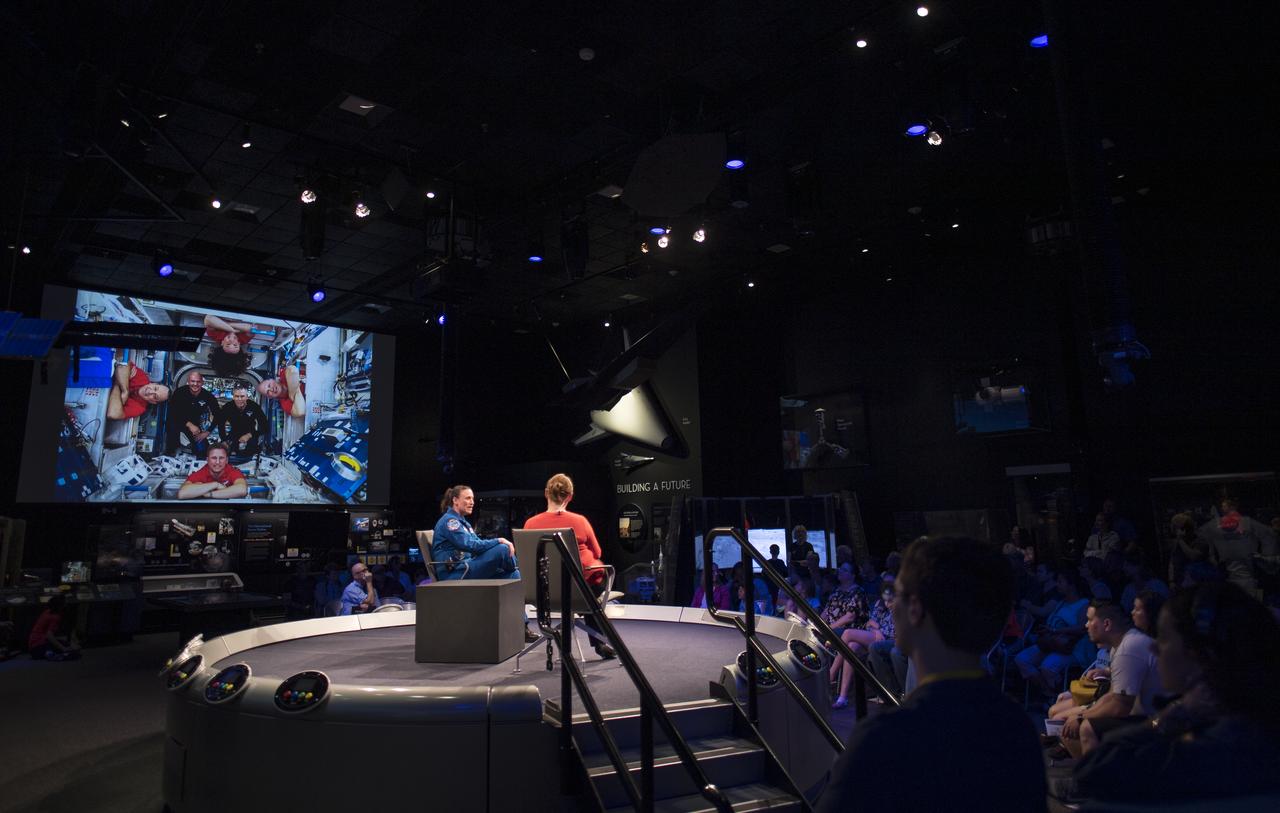
Smithsonian National Air and Space Museum curator Jennifer Levasseu speaks with NASA astronaut Serena Auñón-Chancellor about her time onboard the International Space Station during "What's New in Aerospace" Friday, June 14, 2019 the Smithsonian's National Air and Space Museum in Washington, DC. Auñón-Chancellor spent 197 days living and working onboard the orbital laboratory as part of Expeditions 56 and 57, contributing to hundreds of experiments in biology, biotechnology, physical science, and Earth science while there. She began her career at NASA as a flight surgeon before being selected as an astronaut in 2009. Photo Credit: (NASA/Joel Kowsky)
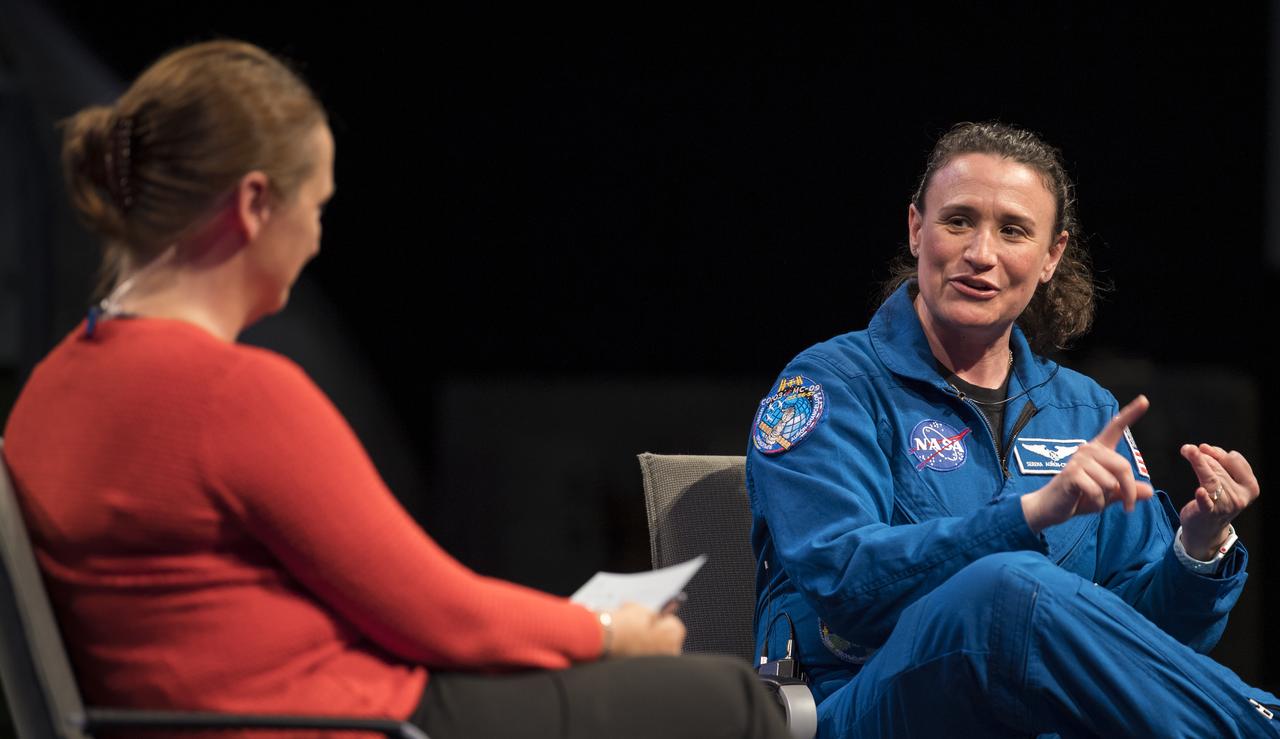
Smithsonian National Air and Space Museum curator Jennifer Levasseu speaks with NASA astronaut Serena Auñón-Chancellor about her time onboard the International Space Station during "What's New in Aerospace" Friday, June 14, 2019 the Smithsonian's National Air and Space Museum in Washington, DC. Auñón-Chancellor spent 197 days living and working onboard the orbital laboratory as part of Expeditions 56 and 57, contributing to hundreds of experiments in biology, biotechnology, physical science, and Earth science while there. She began her career at NASA as a flight surgeon before being selected as an astronaut in 2009. Photo Credit: (NASA/Joel Kowsky)
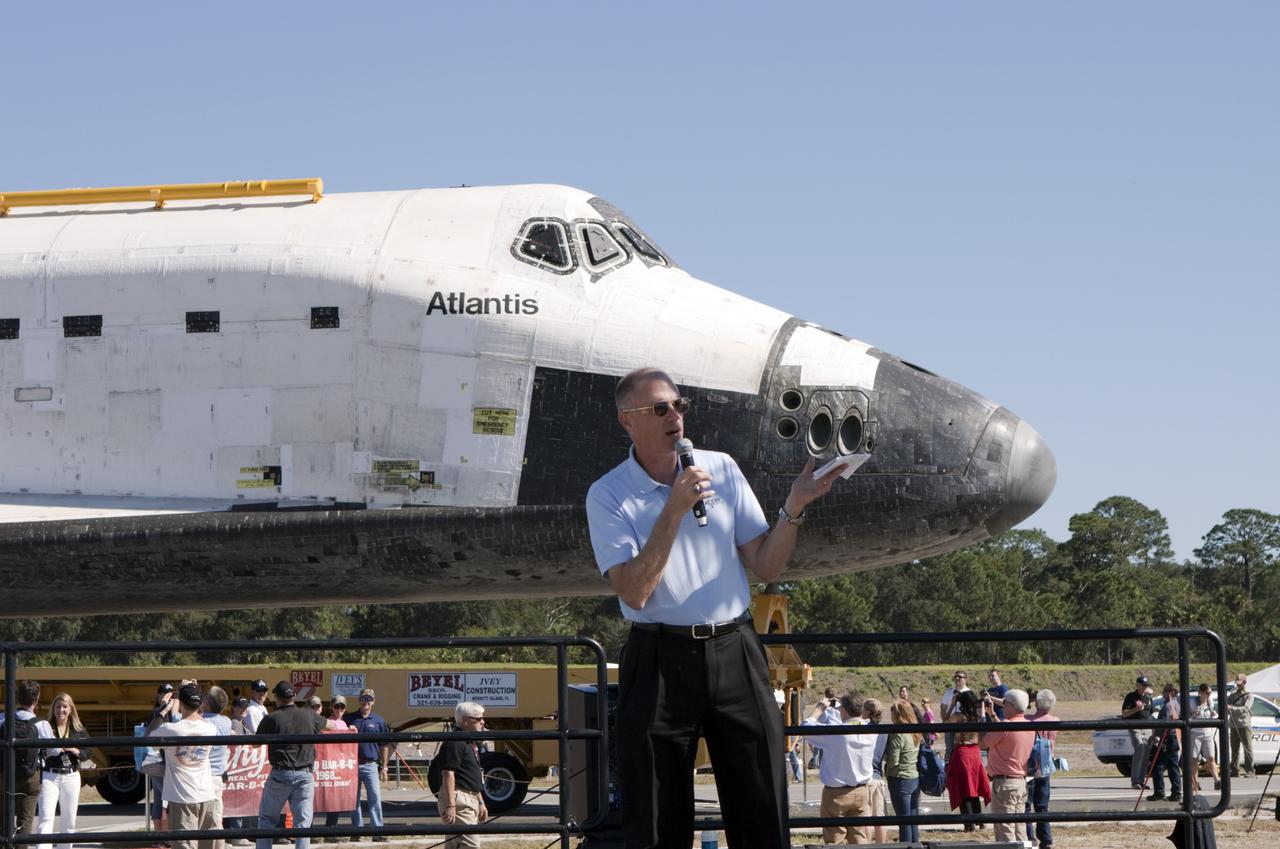
CAPE CANAVERAL, Fla. – Former space shuttle astronaut Rick Searfoss, now representing XCOR Aerospace, speaks to guests at Space Florida's Exploration Park where the space shuttle Atlantis pauses during its 10-mile journey to the Kennedy Visitor Complex. As part of transition and retirement of the Space Shuttle Program, Atlantis is to be displayed at Kennedy's visitor complex beginning in the summer of 2013. Over the course of its 26-year career, Atlantis traveled 125,935,769 miles during 307 days in space over 33 missions. For more information, visit http://www.nasa.gov/transition. Photo credit: NASA/Jim Grossmann
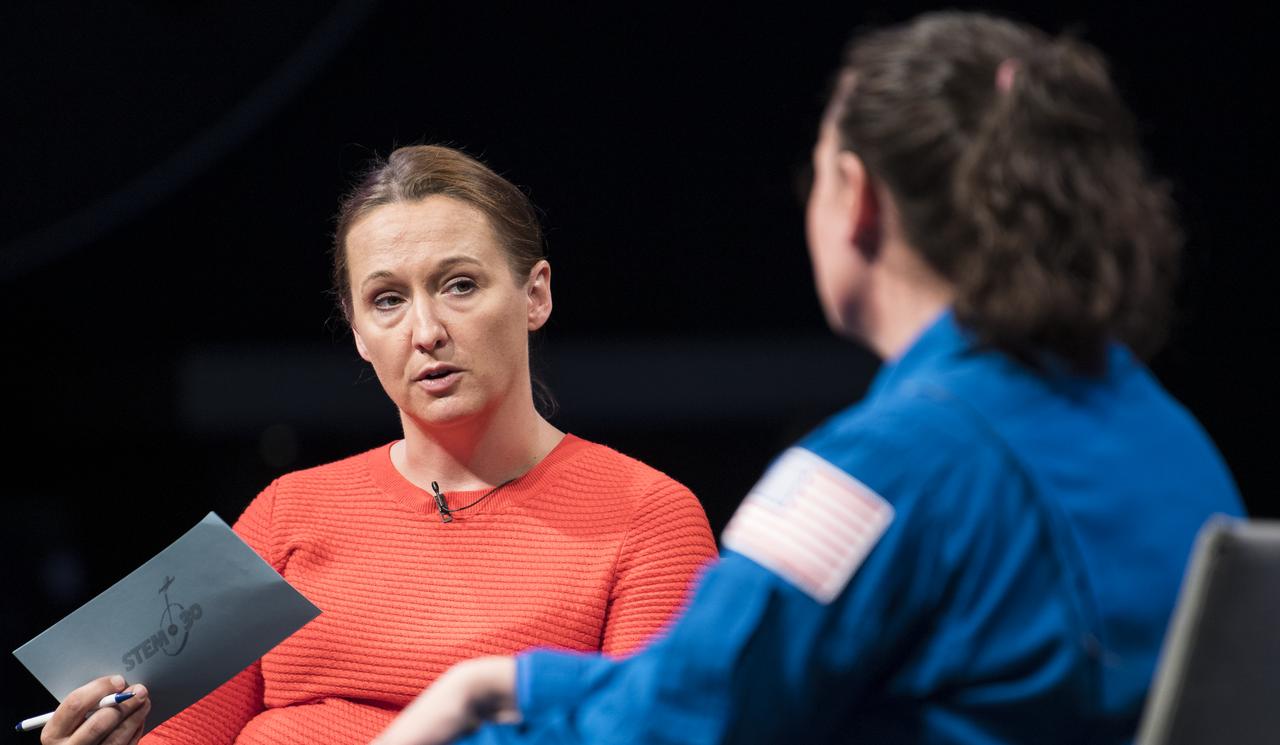
Smithsonian National Air and Space Museum curator Jennifer Levasseu speaks with NASA astronaut Serena Auñón-Chancellor about her time onboard the International Space Station during "What's New in Aerospace" Friday, June 14, 2019 the Smithsonian's National Air and Space Museum in Washington, DC. Auñón-Chancellor spent 197 days living and working onboard the orbital laboratory as part of Expeditions 56 and 57, contributing to hundreds of experiments in biology, biotechnology, physical science, and Earth science while there. She began her career at NASA as a flight surgeon before being selected as an astronaut in 2009. Photo Credit: (NASA/Joel Kowsky)
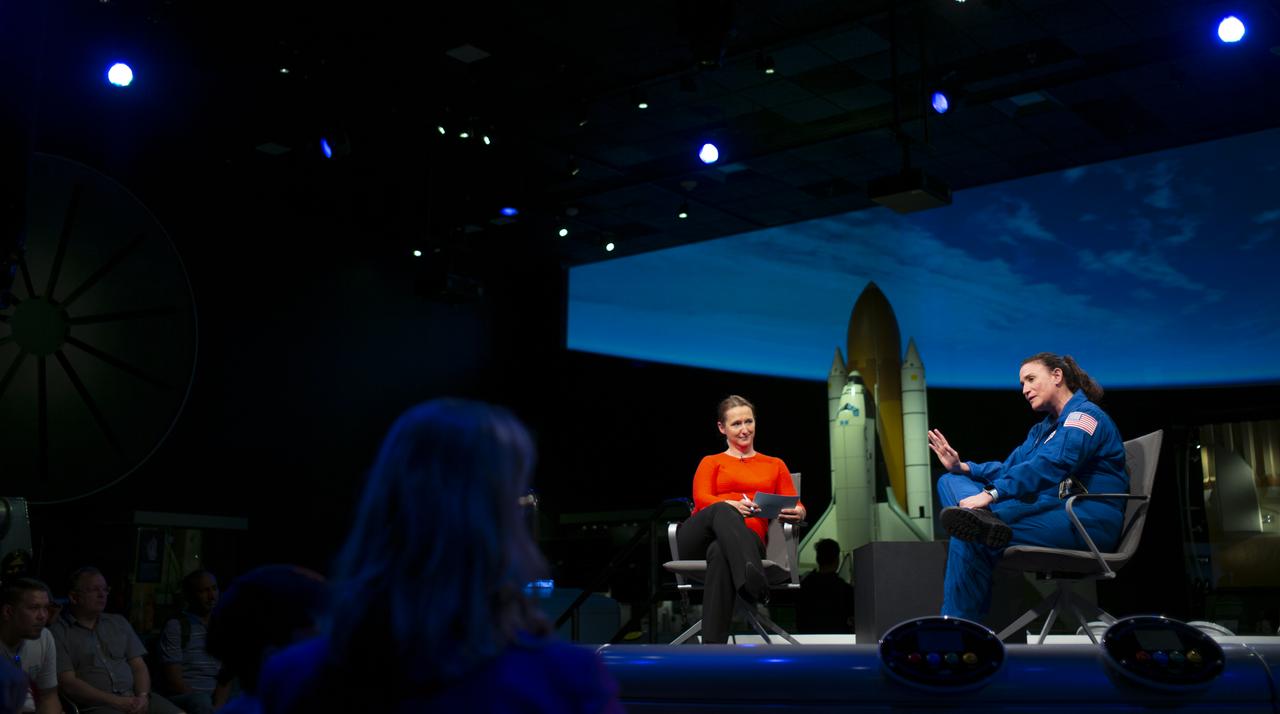
Smithsonian National Air and Space Museum curator Jennifer Levasseu speaks with NASA astronaut Serena Auñón-Chancellor about her time onboard the International Space Station during "What's New in Aerospace" Friday, June 14, 2019 the Smithsonian's National Air and Space Museum in Washington, DC. Auñón-Chancellor spent 197 days living and working onboard the orbital laboratory as part of Expeditions 56 and 57, contributing to hundreds of experiments in biology, biotechnology, physical science, and Earth science while there. She began her career at NASA as a flight surgeon before being selected as an astronaut in 2009. Photo Credit: (NASA/Joel Kowsky)
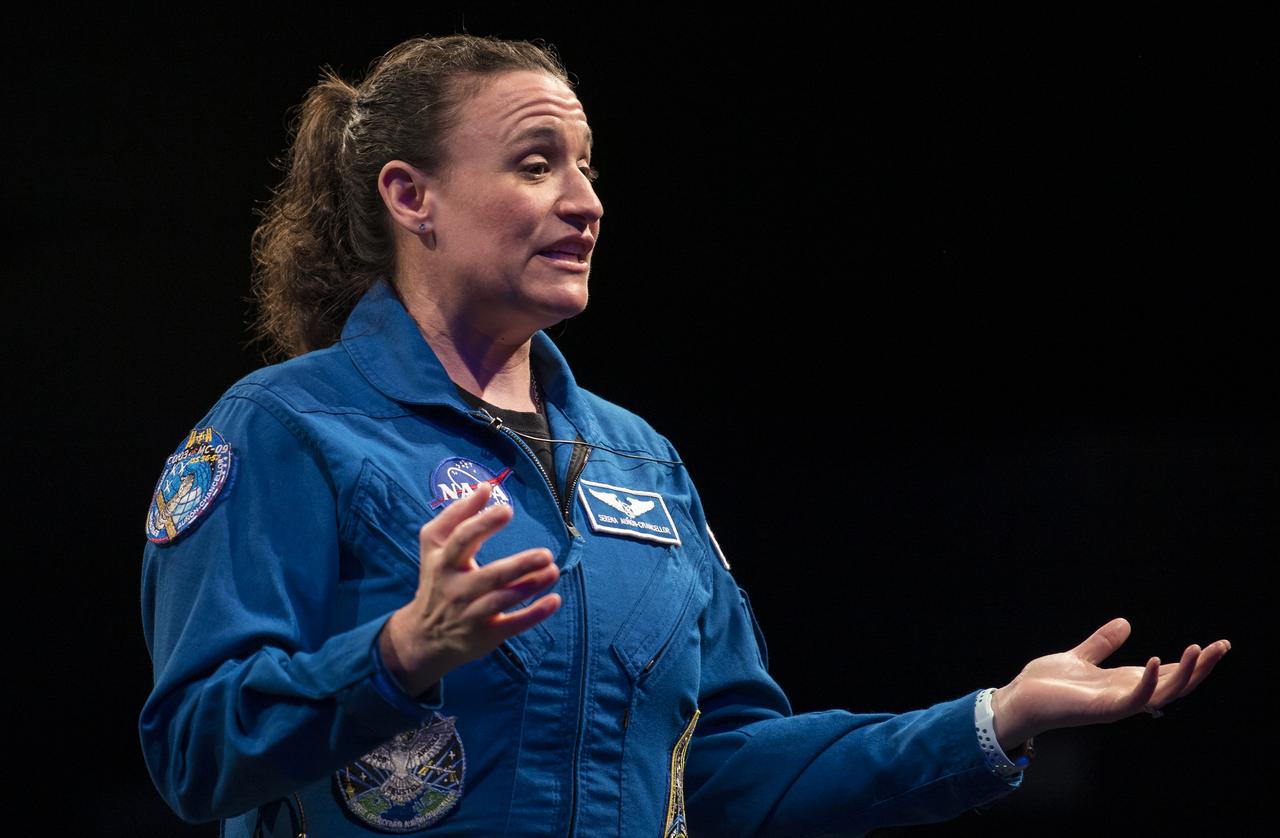
NASA astronaut Serena Auñón-Chancellor speaks about her time onboard the International Space Station during "What's New in Aerospace" Friday, June 14, 2019 the Smithsonian's National Air and Space Museum in Washington, DC. Auñón-Chancellor spent 197 days living and working onboard the orbital laboratory as part of Expeditions 56 and 57, contributing to hundreds of experiments in biology, biotechnology, physical science, and Earth science while there. She began her career at NASA as a flight surgeon before being selected as an astronaut in 2009. Photo Credit: (NASA/Joel Kowsky)
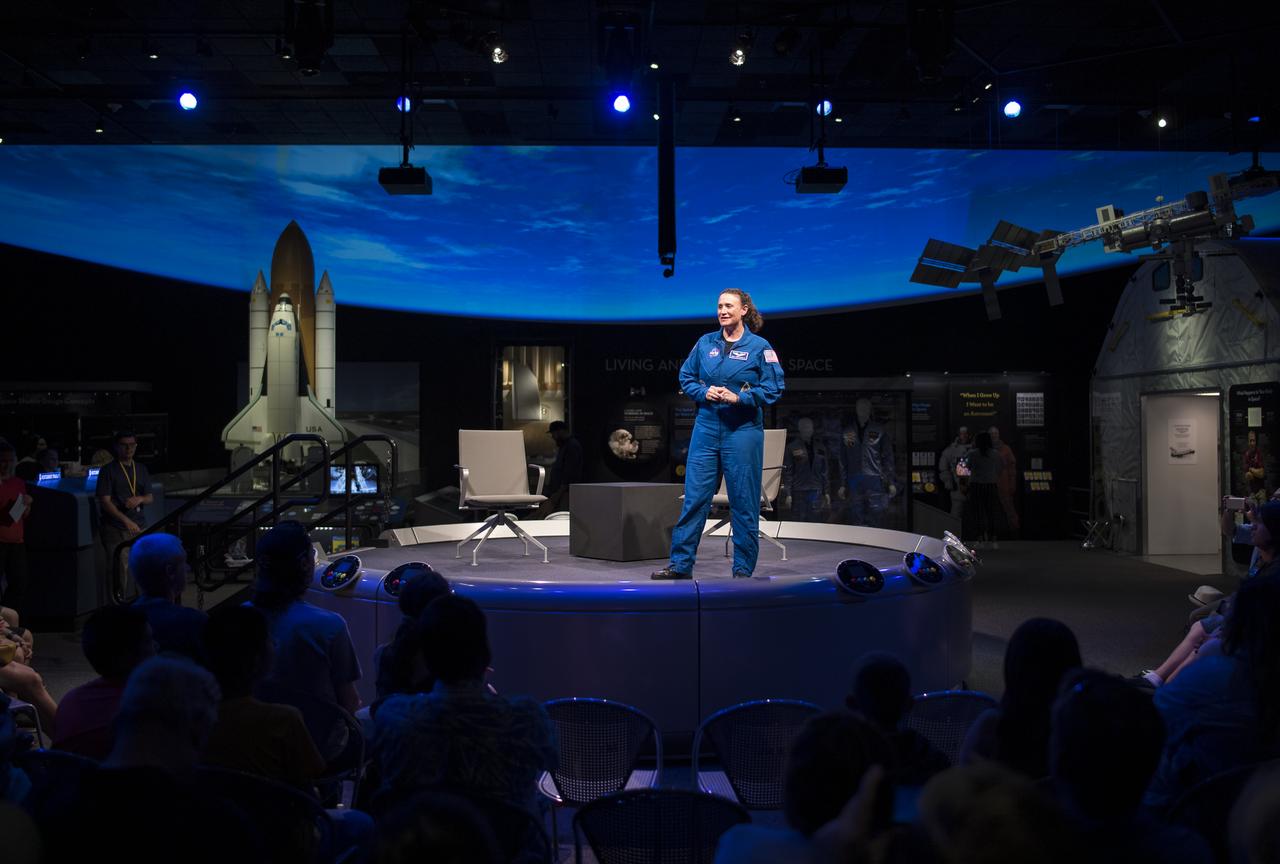
NASA astronaut Serena Auñón-Chancellor speaks about her time onboard the International Space Station during "What's New in Aerospace" Friday, June 14, 2019 the Smithsonian's National Air and Space Museum in Washington, DC. Auñón-Chancellor spent 197 days living and working onboard the orbital laboratory as part of Expeditions 56 and 57, contributing to hundreds of experiments in biology, biotechnology, physical science, and Earth science while there. She began her career at NASA as a flight surgeon before being selected as an astronaut in 2009. Photo Credit: (NASA/Joel Kowsky)
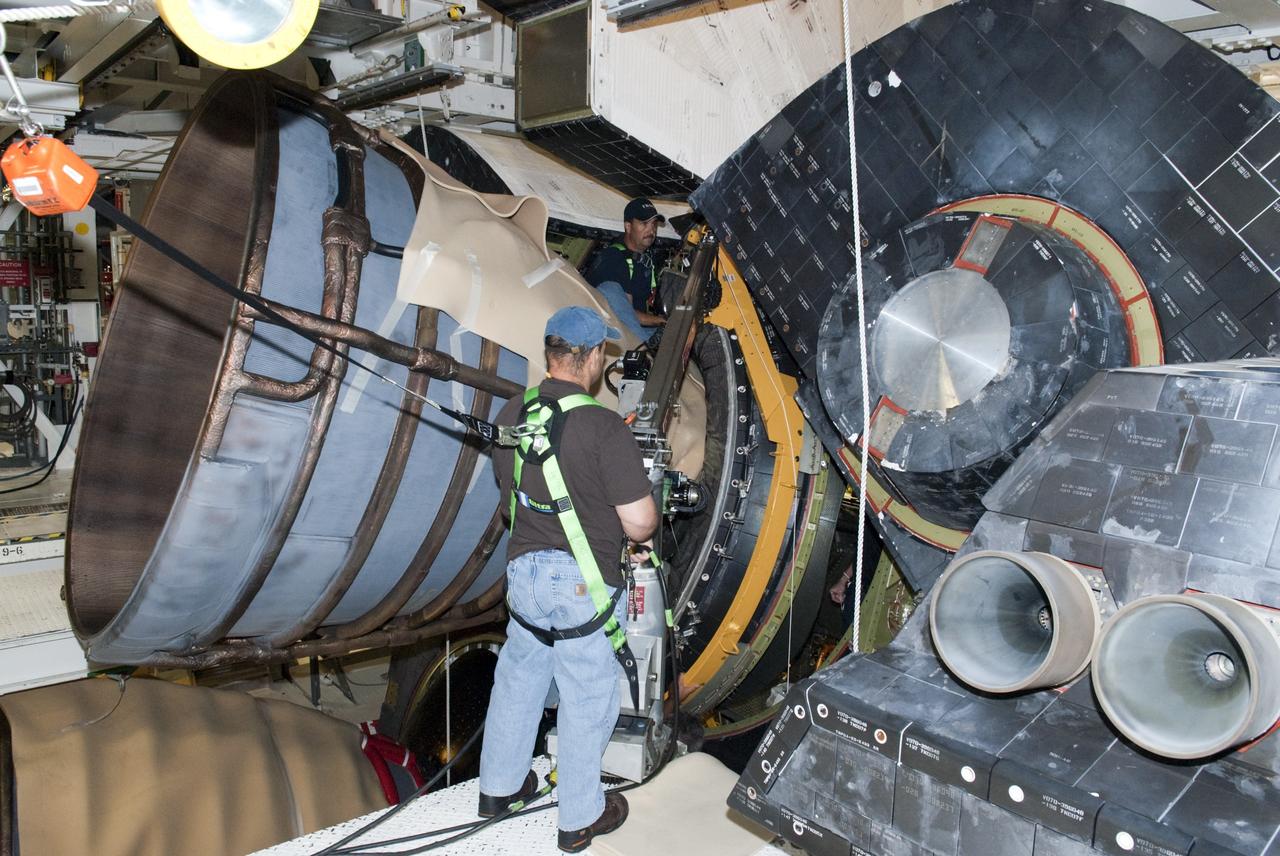
CAPE CANAVERAL, Fla. – In Orbiter Processing Facility Bay 2 at NASA’s Kennedy Space Center in Florida, United Space Alliance aerospace technicians install a heat shield around the base of space shuttle Endeavour’s replica shuttle main engine RSME number 1. Bill Ward Jr., wearing a safety harness and his back to the camera, assists Chris Peluso. The work is part of Transition and Retirement of the remaining space shuttles, Endeavour and Atlantis. Endeavour is being prepared for public display at the California Science Center in Los Angeles. Its ferry flight to California is targeted for mid-September. Endeavour was the last space shuttle added to NASA’s orbiter fleet. Over the course of its 19-year career, Endeavour spent 299 days in space during 25 missions. For more information, visit http://www.nasa.gov/transition Photo credit: NASA/ Tim Jacobs
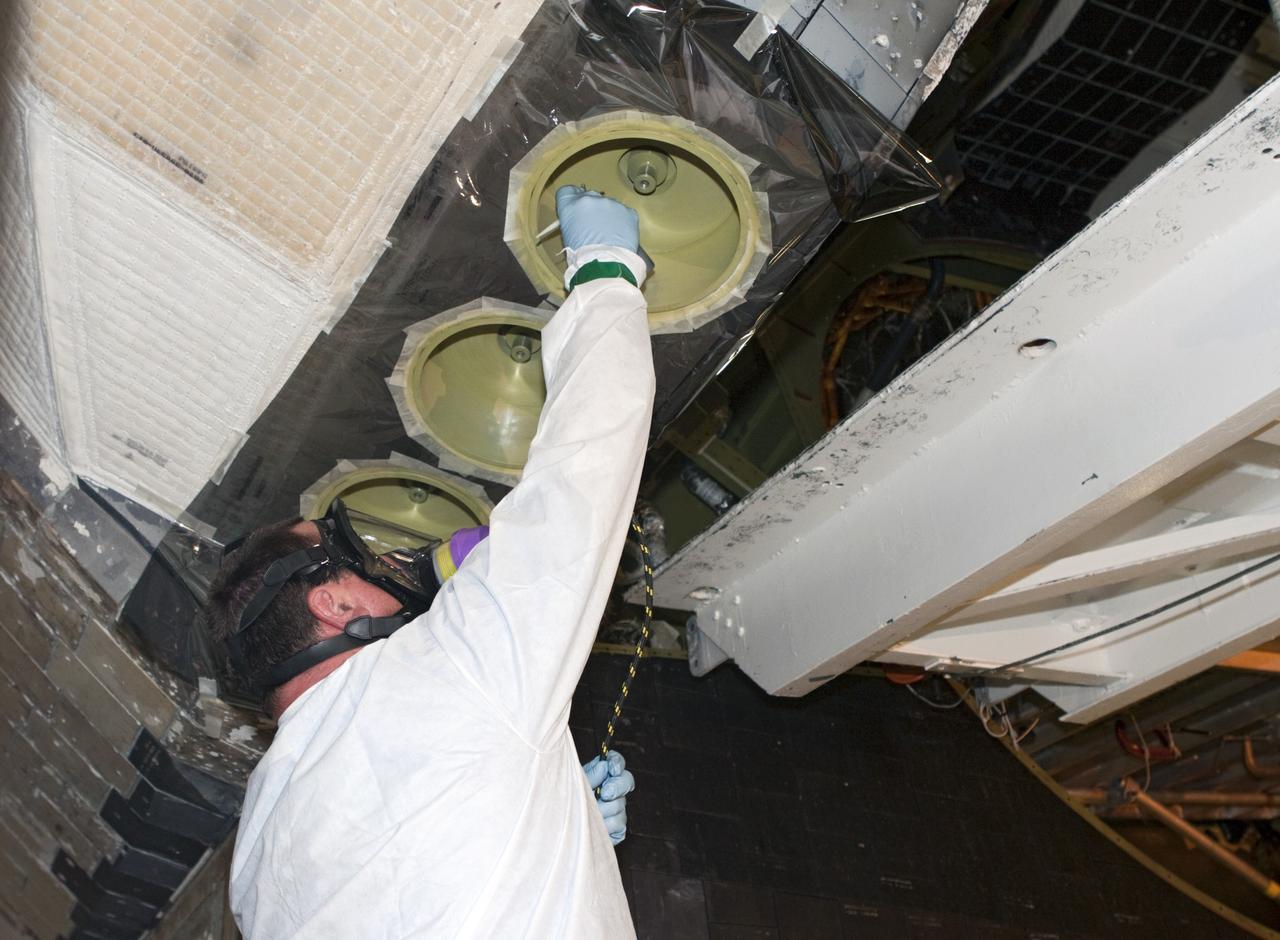
CAPE CANAVERAL, Fla. - In Orbiter Processing Facility Bay 2 at NASA’s Kennedy Space Center in Florida, United Space Alliance senior aerospace technician Alan Shinault spray paints simulated thrusters on the space shuttle Endeavour. The work is part of Transition and Retirement of the remaining space shuttles, Endeavour and Atlantis. Endeavour is being prepared for public display at the California Science Center in Los Angeles. Its ferry flight to California is targeted for mid-September. Endeavour was the last space shuttle added to NASA’s orbiter fleet. Over the course of its 19-year career, Endeavour spent 299 days in space during 25 missions. For more information, visit http://www.nasa.gov/transition Photo credit: NASA/Jim Grossmann
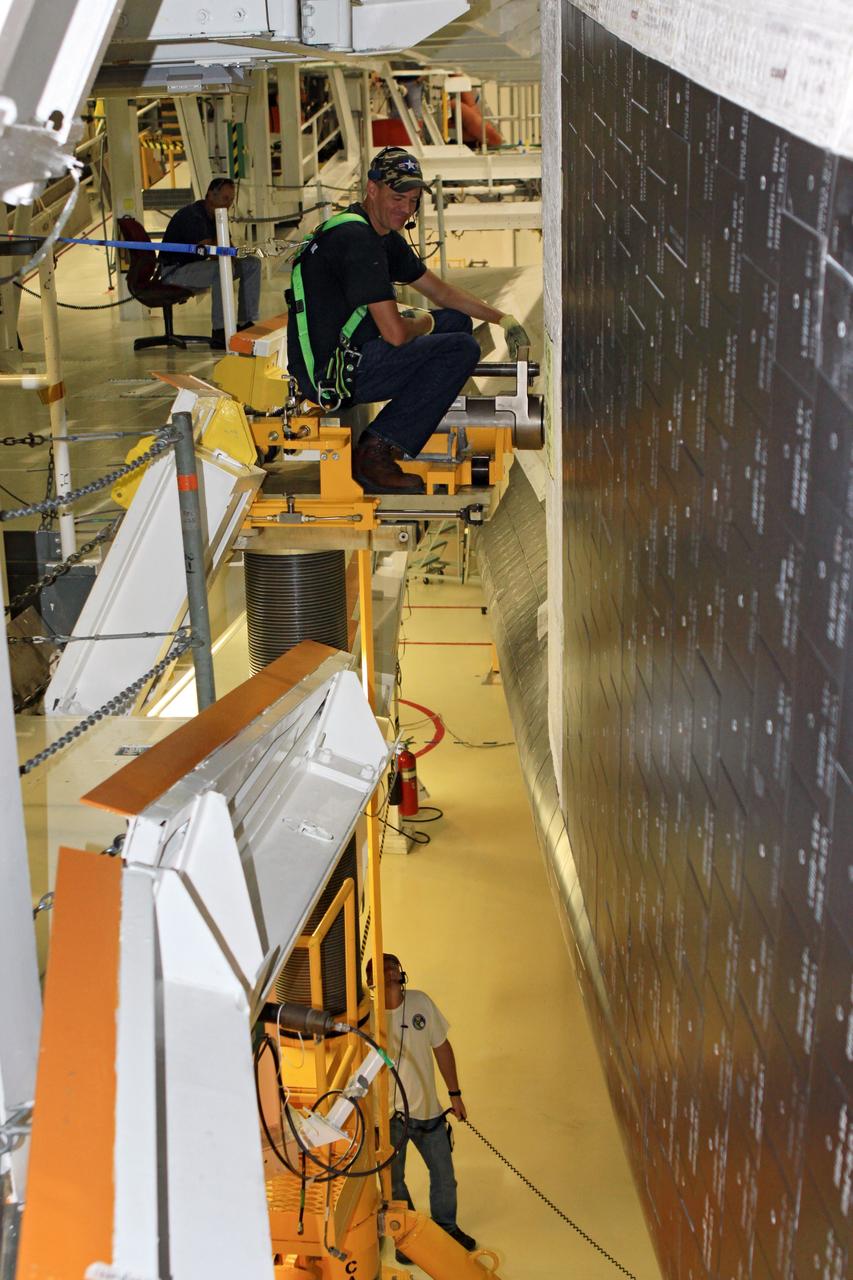
CAPE CANAVERAL, Fla. – While wearing a safety harness, United Space Alliance aerospace technician Greg Smith checks equipment during weight and center of gravity checks on the space shuttle Endeavour in Bay 2 of the Orbiter Processing Facility at NASA’s Kennedy Space Center in Florida. The work is part of Transition and Retirement of the remaining space shuttles, Endeavour and Atlantis. Endeavour is being prepared for public display at the California Science Center in Los Angeles. Its ferry flight to California is targeted for mid-September. Endeavour was the last space shuttle added to NASA’s orbiter fleet. Over the course of its 19-year career, Endeavour spent 299 days in space during 25 missions. For more information, visit http://www.nasa.gov/transition Photo credit: NASA/ Jim Grossmann
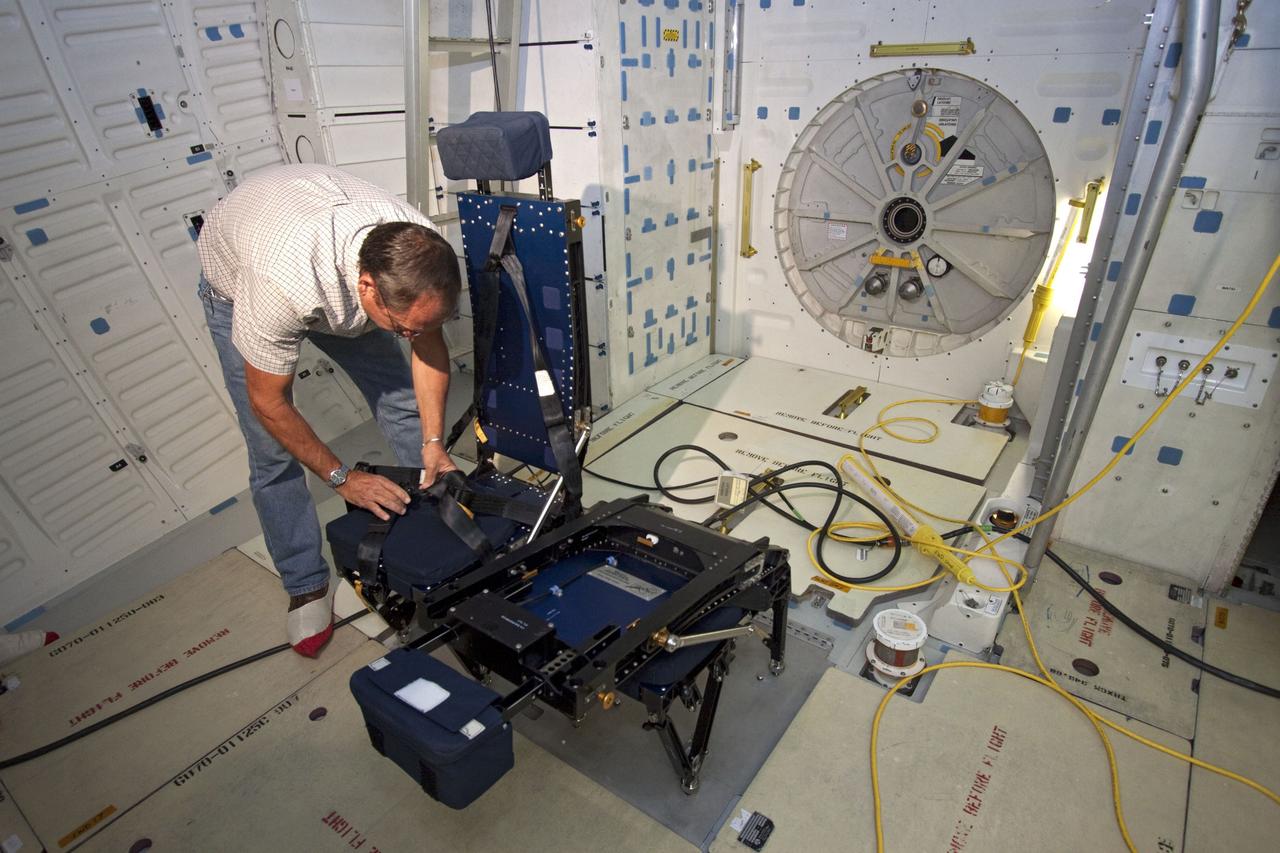
CAPE CANAVERAL, Fla. – In Orbiter Processing Facility Bay 2 at NASA’s Kennedy Space Center in Florida, United Space Alliance senior aerospace technician Bobby Wright prepares two launch and entry seats to be moved from the space shuttle Endeavour's mid-deck to the flight deck. The orbiter is undergoing final preparations for its cross-country ferry flight to California. The work is part of Transition and Retirement of the remaining space shuttles, Endeavour and Atlantis. Endeavour is being prepared for public display at the California Science Center in Los Angeles. Its ferry flight to California is targeted for mid-September. Endeavour was the last space shuttle added to NASA’s orbiter fleet. Over the course of its 19-year career, Endeavour spent 299 days in space during 25 missions. For more information, visit http://www.nasa.gov/transition Photo credit: NASA/ Jim Grossmann
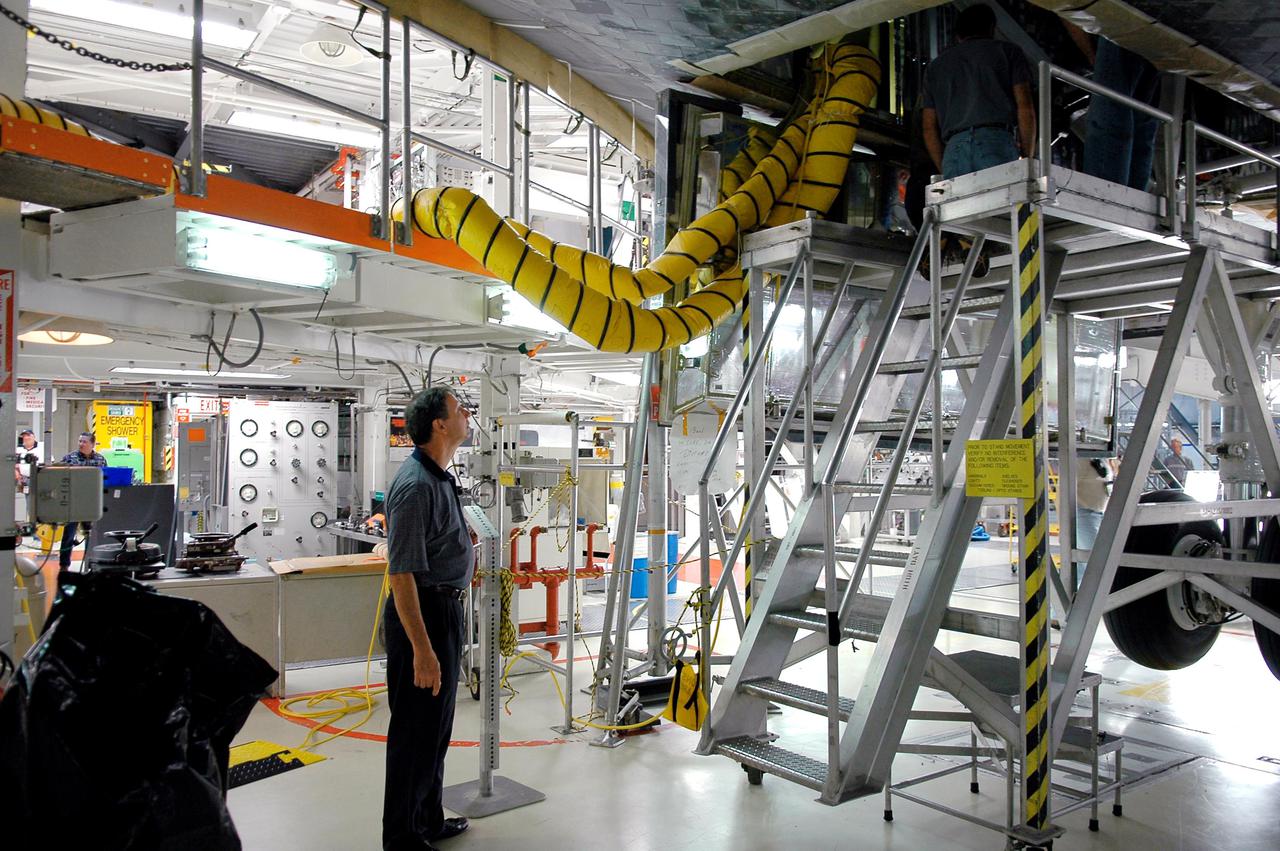
KENNEDY SPACE CENTER, FLA. - In Orbiter Processing Facility bay 1, NASA Administrator Michael Griffin observes as technicians prepare Space Shuttle Atlantis for the second Return to Flight mission, STS-121. This is Griffin's first official visit to Kennedy Space Center. Griffin is the 11th administrator of NASA, a role he assumed on April 14, 2005. Griffin was nominated to the position in March while serving as the Space Department head at Johns Hopkins University's Applied Physics Laboratory in Baltimore. A registered professional engineer in Maryland and California, Griffin served as chief engineer at NASA earlier in his career. He holds numerous scientific and technical degrees including a Ph.D. in Aerospace Engineering from the University of Maryland.
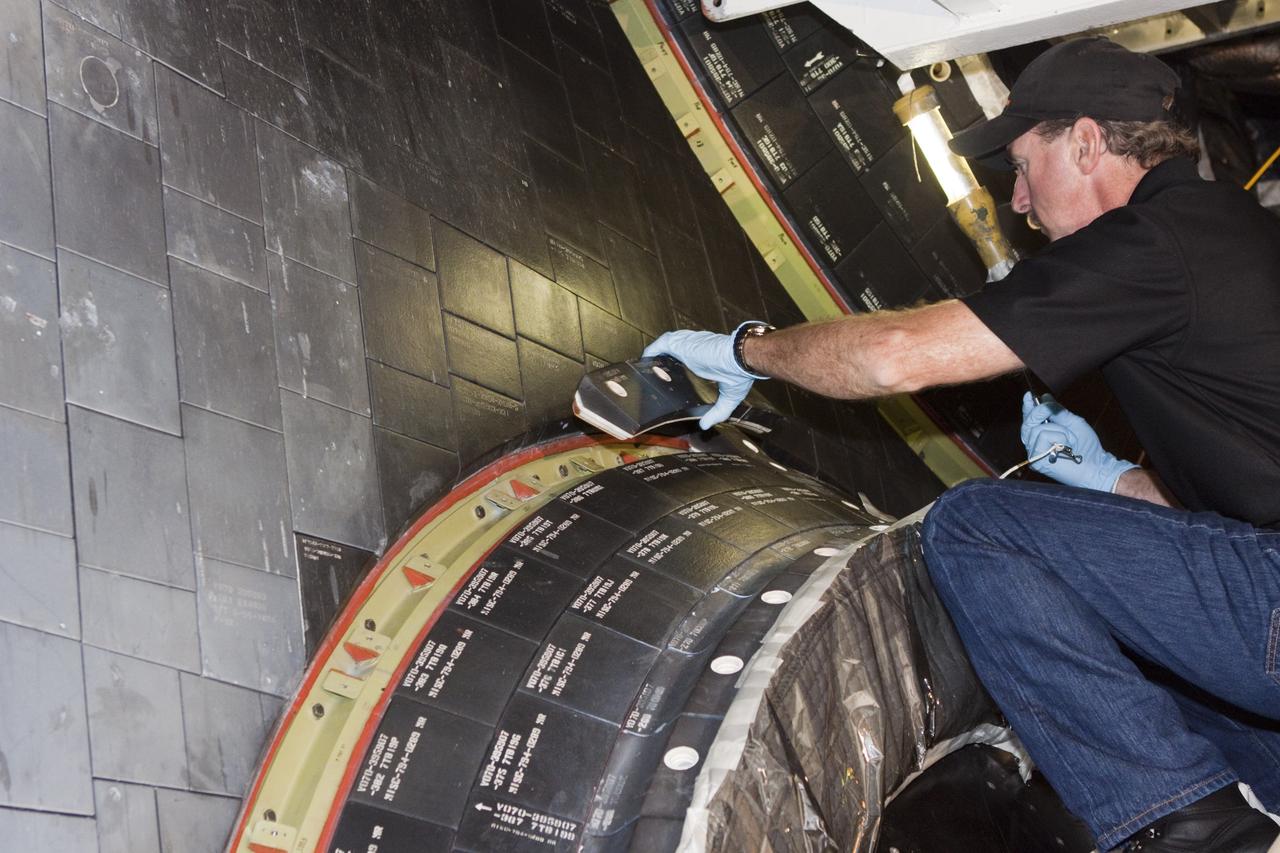
CAPE CANAVERAL, Fla. – In Orbiter Processing Facility Bay 2 at NASA’s Kennedy Space Center in Florida, United Space Alliance aerospace technician Chris Peluso installs a heat shield carrier panel on the space shuttle Endeavour. The work is part of Transition and Retirement of the remaining space shuttles, Endeavour and Atlantis. Endeavour is being prepared for public display at the California Science Center in Los Angeles. Its ferry flight to California is targeted for mid-September. Endeavour was the last space shuttle added to NASA’s orbiter fleet. Over the course of its 19-year career, Endeavour spent 299 days in space during 25 missions. For more information, visit http://www.nasa.gov/transition Photo credit: NASA/ Jim Grossmann
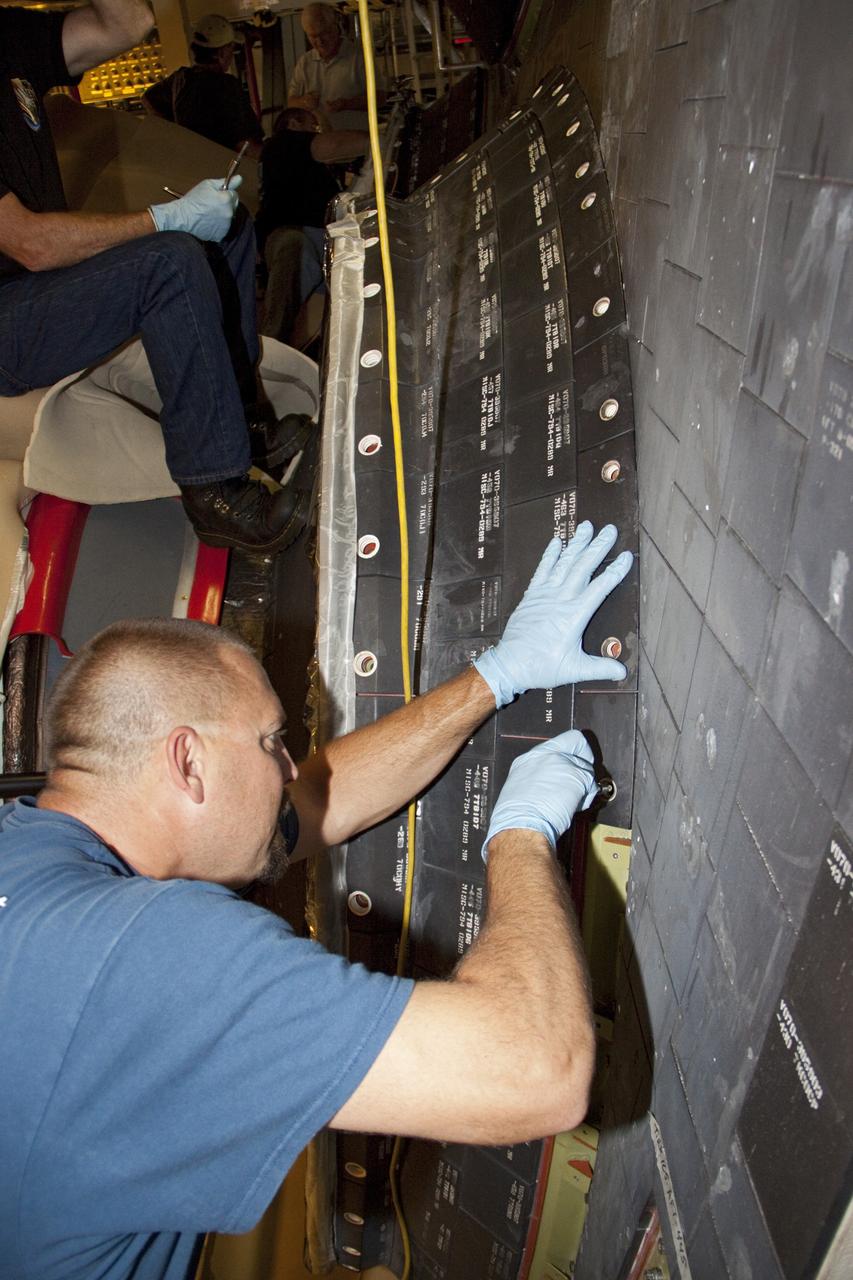
CAPE CANAVERAL, Fla. – In Orbiter Processing Facility Bay 2 at NASA’s Kennedy Space Center in Florida, United Space Alliance aerospace technician Tom Goldean installs a heat shield carrier panel on the space shuttle Endeavour. The work is part of Transition and Retirement of the remaining space shuttles, Endeavour and Atlantis. Endeavour is being prepared for public display at the California Science Center in Los Angeles. Its ferry flight to California is targeted for mid-September. Endeavour was the last space shuttle added to NASA’s orbiter fleet. Over the course of its 19-year career, Endeavour spent 299 days in space during 25 missions. For more information, visit http://www.nasa.gov/transition Photo credit: NASA/ Jim Grossmann
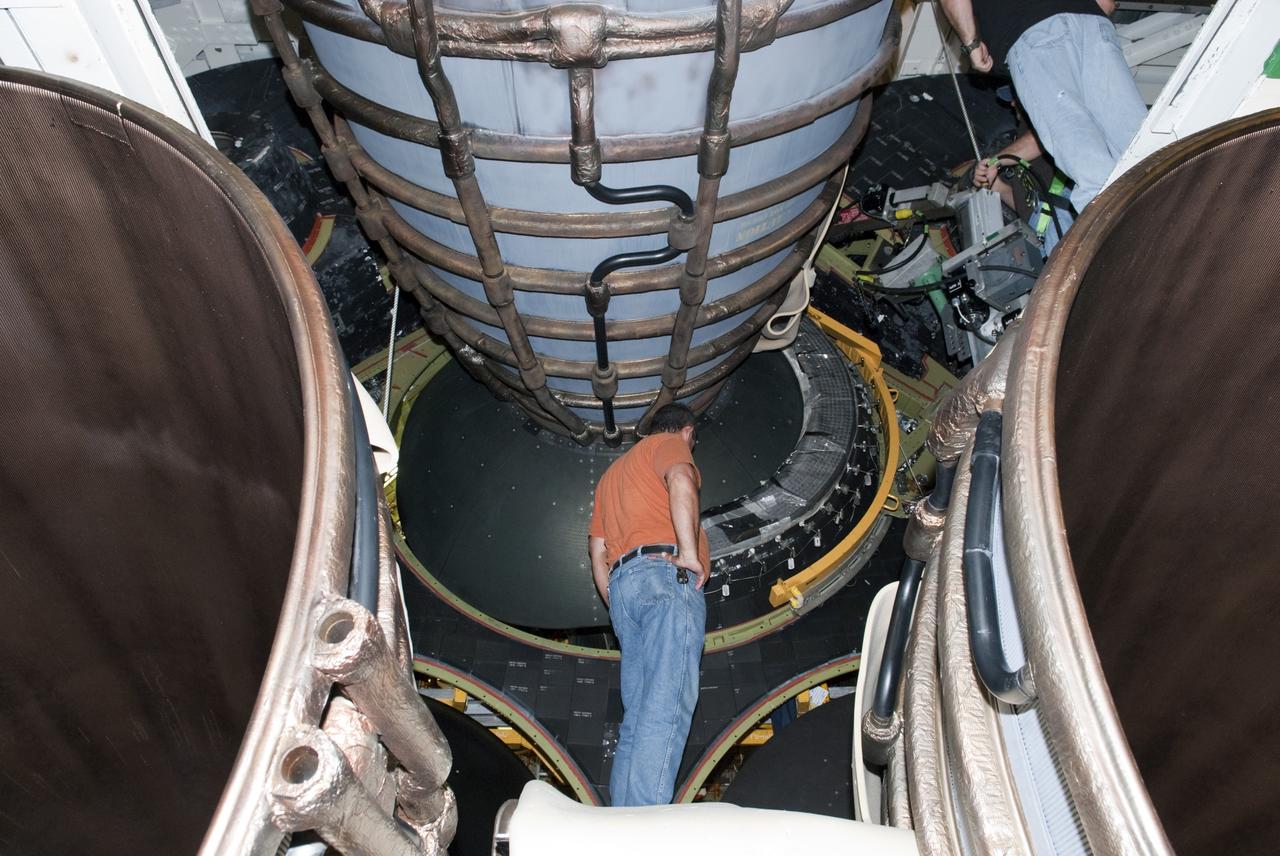
CAPE CANAVERAL, Fla. – In Orbiter Processing Facility Bay 2 at NASA’s Kennedy Space Center in Florida, United Space Alliance aerospace technician Tim Seymour inspects a heat shield that had just been installed around the base of space shuttle Endeavour’s replica shuttle main engine RSME number 1. The work is part of Transition and Retirement of the remaining space shuttles, Endeavour and Atlantis. Endeavour is being prepared for public display at the California Science Center in Los Angeles. Its ferry flight to California is targeted for mid-September. Endeavour was the last space shuttle added to NASA’s orbiter fleet. Over the course of its 19-year career, Endeavour spent 299 days in space during 25 missions. For more information, visit http://www.nasa.gov/transition Photo credit: NASA/ Tim Jacobs
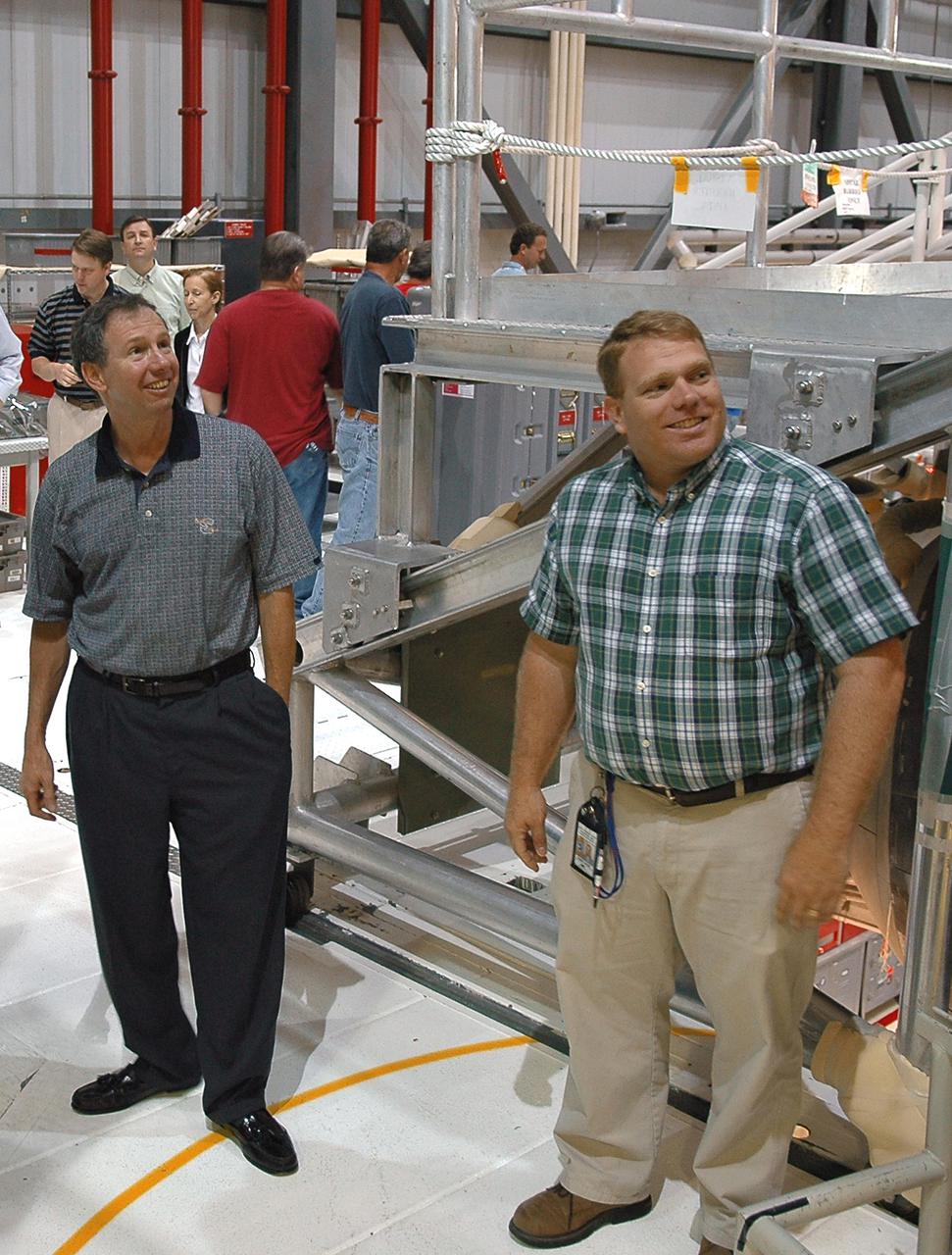
KENNEDY SPACE CENTER, FLA. - NASA Administrator Michael Griffin (left) tours Orbiter Processing Facility bay 1 where Space Shuttle Atlantis is currently being processed for the second Return to Flight mission, STS-121. He is accompanied by NASA ground systems engineer Doug Moore. This is Griffin's first official visit to Kennedy Space Center. Griffin is the 11th administrator of NASA, a role he assumed on April 14, 2005. Griffin was nominated to the position in March while serving as the Space Department head at Johns Hopkins University's Applied Physics Laboratory in Baltimore. A registered professional engineer in Maryland and California, Griffin served as chief engineer at NASA earlier in his career. He holds numerous scientific and technical degrees including a Ph.D. in Aerospace Engineering from the University of Maryland.
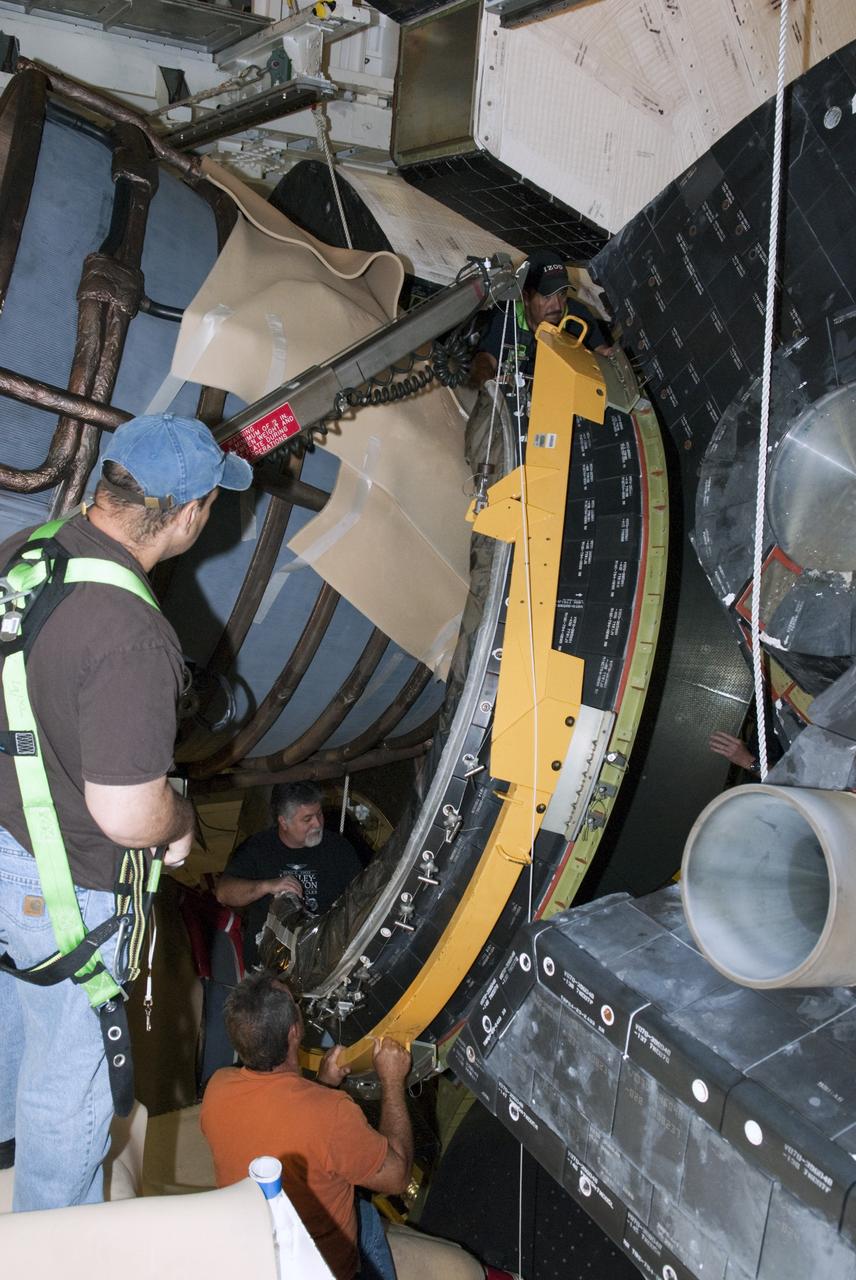
CAPE CANAVERAL, Fla. – In Orbiter Processing Facility Bay 2 at NASA’s Kennedy Space Center in Florida, United Space Alliance aerospace technicians install a heat shield around the base of space shuttle Endeavour’s replica shuttle main engine RSME number 1. Bill Ward Jr., wearing a safety harness, monitors the work of Mark Linthicum, facing the camera, and Tim Seymour. The work is part of Transition and Retirement of the remaining space shuttles, Endeavour and Atlantis. Endeavour is being prepared for public display at the California Science Center in Los Angeles. Its ferry flight to California is targeted for mid-September. Endeavour was the last space shuttle added to NASA’s orbiter fleet. Over the course of its 19-year career, Endeavour spent 299 days in space during 25 missions. For more information, visit http://www.nasa.gov/transition Photo credit: NASA/ Tim Jacobs
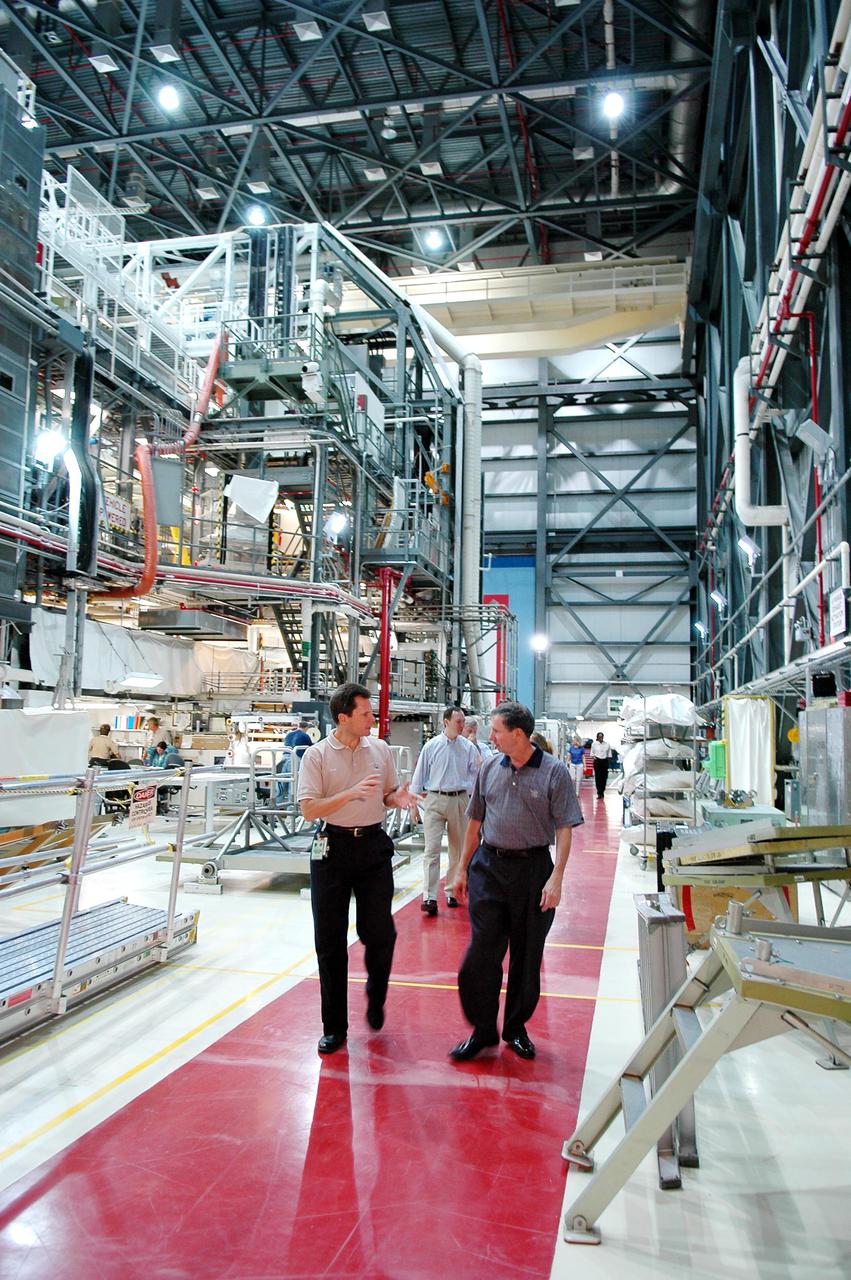
KENNEDY SPACE CENTER, FLA. - Michael Griffin (right), administrator of the National Aeronautics and Space Administration (NASA), tours Orbiter Processing Facility bay 1 with Space Shuttle Atlantis vehicle manager Scott Thurston. Space Shuttle Atlantis is being processed for the second Return to Flight mission, STS-121, in the facility. This is Griffin's first official visit to Kennedy Space Center. Griffin is the 11th administrator of NASA, a role he assumed on April 14, 2005. Griffin was nominated to the position in March while serving as the Space Department head at Johns Hopkins University's Applied Physics Laboratory in Baltimore. A registered professional engineer in Maryland and California, Griffin served as chief engineer at NASA earlier in his career. He holds numerous scientific and technical degrees including a Ph.D. in Aerospace Engineering from the University of Maryland.
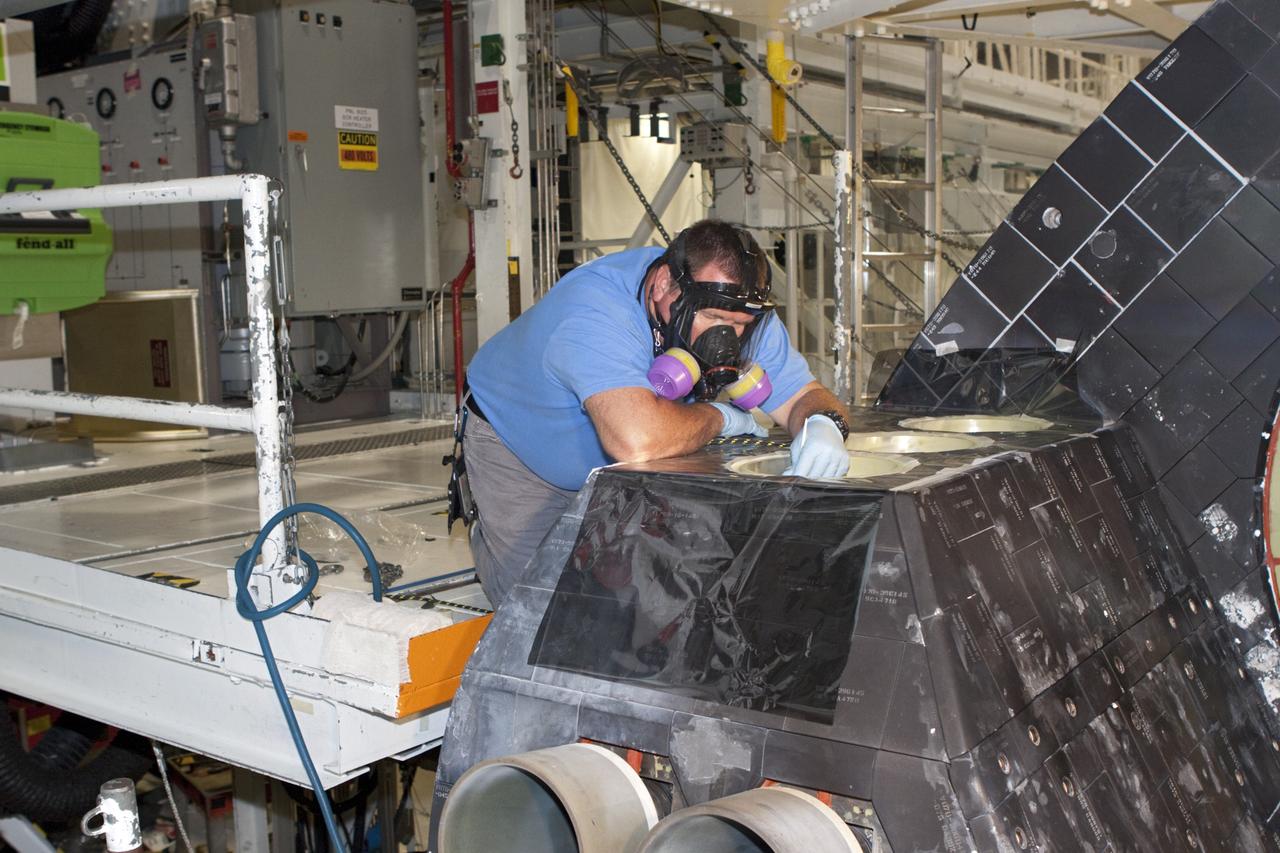
CAPE CANAVERAL, Fla. - In Orbiter Processing Facility Bay 2 at NASA’s Kennedy Space Center in Florida, United Space Alliance senior aerospace technician Alan Shinault spray paints simulated thrusters on the space shuttle Endeavour. The work is part of Transition and Retirement of the remaining space shuttles, Endeavour and Atlantis. Endeavour is being prepared for public display at the California Science Center in Los Angeles. Its ferry flight to California is targeted for mid-September. Endeavour was the last space shuttle added to NASA’s orbiter fleet. Over the course of its 19-year career, Endeavour spent 299 days in space during 25 missions. For more information, visit http://www.nasa.gov/transition Photo credit: NASA/Jim Grossmann
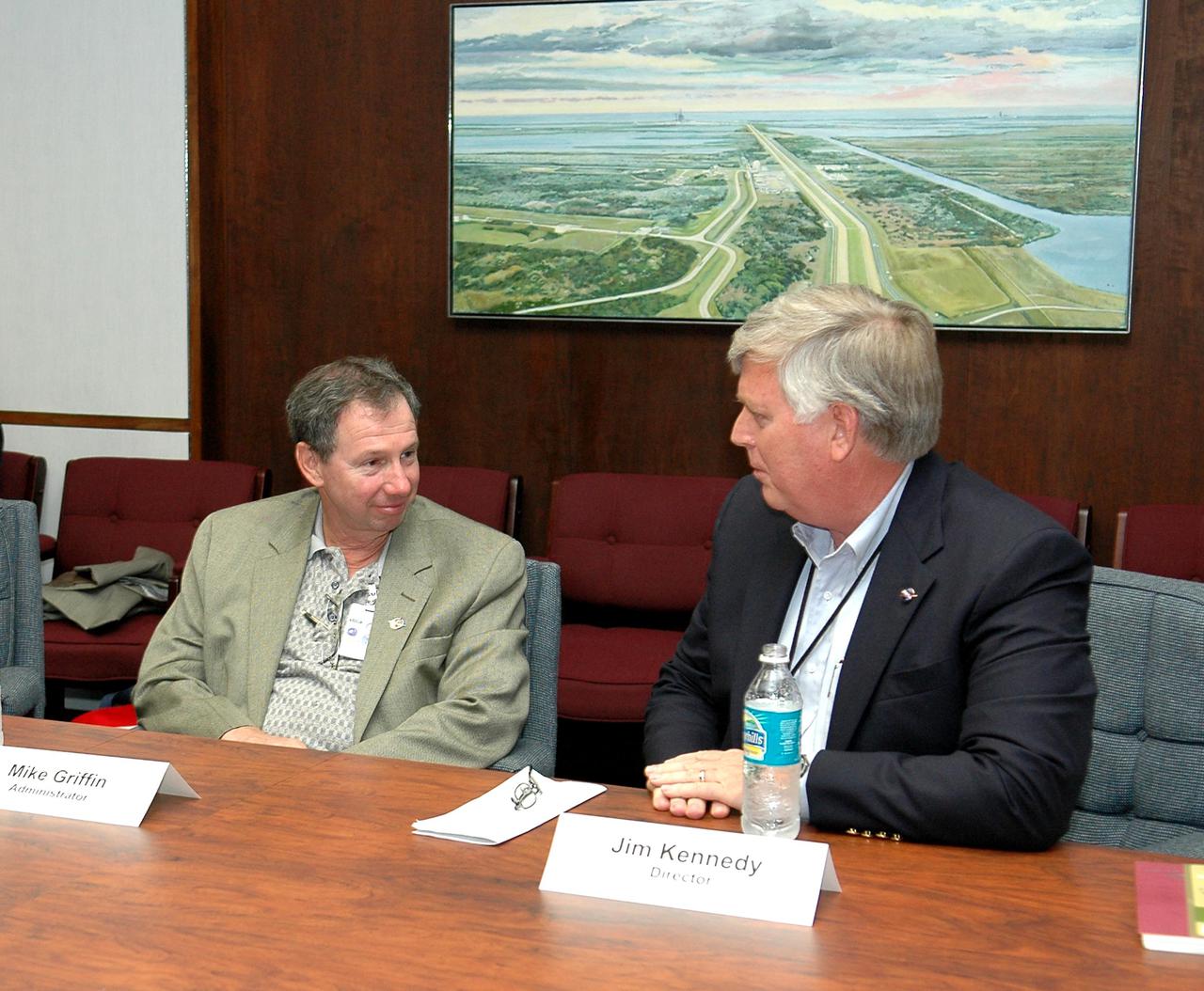
KENNEDY SPACE CENTER, FLA. - Dr. Michael Griffin (left), the new administrator of the National Aeronautics and Space Administration (NASA), meets with James W. Kennedy, the director of the John F. Kennedy Space Center (KSC) in Florida, during Griffin's first official visit to the Center. Griffin is the 11th administrator of NASA, a role he assumed on April 14, 2005. Griffin was nominated to the position in March by President George W. Bush while serving as the Space Department head at Johns Hopkins University's Applied Physics Laboratory in Baltimore. A registered professional engineer in Maryland and California, Griffin served as chief engineer at NASA earlier in his career. He holds numerous scientific and technical degrees including a Ph.D. in Aerospace Engineering from the University of Maryland.
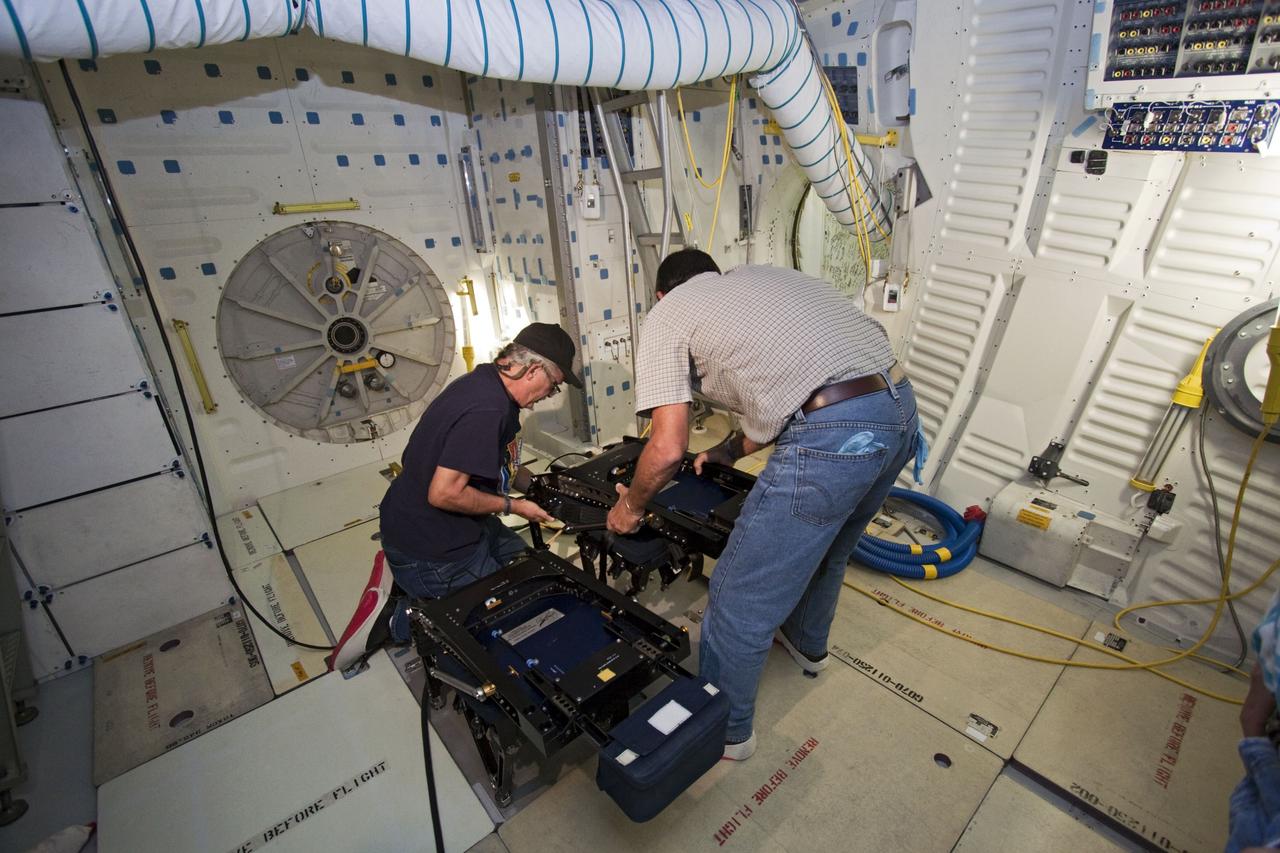
CAPE CANAVERAL, Fla. – In Orbiter Processing Facility Bay 2 at NASA’s Kennedy Space Center in Florida, United Space Alliance technician Joe Walsh, left, and senior aerospace technician Bobby Wright prepare two launch and entry seats to be moved from the space shuttle Endeavour's mid-deck to the flight deck. The orbiter is undergoing final preparations for its cross-country ferry flight to California. The work is part of Transition and Retirement of the remaining space shuttles, Endeavour and Atlantis. Endeavour is being prepared for public display at the California Science Center in Los Angeles. Its ferry flight to California is targeted for mid-September. Endeavour was the last space shuttle added to NASA’s orbiter fleet. Over the course of its 19-year career, Endeavour spent 299 days in space during 25 missions. For more information, visit http://www.nasa.gov/transition Photo credit: NASA/ Jim Grossmann
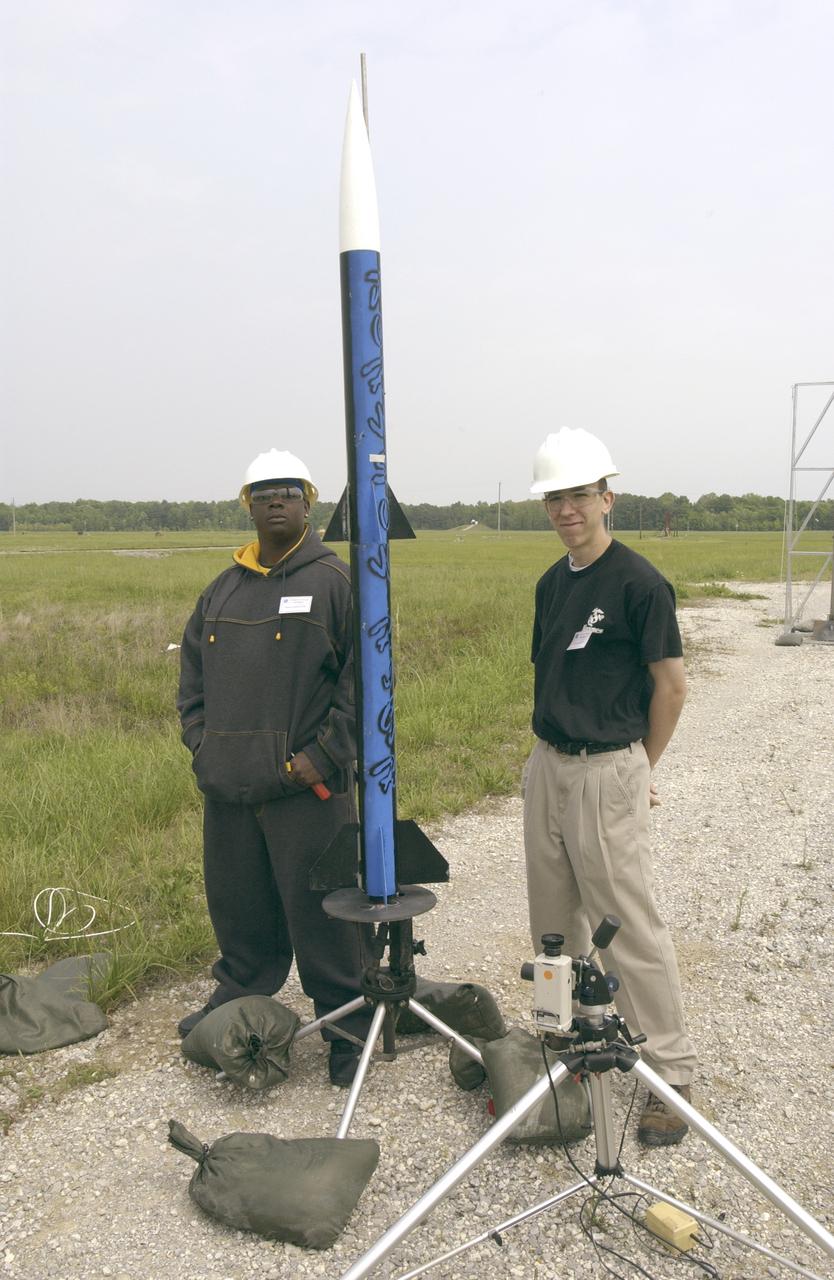
Filled with anticipation, students from three Huntsville area high schools: Randolph, Sparkman and Johnson High Schools, counted down to launch the rockets they designed and built at the Army test site on Redstone Arsenal in Huntsville, Alabama. The projected two-mile high launch culminated more than a year's work and demonstrated the student team's ability to meet the challenge set by the Marshall Space Flight Center's (MSFC) Student Launch Initiative (SLI) program to apply science and math to experience, judgment, and common sense, and proved to NASA officials that they have successfully built reusable launch vehicles (RLVs), another challenge set by NASA's SLI program. MSFC's SLI program is an educational effort that aims to motivate students to pursue careers in science, math, and engineering. It provides them with hands-on, practical aerospace experience. In this picture, two Johnson High School students pose with their rocket.
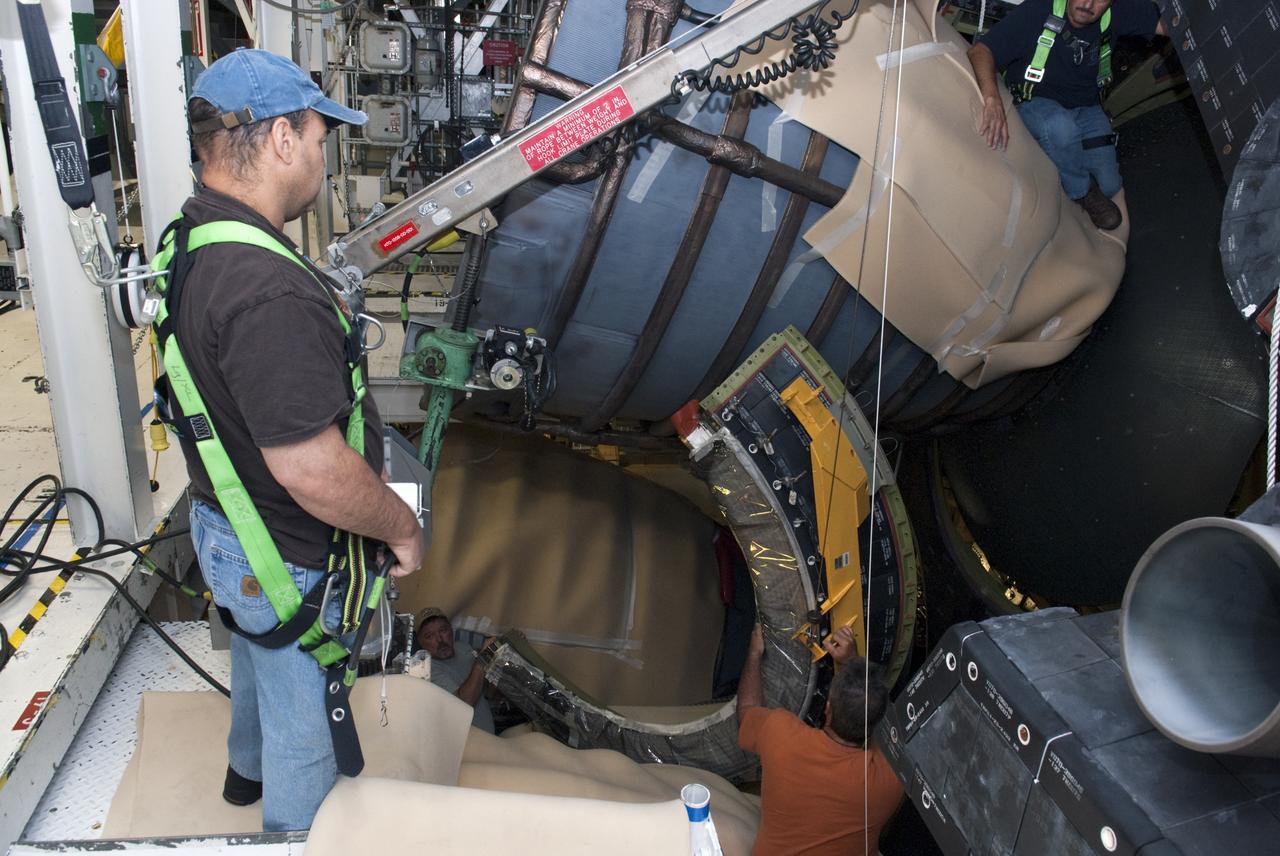
CAPE CANAVERAL, Fla. – In Orbiter Processing Facility Bay 2 at NASA’s Kennedy Space Center in Florida, United Space Alliance aerospace technicians install a heat shield around the base of space shuttle Endeavour’s replica shuttle main engine RSME number 1. Bill Ward Jr., wearing a safety harness, monitors the work of Tim Seymour in the lower portion of the image and Chris Peluso, above. The work is part of Transition and Retirement of the remaining space shuttles, Endeavour and Atlantis. Endeavour is being prepared for public display at the California Science Center in Los Angeles. Its ferry flight to California is targeted for mid-September. Endeavour was the last space shuttle added to NASA’s orbiter fleet. Over the course of its 19-year career, Endeavour spent 299 days in space during 25 missions. For more information, visit http://www.nasa.gov/transition Photo credit: NASA/ Tim Jacobs
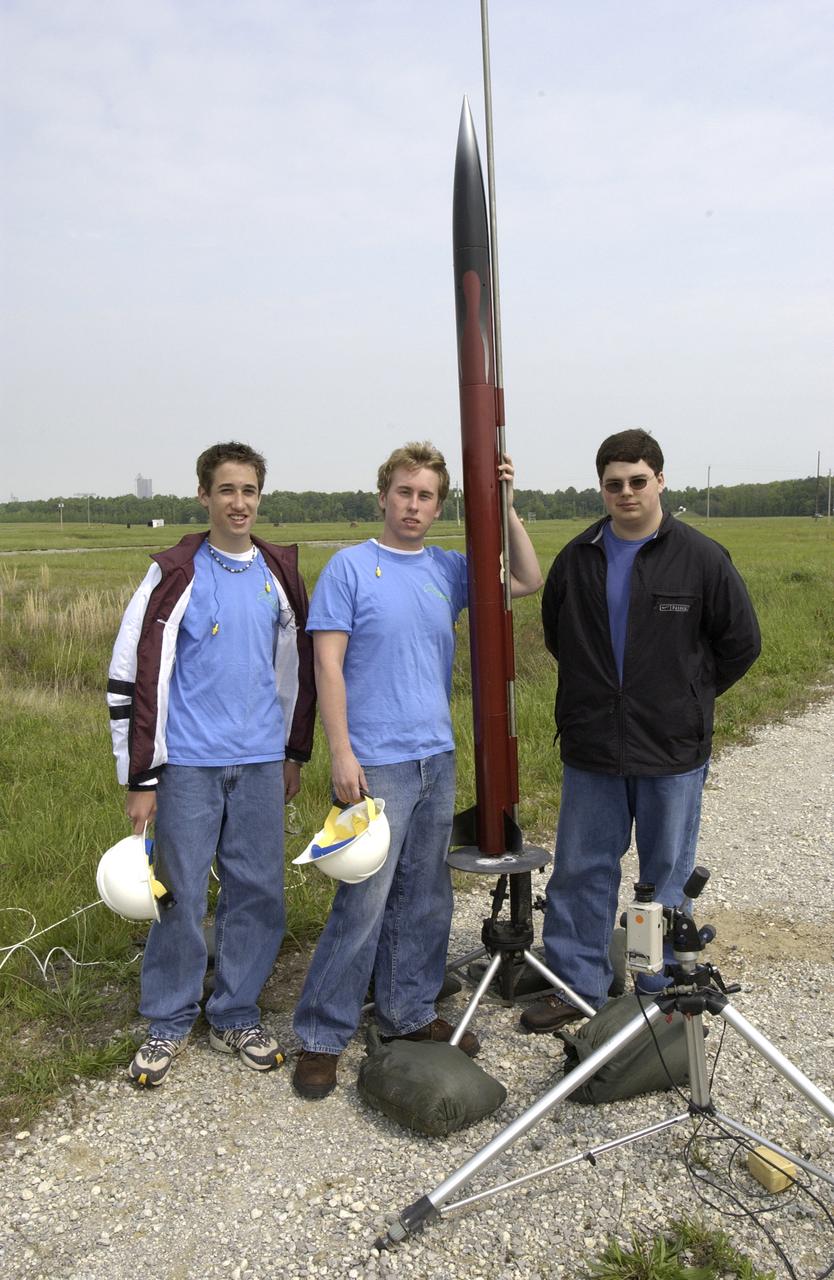
Filled with anticipation, students from three Huntsville area high schools: Randolph, Sparkman, and Johnson High Schools, counted down to launch the rockets they designed and built at the Army test site on Redstone Arsenal in Huntsville, Alabama. The projected two-mile high launch culminated more than a year's work and demonstrated the student team's ability to meet the challenge set by the Marshall Space Flight Center's (MSFC) Student Launch Initiative (SLI) program to apply science and math to experience, judgment, and common sense, and proved to NASA officials that they have successfully built reusable launch vehicles (RLVs), another challenge set by NASA's SLI program. MSFC's SLI program is an educational effort that aims to motivate students to pursue careers in science, math, and engineering. It provides them with hands-on, practical aerospace experience. In this picture, three Sparkman High School students pose with their rocket.
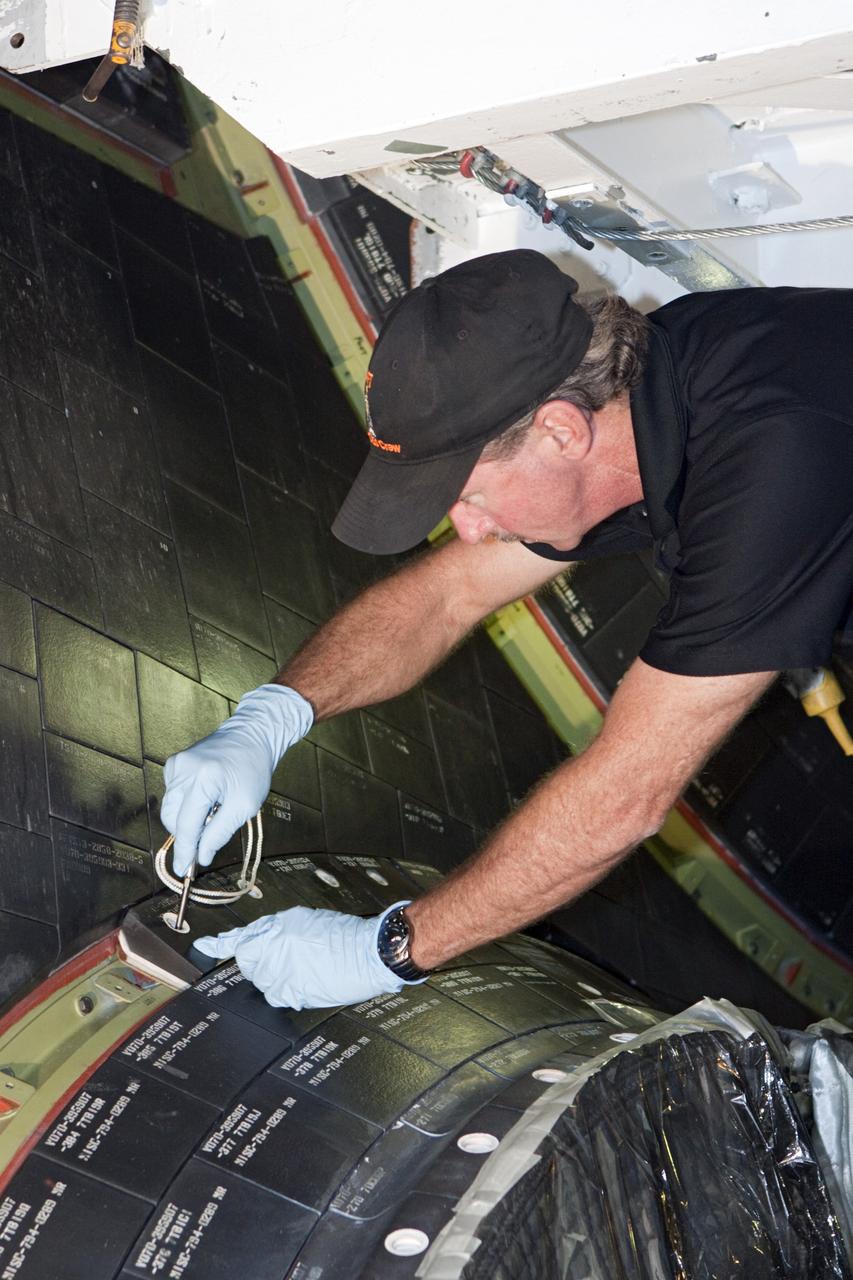
CAPE CANAVERAL, Fla. – In Orbiter Processing Facility Bay 2 at NASA’s Kennedy Space Center in Florida, United Space Alliance aerospace technician Chris Peluso installs a heat shield carrier panel on the space shuttle Endeavour. The work is part of Transition and Retirement of the remaining space shuttles, Endeavour and Atlantis. Endeavour is being prepared for public display at the California Science Center in Los Angeles. Its ferry flight to California is targeted for mid-September. Endeavour was the last space shuttle added to NASA’s orbiter fleet. Over the course of its 19-year career, Endeavour spent 299 days in space during 25 missions. For more information, visit http://www.nasa.gov/transition Photo credit: NASA/ Jim Grossmann

CAPE CANAVERAL, Fla. – In Orbiter Processing Facility Bay 2 at NASA’s Kennedy Space Center in Florida, United Space Alliance aerospace technicians Hector Castillo, left, and Tom Goldean inspect a heat shield carrier panel to be installed on the space shuttle Endeavour. The work is part of Transition and Retirement of the remaining space shuttles, Endeavour and Atlantis. Endeavour is being prepared for public display at the California Science Center in Los Angeles. Its ferry flight to California is targeted for mid-September. Endeavour was the last space shuttle added to NASA’s orbiter fleet. Over the course of its 19-year career, Endeavour spent 299 days in space during 25 missions. For more information, visit http://www.nasa.gov/transition Photo credit: NASA/ Jim Grossmann
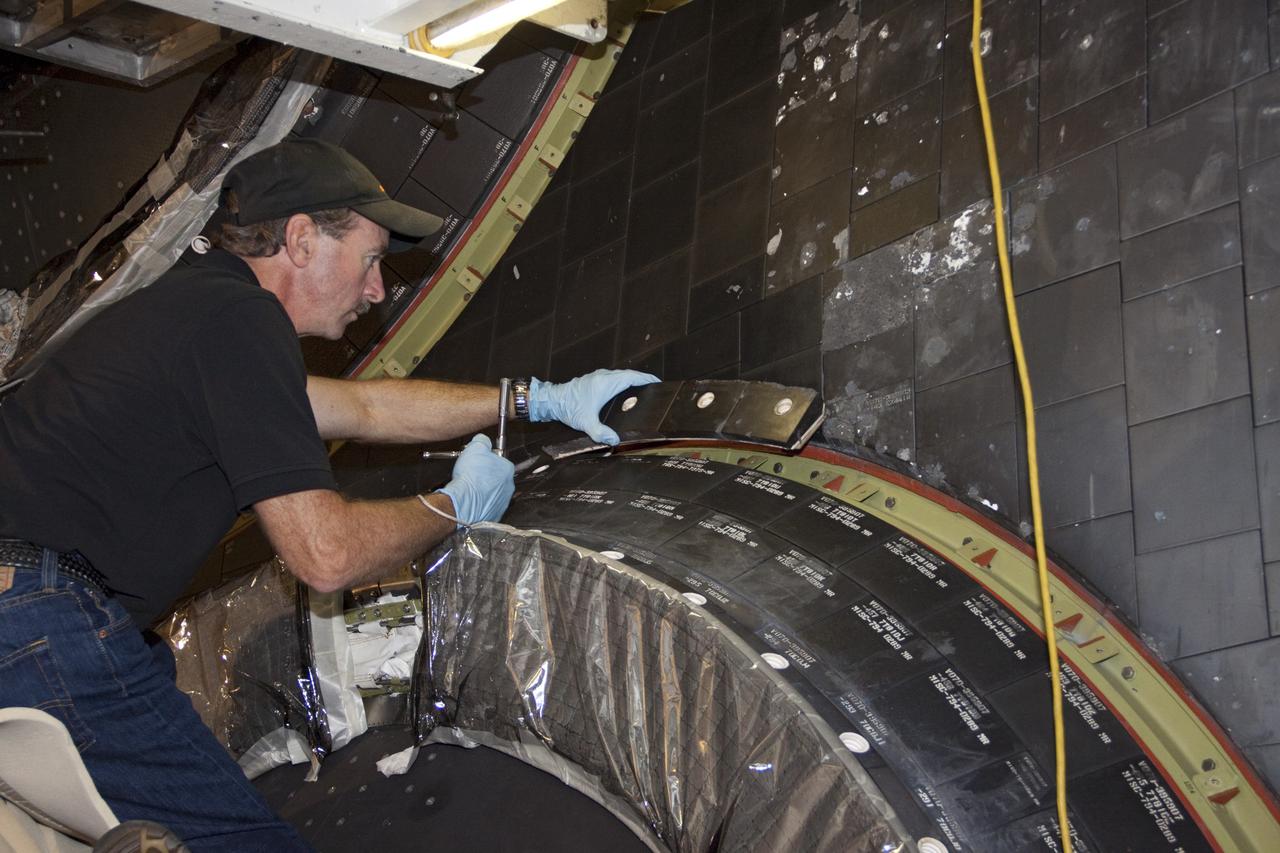
CAPE CANAVERAL, Fla. – In Orbiter Processing Facility Bay 2 at NASA’s Kennedy Space Center in Florida, United Space Alliance aerospace technician Chris Peluso installs a heat shield carrier panel on the space shuttle Endeavour. The work is part of Transition and Retirement of the remaining space shuttles, Endeavour and Atlantis. Endeavour is being prepared for public display at the California Science Center in Los Angeles. Its ferry flight to California is targeted for mid-September. Endeavour was the last space shuttle added to NASA’s orbiter fleet. Over the course of its 19-year career, Endeavour spent 299 days in space during 25 missions. For more information, visit http://www.nasa.gov/transition Photo credit: NASA/ Jim Grossmann

CAPE CANAVERAL, Fla. – While wearing a safety harness, United Space Alliance aerospace technician Greg Smith checks equipment during weight and center of gravity checks on the space shuttle Endeavour in Bay 2 of the Orbiter Processing Facility at NASA’s Kennedy Space Center in Florida. The work is part of Transition and Retirement of the remaining space shuttles, Endeavour and Atlantis. Endeavour is being prepared for public display at the California Science Center in Los Angeles. Its ferry flight to California is targeted for mid-September. Endeavour was the last space shuttle added to NASA’s orbiter fleet. Over the course of its 19-year career, Endeavour spent 299 days in space during 25 missions. For more information, visit http://www.nasa.gov/transition Photo credit: NASA/ Jim Grossmann
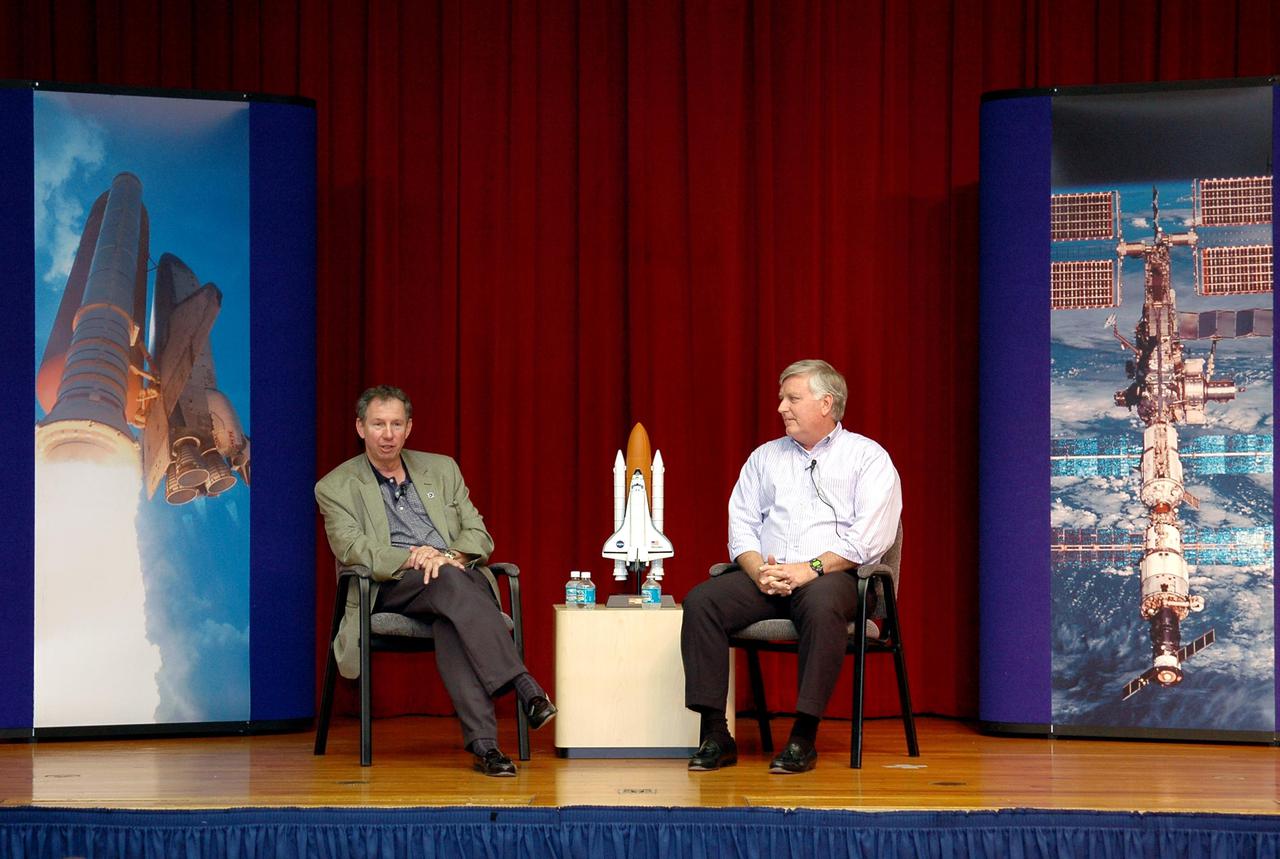
KENNEDY SPACE CENTER, FLA. - Michael Griffin (left), administrator of the National Aeronautics and Space Administration (NASA), and James Kennedy, director of the John F. Kennedy Space Center (KSC), address KSC employees during a Town Hall meeting. The meeting was held in the Training Auditorium and broadcast around the Center to employees not in attendance. This is Griffin's first official visit to Kennedy Space Center. Griffin is the 11th administrator of NASA, a role he assumed on April 14, 2005. Griffin was nominated to the position in March while serving as the Space Department head at Johns Hopkins University's Applied Physics Laboratory in Baltimore. A registered professional engineer in Maryland and California, Griffin served as chief engineer at NASA earlier in his career. He holds numerous scientific and technical degrees including a Ph.D. in Aerospace Engineering from the University of Maryland.
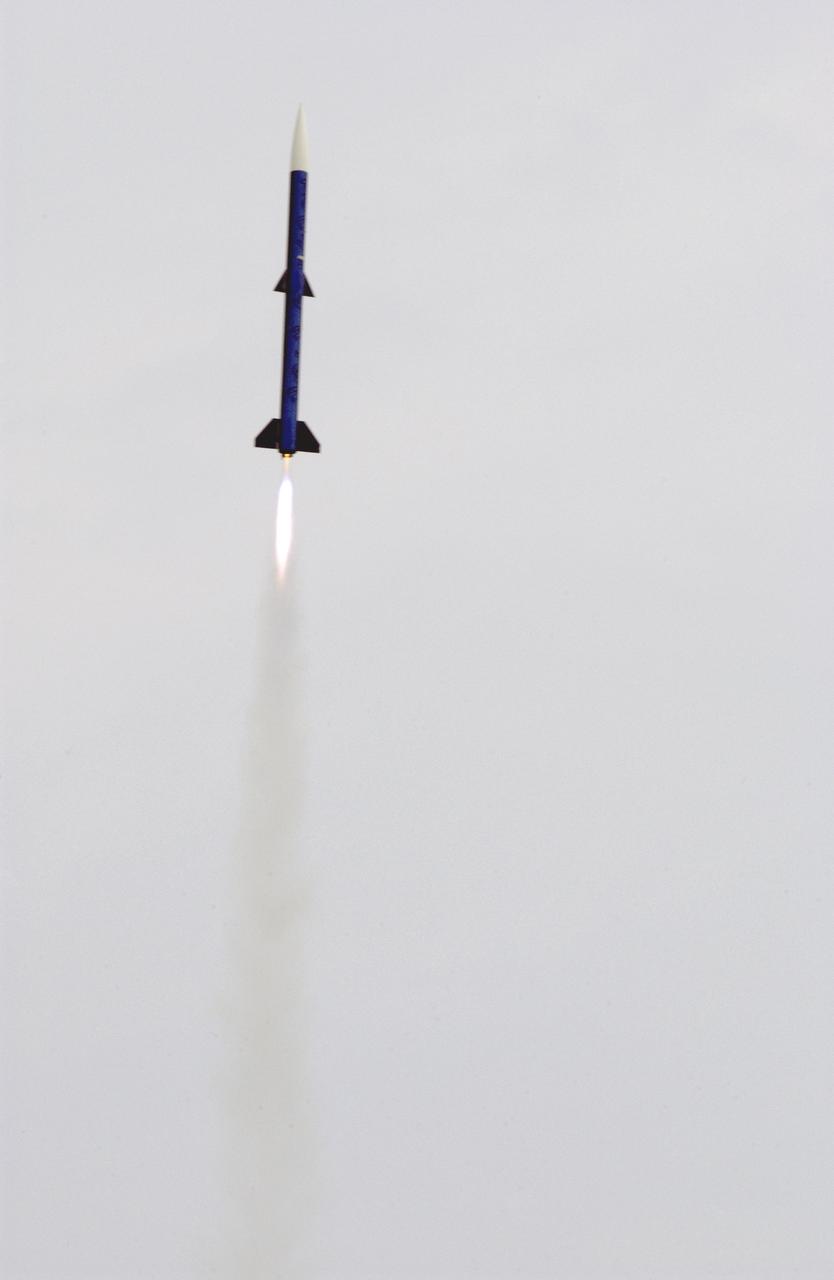
Filled with anticipation, students from three Huntsville area high schools: Randolph, Sparkman, and Johnson High Schools, counted down to launch the rockets they designed and built at the Army test site on Redstone Arsenal in Huntsville, Alabama. The projected two-mile high launch culminated more than a year's work and demonstrated the student team's ability to meet the challenge set by the Marshall Space Flight Center's (MSFC) Student Launch Initiative program to apply science and math to experience, judgment, and common sense, and proved to NASA officials that they have successfully built reusable launch vehicles (RLVs), another challenge set by NASA's SLI program. MSFC's SLI program is an educational effort that aims to motivate students to pursue careers in science, math, and engineering. It provides hands-on, practical aerospace experience. In this picture, a rocket built by Johnson High School students soars to it projected designation.
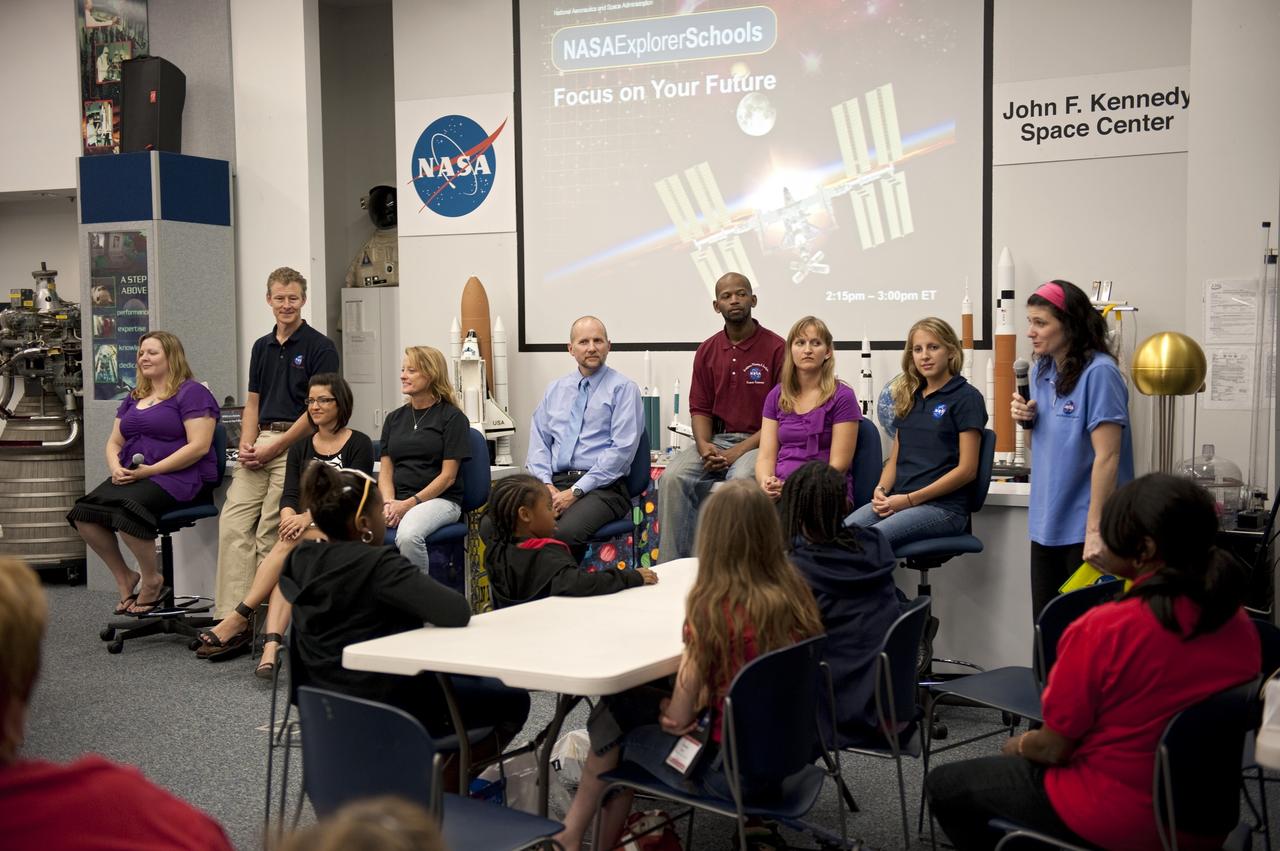
Cape Canaveral, Fla. -- Students from across the nation gathered at NASA's Kennedy Space Center in Florida for the NASA Explorer Schools (NES) symposium. At the microphone is NASA Explorer Schools Lead Education Specialist Alicia Baturoni from NASA's Glenn Research Center. From left, the panel includes aerospace engineer with NASA's Launch Services Program Caley Burke, Gary Letchworth who is working on the Orion multipurpose crew vehicle, NASA Contract Specialist Nicole Rivera, wildlife ecologist with Innovative Heath Applications Becky Bolt, Tim Griffin who works in Kennedy's Chemical Analysis Branch, Xaivian Raymond with NASA Human Resources, aerospace engineer Sarah Cox who works on the space shuttle's thermal protection system, and chemical engineer Annie Caraccio. During the NES event, students presented their investigation project to their peers, scientists, engineers and education specialists. About 60 fourth- through 12-grade students nationwide are at the center May 4-7 participating in tours of processing and launch facilities and the U.S. Astronaut Hall of Fame, as well as several educational activities and a career panel question-and-answer session. About 30 teachers will receive professional development opportunities during the symposium. The participants were competitively selected after they completed an original investigation focused on existing NASA missions or research interests. Photo Credit: NASA/Kim Shiflett
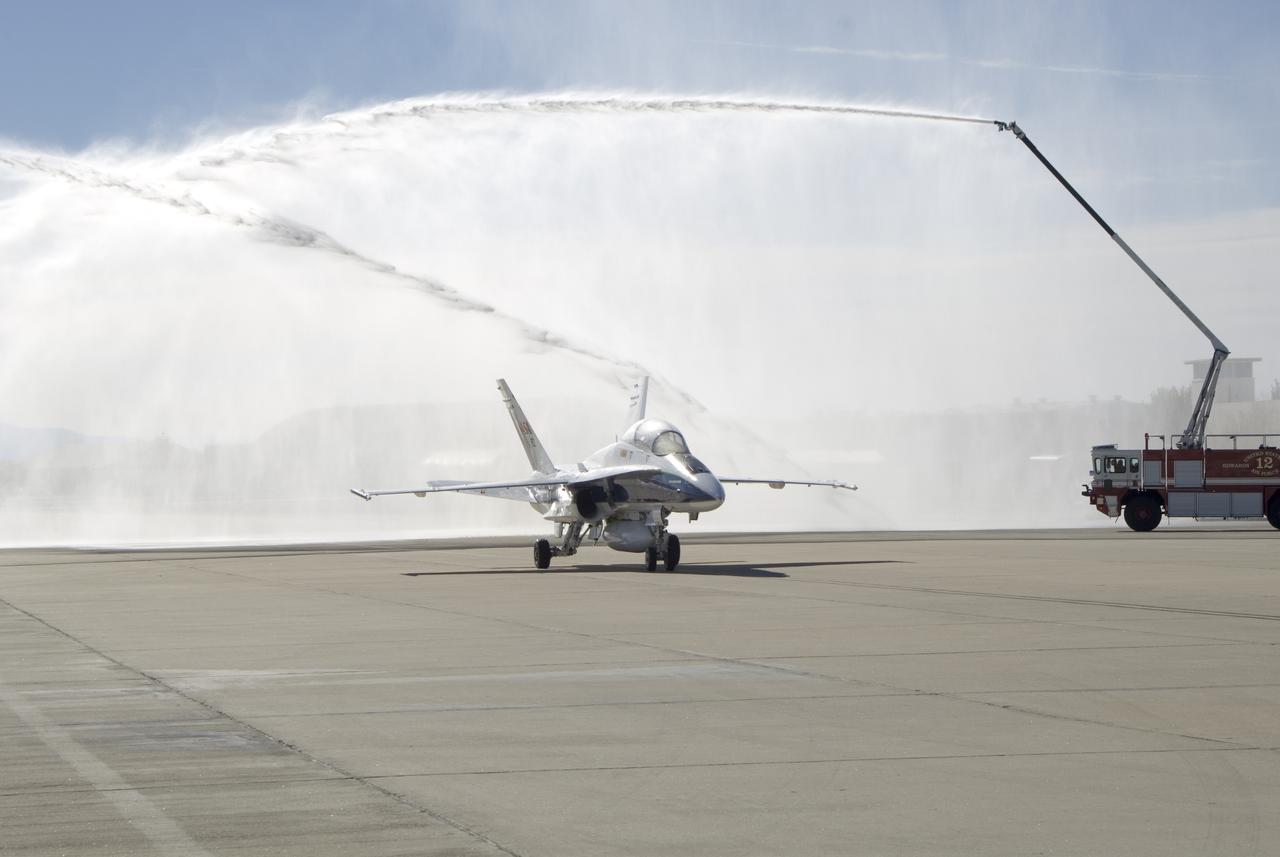
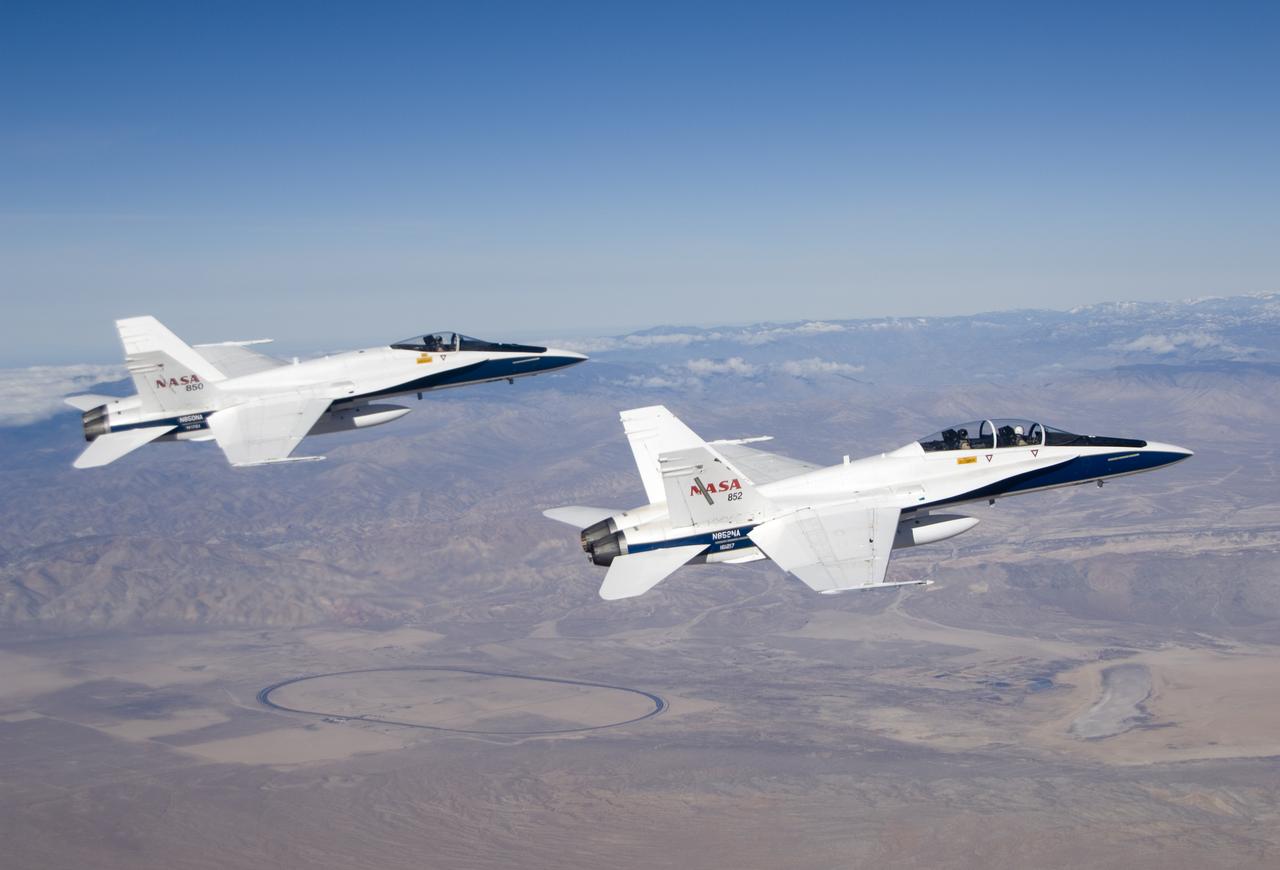
Long-time NASA Dryden research pilot and former astronaut C. Gordon Fullerton capped an almost 50-year flying career, including more than 38 years with NASA, with a final flight in a NASA F/A-18 on Dec. 21, 2007. Fullerton and Dryden research pilot Jim Smolka flew a 90-minute pilot proficiency formation aerobatics flight with another Dryden F/A-18 and a Dryden T-38 before concluding with two low-level formation flyovers of Dryden before landing. Fullerton was honored with a water-cannon spray arch provided by two fire trucks from the Edwards Air Force Base fire department as he taxied the F/A-18 up to the Dryden ramp, and was then greeted by his wife Marie and several hundred Dryden staff after his final flight. Fullerton began his flying career with the U.S. Air Force in 1958 after earning bachelor's and master's degrees in mechanical engineering from the California Institute of Technology. Initially trained as a fighter pilot, he later transitioned to multi-engine bombers and became a bomber operations test pilot after attending the Air Force Aerospace Research Pilot School at Edwards Air Force Base, Calif. He then was assigned to the flight crew for the planned Air Force Manned Orbital Laboratory in 1966. Upon cancellation of that program, the Air Force assigned Fullerton to NASA's astronaut corps in 1969. He served on the support crews for the Apollo 14, 15, 16 and 17 lunar missions, and was later assigned to one of the two flight crews that piloted the space shuttle prototype Enterprise during the Approach and Landing Test program at Dryden. He then logged some 382 hours in space when he flew on two early space shuttle missions, STS-3 on Columbia in 1982 and STS-51F on Challenger in 1985. He joined the flight crew branch at NASA Dryden after leaving the astronaut corps in 1986. During his 21 years at Dryden, Fullerton was project pilot on a number of high-profile research efforts, including the Propulsion Controlled Aircraft, the high-speed landing tests of
Long-time NASA Dryden research pilot and former astronaut C. Gordon Fullerton capped an almost 50-year flying career, including more than 38 years with NASA, with a final flight in a NASA F/A-18 on Dec. 21, 2007. Fullerton and Dryden research pilot Jim Smolka flew a 90-minute pilot proficiency formation aerobatics flight with another Dryden F/A-18 and a Dryden T-38 before concluding with two low-level formation flyovers of Dryden before landing. Fullerton was honored with a water-cannon spray arch provided by two fire trucks from the Edwards Air Force Base fire department as he taxied the F/A-18 up to the Dryden ramp, and was then greeted by his wife Marie and several hundred Dryden staff after his final flight. Fullerton began his flying career with the U.S. Air Force in 1958 after earning bachelor's and master's degrees in mechanical engineering from the California Institute of Technology. Initially trained as a fighter pilot, he later transitioned to multi-engine bombers and became a bomber operations test pilot after attending the Air Force Aerospace Research Pilot School at Edwards Air Force Base, Calif. He then was assigned to the flight crew for the planned Air Force Manned Orbital Laboratory in 1966. Upon cancellation of that program, the Air Force assigned Fullerton to NASA's astronaut corps in 1969. He served on the support crews for the Apollo 14, 15, 16 and 17 lunar missions, and was later assigned to one of the two flight crews that piloted the space shuttle prototype Enterprise during the Approach and Landing Test program at Dryden. He then logged some 382 hours in space when he flew on two early space shuttle missions, STS-3 on Columbia in 1982 and STS-51F on Challenger in 1985. He joined the flight crew branch at NASA Dryden after leaving the astronaut corps in 1986. During his 21 years at Dryden, Fullerton was project pilot on a number of high-profile research efforts, including the Propulsion Controlled Aircraft, the high-speed landing tests of sp
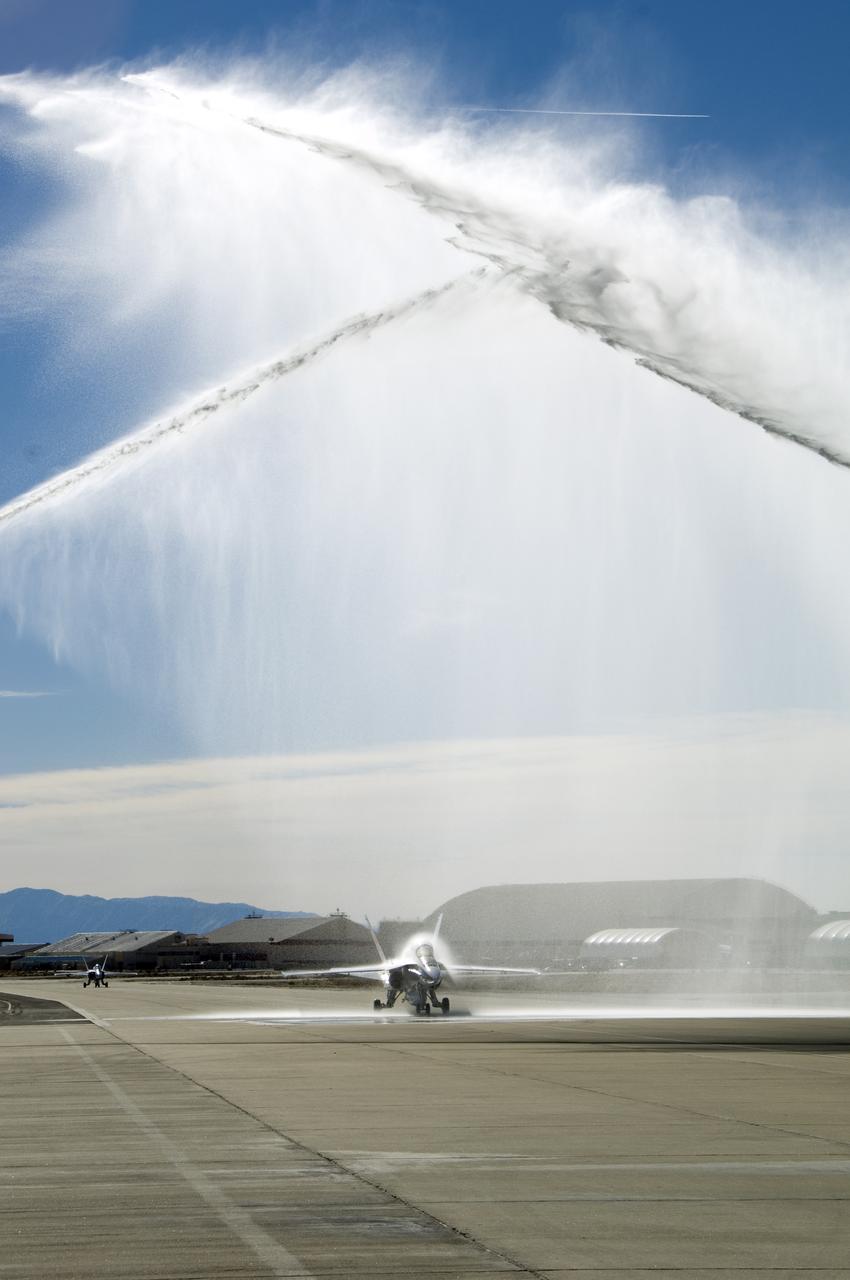
Long-time NASA Dryden research pilot and former astronaut C. Gordon Fullerton capped an almost 50-year flying career, including more than 38 years with NASA, with a final flight in a NASA F/A-18 on Dec. 21, 2007. Fullerton and Dryden research pilot Jim Smolka flew a 90-minute pilot proficiency formation aerobatics flight with another Dryden F/A-18 and a Dryden T-38 before concluding with two low-level formation flyovers of Dryden before landing. Fullerton was honored with a water-cannon spray arch provided by two fire trucks from the Edwards Air Force Base fire department as he taxied the F/A-18 up to the Dryden ramp, and was then greeted by his wife Marie and several hundred Dryden staff after his final flight. Fullerton began his flying career with the U.S. Air Force in 1958 after earning bachelor's and master's degrees in mechanical engineering from the California Institute of Technology. Initially trained as a fighter pilot, he later transitioned to multi-engine bombers and became a bomber operations test pilot after attending the Air Force Aerospace Research Pilot School at Edwards Air Force Base, Calif. He then was assigned to the flight crew for the planned Air Force Manned Orbital Laboratory in 1966. Upon cancellation of that program, the Air Force assigned Fullerton to NASA's astronaut corps in 1969. He served on the support crews for the Apollo 14, 15, 16 and 17 lunar missions, and was later assigned to one of the two flight crews that piloted the space shuttle prototype Enterprise during the Approach and Landing Test program at Dryden. He then logged some 382 hours in space when he flew on two early space shuttle missions, STS-3 on Columbia in 1982 and STS-51F on Challenger in 1985. He joined the flight crew branch at NASA Dryden after leaving the astronaut corps in 1986. During his 21 years at Dryden, Fullerton was project pilot on a number of high-profile research efforts, including the Propulsion Controlled Aircraft, the high-speed landing tests of
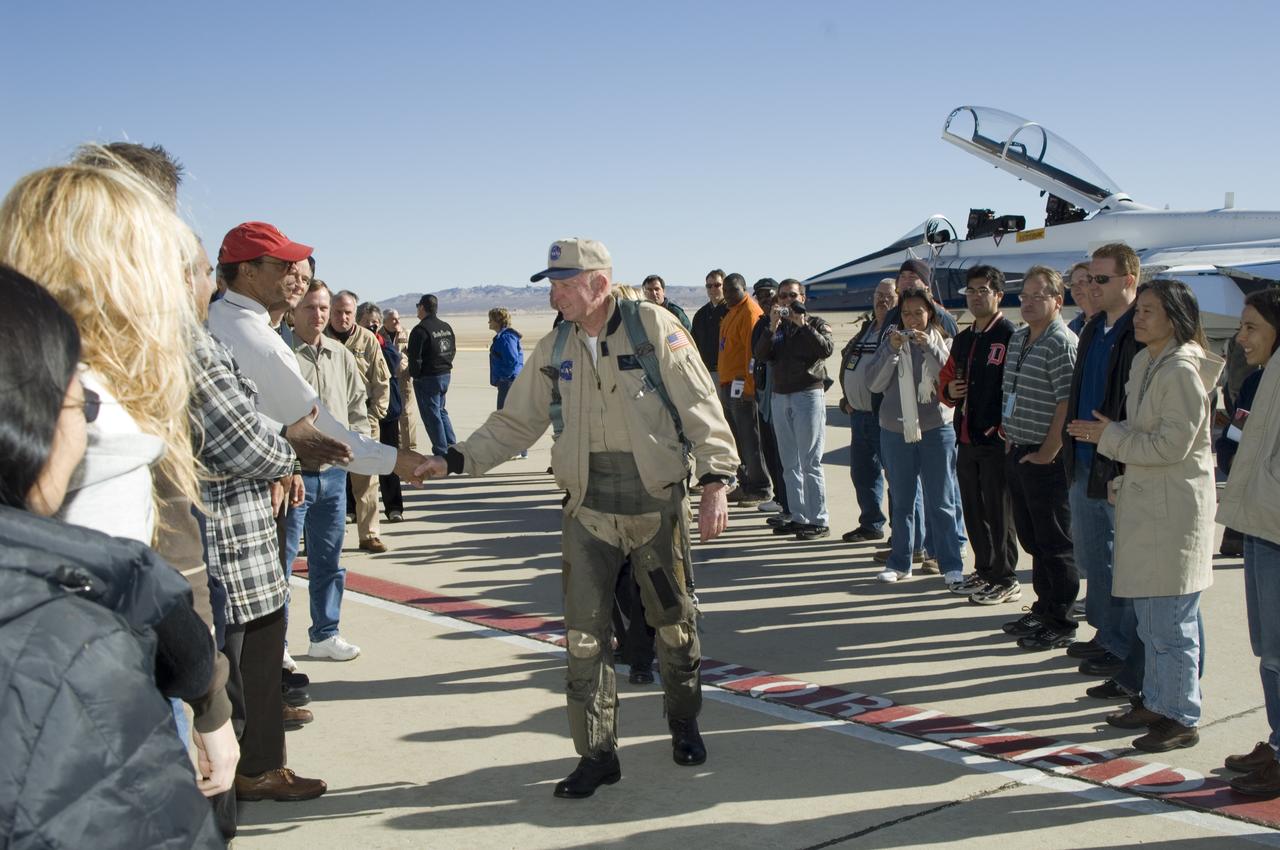
Long-time NASA Dryden research pilot and former astronaut C. Gordon Fullerton capped an almost 50-year flying career, including more than 38 years with NASA, with a final flight in a NASA F/A-18 on Dec. 21, 2007. Fullerton and Dryden research pilot Jim Smolka flew a 90-minute pilot proficiency formation aerobatics flight with another Dryden F/A-18 and a Dryden T-38 before concluding with two low-level formation flyovers of Dryden before landing. Fullerton was honored with a water-cannon spray arch provided by two fire trucks from the Edwards Air Force Base fire department as he taxied the F/A-18 up to the Dryden ramp, and was then greeted by his wife Marie and several hundred Dryden staff after his final flight. Fullerton began his flying career with the U.S. Air Force in 1958 after earning bachelor's and master's degrees in mechanical engineering from the California Institute of Technology. Initially trained as a fighter pilot, he later transitioned to multi-engine bombers and became a bomber operations test pilot after attending the Air Force Aerospace Research Pilot School at Edwards Air Force Base, Calif. He then was assigned to the flight crew for the planned Air Force Manned Orbital Laboratory in 1966. Upon cancellation of that program, the Air Force assigned Fullerton to NASA's astronaut corps in 1969. He served on the support crews for the Apollo 14, 15, 16 and 17 lunar missions, and was later assigned to one of the two flight crews that piloted the space shuttle prototype Enterprise during the Approach and Landing Test program at Dryden. He then logged some 382 hours in space when he flew on two early space shuttle missions, STS-3 on Columbia in 1982 and STS-51F on Challenger in 1985. He joined the flight crew branch at NASA Dryden after leaving the astronaut corps in 1986. During his 21 years at Dryden, Fullerton was project pilot on a number of high-profile research efforts, including the Propulsion Controlled Aircraft, the high-speed landing tests of
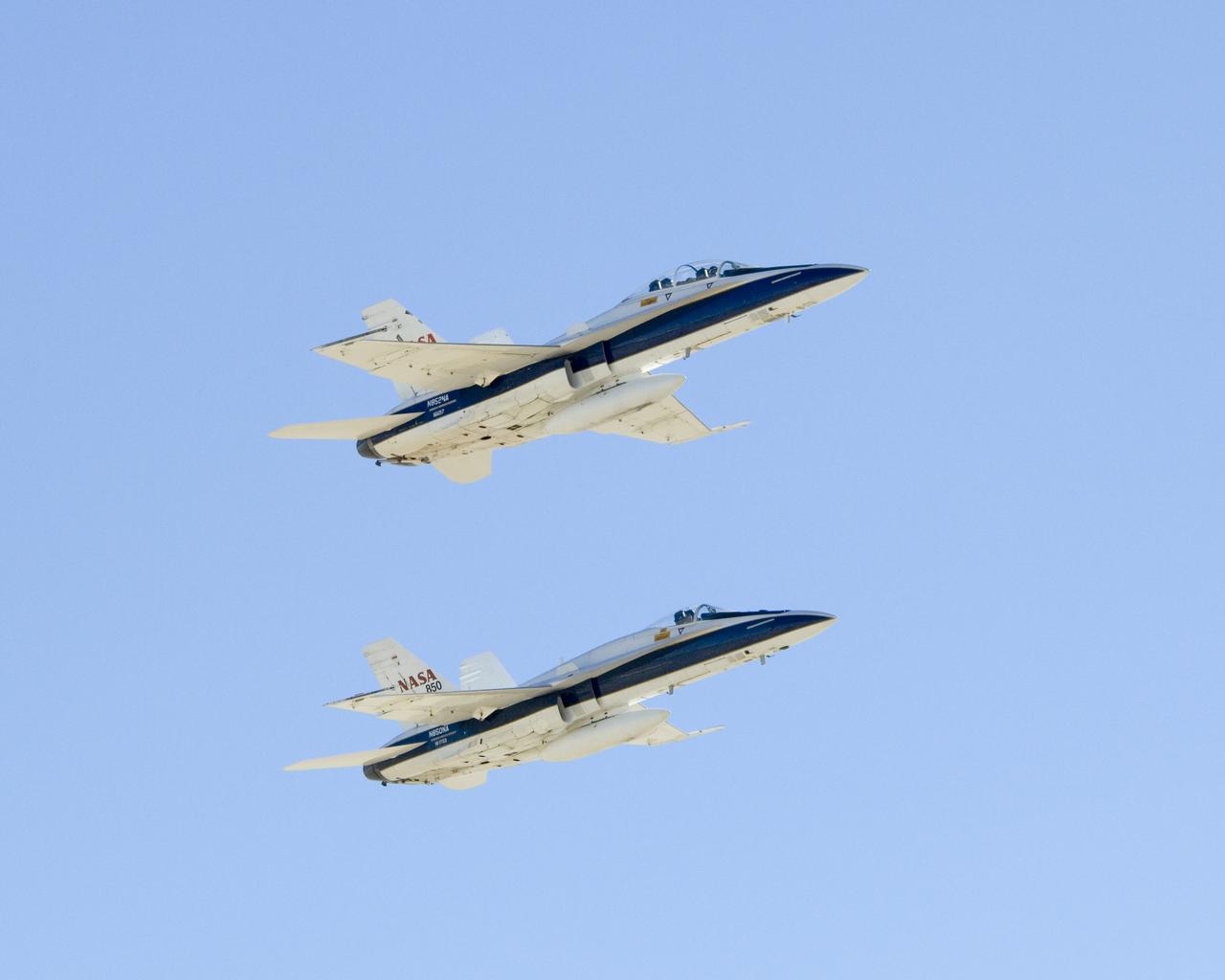
Long-time NASA Dryden research pilot and former astronaut C. Gordon Fullerton capped an almost 50-year flying career, including more than 38 years with NASA, with a final flight in a NASA F/A-18 on Dec. 21, 2007. Fullerton and Dryden research pilot Jim Smolka flew a 90-minute pilot proficiency formation aerobatics flight with another Dryden F/A-18 and a Dryden T-38 before concluding with two low-level formation flyovers of Dryden before landing. Fullerton was honored with a water-cannon spray arch provided by two fire trucks from the Edwards Air Force Base fire department as he taxied the F/A-18 up to the Dryden ramp, and was then greeted by his wife Marie and several hundred Dryden staff after his final flight. Fullerton began his flying career with the U.S. Air Force in 1958 after earning bachelor's and master's degrees in mechanical engineering from the California Institute of Technology. Initially trained as a fighter pilot, he later transitioned to multi-engine bombers and became a bomber operations test pilot after attending the Air Force Aerospace Research Pilot School at Edwards Air Force Base, Calif. He then was assigned to the flight crew for the planned Air Force Manned Orbital Laboratory in 1966. Upon cancellation of that program, the Air Force assigned Fullerton to NASA's astronaut corps in 1969. He served on the support crews for the Apollo 14, 15, 16 and 17 lunar missions, and was later assigned to one of the two flight crews that piloted the space shuttle prototype Enterprise during the Approach and Landing Test program at Dryden. He then logged some 382 hours in space when he flew on two early space shuttle missions, STS-3 on Columbia in 1982 and STS-51F on Challenger in 1985. He joined the flight crew branch at NASA Dryden after leaving the astronaut corps in 1986. During his 21 years at Dryden, Fullerton was project pilot on a number of high-profile research efforts, including the Propulsion Controlled Aircraft, the high-speed landing tests of
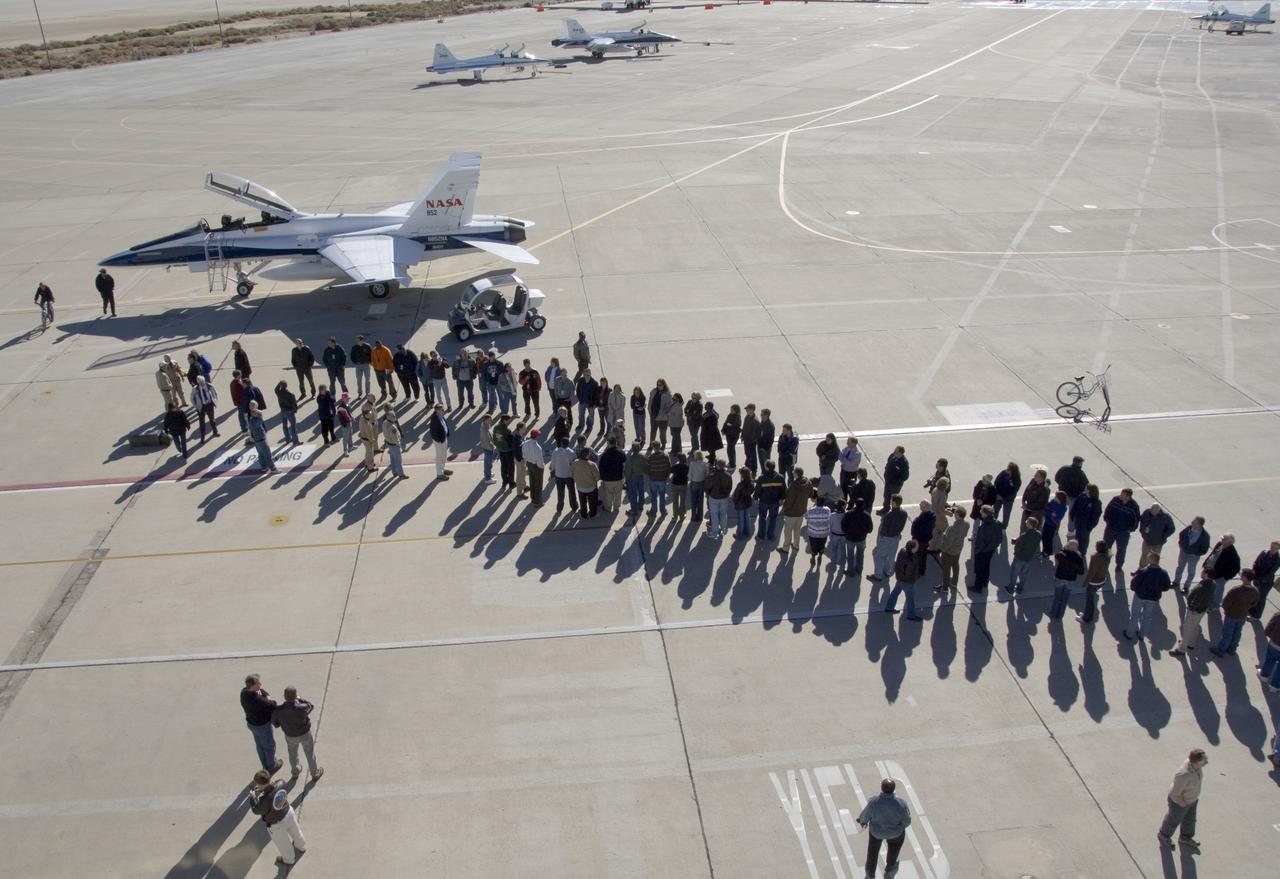
Long-time NASA Dryden research pilot and former astronaut C. Gordon Fullerton capped an almost 50-year flying career, including more than 38 years with NASA, with a final flight in a NASA F/A-18 on Dec. 21, 2007. Fullerton and Dryden research pilot Jim Smolka flew a 90-minute pilot proficiency formation aerobatics flight with another Dryden F/A-18 and a Dryden T-38 before concluding with two low-level formation flyovers of Dryden before landing. Fullerton was honored with a water-cannon spray arch provided by two fire trucks from the Edwards Air Force Base fire department as he taxied the F/A-18 up to the Dryden ramp, and was then greeted by his wife Marie and several hundred Dryden staff after his final flight. Fullerton began his flying career with the U.S. Air Force in 1958 after earning bachelor's and master's degrees in mechanical engineering from the California Institute of Technology. Initially trained as a fighter pilot, he later transitioned to multi-engine bombers and became a bomber operations test pilot after attending the Air Force Aerospace Research Pilot School at Edwards Air Force Base, Calif. He then was assigned to the flight crew for the planned Air Force Manned Orbital Laboratory in 1966. Upon cancellation of that program, the Air Force assigned Fullerton to NASA's astronaut corps in 1969. He served on the support crews for the Apollo 14, 15, 16 and 17 lunar missions, and was later assigned to one of the two flight crews that piloted the space shuttle prototype Enterprise during the Approach and Landing Test program at Dryden. He then logged some 382 hours in space when he flew on two early space shuttle missions, STS-3 on Columbia in 1982 and STS-51F on Challenger in 1985. He joined the flight crew branch at NASA Dryden after leaving the astronaut corps in 1986. During his 21 years at Dryden, Fullerton was project pilot on a number of high-profile research efforts, including the Propulsion Controlled Aircraft, the high-speed landing tests of

“It was part of my career, but then it was also personal. I was doing it on a volunteer basis, but it was part of my work because I was bringing my service dog in training everywhere with me, which meant to work every day and to meetings at NOAA (National Oceanic and Atmospheric Administration). And I was taking the dog across the country to meetings over at Ball Aerospace; that was all part of the training of a service dog. That was an incredible time. I really enjoyed it. “The fact that I was able to do the two combined, that to me was just such an accomplishment. To some people, it could be they got permission to do it and then that’s all they focused on was the dog, but no. I had my job I had to do. I’ve always gotten a distinguished rating in my performances my entire career, and it didn't change when I was training this service dog. “It was a challenge for sure. “After I had to turn back over the service dog I trained, it was really very difficult because the dog was with me for two years, even though I knew it was for a wonderful cause. I ended up going out and getting my own dog who I’ve trained to be a therapy dog, so now we do therapy visits with veterans, elderly, and others. ” Jean Wolfe, Program Executive for the Geostationary Operational Environmental Satellite (GOES)-R Series Program at NASA Headquarters, poses for a portrait with Bonnie, who was named for U.S. Air Force Reserve Major Bonnie Carroll, Ret., Friday, Dec. 18, 2020 at the Warrior Canine Connection in Boyds, MD. “Warrior Canine Connection enlists service members and veterans with combat stress in the critical mission of training service dogs for fellow Wounded Warriors.” Photo Credit: (NASA/Aubrey Gemignani)
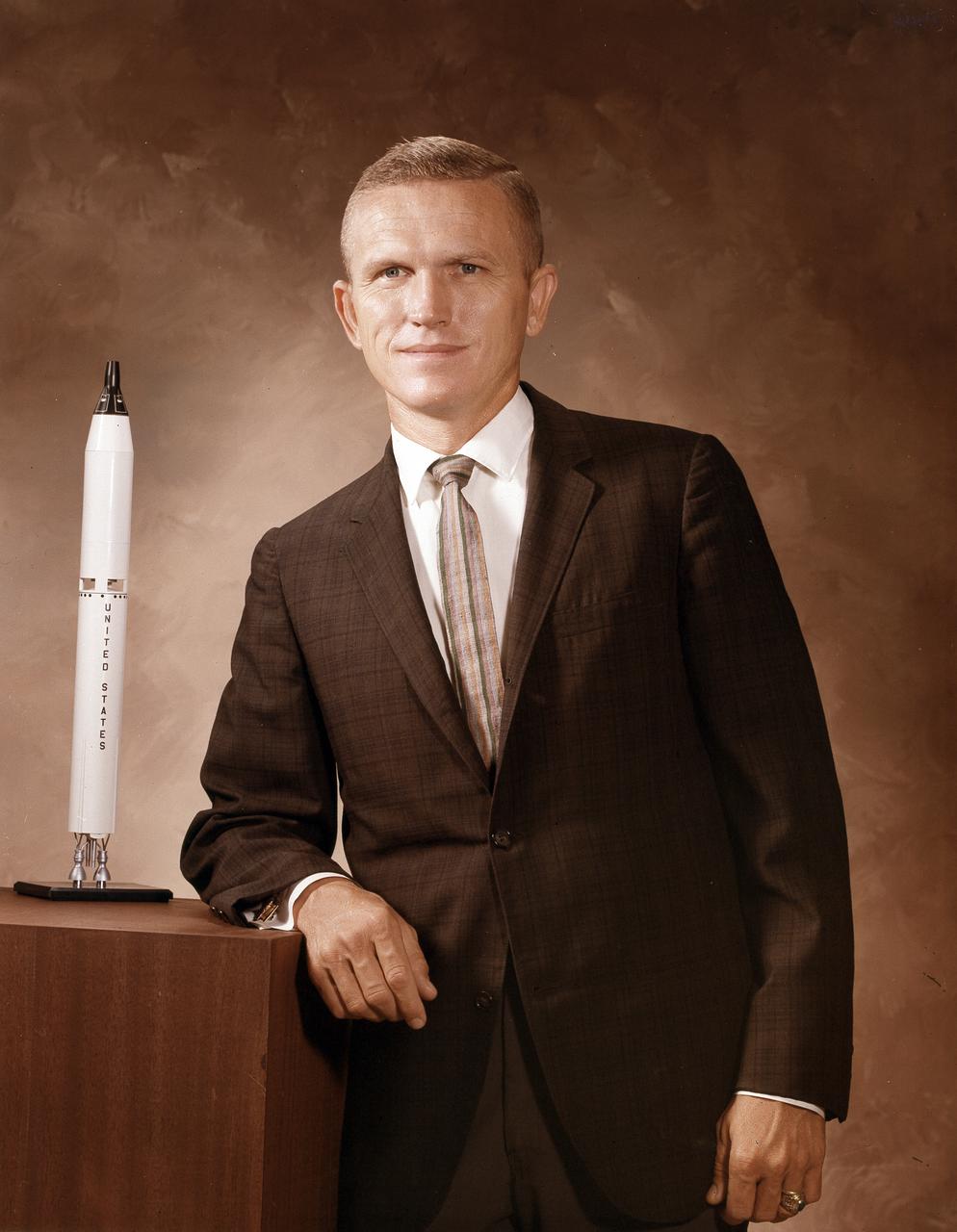
This is the official portrait of astronaut Frank Borman. A career Air Force officer from 1950, his assignments included service as a fighter pilot, an operational pilot and instructor, an experimental test pilot and an assistant professor of thermodynamics and fluid mechanics at West Point. When selected by NASA, Frank Borman was an instructor at the Aerospace Research Pilot School at Edwards AFB, California. In 1967 he served as a member of the Apollo 204 Fire Investigation Board, investigating the causes of the fire which killed three astronauts aboard an Apollo spacecraft. Later he became the Apollo Program Resident Manager, heading the team that reengineered the Apollo spacecraft. He also served as Field Director of the NASA Space Station Task Force. Frank Borman retired from the air Force in 1970, but is well remembered as a part of American history as a pioneer in the exploration of space. He is a veteran of both the Gemini 7, 1965 Space Orbital Rendezvous with Gemini 6 and the first manned lunar orbital mission, Apollo 8, in 1968.
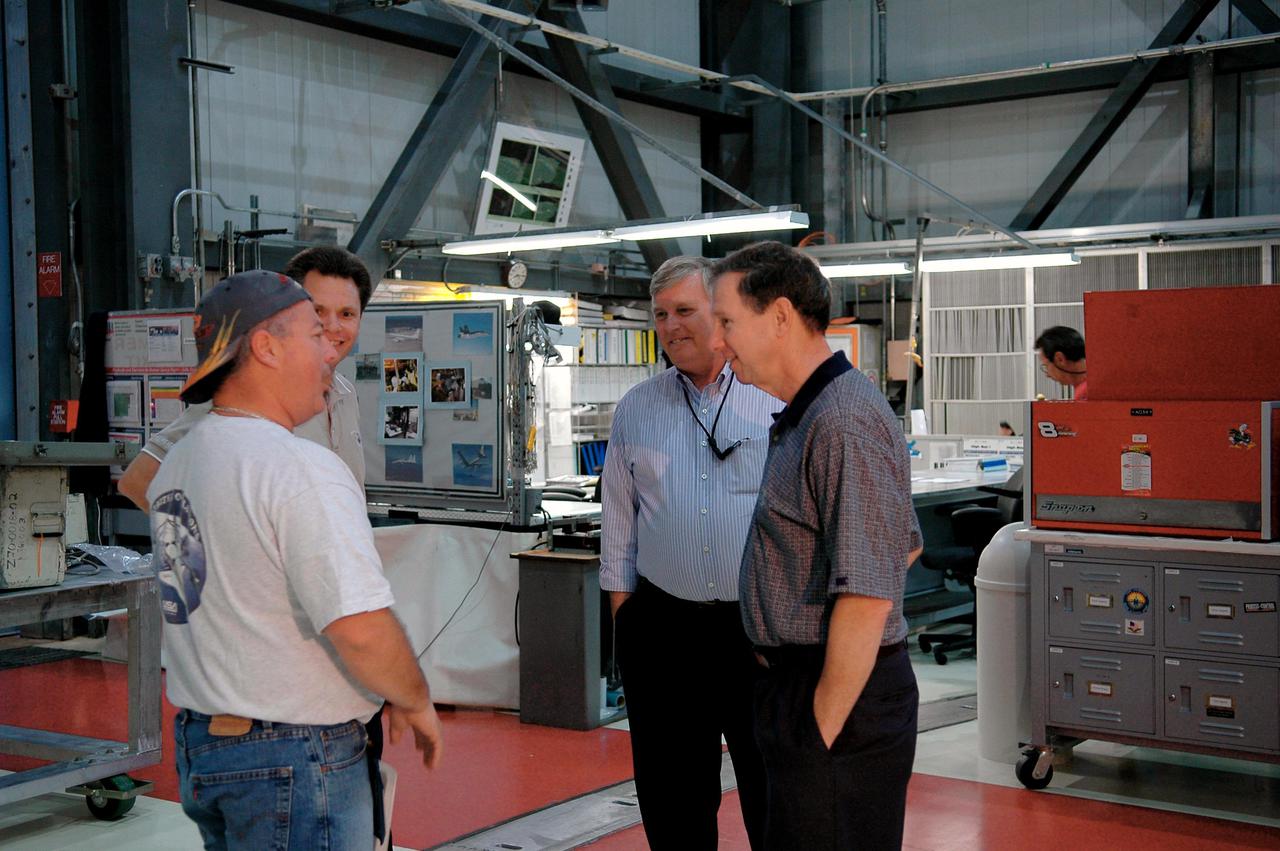
KENNEDY SPACE CENTER, FLA. - Michael Griffin, administrator of the National Aeronautics and Space Administration (NASA), talks to United Space Alliance advanced systems technician Richard Van Wart during a tour of Orbiter Processing Facility bay 1. From left are Van Wart, Space Shuttle Atlantis vehicle manager Scott Thurston, Center Director James Kennedy, and Griffin. Space Shuttle Atlantis is being processed for the second Return to Flight mission, STS-121, in the facility. This is Griffin's first official visit to Kennedy Space Center. Griffin is the 11th administrator of NASA, a role he assumed on April 14, 2005. Griffin was nominated to the position in March while serving as the Space Department head at Johns Hopkins University's Applied Physics Laboratory in Baltimore. A registered professional engineer in Maryland and California, Griffin served as chief engineer at NASA earlier in his career. He holds numerous scientific and technical degrees including a Ph.D. in Aerospace Engineering from the University of Maryland.
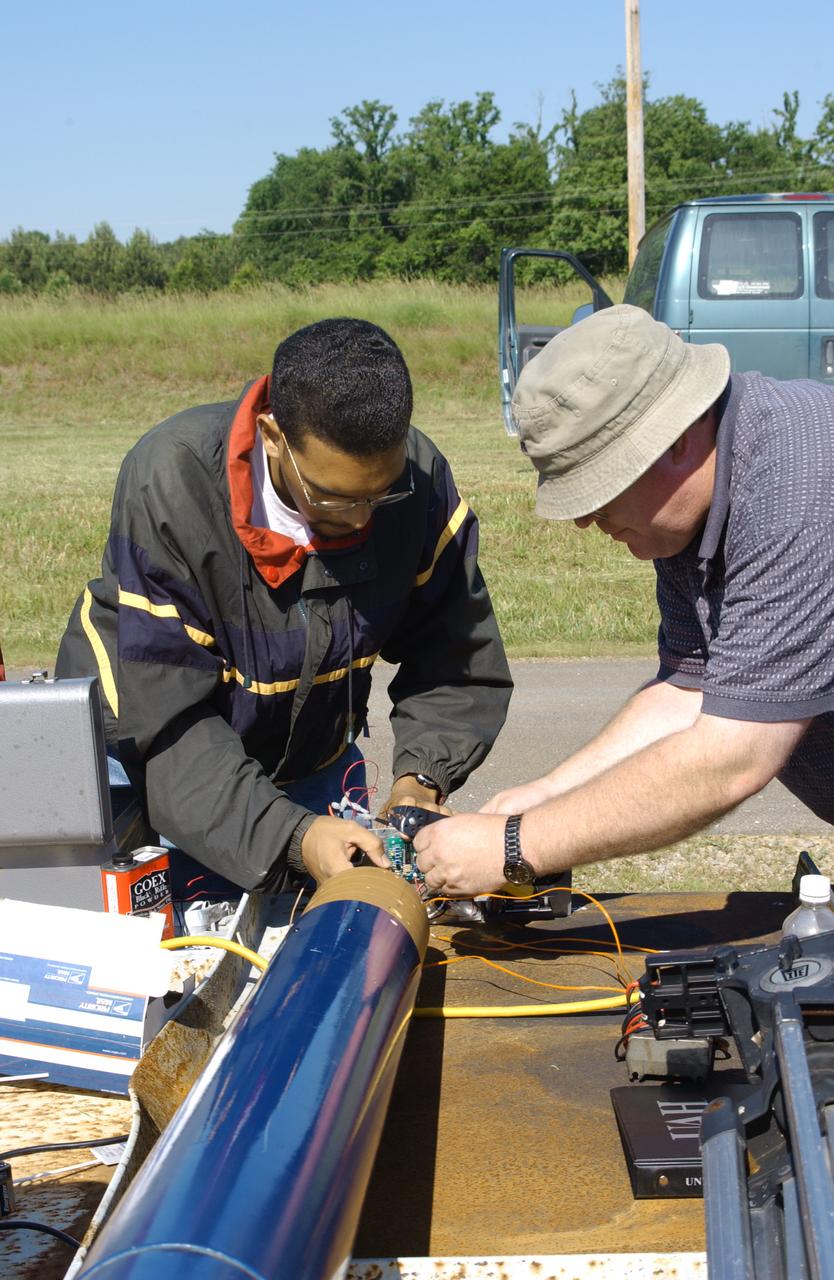
Filled with anticipation, students from two local universities, the University of Alabama in Huntsville (UAH), and Alabama Agricultural Mechanical University (AM), counted down to launch the rockets they designed and built at the Army test site on Redstone Arsenal in Huntsville, Alabama. The projected two-mile high launch culminated more than a year's work and demonstrated the student team's ability to meet the challenge set by the Marshall Space Flight Center's (MSFC) Student Launch Initiative (SLI) program to apply science and math to experience, judgment, and common sense, and proved to NASA officials that they have successfully built reusable launch vehicles (RLVs), another challenge set by NASA's SLI program. MSFC's SLI program is an educational effort that aims to motivate students to pursue careers in science, math, and engineering. It provides the students with hands-on, practical aerospace experience. In this picture, a student from AM and his mentor install their payload into the launch vehicle which was built by the team of UAH students. The scientific payload, developed and built by the team of AM students, measured the amount of hydrogen produced during electroplating with nickel in a brief period of micrgravity.
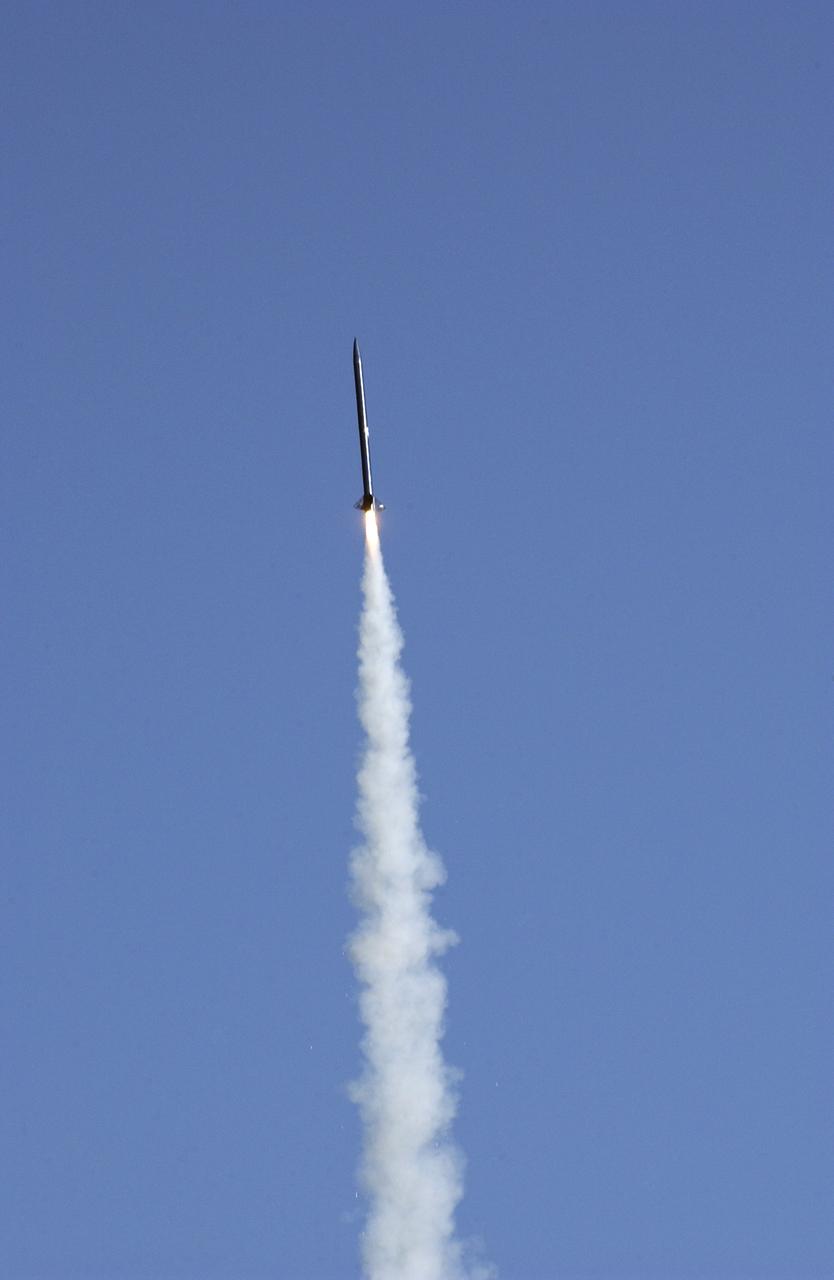
Filled with anticipation, students from two local universities, the University of Alabama in Huntsville (UAH), and Alabama Agricultural Mechanical University (AM), counted down to launch the rockets they designed and built at the Army test site on Redstone Arsenal in Huntsville, Alabama. The projected two-mile high launch culminated more than a year's work and demonstrated the student team's ability to meet the challenge set by the Marshall Space Flight Center's (MSFC) Student Launch Initiative (SLI) program to apply science and math to experience, judgment, and common sense, and proved to NASA officials that they have successfully built reusable launch vehicles (RLVs), another challenge set by NASA's SLI program. MSFC's SLI program is an educational effort that aims to motivate students to pursue careers in science, math, and engineering. It provides the students with hands-on, practical aerospace experience. In this picture, the combined efforts of students from UAH and AM sent this rocket soaring into flight. Students at UAH built the rocket and AM students developed its scientific payload, an experiment that measures the amount of hydrogen produced during electroplating with nickel in a brief period of micrgravity.
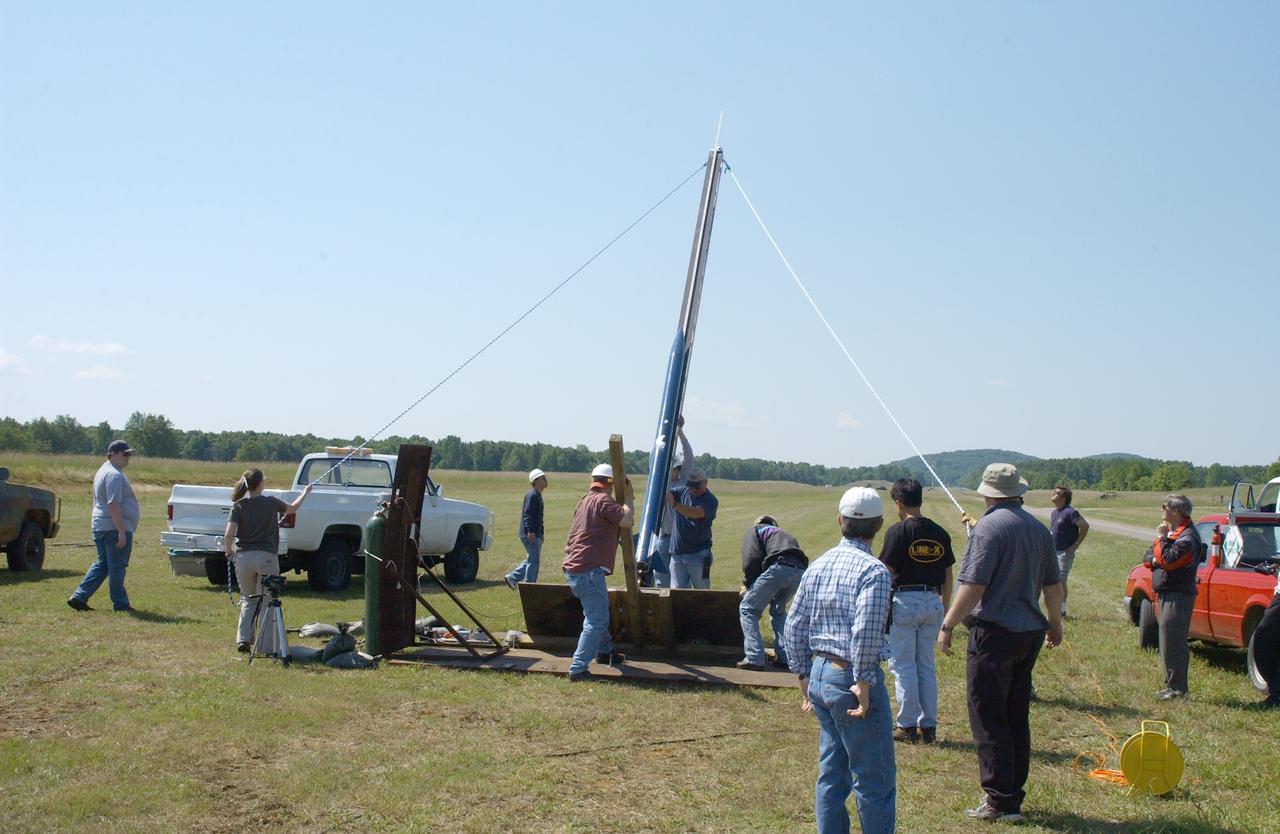
Filled with anticipation, students from two local universities, the University of Alabama in Huntsville (UAH), and Alabama Agricultural Mechanical University (AM), counted down to launch the rockets they designed and built at the Army test site on Redstone Arsenal in Huntsville, Alabama. The projected two-mile high launch culminated more than a year's work and demonstrated the student team's ability to meet the challenge set by the Marshall Space Flight Center's (MSFC) Student Launch Initiative (SLI) Program to apply science and math to experience, judgment, and common sense, and proved to NASA officials that they have successfully built reusable launch vehicles (RLVs), another challenge set by NASA's SLI program. MSFC's SLI program is an educational effort that aims to motivate students to pursue careers in science, math, and engineering. It provides the students with hands-on, practical aerospace experience. In this picture, the university students prepare their rocket for flight on the launch pad. Students at UAH built the rocket and AM students developed its scientific payload, an experiment that measures the amount of hydrogen produced during electroplating with nickel in a brief period of micrgravity.
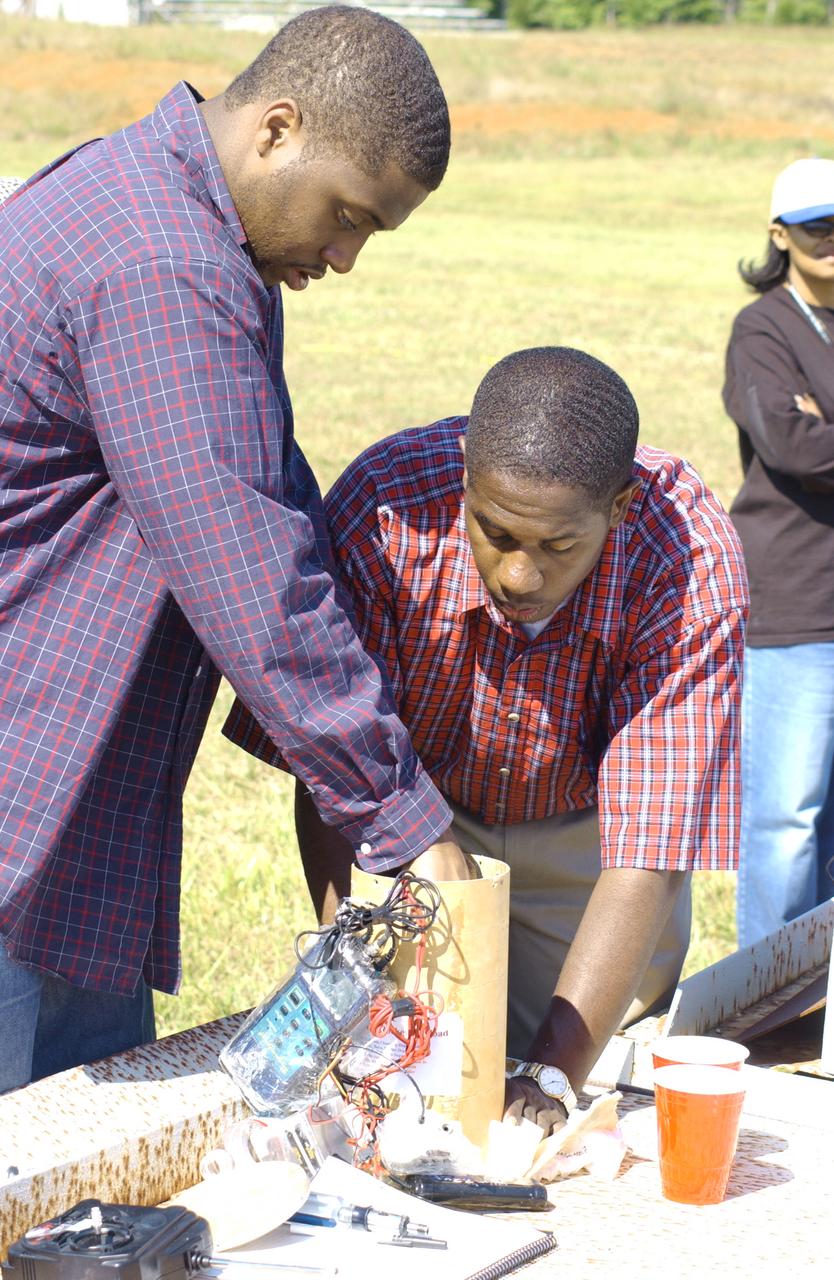
Filled with anticipation, students from two local universities, the University of Alabama in Huntsville (UAH), and Alabama Agricultural Mechanical University (AM), counted down to launch the rockets they designed and built at the Army test site on Redstone Arsenal in Huntsville, Alabama. The projected two-mile high launch culminated more than a year's work and demonstrated the student team's ability to meet the challenge set by the Marshall Space Flight Center's (MSFC) Student Launch Initiative (SLI) program to apply science and math to experience, judgment, and common sense, and proved to NASA officials that they have successfully built reusable launch vehicles (RLVs), another challenge set by NASA's SLI program. MSFC's SLI program is an educational effort that aims to motivate students to pursue careers in science, math, and engineering. It provides the students with hands-on, practical aerospace experience. UAH students designed and built the rocket and AM students designed the payload. In this picture, AM students prepare their payload, an experiment that measures the amount of hydrogen produced during electroplating with nickel in a brief period of micrgravity, prior to launch.
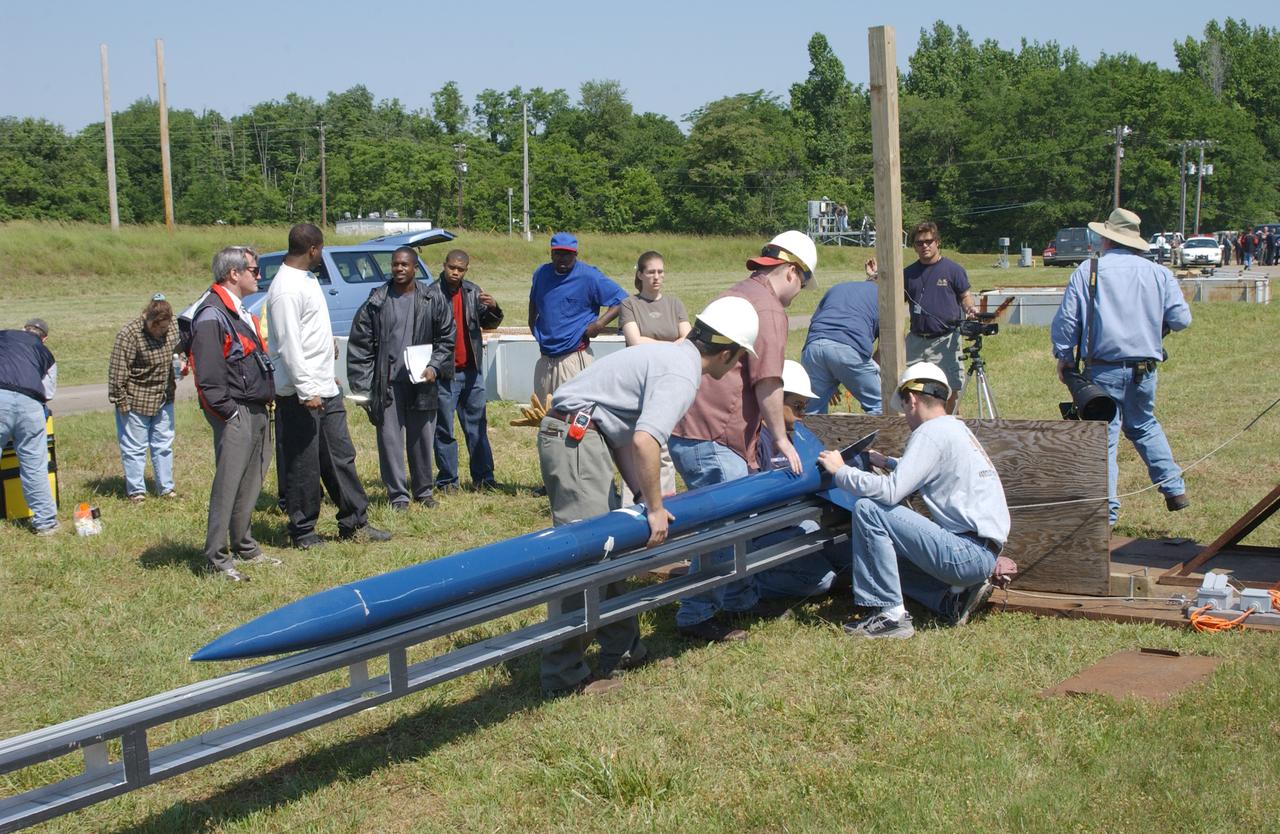
Filled with anticipation, students from two local universities, the University of Alabama in Huntsville (UAH), and Alabama Agricultural Mechanical University (AM), counted down to launch the rockets they designed and built at the Army test site on Redstone Arsenal in Huntsville, Alabama. The projected two-mile high launch culminated more than a year's work and demonstrated the student team's ability to meet the challenge set by the Marshall Space Flight Center's (MSFC) Student Launch Initiative (SLI) program to apply science and math to experience, judgment, and common sense, and proved to NASA officials that they have successfully built reusable launch vehicles (RLVs), another challenge set by NASA's SLI program. MSFC's SLI program is an educational effort that aims to motivate students to pursue careers in science, math, and engineering. It provides the students with hands-on, practical aerospace experience. In this picture, the University students prepare their rocket for launch. Students at UAH built the rocket and AM students developed its scientific payload, an experiment that measures the amount of hydrogen produced during electroplating with nickel in a brief period of micrgravity.

Leon Van Speybroeck of the Harvard-Smithsonian Center for Astrophysics in Cambridge Massachusetts was awarded the 2002 Bruno Rossi Prize of the High-Energy Astrophysics Division of the American Astronomy Society. The Rossi Prize is an arnual recognition of significant contributions in high-energy astrophysics in honor of the Massachusetts Institute of Technology's late Professor Bruno Rossi, an authority on cosmic ray physics and a pioneer in the field of x-ray astronomy. Van Speybroeck, who led the effort to design and make the x-ray mirrors for NASA's premier Chandra X-Ray Observatory, was recognized for a career of stellar achievements in designing precision x-ray optics. As Telescope Scientist for Chandra, he has worked for more than 20 years with a team that includes scientists and engineers from the Harvard-Smithsonian, NASA's Marshall Space Flight Center, TRW, Inc., Huhes-Danbury (now B.F. Goodrich Aerospace), Optical Coating Laboratories, Inc., and Eastman-Kodak on all aspects of the x-ray mirror assembly that is the heart of the observatory.
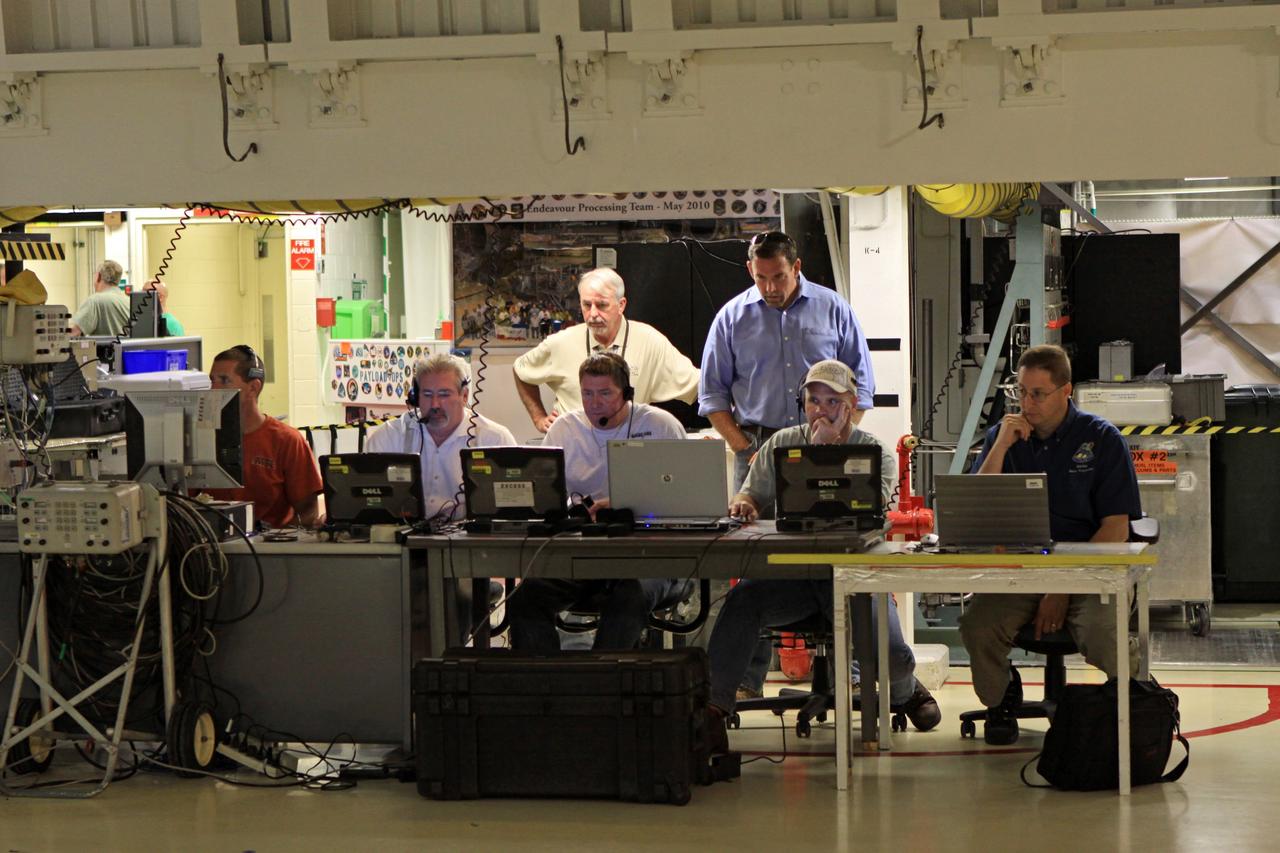
CAPE CANAVERAL, Fla. – In Orbiter Processing Facility OPF Bay 2 at NASA’s Kennedy Space Center in Florida, weight and center of gravity checks are underway on the space shuttle Endeavour. Monitoring data on the activity are United Space Alliance USA OPF Manager Mark Barnes, standing to the left, and Mike McClure, of USA Orbiter Handling Engineering. Seated, from the left, are USA move director Cliff Semonski, USA move director Mark McGee, USA lead aerospace Quality Mission Assurance inspector Jesse English, Doug Robison, of USA Orbiter Handling Engineering, and Robert Handl, of Boeing Mass Properties. The work is part of Transition and Retirement of the remaining space shuttles, Endeavour and Atlantis. Endeavour is being prepared for public display at the California Science Center in Los Angeles. Its ferry flight to California is targeted for mid-September. Endeavour was the last space shuttle added to NASA’s orbiter fleet. Over the course of its 19-year career, Endeavour spent 299 days in space during 25 missions. For more information, visit http://www.nasa.gov/transition Photo credit: NASA/ Jim Grossmann
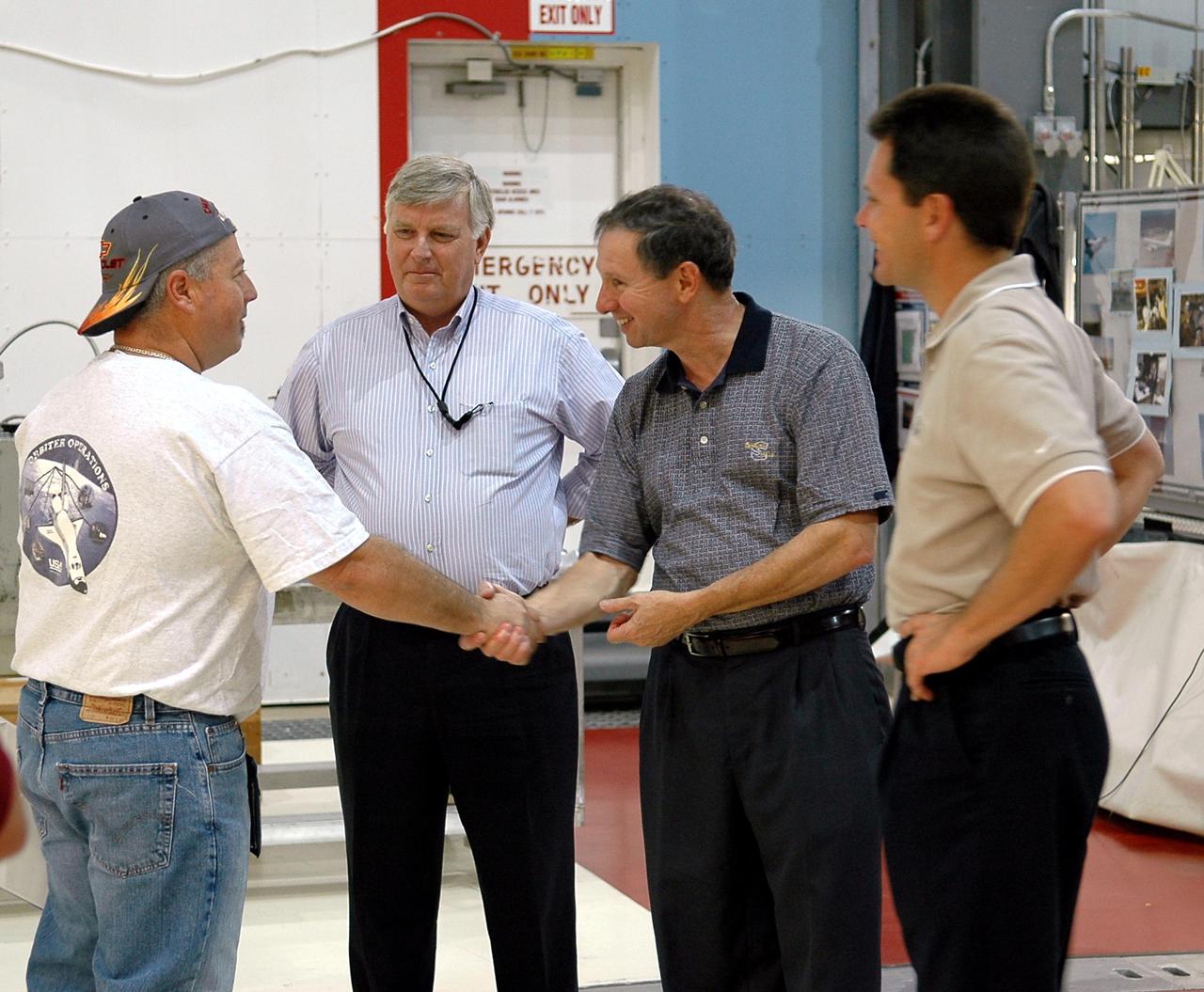
KENNEDY SPACE CENTER, FLA. - Michael Griffin, administrator of the National Aeronautics and Space Administration (NASA), shakes hands with United Space Alliance advanced systems technician Richard Van Wart during a tour of Orbiter Processing Facility bay 1. From left are Van Wart, Center Director James Kennedy, Griffin and Space Shuttle Atlantis vehicle manager Scott Thurston. Space Shuttle Atlantis is being processed for the second Return to Flight mission, STS-121, in the facility. This is Griffin's first official visit to Kennedy Space Center. Griffin is the 11th administrator of NASA, a role he assumed on April 14, 2005. Griffin was nominated to the position in March while serving as the Space Department head at Johns Hopkins University's Applied Physics Laboratory in Baltimore. A registered professional engineer in Maryland and California, Griffin served as chief engineer at NASA earlier in his career. He holds numerous scientific and technical degrees including a Ph.D. in Aerospace Engineering from the University of Maryland.
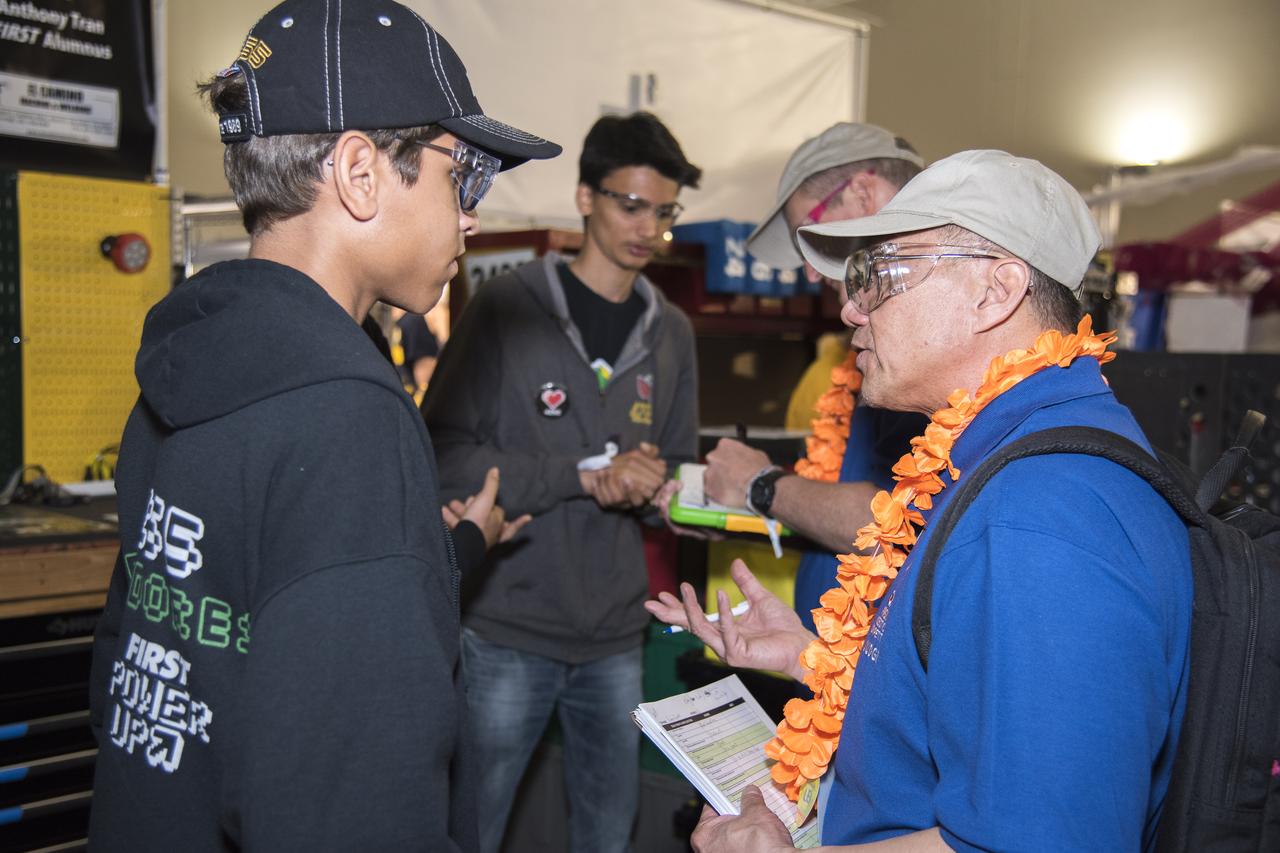
NASA systems engineer, Daniel Eng, right, talks with student participants at the 2019 Aerospace Valley Robotics Competition at the Palmdale Aerospace Academy in Palmdale, California.
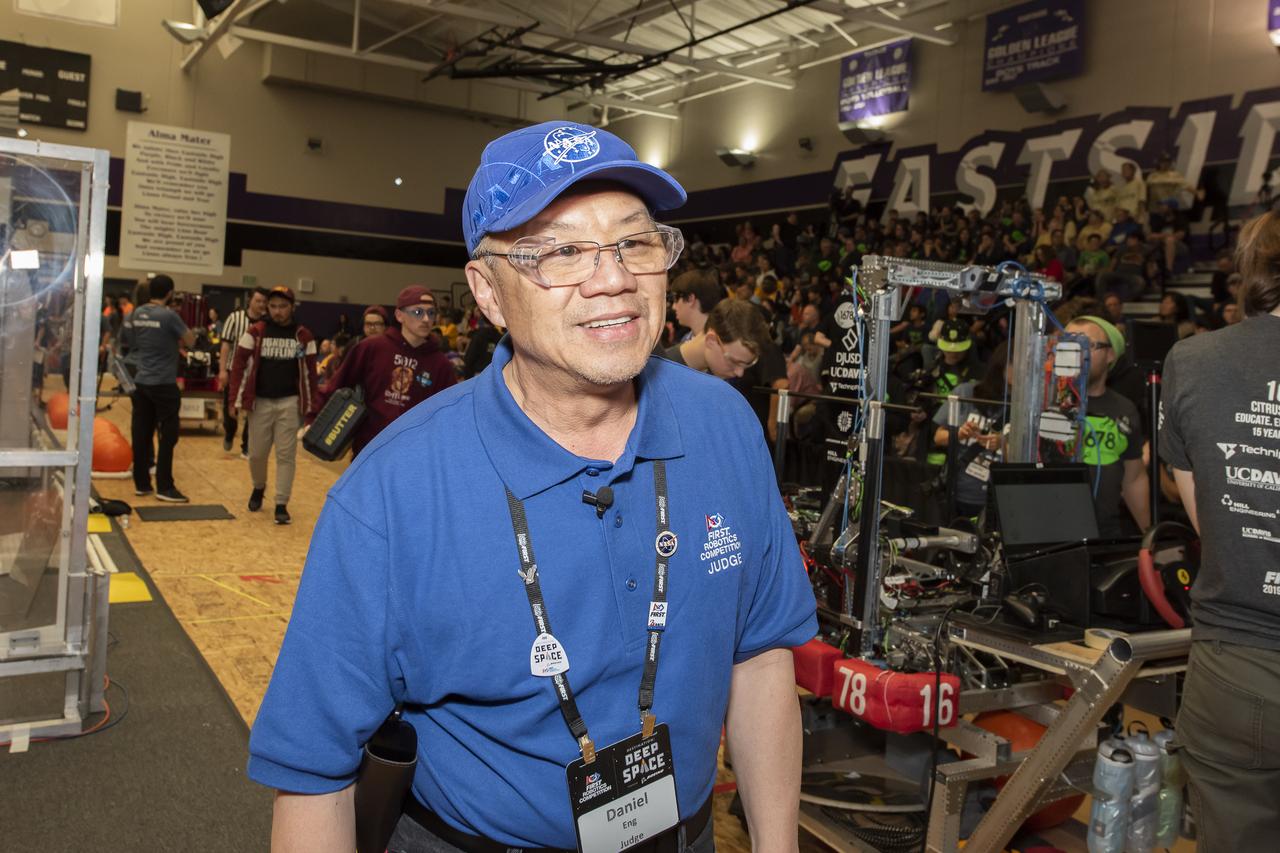
NASA Systems Engineer Daniel Eng serves his second year as a judge for the Aerospace Valley Robotics Competition at the Palmdale Aerospace Academy in Palmdale, California, in 2019.
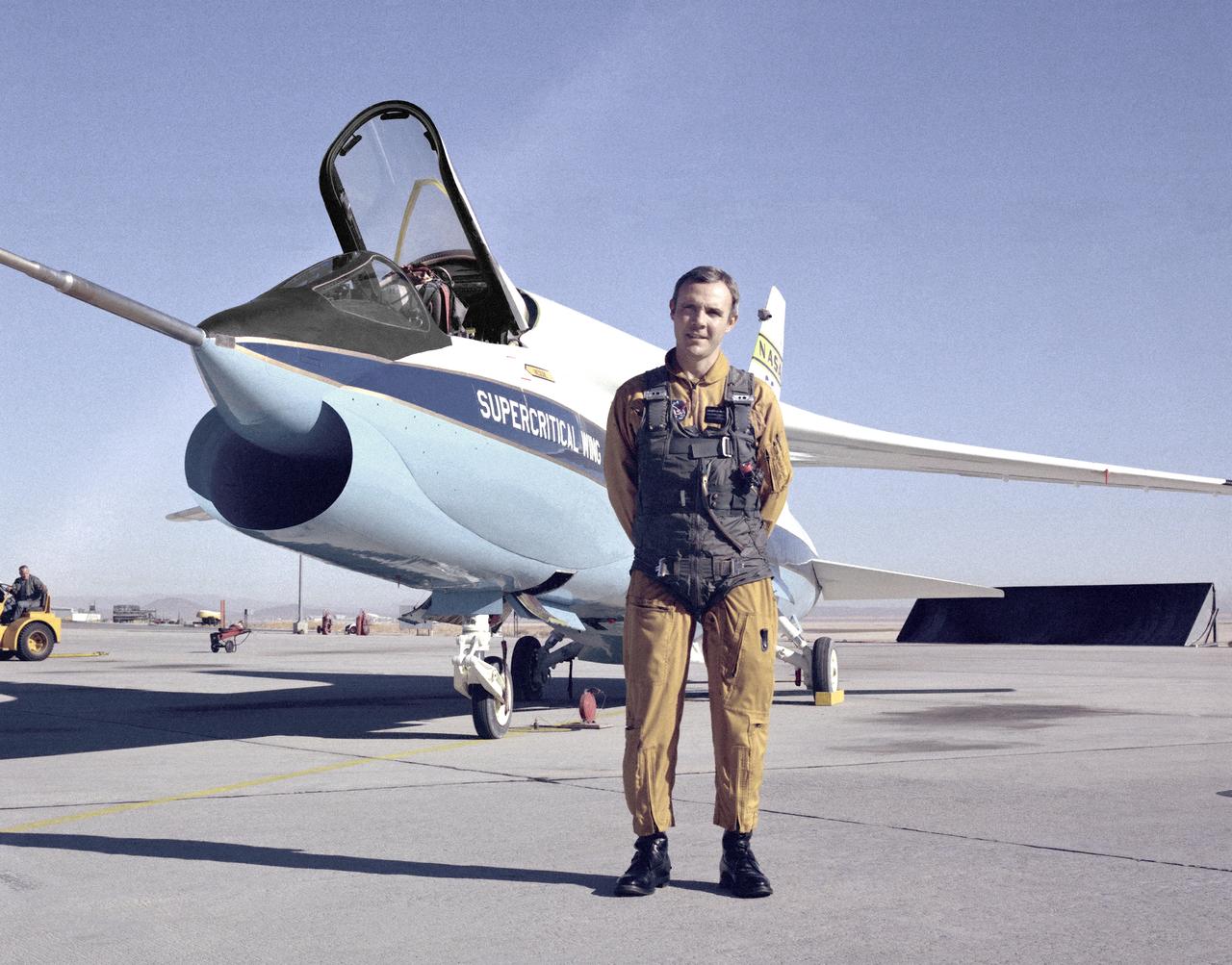
A Vought F-8A Crusader was selected by NASA as the testbed aircraft (designated TF-8A) to install an experimental Supercritical Wing (SCW) in place of the conventional wing. The unique design of the Supercritical Wing reduces the effect of shock waves on the upper surface near Mach 1, which in turn reduces drag. In this photograph the TF-8A Crusader with Supercritical Wing is shown on the ramp with project pilot Tom McMurtry standing beside it. McMurtry received NASA's Exceptional Service Medal for his work on the F-8 SCW aircraft. He also flew the AD-1, F-15 Digital Electronic Engine Control, the KC-130 winglets, the F-8 Digital Fly-By-Wire and other flight research aircraft including the remotely piloted 720 Controlled Impact Demonstration and sub-scale F-15 research projects. In addition, McMurtry was the 747 co-pilot for the Shuttle Approach and Landing Tests and made the last glide flight in the X-24B. McMurtry was Dryden’s Director for Flight Operations from 1986 to 1998, when he became Associate Director for Operations at NASA Dryden. In 1982, McMurtry received the Iven C. Kincheloe Award from the Society of Experimental Test Pilots for his contributions as project pilot on the AD-1 Oblique Wing program. In 1998 he was named as one of the honorees at the Lancaster, Calif., ninth Aerospace Walk of Honor ceremonies. In 1999 he was awarded the NASA Distinguished Service Medal. He retired in 1999 after a distinguished career as pilot and manager at Dryden that began in 1967.