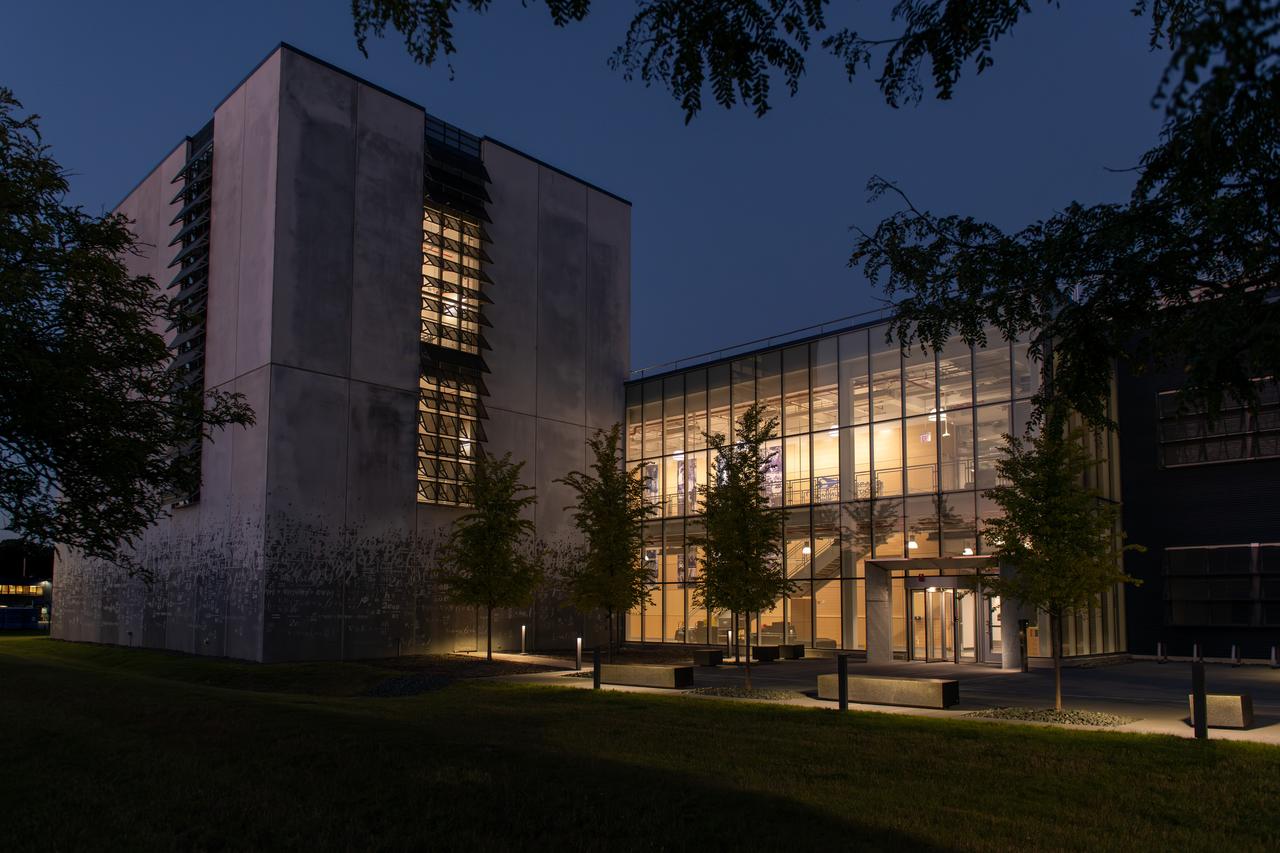
The new Aerospace Communications Facility allows researchers to develop various types of communication, including RF, cellular, optical, and quantum to support the agency’s Artemis and Advanced Air Mobility Missions.
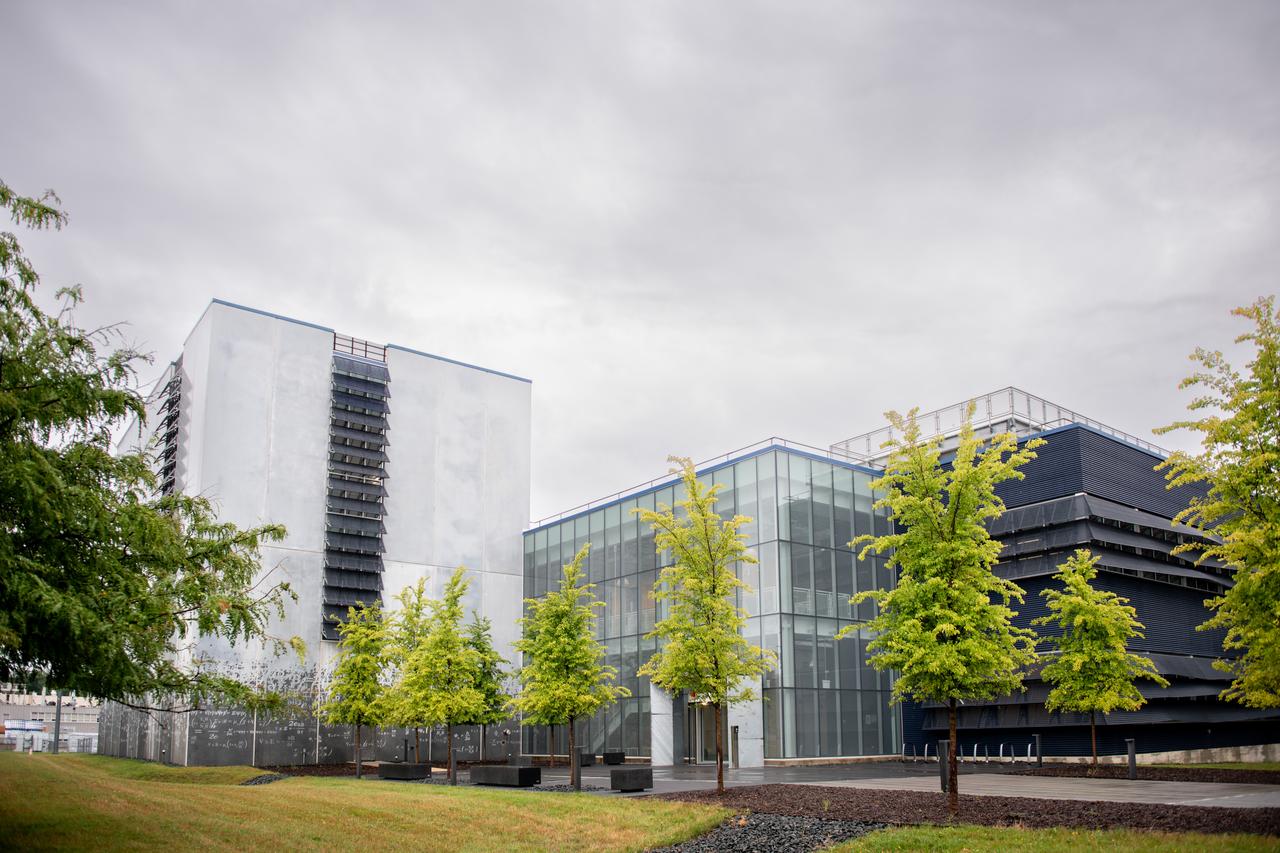
NASA’s Glenn Research Center opened the doors to a brand-new mission-focused facility that will support the agency’s Artemis and Advanced Air Mobility missions. On Aug. 30, NASA management and local officials cut the ribbon to the Aerospace Communications Facility (ACF), a new building designed for advanced radio frequency (RF) and optical communication technology research and development. Photo Credit: (NASA/Sara Lowthian-Hanna)
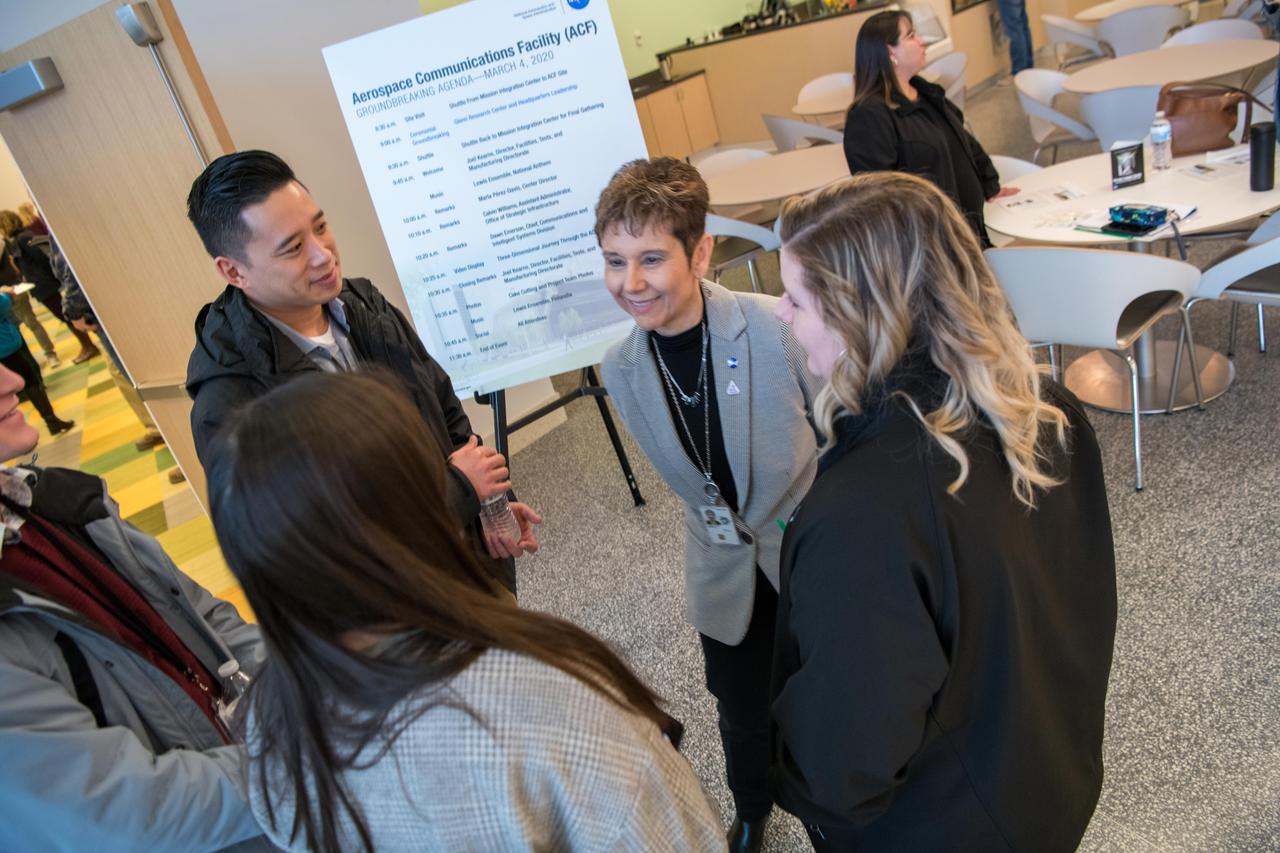
Aerospace Communications Facility, ACF Groundbreaking Ceremony
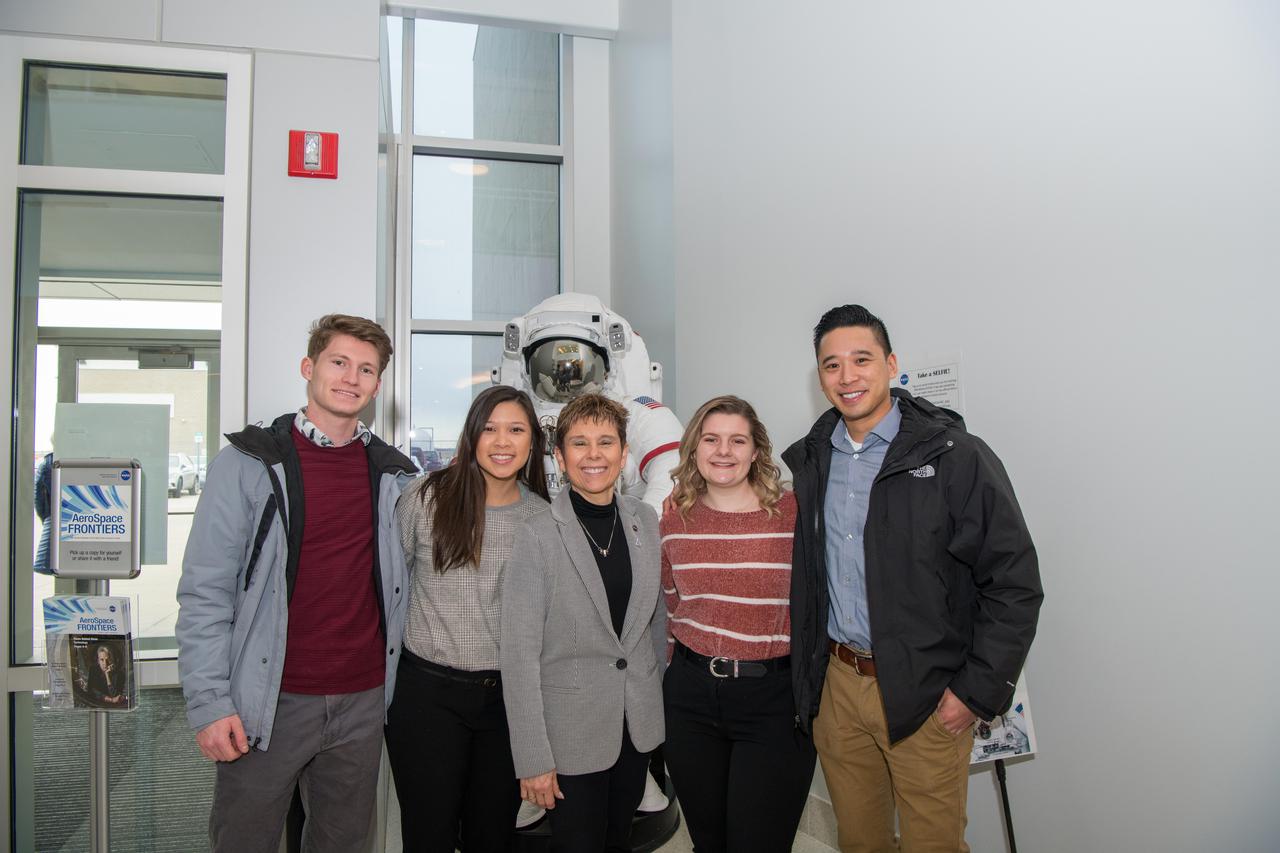
Aerospace Communications Facility, ACF Groundbreaking Ceremony
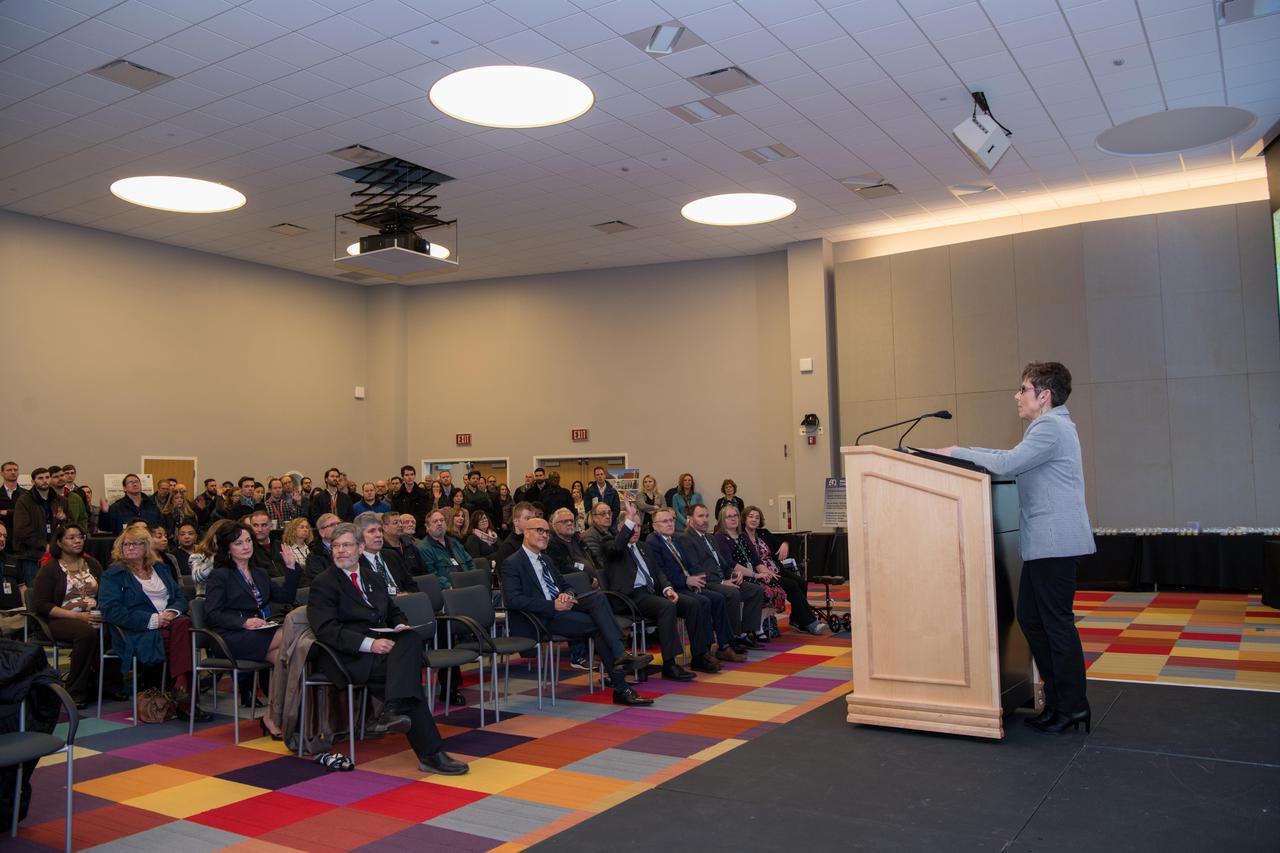
Aerospace Communications Facility, ACF Groundbreaking Ceremony
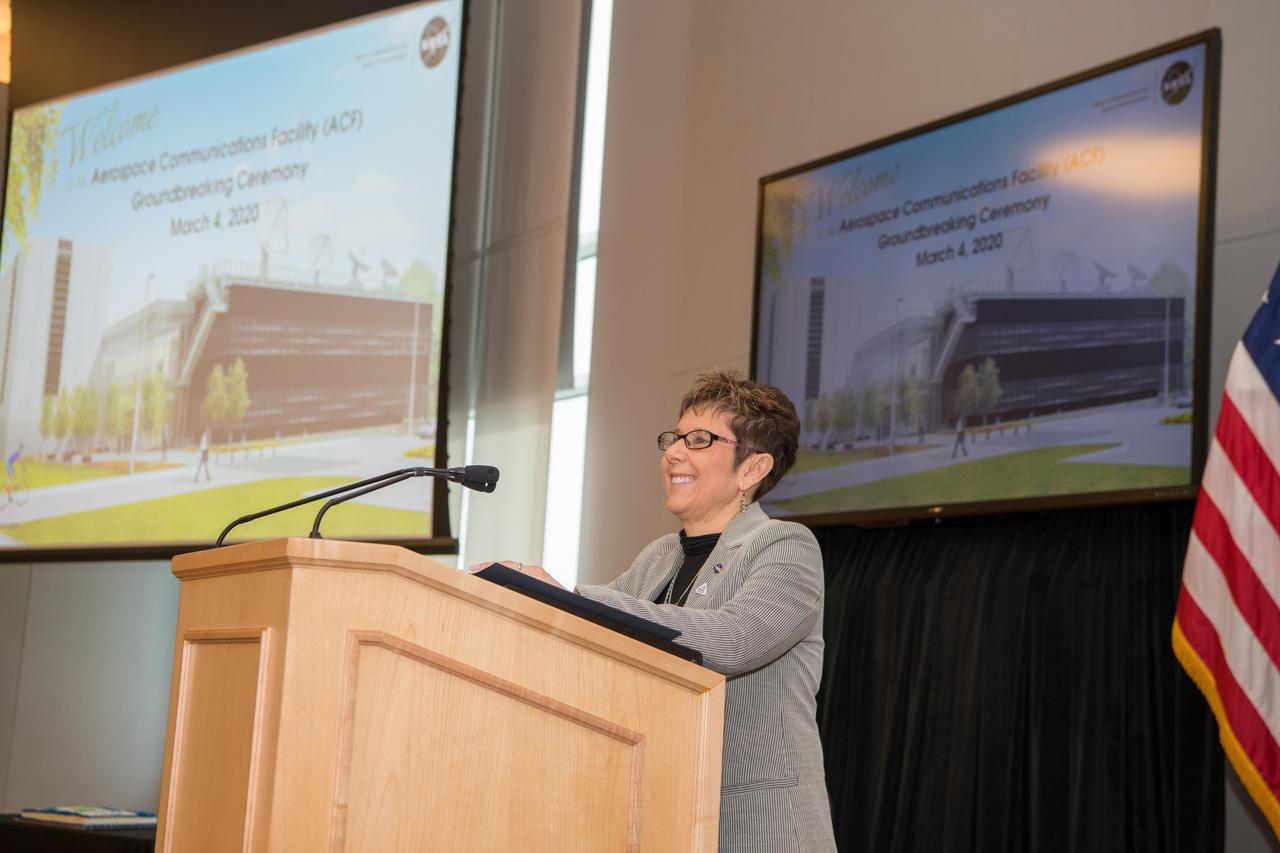
Aerospace Communications Facility, ACF Groundbreaking Ceremony
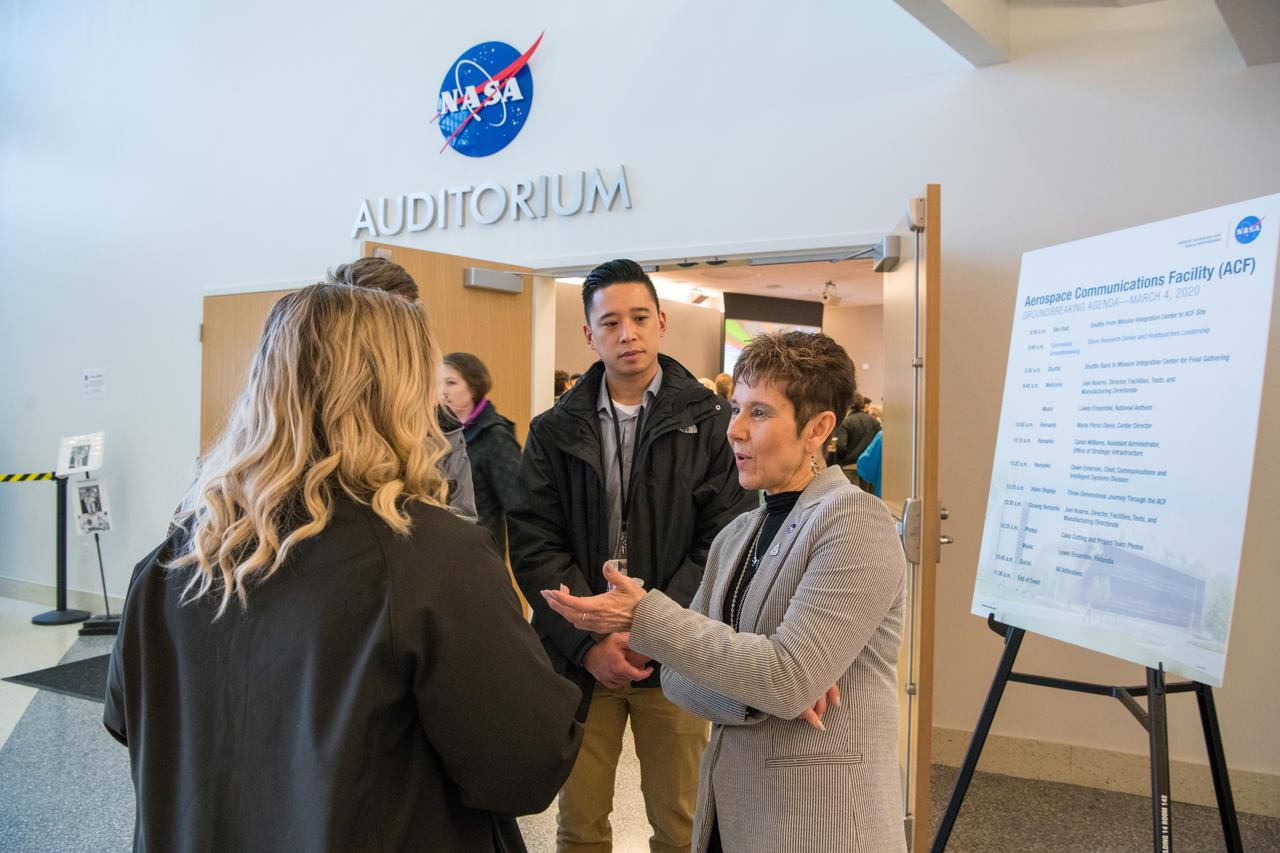
Aerospace Communications Facility, ACF Groundbreaking Ceremony
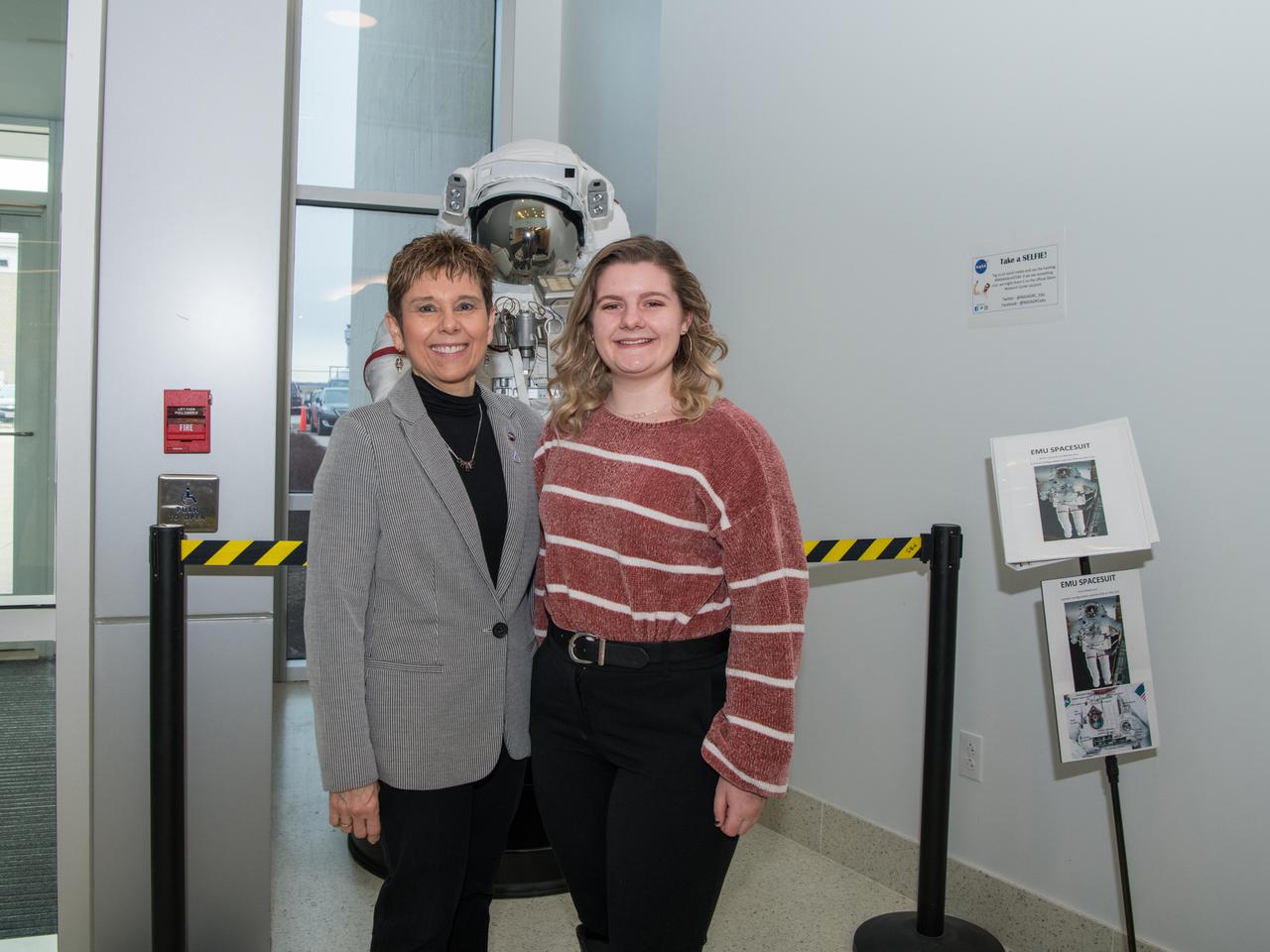
Aerospace Communications Facility, ACF Groundbreaking Ceremony
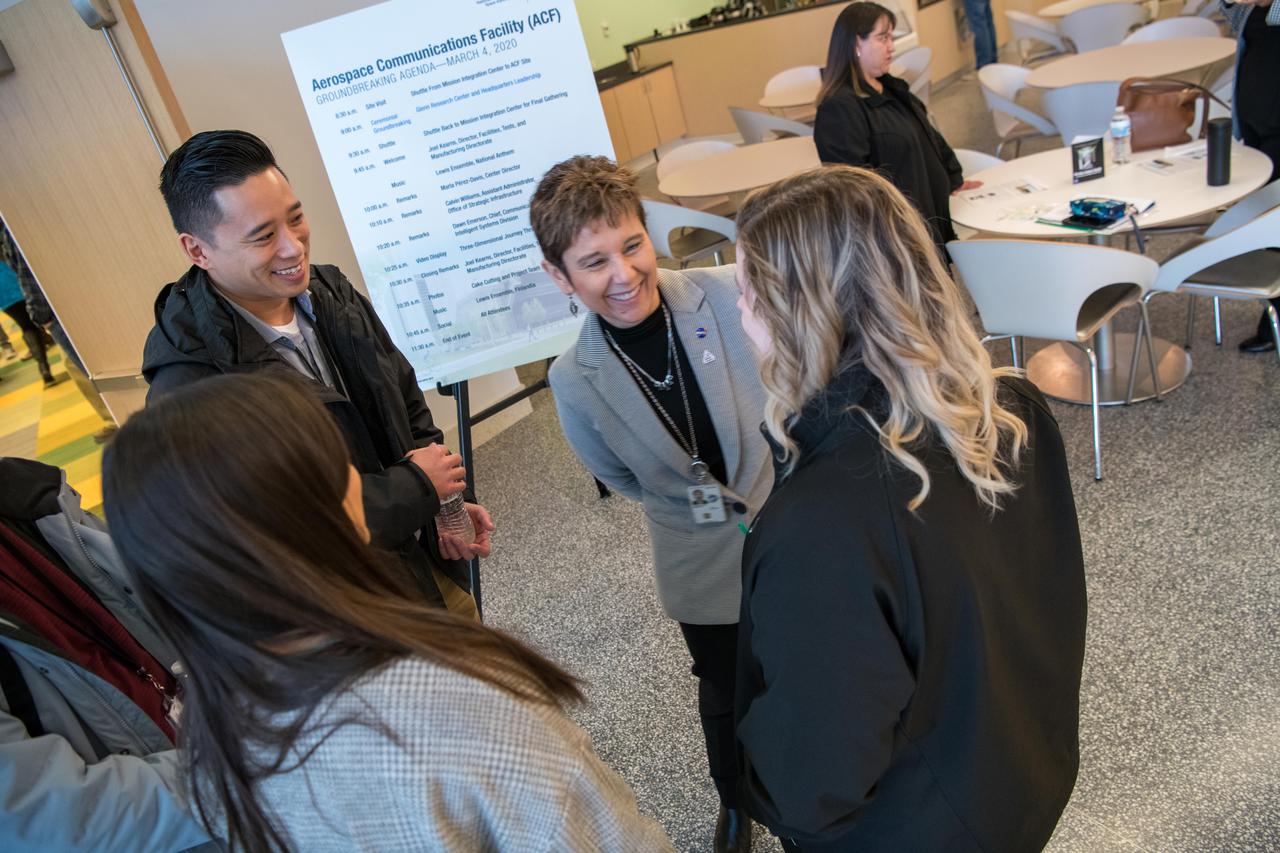
Aerospace Communications Facility, ACF Groundbreaking Ceremony
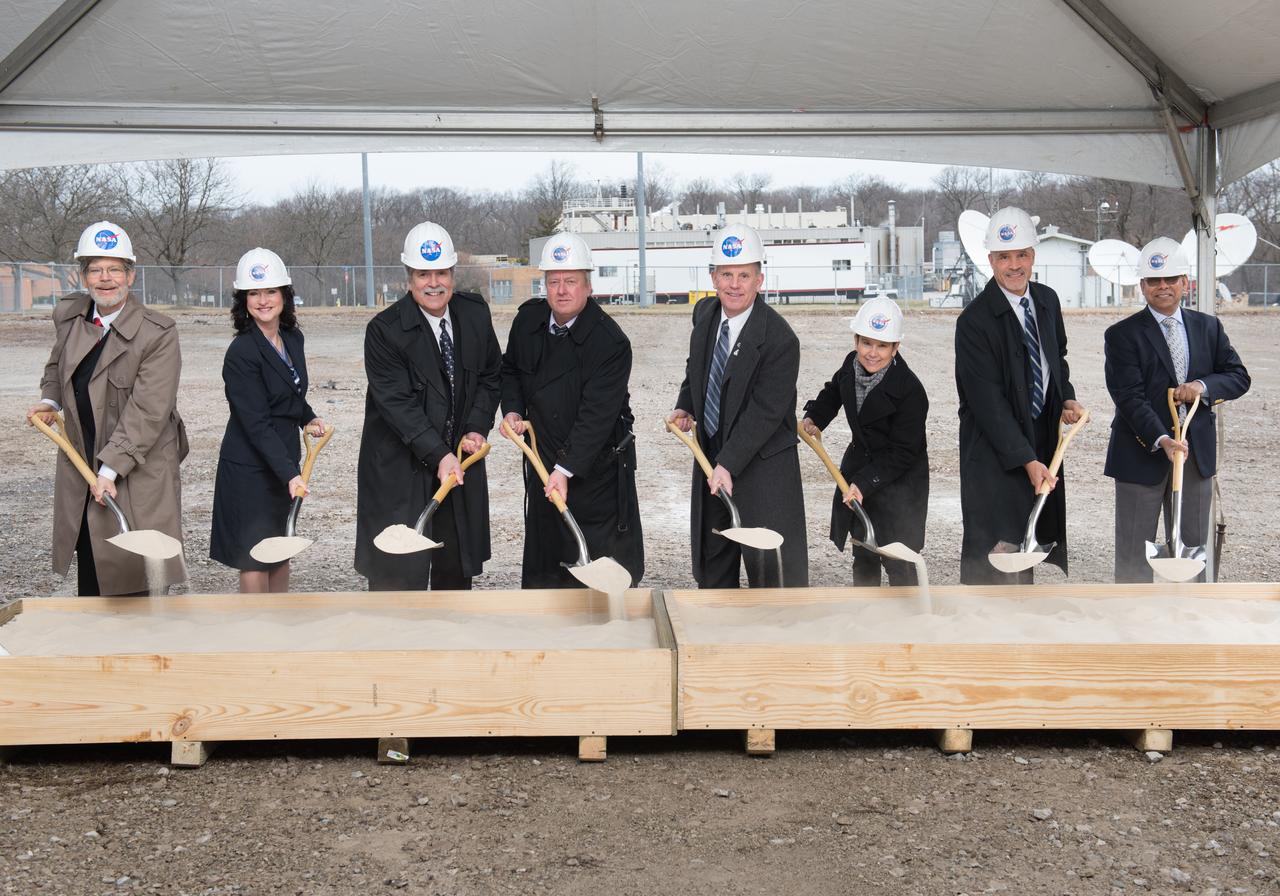
NASA Glenn Research Center Director and Senior Management at the Aerospace Communications Facility, ACF Groundbreaking Ceremony
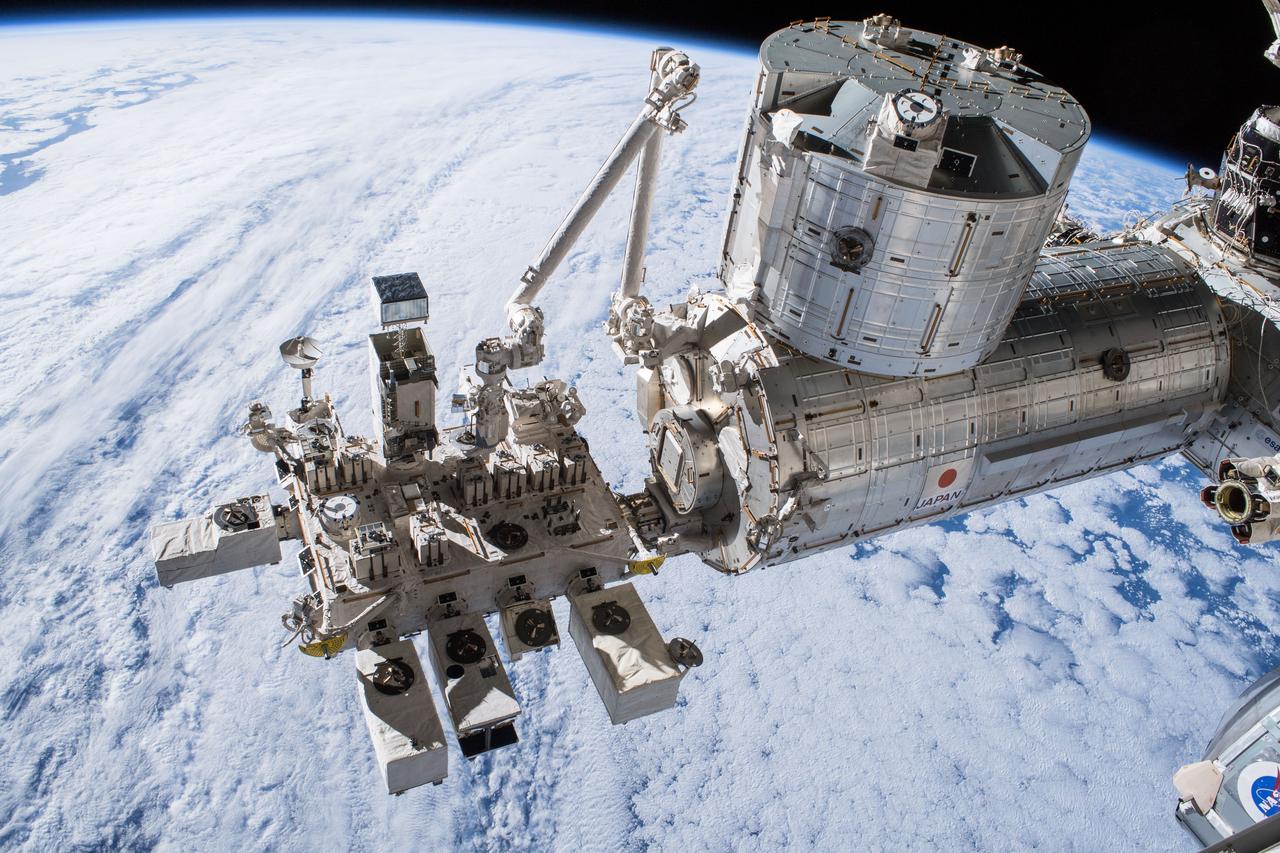
iss055e006395 (March 29, 2018) --- The Kibo laboratory module from the Japan Aerospace Exploration Agency (comprised of a pressurized module and exposed facility, a logistics module, a remote manipulator system and an inter-orbit communication system unit) was pictured as the International Space Station orbited over the southern Pacific Ocean east of New Zealand.
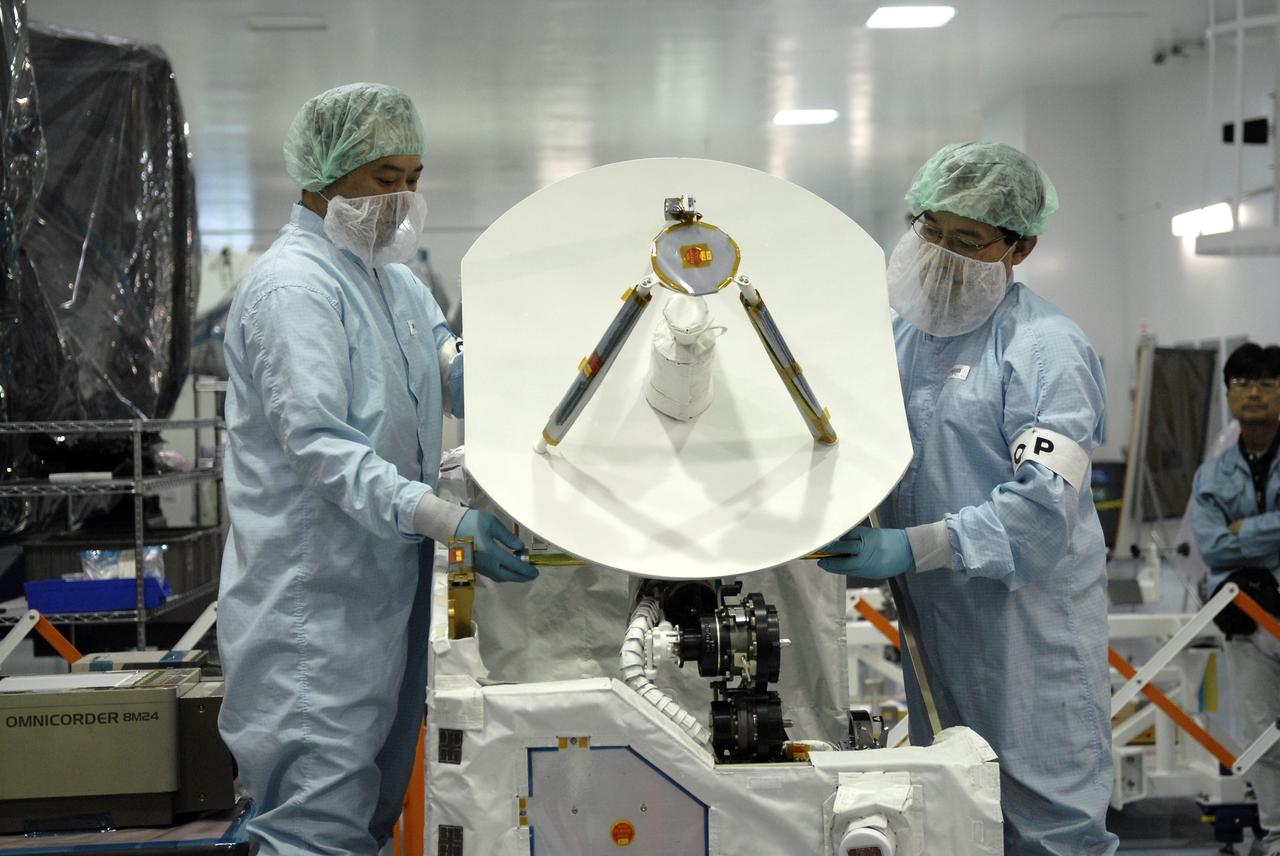
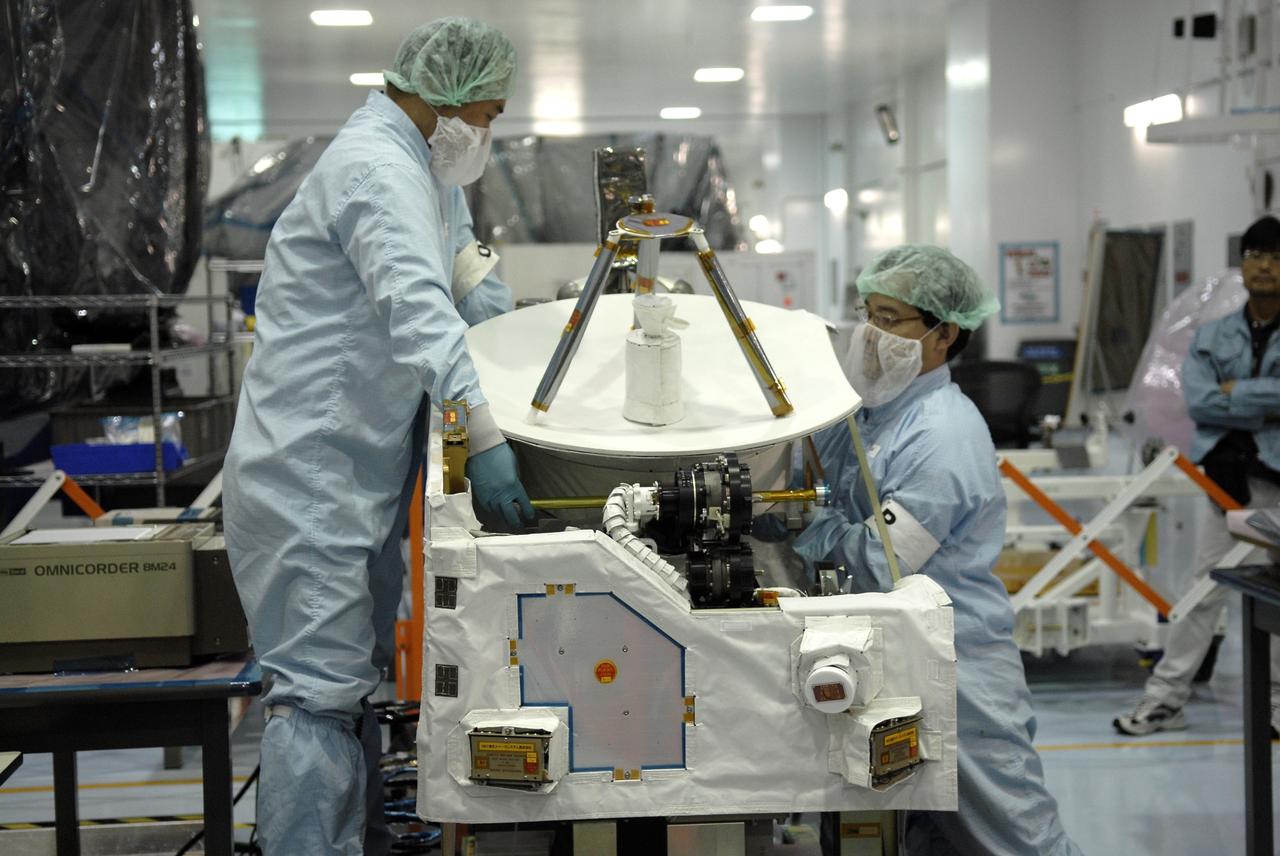
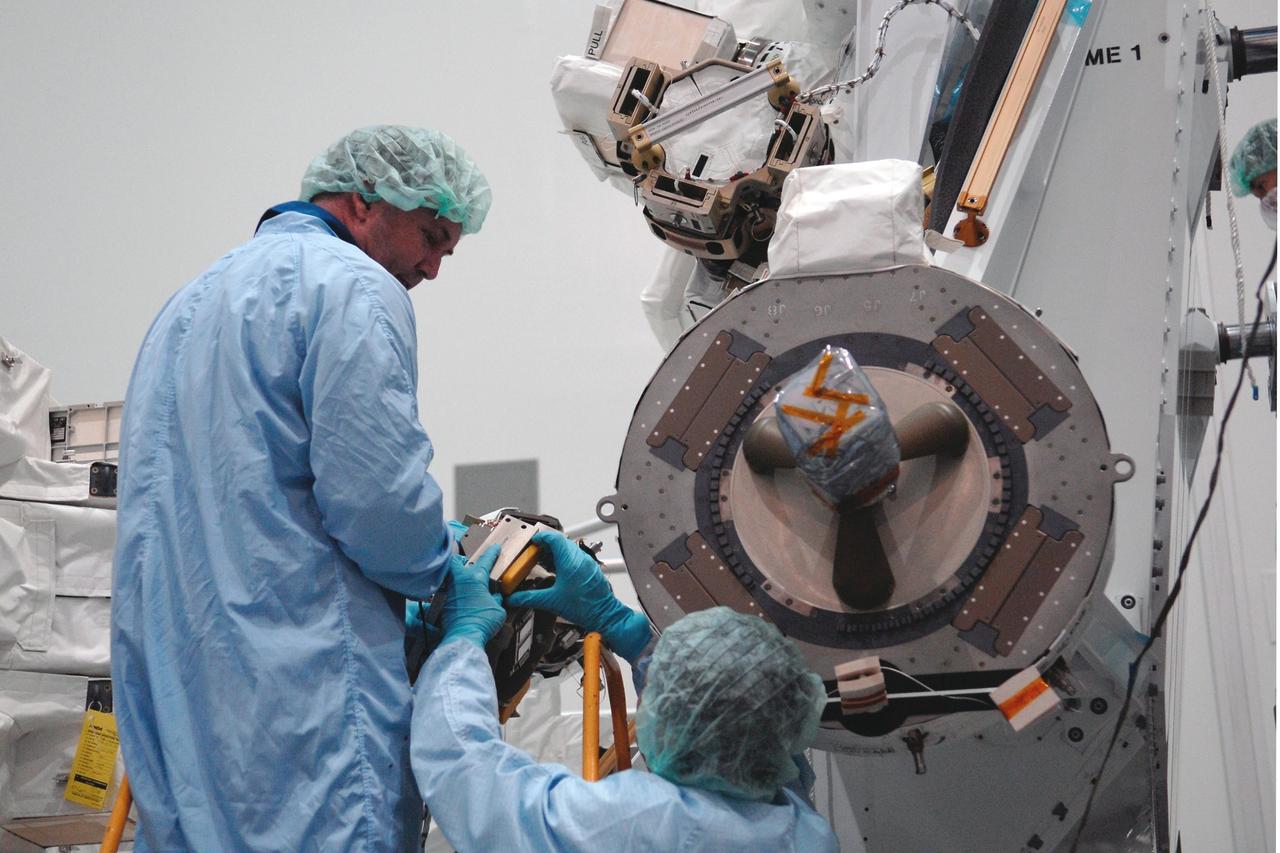
CAPE CANAVERAL, Fla. - In the Space Station Processing Facility at NASA's Kennedy Space Center in Florida, Japanese Aerospace Exploration Agency, or JAXA, technicians deploy an antenna from the Inter Orbit Communication System Extended Facility, or ICS-EF. The antenna and a pointing mechanism will be used to communicate with JAXA’s Data Relay Test Satellite, or DRTS. The ICS-EF will be launched, along with the Extended Facility and Experiment Logistics Module-Exposed Section, to the International Space Station aboard the space shuttle Endeavour on the STS-127mission targeted for launch on May 15, 2009. Photo credit: NASA/Kim Shiflett
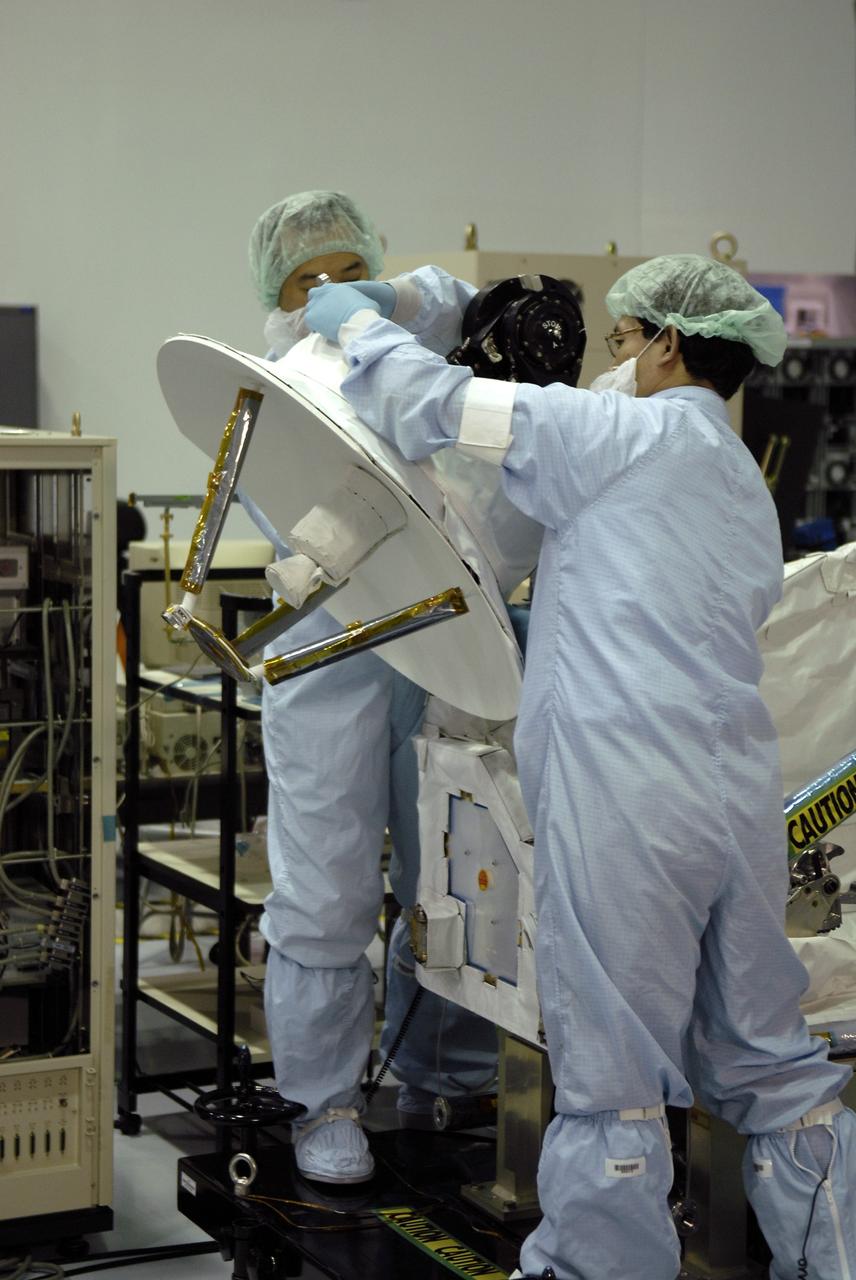
CAPE CANAVERAL, Fla. - In the Space Station Processing Facility at NASA's Kennedy Space Center in Florida, Japanese Aerospace Exploration Agency, or JAXA, technicians begin to deploy an antenna from the Inter Orbit Communication System Extended Facility, or ICS-EF. The antenna and a pointing mechanism will be used to communicate with JAXA’s Data Relay Test Satellite, or DRTS. The ICS-EF will be launched, along with the Extended Facility and Experiment Logistics Module-Exposed Section, to the International Space Station aboard the space shuttle Endeavour on the STS-127mission targeted for launch on May 15, 2009. Photo credit: NASA/Kim Shiflett
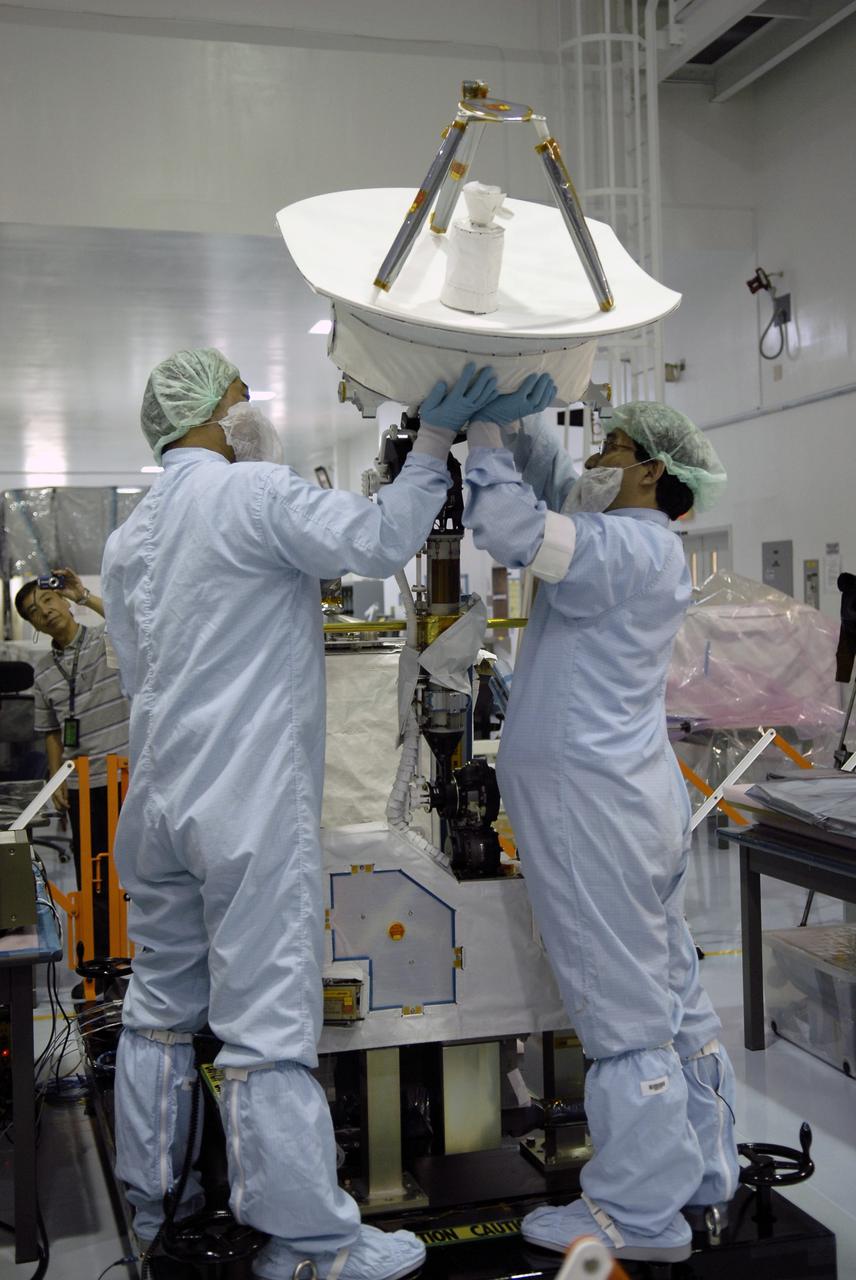
CAPE CANAVERAL, Fla. - In the Space Station Processing Facility at NASA's Kennedy Space Center in Florida, Japanese Aerospace Exploration Agency, or JAXA, technicians test the deployment of an antenna from the Inter Orbit Communication System Extended Facility, or ICS-EF. The antenna and a pointing mechanism will be used to communicate with JAXA’s Data Relay Test Satellite, or DRTS. The ICS-EF will be launched, along with the Extended Facility and Experiment Logistics Module-Exposed Section, to the International Space Station aboard the space shuttle Endeavour on the STS-127mission targeted for launch on May 15, 2009. Photo credit: NASA/Kim Shiflett
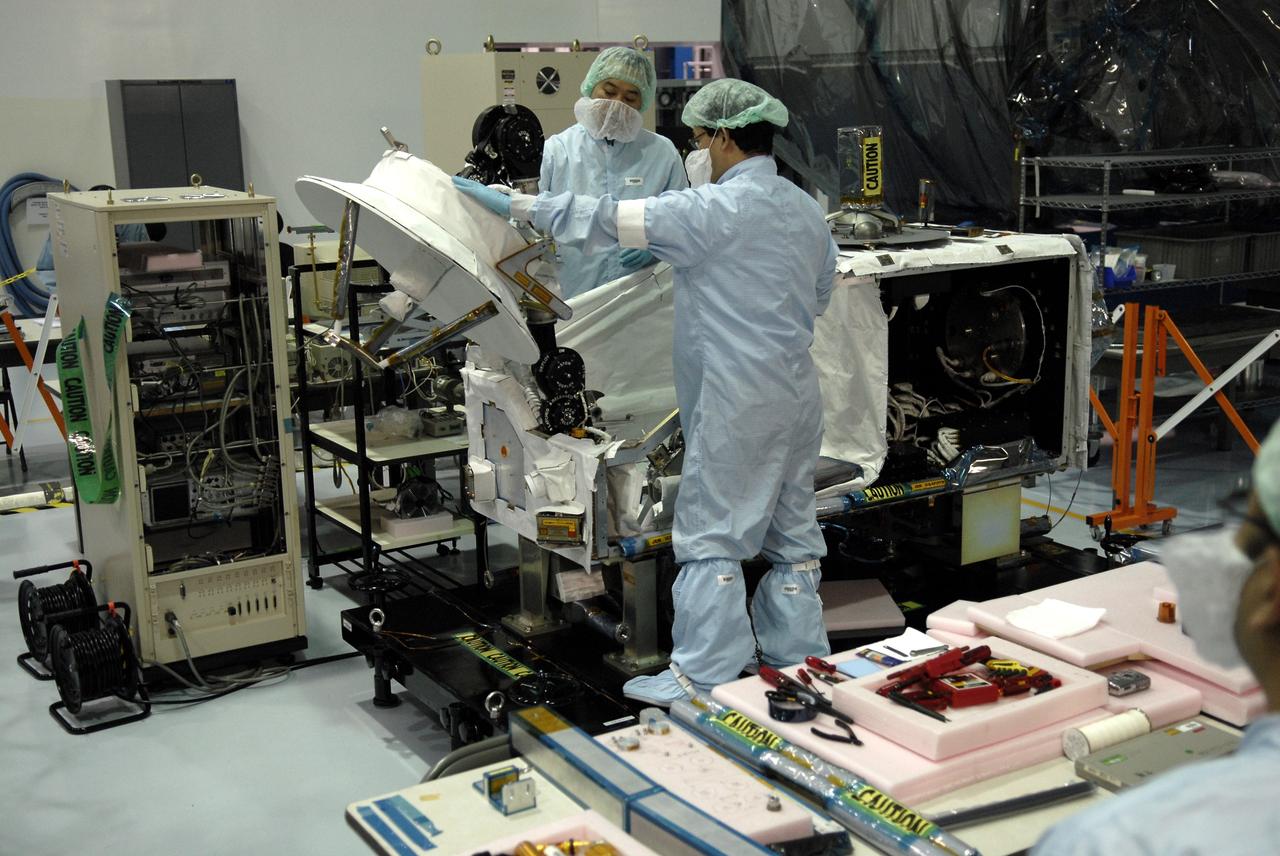
CAPE CANAVERAL, Fla. - In the Space Station Processing Facility at NASA's Kennedy Space Center in Florida, Japanese Aerospace Exploration Agency, or JAXA, technicians test the deployment of an antenna and boom from the Inter Orbit Communication System Extended Facility, or ICS-EF. The antenna and a pointing mechanism will be used to communicate with JAXA’s Data Relay Test Satellite, or DRTS. The ICS-EF will be launched, along with the Extended Facility and Experiment Logistics Module-Exposed Section, to the International Space Station aboard the space shuttle Endeavour on the STS-127mission targeted for launch on May 15, 2009. Photo credit: NASA/Kim Shiflett
CAPE CANAVERAL, Fla. - In the Space Station Processing Facility at NASA's Kennedy Space Center in Florida, Japanese Aerospace Exploration Agency, or JAXA, technicians test the deployment of an antenna from the Inter Orbit Communication System Extended Facility, or ICS-EF. The antenna and a pointing mechanism will be used to communicate with JAXA’s Data Relay Test Satellite, or DRTS. The ICS-EF will be launched, along with the Extended Facility and Experiment Logistics Module-Exposed Section, to the International Space Station aboard the space shuttle Endeavour on the STS-127mission targeted for launch on May 15, 2009. Photo credit: NASA/Kim Shiflett
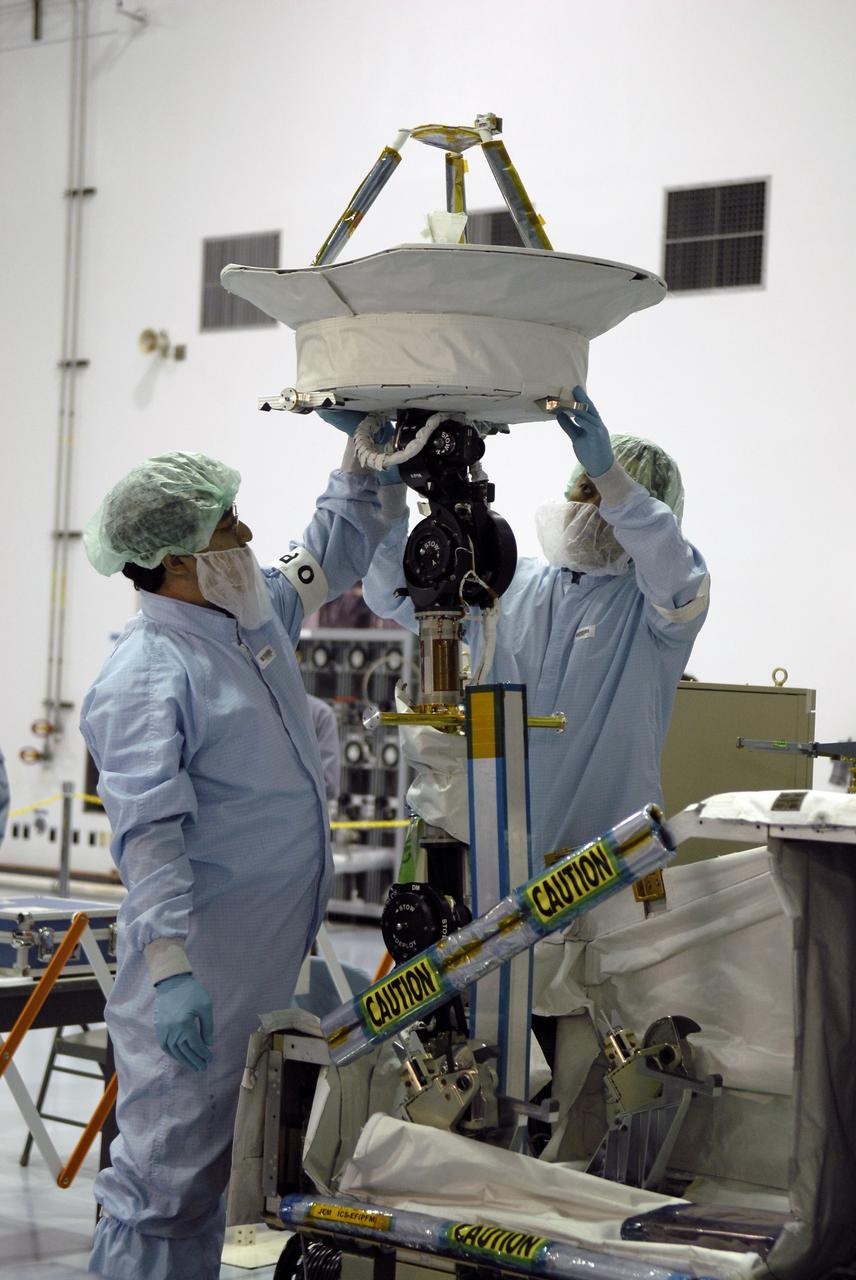
CAPE CANAVERAL, Fla. - In the Space Station Processing Facility at NASA's Kennedy Space Center in Florida, Japanese Aerospace Exploration Agency, or JAXA, technicians test the deployment of an antenna and boom from the Inter Orbit Communication System Extended Facility, or ICS-EF. The antenna and a pointing mechanism will be used to communicate with JAXA’s Data Relay Test Satellite, or DRTS. The ICS-EF will be launched, along with the Extended Facility and Experiment Logistics Module-Exposed Section, to the International Space Station aboard the space shuttle Endeavour on the STS-127mission targeted for launch on May 15, 2009. Photo credit: NASA/Kim Shiflett
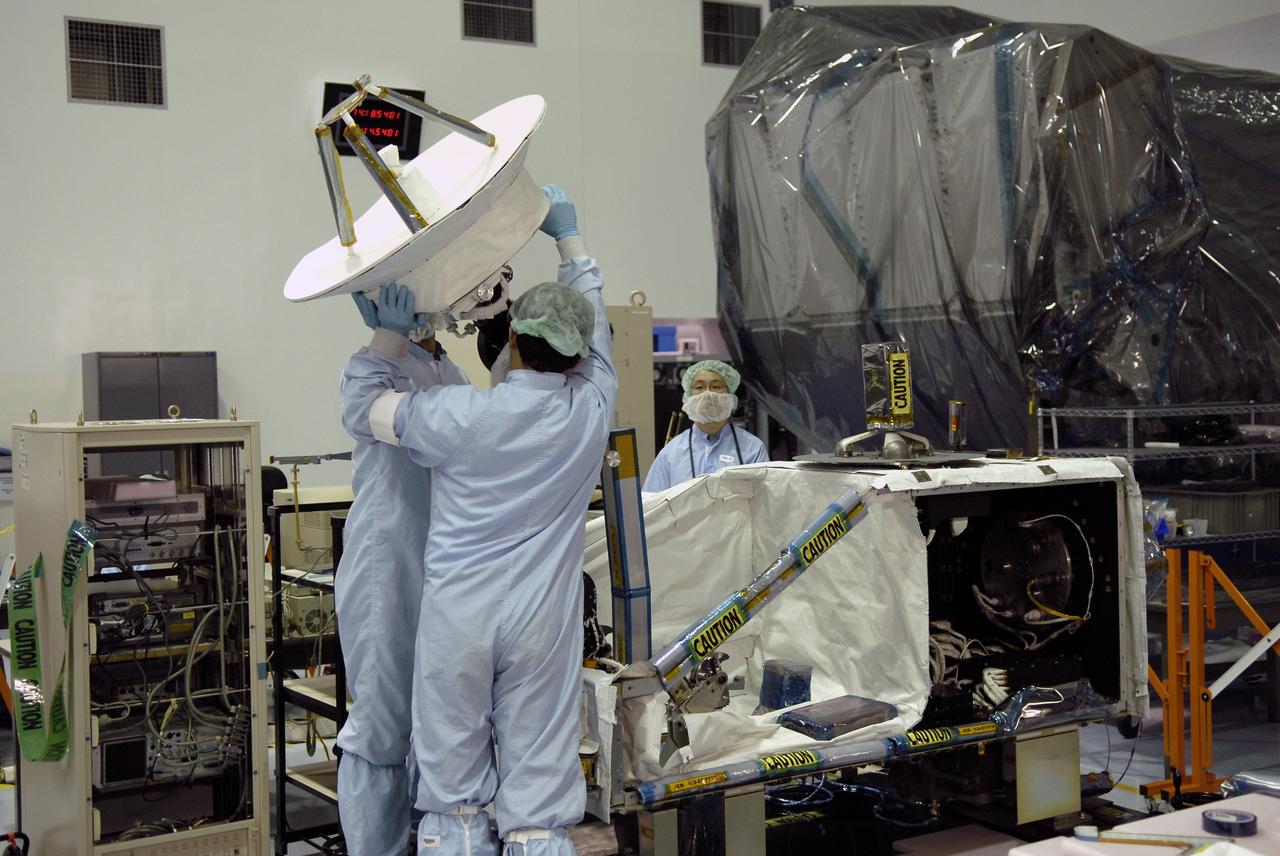
CAPE CANAVERAL, Fla. - In the Space Station Processing Facility at NASA's Kennedy Space Center in Florida, Japanese Aerospace Exploration Agency, or JAXA, technicians test the deployment of an antenna and boom from the Inter Orbit Communication System Extended Facility, or ICS-EF. The antenna and a pointing mechanism will be used to communicate with JAXA’s Data Relay Test Satellite, or DRTS. The ICS-EF will be launched, along with the Extended Facility and Experiment Logistics Module-Exposed Section, to the International Space Station aboard the space shuttle Endeavour on the STS-127mission targeted for launch on May 15, 2009. Photo credit: NASA/Kim Shiflett
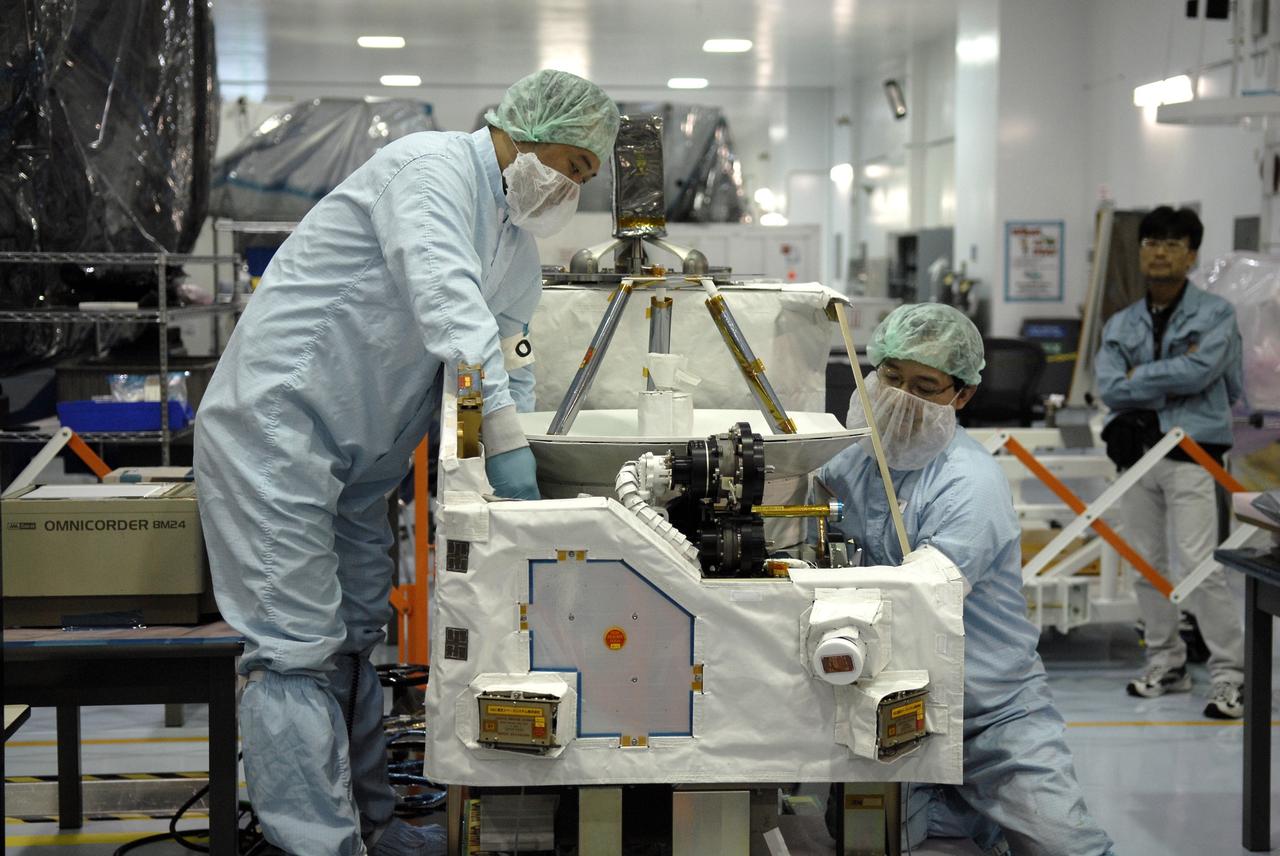
CAPE CANAVERAL, Fla. - In the Space Station Processing Facility at NASA's Kennedy Space Center in Florida, Japanese Aerospace Exploration Agency, or JAXA, technicians begin to deploy an antenna from the Inter Orbit Communication System Extended Facility, or ICS-EF. The antenna and a pointing mechanism will be used to communicate with JAXA’s Data Relay Test Satellite, or DRTS. The ICS-EF will be launched, along with the Extended Facility and Experiment Logistics Module-Exposed Section, to the International Space Station aboard the space shuttle Endeavour on the STS-127mission targeted for launch on May 15, 2009. Photo credit: NASA/Kim Shiflett
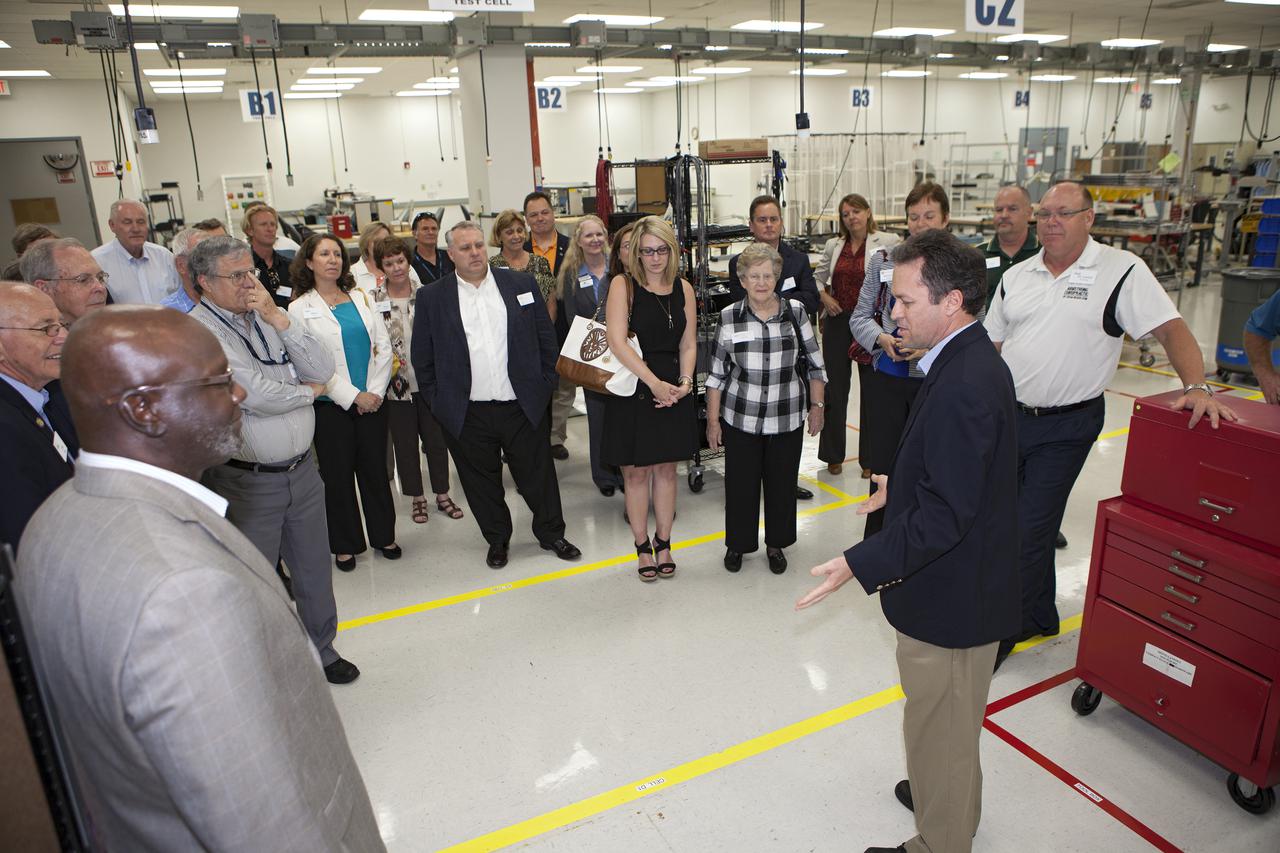
CAPE CANAVERAL, Fla. – At the Aerospace and Defense Manufacturing Center in Cape Canaveral, Fla., Craig Technologies Vice President and Site Director Jim Kell describes operations at the 161,000-square-foot facility during a community open house. In June of last year, NASA signed a partnership agreement with Craig Technologies to maintain an inventory of unique processing and manufacturing equipment for future mission support at the agency's Kennedy Space Center. The Cape Canaveral, Fla., facility, formerly known as the NASA Shuttle Logistics Depot NSLD, is now the Aerospace and Defense Manufacturing Center ADMC. Photo credit: NASA_Kim Shiflett
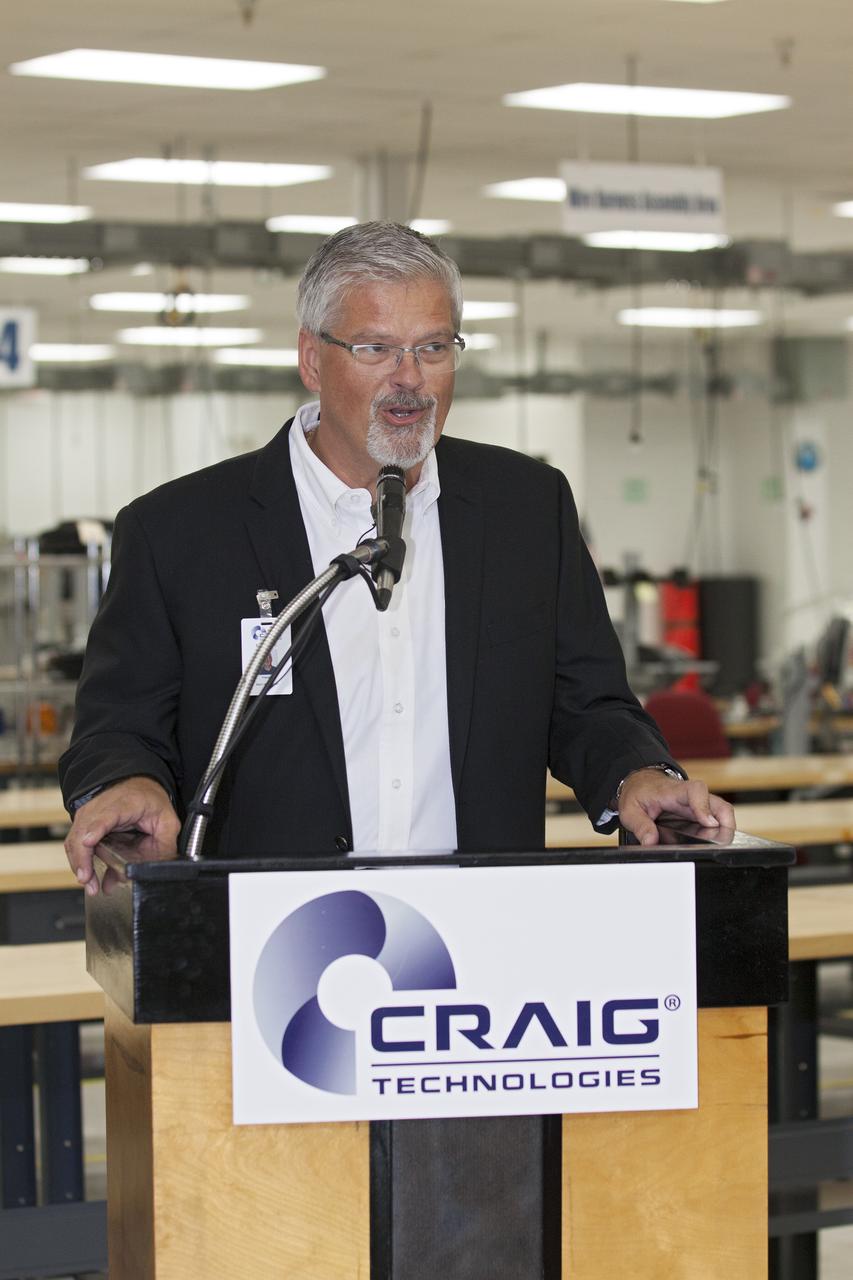
CAPE CANAVERAL, Fla. – At the Aerospace and Defense Manufacturing Center in Cape Canaveral, Fla., Craig Technologies President Mark Mikolajczyk speaks to guests during a community open house at the 161,000-square-foot facility. In June of last year, NASA signed a partnership agreement with Craig Technologies to maintain an inventory of unique processing and manufacturing equipment for future mission support at the agency's Kennedy Space Center. The Cape Canaveral, Fla., facility, formerly known as the NASA Shuttle Logistics Depot NSLD, is now the Aerospace and Defense Manufacturing Center ADMC. Photo credit: NASA_Kim Shiflett
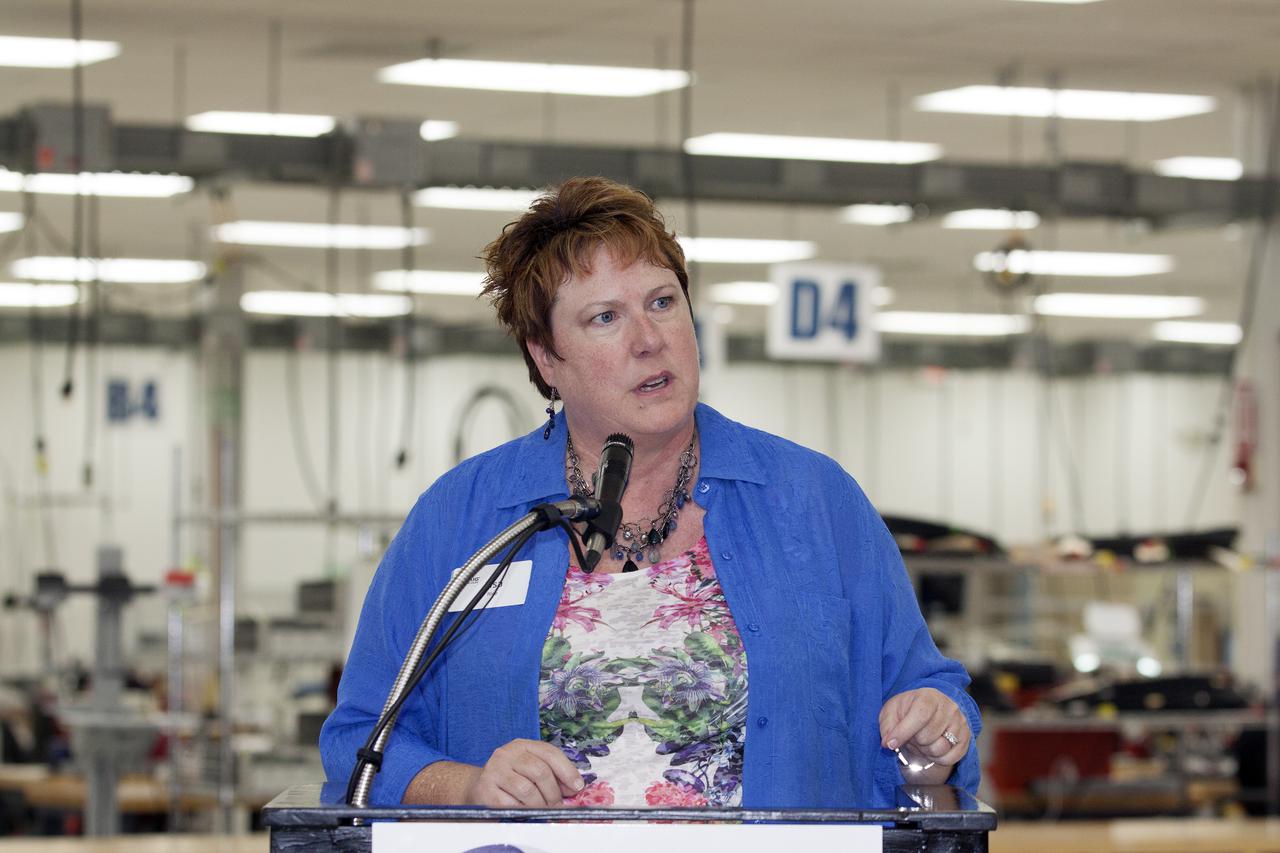
CAPE CANAVERAL, Fla. – At the Aerospace and Defense Manufacturing Center in Cape Canaveral, Fla., Brevard Workforce President Lisa Rice speaks to guests during a community open house at the 161,000-square-foot facility now operated by Craig Technologies. In June of last year, NASA signed a partnership agreement with Craig Technologies to maintain an inventory of unique processing and manufacturing equipment for future mission support at the agency's Kennedy Space Center. The Cape Canaveral, Fla., facility, formerly known as the NASA Shuttle Logistics Depot NSLD, is now the Aerospace and Defense Manufacturing Center ADMC. Photo credit: NASA_Kim Shiflett
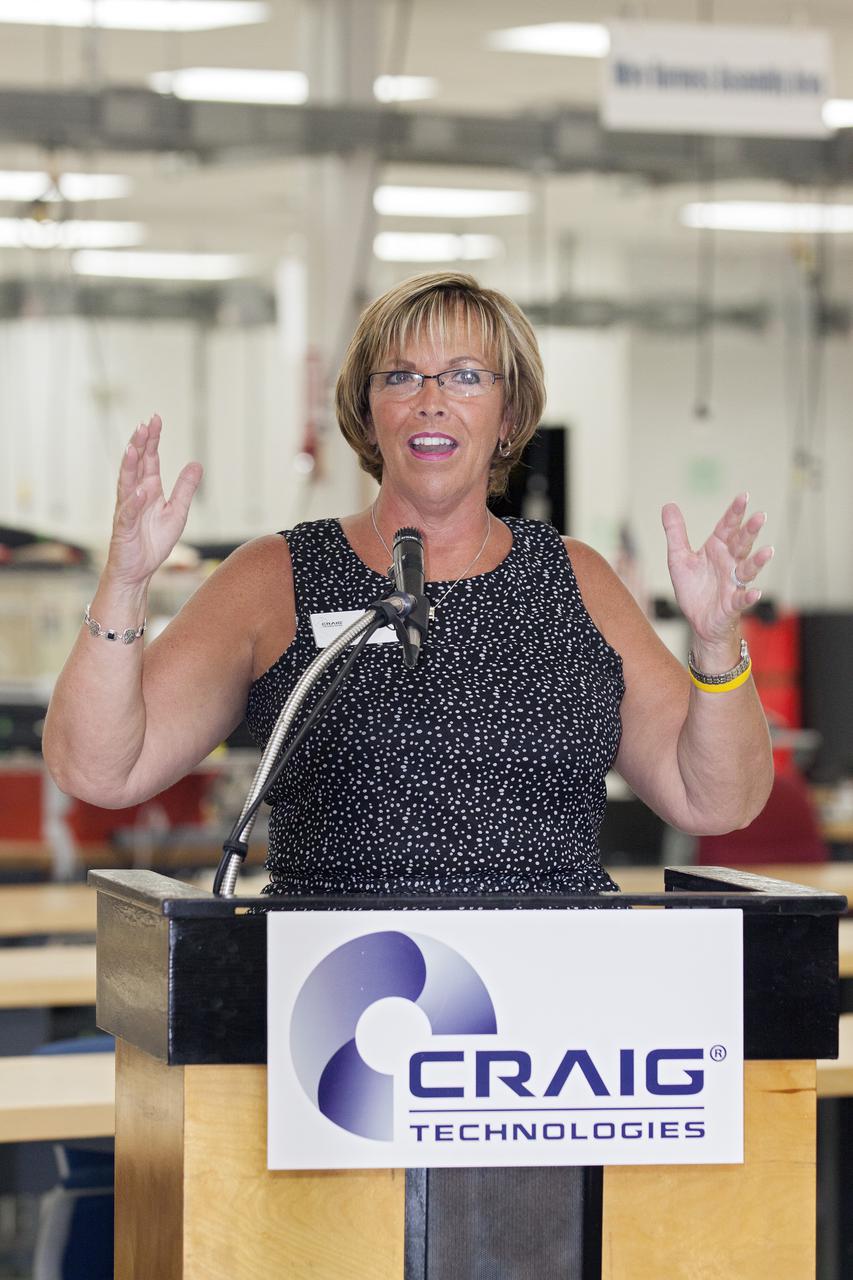
CAPE CANAVERAL, Fla. – At the Aerospace and Defense Manufacturing Center in Cape Canaveral, Fla., Julie Song, regional director of Florida Manufacturing Extension Partnership, speaks to guests during a community open house at the 161,000-square-foot facility now operated by Craig Technologies. In June of last year, NASA signed a partnership agreement with Craig Technologies to maintain an inventory of unique processing and manufacturing equipment for future mission support at the agency's Kennedy Space Center. The Cape Canaveral, Fla., facility, formerly known as the NASA Shuttle Logistics Depot NSLD, is now the Aerospace and Defense Manufacturing Center ADMC. Photo credit: NASA_Kim Shiflett
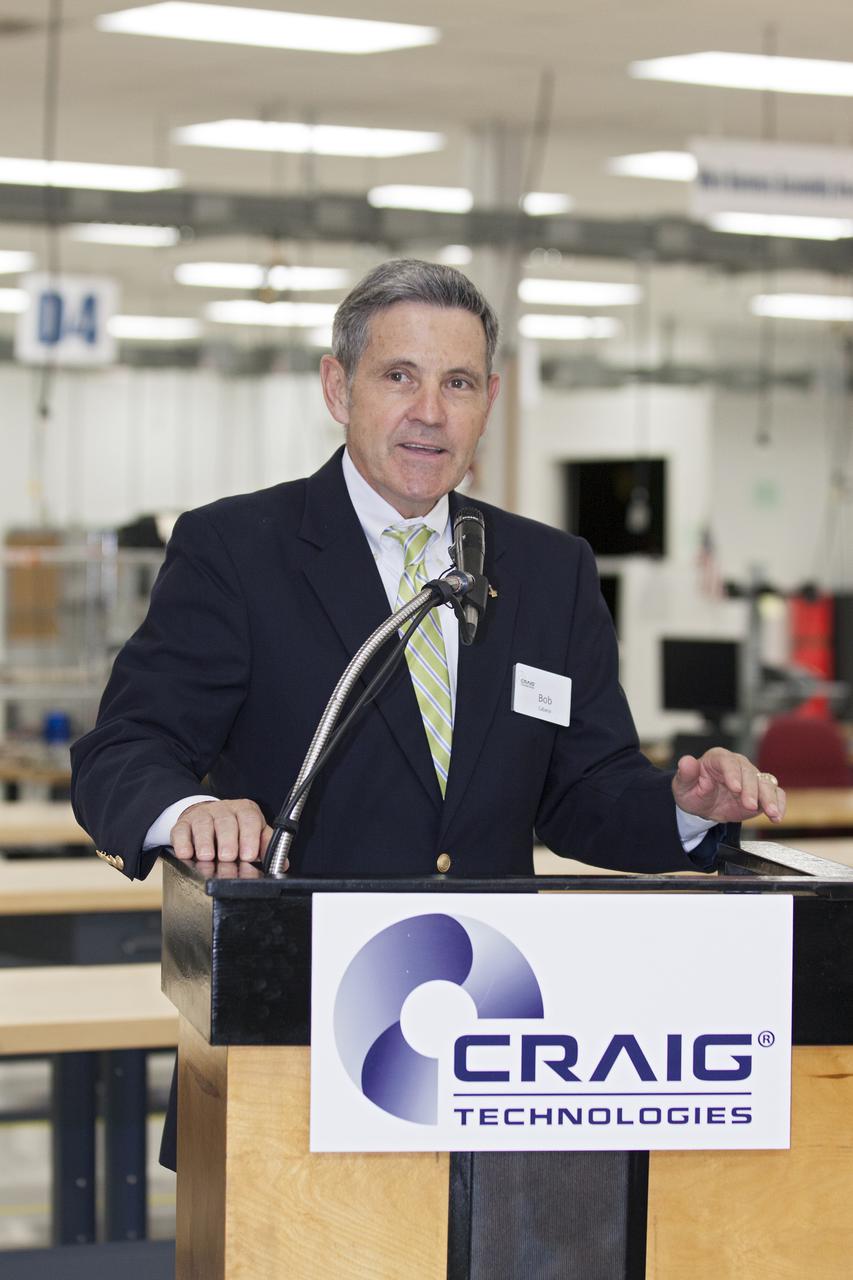
CAPE CANAVERAL, Fla. – At the Aerospace and Defense Manufacturing Center in Cape Canaveral, Fla., Kennedy Space Center Director Bob Cabana speaks to guests during a community open house at the 161,000-square-foot facility now operated by Craig Technologies. In June of last year, NASA signed a partnership agreement with Craig Technologies to maintain an inventory of unique processing and manufacturing equipment for future mission support at the agency's Kennedy Space Center. The Cape Canaveral, Fla., facility, formerly known as the NASA Shuttle Logistics Depot NSLD, is now the Aerospace and Defense Manufacturing Center ADMC. Photo credit: NASA_Kim Shiflett
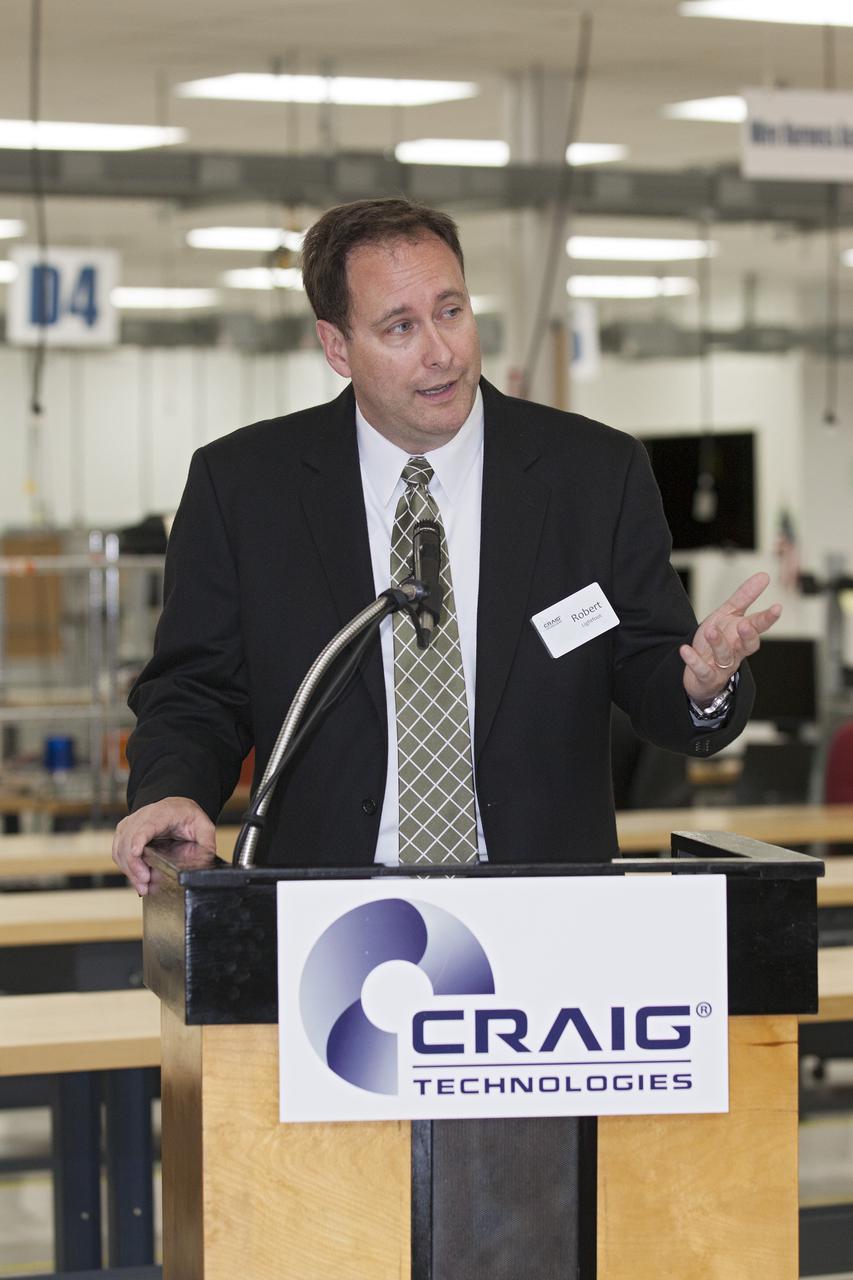
CAPE CANAVERAL, Fla. – At the Aerospace and Defense Manufacturing Center in Cape Canaveral, Fla., NASA Associate Administrator Robert Lightfoot speaks to guests during a community open house at the 161,000-square-foot facility now operated by Craig Technologies. In June of last year, NASA signed a partnership agreement with Craig Technologies to maintain an inventory of unique processing and manufacturing equipment for future mission support at the agency's Kennedy Space Center. The Cape Canaveral, Fla., facility, formerly known as the NASA Shuttle Logistics Depot NSLD, is now the Aerospace and Defense Manufacturing Center ADMC. Photo credit: NASA_Kim Shiflett
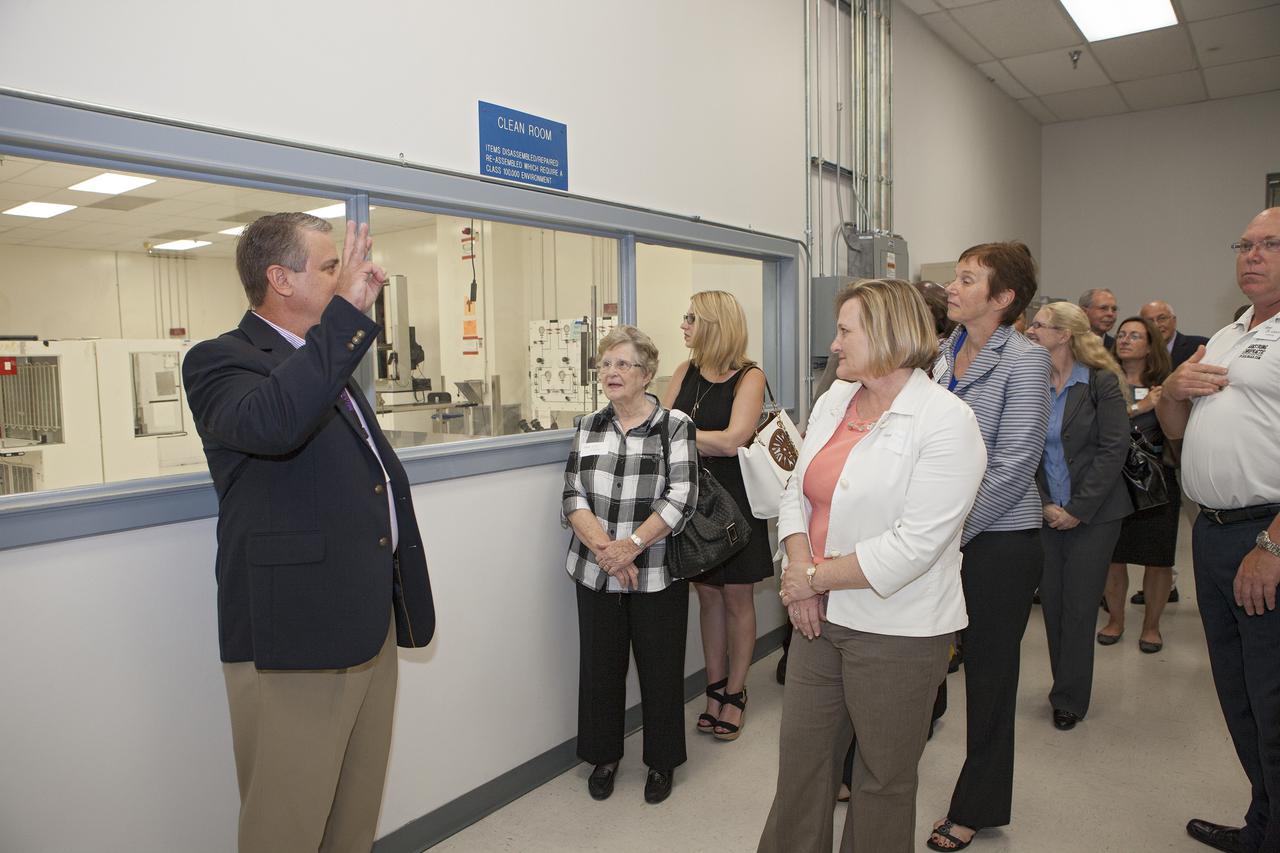
CAPE CANAVERAL, Fla. – At the Aerospace and Defense Manufacturing Center in Cape Canaveral, Fla., Craig Technologies Program Manager Rich Kube describes operations at the 161,000-square-foot facility during a community open house. In June of last year, NASA signed a partnership agreement with Craig Technologies to maintain an inventory of unique processing and manufacturing equipment for future mission support at the agency's Kennedy Space Center. The Cape Canaveral, Fla., facility, formerly known as the NASA Shuttle Logistics Depot NSLD, is now the Aerospace and Defense Manufacturing Center ADMC. Photo credit: NASA_Kim Shiflett
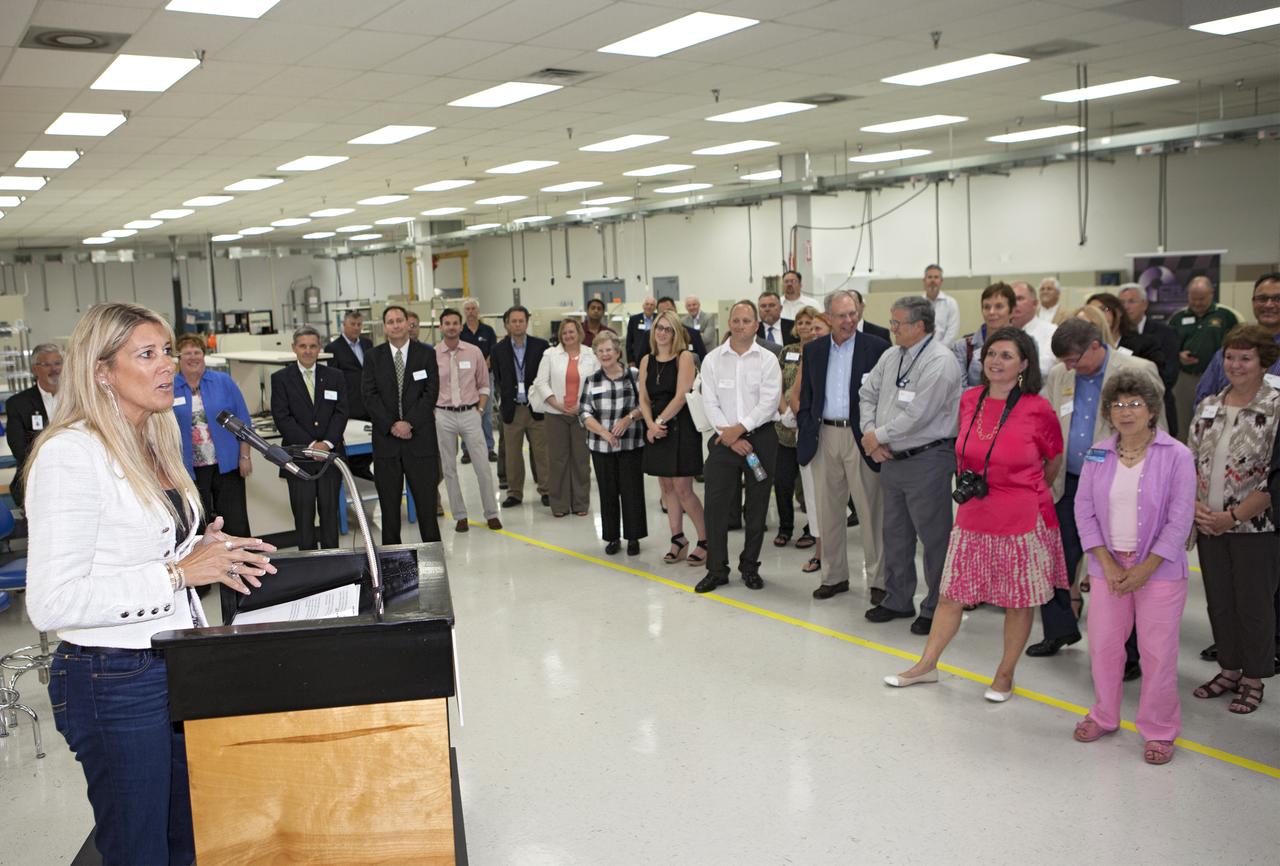
CAPE CANAVERAL, Fla. – At the Aerospace and Defense Manufacturing Center in Cape Canaveral, Fla., Craig Technologies founder and chief executive officer Carol Craig speaks to guests during a community open house at the 161,000-square-foot facility. In June of last year, NASA signed a partnership agreement with Craig Technologies to maintain an inventory of unique processing and manufacturing equipment for future mission support at the agency's Kennedy Space Center. The Cape Canaveral, Fla., facility, formerly known as the NASA Shuttle Logistics Depot NSLD, is now the Aerospace and Defense Manufacturing Center ADMC. Photo credit: NASA_Kim Shiflett
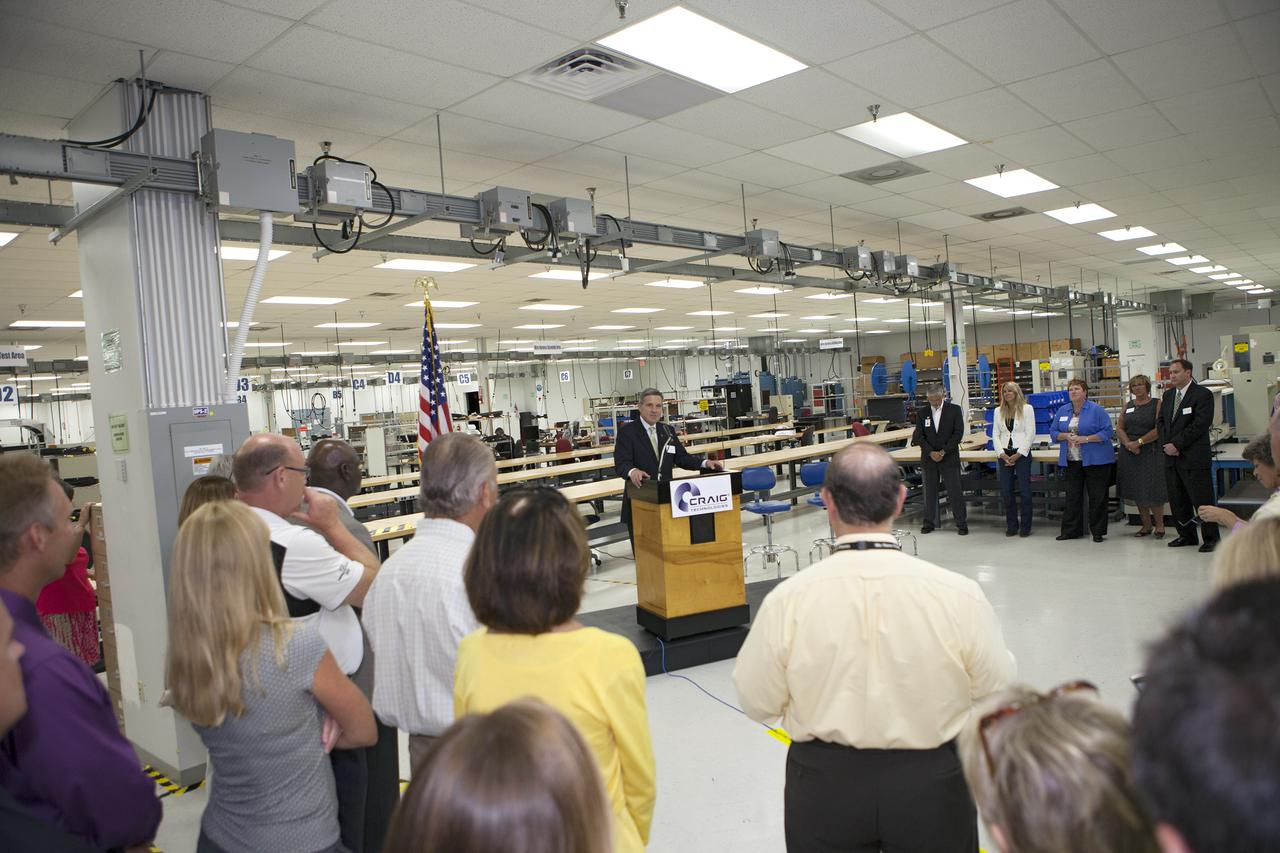
CAPE CANAVERAL, Fla. – At the Aerospace and Defense Manufacturing Center in Cape Canaveral, Fla., Kennedy Space Center Director Bob Cabana speaks to guests during a community open house at the 161,000-square-foot facility now operated by Craig Technologies. In June of last year, NASA signed a partnership agreement with Craig Technologies to maintain an inventory of unique processing and manufacturing equipment for future mission support at the agency's Kennedy Space Center. The Cape Canaveral, Fla., facility, formerly known as the NASA Shuttle Logistics Depot NSLD, is now the Aerospace and Defense Manufacturing Center ADMC. Photo credit: NASA_Kim Shiflett
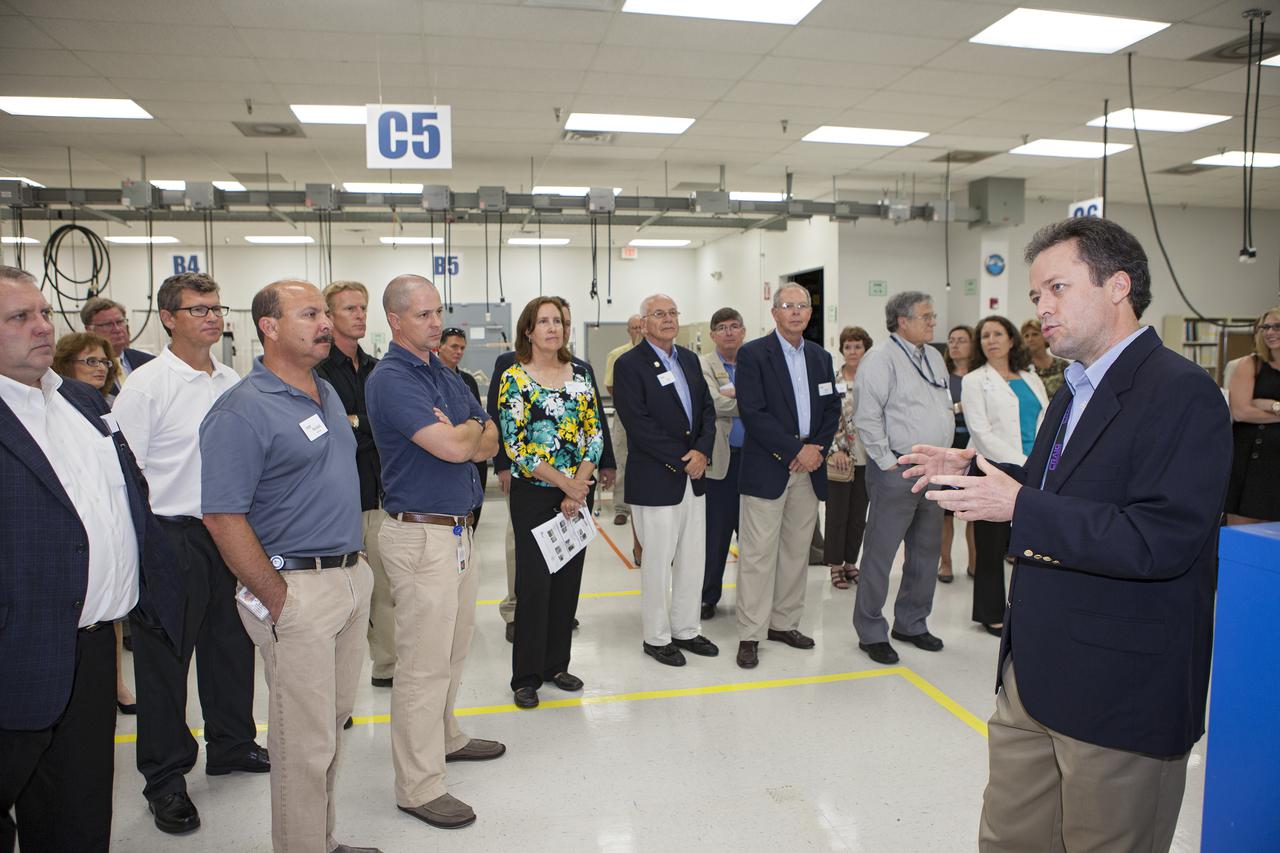
CAPE CANAVERAL, Fla. – At the Aerospace and Defense Manufacturing Center in Cape Canaveral, Fla., Craig Technologies Vice President and Site Director Jim Kell describes operations at the 161,000-square-foot facility during a community open house. In June of last year, NASA signed a partnership agreement with Craig Technologies to maintain an inventory of unique processing and manufacturing equipment for future mission support at the agency's Kennedy Space Center. The Cape Canaveral, Fla., facility, formerly known as the NASA Shuttle Logistics Depot NSLD, is now the Aerospace and Defense Manufacturing Center ADMC. Photo credit: NASA_Kim Shiflett
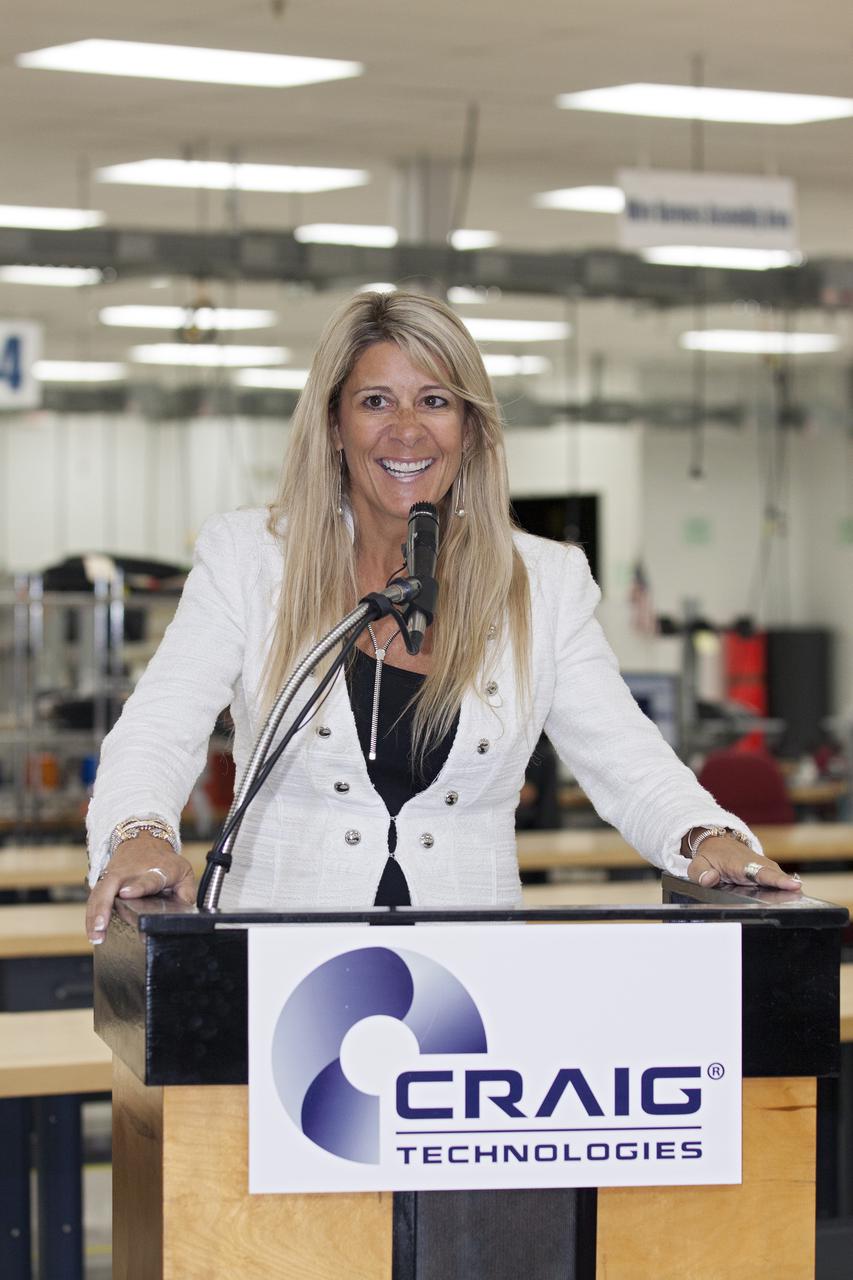
CAPE CANAVERAL, Fla. – At the Aerospace and Defense Manufacturing Center in Cape Canaveral, Fla., Craig Technologies founder and chief executive officer Carol Craig speaks to guests during a community open house at the 161,000-square-foot facility. In June of last year, NASA signed a partnership agreement with Craig Technologies to maintain an inventory of unique processing and manufacturing equipment for future mission support at the agency's Kennedy Space Center. The Cape Canaveral, Fla., facility, formerly known as the NASA Shuttle Logistics Depot NSLD, is now the Aerospace and Defense Manufacturing Center ADMC. Photo credit: NASA_Kim Shiflett
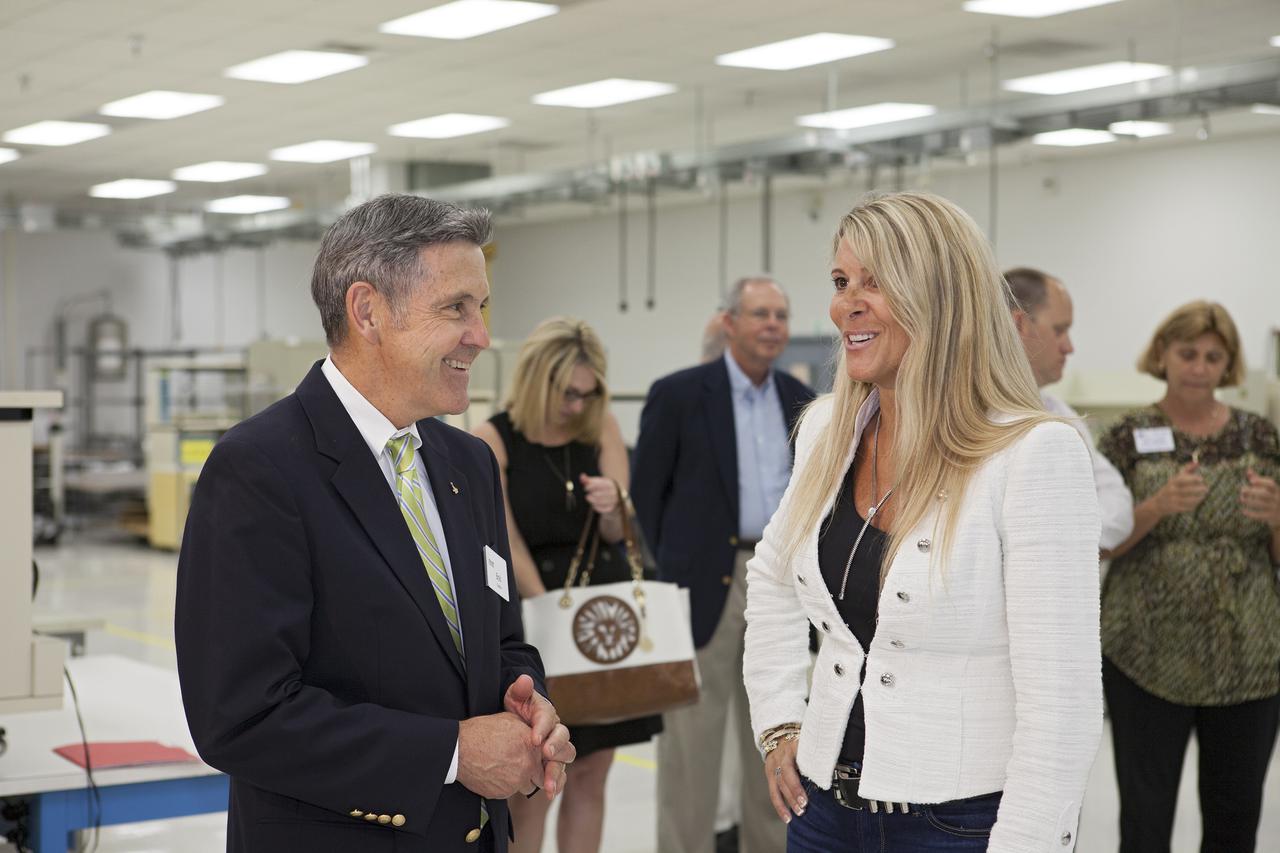
CAPE CANAVERAL, Fla. – At the Aerospace and Defense Manufacturing Center in Cape Canaveral, Fla., Kennedy Space Center Director Bob Cabana talks with Craig Technologies founder and chief executive officer Carol Craig during a community open house. In June of last year, NASA signed a partnership agreement with Craig Technologies to maintain an inventory of unique processing and manufacturing equipment for future mission support at the agency's Kennedy Space Center. The Cape Canaveral, Fla., facility, formerly known as the NASA Shuttle Logistics Depot NSLD, is now the Aerospace and Defense Manufacturing Center ADMC. Photo credit: NASA_Kim Shiflett
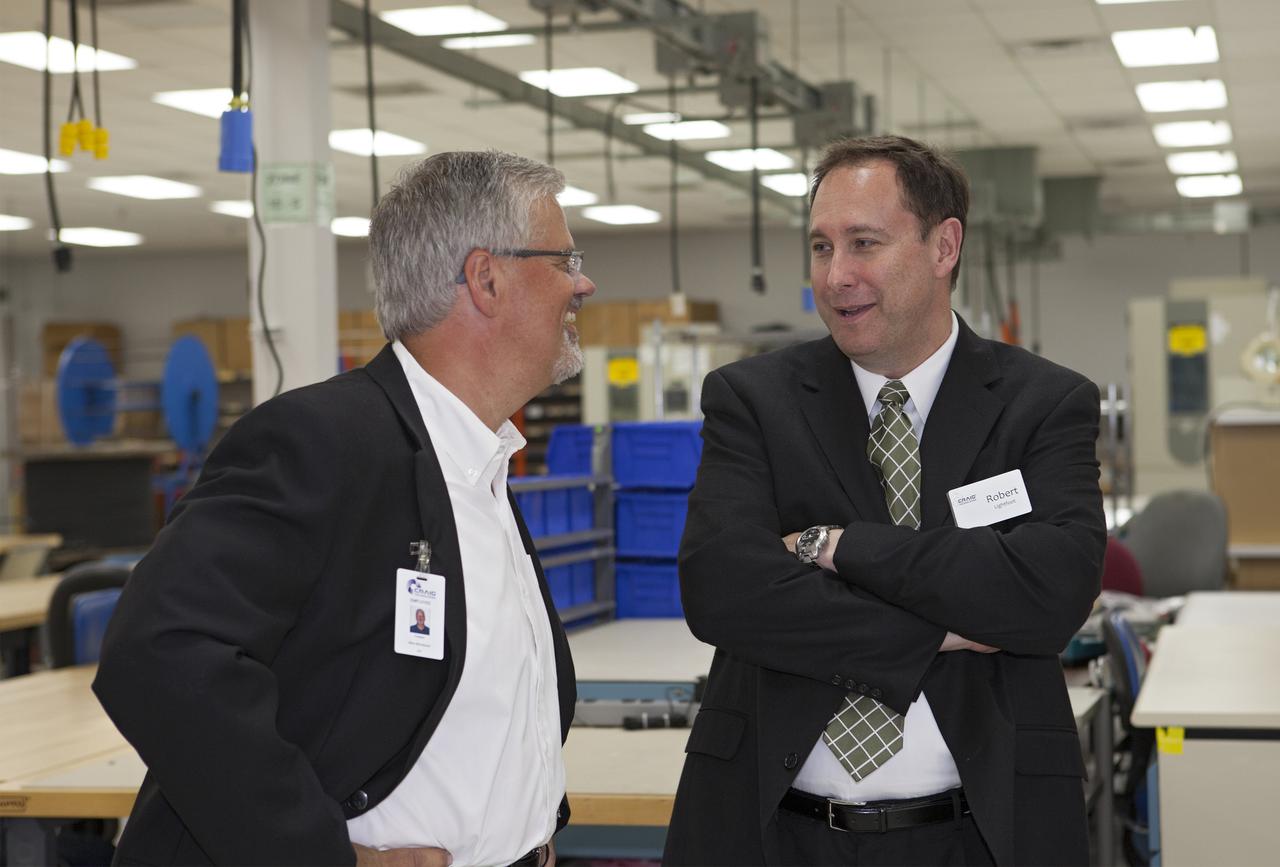
CAPE CANAVERAL, Fla. – At the Aerospace and Defense Manufacturing Center in Cape Canaveral, Fla., Craig Technologies President Mark Mikolajczyk talks with NASA Associate Administrator Robert Lightfoot during a community open house. In June of last year, NASA signed a partnership agreement with Craig Technologies to maintain an inventory of unique processing and manufacturing equipment for future mission support at the agency's Kennedy Space Center. The Cape Canaveral, Fla., facility, formerly known as the NASA Shuttle Logistics Depot NSLD, is now the Aerospace and Defense Manufacturing Center ADMC. Photo credit: NASA_Kim Shiflett
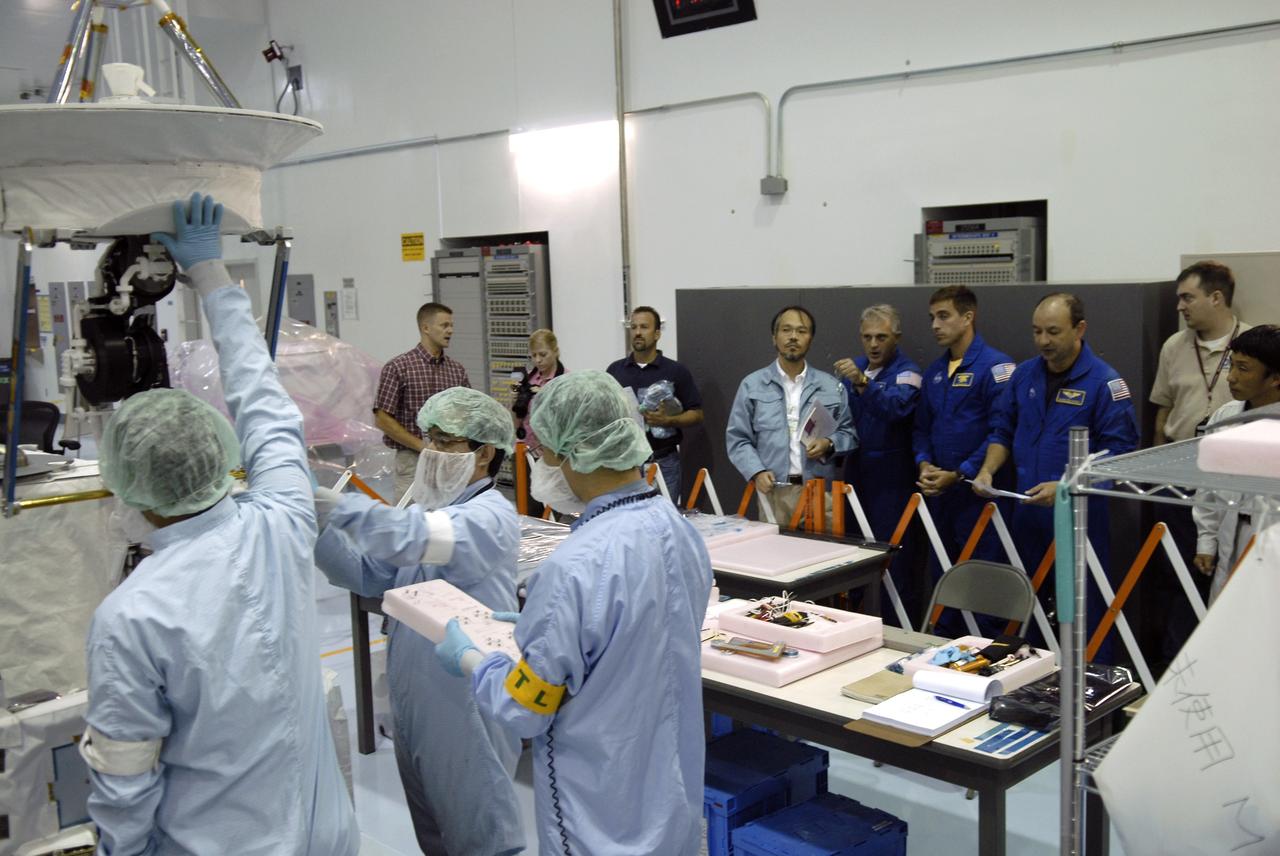
CAPE CANAVERAL, Fla. - In the Space Station Processing Facility at NASA's Kennedy Space Center in Florida, STS-127 crew members get a look at the extended antenna (upper left) in the Inter Orbit Communication System Extended Facility, or ICS-EF. Standing next to a Japanese Aerospace Exploration Agency, or JAXA, technician (at center) are (from left) Mission Specialists Dave Wolf and Christopher Cassidy and Commander Mark Polansky. Equipment familiarization is part of a Crew Equipment Interface Test. The antenna and a pointing mechanism will be used to communicate with JAXA’s Data Relay Test Satellite, or DRTS. The ICS-EF will be launched, along with the Extended Facility and Experiment Logistics Module-Exposed Section, to the International Space Station aboard the space shuttle Endeavour on the STS-127 mission targeted for launch on May 15, 2009. Photo credit: NASA/Kim Shiflett
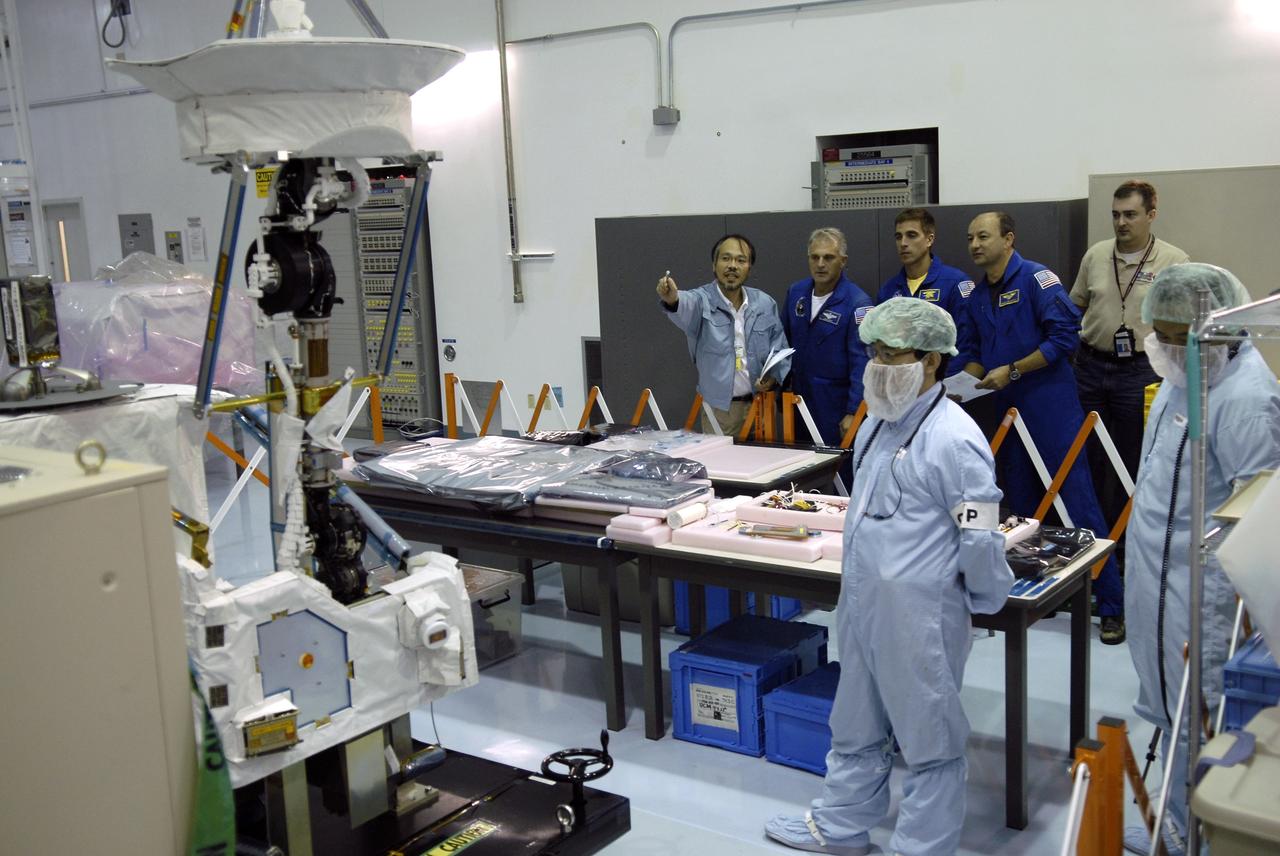
CAPE CANAVERAL, Fla. - In the Space Station Processing Facility at NASA's Kennedy Space Center in Florida, STS-127 crew members get a look at the antenna in the Inter Orbit Communication System Extended Facility, or ICS-EF. Standing next to a Japanese Aerospace Exploration Agency, or JAXA, technician at left are Mission Specialists Dave Wolf and Christopher Cassidy and Commander Mark Polansky. Equipment familiarization is part of a Crew Equipment Interface Test. The antenna and a pointing mechanism will be used to communicate with JAXA’s Data Relay Test Satellite, or DRTS. The ICS-EF will be launched, along with the Extended Facility and Experiment Logistics Module-Exposed Section, to the International Space Station aboard the space shuttle Endeavour on the STS-127 mission targeted for launch on May 15, 2009. Photo credit: NASA/Kim Shiflett
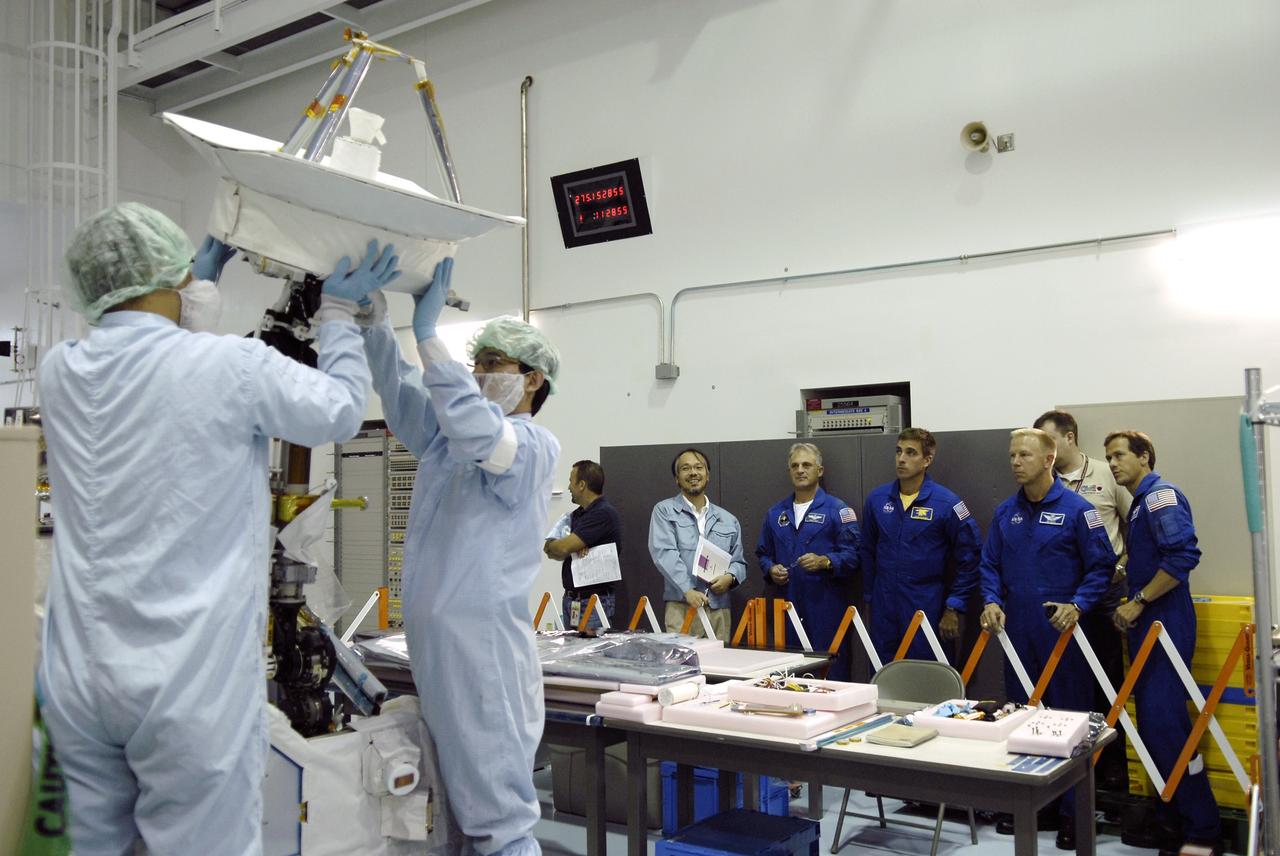
CAPE CANAVERAL, Fla. - In the Space Station Processing Facility at NASA's Kennedy Space Center in Florida, STS-127 crew members watch as Japanese Aerospace Exploration Agency, or JAXA, technicians maneuver the antenna in the Inter Orbit Communication System Extended Facility, or ICS-EF. Standing at right are Mission Specialists Dave Wolf, Christopher Cassidy, Tim Kopra and Tom Marshburn. Equipment familiarization is part of a Crew Equipment Interface Test. The antenna and a pointing mechanism will be used to communicate with JAXA’s Data Relay Test Satellite, or DRTS. The ICS-EF will be launched, along with the Extended Facility and Experiment Logistics Module-Exposed Section, to the International Space Station aboard the space shuttle Endeavour on the STS-127 mission targeted for launch on May 15, 2009. Photo credit: NASA/Kim Shiflett
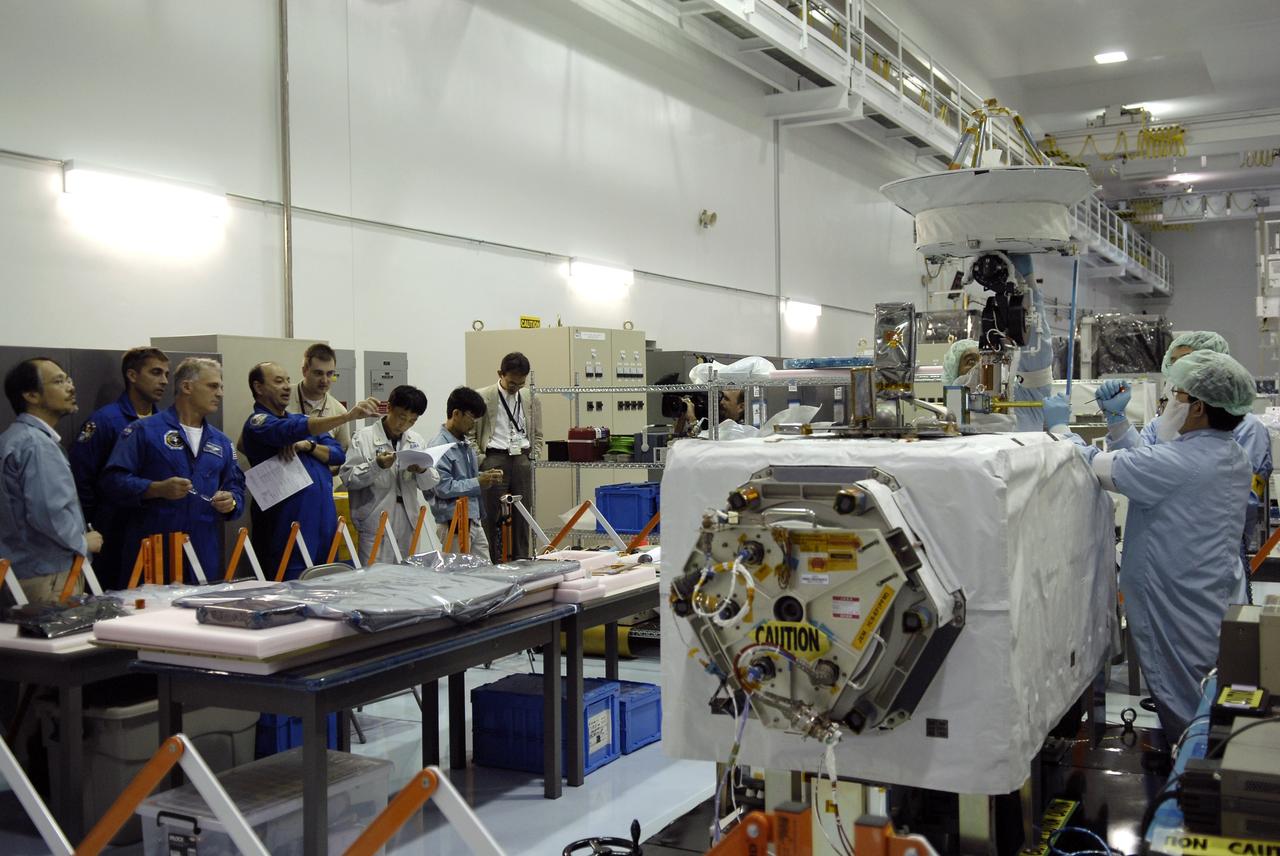
CAPE CANAVERAL, Fla. - In the Space Station Processing Facility at NASA's Kennedy Space Center in Florida, STS-127 crew members get a look at the extended antenna in the Inter Orbit Communication System Extended Facility, or ICS-EF, across from them. Standing next to a Japanese Aerospace Exploration Agency, or JAXA, technician at left are Mission Specialists Christopher Cassidy and Dave Wolf and Commander Mark Polansky (pointing). Equipment familiarization is part of a Crew Equipment Interface Test. The antenna and a pointing mechanism will be used to communicate with JAXA’s Data Relay Test Satellite, or DRTS. The ICS-EF will be launched, along with the Extended Facility and Experiment Logistics Module-Exposed Section, to the International Space Station aboard the space shuttle Endeavour on the STS-127 mission targeted for launch on May 15, 2009. Photo credit: NASA/Kim Shiflett
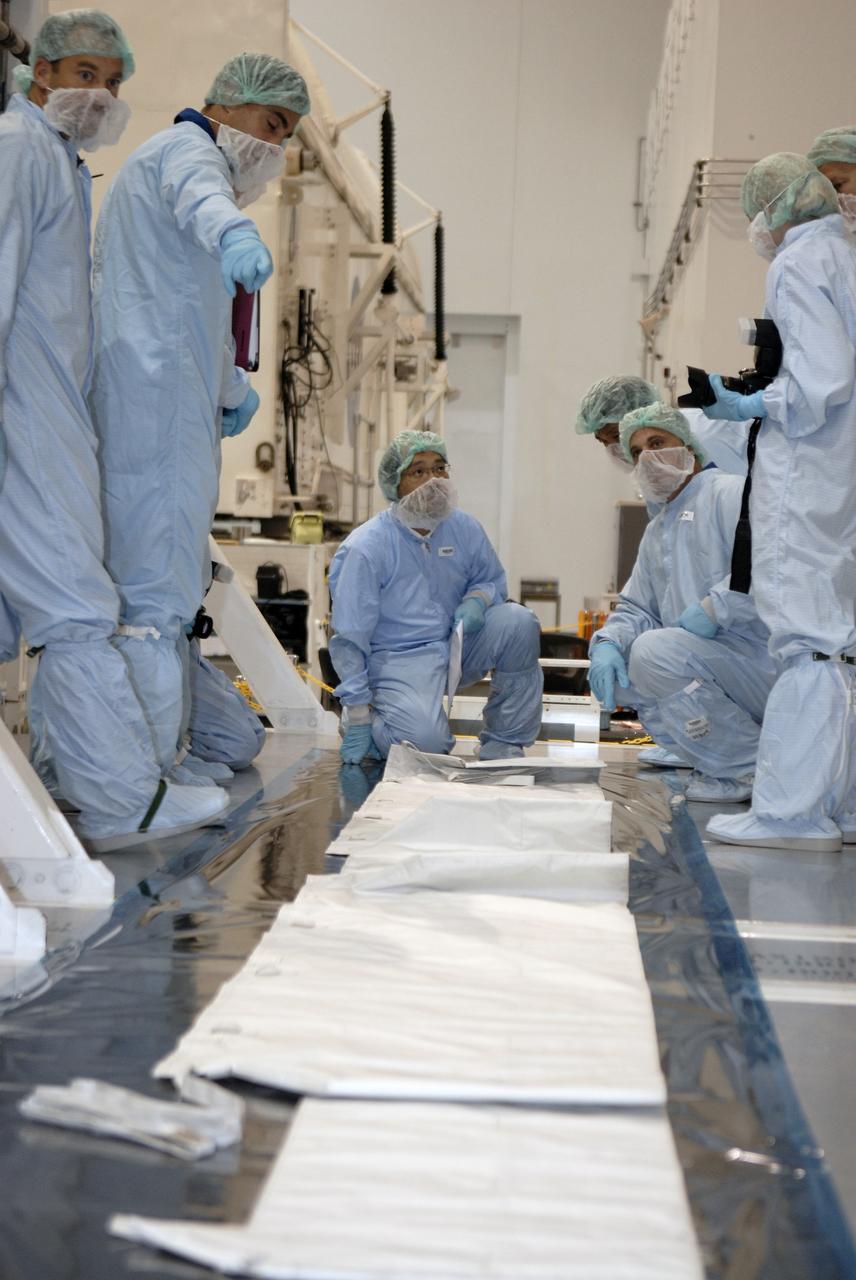
CAPE CANAVERAL, Fla. - In the Space Station Processing Facility at NASA's Kennedy Space Center in Florida, STS-127 crew members get a close look at equipment for their mission, which will install final components of the Japanese Aerospace Exploration Agency’s Japanese Experiment Module. Equipment familiarization is part of a Crew Equipment Interface Test. The JEM components include the Inter Orbit Communication System Extended Facility, or ICS-EF, the Extended Facility and Experiment Logistics Module-Exposed Section. The payload will launch aboard space shuttle Endeavour targeted for May 15, 2009. Photo credit: NASA/Kim Shiflett
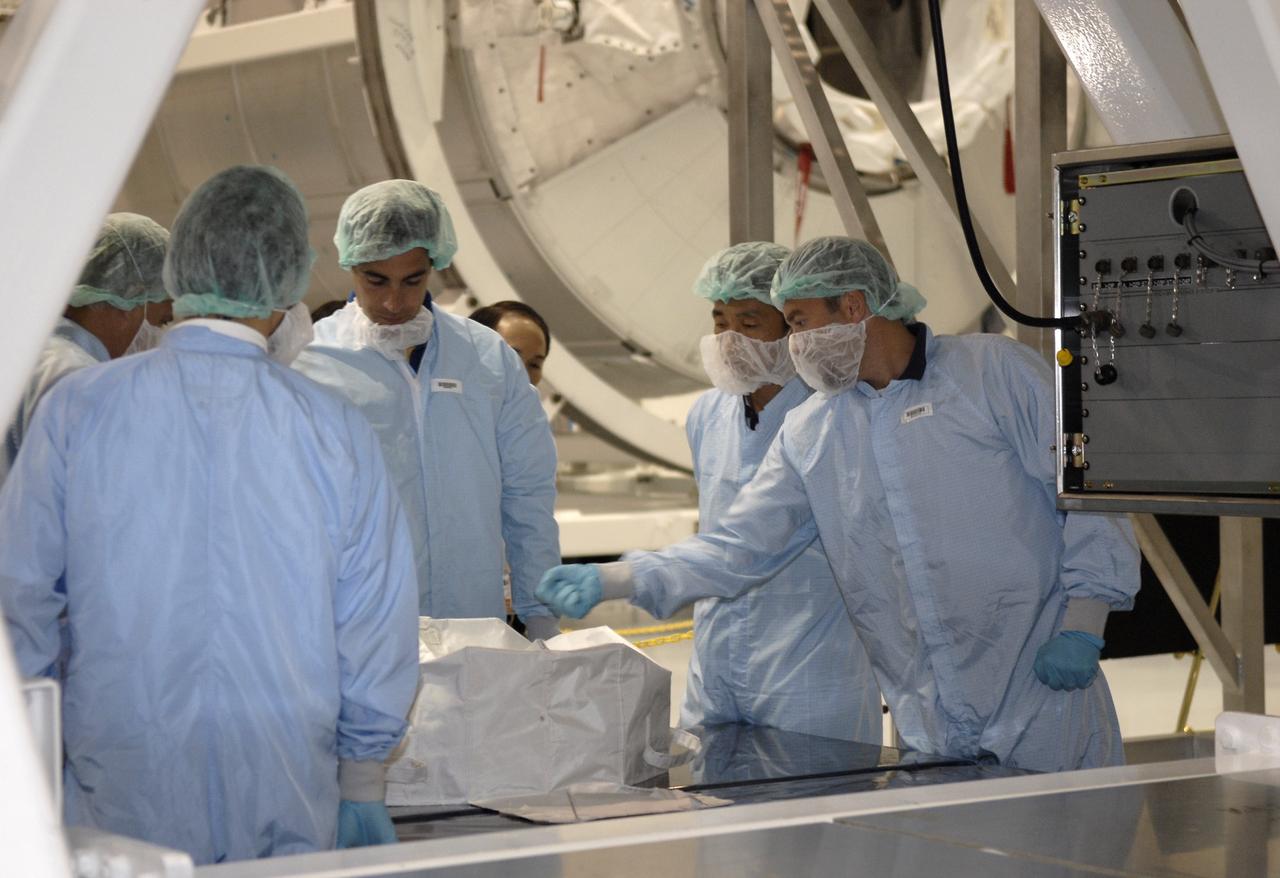
CAPE CANAVERAL, Fla. - In the Space Station Processing Facility at NASA's Kennedy Space Center in Florida, STS-127 crew members get a close look at equipment for their mission, which will install final components of the Japanese Aerospace Exploration Agency’s Japanese Experiment Module, or JEM. Equipment familiarization is part of a Crew Equipment Interface Test. The JEM components include the Inter Orbit Communication System Extended Facility, or ICS-EF, the Extended Facility and Experiment Logistics Module-Exposed Section. The payload will launch aboard space shuttle Endeavour targeted for May 15, 2009. Photo credit: NASA/Kim Shiflett
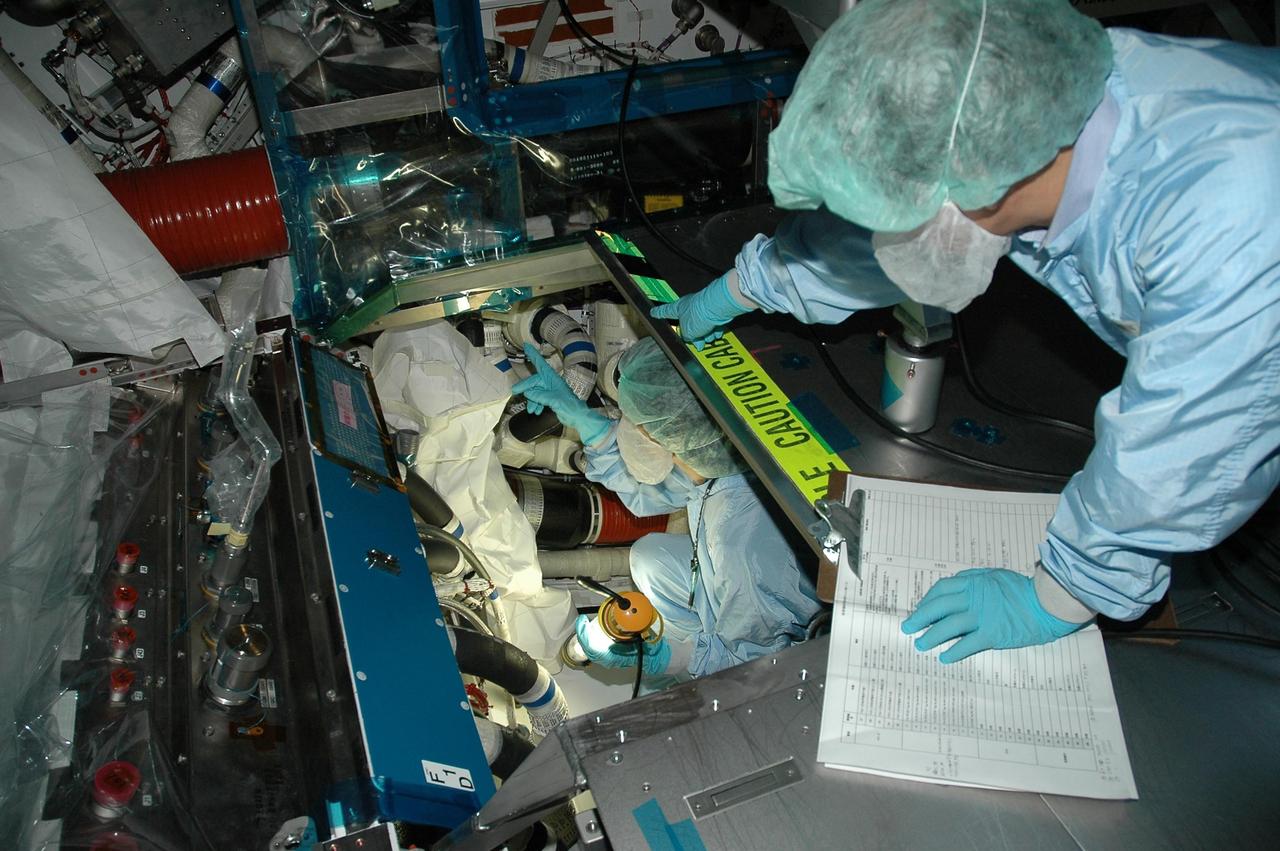
KENNEDY SPACE CENTER, FLA. - In the Space Station Processing Facility, a Japan Aerospace Exploration Agency (JAXA) technician inspects the wiring on the Japanese Experiment Module (JEM). The JEM, developed by JAXA for use on the International Space Station, is named Kibo -- which means "hope" in Japanese -- and will enhance the unique research capabilities of the orbiting complex by providing an additional environment for astronauts to conduct science experiments. Research conducted in Kibo will focus on space medicine, biology, Earth observations, material production, biotechnology and communications. Photo credit: NASA/Amanda Diller

JSC2009-E-053503 (6 March 2009) --- Japan Aerospace Exploration Agency (JAXA) astronaut Soichi Noguchi, Expedition 22/23 flight engineer, uses a communication system during an emergency procedure training session in an International Space Station mock-up/trainer in the Space Vehicle Mock-up Facility at NASA?s Johnson Space Center.
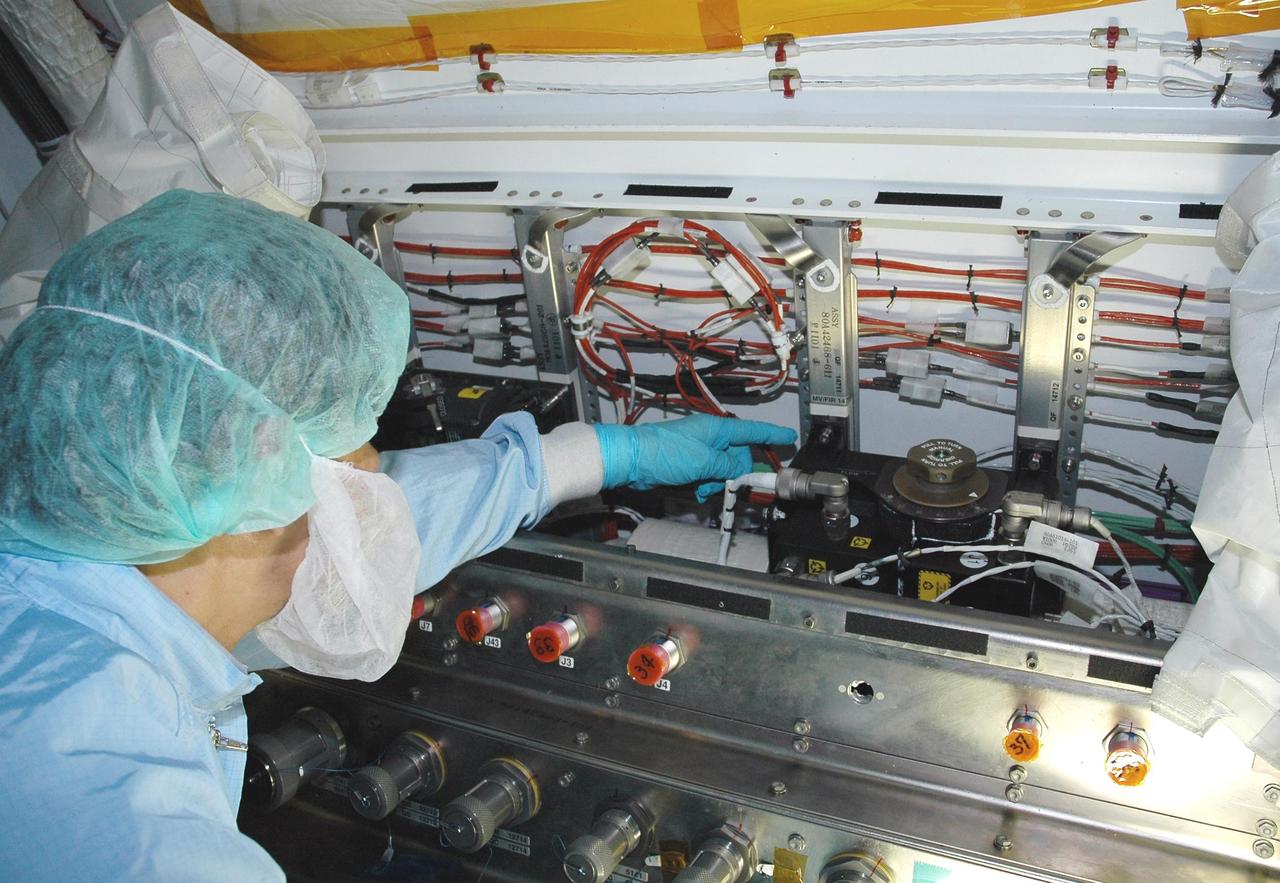
KENNEDY SPACE CENTER, FLA. - In the Space Station Processing Facility, Japan Aerospace Exploration Agency (JAXA) technicians inspect the wiring on the Japanese Experiment Module (JEM). The JEM, developed by JAXA for use on the International Space Station, is named Kibo -- which means "hope" in Japanese -- and will enhance the unique research capabilities of the orbiting complex by providing an additional environment for astronauts to conduct science experiments. Research conducted in Kibo will focus on space medicine, biology, Earth observations, material production, biotechnology and communications. Photo credit: NASA/Amanda Diller

The 1969 class of graduating apprentices pose for a group photograph during a rehearsal ceremony at the National Aeronautics and Space Administration (NASA) Lewis Research Center. The 35 men completed four years of classroom and hands-on training in various aerospace research trades. Center Director Bruce Lundin and President of Cuyahoga Community College Dr. Bernard Silk addressed the graduates at the ceremony. The Ohio State Apprenticeship Council officially accredited them as journeymen. The journeymen specialized in one of the following fields: aerospace laboratory mechanic, aerospace service operator, experimental electronic equipment mechanic, experimental facilities electrician, experimental metal modelmaker, experimental metal worker, research equipment mechanic, research instrumentation mechanic, or utilities mechanic.
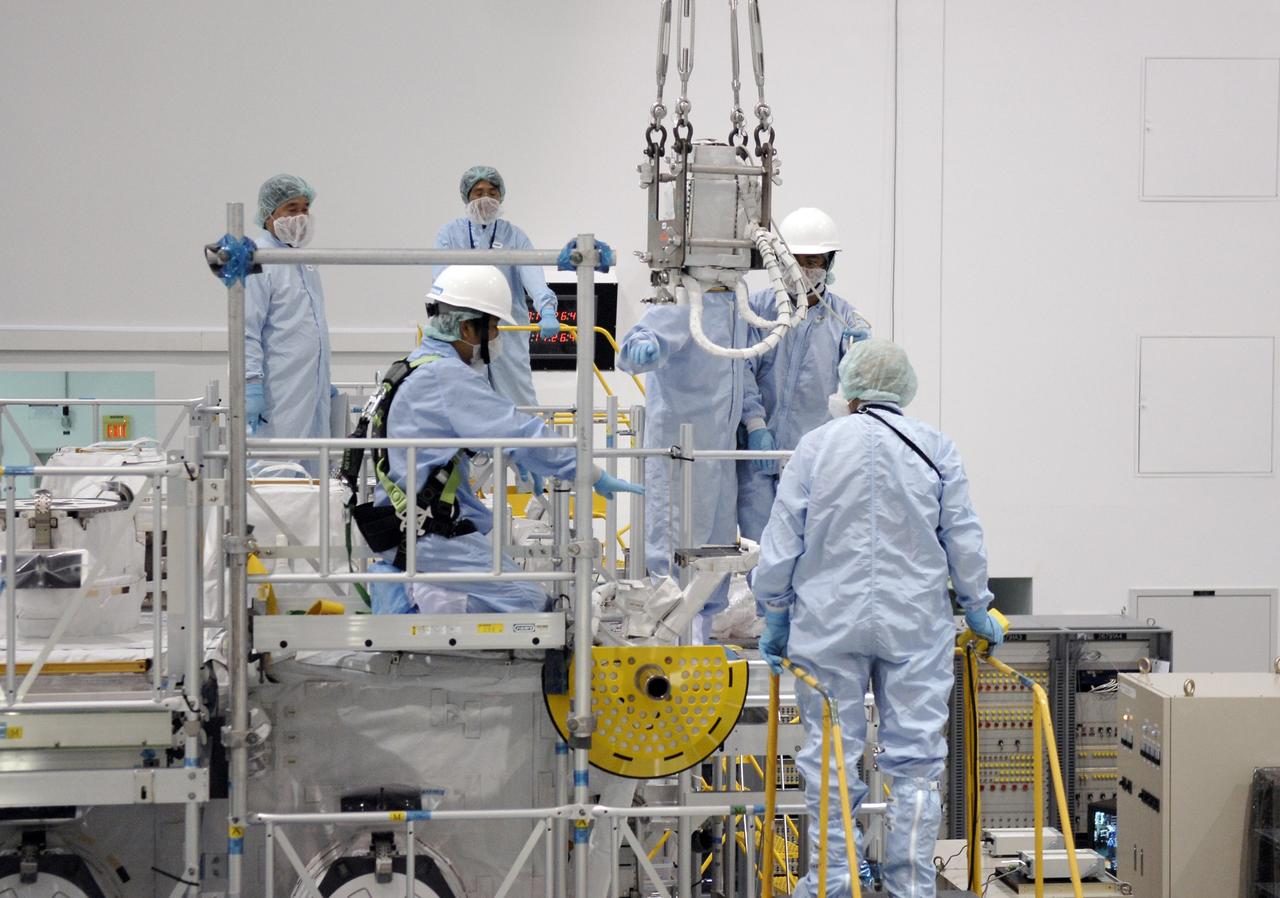
CAPE CANAVERAL, Fla. – In the Space Station Processing Facility at NASA's Kennedy Space Center in Florida, STS-127 crew members get hands-on familiarization with equipment to be used on the mission. They are looking at the hoist of one of two Japanese Aerospace Exploration Agency's Visual Equipments, or VE. These are used to support on-orbit cameras. The visual equipment flies on top of the Japanese Experiment Module External Facility, or JEM-EF, and will be installed on orbit to the outer perimeter of the EF. The view is the hoist from the top of the EF. The mission payload includes the Japanese Experiment Module, or JEM, Extended Facility and the Inter-orbit Communication System Extended Facility, or ICS-EF. Equipment familiarization is part of a Crew Equipment Interface Test. The payload will be launched to the International Space Station aboard the space shuttle Endeavour on the STS-127 mission, targeted for launch on May 15, 2009. Photo credit: NASA/Kim Shiflett

CAPE CANAVERAL, Fla. – In the Space Station Processing Facility at NASA's Kennedy Space Center in Florida, STS-127 crew members get hands-on familiarization with equipment to be used on the mission. They are looking at the hoist of one of two Japanese Aerospace Exploration Agency's Visual Equipments, or VE. The photo shows the hoist of the VE to its final position on the outer perimeter of the Japanese Experiment Module External Facility, or JEM-EF. The VE has to be installed to the final position on orbit because it is outside of the payload bay envelope. The mission payload includes the Japanese Experiment Module, or JEM, Extended Facility and the Inter-orbit Communication System Extended Facility, or ICS-EF. Equipment familiarization is part of a Crew Equipment Interface Test. The payload will be launched to the International Space Station aboard the space shuttle Endeavour on the STS-127 mission, targeted for launch on May 15, 2009. Photo credit: NASA/Kim Shiflett
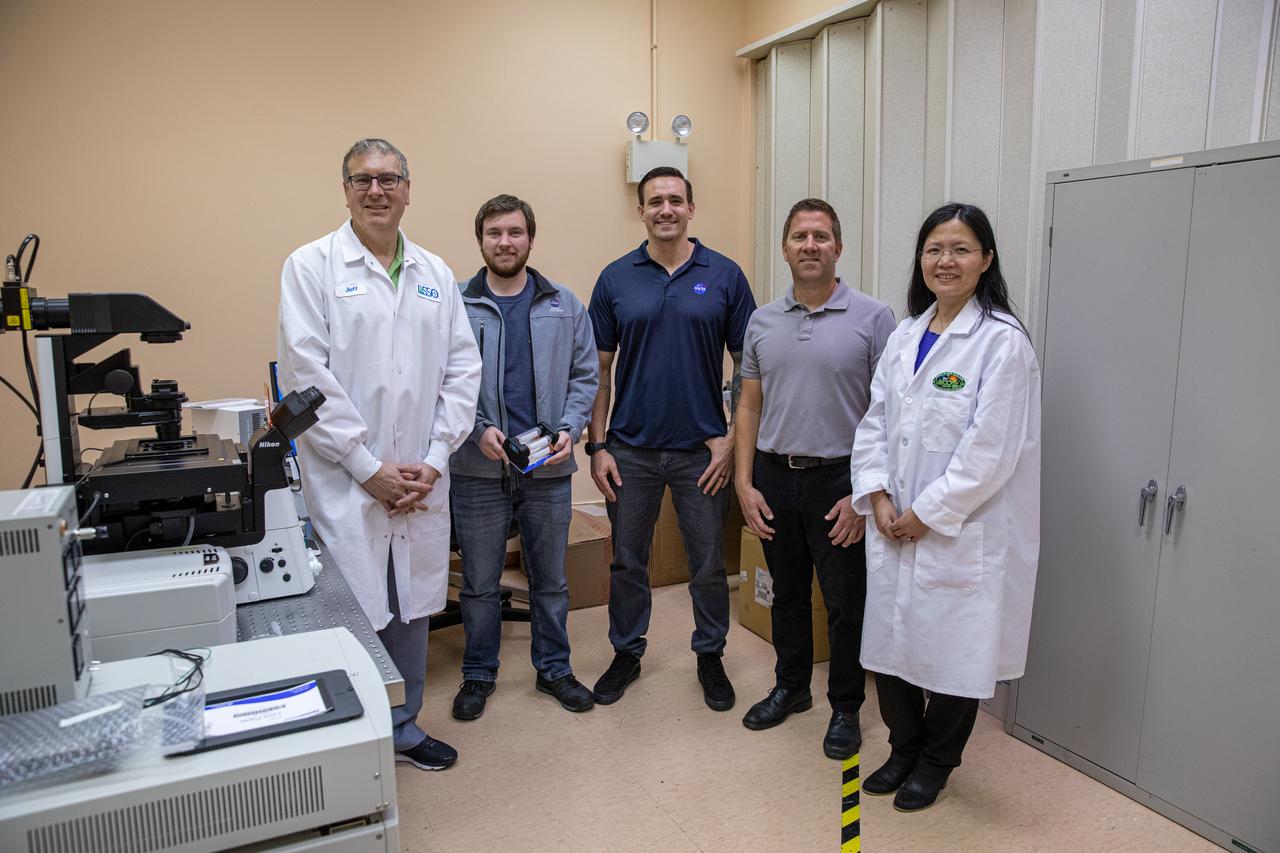
Researchers are in the Microgravity Simulation Support Facility (MSSF) inside the Neil Armstrong Operations and Checkout building at NASA’s Kennedy Space Center in Florida on Feb. 11, 2020. From left are Jonathan Gleeson, aerospace engineer on the LASSO contract; Jason Fischer, a research and development scientist on the LASSO contract; Ralph Nacca, aerospace flight systems; Jeffrey Richards, a payload research and science coordinator on the LASSO contract; and Dr. Ye Zhang, a project scientist. The microgravity simulation device was developed to provide ground simulation capability to the U.S. research community in order to supplement the limited opportunities to access the International Space Station and other platforms for microgravity research. The MSSF is designed to support biological research on microorganisms, cells, tissues, small plants and small animals. The simulator provides NASA with an alternative platform for microgravity research and creates the opportunity to conduct experiments on the space station in parallel with conditions of simulated microgravity on the ground.
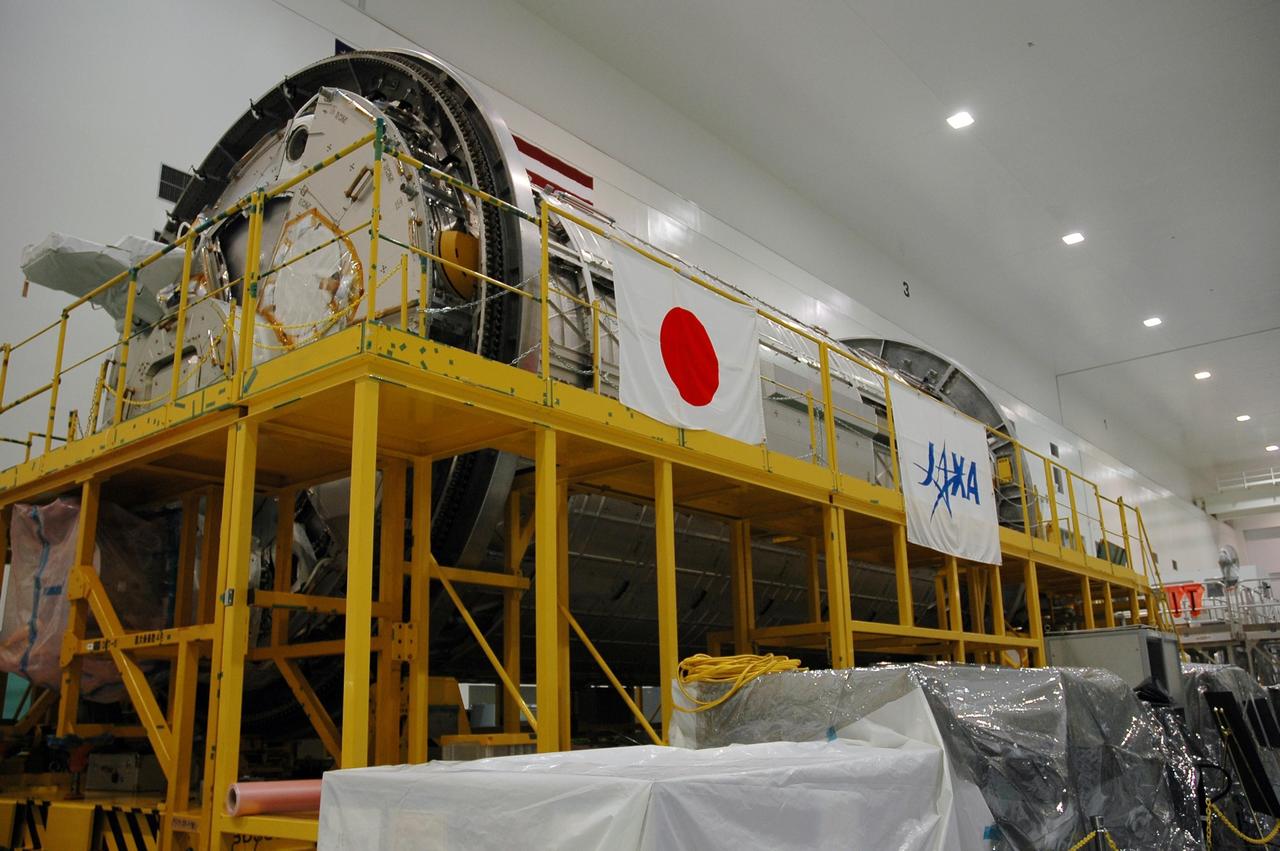
KENNEDY SPACE CENTER, FLA. - In the Space Station Processing Facility, the Japanese Experiment Module (JEM) awaits its flight to the International Space Station (ISS). The JEM, developed by the Japan Aerospace Exploration Agency (JAXA) for installation on the ISS, is named Kibo -- which means "hope" in Japanese -- and will enhance the unique research capabilities of the orbiting complex by providing an additional environment for astronauts to conduct science experiments. Research conducted in Kibo will focus on space medicine, biology, Earth observations, material production, biotechnology and communications. Photo credit: NASA/Amanda Diller
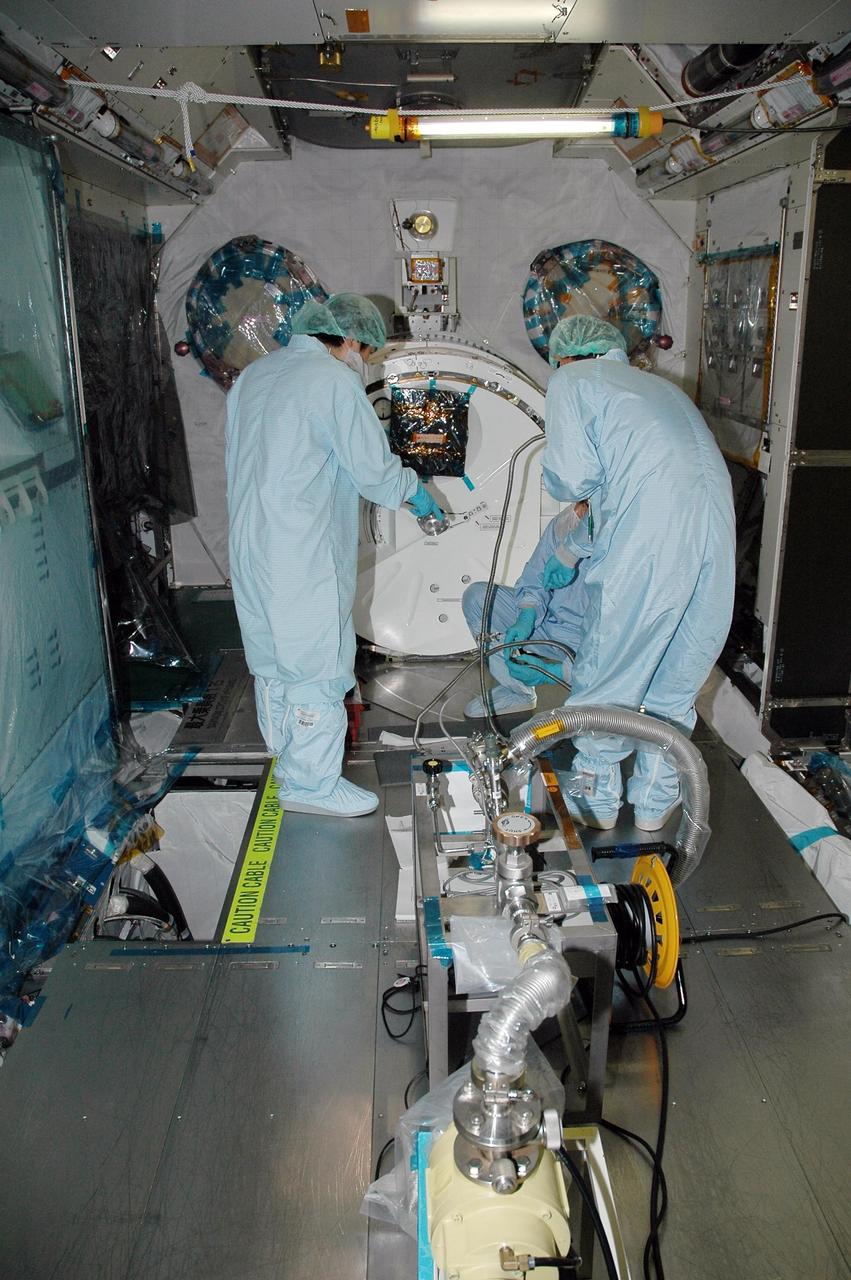
KENNEDY SPACE CENTER, FLA. - In the Space Station Processing Facility, Japan Aerospace Exploration Agency (JAXA) technicians install piping insulation on the Japanese Experiment Module (JEM). The JEM, developed by JAXA for use on the International Space Station, is named Kibo -- which means "hope" in Japanese -- and will enhance the unique research capabilities of the orbiting complex by providing an additional environment for astronauts to conduct science experiments. Research conducted in Kibo will focus on space medicine, biology, Earth observations, material production, biotechnology and communications. Photo credit: NASA/Amanda Diller
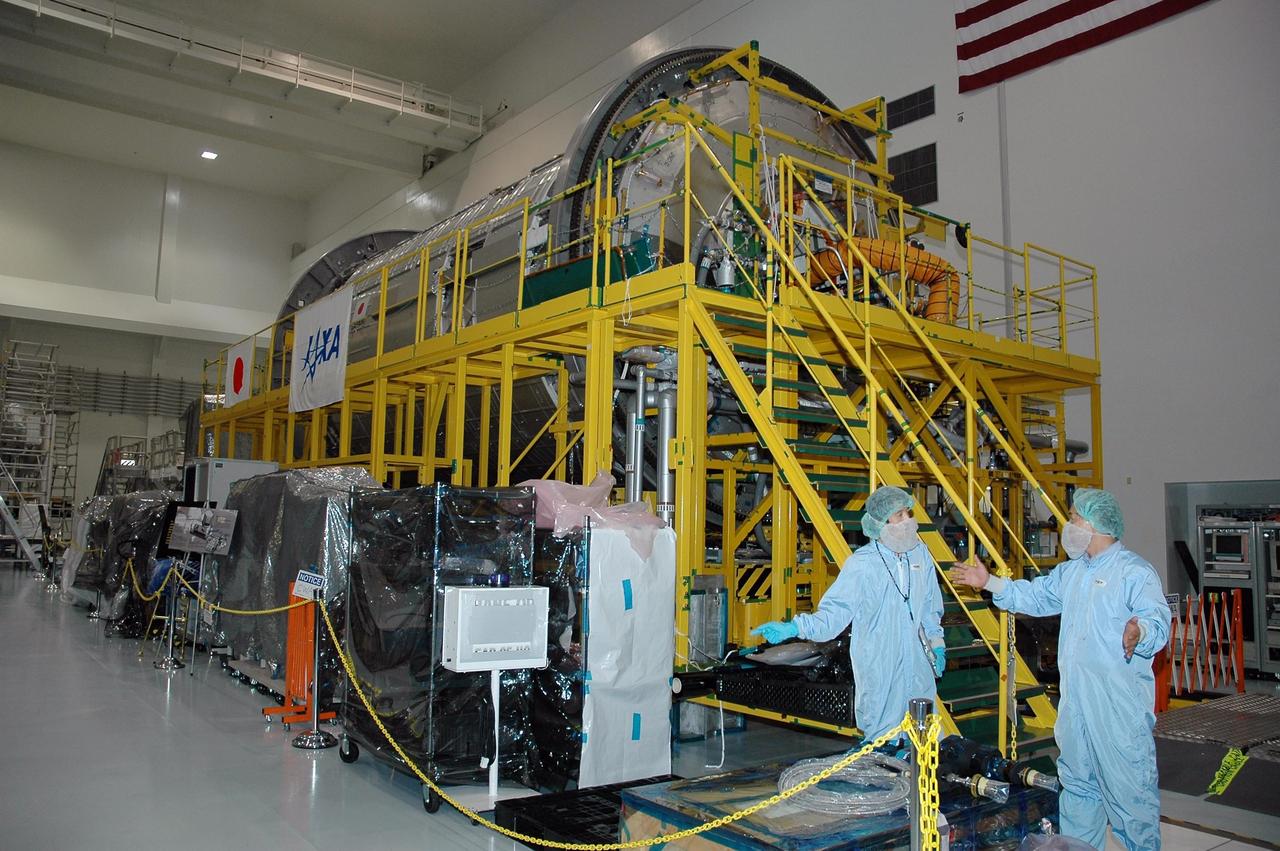
KENNEDY SPACE CENTER, FLA. - In the Space Station Processing Facility, processing continues on the Japanese Experiment Module (JEM) for its flight to the International Space Station (ISS). The JEM, developed by the Japan Aerospace Exploration Agency (JAXA) for installation on the ISS, is named Kibo -- which means "hope" in Japanese -- and will enhance the unique research capabilities of the orbiting complex by providing an additional environment for astronauts to conduct science experiments. Research conducted in Kibo will focus on space medicine, biology, Earth observations, material production, biotechnology and communications. Photo credit: NASA/Amanda Diller
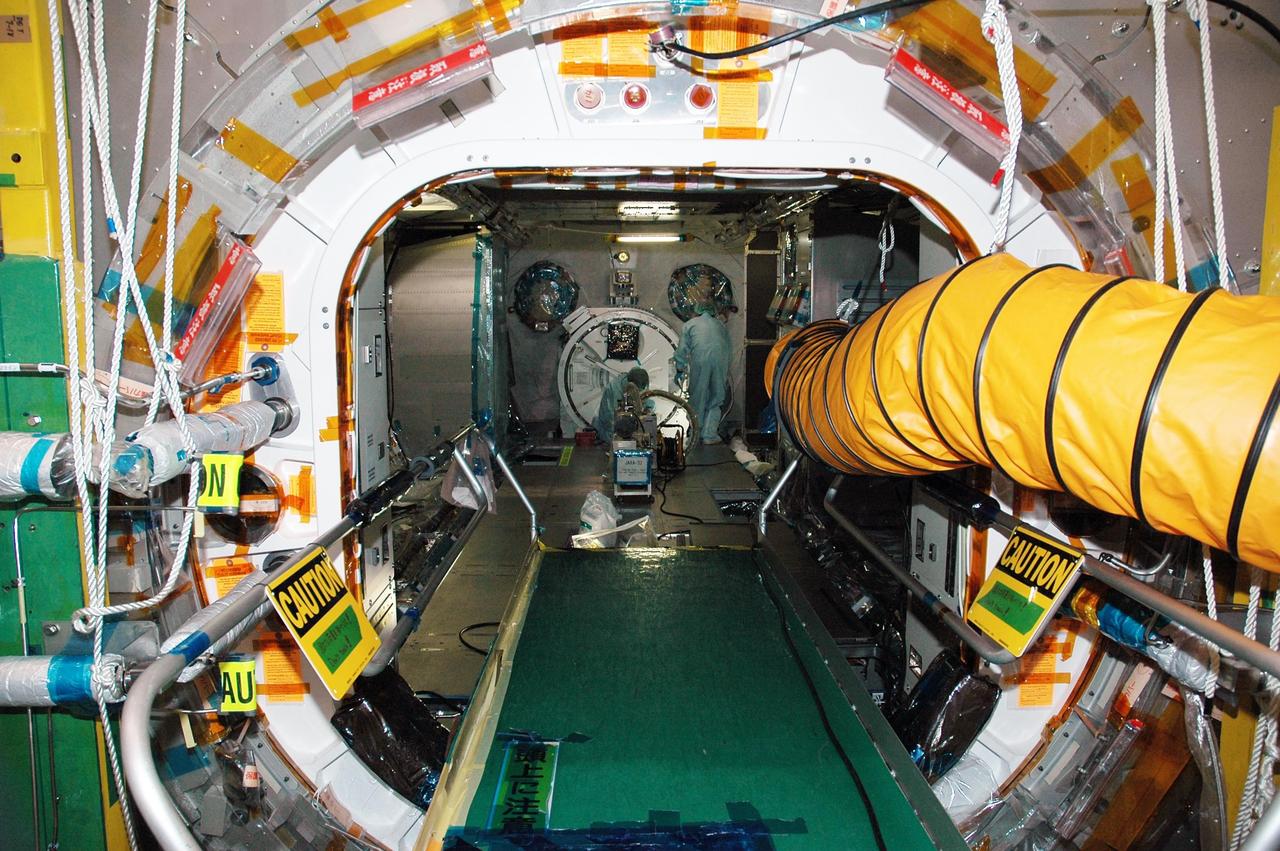
KENNEDY SPACE CENTER, FLA. - In the Space Station Processing Facility, Japan Aerospace Exploration Agency (JAXA) technicians install piping insulation on the Japanese Experiment Module (JEM). The JEM, developed by JAXA for use on the International Space Station, is named Kibo -- which means "hope" in Japanese -- and will enhance the unique research capabilities of the orbiting complex by providing an additional environment for astronauts to conduct science experiments. Research conducted in Kibo will focus on space medicine, biology, Earth observations, material production, biotechnology and communications. Photo credit: NASA/Amanda Diller
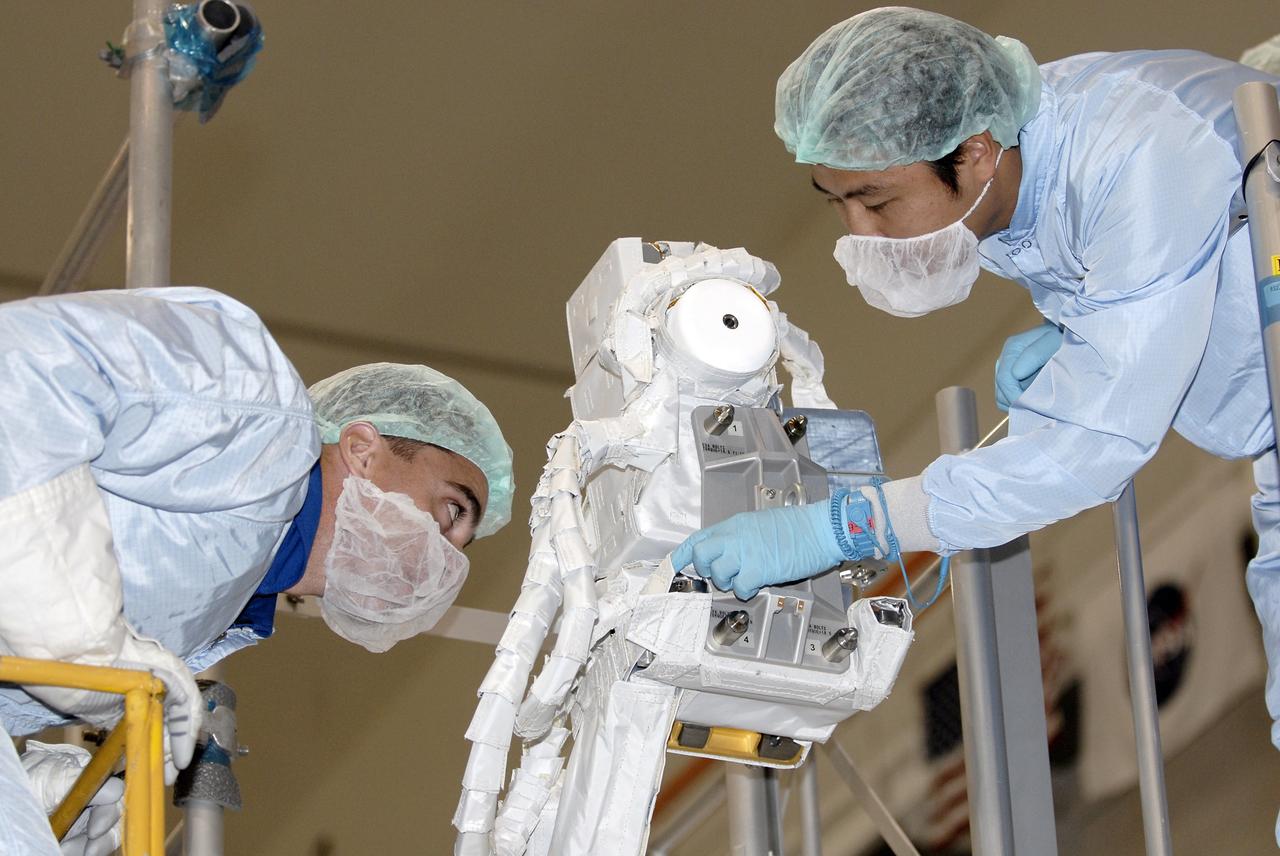
CAPE CANAVERAL, Fla. – In the Space Station Processing Facility at NASA's Kennedy Space Center in Florida, STS-127 mission crew members inspect the installation of the Japanese Aerospace Exploration Agency's Visual Equipments, or VE, to its final spot since they will have to do this as part of an EVA on the mission. The VE has to be installed to the final position on orbit because it is outside of the payload bay envelope. The mission payload includes the Japanese Experiment Module, or JEM, Extended Facility and the Inter-orbit Communication System Extended Facility, or ICS-EF. Equipment familiarization is part of a Crew Equipment Interface Test. The payload will be launched to the International Space Station aboard the space shuttle Endeavour on the STS-127 mission, targeted for launch on May 15, 2009. Photo credit: NASA/Kim Shiflett
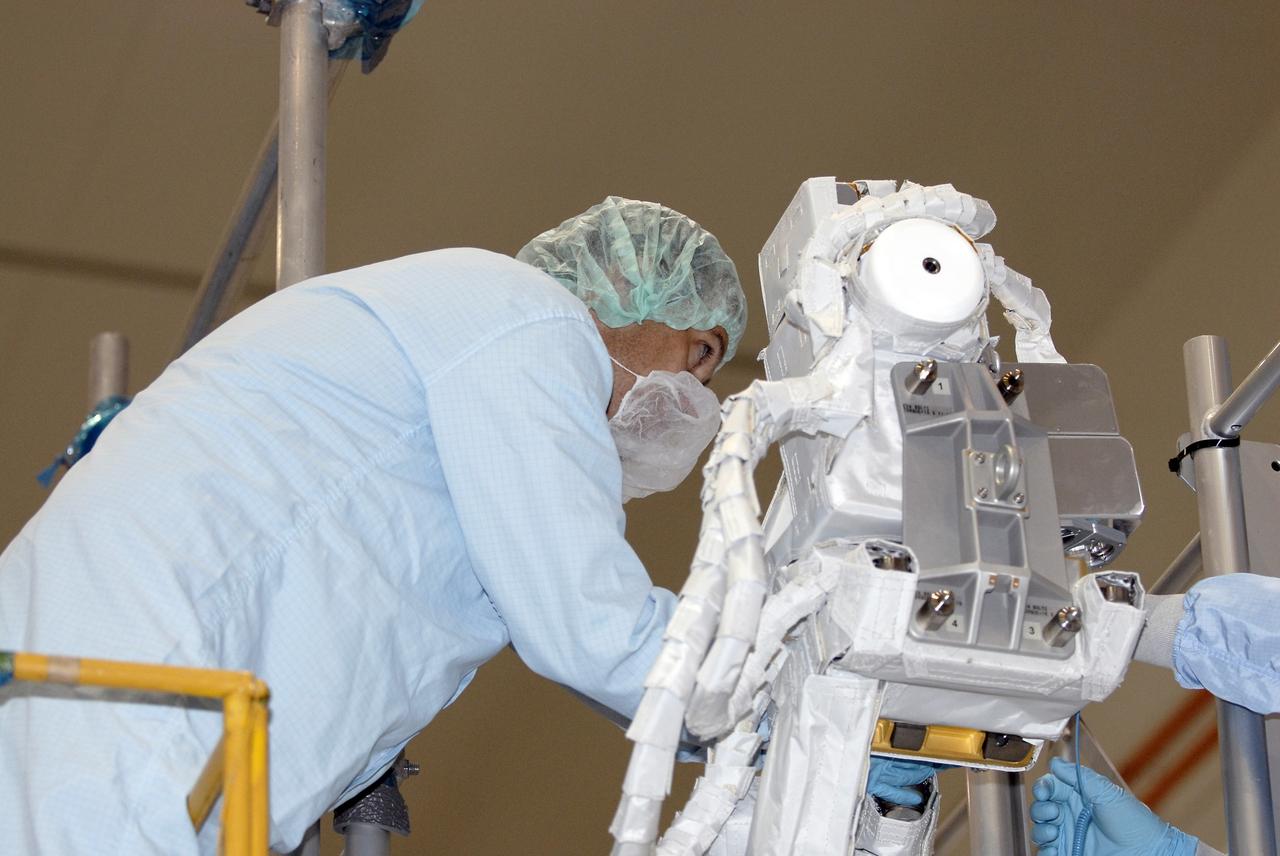
CAPE CANAVERAL, Fla. – In the Space Station Processing Facility at NASA's Kennedy Space Center in Florida, STS-127 mission crew members inspect the installation of the Japanese Aerospace Exploration Agency's Visual Equipments, or VE, to its final spot since they will have to do this as part of an EVA on the mission. The VE has to be installed to the final position on orbit because it is outside of the payload bay envelope. The mission payload includes the Japanese Experiment Module, or JEM, Extended Facility and the Inter-orbit Communication System Extended Facility, or ICS-EF. Equipment familiarization is part of a Crew Equipment Interface Test. The payload will be launched to the International Space Station aboard the space shuttle Endeavour on the STS-127 mission, targeted for launch on May 15, 2009. Photo credit: NASA/Kim Shiflett
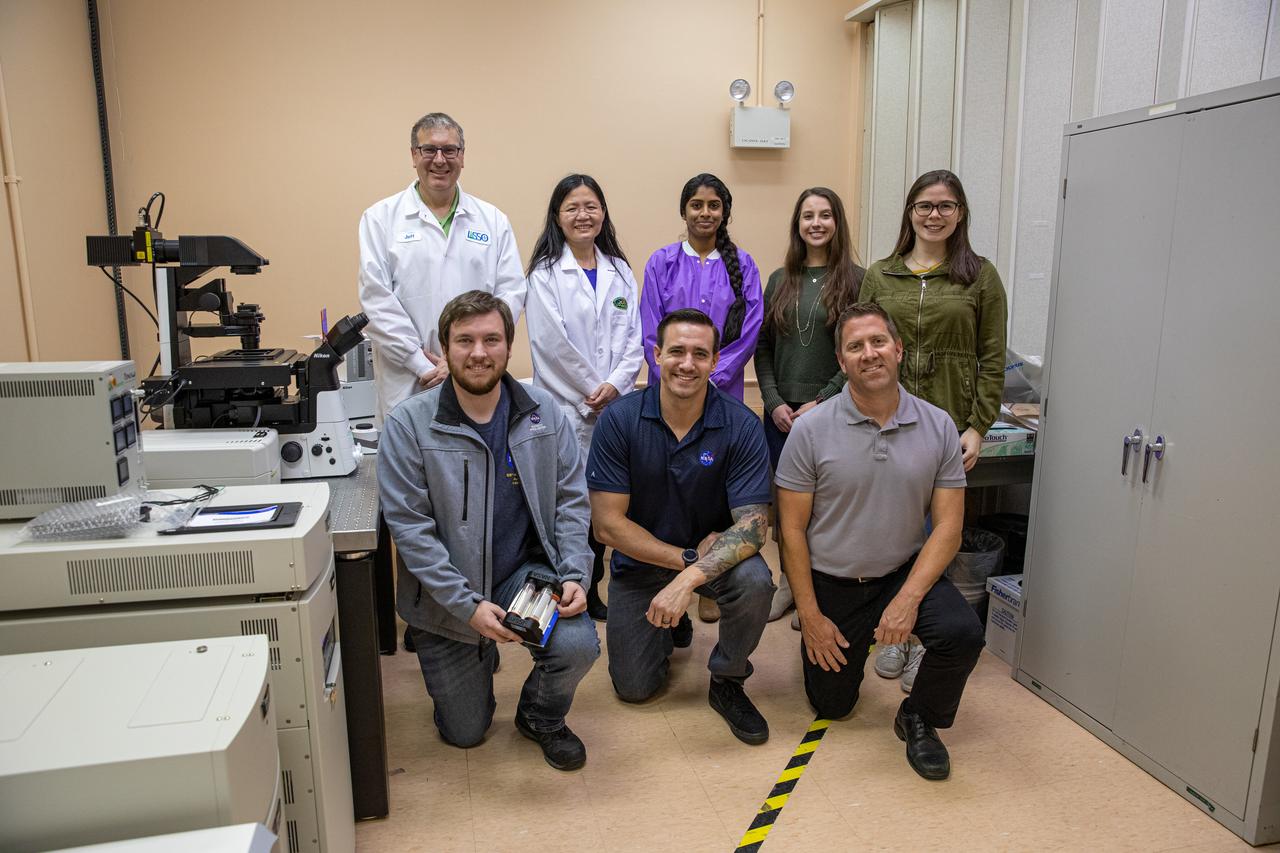
Researchers are in the Microgravity Simulation Support Facility (MSSF) inside the Neil Armstrong Operations and Checkout building at NASA’s Kennedy Space Center in Florida on Feb. 11, 2020. In front, from left, are Jonathan Gleeson, aerospace engineer on the LASSO contract; Jason Fischer, a research and development scientist on the LASSO contract; and Ralph Nacca, aerospace flight systems. In back, from left, are Jeffrey Richards, a payload research and science coordinator on the LASSO contract; Dr. Ye Zhang, a project scientist; Dr. Srujana Neelam, a NASA post-doctoral fellow; Jessica Hellein, NASA intern; and Emily Keith, NASA intern. The facility was developed to provide ground simulation capability to the U.S. research community in order to supplement the limited opportunities to access the International Space Station and other platforms for microgravity research. The MSSF is designed to support biological research on microorganisms, cells, tissues, small plants and small animals. The simulator provides NASA with an alternative platform for microgravity research and creates the opportunity to conduct experiments on the space station in parallel with conditions of simulated microgravity on the ground.
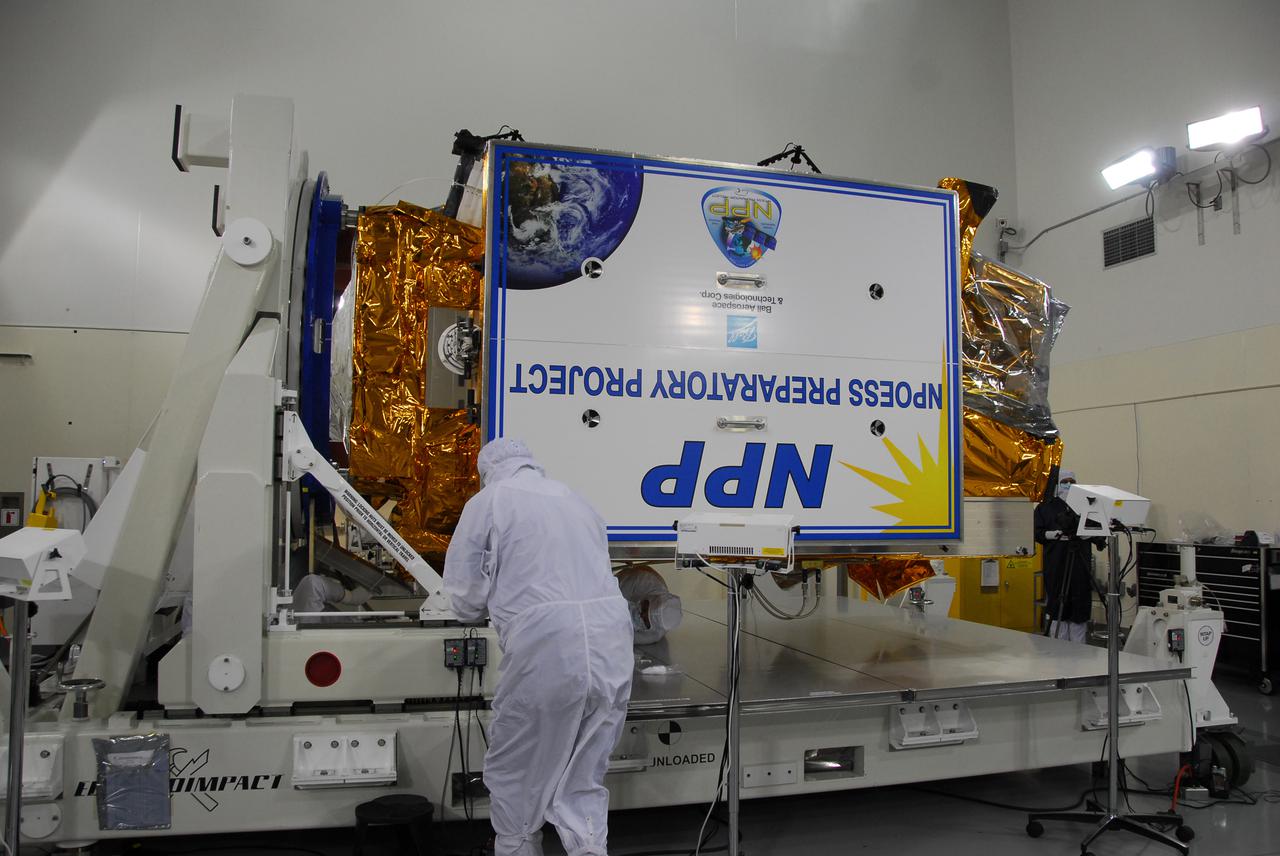
In a clean room inside the Astrotech Payload Processing Facility at Vandenberg Air Force Base in California, a Ball Aerospace technician positions NASA’s National Polar-orbiting Operational Environmental Satellite System Preparatory Project (NPP) before testing. NPP represents a critical first step in building the next-generation of Earth-observing satellites. NPP will carry the first of the new sensors developed for this satellite fleet, now known as the Joint Polar Satellite System (JPSS), to be launched in 2016. NPP is the bridge between NASA's Earth Observing System (EOS) satellites and the forthcoming series of JPSS satellites. The mission will test key technologies and instruments for the JPSS missions. NPP is targeted to launch Oct. 28 from Space Launch Complex-2 aboard a United Launch Alliance Delta II rocket. For more information, visit http:__www.nasa.gov_NPP. Photo credit: NASA_Aaron Taubman, 30th Communications Squadron, VAFB
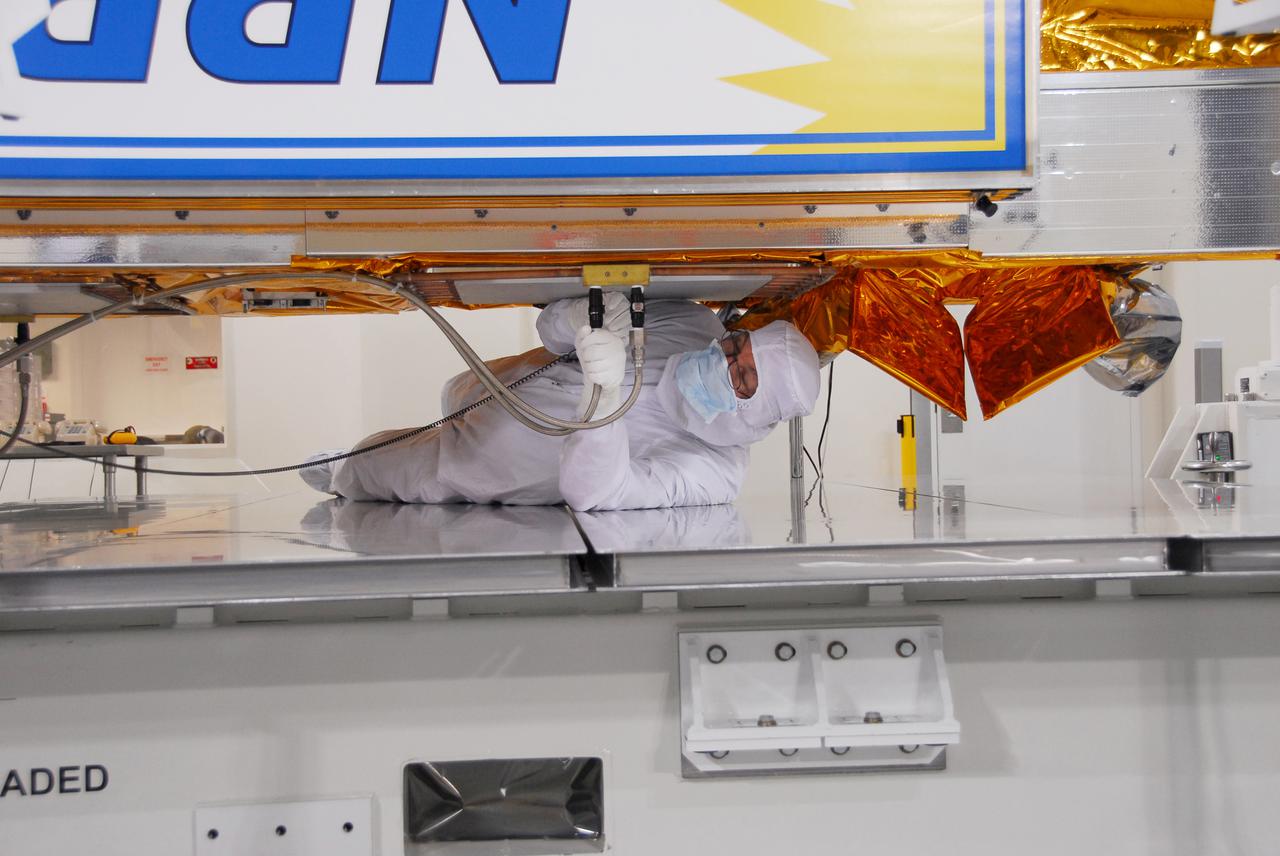
In a clean room inside the Astrotech Payload Processing Facility at Vandenberg Air Force Base in California, a Ball Aerospace technician prepares NASA’s National Polar-orbiting Operational Environmental Satellite System Preparatory Project (NPP) for testing. NPP represents a critical first step in building the next-generation of Earth-observing satellites. NPP will carry the first of the new sensors developed for this satellite fleet, now known as the Joint Polar Satellite System (JPSS), to be launched in 2016. NPP is the bridge between NASA's Earth Observing System (EOS) satellites and the forthcoming series of JPSS satellites. The mission will test key technologies and instruments for the JPSS missions. NPP is targeted to launch Oct. 28 from Space Launch Complex-2 aboard a United Launch Alliance Delta II rocket. For more information, visit http:__www.nasa.gov_NPP. Photo credit: NASA_Aaron Taubman, 30th Communications Squadron, VAFB
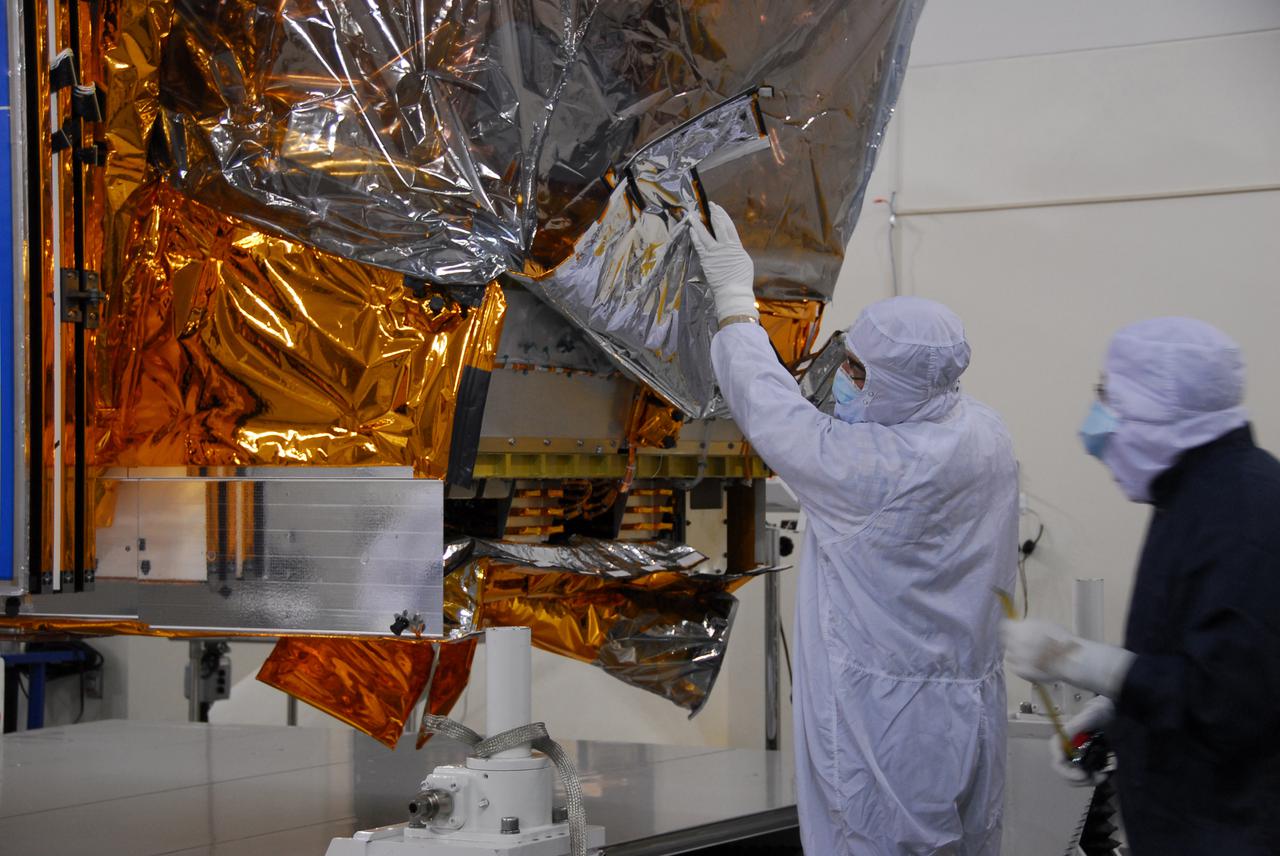
In a clean room inside the Astrotech Payload Processing Facility at Vandenberg Air Force Base in California, Ball Aerospace technicians prepare NASA’s National Polar-orbiting Operational Environmental Satellite System Preparatory Project (NPP) for testing. NPP represents a critical first step in building the next-generation of Earth-observing satellites. NPP will carry the first of the new sensors developed for this satellite fleet, now known as the Joint Polar Satellite System (JPSS), to be launched in 2016. NPP is the bridge between NASA's Earth Observing System (EOS) satellites and the forthcoming series of JPSS satellites. The mission will test key technologies and instruments for the JPSS missions. NPP is targeted to launch Oct. 28 from Space Launch Complex-2 aboard a United Launch Alliance Delta II rocket. For more information, visit http:__www.nasa.gov_NPP. Photo credit: NASA_Aaron Taubman, 30th Communications Squadron, VAFB
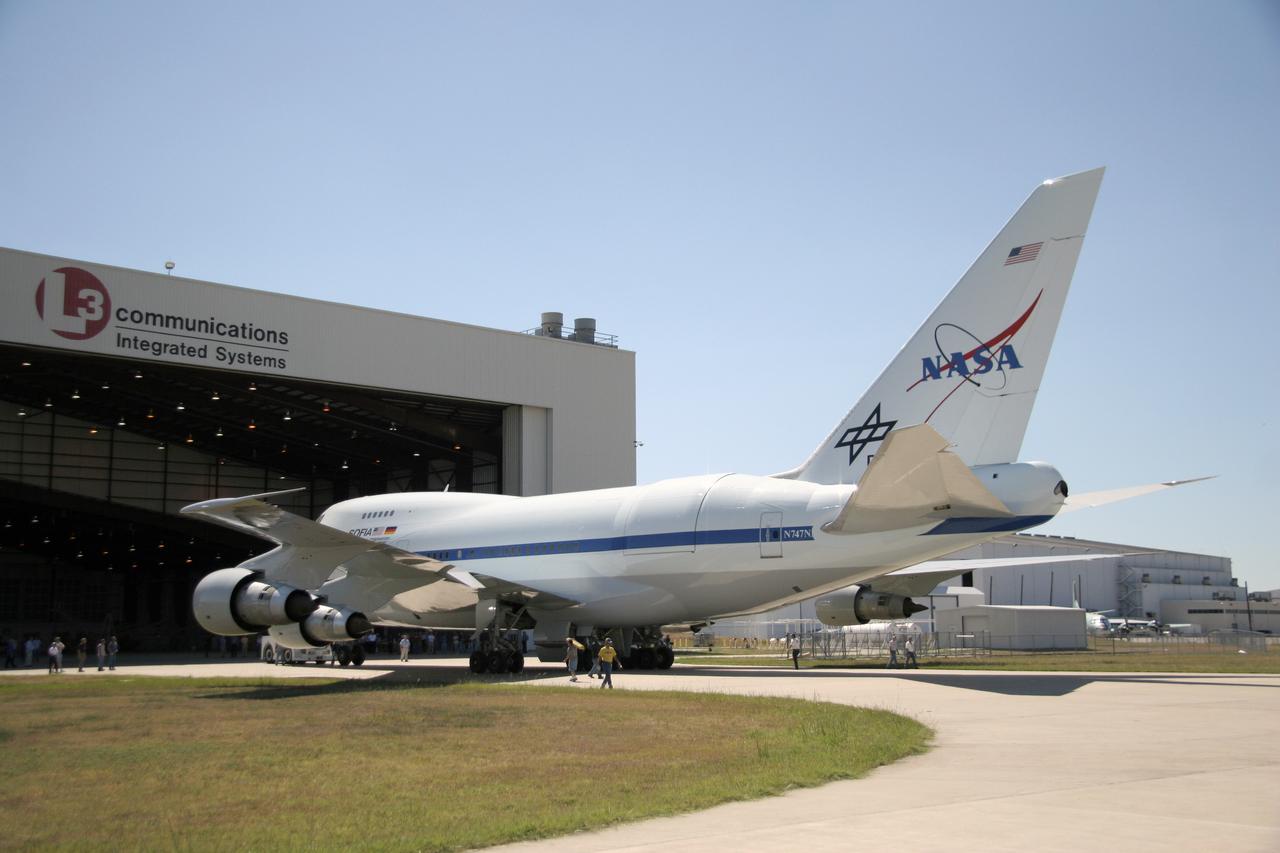
NASA's freshly painted Stratospheric Observatory for Infrared Astronomy (SOFIA) 747SP aircraft sits outside a hangar at L-3 Communications Integrated Systems' facility in Waco, Texas. The observatory, which features a German-built 100-inch (2.5 meter) diameter infrared telescope weighing 20 tons, is approaching the flight test phase as part of a joint program by NASA and DLR Deutsches Zentrum fuer Luft- und Raumfahrt (German Aerospace Center). SOFIA's science and mission operations are being planned jointly by Universities Space Research Association (USRA) and the Deutsches SOFIA Institut (DSI). Once operational, SOFIA will be the world's primary infrared observatory during a mission lasting up to 20 years, as well as an outstanding laboratory for developing and testing instrumentation and detector technology.
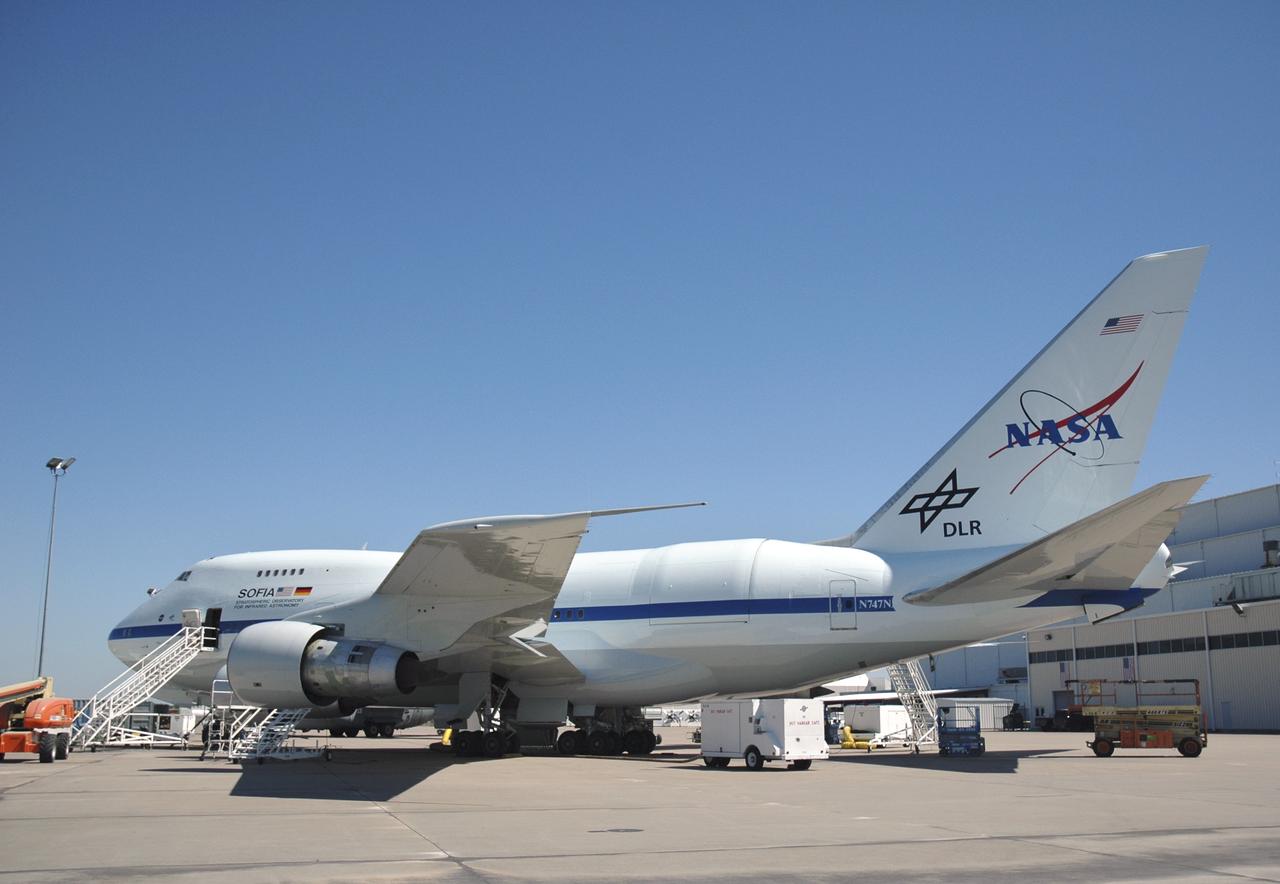
NASA's freshly painted Stratospheric Observatory for Infrared Astronomy (SOFIA) 747SP is shown at L-3 Communications Integrated Systems' facility in Waco, Texas, where major modifications and installation was performed. The observatory, which features a German-built 100-inch (2.5 meter) diameter infrared telescope weighing 20 tons, is approaching the flight test phase as part of a joint program by NASA and DLR Deutsches Zentrum fuer Luft- und Raumfahrt (German Aerospace Center). SOFIA's science and mission operations are being planned jointly by Universities Space Research Association (USRA) and the Deutsches SOFIA Institut (DSI). Once operational, SOFIA will be the world's primary infrared observatory during a mission lasting up to 20 years, as well as an outstanding laboratory for developing and testing instrumentation and detector technology.

KENNEDY SPACE CENTER, FLA. -- In the Space Station Processing Facility at NASA's Kennedy Space Center, members of the STS-123 crew learn more about the mission payload, the Kibo Experiment Logistics Module Pressurized Section. They are at the center for a crew equipment interface test, which allows familiarization with equipment they will use during the mission. Crew members are Commander Dominic Gorie, Pilot Gregory Johnson and Mission Specialists Richard Linnehan, Takao Doi, Robert Behnken, Gerrett Reisman and Michael Foreman. Doi represents the Japan Aerospace Exploration Agency. Reisman will remain on the space station after the mission as a flight engineer for Expedition 16. STS-123 will carry and install one of the components of the Japanese Experiment Module, or JEM. Known as Kibo, the JEM comprises six components: two research facilities -- the Pressurized Module and Exposed Facility; a Logistics Module attached to each of them; a Remote Manipulator System; and an Inter-Orbit Communication System unit. The various components of JEM will be assembled in space over the course of three space shuttle missions. The first of those three missions, STS-123, will carry the Experiment Logistics Module Pressurized Section aboard the space shuttle Endeavour, targeted for launch in February 2008. Photo credit: NASA/Dimitrios Gerondidakis

KENNEDY SPACE CENTER, FLA. -- In the Space Station Processing Facility at NASA's Kennedy Space Center, members of the STS-123 crew get hands-on experience with the mission payload, the Kibo Experiment Logistics Module Pressurized Section. They are at the center for a crew equipment interface test, which allows familiarization with equipment they will use during the mission. Crew members are Commander Dominic Gorie, Pilot Gregory Johnson and Mission Specialists Richard Linnehan, Takao Doi, Robert Behnken, Gerrett Reisman and Michael Foreman. Doi represents the Japan Aerospace Exploration Agency. Reisman will remain on the space station after the mission as a flight engineer for Expedition 16. STS-123 will carry and install one of the components of the Japanese Experiment Module, or JEM. Known as Kibo, the JEM comprises six components: two research facilities -- the Pressurized Module and Exposed Facility; a Logistics Module attached to each of them; a Remote Manipulator System; and an Inter-Orbit Communication System unit. The various components of JEM will be assembled in space over the course of three space shuttle missions. The first of those three missions, STS-123, will carry the Experiment Logistics Module Pressurized Section aboard the space shuttle Endeavour, targeted for launch in February 2008. Photo credit: NASA/Dimitrios Gerondidakis
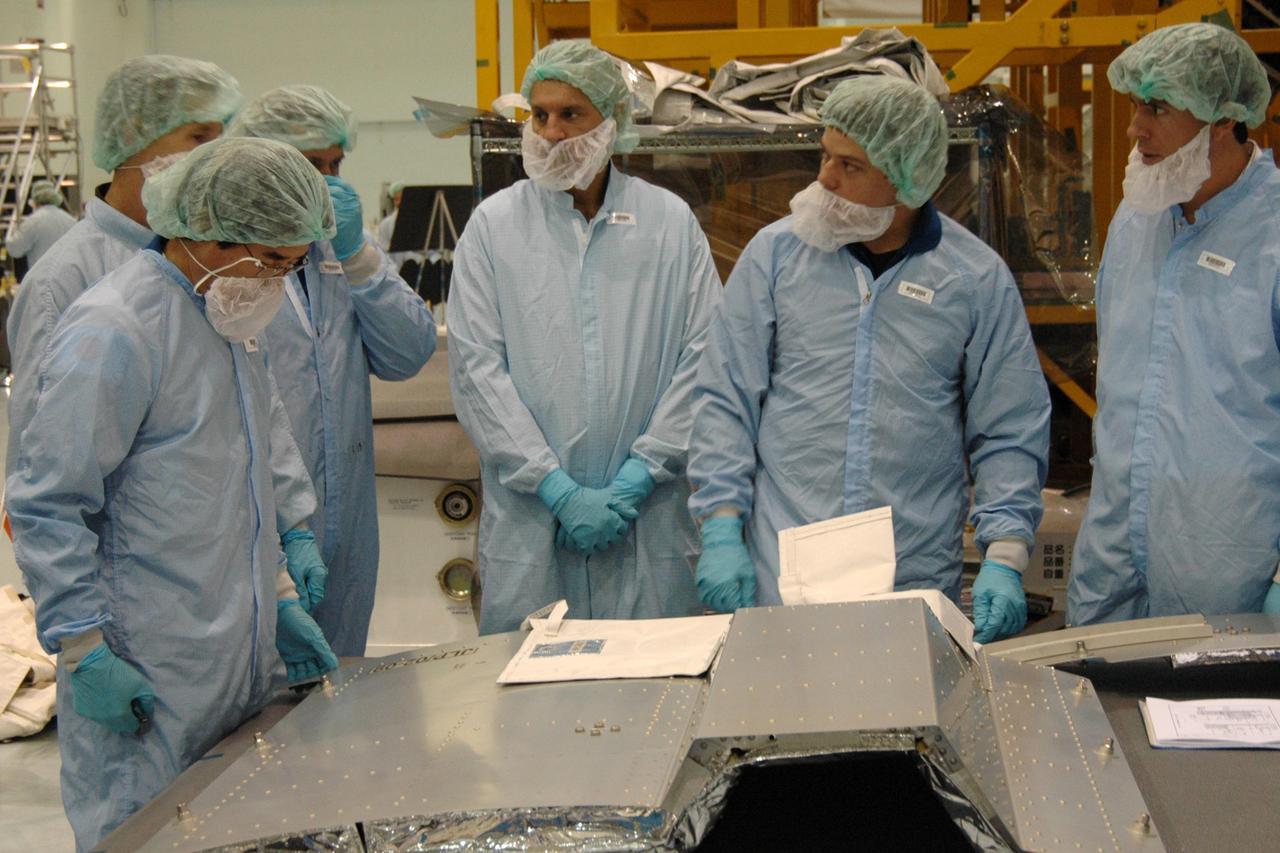
KENNEDY SPACE CENTER, FLA. -- In the Space Station Processing Facility at NASA's Kennedy Space Center, members of the STS-123 crew get hands-on experience with some of the equipment related to the mission. Crew members are Commander Dominic Gorie, Pilot Gregory Johnson and Mission Specialists Richard Linnehan, Takao Doi, Robert Behnken, Gerrett Reisman and Michael Foreman. Doi represents the Japan Aerospace Exploration Agency. Reisman will remain on the space station after the mission as a flight engineer for Expedition 16. STS-123 will carry and install one of the components of the Japanese Experiment Module, or JEM. Known as Kibo, the JEM comprises six components: two research facilities -- the Pressurized Module and Exposed Facility; a Logistics Module attached to each of them; a Remote Manipulator System; and an Inter-Orbit Communication System unit. The various components of JEM will be assembled in space over the course of three space shuttle missions. The first of those three missions, STS-123, will carry the Experiment Logistics Module Pressurized Section aboard the space shuttle Endeavour, targeted for launch in February 2008. Photo credit: NASA/Dimitrios Gerondidakis
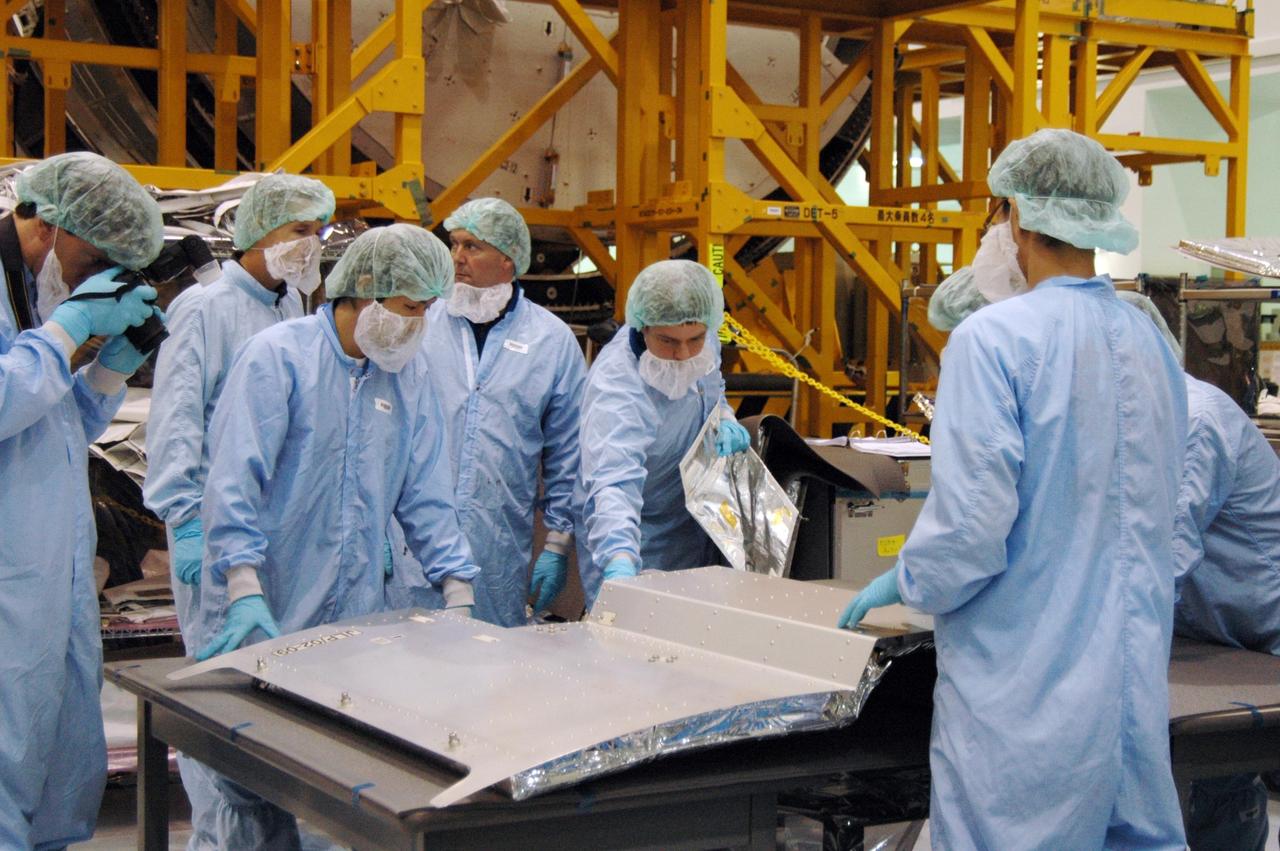
KENNEDY SPACE CENTER, FLA. -- In the Space Station Processing Facility at NASA's Kennedy Space Center, members of the STS-123 crew get hands-on experience with some of the equipment related to the mission. Crew members are Commander Dominic Gorie, Pilot Gregory Johnson and Mission Specialists Richard Linnehan, Takao Doi, Robert Behnken, Gerrett Reisman and Michael Foreman. Doi represents the Japan Aerospace Exploration Agency. Reisman will remain on the space station after the mission as a flight engineer for Expedition 16. STS-123 will carry and install one of the components of the Japanese Experiment Module, or JEM. Known as Kibo, the JEM comprises six components: two research facilities -- the Pressurized Module and Exposed Facility; a Logistics Module attached to each of them; a Remote Manipulator System; and an Inter-Orbit Communication System unit. The various components of JEM will be assembled in space over the course of three space shuttle missions. The first of those three missions, STS-123, will carry the Experiment Logistics Module Pressurized Section aboard the space shuttle Endeavour, targeted for launch in February 2008. Photo credit: NASA/Dimitrios Gerondidakis
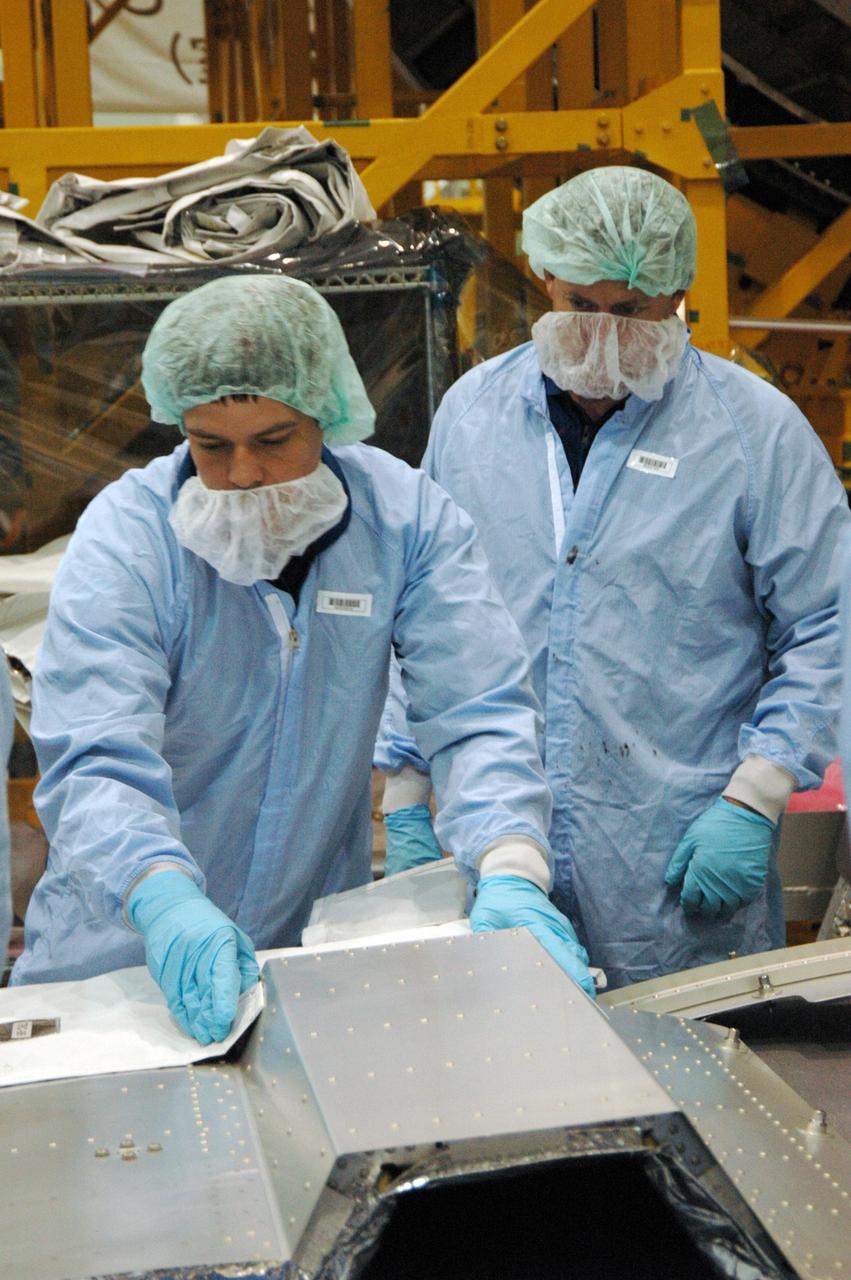
KENNEDY SPACE CENTER, FLA. -- In the Space Station Processing Facility at NASA's Kennedy Space Center, members of the STS-123 crew get hands-on experience with some of the equipment related to the mission. Crew members are Commander Dominic Gorie, Pilot Gregory Johnson and Mission Specialists Richard Linnehan, Takao Doi, Robert Behnken, Gerrett Reisman and Michael Foreman. Doi represents the Japan Aerospace Exploration Agency. Reisman will remain on the space station after the mission as a flight engineer for Expedition 16. STS-123 will carry and install one of the components of the Japanese Experiment Module, or JEM. Known as Kibo, the JEM comprises six components: two research facilities -- the Pressurized Module and Exposed Facility; a Logistics Module attached to each of them; a Remote Manipulator System; and an Inter-Orbit Communication System unit. The various components of JEM will be assembled in space over the course of three space shuttle missions. The first of those three missions, STS-123, will carry the Experiment Logistics Module Pressurized Section aboard the space shuttle Endeavour, targeted for launch in February 2008. Photo credit: NASA/Dimitrios Gerondidakis

KENNEDY SPACE CENTER, FLA. -- In the Space Station Processing Facility at NASA's Kennedy Space Center, STS-123 crew members get a close look at hardware related to the mission. They are at the center for a crew equipment interface test, which allows familiarization with equipment they will use during the mission. Crew members are Commander Dominic Gorie, Pilot Gregory Johnson and Mission Specialists Richard Linnehan, Takao Doi, Robert Behnken, Gerrett Reisman and Michael Foreman. Doi represents the Japan Aerospace Exploration Agency. Reisman will remain on the space station after the mission as a flight engineer for Expedition 16. STS-123 will carry and install one of the components of the Japanese Experiment Module, or JEM. Known as Kibo, the JEM comprises six components: two research facilities -- the Pressurized Module and Exposed Facility; a Logistics Module attached to each of them; a Remote Manipulator System; and an Inter-Orbit Communication System unit. The various components of JEM will be assembled in space over the course of three space shuttle missions. The first of those three missions, STS-123, will carry the Experiment Logistics Module Pressurized Section aboard the space shuttle Endeavour, targeted for launch in February 2008. Photo credit: NASA/Dimitrios Gerondidakis
KENNEDY SPACE CENTER, FLA. -- In the Space Station Processing Facility at NASA's Kennedy Space Center, STS-123 crew members get a close look at hardware related to the mission. They are at the center for a crew equipment interface test, which allows familiarization with equipment they will use during the mission. Crew members are Commander Dominic Gorie, Pilot Gregory Johnson and Mission Specialists Richard Linnehan, Takao Doi, Robert Behnken, Gerrett Reisman and Michael Foreman. Doi represents the Japan Aerospace Exploration Agency. Reisman will remain on the space station after the mission as a flight engineer for Expedition 16. STS-123 will carry and install one of the components of the Japanese Experiment Module, or JEM. Known as Kibo, the JEM comprises six components: two research facilities -- the Pressurized Module and Exposed Facility; a Logistics Module attached to each of them; a Remote Manipulator System; and an Inter-Orbit Communication System unit. The various components of JEM will be assembled in space over the course of three space shuttle missions. The first of those three missions, STS-123, will carry the Experiment Logistics Module Pressurized Section aboard the space shuttle Endeavour, targeted for launch in February 2008. Photo credit: NASA/Dimitrios Gerondidakis
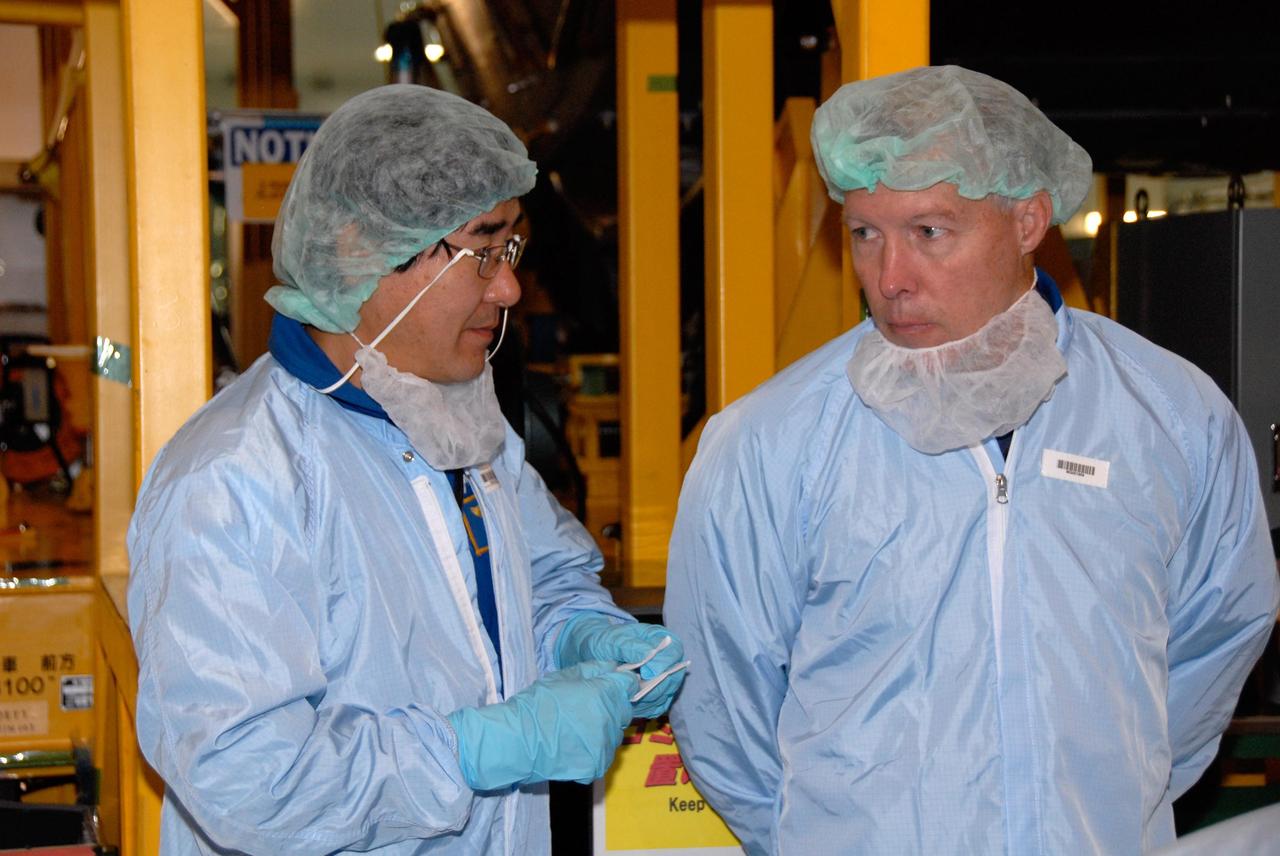
KENNEDY SPACE CENTER, FLA. -- In the Space Station Processing Facility at NASA's Kennedy Space Center, STS-123 Mission Specialist Takao Doi (left) and Commander Dominic Gorie confer about the mission payload, the Kibo Experiment Logistics Module Pressurized Section, they are looking over. They are at the center for a crew equipment interface test, which allows familiarization with equipment they will use during the mission. Crew members are Commander Dominic Gorie, Pilot Gregory Johnson and Mission Specialists Richard Linnehan, Takao Doi, Robert Behnken, Gerrett Reisman and Michael Foreman. Doi represents the Japan Aerospace Exploration Agency. Reisman will remain on the space station after the mission as a flight engineer for Expedition 16. STS-123 will carry and install one of the components of the Japanese Experiment Module, or JEM. Known as Kibo, the JEM comprises six components: two research facilities -- the Pressurized Module and Exposed Facility; a Logistics Module attached to each of them; a Remote Manipulator System; and an Inter-Orbit Communication System unit. The various components of JEM will be assembled in space over the course of three space shuttle missions. The first of those three missions, STS-123, will carry the Experiment Logistics Module Pressurized Section aboard the space shuttle Endeavour, targeted for launch in February 2008. Photo credit: NASA/Dimitrios Gerondidakis
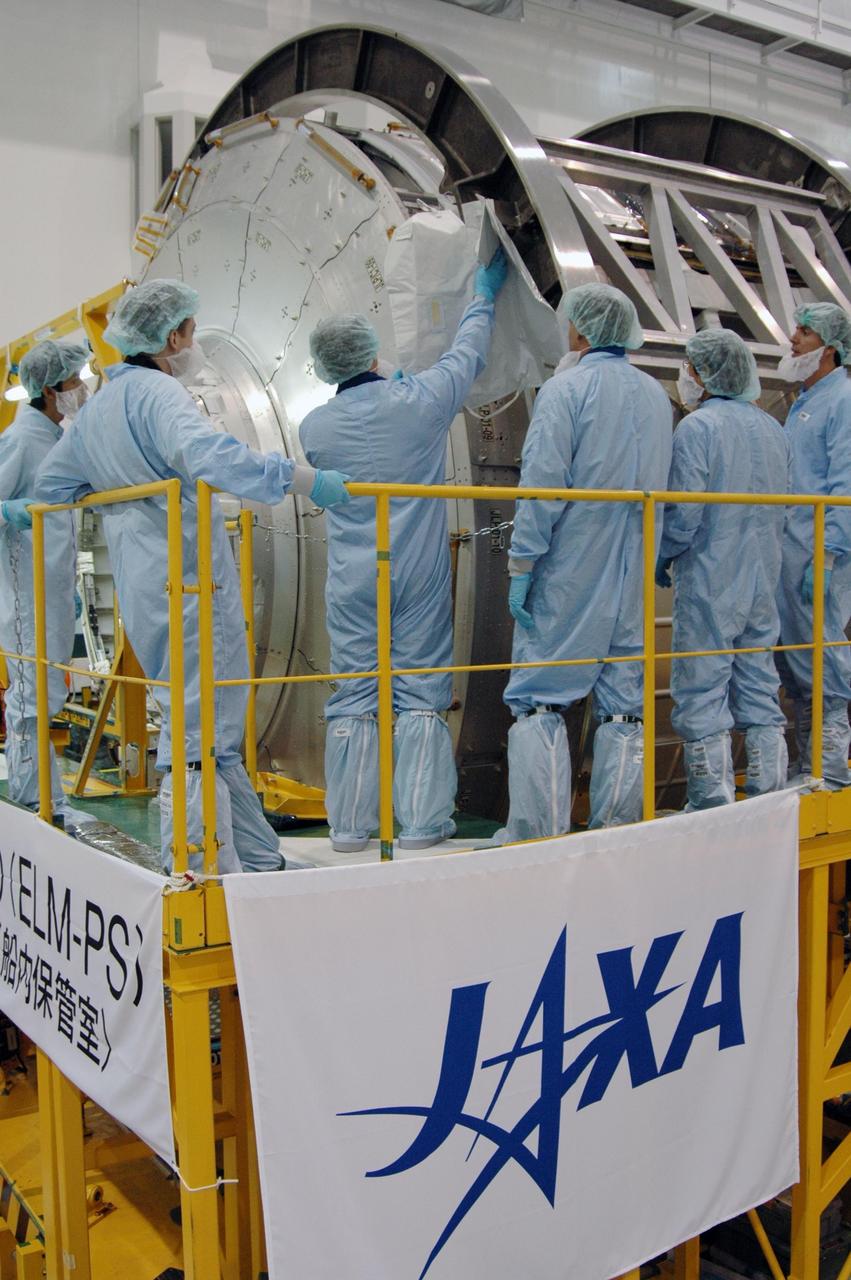
KENNEDY SPACE CENTER, FLA. -- In the Space Station Processing Facility at NASA's Kennedy Space Center, members of the STS-123 crew learn more about the mission payload, the Kibo Experiment Logistics Module Pressurized Section. Crew members are Commander Dominic Gorie, Pilot Gregory Johnson and Mission Specialists Richard Linnehan, Takao Doi, Robert Behnken, Gerrett Reisman and Michael Foreman. Doi represents the Japan Aerospace Exploration Agency. Reisman will remain on the space station after the mission as a flight engineer for Expedition 16. STS-123 will carry and install one of the components of the Japanese Experiment Module, or JEM. Known as Kibo, the JEM comprises six components: two research facilities -- the Pressurized Module and Exposed Facility; a Logistics Module attached to each of them; a Remote Manipulator System; and an Inter-Orbit Communication System unit. The various components of JEM will be assembled in space over the course of three space shuttle missions. The first of those three missions, STS-123, will carry the Experiment Logistics Module Pressurized Section aboard the space shuttle Endeavour, targeted for launch in February 2008. Photo credit: NASA/Dimitrios Gerondidakis
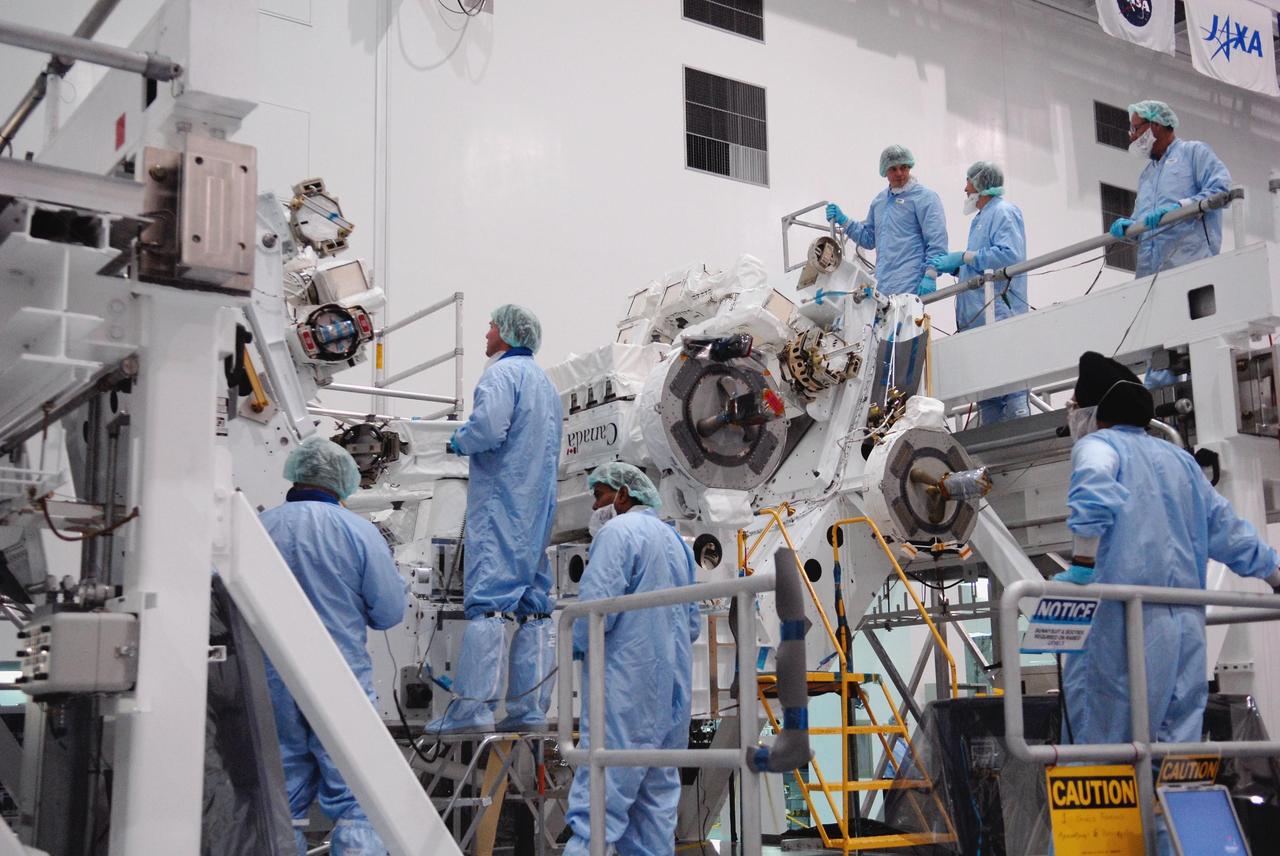
KENNEDY SPACE CENTER, FLA. -- In the Space Station Processing Facility at NASA's Kennedy Space Center, STS-123 crew members get a close look at hardware related to the mission. They are at the center for a crew equipment interface test, which allows familiarization with equipment they will use during the mission. Crew members are Commander Dominic Gorie, Pilot Gregory Johnson and Mission Specialists Richard Linnehan, Takao Doi, Robert Behnken, Gerrett Reisman and Michael Foreman. Doi represents the Japan Aerospace Exploration Agency. Reisman will remain on the space station after the mission as a flight engineer for Expedition 16. STS-123 will carry and install one of the components of the Japanese Experiment Module, or JEM. Known as Kibo, the JEM comprises six components: two research facilities -- the Pressurized Module and Exposed Facility; a Logistics Module attached to each of them; a Remote Manipulator System; and an Inter-Orbit Communication System unit. The various components of JEM will be assembled in space over the course of three space shuttle missions. The first of those three missions, STS-123, will carry the Experiment Logistics Module Pressurized Section aboard the space shuttle Endeavour, targeted for launch in February 2008. Photo credit: NASA/Dimitrios Gerondidakis

KENNEDY SPACE CENTER, FLA. -- In the Space Station Processing Facility at NASA's Kennedy Space Center, members of the STS-123 crew get hands-on experience with some of the equipment related to the mission. Crew members are Commander Dominic Gorie, Pilot Gregory Johnson and Mission Specialists Richard Linnehan, Takao Doi, Robert Behnken, Gerrett Reisman and Michael Foreman. Doi represents the Japan Aerospace Exploration Agency. Reisman will remain on the space station after the mission as a flight engineer for Expedition 16. STS-123 will carry and install one of the components of the Japanese Experiment Module, or JEM. Known as Kibo, the JEM comprises six components: two research facilities -- the Pressurized Module and Exposed Facility; a Logistics Module attached to each of them; a Remote Manipulator System; and an Inter-Orbit Communication System unit. The various components of JEM will be assembled in space over the course of three space shuttle missions. The first of those three missions, STS-123, will carry the Experiment Logistics Module Pressurized Section aboard the space shuttle Endeavour, targeted for launch in February 2008. Photo credit: NASA/Dimitrios Gerondidakis
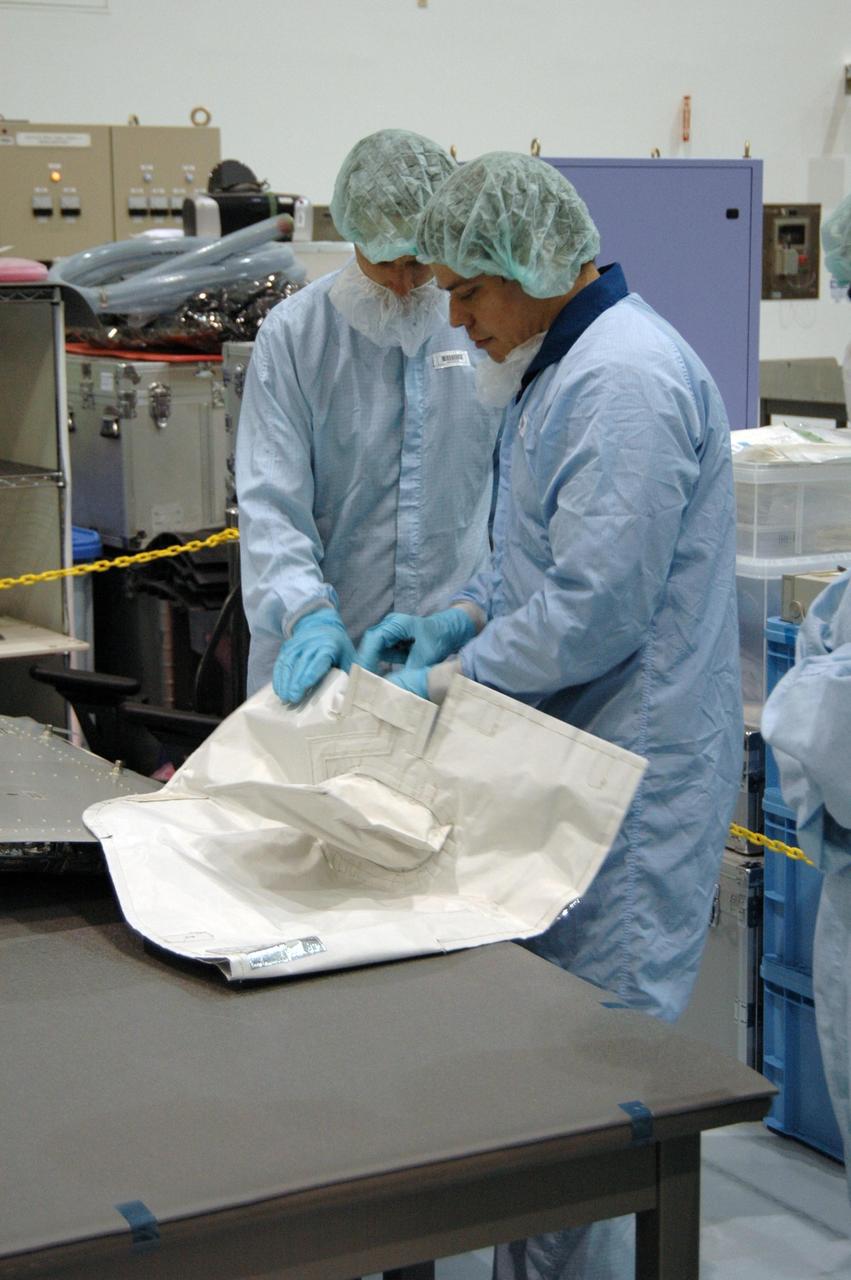
KENNEDY SPACE CENTER, FLA. -- In the Space Station Processing Facility at NASA's Kennedy Space Center, members of the STS-123 crew get hands-on experience with some of the equipment related to the mission. Crew members are Commander Dominic Gorie, Pilot Gregory Johnson and Mission Specialists Richard Linnehan, Takao Doi, Robert Behnken, Gerrett Reisman and Michael Foreman. Doi represents the Japan Aerospace Exploration Agency. Reisman will remain on the space station after the mission as a flight engineer for Expedition 16. STS-123 will carry and install one of the components of the Japanese Experiment Module, or JEM. Known as Kibo, the JEM comprises six components: two research facilities -- the Pressurized Module and Exposed Facility; a Logistics Module attached to each of them; a Remote Manipulator System; and an Inter-Orbit Communication System unit. The various components of JEM will be assembled in space over the course of three space shuttle missions. The first of those three missions, STS-123, will carry the Experiment Logistics Module Pressurized Section aboard the space shuttle Endeavour, targeted for launch in February 2008. Photo credit: NASA/Dimitrios Gerondidakis
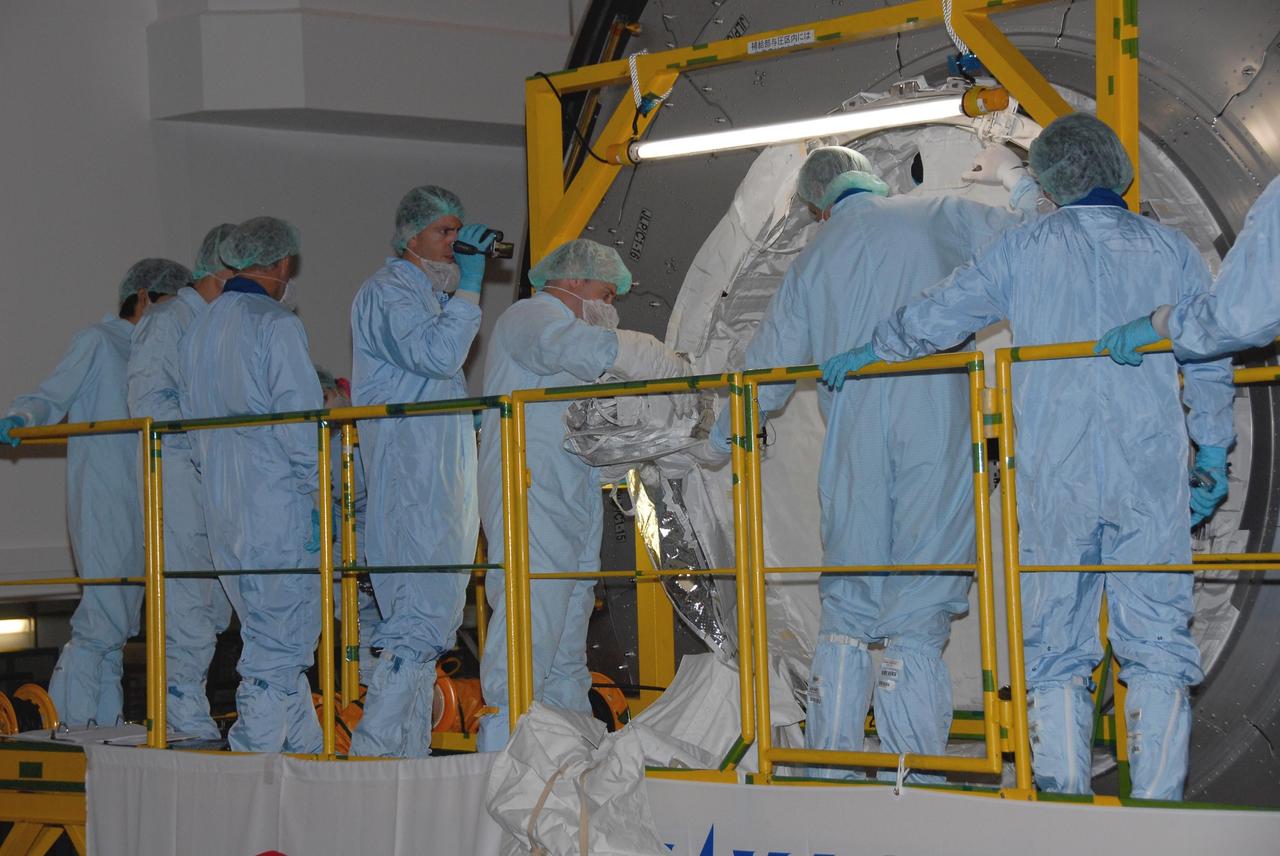
KENNEDY SPACE CENTER, FLA. -- In the Space Station Processing Facility at NASA's Kennedy Space Center, members of the STS-123 crew get hands-on experience with the mission payload, the Kibo Experiment Logistics Module Pressurized Section. They are at the center for a crew equipment interface test, which allows familiarization with equipment they will use during the mission. Crew members are Commander Dominic Gorie, Pilot Gregory Johnson and Mission Specialists Richard Linnehan, Takao Doi, Robert Behnken, Gerrett Reisman and Michael Foreman. Doi represents the Japan Aerospace Exploration Agency. Reisman will remain on the space station after the mission as a flight engineer for Expedition 16. STS-123 will carry and install one of the components of the Japanese Experiment Module, or JEM. Known as Kibo, the JEM comprises six components: two research facilities -- the Pressurized Module and Exposed Facility; a Logistics Module attached to each of them; a Remote Manipulator System; and an Inter-Orbit Communication System unit. The various components of JEM will be assembled in space over the course of three space shuttle missions. The first of those three missions, STS-123, will carry the Experiment Logistics Module Pressurized Section aboard the space shuttle Endeavour, targeted for launch in February 2008. Photo credit: NASA/Dimitrios Gerondidakis
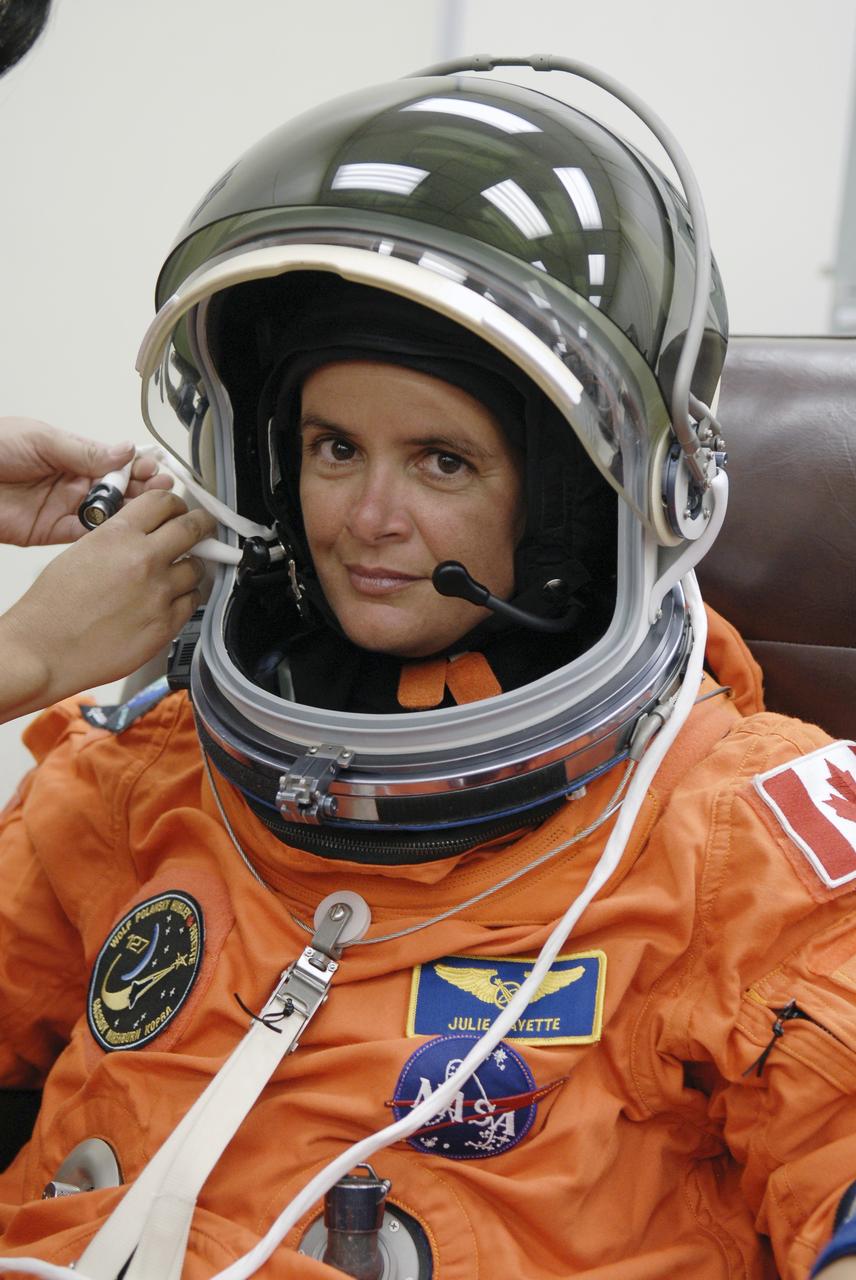
CAPE CANAVERAL, Fla. – In the Operations and Checkout Building at NASA's Kennedy Space Center in Florida, STS-127 Mission Specialist Julie Payette of the Canadian Space Agency has the communication apparatus in her helmet before heading to Launch Pad 39A for launch. Liftoff of space shuttle Endeavour is scheduled for 6:03 p.m. EDT. Today will be the sixth launch attempt for the STS-127 mission. The launch was scrubbed on June 13 and June 17 when a hydrogen gas leak occurred during tanking due to a misaligned Ground Umbilical Carrier Plate. The mission was postponed July 11, 12 and 13 due to weather conditions near the Shuttle Landing Facility at Kennedy that violated rules for launching, and lightning issues. Endeavour will deliver the Japanese Experiment Module's Exposed Facility and the Experiment Logistics Module-Exposed Section in the final of three flights dedicated to the assembly of the Japan Aerospace Exploration Agency's Kibo laboratory complex on the International Space Station. Photo credit: NASA/ Kim Shiflett
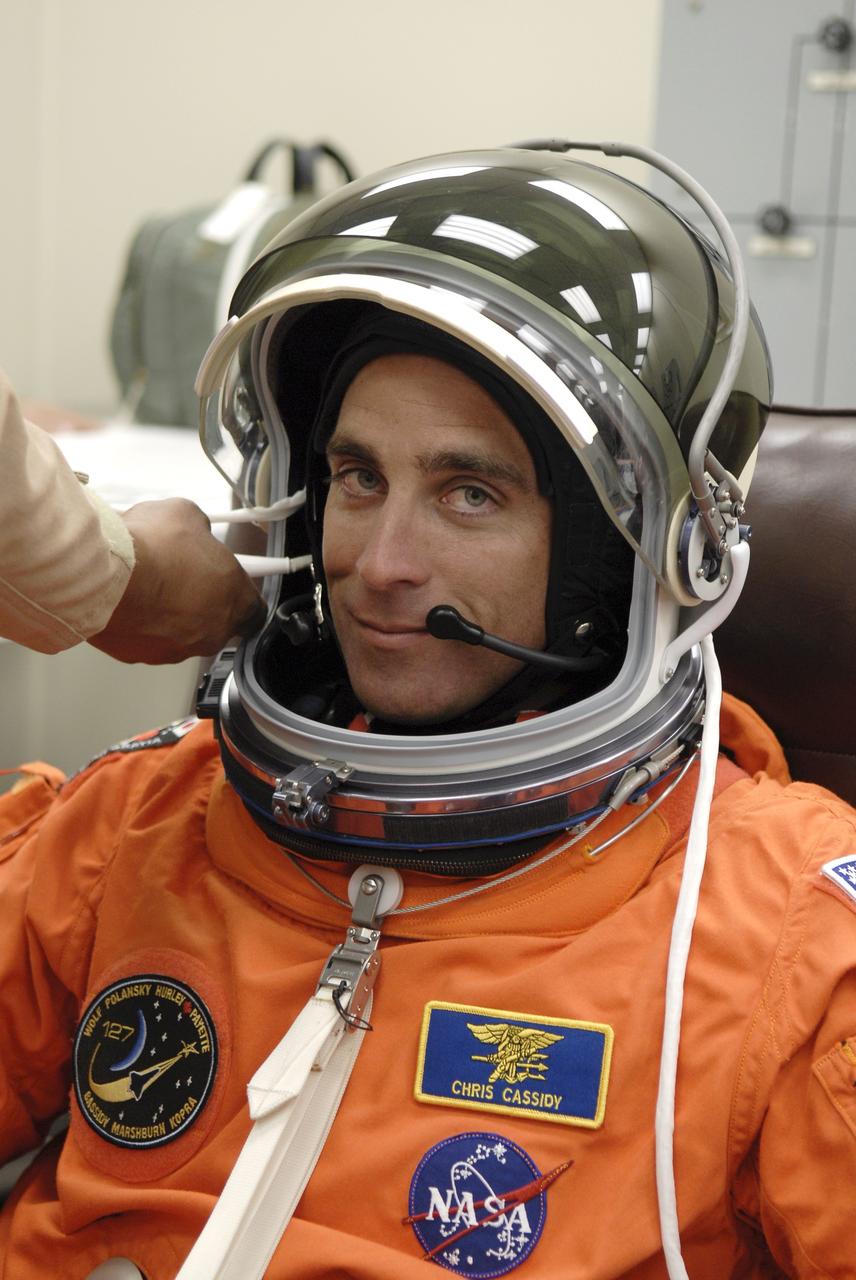
CAPE CANAVERAL, Fla. – In the Operations and Checkout Building at NASA's Kennedy Space Center in Florida, STS-127 Mission Specialist Christopher Cassidy has his helmet communications checked before heading to Launch Pad 39A for launch. Liftoff of space shuttle Endeavour is scheduled for 6:03 p.m. EDT. Today will be the sixth launch attempt for the STS-127 mission. The launch was scrubbed on June 13 and June 17 when a hydrogen gas leak occurred during tanking due to a misaligned Ground Umbilical Carrier Plate. The mission was postponed July 11, 12 and 13 due to weather conditions near the Shuttle Landing Facility at Kennedy that violated rules for launching, and lightning issues. Endeavour will deliver the Japanese Experiment Module's Exposed Facility and the Experiment Logistics Module-Exposed Section in the final of three flights dedicated to the assembly of the Japan Aerospace Exploration Agency's Kibo laboratory complex on the International Space Station. Photo credit: NASA/ Kim Shiflett
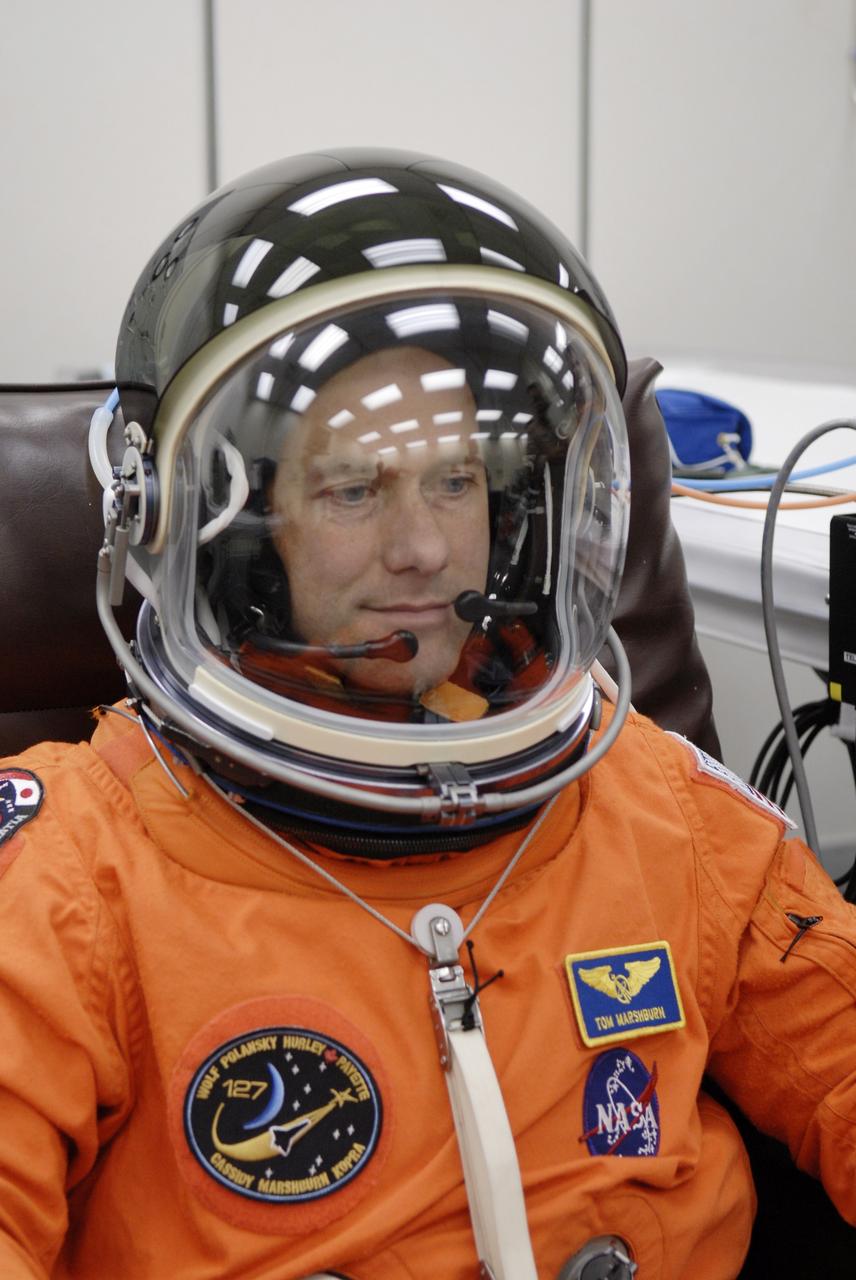
CAPE CANAVERAL, Fla. – In the Operations and Checkout Building at NASA's Kennedy Space Center in Florida, STS-127 Mission Specialist Tom Marshburn checks the communication inside his helmet before heading to Launch Pad 39A for launch on space shuttle Endeavour. Liftoff is scheduled for 6:51 p.m. EDT. Today's launch will be the fifth attempt. The mission was scrubbed on June 13 and again June 17 when a hydrogen gas leak occurred during tanking due to a misaligned Ground Umbilical Carrier Plate. The mission was scrubbed July 12 due to weather conditions near the Shuttle Landing Facility at Kennedy that violated rules for launching. Endeavour will deliver the Japanese Experiment Module's Exposed Facility, or JEM-EF, and the Experiment Logistics Module-Exposed Section, or ELM-ES, in the final of three flights dedicated to the assembly of the Japan Aerospace Exploration Agency's Kibo laboratory complex on the International Space Station. STS-127 is the 29th flight for the assembly of the space station. Photo credit: NASA/ Kim Shiflett
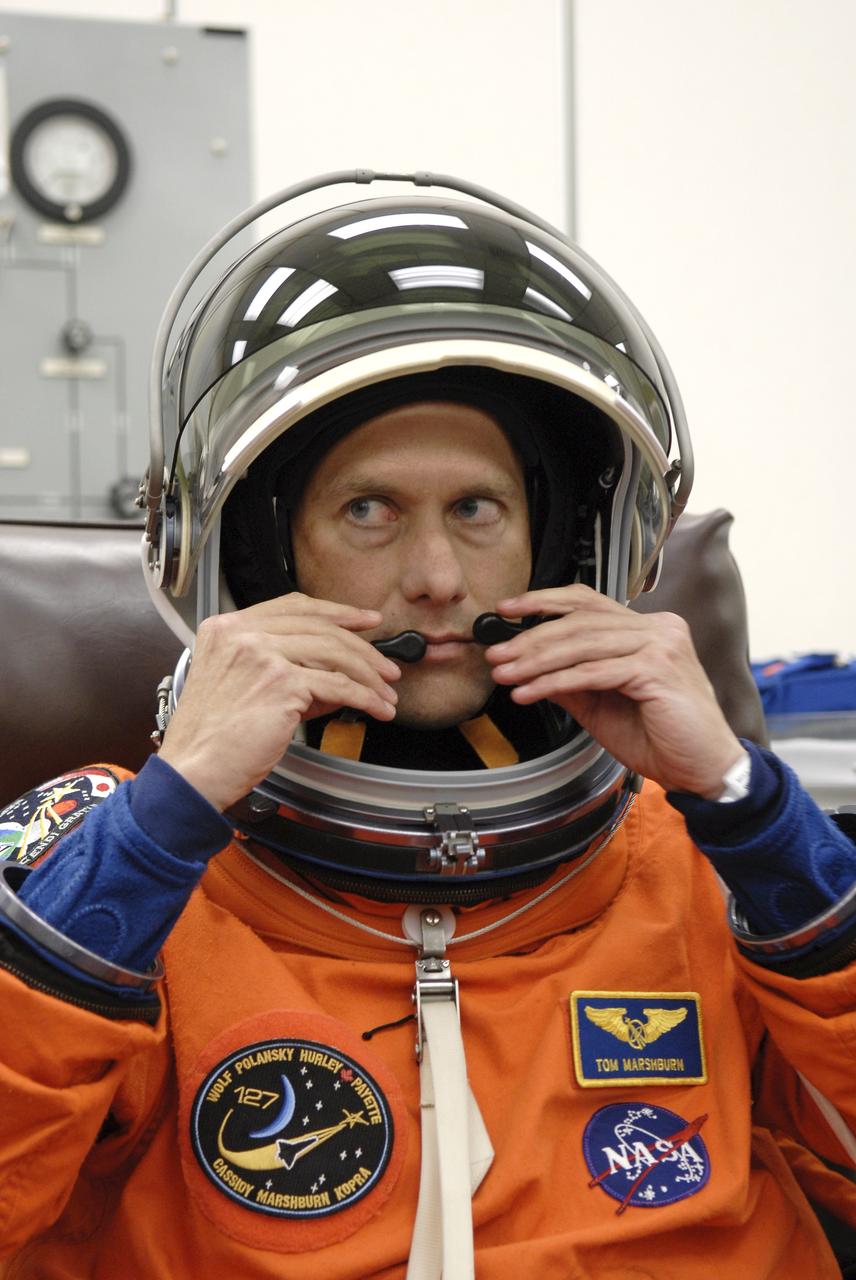
CAPE CANAVERAL, Fla. – In the Operations and Checkout Building at NASA's Kennedy Space Center in Florida, STS-127 Mission Specialist Tom Marshburn checks the communication apparatus in his helmet before heading to Launch Pad 39A for launch. Liftoff of space shuttle Endeavour is scheduled for 6:03 p.m. EDT. Today will be the sixth launch attempt for the STS-127 mission. The launch was scrubbed on June 13 and June 17 when a hydrogen gas leak occurred during tanking due to a misaligned Ground Umbilical Carrier Plate. The mission was postponed July 11, 12 and 13 due to weather conditions near the Shuttle Landing Facility at Kennedy that violated rules for launching, and lightning issues. Endeavour will deliver the Japanese Experiment Module's Exposed Facility and the Experiment Logistics Module-Exposed Section in the final of three flights dedicated to the assembly of the Japan Aerospace Exploration Agency's Kibo laboratory complex on the International Space Station. Photo credit: NASA/ Kim Shiflett
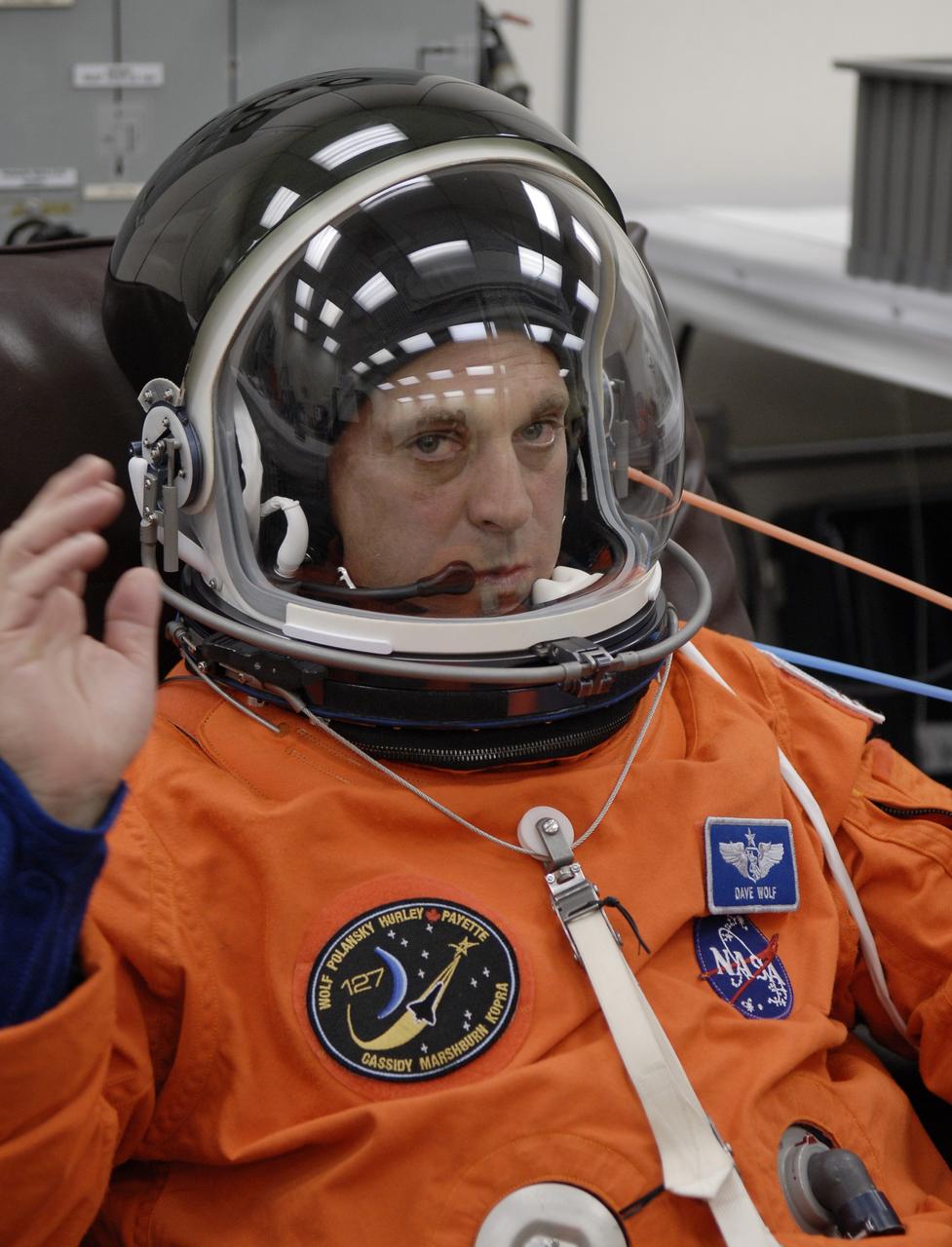
CAPE CANAVERAL, Fla. – In the Operations and Checkout Building at NASA's Kennedy Space Center in Florida, STS-127 Mission Specialist Dave Wolf checks the communication inside his helmet before heading to Launch Pad 39A for launch on space shuttle Endeavour. Liftoff is scheduled for 6:51 p.m. EDT. Today's launch will be the fifth attempt. The mission was scrubbed on June 13 and again June 17 when a hydrogen gas leak occurred during tanking due to a misaligned Ground Umbilical Carrier Plate. The mission was scrubbed July 12 due to weather conditions near the Shuttle Landing Facility at Kennedy that violated rules for launching. Endeavour will deliver the Japanese Experiment Module's Exposed Facility, or JEM-EF, and the Experiment Logistics Module-Exposed Section, or ELM-ES, in the final of three flights dedicated to the assembly of the Japan Aerospace Exploration Agency's Kibo laboratory complex on the International Space Station. STS-127 is the 29th flight for the assembly of the space station. Photo credit: NASA/ Kim Shiflett
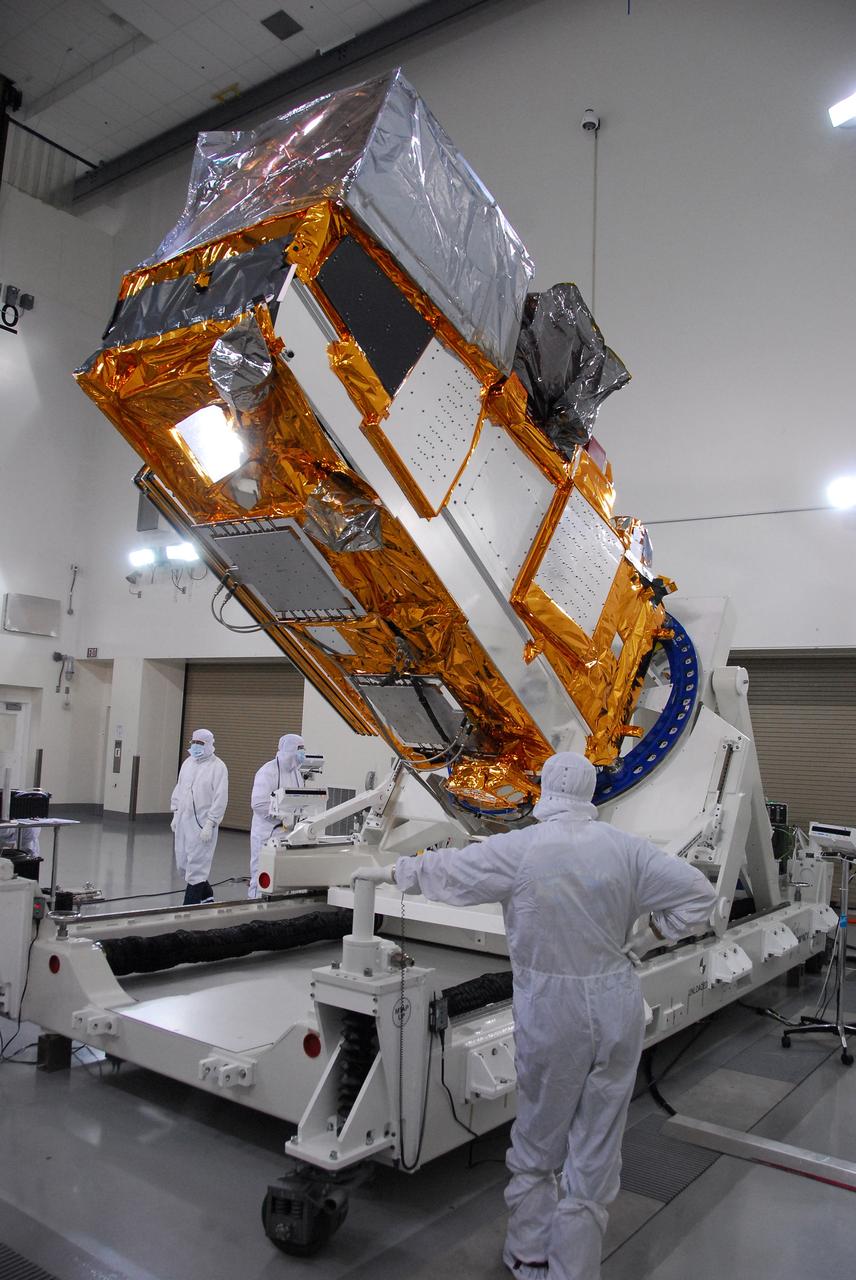
VANDENBERG AIR FORCE BASE, Calif. – In a clean room inside the Astrotech Payload Processing Facility at Vandenberg Air Force Base in California, Ball Aerospace technicians rotate NASA’s National Polar-orbiting Operational Environmental Satellite System Preparatory Project (NPP) into the vertical position during a solar array frangible bolt pre-load verification test. NPP represents a critical first step in building the next-generation of Earth-observing satellites. NPP will carry the first of the new sensors developed for this satellite fleet, now known as the Joint Polar Satellite System (JPSS), to be launched in 2016. NPP is the bridge between NASA’s Earth Observing System (EOS) satellites and the forthcoming series of JPSS satellites. The mission will test key technologies and instruments for the JPSS missions. NPP is targeted to launch Oct. 25 from Space Launch Complex-2 aboard a United Launch Alliance Delta II rocket. For more information, visit http://www.nasa.gov/NPP. Photo credit: NASA/30th Communications Squadron, VAFB
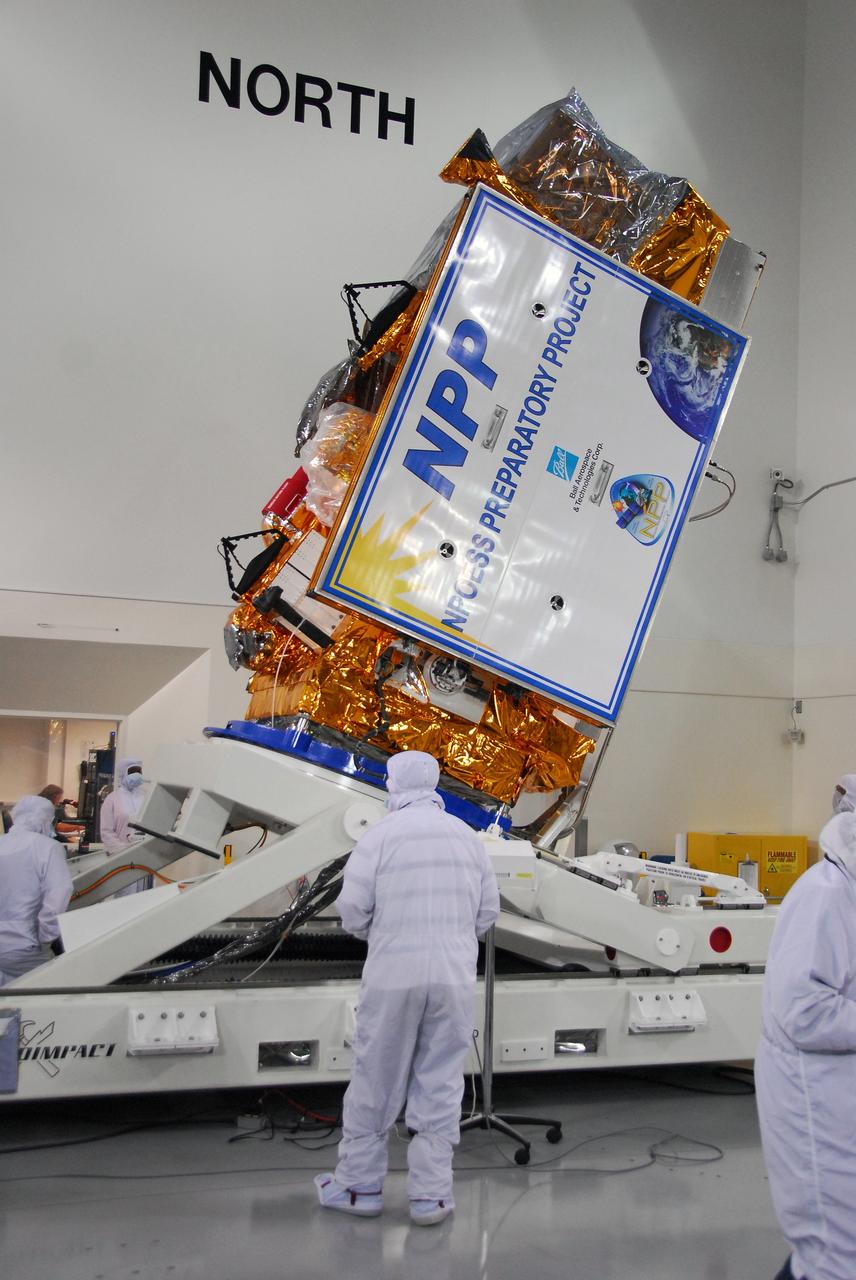
VANDENBERG AIR FORCE BASE, Calif. – In a clean room inside the Astrotech Payload Processing Facility at Vandenberg Air Force Base in California, Ball Aerospace technicians rotate NASA’s National Polar-orbiting Operational Environmental Satellite System Preparatory Project (NPP) into the vertical position during a solar array frangible bolt pre-load verification test. NPP represents a critical first step in building the next-generation of Earth-observing satellites. NPP will carry the first of the new sensors developed for this satellite fleet, now known as the Joint Polar Satellite System (JPSS), to be launched in 2016. NPP is the bridge between NASA’s Earth Observing System (EOS) satellites and the forthcoming series of JPSS satellites. The mission will test key technologies and instruments for the JPSS missions. NPP is targeted to launch Oct. 25 from Space Launch Complex-2 aboard a United Launch Alliance Delta II rocket. For more information, visit http://www.nasa.gov/NPP. Photo credit: NASA/30th Communications Squadron, VAFB
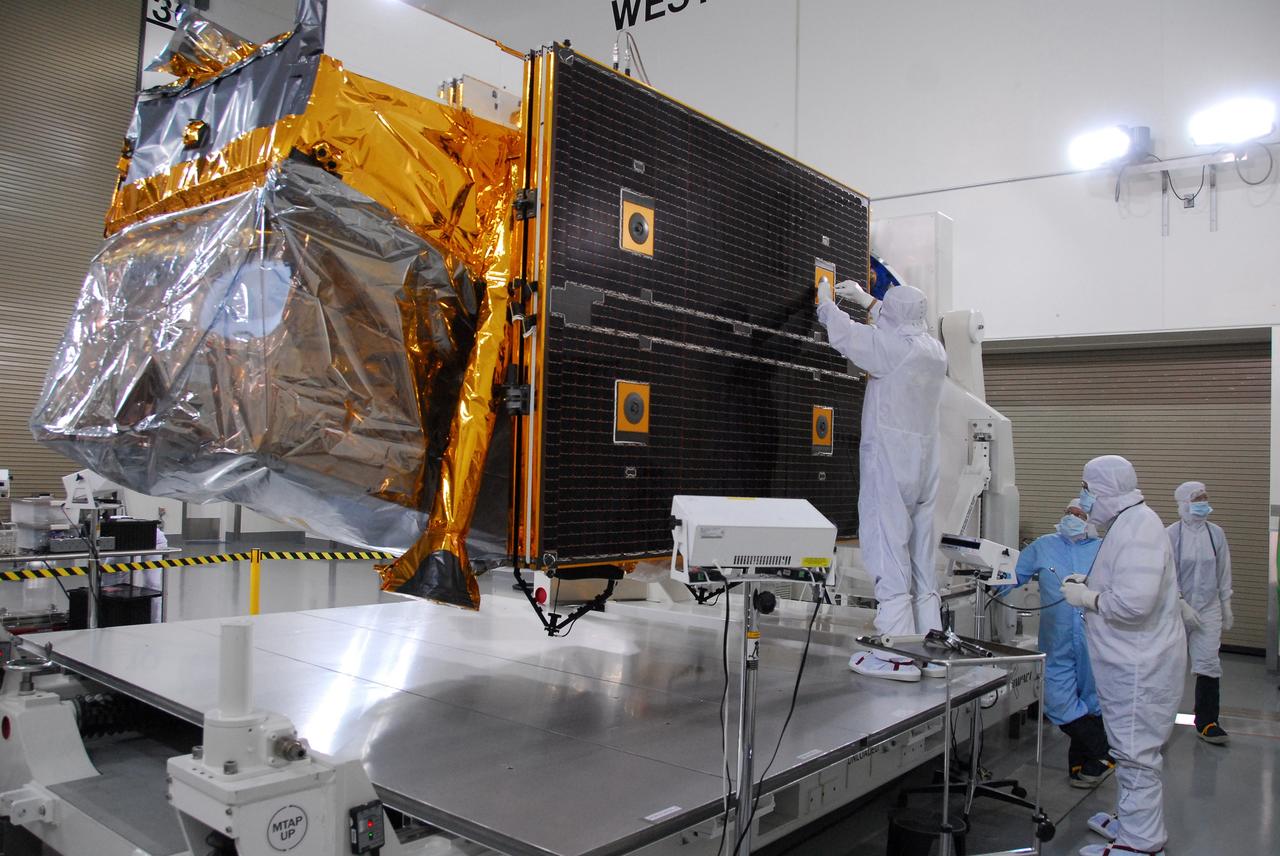
VANDENBERG AIR FORCE BASE, Calif. – In a clean room inside the Astrotech Payload Processing Facility at Vandenberg Air Force Base in California, Ball Aerospace technicians position NASA’s National Polar-orbiting Operational Environmental Satellite System Preparatory Project (NPP) for a solar array frangible bolt pre-load verification test. NPP represents a critical first step in building the next-generation of Earth-observing satellites. NPP will carry the first of the new sensors developed for this satellite fleet, now known as the Joint Polar Satellite System (JPSS), to be launched in 2016. NPP is the bridge between NASA’s Earth Observing System (EOS) satellites and the forthcoming series of JPSS satellites. The mission will test key technologies and instruments for the JPSS missions. NPP is targeted to launch Oct. 25 from Space Launch Complex-2 aboard a United Launch Alliance Delta II rocket. For more information, visit http://www.nasa.gov/NPP. Photo credit: NASA/30th Communications Squadron, VAFB
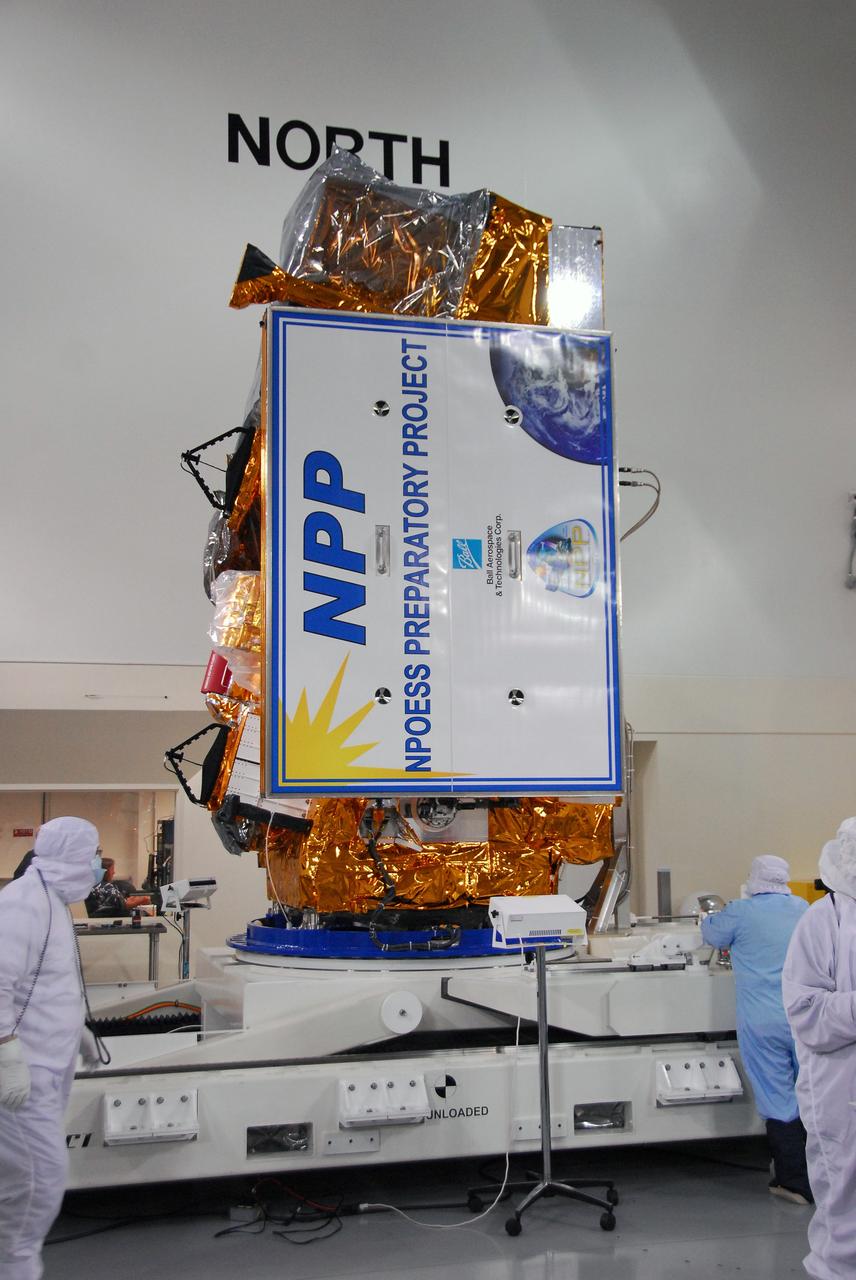
VANDENBERG AIR FORCE BASE, Calif. – In a clean room inside the Astrotech Payload Processing Facility at Vandenberg Air Force Base in California, Ball Aerospace technicians rotate NASA’s National Polar-orbiting Operational Environmental Satellite System Preparatory Project (NPP) into the vertical position during a solar array frangible bolt pre-load verification test. NPP represents a critical first step in building the next-generation of Earth-observing satellites. NPP will carry the first of the new sensors developed for this satellite fleet, now known as the Joint Polar Satellite System (JPSS), to be launched in 2016. NPP is the bridge between NASA’s Earth Observing System (EOS) satellites and the forthcoming series of JPSS satellites. The mission will test key technologies and instruments for the JPSS missions. NPP is targeted to launch Oct. 25 from Space Launch Complex-2 aboard a United Launch Alliance Delta II rocket. For more information, visit http://www.nasa.gov/NPP. Photo credit: NASA/30th Communications Squadron, VAFB
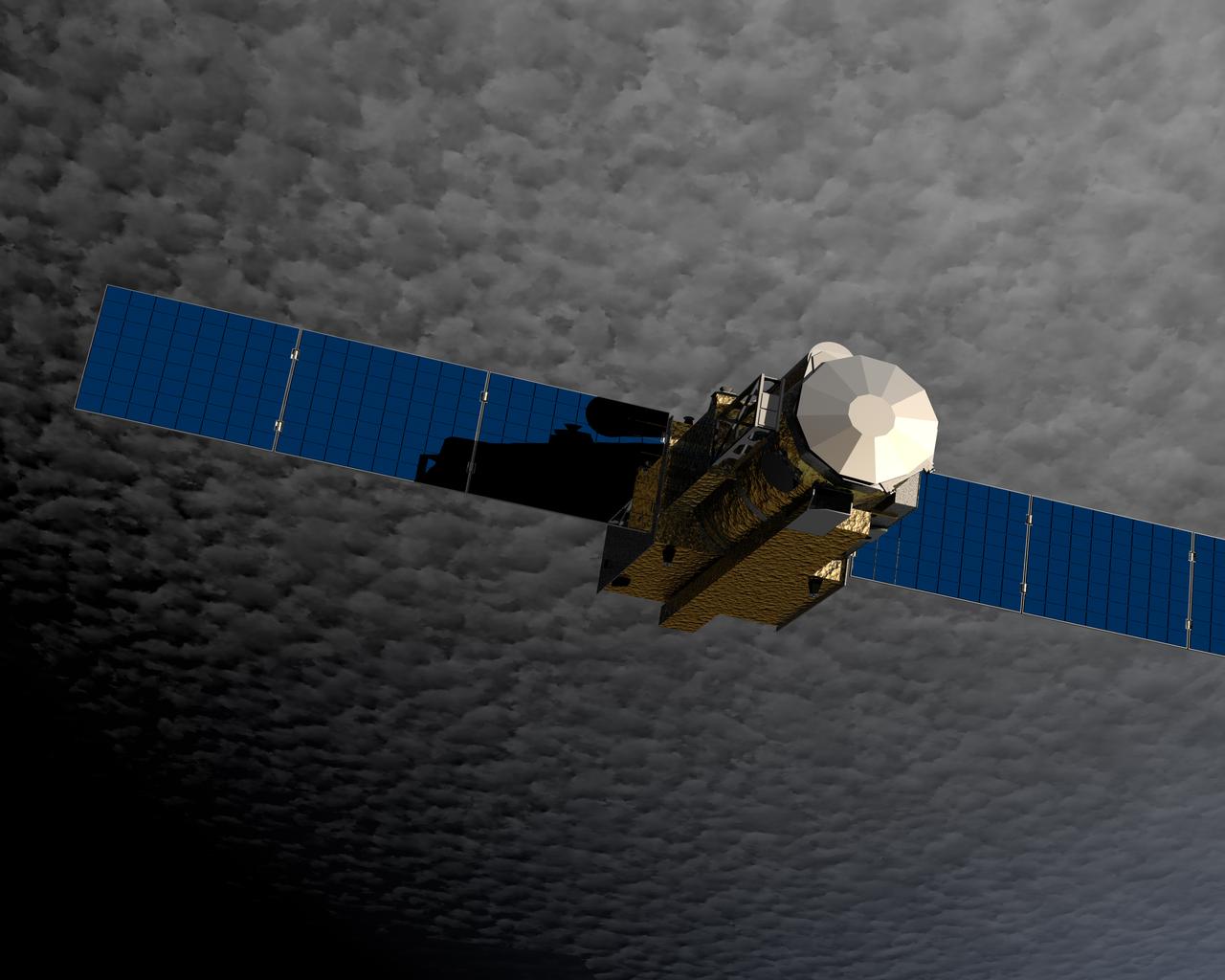
Hinode (Sunrise), formerly known as Solar-B before reaching orbit, was launched from the Uchinoura Space Center in Japan on September 23, 2006. Hinode was designed to probe into the Sun’s magnetic field to better understand the origin of solar disturbances which interfere with satellite communications, electrical power transmission grids, and the safety of astronauts traveling beyond the Earth’s magnetic field. Hinode is circling Earth in a polar orbit that places the instruments in continuous sunlight for nine months each year and allows data dumps to a high latitude European Space Agency (ESA) ground station every orbit. NASA and other science teams will support instrument operations and data collection from the spacecraft’s operation center at the Japanese Aerospace Exploration Agency’s (JAXA’s) Institute of Space and Aeronautical Science facility located in Tokyo. The Hinode spacecraft is a collaboration among space agencies of Japan, the United States, the United Kingdom, and Europe. The Marshall Space Flight Center (MSFC) managed development of three instruments comprising the spacecraft; the Solar Optical Telescope (SOT); the X-Ray Telescope (XRT); and the Extreme Ultraviolet (EUV) Imaging Spectrometer (EIS). Provided by the Multimedia support group at MSFC, this rendering illustrates the Solar-B Spacecraft in earth orbit with its solar panels completely extended.
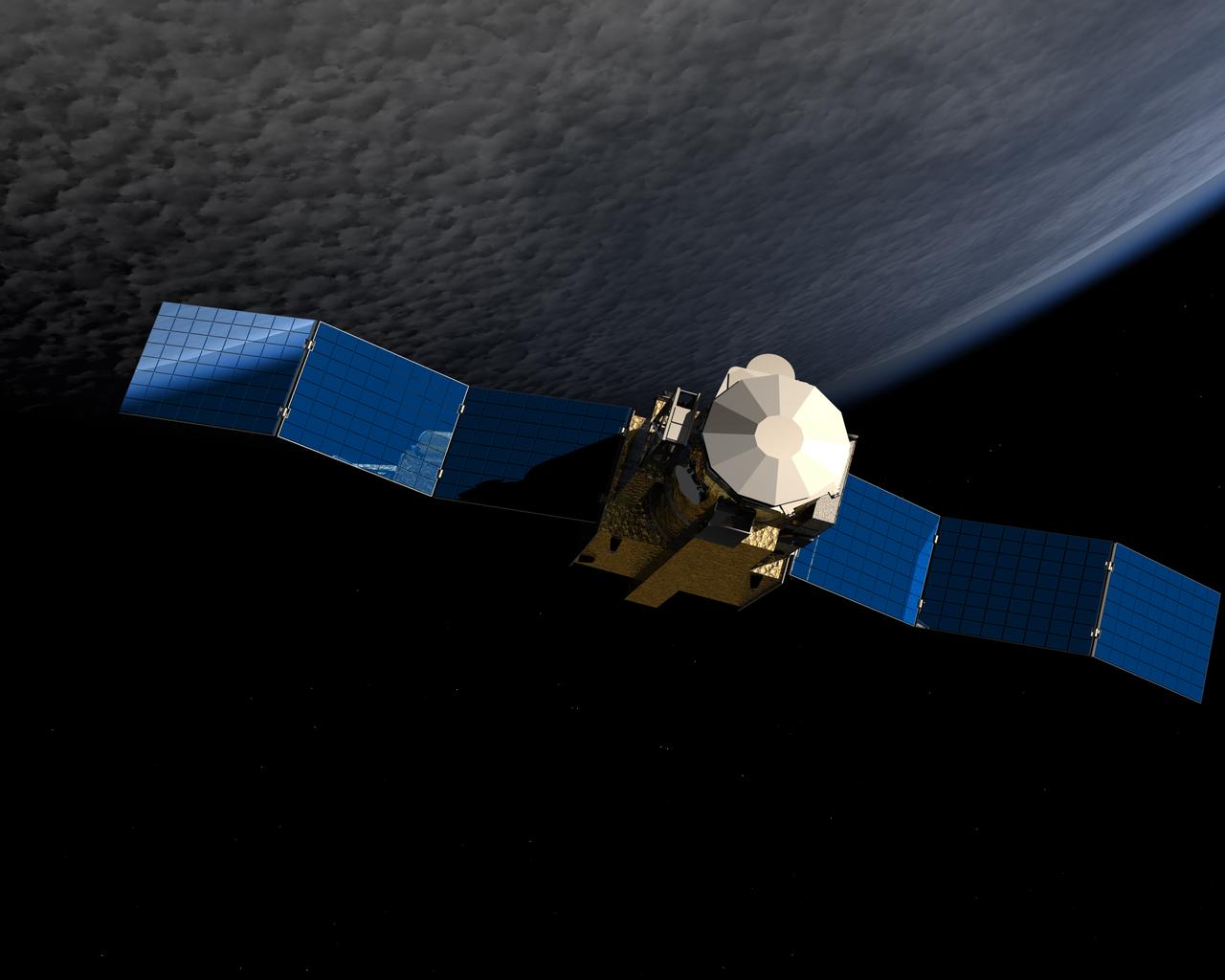
Hinode (Sunrise), formerly known as Solar-B before reaching orbit, was launched from the Uchinoura Space Center in Japan on September 23, 2006. Hinode was designed to probe into the Sun’s magnetic field to better understand the origin of solar disturbances which interfere with satellite communications, electrical power transmission grids, and the safety of astronauts traveling beyond the Earth’s magnetic field. Hinode is circling Earth in a polar orbit that places the instruments in continuous sunlight for nine months each year and allows data dumps to a high latitude European Space Agency (ESA) ground station every orbit. NASA and other science teams will support instrument operations and data collection from the spacecraft’s operation center at the Japanese Aerospace Exploration Agency’s (JAXA’s) Institute of Space and Aeronautical Science facility located in Tokyo. The Hinode spacecraft is a collaboration among space agencies of Japan, the United States, the United Kingdom, and Europe. The Marshall Space Flight Center (MSFC) managed development of three instruments comprising the spacecraft; the Solar Optical Telescope (SOT); the X-Ray Telescope (XRT); and the Extreme Ultraviolet (EUV) Imaging Spectrometer (EIS). Provided by the Multimedia support group at MSFC, this rendering illustrates the Solar-B Spacecraft in earth orbit with its solar panels partially extended.

Hinode (Sunrise), formerly known as Solar-B before reaching orbit, was launched from the Uchinoura Space Center in Japan on September 23, 2006. Hinode was designed to probe into the Sun’s magnetic field to better understand the origin of solar disturbances which interfere with satellite communications, electrical power transmission grids, and the safety of astronauts traveling beyond the Earth’s magnetic field. Hinode is circling Earth in a polar orbit that places the instruments in continuous sunlight for nine months each year and allows data dumps to a high latitude European Space Agency (ESA) ground station every orbit. NASA and other science teams will support instrument operations and data collection from the spacecraft’s operation center at the Japanese Aerospace Exploration Agency’s (JAXA’s) Institute of Space and Aeronautical Science facility located in Tokyo. The Hinode spacecraft is a collaboration among space agencies of Japan, the United States, the United Kingdom, and Europe. The Marshall Space Flight Center (MSFC) managed development of three instruments comprising the spacecraft; the Solar Optical Telescope (SOT); the X-Ray Telescope (XRT); and the Extreme Ultraviolet (EUV) Imaging Spectrometer (EIS). This image of a sunspot, taken by Hinode, is a prime example of what the spacecraft can offer.
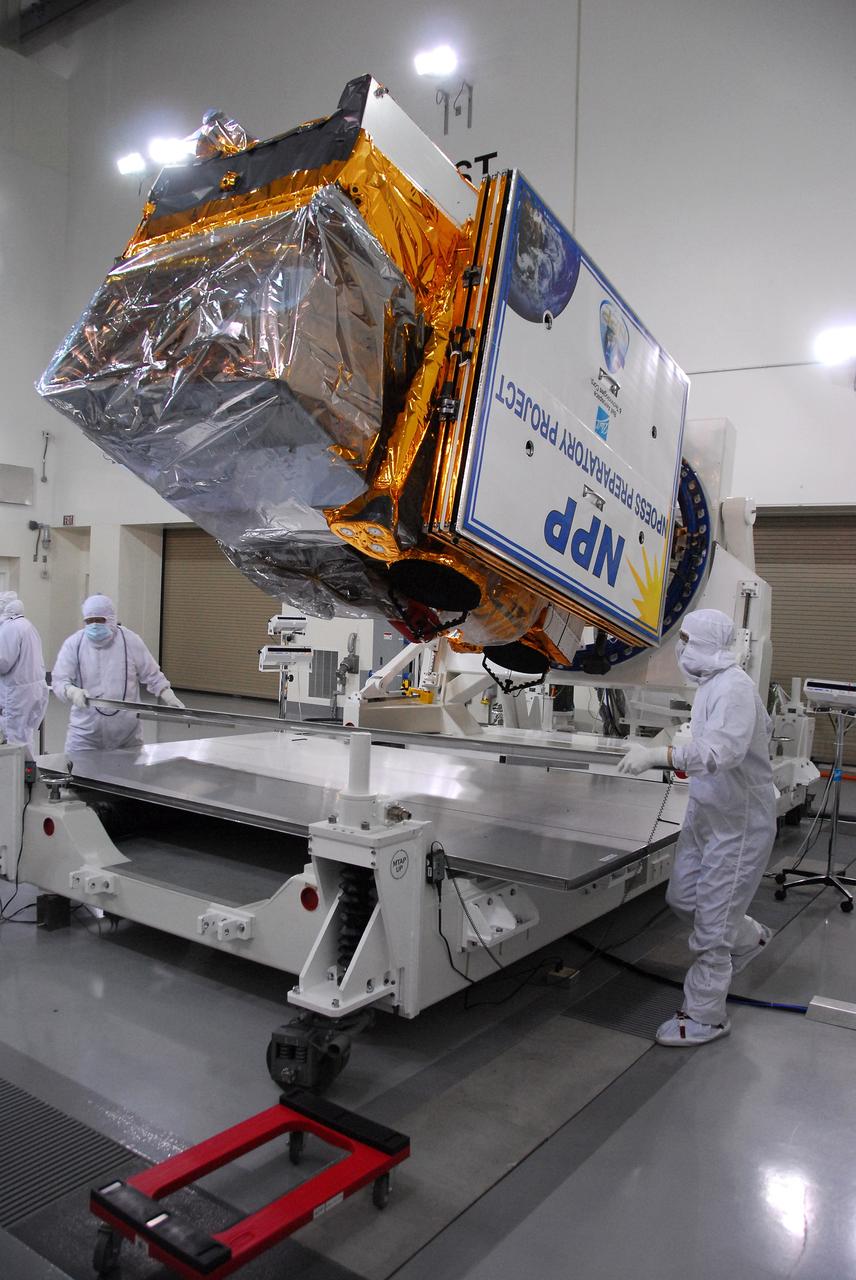
VANDENBERG AIR FORCE BASE, Calif. – In a clean room inside the Astrotech Payload Processing Facility at Vandenberg Air Force Base in California, Ball Aerospace technicians position NASA’s National Polar-orbiting Operational Environmental Satellite System Preparatory Project (NPP) for a solar array frangible bolt pre-load verification test. NPP represents a critical first step in building the next-generation of Earth-observing satellites. NPP will carry the first of the new sensors developed for this satellite fleet, now known as the Joint Polar Satellite System (JPSS), to be launched in 2016. NPP is the bridge between NASA’s Earth Observing System (EOS) satellites and the forthcoming series of JPSS satellites. The mission will test key technologies and instruments for the JPSS missions. NPP is targeted to launch Oct. 25 from Space Launch Complex-2 aboard a United Launch Alliance Delta II rocket. For more information, visit http://www.nasa.gov/NPP. Photo credit: NASA/30th Communications Squadron, VAFB
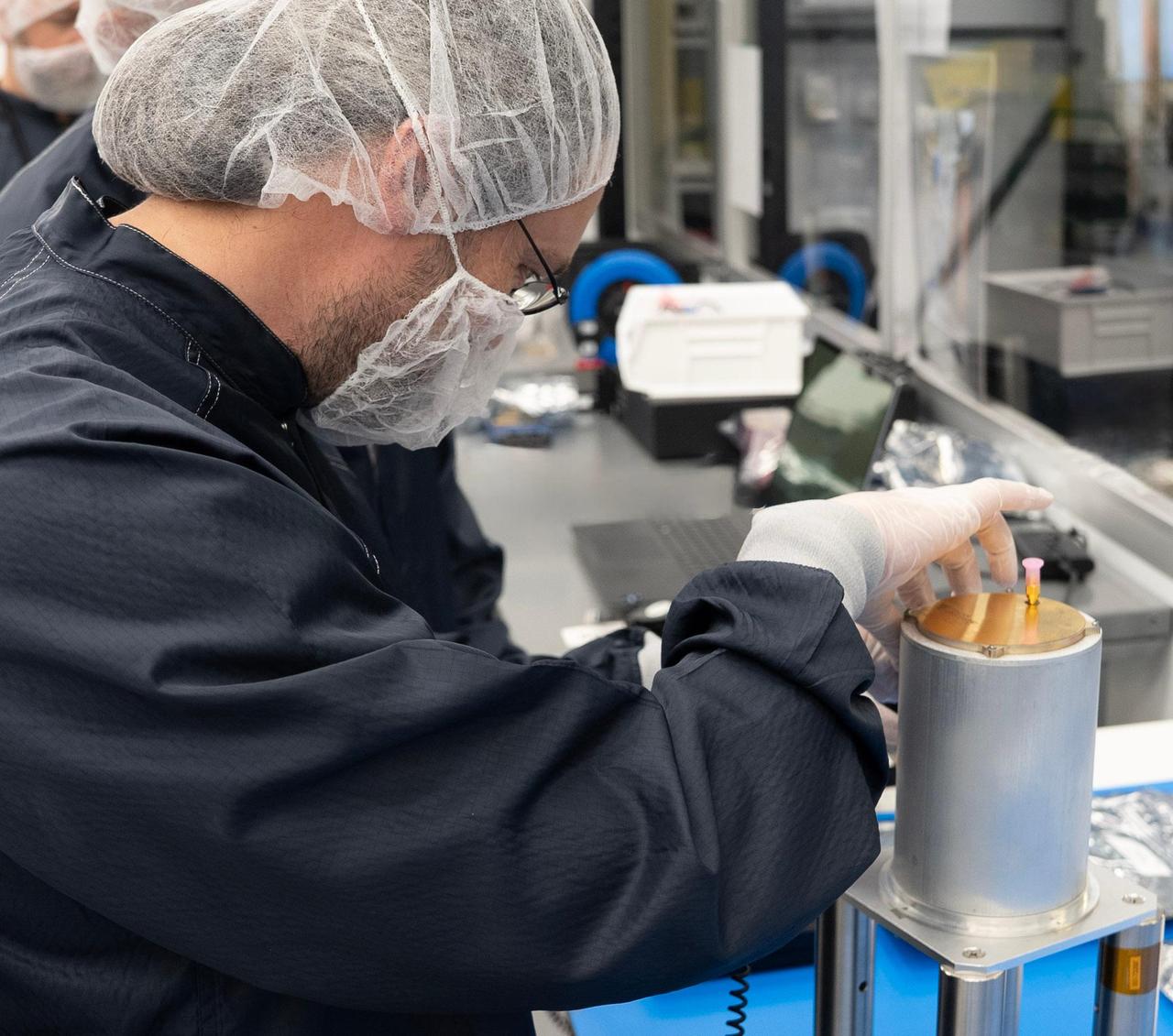
Engineer Emmanuel Decrossas of NASA's Jet Propulsion Laboratory in Southern California makes an adjustment to an antenna's connector, part of a NASA telecommunications payload called User Terminal, at Firefly Aerospace's facility in Cedar Park, Texas, in August 2025. Figure A (https://photojournal.jpl.nasa.gov/figures/PIA26596_figA.jpg) shows members of the team from JPL and NASA (dark blue) and Firefly (white) with the User Terminal antenna, radio, and other components on the bench behind them. Managed by JPL, the User Terminal will test a new, low-cost lunar communications system that future missions to the Moon's far side could use to transfer data to and from Earth via lunar relay satellite. The User Terminal payload will be installed atop Firefly's Blue Ghost Mission 2 lunar lander, which is slated to launch to the Moon's far side in 2026 under NASA's CLPS (Commercial Lunar Payload Services) initiative. NASA's Apollo missions brought large and powerful telecommunications systems to the lunar near-side surface to communicate directly with Earth. But spacecraft on the far side will not have that option because only the near side of the Moon is visible to Earth. Sending messages between the Moon and Earth via a relay orbiter enables communication with the lunar far side and improves it at the Moon's poles. The User Terminal will for the first time test such a setup for NASA by using a compact, lightweight software defined radio, antenna, and related hardware to communicate with a satellite that Blue Ghost Mission 2 is delivering to lunar orbit: ESA's (the European Space Agency's) Lunar Pathfinder. The User Terminal radio and antenna installed on the Blue Ghost lander will be used to commission Lunar Pathfinder, sending test data back and forth. After the lander ceases operations as planned at the end of a single lunar day (about 14 Earth days), a separate User Terminal radio and antenna installed on LuSEE-Night – another payload on the lander – will send LuSEE-Night's data to Lunar Pathfinder, which will relay the information to a commercial network of ground stations on Earth. LuSEE-Night is a radio telescope that expected to operate for at least 1½ years; it is a joint effort by NASA, the U.S. Department of Energy, and University of California, Berkeley's Space Sciences Laboratory. Additionally, User Terminal will be able to communicate with another satellite that's being delivered to lunar orbit by Blue Ghost Mission 2: Firefly's own Elytra Dark orbital vehicle. The hardware on the lander is only part of the User Terminal project, which was also designed to implement a new S-band two-way protocol, or standard, for short-range space communications between entities on the lunar surface (such as rovers and landers) and lunar orbiters, enabling reliable data transfer between them. The standard is a new version of a space communications protocol called Proximity-1 that was initially developed more than two decades ago for use at Mars by an international standard body called the Consultative Committee for Space Data Systems (CCSDS), of which NASA is a member agency. The User Terminal team made recommendations to CCSDS on the development of the new lunar S-band standard, which was specified in 2024. The new standard will enable lunar orbiters and surface spacecraft from various entities – NASA and other civil space agencies as well as industry and academia – to communicate with each other, a concept known as interoperability. At Mars, NASA rovers communicate with various Red Planet orbiters using the Ultra-High Frequency (UHF) radio band version of the Proximity-1 standard. On the Moon's far side, use of UHF is reserved for radio astronomy science; so a new lunar standard was needed using a different frequency range, S-band, as were more efficient modulation and coding schemes to better fit the available frequency spectrum specified by the new standard. User Terminal is funded by NASA's Exploration Science Strategy and Integration Office, part of the agency's Science Mission Directorate, which manages the CLPS initiative. JPL manages the project and supported development of the new S-band radio standard and the payload in coordination with Vulcan Wireless in Carlsbad, California, which built the radio. Caltech in Pasadena manages JPL for NASA. https://photojournal.jpl.nasa.gov/catalog/PIA26596
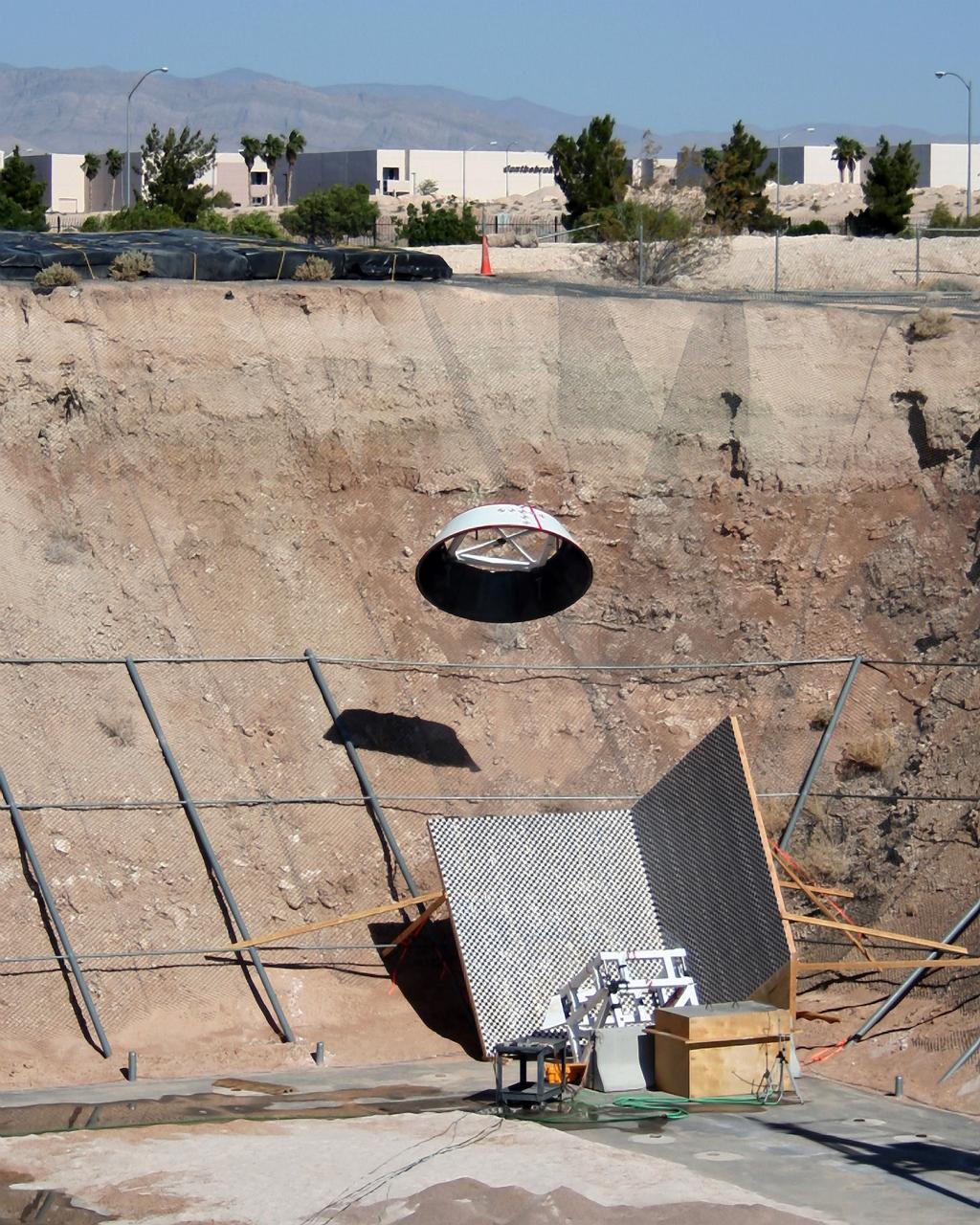
LAS VEGAS -- The Boeing Company tests the forward heat shield FHS jettison system of its CST-100 spacecraft at the Bigelow Aerospace facility in Las Vegas as part of an agreement with NASA's Commercial Crew Program CCP during Commercial Crew Development Round 2 CCDev2) activities. The FHS will protect the spacecraft's parachutes, rendezvous-and-docking sensor packages, and docking mechanism during ascent and re-entry. During a mission to low Earth orbit, the shield will be jettisoned after re-entry heating, allowing the spacecraft's air bags to deploy for a safe landing. In 2011, NASA selected Boeing for CCDev2 to mature the design and development of a crew transportation system with the overall goal of accelerating a United States-led capability to the International Space Station. The goal of CCP is to drive down the cost of space travel as well as open up space to more people than ever before by balancing industry’s own innovative capabilities with NASA's 50 years of human spaceflight experience. Six other aerospace companies also were selected to mature launch vehicle and spacecraft designs under CCDev2, including Alliant Techsystems Inc. ATK, Excalibur Almaz Inc., Blue Origin, Sierra Nevada Corp. SNC, Space Exploration Technologies SpaceX, and United Launch Alliance ULA. For more information, visit www.nasa.gov/commercialcrew. Image credit: Boeing The Ground Systems Development and Operations Program is developing the necessary ground systems, infrastructure and operational approaches required to safely process, assemble, transport and launch the next generation of rockets and spacecraft in support of NASA’s exploration objectives. Future work also will replace the antiquated communications, power and vehicle access resources with modern efficient systems. Some of the utilities and systems slated for replacement have been used since the VAB opened in 1965. For more information, visit http://www.nasa.gov/exploration/systems/ground/index.html Photo credit: Boeing
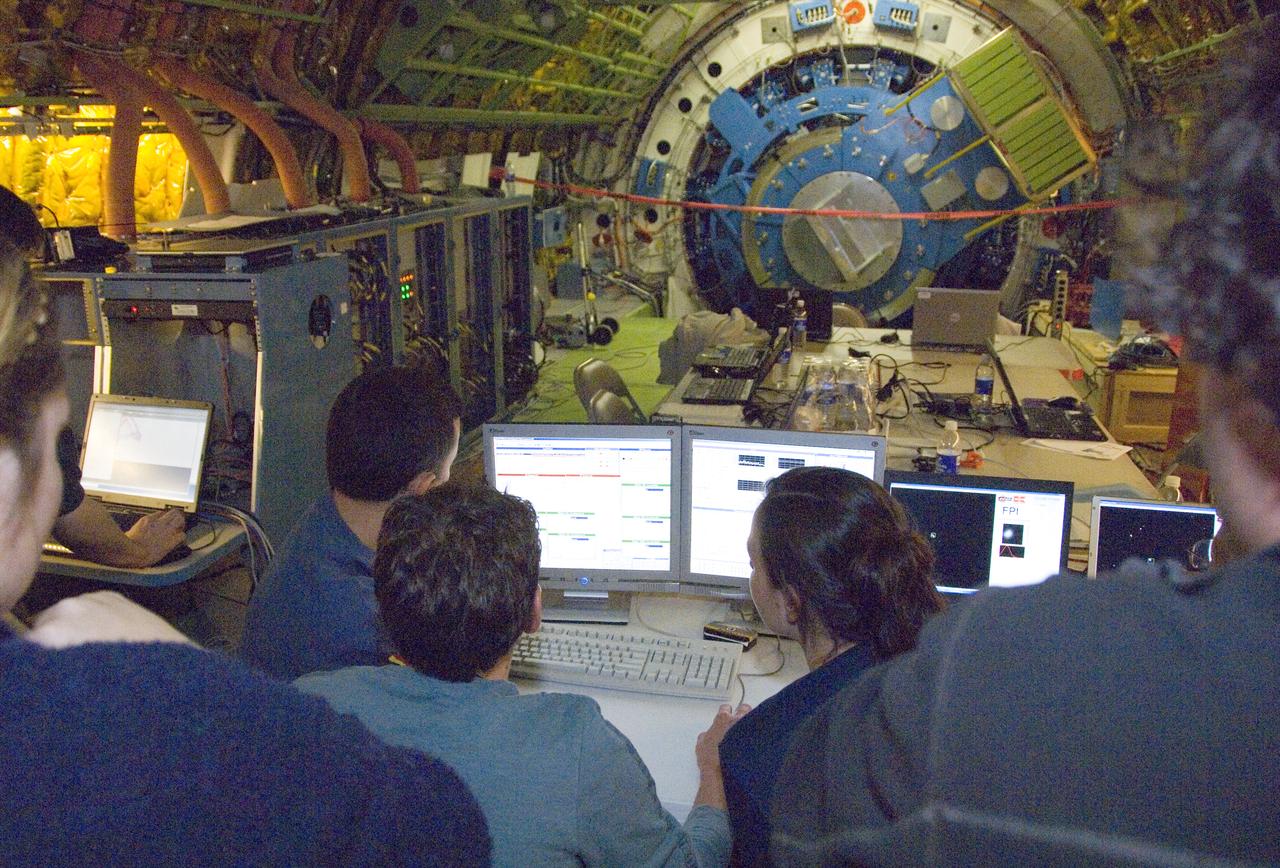
Scientists carefully examine data being received during nighttime line operations testing of the SOFIA airborne observatory's 2.5-meter infrared telescope.
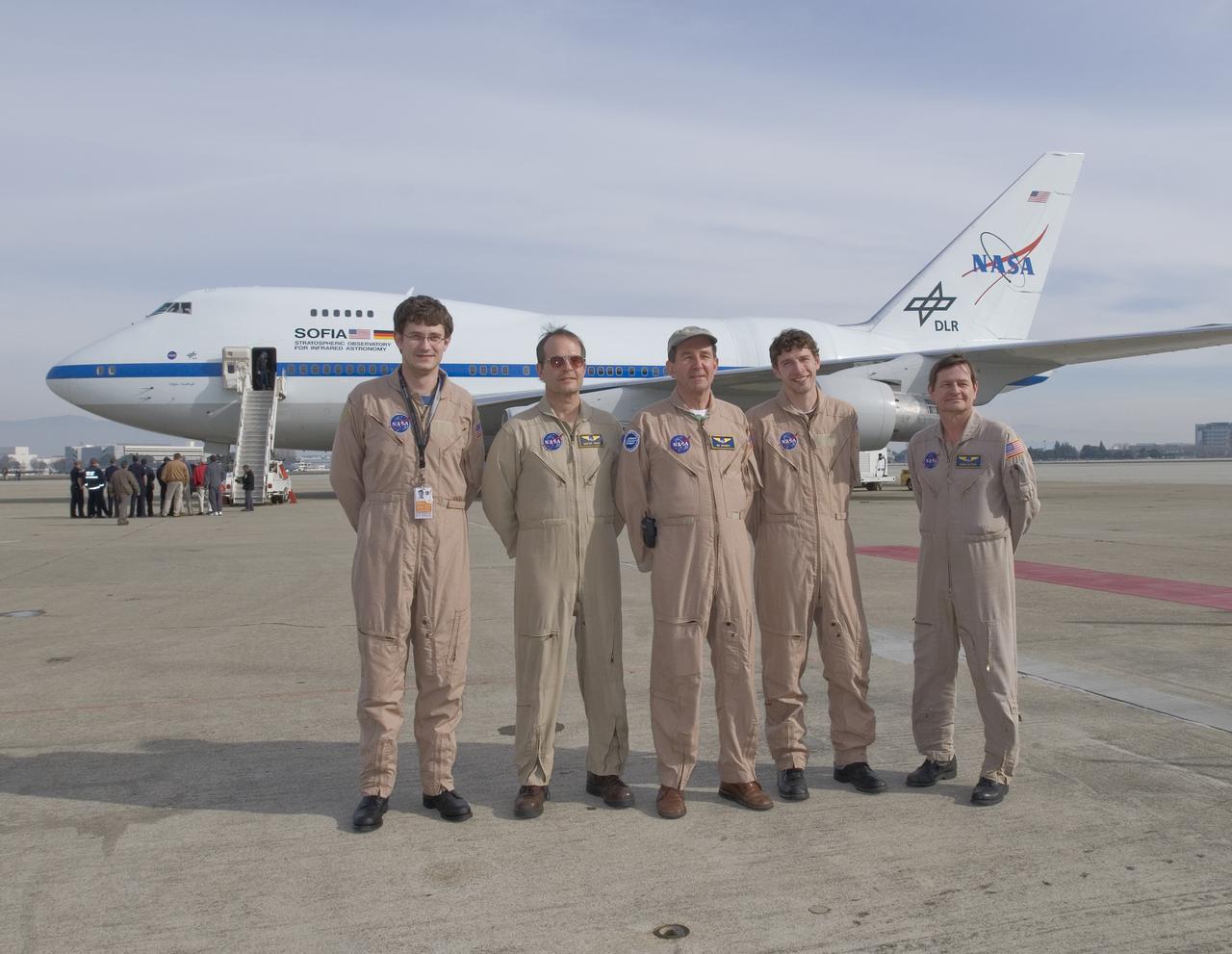
The flight crew of NASA's SOFIA airborne observatory and DLR telescope engineers who operated the system during its visit to NASA Ames Research Center on Jan. 14, 2008 included (from left), DLR telescope engineer Ulli Lampater, flight engineer Marty Trout, pilot Bill Brockett, telescope engineer Andres Reinacher and pilot Frank Batteas.
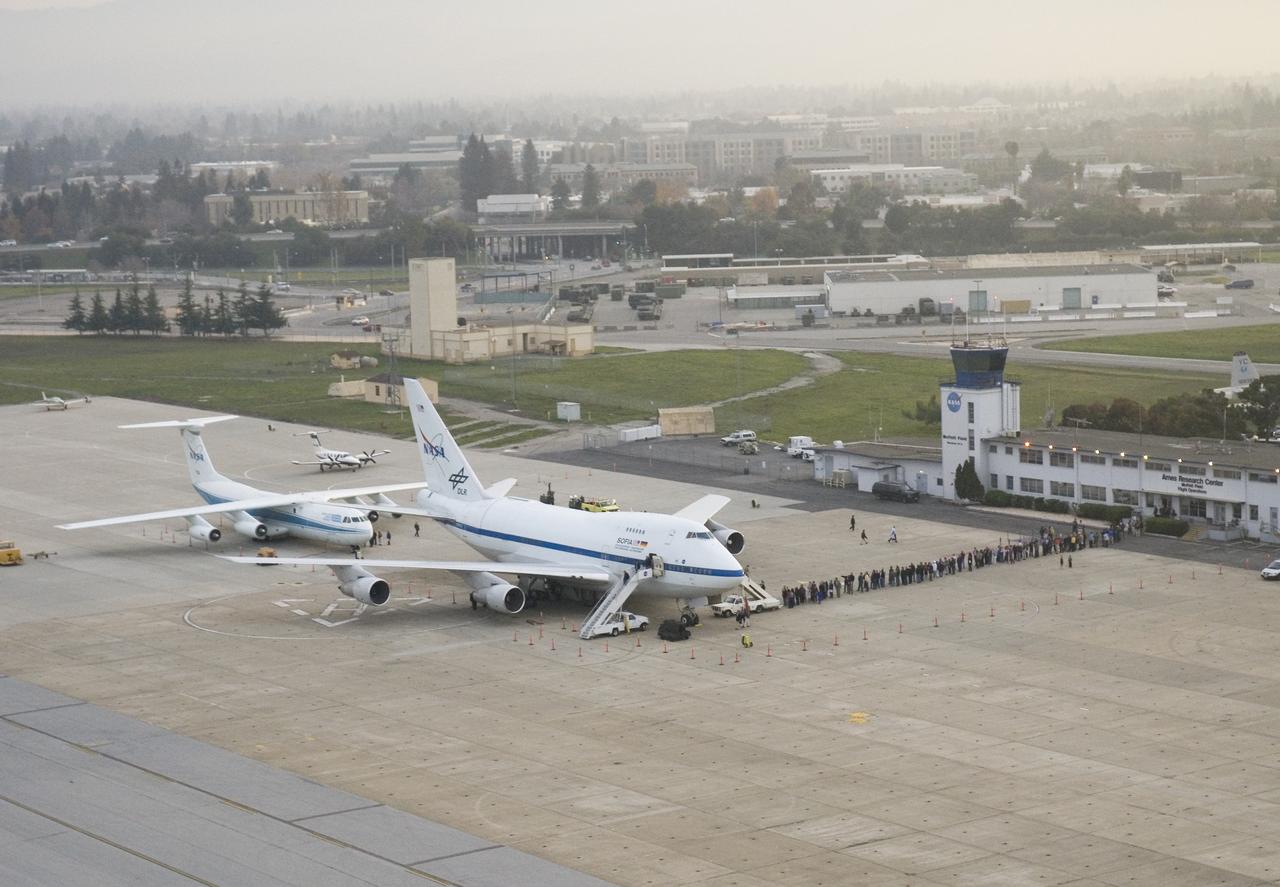
NASA's new SOFIA observatory shared the ramp with its predecessor, the now-retired Kuiper Airborne Observatory, during open house at NASA Ames Research Center.
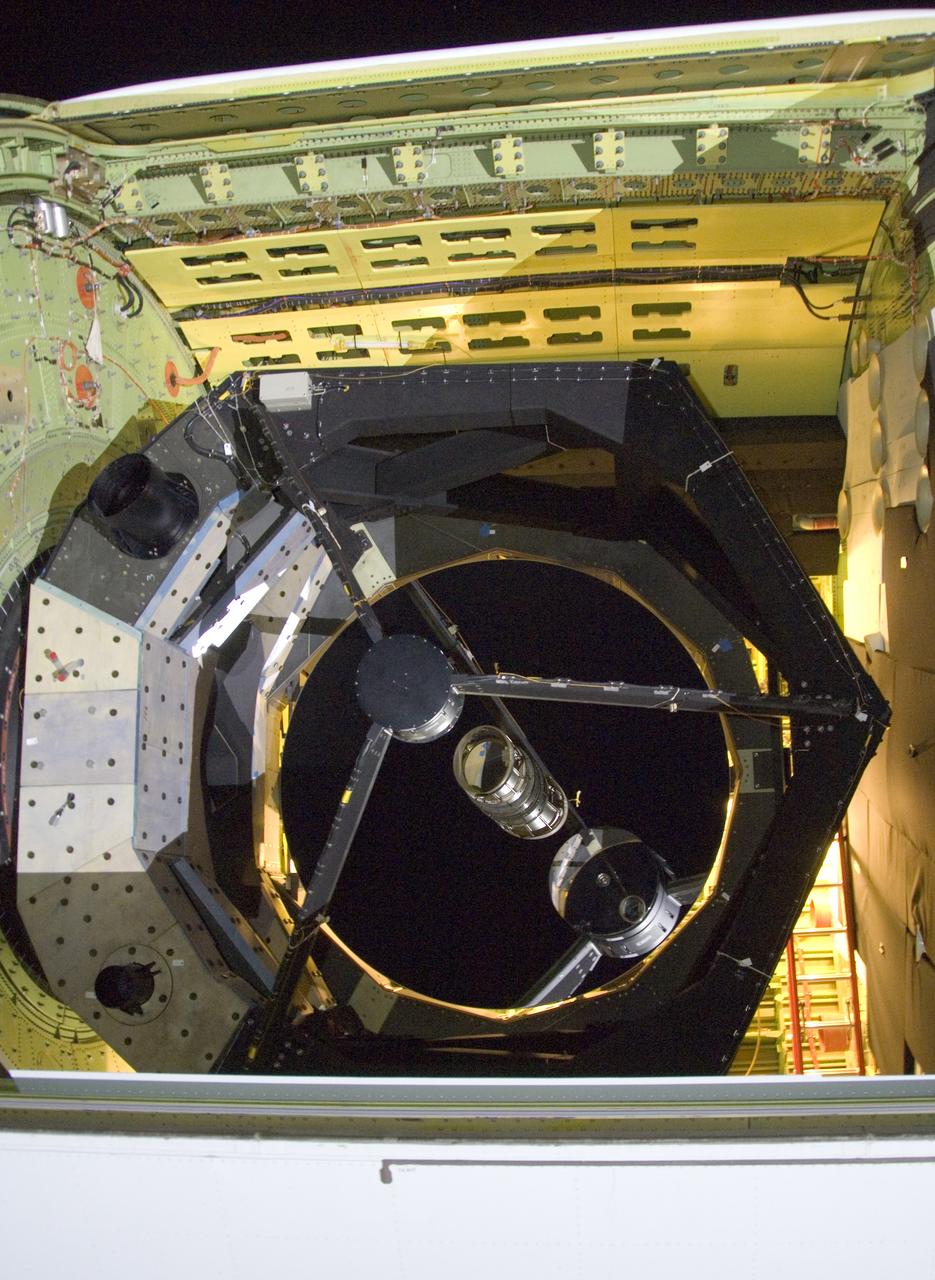
he SOFIA airborne observatory's 2.5-meter infrared telescope peers out from its cavity in the SOFIA rear fuselage during nighttime line operations testing.

NASA's Stratospheric Observatory for Infrared Astronomy touches down at Moffett Field, Calif., for its first visit to NASA Ames Research Center, Jan. 14, 2008.
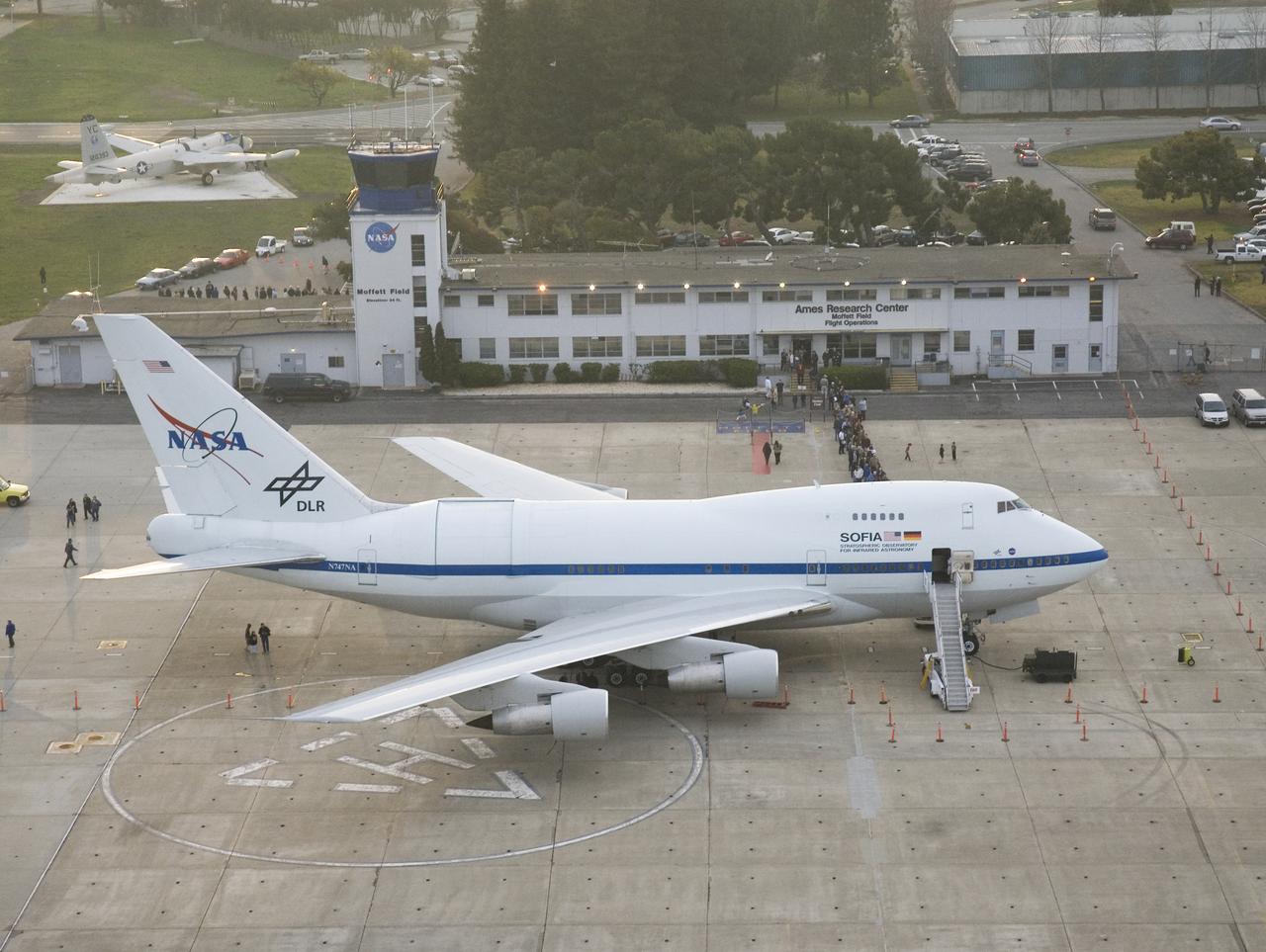
Thousands of NASA Ames employees and their families toured NASA's SOFIA flying observatory during its first visit to NASA Ames Research Center, Jan. 14, 2008.
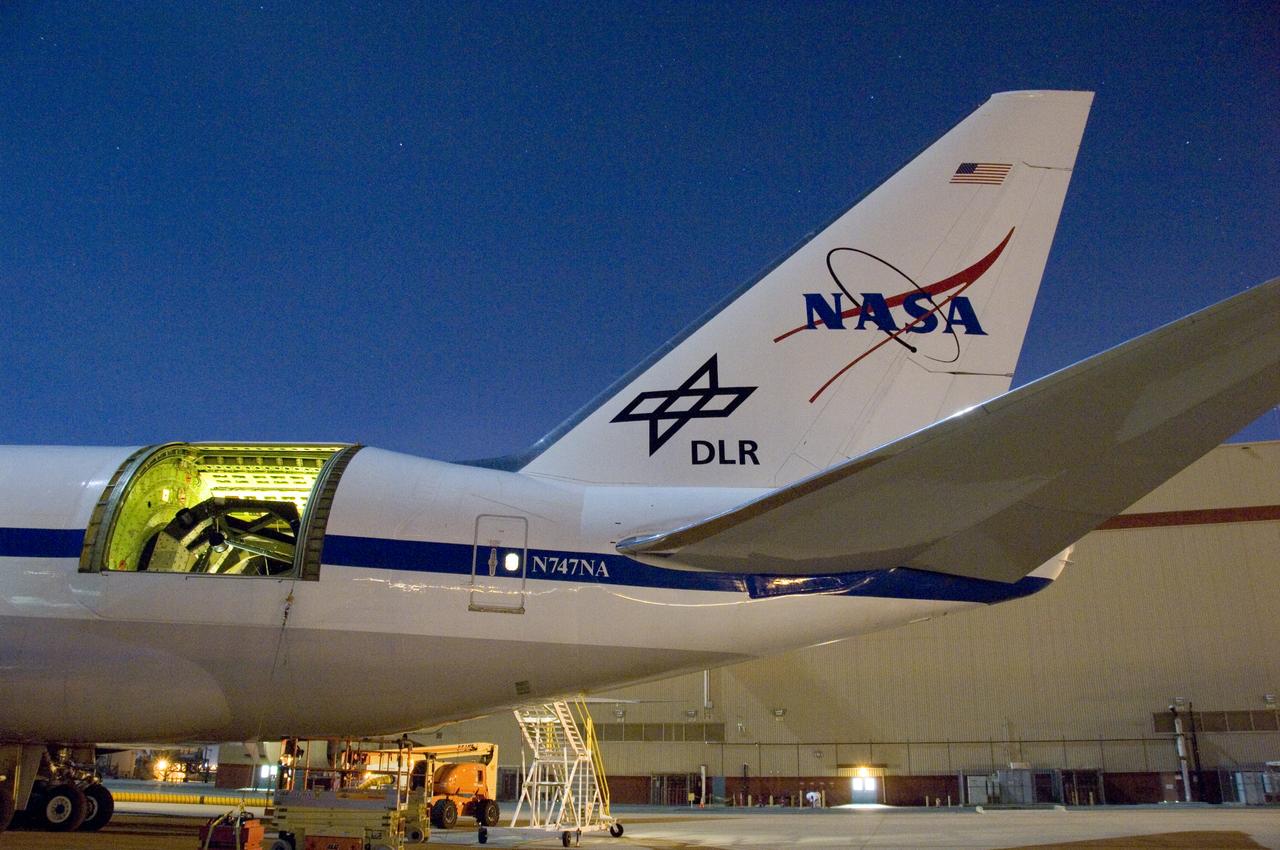
The SOFIA airborne observatory's 2.5-meter infrared telescope peers out from its cavity in the SOFIA rear fuselage during nighttime line operations testing.
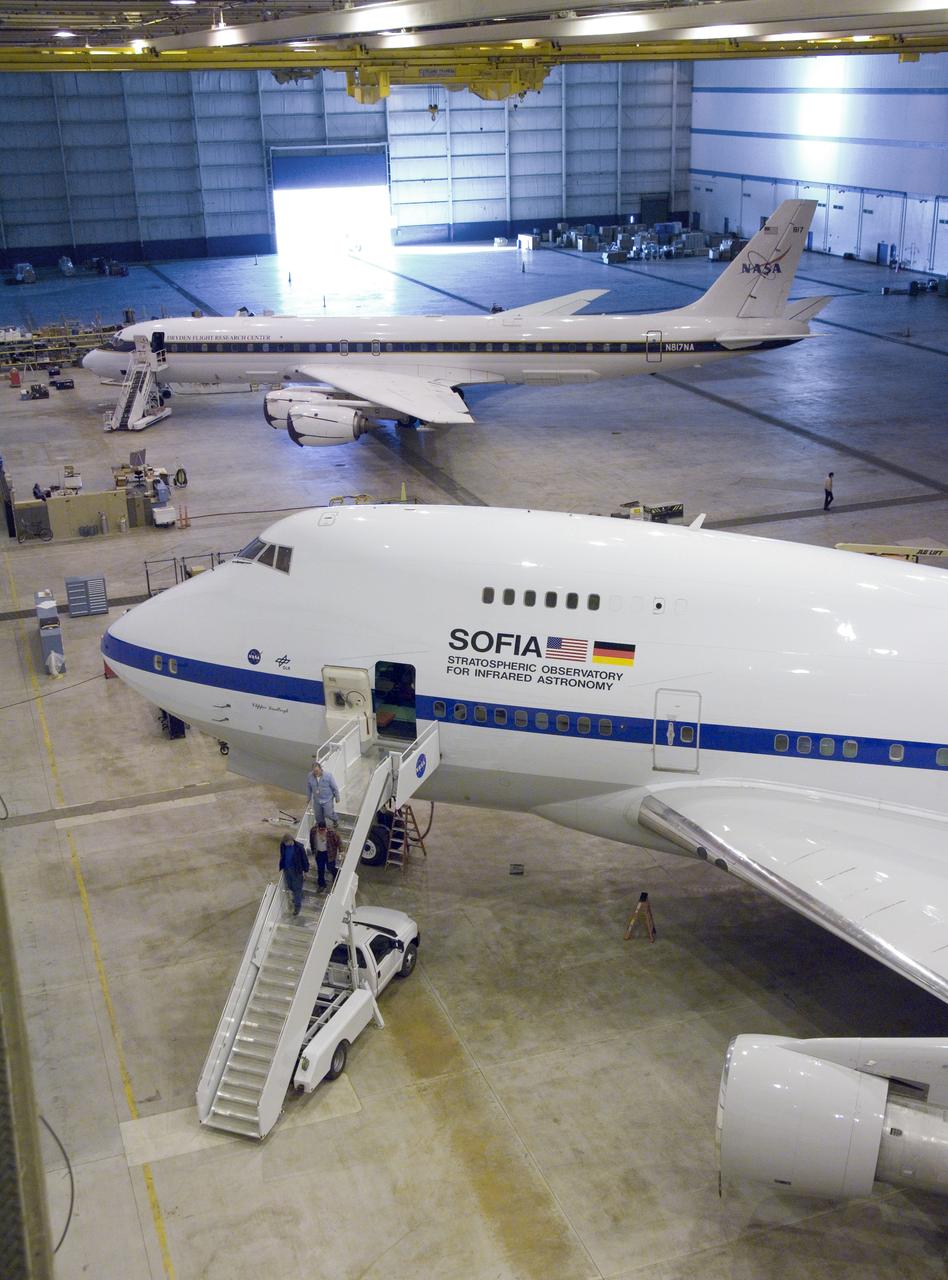
NASA'S SOFIA infrared observatory 747SP (front) and DC-8 flying laboratory (rear) are now housed at the Dryden Aircraft Operations Facility in Palmdale, Calif.
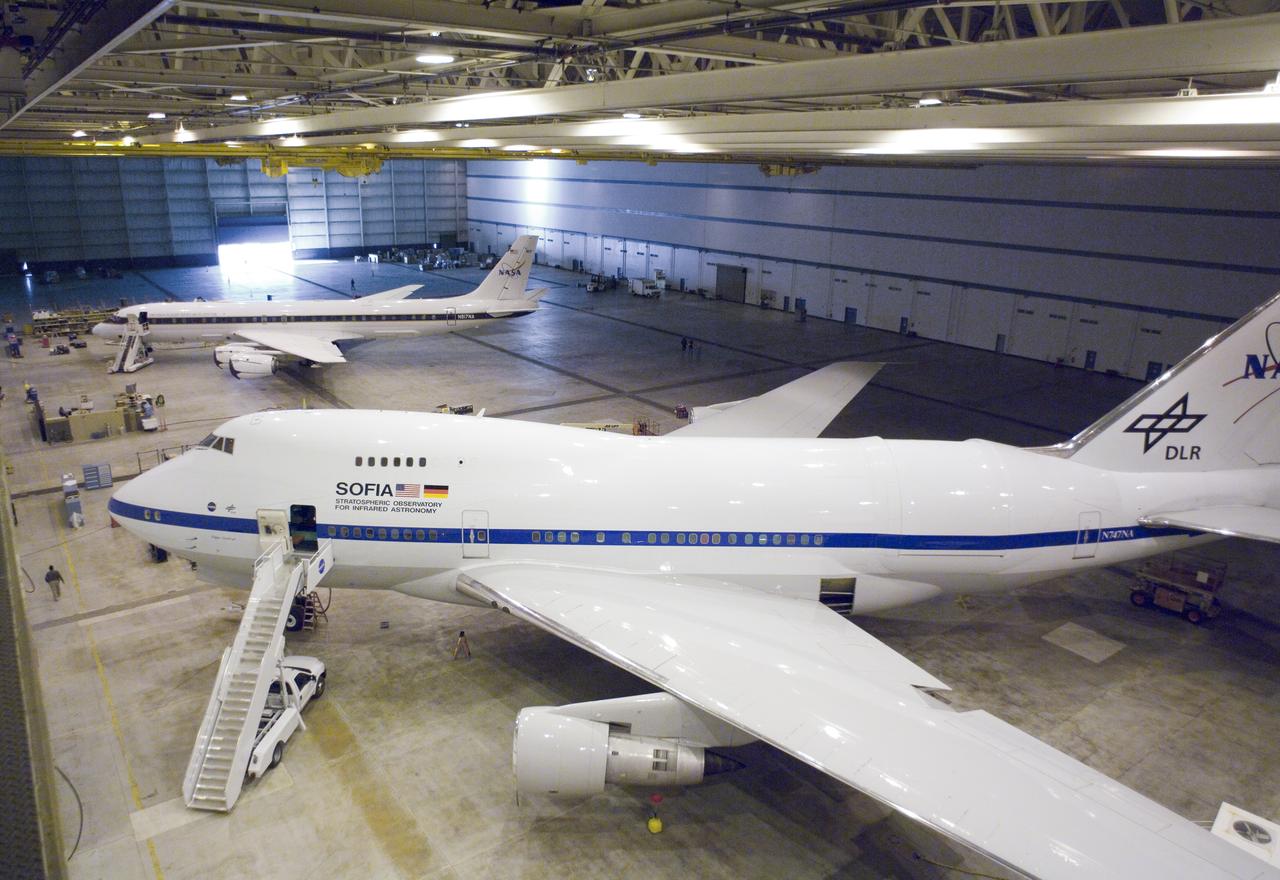
The Dryden Aircraft Operations Facility in Palmdale, Calif., is now home to two large science aircraft, NASA's SOFIA observatory and a DC-8 science laboratory.
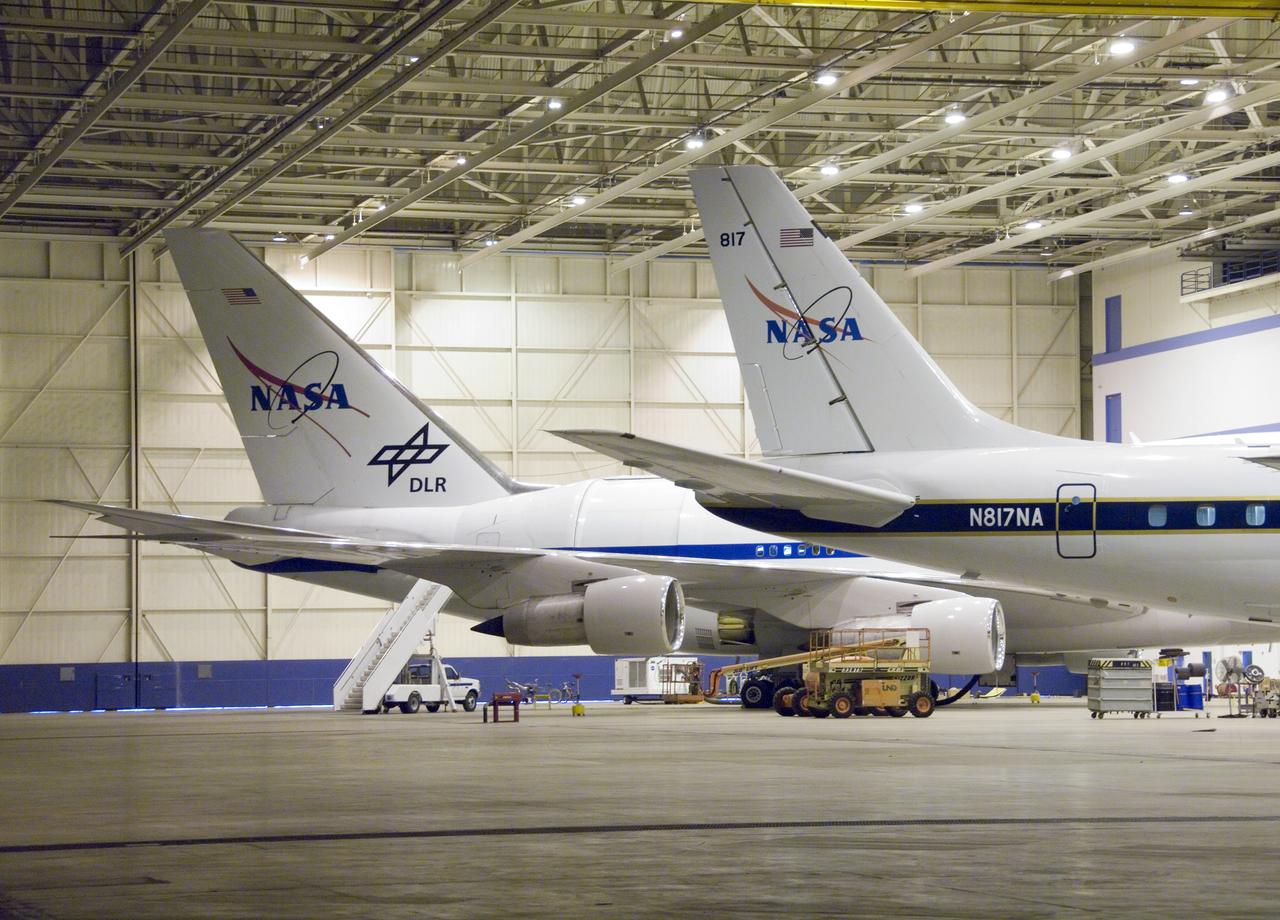
Two large science aircraft, a DC-8 flying laboratory and the SOFIA 747SP, are based at NASA's Dryden Aircraft Operations Facility in Palmdale, Calif.

NASA's SOFIA infrared observatory 747SP is shadowed by a NASA F/A-18 during a flyby at its new home, the Dryden Aircraft Operations Facility in Palmdale, Calif.
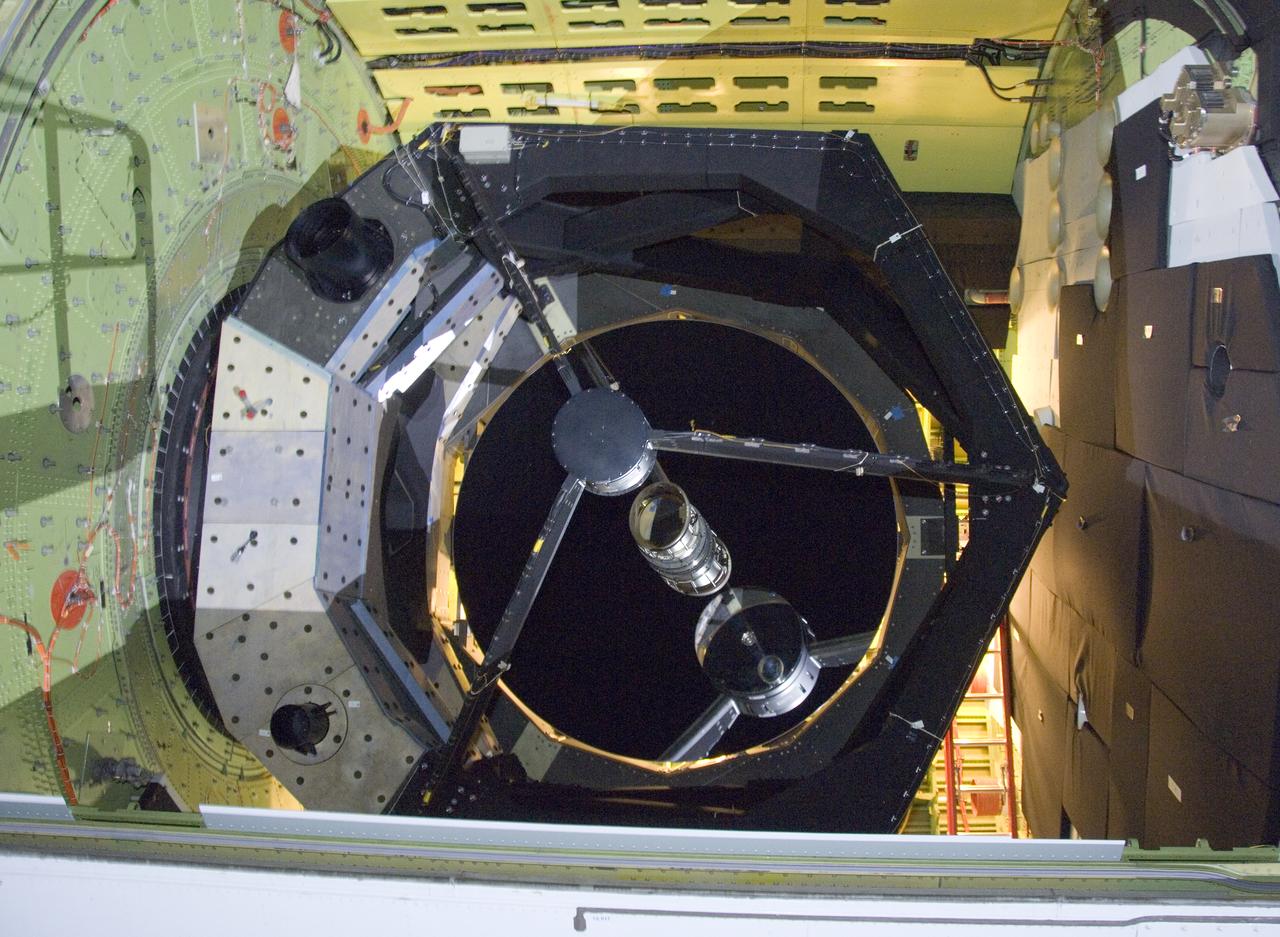
The 2.5-meter infrared telescope peers out from its cavity in the SOFIA airborne observatory during nighttime line operations testing at Palmdale, Calif.
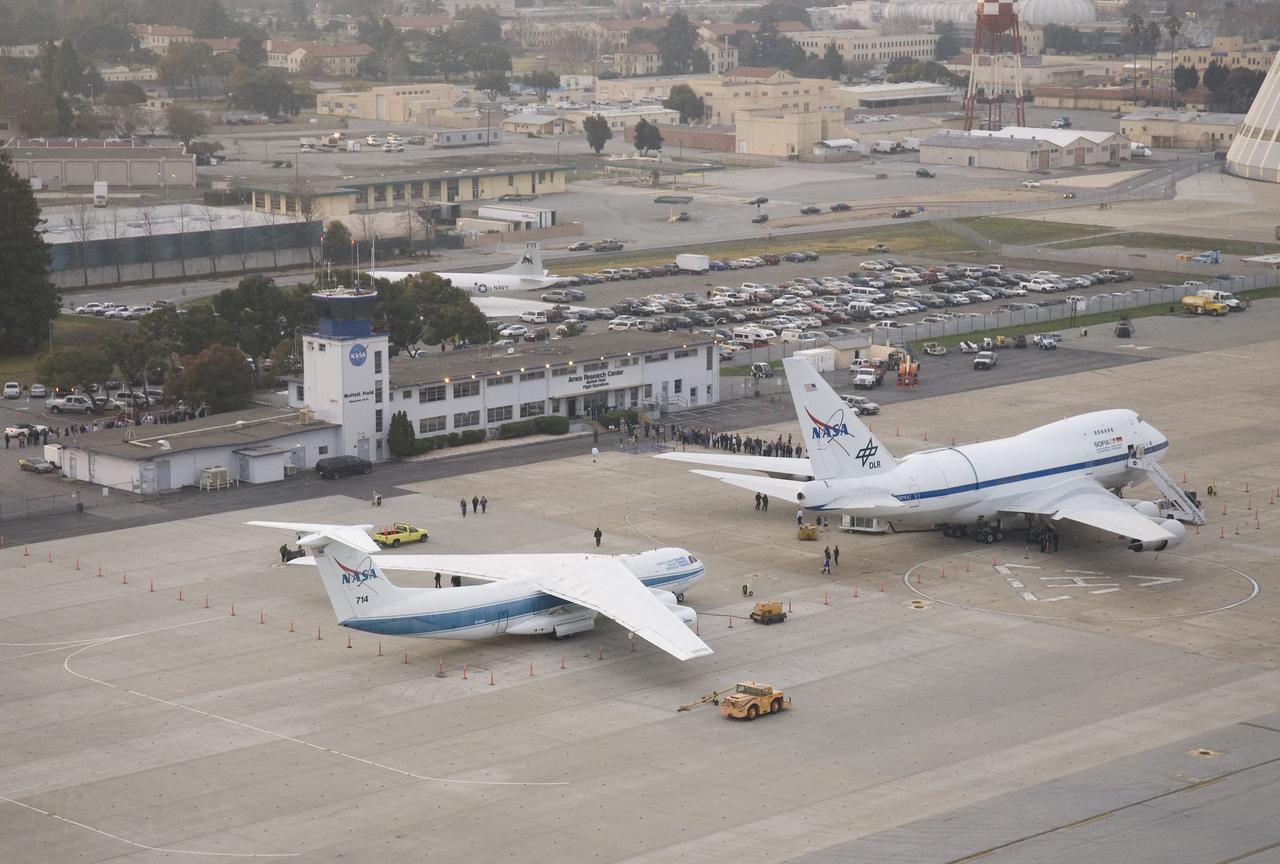
NASA's now-retired Kuiper Airborne Observatory shared the limelight with its successor, the SOFIA observatory, during an open house at Ames Research Center.
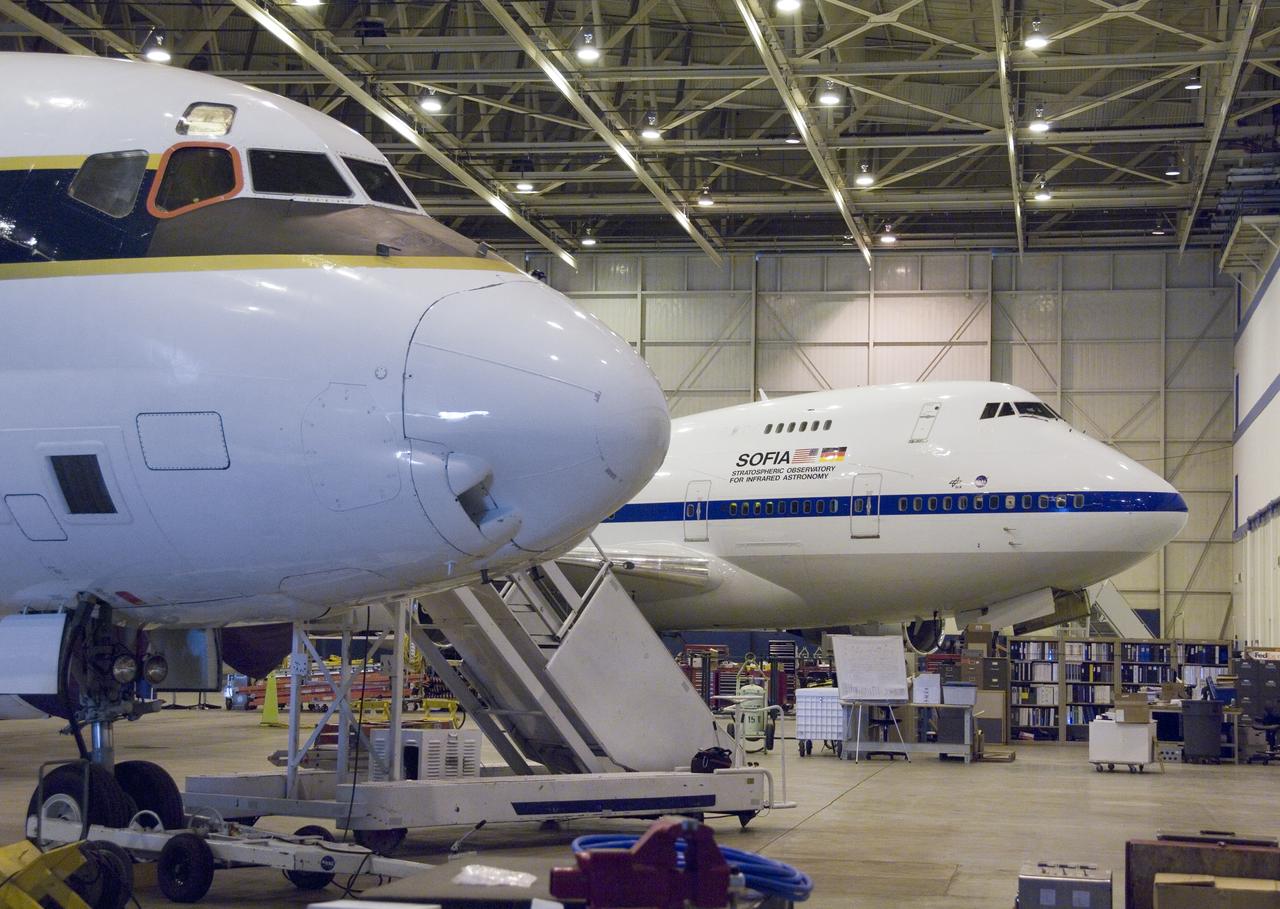
The cavernous expanse of the Dryden Aircraft Operations Facility in Palmdale, Calif., now houses NASA's DC-8 science laboratory and SOFIA infrared observatory.
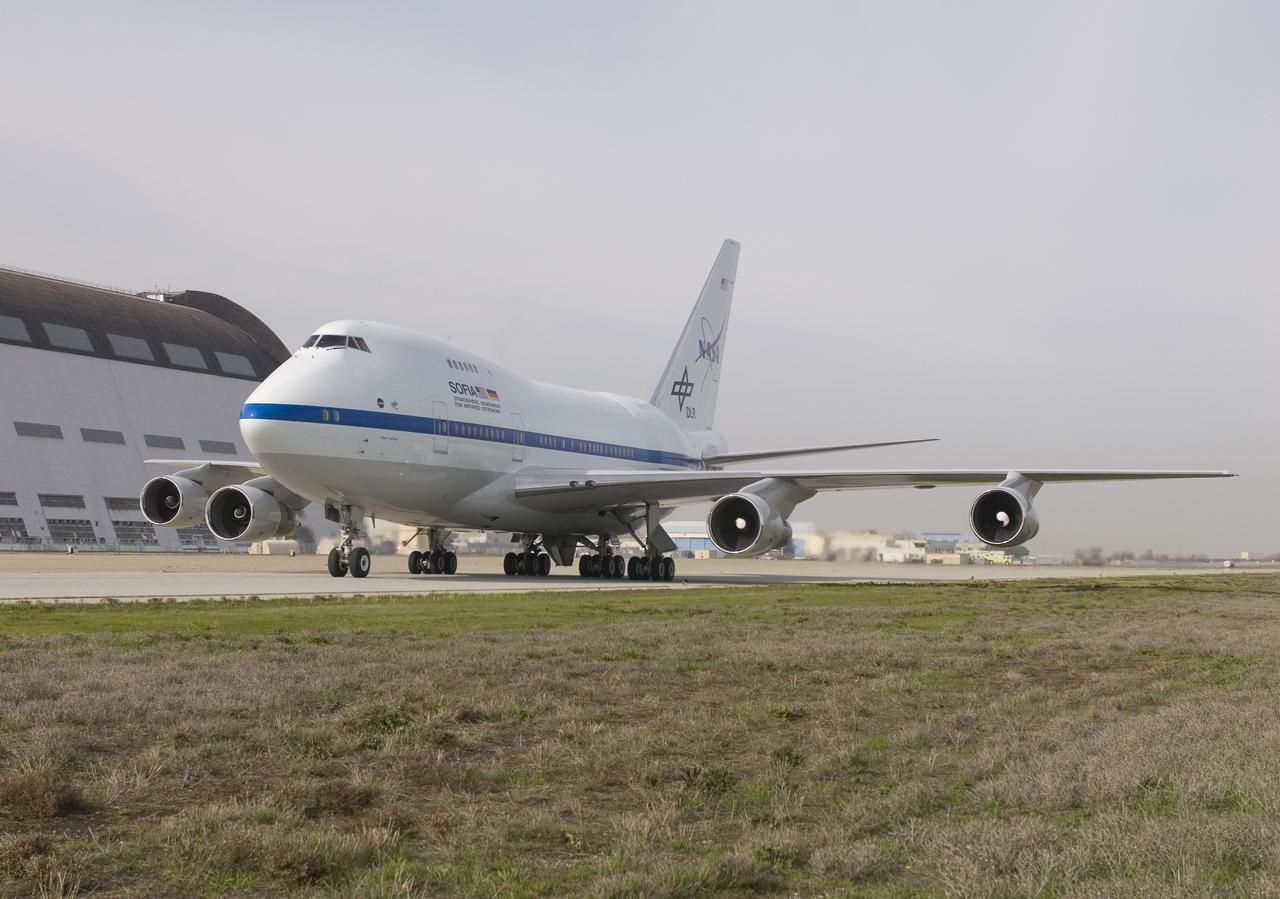
NASA's SOFIA airborne observatory taxis past Hangar 1, the 1930s-era dirigible hangar at Moffett Field, during its first visit to NASA Ames Research Center.