
Rebecca Spyke-Keiser, NASA's Associate Deputy Administrator for policy integration, gives opening remarks at the Women, Innovation and Aerospace event celebrating Women's History Month at the George Washington University Jack Morton Auditorium, Thursday, March 8, 2012 in Washington. The WIA day-long event will help to foster a discussion for students and early career professionals about how to continue to encourage women to enter and succeed in the field of aerospace. Photo Credit: (NASA/Carla Cioffi)
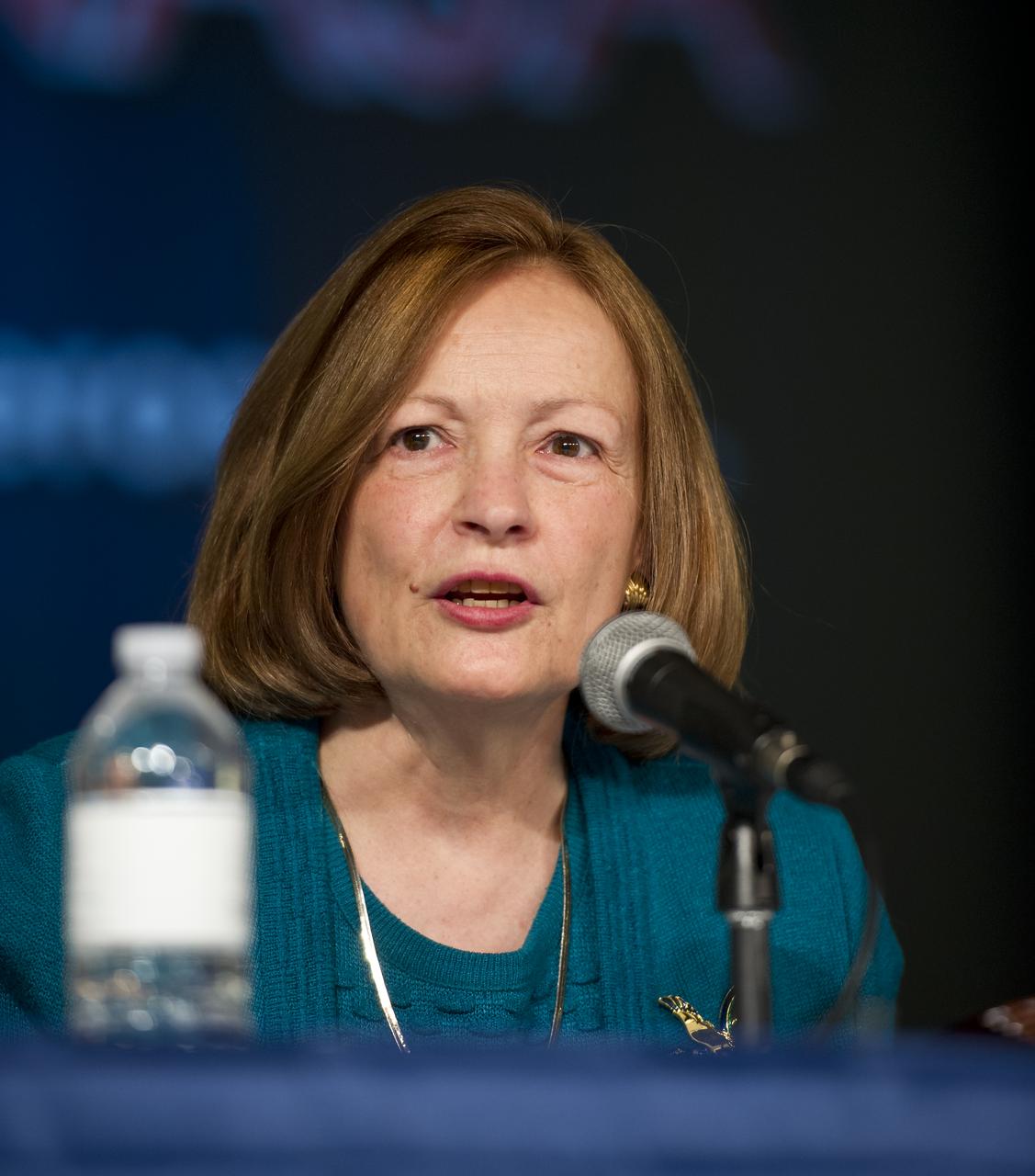
Marcia Smith, President, spacepolicyonline.com, participates in a panel discussion at the Women, Innovation and Aerospace event celebrating Women's History Month at the George Washington University Jack Morton Auditorium, Thursday, March 8, 2012 in Washington. The WIA day-long event will help to foster a discussion for students and early career professionals about how to continue to encourage women to enter and succeed in the field of aerospace. Photo Credit: (NASA/Carla Cioffi)

NASA Deputy Administrator, Lori Garver, far right, gives the keynote address at the Women, Innovation and Aerospace event celebrating Women's History Month at the George Washington University Jack Morton Auditorium, Thursday, March 8, 2012 in Washington. The WIA day-long event will help to foster a discussion for students and early career professionals about how to continue to encourage women to enter and succeed in the field of aerospace. Photo Credit: (NASA/Carla Cioffi)

Kathy Sullivan, NOAA (National Oceanic and Atmospheric Administration) Deputy Administrator and former NASA astronaut, participates in a panel discussion at the Women, Innovation and Aerospace event celebrating Women's History Month at the George Washington University Jack Morton Auditorium, Thursday, March 8, 2012 in Washington. The WIA day-long event will help to foster a discussion for students and early career professionals about how to continue to encourage women to enter and succeed in the field of aerospace. Photo Credit: (NASA/Carla Cioffi)
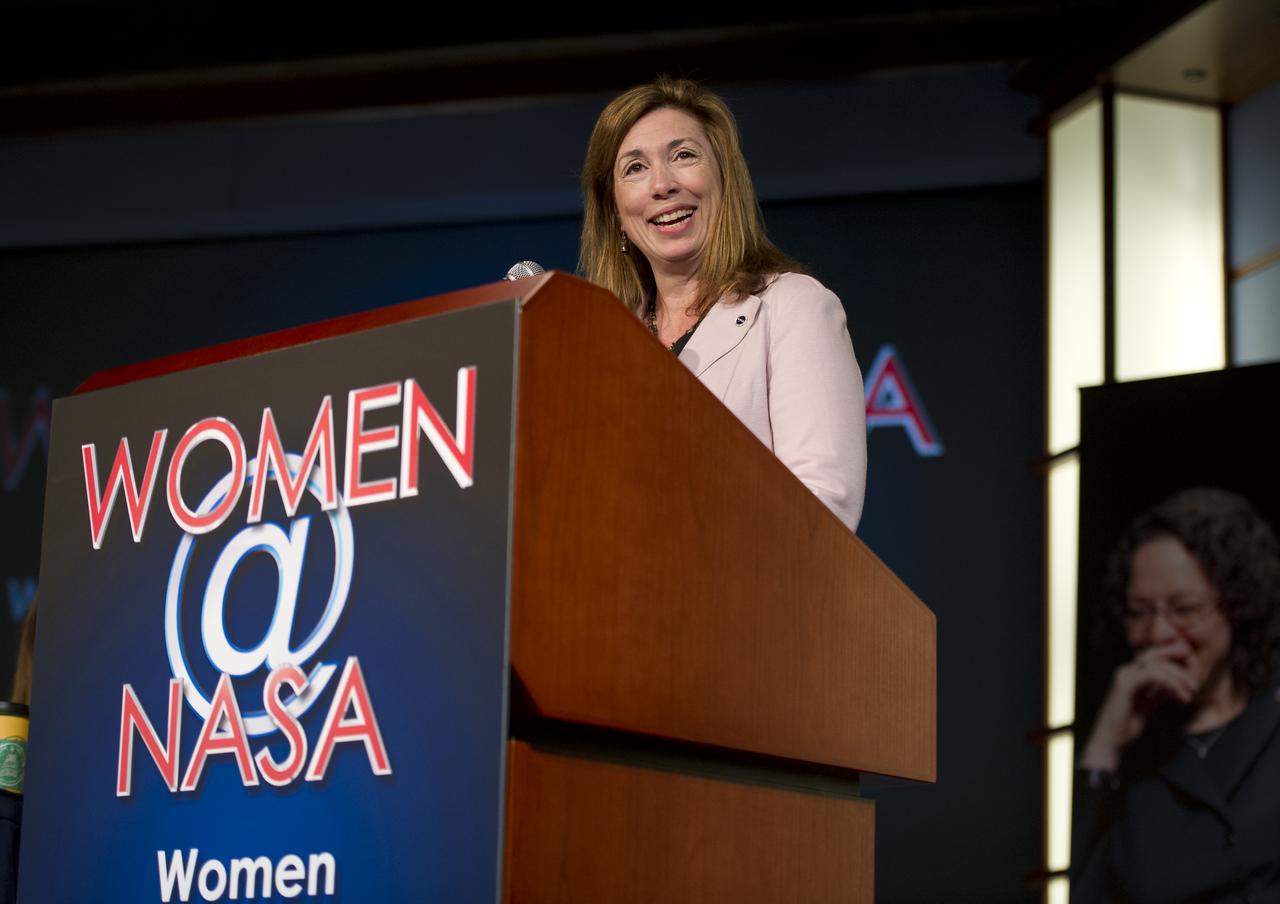
NASA Deputy Administrator, Lori Garver, gives the keynote address at the Women, Innovation and Aerospace event celebrating Women's History Month at the George Washington University Jack Morton Auditorium, Thursday, March 8, 2012 in Washington. The WIA day-long event will help to foster a discussion for students and early career professionals about how to continue to encourage women to enter and succeed in the field of aerospace. Photo Credit: (NASA/Carla Cioffi)
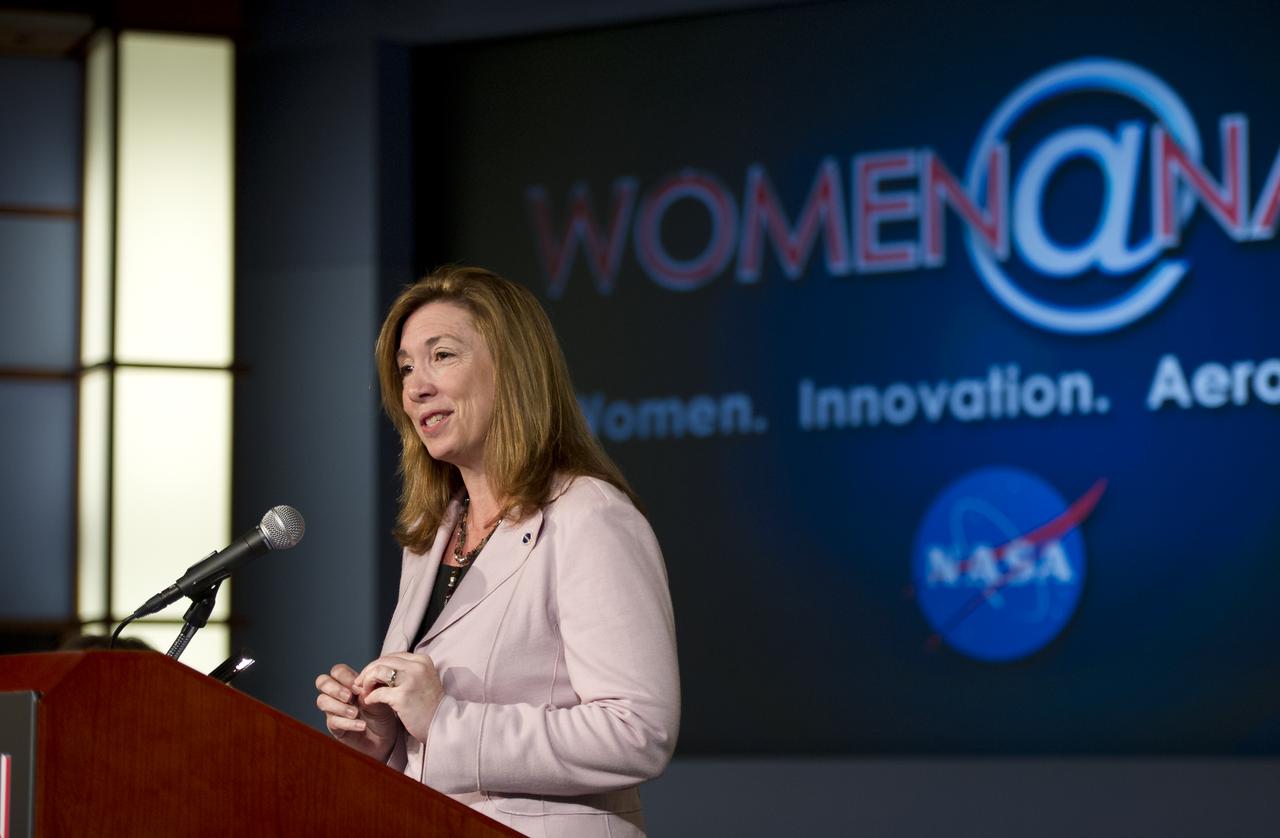
NASA Deputy Administrator, Lori Garver, gives the keynote address at the Women, Innovation and Aerospace event celebrating Women's History Month at the George Washington University Jack Morton Auditorium, Thursday, March 8, 2012 in Washington. The WIA day-long event will help to foster a discussion for students and early career professionals about how to continue to encourage women to enter and succeed in the field of aerospace. Photo Credit: (NASA/Carla Cioffi)
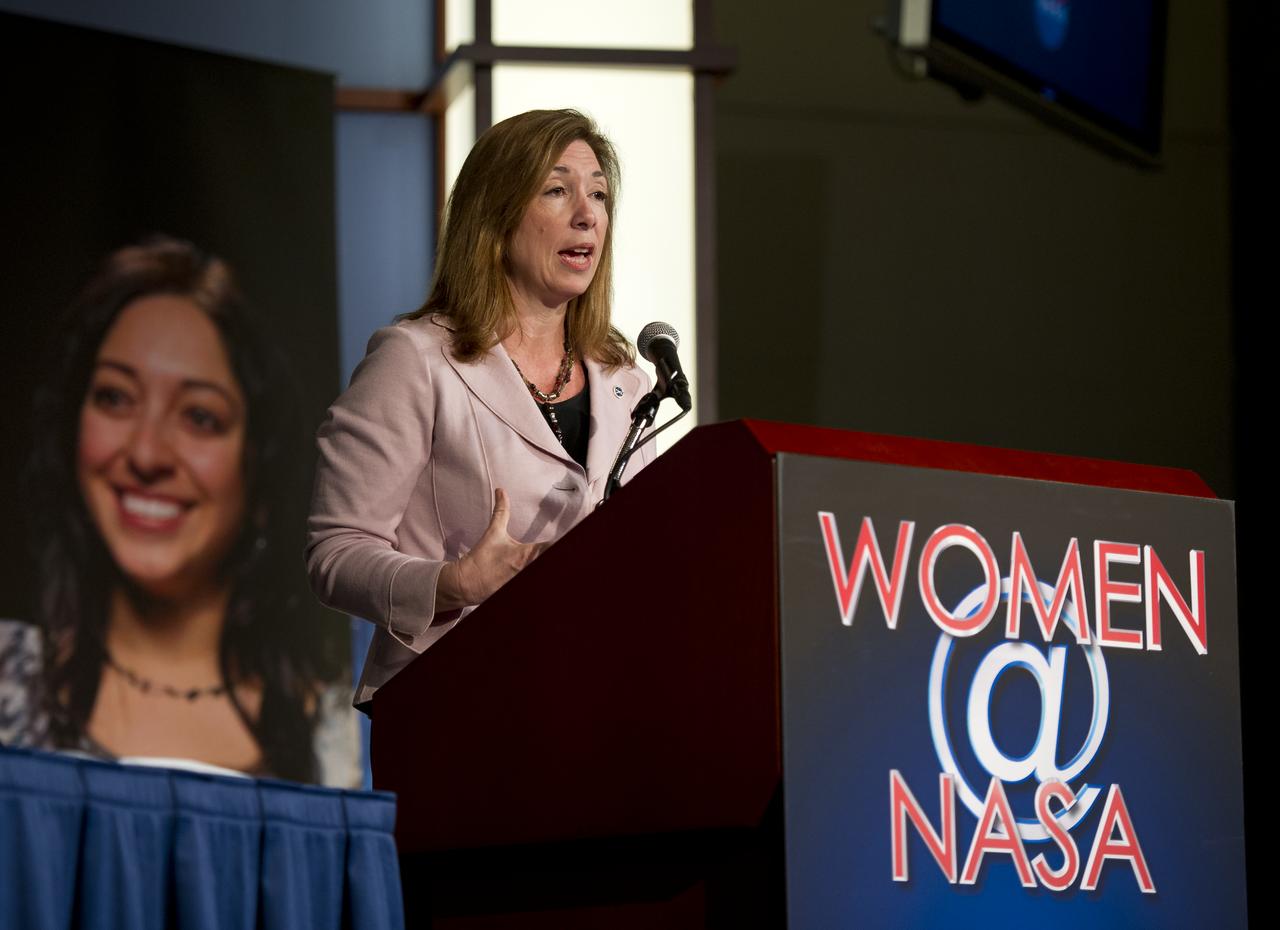
NASA Deputy Administrator, Lori Garver, gives the keynote address at the Women, Innovation and Aerospace event celebrating Women's History Month at the George Washington University Jack Morton Auditorium, Thursday, March 8, 2012 in Washington. The WIA day-long event will help to foster a discussion for students and early career professionals about how to continue to encourage women to enter and succeed in the field of aerospace. Photo Credit: (NASA/Carla Cioffi)
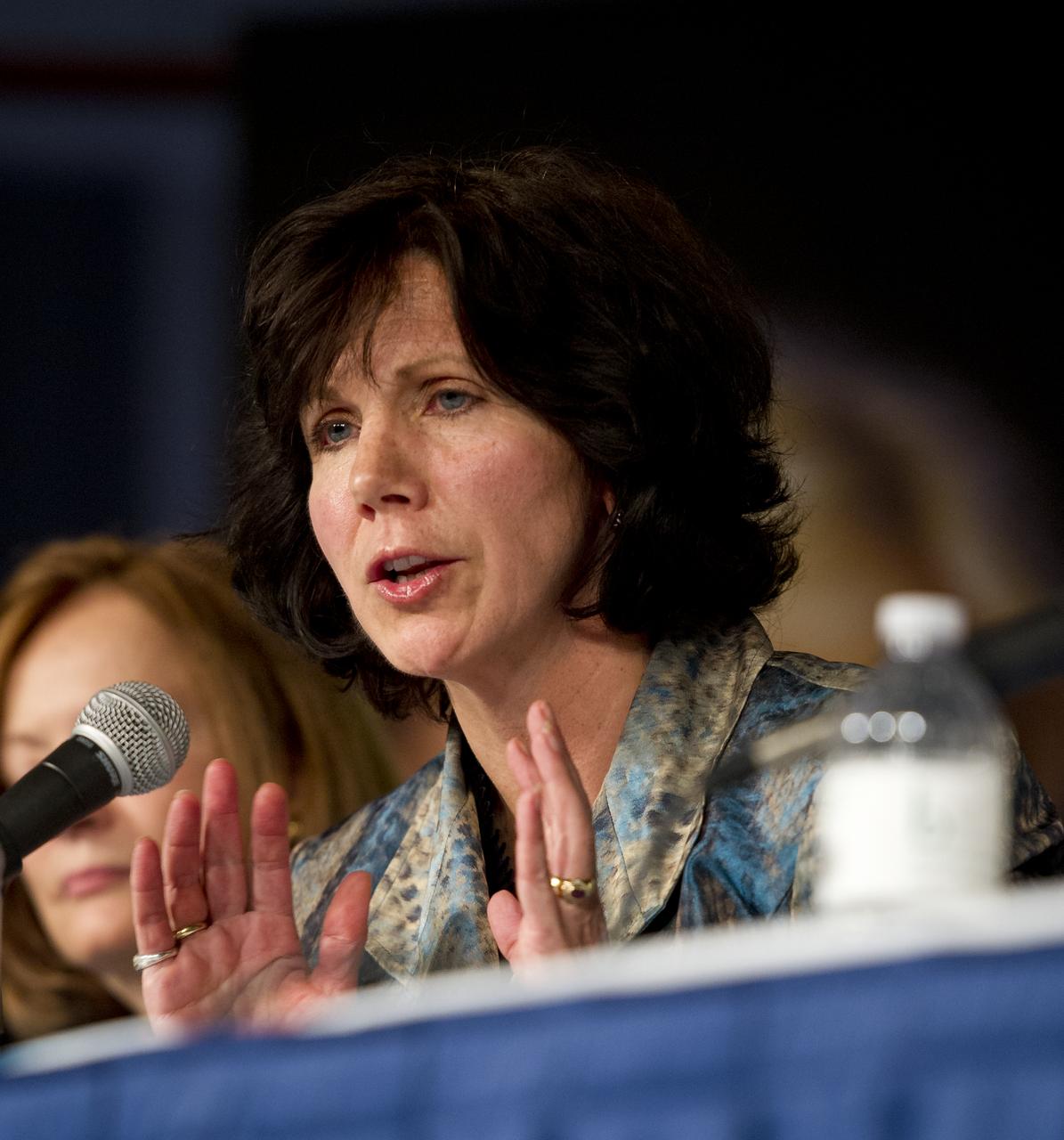
Catherine Didion, Senior Fellow, National Academy of Engineering, participates in a panel discussion at the Women, Innovation and Aerospace event celebrating Women's History Month at the George Washington University Jack Morton Auditorium, Thursday, March 8, 2012 in Washington. The WIA day-long event will help to foster a discussion for students and early career professionals about how to continue to encourage women to enter and succeed in the field of aerospace. Photo Credit: (NASA/Carla Cioffi)

Veronica Villalobos, Director, Office of Diversity and Inclusion, Office of Personnel Management, participates in a panel discussion at the Women, Innovation and Aerospace event celebrating Women's History Month at the George Washington University Jack Morton Auditorium, Thursday, March 8, 2012 in Washington. The WIA day-long event will help to foster a discussion for students and early career professionals about how to continue to encourage women to enter and succeed in the field of aerospace. Photo Credit: (NASA/Carla Cioffi)
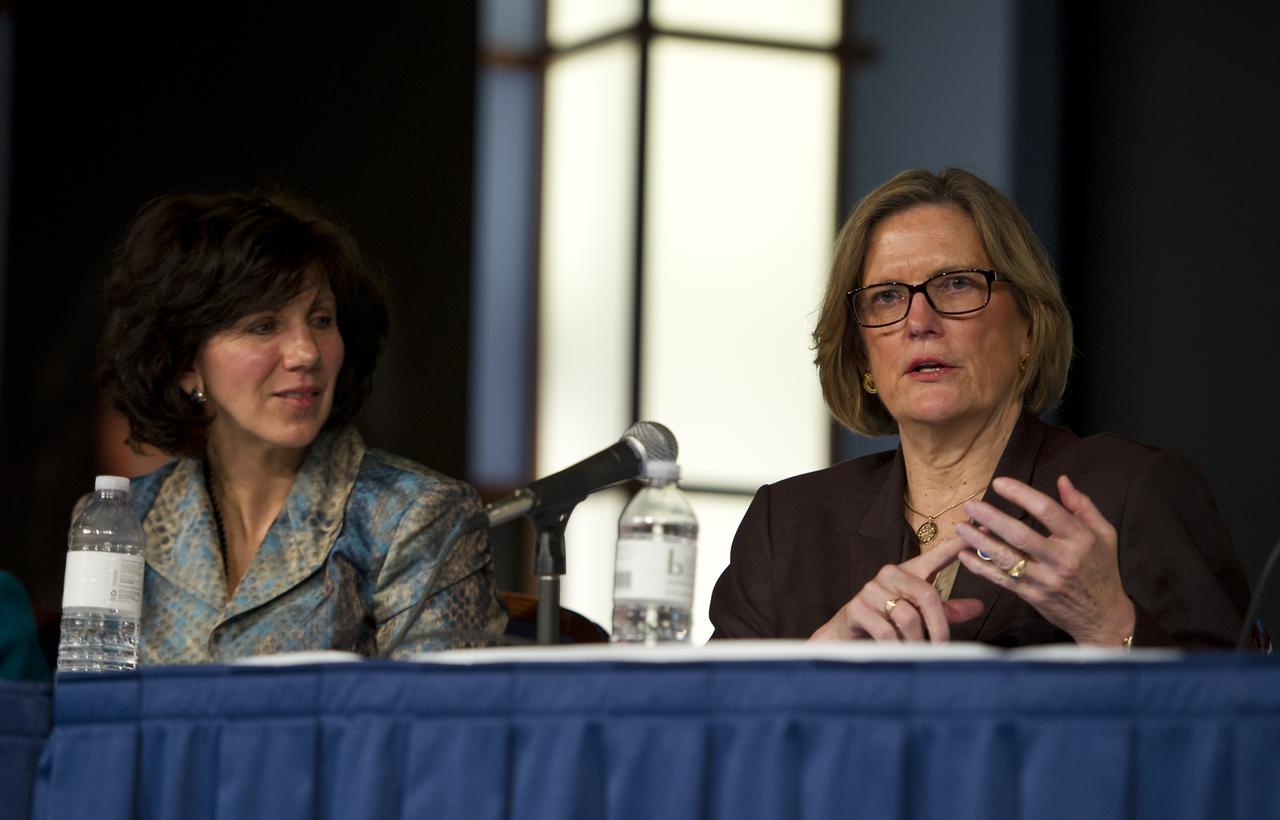
Kathy Sullivan, right, NOAA (National Oceanic and Atmospheric Administration) Deputy Administrator and former NASA astronaut, participates in a panel discussion at the Women, Innovation and Aerospace event celebrating Women's History Month at the George Washington University Jack Morton Auditorium, Thursday, March 8, 2012 in Washington. Sullivan is joined by Catherine Didion, Senior Fellow, National Academy of Engineering. The WIA day-long event will help to foster a discussion for students and early career professionals about how to continue to encourage women to enter and succeed in the field of aerospace. Photo Credit: (NASA/Carla Cioffi)
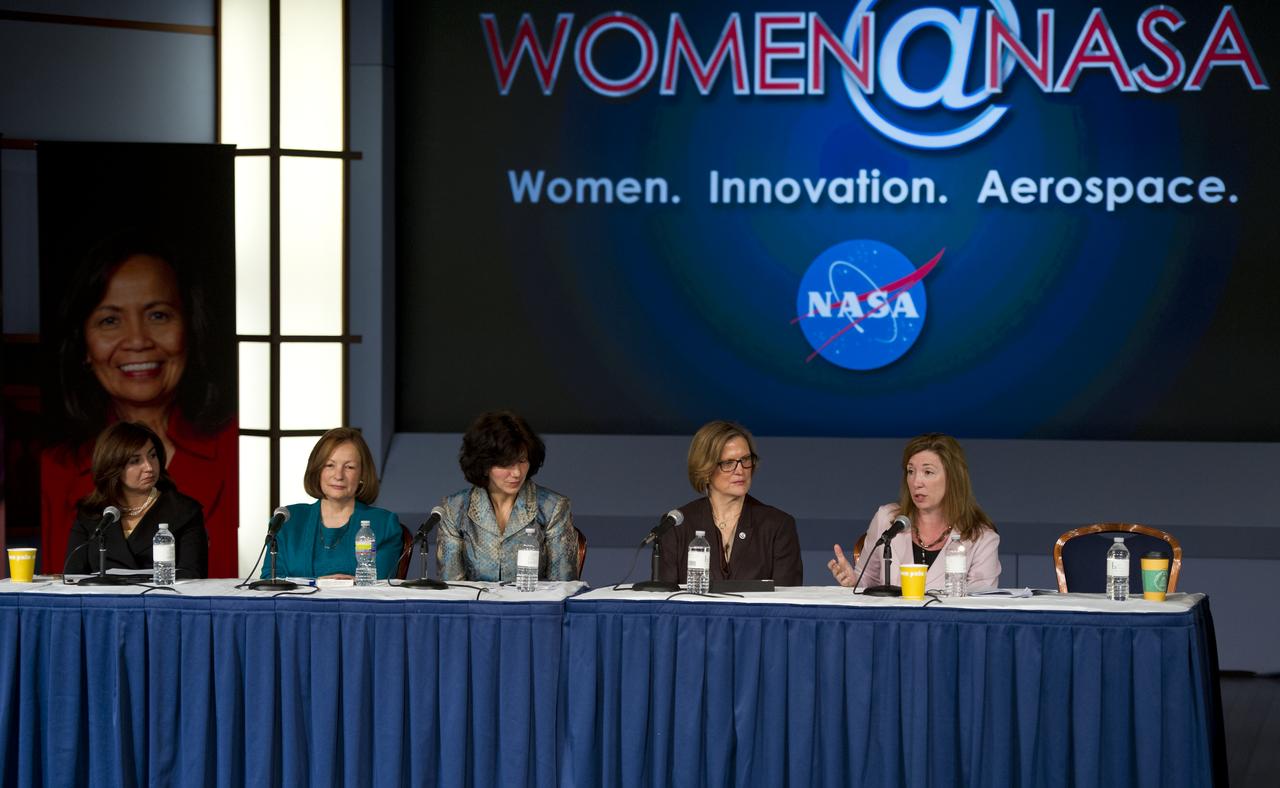
Lori Garver (far right) NASA Deputy Administrator, participates in a panel discussion at the Women, Innovation and Aerospace event celebrating Women's History Month at the George Washington University Jack Morton Auditorium, Thursday, March 8, 2012 in Washington. Garver is seen with Kathy Sullivan, NOAA Deputy Administrator; Catherine Didion, Senior Fellow, National Academy of Engineering; Marcia Smith, President, spacepolicyonline.com and Veronica Villalobos, Director, Office of Diversity and Inclusion, Office of Personnel Management (far left). The WIA day-long event will help to foster a discussion for students and early career professionals about how to continue to encourage women to enter and succeed in the field of aerospace. Photo Credit: (NASA/Carla Cioffi)
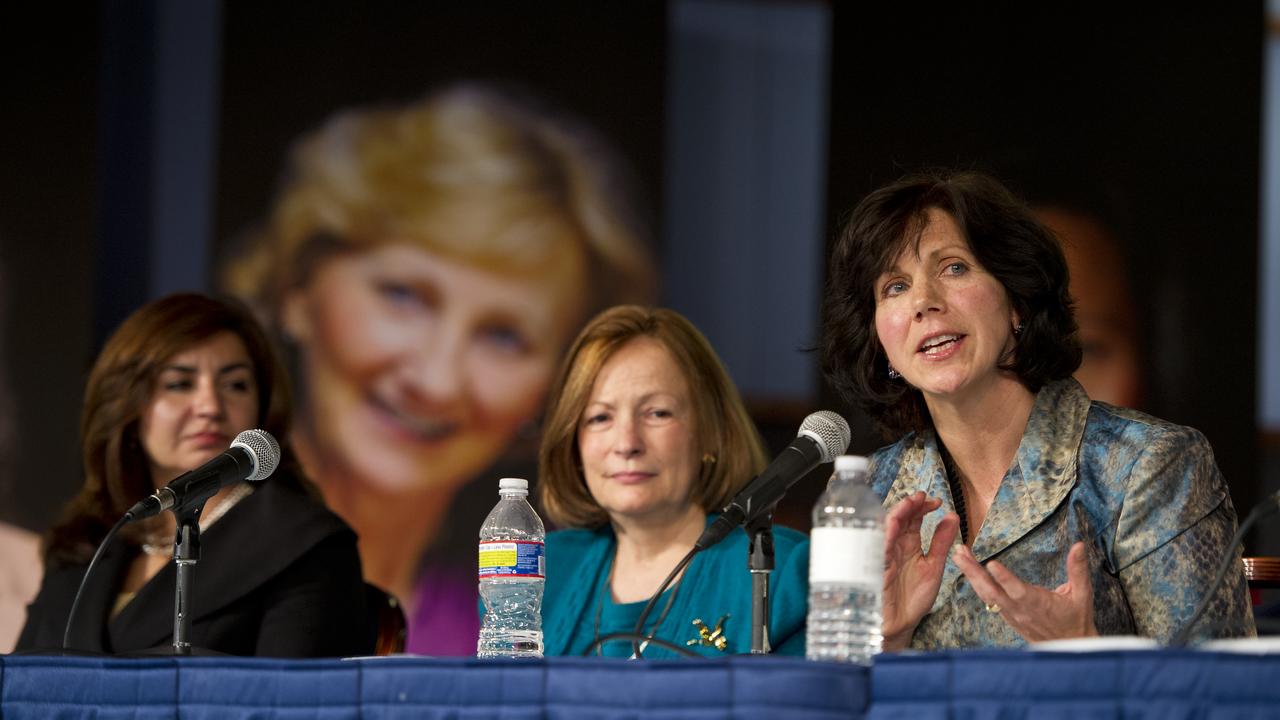
Catherine Didion, far right, Senior Fellow, National Academy of Engineering, participates in a panel discussion at the Women, Innovation and Aerospace event celebrating Women's History Month at the George Washington University Jack Morton Auditorium, Thursday, March 8, 2012 in Washington. Didion is joined by Marcia Smith, President, Space Policy Online.com, and Veronica Villalobos, Director, Office of Diversity and Inclusion, Office of Personnel Management, far left. The WIA day-long event will help to foster a discussion for students and early career professionals about how to continue to encourage women to enter and succeed in the field of aerospace. Photo Credit: (NASA/Carla Cioffi)
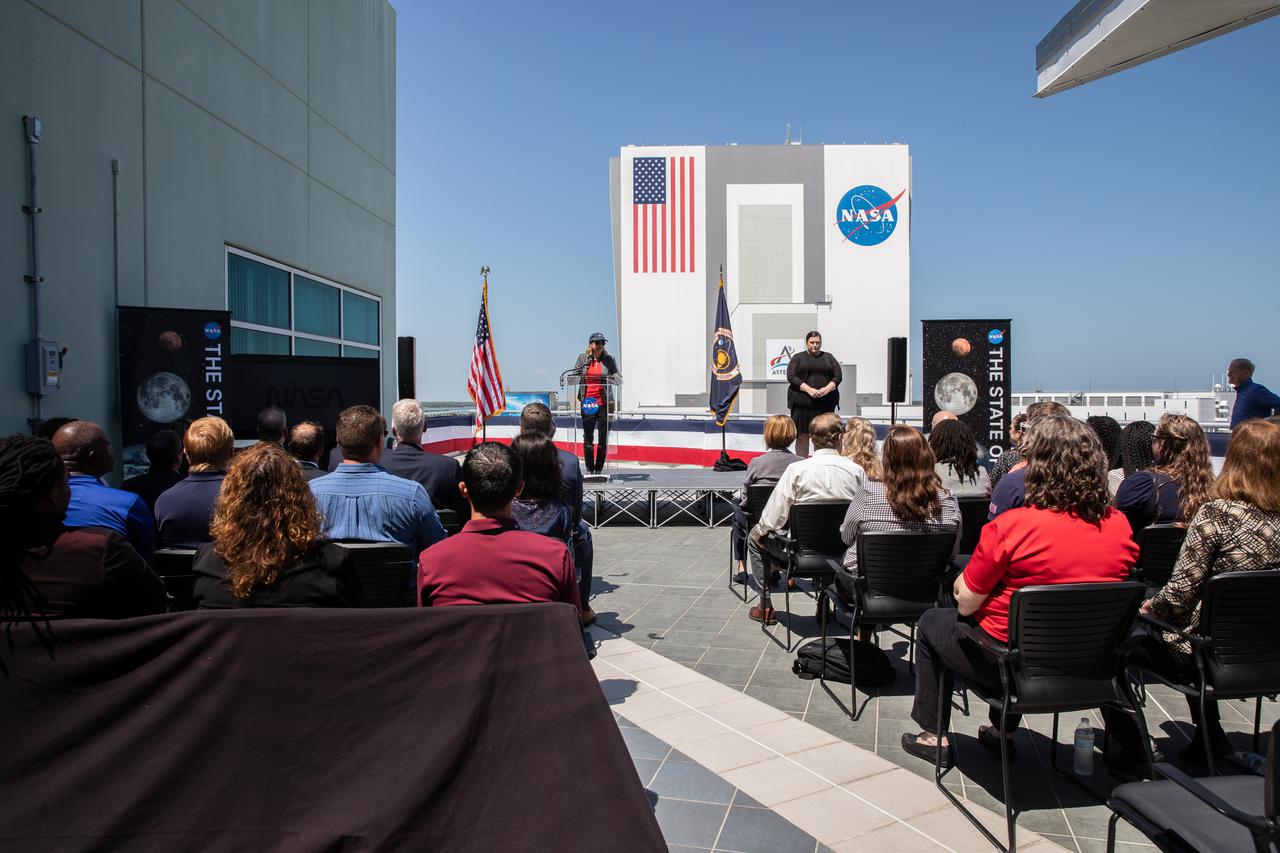
Kennedy Space Center Director Janet Petro addresses attendees before NASA Administrator Bill Nelson delivers the 2022 State of NASA address on March 28, 2022, at the Florida spaceport. Nelson highlighted NASA’s plans to explore the Moon and Mars, address climate change, promote racial and economic equity, and drive economic growth while sustaining U.S. leadership in aviation and aerospace innovation.
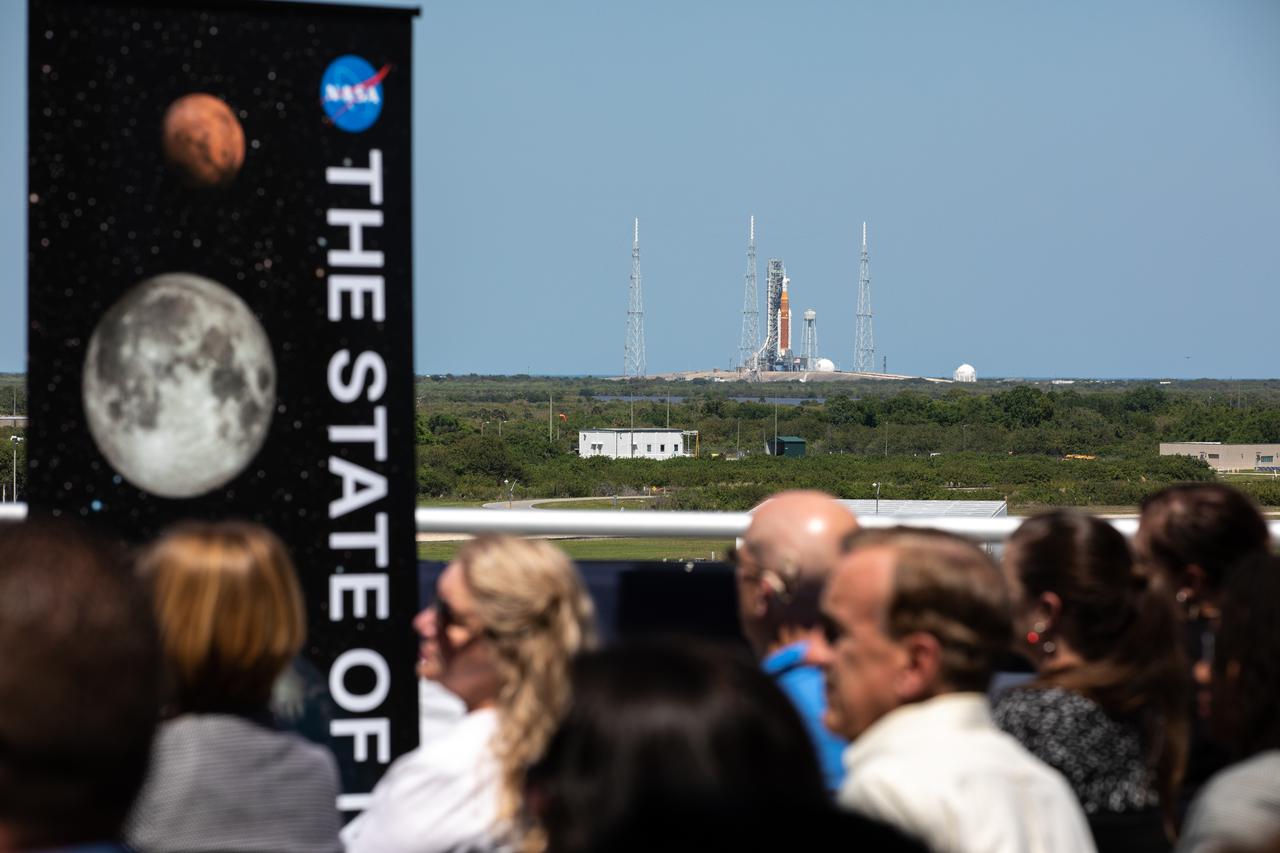
Attendees listen to NASA Administrator Bill Nelson deliver the 2022 State of NASA address on March 28, 2022, from the agency’s Kennedy Space Center in Florida. Nelson highlighted NASA’s plans to explore the Moon and Mars, address climate change, promote racial and economic equity, and drive economic growth while sustaining U.S. leadership in aviation and aerospace innovation.
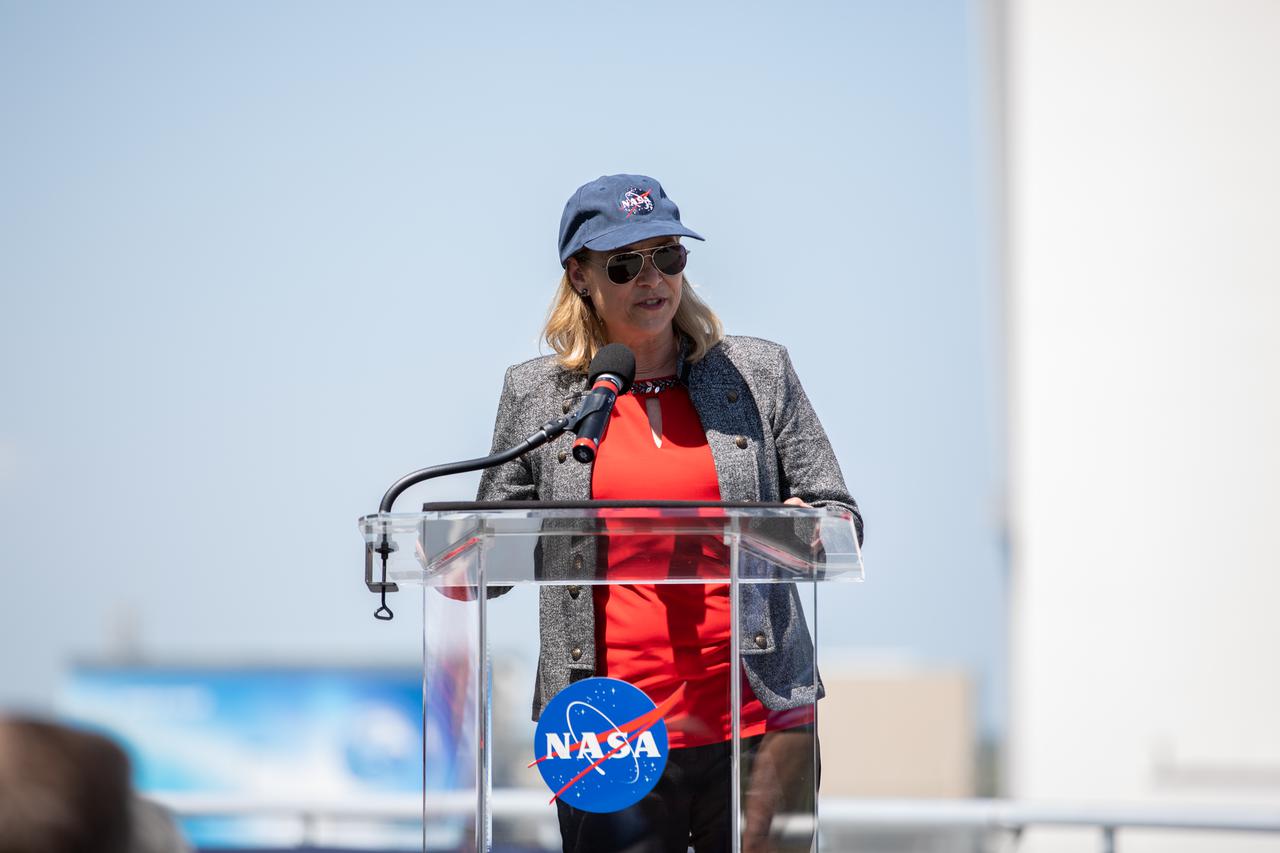
Kennedy Space Center Director Janet Petro addresses attendees before NASA Administrator Bill Nelson delivers the 2022 State of NASA address on March 28, 2022, at the Florida spaceport. Nelson highlighted NASA’s plans to explore the Moon and Mars, address climate change, promote racial and economic equity, and drive economic growth while sustaining U.S. leadership in aviation and aerospace innovation.
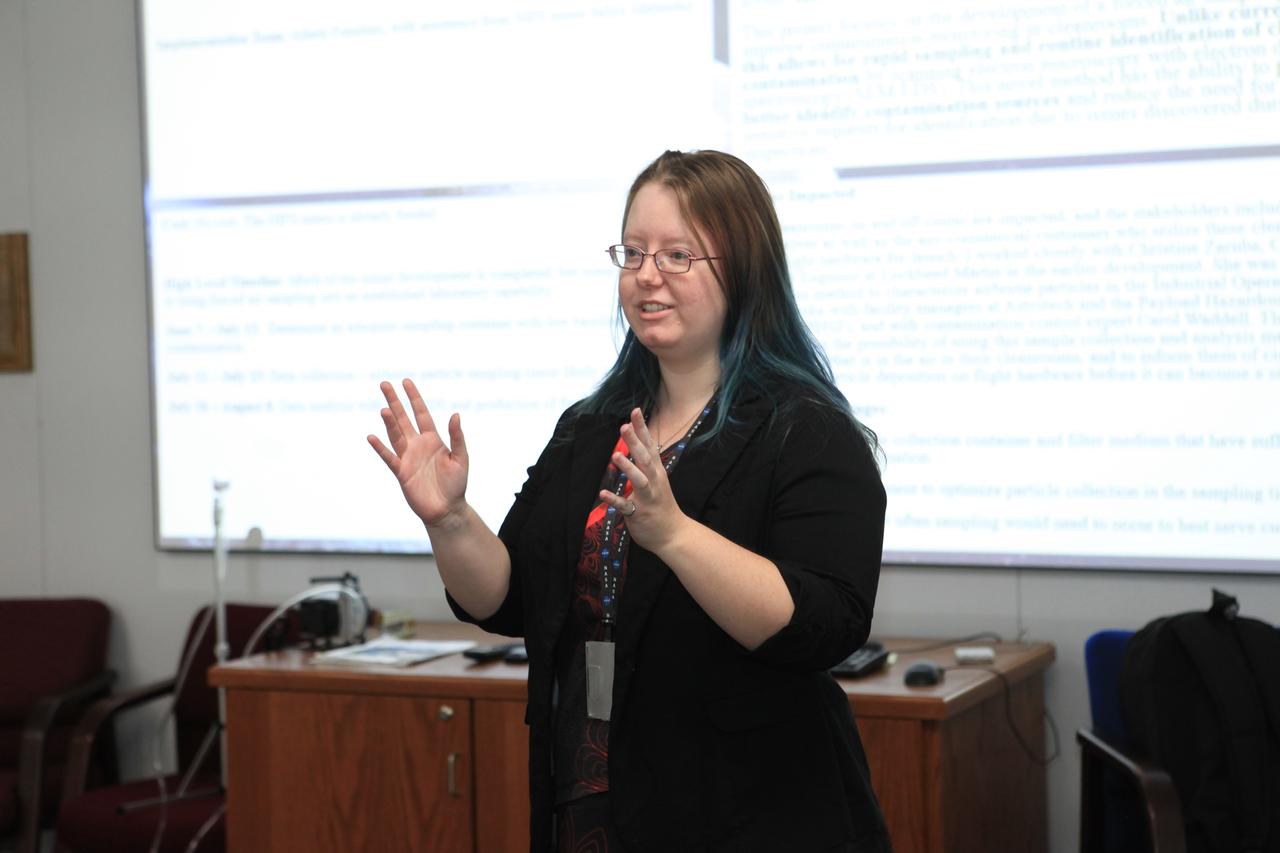
Athela Frandsen, an aerospace technologist with Kennedy Space Center’s analytical laboratories, presents her proposal concerning proactive approaches to cleanroom contamination to representatives from programs across Kennedy during the “Innovation Without Boundaries” event held inside the Space Station Processing Facility in Florida on June 14, 2019. A number of Kennedy employees presented their proposals as part of the Chief Technologist Innovation Call. The event sought out ideas based on relevance, benefit, innovativeness, likelihood of success and sustainability.
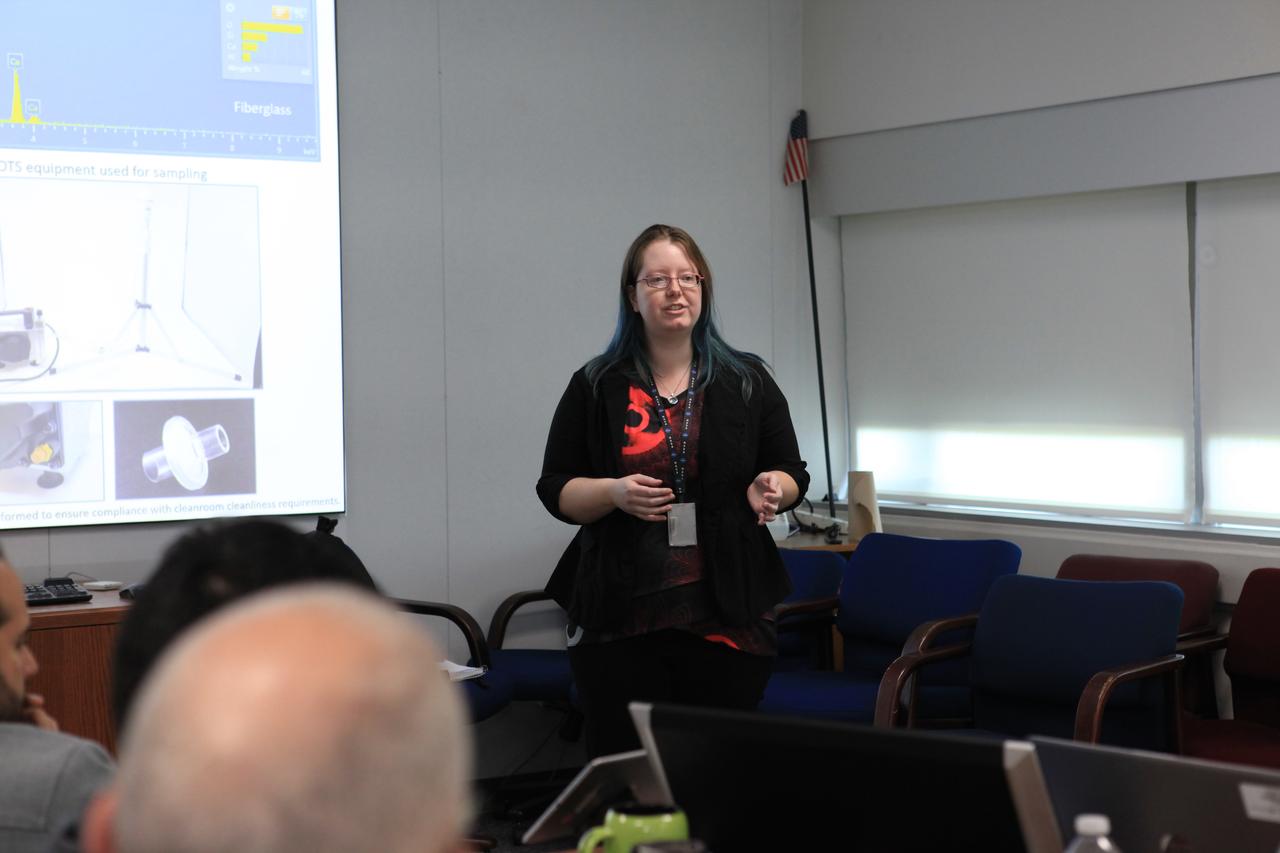
Athela Frandsen, an aerospace technologist with Kennedy Space Center’s analytical laboratories, presents her proposal concerning proactive approaches to cleanroom contamination to a panel of judges during the “Innovation Without Boundaries” event held inside the Space Station Processing Facility in Florida on June 14, 2019. A number of Kennedy employees presented their proposals as part of the Chief Technologist Innovation Call. Participants had five minutes to present their innovative ideas in one of three categories, which were innovative ideas that had little or no cost to implement, ideas with great returns on investments up to $20,000 and big ideas where participants could socialize ideas for projects that would take more than $20,000 to implement.
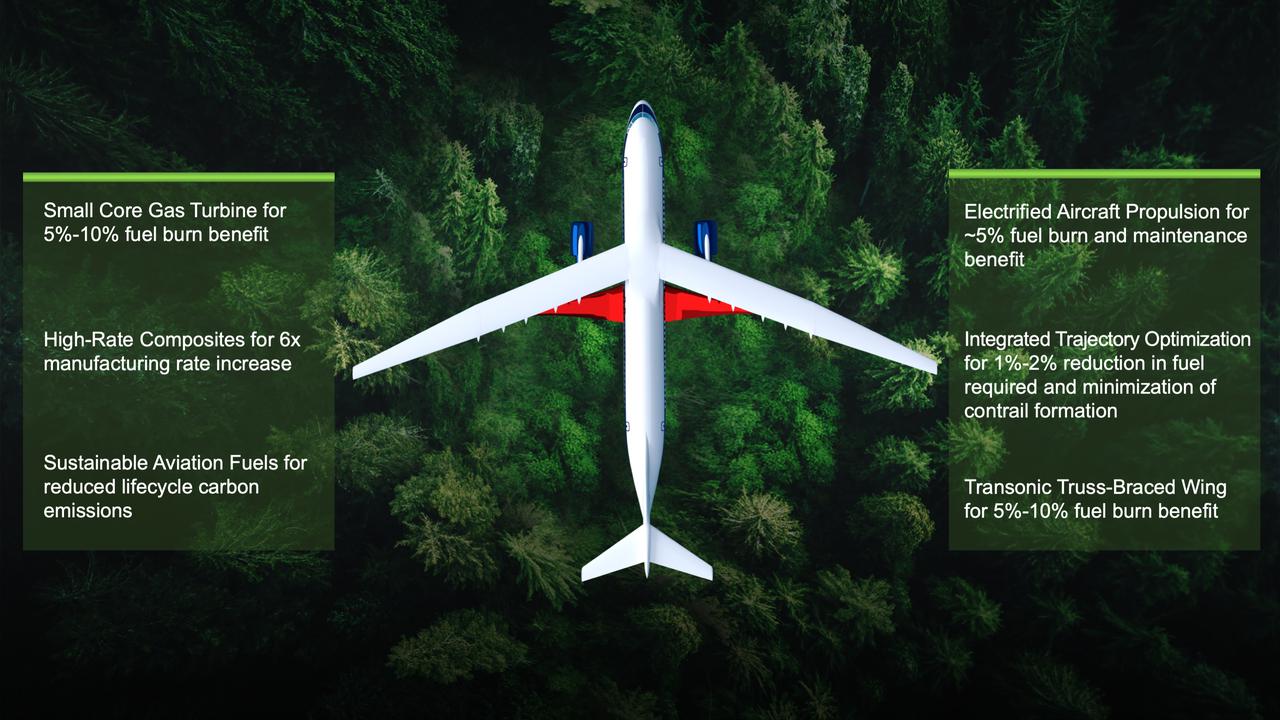
NASA will demonstrate high-risk, high-payoff technology advancements critical for U.S. aerospace manufacturers to bring to market innovative, cost-effective, and sustainable products and services demanded by airlines and customers.
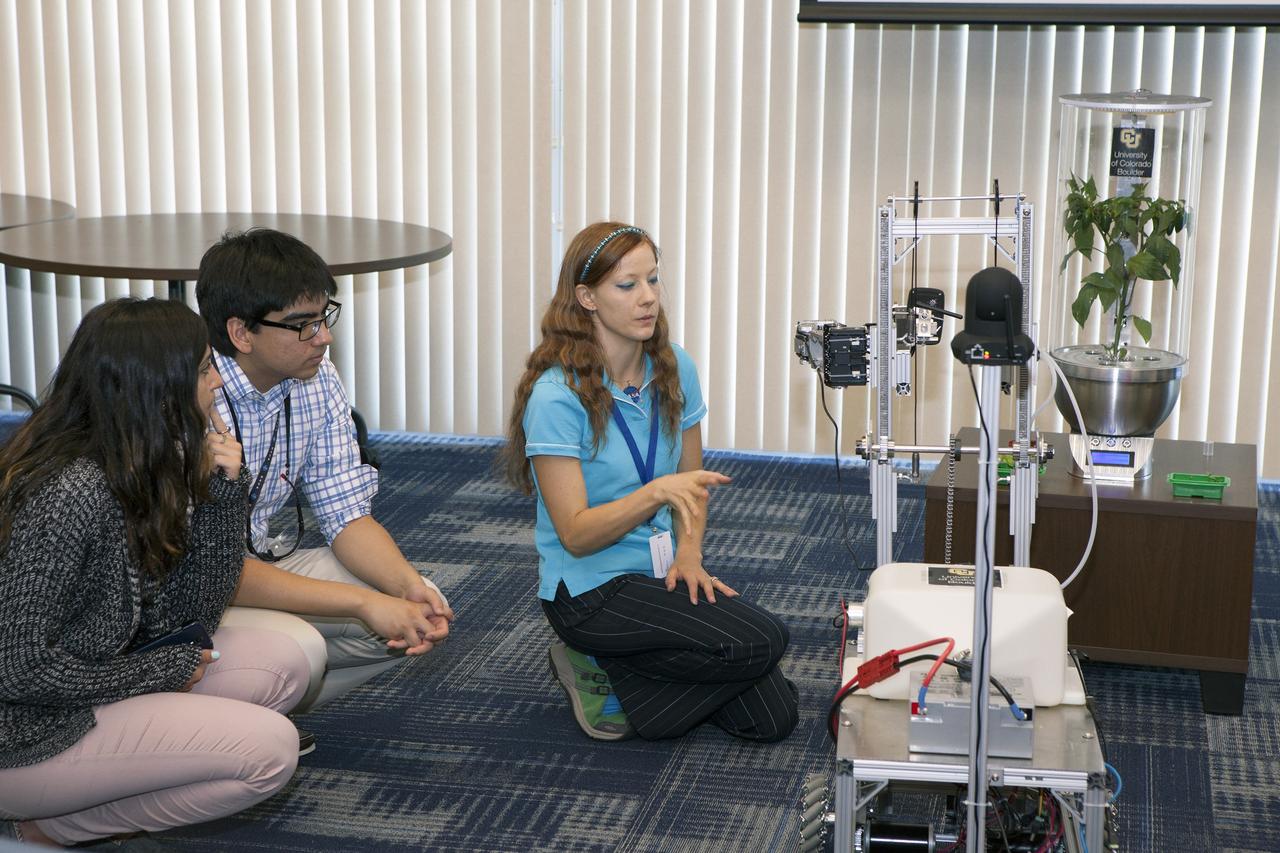
CAPE CANAVERAL, Fla. -- At the Kennedy Space Center in Florida, Heather Hava, who is working on a doctorate in aerospace engineering sciences at the University of Colorado Boulder, describes a Remotely Operated Gardening Rover, or ROGR, which could tend to plants grown in one of the SmartPots, or SPOTS seen on the right. The system is being developed by the graduate students participating in the eXploration HABitat X-Hab Academic Innovation Challenge. X-Hab Academic Innovation Challenge is a university-level activity designed to engage and retain students in science, technology, engineering and math, or STEM, disciplines. NASA will directly benefit from the effort by sponsoring the development of innovative habitat concepts from universities which may result in innovative ideas and solutions that could be applied to exploration habitats. For more: http://www.nasa.gov/exploration/technology/deep_space_habitat/xhab/ Photo credit: NASA/Daniel Casper
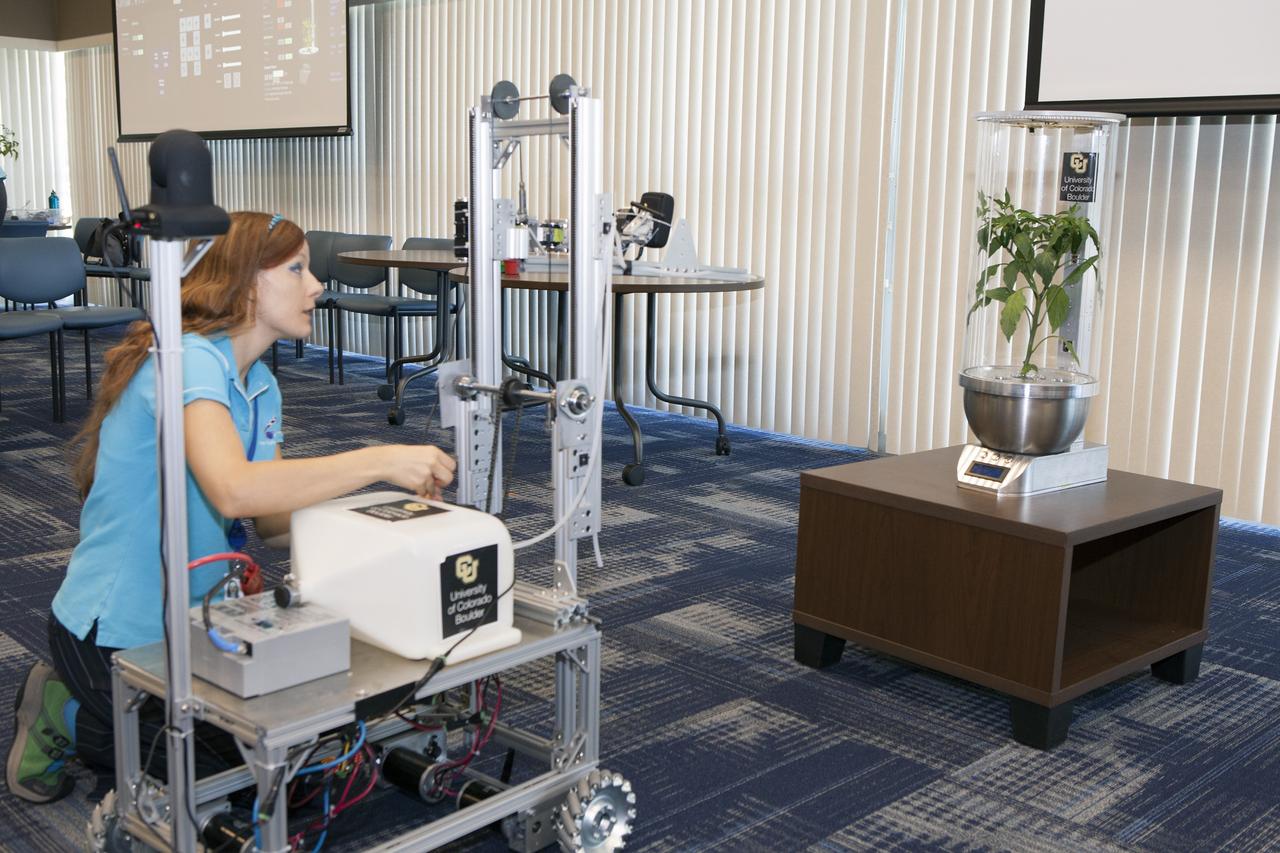
CAPE CANAVERAL, Fla. -- At the Kennedy Space Center in Florida, Heather Hava, who is working on a doctorate in aerospace engineering sciences at the University of Colorado Boulder, makes adjustments on a Remotely Operated Gardening Rover, or ROGR, which could tend to plants grown in one of the SmartPots, or SPOTS seen on the right. The system is being developed by the graduate students participating in the eXploration HABitat X-Hab Academic Innovation Challenge. X-Hab Academic Innovation Challenge is a university-level activity designed to engage and retain students in science, technology, engineering and math, or STEM, disciplines. NASA will directly benefit from the effort by sponsoring the development of innovative habitat concepts from universities which may result in innovative ideas and solutions that could be applied to exploration habitats. For more: http://www.nasa.gov/exploration/technology/deep_space_habitat/xhab/ Photo credit: NASA/Daniel Casper
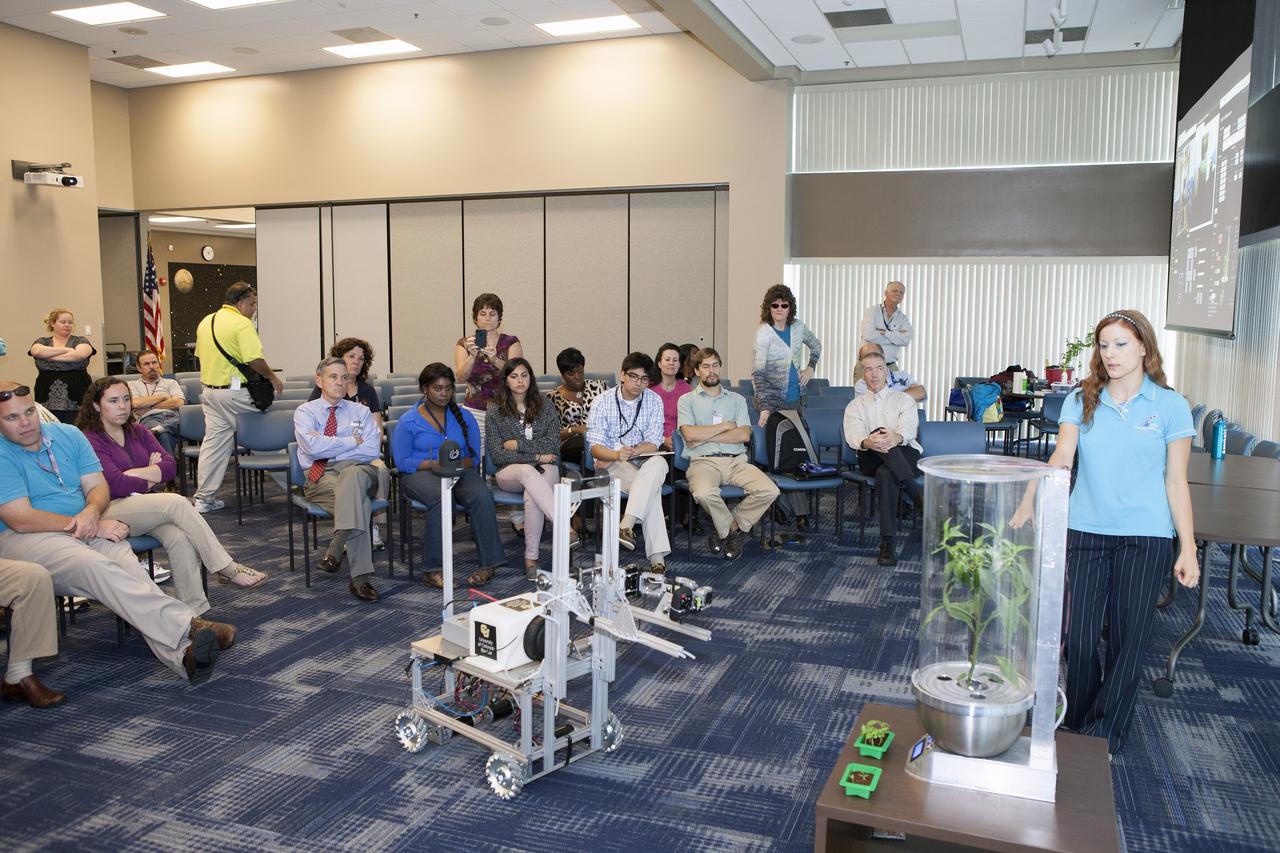
CAPE CANAVERAL, Fla. -- At the Kennedy Space Center in Florida, Heather Hava, right, who is working on a doctorate in aerospace engineering sciences at the University of Colorado Boulder, describes a computerized SmartPot, or SPOT, which could be used to grow plants in a deep-space habitat. The SPOTs could be tended by a Remotely Operated Gardening Rover, or ROGR, seen on the left. The system is being developed by the graduate students participating in the eXploration HABitat X-Hab Academic Innovation Challenge. X-Hab Academic Innovation Challenge is a university-level activity designed to engage and retain students in science, technology, engineering and math, or STEM, disciplines. NASA will directly benefit from the effort by sponsoring the development of innovative habitat concepts from universities which may result in innovative ideas and solutions that could be applied to exploration habitats. For more: http://www.nasa.gov/exploration/technology/deep_space_habitat/xhab/ Photo credit: NASA/Daniel Casper
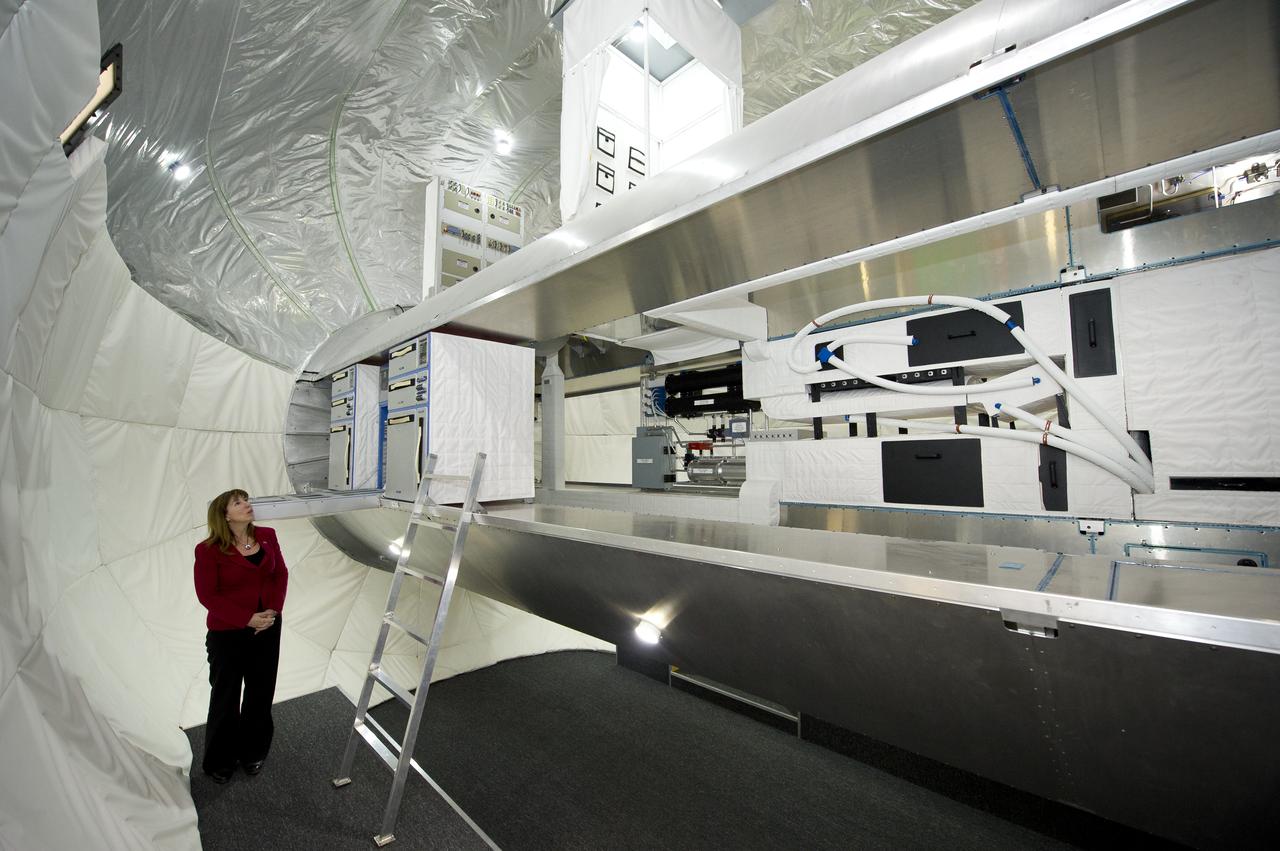
NASA Deputy Administrator Lori Garver views the inside of a full scale mockup of Bigelow Aerospace's Space Station Alpha during a tour of the Bigelow Aerospace facilities by the company's President Robert Bigelow on Friday, Feb. 4, 2011, in Las Vegas. NASA has been discussing potential partnership opportunities with Bigelow for its inflatable habitat technologies as part of NASA's goal to develop innovative technologies to ensure that the U.S. remains competitive in future space endeavors. Photo Credit: (NASA/Bill Ingalls)
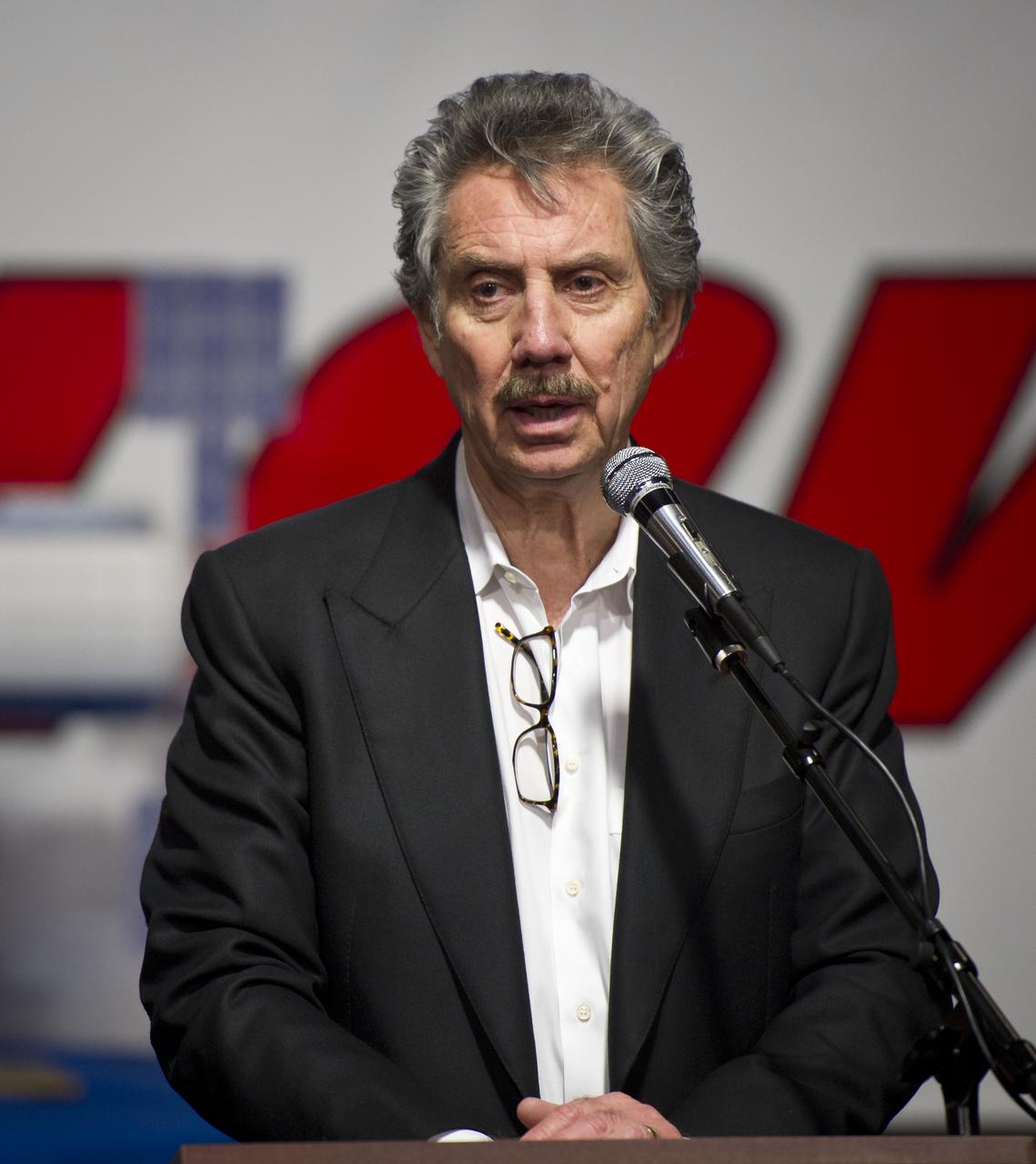
Bigelow Aerospace President Robert Bigelow talks during a press conference shortly after he and NASA Deputy Administrator Lori Garver toured the Bigelow Aerospace facilities on Friday, Feb. 4, 2011, in Las Vegas. NASA has been discussing potential partnership opportunities with Bigelow for its inflatable habitat technologies as part of NASA's goal to develop innovative technologies to ensure that the U.S. remains competitive in future space endeavors. Photo Credit: (NASA/Bill Ingalls)

CAPE CANAVERAL, Fla. -- At the Kennedy Space Center in Florida, Heather Hava, who is working on a doctorate in aerospace engineering sciences at the University of Colorado Boulder, makes adjustments on a Remotely Operated Gardening Rover, or ROGR, which could tend plants on a deep-space habitat. X-Hab Academic Innovation Challenge is a university-level activity designed to engage and retain students in science, technology, engineering and math, or STEM, disciplines. NASA will directly benefit from the effort by sponsoring the development of innovative habitat concepts from universities which may result in innovative ideas and solutions that could be applied to exploration habitats. For more: http://www.nasa.gov/exploration/technology/deep_space_habitat/xhab/ Photo credit: NASA/Daniel Casper
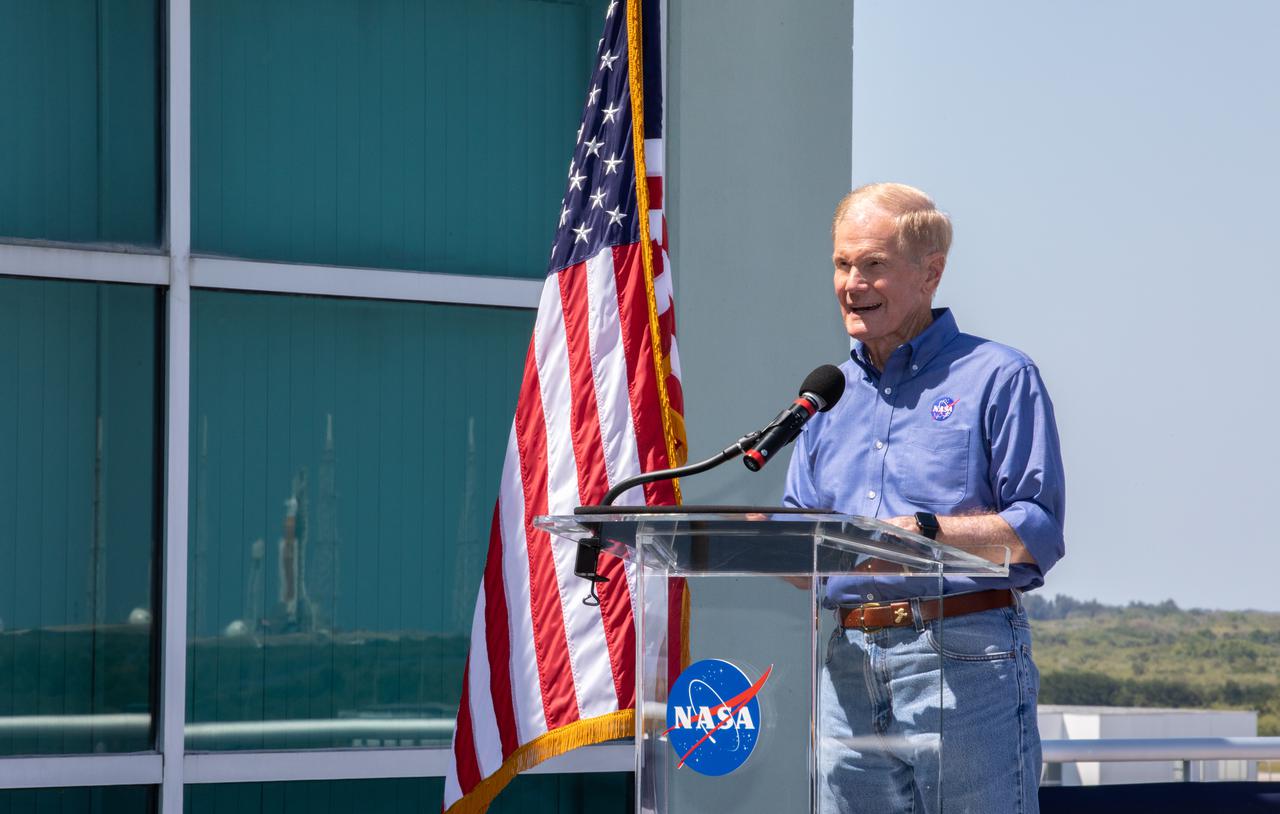
NASA Administrator Bill Nelson delivers the 2022 State of NASA address on March 28, 2022, from the agency’s Kennedy Space Center in Florida. Nelson highlighted NASA’s plans to explore the Moon and Mars, address climate change, promote racial and economic equity, and drive economic growth while sustaining U.S. leadership in aviation and aerospace innovation.

CAPE CANAVERAL, Fla. -- This is a printable poster with NASA's Commercial Crew Program (CCP) logo. CCP is leading NASA's effort of accelerating a United States-led capability to the International Space Station by investing in the design and development of the aerospace industry's crew transportation systems. The goal of CCP is to drive down the cost of space travel as well as open up space to more people than ever before by balancing industry’s own innovative capabilities with NASA's 50 years of human spaceflight experience. For more information, visit www.nasa.gov/commercialcrew
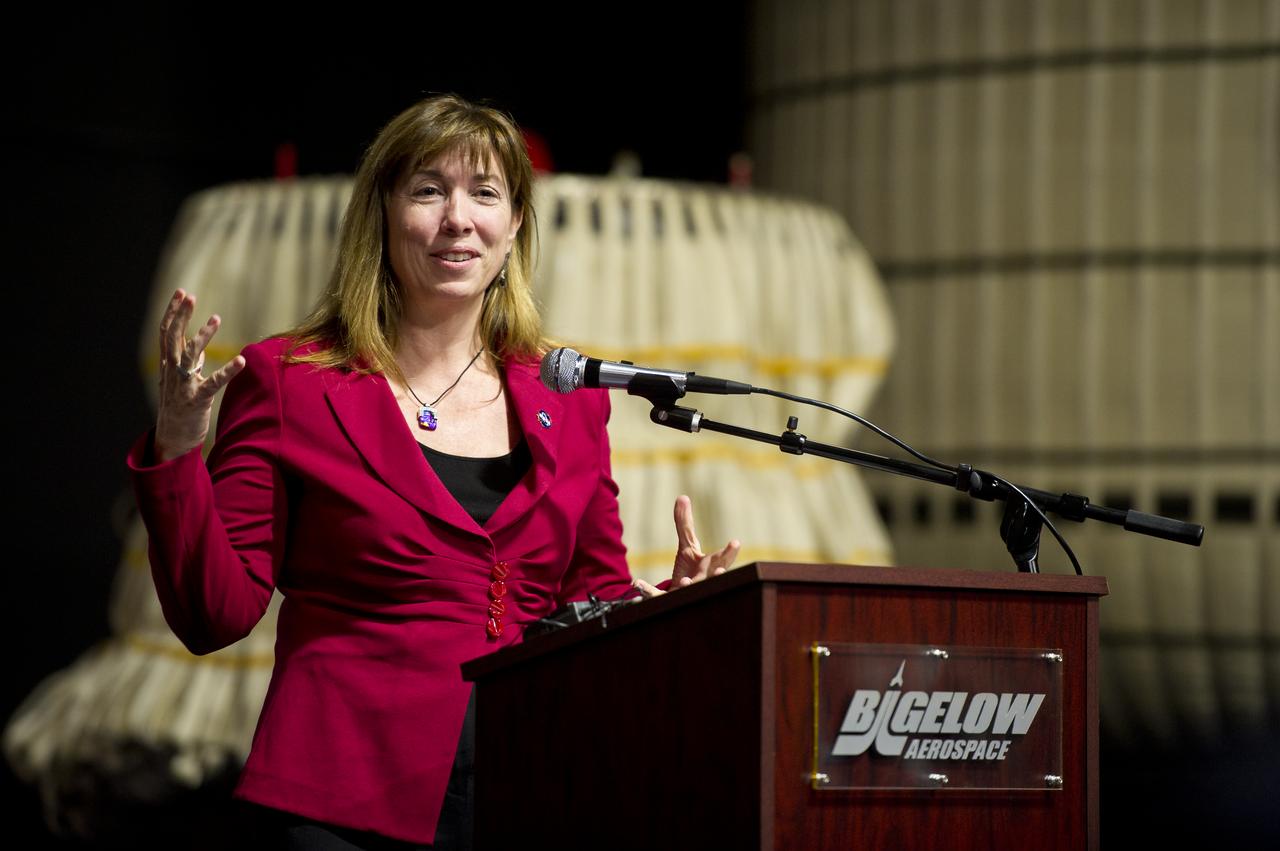
NASA Deputy Administrator Lori Garver talks during a press conference shortly after she was given a tour of the Bigelow Aerospace facilities by the company's President Robert Bigelow on Friday, Feb. 4, 2011, in Las Vegas. NASA has been discussing potential partnership opportunities with Bigelow for its inflatable habitat technologies as part of NASA's goal to develop innovative technologies to ensure that the U.S. remains competitive in future space endeavors. Photo Credit: (NASA/Bill Ingalls)
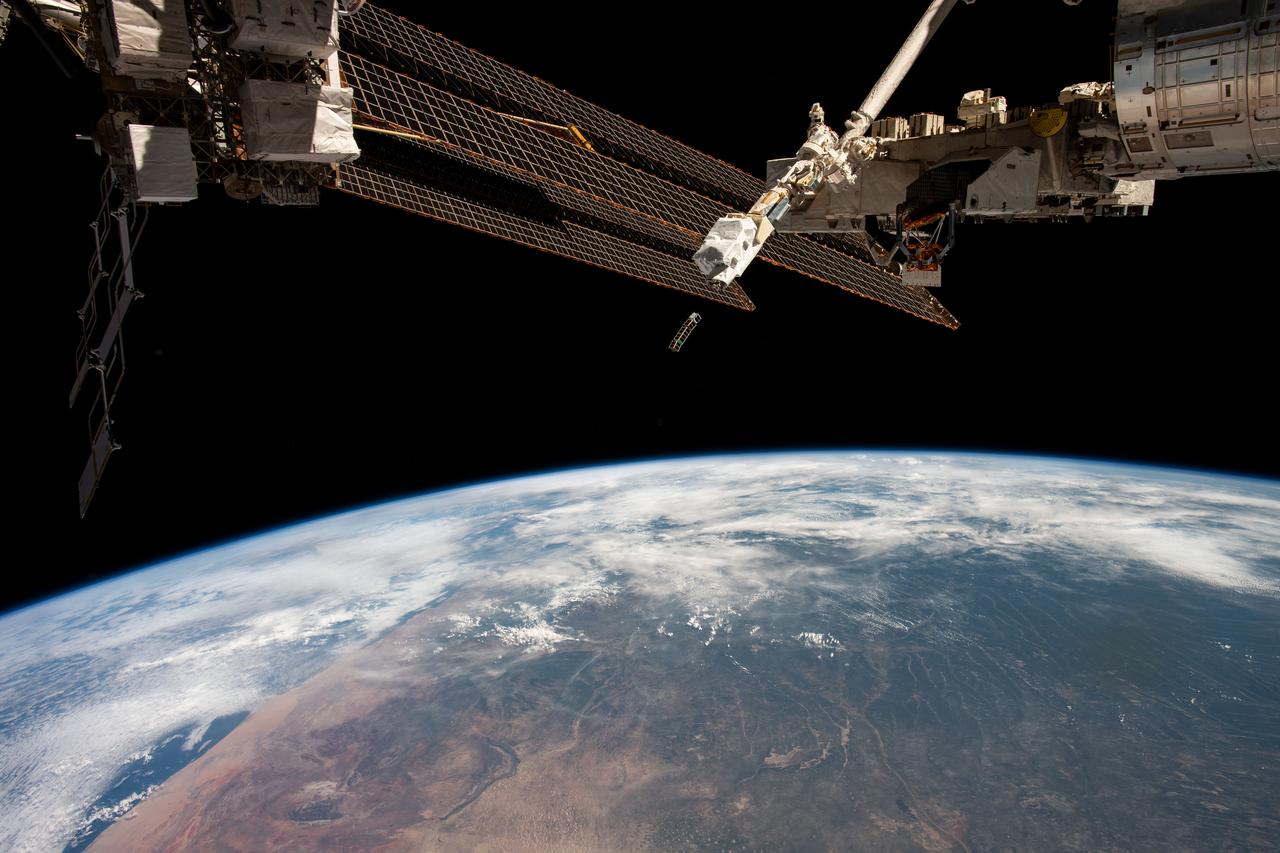
iss068e026117 (12/2/2022) --- The J-SS0D-23 CubeSat mission is shown as deployed from the International Space Station. The BIRDS-5 Project consists of three CubeSats: PearlAfricaSat-1 (1U), Science, Technology, and Innovation Office of the President (Uganda), TAKA (2U) Kyushu Institute of Technology (Japan), and ZIMSAT-1 (1U). SpaceTuna1 (1U) also deploys (Zimbabwe National Geospatial and Space Agency (ZINGSA) (Zimbabwe). Service provider: Mitsui Bussan Aerospace Inc. (Japan).
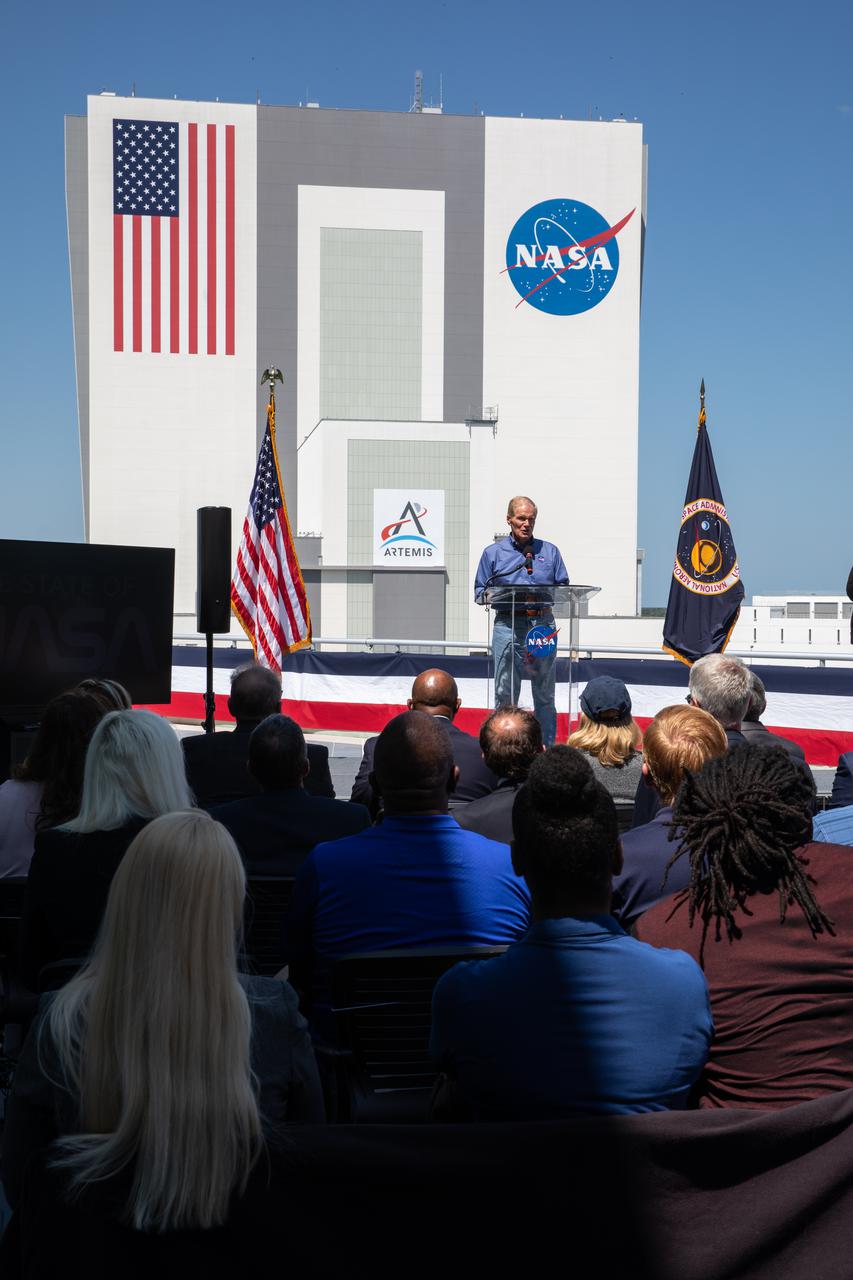
NASA Administrator Bill Nelson delivers the 2022 State of NASA address on March 28, 2022, from the agency’s Kennedy Space Center in Florida. Nelson highlighted NASA’s plans to explore the Moon and Mars, address climate change, promote racial and economic equity, and drive economic growth while sustaining U.S. leadership in aviation and aerospace innovation.
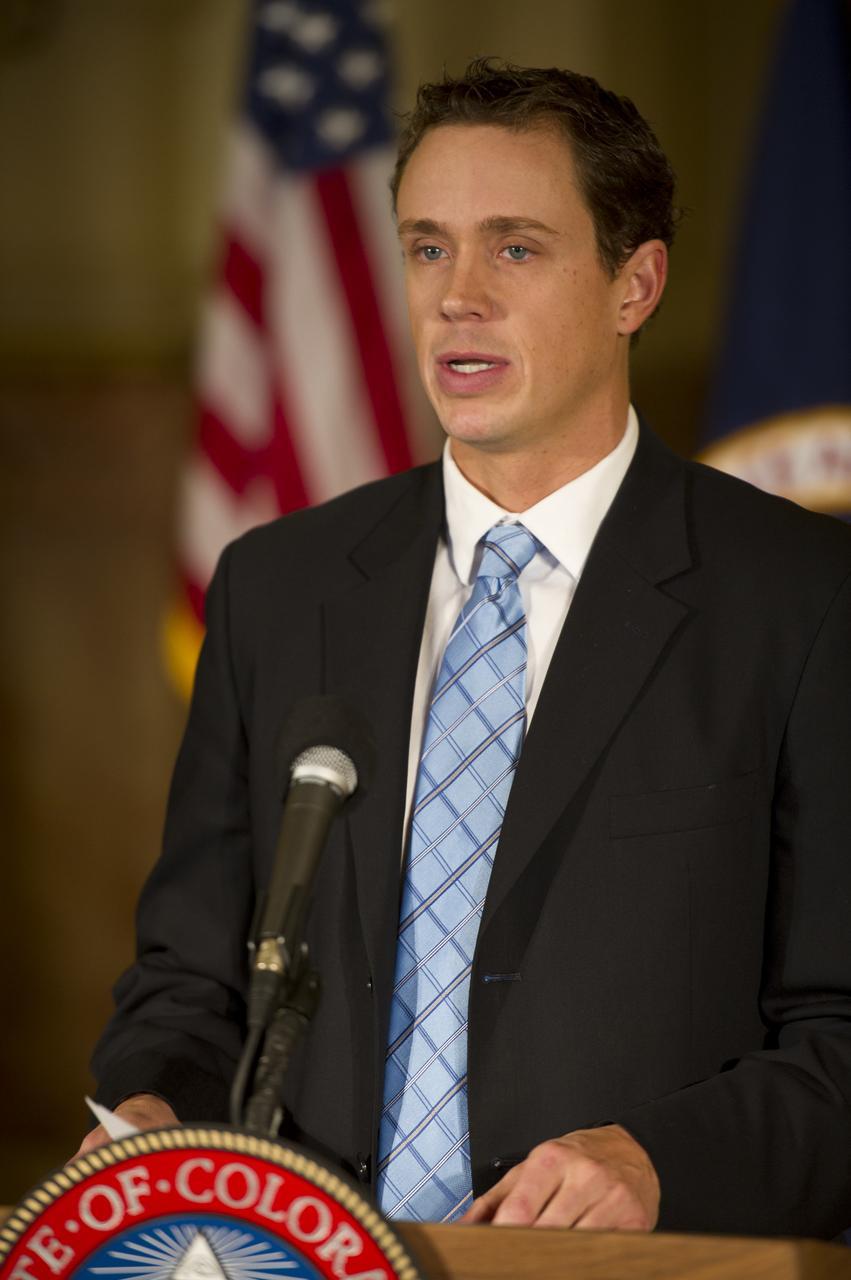
Representative from U.S. Senator Udall's office Jimmy Haugue reads remarks from U.S. Senator Udall at the Colorado State Capitol in Denver on Monday, Dec. 13, 2010, prior to the signing of an agreement with NASA that creates a Technology Acceleration Program and Regional Innovation Cluster for Aerospace and Clean Energy. A manufacturing park focused on rapid new product development and production will be developed to assist growing Colorado businesses while promoting the commercialization of technology developed for the space program. Photo Credit: (NASA/Bill Ingalls)
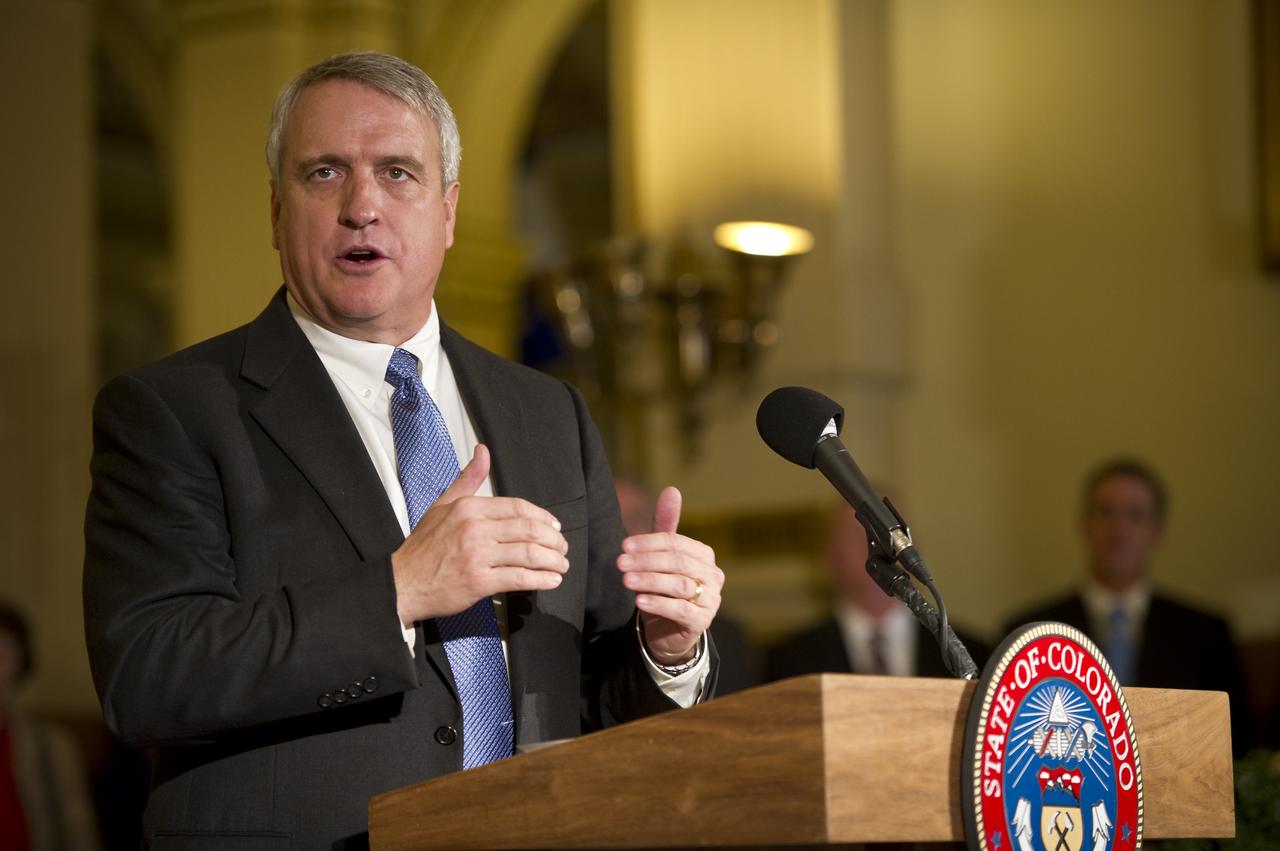
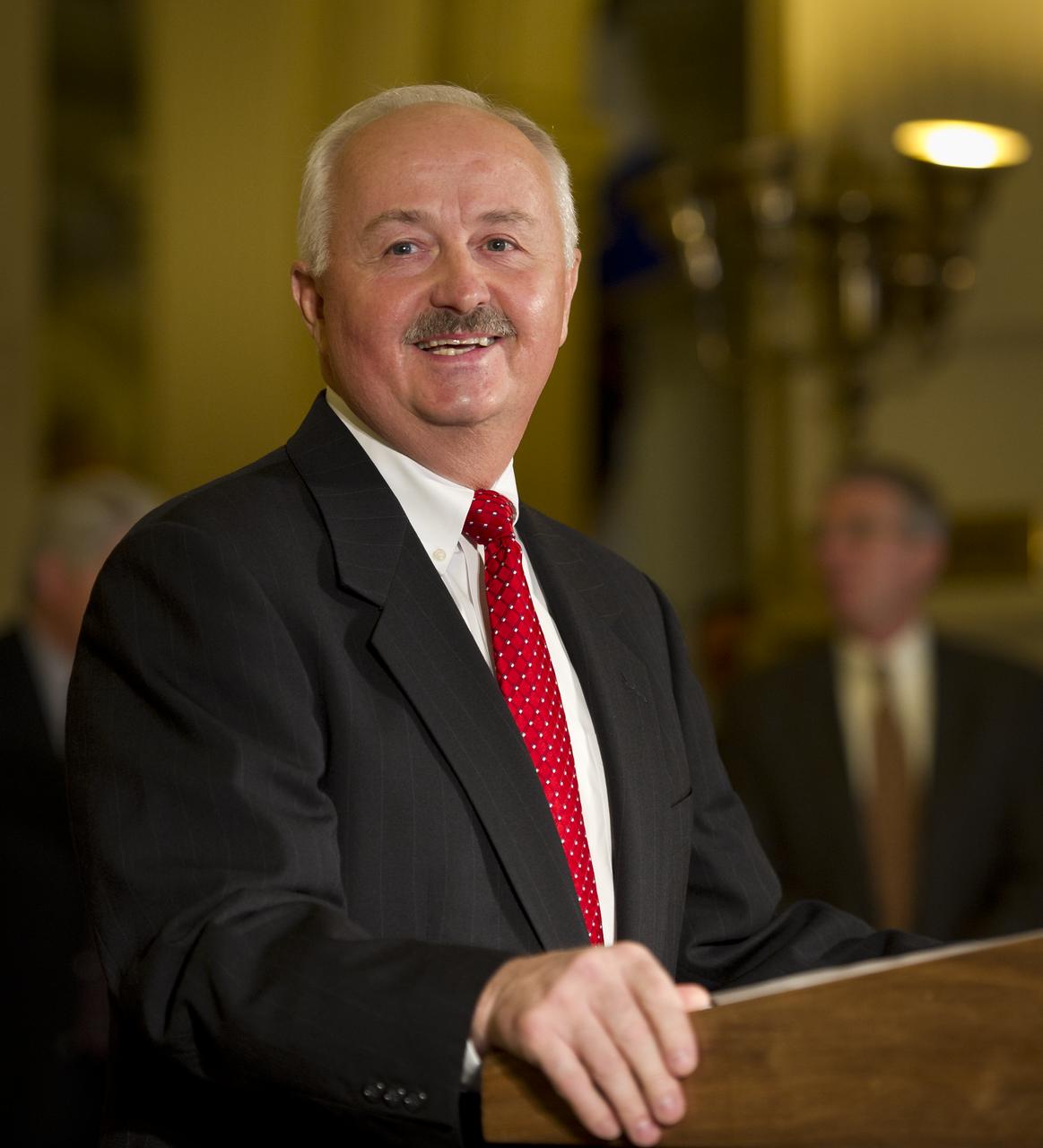
Colorado State Governor Bill Ritter delivers remarks at the Colorado State Capitol in Denver on Monday, Dec. 13, 2010, prior to the signing of an agreement with NASA that creates a Technology Acceleration Program and Regional Innovation Cluster for Aerospace and Clean Energy. A manufacturing park focused on rapid new product development and production will be developed to assist growing Colorado businesses while promoting the commercialization of technology developed for the space program. Photo Credit: (NASA/Bill Ingalls)
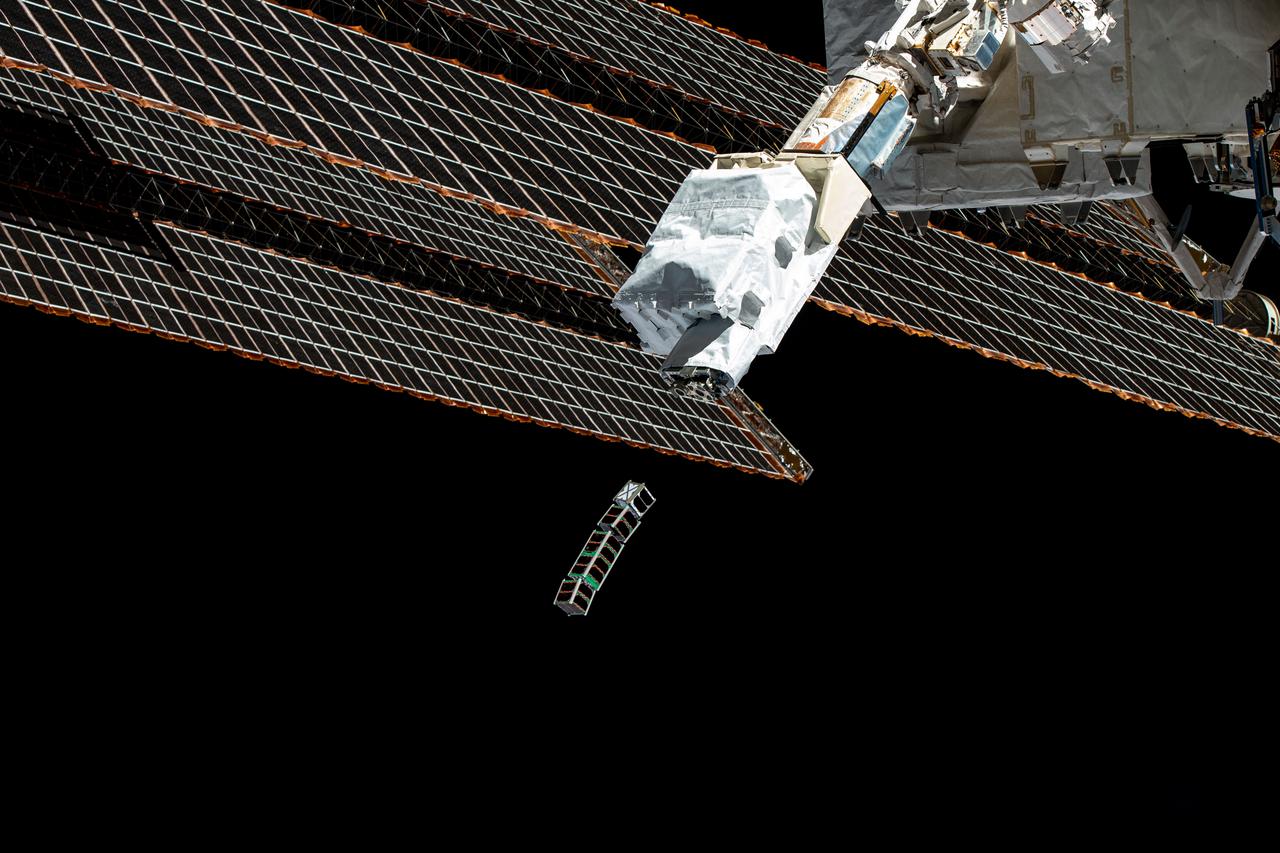
iss068e025787 (12/2/2022) --- The J-SS0D-23 CubeSat mission is shown as deployed from the International Space Station. The BIRDS-5 Project consists of three CubeSats: PearlAfricaSat-1 (1U), Science, Technology, and Innovation Office of the President (Uganda), TAKA (2U) Kyushu Institute of Technology (Japan), and ZIMSAT-1 (1U). SpaceTuna1 (1U) also deploys (Zimbabwe National Geospatial and Space Agency (ZINGSA) (Zimbabwe). Service provider: Mitsui Bussan Aerospace Inc. (Japan).
CAPE CANAVERAL, Fla. -- This is a printable poster with NASA's Commercial Crew Program (CCP) logo. CCP is leading NASA's effort of accelerating a United States-led capability to the International Space Station by investing in the design and development of the aerospace industry's crew transportation systems. The goal of CCP is to drive down the cost of space travel as well as open up space to more people than ever before by balancing industry’s own innovative capabilities with NASA's 50 years of human spaceflight experience. For more information, visit www.nasa.gov/commercialcrew
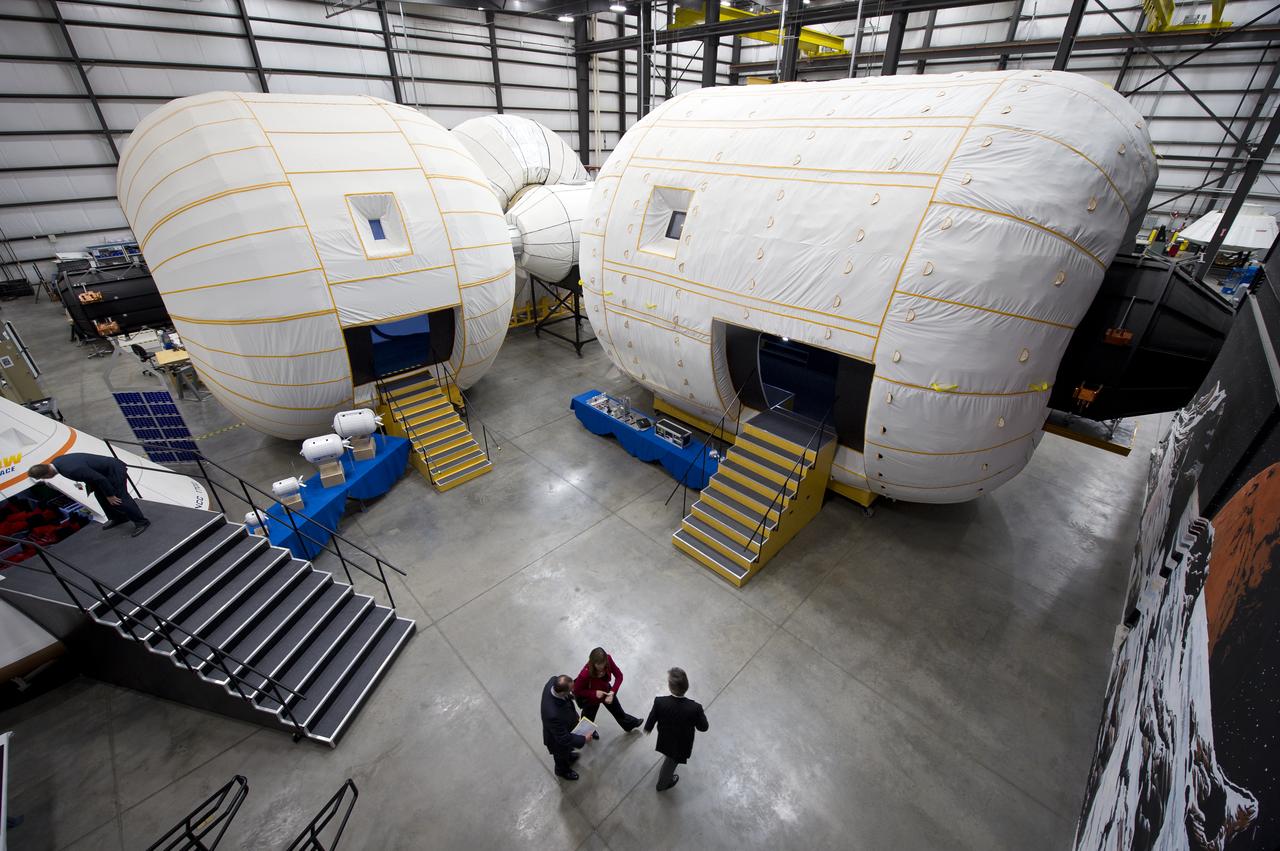
NASA Deputy Administrator Lori Garver is given a tour of the Bigelow Aerospace facilities by the company's President Robert Bigelow on Friday, Feb. 4, 2011, in Las Vegas. NASA has been discussing potential partnership opportunities with Bigelow for its inflatable habitat technologies as part of NASA's goal to develop innovative technologies to ensure that the U.S. remains competitive in future space endeavors. Photo Credit: (NASA/Bill Ingalls)
NIST MEP Director Roger Kilmer delivers remarks at the Colorado State Capitol in Denver on Monday, Dec. 13, 2010, prior to the signing of an agreement between the Colorado Association for Manufacturing and Technology (CAMT) and NASA that creates a Technology Acceleration Program and Regional Innovation Cluster for Aerospace and Clean Energy. A manufacturing park focused on rapid new product development and production will be developed to assist growing Colorado businesses while promoting the commercialization of technology developed for the space program. Photo Credit: (NASA/Bill Ingalls)
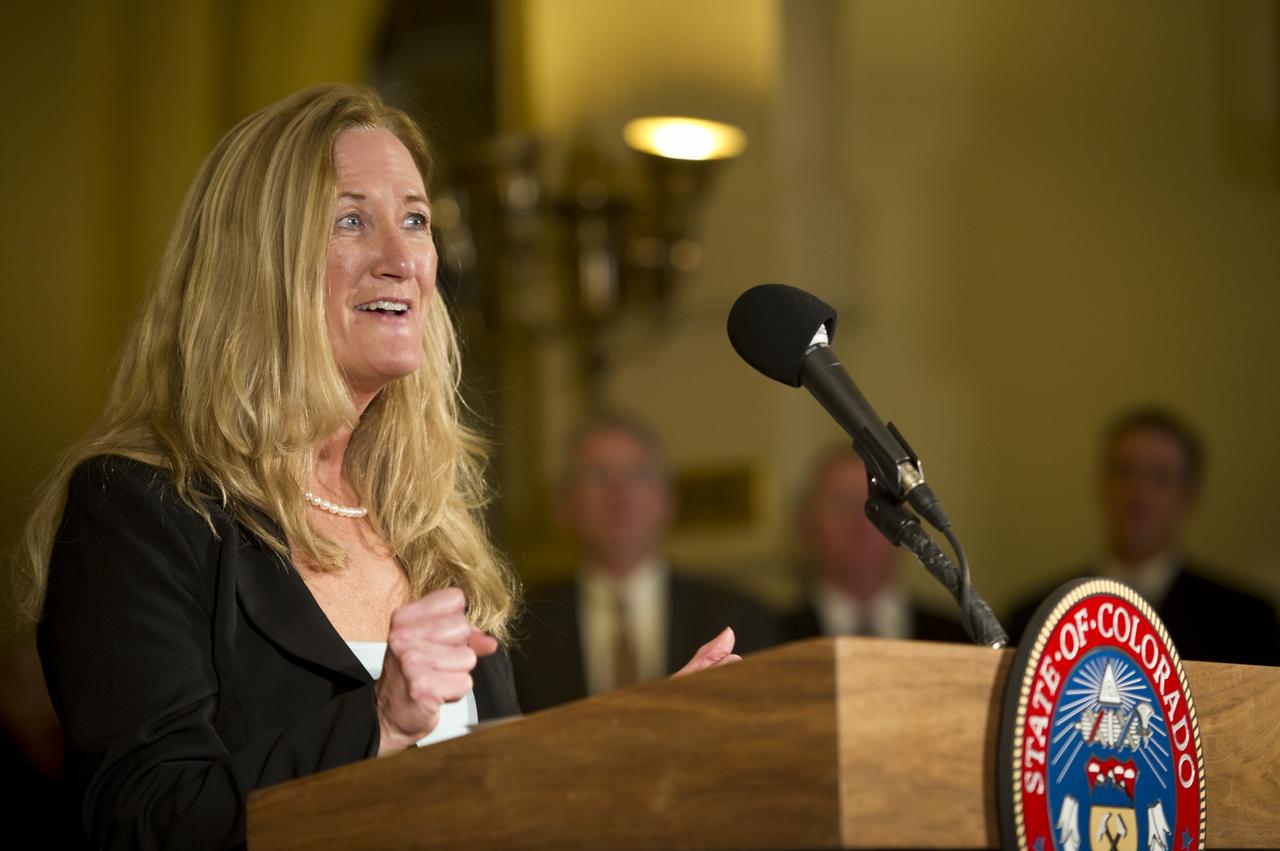
Colorado Association for Manufacturing and Technology (CAMT) CEO Elaine Thorndike delivers remarks at the Colorado State Capitol in Denver on Monday, Dec. 13, 2010, prior to the signing of an agreement with NASA that creates a Technology Acceleration Program and Regional Innovation Cluster for Aerospace and Clean Energy. A manufacturing park focused on rapid new product development and production will be developed to assist growing Colorado businesses while promoting the commercialization of technology developed for the space program. Photo Credit: (NASA/Bill Ingalls)

NASA Deputy Administrator Lori Garver delivers remarks at the Colorado State Capitol in Denver on Monday, Dec. 13, 2010, prior to signing an agreement that creates a Technology Acceleration Program and Regional Innovation Cluster for Aerospace and Clean Energy. A manufacturing park focused on rapid new product development and production will be developed to assist growing Colorado businesses while promoting the commercialization of technology developed for the space program. Photo Credit: (NASA/Bill Ingalls)
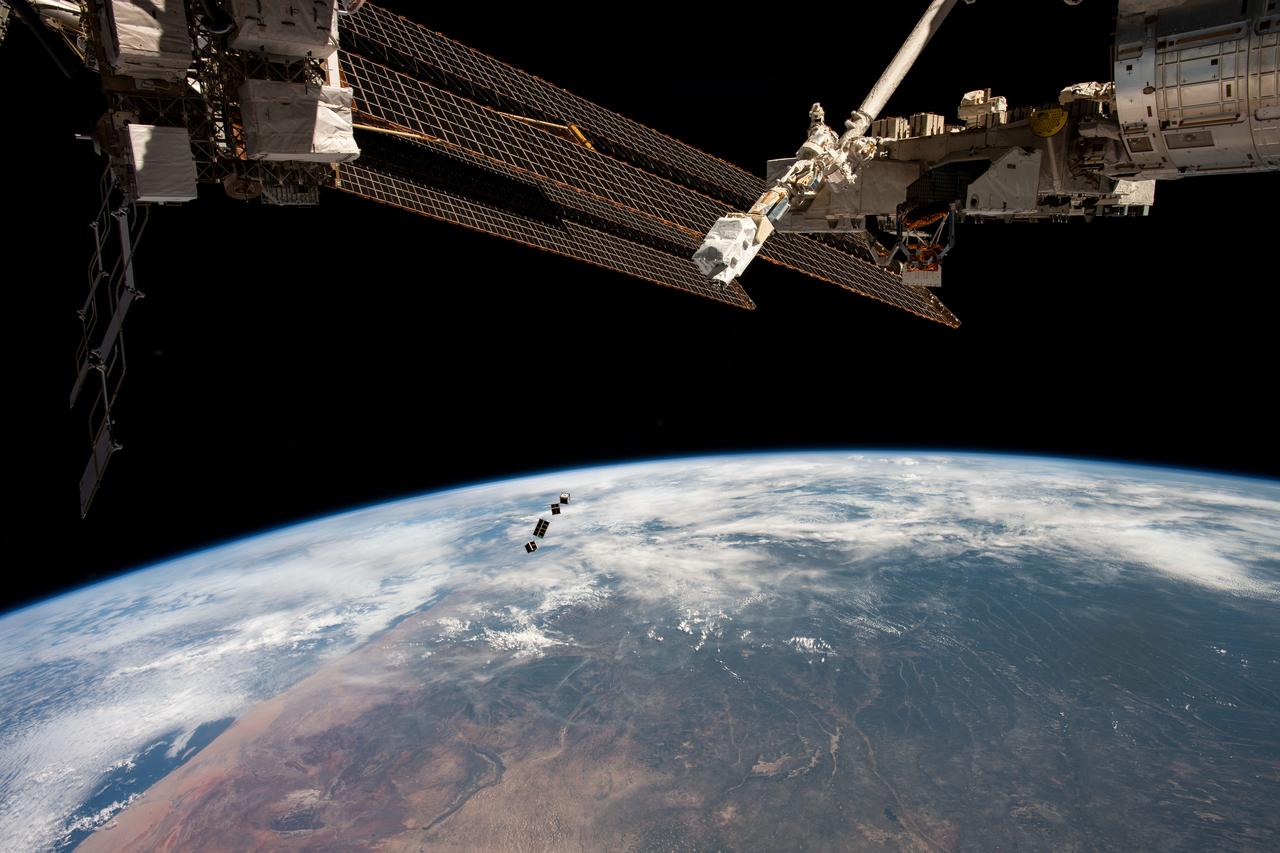
iss068e026121 (12/2/2022) --- The J-SS0D-23 CubeSat mission is shown as deployed from the International Space Station. The BIRDS-5 Project consists of three CubeSats: PearlAfricaSat-1 (1U), Science, Technology, and Innovation Office of the President (Uganda), TAKA (2U) Kyushu Institute of Technology (Japan), and ZIMSAT-1 (1U). SpaceTuna1 (1U) also deploys (Zimbabwe National Geospatial and Space Agency (ZINGSA) (Zimbabwe). Service provider: Mitsui Bussan Aerospace Inc. (Japan).
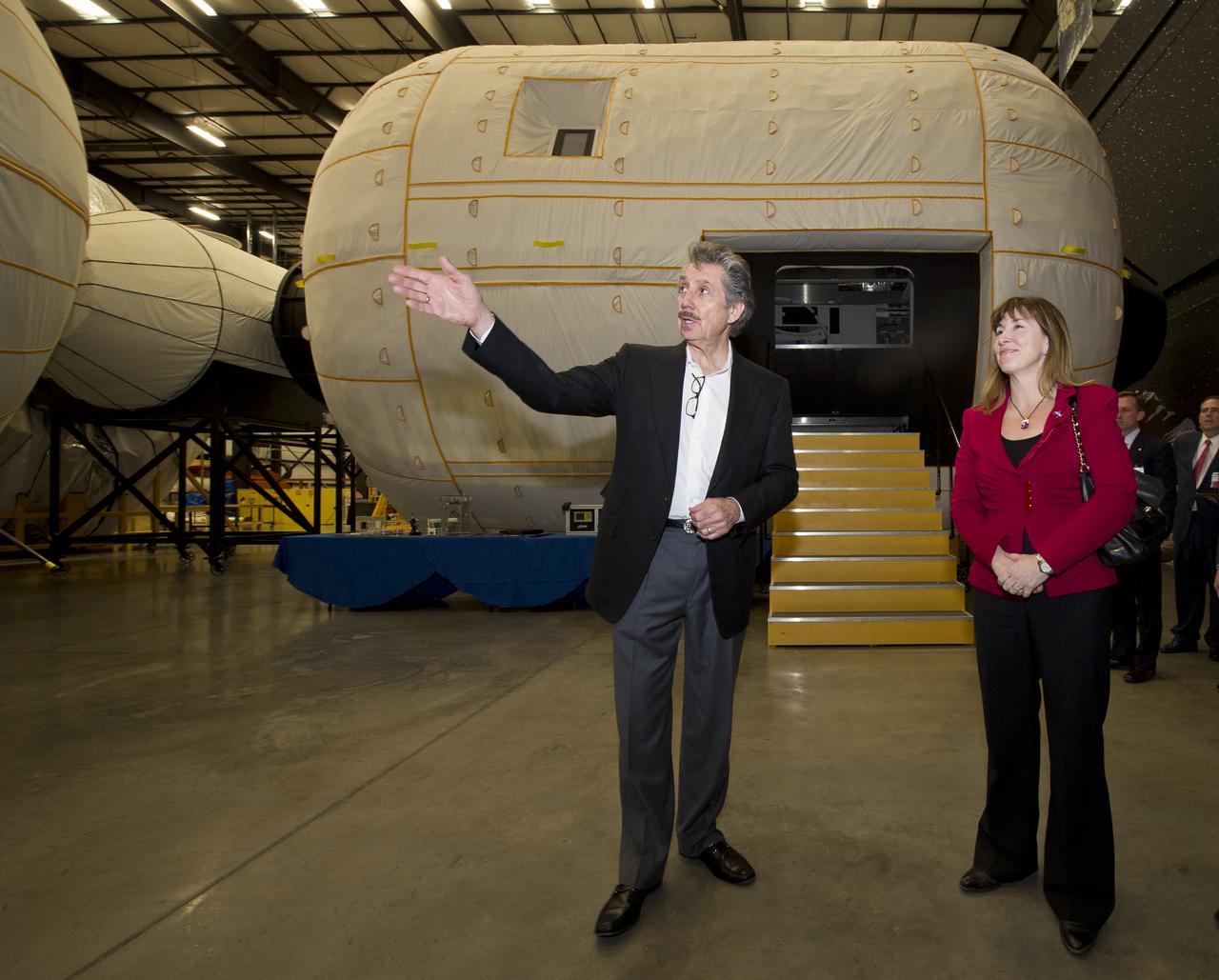
NASA Deputy Administrator Lori Garver is given a tour of the Bigelow Aerospace facilities by the company's President Robert Bigelow on Friday, Feb. 4, 2011, in Las Vegas. NASA has been discussing potential partnership opportunities with Bigelow for its inflatable habitat technologies as part of NASA's goal to develop innovative technologies to ensure that the U.S. remains competitive in future space endeavors. Photo Credit: (NASA/Bill Ingalls)

NASA astronaut Mike Fincke provides remarks at NASA’s Air and Space Innovation Day event alongside his Expedition 73 and 74 crew mates NASA astronaut Zena Cardman and Japan Aerospace Exploration Agency (JAXA) astronaut Kimiya Yui, Wednesday, June 3, 2026, in the Cannon House Office Building in Washington. Photo Credit: (NASA/Joel Kowsky)

NASA astronaut Zena Cardman, left, provides remarks at NASA’s Air and Space Innovation Day event alongside her Expedition 73 and 74 crew mates NASA astronaut Mike Fincke, center, and Japan Aerospace Exploration Agency (JAXA) astronaut Kimiya Yui, right, Wednesday, June 3, 2026, in the Cannon House Office Building in Washington. Photo Credit: (NASA/Joel Kowsky)

Japan Aerospace Exploration Agency (JAXA) astronaut Kimiya Yui provides remarks at NASA’s Air and Space Innovation Day event alongside his Expedition 73 and 74 crew mates NASA astronauts Zena Cardman Mike Fincke, Wednesday, June 3, 2026, in the Cannon House Office Building in Washington. Photo Credit: (NASA/Joel Kowsky)

CAPE CANAVERAL, Fla. -- Florida's Lt. Gov. Jennifer Carroll talks about the positive impact the aerospace industry has on the state of Florida during the National Space Club Florida Committee's August luncheon at the Radisson Resort at the Port in Cape Canaveral, Fla. NASA Commercial Crew Program Manager Ed Mango also discussed the innovative steps the agency is taking with industry partners to develop the next U.S. space transportation capability to and from low Earth orbit, which will eventually be available for use by the U.S. government and other commercial customers. To learn more about the Commercial Crew Program, visit www.nasa.gov/commercialcrew. Photo credit: Kim Shiflett
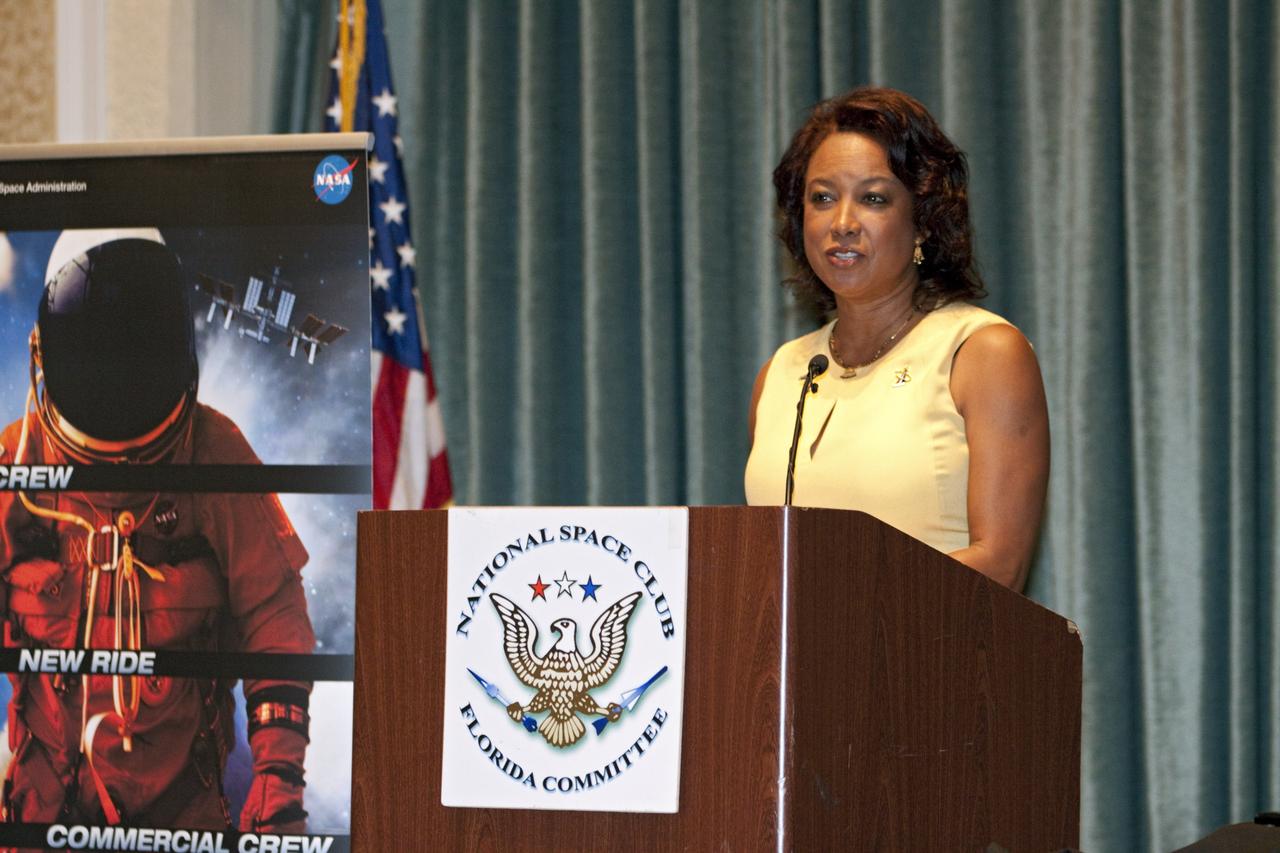
CAPE CANAVERAL, Fla. -- Florida's Lt. Gov. Jennifer Carroll talks about the positive impact the aerospace industry has on the state of Florida during the National Space Club Florida Committee's August luncheon at the Radisson Resort at the Port in Cape Canaveral, Fla. NASA Commercial Crew Program Manager Ed Mango also discussed the innovative steps the agency is taking with industry partners to develop the next U.S. space transportation capability to and from low Earth orbit, which will eventually be available for use by the U.S. government and other commercial customers. To learn more about the Commercial Crew Program, visit www.nasa.gov/commercialcrew. Photo credit: Kim Shiflett
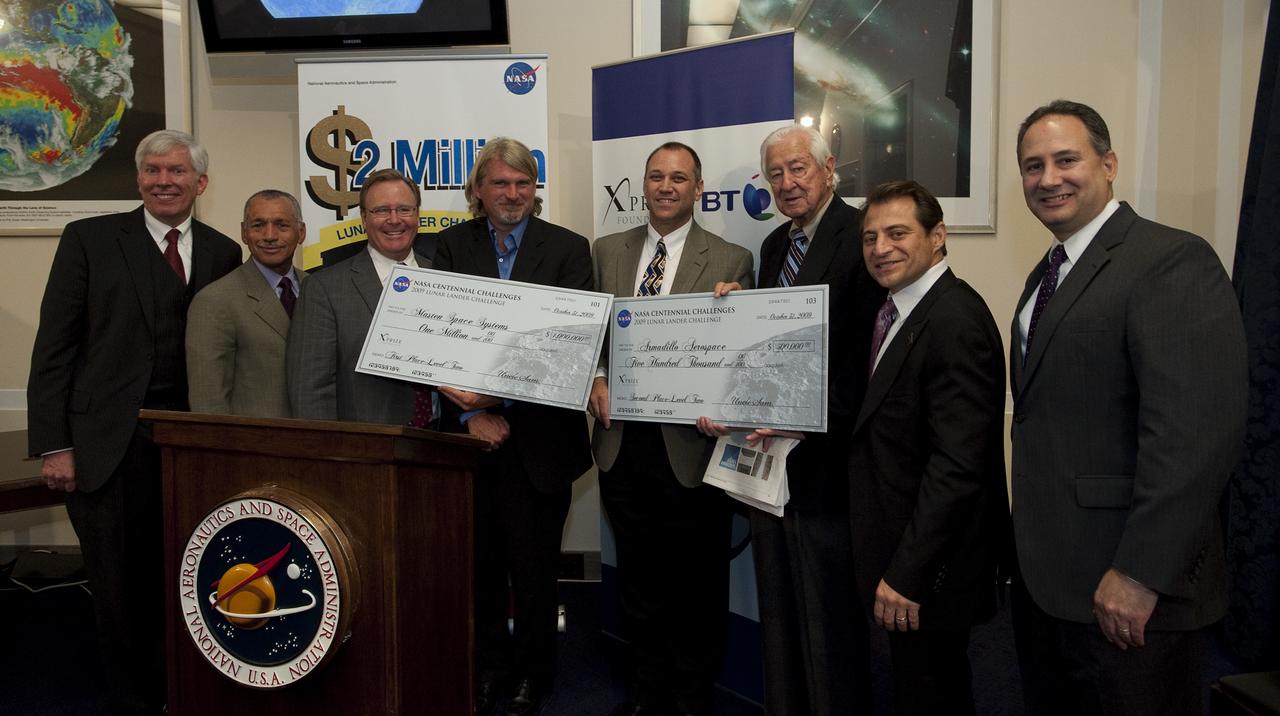
NASA and the X PRIZE Foundation announced the winners of the Northrop Grumman Lunar Lander Challenge at an awards ceremony at the Rayburn House Office Building, Thursday, Nov. 5, 2009 in Washington, DC. From left to right, George Nield, Associate Administrator of Commercial Space Transportation, FAA; Charles Bolden, NASA Administrator; Doug Comstock, Director, Innovative Partnerships Program, NASA; David Masten, CEO, Masten Space Systems; Phil Eaton, VP, Operations, Armadillo Aerospace; U.S. Rep. Ralph Hall (R-TX); Peter Diamandis, Chairman and CEO, X PRIZE Foundation and Mitch Waldman, VP, Advanced Programs & Technology, Northrop Grumman. Photo Credit: (NASA/Carla Cioffi)
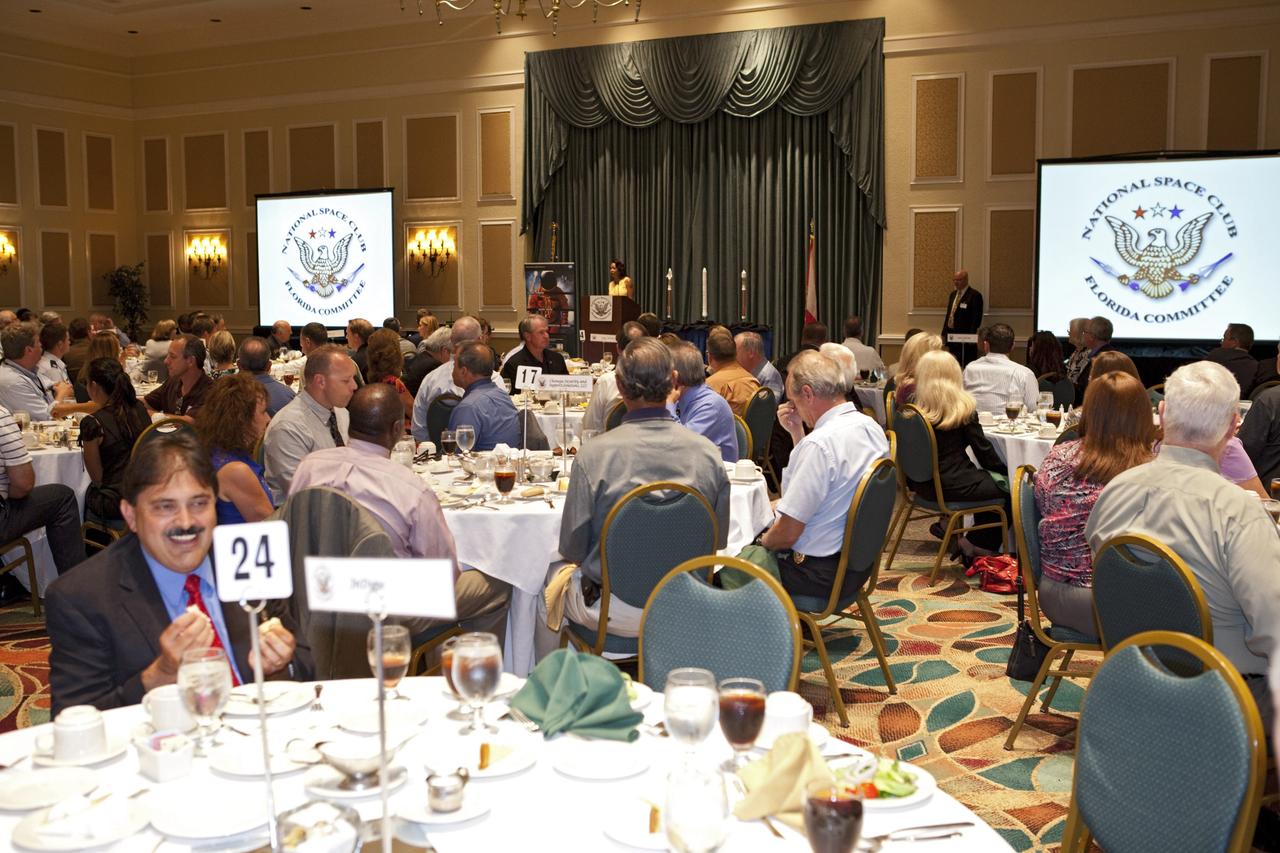
CAPE CANAVERAL, Fla. -- Florida's Lt. Gov. Jennifer Carroll talks about the positive impact the aerospace industry has on the state of Florida during the National Space Club Florida Committee's August luncheon at the Radisson Resort at the Port in Cape Canaveral, Fla. NASA Commercial Crew Program Manager Ed Mango also discussed the innovative steps the agency is taking with industry partners to develop the next U.S. space transportation capability to and from low Earth orbit, which will eventually be available for use by the U.S. government and other commercial customers. To learn more about the Commercial Crew Program, visit www.nasa.gov/commercialcrew. Photo credit: Kim Shiflett

NASA Deputy Administrator Matt Anderson, second from left, speaks with NASA astronaut Mike Fincke, right, Japan Aerospace Exploration Agency (JAXA) astronaut Kimiya Yui, second from right, and NASA astronaut Zena Cardman, left, before attending NASA’s Air and Space Innovation Day event, Wednesday, June 3, 2026, in the Cannon House Office Building in Washington. Cardman, Fincke, and Yui spent 167 days onboard the orbiting laboratory as part of Expeditions 73 and 74. Photo Credit: (NASA/Joel Kowsky)
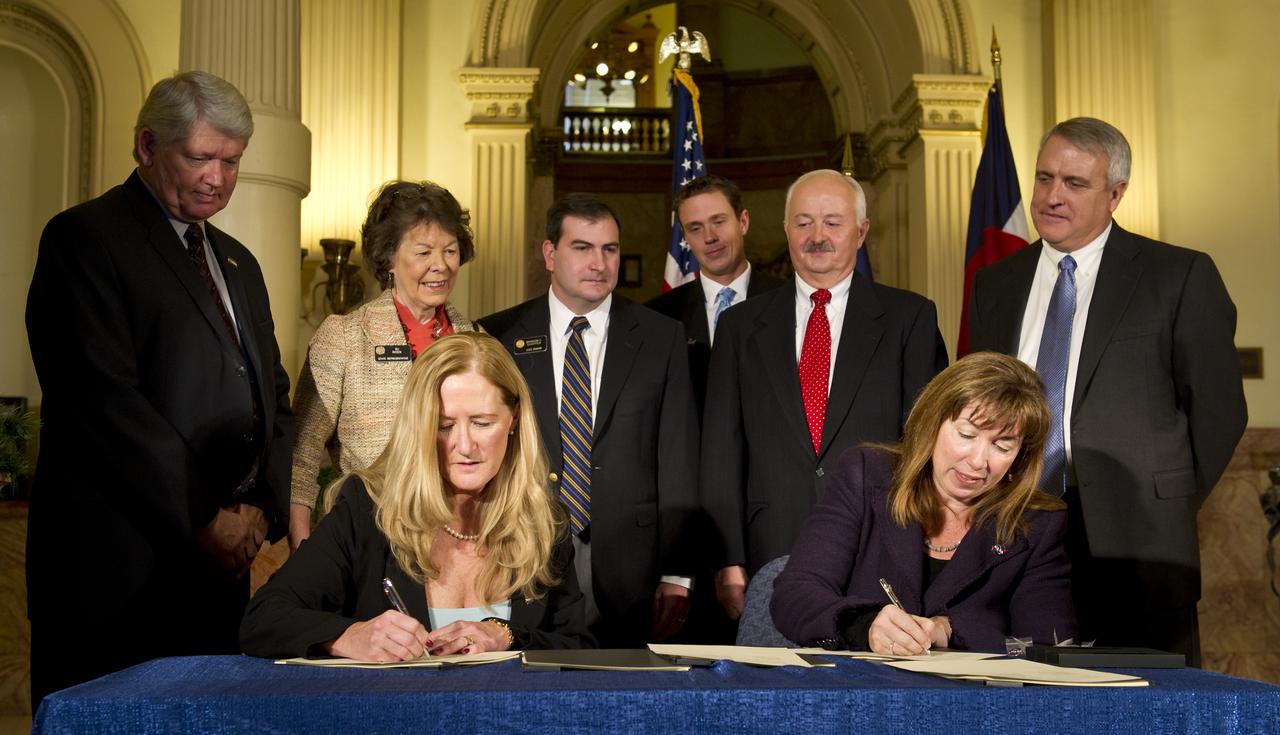
Colorado Association for Manufacturing and Technology (CAMT) CEO Elaine Thorndike, seated left, and NASA Deputy Administrator Lori Garver, seated right, sign an agreement at the Colorado State Capitol in Denver on Monday, Dec. 13, 2010, that created a Technology Acceleration Program and Regional Innovation Cluster for Aerospace and Clean Energy. Looking on from left, Executive Director, Colorado Office of Economic Development and International Trade Don Marostica, Colorado State Representative Su Ryden, Colorado State Senate President Brandon Schaffer, Representative from U.S. Senator Udall's office Jimmy Haugue, NIST/MEP Director Roger Kilmer and Colorado State Governor Bill Ritter. A manufacturing park focused on rapid new product development and production will be developed to assist growing Colorado businesses while promoting the commercialization of technology developed for the space program. Photo Credit: (NASA/Bill Ingalls)
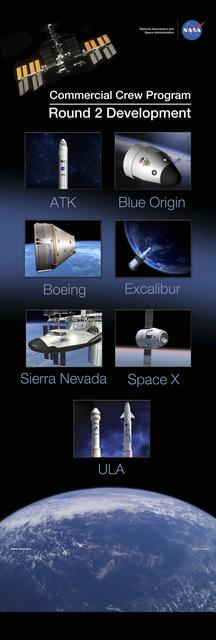
CAPE CANAVERAL, Fla. -- This is a printable banner of the aerospace companies NASA's Commercial Crew Program (CCP) entered into Space Act Agreements with during Commercial Crew Development Round 2 (CCDev2) activities in 2011 in order to mature the design and development of crew transportation systems with the overall goal of accelerating a United States-led capability to the International Space Station. CCDev2 companies are Alliant Techsystems (ATK), Blue Origin, The Boeing Co., Excalibur Almaz Inc., Sierra Nevada Corp., Space Exploration Technologies (SpaceX), and United Launch Alliance (ULA). The goal of CCP is to drive down the cost of space travel as well as open up space to more people than ever before by balancing industry’s own innovative capabilities with NASA's 50 years of human spaceflight experience. For more information, visit www.nasa.gov/commercialcrew
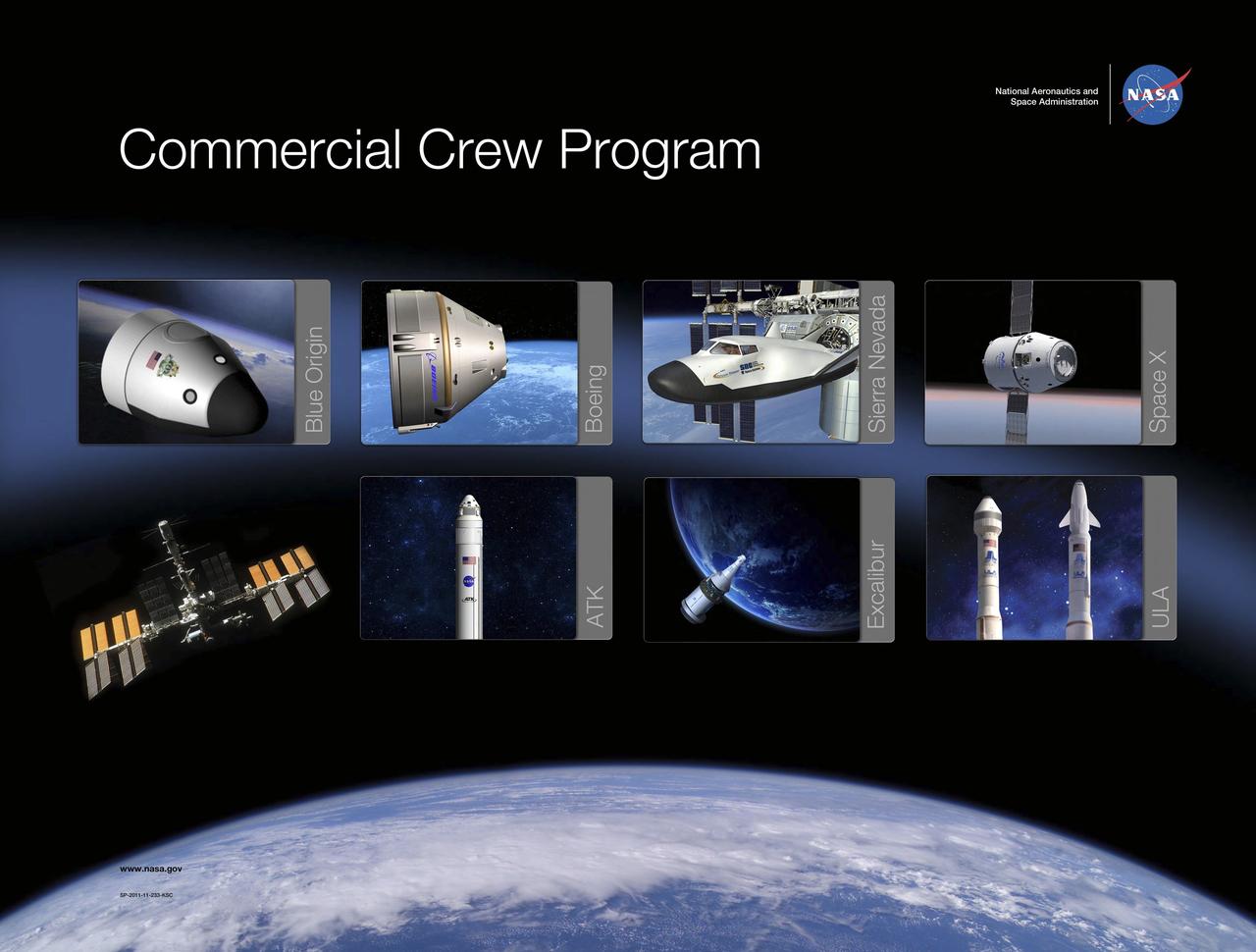
CAPE CANAVERAL, Fla. -- This is a printable poster of the aerospace companies NASA's Commercial Crew Program (CCP) entered into Space Act Agreements with during Commercial Crew Development Round 2 (CCDev2) activities in 2011 in order to mature the design and development of crew transportation systems with the overall goal of accelerating a United States-led capability to the International Space Station. CCDev2 companies are Alliant Techsystems (ATK), Blue Origin, The Boeing Co., Excalibur Almaz Inc., Sierra Nevada Corp., Space Exploration Technologies (SpaceX), and United Launch Alliance (ULA). The goal of CCP is to drive down the cost of space travel as well as open up space to more people than ever before by balancing industry’s own innovative capabilities with NASA's 50 years of human spaceflight experience. For more information, visit www.nasa.gov/commercialcrew
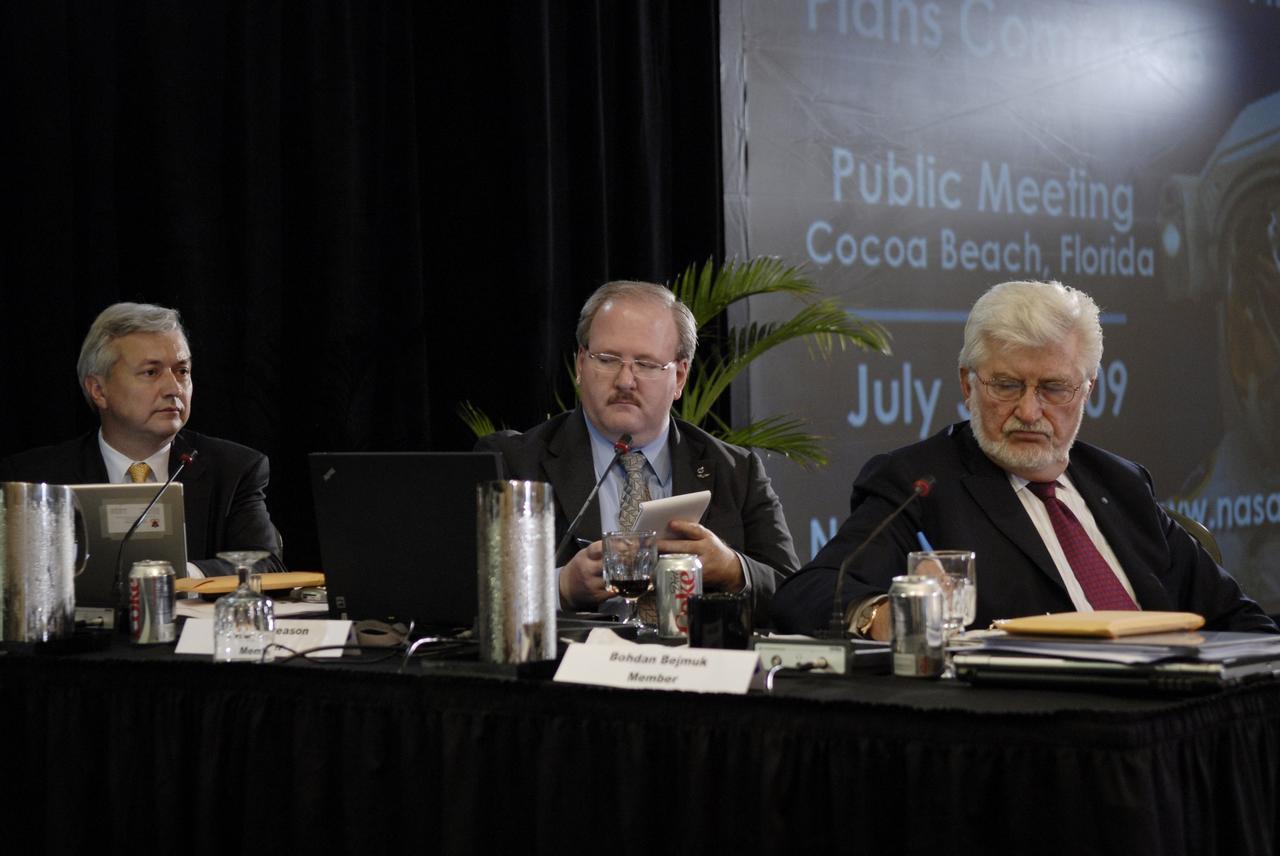
CAPE CANAVERAL, Fla. – Members of the Augustine Commission are meeting in Cocoa Beach, Fla. From left are Dr. Christopher Chyba, Professor of Astrophysical Sciences and international Affairs at Princeton University; Jeff Greason, co-founder and CEO of XCOR Aerospace; and Bohdan Bejmuk, chair of Constellation Program Standing Review Board. At the request of the Office of Science and Technology Policy, NASA established the Review of U.S. Human Space Flight Plans Committee, known as the Augustine Commission. Chaired by Norman R. Augustine, retired chairman and CEO of Lockheed Martin Corp., the committee is conducting an independent review of ongoing U.S. human spaceflight plans and programs, as well as alternatives, to ensure the nation is pursuing the best trajectory for the future of human space flight - one that is safe, innovative, affordable, and sustainable. Photo credit: NASA/Kim Shiflett
CAPE CANAVERAL, Fla. -- NASA Administrator Charles Bolden announces the prospect of a new agency partnership at a news conference at the Kennedy Space Center Visitor Complex in Florida. NASA has selected Space Florida, the aerospace economic development agency for the state of Florida, for negotiations toward a partnership agreement to maintain and operate the historic Shuttle Landing Facility, or SLF. NASA issued a request for information to industry in 2012 to identify new and innovative ways to use the facility for current and future commercial and government mission activities. Space Florida's proposal is aligned closely with Kennedy's vision for creating a multiuser spaceport. The SLF, specially designed for space shuttles returning to Kennedy, opened for flights in 1976. The concrete runway is 15,000 feet long and 300 feet wide. The SLF is capable of handling all types and sizes of aircraft and horizontal launch and landing vehicles. For more information on Space Florida, visit http://www.spaceflorida.gov. Photo credit: NASA/Jim Grossmann
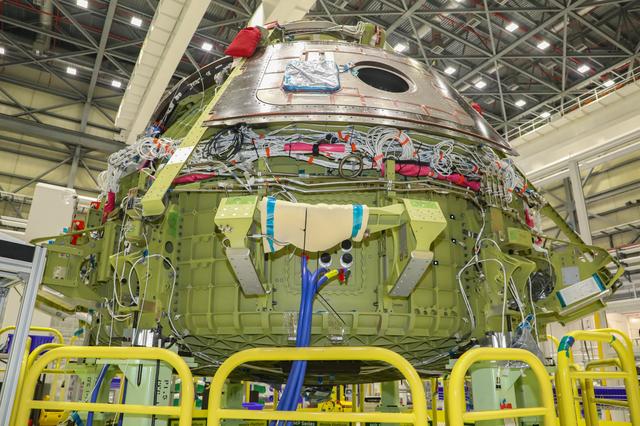
On March 11, Boeing mated the upper and lower domes of its CST-100 Starliner spacecraft slated to fly in the company’s Orbital Flight Test (OFT). The mate was completed at Boeing’s Commercial Crew and Cargo Processing Facility at NASA’s Kennedy Space Center in Florida. Starliner uses an innovative weldless design where the main structure is made of two domes, each spin-formed and machined from a solid piece of aerospace-grade aluminum. The two domes then undergo outfitting with avionics, cooling systems, wire harnesses, fuel and life support lines, and other critical systems before being mated together. This is one of the last major milestones ahead of final processing and closeouts for flight. OFT is Boeing’s uncrewed flight test of Starliner and part of NASA’s Commercial Crew Program, which will return human spaceflight launches into low-Earth orbit from U.S. soil.
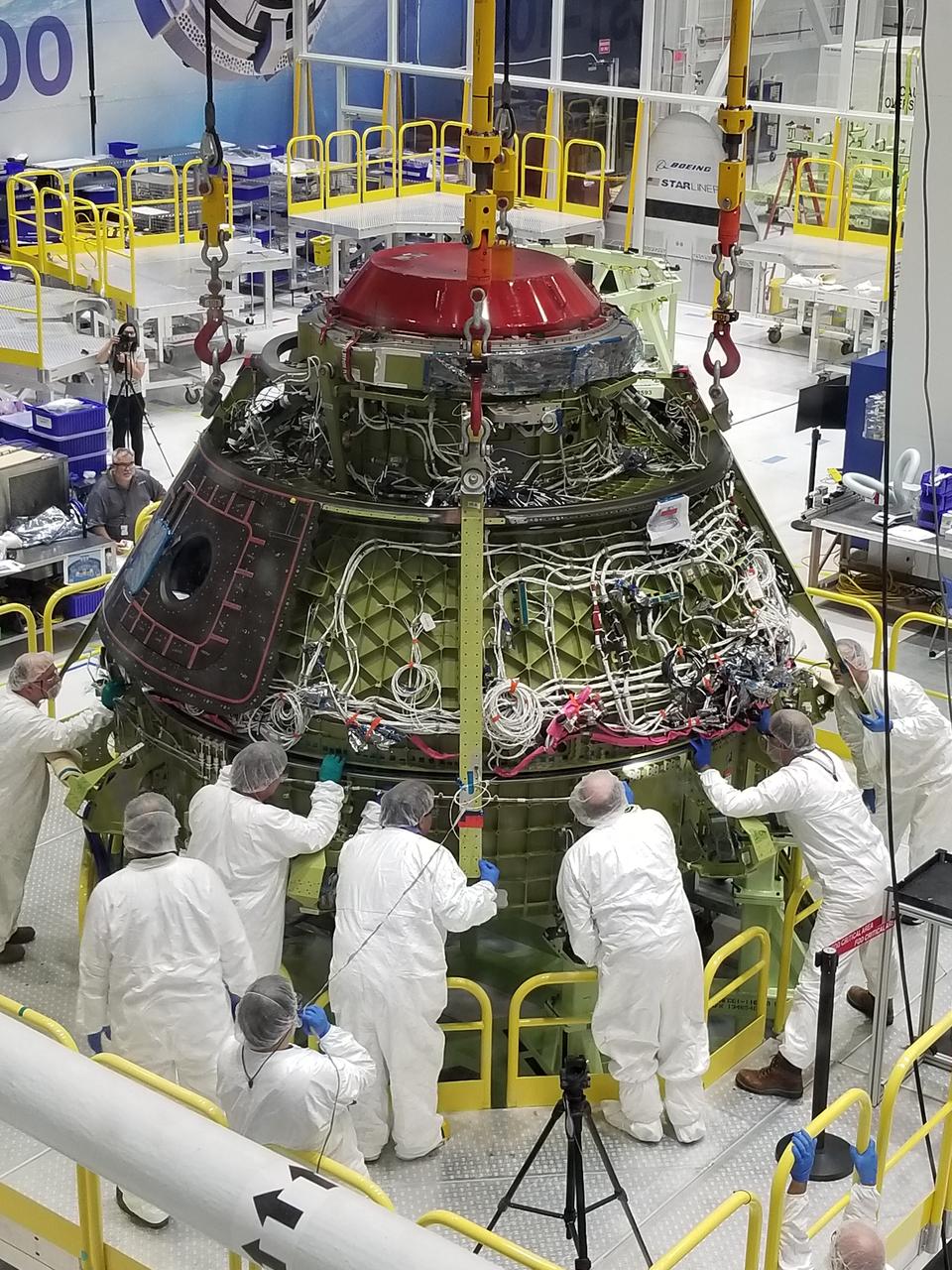
Boeing technicians meticulously lower its CST-100 Starliner’s upper dome to the lower dome before bolting and sealing the pressure vessel on March 11. This is the Starliner spacecraft slated to fly in the company’s Orbital Flight Test (OFT). The mate was completed at Boeing’s Commercial Crew and Cargo Processing Facility at NASA’s Kennedy Space Center in Florida. Starliner uses an innovative weldless design where the main structure is made of two domes, each spin-formed and machined from a solid piece of aerospace-grade aluminum. The two domes then undergo outfitting with avionics, cooling systems, wire harnesses, fuel and life support lines, and other critical systems before being mated together. This is one of the last major milestones ahead of final processing and closeouts for flight. OFT is Boeing’s uncrewed flight test of Starliner and part of NASA’s Commercial Crew Program, which will return human spaceflight launches into low-Earth orbit from U.S. soil.
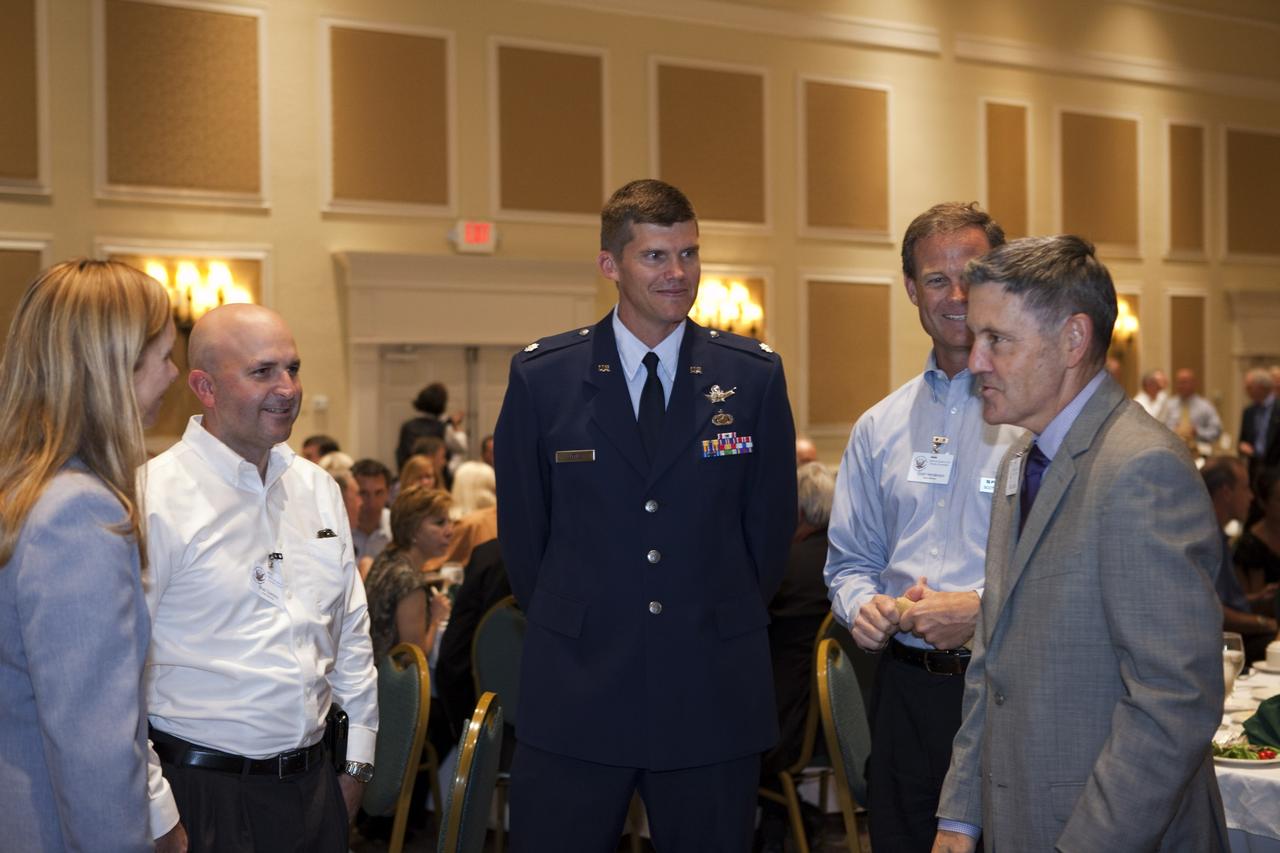
CAPE CANAVERAL, Fla. -- NASA Kennedy Space Center Director Bob Cabana, right, and Kennedy Deputy Director Janet Petro, left, talk with aerospace industry representatives during the National Space Club Florida Committee's August luncheon at the Radisson Resort at the Port in Cape Canaveral, Fla. NASA Commercial Crew Program Manager Ed Mango was the event's guest speaker, discussing the innovative steps the agency is taking with industry partners to develop the next U.S. space transportation capability to and from low Earth orbit, which will eventually be available for use by the U.S. government and other commercial customers. To learn more about the Commercial Crew Program, visit www.nasa.gov/commercialcrew. Photo credit: Kim Shiflett
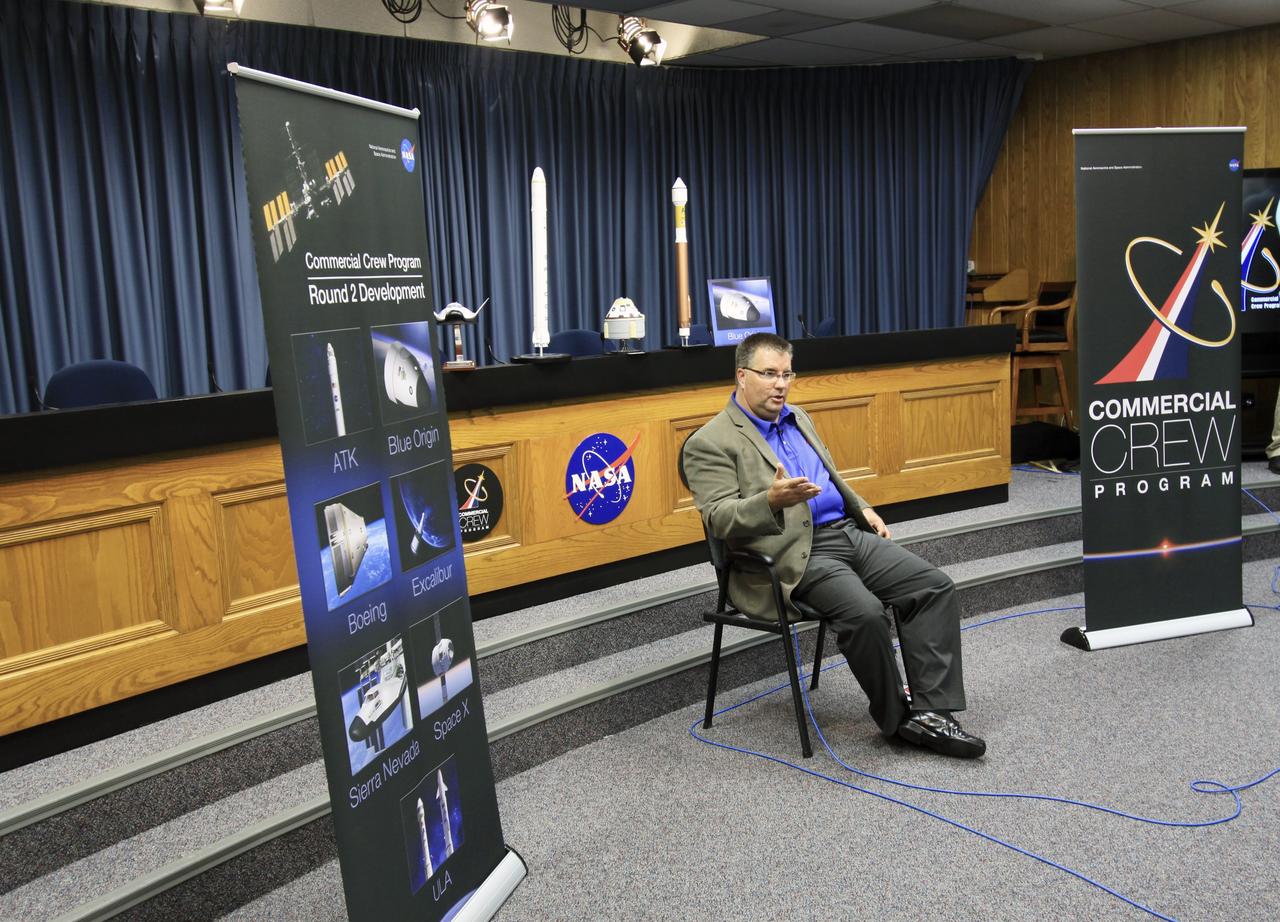
CAPE CANAVERAL, Fla. -- Ed Mango, program manager for NASA's Commercial Crew Program (CCP), updates media on the progress of Commercial Crew Development Round 2 (CCDev2) activities in which seven aerospace companies are maturing launch vehicle and spacecraft systems designed to take astronauts to the International Space Station. The goal of the program is to drive down the cost of space travel as well as open up space to more people than ever before by balancing industry’s own innovative capabilities with NASA's 50 years of human spaceflight experience. Seven aerospace companies are maturing launch vehicle and spacecraft designs under CCDev2, including Alliant Techsystems Inc. (ATK) of Promontory, Utah, Blue Origin of Kent, Wash., The Boeing Co., of Houston, Excalibur Almaz Inc. of Houston, Sierra Nevada Corp. of Louisville, Colo., Space Exploration Technologies (SpaceX) of Hawthorne, Calif., and United Launch Alliance (ULA) of Centennial, Colo. For more information, visit www.nasa.gov/exploration/commercial Photo credit: Jim Grossmann
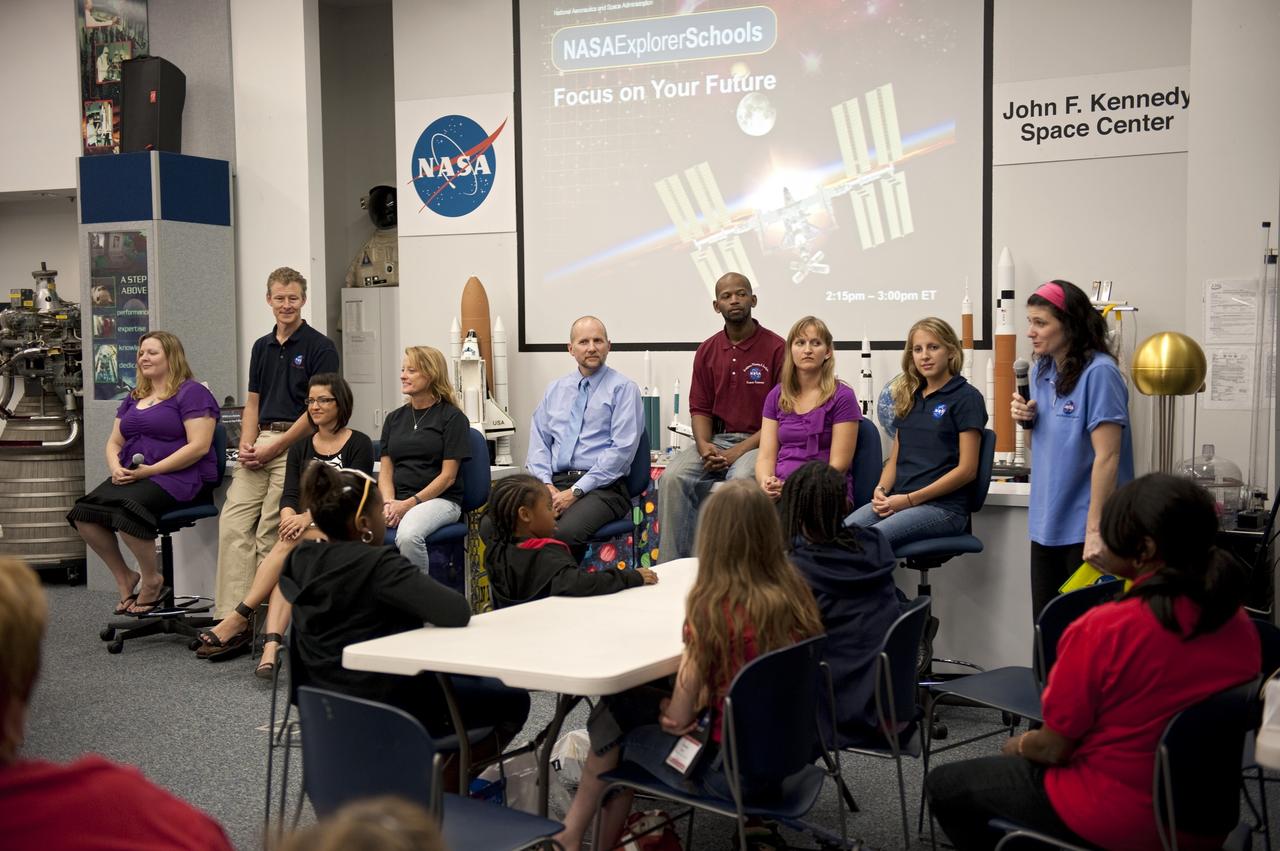
Cape Canaveral, Fla. -- Students from across the nation gathered at NASA's Kennedy Space Center in Florida for the NASA Explorer Schools (NES) symposium. At the microphone is NASA Explorer Schools Lead Education Specialist Alicia Baturoni from NASA's Glenn Research Center. From left, the panel includes aerospace engineer with NASA's Launch Services Program Caley Burke, Gary Letchworth who is working on the Orion multipurpose crew vehicle, NASA Contract Specialist Nicole Rivera, wildlife ecologist with Innovative Heath Applications Becky Bolt, Tim Griffin who works in Kennedy's Chemical Analysis Branch, Xaivian Raymond with NASA Human Resources, aerospace engineer Sarah Cox who works on the space shuttle's thermal protection system, and chemical engineer Annie Caraccio. During the NES event, students presented their investigation project to their peers, scientists, engineers and education specialists. About 60 fourth- through 12-grade students nationwide are at the center May 4-7 participating in tours of processing and launch facilities and the U.S. Astronaut Hall of Fame, as well as several educational activities and a career panel question-and-answer session. About 30 teachers will receive professional development opportunities during the symposium. The participants were competitively selected after they completed an original investigation focused on existing NASA missions or research interests. Photo Credit: NASA/Kim Shiflett
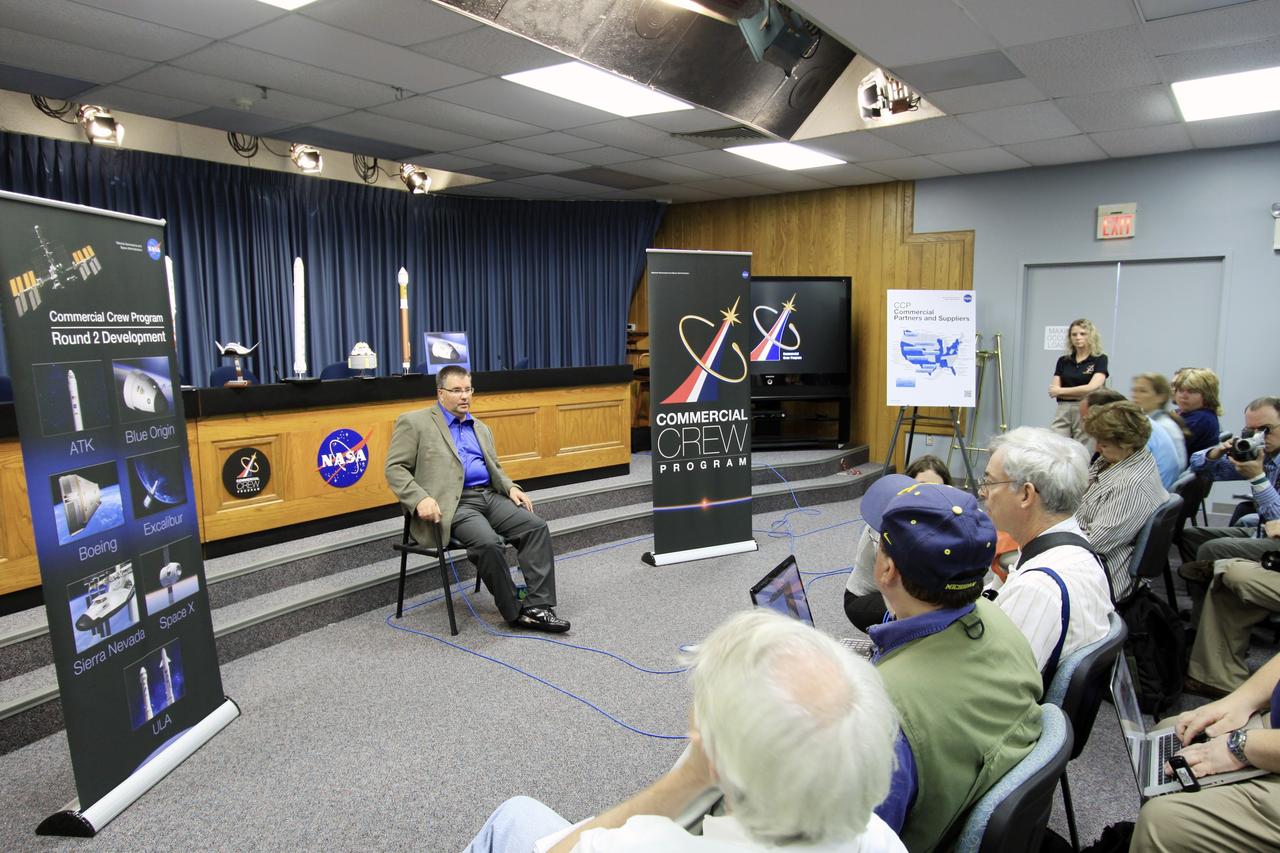
CAPE CANAVERAL, Fla. -- Ed Mango, program manager for NASA's Commercial Crew Program (CCP), updates media on the progress of Commercial Crew Development Round 2 (CCDev2) activities in which seven aerospace companies are maturing launch vehicle and spacecraft systems designed to take astronauts to the International Space Station. The goal of the program is to drive down the cost of space travel as well as open up space to more people than ever before by balancing industry’s own innovative capabilities with NASA's 50 years of human spaceflight experience. Seven aerospace companies are maturing launch vehicle and spacecraft designs under CCDev2, including Alliant Techsystems Inc. (ATK) of Promontory, Utah, Blue Origin of Kent, Wash., The Boeing Co., of Houston, Excalibur Almaz Inc. of Houston, Sierra Nevada Corp. of Louisville, Colo., Space Exploration Technologies (SpaceX) of Hawthorne, Calif., and United Launch Alliance (ULA) of Centennial, Colo. For more information, visit www.nasa.gov/exploration/commercial Photo credit: Jim Grossmann
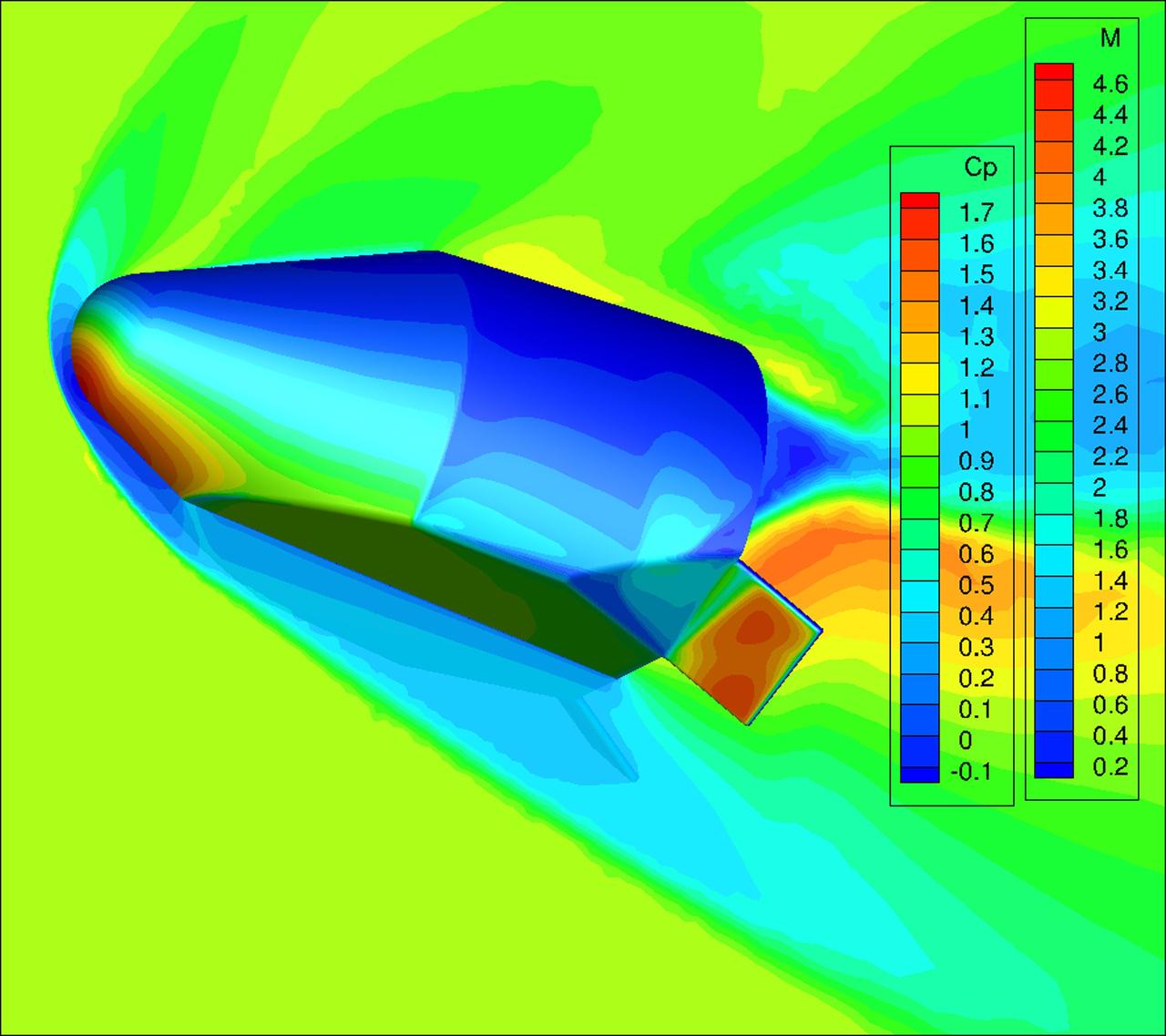
DALLAS – This computational fluid dynamics CFD image was taken during a series of wind tunnel tests for Blue Origin's next-generation Space Vehicle at Lockheed Martin's High Speed Wind Tunnel Facility in Dallas. The Space Vehicle's innovative biconic shape is designed to provide more cross-range and interior volume than a traditional capsule and weigh less than a winged vehicle. More than 180 wind tunnel tests validated the company's analysis of the Space Vehicle's aerodynamics during descent through the atmosphere and the ability to change its flight path, which could increase the number of available landing opportunities and enhance the vehicle's emergency return capability. In 2011, NASA selected Blue Origin during Commercial Crew Development Round 2 CCDev2) activities for NASA’s Commercial Crew Program to mature the design and development of a crew transportation system with the overall goal of accelerating a United States-led capability to the International Space Station. The goal of CCP is to drive down the cost of space travel as well as open up space to more people than ever before by balancing industry’s own innovative capabilities with NASA's 50 years of human spaceflight experience. Six other aerospace companies also are maturing launch vehicle and spacecraft designs under CCDev2, including Alliant Techsystems Inc. ATK, The Boeing Co., Excalibur Almaz Inc., Sierra Nevada Corp., Space Exploration Technologies SpaceX, and United Launch Alliance ULA. For more information, visit www.nasa.gov/commercialcrew. Image credit: Blue Origin
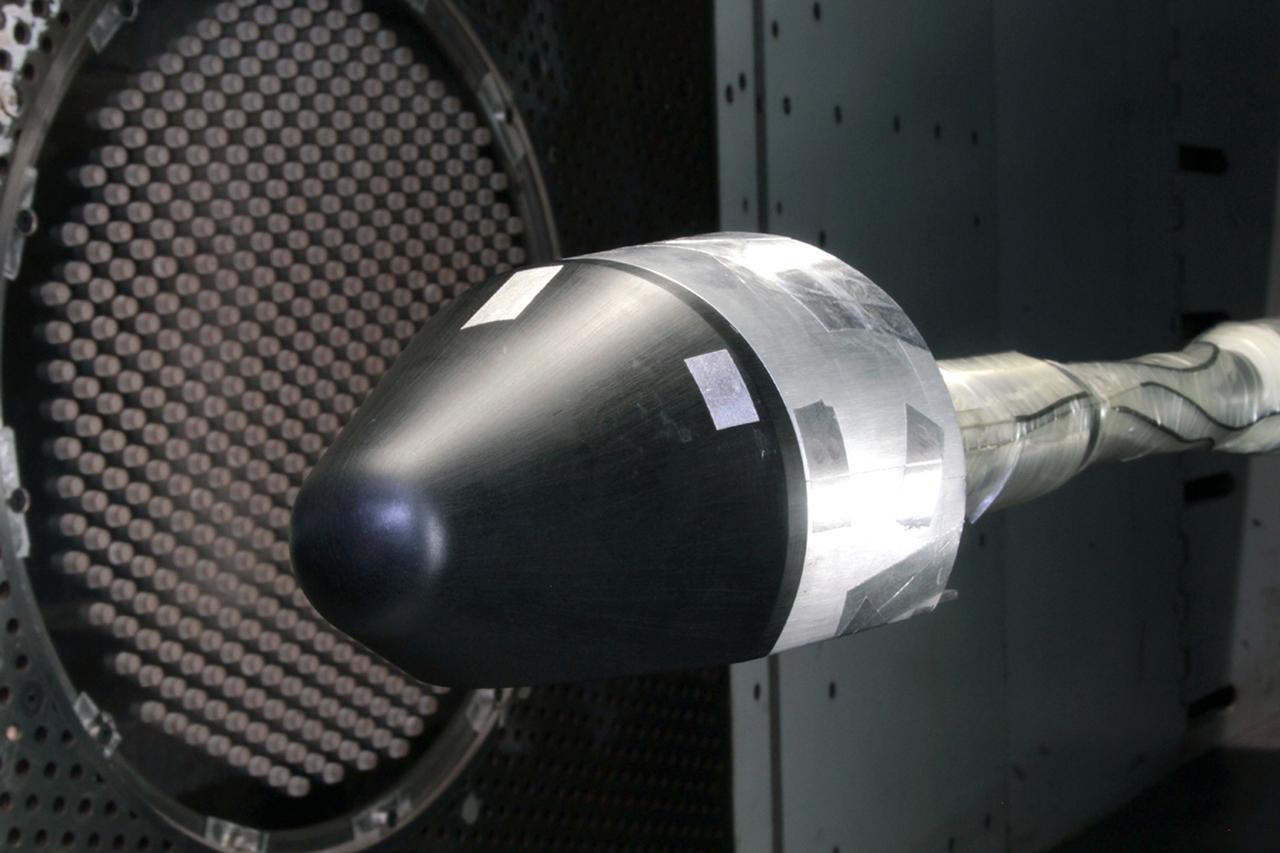
DALLAS – This image was taken during a series of wind tunnel tests for Blue Origin's Space Vehicle at Lockheed Martin's High Speed Wind Tunnel Facility in Dallas. The Space Vehicle's innovative biconic shape is designed to provide more cross-range and interior volume than a traditional capsule and weigh less than a winged vehicle. More than 180 wind tunnel tests validated the company's analysis of the Space Vehicle's aerodynamics during descent through the atmosphere and the ability to change its flight path, which could increase the number of available landing opportunities and enhance the vehicle's emergency return capability. In 2011, NASA selected Blue Origin during Commercial Crew Development Round 2 CCDev2) activities for NASA’s Commercial Crew Program to mature the design and development of a crew transportation system with the overall goal of accelerating a United States-led capability to the International Space Station. The goal of CCP is to drive down the cost of space travel as well as open up space to more people than ever before by balancing industry’s own innovative capabilities with NASA's 50 years of human spaceflight experience. Six other aerospace companies also are maturing launch vehicle and spacecraft designs under CCDev2, including Alliant Techsystems Inc. ATK, The Boeing Co., Excalibur Almaz Inc., Sierra Nevada Corp., Space Exploration Technologies SpaceX, and United Launch Alliance ULA. For more information, visit www.nasa.gov/commercialcrew. Image credit: Blue Origin
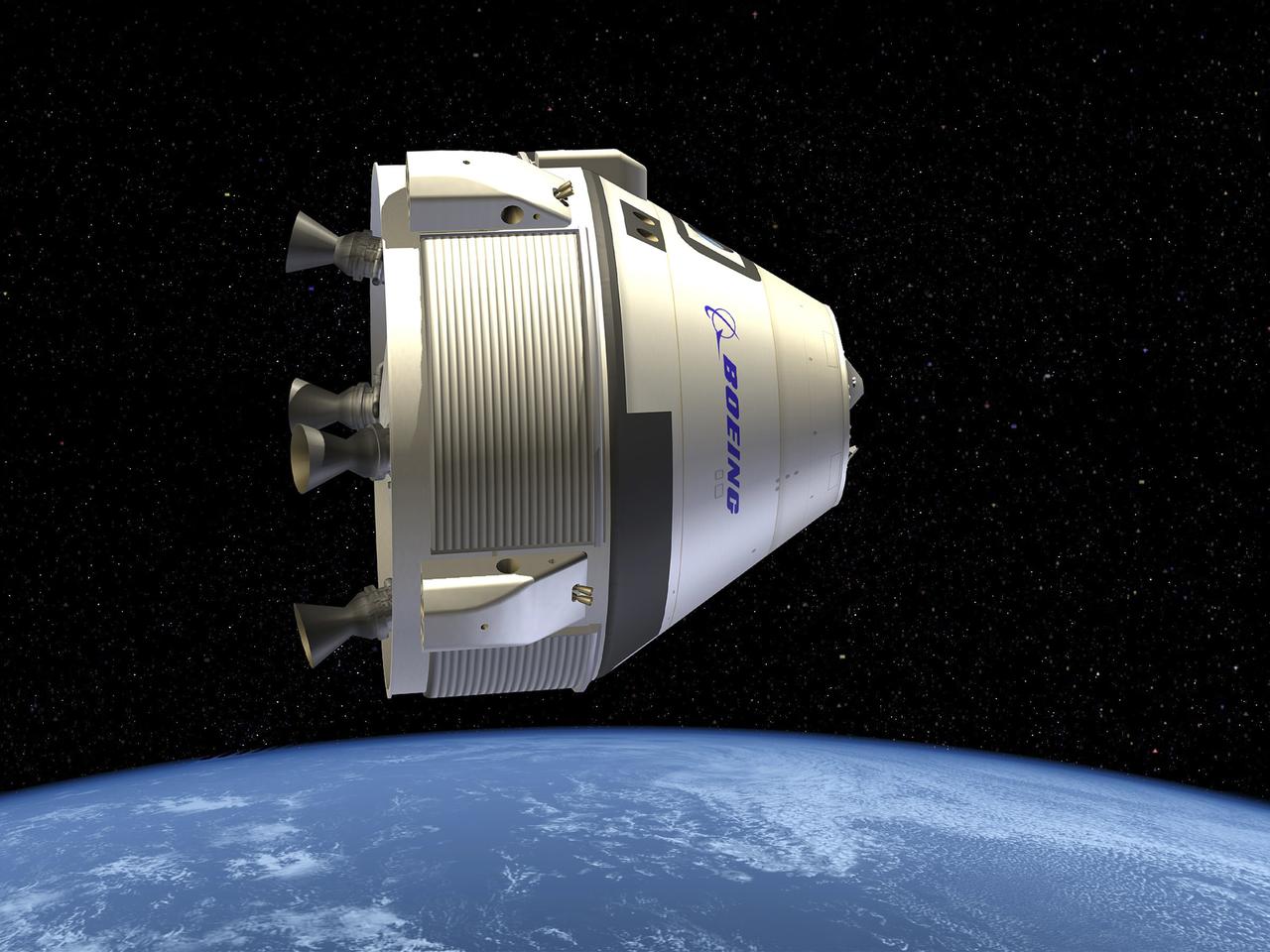
CAPE CANAVERAL, Fla. -- This is an artist's conception of the CST-100 under development by The Boeing Co. of Houston for NASA's Commercial Crew Program (CCP). In 2011, NASA selected Boeing during Commercial Crew Development Round 2 (CCDev2) activities to mature the design and development of a crew transportation system with the overall goal of accelerating a United States-led capability to the International Space Station. The goal of CCP is to drive down the cost of space travel as well as open up space to more people than ever before by balancing industry’s own innovative capabilities with NASA's 50 years of human spaceflight experience. Six other aerospace companies also are maturing launch vehicle and spacecraft designs under CCDev2, including Alliant Techsystems Inc. (ATK), Blue Origin, Excalibur Almaz Inc., Sierra Nevada Corp., Space Exploration Technologies (SpaceX), and United Launch Alliance (ULA). For more information, visit www.nasa.gov/commercialcrew. Image credit: The Boeing Co.
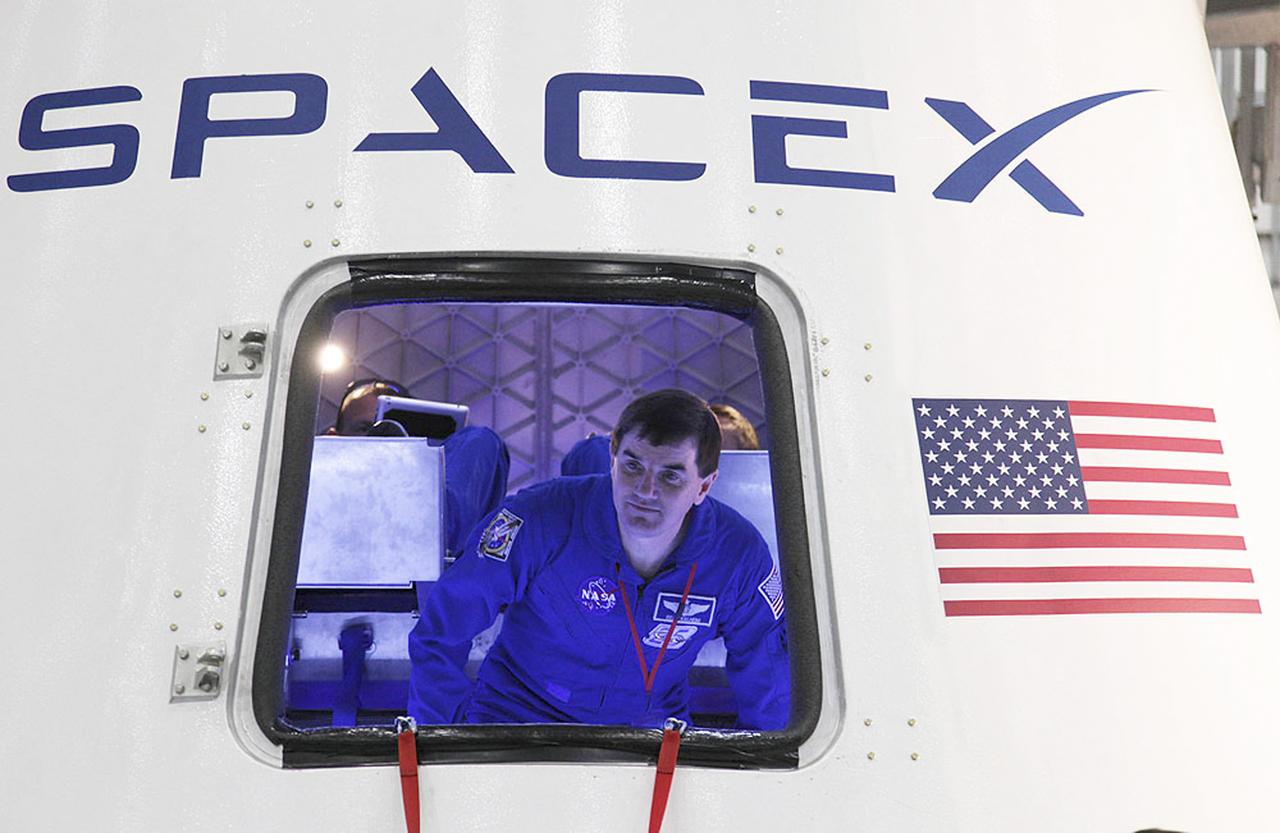
HAWTHORNE, Calif. -- NASA astronaut Rex Walheim checks out the Dragon spacecraft under development by Space Exploration Technologies SpaceX of Hawthorne, Calif., for the agency's Commercial Crew Program. In 2011, NASA selected SpaceX during Commercial Crew Development Round 2 CCDev2) activities to mature the design and development of a crew transportation system with the overall goal of accelerating a United States-led capability to the International Space Station. The goal of CCP is to drive down the cost of space travel as well as open up space to more people than ever before by balancing industry’s own innovative capabilities with NASA's 50 years of human spaceflight experience. Six other aerospace companies also are maturing launch vehicle and spacecraft designs under CCDev2, including Alliant Techsystems Inc. ATK, The Boeing Co., Excalibur Almaz Inc., Blue Origin, Sierra Nevada, and United Launch Alliance ULA. For more information, visit www.nasa.gov/commercialcrew. Image credit: Space Exploration Technologies
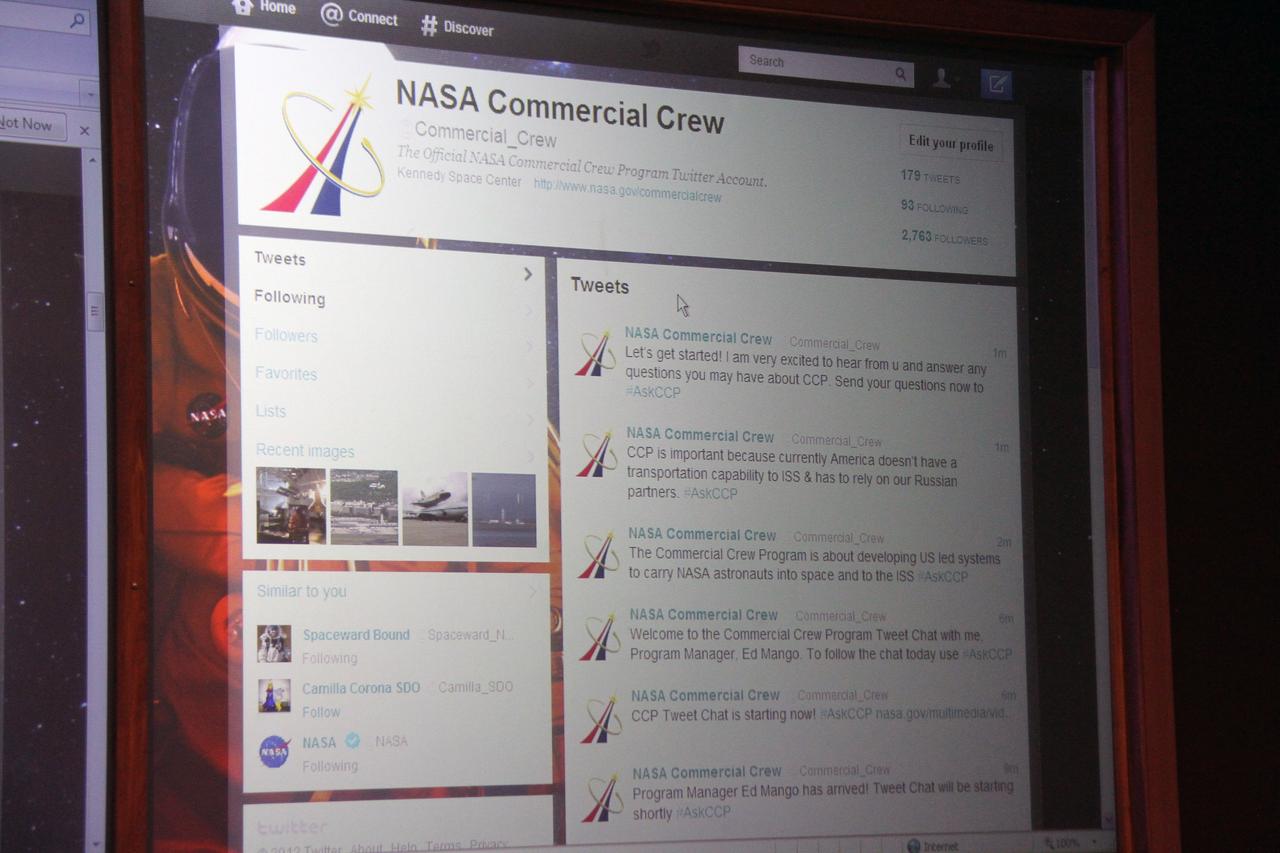
CAPE CANAVERAL, Fla. – The Twitter page of NASA’s Commercial Crew Program CCP buzzes with activity as program manager, Ed Mango, hosts a virtual conversation, called a Tweet Chat, with followers from around the world. Those who follow www.twitter.com/commercial_crew had an hour-long opportunity to ask Mango questions about NASA’s efforts to get astronauts to low Earth orbit and the International Space Station aboard American rockets and spacecraft. Mango stuck to the social networking service's 140 character limit and answered dozens of questions. The goal of CCP is to drive down the cost of space travel as well as open up space to more people than ever before by balancing industry’s own innovative capabilities with NASA's 50 years of human spaceflight experience. Seven aerospace companies are maturing launch vehicle and spacecraft designs under the program’s second round of development, called Commercial Crew Development Round 2 CCDev2), including Alliant Techsystems Inc. ATK, The Boeing Co., Excalibur Almaz Inc., Blue Origin, Sierra Nevada, Space Exploration Technologies SpaceX, and United Launch Alliance ULA. For more information, visit www.nasa.gov/commercialcrew. Image credit: NASA/Gianni Woods
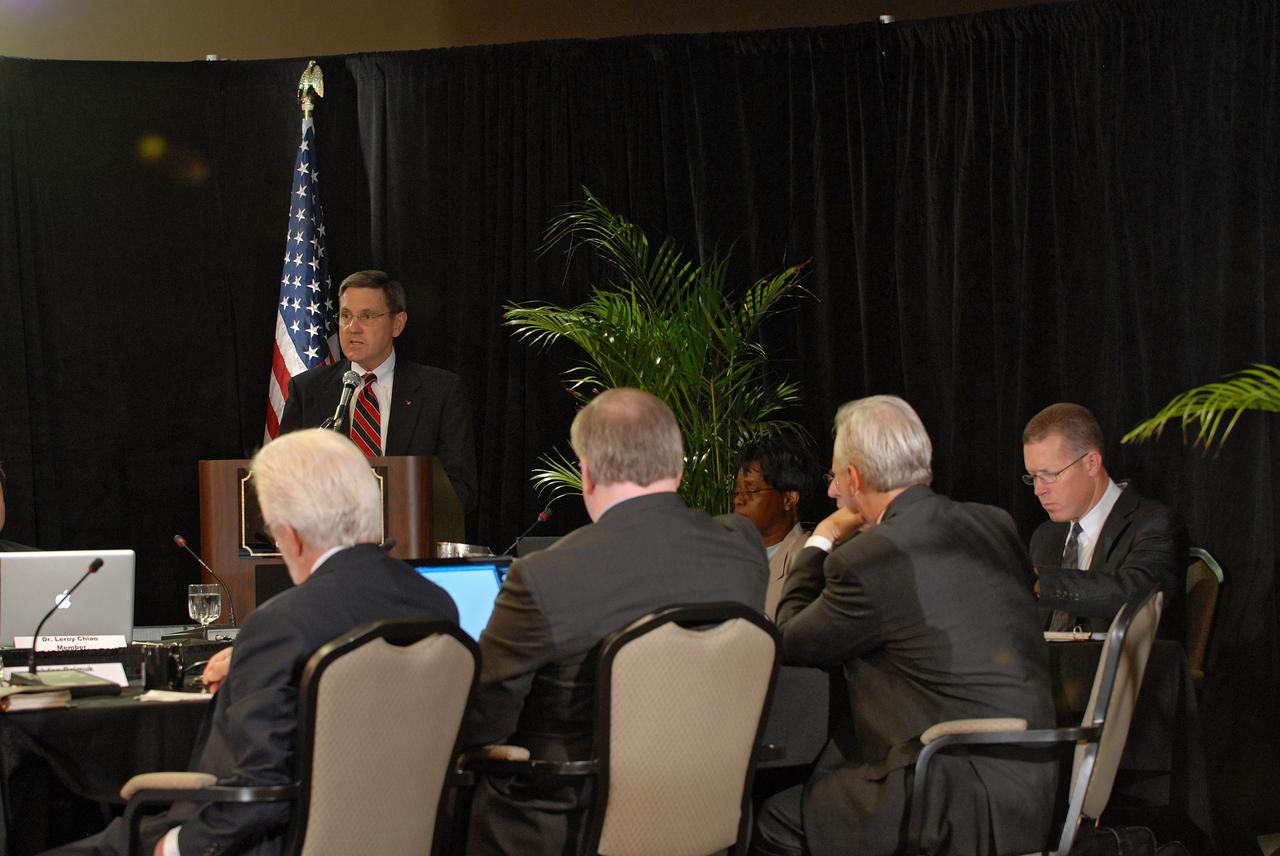
CAPE CANAVERAL, Fla. – NASA Kennedy Space Center's Center Director Bob Cabana (right) speaks during the meeting of the Augustine Commission in Cocoa Beach, Fla. At the conference table in the foreground are members of the commission: (from left) Bohdan Bejmuk, chair of Constellation Program Standing Review Board; Jeff Greason, co-founder and CEO of XCOR Aerospace; Dr. Christopher Chyba, professor of Astrophysical Sciences and international Affairs at Princeton University; and Phil McAlister, special assistant for Program Analysis in NASA's Office of Program Analysis and Evaluation. At the request of the Office of Science and Technology Policy, NASA established the Review of U.S. Human Space Flight Plans Committee, known as the Augustine Commission. Chaired by Norman R. Augustine, retired chairman and CEO of Lockheed Martin Corp., the committee is conducting an independent review of ongoing U.S. human spaceflight plans and programs, as well as alternatives, to ensure the nation is pursuing the best trajectory for the future of human space flight - one that is safe, innovative, affordable, and sustainable. Photo credit: NASA/Jim Grossmann
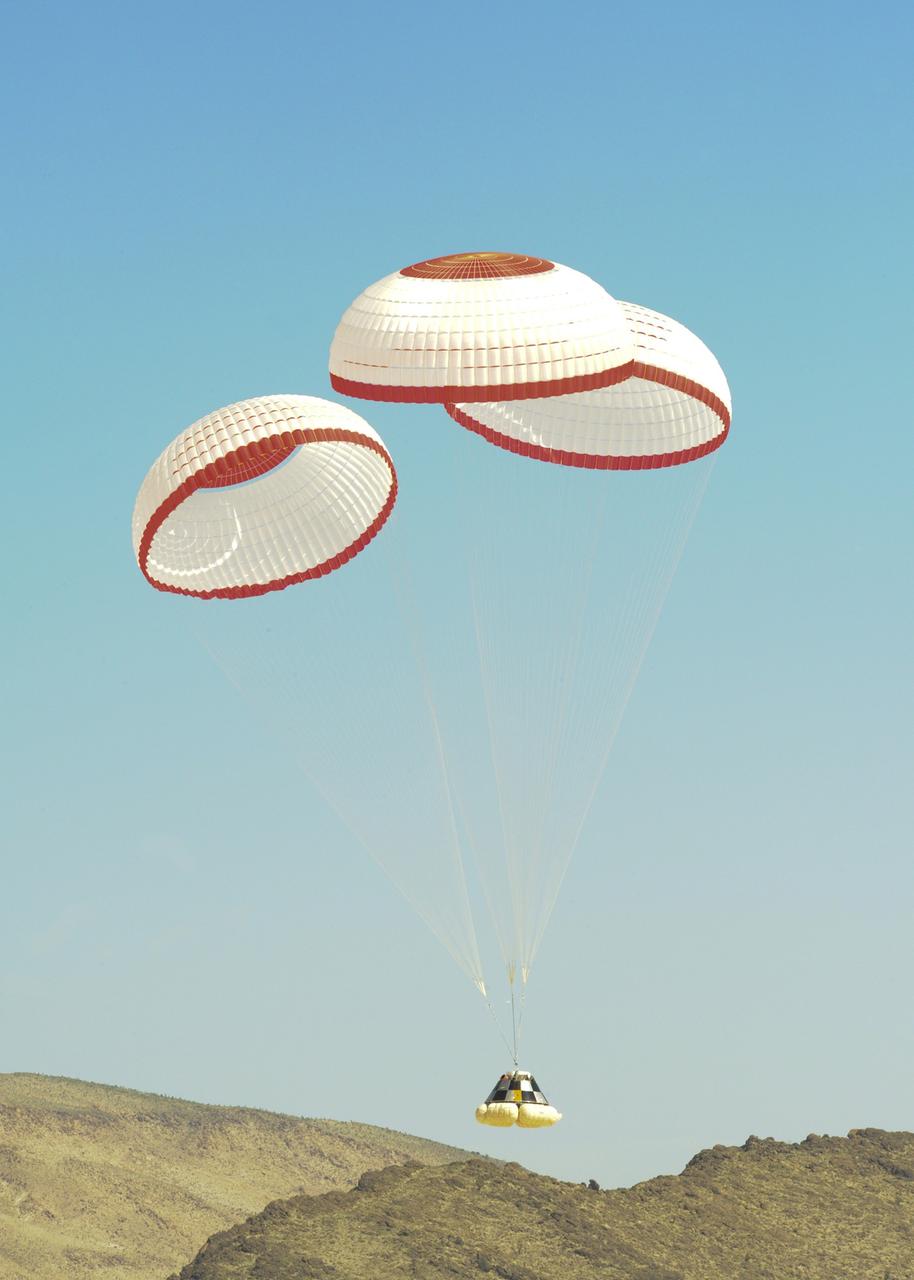
DELAMAR DRY LAKE BED, Nev. – The Boeing Company's CST-100 crew capsule floats to a smooth landing beneath three main parachutes over the Delamar Dry Lake Bed near Alamo, Nev. This is the second parachute test that Boeing performed under its partnership with NASA's Commercial Crew Program CCP. The first showed the parachute system’s deployment scheme worked and that it could be re-packed and re-used for this second test. In 2011, NASA selected Boeing during Commercial Crew Development Round 2 CCDev2) activities to mature the design and development of a crew transportation system with the overall goal of accelerating a United States-led capability to the International Space Station. The goal of CCP is to drive down the cost of space travel as well as open up space to more people than ever before by balancing industry’s own innovative capabilities with NASA's 50 years of human spaceflight experience. Six other aerospace companies also are maturing launch vehicle and spacecraft designs under CCDev2, including Alliant Techsystems Inc. ATK, Excalibur Almaz Inc., Blue Origin, Sierra Nevada, Space Exploration Technologies SpaceX, and United Launch Alliance ULA. For more information, visit www.nasa.gov/commercialcrew. Image credit: Boeing

DELAMAR DRY LAKE BED, Nev. – The Boeing Company's CST-100 crew capsule floats to a smooth landing beneath three main parachutes over the Delamar Dry Lake Bed near Alamo, Nev. This is the second parachute test that Boeing performed under its partnership with NASA's Commercial Crew Program CCP. The first showed the parachute system’s deployment scheme worked and that it could be re-packed and re-used for this second test. In 2011, NASA selected Boeing during Commercial Crew Development Round 2 CCDev2) activities to mature the design and development of a crew transportation system with the overall goal of accelerating a United States-led capability to the International Space Station. The goal of CCP is to drive down the cost of space travel as well as open up space to more people than ever before by balancing industry’s own innovative capabilities with NASA's 50 years of human spaceflight experience. Six other aerospace companies also are maturing launch vehicle and spacecraft designs under CCDev2, including Alliant Techsystems Inc. ATK, Excalibur Almaz Inc., Blue Origin, Sierra Nevada, Space Exploration Technologies SpaceX, and United Launch Alliance ULA. For more information, visit www.nasa.gov/commercialcrew. Image credit: Boeing
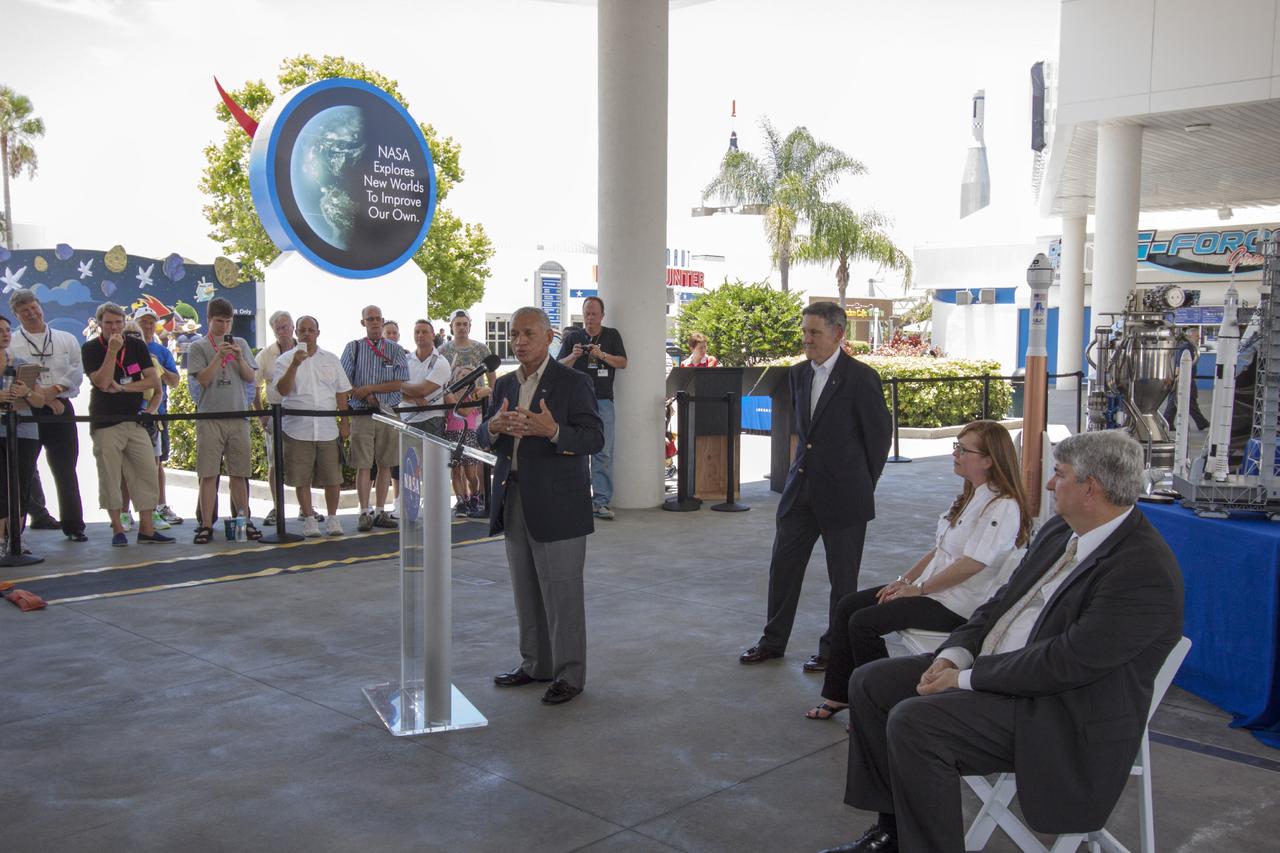
CAPE CANAVERAL, Fla. -- NASA Administrator Charles Bolden, at the podium, addresses the media assembled for a news conference on a new agency partnership at the Kennedy Space Center Visitor Complex in Florida. Also participating in the news conference are, from left, Kennedy Space Center Director Robert Cabana, Kennedy's Director of Public Affairs Lisa Malone, and Space Florida Chief Operating Officer Jim Kuzma. NASA has selected Space Florida, the aerospace economic development agency for the state of Florida, for negotiations toward a partnership agreement to maintain and operate the historic Shuttle Landing Facility, or SLF. NASA issued a request for information to industry in 2012 to identify new and innovative ways to use the facility for current and future commercial and government mission activities. Space Florida's proposal is aligned closely with Kennedy's vision for creating a multiuser spaceport. The SLF, specially designed for space shuttles returning to Kennedy, opened for flights in 1976. The concrete runway is 15,000 feet long and 300 feet wide. The SLF is capable of handling all types and sizes of aircraft and horizontal launch and landing vehicles. For more information on Space Florida, visit http://www.spaceflorida.gov. Photo credit: NASA/Jim Grossmann
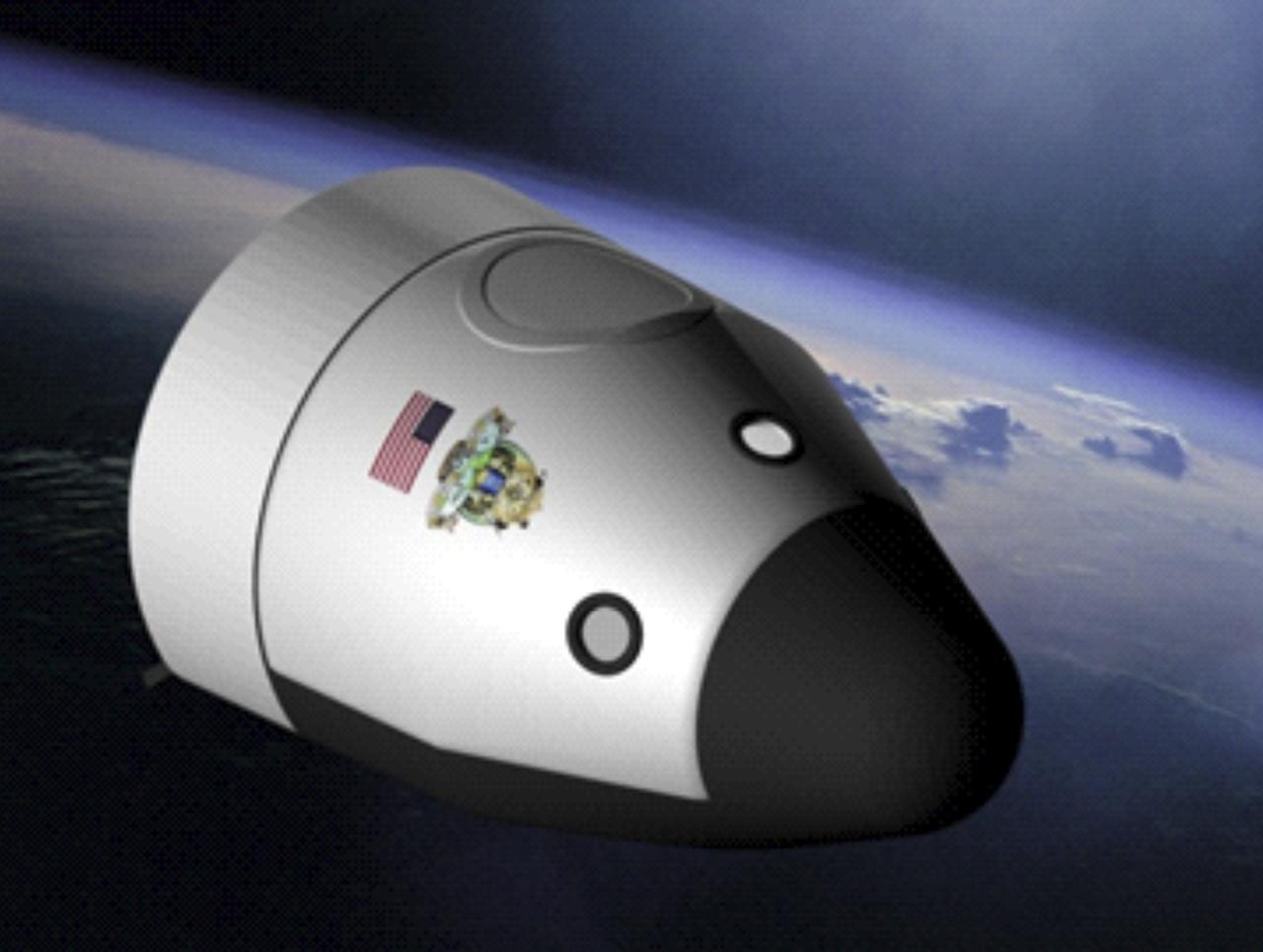
CAPE CANAVERAL, Fla. -- This is an artist's conception of the Space Vehicle under development by Blue Origin of Kent, Wash., for NASA's Commercial Crew Program (CCP). In 2011, NASA selected Blue Origin during Commercial Crew Development Round 2 (CCDev2) activities to mature the design and development of a crew transportation system with the overall goal of accelerating a United States-led capability to the International Space Station. The goal of CCP is to drive down the cost of space travel as well as open up space to more people than ever before by balancing industry’s own innovative capabilities with NASA's 50 years of human spaceflight experience. Six other aerospace companies also are maturing launch vehicle and spacecraft designs under CCDev2, including Alliant Techsystems Inc. (ATK), The Boeing Co., Excalibur Almaz Inc., Sierra Nevada Corp., Space Exploration Technologies (SpaceX), and United Launch Alliance (ULA). For more information, visit www.nasa.gov/commercialcrew. Image credit: Blue Origin
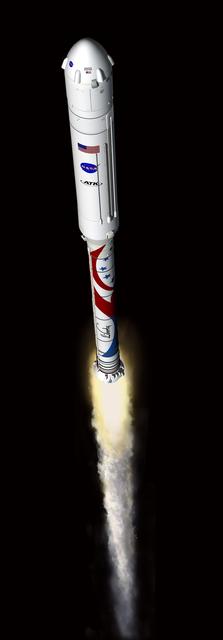
CAPE CANAVERAL, Fla. -- This is an artist's conception of the Liberty Launch Vehicle under development by Alliant Techsystems Inc. (ATK) of Promontory, Utah, for NASA's Commercial Crew Program (CCP). In 2011, NASA and ATK entered into an unfunded Space Act Agreement during Commercial Crew Development Round 2 (CCDev2) activities to mature the design and development of a crew transportation system with the overall goal of accelerating a United States-led capability to the International Space Station. The goal of CCP is to drive down the cost of space travel as well as open up space to more people than ever before by balancing industry’s own innovative capabilities with NASA's 50 years of human spaceflight experience. Six other aerospace companies also are maturing launch vehicle and spacecraft designs under CCDev2, including Blue Origin, The Boeing Co., Excalibur Almaz Inc., Sierra Nevada Corp., Space Exploration Technologies (SpaceX), and United Launch Alliance (ULA). For more information, visit www.nasa.gov/commercialcrew. Image credit: Alliant Techsystems Inc.
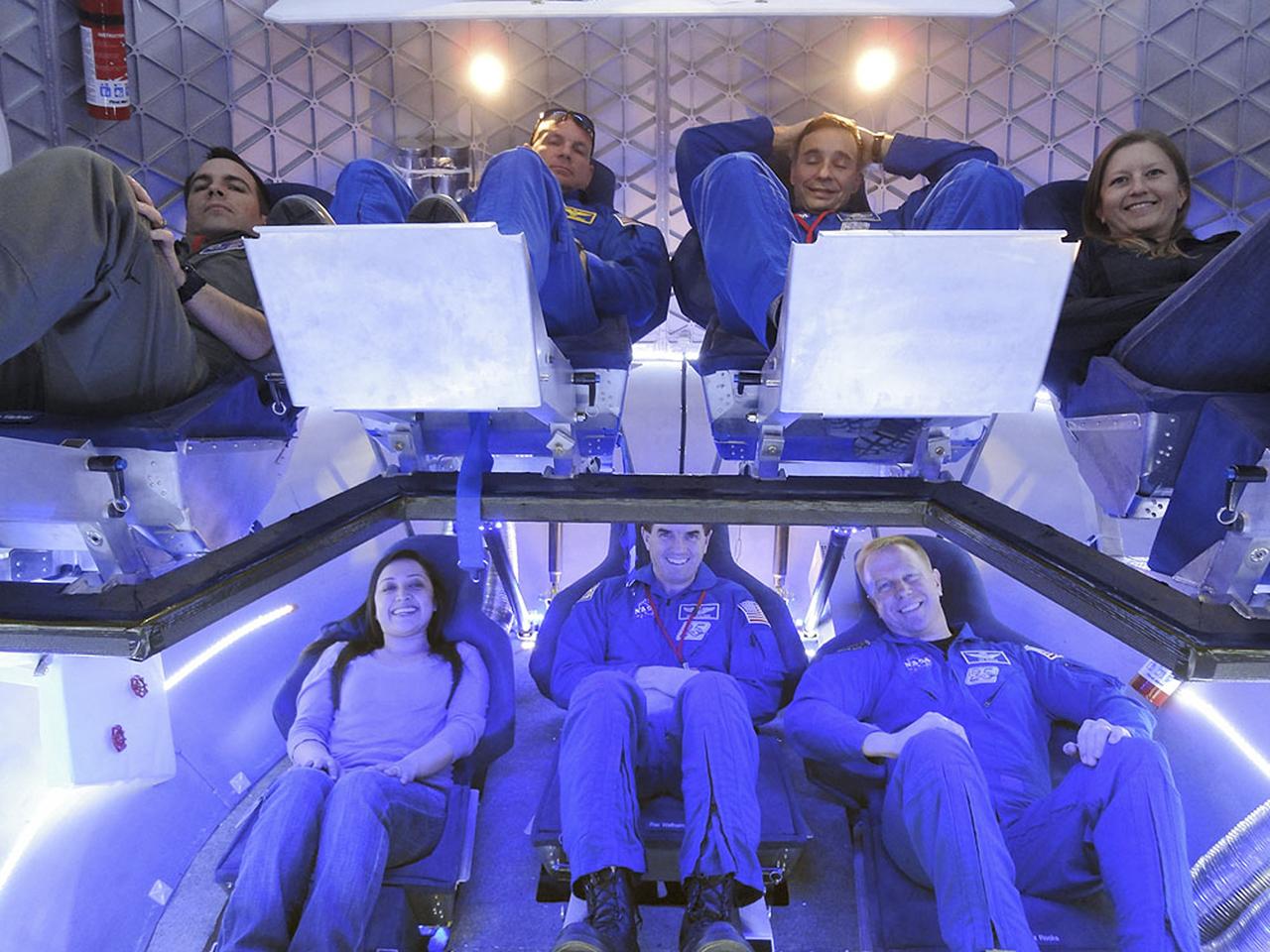
HAWTHORNE, Calif. -- NASA astronauts and industry experts check out the crew accommodations in the Dragon spacecraft under development by Space Exploration Technologies SpaceX of Hawthorne, Calif., for the agency's Commercial Crew Program. On top, from left, are NASA Crew Survival Engineering Team Lead Dustin Gohmert, NASA astronauts Tony Antonelli and Lee Archambault, and SpaceX Mission Operations Engineer Laura Crabtree. On bottom, from left, are SpaceX Thermal Engineer Brenda Hernandez and NASA astronauts Rex Walheim and Tim Kopra. In 2011, NASA selected SpaceX during Commercial Crew Development Round 2 CCDev2) activities to mature the design and development of a crew transportation system with the overall goal of accelerating a United States-led capability to the International Space Station. The goal of CCP is to drive down the cost of space travel as well as open up space to more people than ever before by balancing industry’s own innovative capabilities with NASA's 50 years of human spaceflight experience. Six other aerospace companies also are maturing launch vehicle and spacecraft designs under CCDev2, including Alliant Techsystems Inc. ATK, The Boeing Co., Excalibur Almaz Inc., Blue Origin, Sierra Nevada, and United Launch Alliance ULA. For more information, visit www.nasa.gov/commercialcrew. Image credit: Space Exploration Technologies
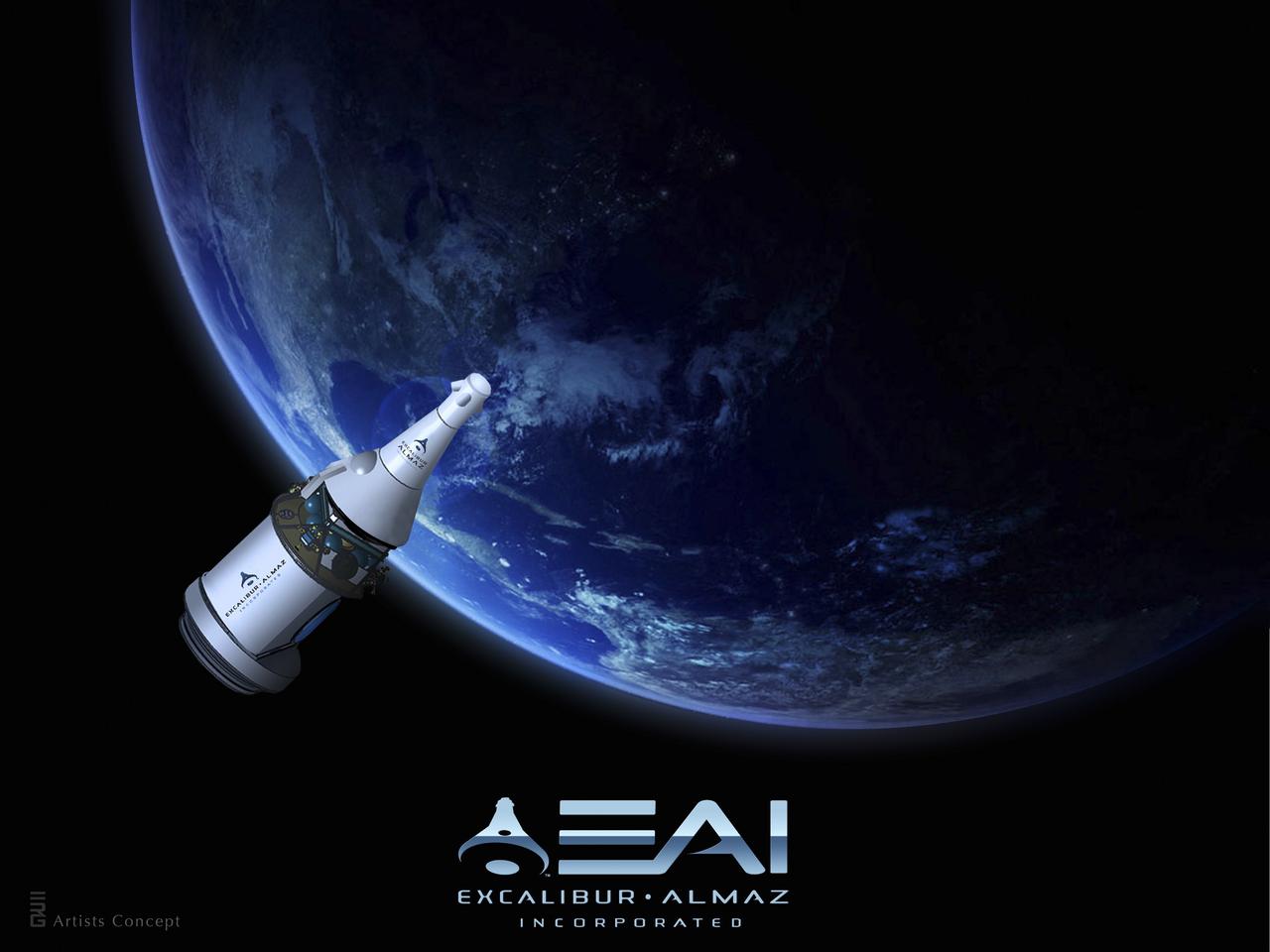
CAPE CANAVERAL, Fla. -- This is an artist's conception of the Human Spacecraft being considered for NASA's Commercial Crew Program CCP. In 2011, NASA and Excalibur Almaz Inc. of Houston entered into an unfunded Space Act Agreement during Commercial Crew Development Round 2 CCDev2) activities to mature the design and development of a crew transportation system with the overall goal of accelerating a United States-led capability to the International Space Station. The goal of CCP is to drive down the cost of space travel as well as open up space to more people than ever before by balancing industry’s own innovative capabilities with NASA's 50 years of human spaceflight experience. Six other aerospace companies also are maturing launch vehicle and spacecraft designs under CCDev2, including Alliant Techsystems Inc. ATK, Blue Origin, The Boeing Co., Sierra Nevada Corp., Space Exploration Technologies SpaceX, and United Launch Alliance ULA. For more information, visit www.nasa.gov/exploration/commercialcrew Image credit: Excalibur Almaz Inc.
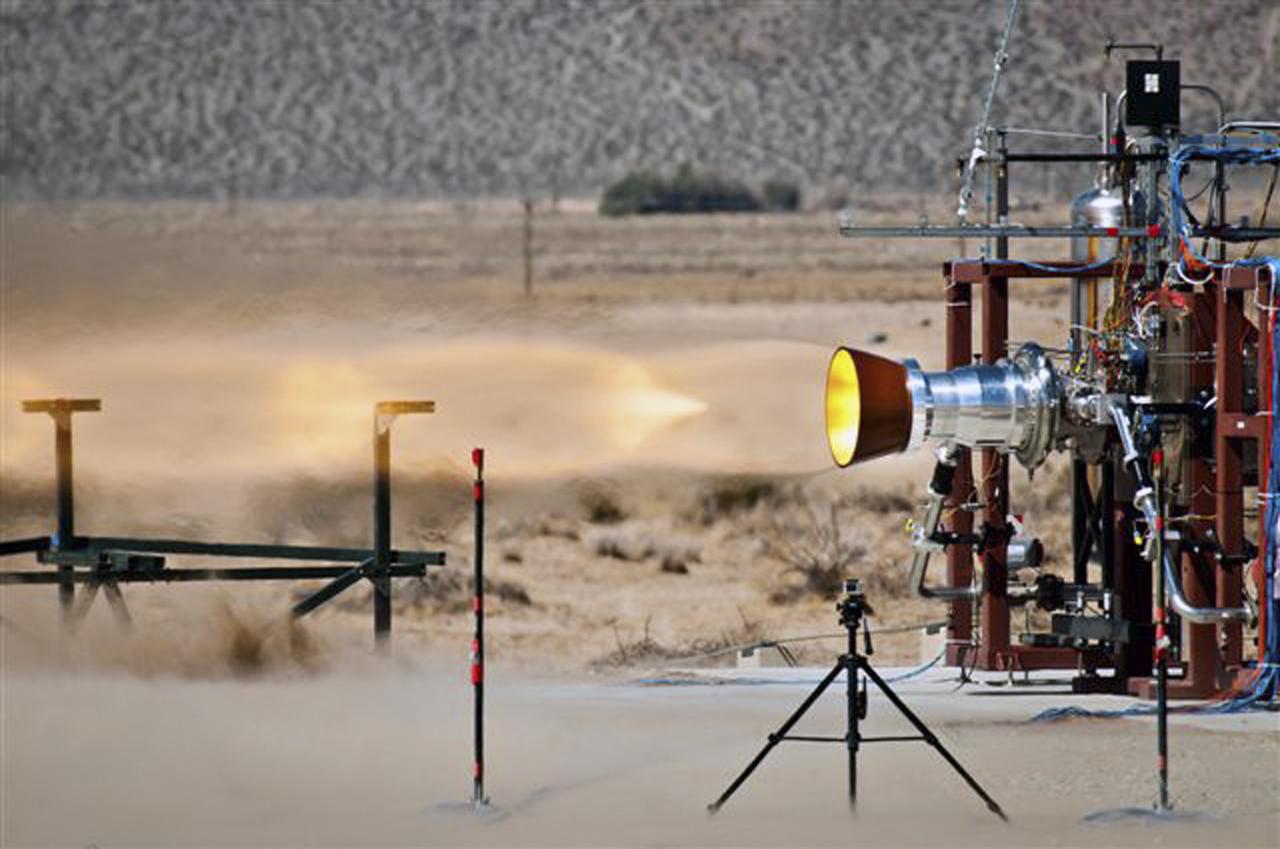
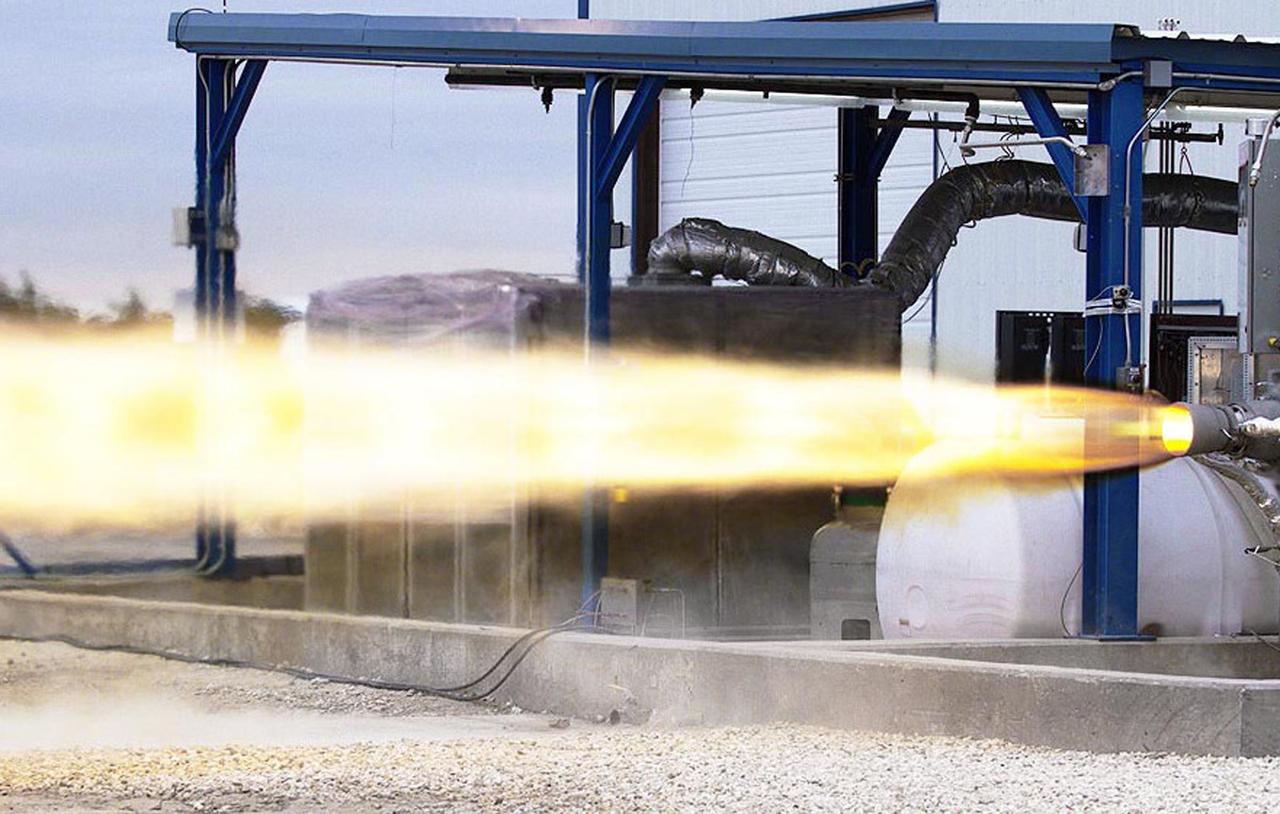
CANOGA PARK, Calif. -- Pratt & Whitney Rocketdyne hot-fires a launch abort engine for The Boeing Co., which is developing its CST-100 spacecraft for NASA's Commercial Crew Program. Under its fixed-price contract with Boeing, Pratt and Whitney Rocketdyne is combining its Attitude Control Propulsion System thrusters from heritage spaceflight programs, Bantam abort engine design and storable propellant engineering capabilities. In 2011, NASA selected Boeing of Houston during Commercial Crew Development Round 2 CCDev2) activities to mature the design and development of a crew transportation system with the overall goal of accelerating a United States-led capability to the International Space Station. The goal of CCP is to drive down the cost of space travel as well as open up space to more people than ever before by balancing industry’s own innovative capabilities with NASA's 50 years of human spaceflight experience. Six other aerospace companies also are maturing launch vehicle and spacecraft designs under CCDev2, including Alliant Techsystems Inc. ATK, Blue Origin, Excalibur Almaz Inc., Sierra Nevada Corp., Space Exploration Technologies SpaceX, and United Launch Alliance ULA. For more information, visit www.nasa.gov/commercialcrew. Image credit: Pratt & Whitney Rocketdyne
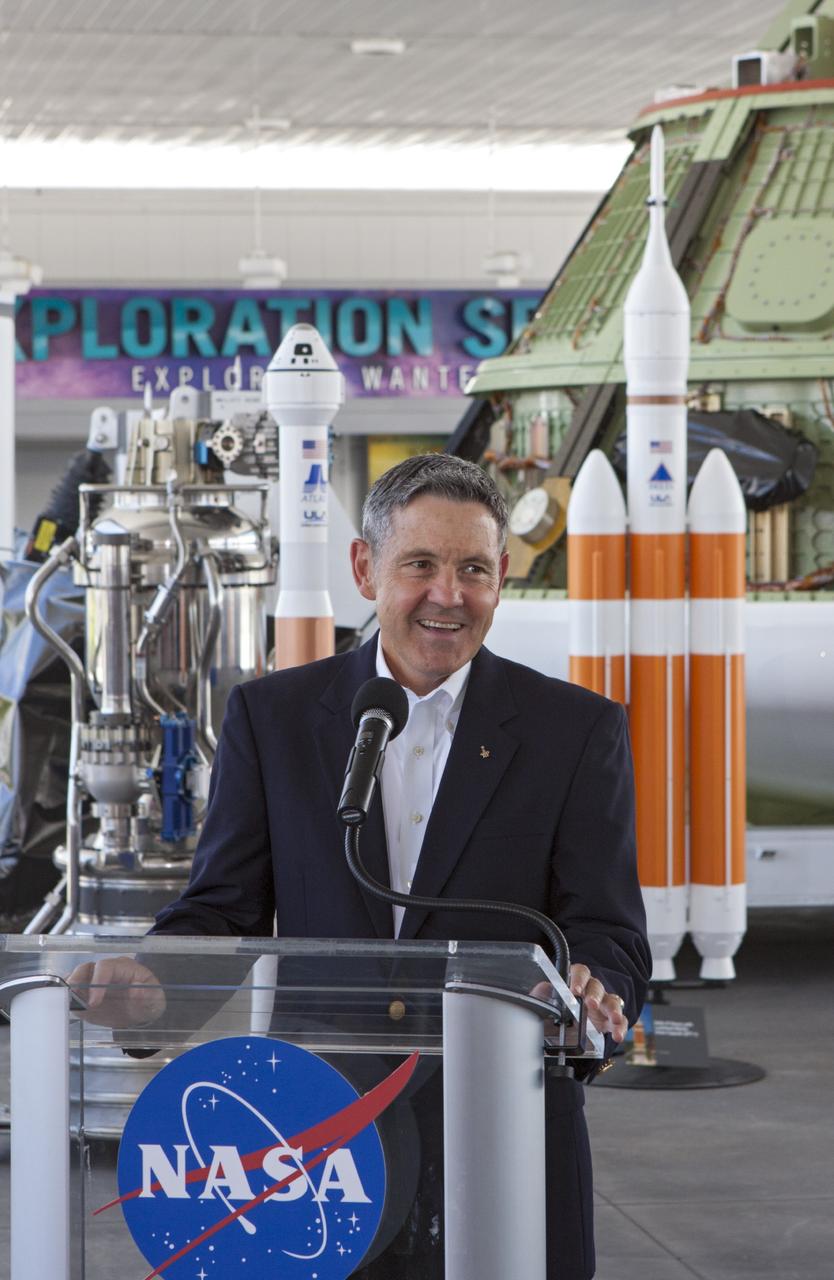
CAPE CANAVERAL, Fla. -- Kennedy Space Center Director Robert Cabana comments on the prospect of a new agency partnership during a news conference at the Kennedy Space Center Visitor Complex in Florida. NASA has selected Space Florida, the aerospace economic development agency for the state of Florida, for negotiations toward a partnership agreement to maintain and operate the historic Shuttle Landing Facility, or SLF. NASA issued a request for information to industry in 2012 to identify new and innovative ways to use the facility for current and future commercial and government mission activities. Space Florida's proposal is aligned closely with Kennedy's vision for creating a multiuser spaceport. The SLF, specially designed for space shuttles returning to Kennedy, opened for flights in 1976. The concrete runway is 15,000 feet long and 300 feet wide. The SLF is capable of handling all types and sizes of aircraft and horizontal launch and landing vehicles. For more information on Space Florida, visit http://www.spaceflorida.gov. Photo credit: NASA/Jim Grossmann
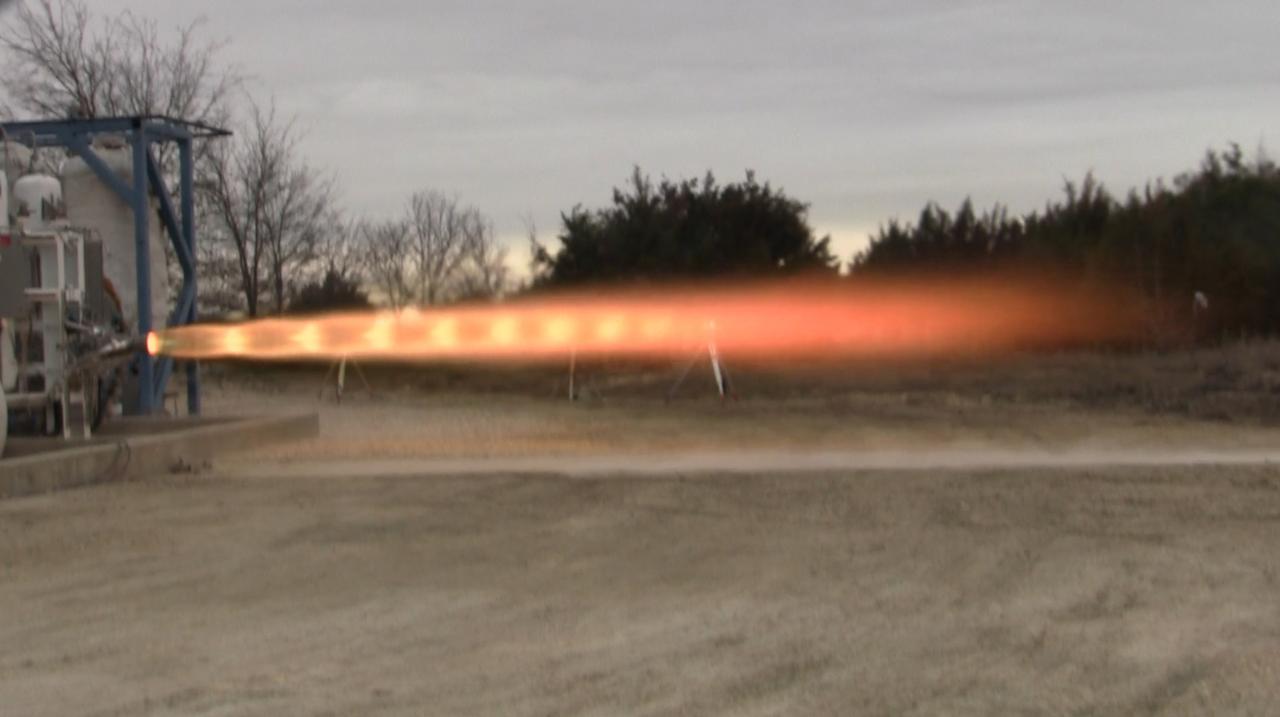
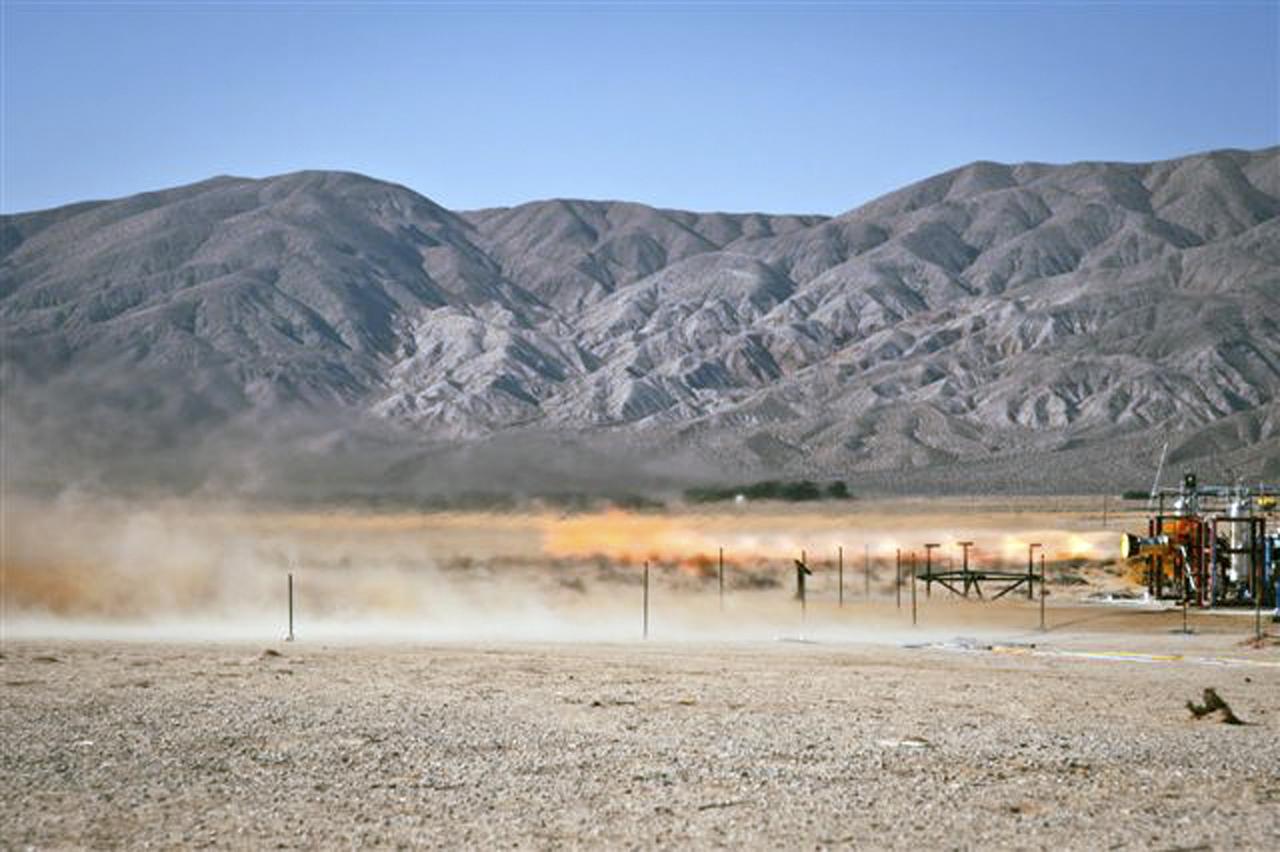
MCGREGOR, Texas -- Space Exploration Technologies (SpaceX) completes a full-duration, full-thrust firing of its new SuperDraco engine prototype at the company’s Rocket Development Facility in McGregor, Texas. The firing was in preparation for the ninth milestone to be completed under SpaceX's funded Space Act Agreement (SAA) with NASA's Commercial Crew Program (CCP). SpaceX is working with CCP during Commercial Crew Development Round 2 (CCDev2) in order to mature the design and development of its Dragon spacecraft with the overall goal of accelerating a United States-led capability to the International Space Station. Eight SuperDracos would be built into the sidewalls of the Dragon capsule to carry astronauts to safety should an emergency occur during launch or ascent. The goal of CCP is to drive down the cost of space travel as well as open up space to more people than ever before by balancing industry’s own innovative capabilities with NASA's 50 years of human spaceflight experience. Six other aerospace companies also are maturing launch vehicle and spacecraft designs under CCDev2, including Alliant Techsystems Inc. (ATK), Blue Origin, The Boeing Co., Excalibur Almaz Inc., Sierra Nevada Corp. and United Launch Alliance (ULA). For more information, visit www.nasa.gov/commercialcrew
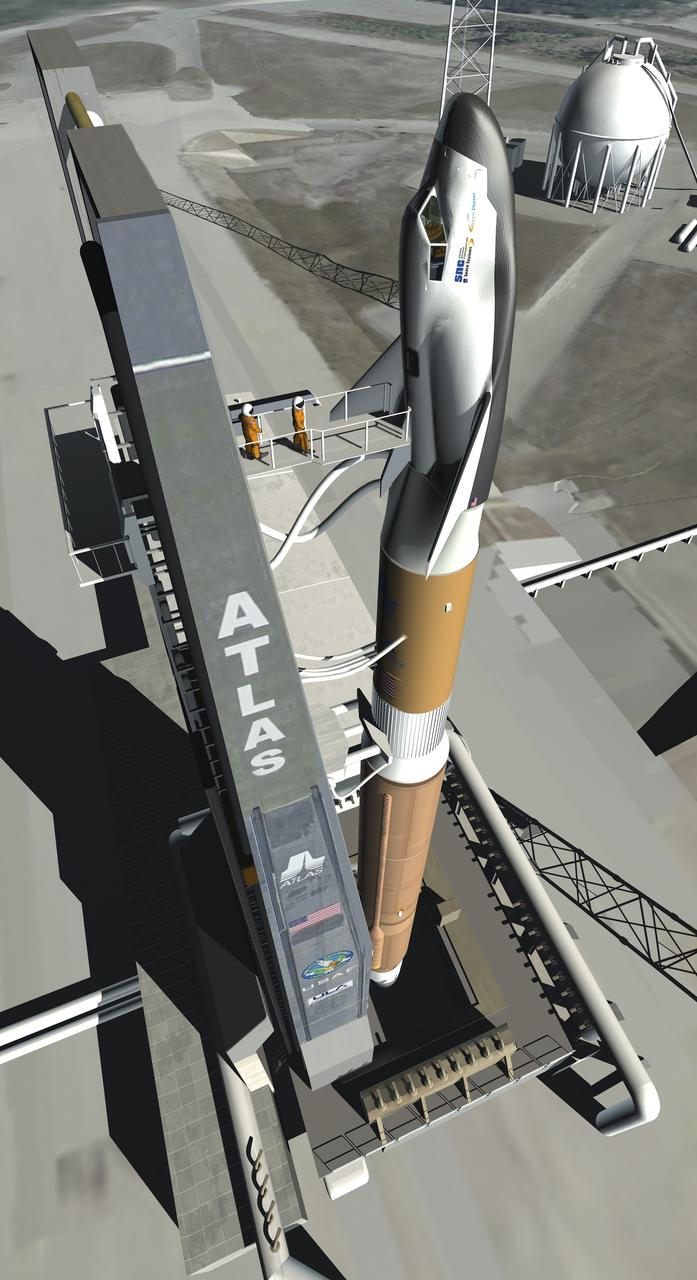
CAPE CANAVERAL, Fla. -- This is an artist's conception of the Dream Chaser spacecraft integrated with an Atlas V rocket. Dream Chaser is under development by Sierra Nevada of Centennial, Colo., for NASA's Commercial Crew Program (CCP). In 2011, NASA selected Sierra Nevada during Commercial Crew Development Round 2 (CCDev2) activities to mature the design and development of a crew transportation system with the overall goal of accelerating a United States-led capability to the International Space Station. United Launch Alliance's Atlas V also is being considered under CCDev2. The goal of CCP is to drive down the cost of space travel as well as open up space to more people than ever before by balancing industry’s own innovative capabilities with NASA's 50 years of human spaceflight experience. Five other aerospace companies also are maturing launch vehicle and spacecraft designs under CCDev2, including Alliant Techsystems Inc. (ATK), The Boeing Co., Excalibur Almaz Inc., Blue Origin, and Space Exploration Technologies (SpaceX). For more information, visit www.nasa.gov/commercialcrew. Image credit: Sierra Nevada Corp.
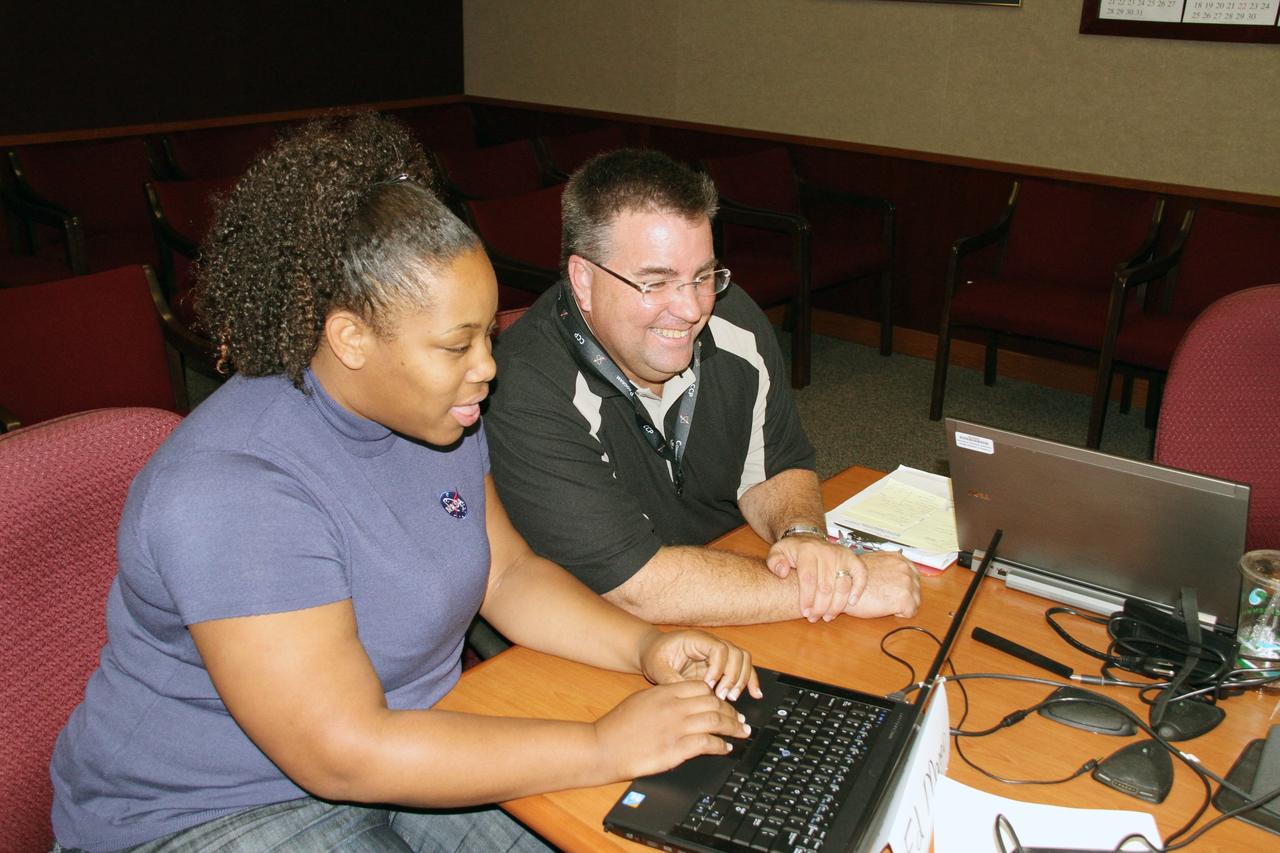
CAPE CANAVERAL, Fla. – The manager of NASA's Commercial Crew Program CCP, Ed Mango, hosts a virtual conversation, called a Tweet Chat, with Twitter followers from around the world. Those who follow www.twitter.com/commercial_crew had an hour-long opportunity to ask Mango questions about NASA’s efforts to get astronauts to low Earth orbit and the International Space Station aboard American rockets and spacecraft. Mango stuck to the social networking service's 140 character limit and answered dozens of questions. At left, is Brittani Sims, a member of the CCP team. The goal of CCP is to drive down the cost of space travel as well as open up space to more people than ever before by balancing industry’s own innovative capabilities with NASA's 50 years of human spaceflight experience. Seven aerospace companies are maturing launch vehicle and spacecraft designs under the program’s second round of development, called Commercial Crew Development Round 2 CCDev2), including Alliant Techsystems Inc. ATK, The Boeing Co., Excalibur Almaz Inc., Blue Origin, Sierra Nevada, Space Exploration Technologies SpaceX, and United Launch Alliance ULA. For more information, visit www.nasa.gov/commercialcrew. Image credit: NASA/Gianni Woods
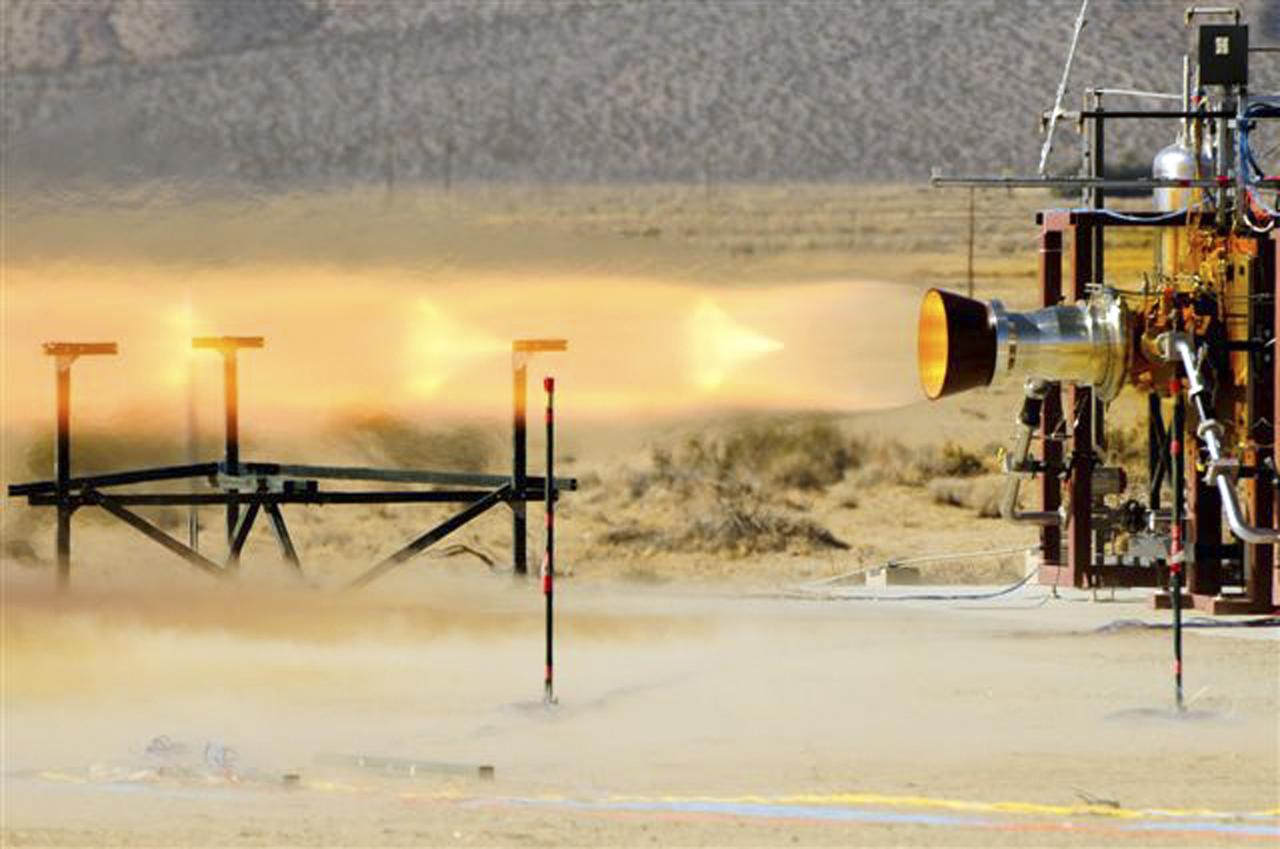
CANOGA PARK, Calif. -- Pratt & Whitney Rocketdyne hot-fires a launch abort engine for The Boeing Co., which is developing its CST-100 spacecraft for NASA's Commercial Crew Program. Under its fixed-price contract with Boeing, Pratt and Whitney Rocketdyne is combining its Attitude Control Propulsion System thrusters from heritage spaceflight programs, Bantam abort engine design and storable propellant engineering capabilities. In 2011, NASA selected Boeing of Houston during Commercial Crew Development Round 2 CCDev2) activities to mature the design and development of a crew transportation system with the overall goal of accelerating a United States-led capability to the International Space Station. The goal of CCP is to drive down the cost of space travel as well as open up space to more people than ever before by balancing industry’s own innovative capabilities with NASA's 50 years of human spaceflight experience. Six other aerospace companies also are maturing launch vehicle and spacecraft designs under CCDev2, including Alliant Techsystems Inc. ATK, Blue Origin, Excalibur Almaz Inc., Sierra Nevada Corp., Space Exploration Technologies SpaceX, and United Launch Alliance ULA. For more information, visit www.nasa.gov/commercialcrew. Image credit: Pratt & Whitney Rocketdyne
CANOGA PARK, Calif. -- Pratt & Whitney Rocketdyne hot-fires a launch abort engine for The Boeing Co., which is developing its CST-100 spacecraft for NASA's Commercial Crew Program. Under its fixed-price contract with Boeing, Pratt and Whitney Rocketdyne is combining its Attitude Control Propulsion System thrusters from heritage spaceflight programs, Bantam abort engine design and storable propellant engineering capabilities. In 2011, NASA selected Boeing of Houston during Commercial Crew Development Round 2 CCDev2) activities to mature the design and development of a crew transportation system with the overall goal of accelerating a United States-led capability to the International Space Station. The goal of CCP is to drive down the cost of space travel as well as open up space to more people than ever before by balancing industry’s own innovative capabilities with NASA's 50 years of human spaceflight experience. Six other aerospace companies also are maturing launch vehicle and spacecraft designs under CCDev2, including Alliant Techsystems Inc. ATK, Blue Origin, Excalibur Almaz Inc., Sierra Nevada Corp., Space Exploration Technologies SpaceX, and United Launch Alliance ULA. For more information, visit www.nasa.gov/commercialcrew. Image credit: Pratt & Whitney Rocketdyne
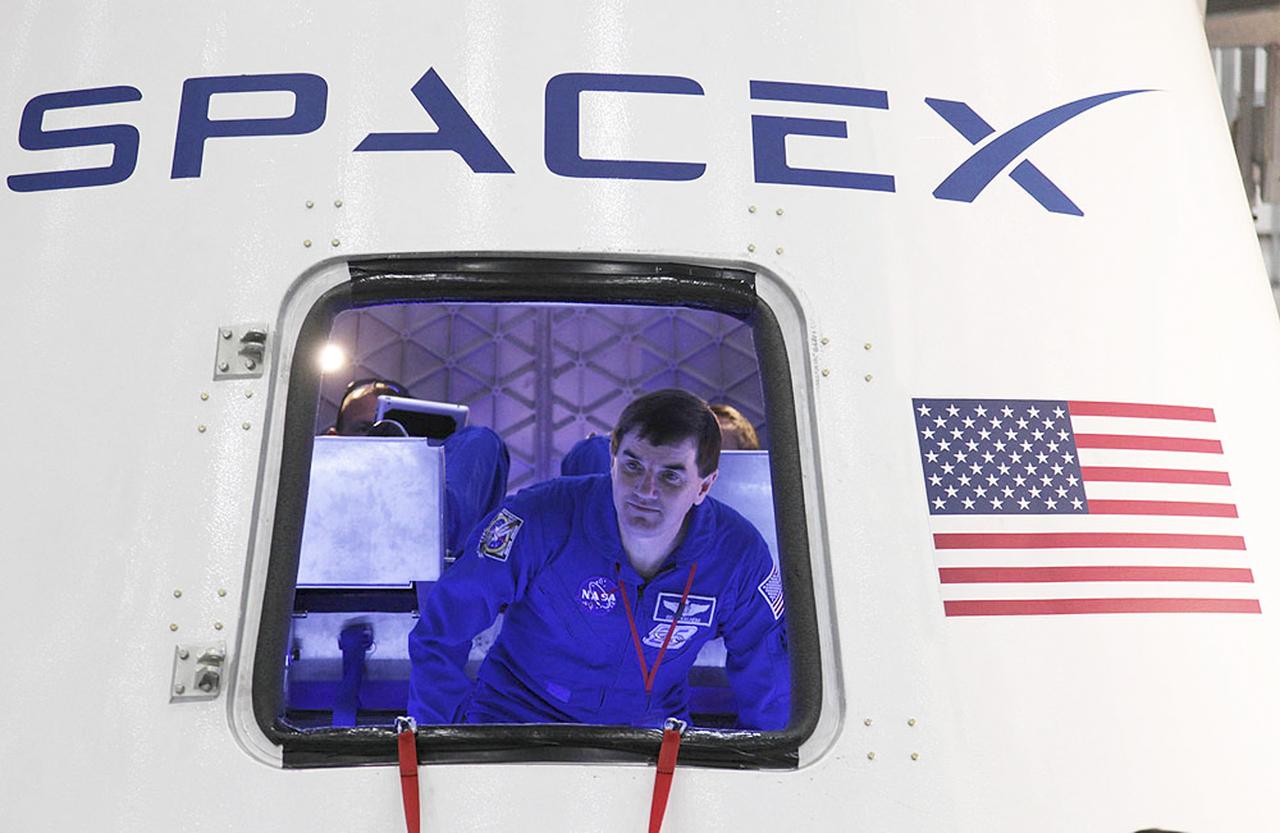
HAWTHORNE, Calif. -- NASA astronaut Rex Walheim checks out the Dragon spacecraft under development by Space Exploration Technologies SpaceX of Hawthorne, Calif., for the agency's Commercial Crew Program. In 2011, NASA selected SpaceX during Commercial Crew Development Round 2 CCDev2) activities to mature the design and development of a crew transportation system with the overall goal of accelerating a United States-led capability to the International Space Station. The goal of CCP is to drive down the cost of space travel as well as open up space to more people than ever before by balancing industry’s own innovative capabilities with NASA's 50 years of human spaceflight experience. Six other aerospace companies also are maturing launch vehicle and spacecraft designs under CCDev2, including Alliant Techsystems Inc. ATK, The Boeing Co., Excalibur Almaz Inc., Blue Origin, Sierra Nevada, and United Launch Alliance ULA. For more information, visit www.nasa.gov/commercialcrew. Image credit: Space Exploration Technologies
MCGREGOR, Texas -- Space Exploration Technologies (SpaceX) completes a full-duration, full-thrust firing of its new SuperDraco engine prototype at the company’s Rocket Development Facility in McGregor, Texas. The firing was in preparation for the ninth milestone to be completed under SpaceX's funded Space Act Agreement (SAA) with NASA's Commercial Crew Program (CCP). SpaceX is working with CCP during Commercial Crew Development Round 2 (CCDev2) in order to mature the design and development of its Dragon spacecraft with the overall goal of accelerating a United States-led capability to the International Space Station. Eight SuperDracos would be built into the sidewalls of the Dragon capsule to carry astronauts to safety should an emergency occur during launch or ascent. The goal of CCP is to drive down the cost of space travel as well as open up space to more people than ever before by balancing industry’s own innovative capabilities with NASA's 50 years of human spaceflight experience. Six other aerospace companies also are maturing launch vehicle and spacecraft designs under CCDev2, including Alliant Techsystems Inc. (ATK), Blue Origin, The Boeing Co., Excalibur Almaz Inc., Sierra Nevada Corp. and United Launch Alliance (ULA). For more information, visit www.nasa.gov/commercialcrew
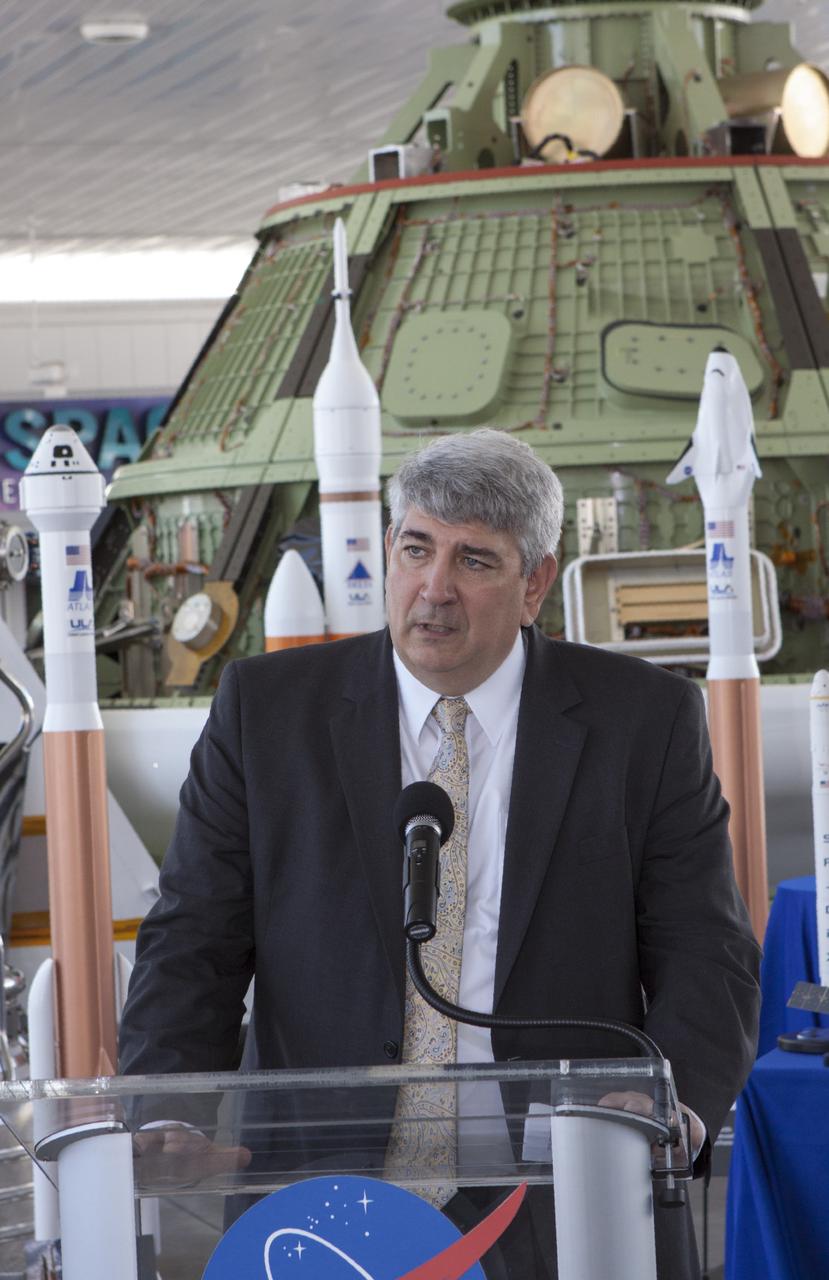
CAPE CANAVERAL, Fla. -- Space Florida Chief Operating Officer Jim Kuzma comments on the prospect of a new agency partnership during a news conference at the Kennedy Space Center Visitor Complex in Florida. NASA has selected Space Florida, the aerospace economic development agency for the state of Florida, for negotiations toward a partnership agreement to maintain and operate the historic Shuttle Landing Facility, or SLF. NASA issued a request for information to industry in 2012 to identify new and innovative ways to use the facility for current and future commercial and government mission activities. Space Florida's proposal is aligned closely with Kennedy's vision for creating a multiuser spaceport. The SLF, specially designed for space shuttles returning to Kennedy, opened for flights in 1976. The concrete runway is 15,000 feet long and 300 feet wide. The SLF is capable of handling all types and sizes of aircraft and horizontal launch and landing vehicles. For more information on Space Florida, visit http://www.spaceflorida.gov. Photo credit: NASA/Jim Grossmann
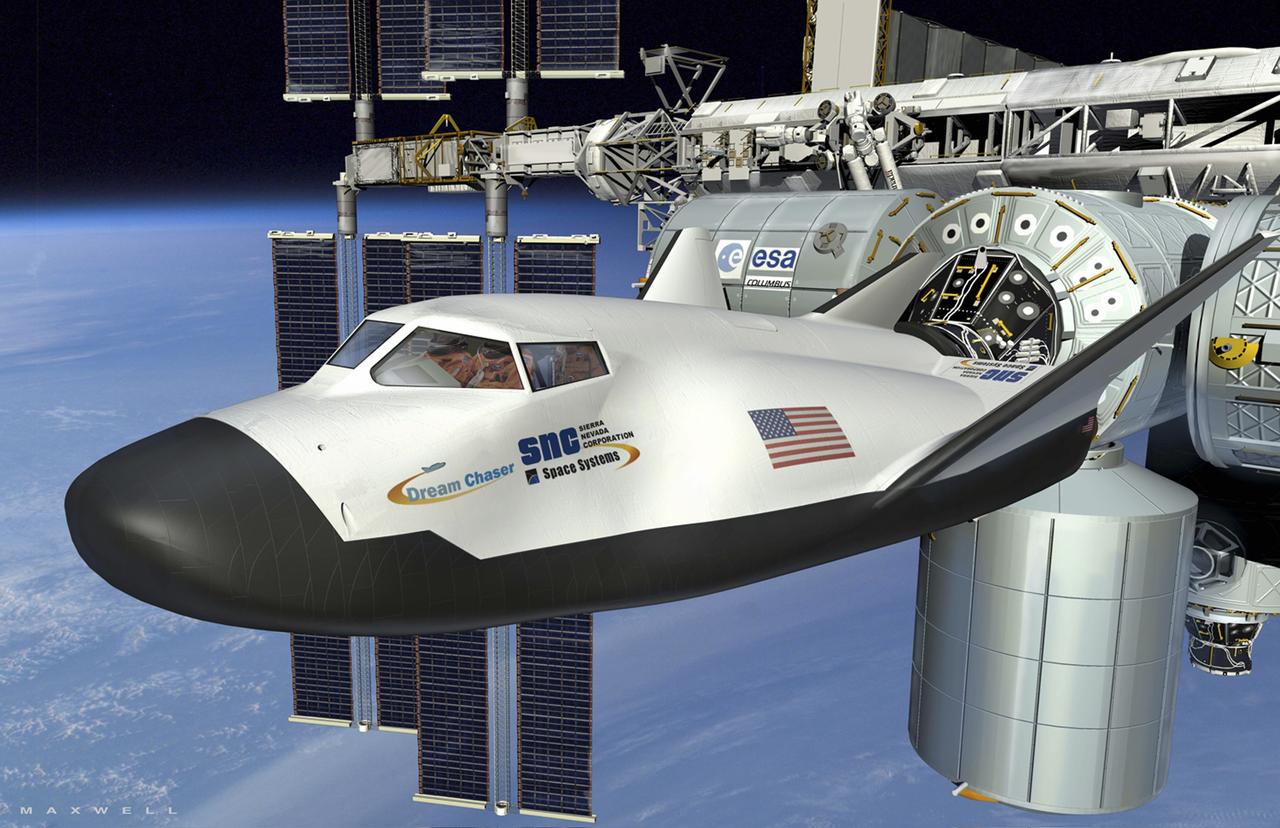
CAPE CANAVERAL, Fla. -- This is an artist's conception of the Dream Chaser spacecraft under development by Sierra Nevada of Centennial, Colo., for NASA's Commercial Crew Program (CCP). In 2011, NASA selected Sierra Nevada during Commercial Crew Development Round 2 (CCDev2) activities to mature the design and development of a crew transportation system with the overall goal of accelerating a United States-led capability to the International Space Station. The goal of CCP is to drive down the cost of space travel as well as open up space to more people than ever before by balancing industry’s own innovative capabilities with NASA's 50 years of human spaceflight experience. Six other aerospace companies also are maturing launch vehicle and spacecraft designs under CCDev2, including Alliant Techsystems Inc. (ATK), The Boeing Co., Excalibur Almaz Inc., Blue Origin, Space Exploration Technologies (SpaceX), and United Launch Alliance (ULA). For more information, visit www.nasa.gov/commercialcrew. Image credit: Sierra Nevada Corp.
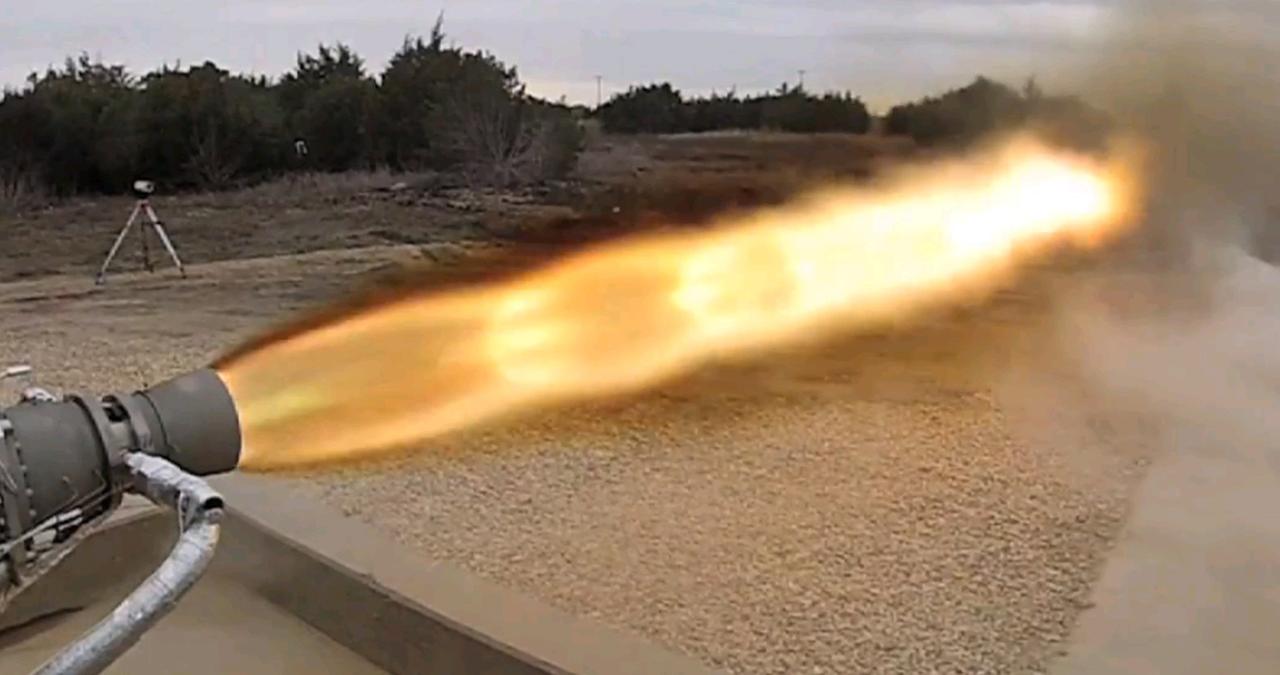
MCGREGOR, Texas -- Space Exploration Technologies (SpaceX) completes a full-duration, full-thrust firing of its new SuperDraco engine prototype at the company’s Rocket Development Facility in McGregor, Texas. The firing was in preparation for the ninth milestone to be completed under SpaceX's funded Space Act Agreement (SAA) with NASA's Commercial Crew Program (CCP). SpaceX is working with CCP during Commercial Crew Development Round 2 (CCDev2) in order to mature the design and development of its Dragon spacecraft with the overall goal of accelerating a United States-led capability to the International Space Station. Eight SuperDracos would be built into the sidewalls of the Dragon capsule to carry astronauts to safety should an emergency occur during launch or ascent. The goal of CCP is to drive down the cost of space travel as well as open up space to more people than ever before by balancing industry’s own innovative capabilities with NASA's 50 years of human spaceflight experience. Six other aerospace companies also are maturing launch vehicle and spacecraft designs under CCDev2, including Alliant Techsystems Inc. (ATK), Blue Origin, The Boeing Co., Excalibur Almaz Inc., Sierra Nevada Corp. and United Launch Alliance (ULA). For more information, visit www.nasa.gov/commercialcrew
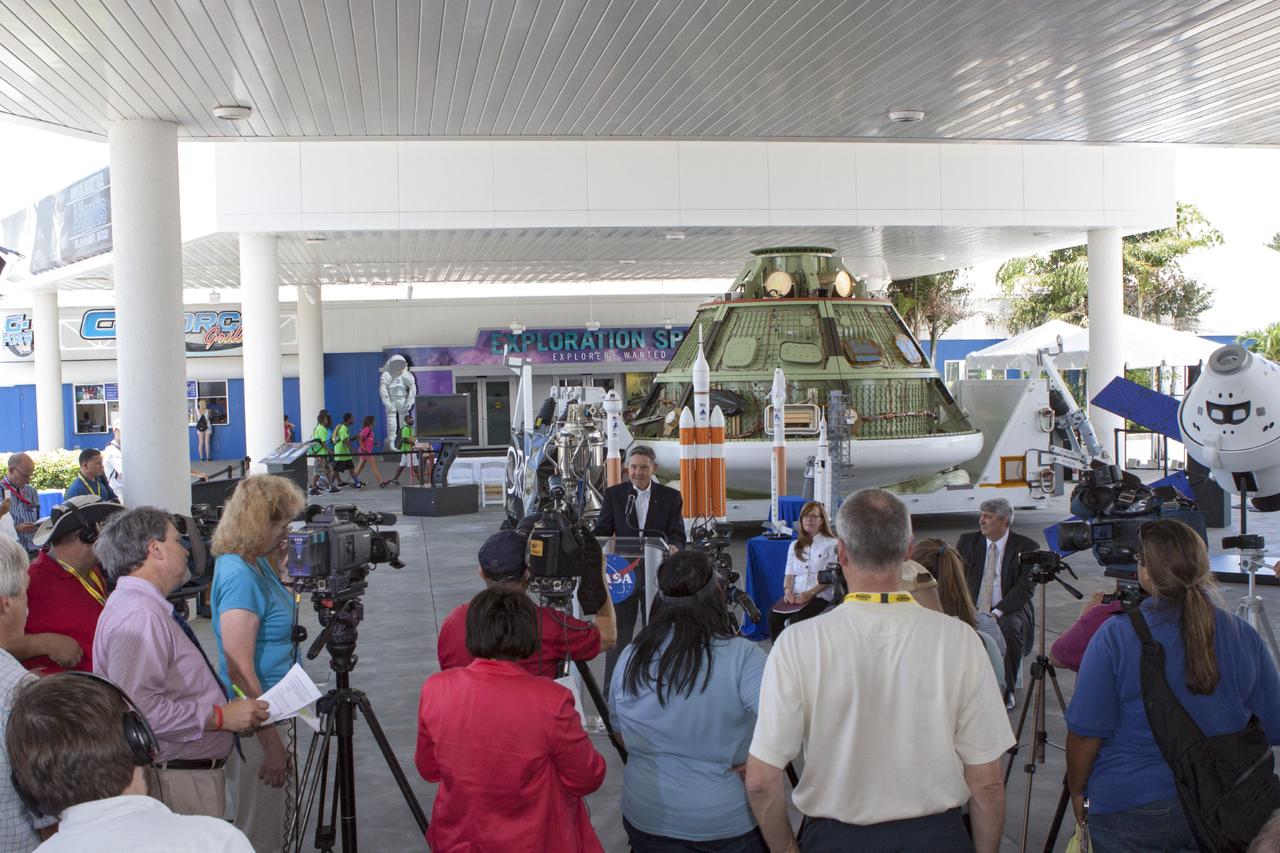
CAPE CANAVERAL, Fla. -- Kennedy Space Center Director Robert Cabana, at the podium, addresses the media assembled for a news conference on a new agency partnership at the Kennedy Space Center Visitor Complex in Florida. Also participating in the news conference are, seated from left, Kennedy's Director of Public Affairs Lisa Malone, NASA Administrator Charles Bolden, not in view, and Space Florida Chief Operating Officer Jim Kuzma. NASA has selected Space Florida, the aerospace economic development agency for the state of Florida, for negotiations toward a partnership agreement to maintain and operate the historic Shuttle Landing Facility, or SLF. NASA issued a request for information to industry in 2012 to identify new and innovative ways to use the facility for current and future commercial and government mission activities. Space Florida's proposal is aligned closely with Kennedy's vision for creating a multiuser spaceport. The SLF, specially designed for space shuttles returning to Kennedy, opened for flights in 1976. The concrete runway is 15,000 feet long and 300 feet wide. The SLF is capable of handling all types and sizes of aircraft and horizontal launch and landing vehicles. For more information on Space Florida, visit http://www.spaceflorida.gov. Photo credit: NASA/Jim Grossmann
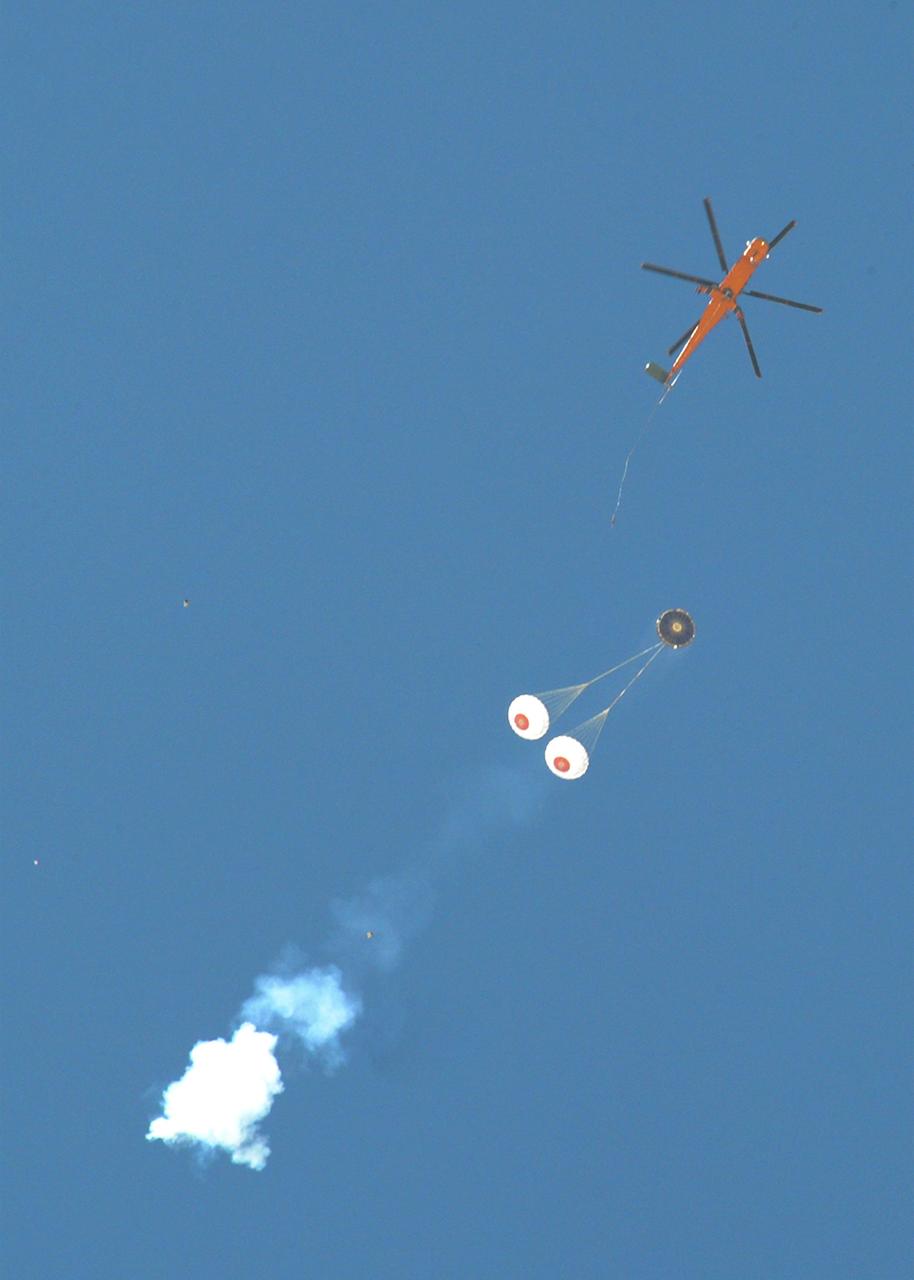
DELAMAR DRY LAKE BED, Nev. – An Erickson Sky Crane helicopter releases The Boeing Company's CST-100 crew capsule over the Delamar Dry Lake Bed near Alamo, Nev., where it floated to a smooth landing beneath its parachute system. This is the second parachute test that Boeing performed under its partnership with NASA's Commercial Crew Program CCP. The first showed the parachute system’s deployment scheme worked and that it could be re-packed and re-used for this second test. In 2011, NASA selected Boeing during Commercial Crew Development Round 2 CCDev2) activities to mature the design and development of a crew transportation system with the overall goal of accelerating a United States-led capability to the International Space Station. The goal of CCP is to drive down the cost of space travel as well as open up space to more people than ever before by balancing industry’s own innovative capabilities with NASA's 50 years of human spaceflight experience. Six other aerospace companies also are maturing launch vehicle and spacecraft designs under CCDev2, including Alliant Techsystems Inc. ATK, Excalibur Almaz Inc., Blue Origin, Sierra Nevada, Space Exploration Technologies SpaceX, and United Launch Alliance ULA. For more information, visit www.nasa.gov/commercialcrew. Image credit: Boeing
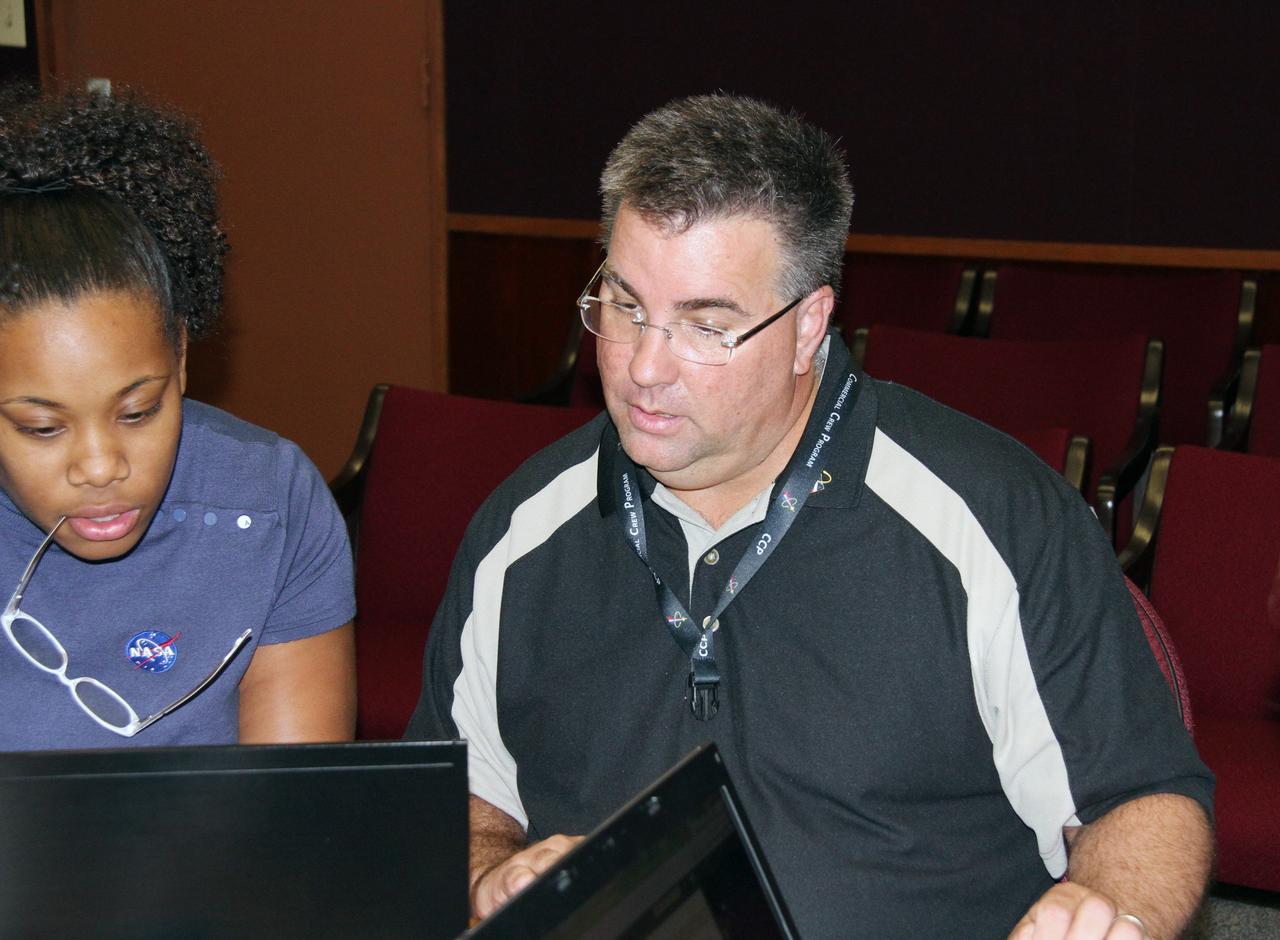
CAPE CANAVERAL, Fla. – The manager of NASA's Commercial Crew Program CCP, Ed Mango, hosts a virtual conversation, called a Tweet Chat, with Twitter followers from around the world. Those who follow www.twitter.com/commercial_crew had an hour-long opportunity to ask Mango questions about NASA’s efforts to get astronauts to low Earth orbit and the International Space Station aboard American rockets and spacecraft. Mango stuck to the social networking service's 140 character limit and answered dozens of questions. At left, is Brittani Sims, a member of the CCP team. The goal of CCP is to drive down the cost of space travel as well as open up space to more people than ever before by balancing industry’s own innovative capabilities with NASA's 50 years of human spaceflight experience. Seven aerospace companies are maturing launch vehicle and spacecraft designs under the program’s second round of development, called Commercial Crew Development Round 2 CCDev2), including Alliant Techsystems Inc. ATK, The Boeing Co., Excalibur Almaz Inc., Blue Origin, Sierra Nevada, Space Exploration Technologies SpaceX, and United Launch Alliance ULA. For more information, visit www.nasa.gov/commercialcrew. Image credit: NASA/Gianni Woods
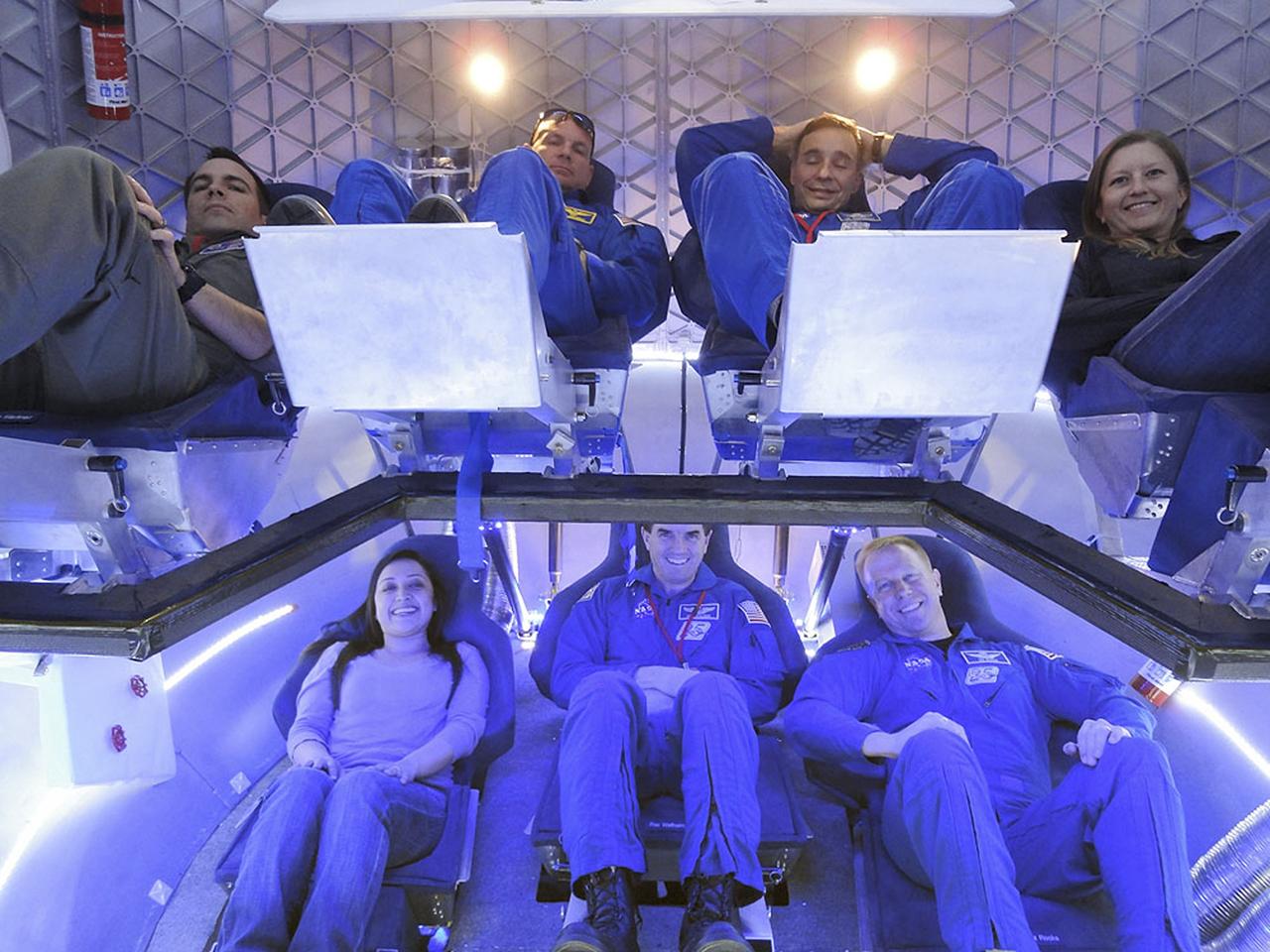
HAWTHORNE, Calif. -- NASA astronauts and industry experts check out the crew accommodations in the Dragon spacecraft under development by Space Exploration Technologies SpaceX of Hawthorne, Calif., for the agency's Commercial Crew Program. On top, from left, are NASA Crew Survival Engineering Team Lead Dustin Gohmert, NASA astronauts Tony Antonelli and Lee Archambault, and SpaceX Mission Operations Engineer Laura Crabtree. On bottom, from left, are SpaceX Thermal Engineer Brenda Hernandez and NASA astronauts Rex Walheim and Tim Kopra. In 2011, NASA selected SpaceX during Commercial Crew Development Round 2 CCDev2) activities to mature the design and development of a crew transportation system with the overall goal of accelerating a United States-led capability to the International Space Station. The goal of CCP is to drive down the cost of space travel as well as open up space to more people than ever before by balancing industry’s own innovative capabilities with NASA's 50 years of human spaceflight experience. Six other aerospace companies also are maturing launch vehicle and spacecraft designs under CCDev2, including Alliant Techsystems Inc. ATK, The Boeing Co., Excalibur Almaz Inc., Blue Origin, Sierra Nevada, and United Launch Alliance ULA. For more information, visit www.nasa.gov/commercialcrew. Image credit: Space Exploration Technologies
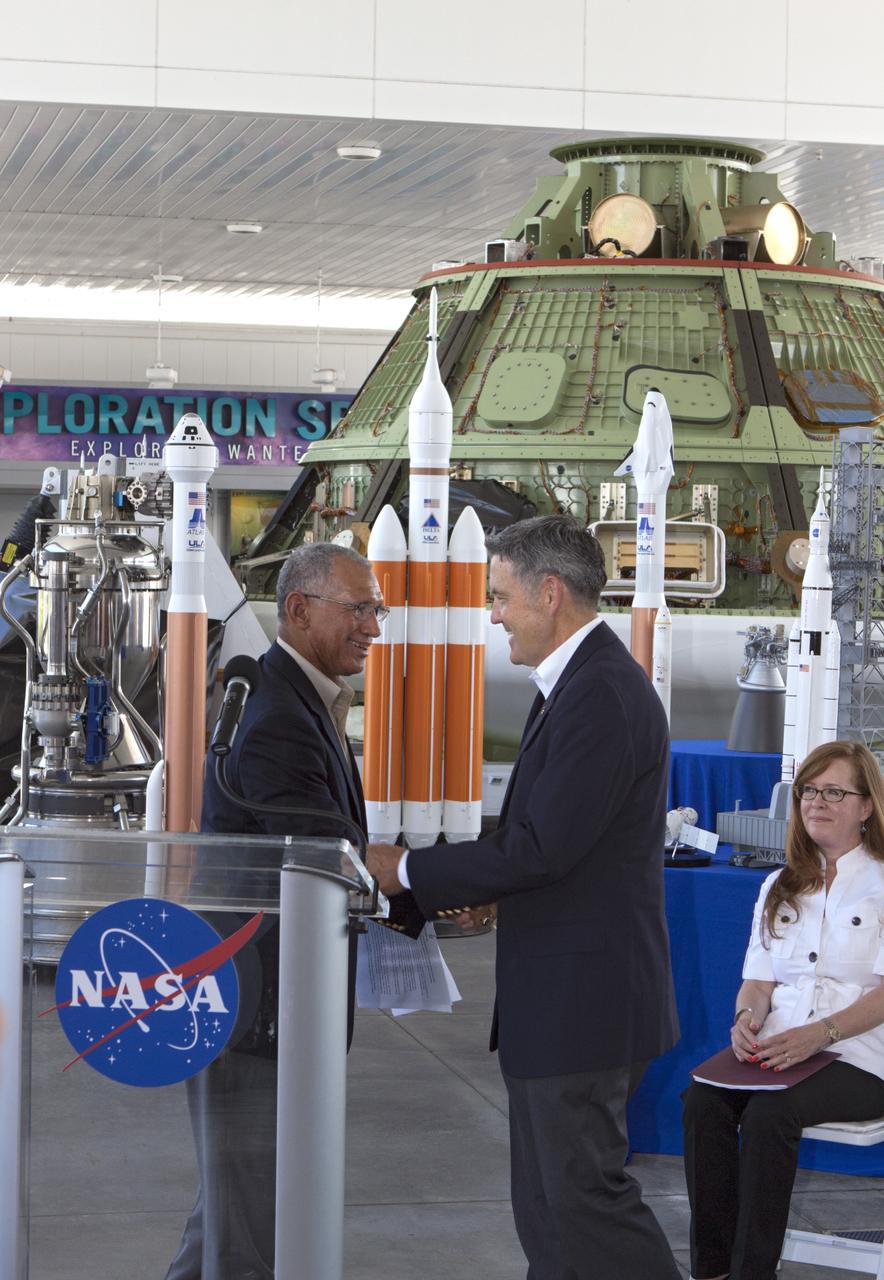
CAPE CANAVERAL, Fla. -- NASA Administrator Charles Bolden, left, welcomes Kennedy Space Center Director Robert Cabana to the podium following the announcement of a new agency partnership during a news conference at the Kennedy Space Center Visitor Complex in Florida. At right is Lisa Malone, director of Public Affairs at Kennedy. NASA has selected Space Florida, the aerospace economic development agency for the state of Florida, for negotiations toward a partnership agreement to maintain and operate the historic Shuttle Landing Facility, or SLF. NASA issued a request for information to industry in 2012 to identify new and innovative ways to use the facility for current and future commercial and government mission activities. Space Florida's proposal is aligned closely with Kennedy's vision for creating a multiuser spaceport. The SLF, specially designed for space shuttles returning to Kennedy, opened for flights in 1976. The concrete runway is 15,000 feet long and 300 feet wide. The SLF is capable of handling all types and sizes of aircraft and horizontal launch and landing vehicles. For more information on Space Florida, visit http://www.spaceflorida.gov. Photo credit: NASA/Jim Grossmann
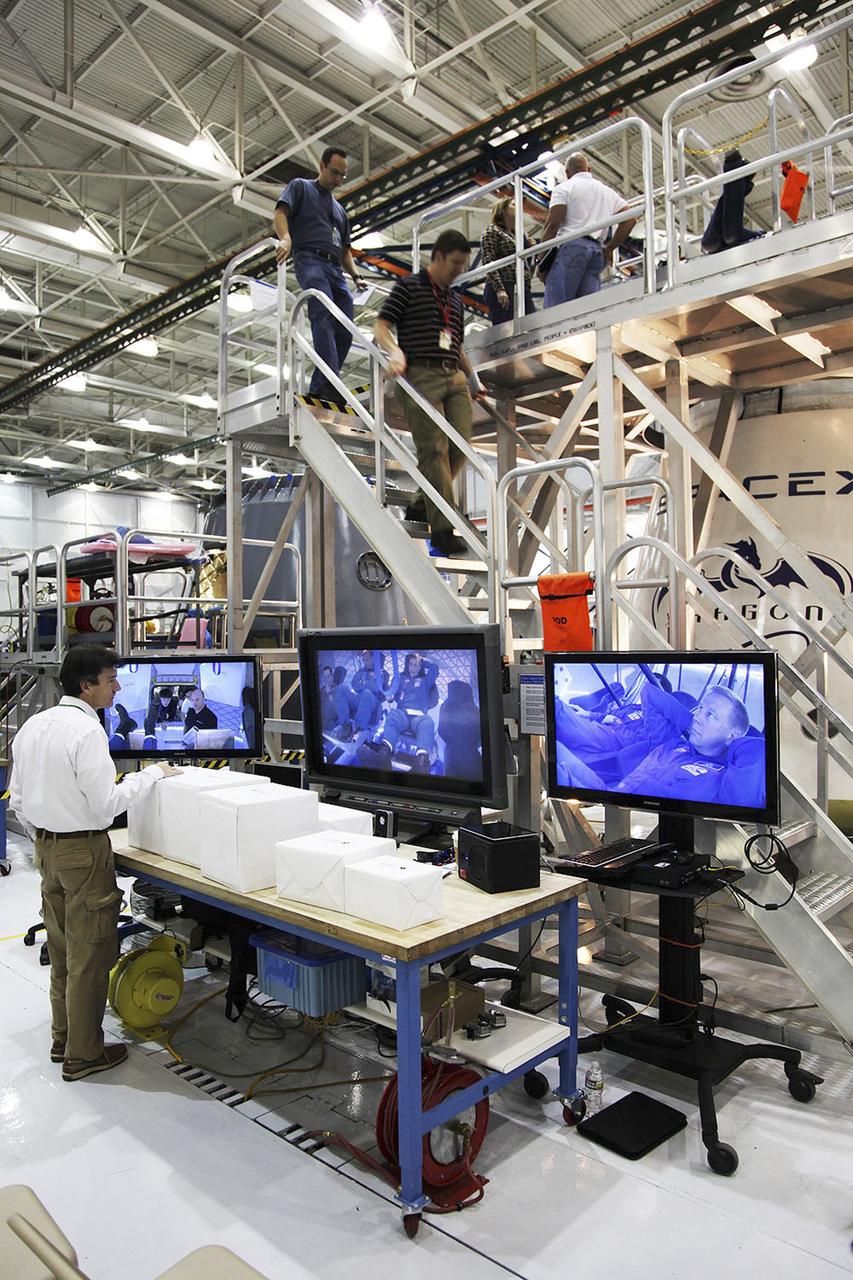
HAWTHORNE, Calif. -- NASA astronauts and industry experts are monitored while they check out the crew accommodations in the Dragon spacecraft under development by Space Exploration Technologies SpaceX of Hawthorne, Calif., for the agency's Commercial Crew Program. In 2011, NASA selected SpaceX during Commercial Crew Development Round 2 CCDev2) activities to mature the design and development of a crew transportation system with the overall goal of accelerating a United States-led capability to the International Space Station. The goal of CCP is to drive down the cost of space travel as well as open up space to more people than ever before by balancing industry’s own innovative capabilities with NASA's 50 years of human spaceflight experience. Six other aerospace companies also are maturing launch vehicle and spacecraft designs under CCDev2, including Alliant Techsystems Inc. ATK, The Boeing Co., Excalibur Almaz Inc., Blue Origin, Sierra Nevada, and United Launch Alliance ULA. For more information, visit www.nasa.gov/commercialcrew. Image credit: Space Exploration Technologies
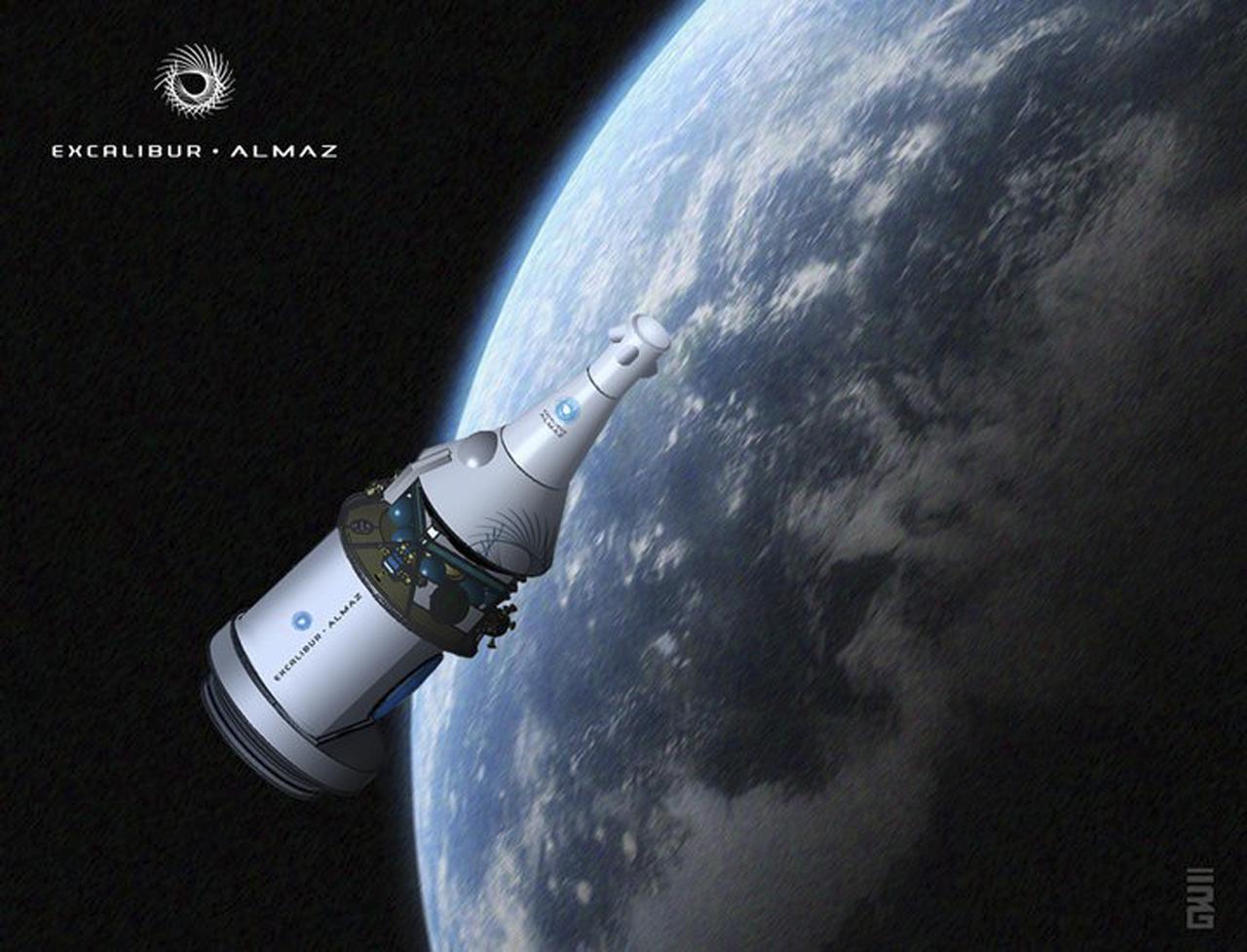
CAPE CANAVERAL, Fla. -- This is an artist's conception of an Almaz capsule, the basis of Excalibur Almaz Inc.'s Human Spacecraft design. In 2011, NASA's Commercial Crew Program CCP and the Houston-based company entered into an unfunded Space Act Agreement during Commercial Crew Development Round 2 CCDev2) activities to mature the design and development of a crew transportation system with the overall goal of accelerating a United States-led capability to the International Space Station. The goal of CCP is to drive down the cost of space travel as well as open up space to more people than ever before by balancing industry’s own innovative capabilities with NASA's 50 years of human spaceflight experience. Six other aerospace companies also are maturing launch vehicle and spacecraft designs under CCDev2, including Alliant Techsystems ATK, Blue Origin, The Boeing Co., Sierra Nevada Corp., Space Exploration Technologies SpaceX, and United Launch Alliance ULA. For more information, visit www.nasa.gov/commercialcrew. Image credit: Excalibur Almaz Limited
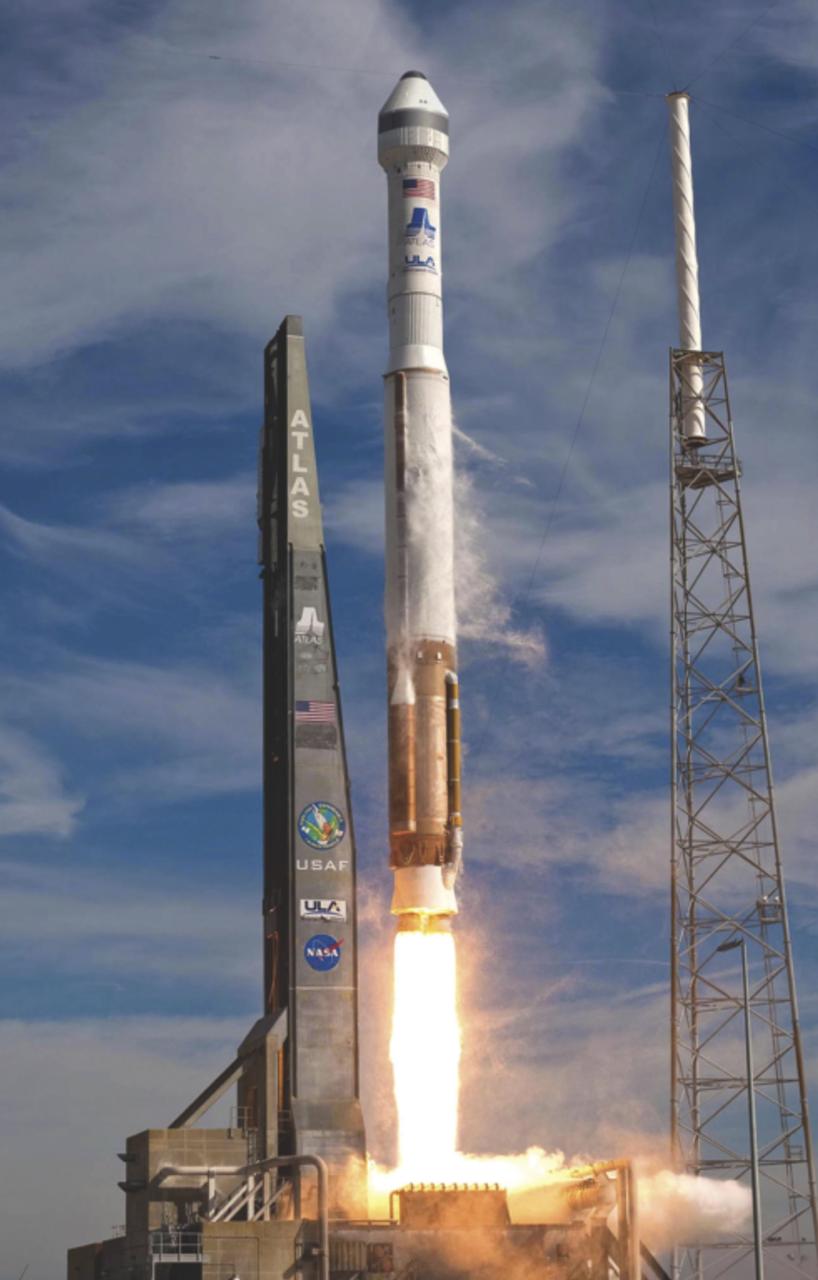
CAPE CANAVERAL, Fla. -- This is an artist's conception of a United Launch Alliance (ULA) Atlas V rocket being considered for NASA's Commercial Crew Program (CCP). In 2011, NASA and ULA of Englewood, Colo., entered into an unfunded Space Act Agreement during Commercial Crew Development Round 2 (CCDev2) activities to mature the design and development of a crew transportation system with the overall goal of accelerating a United States-led capability to the International Space Station. The goal of CCP is to drive down the cost of space travel as well as open up space to more people than ever before by balancing industry’s own innovative capabilities with NASA's 50 years of human spaceflight experience. Six other aerospace companies also are maturing launch vehicle and spacecraft designs under CCDev2, including Alliant Techsystems Inc. (ATK), Blue Origin, The Boeing Co., Excalibur Almaz Inc., Sierra Nevada Corp., and Space Exploration Technologies (SpaceX). For more information, visit www.nasa.gov/commercialcrew. Image credit: United Launch Alliance
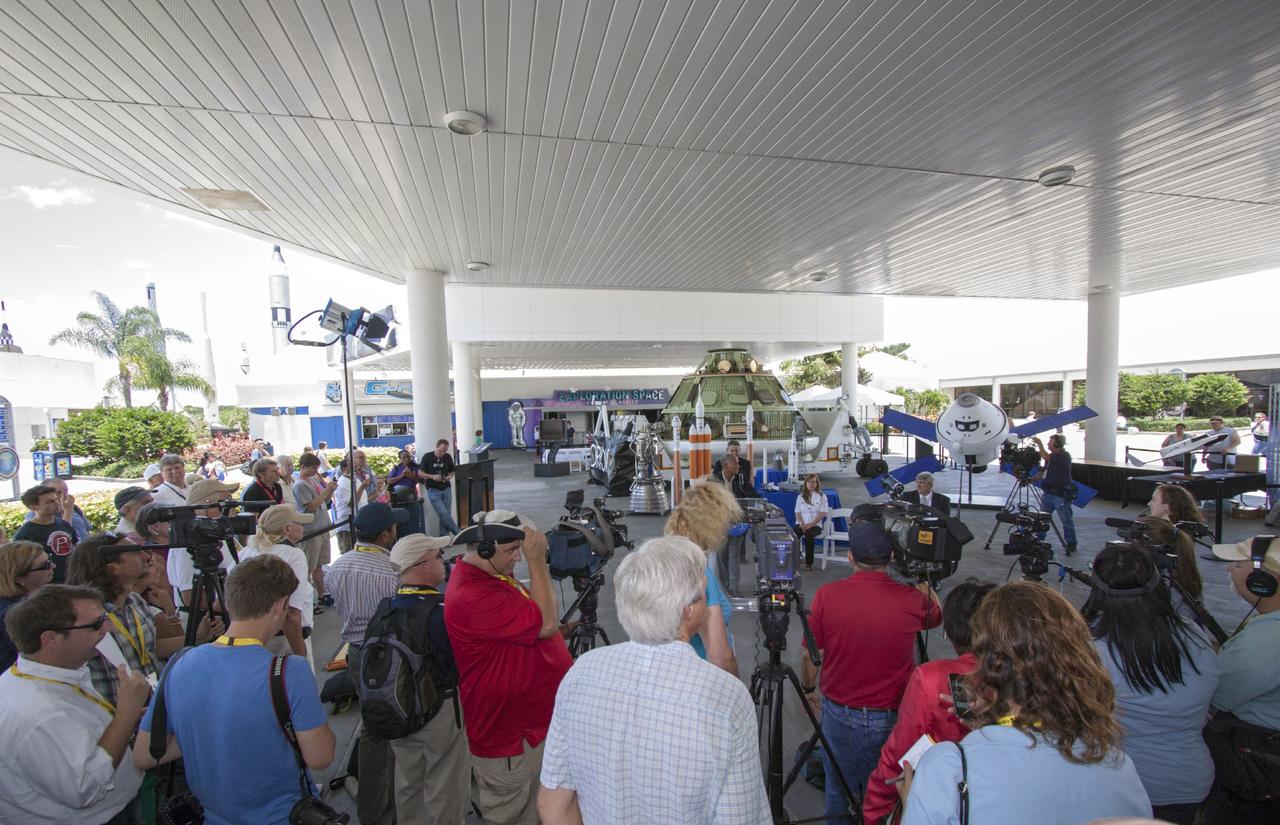
CAPE CANAVERAL, Fla. -- NASA Administrator Charles Bolden, at the podium, addresses the media assembled for a news conference on a new agency partnership at the Kennedy Space Center Visitor Complex in Florida. Also participating in the news conference are, from left, Kennedy Space Center Director Robert Cabana, standing, Kennedy's Director of Public Affairs Lisa Malone, and Space Florida Chief Operating Officer Jim Kuzma, both seated. NASA has selected Space Florida, the aerospace economic development agency for the state of Florida, for negotiations toward a partnership agreement to maintain and operate the historic Shuttle Landing Facility, or SLF. NASA issued a request for information to industry in 2012 to identify new and innovative ways to use the facility for current and future commercial and government mission activities. Space Florida's proposal is aligned closely with Kennedy's vision for creating a multiuser spaceport. The SLF, specially designed for space shuttles returning to Kennedy, opened for flights in 1976. The concrete runway is 15,000 feet long and 300 feet wide. The SLF is capable of handling all types and sizes of aircraft and horizontal launch and landing vehicles. For more information on Space Florida, visit http://www.spaceflorida.gov. Photo credit: NASA/Jim Grossmann
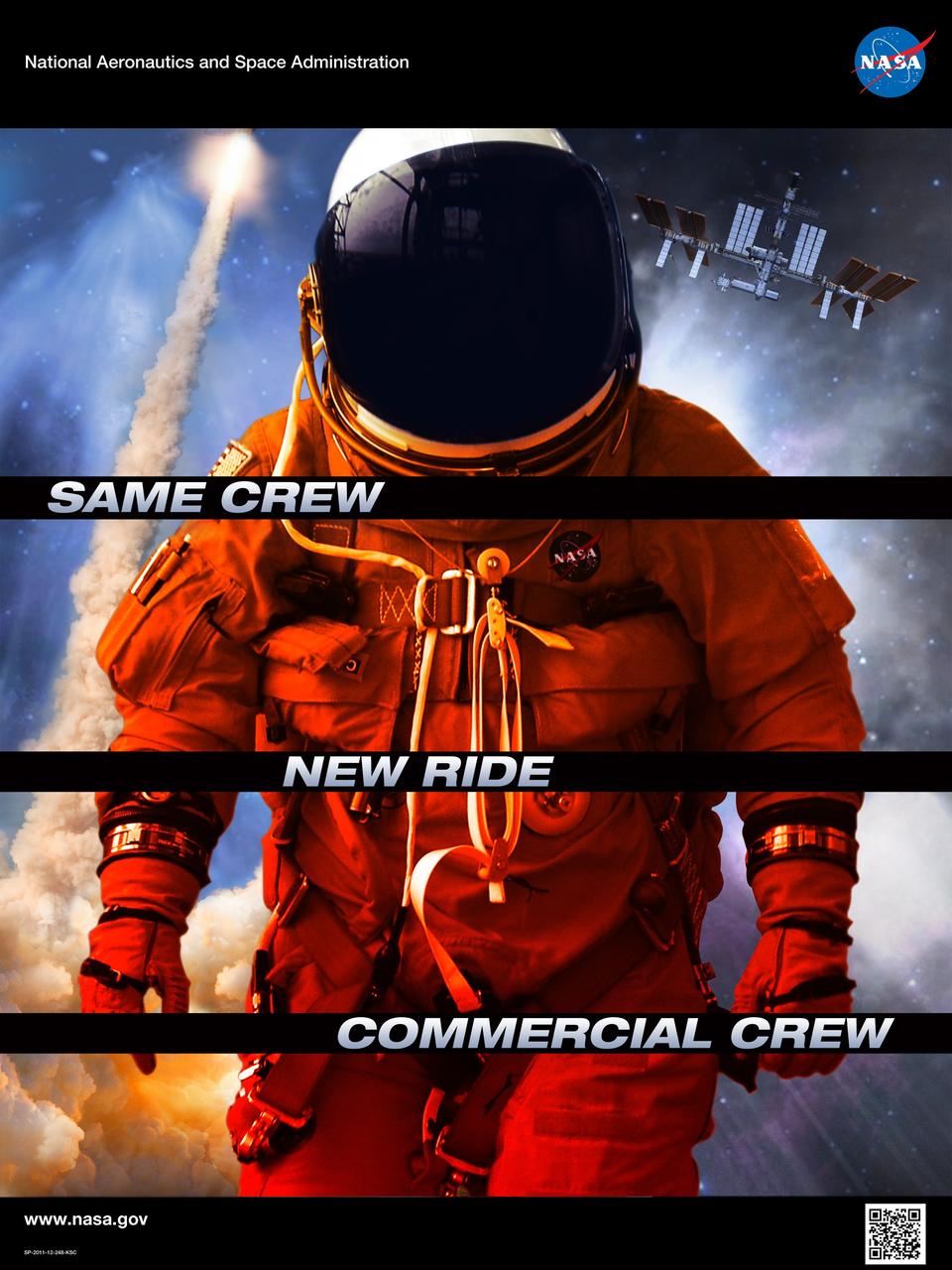
CAPE CANAVERAL, Fla. -- This is a printable version of NASA's "Same Crew, New Ride" poster depicting an artist's conception of NASA's Commercial Crew Program CCP. The poster features a NASA astronaut in the foreground with a vehicle launching toward the International Space Station in the background. CCP is investing in the aerospace industry and helping multiple companies design and develop crew transportation systems that could be capable of flying to the space station and other low Earth orbit destinations. The program is meant to accelerate a United States-led capability to the station where critical scientific work is being performed for use in applications here on Earth. CCP is expected to drive down the cost of space travel as well as open up space to more people than ever before by balancing industry’s own innovative capabilities with NASA's 50 years of human spaceflight experience. For more information, visit www.nasa.gov/commercialcrew. Poster designed by Kennedy Space Center Graphics Department/Greg Lee. Credit: NASA
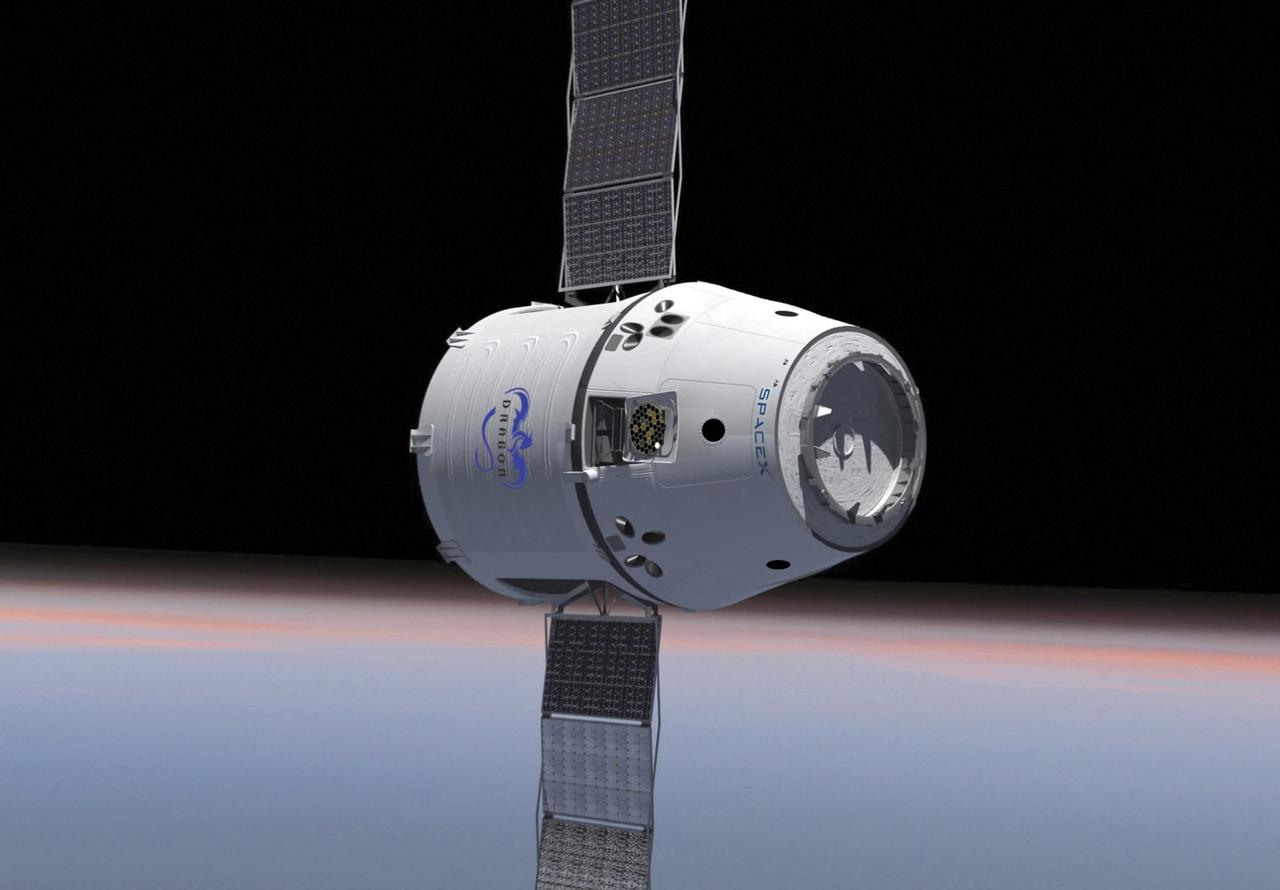
CAPE CANAVERAL, Fla. -- This is an artist's conception of the Dragon capsule under development by Space Exploration Technologies (SpaceX) of Hawthorne, Calif., for NASA's Commercial Crew Program (CCP). In 2011, NASA selected SpaceX during Commercial Crew Development Round 2 (CCDev2) activities to mature the design and development of a crew transportation system with the overall goal of accelerating a United States-led capability to the International Space Station. The goal of CCP is to drive down the cost of space travel as well as open up space to more people than ever before by balancing industry’s own innovative capabilities with NASA's 50 years of human spaceflight experience. Six other aerospace companies also are maturing launch vehicle and spacecraft designs under CCDev2, including Alliant Techsystems Inc. (ATK), The Boeing Co., Excalibur Almaz Inc., Blue Origin, Sierra Nevada, and United Launch Alliance (ULA). For more information, visit www.nasa.gov/commercialcrew. Image credit: Space Exploration Technologies
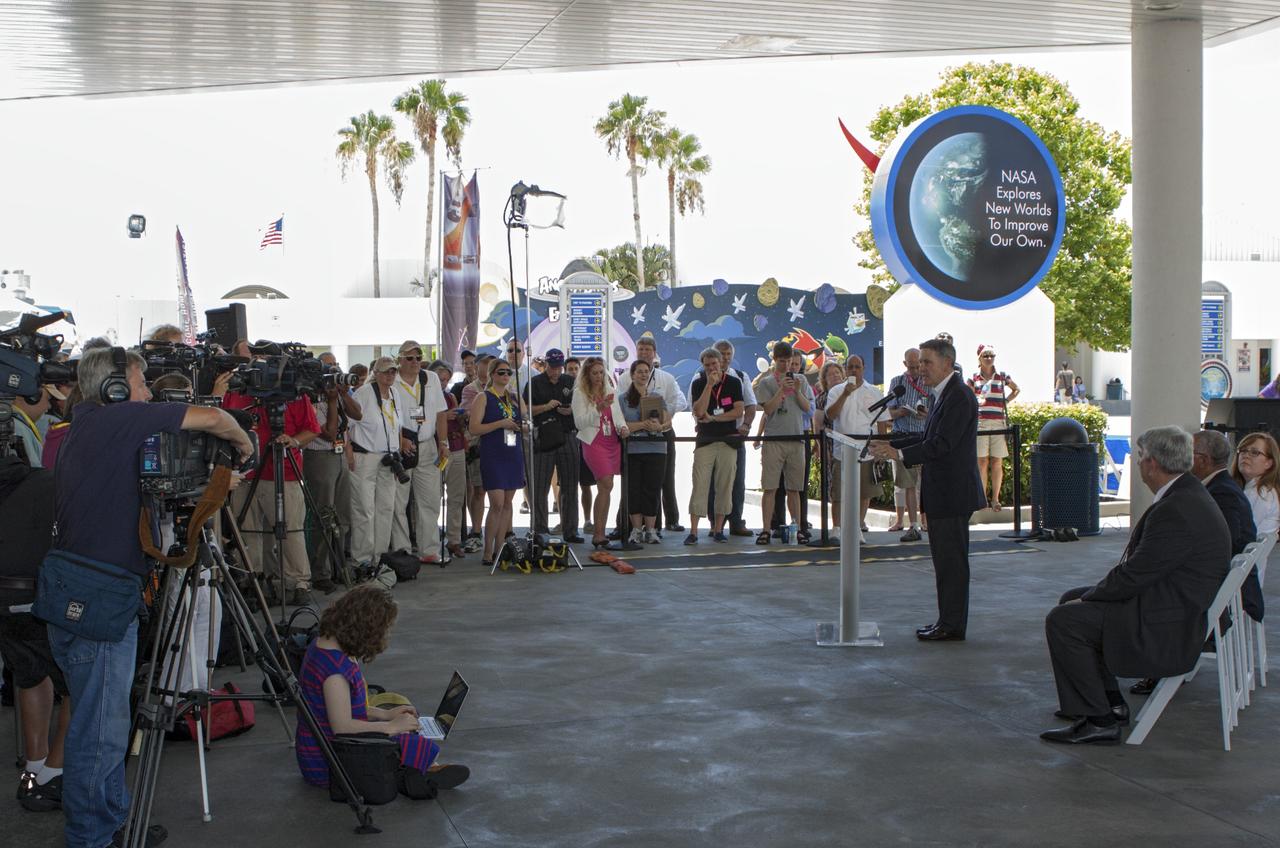
CAPE CANAVERAL, Fla. -- Kennedy Space Center Director Robert Cabana, at the podium, addresses the media assembled for a news conference on a new agency partnership at the Kennedy Space Center Visitor Complex in Florida. Also participating in the news conference are, seated from left, Space Florida Chief Operating Officer Jim Kuzma, NASA Administrator Charles Bolden, and Kennedy's Director of Public Affairs Lisa Malone. NASA has selected Space Florida, the aerospace economic development agency for the state of Florida, for negotiations toward a partnership agreement to maintain and operate the historic Shuttle Landing Facility, or SLF. NASA issued a request for information to industry in 2012 to identify new and innovative ways to use the facility for current and future commercial and government mission activities. Space Florida's proposal is aligned closely with Kennedy's vision for creating a multiuser spaceport. The SLF, specially designed for space shuttles returning to Kennedy, opened for flights in 1976. The concrete runway is 15,000 feet long and 300 feet wide. The SLF is capable of handling all types and sizes of aircraft and horizontal launch and landing vehicles. For more information on Space Florida, visit http://www.spaceflorida.gov. Photo credit: NASA/Jim Grossmann
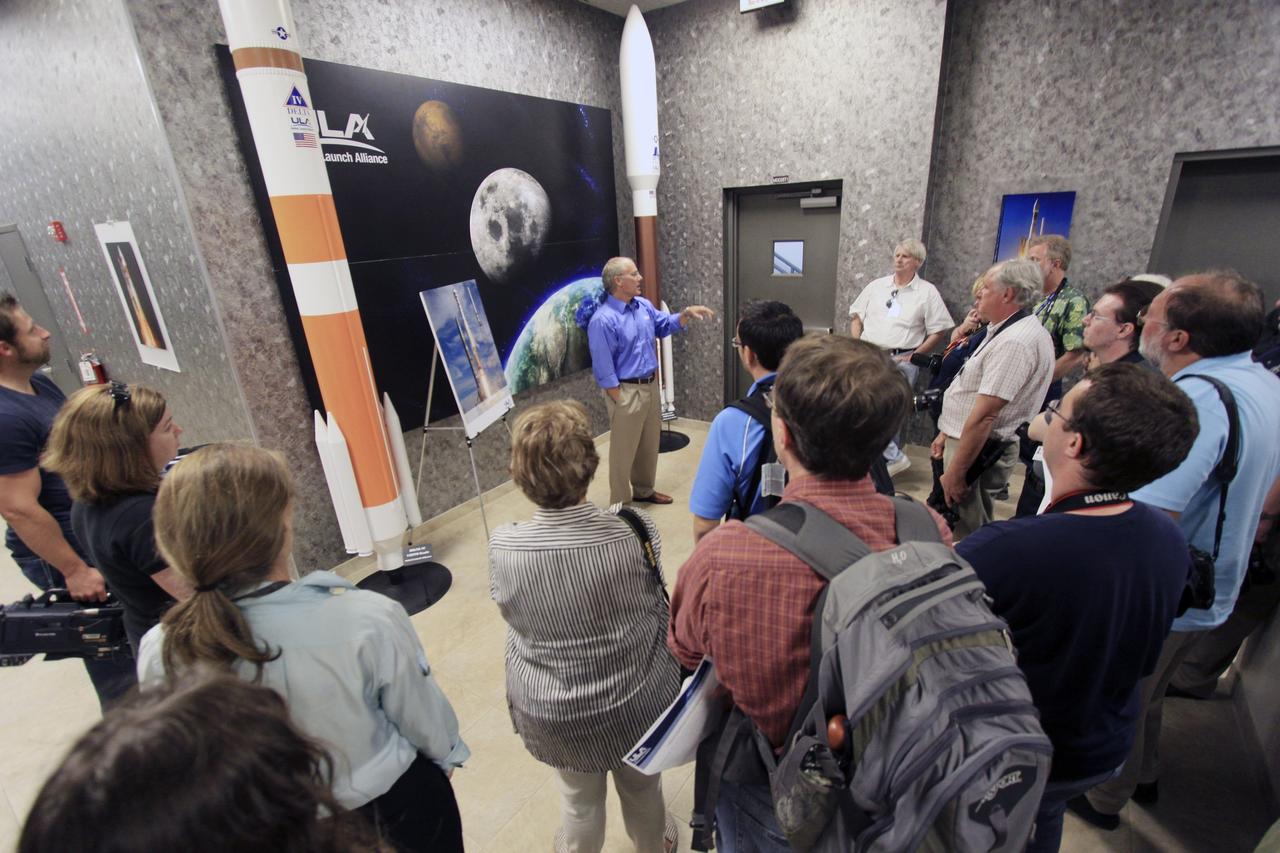
CAPE CANAVERAL, Fla. -- Andy Aldrin, director of business development for United Launch Alliance (ULA), talks to media about plans to launch NASA astronauts to the International Space Station in the Atlas Spaceflight Operations Center (ASOC) at Cape Canaveral Air Force Station in Florida. ULA is working to make its Atlas V rocket safe for humans for NASA's Commercial Crew Program (CCP) under the Commercial Crew Development Round 2 (CCDev2) activities. Part of those plans will be to design and test an emergency detection system and crew access capabilities. ULA also is working with other aerospace system providers developing spacecraft that would launch atop the company's Atlas V rocket, such as Blue Origin, Sierra Nevada and The Boeing Co. CCP, which is based at the adjacent NASA's Kennedy Space Center, is partnering with industry to take crews to the station or other low Earth orbit destinations. Aldrin explained that the goal of ULA will be to develop a human spaceflight capability without altering rocket's proven design and successful track record. It's the freedom to develop innovative solutions such as this that CCP hopes will drive down the cost of space travel as well as open up space to more people than ever before. Seven aerospace companies are maturing launch vehicle and spacecraft designs under CCDev2, including Alliant Techsystems Inc. (ATK) of Promontory, Utah, Blue Origin of Kent, Wash., The Boeing Co., of Houston, Excalibur Almaz Inc. of Houston, Sierra Nevada Corp. of Louisville, Colo., Space Exploration Technologies (SpaceX) of Hawthorne, Calif., and United Launch Alliance (ULA) of Centennial, Colo. For more information, visit www.nasa.gov/exploration/commercial Photo credit: Jim Grossmann
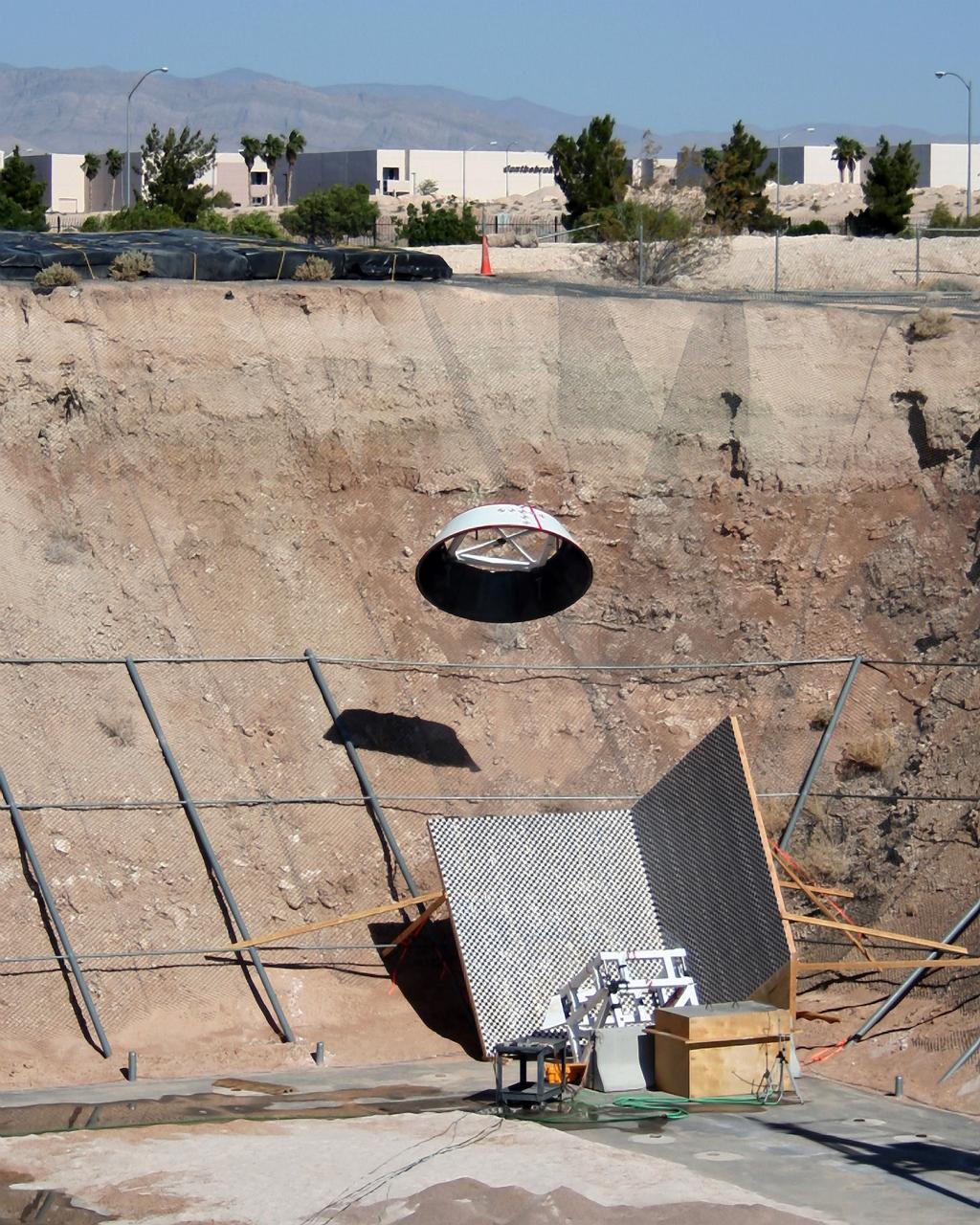
LAS VEGAS -- The Boeing Company tests the forward heat shield FHS jettison system of its CST-100 spacecraft at the Bigelow Aerospace facility in Las Vegas as part of an agreement with NASA's Commercial Crew Program CCP during Commercial Crew Development Round 2 CCDev2) activities. The FHS will protect the spacecraft's parachutes, rendezvous-and-docking sensor packages, and docking mechanism during ascent and re-entry. During a mission to low Earth orbit, the shield will be jettisoned after re-entry heating, allowing the spacecraft's air bags to deploy for a safe landing. In 2011, NASA selected Boeing for CCDev2 to mature the design and development of a crew transportation system with the overall goal of accelerating a United States-led capability to the International Space Station. The goal of CCP is to drive down the cost of space travel as well as open up space to more people than ever before by balancing industry’s own innovative capabilities with NASA's 50 years of human spaceflight experience. Six other aerospace companies also were selected to mature launch vehicle and spacecraft designs under CCDev2, including Alliant Techsystems Inc. ATK, Excalibur Almaz Inc., Blue Origin, Sierra Nevada Corp. SNC, Space Exploration Technologies SpaceX, and United Launch Alliance ULA. For more information, visit www.nasa.gov/commercialcrew. Image credit: Boeing The Ground Systems Development and Operations Program is developing the necessary ground systems, infrastructure and operational approaches required to safely process, assemble, transport and launch the next generation of rockets and spacecraft in support of NASA’s exploration objectives. Future work also will replace the antiquated communications, power and vehicle access resources with modern efficient systems. Some of the utilities and systems slated for replacement have been used since the VAB opened in 1965. For more information, visit http://www.nasa.gov/exploration/systems/ground/index.html Photo credit: Boeing
JOHNSON SPACE CENTER, Houston - JSC2010-E-079335 -- To celebrate the upcoming 30th anniversary and retirement of the Space Shuttle Program, the design of this patch aims to capture the visual essence and spirit of the program in an iconic and triumphant manner. As the Space Shuttle Program has been an innovative, iconic gem in the history of American spaceflight, the overall shape of the patch and its faceted panels are reminiscent of a diamond or other fine jewel. The shape of the patch fans out from a fine point at the bottom to a wide array across the top, to evoke the vastness of space and our aim to explore it, as the shuttle has done successfully for decades. The outlined blue circle represents the shuttle's exploration within low Earth orbit, but also creates a dynamic fluidity from the bottom right around to the top left to allude to the smoothness of the shuttle orbiting Earth. The diagonal lines cascading down into the top-right corner of the design form the American Flag as the shuttle has been one of the most recognizable icons in American history throughout the last three decades. In the top left and right panels of the design, there are seven prominent stars on each side, which represent the 14 crew members who were lost on shuttles Challenger and Columbia. Inside of the middle panel to the right of the shuttle, there are five larger, more prominent stars that signify the five space shuttle vehicles NASA has had in its fleet throughout the program. Most importantly though, this patch is as an overall celebration of the much-beloved program and vehicle that so many people have dedicated themselves to in so many capacities throughout the years with a sense of vibrancy and mysticism that the Space Shuttle Program will always be remembered by. This patch was designed by Aerospace Engineer Blake Dumesnil, who has supported the Space Shuttle Program with his work in the Avionics and Energy Systems Divisions of the NASA Johnson Space Center Engineering Directorate. It is the winning entry in a commemorative patch design contest sponsored by the Space Shuttle Program. Image credit: NASA/Blake Dumesnil
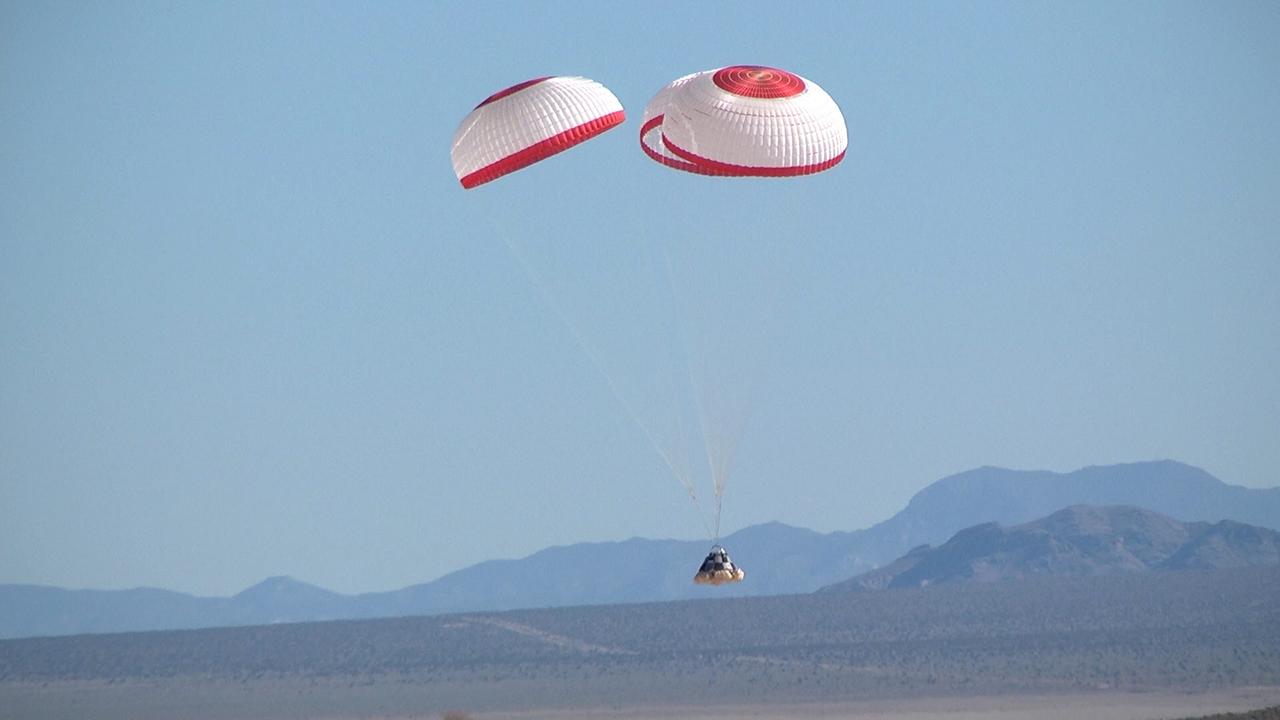
DELAMAR DRY LAKE BED, Nev. -- The Boeing Company's CST-100 boilerplate crew capsule floats toward a smooth landing beneath three main parachutes after being released from an Erickson Sky Crane helicopter at about 11,000 feet above Delamar Dry Lake Bed near Alamo, Nev. This is one of two tests that Boeing will perform for NASA's Commercial Crew Program CCP in order to validate the spacecraft's parachute system architecture and deployment scheme, characterize pyrotechnic shock loads, confirm parachute sizing and design, and identify potential forward compartment packaging and deployment issues. In 2011, NASA selected Boeing during Commercial Crew Development Round 2 CCDev2) activities to mature the design and development of a crew transportation system with the overall goal of accelerating a United States-led capability to the International Space Station. The goal of CCP is to drive down the cost of space travel as well as open up space to more people than ever before by balancing industry’s own innovative capabilities with NASA's 50 years of human spaceflight experience. Six other aerospace companies also are maturing launch vehicle and spacecraft designs under CCDev2, including Alliant Techsystems Inc. ATK, Excalibur Almaz Inc., Blue Origin, Sierra Nevada, Space Exploration Technologies SpaceX, and United Launch Alliance ULA. For more information, visit www.nasa.gov/commercialcrew. Image credit: Boeing
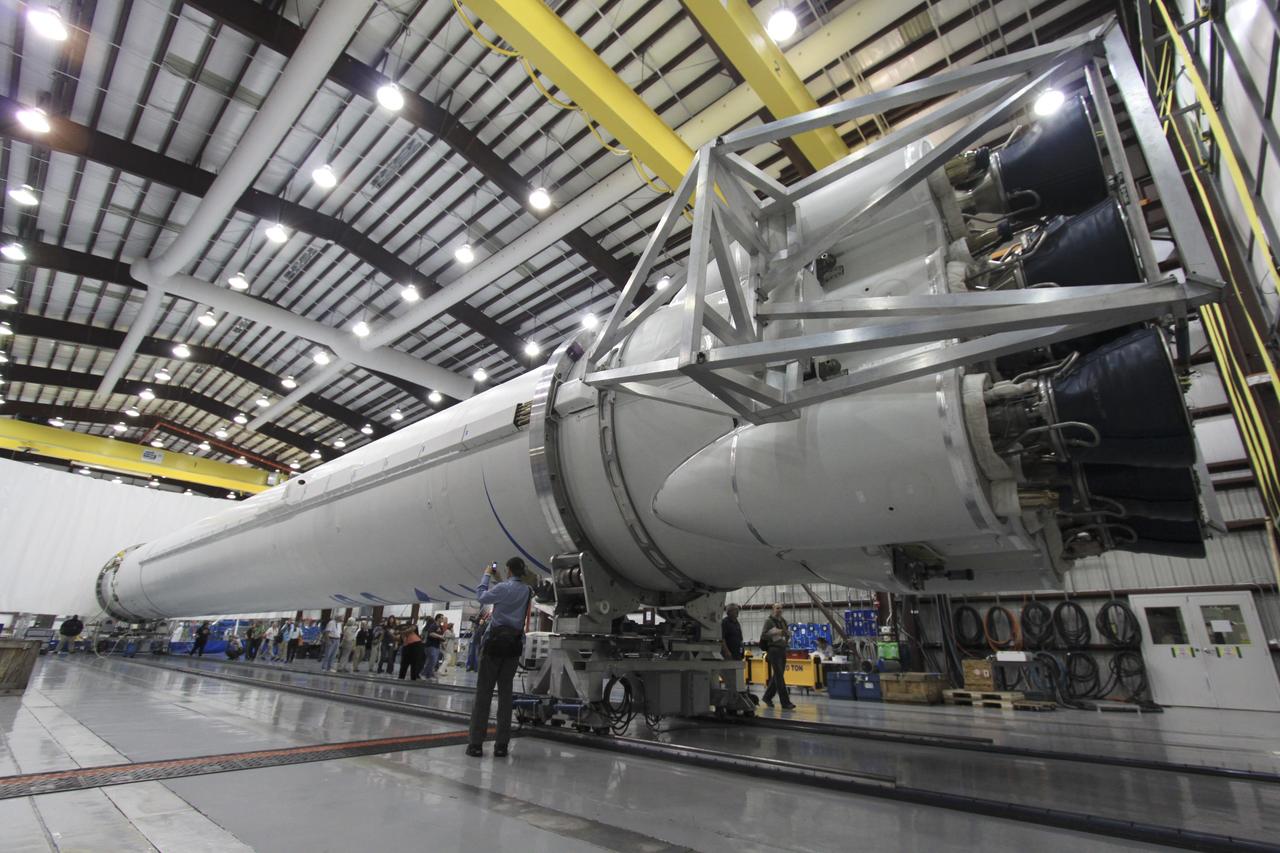
CAPE CANAVERAL, Fla. -- Media learn about the plans Space Exploration Technologies Corp. (SpaceX) has to take NASA astronauts to the International Space Station at Space Launch Complex-40 on Cape Canaveral Air Force Station. SpaceX is working to make its Falcon 9 rocket and Dragon capsule safe for humans for NASA's Commercial Crew Program (CCP) under the Commercial Crew Development Round 2 (CCDev2) activities. SpaceX already is developing these systems under NASA's Commercial Orbital Transportation System (COTS) Program to take supplies to the space station. Scott Henderson, director of SpaceX mission assurance, explained that the company is drafting designs to make the Dragon capsule crew-capable with life support systems while meeting CCP's safety requirements. One such option under discussion is a launch abort system that would push astronauts away from the launch pad in the event of an emergency, which is different than traditional pull systems. It's the freedom to develop innovative solutions such as this that CCP hopes will drive down the cost of space travel as well as open up space to more people than ever before. CCP, which is based at NASA's Kennedy Space Center in Florida, partnered with seven aerospace companies to mature launch vehicle and spacecraft designs under CCDev2, including Alliant Techsystems Inc. (ATK) of Promontory, Utah, Blue Origin of Kent, Wash., The Boeing Co., of Houston, Excalibur Almaz Inc. of Houston, Sierra Nevada Corp. of Louisville, Colo., Space Exploration Technologies (SpaceX) of Hawthorne, Calif., and United Launch Alliance (ULA) of Centennial, Colo. For more information, visit www.nasa.gov/exploration/commercial Photo credit: Jim Grossmann