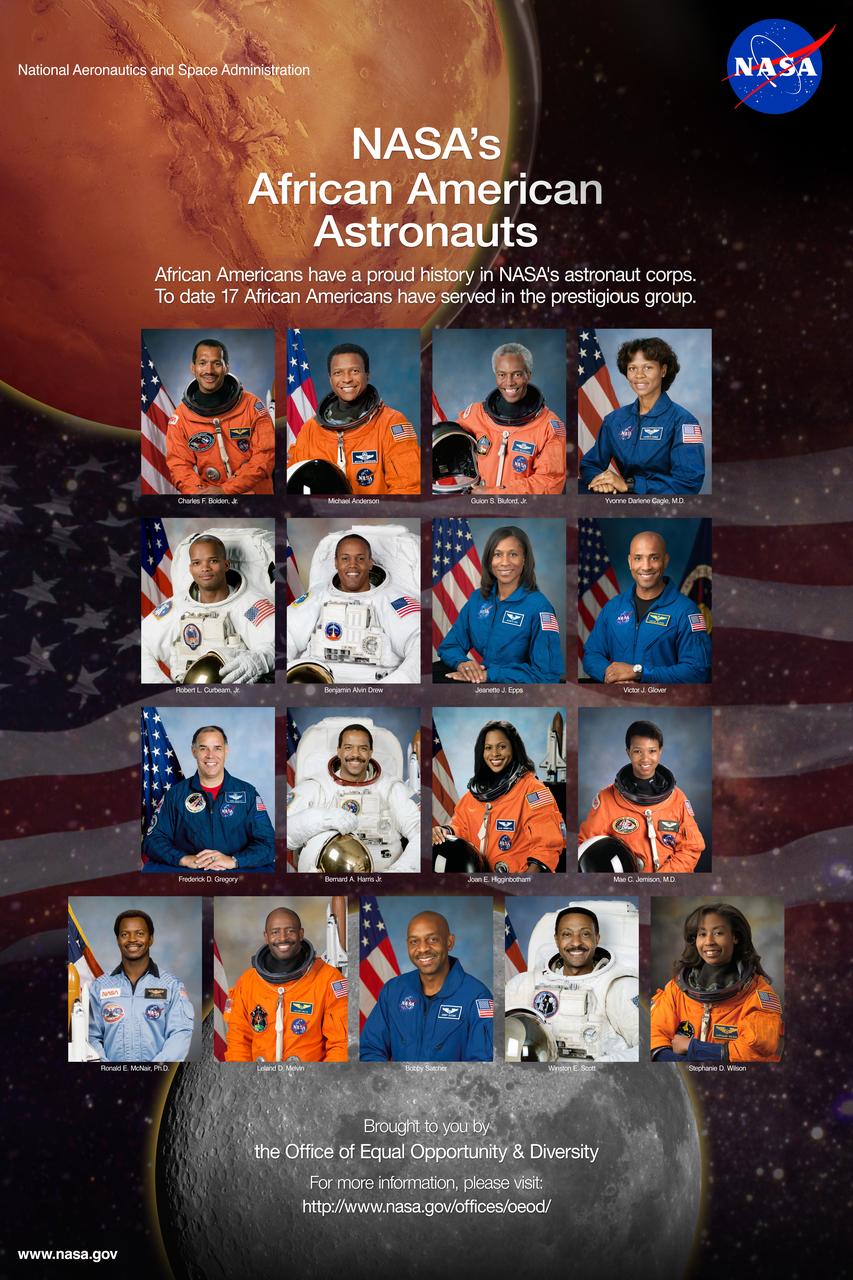
NASA's African American astronauts
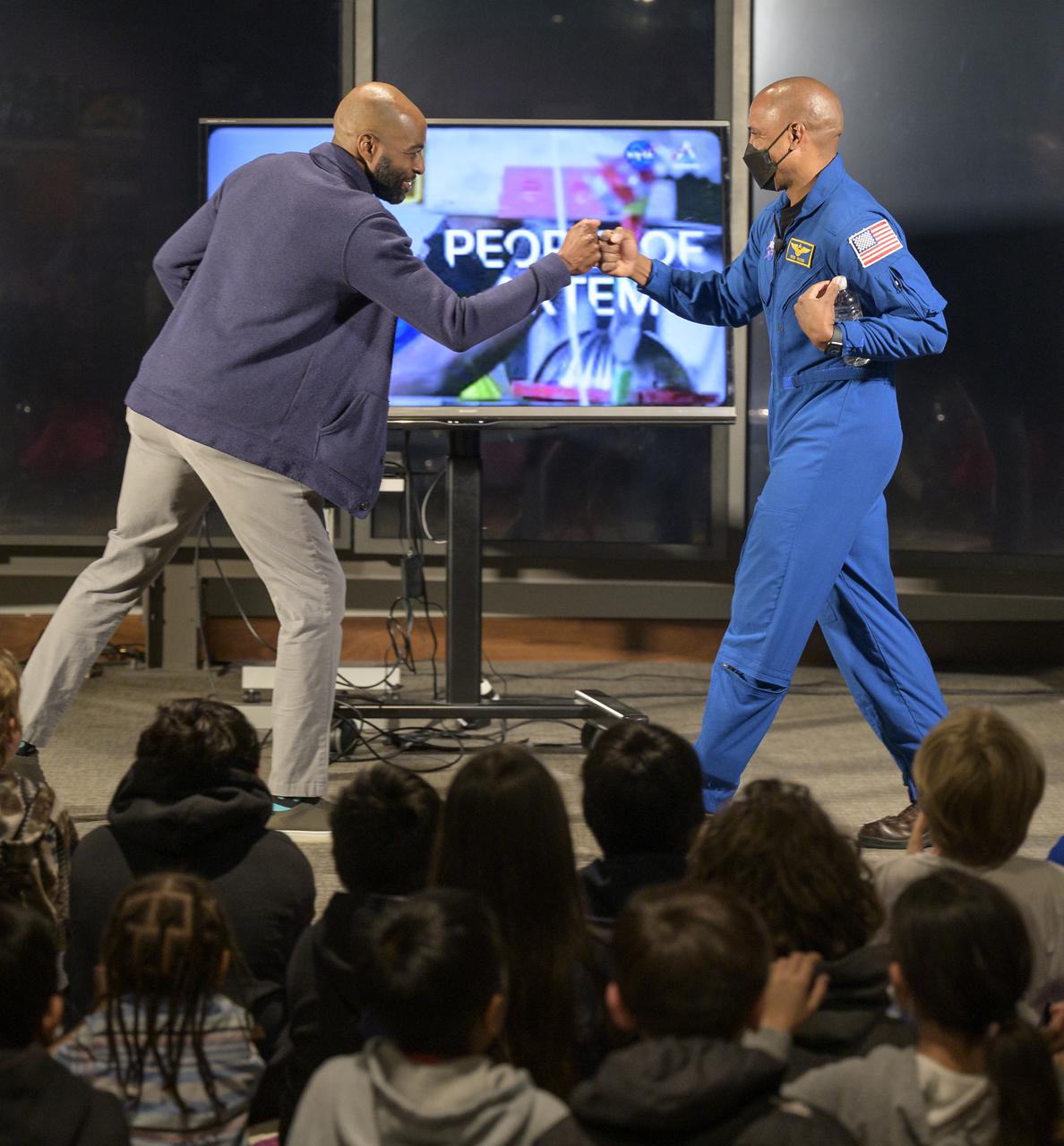
Christopher Williams, STEM Education Specialist for the National Museum of African American History and Culture, left, introduces NASA astronaut Victor Glover during an education event, Thursday, April 28, 2022, at the National Museum of African American History and Culture in Washington. Glover most recently served as pilot and second-in-command on the Crew-1 SpaceX Crew Dragon, named Resilience, which landed after a long duration mission aboard the International Space Station, May 2, 2021. Photo Credit: (NASA/Bill Ingalls)
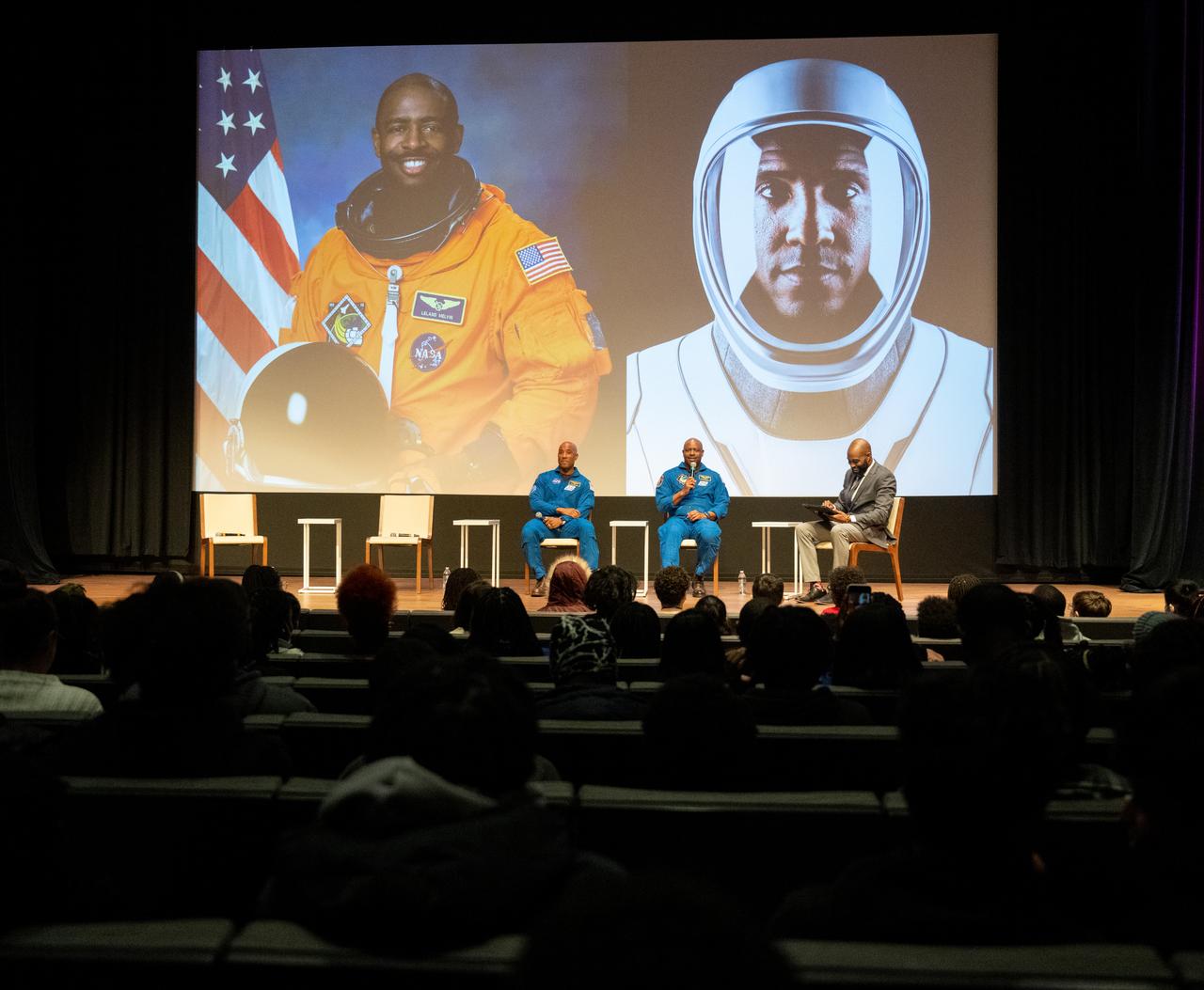
NASA astronaut Victor Glover, left, retired NASA astronaut Leland Melvin, center, and Christopher Williams, STEM Education Specialist at the Smithsonian National Museum of African American History and Culture, right, are seen during a panel discussion titled A Space for Us All at an event celebrating Black History Month at the Smithsonian National Museum of African American History and Culture, Friday, Feb. 10, 2023, in Washington. Photo Credit: (NASA/Joel Kowsky)
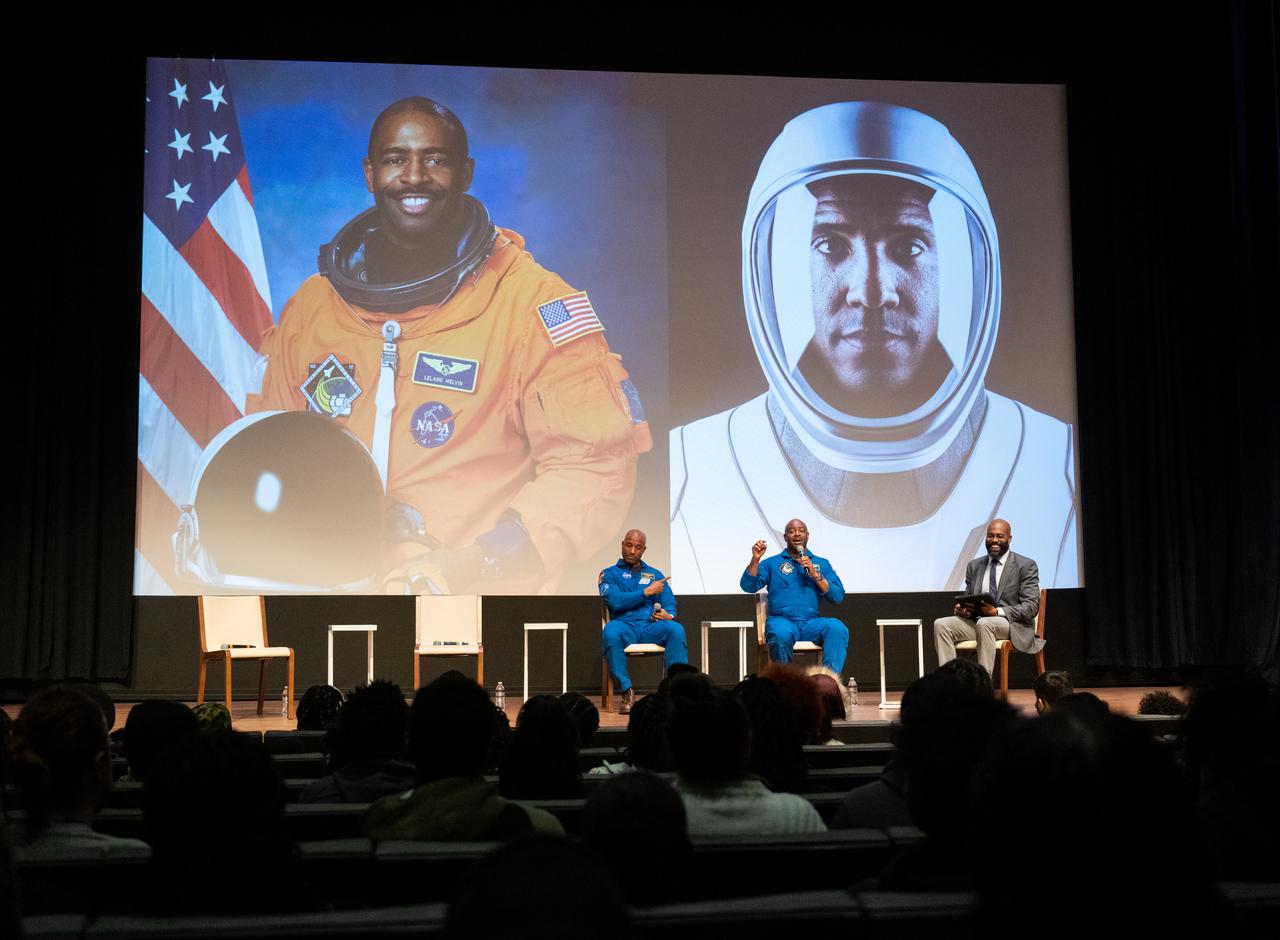
NASA astronaut Victor Glover, left, retired NASA astronaut Leland Melvin, center, and Christopher Williams, STEM Education Specialist at the Smithsonian National Museum of African American History and Culture, right, are seen during a panel discussion titled A Space for Us All at an event celebrating Black History Month at the Smithsonian National Museum of African American History and Culture, Friday, Feb. 10, 2023, in Washington. Photo Credit: (NASA/Joel Kowsky)
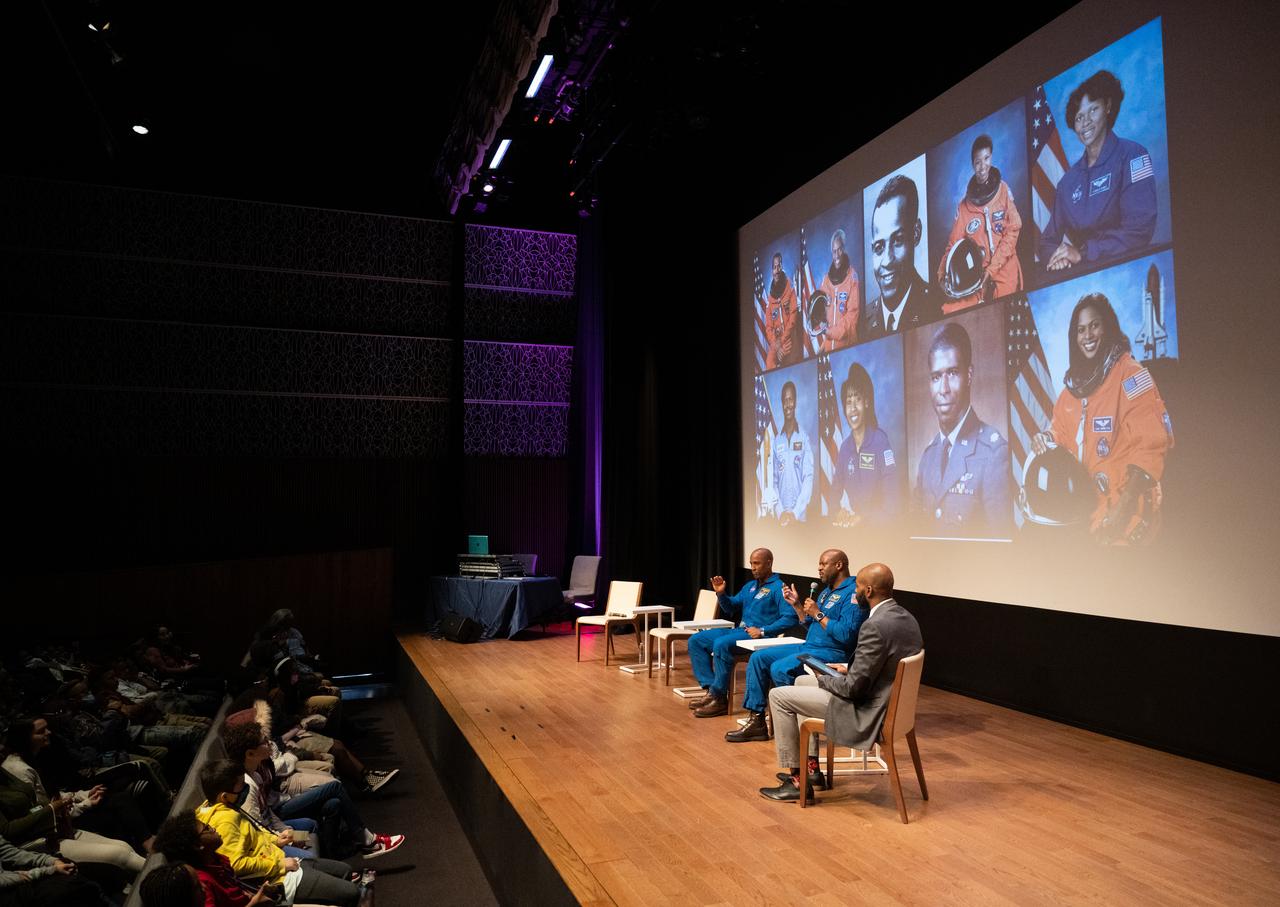
NASA astronaut Victor Glover, left, retired NASA astronaut Leland Melvin, center, and Christopher Williams, STEM Education Specialist at the Smithsonian National Museum of African American History and Culture, right, are seen during a panel discussion titled A Space for Us All at an event celebrating Black History Month at the Smithsonian National Museum of African American History and Culture, Friday, Feb. 10, 2023, in Washington. Photo Credit: (NASA/Joel Kowsky)
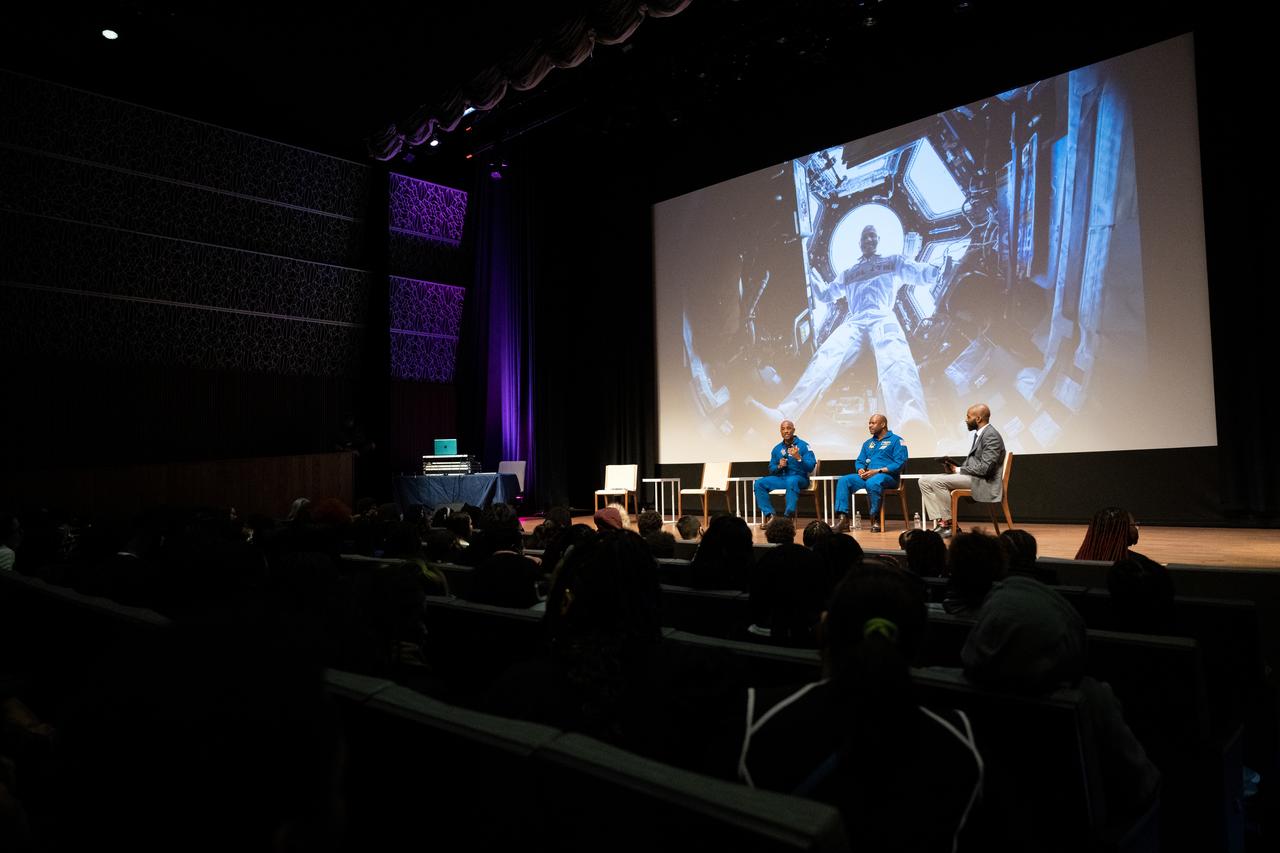
NASA astronaut Victor Glover, left, retired NASA astronaut Leland Melvin, center, and Christopher Williams, STEM Education Specialist at the Smithsonian National Museum of African American History and Culture, right, are seen during a panel discussion titled A Space for Us All at an event celebrating Black History Month at the Smithsonian National Museum of African American History and Culture, Friday, Feb. 10, 2023, in Washington. Photo Credit: (NASA/Joel Kowsky)
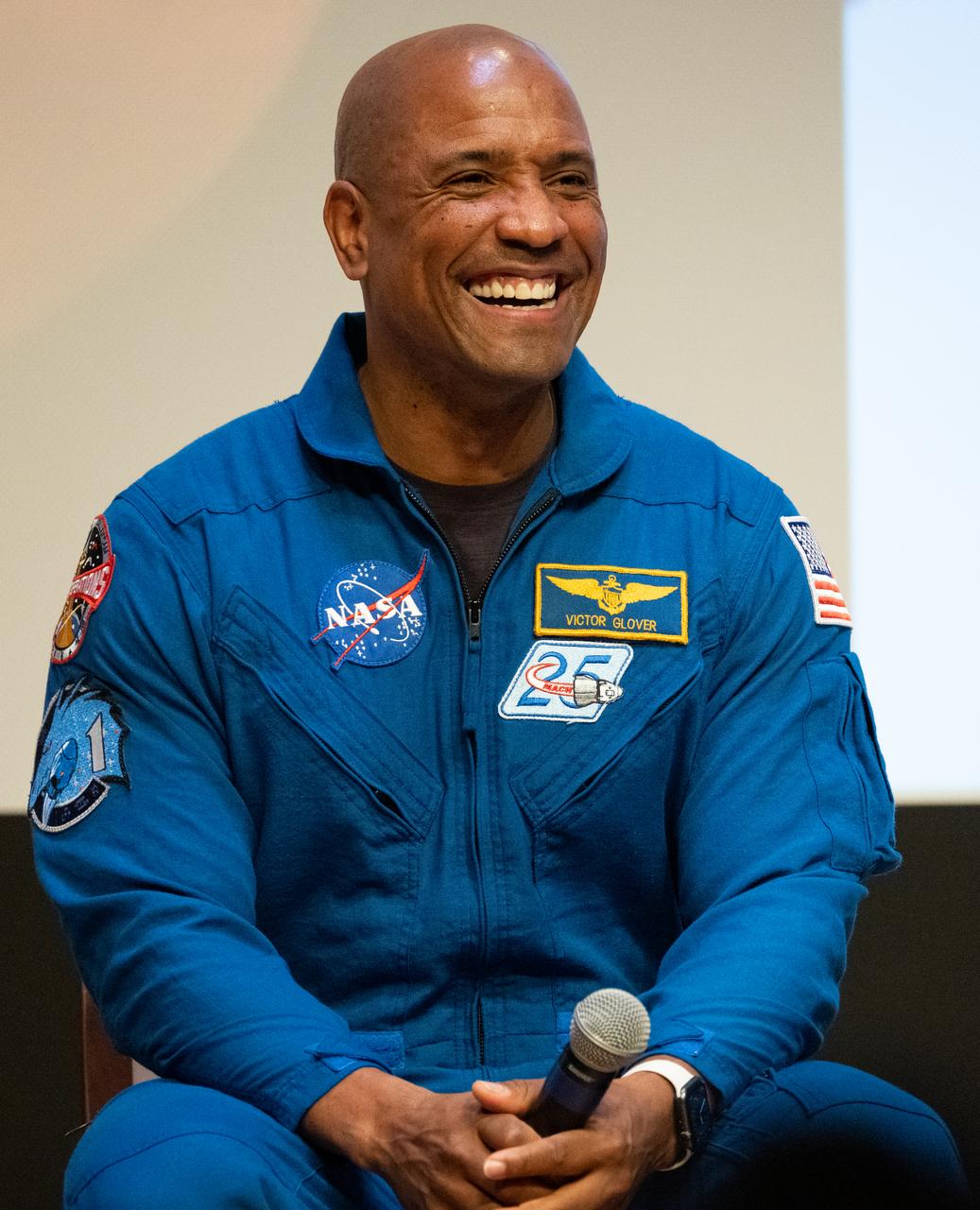
NASA astronaut Victor Glover is seen during a panel discussion titled A Space for Us All at an event celebrating Black History Month at the Smithsonian National Museum of African American History and Culture, Friday, Feb. 10, 2023, in Washington. Photo Credit: (NASA/Joel Kowsky)
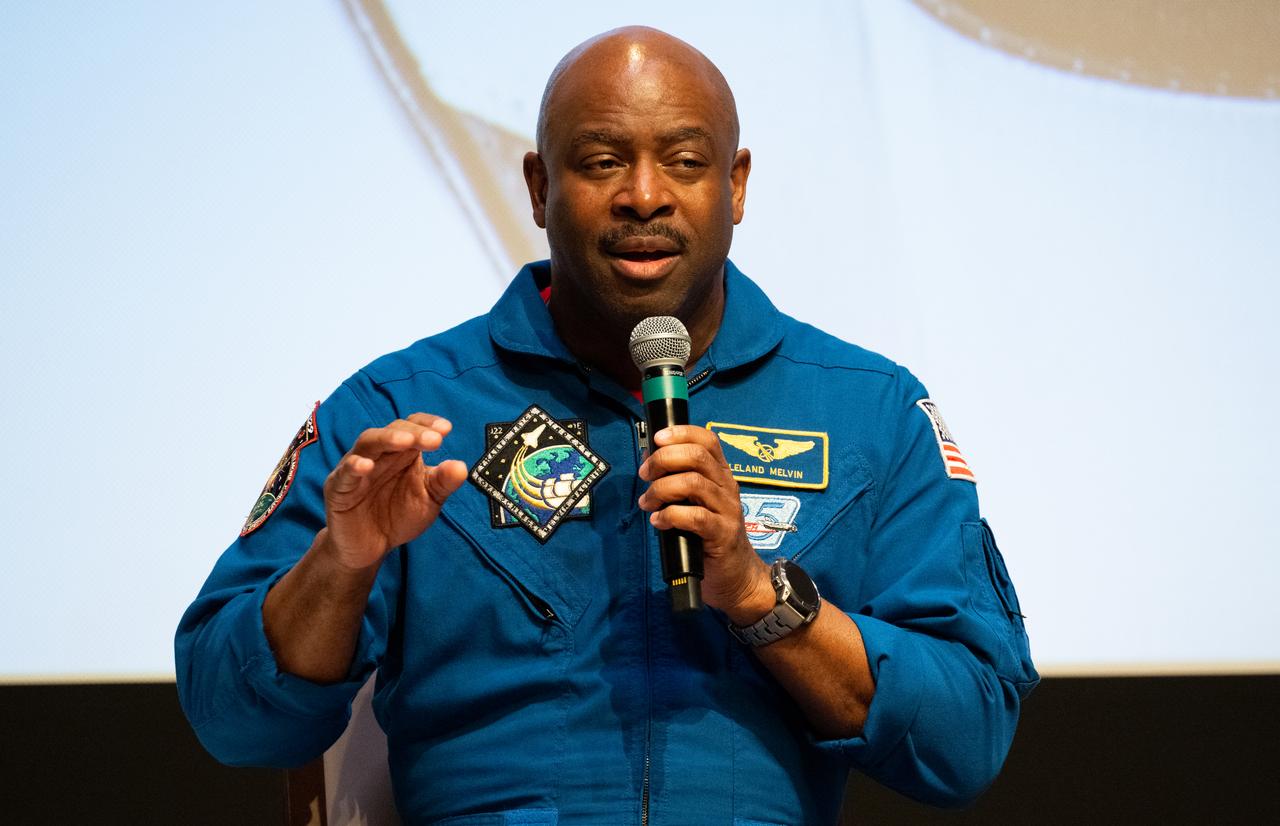
Retired NASA astronaut Leland Melvin answers a question during a panel discussion titled A Space for Us All at an event celebrating Black History Month at the Smithsonian National Museum of African American History and Culture, Friday, Feb. 10, 2023, in Washington. Photo Credit: (NASA/Joel Kowsky)
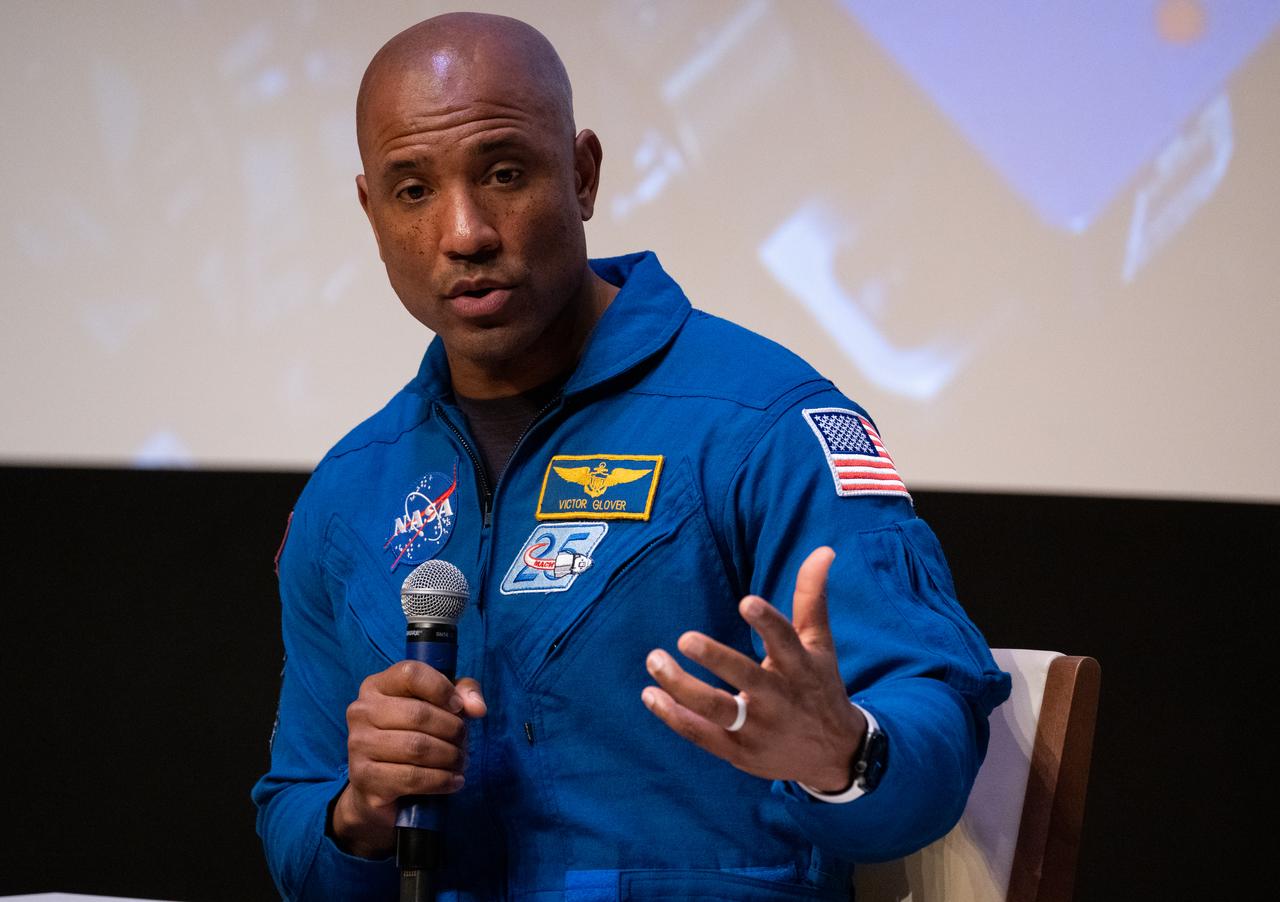
NASA astronaut Victor Glover answers a question during a panel discussion titled A Space for Us All at an event celebrating Black History Month at the Smithsonian National Museum of African American History and Culture, Friday, Feb. 10, 2023, in Washington. Photo Credit: (NASA/Joel Kowsky)
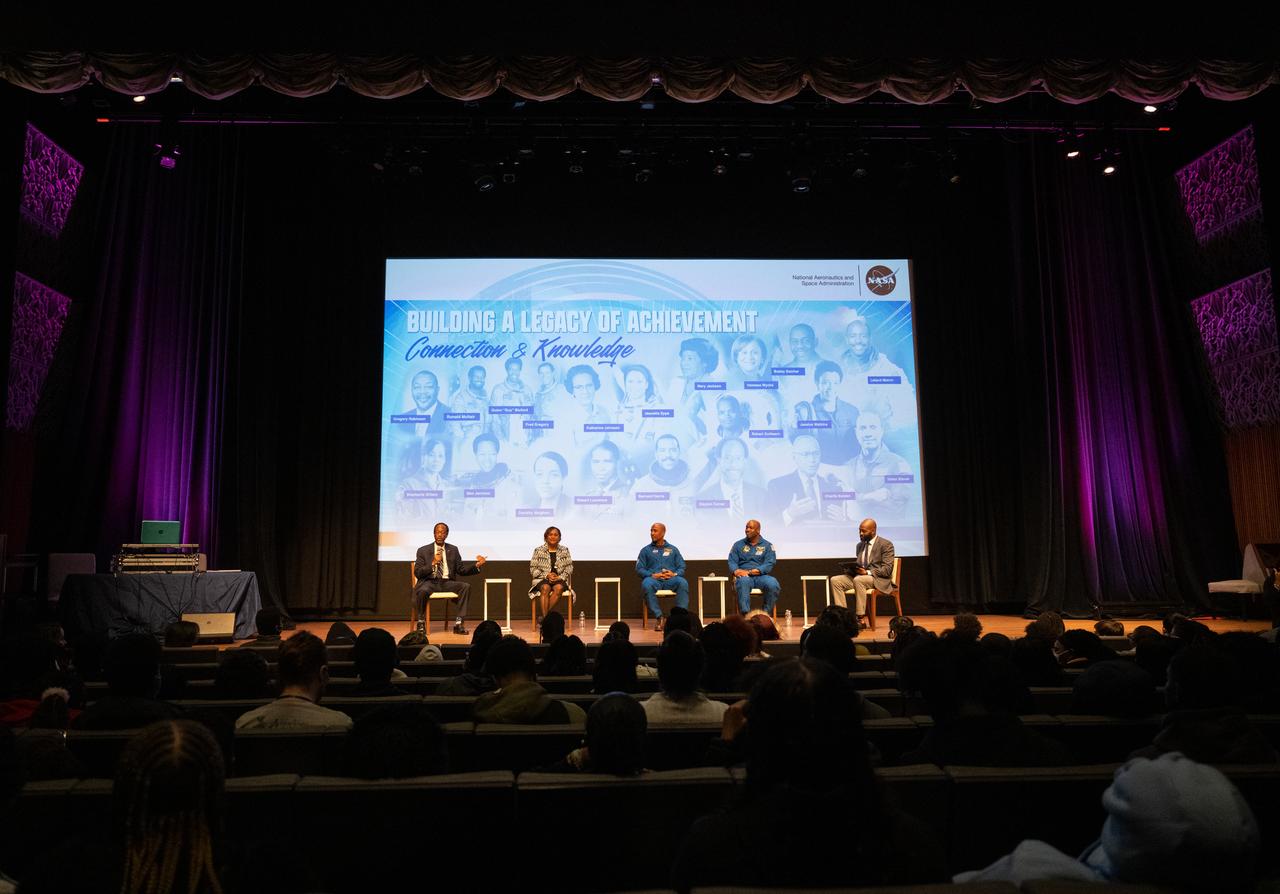
Clayton Turner, director of NASA's Langley Research Center, left, Vanessa Wyche, director of NASA's Johnson Space Center, second from left, NASA astronaut Victor Glover, center, retired NASA astronaut Leland Melvin, second from right, and Christopher Williams, STEM Education Specialist at the Smithsonian National Museum of African American History and Culture, right, are seen during a panel discussion titled A Space for Us All at an event celebrating Black History Month at the Smithsonian National Museum of African American History and Culture, Friday, Feb. 10, 2023, in Washington. Photo Credit: (NASA/Joel Kowsky)

Clayton Turner, director of NASA's Langley Research Center, left, Vanessa Wyche, director of NASA's Johnson Space Center, second from left, NASA astronaut Victor Glover, center, retired NASA astronaut Leland Melvin, second from right, and Christopher Williams, STEM Education Specialist at the Smithsonian National Museum of African American History and Culture, right, are seen during a panel discussion titled A Space for Us All at an event celebrating Black History Month at the Smithsonian National Museum of African American History and Culture, Friday, Feb. 10, 2023, in Washington. Photo Credit: (NASA/Joel Kowsky)
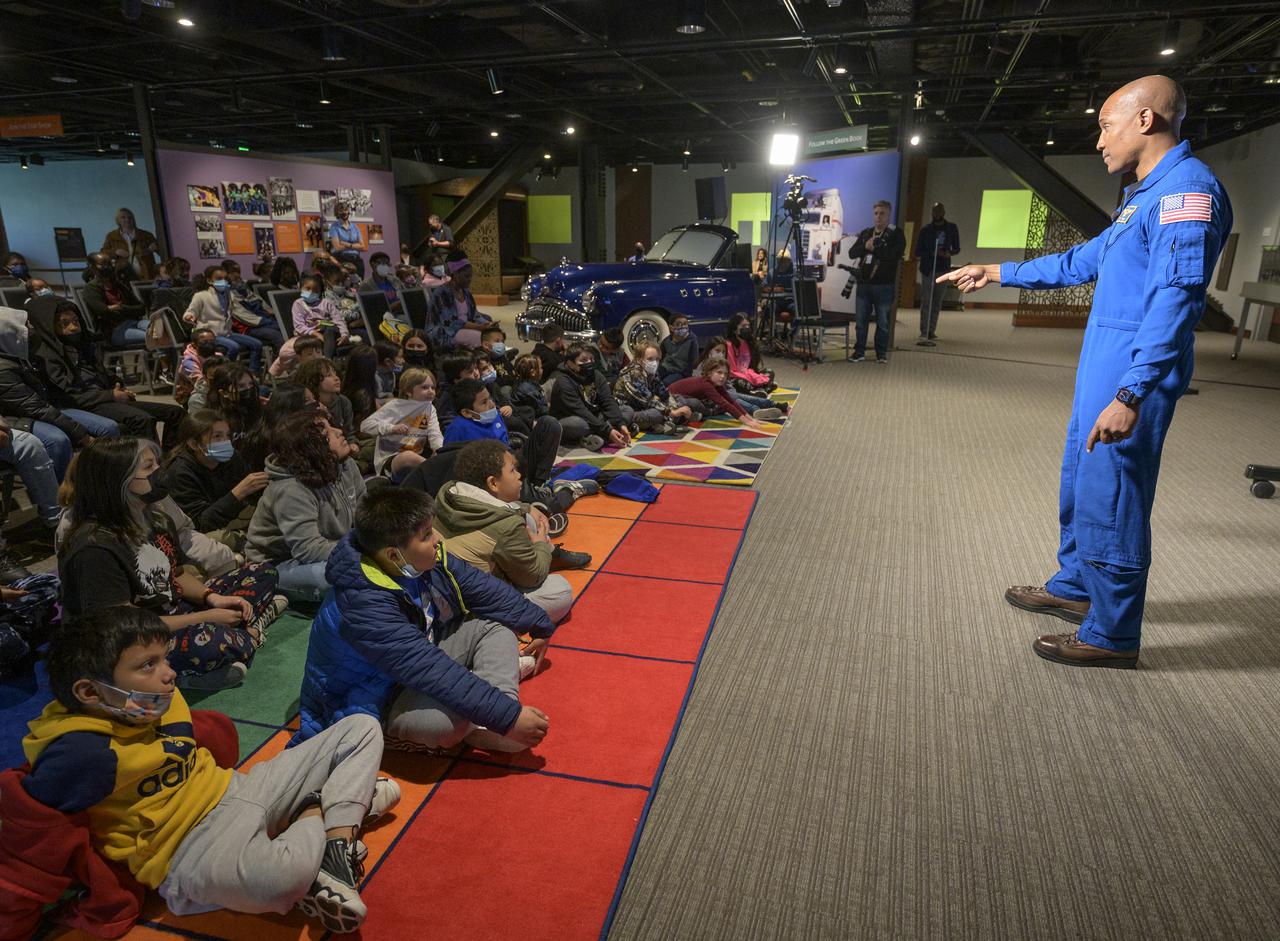
NASA astronaut Victor Glover talks with school students in person and via live stream during an educational event, Thursday, April 28, 2022, at the National Museum of African American History and Culture in Washington. Glover most recently served as pilot and second-in-command on the Crew-1 SpaceX Crew Dragon, named Resilience, which landed after a long duration mission aboard the International Space Station, May 2, 2021. Photo Credit: (NASA/Bill Ingalls)
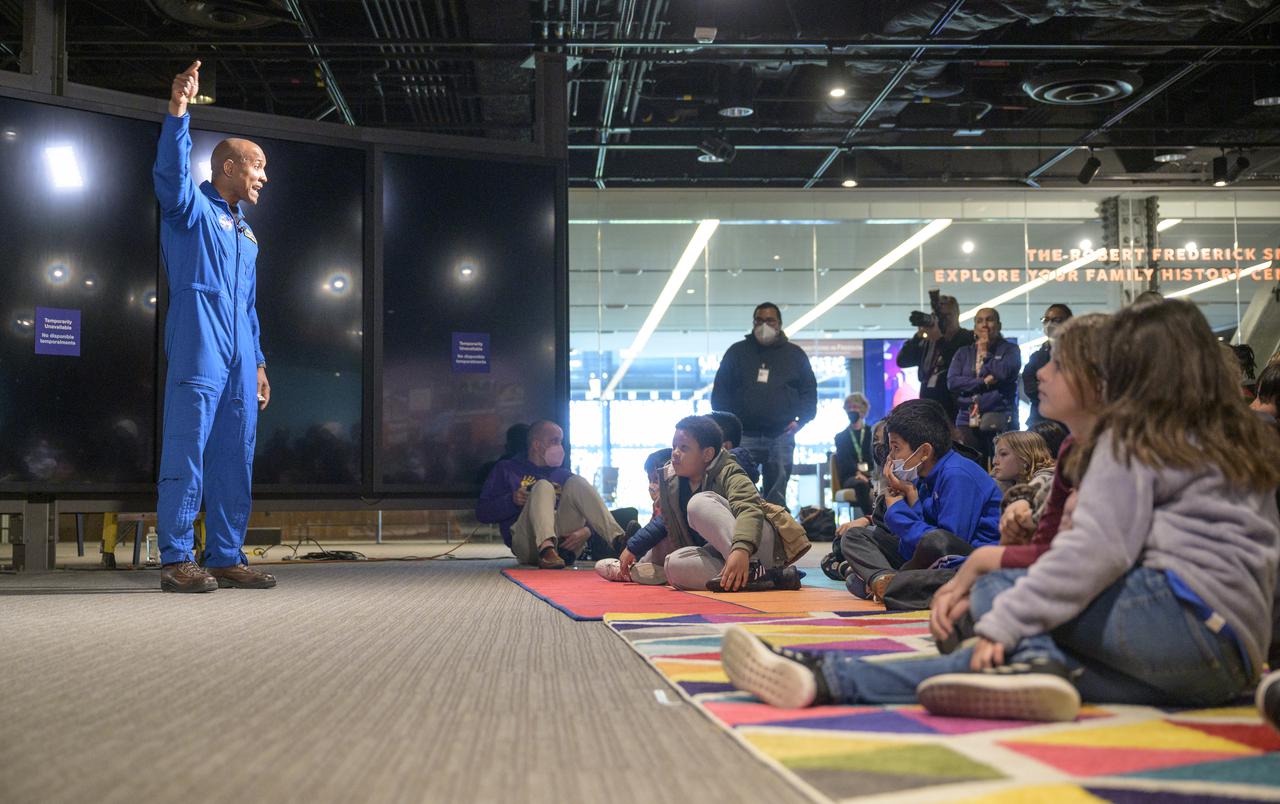
NASA astronaut Victor Glover talks with school students in person and via live stream during an educational event, Thursday, April 28, 2022, at the National Museum of African American History and Culture in Washington. Glover most recently served as pilot and second-in-command on the Crew-1 SpaceX Crew Dragon, named Resilience, which landed after a long duration mission aboard the International Space Station, May 2, 2021. Photo Credit: (NASA/Bill Ingalls)
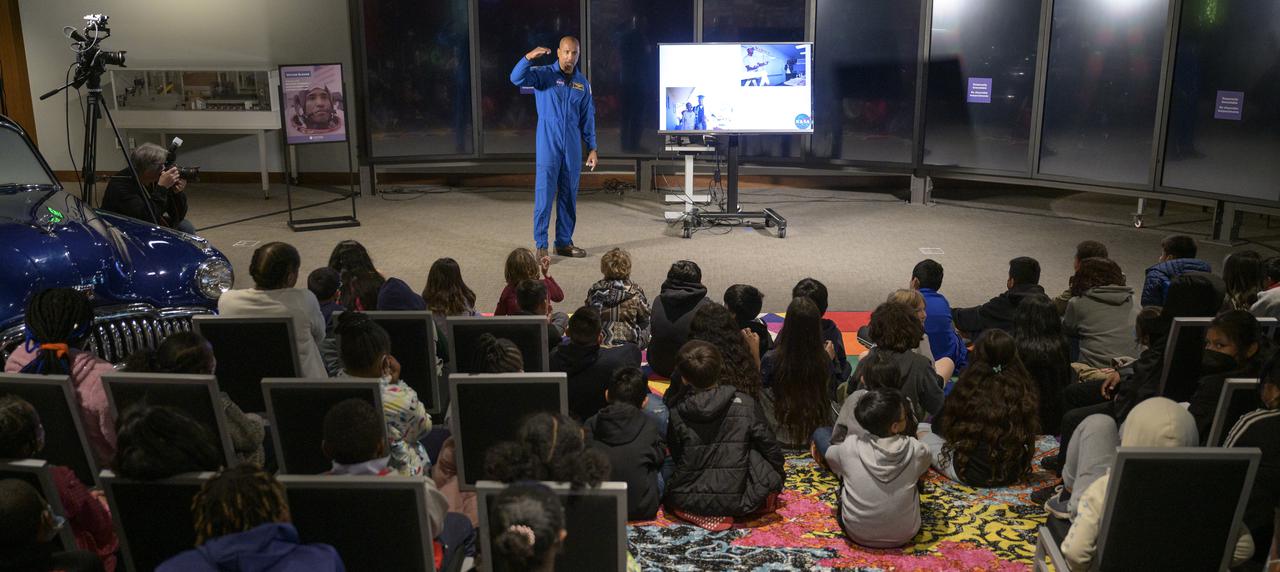
NASA astronaut Victor Glover talks with school students in person and via live stream during an educational event, Thursday, April 28, 2022, at the National Museum of African American History and Culture in Washington. Glover most recently served as pilot and second-in-command on the Crew-1 SpaceX Crew Dragon, named Resilience, which landed after a long duration mission aboard the International Space Station, May 2, 2021. Photo Credit: (NASA/Bill Ingalls)
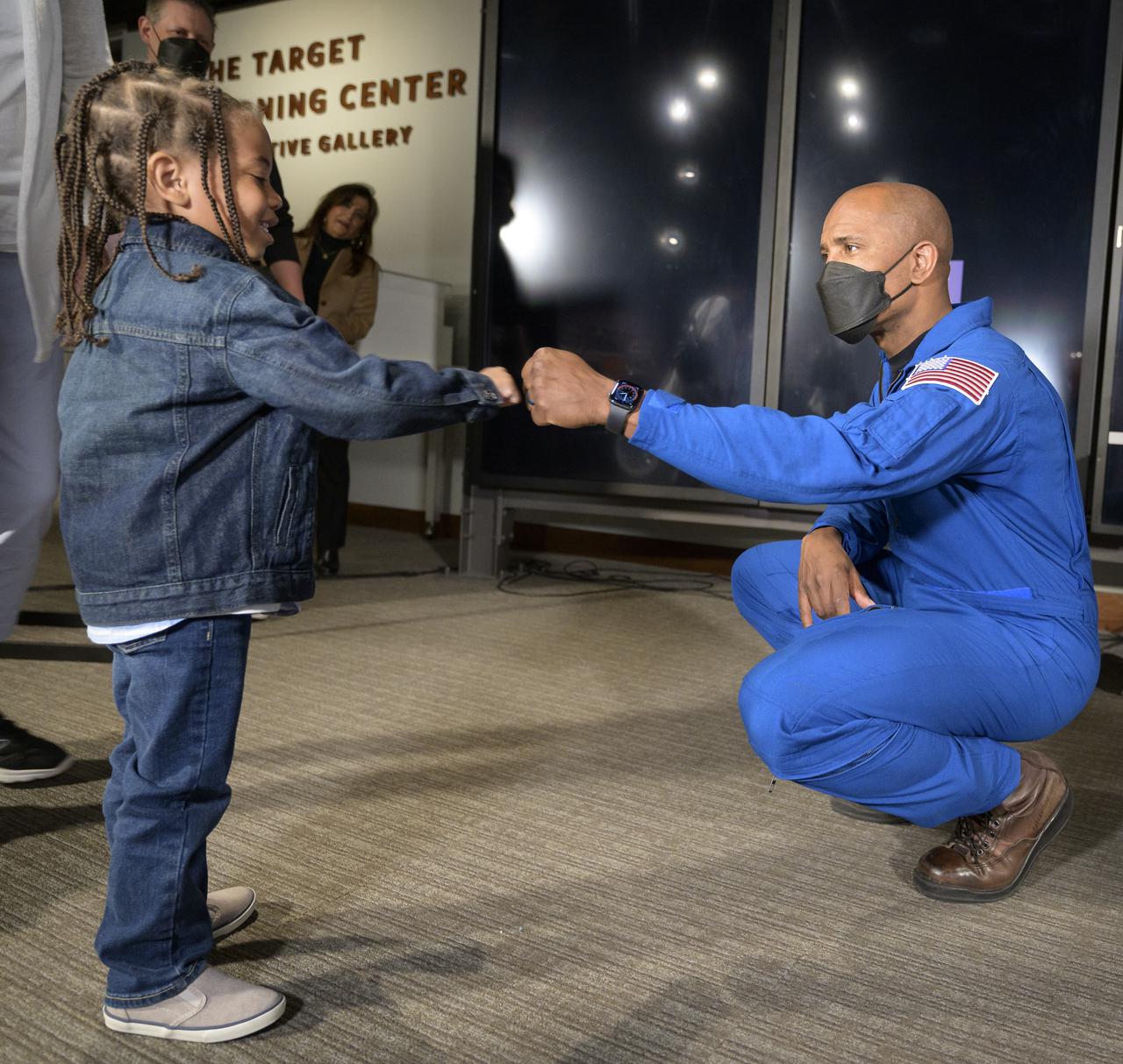
NASA astronaut Victor Glover fist pumps with 3-year-old Ezra Garrel at the conclusion of an educational event, Thursday, April 28, 2022, at the National Museum of African American History and Culture in Washington. Glover most recently served as pilot and second-in-command on the Crew-1 SpaceX Crew Dragon, named Resilience, which landed after a long duration mission aboard the International Space Station, May 2, 2021. Photo Credit: (NASA/Bill Ingalls)
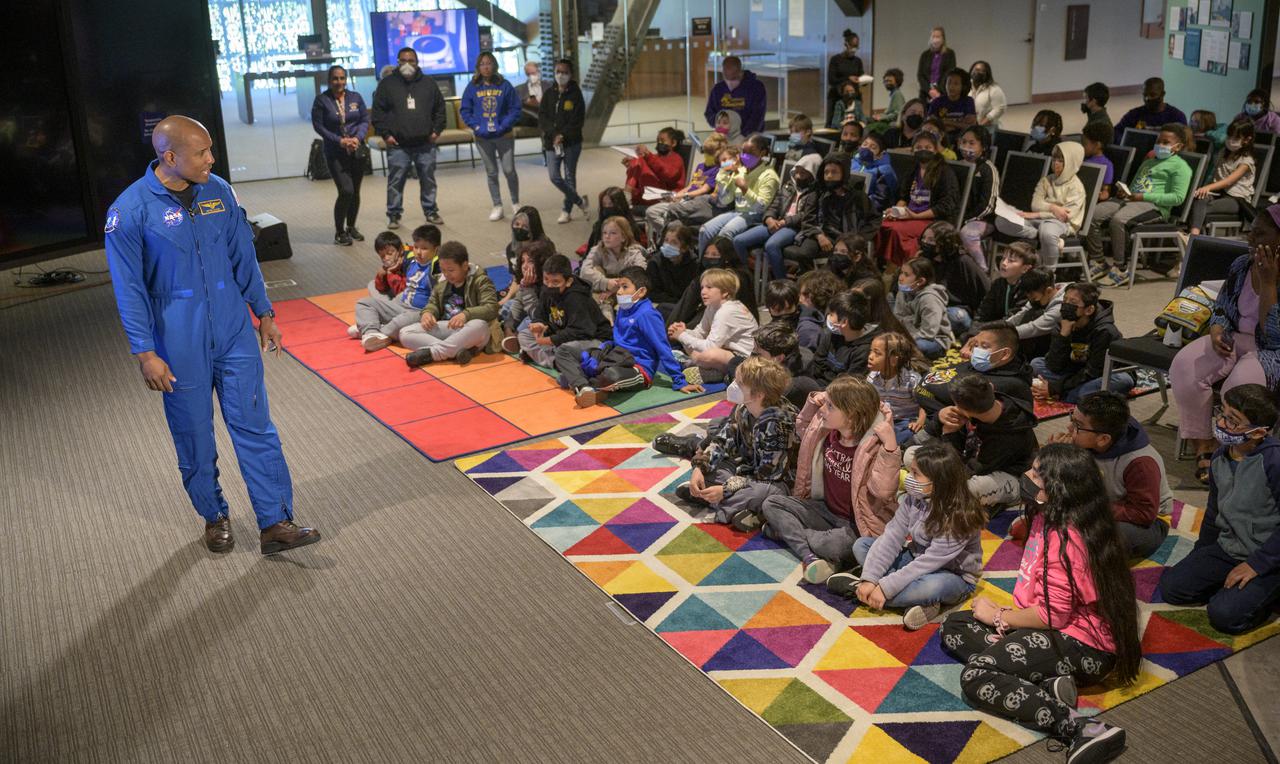
NASA astronaut Victor Glover talks with school students in person and via live stream during an educational event, Thursday, April 28, 2022, at the National Museum of African American History and Culture in Washington. Glover most recently served as pilot and second-in-command on the Crew-1 SpaceX Crew Dragon, named Resilience, which landed after a long duration mission aboard the International Space Station, May 2, 2021. Photo Credit: (NASA/Bill Ingalls)
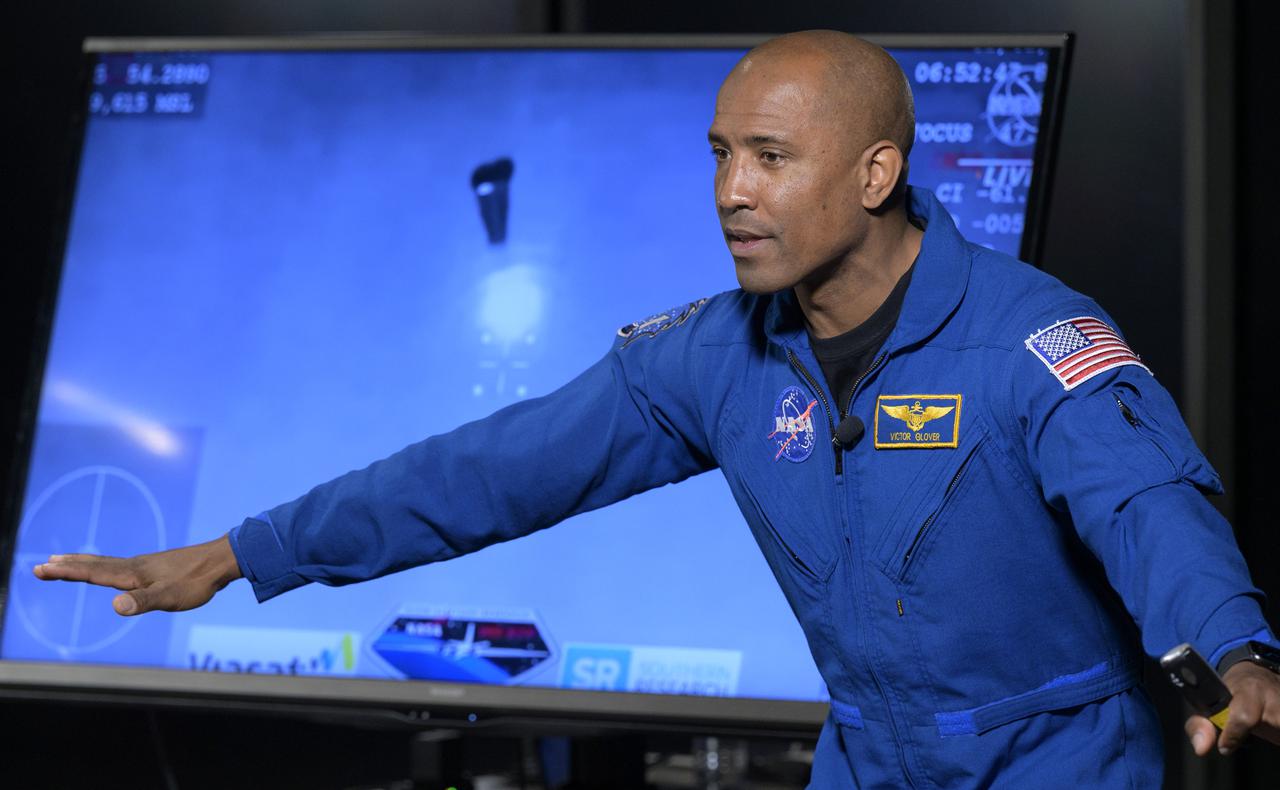
NASA astronaut Victor Glover talks with school students in person and via live stream during an educational event, Thursday, April 28, 2022, at the National Museum of African American History and Culture in Washington. Glover most recently served as pilot and second-in-command on the Crew-1 SpaceX Crew Dragon, named Resilience, which landed after a long duration mission aboard the International Space Station, May 2, 2021. Photo Credit: (NASA/Bill Ingalls)
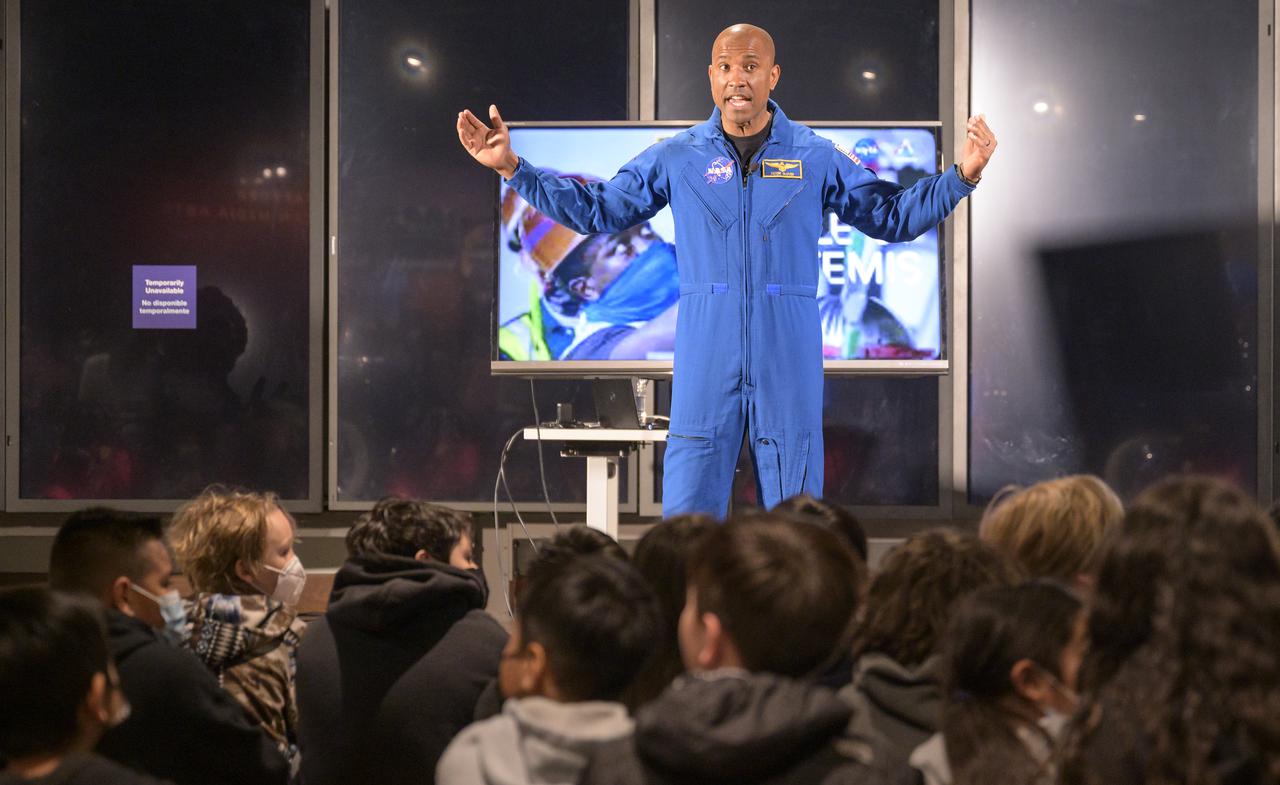
NASA astronaut Victor Glover talks with school students in person and via live stream during an educational event, Thursday, April 28, 2022, at the National Museum of African American History and Culture in Washington. Glover most recently served as pilot and second-in-command on the Crew-1 SpaceX Crew Dragon, named Resilience, which landed after a long duration mission aboard the International Space Station, May 2, 2021. Photo Credit: (NASA/Bill Ingalls)
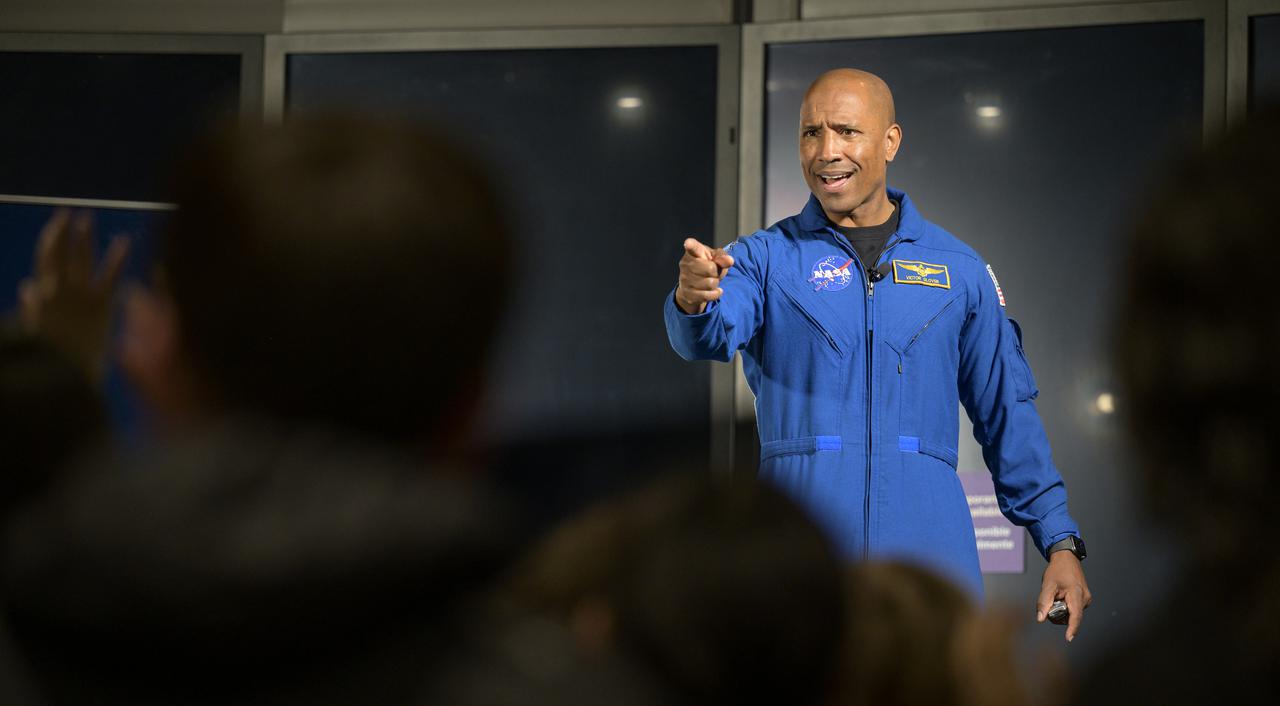
NASA astronaut Victor Glover talks with school students in person and via live stream during an educational event, Thursday, April 28, 2022, at the National Museum of African American History and Culture in Washington. Glover most recently served as pilot and second-in-command on the Crew-1 SpaceX Crew Dragon, named Resilience, which landed after a long duration mission aboard the International Space Station, May 2, 2021. Photo Credit: (NASA/Bill Ingalls)
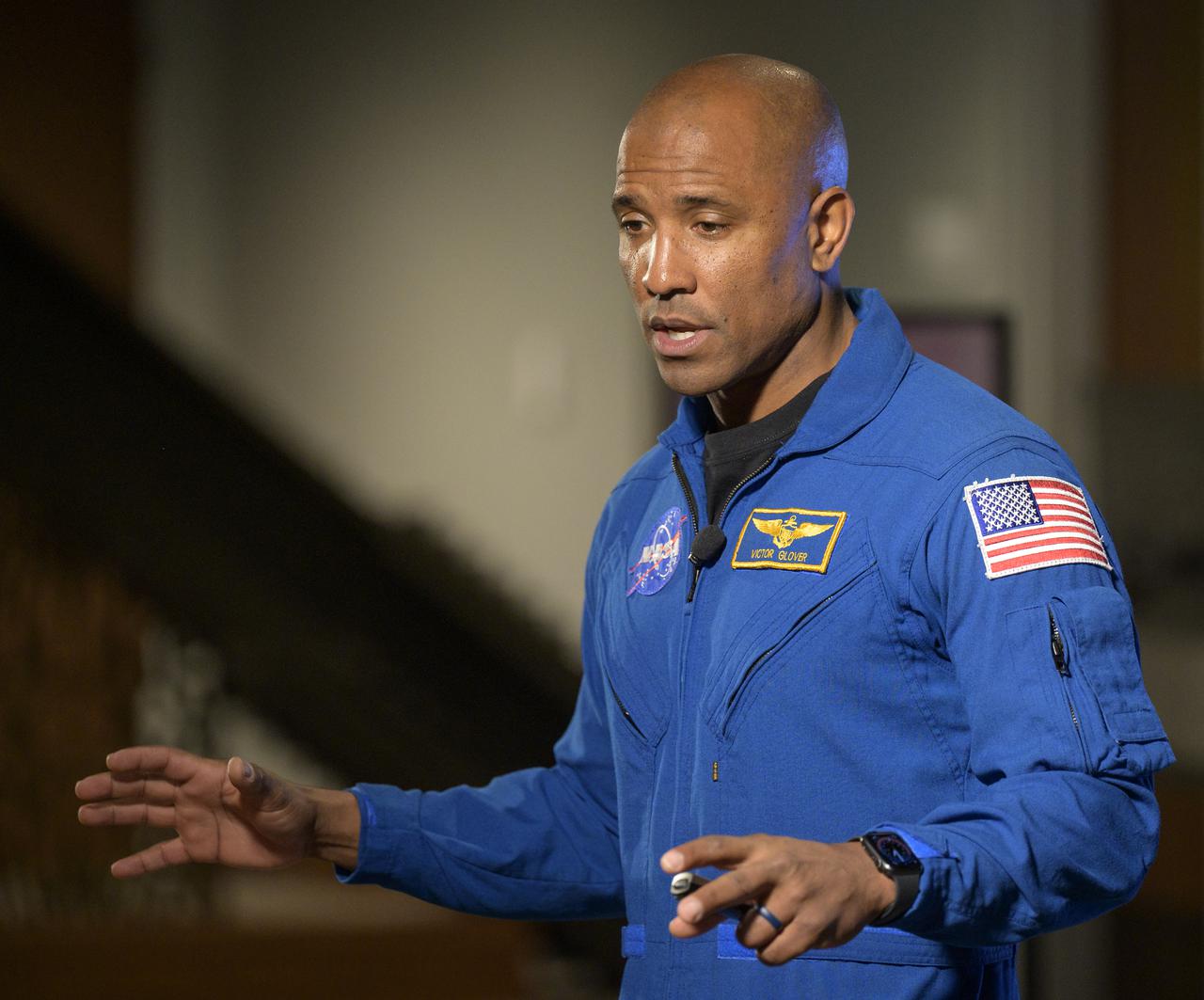
NASA astronaut Victor Glover talks with school students in person and via live stream during an educational event, Thursday, April 28, 2022, at the National Museum of African American History and Culture in Washington. Glover most recently served as pilot and second-in-command on the Crew-1 SpaceX Crew Dragon, named Resilience, which landed after a long duration mission aboard the International Space Station, May 2, 2021. Photo Credit: (NASA/Bill Ingalls)
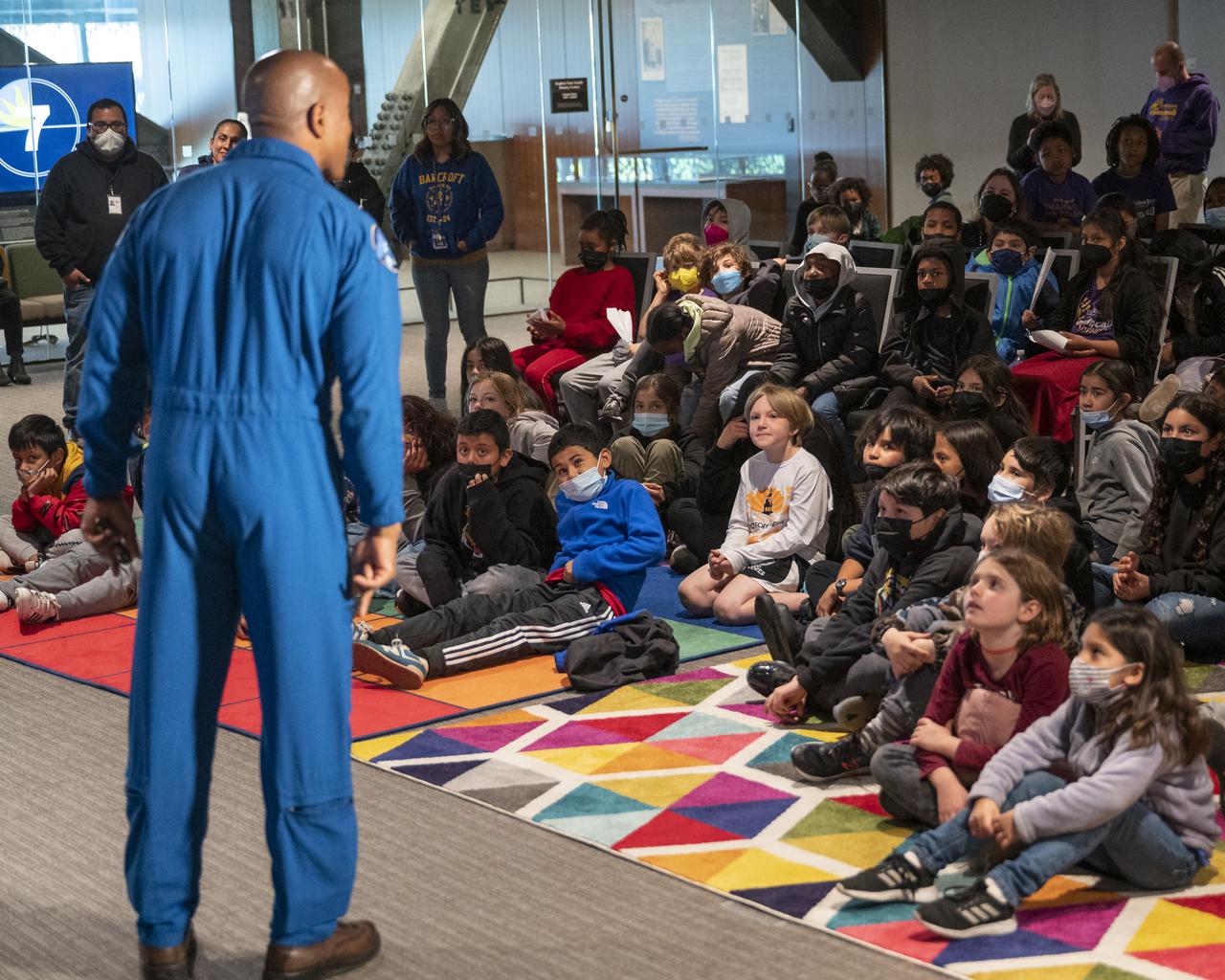
NASA astronaut Victor Glover talks with school students in person and via live stream during an educational event, Thursday, April 28, 2022, at the National Museum of African American History and Culture in Washington. Glover most recently served as pilot and second-in-command on the Crew-1 SpaceX Crew Dragon, named Resilience, which landed after a long duration mission aboard the International Space Station, May 2, 2021. Photo Credit: (NASA/Bill Ingalls)
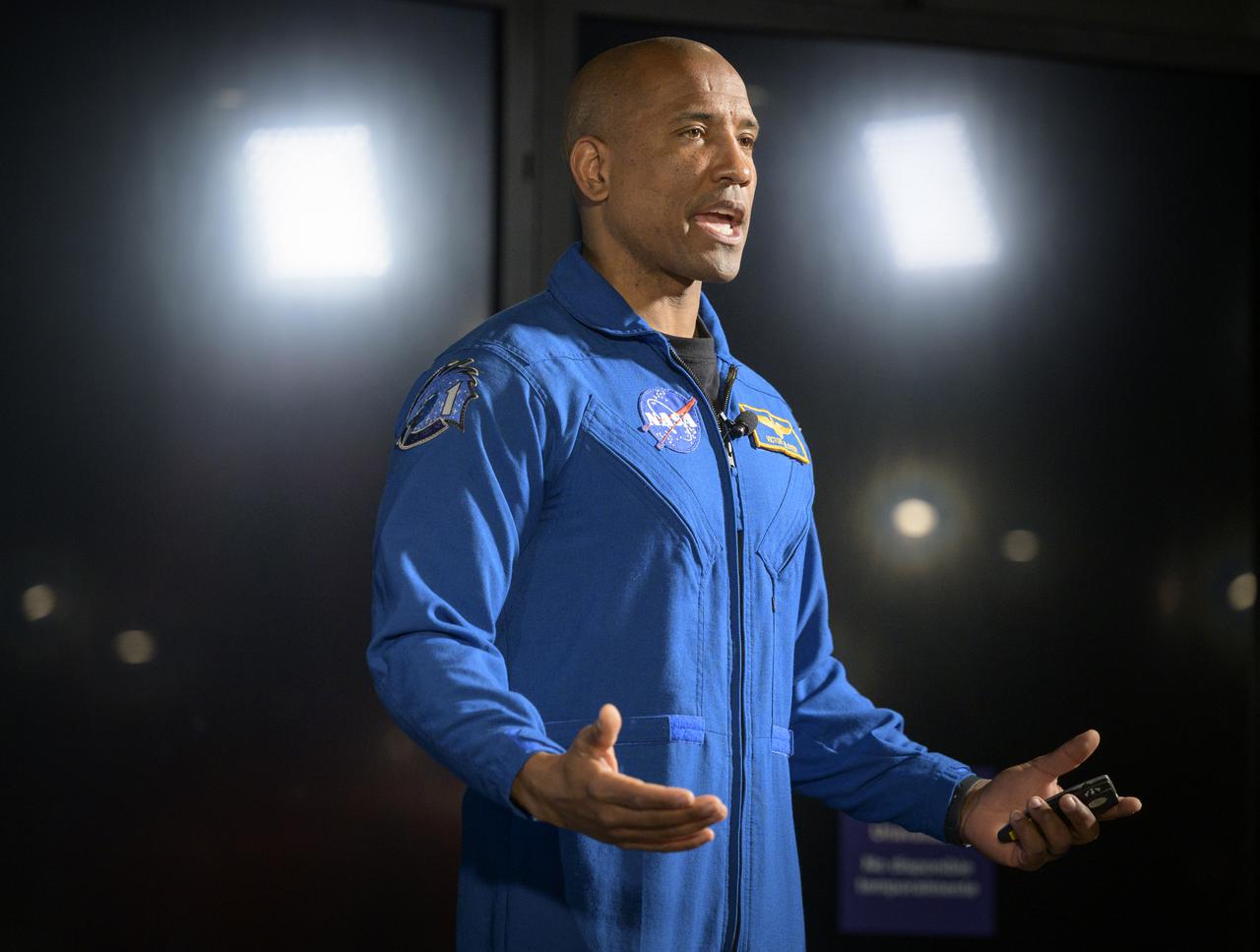
NASA astronaut Victor Glover talks with school students in person and via live stream during an educational event, Thursday, April 28, 2022, at the National Museum of African American History and Culture in Washington. Glover most recently served as pilot and second-in-command on the Crew-1 SpaceX Crew Dragon, named Resilience, which landed after a long duration mission aboard the International Space Station, May 2, 2021. Photo Credit: (NASA/Bill Ingalls)
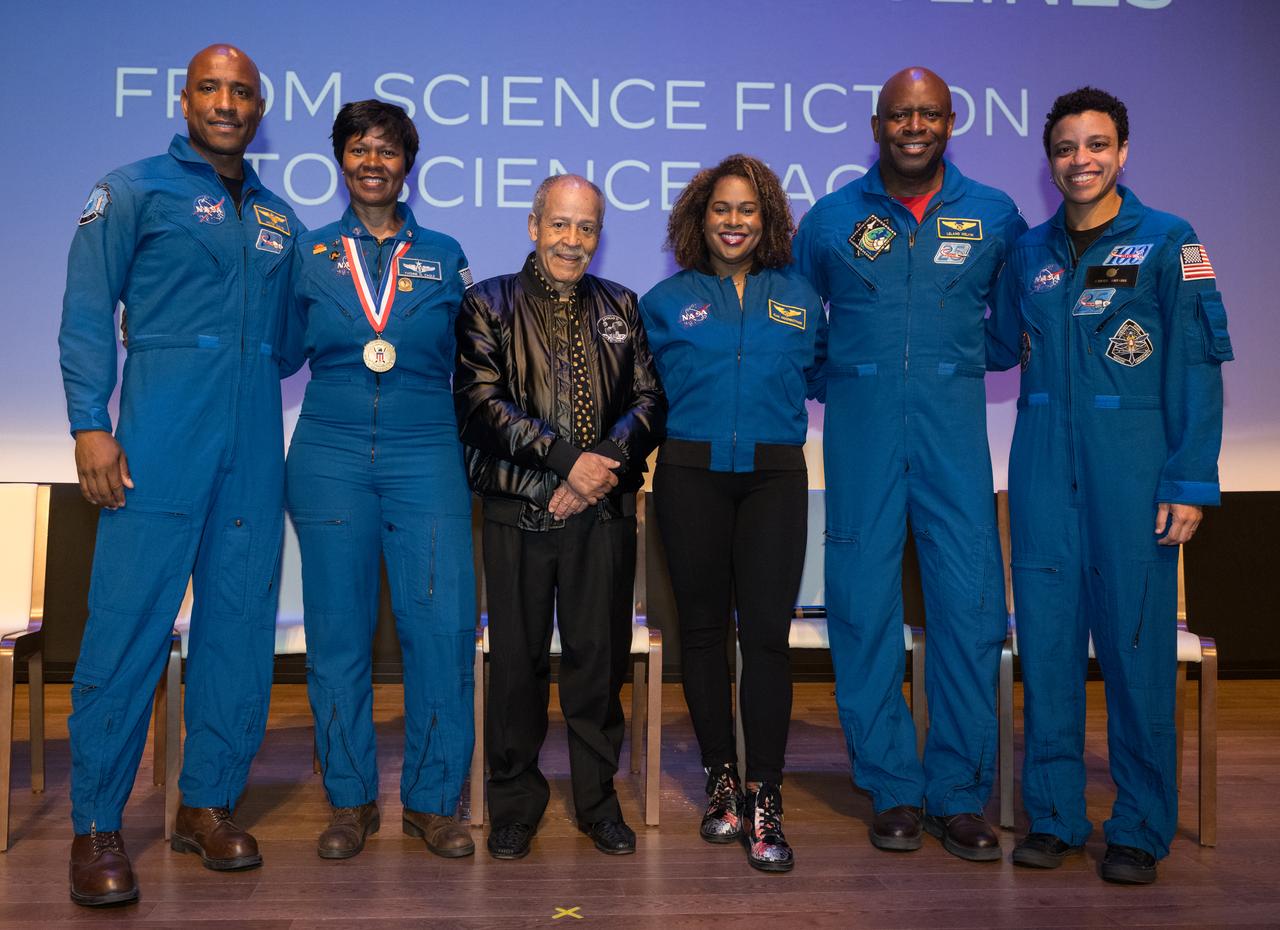
From left to right, NASA astronauts Victor Glover, Dr. Yvonne Cagle, America's first African American astronaut candidate, Ed Dwight, Joan Higginbotham (retired), Leland Melvin (retired) and Jessica Watkins pose for a photo at the conclusion of an event to commemorate Black Space Week (BSW) 2024 titled, "Beyond the Color Lines From Science Fiction to Science Fact," in the Oprah Winfrey Theater at the Smithsonian National Museum of African American History and Culture, Monday, June 17, 2024 in Washington. Photo Credit: (NASA/Aubrey Gemignani)
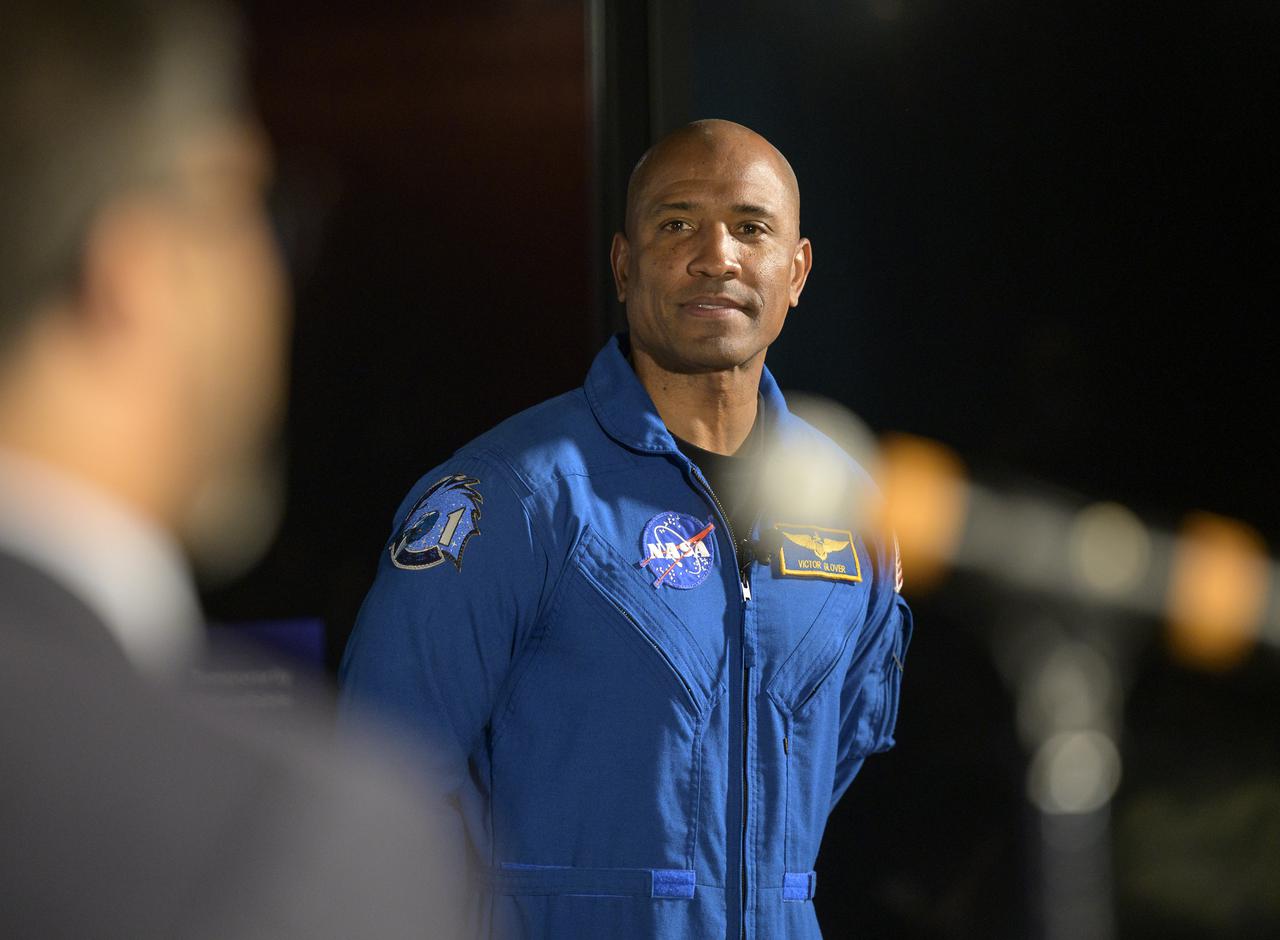
NASA astronaut Victor Glover listens as Chirag Parikh from the National Space Council reads a letter from Vice President Kamala Harris to Glover during an educational event, Thursday, April 28, 2022, at the National Museum of African American History and Culture in Washington. Glover most recently served as pilot and second-in-command on the Crew-1 SpaceX Crew Dragon, named Resilience, which landed after a long duration mission aboard the International Space Station, May 2, 2021. Photo Credit: (NASA/Bill Ingalls)
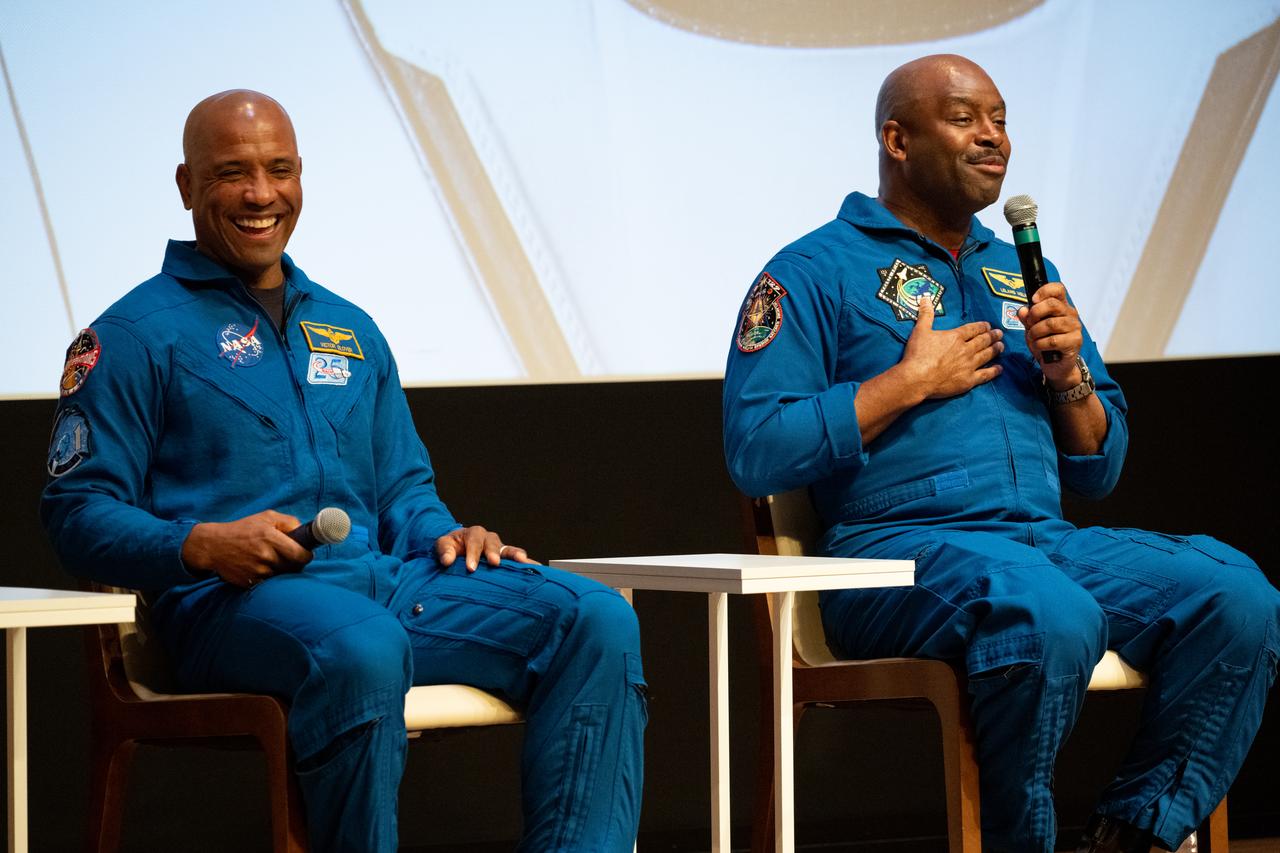
NASA astronaut Victor Glover, left, and retired NASA astronaut Leland Melvin, right, answer questions during a panel discussion titled A Space for Us All at an event celebrating Black History Month at the Smithsonian National Museum of African American History and Culture, Friday, Feb. 10, 2023, in Washington. Photo Credit: (NASA/Joel Kowsky)
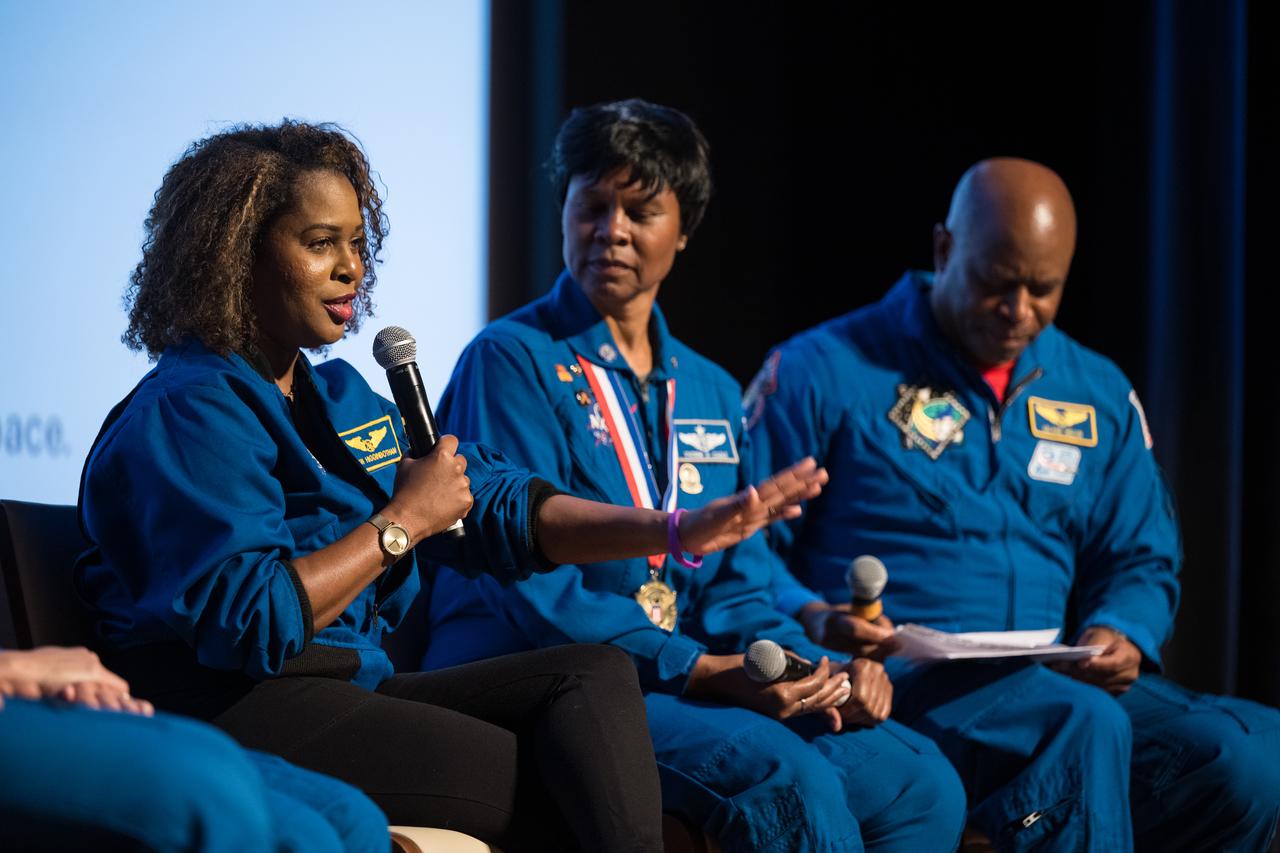
Joan Higginbotham, retired NASA astronaut, speaks at an event to commemorate Black Space Week (BSW) 2024 titled, "Beyond the Color Lines From Science Fiction to Science Fact," in the Oprah Winfrey Theater at the Smithsonian National Museum of African American History and Culture, Monday, June 17, 2024 in Washington. Photo Credit: (NASA/Aubrey Gemignani)
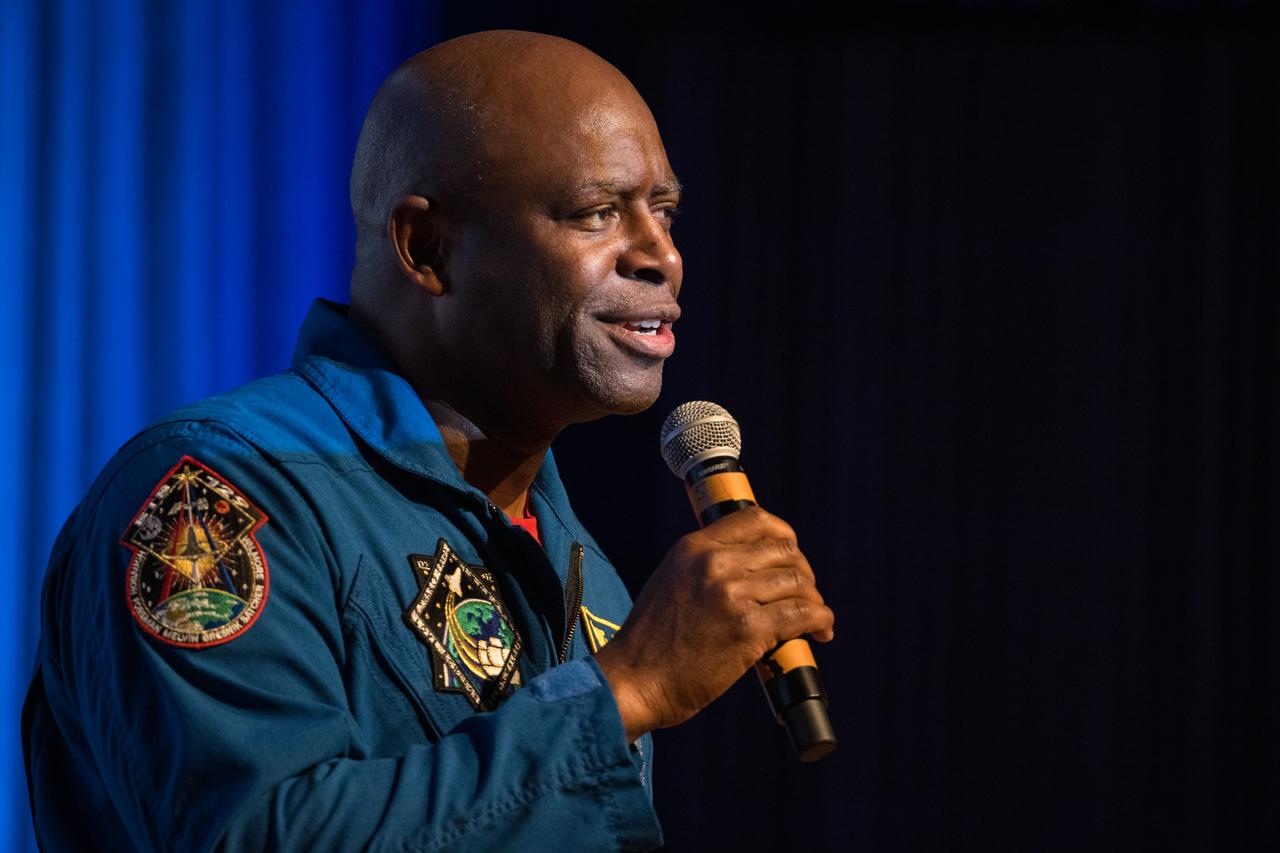
Leland Melvin, retired NASA astronaut, speaks at an event to commemorate Black Space Week (BSW) 2024 titled, "Beyond the Color Lines From Science Fiction to Science Fact," in the Oprah Winfrey Theater at the Smithsonian National Museum of African American History and Culture, Monday, June 17, 2024 in Washington. Photo Credit: (NASA/Aubrey Gemignani)
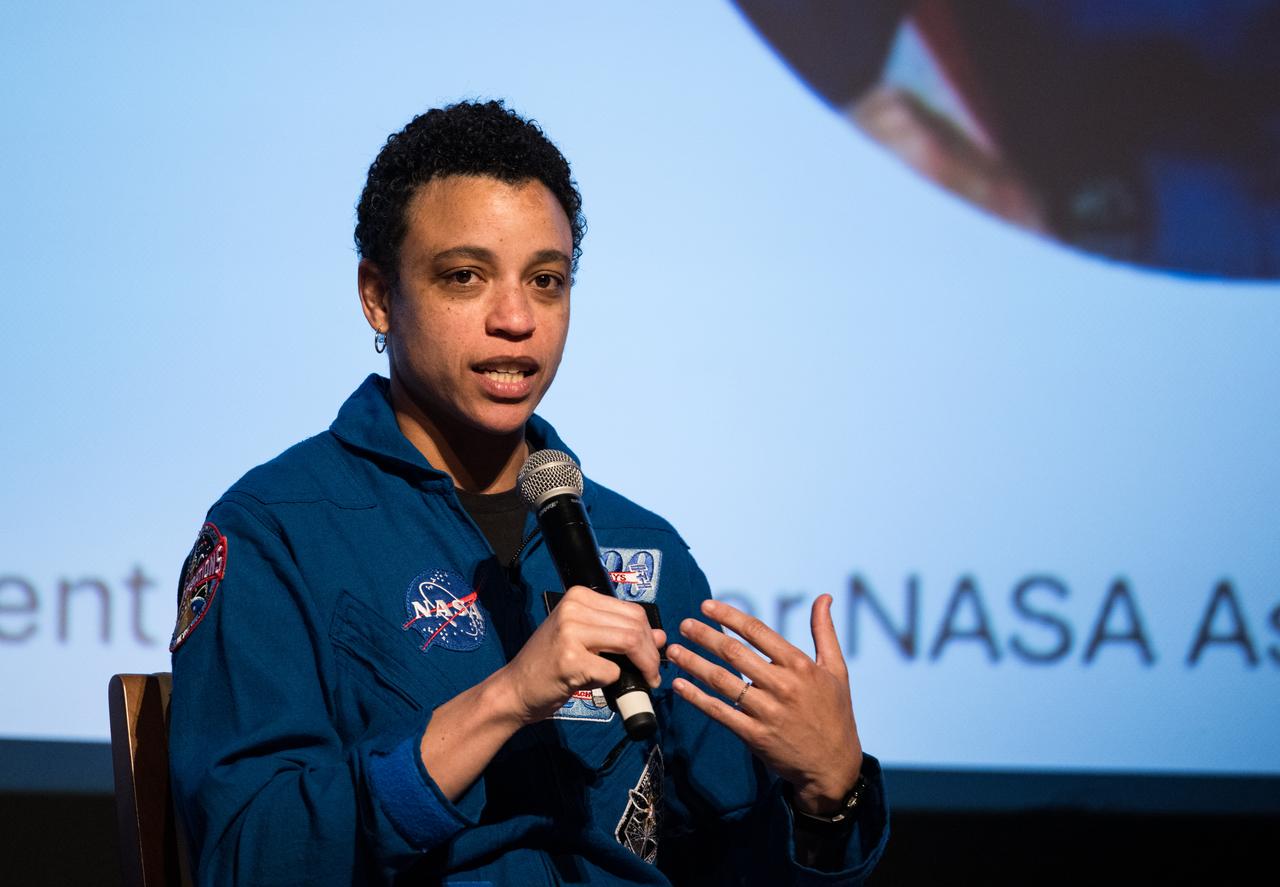
Jessica Watkins, NASA astronaut, speaks at an event to commemorate Black Space Week (BSW) 2024 titled, "Beyond the Color Lines From Science Fiction to Science Fact," in the Oprah Winfrey Theater at the Smithsonian National Museum of African American History and Culture, Monday, June 17, 2024 in Washington. Photo Credit: (NASA/Aubrey Gemignani)
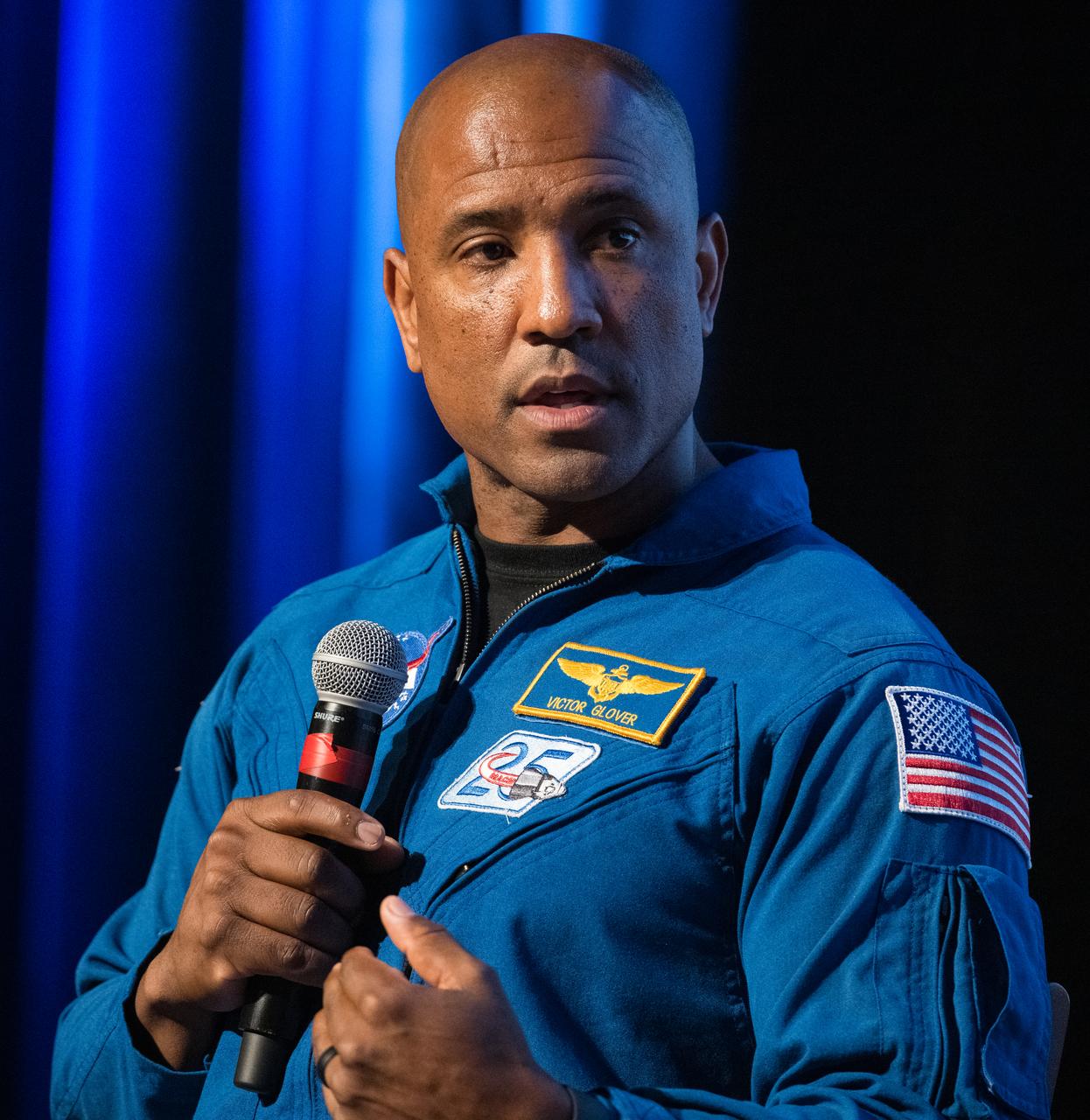
Victor Glover, NASA astronaut, speaks at an event to commemorate Black Space Week (BSW) 2024 titled, "Beyond the Color Lines From Science Fiction to Science Fact," in the Oprah Winfrey Theater at the Smithsonian National Museum of African American History and Culture, Monday, June 17, 2024 in Washington. Photo Credit: (NASA/Aubrey Gemignani)
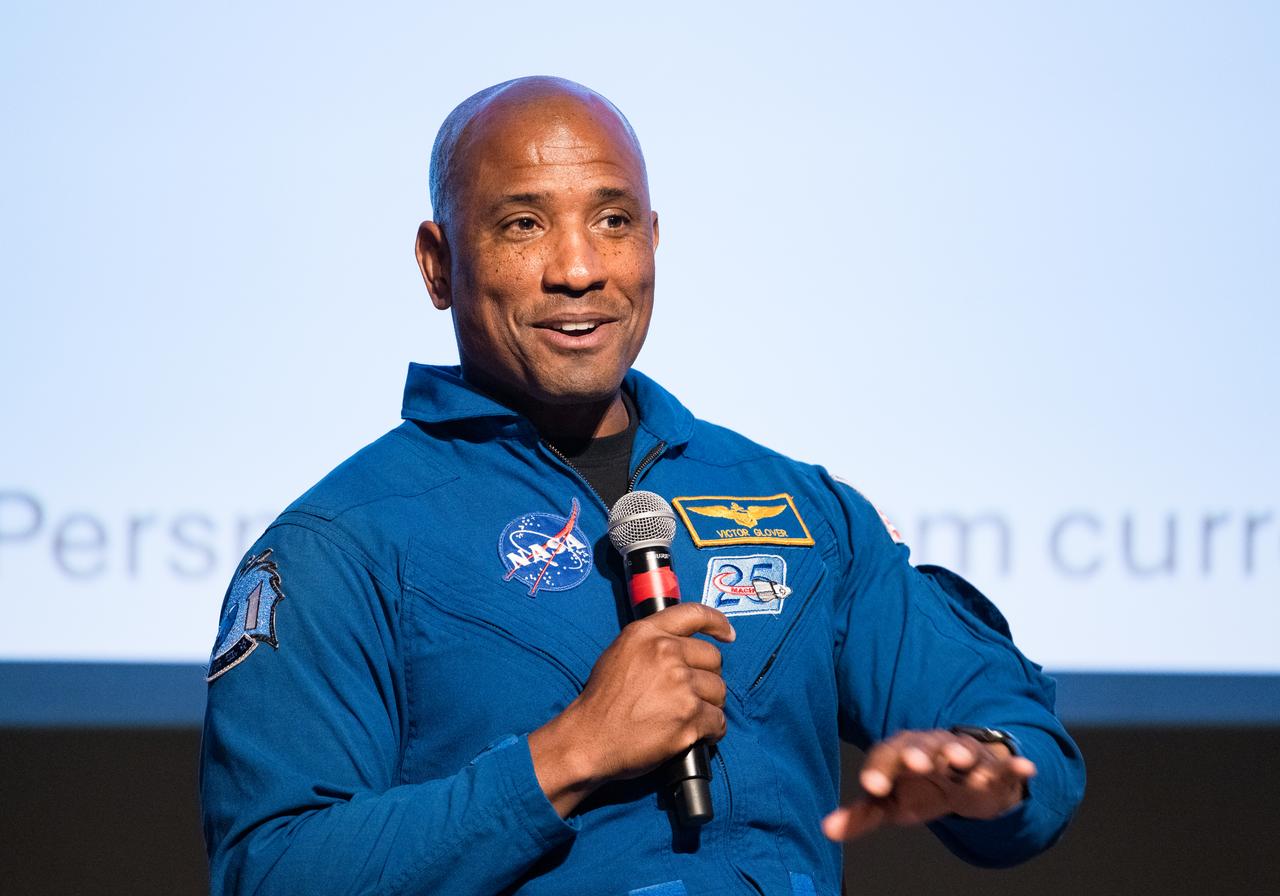
Victor Glover, NASA astronaut, speaks at an event to commemorate Black Space Week (BSW) 2024 titled, "Beyond the Color Lines From Science Fiction to Science Fact," in the Oprah Winfrey Theater at the Smithsonian National Museum of African American History and Culture, Monday, June 17, 2024 in Washington. Photo Credit: (NASA/Aubrey Gemignani)
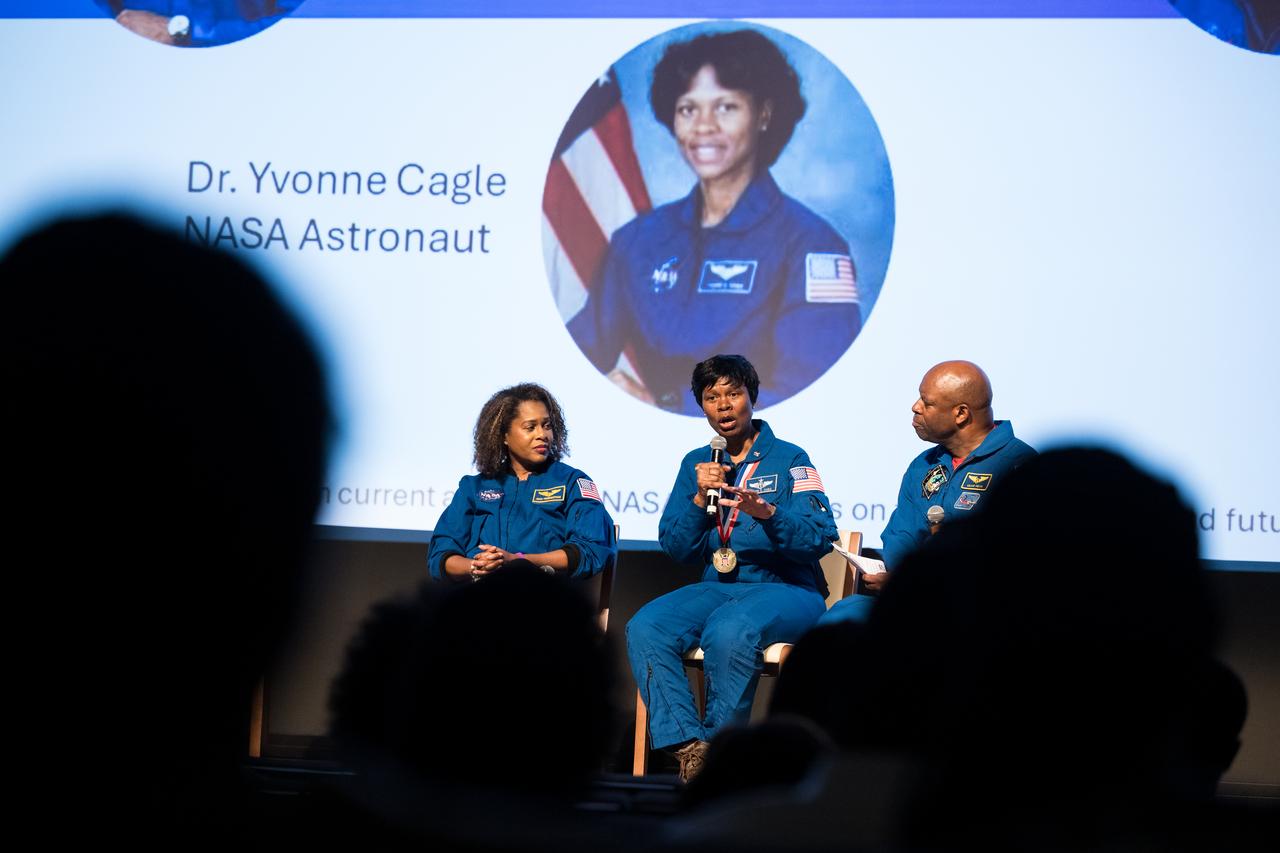
Dr. Yvonne Cagle, NASA astronaut, speaks at an event to commemorate Black Space Week (BSW) 2024 titled, "Beyond the Color Lines From Science Fiction to Science Fact," in the Oprah Winfrey Theater at the Smithsonian National Museum of African American History and Culture, Monday, June 17, 2024 in Washington. Photo Credit: (NASA/Aubrey Gemignani)
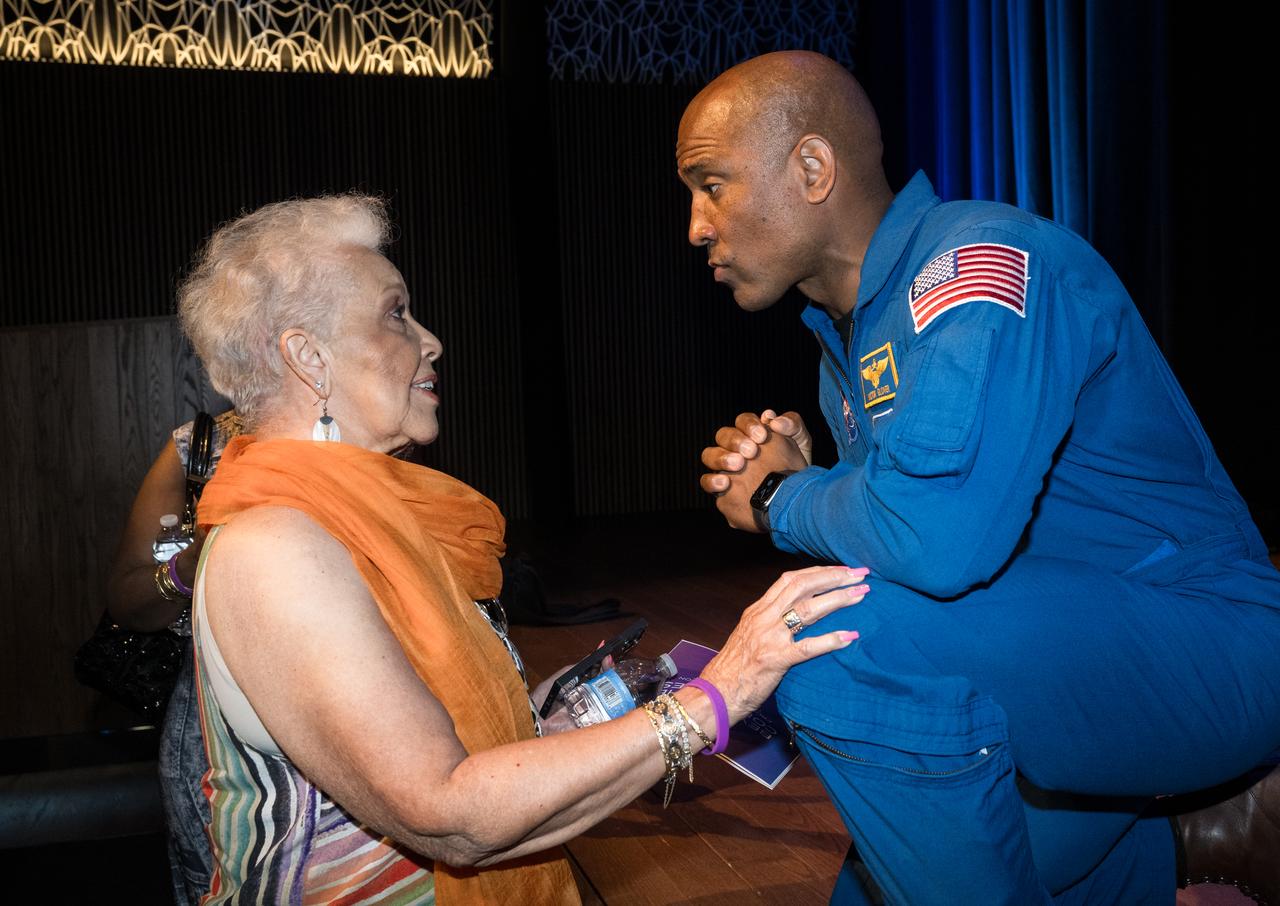
Joylette Goble Hylick, daughter of Katherine Johnson, speaks to NASA astronaut Victor Glover at the conclusion of an event to commemorate Black Space Week (BSW) 2024 titled, "Beyond the Color Lines From Science Fiction to Science Fact," in the Oprah Winfrey Theater at the Smithsonian National Museum of African American History and Culture, Monday, June 17, 2024 in Washington. Photo Credit: (NASA/Aubrey Gemignani)
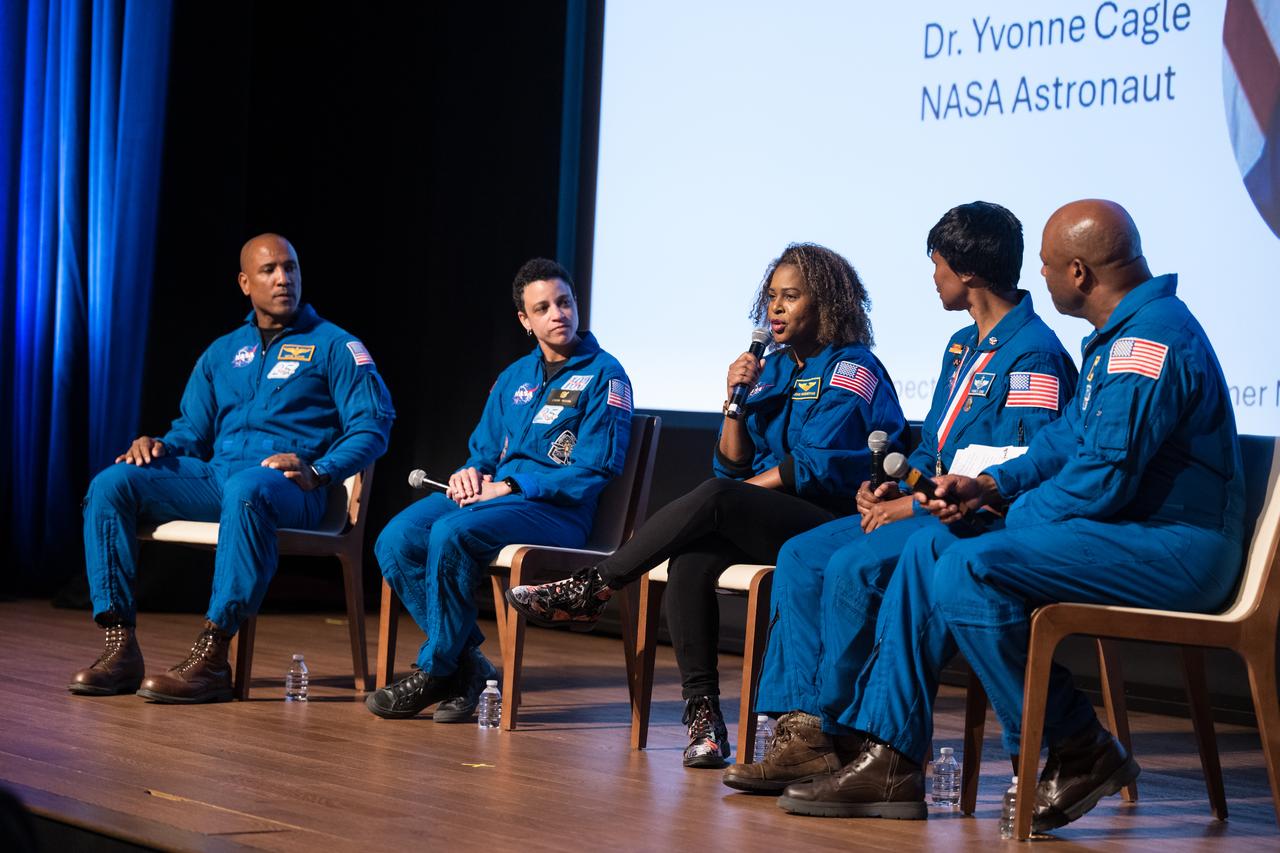
Joan Higginbotham, retired NASA astronaut, speaks at an event to commemorate Black Space Week (BSW) 2024 titled, "Beyond the Color Lines From Science Fiction to Science Fact," in the Oprah Winfrey Theater at the Smithsonian National Museum of African American History and Culture, Monday, June 17, 2024 in Washington. Photo Credit: (NASA/Aubrey Gemignani)
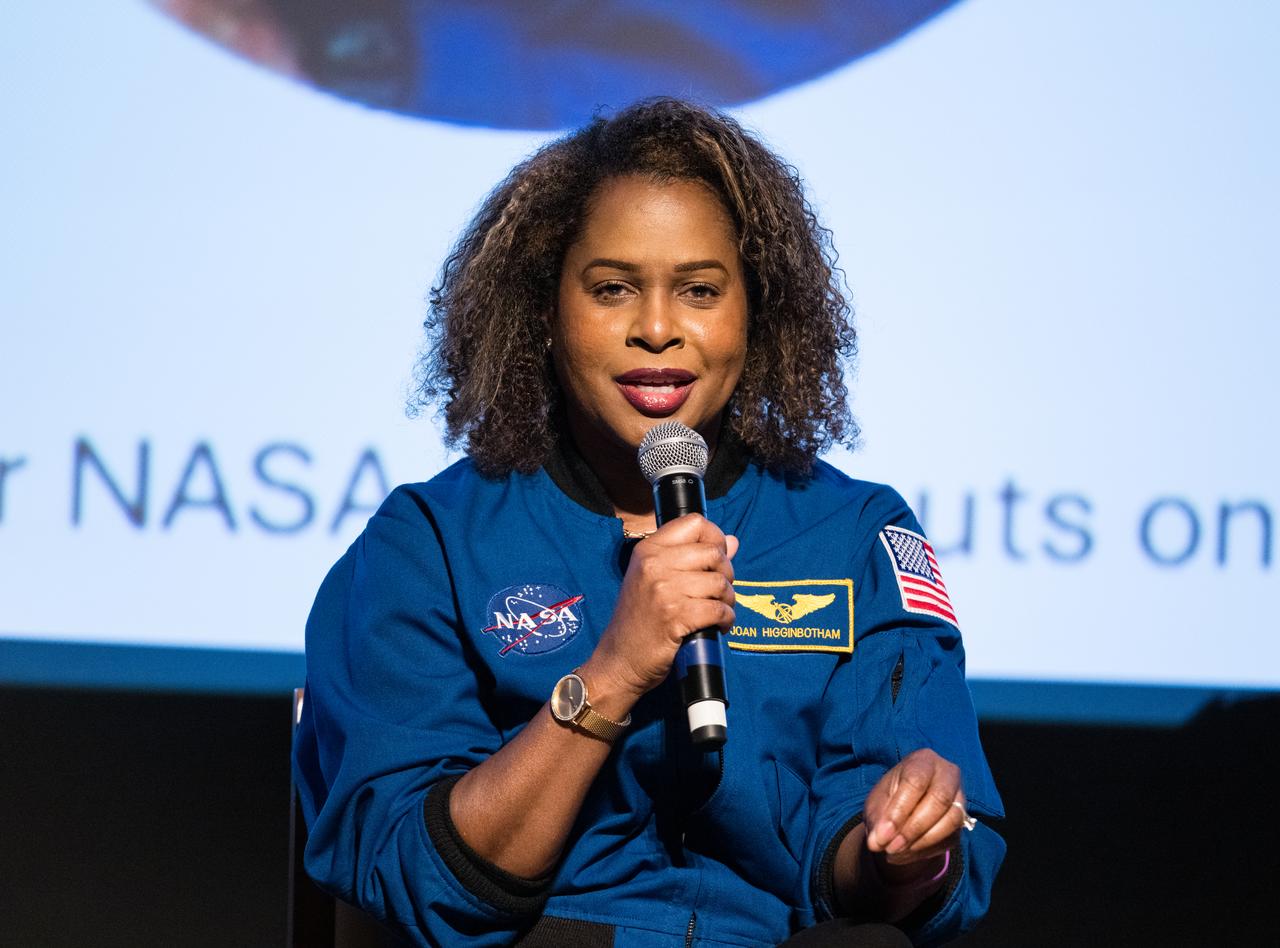
Joan Higginbotham, retired NASA astronaut, speaks at an event to commemorate Black Space Week (BSW) 2024 titled, "Beyond the Color Lines From Science Fiction to Science Fact," in the Oprah Winfrey Theater at the Smithsonian National Museum of African American History and Culture, Monday, June 17, 2024 in Washington. Photo Credit: (NASA/Aubrey Gemignani)
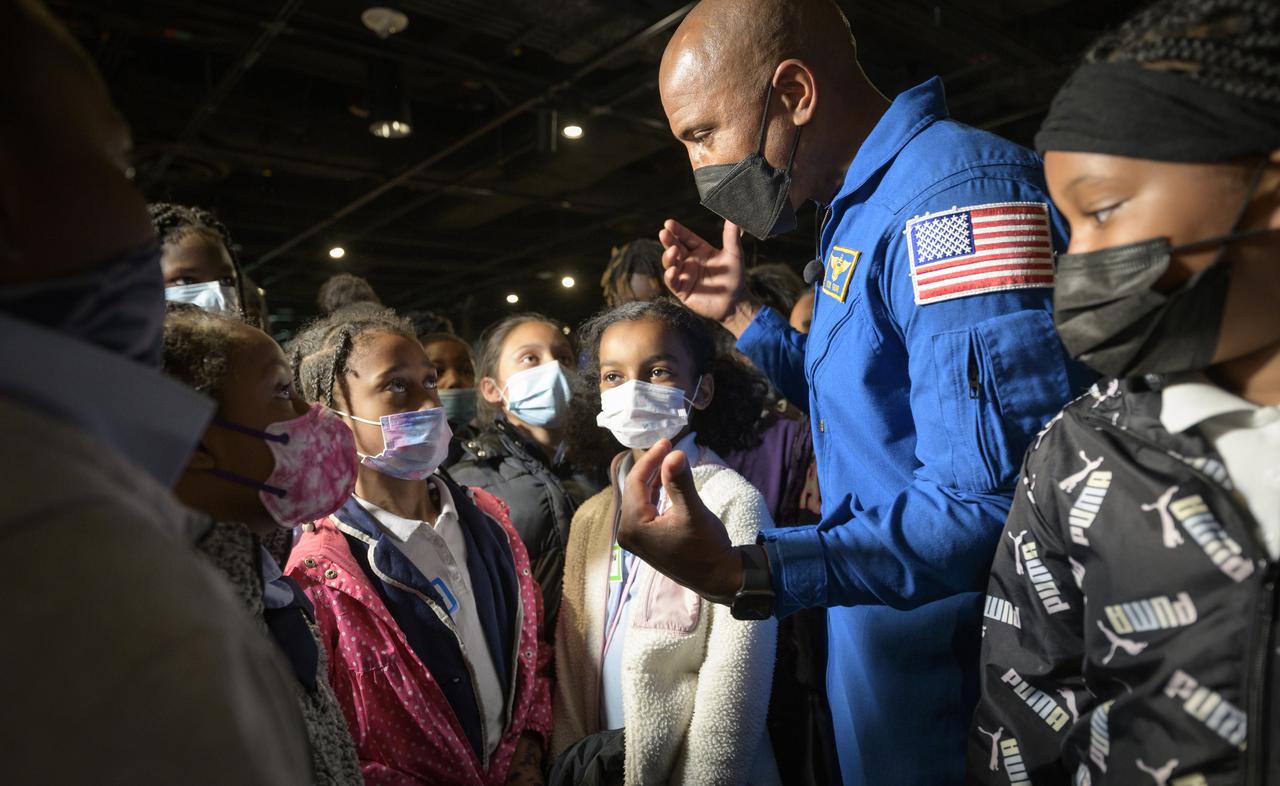
NASA astronaut Victor Glover talks with school students at the conclusion of an educational event, Thursday, April 28, 2022, at the National Museum of African American History and Culture in Washington. Glover most recently served as pilot and second-in-command on the Crew-1 SpaceX Crew Dragon, named Resilience, which landed after a long duration mission aboard the International Space Station, May 2, 2021. Photo Credit: (NASA/Bill Ingalls)
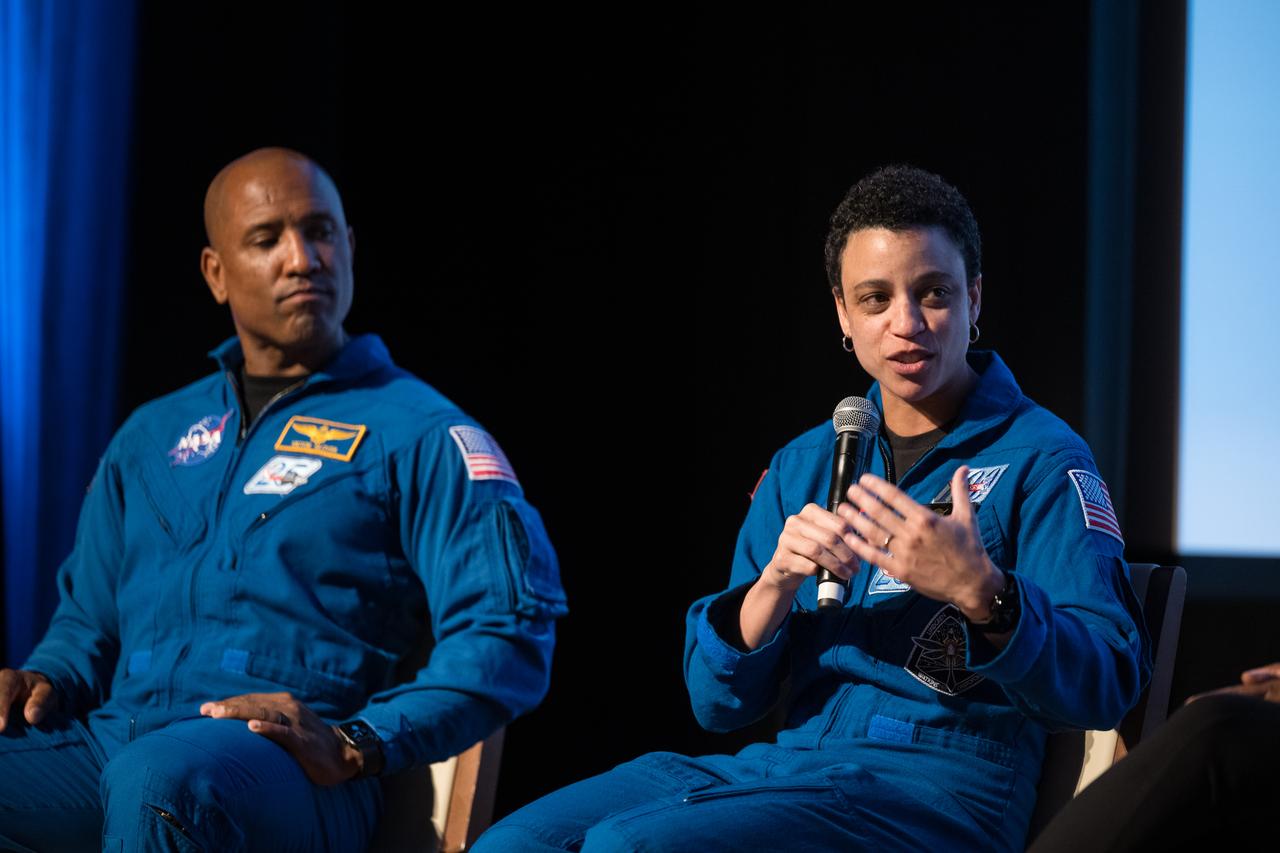
Jessica Watkins, NASA astronaut, speaks on a panel at an event to commemorate Black Space Week (BSW) 2024 titled, "Beyond the Color Lines From Science Fiction to Science Fact," in the Oprah Winfrey Theater at the Smithsonian National Museum of African American History and Culture, Monday, June 17, 2024 in Washington. Photo Credit: (NASA/Aubrey Gemignani)
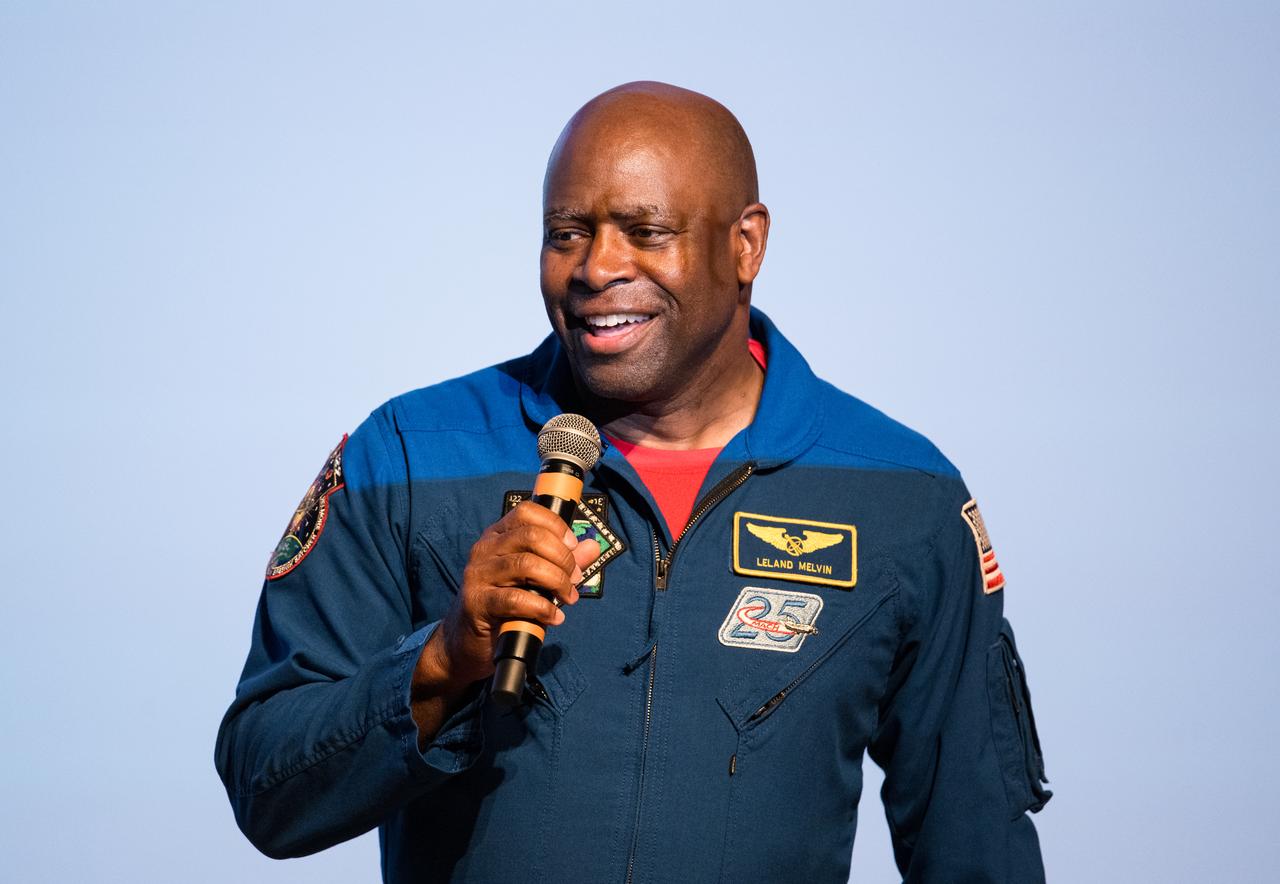
Leland Melvin, retired NASA astronaut, speaks at an event to commemorate Black Space Week (BSW) 2024 titled, "Beyond the Color Lines From Science Fiction to Science Fact," in the Oprah Winfrey Theater at the Smithsonian National Museum of African American History and Culture, Monday, June 17, 2024 in Washington. Photo Credit: (NASA/Aubrey Gemignani)
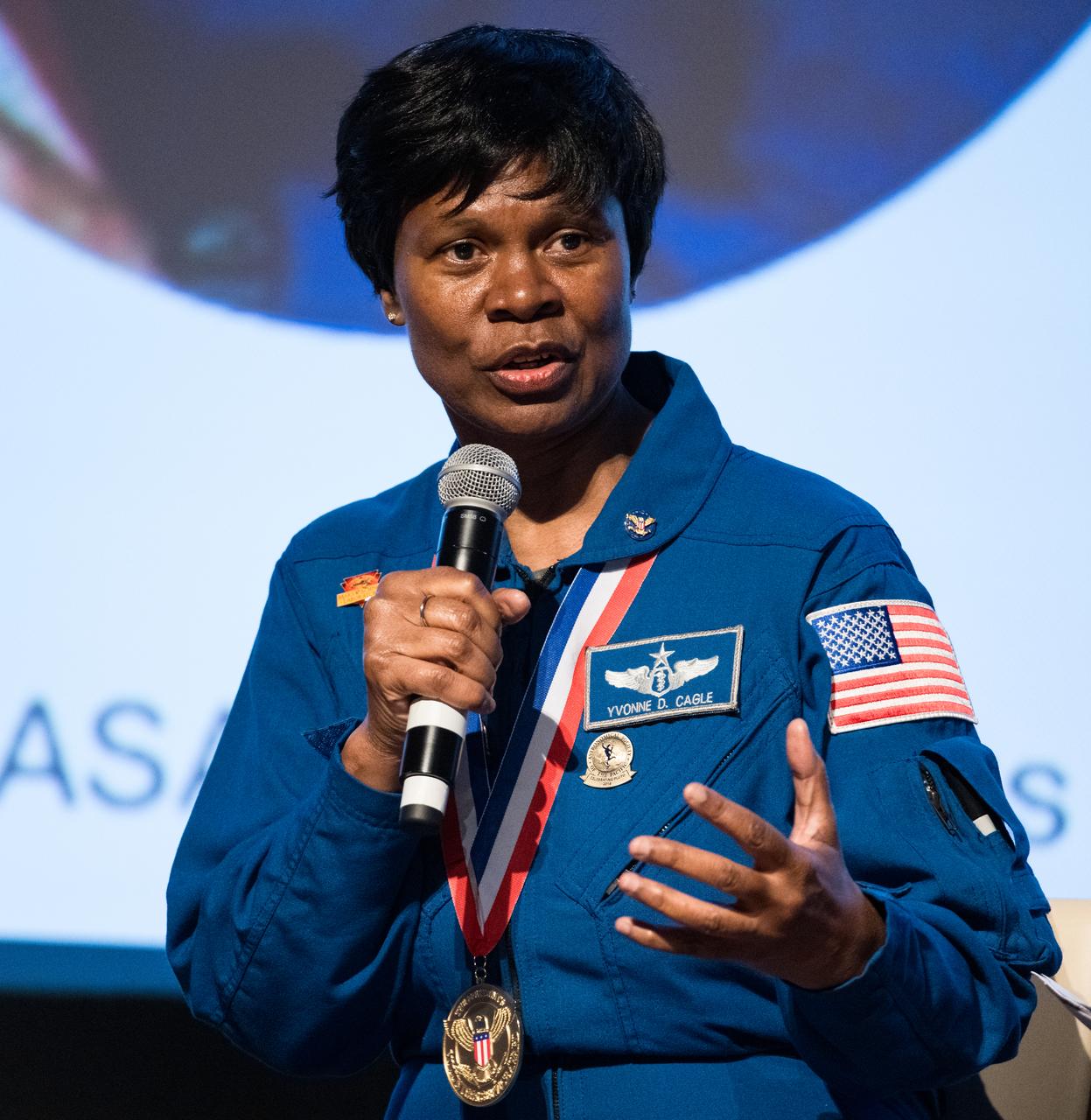
Dr. Yvonne Cagle, NASA astronaut, speaks at an event to commemorate Black Space Week (BSW) 2024 titled, "Beyond the Color Lines From Science Fiction to Science Fact," in the Oprah Winfrey Theater at the Smithsonian National Museum of African American History and Culture, Monday, June 17, 2024 in Washington. Photo Credit: (NASA/Aubrey Gemignani)
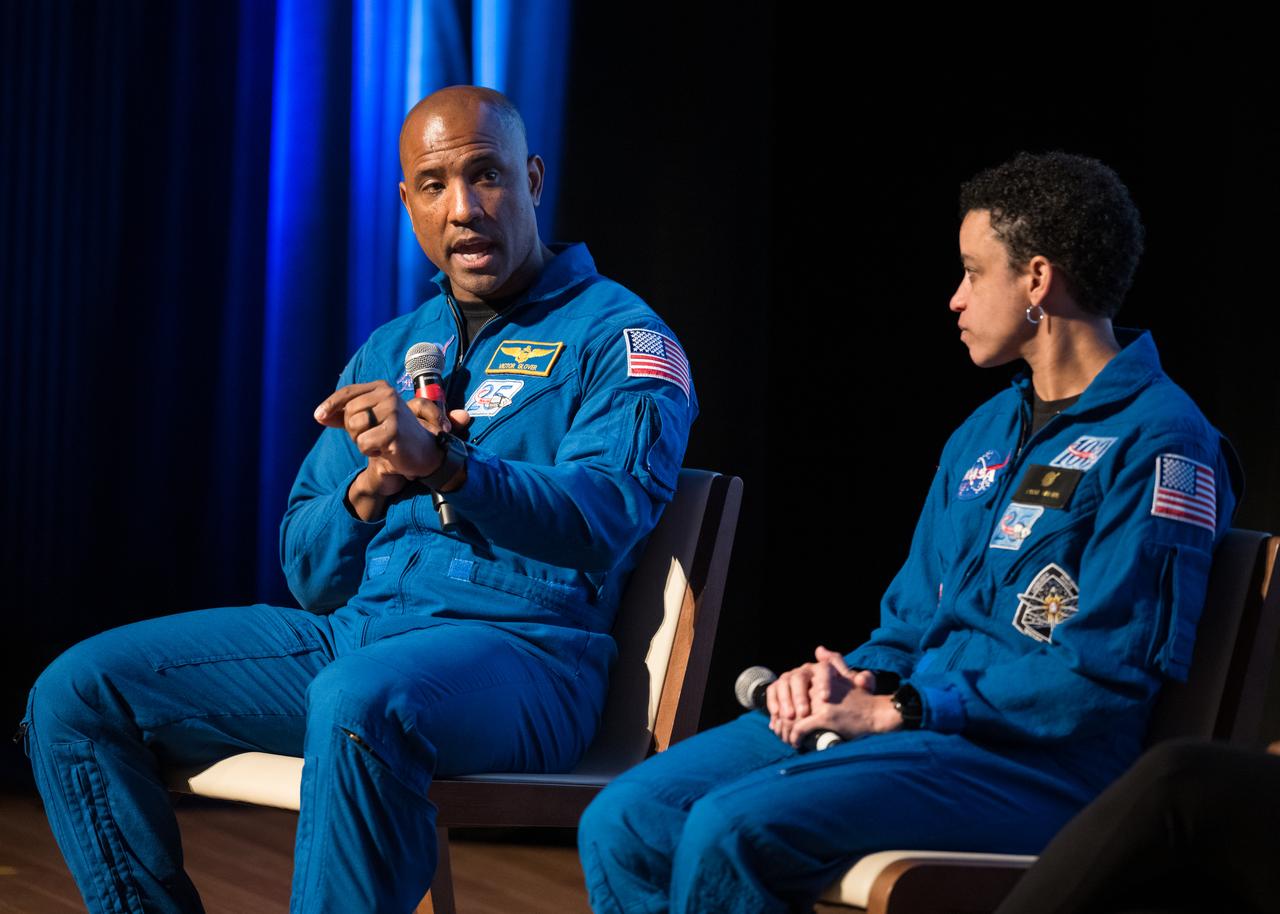
Victor Glover, NASA astronaut, speaks on a panel at an event to commemorate Black Space Week (BSW) 2024 titled, "Beyond the Color Lines From Science Fiction to Science Fact," in the Oprah Winfrey Theater at the Smithsonian National Museum of African American History and Culture, Monday, June 17, 2024 in Washington. Photo Credit: (NASA/Aubrey Gemignani)
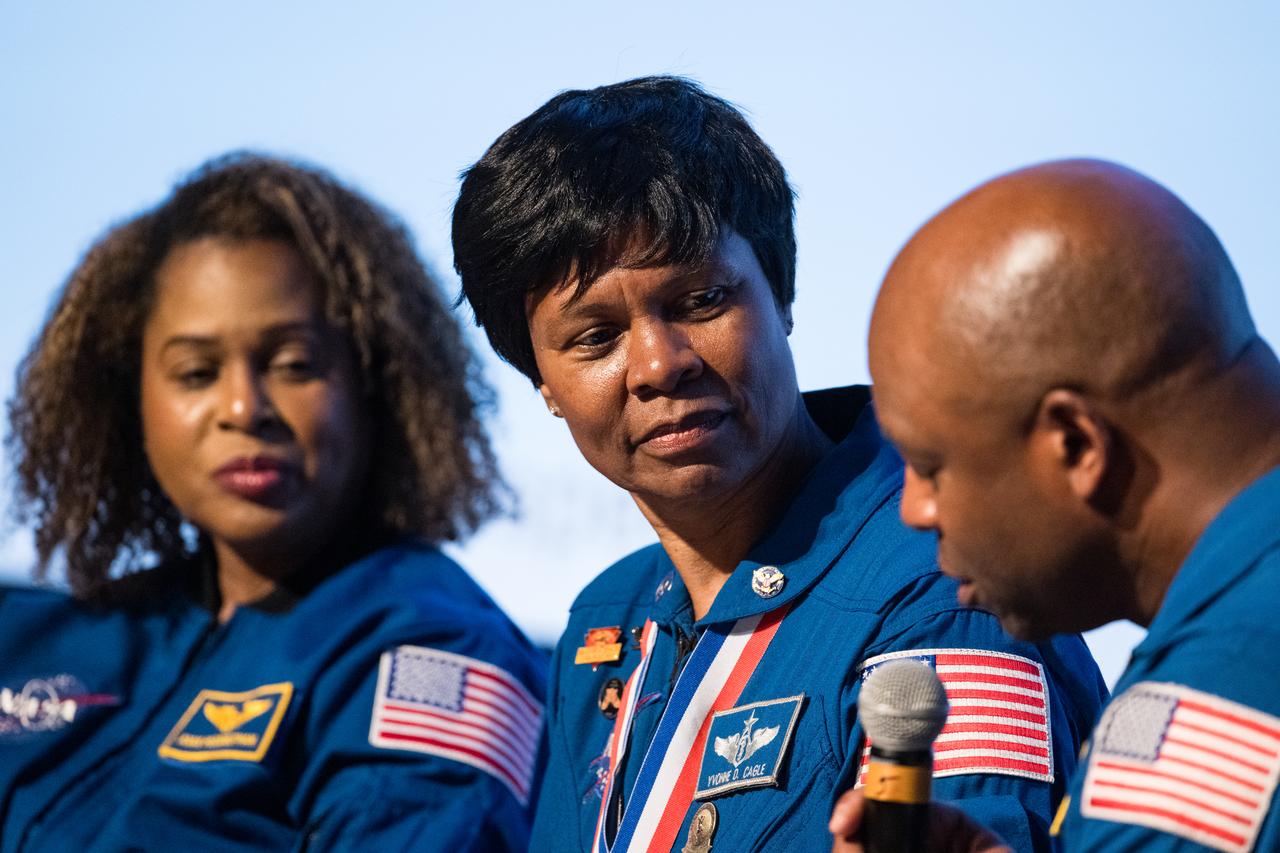
Dr. Yvonne Cagle, NASA astronaut is seen while participating in a panel discussion at an event to commemorate Black Space Week (BSW) 2024 titled, "Beyond the Color Lines From Science Fiction to Science Fact," in the Oprah Winfrey Theater at the Smithsonian National Museum of African American History and Culture, Monday, June 17, 2024 in Washington. Photo Credit: (NASA/Aubrey Gemignani)
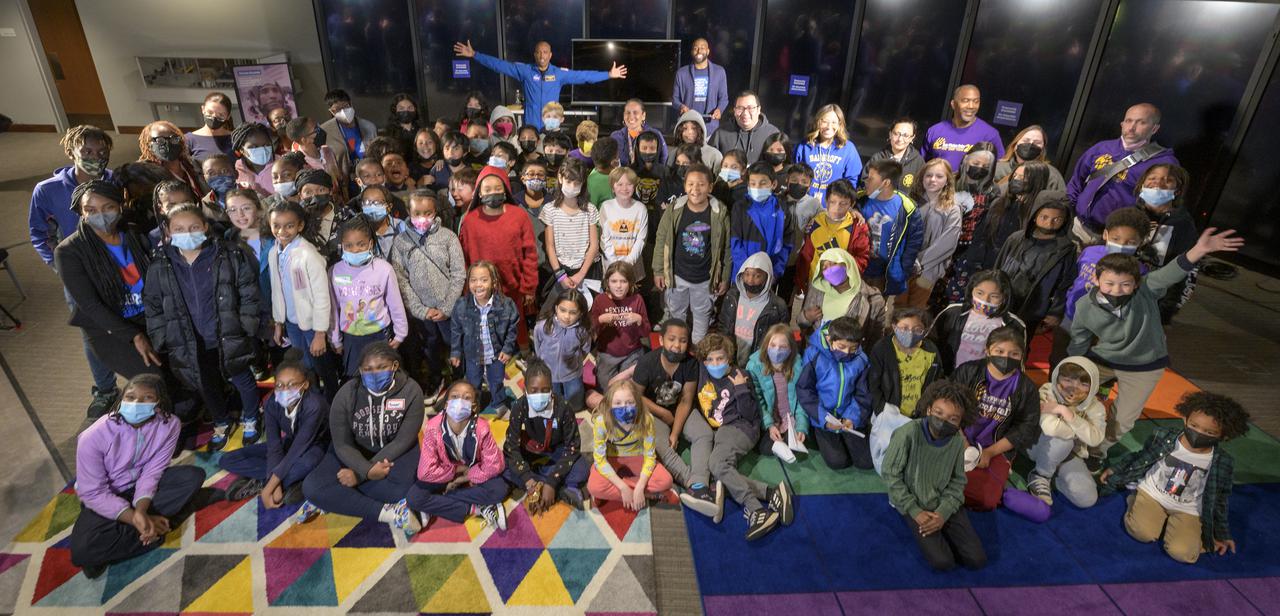
NASA astronaut Victor Glover, back with arms extended, poses for a group photo with school students from Bunker Hill Elementary, Bancroft Elementary, and E.W. Stokes Public Charter School at the conclusion of an educational event, Thursday, April 28, 2022, at the National Museum of African American History and Culture in Washington. Glover most recently served as pilot and second-in-command on the Crew-1 SpaceX Crew Dragon, named Resilience, which landed after a long duration mission aboard the International Space Station, May 2, 2021. Photo Credit: (NASA/Bill Ingalls)
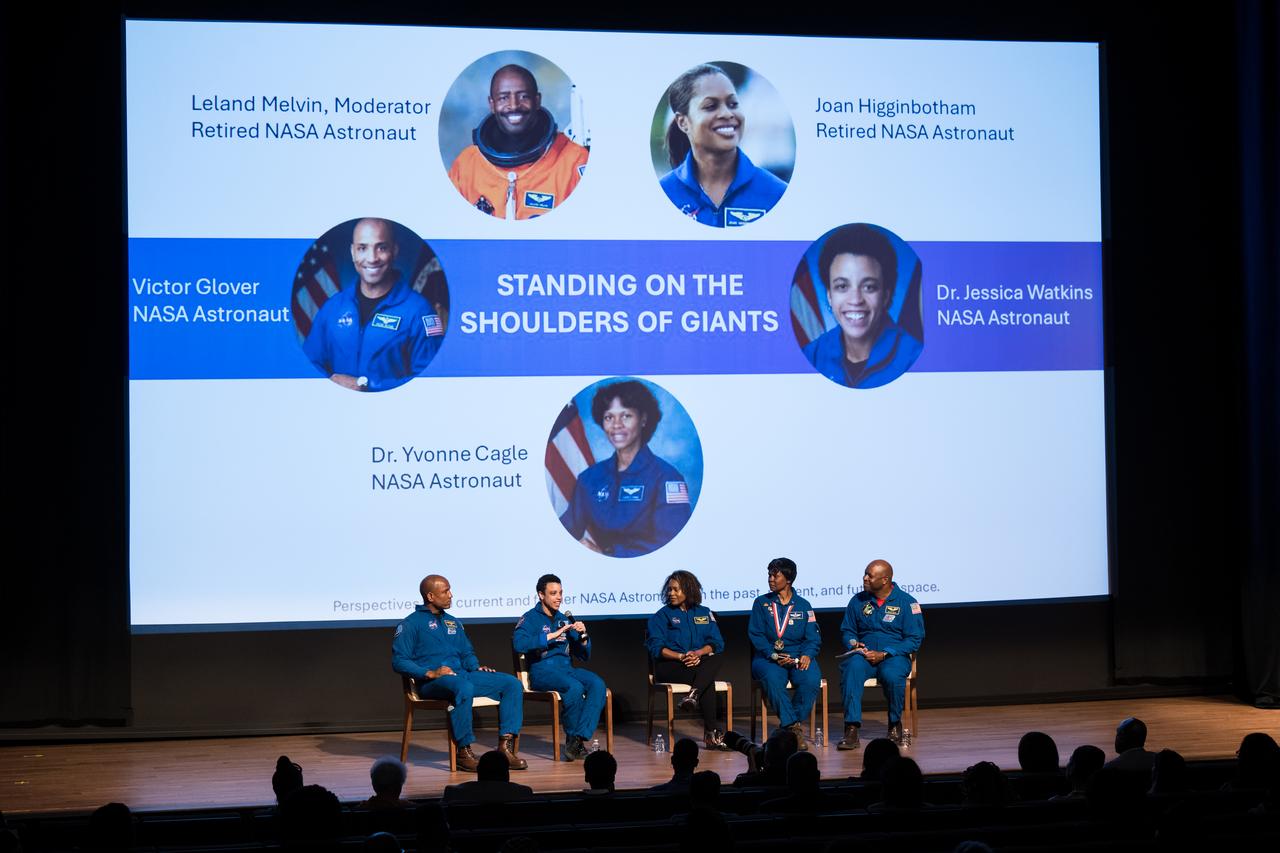
NASA astronaut Jessica Watkins speaks on a panel with NASA astronauts Victor Glover, Joan Higginbotham (retired), Dr. Yvonne Cagle, and Leland Melvin (retired), at an event to commemorate Black Space Week (BSW) 2024 titled, "Beyond the Color Lines From Science Fiction to Science Fact," in the Oprah Winfrey Theater at the Smithsonian National Museum of African American History and Culture, Monday, June 17, 2024 in Washington. Photo Credit: (NASA/Aubrey Gemignani)
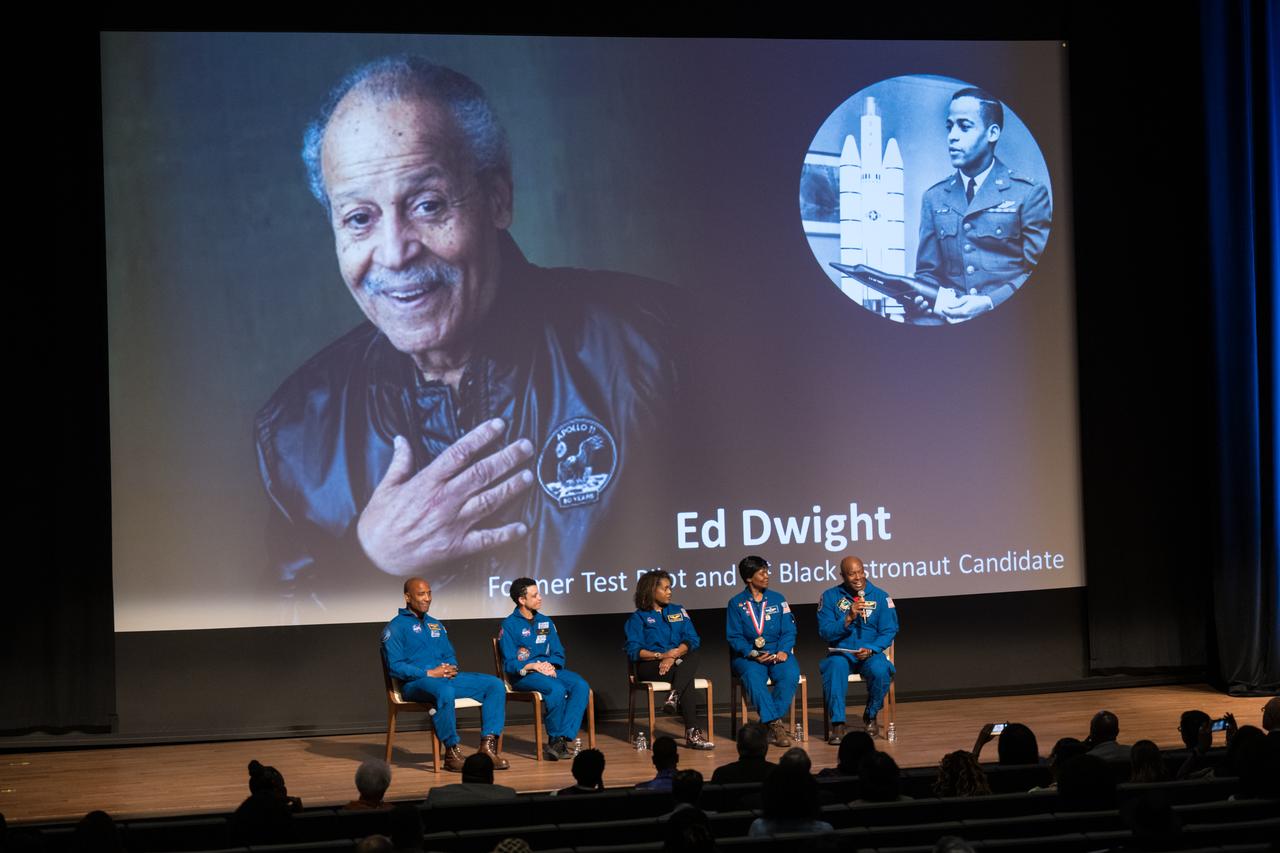
Leland Melvin, retired NASA astronaut, speaks at an event to commemorate Black Space Week (BSW) 2024 titled, "Beyond the Color Lines From Science Fiction to Science Fact," in the Oprah Winfrey Theater at the Smithsonian National Museum of African American History and Culture, Monday, June 17, 2024 in Washington. Photo Credit: (NASA/Aubrey Gemignani)
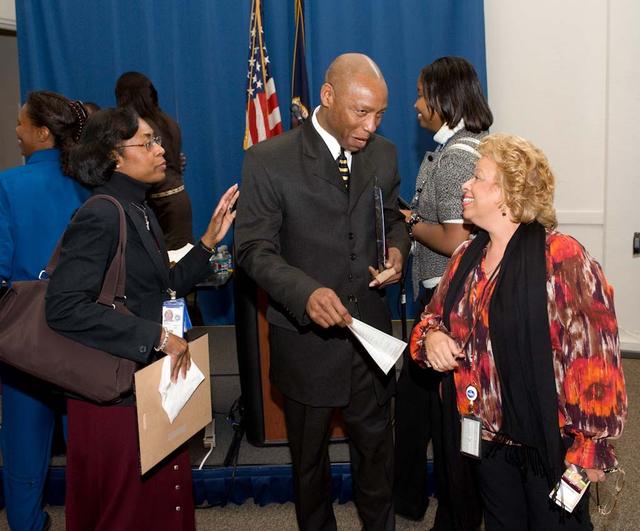
African American Advisory Group'a history month celebration; 'An Abundance of Excellence' Chronicling the Journey of the Black Astronauts. Rhonda Baker, Ernest Jennings, Nonnie Braxton
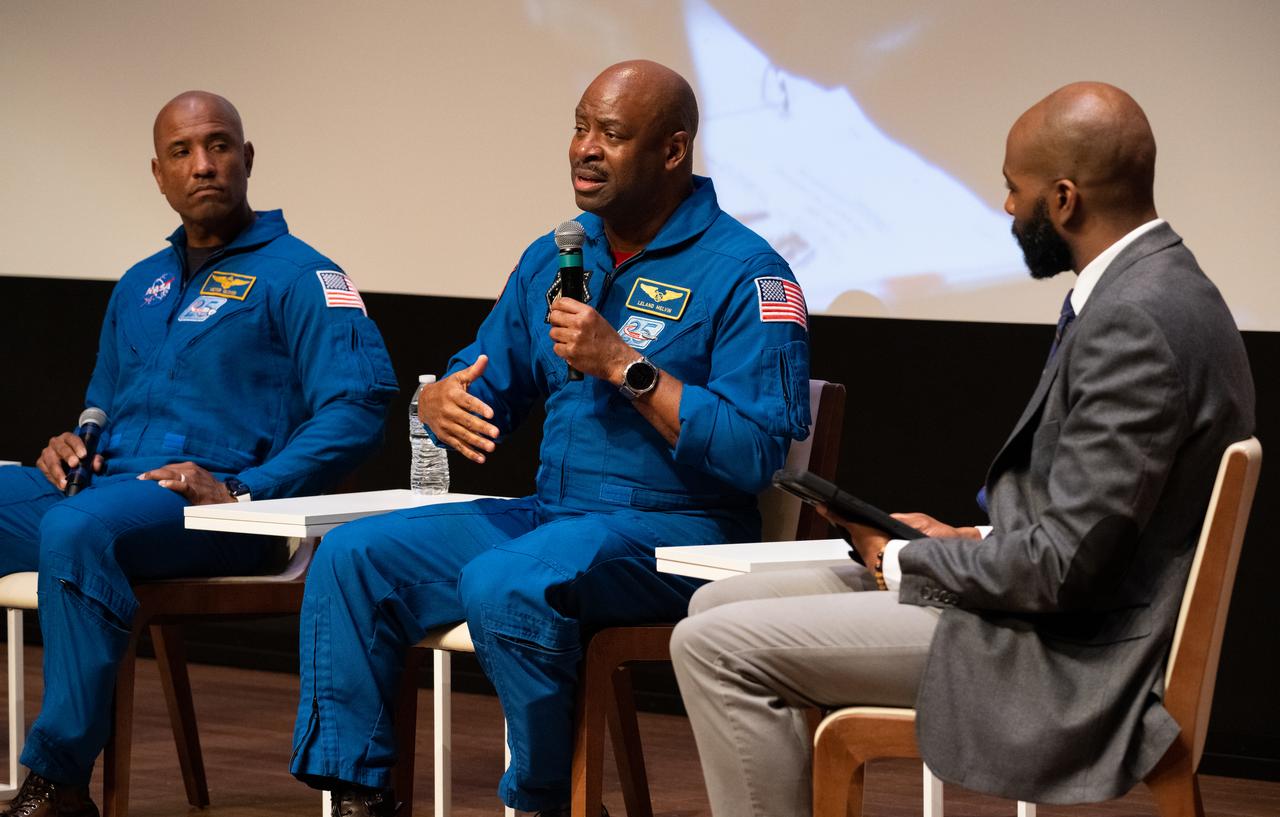
NASA astronaut Victor Glover, left, and Christopher Williams, STEM Education Specialist at the Smithsonian National Museum of African American History and Culture, right, look on as retired NASA astronaut Leland Melvin, center, answers a question during a panel discussion titled A Space for Us All at an event celebrating Black History Month at the Smithsonian National Museum of African American History and Culture, Friday, Feb. 10, 2023, in Washington. Photo Credit: (NASA/Joel Kowsky)
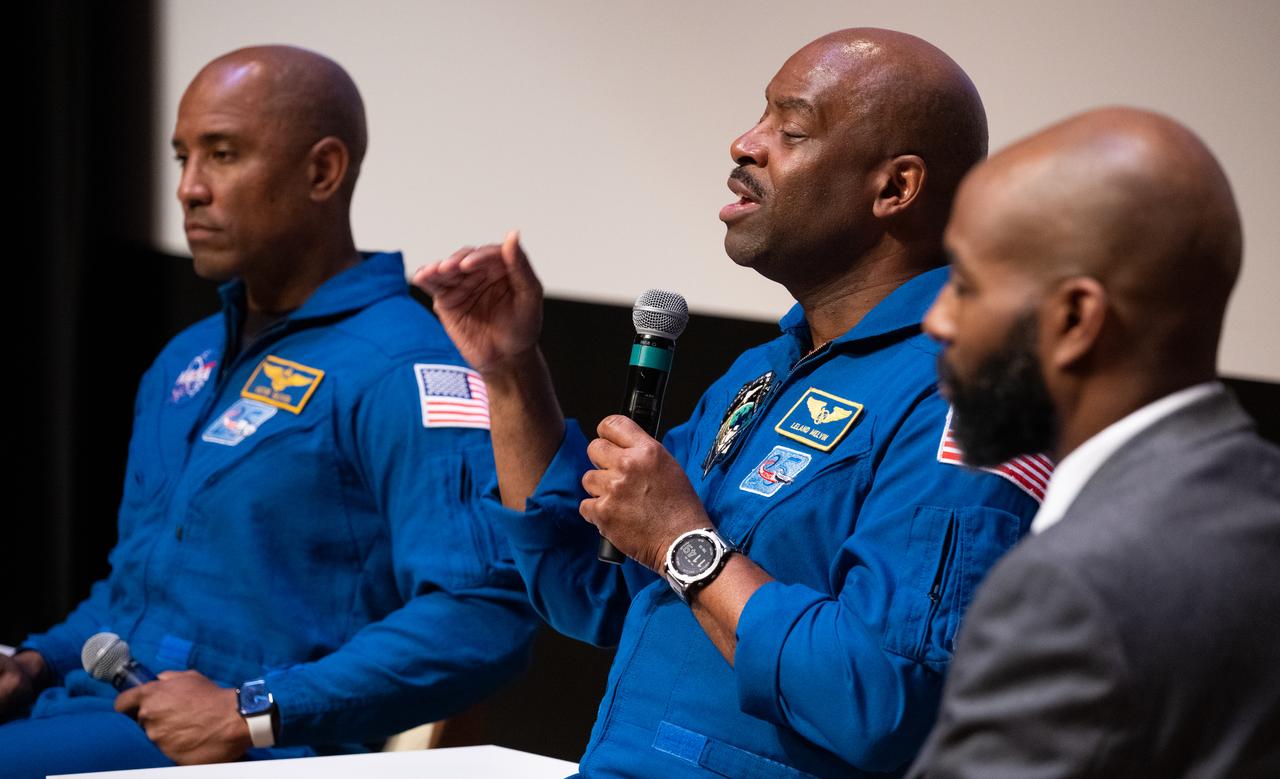
NASA astronaut Victor Glover, left, and Christopher Williams, STEM Education Specialist at the Smithsonian National Museum of African American History and Culture, right, look on as retired NASA astronaut Leland Melvin, center, answers a question during a panel discussion titled A Space for Us All at an event celebrating Black History Month at the Smithsonian National Museum of African American History and Culture, Friday, Feb. 10, 2023, in Washington. Photo Credit: (NASA/Joel Kowsky)
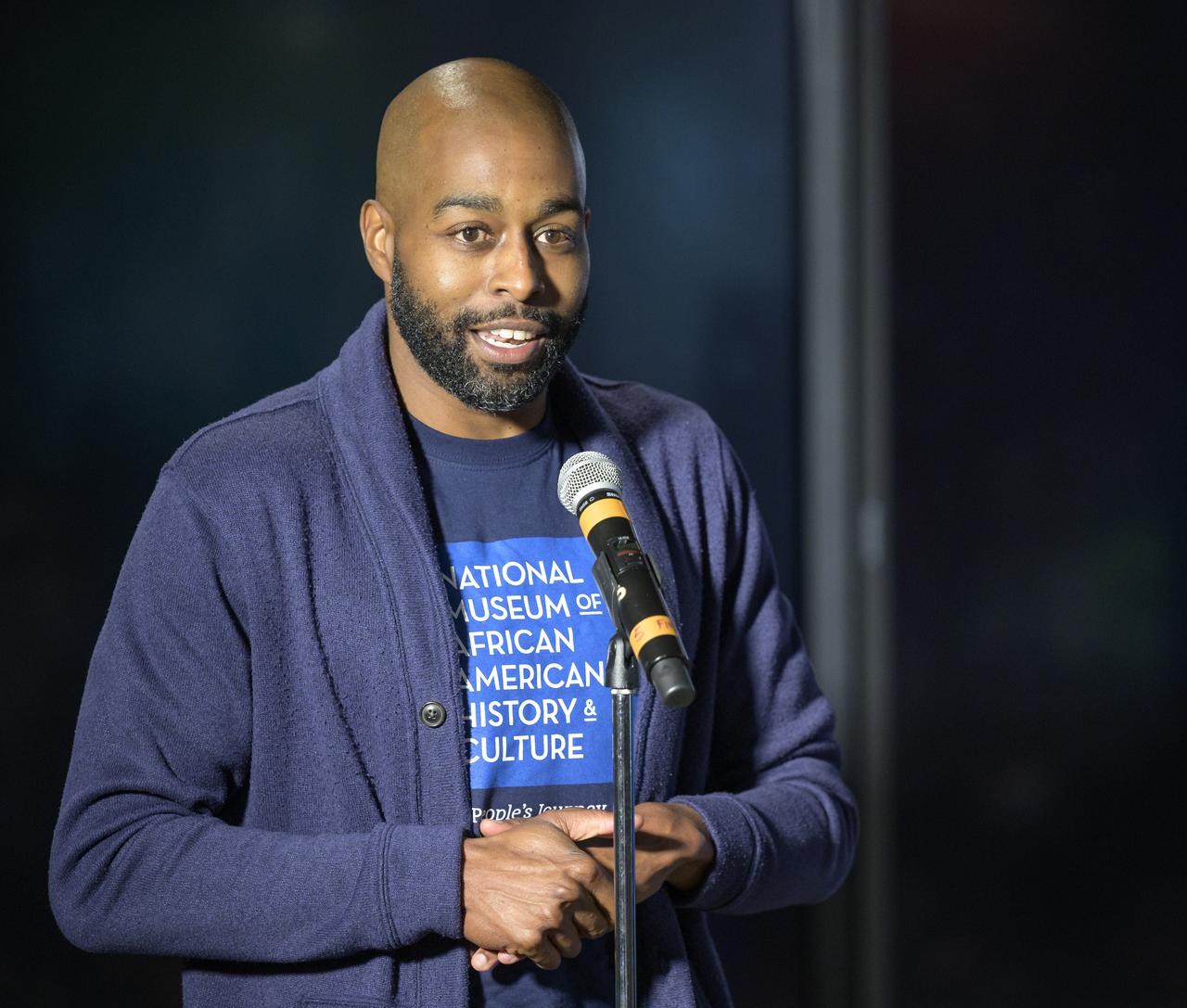
Christopher Williams, STEM Education Specialist for the National Museum of African American History and Culture introduces NASA astronaut Victor Glover during an education event, Thursday, April 28, 2022, at the National Museum of African American History and Culture in Washington. Glover most recently served as pilot and second-in-command on the Crew-1 SpaceX Crew Dragon, named Resilience, which landed after a long duration mission aboard the International Space Station, May 2, 2021. Photo Credit: (NASA/Bill Ingalls)
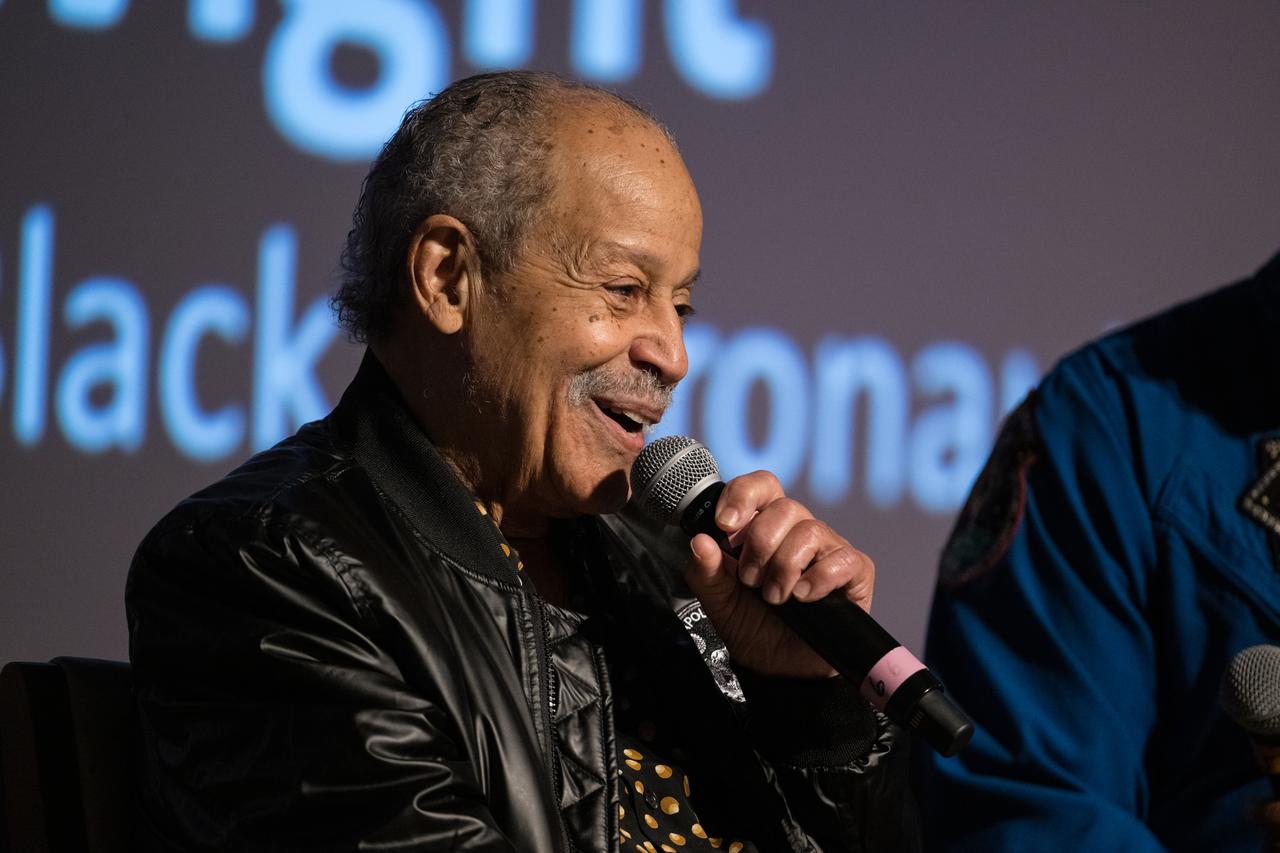
Ed Dwight, America's first African American astronaut candidate, speaks at an event to commemorate Black Space Week (BSW) 2024 titled, "Beyond the Color Lines From Science Fiction to Science Fact," in the Oprah Winfrey Theater at the Smithsonian National Museum of African American History and Culture, Monday, June 17, 2024 in Washington. Photo Credit: (NASA/Aubrey Gemignani)
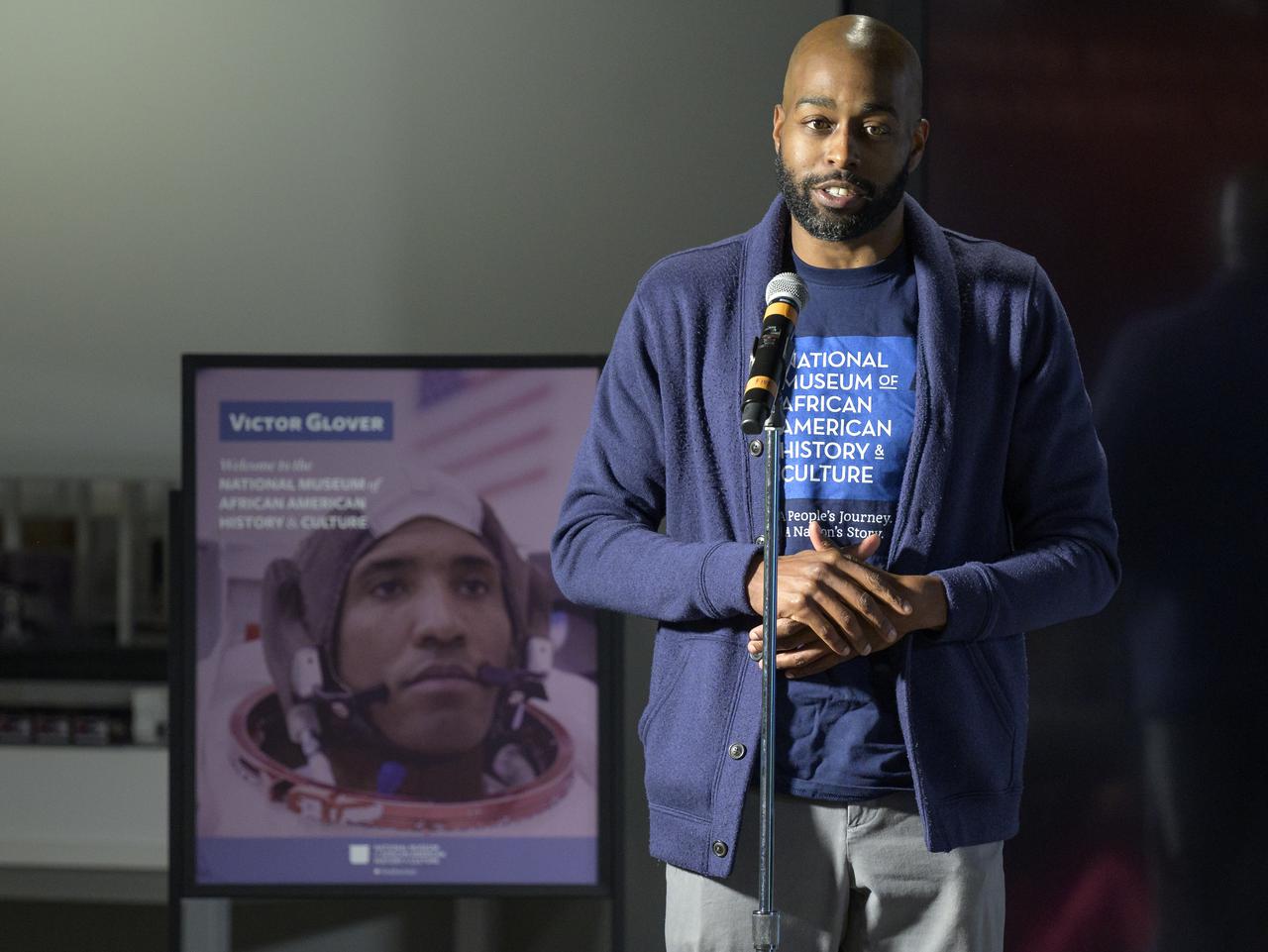
Christopher Williams, STEM Education Specialist for the National Museum of African American History and Culture introduces NASA astronaut Victor Glover during an education event, Thursday, April 28, 2022, at the National Museum of African American History and Culture in Washington. Glover most recently served as pilot and second-in-command on the Crew-1 SpaceX Crew Dragon, named Resilience, which landed after a long duration mission aboard the International Space Station, May 2, 2021. Photo Credit: (NASA/Bill Ingalls)
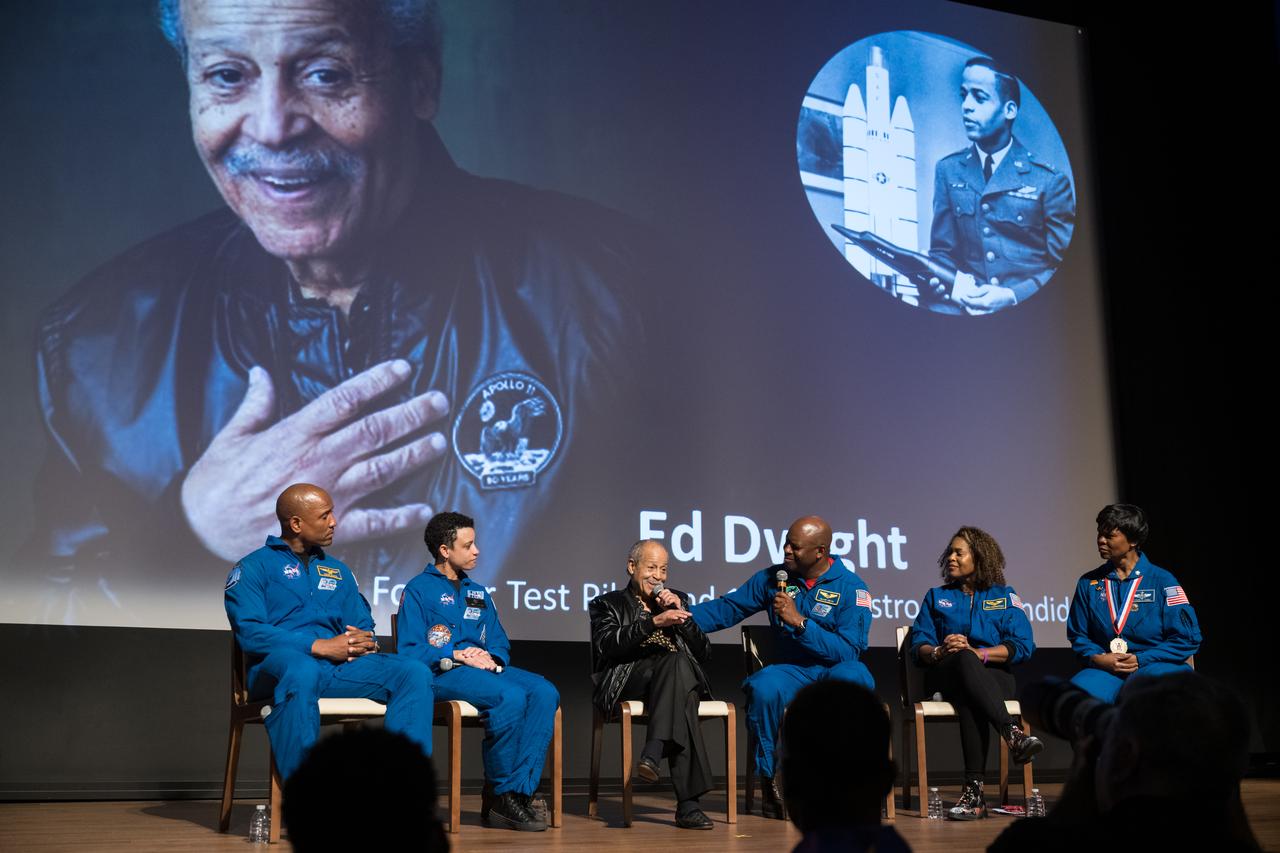
Ed Dwight, America's first African American astronaut candidate, speaks at an event to commemorate Black Space Week (BSW) 2024 titled, "Beyond the Color Lines From Science Fiction to Science Fact," in the Oprah Winfrey Theater at the Smithsonian National Museum of African American History and Culture, Monday, June 17, 2024 in Washington. Photo Credit: (NASA/Aubrey Gemignani)
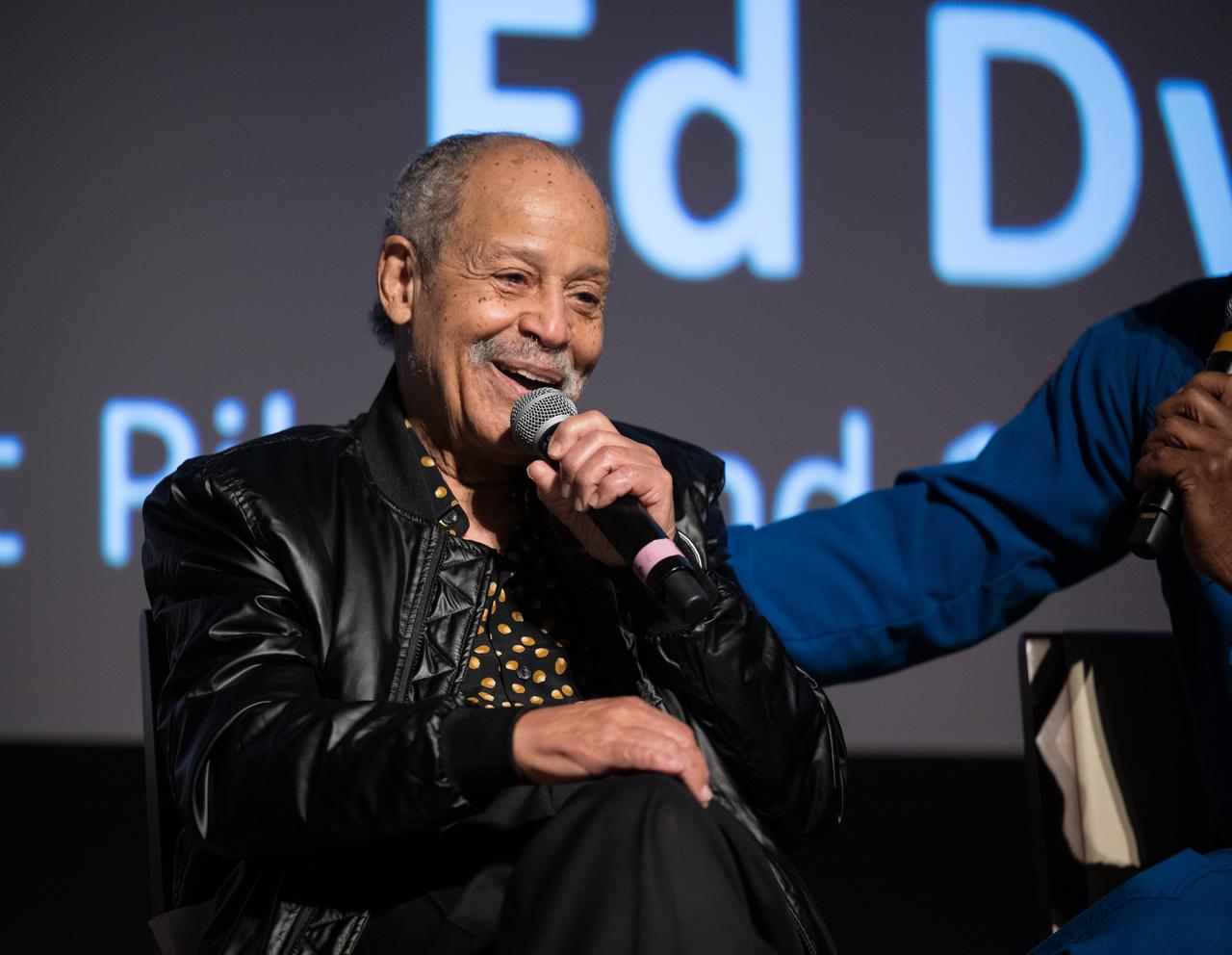
Ed Dwight, America's first African American astronaut candidate, speaks at an event to commemorate Black Space Week (BSW) 2024 titled, "Beyond the Color Lines From Science Fiction to Science Fact," in the Oprah Winfrey Theater at the Smithsonian National Museum of African American History and Culture, Monday, June 17, 2024 in Washington. Photo Credit: (NASA/Aubrey Gemignani)
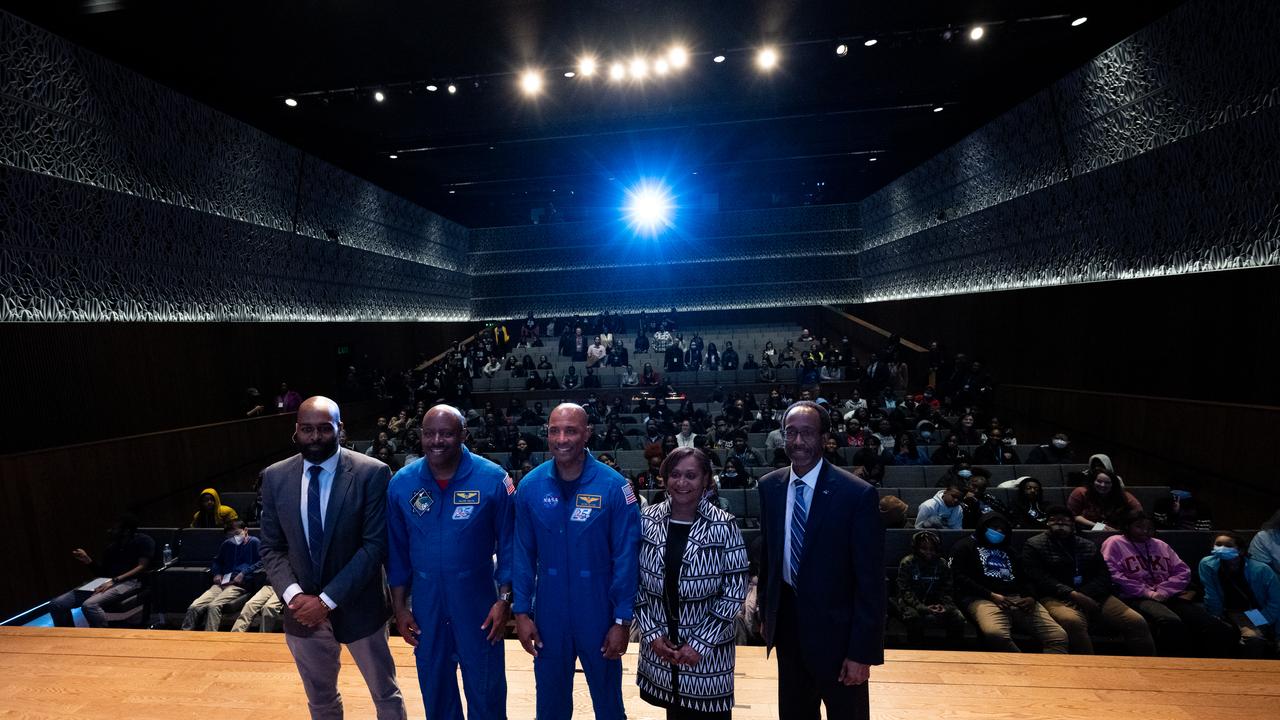
Christopher Williams, STEM Education Specialist at the Smithsonian National Museum of African American History and Culture, left, retired NASA astronaut Leland Melvin, second from left, NASA astronaut Victor Glover, center, Vanessa Wyche, director of NASA's Johnson Space Center, second from right, and Clayton Turner, director of NASA's Langley Research Center, right, pose for a picture following a panel discussion titled A Space for Us All at an event celebrating Black History Month at the Smithsonian National Museum of African American History and Culture, Friday, Feb. 10, 2023, in Washington. Photo Credit: (NASA/Joel Kowsky)
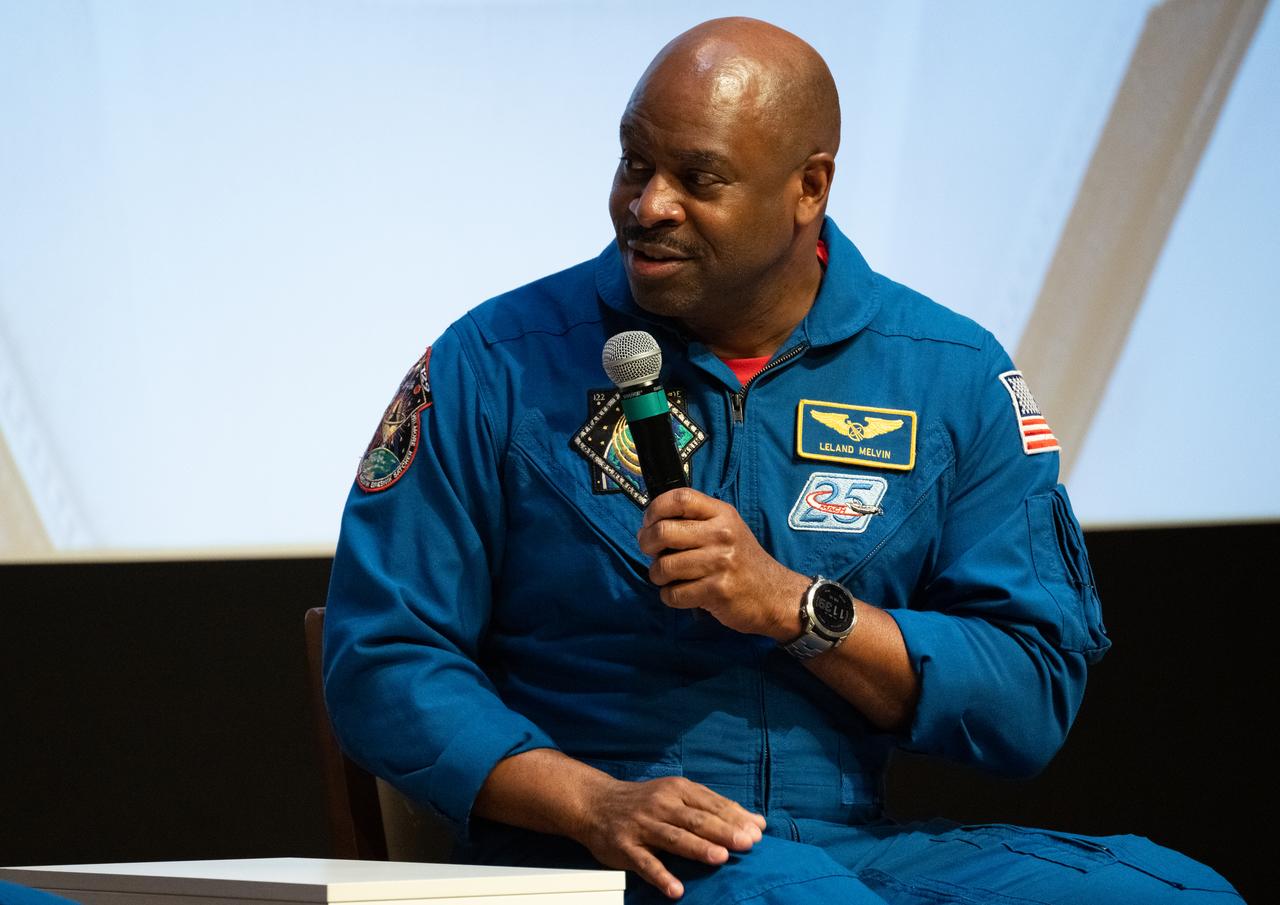
Retired NASA astronaut Leland Melvin is seen during a panel discussion titled A Space for Us All at an event celebrating Black History Month at the Smithsonian National Museum of African American History and Culture, Friday, Feb. 10, 2023, in Washington. Photo Credit: (NASA/Joel Kowsky)
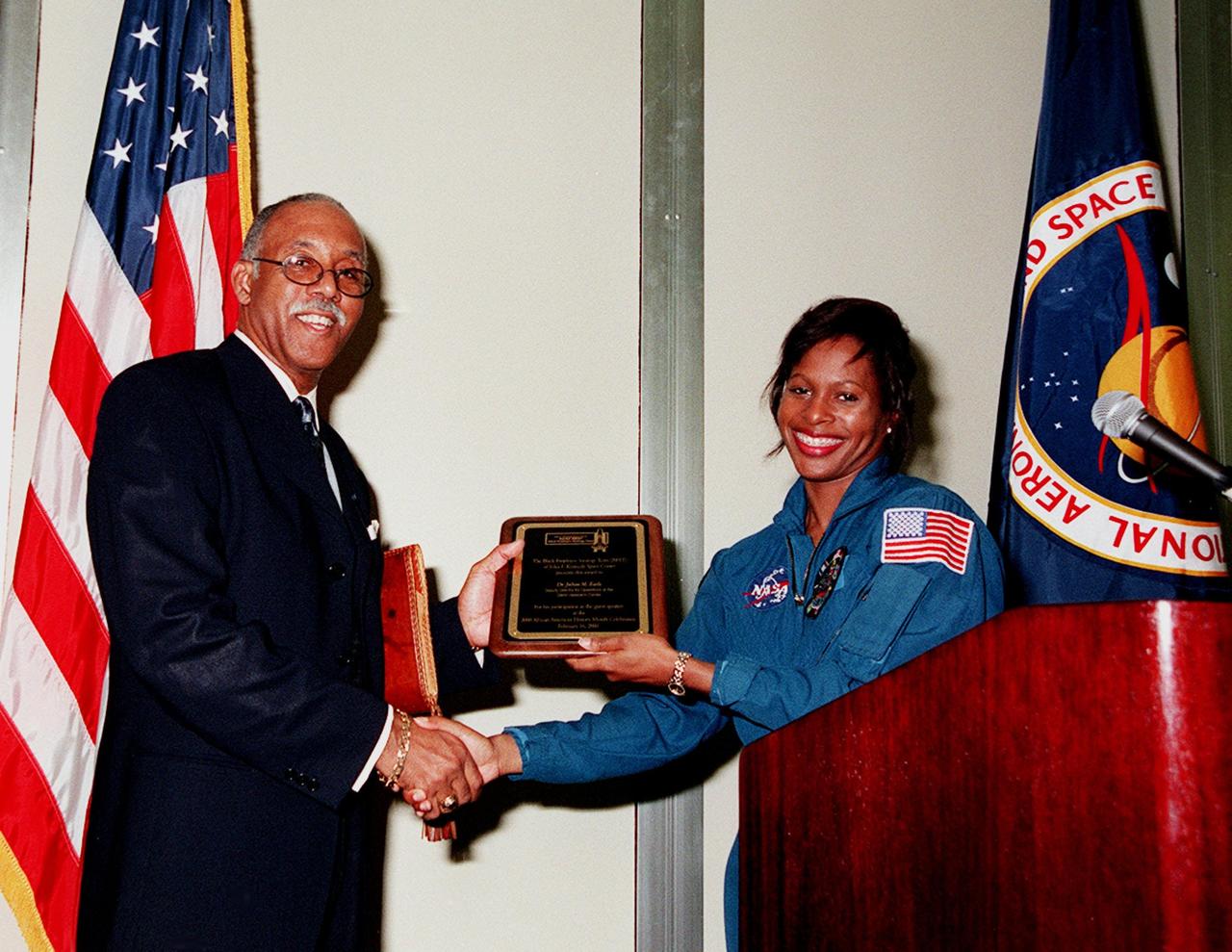
In the Early Space Exploration Conference Center at the KSC Visitor Complex, Dr. Julian M. Earls (left), deputy director for Operations, Glenn Research Center, receives a plaque from astronaut Joan Higginbotham (right) during the 2000 African American History Month Celebration Luncheon. Dr. Earls was guest speaker at the luncheon
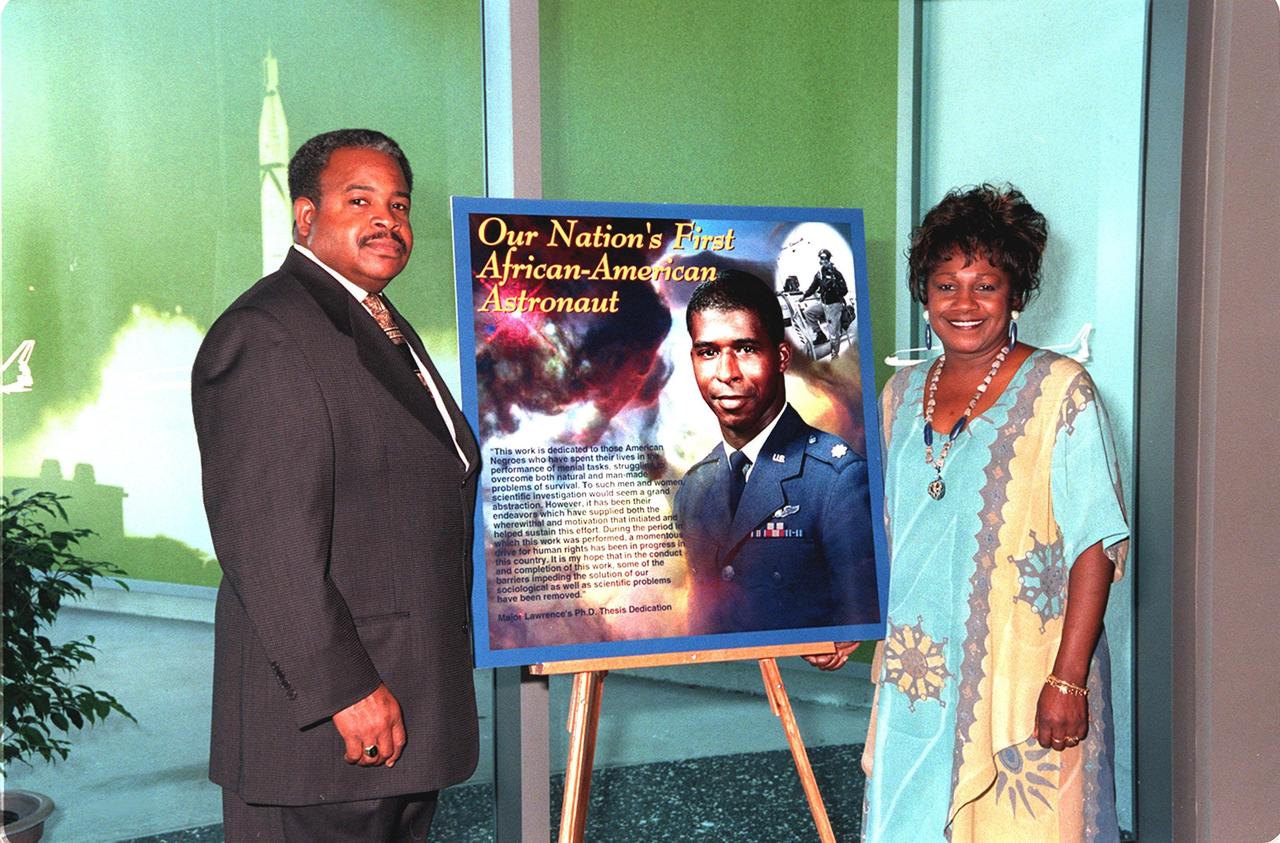
Mack McKinney (left), chief, Programs Resources Management, and Delores Abraham (right), with the Astronaut office, flank one of the posters decorating the Early Space Exploration Conference Center at the KSC Visitor Complex for the 2000 African American History Month Celebration Luncheon. McKinney is chairperson for the event
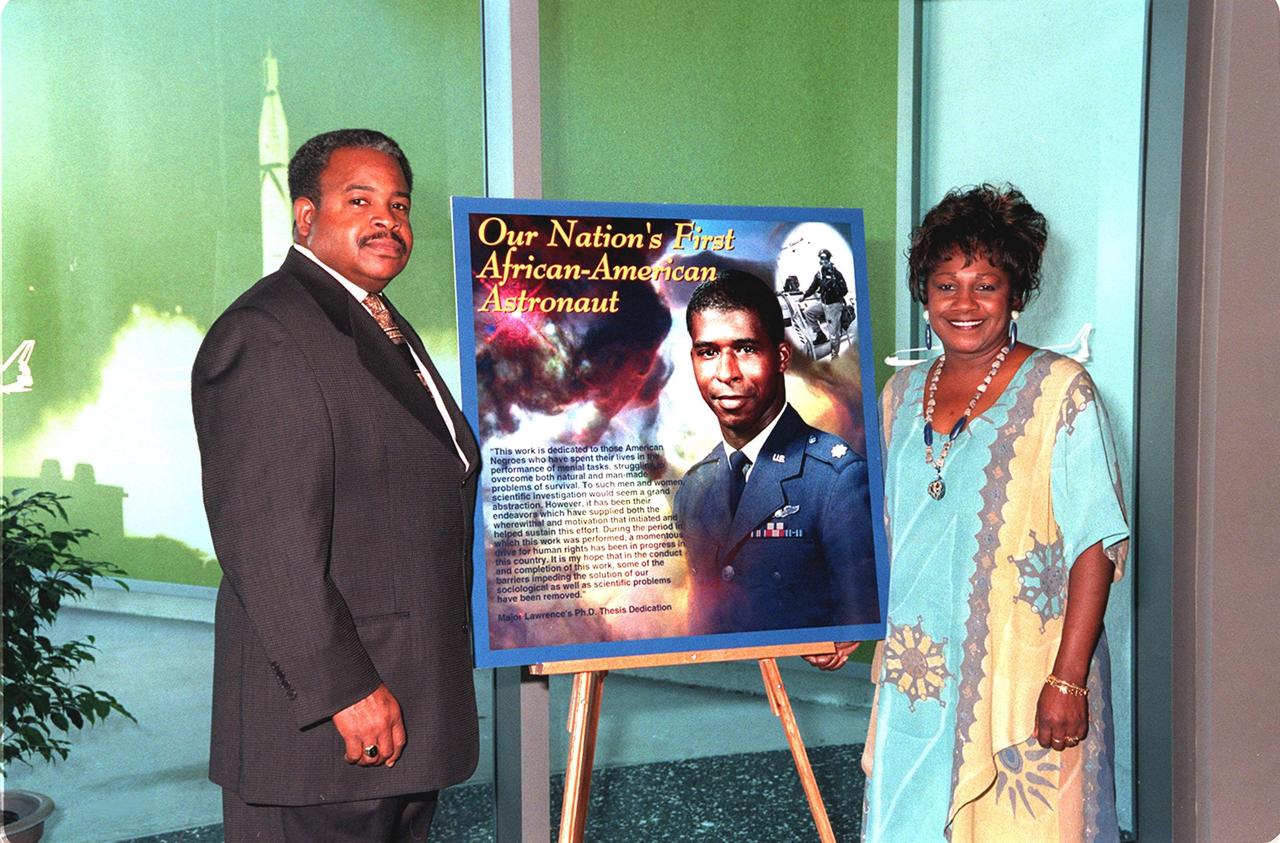
Mack McKinney (left), chief, Programs Resources Management, and Delores Abraham (right), with the Astronaut office, flank one of the posters decorating the Early Space Exploration Conference Center at the KSC Visitor Complex for the 2000 African American History Month Celebration Luncheon. McKinney is chairperson for the event

In the Early Space Exploration Conference Center at the KSC Visitor Complex, Dr. Julian M. Earls (left), deputy director for Operations, Glenn Research Center, receives a plaque from astronaut Joan Higginbotham (right) during the 2000 African American History Month Celebration Luncheon. Dr. Earls was guest speaker at the luncheon
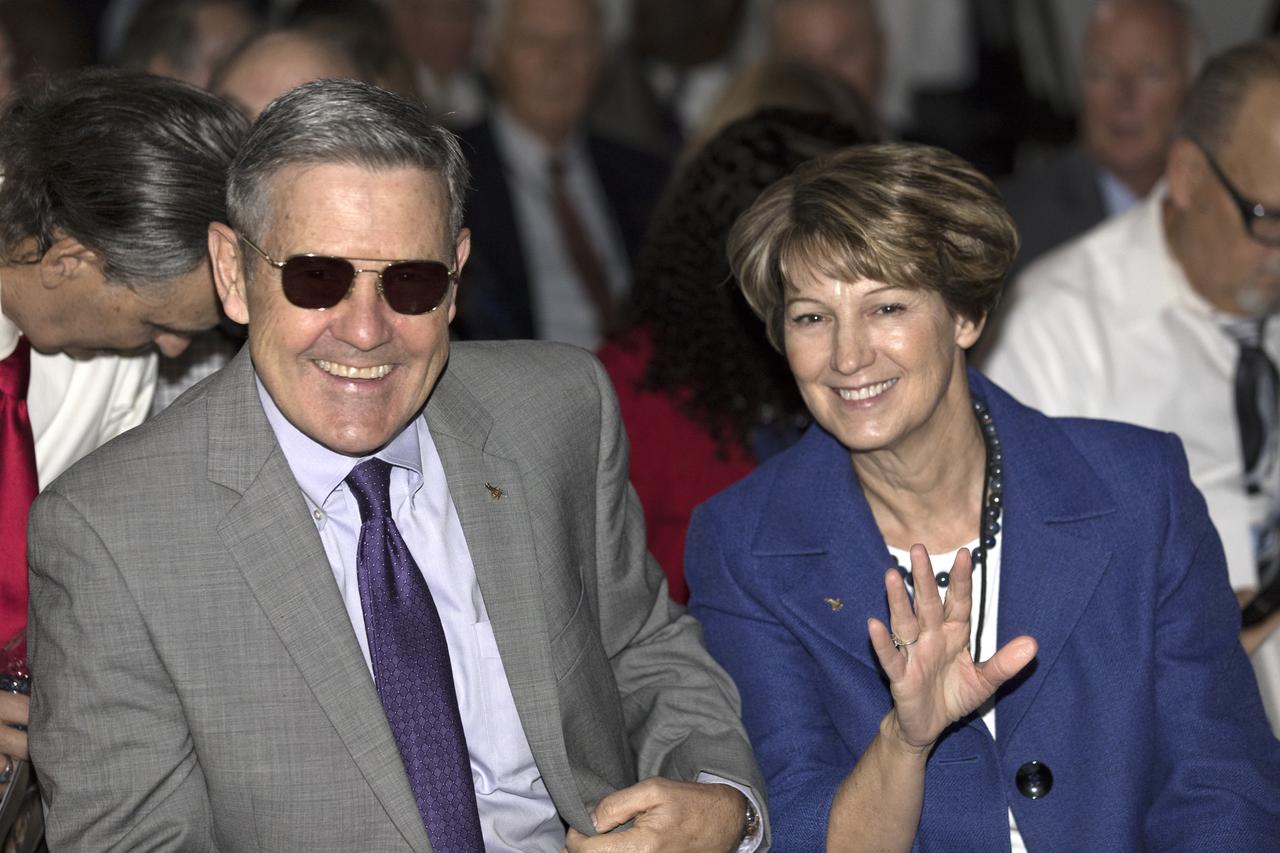
Kennedy Space Center Director Bob Cabana, left, and Astronauts Memorial Foundation board chair Eileen Collins, acknowledge guests during a tribute honoring U.S. Air Foce Maj. Robert Lawrence. Both Cabana and Collins are former NASA astronauts. Selected in 1967 for the Manned Orbiting Laboratory Program, Lawrence was the first African-American astronaut. He lost his life in a training accident 50 years ago. The ceremony took place in the Center for Space Education at the Kennedy Space Center Visitor Complex.
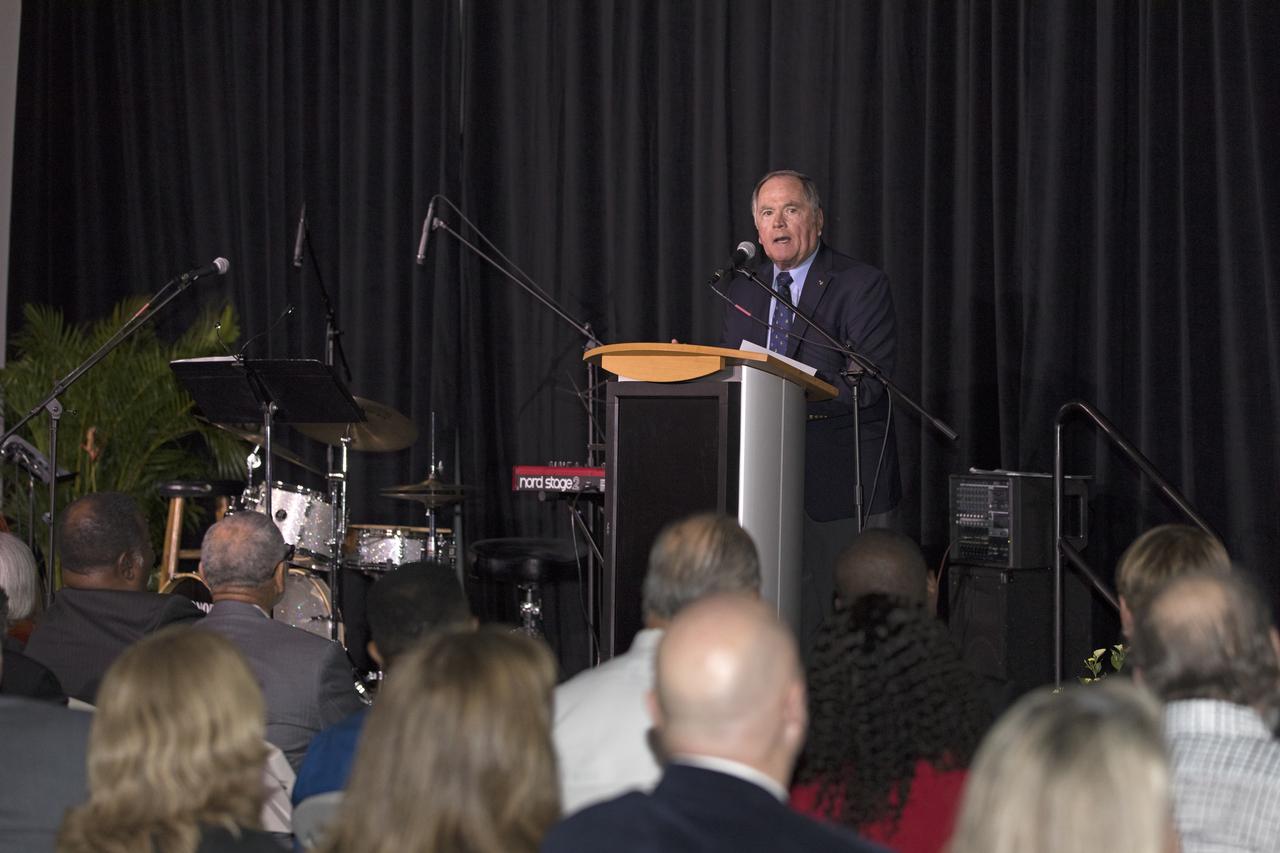
Bob Crippen, former Kennedy center director and NASA astronaut, speaks to guests during an Astronauts Memorial Foundation tribute honoring U.S. Air Foce Maj. Robert Lawrence. Like Crippen, Lawrence was selected in the 1960s for the Manned Orbiting Laboratory Program. As such, Lawrence was the first African-American astronaut. He lost his life in a training accident 50 years ago. The ceremony took place in the Center for Space Education at the Kennedy Space Center Visitor Complex.
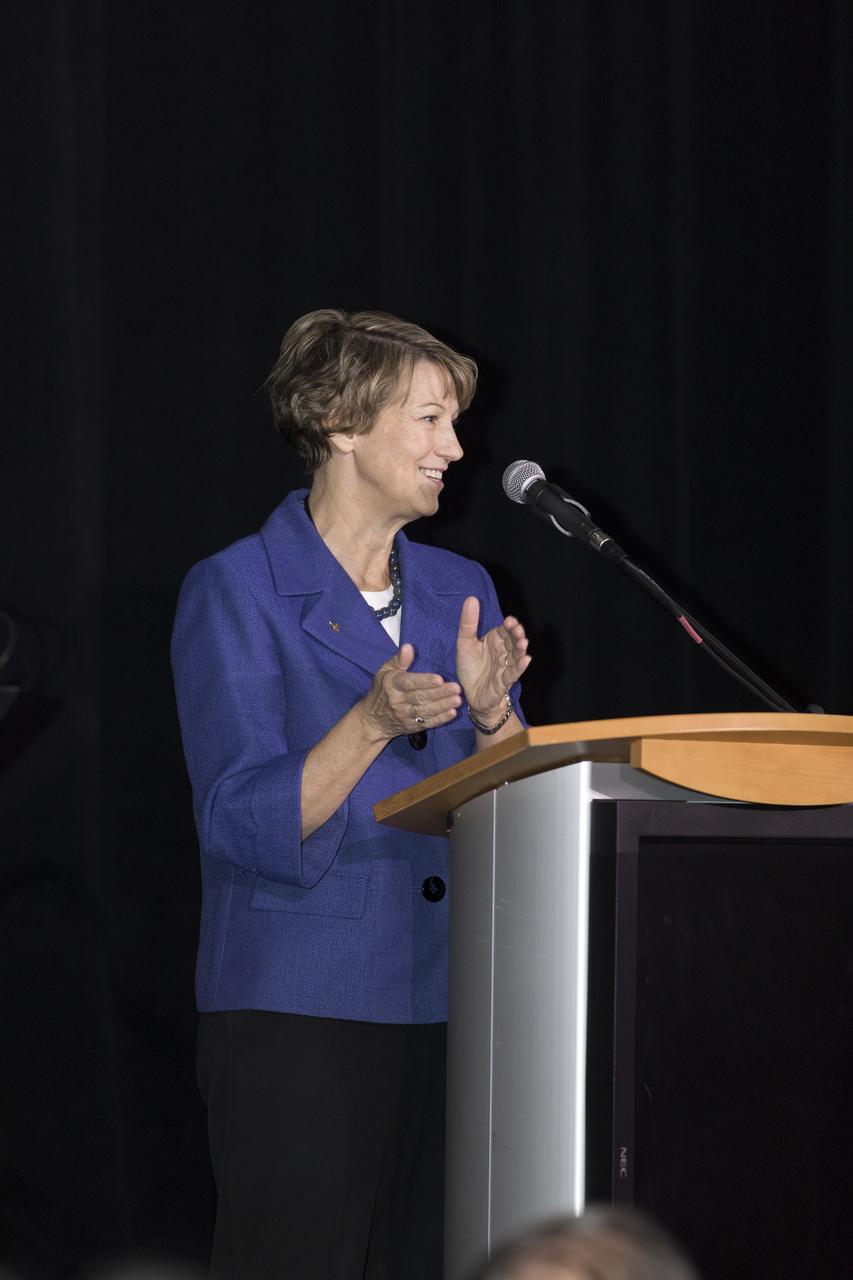
Former NASA astronaut Eileen Collins, who now is chair of the Astronauts Memorial Foundation, speaks during a tribute honoring U.S. Air Foce Maj. Robert Lawrence. Selected in 1967 for the Manned Orbiting Laboratory Program, Lawrence was the first African-American astronaut. He lost his life in a training accident 50 years ago. The ceremony took place in the Center for Space Education at the Kennedy Space Center Visitor Complex.
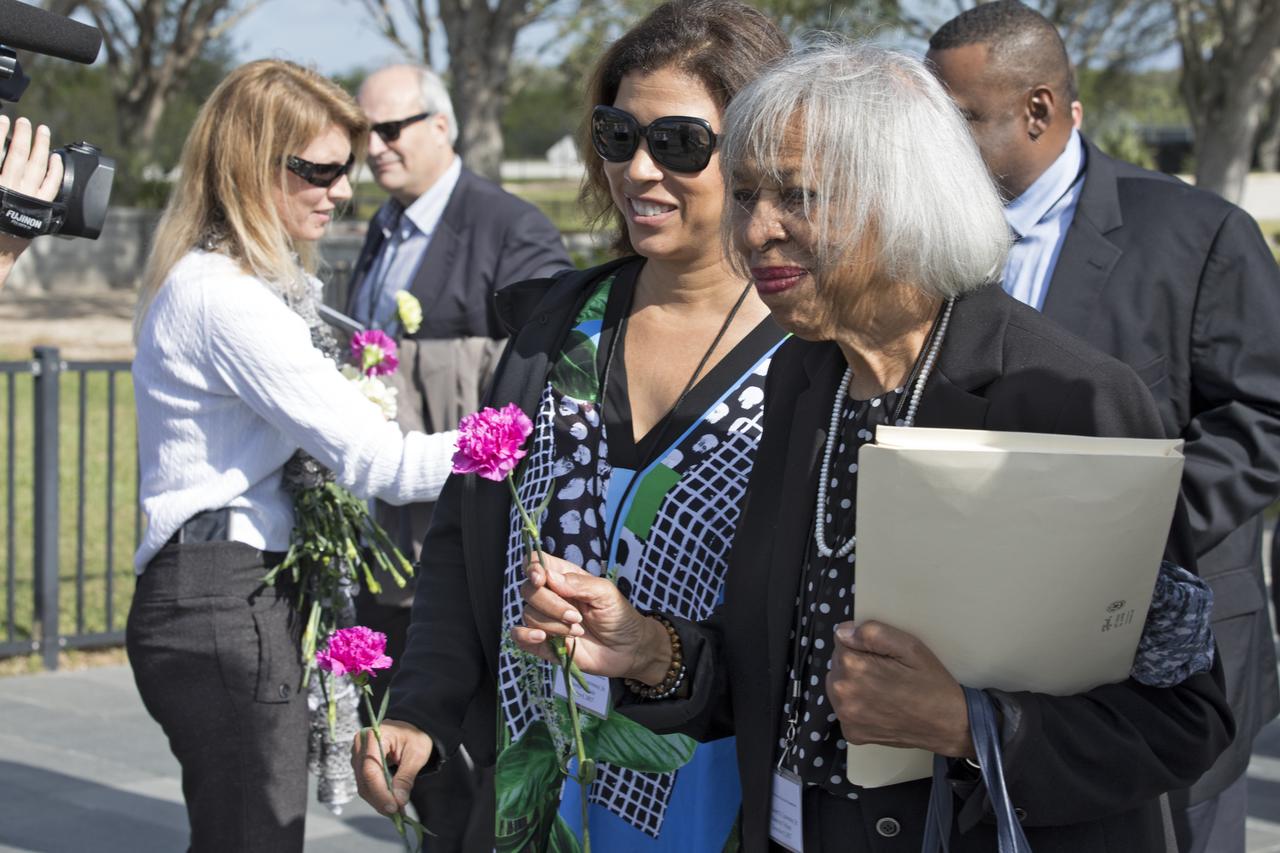
During an Astronauts Memorial Foundation tribute honoring U.S. Air Foce Maj. Robert Lawrence, his sister, Barbara Lawrence, Ph.D., places a flower at the Space Mirror Memorial which honors those lost in efforts to explore space. Selected in 1967 for the Manned Orbiting Laboratory Program, Lawrence was the first African-American astronaut. He lost his life in a training accident 50 years ago. The ceremony took place in the Center for Space Education at the Kennedy visitor complex.
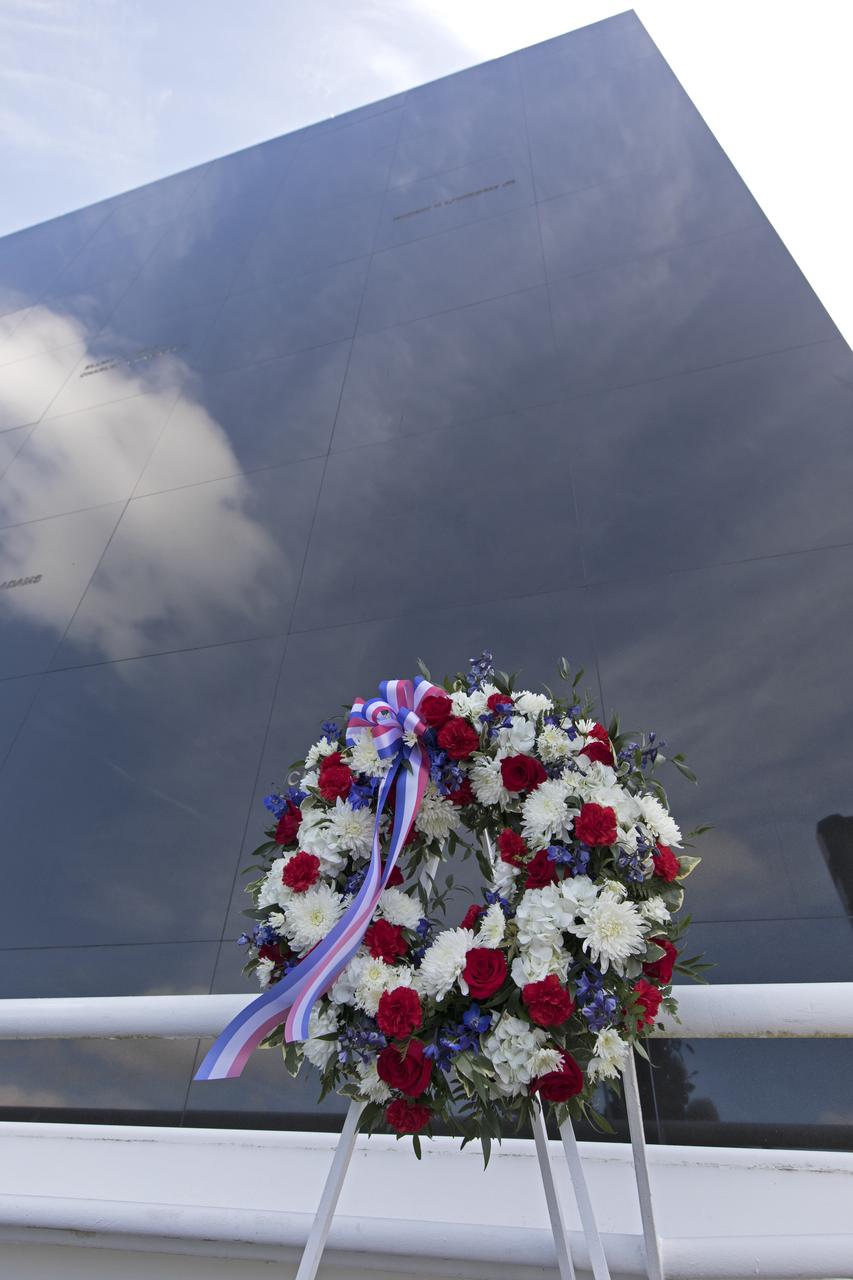
Following an Astronauts Memorial Foundation tribute honoring U.S. Air Foce Maj. Robert Lawrence, a wreath was place at the Space Mirror Memorial at the Kenendy Space Center Visitor Compelx. Selected in 1967 for the Manned Orbiting Laboratory Program, Lawrence was the first African-American astronaut. He lost his life in a training accident 50 years ago. The ceremony took place in the Center for Space Education at the Kennedy Space Center Visitor Complex.
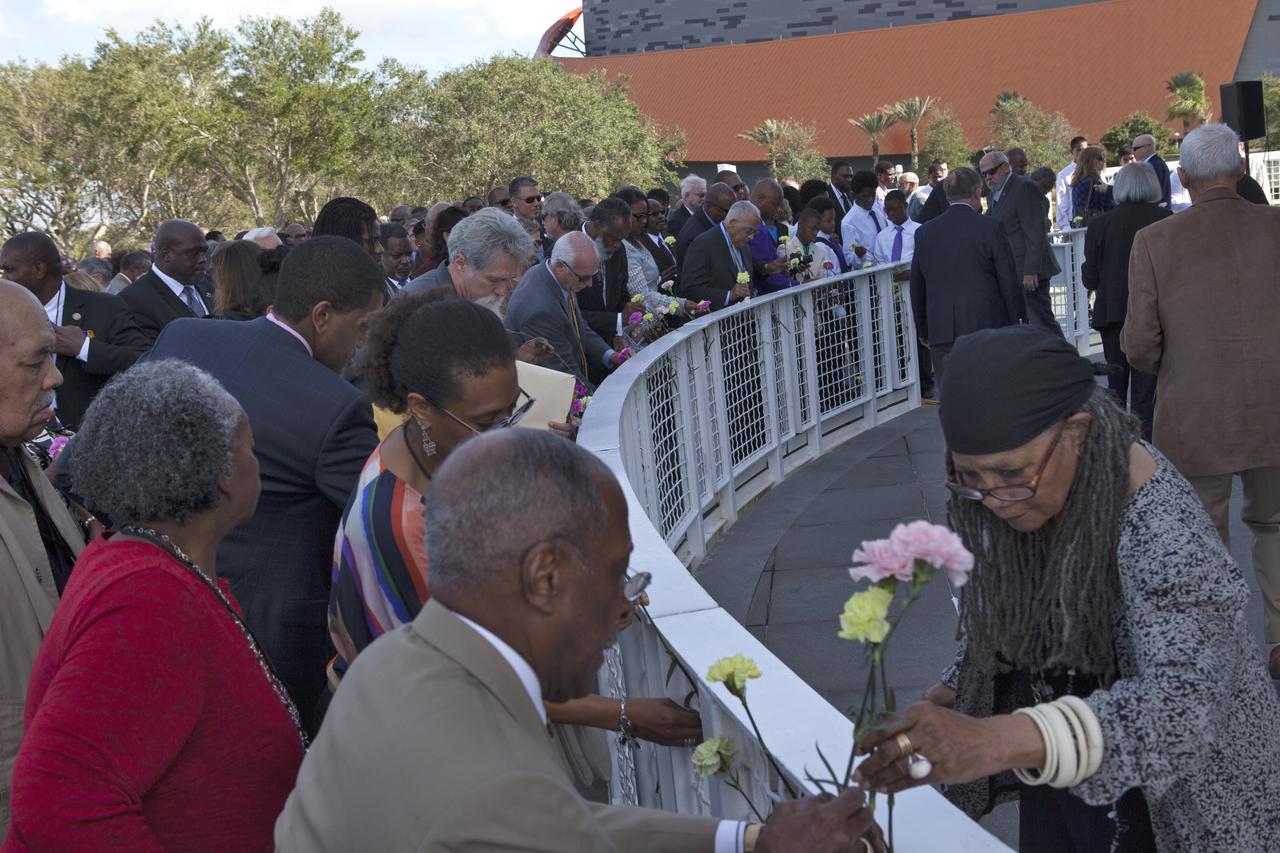
Following an Astronauts Memorial Foundation tribute honoring U.S. Air Foce Maj. Robert Lawrence, guests place flowers at the Space Mirror Memorial at the Kennedy Space Center Visitor Complex. Selected in 1967 for the Manned Orbiting Laboratory Program, Lawrence was the first African-American astronaut. He lost his life in a training accident 50 years ago. The ceremony took place in the Center for Space Education at the Kennedy Space Center Visitor Complex.
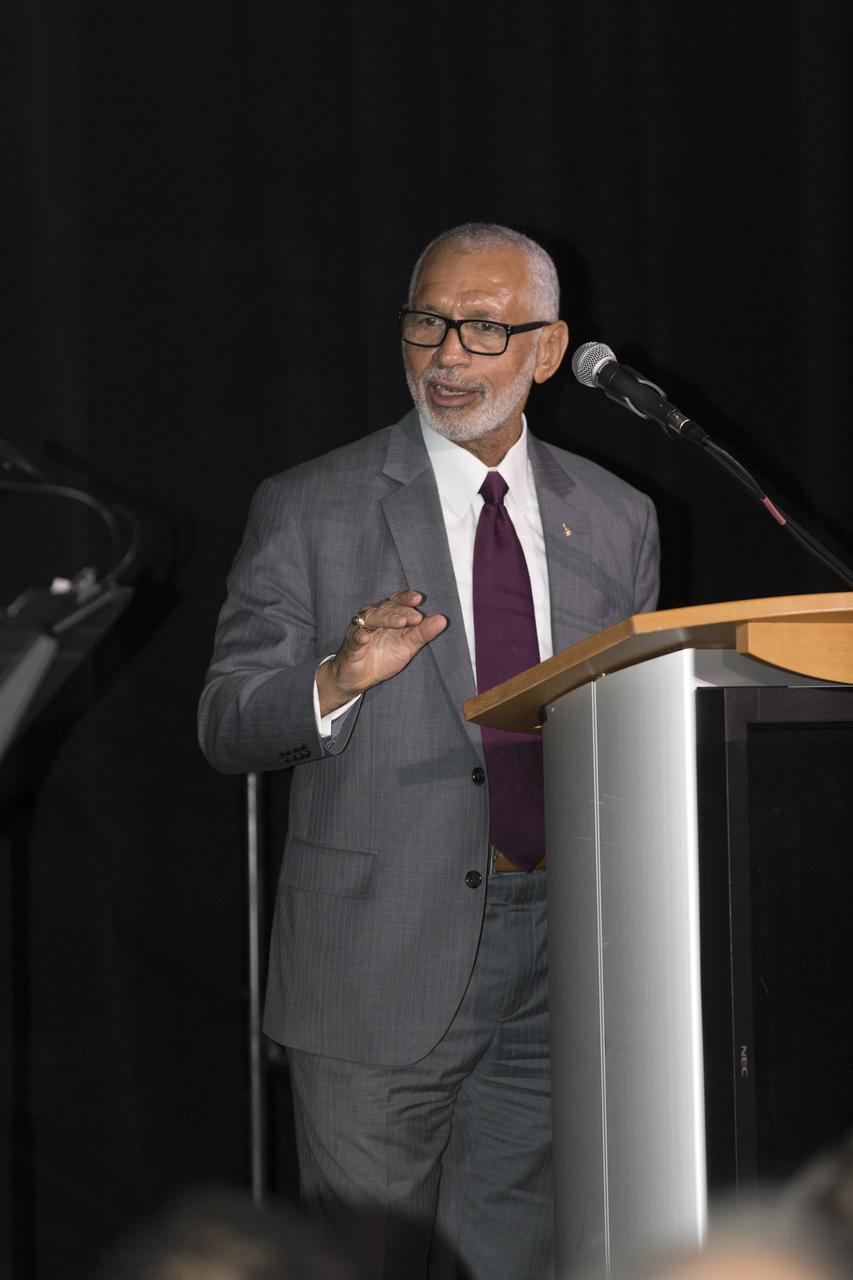
Former NASA administrator Charlie Bolden speaks during an Astronauts Memorial Foundation tribute honoring U.S. Air Foce Maj. Robert Lawrence. Selected in 1967 for the Manned Orbiting Laboratory Program, Lawrence was the first African-American astronaut. He lost his life in a training accident 50 years ago. The ceremony took place in the Center for Space Education at the Kennedy Space Center Visitor Complex.
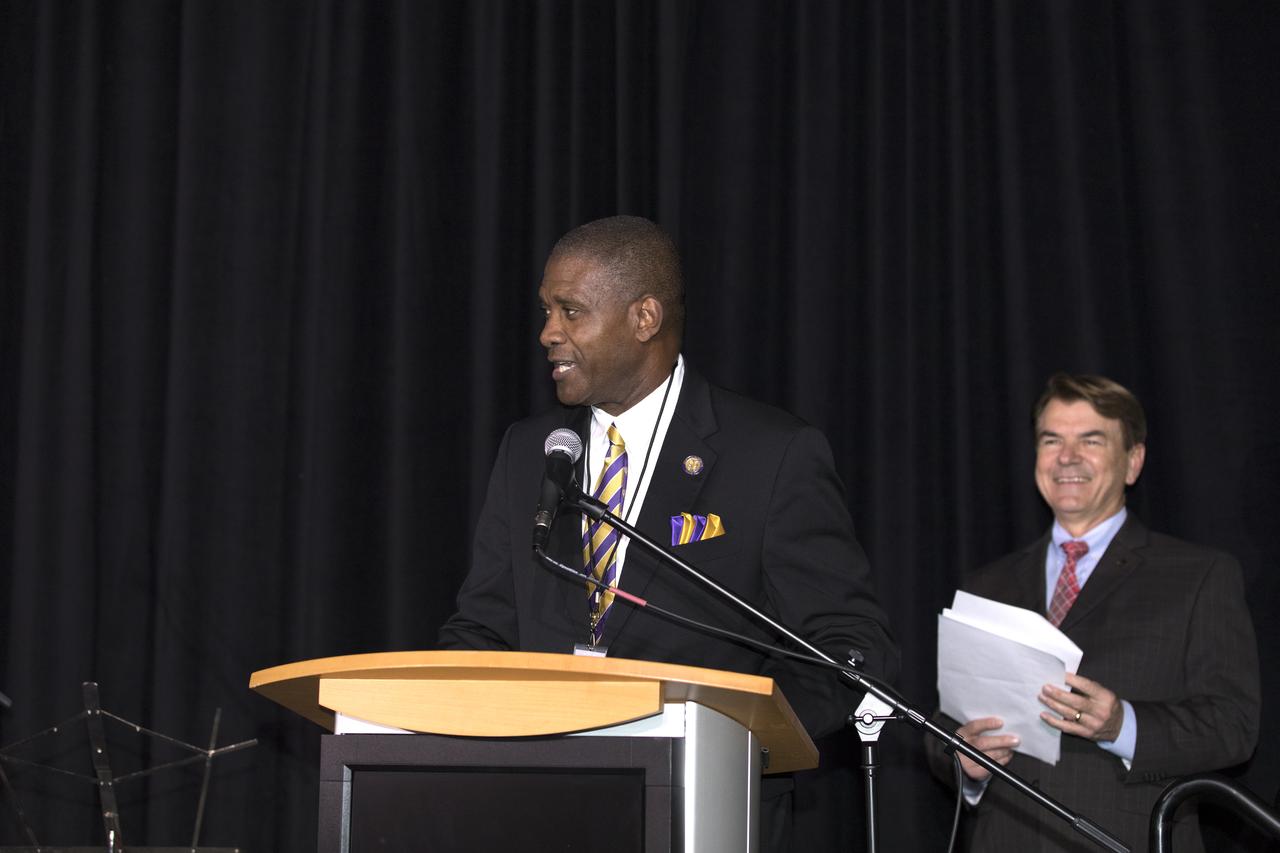
Former Florida State Sen. Tony Hill speaks during an Astronauts Memorial Foundation tribute honoring U.S. Air Foce Maj. Robert Lawrence. Looking on is State Rep. Thad Altman, president of the AMF. Selected in 1967 for the Manned Orbiting Laboratory Program, Lawrence was the first African-American astronaut. He lost his life in a training accident 50 years ago. The ceremony took place in the Center for Space Education at the Kennedy Space Center Visitor Complex.
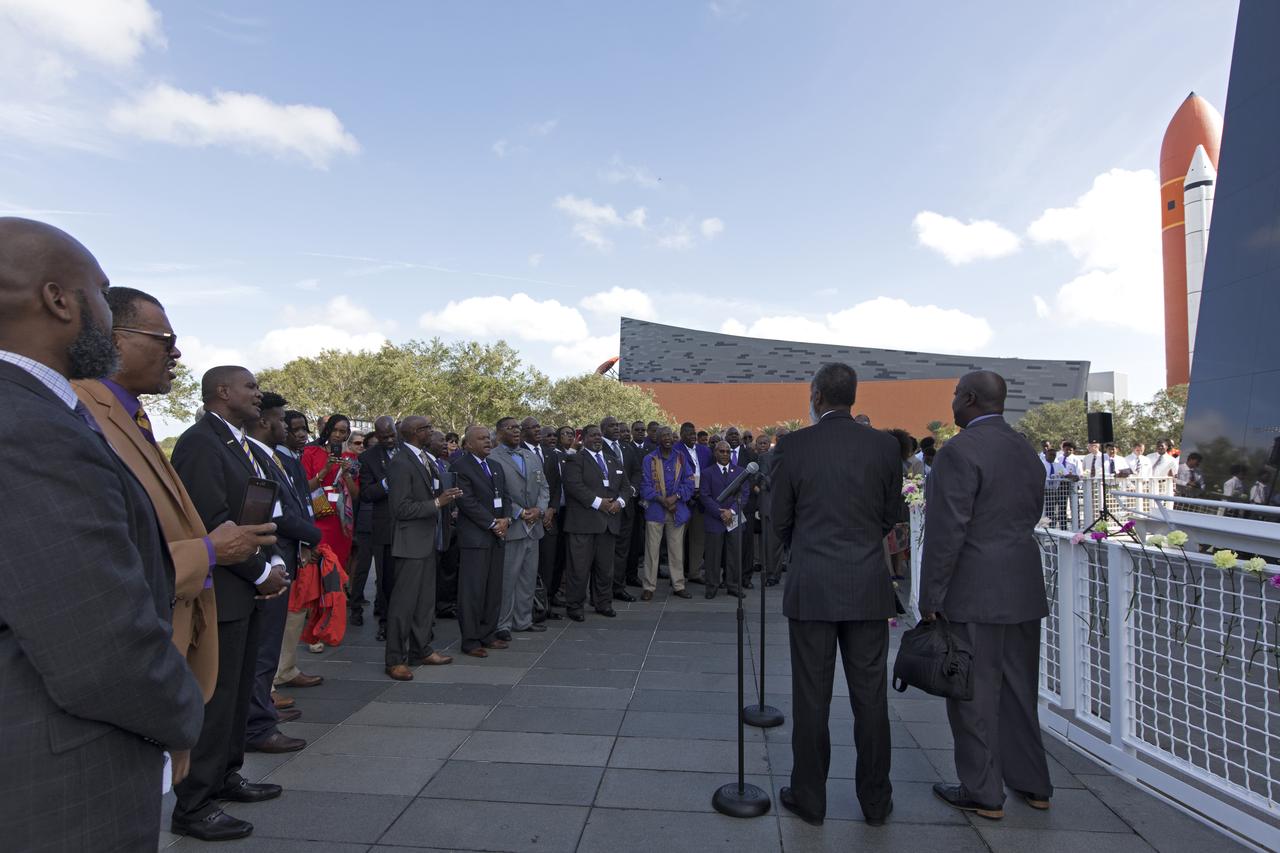
Following an Astronauts Memorial Foundation tribute honoring U.S. Air Foce Maj. Robert Lawrence, guests listen to speakers at the Space Mirror Memorial at the Kenendy Space Center Visitor Compelx. Selected in 1967 for the Manned Orbiting Laboratory Program, Lawrence was the first African-American astronaut. He lost his life in a training accident 50 years ago. The ceremony took place in the Center for Space Education at the Kennedy Space Center Visitor Complex.

During an Astronauts Memorial Foundation tribute honoring U.S. Air Foce Maj. Robert Lawrence, his sister, Barbara Lawrence, Ph.D., speaks to guests during the ceremony. Selected in 1967 for the Manned Orbiting Laboratory Program, Lawrence was the first African-American astronaut. He lost his life in a training accident 50 years ago. The ceremony took place in the Center for Space Education at the Kennedy Space Center Visitor Complex.
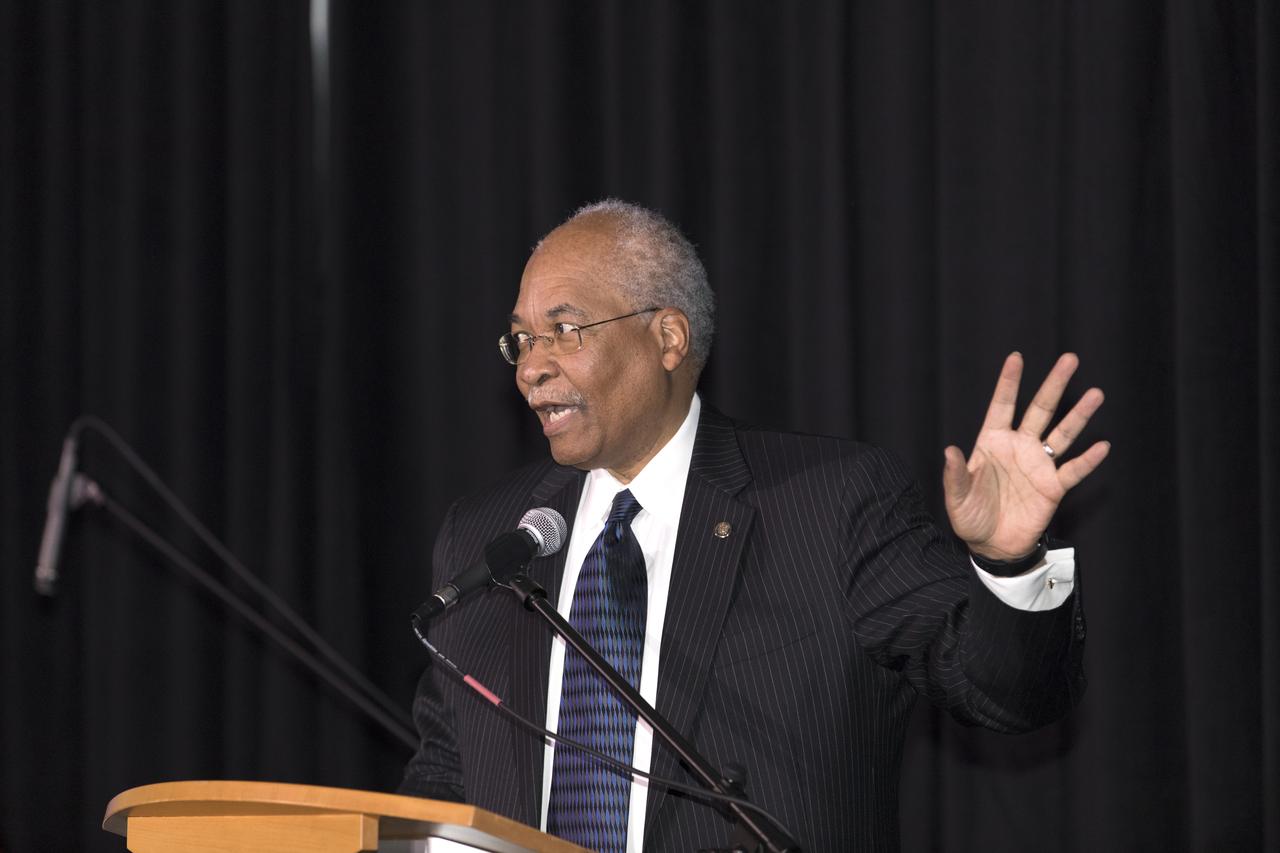
During an Astronauts Memorial Foundation tribute honoring U.S. Air Foce Maj. Robert Lawrence, physicist Herman White, Ph.D., of the Fermi National Accelerator Laboratory, speaks to guests during the ceremony. Selected in 1967 for the Manned Orbiting Laboratory Program, Lawrence was the first African-American astronaut. He lost his life in a training accident 50 years ago. The ceremony took place in the Center for Space Education at the Kennedy Space Center Visitor Complex.
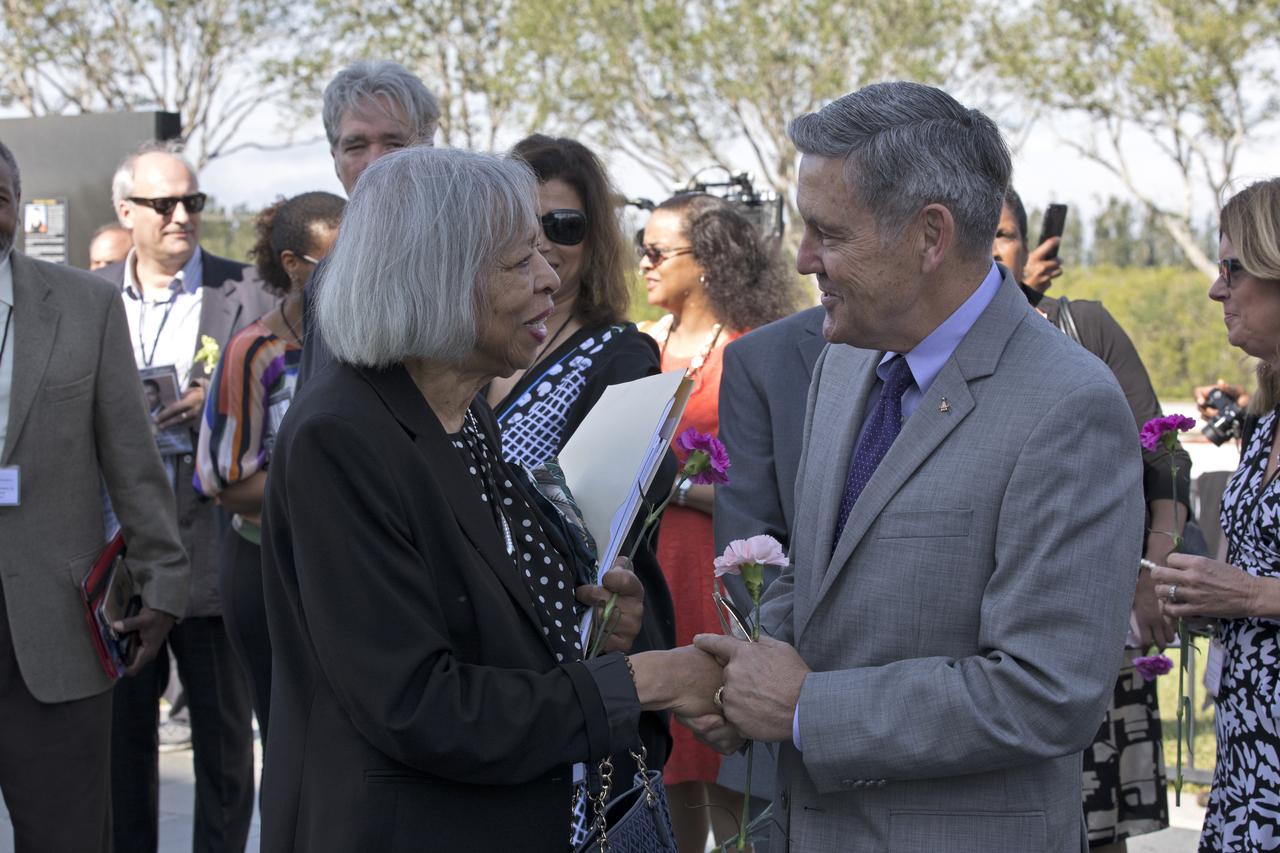
Following an Astronauts Memorial Foundation tribute honoring U.S. Air Foce Maj. Robert Lawrence, Kennedy Space Center Director Bob Cabana, right, speaks with Lawrence's sister, Barbara Lawrence, Ph.D. Selected in 1967 for the Manned Orbiting Laboratory Program, Lawrence was the first African-American astronaut. He lost his life in a training accident 50 years ago. The ceremony took place in the Center for Space Education at the Kennedy Space Center Visitor Complex.
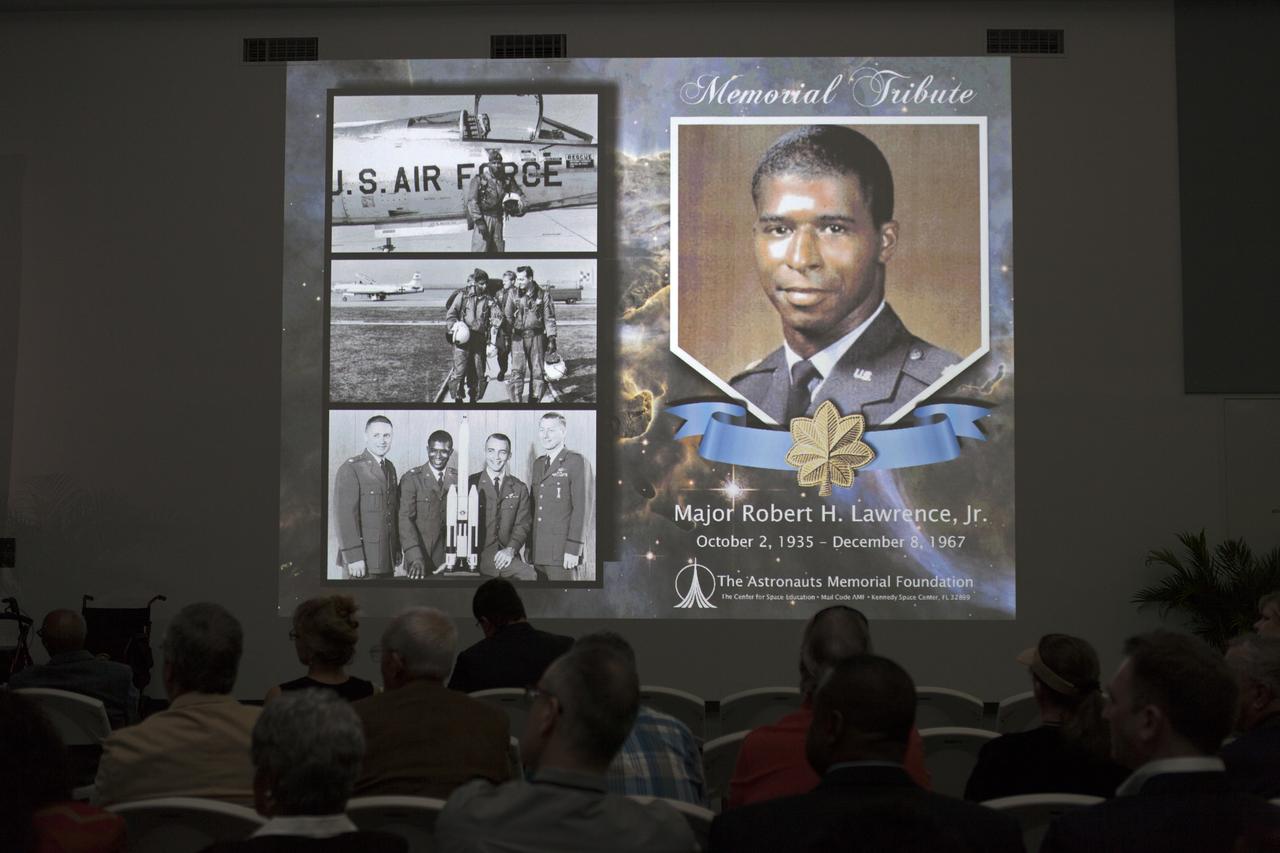
During an Astronauts Memorial Foundation tribute honoring U.S. Air Foce Maj. Robert Lawrence, photographs are projected during a video presentation. Selected in 1967 for the Manned Orbiting Laboratory Program, Lawrence was the first African-American astronaut. He lost his life in a training accident 50 years ago. The ceremony took place in the Center for Space Education at the Kennedy Space Center Visitor Complex.
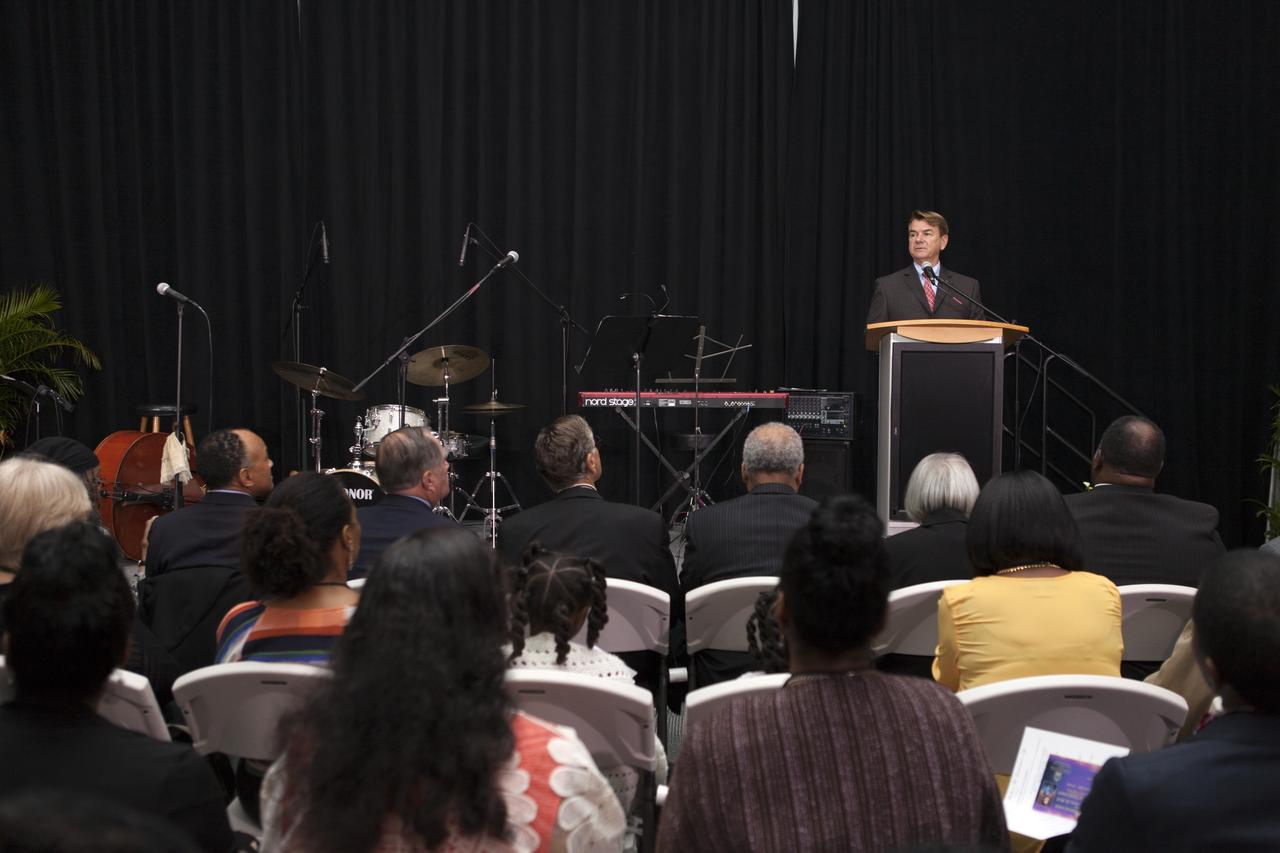
State Rep. Thad Altman, president of the Astronauts Memorial Foundation (AMF), speaks during a tribute honoring U.S. Air Foce Maj. Robert Lawrence. Selected in 1967 for the Manned Orbiting Laboratory Program, Lawrence was the first African-American astronaut. He lost his life in a training accident 50 years ago. The ceremony took place in the Center for Space Education at the Kennedy Space Center Visitor Complex.
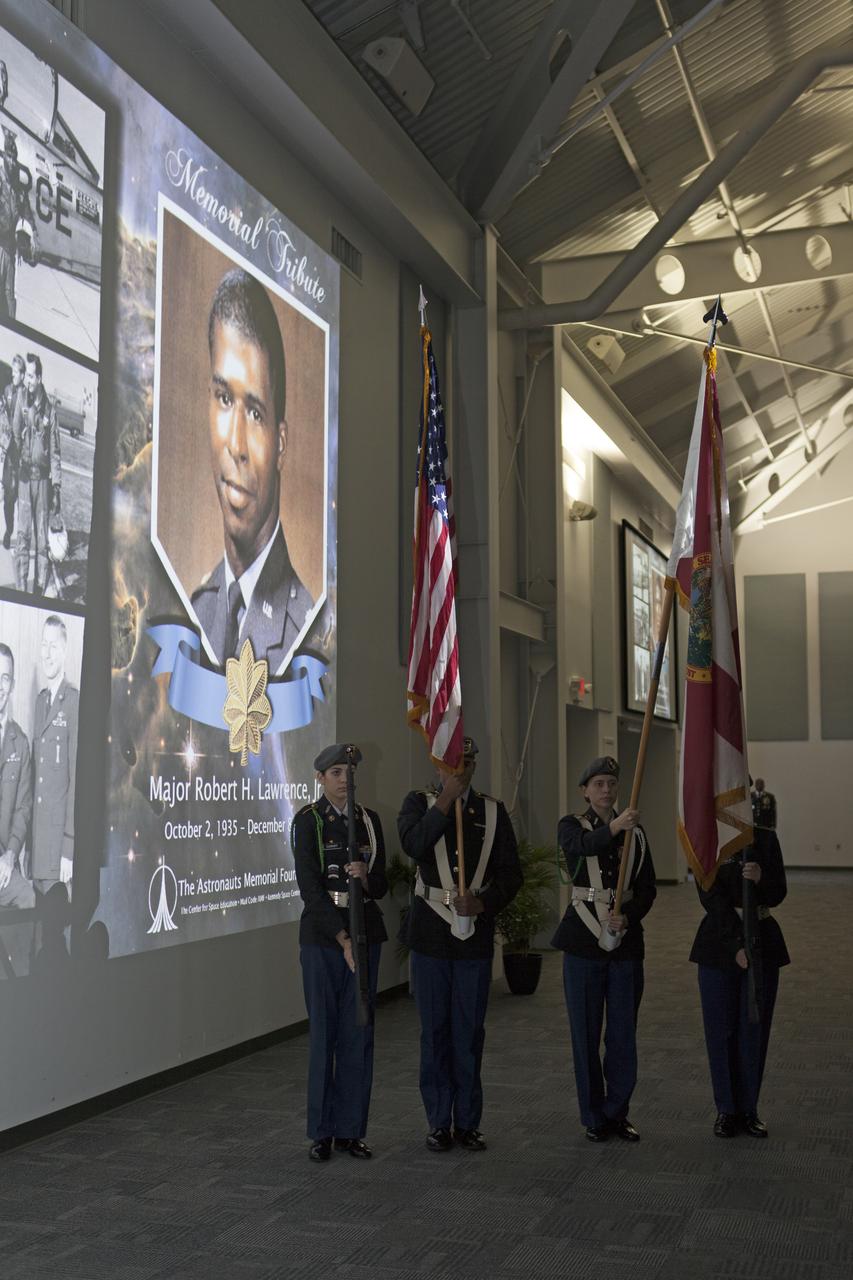
The Viera High School Army JROTC Color Guard presented the colors during an Astronauts Memorial Foundation tribute honoring U.S. Air Foce Maj. Robert Lawrence. Selected in 1967 for the Manned Orbiting Laboratory Program, Lawrence was the first African-American astronaut. He lost his life in a training accident 50 years ago. The ceremony took place in the Center for Space Education at the Kennedy Space Center Visitor Complex.
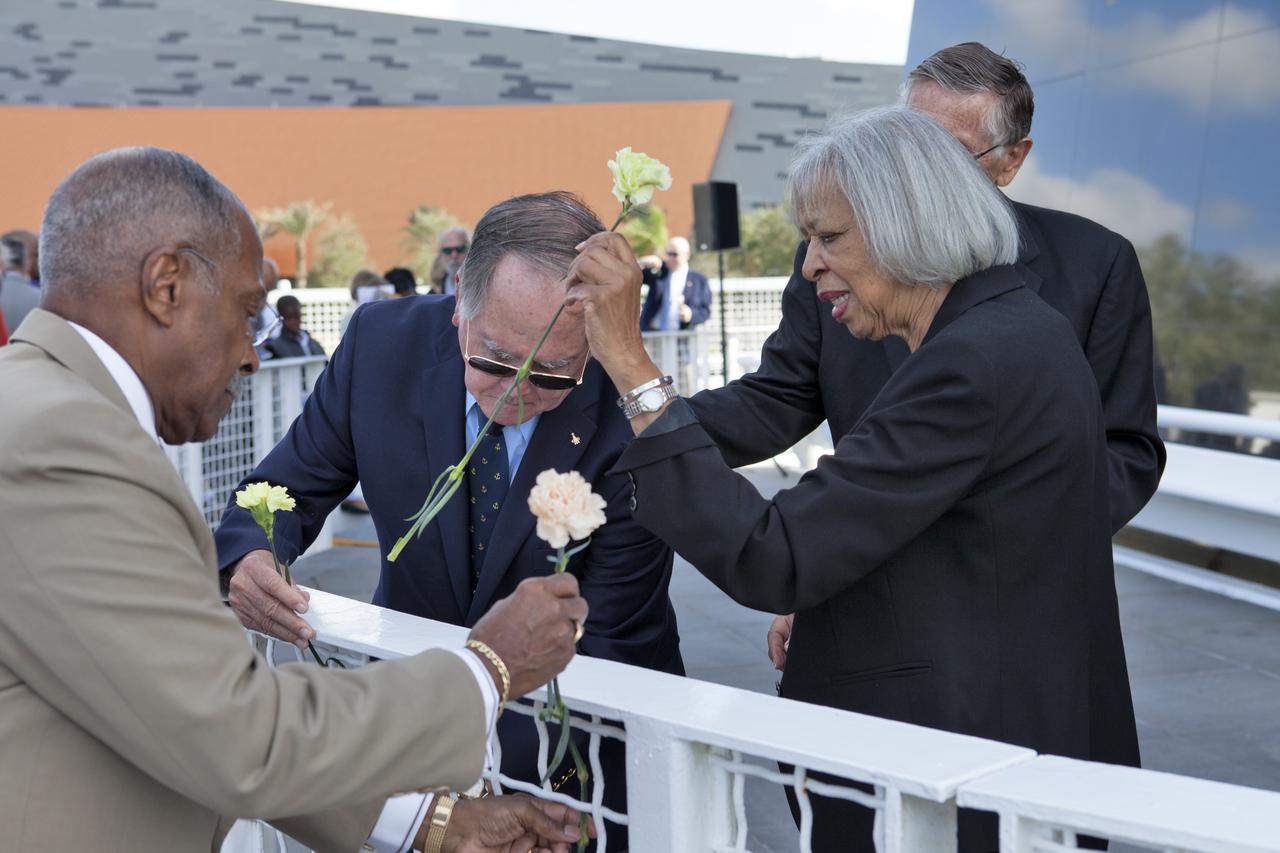
During an Astronauts Memorial Foundation tribute honoring U.S. Air Foce Maj. Robert Lawrence, his sister, Barbara Lawrence, Ph.D., far right, places a flower at the Space Mirror Memorial at the Kennedy Space Center Visitor Complex. Selected in 1967 for the Manned Orbiting Laboratory Program, Lawrence was the first African-American astronaut. He lost his life in a training accident 50 years ago. The ceremony took place in the Center for Space Education at the Kennedy Space Center Visitor Complex.
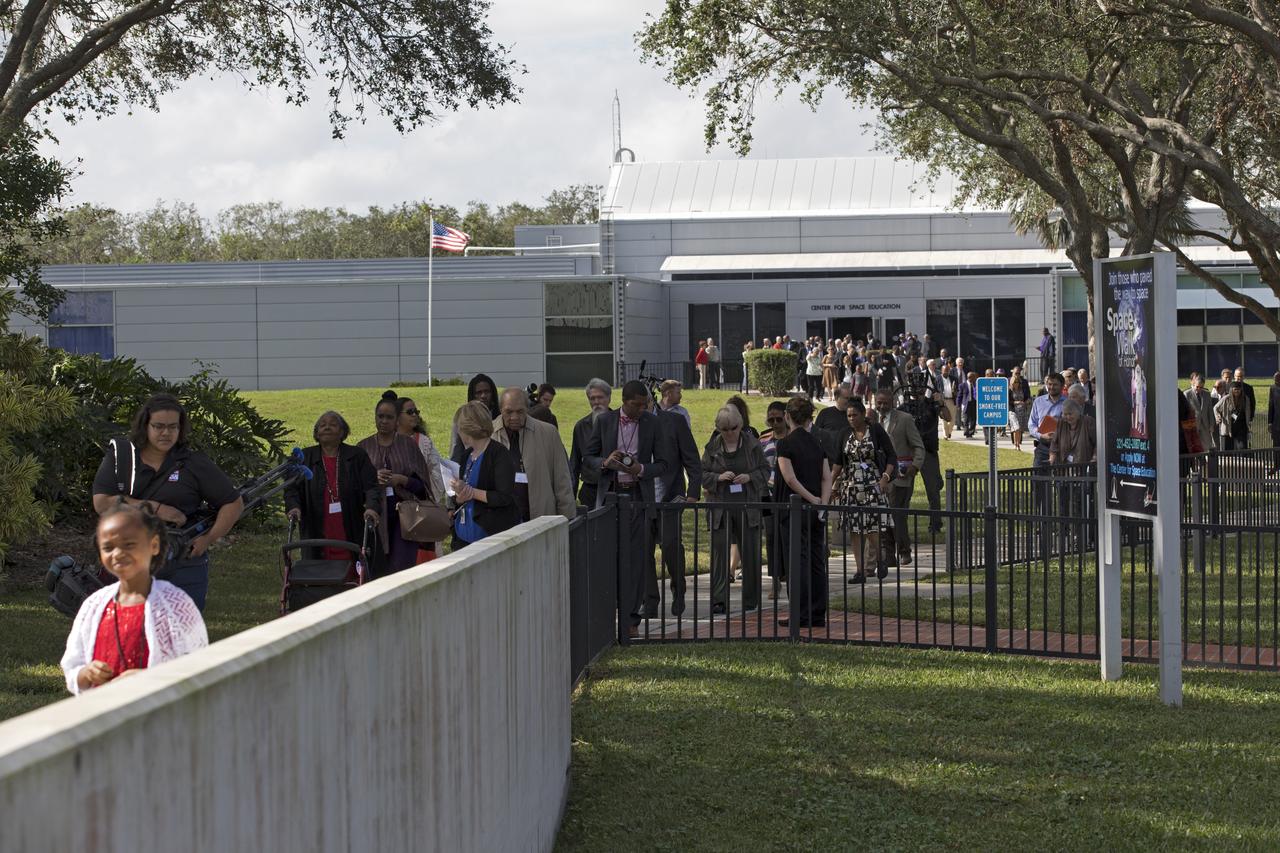
During an Astronauts Memorial Foundation tribute honoring U.S. Air Foce Maj. Robert Lawrence, guests walk to the Space Mirror Memorial at the Kennedy Space Center's Visitor Complex. Selected in 1967 for the Manned Orbiting Laboratory Program, Lawrence was the first African-American astronaut. He lost his life in a training accident 50 years ago. The ceremony took place in the Center for Space Education at the Kennedy visitor complex.
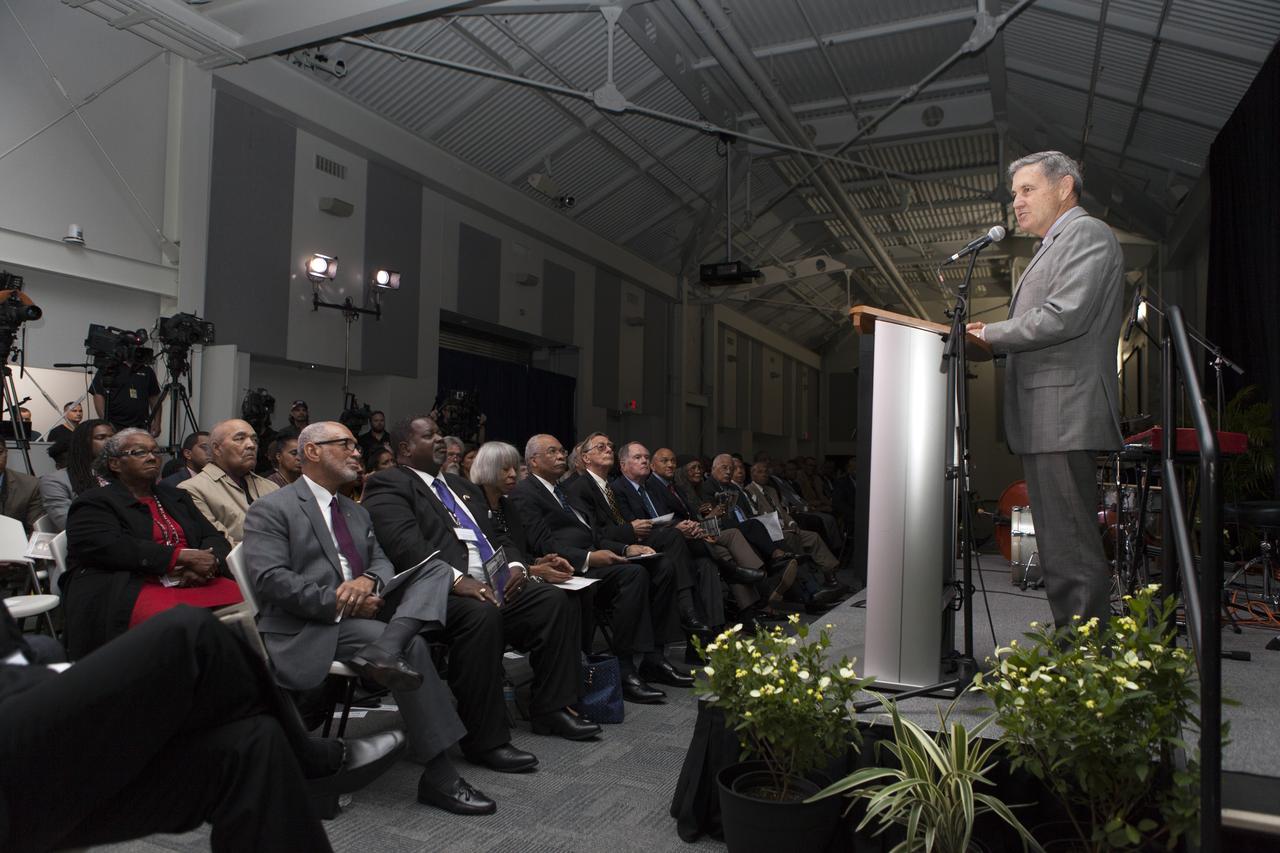
Kennedy Space Center Director Bob Cabana speaks during an Astronauts Memorial Foundation tribute honoring U.S. Air Foce Maj. Robert Lawrence. Selected in 1967 for the Manned Orbiting Laboratory Program, Lawrence was the first African-American astronaut. He lost his life in a training accident 50 years ago. The ceremony took place in the Center for Space Education at the Kennedy Space Center Visitor Complex.
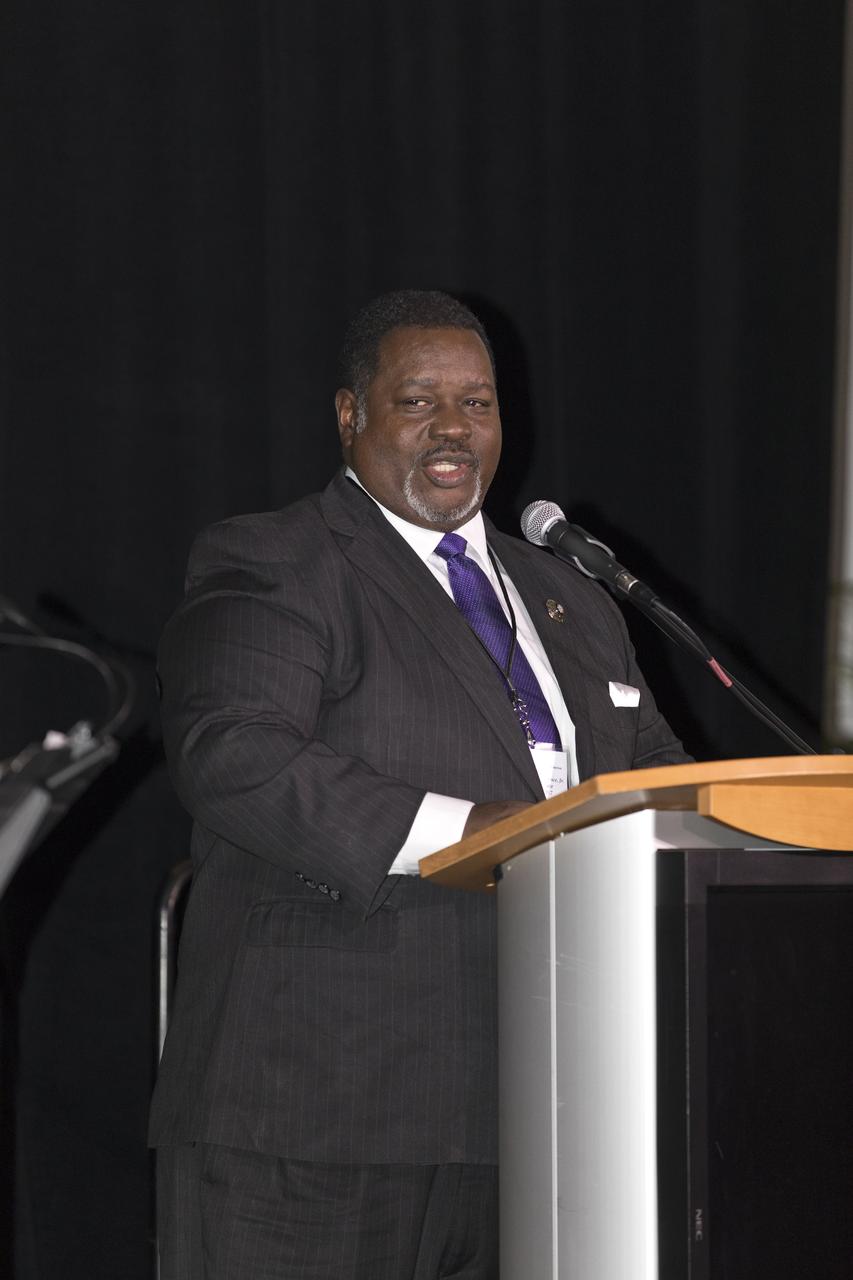
Antonio "Tony" Knox, grand basileus of the Omega Psi Phi, speaks during an Astronauts Memorial Foundation tribute honoring U.S. Air Foce Maj. Robert Lawrence who was a member of the fraternity. Selected in 1967 for the Manned Orbiting Laboratory Program, Lawrence was the first African-American astronaut. He lost his life in a training accident 50 years ago. The ceremony took place in the Center for Space Education at the Kennedy Space Center Visitor Complex.
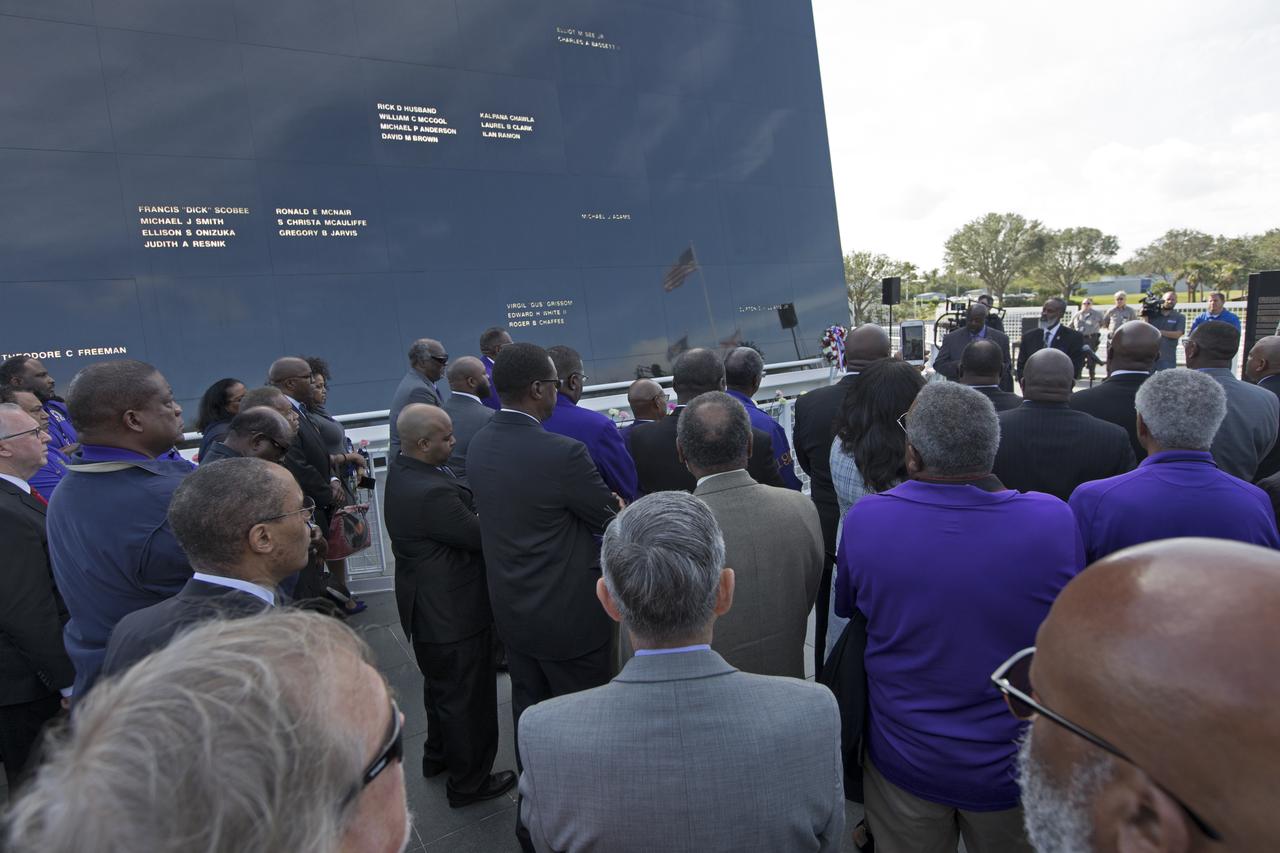
Following an Astronauts Memorial Foundation tribute honoring U.S. Air Foce Maj. Robert Lawrence, guests gathered at the Space Mirror Memorial at the Kenendy Space Center Visitor Compelx. Selected in 1967 for the Manned Orbiting Laboratory Program, Lawrence was the first African-American astronaut. He lost his life in a training accident 50 years ago. The ceremony took place in the Center for Space Education at the Kennedy Space Center Visitor Complex.
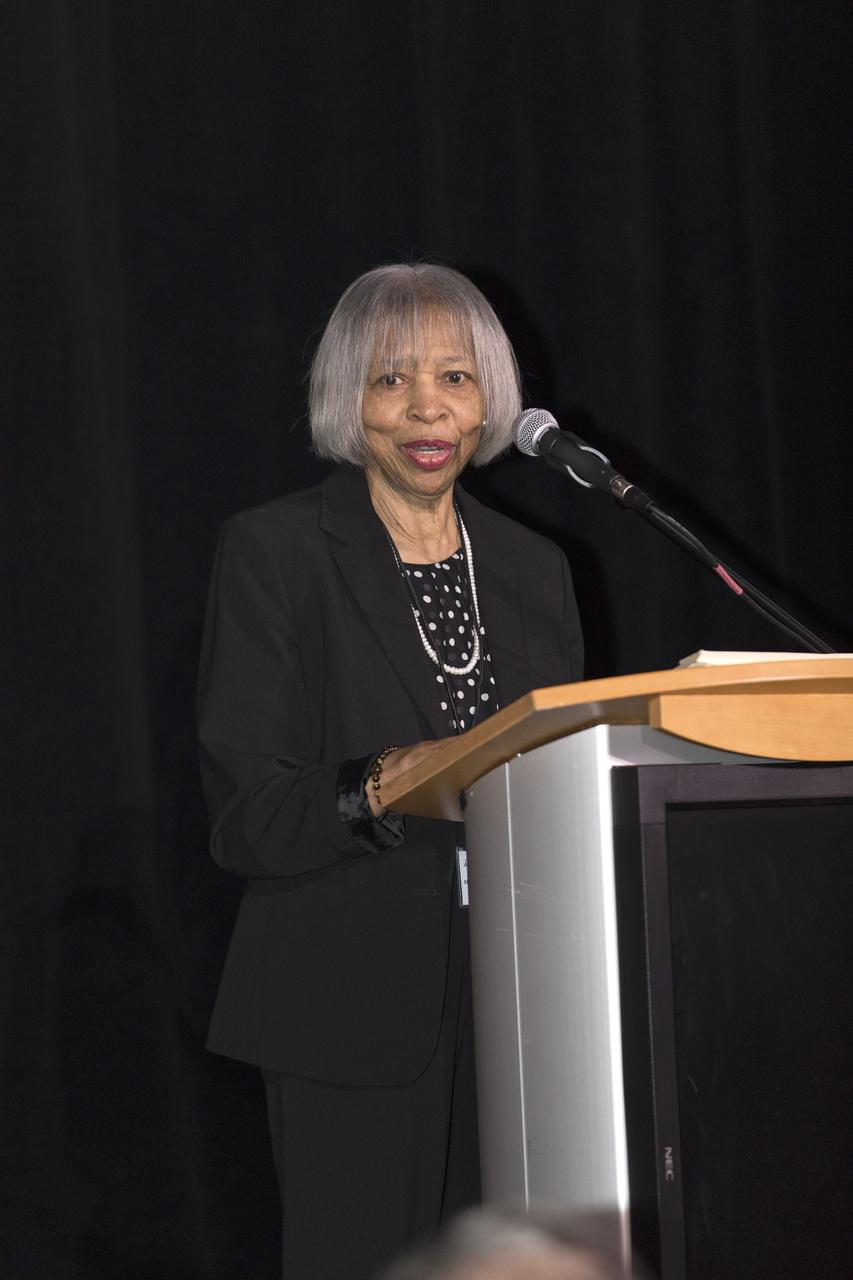
During an Astronauts Memorial Foundation tribute honoring U.S. Air Foce Maj. Robert Lawrence, his sister, Barbara Lawrence, Ph.D., speaks to guests during the ceremony. Selected in 1967 for the Manned Orbiting Laboratory Program, Lawrence was the first African-American astronaut. He lost his life in a training accident 50 years ago. The ceremony took place in the Center for Space Education at the Kennedy Space Center Visitor Complex.
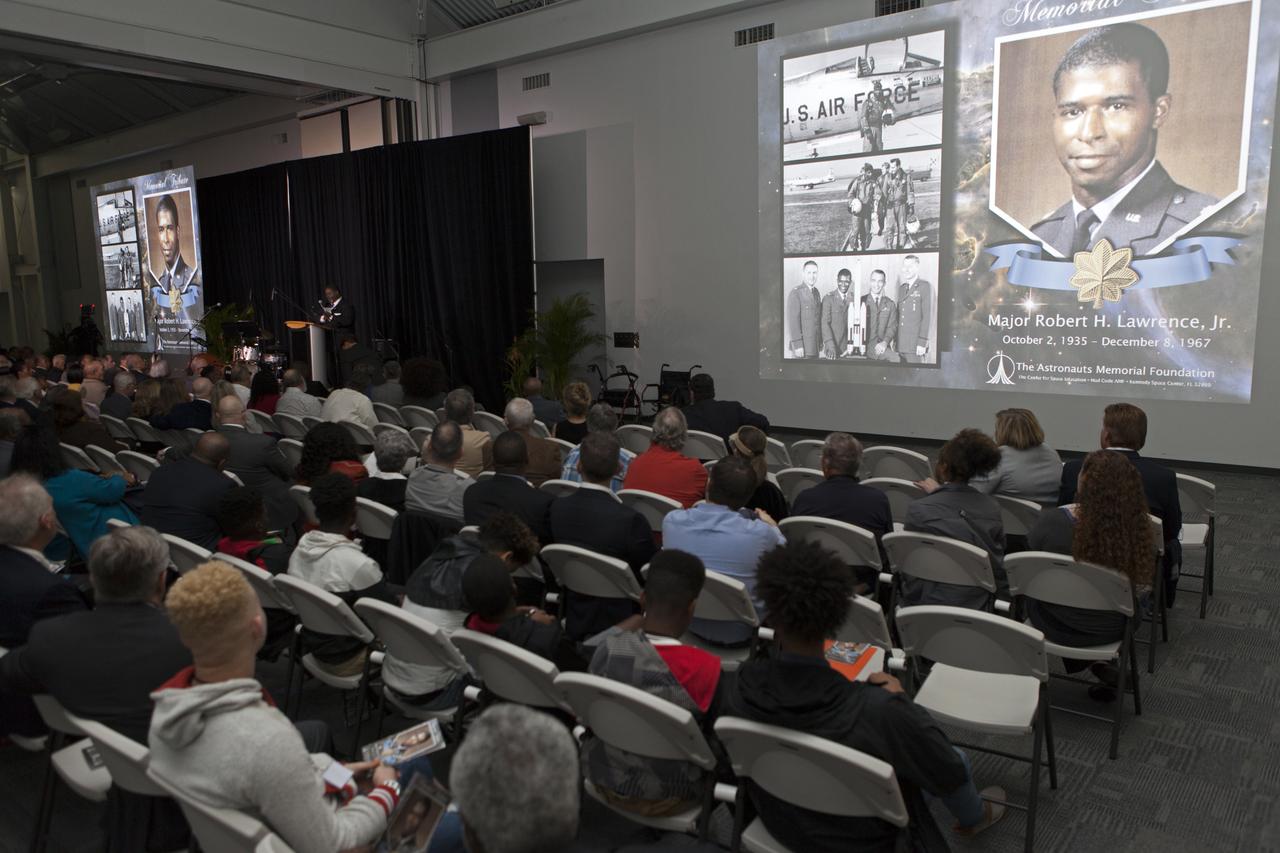
During an Astronauts Memorial Foundation tribute honoring U.S. Air Foce Maj. Robert Lawrence, photographs are projected during a video presentation. Selected in 1967 for the Manned Orbiting Laboratory Program, Lawrence was the first African-American astronaut. He lost his life in a training accident 50 years ago. The ceremony took place in the Center for Space Education at the Kennedy Space Center Visitor Complex.
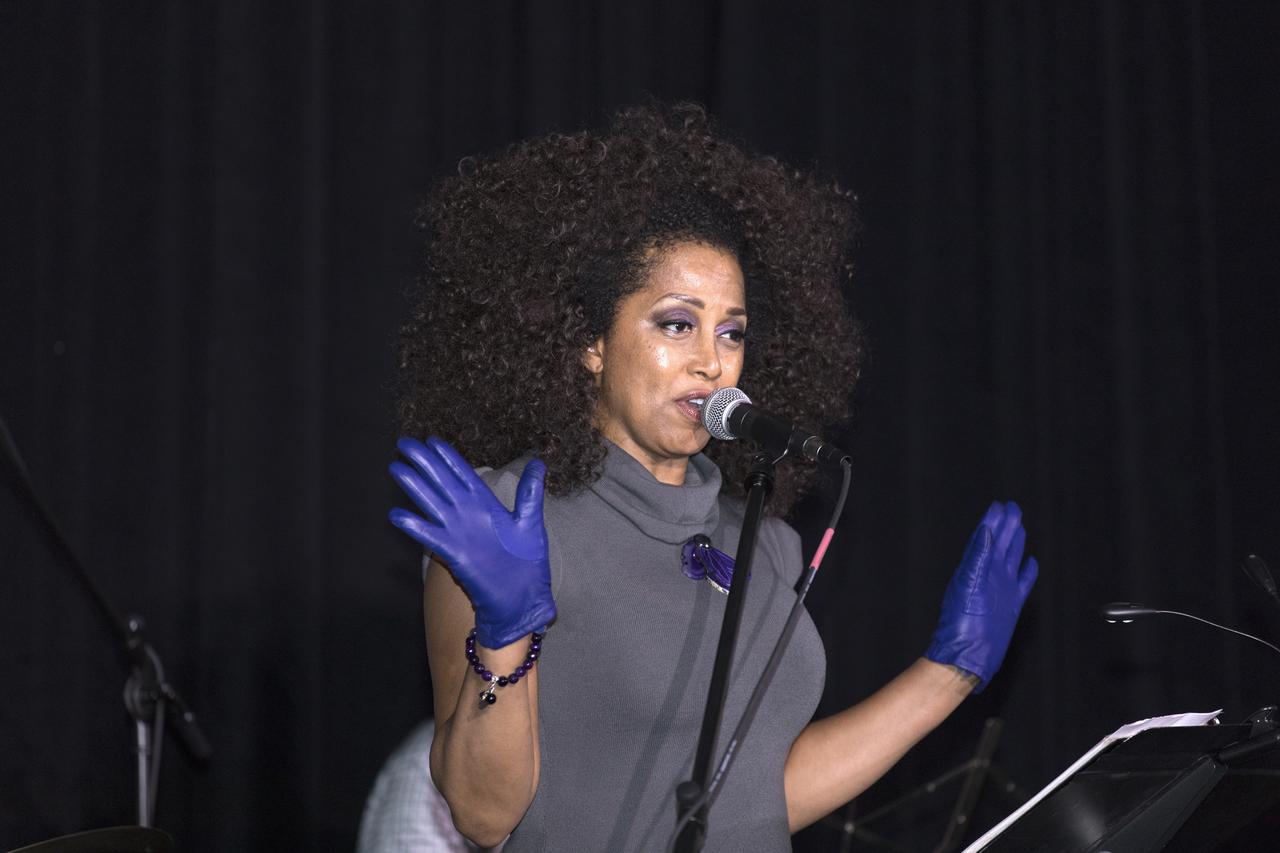
During an Astronauts Memorial Foundation tribute honoring U.S. Air Foce Maj. Robert Lawrence, vocalist Marva King sings with the Winston Scott “Cosmic Jazz Ensemble.” Selected in 1967 for the Manned Orbiting Laboratory Program, Lawrence was the first African-American astronaut. He lost his life in a training accident 50 years ago. The ceremony took place in the Center for Space Education at the Kennedy Space Center Visitor Complex.
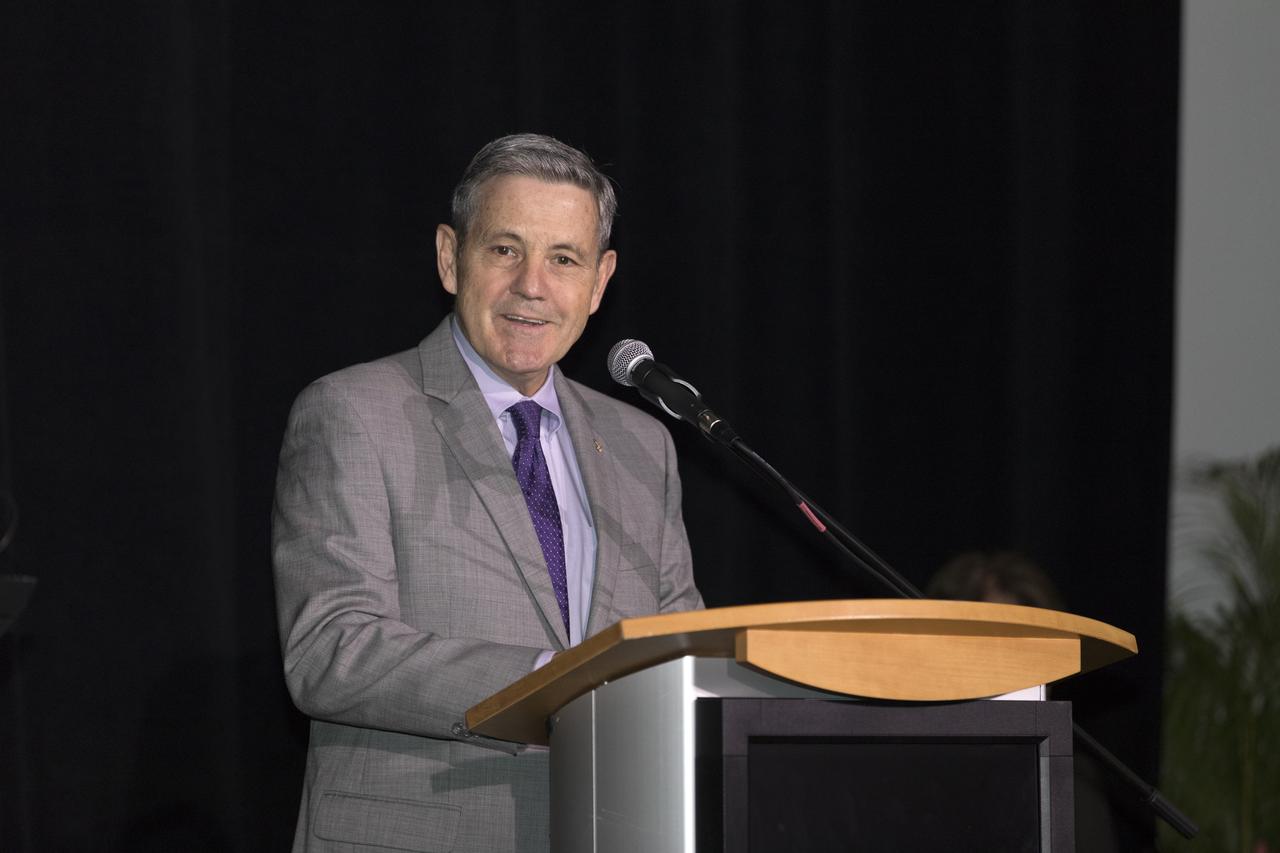
Kennedy Space Center Director Bob Cabana speaks during an Astronauts Memorial Foundation tribute honoring U.S. Air Foce Maj. Robert Lawrence. Selected in 1967 for the Manned Orbiting Laboratory Program, Lawrence was the first African-American astronaut. He lost his life in a training accident 50 years ago. The ceremony took place in the Center for Space Education at the Kennedy Space Center Visitor Complex.
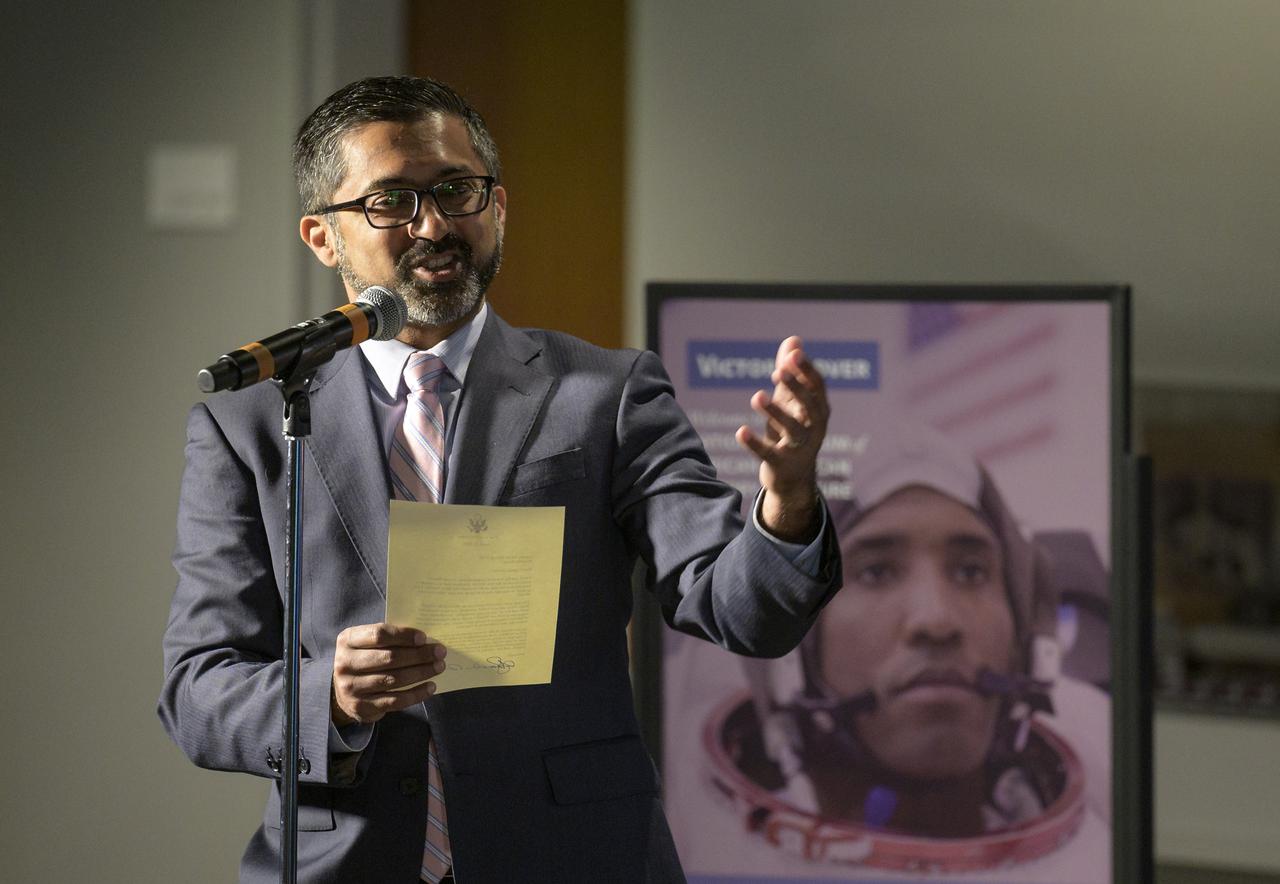
Chirag Parikh of the National Space Council reads a letter from Vice President Kamala Harris to NASA astronaut Victor Glover during an educational event, Thursday, April 28, 2022, at the National Museum of African American History and Culture in Washington. Glover most recently served as pilot and second-in-command on the Crew-1 SpaceX Crew Dragon, named Resilience, which landed after a long duration mission aboard the International Space Station, May 2, 2021. Photo Credit: (NASA/Bill Ingalls)
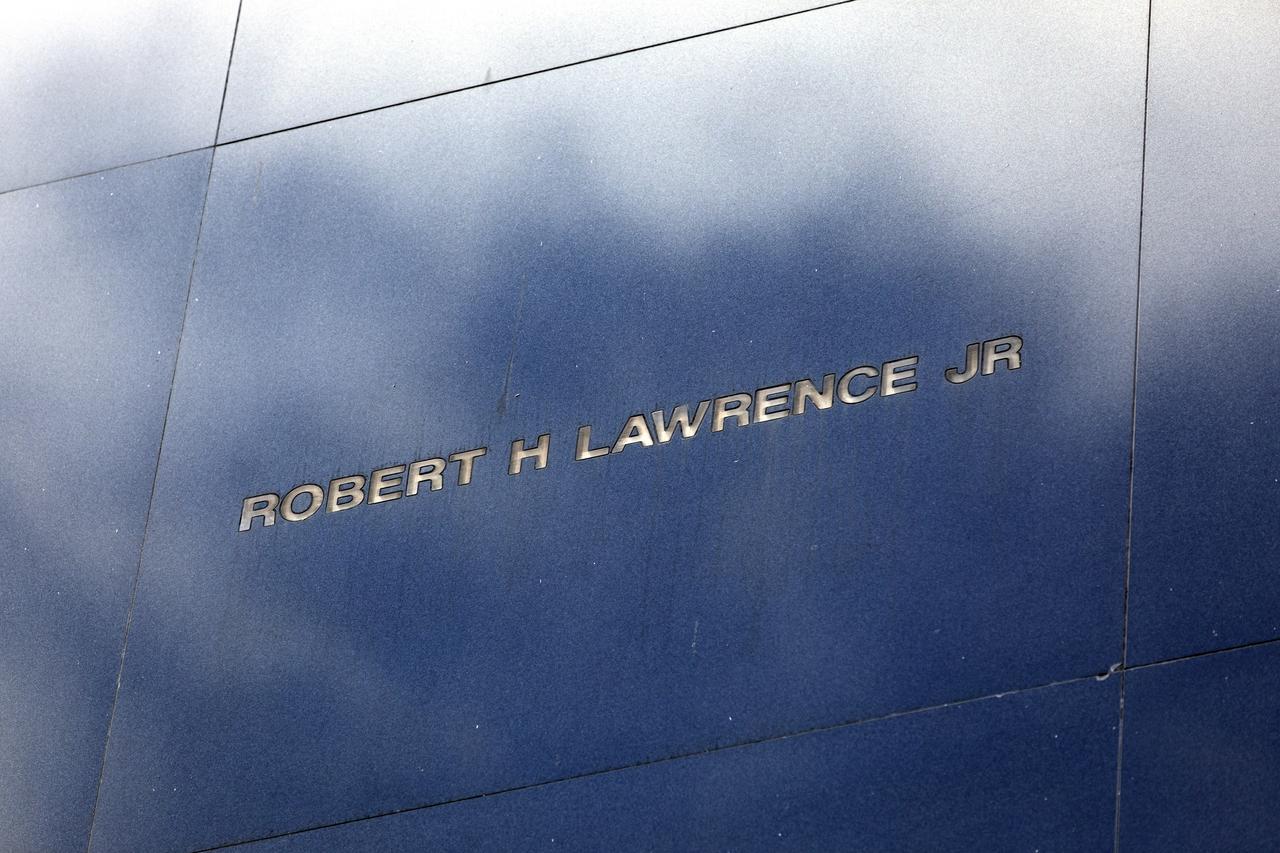
At the Kennedy Space Center's Visitor Complex, the name of U.S. Air Foce Maj. Robert Lawrence is one of those included on the Space Mirror Memorial which honors those lost in efforts to explore space. Selected in 1967 for the Manned Orbiting Laboratory Program, Lawrence was the first African-American astronaut. He lost his life in a training accident 50 years ago. The ceremony took place in the Center for Space Education at the Kennedy visitor complex.
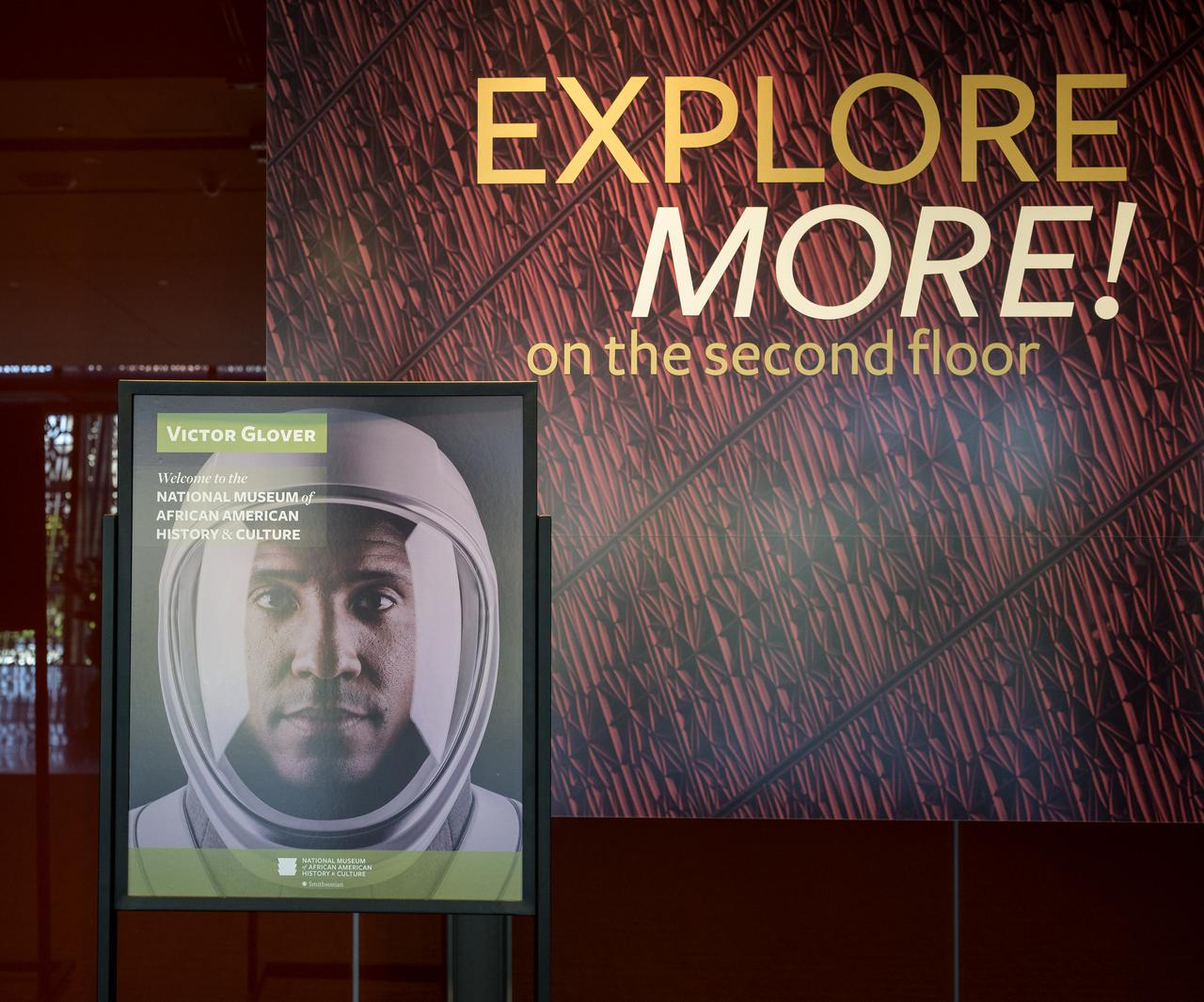
A sign welcoming NASA astronaut Victor Glover is seen, Thursday, April 28, 2022, at the National Museum of African American History and Culture in Washington. Glover most recently served as pilot and second-in-command on the Crew-1 SpaceX Crew Dragon, named Resilience, which landed after a long duration mission aboard the International Space Station, May 2, 2021. Photo Credit: (NASA/Bill Ingalls)
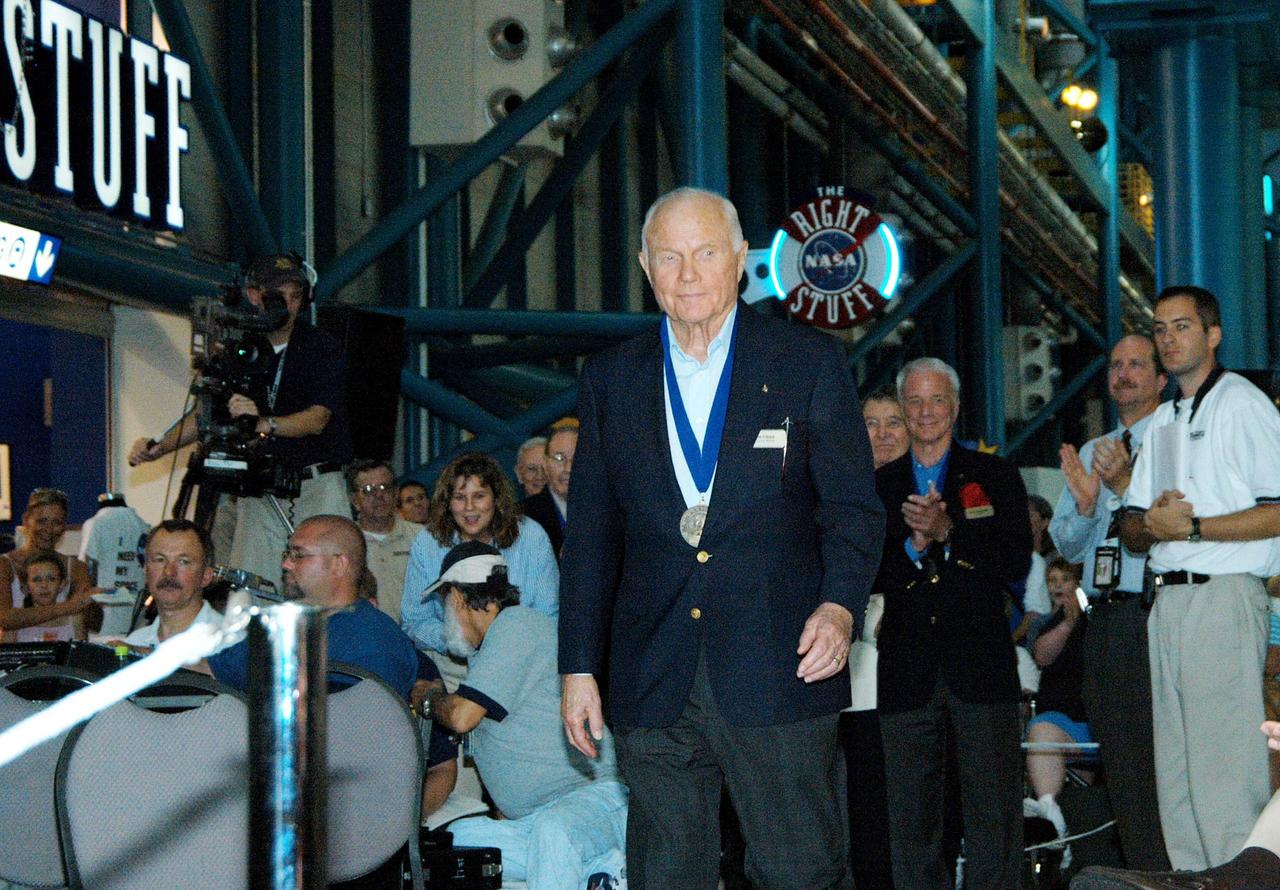
KENNEDY SPACE CENTER, FLA. -- Before the induction ceremony of five space program heroes into the U.S. Astronaut Hall of Fame, former astronaut John Glenn Jr. is greeted with applause as he is introduced as a previous inductee. One of America's original Mercury Seven astronauts, in 1962 he became the first American to orbit the Earth. Twenty-six years later, at age 77, he spent nine days in space aboard Space Shuttle Discovery. The ceremony was held at the Apollo/Saturn V Center at KSC. New inductees are Richard O. Covey, commander of the Hubble Space Telescope repair mission; Norman E. Thagard, the first American to occupy Russia’s Mir space station; the late Francis R. "Dick" Scobee, commander of the ill-fated 1986 Challenger mission; Kathryn D. Sullivan, the first American woman to walk in space; and Frederick D. Gregory, the first African-American to command a space mission and the current NASA deputy administrator. The U.S. Astronaut Hall of Fame opened in 1990 to provide a place where space travelers could be remembered for their participation and accomplishments in the U.S. space program. The five inductees join 52 previously honored astronauts from the ranks of the Gemini, Apollo, Skylab, Apollo-Soyuz, and Space Shuttle programs.
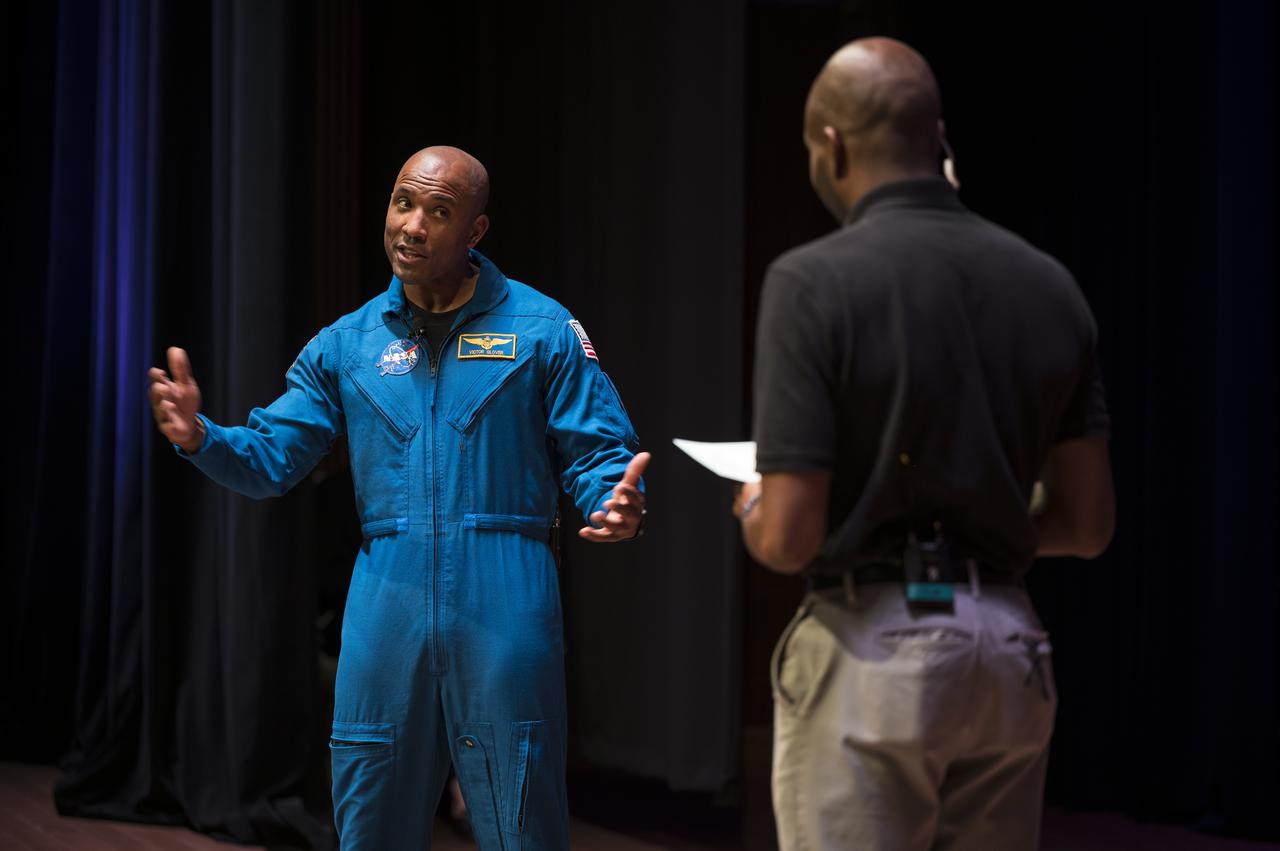
SpaceX Crew-1 NASA astronaut Victor Glover reacts during an interview with Christopher Williams, STEM educator at the National Museum of African American History and Culture (NMAAHC) in the Oprah Winfrey Theater at the NMAAHC, Tuesday, Nov. 16, 2021, in Washington. Glover and crew mates NASA astronauts Shannon Walker and Mike Hopkins, and Japan Aerospace Exploration Agency (JAXA) astronaut Soichi Noguchi, launched on the first crew rotation mission to the International Space Station for SpaceX’s Falcon 9 and Crew Dragon spacecraft as part of the agency’s Commercial Crew Program and spent 168 days in space across Expeditions 64 and 65. Photo Credit: (NASA/Aubrey Gemignani)
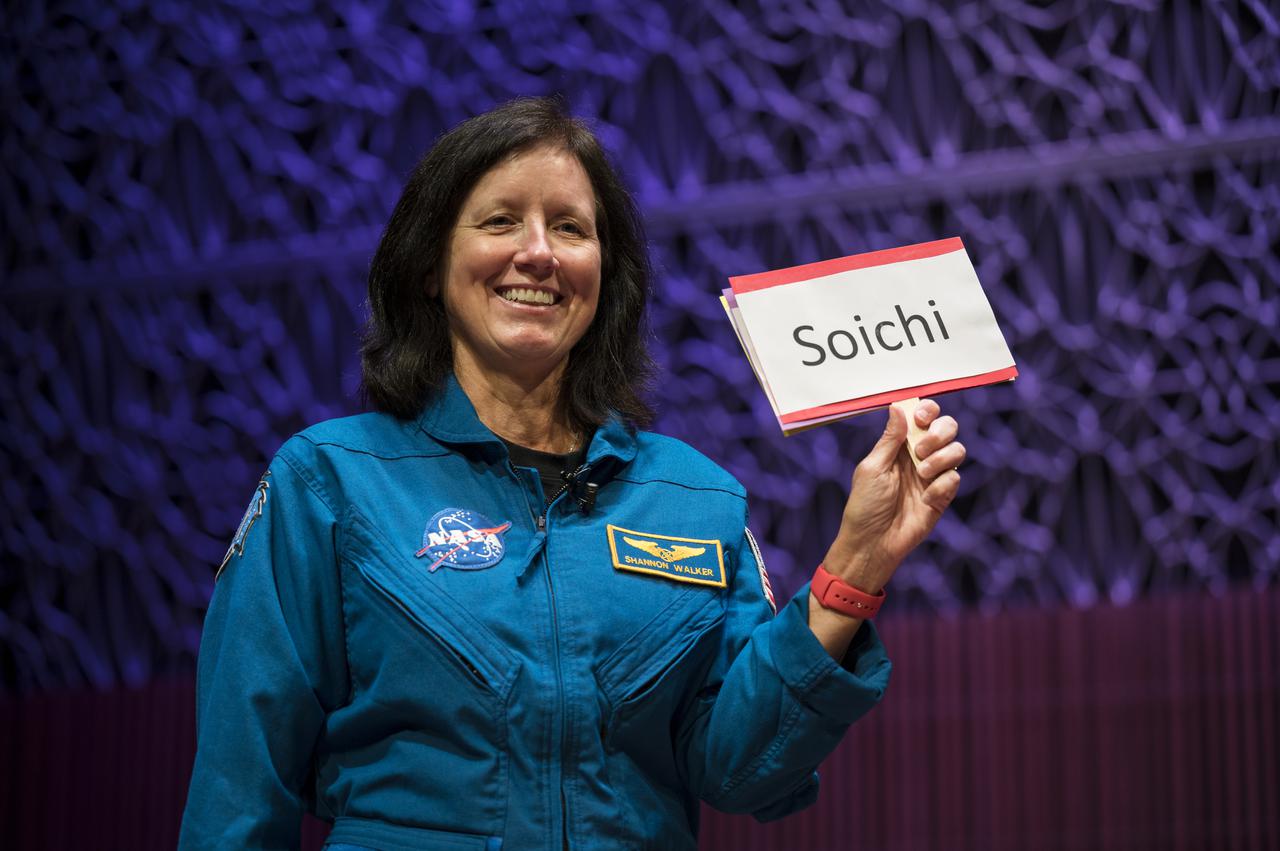
SpaceX Crew-1 NASA astronaut Shannon Walker holds up a card in answer to an interview question in the Oprah Winfrey Theater at the National Museum of African American History and Culture, Tuesday, Nov. 16, 2021, in Washington. Walker and crew mates NASA astronauts Victor Glover and Mike Hopkins, and Japan Aerospace Exploration Agency (JAXA) astronaut Soichi Noguchi, launched on the first crew rotation mission to the International Space Station for SpaceX’s Falcon 9 and Crew Dragon spacecraft as part of the agency’s Commercial Crew Program and spent 168 days in space across Expeditions 64 and 65. Photo Credit: (NASA/Aubrey Gemignani)
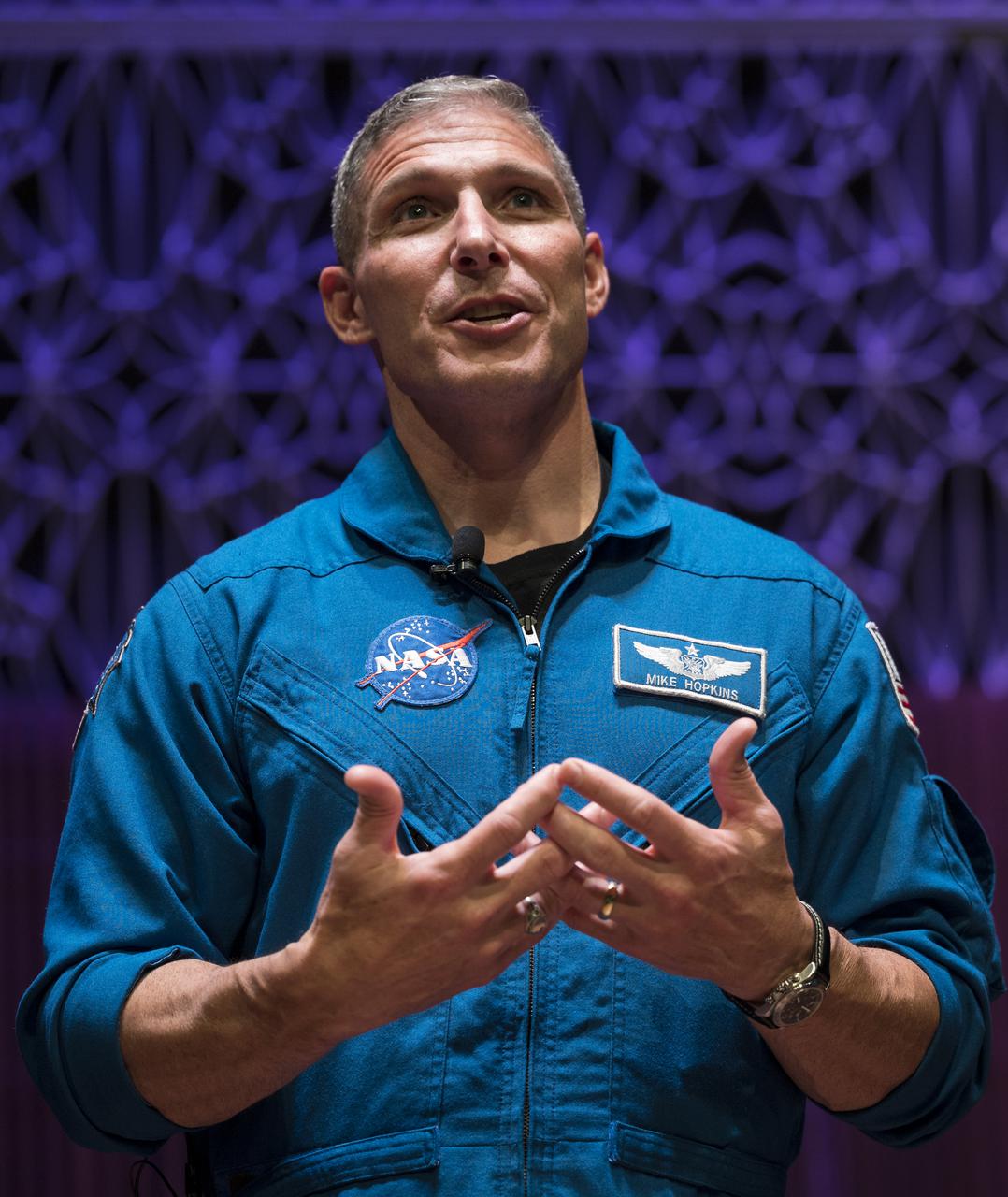
SpaceX Crew-1 NASA astronaut Mike Hopkins speaks during a presentation about his mission in the Oprah Winfrey Theater at the National Museum of African American History and Culture, Tuesday, Nov. 16, 2021, in Washington. Hopkins, and crew mates NASA astronauts Shannon Walker and Victor Glover, and Japan Aerospace Exploration Agency (JAXA) astronaut Soichi Noguchi, right, launched on the first crew rotation mission to the International Space Station for SpaceX’s Falcon 9 and Crew Dragon spacecraft as part of the agency’s Commercial Crew Program and spent 168 days in space across Expeditions 64 and 65. Photo Credit: (NASA/Aubrey Gemignani)
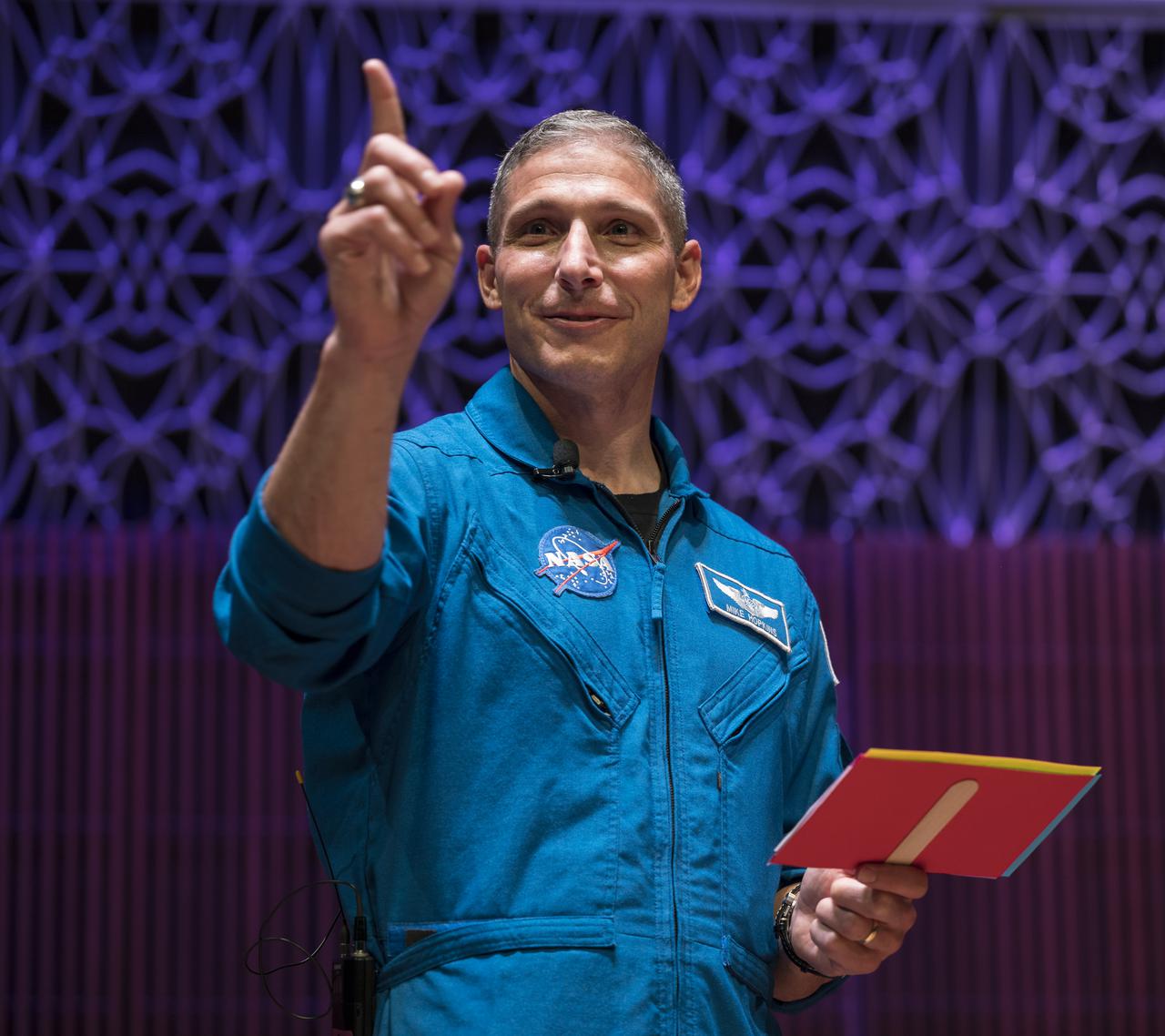
SpaceX Crew-1 NASA astronaut Mike Hopkins reacts after an interview question in the Oprah Winfrey Theater at the National Museum of African American History and Culture, Tuesday, Nov. 16, 2021, in Washington. Hopkins, and crew mates NASA astronauts Shannon Walker and Victor Glover, and Japan Aerospace Exploration Agency (JAXA) astronaut Soichi Noguchi, launched on the first crew rotation mission to the International Space Station for SpaceX’s Falcon 9 and Crew Dragon spacecraft as part of the agency’s Commercial Crew Program and spent 168 days in space across Expeditions 64 and 65. Photo Credit: (NASA/Aubrey Gemignani)
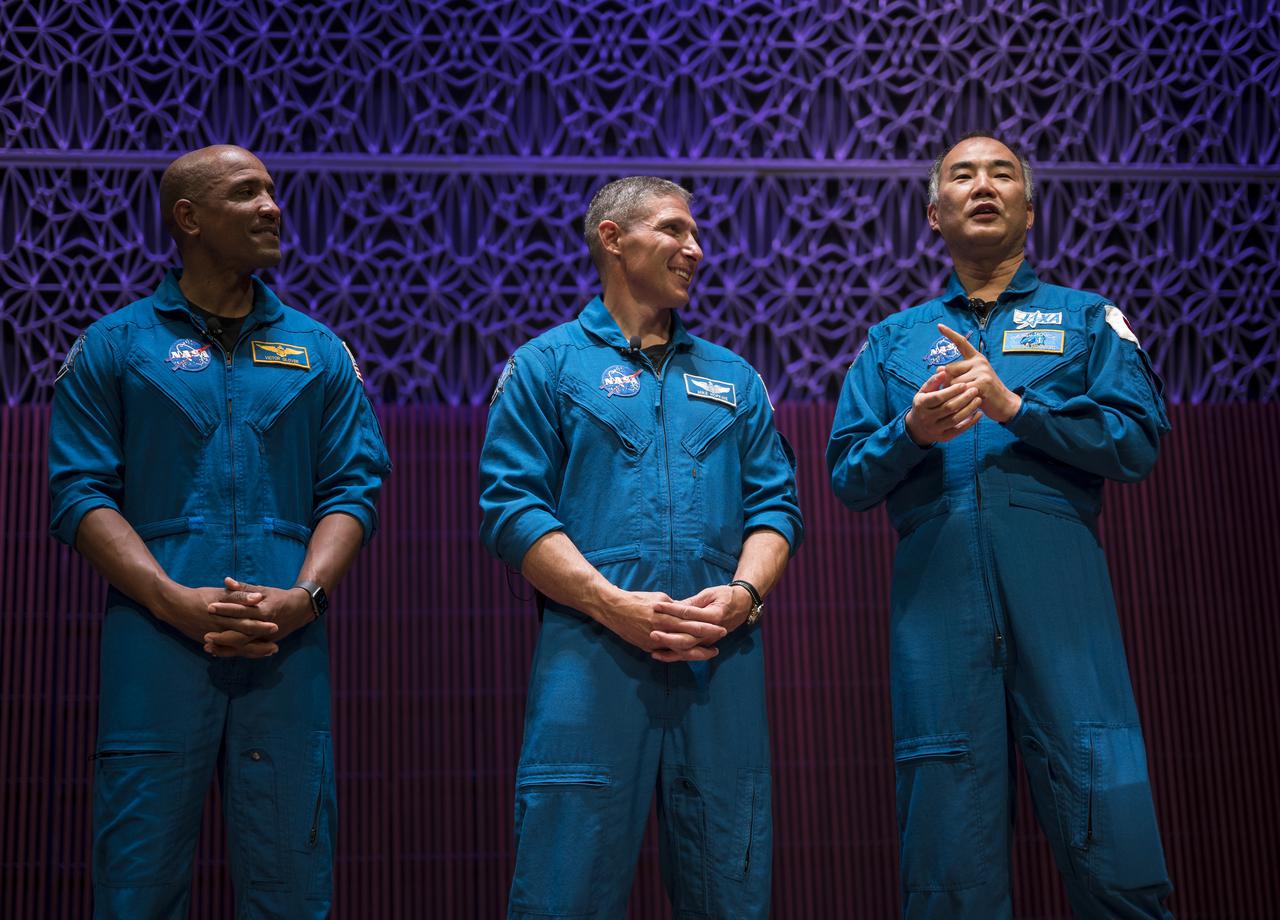
SpaceX Crew-1 NASA astronauts, from left to right, Victor Glover, Mike Hopkins, and Japan Aerospace Exploration Agency (JAXA) astronaut Soichi Noguchi, give a presentation about their mission in the Oprah Winfrey Theater at the National Museum of African American History and Culture, Tuesday, Nov. 16, 2021, in Washington. Hopkins, Glover, Noguchi and NASA astronaut Shannon Walker (not pictured) launched on the first crew rotation mission to the International Space Station for SpaceX’s Falcon 9 and Crew Dragon spacecraft as part of the agency’s Commercial Crew Program and spent 168 days in space across Expeditions 64 and 65. Photo Credit: (NASA/Aubrey Gemignani)
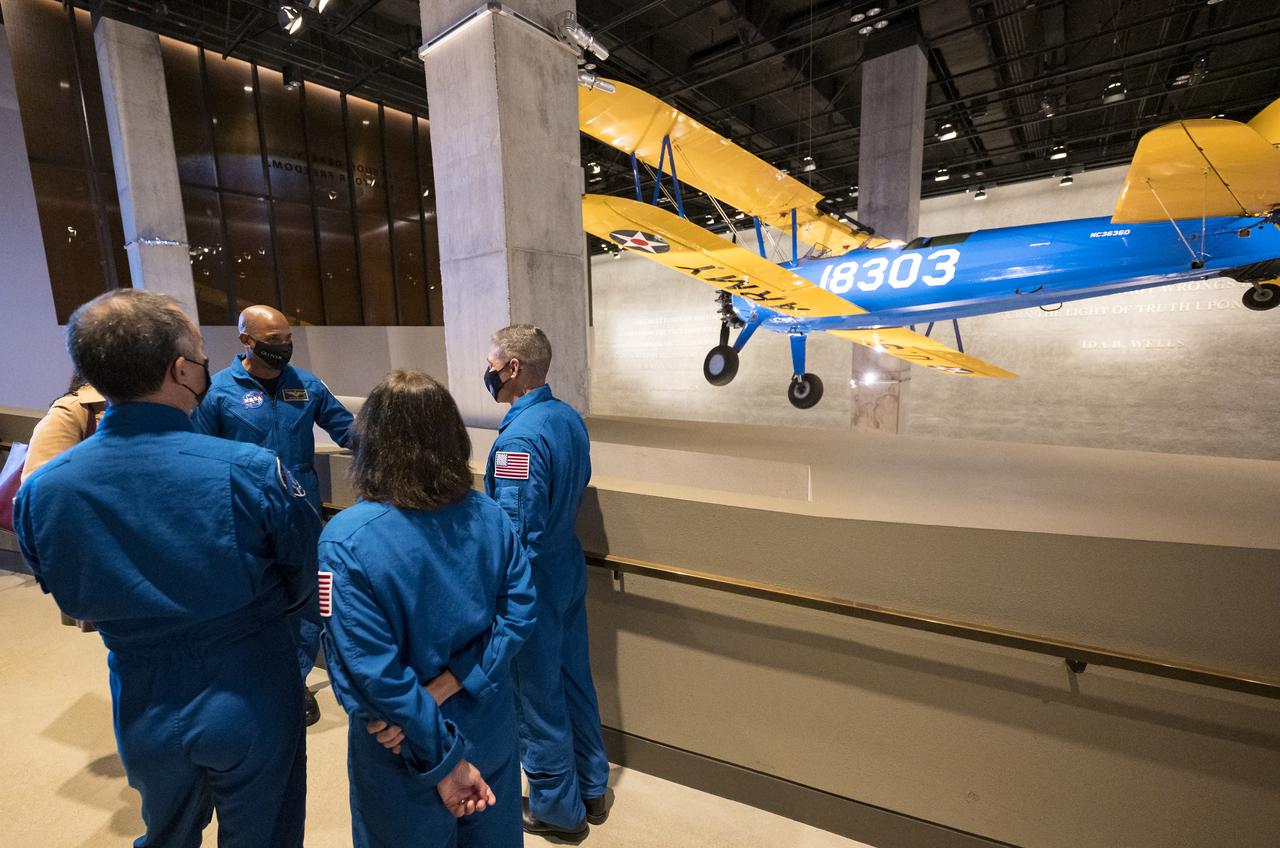
SpaceX Crew-1 astronauts, from left to right, Japan Aerospace Exploration Agency (JAXA) astronaut Soichi Noguchi, NASA astronauts Victor Glover, Shannon Walker, and Mike Hopkins, tour the National Museum of African American History and Culture, Tuesday, Nov. 16, 2021, in Washington. Hopkins, Glover, Walker, and Noguchi launched on the first crew rotation mission to the International Space Station for SpaceX’s Falcon 9 and Crew Dragon spacecraft as part of the agency’s Commercial Crew Program and spent 168 days in space across Expeditions 64 and 65. Photo Credit: (NASA/Aubrey Gemignani)
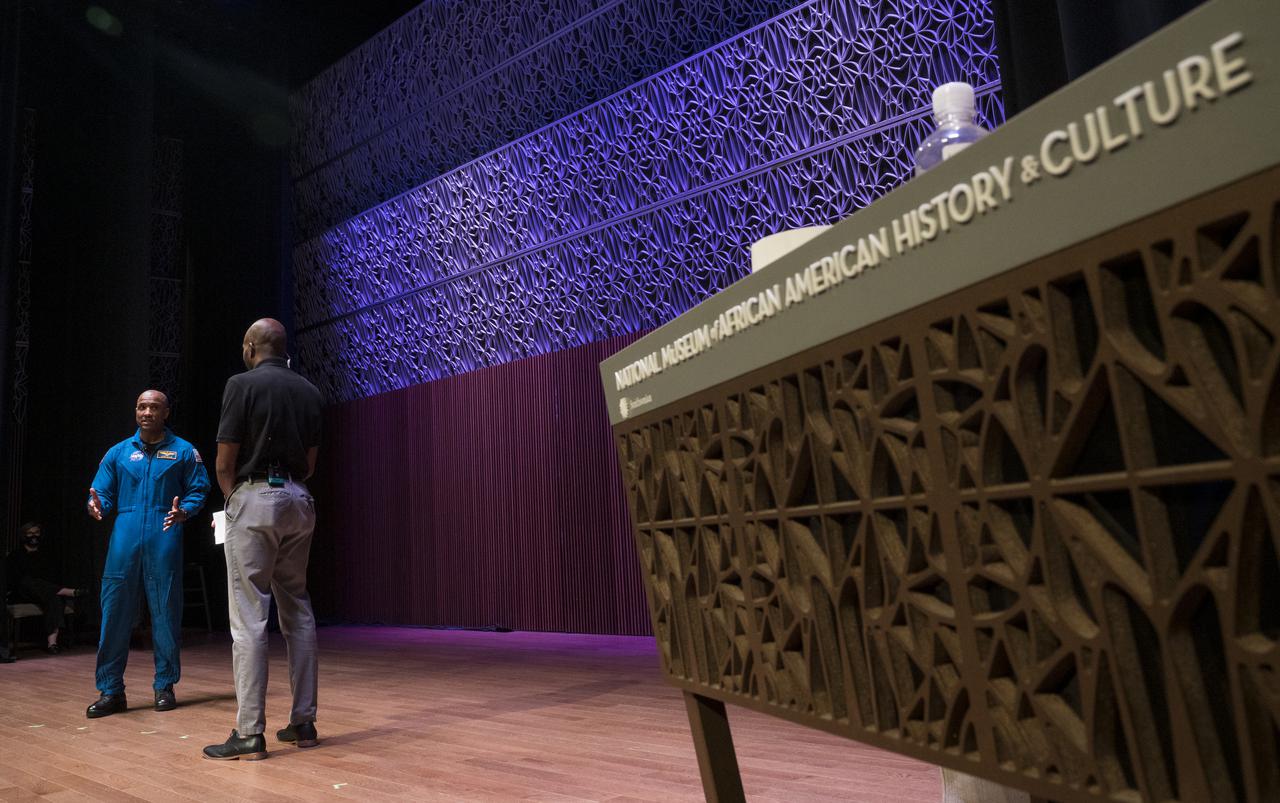
SpaceX Crew-1 NASA astronaut Victor Glover is interviewed in the Oprah Winfrey Theater at the National Museum of African American History and Culture, Tuesday, Nov. 16, 2021, in Washington. Glover and crew mates NASA astronauts Shannon Walker and Mike Hopkins, and Japan Aerospace Exploration Agency (JAXA) astronaut Soichi Noguchi, launched on the first crew rotation mission to the International Space Station for SpaceX’s Falcon 9 and Crew Dragon spacecraft as part of the agency’s Commercial Crew Program and spent 168 days in space across Expeditions 64 and 65. Photo Credit: (NASA/Aubrey Gemignani)
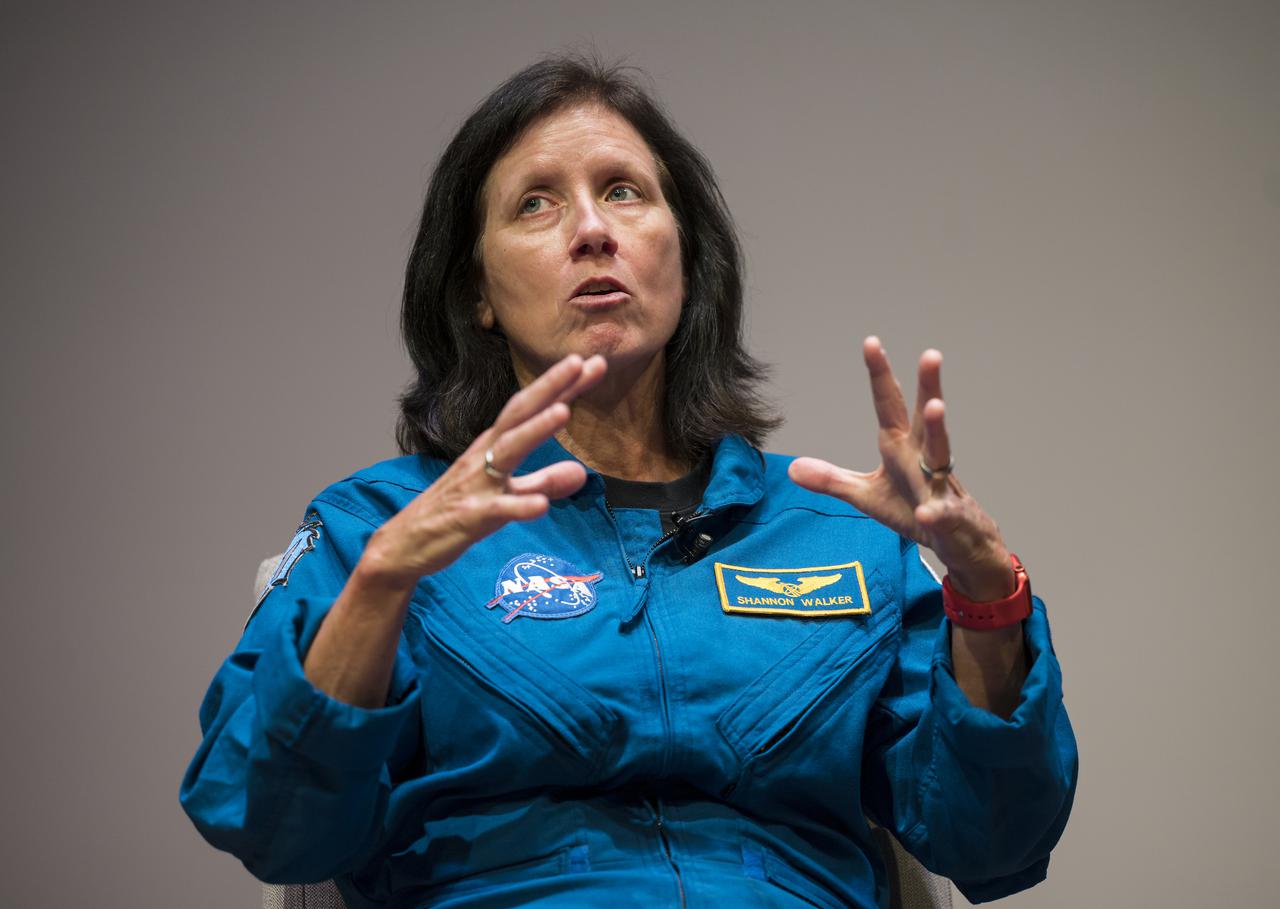
SpaceX Crew-1 NASA astronaut Shannon Walker answers a question during a live question and answer session in the Oprah Winfrey Theater at the National Museum of African American History and Culture, Tuesday, Nov. 16, 2021, in Washington. Walker and crew mates NASA astronauts Victor Glover and Mike Hopkins, and Japan Aerospace Exploration Agency (JAXA) astronaut Soichi Noguchi, launched on the first crew rotation mission to the International Space Station for SpaceX’s Falcon 9 and Crew Dragon spacecraft as part of the agency’s Commercial Crew Program and spent 168 days in space across Expeditions 64 and 65. Photo Credit: (NASA/Aubrey Gemignani)
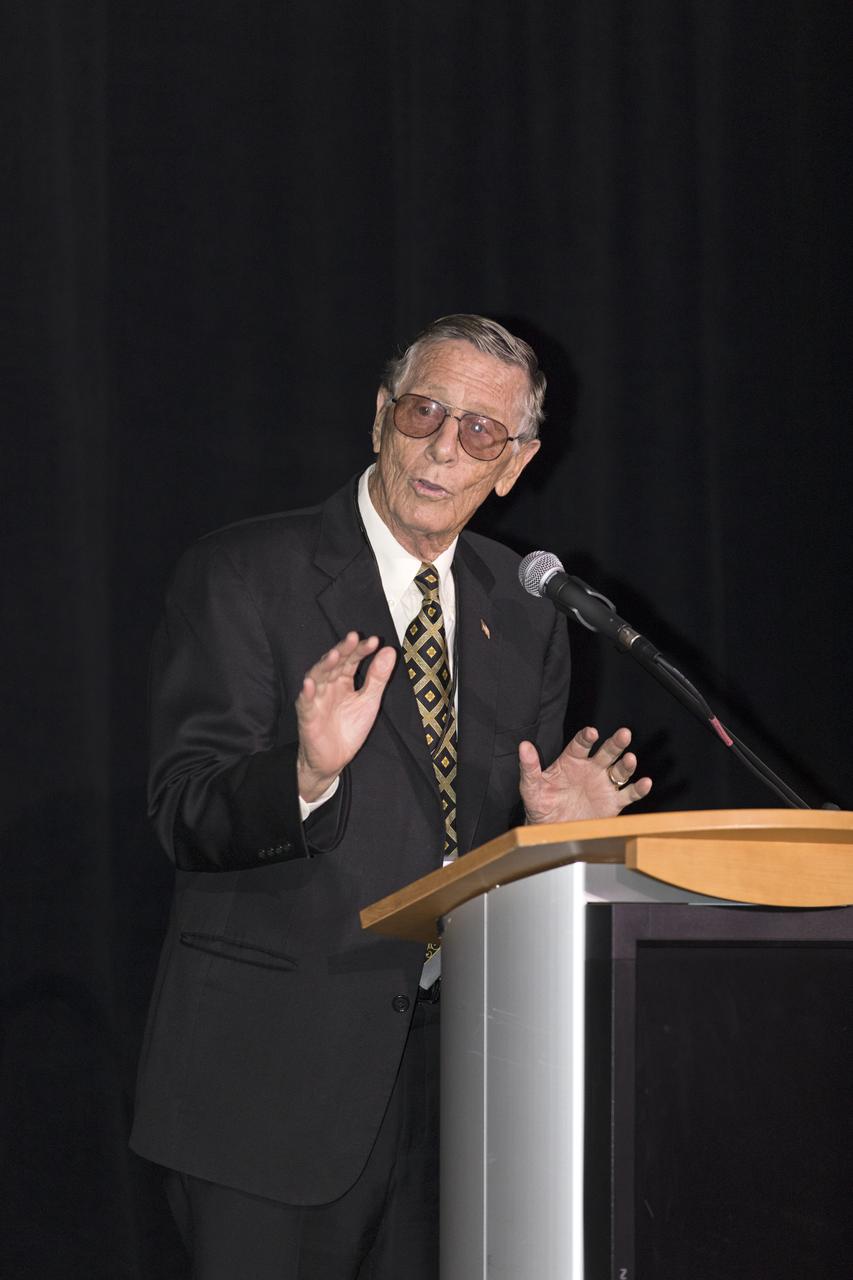
During an Astronauts Memorial Foundation tribute honoring U.S. Air Foce Maj. Robert Lawrence, James Abrahamson, speaks to guests during the ceremony. A retired U.S. Air Force lieutenant general, Abrahamson also was a Manned Orbiting Laboratory astronaut who later was associate administrator of NASA and served as director of the Strategic Defense Initiative. Selected in 1967 for the MOL Program, Lawrence was the first African-American astronaut. He lost his life in a training accident 50 years ago. The ceremony took place in the Center for Space Education at the Kennedy Space Center Visitor Complex.
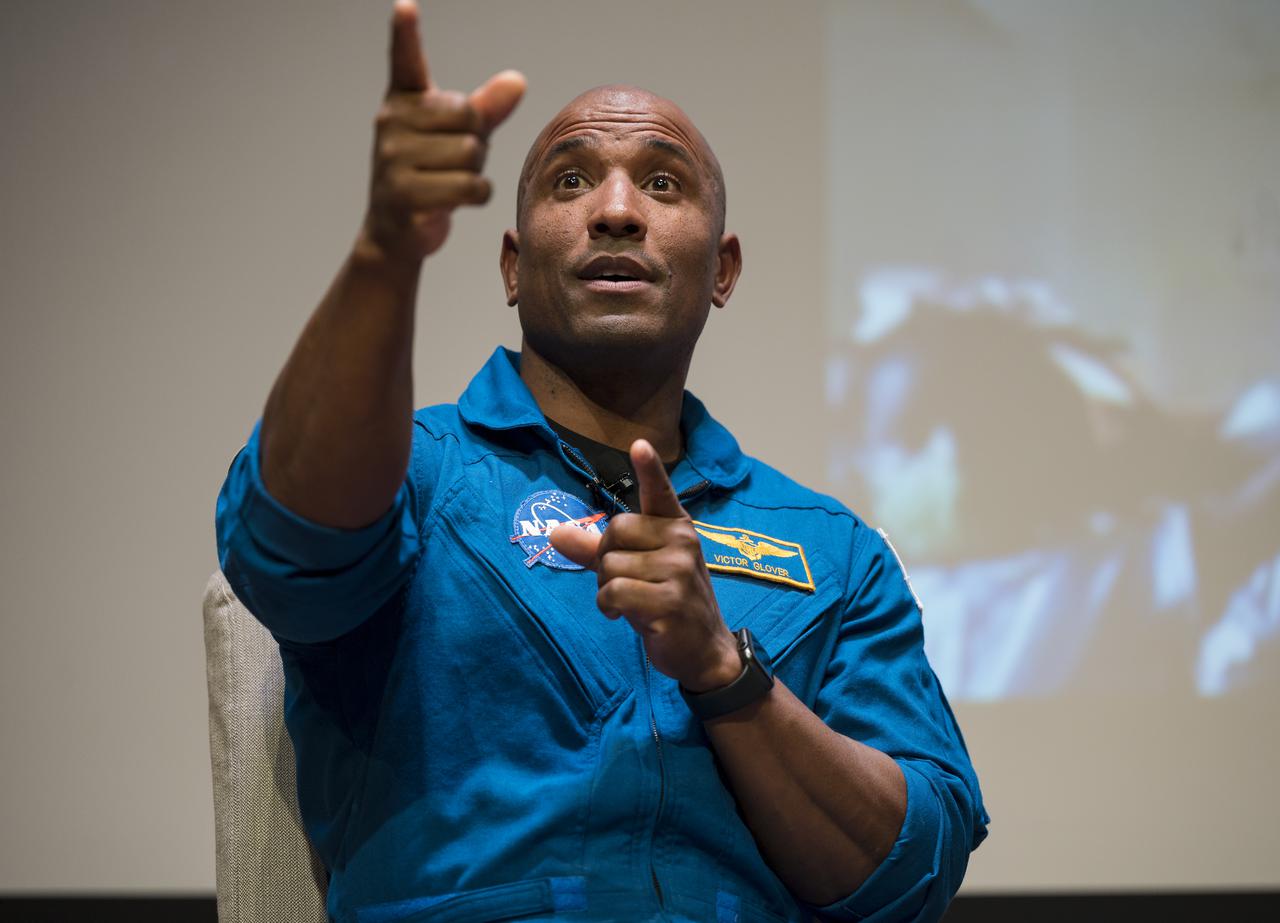
SpaceX Crew-1 NASA astronaut Victor Glover, gestures during a live question and answer session in the Oprah Winfrey Theater at the National Museum of African American History and Culture, Tuesday, Nov. 16, 2021, in Washington. Glover and crew mates NASA Astronauts Shannon Walker and Mike Hopkins, and Japan Aerospace Exploration Agency (JAXA) astronaut Soichi Noguchi launched on the first crew rotation mission to the International Space Station for SpaceX’s Falcon 9 and Crew Dragon spacecraft as part of the agency’s Commercial Crew Program and spent 168 days in space across Expeditions 64 and 65. Photo Credit: (NASA/Aubrey Gemignani)
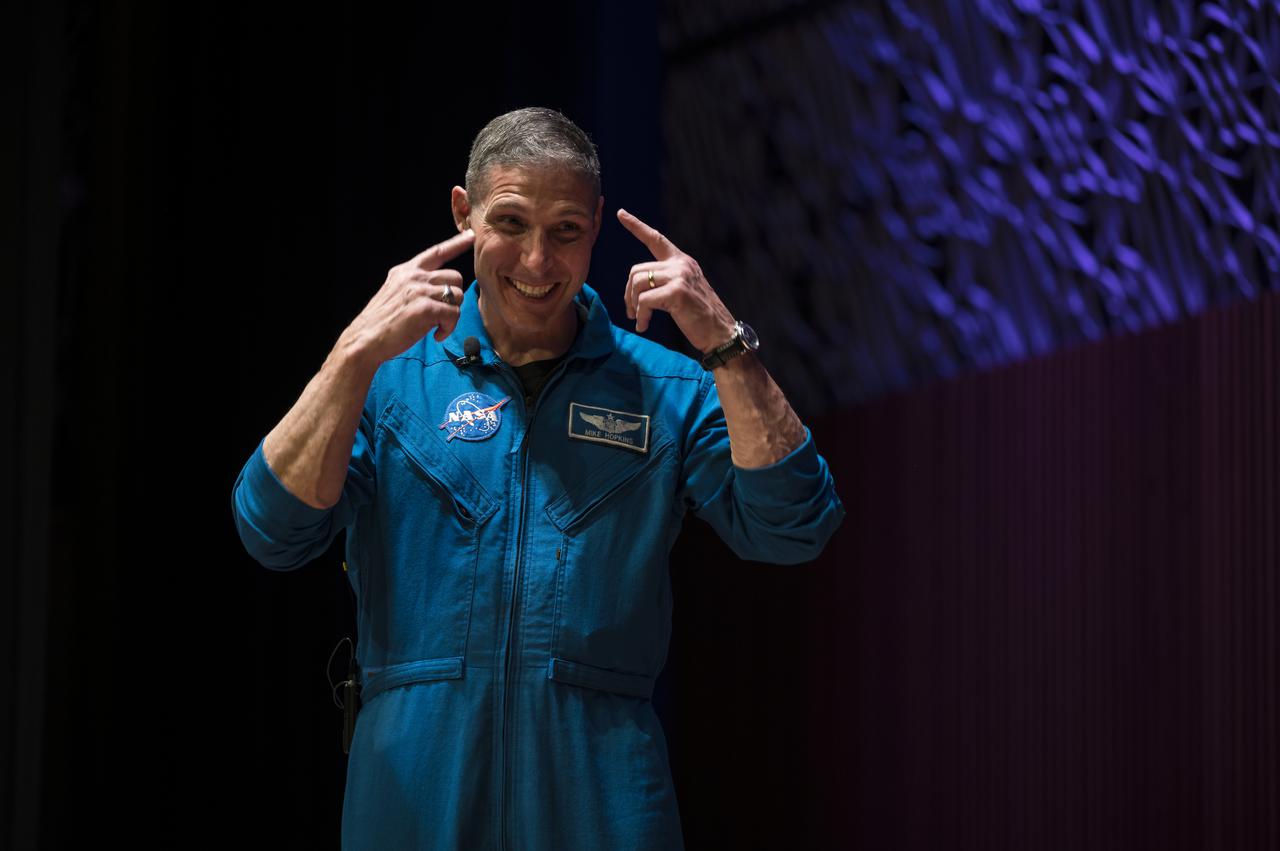
SpaceX Crew-1 NASA astronaut Mike Hopkins reacts during an interview in the Oprah Winfrey Theater at the National Museum of African American History and Culture, Tuesday, Nov. 16, 2021, in Washington. Hopkins, and crew mates NASA astronauts Shannon Walker and Victor Glover, and Japan Aerospace Exploration Agency (JAXA) astronaut Soichi Noguchi, right, launched on the first crew rotation mission to the International Space Station for SpaceX’s Falcon 9 and Crew Dragon spacecraft as part of the agency’s Commercial Crew Program and spent 168 days in space across Expeditions 64 and 65. Photo Credit: (NASA/Aubrey Gemignani)
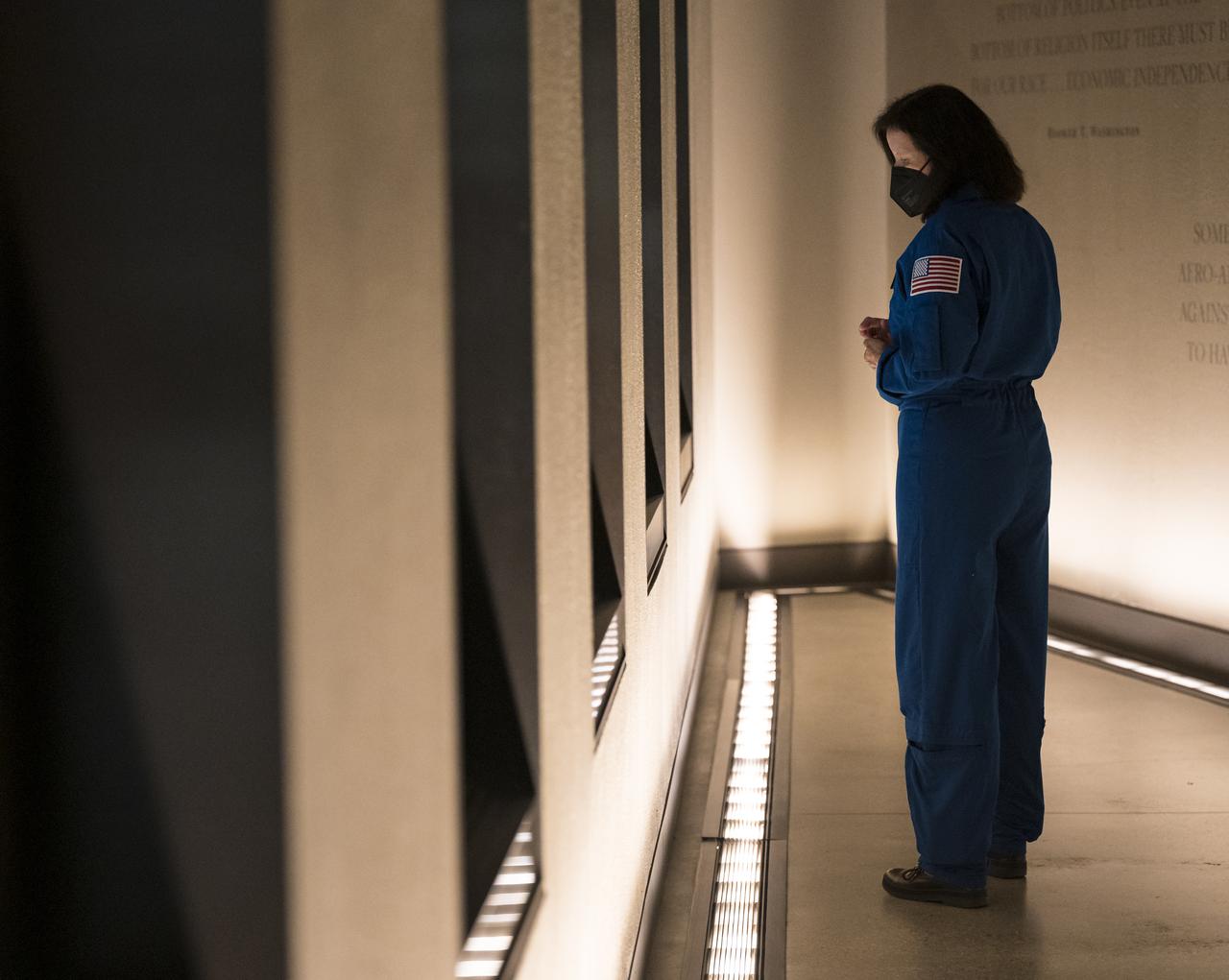
SpaceX Crew-1 NASA astronaut Shannon Walker is seen during a tour of the National Museum of African American History and Culture, Tuesday, Nov. 16, 2021, in Washington. Walker and her crew mates NASA astronauts Mike Hopkins and Victor Glover, and Japan Aerospace Exploration Agency (JAXA) astronaut Soichi Noguchi, launched on the first crew rotation mission to the International Space Station for SpaceX’s Falcon 9 and Crew Dragon spacecraft as part of the agency’s Commercial Crew Program and spent 168 days in space across Expeditions 64 and 65. Photo Credit: (NASA/Aubrey Gemignani)

National Museum of African American History and Culture director, Kevin Young, greets SpaceX Crew-1 NASA astronauts, Victor Glover and Mike Hopkins, Tuesday, Nov. 16, 2021, in Washington. Hopkins, Glover, NASA astronaut Shannon Walker, and Japan Aerospace Exploration Agency (JAXA) astronaut Soichi Noguchi launched on the first crew rotation mission to the International Space Station for SpaceX’s Falcon 9 and Crew Dragon spacecraft as part of the agency’s Commercial Crew Program and spent 168 days in space across Expeditions 64 and 65. Photo Credit: (NASA/Aubrey Gemignani)
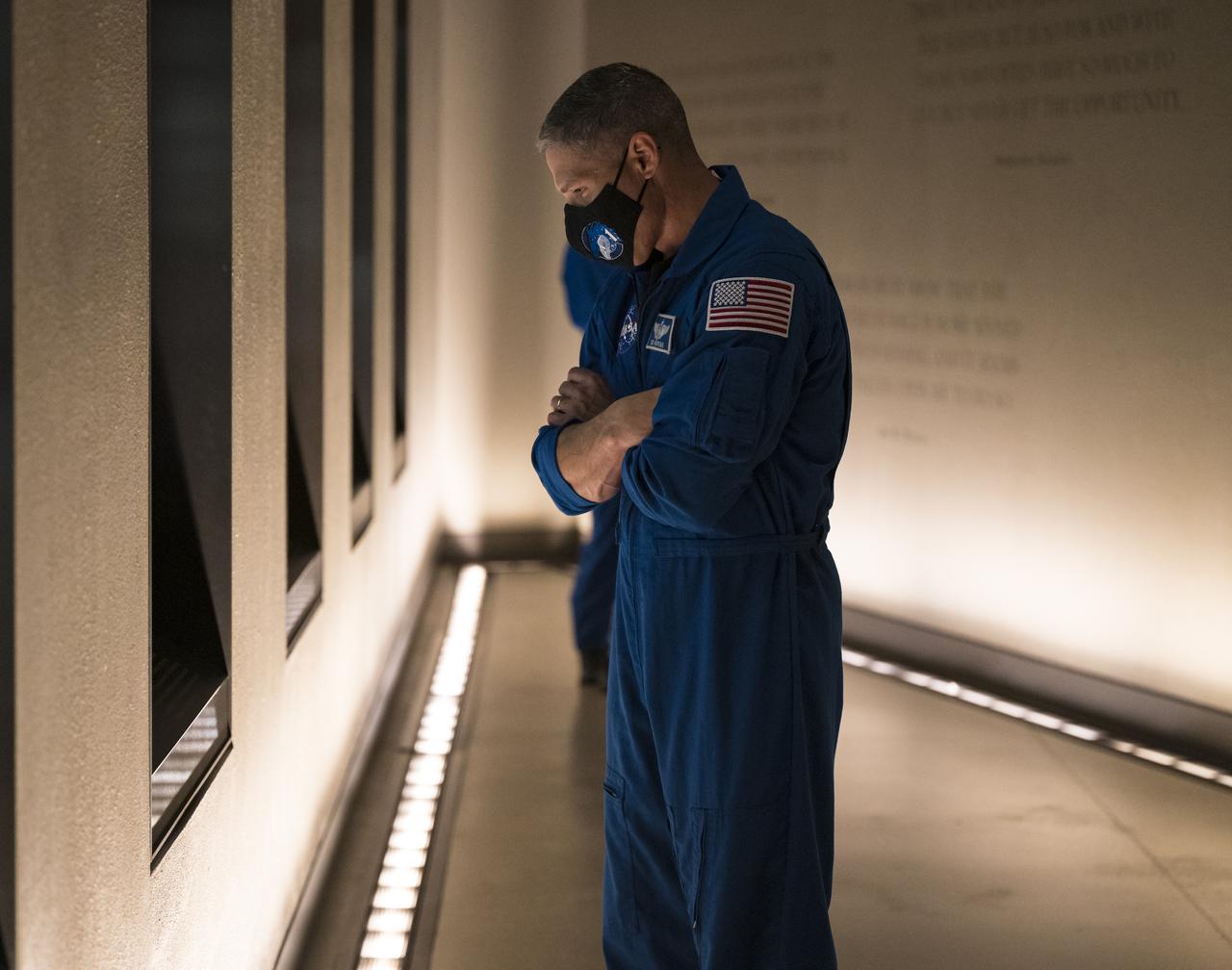
SpaceX Crew-1 NASA astronaut Mike Hopkins, is seen during a tour of the National Museum of African American History and Culture, Tuesday, Nov. 16, 2021, in Washington. Hopkins and crew mates NASA astronauts Shannon Walker and Victor Glover, and Japan Aerospace Exploration Agency (JAXA) astronaut Soichi Noguchi, launched on the first crew rotation mission to the International Space Station for SpaceX’s Falcon 9 and Crew Dragon spacecraft as part of the agency’s Commercial Crew Program and spent 168 days in space across Expeditions 64 and 65. Photo Credit: (NASA/Aubrey Gemignani)
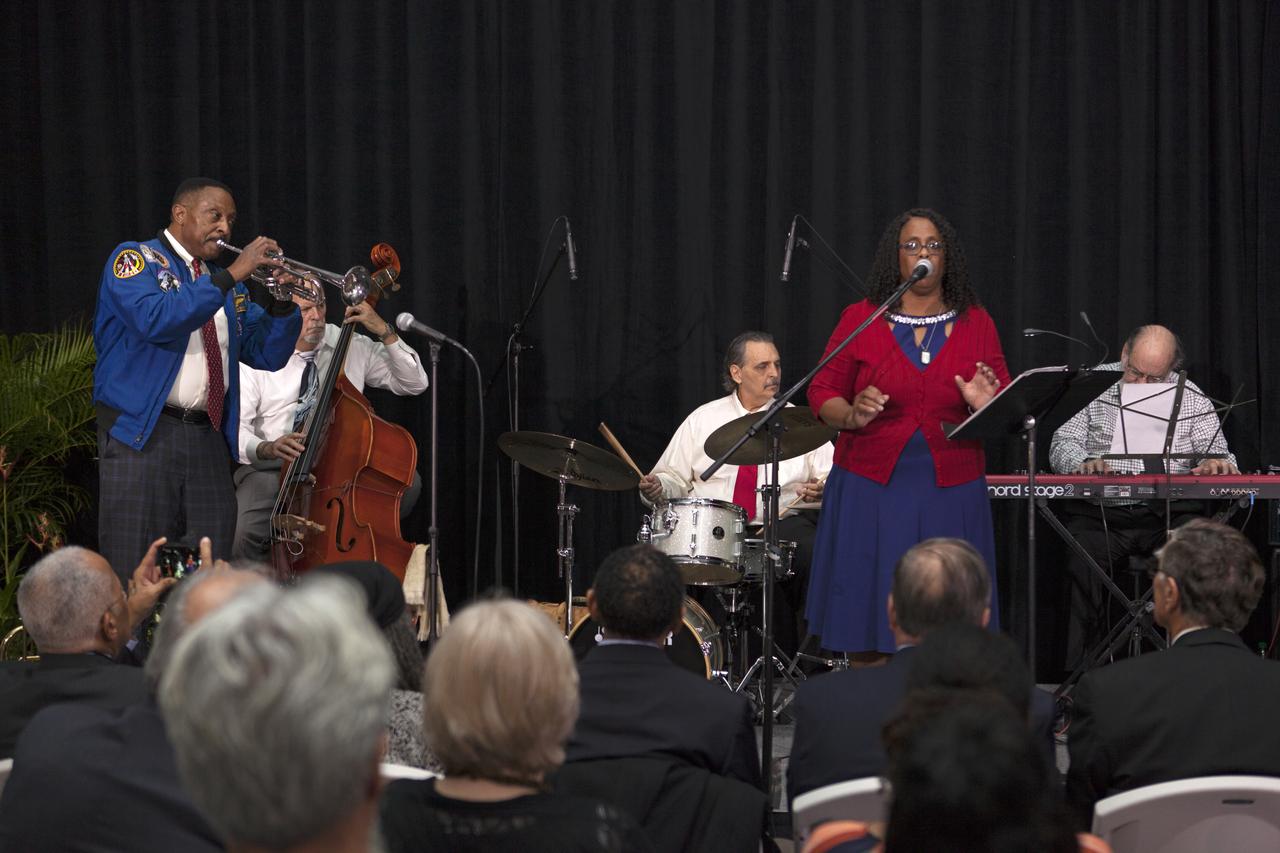
During an Astronauts Memorial Foundation tribute honoring U.S. Air Foce Maj. Robert Lawrence, The Winston Scott “Cosmic Jazz Ensemble” performed. Participants are, from the left, former NASA astronaut Winston Scott playing trumpet, Al Dodds on bass, Stan Soloko playing drums, vocalist Shyrl “Lady Tandy” Johnson, and Ron Teixeira playing piano. Selected in 1967 for the Manned Orbiting Laboratory Program, Lawrence was the first African-American astronaut. He lost his life in a training accident 50 years ago. The ceremony took place in the Center for Space Education at the Kennedy Space Center Visitor Complex.