
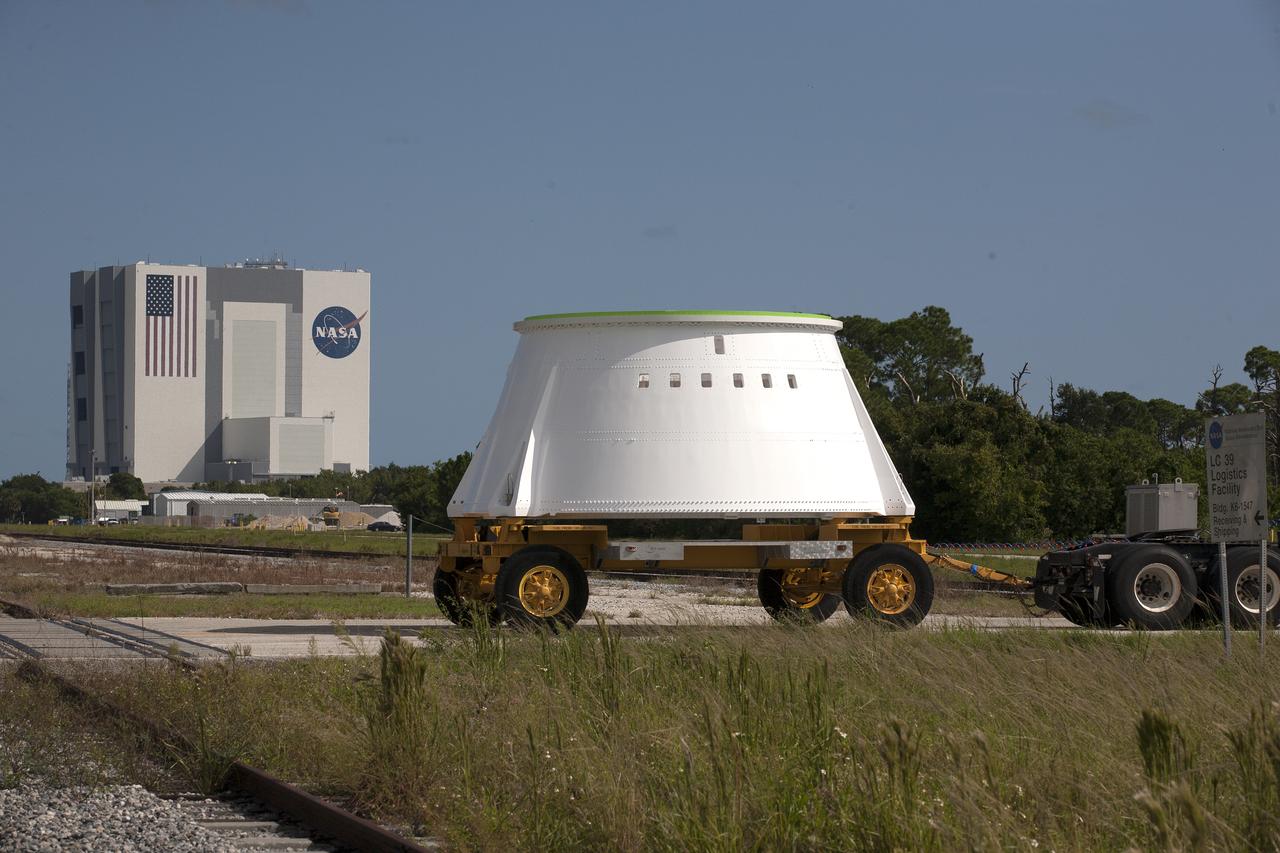
The left hand aft skirt for NASA’s Space Launch System (SLS) rocket is transported across the Roy D. Bridges Bridge from the Hangar AF facility at Cape Canaveral Air Force Station in Florida, on its way to the Booster Fabrication Facility at the agency’s Kennedy Space Center. The space shuttle-era aft skirt, was inspected, resurfaced, primed and painted for use on the left hand booster of the SLS rocket for Exploration Mission 1 (EM-1). NASA is preparing for EM-1, deep-space missions, and the journey to Mars.
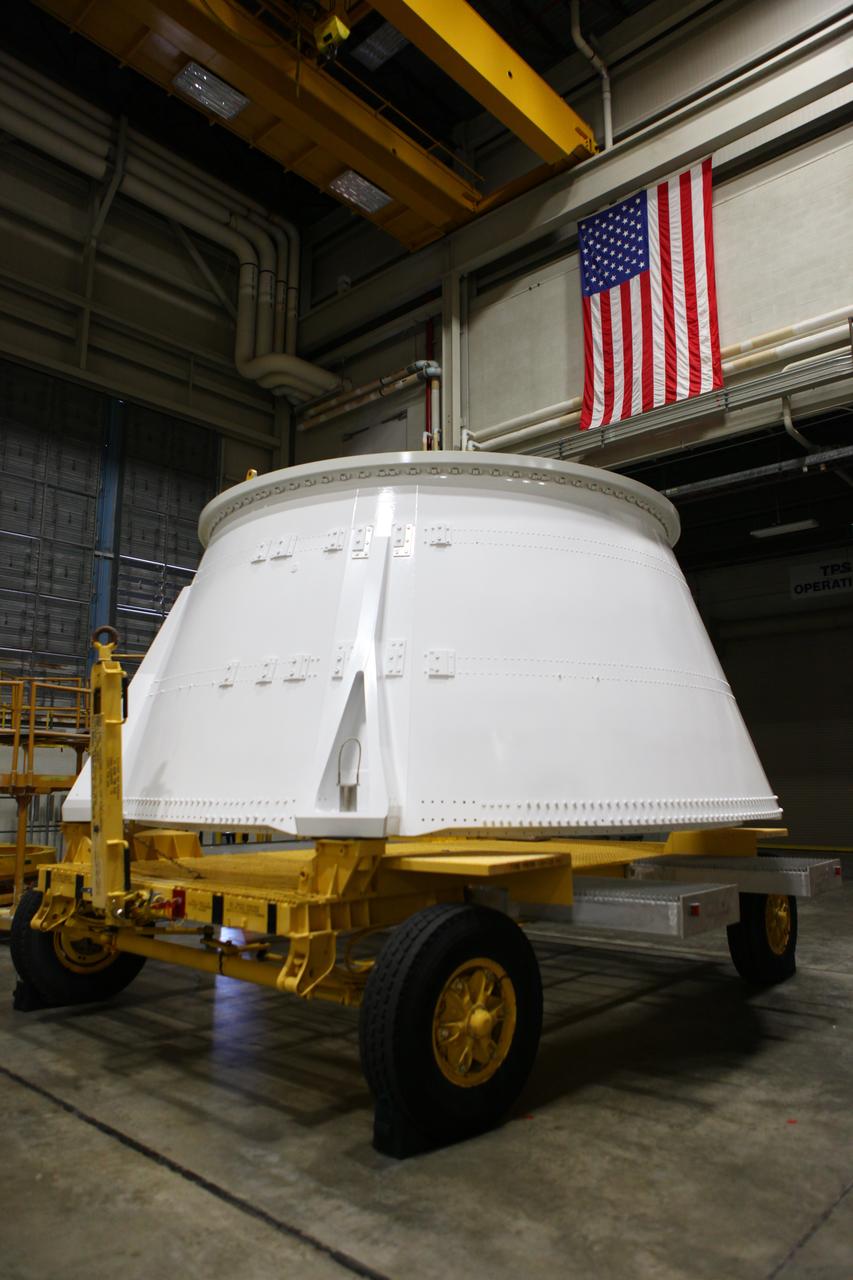
The right hand aft skirt for NASA's Space Launch System (SLS) rocket has been refurbished and painted and is ready for the assembly process in the Booster Fabrication Facility at the agency's Kennedy Space Center in Florida. The aft skirt was refurbished and painted in support facilities at the Hangar AF facility at Cape Canaveral Air Force Station in Florida. The space shuttle-era aft skirt will be used on the right hand booster of the SLS for Exploration Mission 1 (EM-1). NASA is preparing for EM-1, deep space missions, and the Journey to Mars.
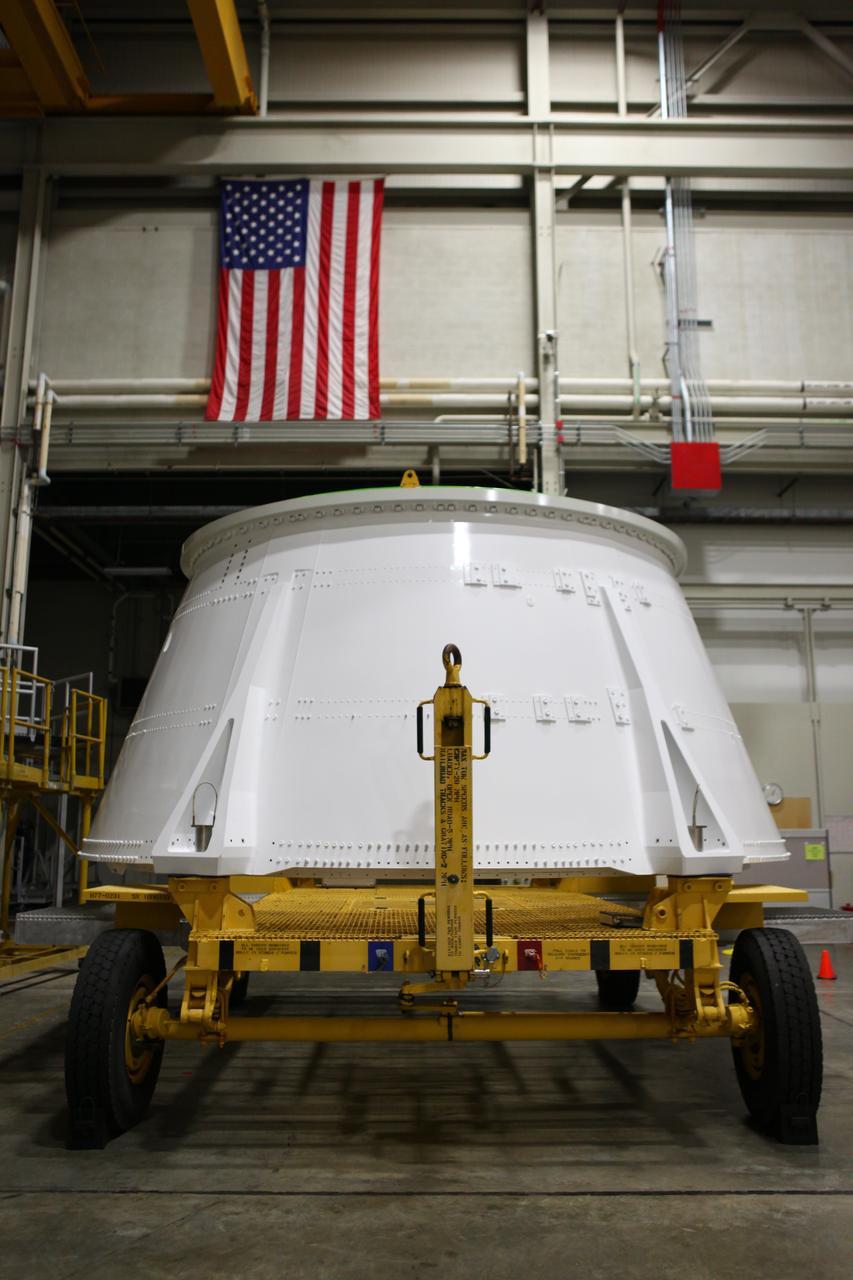
The right hand aft skirt for NASA's Space Launch System (SLS) rocket has been refurbished and painted and is ready for the assembly process in the Booster Fabrication Facility at the agency's Kennedy Space Center in Florida. The aft skirt was refurbished and painted in support facilities at the Hangar AF facility at Cape Canaveral Air Force Station in Florida. The space shuttle-era aft skirt will be used on the right hand booster of the SLS for Exploration Mission 1 (EM-1). NASA is preparing for EM-1, deep space missions, and the Journey to Mars.
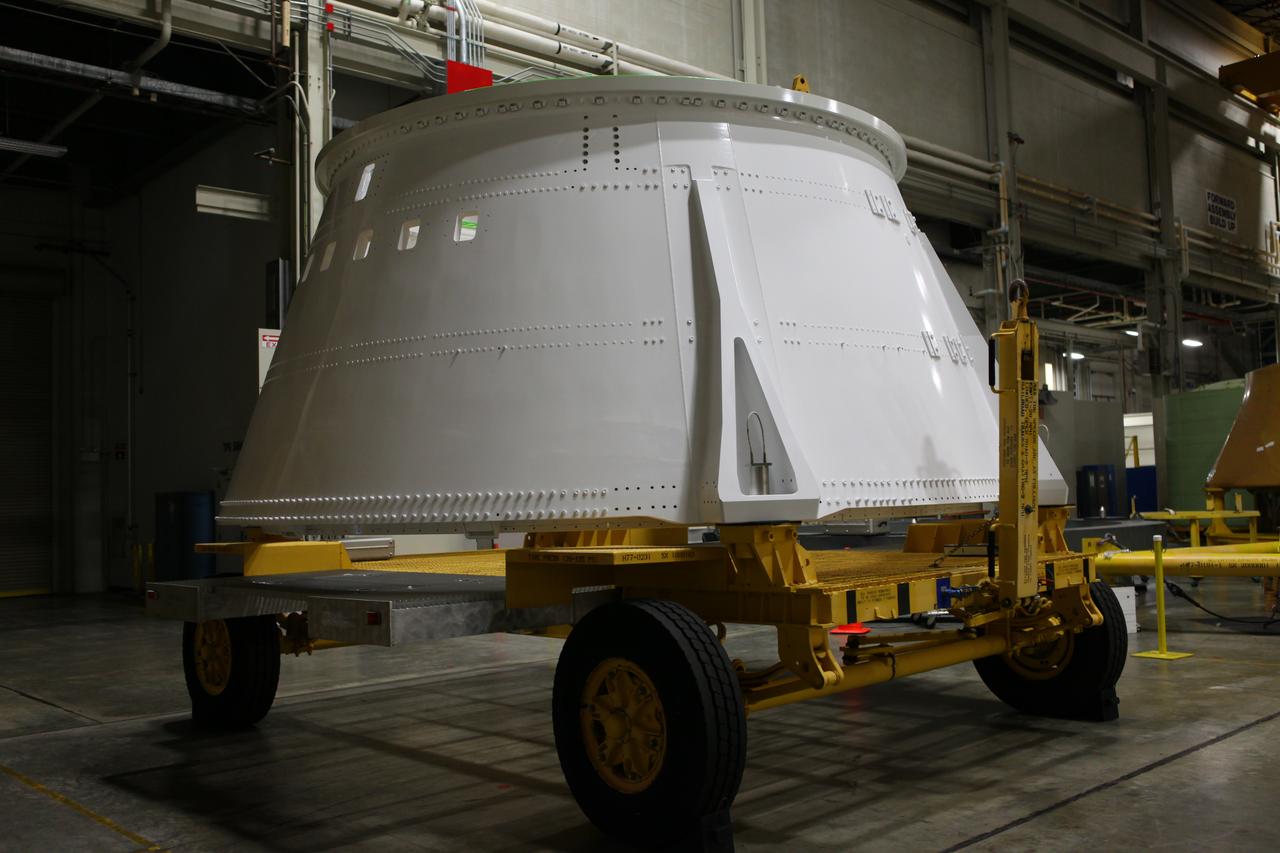
The right hand aft skirt for NASA's Space Launch System (SLS) rocket has been refurbished and painted and is ready for the assembly process in the Booster Fabrication Facility at the agency's Kennedy Space Center in Florida. The aft skirt was refurbished and painted in support facilities at the Hangar AF facility at Cape Canaveral Air Force Station in Florida. The space shuttle-era aft skirt will be used on the right hand booster of the SLS for Exploration Mission 1 (EM-1). NASA is preparing for EM-1, deep space missions, and the Journey to Mars.
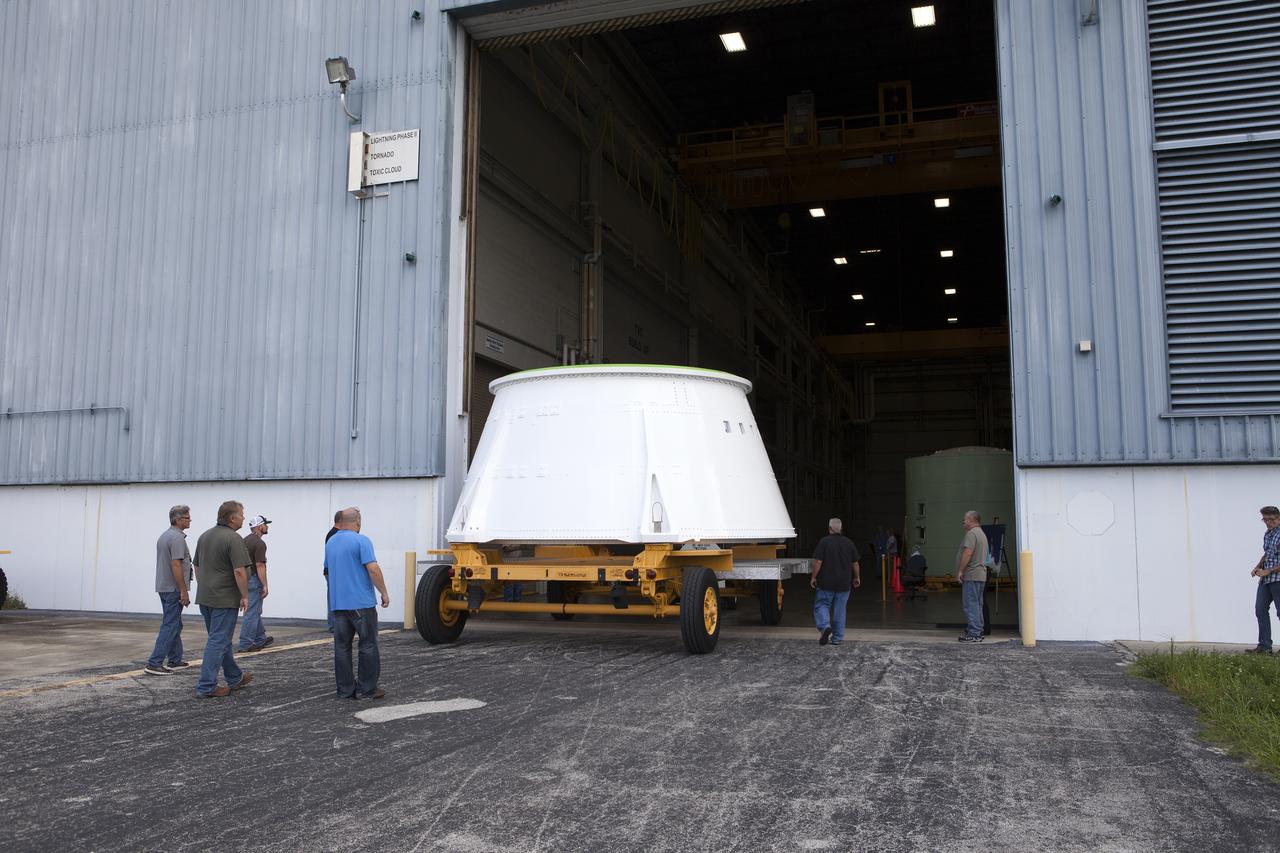
The left hand aft skirt for NASA’s Space Launch System (SLS) rocket is moved inside the Booster Fabrication Facility at the agency’s Kennedy Space Center in Florida. The aft skirt arrived from the Hangar AF facility at Cape Canaveral Air Force Station. The space shuttle-era aft skirt, was inspected, resurfaced, primed and painted for use on the left hand booster of the SLS rocket for Exploration Mission 1 (EM-1). NASA is preparing for EM-1, deep-space missions, and the journey to Mars.
The left hand aft skirt for NASA’s Space Launch System (SLS) rocket arrives at the agency’s Kennedy Space Center in Florida, from the Hangar AF facility at Cape Canaveral Air Force Station. The aft skirt will be transported to the Booster Fabrication Facility. The space shuttle-era aft skirt, was inspected, resurfaced, primed and painted for use on the left hand booster of the SLS rocket for Exploration Mission 1 (EM-1). NASA is preparing for EM-1, deep-space missions, and the journey to Mars.
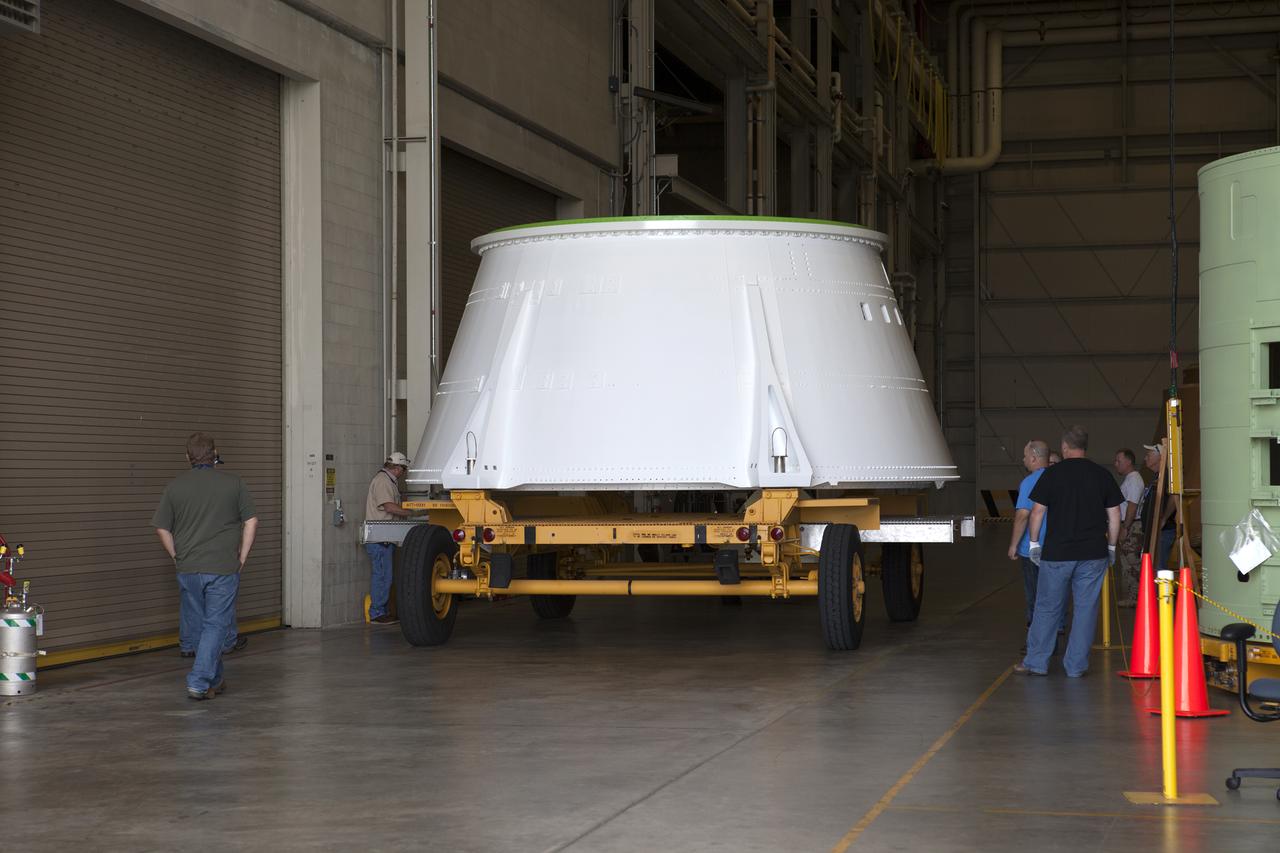
The left hand aft skirt for NASA’s Space Launch System (SLS) rocket is moved inside the Booster Fabrication Facility at the agency’s Kennedy Space Center in Florida. The aft skirt arrived from the Hangar AF facility at Cape Canaveral Air Force Station. The space shuttle-era aft skirt, was inspected, resurfaced, primed and painted for use on the left hand booster of the SLS rocket for Exploration Mission 1 (EM-1). NASA is preparing for EM-1, deep-space missions, and the journey to Mars.
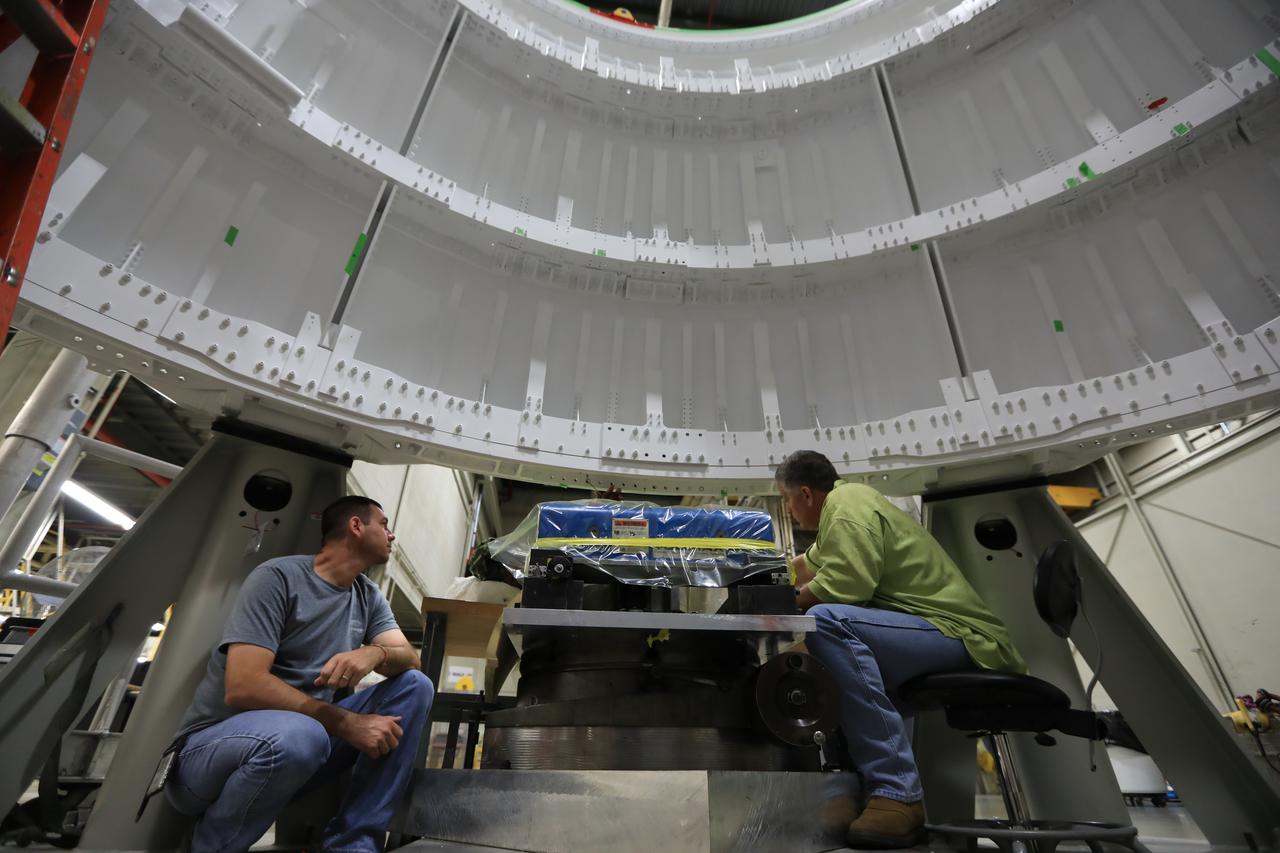
Inside the Booster Fabrication Facility at NASA's Kennedy Space Center in Florida, the left hand aft skirt for the agency's Space Launch System (SLS) rocket is ready for the assembly process. From left, are Chad Goetz, quality technician with Orbital ATK, and Robbie Blaue, quality assurance specialist with the Defense Contract Management Agency. The aft skirt was refurbished and painted in support facilities at the Hangar AF facility at Cape Canaveral Air Force Station in Florida. The space shuttle-era aft skirt will be used on the left hand booster of the SLS for Exploration Mission 1 (EM-1). NASA is preparing for EM-1, deep space missions, and the Journey to Mars.
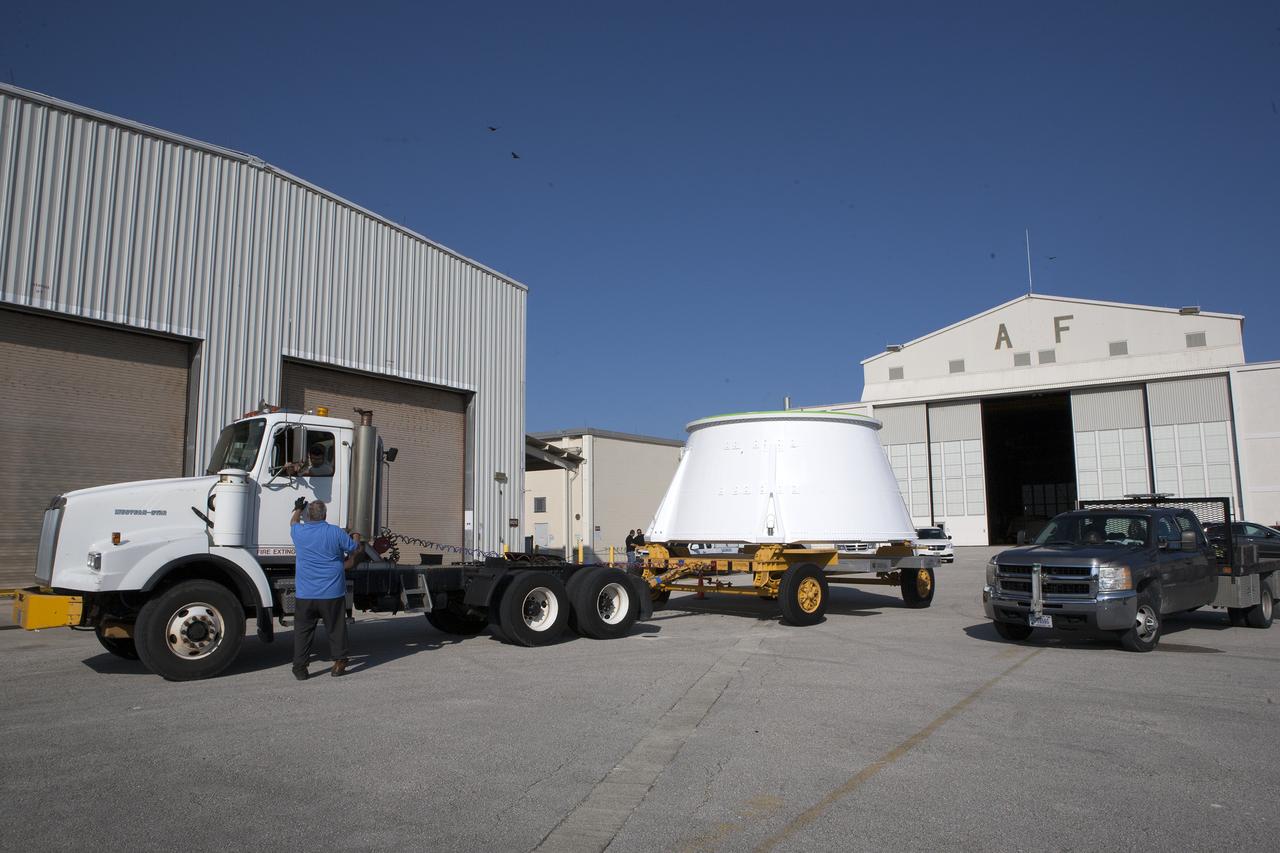
The left hand aft skirt for NASA’s Space Launch System (SLS) rocket is prepared for the move from the Hangar AF facility at Cape Canaveral Air Force Station in Florida, to the Booster Fabrication Facility at the agency’s Kennedy Space Center. The space shuttle-era aft skirt, was inspected, resurfaced, primed and painted for use on the left hand booster of the SLS rocket for Exploration Mission 1 (EM-1). NASA is preparing for EM-1, deep-space missions, and the journey to Mars.
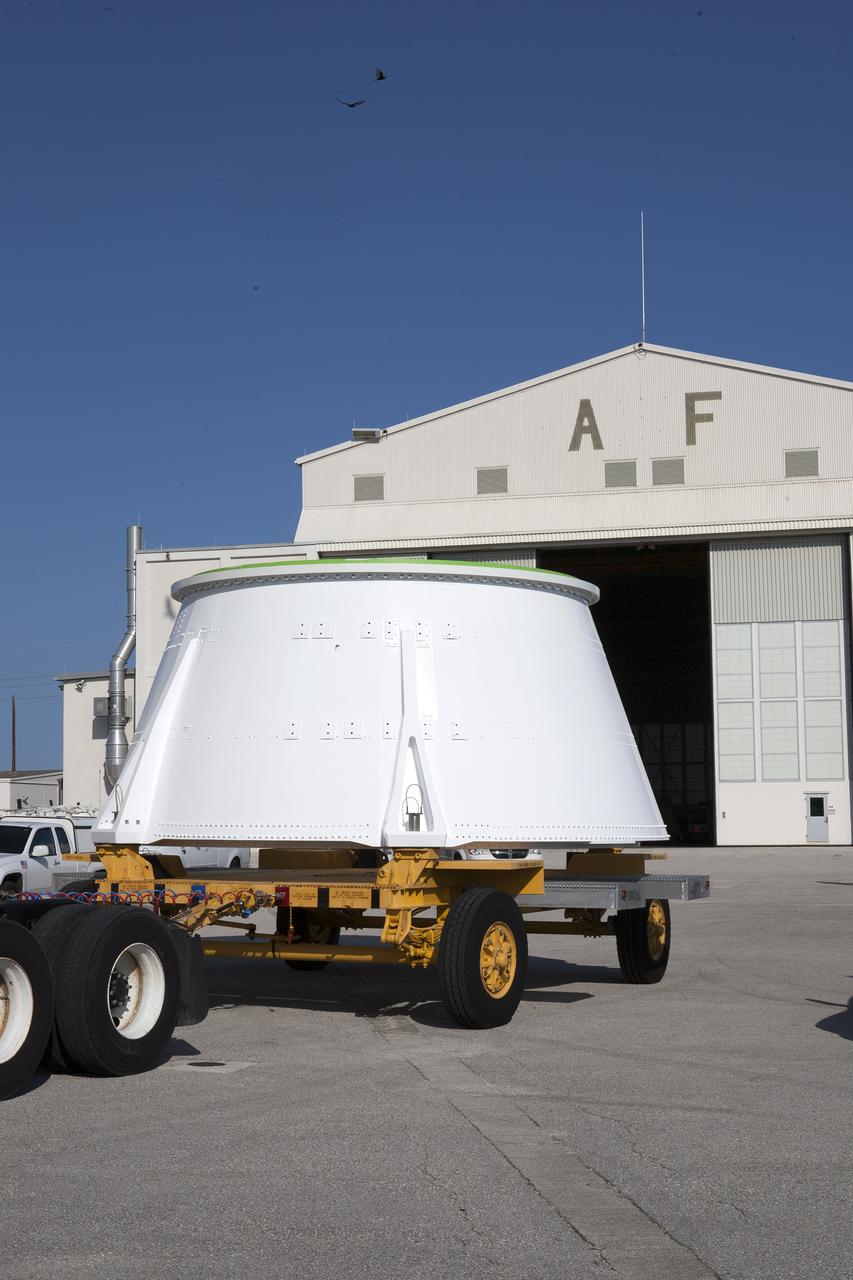
The left hand aft skirt for NASA’s Space Launch System (SLS) rocket is prepared for the move from the Hangar AF facility at Cape Canaveral Air Force Station in Florida, to the Booster Fabrication Facility at the agency’s Kennedy Space Center. The space shuttle-era aft skirt, was inspected, resurfaced, primed and painted for use on the left hand booster of the SLS rocket for Exploration Mission 1 (EM-1). NASA is preparing for EM-1, deep-space missions, and the journey to Mars

The left hand aft skirt for NASA’s Space Launch System (SLS) rocket arrives at the Booster Fabrication Facility at the agency’s Kennedy Space Center in Florida, from the Hangar AF facility at Cape Canaveral Air Force Station. The space shuttle-era aft skirt, was inspected, resurfaced, primed and painted for use on the left hand booster of the SLS rocket for Exploration Mission 1 (EM-1). NASA is preparing for EM-1, deep-space missions, and the journey to Mars.
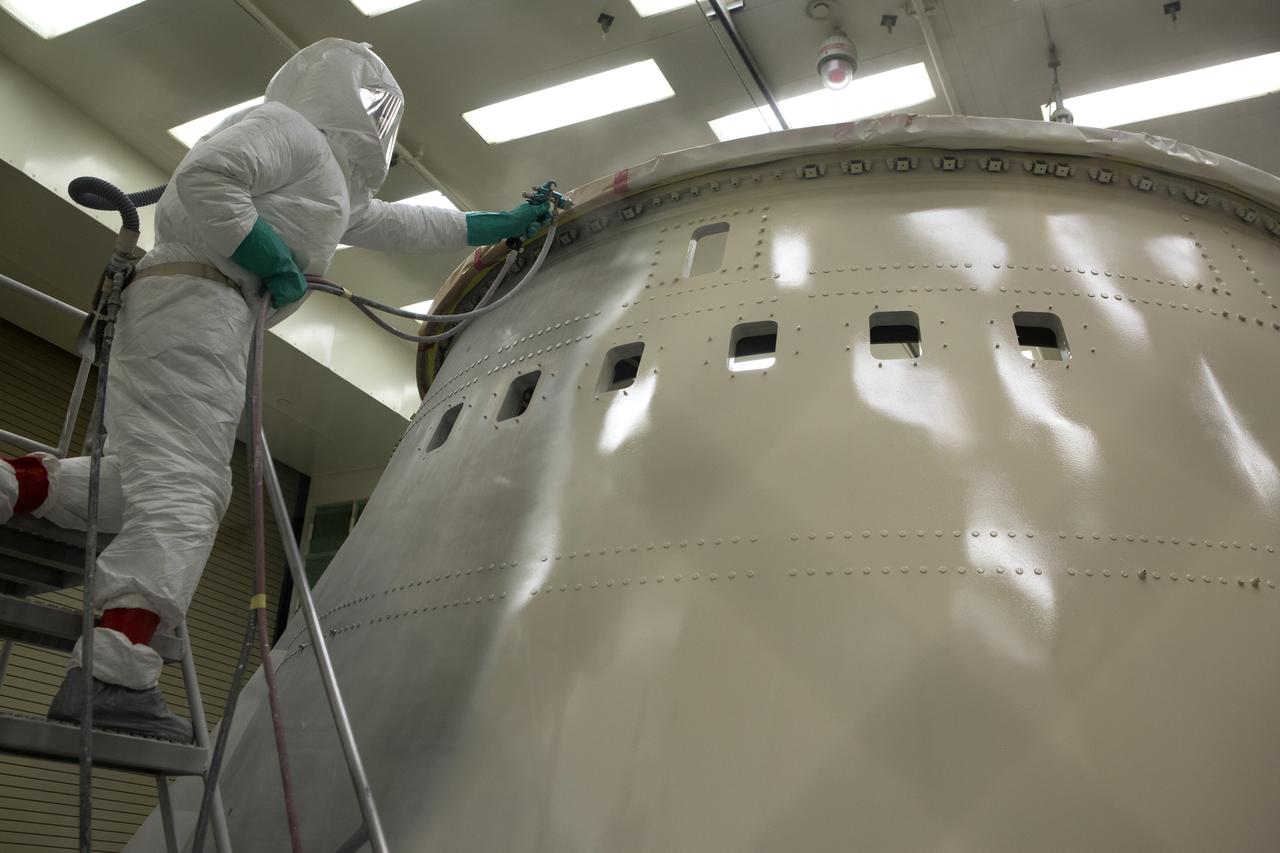
A paint technician with Orbital ATK, prime contractor for the Space Launch System (SLS) Booster, uses an air gun to apply paint to the right hand aft skirt for NASA’s SLS rocket inside a support building at the Hangar AF facility at Cape Canaveral Air Force Station. The space shuttle-era aft skirt, was inspected and resurfaced to prepare it for primer and paint. The aft skirt will be used on the right hand booster of the SLS rocket for Exploration Mission 1 (EM-1). NASA is preparing for EM-1, deep-space missions, and the journey to Mars.
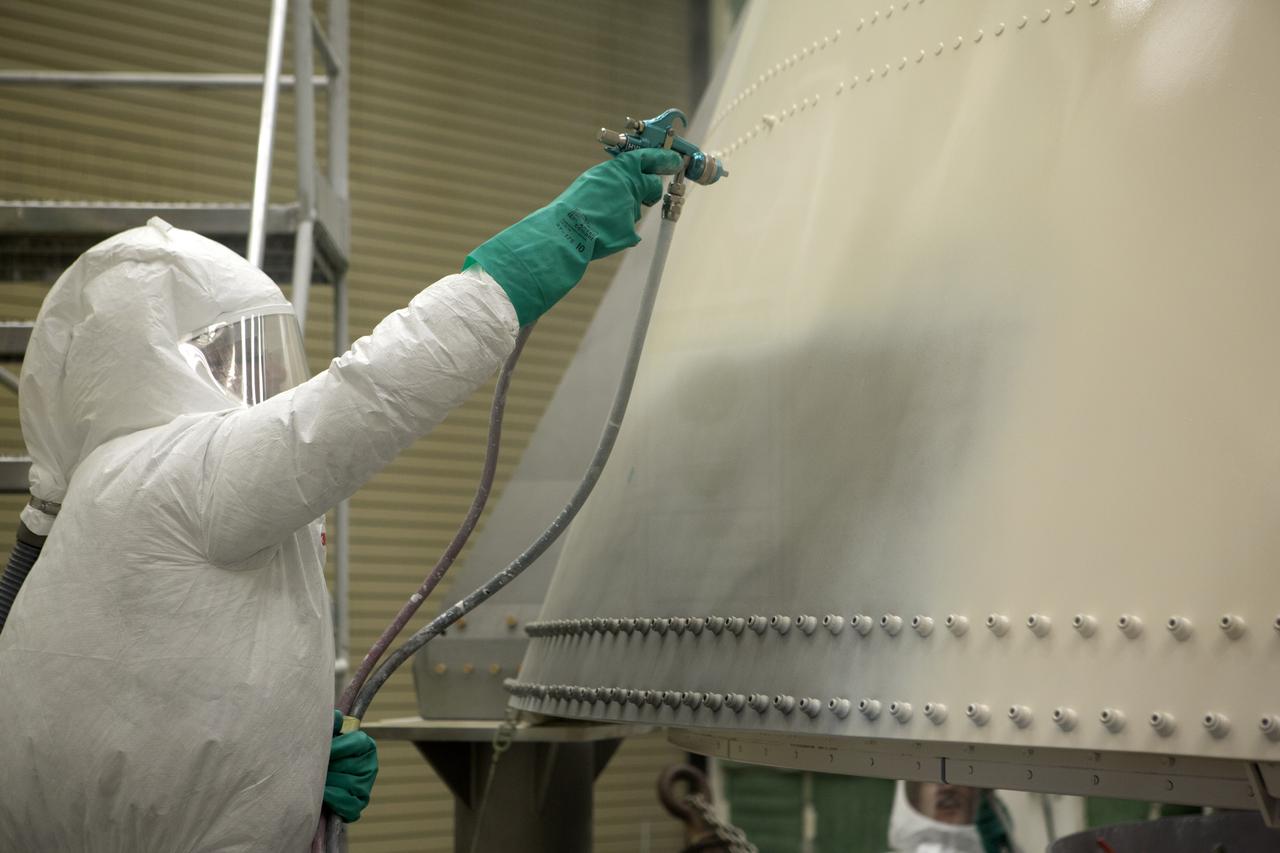
A paint technician with Orbital ATK, prime contractor for the Space Launch System (SLS) Booster, uses an air gun to apply paint to the right hand aft skirt for NASA’s SLS rocket inside a support building at the Hangar AF facility at Cape Canaveral Air Force Station. The space shuttle-era aft skirt, was inspected and resurfaced to prepare it for primer and paint. The aft skirt will be used on the right hand booster of the SLS rocket for Exploration Mission 1 (EM-1). NASA is preparing for EM-1, deep-space missions, and the journey to Mars.
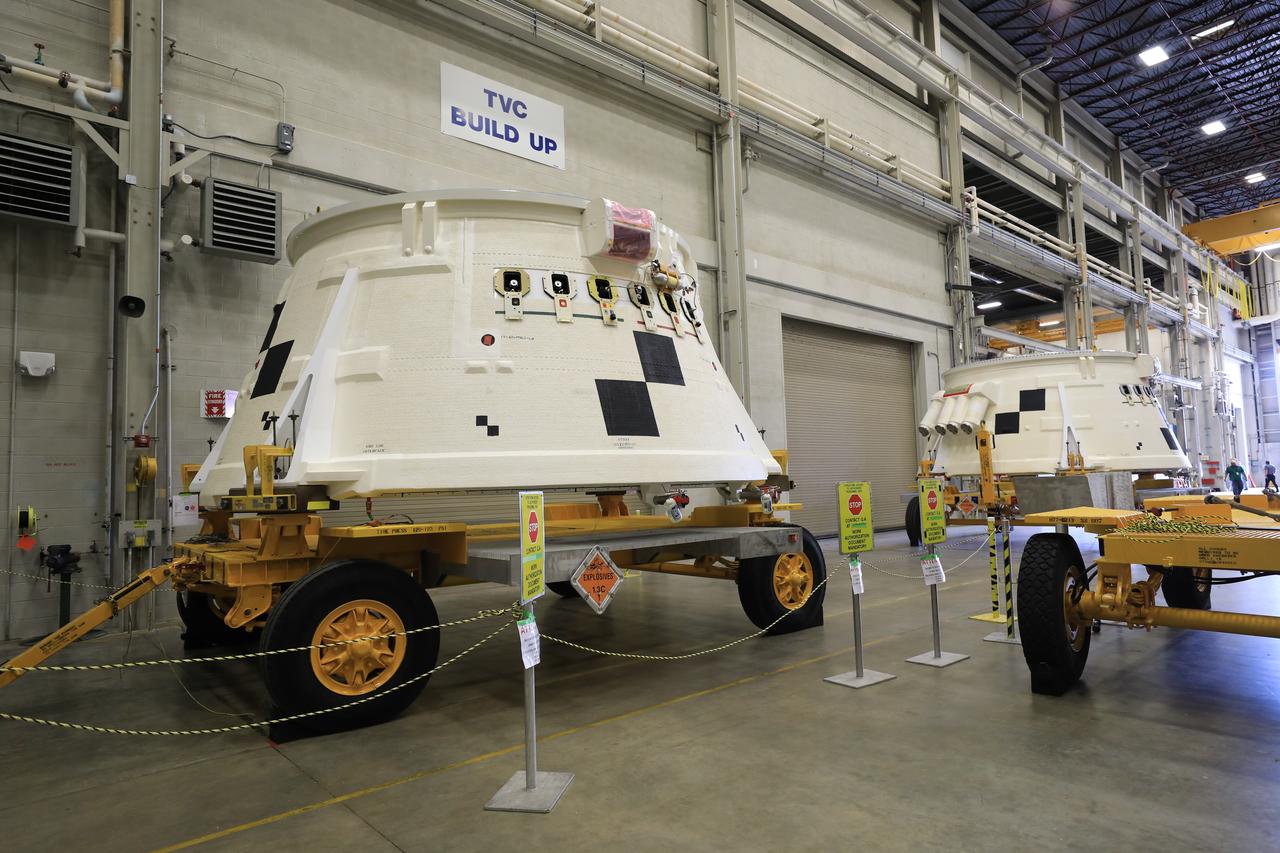
Inside the Booster Fabrication Facility at NASA's Kennedy Space Center in Florida, the Artemis I aft skirts for the agency's Space Launch System (SLS) rocket’s twin solid rocket boosters are being readied for their move to the Rotation, Processing and Surge Facility (RPSF) on June 9, 2020. In view at left is the left aft skirt assembly, and at far right is the right aft skirt assembly. The aft skirts were refurbished by Northrop Grumman. They house the thrust vector control system, which controls 70 percent of the steering during initial ascent of the SLS rocket. The segments will remain in the RPSF until ready for stacking with the forward and aft parts of the boosters on the mobile launcher in High Bay 3 of the Vehicle Assembly Building. Through the Artemis Program, NASA is working to land the first woman and next man on the Moon by 2024.

Inside the Booster Fabrication Facility at NASA's Kennedy Space Center in Florida, the Artemis I aft skirts for the agency's Space Launch System (SLS) rocket’s twin solid rocket boosters are being readied for their move to the Rotation, Processing and Surge Facility (RPSF) on June 9, 2020. In view at left is the left aft skirt assembly. Behind it to the right is the right aft skirt assembly. Also in view at far right, are the Artemis I forward assemblies, with the left assembly in front and the right assembly behind it. The aft skirts were refurbished by Northrop Grumman. They house the thrust vector control system, which controls 70 percent of the steering during initial ascent of the SLS rocket. The segments will remain in the RPSF until ready for stacking with the forward and aft parts of the boosters on the mobile launcher in High Bay 3 of the Vehicle Assembly Building. Through the Artemis Program, NASA is working to land the first woman and next man on the Moon by 2024.
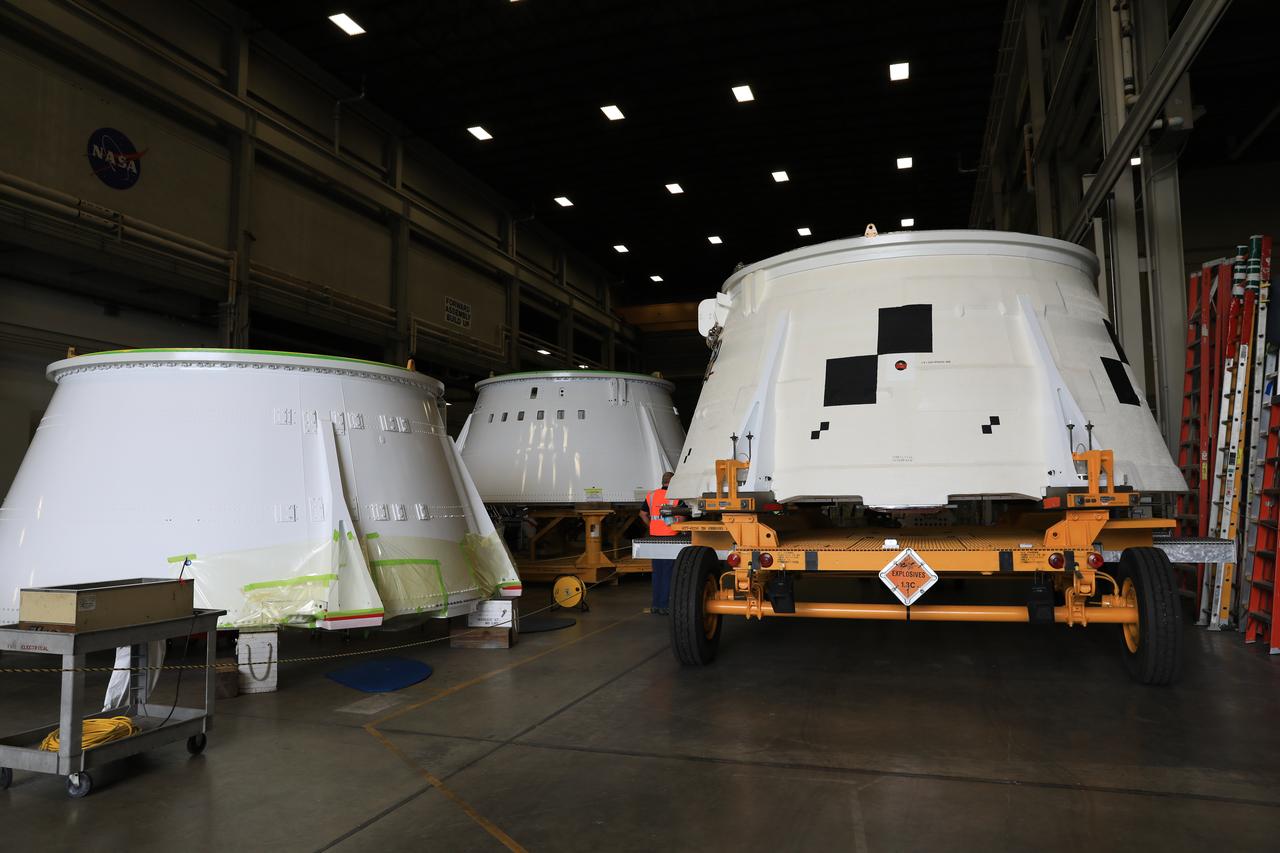
Inside the Booster Fabrication Facility at NASA's Kennedy Space Center in Florida, the Artemis I aft skirts for the agency's Space Launch System (SLS) rocket’s twin solid rocket boosters are being readied for their move to the Rotation, Processing and Surge Facility (RPSF) on June 9, 2020. In view, the left aft skirt assembly is attached to a move vehicle and moved out of a test cell. The Artemis II aft skirt structures are in view at left. The aft skirts were refurbished by Northrop Grumman. They house the thrust vector control system, which controls 70 percent of the steering during initial ascent of the SLS rocket. The segments will remain in the RPSF until ready for stacking with the forward and aft parts of the boosters on the mobile launcher in High Bay 3 of the Vehicle Assembly Building. Through the Artemis Program, NASA is working to land the first woman and next man on the Moon by 2024.
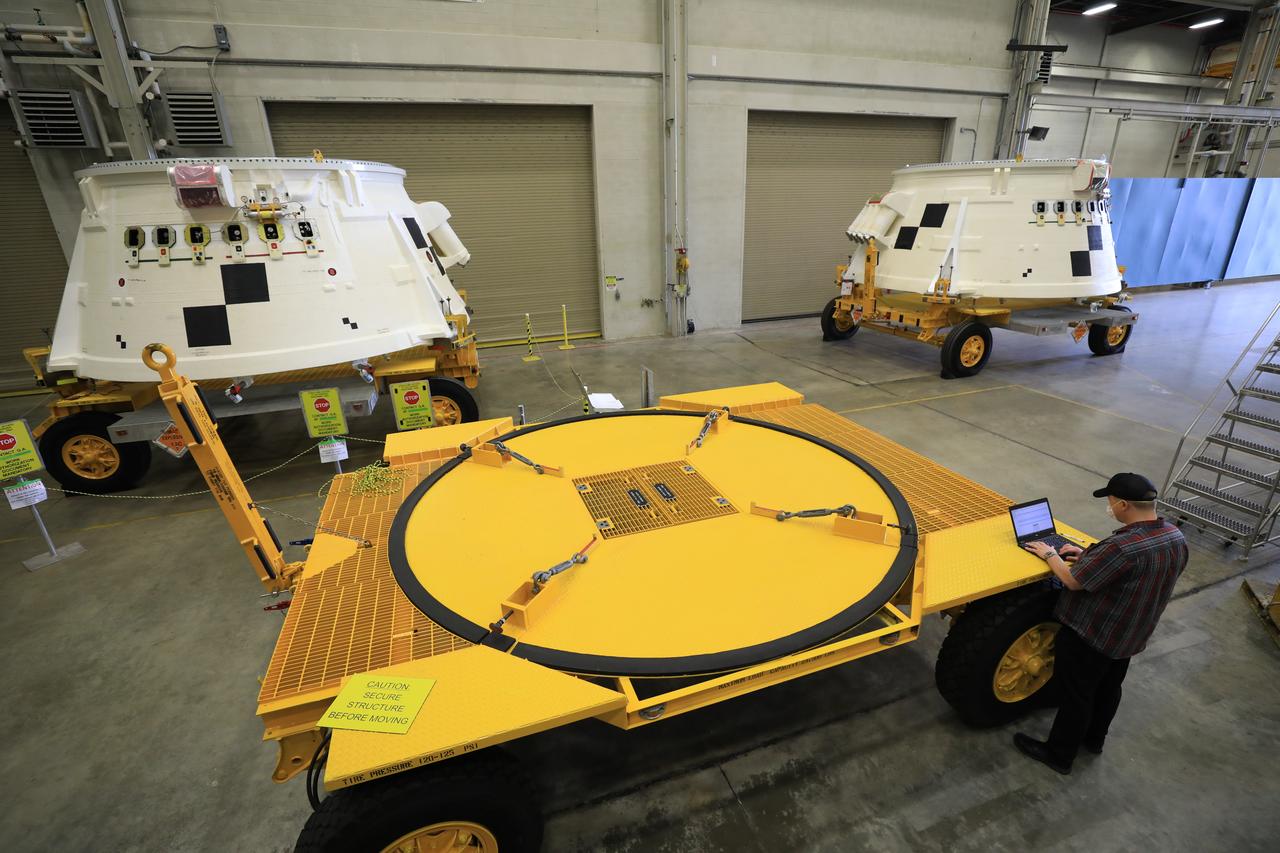
Inside the Booster Fabrication Facility at NASA's Kennedy Space Center in Florida, the Artemis I aft skirts for the agency's Space Launch System (SLS) rocket’s twin solid rocket boosters are being readied for their move to the Rotation, Processing and Surge Facility (RPSF) on June 9, 2020. In view at left is the left aft skirt assembly, and at right is the right aft skirt assembly. The aft skirts were refurbished by Northrop Grumman. They house the thrust vector control system, which controls 70 percent of the steering during initial ascent of the SLS rocket. The segments will remain in the RPSF until ready for stacking with the forward and aft parts of the boosters on the mobile launcher in High Bay 3 of the Vehicle Assembly Building. Through the Artemis Program, NASA is working to land the first woman and next man on the Moon by 2024.
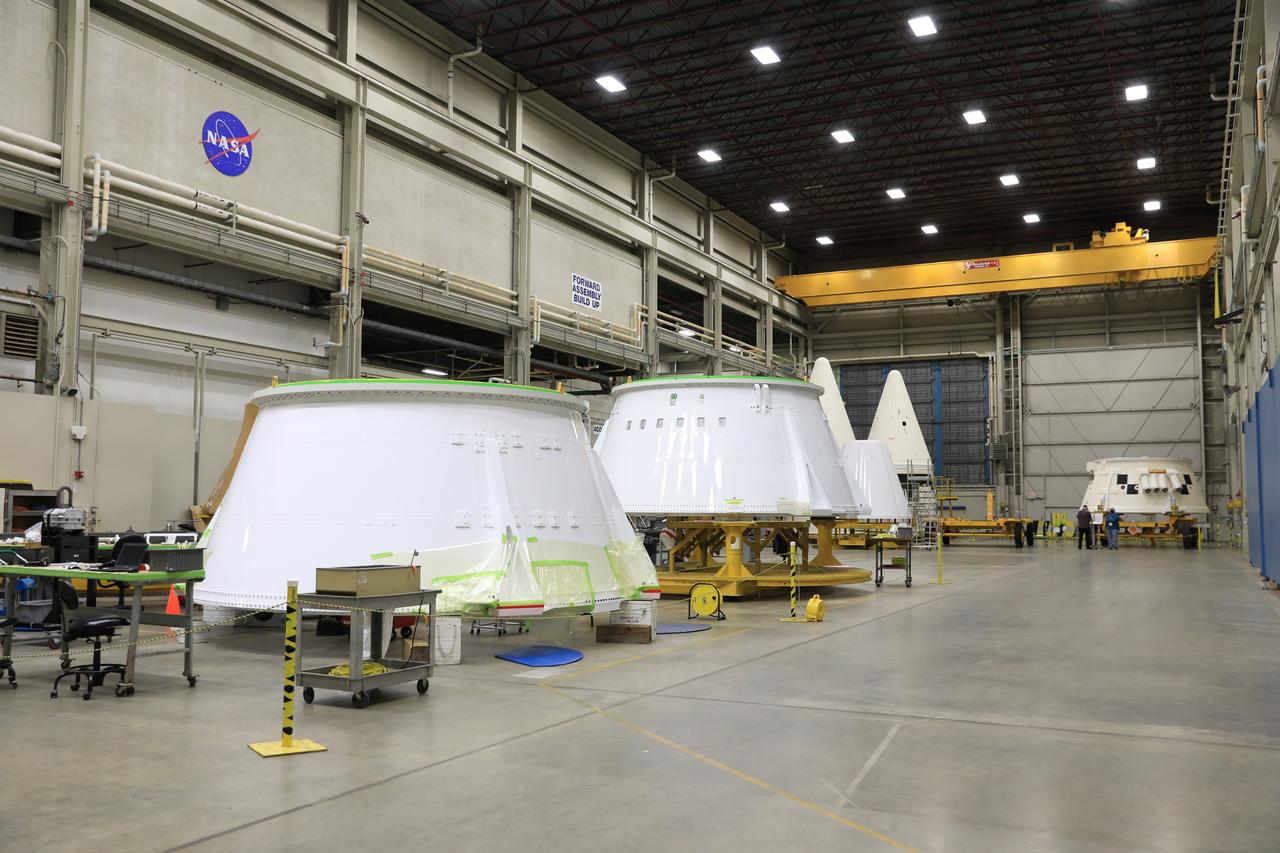
Inside the Booster Fabrication Facility (BFF) at NASA's Kennedy Space Center in Florida, the Artemis II aft skirt structures for the agency's Space Launch System (SLS) rocket’s twin solid rocket boosters are in view at left. Behind them are the two Artemis I forward assemblies. At far right, in the distance, is the right aft skirt assembly. In the BFF, the two aft skirt assemblies are being readied for their move to the Rotation, Processing and Surge Facility (RPSF) on June 9, 2020. The aft skirts were refurbished by Northrop Grumman. They house the thrust vector control system, which controls 70 percent of the steering during initial ascent of the SLS rocket. The segments will remain in the RPSF until ready for stacking with the forward and aft parts of the boosters on the mobile launcher in High Bay 3 of the Vehicle Assembly Building. Through the Artemis Program, NASA is working to land the first woman and next man on the Moon by 2024.
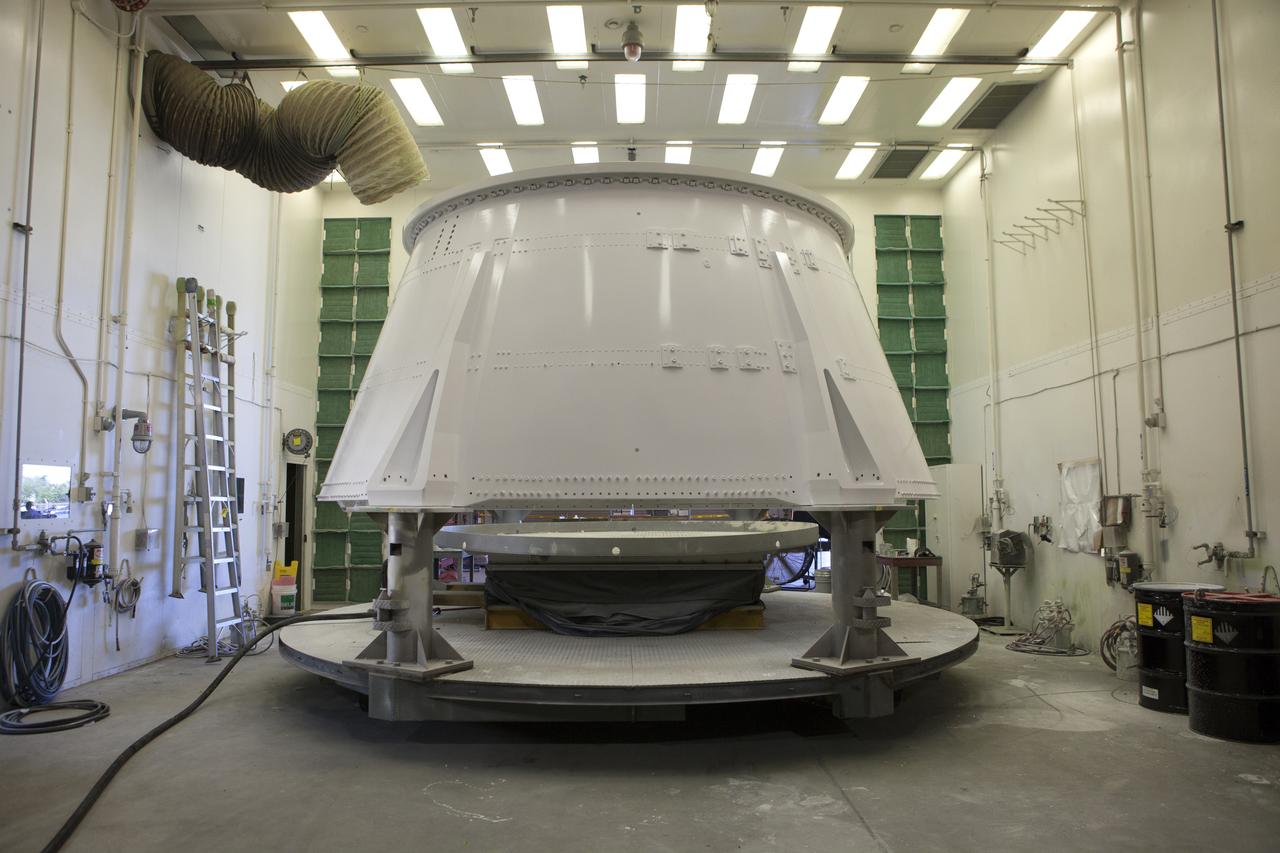
The right hand aft skirt for NASA's Space Launch System (SLS) rocket has been refurbished and painted and is in a drying cell in a support building at the Hangar AF facility at Cape Canaveral Air Force Station in Florida. The space shuttle-era aft skirt will be used on the right hand booster of the SLS for Exploration Mission 1 (EM-1). NASA is preparing for EM-1, deep space missions, and the Journey to Mars.
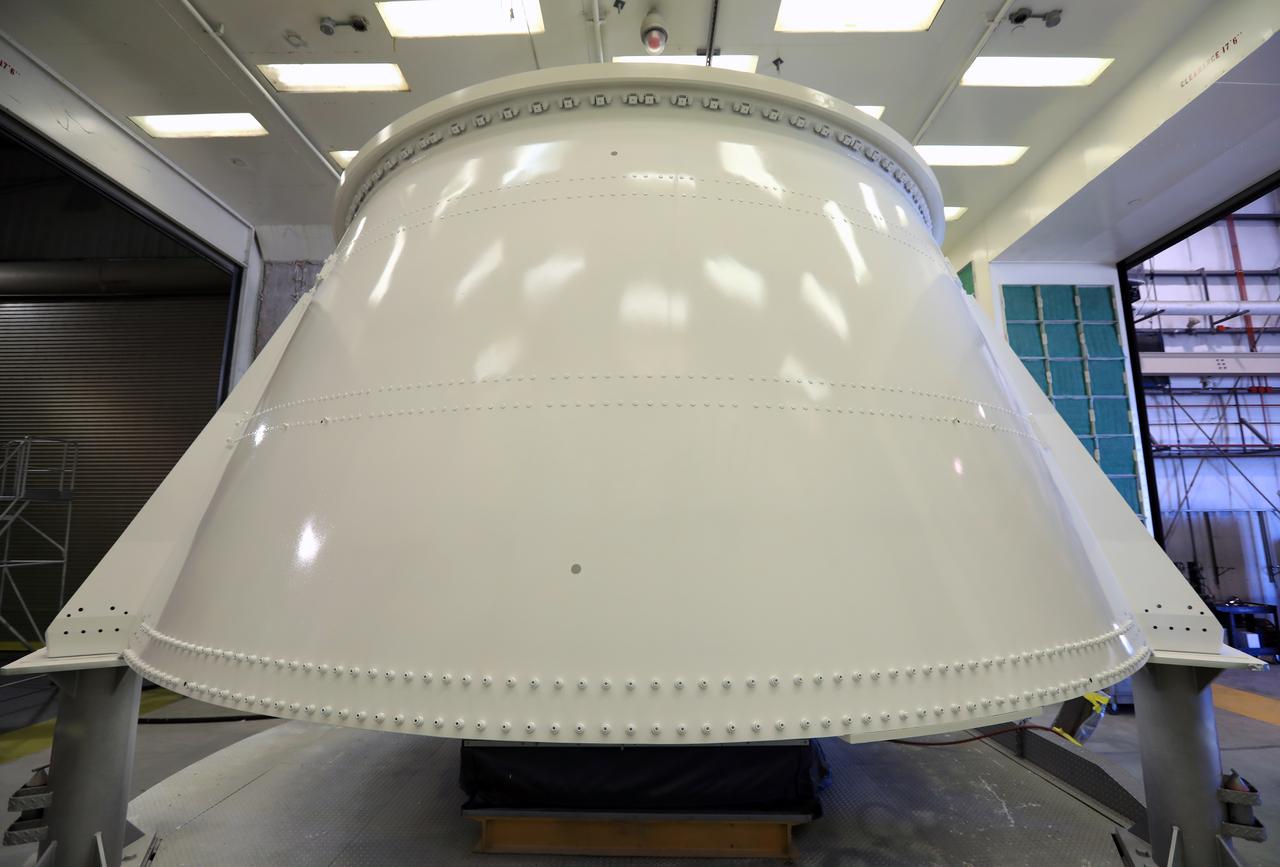
The right hand aft skirt for NASA's Space Launch System (SLS) rocket has been refurbished and painted and is in a drying cell in a support building at the Hangar AF facility at Cape Canaveral Air Force Station in Florida. The space shuttle-era aft skirt will be used on the right hand booster of the SLS for Exploration Mission 1 (EM-1). NASA is preparing for EM-1, deep space missions, and the Journey to Mars.
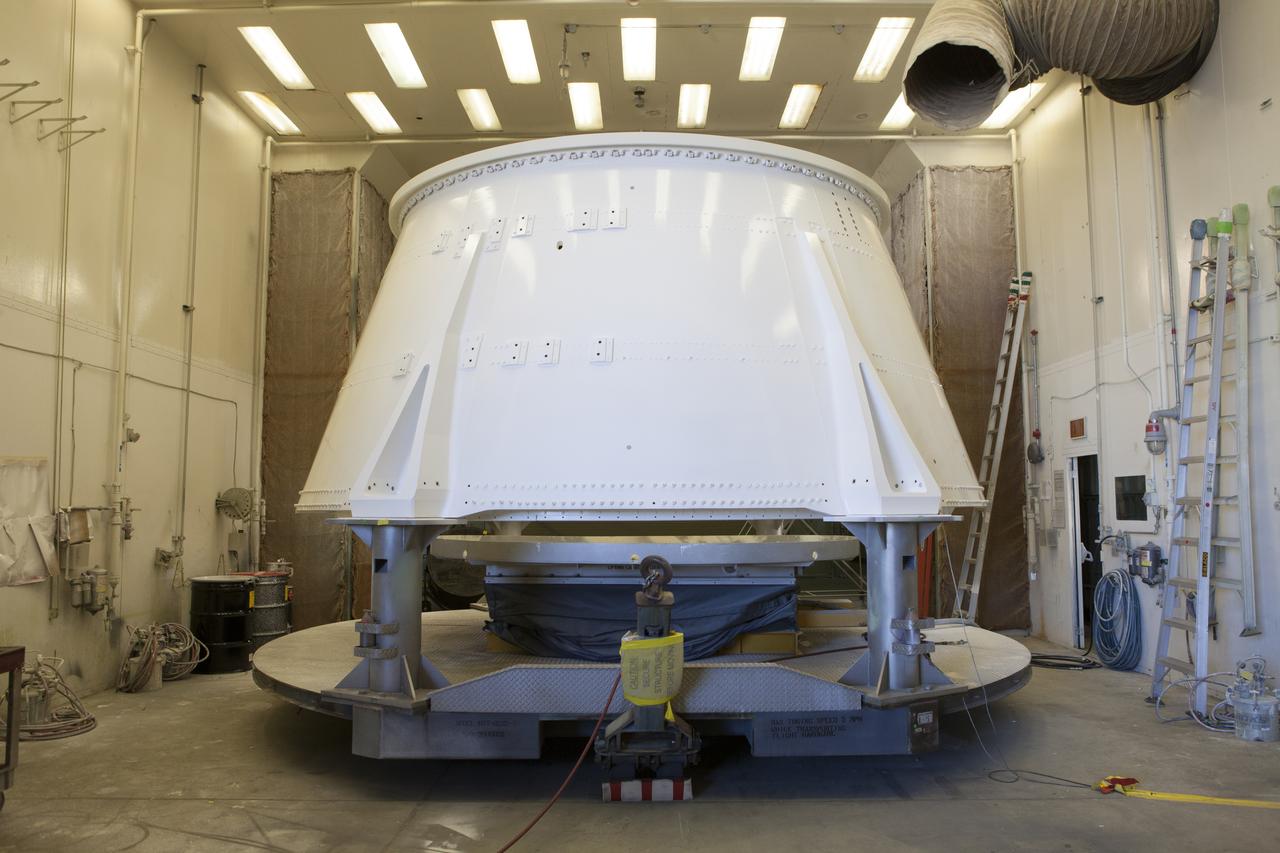
The right hand aft skirt for NASA's Space Launch System (SLS) rocket has been refurbished and painted and is in a drying cell in a support building at the Hangar AF facility at Cape Canaveral Air Force Station in Florida. The space shuttle-era aft skirt will be used on the right hand booster of the SLS for Exploration Mission 1 (EM-1). NASA is preparing for EM-1, deep space missions, and the Journey to Mars.
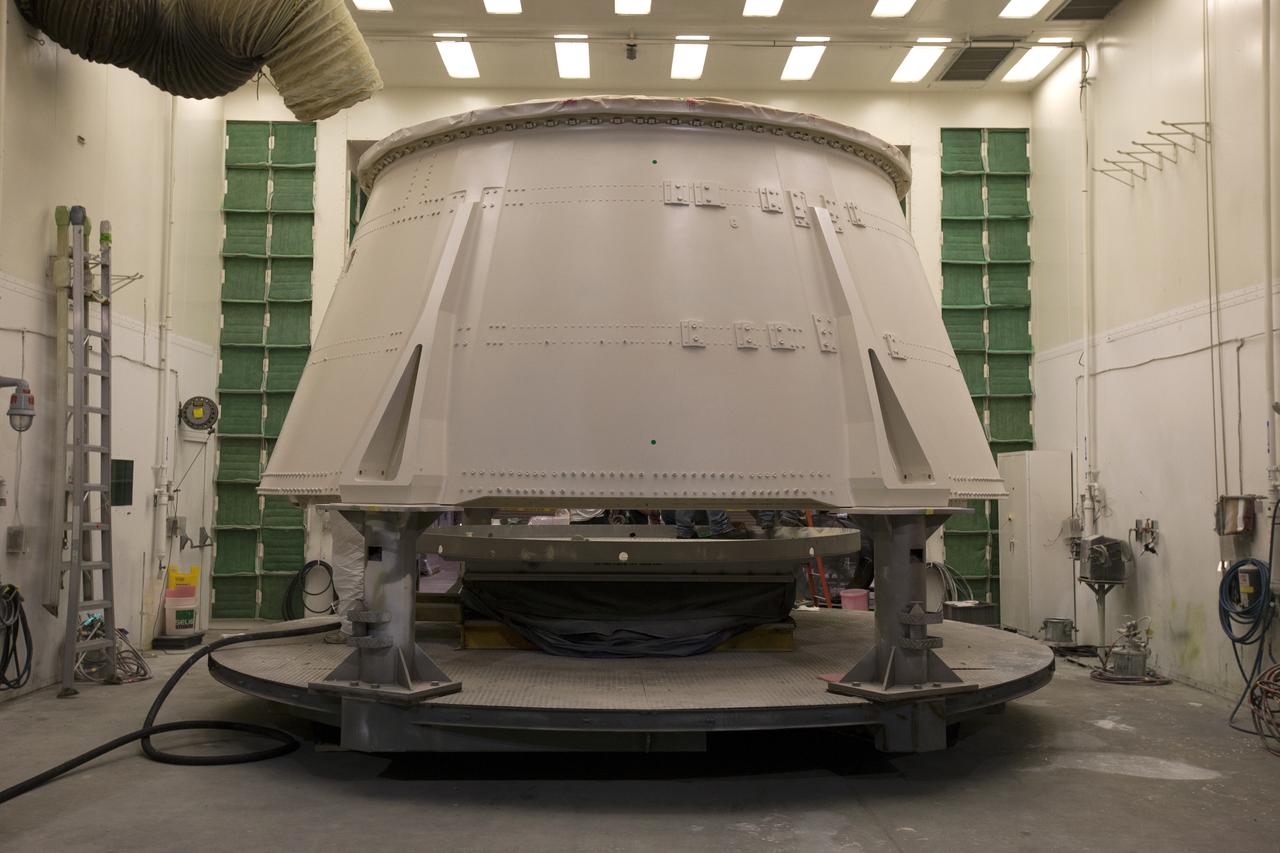
The right hand aft skirt for NASA's Space Launch System (SLS) rocket has been painted and is in a drying cell in a support building at the Hangar AF facility at Cape Canaveral Air Force Station in Florida. The space shuttle-era aft skirt will be used on the right hand booster of NASA's Space Launch System rocket for Exploration Mission 1 (EM-1). NASA is preparing for EM-1, deep space missions, and the Journey to Mars.

Technicians with Orbital ATK, prime contractor for the Space Launch System (SLS) Booster, prepare a paint mixture for the right hand aft skirt for NASA’s SLS in a support building at the Hangar AF facility at Cape Canaveral Air Force Station in Florida. The space shuttle-era aft skirt, was inspected and resurfaced, and will be primed and painted for use on the right hand booster of the SLS rocket for Exploration Mission 1 (EM-1). NASA is preparing for EM-1, deep-space missions, and the Journey to Mars.
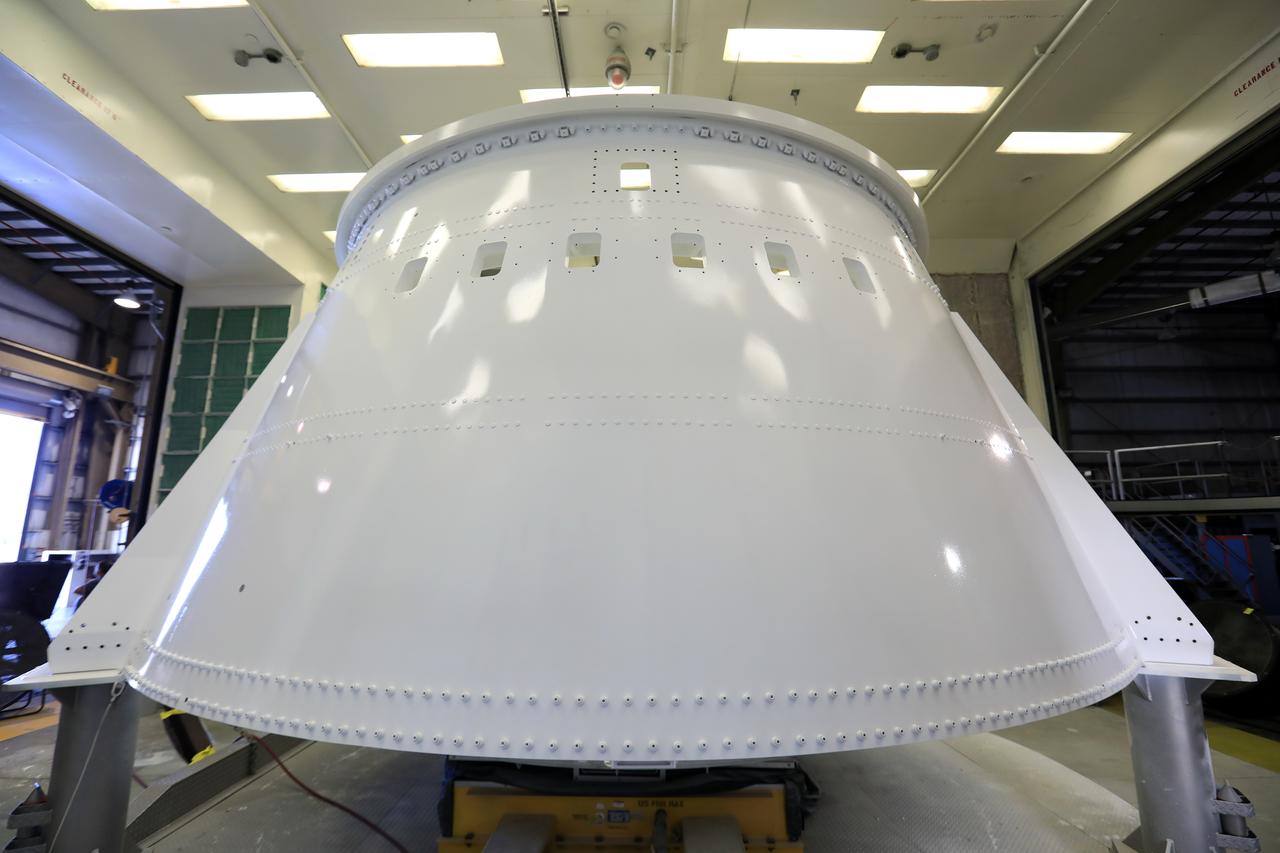
The right hand aft skirt for NASA's Space Launch System (SLS) rocket has been refurbished and painted and is in a drying cell in a support building at the Hangar AF facility at Cape Canaveral Air Force Station in Florida. The space shuttle-era aft skirt will be used on the right hand booster of the SLS for Exploration Mission 1 (EM-1). NASA is preparing for EM-1, deep space missions, and the Journey to Mars.
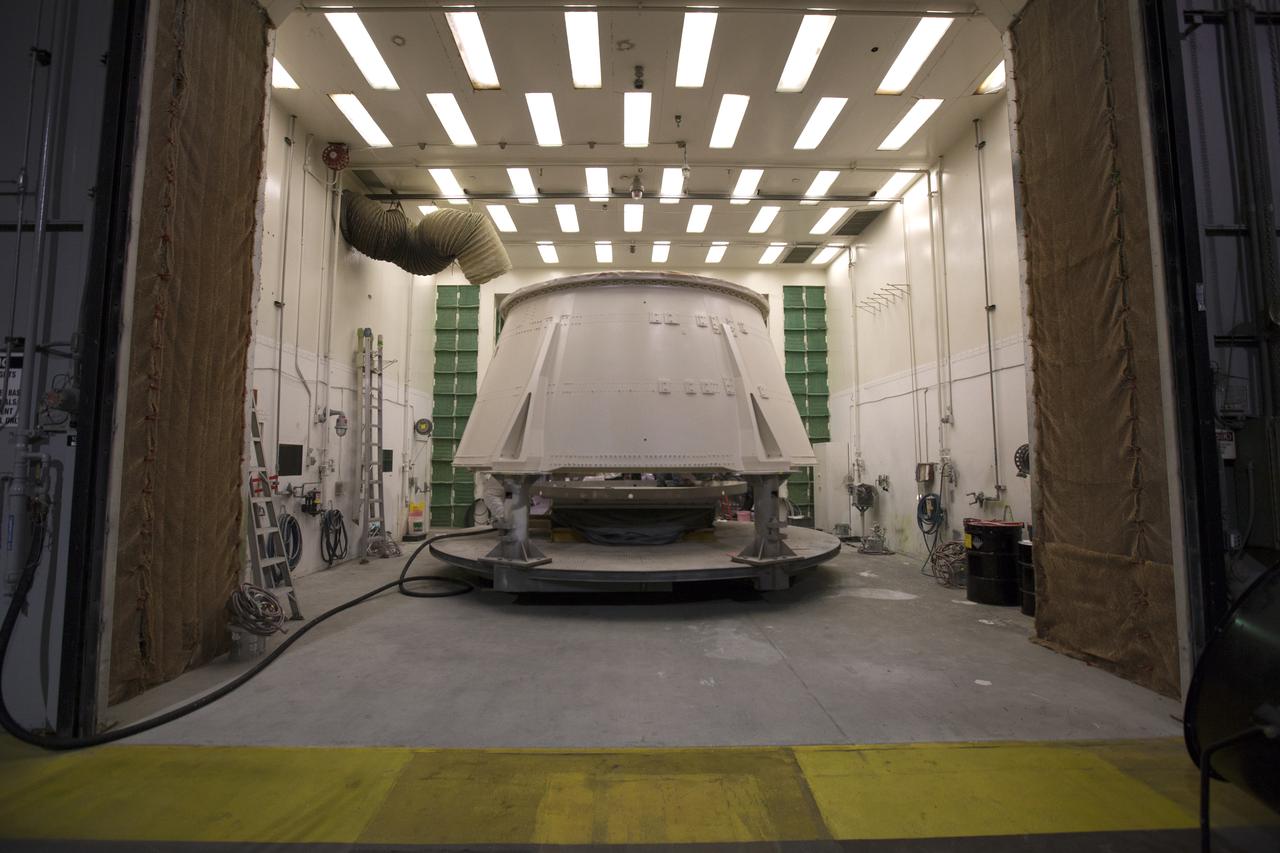
The right hand aft skirt for NASA's Space Launch System (SLS) rocket has been painted and is in a drying cell in a support building at the Hangar AF facility at Cape Canaveral Air Force Station in Florida. The space shuttle-era aft skirt will be used on the right hand booster of NASA's Space Launch System rocket for Exploration Mission 1 (EM-1). NASA is preparing for EM-1, deep space missions, and the Journey to Mars.
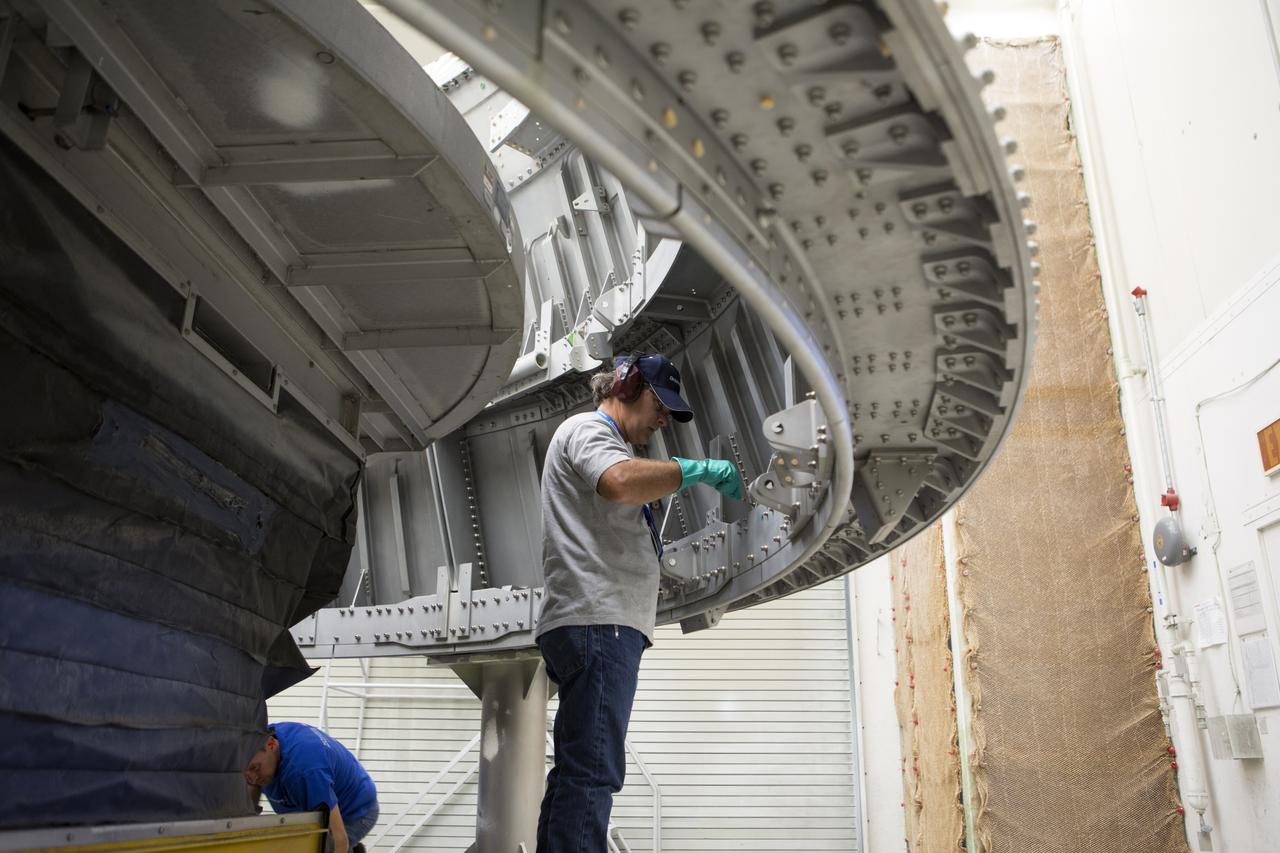
A technician with Orbital ATK, prime contractor for the Space Launch System (SLS) Booster, preps a section of the right hand aft skirt for primer and paint in a support building at the Hangar AF facility at Cape Canaveral Air Force Station in Florida. The space shuttle-era aft skirt will be used on the right hand booster of NASA's SLS rocket for Exploration Mission 1 (EM-1). NASA is preparing for EM-1, deep space missions, and the Journey to Mars.
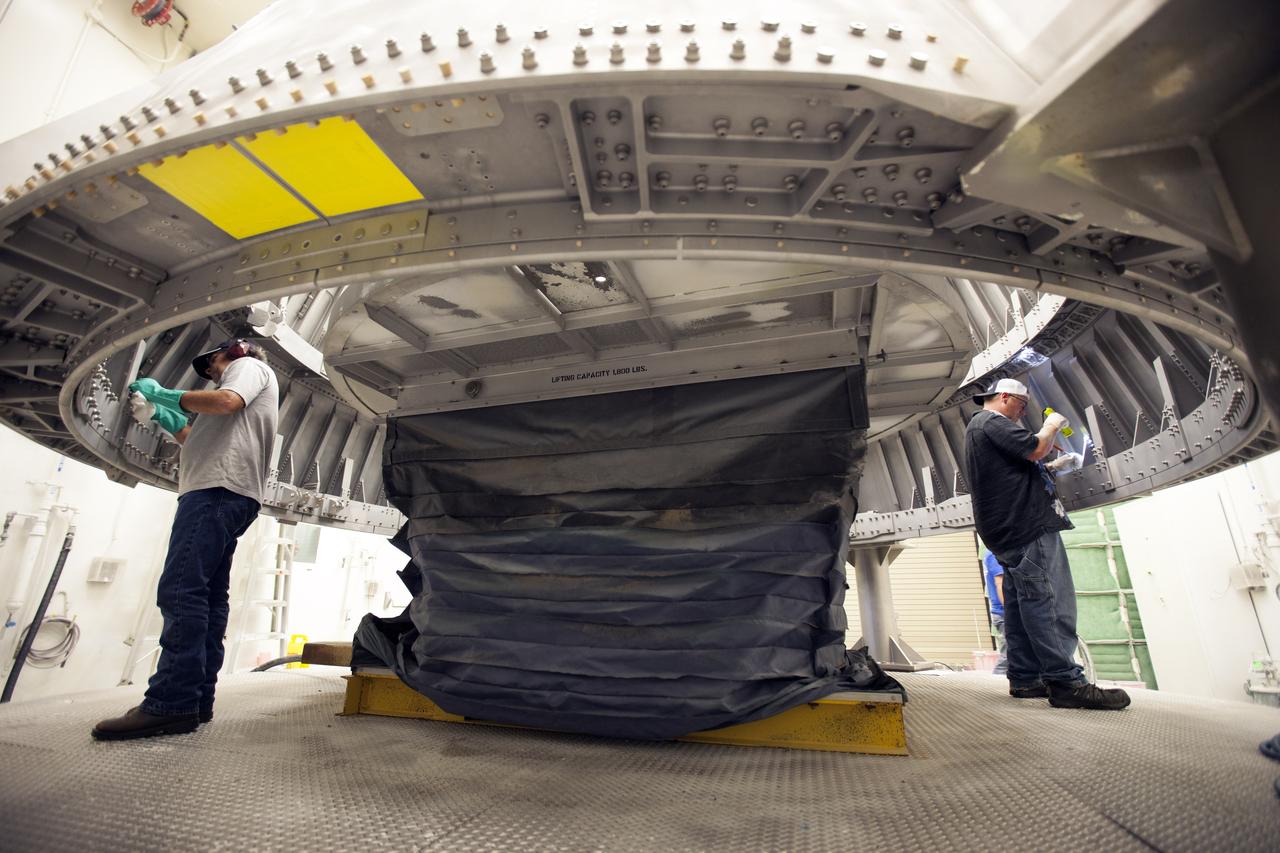
Technicians with Orbital ATK, prime contractor for the Space Launch System (SLS) Booster, prepare the right hand aft skirt for NASA’s SLS rocket for primer and painting inside a support building at the Hangar AF facility at Cape Canaveral Air Force Station in Florida. The space shuttle-era aft skirt, was inspected and resurfaced and will be primed and painted for use on the right hand booster of the SLS rocket for Exploration Mission 1 (EM-1). NASA is preparing for EM-1, deep-space missions, and the journey to Mars.
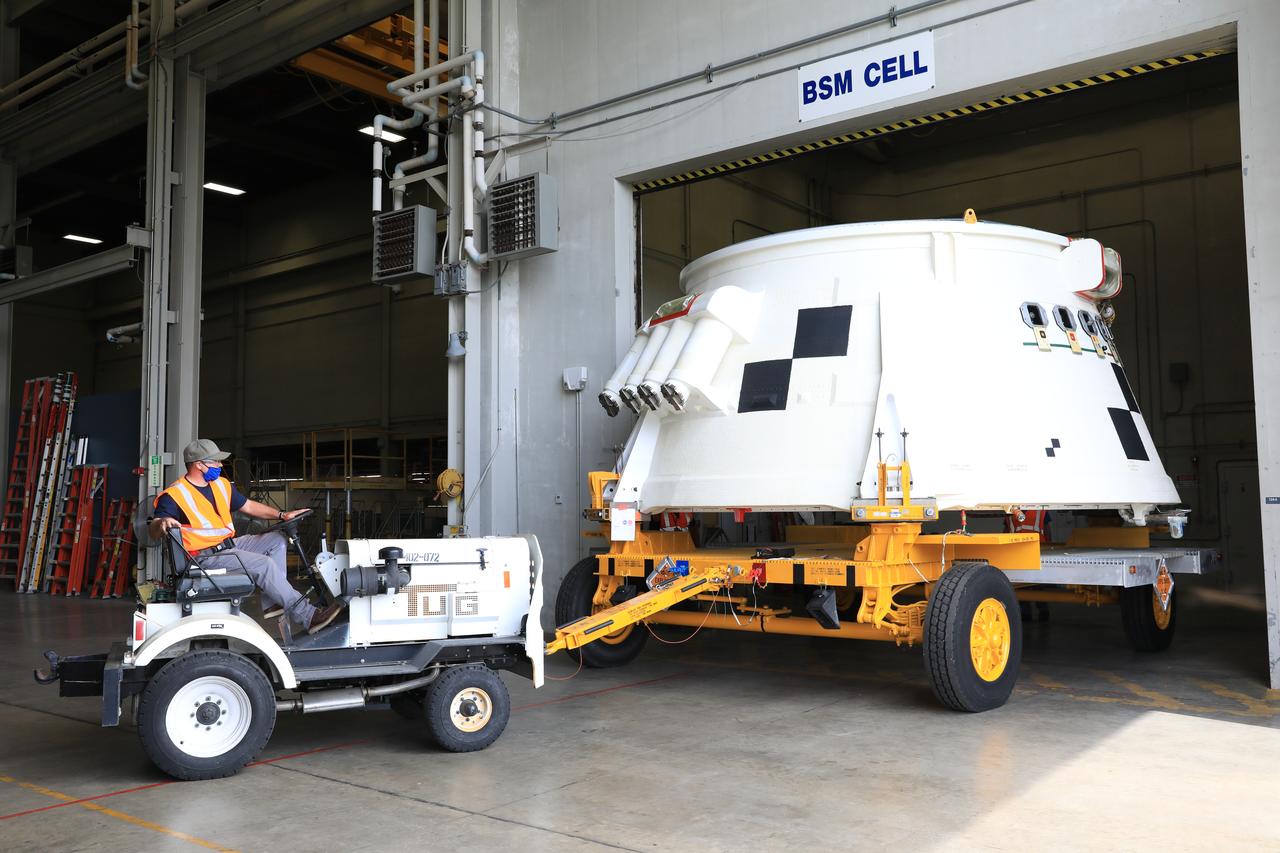
Inside the Booster Fabrication Facility at NASA's Kennedy Space Center in Florida, the Artemis I aft skirts for the agency's Space Launch System (SLS) rocket’s twin solid rocket boosters are being readied for their move to the Rotation, Processing and Surge Facility (RPSF) on June 9, 2020. In view, the left aft skirt assembly is attached to a move vehicle and moved out of a test cell. The aft skirts were refurbished by Northrop Grumman. They house the thrust vector control system, which controls 70 percent of the steering during initial ascent of the SLS rocket. The segments will remain in the RPSF until ready for stacking with the forward and aft parts of the boosters on the mobile launcher in High Bay 3 of the Vehicle Assembly Building. Through the Artemis Program, NASA is working to land the first woman and next man on the Moon by 2024.
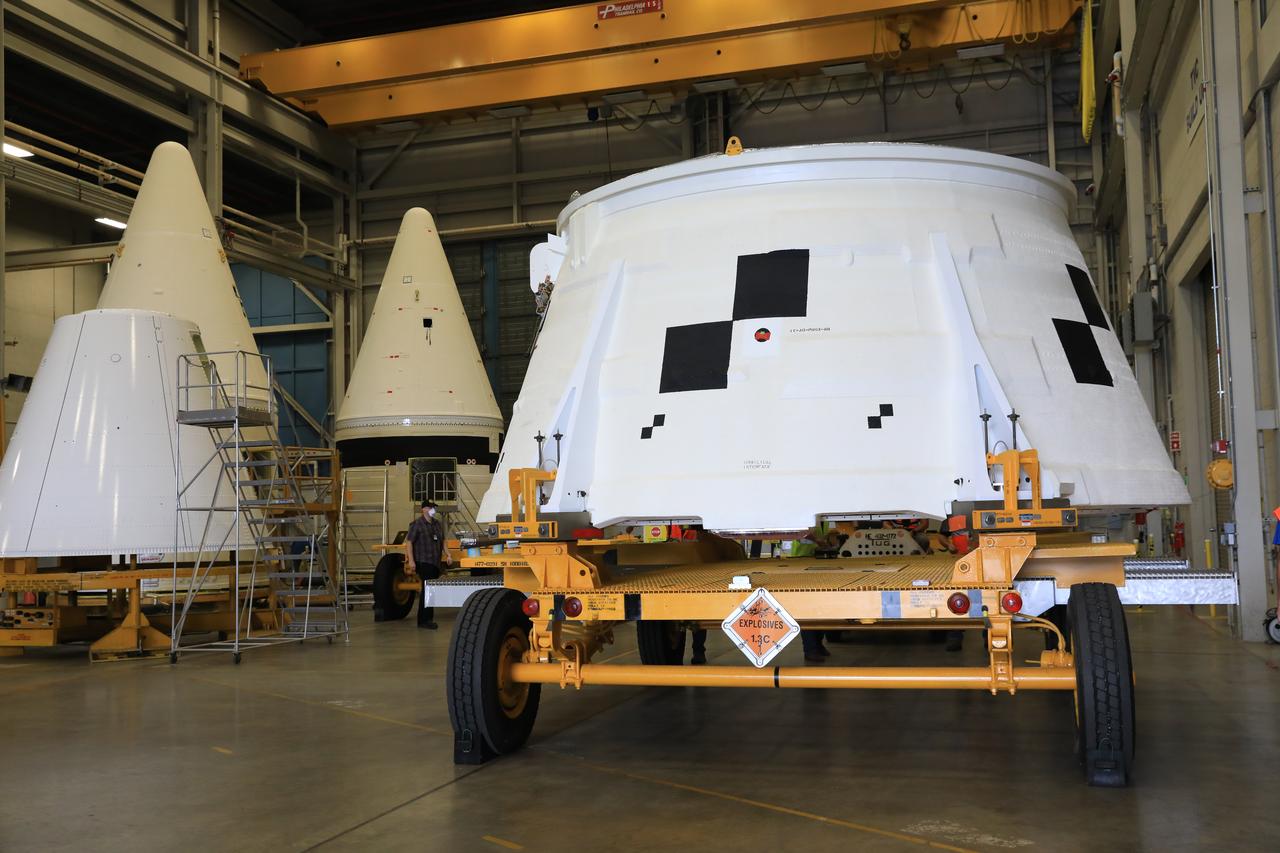
Inside the Booster Fabrication Facility at NASA's Kennedy Space Center in Florida, the Artemis I aft skirts for the agency's Space Launch System (SLS) rocket’s twin solid rocket boosters are moved out of their test cells and are being readied for their move to the Rotation, Processing and Surge Facility (RPSF) on June 9, 2020. In view at right is the right aft skirt. In view at left are the two Artemis I forward assemblies. The aft skirts were refurbished by Northrop Grumman. They house the thrust vector control system, which controls 70 percent of the steering during initial ascent of the SLS rocket. The segments will remain in the RPSF until ready for stacking with the forward and aft parts of the boosters on the mobile launcher in High Bay 3 of the Vehicle Assembly Building. Through the Artemis Program, NASA is working to land the first woman and next man on the Moon by 2024.
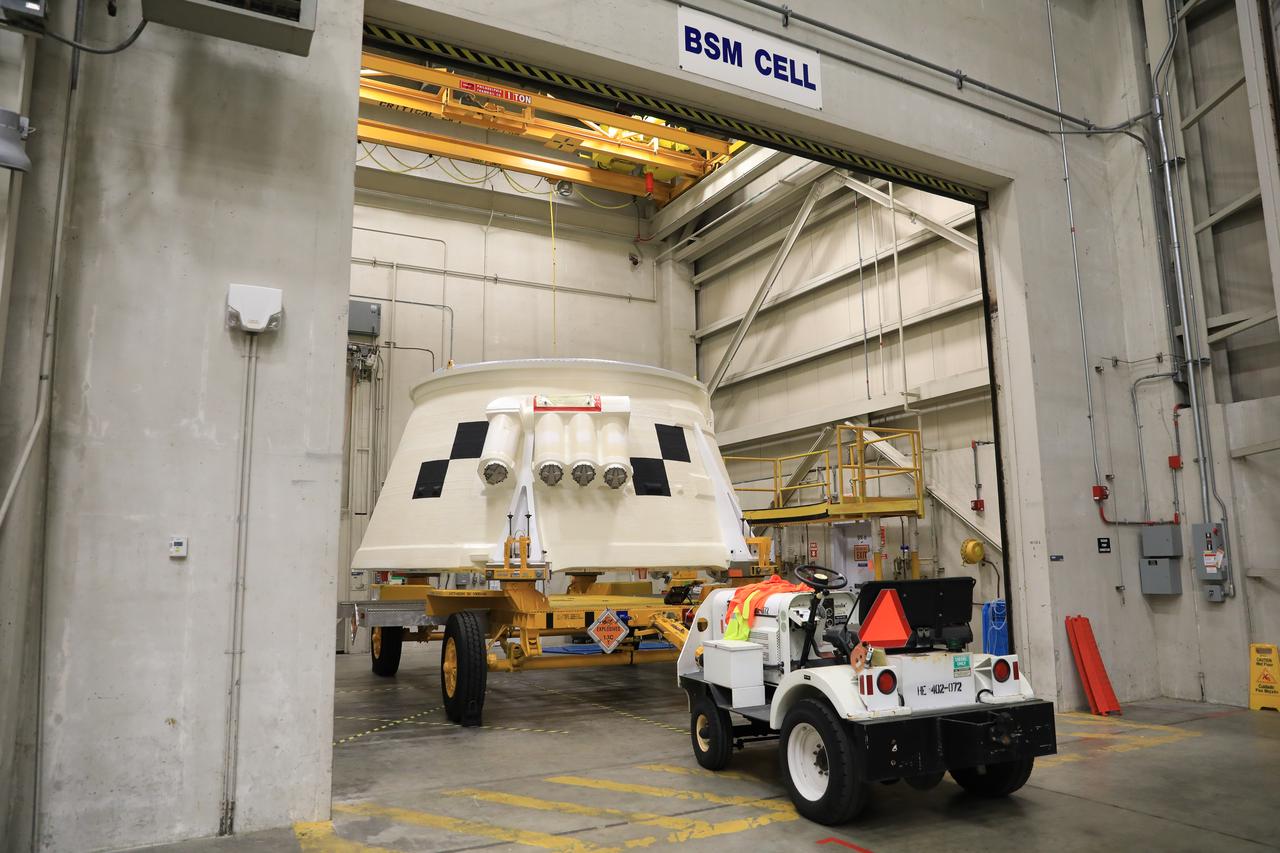
Inside the Booster Fabrication Facility at NASA's Kennedy Space Center in Florida, the Artemis I aft skirts for the agency's Space Launch System (SLS) rocket’s twin solid rocket boosters are being readied for their move to the Rotation, Processing and Surge Facility (RPSF) on June 9, 2020. In view, the left aft skirt assembly is attached to a move vehicle in a test cell. The aft skirts were refurbished by Northrop Grumman. They house the thrust vector control system, which controls 70 percent of the steering during initial ascent of the SLS rocket. The segments will remain in the RPSF until ready for stacking with the forward and aft parts of the boosters on the mobile launcher in High Bay 3 of the Vehicle Assembly Building. Through the Artemis Program, NASA is working to land the first woman and next man on the Moon by 2024.
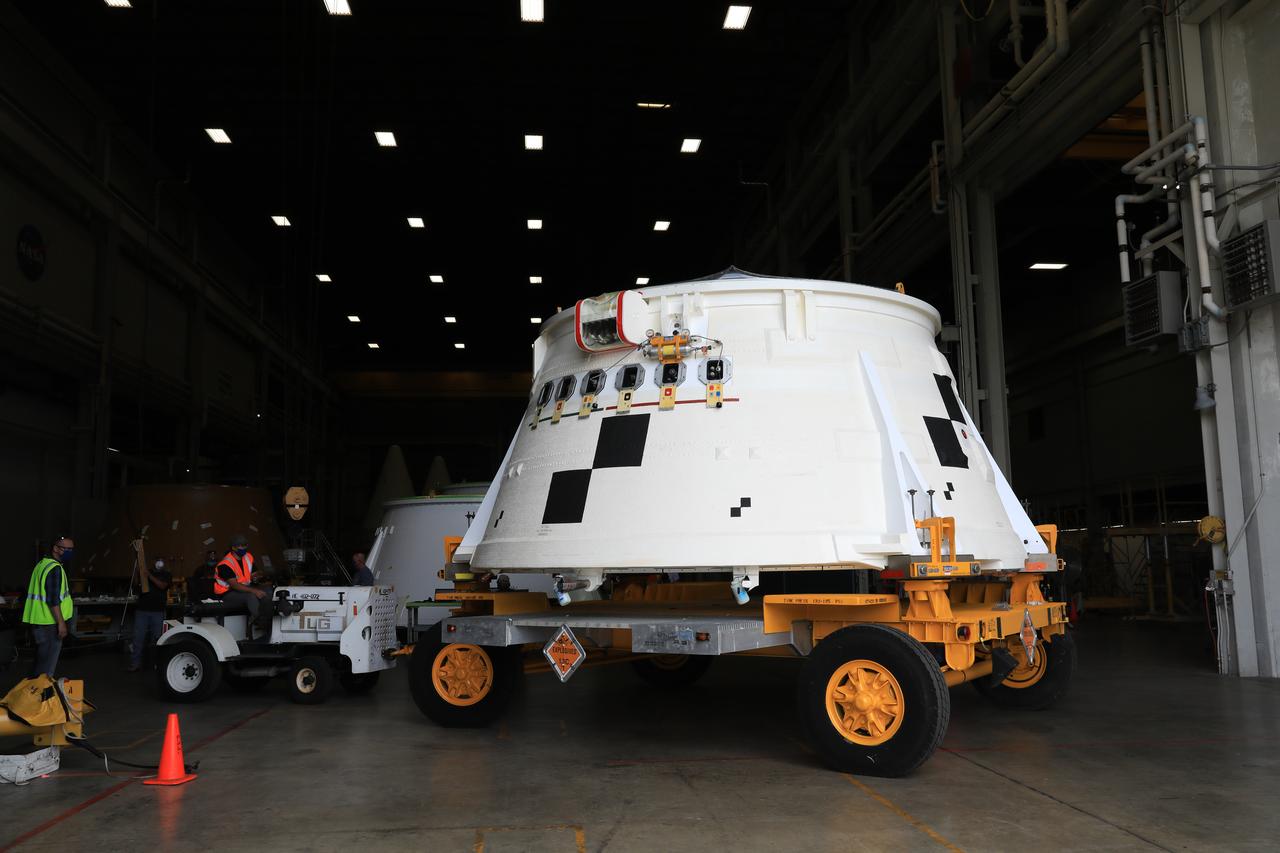
Inside the Booster Fabrication Facility at NASA's Kennedy Space Center in Florida, the Artemis I aft skirts for the agency's Space Launch System (SLS) rocket’s twin solid rocket boosters are being readied for their move to the Rotation, Processing and Surge Facility (RPSF) on June 9, 2020. In view, the left aft skirt assembly is attached to a move vehicle and moved out of a test cell. The aft skirts were refurbished by Northrop Grumman. They house the thrust vector control system, which controls 70 percent of the steering during initial ascent of the SLS rocket. The segments will remain in the RPSF until ready for stacking with the forward and aft parts of the boosters on the mobile launcher in High Bay 3 of the Vehicle Assembly Building. Through the Artemis Program, NASA is working to land the first woman and next man on the Moon by 2024.
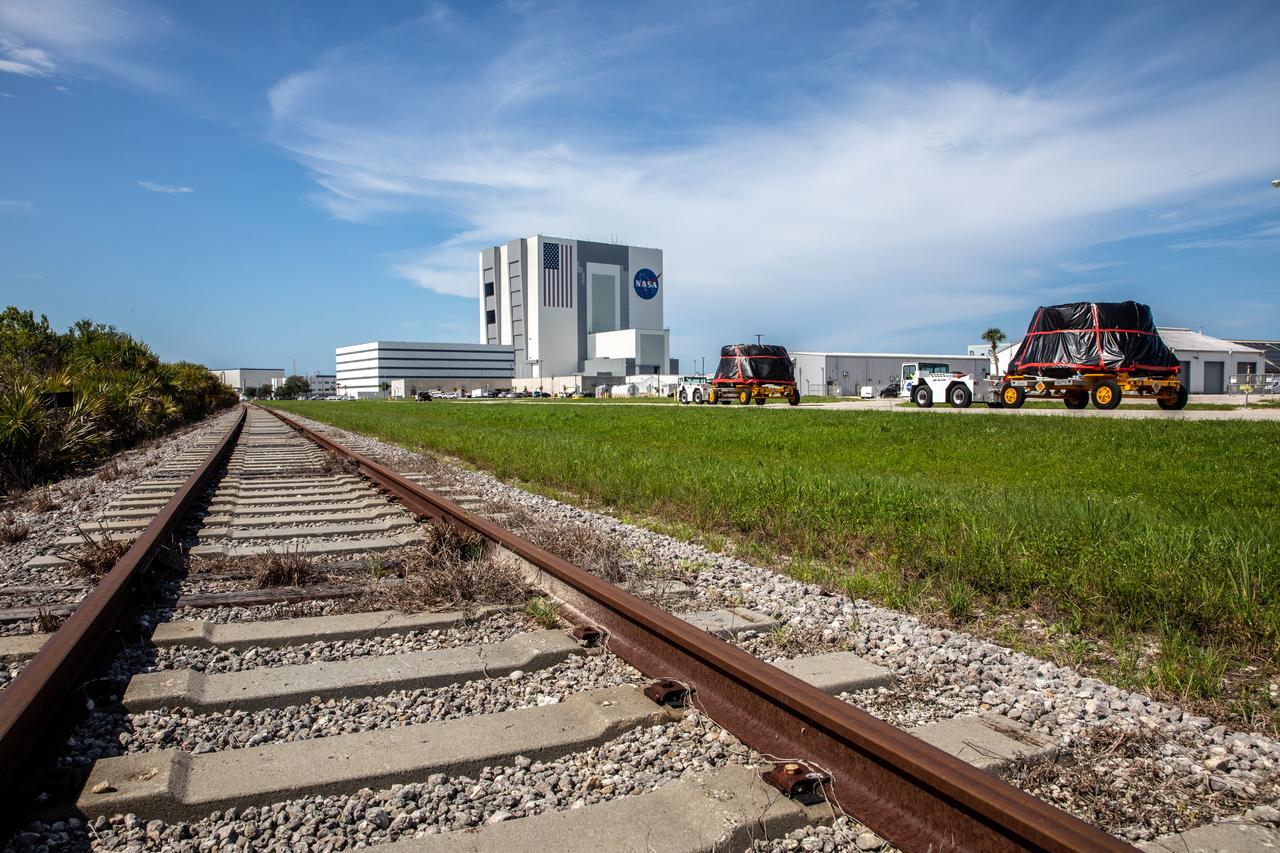
The Artemis I aft skirts for NASA’s Space Launch System (SLS) rocket’s twin solid rocket boosters are moved along the road to the Rotation, Processing and Surge Facility (RPSF) at the agency’s Kennedy Space Center in Florida on June 10, 2020. The aft skirts were refurbished by Northrop Grumman. They house the thrust vector control system, which controls 70 percent of the steering during initial ascent of the SLS rocket. The aft skirts will remain in the RPSF until ready for stacking with the forward and aft parts of the boosters on the mobile launcher in High Bay 3 of the Vehicle Assembly Building. Through the Artemis Program, NASA is working to land the first woman and next man on the Moon by 2024.
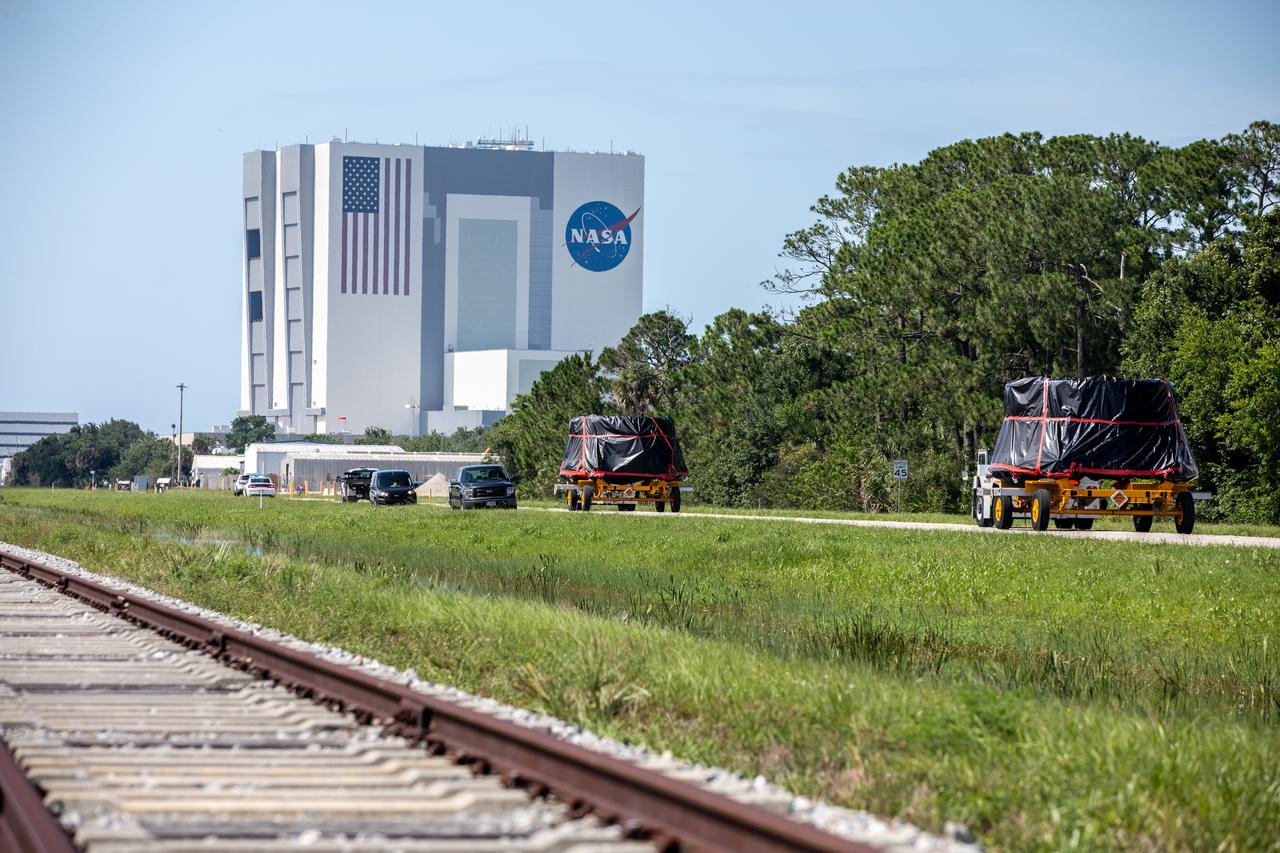
The Artemis I aft skirts for NASA’s Space Launch System (SLS) rocket’s twin solid rocket boosters are moved along the road to the Rotation, Processing and Surge Facility (RPSF) at the agency’s Kennedy Space Center in Florida on June 10, 2020. The aft skirts were refurbished by Northrop Grumman. They house the thrust vector control system, which controls 70 percent of the steering during initial ascent of the SLS rocket. The aft skirts will remain in the RPSF until ready for stacking with the forward and aft parts of the boosters on the mobile launcher in High Bay 3 of the Vehicle Assembly Building. Through the Artemis Program, NASA is working to land the first woman and next man on the Moon by 2024.
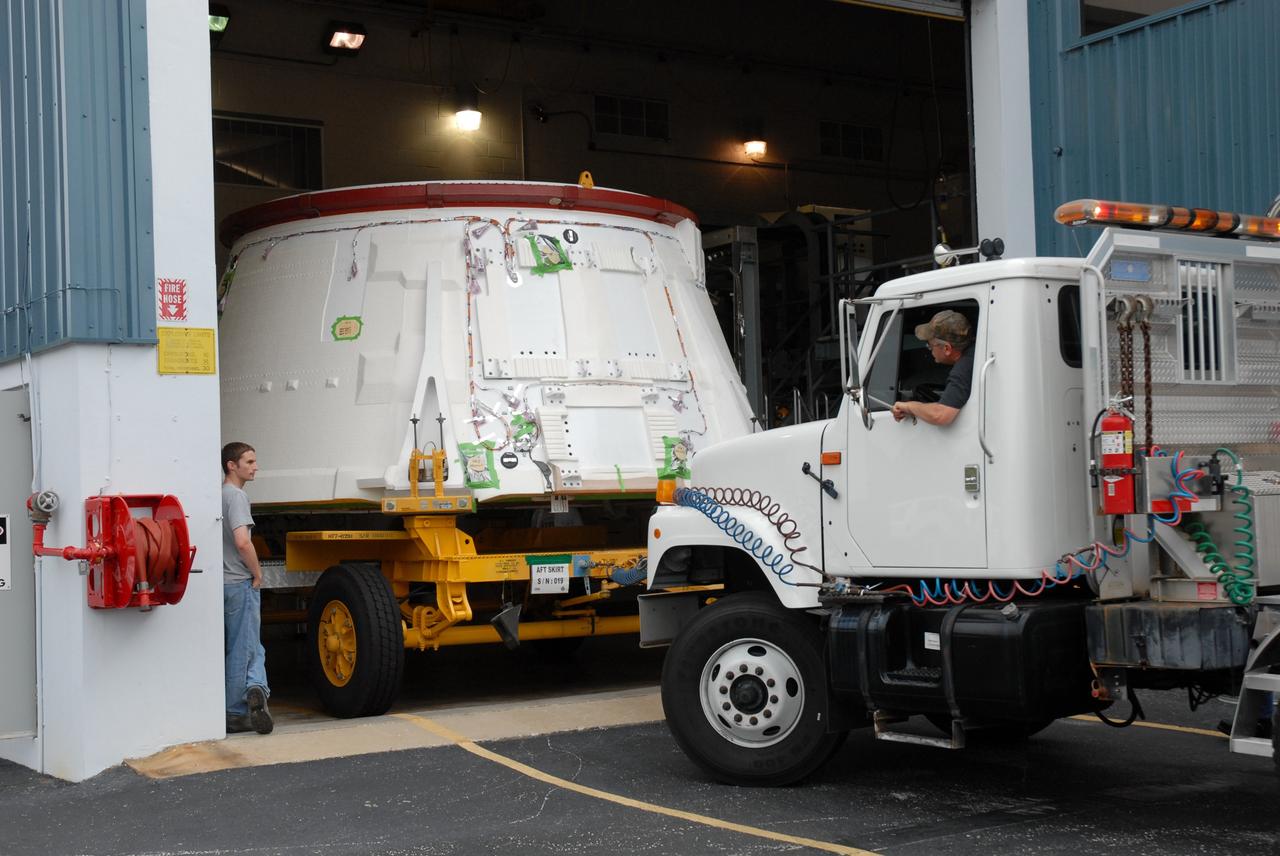
CAPE CANAVERAL, Fla. – The Ares I-X aft skirt is moved into the aft skirt test facility behind the Assembly and Refurbishment Facility at NASA's Kennedy Space Center in Florida. The I-X flight will provide NASA an early opportunity to test and prove hardware, facilities and ground operations associated with Ares I, part of the Constellation Program to return men to the moon and beyond. Photo credit: NASA/Troy Cryder
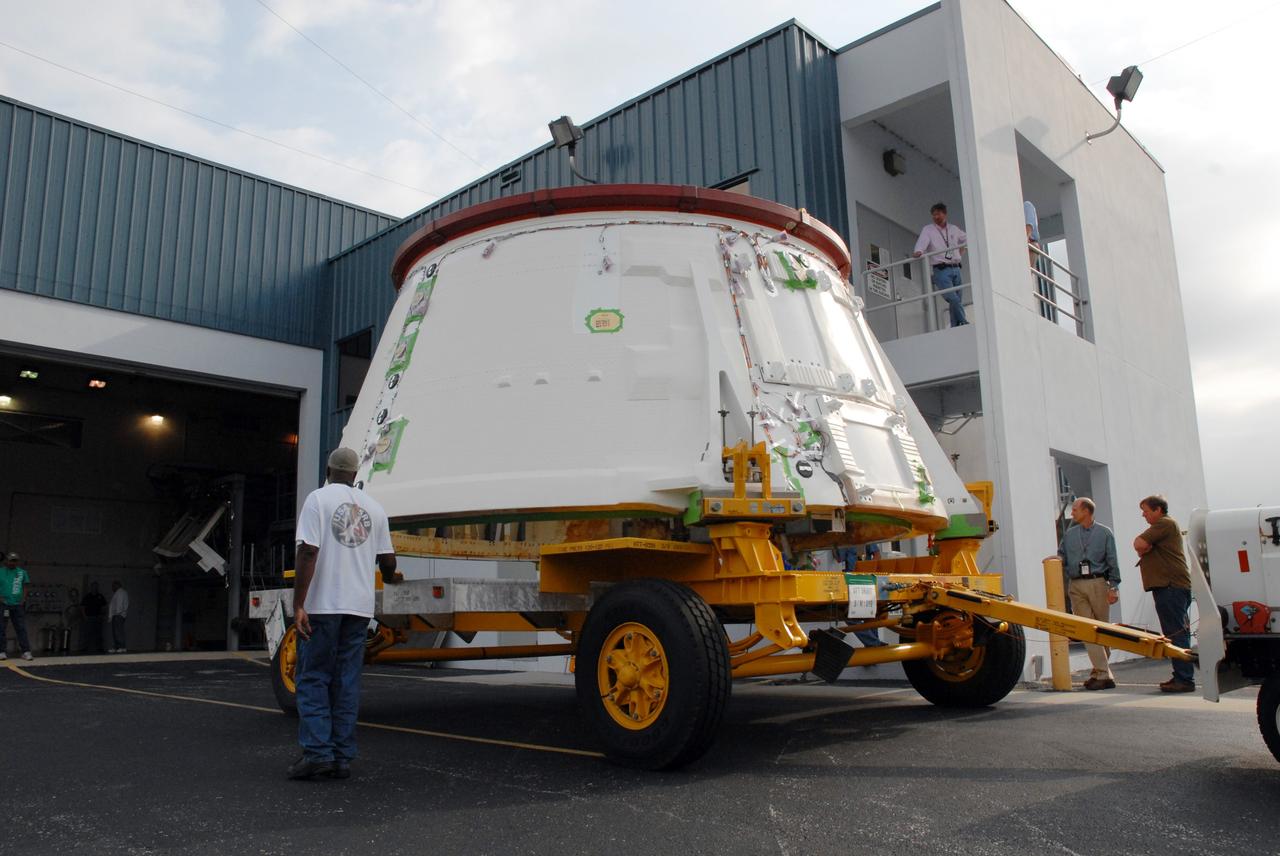
CAPE CANAVERAL, Fla. – – The Ares I-X aft skirt is moved into the aft skirt test facility behind the Assembly and Refurbishment Facility at NASA's Kennedy Space Center in Florida. The I-X flight will provide NASA an early opportunity to test and prove hardware, facilities and ground operations associated with Ares I, part of the Constellation Program to return men to the moon and beyond. Photo credit: NASA/Troy Cryder
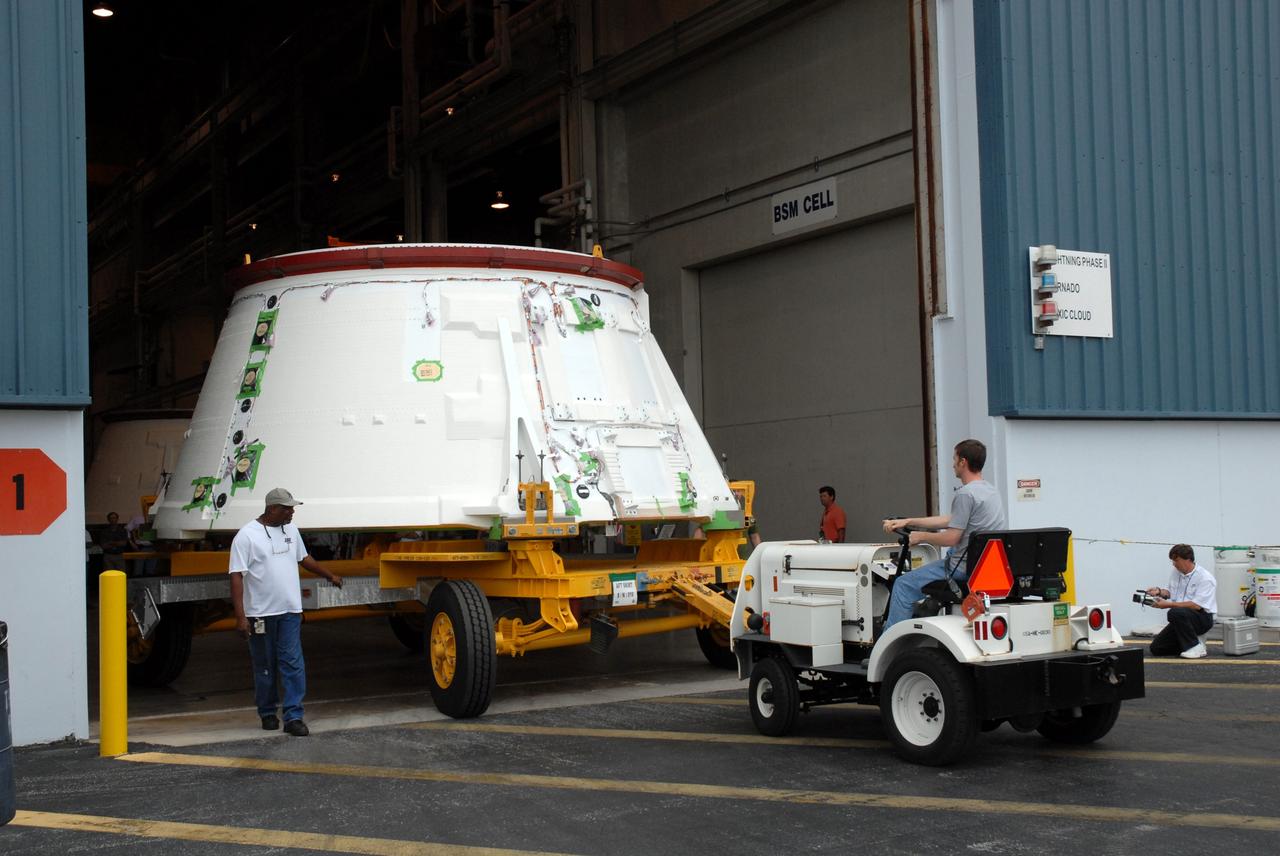
CAPE CANAVERAL, Fla. – The Ares I-X aft skirt is moved to the aft skirt test facility behind in the Assembly and Refurbishment Facility at NASA's Kennedy Space Center in Florida. The I-X flight will provide NASA an early opportunity to test and prove hardware, facilities and ground operations associated with Ares I, part of the Constellation Program to return men to the moon and beyond. Photo credit: NASA/Troy Cryder
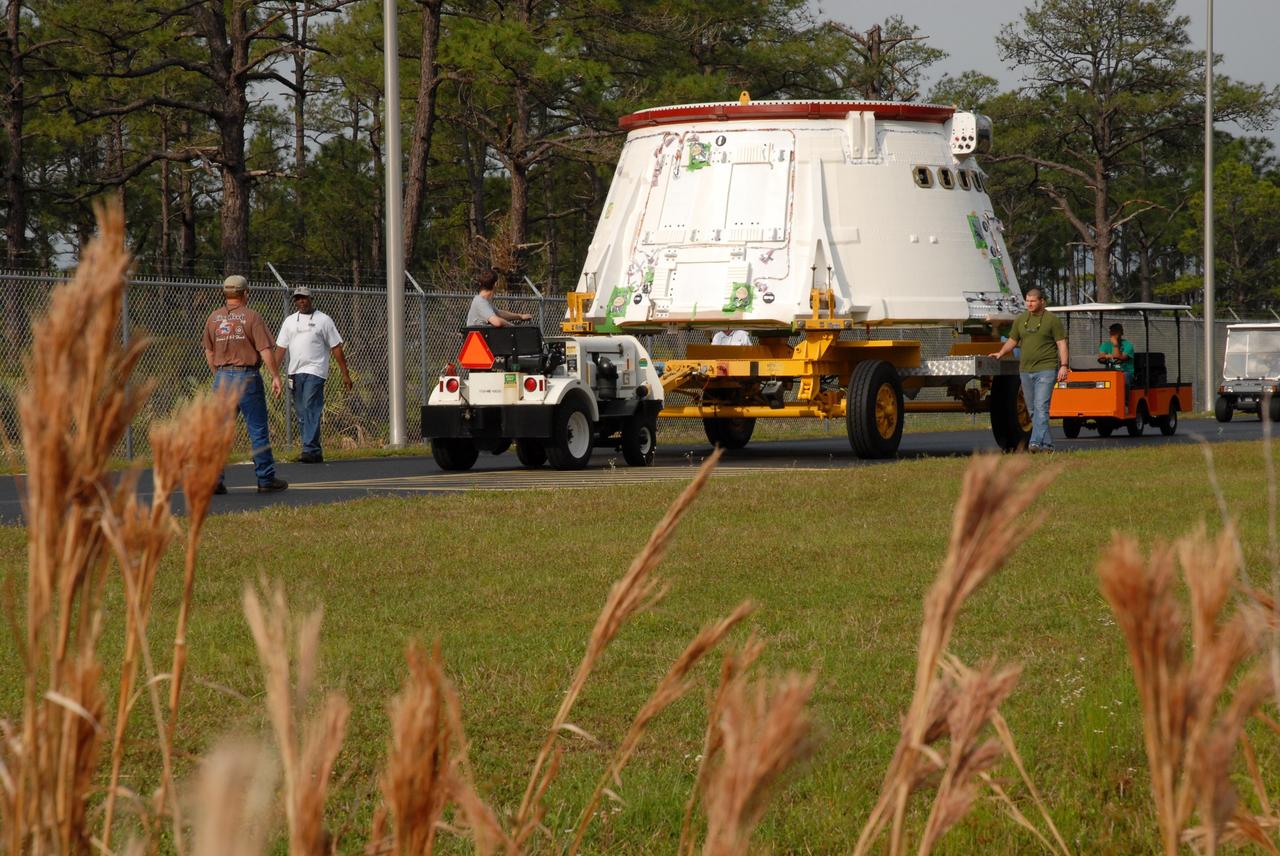
CAPE CANAVERAL, Fla. – The Ares I-X aft skirt is moved to the aft skirt test facility behind the Assembly and Refurbishment Facility. The I-X flight will provide NASA an early opportunity to test and prove hardware, facilities and ground operations associated with Ares I, part of the Constellation Program to return men to the moon and beyond. Photo credit: NASA/Troy Cryder
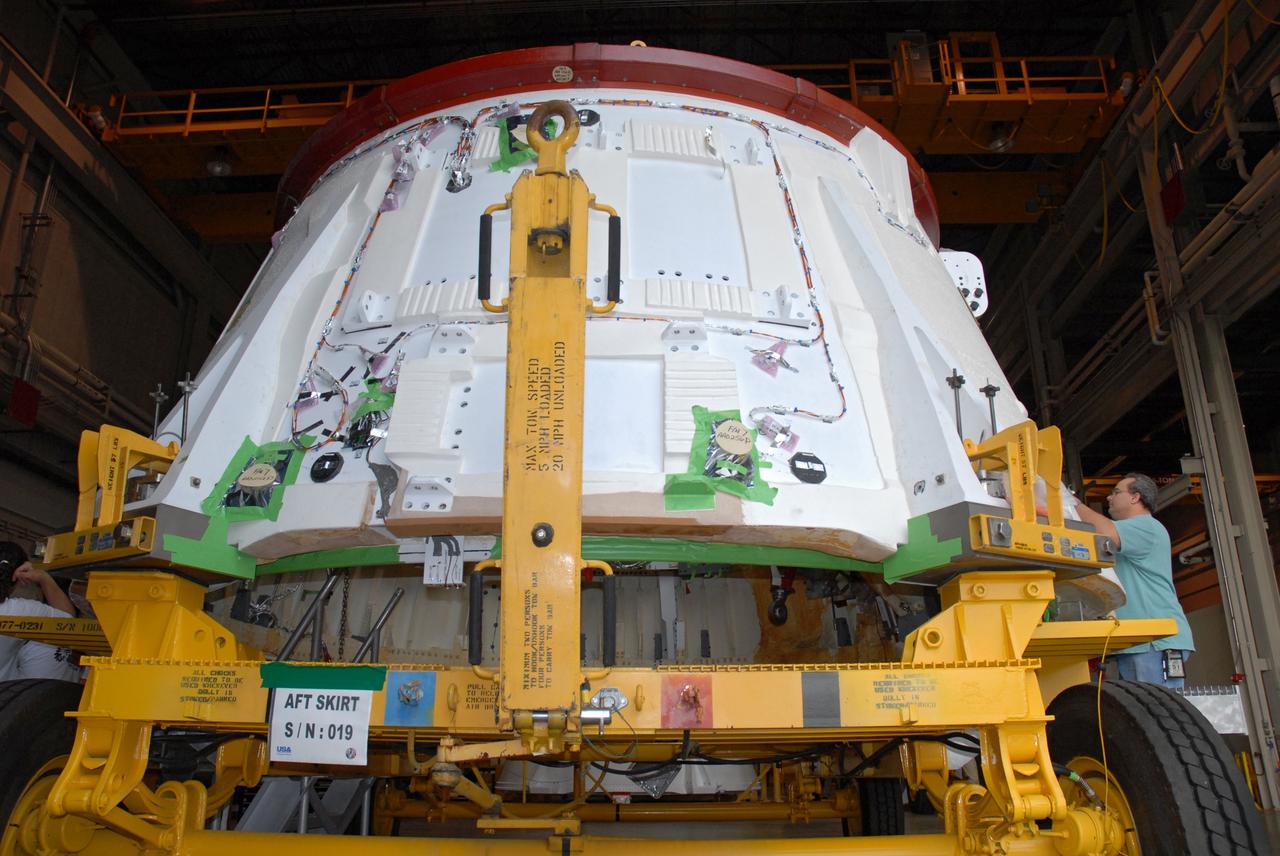
CAPE CANAVERAL, Fla. – The Ares I-X aft skirt is prepared for a move to the aft skirt test facility behind the Assembly and Refurbishment Facility at NASA's Kennedy Space Center in Florida. The I-X flight will provide NASA an early opportunity to test and prove hardware, facilities and ground operations associated with Ares I, part of the Constellation Program to return men to the moon and beyond. Photo credit: NASA/Troy Cryder
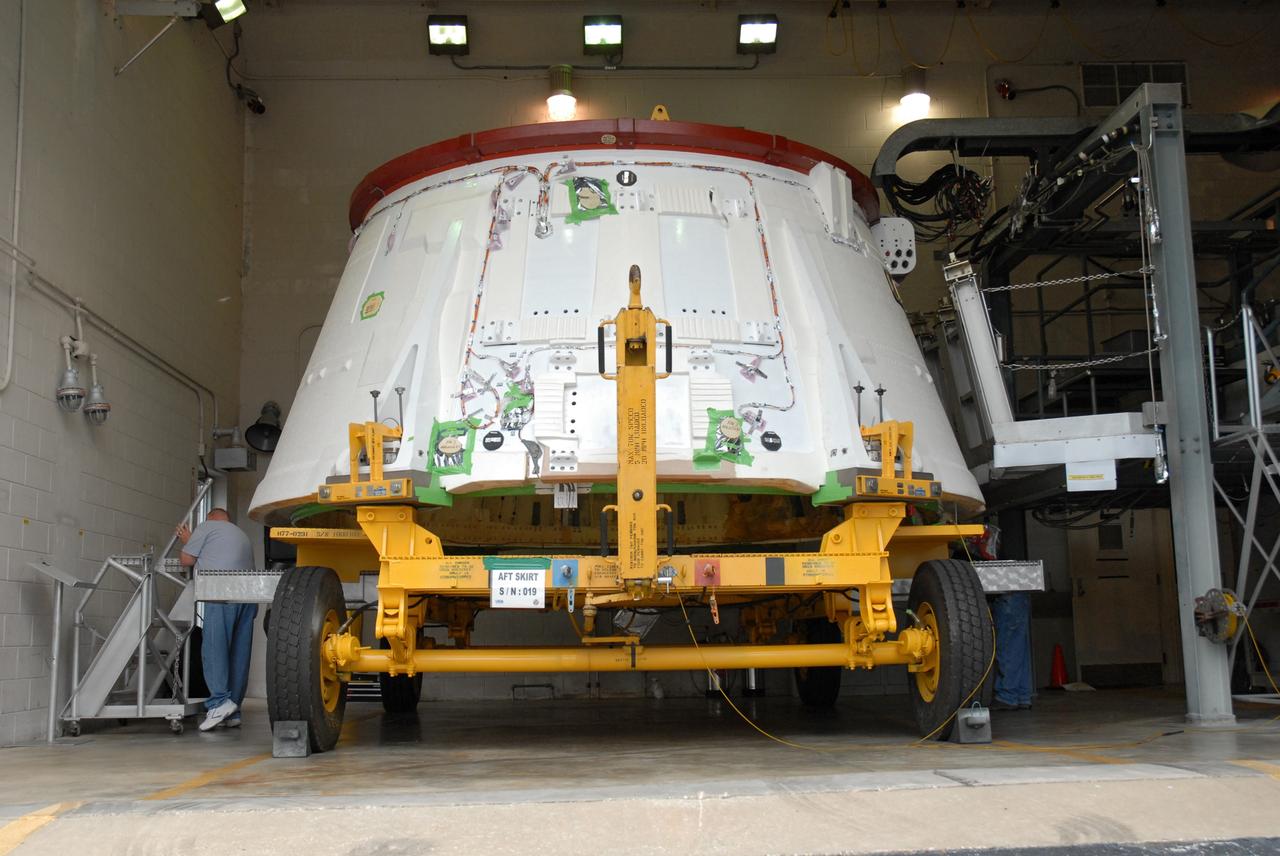
CAPE CANAVERAL, Fla. – The Ares I-X aft skirt is moved into the aft skirt test facility behind the Assembly and Refurbishment Facility at NASA's Kennedy Space Center in Florida. The I-X flight will provide NASA an early opportunity to test and prove hardware, facilities and ground operations associated with Ares I, part of the Constellation Program to return men to the moon and beyond. Photo credit: NASA/Troy Cryder
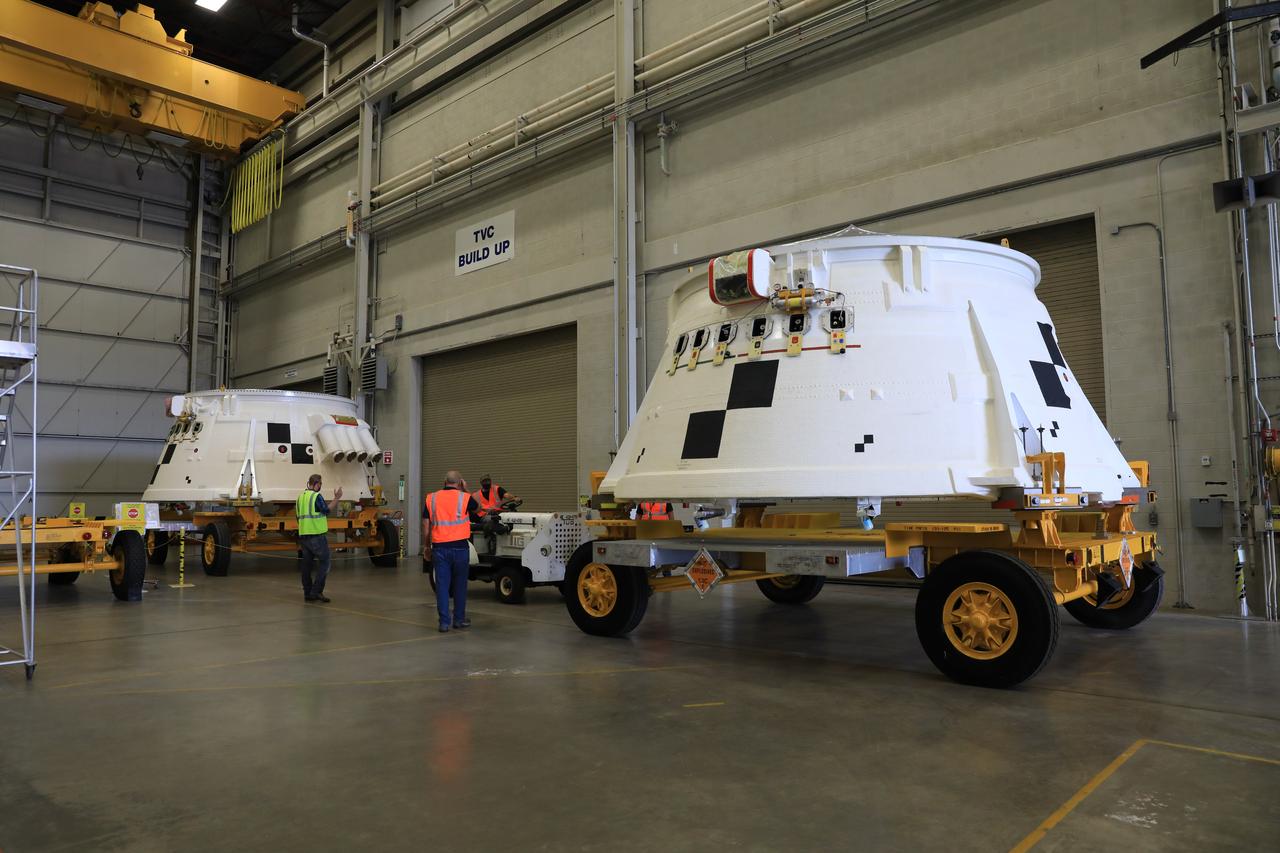
Inside the Booster Fabrication Facility at NASA's Kennedy Space Center in Florida, the Artemis I aft skirts for the agency's Space Launch System (SLS) rocket’s twin solid rocket boosters are moved out of their test cells and are being readied for their move to the Rotation, Processing and Surge Facility (RPSF) on June 9, 2020. The aft skirts were refurbished by Northrop Grumman. They house the thrust vector control system, which controls 70 percent of the steering during initial ascent of the SLS rocket. The segments will remain in the RPSF until ready for stacking with the forward and aft parts of the boosters on the mobile launcher in High Bay 3 of the Vehicle Assembly Building. Through the Artemis Program, NASA is working to land the first woman and next man on the Moon by 2024.
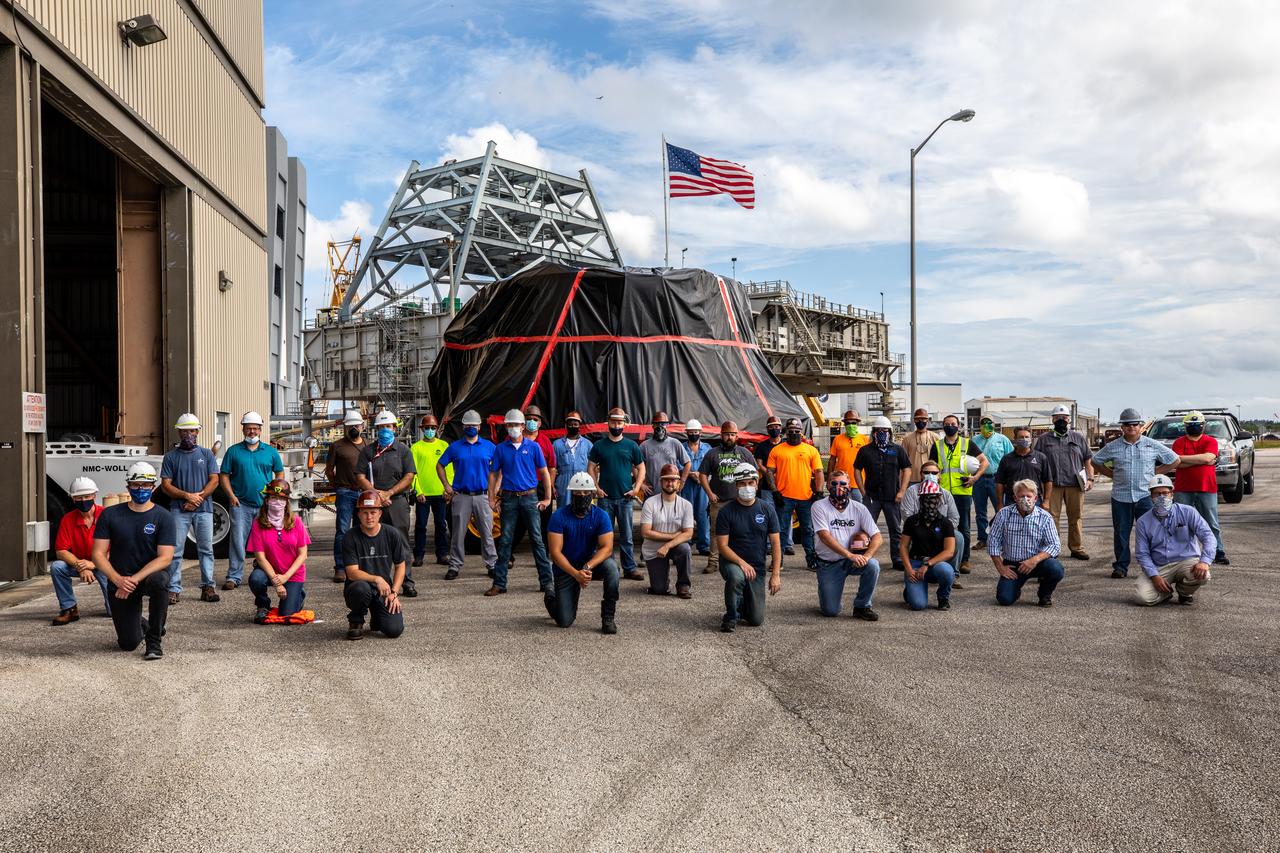
Exploration Ground Systems workers gather in front of the Rotation, Processing and Surge Facility (RPSF) at NASA’s Kennedy Space Center in Florida on June 10, 2020, to mark the arrival of the Artemis I aft skirts for the agency's Space Launch System (SLS) rocket’s twin solid rocket boosters. The aft skirts were moved from the Booster Fabrication Facility. The aft skirts were refurbished by Northrop Grumman. They house the thrust vector control system, which controls 70 percent of the steering during initial ascent of the SLS rocket. The segments will remain in the RPSF until ready for stacking with the forward and aft parts of the boosters on the mobile launcher in High Bay 3 of the Vehicle Assembly Building. Through the Artemis Program, NASA is working to land the first woman and next man on the Moon by 2024.

The Artemis I aft skirts for the NASA’s Space Launch System (SLS) rocket’s twin solid rocket boosters are moved along the road to the Rotation, Processing and Surge Facility (RPSF) at NASA’s Kennedy Space Center in Florida on June 10, 2020. In the background is the iconic Vehicle Assembly Building (VAB). The aft skirts were refurbished by Northrop Grumman. They house the thrust vector control system, which controls 70 percent of the steering during initial ascent of the SLS rocket. The aft skirts will remain in the RPSF until ready for stacking with the forward and aft parts of the boosters on the mobile launcher in High Bay 3 of the VAB. Through the Artemis Program, NASA is working to land the first woman and next man on the Moon by 2024.
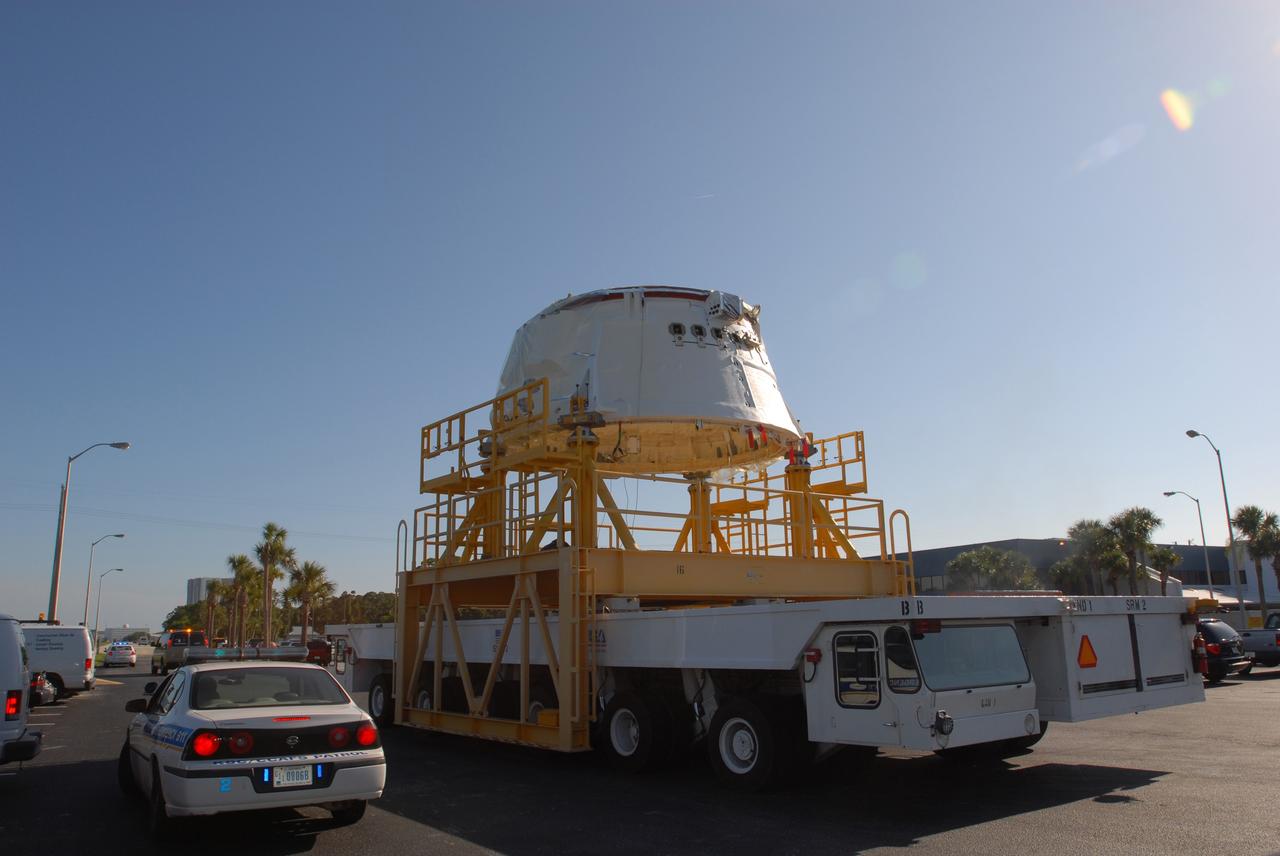
CAPE CANAVERAL, Fla. – The Ares I-X aft skirt is moved from the Assembly and Refurbishment Facility at NASA's Kennedy Space Center to the Rotation, Processing and Surge Facility. The aft skirt underwent modifications in the ARF. In the RSPF, it will be stacked with the aft motor to form the aft assembly. The complete Ares I-X will be assembled in the Vehicle Assembly Building. The launch of Ares I-X is targeted for August 2009. Photo credit: NASA/Jim Grossmann
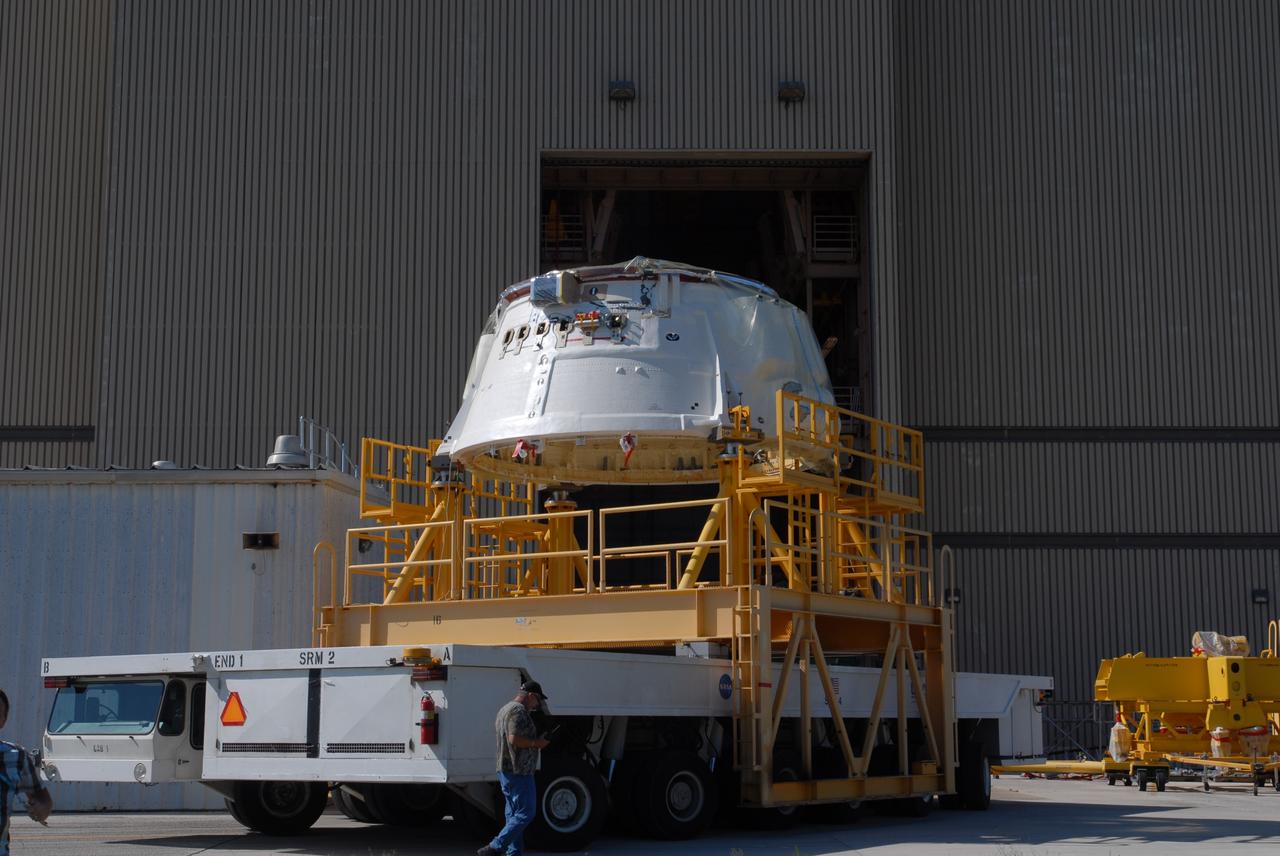
CAPE CANAVERAL, Fla. – The Ares I-X aft skirt moves toward the Rotation, Processing and Surge Facility at NASA's Kennedy Space Center in Florida. In the RPSF, the aft skirt will be stacked with the aft motor to form the aft assembly. The complete Ares I-X will be assembled in the Vehicle Assembly Building. The launch of Ares I-X is targeted for August 2009. Photo credit: NASA/Jim Grossmann
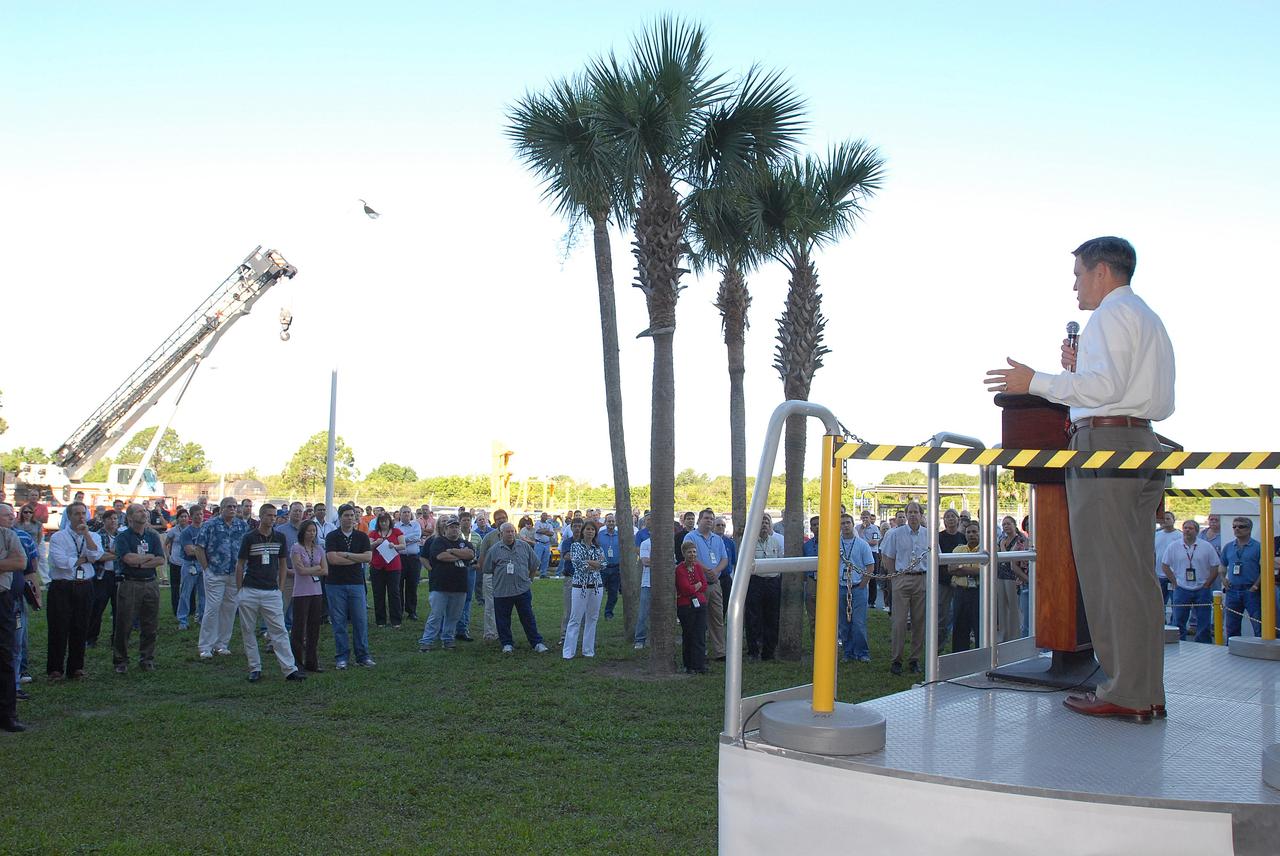
CAPE CANAVERAL, Fla. – Center Director Bob Cabana speaks to employees about the significance of moving the Ares I-X aft skirt from the Assembly and Refurbishment Facility at NASA's Kennedy Space Center to the Rotation, Processing and Surge Facility. The aft skirt underwent modifications in the ARF. In the RSPF, it will be stacked with the aft motor to form the aft assembly. The complete Ares I-X will be assembled in the Vehicle Assembly Building. The launch of Ares I-X is targeted for August 2009. Photo credit: NASA/Jim Grossmann
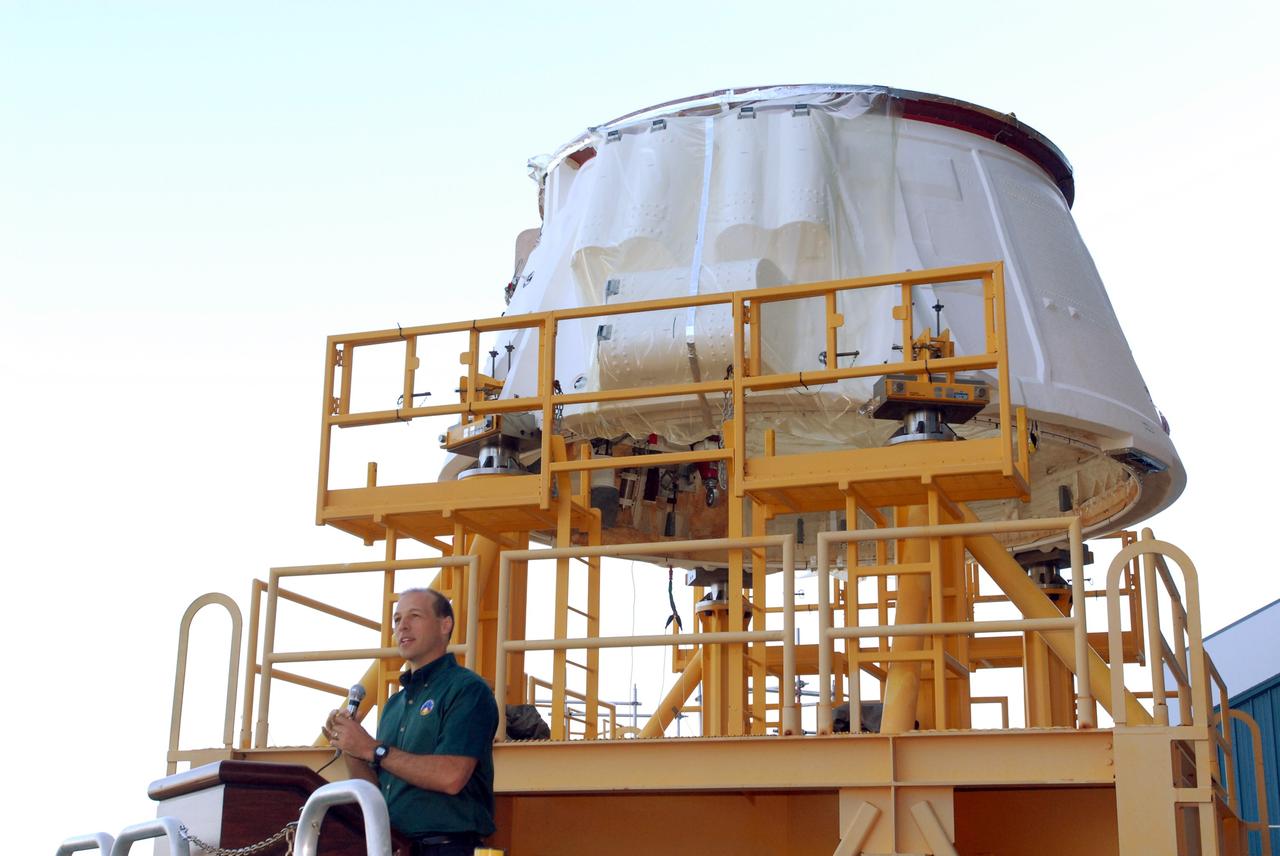
CAPE CANAVERAL, Fla. – Bob ESS, with NASA, speaks to employees before the move of the Ares I-X aft skirt from the Assembly and Refurbishment Facility at NASA's Kennedy Space Center to the Rotation, Processing and Surge Facility. The aft skirt underwent modifications in the ARF. In the RSPF, it will be stacked with the aft motor to form the aft assembly. The complete Ares I-X will be assembled in the Vehicle Assembly Building. The launch of Ares I-X is targeted for August 2009. Photo credit: NASA/Jim Grossmann
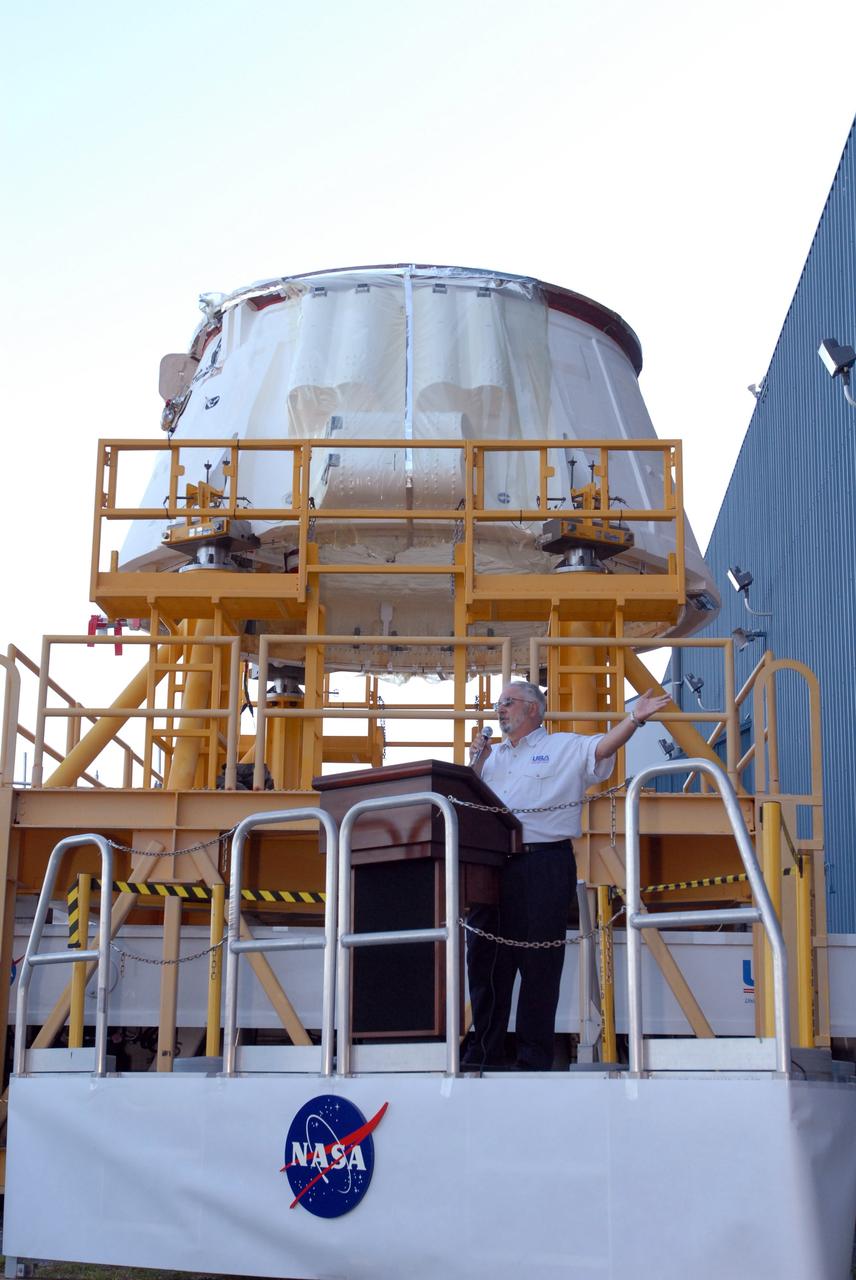
CAPE CANAVERAL, Fla. – Roger Elliot, with United Space Alliance, speaks to employees before the move of the Ares I-X aft skirt from the Assembly and Refurbishment Facility at NASA's Kennedy Space Center to the Rotation, Processing and Surge Facility. The aft skirt underwent modifications in the ARF. In the RSPF, it will be stacked with the aft motor to form the aft assembly. The complete Ares I-X will be assembled in the Vehicle Assembly Building. The launch of Ares I-X is targeted for August 2009. Photo credit: NASA/Jim Grossmann
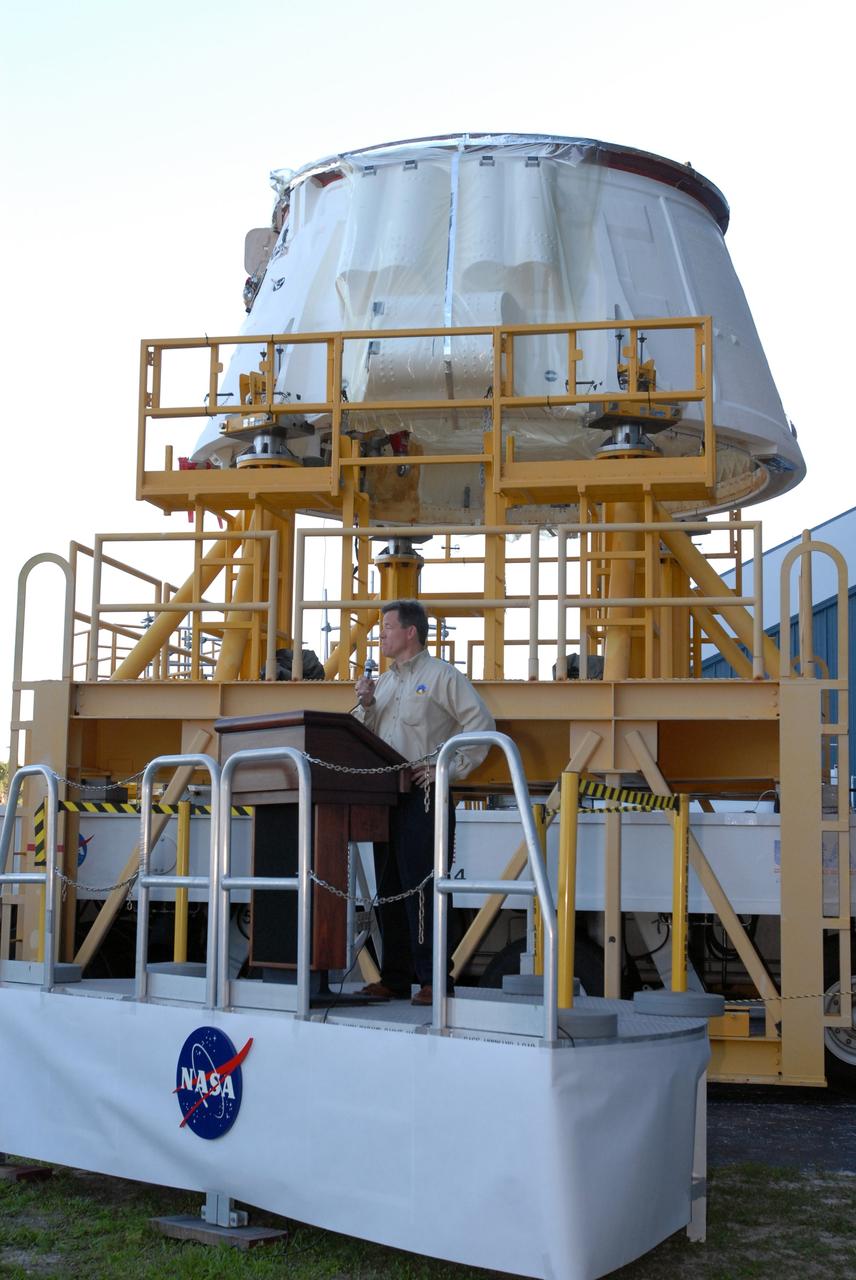
CAPE CANAVERAL, Fla. – Joe Oliva, with ATK, speaks to employees before the move of the Ares I-X aft skirt from the Assembly and Refurbishment Facility at NASA's Kennedy Space Center to the Rotation, Processing and Surge Facility. The aft skirt underwent modifications in the ARF. In the RSPF, it will be stacked with the aft motor to form the aft assembly. The complete Ares I-X will be assembled in the Vehicle Assembly Building. The launch of Ares I-X is targeted for August 2009. Photo credit: NASA/Jim Grossmann
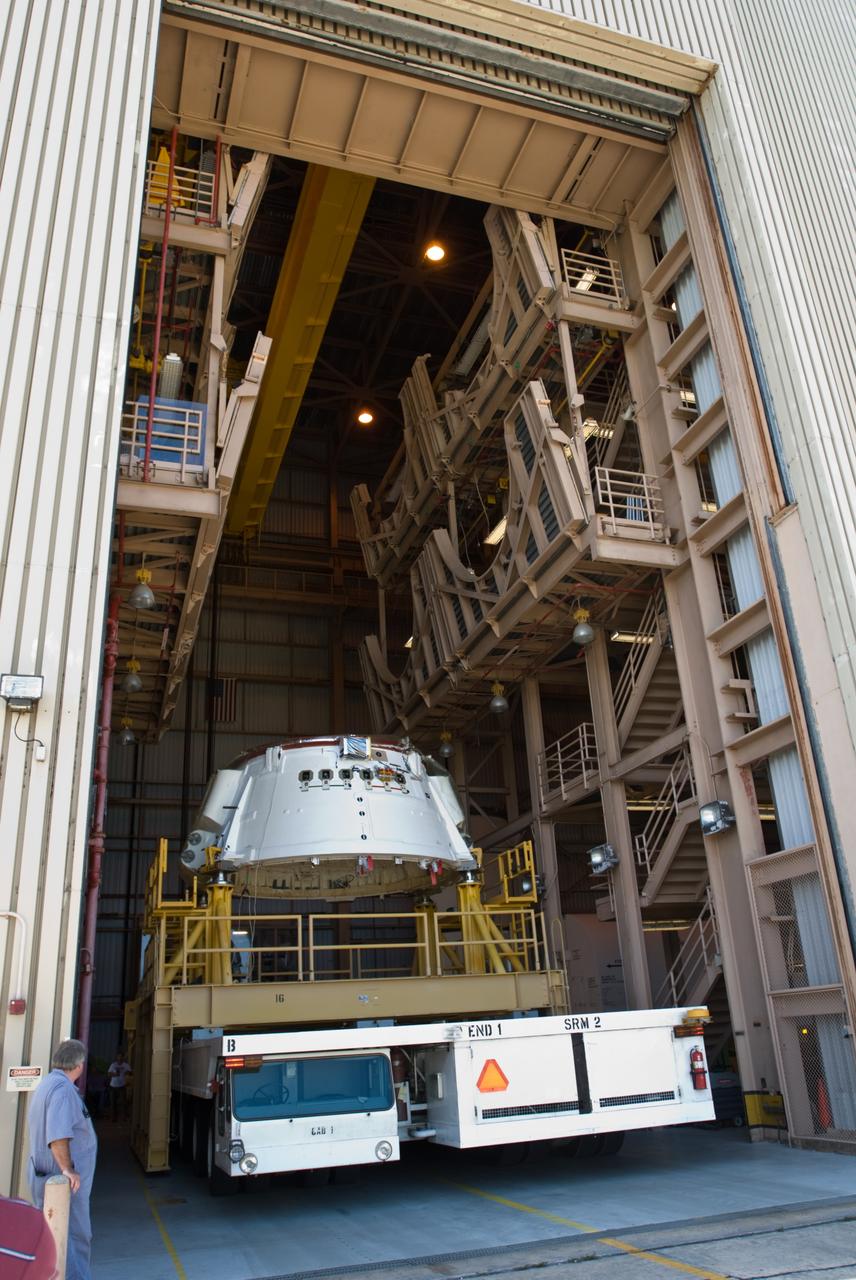
CAPE CANAVERAL, Fla. – The Ares I-X aft skirt moves inside the Rotation, Processing and Surge Facility at NASA's Kennedy Space Center in Florida. In the RPSF, the aft skirt will be stacked with the aft motor to form the aft assembly. The complete Ares I-X will be assembled in the Vehicle Assembly Building. The launch of Ares I-X is targeted for August 2009. Photo credit: NASA/Jim Grossmann
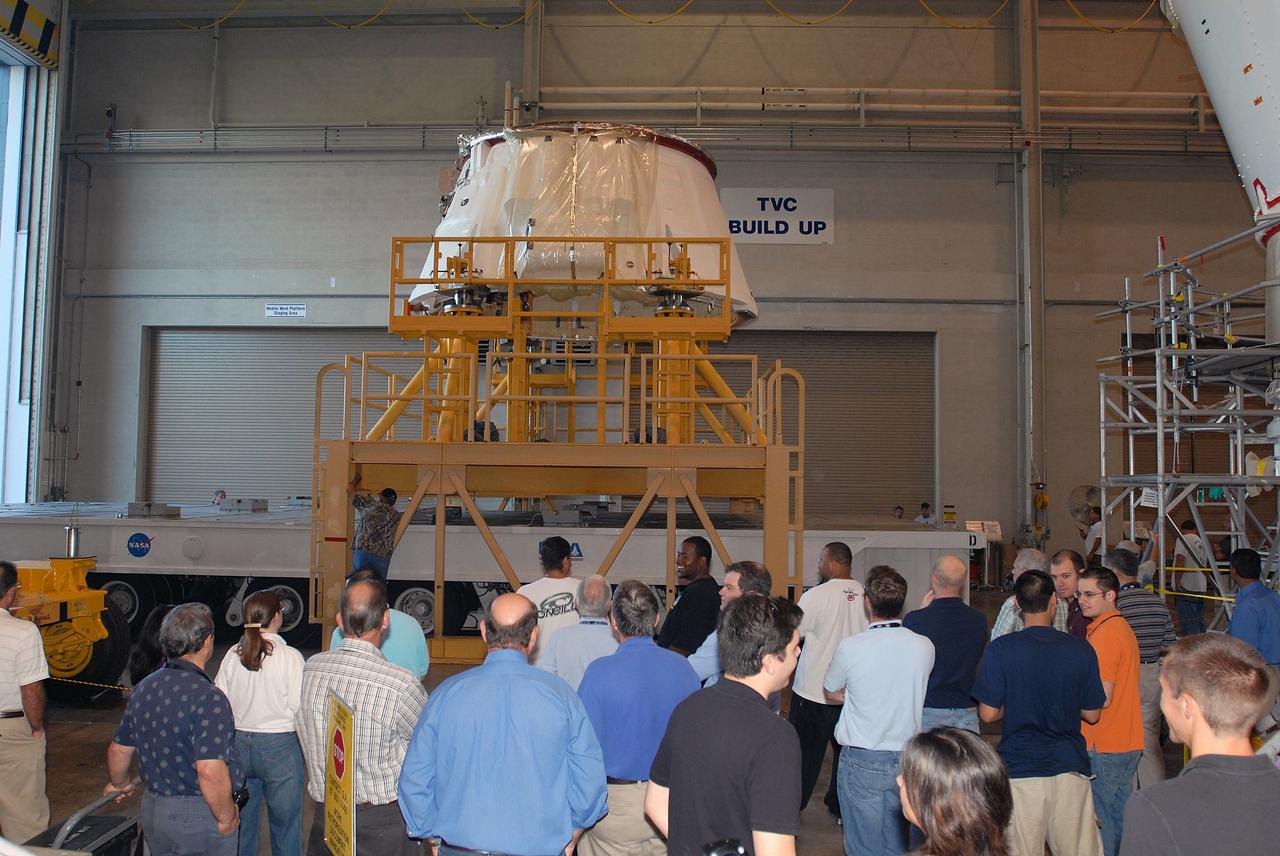
CAPE CANAVERAL, Fla. – Employees gather to witness the move of the Ares I-X aft skirt from the Assembly and Refurbishment Facility at NASA's Kennedy Space Center to the Rotation, Processing and Surge Facility. The aft skirt underwent modifications in the ARF. In the RSPF, it will be stacked with the aft motor to form the aft assembly. The complete Ares I-X will be assembled in the Vehicle Assembly Building. The launch of Ares I-X is targeted for August 2009. Photo credit: NASA/Jim Grossmann
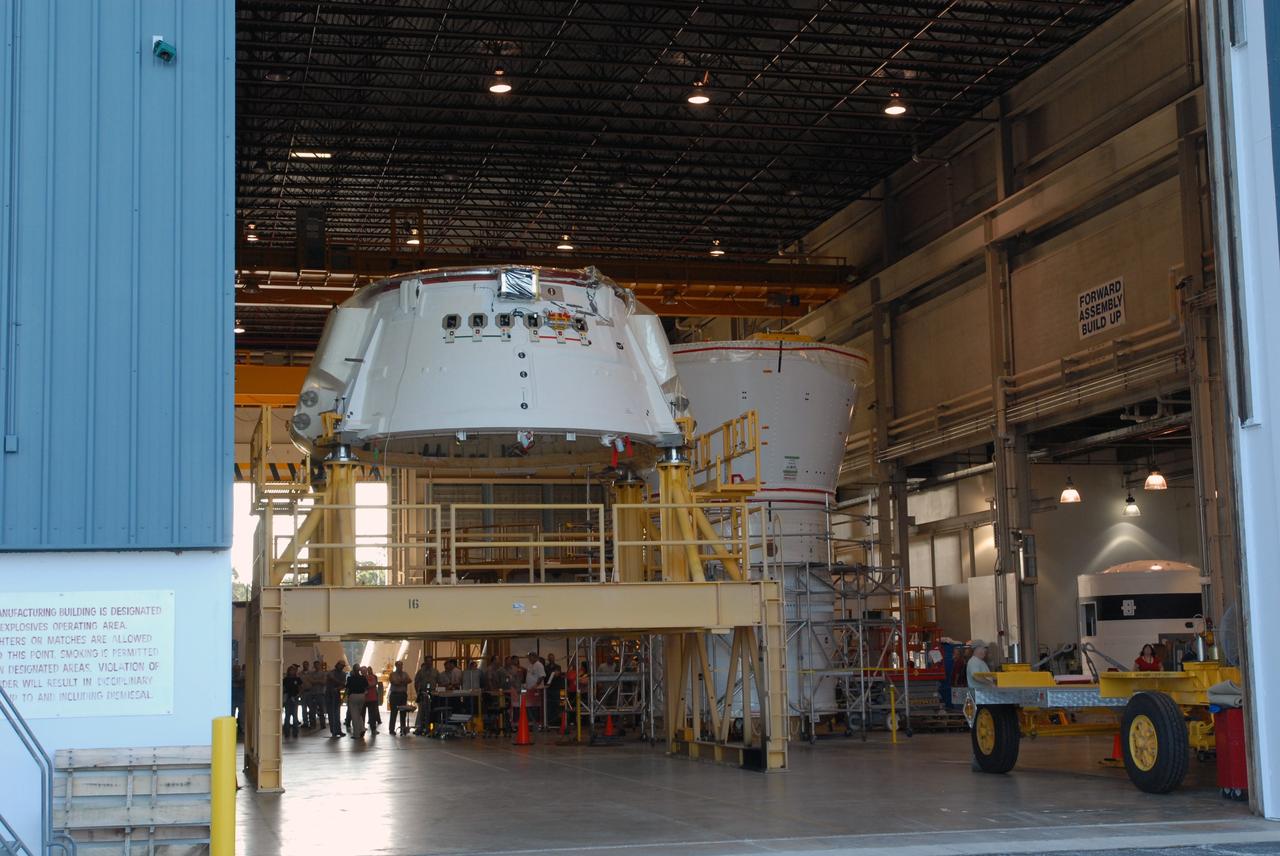
CAPE CANAVERAL, Fla. – The Ares I-X aft skirt is ready to be moved from the Assembly and Refurbishment Facility at NASA's Kennedy Space Center to the Rotation, Processing and Surge Facility. The aft skirt underwent modifications in the ARF. In the RSPF, it will be stacked with the aft motor to form the aft assembly. The complete Ares I-X will be assembled in the Vehicle Assembly Building. The launch of Ares I-X is targeted for August 2009. Photo credit: NASA/Jim Grossmann
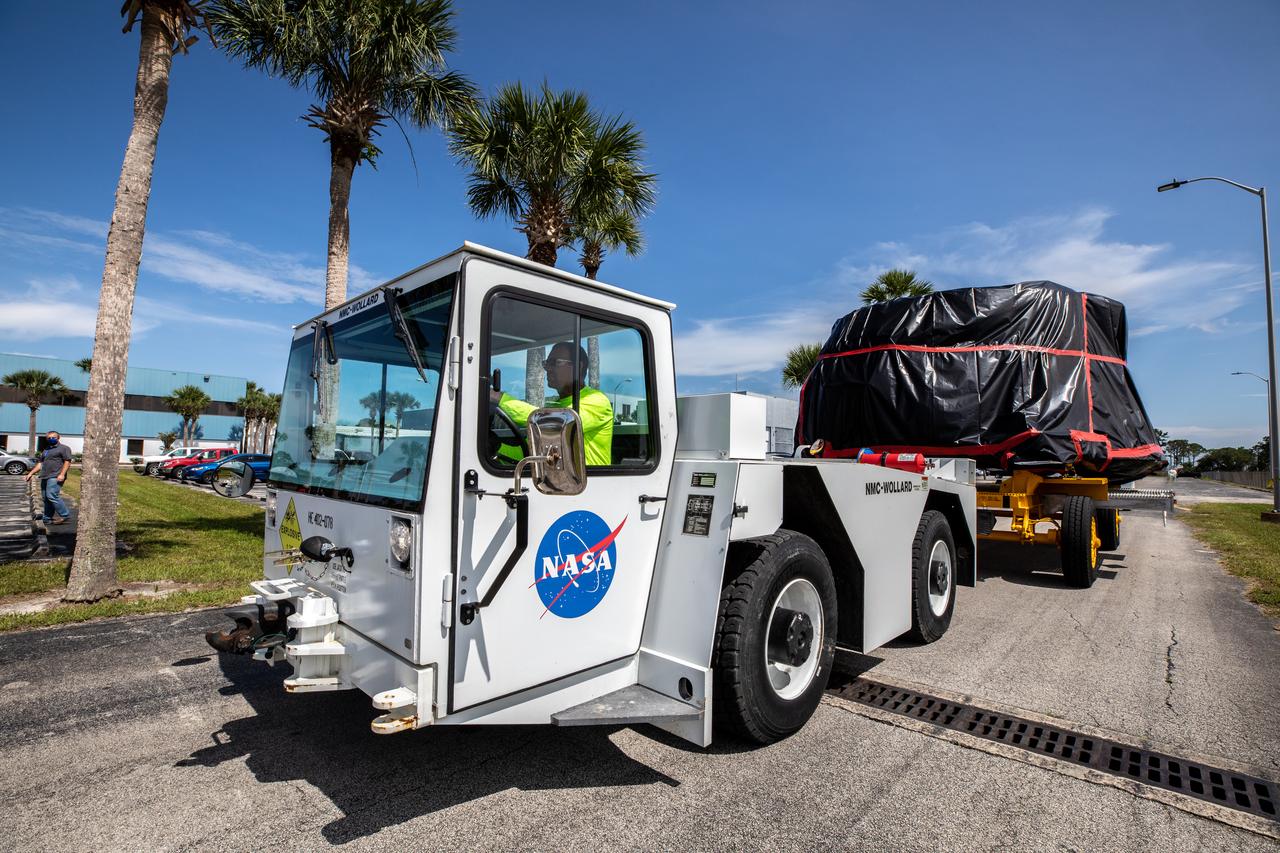
The Artemis I aft skirts for NASA's Space Launch System (SLS) rocket’s twin solid rocket boosters are transported to the Rotation Processing and Surge Facility (RPSF) at the agency’s Kennedy Space Center in Florida on June 10, 2020. The aft skirts were refurbished by Northrop Grumman. They house the thrust vector control system, which controls 70 percent of the steering during initial ascent of the SLS rocket. The segments will remain in the RPSF until ready for stacking with the forward and aft parts of the boosters on the mobile launcher in High Bay 3 of the Vehicle Assembly Building. Through the Artemis Program, NASA is working to land the first woman and next man on the Moon by 2024.

The Artemis I aft skirts for NASA's Space Launch System (SLS) rocket’s twin solid rocket boosters are transported to the Rotation Processing and Surge Facility (RPSF) at the agency’s Kennedy Space Center in Florida on June 10, 2020. The aft skirts were refurbished by Northrop Grumman. They house the thrust vector control system, which controls 70 percent of the steering during initial ascent of the SLS rocket. The segments will remain in the RPSF until ready for stacking with the forward and aft parts of the boosters on the mobile launcher in High Bay 3 of the Vehicle Assembly Building. Through the Artemis Program, NASA is working to land the first woman and next man on the Moon by 2024.
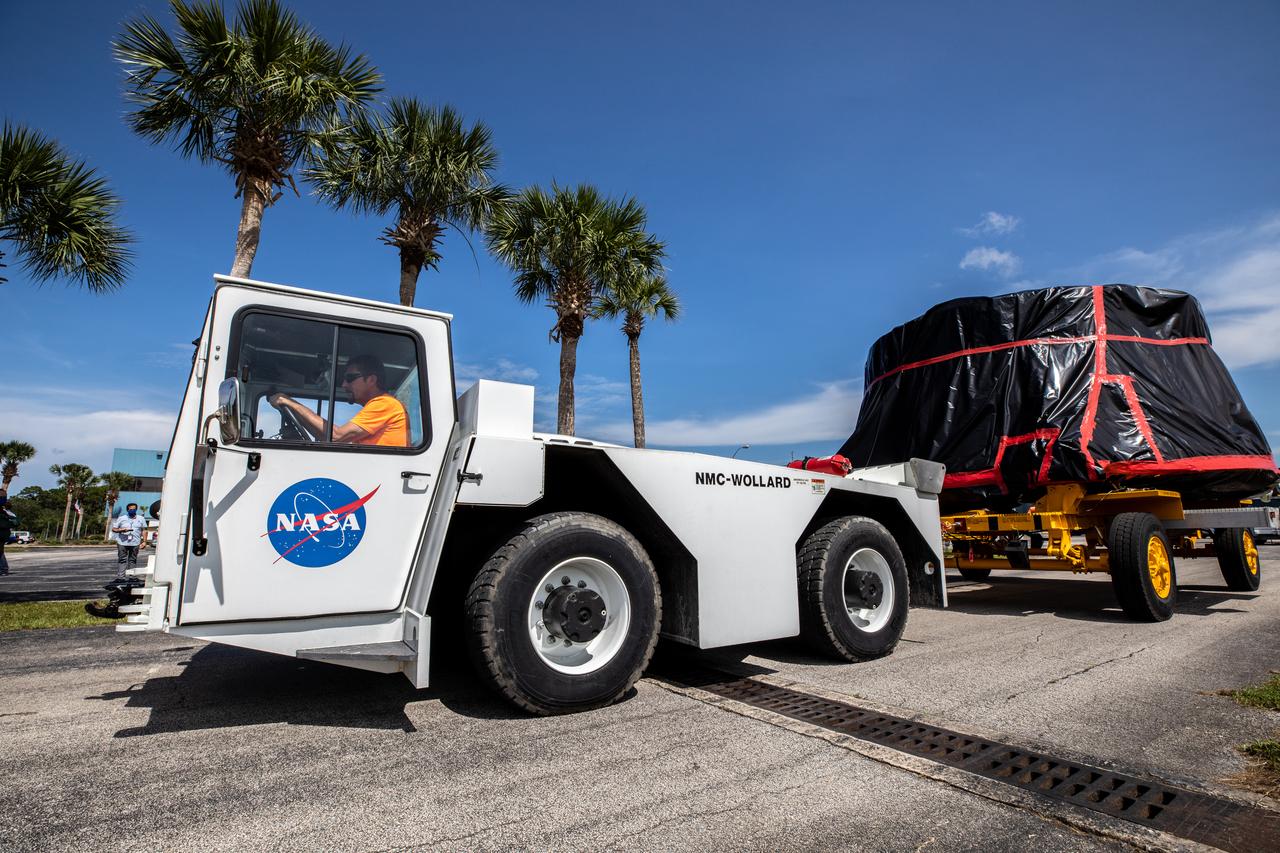
The Artemis I aft skirts for NASA's Space Launch System (SLS) rocket’s twin solid rocket boosters are transported to the Rotation Processing and Surge Facility (RPSF) at the agency’s Kennedy Space Center in Florida on June 10, 2020. The aft skirts were refurbished by Northrop Grumman. They house the thrust vector control system, which controls 70 percent of the steering during initial ascent of the SLS rocket. The segments will remain in the RPSF until ready for stacking with the forward and aft parts of the boosters on the mobile launcher in High Bay 3 of the Vehicle Assembly Building. Through the Artemis Program, NASA is working to land the first woman and next man on the Moon by 2024.
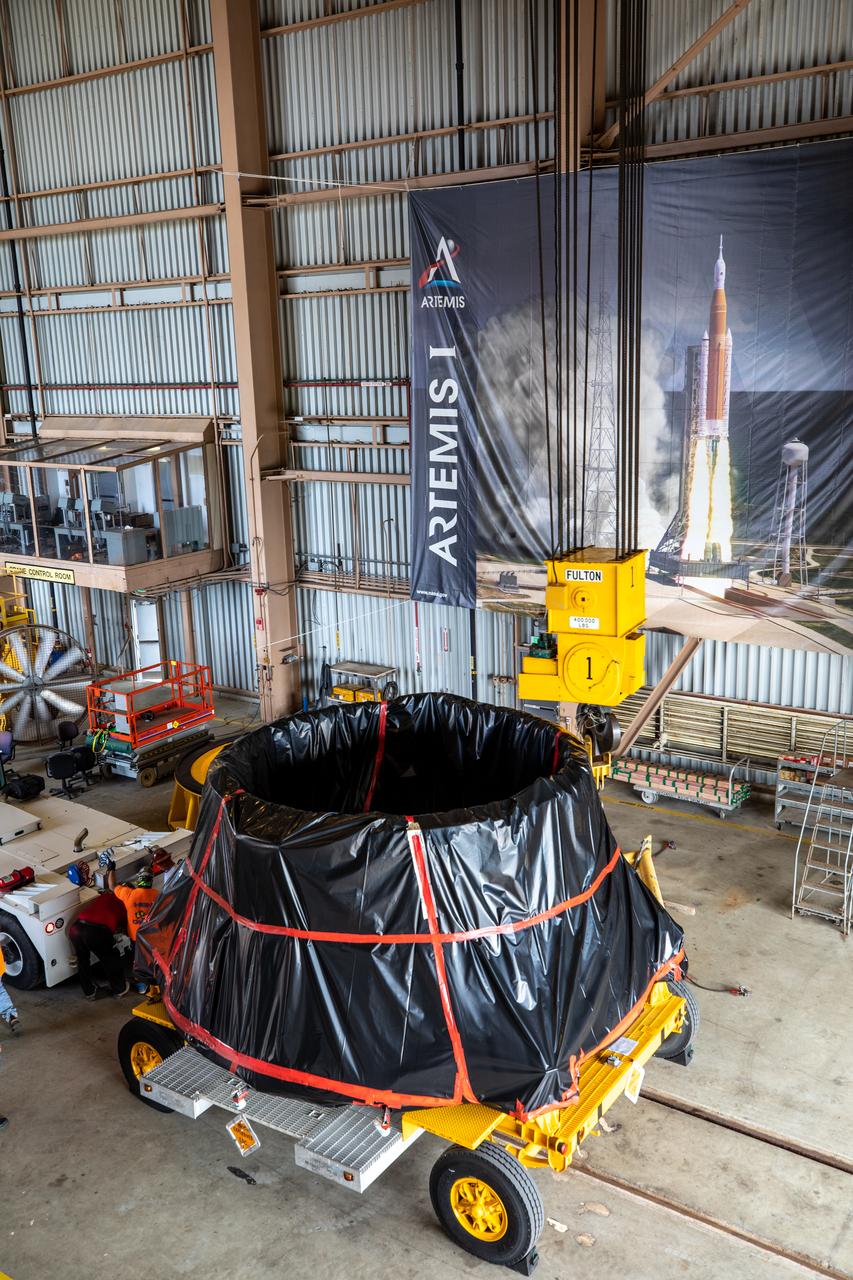
The first of two Artemis I aft skirts for NASA's Space Launch System (SLS) rocket’s twin solid rocket boosters is moved into the Rotation Processing and Surge Facility (RPSF) at the agency’s Kennedy Space Center in Florida on June 10, 2020. The aft skirts were refurbished by Northrop Grumman. They house the thrust vector control system, which controls 70 percent of the steering during initial ascent of the SLS rocket. The segments will remain in the RPSF until ready for stacking with the forward and aft parts of the boosters on the mobile launcher in High Bay 3 of the Vehicle Assembly Building. Through the Artemis Program, NASA is working to land the first woman and next man on the Moon by 2024.
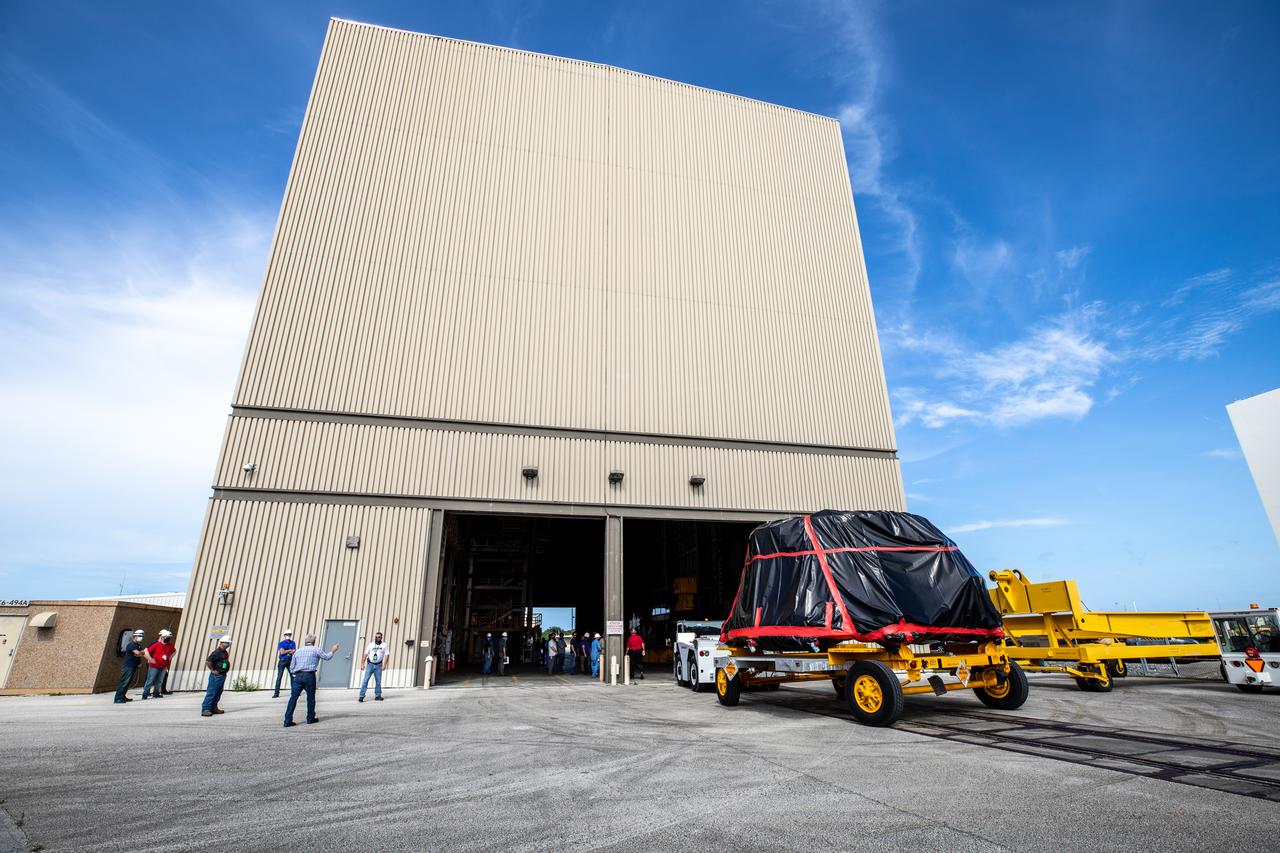
The first of two Artemis I aft skirts for NASA’s Space Launch System (SLS) rocket’s twin solid rocket boosters arrives at the Rotation, Processing and Surge Facility (RPSF) at the agency’s Kennedy Space Center in Florida on June 10, 2020. They were transported from the Booster Fabrication Facility. The aft skirts were refurbished by Northrop Grumman. They house the thrust vector control system, which controls 70 percent of the steering during initial ascent of the SLS rocket. The segments will remain in the RPSF until ready for stacking with the forward and aft parts of the boosters on the mobile launcher in High Bay 3 of the Vehicle Assembly Building. Through the Artemis Program, NASA is working to land the first woman and next man on the Moon by 2024.
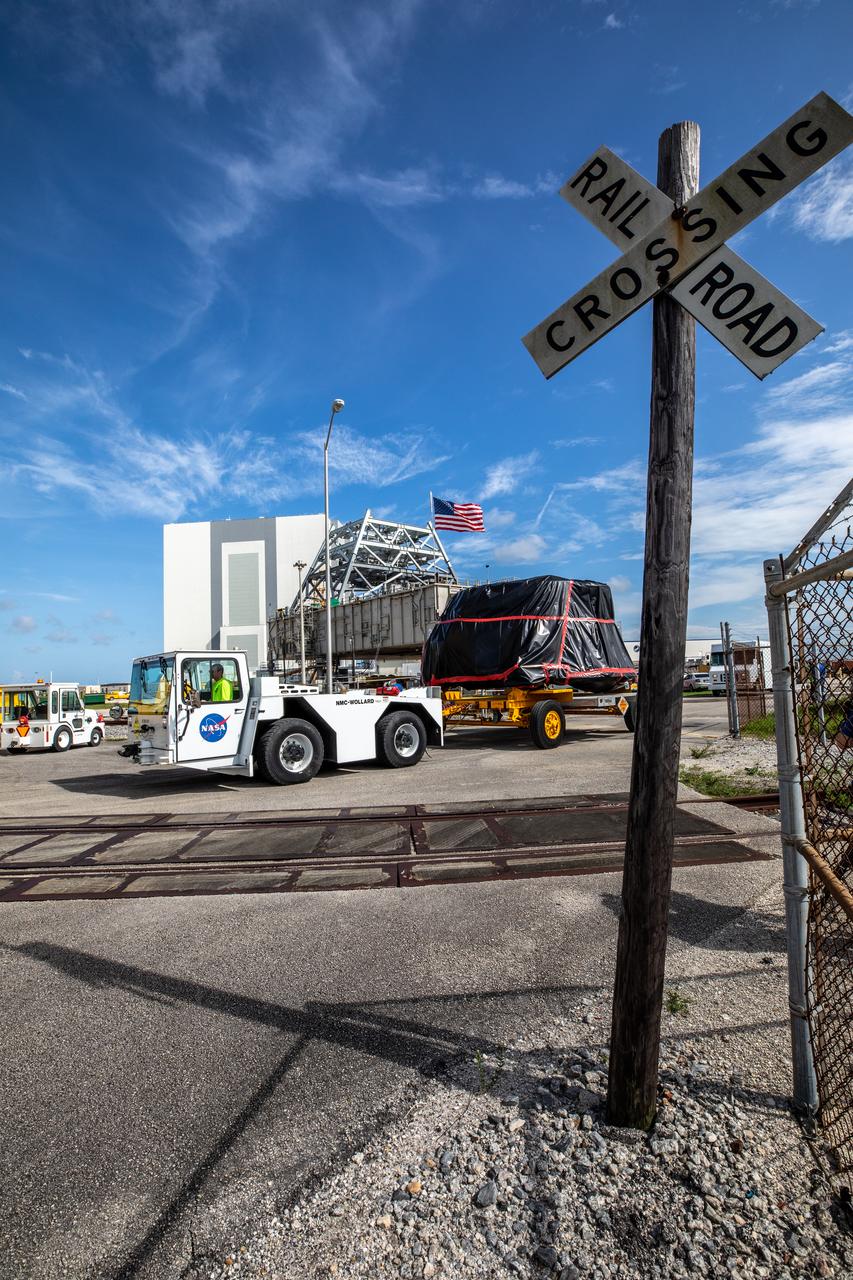
One of two Artemis I aft skirts for NASA’s Space Launch System (SLS) rocket’s twin solid rocket boosters crosses a railroad track on its way to the Rotation, Processing and Surge Facility (RPSF) at the agency’s Kennedy Space Center in Florida on June 10, 2020. They were transported from the Booster Fabrication Facility. The aft skirts were refurbished by Northrop Grumman. They house the thrust vector control system, which controls 70 percent of the steering during initial ascent of the SLS rocket. The segments will remain in the RPSF until ready for stacking with the forward and aft parts of the boosters on the mobile launcher in High Bay 3 of the Vehicle Assembly Building. Through the Artemis Program, NASA is working to land the first woman and next man on the Moon by 2024.
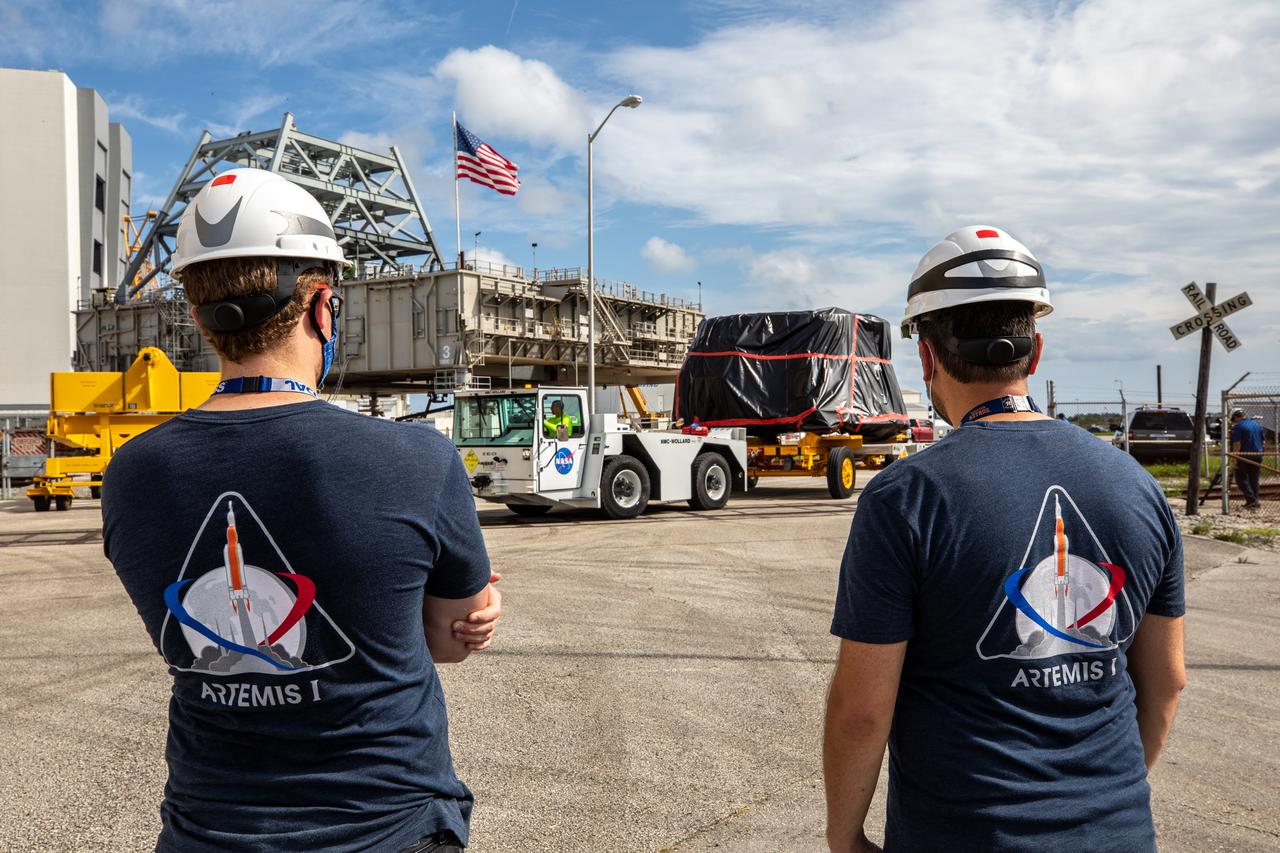
Exploration Ground Systems workers watch as the first of two Artemis I aft skirts for NASA’s Space Launch System (SLS) rocket’s twin solid rocket boosters crosses a railroad track on its way to the Rotation, Processing and Surge Facility (RPSF) at the agency’s Kennedy Space Center in Florida on June 10, 2020. They were transported from the Booster Fabrication Facility. The aft skirts were refurbished by Northrop Grumman. They house the thrust vector control system, which controls 70 percent of the steering during initial ascent of the SLS rocket. The segments will remain in the RPSF until ready for stacking with the forward and aft parts of the boosters on the mobile launcher in High Bay 3 of the Vehicle Assembly Building. Through the Artemis Program, NASA is working to land the first woman and next man on the Moon by 2024.
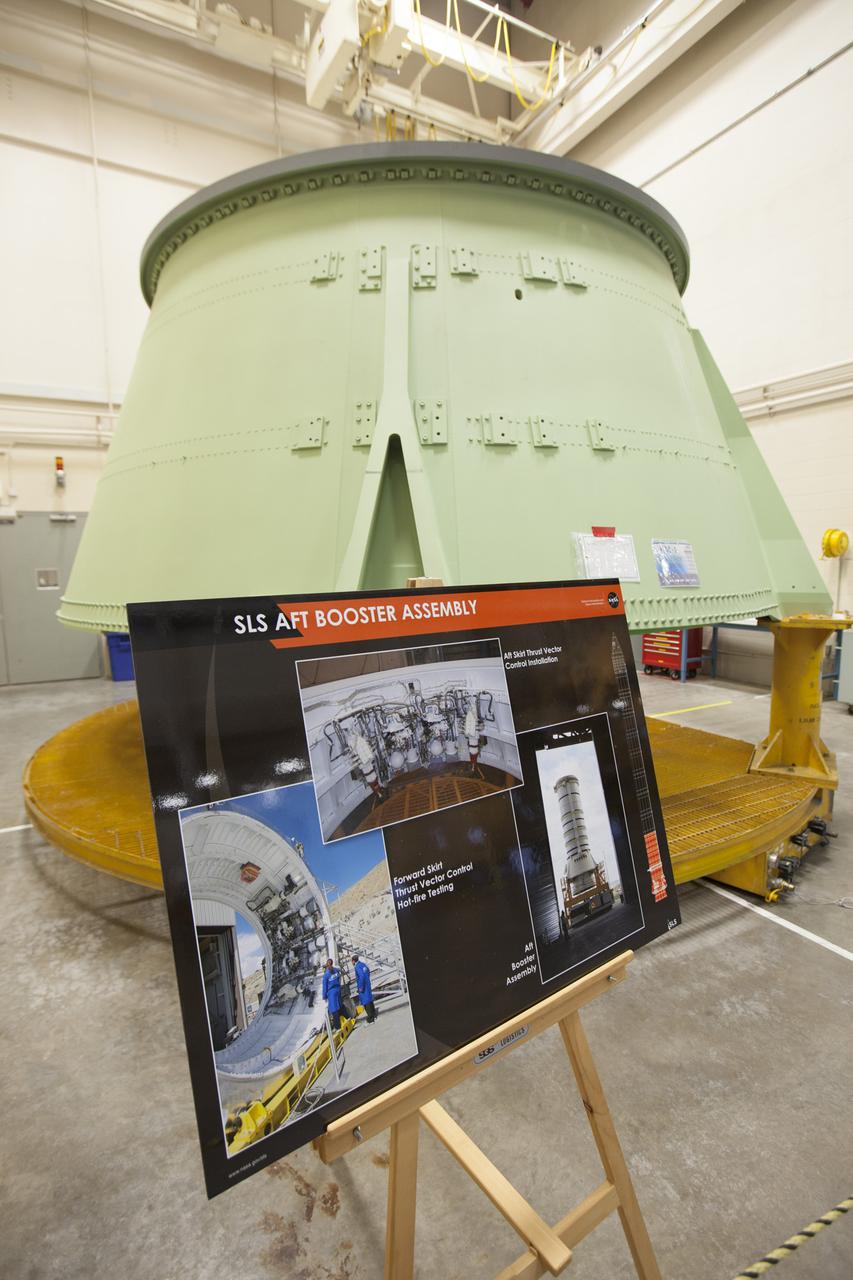
The right-hand aft skirt, one part of the aft booster assembly for NASA’s Space Launch System solid rocket boosters, is in view in a processing cell inside the Booster Fabrication Facility (BFF) at NASA’s Kennedy Space Center in Florida. Orbital ATK is a contractor for NASA’s Marshall Space Flight Center in Alabama, and operates the BFF to prepare aft booster segments and hardware for the SLS rocket boosters. The SLS rocket and Orion spacecraft will launch on Exploration Mission-1 in 2018. The Ground Systems Development and Operations Program is preparing the infrastructure to process and launch spacecraft for deep-space missions and the journey to Mars.
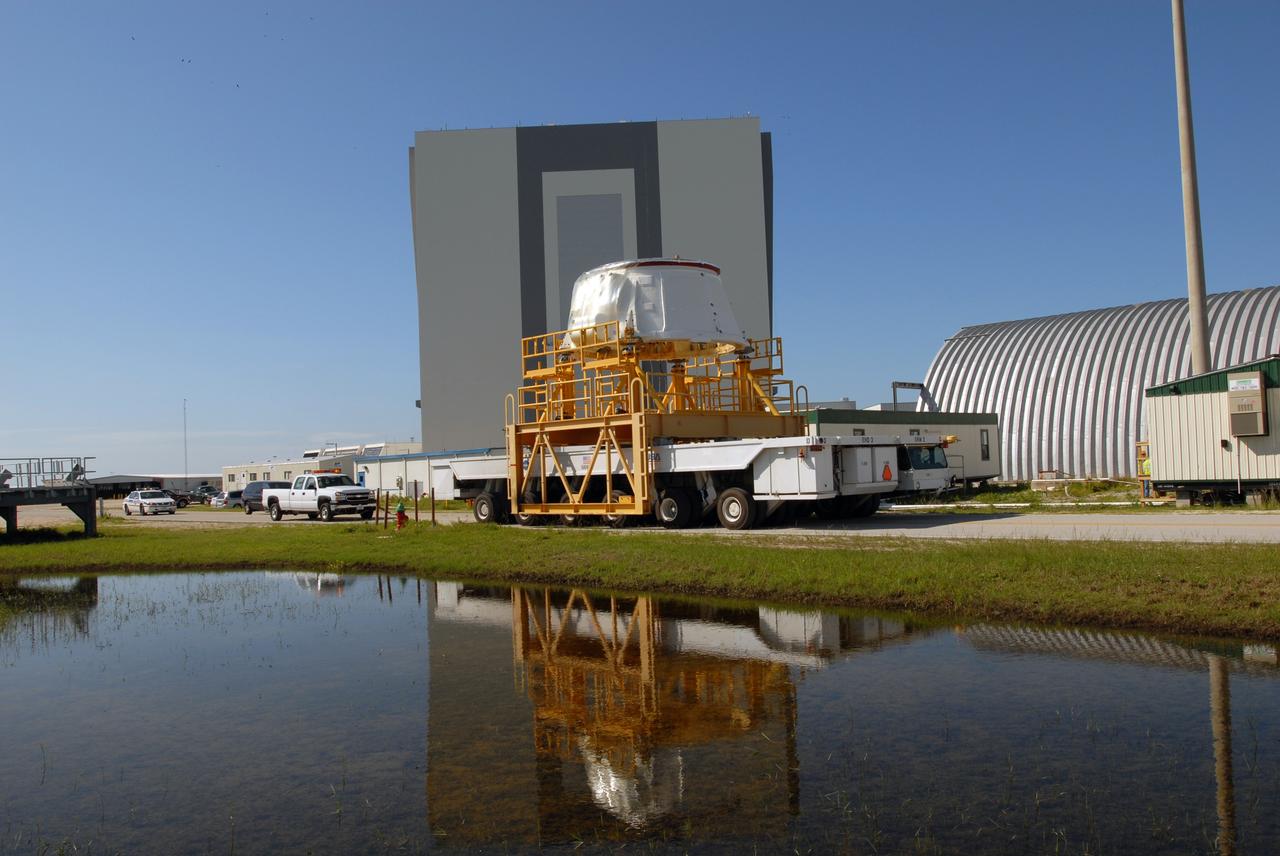
CAPE CANAVERAL, Fla. – The Ares I-X aft skirt moves past the Vehicle Assembly Building at NASA's Kennedy Space Center in Florida on its way to the Rotation, Processing and Surge Facility. In the RPSF, it will be stacked with the aft motor to form the aft assembly. The complete Ares I-X will be assembled in the Vehicle Assembly Building. The launch of Ares I-X is targeted for August 2009. Photo credit: NASA/Jim Grossmann
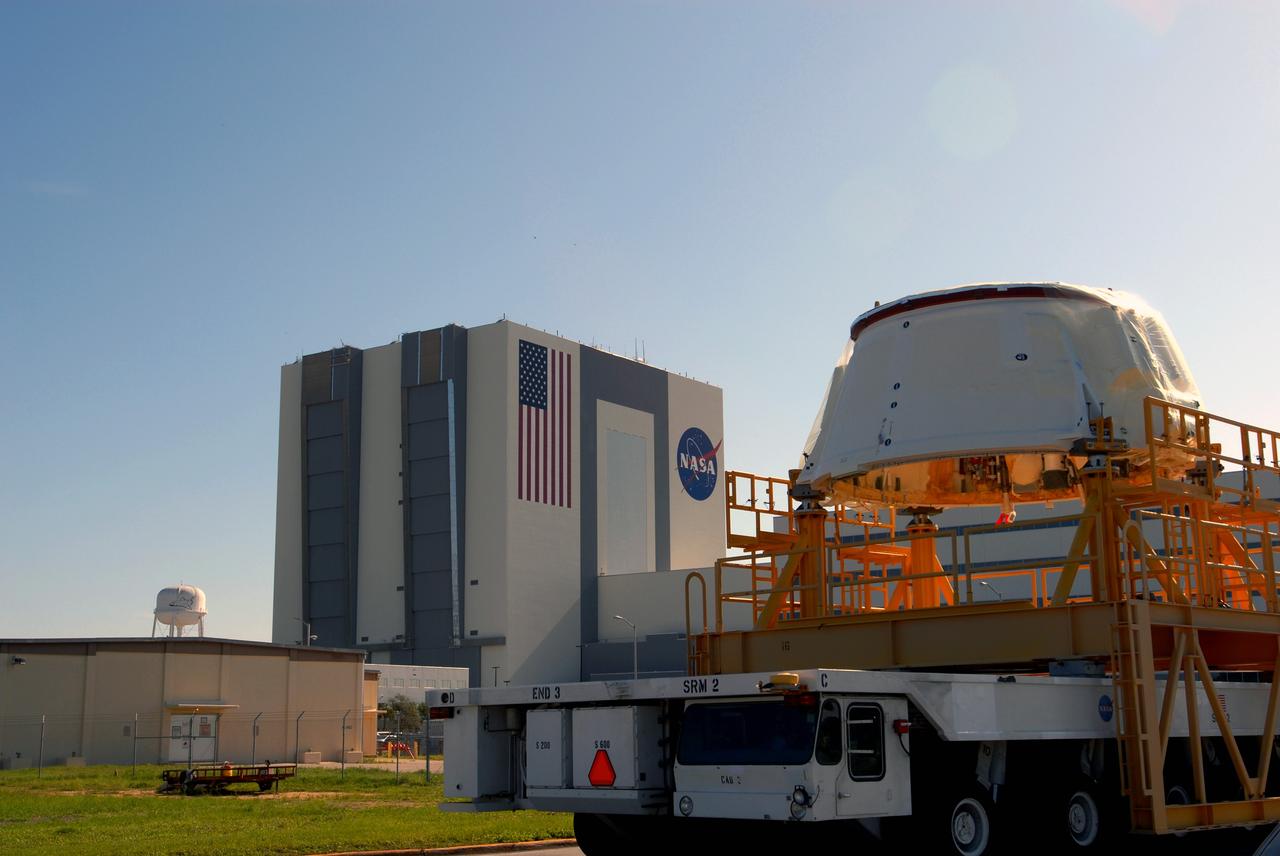
CAPE CANAVERAL, Fla. – The Ares I-X aft skirt moves past the Vehicle Assembly Building at NASA's Kennedy Space Center in Florida on its way to the Rotation, Processing and Surge Facility. In the RPSF, it will be stacked with the aft motor to form the aft assembly. The complete Ares I-X will be assembled in the Vehicle Assembly Building. The launch of Ares I-X is targeted for August 2009. Photo credit: NASA/Jim Grossmann
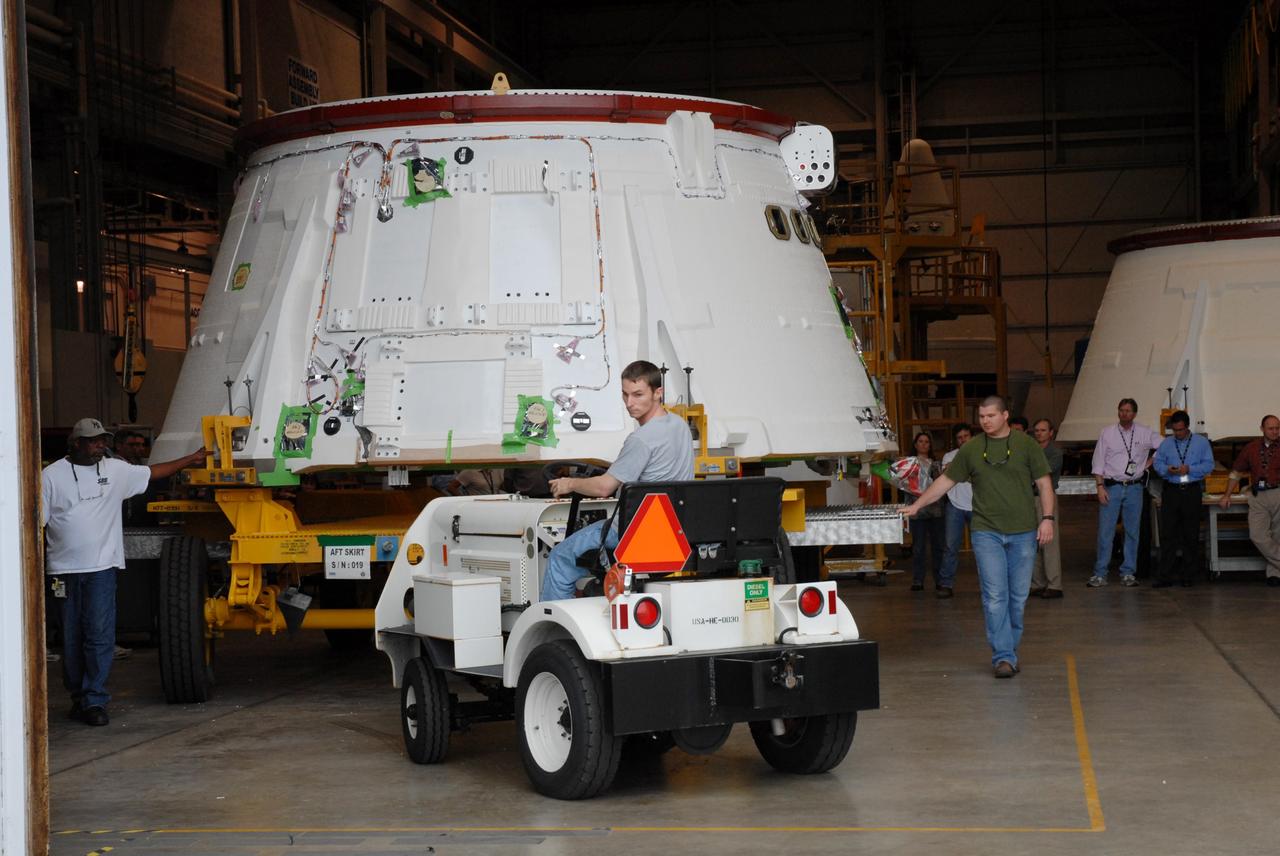
CAPE CANAVERAL, Fla. – The Ares I-X aft skirt is moved out of the Assembly and Refurbishment Facility to the test building nearby at NASA's Kennedy Space Center in Florida for testing. The I-X flight will provide NASA an early opportunity to test and prove hardware, facilities and ground operations associated with Ares I, part of the Constellation Program to return men to the moon and beyond. Photo credit: NASA/Troy Cryder
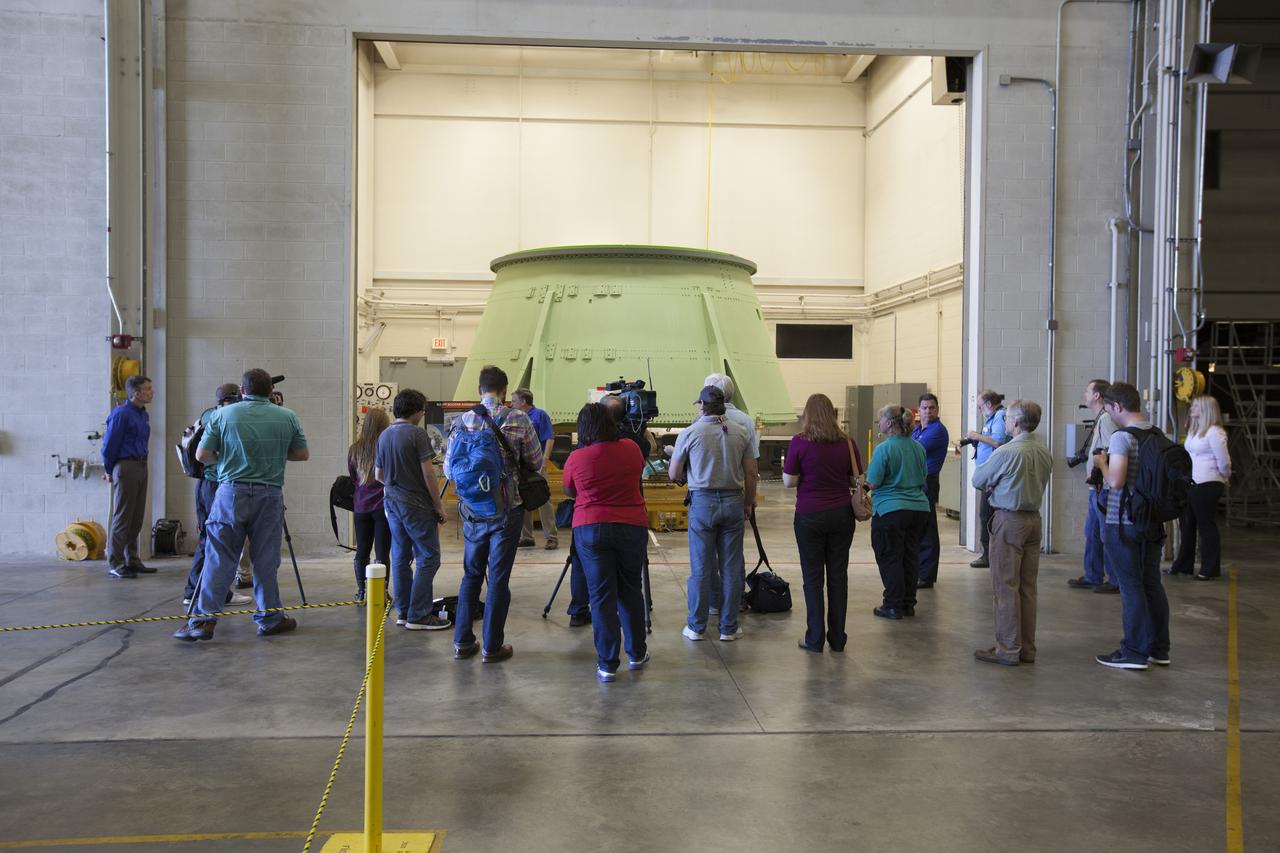
Inside the Booster Fabrication Facility (BFF) at NASA’s Kennedy Space Center in Florida, members of the news media view the right-hand aft skirt that will be used on a solid rocket booster for NASA’s Space Launch System (SLS) rocket. Orbital ATK is contractor for NASA’s Marshall Space Flight Center in Alabama, and operates the BFF to prepare aft booster segments and hardware for the SLS solid rocket boosters. At far right, in the royal blue shirt, Rick Serfozo, Orbital ATK Florida site director, talks to the media. The SLS rocket and Orion spacecraft will launch on Exploration Mission-1 in 2018. The Ground Systems Development and Operations Program is preparing the infrastructure to process and launch spacecraft for deep-space missions and the journey to Mars.
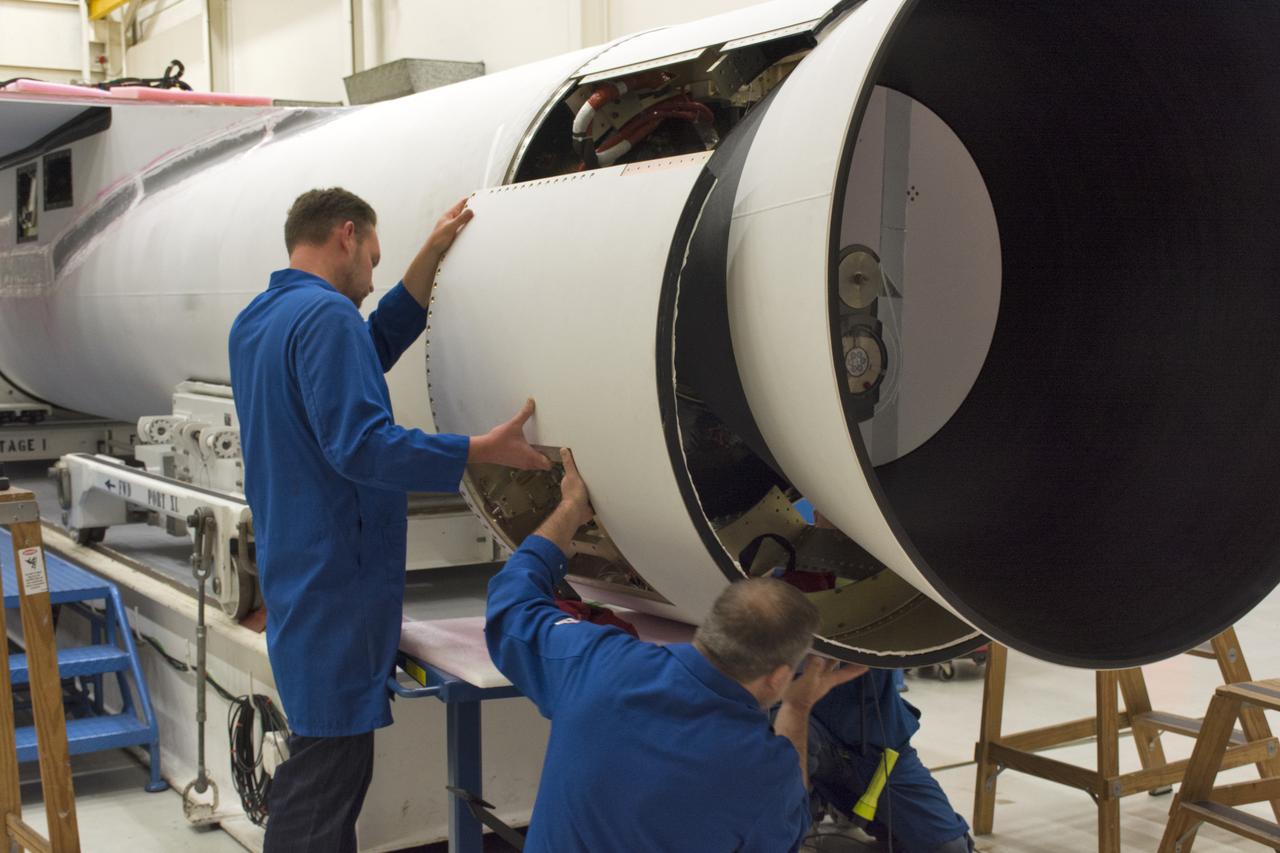
Technicians install the aft skirt on the Orbital ATK Pegasus XL rocket July 8, 2017, inside Building 1555 at Vandenberg Air Force Base in California. When the aft skirt is installed, the rudder and fins can be installed. The Pegasus rocket is being prepared for NASA's Ionospheric Connection Explorer, or ICON, mission. The explorer will launch on June 15, 2018, from Kwajalein Atoll in the Marshall Islands (June 14 in the continental United States) on Orbital ATKS's Pegasus XL, which is attached to the company's L-1011 Stargazer aircraft. ICON will study the frontier of space - the dynamic zone high in Earth's atmosphere where terrestrial weather from below meets space weather above. The explorer will help determine the physics of Earth's space environment and pave the way for mitigating its effects on our technology, communications systems and society.
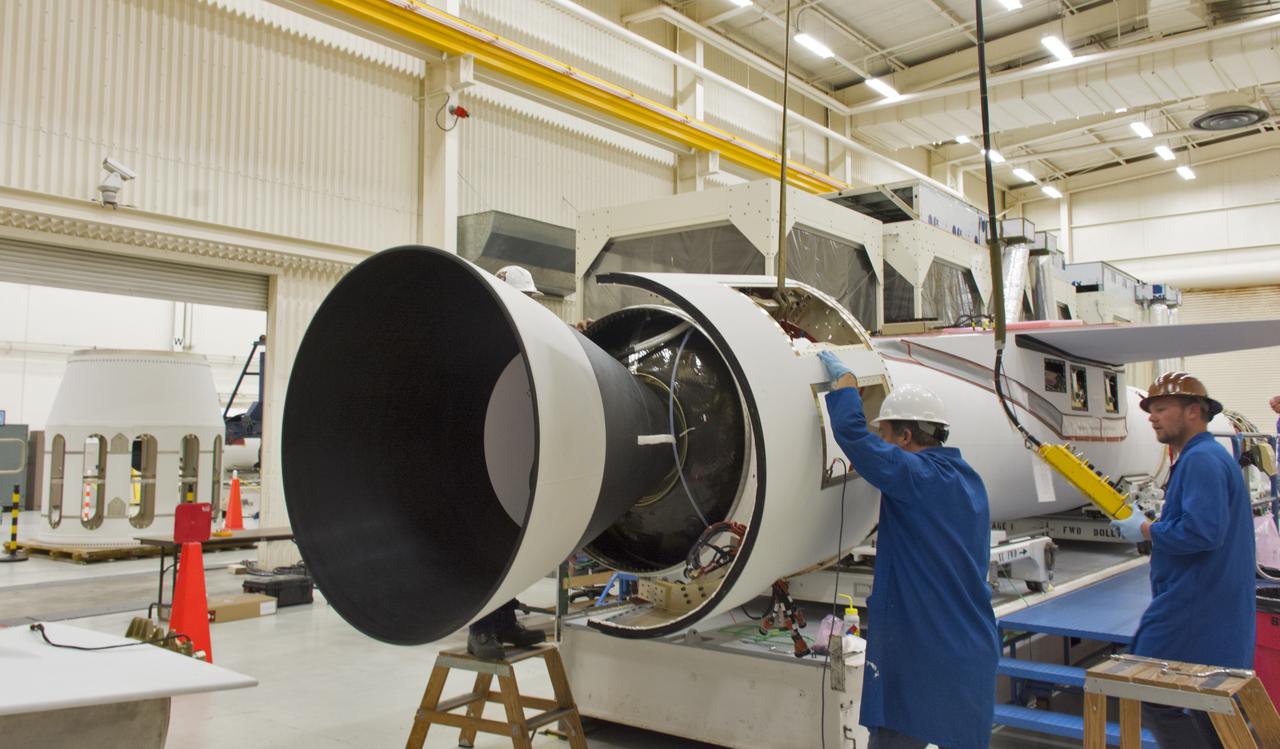
A technician installs the aft skirt on the Orbital ATK Pegasus XL rocket July 8, 2017, inside Building 1555 at Vandenberg Air Force Base in California. When the aft skirt is installed, the rudder and fins can be installed. The Pegasus rocket is being prepared for NASA's Ionospheric Connection Explorer, or ICON, mission. The explorer will launch on June 15, 2018, from Kwajalein Atoll in the Marshall Islands (June 14 in the continental United States) on Orbital ATKS's Pegasus XL, which is attached to the company's L-1011 Stargazer aircraft. ICON will study the frontier of space - the dynamic zone high in Earth's atmosphere where terrestrial weather from below meets space weather above. The explorer will help determine the physics of Earth's space environment and pave the way for mitigating its effects on our technology, communications systems and society.
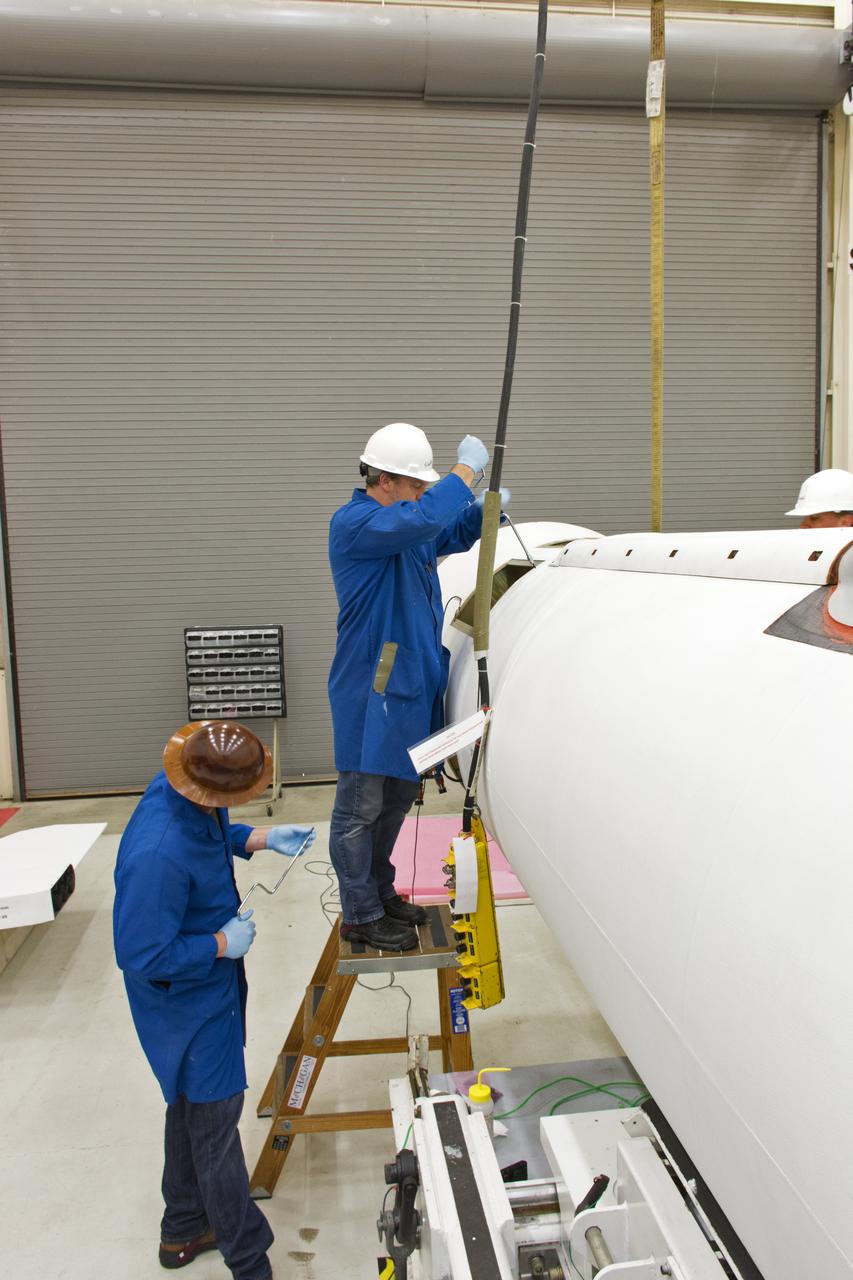
Technician install the aft skirt on the Orbital ATK Pegasus XL rocket July 8, 2017, inside Building 1555 at Vandenberg Air Force Base in California. When the aft skirt is installed, the rudder and fins can be installed. The Pegasus rocket is being prepared for NASA's Ionospheric Connection Explorer, or ICON, mission. The explorer will launch on June 15, 2018, from Kwajalein Atoll in the Marshall Islands (June 14 in the continental United States) on Orbital ATKS's Pegasus XL, which is attached to the company's L-1011 Stargazer aircraft. ICON will study the frontier of space - the dynamic zone high in Earth's atmosphere where terrestrial weather from below meets space weather above. The explorer will help determine the physics of Earth's space environment and pave the way for mitigating its effects on our technology, communications systems and society.
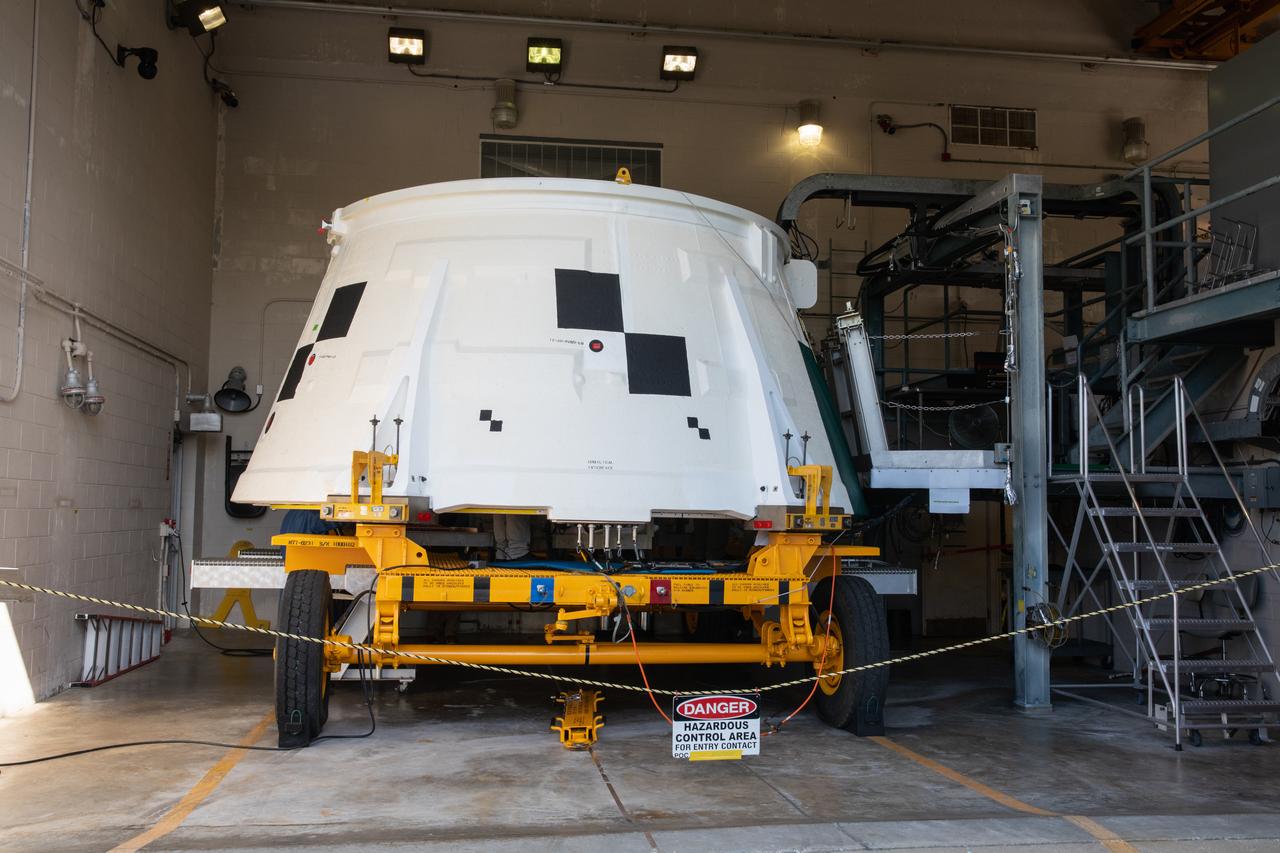
The aft skirt for one of the Space Launch System’s (SLS) two solid rocket boosters is inside the Booster Fabrication Facility at NASA’s Kennedy Space Center in Florida on Oct. 16, 2019. Segments of the boosters are being inspected and prepared for Artemis I, the agency’s first uncrewed flight of Orion atop the SLS. The aft skirts contain the thrust vector control system that steers the booster’s nozzles based on commands from the booster avionics during launch.
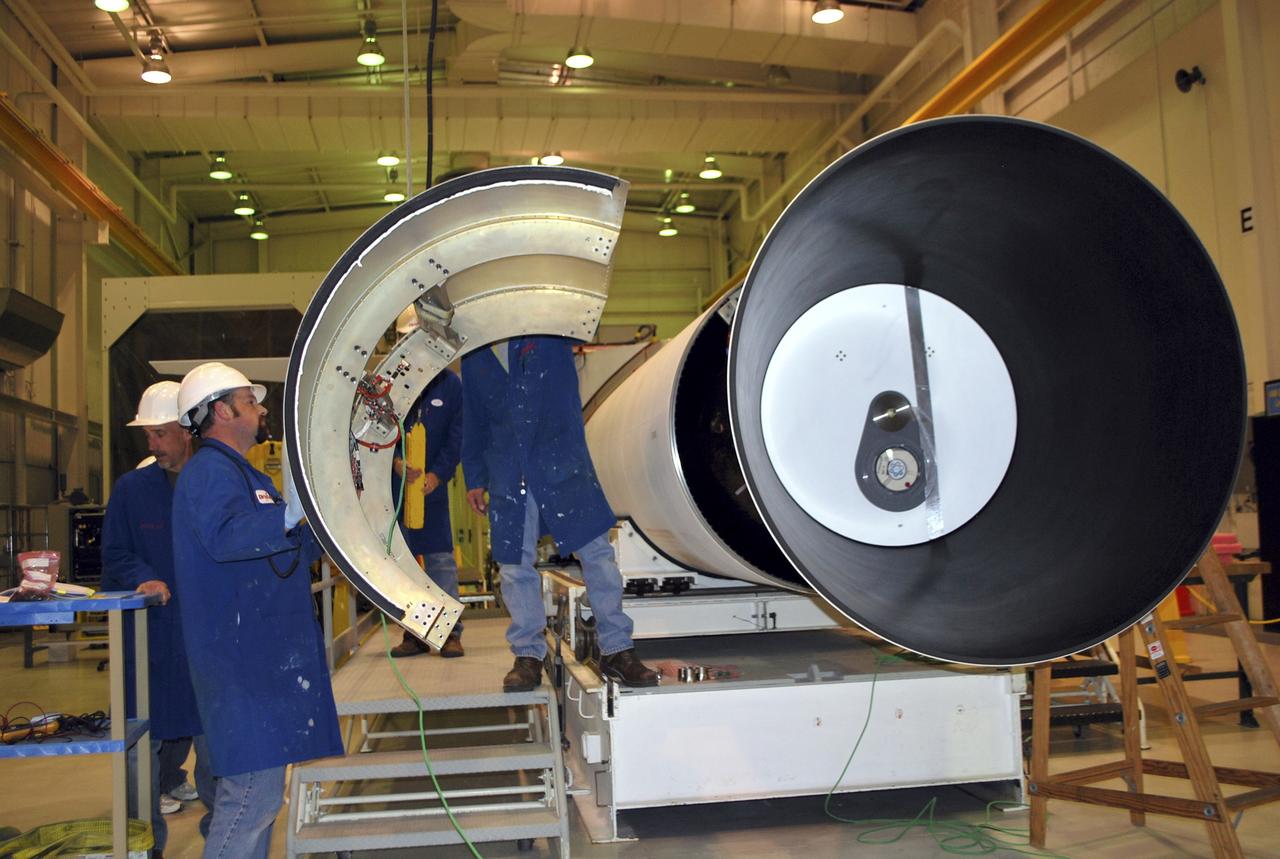
Pegasus/Nustar, Arival for the Aft Skirt & Fins, Installation of the Aft Skirt to the Aft End of Stage 1
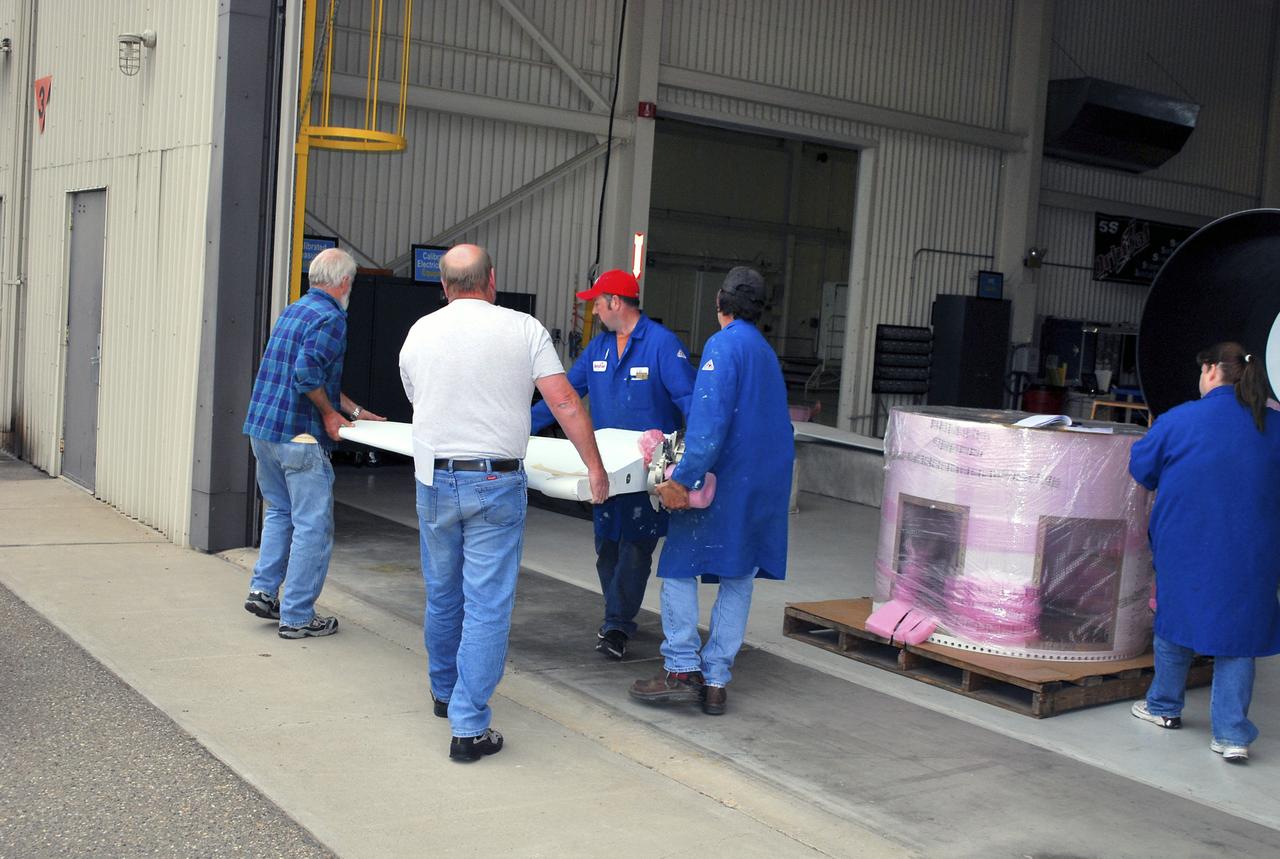
Pegasus/Nustar, Arival for the Aft Skirt & Fins, Installation of the Aft Skirt to the Aft End of Stage 1
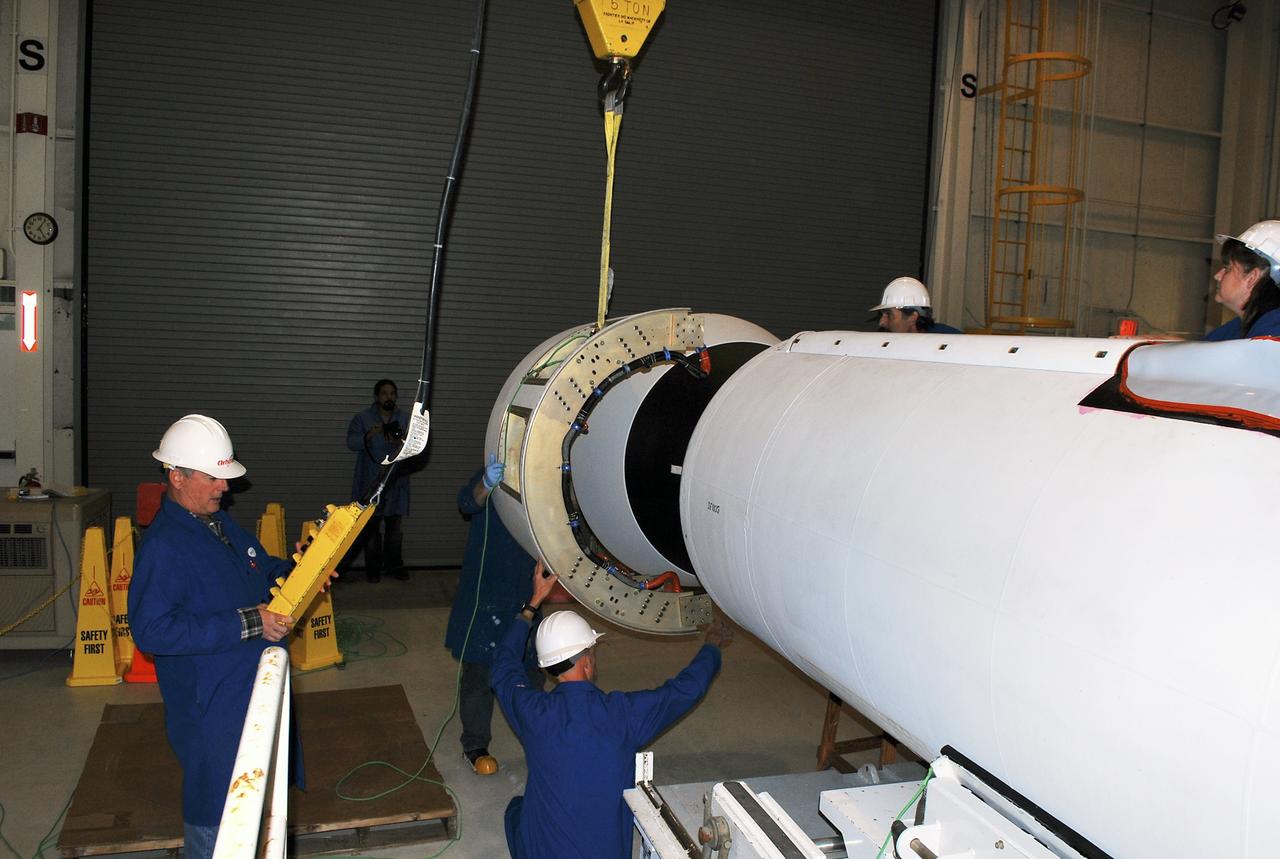
Pegasus/Nustar, Arival for the Aft Skirt & Fins, Installation of the Aft Skirt to the Aft End of Stage 1
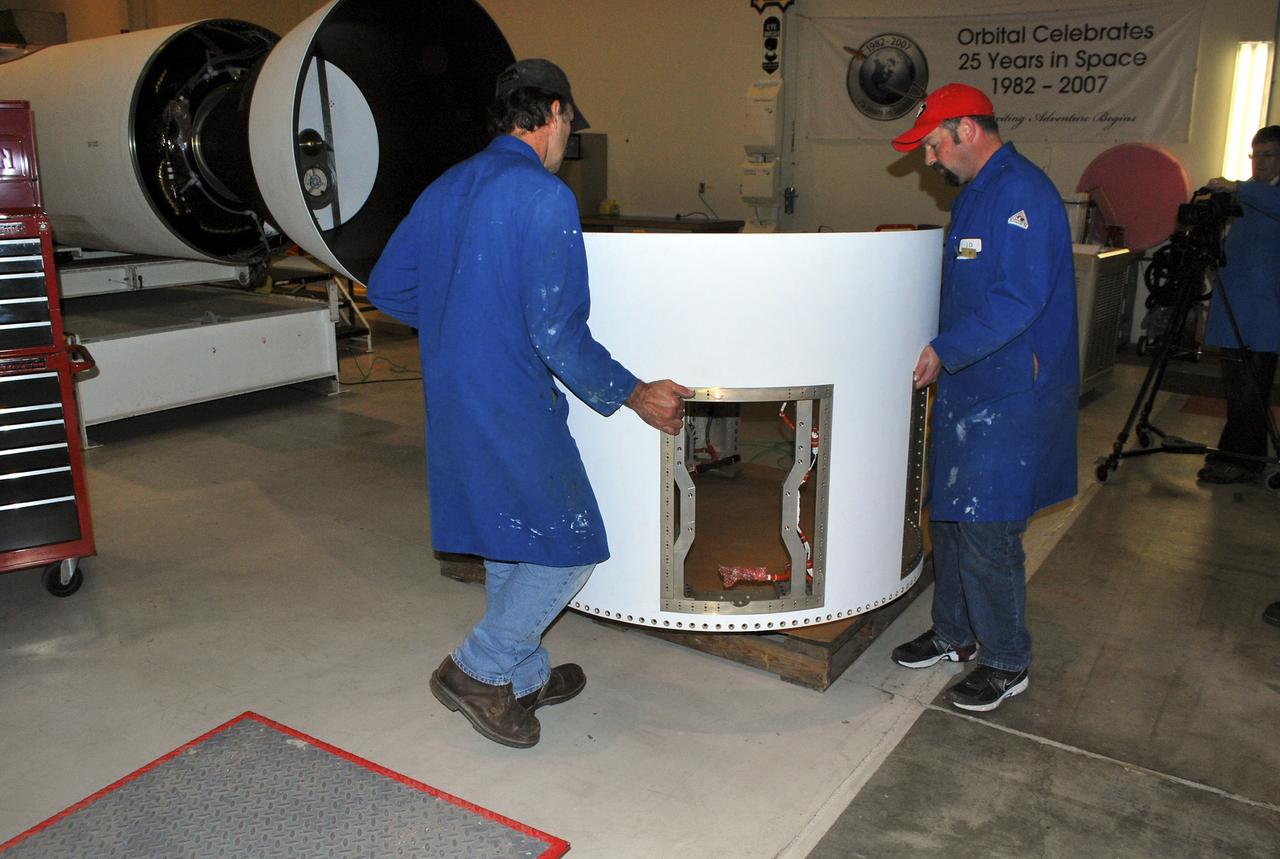
Pegasus/Nustar, Arival for the Aft Skirt & Fins, Installation of the Aft Skirt to the Aft End of Stage 1
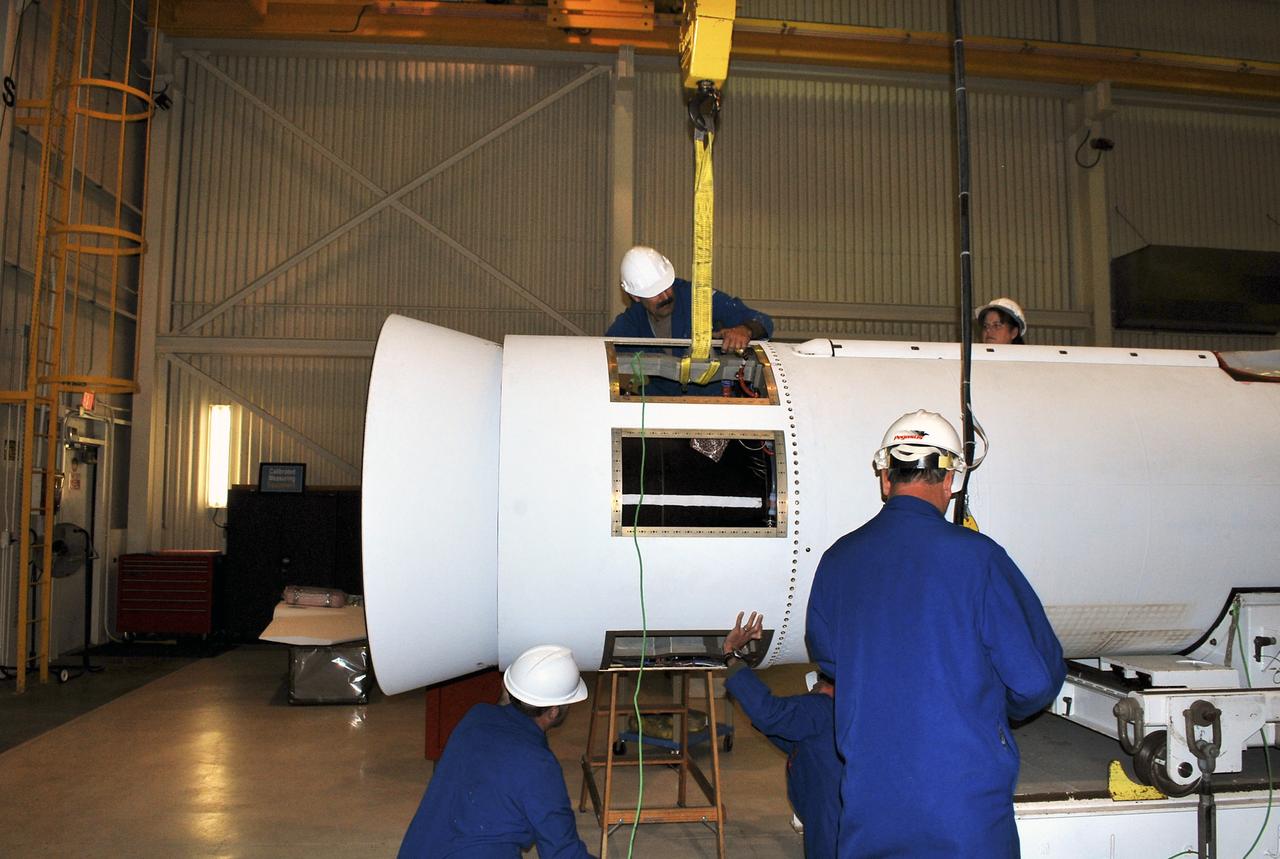
Pegasus/Nustar, Arival for the Aft Skirt & Fins, Installation of the Aft Skirt to the Aft End of Stage 1
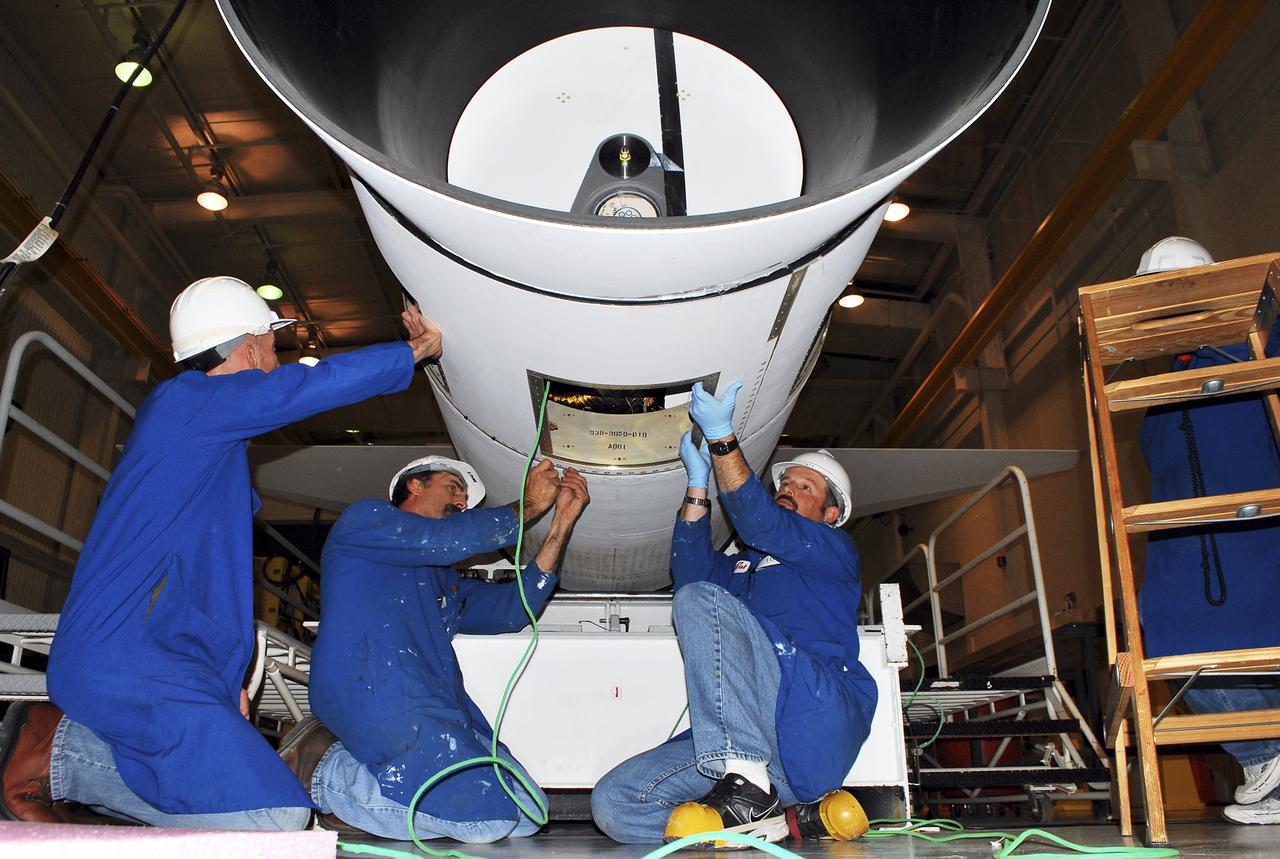
Pegasus/Nustar, Arival for the Aft Skirt & Fins, Installation of the Aft Skirt to the Aft End of Stage 1
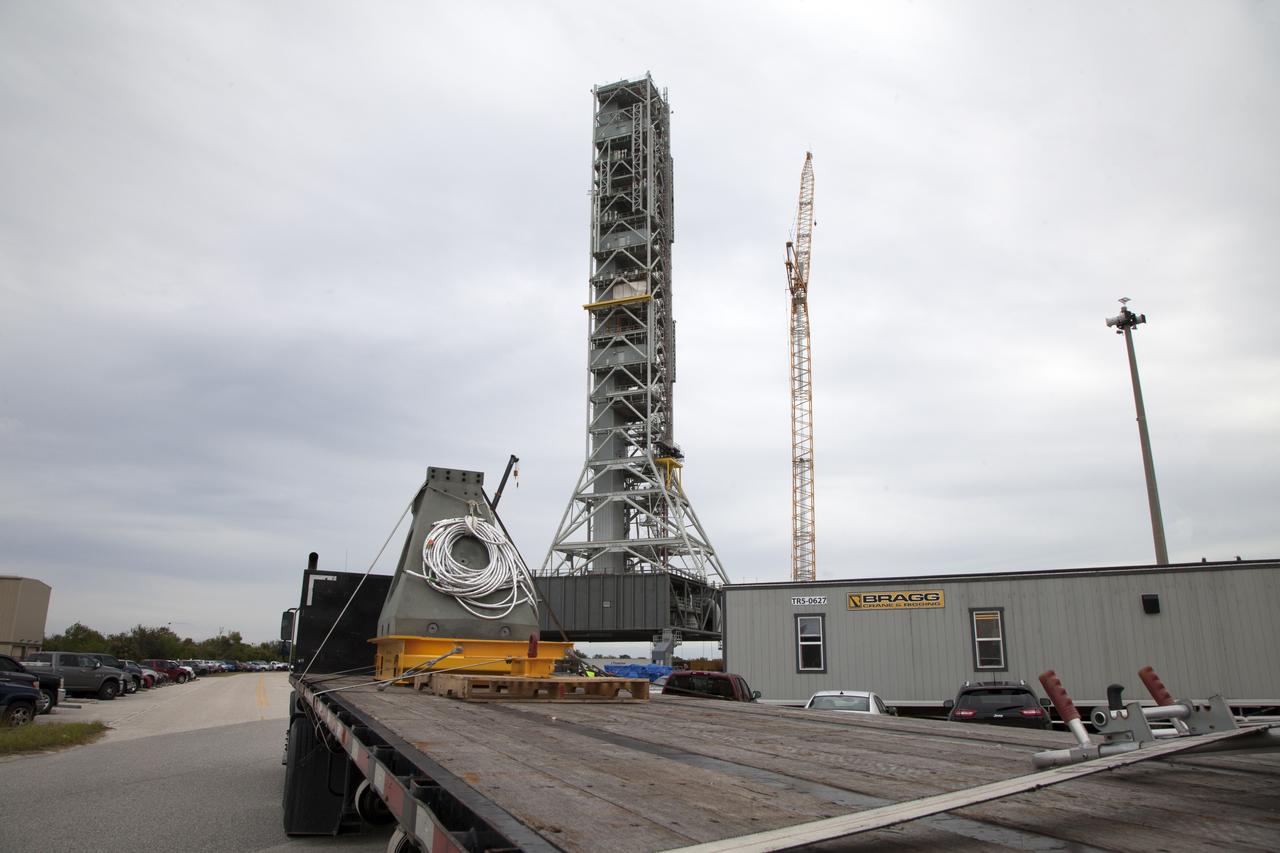
A flatbed truck carries a vertical support post (VSP) for NASA's Space Launch System (SLS) rocket to the Mobile Launcher Yard at NASA's Kennedy Space Center in Florida. The two aft skirt electrical umbilicals (ASEUs) and the first of the vehicle support posts underwent a series of tests to confirm they are functioning properly and ready to support the SLS for launch. The ASEUs will connect to the SLS rocket at the bottom outer edge of each booster and provide electrical power and data connections to the rocket until it lifts off from the launch pad. The eight VSPs will support the load of the solid rocket boosters, with four posts for each of the boosters. The center’s Engineering Directorate and the Ground Systems Development and Operations Program are overseeing processing and testing of the umbilicals.
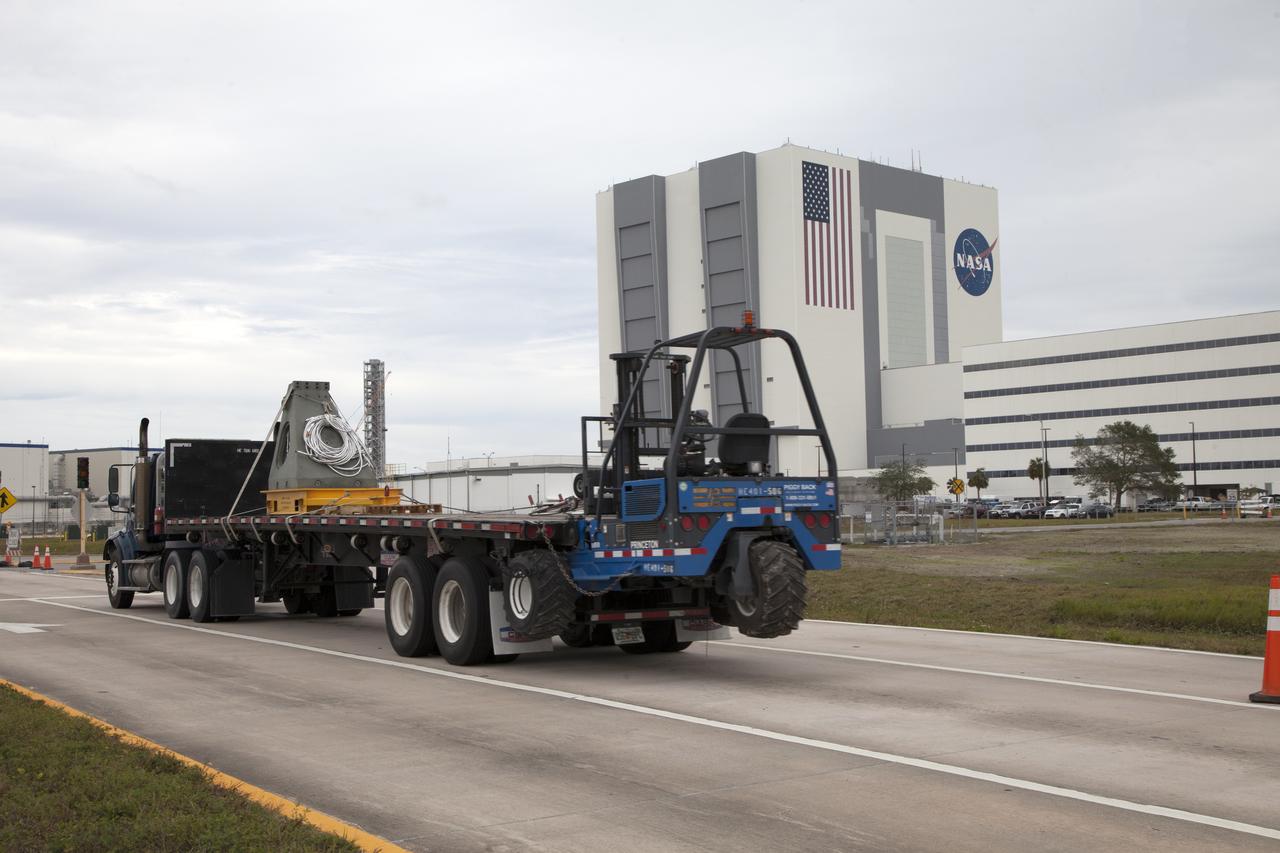
A flatbed truck carries a vertical support post (VSP) for NASA's Space Launch System (SLS) rocket to the Mobile Launcher Yard at NASA's Kennedy Space Center in Florida. The two aft skirt electrical umbilicals (ASEUs) and the first of the vehicle support posts underwent a series of tests to confirm they are functioning properly and ready to support the SLS for launch. The ASEUs will connect to the SLS rocket at the bottom outer edge of each booster and provide electrical power and data connections to the rocket until it lifts off from the launch pad. The eight VSPs will support the load of the solid rocket boosters, with four posts for each of the boosters. The center’s Engineering Directorate and the Ground Systems Development and Operations Program are overseeing processing and testing of the umbilicals.
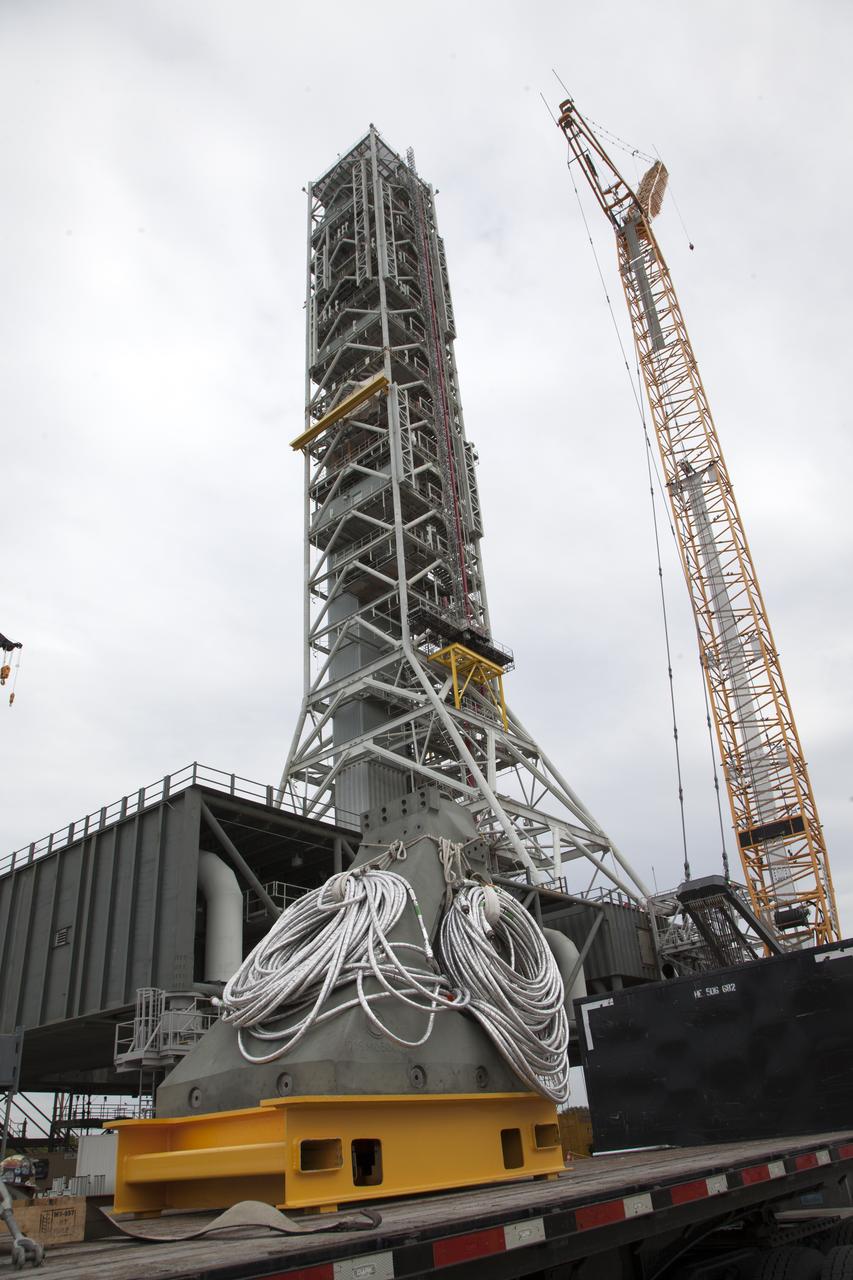
A flatbed truck carries a vertical support post (VSP) for NASA's Space Launch System (SLS) rocket to the Mobile Launcher Yard at NASA's Kennedy Space Center in Florida. In view is the mobile launcher. The two aft skirt electrical umbilicals (ASEUs) and the first of the vehicle support posts underwent a series of tests to confirm they are functioning properly and ready to support the SLS for launch. The ASEUs will connect to the SLS rocket at the bottom outer edge of each booster and provide electrical power and data connections to the rocket until it lifts off from the launch pad. The eight VSPs will support the load of the solid rocket boosters, with four posts for each of the boosters. The center’s Engineering Directorate and the Ground Systems Development and Operations Program are overseeing processing and testing of the umbilicals.
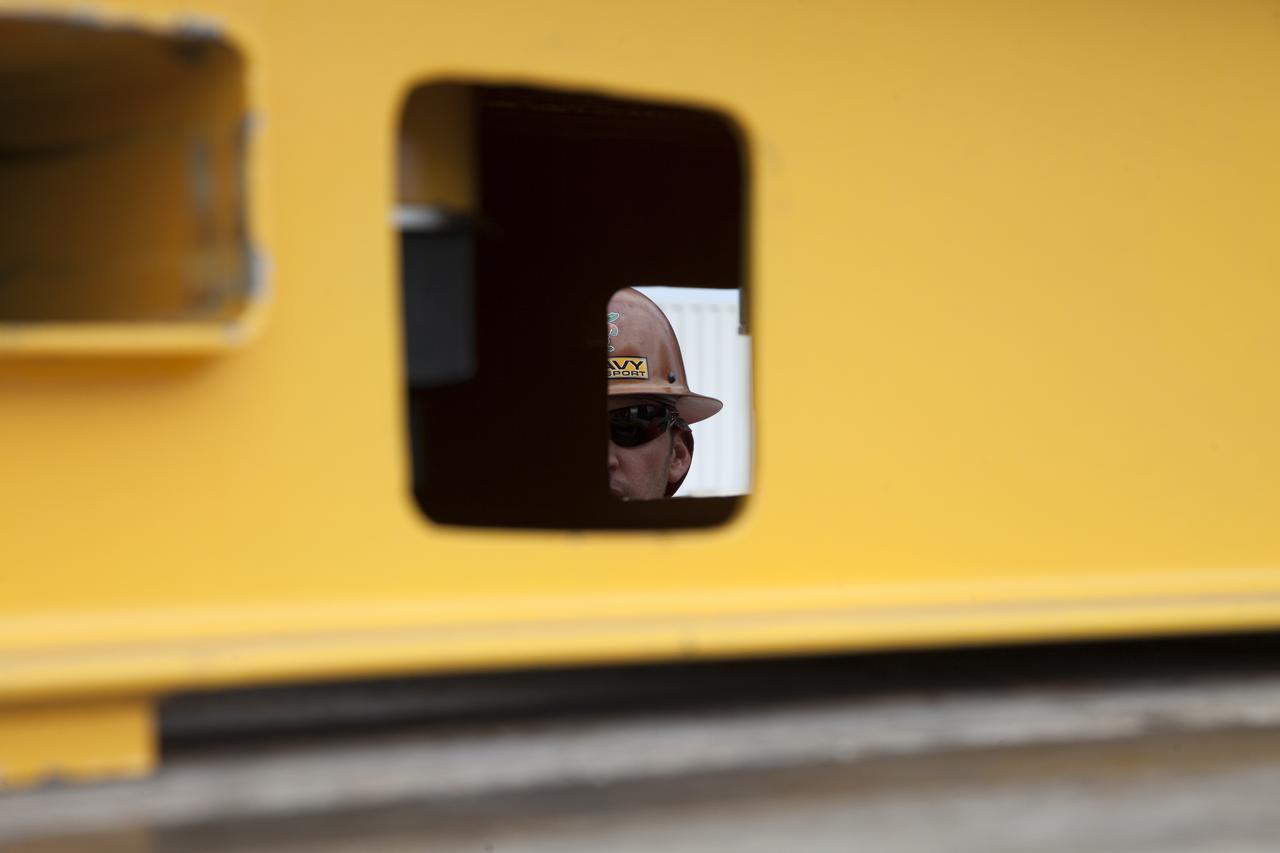
A construction worker is in view as a flatbed truck passes by carrying a vertical support post (VSP) for NASA's Space Launch System (SLS) rocket to the Mobile Launcher Yard at NASA's Kennedy Space Center in Florida. The two aft skirt electrical umbilicals (ASEUs) and the first of the vehicle support posts underwent a series of tests to confirm they are functioning properly and ready to support the SLS for launch. The ASEUs will connect to the SLS rocket at the bottom outer edge of each booster and provide electrical power and data connections to the rocket until it lifts off from the launch pad. The eight VSPs will support the load of the solid rocket boosters, with four posts for each of the boosters. The center’s Engineering Directorate and the Ground Systems Development and Operations Program are overseeing processing and testing of the umbilicals.
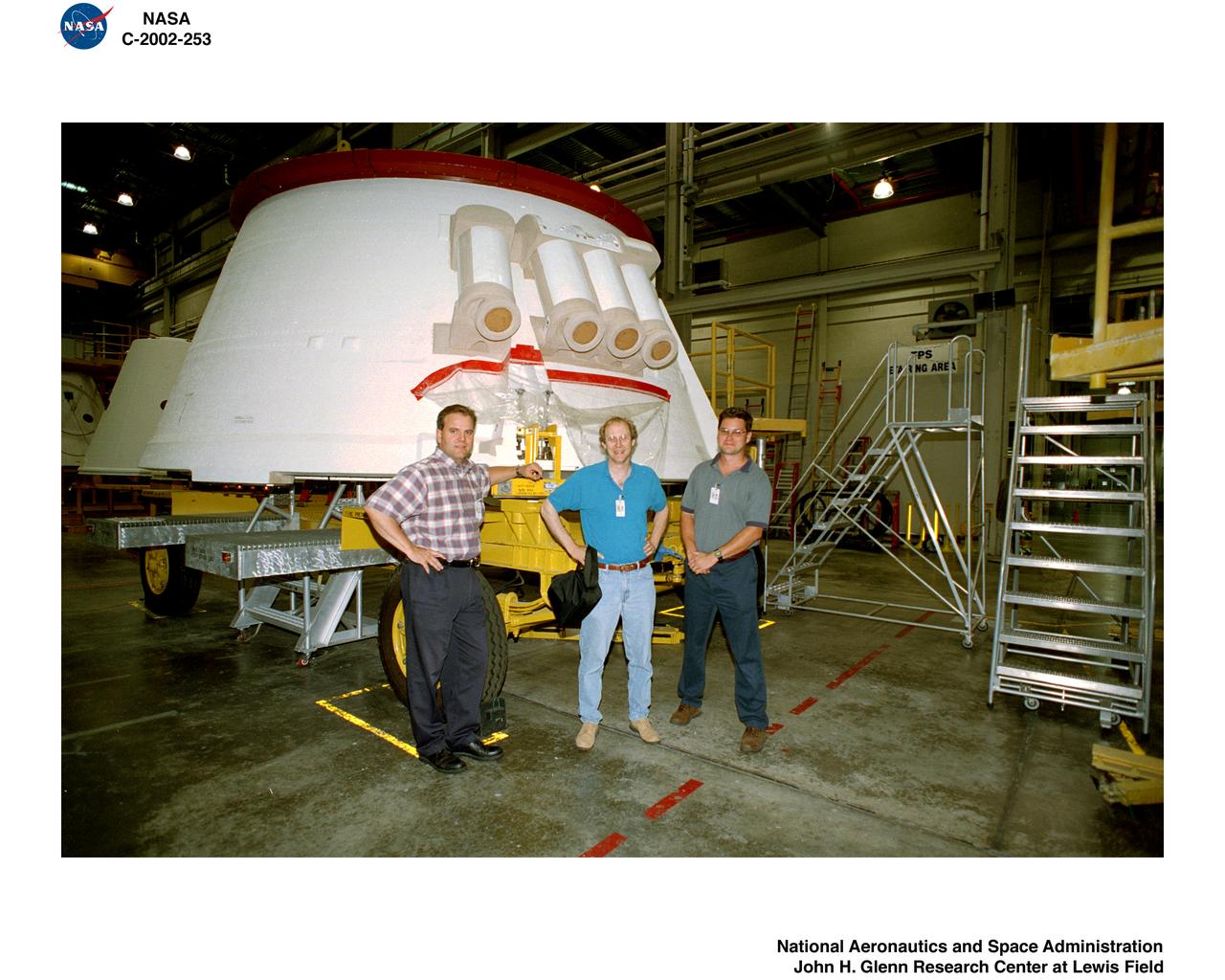
SOLID ROCKET BOOSTER AFT SKIRT IMAGES
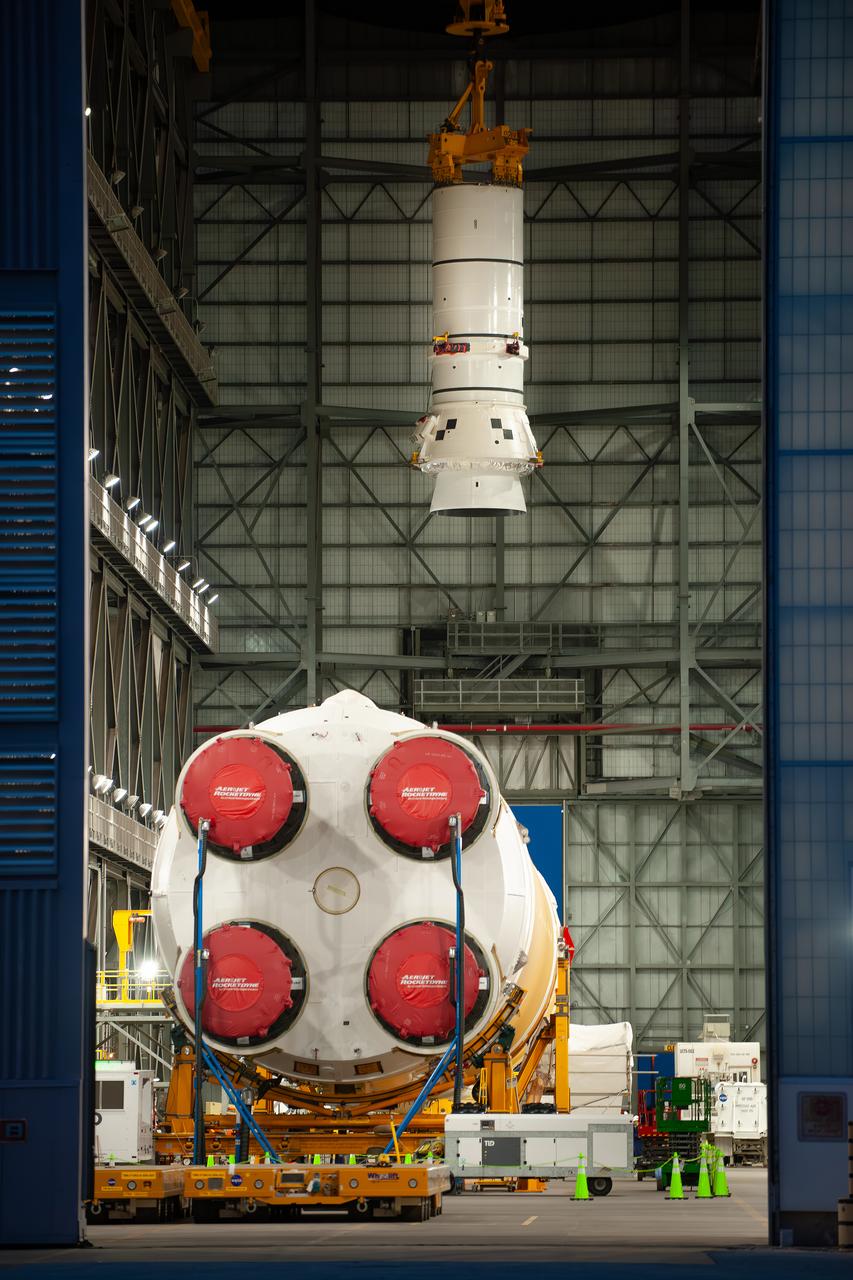
Down the transfer aisle from the Artemis II SLS (Space Launch System) core stage, an overhead crane hoists the left aft assembly, or bottom portion of the solid rocket boosters for the SLS Moon rocket inside the Vehicle Assembly Building at NASA’s Kennedy Space Center on Tuesday, Nov. 19, 2024. The crane will lift the aft assembly on top of the mobile launcher 1 followed by the right aft assembly and stack the remaining booster segments for the Artemis II mission.
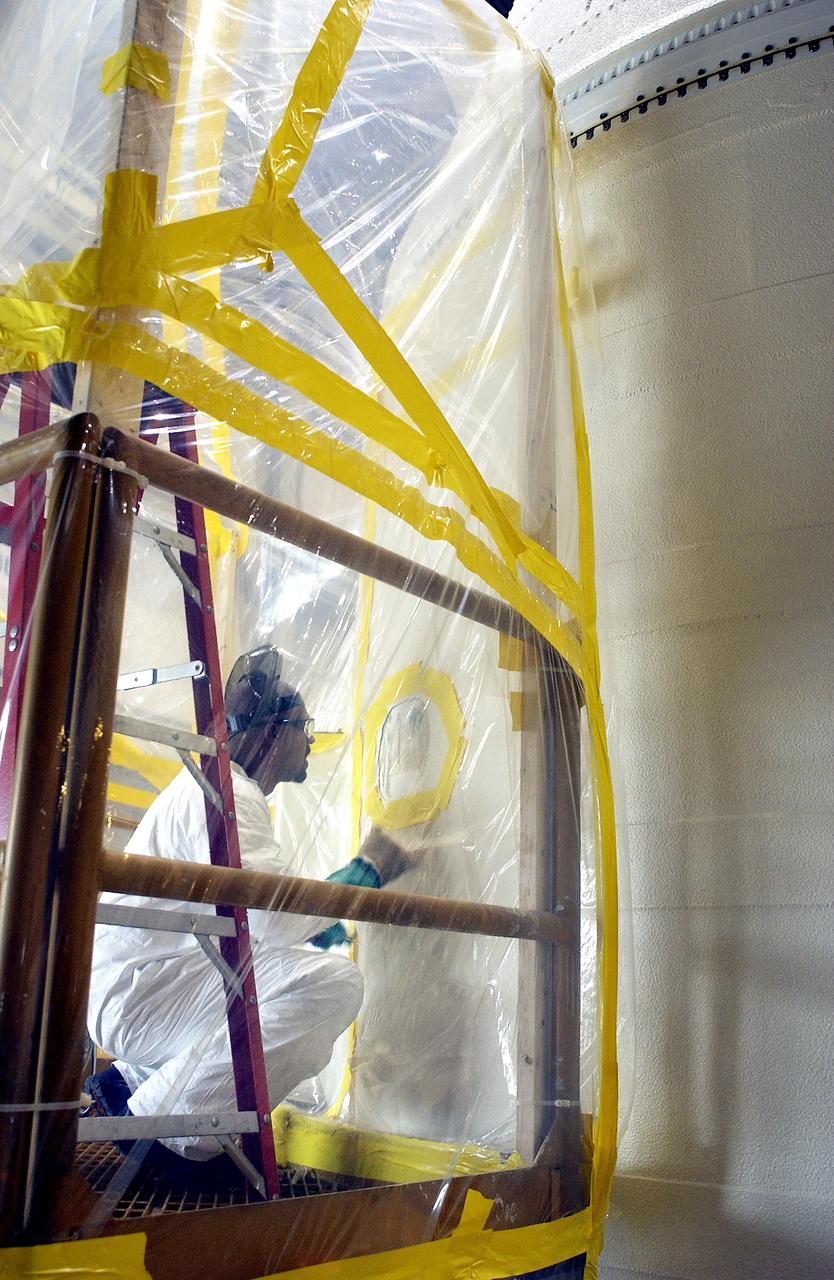
KENNEDY SPACE CENTER, FLA. - In the Solid Rocket Booster Assembly and Refurbishment Facility (ARF), Vernon Gibbs, with United Space Alliance, prepares the forward skirt of a solid rocket booster for installation of the parachute camera. Refurbishment and subassembly of Shuttle SRB hardware - primarily the forward and aft assemblies - is carried out in the ARF.
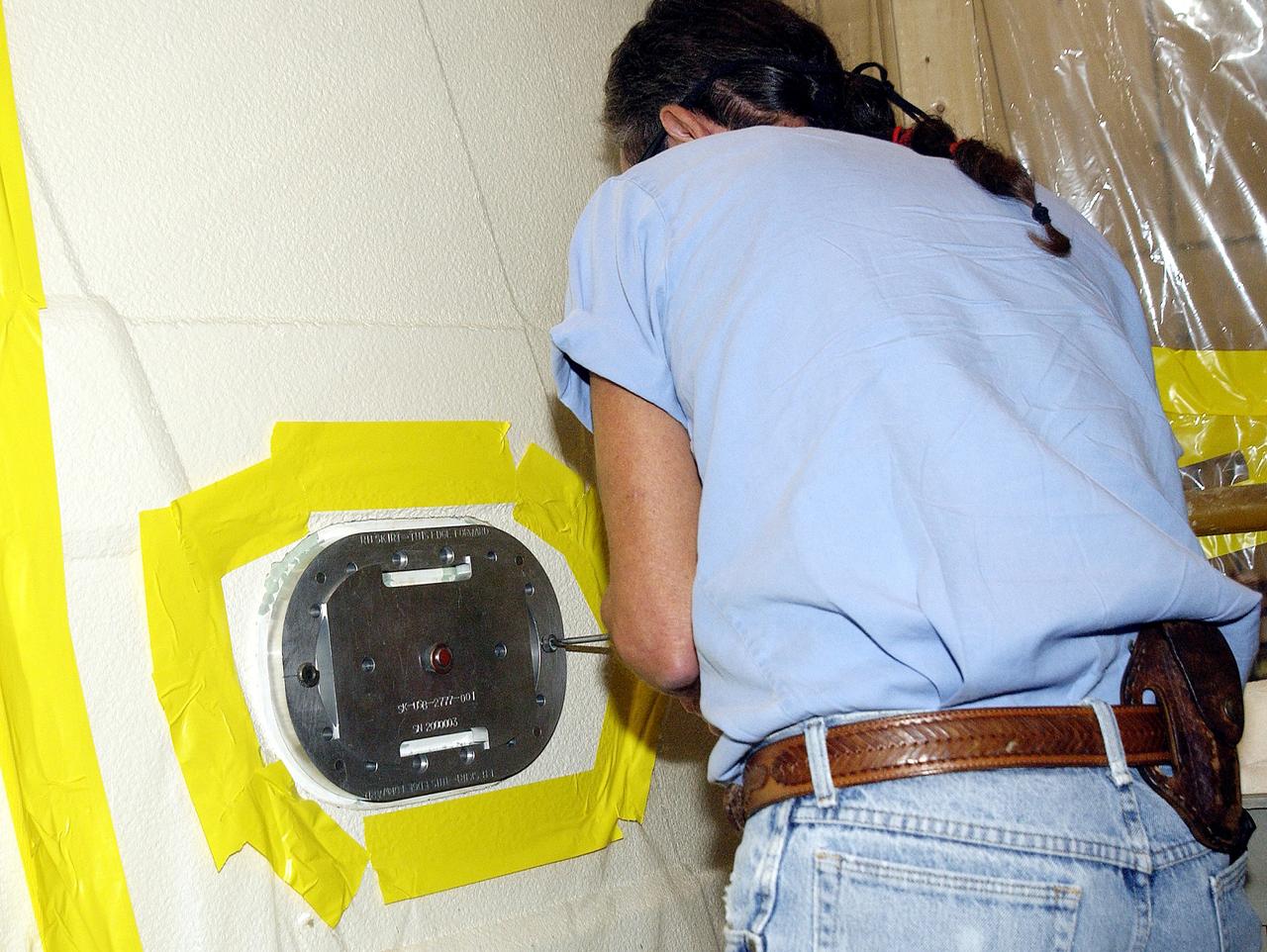
KENNEDY SPACE CENTER, FLA. - In the Solid Rocket Booster Assembly and Refurbishment Facility (ARF), Donnie Cardigan, with United Space Alliance, installs the parachute camera on the solid rocket booster forward skirt. Refurbishment and subassembly of Shuttle SRB hardware - primarily the forward and aft assemblies - is carried out in the ARF.
KENNEDY SPACE CENTER, FLA. - In the Solid Rocket Booster Assembly and Refurbishment Facility (ARF), Vernon Gibbs, with United Space Alliance, prepares the forward skirt of a solid rocket booster for installation of the parachute camera. Refurbishment and subassembly of Shuttle SRB hardware - primarily the forward and aft assemblies - is carried out in the ARF.
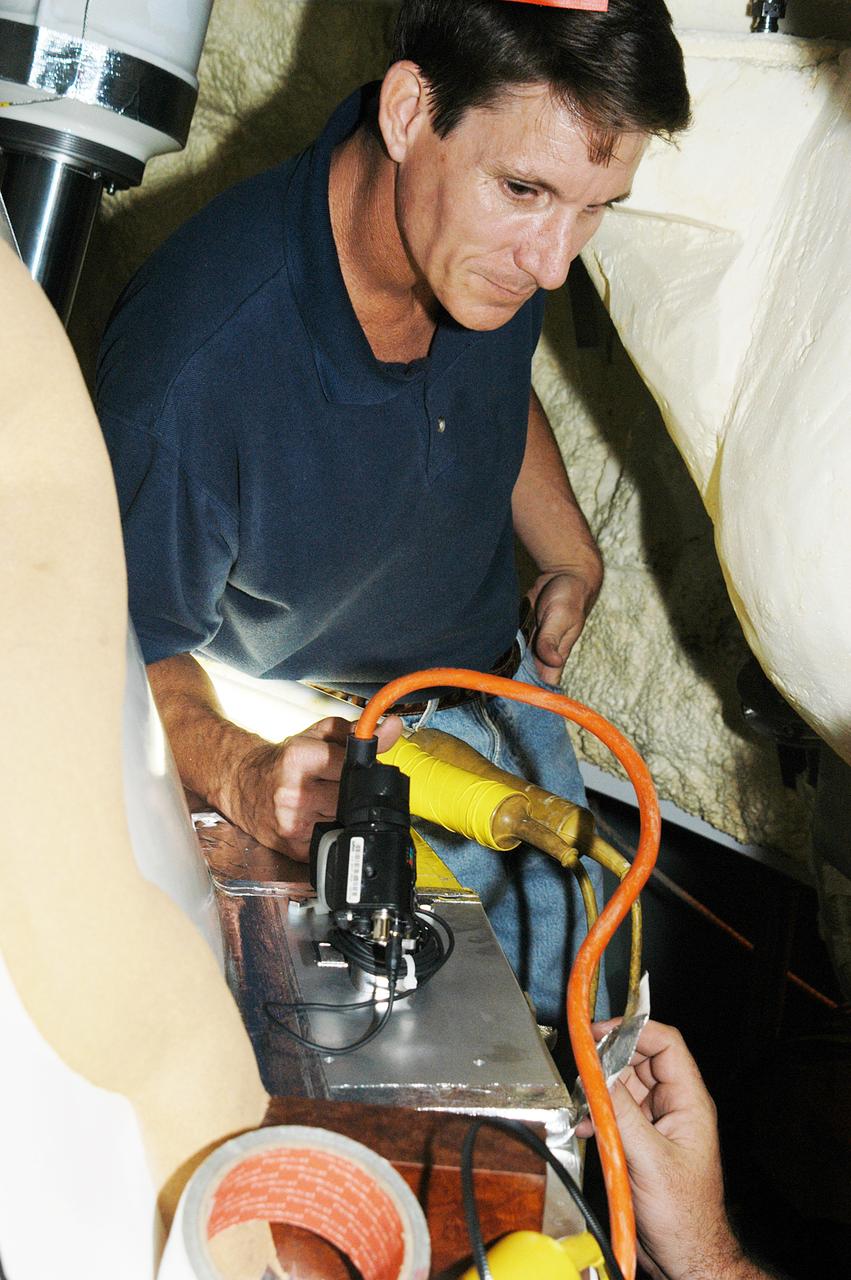
KENNEDY SPACE CENTER, FLA. - A camera is installed on the aft skirt of a solid rocket booster in preparation for a vibration test of the Mobile Launcher Platform with SRBs and external tank mounted. The MLP will roll from one bay to another in the Vehicle Assembly Building.
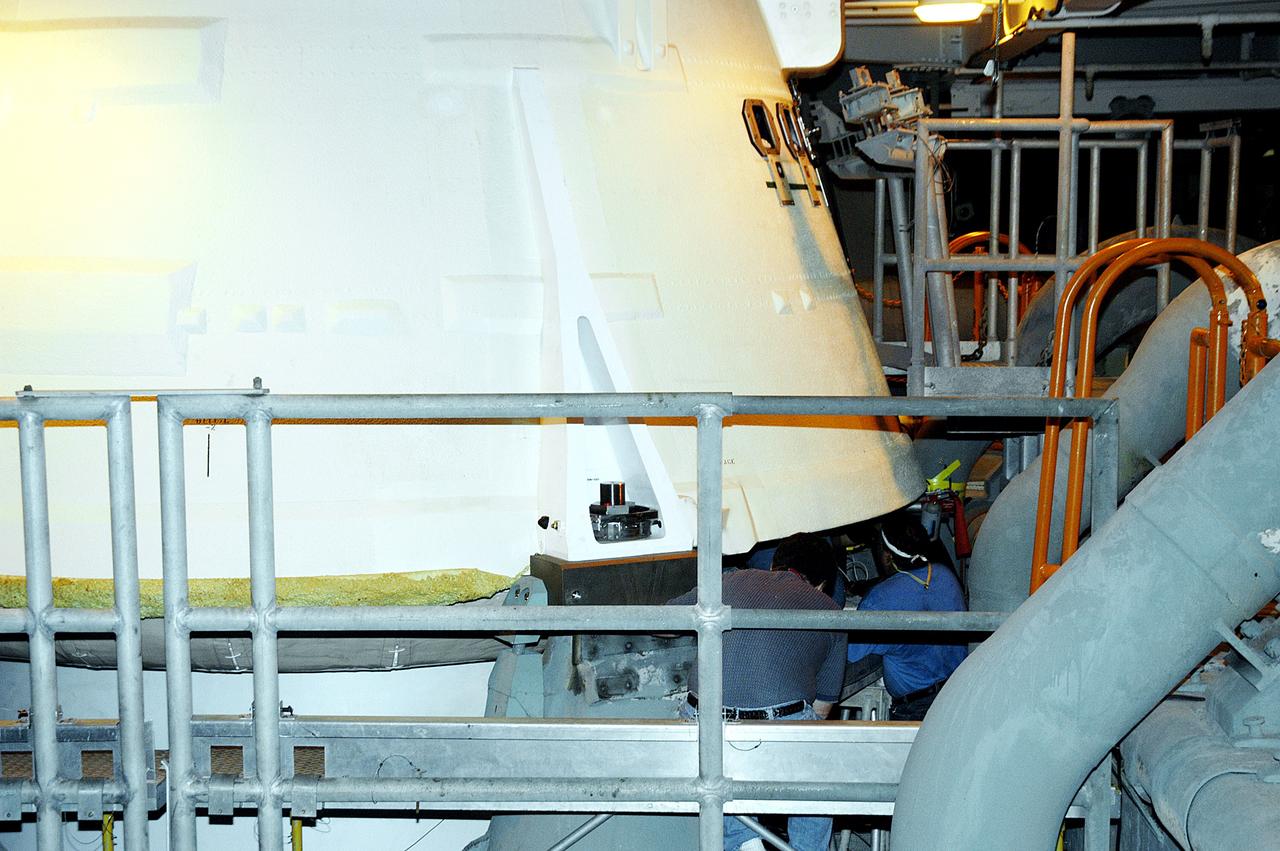
KENNEDY SPACE CENTER, FLA. - The camera installed on the aft skirt of a solid rocket booster is seen here, framed by the railing. The installation is in preparation for a vibration test of the Mobile Launcher Platform with SRBs and external tank mounted. The MLP will roll from one bay to another in the Vehicle Assembly Building.
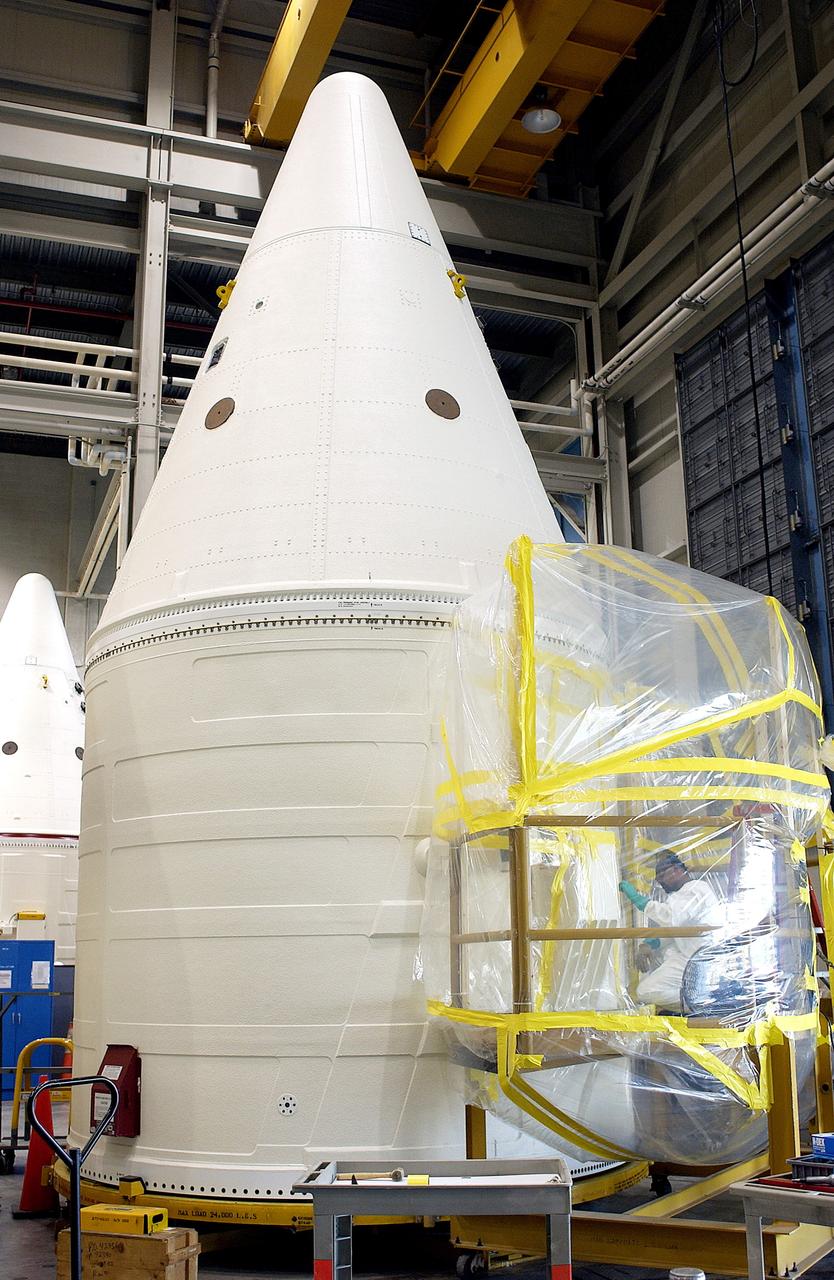
KENNEDY SPACE CENTER, FLA. - In the Solid Rocket Booster Assembly and Refurbishment Facility (ARF), Vernon Gibbs, with United Space Alliance, prepares the forward skirt of a solid rocket booster for installation of the parachute camera. Refurbishment and subassembly of Shuttle SRB hardware - primarily the forward and aft assemblies - is carried out in the ARF.
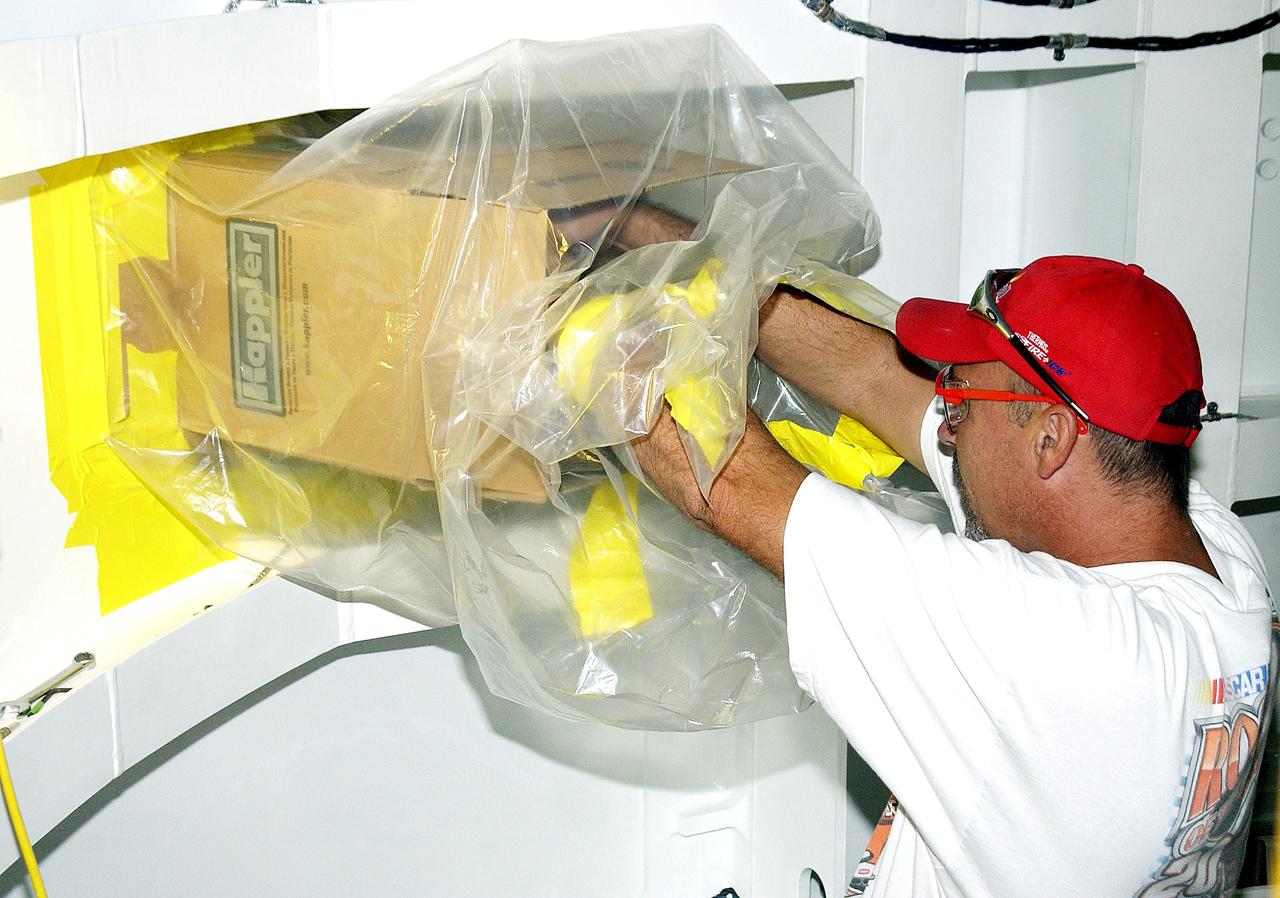
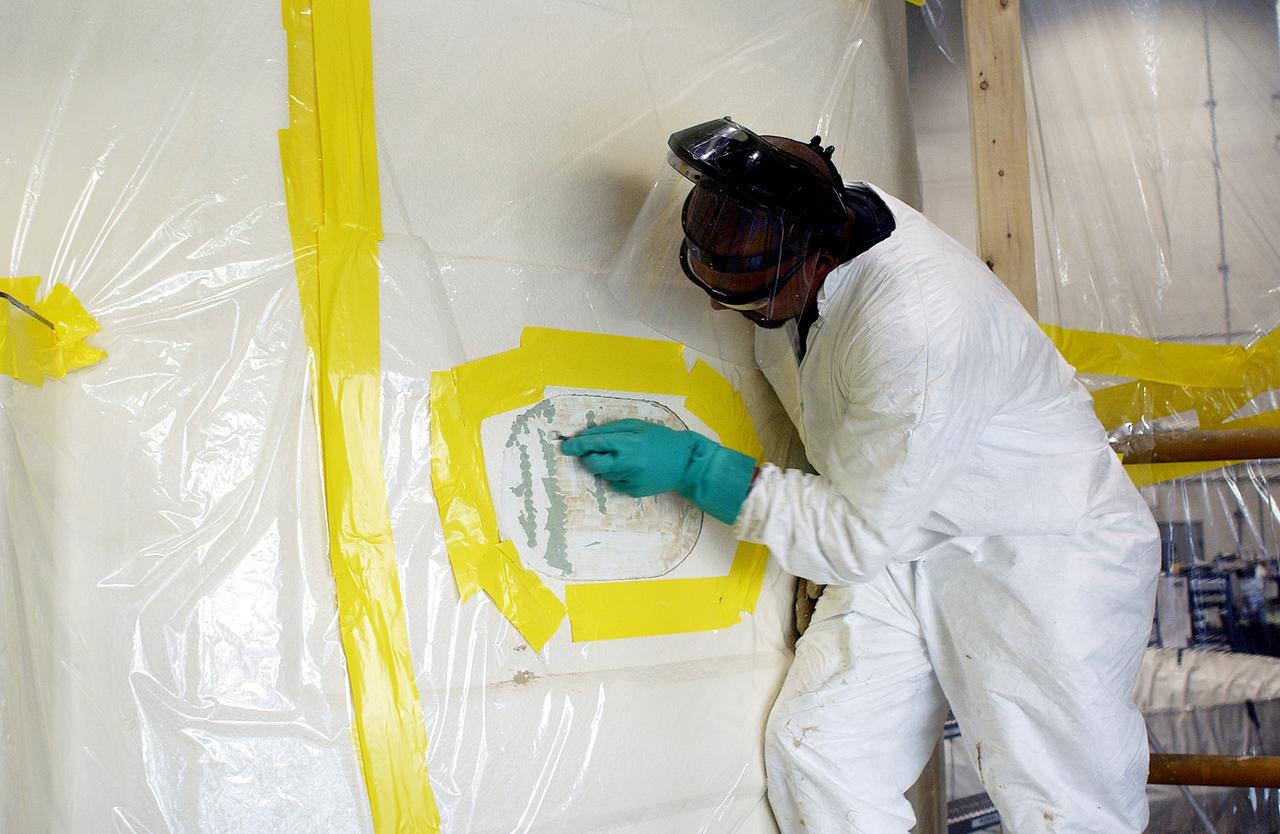
KENNEDY SPACE CENTER, FLA. - In the Solid Rocket Booster Assembly and Refurbishment Facility (ARF), Troy Krout, with United Space Alliance, works on positioning the parachute camera after installation on the solid rocket booster forward skirt. Refurbishment and subassembly of Shuttle SRB hardware - primarily the forward and aft assemblies - is carried out in the ARF.
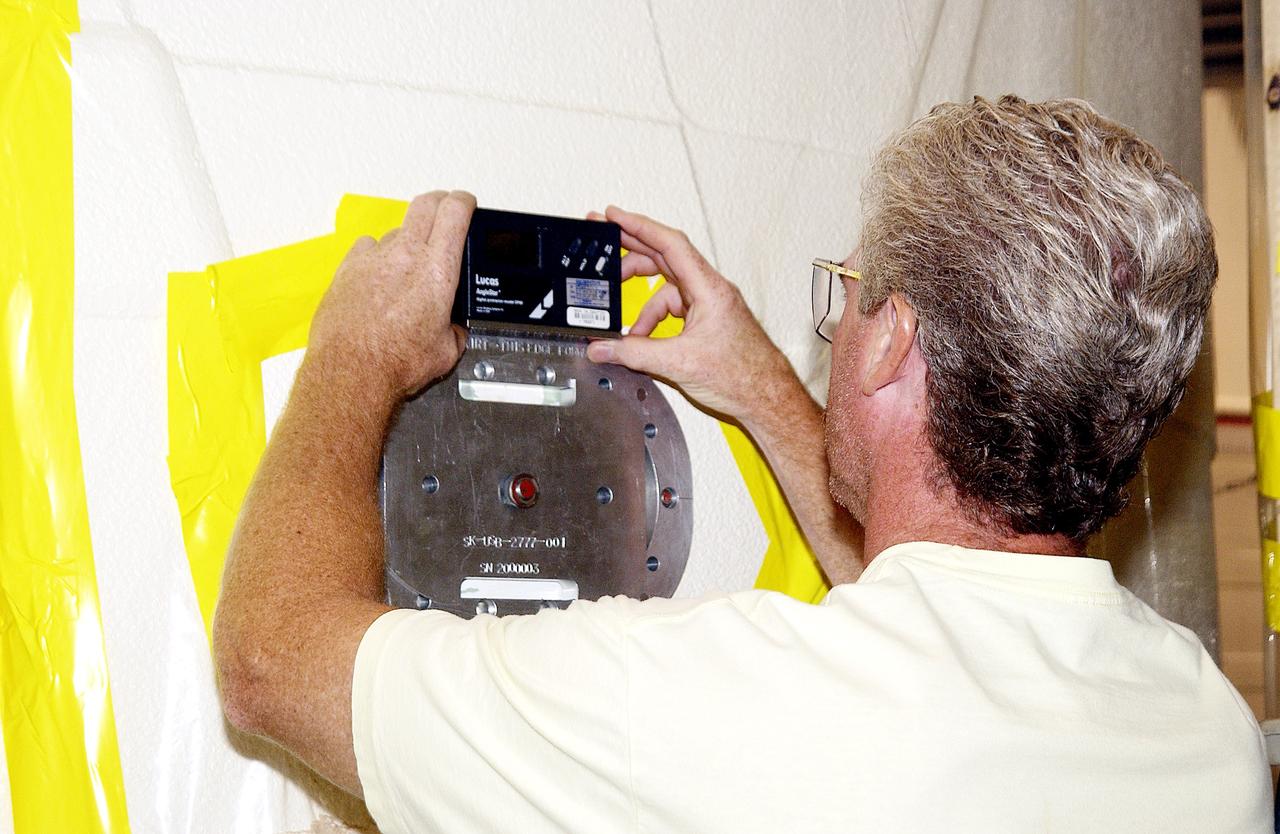
KENNEDY SPACE CENTER, FLA. - Mark Northcraft adjusts the position of the parachute camera just installed on the solid rocket booster forward skirt in the Solid Rocket Booster Assembly and Refurbishment Facility (ARF). Refurbishment and subassembly of Shuttle SRB hardware - primarily the forward and aft assemblies - is carried out in the ARF.
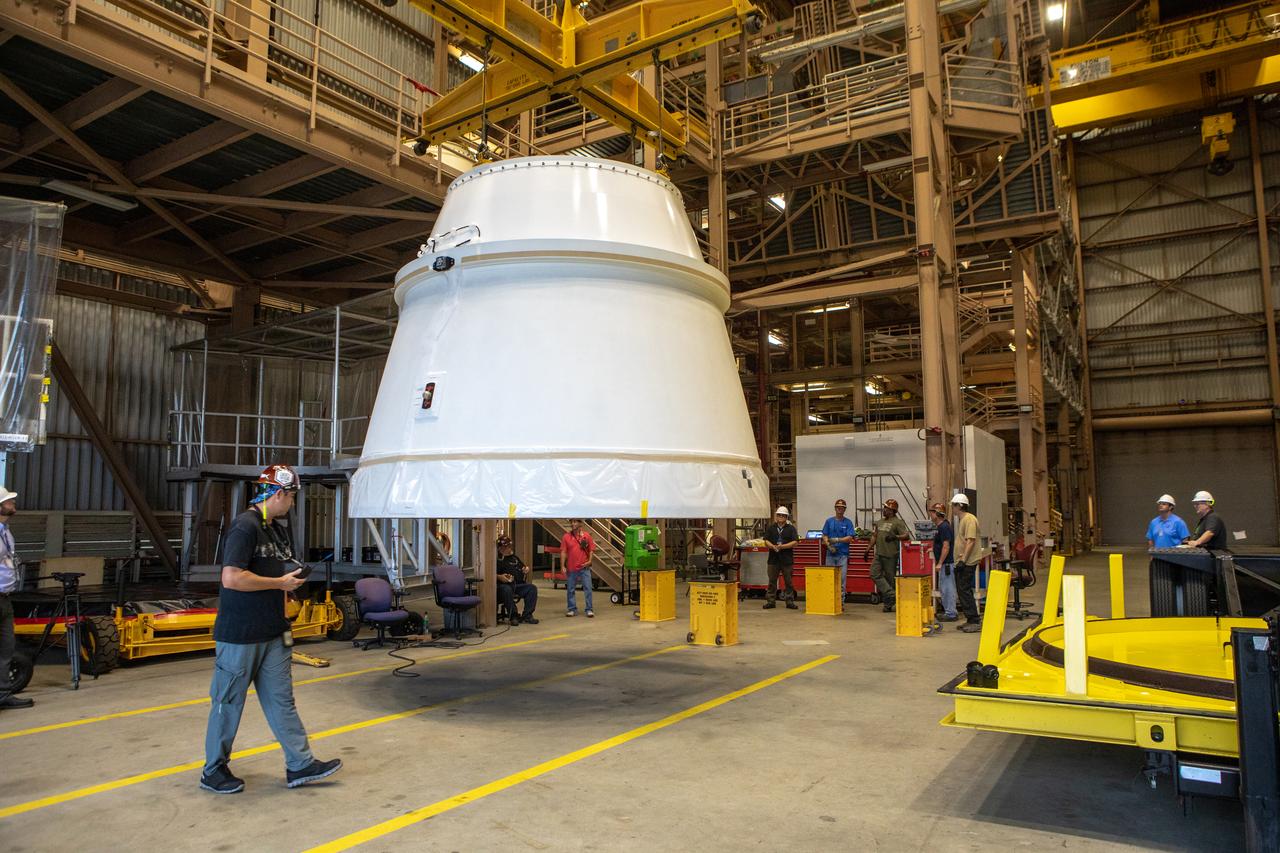
The first Northrop Grumman aft exit cone to arrive for the Space Launch System’s solid rocket boosters is moved by crane inside the Rotation, Processing and Surge Facility at NASA’s Kennedy Space Center in Florida on Nov. 4, 2019. The aft exit cone was shipped from Promontory, Utah. It will be checked out and prepared for the Artemis I uncrewed test flight. The aft exit cones sit at the bottommost part of the twin boosters. They are attached to the aft skirts, which contain the booster separation motors. The exit cones help to protect the aft skirts during launch.
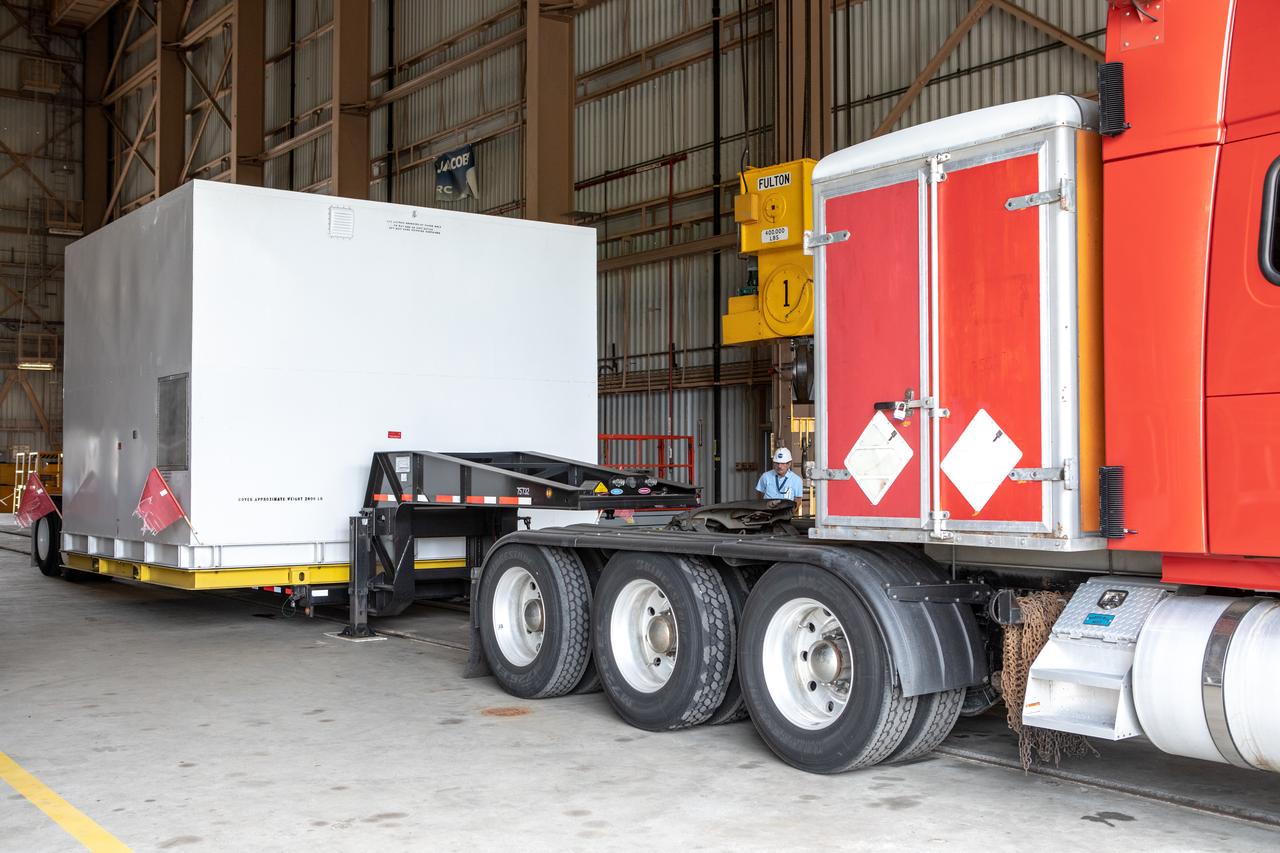
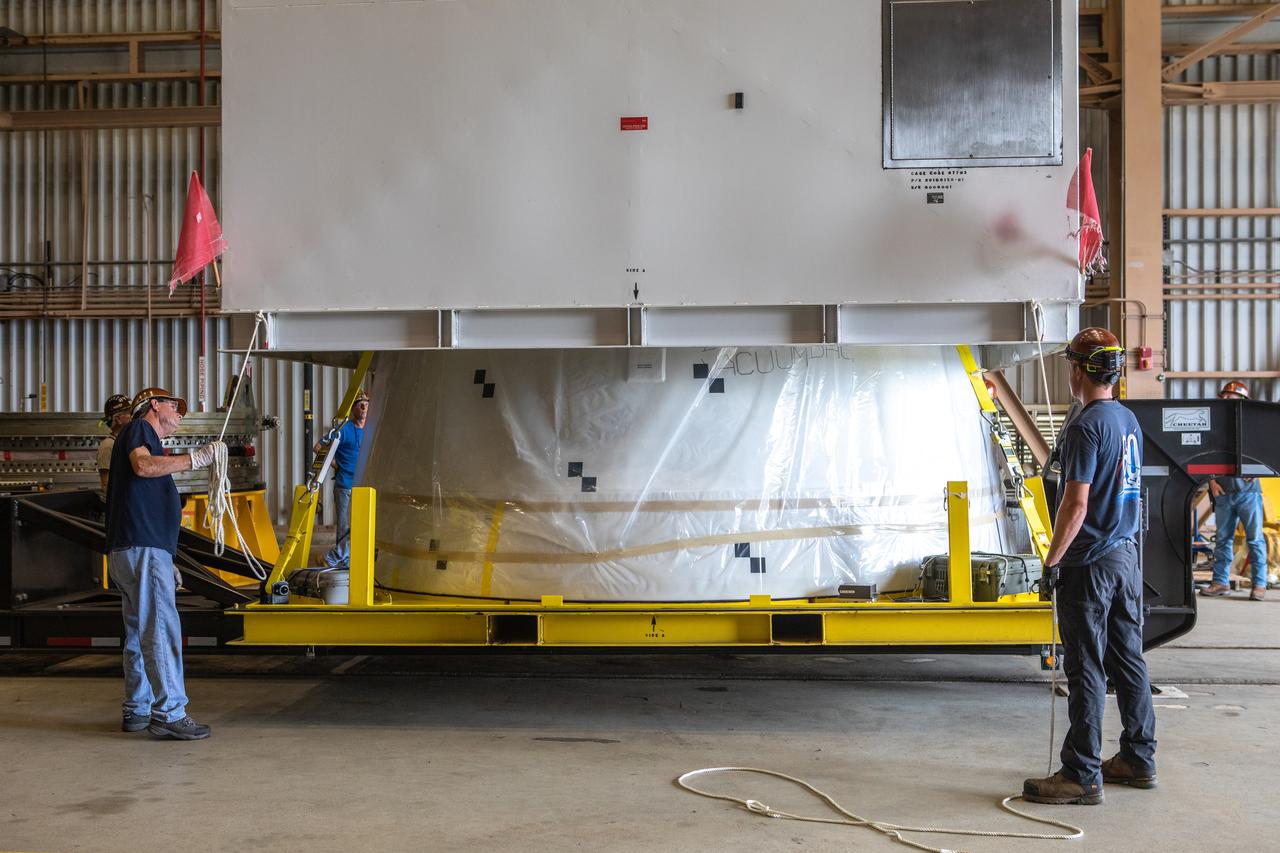
The first of two Northrop Grumman aft exit cones for the Space Launch System’s solid rocket boosters arrives by truck in its shipping container at the Rotation, Processing and Surge Facility at NASA's Kennedy Space Center in Florida on Nov. 4, 2019. The aft exit cone was shipped from Promontory, Utah. It will be checked out and prepared for the Artemis I uncrewed test flight. The aft exit cones sit at the bottommost part of the twin boosters. They are attached to the aft skirts, which contain the booster separation motors. The exit cones help to protect the aft skirts during launch.
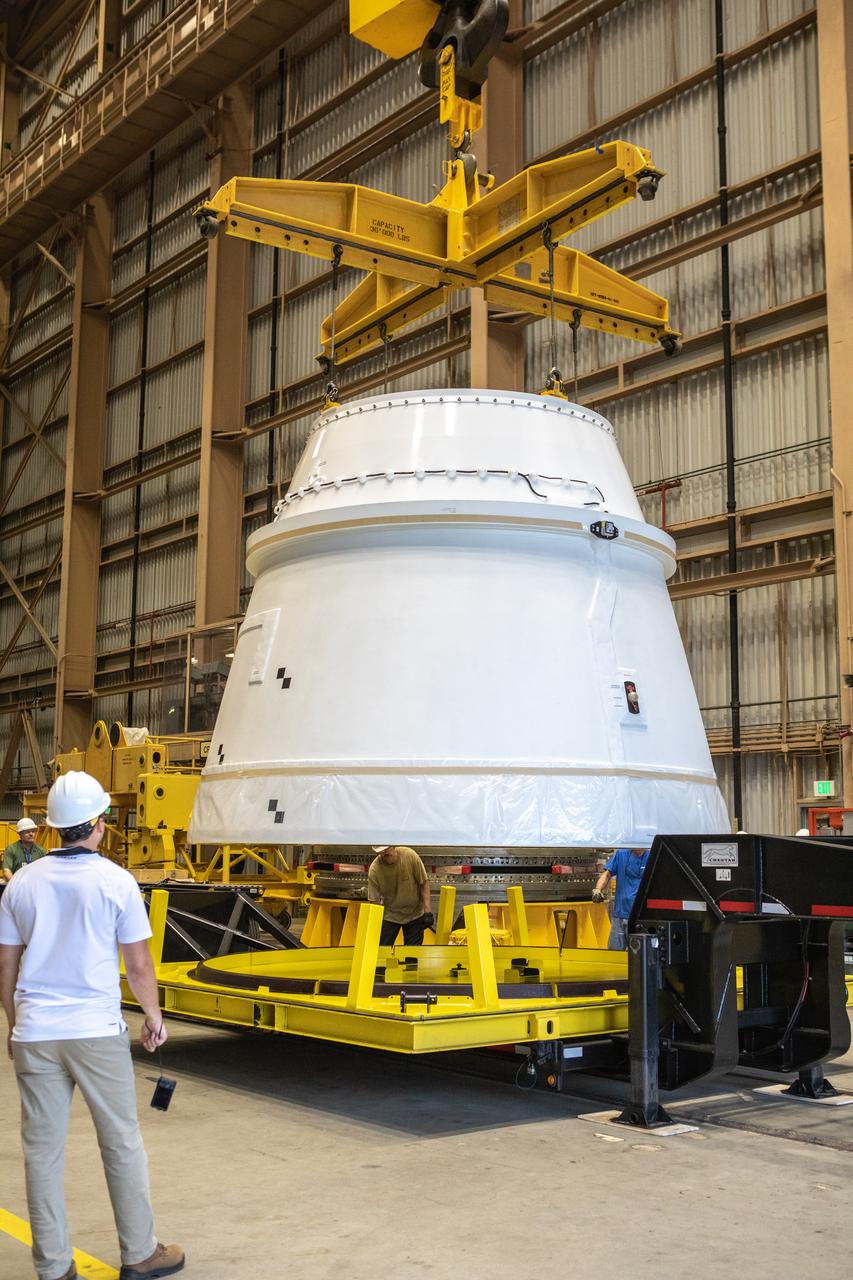
A crane is used to lift the first Northrop Grumman aft exit cone to arrive for the Space Launch System’s solid rocket boosters away from its shipping base inside the Rotation, Processing and Surge Facility at NASA’s Kennedy Space Center in Florida on Nov. 4, 2019. The aft exit cone was shipped from Promontory, Utah. It will be checked out and prepared for the Artemis I uncrewed test flight. The aft exit cones sit at the bottommost part of the twin boosters. They are attached to the aft skirts, which contain the booster separation motors. The exit cones help to protect the aft skirts during launch.
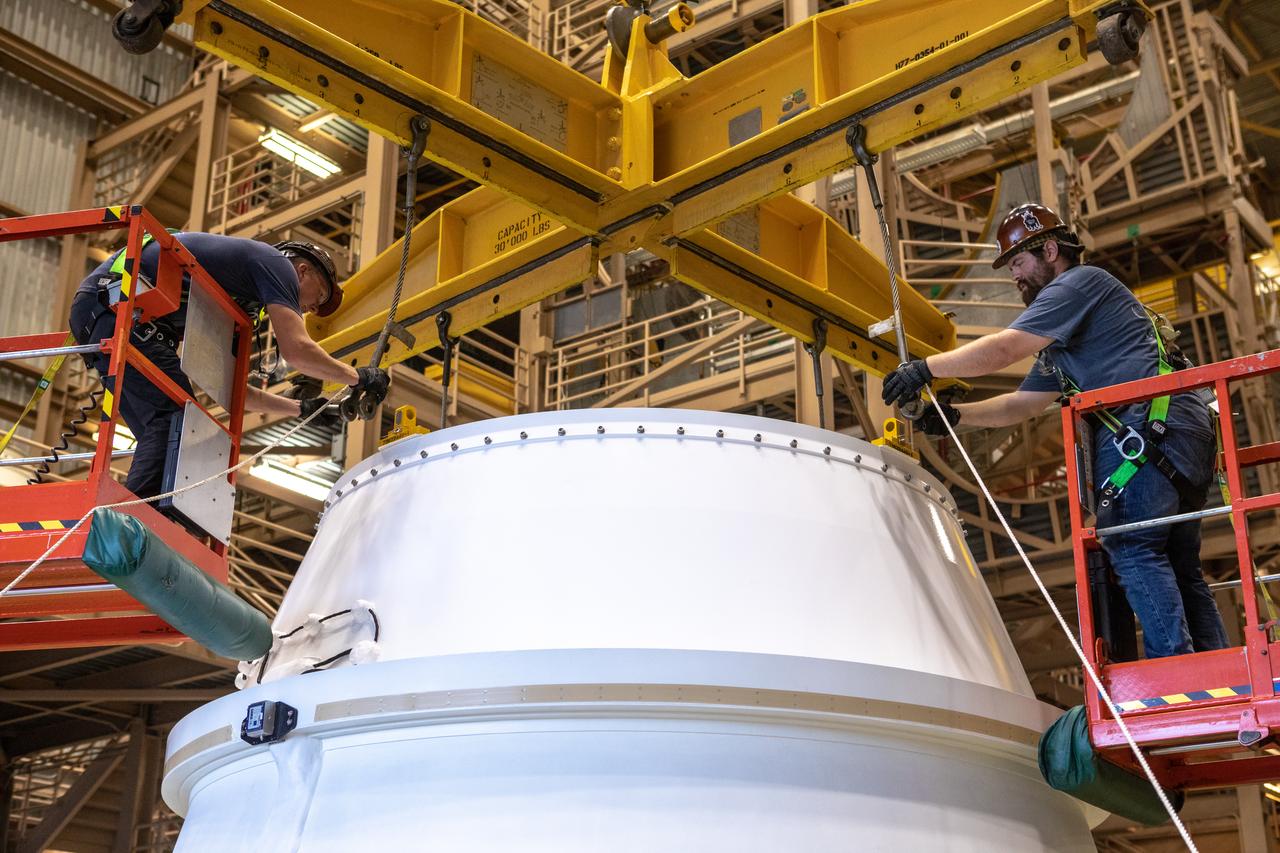
Workers attach a crane to the first Northrop Grumman aft exit cone to arrive for the Space Launch System’s solid rocket boosters inside the Rotation, Processing and Surge Facility at NASA’s Kennedy Space Center in Florida on Nov. 4, 2019. The aft exit cone was shipped from Promontory, Utah. It will be checked out and prepared for the Artemis I uncrewed test flight. The aft exit cones sit at the bottommost part of the twin boosters. They are attached to the aft skirts, which contain the booster separation motors. The exit cones help to protect the aft skirts during launch.
Workers assist with removal of the shipping container cover from the first Northrop Grumman aft exit cone to arrive for the Space Launch System’s solid rocket boosters inside the Rotation, Processing and Surge Facility at NASA’s Kennedy Space Center in Florida on Nov. 4, 2019. The aft exit cone was shipped from Promontory, Utah. It will be checked out and prepared for the Artemis I uncrewed test flight. The aft exit cones sit at the bottommost part of the twin boosters. They are attached to the aft skirts, which contain the booster separation motors. The exit cones help to protect the aft skirts during launch.
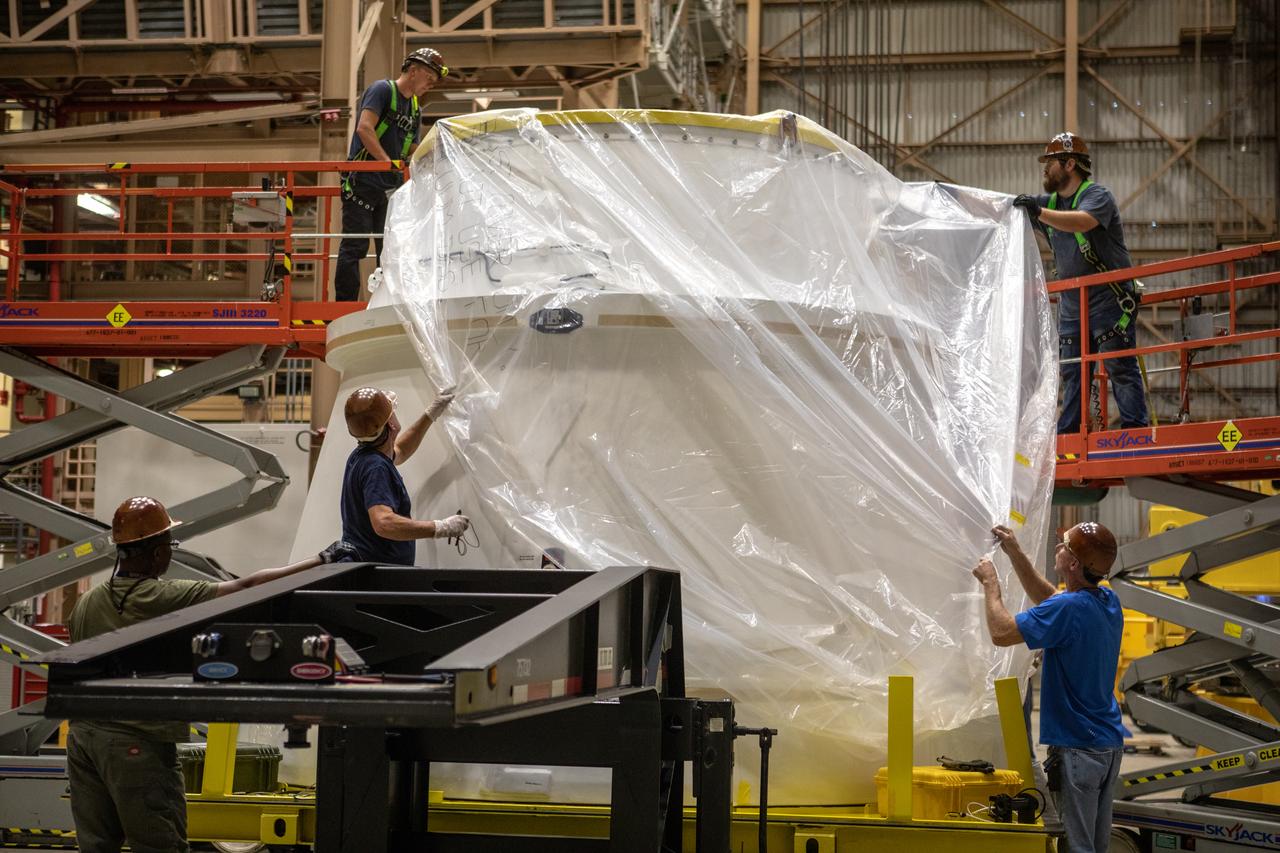
Workers remove the protective cover from the first Northrop Grumman aft exit cone to arrive for the Space Launch System’s solid rocket boosters inside the Rotation, Processing and Surge Facility at NASA’s Kennedy Space Center in Florida on Nov. 4, 2019. The aft exit cone was shipped from Promontory, Utah. It will be checked out and prepared for the Artemis I uncrewed test flight. The aft exit cones sit at the bottommost part of the twin boosters. They are attached to the aft skirts, which contain the booster separation motors. The exit cones help to protect the aft skirts during launch.
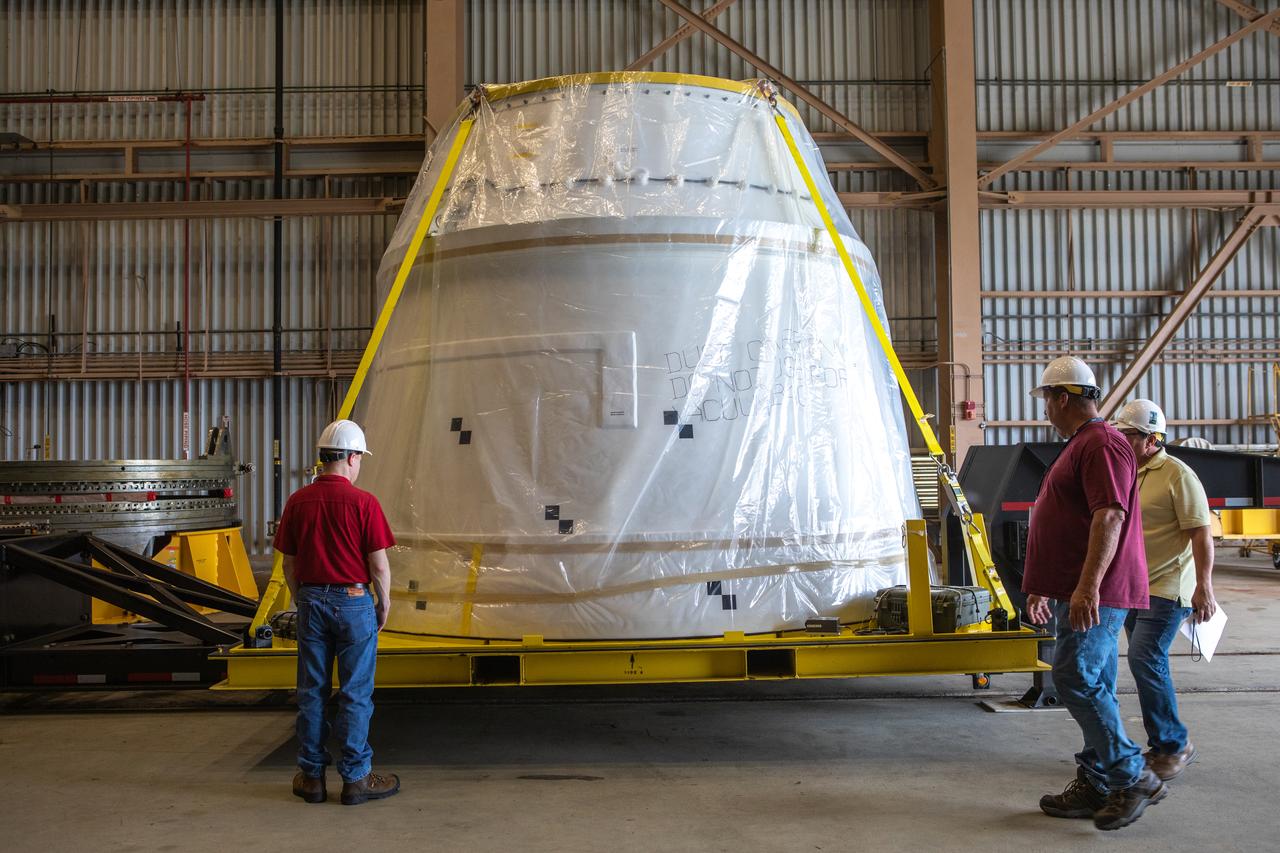
The shipping container cover has been removed from the first Northrop Grumman aft exit cone to arrive for the Space Launch System’s solid rocket boosters inside the Rotation, Processing and Surge Facility at NASA’s Kennedy Space Center in Florida on Nov. 4, 2019. The aft exit cone was shipped from Promontory, Utah. It will be checked out and prepared for the Artemis I uncrewed test flight. The aft exit cones sit at the bottommost part of the twin boosters. They are attached to the aft skirts, which contain the booster separation motors. The exit cones help to protect the aft skirts during launch.
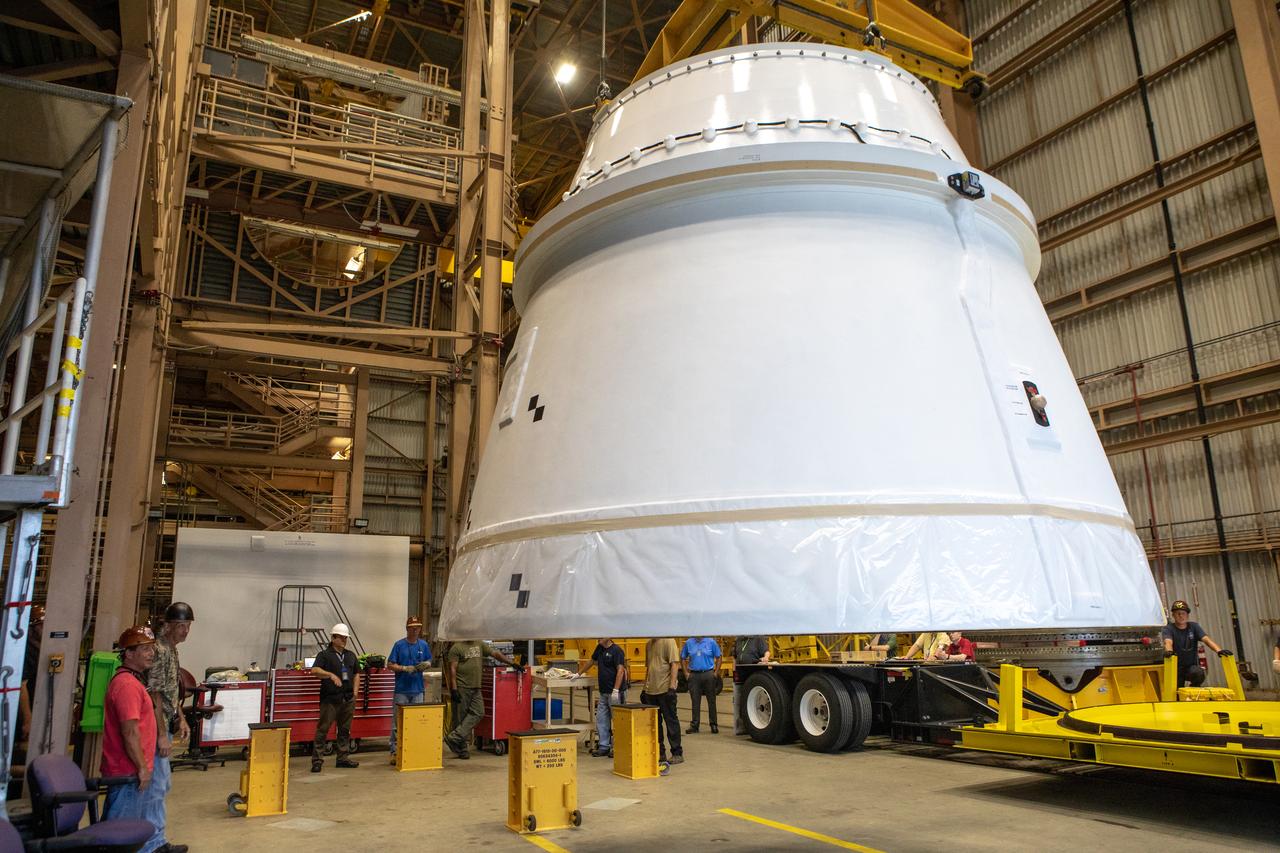
The first Northrop Grumman aft exit cone to arrive for the Space Launch System’s solid rocket boosters is moved by crane inside the Rotation, Processing and Surge Facility at NASA’s Kennedy Space Center in Florida on Nov. 4, 2019. The aft exit cone was shipped from Promontory, Utah. It will be checked out and prepared for the Artemis I uncrewed test flight. The aft exit cones sit at the bottommost part of the twin boosters. They are attached to the aft skirts, which contain the booster separation motors. The exit cones help to protect the aft skirts during launch.
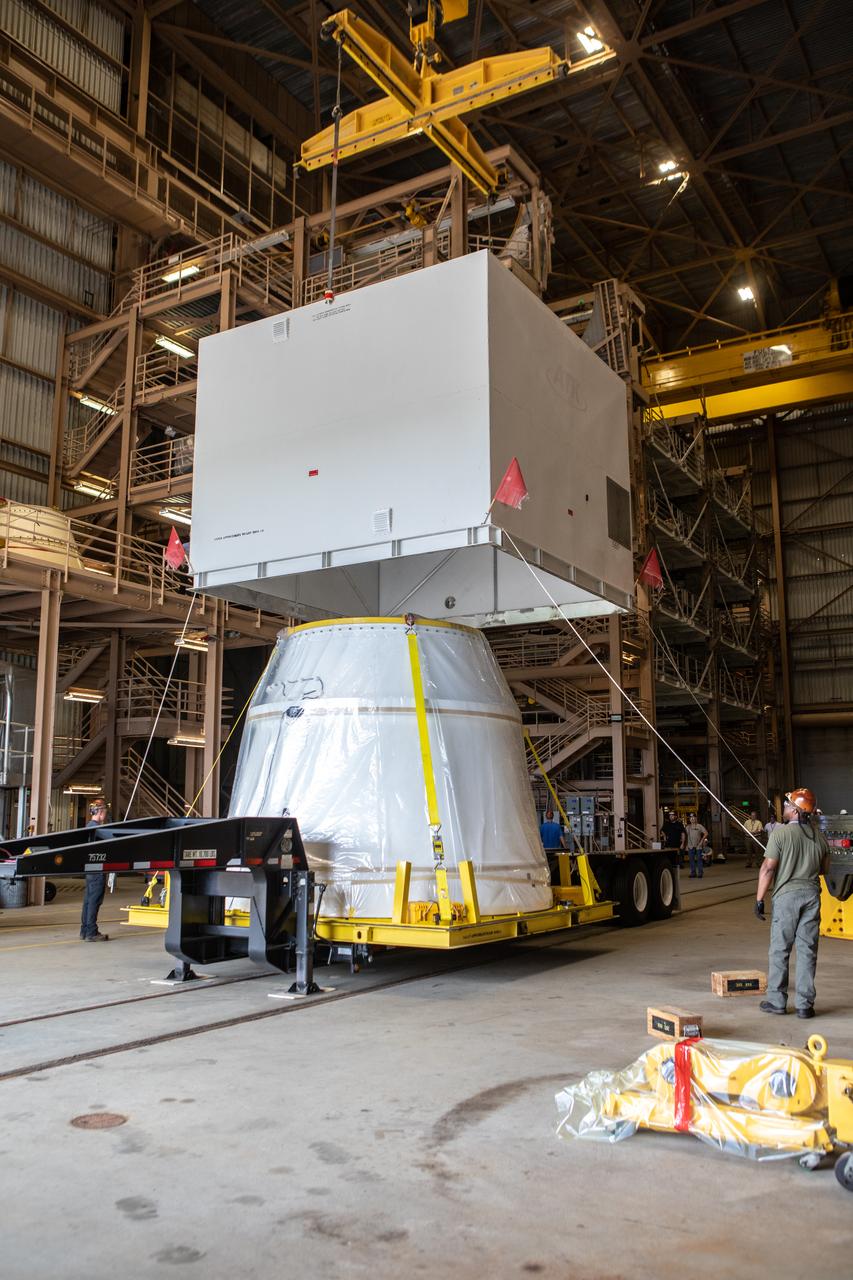
Workers assist as a crane is used to lift up the shipping container cover from the first Northrop Grumman aft exit cone to arrive for the Space Launch System’s solid rocket boosters inside the Rotation, Processing and Surge Facility at NASA’s Kennedy Space Center in Florida on Nov. 4, 2019. The aft exit cone was shipped from Promontory, Utah. It will be checked out and prepared for the Artemis I uncrewed test flight. The aft exit cones sit at the bottommost part of the twin boosters. They are attached to the aft skirts, which contain the booster separation motors. The exit cones help to protect the aft skirts during launch.
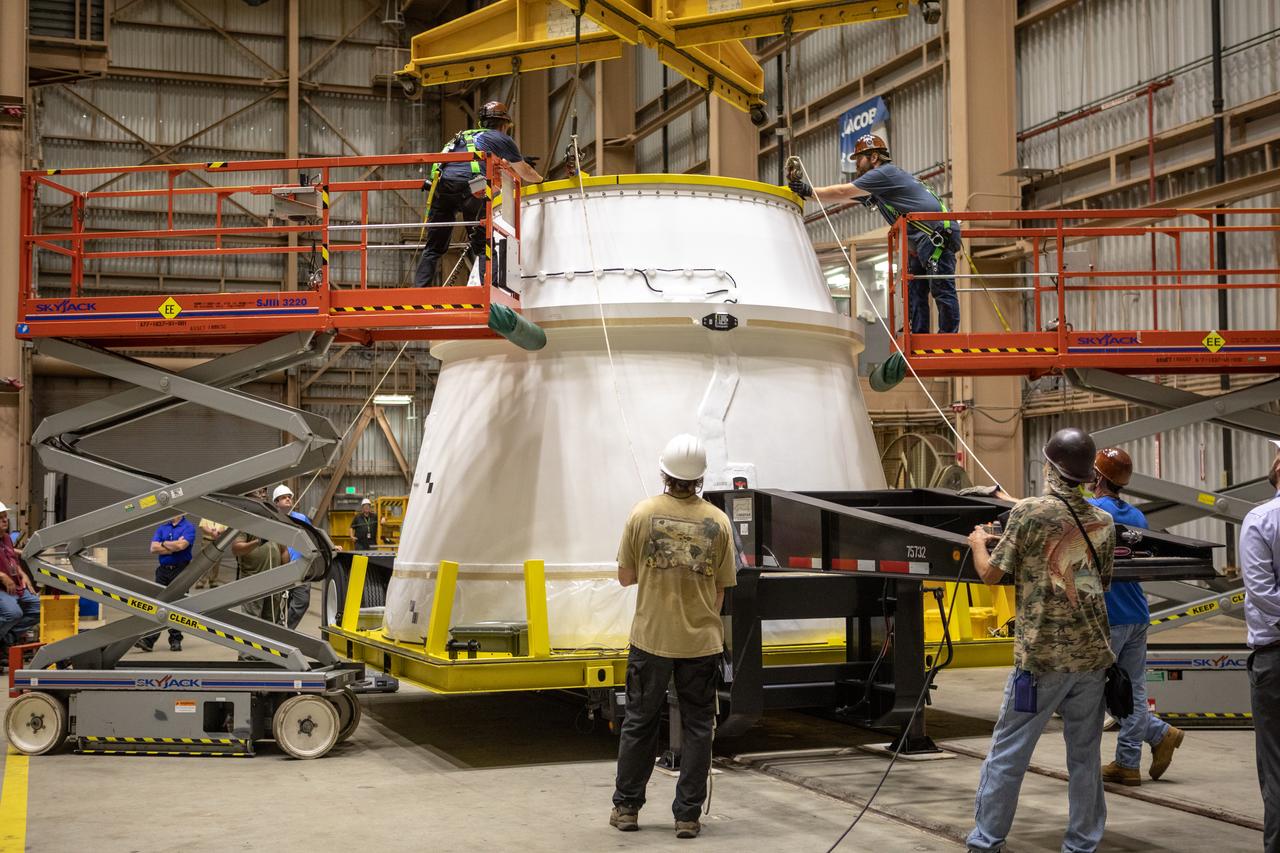
Workers attach a crane to the first Northrop Grumman aft exit cone to arrive for the Space Launch System’s solid rocket boosters inside the Rotation, Processing and Surge Facility at NASA’s Kennedy Space Center in Florida on Nov. 4, 2019. The aft exit cone was shipped from Promontory, Utah. It will be checked out and prepared for the Artemis I uncrewed test flight. The aft exit cones sit at the bottommost part of the twin boosters. They are attached to the aft skirts, which contain the booster separation motors. The exit cones help to protect the aft skirts during launch.
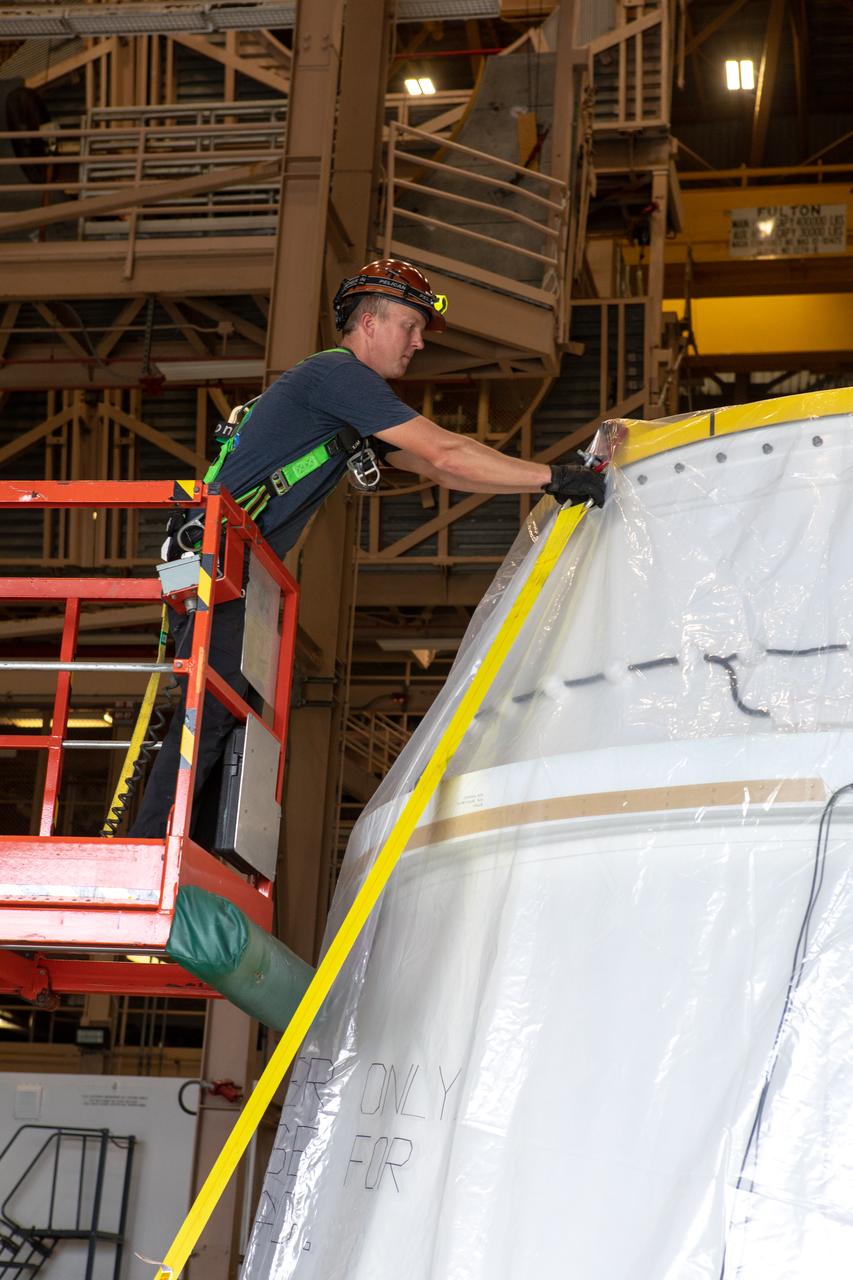
A worker removes one of the securing straps from the first Northrop Grumman aft exit cone to arrive for the Space Launch System’s solid rocket boosters inside the Rotation, Processing and Surge Facility at NASA’s Kennedy Space Center in Florida on Nov. 4, 2019. The aft exit cone was shipped from Promontory, Utah. It will be checked out and prepared for the Artemis I uncrewed test flight. The aft exit cones sit at the bottommost part of the twin boosters. They are attached to the aft skirts, which contain the booster separation motors. The exit cones help to protect the aft skirts during launch.
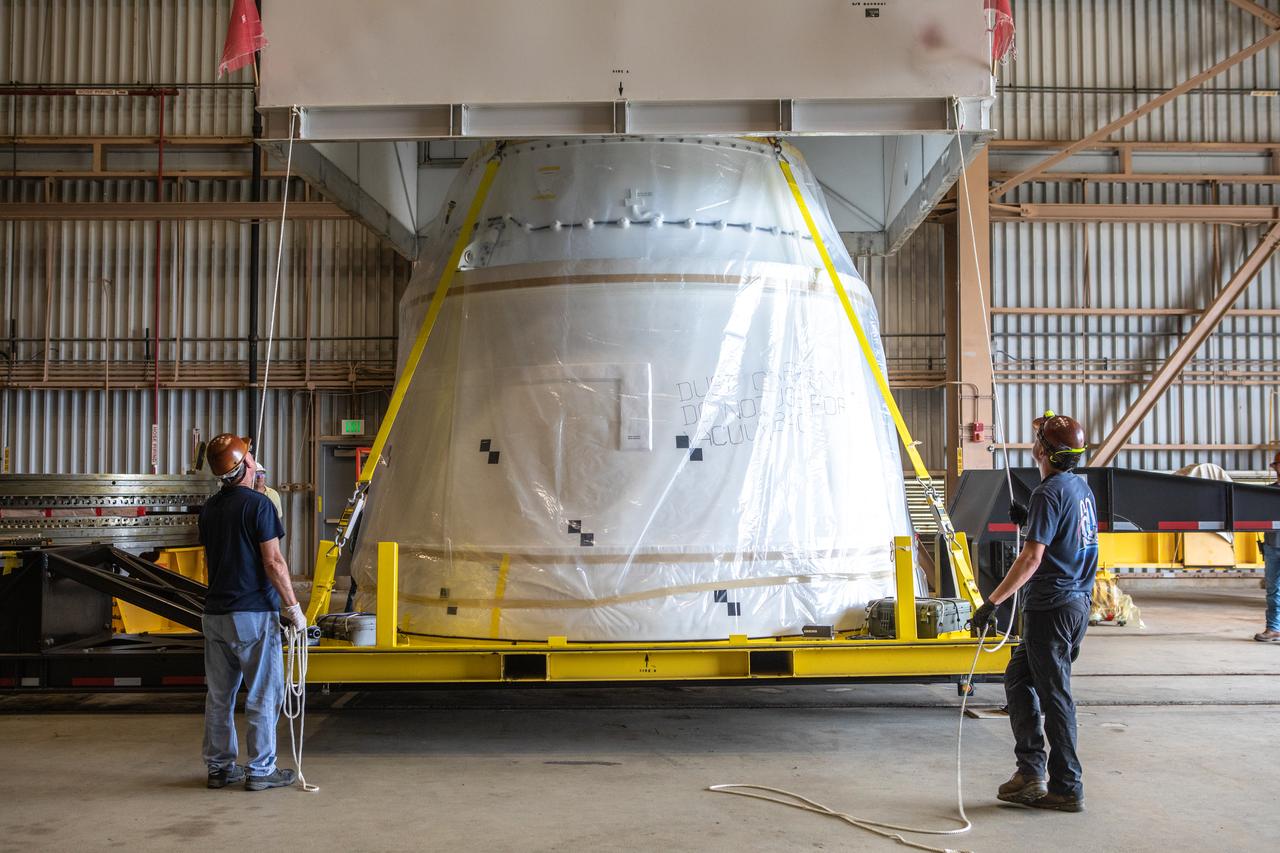
Workers assist with removal of the shipping container cover from the first Northrop Grumman aft exit cone to arrive for the Space Launch System’s solid rocket boosters inside the Rotation, Processing and Surge Facility at NASA’s Kennedy Space Center in Florida on Nov. 4, 2019. The aft exit cone was shipped from Promontory, Utah. It will be checked out and prepared for the Artemis I uncrewed test flight. The aft exit cones sit at the bottommost part of the twin boosters. They are attached to the aft skirts, which contain the booster separation motors. The exit cones help to protect the aft skirts during launch.
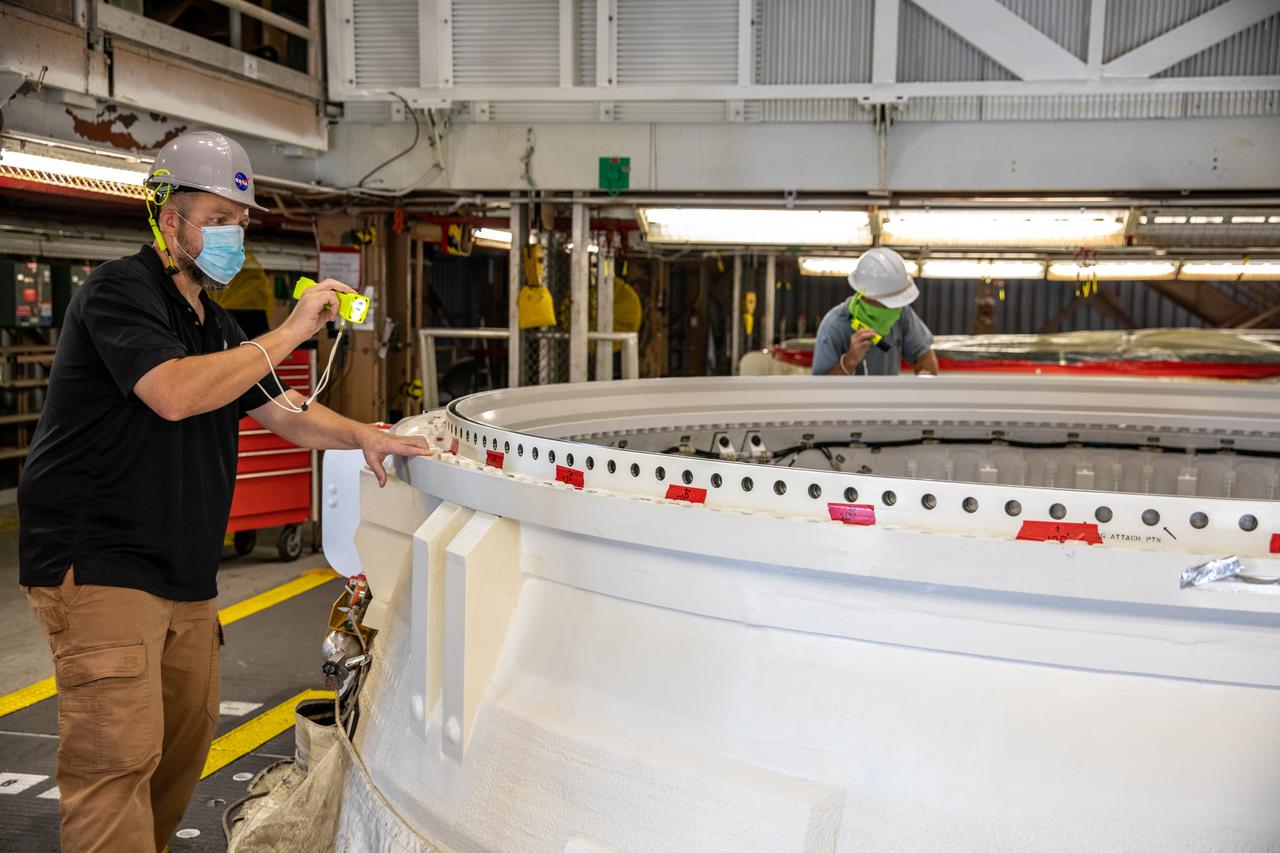
Brendan Deuble, a handling, mechanical and structures engineer on the Jacobs Technology Inc. Test and Operations Support Contract, inspects the Space Launch System’s (SLS) right-hand aft skirt inside the Rotation, Processing and Surge Facility (RPSF) at NASA’s Kennedy Space Center in Florida on June 24, 2020. While in the RPSF, the aft skirt will be mated with the rocket’s right-hand motor segment – one of five segments that make up one of two solid rocket boosters. Once the two aft skirts are mated with the aft segments, they will be moved to the Vehicle Assembly Building for stacking on the mobile launcher. Manufactured by Northrop Grumman in Utah, the twin boosters provide more than 75 percent of the total SLS thrust at launch. Under the Artemis program, NASA will land the first woman and the next man on the Moon by 2024. The first in a series of increasingly complex missions, Artemis I will test the Orion spacecraft and SLS as an integrated system ahead of crewed flights to the Moon.