
Armstrong videographer Mike Agnew operates spectrograph instrument on the 20th to prepare for eclipse day, the 21st. Photo Credit: (NASA/Carla Thomas)
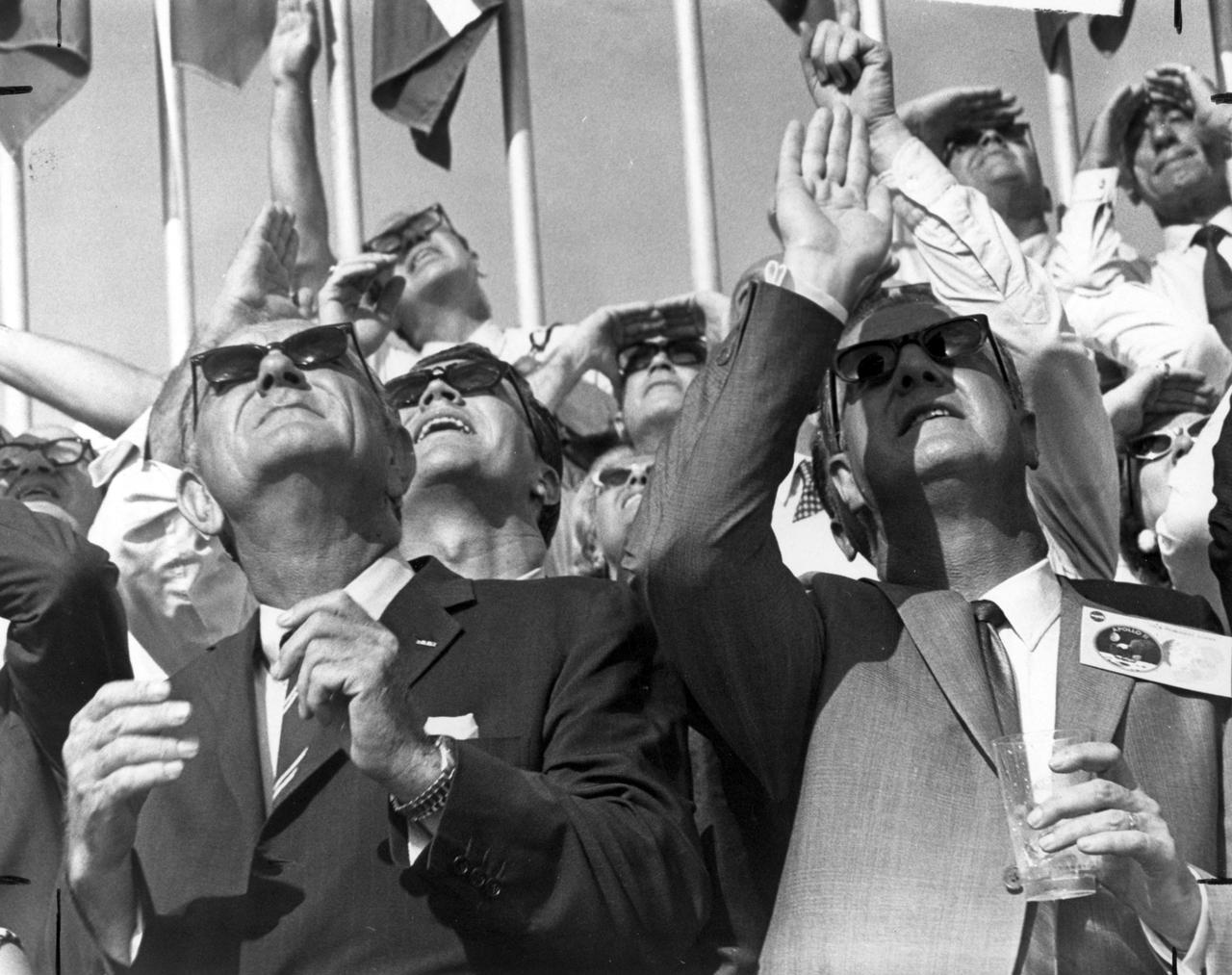
Amidst a crowd of other onlookers, U.S. Vice President Spiro T. Agnew (right) and former U.S. President Lyndon B. Johnson watch the Saturn V vehicle roar skyward carrying the Apollo 11 manned spacecraft into the vast regions of space. On a trajectory to the Moon, the craft lifted off from launch pad 39 at Kennedy Space Flight Center (KSC) on July 16, 1969. The moon bound crew included astronauts Neil A. Armstrong, commander; Michael Collins, Command Module (CM) pilot; and Edwin E. Aldrin Jr., Lunar Module (LM) pilot. The mission finalized with splashdown on July 24, 1969. With the success of Apollo 11, the national objective to land men on the Moon and return them safely to Earth had been accomplished. The Saturn V was developed by the Marshall Space Flight Center (MSFC) under the direction of Werher von Braun.
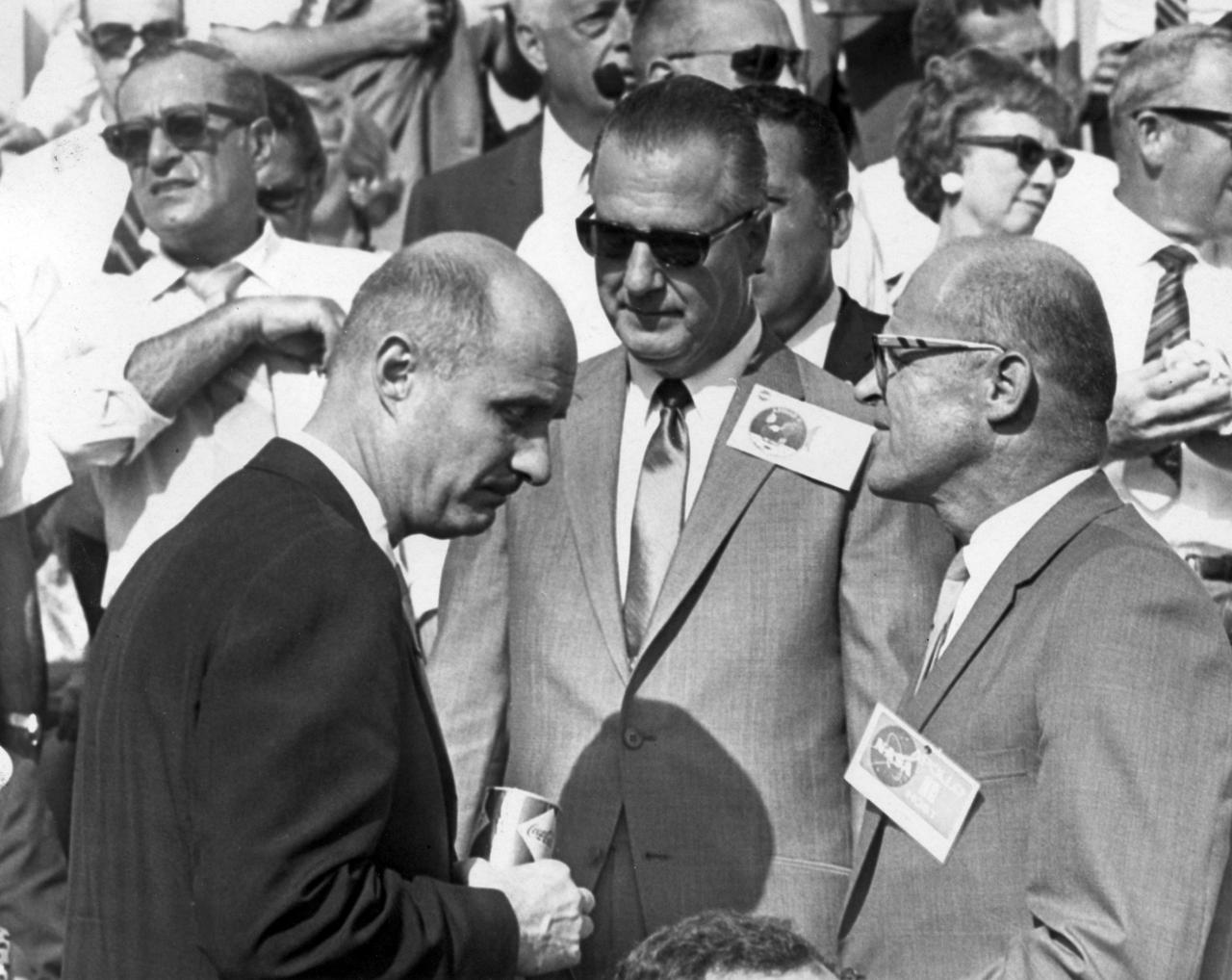
Apollo 10 commander, Thomas P. Stafford (left) and Kennedy Space Center (KSC) Deputy Director Albert Siepert (right) talk with U.S. Vice President Spiro T. Agnew a few minutes before the launch of Apollo 11. The Apollo 11 mission, the first manned lunar mission, launched from KSC, Florida via the Saturn V launch vehicle on July 16, 1969 and safely returned to Earth on July 24, 1969. The Saturn V vehicle was developed by the Marshall Space Flight Center (MSFC) under the direction of Dr. Wernher von Braun. Aboard the space craft were astronauts Neil A. Armstrong, commander; Michael Collins, Command Module (CM) pilot; and Edwin E. Aldrin Jr., Lunar Module (LM) pilot. The CM, piloted by Michael Collins remained in a parking orbit around the Moon while the LM, named “Eagle’’, carrying astronauts Neil Armstrong and Edwin Aldrin, landed on the Moon. Armstrong was the first human to ever stand on the lunar surface, followed by Edwin (Buzz) Aldrin. During 2½ hours of surface exploration, the crew collected 47 pounds of lunar surface material for analysis back on Earth. With the success of Apollo 11, the national objective to land men on the Moon and return them safely to Earth had been accomplished.
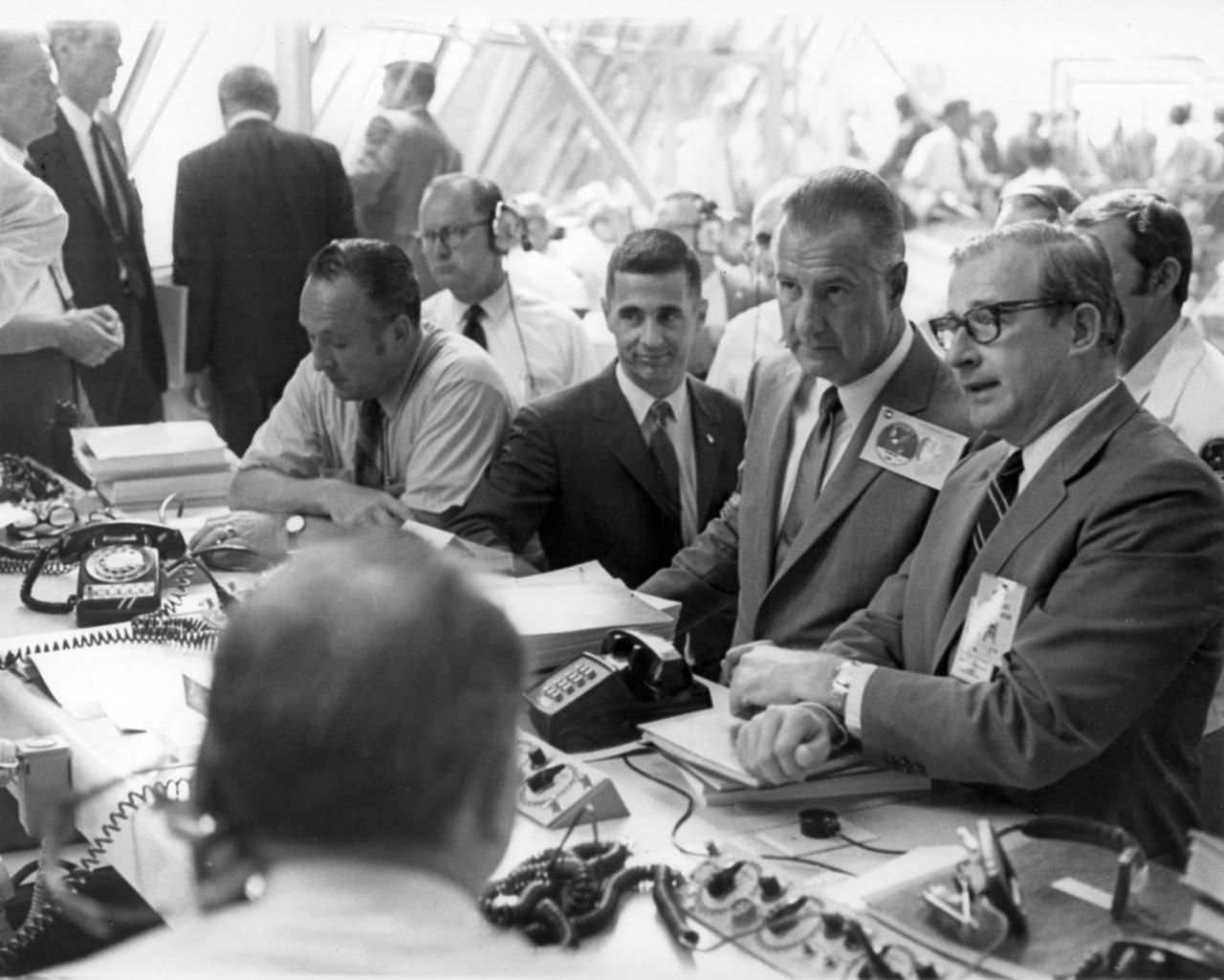
From the right, NASA administrator, Dr. Thomas O. Paine talks with U.S. Vice President Spiro T. Agnew while awaiting the launch of Saturn V (AS-506) that carried the Apollo 11 spacecraft to the Moon for man’s historic first landing on the lunar surface. At center is astronaut William Anders, a member of the first crew to orbit the moon during the Apollo 8 mission. At left is Lee B. James, director of Program Management at the NASA Marshall Space Flight Center (MSFC) where the Saturn V was developed. The craft lifted off from launch pad 39 at Kennedy Space Flight Center (KSC) on July 16, 1969. The moon bound crew included astronauts Neil A. Armstrong, commander; Michael Collins, Command Module (CM) pilot; and Edwin E. Aldrin Jr., Lunar Module (M) pilot. The mission finalized with splashdown in the Pacific Ocean on July 24, 1969. With the success of Apollo 11, the national objective to land men on the Moon and return them safely to Earth had been accomplished.
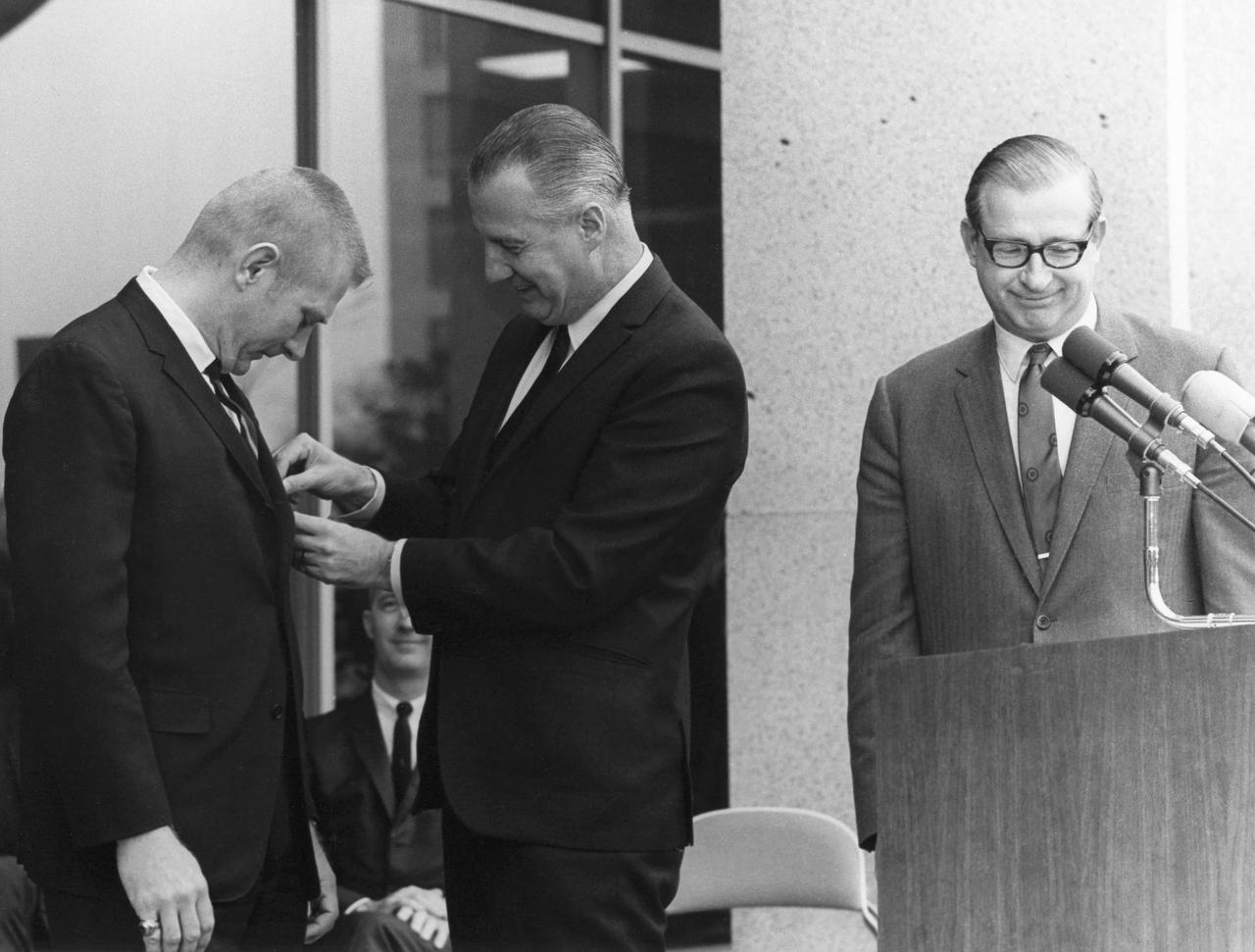
JSC2013-E-009914 (1969) -- Vice President Spiro Agnew pins Flight Director Eugene F. Kranz as NASA Administrator Thomas Paine and Apollo 9 Commander James A. McDivitt look on. Photo credit: NASA Hq. photo identification no. is 69-H-537
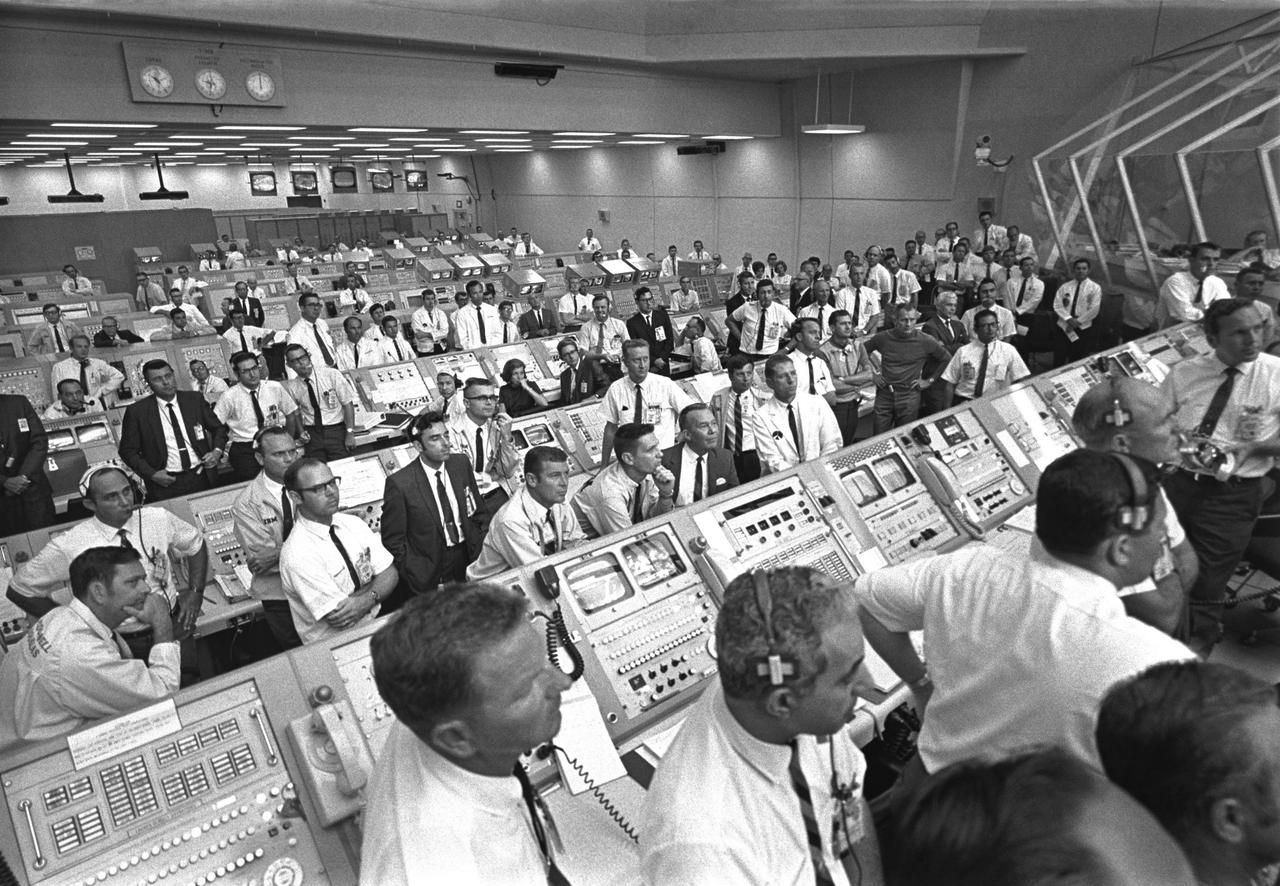
CAPE CANAVERAL, Fla. – Members of the Kennedy Space Center government-industry team rise from their consoles in the Launch Control Center to listen to Vice President Spiro Agnew’s remarks following the Apollo 11 liftoff. Photo credit: NASA
![KENNEDY SPACE CENTER, FLA. -- Vice President Spiro Agnew [right center] and Former President Lyndon Johnson (left center] view the liftoff of Apollo 11 from the stands located at the Kennedy Space Center VIP viewing site. The two political figures were at the Kennedy Space Center to witness the launch of the first Manned Lunar Landing mission which took place from Pad 39A at 9:32 a.m. EDT.](https://images-assets.nasa.gov/image/ksc-69pc-379/ksc-69pc-379~medium.jpg)
KENNEDY SPACE CENTER, FLA. -- Vice President Spiro Agnew [right center] and Former President Lyndon Johnson (left center] view the liftoff of Apollo 11 from the stands located at the Kennedy Space Center VIP viewing site. The two political figures were at the Kennedy Space Center to witness the launch of the first Manned Lunar Landing mission which took place from Pad 39A at 9:32 a.m. EDT.

Director's Council, front row left to right, Lewis Braxton, Deputy Director of Ames, S. Pete Worden, Director of Ames, Steve Zornetzer, Associate Center Director. Back row left to right Paul Agnew, CFO, Jack Boyd, Sr. Advisor to the Center Director, Karen Bradford, Chief of Staff, Deb Feng, Deputy Director (Acting), Phil Fluegemann, Executive Officer for Deputy Director .
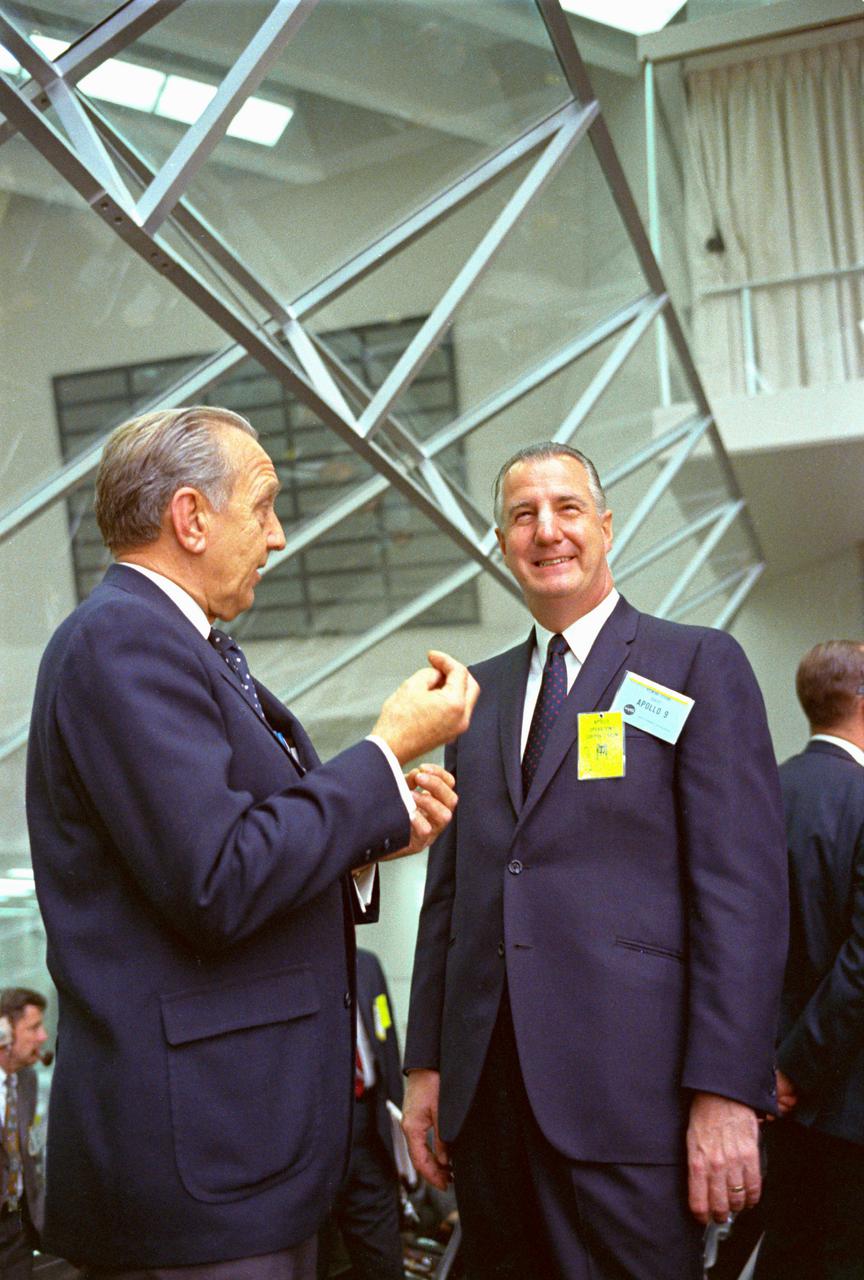
KENNEDY SPACE CENTER, FLA. -- Within the Launch Control Center, Vice President Spiro T. Agnew listens to Dr. Kurt H. Debus, director, Kennedy Space Center, explain highlights of the Apollo Program. The Vice President viewed the launch of Apollo 9 astronauts James A. McDivitt, David R. Scott and Russell L. Schweickart today. They were sent on a planned 10-day Earth orbital flight to put a lunar module spacecraft through extensive tests to qualify it for a possible manned lunar landing later this year. The National Aeronautics and Space Administration directs the Apollo Program.
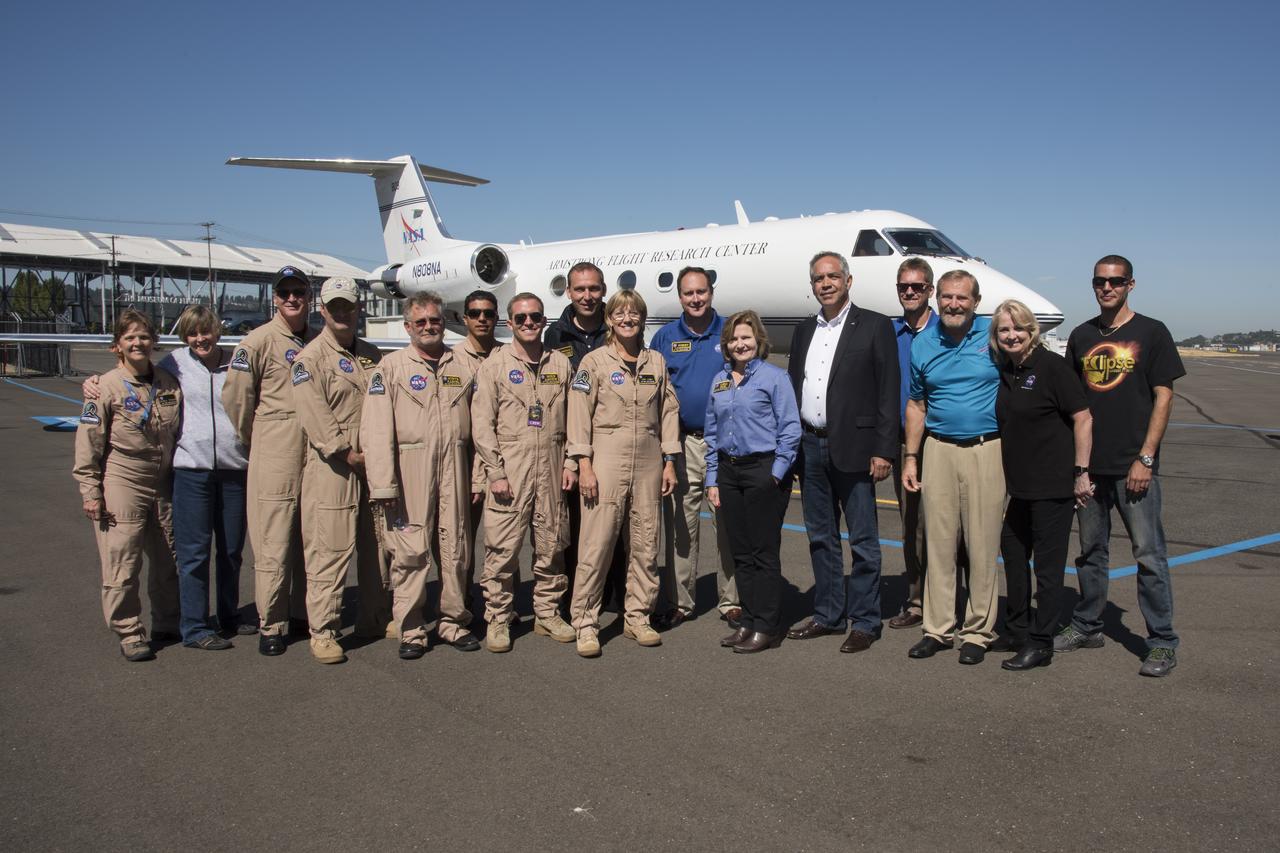
NASA Armstrong and NASA senior management Gulfstream III team pose for group shot by aircraft after return from covering Total solar eclipse. Photo Credit: (NASA/Carla Thomas)