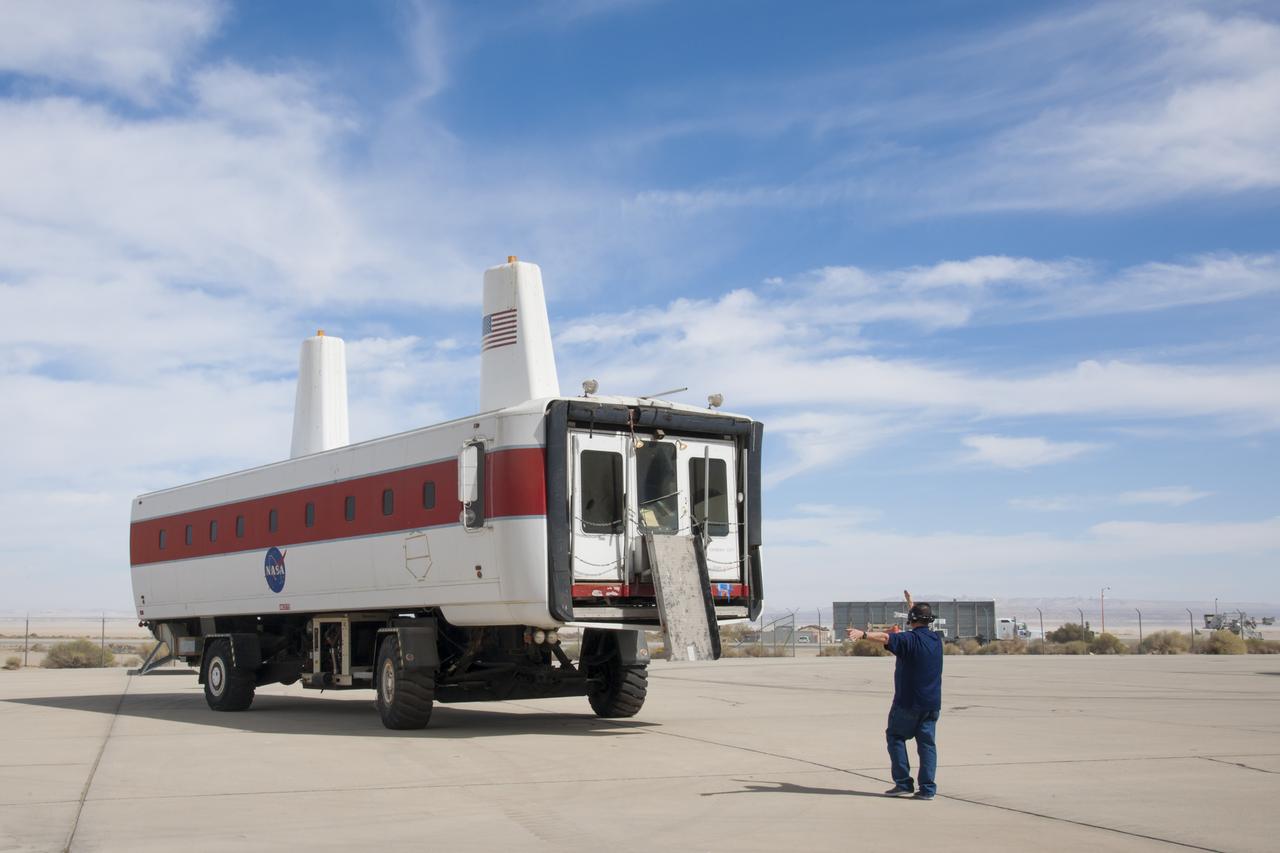
Workers drive the space shuttle Crew Transport Vehicle, or CTV, to the Edwards Air Force Base Flight Test Museum in California for display.
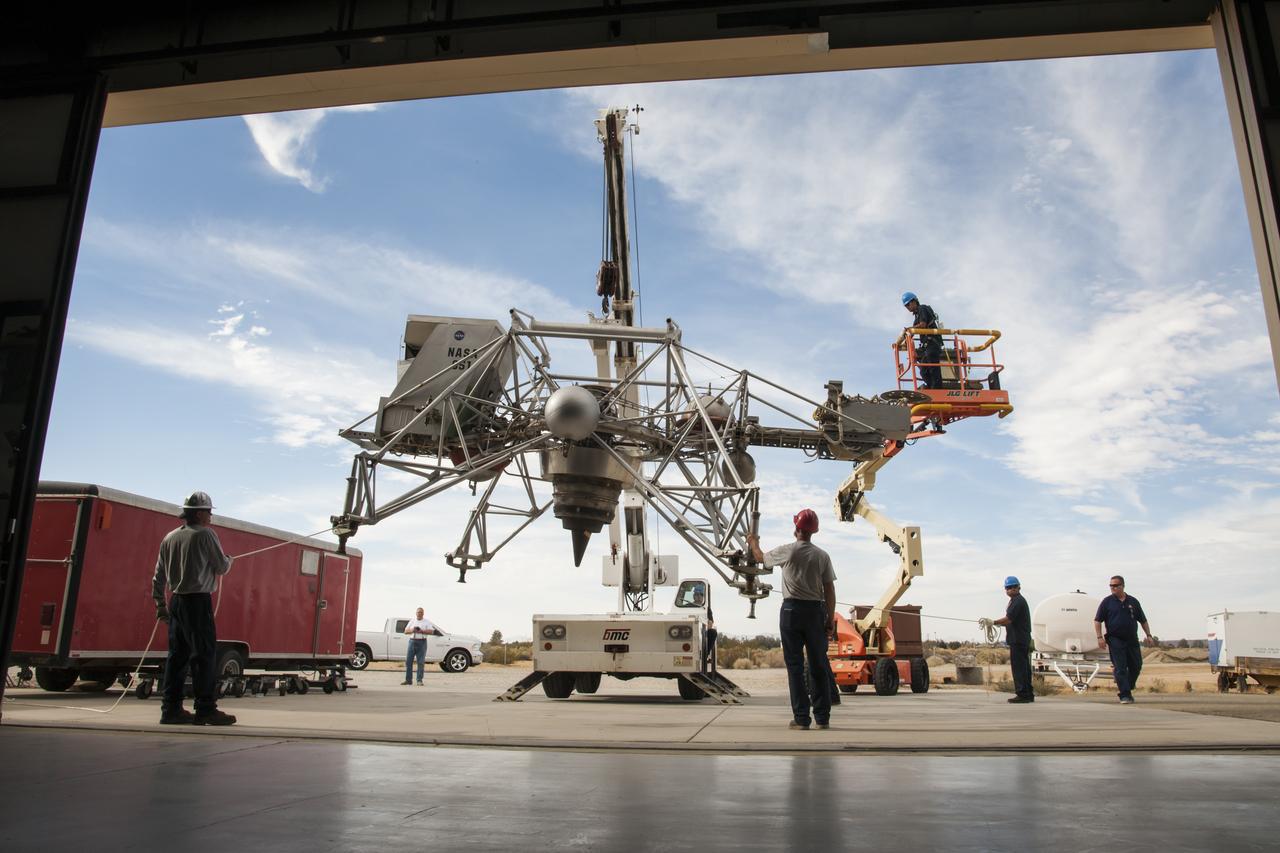
Workers move the Lunar Landing Research Vehicle, or LLRV, into the Edwards Air Force Base Flight Test Museum in California for temporary display.
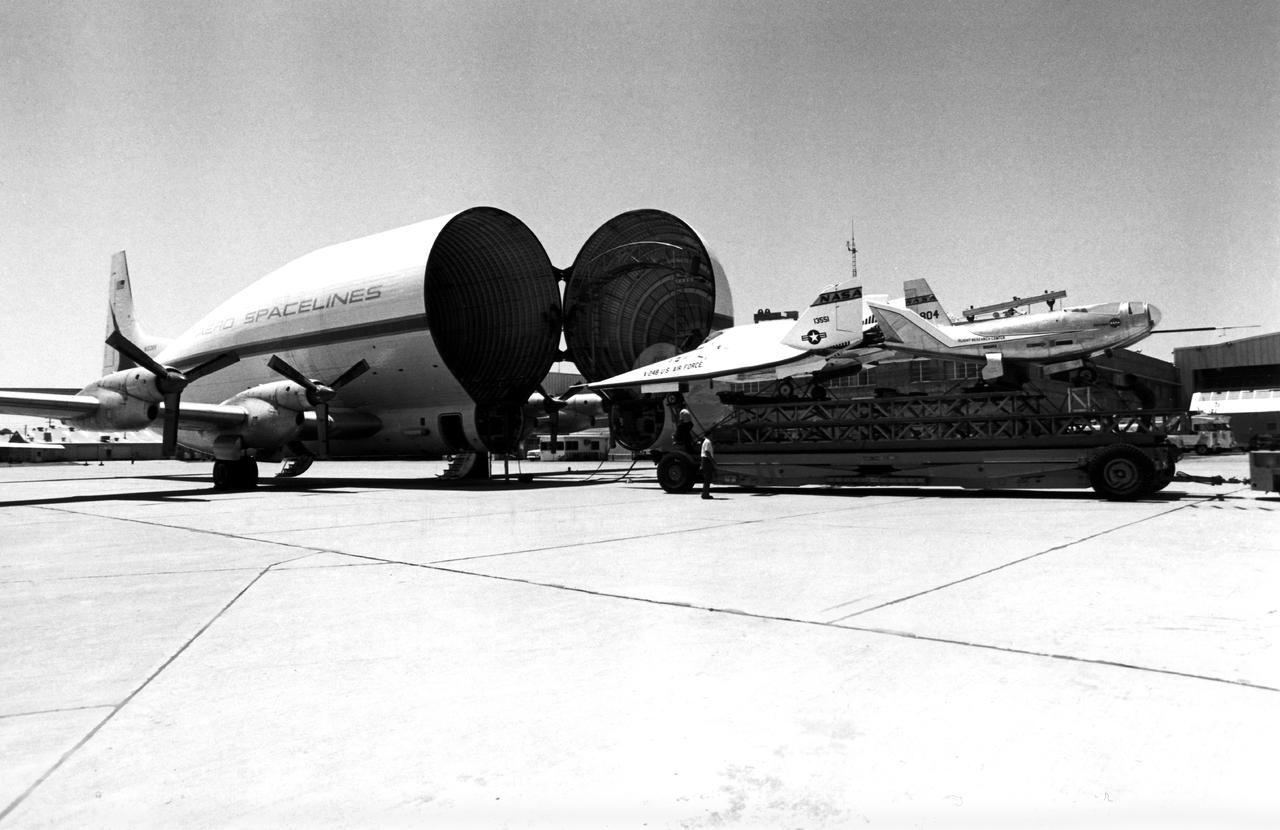
Aero Spacelines B377SGT Super Guppy on Ramp Loading the X-24B and HL-10 Lifting Bodies for Transportation to the Air Force Museum at Wright-Patterson Air Force Base, Ohio
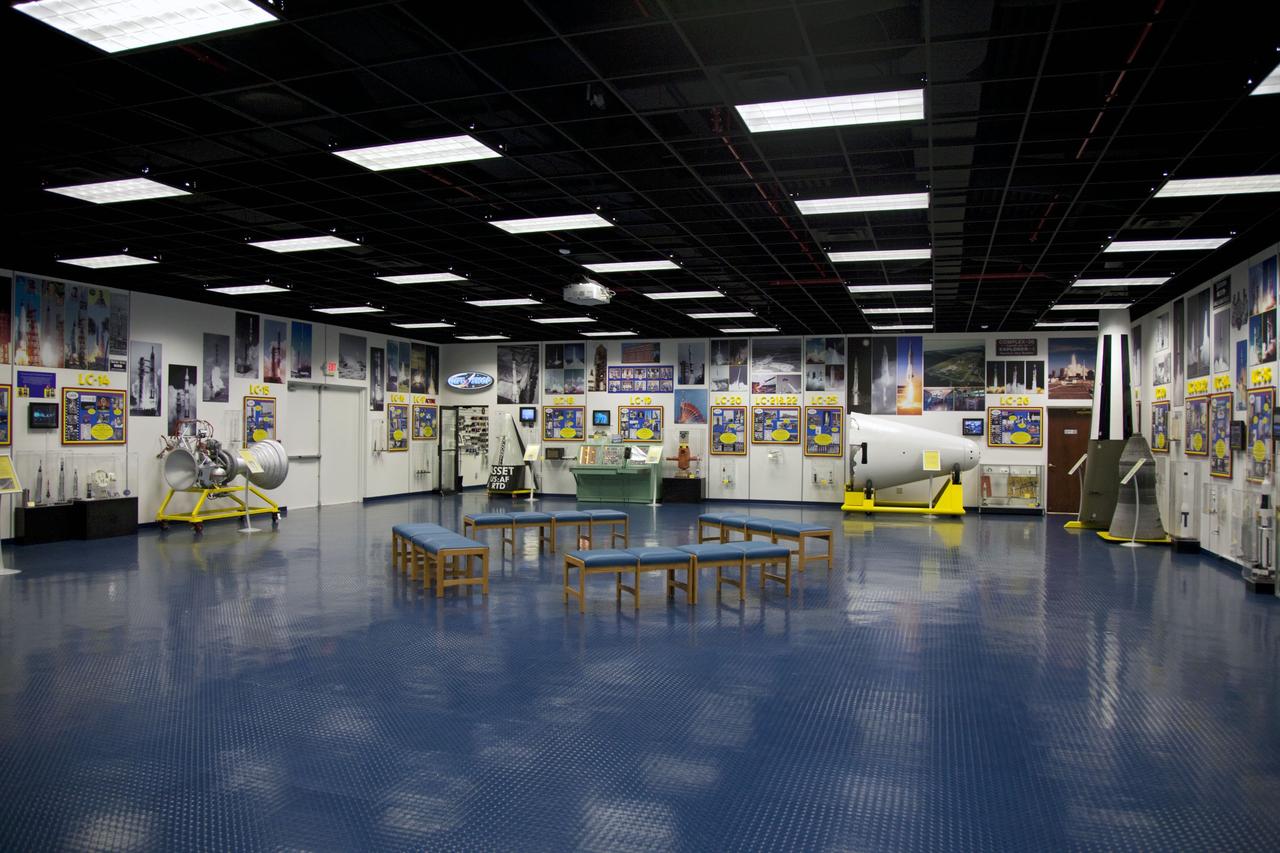
CAPE CANAVERAL, Fla. -- This is an inside view of the Air Force Space and Missile Museum's History Center, which is located outside the south gate of Cape Canaveral Air Force Station (CCAFS) in Florida. It contains historic information and displays for each launch complex at CCAFS. Since opening to the public in 1966, the museum has introduced millions of visitors to the history of rocketry and spaceflight. Its primary mission is to collect, restore and exhibit items of historical significance that relate to the development and heritage of U.S. Air Force space launch activities. Photo credit: NASA/Frankie Martin
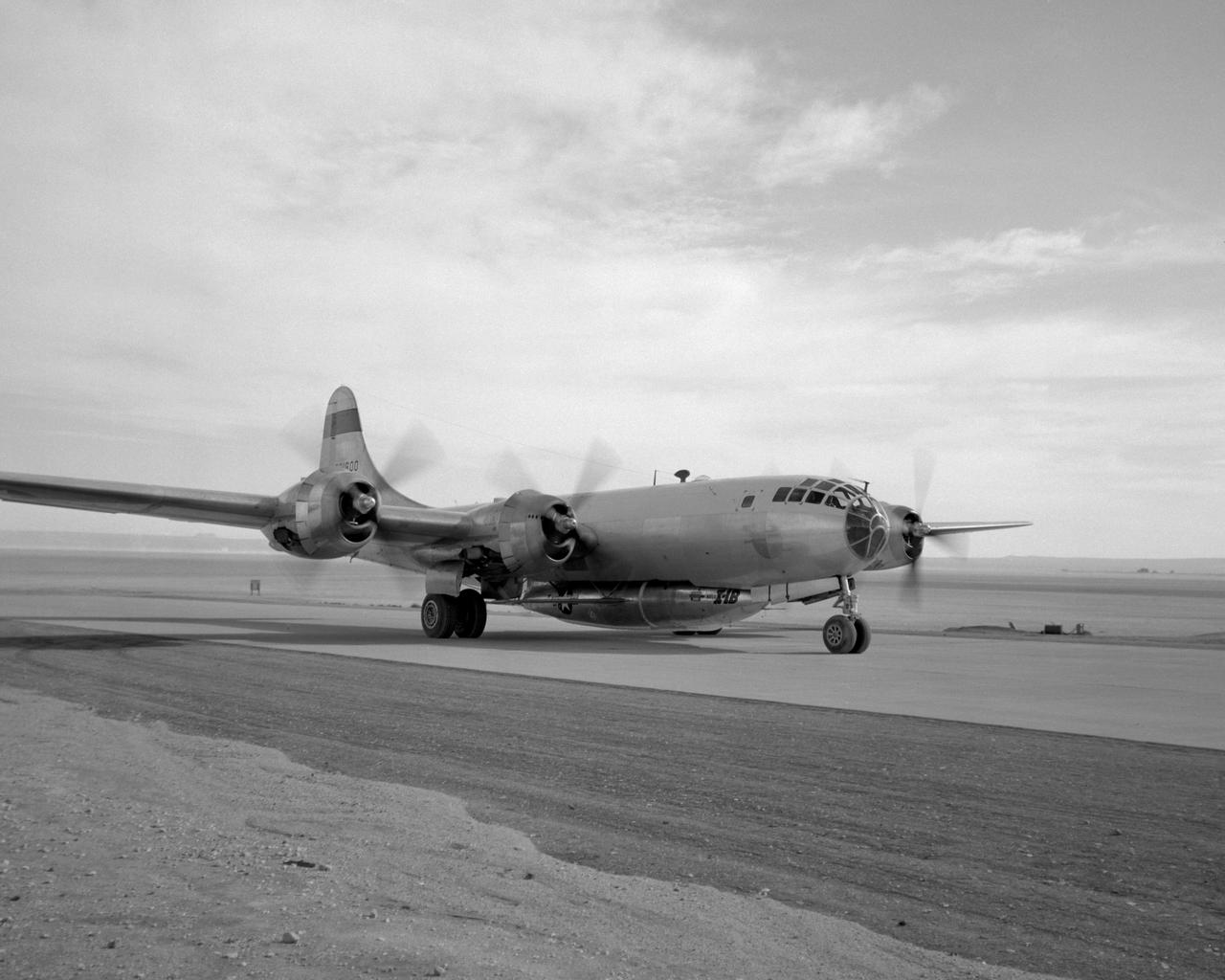
B-29 #800 with X-1B attached taxis in off of the lakebed.
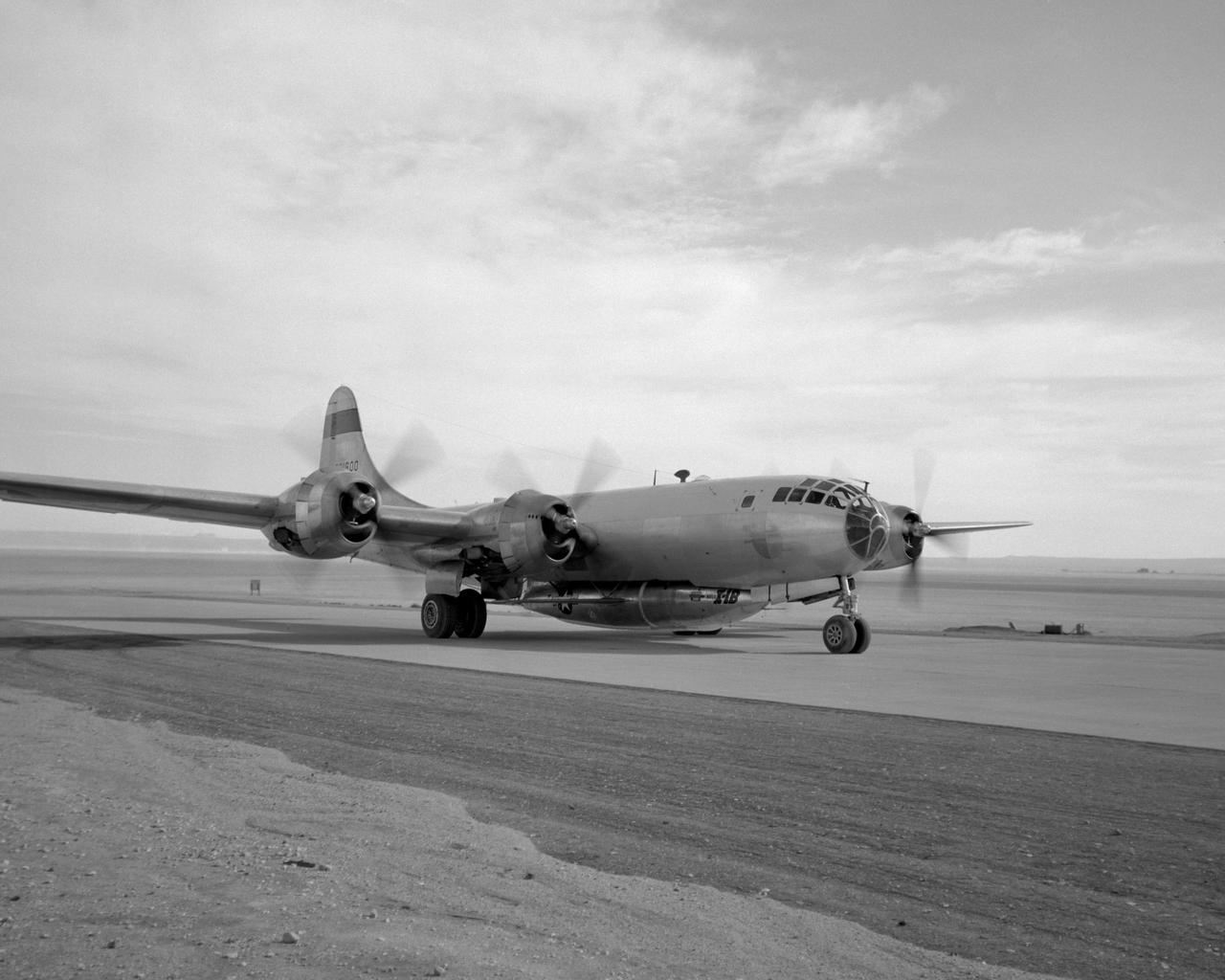
B-29 #800 with X-1B attached taxi's in off of the lakebed.
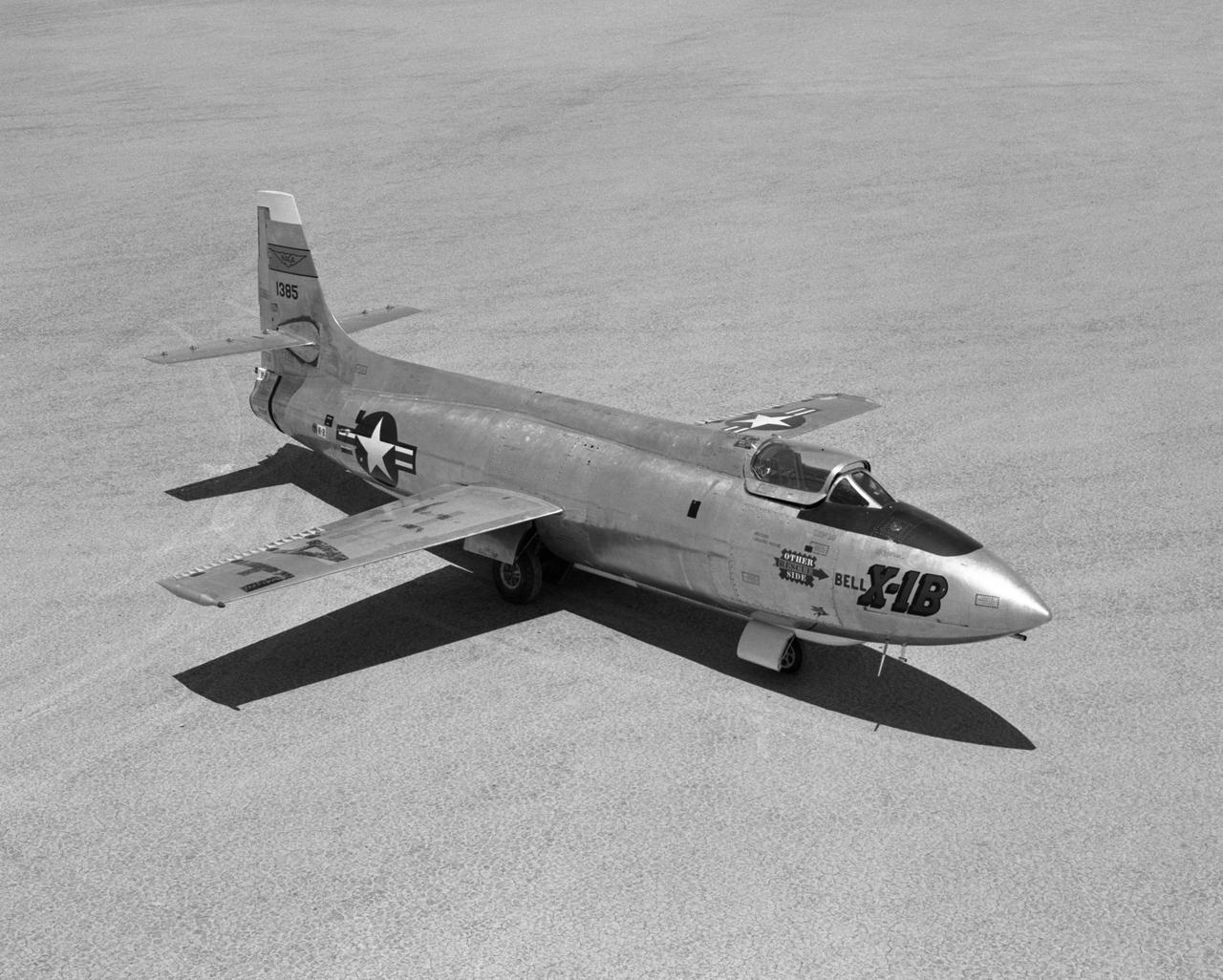
Bell X-1B fitted with a reaction control system on the lakebed
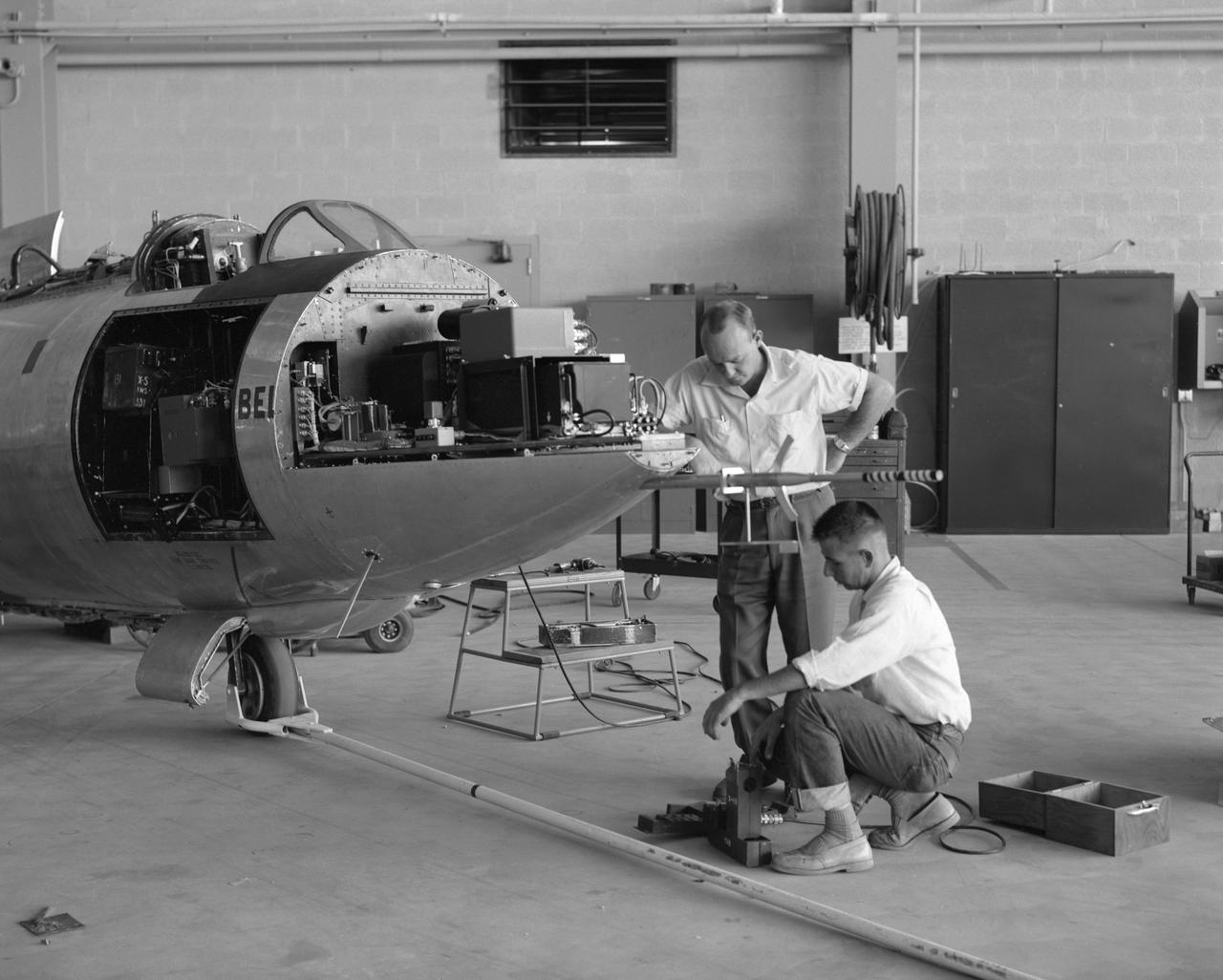
Lee Adelsbach and Bob Cook work on the instrumentation on the Bell X-1B.
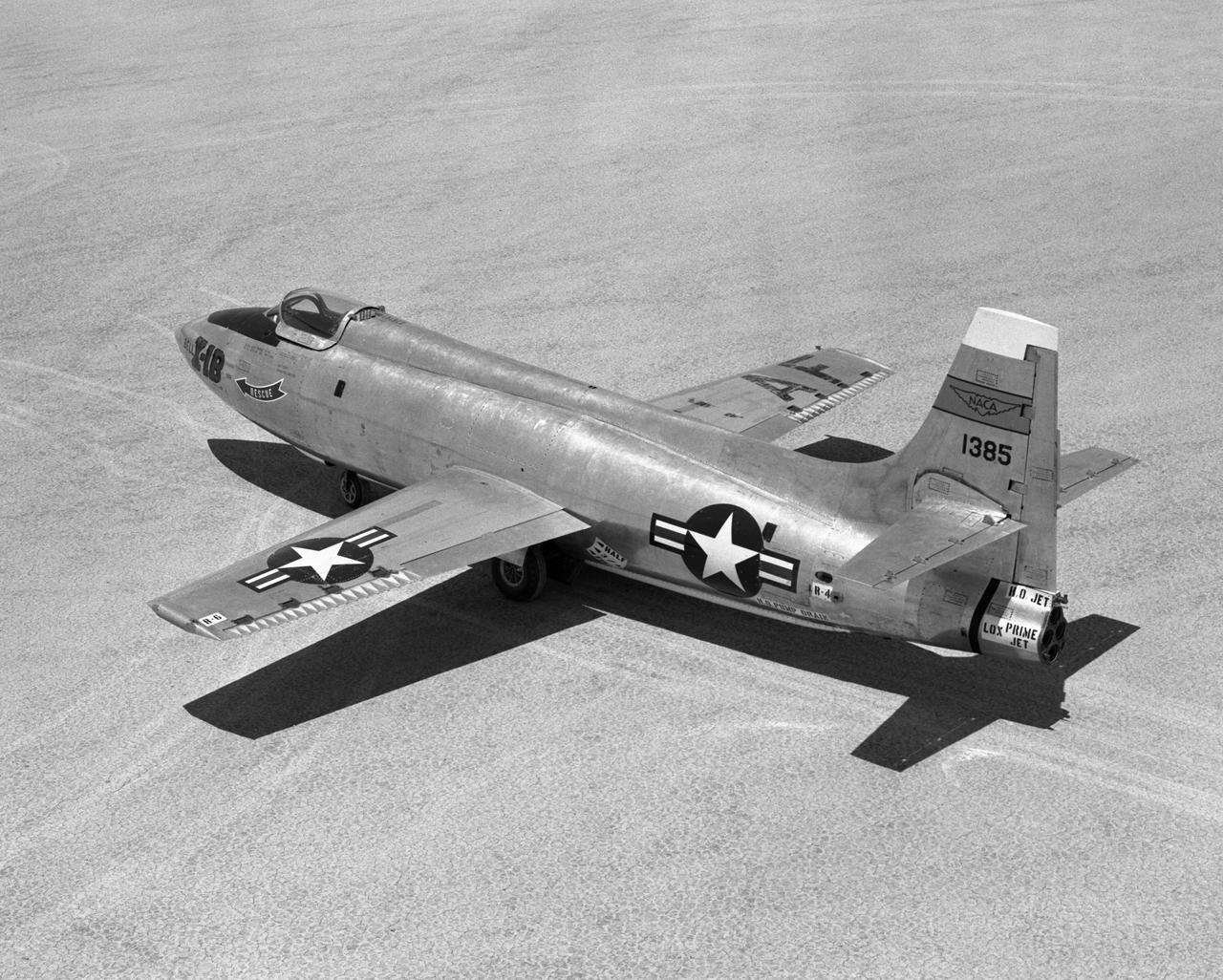
Bell X-1B fitted with a reaction control system on the lakebed.
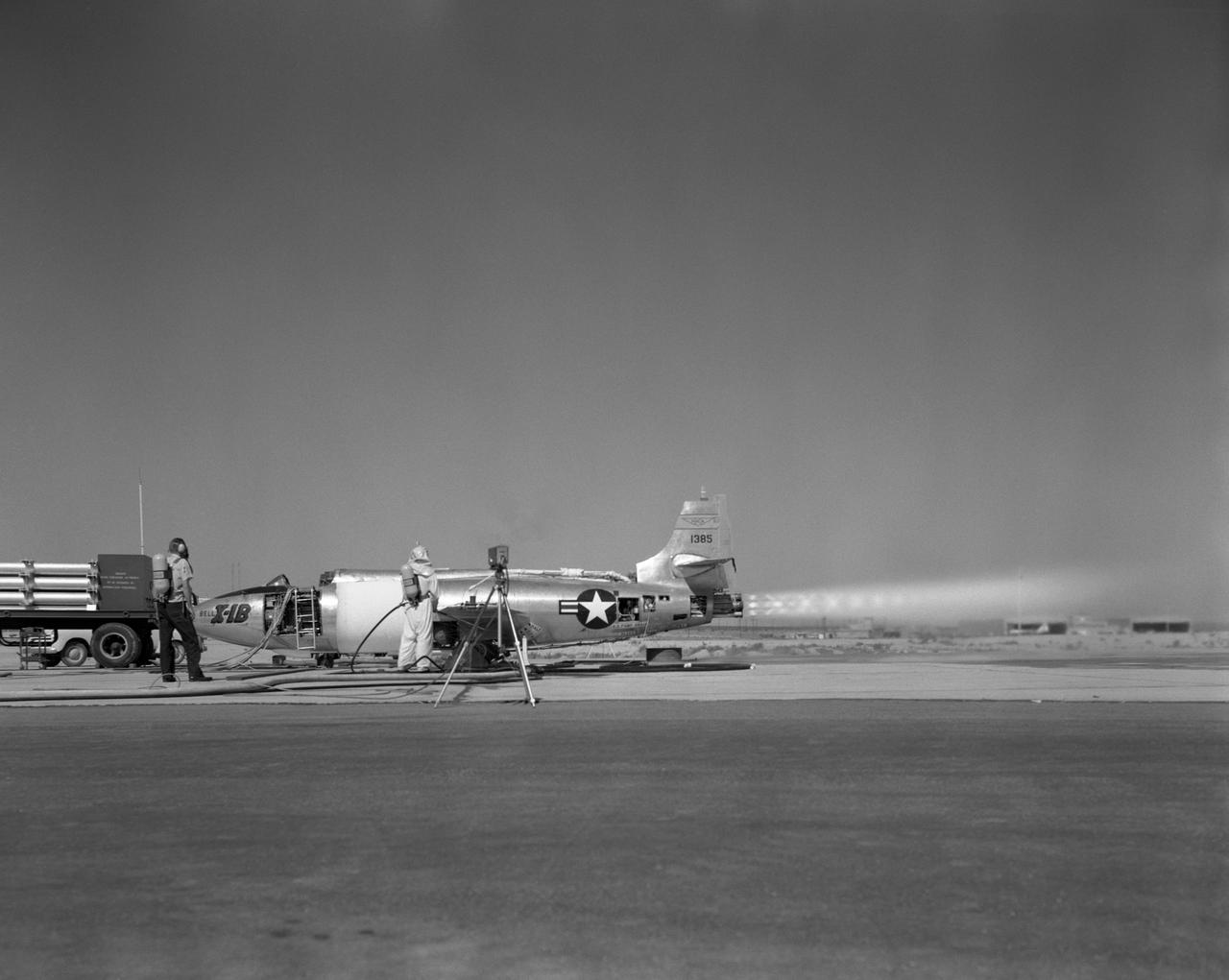
X-1B engine run on Air Force thrust stand.
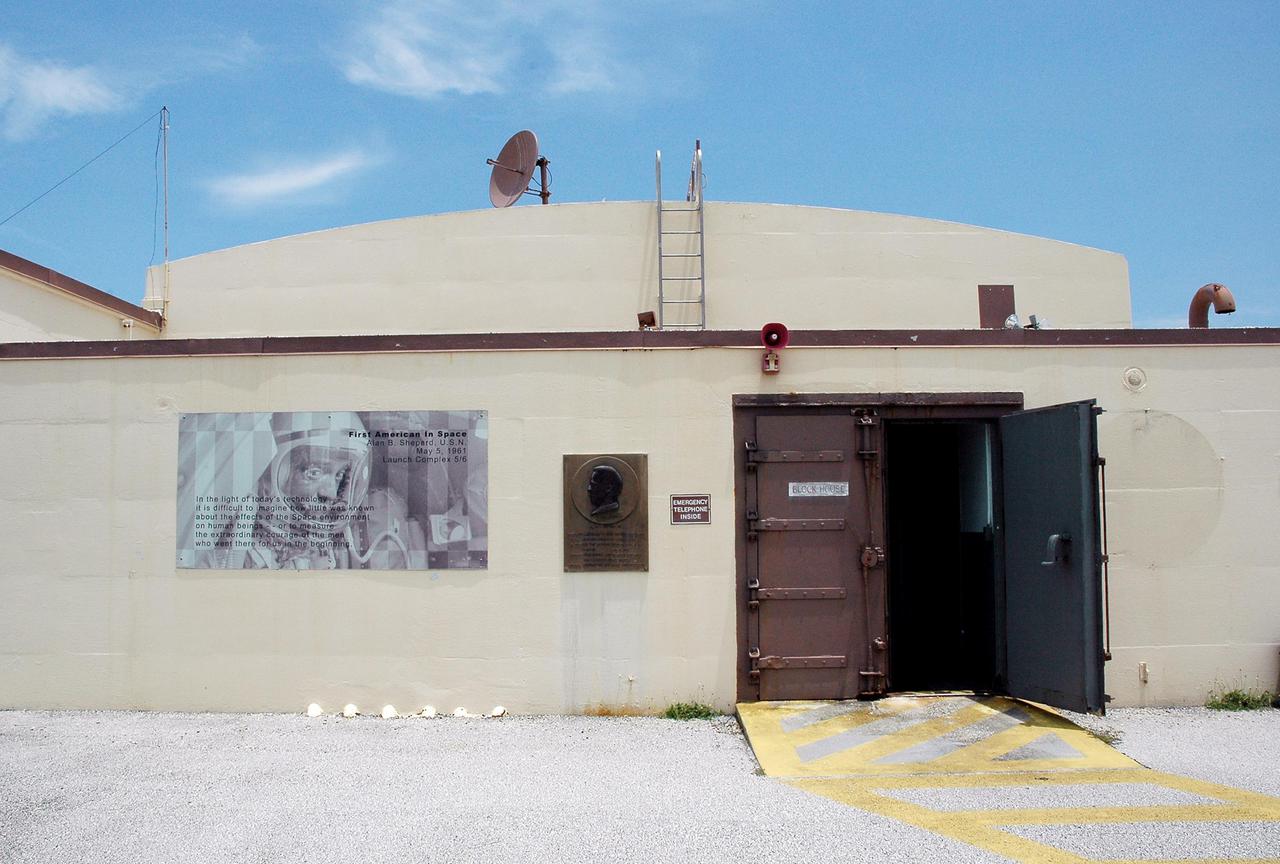
KENNEDY SPACE CENTER, FLA. - This is Launch Complex 5_6 blockhouse, now a museum at the Cape Canaveral Air Force Station (CCAFS) in Florida, where long-lost space suits were found. A recent venture into a long-locked room at CCAFS uncovered interesting artifacts of a bygone era: retired space suits from Americans who trained in the 1960s to be astronauts aboard an Air Force orbiting reconnaissance laboratory. Two security officers were doing a check of a facility at Launch Complex 5_6 blockhouse. NASA Special Agent Dan E. Oakland and Security Manager Henry Butler, who is with Delaware North Parks and Resorts, the company that oversees the museum, discovered a locked room. Space suits from the Air Force’s planned Manned Orbiting Laboratory (MOL) program were found in the room Begun in 1964, the MOL program was an Air Force initiative that would have sent Air Force astronauts to a space station in a Gemini capsule. After spending a few weeks in orbit, the crew would undock and return to Earth. A test launch from Complex 40 on Nov. 30, 1966, of a MOL was conducted with an unmanned Gemini capsule. The MOL was constructed from tankage of a Titan II rocket. The operational MOL was planned to be launched into a polar orbit from Vandenberg Air Force Base in California. The Air Force abandoned the program in 1969, but the program produced a great deal of technological development, and three groups of military officers trained to be MOL astronauts. When the program was cancelled, seven of the younger astronauts were transferred to the agency’s human space flight program and went on to have standout careers. Among them were Robert Crippen, pilot of the first Space Shuttle mission, and Richard H. 'Dick' Truly, who later became NASA Administrator.
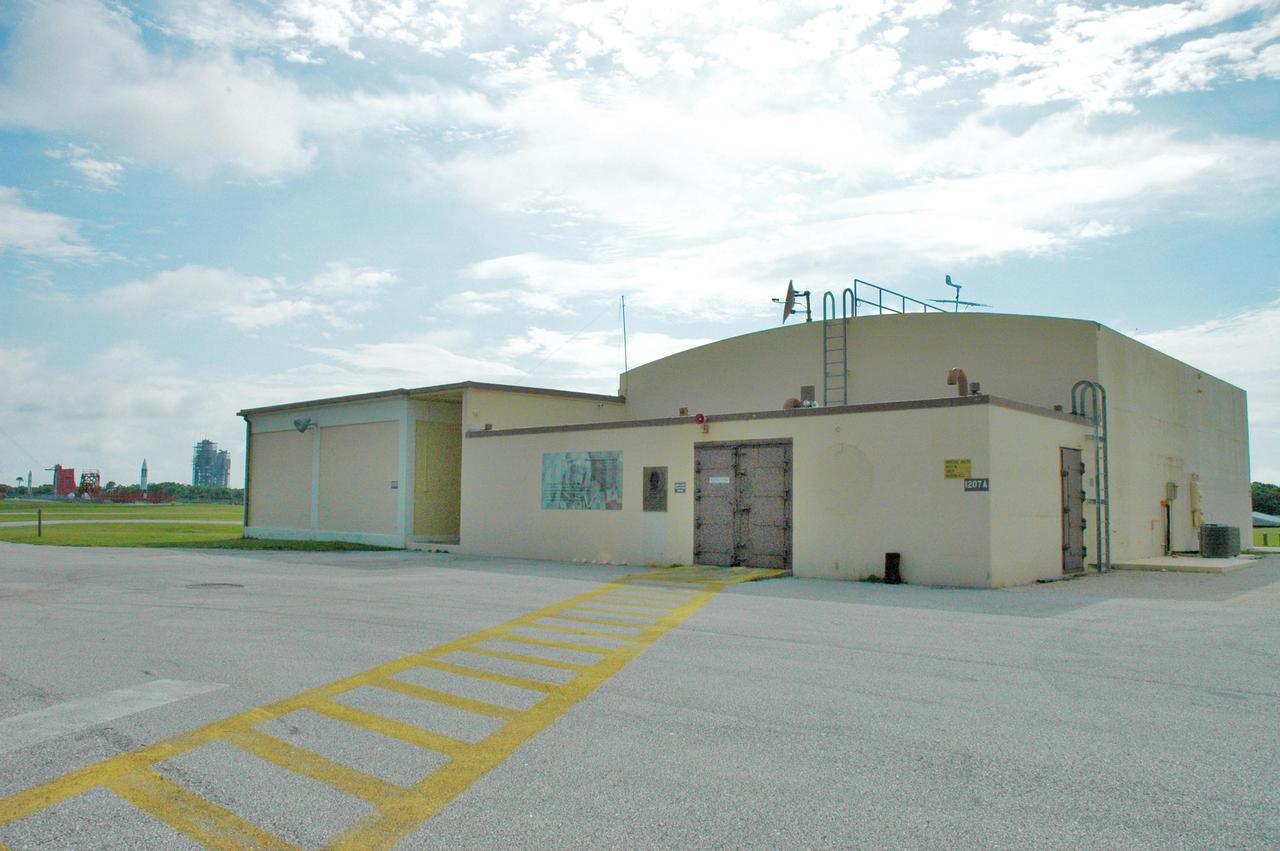
KENNEDY SPACE CENTER, FLA. - This is Launch Complex 5_6 blockhouse, now a museum at the Cape Canaveral Air Force Station (CCAFS) in Florida, where long-lost spacesuits were found. A recent venture into a long-locked room at CCAFS uncovered interesting artifacts of a bygone era: retired space suits from Americans who trained in the 1960s to be astronauts aboard an Air Force orbiting reconnaissance laboratory. Two security officers were doing a check of a facility at Launch Complex 5_6 blockhouse. NASA Special Agent Dan E. Oakland and Security Manager Henry Butler, with Delaware North Parks and Resorts, which oversees the museum, discovered a locked room. Space suits from the Air Force’s planned Manned Orbiting Laboratory (MOL) program were found in the room Begun in 1964, the MOL program was an Air Force initiative that would have sent Air Force astronauts to a space station in a Gemini capsule. After spending a few weeks in orbit, the crew would undock and return to Earth. A test launch from Complex 40 on Nov. 30, 1966, of a MOL was conducted with an unmanned Gemini capsule. The MOL was constructed from tankage of a Titan II rocket. The operational MOL was planned to be launched into a polar orbit from Vandenberg Air Force Base in California. The Air Force abandoned the program in 1969, but the program produced a great deal of technological development, and three groups of military officers trained to be MOL astronauts. When the program was cancelled, seven of the younger astronauts were transferred to the agency’s human space flight program and went on to have standout careers. Among them were Robert Crippen, pilot of the first Space Shuttle mission, and Richard H. 'Dick' Truly, who later became NASA Administrator.

This side-rear view of the X-24A Lifting Body on the lakebed by the NASA Flight Research Center shows its control surfaces used for subsonic flight.
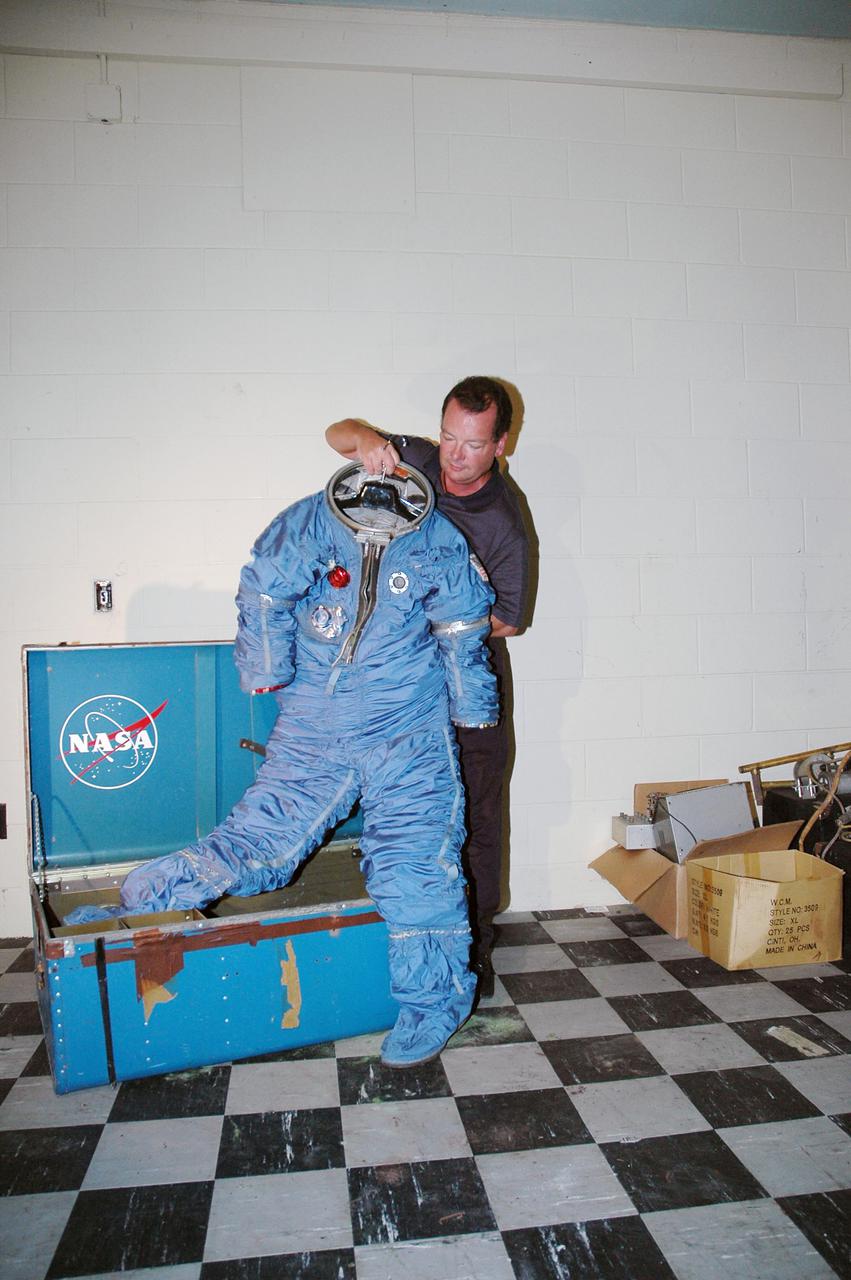
KENNEDY SPACE CENTER, FLA. - NASA Special Agent Dan Oakland holds up a long-lost spacesuit recently uncovered at the Cape Canaveral Air Force Station (CCAFS) in Florida. A recent venture into a long-locked room at CCAFS uncovered interesting artifacts of a by-gone era: retired space suits from Americans who trained in the 1960s to be astronauts aboard an Air Force orbiting reconnaissance laboratory. Two security officers were doing a check of a facility at Launch Complex 5_6 blockhouse. Oakland and Security Manager Henry Butler, who is with Delaware North Parks and Resorts, the company that oversees the museum, discovered a locked room. Space suits from the Air Force’s planned Manned Orbiting Laboratory (MOL) program were found in the room Begun in 1964, the MOL program was an Air Force initiative that would have sent Air Force astronauts to a space station in a Gemini capsule. After spending a few weeks in orbit, the crew would undock and return to Earth. A test launch from Complex 40 on Nov. 30, 1966, of a MOL was conducted with an unmanned Gemini capsule. The MOL was constructed from tankage of a Titan II rocket. The operational MOL was planned to be launched into a polar orbit from Vandenberg Air Force Base in California. The Air Force abandoned the program in 1969, but the program produced a great deal of technological development, and three groups of military officers trained to be MOL astronauts. When the program was cancelled, seven of the younger astronauts were transferred to the agency’s human space flight program and went on to have standout careers. Among them were Robert Crippen, pilot of the first Space Shuttle mission, and Richard H. 'Dick' Truly, who later became NASA Administrator.
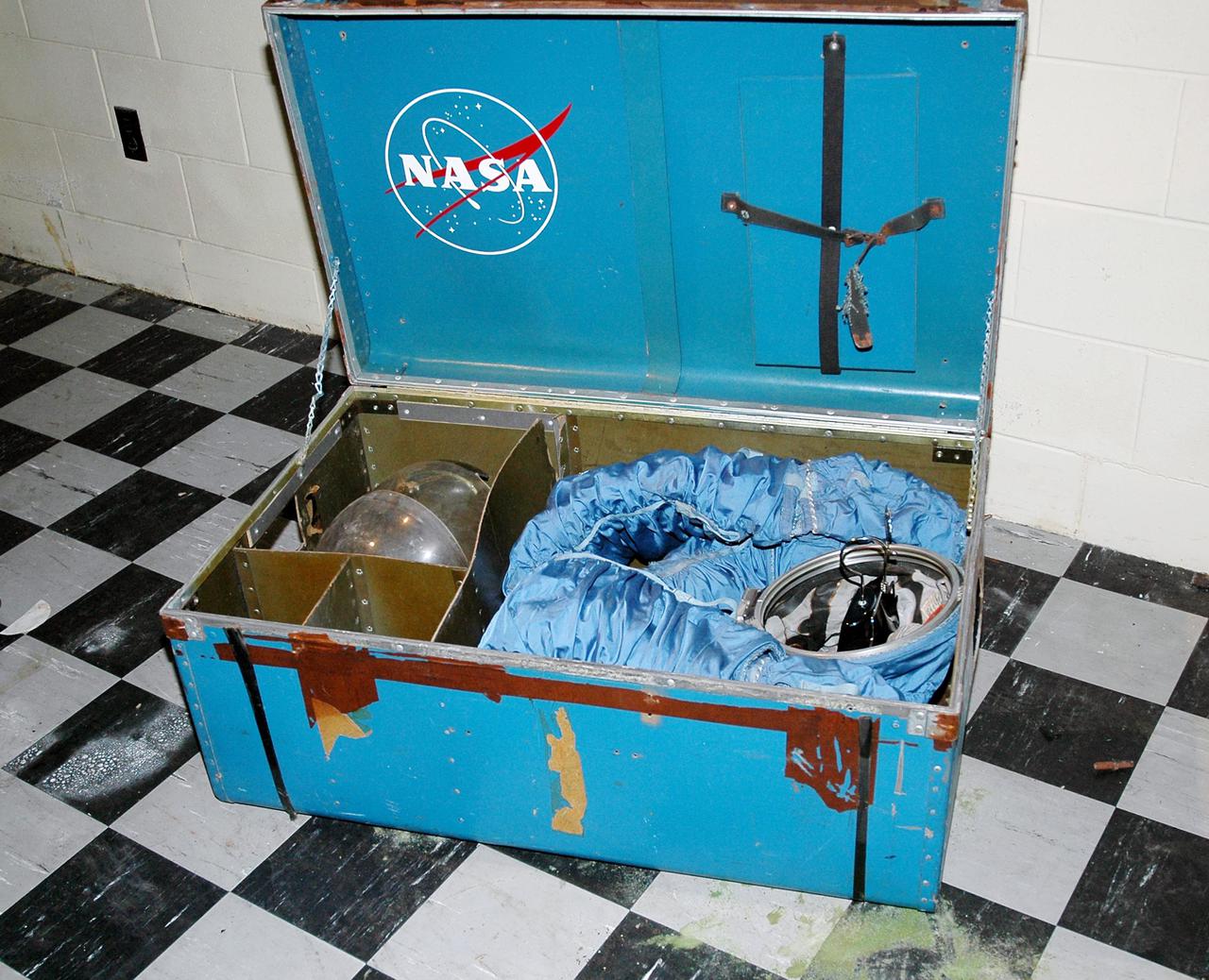
KENNEDY SPACE CENTER, FLA. - This locker reveals a long-lost spacesuit recently uncovered at the Cape Canaveral Air Force Station (CCAFS) in Florida. A recent venture into a long-locked room at CCAFS uncovered interesting artifacts of a bygone era: retired space suits from Americans who trained in the 1960s to be astronauts aboard an Air Force orbiting reconnaissance laboratory. Two security officers were doing a check of a facility at Launch Complex 5_6 blockhouse. NASA Special Agent Dan E. Oakland and Security Manager Henry Butler, who is with Delaware North Parks and Resorts, the company that oversees the museum, discovered a locked room. Space suits from the Air Force’s planned Manned Orbiting Laboratory (MOL) program were found in the room Begun in 1964, the MOL program was an Air Force initiative that would have sent Air Force astronauts to a space station in a Gemini capsule. After spending a few weeks in orbit, the crew would undock and return to Earth. A test launch from Complex 40 on Nov. 30, 1966, of a MOL was conducted with an unmanned Gemini capsule. The MOL was constructed from tankage of a Titan II rocket. The operational MOL was planned to be launched into a polar orbit from Vandenberg Air Force Base in California. The Air Force abandoned the program in 1969, but the program produced a great deal of technological development, and three groups of military officers trained to be MOL astronauts. When the program was cancelled, seven of the younger astronauts were transferred to the agency’s human space flight program and went on to have standout careers. Among them were Robert Crippen, pilot of the first Space Shuttle mission, and Richard H. 'Dick' Truly, who later became NASA Administrator.
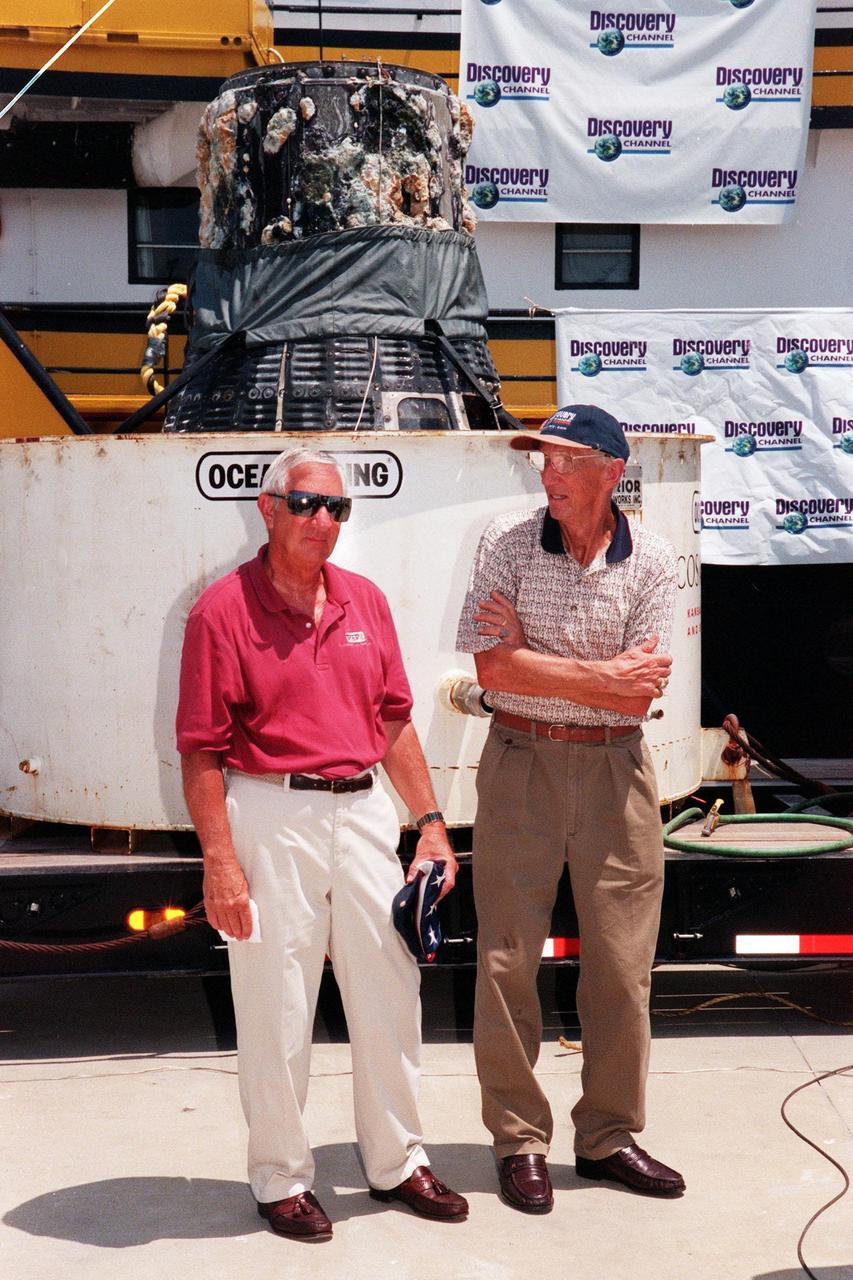
KENNEDY SPACE CENTER, FLA. -- Waiting for the arrival of the Liberty Bell 7 after its raising from the ocean floor. Liberty Bell 7 launched U.S. Air Force Captain Virgil "Gus" Grissom July 21, 1961 on a mission that lasted 15 minutes and 37 seconds before sinking to the floor of the Atlantic Ocean, three miles deep. It lay undetected for nearly four decades before a Discovery Channel expedition located it and recovered it. The space capsule is now restored and preserved, and part of an interactive exhibit touring science centers and museums in 12 cities throughout the United States until 2003. The exhibit includes hands-on elements such as a capsule simulator, a centrifuge, and ROV pilot.
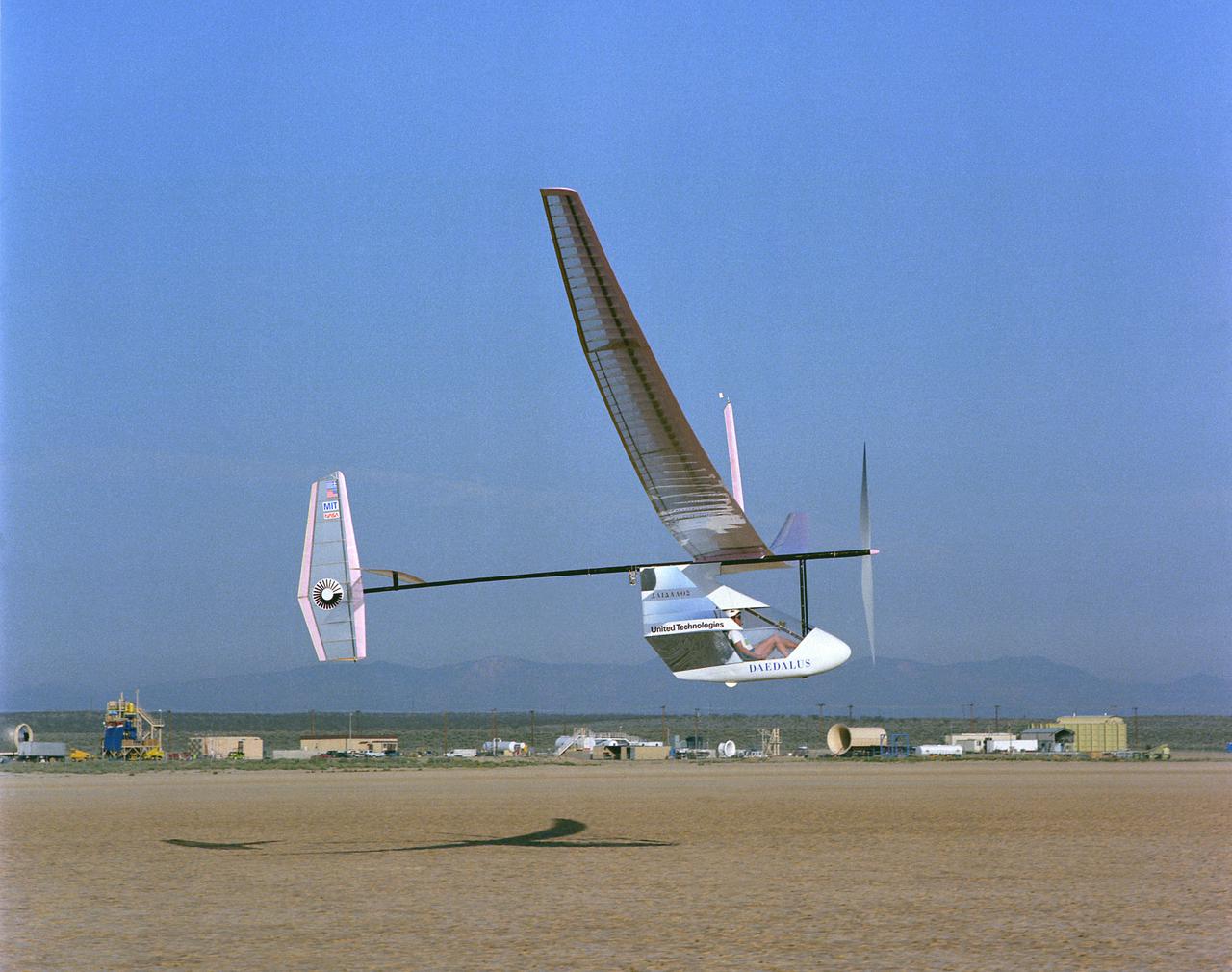
Daedalus - Last Dryden flight with Glenn Tremml
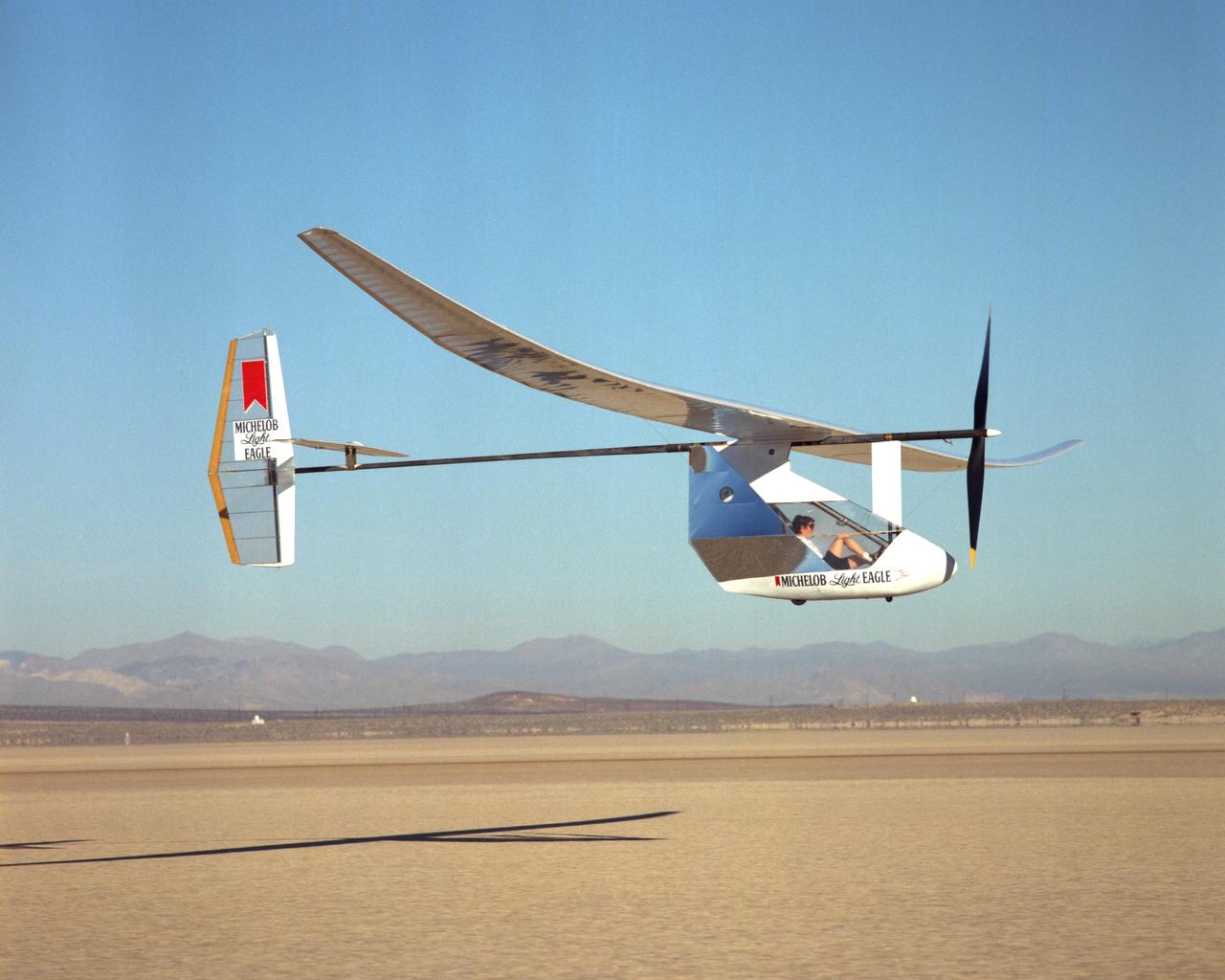
Daedalus Project's Light Eagle - Human powered aircraft
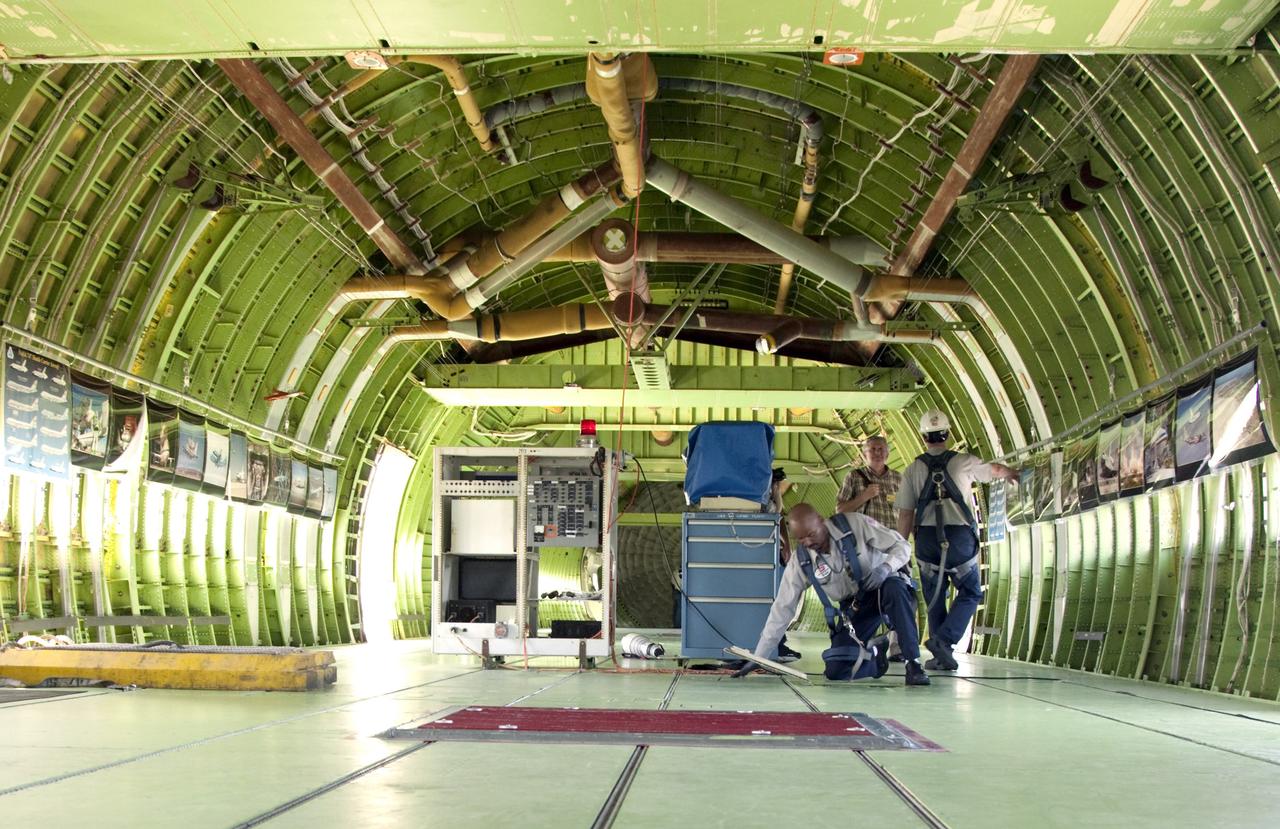
CAPE CANAVERAL, Fla. – At NASA’s Kennedy Space Center in Florida, maintenance technicians from NASA’s Dryden Flight Research Center in California check equipment inside NASA’s Shuttle Carrier Aircraft modified 747 jet, or SCA, after arriving at the Shuttle Landing Facility from Edwards Air Force Base in California. During the Space Shuttle Program’s transition and retirement processing, Discovery was prepared for display at Smithsonian’s National Air and Space Museum, Steven F. Udvar-Hazy Center in Chantilly, Va. Discovery is scheduled to be transported atop the SCA, designated NASA 905, to Dulles International Airport in Virginia on April 17 and then moved to the Smithsonian for permanent public display on April 19. The SCA is assigned to the remaining ferry missions, delivering the shuttles to their permanent public display sites. For more information, visit http://www.nasa.gov/shuttle. Photo credit: NASA/Frankie Martin

CAPE CANAVERAL, Fla. – At NASA’s Kennedy Space Center in Florida, an interior view of NASA’s Shuttle Carrier Aircraft modified 747 jet, or SCA, is seen after arriving at the Shuttle Landing Facility from Edwards Air Force Base in California. During the Space Shuttle Program’s transition and retirement processing, Discovery was prepared for display at Smithsonian’s National Air and Space Museum, Steven F. Udvar-Hazy Center in Chantilly, Va. Discovery is scheduled to be transported atop the SCA, designated NASA 905, to Dulles International Airport in Virginia on April 17 and then moved to the Smithsonian for permanent public display on April 19. The SCA is assigned to the remaining ferry missions, delivering the shuttles to their permanent public display sites. For more information, visit http://www.nasa.gov/shuttle. Photo credit: NASA/Frankie Martin

CAPE CANAVERAL, Fla. – At NASA’s Kennedy Space Center in Florida, NASA’s Shuttle Carrier Aircraft modified 747 jet, or SCA, has arrived at the Shuttle Landing Facility, or SLF, after a 5-hour flight from Edwards Air Force Base in California. During the Space Shuttle Program’s transition and retirement processing, Discovery was prepared for display at Smithsonian’s National Air and Space Museum, Steven F. Udvar-Hazy Center in Chantilly, Va. Discovery is scheduled to be transported atop the SCA, designated NASA 905, to Dulles International Airport in Virginia on April 17 and then moved to the Smithsonian for permanent public display on April 19. The SCA is assigned to the remaining ferry missions, delivering the shuttles to their permanent public display sites. For more information, visit http://www.nasa.gov/shuttle. Photo credit: NASA/Frankie Martin
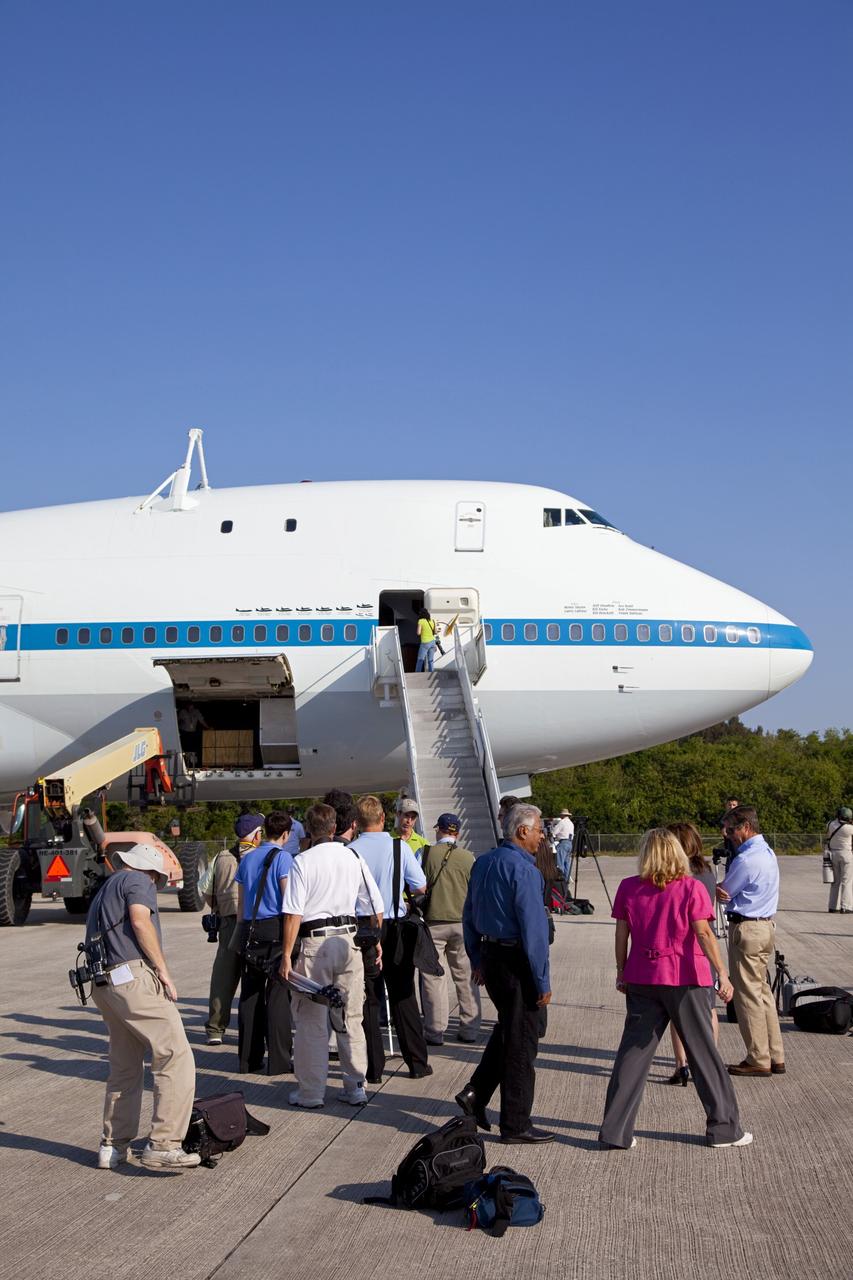
CAPE CANAVERAL, Fla. – At NASA’s Kennedy Space Center in Florida, NASA’s Shuttle Carrier Aircraft modified 747 jet, or SCA, has arrived at the Shuttle Landing Facility, or SLF, after a 5-hour flight from Edwards Air Force Base in California. On the SLF tarmac, members of the media talk to the SCA pilots. During the Space Shuttle Program’s transition and retirement processing, Discovery was prepared for display at Smithsonian’s National Air and Space Museum, Steven F. Udvar-Hazy Center in Chantilly, Va. Discovery is scheduled to be transported atop the SCA, designated NASA 905, to Dulles International Airport in Virginia on April 17 and then moved to the Smithsonian for permanent public display on April 19. The SCA is assigned to the remaining ferry missions, delivering the shuttles to their permanent public display sites. For more information, visit http://www.nasa.gov/shuttle. Photo credit: NASA/Frankie Martin
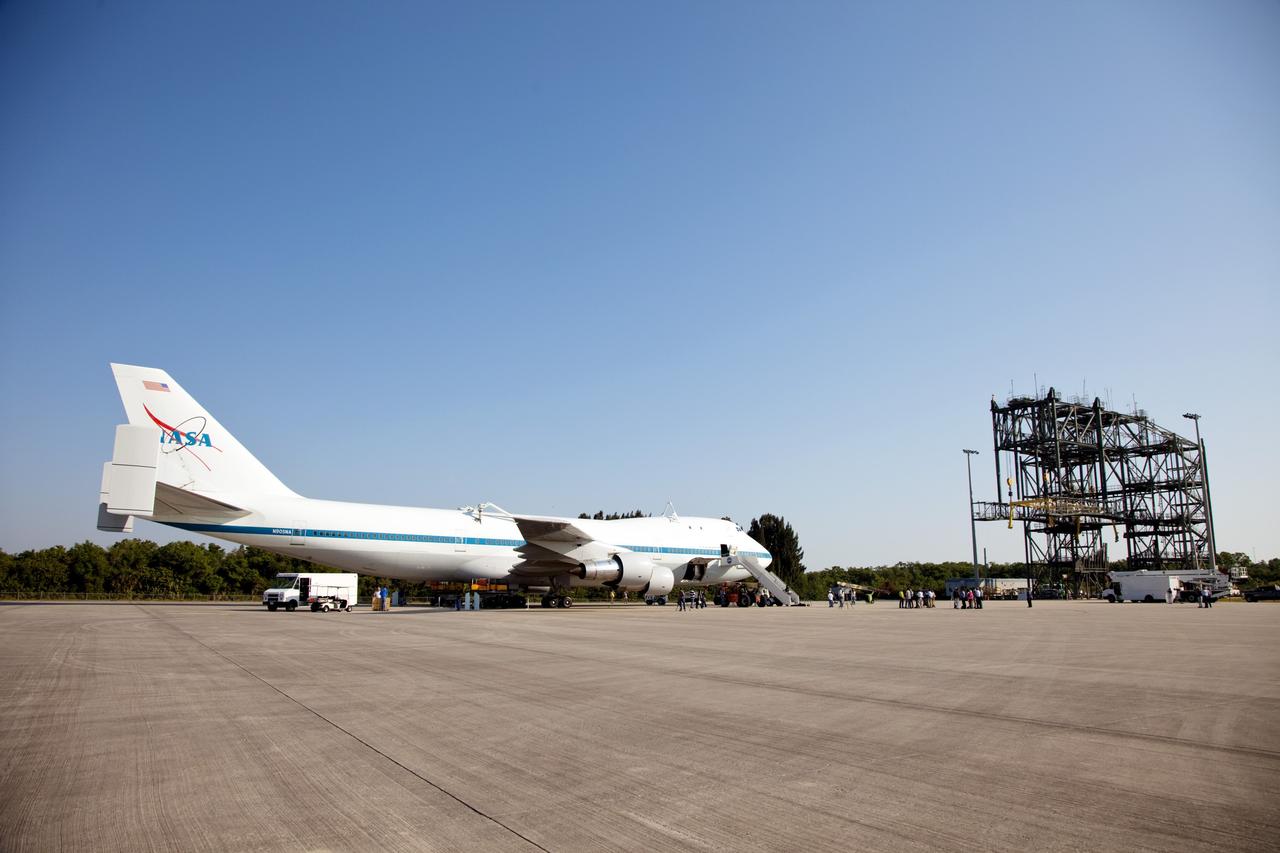
CAPE CANAVERAL, Fla. – At NASA’s Kennedy Space Center in Florida, NASA’s Shuttle Carrier Aircraft modified 747 jet, or SCA, has arrived at the Shuttle Landing Facility, or SLF, after a 5-hour flight from Edwards Air Force Base in California. To the right is the Mate/Demate device that will be used to lift and attach Discovery atop the SCA. During the Space Shuttle Program’s transition and retirement processing, Discovery was prepared for display at Smithsonian’s National Air and Space Museum, Steven F. Udvar-Hazy Center in Chantilly, Va. Discovery is scheduled to be transported atop the SCA, designated NASA 905, to Dulles International Airport in Virginia on April 17 and then moved to the Smithsonian for permanent public display on April 19. The SCA is assigned to the remaining ferry missions, delivering the shuttles to their permanent public display sites. For more information, visit http://www.nasa.gov/shuttle. Photo credit: NASA/Frankie Martin
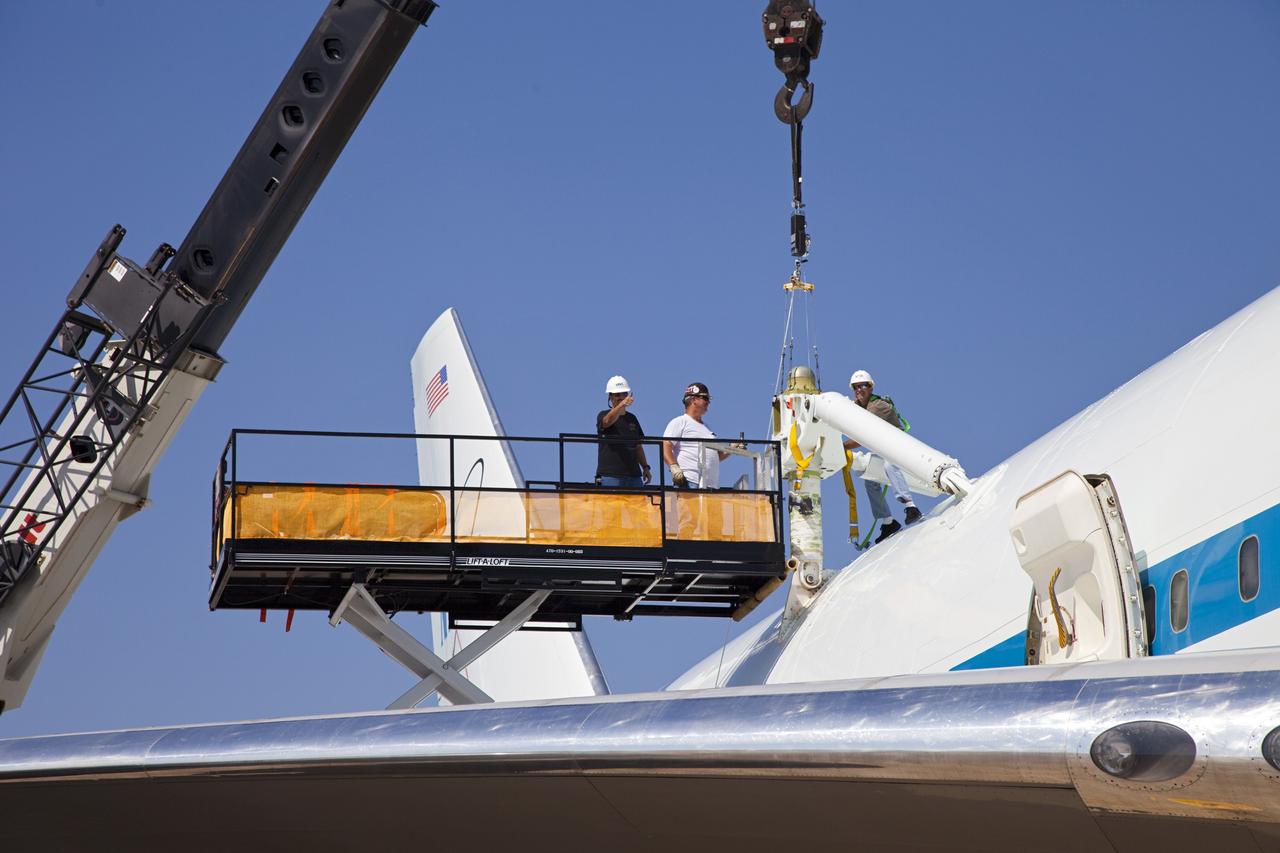
CAPE CANAVERAL, Fla. – At the Shuttle Landing Facility at NASA’s Kennedy Space Center in Florida, maintenance technicians from NASA’s Dryden Flight Research Center in California check attach points on top of NASA’s Shuttle Carrier Aircraft modified 747 jet, or SCA, after arriving from Edwards Air Force Base in California. During the Space Shuttle Program’s transition and retirement processing, Discovery was prepared for display at Smithsonian’s National Air and Space Museum, Steven F. Udvar-Hazy Center in Chantilly, Va. Discovery is scheduled to be transported atop the SCA, designated NASA 905, to Dulles International Airport in Virginia on April 17 and then moved to the Smithsonian for permanent public display on April 19. The SCA is assigned to the remaining ferry missions, delivering the shuttles to their permanent public display sites. For more information, visit http://www.nasa.gov/shuttle. Photo credit: NASA/Frankie Martin
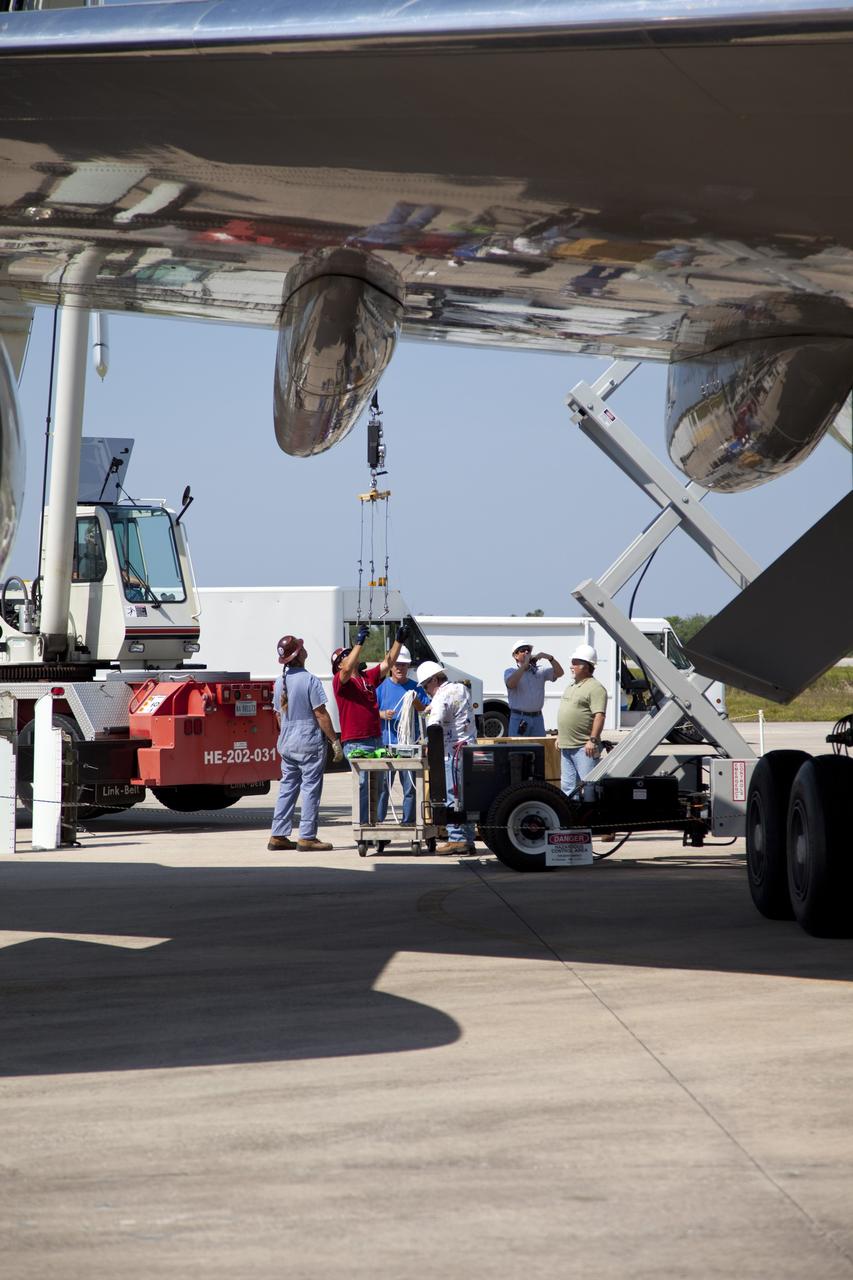
CAPE CANAVERAL, Fla. – At the Shuttle Landing Facility at NASA’s Kennedy Space Center in Florida, maintenance technicians from NASA’s Dryden Flight Research Center in California and Kennedy check NASA’s Shuttle Carrier Aircraft modified 747 jet, or SCA, after arriving from Edwards Air Force Base in California. During the Space Shuttle Program’s transition and retirement processing, Discovery was prepared for display at Smithsonian’s National Air and Space Museum, Steven F. Udvar-Hazy Center in Chantilly, Va. Discovery is scheduled to be transported atop the SCA, designated NASA 905, to Dulles International Airport in Virginia on April 17 and then moved to the Smithsonian for permanent public display on April 19. The SCA is assigned to the remaining ferry missions, delivering the shuttles to their permanent public display sites. For more information, visit http://www.nasa.gov/shuttle. Photo credit: NASA/Frankie Martin

CAPE CANAVERAL, Fla. – At the Shuttle Landing Facility at NASA’s Kennedy Space Center in Florida, maintenance technicians from NASA’s Dryden Flight Research Center in California and Kennedy check NASA’s Shuttle Carrier Aircraft modified 747 jet, or SCA, after arriving from Edwards Air Force Base in California. During the Space Shuttle Program’s transition and retirement processing, Discovery was prepared for display at Smithsonian’s National Air and Space Museum, Steven F. Udvar-Hazy Center in Chantilly, Va. Discovery is scheduled to be transported atop the SCA, designated NASA 905, to Dulles International Airport in Virginia on April 17 and then moved to the Smithsonian for permanent public display on April 19. The SCA is assigned to the remaining ferry missions, delivering the shuttles to their permanent public display sites. For more information, visit http://www.nasa.gov/shuttle. Photo credit: NASA/Frankie Martin
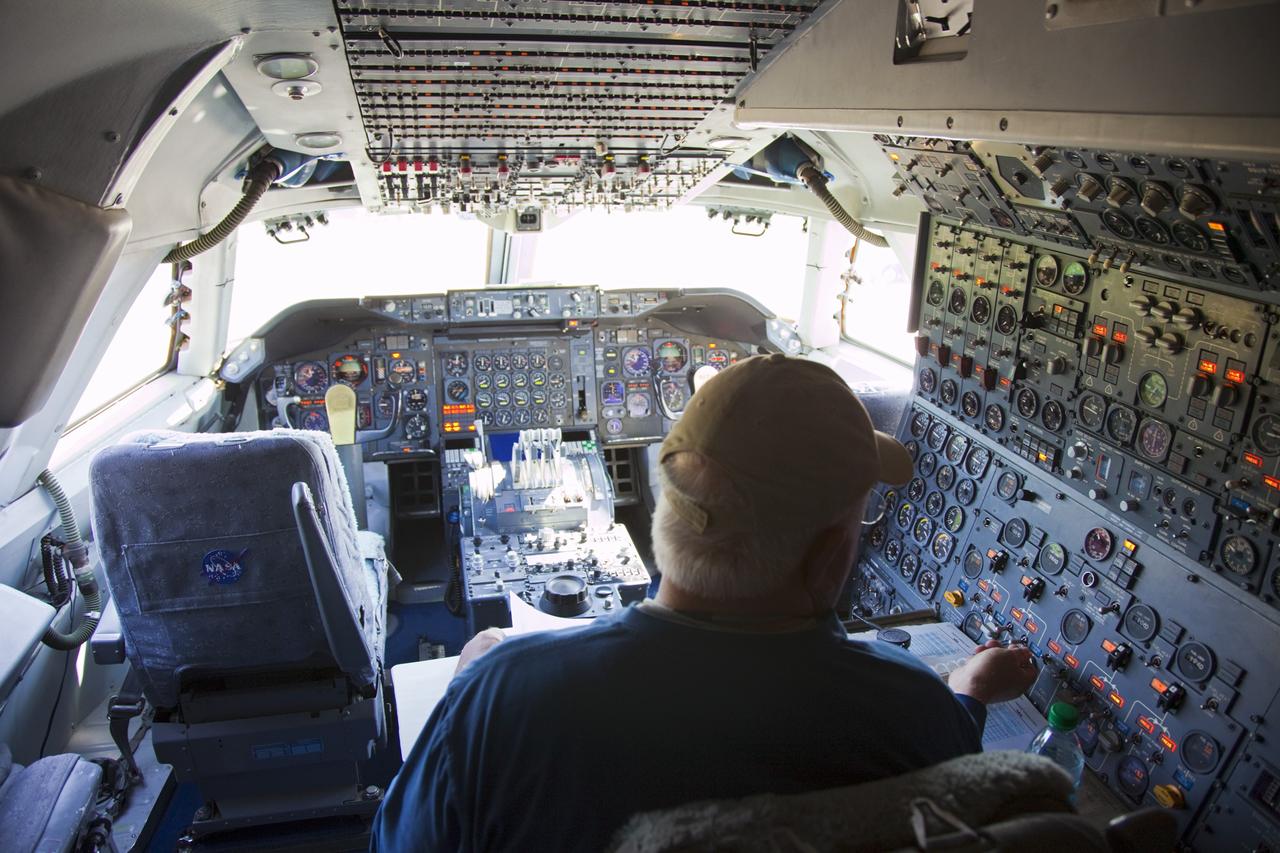
CAPE CANAVERAL, Fla. – At NASA’s Kennedy Space Center in Florida, a maintenance technician from NASA’s Dryden Flight Research Center in California checks controls inside NASA’s Shuttle Carrier Aircraft modified 747 jet, or SCA, after arriving at the Shuttle Landing Facility from Edwards Air Force Base in California. During the Space Shuttle Program’s transition and retirement processing, Discovery was prepared for display at Smithsonian’s National Air and Space Museum, Steven F. Udvar-Hazy Center in Chantilly, Va. Discovery is scheduled to be transported atop the SCA, designated NASA 905, to Dulles International Airport in Virginia on April 17 and then moved to the Smithsonian for permanent public display on April 19. The SCA is assigned to the remaining ferry missions, delivering the shuttles to their permanent public display sites. For more information, visit http://www.nasa.gov/shuttle. Photo credit: NASA/Frankie Martin
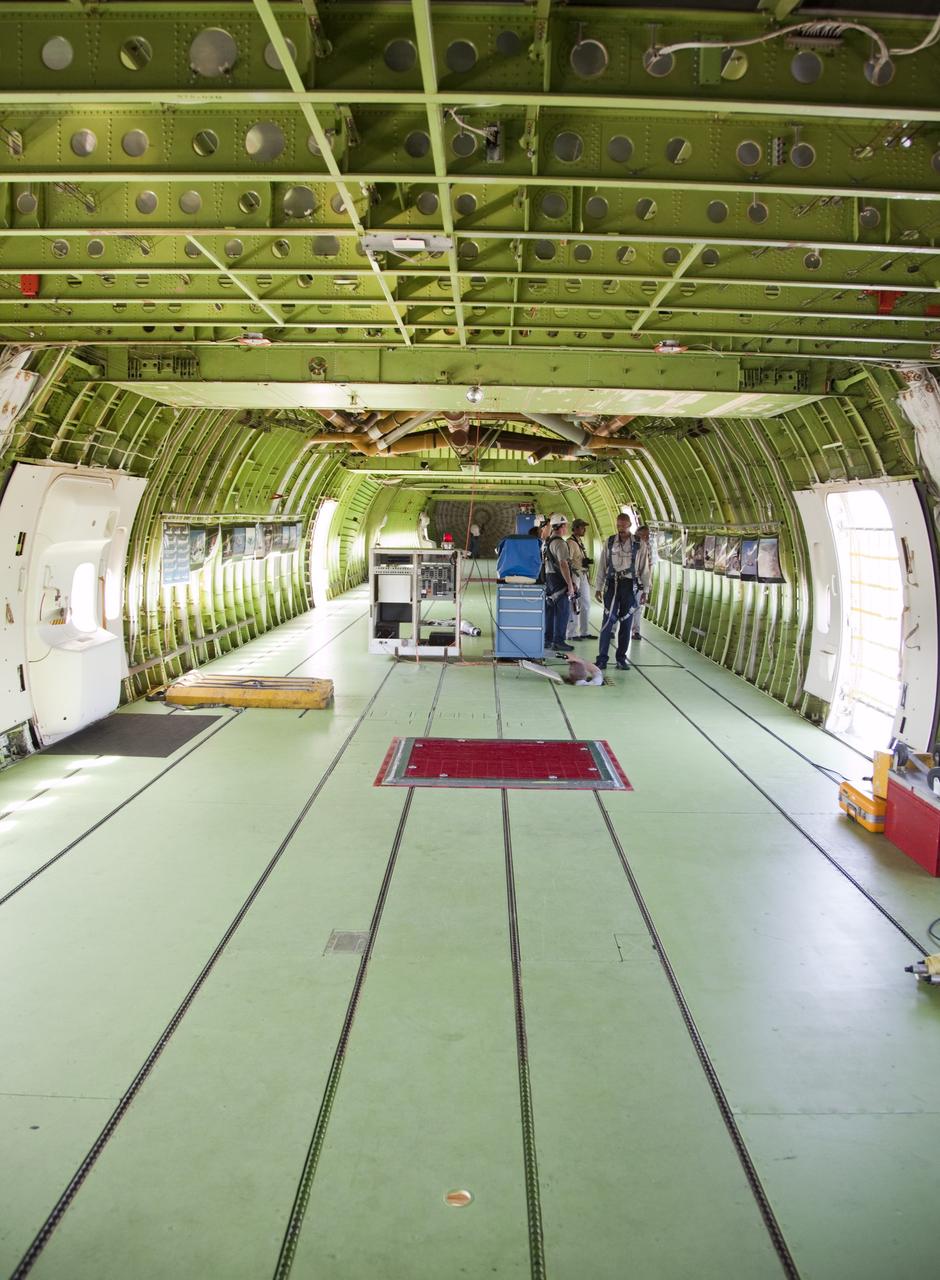
CAPE CANAVERAL, Fla. – At NASA’s Kennedy Space Center in Florida, maintenance technicians from NASA’s Dryden Flight Research Center in California check equipment inside NASA’s Shuttle Carrier Aircraft modified 747 jet, or SCA, after arriving at the Shuttle Landing Facility from Edwards Air Force Base in California. During the Space Shuttle Program’s transition and retirement processing, Discovery was prepared for display at Smithsonian’s National Air and Space Museum, Steven F. Udvar-Hazy Center in Chantilly, Va. Discovery is scheduled to be transported atop the SCA, designated NASA 905, to Dulles International Airport in Virginia on April 17 and then moved to the Smithsonian for permanent public display on April 19. The SCA is assigned to the remaining ferry missions, delivering the shuttles to their permanent public display sites. For more information, visit http://www.nasa.gov/shuttle. Photo credit: NASA/Frankie Martin
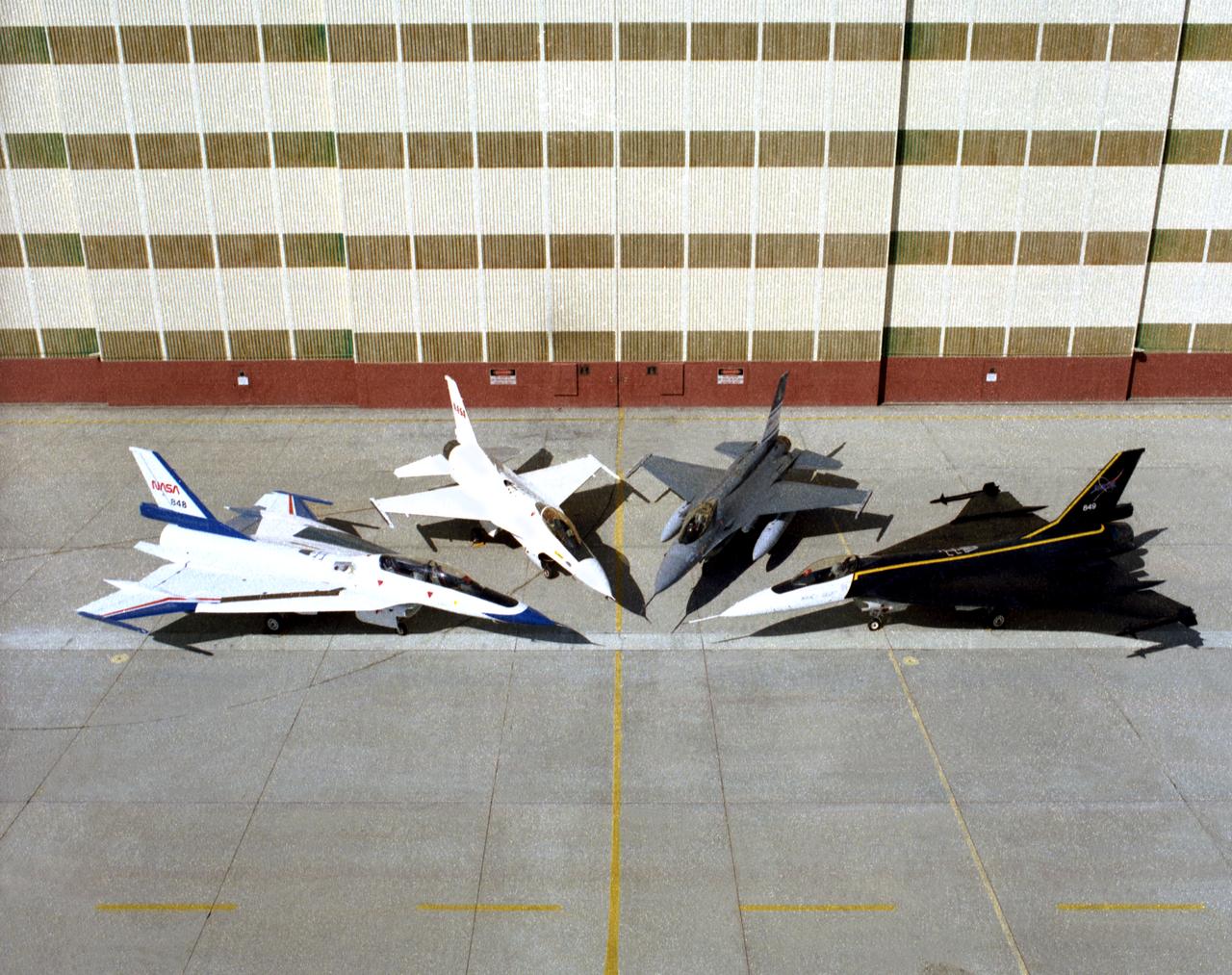
Four different versions of the F-16 were used by Dryden in the 1990s. On the left and right sides are two F-16XLs. On the left is the F-16XL #2 (NASA 848), which is the two-seat version, used for advanced laminar flow studies until late 1996. On the right is the single-seat F-16XL #1 (NASA 849), used for laminar flow research and sonic boom research. (Laminar flow refers to smooth airflow over a wing, which increases lift and reduces drag compared to turbulent airflow). Between them at center left is an F-16A (NASA 816), the only civilian operated F-16. Next to it at center right is the U.S. Air Force Advance Fighter Technology Integration (AFTI) F-16, a program to test new sensor and control technologies for future fighter aircraft. Both F-16XLs are in storage at Dryden. The F-16A was never flown at Dryden, and was parked by the entrance to the center. The AFTI F-16 is in the Air Force Museum.
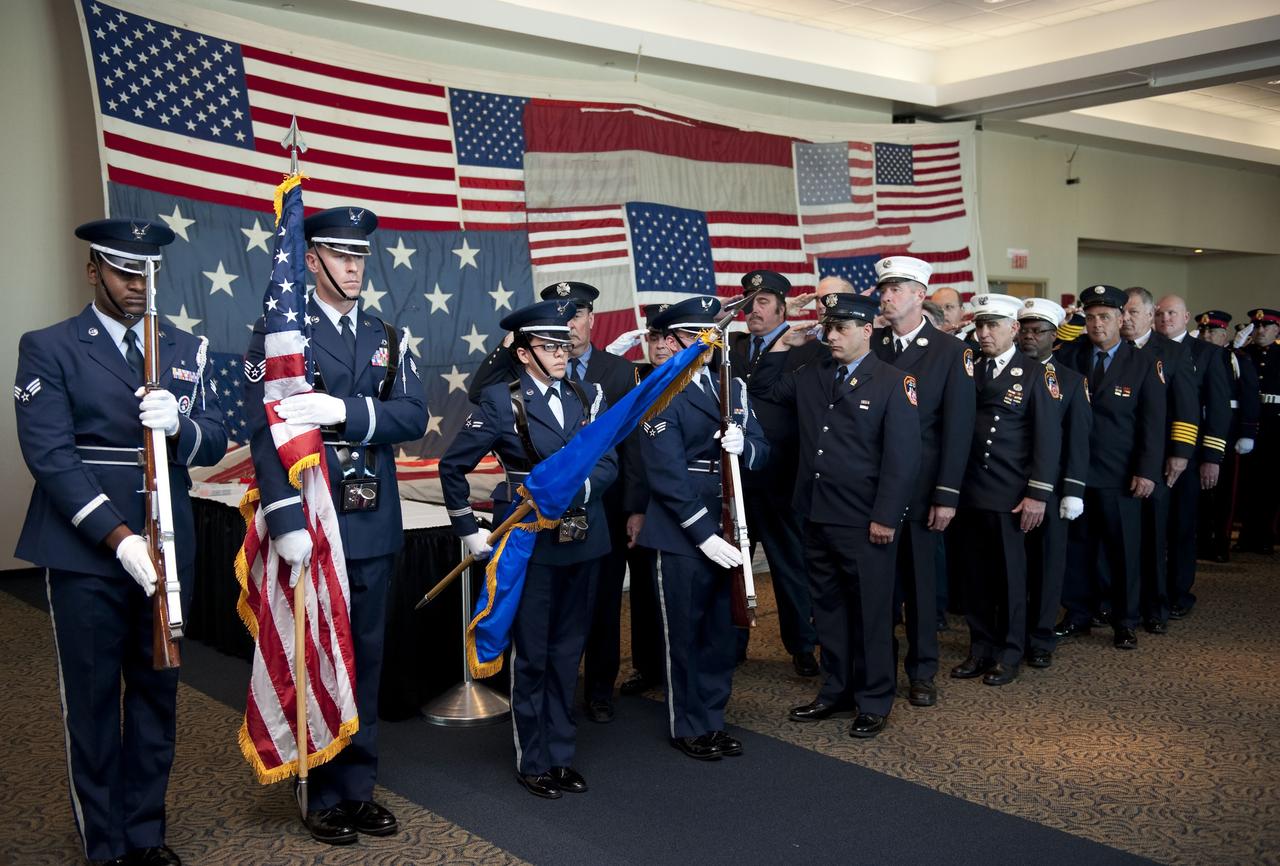
CAPE CANAVERAL, Fla. -- Members of the United States Air Force 45th Space Wing Honor Guard and more than a dozen 9/11 first responders take part in "The National 9/11 Flag" stitching ceremony in the Debus Conference Facility at the Kennedy Space Center Visitor Complex in Florida. The contributions of NASA, Kennedy Space Center and the state of Florida were stitched into the fabric of the American Flag, which was recovered near ground zero following the World Trade Center attacks on Sept. 11, 2001. The "New York Says Thank You Foundation" is taking the flag on a cross-country journey to be restored to its original 13-stripe design using pieces of fabric from American flags destined for retirement in all 50 states. Once the flag is restored, it will become a permanent collection of the National September 11 Memorial Museum being built at the World Trade Center site. Photo credit: NASA/Kim Shiflett
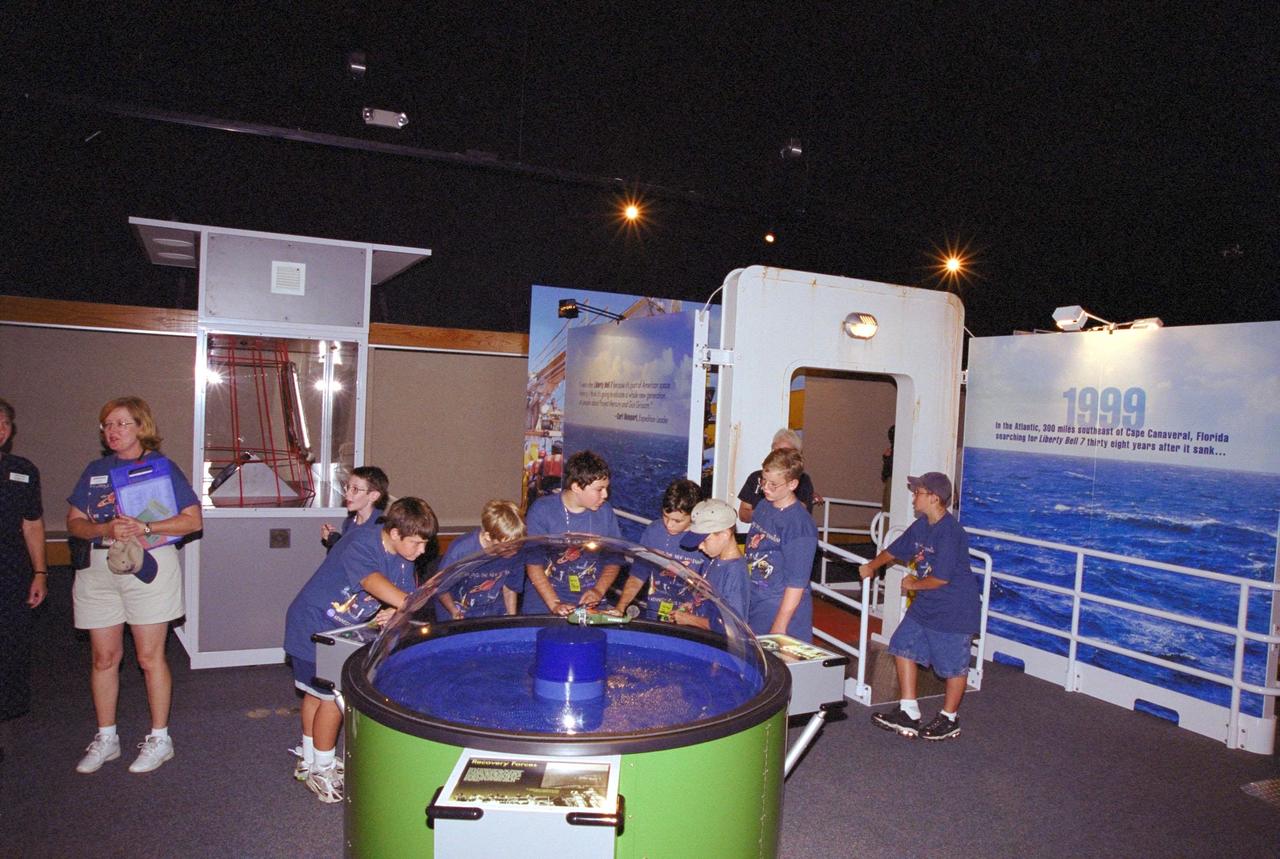
Children on a tour at the KSC Visitor Complex get an early look at the Discovery Channel's Liberty Bell 7 Space Capsule Exhibit, which opens to the public on Saturday, June 17. They are on a re-creation of the deck of Ocean Project, the ship that located and recovered the space capsule from the floor of the Atlantic Ocean. Liberty Bell 7 launched U.S. Air Force Captain Virgil “Gus” Grissom July 21, 1961, on a mission that lasted 15 minutes and 37 seconds before sinking. It lay undetected for nearly four decades before a Discovery Channel expedition located it and recovered it. The space capsule, now restored and preserved, is part of an interactive exhibit touring science centers and museums in 12 cities throughout the United States until 2003. The exhibit also includes hands-on elements such as a capsule simulator, a centrifuge, and ROV pilot
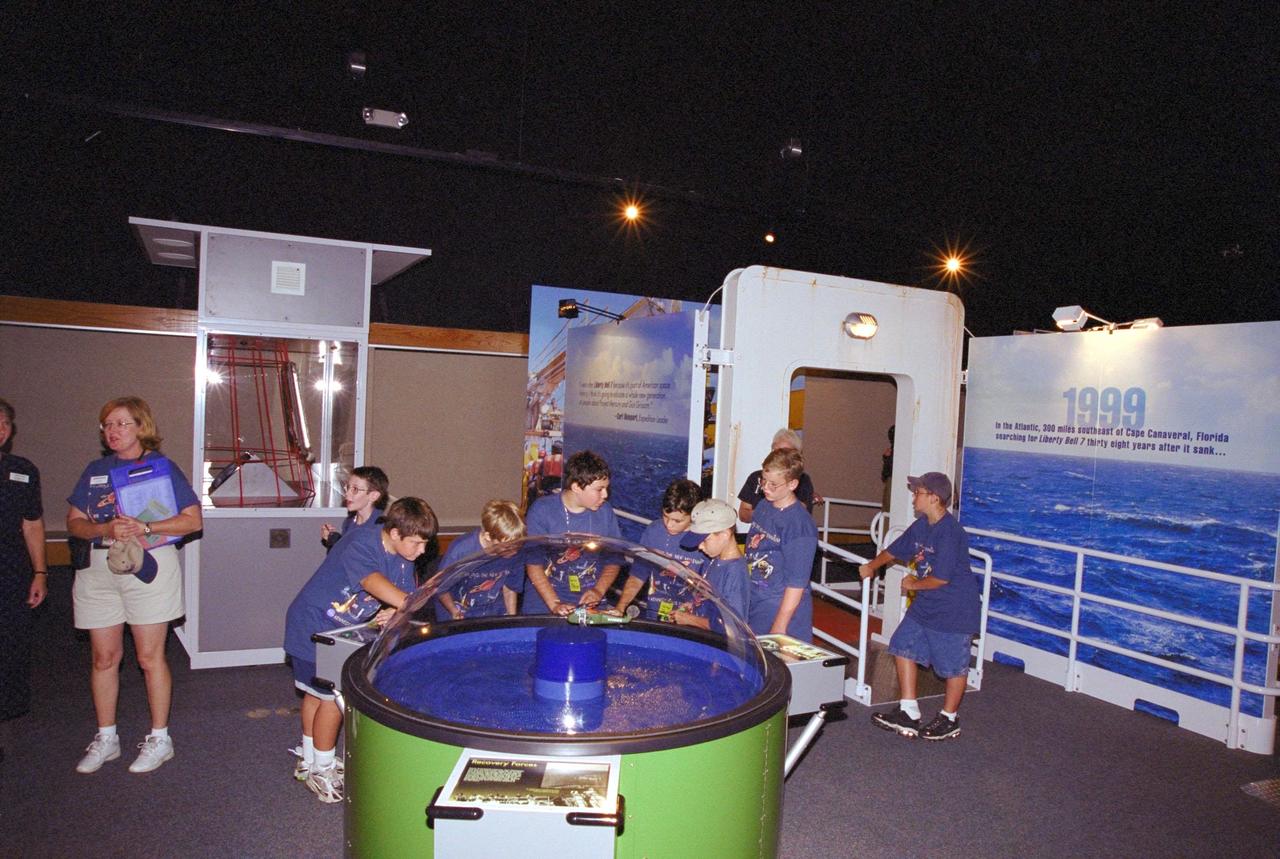
Children on a tour at the KSC Visitor Complex get an early look at the Discovery Channel's Liberty Bell 7 Space Capsule Exhibit, which opens to the public on Saturday, June 17. They are on a re-creation of the deck of Ocean Project, the ship that located and recovered the space capsule from the floor of the Atlantic Ocean. Liberty Bell 7 launched U.S. Air Force Captain Virgil “Gus” Grissom July 21, 1961, on a mission that lasted 15 minutes and 37 seconds before sinking. It lay undetected for nearly four decades before a Discovery Channel expedition located it and recovered it. The space capsule, now restored and preserved, is part of an interactive exhibit touring science centers and museums in 12 cities throughout the United States until 2003. The exhibit also includes hands-on elements such as a capsule simulator, a centrifuge, and ROV pilot
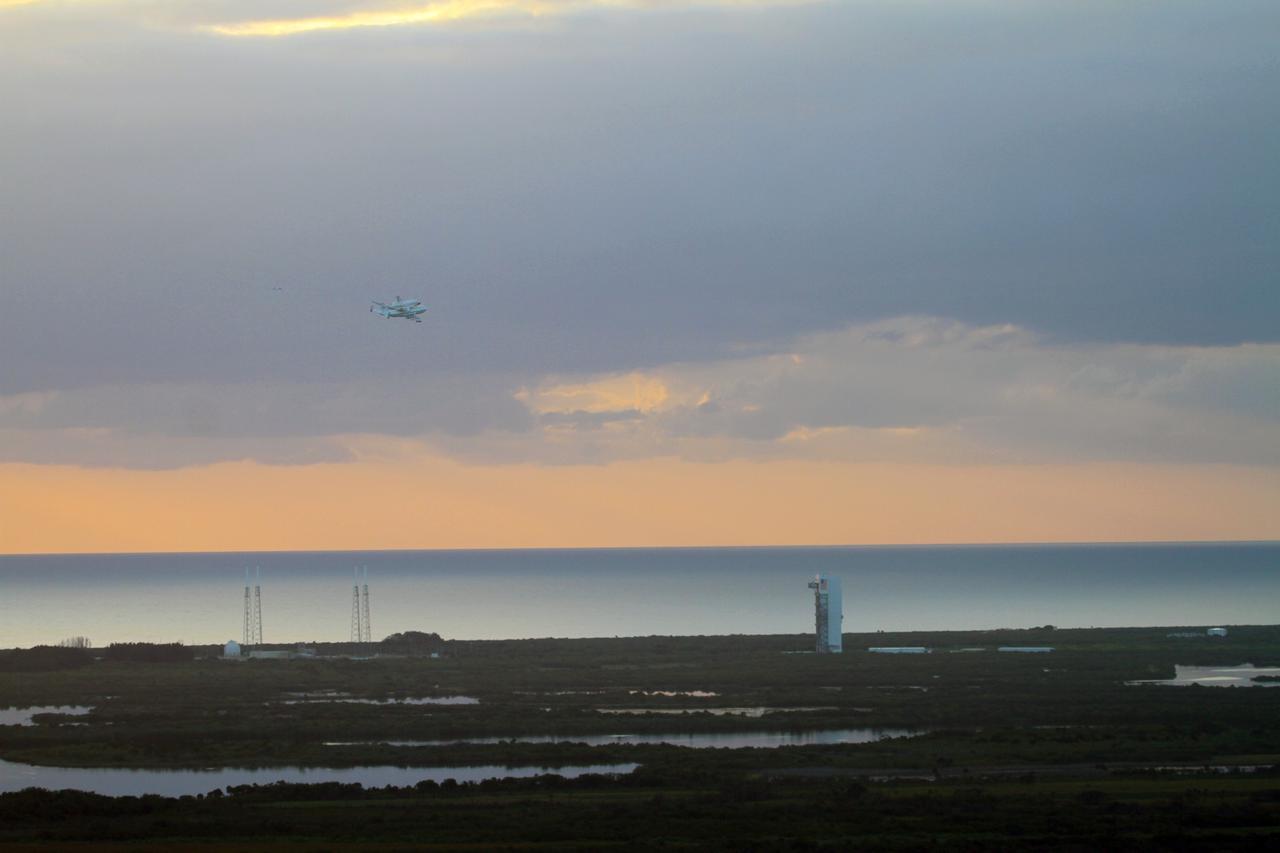
CAPE CANAVERAL, Fla. – The Shuttle Carrier Aircraft transporting space shuttle Discovery flies over the Vertical Integration Facility at Space Launch Complex-41 on Cape Canaveral Air Force Station after taking off from Kennedy Space Center’s Shuttle Landing Facility at 7 a.m. EDT. The duo are heading south to fly over Brevard County’s beach communities, offering residents the opportunity to see the shuttle before it leaves the Space Coast for the last time. The aircraft, known as an SCA, is a Boeing 747 jet, originally manufactured for commercial use, which was modified by NASA to transport the shuttles between destinations on Earth. This SCA, designated NASA 905, is assigned to the remaining ferry missions, delivering the shuttles to their permanent public display sites. NASA 905 is scheduled to ferry Discovery to the Washington Dulles International Airport in Virginia on April 17, after which the shuttle will be placed on display in the Smithsonian's National Air and Space Museum Steven F. Udvar-Hazy Center. For more information on the SCA, visit http://www.nasa.gov/centers/dryden/news/FactSheets/FS-013-DFRC.html. For more information on shuttle transition and retirement activities, visit http://www.nasa.gov/transition. Photo credit: NASA/Lorne Mathre
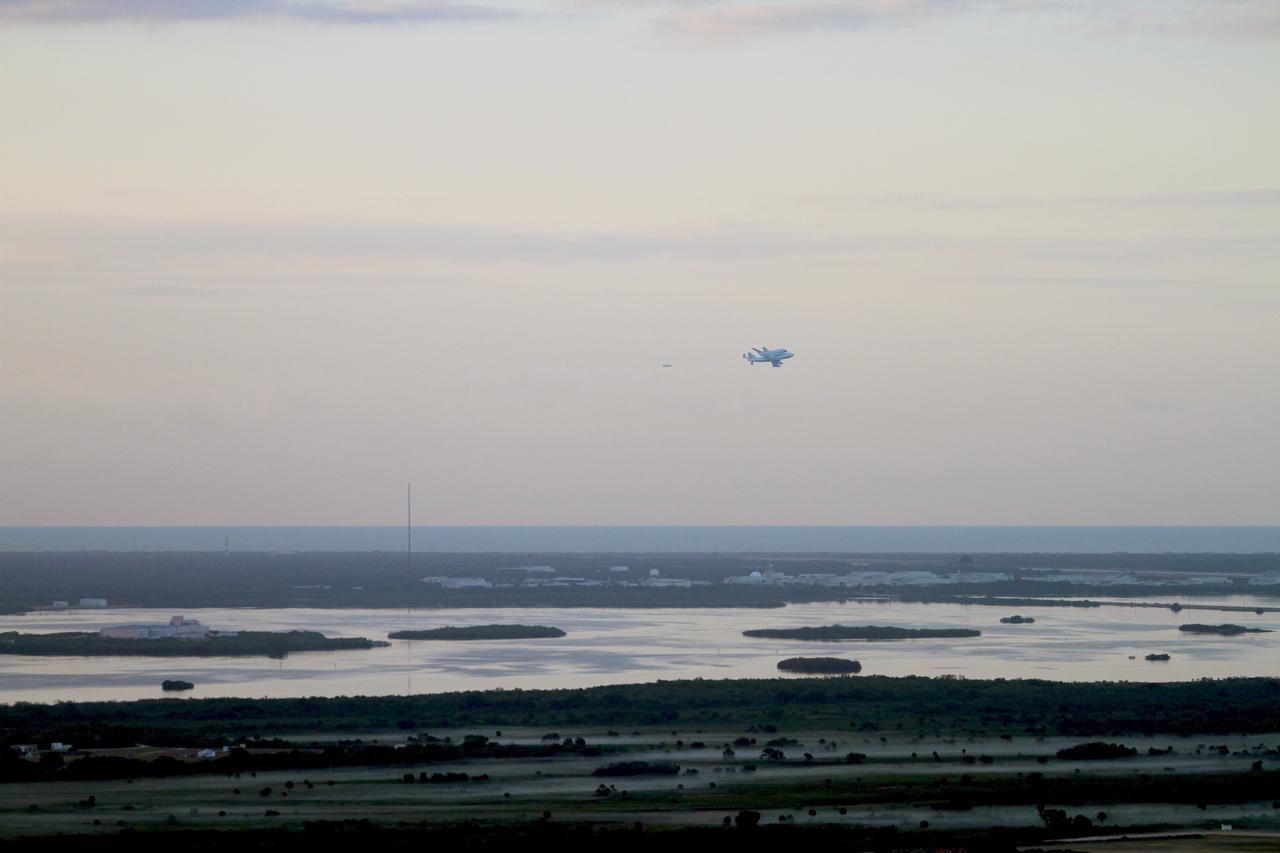
CAPE CANAVERAL, Fla. – The Shuttle Carrier Aircraft transporting space shuttle Discovery flies over the hangars in the Industrial Area on Cape Canaveral Air Force Station after taking off from Kennedy Space Center’s Shuttle Landing Facility at 7 a.m. EDT. The duo are heading south to fly over Brevard County’s beach communities, offering residents the opportunity to see the shuttle before it leaves the Space Coast for the last time. The aircraft, known as an SCA, is a Boeing 747 jet, originally manufactured for commercial use, which was modified by NASA to transport the shuttles between destinations on Earth. This SCA, designated NASA 905, is assigned to the remaining ferry missions, delivering the shuttles to their permanent public display sites. NASA 905 is scheduled to ferry Discovery to the Washington Dulles International Airport in Virginia on April 17, after which the shuttle will be placed on display in the Smithsonian's National Air and Space Museum Steven F. Udvar-Hazy Center. For more information on the SCA, visit http://www.nasa.gov/centers/dryden/news/FactSheets/FS-013-DFRC.html. For more information on shuttle transition and retirement activities, visit http://www.nasa.gov/transition. Photo credit: NASA/Lorne Mathre
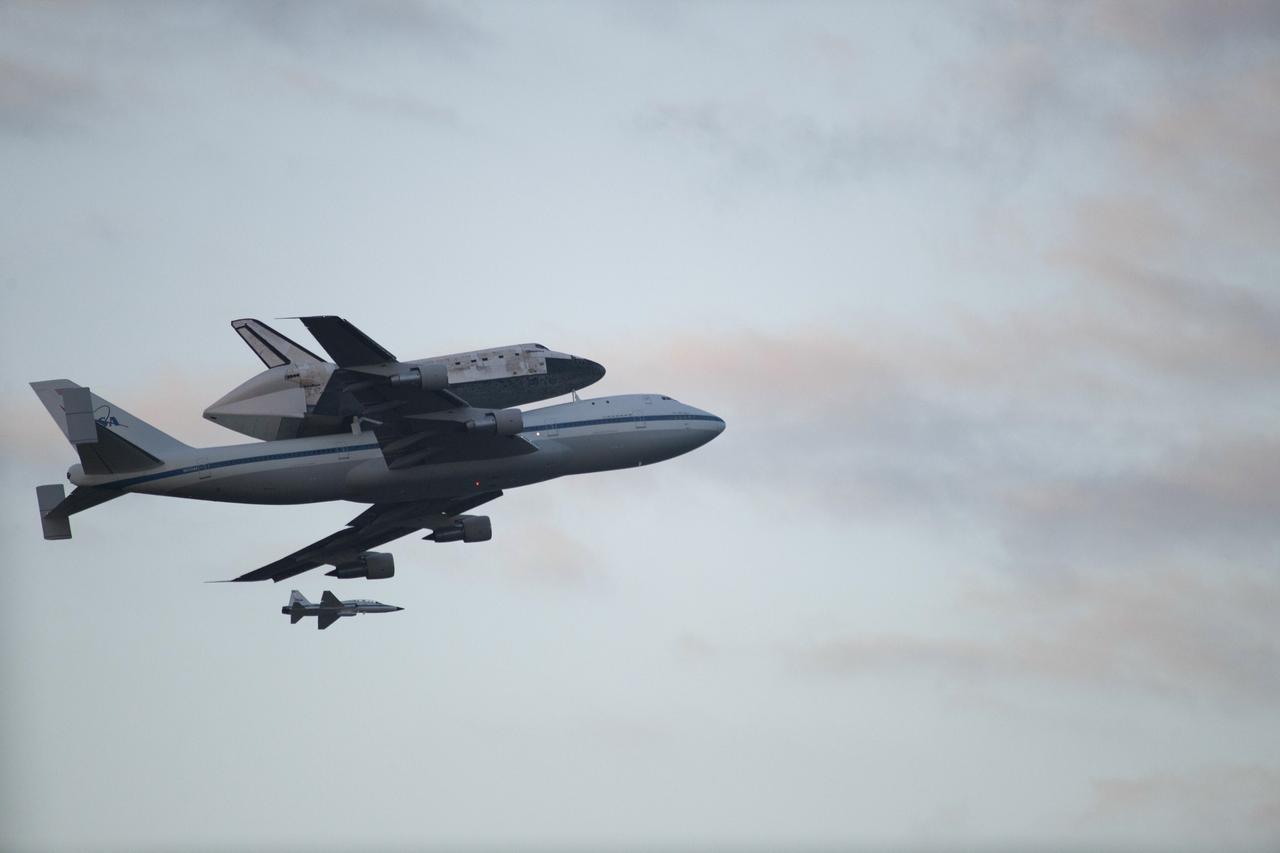
CAPE CANAVERAL, Fla. – Space shuttle Discovery, mounted to a Shuttle Carrier Aircraft, flies over the Shuttle Landing Facility at NASA's Kennedy Space Center in Florida after making a flyby of Cocoa Beach and Patrick Air Force Base. The duo is beginning its ferry flight to the Washington Dulles International Airport in Virginia that also includes a flyby of the Space Coast and Washington, D.C. Also flying along with the pair is a T-38 training jet. Discovery is leaving Kennedy after more than 28 years of service beginning with its arrival on the space coast Nov. 9, 1983. Discovery first launched to space Aug. 30, 1984, on the STS-41D mission. Discovery is the agency's most-flown shuttle with 39 missions, more than 148 million miles and a total of one year in space. Discovery is set to move to the Smithsonian's National Air and Space Museum Steven F. Udvar-Hazy Center on April 19 where it will be placed on public display. For more information on the SCA, visit http://www.nasa.gov/centers/dryden/news/FactSheets/FS-013-DFRC.html. For more information on shuttle transition and retirement activities, visit http://www.nasa.gov/transition. Photo credit: NASA/Kenny Allen
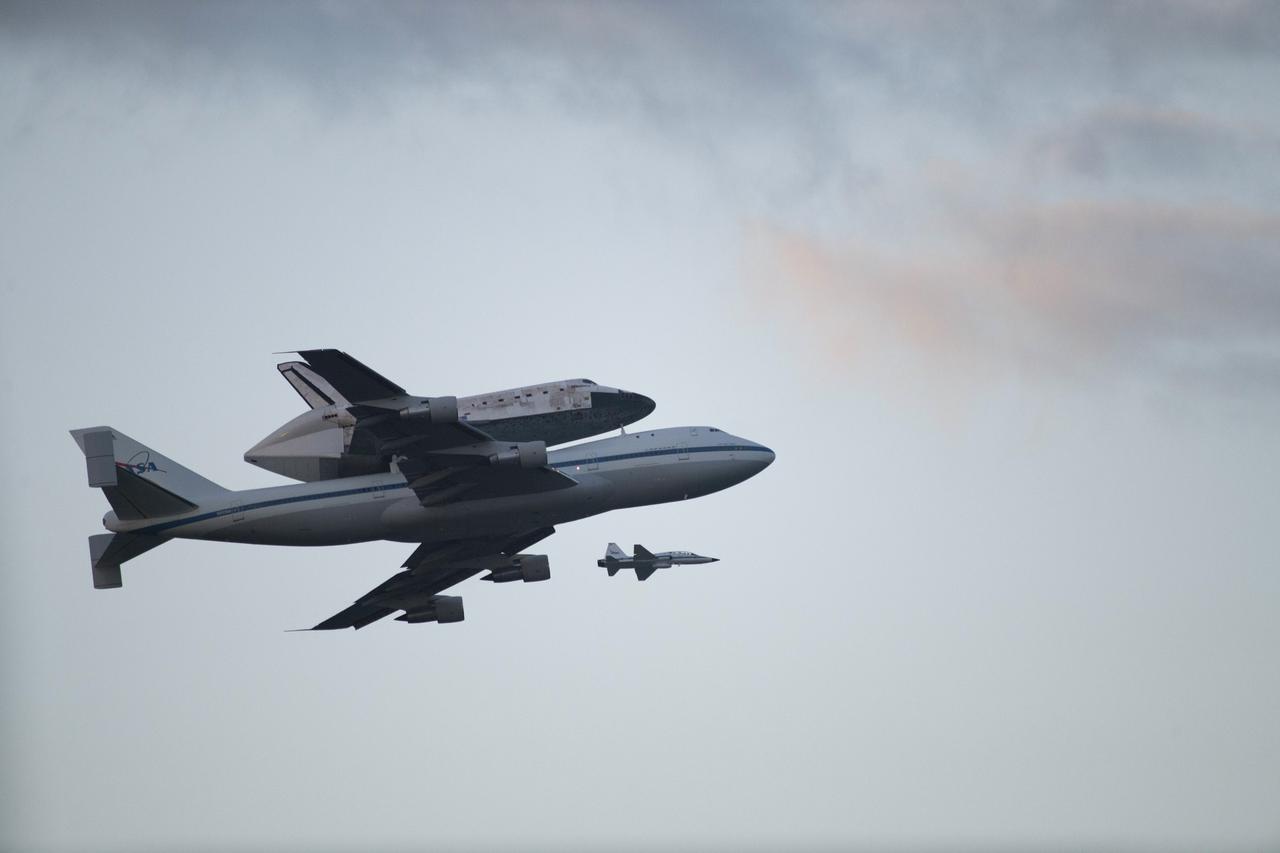
CAPE CANAVERAL, Fla. – Space shuttle Discovery, mounted to a Shuttle Carrier Aircraft, flies over the Shuttle Landing Facility at NASA's Kennedy Space Center in Florida after making a flyby of Cocoa Beach and Patrick Air Force Base. The duo is beginning its ferry flight to the Washington Dulles International Airport in Virginia that also includes a flyby of the Space Coast and Washington, D.C. Also flying along with the pair is a T-38 training jet. Discovery is leaving Kennedy after more than 28 years of service beginning with its arrival on the space coast Nov. 9, 1983. Discovery first launched to space Aug. 30, 1984, on the STS-41D mission. Discovery is the agency's most-flown shuttle with 39 missions, more than 148 million miles and a total of one year in space. Discovery is set to move to the Smithsonian's National Air and Space Museum Steven F. Udvar-Hazy Center on April 19 where it will be placed on public display. For more information on the SCA, visit http://www.nasa.gov/centers/dryden/news/FactSheets/FS-013-DFRC.html. For more information on shuttle transition and retirement activities, visit http://www.nasa.gov/transition. Photo credit: NASA/Kenny Allen

CAPE CANAVERAL, Fla. – The Shuttle Carrier Aircraft transporting space shuttle Discovery flies over the hangars in the Industrial Area toward Space Launch Complex-17 on Cape Canaveral Air Force Station after taking off from NASA Kennedy Space Center’s Shuttle Landing Facility at 7 a.m. EDT. The duo are heading south to fly over Brevard County’s beach communities, offering residents the opportunity to see the shuttle before it leaves the Space Coast for the last time. The aircraft, known as an SCA, is a Boeing 747 jet, originally manufactured for commercial use, which was modified by NASA to transport the shuttles between destinations on Earth. This SCA, designated NASA 905, is assigned to the remaining ferry missions, delivering the shuttles to their permanent public display sites. NASA 905 is scheduled to ferry Discovery to the Washington Dulles International Airport in Virginia on April 17, after which the shuttle will be placed on display in the Smithsonian's National Air and Space Museum Steven F. Udvar-Hazy Center. For more information on the SCA, visit http://www.nasa.gov/centers/dryden/news/FactSheets/FS-013-DFRC.html. For more information on shuttle transition and retirement activities, visit http://www.nasa.gov/transition. Photo credit: NASA/Lorne Mathre
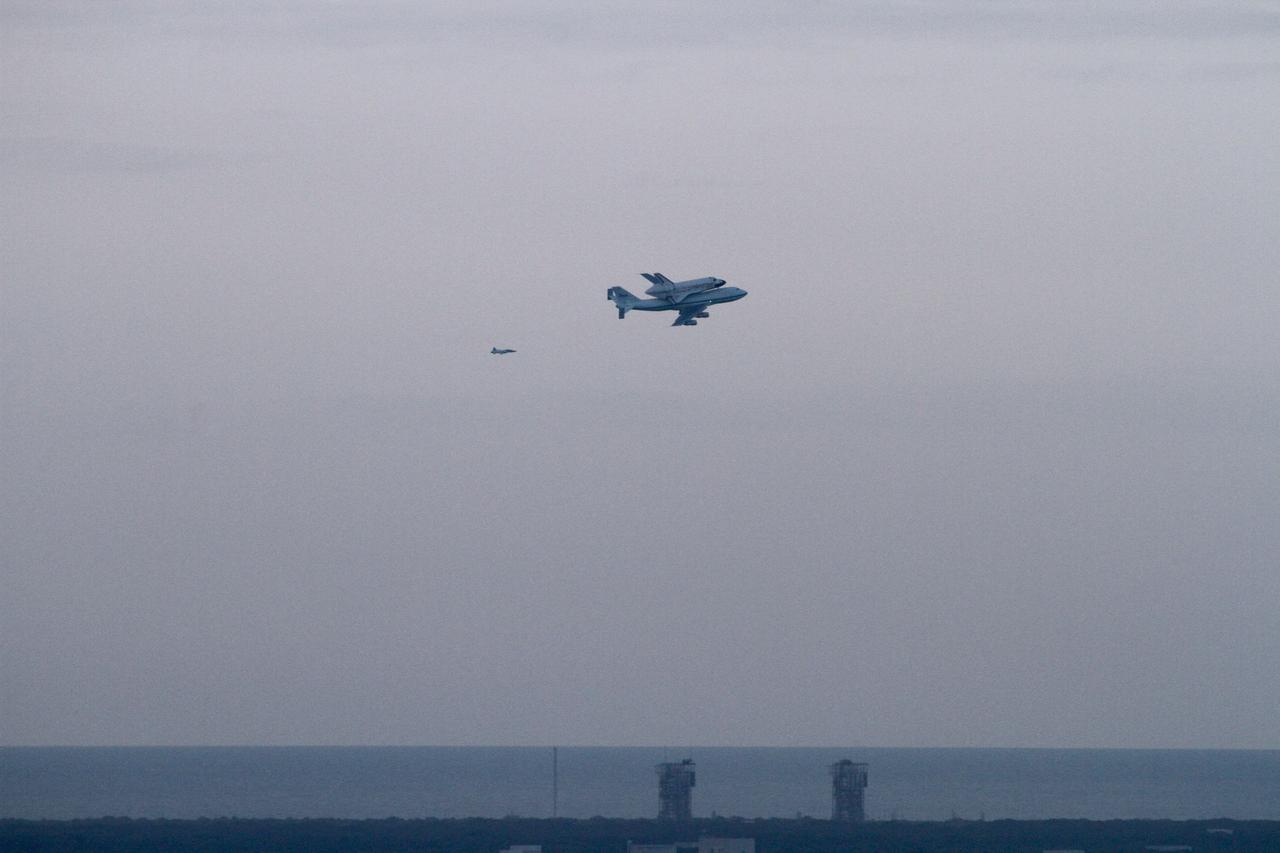
CAPE CANAVERAL, Fla. – The Shuttle Carrier Aircraft transporting space shuttle Discovery and its companion T-38 jet fly over Space Launch Complex-17 on Cape Canaveral Air Force Station after taking off from NASA Kennedy Space Center’s Shuttle Landing Facility at 7 a.m. EDT. The duo are heading south to fly over Brevard County’s beach communities, offering residents the opportunity to see the shuttle before it leaves the Space Coast for the last time. The aircraft, known as an SCA, is a Boeing 747 jet, originally manufactured for commercial use, which was modified by NASA to transport the shuttles between destinations on Earth. This SCA, designated NASA 905, is assigned to the remaining ferry missions, delivering the shuttles to their permanent public display sites. NASA 905 is scheduled to ferry Discovery to the Washington Dulles International Airport in Virginia on April 17, after which the shuttle will be placed on display in the Smithsonian's National Air and Space Museum Steven F. Udvar-Hazy Center. For more information on the SCA, visit http://www.nasa.gov/centers/dryden/news/FactSheets/FS-013-DFRC.html. For more information on shuttle transition and retirement activities, visit http://www.nasa.gov/transition. Photo credit: NASA/Lorne Mathre
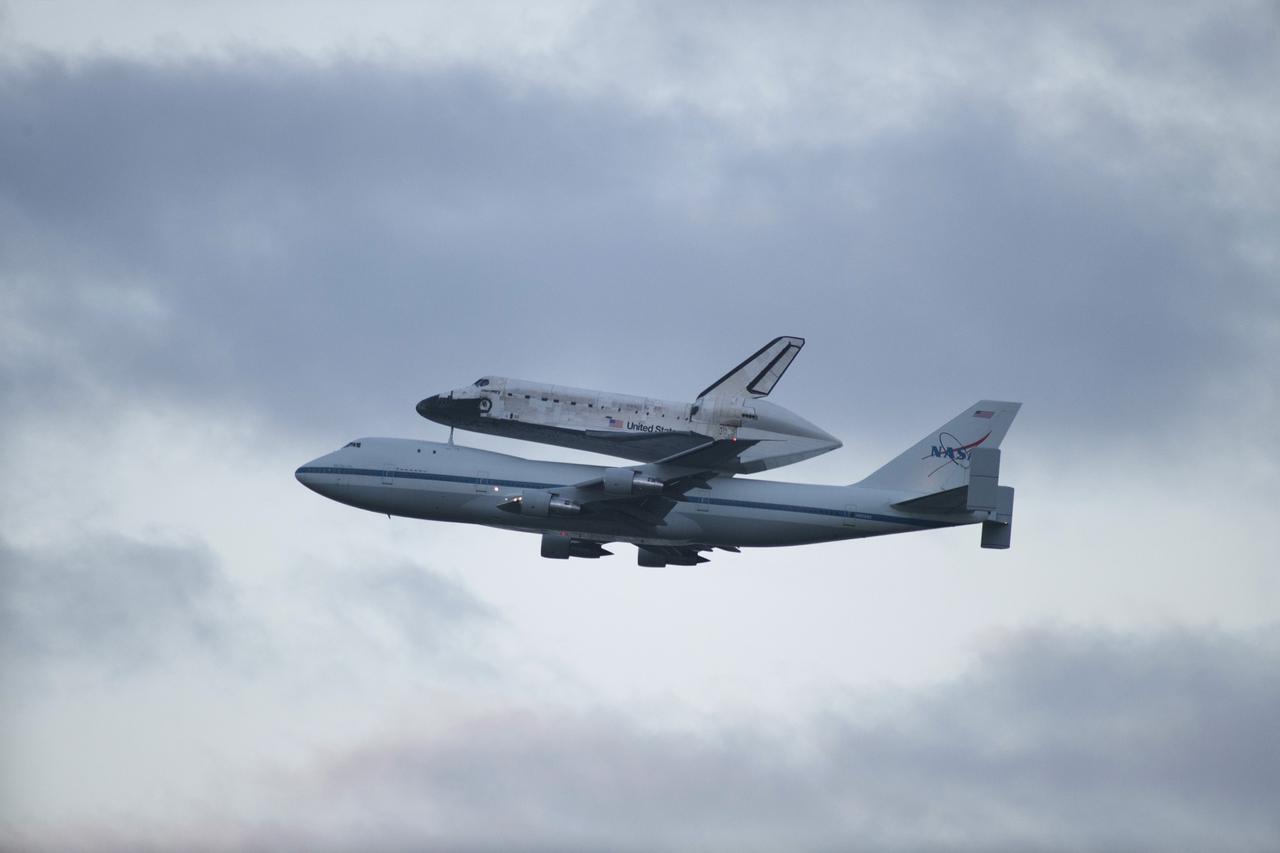
CAPE CANAVERAL, Fla. – Space shuttle Discovery, mounted to a Shuttle Carrier Aircraft, flies toward Cocoa Beach and Patrick Air Force Base after taking off from the Shuttle Landing Facility at NASA's Kennedy Space Center in Florida. The duo is beginning its ferry flight to the Washington Dulles International Airport in Virginia that also includes a flyby of the Space Coast and Washington, D.C. Discovery is leaving Kennedy after more than 28 years of service beginning with its arrival on the space coast Nov. 9, 1983. Discovery first launched to space Aug. 30, 1984, on the STS-41D mission. Discovery is the agency's most-flown shuttle with 39 missions, more than 148 million miles and a total of one year in space. Discovery is set to move to the Smithsonian's National Air and Space Museum Steven F. Udvar-Hazy Center on April 19 where it will be placed on public display. For more information on the SCA, visit http://www.nasa.gov/centers/dryden/news/FactSheets/FS-013-DFRC.html. For more information on shuttle transition and retirement activities, visit http://www.nasa.gov/transition. Photo credit: NASA/Kenny Allen
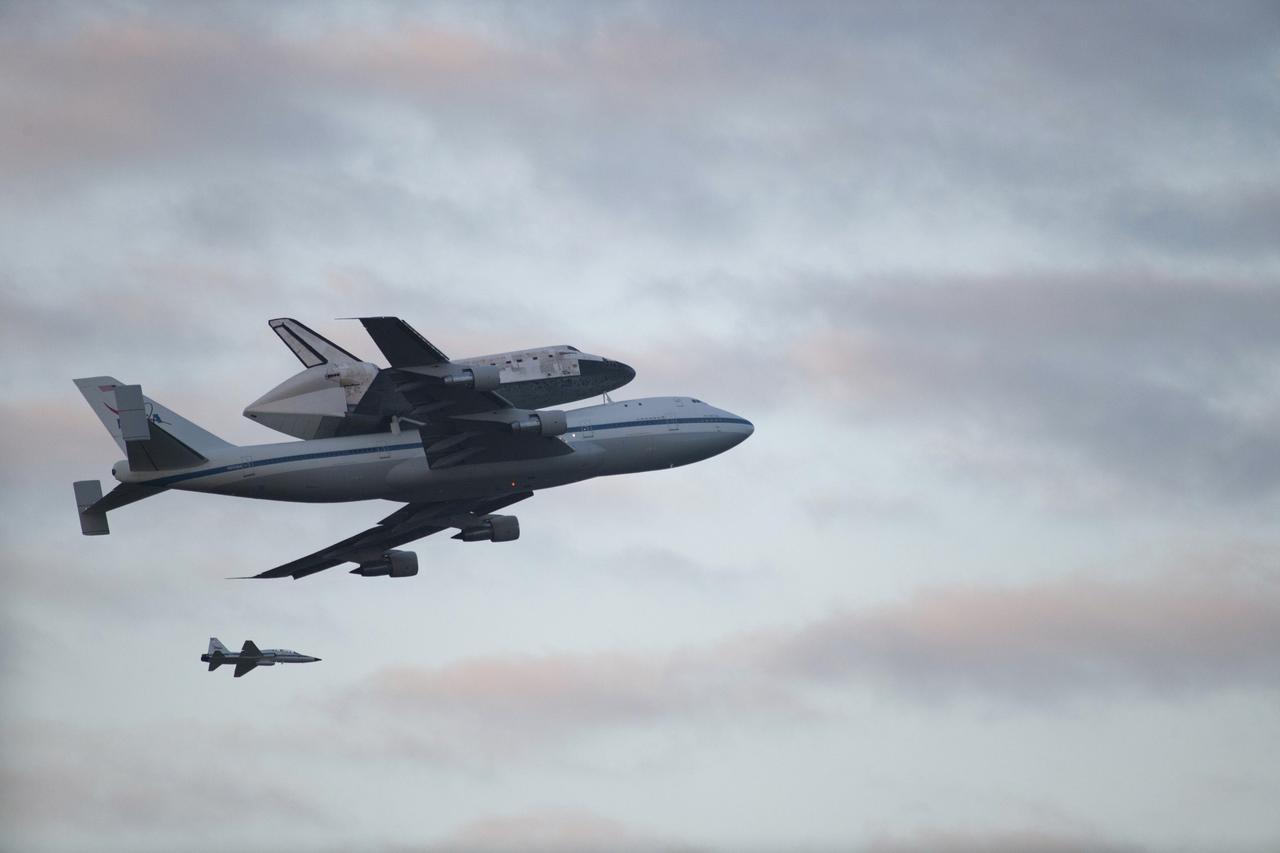
CAPE CANAVERAL, Fla. – Space shuttle Discovery, mounted to a Shuttle Carrier Aircraft, flies over the Shuttle Landing Facility at NASA's Kennedy Space Center in Florida after making a flyby of Cocoa Beach and Patrick Air Force Base. The duo is beginning its ferry flight to the Washington Dulles International Airport in Virginia that also includes a flyby of the Space Coast and Washington, D.C. Also flying along with the pair is a T-38 training jet. Discovery is leaving Kennedy after more than 28 years of service beginning with its arrival on the space coast Nov. 9, 1983. Discovery first launched to space Aug. 30, 1984, on the STS-41D mission. Discovery is the agency's most-flown shuttle with 39 missions, more than 148 million miles and a total of one year in space. Discovery is set to move to the Smithsonian's National Air and Space Museum Steven F. Udvar-Hazy Center on April 19 where it will be placed on public display. For more information on the SCA, visit http://www.nasa.gov/centers/dryden/news/FactSheets/FS-013-DFRC.html. For more information on shuttle transition and retirement activities, visit http://www.nasa.gov/transition. Photo credit: NASA/Kenny Allen
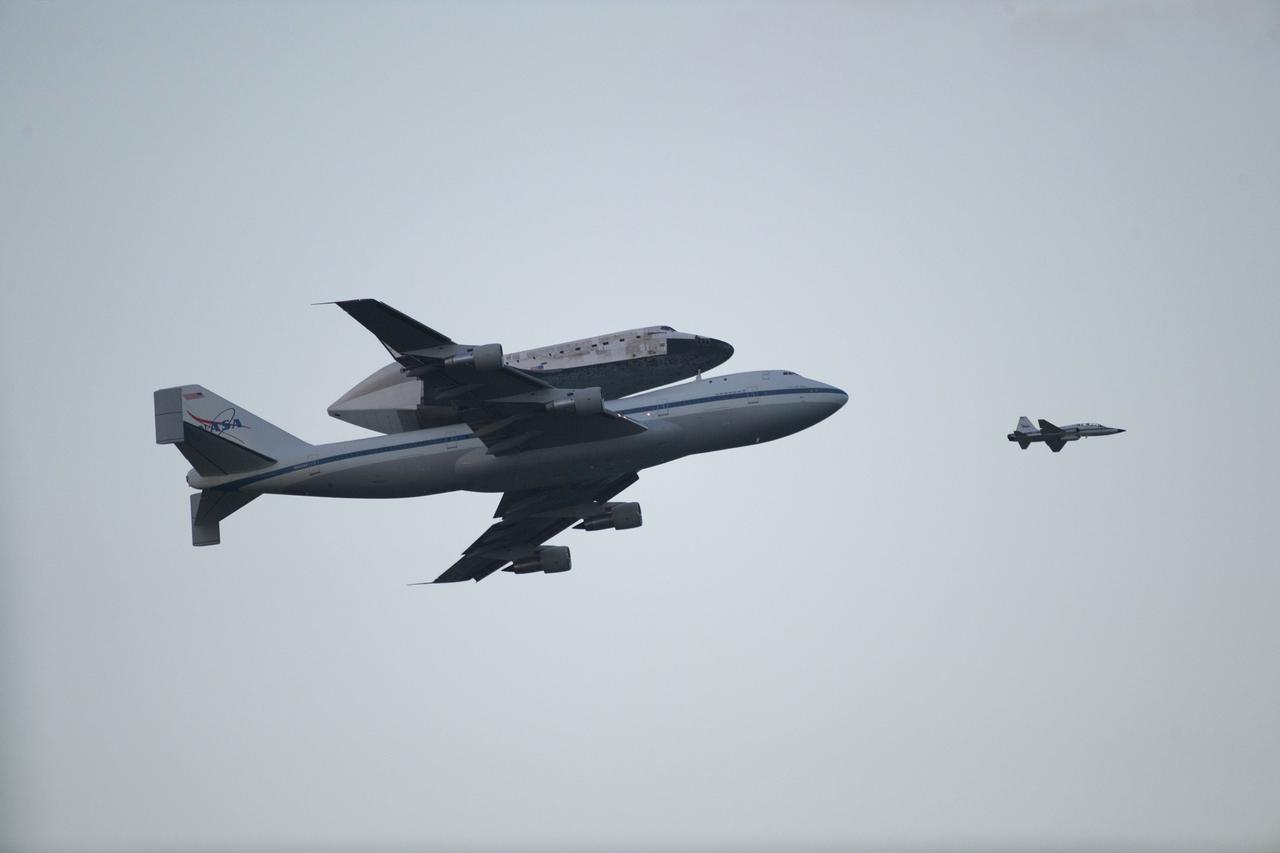
CAPE CANAVERAL, Fla. – Space shuttle Discovery, mounted to a Shuttle Carrier Aircraft, flies over the Shuttle Landing Facility at NASA's Kennedy Space Center in Florida after making a flyby of Cocoa Beach and Patrick Air Force Base. The duo is beginning its ferry flight to the Washington Dulles International Airport in Virginia that also includes a flyby of the Space Coast and Washington, D.C. Also flying along with the pair is a T-38 training jet. Discovery is leaving Kennedy after more than 28 years of service beginning with its arrival on the space coast Nov. 9, 1983. Discovery first launched to space Aug. 30, 1984, on the STS-41D mission. Discovery is the agency's most-flown shuttle with 39 missions, more than 148 million miles and a total of one year in space. Discovery is set to move to the Smithsonian's National Air and Space Museum Steven F. Udvar-Hazy Center on April 19 where it will be placed on public display. For more information on the SCA, visit http://www.nasa.gov/centers/dryden/news/FactSheets/FS-013-DFRC.html. For more information on shuttle transition and retirement activities, visit http://www.nasa.gov/transition. Photo credit: NASA/Kenny Allen
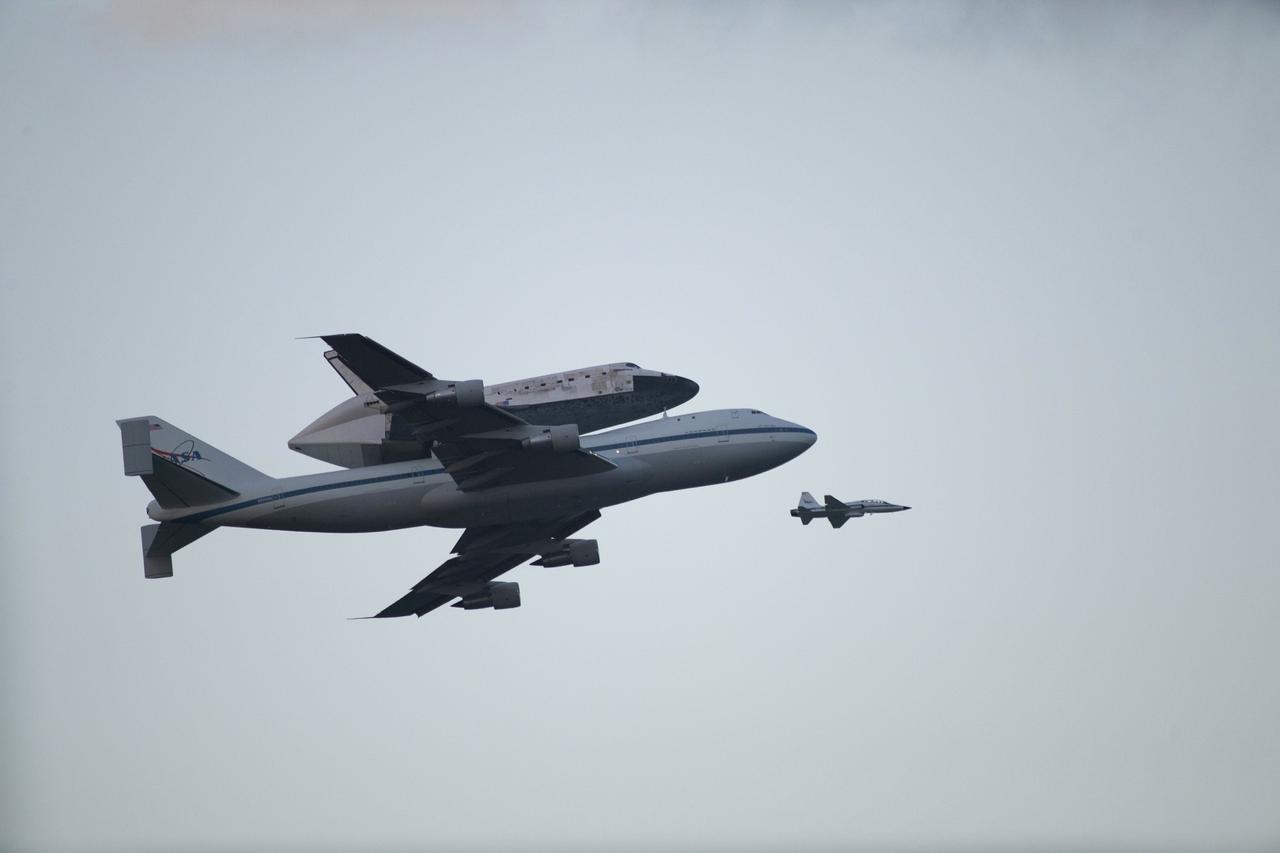
CAPE CANAVERAL, Fla. – Space shuttle Discovery, mounted to a Shuttle Carrier Aircraft, flies over the Shuttle Landing Facility at NASA's Kennedy Space Center in Florida after making a flyby of Cocoa Beach and Patrick Air Force Base. The duo is beginning its ferry flight to the Washington Dulles International Airport in Virginia that also includes a flyby of the Space Coast and Washington, D.C. Also flying along with the pair is a T-38 training jet. Discovery is leaving Kennedy after more than 28 years of service beginning with its arrival on the space coast Nov. 9, 1983. Discovery first launched to space Aug. 30, 1984, on the STS-41D mission. Discovery is the agency's most-flown shuttle with 39 missions, more than 148 million miles and a total of one year in space. Discovery is set to move to the Smithsonian's National Air and Space Museum Steven F. Udvar-Hazy Center on April 19 where it will be placed on public display. For more information on the SCA, visit http://www.nasa.gov/centers/dryden/news/FactSheets/FS-013-DFRC.html. For more information on shuttle transition and retirement activities, visit http://www.nasa.gov/transition. Photo credit: NASA/Kenny Allen
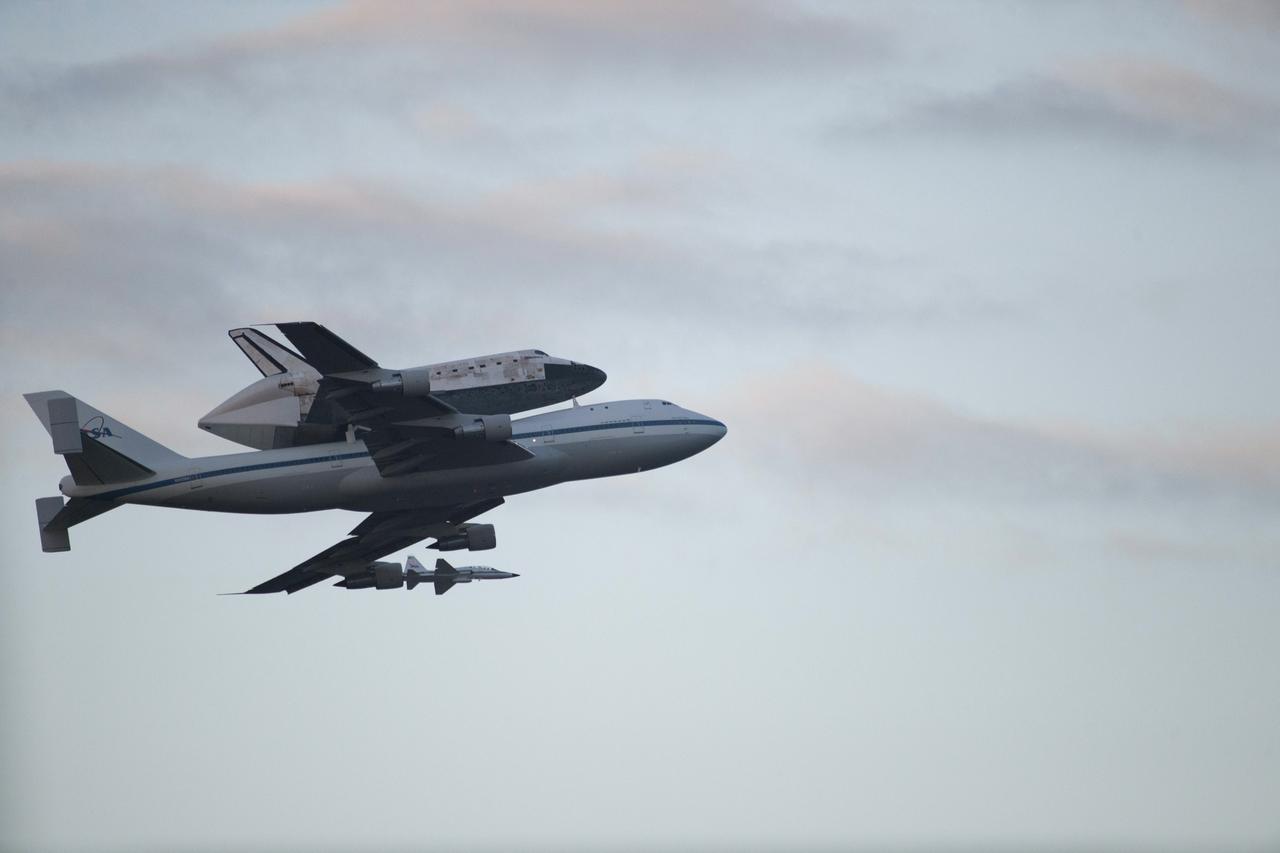
CAPE CANAVERAL, Fla. – Space shuttle Discovery, mounted to a Shuttle Carrier Aircraft, flies over the Shuttle Landing Facility at NASA's Kennedy Space Center in Florida after making a flyby of Cocoa Beach and Patrick Air Force Base. The duo is beginning its ferry flight to the Washington Dulles International Airport in Virginia that also includes a flyby of the Space Coast and Washington, D.C. Also flying along with the pair is a T-38 training jet. Discovery is leaving Kennedy after more than 28 years of service beginning with its arrival on the space coast Nov. 9, 1983. Discovery first launched to space Aug. 30, 1984, on the STS-41D mission. Discovery is the agency's most-flown shuttle with 39 missions, more than 148 million miles and a total of one year in space. Discovery is set to move to the Smithsonian's National Air and Space Museum Steven F. Udvar-Hazy Center on April 19 where it will be placed on public display. For more information on the SCA, visit http://www.nasa.gov/centers/dryden/news/FactSheets/FS-013-DFRC.html. For more information on shuttle transition and retirement activities, visit http://www.nasa.gov/transition. Photo credit: NASA/Kenny Allen
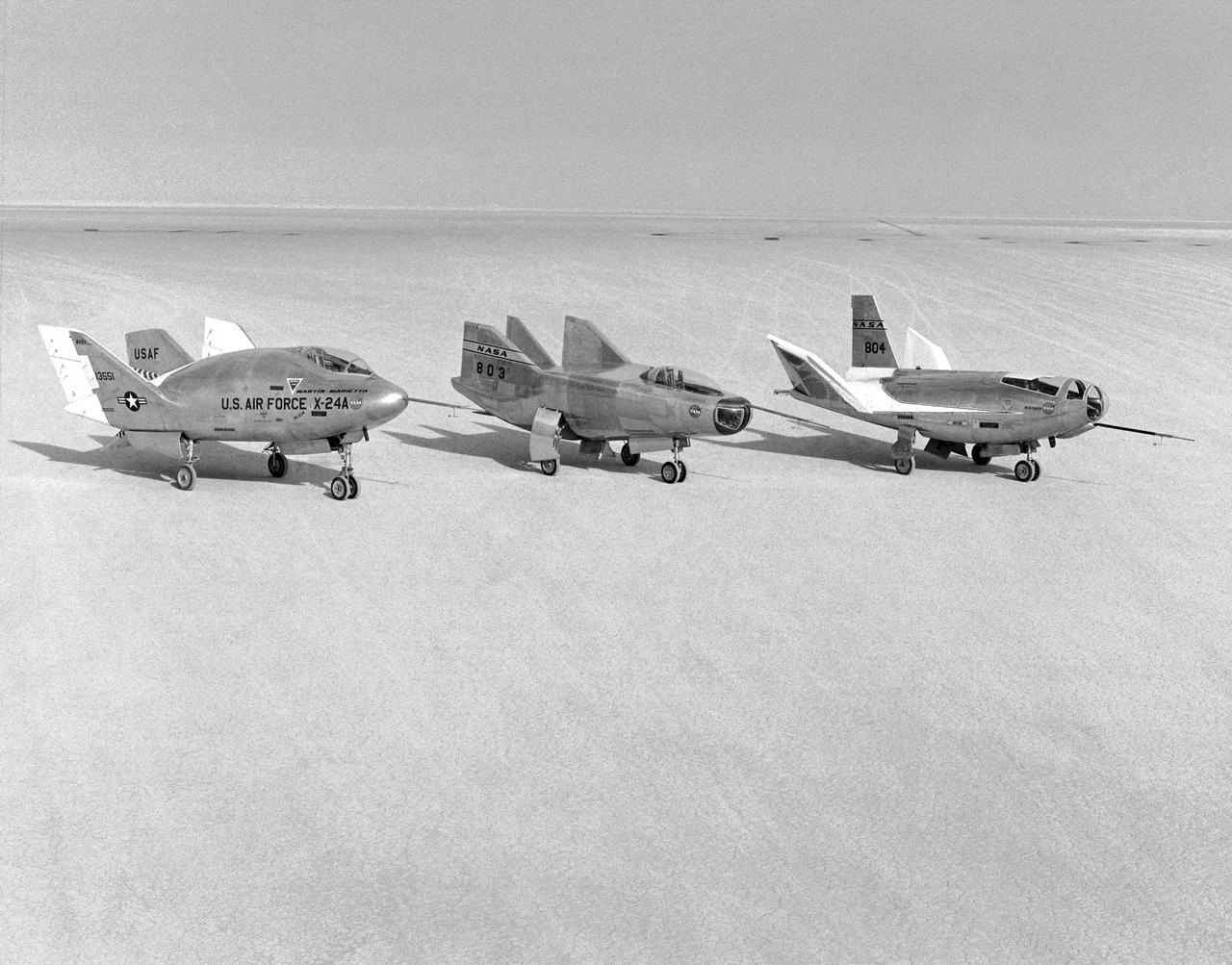
The wingless, lifting body aircraft sitting on Rogers Dry Lake at what is now NASA's Dryden Flight Research Center, Edwards, California, from left to right are the X-24A, M2-F3 and the HL-10. The lifting body aircraft studied the feasibility of maneuvering and landing an aerodynamic craft designed for reentry from space. These lifting bodies were air launched by a B-52 mother ship, then flew powered by their own rocket engines before making an unpowered approach and landing. They helped validate the concept that a space shuttle could make accurate landings without power. The X-24A flew from April 17, 1969 to June 4, 1971. The M2-F3 flew from June 2, 1970 until December 20, 1972. The HL-10 flew from December 22, 1966 until July 17, 1970 and logged the highest and fastest records in the lifting body program.
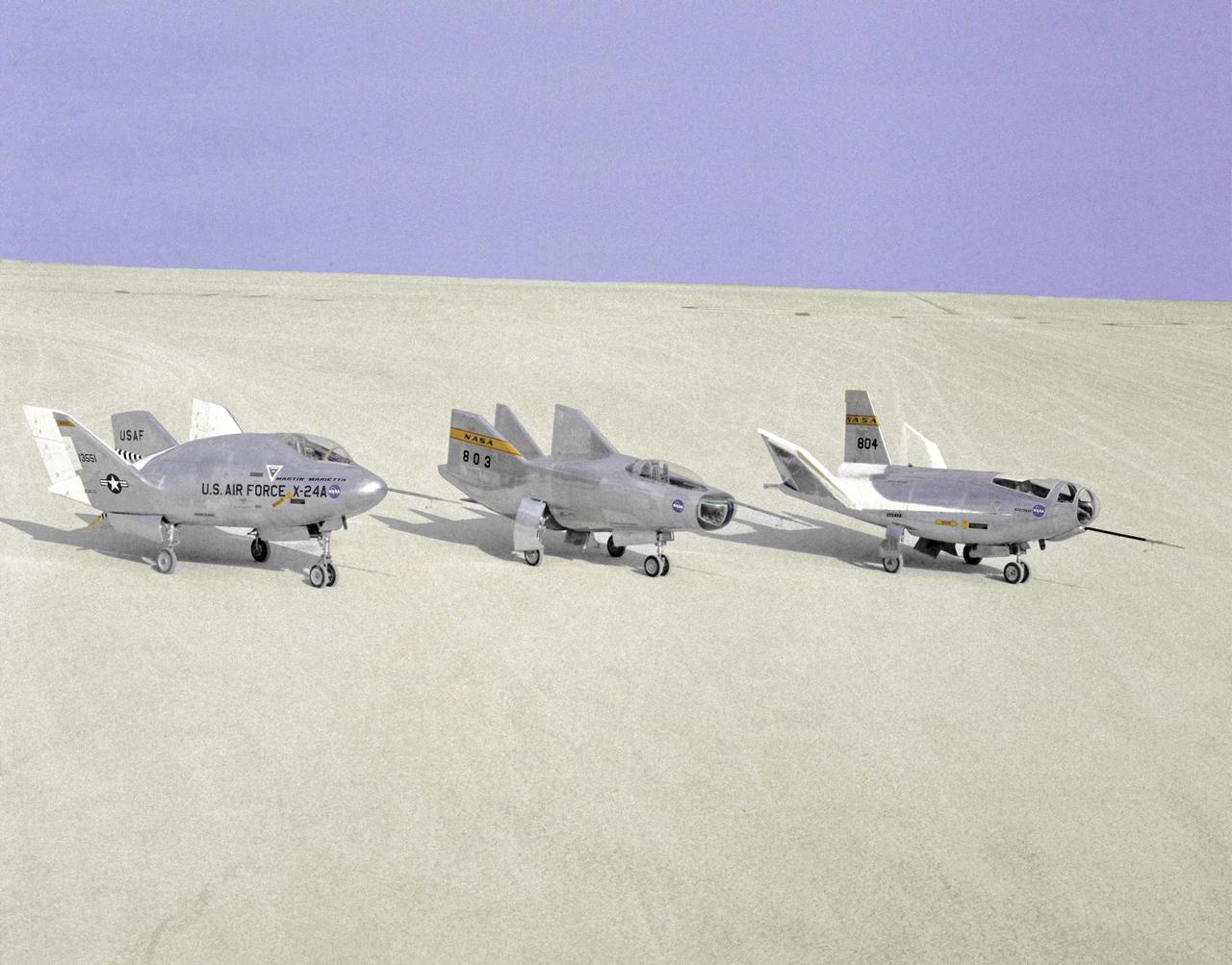
The wingless, lifting body aircraft sitting on Rogers Dry Lake at what is now NASA's Dryden Flight Research Center, Edwards, California, from left to right are the X-24A, M2-F3 and the HL-10. The lifting body aircraft studied the feasibility of maneuvering and landing an aerodynamic craft designed for reentry from space. These lifting bodies were air launched by a B-52 mother ship, then flew powered by their own rocket engines before making an unpowered approach and landing. They helped validate the concept that a space shuttle could make accurate landings without power. The X-24A flew from April 17, 1969 to June 4, 1971. The M2-F3 flew from June 2, 1970 until December 21, 1971. The HL-10 flew from December 22, 1966 until July 17, 1970, and logged the highest and fastest records in the lifting body program.
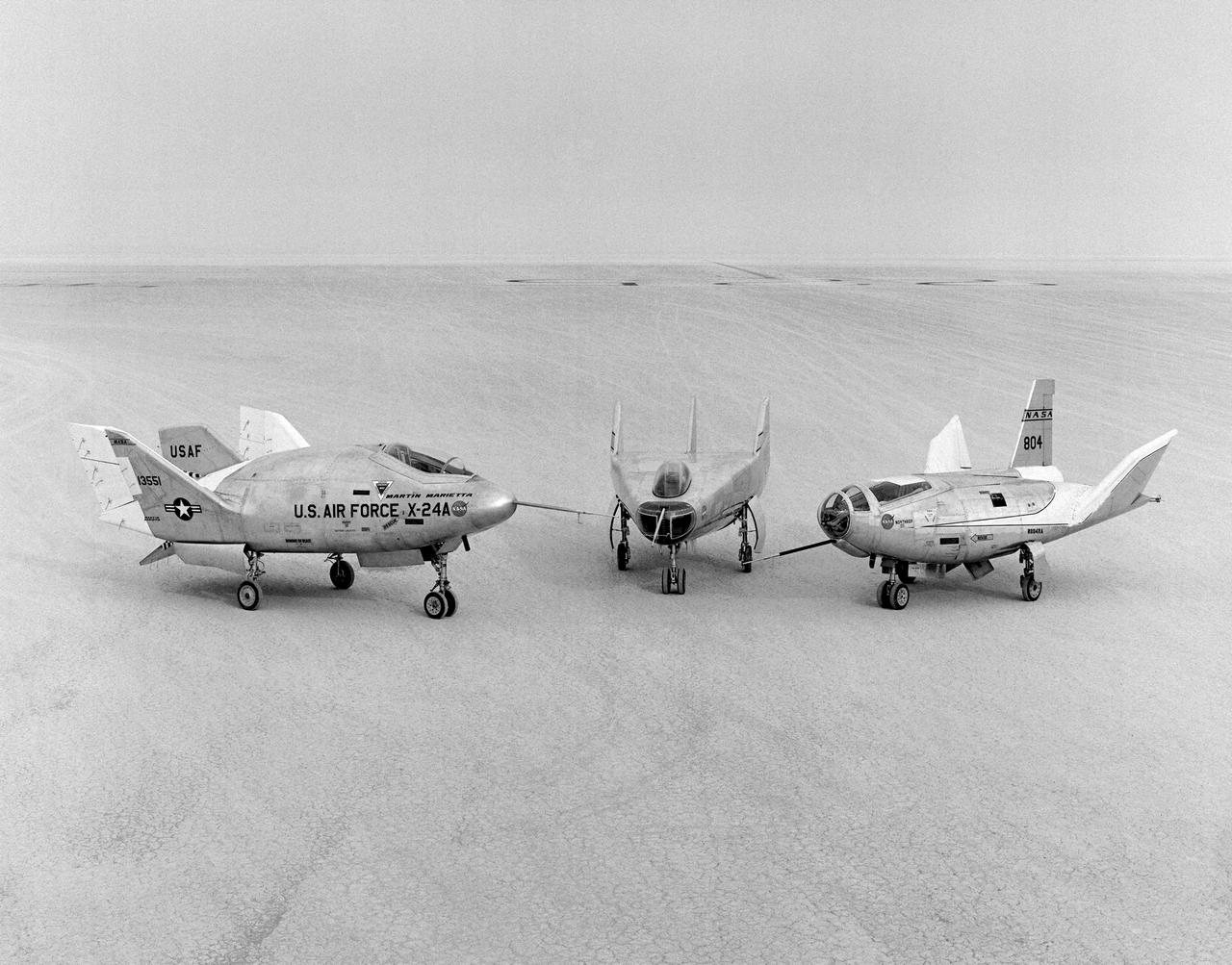
The wingless, lifting body aircraft sitting on Rogers Dry Lake at what is now NASA's Dryden Flight Research Center, Edwards, California, from left to right are the X-24A, M2-F3 and the HL-10. The lifting body aircraft studied the feasibility of maneuvering and landing an aerodynamic craft designed for reentry from space. These lifting bodies were air launched by a B-52 mother ship, then flew powered by their own rocket engines before making an unpowered approach and landing. They helped validate the concept that a space shuttle could make accurate landings without power. The X-24A flew from April 17, 1969 to June 4, 1971. The M2-F3 flew from June 2, 1970 until December 20, 1972. The HL-10 flew from December 22, 1966 until July 17, 1970 and logged the highest and fastest records in the lifting body program.
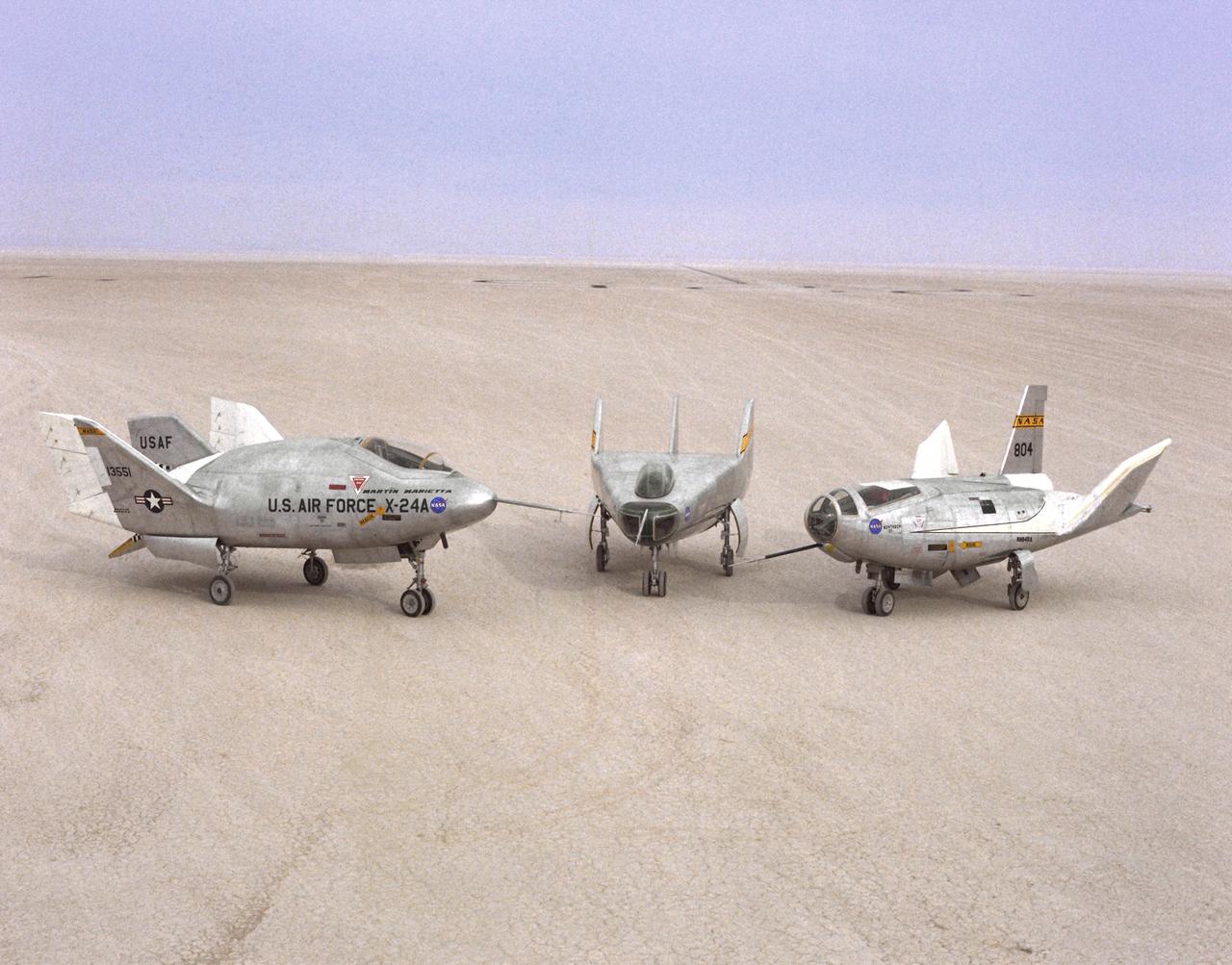
The wingless, lifting body aircraft sitting on Rogers Dry Lake at what is now NASA's Dryden Flight Research Center, Edwards, California, from left to right are the X-24A, M2-F3 and the HL-10. The lifting body aircraft studied the feasibility of maneuvering and landing an aerodynamic craft designed for reentry from space. These lifting bodies were air launched by a B-52 mother ship, then flew powered by their own rocket engines before making an unpowered approach and landing. They helped validate the concept that a space shuttle could make accurate landings without power. The X-24A flew from April 17, 1969 to June 4, 1971. The M2-F3 flew from June 2, 1970 until December 22, 1972. The HL-10 flew from December 22, 1966 until July 17, 1970, and logged the highest and fastest records in the lifting body program.
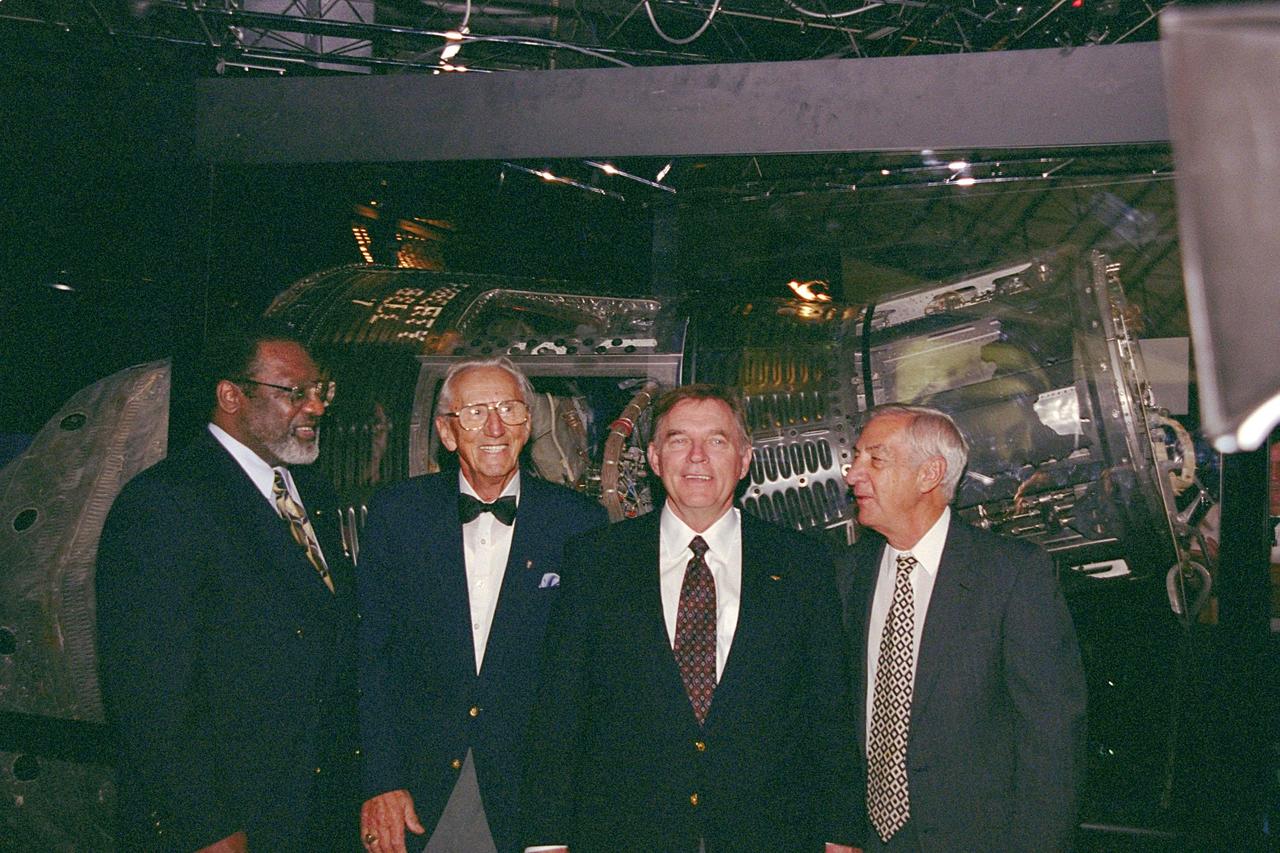
The Discovery Channel’s Liberty Bell 7 Space Capsule Exhibit, which opens to the public at the KSC Visitor Complex on Saturday, June 17, had a preview for the press today. Liberty Bell 7 launched U.S. Air Force Captain Virgil "Gus" Grissom July 21, 1961, on a mission that lasted 15 minutes and 37 seconds before sinking. The capsule lay undetected for nearly four decades before a Discovery Channel expedition located it and recovered it. Standing in front of the restored Liberty Bell 7 capsule are (left to right) KSC’s Deputy Director Jim Jennings; Gunther Wendt, who worked on the Liberty Bell 7 before its launch; Jim Lewis, who piloted the Hunt Club 1 helicopter that rescued Gus Grissom; and Larry Grissom, brother of Gus Grissom. The space capsule, now restored and preserved, is part of an interactive exhibit touring science centers and museums in 12 cities throughout the United States until 2003. The exhibit also includes hands-on elements such as a capsule simulator, a centrifuge, and ROV pilot
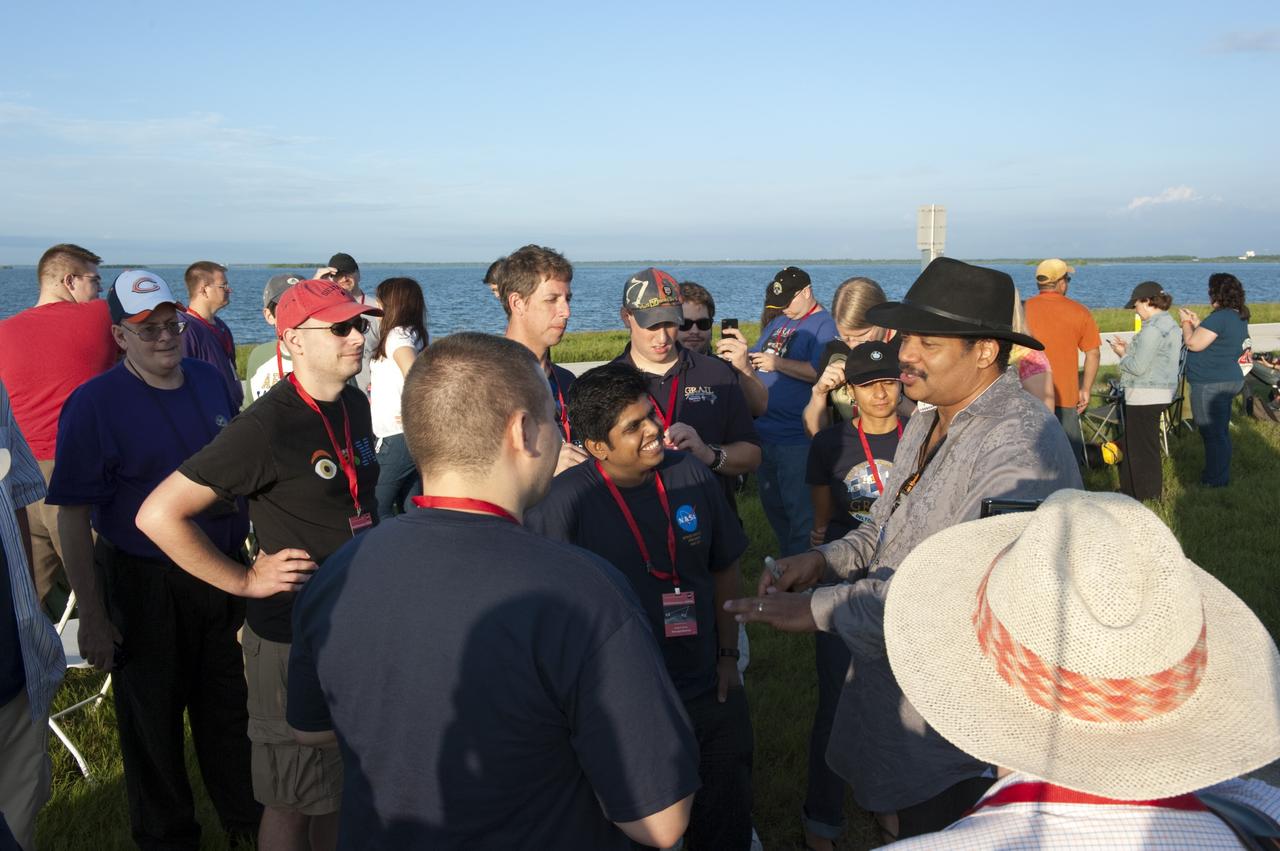
CAPE CANAVERAL, Fla. – Astrophysicist Dr. Neil deGrasse Tyson with the American Museum of Natural History’s Hayden Planetarium in New York, speaks to a group of Tweetup participants at NASA Kennedy Space Center’s NASA Causeway launch viewing site in Florida during prelaunch activities for the agency’s Gravity Recovery and Interior Laboratory (GRAIL) mission. Participants toured the center and got a close-up view of Space Launch Complex 17B at Cape Canaveral Air Force Station. The tweeters will share their experiences with followers through the social networking site Twitter.GRAIL will fly twin spacecraft in tandem around the moon to precisely measure and map variations in the moon’s gravitational field. The mission will provide the most accurate global gravity field to date for any planet, including Earth. This detailed information will reveal differences in the density of the moon’s crust and mantle and will help answer fundamental questions about the moon’s internal structure, thermal evolution, and history of collisions with asteroids. The aim is to map the moon’s gravity field so completely that future lunar vehicles can safely navigate anywhere on the moon’s surface. Launch is scheduled for 8:37:06 a.m. EDT Sept. 8. For more information, visit http://www.nasa.gov/grail. Photo credit: NASA/Kim Shiflett
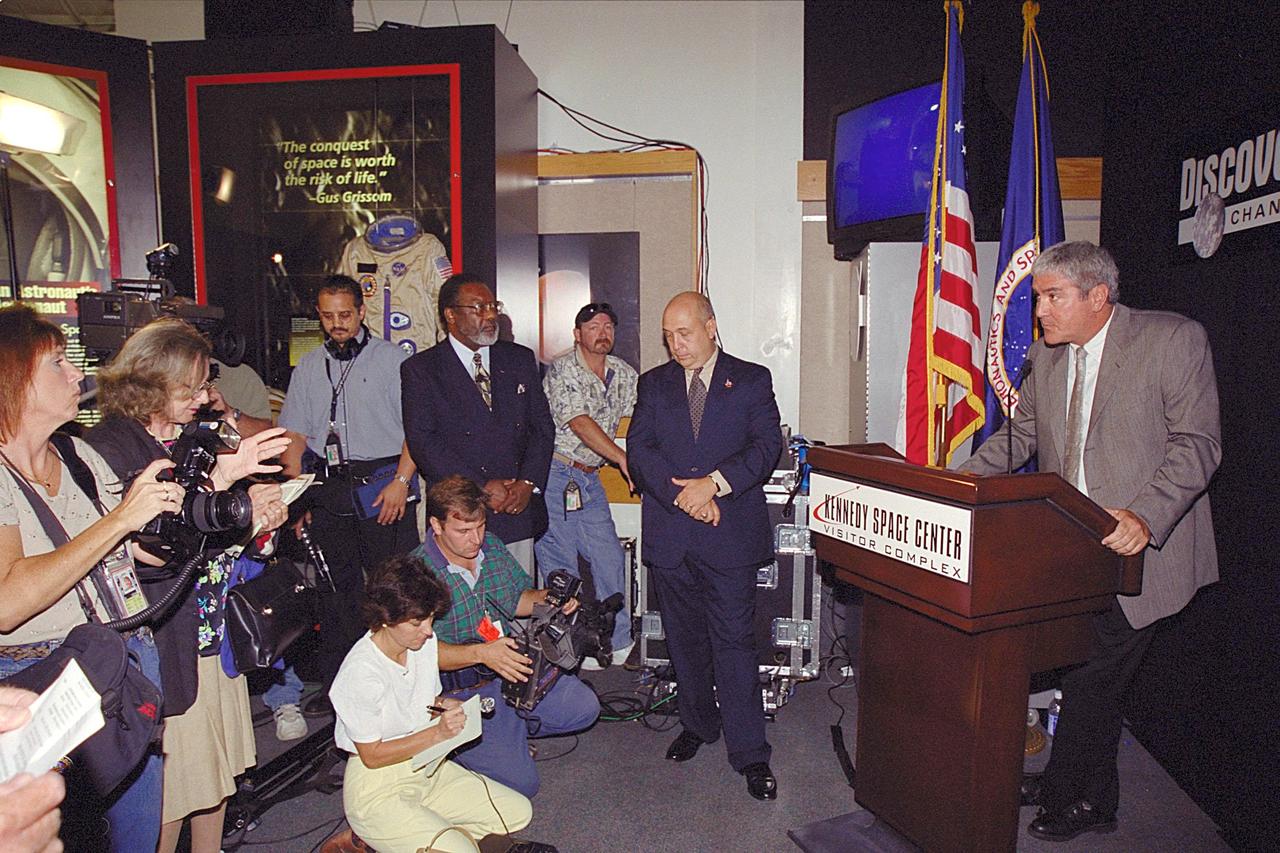
Media gather at the KSC Visitor Complex for the kickoff of the Discovery Channel's Liberty Bell 7 Space Capsule Exhibit, which will open to the public on Saturday, June 17. At the podium is Mike Quattrone, executive vice president and general manager, Discovery Channel.; Standing to the left of the podium is Rick Abramson, president and chief operating officer of Delaware North Parks Services of Spaceport, Inc., and far left, Jim Jennings, deputy director of Kennedy Space Center.; Liberty Bell 7 launched U.S. Air Force Captain Virgil “Gus” Grissom July 21, 1961 on a mission that lasted 15 minutes and 37 seconds before sinking to the floor of the Atlantic Ocean, three miles deep. It lay undetected for nearly four decades before a Discovery Channel expedition located it and recovered it. The space capsule is now restored and preserved, and part of an interactive exhibit touring science centers and museums in 12 cities throughout the United States until 2003. The exhibit includes hands-on elements such as a capsule simulator, a centrifuge, and ROV pilot
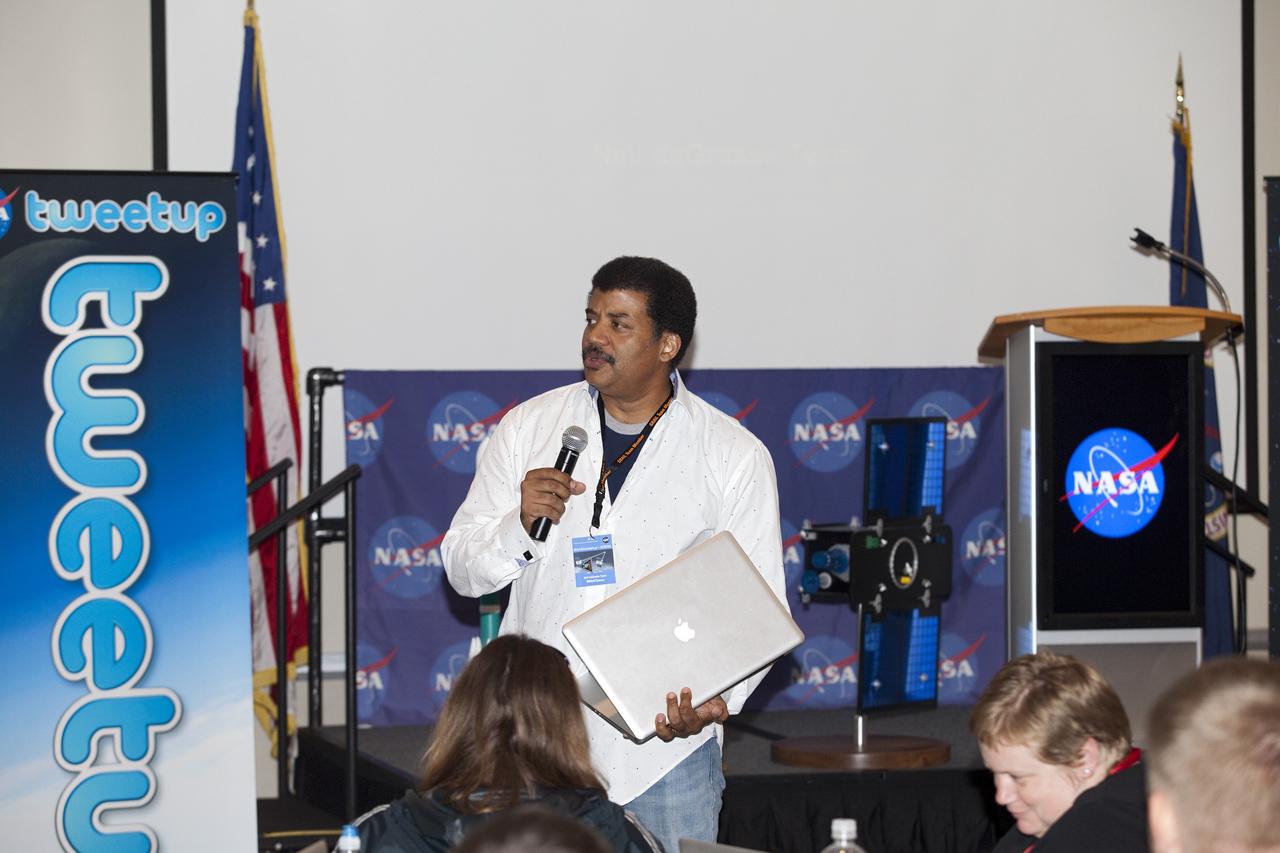
CAPE CANAVERAL, Fla. – Astrophysicist Dr. Neil deGrasse Tyson with the American Museum of Natural History’s Hayden Planetarium in New York, speaks to a group of Tweetup participants at the Kennedy Space Center Visitor Complex in Florida during prelaunch activities for the agency’s Gravity Recovery and Interior Laboratory (GRAIL) mission. Participants toured NASA’s Kennedy Space Center and got a close-up view of Space Launch Complex 17B at Cape Canaveral Air Force Station. The tweeters will share their experiences with followers through the social networking site Twitter. GRAIL will fly twin spacecraft in tandem around the moon to precisely measure and map variations in the moon’s gravitational field. The mission will provide the most accurate global gravity field to date for any planet, including Earth. This detailed information will reveal differences in the density of the moon’s crust and mantle and will help answer fundamental questions about the moon’s internal structure, thermal evolution, and history of collisions with asteroids. The aim is to map the moon’s gravity field so completely that future lunar vehicles can safely navigate anywhere on the moon’s surface. Launch is scheduled for 8:37:06 a.m. EDT Sept. 8. For more information, visit http://www.nasa.gov/grail. Photo credit: NASA/Gianni Woods
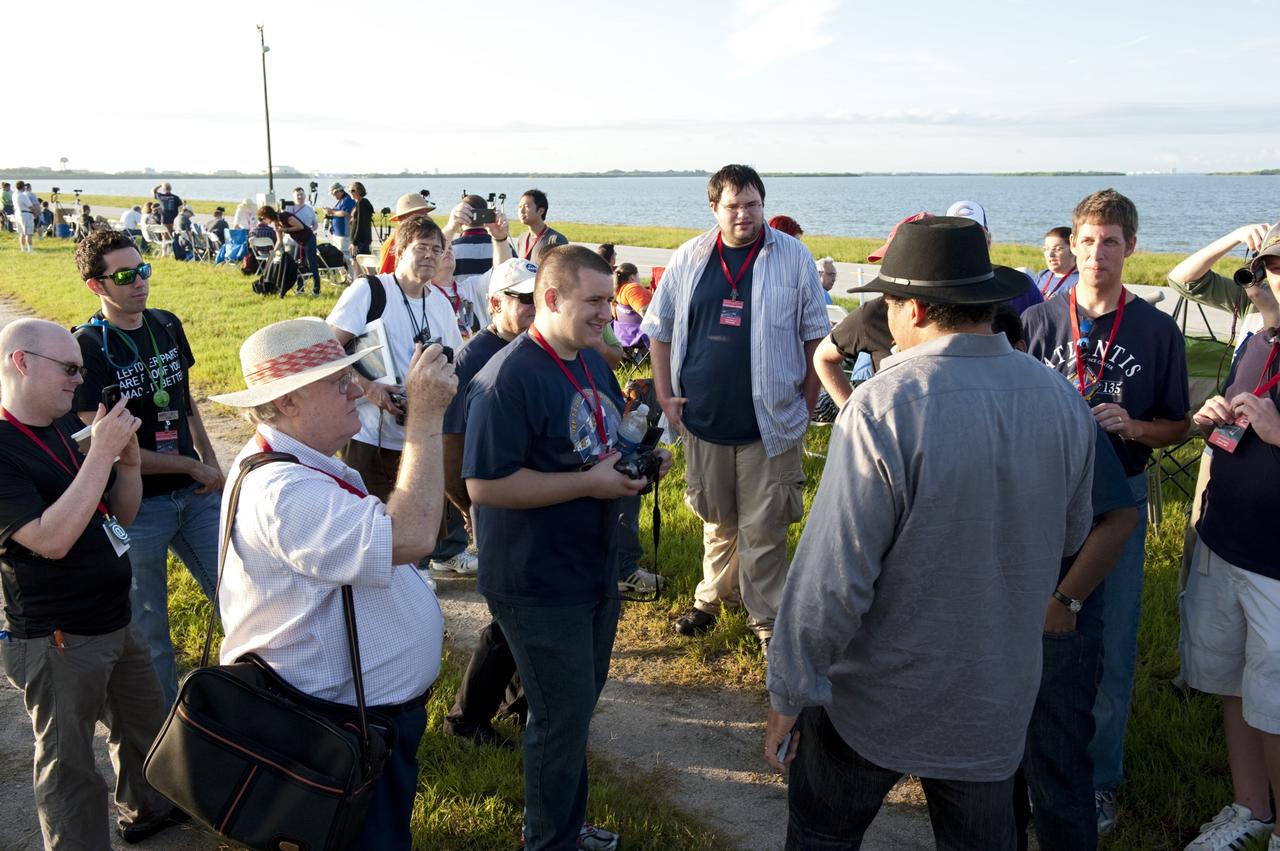
CAPE CANAVERAL, Fla. – Astrophysicist Dr. Neil deGrasse Tyson with the American Museum of Natural History’s Hayden Planetarium in New York, speaks to a group of Tweetup participants at NASA Kennedy Space Center’s NASA Causeway launch viewing site in Florida during prelaunch activities for the agency’s Gravity Recovery and Interior Laboratory (GRAIL) mission. Participants toured the center and got a close-up view of Space Launch Complex 17B at Cape Canaveral Air Force Station. The tweeters will share their experiences with followers through the social networking site Twitter. GRAIL will fly twin spacecraft in tandem around the moon to precisely measure and map variations in the moon’s gravitational field. The mission will provide the most accurate global gravity field to date for any planet, including Earth. This detailed information will reveal differences in the density of the moon’s crust and mantle and will help answer fundamental questions about the moon’s internal structure, thermal evolution, and history of collisions with asteroids. The aim is to map the moon’s gravity field so completely that future lunar vehicles can safely navigate anywhere on the moon’s surface. Launch is scheduled for 8:37:06 a.m. EDT Sept. 8. For more information, visit http://www.nasa.gov/grail. Photo credit: NASA/Kim Shiflett
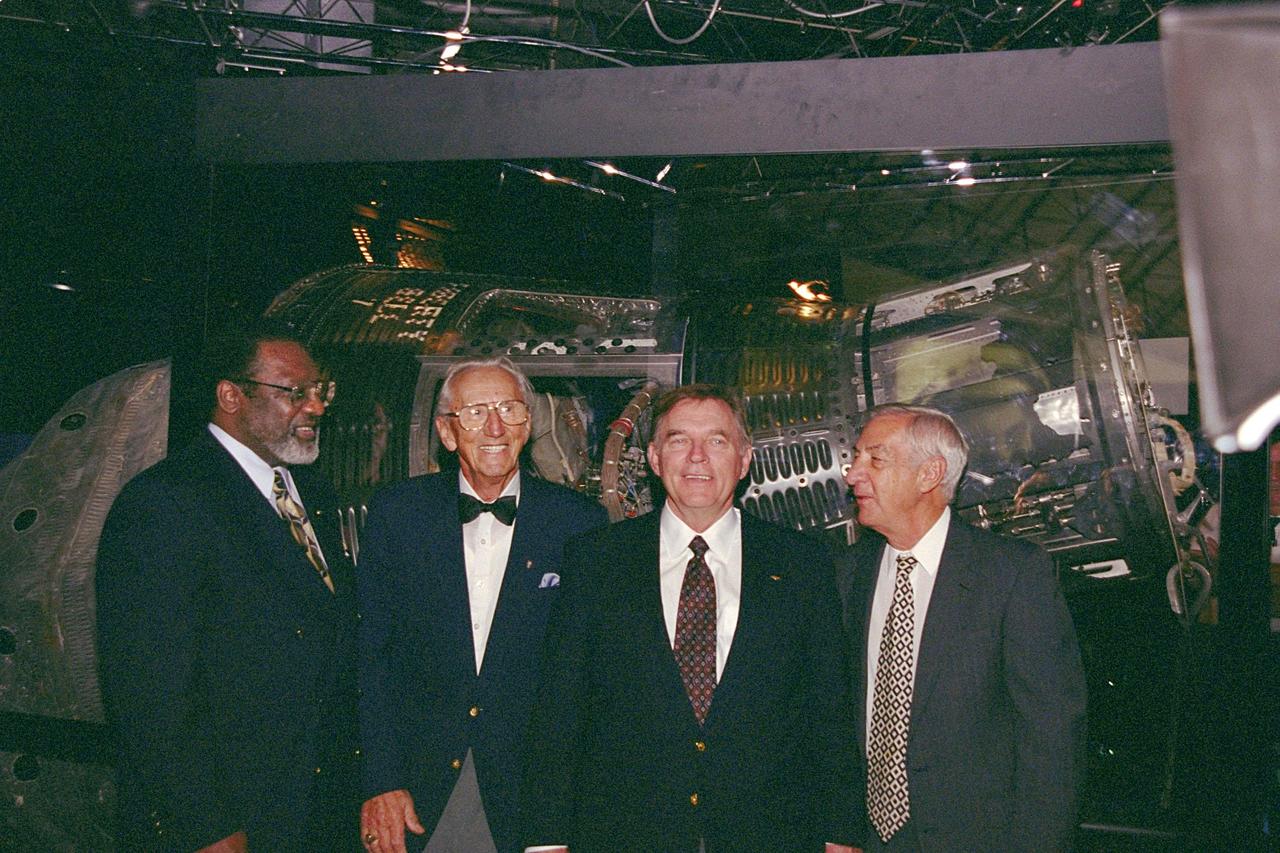
The Discovery Channel’s Liberty Bell 7 Space Capsule Exhibit, which opens to the public at the KSC Visitor Complex on Saturday, June 17, had a preview for the press today. Liberty Bell 7 launched U.S. Air Force Captain Virgil "Gus" Grissom July 21, 1961, on a mission that lasted 15 minutes and 37 seconds before sinking. The capsule lay undetected for nearly four decades before a Discovery Channel expedition located it and recovered it. Standing in front of the restored Liberty Bell 7 capsule are (left to right) KSC’s Deputy Director Jim Jennings; Gunther Wendt, who worked on the Liberty Bell 7 before its launch; Jim Lewis, who piloted the Hunt Club 1 helicopter that rescued Gus Grissom; and Larry Grissom, brother of Gus Grissom. The space capsule, now restored and preserved, is part of an interactive exhibit touring science centers and museums in 12 cities throughout the United States until 2003. The exhibit also includes hands-on elements such as a capsule simulator, a centrifuge, and ROV pilot
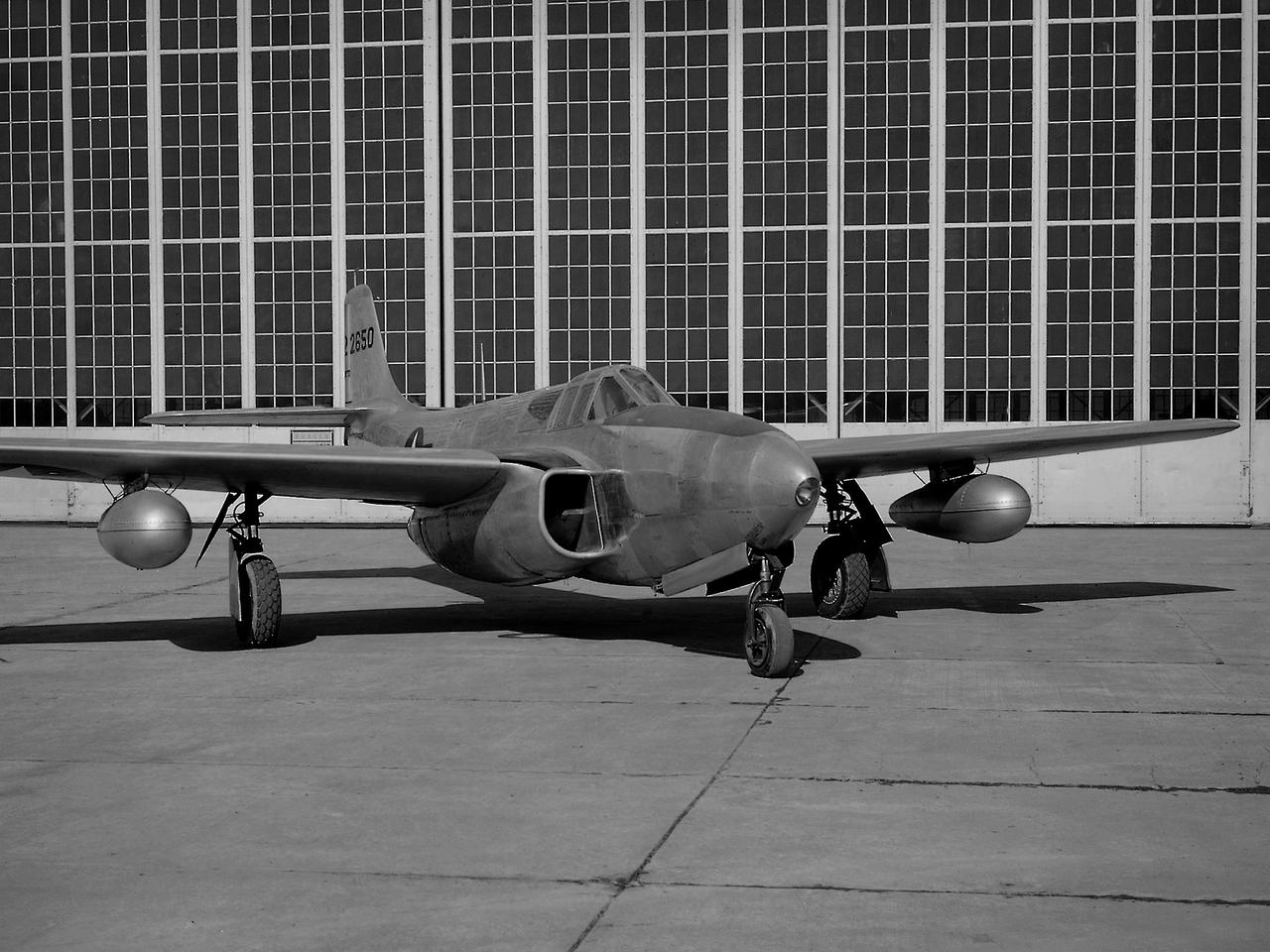
A Bell P-59B Airacomet sits beside the hangar at the National Advisory Committee for Aeronautics (NACA) Lewis Flight Propulsion Laboratory. In 1942 the Bell XP-59A Airacomet became the first jet aircraft in the US. The Airacomet incorporated centrifugal turbojet engines that were based on British plans secretly brought to the US in 1941. A Bell test pilot flew the XP-59A for the first time at Muroc Lake, California in October 1942. The General Electric I-16 engines proved to be problematic. In an effort to increase the engine performance, an Airacomet was secretly brought to Cleveland in early 1944 for testing in the Altitude Wind Tunnel. A series of tunnel investigations in February and March resulted in a 25-percent increase in the I-16 engine’s performance. Nonetheless, Bell’s 66 Airacomets never made it into combat. A second, slightly improved Airacomet, a P-59B, was transferred to NACA Lewis just after the war in September 1945. The P-59B was used over the next three years to study general jet thrust performance and thrust augmentation devices such as afterburners and water/alcohol injection. The P-59B flights determined the proper alcohol and water mixture and injection rate to produce a 21-percent increase in thrust. Since the extra boost would be most useful for takeoffs, a series of ground-based tests with the aircraft ensued. It was determined that the runway length for takeoffs could be reduced by as much as 15 percent. The P-59B used for the tests is now on display at the Air Force Museum at Wright Patterson.
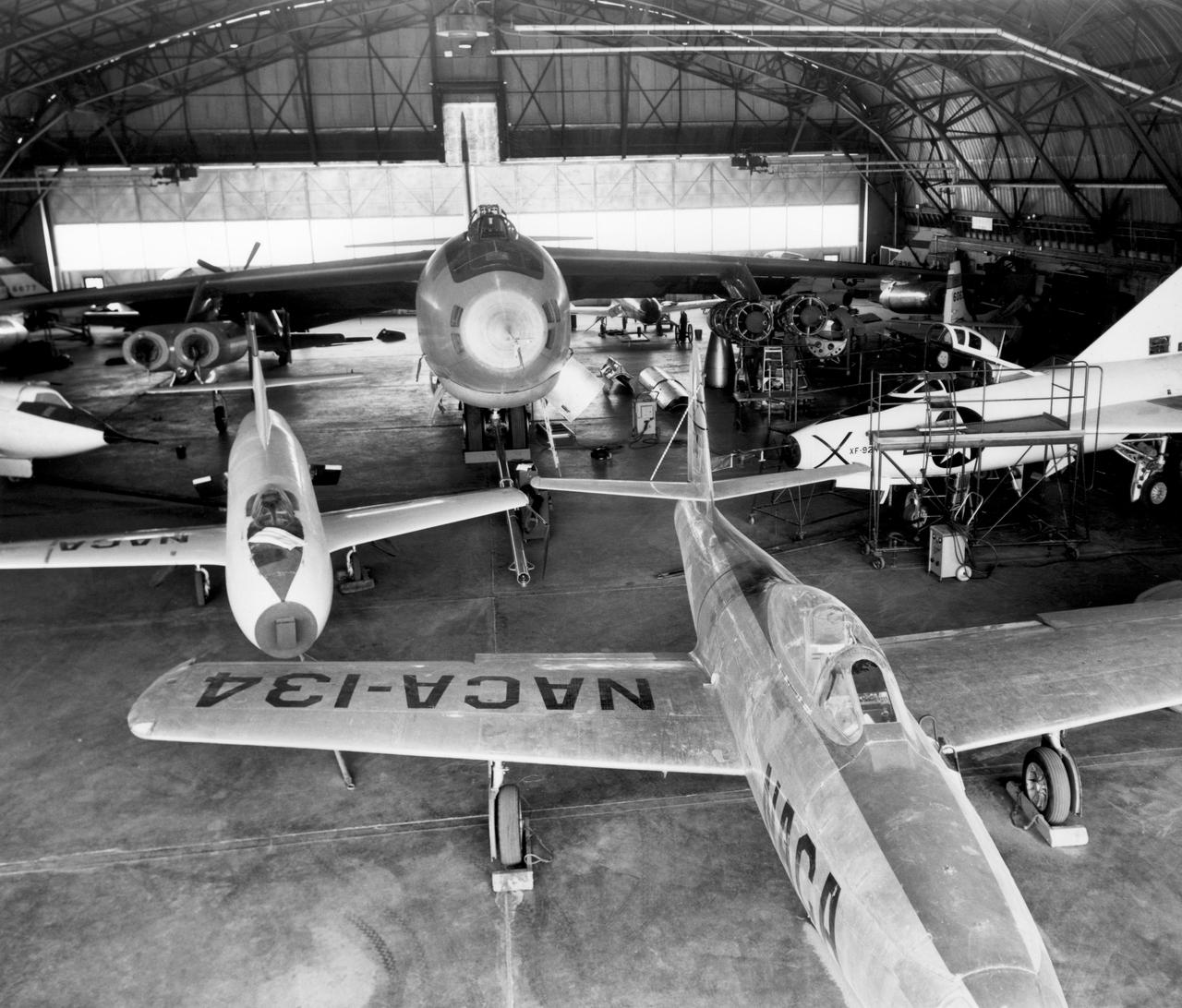
In the center foreground of this 1953 hangar photo is the YF-84A (NACA 134/Air Force 45-59490) used for vortex generator research. It arrived on November 28, 1949, and departed on April 21, 1954. Beside it is the third D-558-1 aircraft (NACA 142/Navy 37972). This aircraft was used for a total of 78 transonic research flights from April 1949 to June 1954. It replaced the second D-558-1, lost in the crash which killed Howard Lilly. Just visible on the left edge is the nose of the first D-558-2 (NACA 143/Navy 37973). Douglas turned the aircraft over to NACA on August 31, 1951, after the contractor had completed its initial test flights. NACA only made a single flight with the aircraft, on September 17, 1956, before the program was cancelled. In the center of the photo is the B-47A (NACA 150/Air Force 49-1900). The B-47 jet bomber, with its thin, swept-back wings, and six podded engines, represented the state of the art in aircraft design in the early 1950s. The aircraft undertook a number of research activities between May 1953 and its 78th and final research flight on November 22, 1957. The tests showed that the aircraft had a buffeting problem at speeds above Mach 0.8. Among the pilots who flew the B-47 were later X-15 pilots Joe Walker, A. Scott Crossfield, John B. McKay, and Neil A. Armstrong. On the right side of the B-47 is NACA's X-1 (Air Force 46-063). The second XS-1 aircraft built, it was fitted with a thicker wing than that on the first aircraft, which had exceeded Mach 1 on October 14, 1947. Flight research by NACA pilots indicated that this thicker wing produced 30 percent more drag at transonic speeds compared to the thinner wing on the first X-1. After a final flight on October 23, 1951, the aircraft was grounded due to the possibility of fatigue failure of the nitrogen spheres used to pressurize the fuel tanks. At the time of this photo, in 1953, the aircraft was in storage. In 1955, the aircraft was extensively modified, becoming the X-1E. In front o