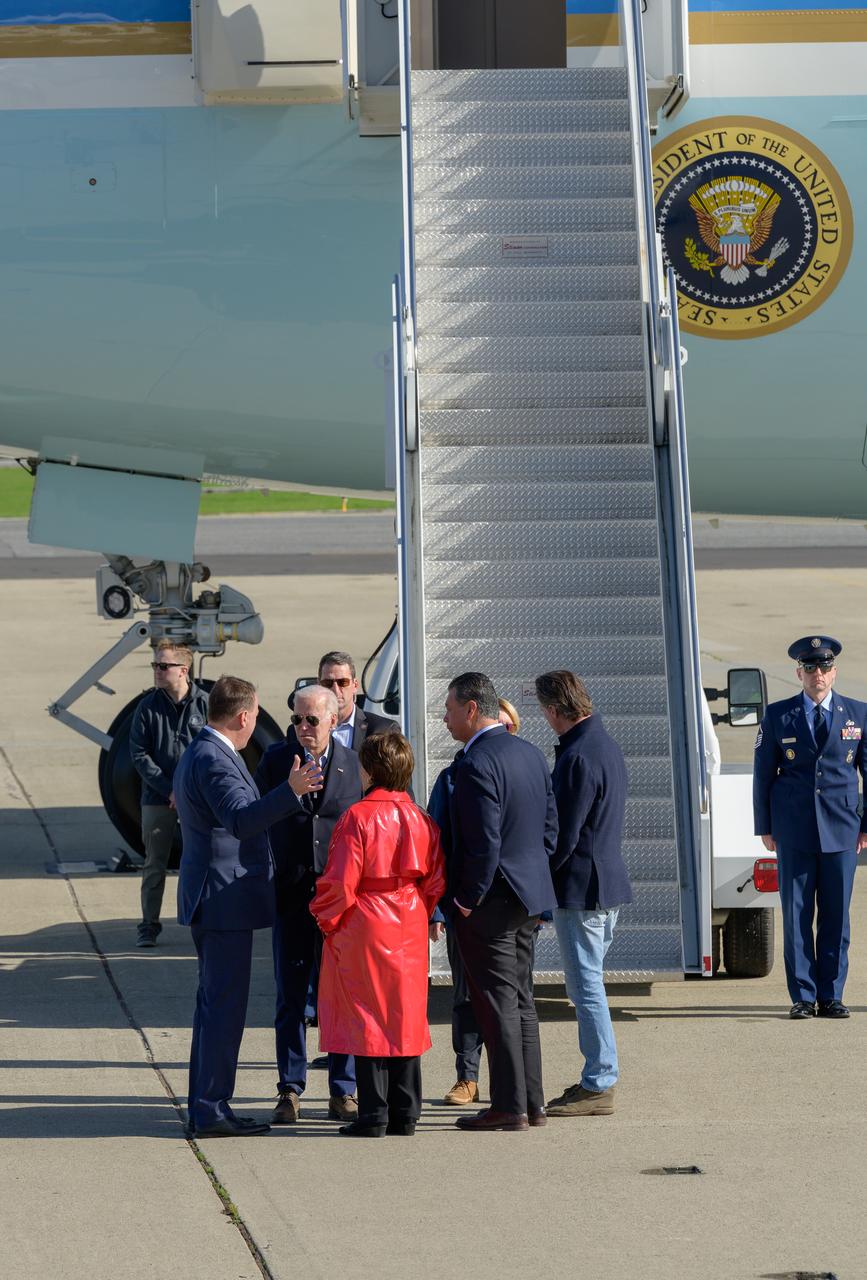
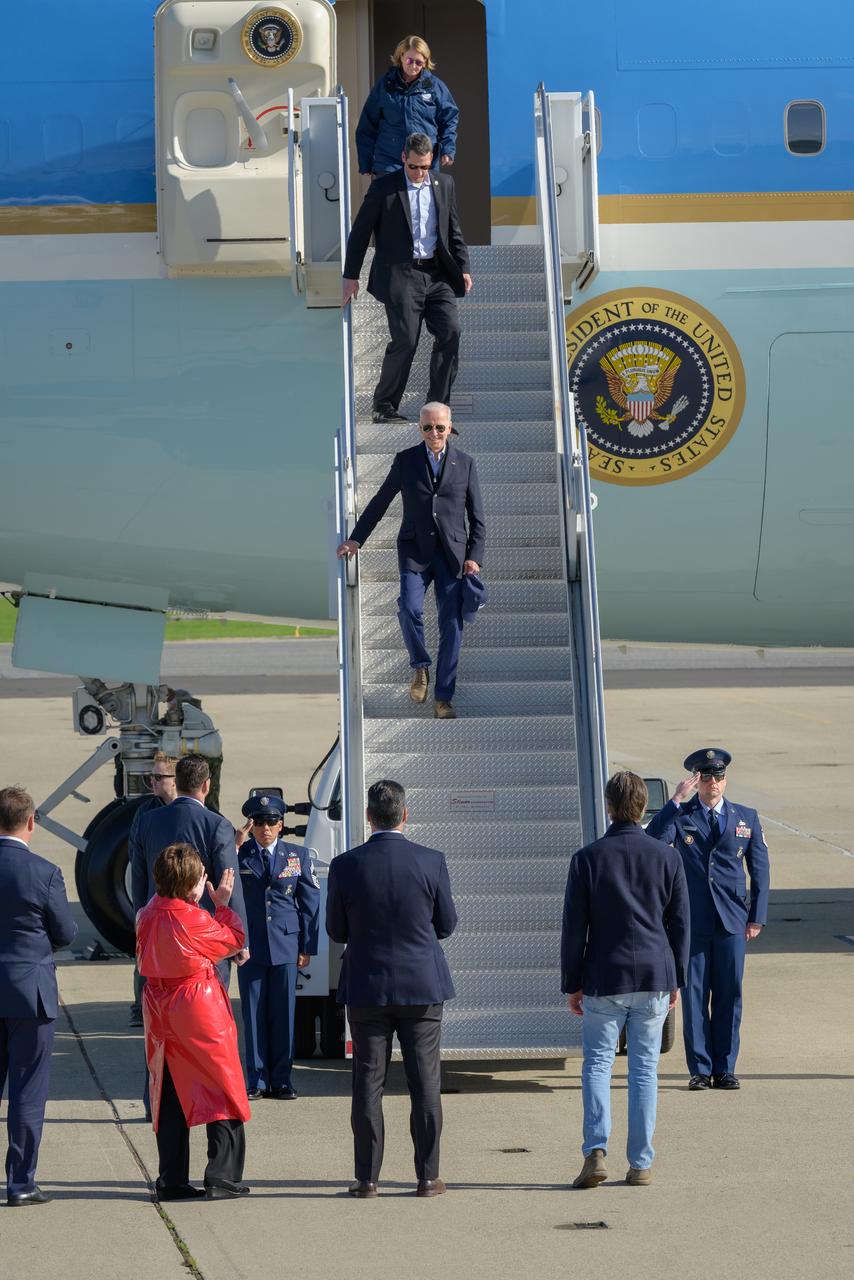
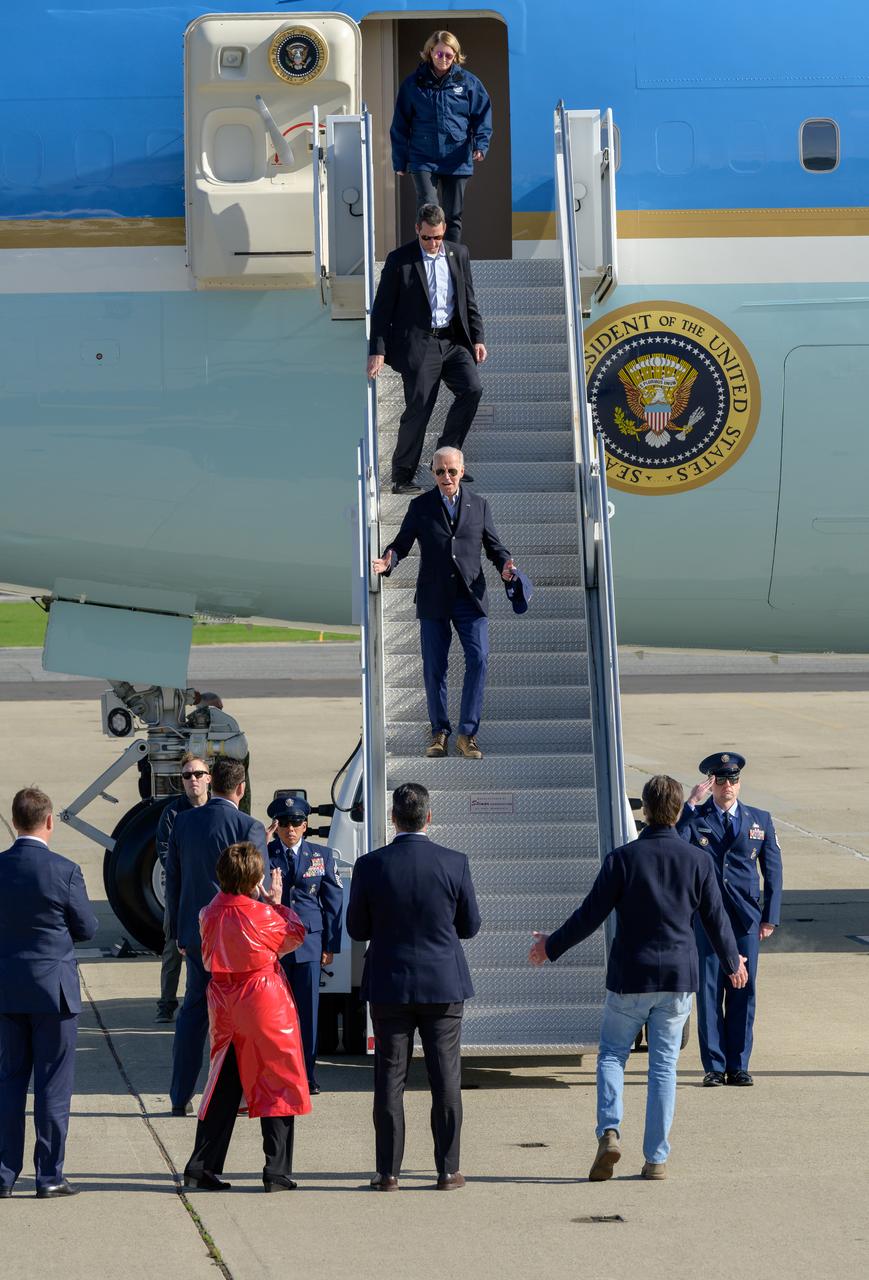
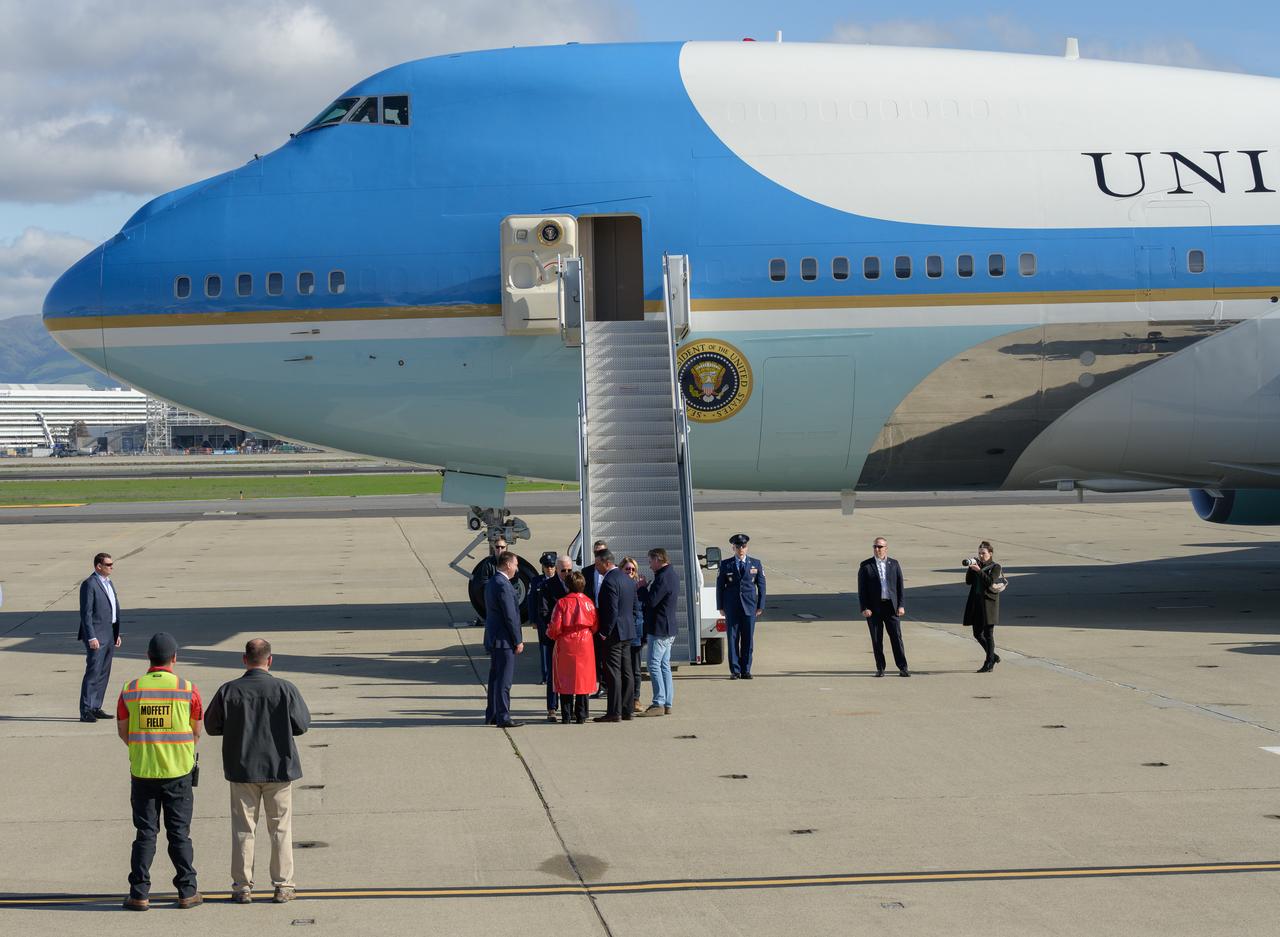
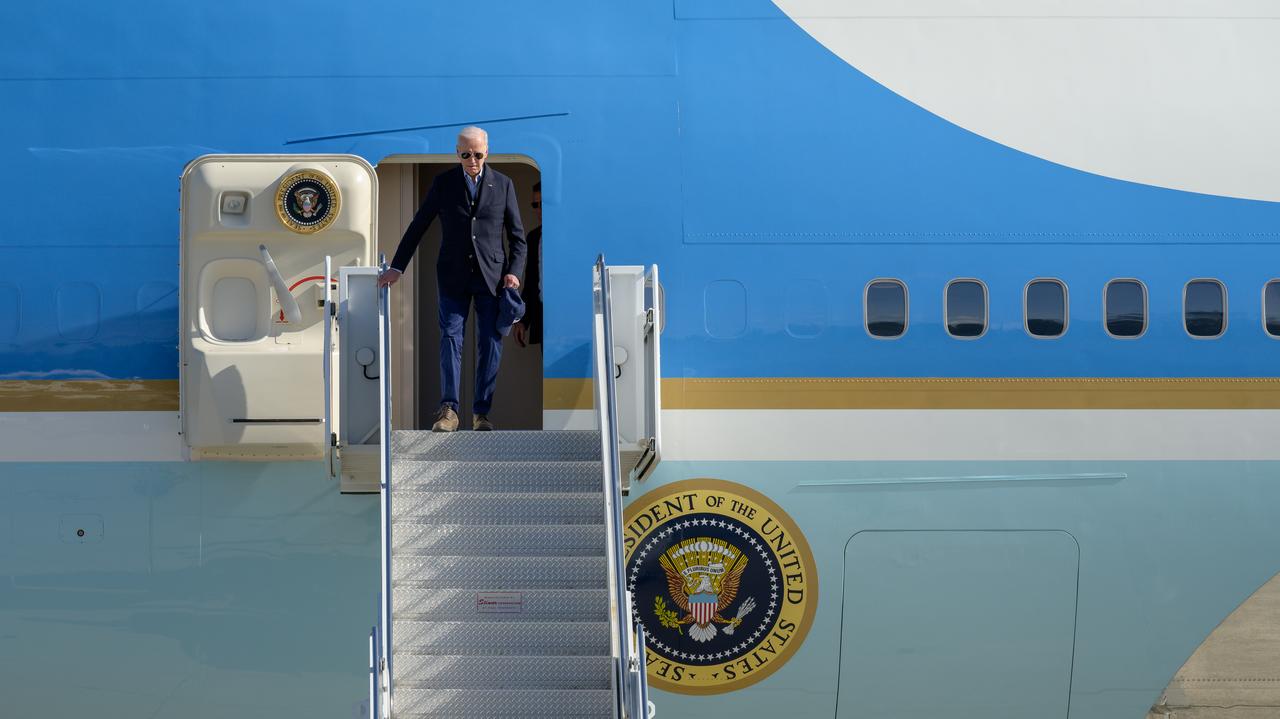
President Joe Biden exits Air Force One at Moffett Federal Airfield before continuing his trip to view consequences of flooding and other storm impacts along California’s central coast.
U.S. President Joe Biden Arrives Aboard Air Force One at Moffett Federal Airfield
President Joe Biden exits Air Force One at Moffett Federal Airfield before continuing his trip to view consequences of flooding and other storm impacts along California’s central coast.
U.S. President Joe Biden Arrives Aboard Air Force One at Moffett Federal Airfield
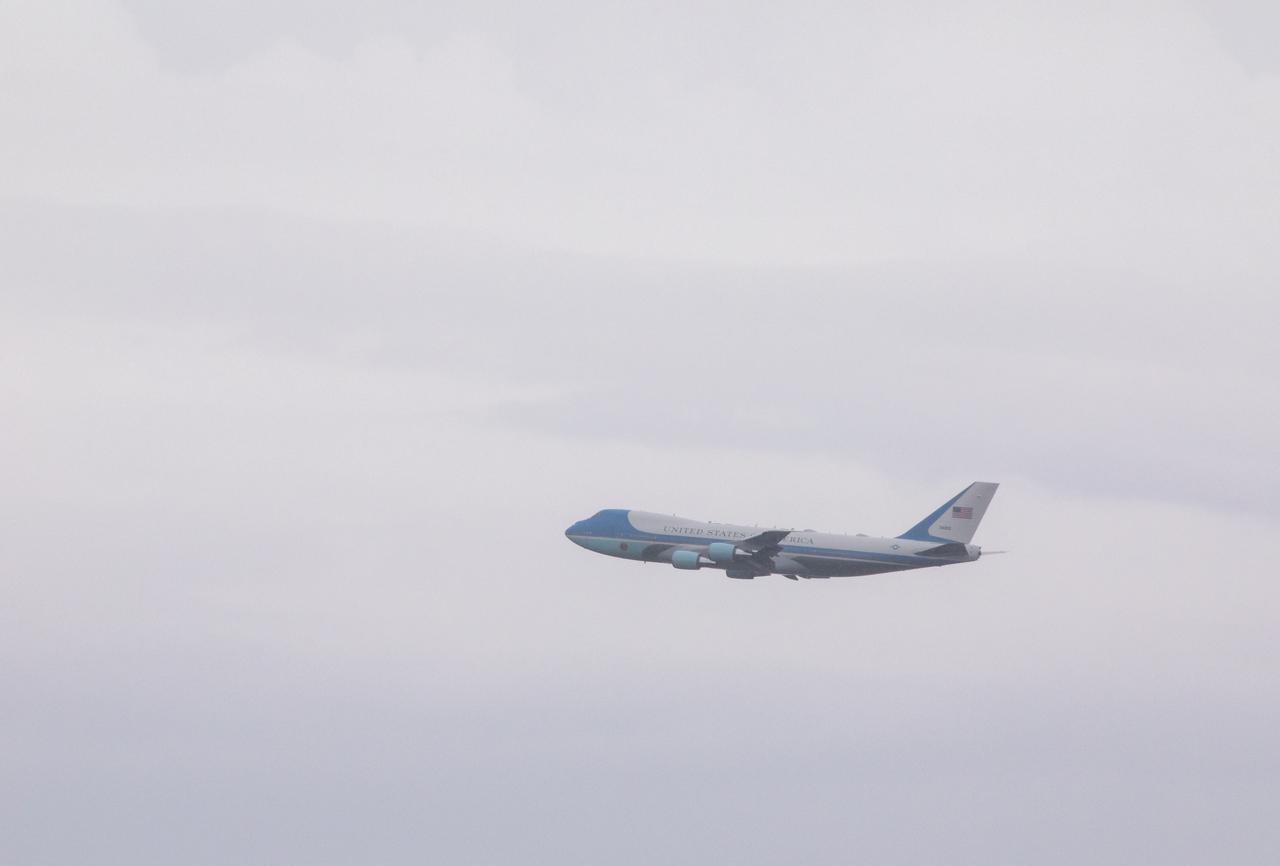
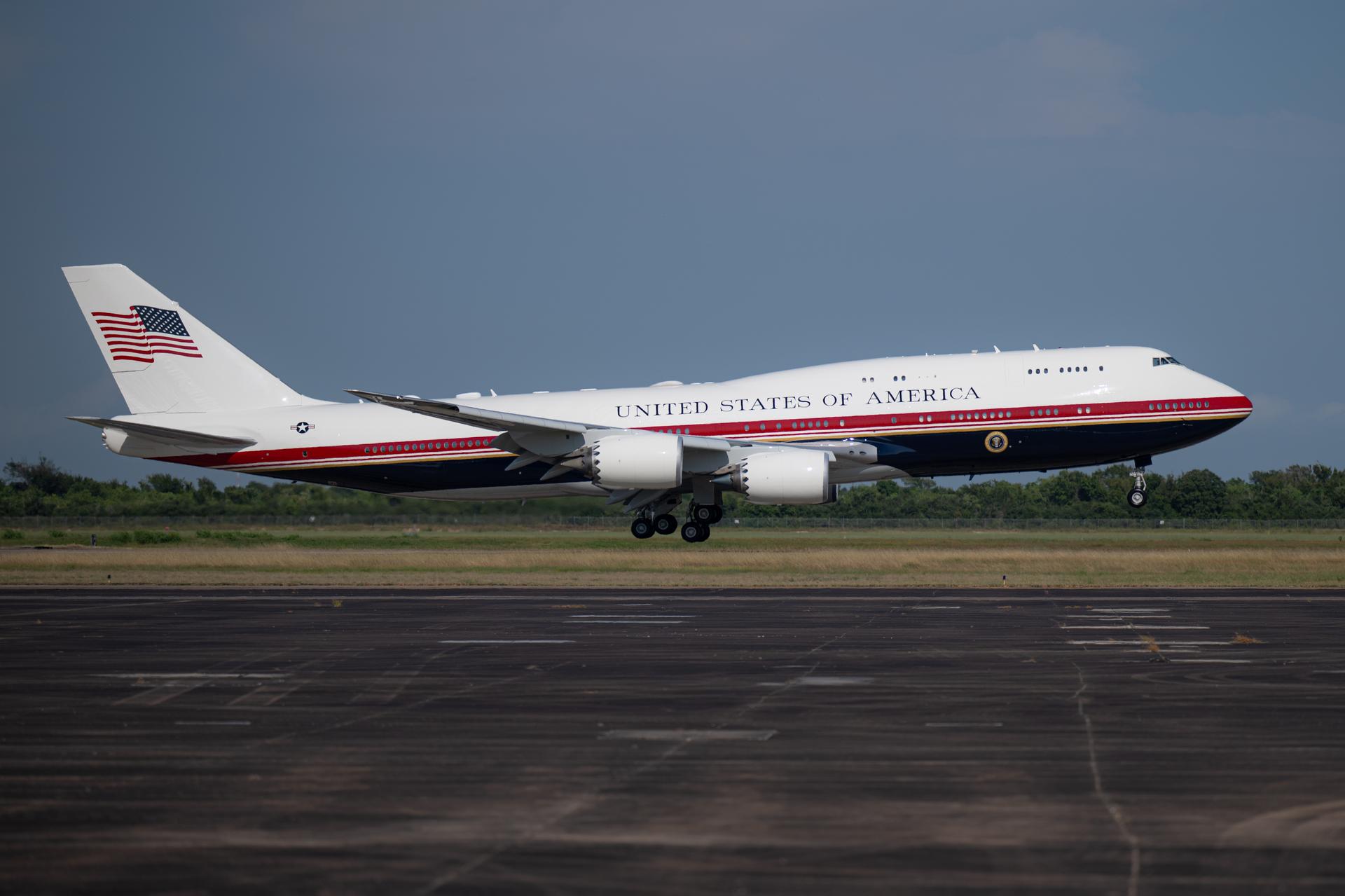
Air Force One, with President Donald Trump aboard, flies over the Launch Complex 39A area at NASA’s Kennedy Space Center in Florida on May 27, 2020, ahead of the agency’s SpaceX Demo-2 launch. The launch was scrubbed due to unfavorable weather conditions, and the next launch attempt will be Saturday, May 30. Liftoff of the SpaceX Falcon 9 rocket and Crew Dragon spacecraft is scheduled for 3:22 p.m. EDT from Kennedy’s historic Launch Complex 39A. NASA astronauts Robert Behnken and Douglas Hurley will be the first astronauts to launch to the International Space Station from U.S. soil since the end of the Space Shuttle Program in 2011. Part of NASA’s Commercial Crew Program, this will be SpaceX’s final flight test, paving the way for the agency to certify the crew transportation system for regular, crewed flights to the orbiting laboratory.
SpaceX Demo-2 Air Force One & Astronaut Rollout to Pad
Air Force One, with President Donald Trump aboard, flies over NASA’s Kennedy Space Center in Florida on May 27, 2020, ahead of the agency’s SpaceX Demo-2 launch. The launch was scrubbed due to unfavorable weather conditions around Launch Complex 39A, and the next launch attempt will be Saturday, May 30. Liftoff of the SpaceX Falcon 9 rocket and Crew Dragon spacecraft is scheduled for 3:22 p.m. EDT from Kennedy’s historic Launch Complex 39A. NASA astronauts Robert Behnken and Douglas Hurley will be the first astronauts to launch to the International Space Station from U.S. soil since the end of the Space Shuttle Program in 2011. Part of NASA’s Commercial Crew Program, this will be SpaceX’s final flight test, paving the way for the agency to certify the crew transportation system for regular, crewed flights to the orbiting laboratory.
SpaceX Demo-2 Air Force One & Astronaut Rollout to Pad
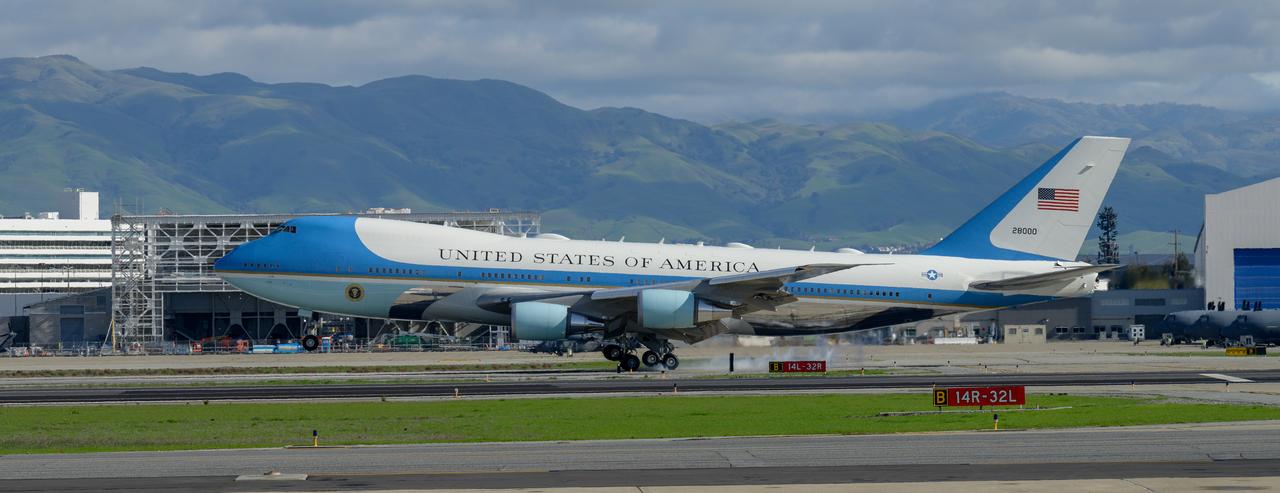
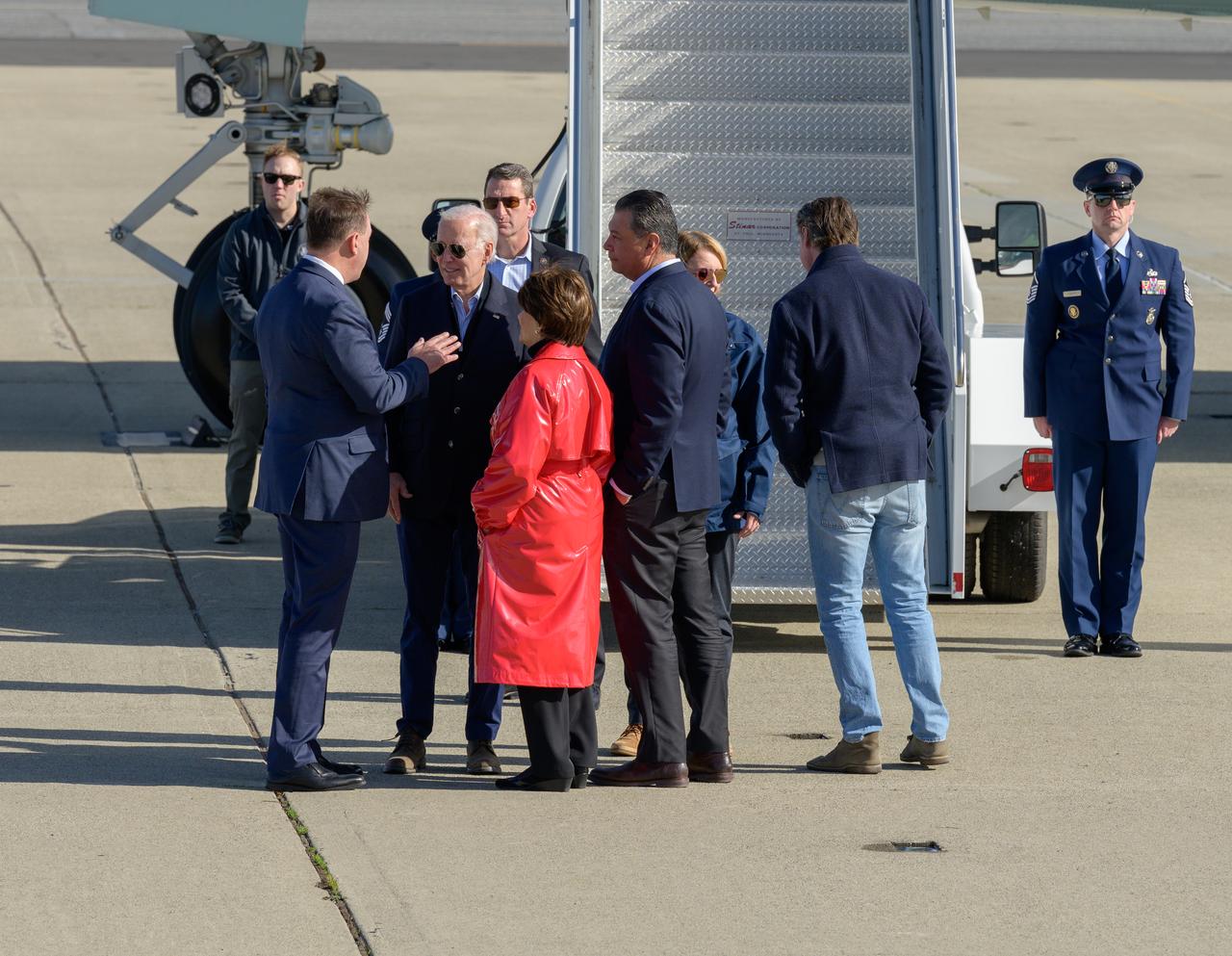
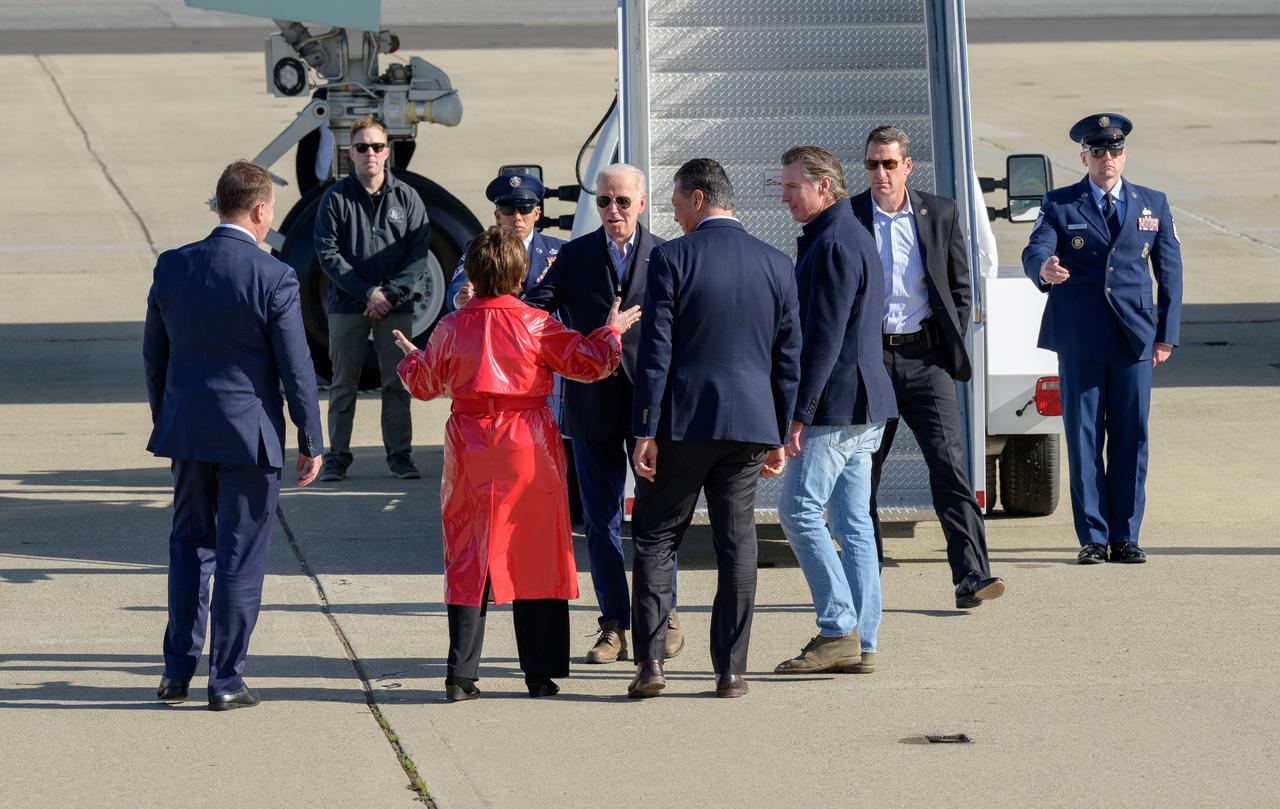
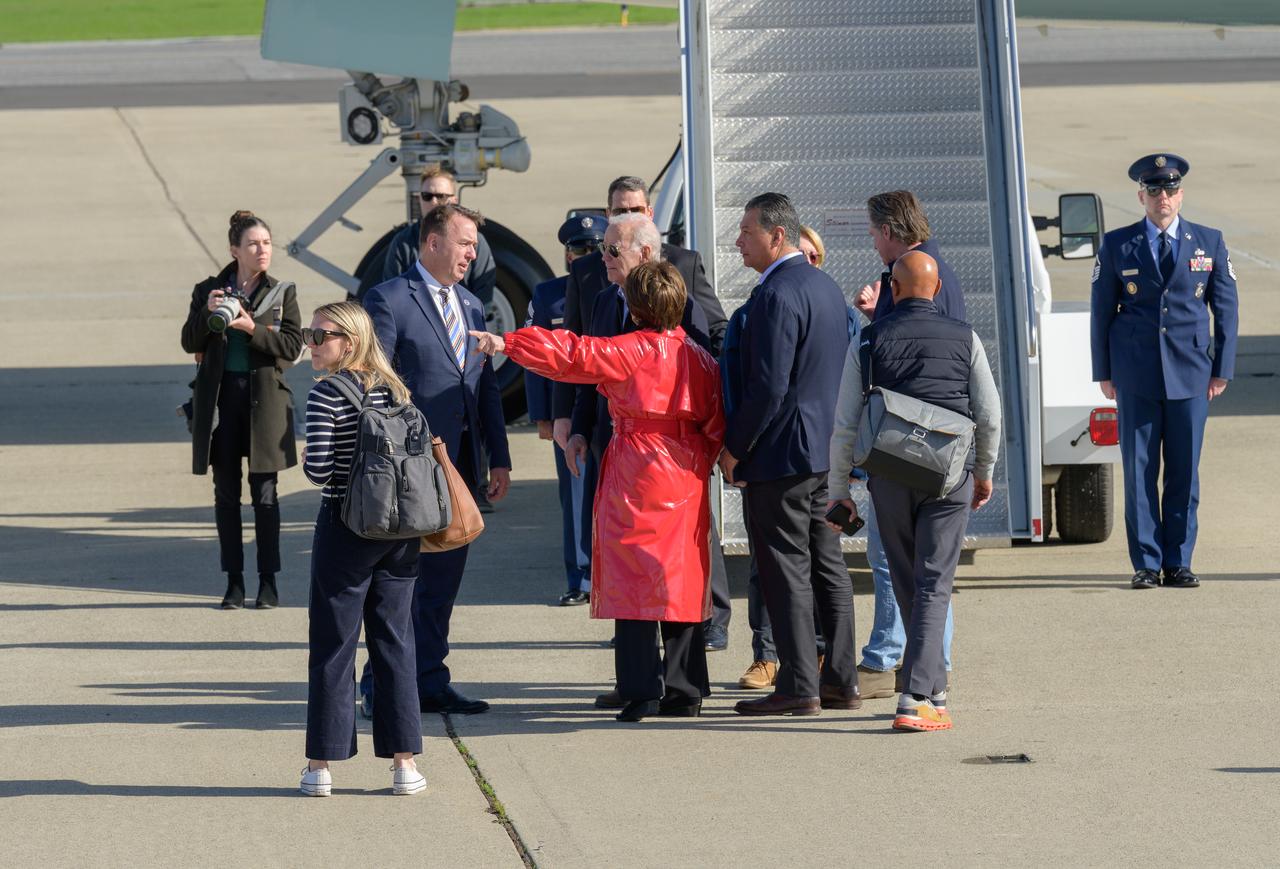
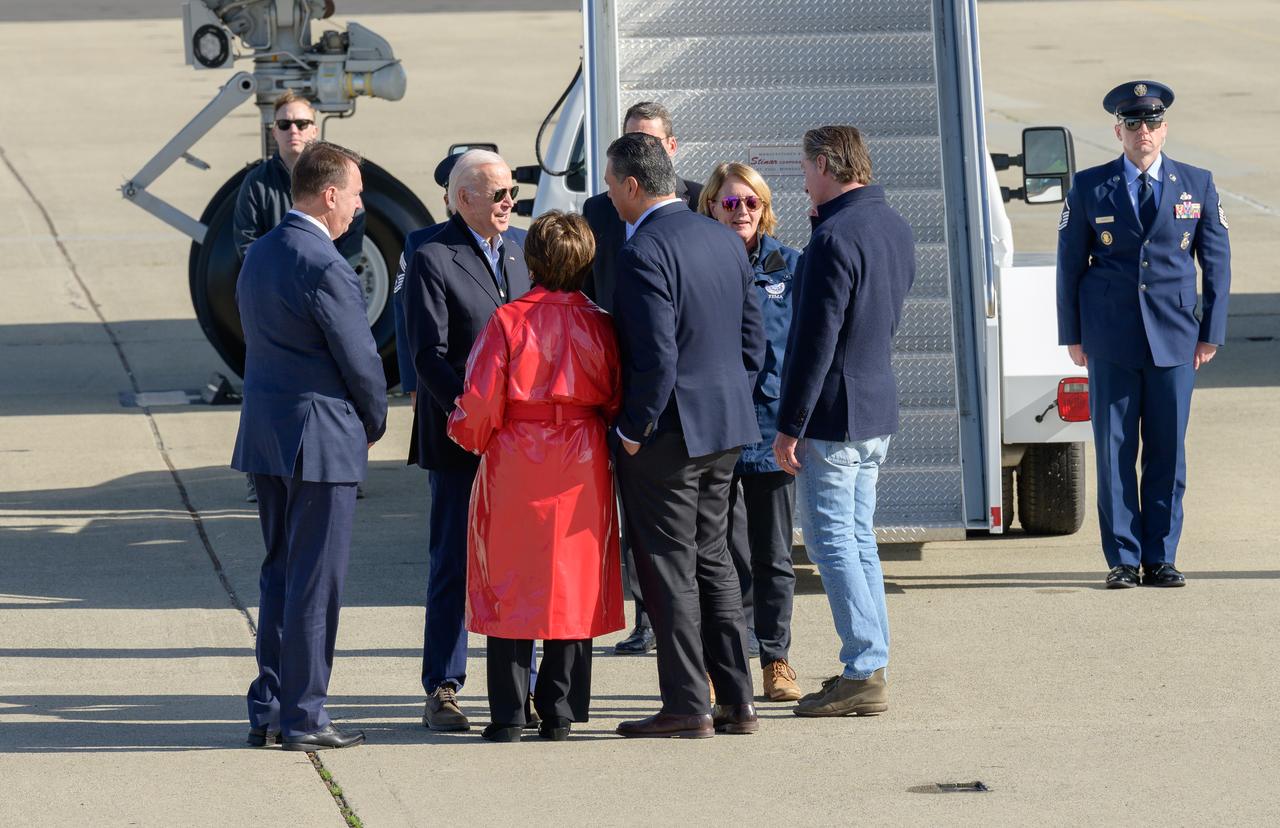
Air Force One with President Joe Biden arrives at Moffett Federal Airfield, near NASA’s Ames Research Center in California’s Silicon Valley, Thursday, Jan. 19, 2023. The President was en route to tour recent storm damage in the state.
U.S. President Joe Biden Arrives Aboard Air Force One at Moffett Federal Airfield
Air Force One with President Joe Biden arrives at Moffett Federal Airfield, near NASA’s Ames Research Center in California’s Silicon Valley, Thursday, Jan. 19, 2023. The President was en route to tour recent storm damage in the state.
U.S. President Joe Biden Arrives Aboard Air Force One at Moffett Federal Airfield
Air Force One with President Joe Biden arrives at Moffett Federal Airfield, near NASA’s Ames Research Center in California’s Silicon Valley, Thursday, Jan. 19, 2023. The President was en route to tour recent storm damage in the state.
U.S. President Joe Biden Arrives Aboard Air Force One at Moffett Federal Airfield
Air Force One with President Joe Biden arrives at Moffett Federal Airfield, near NASA’s Ames Research Center in California’s Silicon Valley, Thursday, Jan. 19, 2023. The President was en route to tour recent storm damage in the state.
U.S. President Joe Biden Arrives Aboard Air Force One at Moffett Federal Airfield
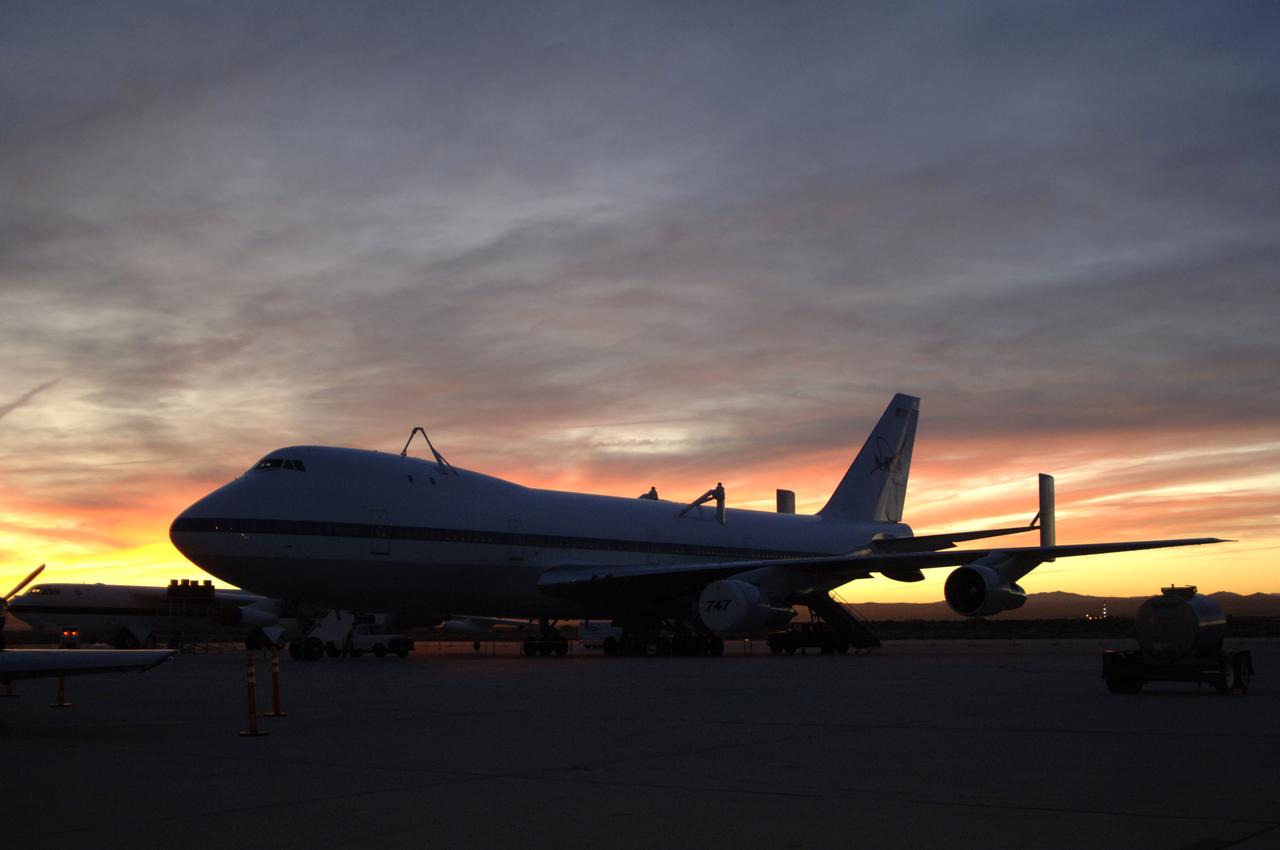
One of NASA's two modified Boeing 747 Shuttle Carrier Aircraft is silhouetted against the morning sky at sunrise on the ramp at Edwards Air Force Base.
One of NASA's two modified Boeing 747 Shuttle Carrier Aircraft is silhouetted against the morning sky at sunrise on the ramp at Edwards Air Force Base
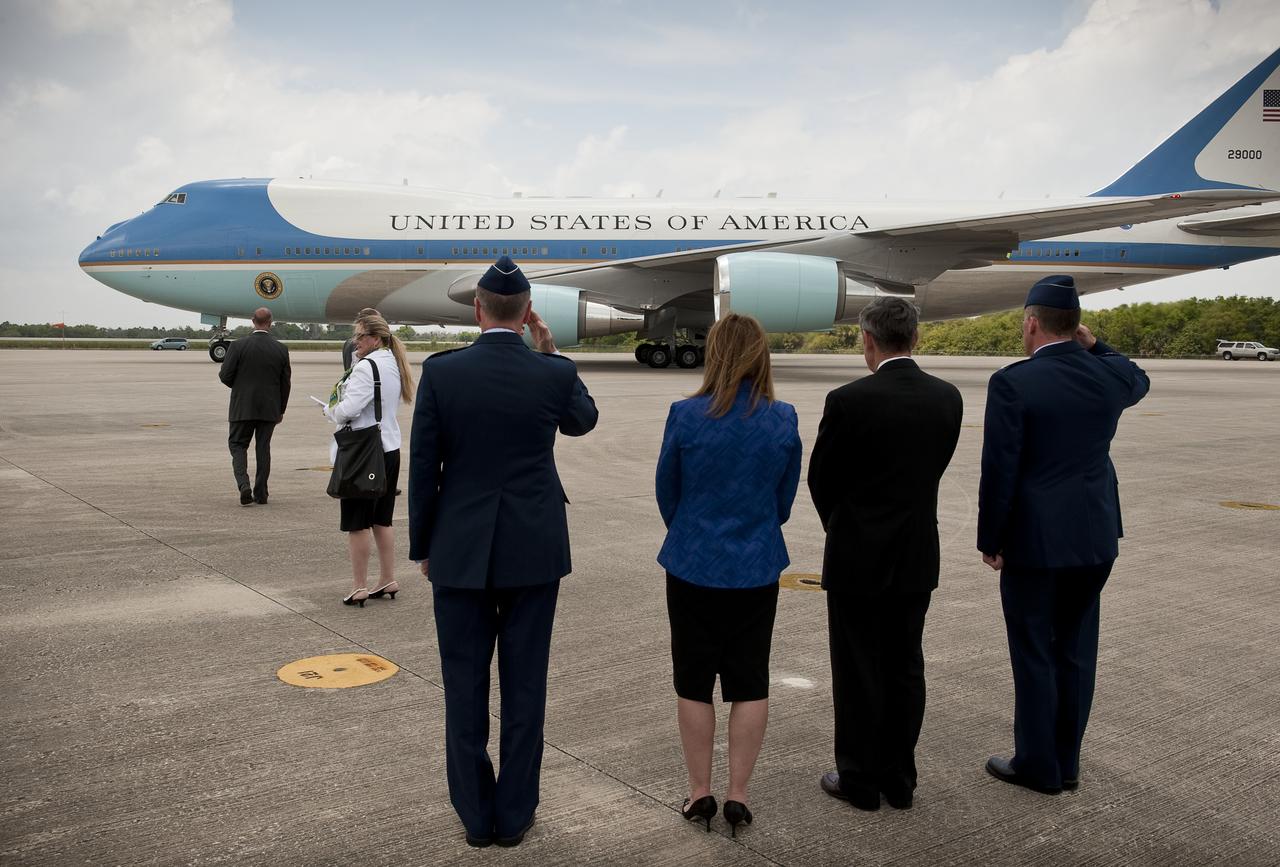
Air Force One is seen as it prepares to depart from the NASA SHuttle Landing Facility (SLF) after President Barack Obama delivered a speech at the NASA Kennedy Space Center in Cape Canaveral, Fla. on Thursday, April 15, 2010.  Obama visited Kennedy Space Center to deliver remarks on the bold new course the Administration is charting for NASA and the future of U.S. leadership in human space flight. Photo Credit: (NASA/Bill Ingalls)
Obama Kennedy Space Center Visit
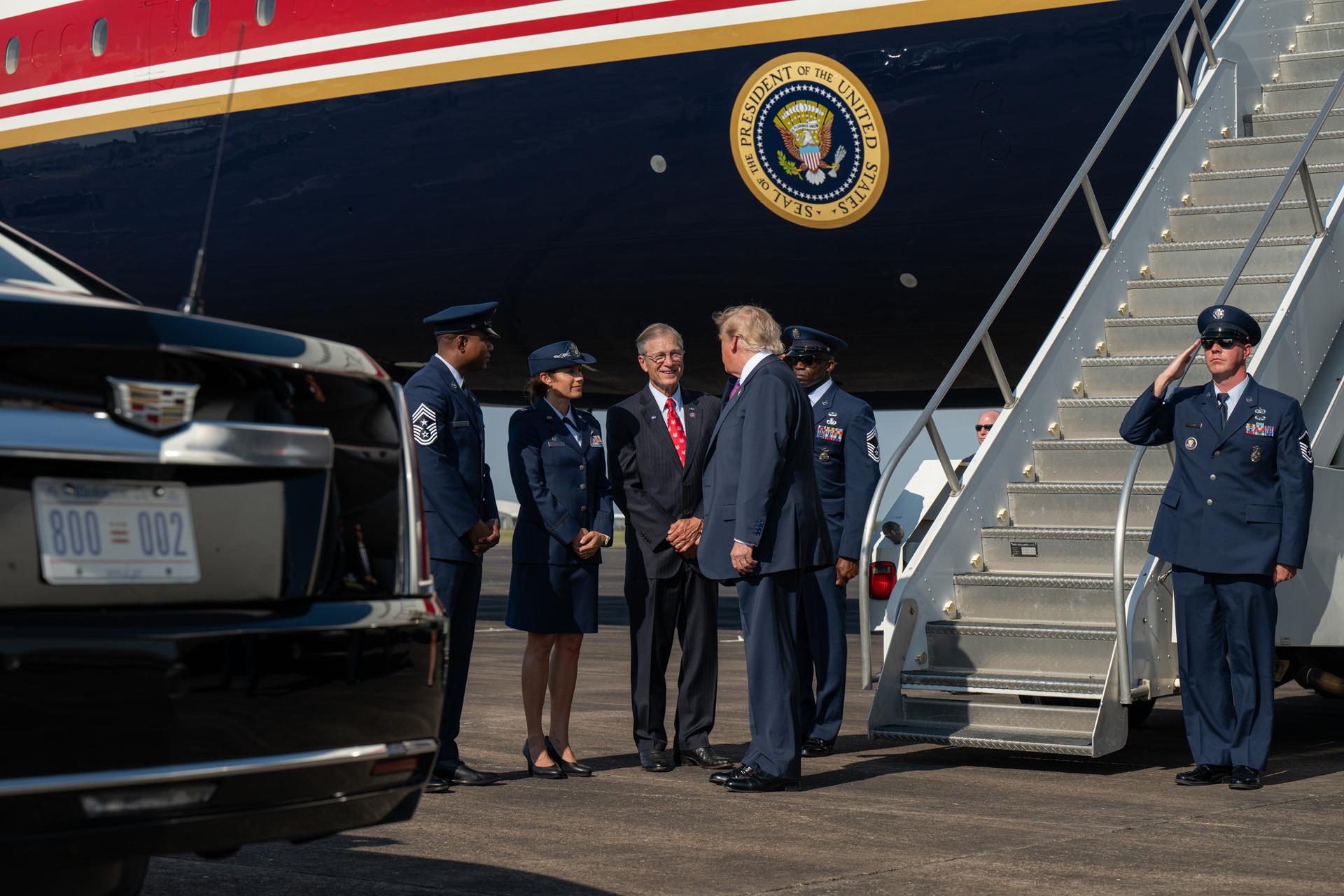
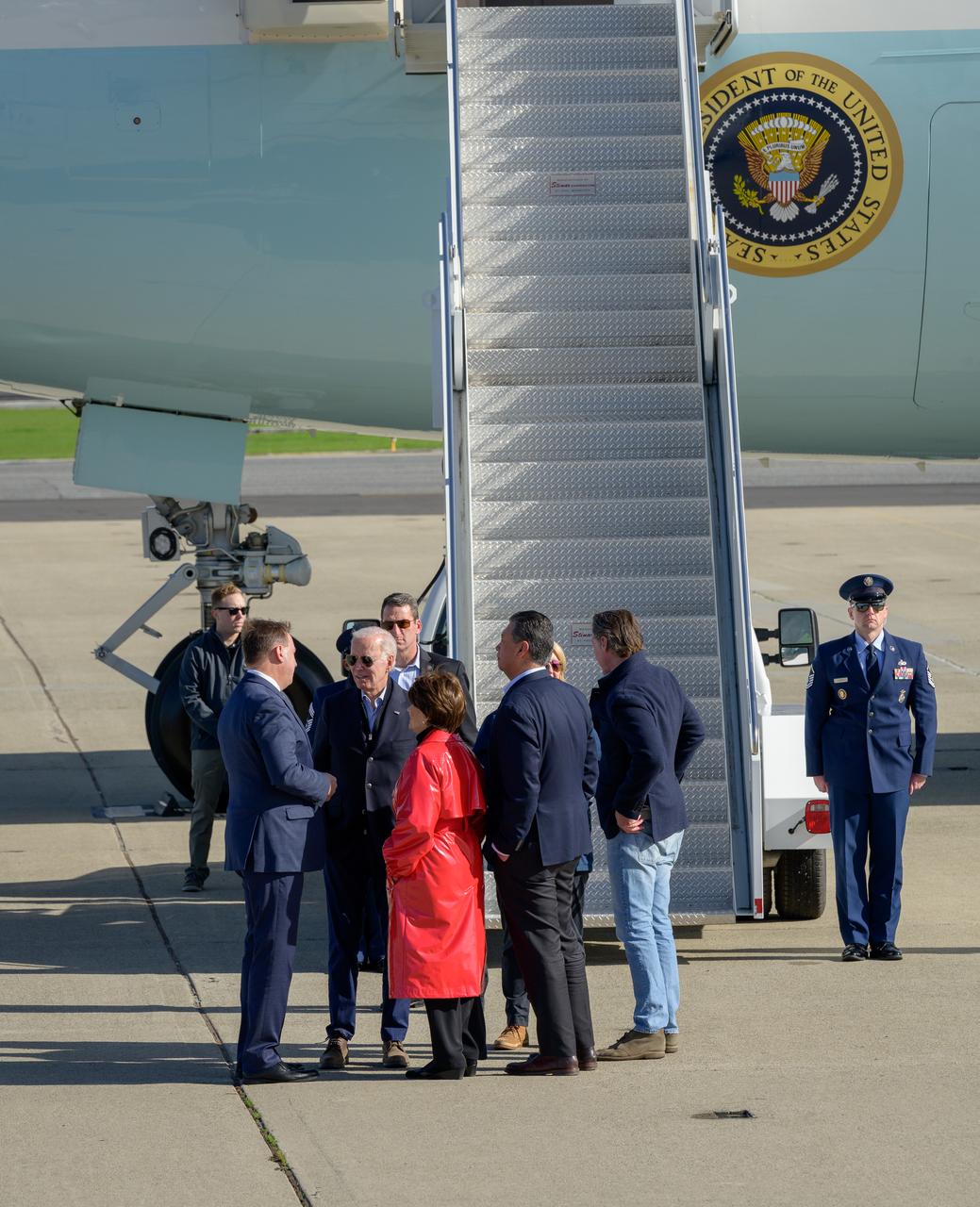
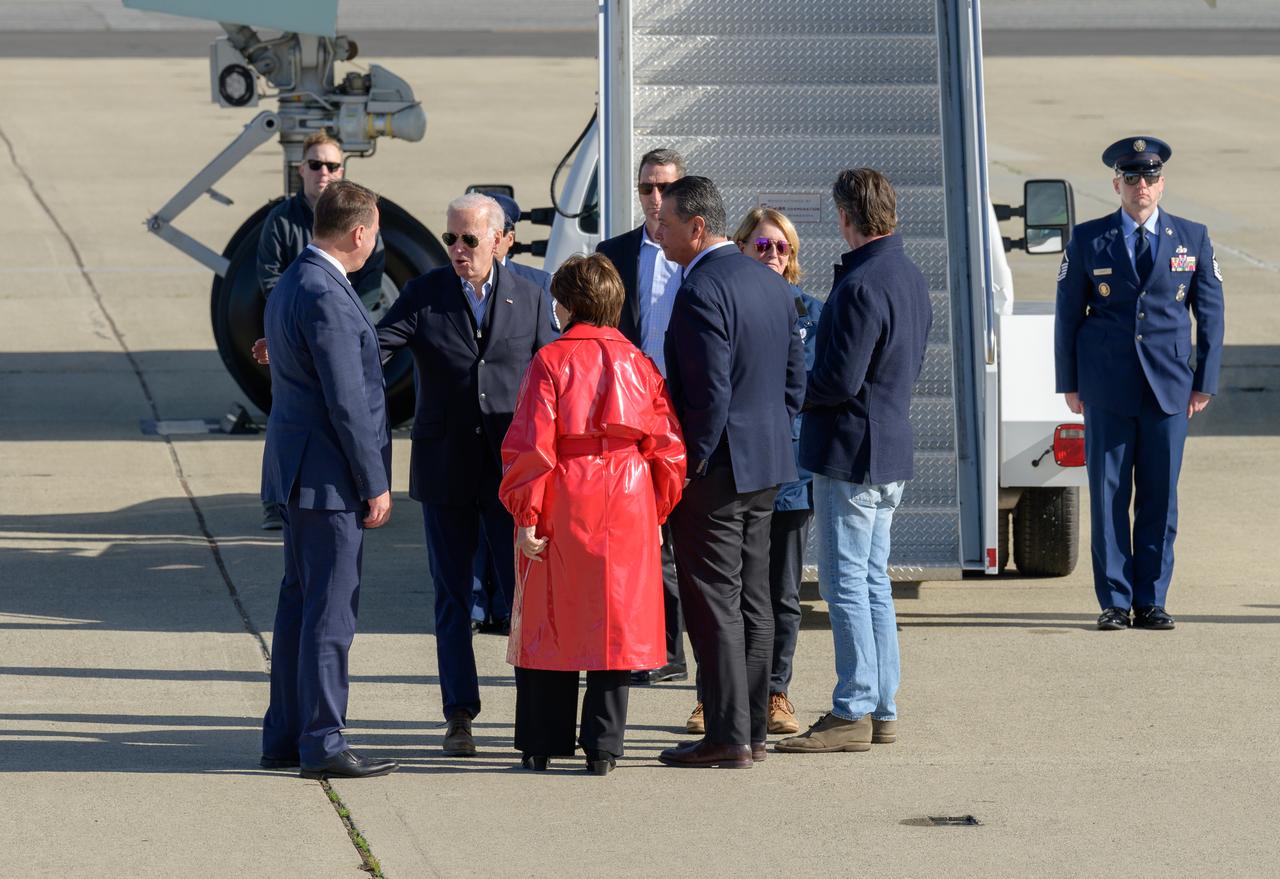
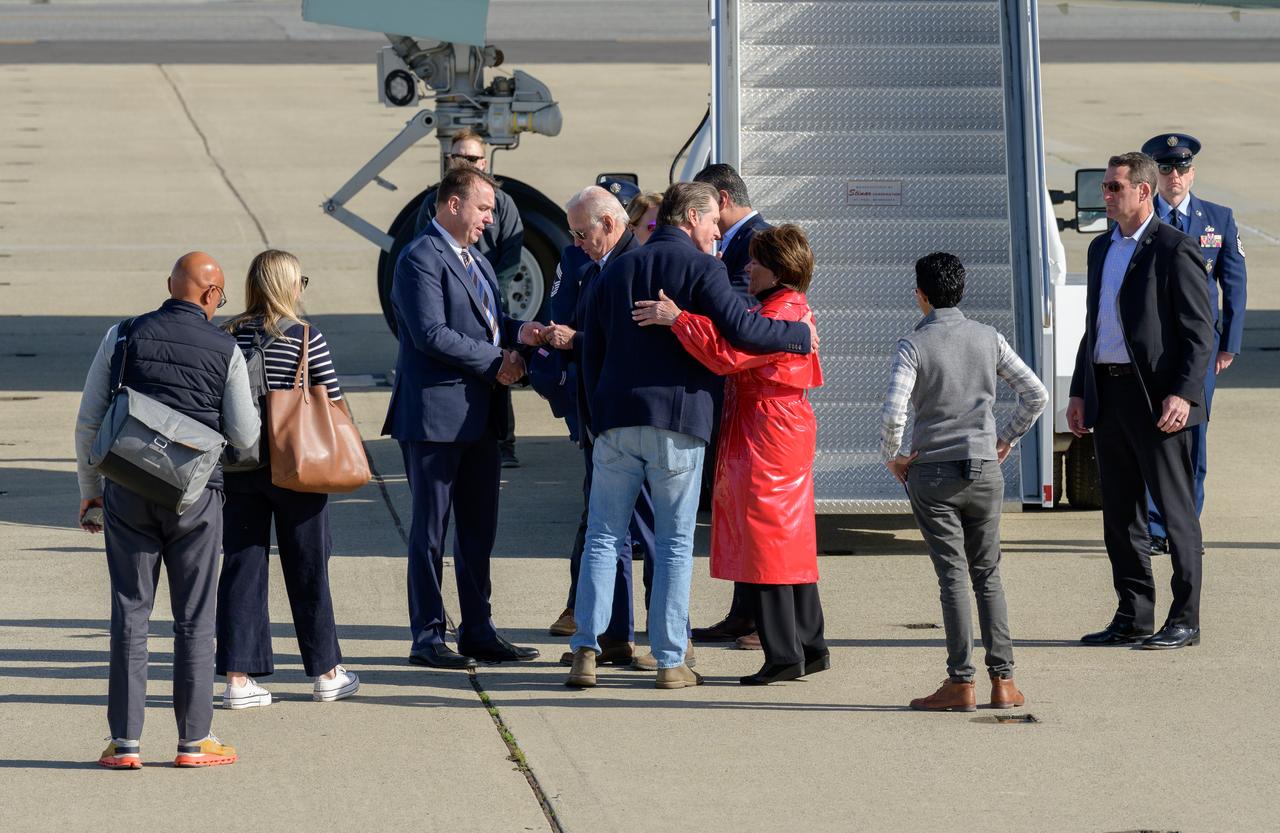
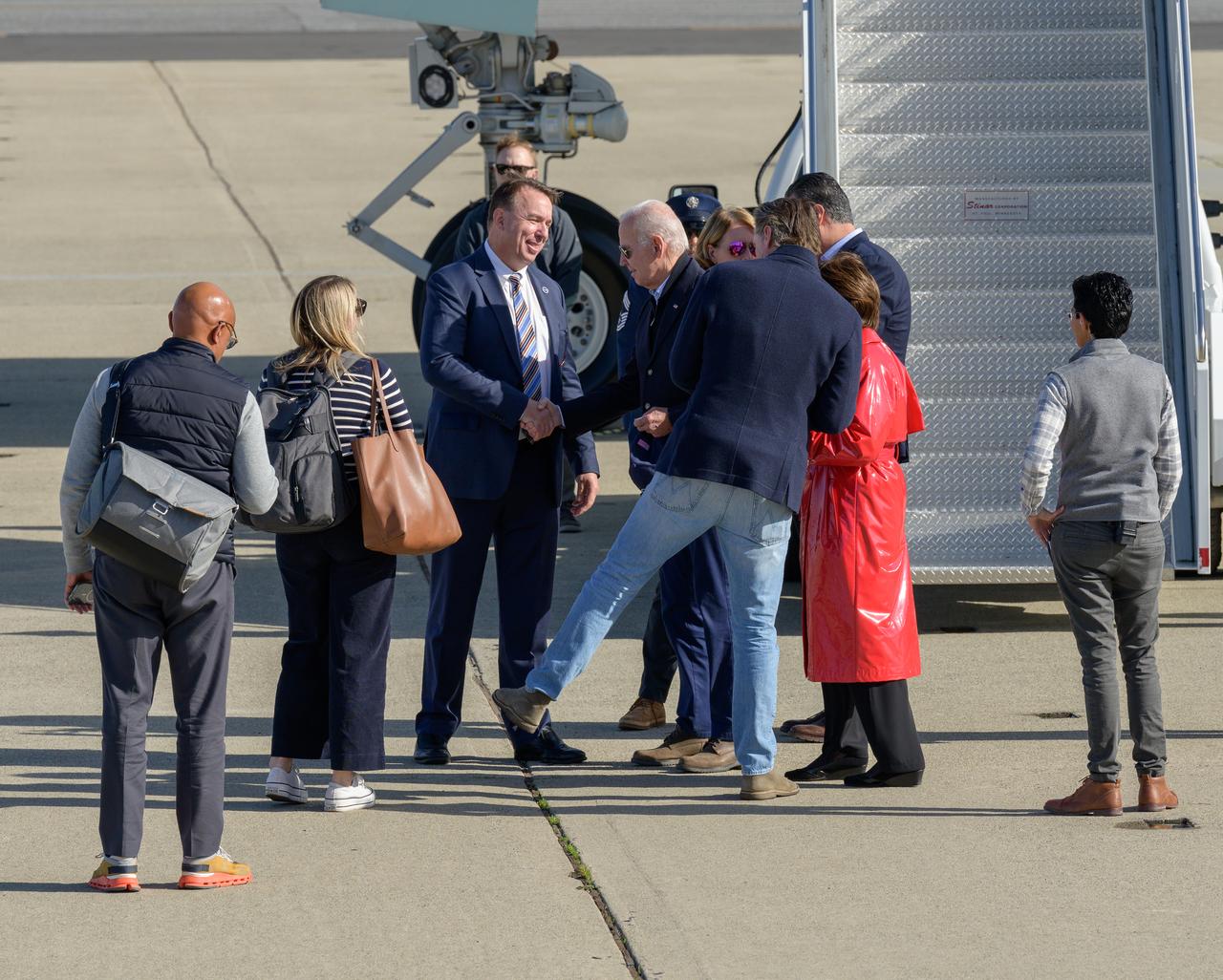
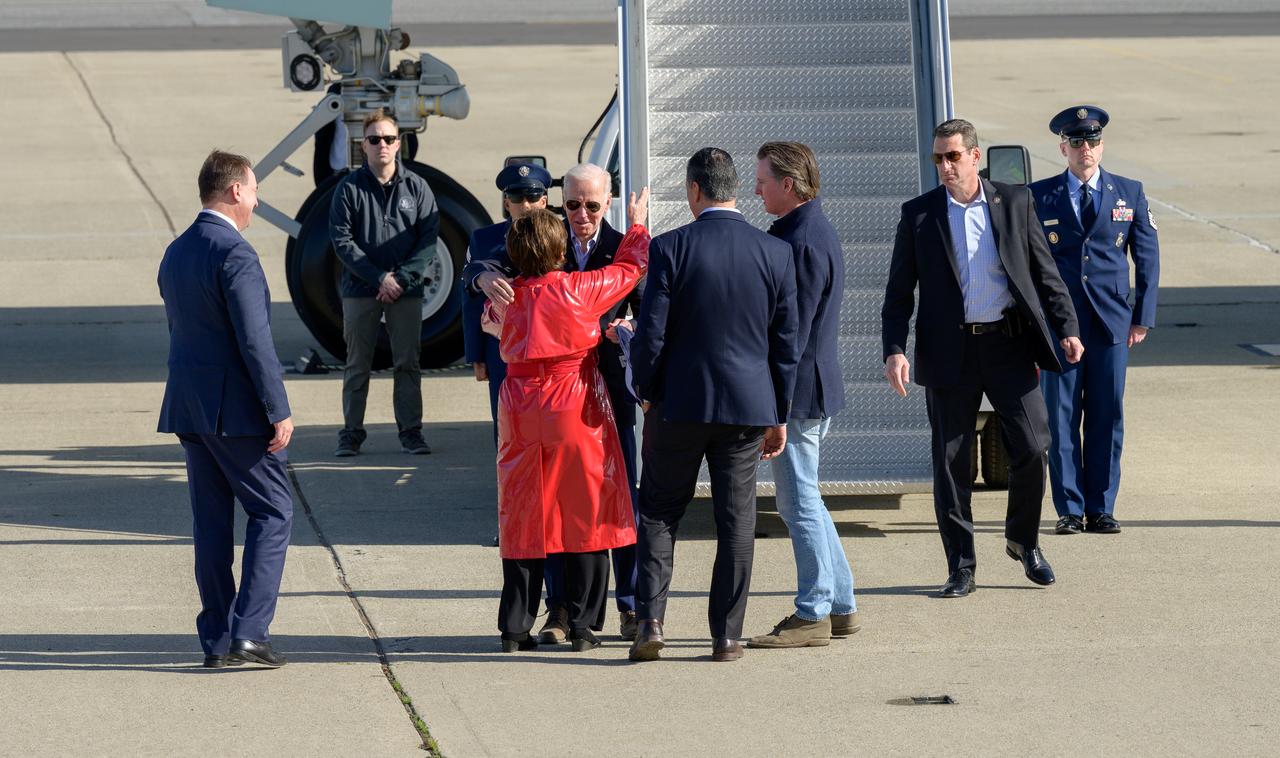
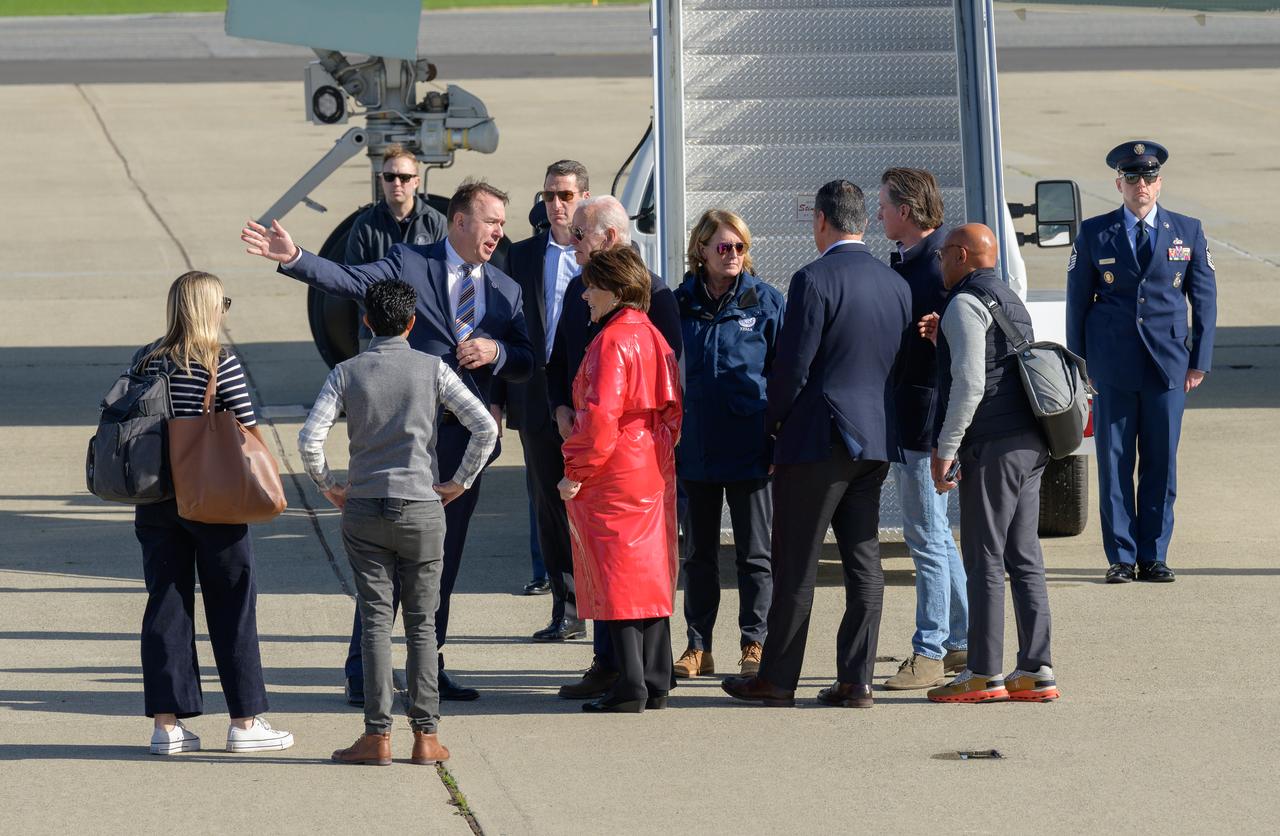
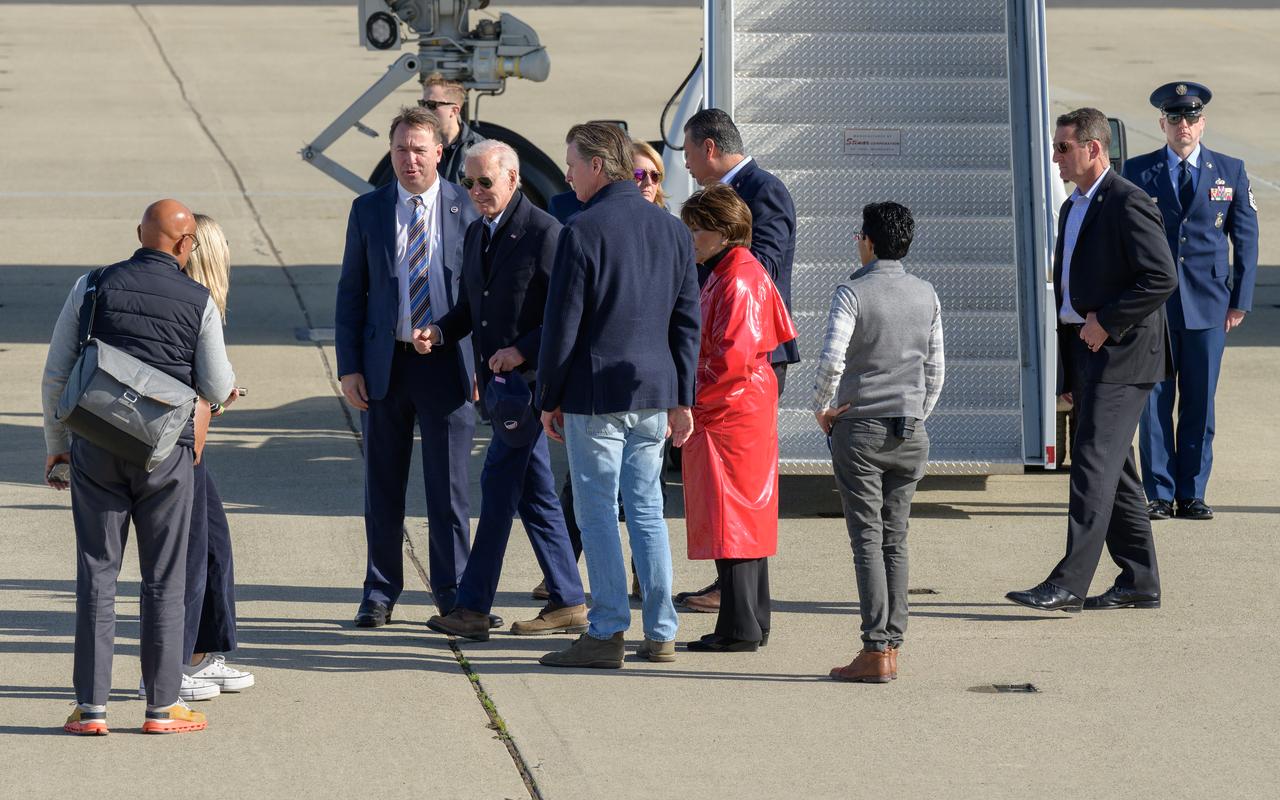
President Joe Biden landed aboard Air Force One at Moffett Federal Airfield, near NASA’s Ames Research Center in California’s Silicon Valley, Thursday, Jan. 19, 2023, en route to tour recent storm damage in the state. The President was greeted by Dr. David Korsmeyer, associate center director for research and technology at Ames, U.S. Congresswoman Anna G. Eshoo, U.S. Senator Alex Padilla, and California Governor Gavin Newsom.
U.S. President Joe Biden Arrives Aboard Air Force One at Moffett Federal Airfield
Dr. David Korsmeyer, associate center director for research and technology at Ames, presents an Ames Research Center pin to President Joe Biden in front of Air Force One at Moffett Federal Airfield, near NASA’s Ames Research Center in California’s Silicon Valley, Thursday, Jan. 19, 2023. President Biden was en route to tour recent storm damage in the state.
U.S. President Joe Biden Arrives Aboard Air Force One at Moffett Federal Airfield
President Joe Biden landed aboard Air Force One at Moffett Federal Airfield, near NASA’s Ames Research Center in California’s Silicon Valley, Thursday, Jan. 19, 2023, en route to tour recent storm damage in the state. The President was greeted by Dr. David Korsmeyer, associate center director for research and technology at Ames, U.S. Congresswoman Anna G. Eshoo, U.S. Senator Alex Padilla, and California Governor Gavin Newsom.
U.S. President Joe Biden Arrives Aboard Air Force One at Moffett Federal Airfield
President Joe Biden landed aboard Air Force One at Moffett Federal Airfield, near NASA’s Ames Research Center in California’s Silicon Valley, Thursday, Jan. 19, 2023, en route to tour recent storm damage in the state. The President was greeted by Dr. David Korsmeyer, associate center director for research and technology at Ames, U.S. Congresswoman Anna G. Eshoo, U.S. Senator Alex Padilla, and California Governor Gavin Newsom.
U.S. President Joe Biden Arrives Aboard Air Force One at Moffett Federal Airfield
Dr. David Korsmeyer, associate center director for research and technology at Ames, presents an Ames Research Center pin to President Joe Biden in front of Air Force One at Moffett Federal Airfield, near NASA’s Ames Research Center in California’s Silicon Valley, Thursday, Jan. 19, 2023. President Biden was en route to tour recent storm damage in the state.
U.S. President Joe Biden Arrives Aboard Air Force One at Moffett Federal Airfield
President Joe Biden landed aboard Air Force One at Moffett Federal Airfield, near NASA’s Ames Research Center in California’s Silicon Valley, Thursday, Jan. 19, 2023, en route to tour recent storm damage in the state. The President was greeted by Dr. David Korsmeyer, associate center director for research and technology at Ames, U.S. Congresswoman Anna G. Eshoo, U.S. Senator Alex Padilla, and California Governor Gavin Newsom.
U.S. President Joe Biden Arrives Aboard Air Force One at Moffett Federal Airfield
President Joe Biden landed aboard Air Force One at Moffett Federal Airfield, near NASA’s Ames Research Center in California’s Silicon Valley, Thursday, Jan. 19, 2023, en route to tour recent storm damage in the state. The President was greeted by Dr. David Korsmeyer, associate center director for research and technology at Ames, U.S. Congresswoman Anna G. Eshoo, U.S. Senator Alex Padilla, and California Governor Gavin Newsom.
U.S. President Joe Biden Arrives Aboard Air Force One at Moffett Federal Airfield
President Joe Biden landed aboard Air Force One at Moffett Federal Airfield, near NASA’s Ames Research Center in California’s Silicon Valley, Thursday, Jan. 19, 2023, en route to tour recent storm damage in the state. The President was greeted by Dr. David Korsmeyer, associate center director for research and technology at Ames, U.S. Congresswoman Anna G. Eshoo, U.S. Senator Alex Padilla, and California Governor Gavin Newsom.
U.S. President Joe Biden Arrives Aboard Air Force One at Moffett Federal Airfield
President Joe Biden landed aboard Air Force One at Moffett Federal Airfield, near NASA’s Ames Research Center in California’s Silicon Valley, Thursday, Jan. 19, 2023, en route to tour recent storm damage in the state. The President was greeted by Dr. David Korsmeyer, associate center director for research and technology at Ames, U.S. Congresswoman Anna G. Eshoo, U.S. Senator Alex Padilla, and California Governor Gavin Newsom.
U.S. President Joe Biden Arrives Aboard Air Force One at Moffett Federal Airfield
President Joe Biden landed aboard Air Force One at Moffett Federal Airfield, near NASA’s Ames Research Center in California’s Silicon Valley, Thursday, Jan. 19, 2023, en route to tour recent storm damage in the state. The President was greeted by Dr. David Korsmeyer, associate center director for research and technology at Ames, U.S. Congresswoman Anna G. Eshoo, U.S. Senator Alex Padilla, and California Governor Gavin Newsom.
U.S. President Joe Biden Arrives Aboard Air Force One at Moffett Federal Airfield
President Joe Biden landed aboard Air Force One at Moffett Federal Airfield, near NASA’s Ames Research Center in California’s Silicon Valley, Thursday, Jan. 19, 2023, en route to tour recent storm damage in the state. The President was greeted by Dr. David Korsmeyer, associate center director for research and technology at Ames, U.S. Congresswoman Anna G. Eshoo, U.S. Senator Alex Padilla, and California Governor Gavin Newsom.
U.S. President Joe Biden Arrives Aboard Air Force One at Moffett Federal Airfield
Dr. David Korsmeyer, associate center director for research and technology at Ames, presents an Ames Research Center pin to President Joe Biden in front of Air Force One at Moffett Federal Airfield, near NASA’s Ames Research Center in California’s Silicon Valley, Thursday, Jan. 19, 2023. President Biden was en route to tour recent storm damage in the state.
U.S. President Joe Biden Arrives Aboard Air Force One at Moffett Federal Airfield
President Joe Biden landed aboard Air Force One at Moffett Federal Airfield, near NASA’s Ames Research Center in California’s Silicon Valley, Thursday, Jan. 19, 2023, en route to tour recent storm damage in the state. The President was greeted by Dr. David Korsmeyer, associate center director for research and technology at Ames, U.S. Congresswoman Anna G. Eshoo, U.S. Senator Alex Padilla, and California Governor Gavin Newsom.
U.S. President Joe Biden Arrives Aboard Air Force One at Moffett Federal Airfield
Dr. David Korsmeyer, associate center director for research and technology at Ames, presents an Ames Research Center pin to President Joe Biden in front of Air Force One at Moffett Federal Airfield, near NASA’s Ames Research Center in California’s Silicon Valley, Thursday, Jan. 19, 2023. President Biden was en route to tour recent storm damage in the state.
U.S. President Joe Biden Arrives Aboard Air Force One at Moffett Federal Airfield
President Joe Biden landed aboard Air Force One at Moffett Federal Airfield, near NASA’s Ames Research Center in California’s Silicon Valley, Thursday, Jan. 19, 2023, en route to tour recent storm damage in the state. The President was greeted by Dr. David Korsmeyer, associate center director for research and technology at Ames, U.S. Congresswoman Anna G. Eshoo, U.S. Senator Alex Padilla, and California Governor Gavin Newsom.
U.S. President Joe Biden Arrives Aboard Air Force One at Moffett Federal Airfield
President Joe Biden landed aboard Air Force One at Moffett Federal Airfield, near NASA’s Ames Research Center in California’s Silicon Valley, Thursday, Jan. 19, 2023, en route to tour recent storm damage in the state. The President was greeted by Dr. David Korsmeyer, associate center director for research and technology at Ames, U.S. Congresswoman Anna G. Eshoo, U.S. Senator Alex Padilla, and California Governor Gavin Newsom.
U.S. President Joe Biden Arrives Aboard Air Force One at Moffett Federal Airfield
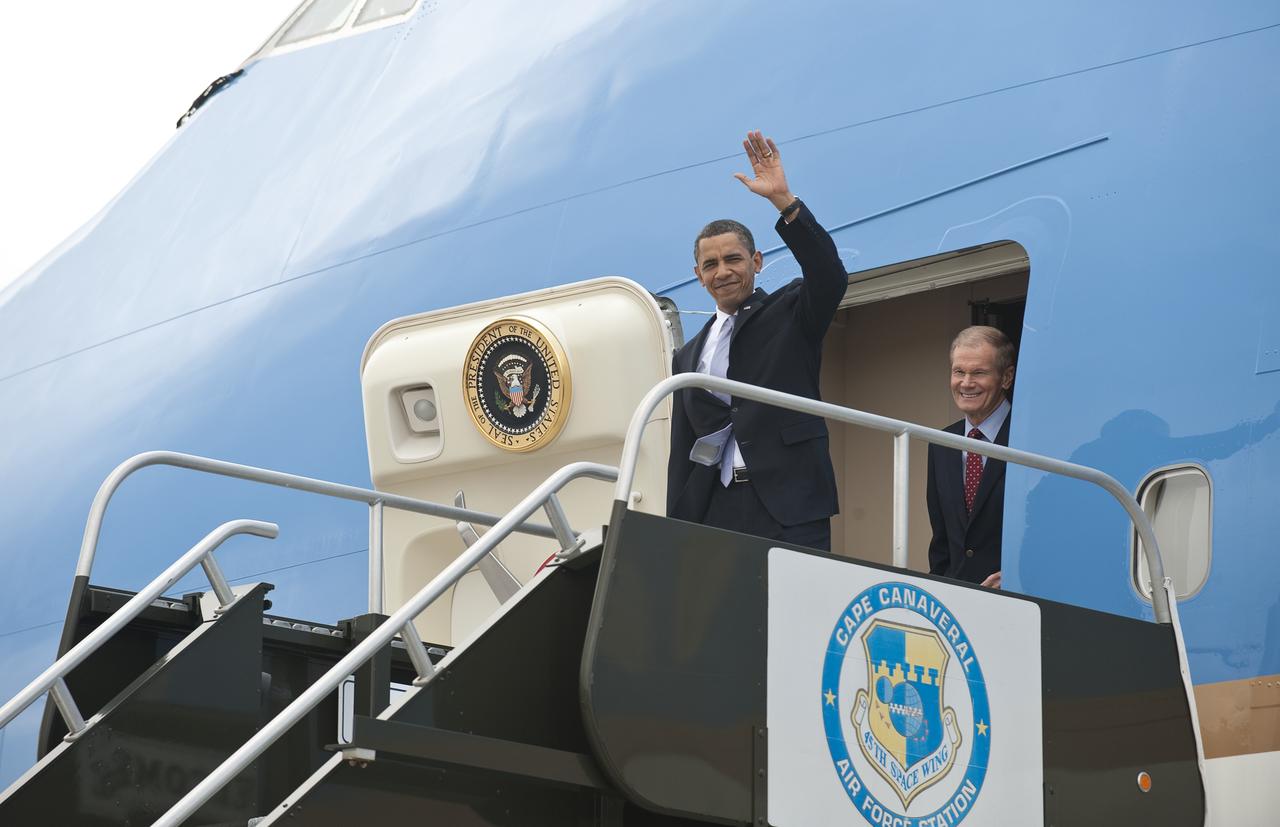
President Barack Obama waves hello as he exits of Air Force One along with Senator Bill Nelson after landing at the NASA Kennedy Space Center in Cape Canaveral, Fla. on Thursday, April 15, 2010.  Obama visited Kennedy to deliver remarks on the bold new course the administration is charting to maintain U.S. leadership in human space flight. Photo Credit: (NASA/Bill Ingalls)
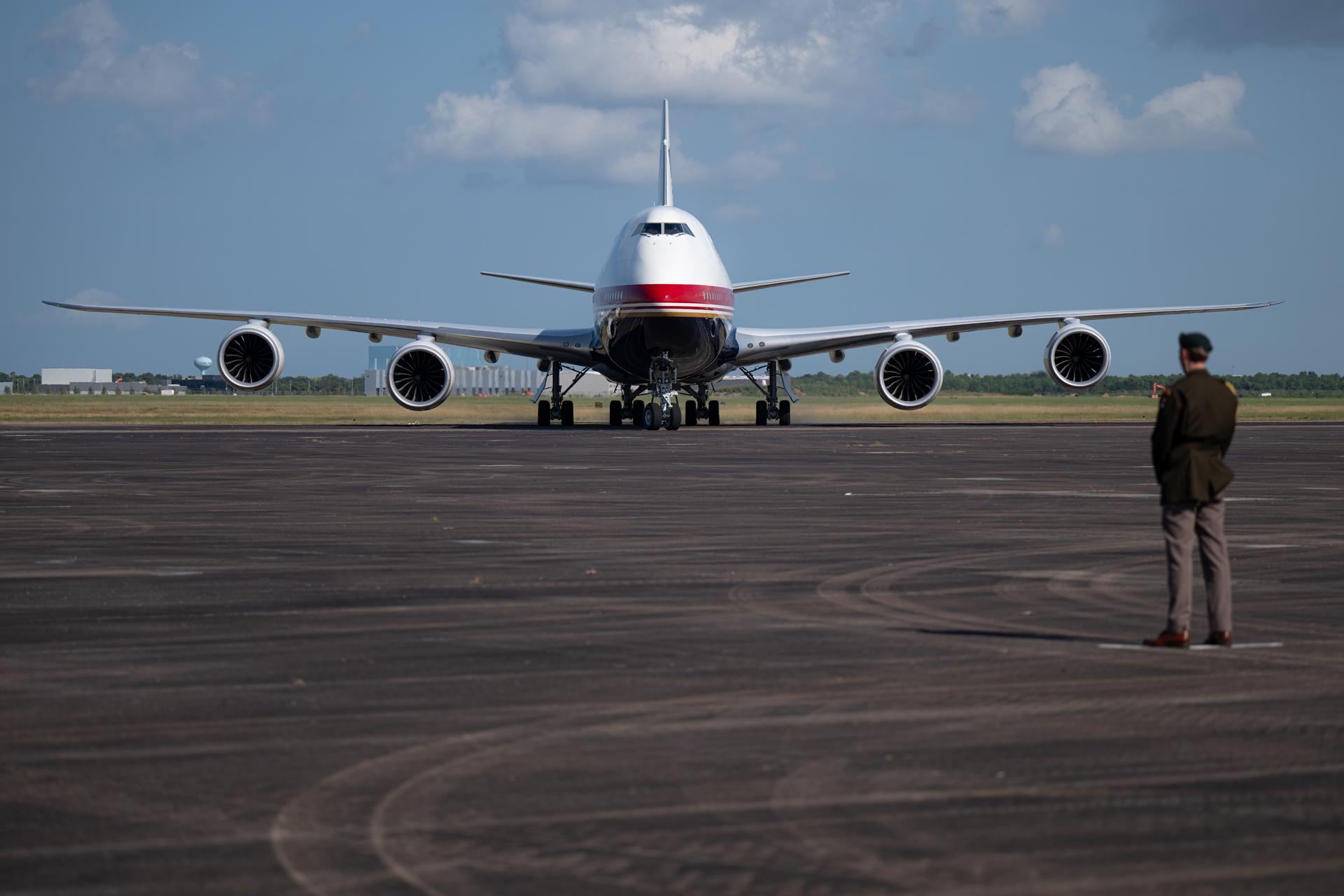
Obama Kennedy Space Center Visit
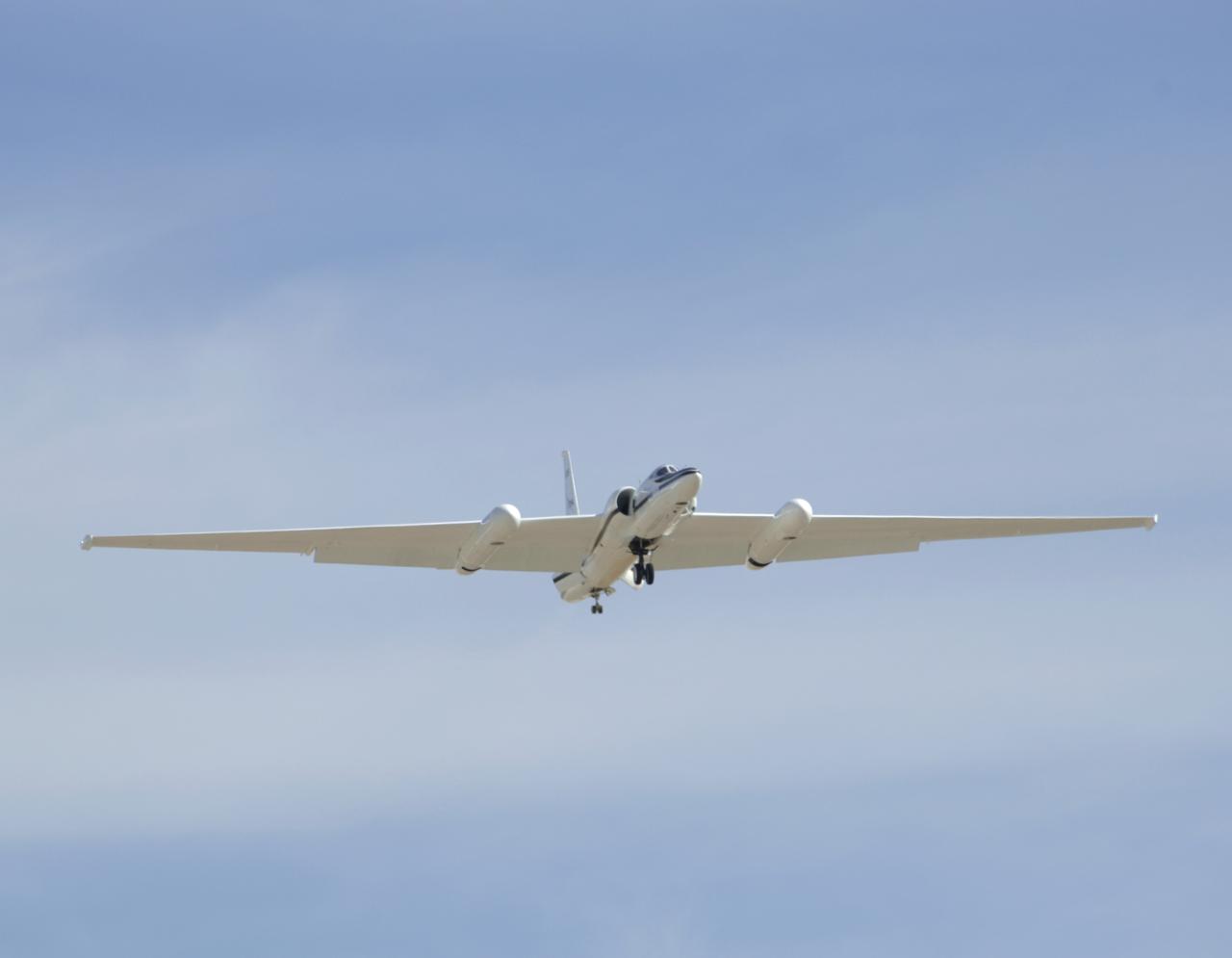
One of NASA's two ER-2 Earth resources aircraft shows off its lines during a flyover at the Edwards Air Force Base open house Oct. 28-29, 2006.
President Barack Obama talks on the phone with NASA Curiosity Mars rover team aboard Air Force One during a flight to Offutt Air Force Base in Nebraska, Aug. 13, 2012. Official White House Photo by Pete Souza
President Obama Phones Mars Rover Team
Gen. C. Robert Kehler, Commander, Air Force Space Command, left, NASA Deputy Administrator Lori Garver, 2nd from left, NASA Kennedy Space Center Director Bob Cabana, and Col. Burke E. Wilson is the Commander, 45th Space Wing, right, welcome the arrival of Air Force One and President Barack Obama to the NASA Kennedy Space Center in Cape Canaveral, Fla. on Thursday, April 15, 2010. Obama visited Kennedy to deliver remarks on the bold new course the administration is charting to maintain U.S. leadership in human space flight. Photo Credit: (NASA/Bill Ingalls)
Obama Kennedy Space Center Visit
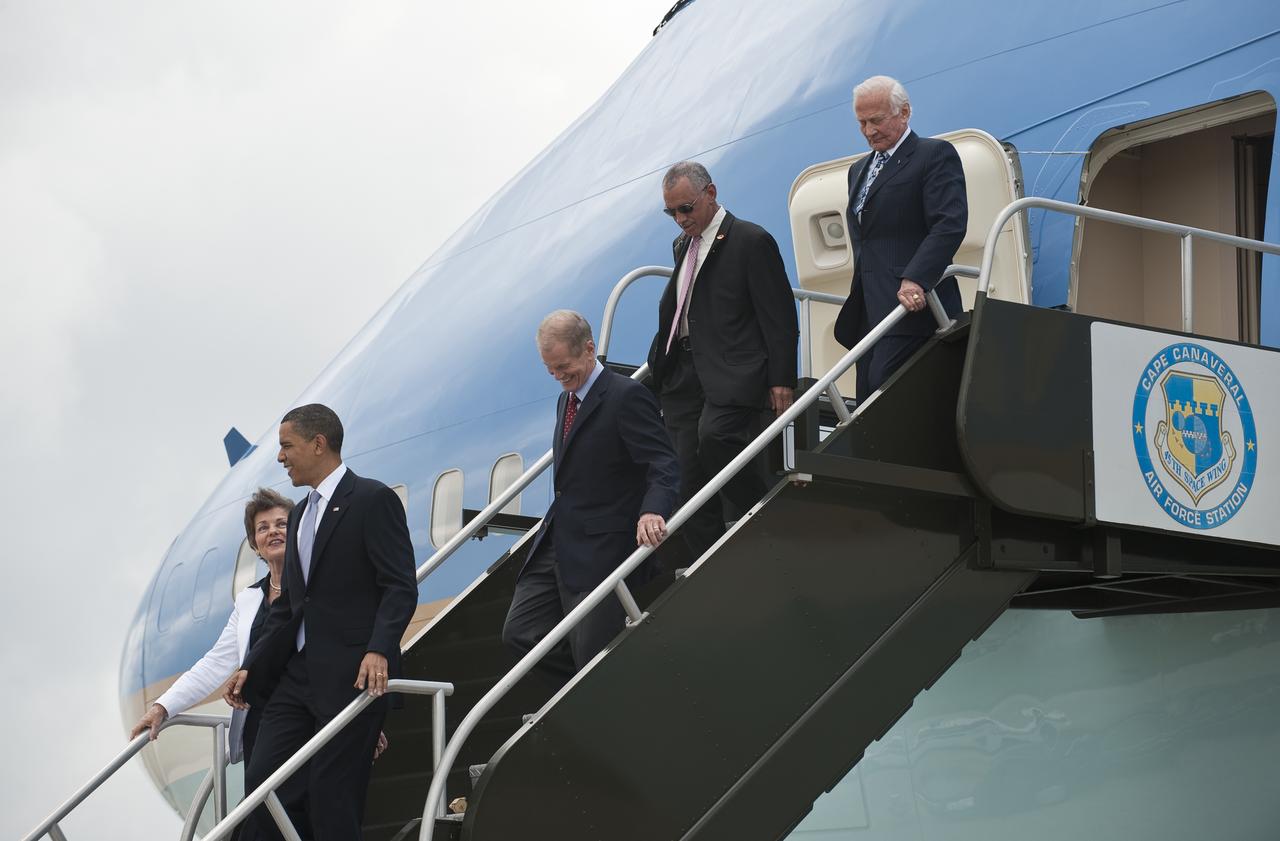
President Barack Obama, left, exits of Air Force One with, from left,  Representative US Representative Suzanne M. Kosmas (D - FL), U.S Senator Bill Nelson (D-FL), NASA Administrator Charles Bolden, and Apollo 11 Astronaut Buzz Aldrin after landing at the NASA Kennedy Space Center in Cape Canaveral, Fla. on Thursday, April 15, 2010.  Obama visited Kennedy to deliver remarks on the bold new course the administration is charting to maintain U.S. leadership in human space flight. Photo Credit: (NASA/Bill Ingalls)
Obama Kennedy Space Center Visit
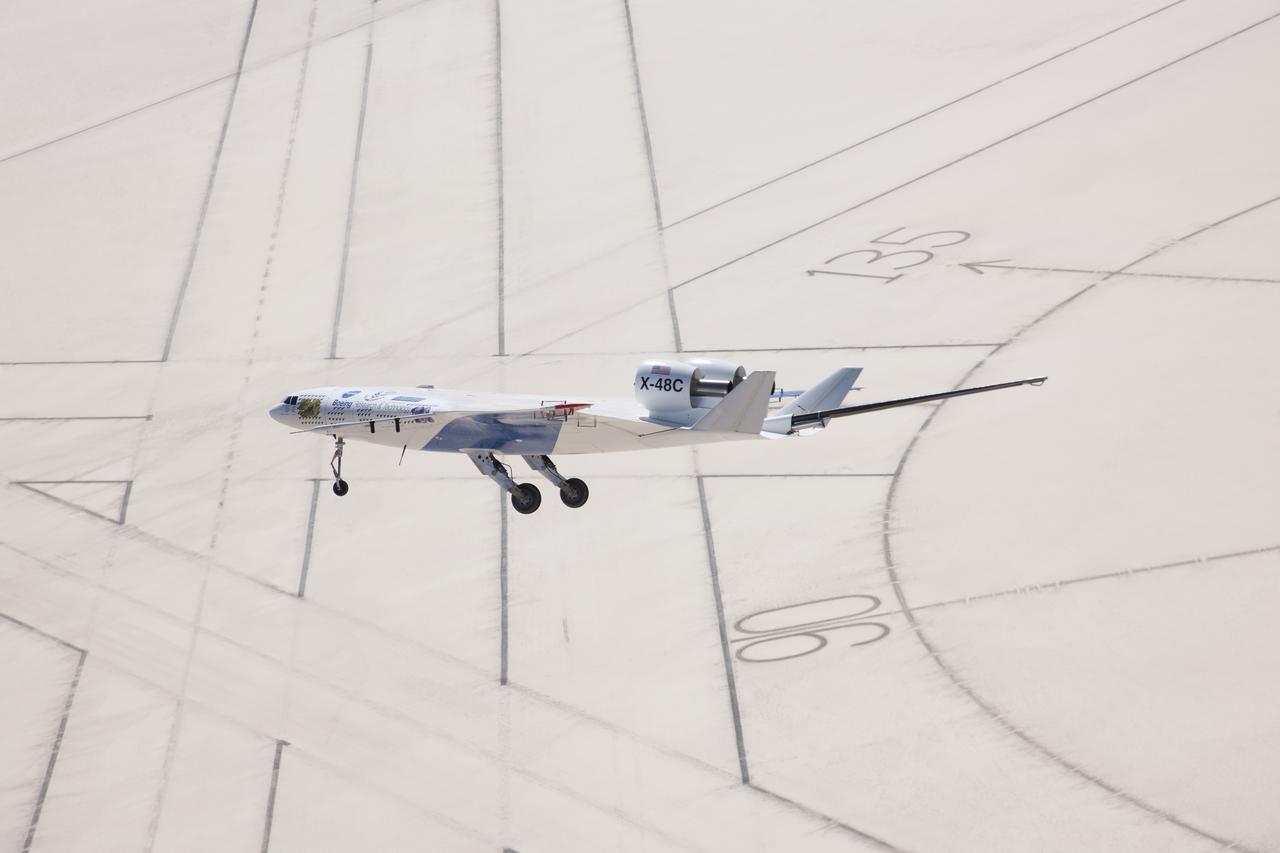
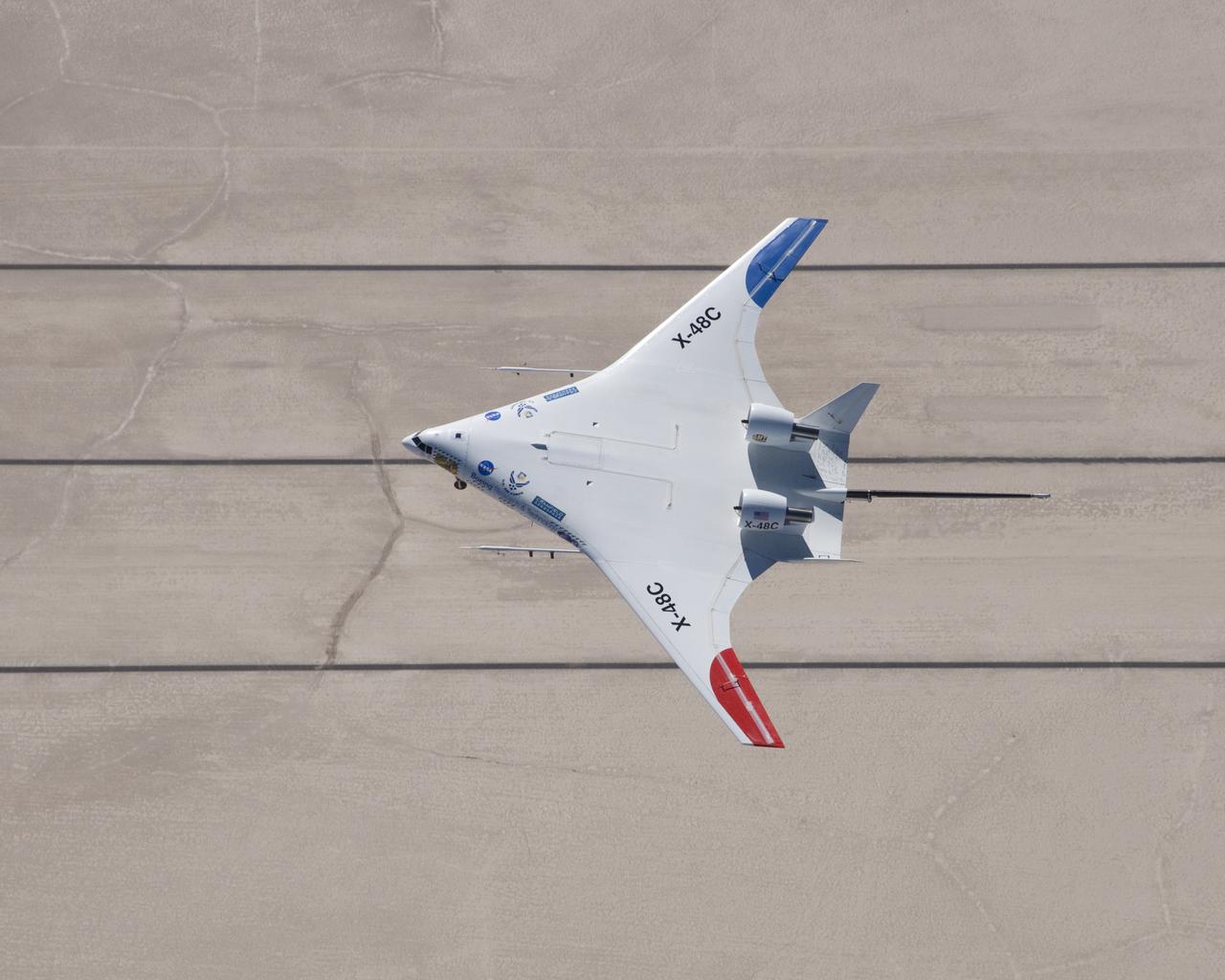
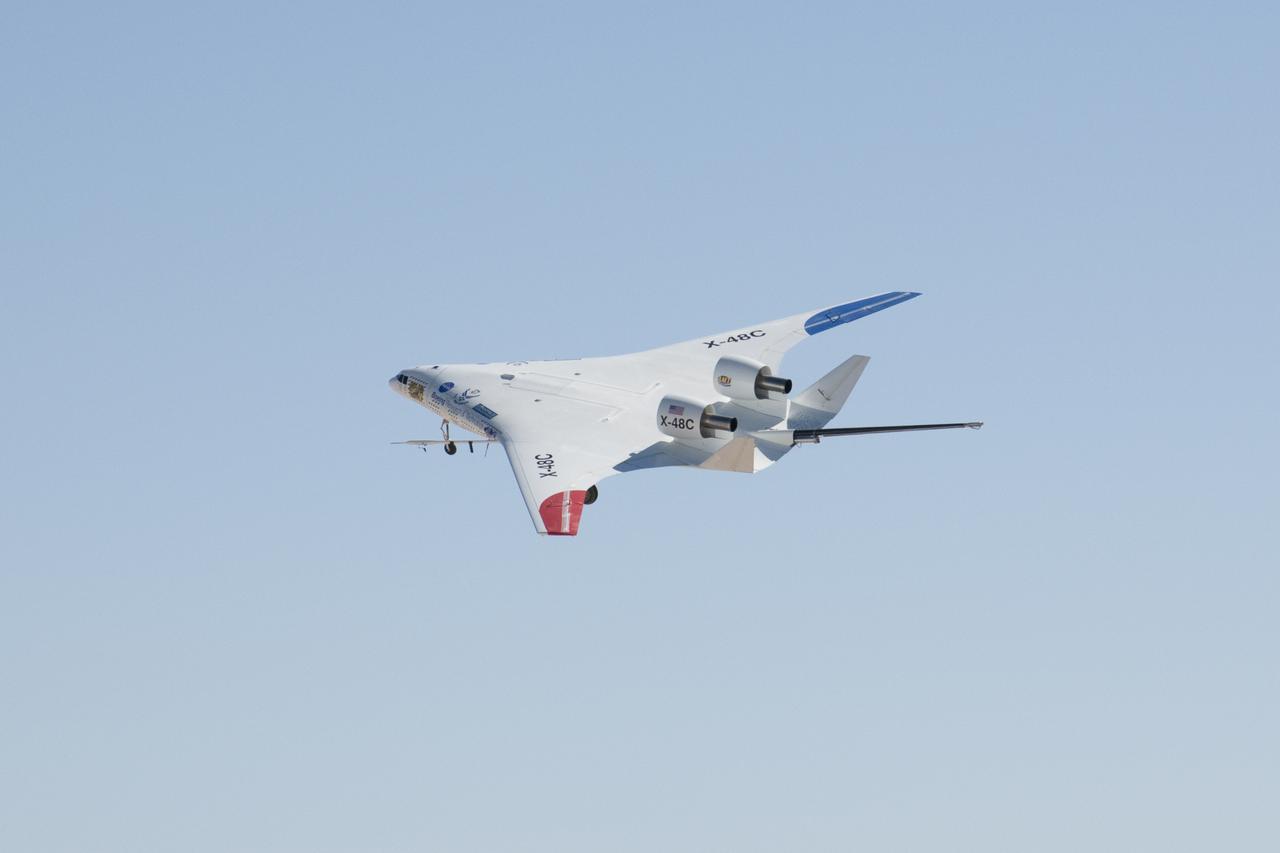
The NASA-Boeing X-48C Hybrid/Blended Wing Body research aircraft banked left during one of its final test flights over Edwards Air Force Base from NASA's Dryden Flight Research Center on Feb. 28, 2013.
X-48C Hybrid - Blended Wing Body Demonstrator
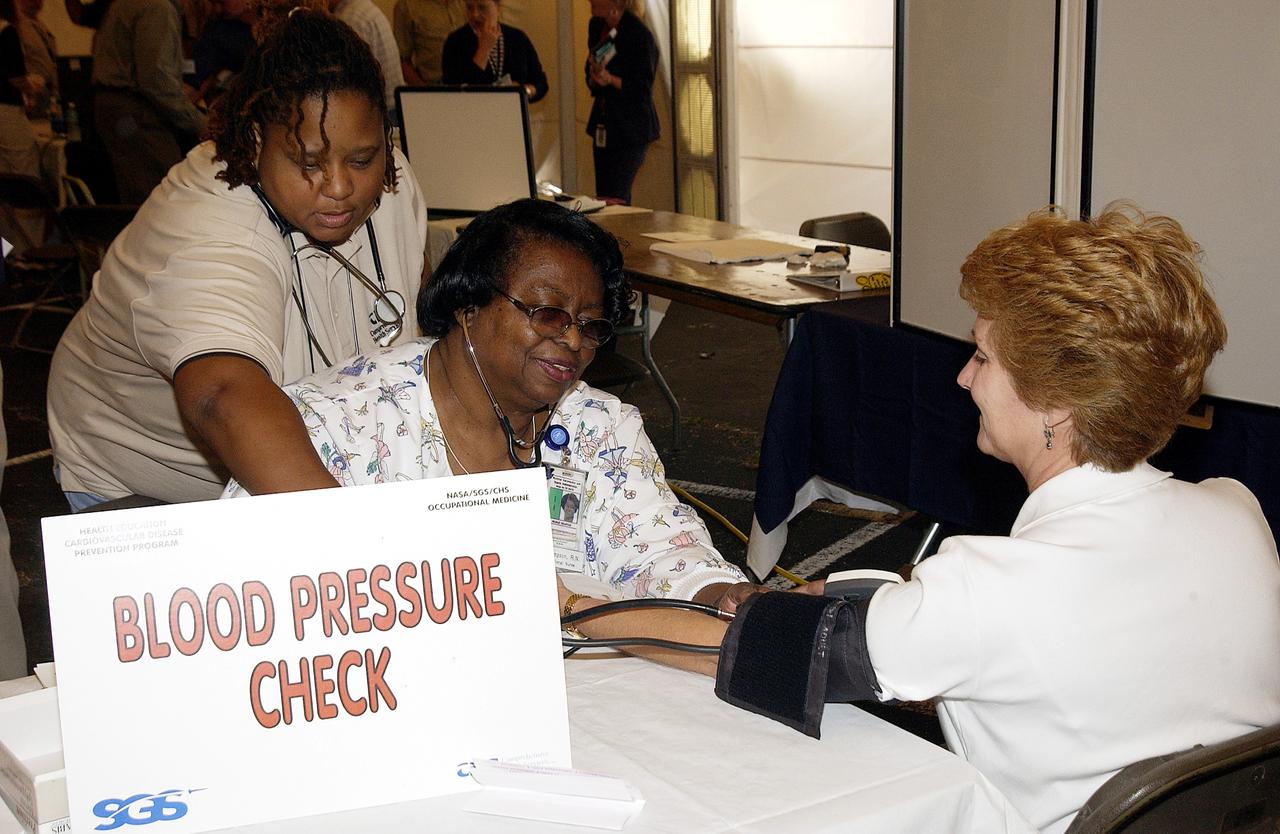
KENNEDY SPACE CENTER, FLA. - An employee gets a blood pressure check from one of the participating organizations in Spaceport Super Safety and Health Day at KSC  and Cape Canaveral Air Force Station.  Many vendors and Center organizations displayed and demonstrated their products during the  annual event dedicated to reinforcing safe and healthful behaviors in the workforce.
KENNEDY SPACE CENTER, FLA. - An employee gets a blood pressure check from one of the participating organizations in Spaceport Super Safety and Health Day at KSC and Cape Canaveral Air Force Station. Many vendors and Center organizations displayed and demonstrated their products during the annual event dedicated to reinforcing safe and healthful behaviors in the workforce.
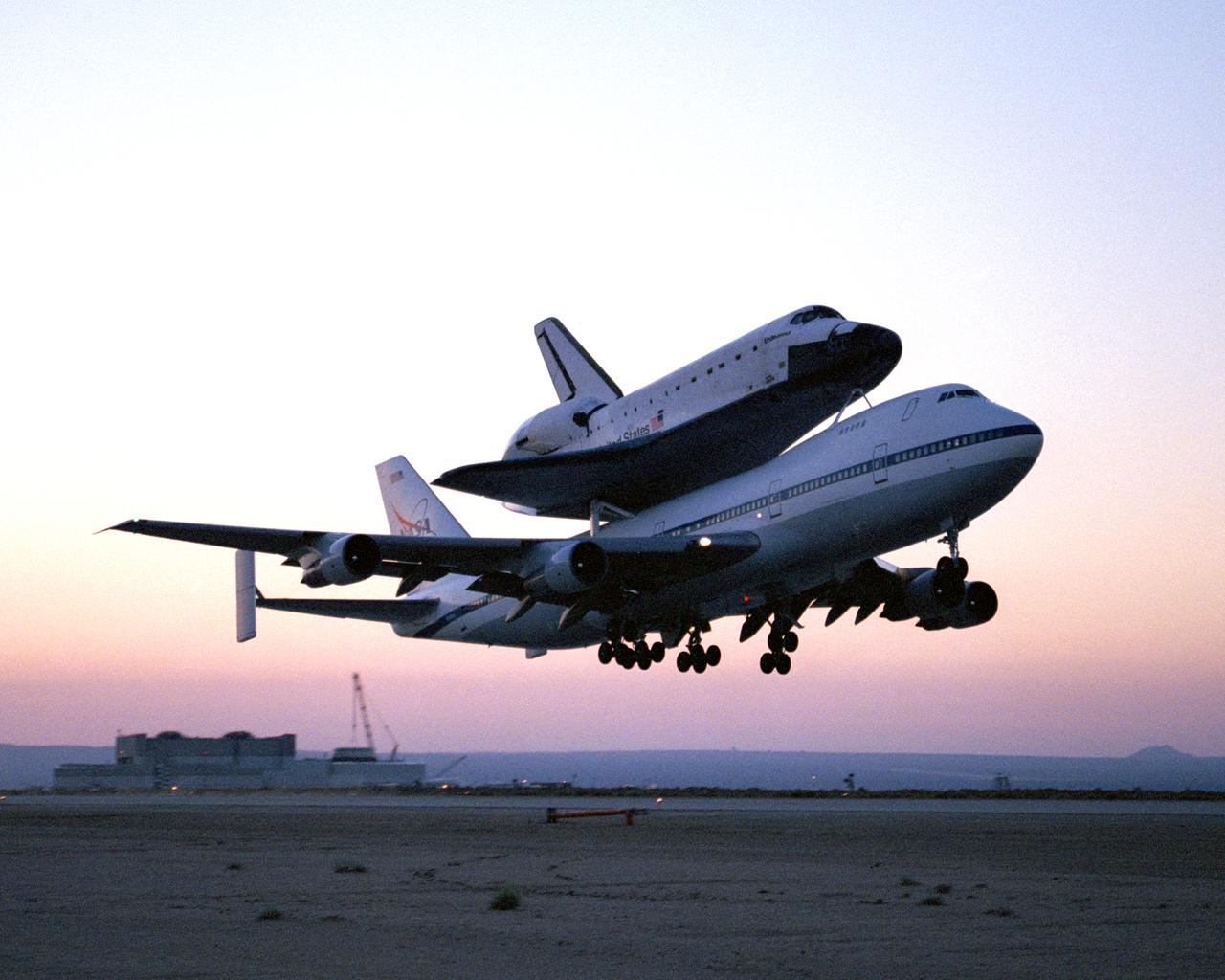
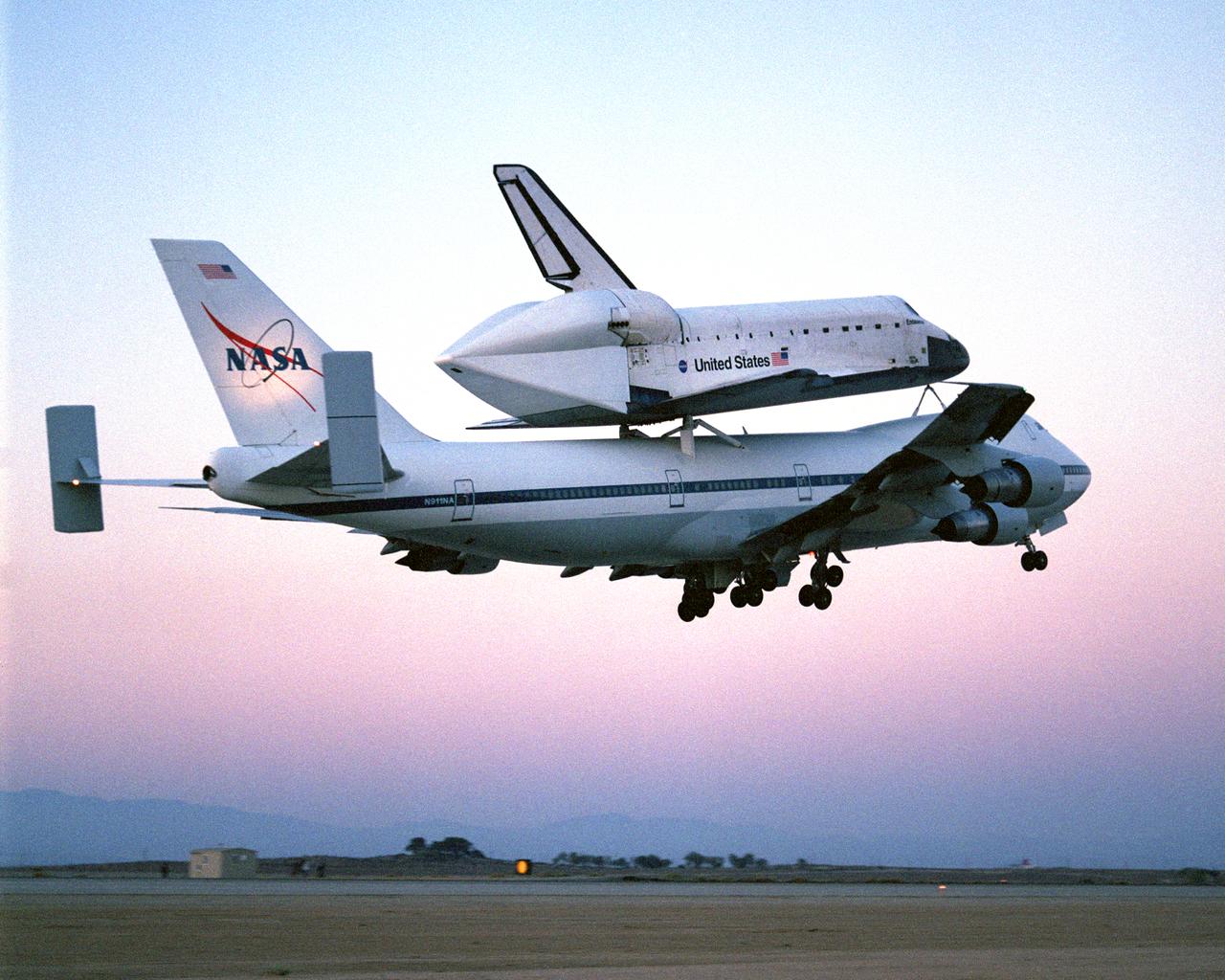
The Space Shuttle Endeavour, mounted securely atop one of NASA's modified Boeing 747 Shuttle Carrier Aircraft, left NASA's Dryden Flight Research Center at Edwards Air Force Base in Southern California at sunrise on Friday, June 28.
The Space Shuttle Endeavour, mounted securely atop one of NASA's modified Boeing 747 Shuttle Carrier Aircraft, left NASA's Dryden Flight Research Center at Edwards Air Force Base in Southern California at sunrise on Friday, June 28
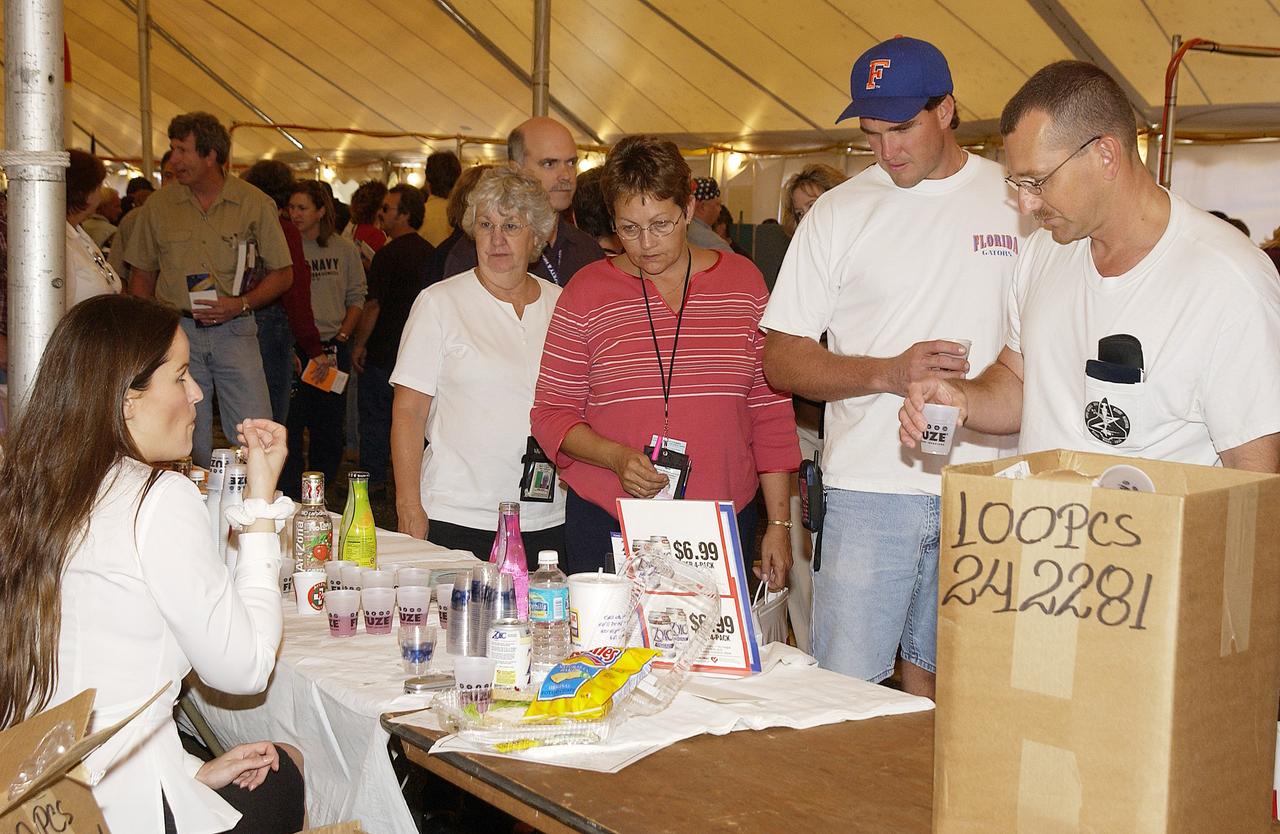
KENNEDY SPACE CENTER, FLA. -   One of many vendors displaying their products during the Spaceport Super Safety and Health Day at KSC and Cape Canaveral Air Force Station, Florida Power and Light draws a crowd during a demonstration.  The annual KSC event is dedicated to reinforcing safe and healthful behaviors in the workforce.
KENNEDY SPACE CENTER, FLA. - One of many vendors displaying their products during the Spaceport Super Safety and Health Day at KSC and Cape Canaveral Air Force Station, Florida Power and Light draws a crowd during a demonstration. The annual KSC event is dedicated to reinforcing safe and healthful behaviors in the workforce.
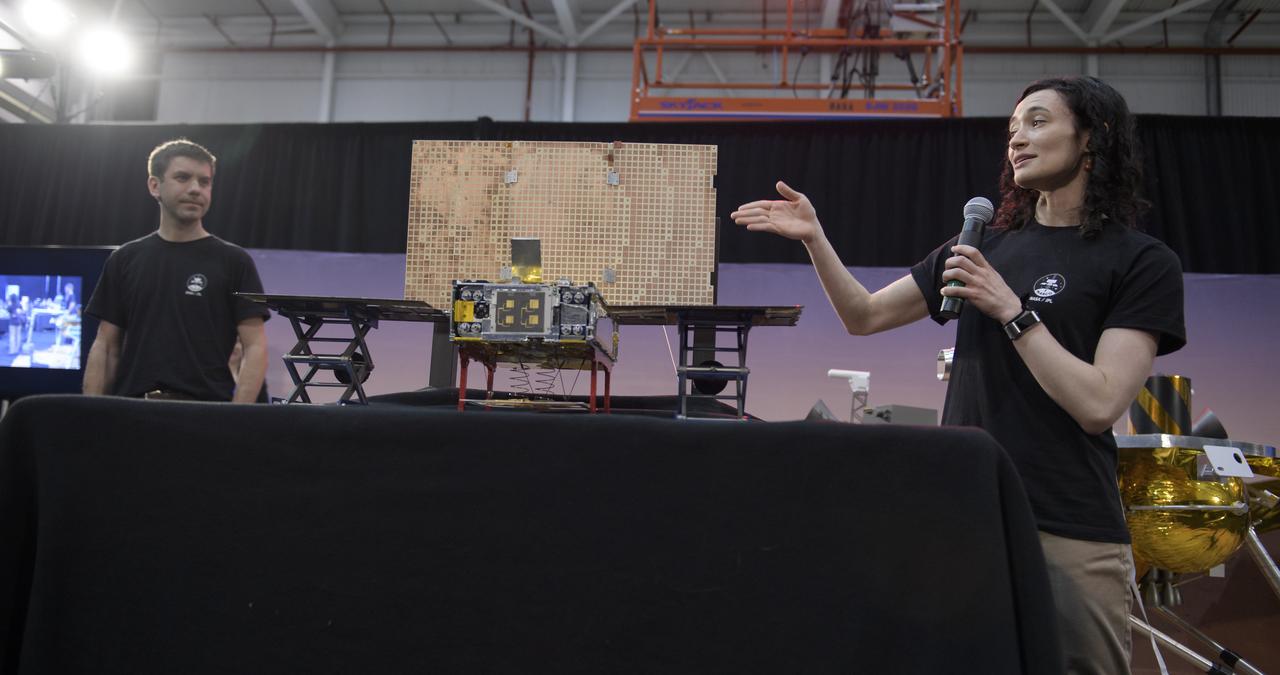
Andy Klesh, MarCO chief engineer, NASA JPL, left, and Annie Marinan, MarCO Systems Engineer, NASA JPL discuss NASA's Mars Cube One (MarCO) technology demonstration mission during a prelaunch media briefing, Thursday, May 3, 2018, at Vandenberg Air Force Base in California. MarCO, which is a separate mission launching on the same rocket at NASA’s InSight mission to Mars, will test new miniaturized deep space communication equipment. Photo Credit: (NASA/Bill Ingalls)
InSight Prelaunch Briefing
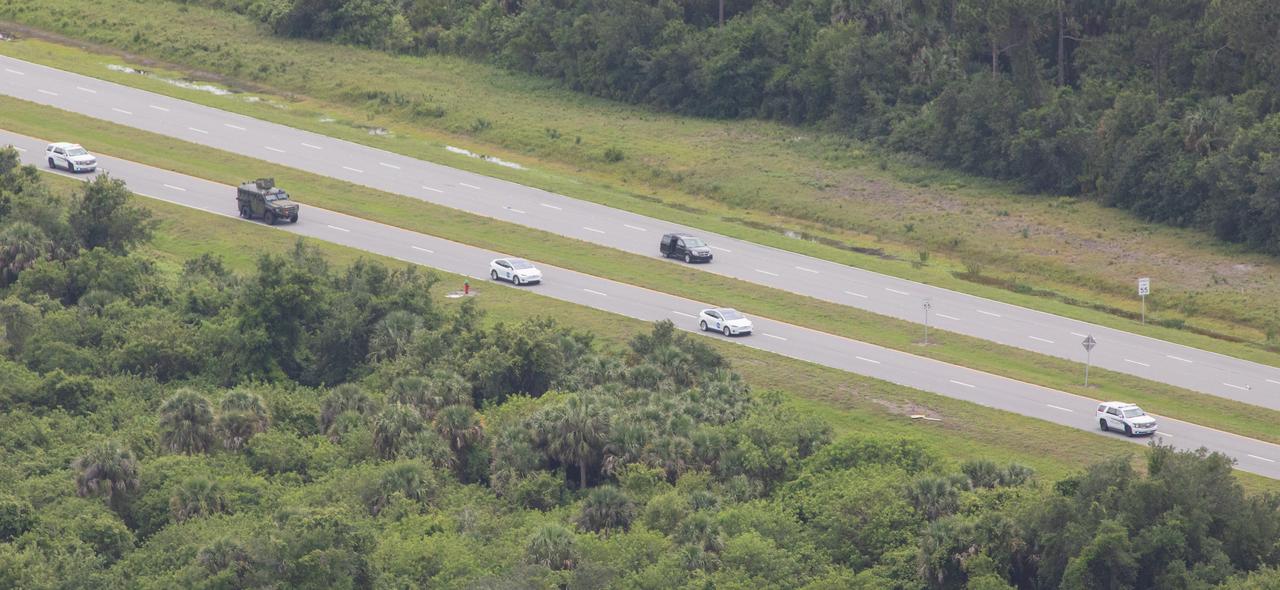
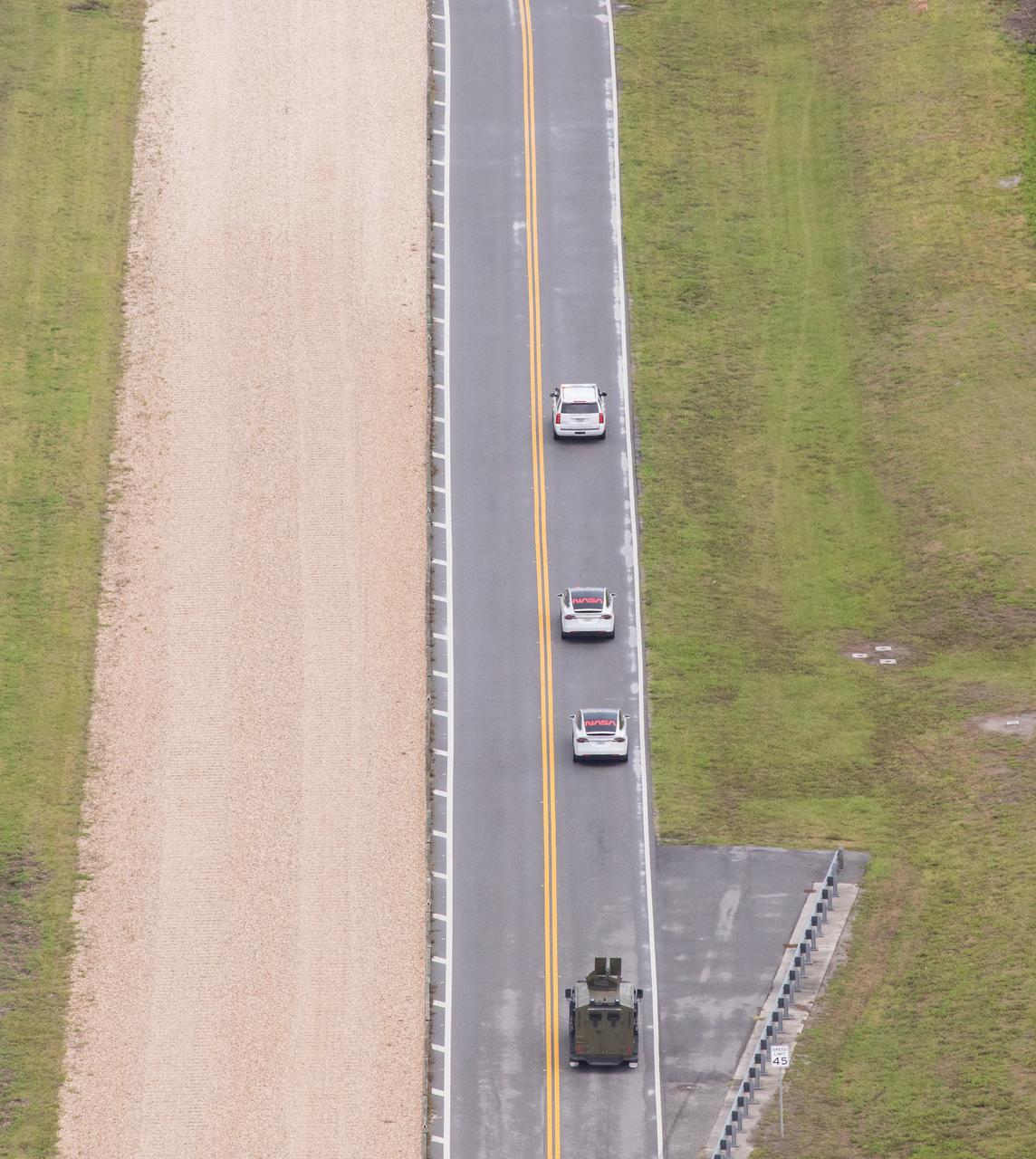
NASA astronauts Robert Behnken and Douglas Hurley make the journey from the Neil A. Armstrong Operations and Checkout Building to historic Launch Complex 39A at the agency’s Kennedy Space Center in Florida as they prepare to embark on NASA’s SpaceX Demo-2 mission. The astronauts are being transported to the launch pad in a Tesla Model X. The launch, initially scheduled for May 27, 2020, was scrubbed due to unfavorable weather conditions around Launch Complex 39A. The next launch attempt will be Saturday, May 30. Liftoff of the SpaceX Falcon 9 rocket and Crew Dragon spacecraft is scheduled for 3:22 p.m. EDT from Launch Complex 39A. Behnken and Hurley will be the first astronauts to launch to the International Space Station from U.S. soil since the end of the Space Shuttle Program in 2011. Part of NASA’s Commercial Crew Program, this will be SpaceX’s final flight test, paving the way for the agency to certify the crew transportation system for regular, crewed flights to the orbiting laboratory.
SpaceX Demo-2 Air Force One & Astronaut Rollout to Pad
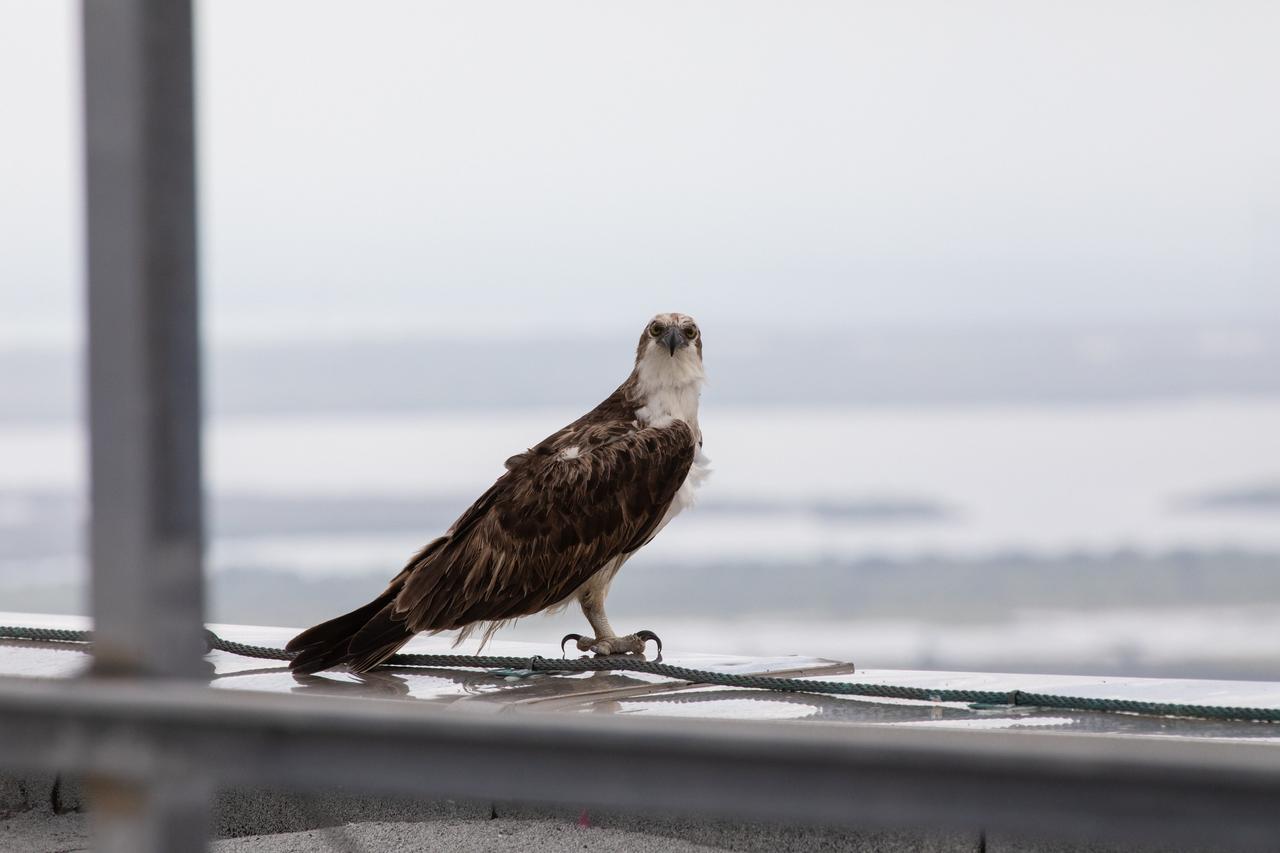
An osprey perches atop a building at NASA’s Kennedy Space Center in Florida on May 27, 2020. The center shares a border with the Merritt Island National Wildlife Refuge, where more than 330 native and migratory bird species, 25 mammals, 117 fishes, and 65 amphibians and reptiles reside.
SpaceX Demo-2 Air Force One & Astronaut Rollout to Pad
NASA astronauts Robert Behnken and Douglas Hurley make the journey from the Neil A. Armstrong Operations and Checkout Building to historic Launch Complex 39A at the agency’s Kennedy Space Center in Florida as they prepare to embark on NASA’s SpaceX Demo-2 mission. The astronauts are being transported to the launch pad in a Tesla Model X. The launch, initially scheduled for May 27, 2020, was scrubbed due to unfavorable weather conditions around Launch Complex 39A. The next launch attempt will be Saturday, May 30. Liftoff of the SpaceX Falcon 9 rocket and Crew Dragon spacecraft is scheduled for 3:22 p.m. EDT from Launch Complex 39A. Behnken and Hurley will be the first astronauts to launch to the International Space Station from U.S. soil since the end of the Space Shuttle Program in 2011. Part of NASA’s Commercial Crew Program, this will be SpaceX’s final flight test, paving the way for the agency to certify the crew transportation system for regular, crewed flights to the orbiting laboratory.
SpaceX Demo-2 Air Force One & Astronaut Rollout to Pad
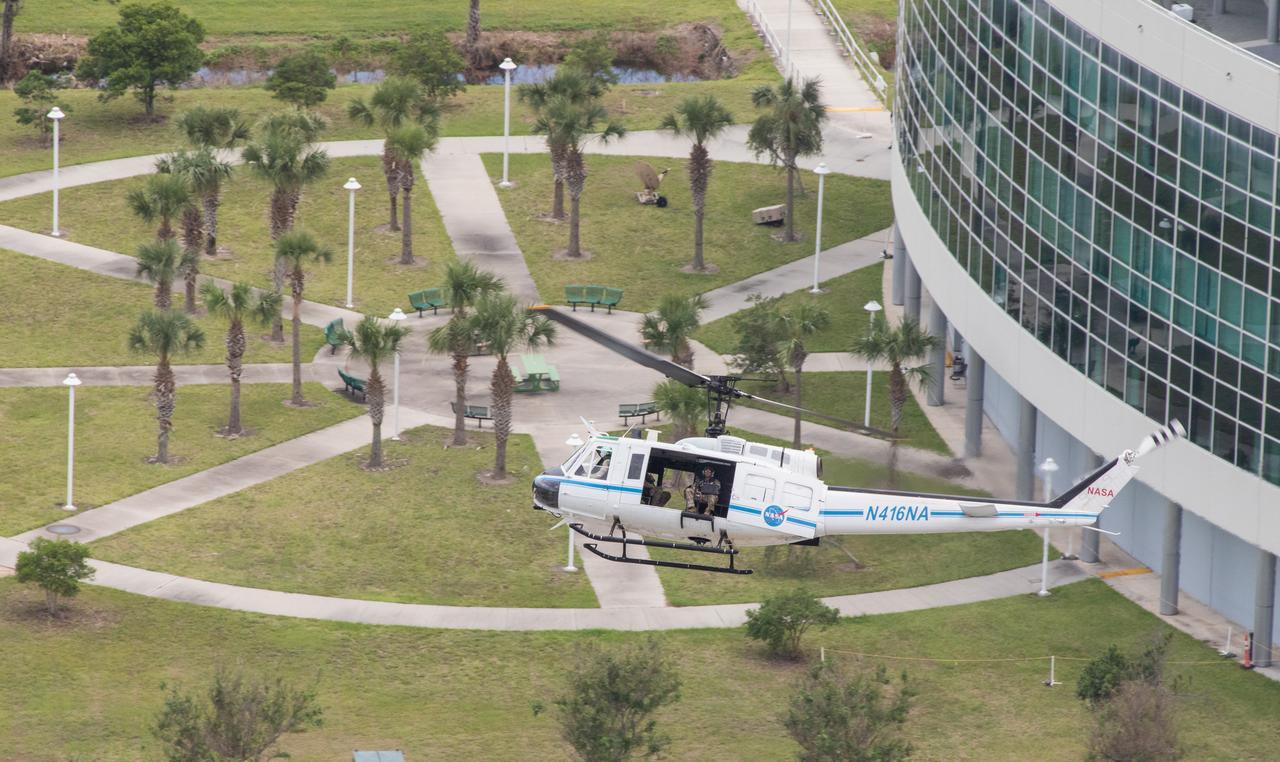
A helicopter that’s part of the convoy to escort NASA astronauts Robert Behnken and Douglas Hurley to Launch Complex 39A flies over the agency’s Kennedy Space Center in Florida on May 27, 2020, ahead of NASA’s SpaceX Demo-2 launch. The launch was scrubbed due to unfavorable weather conditions, and the next launch attempt will be Saturday, May 30. Liftoff of the SpaceX Falcon 9 rocket and Crew Dragon spacecraft is scheduled for 3:22 p.m. EDT from historic Launch Complex 39A. Behnken and Hurley will be the first astronauts to launch to the International Space Station from U.S. soil since the end of the Space Shuttle Program in 2011. Part of NASA’s Commercial Crew Program, this will be SpaceX’s final flight test, paving the way for the agency to certify the crew transportation system for regular, crewed flights to the orbiting laboratory.
SpaceX Demo-2 Air Force One & Astronaut Rollout to Pad
The X-48C Hybrid Wing Body research aircraft flew over the intersection of several runways adjacent to the compass rose on Rogers Dry Lake at Edwards Air Force Base during one of the sub-scale aircraft's final test flights on Feb. 28, 2013.
X-48C Flies Over Intersecting Runways
NASA X-48C Hybrid Wing Body aircraft flew over one of the runways laid out on Rogers Dry Lake at Edwards Air Force Base, CA, during a test flight from NASA's Dryden Flight Research Center on Feb. 28, 2013.
X-48C Hybrid - Blended Wing Body Demonstrator
The Space Shuttle Endeavour, mounted securely atop one of NASA's modified Boeing 747 Shuttle Carrier Aircraft, left NASA's Dryden Flight Research Center at Edwards Air Force Base in Southern California at sunrise on Friday, June 28, nine days after concluding mission STS-111 to the International Space Station with a landing at Edwards.
The Space Shuttle Endeavour, mounted securely atop one of NASA's modified Boeing 747 Shuttle Carrier Aircraft, left NASA's Dryden Flight Research Center at Edwards Air Force Base in Southern California at sunrise on Friday, June 28, nine days after conclu
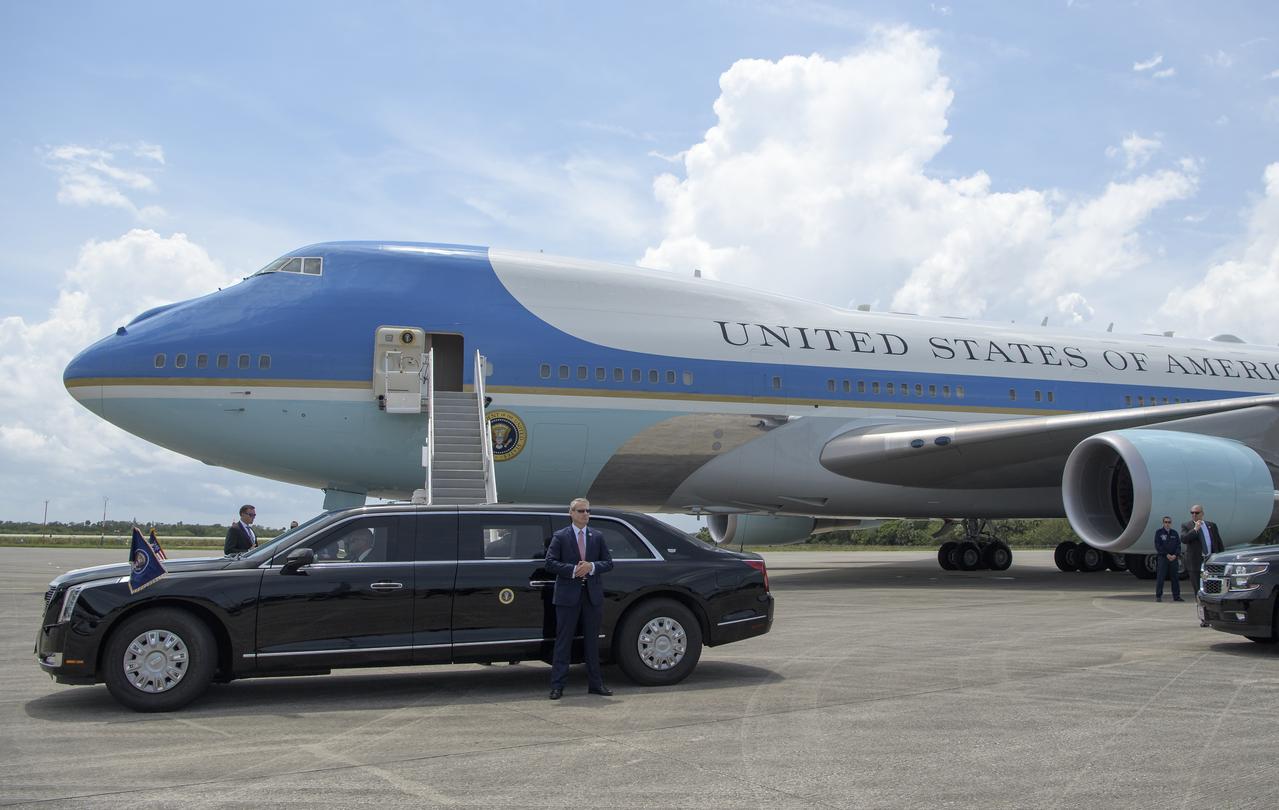
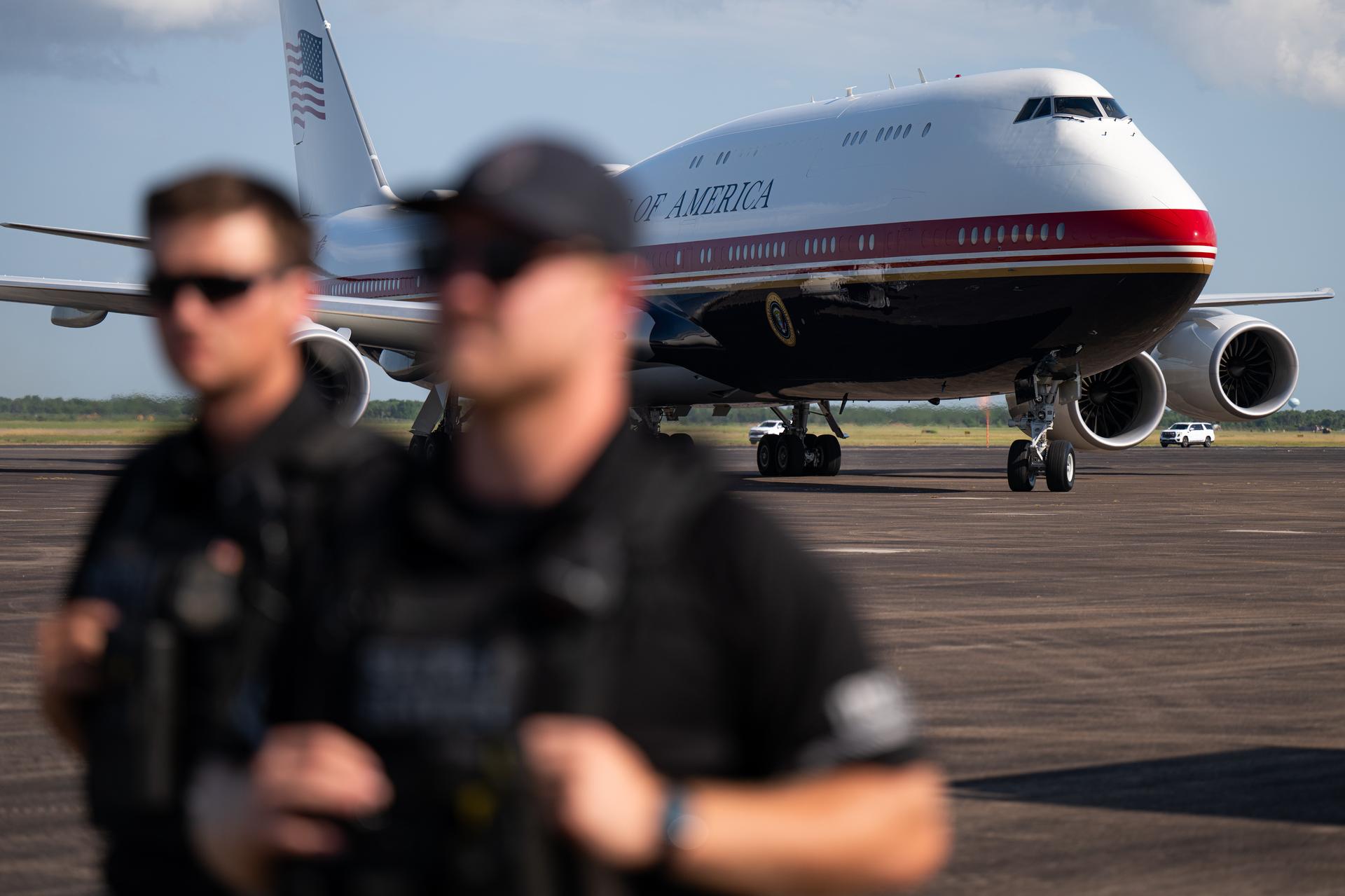
The President’s limousine also know as "the beast," is seen in front of Air Force One after President Donald Trump arrived at the Launch and Landing Facility at NASA’s Kennedy Space Center ahead of SpaceX’s Demo-2 mission, Saturday, May 30, 2020, in Florida. NASA’s SpaceX Demo-2 mission is the first launch with astronauts of the SpaceX Crew Dragon spacecraft and Falcon 9 rocket to the International Space Station as part of the agency’s Commercial Crew Program. The test flight serves as an end-to-end demonstration of SpaceX’s crew transportation system. Behnken and Hurley are scheduled to launch at 3:22 p.m. EDT on Saturday, May 30, from Launch Complex 39A at the Kennedy Space Center. A new era of human spaceflight is set to begin as American astronauts once again launch on an American rocket from American soil to low-Earth orbit for the first time since the conclusion of the Space Shuttle Program in 2011.  Photo Credit: (NASA/Bill Ingalls)
SpaceX Demo-2 Preflight
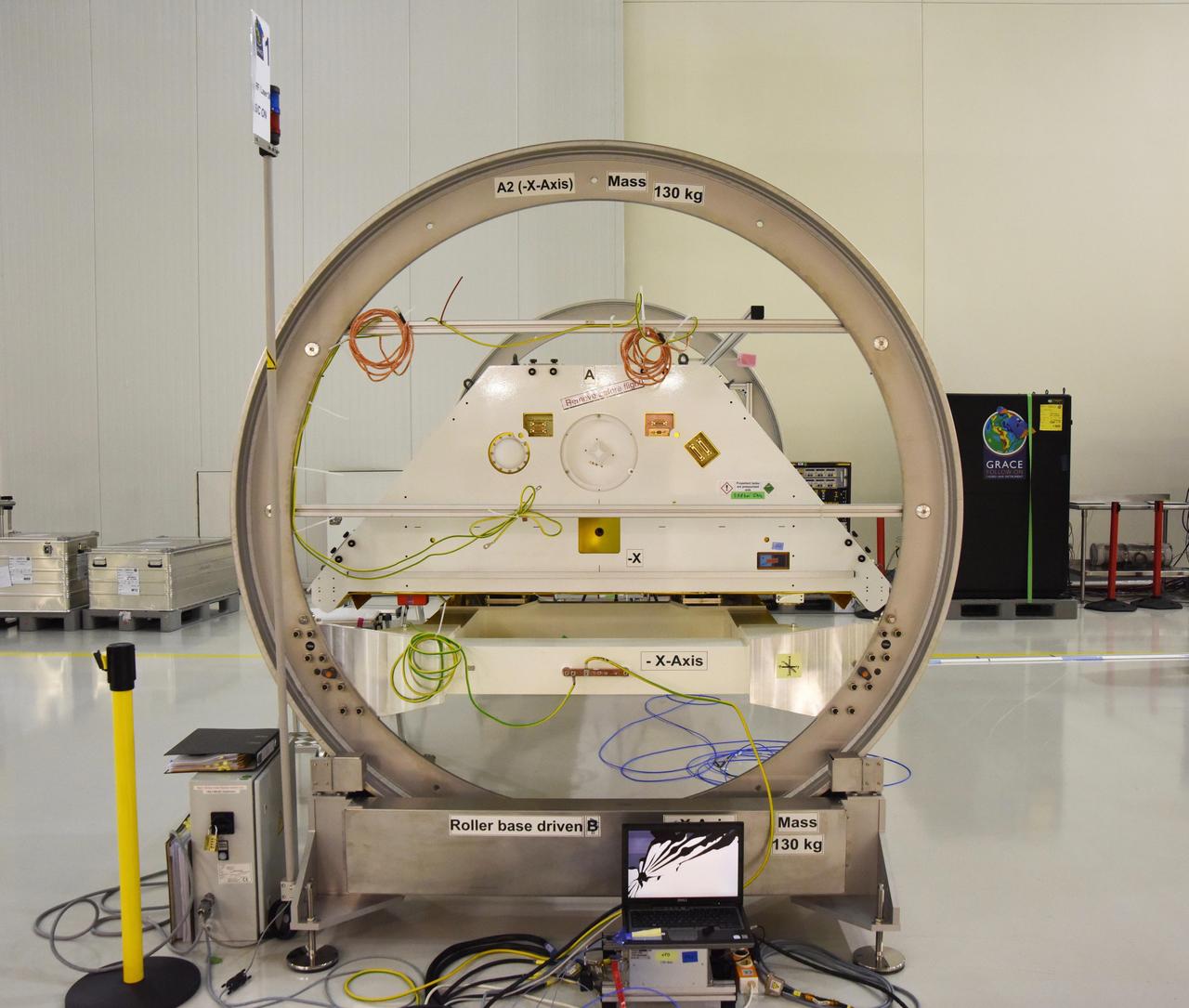
One of the two Gravity Recovery and Climate Experiment Follow-On (GRACE-FO) satellites and its turntable fixture at the Astrotech Space Operations processing facility at Vandenberg Air Force Base, California.  GRACE-FO will extend GRACE's legacy of scientific achievements, which range from tracking mass changes of Earth's polar ice sheets and estimating global groundwater changes, to measuring the mass changes of large earthquakes and inferring changes in deep ocean currents, a driving force in climate. To date, GRACE observations have been used in more than 4,300 research publications. Its measurements provide a unique view of the Earth system and have far-reaching benefits to society, such as providing insights into where global groundwater resources may be shrinking or growing and where dry soils are contributing to drought. GRACE-FO is planned to fly at least five years.   https://photojournal.jpl.nasa.gov/catalog/PIA22339
GRACE-FO Satellites in a Clean Room at Vandenberg Air Force Base
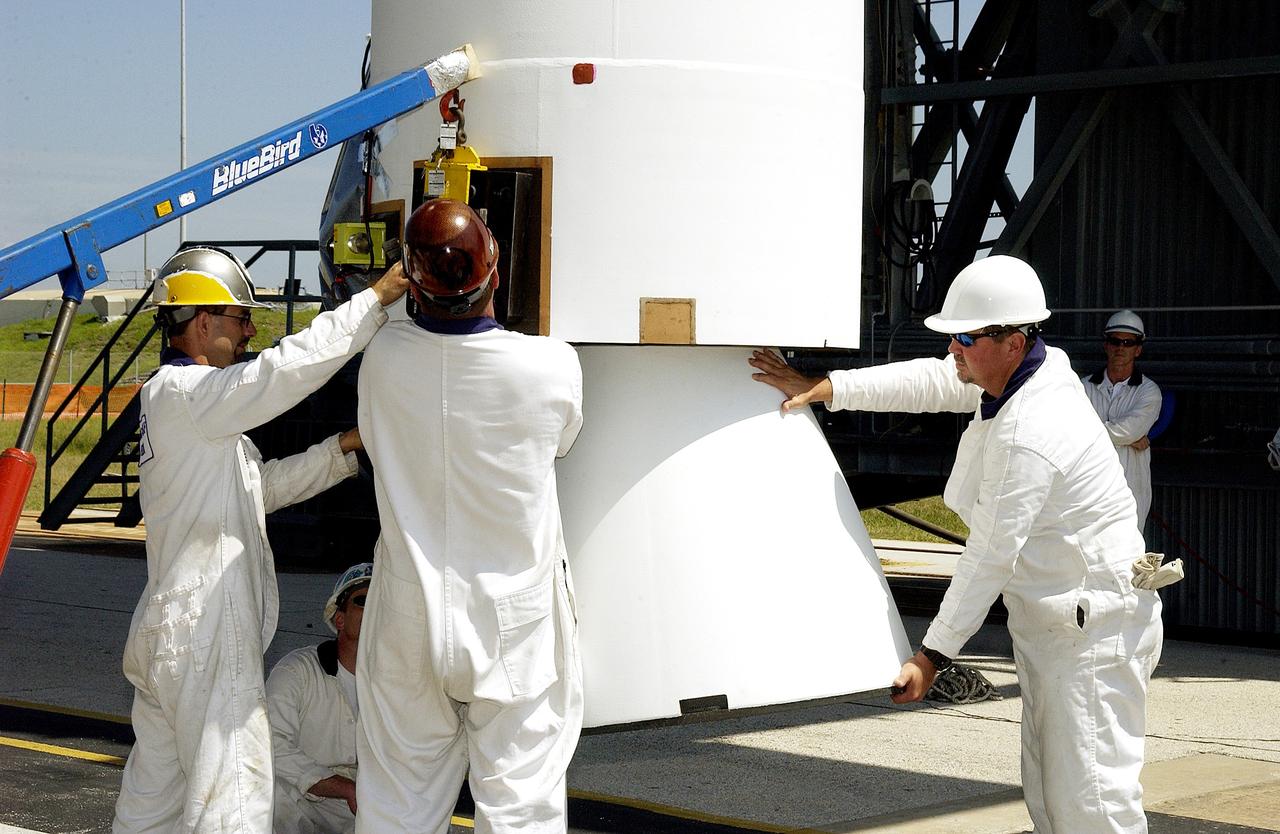
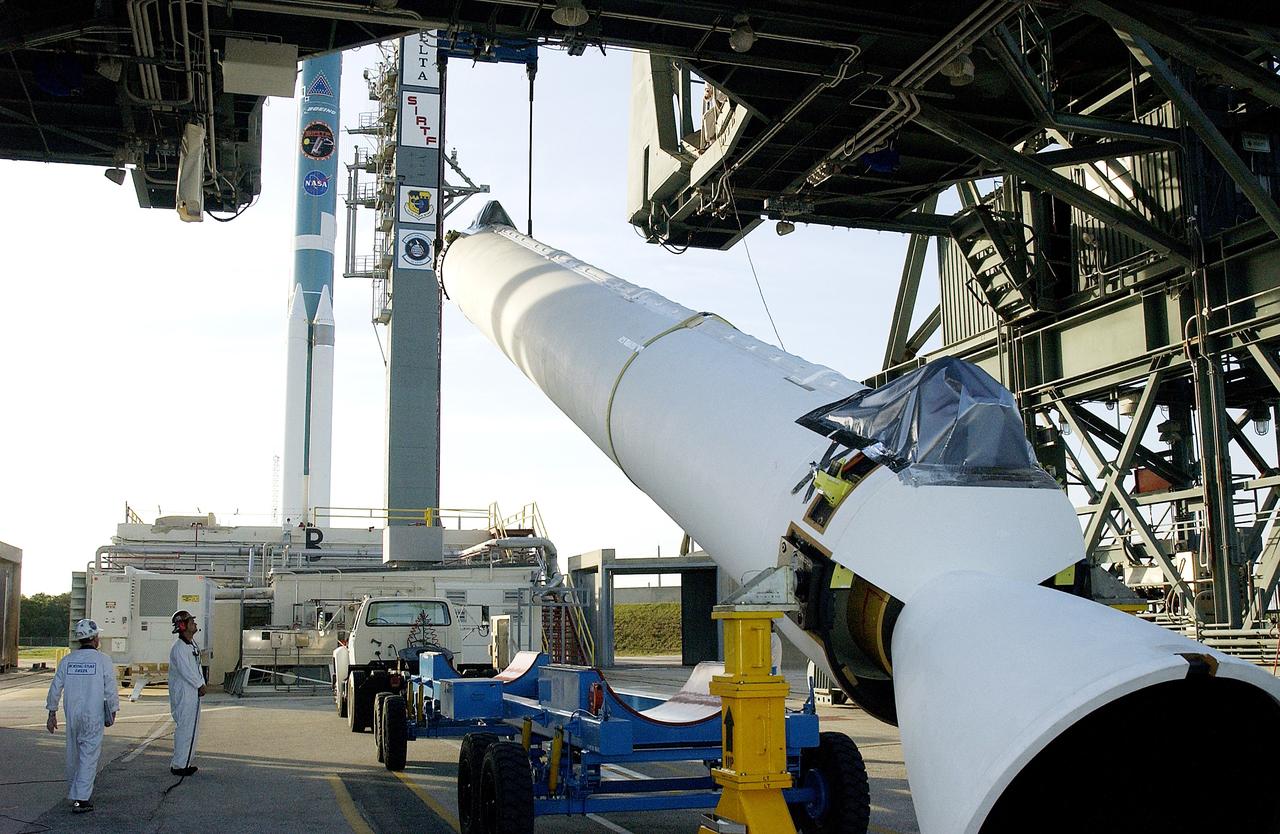
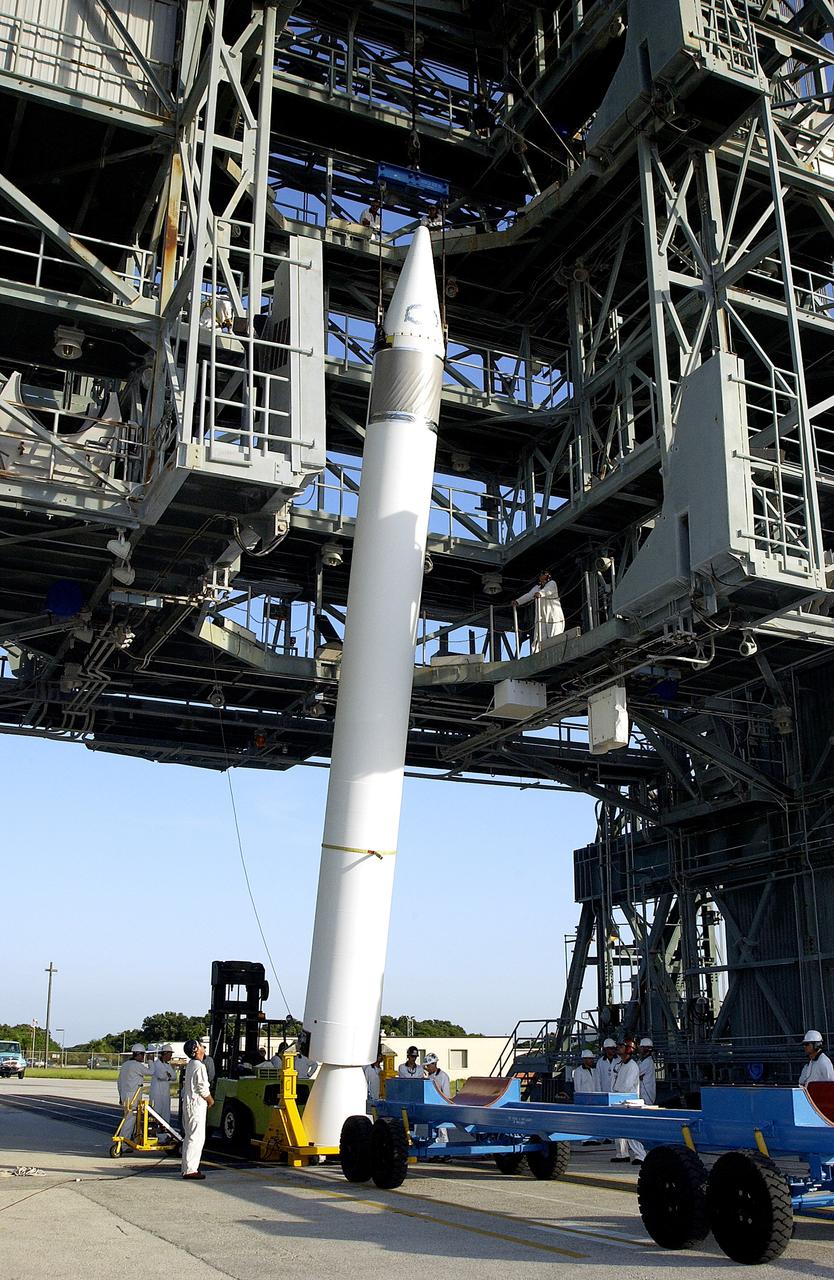
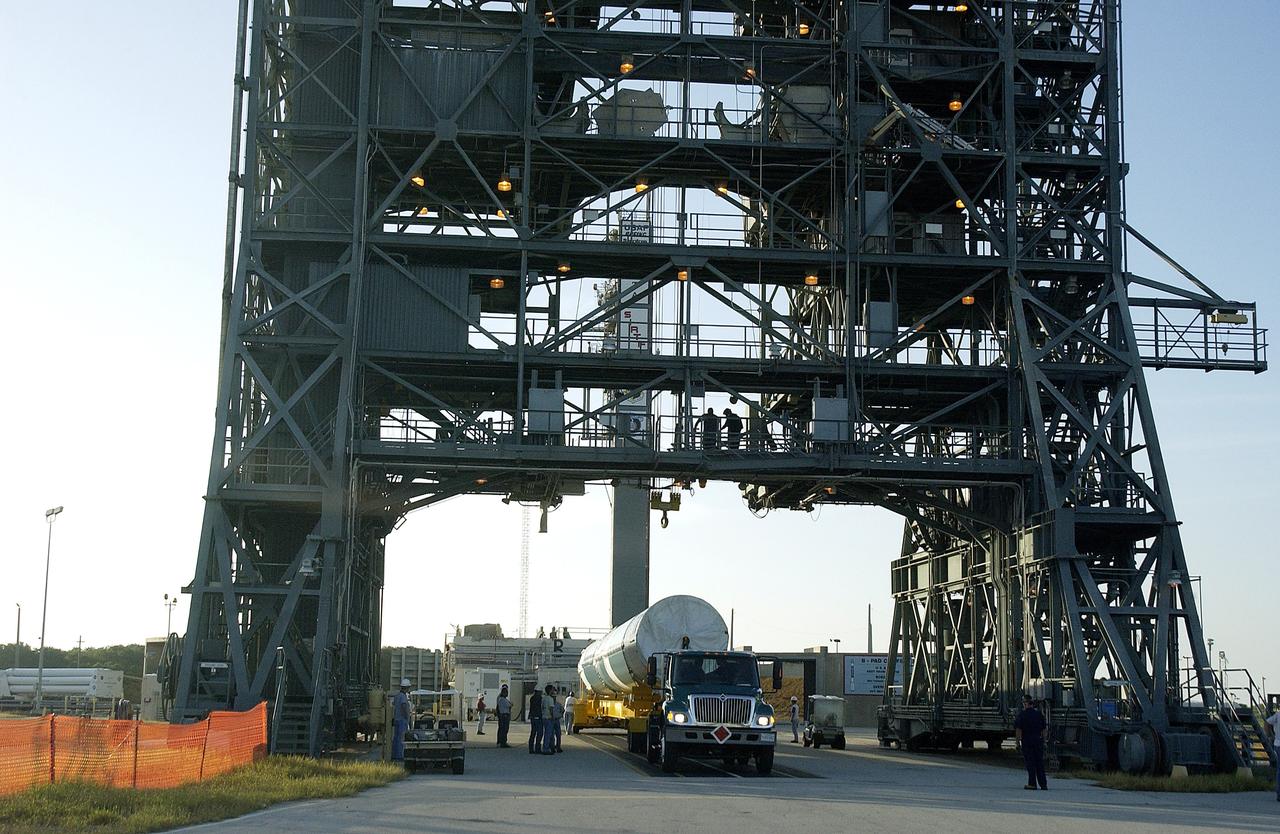
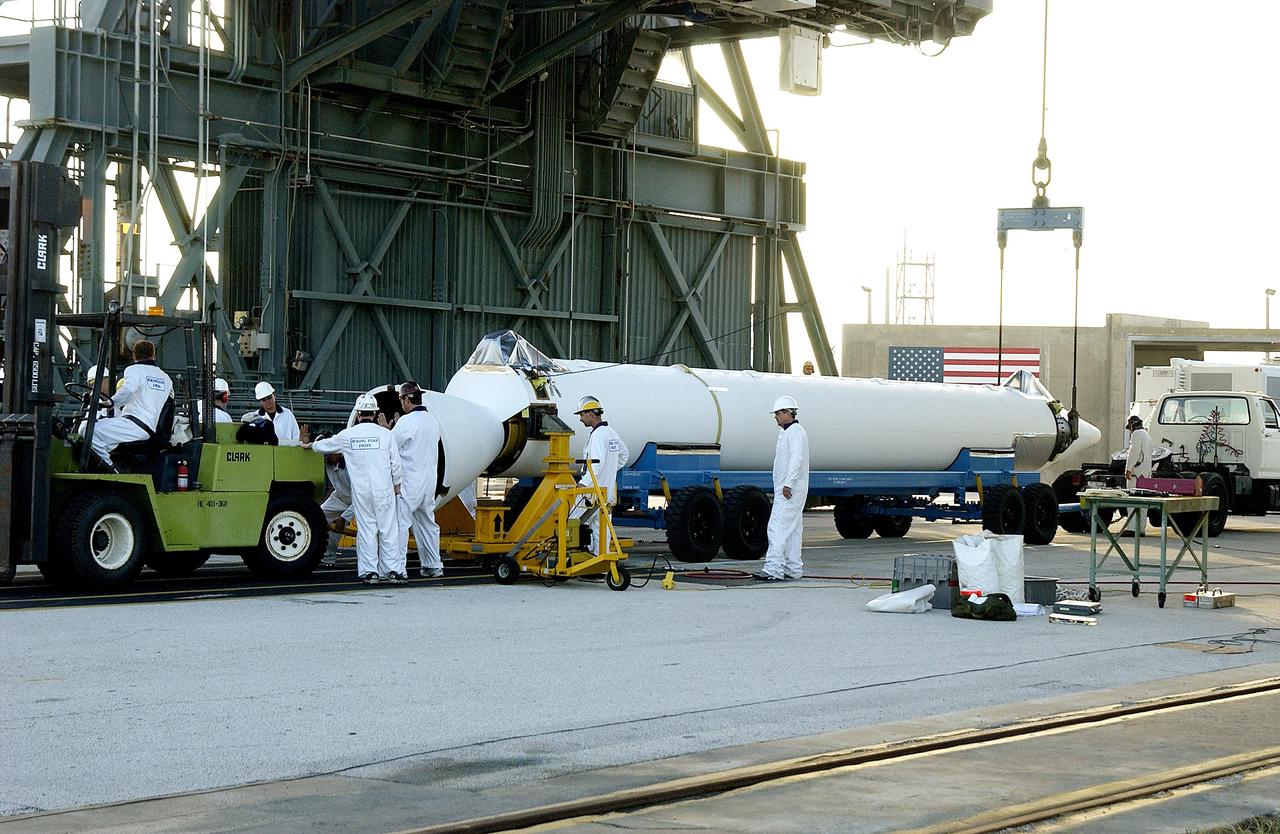
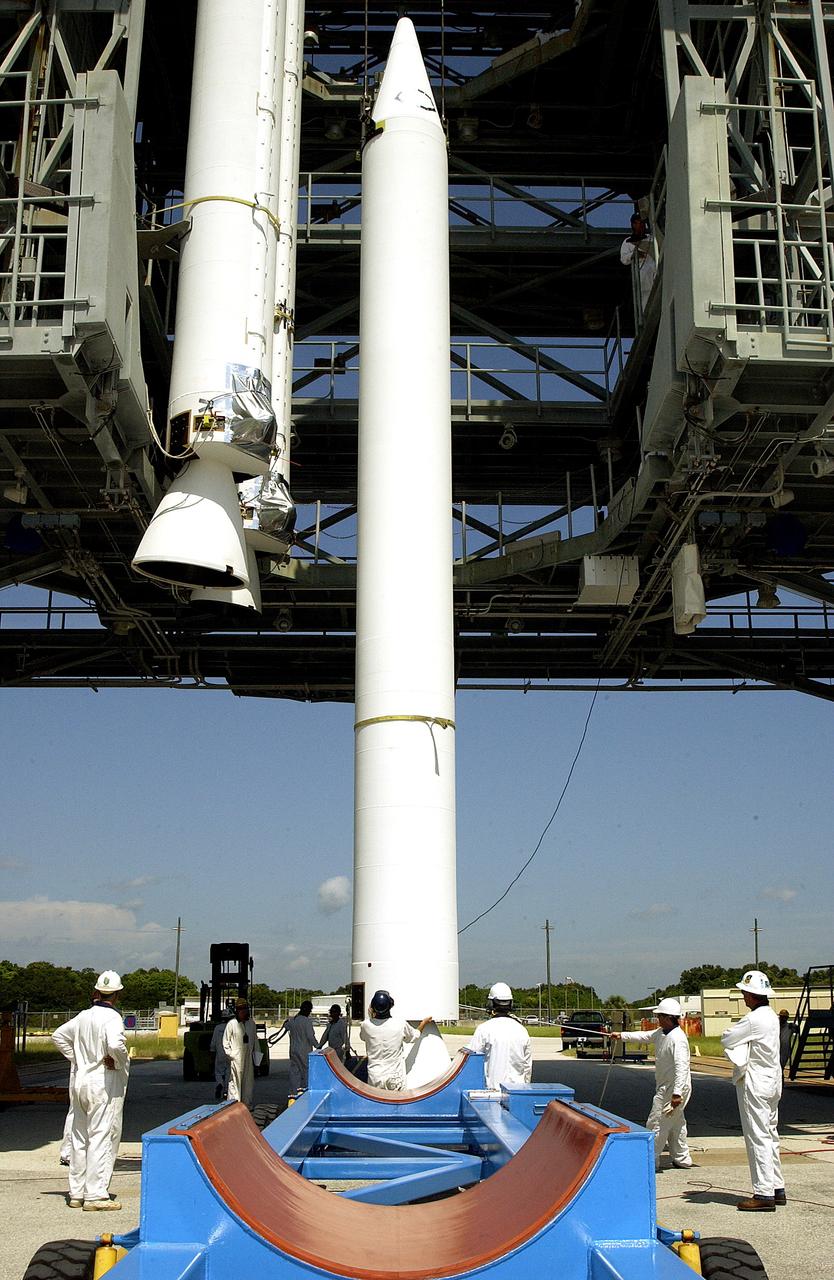
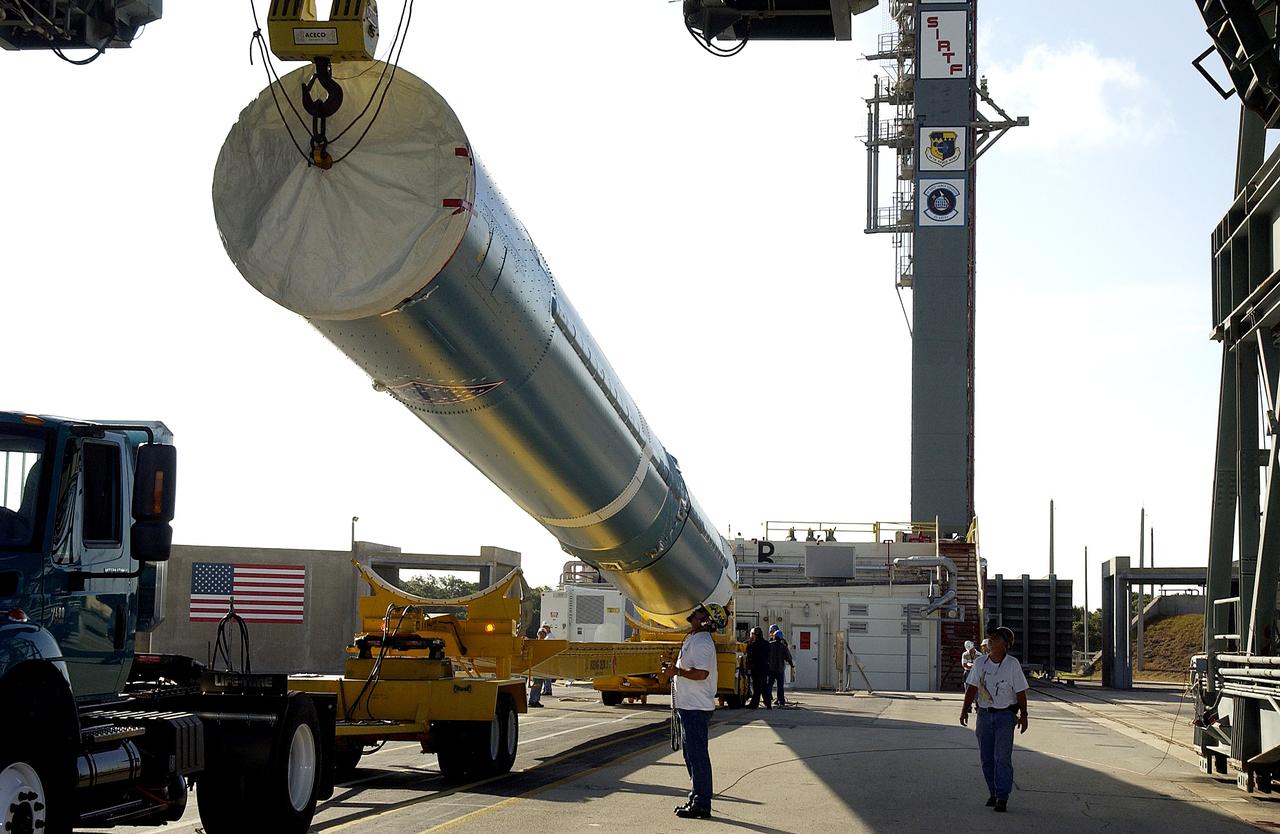
KENNEDY SPACE CENTER, FLA. -   Workers on Launch Complex 17-B, Cape Canaveral Air Force Station, help steady a solid rocket booster (SRB) being lifted into the mobile service tower.  It is one of nine  46-inch-diameter, stretched SRBs that are being attached to the Delta II Heavy rocket that will launch the Space Infrared Telescope Facility (SIRTF).  Consisting of three cryogenically cooled science instruments and an 0.85-meter telescope, SIRTF is one of NASA's largest infrared telescopes to be launched.  SIRTF will obtain images and spectra by detecting the infrared energy, or heat, radiated by objects in space. Most of this infrared radiation is blocked by the Earth's atmosphere and cannot be observed from the ground.
KENNEDY SPACE CENTER, FLA. - Workers on Launch Complex 17-B, Cape Canaveral Air Force Station, help steady a solid rocket booster (SRB) being lifted into the mobile service tower. It is one of nine 46-inch-diameter, stretched SRBs that are being attached to the Delta II Heavy rocket that will launch the Space Infrared Telescope Facility (SIRTF). Consisting of three cryogenically cooled science instruments and an 0.85-meter telescope, SIRTF is one of NASA's largest infrared telescopes to be launched. SIRTF will obtain images and spectra by detecting the infrared energy, or heat, radiated by objects in space. Most of this infrared radiation is blocked by the Earth's atmosphere and cannot be observed from the ground.
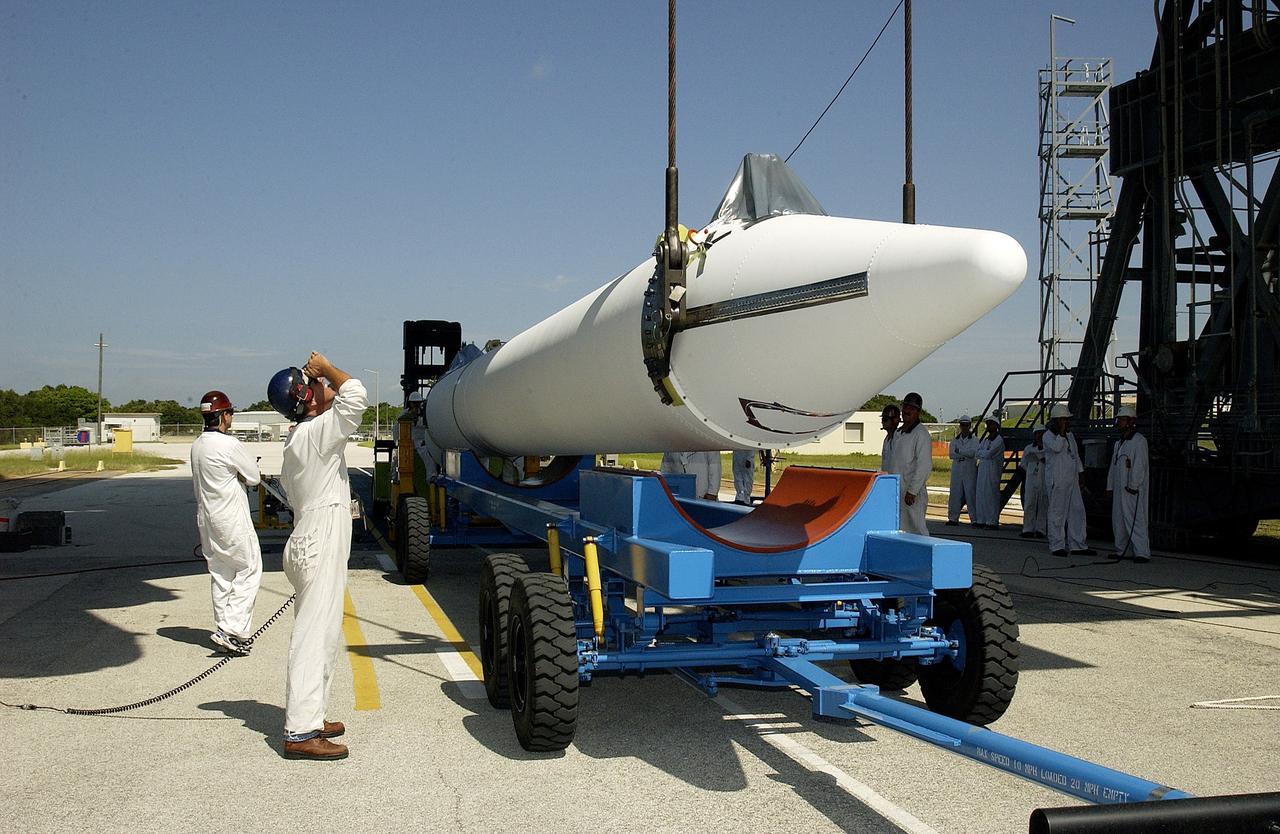
KENNEDY SPACE CENTER, FLA. -   On Launch Complex 17-B, Cape Canaveral Air Force Station, another solid rocket booster (SRB) is being raised from its transporter to lift it to vertical.  It is one of nine  46-inch-diameter, stretched SRBs that are being attached to the Delta II Heavy rocket that will launch the Space Infrared Telescope Facility (SIRTF).  Consisting of three cryogenically cooled science instruments and an 0.85-meter telescope, SIRTF is one of NASA's largest infrared telescopes to be launched.  SIRTF will obtain images and spectra by detecting the infrared energy, or heat, radiated by objects in space. Most of this infrared radiation is blocked by the Earth's atmosphere and cannot be observed from the ground.
KENNEDY SPACE CENTER, FLA. - On Launch Complex 17-B, Cape Canaveral Air Force Station, another solid rocket booster (SRB) is being raised from its transporter to lift it to vertical. It is one of nine 46-inch-diameter, stretched SRBs that are being attached to the Delta II Heavy rocket that will launch the Space Infrared Telescope Facility (SIRTF). Consisting of three cryogenically cooled science instruments and an 0.85-meter telescope, SIRTF is one of NASA's largest infrared telescopes to be launched. SIRTF will obtain images and spectra by detecting the infrared energy, or heat, radiated by objects in space. Most of this infrared radiation is blocked by the Earth's atmosphere and cannot be observed from the ground.
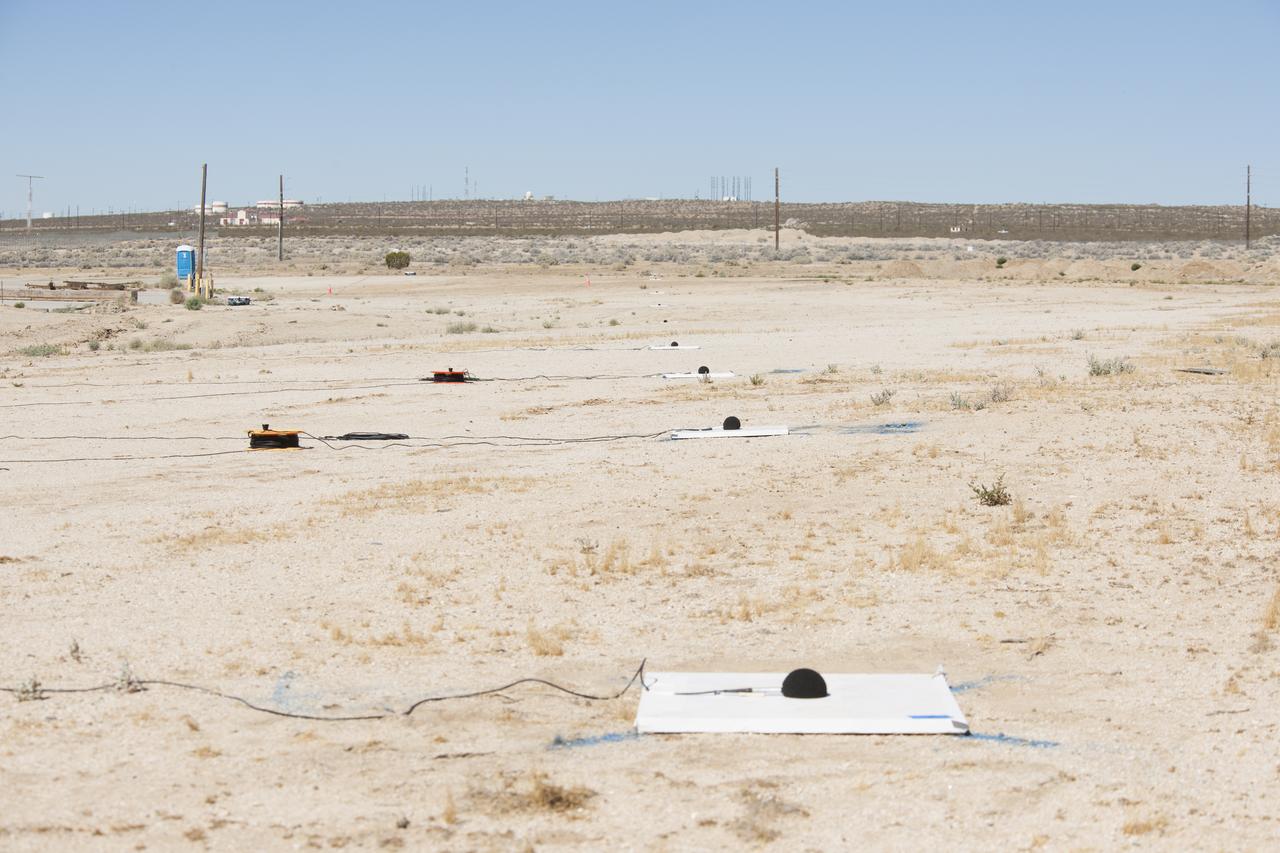
One of three microphone arrays positioned strategically along the ground at Edwards Air Force Base, California, sits ready to collect sound signatures from sonic booms created by a NASA F/A-18 during the SonicBAT flight series. The arrays collected the sound signatures of booms that had traveled through atmospheric turbulence before reaching the ground.
NASA Test Flights Examine Effect of Atmospheric Turbulence on Sonic Booms
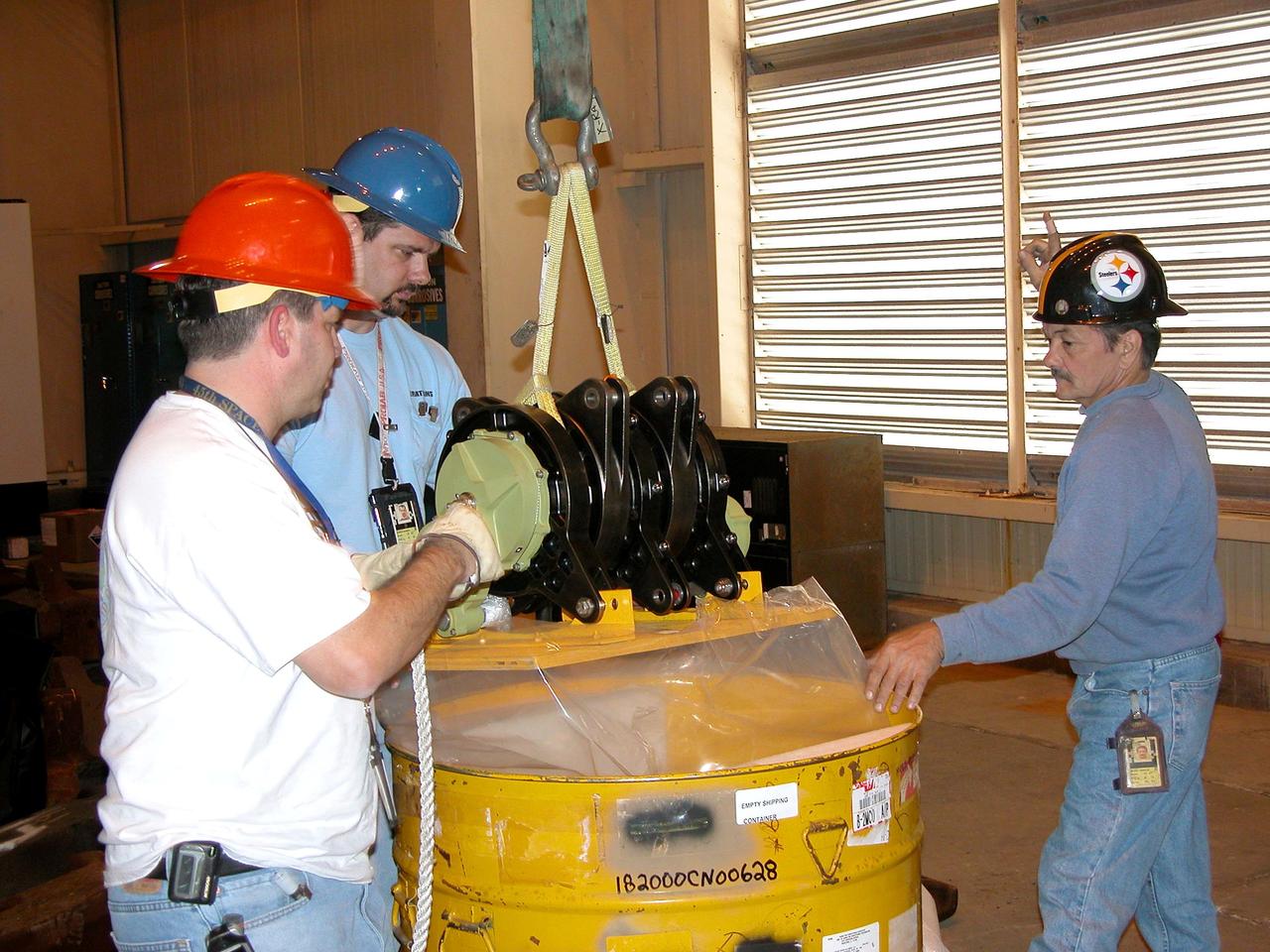
KENNEDY SPACE CENTER, FLA. -  Workers at Cape Canaveral Air Force Station place one of four rudder speed brake actuators onto a pallet for X-ray.  The actuators, to be installed on the orbiter Discovery, are being X-rayed at the Radiographic High-Energy X-ray Facility to determine if the gears were installed correctly. Discovery has been assigned to the first Return to Flight mission, STS-114, a logistics flight to the International Space Station.
KENNEDY SPACE CENTER, FLA. - Workers at Cape Canaveral Air Force Station place one of four rudder speed brake actuators onto a pallet for X-ray. The actuators, to be installed on the orbiter Discovery, are being X-rayed at the Radiographic High-Energy X-ray Facility to determine if the gears were installed correctly. Discovery has been assigned to the first Return to Flight mission, STS-114, a logistics flight to the International Space Station.
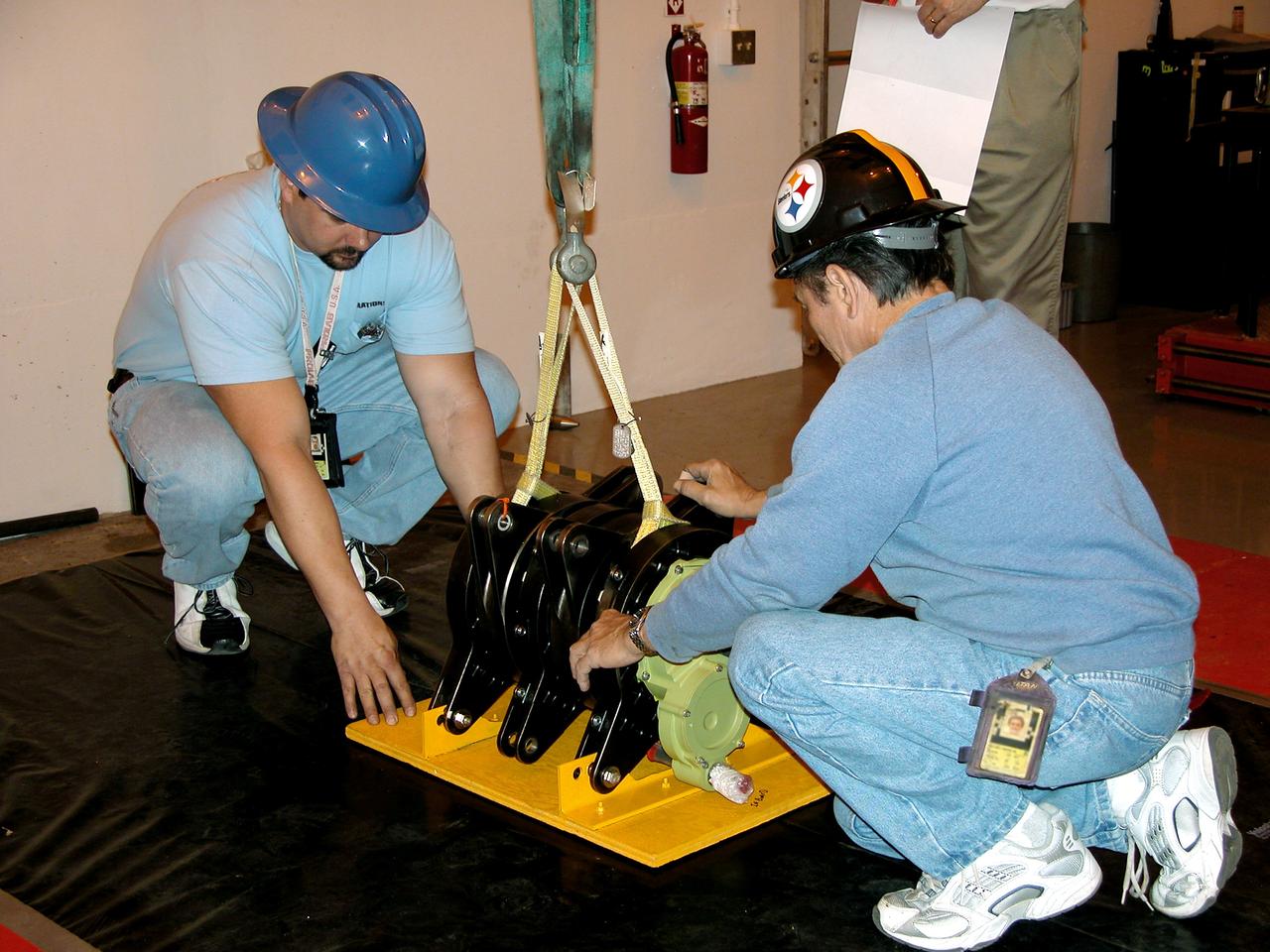
KENNEDY SPACE CENTER, FLA. -  One of four rudder speed brake actuators arrives at Cape Canaveral Air Force Station.  The actuators, to be installed on the orbiter Discovery, are being X-rayed at the Radiographic High-Energy X-ray Facility to determine if the gears were installed correctly. Discovery has been assigned to the first Return to Flight mission, STS-114, a logistics flight to the International Space Station.
KENNEDY SPACE CENTER, FLA. - One of four rudder speed brake actuators arrives at Cape Canaveral Air Force Station. The actuators, to be installed on the orbiter Discovery, are being X-rayed at the Radiographic High-Energy X-ray Facility to determine if the gears were installed correctly. Discovery has been assigned to the first Return to Flight mission, STS-114, a logistics flight to the International Space Station.
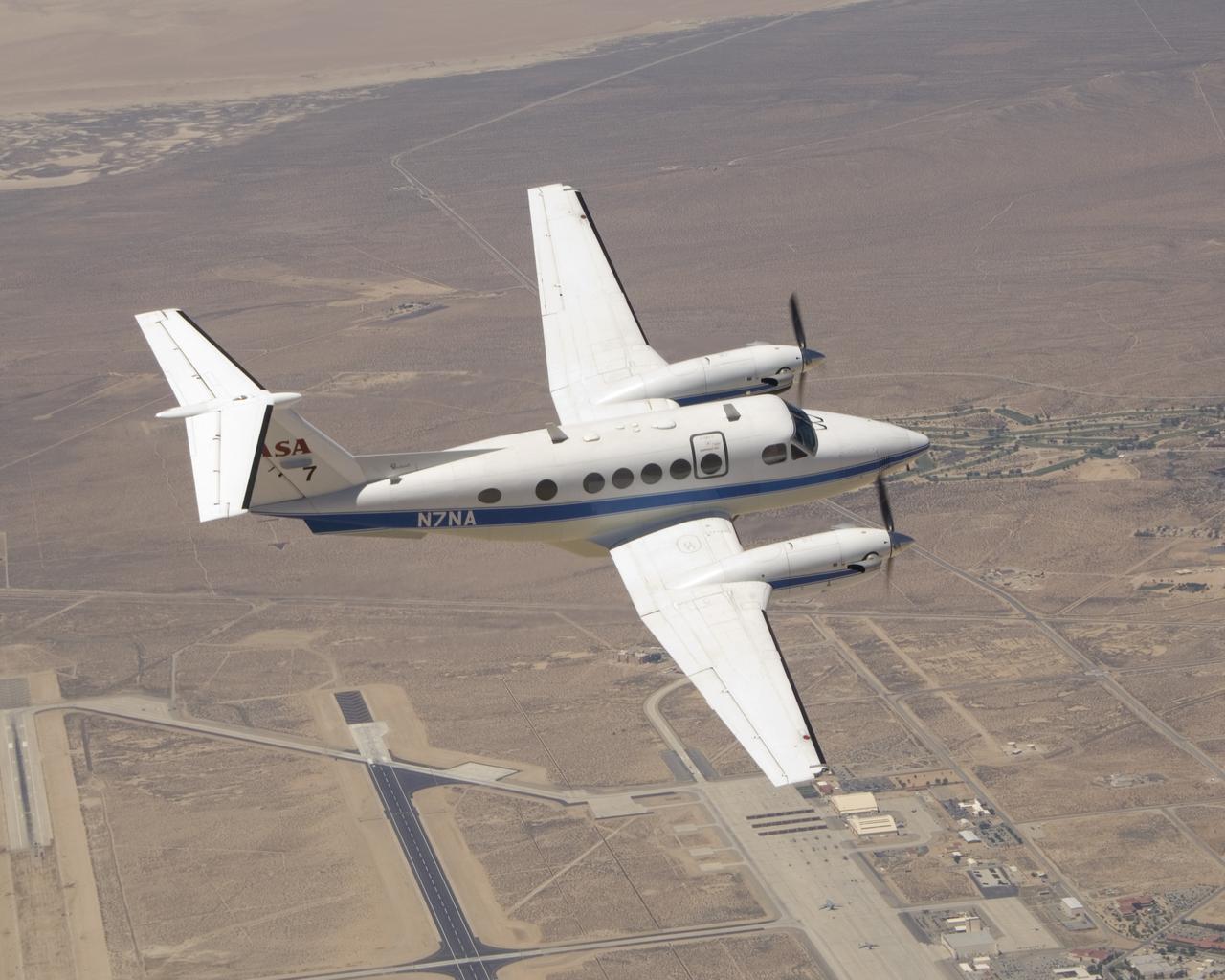
One of NASA Dryden Flight Research Center's two Beechcraft King Air mission support aircraft shows off its lines over Edwards Air Force Base, Calif.
ED08-0141-17
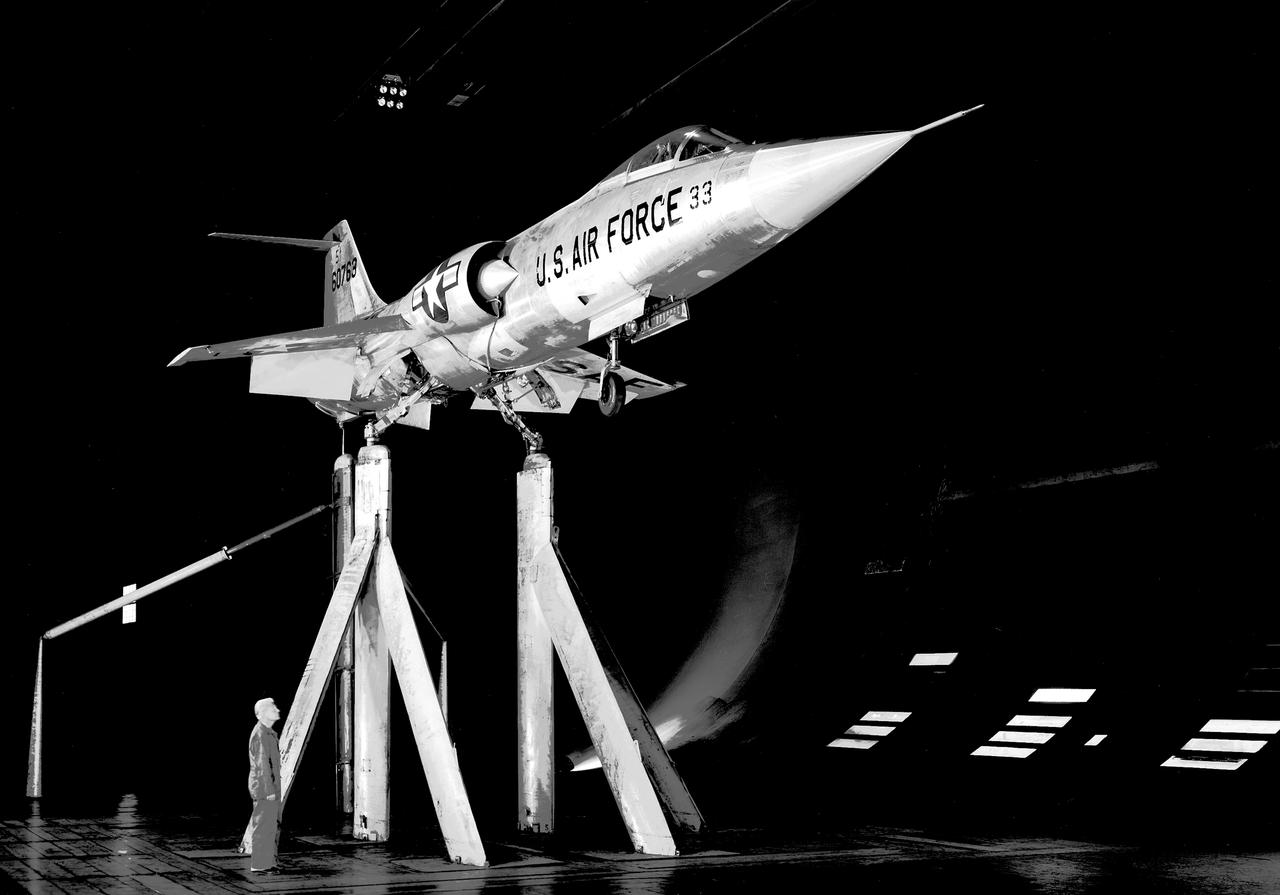
3/4 front view from below of Air Force F-104. The Lockheed F-104 Starfighter is a single-engine, supersonic interceptor aircraft originally developed by Lockheed for the United States Air Force (USAF). One of the Century Series of fighter aircraft, it was operated by the air forces of more than a dozen nations from 1958 to 2004.
Lockheed F-104 in Ames 40x80 Foot Wind Tunnel.
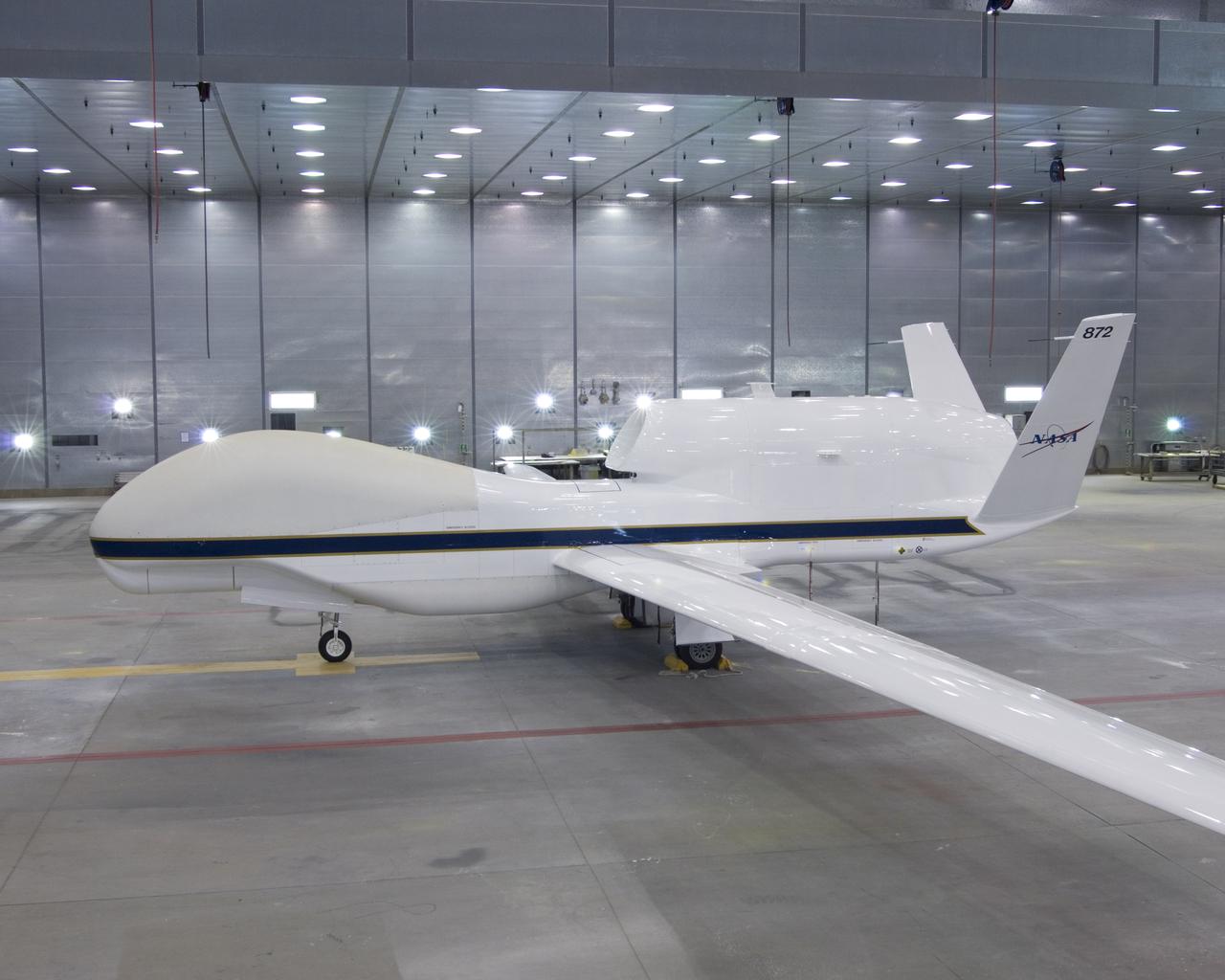
One of NASA's two Global Hawk unmanned aircraft shows off its new blue-and-white livery shortly after being repainted in the Edwards Air Force Base paint hangar.
ED07-0244-028
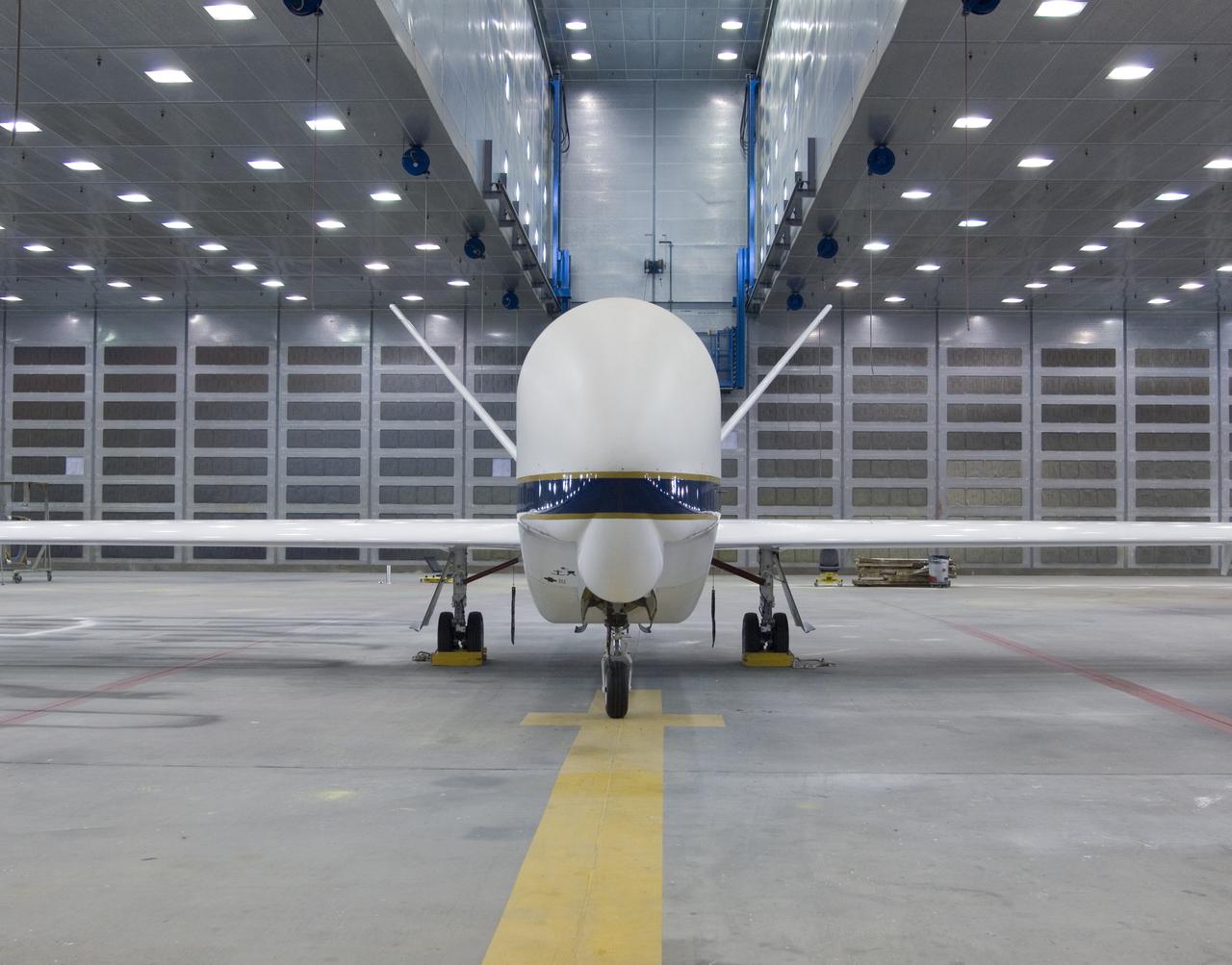
The bulbous nose of one of NASA's Global Hawk unmanned aircraft sports a blue-and-white paint scheme after repainting in the Edwards Air Force Base paint shop.
ED07-0244-032
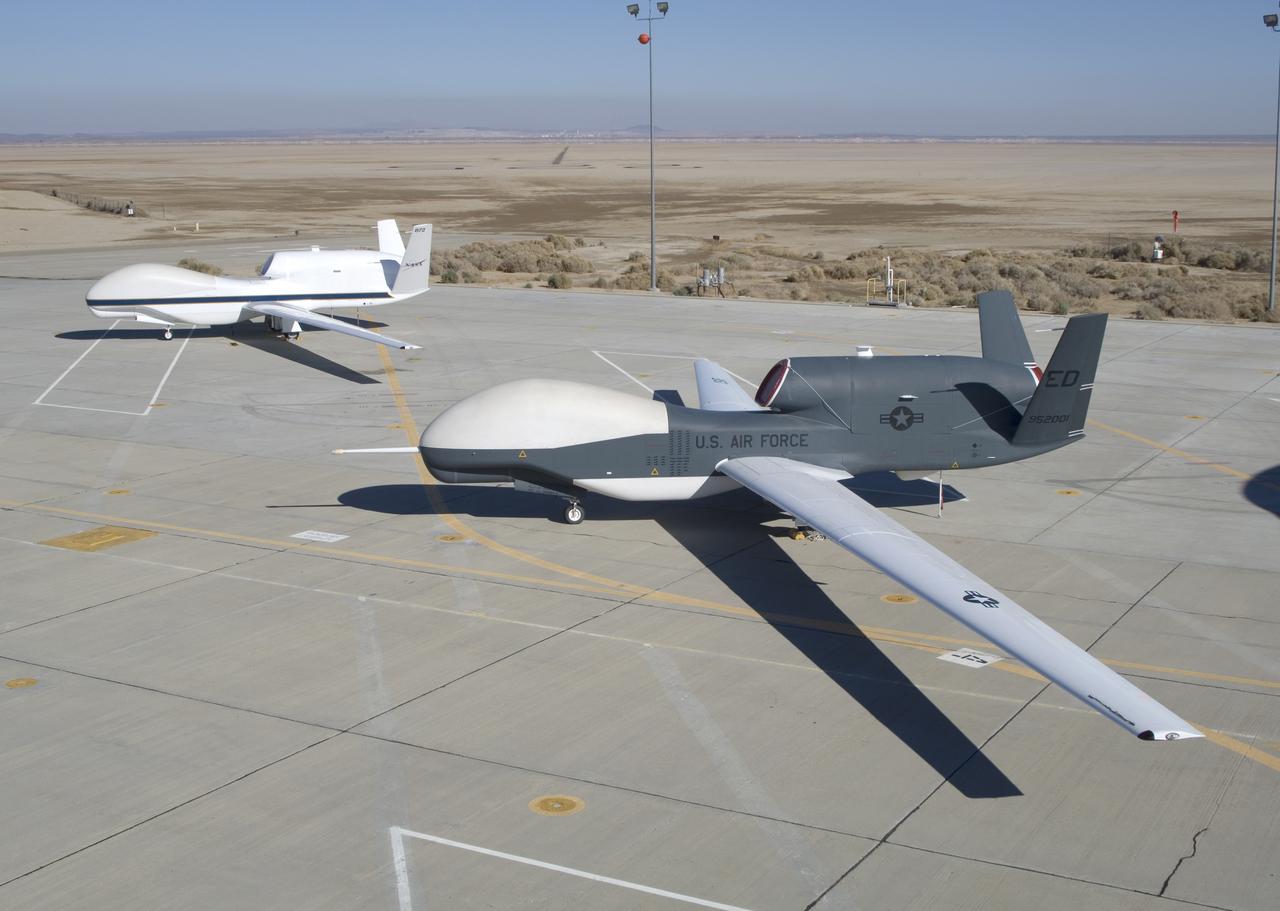
NASA's two Global Hawks, one sporting a NASA paint scheme, the other in its prior Air Force livery, are shown on the ramp at the Dryden Flight Research Center.
ED07-0244-074
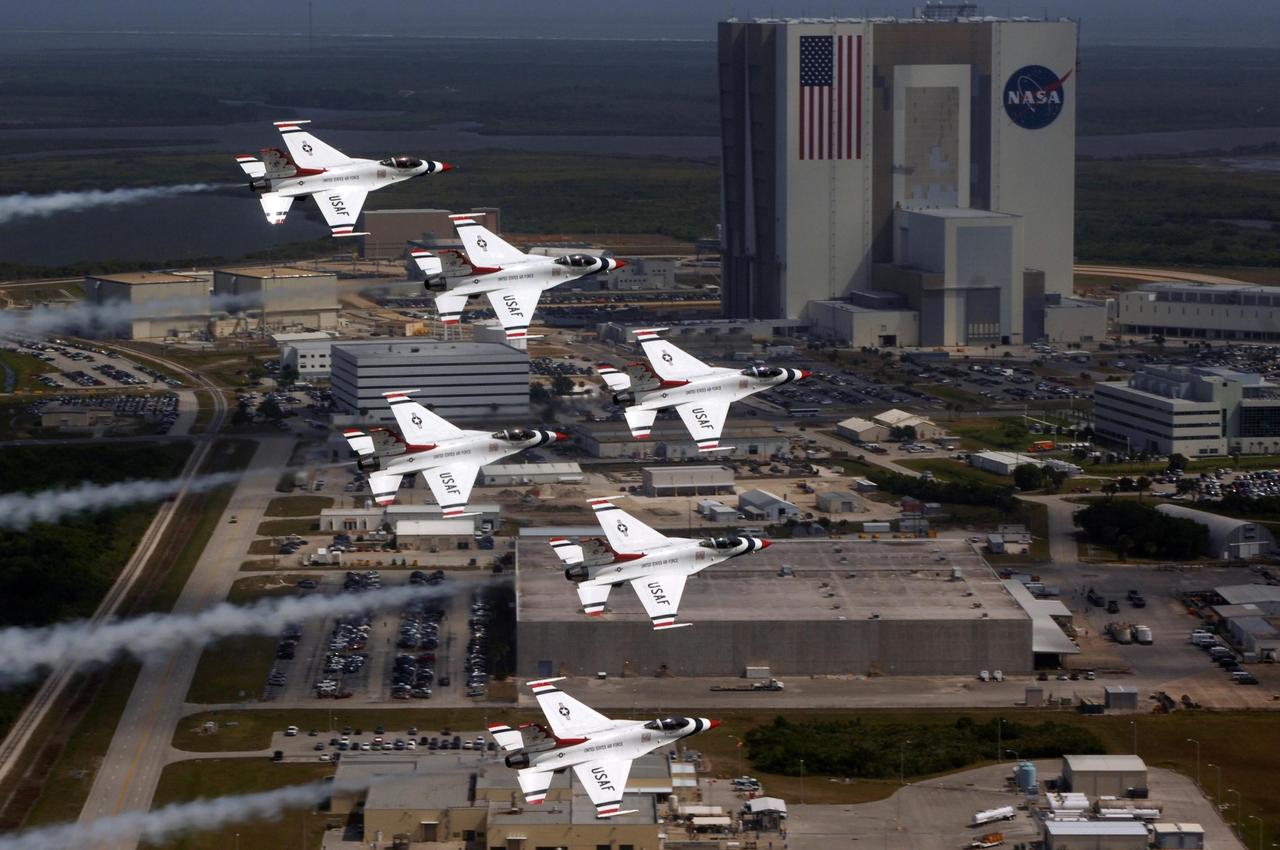
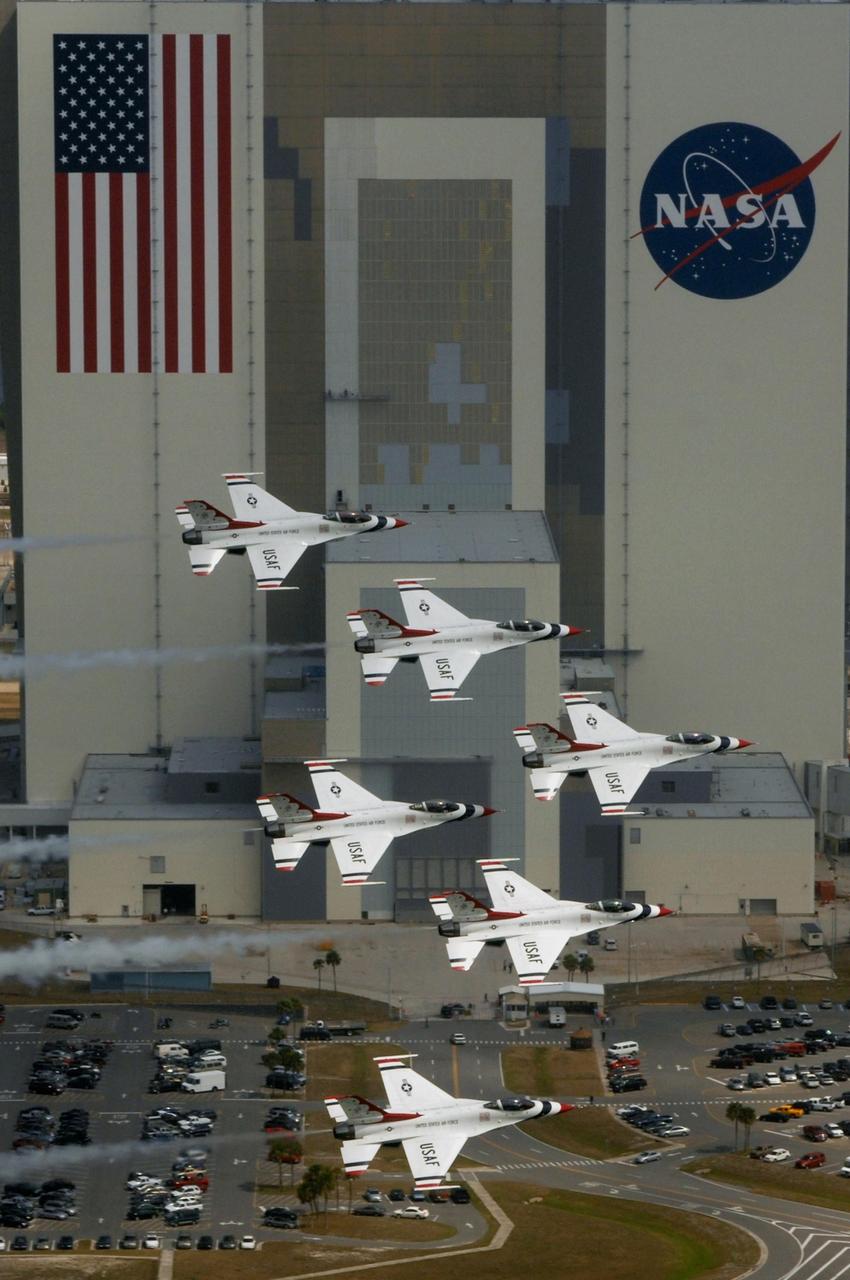
KENNEDY SPACE CENTER, FLA. --   U.S. Air Force Thunderbird F-16 jets fly in formation past the Vehicle Assembly Building in the Industrial Area of Kennedy Space Center.  The purpose of the flyover was to photograph the planes at KSC for promotional purposes. The Kennedy Space Center Visitor Complex will host the inaugural World Space Expo from Nov. 3 to 11, featuring an aerial salute by the Thunderbirds on its opening weekend. The Expo will create one of the largest displays of space artifacts, hardware and personalities ever assembled in one location with the objective to inspire, educate and engage the public by highlighting the achievements and benefits of space exploration. Photo credit: U.S. Air Force photograph by TSgt Justin D. Pyle
KSC-07pd1069
KENNEDY SPACE CENTER, FLA. --   U.S. Air Force Thunderbird F-16 jets fly in formation past the Vehicle Assembly Building in the Industrial Area of Kennedy Space Center.  The purpose of the flyover was to photograph the planes at KSC for promotional purposes. The Kennedy Space Center Visitor Complex will host the inaugural World Space Expo from Nov. 3 to 11, featuring an aerial salute by the Thunderbirds on its opening weekend. The Expo will create one of the largest displays of space artifacts, hardware and personalities ever assembled in one location with the objective to inspire, educate and engage the public by highlighting the achievements and benefits of space exploration. Photo credit: U.S. Air Force photograph by TSgt Justin D. Pyle
KSC-07pd1068
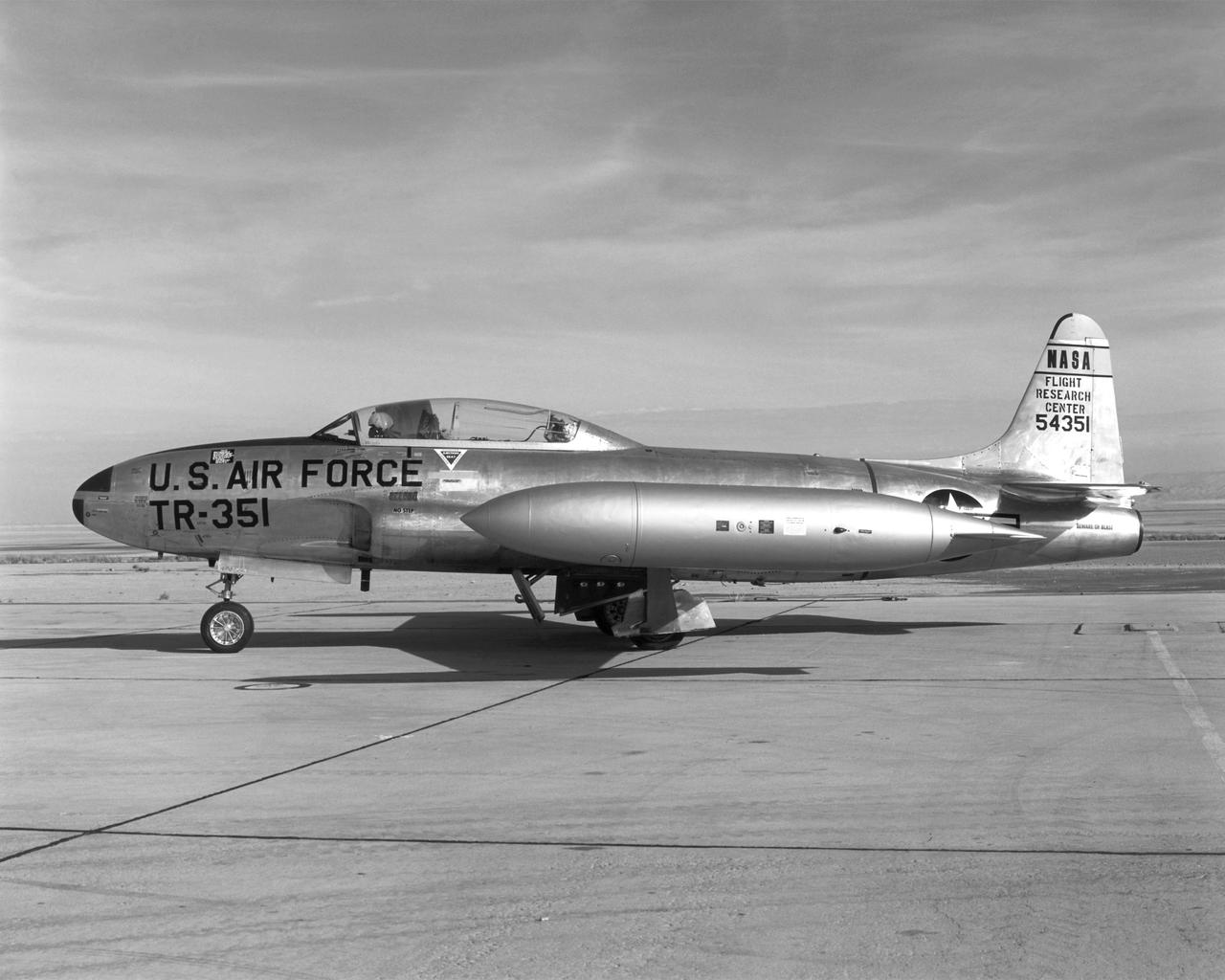
Arrived at NASA FRC January 9, 1963 Departed September 10, 1973 to Redding, California This aircraft, one of four T-33A jet trainers which NASA Dryden used from 1958 to 1973, was used in a monocular vision landing study. The T-33 was the first U.S. Air Force jet trainer, and was originally developed as a two-seat version of the F-80. The T-33 was used by not only the U.S. military, but also by foreign air forces as a trainer, fighter, and reconnaissance aircraft.
T-33A (55-4351/NASA 815)
VANDENBERG AIR FORCE BASE, CALIF. -    Inside Orbital Sciences Building 1555 at Vandenberg Air Force Base in California, a worker installs one of the fins on the aft skirt of the Pegasus XL rocket that will launch the Space Technology 5 spacecraft later this month.  ST5 contains three micro-satellites that will be positioned in a "string of pearls" constellation to perform simultaneous multi-point measurements of the Earth's magnetic field using highly sensitive magnetometers.  The scheduled launch date is Feb. 28.
KSC-06pd0261
VANDENBERG AIR FORCE BASE, CALIF. -   Inside Orbital Sciences Building 1555 at Vandenberg Air Force Base in California, workers get ready to install one of the fins on the aft skirt of the Pegasus XL rocket that will launch the Space Technology 5 spacecraft later this month.  ST5 contains three micro-satellites that will be positioned in a "string of pearls" constellation to perform simultaneous multi-point measurements of the Earth's magnetic field using highly sensitive magnetometers.  The scheduled launch date is Feb. 28.
KSC-06pd0260
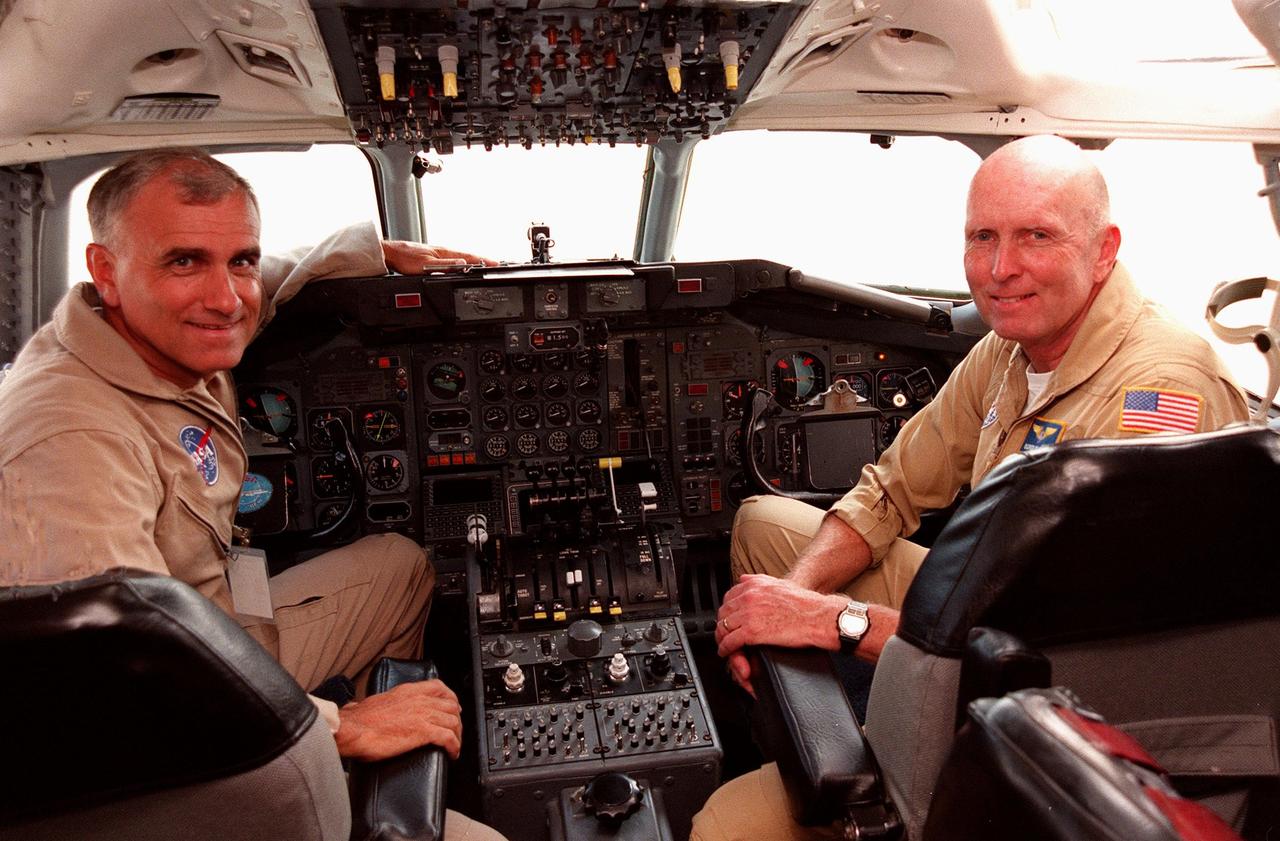
NASA pilots Dick Ewens and Gordon Fullerton sit at the controls in the cockpit of the Dryden Flight Research Center DC-8 that was on view at Patrick Air Force Base. The DC-8 is one of two aircraft being flown in a hurricane study through September to learn about the storms from top to bottom. Flying at 35,000 to 40,000 feet, the DC-8 is equipped with instruments to measure a hurricane’s structure, environment and changes in intensity and tracking. The other plane, a modified U2, and the DC-8 will fly in conjunction with scheduled storm flights of the National Oceanic and Atmospheric Administration (NOAA) out of MacDill Air Force Base in Tampa and the U.S. Air Force 53rd Weather Reconnaissance Squadron from Keesler Air Force Base, Miss. The study is part of NASA’s Earth Science enterprise to better understand the total Earth system and the effects of natural and human-induced changes on the global environment
KSC-98pc911
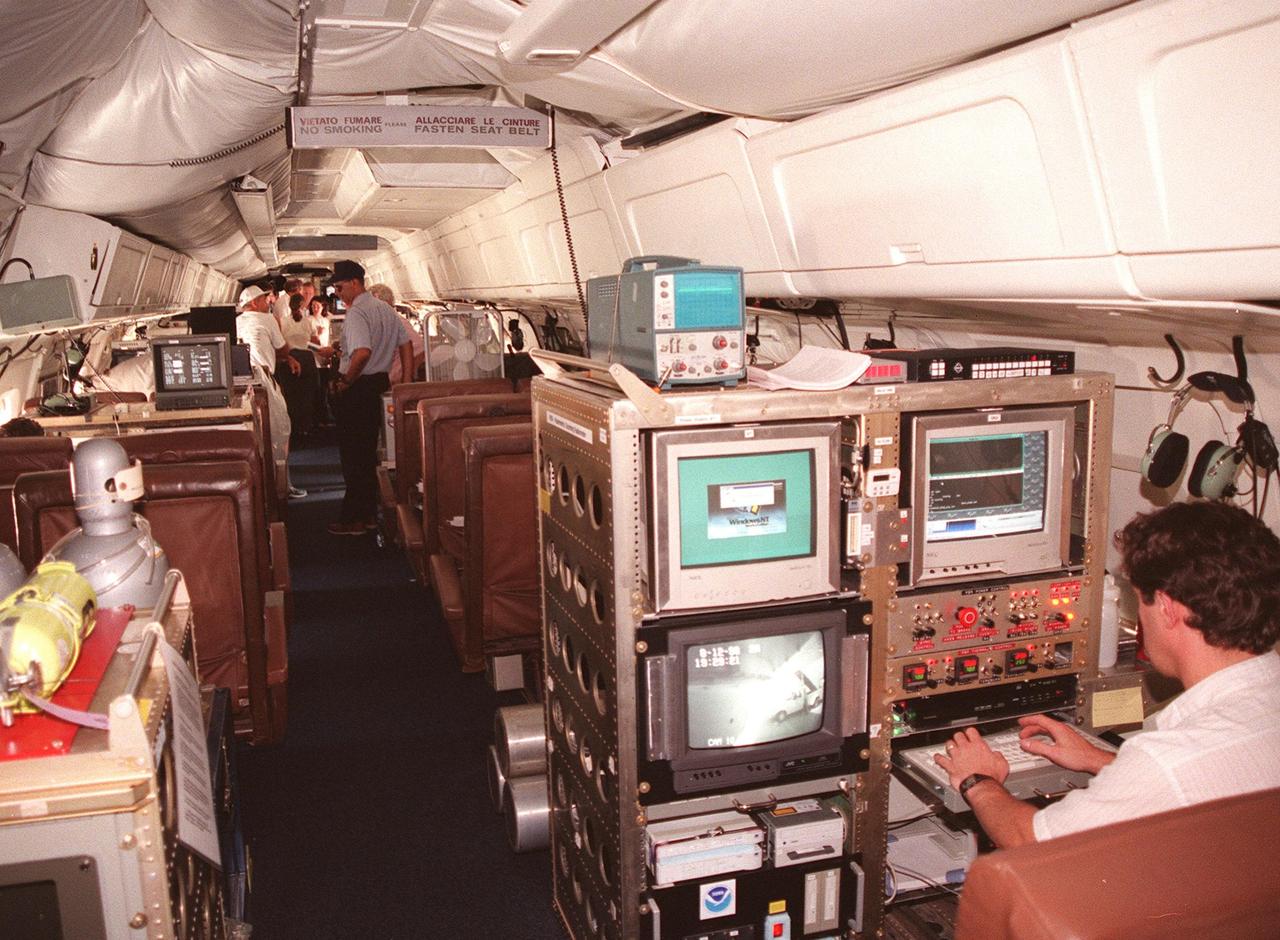
Inside this NASA Dryden Flight Research Center DC-8, which was on view at Patrick Air Force Base, visitors get a close-up look at the instruments that will be used to collect high-altitude information about Atlantic hurricanes and tropical storms as part of a NASA-led Atmospheric Dynamics and Remote Sensing program. The DC-8 is one of two aircraft being flown in a study through September to learn about the storms from top to bottom. The other plane, a modified U2, and the DC-8 will fly in conjunction with scheduled storm flights of the National Oceanic and Atmospheric Administration (NOAA) out of MacDill Air Force Base in Tampa and the U.S. Air Force 53rd Weather Reconnaissance Squadron from Keesler Air Force Base, Miss. The hurricane study is part of NASA’s Earth Science enterprise to better understand the total Earth system and the effects of natural and human-induced changes on the global environment
KSC-98pc910
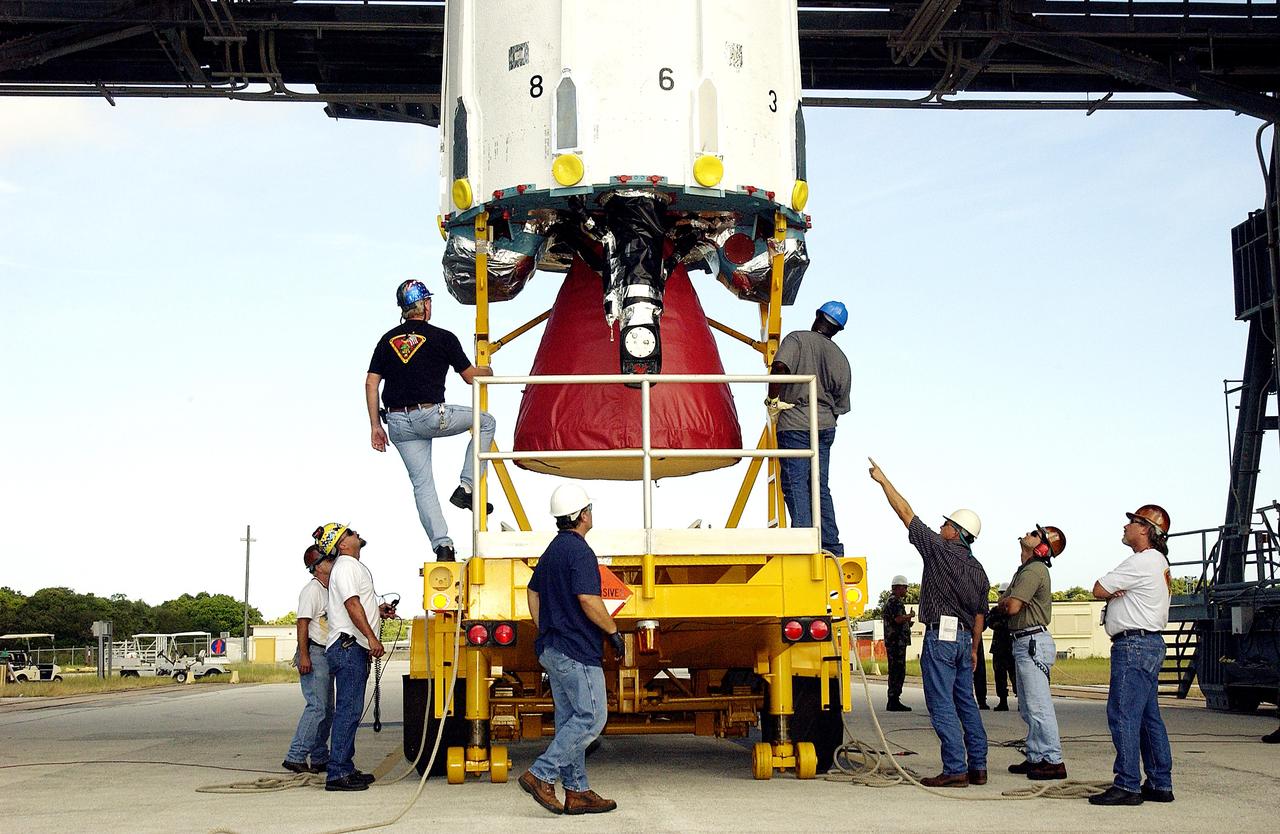
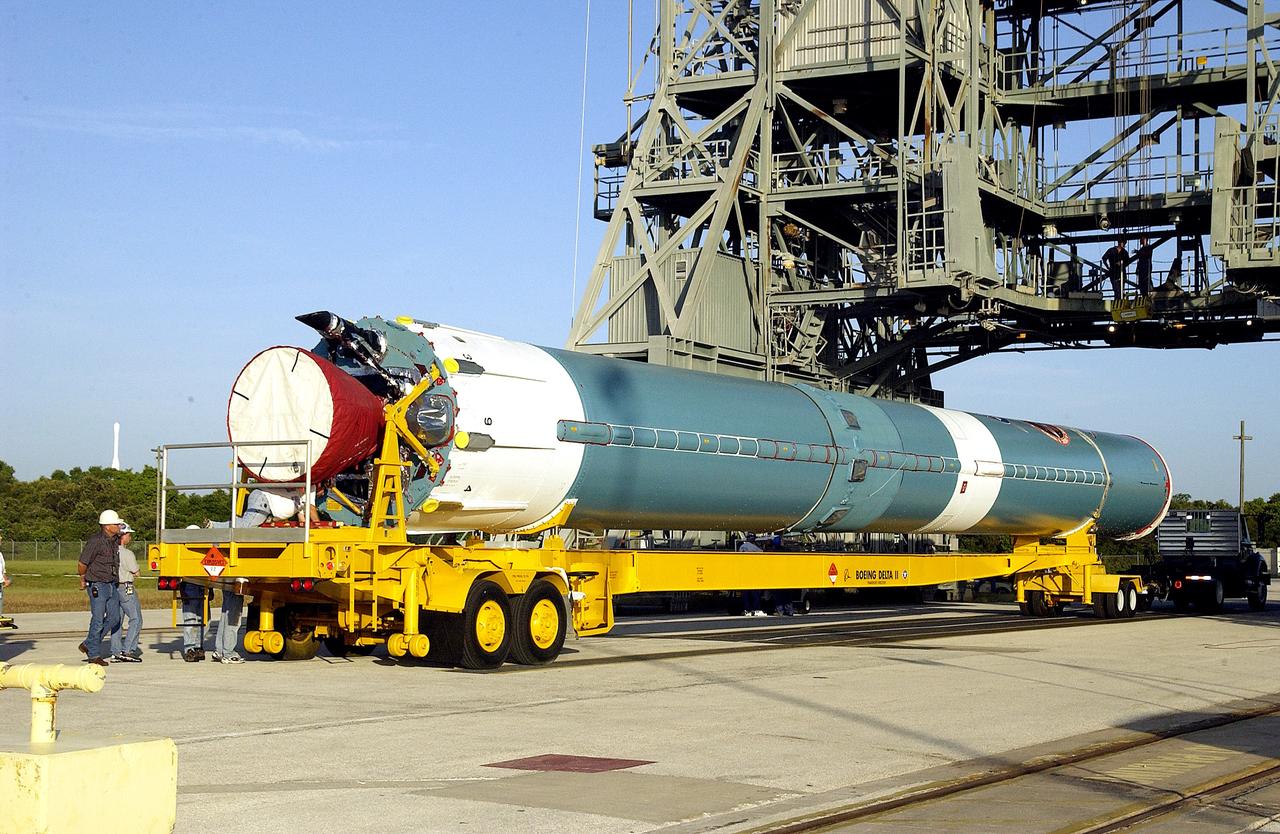
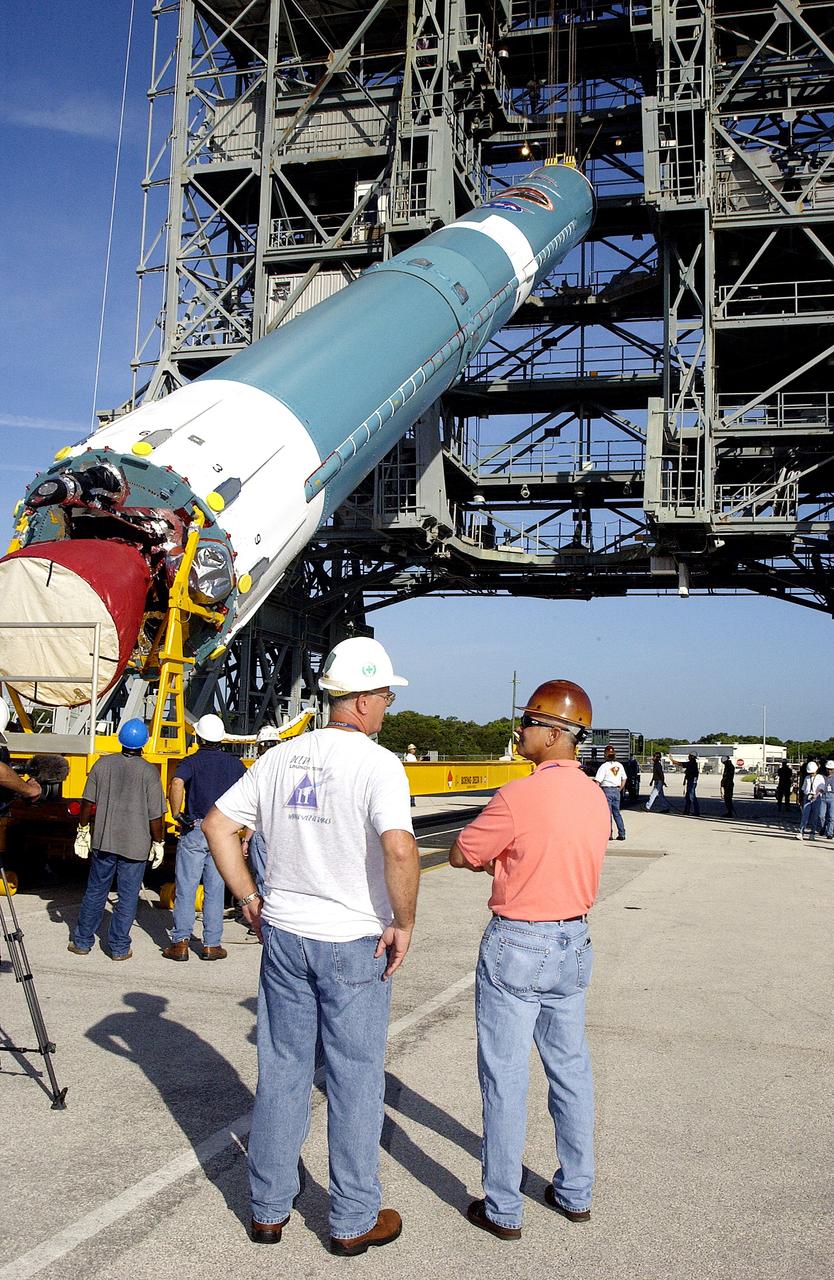
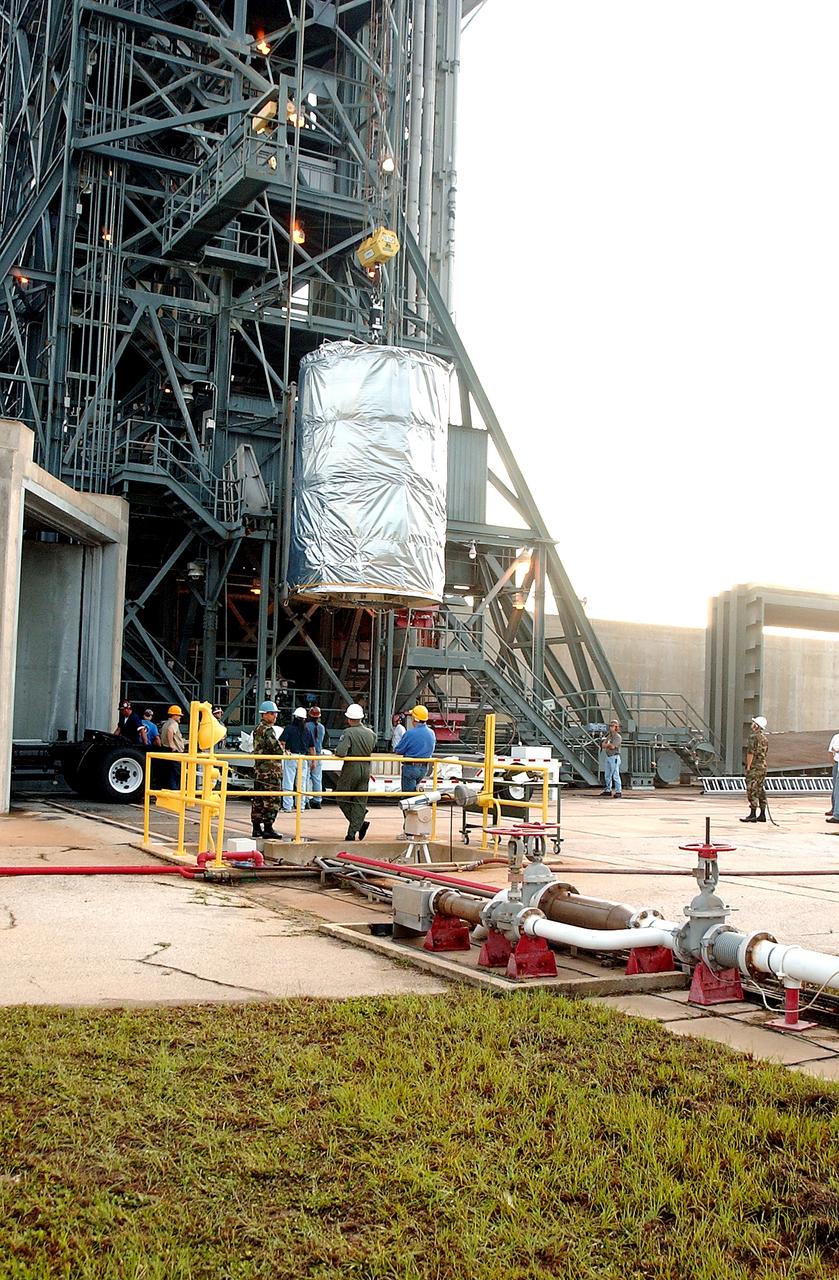
KENNEDY SPACE CENTER, FLA. -  Workers on Launch Complex 17-B, Cape Canaveral Air Force Station, prepare the first stage of a Delta II rocket for its lift up the mobile service tower.  The rocket is being erected to launch the Space InfraRed Telescope Facility (SIRTF).  Consisting of an 0.85-meter telescope and three cryogenically cooled science instruments, SIRTF is one of NASA's largest infrared telescopes to be launched.  SIRTF will obtain images and spectra by detecting the infrared energy, or heat, radiated by objects in space. Most of this infrared radiation is blocked by the Earth's atmosphere and cannot be observed from the ground.
KENNEDY SPACE CENTER, FLA. - Workers on Launch Complex 17-B, Cape Canaveral Air Force Station, prepare the first stage of a Delta II rocket for its lift up the mobile service tower. The rocket is being erected to launch the Space InfraRed Telescope Facility (SIRTF). Consisting of an 0.85-meter telescope and three cryogenically cooled science instruments, SIRTF is one of NASA's largest infrared telescopes to be launched. SIRTF will obtain images and spectra by detecting the infrared energy, or heat, radiated by objects in space. Most of this infrared radiation is blocked by the Earth's atmosphere and cannot be observed from the ground.
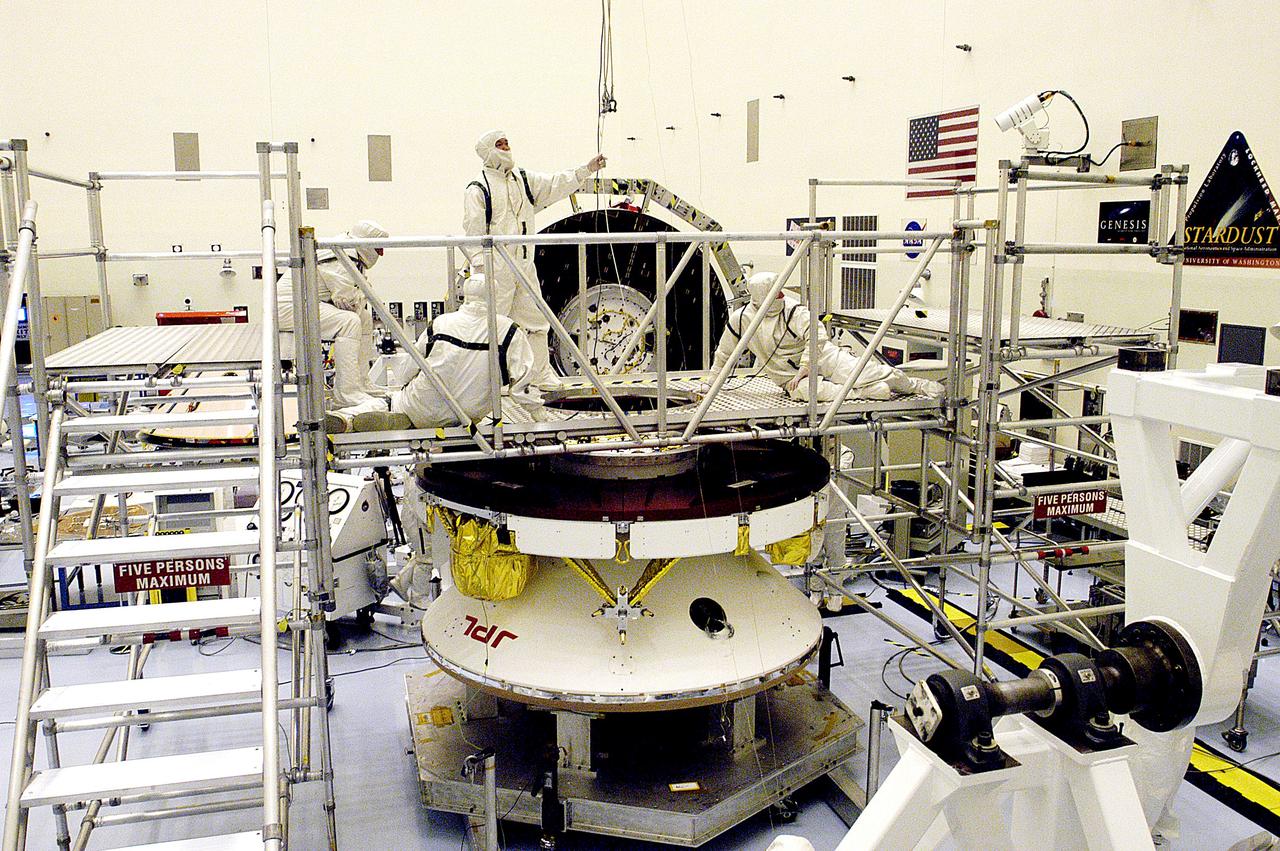
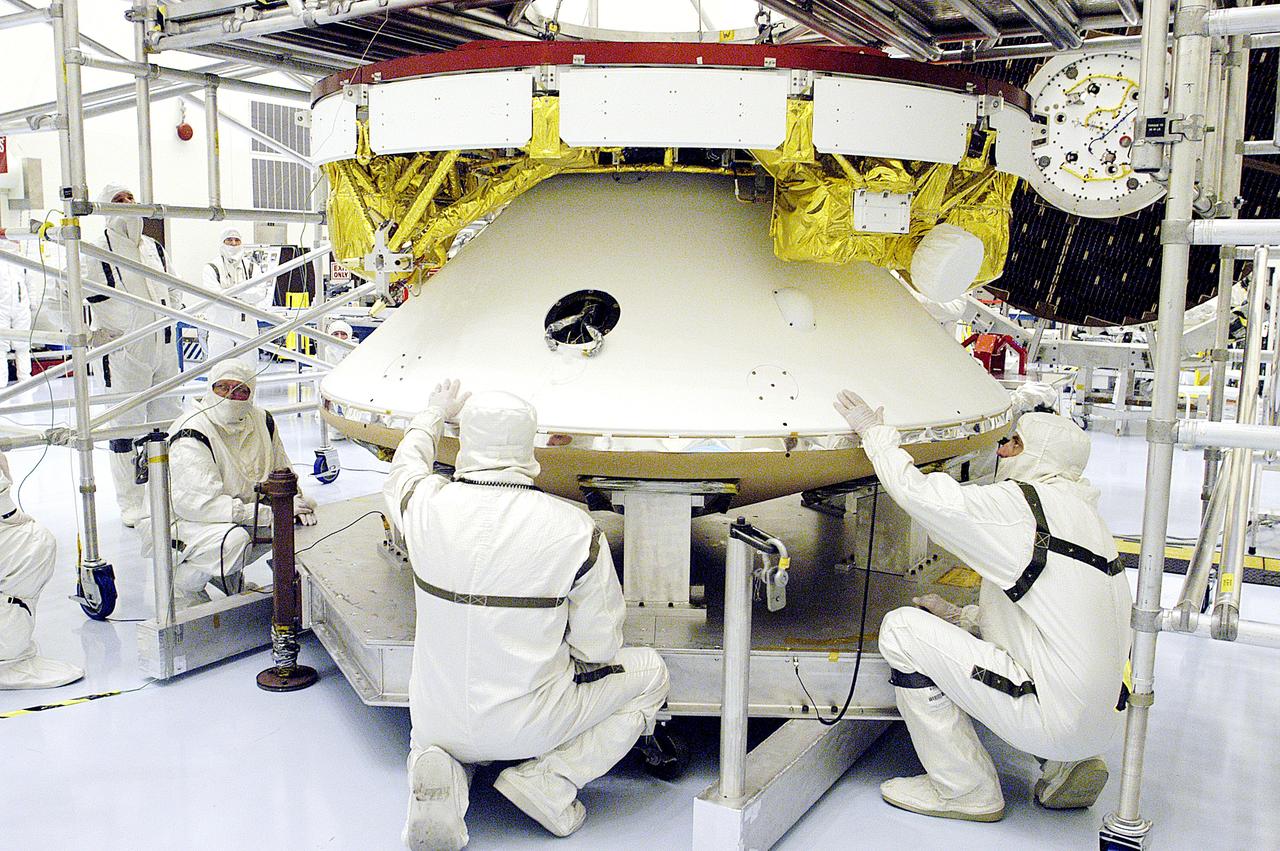
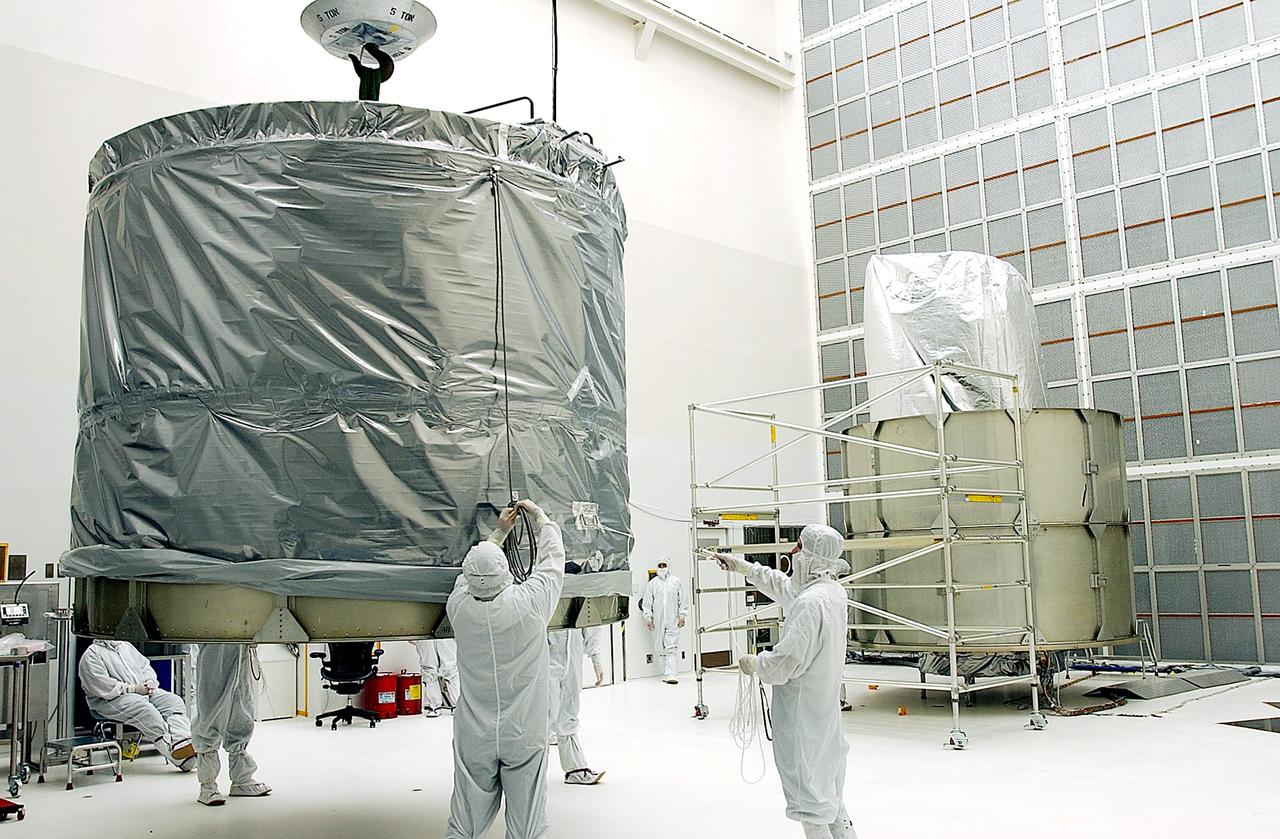
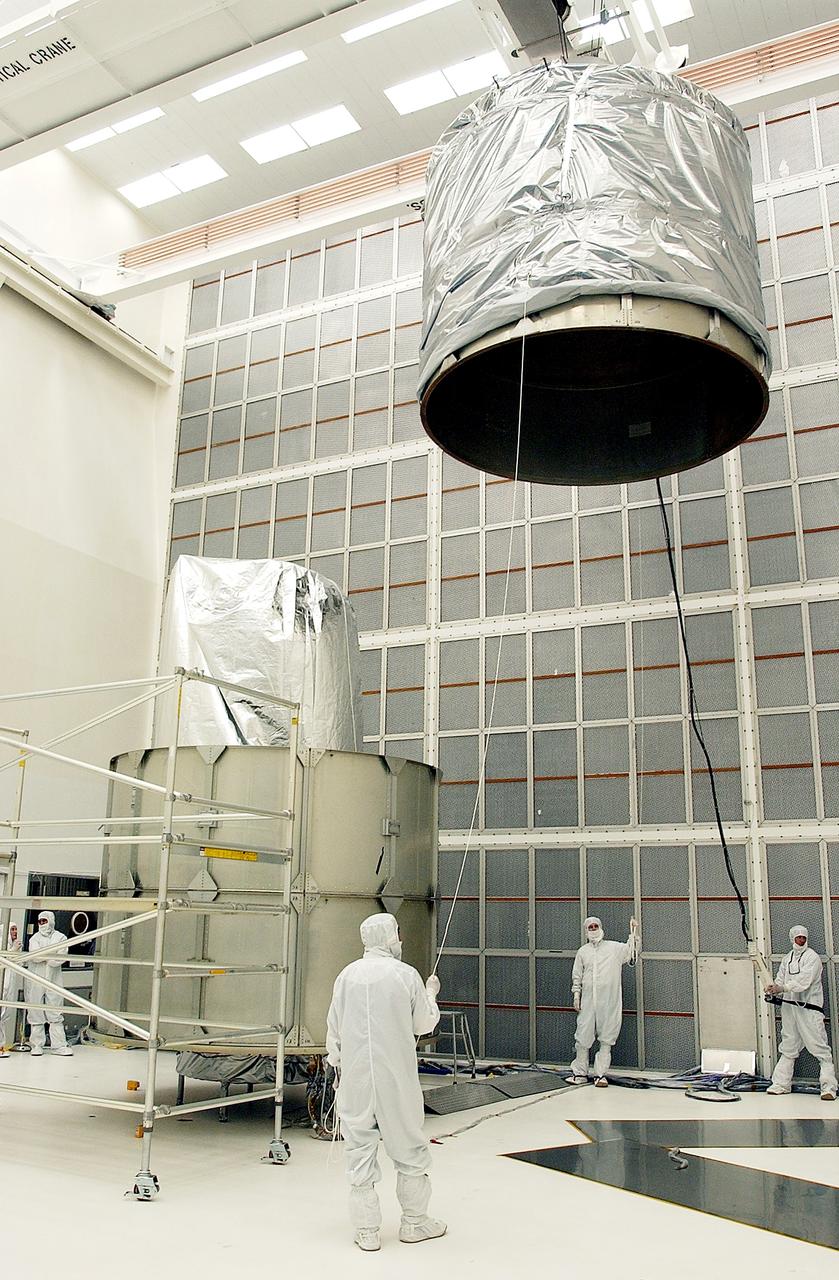
KENNEDY SPACE CENTER, FLA.  - Workers at Hangar A&E, Cape Canaveral Air Force Station, lift the upper canister to move it to the Space Infrared Telescope Facility (SIRTF) at right.  After encapsulation, the spacecraft will be transported to Launch Complex 17-B for mating with its launch vehicle, the Delta II rocket.   SIRTF consists of three cryogenically cooled science instruments and an 0.85-meter telescope, and is one of NASA's largest infrared telescopes to be launched.  SIRTF will obtain images and spectra by detecting the infrared energy, or heat, radiated by objects in space. Most of this infrared radiation is blocked by the Earth's atmosphere and cannot be observed from the ground.
KENNEDY SPACE CENTER, FLA. - Workers at Hangar A&E, Cape Canaveral Air Force Station, lift the upper canister to move it to the Space Infrared Telescope Facility (SIRTF) at right. After encapsulation, the spacecraft will be transported to Launch Complex 17-B for mating with its launch vehicle, the Delta II rocket. SIRTF consists of three cryogenically cooled science instruments and an 0.85-meter telescope, and is one of NASA's largest infrared telescopes to be launched. SIRTF will obtain images and spectra by detecting the infrared energy, or heat, radiated by objects in space. Most of this infrared radiation is blocked by the Earth's atmosphere and cannot be observed from the ground.
KENNEDY SPACE CENTER, FLA.  -  In Hangar A&E, Cape Canaveral Air Force Station, the upper canister is lowered toward the Space Infrared Telescope Facility (SIRTF) below.  After encapsulation is complete, the spacecraft will be transported to Launch Complex 17-B for mating with its launch vehicle, the Delta II rocket.   SIRTF consists of three cryogenically cooled science instruments and an 0.85-meter telescope, and is one of NASA's largest infrared telescopes to be launched.  SIRTF will obtain images and spectra by detecting the infrared energy, or heat, radiated by objects in space. Most of this infrared radiation is blocked by the Earth's atmosphere and cannot be observed from the ground.
KENNEDY SPACE CENTER, FLA. - In Hangar A&E, Cape Canaveral Air Force Station, the upper canister is lowered toward the Space Infrared Telescope Facility (SIRTF) below. After encapsulation is complete, the spacecraft will be transported to Launch Complex 17-B for mating with its launch vehicle, the Delta II rocket. SIRTF consists of three cryogenically cooled science instruments and an 0.85-meter telescope, and is one of NASA's largest infrared telescopes to be launched. SIRTF will obtain images and spectra by detecting the infrared energy, or heat, radiated by objects in space. Most of this infrared radiation is blocked by the Earth's atmosphere and cannot be observed from the ground.
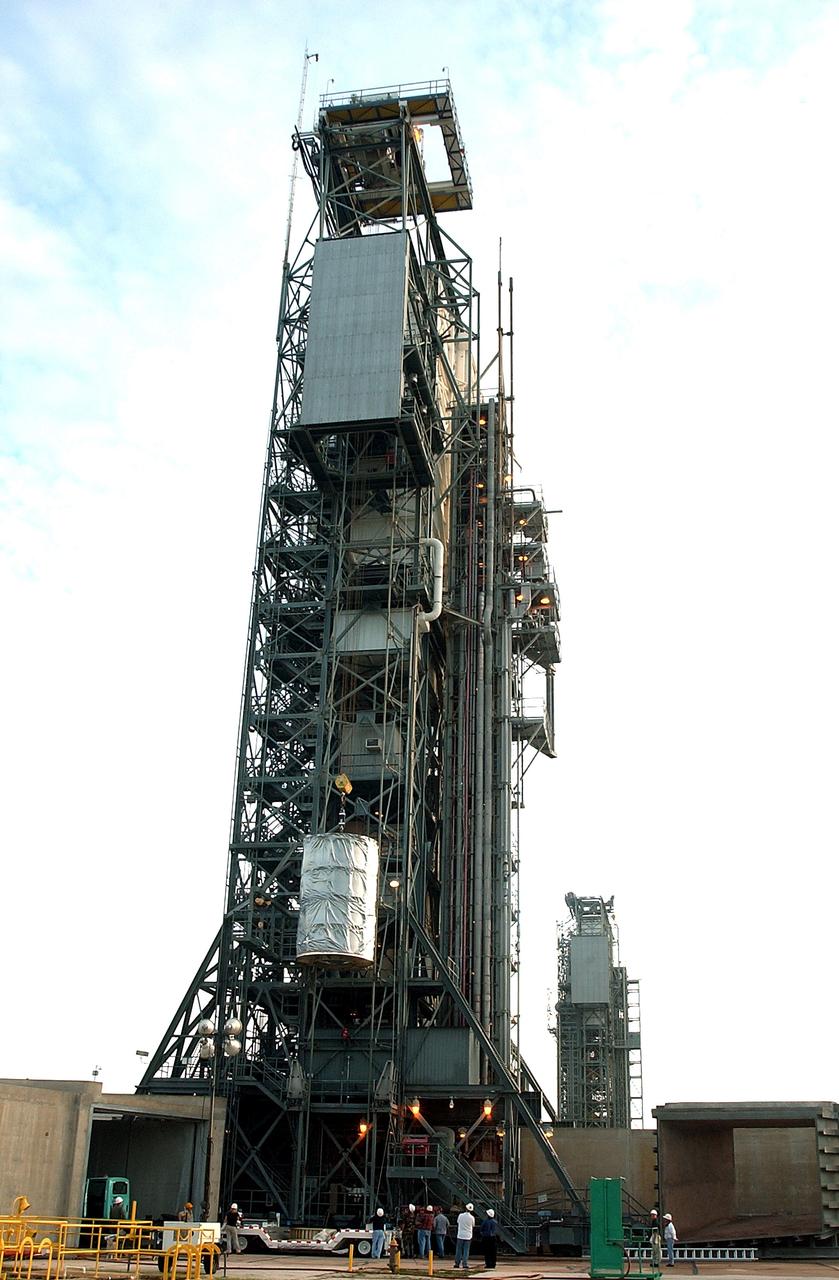
KENNEDY SPACE CENTER, FLA.  -  After dawn,  the Space Infrared Telescope Facility (SIRTF) is lifted up the mobile service tower on Launch Pad 17-B, Cape Canaveral Air Force Station.  SIRTF will be attached to the Delta II rocket and encapsulated in its fairing before launch.   Consisting of three cryogenically cooled science instruments and an 0.85-meter telescope, SIRTF is one of NASA’s largest infrared telescopes to be launched.  It is the fourth and final element in NASA’s family of orbiting “Great Observatories.”  SIRTF will obtain images and spectra by detecting the infrared energy, or heat, radiated by objects in space. Most of this infrared radiation is blocked by the Earth's atmosphere and cannot be observed from the ground.
KENNEDY SPACE CENTER, FLA. - After dawn, the Space Infrared Telescope Facility (SIRTF) is lifted up the mobile service tower on Launch Pad 17-B, Cape Canaveral Air Force Station. SIRTF will be attached to the Delta II rocket and encapsulated in its fairing before launch. Consisting of three cryogenically cooled science instruments and an 0.85-meter telescope, SIRTF is one of NASA’s largest infrared telescopes to be launched. It is the fourth and final element in NASA’s family of orbiting “Great Observatories.” SIRTF will obtain images and spectra by detecting the infrared energy, or heat, radiated by objects in space. Most of this infrared radiation is blocked by the Earth's atmosphere and cannot be observed from the ground.
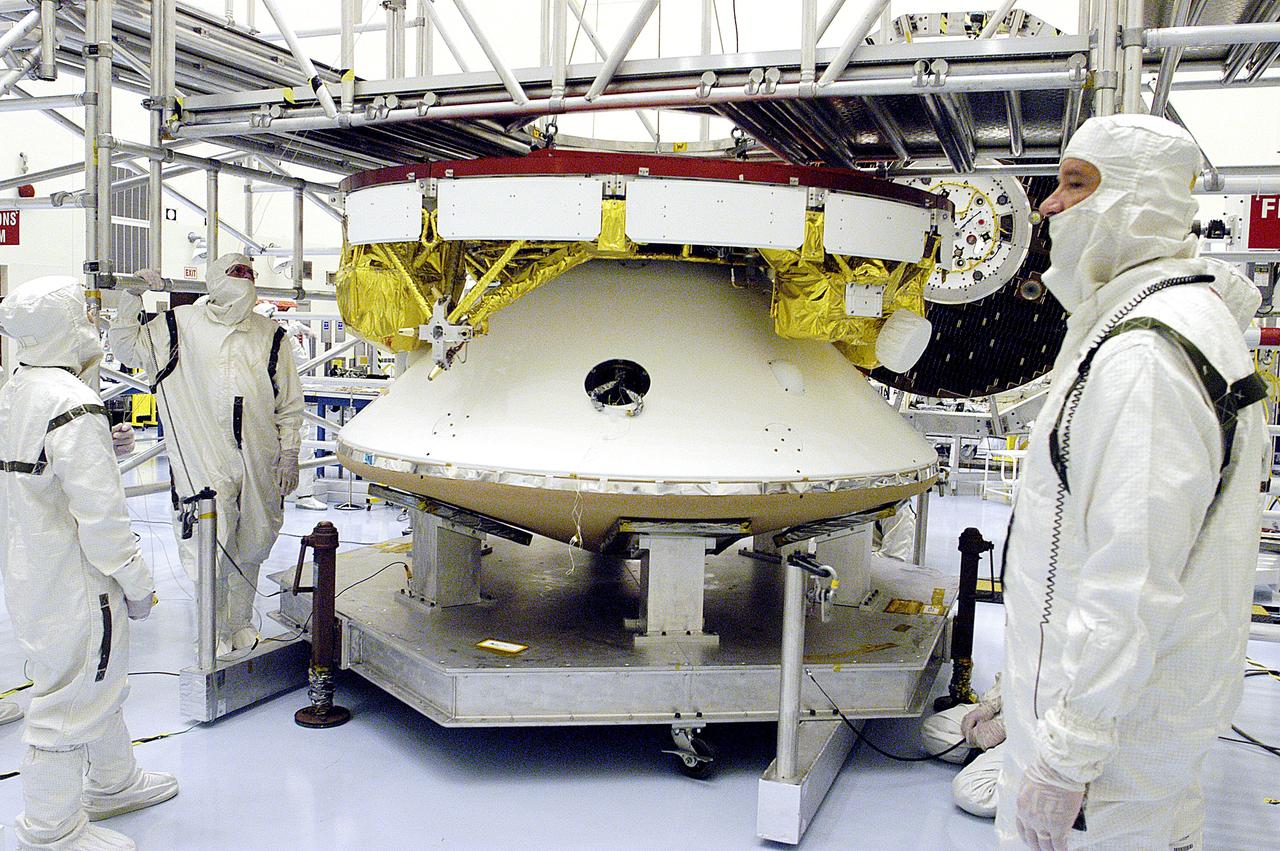
KENNEDY SPACE CENTER, FLA. - Workers in the Payload Hazardous Servicing Facility prepare the Mars Exploration Rover 2 (MER-2) for a weight and center of gravity determination.  NASA's twin Mars Exploration Rovers are designed to study the history of water on Mars. These robotic geologists are equipped with a robotic arm, a drilling tool, three spectrometers, and four pairs of cameras that allow them to have a human-like, 3D view of the terrain. Each rover could travel as far as 100 meters in one day to act as Mars scientists' eyes and hands, exploring an environment where humans can't yet go.  Launch of MER-2 is scheduled for June 5 from Cape Canaveral Air Force Station.
KENNEDY SPACE CENTER, FLA. - Workers in the Payload Hazardous Servicing Facility prepare the Mars Exploration Rover 2 (MER-2) for a weight and center of gravity determination. NASA's twin Mars Exploration Rovers are designed to study the history of water on Mars. These robotic geologists are equipped with a robotic arm, a drilling tool, three spectrometers, and four pairs of cameras that allow them to have a human-like, 3D view of the terrain. Each rover could travel as far as 100 meters in one day to act as Mars scientists' eyes and hands, exploring an environment where humans can't yet go. Launch of MER-2 is scheduled for June 5 from Cape Canaveral Air Force Station.
KENNEDY SPACE CENTER, FLA.  -  Before dawn, the Space Infrared Telescope Facility (SIRTF) arrives at Launch Pad 17-B, Cape Canaveral Air Force Station, where it will be lifted into the mobile service tower and prepared for launch.  SIRTF consists of three cryogenically cooled science instruments and an 0.85-meter telescope, and is one of NASA’s largest infrared telescopes to be launched.  It is the fourth and final element in NASA’s family of orbiting “Great Observatories.”  SIRTF will obtain images and spectra by detecting the infrared energy, or heat, radiated by objects in space. Most of this infrared radiation is blocked by the Earth's atmosphere and cannot be observed from the ground.
KENNEDY SPACE CENTER, FLA. - Before dawn, the Space Infrared Telescope Facility (SIRTF) arrives at Launch Pad 17-B, Cape Canaveral Air Force Station, where it will be lifted into the mobile service tower and prepared for launch. SIRTF consists of three cryogenically cooled science instruments and an 0.85-meter telescope, and is one of NASA’s largest infrared telescopes to be launched. It is the fourth and final element in NASA’s family of orbiting “Great Observatories.” SIRTF will obtain images and spectra by detecting the infrared energy, or heat, radiated by objects in space. Most of this infrared radiation is blocked by the Earth's atmosphere and cannot be observed from the ground.
KENNEDY SPACE CENTER, FLA. -   On Launch Complex 17-B, Cape Canaveral Air Force Station, the first stage of a Delta II rocket is raised off the transporter before lifting it up and moved into the mobile service tower.  The rocket is being erected to launch the Space InfraRed Telescope Facility (SIRTF).  Consisting of an 0.85-meter telescope and three cryogenically cooled science instruments, SIRTF is one of NASA's largest infrared telescopes to be launched.  SIRTF will obtain images and spectra by detecting the infrared energy, or heat, radiated by objects in space. Most of this infrared radiation is blocked by the Earth's atmosphere and cannot be observed from the ground.
KENNEDY SPACE CENTER, FLA. - On Launch Complex 17-B, Cape Canaveral Air Force Station, the first stage of a Delta II rocket is raised off the transporter before lifting it up and moved into the mobile service tower. The rocket is being erected to launch the Space InfraRed Telescope Facility (SIRTF). Consisting of an 0.85-meter telescope and three cryogenically cooled science instruments, SIRTF is one of NASA's largest infrared telescopes to be launched. SIRTF will obtain images and spectra by detecting the infrared energy, or heat, radiated by objects in space. Most of this infrared radiation is blocked by the Earth's atmosphere and cannot be observed from the ground.
KENNEDY SPACE CENTER, FLA.  -  After dawn,  the Space Infrared Telescope Facility (SIRTF) is lifted up the mobile service tower on Launch Pad 17-B, Cape Canaveral Air Force Station.  SIRTF will be attached to the Delta II rocket and encapsulated in its fairing before launch.   Consisting of three cryogenically cooled science instruments and an 0.85-meter telescope, SIRTF is one of NASA’s largest infrared telescopes to be launched.  It is the fourth and final element in NASA’s family of orbiting “Great Observatories.”  SIRTF will obtain images and spectra by detecting the infrared energy, or heat, radiated by objects in space. Most of this infrared radiation is blocked by the Earth's atmosphere and cannot be observed from the ground.
KENNEDY SPACE CENTER, FLA. - After dawn, the Space Infrared Telescope Facility (SIRTF) is lifted up the mobile service tower on Launch Pad 17-B, Cape Canaveral Air Force Station. SIRTF will be attached to the Delta II rocket and encapsulated in its fairing before launch. Consisting of three cryogenically cooled science instruments and an 0.85-meter telescope, SIRTF is one of NASA’s largest infrared telescopes to be launched. It is the fourth and final element in NASA’s family of orbiting “Great Observatories.” SIRTF will obtain images and spectra by detecting the infrared energy, or heat, radiated by objects in space. Most of this infrared radiation is blocked by the Earth's atmosphere and cannot be observed from the ground.
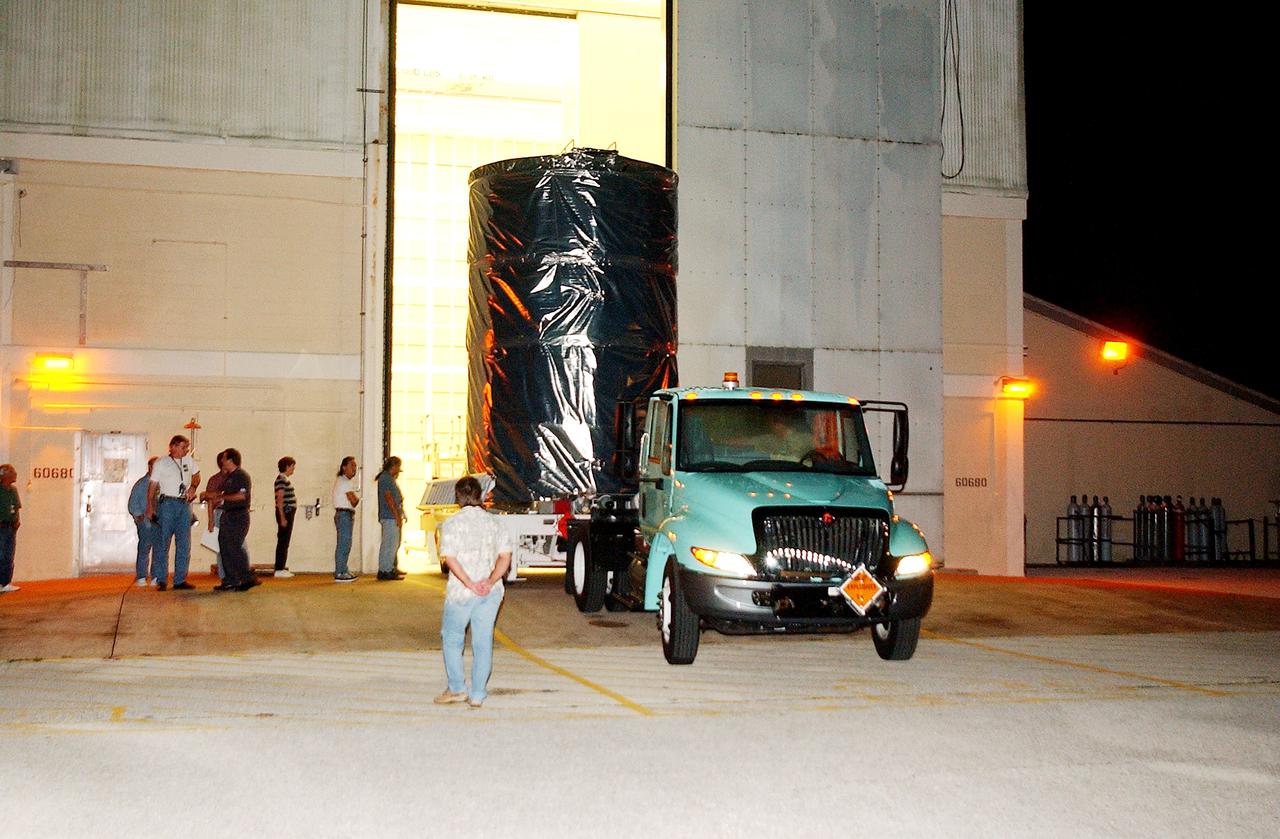
KENNEDY SPACE CENTER, FLA.  -  The Space Infrared Telescope Facility (SIRTF) is rolled out of the hangar at Cape Canaveral Air Force Station during pre-dawn hours.  It is being transported to Launch Pad 17-B where it will be lifted into the mobile service tower and prepared for launch.  SIRTF consists of three cryogenically cooled science instruments and an 0.85-meter telescope, and is one of NASA’s largest infrared telescopes to be launched.  It is the fourth and final element in NASA’s family of orbiting “Great Observatories.”  SIRTF will obtain images and spectra by detecting the infrared energy, or heat, radiated by objects in space. Most of this infrared radiation is blocked by the Earth's atmosphere and cannot be observed from the ground.
KENNEDY SPACE CENTER, FLA. - The Space Infrared Telescope Facility (SIRTF) is rolled out of the hangar at Cape Canaveral Air Force Station during pre-dawn hours. It is being transported to Launch Pad 17-B where it will be lifted into the mobile service tower and prepared for launch. SIRTF consists of three cryogenically cooled science instruments and an 0.85-meter telescope, and is one of NASA’s largest infrared telescopes to be launched. It is the fourth and final element in NASA’s family of orbiting “Great Observatories.” SIRTF will obtain images and spectra by detecting the infrared energy, or heat, radiated by objects in space. Most of this infrared radiation is blocked by the Earth's atmosphere and cannot be observed from the ground.
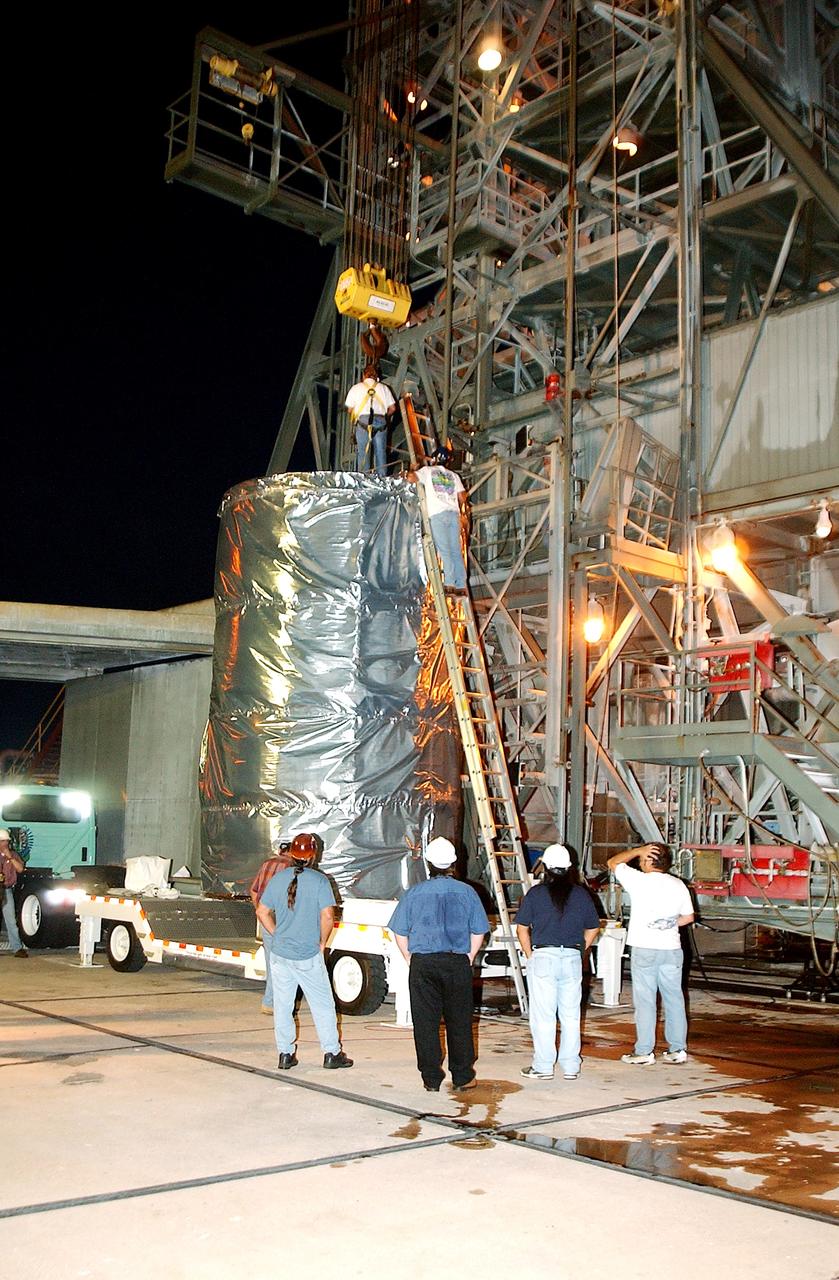
KENNEDY SPACE CENTER, FLA.  -  Workers on the mobile service tower on Launch Pad 17-B, Cape Canaveral Air Force Station, wait for the Space Infrared Telescope Facility (SIRTF) to reach their level.  SIRTF will be attached to the Delta II rocket and encapsulated in its fairing before launch.   Consisting of three cryogenically cooled science instruments and an 0.85-meter telescope, SIRTF is one of NASA’s largest infrared telescopes to be launched.  It is the fourth and final element in NASA’s family of orbiting “Great Observatories.”  SIRTF will obtain images and spectra by detecting the infrared energy, or heat, radiated by objects in space. Most of this infrared radiation is blocked by the Earth's atmosphere and cannot be observed from the ground.
KENNEDY SPACE CENTER, FLA. - Workers on the mobile service tower on Launch Pad 17-B, Cape Canaveral Air Force Station, wait for the Space Infrared Telescope Facility (SIRTF) to reach their level. SIRTF will be attached to the Delta II rocket and encapsulated in its fairing before launch. Consisting of three cryogenically cooled science instruments and an 0.85-meter telescope, SIRTF is one of NASA’s largest infrared telescopes to be launched. It is the fourth and final element in NASA’s family of orbiting “Great Observatories.” SIRTF will obtain images and spectra by detecting the infrared energy, or heat, radiated by objects in space. Most of this infrared radiation is blocked by the Earth's atmosphere and cannot be observed from the ground.
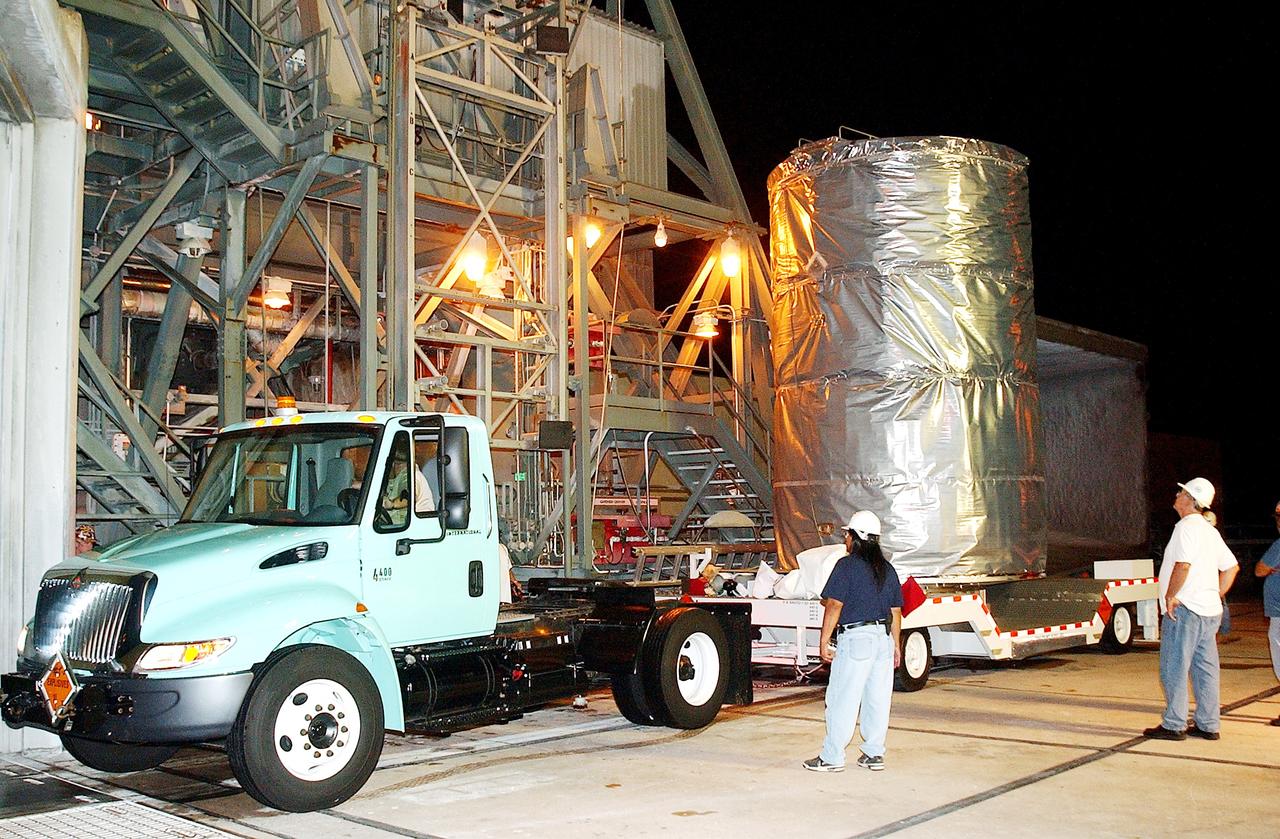
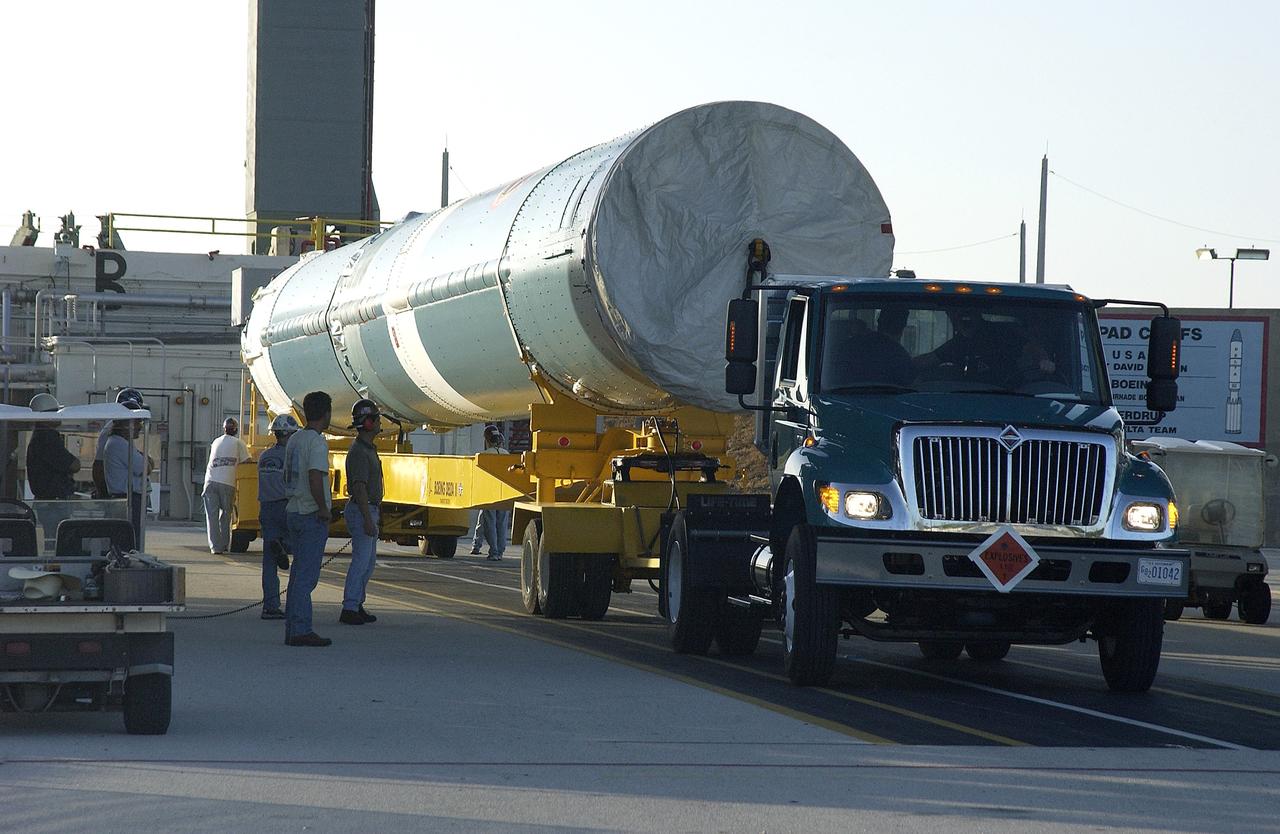
KENNEDY SPACE CENTER, FLA. -   A solid rocket booster (SRB) for the Delta II Heavy rocket that will launch the Space Infrared Telescope Facility (SIRTF) arrives at Launch Complex 17-B, Cape Canaveral Air Force Station.  The Delta II Heavy features nine 46-inch-diameter, stretched SRBs.  Consisting of three cryogenically cooled science instruments and an 0.85-meter telescope, SIRTF is one of NASA's largest infrared telescopes to be launched.  SIRTF will obtain images and spectra by detecting the infrared energy, or heat, radiated by objects in space. Most of this infrared radiation is blocked by the Earth's atmosphere and cannot be observed from the ground.
KENNEDY SPACE CENTER, FLA. - A solid rocket booster (SRB) for the Delta II Heavy rocket that will launch the Space Infrared Telescope Facility (SIRTF) arrives at Launch Complex 17-B, Cape Canaveral Air Force Station. The Delta II Heavy features nine 46-inch-diameter, stretched SRBs. Consisting of three cryogenically cooled science instruments and an 0.85-meter telescope, SIRTF is one of NASA's largest infrared telescopes to be launched. SIRTF will obtain images and spectra by detecting the infrared energy, or heat, radiated by objects in space. Most of this infrared radiation is blocked by the Earth's atmosphere and cannot be observed from the ground.
KENNEDY SPACE CENTER, FLA. -   On Launch Complex 17-B, Cape Canaveral Air Force Station, the first stage of a Delta II rocket waits to be lifted up into the mobile service tower.  The rocket is being erected to launch the Space InfraRed Telescope Facility (SIRTF).  Consisting of an 0.85-meter telescope and three cryogenically cooled science instruments, SIRTF is one of NASA's largest infrared telescopes to be launched.  SIRTF will obtain images and spectra by detecting the infrared energy, or heat, radiated by objects in space. Most of this infrared radiation is blocked by the Earth's atmosphere and cannot be observed from the ground.
KENNEDY SPACE CENTER, FLA. - On Launch Complex 17-B, Cape Canaveral Air Force Station, the first stage of a Delta II rocket waits to be lifted up into the mobile service tower. The rocket is being erected to launch the Space InfraRed Telescope Facility (SIRTF). Consisting of an 0.85-meter telescope and three cryogenically cooled science instruments, SIRTF is one of NASA's largest infrared telescopes to be launched. SIRTF will obtain images and spectra by detecting the infrared energy, or heat, radiated by objects in space. Most of this infrared radiation is blocked by the Earth's atmosphere and cannot be observed from the ground.
KENNEDY SPACE CENTER, FLA. -   A solid rocket booster (SRB) is lifted to vertical on Launch Complex 17-B, Cape Canaveral Air Force Station. The SRB will be attached to the Delta II Heavy rocket that will launch the Space Infrared Telescope Facility (SIRTF).  The Delta II Heavy features nine 46-inch-diameter, stretched SRBs.  Consisting of three cryogenically cooled science instruments and an 0.85-meter telescope, SIRTF is one of NASA's largest infrared telescopes to be launched.  SIRTF will obtain images and spectra by detecting the infrared energy, or heat, radiated by objects in space. Most of this infrared radiation is blocked by the Earth's atmosphere and cannot be observed from the ground.
KENNEDY SPACE CENTER, FLA. - A solid rocket booster (SRB) is lifted to vertical on Launch Complex 17-B, Cape Canaveral Air Force Station. The SRB will be attached to the Delta II Heavy rocket that will launch the Space Infrared Telescope Facility (SIRTF). The Delta II Heavy features nine 46-inch-diameter, stretched SRBs. Consisting of three cryogenically cooled science instruments and an 0.85-meter telescope, SIRTF is one of NASA's largest infrared telescopes to be launched. SIRTF will obtain images and spectra by detecting the infrared energy, or heat, radiated by objects in space. Most of this infrared radiation is blocked by the Earth's atmosphere and cannot be observed from the ground.
KENNEDY SPACE CENTER, FLA.  - Workers at Hangar A&E, Cape Canaveral Air Force Station, help guide the upper canister toward the Space Infrared Telescope Facility (SIRTF) at left.  After encapsulation is complete, the spacecraft will be transported to Launch Complex 17-B for mating with its launch vehicle, the Delta II rocket.   SIRTF consists of three cryogenically cooled science instruments and an 0.85-meter telescope, and is one of NASA's largest infrared telescopes to be launched.  SIRTF will obtain images and spectra by detecting the infrared energy, or heat, radiated by objects in space. Most of this infrared radiation is blocked by the Earth's atmosphere and cannot be observed from the ground.
KENNEDY SPACE CENTER, FLA. - Workers at Hangar A&E, Cape Canaveral Air Force Station, help guide the upper canister toward the Space Infrared Telescope Facility (SIRTF) at left. After encapsulation is complete, the spacecraft will be transported to Launch Complex 17-B for mating with its launch vehicle, the Delta II rocket. SIRTF consists of three cryogenically cooled science instruments and an 0.85-meter telescope, and is one of NASA's largest infrared telescopes to be launched. SIRTF will obtain images and spectra by detecting the infrared energy, or heat, radiated by objects in space. Most of this infrared radiation is blocked by the Earth's atmosphere and cannot be observed from the ground.
KENNEDY SPACE CENTER, FLA. - The Mars Exploration Rover 2 (MER-2) undergoes a weight and center of gravity determination in the Payload Hazardous Servicing Facility.  NASA's twin Mars Exploration Rovers are designed to study the history of water on Mars. These robotic geologists are equipped with a robotic arm, a drilling tool, three spectrometers, and four pairs of cameras that allow them to have a human-like, 3D view of the terrain. Each rover could travel as far as 100 meters in one day to act as Mars scientists' eyes and hands, exploring an environment where humans can't yet go.  Launch of MER-2 is scheduled for June 5 from Cape Canaveral Air Force Station.
KENNEDY SPACE CENTER, FLA. - The Mars Exploration Rover 2 (MER-2) undergoes a weight and center of gravity determination in the Payload Hazardous Servicing Facility. NASA's twin Mars Exploration Rovers are designed to study the history of water on Mars. These robotic geologists are equipped with a robotic arm, a drilling tool, three spectrometers, and four pairs of cameras that allow them to have a human-like, 3D view of the terrain. Each rover could travel as far as 100 meters in one day to act as Mars scientists' eyes and hands, exploring an environment where humans can't yet go. Launch of MER-2 is scheduled for June 5 from Cape Canaveral Air Force Station.
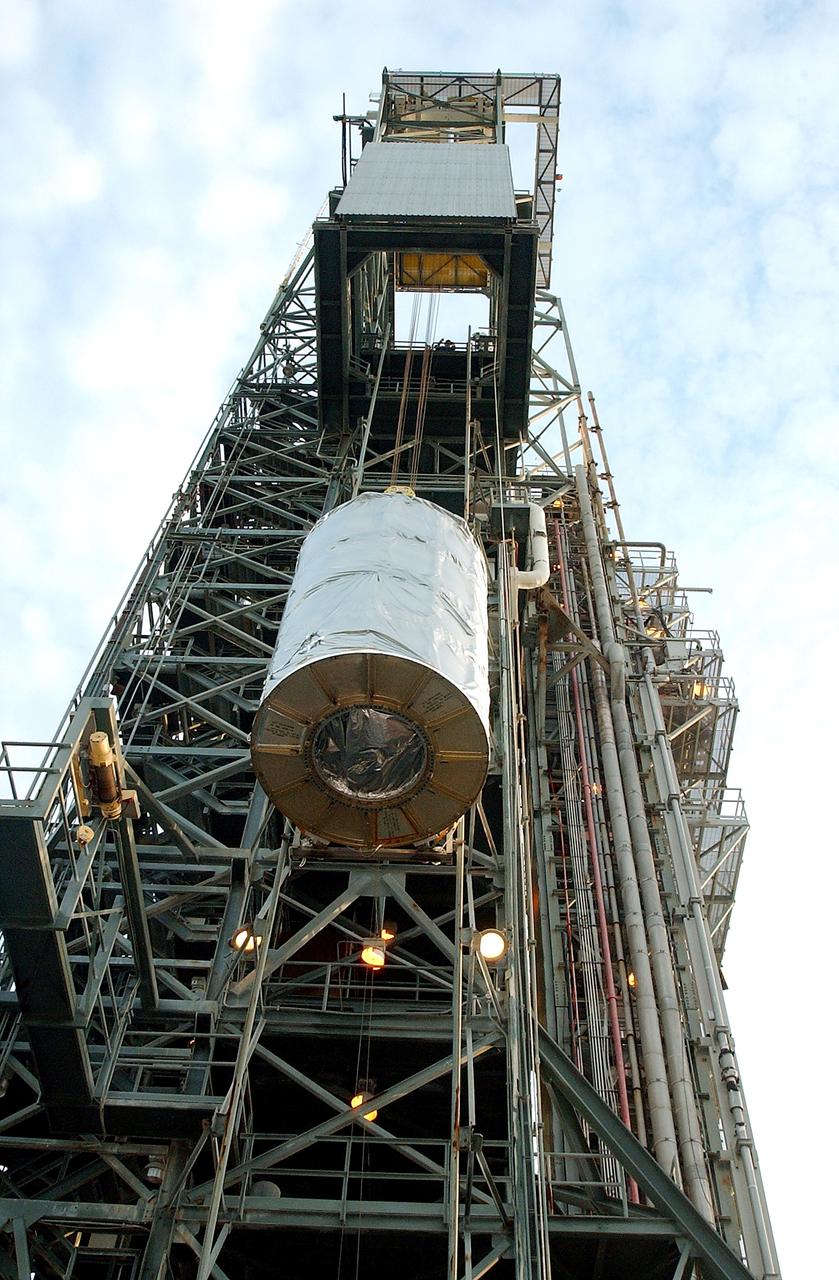
KENNEDY SPACE CENTER, FLA.  -  Viewed from below, the Space Infrared Telescope Facility (SIRTF) is lifted up the mobile service tower on Launch Pad 17-B, Cape Canaveral Air Force Station.  SIRTF will be attached to the Delta II rocket and encapsulated in its fairing before launch.   Consisting of three cryogenically cooled science instruments and an 0.85-meter telescope, SIRTF is one of NASA’s largest infrared telescopes to be launched.  It is the fourth and final element in NASA’s family of orbiting “Great Observatories.”  SIRTF will obtain images and spectra by detecting the infrared energy, or heat, radiated by objects in space. Most of this infrared radiation is blocked by the Earth's atmosphere and cannot be observed from the ground.
KENNEDY SPACE CENTER, FLA. - Viewed from below, the Space Infrared Telescope Facility (SIRTF) is lifted up the mobile service tower on Launch Pad 17-B, Cape Canaveral Air Force Station. SIRTF will be attached to the Delta II rocket and encapsulated in its fairing before launch. Consisting of three cryogenically cooled science instruments and an 0.85-meter telescope, SIRTF is one of NASA’s largest infrared telescopes to be launched. It is the fourth and final element in NASA’s family of orbiting “Great Observatories.” SIRTF will obtain images and spectra by detecting the infrared energy, or heat, radiated by objects in space. Most of this infrared radiation is blocked by the Earth's atmosphere and cannot be observed from the ground.
KENNEDY SPACE CENTER, FLA. -   On Launch Complex 17-B, Cape Canaveral Air Force Station, the first stage of a Delta II rocket is raised off the transporter before lifting and moving it into the mobile service tower.  The rocket is being erected to launch the Space InfraRed Telescope Facility (SIRTF).  Consisting of an 0.85-meter telescope and three cryogenically cooled science instruments, SIRTF is one of NASA's largest infrared telescopes to be launched.  SIRTF will obtain images and spectra by detecting the infrared energy, or heat, radiated by objects in space. Most of this infrared radiation is blocked by the Earth's atmosphere and cannot be observed from the ground.
KENNEDY SPACE CENTER, FLA. - On Launch Complex 17-B, Cape Canaveral Air Force Station, the first stage of a Delta II rocket is raised off the transporter before lifting and moving it into the mobile service tower. The rocket is being erected to launch the Space InfraRed Telescope Facility (SIRTF). Consisting of an 0.85-meter telescope and three cryogenically cooled science instruments, SIRTF is one of NASA's largest infrared telescopes to be launched. SIRTF will obtain images and spectra by detecting the infrared energy, or heat, radiated by objects in space. Most of this infrared radiation is blocked by the Earth's atmosphere and cannot be observed from the ground.
KENNEDY SPACE CENTER, FLA. - In the Payload Hazardous Servicing Facility, the Mars Exploration Rover 2 (MER-2) is moved to a spin table.  NASA’s twin Mars Exploration Rovers are designed to study the history of water on Mars. These robotic geologists are equipped with a robotic arm, a drilling tool, three spectrometers, and four pairs of cameras that allow them to have a human-like, 3D view of the terrain. Each rover could travel as far as 100 meters in one day to act as Mars scientists' eyes and hands, exploring an environment where humans can’t yet go.  The MER-2 is scheduled to launch June 5 from Launch Pad 17-A, Cape Canaveral Air Force Station.
KENNEDY SPACE CENTER, FLA. - In the Payload Hazardous Servicing Facility, the Mars Exploration Rover 2 (MER-2) is moved to a spin table. NASA’s twin Mars Exploration Rovers are designed to study the history of water on Mars. These robotic geologists are equipped with a robotic arm, a drilling tool, three spectrometers, and four pairs of cameras that allow them to have a human-like, 3D view of the terrain. Each rover could travel as far as 100 meters in one day to act as Mars scientists' eyes and hands, exploring an environment where humans can’t yet go. The MER-2 is scheduled to launch June 5 from Launch Pad 17-A, Cape Canaveral Air Force Station.
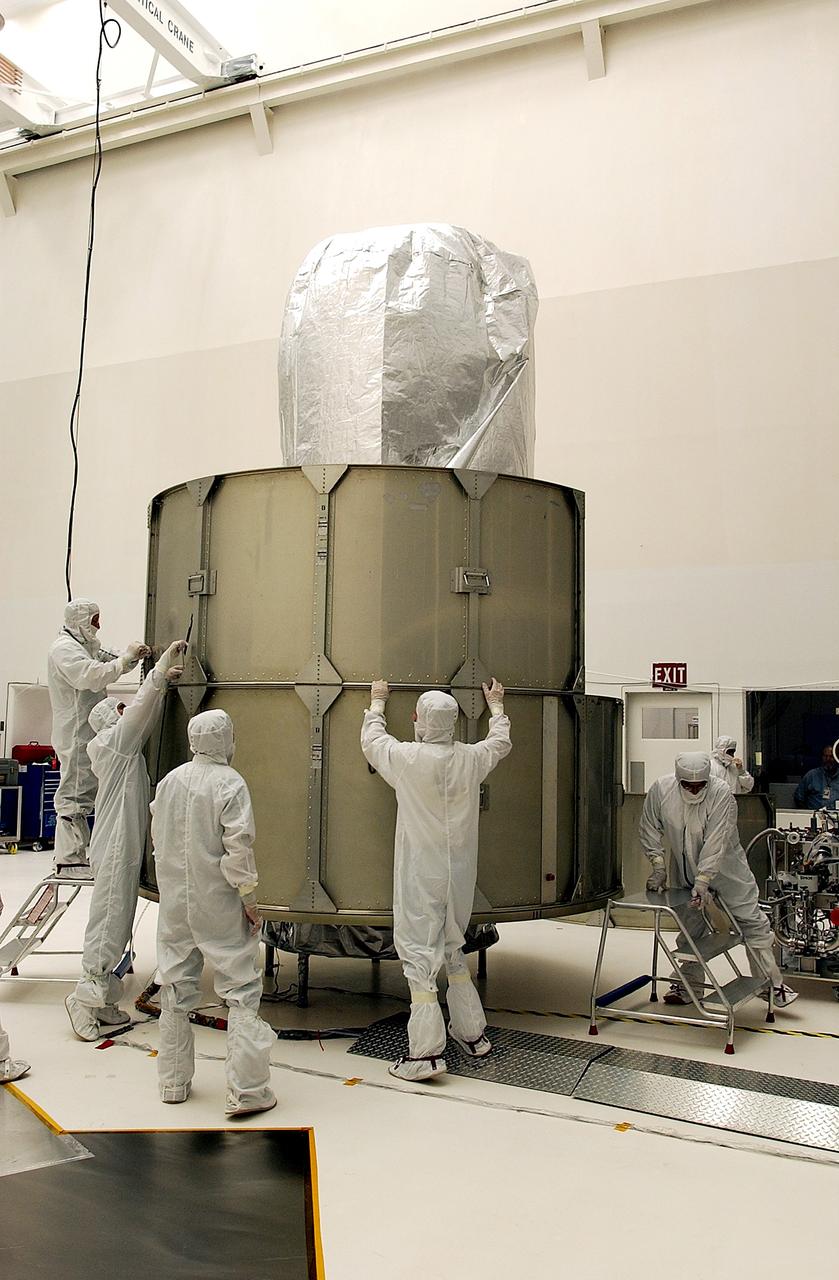
KENNEDY SPACE CENTER, FLA.  -  A worker at Hangar A&E, Cape Canaveral Air Force Station, place the lower panels of the canister around the Space Infrared Telescope Facility (SIRTF).  The spacecraft will be transported to Launch Complex 17-B for mating with its launch vehicle, the Delta II rocket.   SIRTF consists of three cryogenically cooled science instruments and an 0.85-meter telescope, and is one of NASA's largest infrared telescopes to be launched.  SIRTF will obtain images and spectra by detecting the infrared energy, or heat, radiated by objects in space. Most of this infrared radiation is blocked by the Earth's atmosphere and cannot be observed from the ground.
KENNEDY SPACE CENTER, FLA. - A worker at Hangar A&E, Cape Canaveral Air Force Station, place the lower panels of the canister around the Space Infrared Telescope Facility (SIRTF). The spacecraft will be transported to Launch Complex 17-B for mating with its launch vehicle, the Delta II rocket. SIRTF consists of three cryogenically cooled science instruments and an 0.85-meter telescope, and is one of NASA's largest infrared telescopes to be launched. SIRTF will obtain images and spectra by detecting the infrared energy, or heat, radiated by objects in space. Most of this infrared radiation is blocked by the Earth's atmosphere and cannot be observed from the ground.
KENNEDY SPACE CENTER, FLA. -   On Launch Complex 17-B, Cape Canaveral Air Force Station, the first stage of a Delta II rocket waits to be lifted up and moved into the mobile service tower.  The rocket is being erected to launch the Space InfraRed Telescope Facility (SIRTF).  Consisting of an 0.85-meter telescope and three cryogenically cooled science instruments, SIRTF is one of NASA's largest infrared telescopes to be launched.  SIRTF will obtain images and spectra by detecting the infrared energy, or heat, radiated by objects in space. Most of this infrared radiation is blocked by the Earth's atmosphere and cannot be observed from the ground.
KENNEDY SPACE CENTER, FLA. - On Launch Complex 17-B, Cape Canaveral Air Force Station, the first stage of a Delta II rocket waits to be lifted up and moved into the mobile service tower. The rocket is being erected to launch the Space InfraRed Telescope Facility (SIRTF). Consisting of an 0.85-meter telescope and three cryogenically cooled science instruments, SIRTF is one of NASA's largest infrared telescopes to be launched. SIRTF will obtain images and spectra by detecting the infrared energy, or heat, radiated by objects in space. Most of this infrared radiation is blocked by the Earth's atmosphere and cannot be observed from the ground.
KENNEDY SPACE CENTER, FLA. -   On Launch Complex 17-B, Cape Canaveral Air Force Station, the first stage of a Delta II rocket is nearly erect for its move into the mobile service tower.  The rocket is being erected to launch the Space InfraRed Telescope Facility (SIRTF).  Consisting of an 0.85-meter telescope and three cryogenically cooled science instruments, SIRTF is one of NASA's largest infrared telescopes to be launched.  SIRTF will obtain images and spectra by detecting the infrared energy, or heat, radiated by objects in space. Most of this infrared radiation is blocked by the Earth's atmosphere and cannot be observed from the ground.
KENNEDY SPACE CENTER, FLA. - On Launch Complex 17-B, Cape Canaveral Air Force Station, the first stage of a Delta II rocket is nearly erect for its move into the mobile service tower. The rocket is being erected to launch the Space InfraRed Telescope Facility (SIRTF). Consisting of an 0.85-meter telescope and three cryogenically cooled science instruments, SIRTF is one of NASA's largest infrared telescopes to be launched. SIRTF will obtain images and spectra by detecting the infrared energy, or heat, radiated by objects in space. Most of this infrared radiation is blocked by the Earth's atmosphere and cannot be observed from the ground.
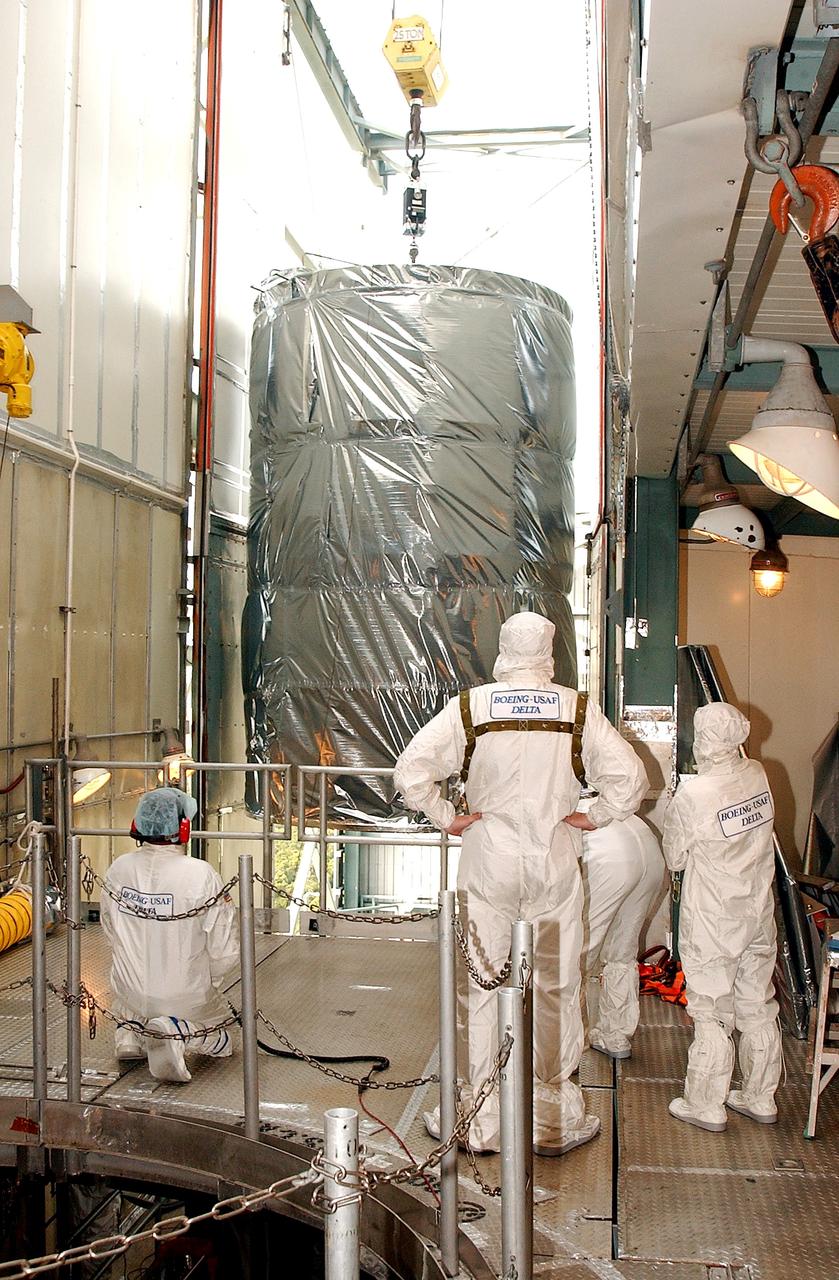
KENNEDY SPACE CENTER, FLA.  -  Workers on the mobile service tower on Launch Pad 17-B, Cape Canaveral Air Force Station, help guide the Space Infrared Telescope Facility (SIRTF) toward the opening in the foreground.  SIRTF will be attached to the Delta II rocket and encapsulated in its fairing before launch.   Consisting of three cryogenically cooled science instruments and an 0.85-meter telescope, SIRTF is one of NASA’s largest infrared telescopes to be launched.  It is the fourth and final element in NASA’s family of orbiting “Great Observatories.”  SIRTF will obtain images and spectra by detecting the infrared energy, or heat, radiated by objects in space. Most of this infrared radiation is blocked by the Earth's atmosphere and cannot be observed from the ground.
KENNEDY SPACE CENTER, FLA. - Workers on the mobile service tower on Launch Pad 17-B, Cape Canaveral Air Force Station, help guide the Space Infrared Telescope Facility (SIRTF) toward the opening in the foreground. SIRTF will be attached to the Delta II rocket and encapsulated in its fairing before launch. Consisting of three cryogenically cooled science instruments and an 0.85-meter telescope, SIRTF is one of NASA’s largest infrared telescopes to be launched. It is the fourth and final element in NASA’s family of orbiting “Great Observatories.” SIRTF will obtain images and spectra by detecting the infrared energy, or heat, radiated by objects in space. Most of this infrared radiation is blocked by the Earth's atmosphere and cannot be observed from the ground.
KENNEDY SPACE CENTER, FLA.  -  Before dawn, the Space Infrared Telescope Facility (SIRTF) is attached to an overhead crane that will lift it up the mobile service tower on Launch Pad 17-B, Cape Canaveral Air Force Station.  SIRTF will be attached to the Delta II rocket and encapsulated in its fairing before launch.   Consisting of three cryogenically cooled science instruments and an 0.85-meter telescope, SIRTF is one of NASA’s largest infrared telescopes to be launched.  It is the fourth and final element in NASA’s family of orbiting “Great Observatories.”  SIRTF will obtain images and spectra by detecting the infrared energy, or heat, radiated by objects in space. Most of this infrared radiation is blocked by the Earth's atmosphere and cannot be observed from the ground.
KENNEDY SPACE CENTER, FLA. - Before dawn, the Space Infrared Telescope Facility (SIRTF) is attached to an overhead crane that will lift it up the mobile service tower on Launch Pad 17-B, Cape Canaveral Air Force Station. SIRTF will be attached to the Delta II rocket and encapsulated in its fairing before launch. Consisting of three cryogenically cooled science instruments and an 0.85-meter telescope, SIRTF is one of NASA’s largest infrared telescopes to be launched. It is the fourth and final element in NASA’s family of orbiting “Great Observatories.” SIRTF will obtain images and spectra by detecting the infrared energy, or heat, radiated by objects in space. Most of this infrared radiation is blocked by the Earth's atmosphere and cannot be observed from the ground.
KENNEDY SPACE CENTER, FLA.  - Workers at Hangar A&E, Cape Canaveral Air Force Station, place the middle row of panels to encapsulate the Space Infrared Telescope Facility (SIRTF).  The spacecraft will be transported to Launch Complex 17-B for mating with its launch vehicle, the Delta II rocket.   SIRTF consists of three cryogenically cooled science instruments and an 0.85-meter telescope, and is one of NASA's largest infrared telescopes to be launched.  SIRTF will obtain images and spectra by detecting the infrared energy, or heat, radiated by objects in space. Most of this infrared radiation is blocked by the Earth's atmosphere and cannot be observed from the ground.
KENNEDY SPACE CENTER, FLA. - Workers at Hangar A&E, Cape Canaveral Air Force Station, place the middle row of panels to encapsulate the Space Infrared Telescope Facility (SIRTF). The spacecraft will be transported to Launch Complex 17-B for mating with its launch vehicle, the Delta II rocket. SIRTF consists of three cryogenically cooled science instruments and an 0.85-meter telescope, and is one of NASA's largest infrared telescopes to be launched. SIRTF will obtain images and spectra by detecting the infrared energy, or heat, radiated by objects in space. Most of this infrared radiation is blocked by the Earth's atmosphere and cannot be observed from the ground.
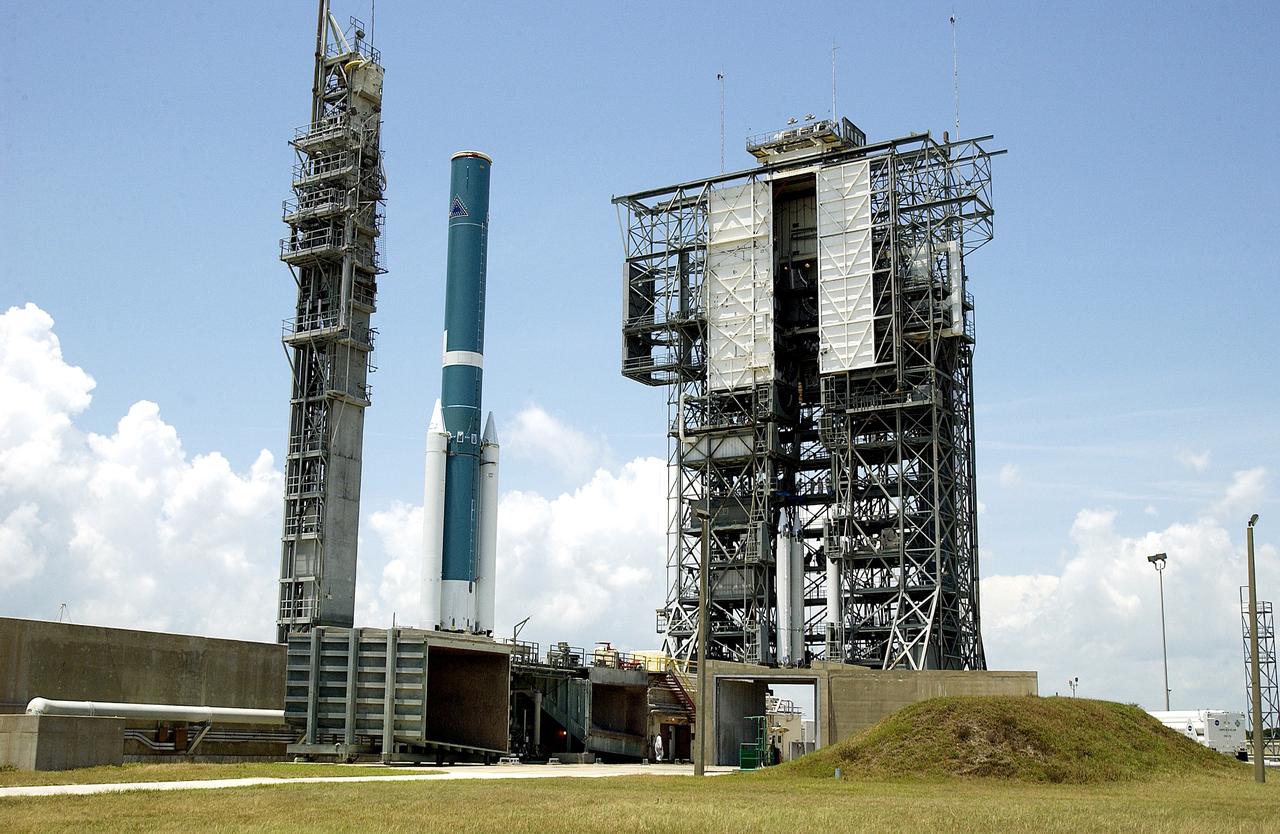
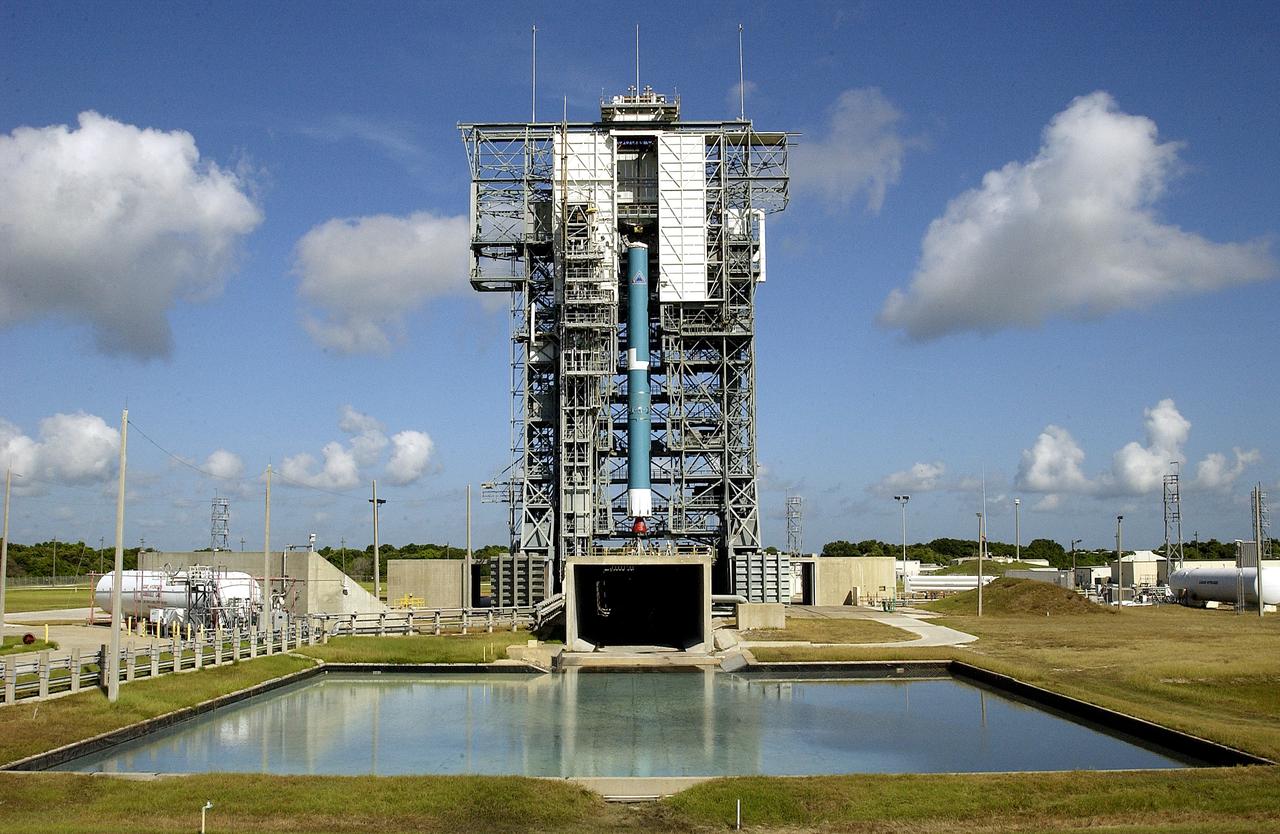
KENNEDY SPACE CENTER, FLA. -  On Launch Complex 17-B, Cape Canaveral Air Force Station, the first stage of a Delta II rocket is lifted up the mobile service tower.  Below the rocket is the flame trench, and in the foreground is the overflow pool.  The rocket is being erected to launch the Space InfraRed Telescope Facility (SIRTF).  Consisting of an 0.85-meter telescope and three cryogenically cooled science instruments, SIRTF is one of NASA's largest infrared telescopes to be launched.  SIRTF will obtain images and spectra by detecting the infrared energy, or heat, radiated by objects in space. Most of this infrared radiation is blocked by the Earth's atmosphere and cannot be observed from the ground.
KENNEDY SPACE CENTER, FLA. - On Launch Complex 17-B, Cape Canaveral Air Force Station, the first stage of a Delta II rocket is lifted up the mobile service tower. Below the rocket is the flame trench, and in the foreground is the overflow pool. The rocket is being erected to launch the Space InfraRed Telescope Facility (SIRTF). Consisting of an 0.85-meter telescope and three cryogenically cooled science instruments, SIRTF is one of NASA's largest infrared telescopes to be launched. SIRTF will obtain images and spectra by detecting the infrared energy, or heat, radiated by objects in space. Most of this infrared radiation is blocked by the Earth's atmosphere and cannot be observed from the ground.
KENNEDY SPACE CENTER, FLA. -  On Launch Complex 17-B, Cape Canaveral Air Force Station, the first stage of a Delta II rocket is lifted up the mobile service tower.  In the background is pad 17-A.   The rocket is being erected to launch the Space InfraRed Telescope Facility (SIRTF).  Consisting of an 0.85-meter telescope and three cryogenically cooled science instruments, SIRTF is one of NASA's largest infrared telescopes to be launched.  SIRTF will obtain images and spectra by detecting the infrared energy, or heat, radiated by objects in space. Most of this infrared radiation is blocked by the Earth's atmosphere and cannot be observed from the ground.
KENNEDY SPACE CENTER, FLA. - On Launch Complex 17-B, Cape Canaveral Air Force Station, the first stage of a Delta II rocket is lifted up the mobile service tower. In the background is pad 17-A. The rocket is being erected to launch the Space InfraRed Telescope Facility (SIRTF). Consisting of an 0.85-meter telescope and three cryogenically cooled science instruments, SIRTF is one of NASA's largest infrared telescopes to be launched. SIRTF will obtain images and spectra by detecting the infrared energy, or heat, radiated by objects in space. Most of this infrared radiation is blocked by the Earth's atmosphere and cannot be observed from the ground.
KENNEDY SPACE CENTER, FLA. -   On Launch Complex 17-B, Cape Canaveral Air Force Station, a solid rocket booster (SRB) is lifted into the mobile service tower, joining two others.  They are three of nine  46-inch-diameter, stretched SRBs that are being attached to the Delta II Heavy rocket that will launch the Space Infrared Telescope Facility (SIRTF).  Consisting of three cryogenically cooled science instruments and an 0.85-meter telescope, SIRTF is one of NASA's largest infrared telescopes to be launched.  SIRTF will obtain images and spectra by detecting the infrared energy, or heat, radiated by objects in space. Most of this infrared radiation is blocked by the Earth's atmosphere and cannot be observed from the ground.
KENNEDY SPACE CENTER, FLA. - On Launch Complex 17-B, Cape Canaveral Air Force Station, a solid rocket booster (SRB) is lifted into the mobile service tower, joining two others. They are three of nine 46-inch-diameter, stretched SRBs that are being attached to the Delta II Heavy rocket that will launch the Space Infrared Telescope Facility (SIRTF). Consisting of three cryogenically cooled science instruments and an 0.85-meter telescope, SIRTF is one of NASA's largest infrared telescopes to be launched. SIRTF will obtain images and spectra by detecting the infrared energy, or heat, radiated by objects in space. Most of this infrared radiation is blocked by the Earth's atmosphere and cannot be observed from the ground.
KENNEDY SPACE CENTER, FLA.  -  The Space Infrared Telescope Facility (SIRTF) is lowered into the opening of the mobile service tower on Launch Pad 17-B, Cape Canaveral Air Force Station.  SIRTF will be attached to the Delta II rocket and encapsulated in its fairing before launch.   Consisting of three cryogenically cooled science instruments and an 0.85-meter telescope, SIRTF is one of NASA’s largest infrared telescopes to be launched.  It is the fourth and final element in NASA’s family of orbiting “Great Observatories.”  SIRTF will obtain images and spectra by detecting the infrared energy, or heat, radiated by objects in space. Most of this infrared radiation is blocked by the Earth's atmosphere and cannot be observed from the ground.
KENNEDY SPACE CENTER, FLA. - The Space Infrared Telescope Facility (SIRTF) is lowered into the opening of the mobile service tower on Launch Pad 17-B, Cape Canaveral Air Force Station. SIRTF will be attached to the Delta II rocket and encapsulated in its fairing before launch. Consisting of three cryogenically cooled science instruments and an 0.85-meter telescope, SIRTF is one of NASA’s largest infrared telescopes to be launched. It is the fourth and final element in NASA’s family of orbiting “Great Observatories.” SIRTF will obtain images and spectra by detecting the infrared energy, or heat, radiated by objects in space. Most of this infrared radiation is blocked by the Earth's atmosphere and cannot be observed from the ground.
KENNEDY SPACE CENTER, FLA. -  The Mars Exploration Rover 2 (MER-2) undergoes a weight and center of gravity determination in the Payload Hazardous Servicing Facility.  NASA's twin Mars Exploration Rovers are designed to study the history of water on Mars. These robotic geologists are equipped with a robotic arm, a drilling tool, three spectrometers, and four pairs of cameras that allow them to have a human-like, 3D view of the terrain. Each rover could travel as far as 100 meters in one day to act as Mars scientists' eyes and hands, exploring an environment where humans can't yet go.  Launch of MER-2 is scheduled for June 5 from Cape Canaveral Air Force Station.
KENNEDY SPACE CENTER, FLA. - The Mars Exploration Rover 2 (MER-2) undergoes a weight and center of gravity determination in the Payload Hazardous Servicing Facility. NASA's twin Mars Exploration Rovers are designed to study the history of water on Mars. These robotic geologists are equipped with a robotic arm, a drilling tool, three spectrometers, and four pairs of cameras that allow them to have a human-like, 3D view of the terrain. Each rover could travel as far as 100 meters in one day to act as Mars scientists' eyes and hands, exploring an environment where humans can't yet go. Launch of MER-2 is scheduled for June 5 from Cape Canaveral Air Force Station.
KENNEDY SPACE CENTER, FLA. -   A solid rocket booster (SRB) for the Delta II Heavy rocket that will launch the Space Infrared Telescope Facility (SIRTF) is lifted off its transporter on Launch Complex 17-B, Cape Canaveral Air Force Station.  The SRB will be added to the launch vehicle in the background.  The Delta II Heavy features nine 46-inch-diameter, stretched SRBs.  SIRTF, consisting of three cryogenically cooled science instruments and an 0.85-meter telescope, is one of NASA's largest infrared telescopes to be launched.  SIRTF will obtain images and spectra by detecting the infrared energy, or heat, radiated by objects in space. Most of this infrared radiation is blocked by the Earth's atmosphere and cannot be observed from the ground.
KENNEDY SPACE CENTER, FLA. - A solid rocket booster (SRB) for the Delta II Heavy rocket that will launch the Space Infrared Telescope Facility (SIRTF) is lifted off its transporter on Launch Complex 17-B, Cape Canaveral Air Force Station. The SRB will be added to the launch vehicle in the background. The Delta II Heavy features nine 46-inch-diameter, stretched SRBs. SIRTF, consisting of three cryogenically cooled science instruments and an 0.85-meter telescope, is one of NASA's largest infrared telescopes to be launched. SIRTF will obtain images and spectra by detecting the infrared energy, or heat, radiated by objects in space. Most of this infrared radiation is blocked by the Earth's atmosphere and cannot be observed from the ground.
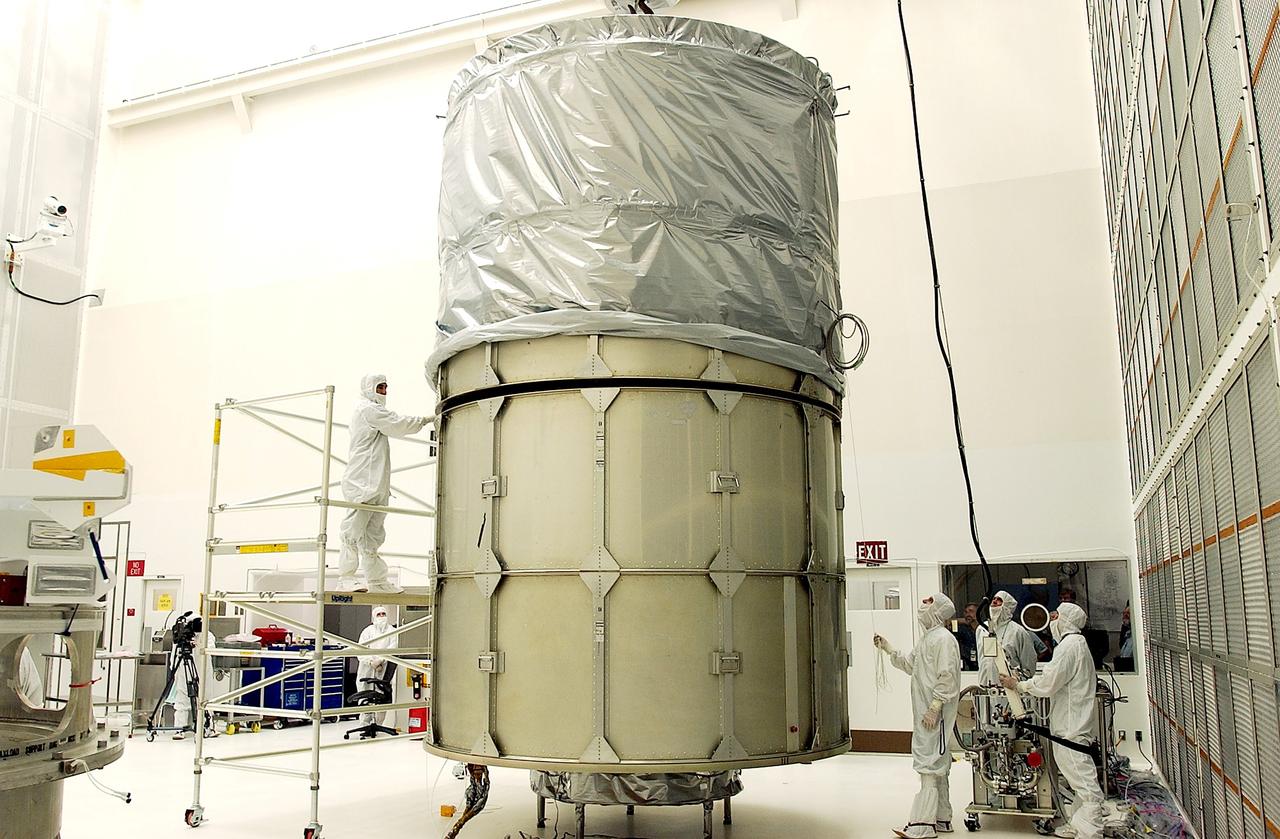
KENNEDY SPACE CENTER, FLA.  - A worker at Hangar A&E, Cape Canaveral Air Force Station, tightens the canister around the Space Infrared Telescope Facility (SIRTF).  The spacecraft will be transported to Launch Complex 17-B for mating with its launch vehicle, the Delta II rocket.   SIRTF consists of three cryogenically cooled science instruments and an 0.85-meter telescope, and is one of NASA's largest infrared telescopes to be launched.  SIRTF will obtain images and spectra by detecting the infrared energy, or heat, radiated by objects in space. Most of this infrared radiation is blocked by the Earth's atmosphere and cannot be observed from the ground.
KENNEDY SPACE CENTER, FLA. - A worker at Hangar A&E, Cape Canaveral Air Force Station, tightens the canister around the Space Infrared Telescope Facility (SIRTF). The spacecraft will be transported to Launch Complex 17-B for mating with its launch vehicle, the Delta II rocket. SIRTF consists of three cryogenically cooled science instruments and an 0.85-meter telescope, and is one of NASA's largest infrared telescopes to be launched. SIRTF will obtain images and spectra by detecting the infrared energy, or heat, radiated by objects in space. Most of this infrared radiation is blocked by the Earth's atmosphere and cannot be observed from the ground.
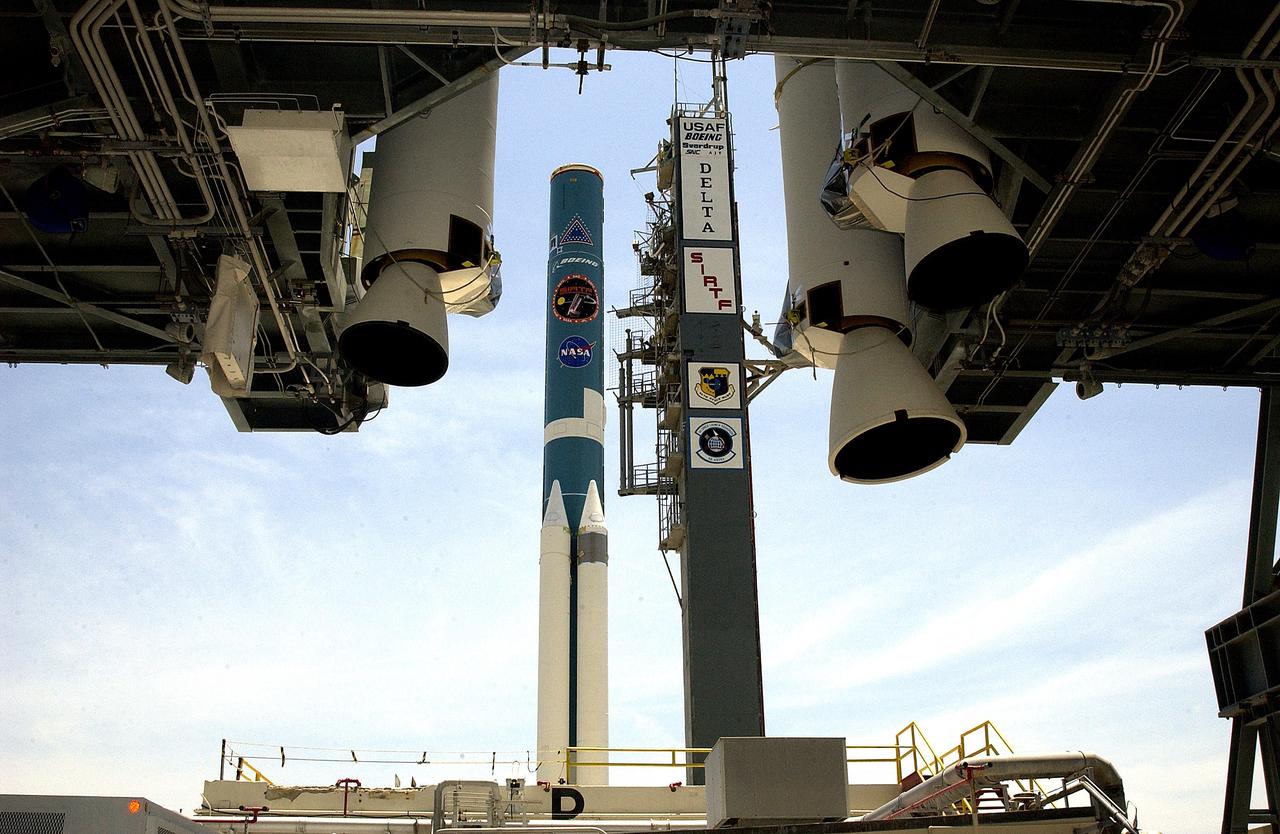
KENNEDY SPACE CENTER, FLA. -   On Launch Complex 17-B, Cape Canaveral Air Force Station, the Delta II Heavy rocket  (background) is framed by the solid rocket boosters (foreground) suspended in the mobile service tower.  The SRBs will be added to those already attached to the rocket.  The Delta II Heavy will launch the Space Infrared Telescope Facility (SIRTF).  Consisting of three cryogenically cooled science instruments and an 0.85-meter telescope, SIRTF is one of NASA's largest infrared telescopes to be launched.  SIRTF will obtain images and spectra by detecting the infrared energy, or heat, radiated by objects in space. Most of this infrared radiation is blocked by the Earth's atmosphere and cannot be observed from the ground.
KENNEDY SPACE CENTER, FLA. - On Launch Complex 17-B, Cape Canaveral Air Force Station, the Delta II Heavy rocket (background) is framed by the solid rocket boosters (foreground) suspended in the mobile service tower. The SRBs will be added to those already attached to the rocket. The Delta II Heavy will launch the Space Infrared Telescope Facility (SIRTF). Consisting of three cryogenically cooled science instruments and an 0.85-meter telescope, SIRTF is one of NASA's largest infrared telescopes to be launched. SIRTF will obtain images and spectra by detecting the infrared energy, or heat, radiated by objects in space. Most of this infrared radiation is blocked by the Earth's atmosphere and cannot be observed from the ground.
KENNEDY SPACE CENTER, FLA.  -  In Hangar A&E, Cape Canaveral Air Force Station, the upper canister is mated to the middle panels around the Space Infrared Telescope Facility (SIRTF).  The spacecraft will be transported to Launch Complex 17-B for mating with its launch vehicle, the Delta II rocket.   SIRTF consists of three cryogenically cooled science instruments and an 0.85-meter telescope, and is one of NASA's largest infrared telescopes to be launched.  SIRTF will obtain images and spectra by detecting the infrared energy, or heat, radiated by objects in space. Most of this infrared radiation is blocked by the Earth's atmosphere and cannot be observed from the ground.
KENNEDY SPACE CENTER, FLA. - In Hangar A&E, Cape Canaveral Air Force Station, the upper canister is mated to the middle panels around the Space Infrared Telescope Facility (SIRTF). The spacecraft will be transported to Launch Complex 17-B for mating with its launch vehicle, the Delta II rocket. SIRTF consists of three cryogenically cooled science instruments and an 0.85-meter telescope, and is one of NASA's largest infrared telescopes to be launched. SIRTF will obtain images and spectra by detecting the infrared energy, or heat, radiated by objects in space. Most of this infrared radiation is blocked by the Earth's atmosphere and cannot be observed from the ground.
KENNEDY SPACE CENTER, FLA.  -  In Hangar A&E, Cape Canaveral Air Force Station, encapsulation of the Space Infrared Telescope Facility (SIRTF) is complete.  The spacecraft will be transported to Launch Complex 17-B for mating with its launch vehicle, the Delta II rocket.   SIRTF consists of three cryogenically cooled science instruments and an 0.85-meter telescope, and is one of NASA's largest infrared telescopes to be launched.  SIRTF will obtain images and spectra by detecting the infrared energy, or heat, radiated by objects in space. Most of this infrared radiation is blocked by the Earth's atmosphere and cannot be observed from the ground.
KENNEDY SPACE CENTER, FLA. - In Hangar A&E, Cape Canaveral Air Force Station, encapsulation of the Space Infrared Telescope Facility (SIRTF) is complete. The spacecraft will be transported to Launch Complex 17-B for mating with its launch vehicle, the Delta II rocket. SIRTF consists of three cryogenically cooled science instruments and an 0.85-meter telescope, and is one of NASA's largest infrared telescopes to be launched. SIRTF will obtain images and spectra by detecting the infrared energy, or heat, radiated by objects in space. Most of this infrared radiation is blocked by the Earth's atmosphere and cannot be observed from the ground.
KENNEDY SPACE CENTER, FLA.  -  Workers on the mobile service tower on Launch Pad 17-B, Cape Canaveral Air Force Station, watch as the Space Infrared Telescope Facility (SIRTF) clears the platform.   SIRTF will be attached to the Delta II rocket and encapsulated in its fairing before launch.   Consisting of three cryogenically cooled science instruments and an 0.85-meter telescope, SIRTF is one of NASA’s largest infrared telescopes to be launched.  It is the fourth and final element in NASA’s family of orbiting “Great Observatories.”  SIRTF will obtain images and spectra by detecting the infrared energy, or heat, radiated by objects in space. Most of this infrared radiation is blocked by the Earth's atmosphere and cannot be observed from the ground.
KENNEDY SPACE CENTER, FLA. - Workers on the mobile service tower on Launch Pad 17-B, Cape Canaveral Air Force Station, watch as the Space Infrared Telescope Facility (SIRTF) clears the platform. SIRTF will be attached to the Delta II rocket and encapsulated in its fairing before launch. Consisting of three cryogenically cooled science instruments and an 0.85-meter telescope, SIRTF is one of NASA’s largest infrared telescopes to be launched. It is the fourth and final element in NASA’s family of orbiting “Great Observatories.” SIRTF will obtain images and spectra by detecting the infrared energy, or heat, radiated by objects in space. Most of this infrared radiation is blocked by the Earth's atmosphere and cannot be observed from the ground.
KENNEDY SPACE CENTER, FLA. -   On Launch Complex 17-B, Cape Canaveral Air Force Station, the first stage of a Delta II rocket is moved into the mobile service tower.  The rocket is being erected to launch the Space InfraRed Telescope Facility (SIRTF).  Consisting of an 0.85-meter telescope and three cryogenically cooled science instruments, SIRTF is one of NASA's largest infrared telescopes to be launched.  SIRTF will obtain images and spectra by detecting the infrared energy, or heat, radiated by objects in space. Most of this infrared radiation is blocked by the Earth's atmosphere and cannot be observed from the ground.
KENNEDY SPACE CENTER, FLA. - On Launch Complex 17-B, Cape Canaveral Air Force Station, the first stage of a Delta II rocket is moved into the mobile service tower. The rocket is being erected to launch the Space InfraRed Telescope Facility (SIRTF). Consisting of an 0.85-meter telescope and three cryogenically cooled science instruments, SIRTF is one of NASA's largest infrared telescopes to be launched. SIRTF will obtain images and spectra by detecting the infrared energy, or heat, radiated by objects in space. Most of this infrared radiation is blocked by the Earth's atmosphere and cannot be observed from the ground.
KENNEDY SPACE CENTER, FLA. - Workers in the Payload Hazardous Servicing Facility prepare the Mars Exploration Rover 2 (MER-2) for a weight and center of gravity determination.  NASA's twin Mars Exploration Rovers are designed to study the history of water on Mars. These robotic geologists are equipped with a robotic arm, a drilling tool, three spectrometers, and four pairs of cameras that allow them to have a human-like, 3D view of the terrain. Each rover could travel as far as 100 meters in one day to act as Mars scientists' eyes and hands, exploring an environment where humans can't yet go.  Launch of MER-2 is scheduled for June 5 from Cape Canaveral Air Force Station.
KENNEDY SPACE CENTER, FLA. - Workers in the Payload Hazardous Servicing Facility prepare the Mars Exploration Rover 2 (MER-2) for a weight and center of gravity determination. NASA's twin Mars Exploration Rovers are designed to study the history of water on Mars. These robotic geologists are equipped with a robotic arm, a drilling tool, three spectrometers, and four pairs of cameras that allow them to have a human-like, 3D view of the terrain. Each rover could travel as far as 100 meters in one day to act as Mars scientists' eyes and hands, exploring an environment where humans can't yet go. Launch of MER-2 is scheduled for June 5 from Cape Canaveral Air Force Station.
KENNEDY SPACE CENTER, FLA. - Workers in the Payload Hazardous Servicing Facility are preparing to determine weight and center of gravity for the Mars Exploration Rover 2 (MER-2).  NASA's twin Mars Exploration Rovers are designed to study the history of water on Mars. These robotic geologists are equipped with a robotic arm, a drilling tool, three spectrometers, and four pairs of cameras that allow them to have a human-like, 3D view of the terrain. Each rover could travel as far as 100 meters in one day to act as Mars scientists' eyes and hands, exploring an environment where humans can't yet go.  Launch of MER-2 is scheduled for June 5 from Cape Canaveral Air Force Station.
KENNEDY SPACE CENTER, FLA. - Workers in the Payload Hazardous Servicing Facility are preparing to determine weight and center of gravity for the Mars Exploration Rover 2 (MER-2). NASA's twin Mars Exploration Rovers are designed to study the history of water on Mars. These robotic geologists are equipped with a robotic arm, a drilling tool, three spectrometers, and four pairs of cameras that allow them to have a human-like, 3D view of the terrain. Each rover could travel as far as 100 meters in one day to act as Mars scientists' eyes and hands, exploring an environment where humans can't yet go. Launch of MER-2 is scheduled for June 5 from Cape Canaveral Air Force Station.