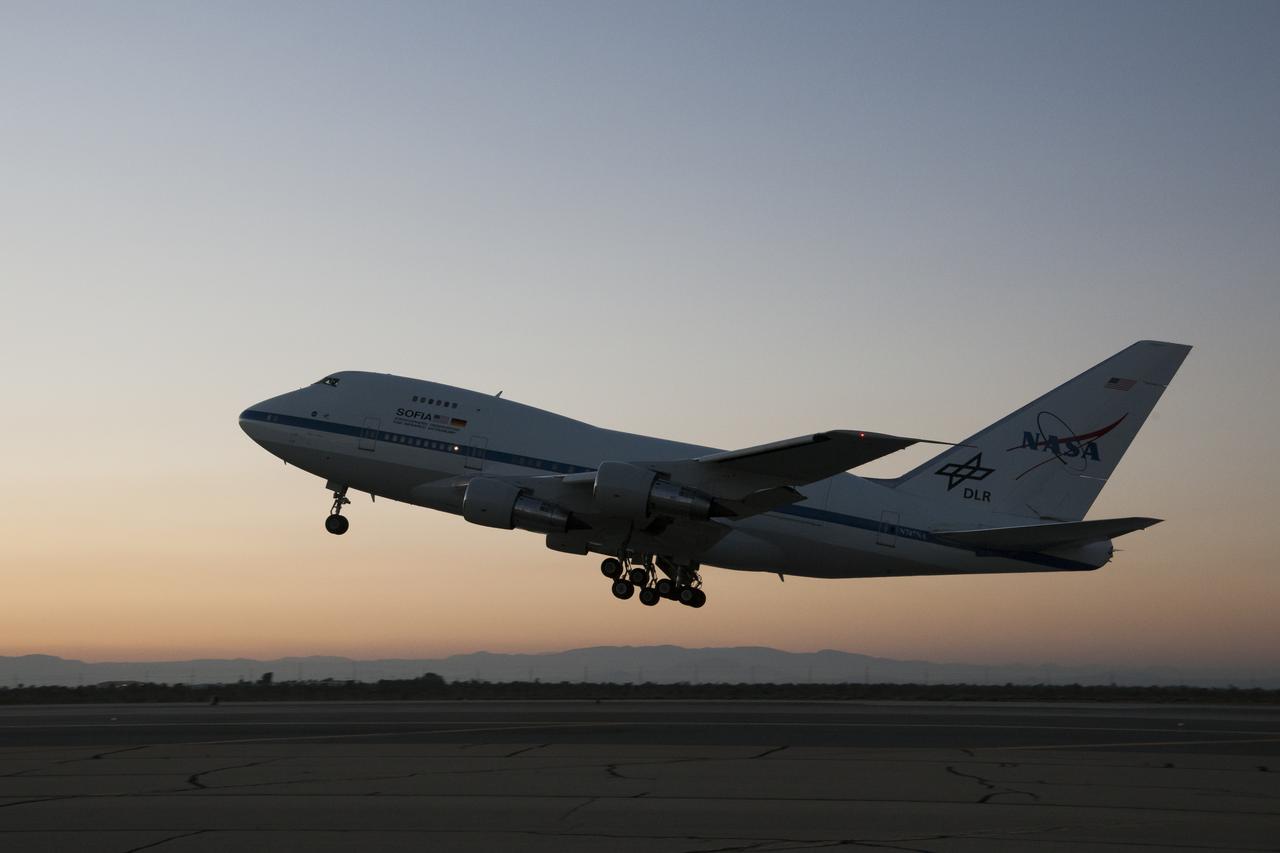
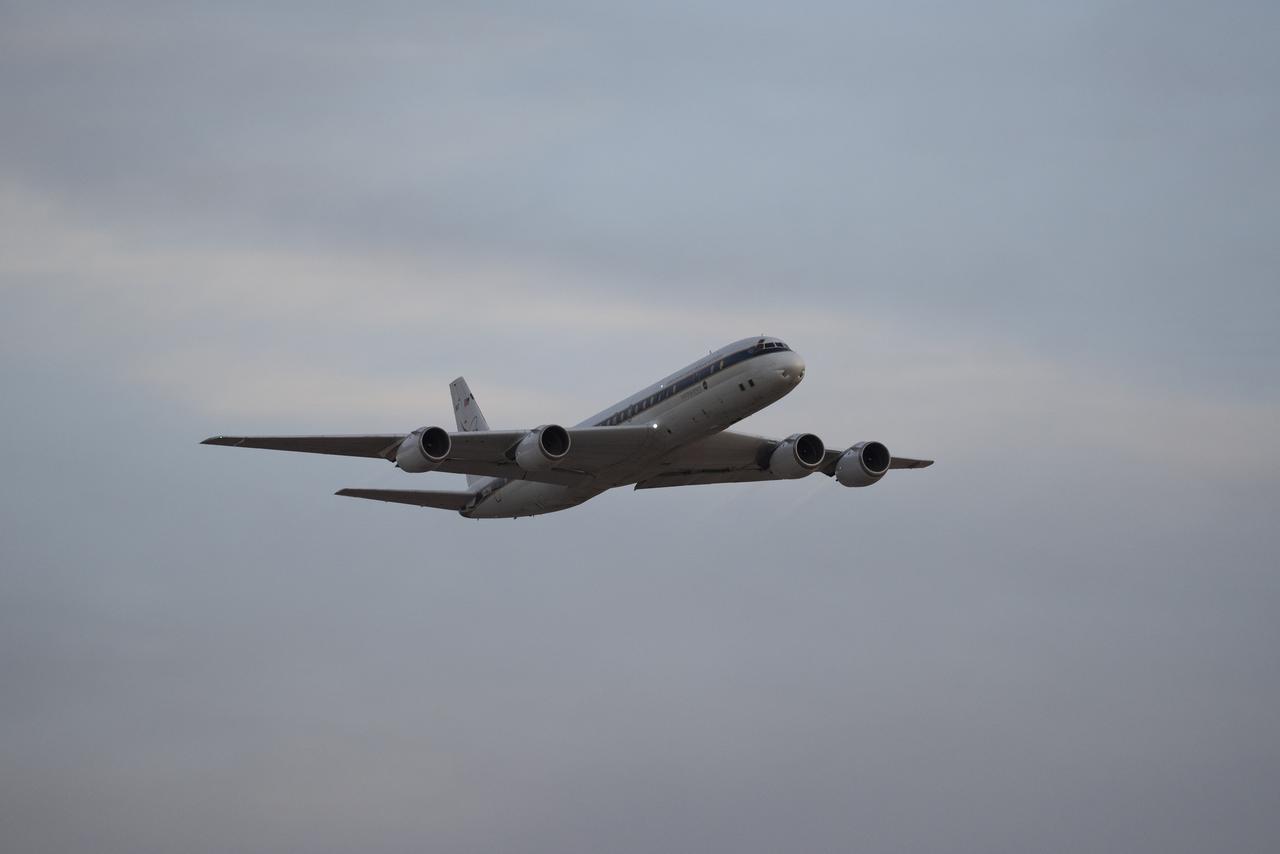
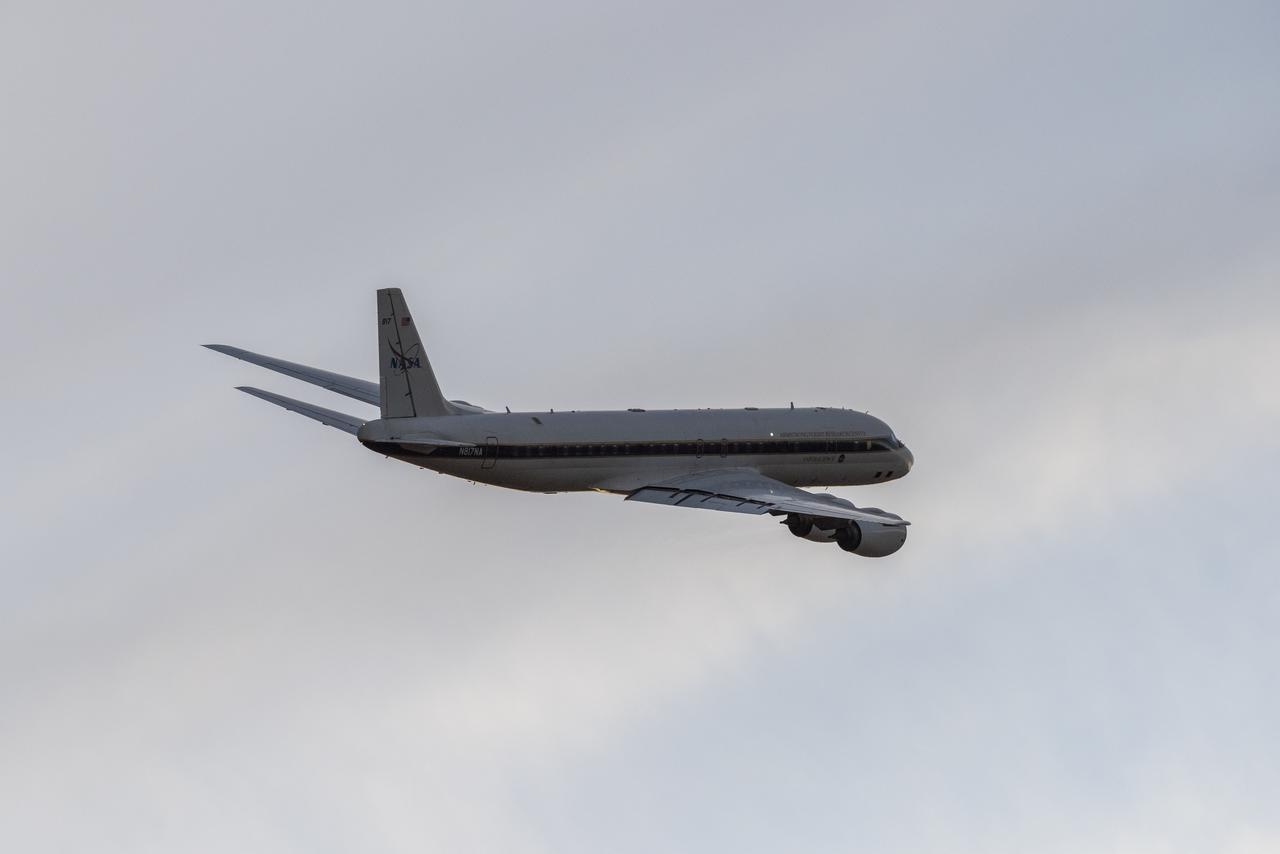
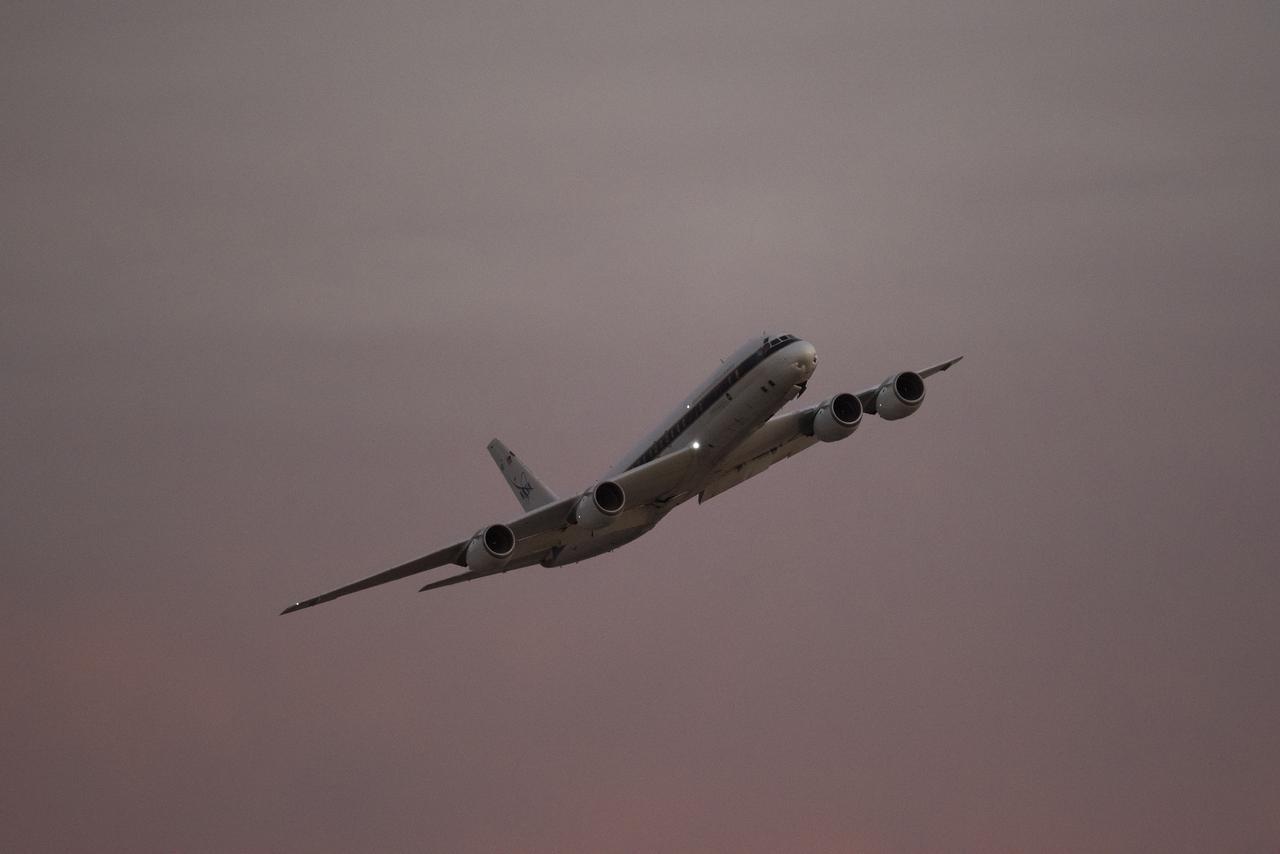
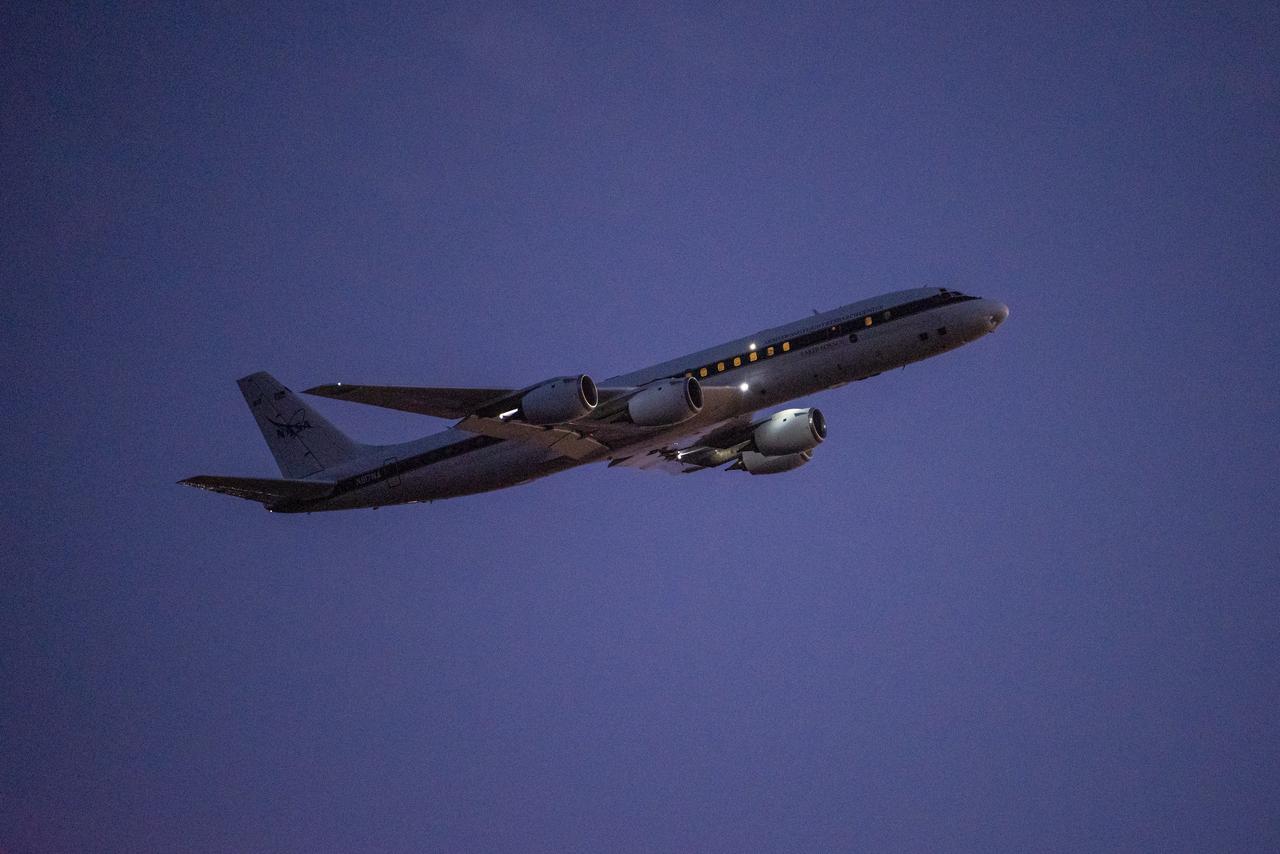
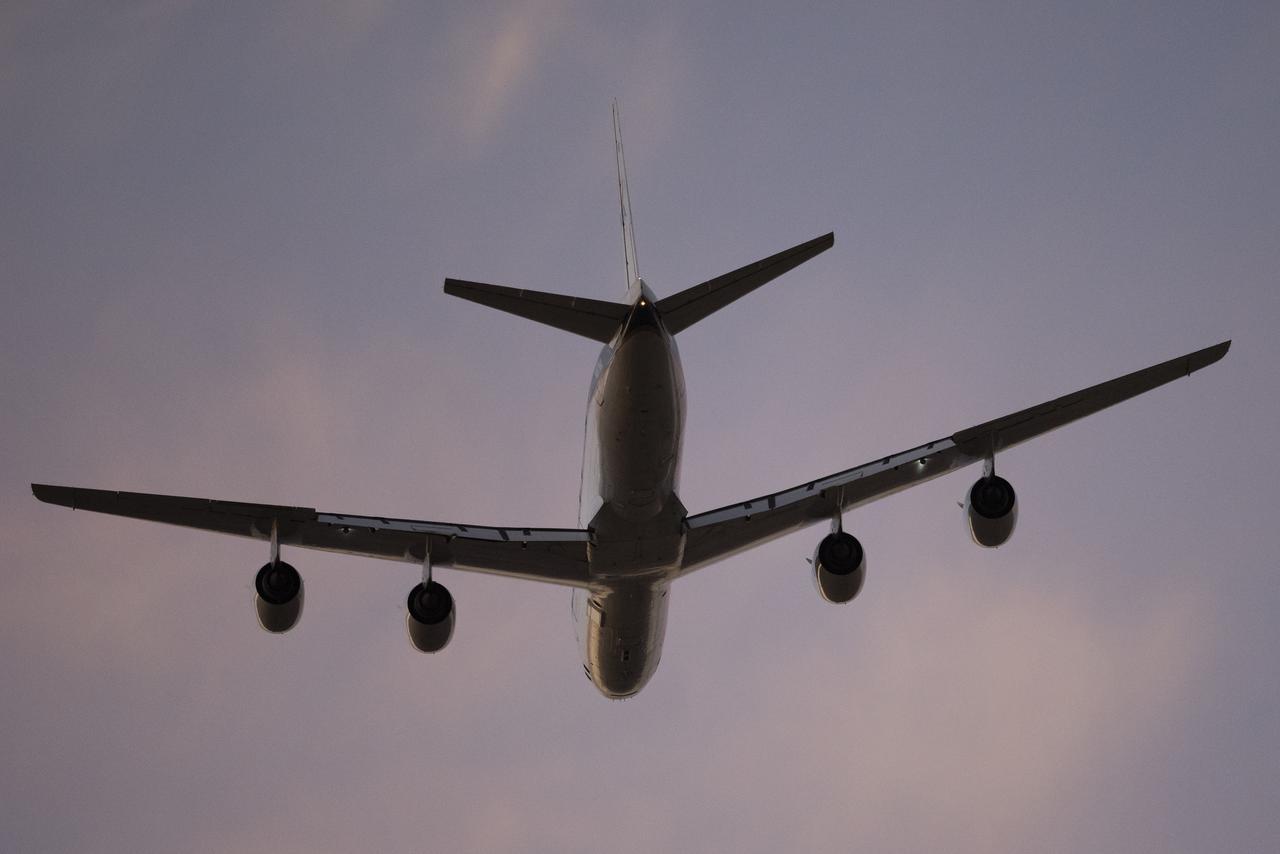
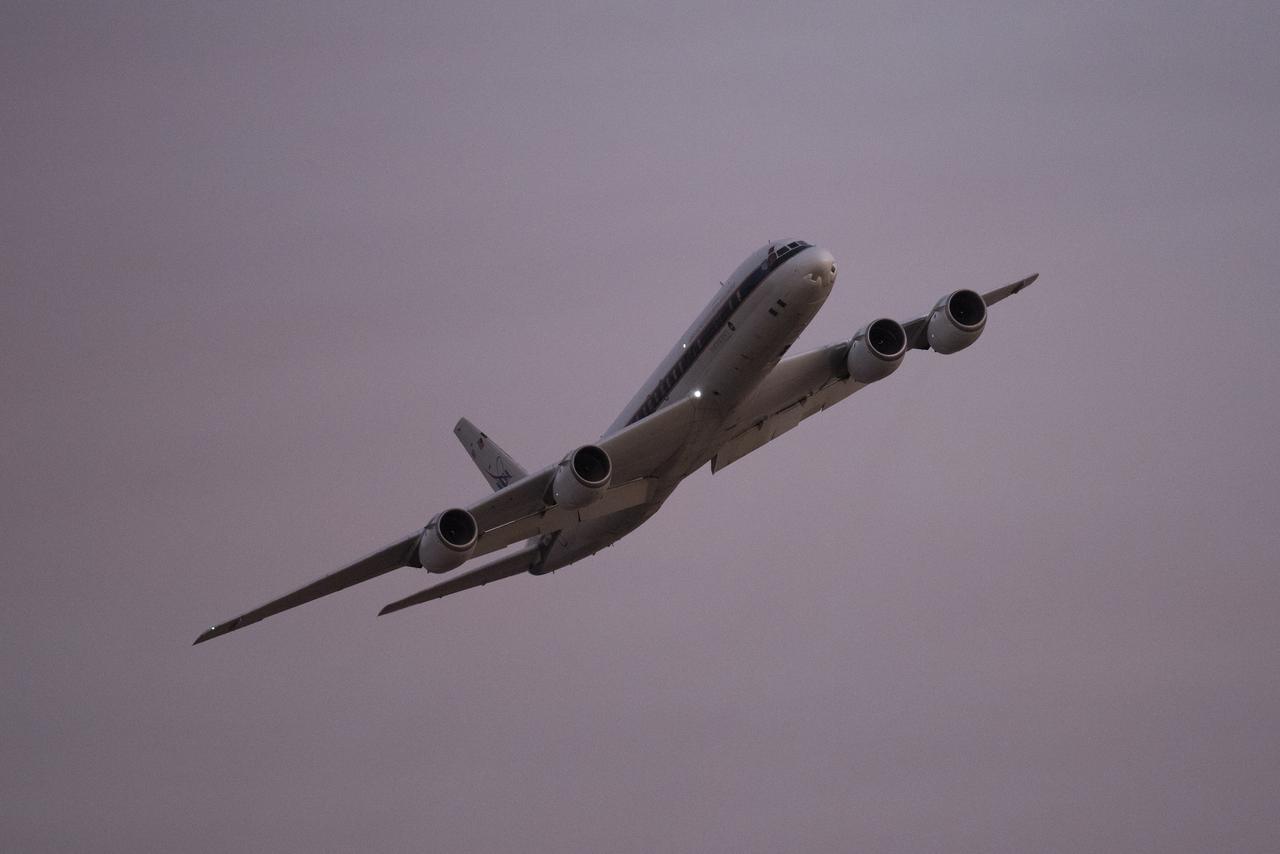
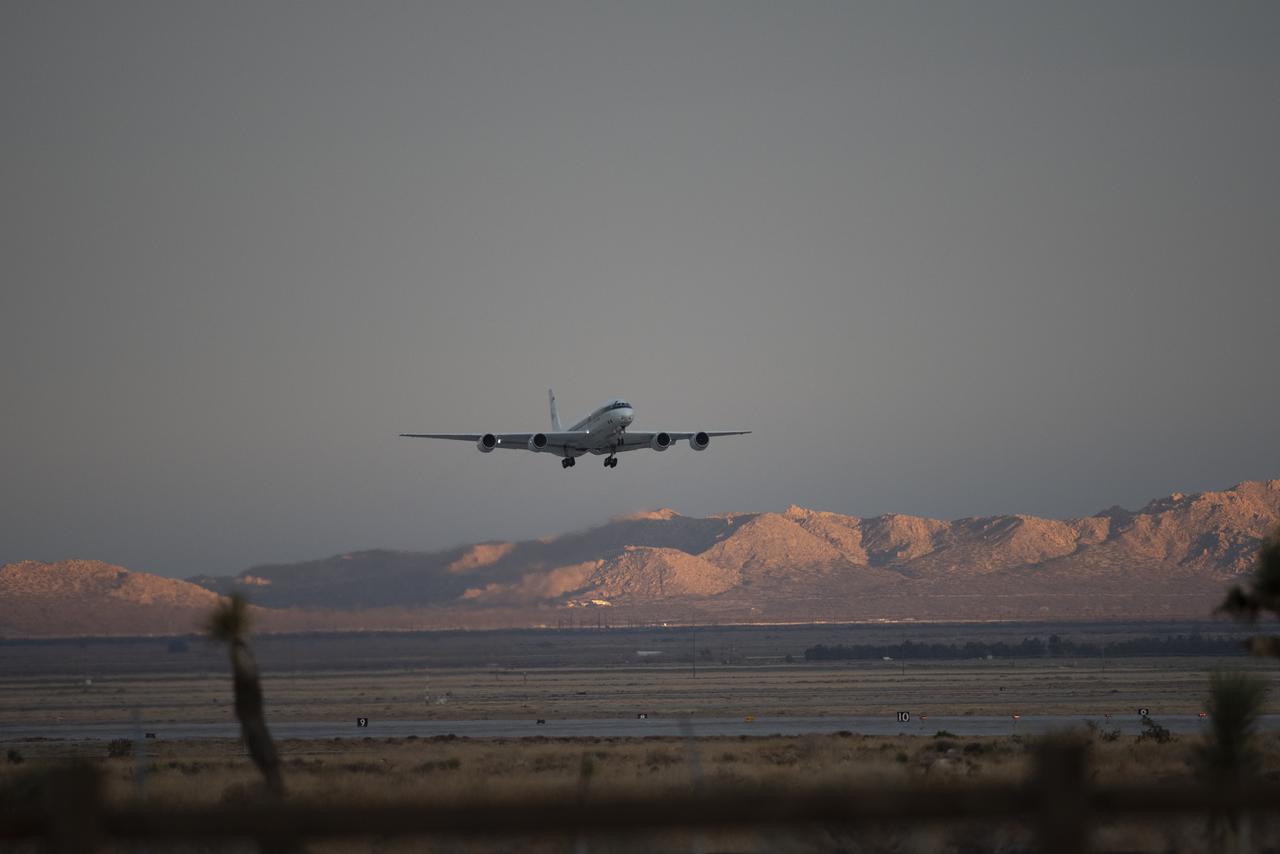
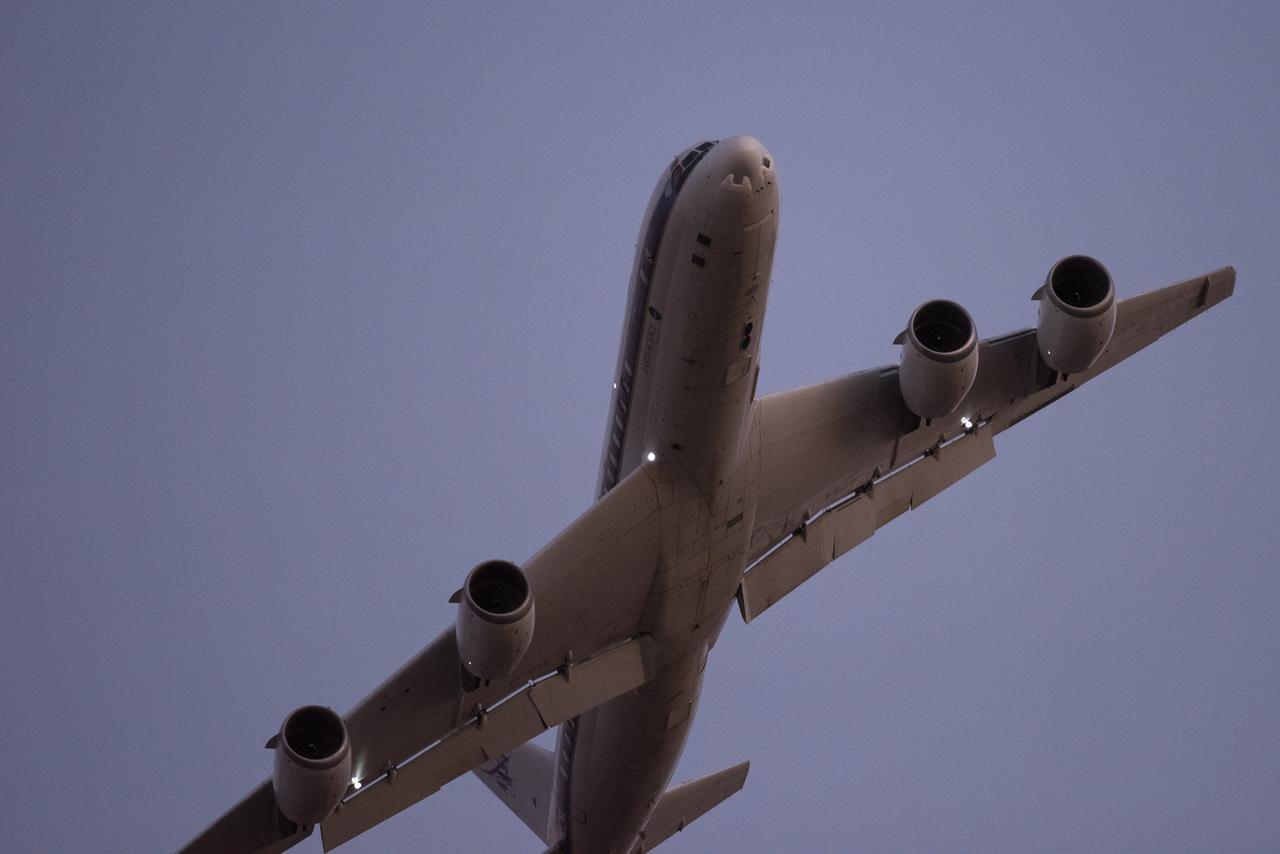
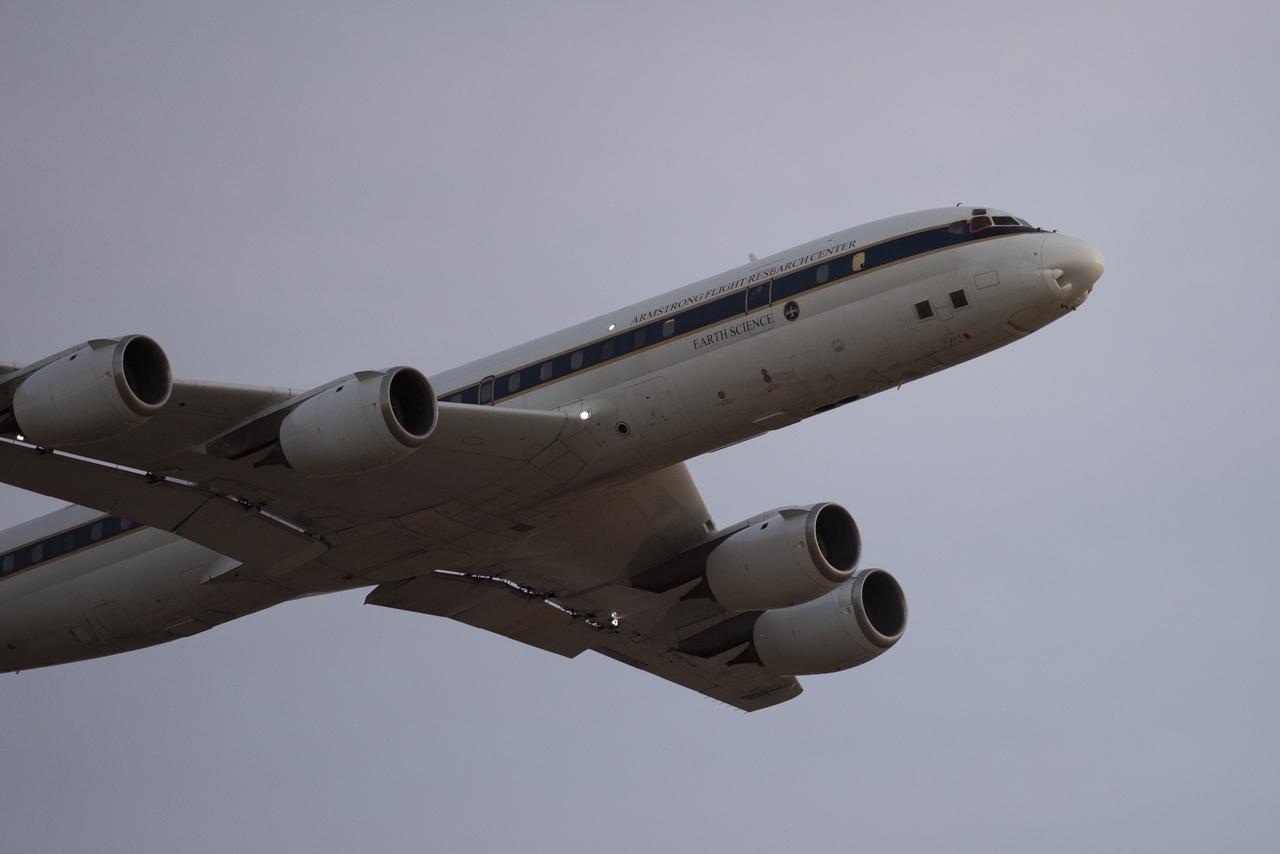
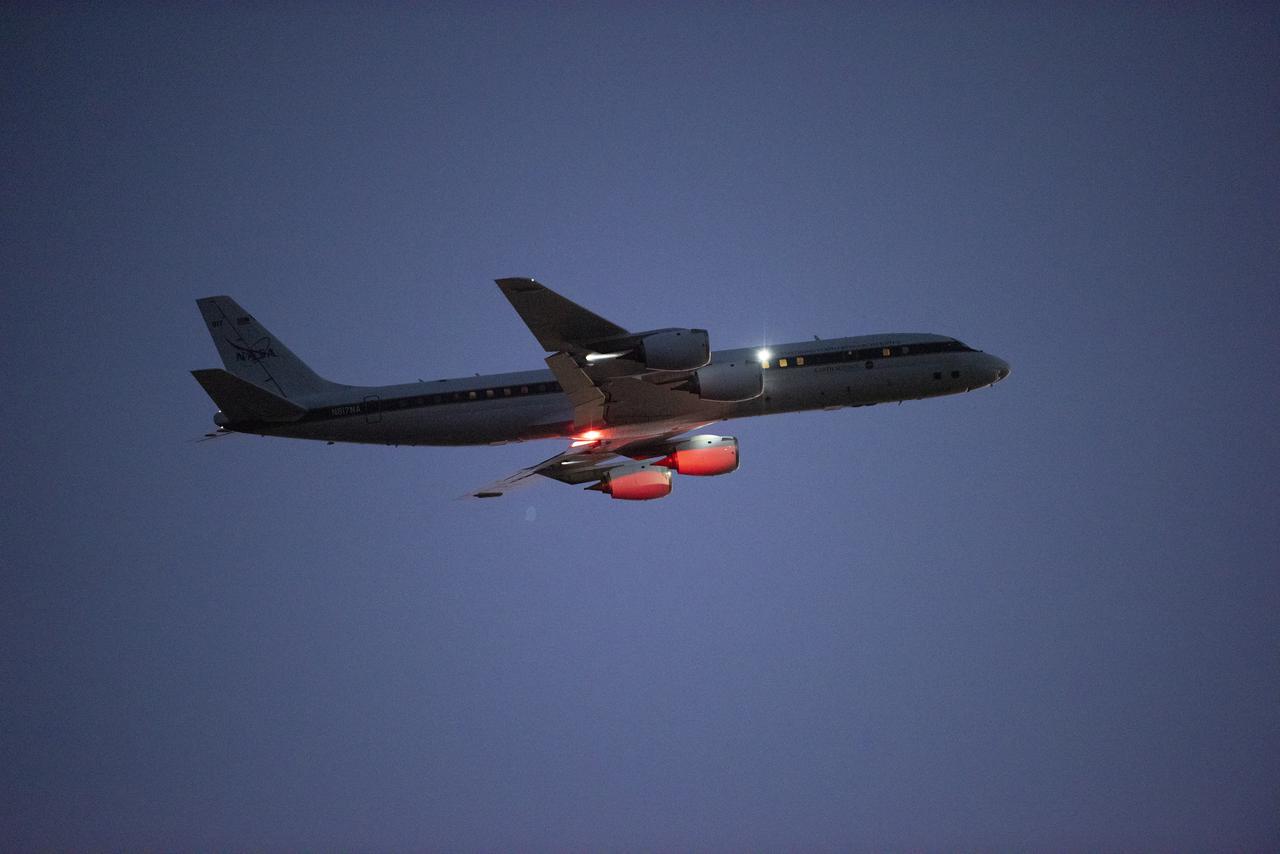
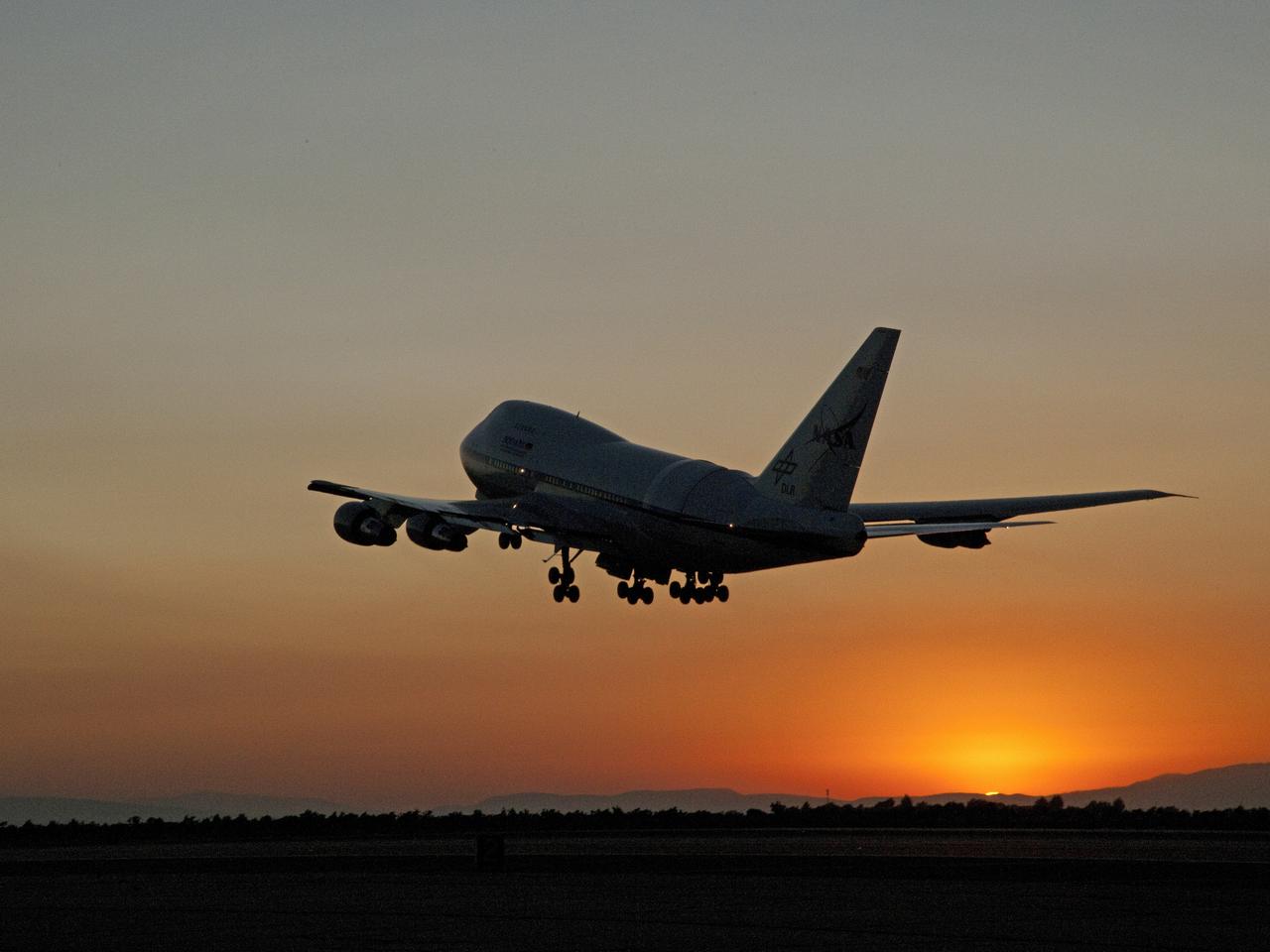
SOFIA lifts off from Air Force Plant 42 in Palmdale, Calif., at sunset.
ED11-0211-06
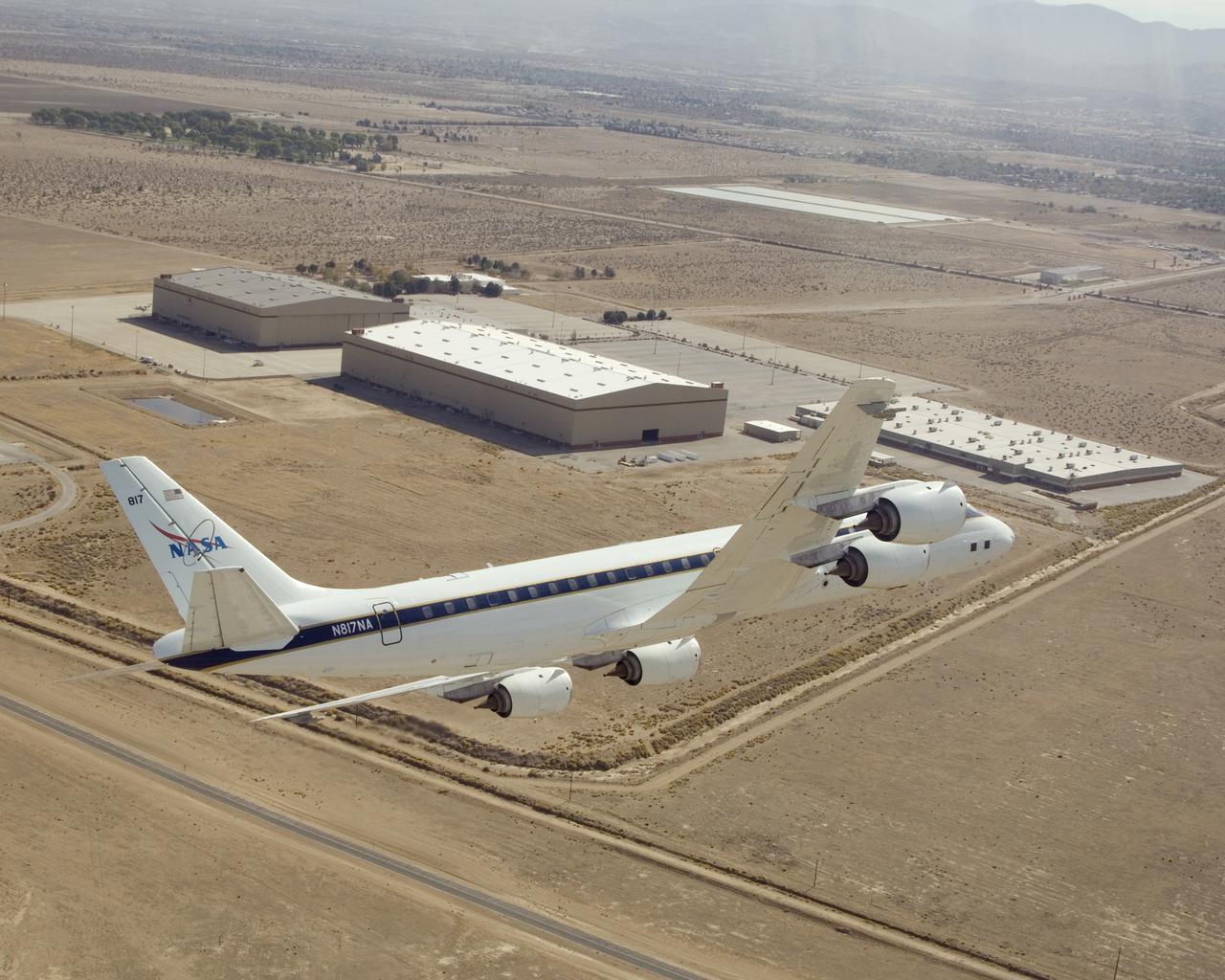
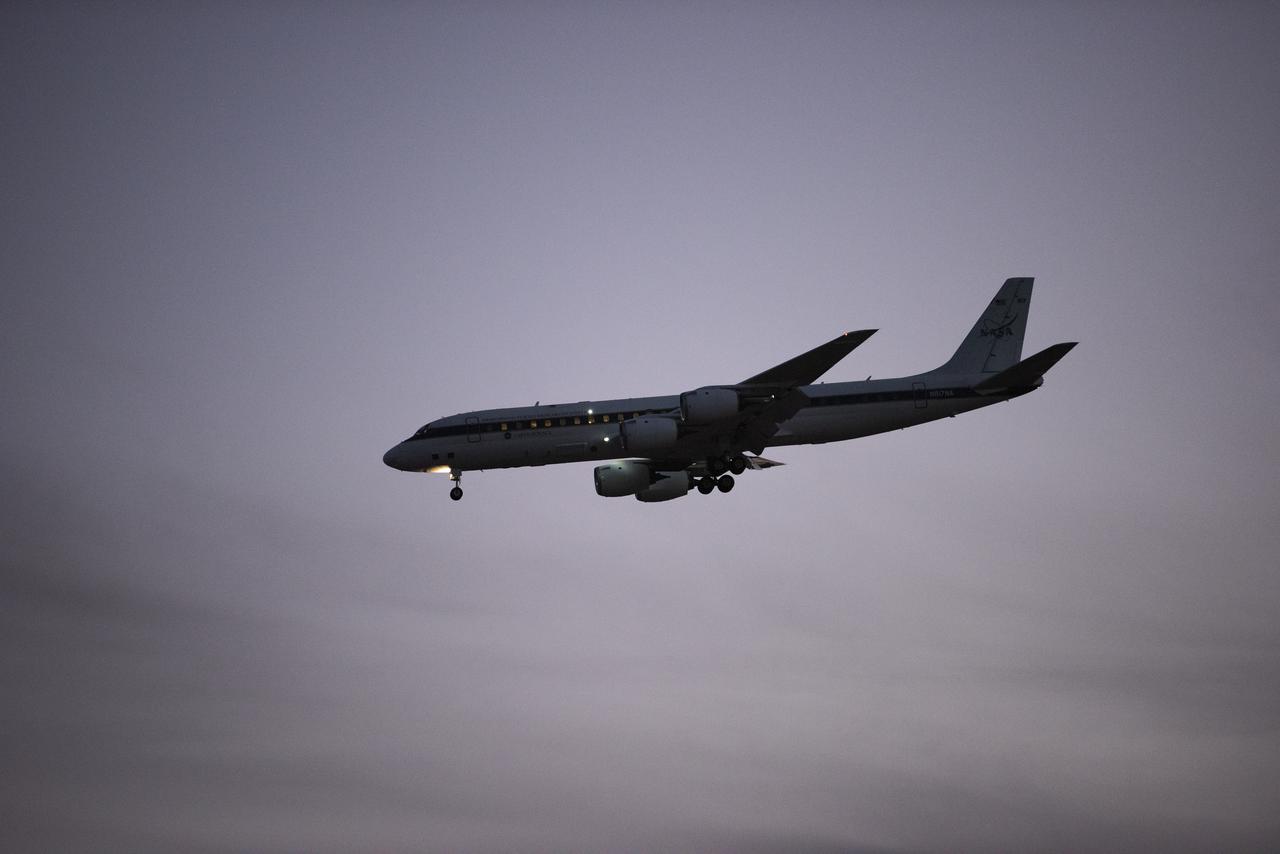
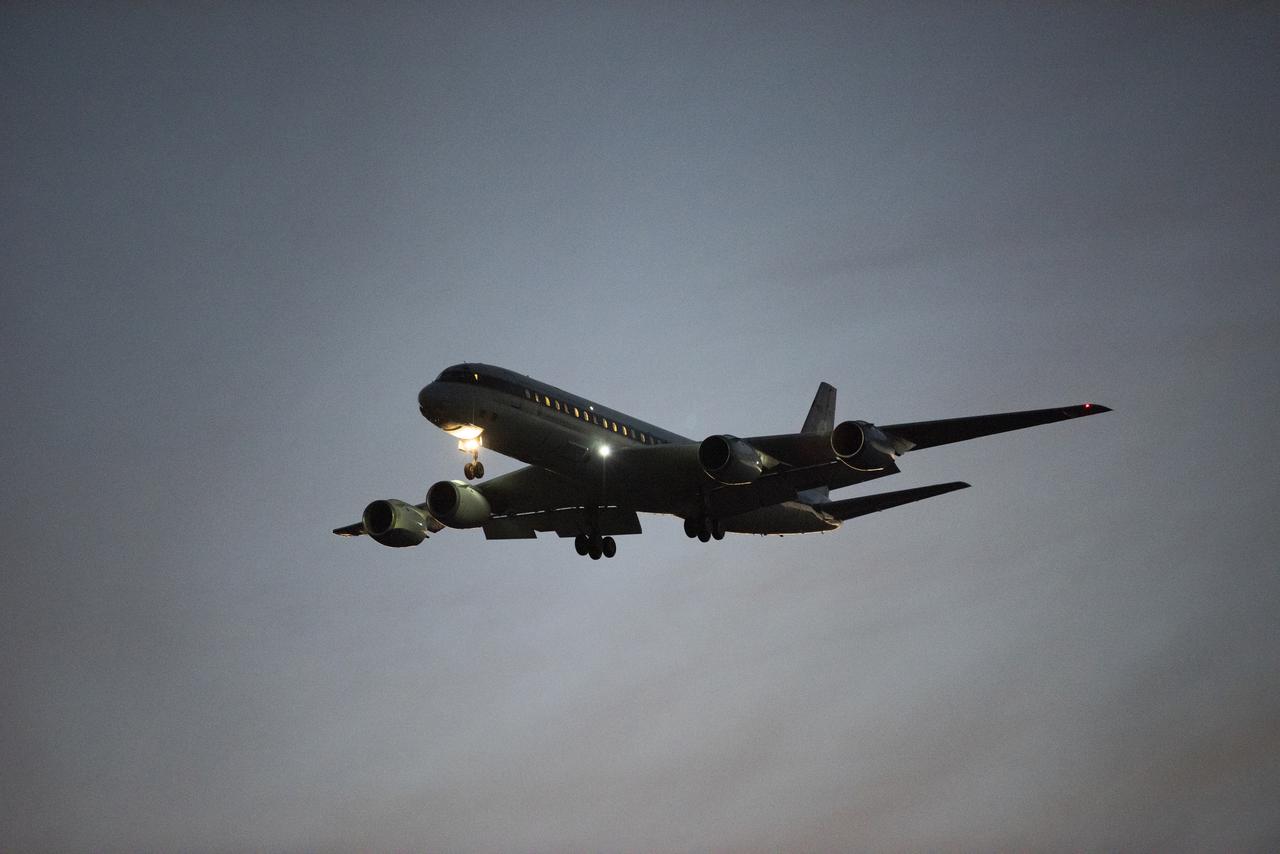
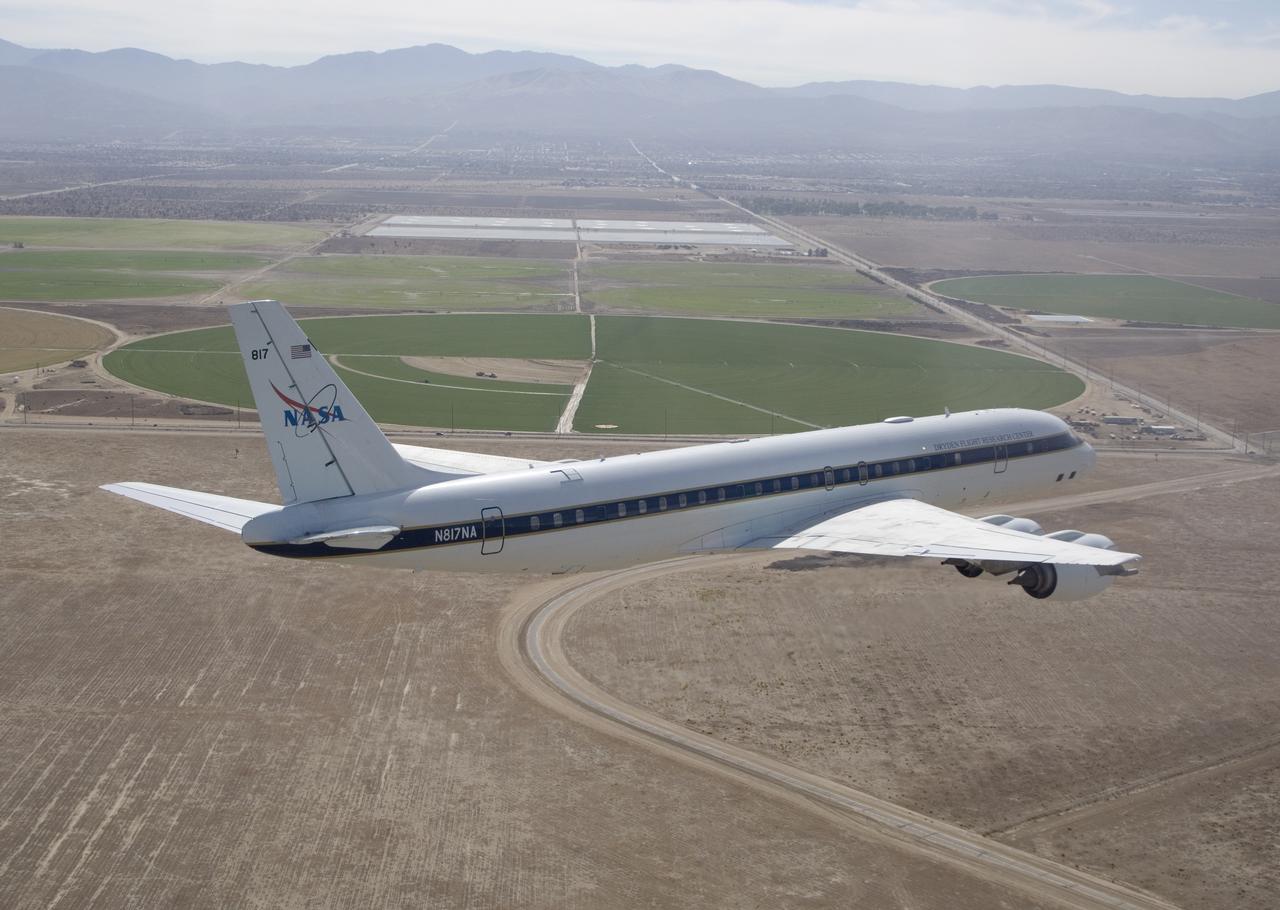
Agricultural fields spread out beyond NASA's DC-8 airborne science laboratory as it heads for landing at Air Force Plant 42 in Palmdale, Calif.
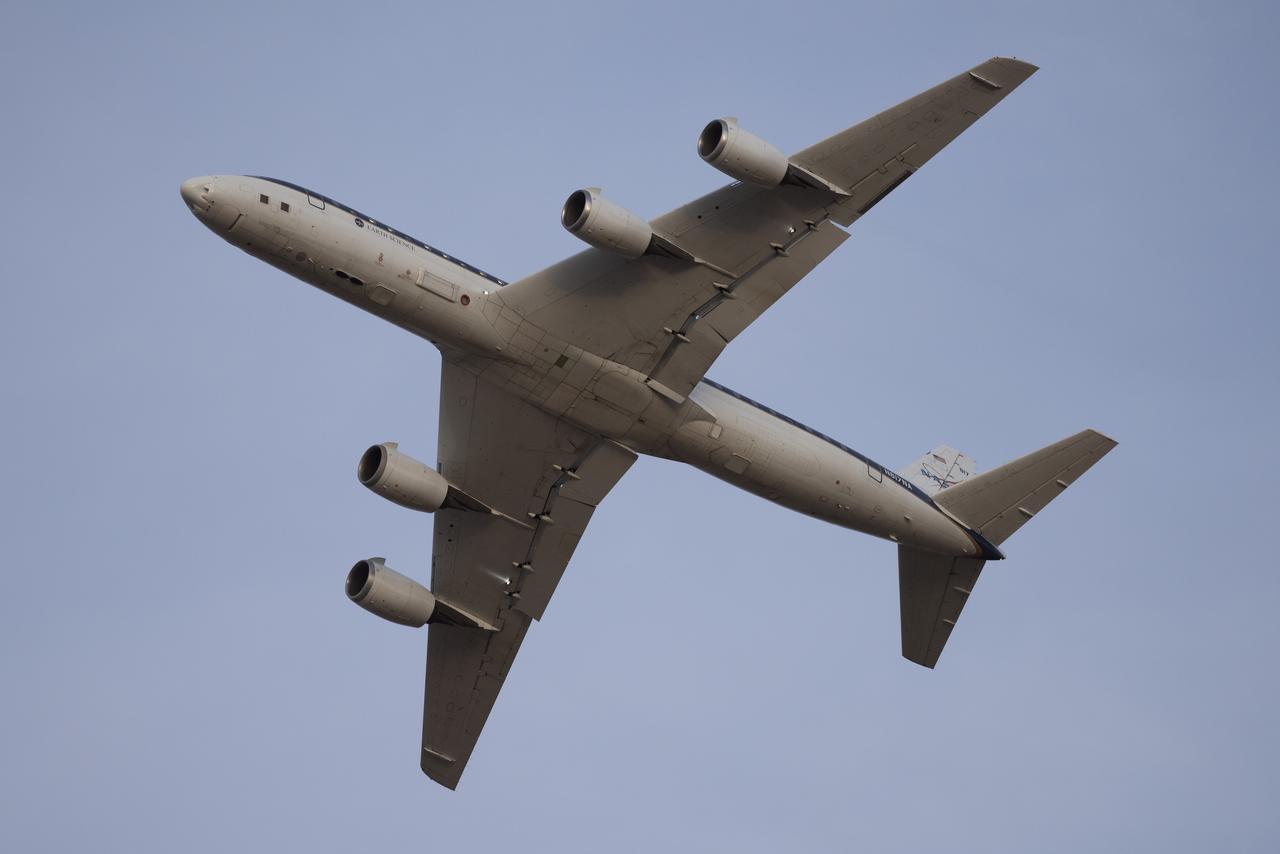
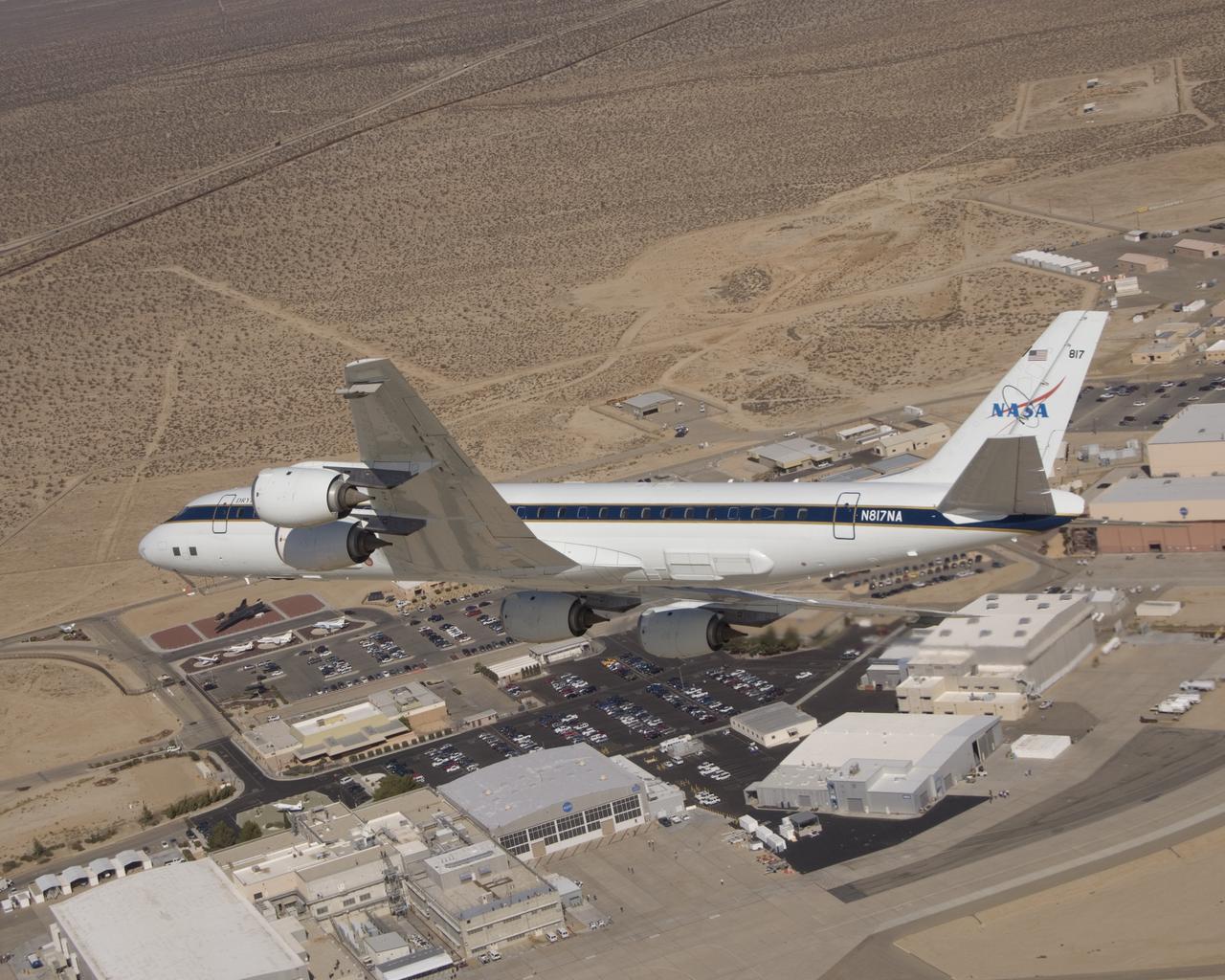
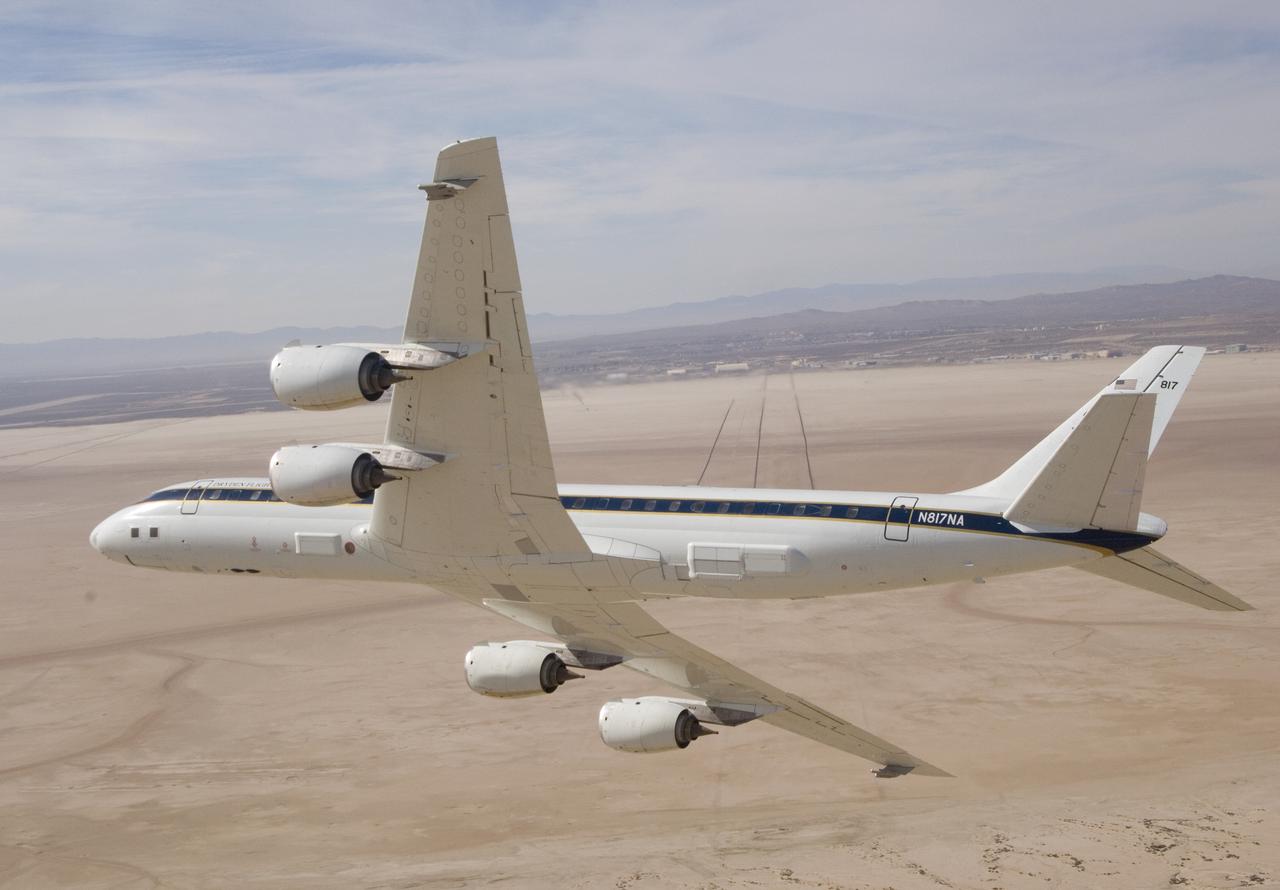
NASA's DC-8 airborne science laboratory banks low over the Dryden Aircraft Operations Facility at Air Force Plant 42 in Palmdale, Calif., upon arrival November 8, 2007.
NASA's DC-8 airborne science laboratory banks low over the Dryden Aircraft Operations Facility at Air Force Plant 42 in Palmdale, Calif., upon arrival November 8
SOFIA lifts off from Air Force Plant 42 in Palmdale, Calif., at sunset.
SOFIA Sunset Lift Off
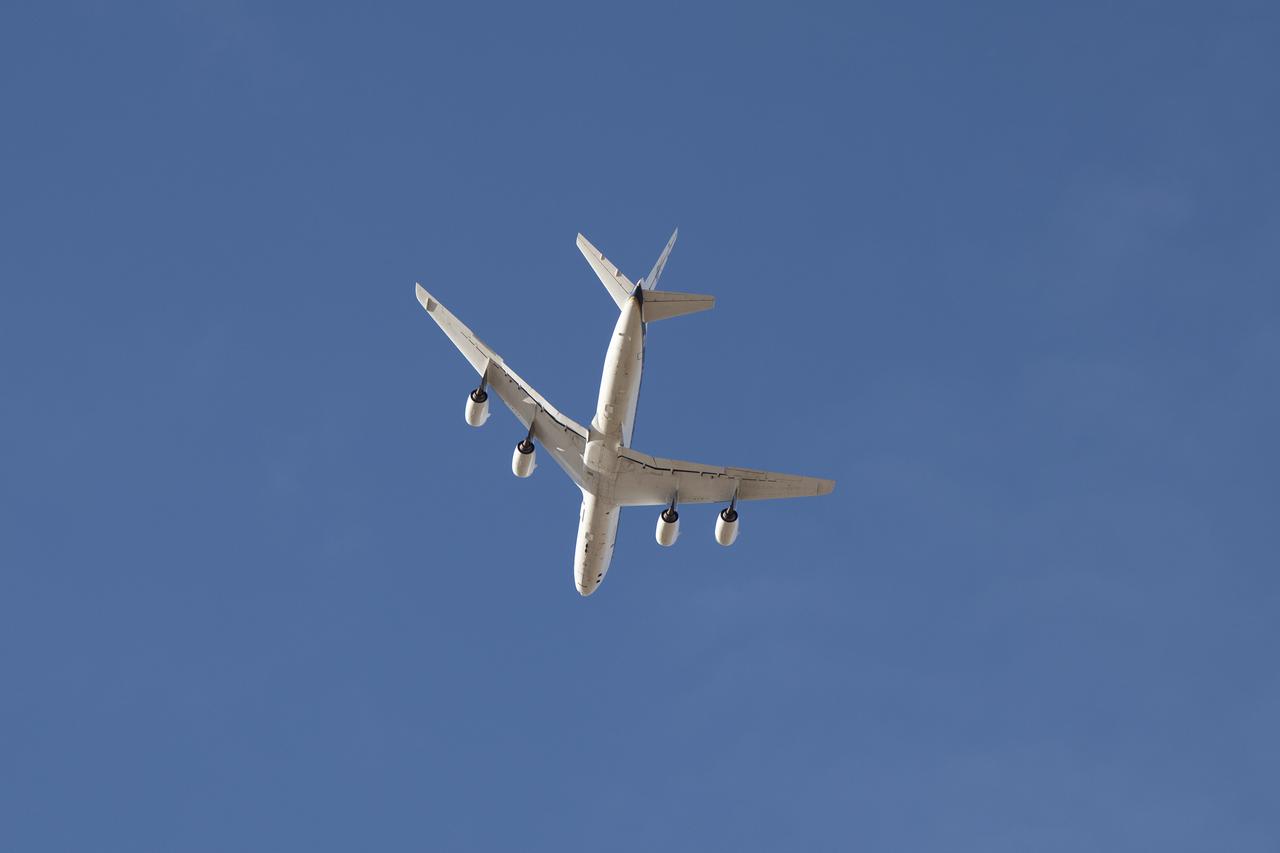
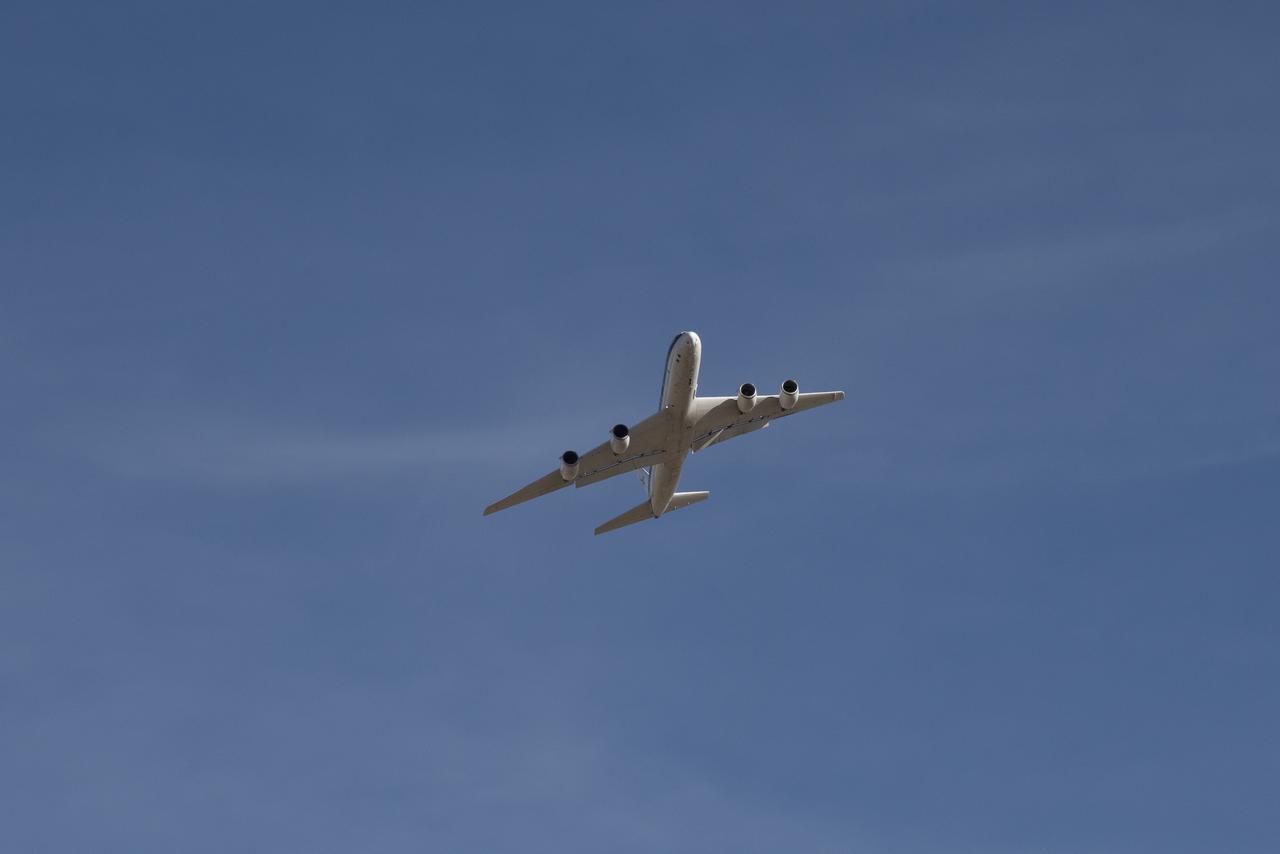
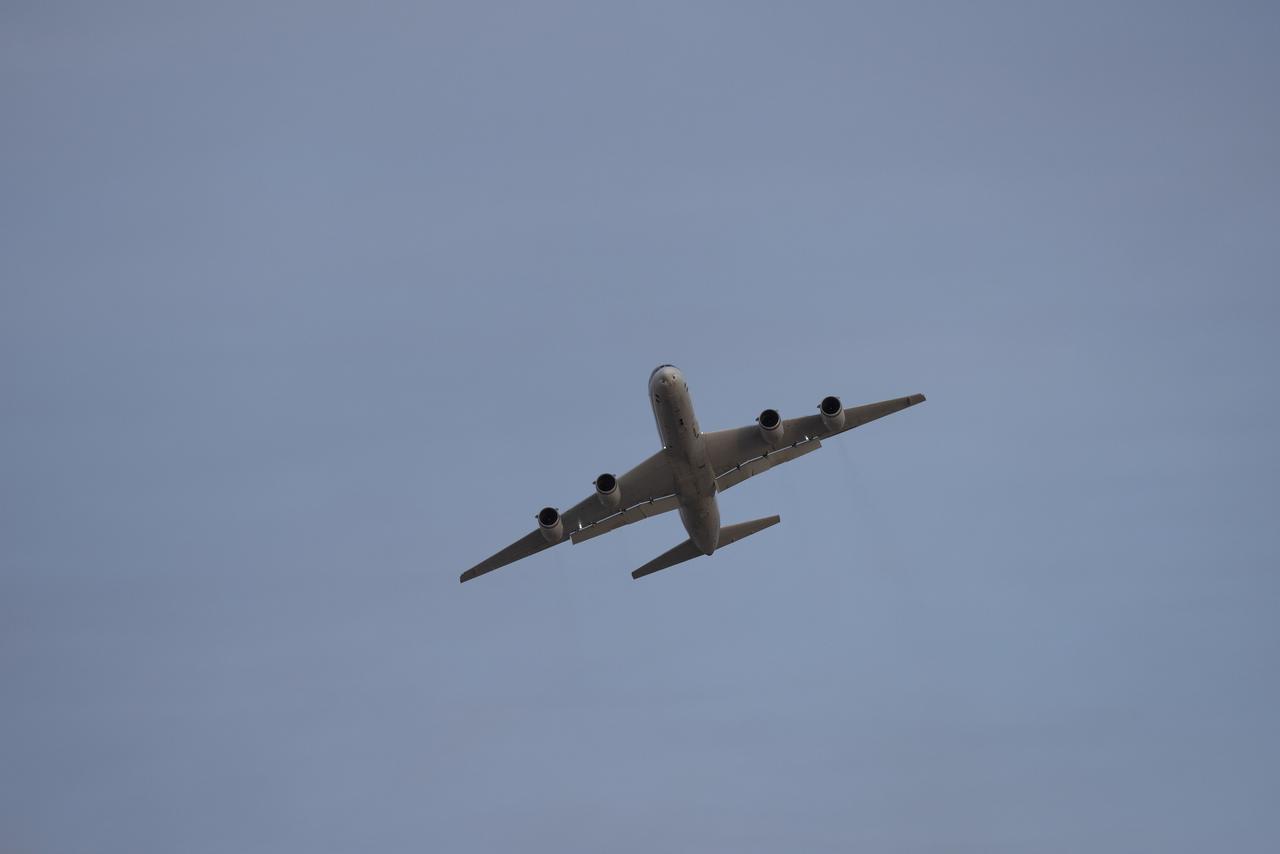
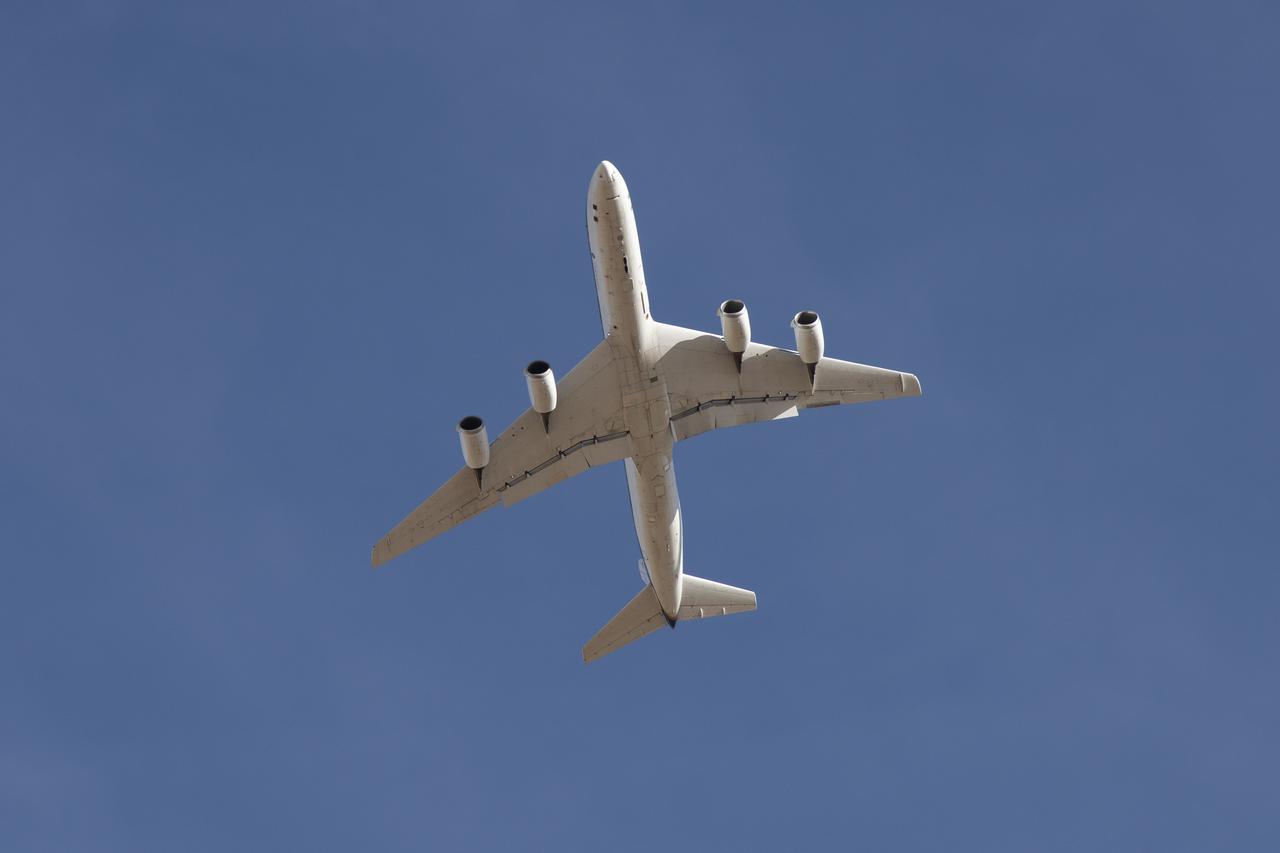
DC-8 lifts off from Air Force Plant 42 in Palmdale, Calif.
DC-8 Lift Off
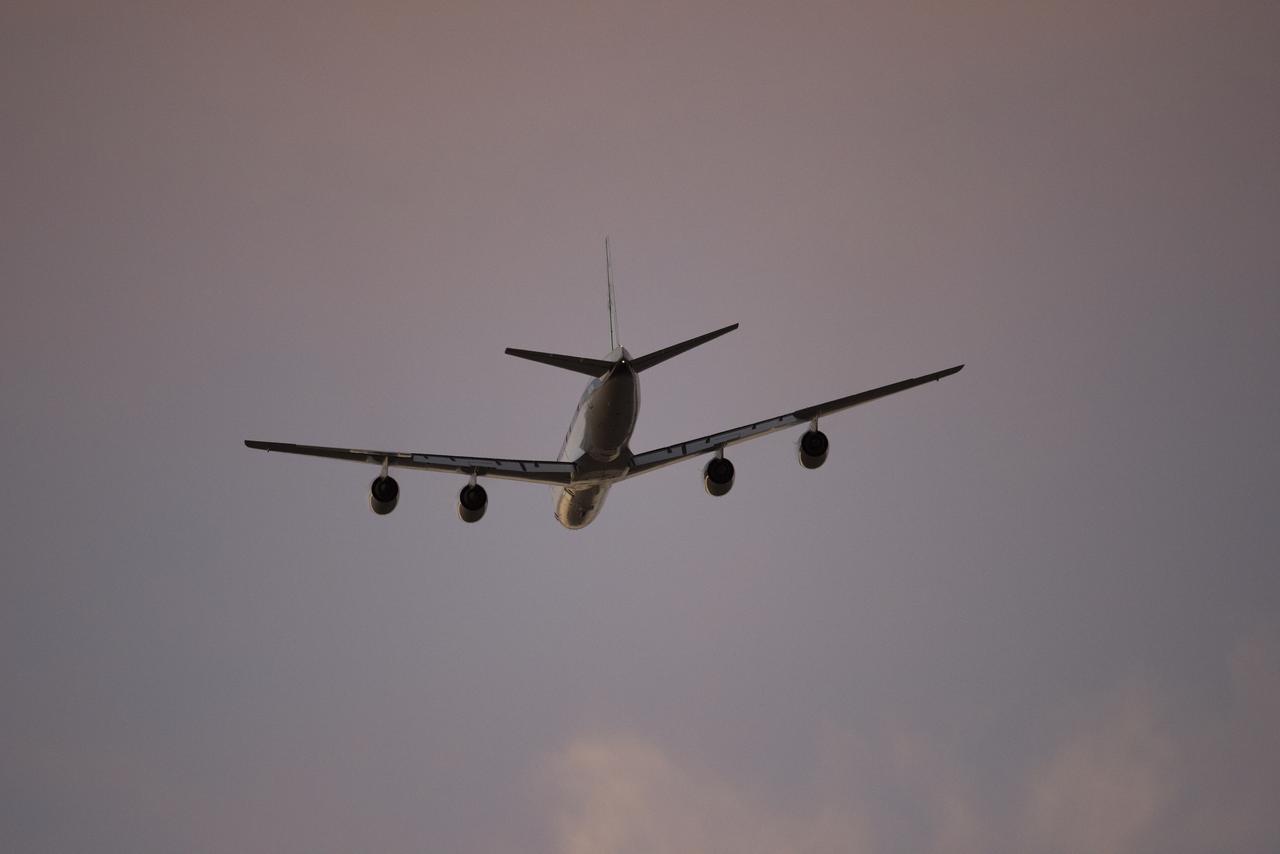
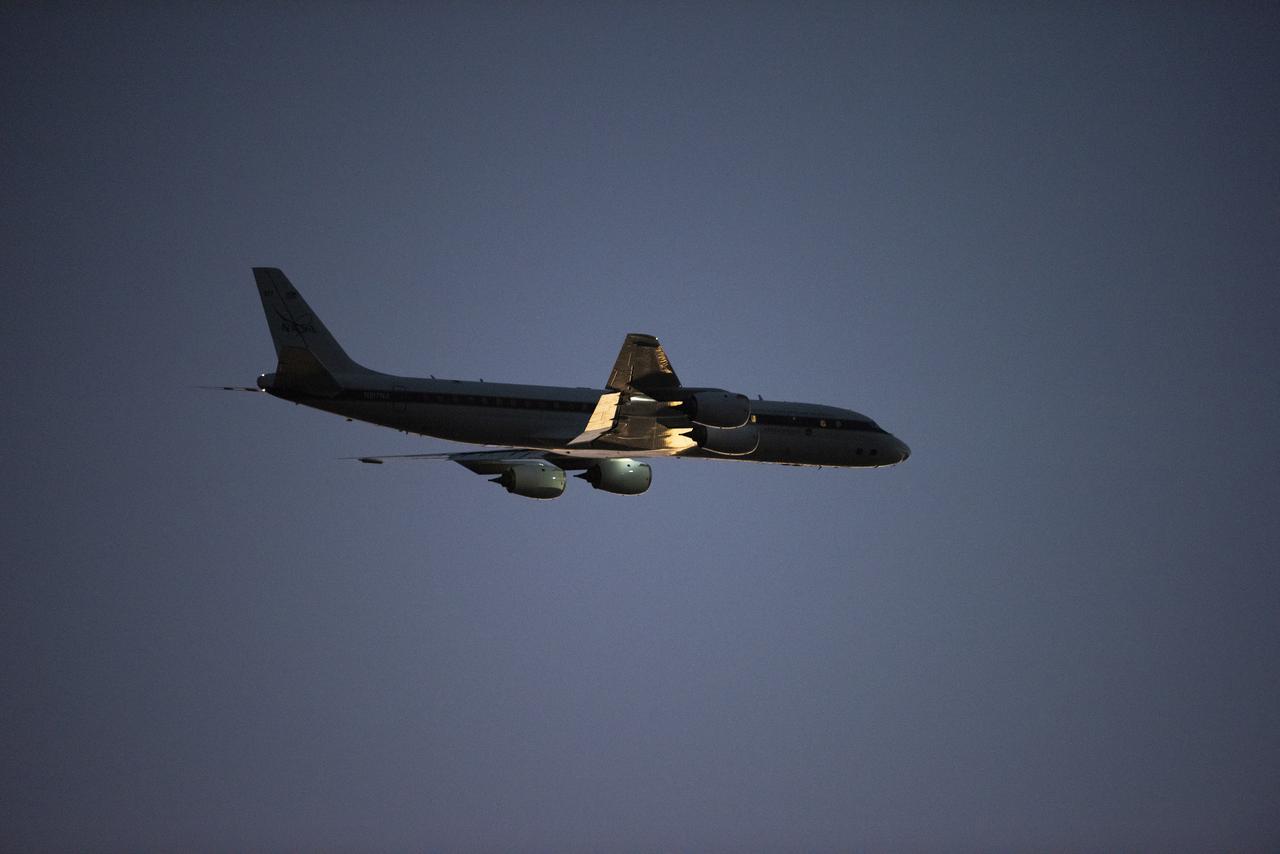
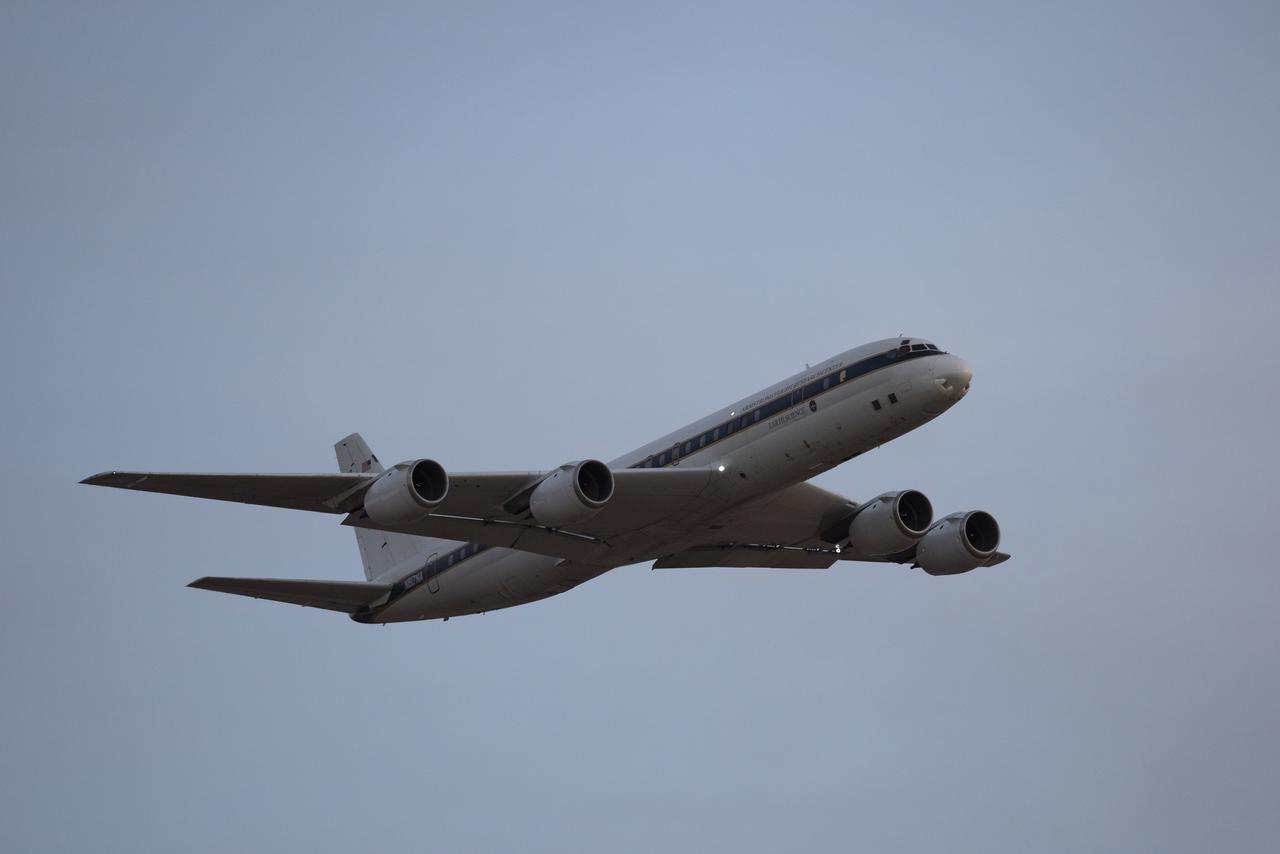
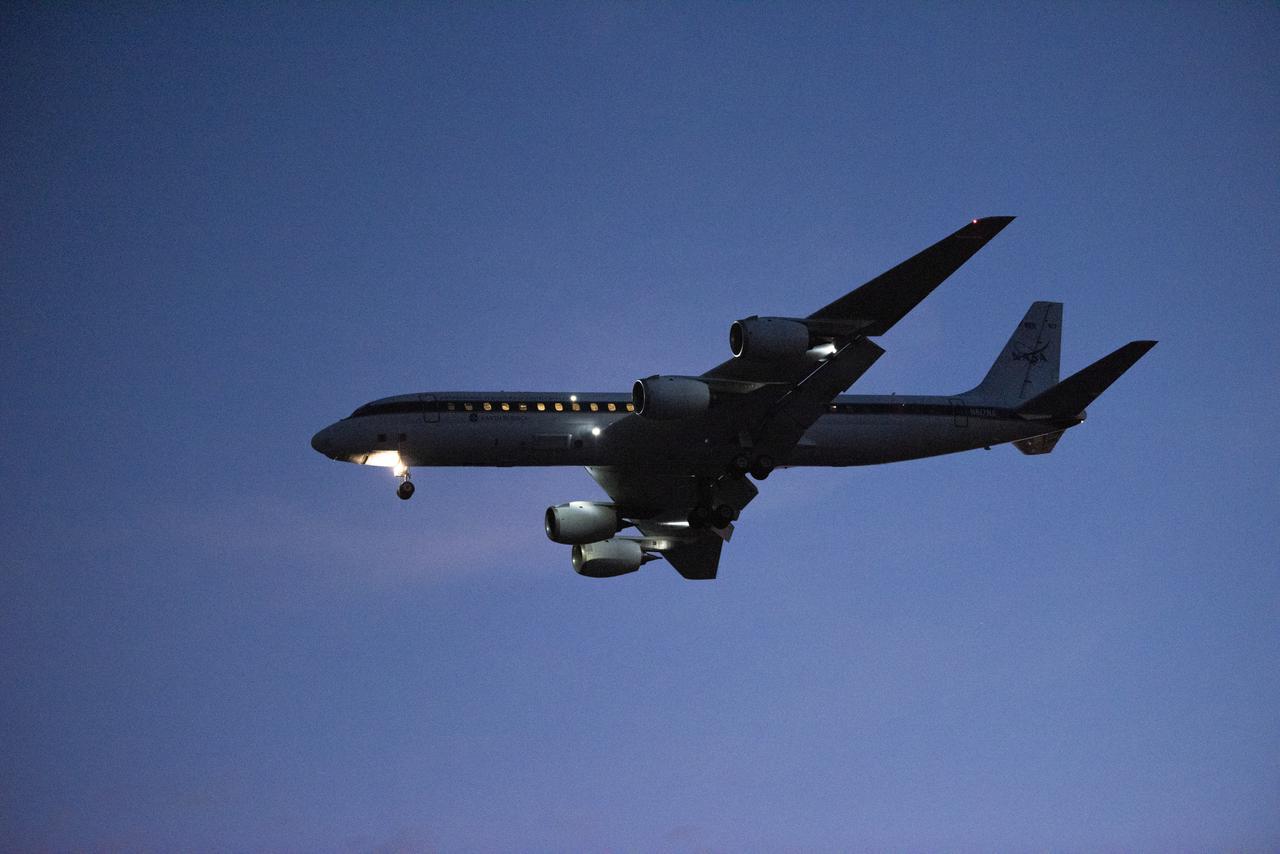
DC-8 lifts off from Air Force Plant 42 in Palmdale, Calif., at sunset.
DC-8 Sunset Lift Off
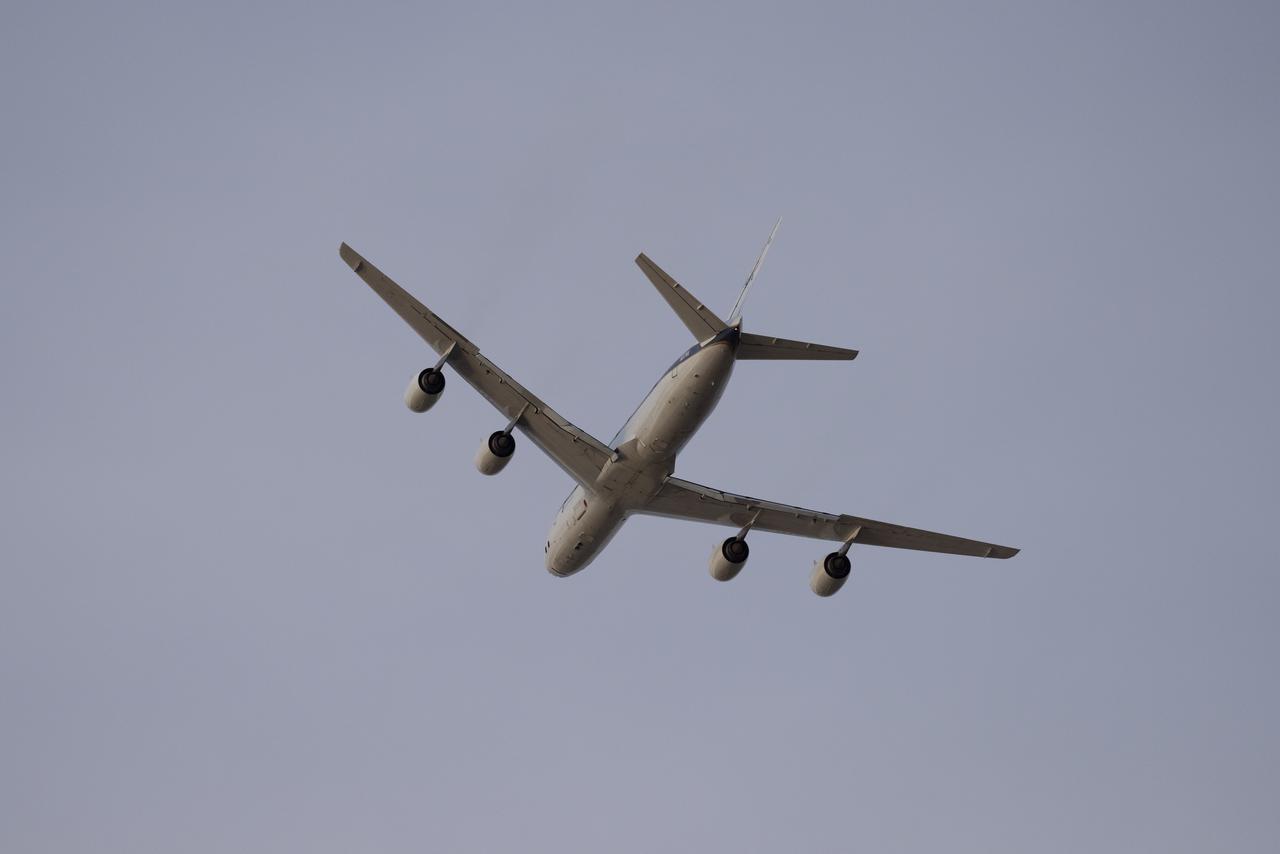
DC-8 lifts off from Air Force Plant 42 in Palmdale, Calif., at sunset.
DC-8 Sunset Lift Off
DC-8 lifts off from Air Force Plant 42 in Palmdale, Calif., at sunset.
DC-8 Sunset Lift Off
DC-8 lifts off from Air Force Plant 42 in Palmdale, Calif., at sunset.
DC-8 Sunset Lift Off
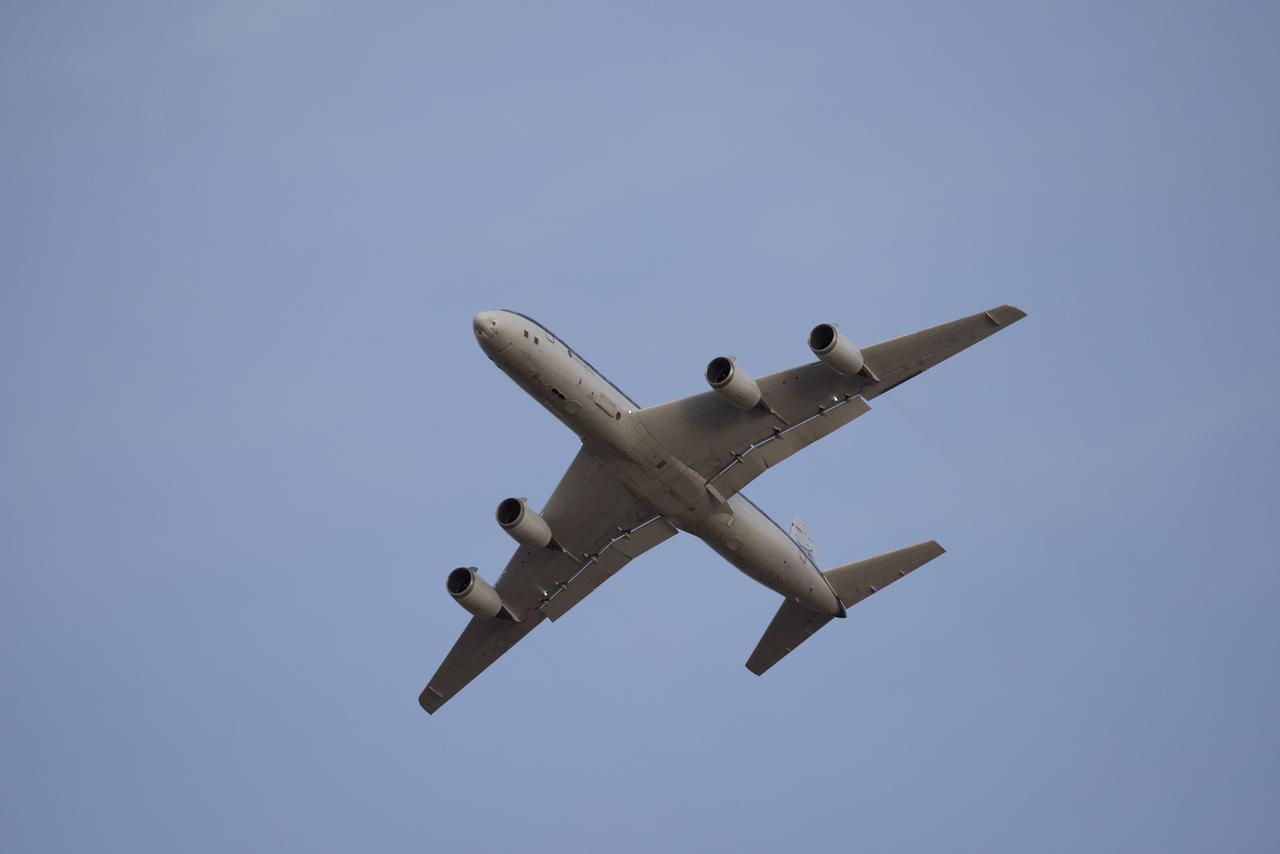
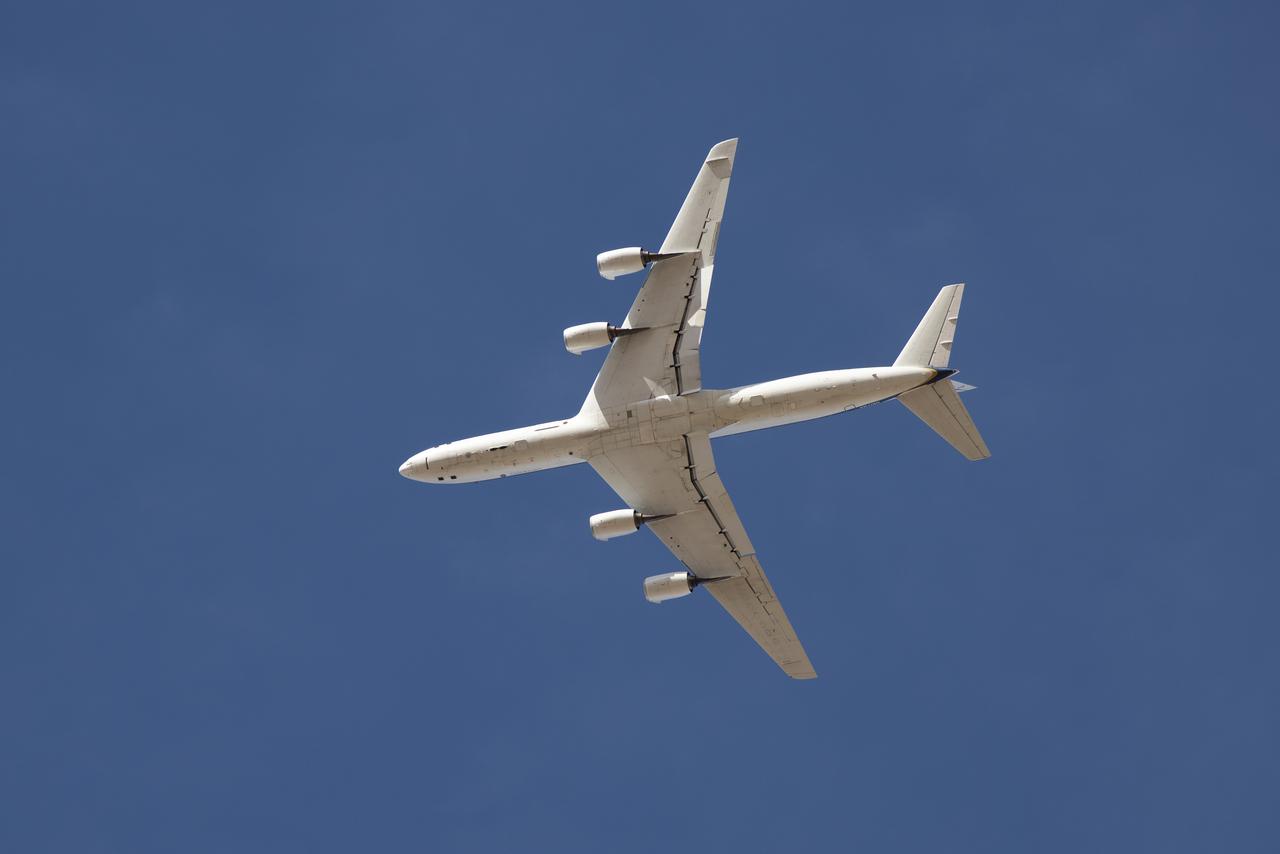
DC-8 lifts off from Air Force Plant 42 in Palmdale, Calif.
DC-8 Lift Off
DC-8 lifts off from Air Force Plant 42 in Palmdale, Calif., at sunset.
DC-8 Sunset Lift Off
DC-8 lifts off from Air Force Plant 42 in Palmdale, Calif., at sunset.
DC-8 Sunset Lift Off
DC-8 lifts off from Air Force Plant 42 in Palmdale, Calif., at sunset.
DC-8 Sunset Lift Off
DC-8 lifts off from Air Force Plant 42 in Palmdale, Calif., at sunset.
DC-8 Sunset Lift Off
DC-8 lifts off from Air Force Plant 42 in Palmdale, Calif., at sunset.
DC-8 Sunset Lift Off
DC-8 lifts off from Air Force Plant 42 in Palmdale, Calif., at sunset.
DC-8 Sunset Lift Off
DC-8 lifts off from Air Force Plant 42 in Palmdale, Calif., at sunset.
DC-8 Sunset Lift Off
DC-8 lifts off from Air Force Plant 42 in Palmdale, Calif., at sunset.
DC-8 Sunset Lift Off
DC-8 lifts off from Air Force Plant 42 in Palmdale, Calif., at sunset.
DC-8 Sunset Lift Off
DC-8 lifts off from Air Force Plant 42 in Palmdale, Calif.
DC-8 Lift Off
DC-8 lifts off from Air Force Plant 42 in Palmdale, Calif., at sunset.
DC-8 Sunset Lift Off
DC-8 lifts off from Air Force Plant 42 in Palmdale, Calif., at sunset.
DC-8 Sunset Lift Off
DC-8 lifts off from Air Force Plant 42 in Palmdale, Calif.
DC-8 Lift Off
DC-8 lifts off from Air Force Plant 42 in Palmdale, Calif.
DC-8 Lift Off
DC-8 lifts off from Air Force Plant 42 in Palmdale, Calif.
DC-8 Lift Off
DC-8 lifts off from Air Force Plant 42 in Palmdale, Calif., at sunset.
DC-8 Sunset Lift Off
DC-8 lifts off from Air Force Plant 42 in Palmdale, Calif.
DC-8 Lift Off
DC-8 lifts off from Air Force Plant 42 in Palmdale, Calif.
DC-8 Lift Off
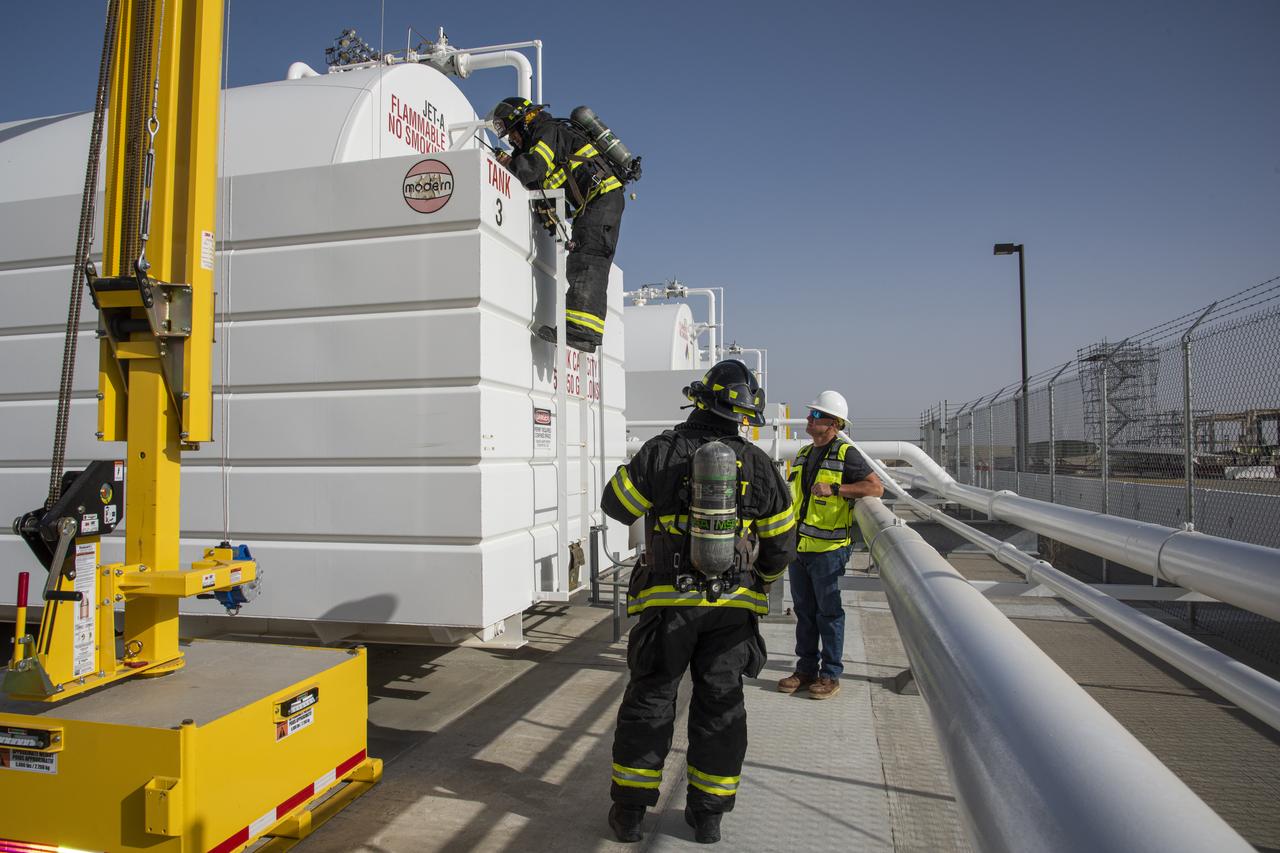
Air Force Plant 42 Fire Department responder Alfonzo Ortega, bottom, hands Doug Mendez a gas meter to test the air in a confined space during an exercise at NASA Armstrong Flight Research Center's Building 703 in Palmdale, California. Dale McCoy, Armstrong confined space co-program manager, observers.
Confined Space Exercise Improves Response
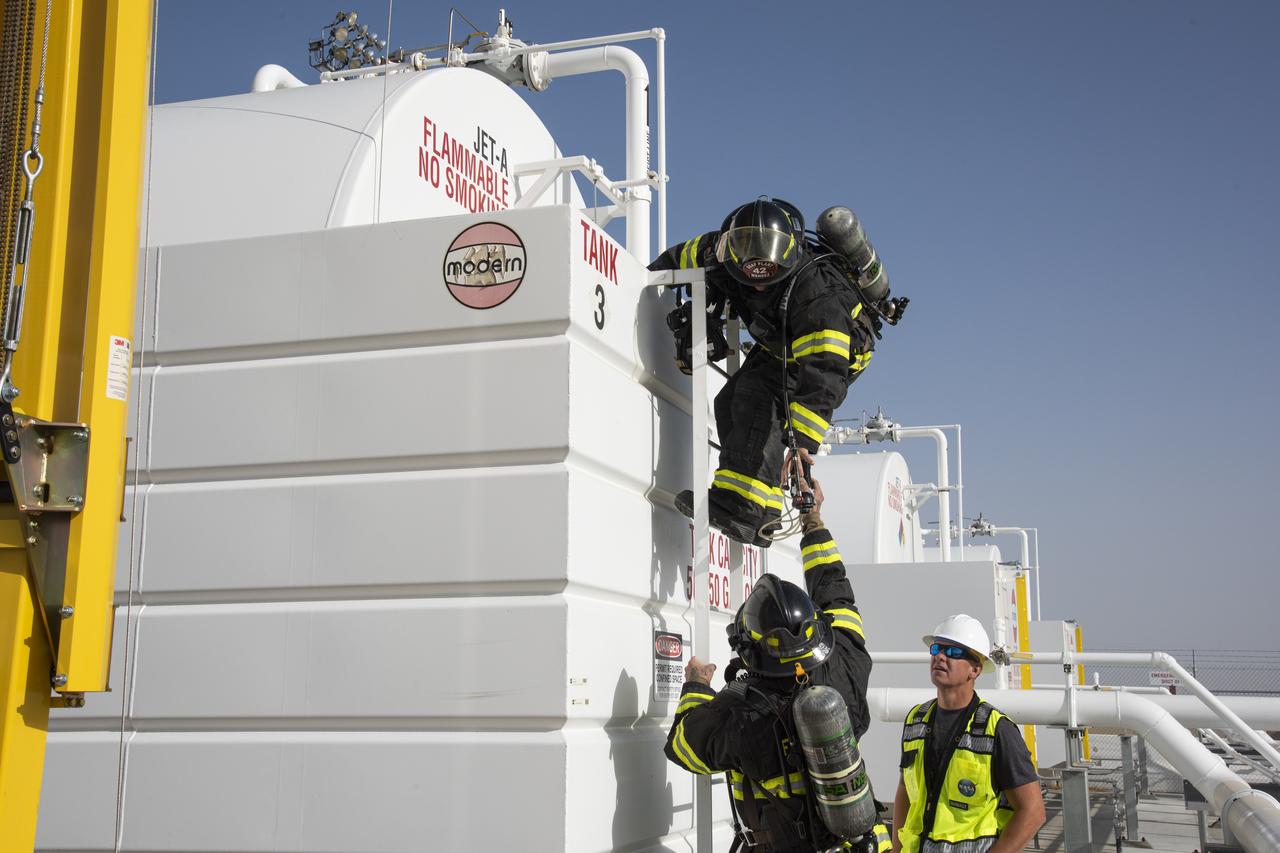
Air Force Plant 42 Fire Department responders Doug Mendez and Alfonzo Ortega test the air in a confined space with a gas meter during an exercise at NASA Armstrong Flight Research Center's Building 703 in Palmdale, California. Dale McCoy, Armstrong confined space co-program manager, observers.
Confined Space Exercise Improves Response
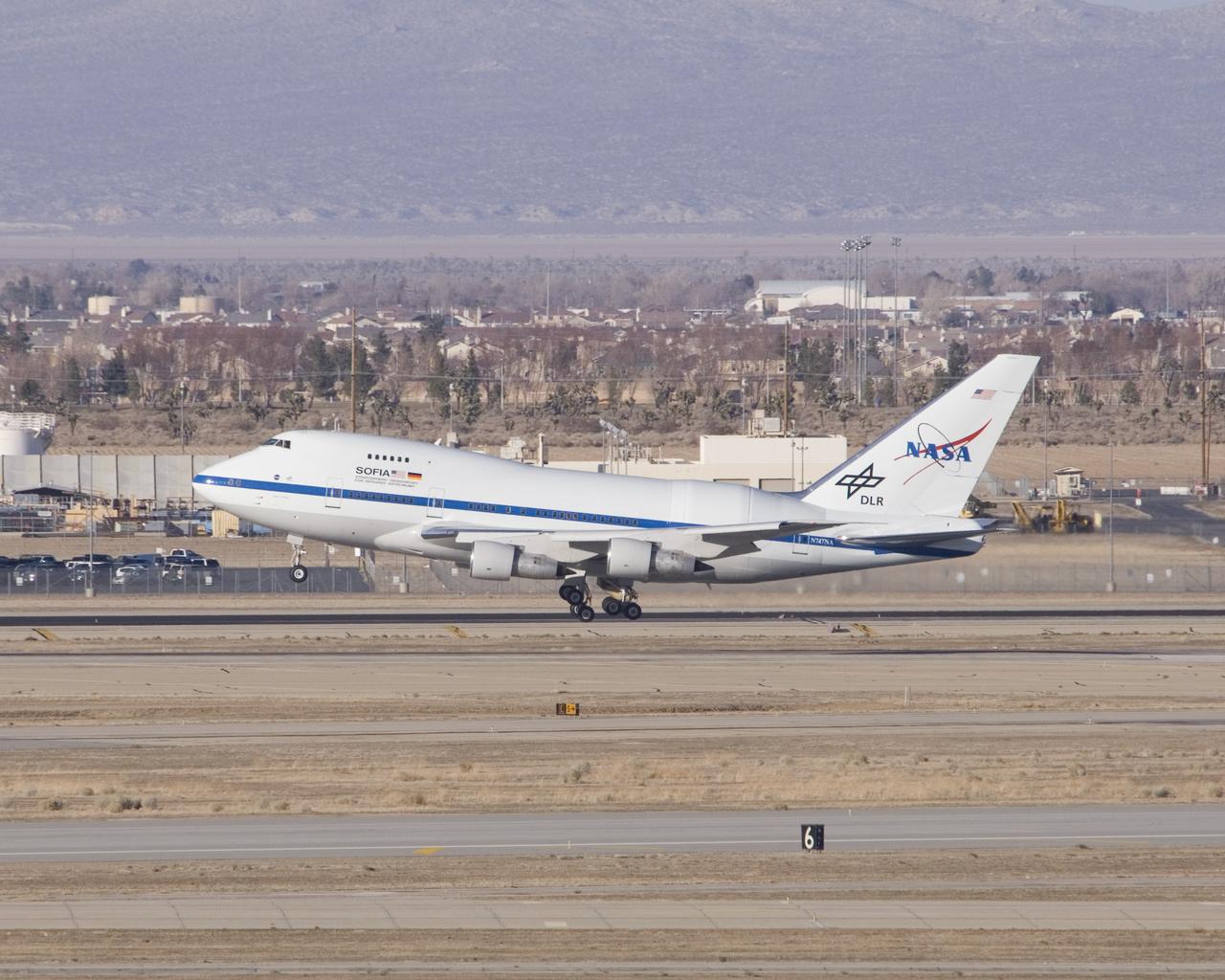
NASA's SOFIA infrared observatory touches down at Air Force Plant 42 in Palmdale, Calif., as it arrives at its new home, the Dryden Aircraft Operations Facility.
NASA's SOFIA infrared observatory touches down at Air Force Plant 42 in Palmdale, CA, as it arrives at its new home, the Dryden Aircraft Operations Facility
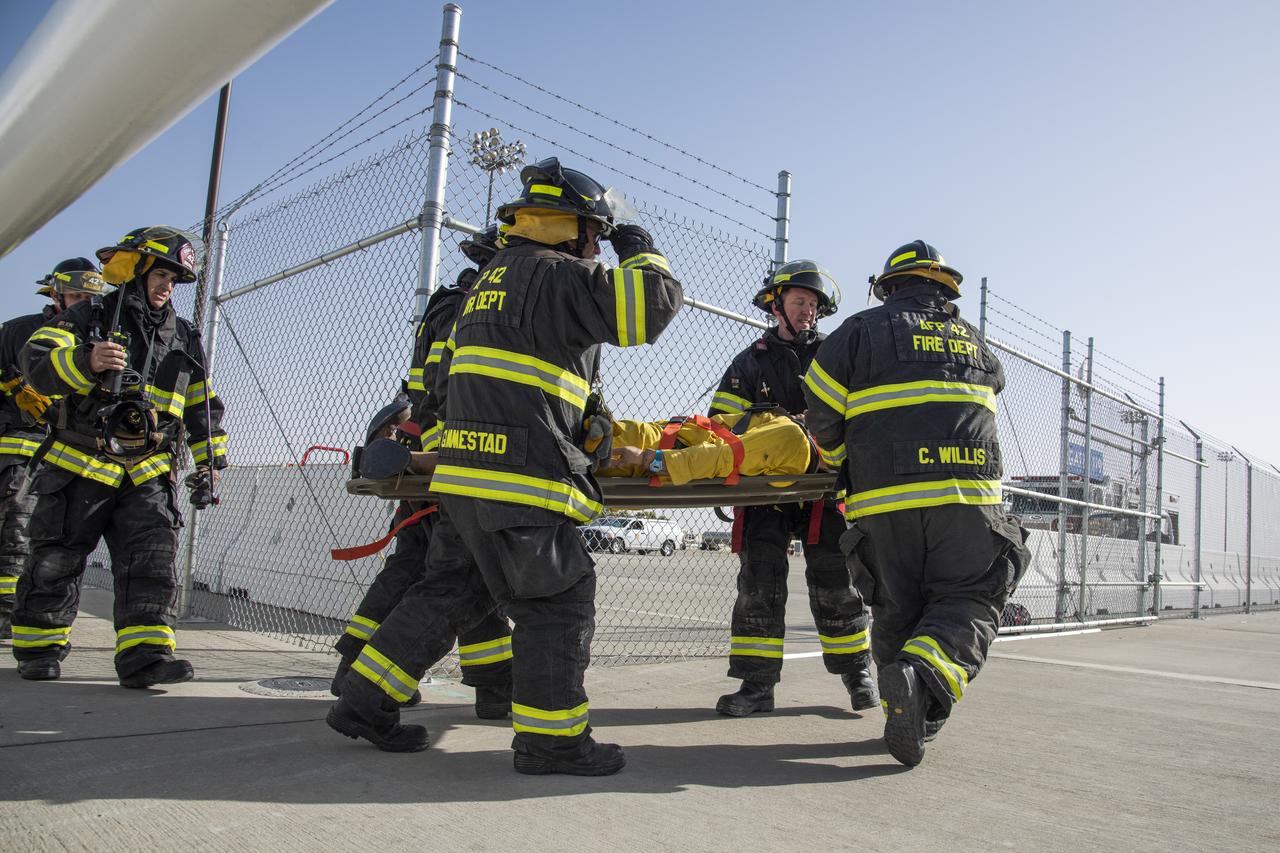
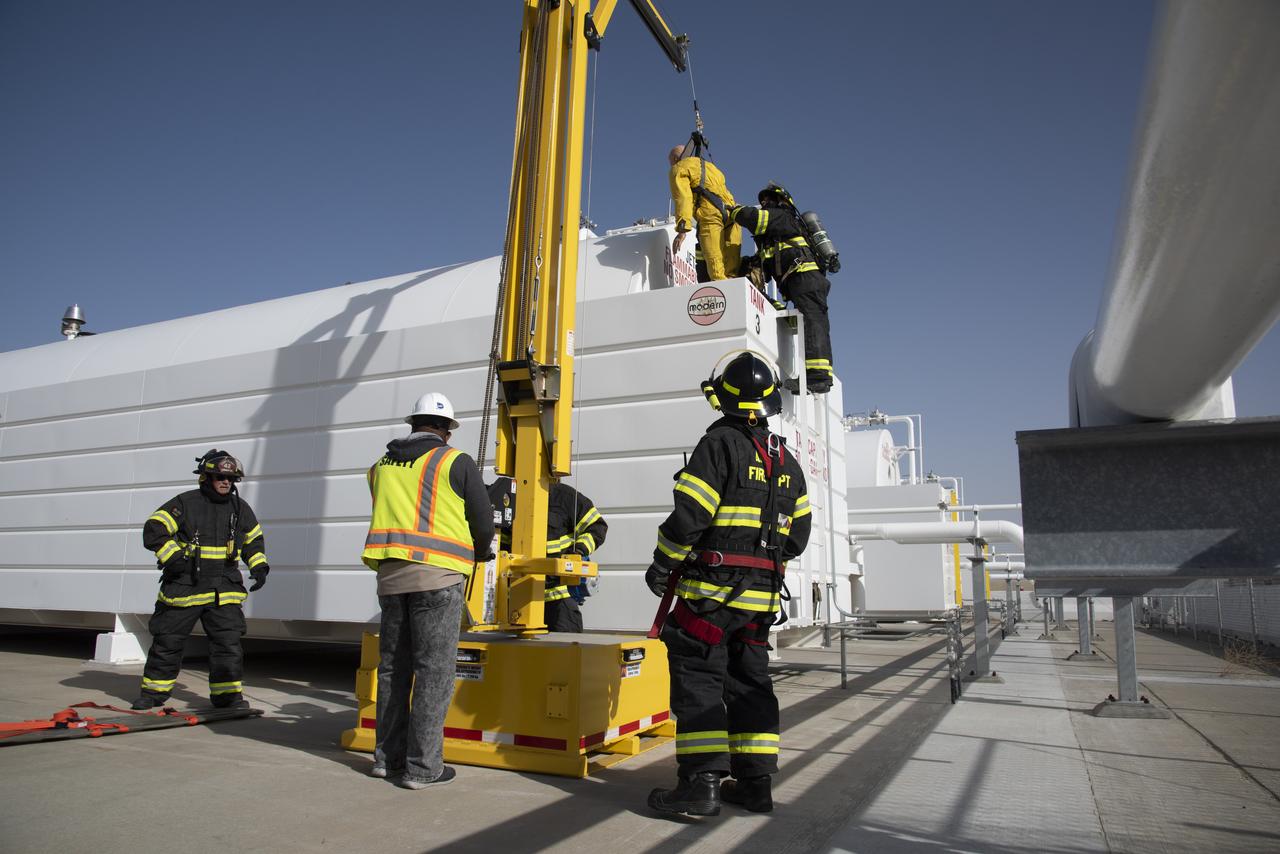
U.S. Air Force Plant 42 Fire Department responders carry out the mannequin to an emergency vehicle during an emergency exercise at NASA Armstrong Flight Research Center's Building 703 in Palmdale, California. Responders included, from left, Kent Courter, Doug Mendez, Alfonzo Ortega, Cedric Willis, Tyler Lippens and Ricky Gimmestad.
Confined Space Exercise Improves Response
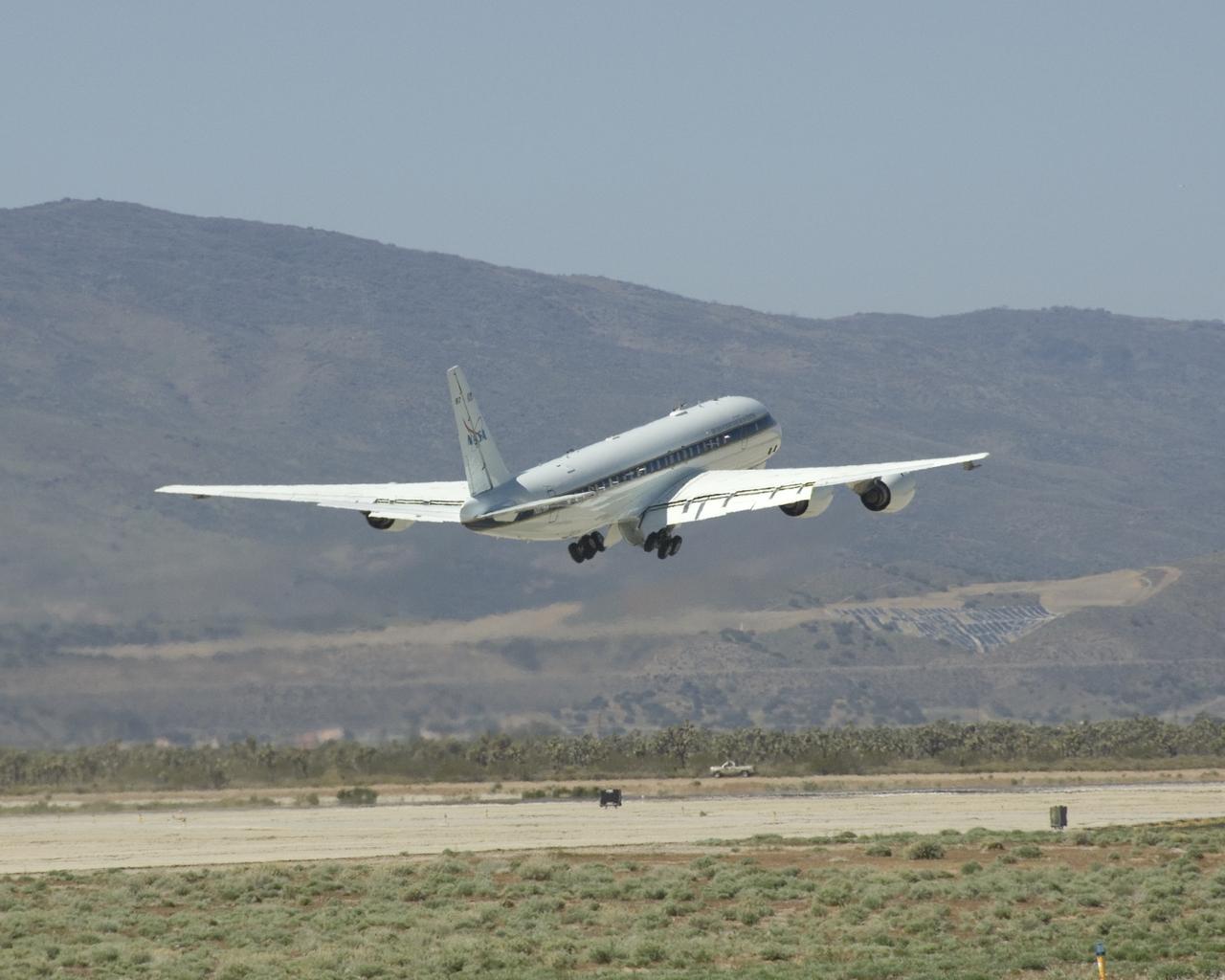
NASA's DC-8 flying laboratory lifts off the runway at Air Force Plant 42 in Palmdale, Calif., on its first flight in the ARCTAS atmospheric science mission.
NASA's DC-8 flying laboratory lifts off the runway at Air Force Plant 42 in Palmdale, Calif., on its first flight in the ARCTAS atmospheric science mission
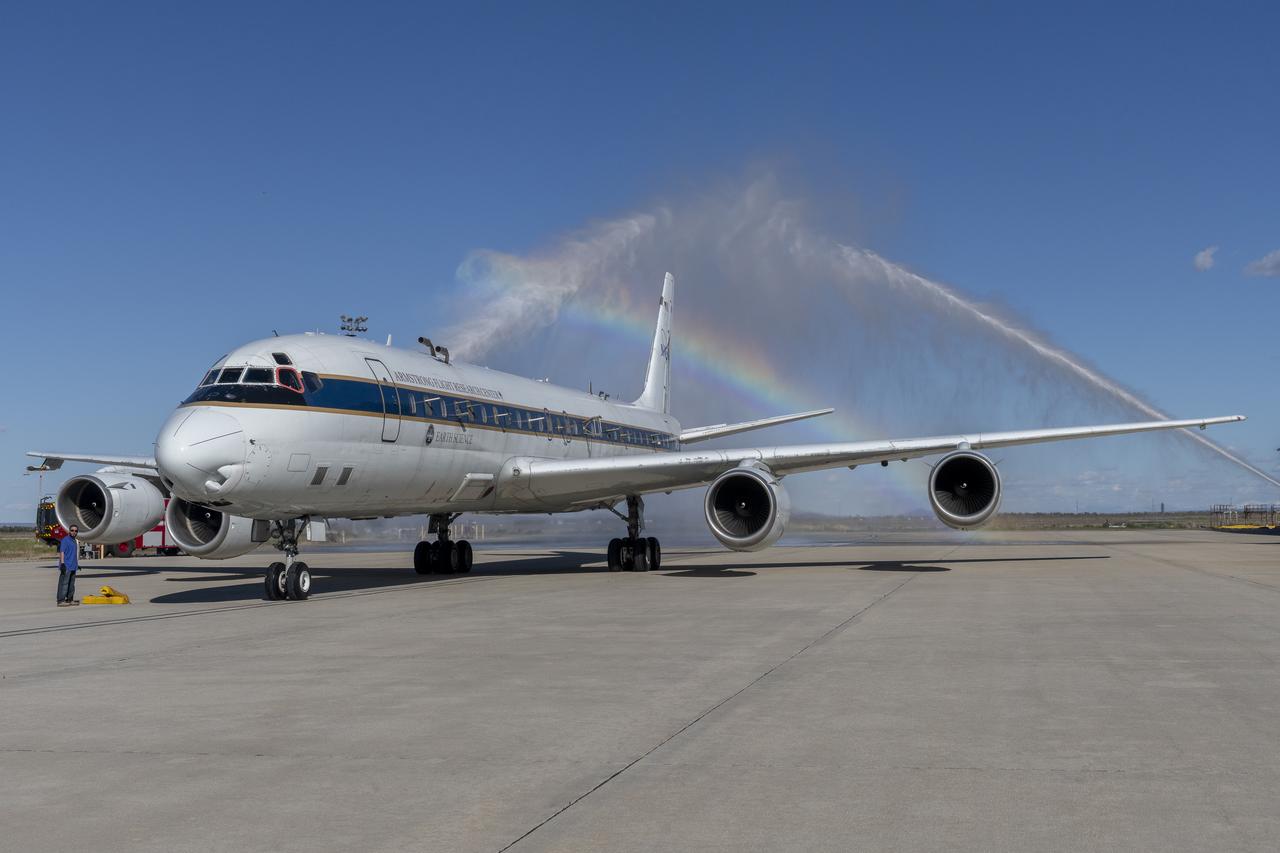
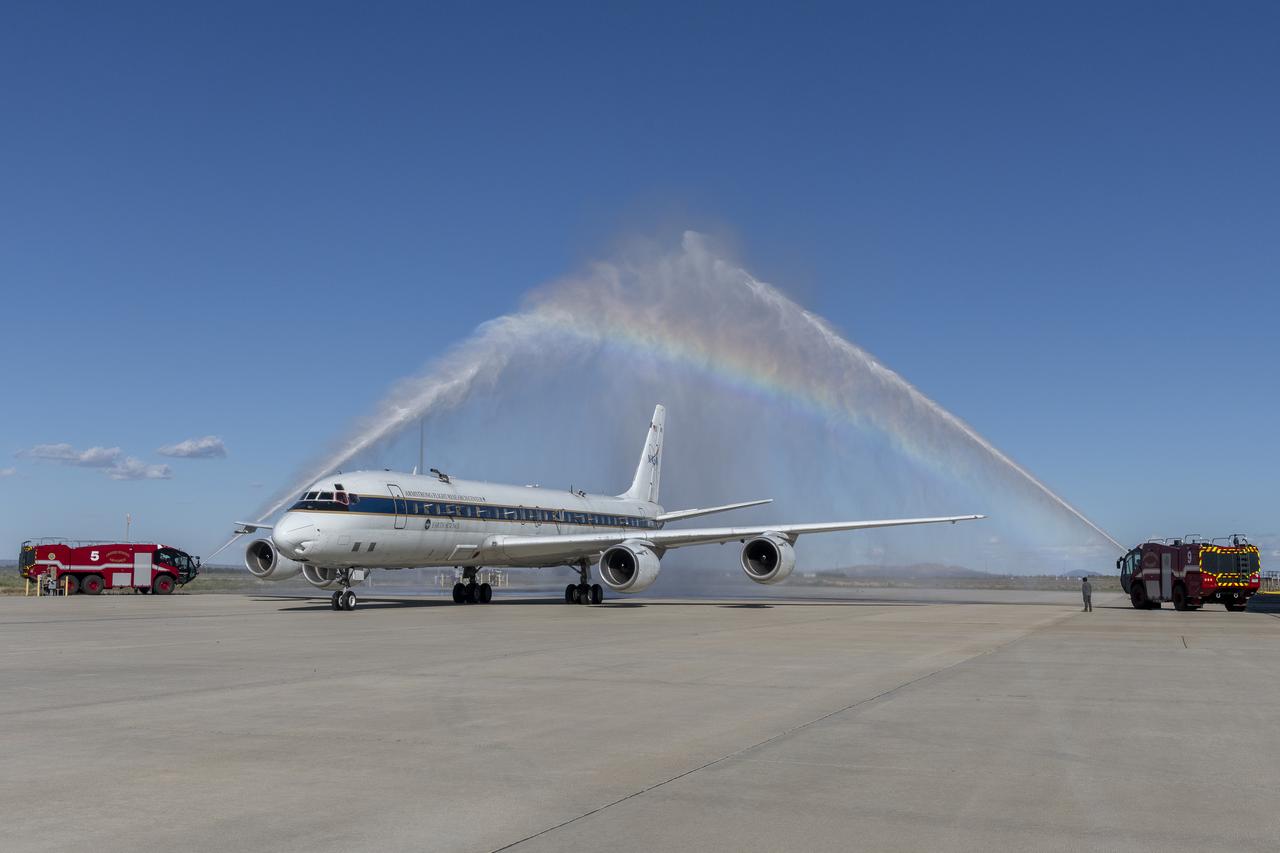
The DC-8 aircraft returned to NASA’s Armstrong Flight Research Center Building 703 in Palmdale, California, on April 1, 2024, after completing its final mission supporting Airborne and Satellite Investigation of Asian Air Quality (ASIA-AQ). The aircraft and crew were welcomed back with a celebratory water salute by the U.S. Air Force Plant 42 Fire Department.
NASA’s DC-8 Returns from Final Mission
The DC-8 aircraft returned to NASA’s Armstrong Flight Research Center Building 703 in Palmdale, California, on April 1, 2024, after completing its final mission supporting Airborne and Satellite Investigation of Asian Air Quality (ASIA-AQ). The aircraft and crew were welcomed back with a celebratory water salute by the U.S. Air Force Plant 42 Fire Department.
NASA’s DC-8 Returns from Final Mission
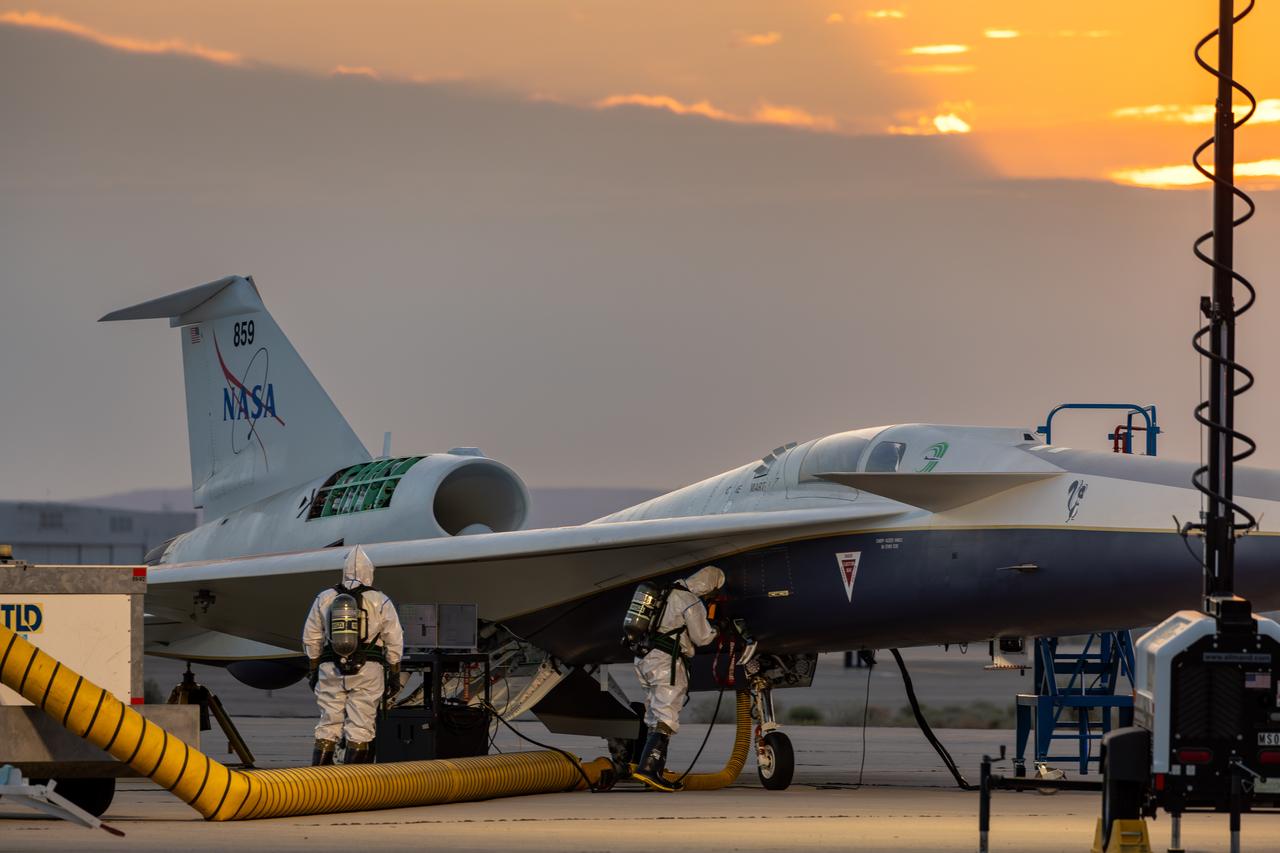
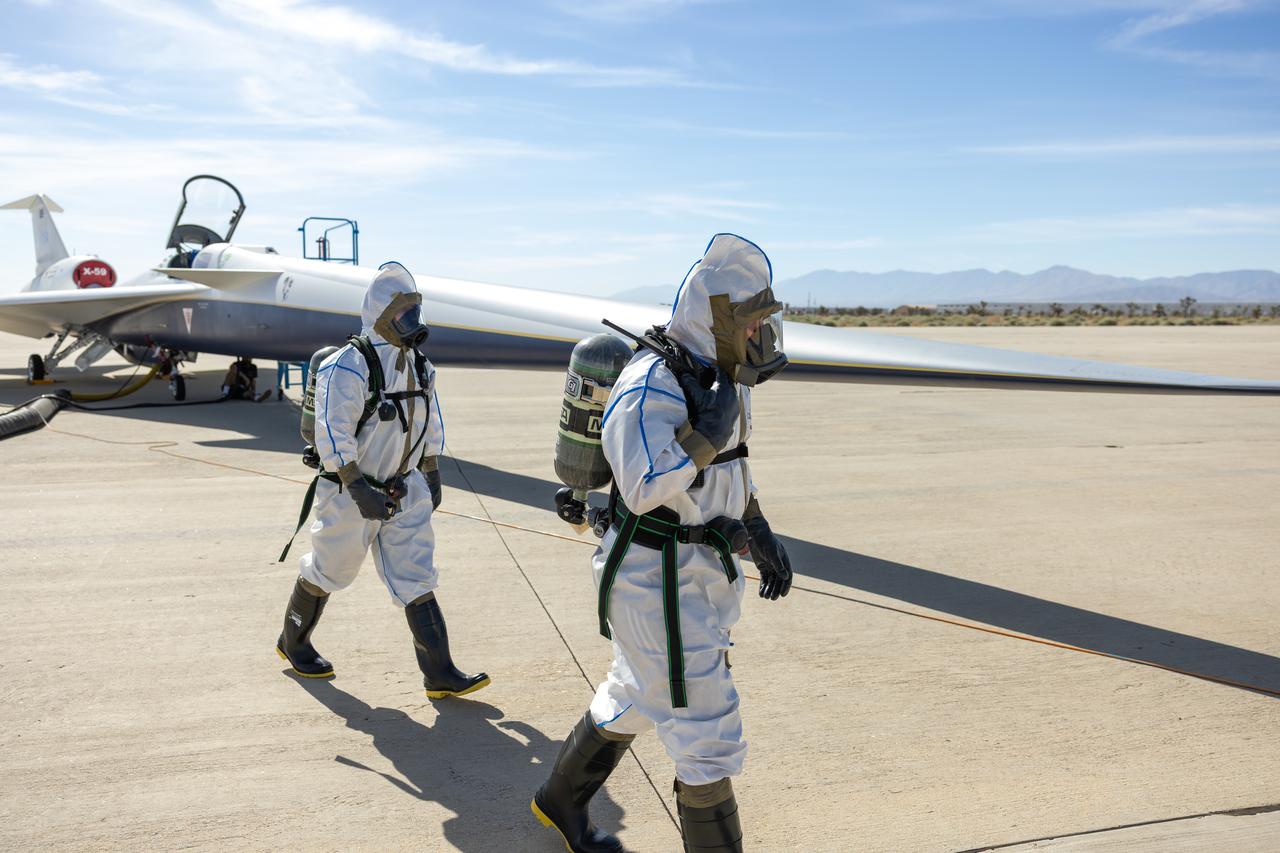
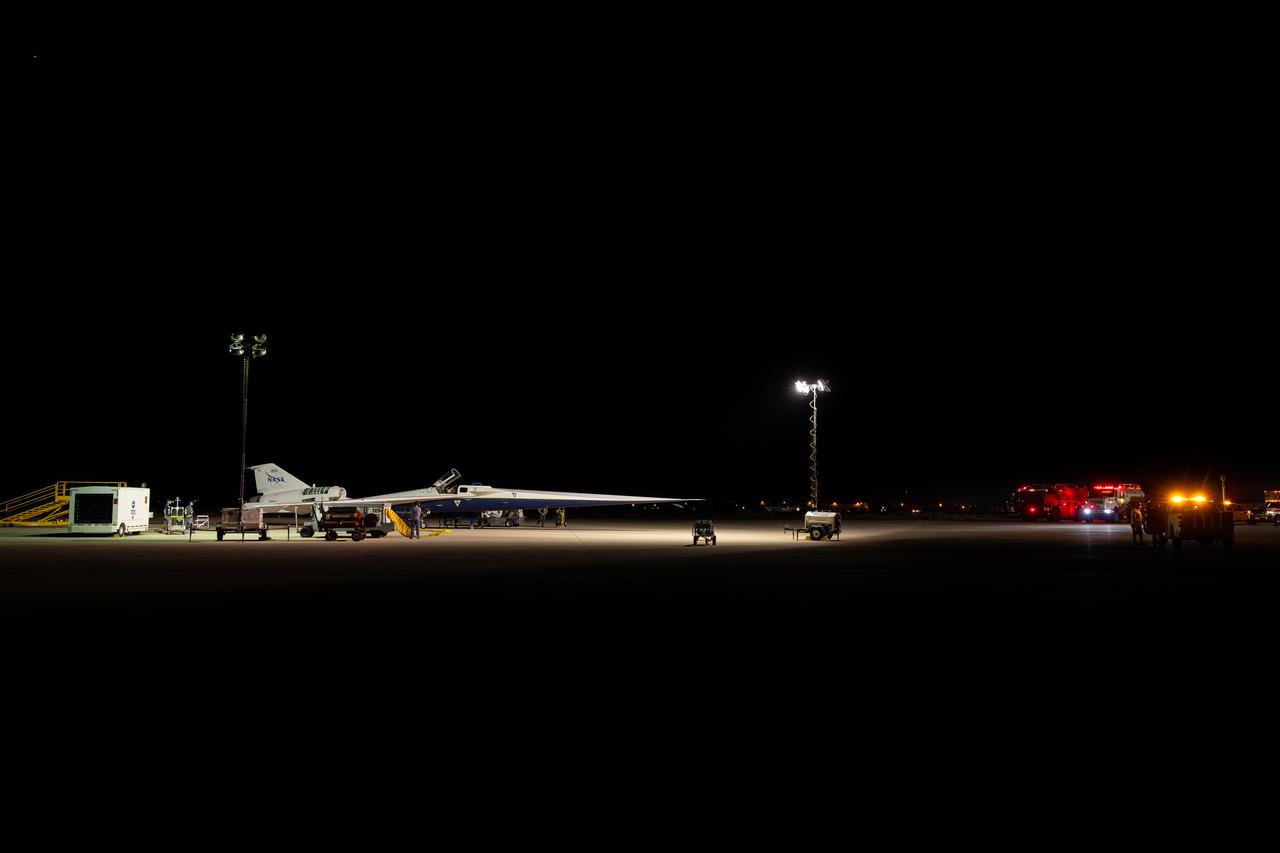
Maintainers perform a hydrazine safety check on NASA’s quiet supersonic X-59 aircraft at U.S. Air Force Plant 42 in Palmdale, California, on Aug. 18, 2025. Hydrazine is a highly toxic chemical, but it serves as a critical backup to restart the engine in flight, if necessary, which is one of several safety features being validated ahead of the aircraft’s first flight. 
Hydrazine Dry Run
Maintainers perform a hydrazine safety check on the agency’s quiet supersonic X-59 aircraft at U.S. Air Force Plant 42 in Palmdale, California, on Aug. 18, 2025. Hydrazine is a highly toxic chemical, but it serves as a critical backup to restart the engine in flight, if necessary, and is one of several safety features being validated ahead of the aircraft’s first flight.
Hydrazine Test
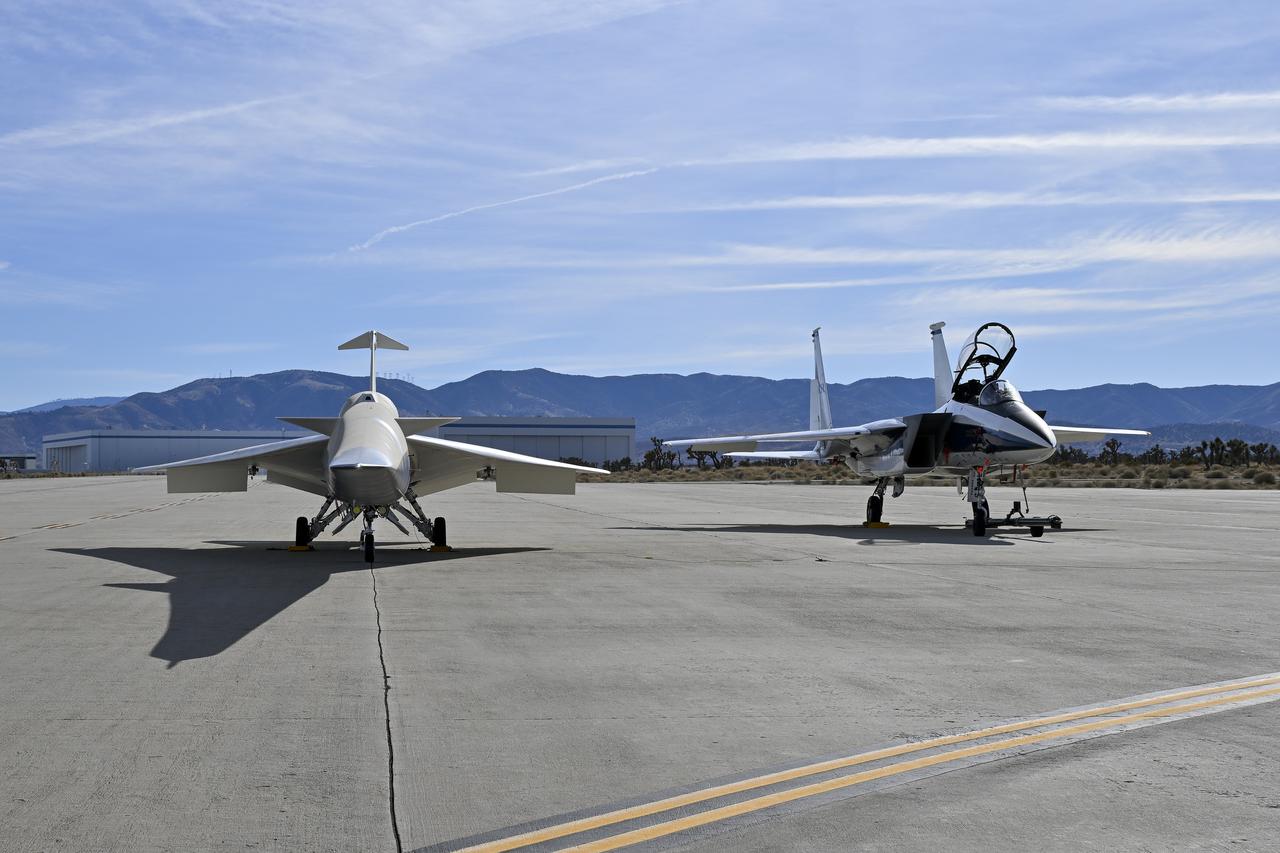
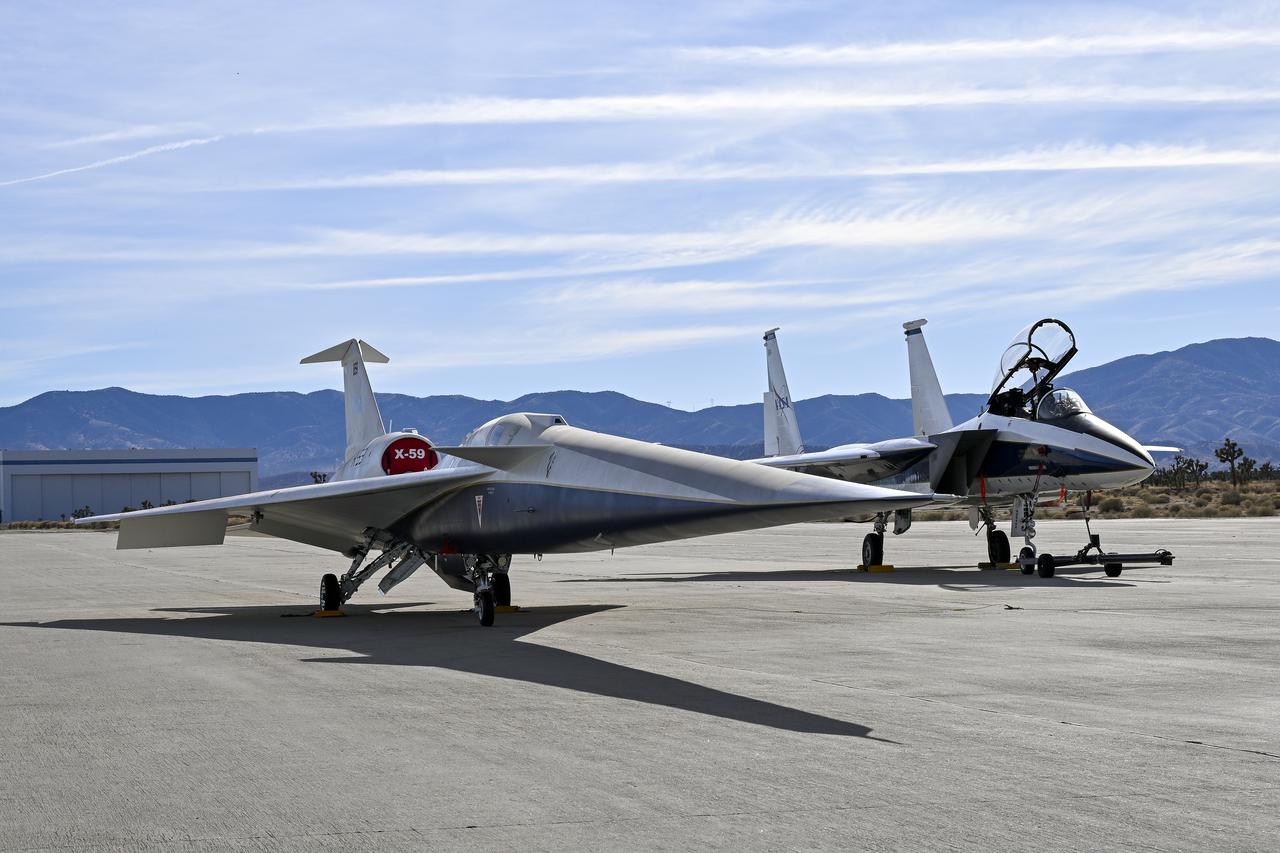
NASA’s F-15D research aircraft is positioned behind the X-59 during electromagnetic compatibility testing at U.S. Air Force Plant 42 in Palmdale, California. During this test, the F-15D’s radar and avionics were turned on one at a time while engineers evaluated each signal’s interaction with the X-59 for possible interference. NASA’s Quesst mission will demonstrate quiet supersonic technology that will provide data to help determine an acceptable sound limit in the sky.
NASA Uses F-15D to Validate X-59’s Electromagnetic Interference Testing
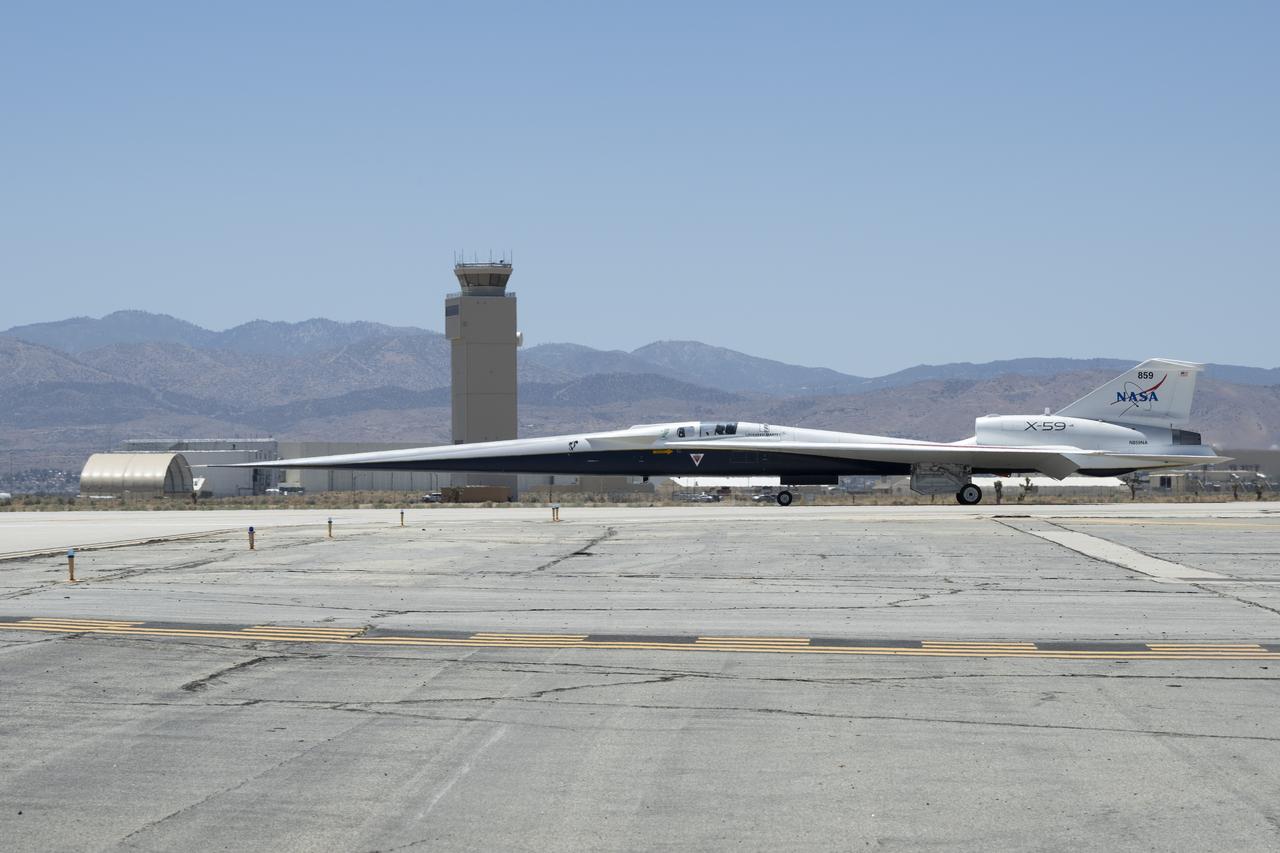
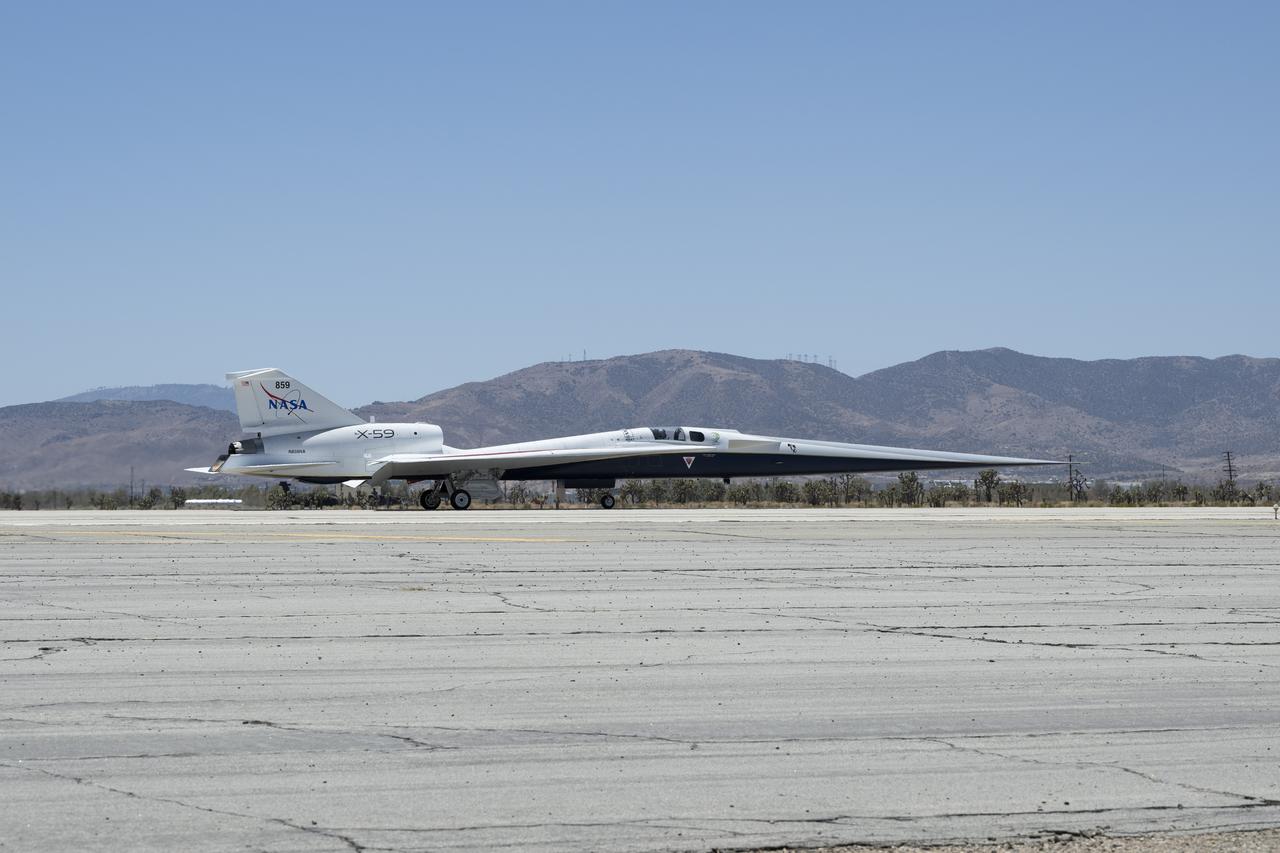
NASA’s X-59 quiet supersonic research aircraft taxis across the runway during a low-speed taxi test at U.S. Air Force Plant 42 in Palmdale, California, on July 10, 2025. The test marks the start of taxi tests and the last series of ground tests before first flight.
NASA’s X-59 Begins Taxi Tests
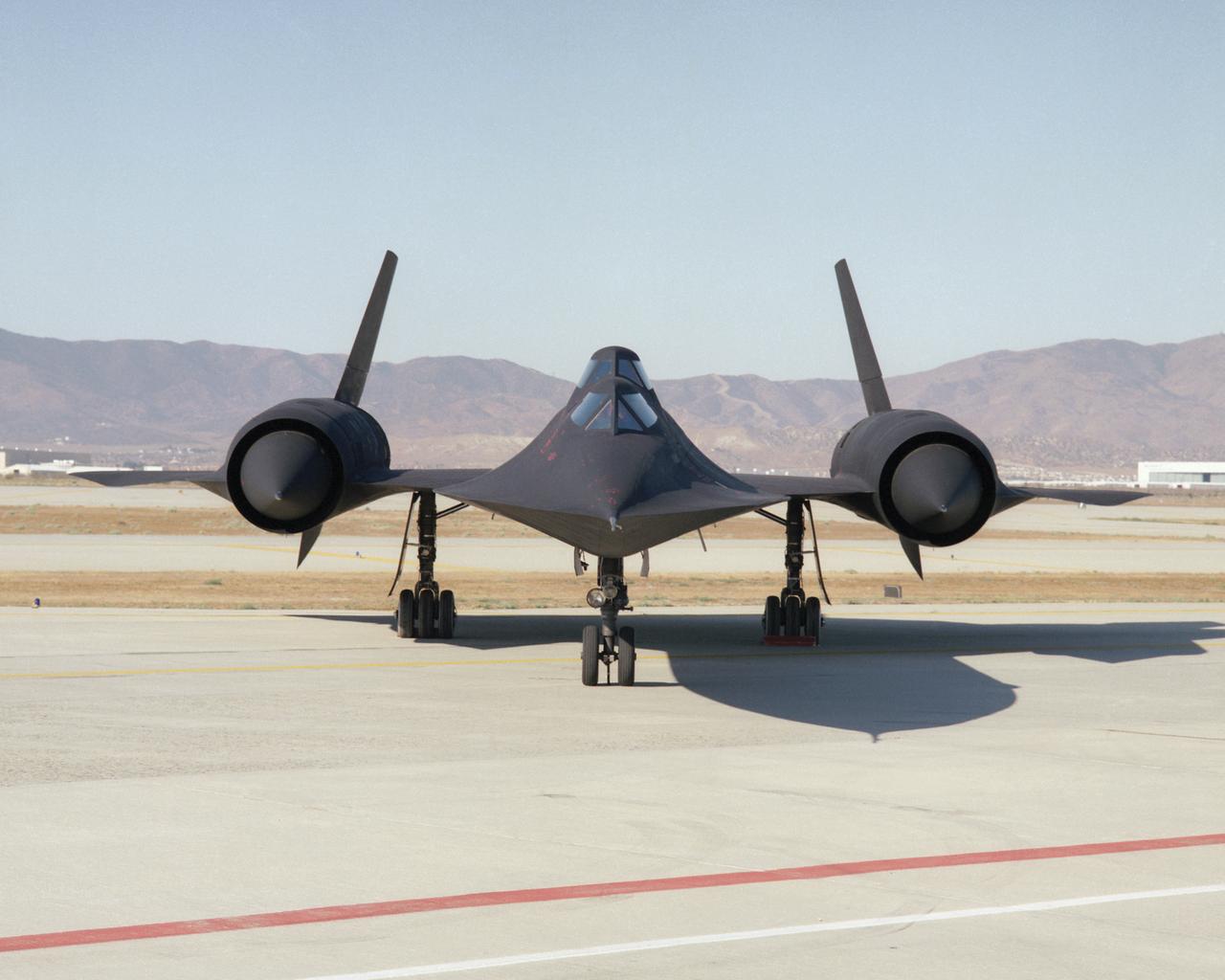
This photo shows a head-on view of NASA's SR-71B, used for pilot proficiency and training, on the ramp at the Air Force's Plant 42 in Palmdale, California, shortly before delivery to the Ames-Dryden Flight Research Facility (later, Dryden Flight Research Center) at Edwards, California. NASA operated two of these unique aircraft, an SR-71A, for high-speed, high altitude research, and this SR- 71B pilot trainer for most of the decade of the 1990s. The "B" model is special because of its raised rear cockpit, which provided a second pilot position so a trainer and an experienced pilot could both see what was going on during flights.  The SR-71 was designed and built by the Lockheed Skunk Works, now the Lockheed Martin Skunk Works. Studies have shown that less than 20 percent of the total thrust used to fly at Mach 3 is produced by the basic engine itself. The balance of the total thrust is produced by the unique design of the engine inlet and "moveable spike" system at the front of the engine nacelles, and by the ejector nozzles at the exhaust which burn air compressed in the engine bypass system.  Data from the SR-71 high speed research program will be used to aid designers of future supersonic/hypersonic aircraft and propulsion systems, including a high speed civil transport.
This photo shows a head-on view of NASA's SR-71B on the ramp at the Air Force's Plant 42 in Palmdale, California, shortly before delivery to DFRC
NASA’s X-59 quiet supersonic research aircraft taxis across the runway during a low-speed taxi test at U.S. Air Force Plant 42 in Palmdale, California, on July 10, 2025. The test marks the start of taxi tests and the last series of ground tests before first flight.
NASA’s X-59 Begins Taxi Tests
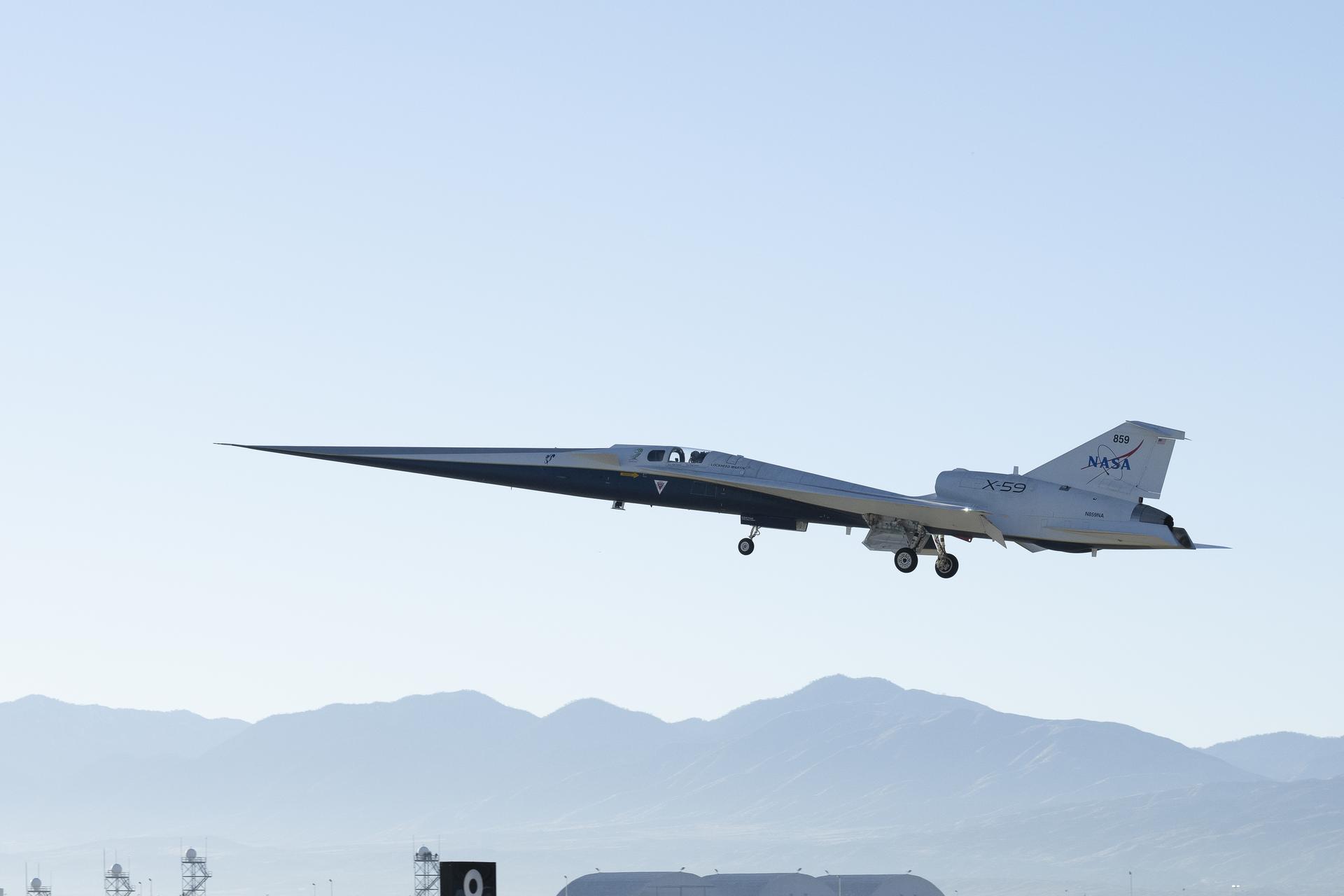
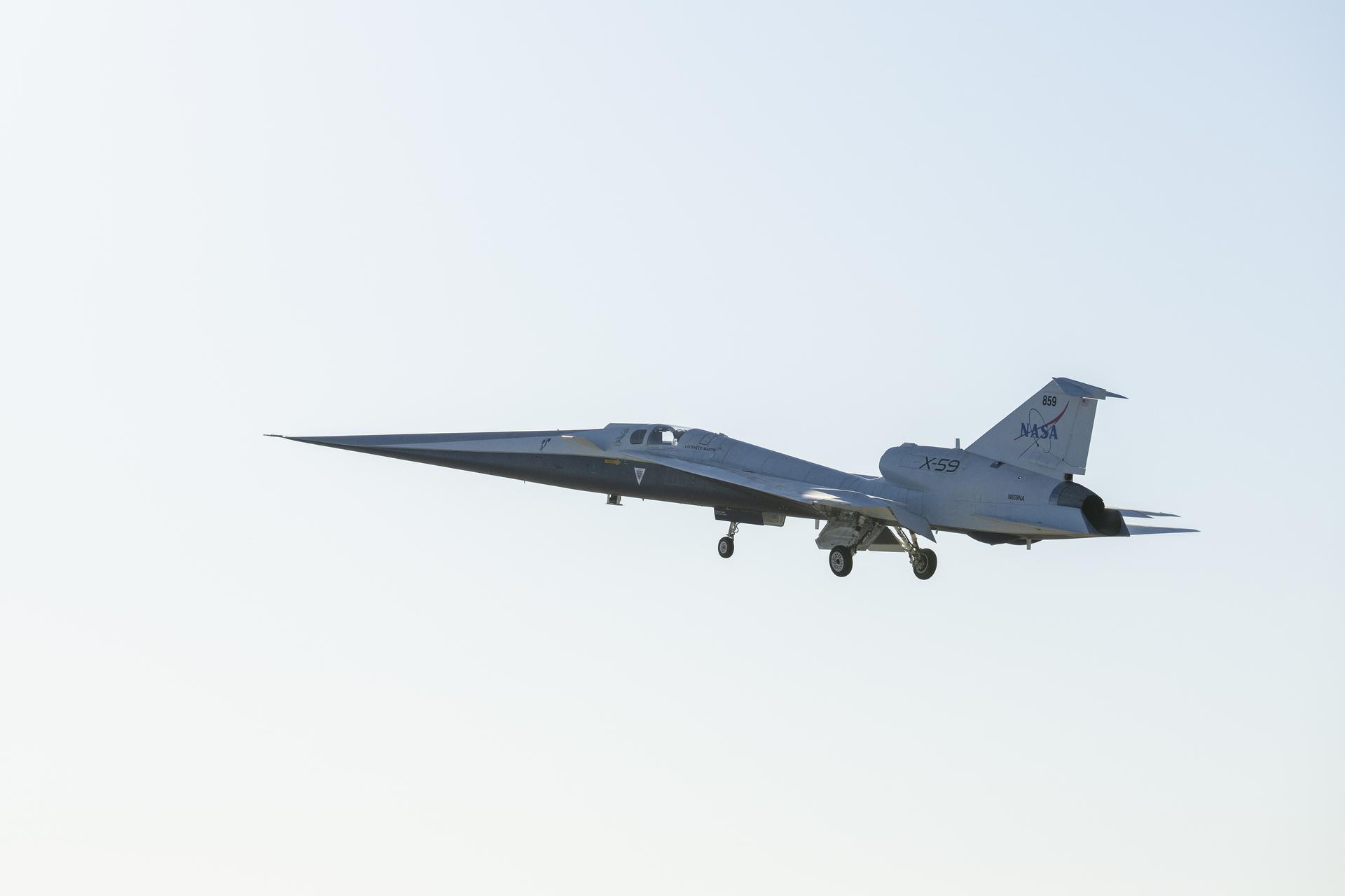
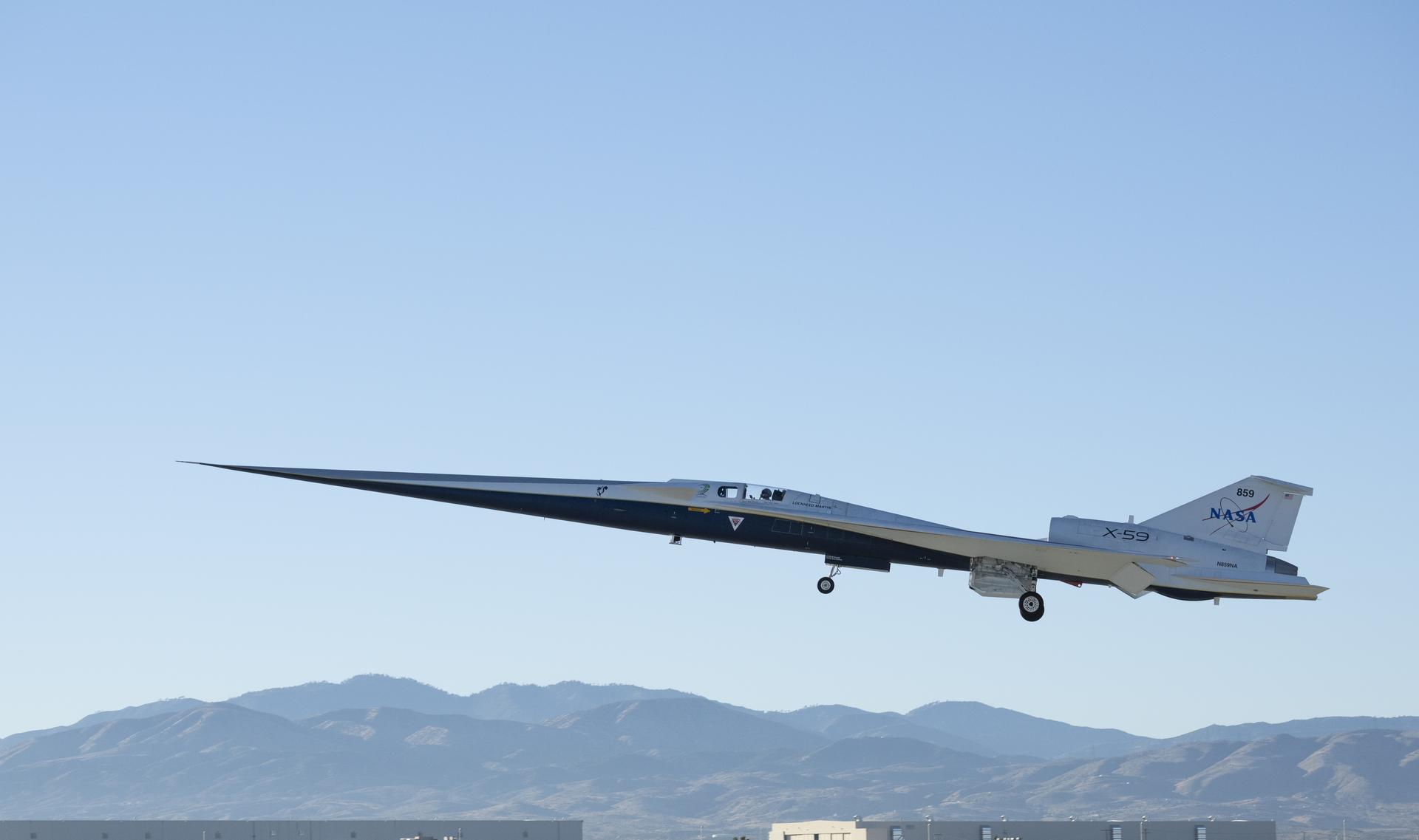
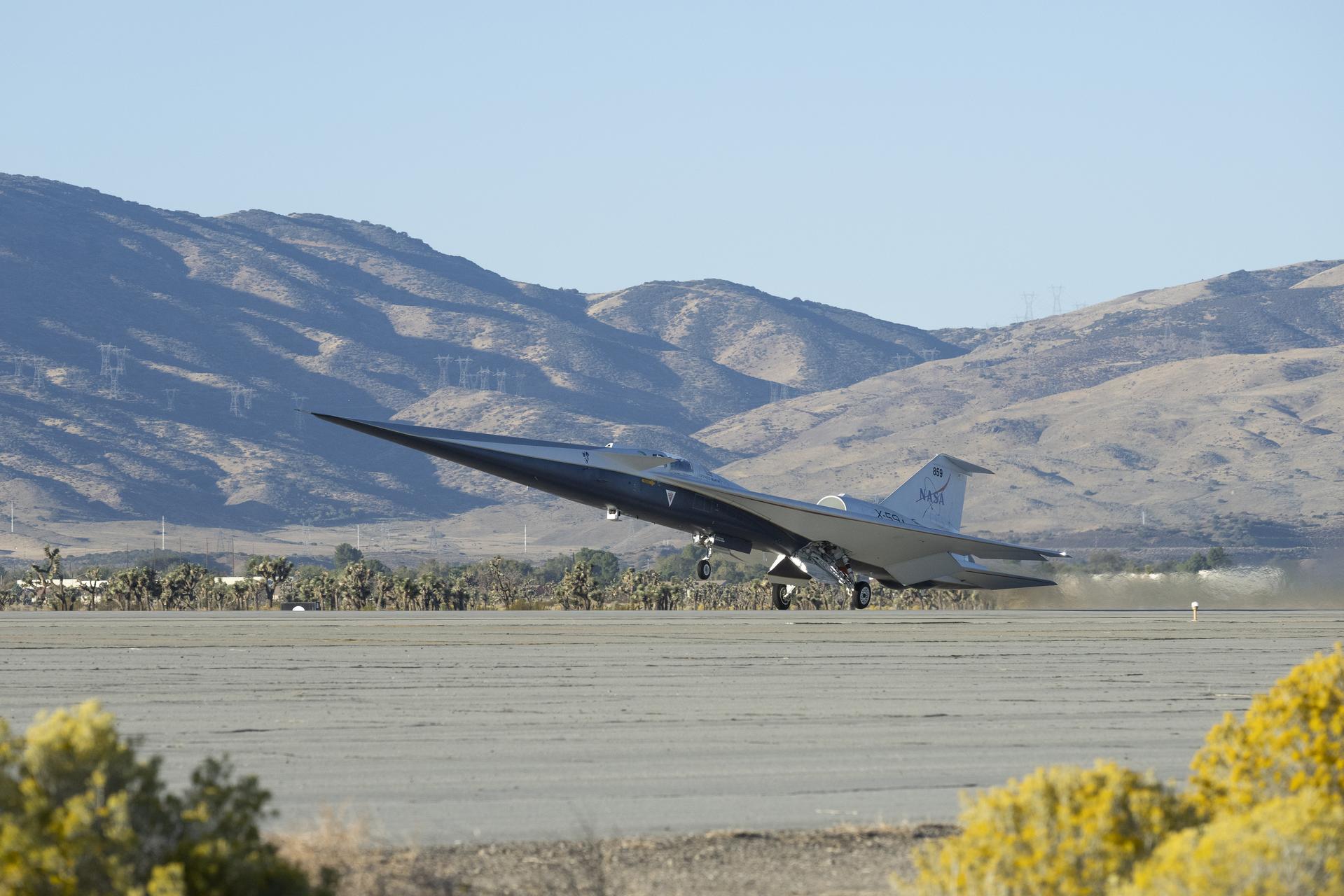
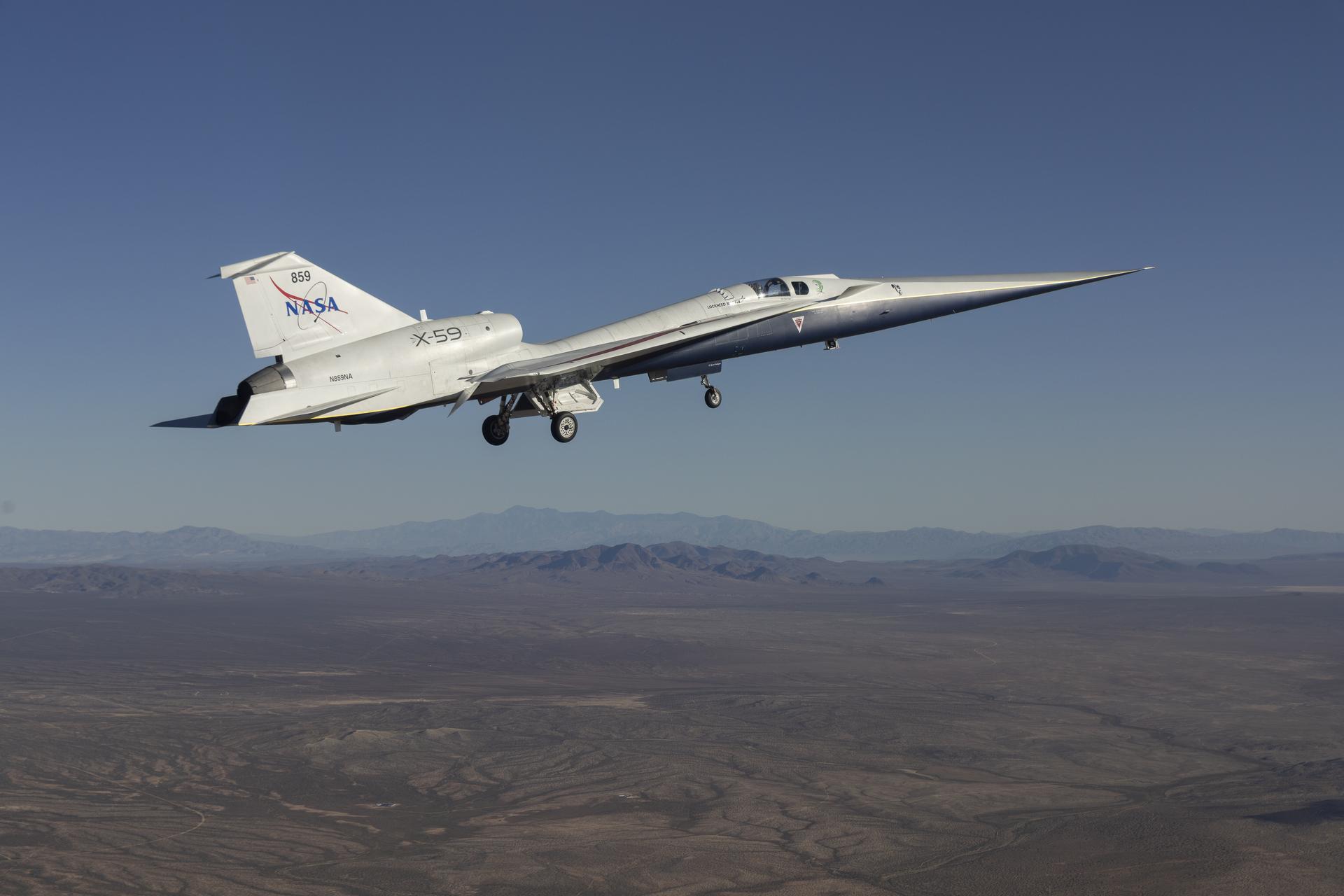
NASA’s X-59 quiet supersonic research aircraft lifts off for its first flight Tuesday, Oct. 28, 2025, from U.S. Air Force Plant 42 in Palmdale, California. The aircraft’s first flight marks the start of flight testing for NASA’s Quesst mission, the result of years of design, integration, and ground testing and begins a new chapter in NASA’s aeronautics research legacy.
NASA’s X-59 Lifts Off for First Flight
NASA’s X-59 quiet supersonic research aircraft is seen at dawn with firetrucks and safety personnel nearby during a hydrazine safety check at U.S. Air Force Plant 42 in Palmdale, California, on Aug. 18, 2025. The operation highlights the extensive precautions built into the aircraft’s safety procedures for a system that serves as a critical safeguard, ensuring the engine can be restarted in flight as the X-59 prepares for its first flight.
Hydrazine Test
NASA’s X-59 quiet supersonic research aircraft lifts off for its first flight Tuesday, Oct. 28, 2025, from U.S. Air Force Plant 42 in Palmdale, California. The aircraft’s first flight marks the start of flight testing for NASA’s Quesst mission, the result of years of design, integration, and ground testing and begins a new chapter in NASA’s aeronautics research legacy.
NASA’s X-59 Lifts Off for First Flight
Syd Myers, a NASA Armstrong Flight Research Center confined space supervisor for a drill at NASA Armstrong Flight Research Center’s Building 703 in Palmdale, California, observes U.S. Air Force Plan 42 Fire Department responders extract a mannequin from a confined space as part of an emergency exercise.
Confined Space Exercise Improves Response
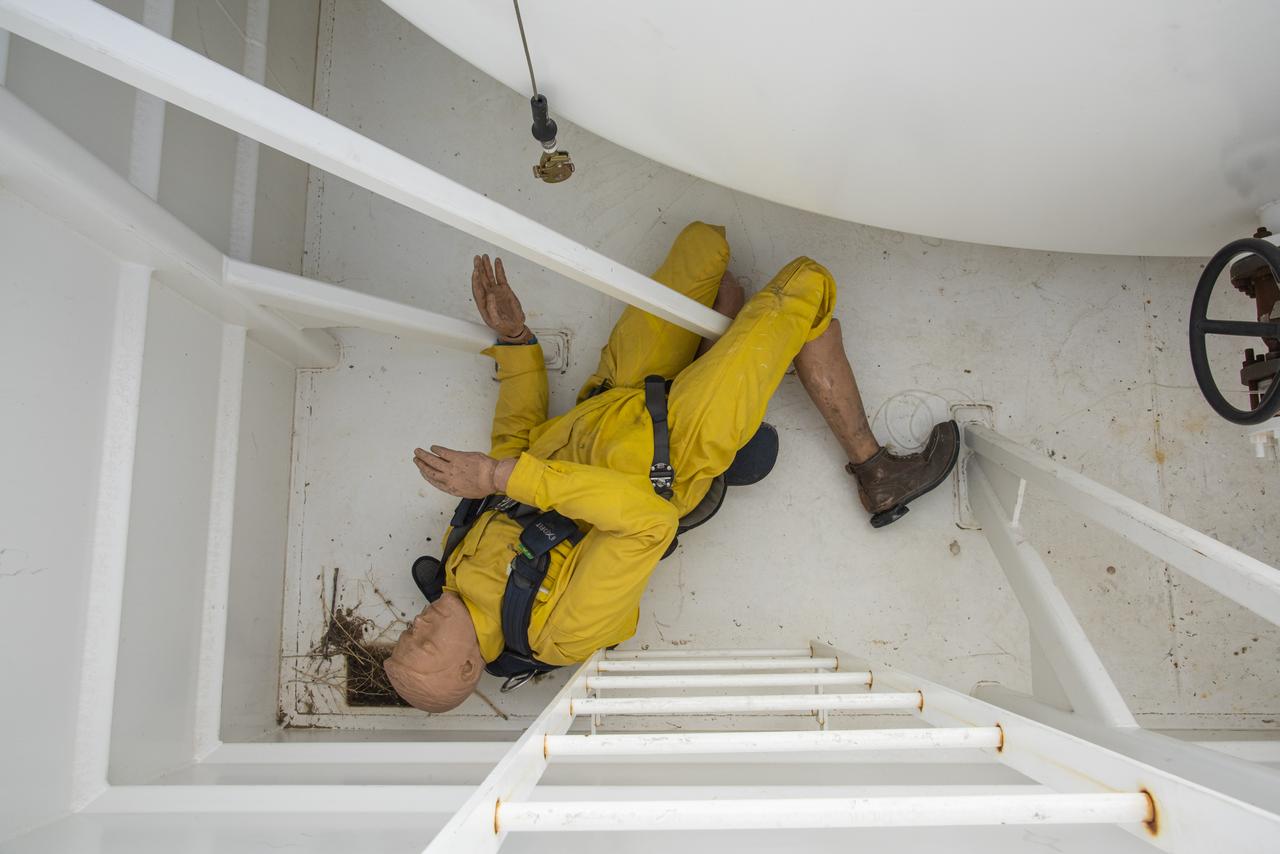
A mannequin is used to simulate a worker who has collapsed and come free from a harness intended to extricate the worker in case of emergency as part of a confined spaces training at NASA Armstrong Flight Research Center’s Building 703 in Palmdale, California.
Confined Space Exercise Improves Response
Syd Myers, a NASA Armstrong Flight Research Center confined space supervisor for a drill at NASA Armstrong Flight Research Center’s Building 703 in Palmdale, California, called 9-1-1 to begin the exercise. Myers continued to update responders how the situation was evolving until help arrived.
Confined Space Exercise Improves Response
NASA's DC-8 airborne science laboratory banks low over Rogers Dry Lake at Edwards Air Force upon its return to NASA Dryden Flight Research Center Nov. 8, 2007.
NASA's DC-8 airborne science laboratory banks low over Rogers Dry Lake at Edwards Air Force upon its return to NASA Dryden Flight Research Center Nov. 8, 2007
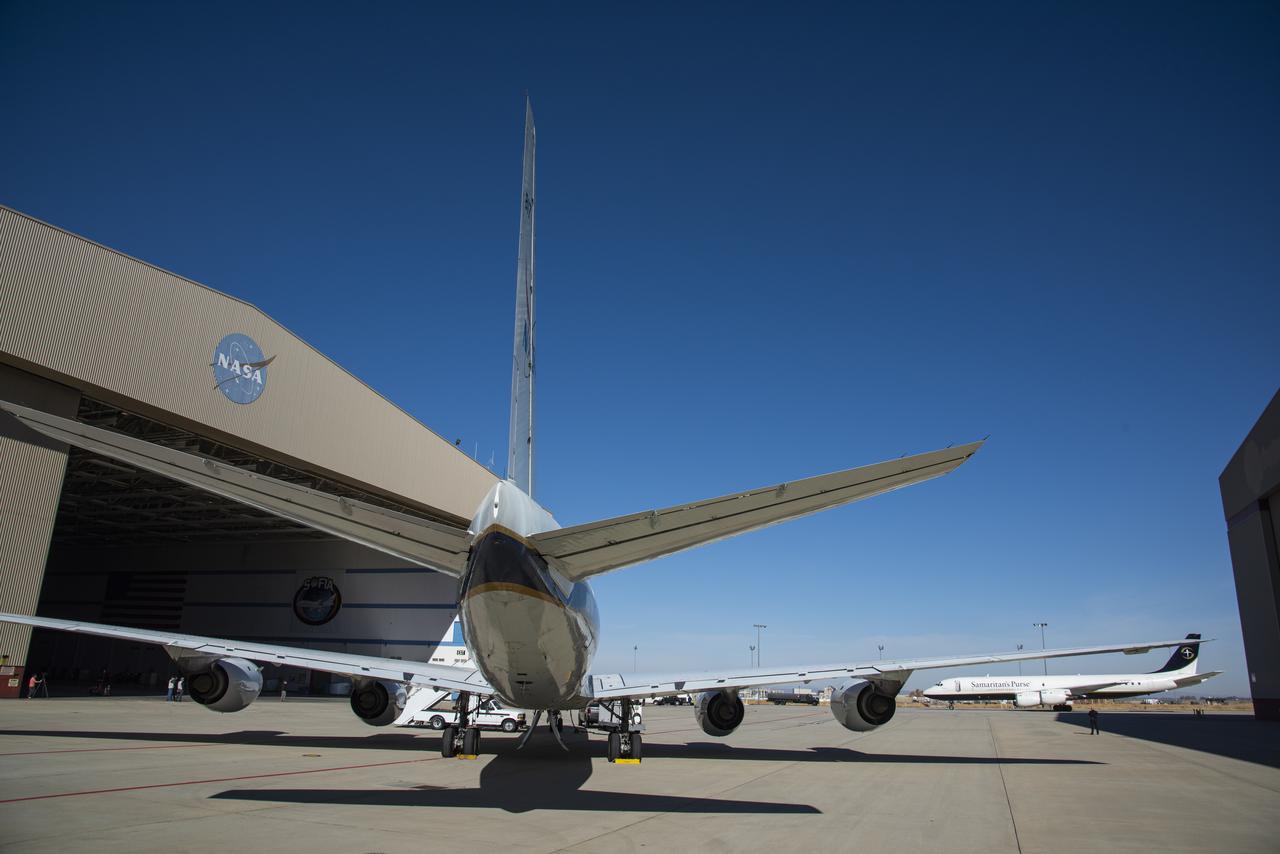
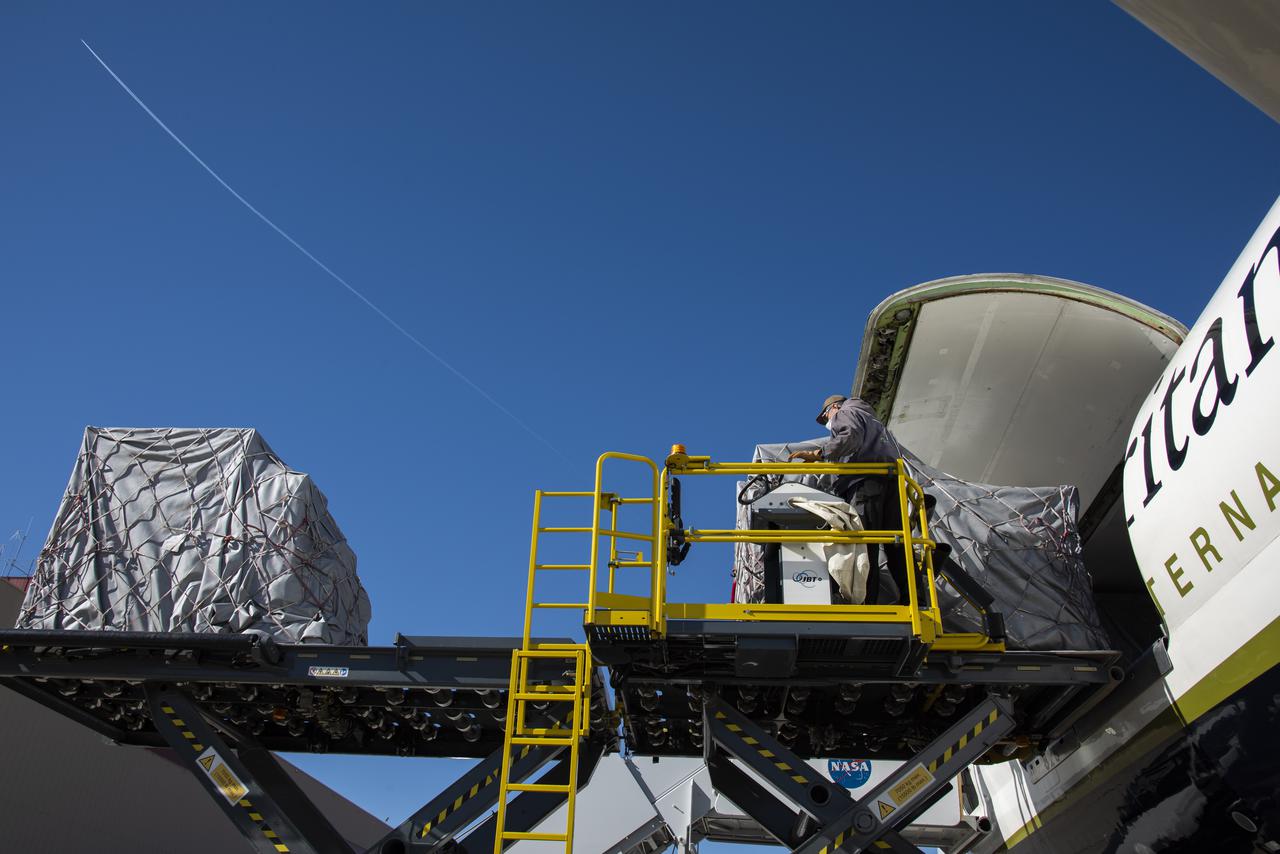
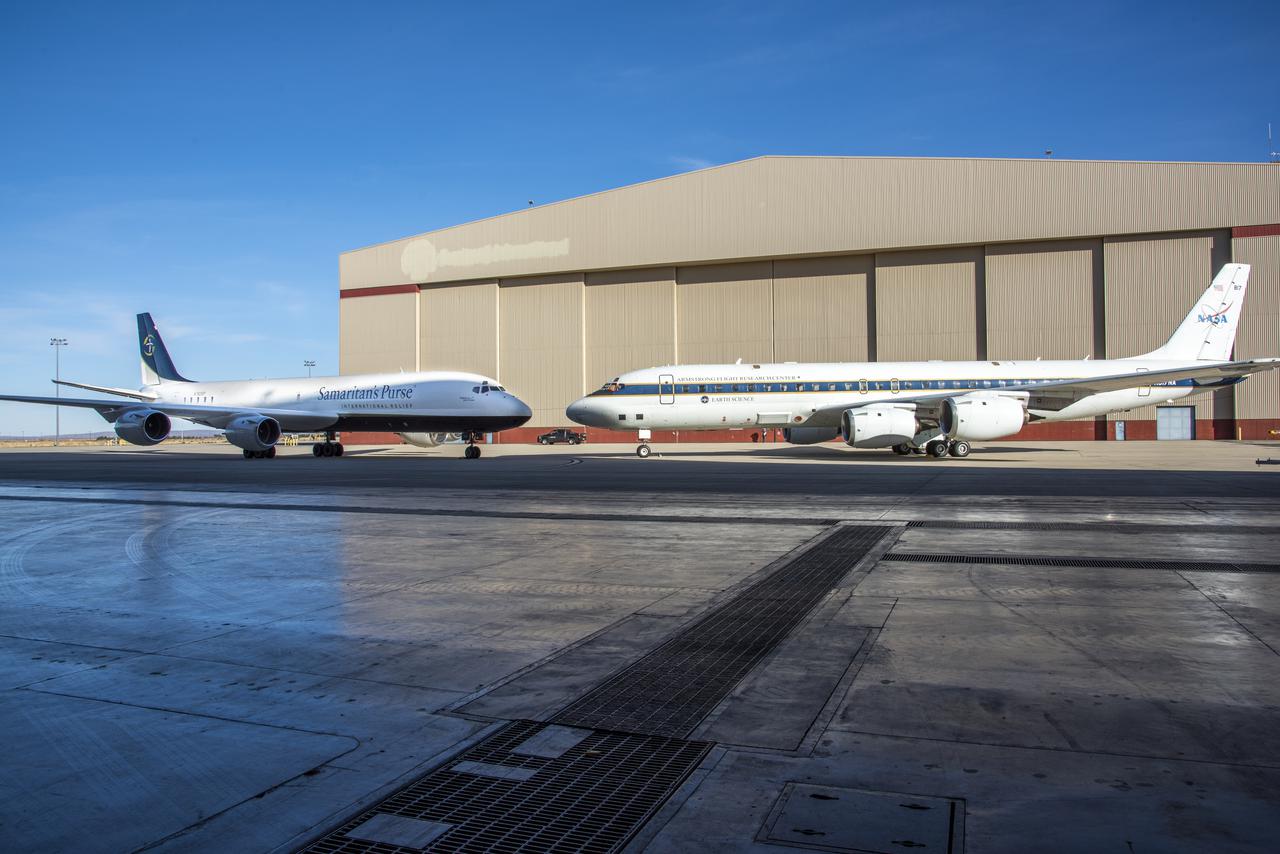
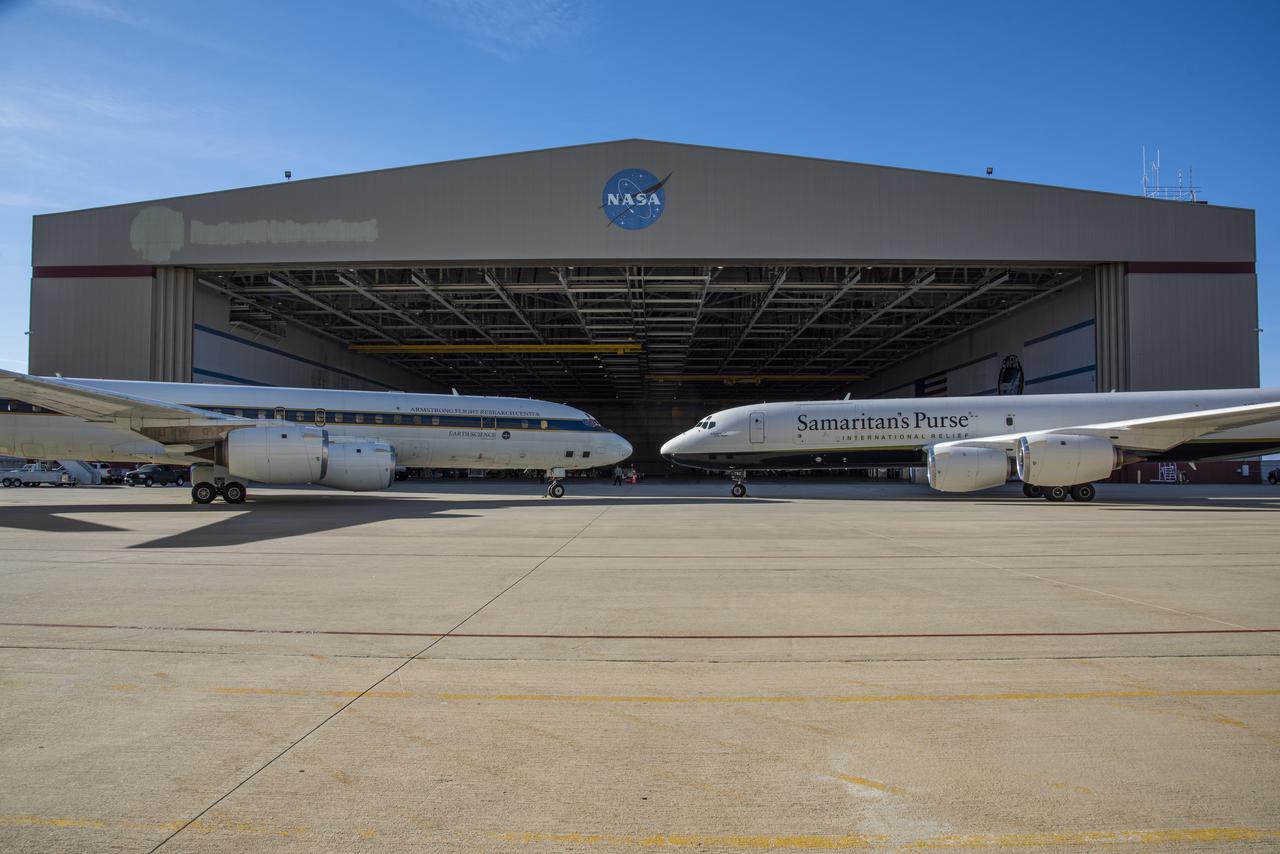
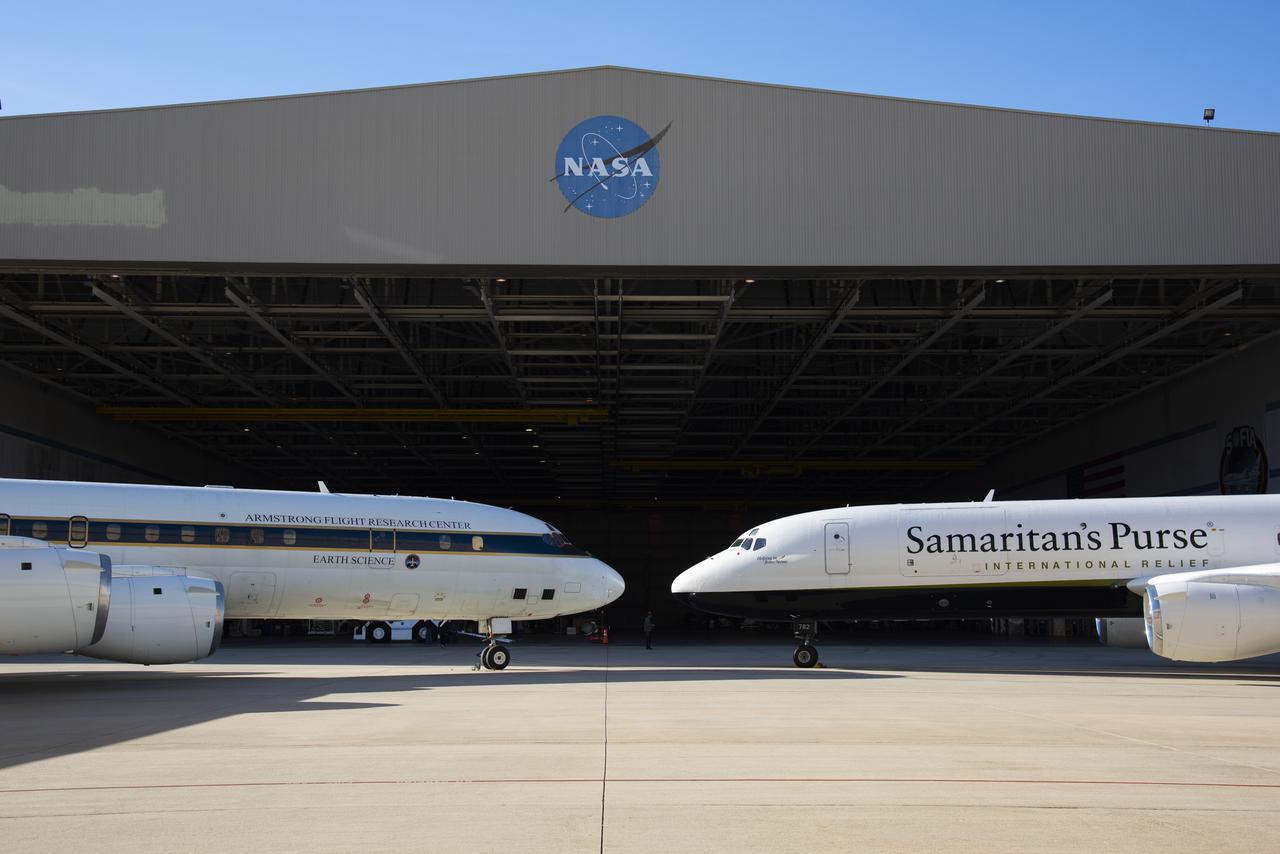
NASA and Samaritan's Purse DC-8 aircrafts met on the ramp in front of NASA's Armstrong Flight Research Center Building 703.
NASA and Samaritan's Purse DC-8
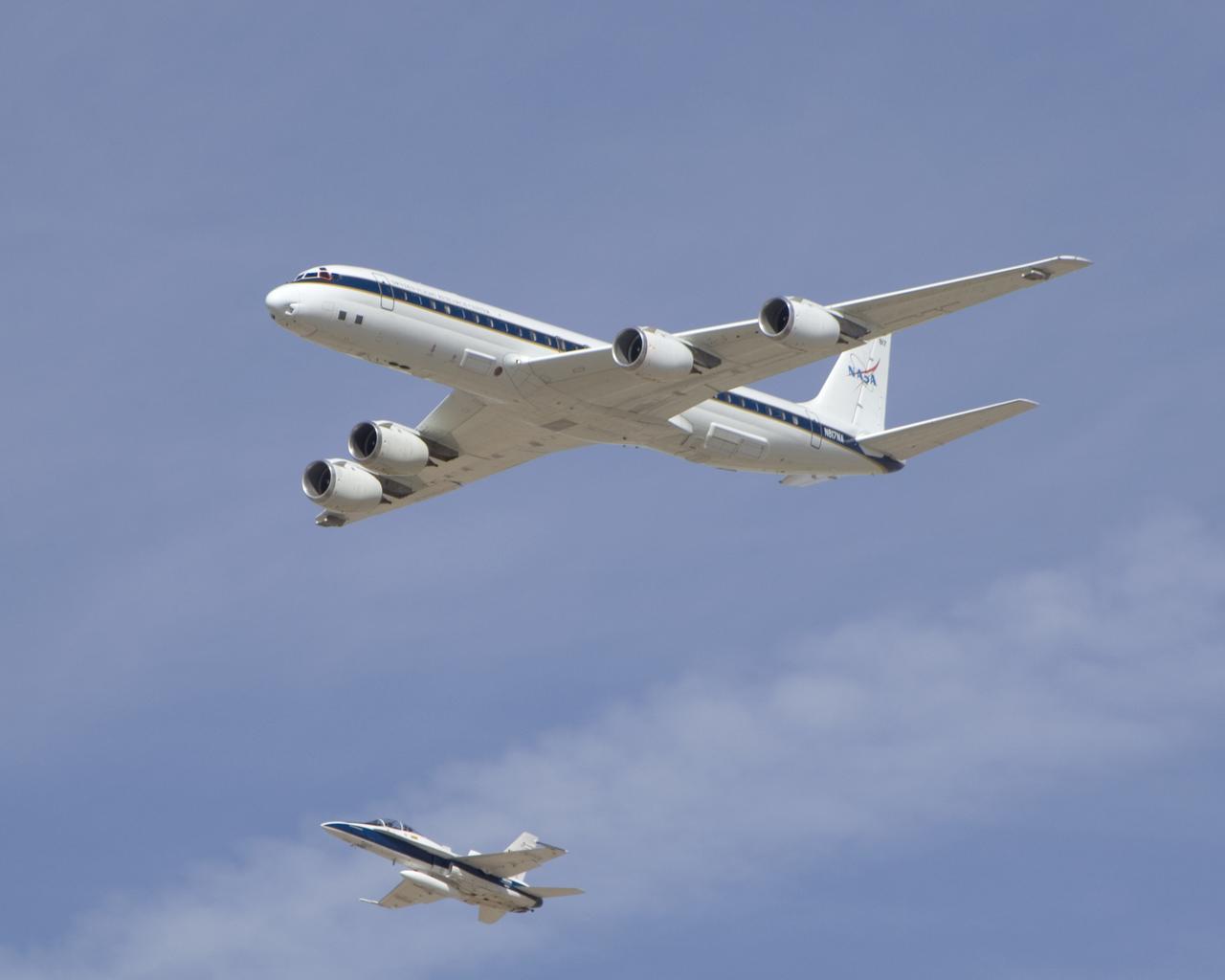
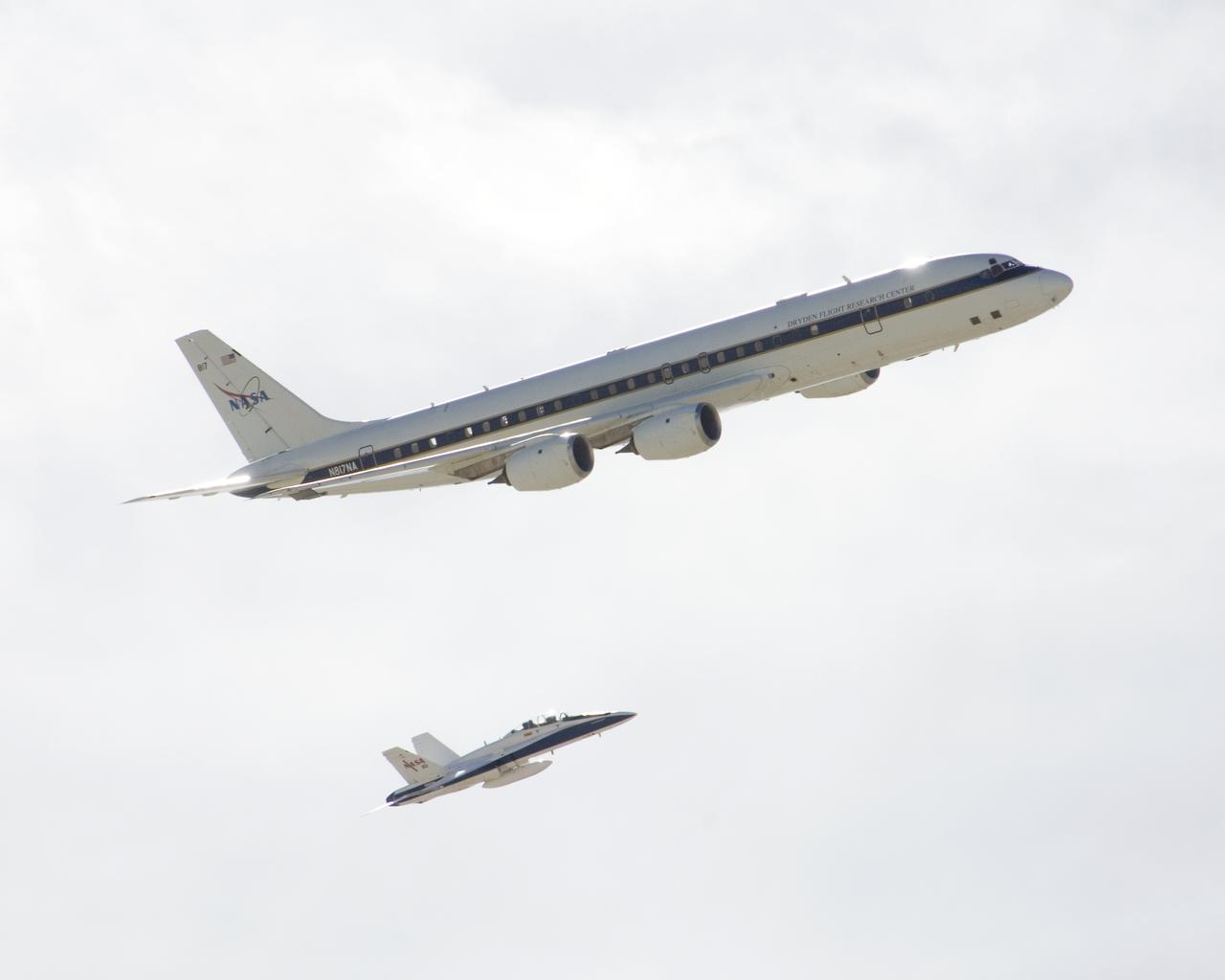
NASA's DC-8 airborne science laboratory is shadowed by a NASA F/A-18 chase plane during a flyover of the Dryden Aircraft Operations Facility in Palmdale, Calif.
NASA's DC-8 airborne science laboratory soars over the Dryden Flight Research Center upon its return to the center on Nov. 8, 2007.
NASA's DC-8 airborne science laboratory soars over the Dryden Flight Research Center upon its return to the center on Nov. 8, 2007
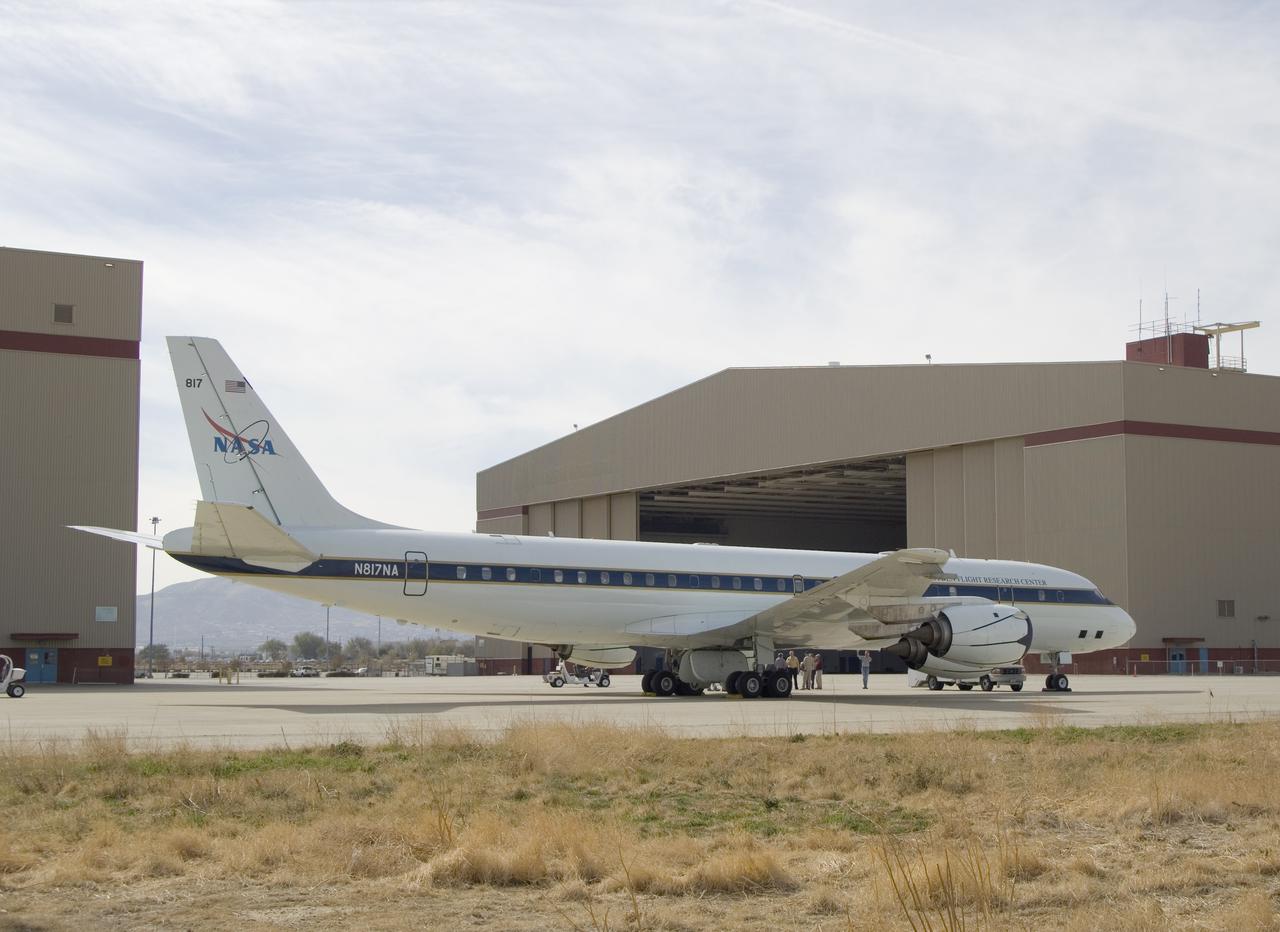
NASA's DC-8 airborne science laboratory has become the first science aircraft to be based at the Dryden Aircraft Operations Facility in Palmdale, Calif.
NASA and Samaritan's Purse DC-8 aircrafts met on the ramp in front of NASA's Armstrong Flight Research Center Building 703.
NASA and Samaritan's Purse DC-8
NASA and Samaritan's Purse DC-8 aircrafts met on the ramp in front of NASA's Armstrong Flight Research Center Building 703.
NASA and Samaritan's Purse DC-8
NASA's DC-8 airborne science laboratory is shadowed by a NASA F/A-18 chase plane during a flyover of the Dryden Aircraft Operations Facility in Palmdale, Calif.
 NASA and Samaritan’s Purse DC-8 aircrafts met on the ramp in front of NASA’s Armstrong Flight Research Center Building 703.
NASA and Samaritan’s Purse DC-8
NASA and Samaritan's Purse DC-8 aircrafts met on the ramp in front of NASA's Armstrong Flight Research Center Building 703.
NASA and Samaritan's Purse DC-8
NASA’s X-59 quiet supersonic research aircraft lifts off for its first flight Tuesday, Oct. 28, 2025, from U.S. Air Force Plant 42 in Palmdale, California. The aircraft’s first flight marks the start of flight testing for NASA’s Quesst mission, the result of years of design, integration, and ground testing and begins a new chapter in NASA’s aeronautics research legacy.
NASA’s X-59 Lifts Off for First Flight
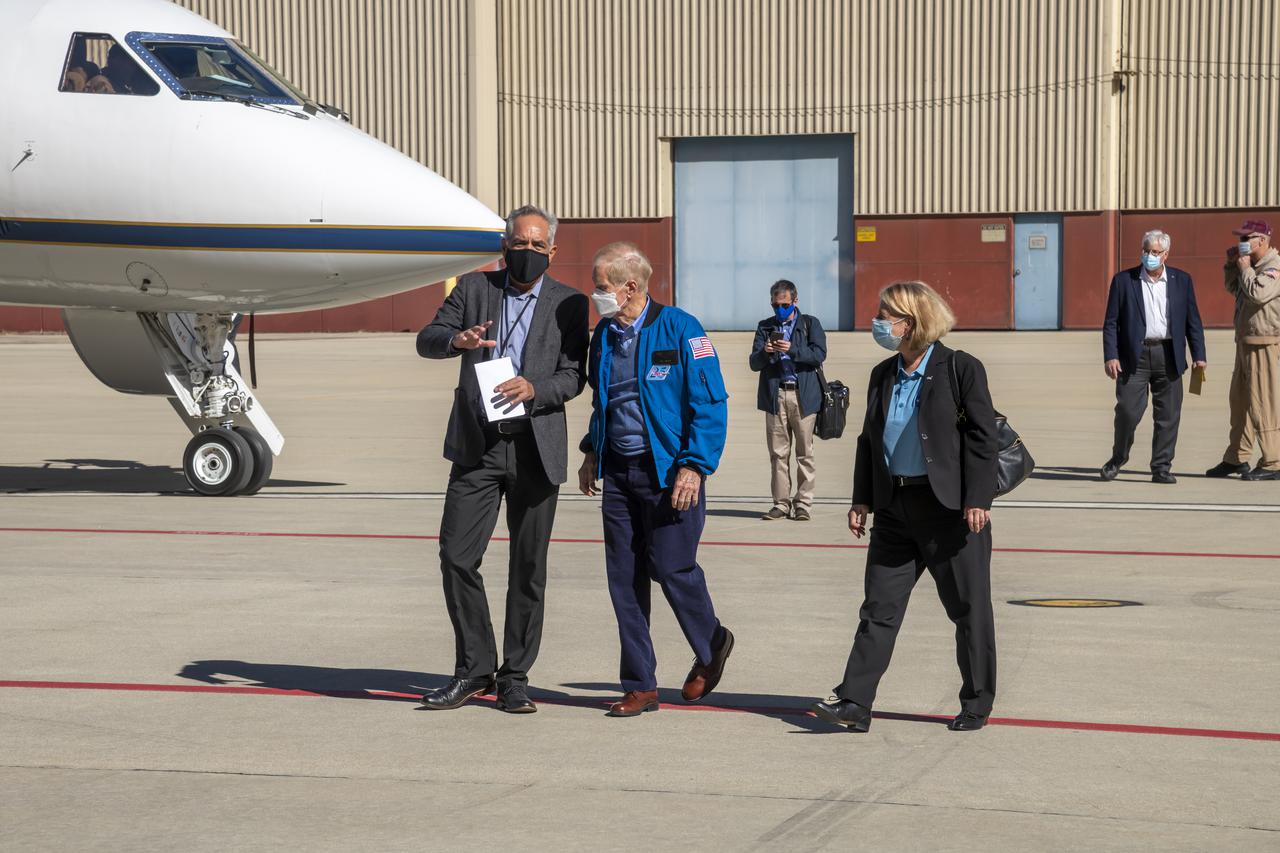
NASA Administrator Bill Nelson and NASA Deputy Administrator Pam Melroy land at the U.S. Air Force Base Plant 42 in Palmdale, California, near Building 703 on Oct. 12. That building is part of NASA’s Armstrong Flight Research Center in Edwards, California. NASA Armstrong Center Director David McBride, at left, talks to Nelson and Melroy as they begin a tour.
NASA Administrator Visits NASA Armstrong
The Space Shuttle Endeavour, atop NASA's 747 Shuttle Carrier Aircraft (SCA), taking off for the Kennedy Space Center shortly after its landing on 11 October 1994, at Edwards, California, to complete mission STS-68. Endeavour was being ferried from the Kennedy Space Center, Florida, to Air Force Plant 42, Palmdale, California, where it will undergo six months of inspections, modifications, and systems upgrades. The STS-68 11-day mission was devoted to radar imaging of Earth's geological features with the Space Radar Laboratory.
STS-68 747 SCA Ferry Flight Takeoff for Delivery to Kennedy Space Center, Florida
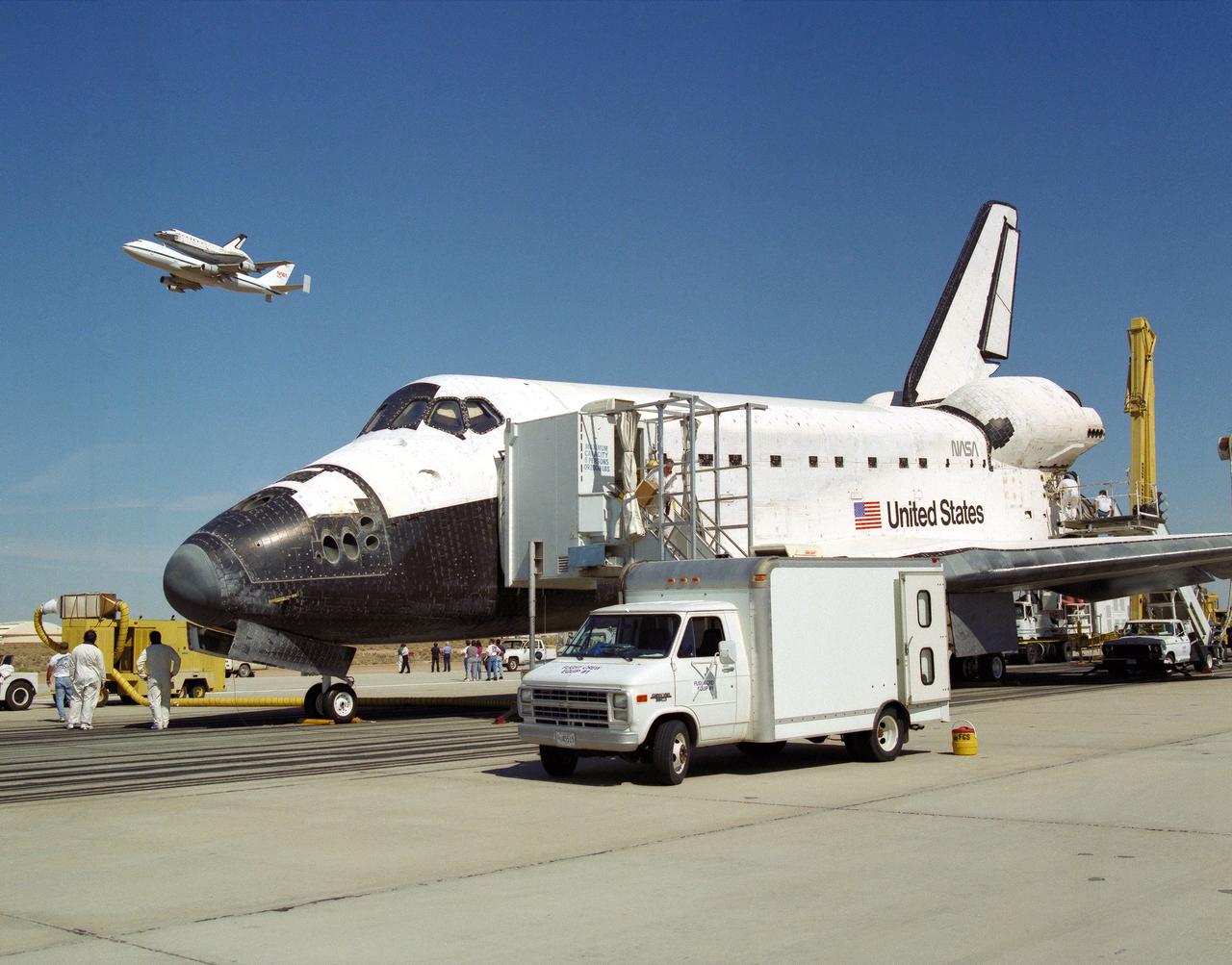
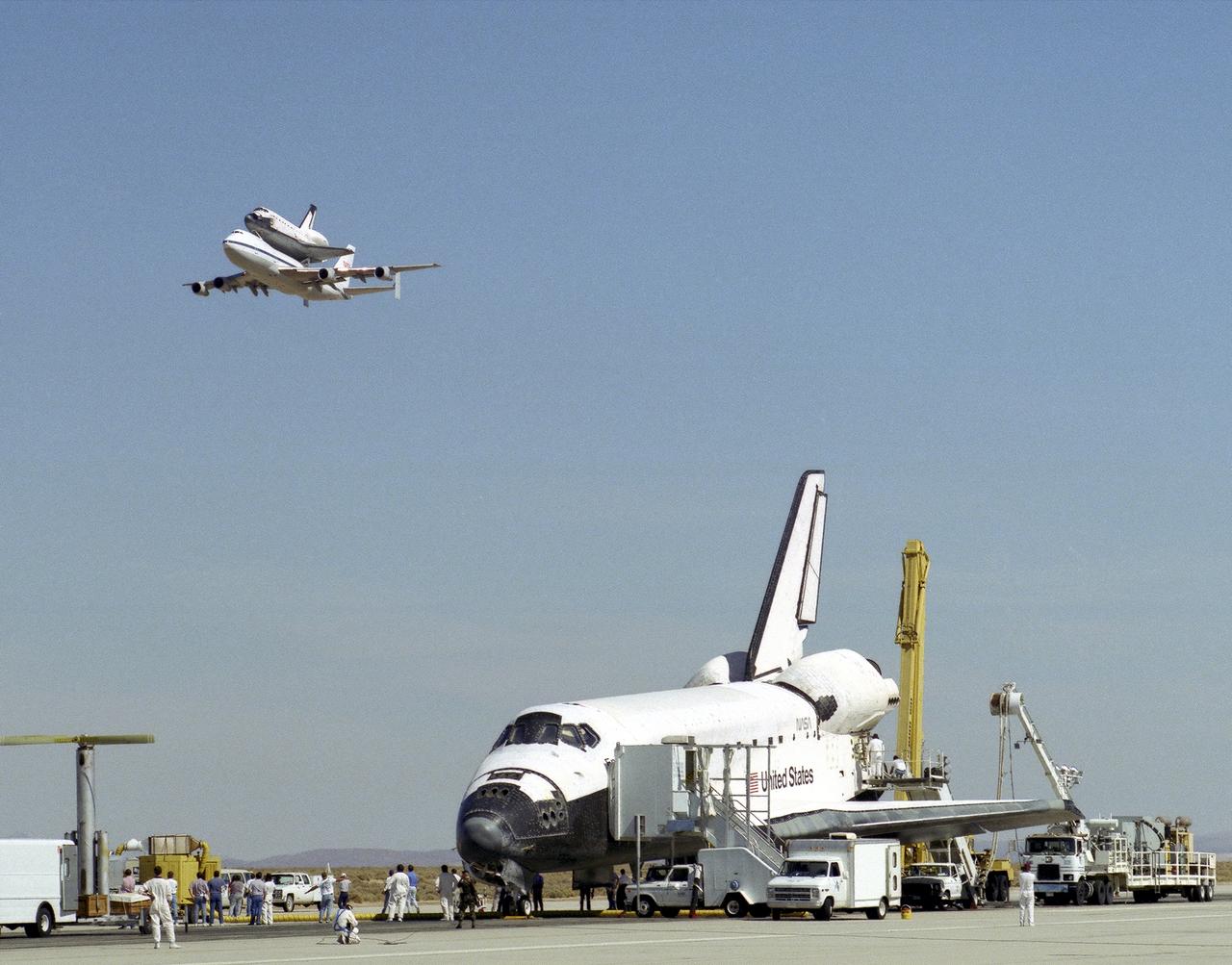
The space shuttle Endeavour receives a high-flying salute from its sister shuttle, Columbia, atop NASA's Shuttle Carrier Aircraft, shortly after Endeavor’s landing 11 October 1994, at Edwards, California, to complete mission STS-68. Columbia was being ferried from the Kennedy Space Center, Florida, to Air Force Plant 42, Palmdale, California, where it will undergo six months of inspections, modifications, and systems upgrades. The STS-68 11-day mission was devoted to radar imaging of Earth's geological features with the Space Radar Laboratory. The orbiter is surrounded by equipment and personnel that make up the ground support convoy that services the space vehicles as soon as they land.
STS-68 on Runway with 747 SCA - Columbia Ferry Flyby
The space shuttle Endeavour receives a high-flying salute from its sister shuttle, Columbia, atop NASA's Shuttle Carrier Aircraft, shortly after Endeavor’s landing 11 October 1994, at Edwards, California, to complete mission STS-68. Columbia was being ferried from the Kennedy Space Center, Florida, to Air Force Plant 42, Palmdale, California, where it will undergo six months of inspections, modifications, and systems upgrades. The STS-68 11-day mission was devoted to radar imaging of Earth's geological features with the Space Radar Laboratory. The orbiter is surrounded by equipment and personnel that make up the ground support convoy that services the space vehicles as soon as they land.
STS-68 on Runway with 747 SCA/Columbia Ferry Flyby
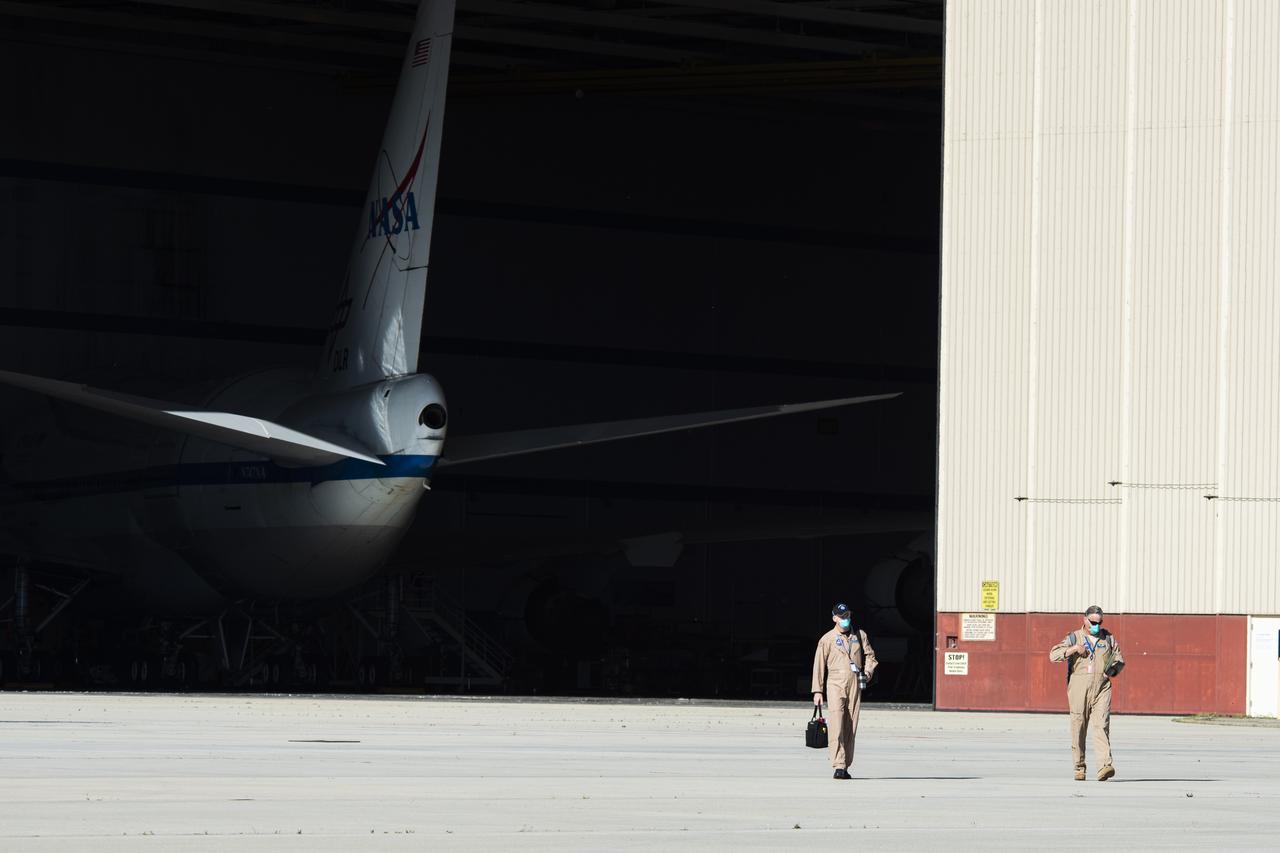
A flight crew from NASA's Armstrong Flight Research Center in California prepares to fly NASA's Jet Propulsion Laboratory (JPL) staff on an Armstrong G-III aircraft from California to NASA's Kennedy Space Center in Florida. JPL staff are completing critical work to ensure NASA's Mars 2020 mission is ready on time
AFRC Provides Mars 2020 Support
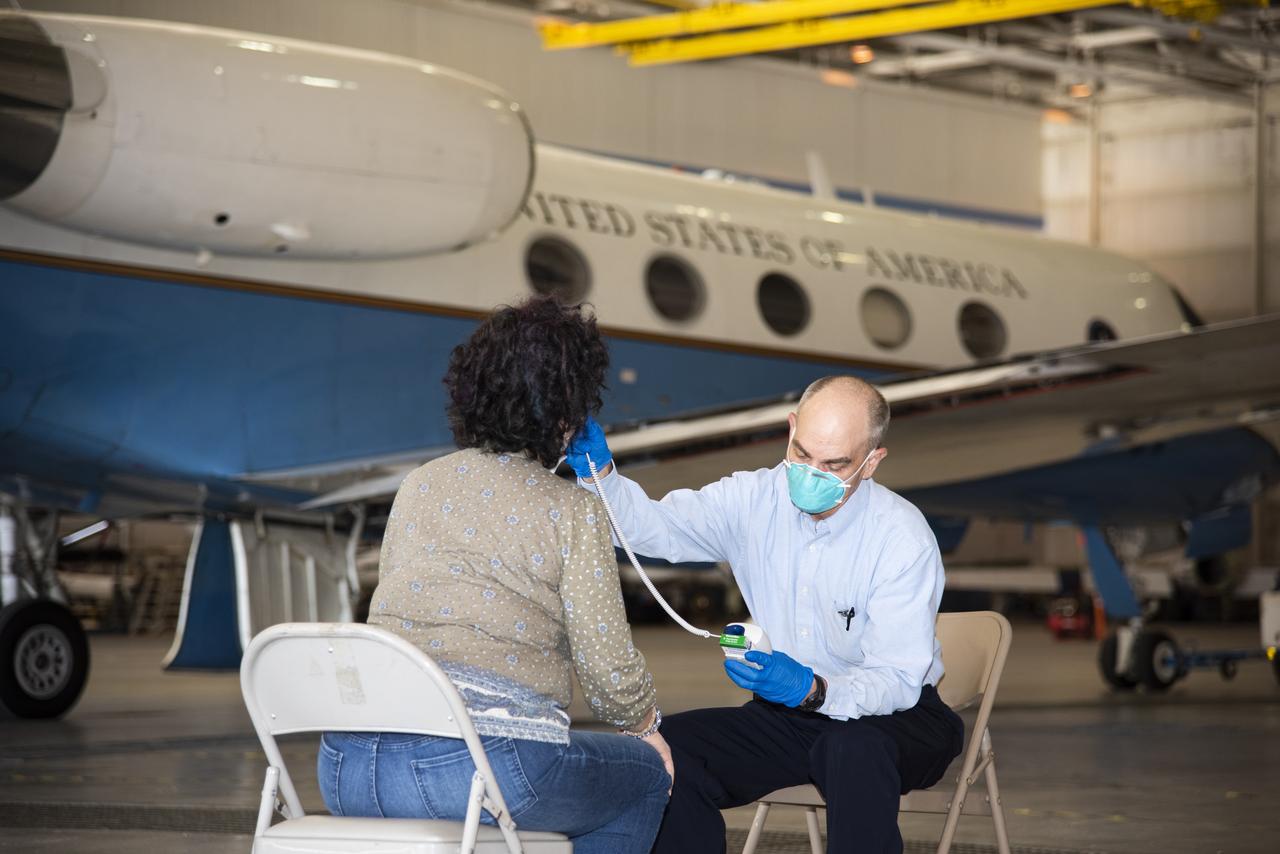
Dr. Dwight Peake, NASA’s Armstrong Flight Research Center chief medical officer and flight surgeon, confirms a NASA Jet Propulsion Laboratory (JPL) staff member is ready for flight. The two California NASA centers are working together to fly JPL staff on an Armstrong G-III aircraft from California to NASA’s Kennedy Space Center in Florida. JPL staff are completing critical work to ensure NASA’s Mars 2020 mission is ready on time.
AFRC Provides Mars 2020 Support
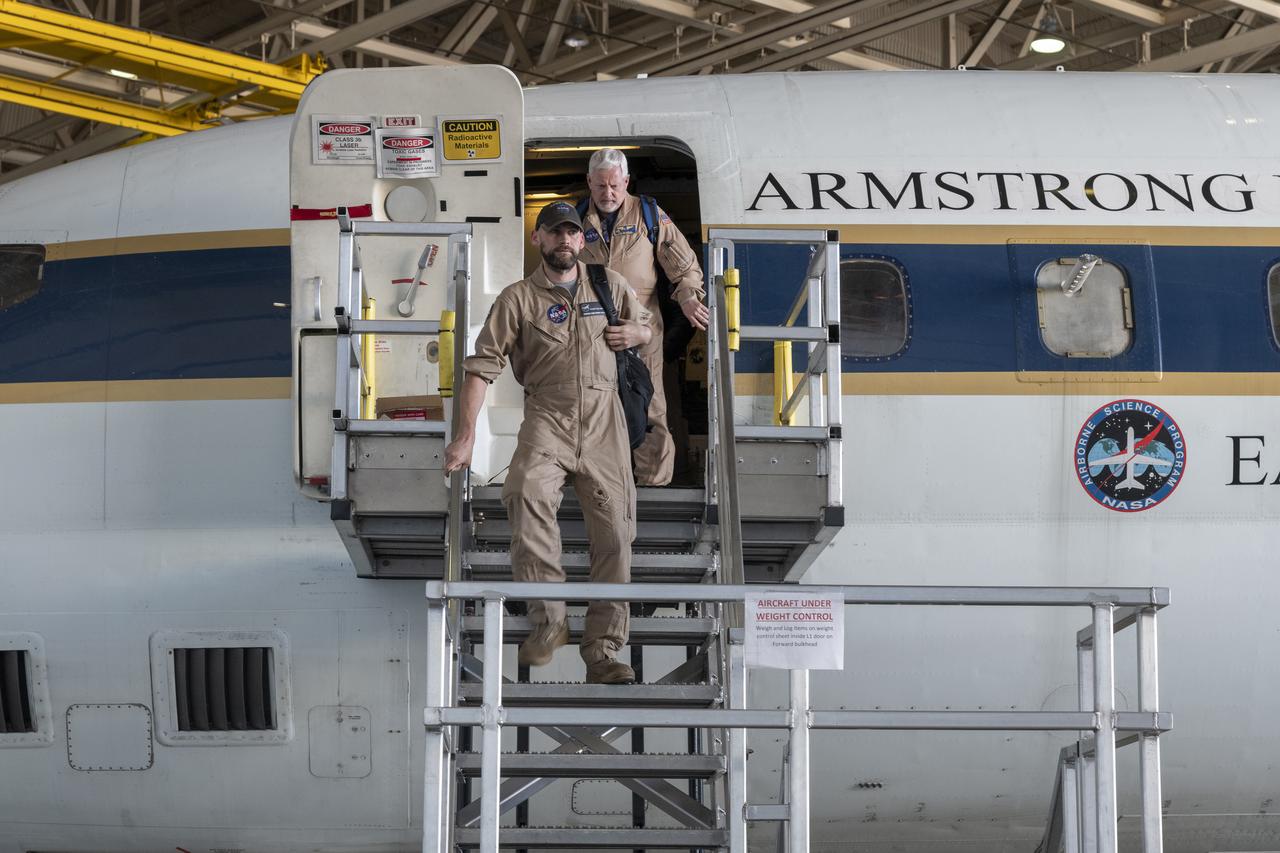
NASA’s Armstrong Flight Research Center Director Brad Flick smiles as members of the DC-8 team gather and exchange congratulations after the aircraft and crew return to NASA Armstrong’s Building 703 in Palmdale, California, on April 1, 2024, following the aircraft’s final mission in support of the Airborne and Satellite Investigation of Asian Air Quality (ASIA-AQ).
NASA’s DC-8 Returns from Final Mission
From left, Wayne Ringelberg, chief pilot at NASA’s Armstrong Flight Research Center in Edwards, California, is welcomed by Michael Thomson, director of NASA Armstrong’s Science Mission Directorate, and Kirsten Boogaard, NASA’s DC-8 project manager, after the DC-8 aircraft and crew return to NASA Armstrong’s Building 703 in Palmdale, California, on April 1, 2024, following the aircraft’s final mission in support of the Airborne and Satellite Investigation of Asian Air Quality (ASIA-AQ).
NASA’s DC-8 Returns from Final Mission
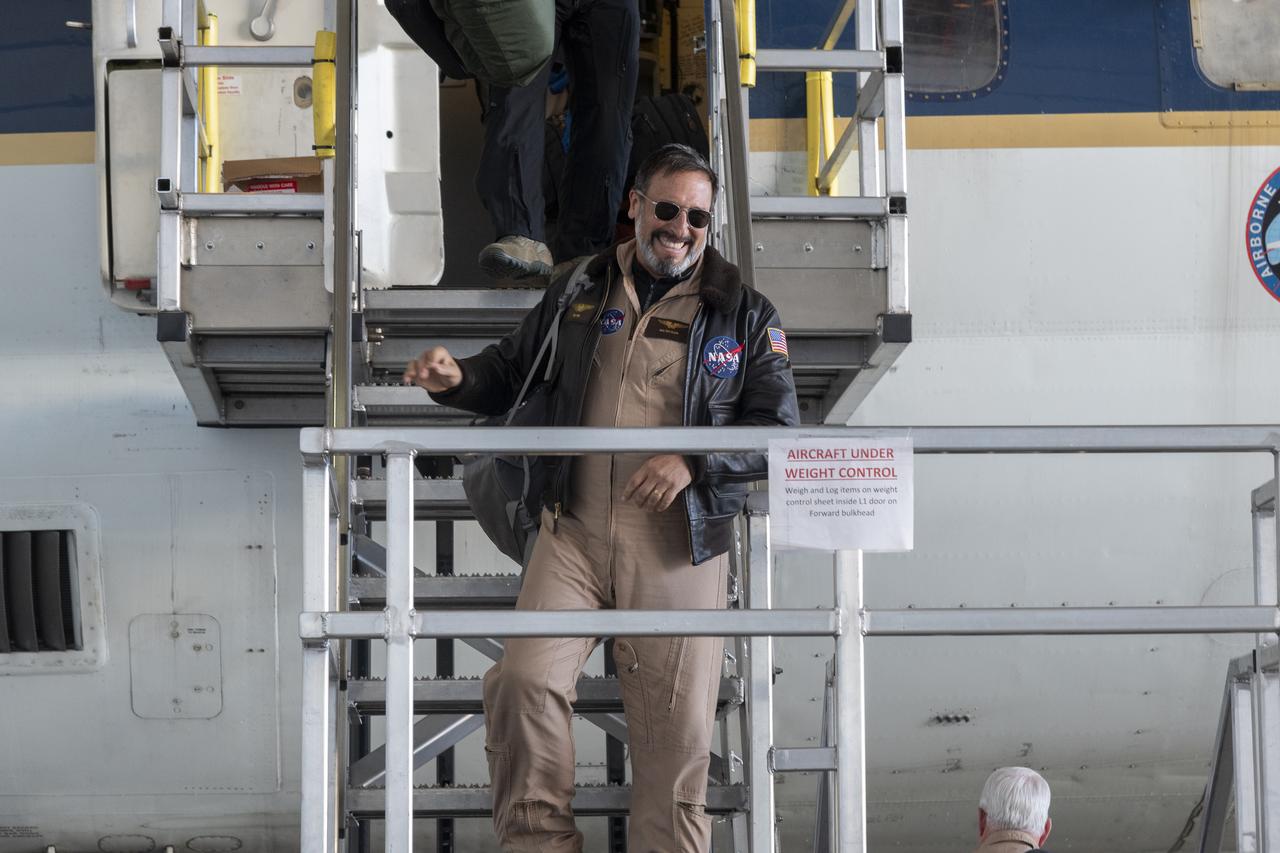
Walter Klein, DC-8 navigator, exits the aircraft cabin and is welcomed with applause from a supportive team after the DC-8 aircraft and crew return to NASA’s Armstrong Flight Research Center Building 703 in Palmdale, California, on April 1, 2024, following the aircraft’s final mission in support of the Airborne and Satellite Investigation of Asian Air Quality (ASIA-AQ).
NASA’s DC-8 Returns from Final Mission
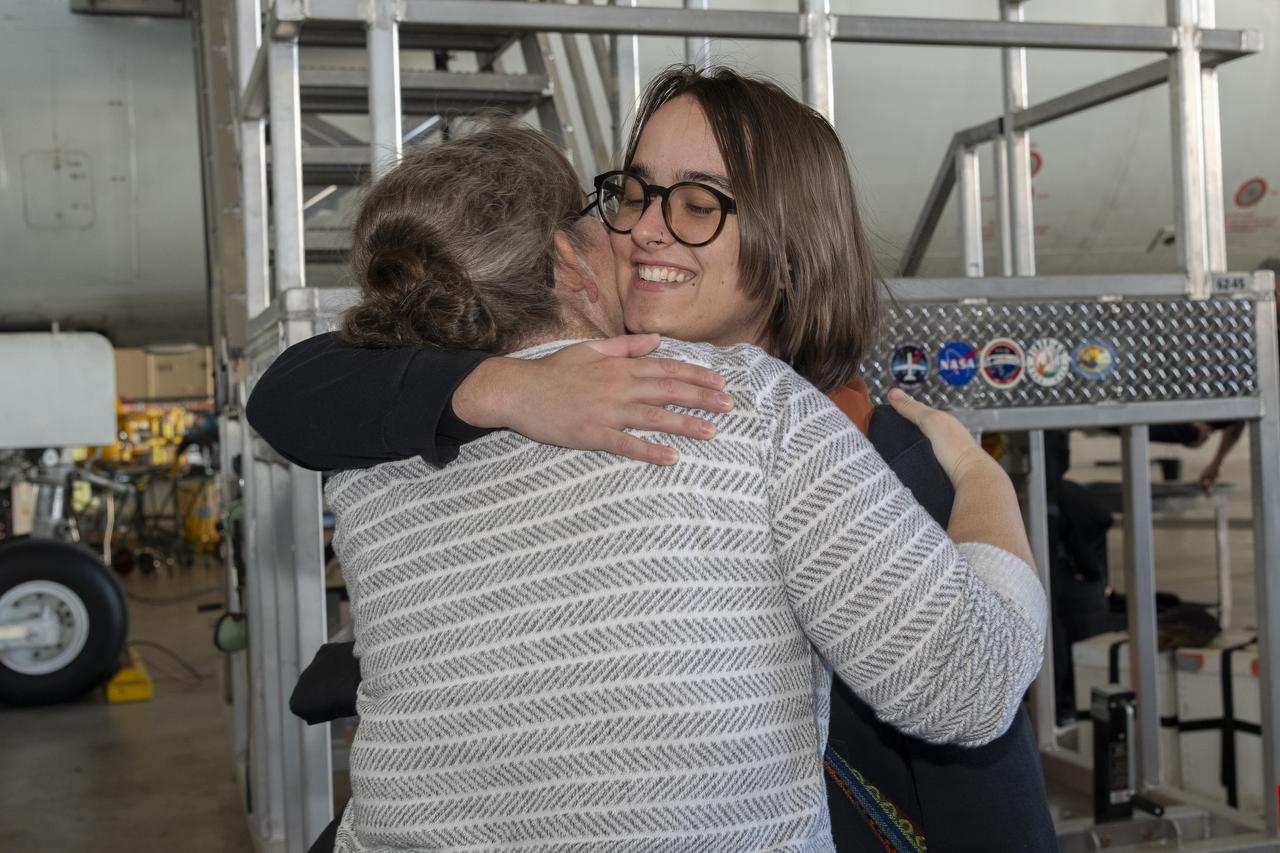
NASA DC-8 crew members Nickelle “Nicki” Reid, operations engineer, left, and Isac Mata, engineer technician, exchange in a heartfelt hug after the DC-8 aircraft and crew return to NASA Armstrong’s Building 703 in Palmdale, California, on April 1, 2024, following the aircraft’s final mission in support of the Airborne and Satellite Investigation of Asian Air Quality (ASIA-AQ). Smiling in the background is Michael Thomson, director of NASA Armstrong’s Science Mission Directorate.
NASA’s DC-8 Returns from Final Mission
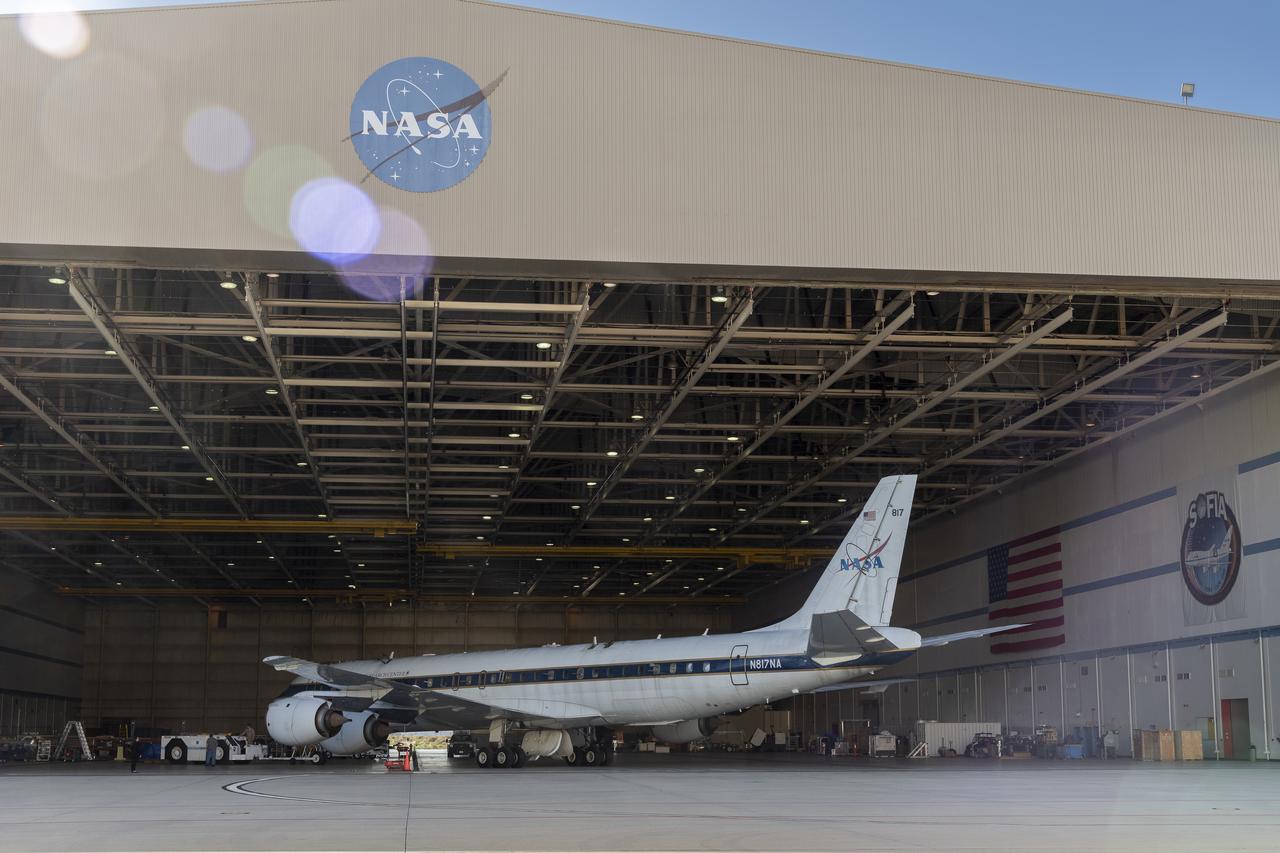
The DC-8 aircraft returns to the hangar at NASA’s Armstrong Flight Research Center Building 703 in Palmdale, California, on April 1, 2024, after completing its final mission supporting Airborne and Satellite Investigation of Asian Air Quality (ASIA-AQ).
NASA’s DC-8 Returns from Final Mission
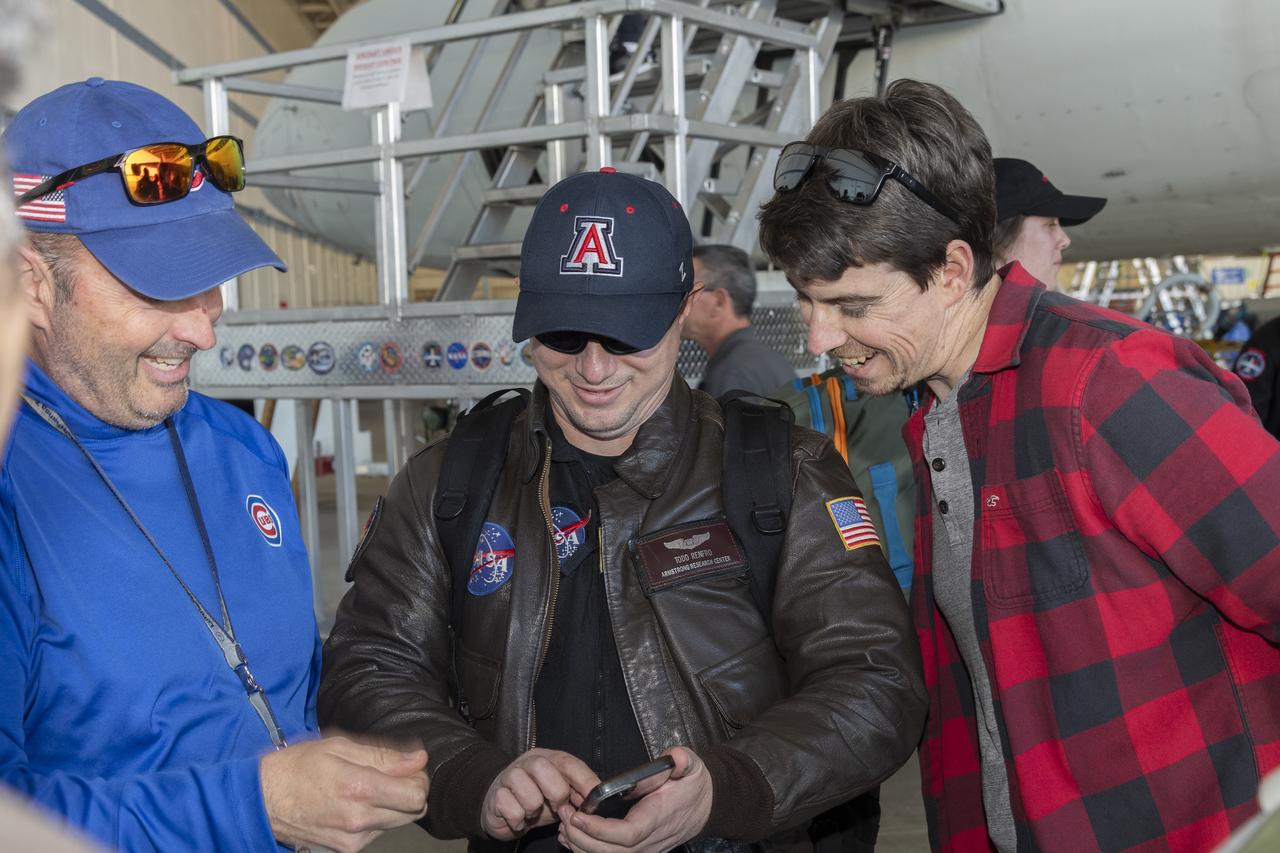
From left, Andy Barry, DC-8 pilot; Todd Renfro, flight navigator; and Adam Devalon, flight engineer, share smiles after the DC-8 aircraft and crew return to NASA’s Armstrong Flight Research Center Building 703 in Palmdale, California, on April 1, 2024, following the aircraft’s final mission in support of the Airborne and Satellite Investigation of Asian Air Quality (ASIA-AQ).
NASA’s DC-8 Returns from Final Mission
NASA’s DC-8 operations engineer, Nickelle “Nicki” Reid, left, embraces Katherine Ball, chemical engineering Ph.D. candidate at California Institute of Technology, after the DC-8 aircraft and crew return to NASA Armstrong’s Building 703 in Palmdale, California, on April 1, 2024, following the aircraft’s final mission in support of the Airborne and Satellite Investigation of Asian Air Quality (ASIA-AQ).
NASA’s DC-8 Returns from Final Mission
Kelly Jellison, avionics lead, and Tim Sandon, flight engineer, exit the DC-8 aircraft cabin and are welcomed with applause from a supportive team after the DC-8 aircraft and crew return to NASA’s Armstrong Flight Research Center Building 703 in Palmdale, California, on April 1, 2024, following the aircraft’s final mission in support of the Airborne and Satellite Investigation of Asian Air Quality (ASIA-AQ).
NASA’s DC-8 Returns from Final Mission
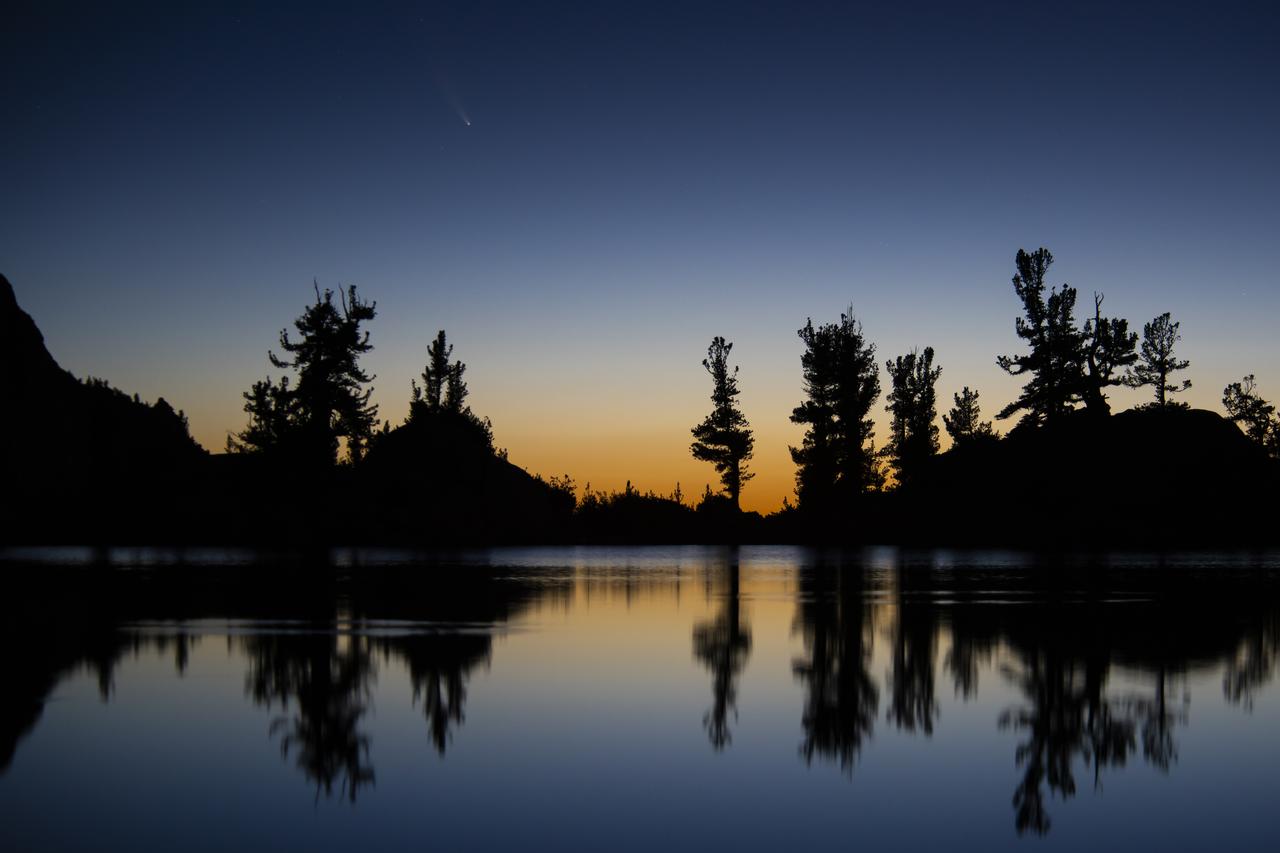
An image of the Comet C/2020 F3 NEOWISE (Comet NEOWISE) captured above the tree line of Lone Pine Lake, located on the Mount Whitney Trail in the Eastern Sierra Nevada Mountains in California. The photo was taken at 4:59 am on July 14, 2020. Visiting from the distant parts of the solar system, it’s characterized by a glowing tail and is visible during the month of July. The comet returns  in 6,800 years. 
Comet NEOWISE Captured Above Lone Pine Lake at Dawn