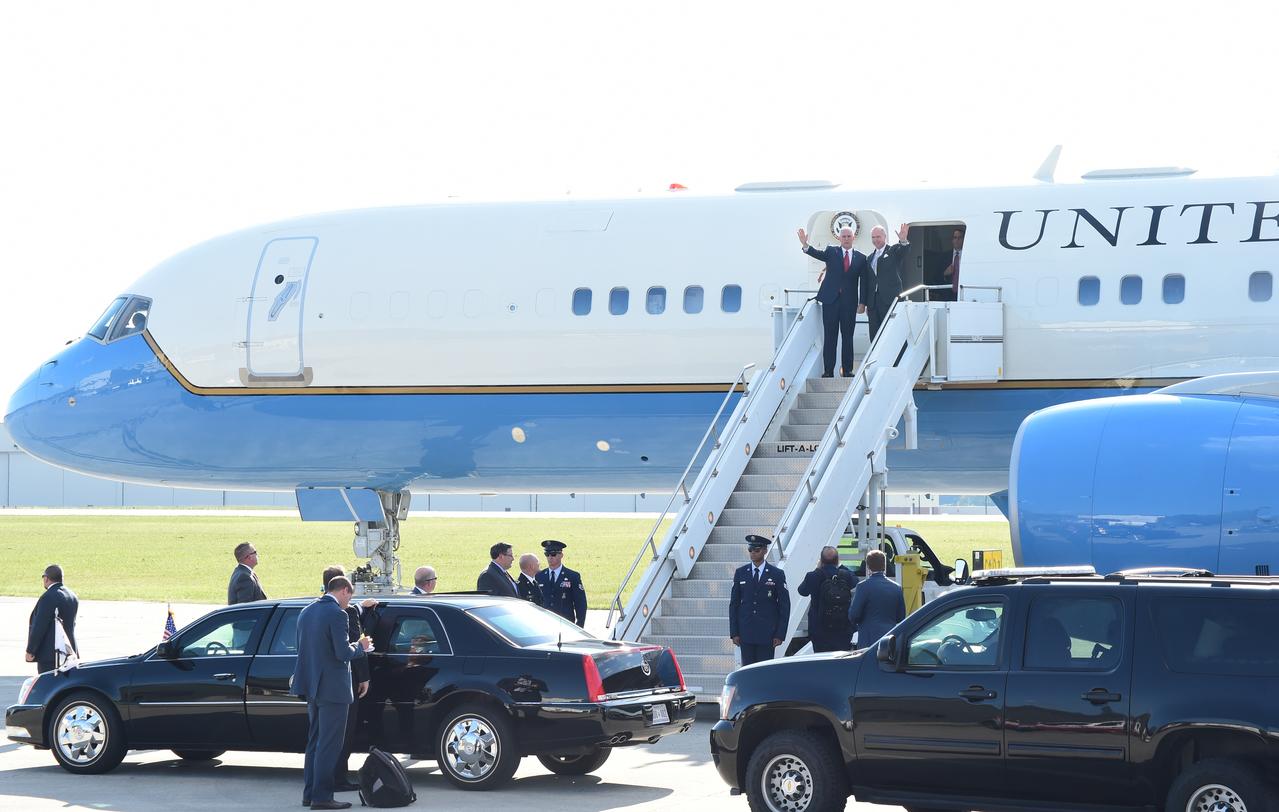
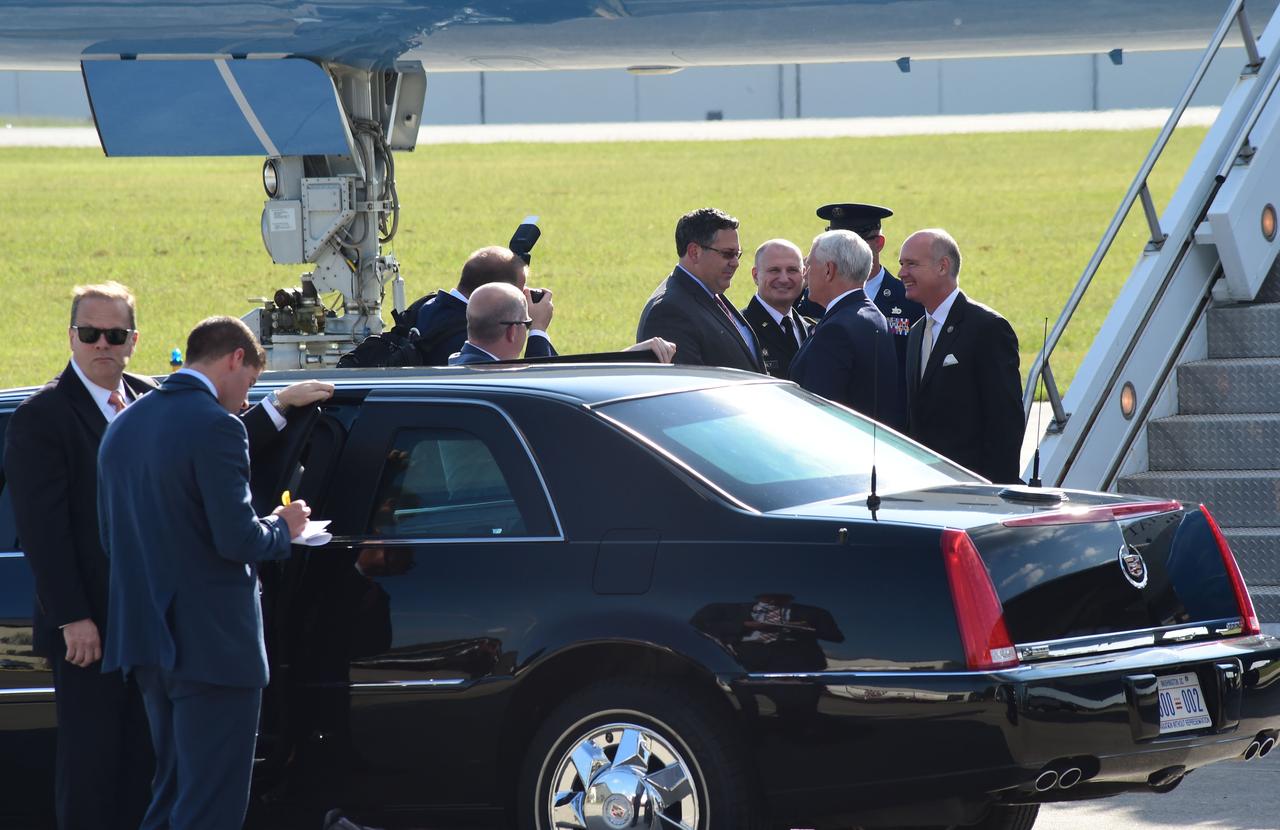
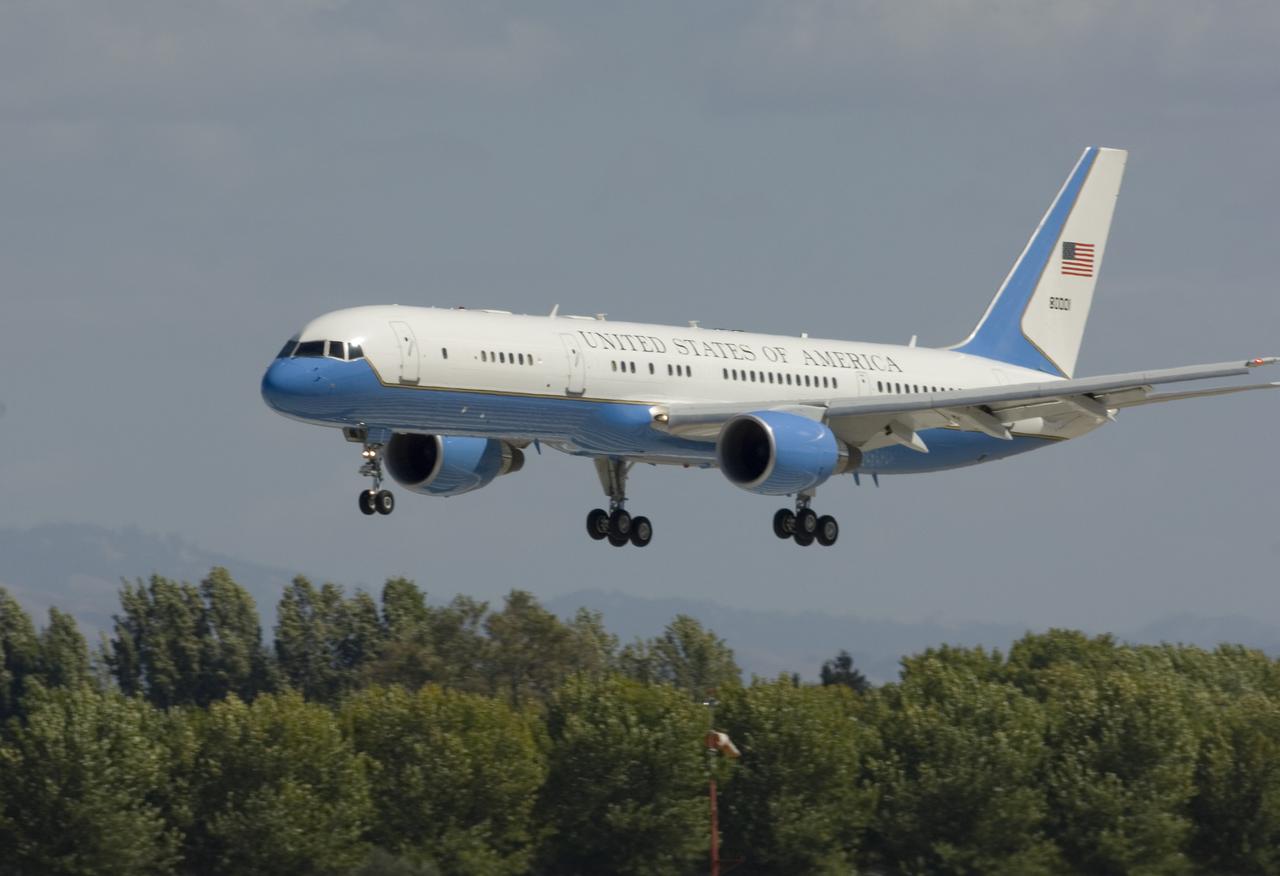
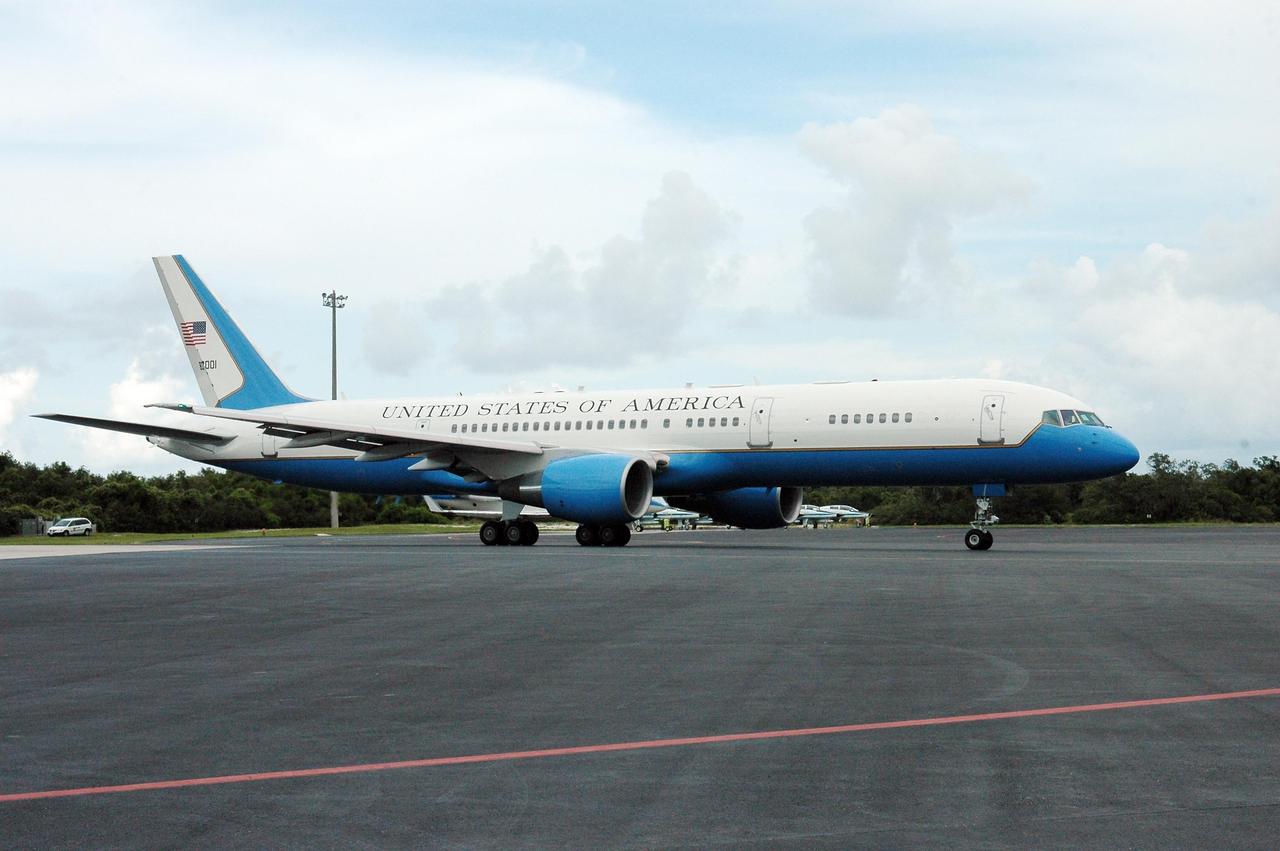
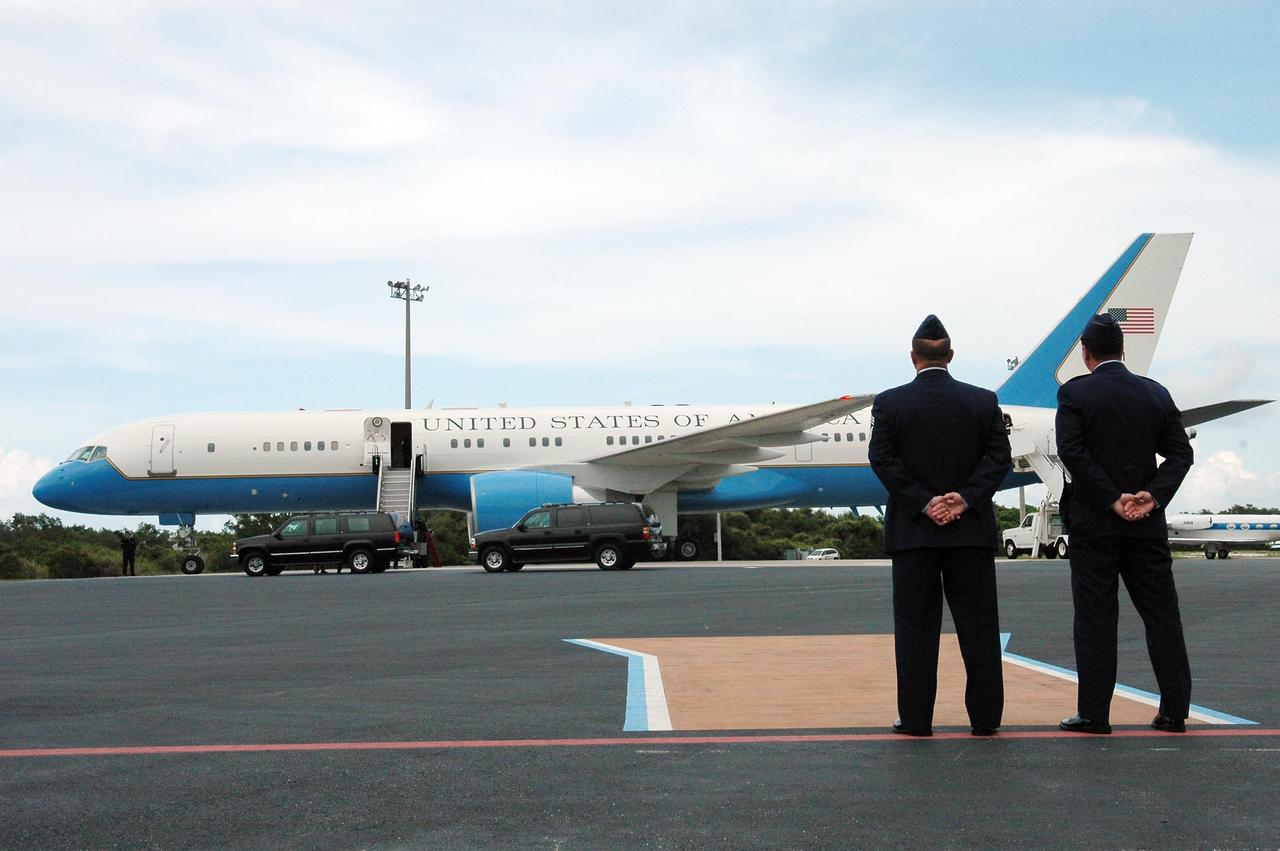
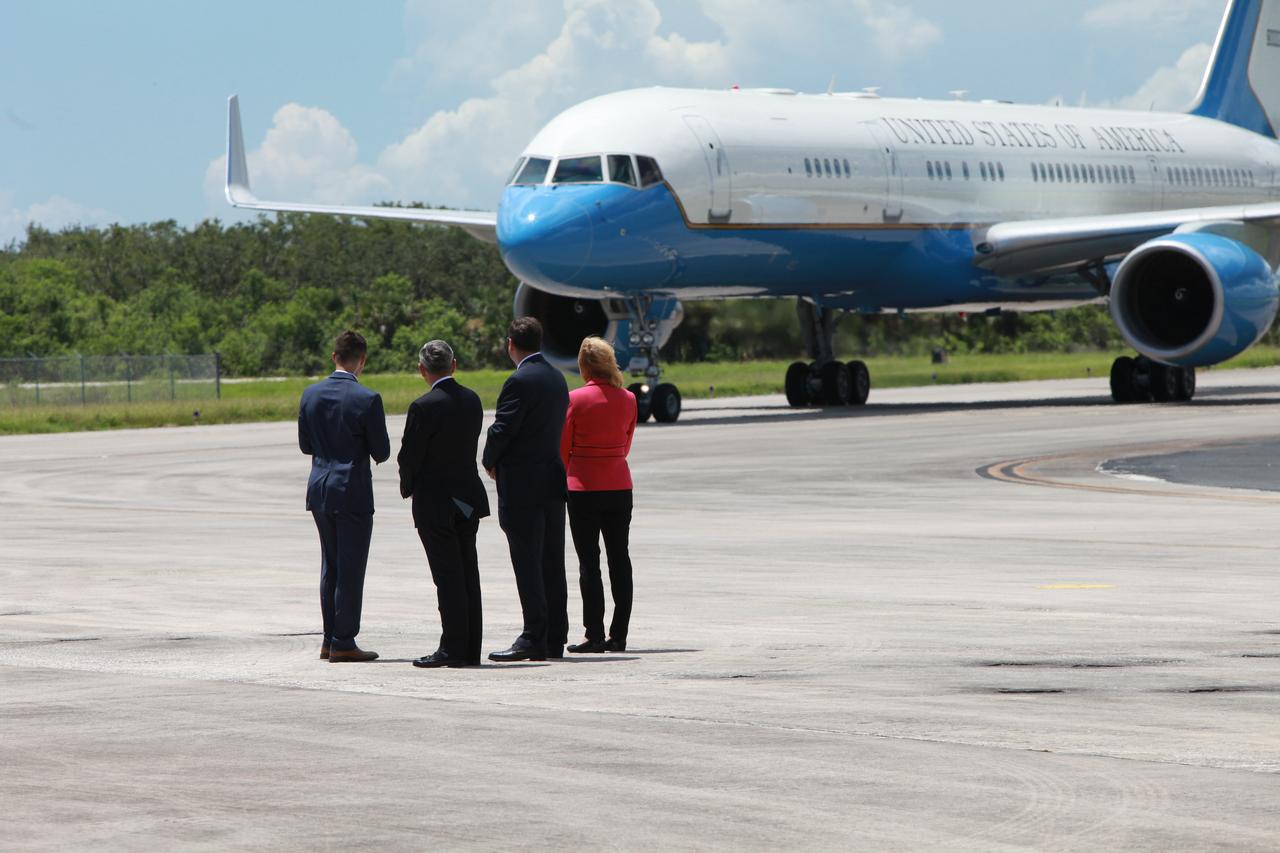
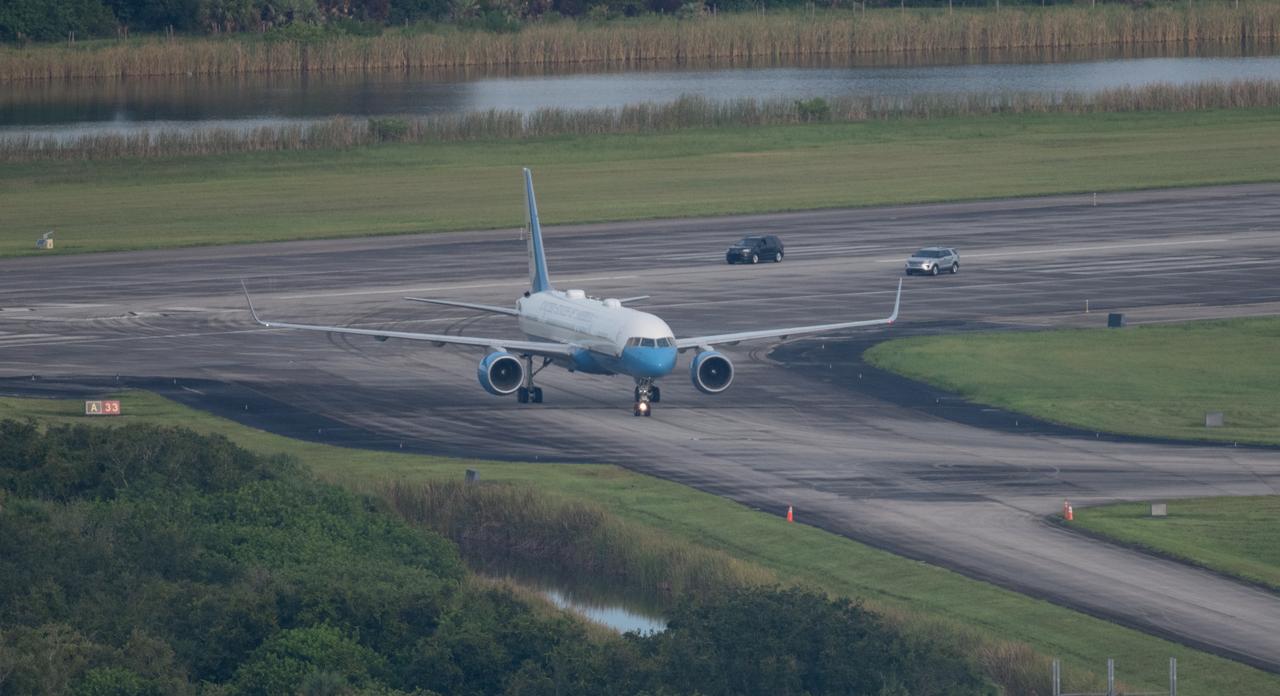
Accompanied by a White House staffer, left, NASA Kennedy Space Center Director Robert Cabana, Acting NASA Administrator Robert Lightfoot and Kennedy Space Center Deputy Director Janet Petro watch as Air Force Two, carrying Vice President Mike Pence, approaches on the Shuttle Landing Facility at NASA's Kennedy Space Center in Florida. During his visit to Kennedy, Pence spoke inside the iconic Vehicle Assembly Building, where he thanked employees for advancing American leadership in space.
Vice President Mike Pence Arrival at Kennedy Space Center
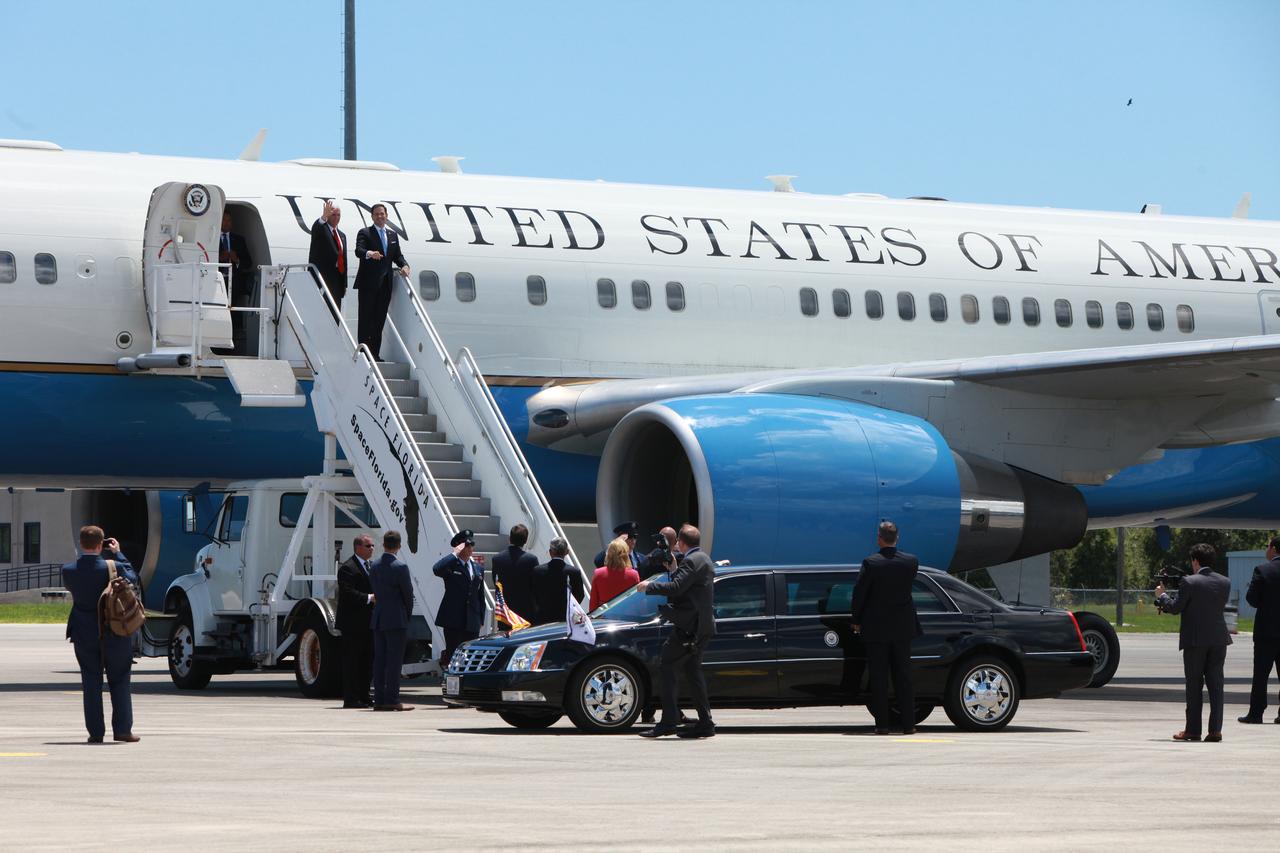
Vice President Mike Pence, left, and U.S. Senator Marco Rubio (R-FL) step off Air Force Two on the Shuttle Landing Facility at NASA's Kennedy Space Center in Florida. During his visit to Kennedy, Pence spoke inside the iconic Vehicle Assembly Building, where he thanked employees for advancing American leadership in space.
Vice President Mike Pence Arrival at Kennedy Space Center
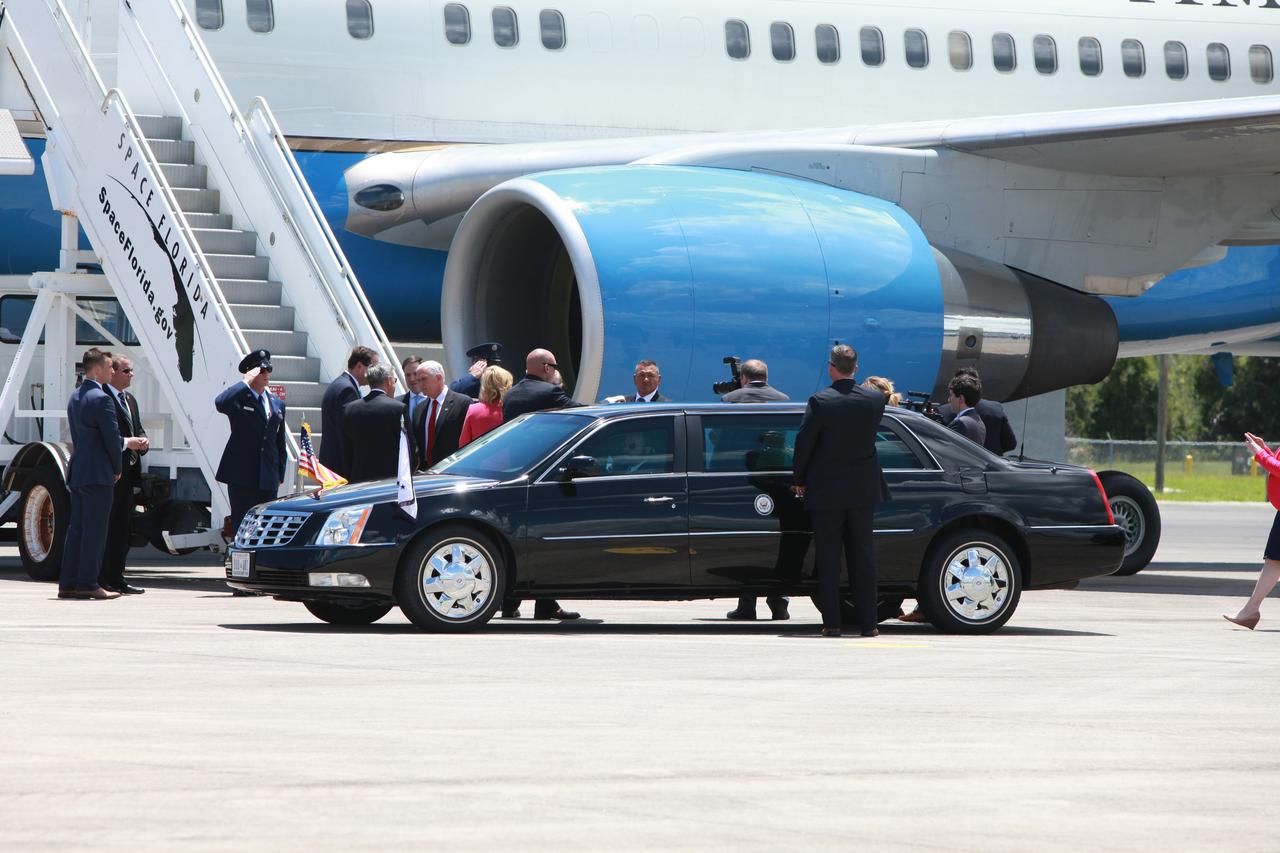
Vice President Mike Pence greets NASA Kennedy Space Center Director Robert Cabana after arriving aboard Air Force Two at NASA's Kennedy Space Center in Florida. During his visit to Kennedy, Pence spoke inside the iconic Vehicle Assembly Building, where he thanked employees for advancing American leadership in space.
Vice President Mike Pence Arrival at Kennedy Space Center
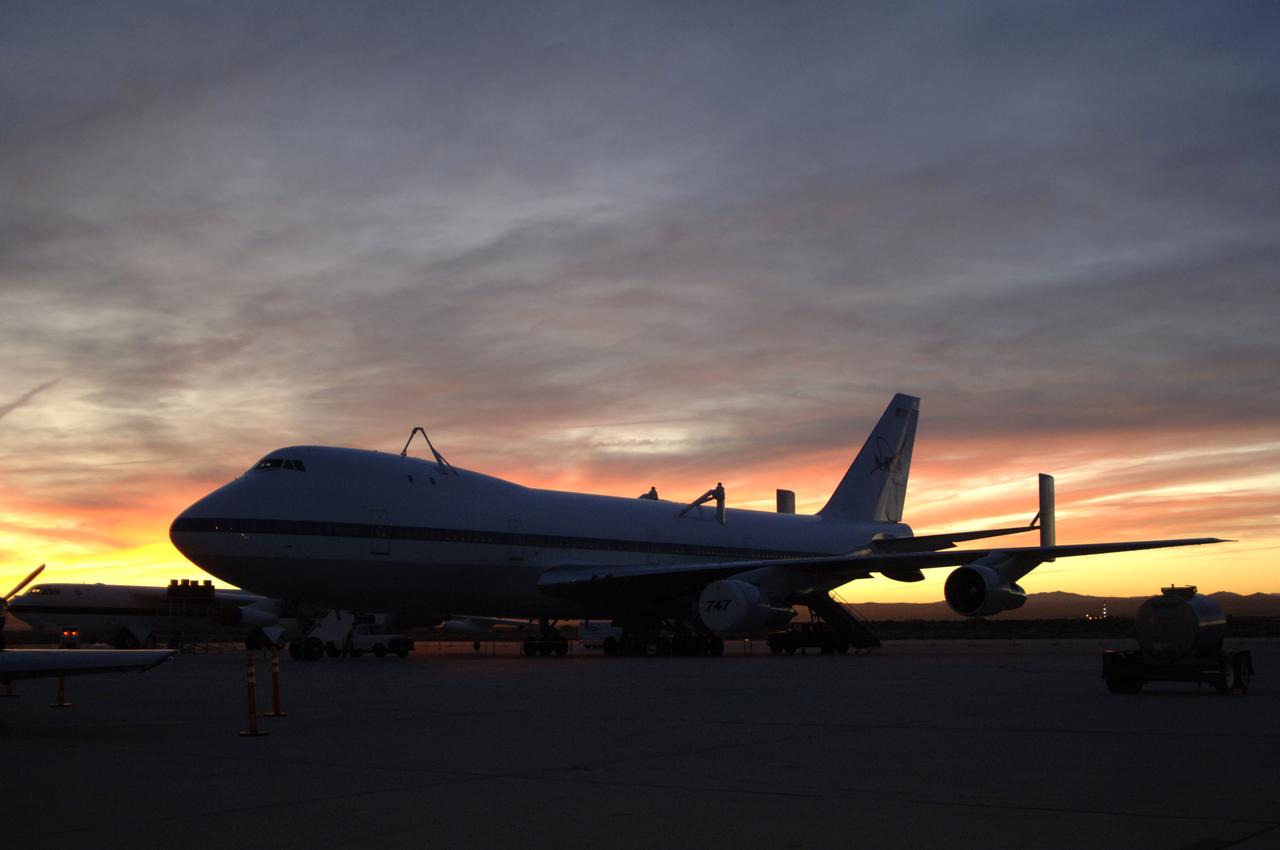
One of NASA's two modified Boeing 747 Shuttle Carrier Aircraft is silhouetted against the morning sky at sunrise on the ramp at Edwards Air Force Base.
One of NASA's two modified Boeing 747 Shuttle Carrier Aircraft is silhouetted against the morning sky at sunrise on the ramp at Edwards Air Force Base
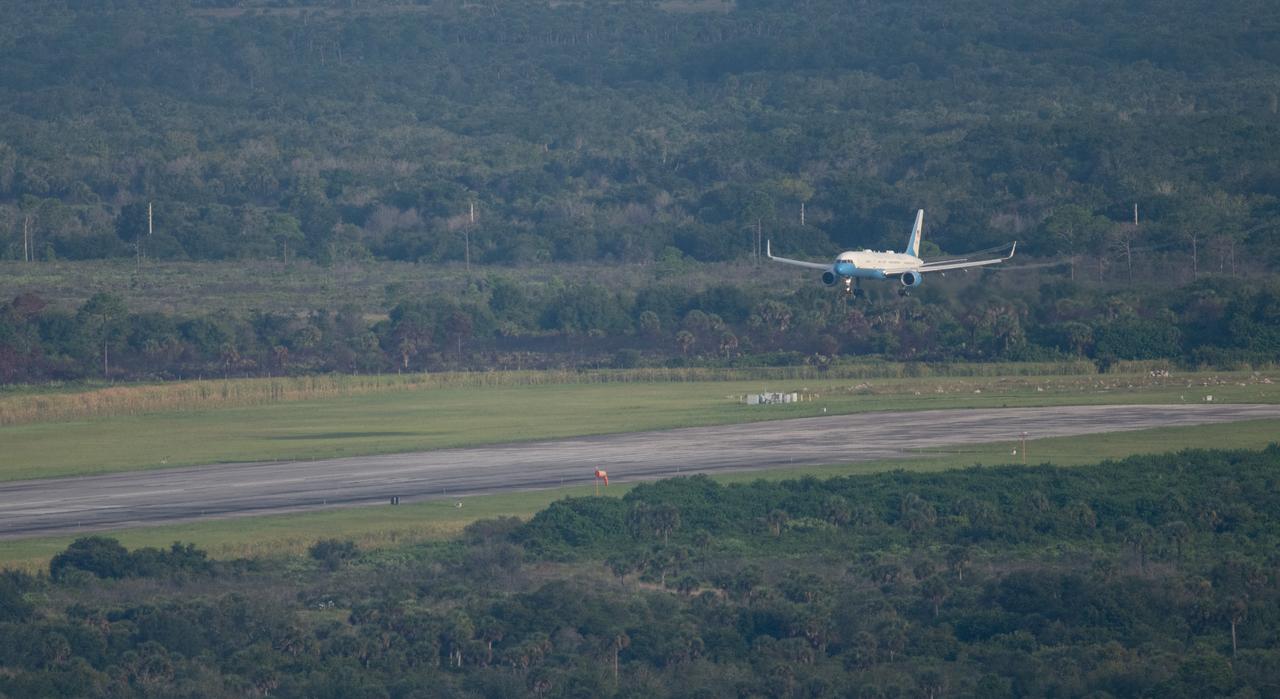
Air Force Two is seen as it arrives at the Launch and Landing Facility at NASA’s Kennedy Space Center ahead of the first launch attempt of Artemis I, Monday, Aug. 29, 2022, in Florida. NASA’s Artemis I flight test is the first integrated flight test of the agency’s deep space exploration systems: the Orion spacecraft, Space Launch System (SLS) rocket, and ground systems. The launch director halted today’s launch attempt at approximately 8:30 a.m. ET. Photo Credit: (NASA/Joel Kowsky)
Artemis I Preflight
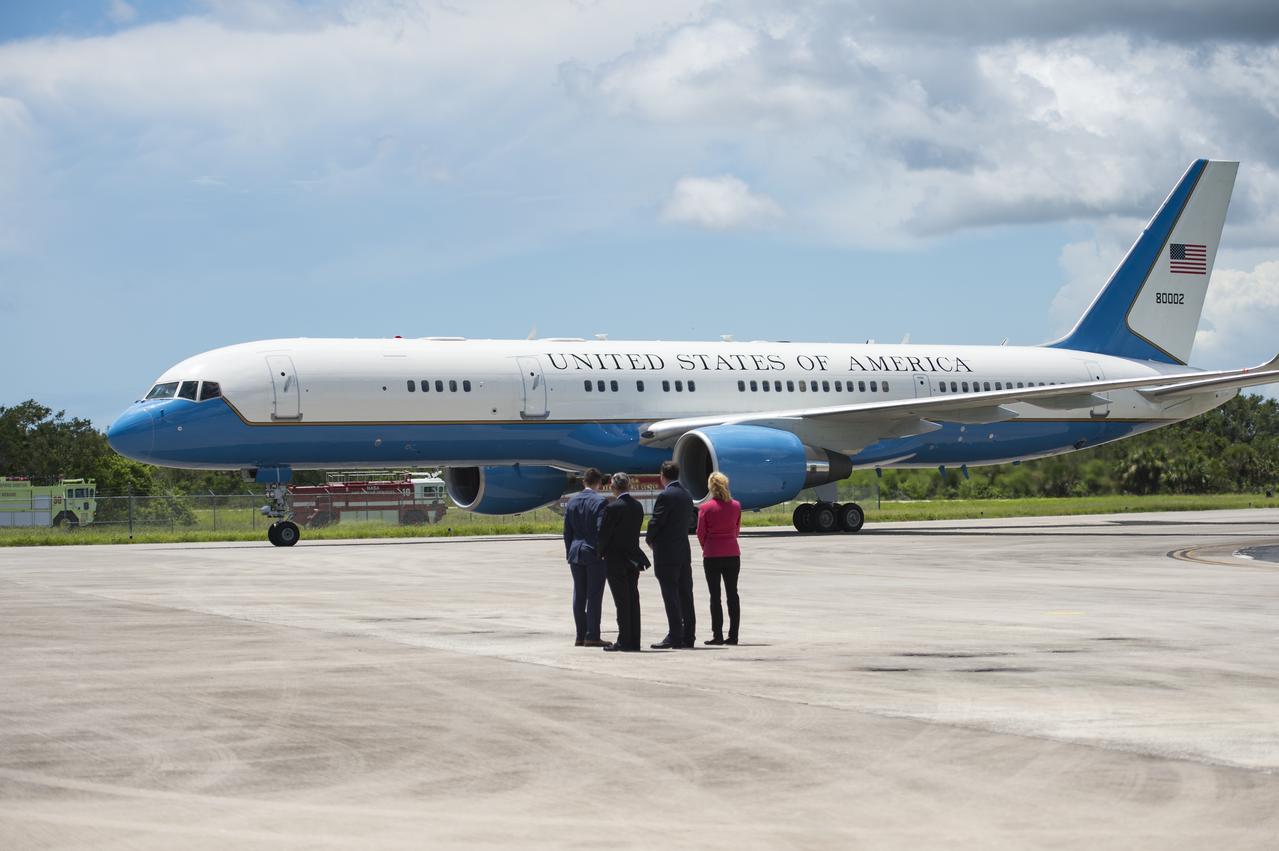
Vice President Mike Pence arrives in Air Force Two as NASA Leadership looks on, at the Shuttle Landing Facility (SLF) to highlight innovations made in America and tour some of the public/private partnership work that is helping to transform Kennedy Space Center (KSC) into a multi-user spaceport on Thursday, July 6, 2017 in Cape Canaveral, Florida. Photo Credit: (NASA/Aubrey Gemignani)
Vice President Mike Pence visits Kennedy Space Center
Air Force Two is seen as it arrives at the Launch and Landing Facility at NASA’s Kennedy Space Center ahead of the launch of Artemis I, Monday, Aug. 29, 2022, in Florida. NASA’s Artemis I flight test is the first integrated flight test of the agency’s deep space exploration systems: the Orion spacecraft, Space Launch System (SLS) rocket, and ground systems. The launch director halted today’s launch attempt at approximately 8:30 a.m. ET. Photo Credit: (NASA/Joel Kowsky)
Artemis I Preflight
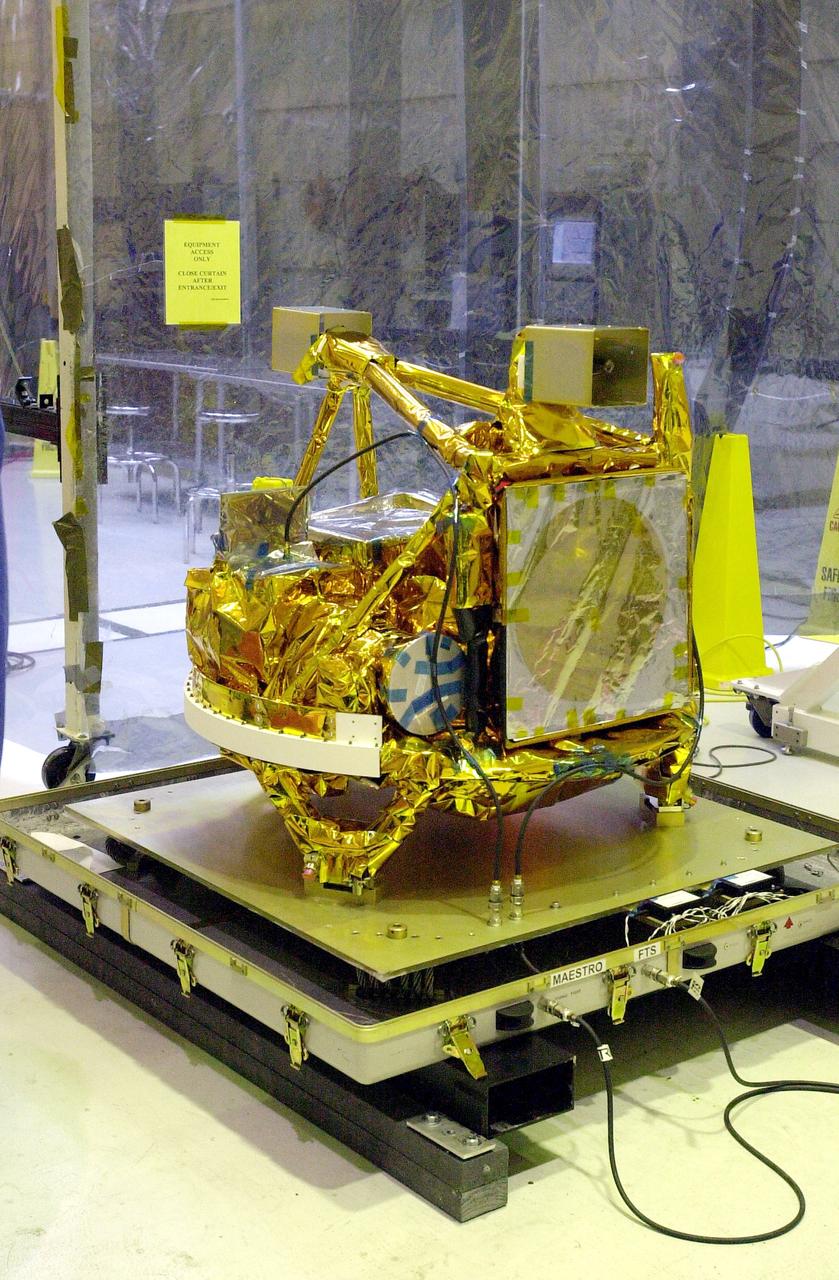
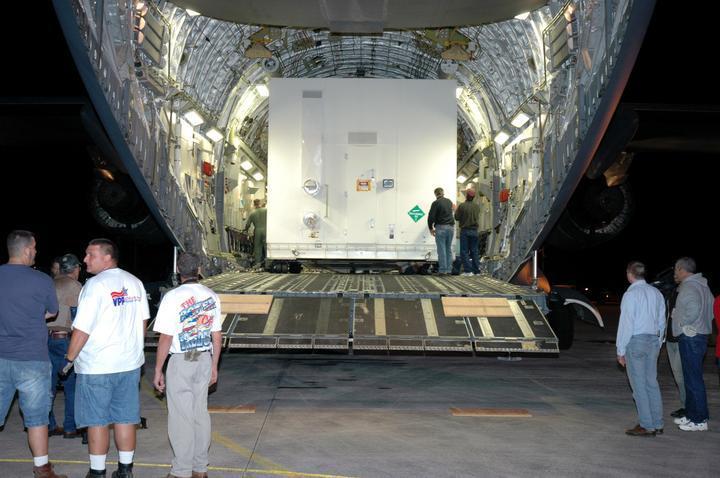
NASA Mars Reconnaissance Orbiter was delivered in two large containers from Lockheed Martin to Cape Canaveral on an Air Force C-17 cargo plane.
Next Vital Step: Spacecraft Delivery
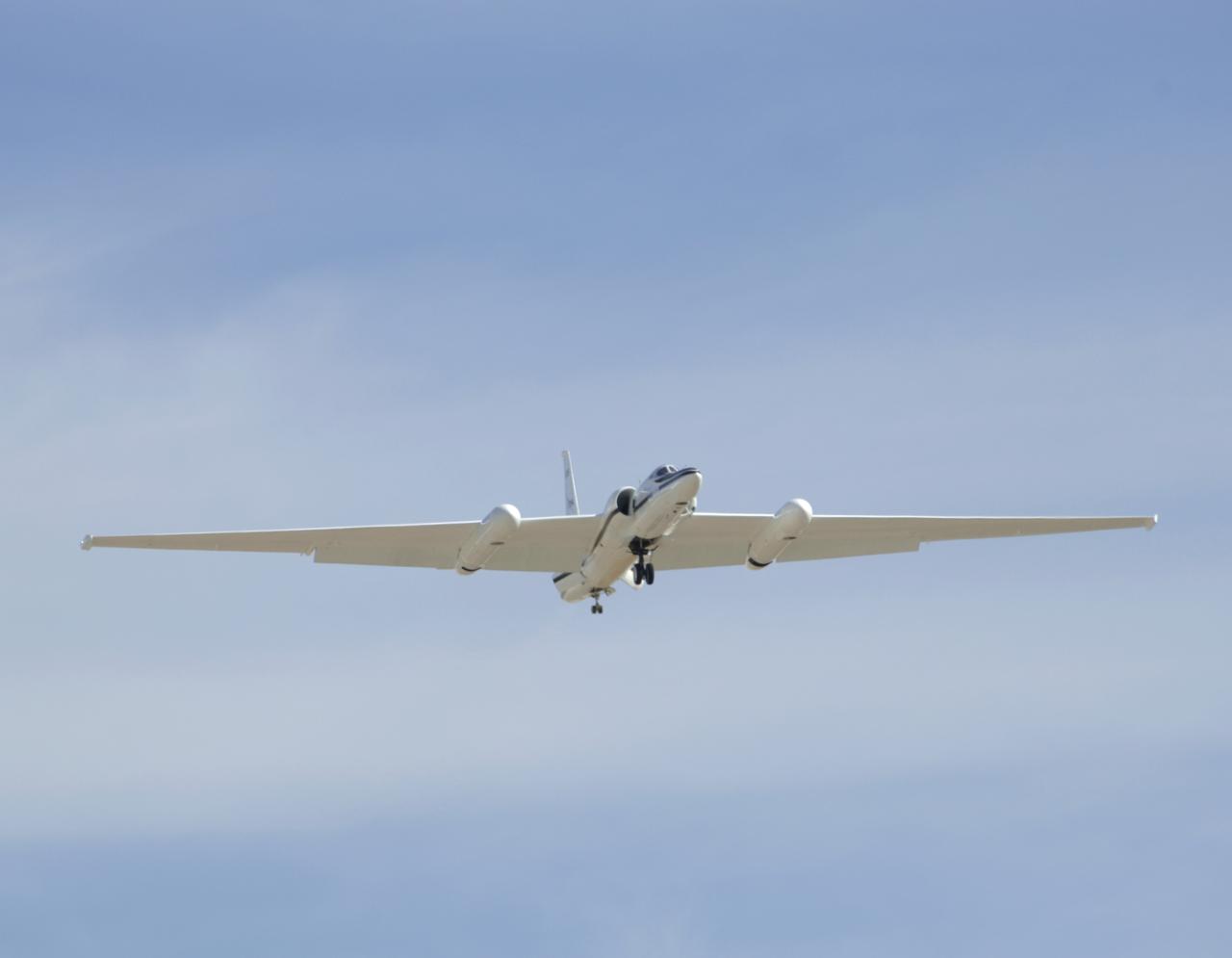
One of NASA's two ER-2 Earth resources aircraft shows off its lines during a flyover at the Edwards Air Force Base open house Oct. 28-29, 2006.
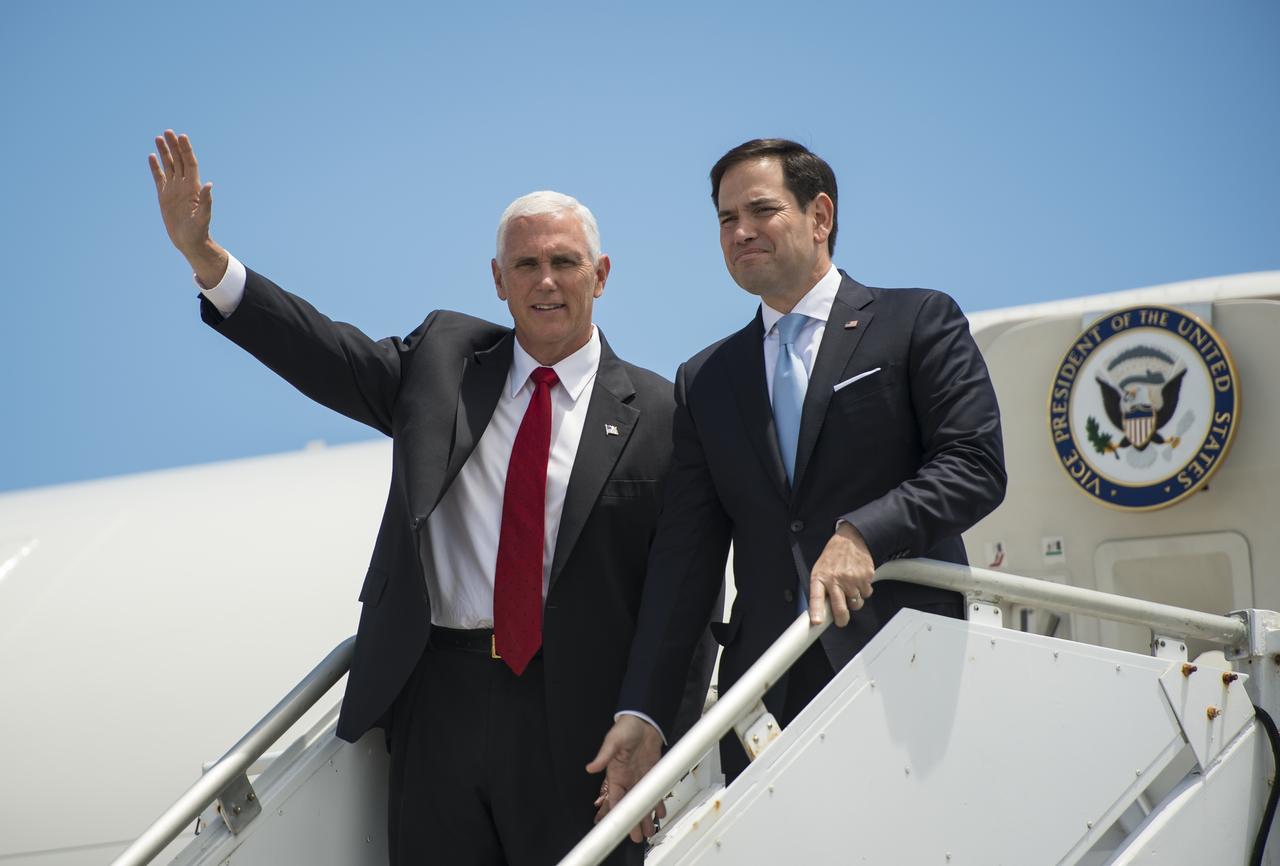
Vice President Mike Pence waves next to Sen. Marco Rubio, R-Fla., after they arrived on Air Force Two at the Shuttle Landing Facility (SLF) to highlight innovations made in America and tour some of the public/private partnership work that is helping to transform Kennedy Space Center (KSC) into a multi-user spaceport on Thursday, July 6, 2017 in Cape Canaveral, Florida. Photo Credit: (NASA/Aubrey Gemignani)
Vice President Mike Pence visits Kennedy Space Center
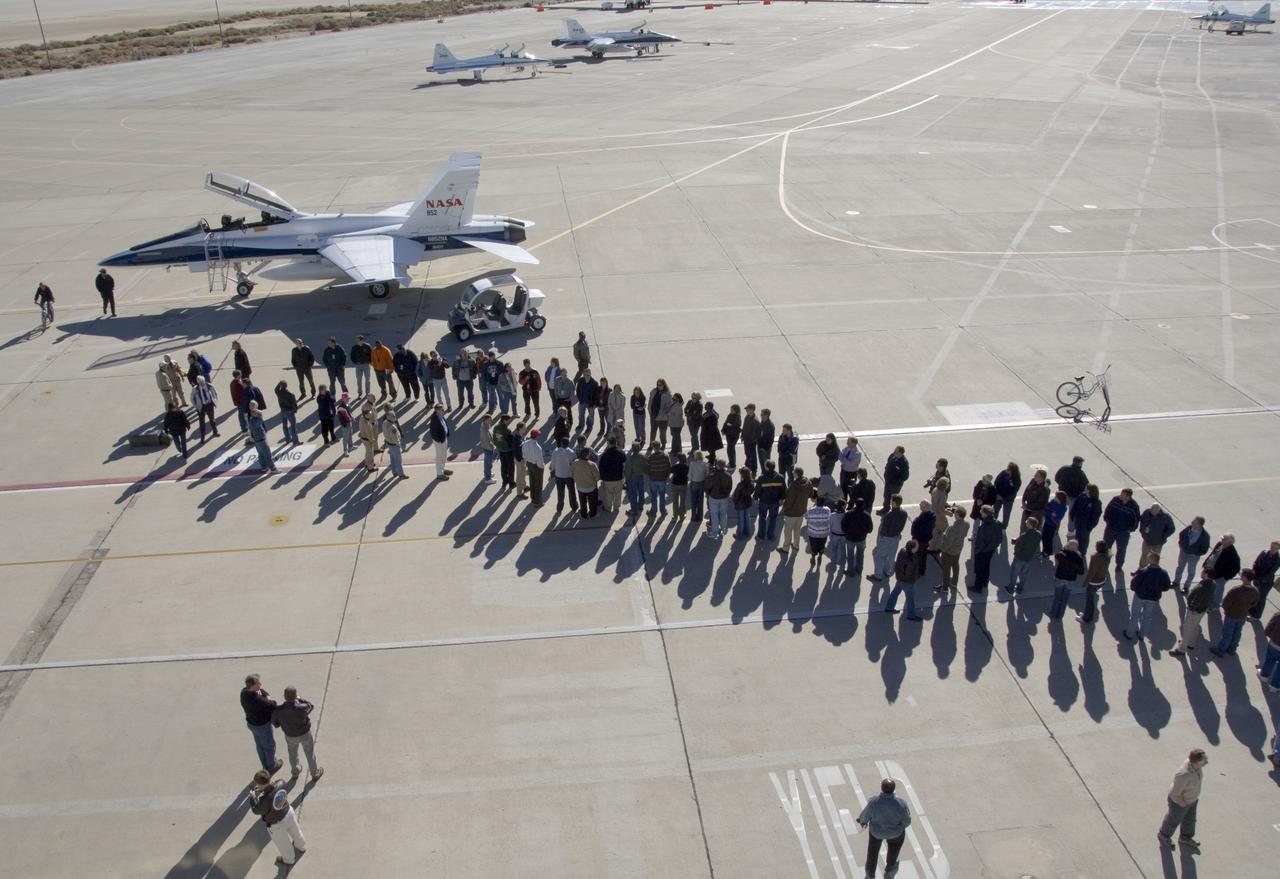
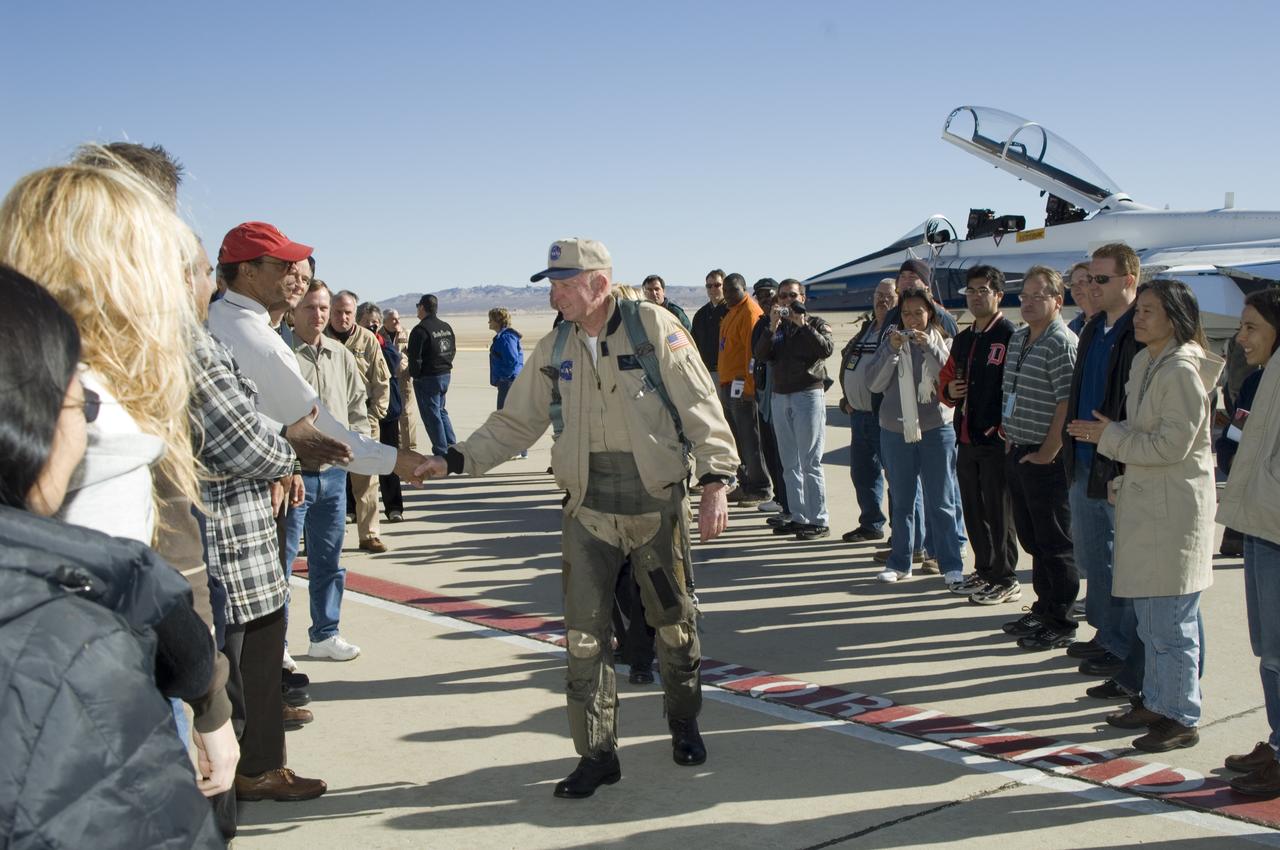
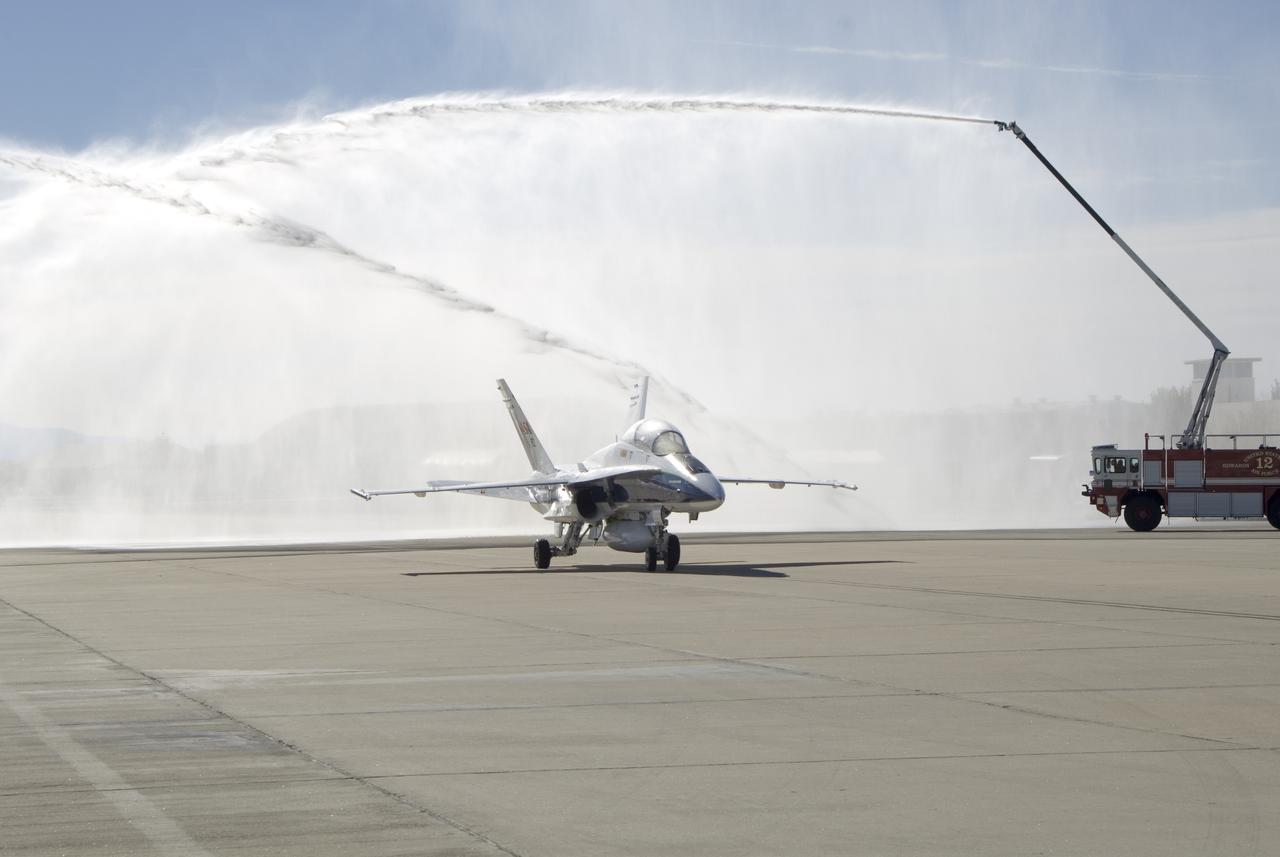
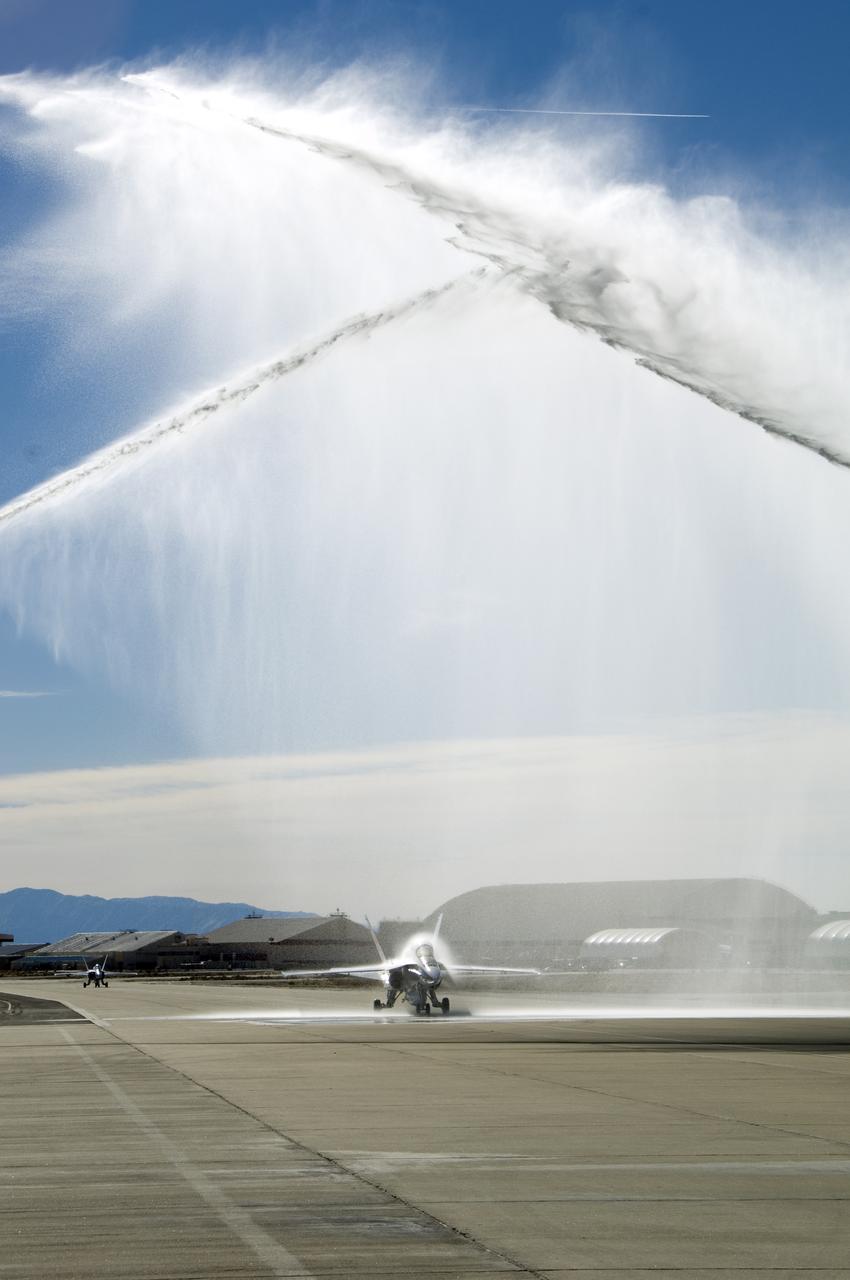
Long-time NASA Dryden research pilot and former astronaut C. Gordon Fullerton capped an almost 50-year flying career, including more than 38 years with NASA, with a final flight in a NASA F/A-18 on Dec. 21, 2007. Fullerton and Dryden research pilot Jim Smolka flew a 90-minute pilot proficiency formation aerobatics flight with another Dryden F/A-18 and a Dryden T-38 before concluding with two low-level formation flyovers of Dryden before landing. Fullerton was honored with a water-cannon spray arch provided by two fire trucks from the Edwards Air Force Base fire department as he taxied the F/A-18 up to the Dryden ramp, and was then greeted by his wife Marie and several hundred Dryden staff after his final flight.  Fullerton began his flying career with the U.S. Air Force in 1958 after earning bachelor's and master's degrees in mechanical engineering from the California Institute of Technology. Initially trained as a fighter pilot, he later transitioned to multi-engine bombers and became a bomber operations test pilot after attending the Air Force Aerospace Research Pilot School at Edwards Air Force Base, Calif. He then was assigned to the flight crew for the planned Air Force Manned Orbital Laboratory in 1966.  Upon cancellation of that program, the Air Force assigned Fullerton to NASA's astronaut corps in 1969. He served on the support crews for the Apollo 14, 15, 16 and 17 lunar missions, and was later assigned to one of the two flight crews that piloted the space shuttle prototype Enterprise during the Approach and Landing Test program at Dryden. He then logged some 382 hours in space when he flew on two early space shuttle missions, STS-3 on Columbia in 1982 and STS-51F on Challenger in 1985. He joined the flight crew branch at NASA Dryden after leaving the astronaut corps in 1986.  During his 21 years at Dryden, Fullerton was project pilot on a number of high-profile research efforts, including the Propulsion Controlled Aircraft, the high-speed landing tests of
A water-cannon salute from two Air Force fire trucks heralds NASA research pilot Gordon Fullerton's final mission as his NASA F/A-18 taxis beneath the spray.
Long-time NASA Dryden research pilot and former astronaut C. Gordon Fullerton capped an almost 50-year flying career, including more than 38 years with NASA, with a final flight in a NASA F/A-18 on Dec. 21, 2007. Fullerton and Dryden research pilot Jim Smolka flew a 90-minute pilot proficiency formation aerobatics flight with another Dryden F/A-18 and a Dryden T-38 before concluding with two low-level formation flyovers of Dryden before landing. Fullerton was honored with a water-cannon spray arch provided by two fire trucks from the Edwards Air Force Base fire department as he taxied the F/A-18 up to the Dryden ramp, and was then greeted by his wife Marie and several hundred Dryden staff after his final flight.  Fullerton began his flying career with the U.S. Air Force in 1958 after earning bachelor's and master's degrees in mechanical engineering from the California Institute of Technology. Initially trained as a fighter pilot, he later transitioned to multi-engine bombers and became a bomber operations test pilot after attending the Air Force Aerospace Research Pilot School at Edwards Air Force Base, Calif. He then was assigned to the flight crew for the planned Air Force Manned Orbital Laboratory in 1966.  Upon cancellation of that program, the Air Force assigned Fullerton to NASA's astronaut corps in 1969. He served on the support crews for the Apollo 14, 15, 16 and 17 lunar missions, and was later assigned to one of the two flight crews that piloted the space shuttle prototype Enterprise during the Approach and Landing Test program at Dryden. He then logged some 382 hours in space when he flew on two early space shuttle missions, STS-3 on Columbia in 1982 and STS-51F on Challenger in 1985. He joined the flight crew branch at NASA Dryden after leaving the astronaut corps in 1986.  During his 21 years at Dryden, Fullerton was project pilot on a number of high-profile research efforts, including the Propulsion Controlled Aircraft, the high-speed landing tests of
A water-cannon salute from two Air Force fire trucks heralds NASA research pilot Gordon Fullerton's final mission as his NASA F/A-18 taxis beneath the spray.
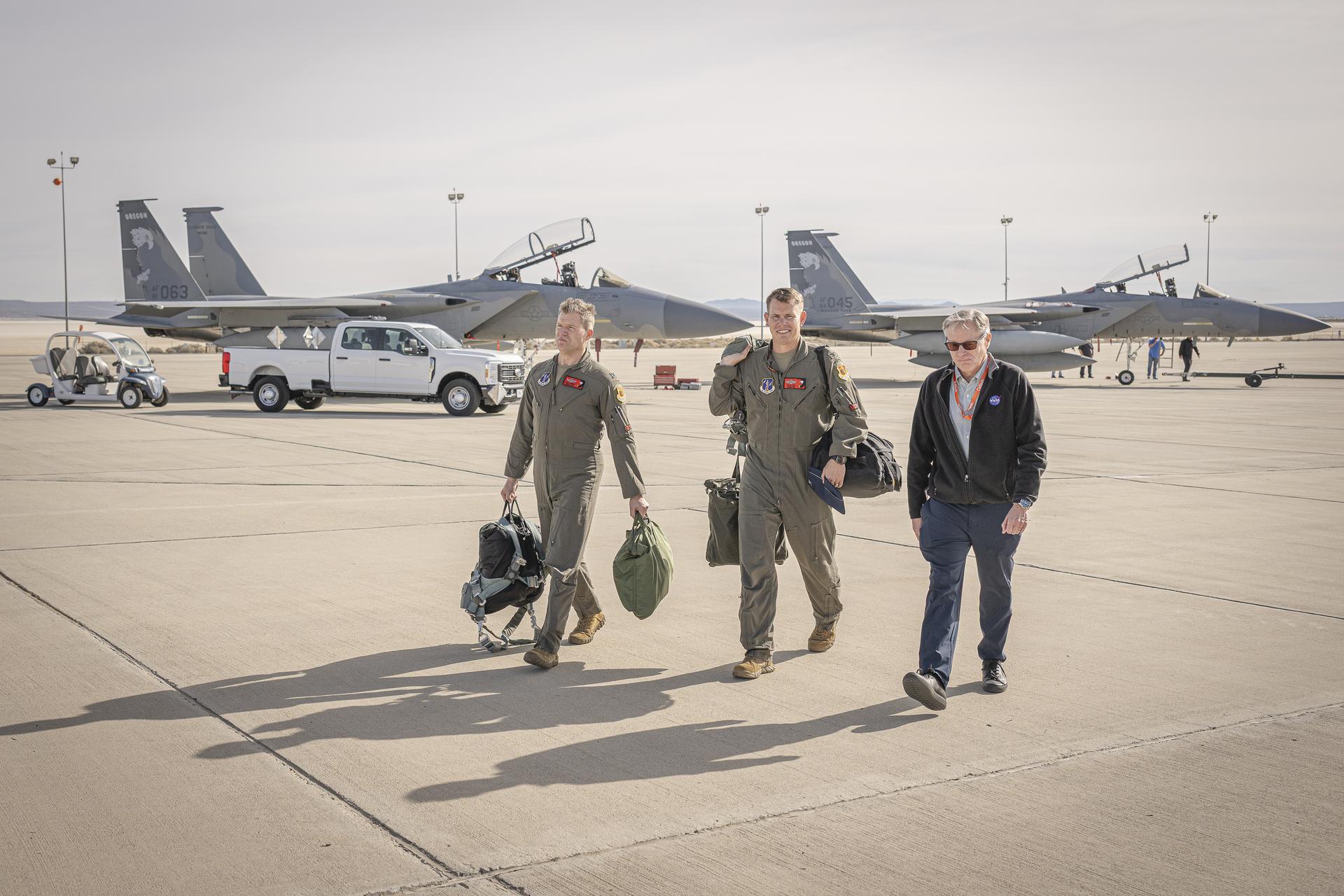
 Oregon Air National Guard pilots deliver NASA’s newest F-15 aircraft from the Oregon Air National Guard’s 173rd Fighter Wing at Kingsley Field to NASA’s Armstrong Flight Research Center in Edwards, California, on Monday, Dec. 22, 2025. After completing their final flights with the Air Force, the two aircraft begin their new role supporting NASA’s flight research.
NASA’s Newest F-15s Arrive at NASA Armstrong
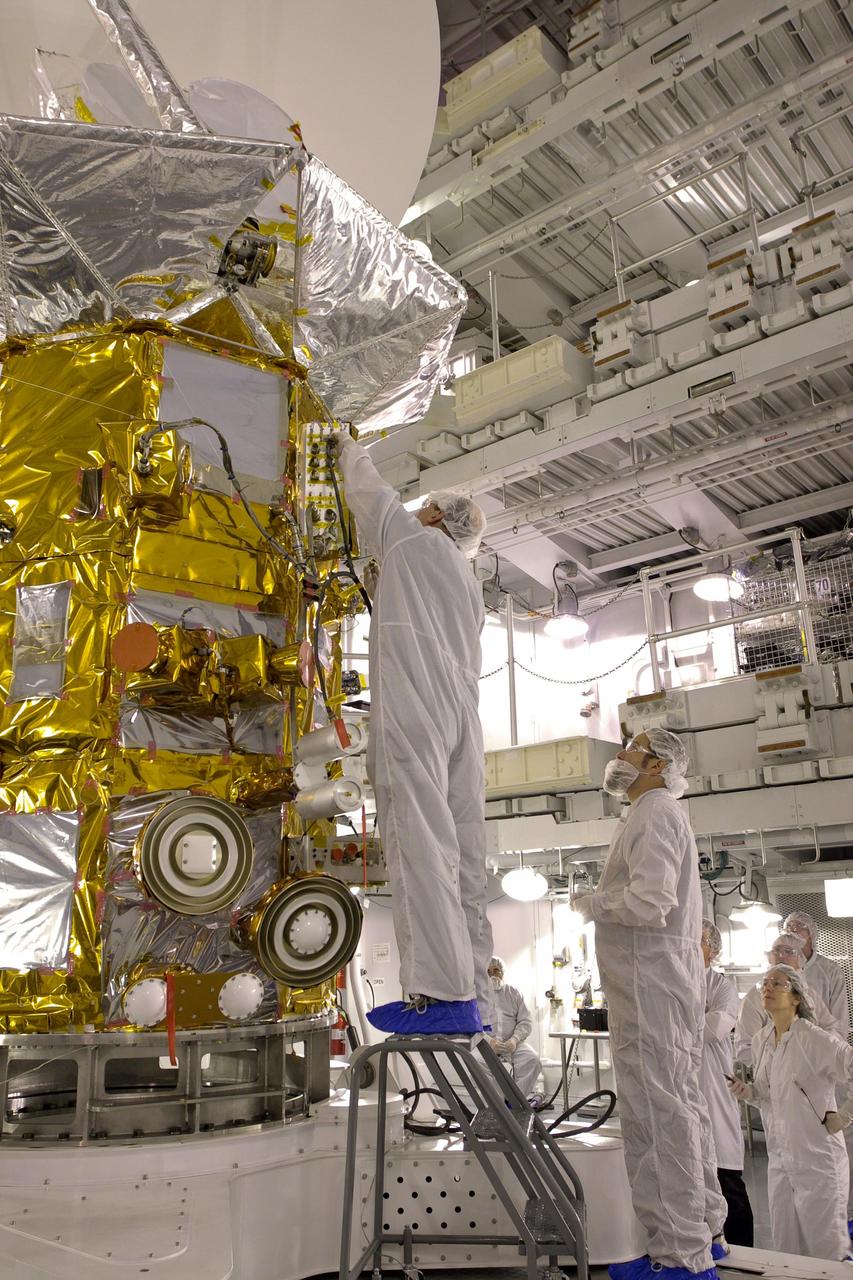
Less than two months before launch, team members conduct their final checks of NASA Aquarius instrument at Vandenberg Air Force Base, Calif. Subsequent final instrument tests will be conducted on the launch pad.
Final Checks of Aquarius Instrument
Air Force Two lands with Vice President Mike Pence along with Congressman Robert Aderholt at the Redstone Army Airfield in Huntsville, Alabama, on Monday, Sept. 25. The Vice President is visiting NASA’s Marshall Space Flight Center, located on Redstone Arsenal, to meet with employees, view test hardware for NASA’s Space Launch System — America’s new deep-space rocket, and tour the Payload Operations Integration Center, “science central” for the International Space Station. Photo Credit: (NASA/Emmett Given)
Vice President Pence Visits Marshall Space Flight Center
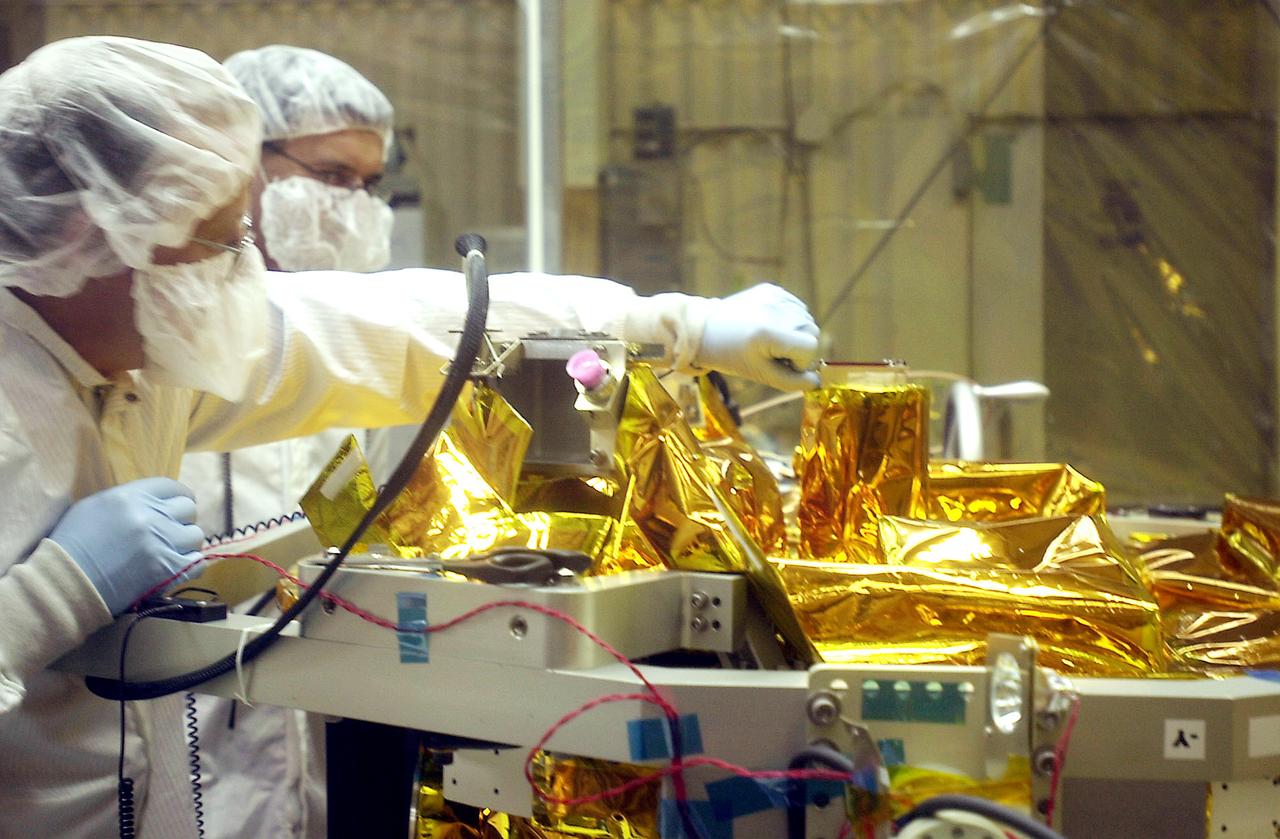
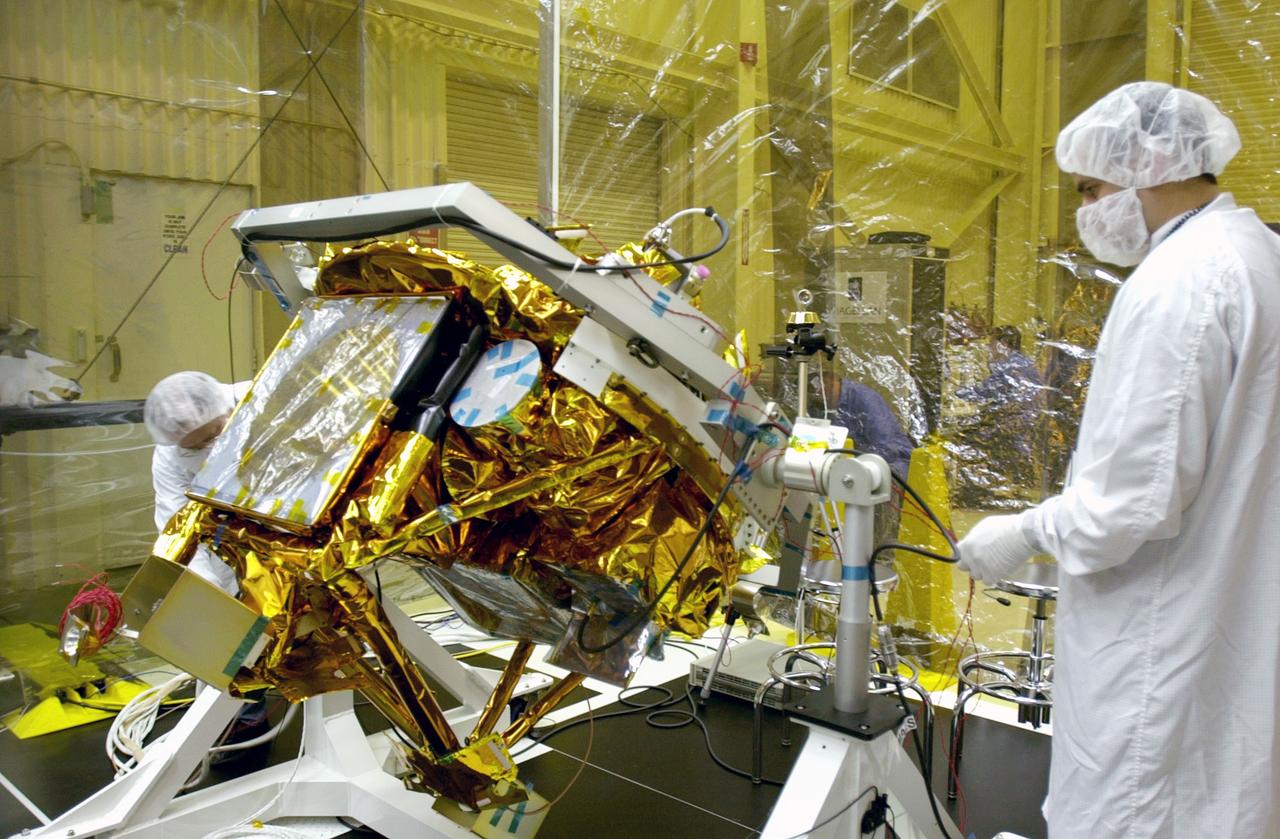
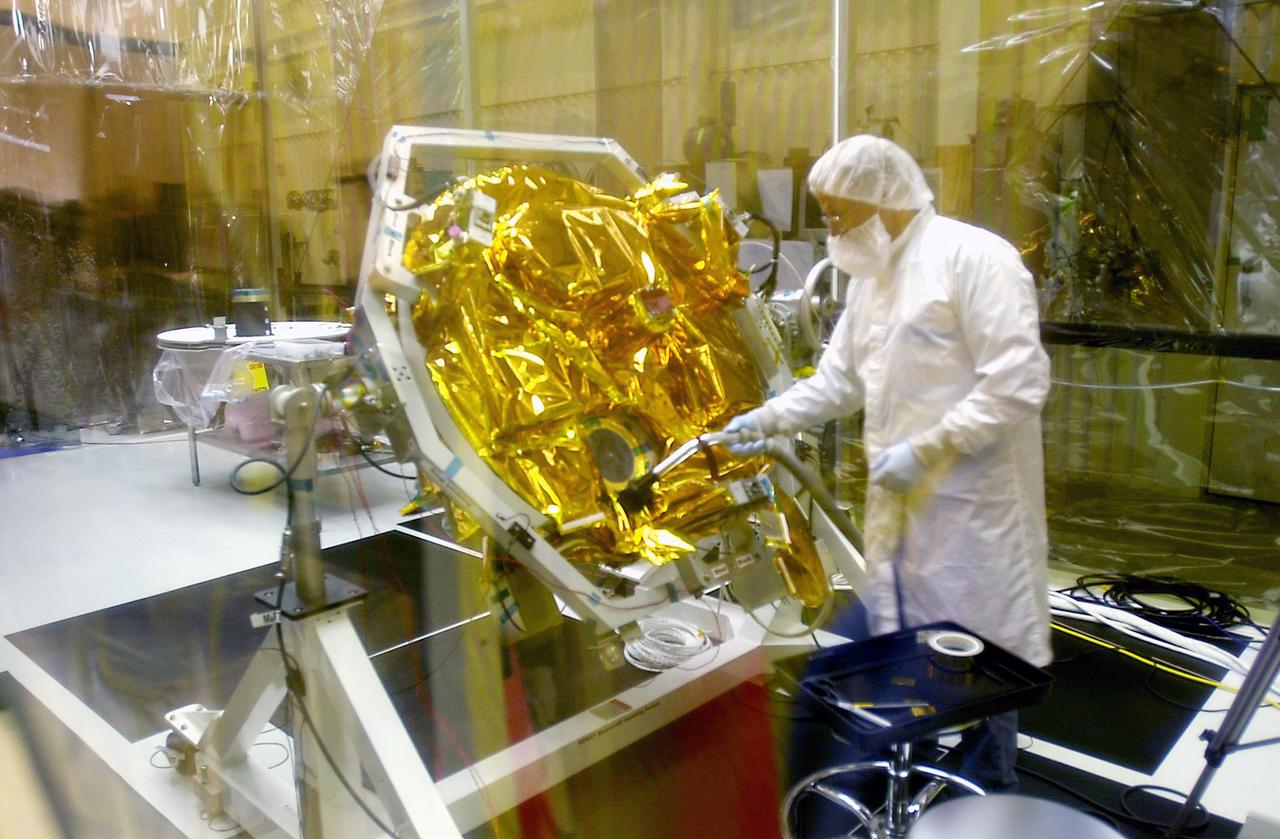
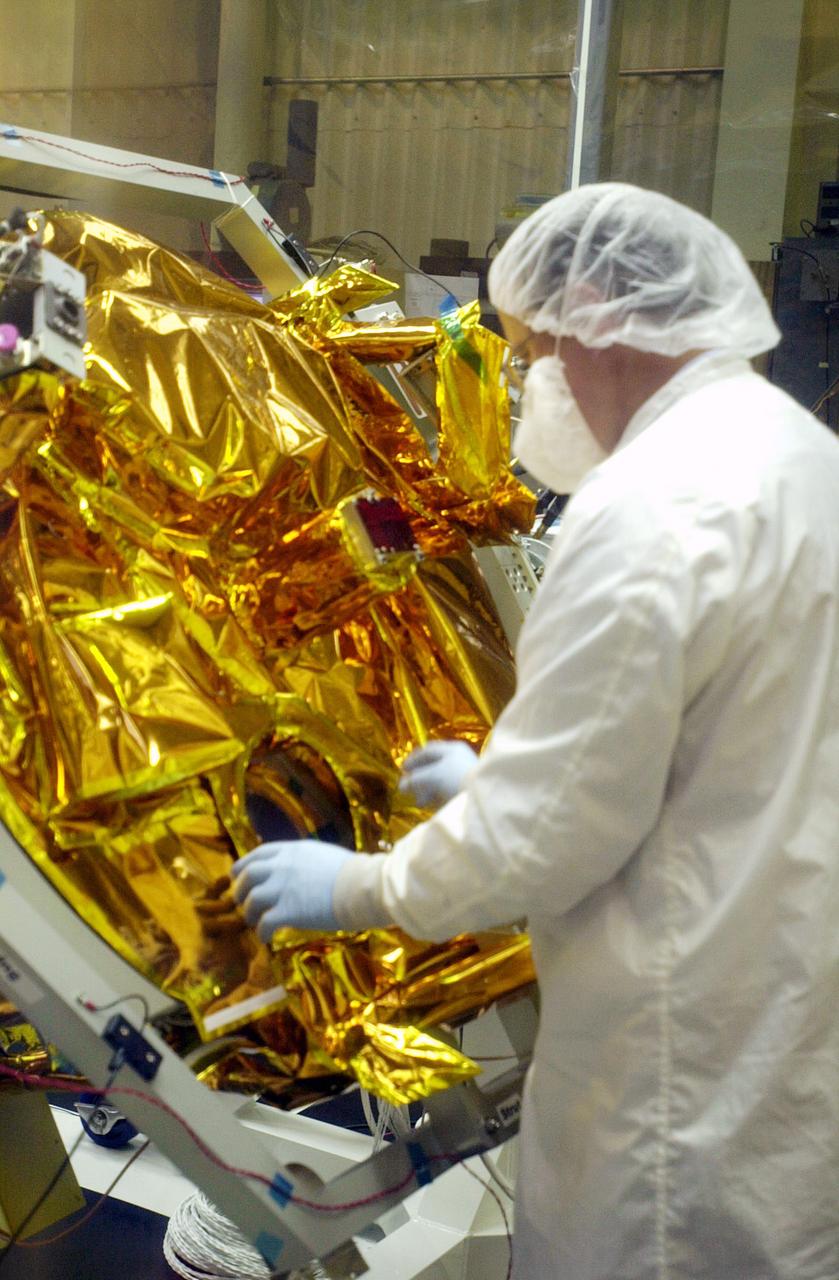
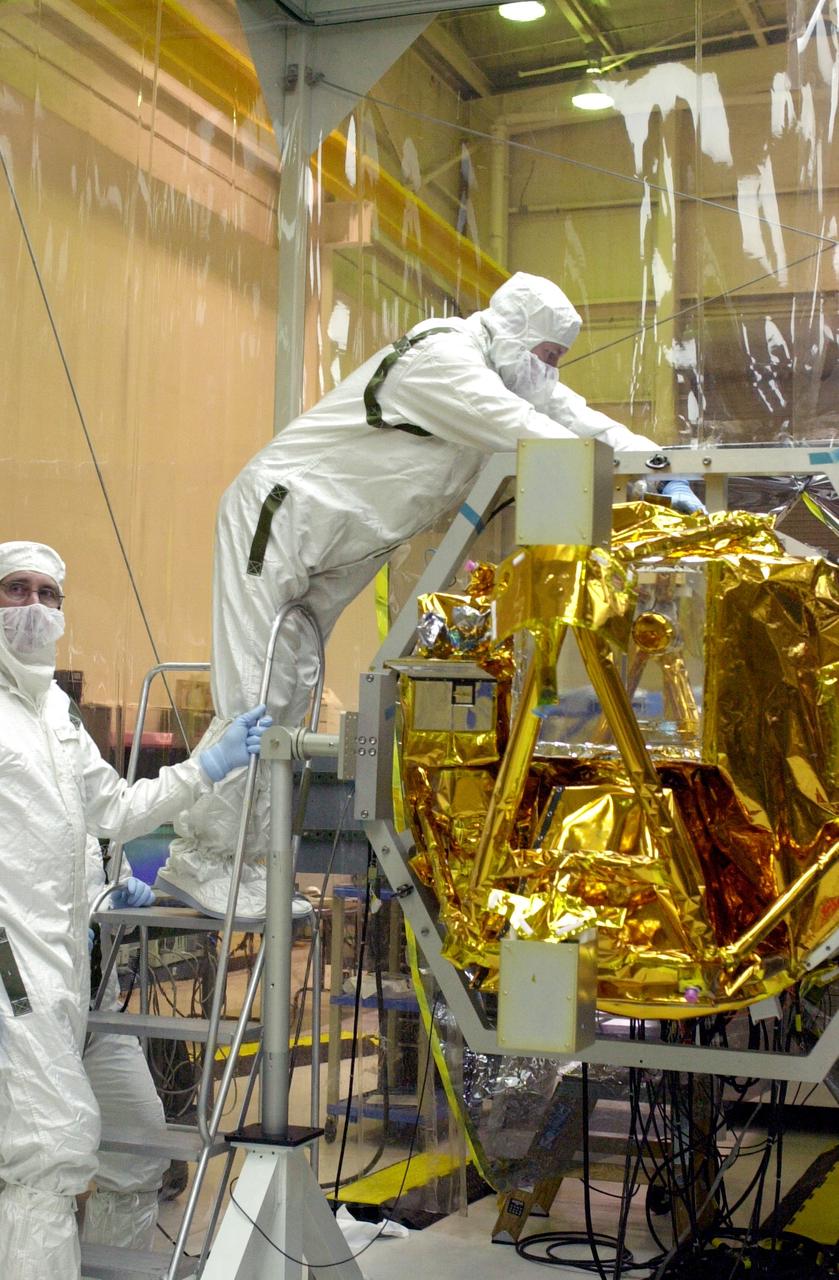
VANDENBERG AIR FORCE BASE, CALIF.- At Vandenberg Air Force Base, Calif., spacecraft functional testing is underway on the SciSat-1. The solar arrays are being attached and the communications systems are also being checked out.   The SciSat-1 weighs approximately 330 pounds and after launch will be placed in a 400-mile-high polar orbit to investigate processes that control the distribution of ozone in the upper atmosphere. The data from the satellite will provide Canadian and international scientists with improved measurements relating to global ozone processes and help policymakers assess existing environmental policy and develop protective measures for improving the health of our atmosphere, preventing further ozone depletion. The mission is designed to last two years.
VANDENBERG AIR FORCE BASE, CALIF.- At Vandenberg Air Force Base, Calif., spacecraft functional testing is underway on the SciSat-1. The solar arrays are being attached and the communications systems are also being checked out. The SciSat-1 weighs approximately 330 pounds and after launch will be placed in a 400-mile-high polar orbit to investigate processes that control the distribution of ozone in the upper atmosphere. The data from the satellite will provide Canadian and international scientists with improved measurements relating to global ozone processes and help policymakers assess existing environmental policy and develop protective measures for improving the health of our atmosphere, preventing further ozone depletion. The mission is designed to last two years.
VANDENBERG AIR FORCE BASE, CALIF.- At Vandenberg Air Force Base, Calif., spacecraft functional testing is underway on the SciSat-1. The solar arrays are being attached and the communications systems are also being checked out.   The SciSat-1 weighs approximately 330 pounds and after launch will be placed in a 400-mile-high polar orbit to investigate processes that control the distribution of ozone in the upper atmosphere. The data from the satellite will provide Canadian and international scientists with improved measurements relating to global ozone processes and help policymakers assess existing environmental policy and develop protective measures for improving the health of our atmosphere, preventing further ozone depletion. The mission is designed to last two years.
VANDENBERG AIR FORCE BASE, CALIF.- At Vandenberg Air Force Base, Calif., spacecraft functional testing is underway on the SciSat-1. The solar arrays are being attached and the communications systems are also being checked out. The SciSat-1 weighs approximately 330 pounds and after launch will be placed in a 400-mile-high polar orbit to investigate processes that control the distribution of ozone in the upper atmosphere. The data from the satellite will provide Canadian and international scientists with improved measurements relating to global ozone processes and help policymakers assess existing environmental policy and develop protective measures for improving the health of our atmosphere, preventing further ozone depletion. The mission is designed to last two years.
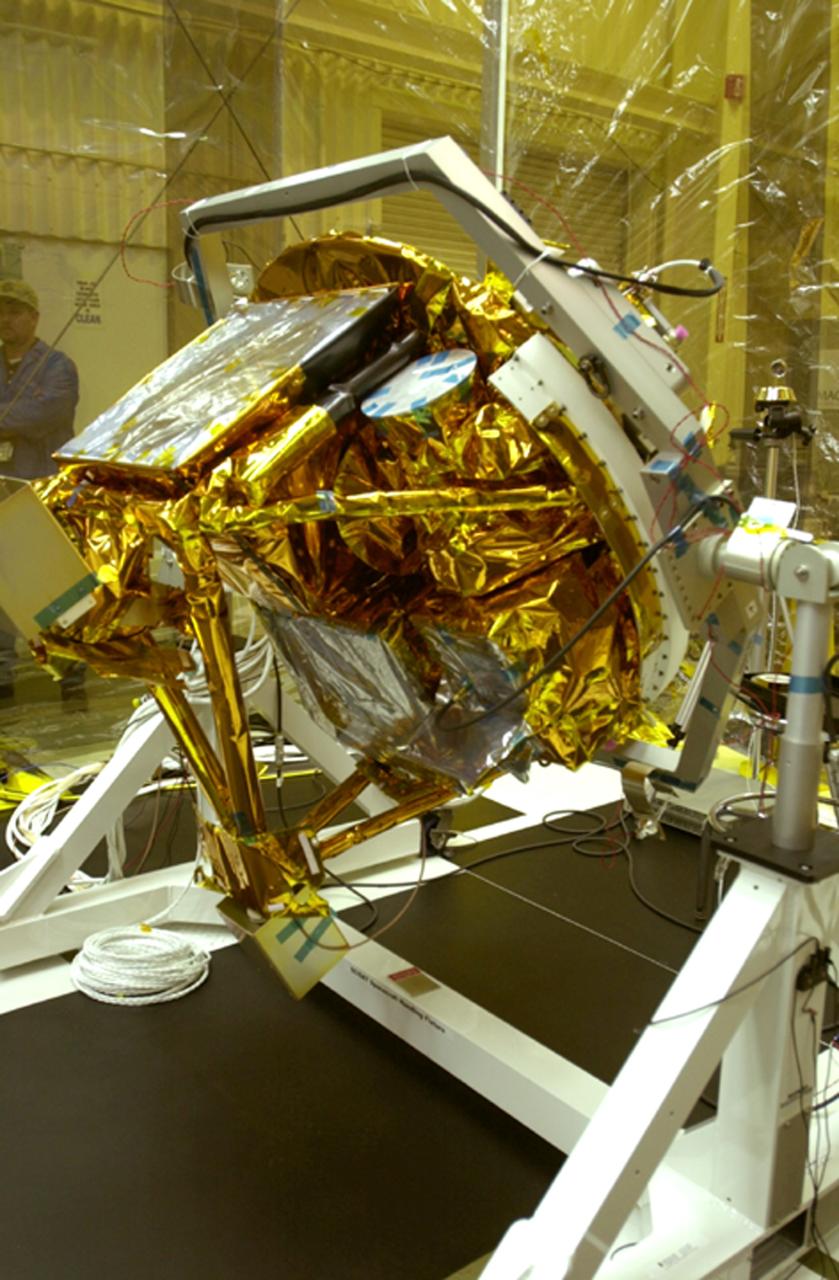
VANDENBERG AIR FORCE BASE, CALIF.- At Vandenberg Air Force Base, Calif., spacecraft functional testing is underway on the SciSat-1. The solar arrays are being attached and the communications systems are also being checked out.   The SciSat-1 weighs approximately 330 pounds and after launch will be placed in a 400-mile-high polar orbit to investigate processes that control the distribution of ozone in the upper atmosphere. The data from the satellite will provide Canadian and international scientists with improved measurements relating to global ozone processes and help policymakers assess existing environmental policy and develop protective measures for improving the health of our atmosphere, preventing further ozone depletion. The mission is designed to last two years.
VANDENBERG AIR FORCE BASE, CALIF.- At Vandenberg Air Force Base, Calif., spacecraft functional testing is underway on the SciSat-1. The solar arrays are being attached and the communications systems are also being checked out. The SciSat-1 weighs approximately 330 pounds and after launch will be placed in a 400-mile-high polar orbit to investigate processes that control the distribution of ozone in the upper atmosphere. The data from the satellite will provide Canadian and international scientists with improved measurements relating to global ozone processes and help policymakers assess existing environmental policy and develop protective measures for improving the health of our atmosphere, preventing further ozone depletion. The mission is designed to last two years.
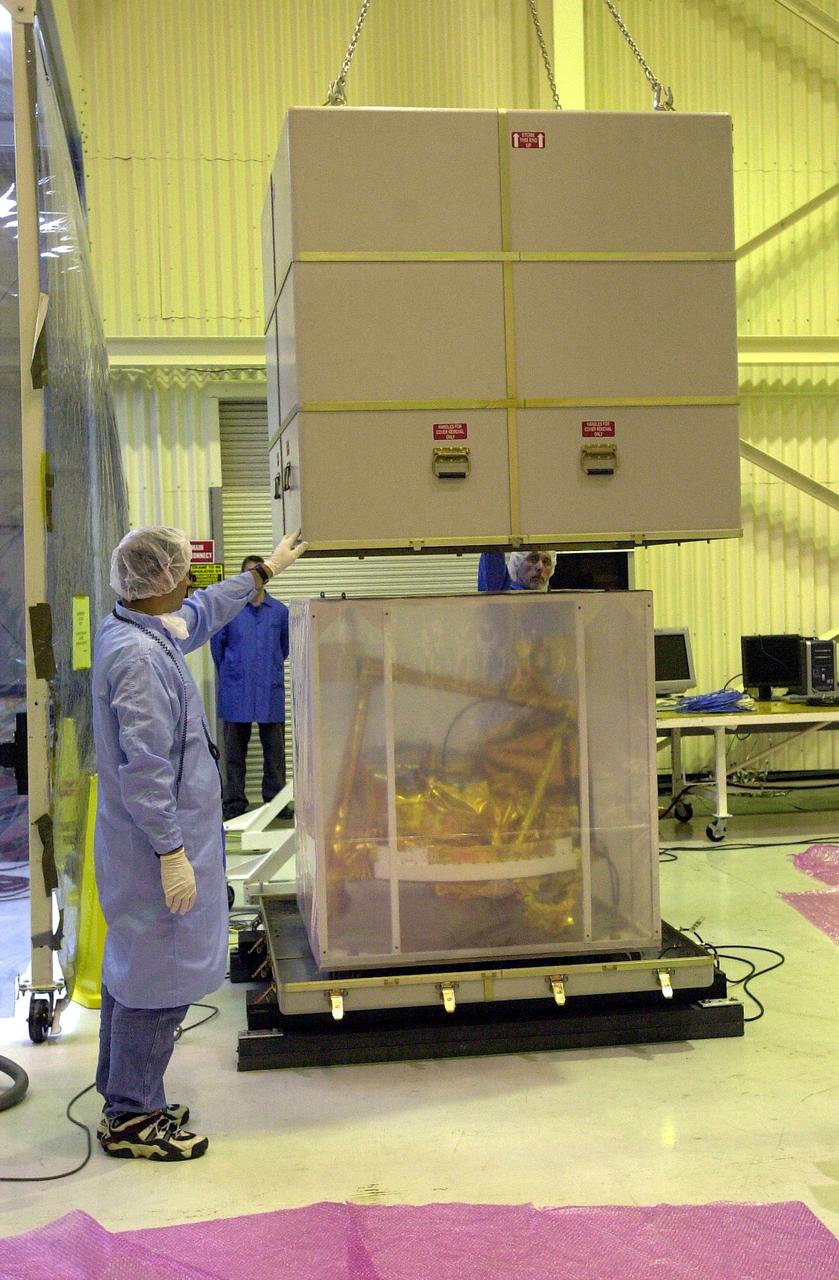
VANDENBERG AIR FORCE BASE, CALIF.- The cover is being lifted off SciSat-1 spacecraft at Vandenberg Air Force Base, Calif.   Sci-Sat, which will undergo instrument checkout and spacecraft functional testing, weighs approximately 330 pounds and after launch will be placed in a 400-mile-high polar orbit to investigate processes that control the distribution of ozone in the upper atmosphere. The data from the satellite will provide Canadian and international scientists with improved measurements relating to global ozone processes and help policymakers assess existing environmental policy and develop protective measures for improving the health of our atmosphere, preventing further ozone depletion. The mission is designed to last two years.
VANDENBERG AIR FORCE BASE, CALIF.- The cover is being lifted off SciSat-1 spacecraft at Vandenberg Air Force Base, Calif. Sci-Sat, which will undergo instrument checkout and spacecraft functional testing, weighs approximately 330 pounds and after launch will be placed in a 400-mile-high polar orbit to investigate processes that control the distribution of ozone in the upper atmosphere. The data from the satellite will provide Canadian and international scientists with improved measurements relating to global ozone processes and help policymakers assess existing environmental policy and develop protective measures for improving the health of our atmosphere, preventing further ozone depletion. The mission is designed to last two years.
VANDENBERG AIR FORCE BASE, CALIF.- At Vandenberg Air Force Base, Calif., spacecraft functional testing is underway on the SciSat-1. The solar arrays are being attached and the communications systems are also being checked out.   The SciSat-1 weighs approximately 330 pounds and after launch will be placed in a 400-mile-high polar orbit to investigate processes that control the distribution of ozone in the upper atmosphere. The data from the satellite will provide Canadian and international scientists with improved measurements relating to global ozone processes and help policymakers assess existing environmental policy and develop protective measures for improving the health of our atmosphere, preventing further ozone depletion. The mission is designed to last two years.
VANDENBERG AIR FORCE BASE, CALIF.- At Vandenberg Air Force Base, Calif., spacecraft functional testing is underway on the SciSat-1. The solar arrays are being attached and the communications systems are also being checked out. The SciSat-1 weighs approximately 330 pounds and after launch will be placed in a 400-mile-high polar orbit to investigate processes that control the distribution of ozone in the upper atmosphere. The data from the satellite will provide Canadian and international scientists with improved measurements relating to global ozone processes and help policymakers assess existing environmental policy and develop protective measures for improving the health of our atmosphere, preventing further ozone depletion. The mission is designed to last two years.
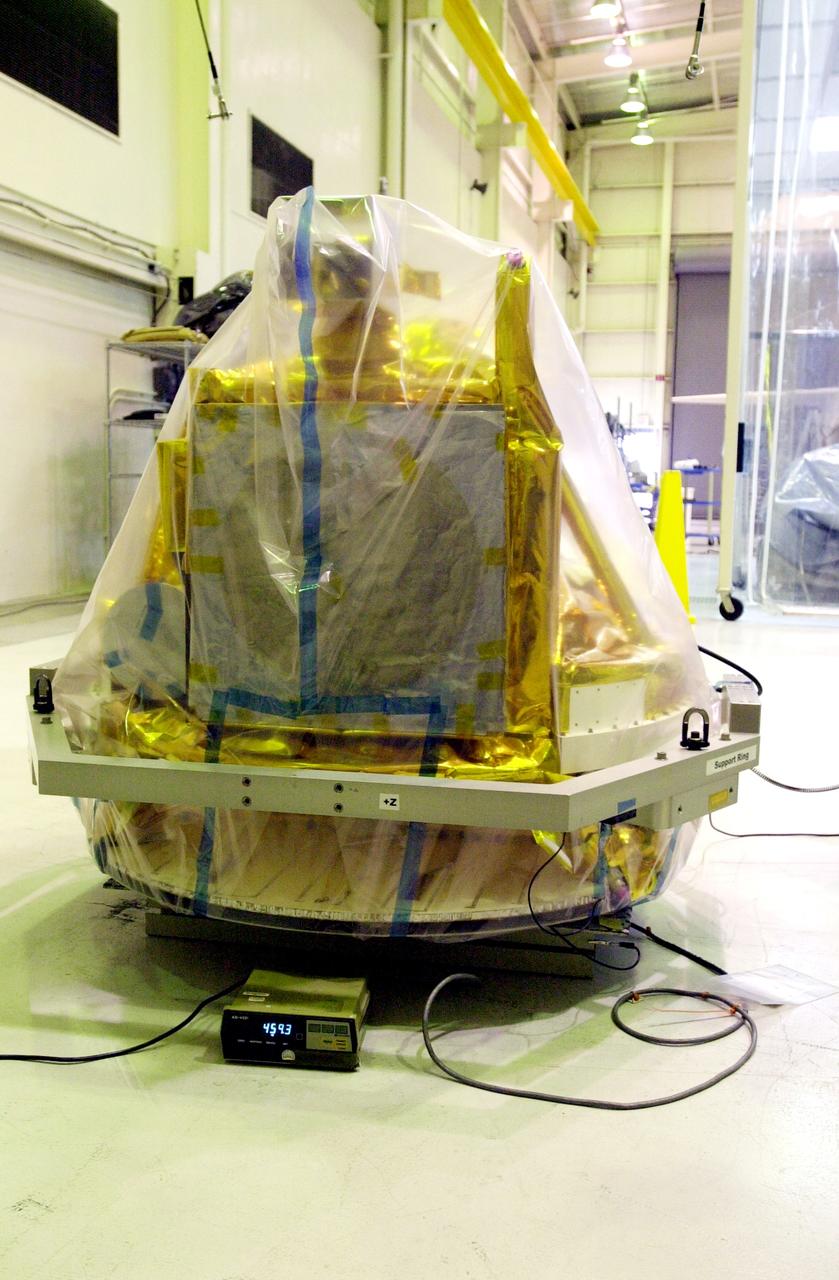
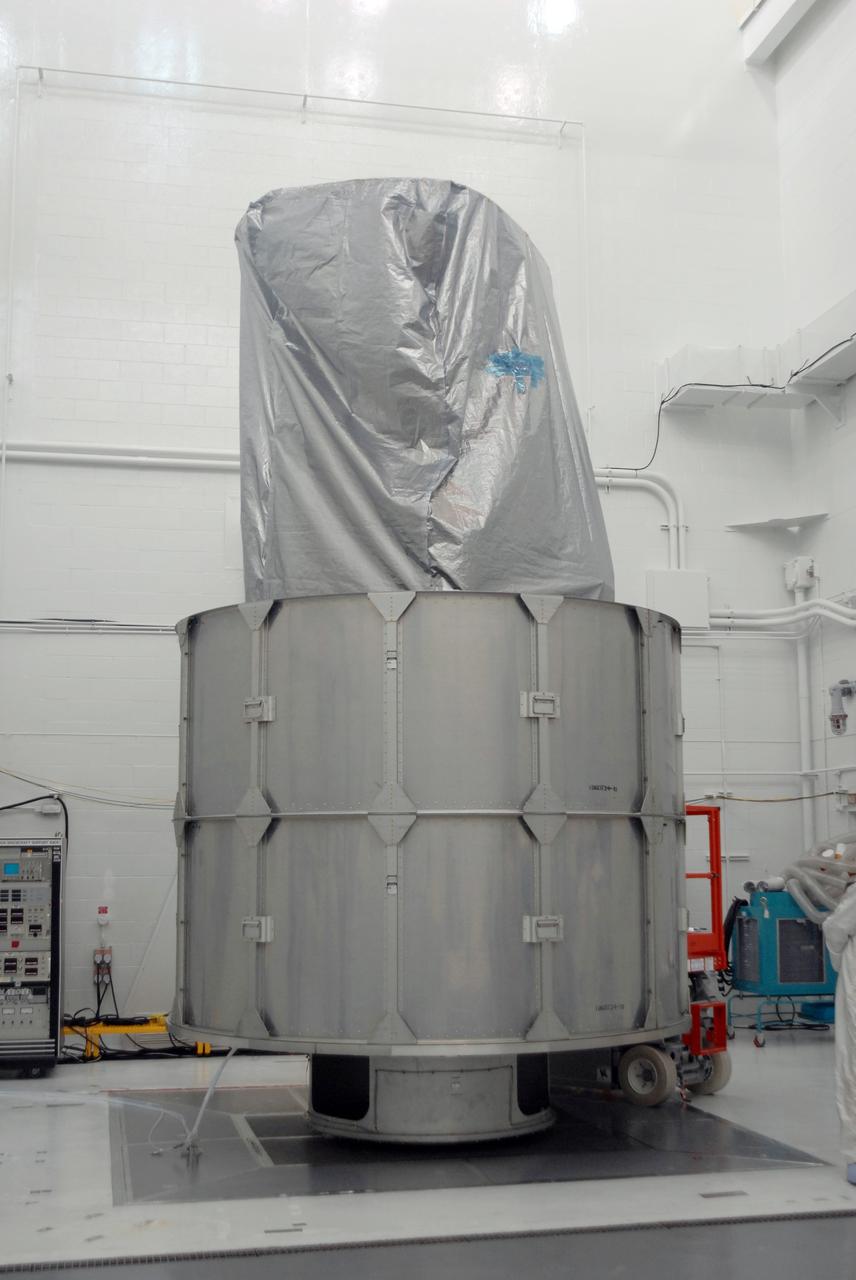
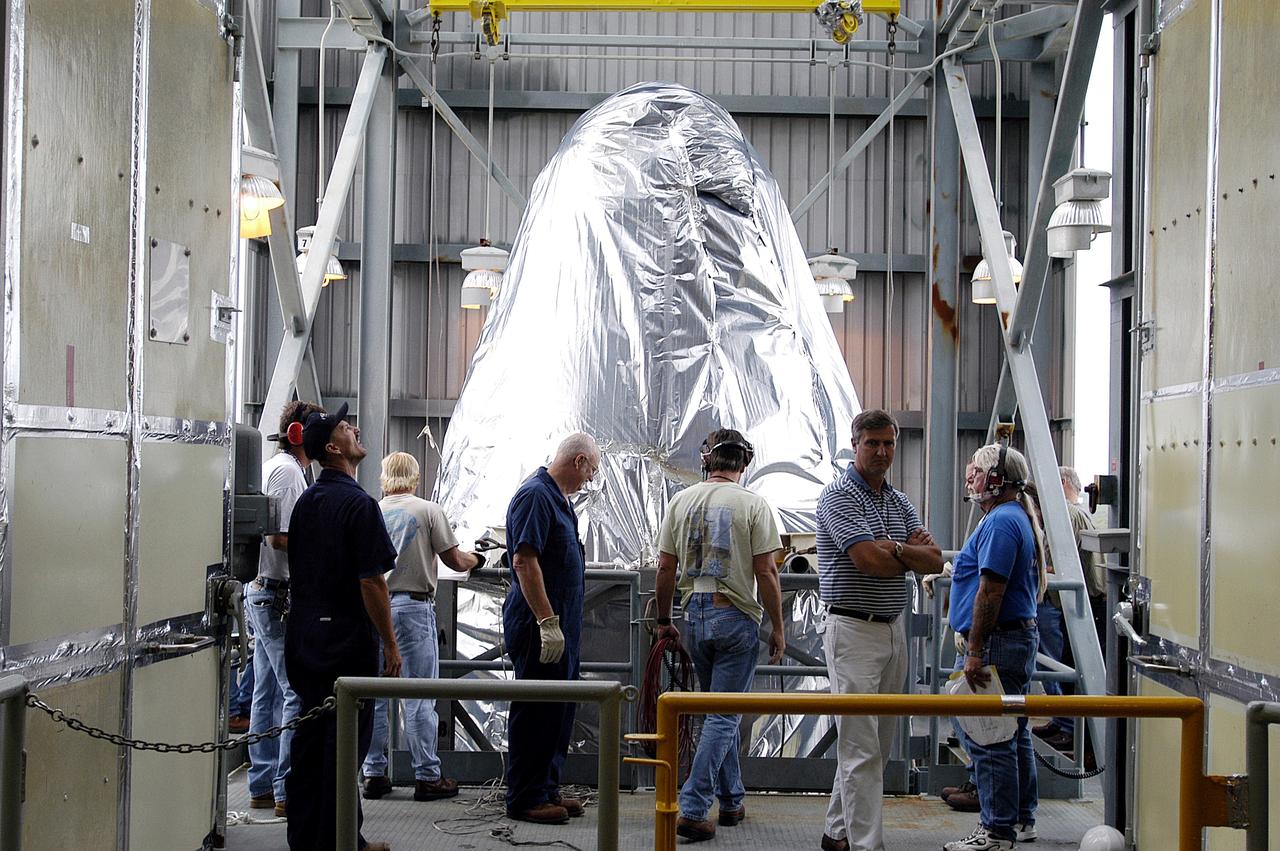
VANDENBERG AIR FORCE BASE, CALIF.-  A covered SciSat-1 spacecraft sits on a test stand at Vandenberg Air Force Base, Calif.  The solar arrays will be attached and the communications systems checked out.   The SciSat-1 weighs approximately 330 pounds and after launch will be placed in a 400-mile-high polar orbit to investigate processes that control the distribution of ozone in the upper atmosphere. The data from the satellite will provide Canadian and international scientists with improved measurements relating to global ozone processes and help policymakers assess existing environmental policy and develop protective measures for improving the health of our atmosphere, preventing further ozone depletion. The mission is designed to last two years.
VANDENBERG AIR FORCE BASE, CALIF.- A covered SciSat-1 spacecraft sits on a test stand at Vandenberg Air Force Base, Calif. The solar arrays will be attached and the communications systems checked out. The SciSat-1 weighs approximately 330 pounds and after launch will be placed in a 400-mile-high polar orbit to investigate processes that control the distribution of ozone in the upper atmosphere. The data from the satellite will provide Canadian and international scientists with improved measurements relating to global ozone processes and help policymakers assess existing environmental policy and develop protective measures for improving the health of our atmosphere, preventing further ozone depletion. The mission is designed to last two years.
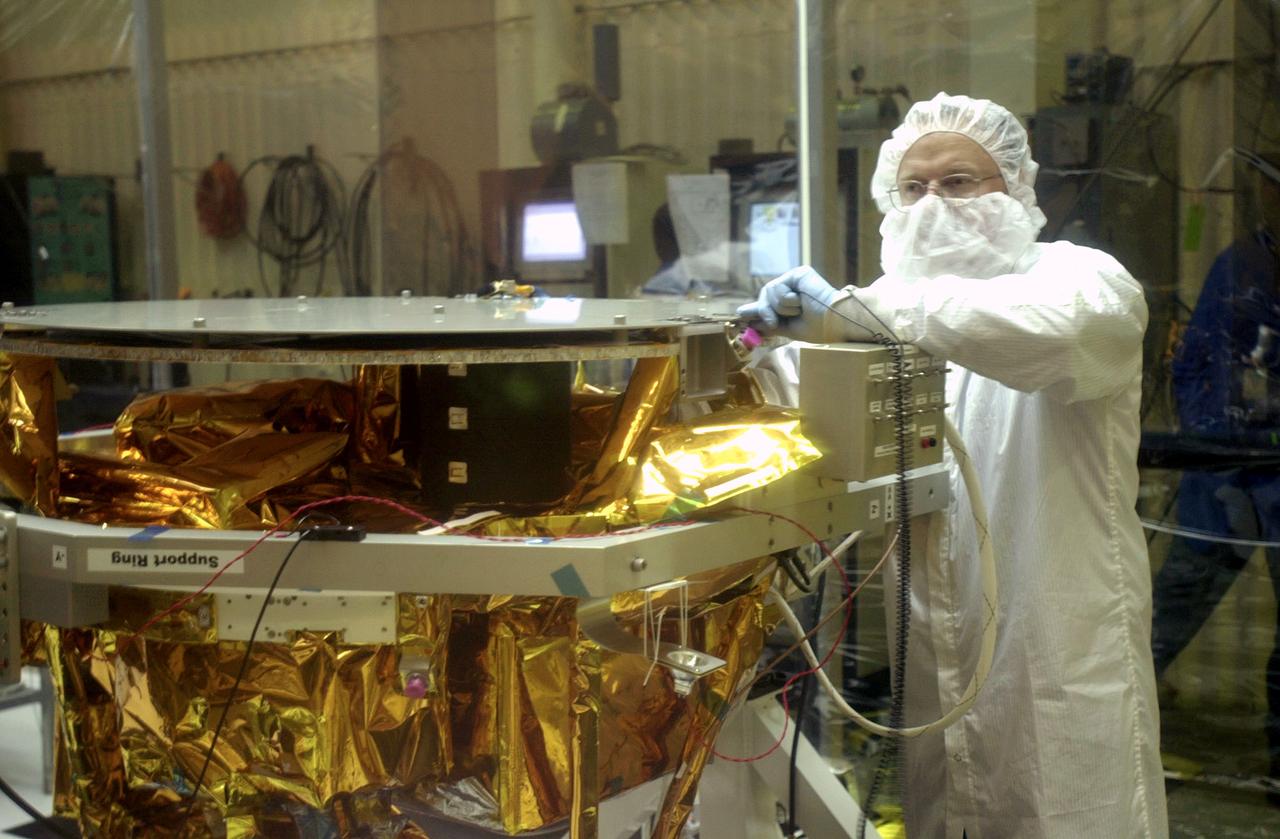
VANDENBERG AIR FORCE BASE, CALIF.- At Vandenberg Air Force Base, Calif., spacecraft functional testing is underway on the SciSat-1. The solar arrays are being attached and the communications systems are also being checked out.   The SciSat-1 weighs approximately 330 pounds and after launch will be placed in a 400-mile-high polar orbit to investigate processes that control the distribution of ozone in the upper atmosphere. The data from the satellite will provide Canadian and international scientists with improved measurements relating to global ozone processes and help policymakers assess existing environmental policy and develop protective measures for improving the health of our atmosphere, preventing further ozone depletion. The mission is designed to last two years.
VANDENBERG AIR FORCE BASE, CALIF.- At Vandenberg Air Force Base, Calif., spacecraft functional testing is underway on the SciSat-1. The solar arrays are being attached and the communications systems are also being checked out. The SciSat-1 weighs approximately 330 pounds and after launch will be placed in a 400-mile-high polar orbit to investigate processes that control the distribution of ozone in the upper atmosphere. The data from the satellite will provide Canadian and international scientists with improved measurements relating to global ozone processes and help policymakers assess existing environmental policy and develop protective measures for improving the health of our atmosphere, preventing further ozone depletion. The mission is designed to last two years.
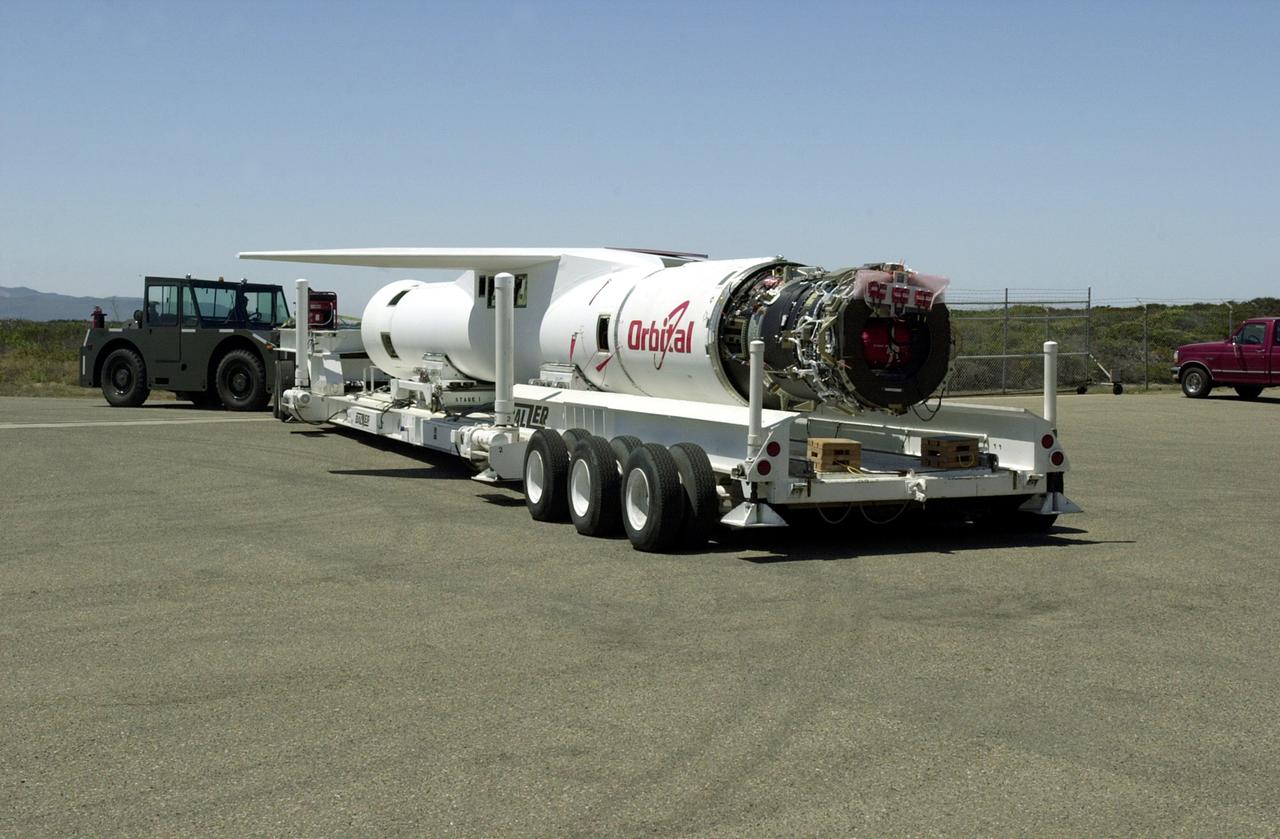
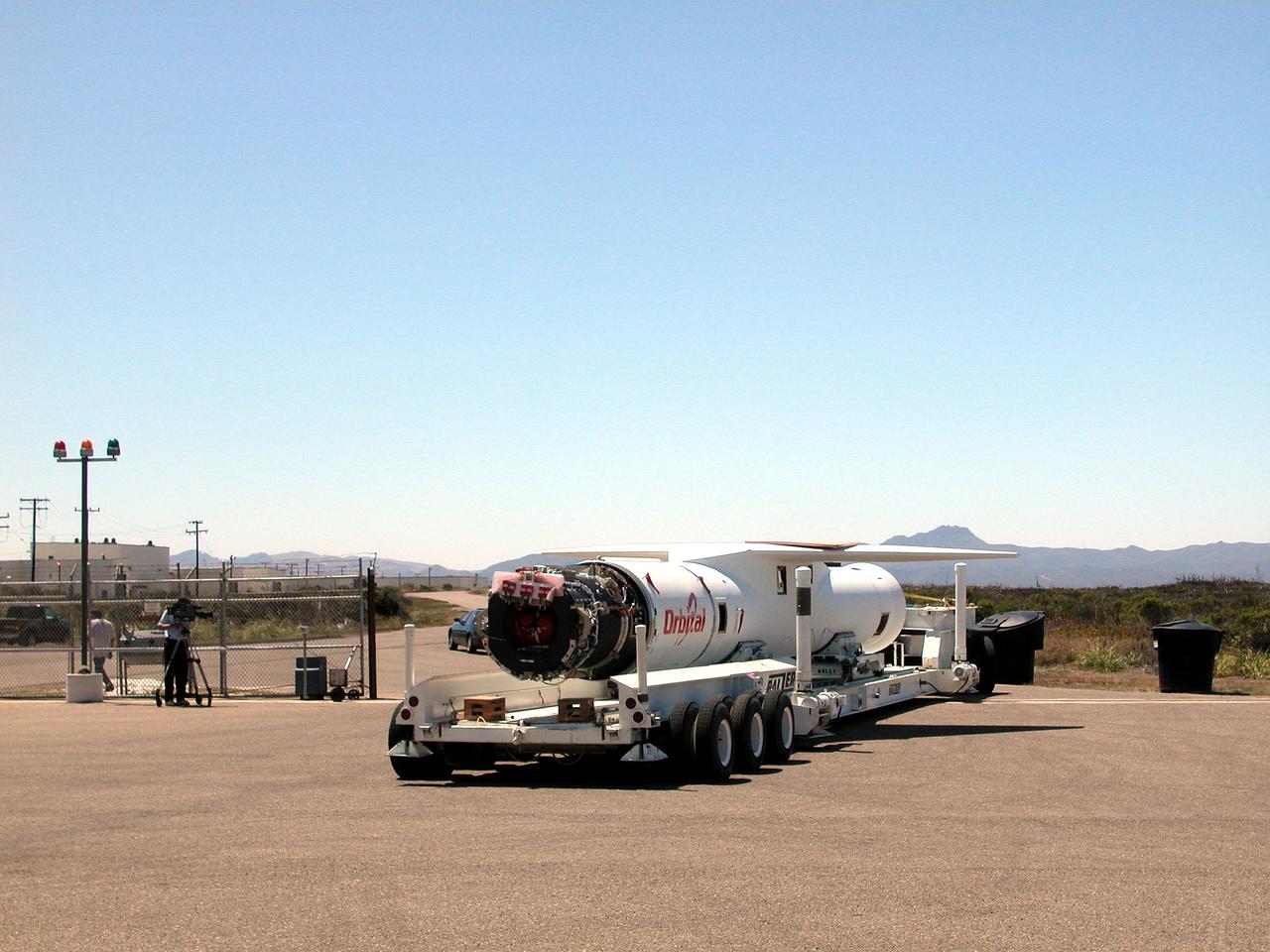
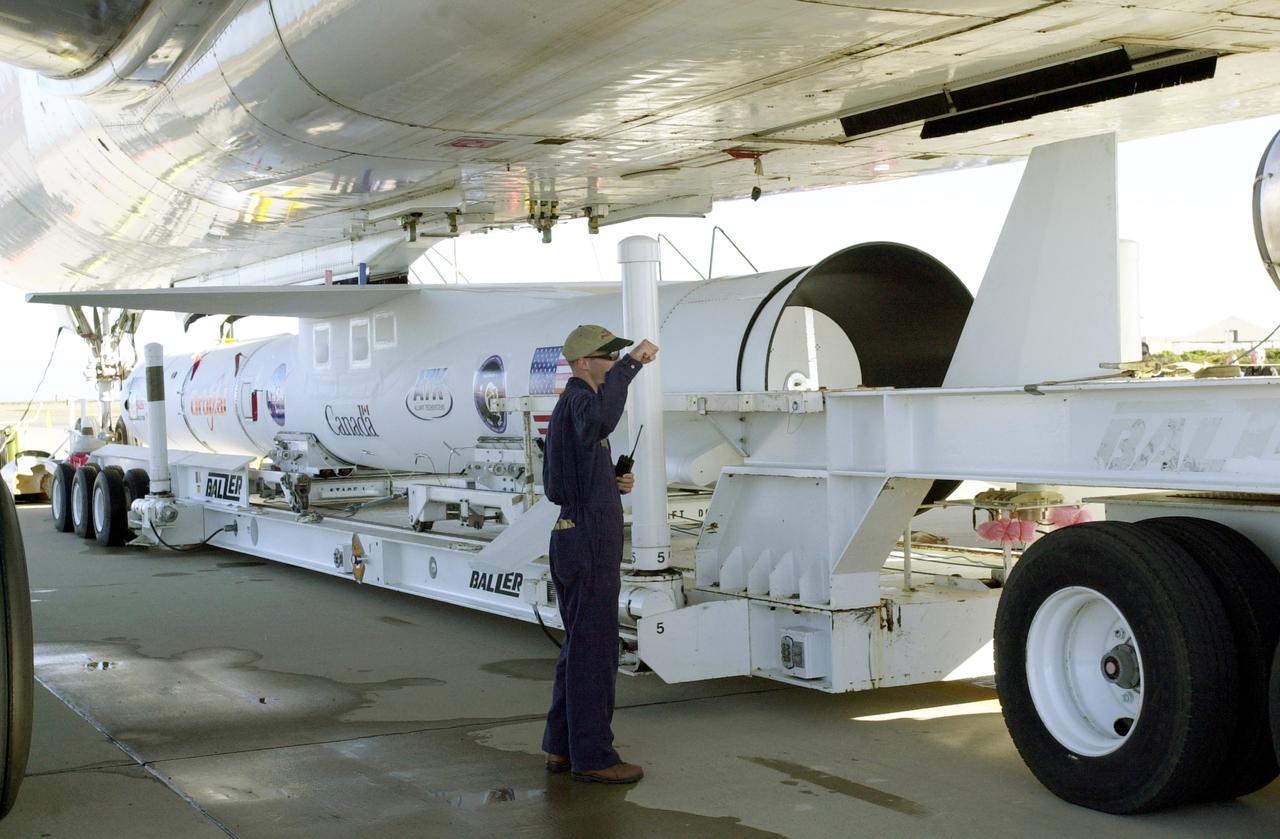
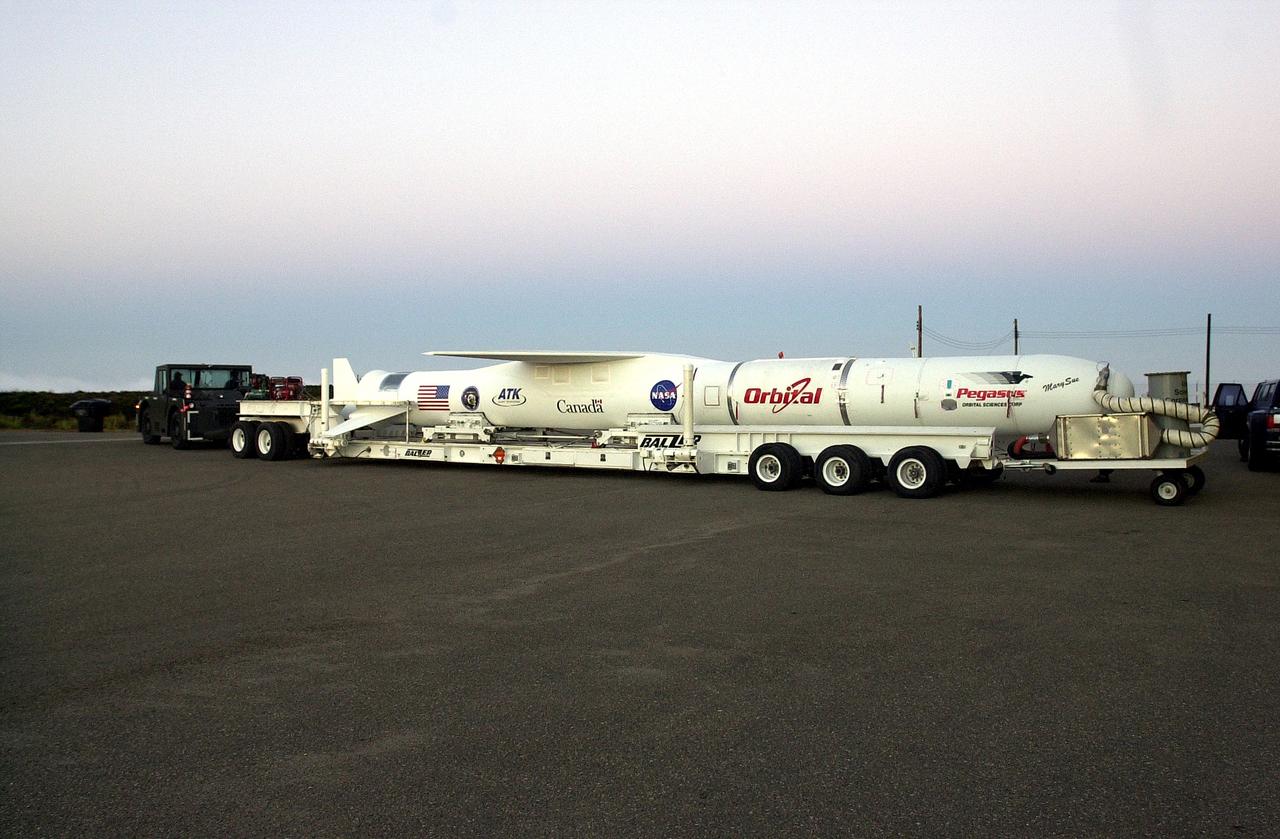
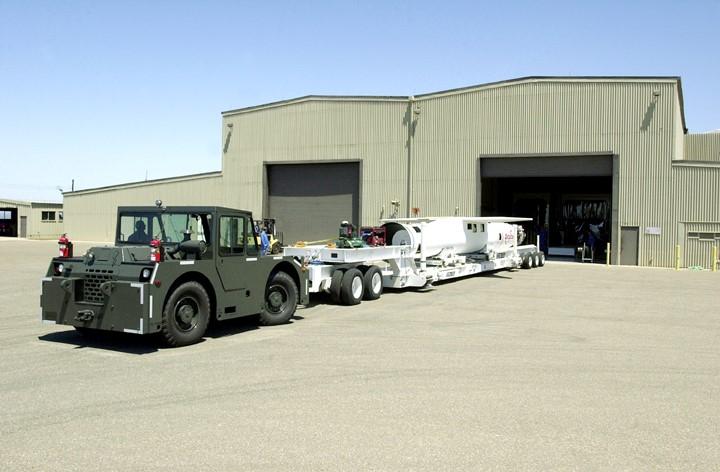
VANDENBERG AIR FORCE BASE, CALIF. - At Vandenberg Air Force Base, Calif., the Pegasus launch vehicle is moved toward its hangar. The Pegasus will carry the SciSat-1 spacecraft in a 400-mile-high polar orbit to investigate processes that control the distribution of ozone in the upper atmosphere. The data from the satellite will provide Canadian and international scientists with improved measurements relating to global ozone processes and help policymakers assess existing environmental policy and develop protective measures for improving the health of our atmosphere, preventing further ozone depletion. The mission is designed to last two years.
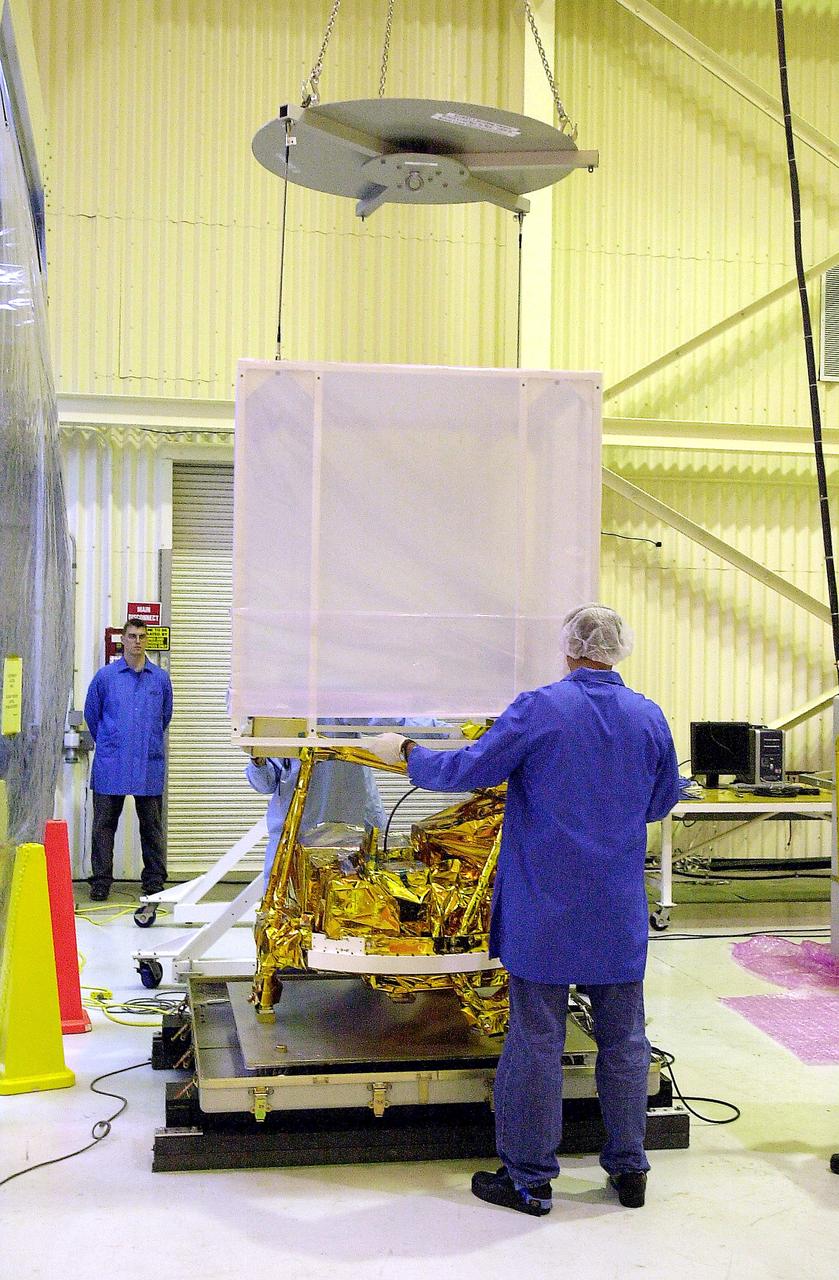
VANDENBERG AIR FORCE BASE, CALIF.-  The covered SciSat-1 spacecraft is lowered onto a test stand at Vandenberg Air Force Base, Calif., for functional testing.  The solar arrays will be attached and the communications systems checked out.   The SciSat-1 weighs approximately 330 pounds and after launch will be placed in a 400-mile-high polar orbit to investigate processes that control the distribution of ozone in the upper atmosphere. The data from the satellite will provide Canadian and international scientists with improved measurements relating to global ozone processes and help policymakers assess existing environmental policy and develop protective measures for improving the health of our atmosphere, preventing further ozone depletion. The mission is designed to last two years.
VANDENBERG AIR FORCE BASE, CALIF.- The covered SciSat-1 spacecraft is lowered onto a test stand at Vandenberg Air Force Base, Calif., for functional testing. The solar arrays will be attached and the communications systems checked out. The SciSat-1 weighs approximately 330 pounds and after launch will be placed in a 400-mile-high polar orbit to investigate processes that control the distribution of ozone in the upper atmosphere. The data from the satellite will provide Canadian and international scientists with improved measurements relating to global ozone processes and help policymakers assess existing environmental policy and develop protective measures for improving the health of our atmosphere, preventing further ozone depletion. The mission is designed to last two years.
VANDENBERG AIR FORCE BASE, CALIF.- At Vandenberg Air Force Base, Calif., spacecraft functional testing is underway on the SciSat-1. The solar arrays are being attached and the communications systems are also being checked out.   The SciSat-1 weighs approximately 330 pounds and after launch will be placed in a 400-mile-high polar orbit to investigate processes that control the distribution of ozone in the upper atmosphere. The data from the satellite will provide Canadian and international scientists with improved measurements relating to global ozone processes and help policymakers assess existing environmental policy and develop protective measures for improving the health of our atmosphere, preventing further ozone depletion. The mission is designed to last two years.
VANDENBERG AIR FORCE BASE, CALIF.- At Vandenberg Air Force Base, Calif., spacecraft functional testing is underway on the SciSat-1. The solar arrays are being attached and the communications systems are also being checked out. The SciSat-1 weighs approximately 330 pounds and after launch will be placed in a 400-mile-high polar orbit to investigate processes that control the distribution of ozone in the upper atmosphere. The data from the satellite will provide Canadian and international scientists with improved measurements relating to global ozone processes and help policymakers assess existing environmental policy and develop protective measures for improving the health of our atmosphere, preventing further ozone depletion. The mission is designed to last two years.
VANDENBERG AIR FORCE BASE, CALIF. - The SciSat-1 spacecraft is revealed at Vandenberg Air Force Base, Calif.   Sci-Sat, which will undergo instrument checkout and spacecraft functional testing, weighs approximately 330 pounds and after launch will be placed in a 400-mile-high polar orbit to investigate processes that control the distribution of ozone in the upper atmosphere. The data from the satellite will provide Canadian and international scientists with improved measurements relating to global ozone processes and help policymakers assess existing environmental policy and develop protective measures for improving the health of our atmosphere, preventing further ozone depletion. The mission is designed to last two years.
VANDENBERG AIR FORCE BASE, CALIF. - The SciSat-1 spacecraft is revealed at Vandenberg Air Force Base, Calif. Sci-Sat, which will undergo instrument checkout and spacecraft functional testing, weighs approximately 330 pounds and after launch will be placed in a 400-mile-high polar orbit to investigate processes that control the distribution of ozone in the upper atmosphere. The data from the satellite will provide Canadian and international scientists with improved measurements relating to global ozone processes and help policymakers assess existing environmental policy and develop protective measures for improving the health of our atmosphere, preventing further ozone depletion. The mission is designed to last two years.
VANDENBERG AIR FORCE BASE, CALIF. - At Vandenberg Air Force Base, Calif., the Pegasus launch vehicle is moved toward its hangar. The Pegasus will carry the SciSat-1 spacecraft in a 400-mile-high polar orbit to investigate processes that control the distribution of ozone in the upper atmosphere. The data from the satellite will provide Canadian and international scientists with improved measurements relating to global ozone processes and help policymakers assess existing environmental policy and develop protective measures for improving the health of our atmosphere, preventing further ozone depletion. The mission is designed to last two years.
VANDENBERG AIR FORCE BASE, CALIF.- At Vandenberg Air Force Base, Calif., spacecraft functional testing is underway on the SciSat-1. The solar arrays are being attached and the communications systems are also being checked out.   The SciSat-1 weighs approximately 330 pounds and after launch will be placed in a 400-mile-high polar orbit to investigate processes that control the distribution of ozone in the upper atmosphere. The data from the satellite will provide Canadian and international scientists with improved measurements relating to global ozone processes and help policymakers assess existing environmental policy and develop protective measures for improving the health of our atmosphere, preventing further ozone depletion. The mission is designed to last two years.
VANDENBERG AIR FORCE BASE, CALIF.- At Vandenberg Air Force Base, Calif., spacecraft functional testing is underway on the SciSat-1. The solar arrays are being attached and the communications systems are also being checked out. The SciSat-1 weighs approximately 330 pounds and after launch will be placed in a 400-mile-high polar orbit to investigate processes that control the distribution of ozone in the upper atmosphere. The data from the satellite will provide Canadian and international scientists with improved measurements relating to global ozone processes and help policymakers assess existing environmental policy and develop protective measures for improving the health of our atmosphere, preventing further ozone depletion. The mission is designed to last two years.
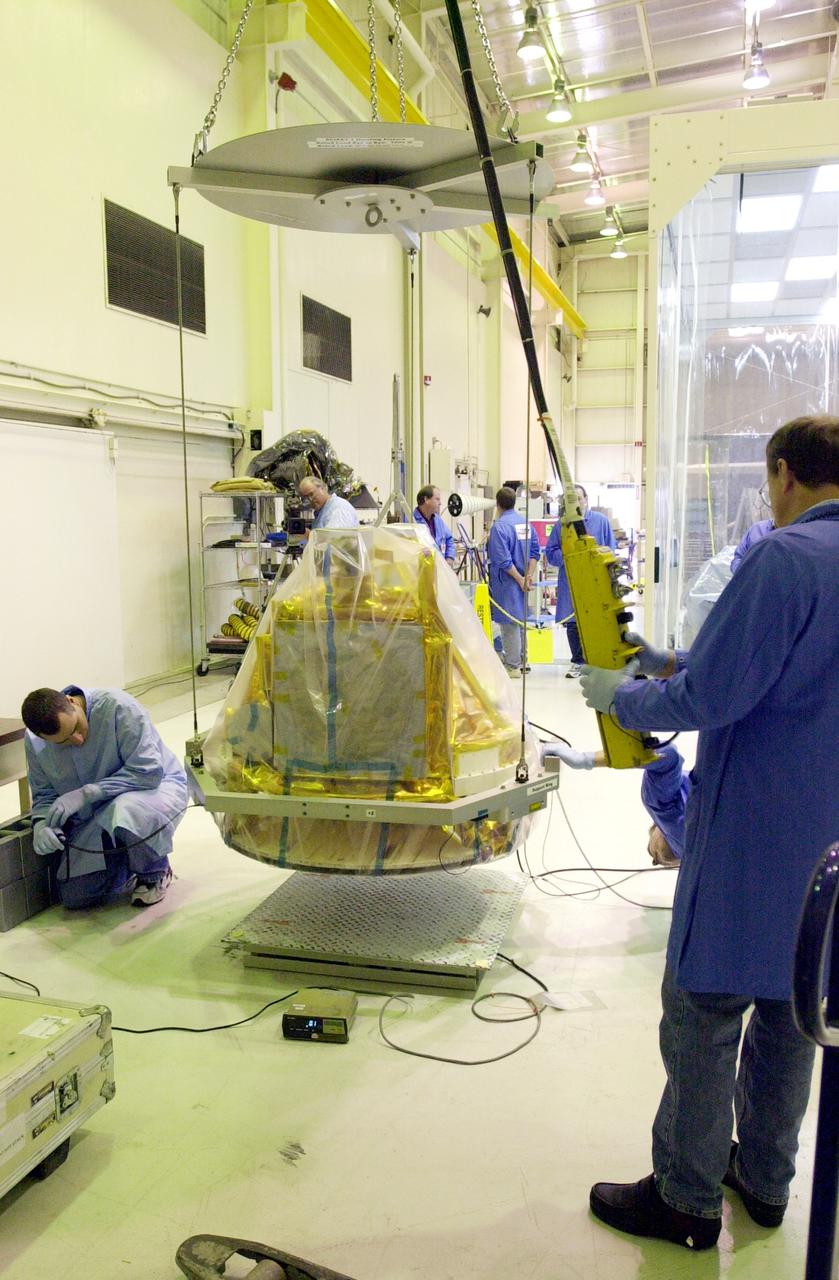
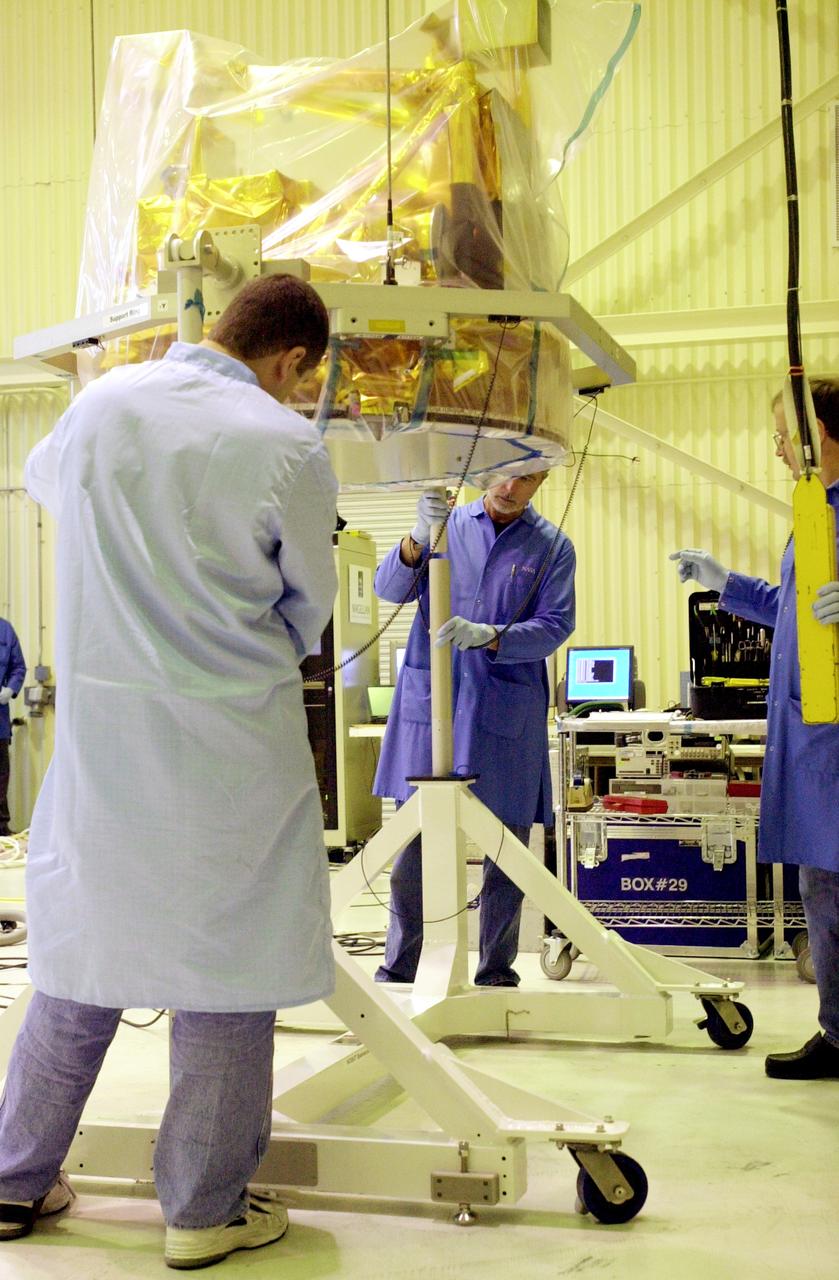
VANDENBERG AIR FORCE BASE, CALIF. -  At Vandenberg Air Force Base, Calif. a covered SciSat-1 spacecraft is lifted onto a rotation stand.   The solar arrays will be attached and the communications systems checked out.   The SciSat-1 weighs approximately 330 pounds and after launch will be placed in a 400-mile-high polar orbit to investigate processes that control the distribution of ozone in the upper atmosphere. The data from the satellite will provide Canadian and international scientists with improved measurements relating to global ozone processes and help policymakers assess existing environmental policy and develop protective measures for improving the health of our atmosphere, preventing further ozone depletion. The mission is designed to last two years.
VANDENBERG AIR FORCE BASE, CALIF. - At Vandenberg Air Force Base, Calif. a covered SciSat-1 spacecraft is lifted onto a rotation stand. The solar arrays will be attached and the communications systems checked out. The SciSat-1 weighs approximately 330 pounds and after launch will be placed in a 400-mile-high polar orbit to investigate processes that control the distribution of ozone in the upper atmosphere. The data from the satellite will provide Canadian and international scientists with improved measurements relating to global ozone processes and help policymakers assess existing environmental policy and develop protective measures for improving the health of our atmosphere, preventing further ozone depletion. The mission is designed to last two years.
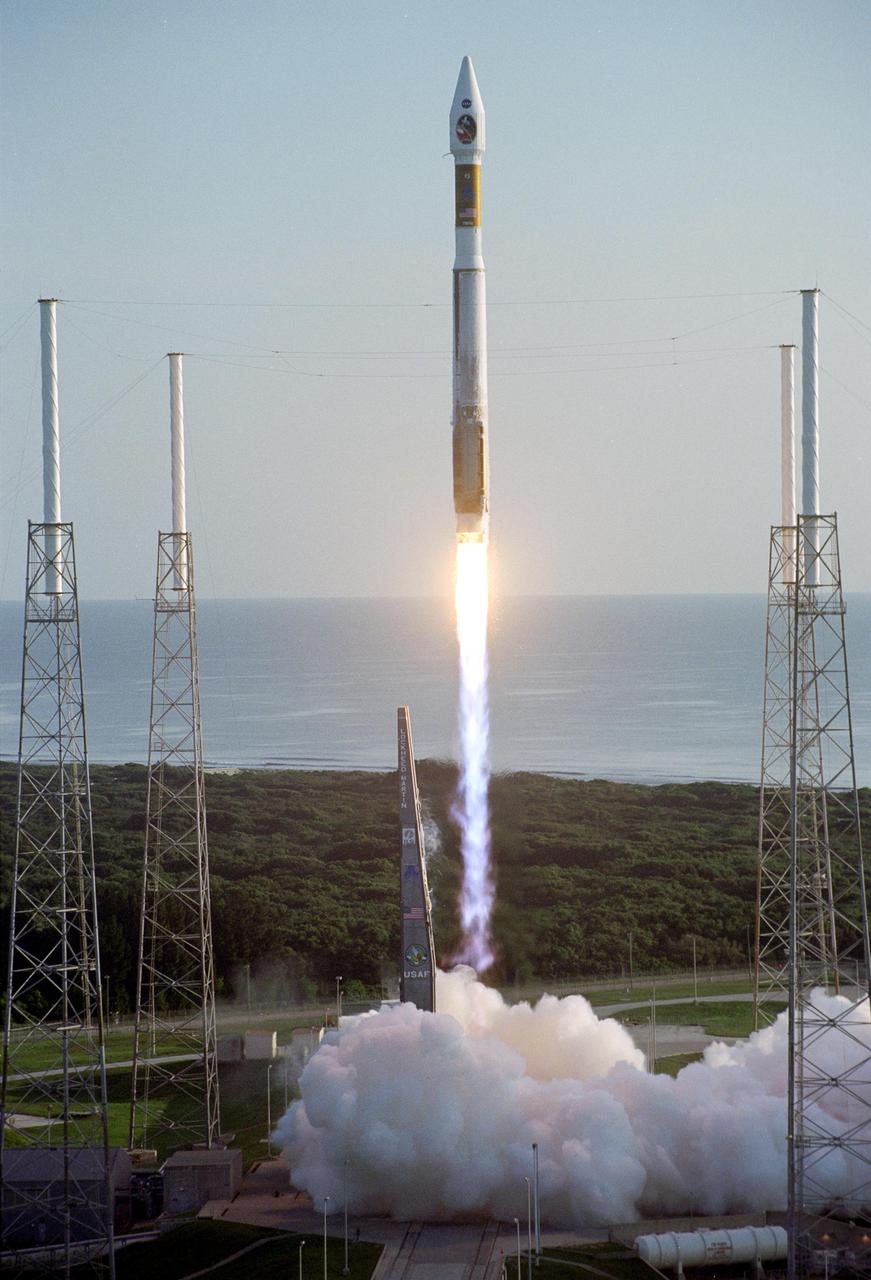
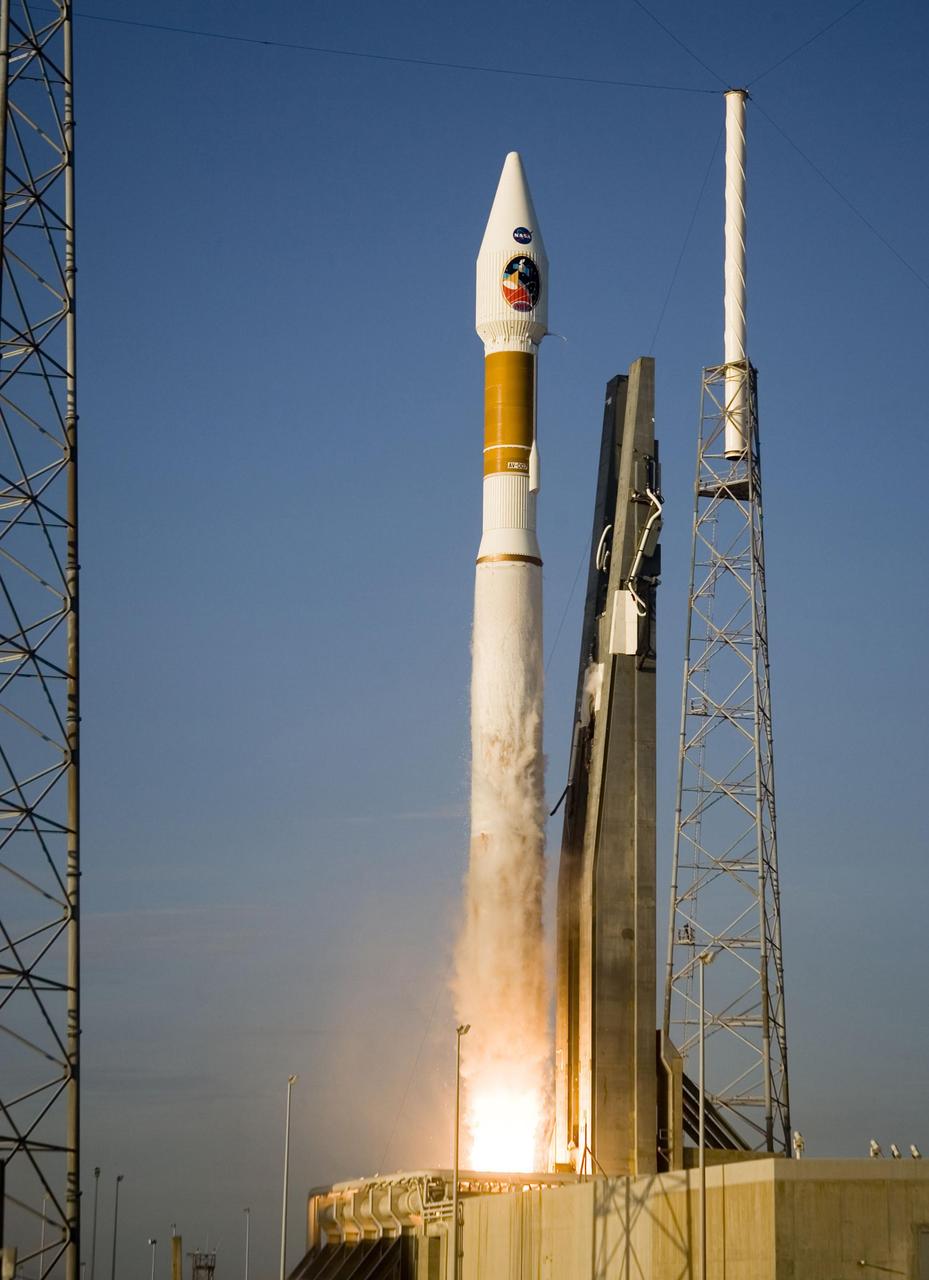
With the Atlantic Ocean as a backdrop, an Atlas V launch vehicle, 19 stories tall, with a two-ton NASA Mars Reconnaissance Orbiter MRO on top, roars away from Launch Complex 41 at Cape Canaveral Air Force Station.
Mars Reconnaissance Orbiter MRO Roars Away
Atlas V launch vehicle, 19 stories tall, with a two-ton NASA Mars Reconnaissance Orbiter MRO on top, lifts off the pad on Launch Complex 41 at Cape Canaveral Air Force Station in Florida on Aug. 12, 2005.
Mars Reconnaissance Orbiter MRO Lifts Off
Air Force Two lands with Vice President Mike Pence along with Congressman Robert Aderholt at the Redstone Army Airfield in Huntsville, Alabama, on Monday, Sept. 25. The Vice President is visiting NASA’s Marshall Space Flight Center, located on Redstone Arsenal, to meet with employees, view test hardware for NASA’s Space Launch System — America’s new deep-space rocket, and tour the Payload Operations Integration Center, “science central” for the International Space Station. Photo Credit: (NASA/Emmett Given)
Vice President Pence Visits Marshall Space Flight Center
Air Force Two lands with Vice President Mike Pence along with Congressman Robert Aderholt at the Redstone Army Airfield in Huntsville, Alabama, on Monday, Sept. 25. The Vice President is visiting NASA’s Marshall Space Flight Center, located on Redstone Arsenal, to meet with employees, view test hardware for NASA’s Space Launch System — America’s new deep-space rocket, and tour the Payload Operations Integration Center, “science central” for the International Space Station. Photo Credit: (NASA/Emmett Given)
Vice President Pence Visits Marshall Space Flight Center
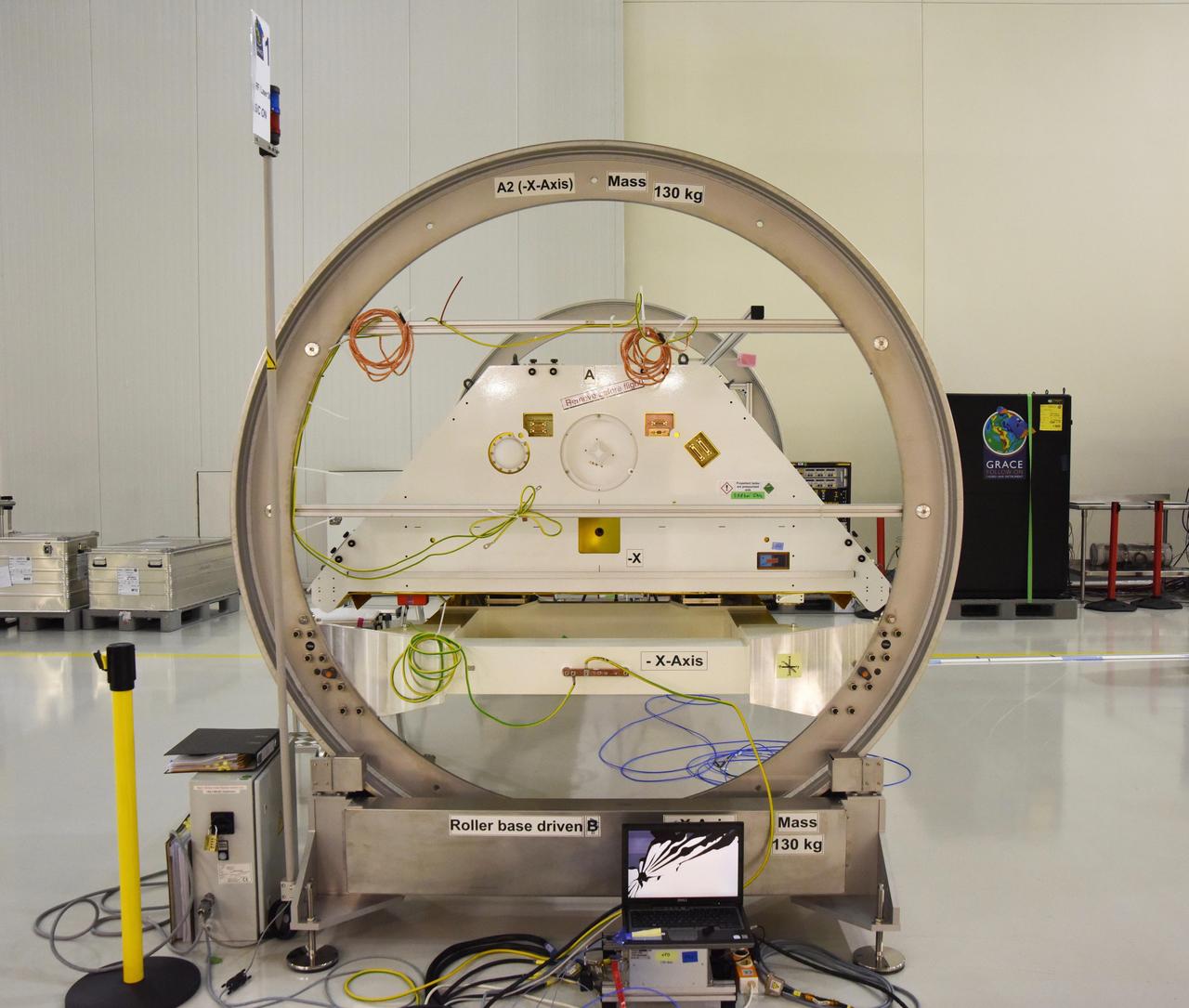
One of the two Gravity Recovery and Climate Experiment Follow-On (GRACE-FO) satellites and its turntable fixture at the Astrotech Space Operations processing facility at Vandenberg Air Force Base, California.  GRACE-FO will extend GRACE's legacy of scientific achievements, which range from tracking mass changes of Earth's polar ice sheets and estimating global groundwater changes, to measuring the mass changes of large earthquakes and inferring changes in deep ocean currents, a driving force in climate. To date, GRACE observations have been used in more than 4,300 research publications. Its measurements provide a unique view of the Earth system and have far-reaching benefits to society, such as providing insights into where global groundwater resources may be shrinking or growing and where dry soils are contributing to drought. GRACE-FO is planned to fly at least five years.   https://photojournal.jpl.nasa.gov/catalog/PIA22339
GRACE-FO Satellites in a Clean Room at Vandenberg Air Force Base
Air Force Two lands with Vice President Mike Pence along with Congressman Robert Aderholt at the Redstone Army Airfield in Huntsville, Alabama, on Monday, Sept. 25. They were greeted by NASA’s Marshall Space Flight Center Director Todd May and Redstone Arsenal’s Lt. Gen. Edward Daly. The Vice President is visiting NASA’s Marshall Center to meet with employees, view test hardware for NASA’s Space Launch System — America’s new deep-space rocket, and tour the Payload Operations Integration Center, “science central” for the International Space Station. Photo Credit: (NASA/Emmett Given)
Vice President Pence Visits Marshall Space Flight Center
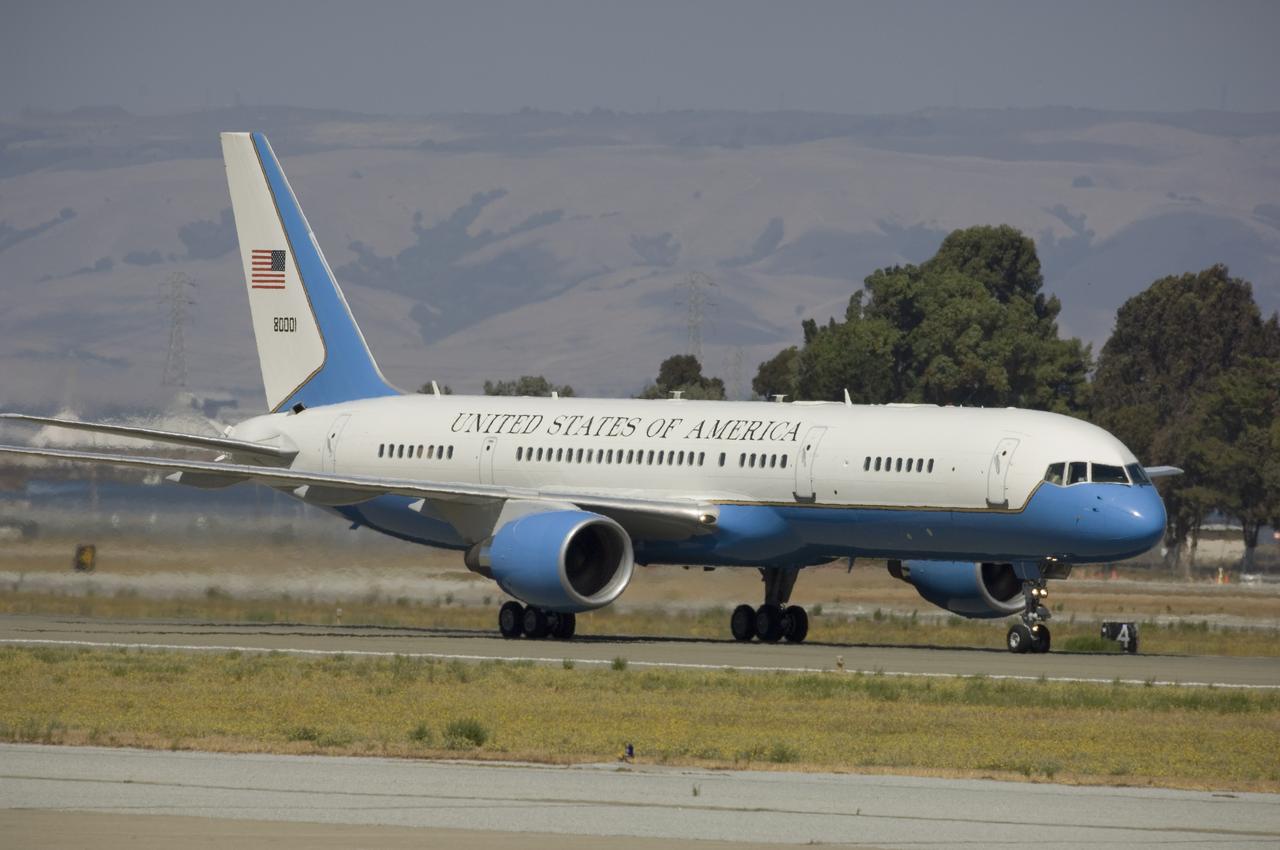
Vice President Dick Cheney lands at MFA for Bay Area Visit: Air Force Two parked on tarmac @ MFA
ARC-2006-ACD06-0165-016
Vice President Dick Cheney lands at MFA for Bay Area Visit: Air Force Two parked on tarmac @ MFA
ARC-2006-ACD06-0165-018
Vice President Dick Cheney lands at MFA for Bay Area Visit : Air Force Two lands and taxi at Moffett Field
ARC-2006-ACD06-0165-004
Vice President Dick Cheney lands at MFA for Bay Area Visit : Air Force Two lands and taxi at Moffett Field
ARC-2006-ACD06-0165-001
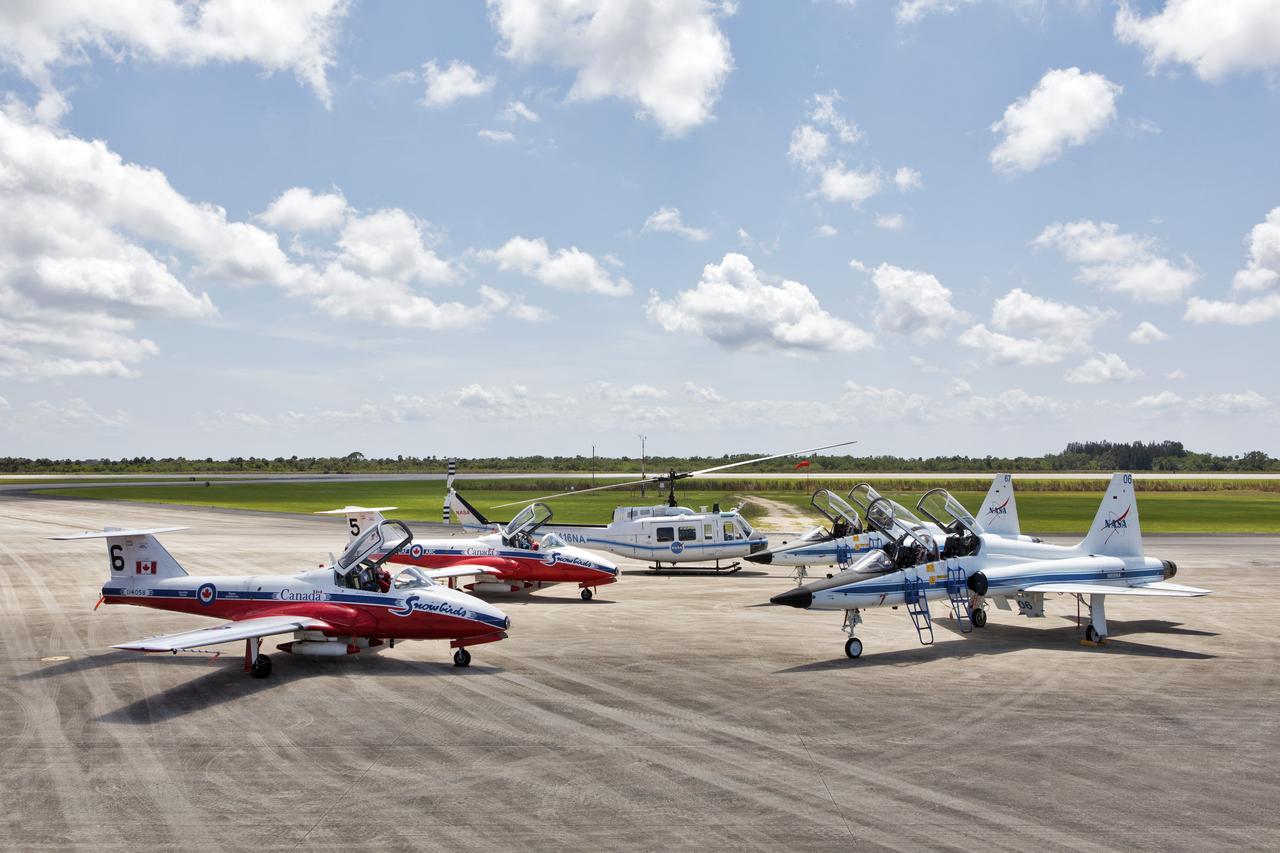
Several types of aircraft are on the tarmac at the Shuttle Landing Facility (SLF) at NASA's Kennedy Space in Florida. From left, are two Canadian Forces Snowbird CF-18 jets, a NASA Huey helicopter, and two NASA T-38 trainer aircraft. The Canadian Forces Snowbirds performed aerial maneuvers over Kennedy and Cape Canaveral Air Force Station during a practice flight on May 9, 2018, between their scheduled air shows.
NASA and Canadian Snowbirds Aircrafts
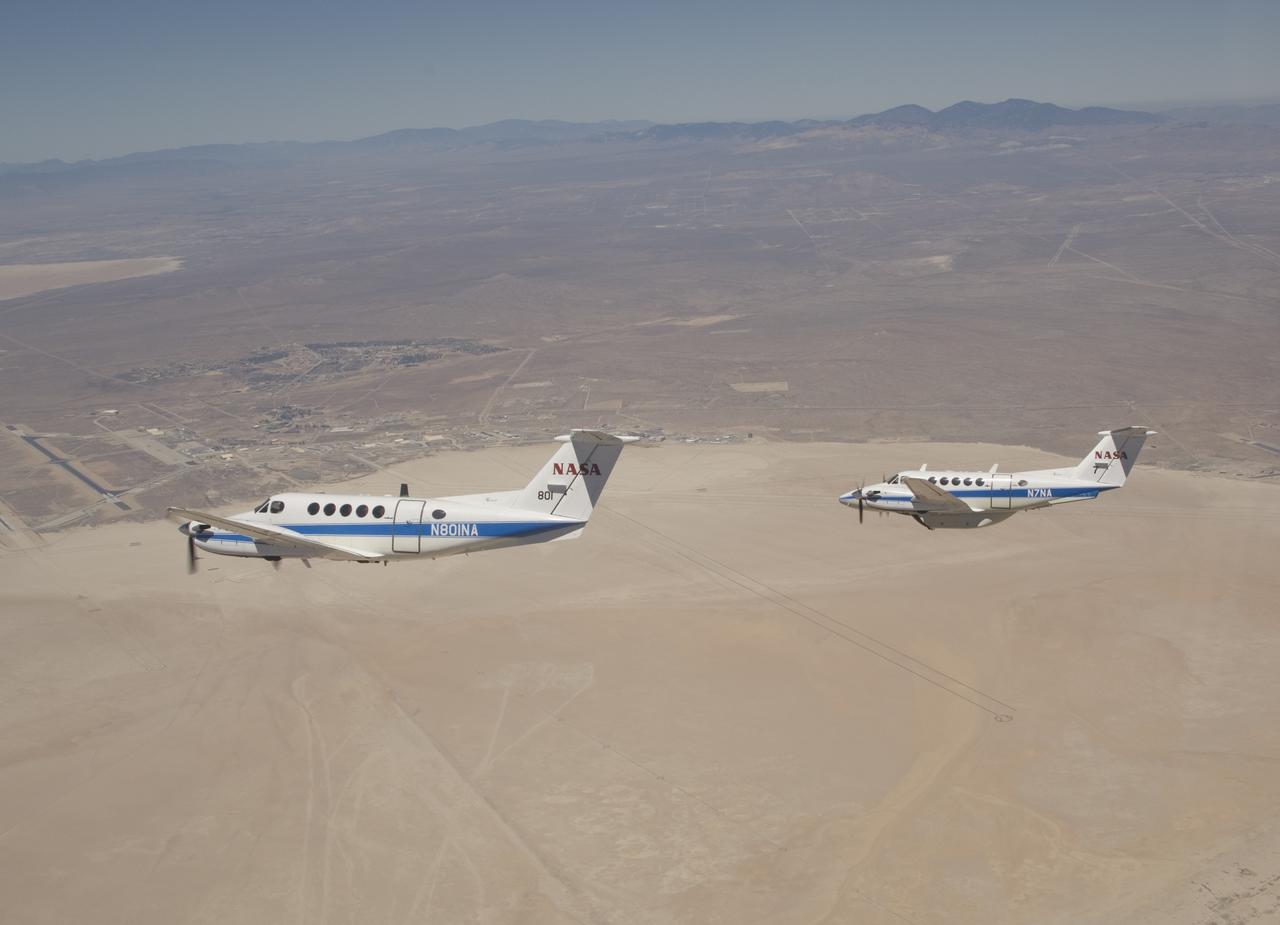
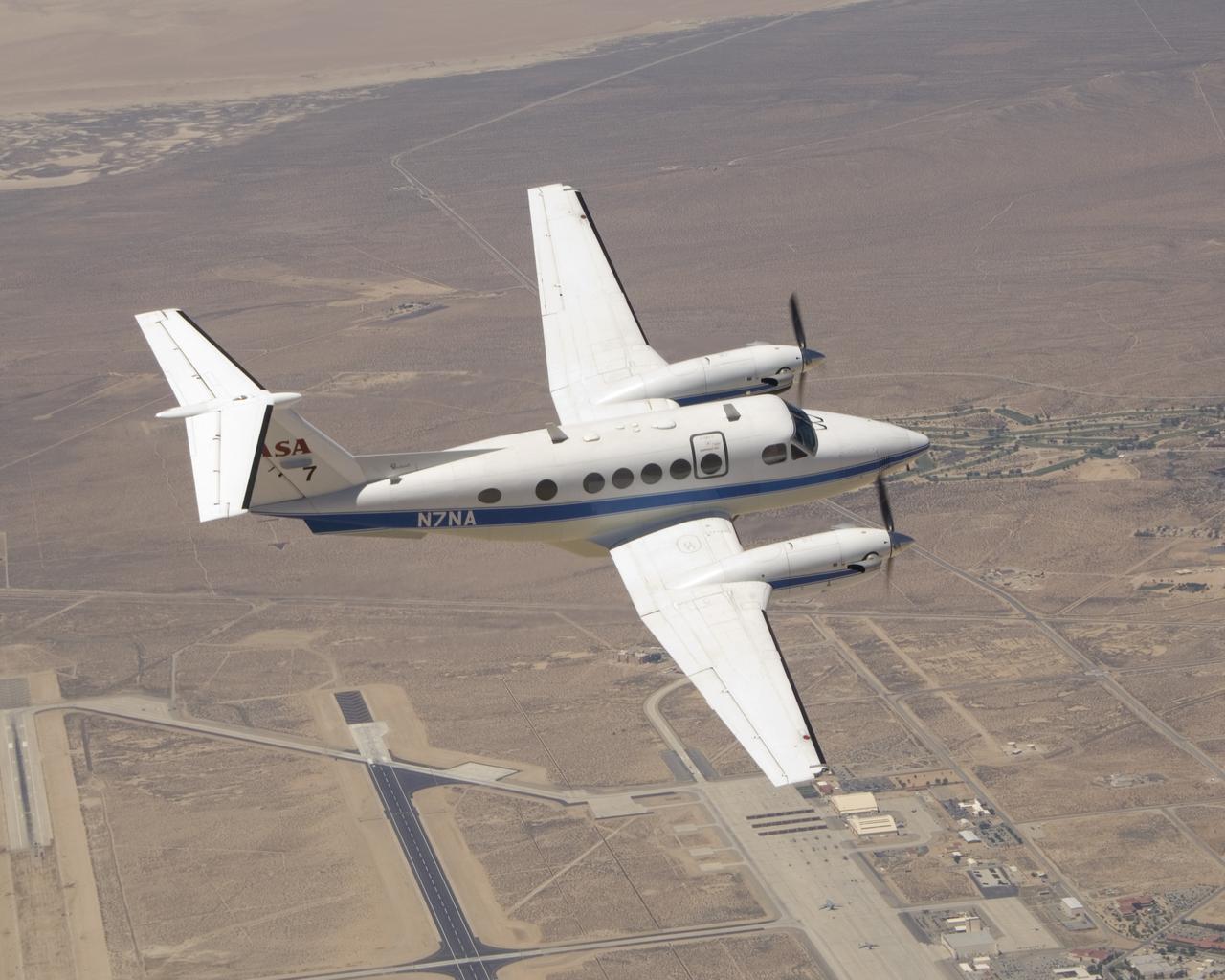
Two Beechcraft King Air mission support aircraft operated by NASA's Dryden Flight Research Center fly in formation over Rogers Dry Lake at Edwards Air Force Base.
ED08-0141-10
One of NASA Dryden Flight Research Center's two Beechcraft King Air mission support aircraft shows off its lines over Edwards Air Force Base, Calif.
ED08-0141-17
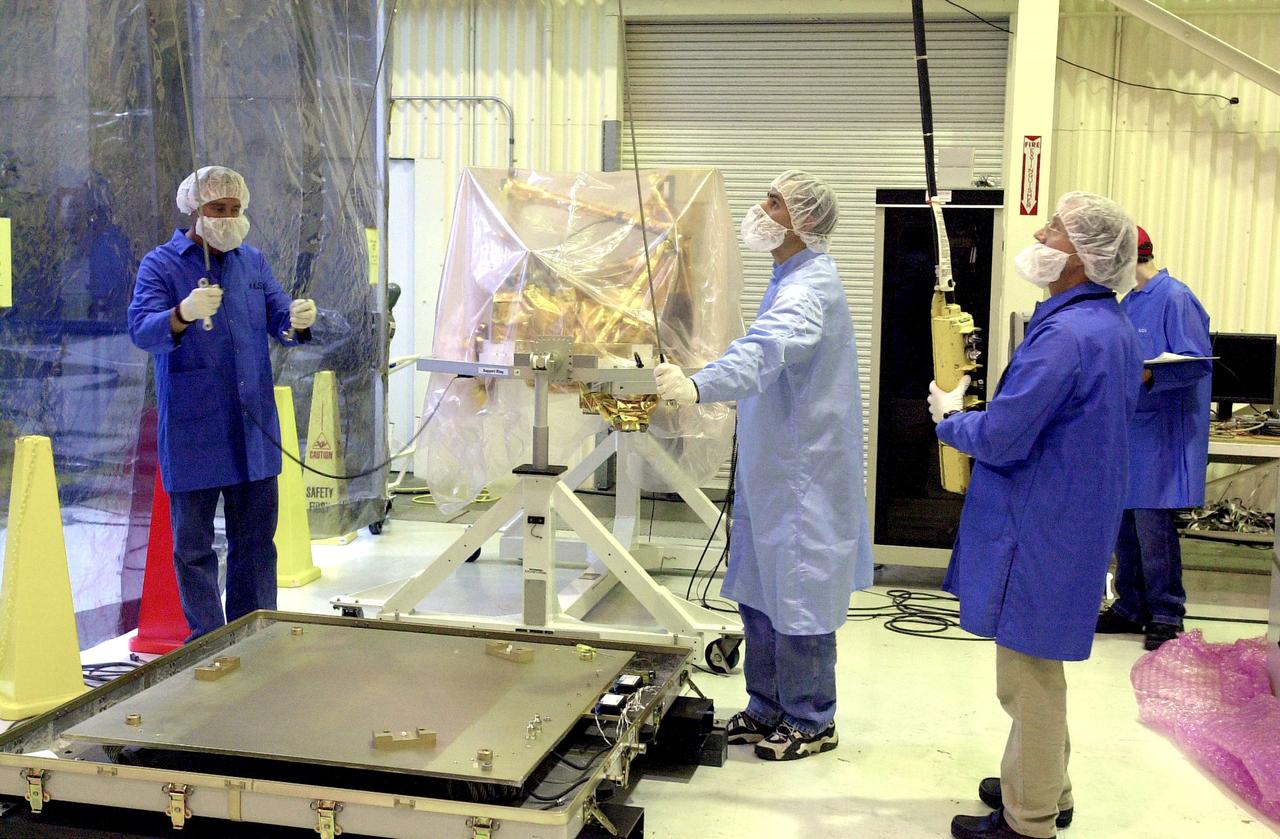
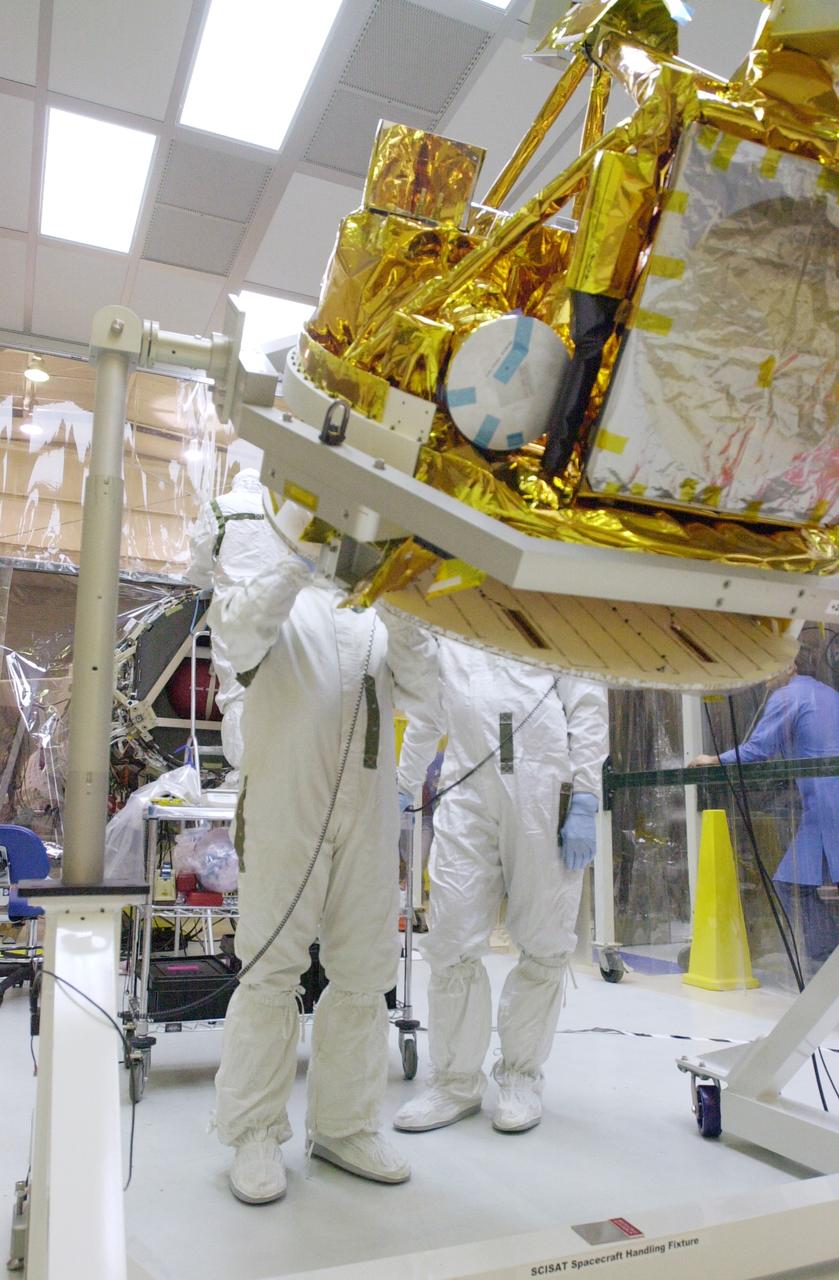
VANDENBERG AIR FORCE BASE, CALIF.  -  Outside the clean room at Vandenberg Air Force Base, Calif., the SciSat-1 spacecraft (background) has been removed from the shipping container mounting base (lower left) and placed on the handling fixture. Sci-Sat, which will undergo instrument checkout and spacecraft functional testing, weighs approximately 330 pounds and after launch will be placed in a 400-mile-high polar orbit to investigate processes that control the distribution of ozone in the upper atmosphere. The data from the satellite will provide Canadian and international scientists with improved measurements relating to global ozone processes and help policymakers assess existing environmental policy and develop protective measures for improving the health of our atmosphere, preventing further ozone depletion. The mission is designed to last two years.
VANDENBERG AIR FORCE BASE, CALIF. - Outside the clean room at Vandenberg Air Force Base, Calif., the SciSat-1 spacecraft (background) has been removed from the shipping container mounting base (lower left) and placed on the handling fixture. Sci-Sat, which will undergo instrument checkout and spacecraft functional testing, weighs approximately 330 pounds and after launch will be placed in a 400-mile-high polar orbit to investigate processes that control the distribution of ozone in the upper atmosphere. The data from the satellite will provide Canadian and international scientists with improved measurements relating to global ozone processes and help policymakers assess existing environmental policy and develop protective measures for improving the health of our atmosphere, preventing further ozone depletion. The mission is designed to last two years.
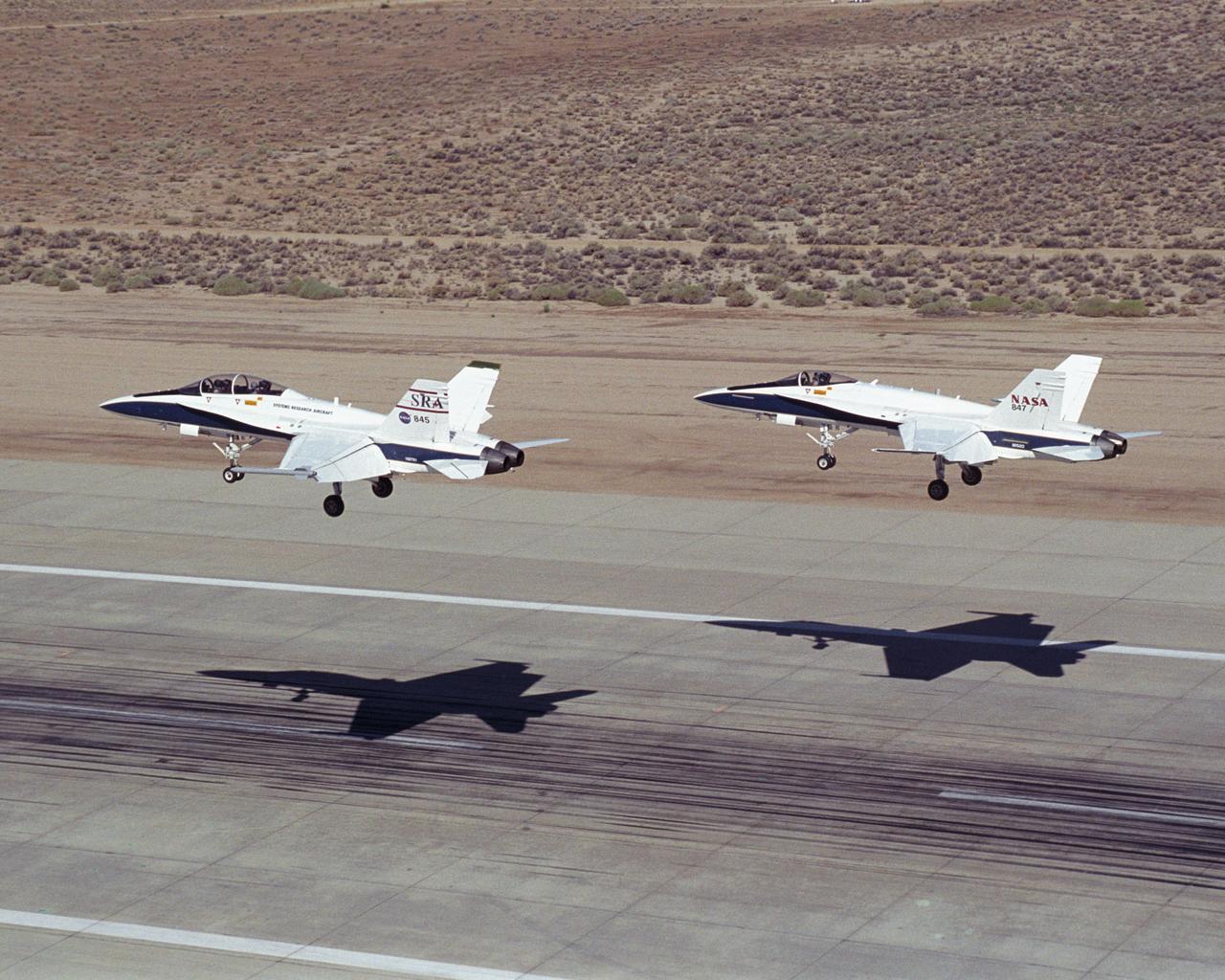
Two NASA Dryden F/A-18's land on the Edwards Air Force Base runway after completion of an Autonomous Formation Flight (AFF) mission.
EC01-0267-6
VANDENBERG AIR FORCE BASE, Calif. --  In Bldg. 1610 at Vandenberg Air Force Base in California, two rows of the transportation canister are installed around the NOAA-N Prime spacecraft.  NOAA-N Prime is the latest polar-orbiting operational environmental weather satellite developed by NASA for the National Oceanic and Atmospheric Administration.  The satellite is scheduled to launch Feb. 4 aboard a Delta II rocket from Vandenberg Air Force Base. Photo credit: NASA/ Daniel Liberotti, VAFB
KSC-2009-1457
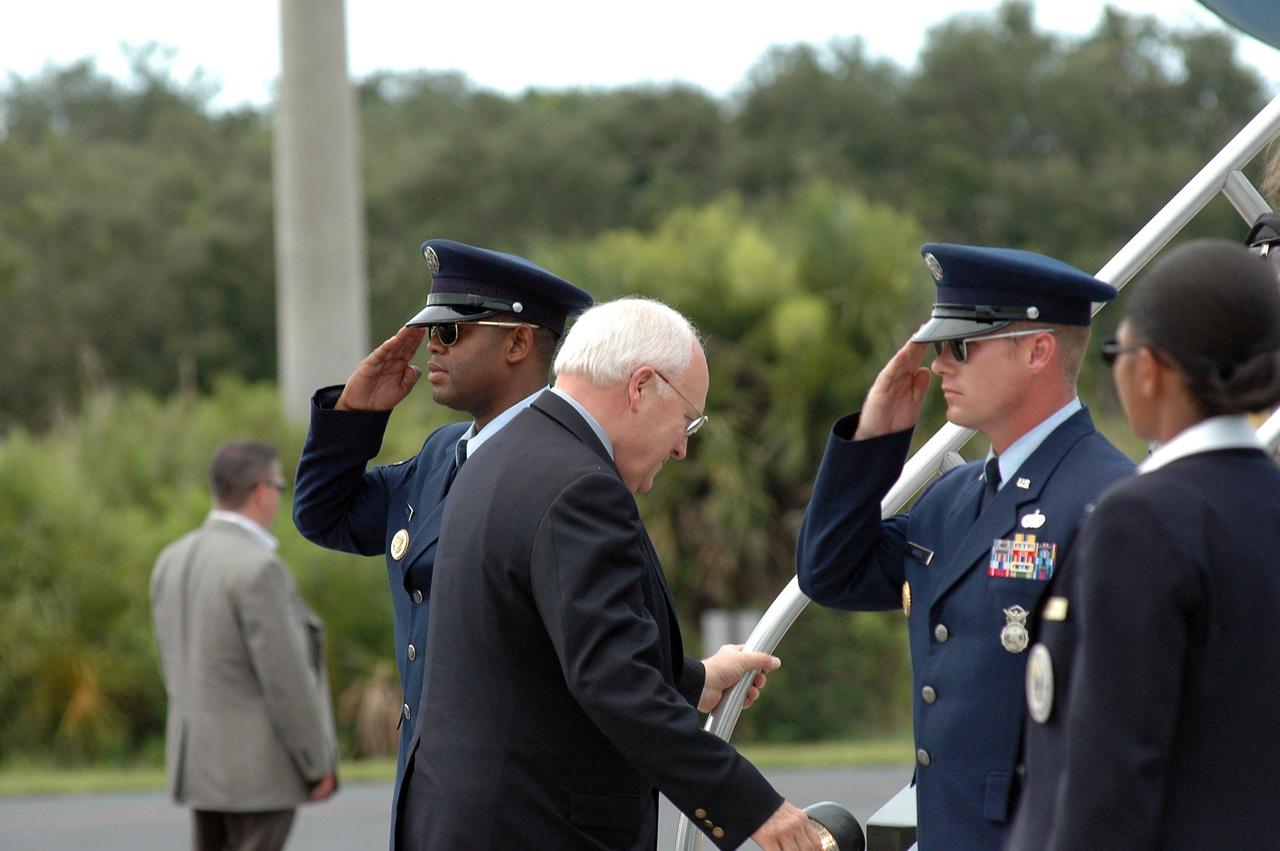
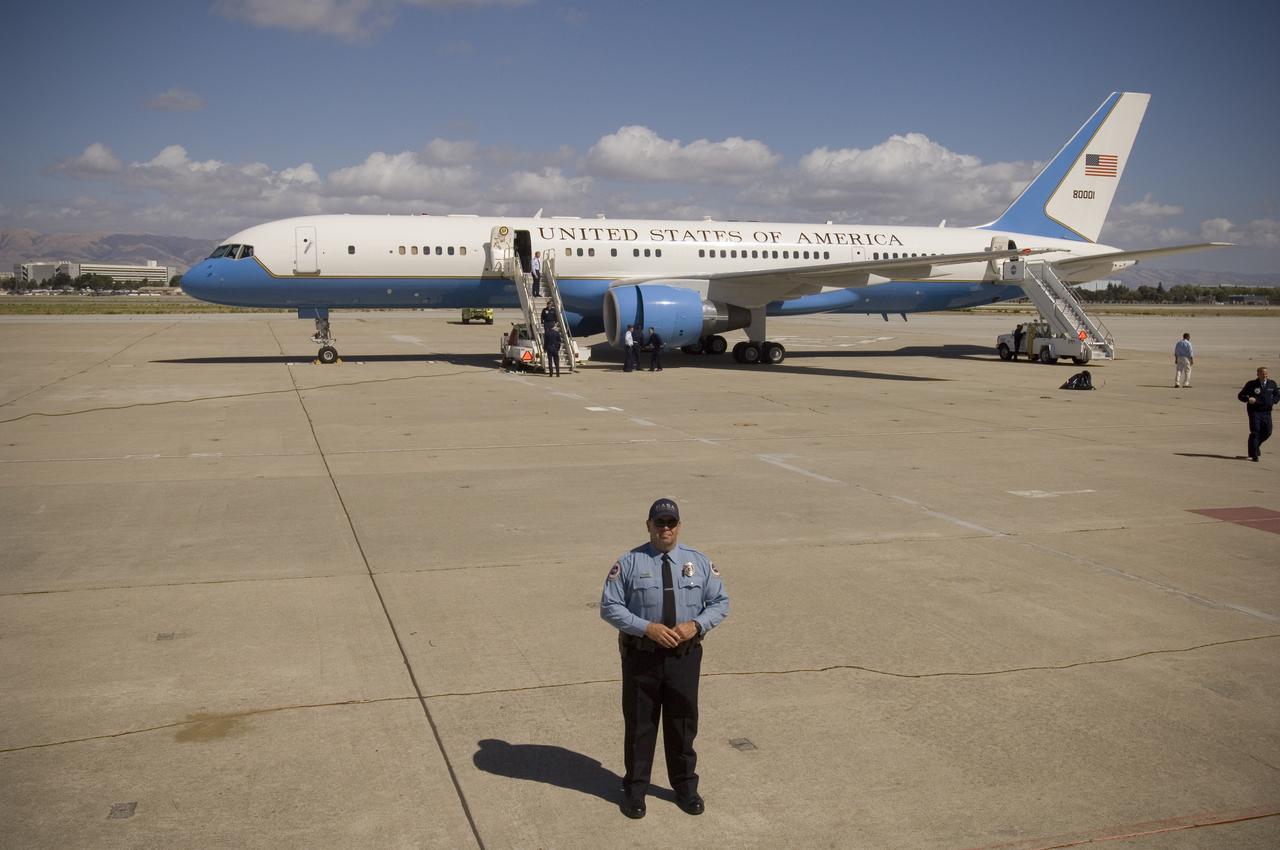
KENNEDY SPACE CENTER, FLA. - On the Skid Strip at Cape Canaveral Air Force Station in Florida, U.S. Vice President Dick Cheney is saluted by officers from Patrick Air Force Base as he boards Air Force Two for a return trip to Washington.  Cheney and his family flew in earlier to witness the launch of Space Shuttle Discovery on mission STS-121.  The launch was scrubbed due to weather concerns and postponed 24 hours.     Photo credit: NASA/Kim Shiflett
KSC-06pd1352
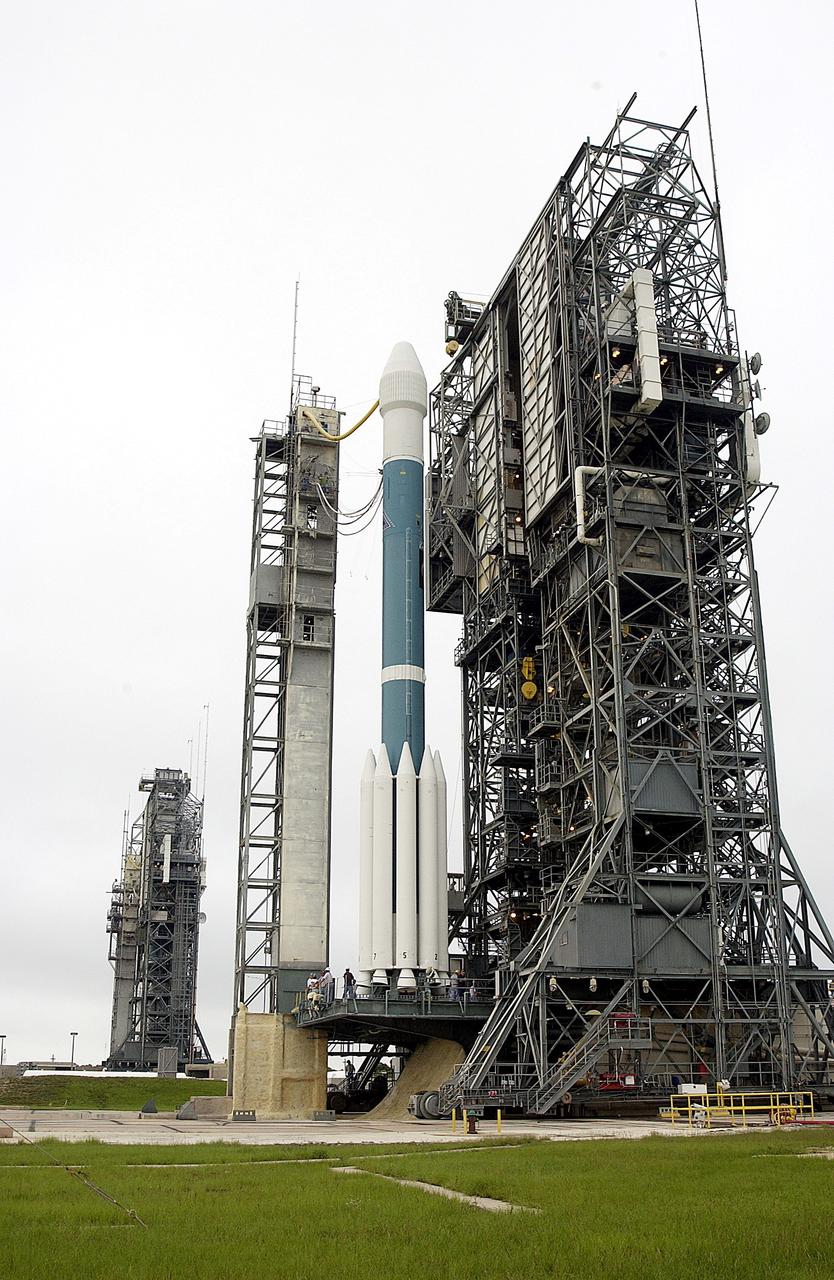
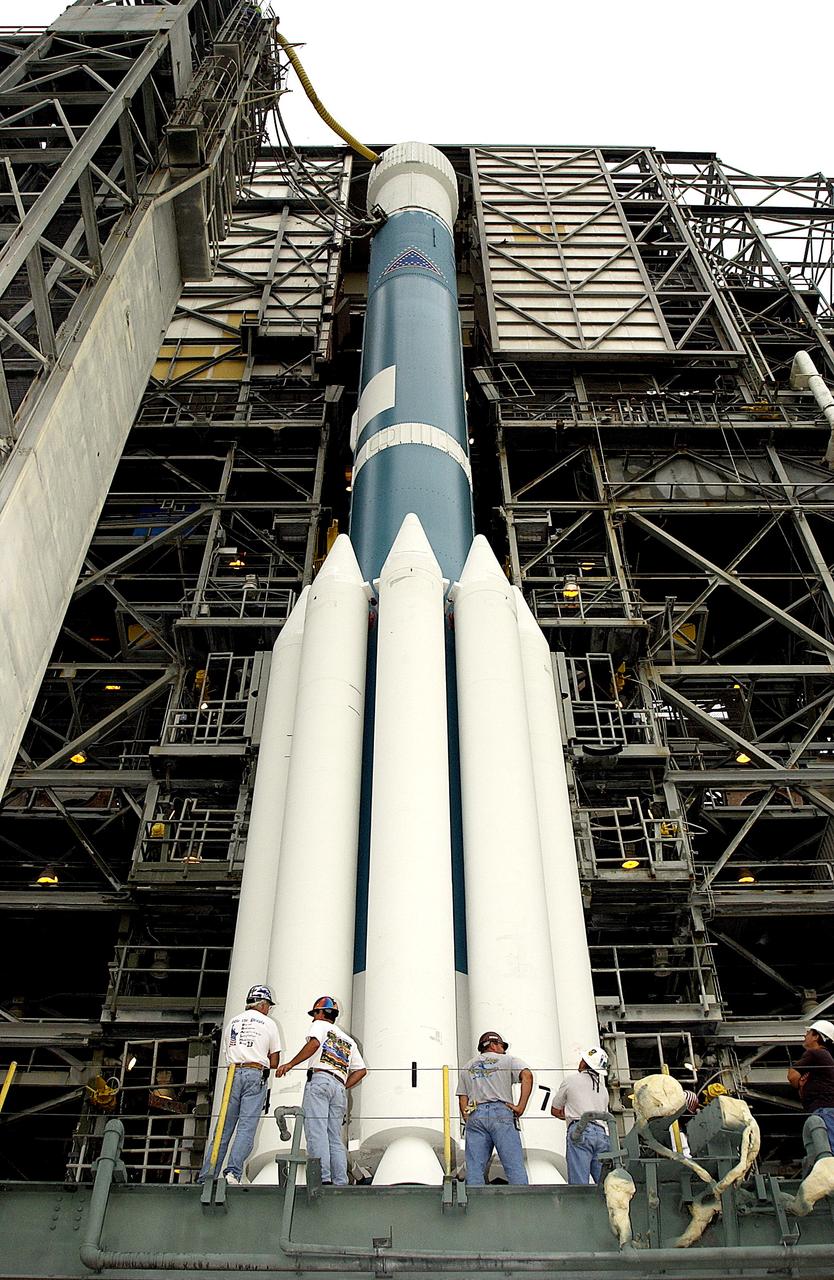
KENNEDY SPACE CENTER, FLA. -   On Launch Complex 17-A, Cape Canaveral Air Force Station, the launch tower rolls back from the Boeing Delta II rocket and its Mars Exploration Rover (MER-A) payload in preparation for another launch attempt.  The first two attempts, June 8 and June 9, were postponed due to weather concerns.  MER-A is the first of two rovers being launched to Mars.  When the two rovers arrive at Mars in 2004, they will bounce to airbag-cushioned landings at sites offering a balance of favorable conditions for safe landings and interesting science. The rovers see sharper images, can explore farther and examine rocks better than anything that has ever landed on Mars.  The designated site for MER-A mission is Gusev Crater, which appears to have been a crater lake.  The second rover, MER-B, is scheduled to launch June 25.
KENNEDY SPACE CENTER, FLA. - On Launch Complex 17-A, Cape Canaveral Air Force Station, the launch tower rolls back from the Boeing Delta II rocket and its Mars Exploration Rover (MER-A) payload in preparation for another launch attempt. The first two attempts, June 8 and June 9, were postponed due to weather concerns. MER-A is the first of two rovers being launched to Mars. When the two rovers arrive at Mars in 2004, they will bounce to airbag-cushioned landings at sites offering a balance of favorable conditions for safe landings and interesting science. The rovers see sharper images, can explore farther and examine rocks better than anything that has ever landed on Mars. The designated site for MER-A mission is Gusev Crater, which appears to have been a crater lake. The second rover, MER-B, is scheduled to launch June 25.
KENNEDY SPACE CENTER, FLA. -   On Launch Complex 17-A, Cape Canaveral Air Force Station, the launch tower begins to roll back from the Boeing Delta II rocket and its Mars Exploration Rover (MER-A) payload in preparation for another launch attempt.  The first two attempts were postponed due to weather concerns.  MER-A is the first of two rovers being launched to Mars.  When the two rovers arrive at Mars in 2004, they will bounce to airbag-cushioned landings at sites offering a balance of favorable conditions for safe landings and interesting science. The rovers see sharper images, can explore farther and examine rocks better than anything that has ever landed on Mars.  The designated site for MER-A mission is Gusev Crater, which appears to have been a crater lake.  The second rover, MER-B, is scheduled to launch June 25.
KENNEDY SPACE CENTER, FLA. - On Launch Complex 17-A, Cape Canaveral Air Force Station, the launch tower begins to roll back from the Boeing Delta II rocket and its Mars Exploration Rover (MER-A) payload in preparation for another launch attempt. The first two attempts were postponed due to weather concerns. MER-A is the first of two rovers being launched to Mars. When the two rovers arrive at Mars in 2004, they will bounce to airbag-cushioned landings at sites offering a balance of favorable conditions for safe landings and interesting science. The rovers see sharper images, can explore farther and examine rocks better than anything that has ever landed on Mars. The designated site for MER-A mission is Gusev Crater, which appears to have been a crater lake. The second rover, MER-B, is scheduled to launch June 25.
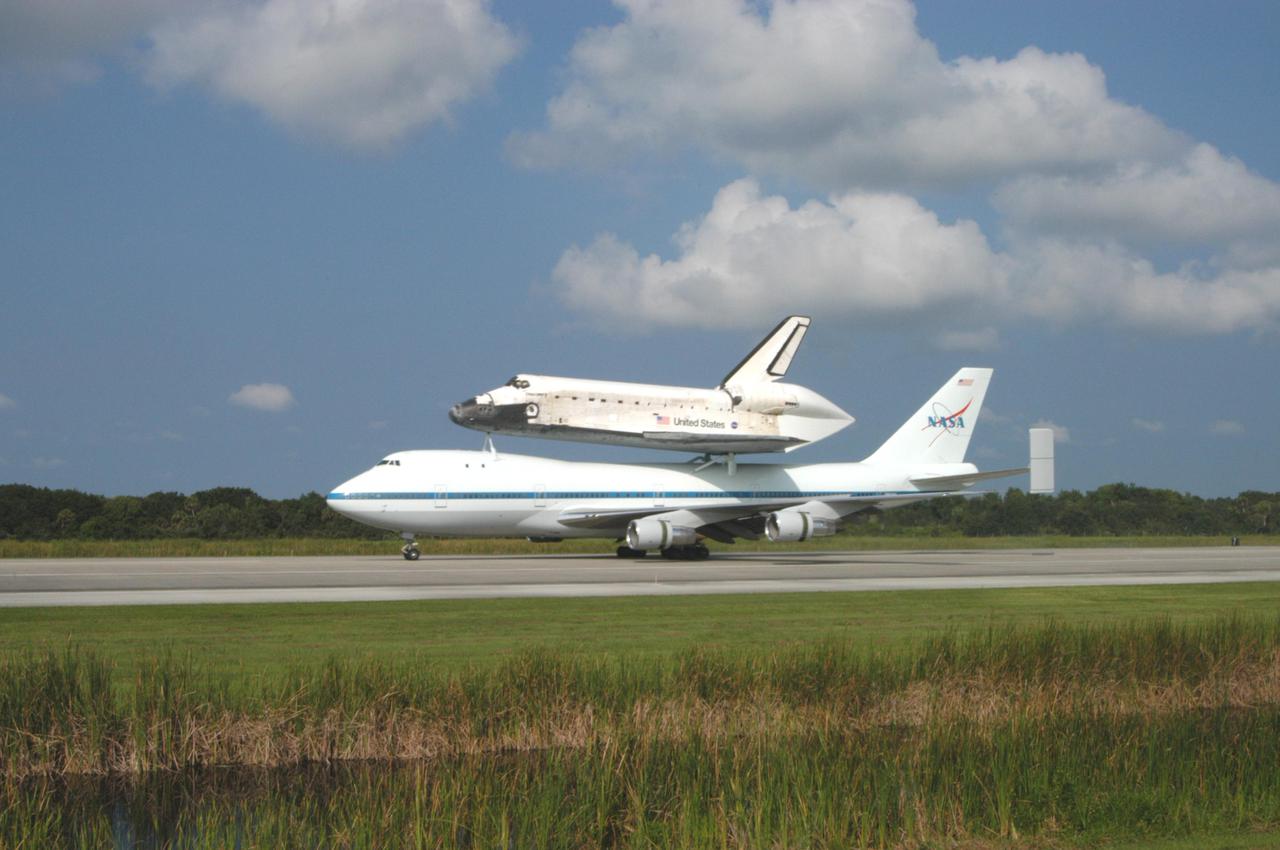
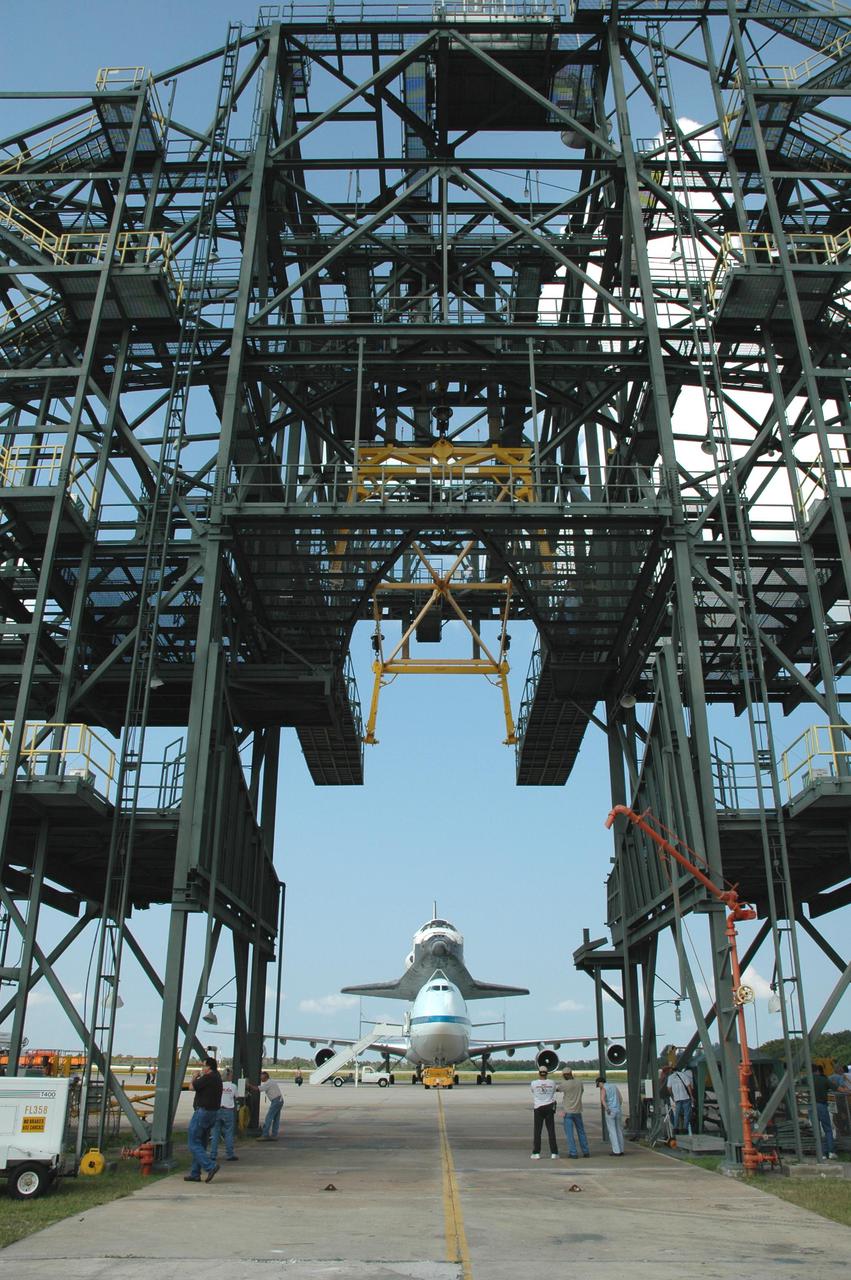
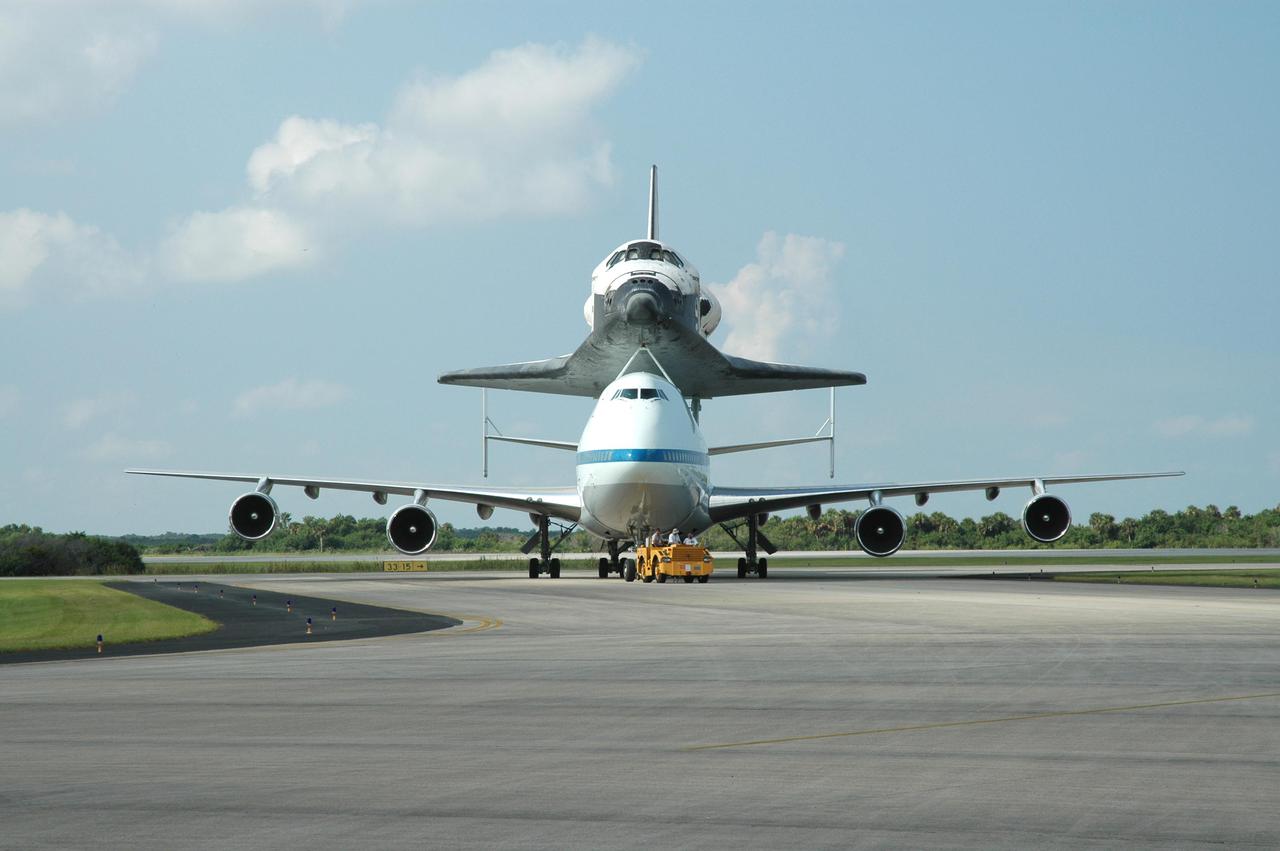
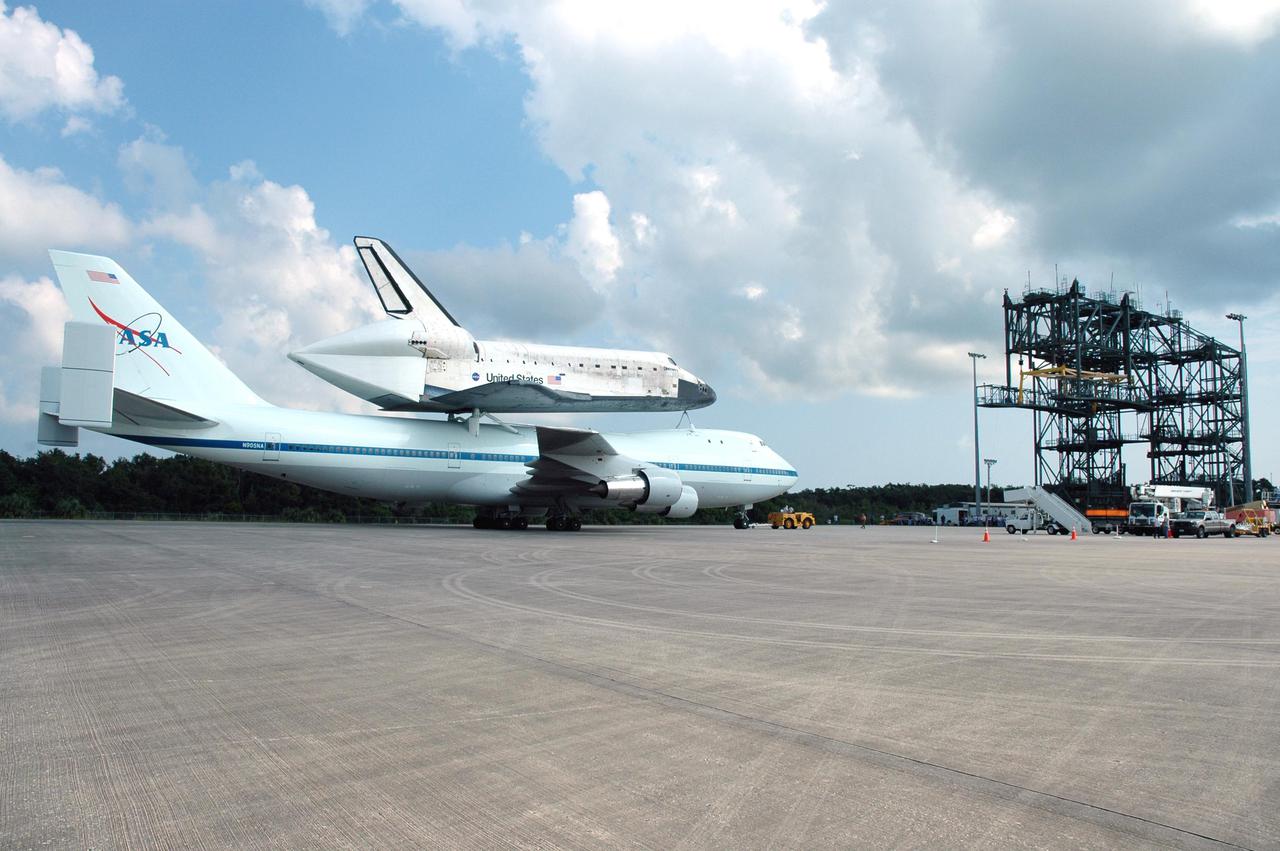
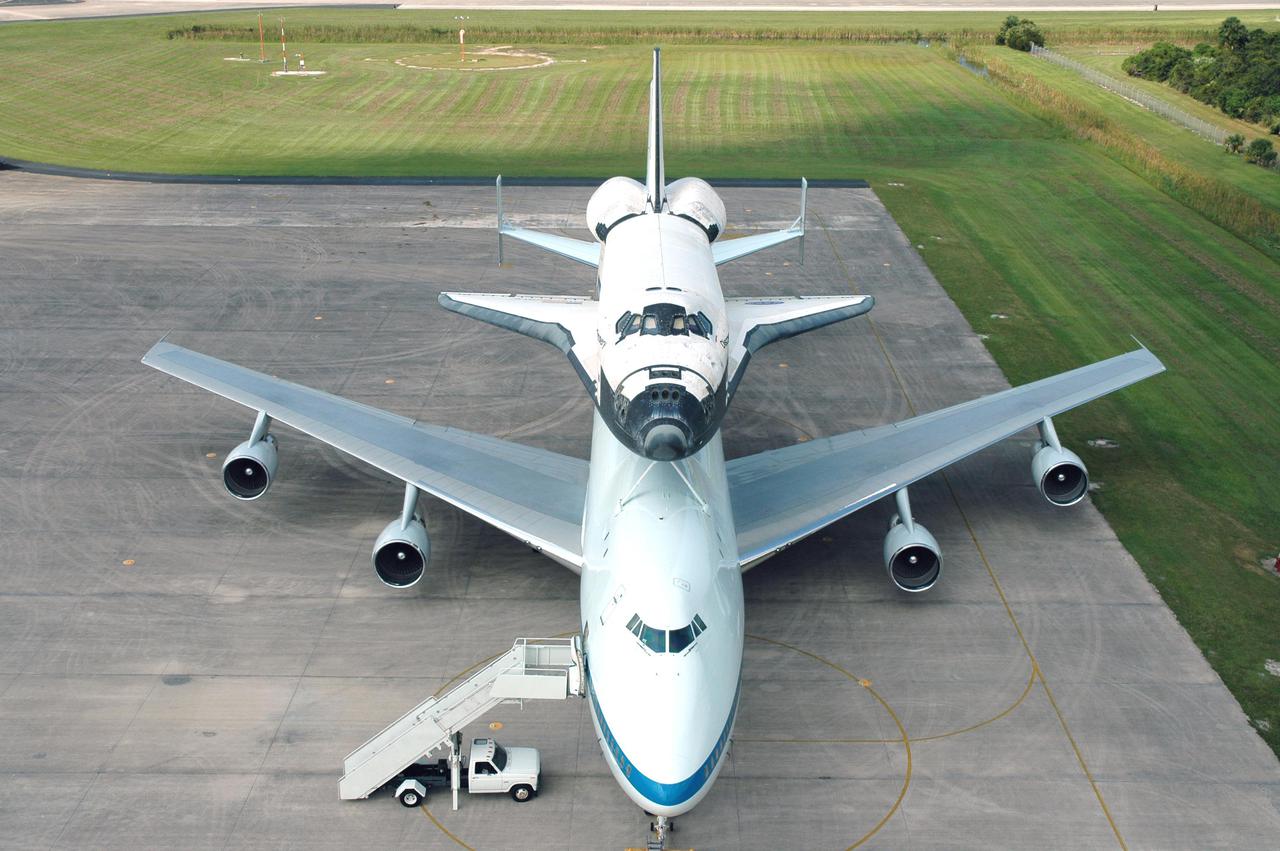
KENNEDY SPACE CENTER, FLA. -  Space Shuttle Discovery, atop a modified Boeing 747 Shuttle Carrier Aircraft (SCA), has arrived at the Mate_Demate Device (MDD) at NASA Kennedy Space Center's Shuttle Landing Facility (SLF) following touchdown on runway 15 at about 10:00 a.m. EDT. The cross-country ferry flight became necessary when two days of unfavorable weather conditions at KSC forced Discovery to land on runway 22 at Edwards Air Force Base, Calif., on Aug. 9 following mission STS-114. On the return trip, stops were made at Altus Air Force Base, Okla., and Barksdale Air Force Base, La., where Discovery stayed for two nights.  A crane on the MDD will lift Discovery from the SCA and place it on solid ground. Discovery will then be towed to the Orbiter Processing Facility where preparations will begin for its next flight, STS-121.
KSC-05PD-1899
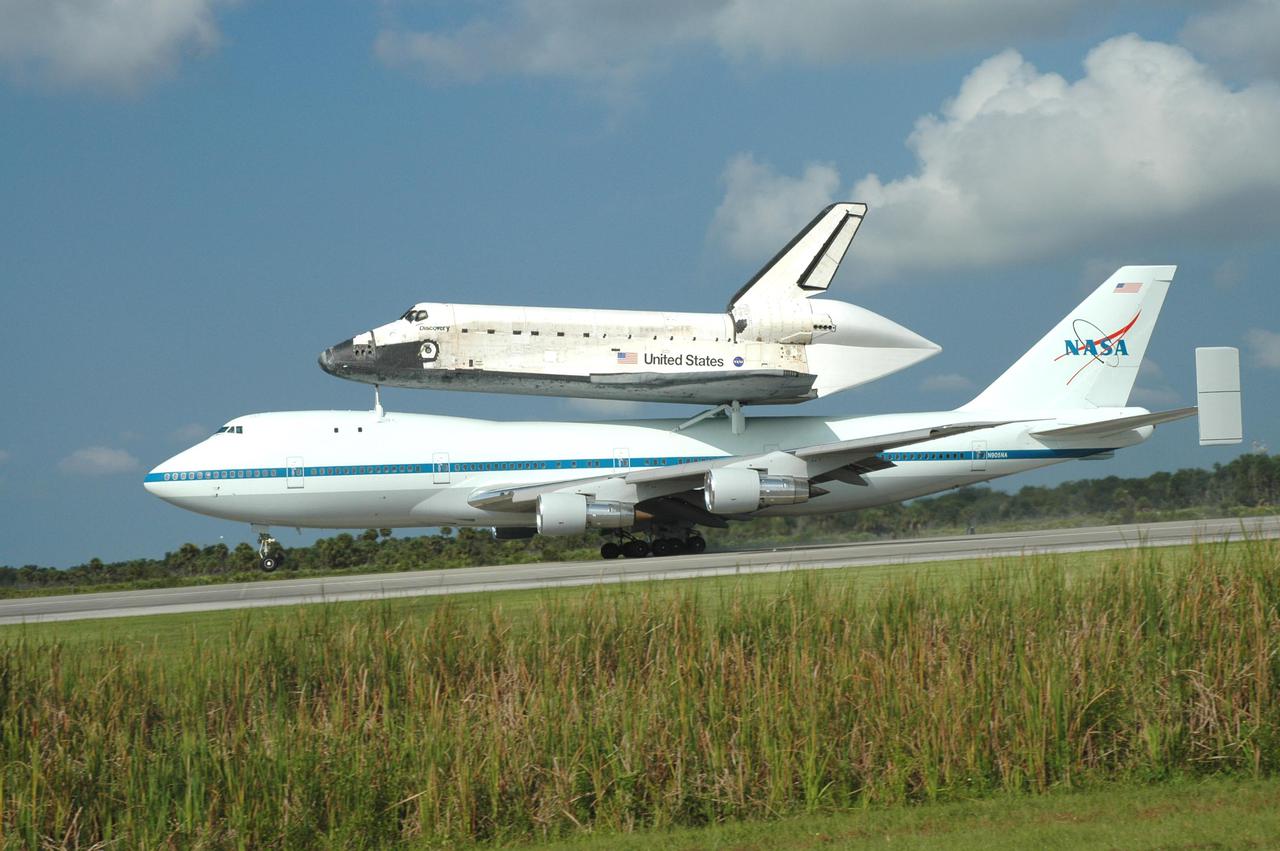
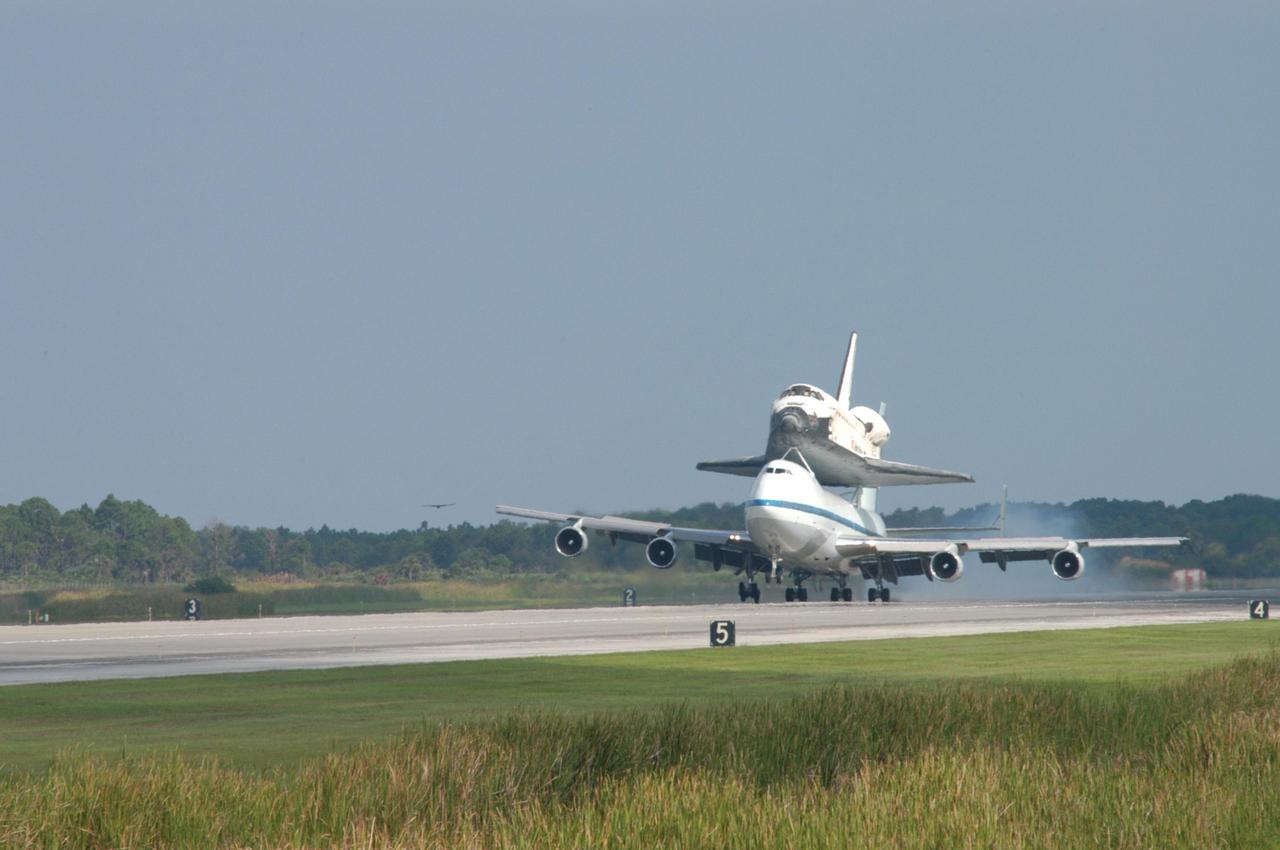
KENNEDY SPACE CENTER, FLA. -  Space Shuttle Discovery, atop a modified Boeing 747 Shuttle Carrier Aircraft (SCA),  touches down on runway 15 at NASA Kennedy Space Center's Shuttle Landing Facility (SLF) at about 10:00 a.m. EDT. The cross-country ferry flight became necessary when two days of unfavorable weather conditions at KSC forced Discovery to land on runway 22 at Edwards Air Force Base, Calif., on Aug. 9 following mission STS-114. On the return trip, stops were made at Altus Air Force Base, Okla., and Barksdale Air Force Base, La., where Discovery stayed for two nights.  The SCA and Discovery will be towed to the Mate_Demate Device at the SLF where a crane will lift Discovery from the SCA and place it on solid ground. Discovery will then be towed to the Orbiter Processing Facility where preparations will begin for its next flight, STS-121.
KSC-05PD-1893
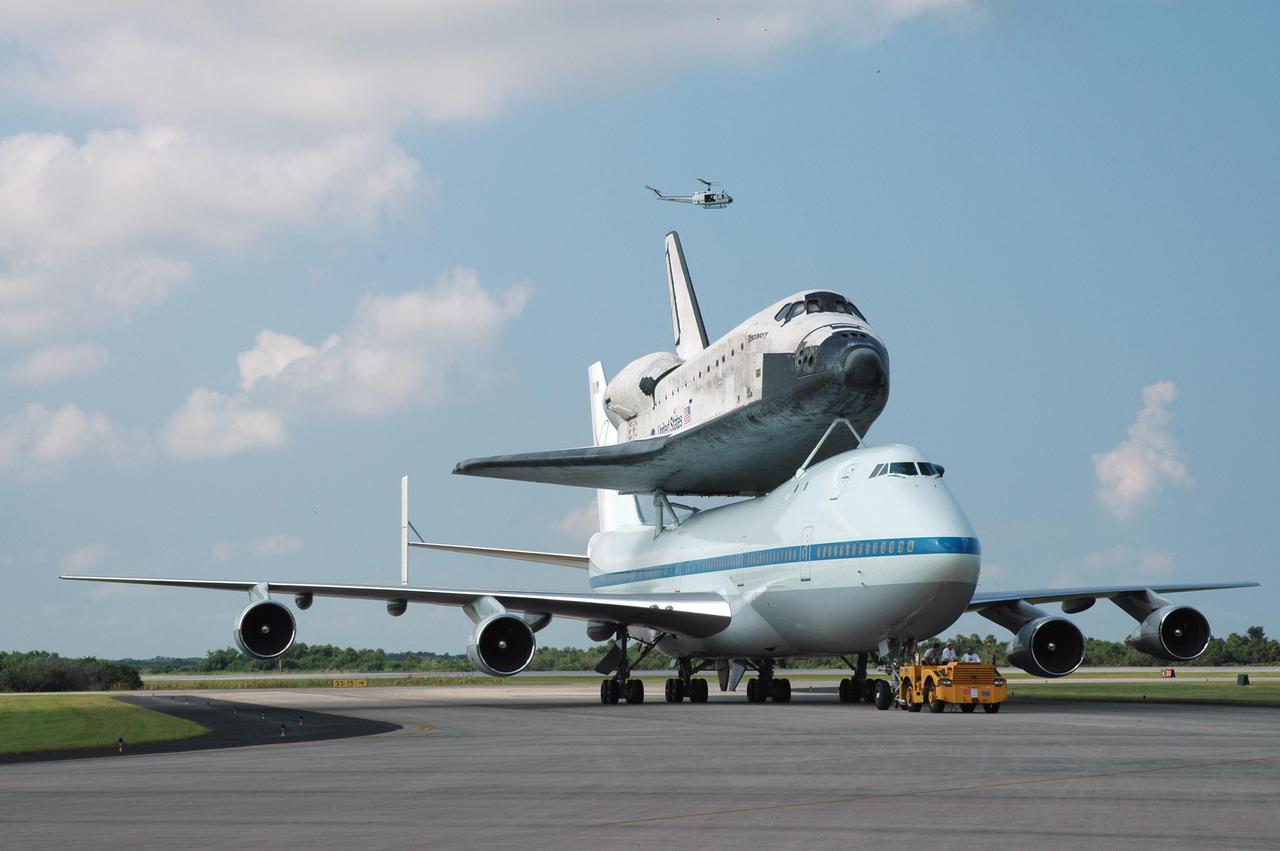
KENNEDY SPACE CENTER, FLA. -  Space Shuttle Discovery, atop a modified Boeing 747 Shuttle Carrier Aircraft (SCA), is towed to the Mate_Demate Device (MDD) at NASA Kennedy Space Center's Shuttle Landing Facility (SLF) following touchdown on runway 15 at about 10:00 a.m. EDT. The cross-country ferry flight became necessary when two days of unfavorable weather conditions at KSC forced Discovery to land on runway 22 at Edwards Air Force Base, Calif., on Aug. 9 following mission STS-114. On the return trip, stops were made at Altus Air Force Base, Okla., and Barksdale Air Force Base, La., where Discovery stayed for two nights. A crane on the MDD will lift Discovery from the SCA and place it on solid ground. Discovery will then be towed to the Orbiter Processing Facility where preparations will begin for its next flight, STS-121.
KSC-05PD-1895
KENNEDY SPACE CENTER, FLA. -  Space Shuttle Discovery, atop a modified Boeing 747 Shuttle Carrier Aircraft (SCA), is towed to the Mate_Demate Device (MDD), at right, at NASA Kennedy Space Center's Shuttle Landing Facility (SLF) following touchdown on runway 15 at about 10:00 a.m. EDT. The cross-country ferry flight became necessary when two days of unfavorable weather conditions at KSC forced Discovery to land on runway 22 at Edwards Air Force Base, Calif., on Aug. 9 following mission STS-114. On the return trip, stops were made at Altus Air Force Base, Okla., and Barksdale Air Force Base, La., where Discovery stayed for two nights.  A crane on the MDD will lift Discovery from the SCA and place it on solid ground. Discovery will then be towed to the Orbiter Processing Facility where preparations will begin for its next flight, STS-121.
KSC-05PD-1897
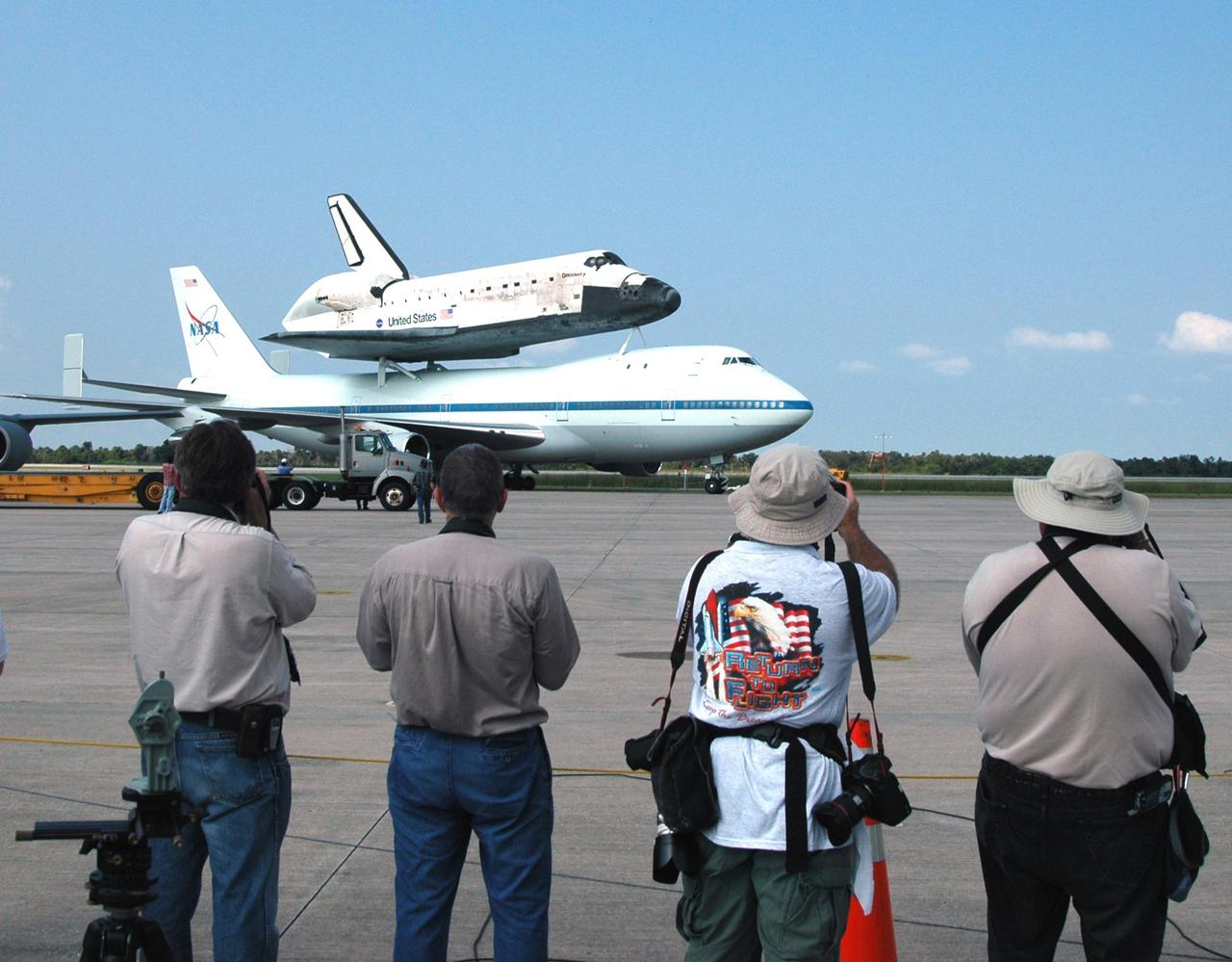
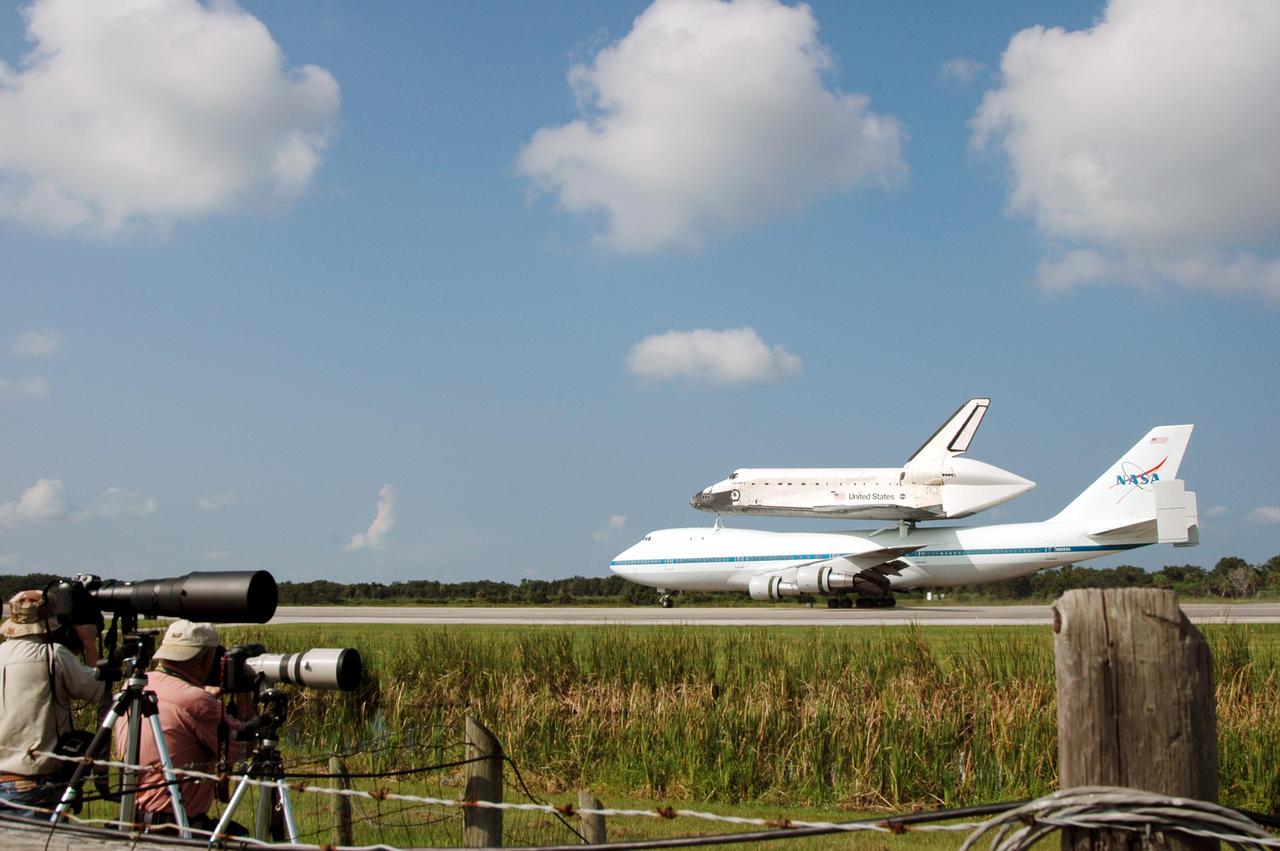
KENNEDY SPACE CENTER, FLA. -  News media photographers are on hand for the touchdown of Space Shuttle Discovery, atop a modified Boeing 747 Shuttle Carrier Aircraft (SCA), on runway 15 at NASA Kennedy Space Center's Shuttle Landing Facility (SLF) at about 10:00 a.m. EDT. The cross-country ferry flight became necessary when two days of unfavorable weather conditions at KSC forced Discovery to land on runway 22 at Edwards Air Force Base, Calif., on Aug. 9 following mission STS-114. On the return trip, stops were made at Altus Air Force Base, Okla., and Barksdale Air Force Base, La., where Discovery stayed for two nights.  The SCA and Discovery will be towed to the Mate_Demate Device at the SLF where a crane will lift Discovery from the SCA and place it on solid ground. Discovery will then be towed to the Orbiter Processing Facility where preparations will begin for its next flight, STS-121.
KSC-05PD-1903
KENNEDY SPACE CENTER, FLA. -  Space Shuttle Discovery, atop a modified Boeing 747 Shuttle Carrier Aircraft (SCA), is towed toward the Mate_Demate Device (MDD), in the foreground, at NASA Kennedy Space Center's Shuttle Landing Facility (SLF) following touchdown on runway 15 at about 10:00 a.m. EDT. The cross-country ferry flight became necessary when two days of unfavorable weather conditions at KSC forced Discovery to land on runway 22 at Edwards Air Force Base, Calif., on Aug. 9 following mission STS-114. On the return trip, stops were made at Altus Air Force Base, Okla., and Barksdale Air Force Base, La., where Discovery stayed for two nights.  A crane on the MDD will lift Discovery from the SCA and place it on solid ground. Discovery will then be towed to the Orbiter Processing Facility where preparations will begin for its next flight, STS-121.
KSC-05PD-1898
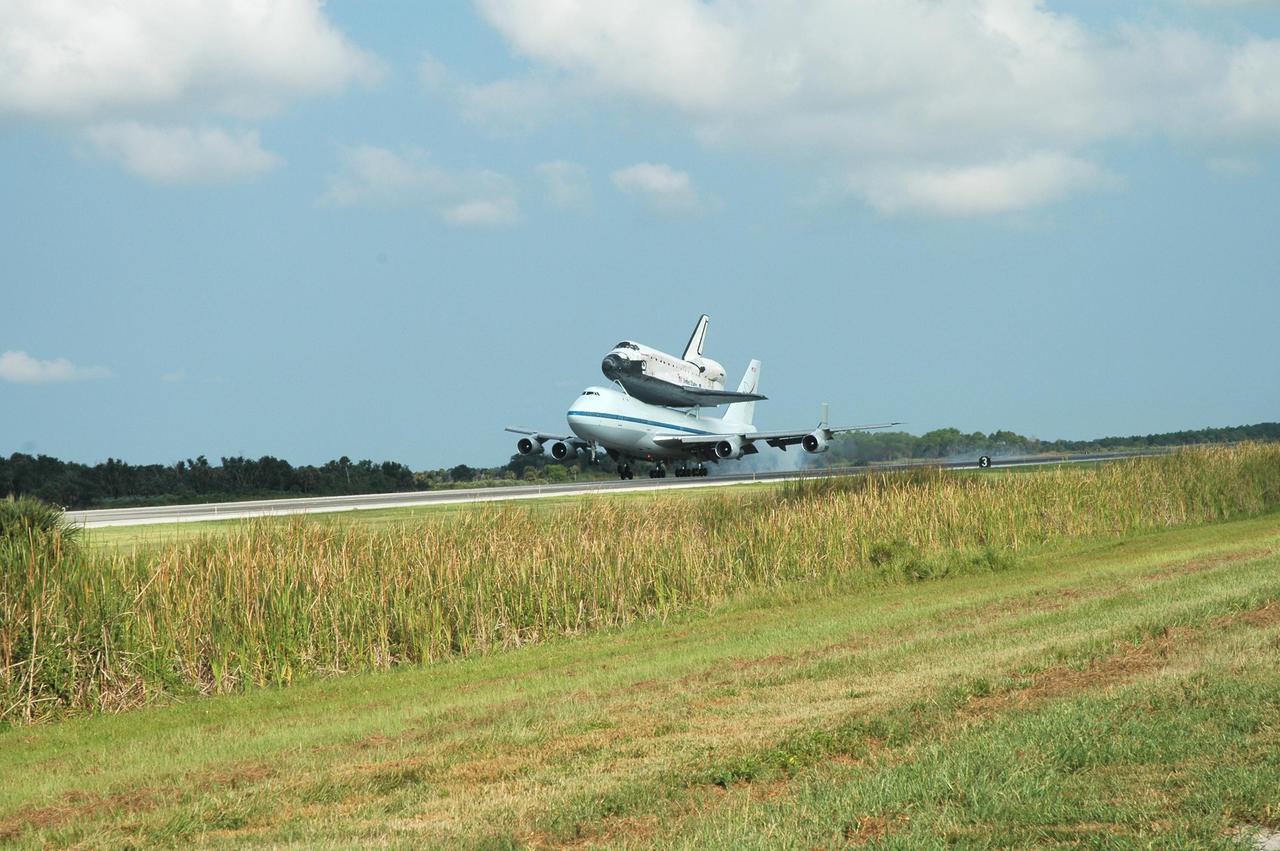
KENNEDY SPACE CENTER, FLA. -  Space Shuttle Discovery, atop a modified Boeing 747 Shuttle Carrier Aircraft (SCA),  lands on runway 15 at NASA Kennedy Space Center's Shuttle Landing Facility (SLF) at about 10:00 a.m. EDT. The cross-country ferry flight became necessary when two days of unfavorable weather conditions at KSC forced Discovery to land on runway 22 at Edwards Air Force Base, Calif., on Aug. 9 following mission STS-114. On the return trip, stops were made at Altus Air Force Base, Okla., and Barksdale Air Force Base, La., where Discovery stayed for two nights.  The SCA and Discovery will be towed to the Mate_Demate Device at the SLF where a crane will lift Discovery from the SCA and place it on solid ground. Discovery will then be towed to the Orbiter Processing Facility where preparations will begin for its next flight, STS-121.
KSC-05PD-1892
KENNEDY SPACE CENTER, FLA. -  Space Shuttle Discovery, atop a modified Boeing 747 Shuttle Carrier Aircraft (SCA),  touches down on runway 15 at NASA Kennedy Space Center's Shuttle Landing Facility (SLF) at about 10:00 a.m. EDT. The cross-country ferry flight became necessary when two days of unfavorable weather conditions at KSC forced Discovery to land on runway 22 at Edwards Air Force Base, Calif., on Aug. 9 following mission STS-114. On the return trip, stops were made at Altus Air Force Base, Okla., and Barksdale Air Force Base, La., where Discovery stayed for two nights.  The SCA and Discovery will be towed to the Mate_Demate Device at the SLF where a crane will lift Discovery from the SCA and place it on solid ground. Discovery will then be towed to the Orbiter Processing Facility where preparations will begin for its next flight, STS-121.
KSC-05PD-1894
KENNEDY SPACE CENTER, FLA. -  Space Shuttle Discovery, atop a modified Boeing 747 Shuttle Carrier Aircraft (SCA),  lands on runway 15 at NASA Kennedy Space Center's Shuttle Landing Facility (SLF) at about 10:00 a.m. EDT. The cross-country ferry flight became necessary when two days of unfavorable weather conditions at KSC forced Discovery to land on runway 22 at Edwards Air Force Base, Calif., on Aug. 9 following mission STS-114. On the return trip, stops were made at Altus Air Force Base, Okla., and Barksdale Air Force Base, La., where Discovery stayed for two nights.  The SCA and Discovery will be towed to the Mate_Demate Device at the SLF where a crane will lift Discovery from the SCA and place it on solid ground. Discovery will then be towed to the Orbiter Processing Facility where preparations will begin for its next flight, STS-121.
KSC-05PD-1891
KENNEDY SPACE CENTER, FLA. -  Space Shuttle Discovery, atop a modified Boeing 747 Shuttle Carrier Aircraft (SCA), is towed to the Mate_Demate Device (MDD) at NASA Kennedy Space Center's Shuttle Landing Facility (SLF) following touchdown on runway 15 at about 10:00 a.m. EDT. The cross-country ferry flight became necessary when two days of unfavorable weather conditions at KSC forced Discovery to land on runway 22 at Edwards Air Force Base, Calif., on Aug. 9 following mission STS-114. On the return trip, stops were made at Altus Air Force Base, Okla., and Barksdale Air Force Base, La., where Discovery stayed for two nights. A crane on the MDD will lift Discovery from the SCA and place it on solid ground. Discovery will then be towed to the Orbiter Processing Facility where preparations will begin for its next flight, STS-121.
KSC-05PD-1896
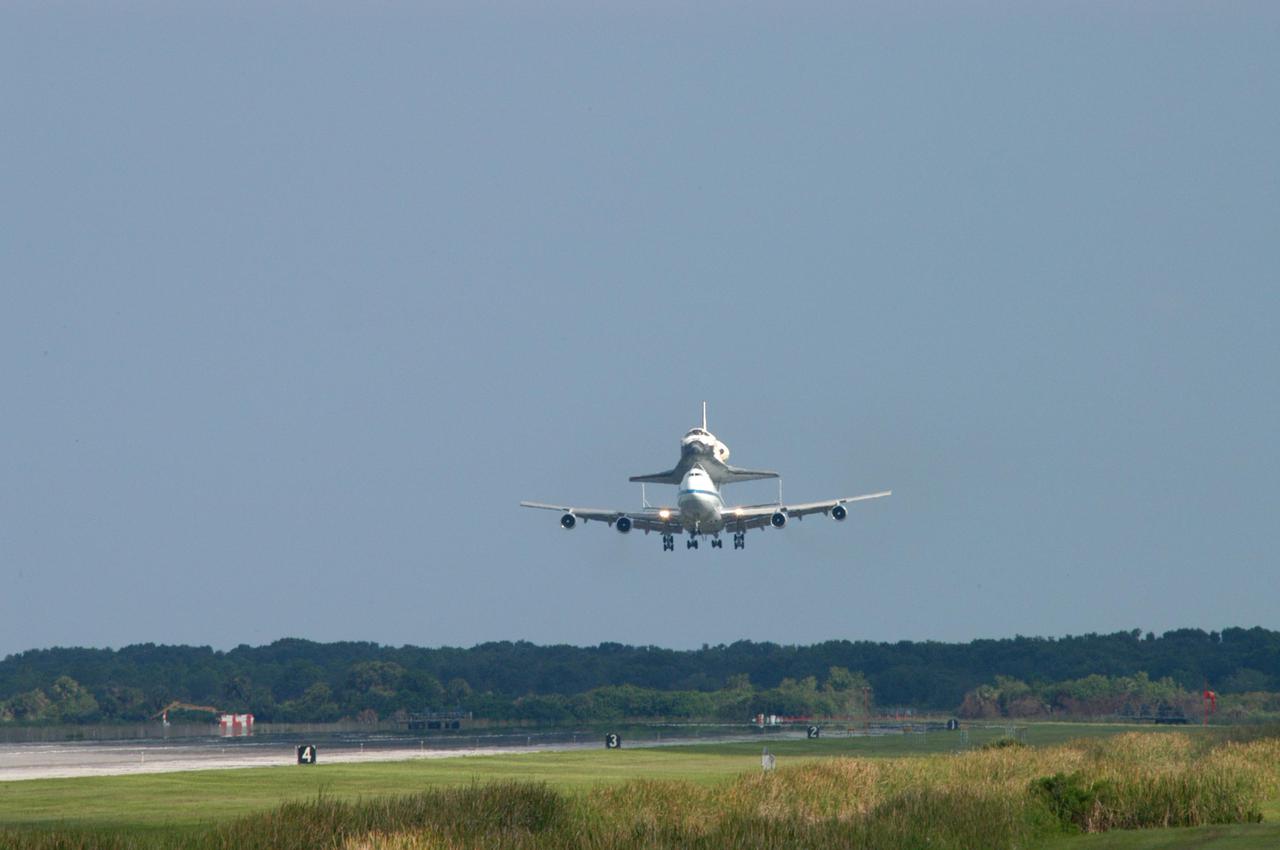
KENNEDY SPACE CENTER, FLA. -  Space Shuttle Discovery, atop a modified Boeing 747 Shuttle Carrier Aircraft (SCA), is on its final approach to land on runway 15 at NASA Kennedy Space Center's Shuttle Landing Facility (SLF) at about 10:00 a.m. EDT. The cross-country ferry flight became necessary when two days of unfavorable weather conditions at KSC forced Discovery to land on runway 22 at Edwards Air Force Base, Calif., on Aug. 9 following mission STS-114. On the return trip, stops were made at Altus Air Force Base, Okla., and Barksdale Air Force Base, La., where Discovery stayed for two nights.  The SCA and Discovery will be towed to the Mate_Demate Device at the SLF where a crane will lift Discovery from the SCA and place it on solid ground. Discovery will then be towed to the Orbiter Processing Facility where preparations will begin for its next flight, STS-121.
KSC-05PD-1890
KENNEDY SPACE CENTER, FLA. -  News media photographers capture the touchdown of Space Shuttle Discovery, atop a modified Boeing 747 Shuttle Carrier Aircraft (SCA),  on runway 15 at NASA Kennedy Space Center's Shuttle Landing Facility (SLF) at about 10:00 a.m. EDT. The cross-country ferry flight became necessary when two days of unfavorable weather conditions at KSC forced Discovery to land on runway 22 at Edwards Air Force Base, Calif., on Aug. 9 following mission STS-114. On the return trip, stops were made at Altus Air Force Base, Okla., and Barksdale Air Force Base, La., where Discovery stayed for two nights.  The SCA and Discovery will be towed to the Mate_Demate Device at the SLF where a crane will lift Discovery from the SCA and place it on solid ground. Discovery will then be towed to the Orbiter Processing Facility where preparations will begin for its next flight, STS-121.
KSC-05PD-1901
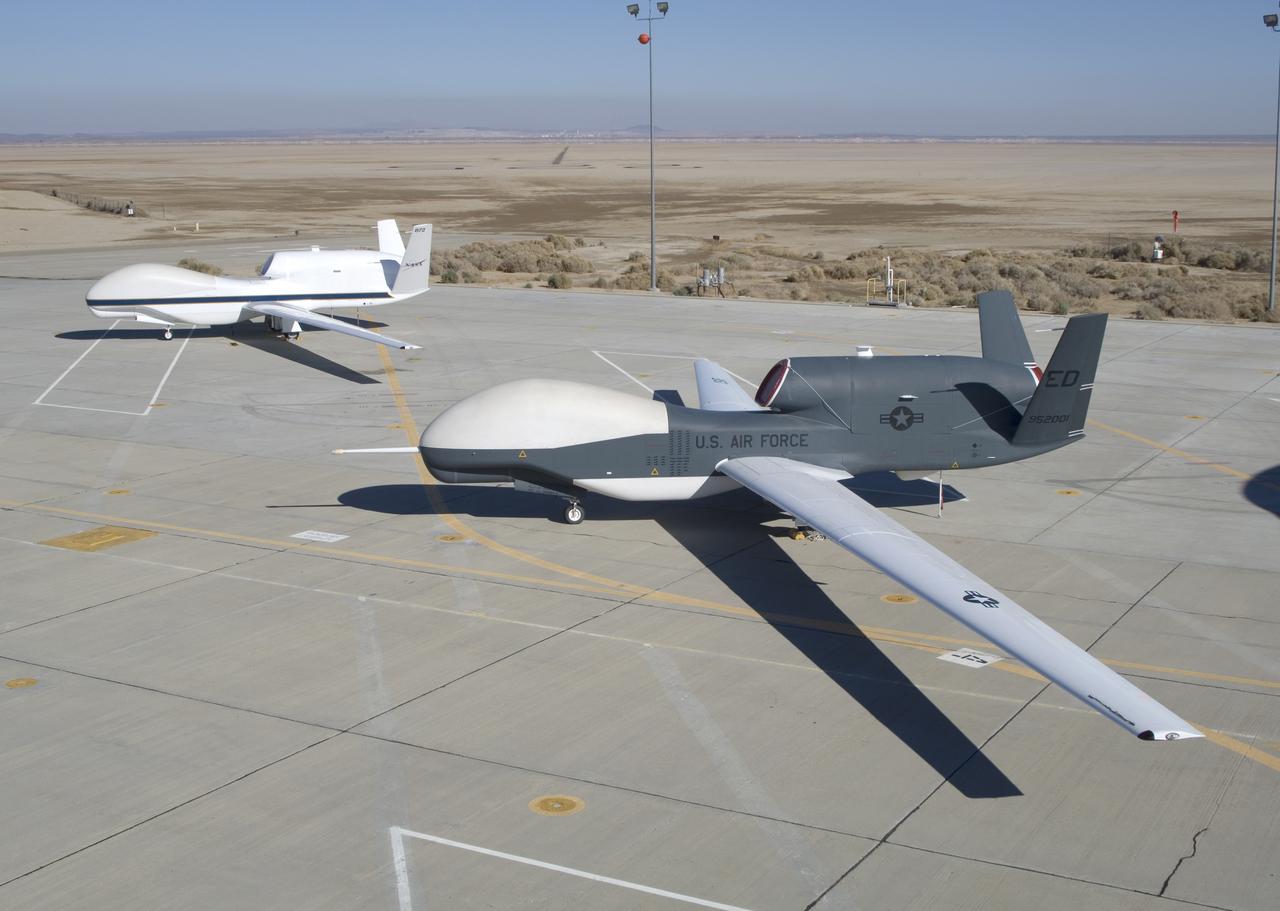
NASA's two Global Hawks, one sporting a NASA paint scheme, the other in its prior Air Force livery, are shown on the ramp at the Dryden Flight Research Center.
ED07-0244-074
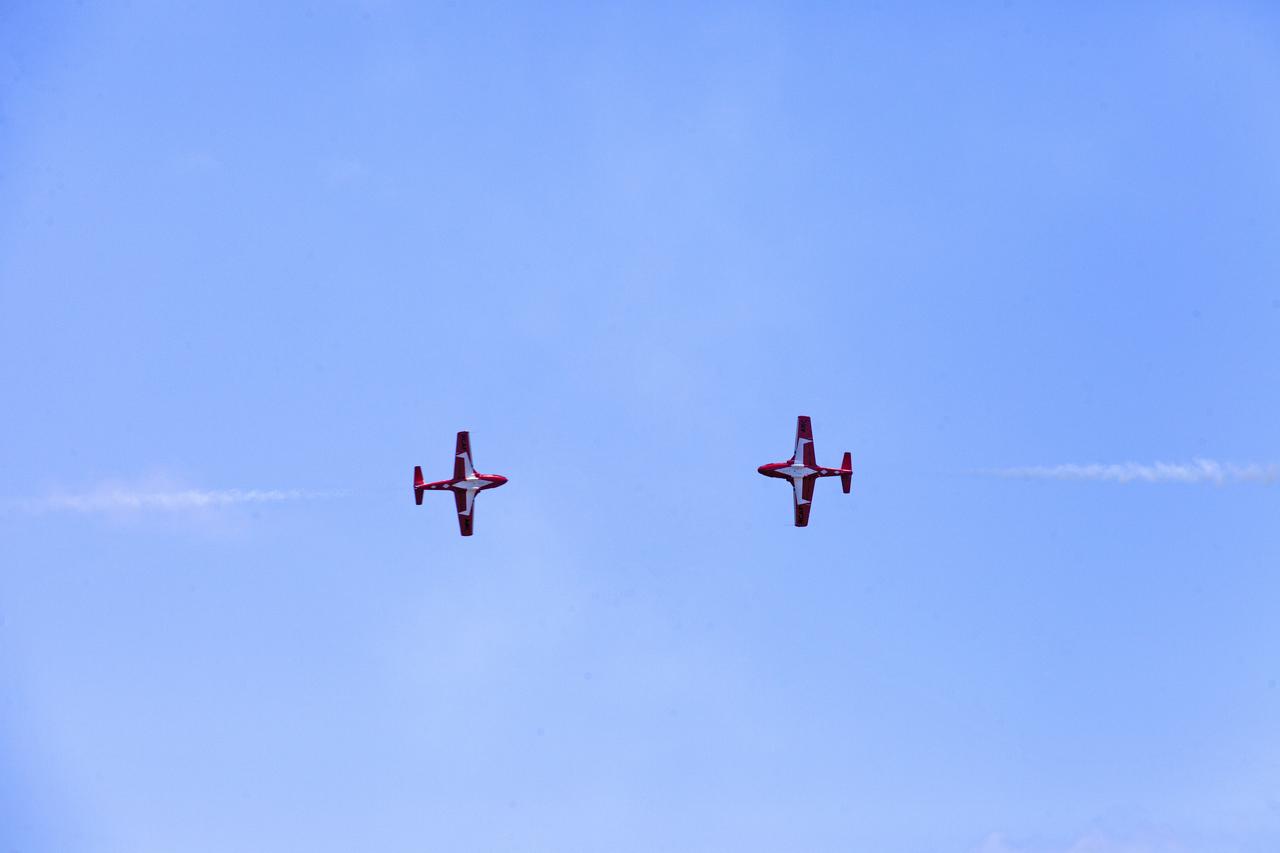
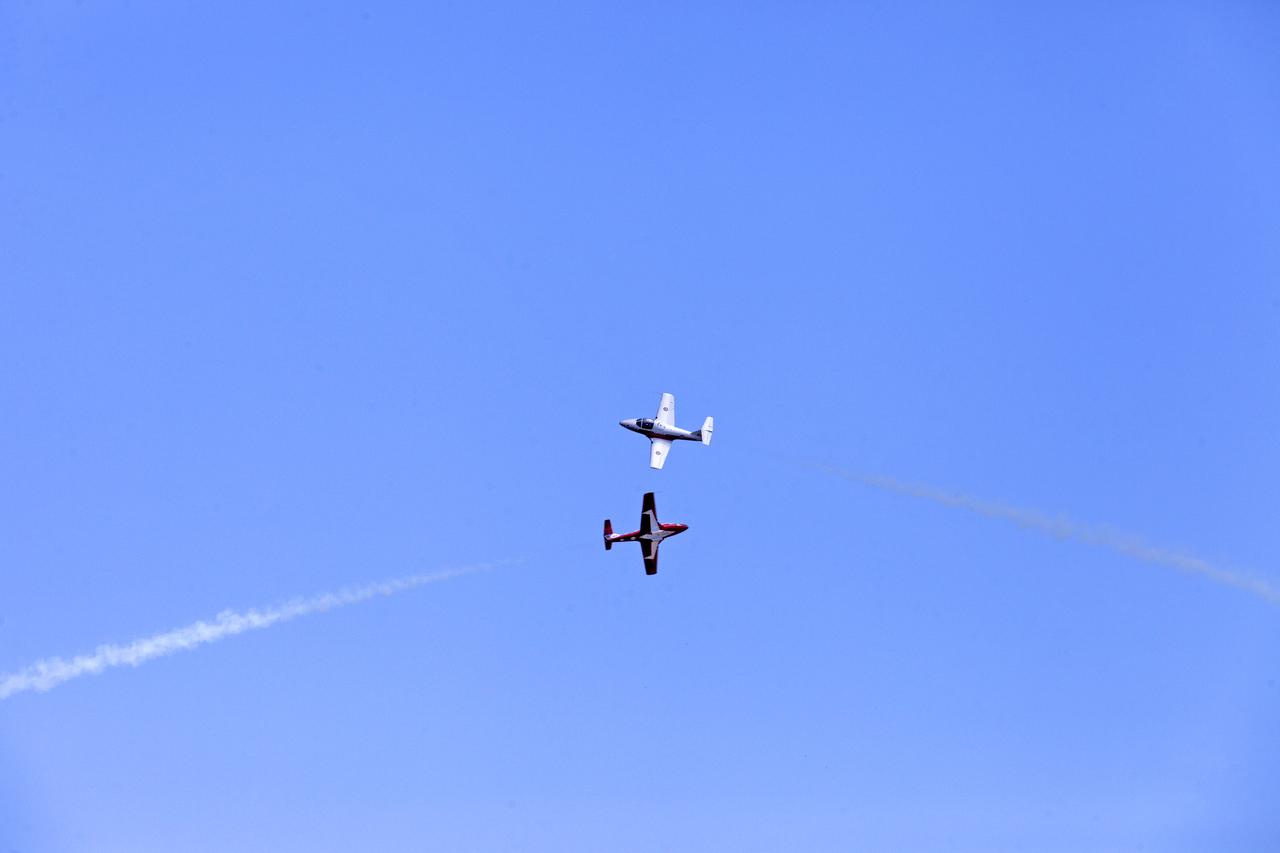
Two Canadian Forces Snowbirds perform an aerial maneuver over NASA's Kennedy Space Center in Florida during a practice flight on May 9, 2018, between their scheduled U.S. air shows.
NASA and Canadian Snowbirds Aircrafts
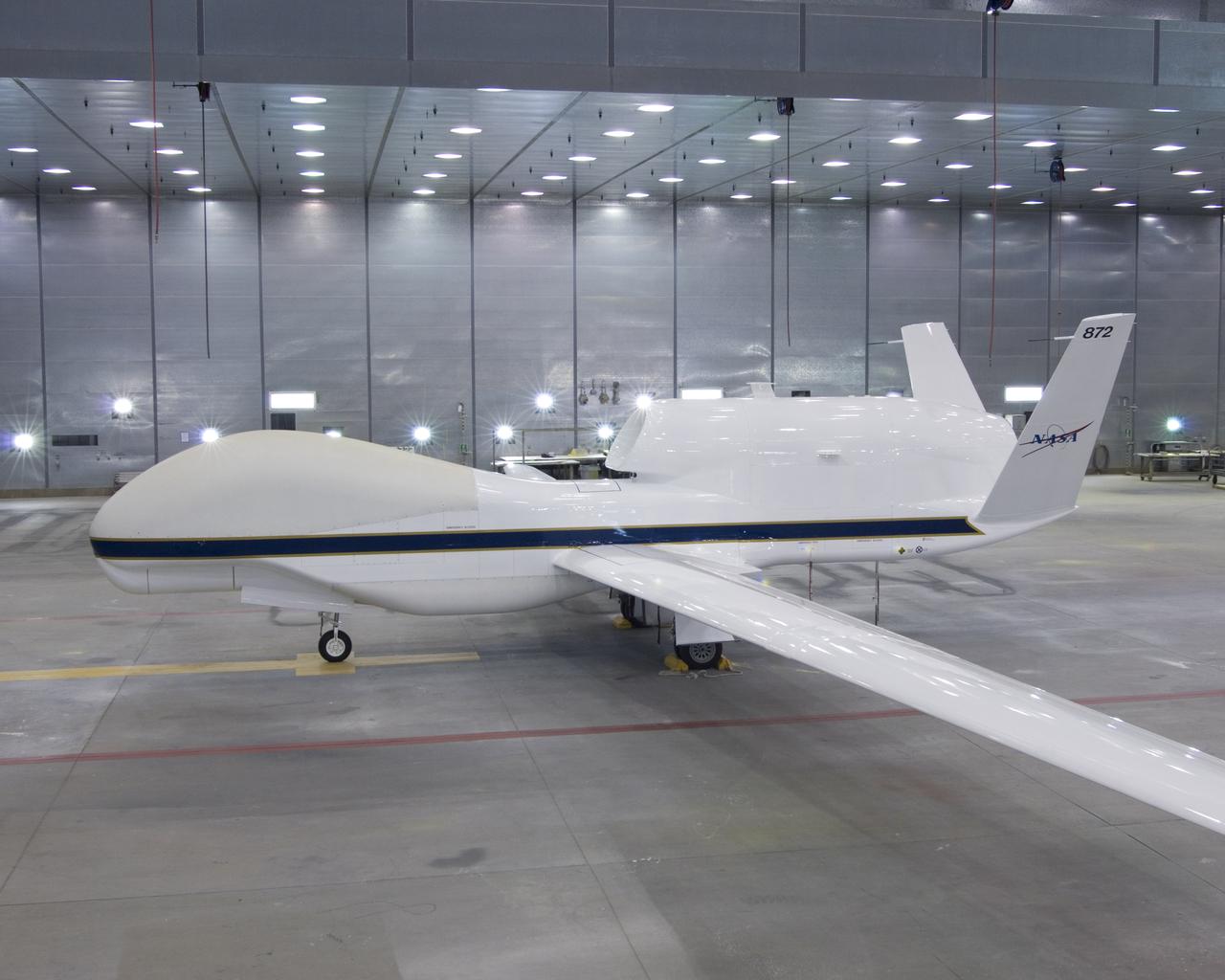
One of NASA's two Global Hawk unmanned aircraft shows off its new blue-and-white livery shortly after being repainted in the Edwards Air Force Base paint hangar.
ED07-0244-028
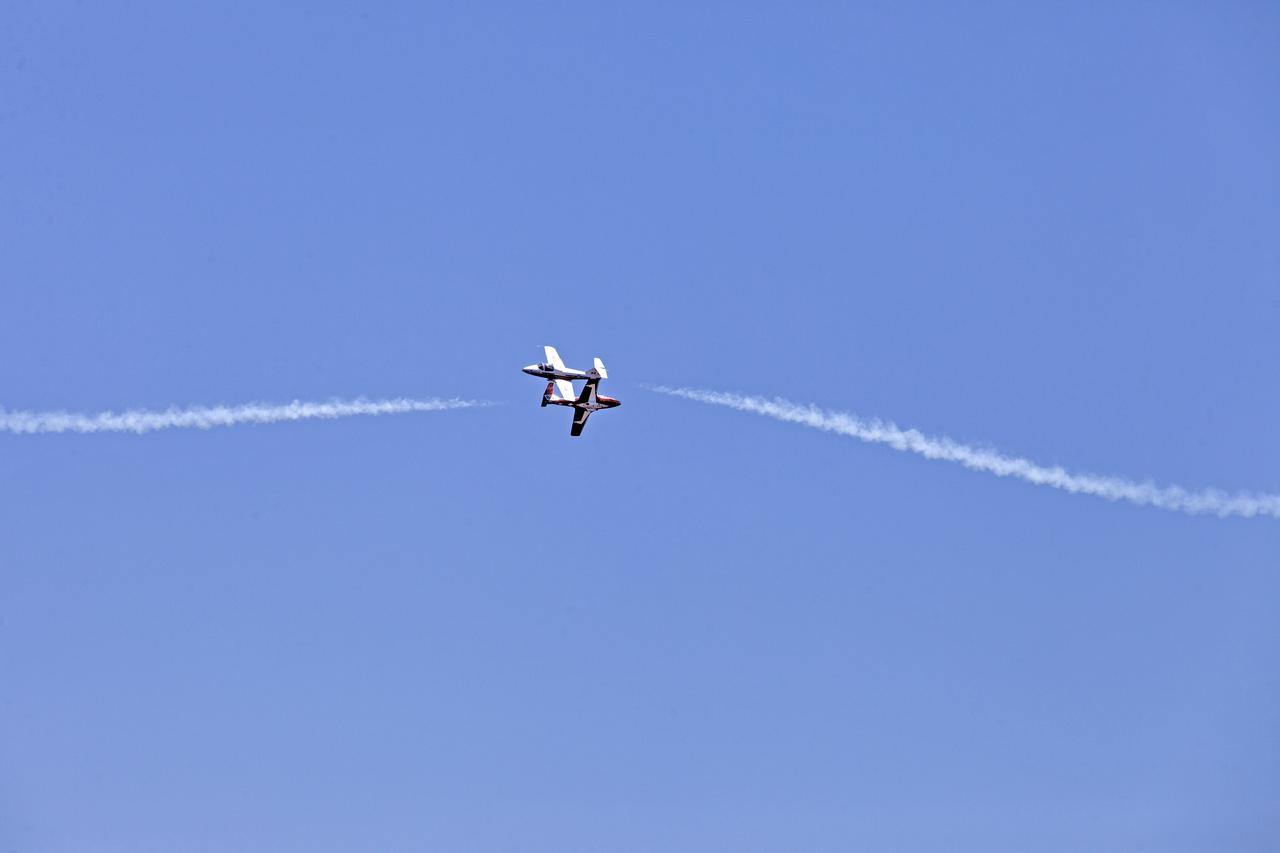
Two Canadian Forces Snowbirds perform a close flyby maneuver over NASA's Kennedy Space Center in Florida during a practice flight on May 9, 2018, between their scheduled U.S. air shows.
NASA and Canadian Snowbirds Aircrafts
Two Canadian Forces Snowbirds perform a close flyby maneuver over NASA's Kennedy Space Center in Florida during a practice flight on May 9, 2018, between their scheduled U.S. air shows.
NASA and Canadian Snowbirds Aircrafts
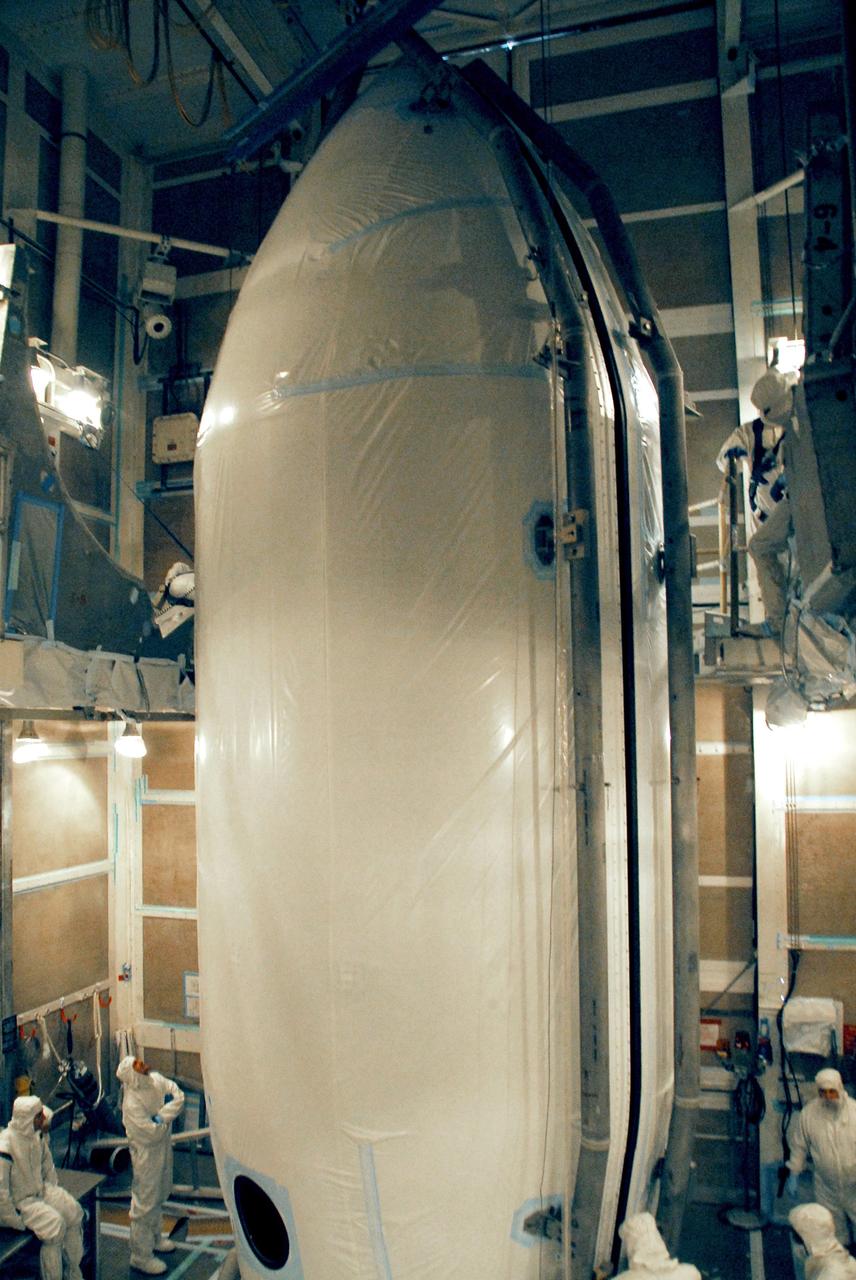
VANDENBERG AIR FORCE BASE, Calif. --   The two halves of the fairing are closed around the NOAA-N Prime spacecraft in the launch service tower on Space Launch Complex 2 at Vandenberg Air Force Base in California. The fairing is a molded structure that fits flush with the outside surface of the rocket and forms an aerodynamically smooth nose cone, protecting the spacecraft during launch and ascent. NOAA-N Prime is the latest polar-orbiting operational environmental weather satellite developed by NASA for the National Oceanic and Atmospheric Administration.  The satellite is scheduled to launch Feb. 4 aboard the Delta II from Vandenberg Air Force Base.  Photo credit: NASA/Mark Mackley, VAFB
KSC-2009-1497
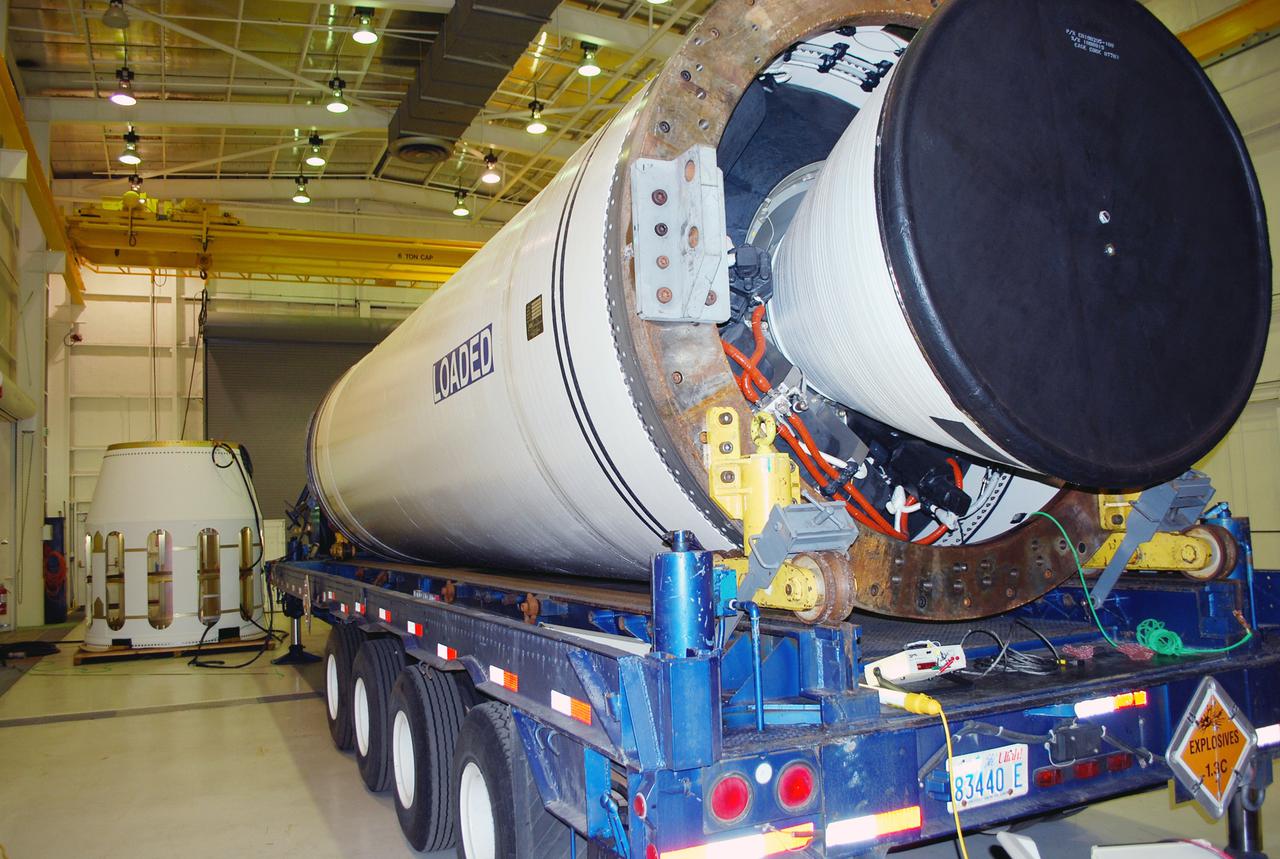
VANDENBERG AIR FORCE BASE, Calif. – At Vandenberg Air Force Base in California, the Stage 0 motor, foreground, soon will be installed to the interstage, background. The two segments, along with two other stages, will make up the four-stage Taurus XL rocket that will carry NASA's Glory satellite into low Earth orbit.  Glory is scheduled to launch in November from Vandenberg's Launch Pad SLC 576-E. Once Glory reaches orbit, it will collect data on the properties of aerosols and black carbon. It also will help scientists understand how the sun's irradiance affects Earth's climate.  Photo credit: NASA_Randy Beaudoin, VAFB
KSC-2010-4287
Long-time NASA Dryden research pilot and former astronaut C. Gordon Fullerton capped an almost 50-year flying career, including more than 38 years with NASA, with a final flight in a NASA F/A-18 on Dec. 21, 2007. Fullerton and Dryden research pilot Jim Smolka flew a 90-minute pilot proficiency formation aerobatics flight with another Dryden F/A-18 and a Dryden T-38 before concluding with two low-level formation flyovers of Dryden before landing. Fullerton was honored with a water-cannon spray arch provided by two fire trucks from the Edwards Air Force Base fire department as he taxied the F/A-18 up to the Dryden ramp, and was then greeted by his wife Marie and several hundred Dryden staff after his final flight. Fullerton began his flying career with the U.S. Air Force in 1958 after earning bachelor's and master's degrees in mechanical engineering from the California Institute of Technology. Initially trained as a fighter pilot, he later transitioned to multi-engine bombers and became a bomber operations test pilot after attending the Air Force Aerospace Research Pilot School at Edwards Air Force Base, Calif. He then was assigned to the flight crew for the planned Air Force Manned Orbital Laboratory in 1966. Upon cancellation of that program, the Air Force assigned Fullerton to NASA's astronaut corps in 1969.  He served on the support crews for the Apollo 14, 15, 16 and 17 lunar missions, and was later assigned to one of the two flight crews that piloted the space shuttle prototype Enterprise during the Approach and Landing Test program at Dryden. He then logged some 382 hours in space when he flew on two early space shuttle missions, STS-3 on Columbia in 1982 and STS-51F on Challenger in 1985. He joined the flight crew branch at NASA Dryden after leaving the astronaut corps in 1986. During his 21 years at Dryden, Fullerton was project pilot on a number of high-profile research efforts, including the Propulsion Controlled Aircraft, the high-speed landing tests of sp
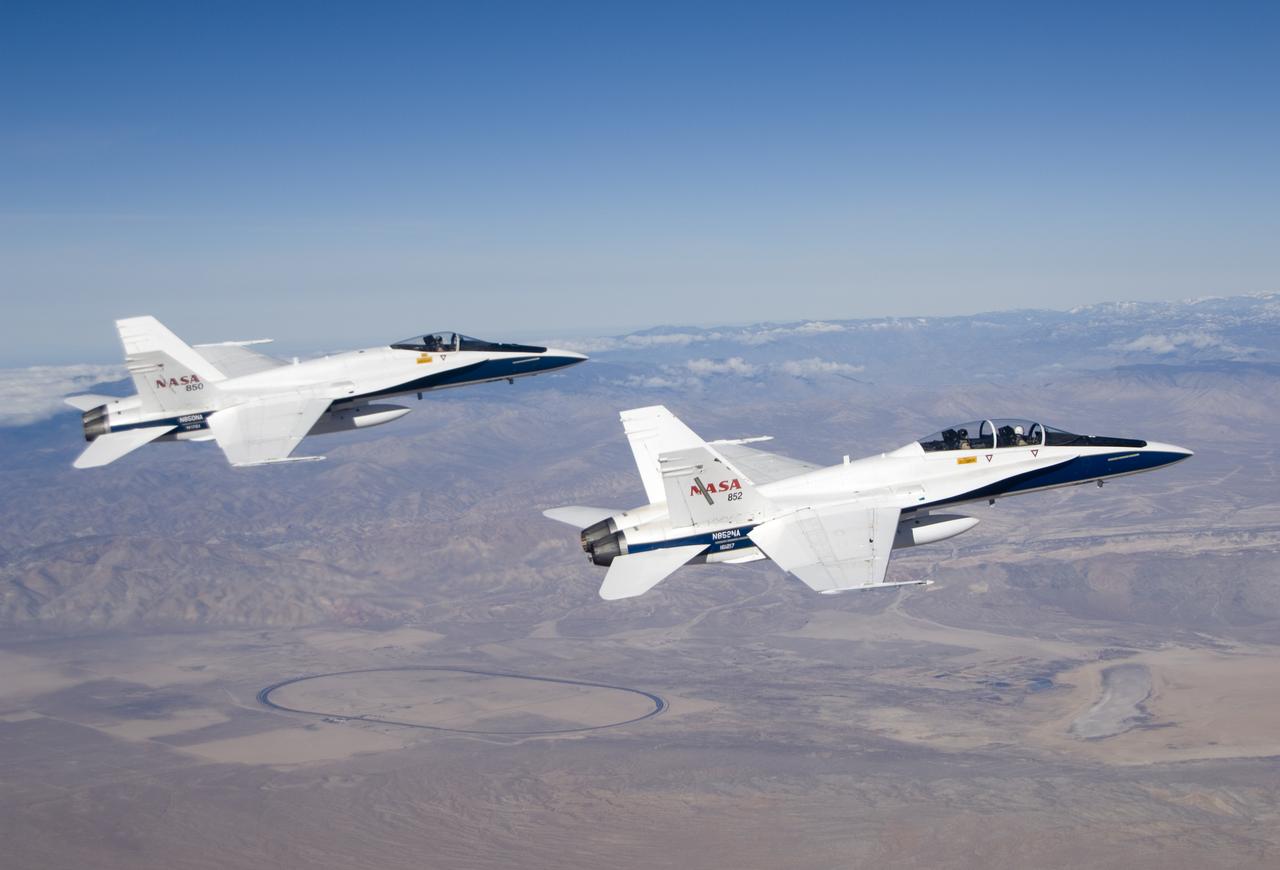
NASA Dryden research pilot Gordon Fullerton flies his final mission in NASA F/A-18B #852 in formation with NASA F/A-18A #850 on Dec. 21, 2007.
Long-time NASA Dryden research pilot and former astronaut C. Gordon Fullerton capped an almost 50-year flying career, including more than 38 years with NASA, with a final flight in a NASA F/A-18 on Dec. 21, 2007. Fullerton and Dryden research pilot Jim Smolka flew a 90-minute pilot proficiency formation aerobatics flight with another Dryden F/A-18 and a Dryden T-38 before concluding with two low-level formation flyovers of Dryden before landing. Fullerton was honored with a water-cannon spray arch provided by two fire trucks from the Edwards Air Force Base fire department as he taxied the F/A-18 up to the Dryden ramp, and was then greeted by his wife Marie and several hundred Dryden staff after his final flight.  Fullerton began his flying career with the U.S. Air Force in 1958 after earning bachelor's and master's degrees in mechanical engineering from the California Institute of Technology. Initially trained as a fighter pilot, he later transitioned to multi-engine bombers and became a bomber operations test pilot after attending the Air Force Aerospace Research Pilot School at Edwards Air Force Base, Calif. He then was assigned to the flight crew for the planned Air Force Manned Orbital Laboratory in 1966.  Upon cancellation of that program, the Air Force assigned Fullerton to NASA's astronaut corps in 1969. He served on the support crews for the Apollo 14, 15, 16 and 17 lunar missions, and was later assigned to one of the two flight crews that piloted the space shuttle prototype Enterprise during the Approach and Landing Test program at Dryden. He then logged some 382 hours in space when he flew on two early space shuttle missions, STS-3 on Columbia in 1982 and STS-51F on Challenger in 1985. He joined the flight crew branch at NASA Dryden after leaving the astronaut corps in 1986.  During his 21 years at Dryden, Fullerton was project pilot on a number of high-profile research efforts, including the Propulsion Controlled Aircraft, the high-speed landing tests of
Retired NASA research pilot and former astronaut Gordon Fullerton was greeted by scores of NASA Dryden staff who bid him farewell after his final NASA flight.
Long-time NASA Dryden research pilot and former astronaut C. Gordon Fullerton capped an almost 50-year flying career, including more than 38 years with NASA, with a final flight in a NASA F/A-18 on Dec. 21, 2007. Fullerton and Dryden research pilot Jim Smolka flew a 90-minute pilot proficiency formation aerobatics flight with another Dryden F/A-18 and a Dryden T-38 before concluding with two low-level formation flyovers of Dryden before landing. Fullerton was honored with a water-cannon spray arch provided by two fire trucks from the Edwards Air Force Base fire department as he taxied the F/A-18 up to the Dryden ramp, and was then greeted by his wife Marie and several hundred Dryden staff after his final flight.  Fullerton began his flying career with the U.S. Air Force in 1958 after earning bachelor's and master's degrees in mechanical engineering from the California Institute of Technology. Initially trained as a fighter pilot, he later transitioned to multi-engine bombers and became a bomber operations test pilot after attending the Air Force Aerospace Research Pilot School at Edwards Air Force Base, Calif. He then was assigned to the flight crew for the planned Air Force Manned Orbital Laboratory in 1966.  Upon cancellation of that program, the Air Force assigned Fullerton to NASA's astronaut corps in 1969. He served on the support crews for the Apollo 14, 15, 16 and 17 lunar missions, and was later assigned to one of the two flight crews that piloted the space shuttle prototype Enterprise during the Approach and Landing Test program at Dryden. He then logged some 382 hours in space when he flew on two early space shuttle missions, STS-3 on Columbia in 1982 and STS-51F on Challenger in 1985. He joined the flight crew branch at NASA Dryden after leaving the astronaut corps in 1986.  During his 21 years at Dryden, Fullerton was project pilot on a number of high-profile research efforts, including the Propulsion Controlled Aircraft, the high-speed landing tests of
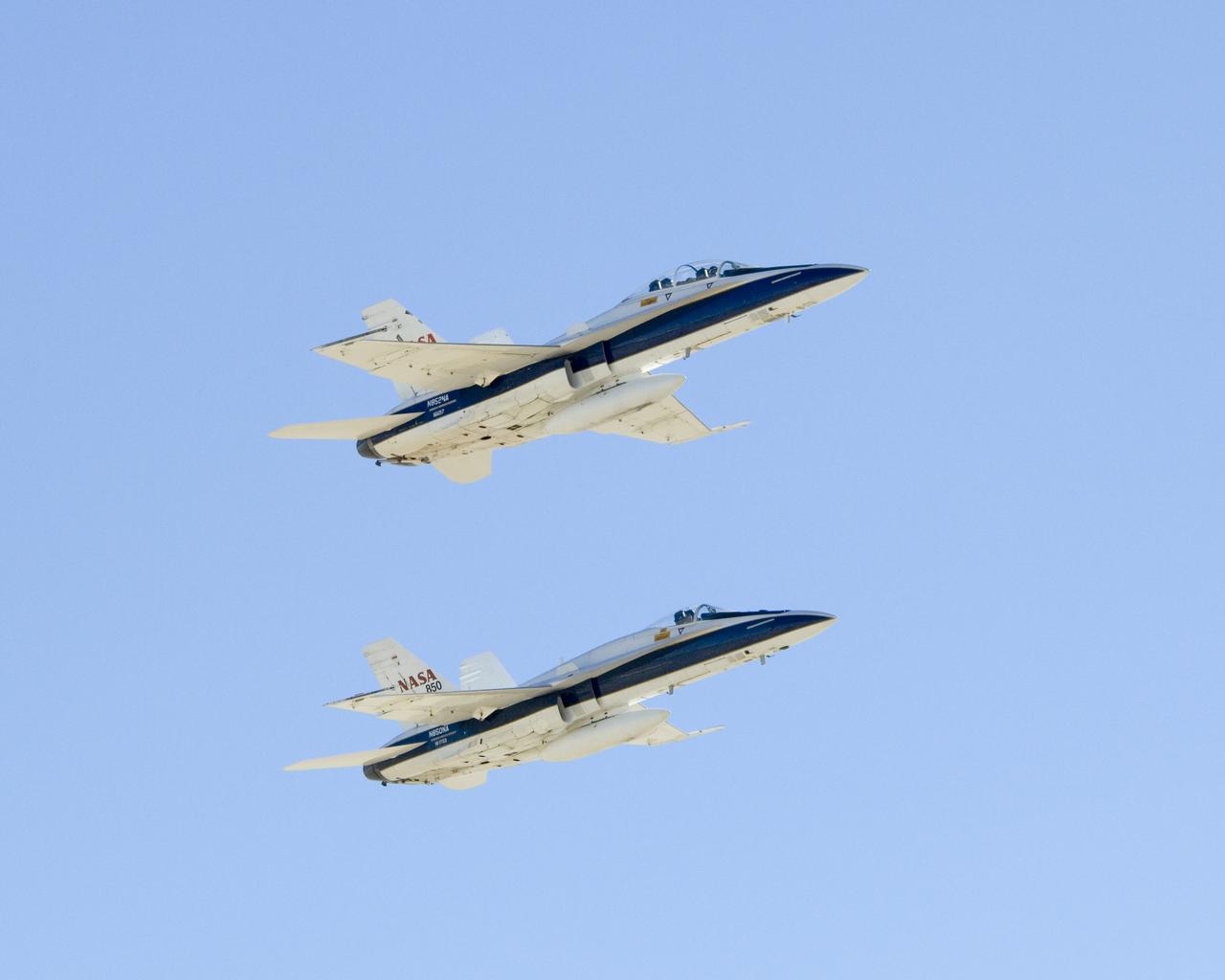
Two NASA Dryden F/A-18s flown by Gordon Fullerton and Nils Larson fly in tight formation Dec. 21, 2007 during Fullerton's final flight before his retirement.
Long-time NASA Dryden research pilot and former astronaut C. Gordon Fullerton capped an almost 50-year flying career, including more than 38 years with NASA, with a final flight in a NASA F/A-18 on Dec. 21, 2007. Fullerton and Dryden research pilot Jim Smolka flew a 90-minute pilot proficiency formation aerobatics flight with another Dryden F/A-18 and a Dryden T-38 before concluding with two low-level formation flyovers of Dryden before landing. Fullerton was honored with a water-cannon spray arch provided by two fire trucks from the Edwards Air Force Base fire department as he taxied the F/A-18 up to the Dryden ramp, and was then greeted by his wife Marie and several hundred Dryden staff after his final flight.  Fullerton began his flying career with the U.S. Air Force in 1958 after earning bachelor's and master's degrees in mechanical engineering from the California Institute of Technology. Initially trained as a fighter pilot, he later transitioned to multi-engine bombers and became a bomber operations test pilot after attending the Air Force Aerospace Research Pilot School at Edwards Air Force Base, Calif. He then was assigned to the flight crew for the planned Air Force Manned Orbital Laboratory in 1966. Upon cancellation of that program, the Air Force assigned Fullerton to NASA's astronaut corps in 1969.  He served on the support crews for the Apollo 14, 15, 16 and 17 lunar missions, and was later assigned to one of the two flight crews that piloted the space shuttle prototype Enterprise during the Approach and Landing Test program at Dryden. He then logged some 382 hours in space when he flew on two early space shuttle missions, STS-3 on Columbia in 1982 and STS-51F on Challenger in 1985. He joined the flight crew branch at NASA Dryden after leaving the astronaut corps in 1986.  During his 21 years at Dryden, Fullerton was project pilot on a number of high-profile research efforts, including the Propulsion Controlled Aircraft, the high-speed landing tests of
More than 200 Dryden staff formed two long lines on the Dryden ramp to greet retired research pilot Gordon Fullerton after his final flight in a NASA F/A-18.
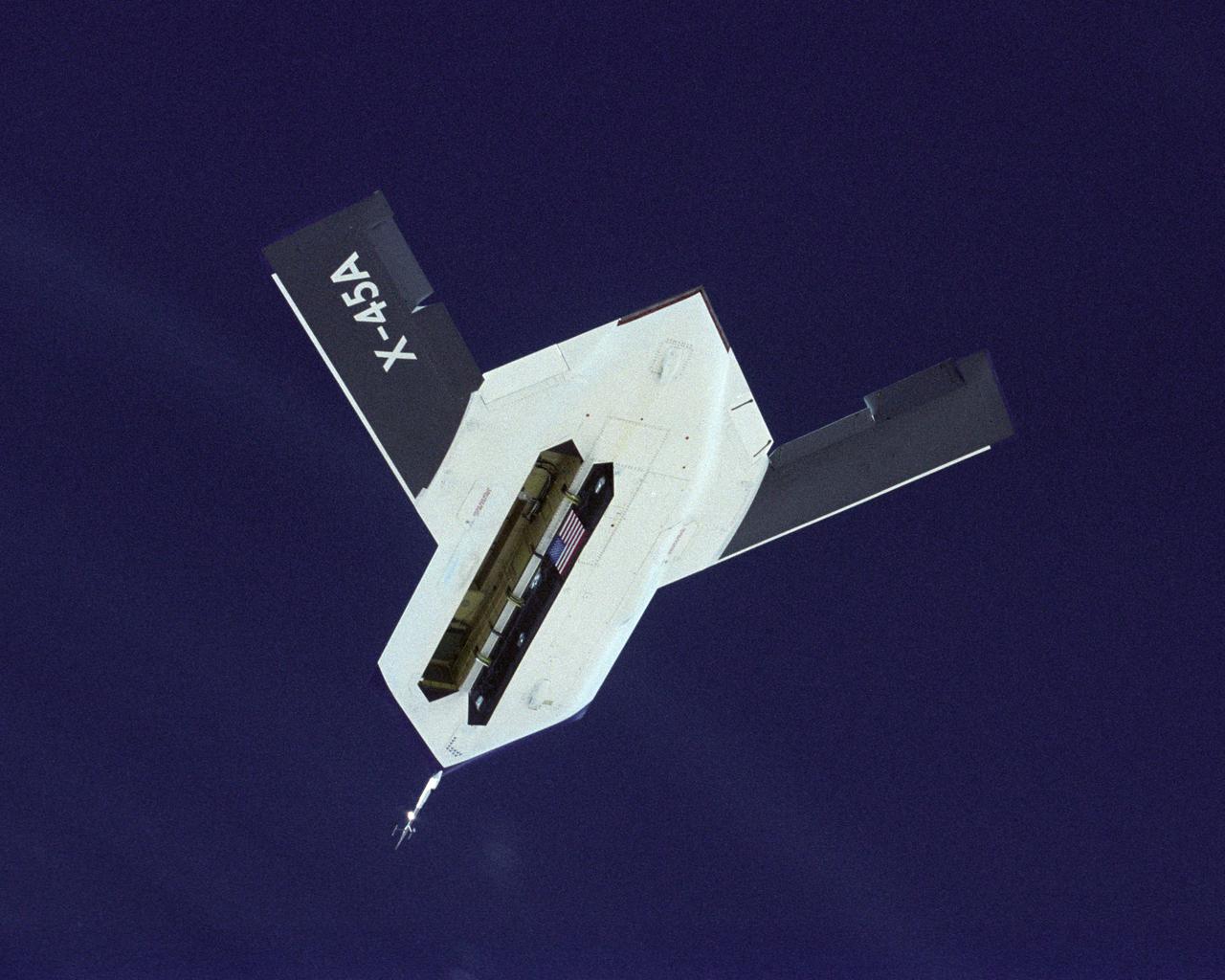
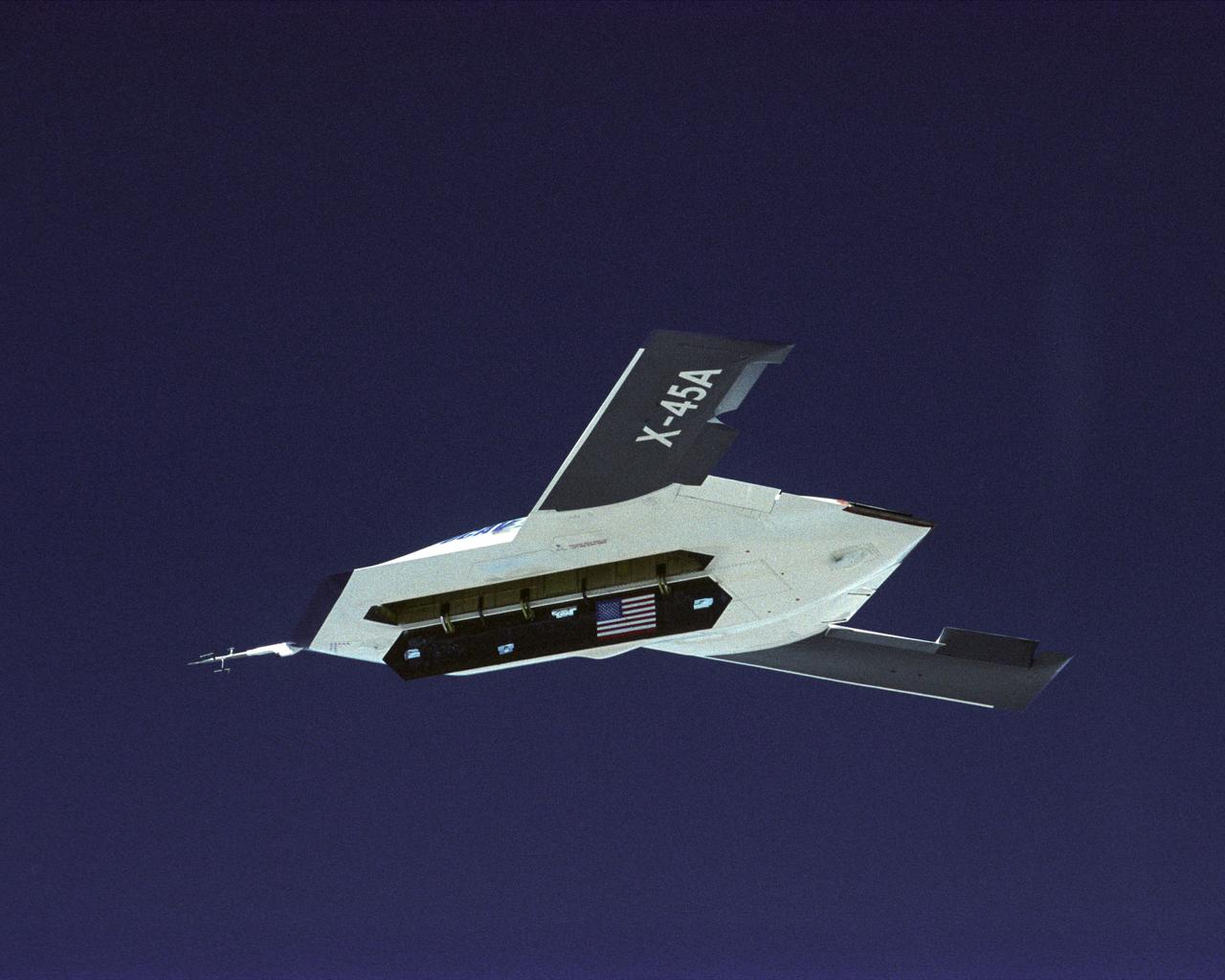
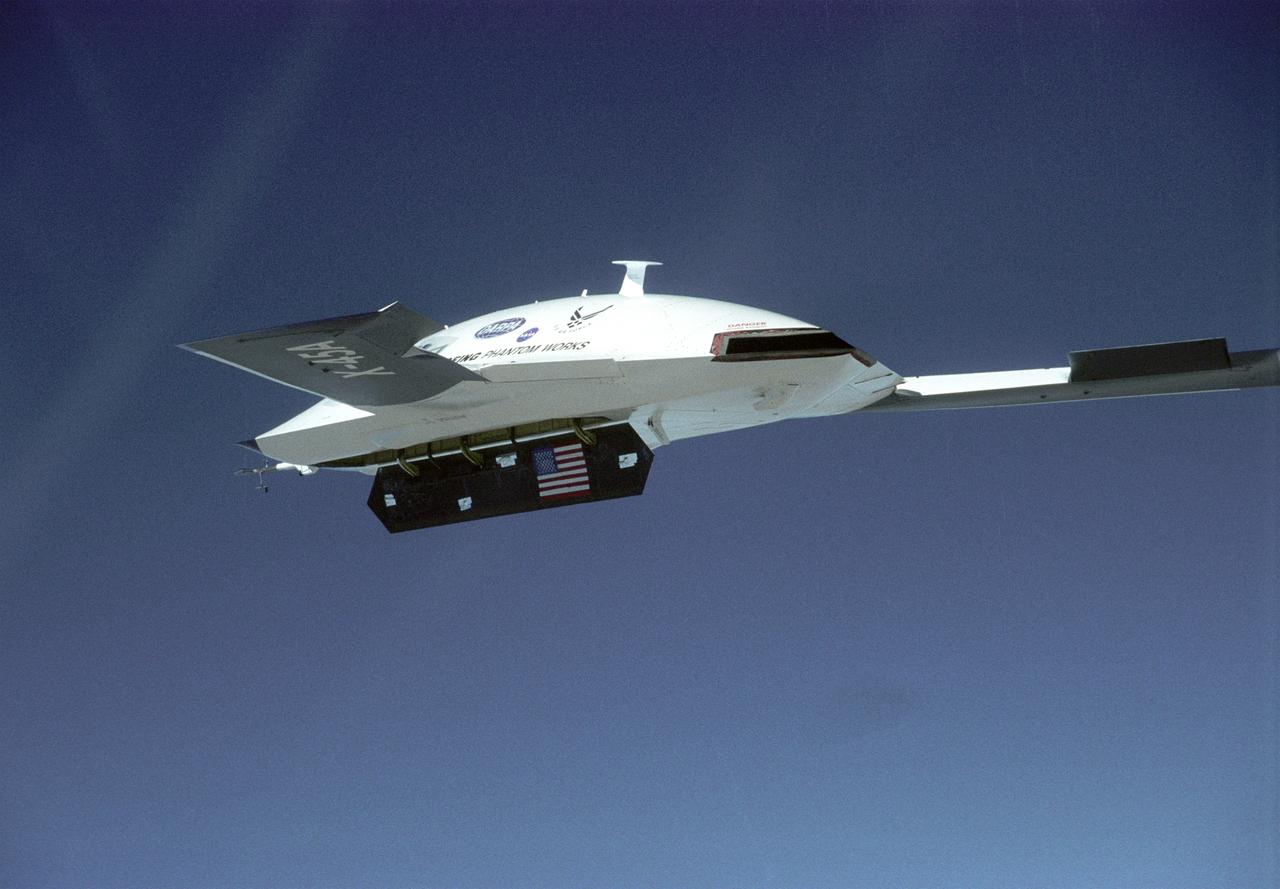
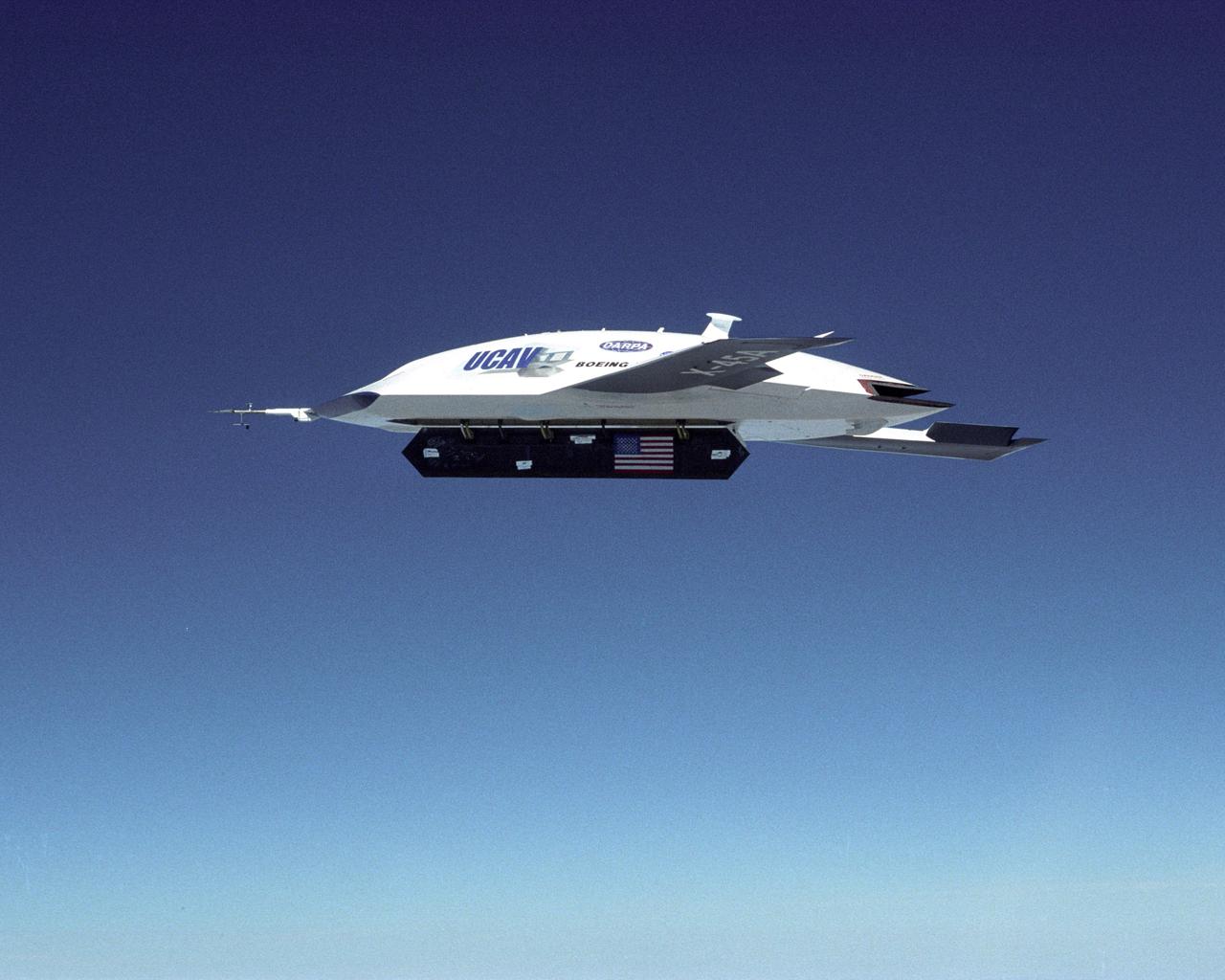
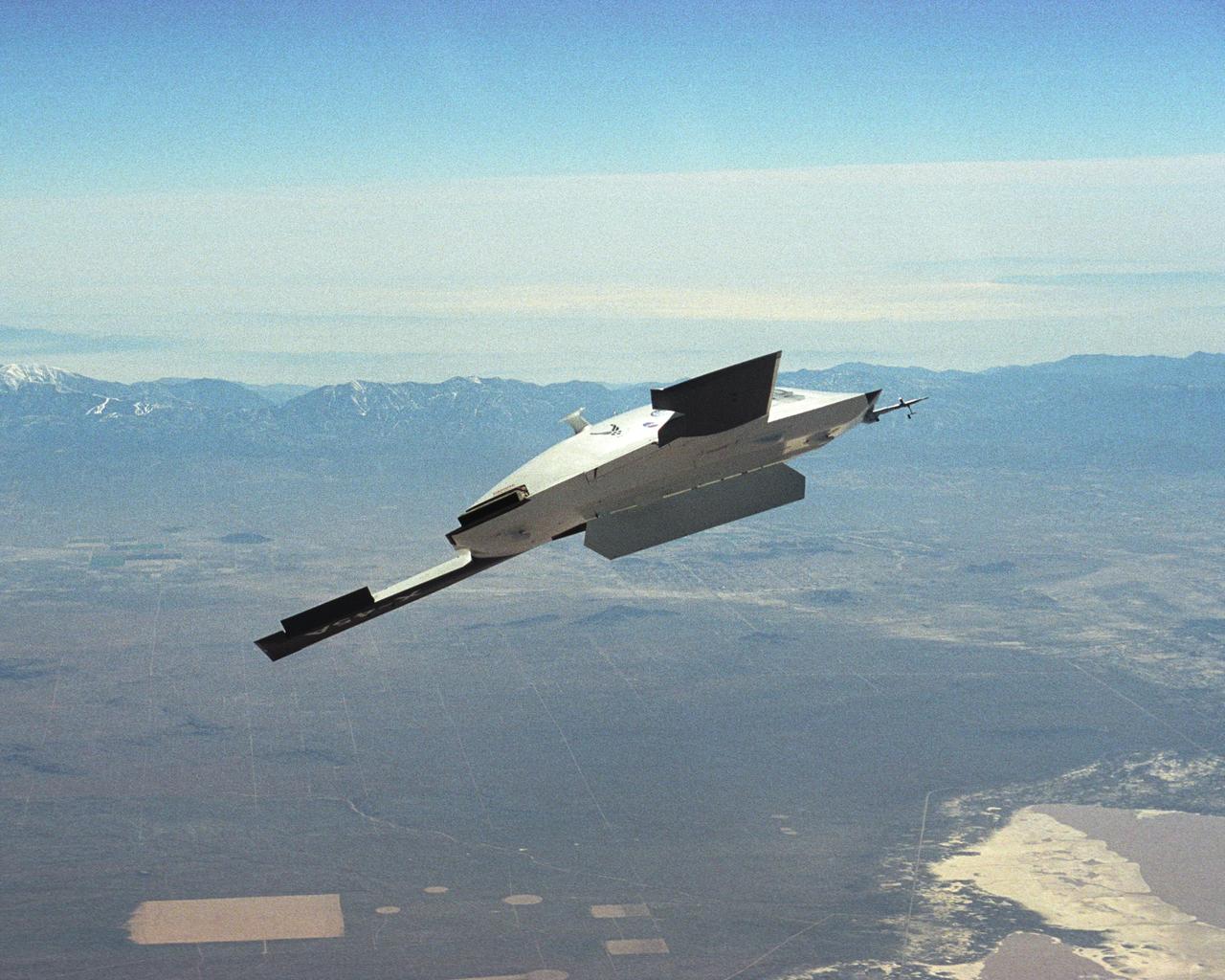
The DARPA/U.S. Air Force X-45A Unmanned Combat Air Vehicle (UCAV) system demonstration program completed the first phase of demonstrations, known as Block I, on Feb. 28, 2003. The final Block I activities included two flights at Dryden, during which safe operation of the weapons bay door was verified at 35,000 feet and speeds of Mach 0.75, the maximum planned altitude and speed for the two X-45A demonstrator vehicles.
X-45A Air Vehicle #1 during flight #13, with weapons bay door open
The DARPA/U.S. Air Force X-45A Unmanned Combat Air Vehicle (UCAV) system demonstration program completed the first phase of demonstrations, known as Block I, on Feb. 28, 2003. The final Block I activities included two flights at Dryden, during which safe operation of the weapons bay door was verified at 35,000 feet and speeds of Mach 0.75, the maximum planned altitude and speed for the two X-45A demonstrator vehicles.
X-45A Air Vehicle #1 during flight #13, with weapons bay door open
The DARPA/U.S. Air Force X-45A Unmanned Combat Air Vehicle (UCAV) system demonstration program completed the first phase of demonstrations, known as Block I, on Feb. 28, 2003. The final Block I activities included two flights at Dryden, during which safe operation of the weapons bay door was verified at 35,000 feet and speeds of Mach 0.75, the maximum planned altitude and speed for the two X-45A demonstrator vehicles.
X-45A Air Vehicle #1 during flight #13, with weapons bay door open
The DARPA/U.S. Air Force X-45A Unmanned Combat Air Vehicle (UCAV) system demonstration program completed the first phase of demonstrations, known as Block I, on Feb. 28, 2003. The final Block I activities included two flights at Dryden, during which safe operation of the weapons bay door was verified at 35,000 feet and speeds of Mach 0.75, the maximum planned altitude and speed for the two X-45A demonstrator vehicles.
X-45A Air Vehicle #1 during flight #13, with weapons bay door open
The DARPA/U.S. Air Force X-45A Unmanned Combat Air Vehicle (UCAV) system demonstration program completed the first phase of demonstrations, known as Block I, on Feb. 28, 2003. The final Block I activities included two flights at Dryden, during which safe operation of the weapons bay door was verified at 35,000 feet and speeds of Mach 0.75, the maximum planned altitude and speed for the two X-45A demonstrator vehicles.
X-45A Air Vehicle #1 during flight #13, with weapons bay door open
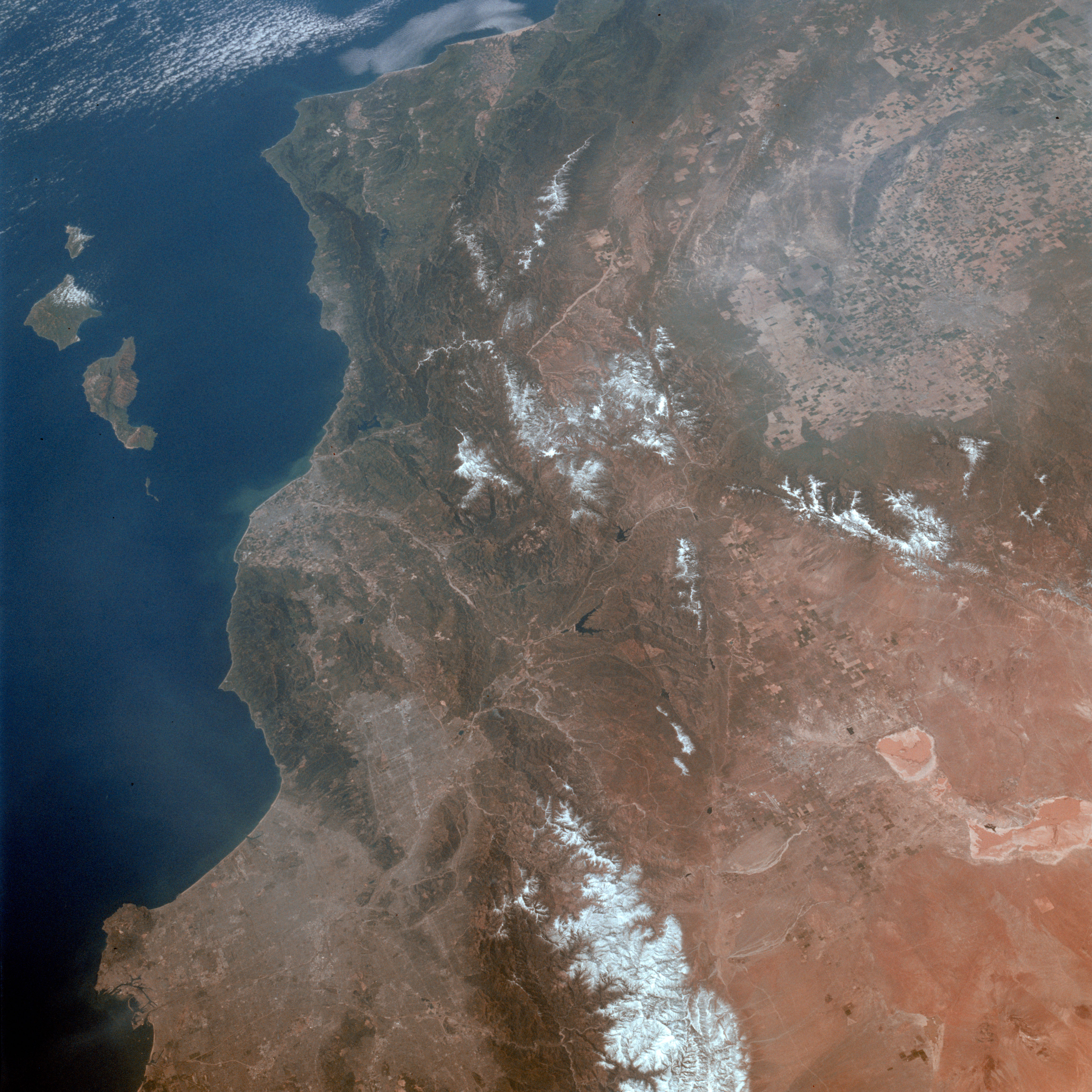
STS003-010-593 (30 March 1982) --- A general view of the greater Los Angeles region of California (34,0N, 118.5W) showing the coastline, Vandenberg AFB, the south end of the Central Valley and the dry lake beds at Edwards AFB.  A close look can pinpoint water on the lake beds at Edwards Air Force Base used previously for two shuttle landings.  Among other features that can be seen are Oxnard, Santa Barbara, Bakersfield, Vandenberg Air Force Base, and The Ranch. Photo credit: NASA
Los Angeles, CA.
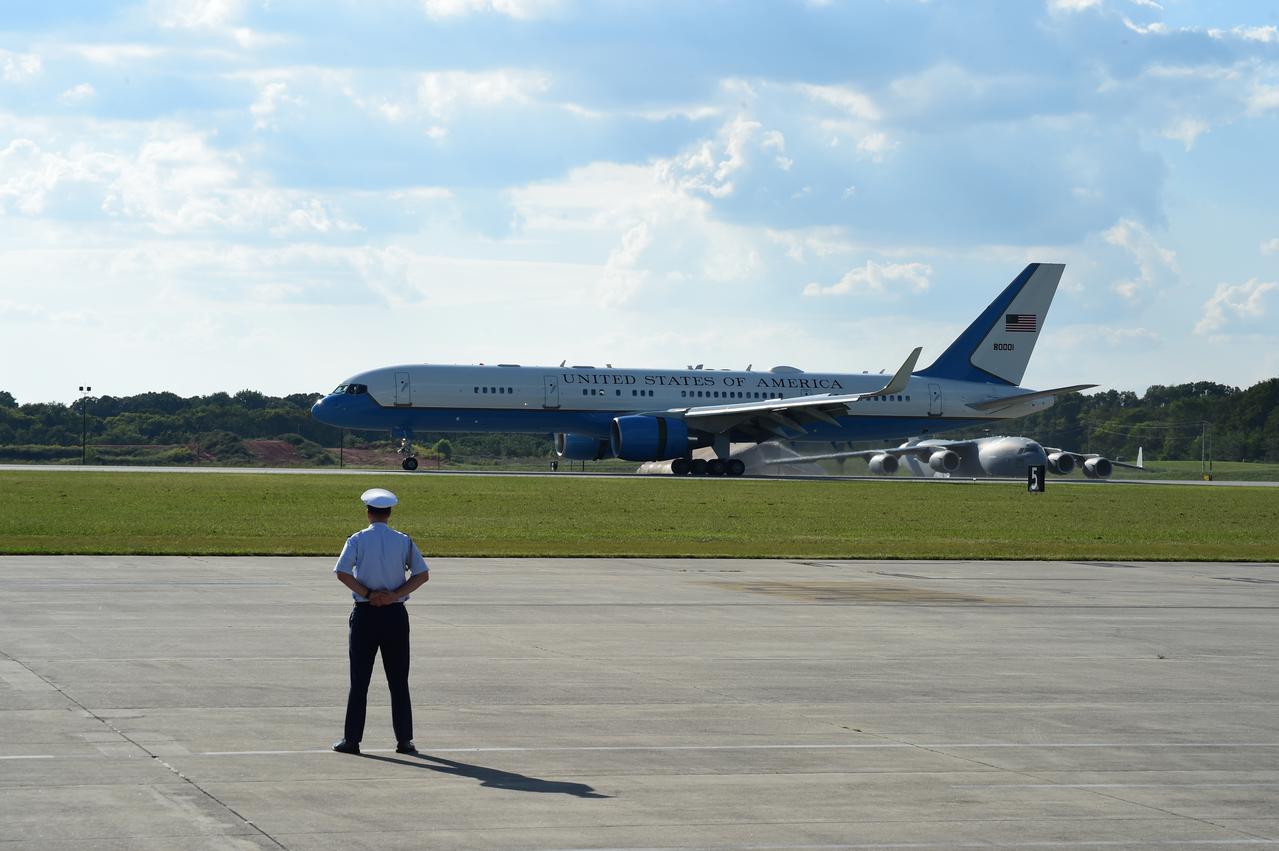
KENNEDY SPACE CENTER, FLA. - On the Skid Strip at Cape Canaveral Air Force Station in Florida,  Air Force Two, carrying U.S. Vice President Dick Cheney and his family, is ready for a return trip to Washington.  Cheney flew in earlier to witness the launch of Space Shuttle Discovery on mission STS-121.  The launch was scrubbed due to weather concerns and postponed 24 hours.   Photo credit: NASA/Kim Shiflett
KSC-06pd1355
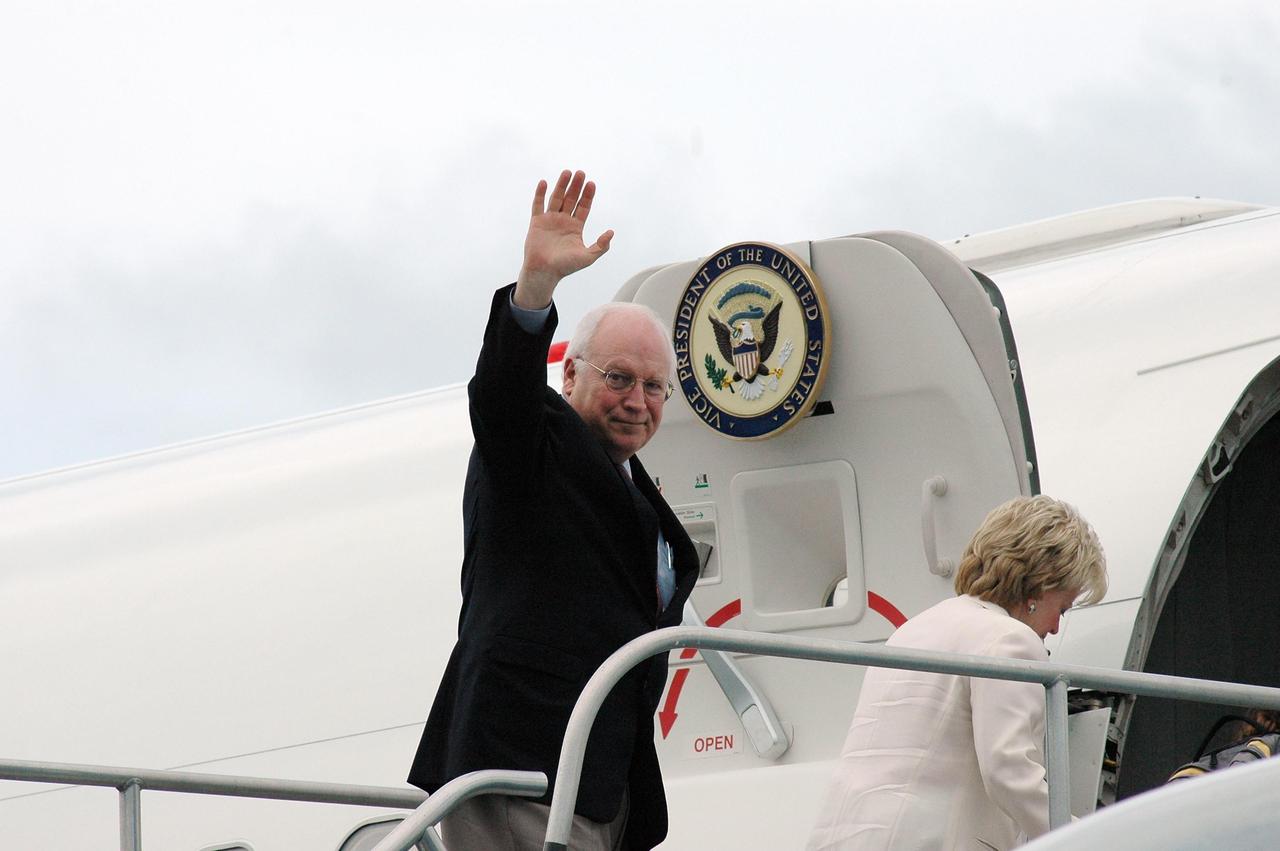
KENNEDY SPACE CENTER, FLA. - On the Skid Strip at Cape Canaveral Air Force Station in Florida, U.S. Vice President Dick Cheney waves before entering Air Force Two for a return trip to Washington.  Preceding him is his wife, Lynne.  Cheney and his family flew in earlier to witness the launch of Space Shuttle Discovery on mission STS-121.  The launch was scrubbed due to weather concerns and postponed 24 hours.     Photo credit: NASA/Kim Shiflett
KSC-06pd1353
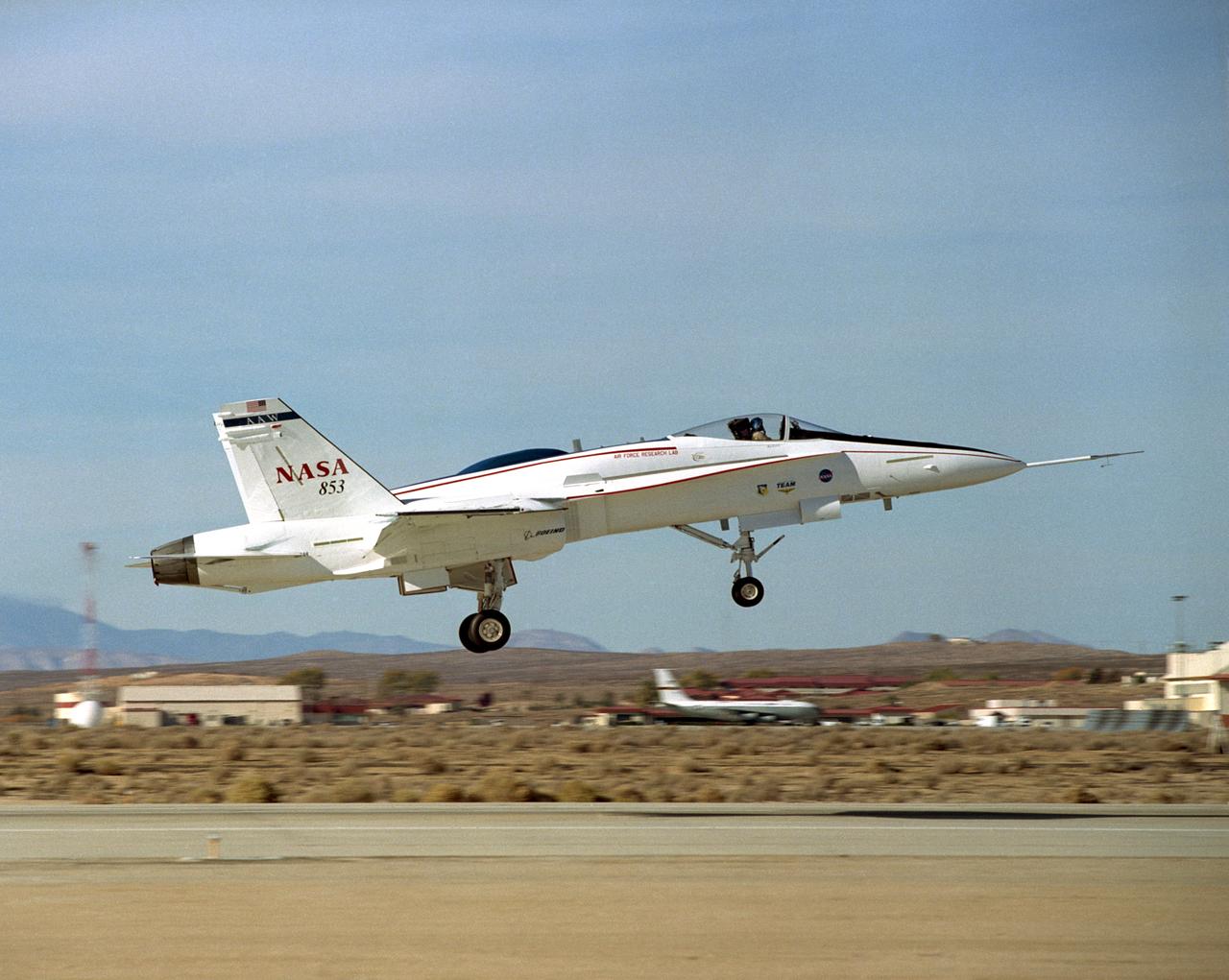
The Active Aeroelastic Wing F-18A lifts off on its first checkout flight November 15, 2002, from NASA's Dryden Flight Research Center at Edwards Air Force Base, Calif. The checkout flight initiated a two-phase NASA--Air Force flight research program that will investigate the potential of aerodynamically twisting flexible wings to improve maneuverability of high-performance aircraft at transonic and supersonic speeds.
EC02-0264-01
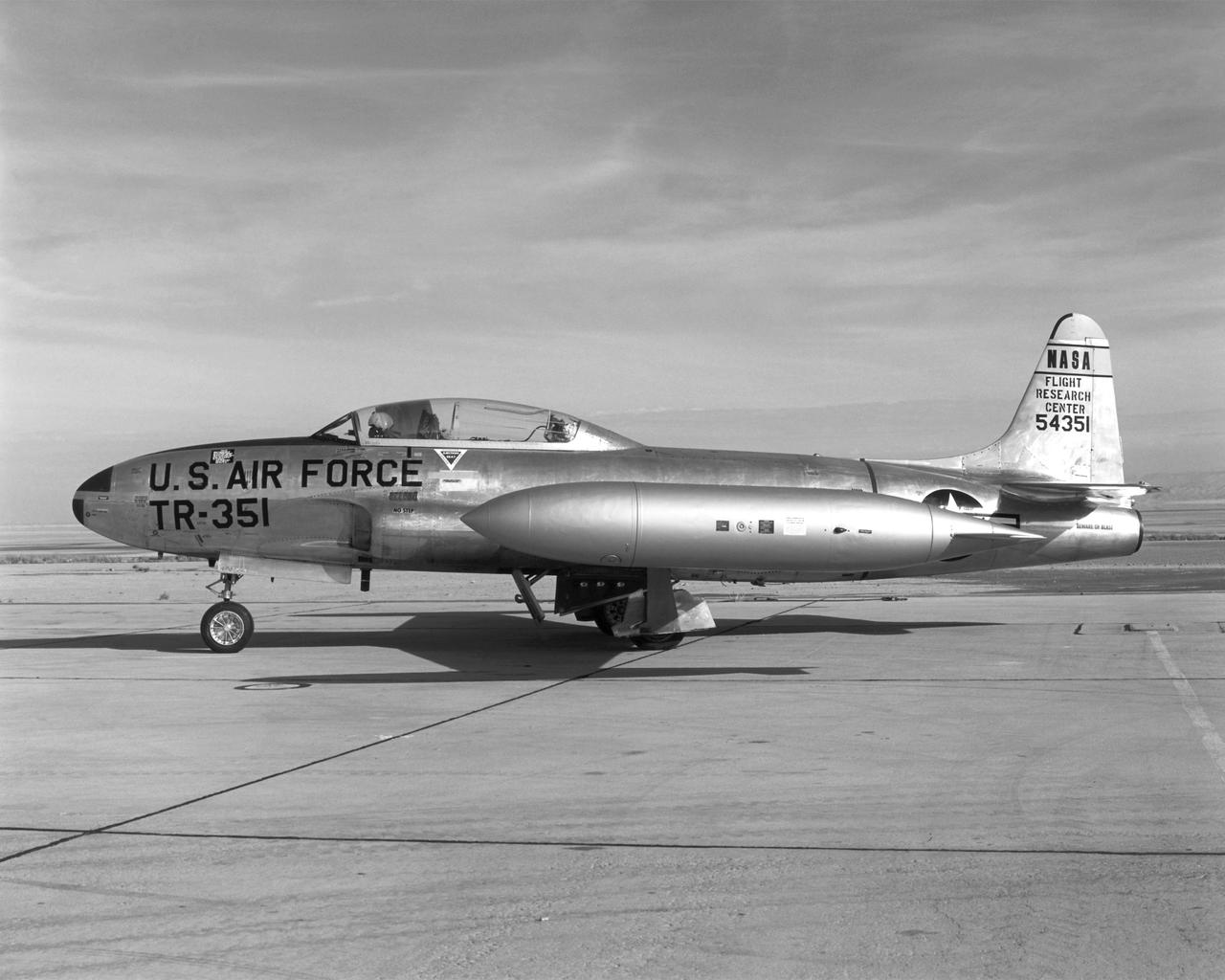
Arrived at NASA FRC January 9, 1963 Departed September 10, 1973 to Redding, California This aircraft, one of four T-33A jet trainers which NASA Dryden used from 1958 to 1973, was used in a monocular vision landing study. The T-33 was the first U.S. Air Force jet trainer, and was originally developed as a two-seat version of the F-80. The T-33 was used by not only the U.S. military, but also by foreign air forces as a trainer, fighter, and reconnaissance aircraft.
T-33A (55-4351/NASA 815)
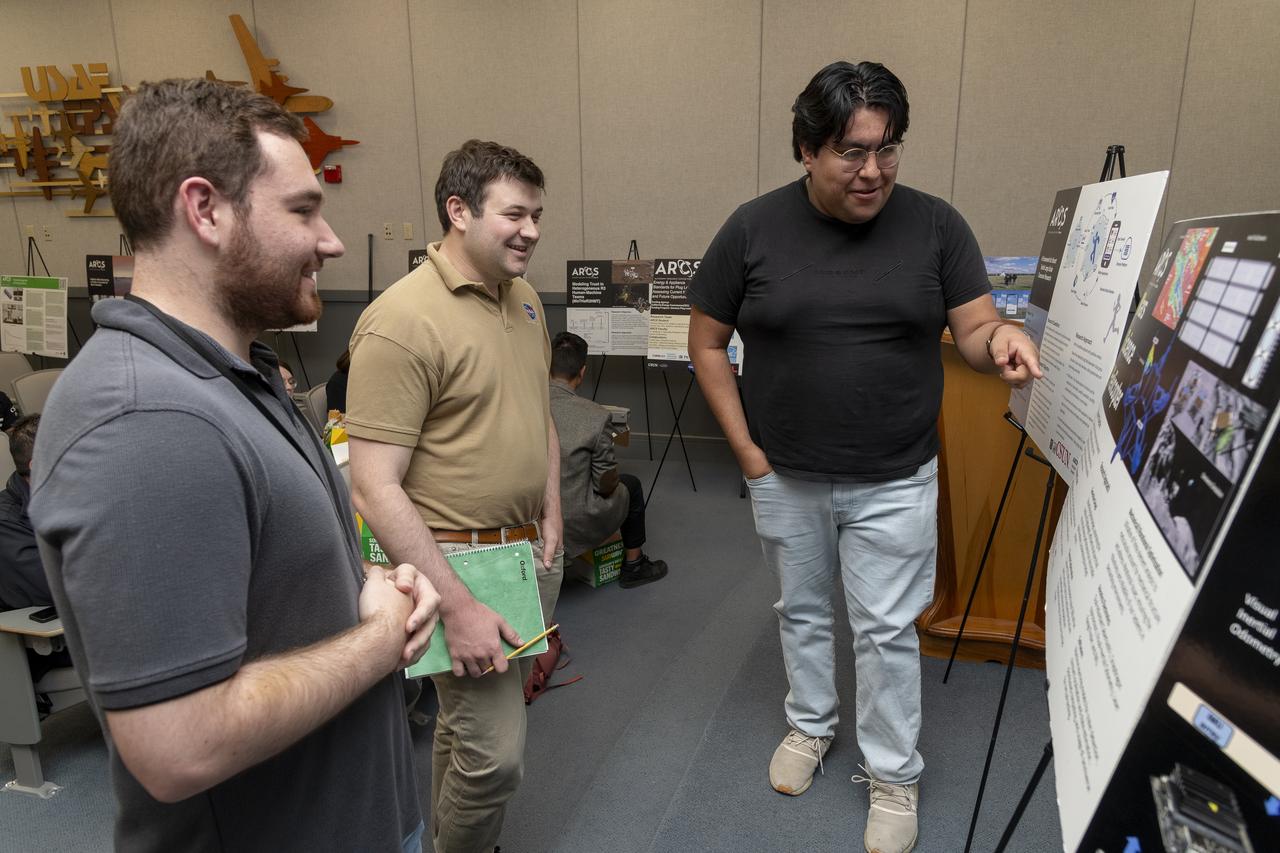
Two men from NASA’s Armstrong Flight Research Center in Edwards, California, ask Jared Carrillo, a student from the California State University, Northridge, Autonomy Research Center for science, technology, engineering, entrepreneurship, arts, humanities, and mathematics, about his work on the Mars Science Helicopter. Students displayed posters and answered questions about their technologies May 23 at the Air Force Test Pilot School auditorium on Edwards Air Force Base, California.
California Students Aim for NASA Support to Develop Technology
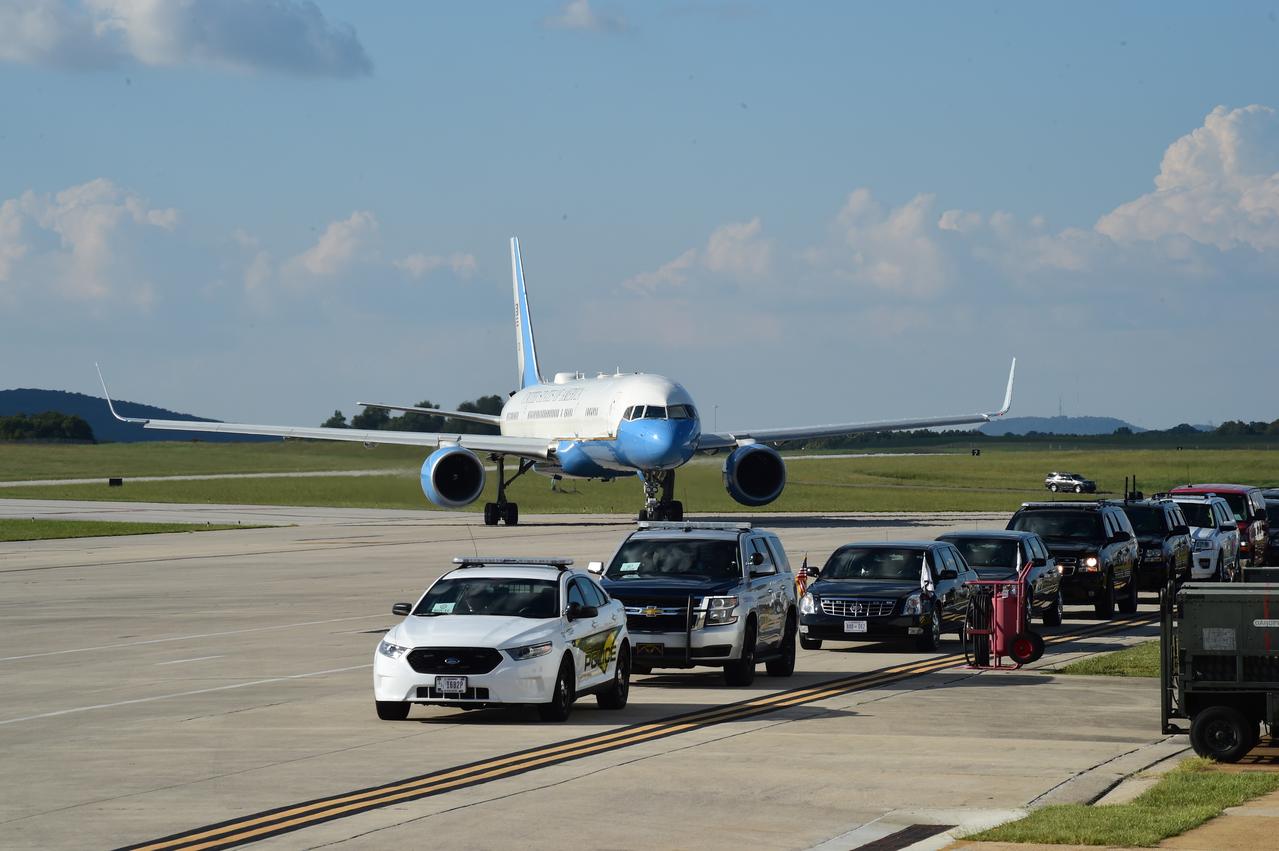
KENNEDY SPACE CENTER, FLA. - On the Skid Strip at Cape Canaveral Air Force Station in Florida,  Air Force Two, carrying U.S. Vice President Dick Cheney and his family, is ready for a return trip to Washington.  Cheney flew in earlier to witness the launch of Space Shuttle Discovery on mission STS-121.  The launch was scrubbed due to weather concerns and postponed 24 hours.    Photo credit: NASA/Kim Shiflett
KSC-06pd1354
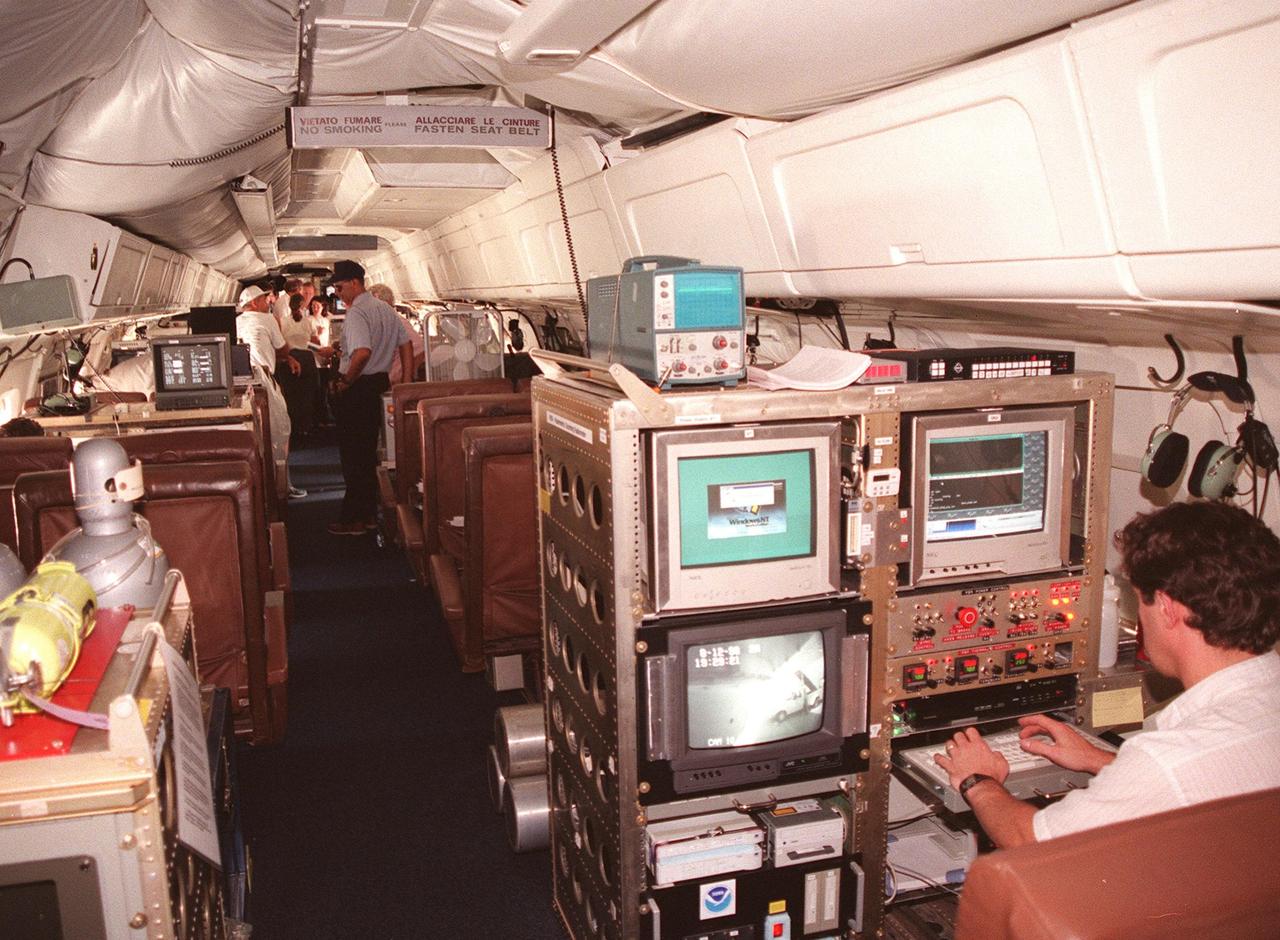
Inside this NASA Dryden Flight Research Center DC-8, which was on view at Patrick Air Force Base, visitors get a close-up look at the instruments that will be used to collect high-altitude information about Atlantic hurricanes and tropical storms as part of a NASA-led Atmospheric Dynamics and Remote Sensing program. The DC-8 is one of two aircraft being flown in a study through September to learn about the storms from top to bottom. The other plane, a modified U2, and the DC-8 will fly in conjunction with scheduled storm flights of the National Oceanic and Atmospheric Administration (NOAA) out of MacDill Air Force Base in Tampa and the U.S. Air Force 53rd Weather Reconnaissance Squadron from Keesler Air Force Base, Miss. The hurricane study is part of NASA’s Earth Science enterprise to better understand the total Earth system and the effects of natural and human-induced changes on the global environment
KSC-98pc910
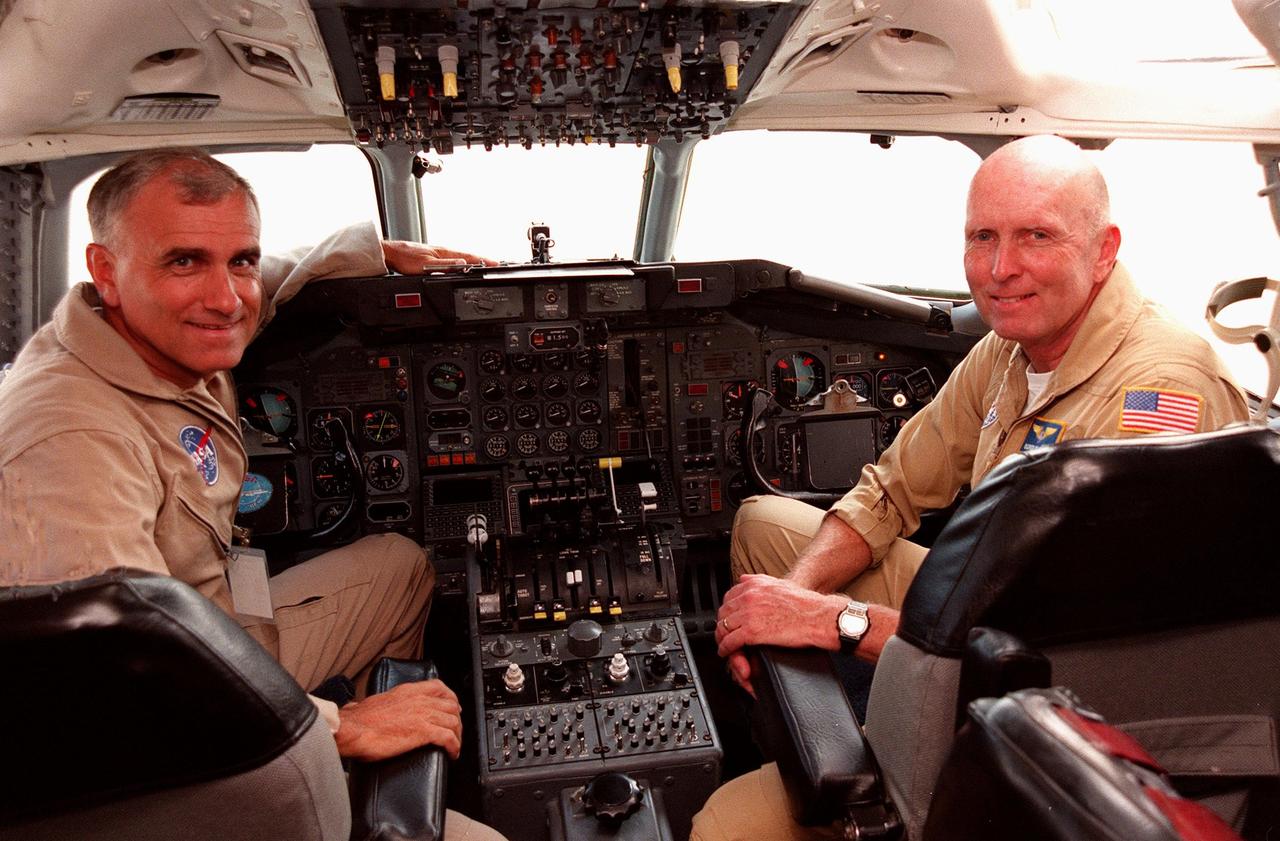
NASA pilots Dick Ewens and Gordon Fullerton sit at the controls in the cockpit of the Dryden Flight Research Center DC-8 that was on view at Patrick Air Force Base. The DC-8 is one of two aircraft being flown in a hurricane study through September to learn about the storms from top to bottom. Flying at 35,000 to 40,000 feet, the DC-8 is equipped with instruments to measure a hurricane’s structure, environment and changes in intensity and tracking. The other plane, a modified U2, and the DC-8 will fly in conjunction with scheduled storm flights of the National Oceanic and Atmospheric Administration (NOAA) out of MacDill Air Force Base in Tampa and the U.S. Air Force 53rd Weather Reconnaissance Squadron from Keesler Air Force Base, Miss. The study is part of NASA’s Earth Science enterprise to better understand the total Earth system and the effects of natural and human-induced changes on the global environment
KSC-98pc911
KENNEDY SPACE CENTER, FLA. - At Vandenberg Air Force Base, Calif., the Pegasus launch vehicle is moved into its hangar.  The Pegasus will carry the SciSat-1 spacecraft in a 400-mile-high polar orbit to investigate processes that control the distribution of ozone in the upper atmosphere.  The scientific mission of SciSat-1 is to measure and understand the chemical processes that control the distribution of ozone in the Earth’s atmosphere, particularly at high altitudes.  The data from the satellite will provide Canadian and international scientists with improved measurements relating to global ozone processes and help policymakers assess existing environmental policy and develop protective measures for improving the health of our atmosphere, preventing further ozone depletion.  The mission is designed to last two years.
KENNEDY SPACE CENTER, FLA. - At Vandenberg Air Force Base, Calif., the Pegasus launch vehicle is moved into its hangar. The Pegasus will carry the SciSat-1 spacecraft in a 400-mile-high polar orbit to investigate processes that control the distribution of ozone in the upper atmosphere. The scientific mission of SciSat-1 is to measure and understand the chemical processes that control the distribution of ozone in the Earth’s atmosphere, particularly at high altitudes. The data from the satellite will provide Canadian and international scientists with improved measurements relating to global ozone processes and help policymakers assess existing environmental policy and develop protective measures for improving the health of our atmosphere, preventing further ozone depletion. The mission is designed to last two years.
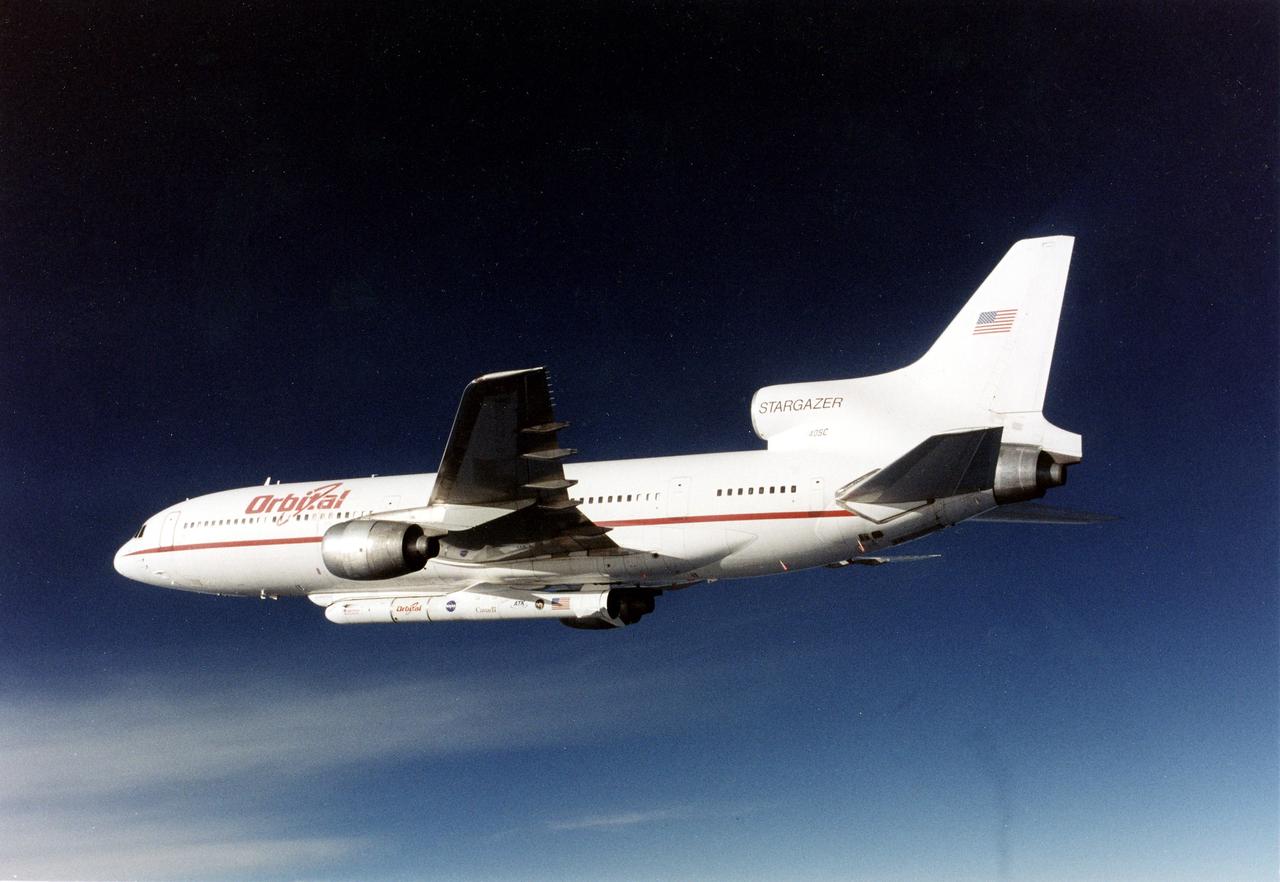
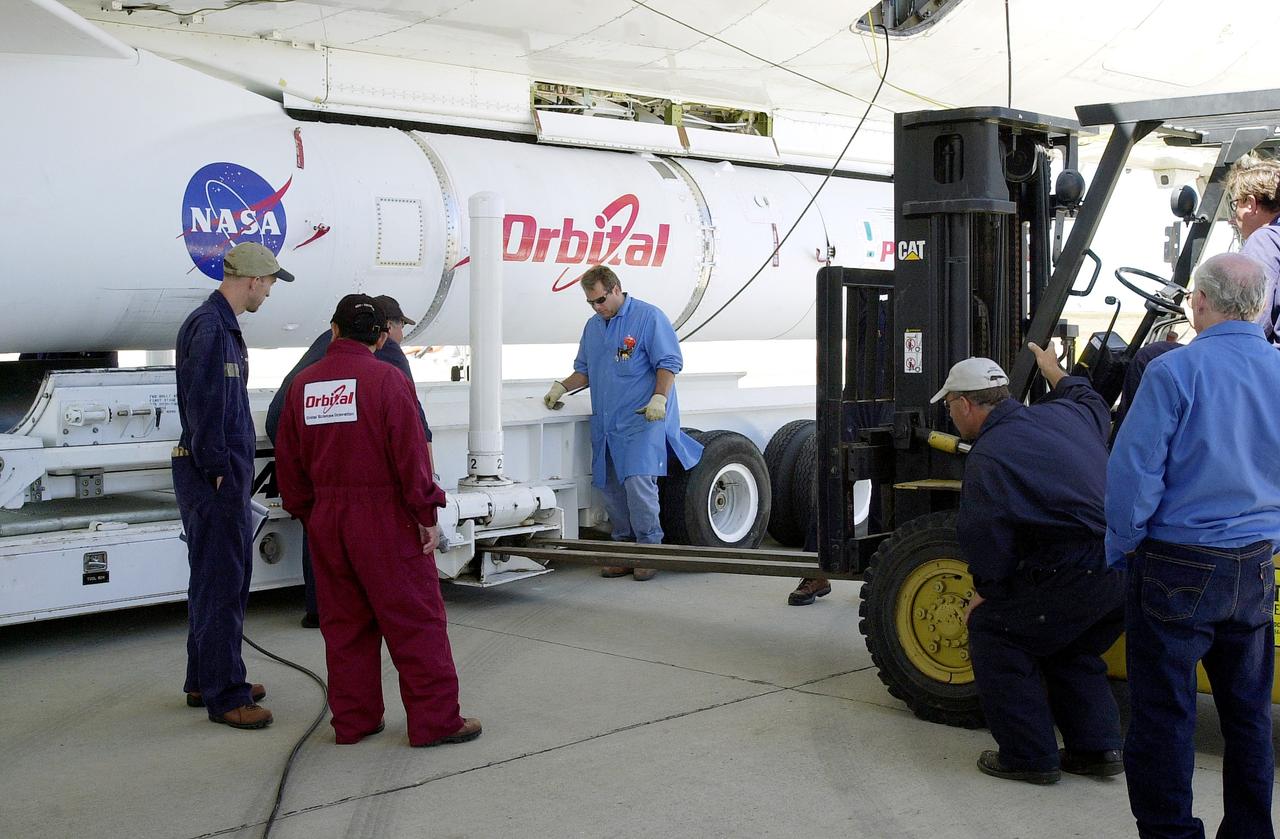
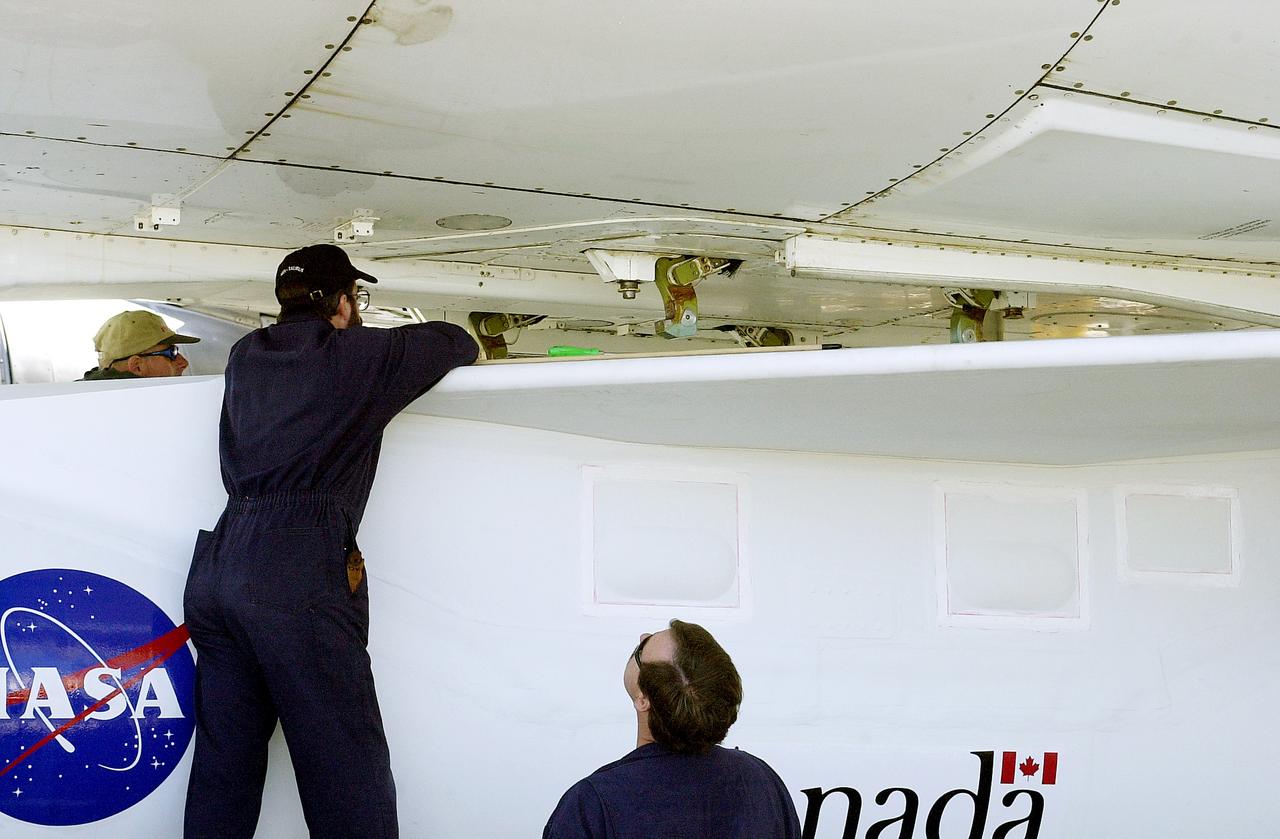
VANDENBERG AIR FORCE BASE, CALIF. -    Workers mate the Pegasus , with its cargo of the SciSat-1 payload to the L-1011 carrier aircraft.  The SciSat-1 weighs approximately 330 pounds and after launch will be placed in a 400-mile-high polar orbit to investigate processes that control the distribution of ozone in the upper atmosphere. The data from the satellite will provide Canadian and international scientists with improved measurements relating to global ozone processes and help policymakers assess existing environmental policy and develop protective measures for improving the health of our atmosphere, preventing further ozone depletion. The mission is designed to last two years.
VANDENBERG AIR FORCE BASE, CALIF. - Workers mate the Pegasus , with its cargo of the SciSat-1 payload to the L-1011 carrier aircraft. The SciSat-1 weighs approximately 330 pounds and after launch will be placed in a 400-mile-high polar orbit to investigate processes that control the distribution of ozone in the upper atmosphere. The data from the satellite will provide Canadian and international scientists with improved measurements relating to global ozone processes and help policymakers assess existing environmental policy and develop protective measures for improving the health of our atmosphere, preventing further ozone depletion. The mission is designed to last two years.
VANDENBERG AIR FORCE BASE, CALIF. -  The SciSat-1 payload, with fairing installed and attached to its Pegasus launch vehicle, begins rollout to the hot pad and mating to the L-1011 carrier aircraft.  The SciSat-1 weighs approximately 330 pounds and after launch will be placed in a 400-mile-high polar orbit to investigate processes that control the distribution of ozone in the upper atmosphere. The data from the satellite will provide Canadian and international scientists with improved measurements relating to global ozone processes and help policymakers assess existing environmental policy and develop protective measures for improving the health of our atmosphere, preventing further ozone depletion. The mission is designed to last two years.
VANDENBERG AIR FORCE BASE, CALIF. - The SciSat-1 payload, with fairing installed and attached to its Pegasus launch vehicle, begins rollout to the hot pad and mating to the L-1011 carrier aircraft. The SciSat-1 weighs approximately 330 pounds and after launch will be placed in a 400-mile-high polar orbit to investigate processes that control the distribution of ozone in the upper atmosphere. The data from the satellite will provide Canadian and international scientists with improved measurements relating to global ozone processes and help policymakers assess existing environmental policy and develop protective measures for improving the health of our atmosphere, preventing further ozone depletion. The mission is designed to last two years.
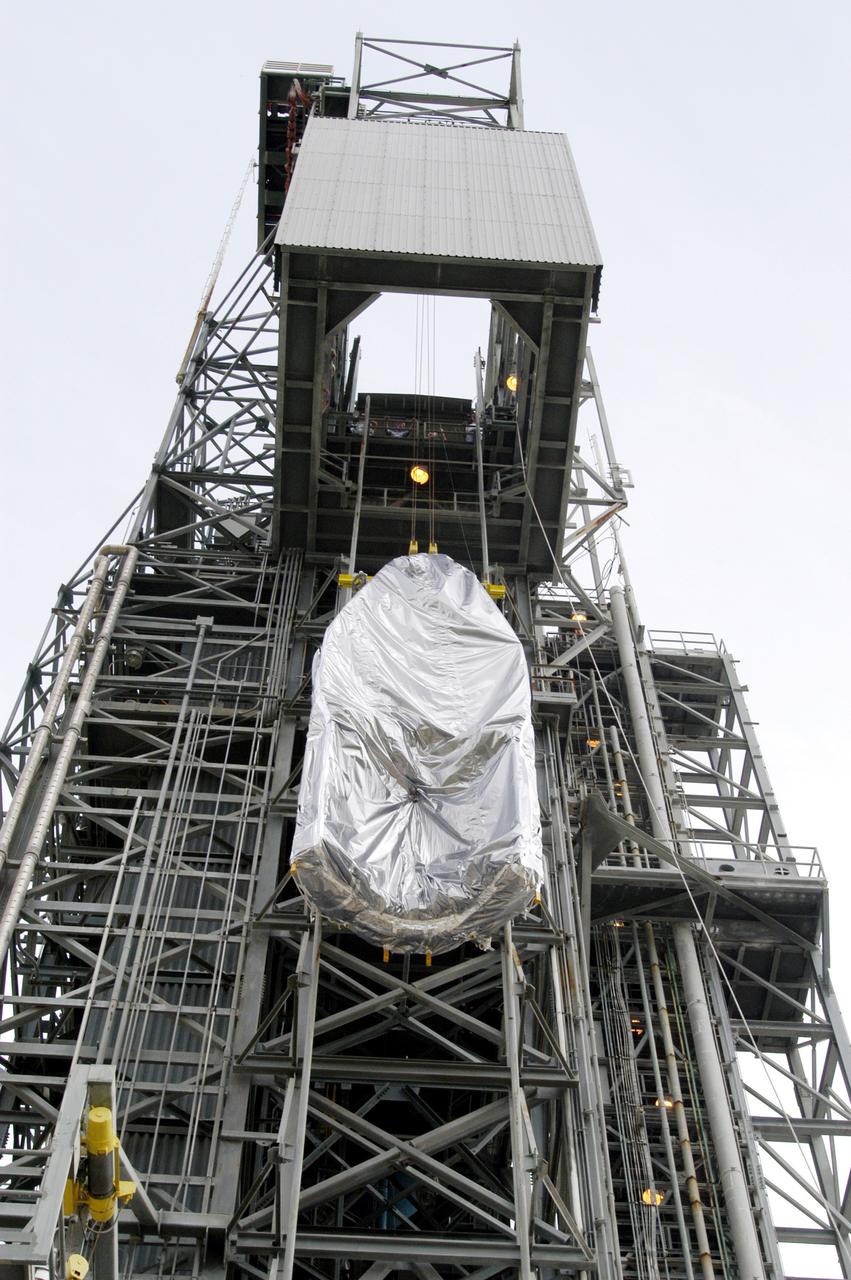
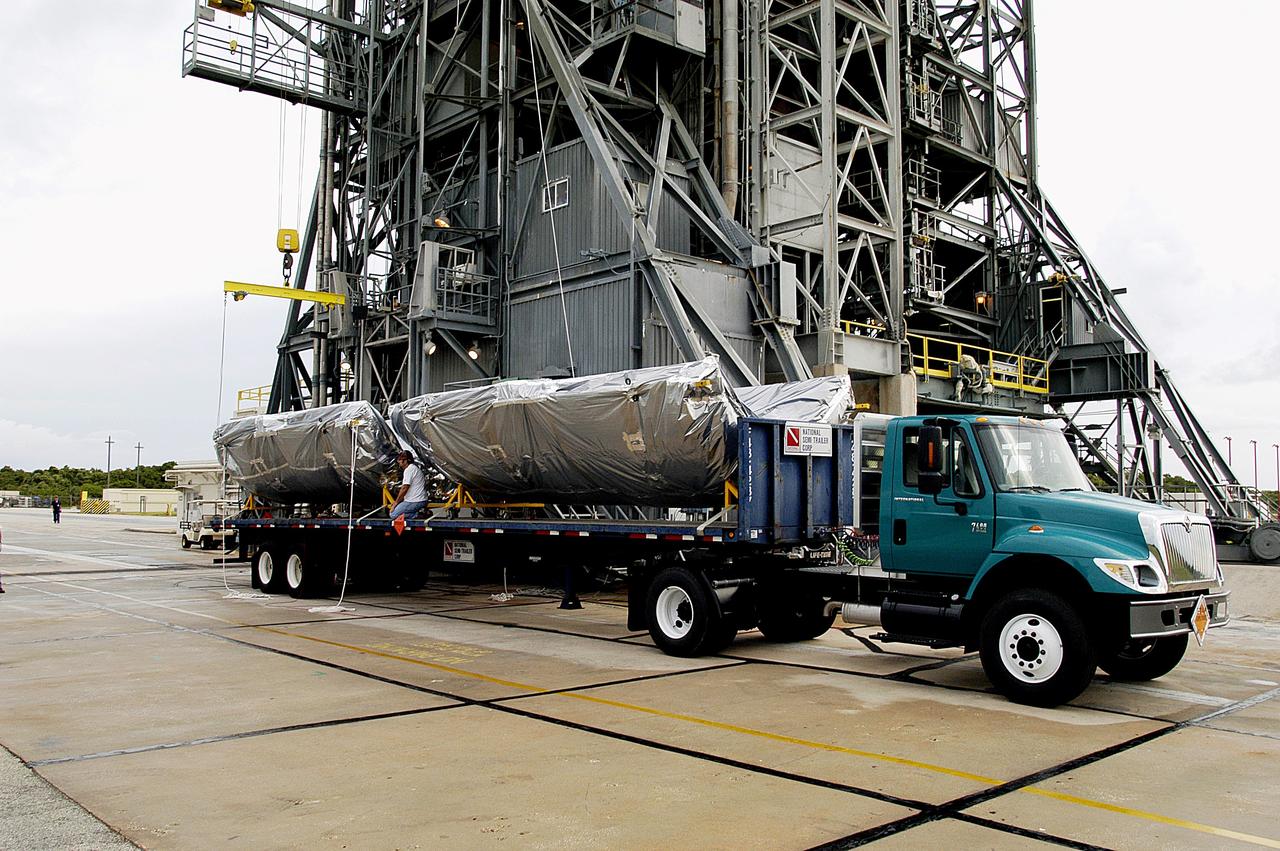
KENNEDY SPACE CENTER, FLA. - At Launch Complex 17-A, Cape Canaveral Air Force Station, the first half of the fairing for the Mars Exploration Rover 2 (MER-2/MER-A) is moved inside the launch tower.  The fairing will be installed around the payload for protection during launch.  The MER Mission consists of two identical rovers designed to cover roughly 110 yards each Martian day over various terrain. Each rover will carry five scientific instruments that will allow it to search for evidence of liquid water that may have been present in the planet's past.  Identical to each other, the rovers will land at different regions of Mars.  Launch date for MER-A  is scheduled for June 5..
KENNEDY SPACE CENTER, FLA. - At Launch Complex 17-A, Cape Canaveral Air Force Station, the first half of the fairing for the Mars Exploration Rover 2 (MER-2/MER-A) is moved inside the launch tower. The fairing will be installed around the payload for protection during launch. The MER Mission consists of two identical rovers designed to cover roughly 110 yards each Martian day over various terrain. Each rover will carry five scientific instruments that will allow it to search for evidence of liquid water that may have been present in the planet's past. Identical to each other, the rovers will land at different regions of Mars. Launch date for MER-A is scheduled for June 5..
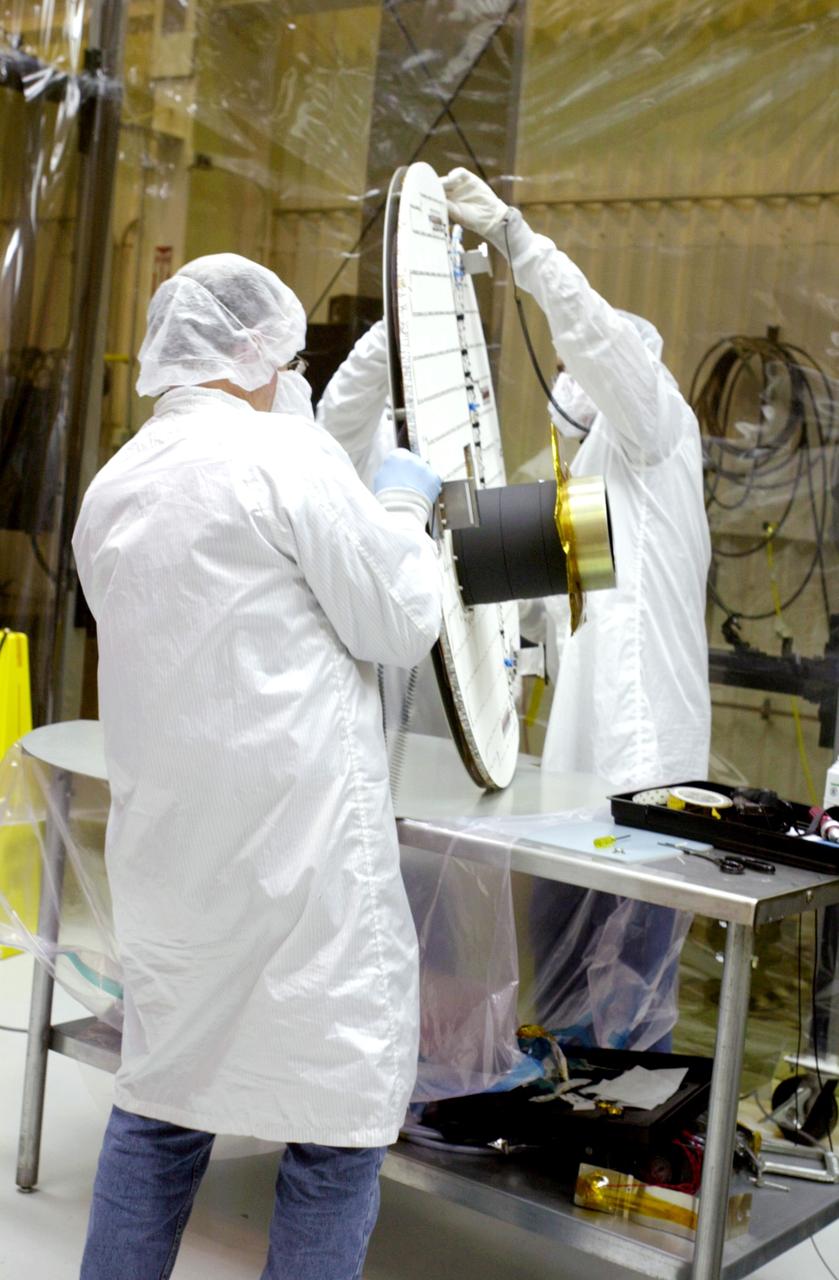
VANDENBERG AIR FORCE BASE, CALIF. -  At Vandenberg AFB, Calif., a solar array is installed on the SciSat-1 spacecraft.  The SciSat-1 weighs approximately 330 pounds and after launch will be placed in a 400-mile-high polar orbit to investigate processes that control the distribution of ozone in the upper atmosphere. The data from the satellite will provide Canadian and international scientists with improved measurements relating to global ozone processes and help policymakers assess existing environmental policy and develop protective measures for improving the health of our atmosphere, preventing further ozone depletion. The mission is designed to last two years.
VANDENBERG AIR FORCE BASE, CALIF. - At Vandenberg AFB, Calif., a solar array is installed on the SciSat-1 spacecraft. The SciSat-1 weighs approximately 330 pounds and after launch will be placed in a 400-mile-high polar orbit to investigate processes that control the distribution of ozone in the upper atmosphere. The data from the satellite will provide Canadian and international scientists with improved measurements relating to global ozone processes and help policymakers assess existing environmental policy and develop protective measures for improving the health of our atmosphere, preventing further ozone depletion. The mission is designed to last two years.
KENNEDY SPACE CENTER, FLA. - At Launch Complex 17-A, Cape Canaveral Air Force Station, the first half of the fairing for the Mars Exploration Rover 2 (MER-2/MER-A) reaches the top of the launch tower.  The fairing will be installed around the payload for protection during launch.  The MER Mission consists of two identical rovers designed to cover roughly 110 yards each Martian day over various terrain. Each rover will carry five scientific instruments that will allow it to search for evidence of liquid water that may have been present in the planet's past.  Identical to each other, the rovers will land at different regions of Mars.  Launch date for MER-A  is scheduled for June 5.
KENNEDY SPACE CENTER, FLA. - At Launch Complex 17-A, Cape Canaveral Air Force Station, the first half of the fairing for the Mars Exploration Rover 2 (MER-2/MER-A) reaches the top of the launch tower. The fairing will be installed around the payload for protection during launch. The MER Mission consists of two identical rovers designed to cover roughly 110 yards each Martian day over various terrain. Each rover will carry five scientific instruments that will allow it to search for evidence of liquid water that may have been present in the planet's past. Identical to each other, the rovers will land at different regions of Mars. Launch date for MER-A is scheduled for June 5.
KENNEDY SPACE CENTER, FLA. -  At Launch Complex 17-A, Cape Canaveral Air Force Station, the first half of the fairing for the Mars Exploration Rover 2 (MER-2/MER-A) is lifted up the launch tower.  The fairing will be installed around the payload for protection during launch.  The MER Mission consists of two identical rovers designed to cover roughly 110 yards each Martian day over various terrain. Each rover will carry five scientific instruments that will allow it to search for evidence of liquid water that may have been present in the planet's past.  Identical to each other, the rovers will land at different regions of Mars.  Launch date for MER-A  is scheduled for June 5.
KENNEDY SPACE CENTER, FLA. - At Launch Complex 17-A, Cape Canaveral Air Force Station, the first half of the fairing for the Mars Exploration Rover 2 (MER-2/MER-A) is lifted up the launch tower. The fairing will be installed around the payload for protection during launch. The MER Mission consists of two identical rovers designed to cover roughly 110 yards each Martian day over various terrain. Each rover will carry five scientific instruments that will allow it to search for evidence of liquid water that may have been present in the planet's past. Identical to each other, the rovers will land at different regions of Mars. Launch date for MER-A is scheduled for June 5.
KENNEDY SPACE CENTER, FLA. -  The fairing for the Mars Exploration Rover 2 (MER-2/MER-A) arrives at Launch Complex 17-A, Cape Canaveral Air Force Station.  It will be installed around the payload for protection during launch.  The MER Mission consists of two identical rovers designed to cover roughly 110 yards each Martian day over various terrain. Each rover will carry five scientific instruments that will allow it to search for evidence of liquid water that may have been present in the planet's past.  Identical to each other, the rovers will land at different regions of Mars.  Launch date for MER-A  is scheduled for June 5.
KENNEDY SPACE CENTER, FLA. - The fairing for the Mars Exploration Rover 2 (MER-2/MER-A) arrives at Launch Complex 17-A, Cape Canaveral Air Force Station. It will be installed around the payload for protection during launch. The MER Mission consists of two identical rovers designed to cover roughly 110 yards each Martian day over various terrain. Each rover will carry five scientific instruments that will allow it to search for evidence of liquid water that may have been present in the planet's past. Identical to each other, the rovers will land at different regions of Mars. Launch date for MER-A is scheduled for June 5.
KENNEDY SPACE CENTER, FLA. -  At Launch Complex 17-A, Cape Canaveral Air Force Station, the first half of the fairing for the Mars Exploration Rover 2 (MER-2/MER-A) is lifted up the launch tower.  The fairing will be installed around the payload for protection during launch.  The MER Mission consists of two identical rovers designed to cover roughly 110 yards each Martian day over various terrain. Each rover will carry five scientific instruments that will allow it to search for evidence of liquid water that may have been present in the planet's past.  Identical to each other, the rovers will land at different regions of Mars.  Launch date for MER-A  is scheduled for June 5.
KENNEDY SPACE CENTER, FLA. - At Launch Complex 17-A, Cape Canaveral Air Force Station, the first half of the fairing for the Mars Exploration Rover 2 (MER-2/MER-A) is lifted up the launch tower. The fairing will be installed around the payload for protection during launch. The MER Mission consists of two identical rovers designed to cover roughly 110 yards each Martian day over various terrain. Each rover will carry five scientific instruments that will allow it to search for evidence of liquid water that may have been present in the planet's past. Identical to each other, the rovers will land at different regions of Mars. Launch date for MER-A is scheduled for June 5.
VANDENBERG AIR FORCE BASE, CALIF. -  With its cover removed, the SciSat-1 spacecraft is rotated.  The solar arrays will be attached and the communications systems checked out.   The SciSat-1 weighs approximately 330 pounds and after launch will be placed in a 400-mile-high polar orbit to investigate processes that control the distribution of ozone in the upper atmosphere. The data from the satellite will provide Canadian and international scientists with improved measurements relating to global ozone processes and help policymakers assess existing environmental policy and develop protective measures for improving the health of our atmosphere, preventing further ozone depletion. The mission is designed to last two years.
VANDENBERG AIR FORCE BASE, CALIF. - With its cover removed, the SciSat-1 spacecraft is rotated. The solar arrays will be attached and the communications systems checked out. The SciSat-1 weighs approximately 330 pounds and after launch will be placed in a 400-mile-high polar orbit to investigate processes that control the distribution of ozone in the upper atmosphere. The data from the satellite will provide Canadian and international scientists with improved measurements relating to global ozone processes and help policymakers assess existing environmental policy and develop protective measures for improving the health of our atmosphere, preventing further ozone depletion. The mission is designed to last two years.
VANDENBERG AIR FORCE BASE, CALIF. -  The Pegasus transporter, with its cargo of  the SciSat-1 payload and Pegasus launch vehicle, moves under the L-1011 carrier aircraft for matting.  The SciSat-1 weighs approximately 330 pounds and after launch will be placed in a 400-mile-high polar orbit to investigate processes that control the distribution of ozone in the upper atmosphere. The data from the satellite will provide Canadian and international scientists with improved measurements relating to global ozone processes and help policymakers assess existing environmental policy and develop protective measures for improving the health of our atmosphere, preventing further ozone depletion. The mission is designed to last two years.
VANDENBERG AIR FORCE BASE, CALIF. - The Pegasus transporter, with its cargo of the SciSat-1 payload and Pegasus launch vehicle, moves under the L-1011 carrier aircraft for matting. The SciSat-1 weighs approximately 330 pounds and after launch will be placed in a 400-mile-high polar orbit to investigate processes that control the distribution of ozone in the upper atmosphere. The data from the satellite will provide Canadian and international scientists with improved measurements relating to global ozone processes and help policymakers assess existing environmental policy and develop protective measures for improving the health of our atmosphere, preventing further ozone depletion. The mission is designed to last two years.
VANDENBERG AIR FORCE BASE, CALIF. -  The L-1011 carrier aircraft is in flight with its cargo of the Pegasus launch vehicle and SciSat-1 spacecraft underneath.  The SciSat-1 weighs approximately 330 pounds and after launch will be placed in a 400-mile-high polar orbit to investigate processes that control the distribution of ozone in the upper atmosphere. The data from the satellite will provide Canadian and international scientists with improved measurements relating to global ozone processes and help policymakers assess existing environmental policy and develop protective measures for improving the health of our atmosphere, preventing further ozone depletion. The mission is designed to last two years.
VANDENBERG AIR FORCE BASE, CALIF. - The L-1011 carrier aircraft is in flight with its cargo of the Pegasus launch vehicle and SciSat-1 spacecraft underneath. The SciSat-1 weighs approximately 330 pounds and after launch will be placed in a 400-mile-high polar orbit to investigate processes that control the distribution of ozone in the upper atmosphere. The data from the satellite will provide Canadian and international scientists with improved measurements relating to global ozone processes and help policymakers assess existing environmental policy and develop protective measures for improving the health of our atmosphere, preventing further ozone depletion. The mission is designed to last two years.
VANDENBERG AIR FORCE BASE, CALIF. -  The SciSat-1 payload and Pegasus launch vehicle are lifted and mated to the L-1011 carrier aircraft.  The SciSat-1 weighs approximately 330 pounds and after launch will be placed in a 400-mile-high polar orbit to investigate processes that control the distribution of ozone in the upper atmosphere. The data from the satellite will provide Canadian and international scientists with improved measurements relating to global ozone processes and help policymakers assess existing environmental policy and develop protective measures for improving the health of our atmosphere, preventing further ozone depletion. The mission is designed to last two years.
VANDENBERG AIR FORCE BASE, CALIF. - The SciSat-1 payload and Pegasus launch vehicle are lifted and mated to the L-1011 carrier aircraft. The SciSat-1 weighs approximately 330 pounds and after launch will be placed in a 400-mile-high polar orbit to investigate processes that control the distribution of ozone in the upper atmosphere. The data from the satellite will provide Canadian and international scientists with improved measurements relating to global ozone processes and help policymakers assess existing environmental policy and develop protective measures for improving the health of our atmosphere, preventing further ozone depletion. The mission is designed to last two years.
VANDENBERG AIR FORCE BASE, CALIF. -  At Vandenberg AFB, Calif., a solar array is tested before installing on the SciSat-1 spacecraft.  The SciSat-1 weighs approximately 330 pounds and after launch will be placed in a 400-mile-high polar orbit to investigate processes that control the distribution of ozone in the upper atmosphere. The data from the satellite will provide Canadian and international scientists with improved measurements relating to global ozone processes and help policymakers assess existing environmental policy and develop protective measures for improving the health of our atmosphere, preventing further ozone depletion. The mission is designed to last two years.
VANDENBERG AIR FORCE BASE, CALIF. - At Vandenberg AFB, Calif., a solar array is tested before installing on the SciSat-1 spacecraft. The SciSat-1 weighs approximately 330 pounds and after launch will be placed in a 400-mile-high polar orbit to investigate processes that control the distribution of ozone in the upper atmosphere. The data from the satellite will provide Canadian and international scientists with improved measurements relating to global ozone processes and help policymakers assess existing environmental policy and develop protective measures for improving the health of our atmosphere, preventing further ozone depletion. The mission is designed to last two years.
KENNEDY SPACE CENTER, FLA. - After arriving at Launch Complex 17-A, Cape Canaveral Air Force Station, the second half of the fairing for the Mars Exploration Rover 2 (MER-2/MER-A) is lifted off its transporter.  The fairing will be installed around the payload for protection during launch.  The MER Mission consists of two identical rovers designed to cover roughly 110 yards each Martian day over various terrain. Each rover will carry five scientific instruments that will allow it to search for evidence of liquid water that may have been present in the planet's past.  Identical to each other, the rovers will land at different regions of Mars.  Launch date for MER-A  is scheduled for June 5.
KENNEDY SPACE CENTER, FLA. - After arriving at Launch Complex 17-A, Cape Canaveral Air Force Station, the second half of the fairing for the Mars Exploration Rover 2 (MER-2/MER-A) is lifted off its transporter. The fairing will be installed around the payload for protection during launch. The MER Mission consists of two identical rovers designed to cover roughly 110 yards each Martian day over various terrain. Each rover will carry five scientific instruments that will allow it to search for evidence of liquid water that may have been present in the planet's past. Identical to each other, the rovers will land at different regions of Mars. Launch date for MER-A is scheduled for June 5.