
This photograph depicts an air-breathing rocket engine prototype in the test bay at the General Applied Science Lab facility in Ronkonkoma, New York. Air-breathing engines, known as rocket based, combined-cycle engines, get their initial take-off power from specially designed rockets, called air-augmented rockets, that boost performance about 15 percent over conventional rockets. When the vehicle's velocity reaches twice the speed of sound, the rockets are turned off and the engine relies totally on oxygen in the atmosphere to burn hydrogen fuel, as opposed to a rocket that must carry its own oxygen, thus reducing weight and flight costs. Once the vehicle has accelerated to about 10 times the speed of sound, the engine converts to a conventional rocket-powered system to propel the craft into orbit or sustain it to suborbital flight speed. NASA's Advanced Space Transportation Program at Marshall Space Flight Center, along with several industry partners and collegiate forces, is developing this technology to make space transportation affordable for everyone from business travelers to tourists. The goal is to reduce launch costs from today's price tag of $10,000 per pound to only hundreds of dollars per pound. NASA's series of hypersonic flight demonstrators currently include three air-breathing vehicles: the X-43A, X-43B and X-43C.
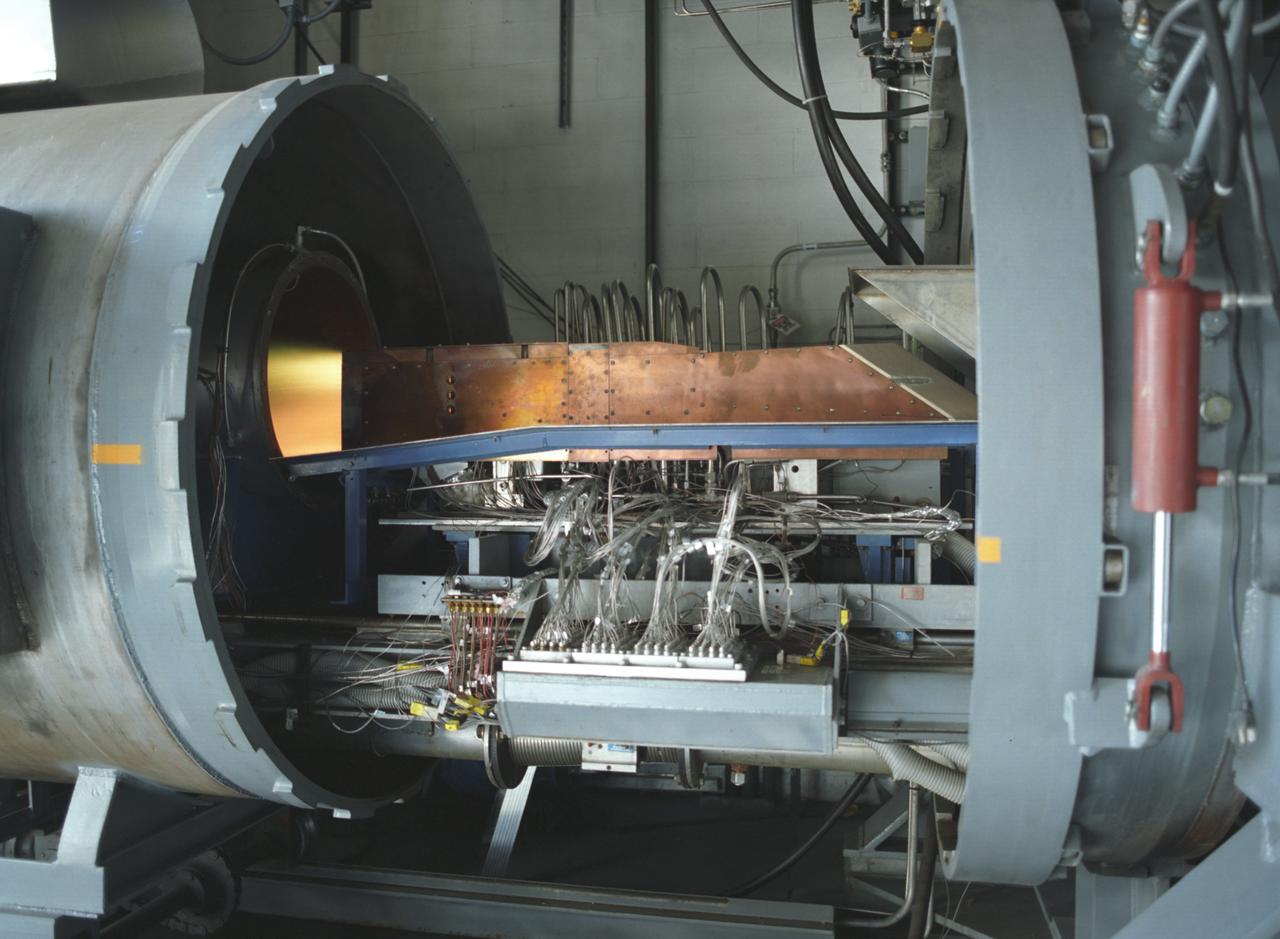
This photograph depicts an air-breathing rocket engine that completed an hour or 3,600 seconds of testing at the General Applied Sciences Laboratory in Ronkonkoma, New York. Referred to as ARGO by its design team, the engine is named after the mythological Greek ship that bore Jason and the Argonauts on their epic voyage of discovery. Air-breathing engines, known as rocket based, combined-cycle engines, get their initial take-off power from specially designed rockets, called air-augmented rockets, that boost performance about 15 percent over conventional rockets. When the vehicle's velocity reaches twice the speed of sound, the rockets are turned off and the engine relies totally on oxygen in the atmosphere to burn hydrogen fuel, as opposed to a rocket that must carry its own oxygen, thus reducing weight and flight costs. Once the vehicle has accelerated to about 10 times the speed of sound, the engine converts to a conventional rocket-powered system to propel the craft into orbit or sustain it to suborbital flight speed. NASA's Advanced SpaceTransportation Program at Marshall Space Flight Center, along with several industry partners and collegiate forces, is developing this technology to make space transportation affordable for everyone from business travelers to tourists. The goal is to reduce launch costs from today's price tag of $10,000 per pound to only hundreds of dollars per pound. NASA's series of hypersonic flight demonstrators currently include three air-breathing vehicles: the X-43A, X-43B and X-43C.

An artist's rendering of the air-breathing, hypersonic X-43B, the third and largest of NASA's Hyper-X series flight demonstrators, which could fly later this decade. Revolutionizing the way we gain access to space is NASA's primary goal for the Hypersonic Investment Area, managed for NASA by the Advanced Space Transportation Program at the Marshall Space Flight Center in Huntsville, Alabama. The Hypersonic Investment area, which includes leading-edge partners in industry and academia, will support future generation reusable vehicles and improved access to space. These technology demonstrators, intended for flight testing by decade's end, are expected to yield a new generation of vehicles that routinely fly about 100,000 feet above Earth's surface and reach sustained speeds in excess of Mach 5 (3,750 mph), the point at which "supersonic" flight becomes "hypersonic" flight. The flight demonstrators, the Hyper-X series, will be powered by air-breathing rocket or turbine-based engines, and ram/scramjets. Air-breathing engines, known as combined-cycle systems, achieve their efficiency gains over rocket systems by getting their oxygen for combustion from the atmosphere, as opposed to a rocket that must carry its oxygen. Once a hypersonic vehicle has accelerated to more than twice the speed of sound, the turbine or rockets are turned off, and the engine relies solely on oxygen in the atmosphere to burn fuel. When the vehicle has accelerated to more than 10 to 15 times the speed of sound, the engine converts to a conventional rocket-powered system to propel the craft into orbit or sustain it to suborbital flight speed. NASA's series of hypersonic flight demonstrators includes three air-breathing vehicles: the X-43A, X-43B and X-43C.
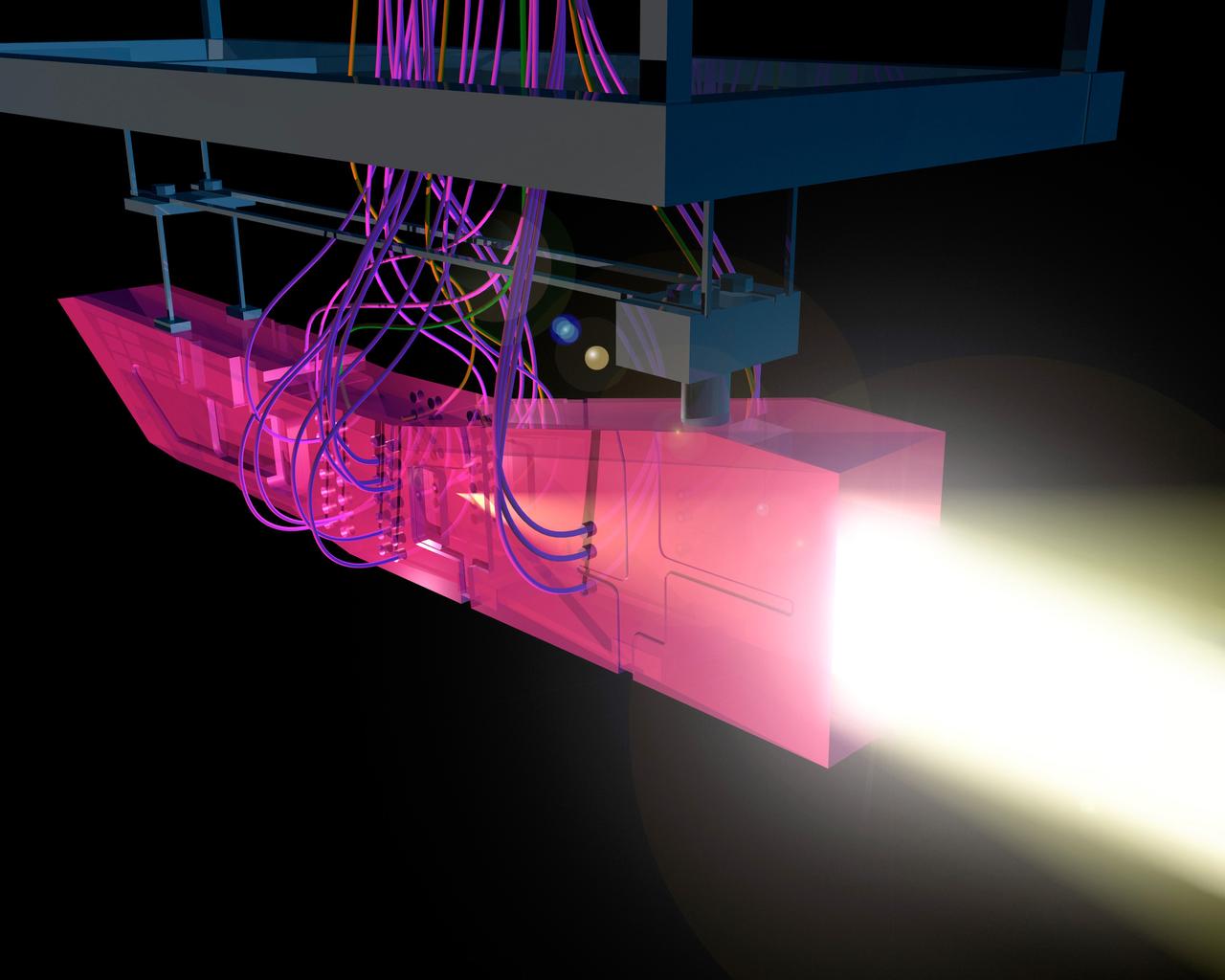
Pictured is a component of the Rocket Based Combined Cycle (RBCC) engine. This engine was designed to ultimately serve as the near term basis for Two Stage to Orbit (TSTO) air breathing propulsion systems and ultimately a Single Stage to Orbit (SSTO) air breathing propulsion system.
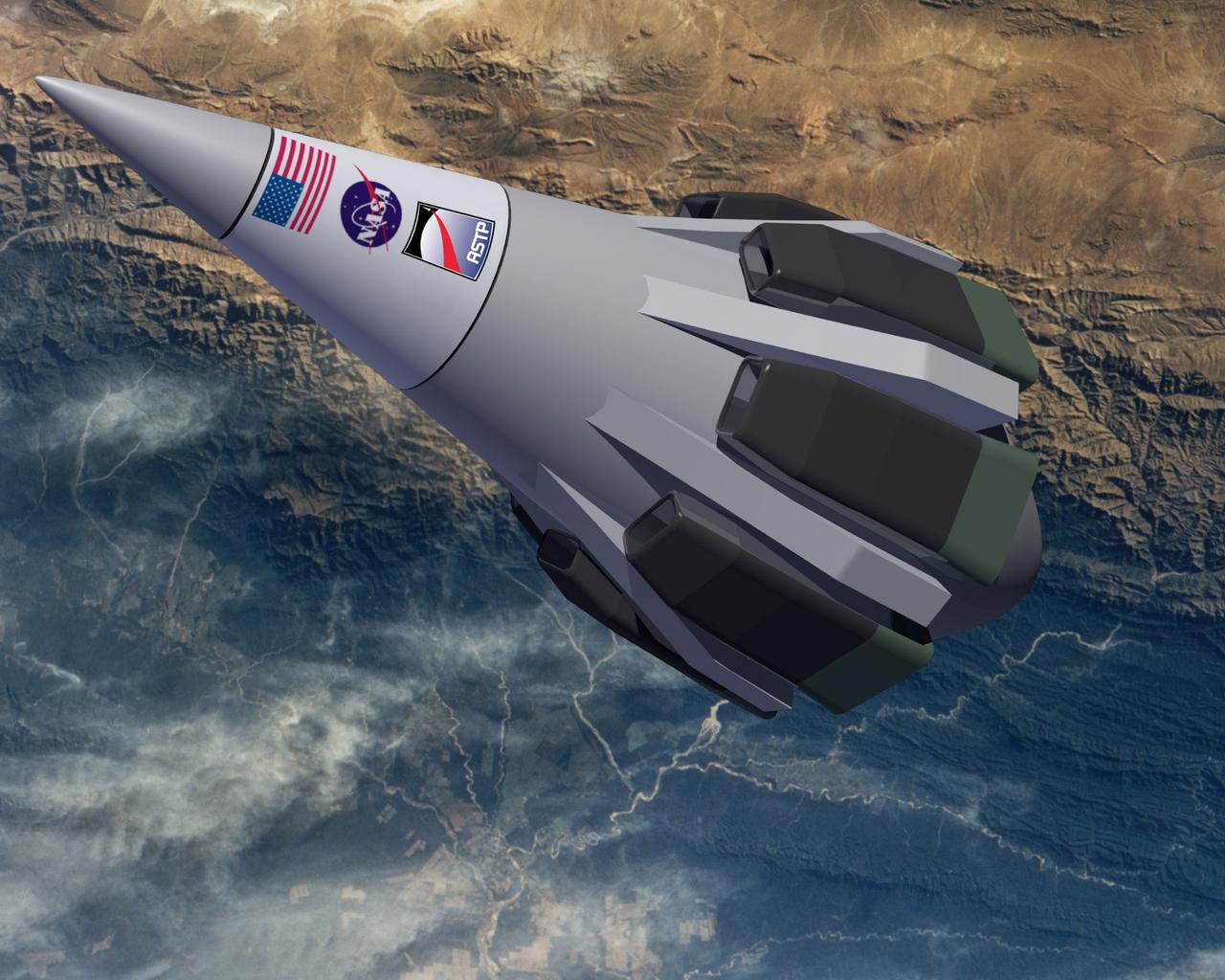
Pictured is an artist's concept of the Rocket Based Combined Cycle (RBCC) launch. The RBCC's overall objective is to provide a technology test bed to investigate critical technologies associated with opperational usage of these engines. The program will focus on near term technologies that can be leveraged to ultimately serve as the near term basis for Two Stage to Orbit (TSTO) air breathing propulsions systems and ultimately a Single Stage To Orbit (SSTO) air breathing propulsion system.
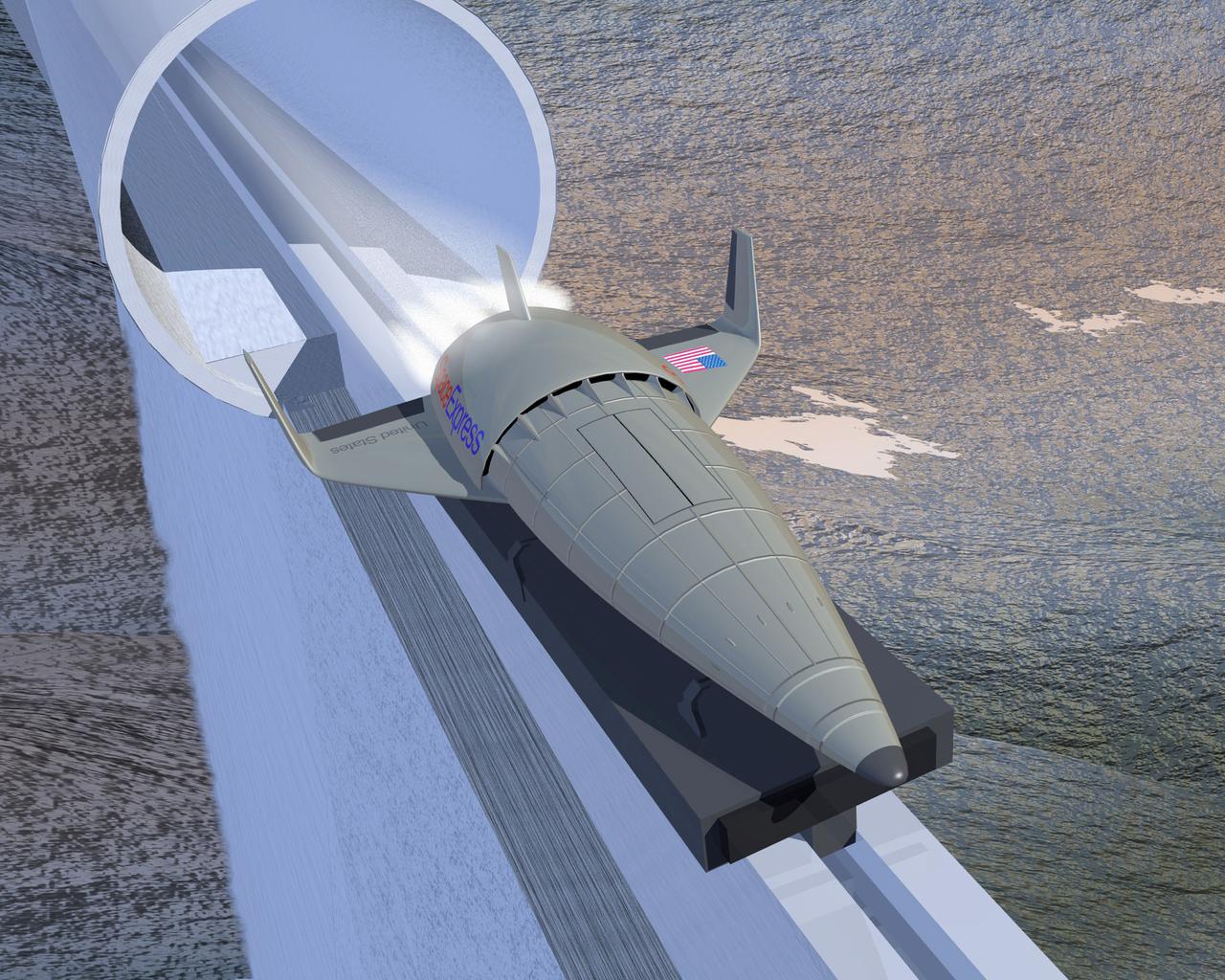
Pictured is an artist's concept of the Rocket Based Combined Cycle (RBCC) launch. The RBCC's overall objective is to provide a technology test bed to investigate critical technologies associated with opperational usage of these engines. The program will focus on near term technologies that can be leveraged to ultimately serve as the near term basis for Two Stage to Orbit (TSTO) air breathing propulsions systems and ultimately a Single Stage To Orbit (SSTO) air breathing propulsion system.
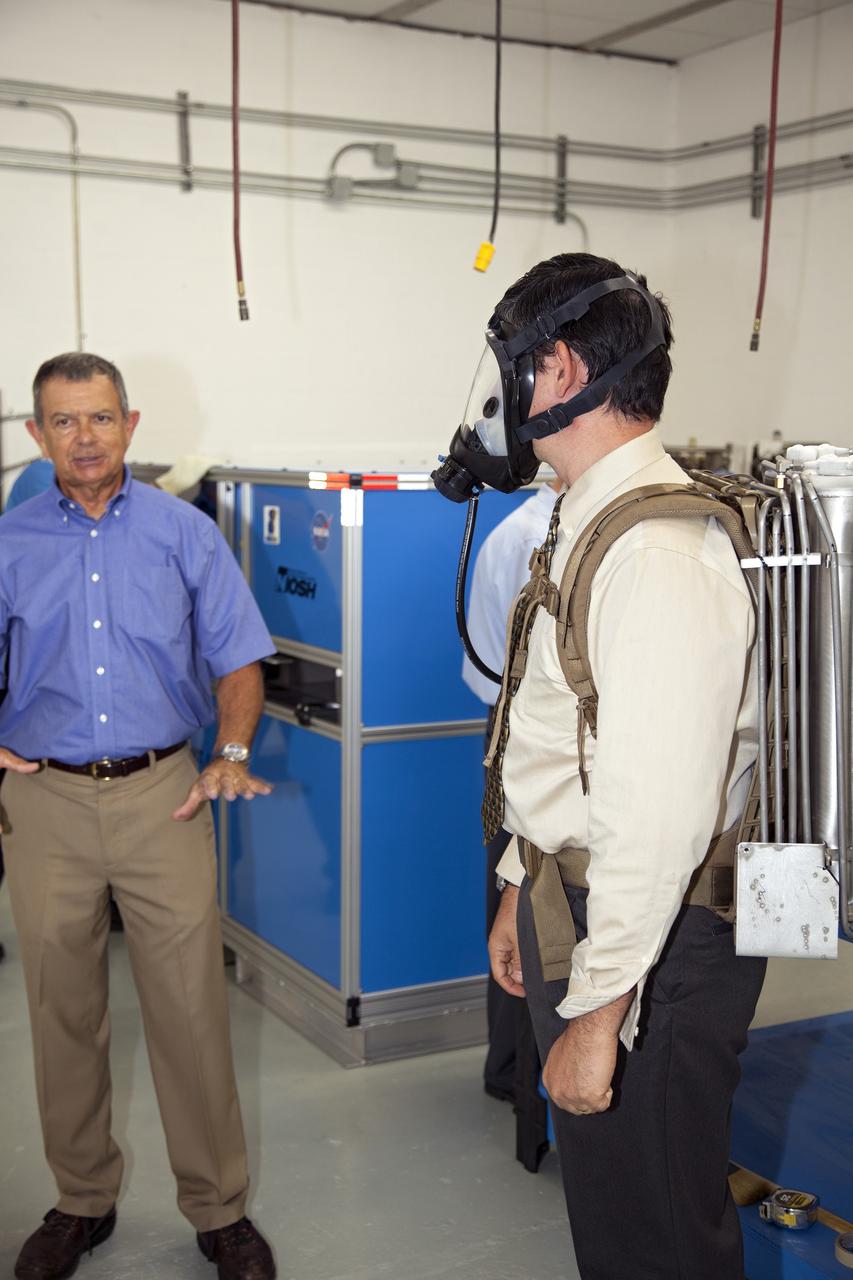
TITUSVILLE, Fla. - NASA Kennedy Space Center Lead Engineer David Bush, right, demos a small liquid-air filled backpack called CryoBA, short for Cryogenic Breathing Apparatus, at BCS Life Support in Titusville, Fla. The CryoBA and a larger Cryogenic Refuge Alternative Supply System, or CryoRASS, are being developed by a Kennedy engineering team in collaboration with The National Institute for Occupational Safety and Health to provide miners with twice the amount of breathable and cooler air than traditional compressed systems. The technology also could be used for commercial applications, such as fire and military rescue operations, as well as NASA's future human spaceflight missions. Photo credit: NASA/Daniel Casper
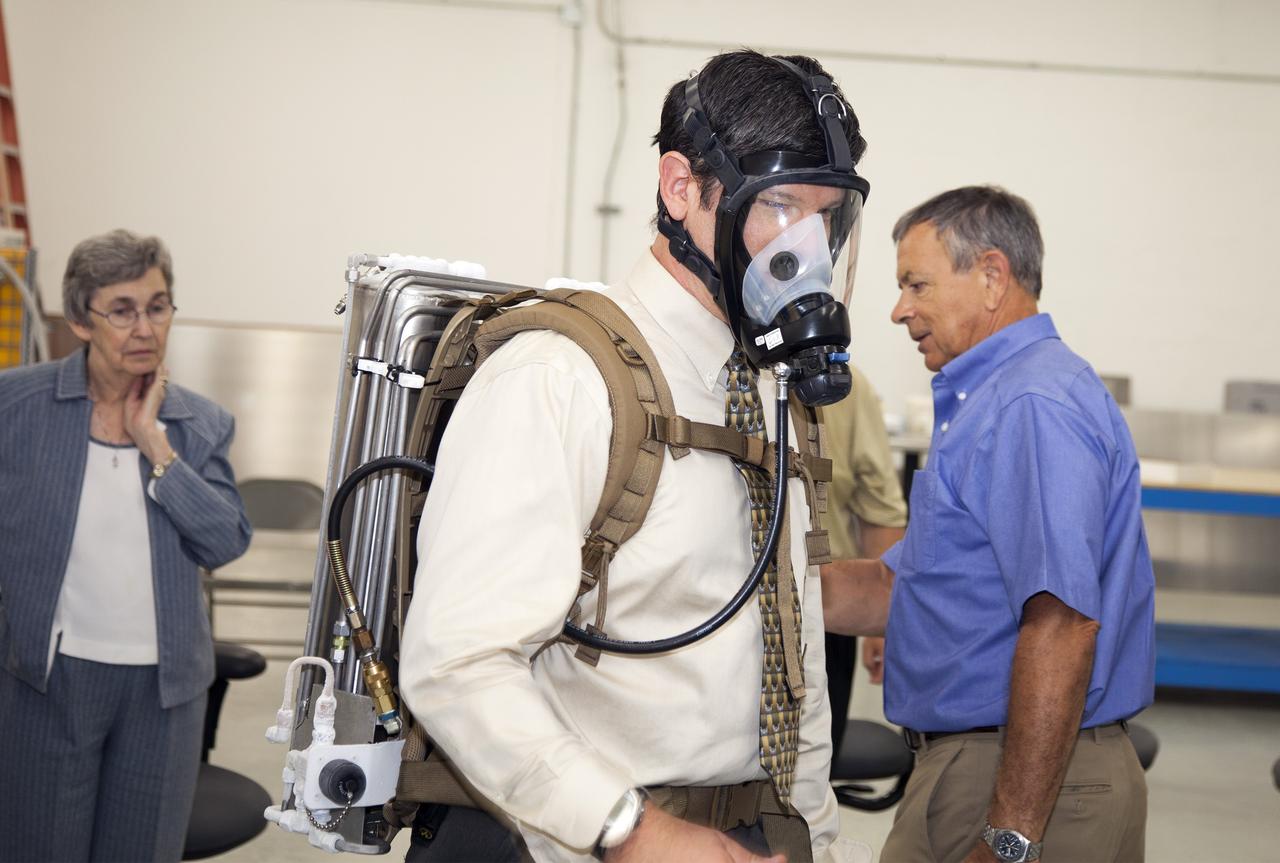
TITUSVILLE, Fla. - NASA Kennedy Space Center Lead Engineer David Bush, center, demos a small liquid-air filled backpack called CryoBA, short for Cryogenic Breathing Apparatus, at BCS Life Support in Titusville, Fla. The CryoBA and a larger Cryogenic Refuge Alternative Supply System, or CryoRASS, are being developed by a Kennedy engineering team in collaboration with The National Institute for Occupational Safety and Health to provide miners with twice the amount of breathable and cooler air than traditional compressed systems. The technology also could be used for commercial applications, such as fire and military rescue operations, as well as NASA's future human spaceflight missions. Photo credit: NASA/Daniel Casper
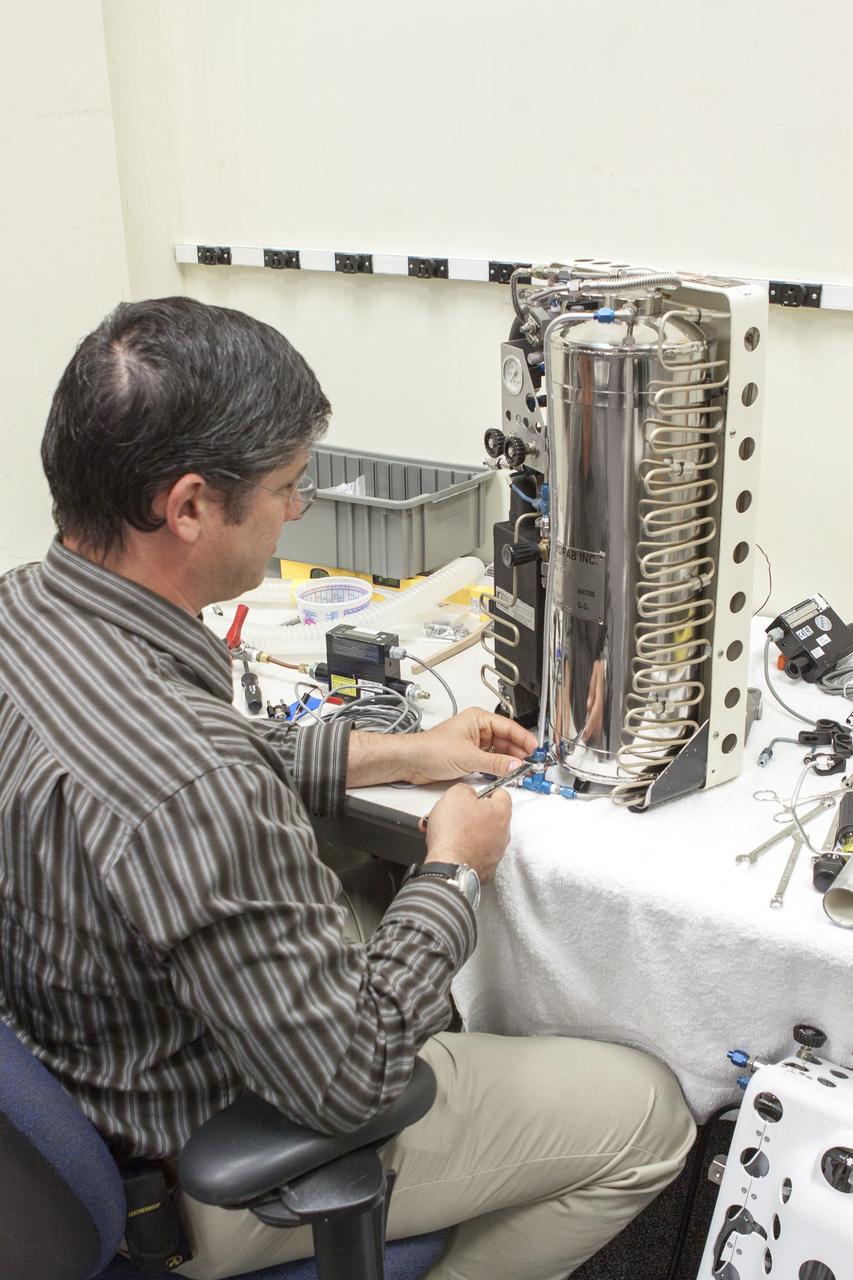
CAPE CANAVERAL, Fla. - NASA Kennedy Space Center Lead Engineer David Bush works on a prototype of a Cryogenic Refuge Alternative Supply System, or CryoRASS, in the Operations and Checkout Building. CryoRASS and a small liquid-air filled backpack called CryoBA, short for Cryogenic Breathing Apparatus, are being developed by a NASA Kennedy Space Center engineering team in collaboration with The National Institute for Occupational Safety and Health to provide miners with twice the amount of breathable and cooler air than traditional compressed systems. The technology also could be used for commercial applications, such as fire and military rescue operations, as well as NASA's future human spaceflight missions. Photo credit: NASA/Jim Gossmann
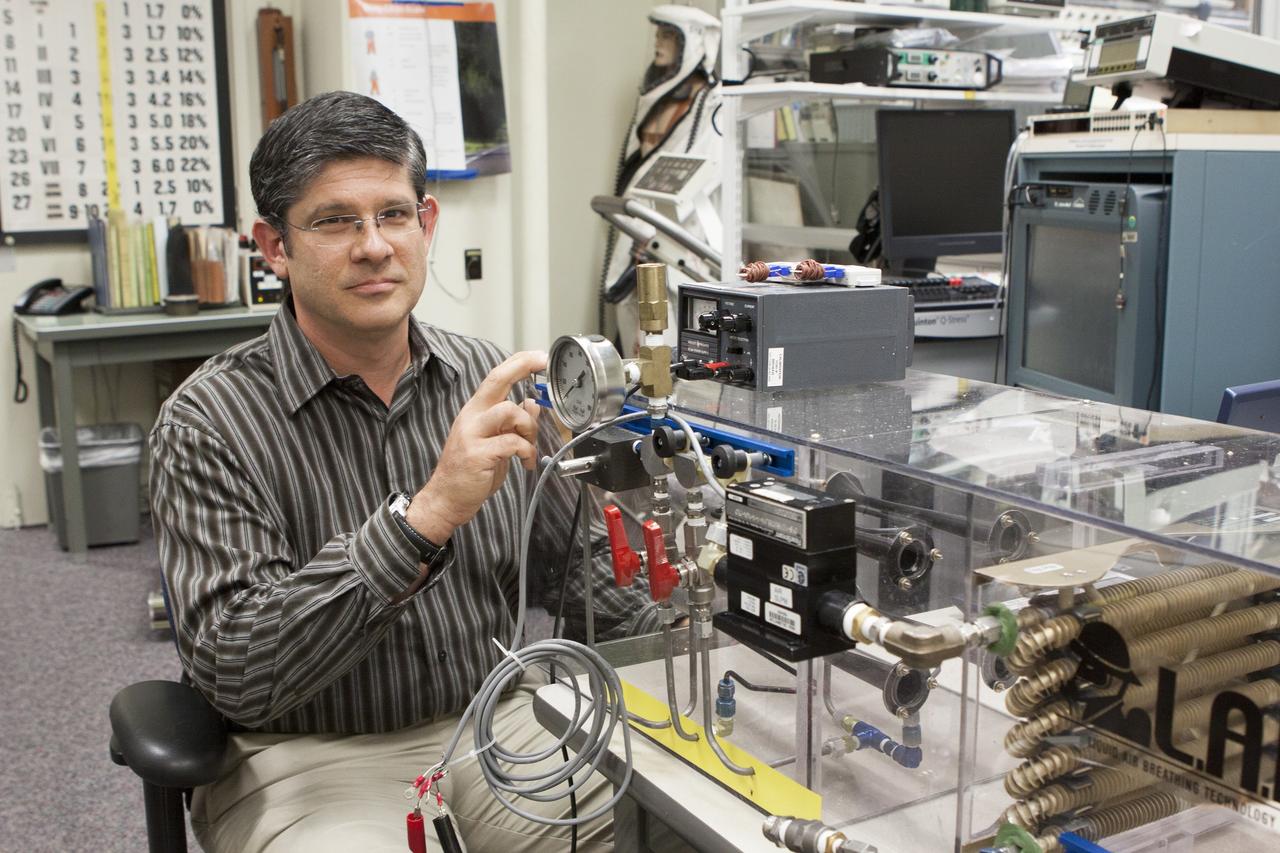
CAPE CANAVERAL, Fla. - NASA Kennedy Space Center Lead Engineer David Bush works on a prototype of a Cryogenic Refuge Alternative Supply System, or CryoRASS, in the Operations and Checkout Building. CryoRASS and a small liquid-air filled backpack called CryoBA, short for Cryogenic Breathing Apparatus, are being developed by a NASA Kennedy Space Center engineering team in collaboration with The National Institute for Occupational Safety and Health to provide miners with twice the amount of breathable and cooler air than traditional compressed systems. The technology also could be used for commercial applications, such as fire and military rescue operations, as well as NASA's future human spaceflight missions. Photo credit: NASA/Jim Gossmann
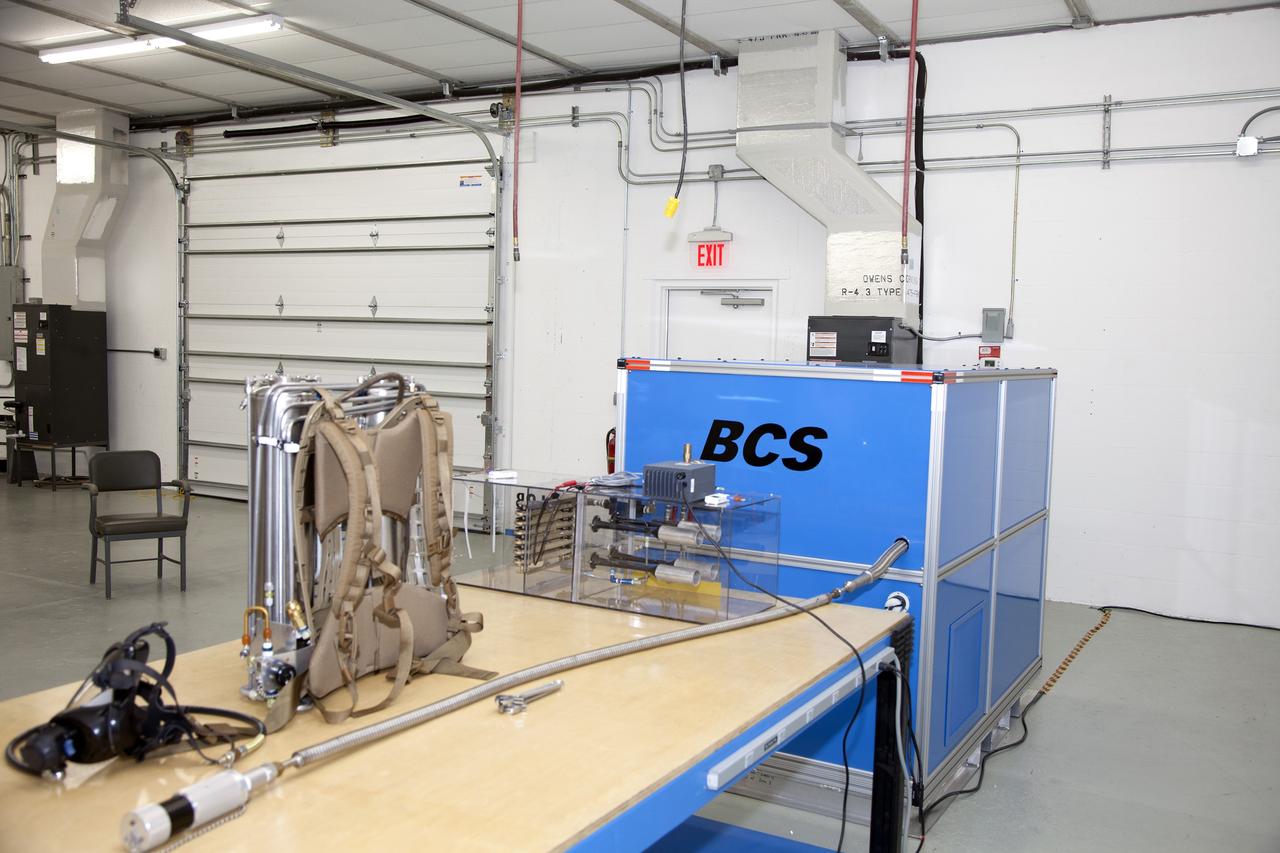
TITUSVILLE, Fla. - The Cryogenic Refuge Alternative Supply System, or CryoRASS, and a smaller liquid-air filled backpack called CryoBA, short for Cryogenic Breathing Apparatus, are on display at BCS Life Support in Titusville, Fla. The two systems are being developed by a NASA Kennedy Space Center engineering team in collaboration with The National Institute for Occupational Safety and Health to provide miners with twice the amount of breathable and cooler air than traditional compressed systems. The technology also could be used for commercial applications, such as fire and military rescue operations, as well as NASA's future human spaceflight missions. Photo credit: NASA/Daniel Casper
TITUSVILLE, Fla. - A small liquid-air filled backpack called CryoBA, short for Cryogenic Breathing Apparatus, is on display at BCS Life Support in Titusville, Fla. The CryoBA and a larger Cryogenic Refuge Alternative Supply System, or CryoRASS, are being developed by a NASA Kennedy Space Center engineering team in collaboration with The National Institute for Occupational Safety and Health to provide miners with twice the amount of breathable and cooler air than traditional compressed systems. The technology also could be used for commercial applications, such as fire and military rescue operations, as well as NASA's future human spaceflight missions. Photo credit: NASA/Daniel Casper
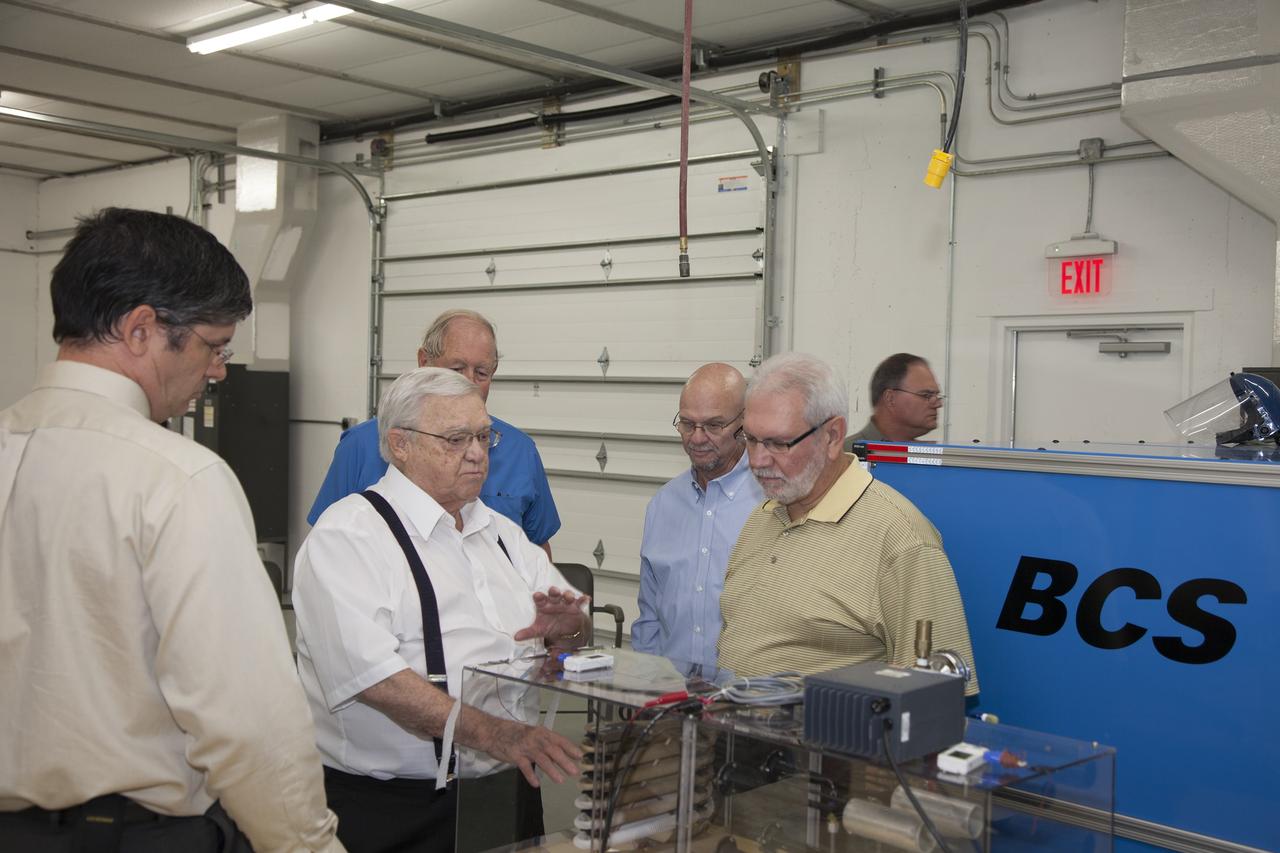
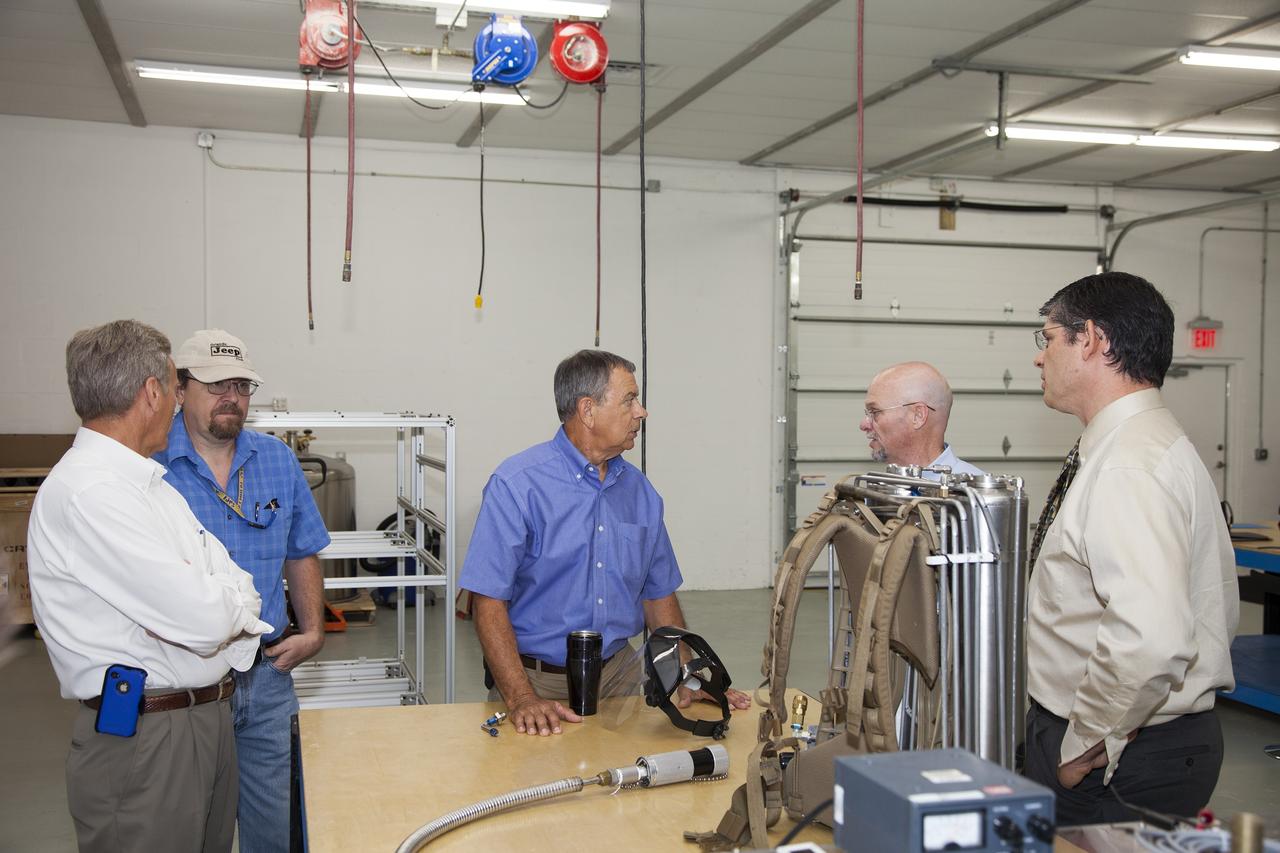
TITUSVILLE, Fla. - Representatives from NASA Kennedy Space Center, BCS Life Support, LabTech and URS demo a Cryogenic Refuge Alternative Supply System, or CryoRASS, and a smaller liquid-air filled backpack called CryoBA, short for Cryogenic Breathing Apparatus, in Titusville, Fla. The two systems are being developed by a Kennedy engineering team in collaboration with The National Institute for Occupational Safety and Health to provide miners with twice the amount of breathable and cooler air than traditional compressed systems. The technology also could be used for commercial applications, such as fire and military rescue operations, as well as NASA's future human spaceflight missions. Photo credit: NASA/Daniel Casper
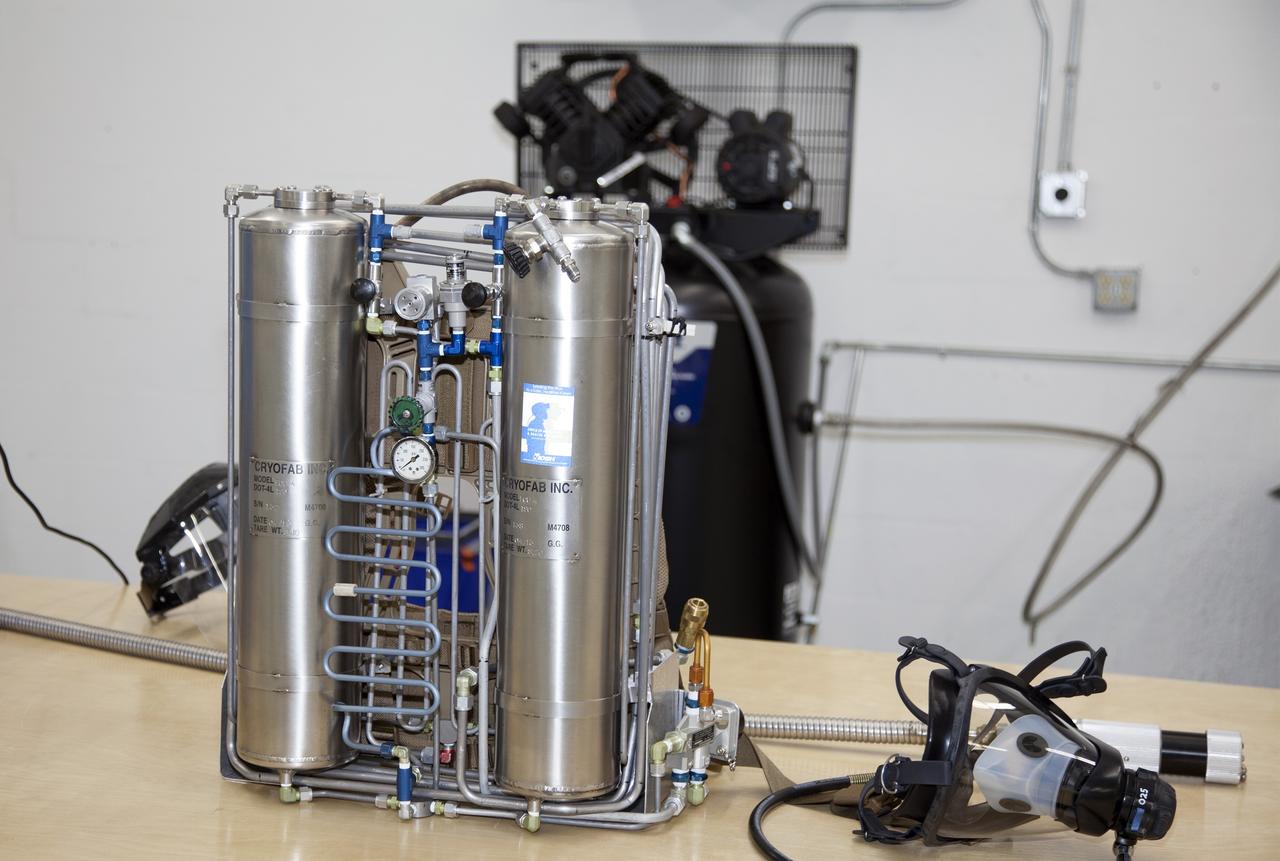
TITUSVILLE, Fla. - A small liquid-air filled backpack called CryoBA, short for Cryogenic Breathing Apparatus, is on display at BCS Life Support in Titusville, Fla. The CryoBA and a larger Cryogenic Refuge Alternative Supply System, or CryoRASS, are being developed by a NASA Kennedy Space Center engineering team in collaboration with The National Institute for Occupational Safety and Health to provide miners with twice the amount of breathable and cooler air than traditional compressed systems. The technology also could be used for commercial applications, such as fire and military rescue operations, as well as NASA's future human spaceflight missions. Photo credit: NASA/Daniel Casper
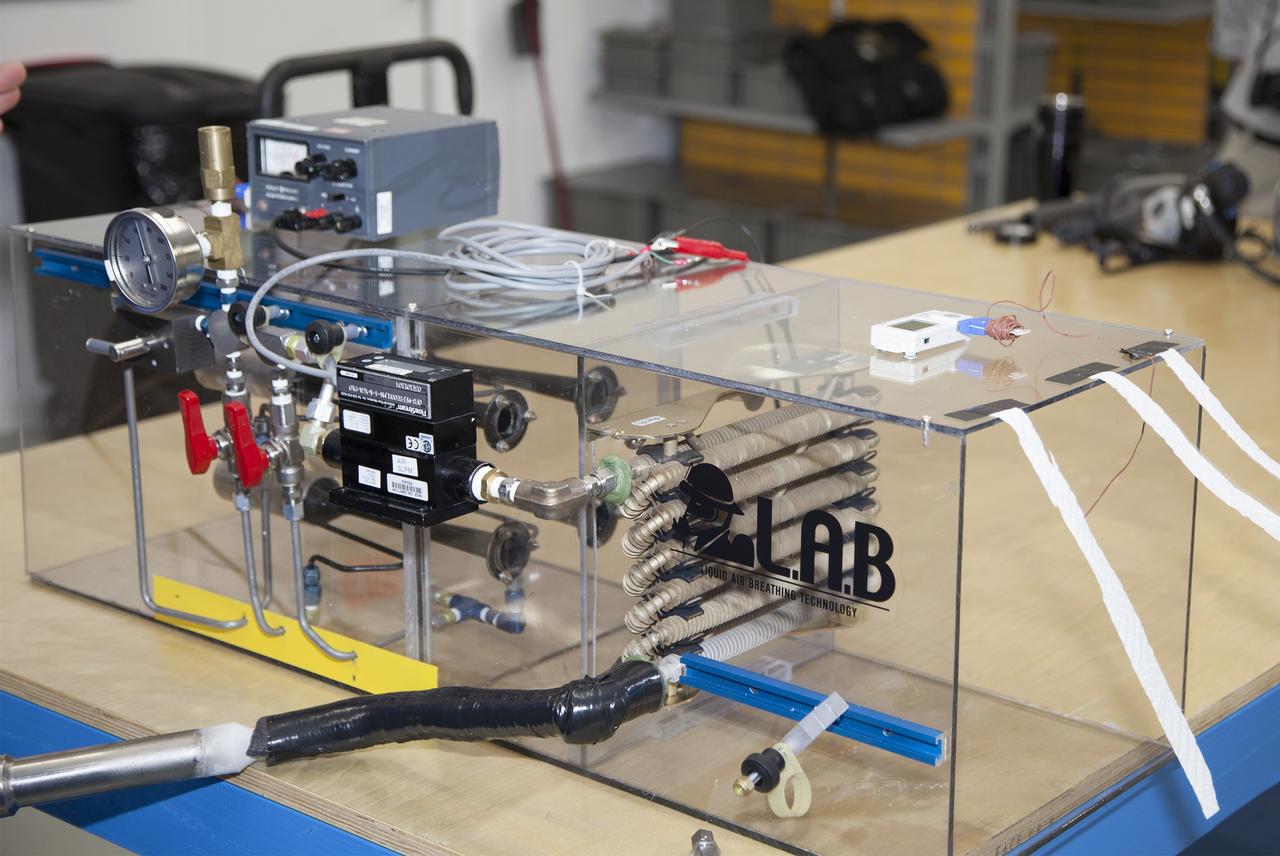
TITUSVILLE, Fla. - The Cryogenic Refuge Alternative Supply System, or CryoRASS, is on display at BCS Life Support in Titusville, Fla. CryoRASS and a small liquid-air filled backpack called CryoBA, short for Cryogenic Breathing Apparatus, are being developed by a NASA Kennedy Space Center engineering team in collaboration with The National Institute for Occupational Safety and Health to provide miners with twice the amount of breathable and cooler air than traditional compressed systems. The technology also could be used for commercial applications, such as fire and military rescue operations, as well as NASA's future human spaceflight missions. Photo credit: NASA/Daniel Casper

TITUSVILLE, Fla. - Representatives from NASA Kennedy Space Center, BCS Life Support, LabTech and URS prepare to demo a Cryogenic Refuge Alternative Supply System, or CryoRASS, and a smaller liquid-air filled backpack called CryoBA, short for Cryogenic Breathing Apparatus, in Titusville, Fla. The two systems are being developed by a Kennedy engineering team in collaboration with The National Institute for Occupational Safety and Health to provide miners with twice the amount of breathable and cooler air than traditional compressed systems. The technology also could be used for commercial applications, such as fire and military rescue operations, as well as NASA's future human spaceflight missions. Photo credit: NASA/Daniel Casper
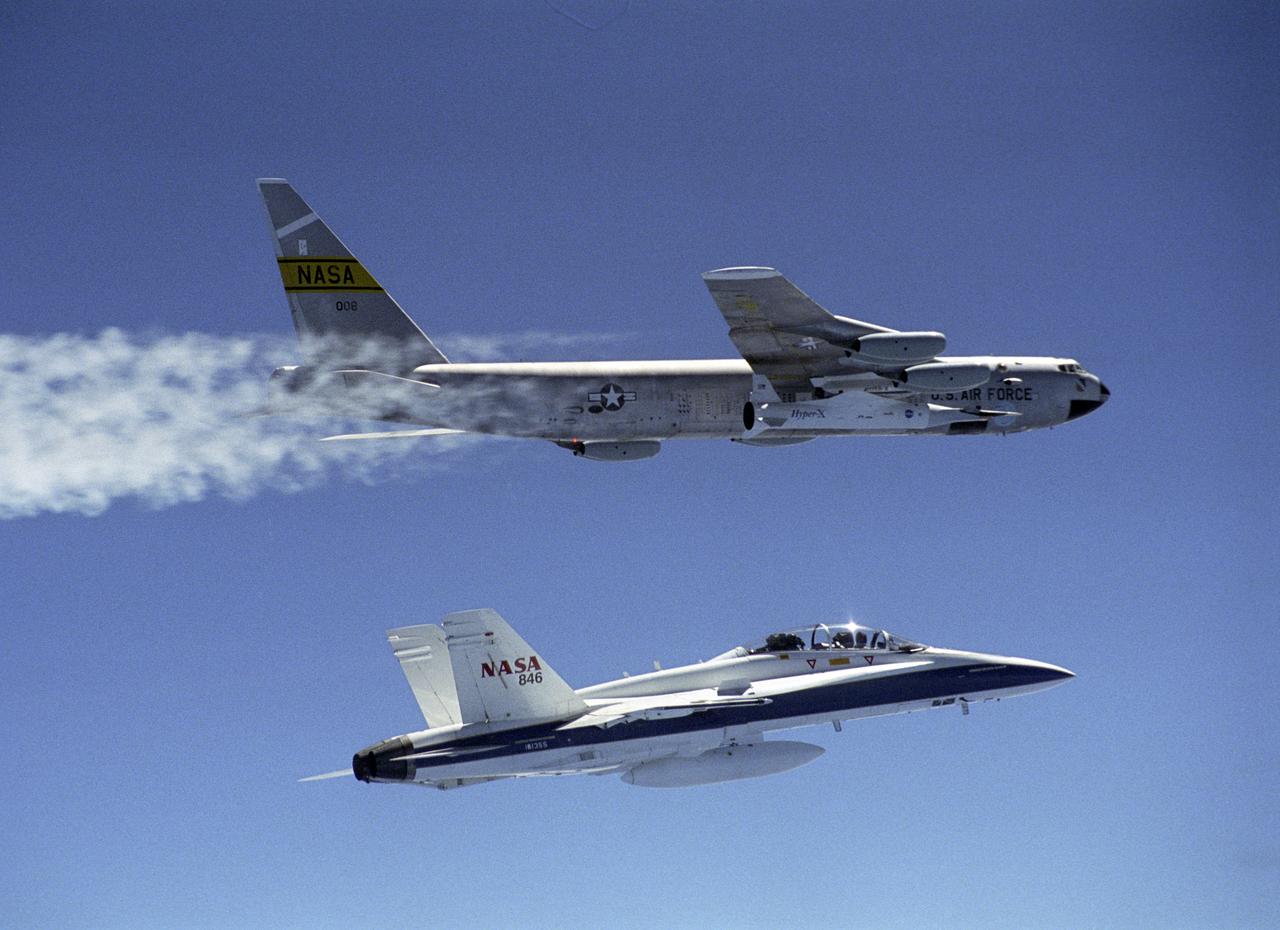
The second X-43A hypersonic research aircraft, attached to a modified Pegasus booster rocket and followed by a chase F-18, was taken to launch altitude by NASA's B-52B launch aircraft from the NASA Dryden Flight Research Center at Edwards Air Force Base, Calif., on March 27, 2004. About an hour later the Pegasus booster was released from the B-52 to accelerate the X-43A to its intended speed of Mach 7. In a combined research effort involving Dryden, Langley, and several industry partners, NASA demonstrated the value of its X-43A hypersonic research aircraft, as it became the first air-breathing, unpiloted, scramjet-powered plane to fly freely by itself. The March 27 flight, originating from NASA's Dryden Flight Research Center, began with the Agency's B-52B launch aircraft carrying the X-43A out to the test range over the Pacific Ocean off the California coast. The X-43A was boosted up to its test altitude of about 95,000 feet, where it separated from its modified Pegasus booster and flew freely under its own power. Two very significant aviation milestones occurred during this test flight: first, controlled accelerating flight at Mach 7 under scramjet power, and second, the successful stage separation at high dynamic pressure of two non-axisymmetric vehicles. To top it all off, the flight resulted in the setting of a new aeronautical speed record. The X-43A reached a speed of over Mach 7, or about 5,000 miles per hour faster than any known aircraft powered by an air-breathing engine has ever flown.
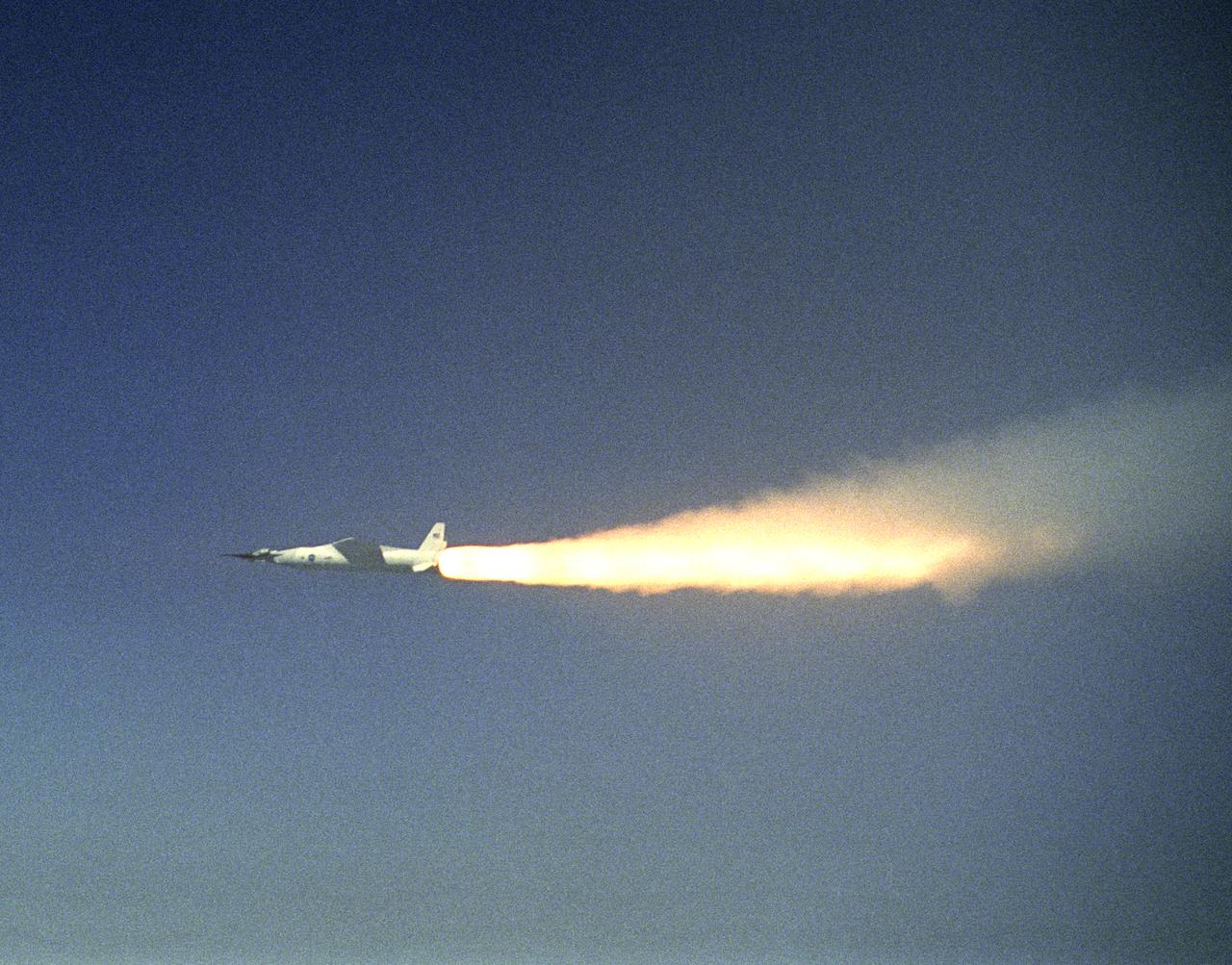
The second X-43A hypersonic research aircraft and its modified Pegasus booster rocket accelerate after launch from NASA's B-52B launch aircraft over the Pacific Ocean on March 27, 2004. The mission originated from the NASA Dryden Flight Research Center at Edwards Air Force Base, Calif. Minutes later the X-43A separated from the Pegasus booster and accelerated to its intended speed of Mach 7. In a combined research effort involving Dryden, Langley, and several industry partners, NASA demonstrated the value of its X-43A hypersonic research aircraft, as it became the first air-breathing, unpiloted, scramjet-powered plane to fly freely by itself. The March 27 flight, originating from NASA's Dryden Flight Research Center, began with the Agency's B-52B launch aircraft carrying the X-43A out to the test range over the Pacific Ocean off the California coast. The X-43A was boosted up to its test altitude of about 95,000 feet, where it separated from its modified Pegasus booster and flew freely under its own power. Two very significant aviation milestones occurred during this test flight: first, controlled accelerating flight at Mach 7 under scramjet power, and second, the successful stage separation at high dynamic pressure of two non-axisymmetric vehicles. To top it all off, the flight resulted in the setting of a new aeronautical speed record. The X-43A reached a speed of over Mach 7, or about 5,000 miles per hour faster than any known aircraft powered by an air-breathing engine has ever flown.
![KENNEDY SPACE CENTER, FLA. - - With rockets and main engine firing, the Boeing Delta II launch vehicle leaps off the pad at NASA’s Space Complex 2 on Vandenberg Air Force Base, Calif., carrying the Aura spacecraft. Aura, a mission dedicated to the health of Earth's atmosphere, successfully launched today at 3:01:59 a.m. Pacific Time. Spacecraft separation occurred at 4:06 a.m. Pacific Time, inserting Aura into a 438-mile orbit. NASA’s latest Earth-observing satellite, Aura will help us understand and protect the air we breathe. Aura will also help scientists understand how the composition of the atmosphere affects and responds to Earth's changing climate. The results from this mission will help scientists better understand the processes that connect local and global air quality. With the launch of Aura, the first series of NASA’s Earth Observing System satellites is complete. The other satellites are Terra, which monitors land, and Aqua, which observes Earth’s water cycle. [Photo: Boeing/Thom Baur]](https://images-assets.nasa.gov/image/KSC-04pd1475/KSC-04pd1475~medium.jpg)
KENNEDY SPACE CENTER, FLA. - - With rockets and main engine firing, the Boeing Delta II launch vehicle leaps off the pad at NASA’s Space Complex 2 on Vandenberg Air Force Base, Calif., carrying the Aura spacecraft. Aura, a mission dedicated to the health of Earth's atmosphere, successfully launched today at 3:01:59 a.m. Pacific Time. Spacecraft separation occurred at 4:06 a.m. Pacific Time, inserting Aura into a 438-mile orbit. NASA’s latest Earth-observing satellite, Aura will help us understand and protect the air we breathe. Aura will also help scientists understand how the composition of the atmosphere affects and responds to Earth's changing climate. The results from this mission will help scientists better understand the processes that connect local and global air quality. With the launch of Aura, the first series of NASA’s Earth Observing System satellites is complete. The other satellites are Terra, which monitors land, and Aqua, which observes Earth’s water cycle. [Photo: Boeing/Thom Baur]
![KENNEDY SPACE CENTER, FLA. - With rockets and main engine firing, the Boeing Delta II launch vehicle leaps off the pad at NASA’s Space Complex 2 on Vandenberg Air Force Base, Calif., carrying the Aura spacecraft. Aura, a mission dedicated to the health of Earth's atmosphere, successfully launched today at 3:01:59 a.m. Pacific Time. Spacecraft separation occurred at 4:06 a.m. Pacific Time, inserting Aura into a 438-mile orbit. NASA’s latest Earth-observing satellite, Aura will help us understand and protect the air we breathe. Aura will also help scientists understand how the composition of the atmosphere affects and responds to Earth's changing climate. The results from this mission will help scientists better understand the processes that connect local and global air quality. With the launch of Aura, the first series of NASA’s Earth Observing System satellites is complete. The other satellites are Terra, which monitors land, and Aqua, which observes Earth’s water cycle. [Photo: Boeing/Thom Baur]](https://images-assets.nasa.gov/image/KSC-04pd1474/KSC-04pd1474~medium.jpg)
KENNEDY SPACE CENTER, FLA. - With rockets and main engine firing, the Boeing Delta II launch vehicle leaps off the pad at NASA’s Space Complex 2 on Vandenberg Air Force Base, Calif., carrying the Aura spacecraft. Aura, a mission dedicated to the health of Earth's atmosphere, successfully launched today at 3:01:59 a.m. Pacific Time. Spacecraft separation occurred at 4:06 a.m. Pacific Time, inserting Aura into a 438-mile orbit. NASA’s latest Earth-observing satellite, Aura will help us understand and protect the air we breathe. Aura will also help scientists understand how the composition of the atmosphere affects and responds to Earth's changing climate. The results from this mission will help scientists better understand the processes that connect local and global air quality. With the launch of Aura, the first series of NASA’s Earth Observing System satellites is complete. The other satellites are Terra, which monitors land, and Aqua, which observes Earth’s water cycle. [Photo: Boeing/Thom Baur]
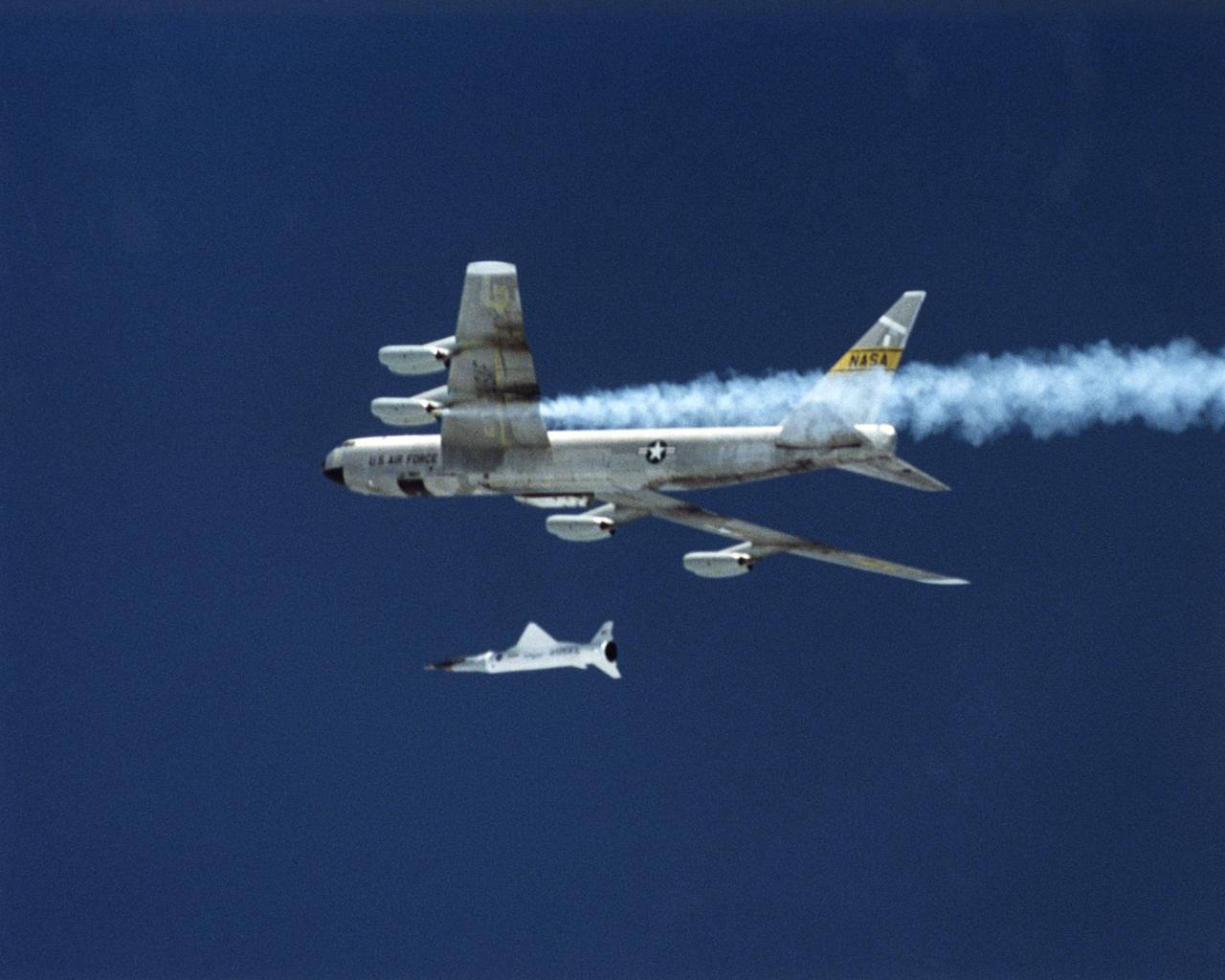
The first X-43A hypersonic research aircraft and its modified Pegasus booster rocket were carried aloft by NASA's NB-52B carrier aircraft from Dryden Flight Research Center at Edwards Air Force Base, Calif., on June 2, 2001 for the first of three high-speed free flight attempts. About an hour and 15 minutes later the Pegasus booster was released from the B-52 to accelerate the X-43A to its intended speed of Mach 7. Before this could be achieved, the combined Pegasus and X-43A "stack" lost control about eight seconds after ignition of the Pegasus rocket motor. The mission was terminated and explosive charges ensured the Pegasus and X-43A fell into the Pacific Ocean in a cleared Navy range area. A NASA investigation board is being assembled to determine the cause of the incident. Work continues on two other X-43A vehicles, the first of which could fly by late 2001. Central to the X-43A program is its integration of an air-breathing "scramjet" engine that could enable a variety of high-speed aerospace craft, and promote cost-effective access to space. The 12-foot, unpiloted research vehicle was developed and built for NASA by MicroCraft Inc., Tullahoma, Tenn. The booster was built by Orbital Sciences Corp. at Chandler, Ariz.
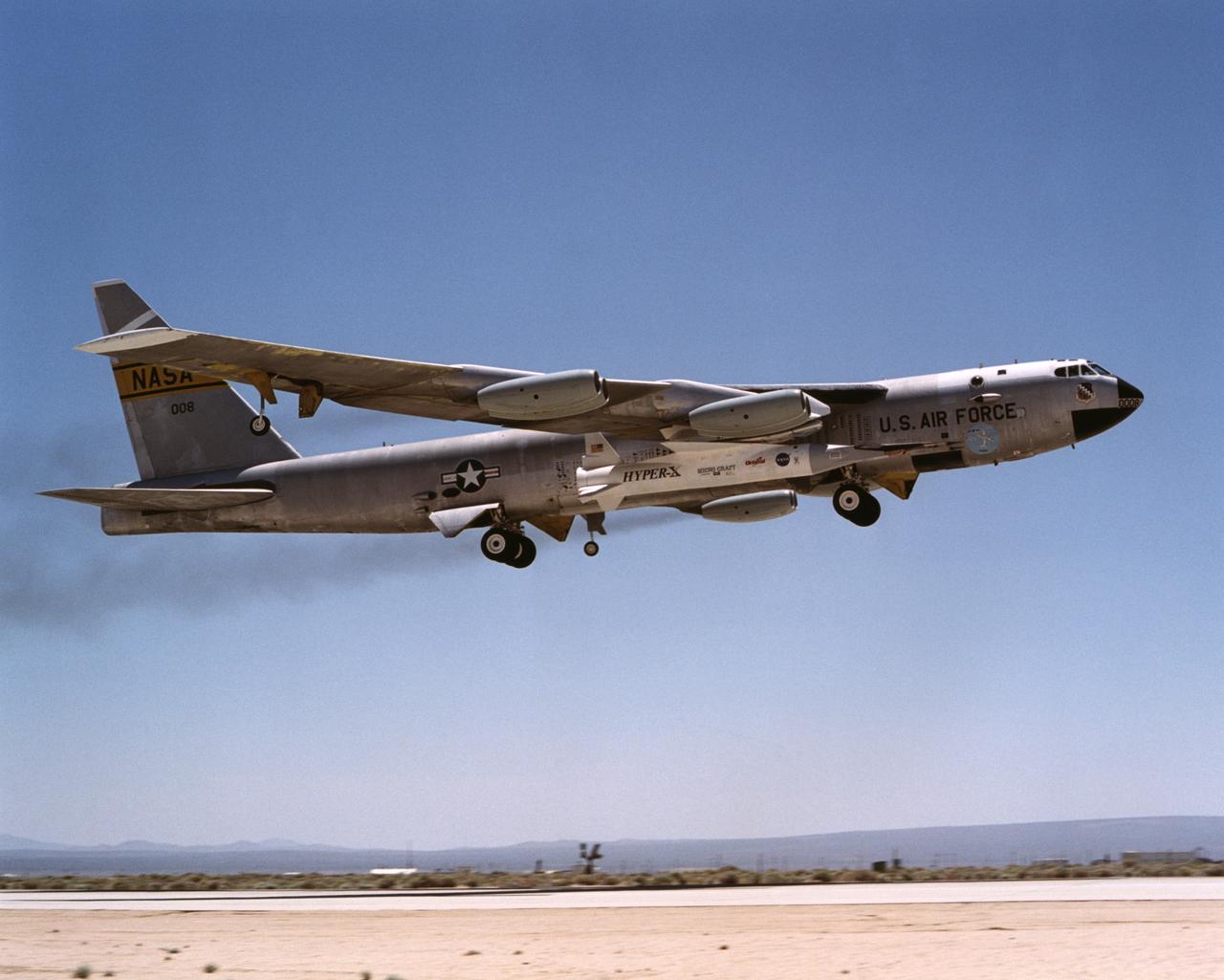
The first X-43A hypersonic research aircraft and its modified Pegasus booster rocket were carried aloft by NASA's NB-52B carrier aircraft from Dryden Flight Research Center at Edwards Air Force Base, Calif., on June 2, 2001 for the first of three high-speed free flight attempts. About an hour and 15 minutes later the Pegasus booster was released from the B-52 to accelerate the X-43A to its intended speed of Mach 7. Before this could be achieved, the combined Pegasus and X-43A "stack" lost control about eight seconds after ignition of the Pegasus rocket motor. The mission was terminated and explosive charges ensured the Pegasus and X-43A fell into the Pacific Ocean in a cleared Navy range area. A NASA investigation board is being assembled to determine the cause of the incident. Work continues on two other X-43A vehicles, the first of which could fly by late 2001. Central to the X-43A program is its integration of an air-breathing "scramjet" engine that could enable a variety of high-speed aerospace craft, and promote cost-effective access to space. The 12-foot, unpiloted research vehicle was developed and built for NASA by MicroCraft Inc., Tullahoma, Tenn. The booster was built by Orbital Sciences Corp. at Chandler, Ariz.
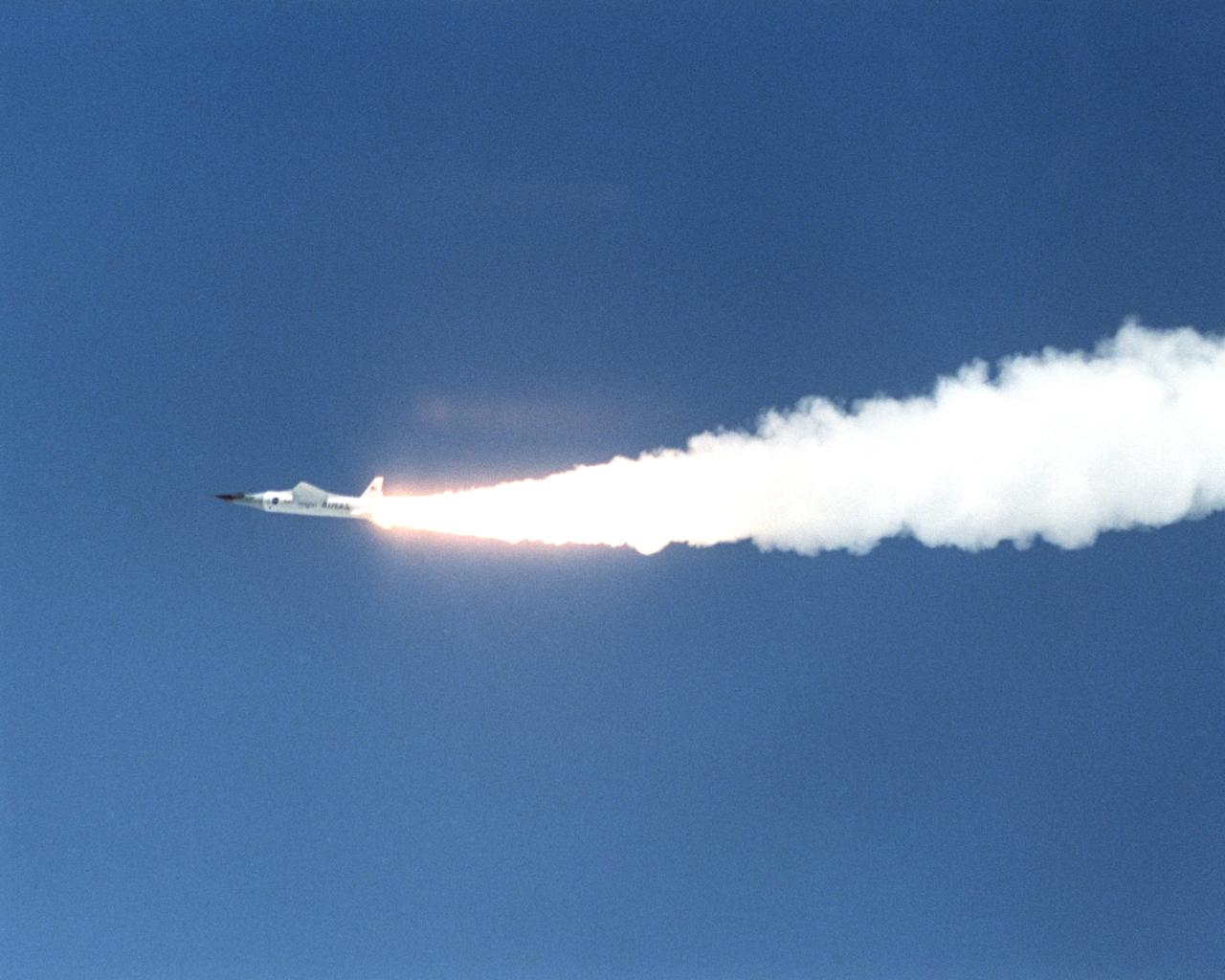
The first X-43A hypersonic research aircraft and its modified Pegasus booster rocket were carried aloft by NASA's NB-52B carrier aircraft from Dryden Flight Research Center at Edwards Air Force Base, Calif., on June 2, 2001 for the first of three high-speed free flight attempts. About an hour and 15 minutes later the Pegasus booster was released from the B-52 to accelerate the X-43A to its intended speed of Mach 7. Before this could be achieved, the combined Pegasus and X-43A "stack" lost control about eight seconds after ignition of the Pegasus rocket motor. The mission was terminated and explosive charges ensured the Pegasus and X-43A fell into the Pacific Ocean in a cleared Navy range area. A NASA investigation board is being assembled to determine the cause of the incident. Work continues on two other X-43A vehicles, the first of which could fly by late 2001. Central to the X-43A program is its integration of an air-breathing "scramjet" engine that could enable a variety of high-speed aerospace craft, and promote cost-effective access to space. The 12-foot, unpiloted research vehicle was developed and built for NASA by MicroCraft Inc., Tullahoma, Tenn. The booster was built by Orbital Sciences Corp. at Chandler, Ariz.

The first X-43A hypersonic research aircraft and its modified Pegasus booster rocket were carried aloft by NASA's NB-52B carrier aircraft from Dryden Flight Research Center at Edwards Air Force Base, Calif., on June 2, 2001 for the first of three high-speed free flight attempts. About an hour and 15 minutes later the Pegasus booster was released from the B-52 to accelerate the X-43A to its intended speed of Mach 7. Before this could be achieved, the combined Pegasus and X-43A "stack" lost control about eight seconds after ignition of the Pegasus rocket motor. The mission was terminated and explosive charges ensured the Pegasus and X-43A fell into the Pacific Ocean in a cleared Navy range area. A NASA investigation board is being assembled to determine the cause of the incident. Work continues on two other X-43A vehicles, the first of which could fly by late 2001. Central to the X-43A program is its integration of an air-breathing "scramjet" engine that could enable a variety of high-speed aerospace craft, and promote cost-effective access to space. The 12-foot, unpiloted research vehicle was developed and built for NASA by MicroCraft Inc., Tullahoma, Tenn. The booster was built by Orbital Sciences Corp. at Chandler, Ariz.
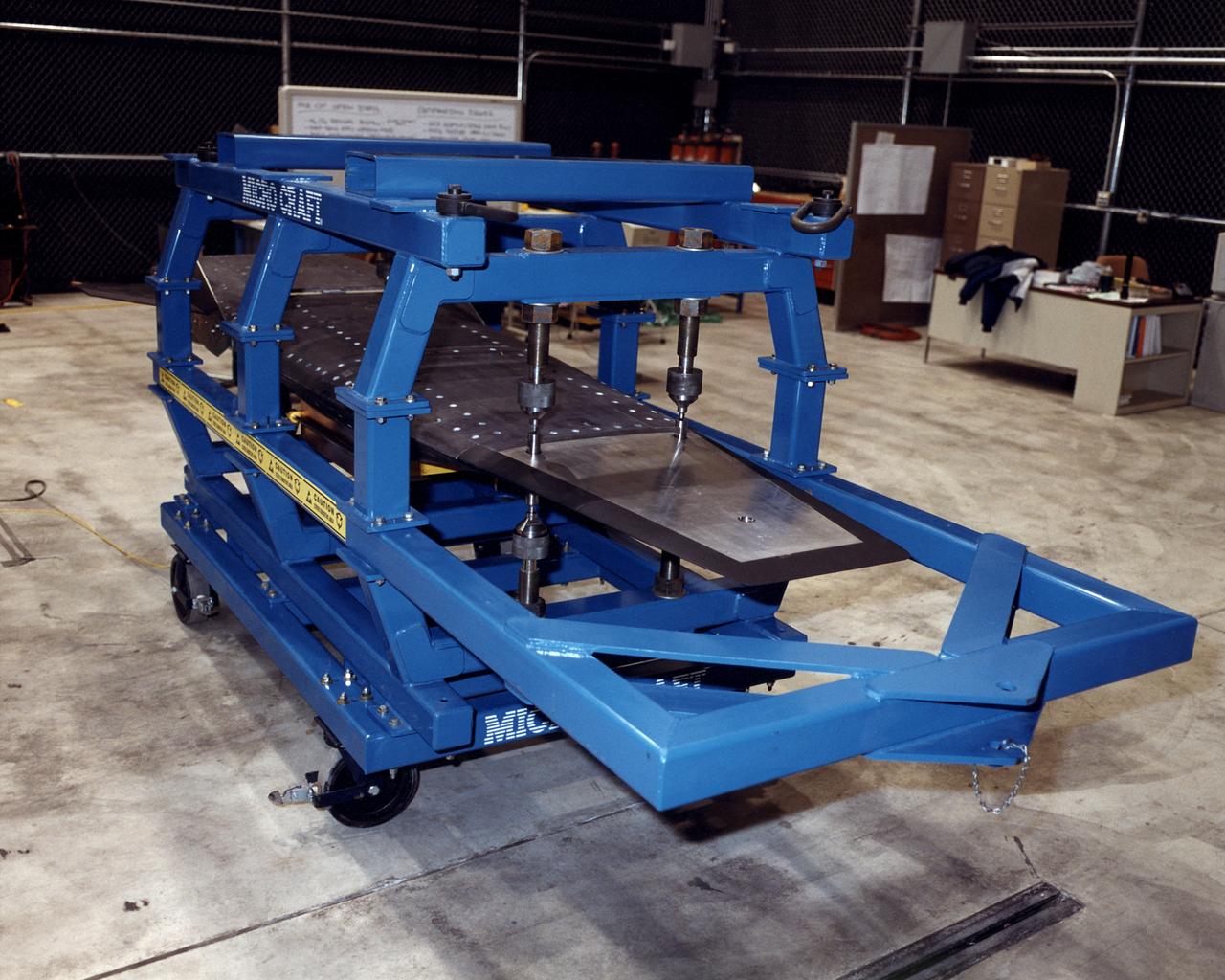
The second of three X-43A hypersonic research aircraft, shown here in its protective shipping jig, arrived at NASA's Dryden Flight Research Center, Edwards, California, on January 31, 2001. The arrival of the second X-43A from its manufacturer, MicroCraft, Inc., of Tullahoma, Tenn., followed by only a few days the mating of the first X-43A and its specially-designed adapter to the first stage of a modified Pegasus® booster rocket. The booster, built by Orbital Sciences Corp., Dulles, Va., will accelerate the 12-foot-long, unpiloted research aircraft to a predetermined altitude and speed after the X-43A/booster "stack" is air-launched from NASA's venerable NB-52 mothership. The X-43A will then separate from the rocket and fly a pre-programmed trajectory, conducting aerodynamic and propulsion experiments until it impacts into the Pacific Ocean. Three research flights are planned, two at Mach 7 and one at Mach 10 (seven and 10 times the speed of sound respectively) with the first tentatively scheduled for early summer, 2001. The X-43A is powered by a revolutionary supersonic-combustion ramjet ("scramjet") engine, and will use the underbody of the aircraft to form critical elements of the engine. The forebody shape helps compress the intake airflow, while the aft section acts as a nozzle to direct thrust. The X-43A flights will be the first actual flight tests of an aircraft powered by an air-breathing scramjet engine.
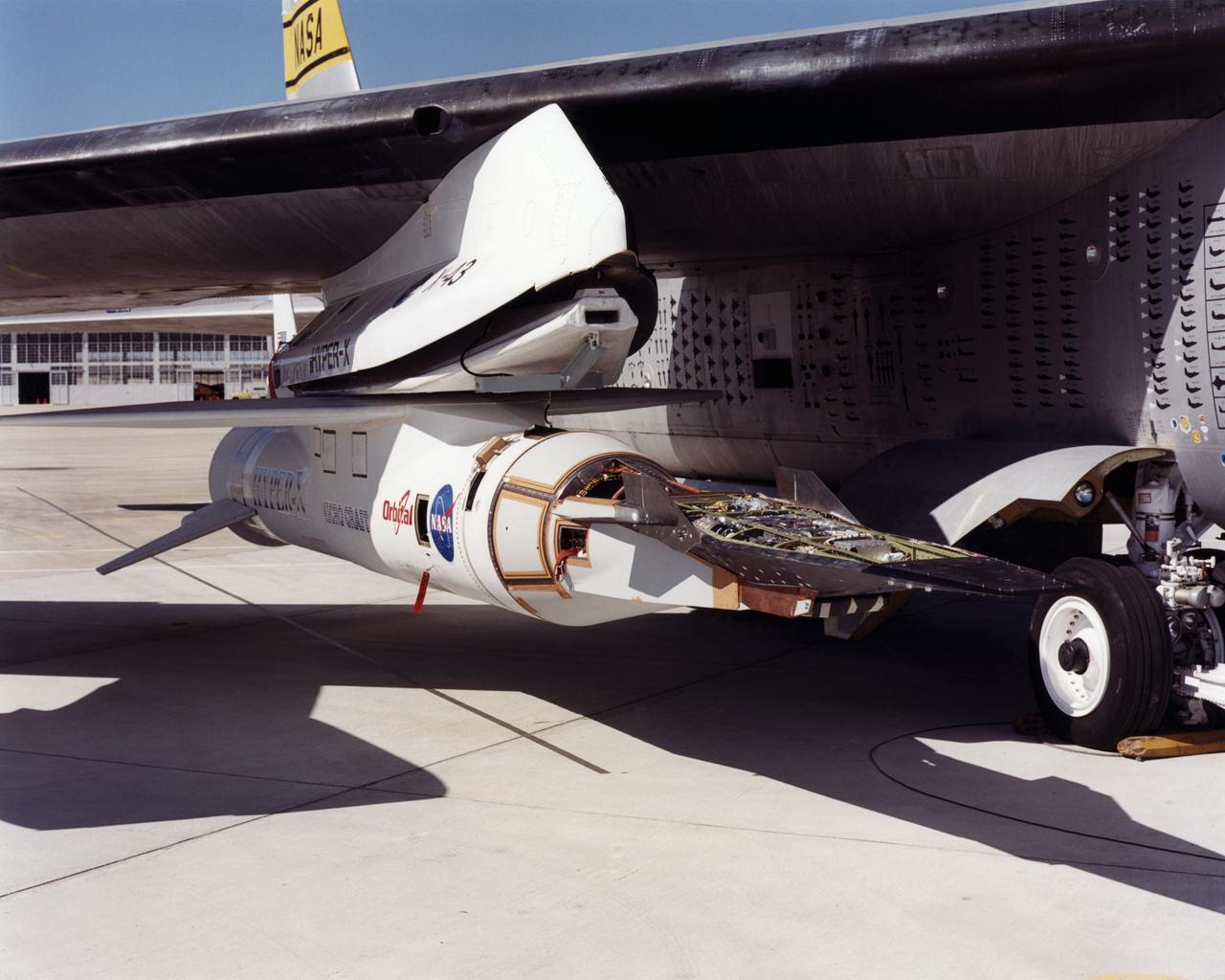
The first of three X-43A hypersonic research aircraft and its modified Pegasus® booster rocket recently underwent combined systems testing while mounted to NASA's NB-52B carrier aircraft at the Dryden Flight Research Center, Edwards, California. The combined systems test was one of the last major milestones in the Hyper-X research program before the first X-43A flight. One of the major goals of the Hyper-X program is flight validation of airframe-integrated, air-breathing propulsion system, which so far have only been tested in ground facilities, such as wind tunnels. The X-43A flights will be the first actual flight tests of an aircraft powered by a revolutionary supersonic-combustion ramjet ("scramjet") engine capable of operating at hypersonic speeds above Mach 5 (five times the speed of sound). The X-43A design uses the underbody of the aircraft to form critical elements of the engine. The forebody shape helps compress the intake airflow, while the aft section acts as a nozzle to direct thrust. The 12-foot, unpiloted research vehicle was developed and built by MicroCraft Inc., Tullahoma, Tenn., under NASA contract. The booster, built by Orbital Sciences Corp., Dulles, Va., will accelerate the X-43A after the X-43A/booster "stack" is air-launched from NASA's venerable NB-52 mothership. The X-43A will separate from the rocket at a predetermined altitude and speed and fly a pre-programmed trajectory, conducting aerodynamic and propulsion experiments until it descends into the Pacific Ocean. Three research flights are planned, two at Mach 7 and one at Mach 10.