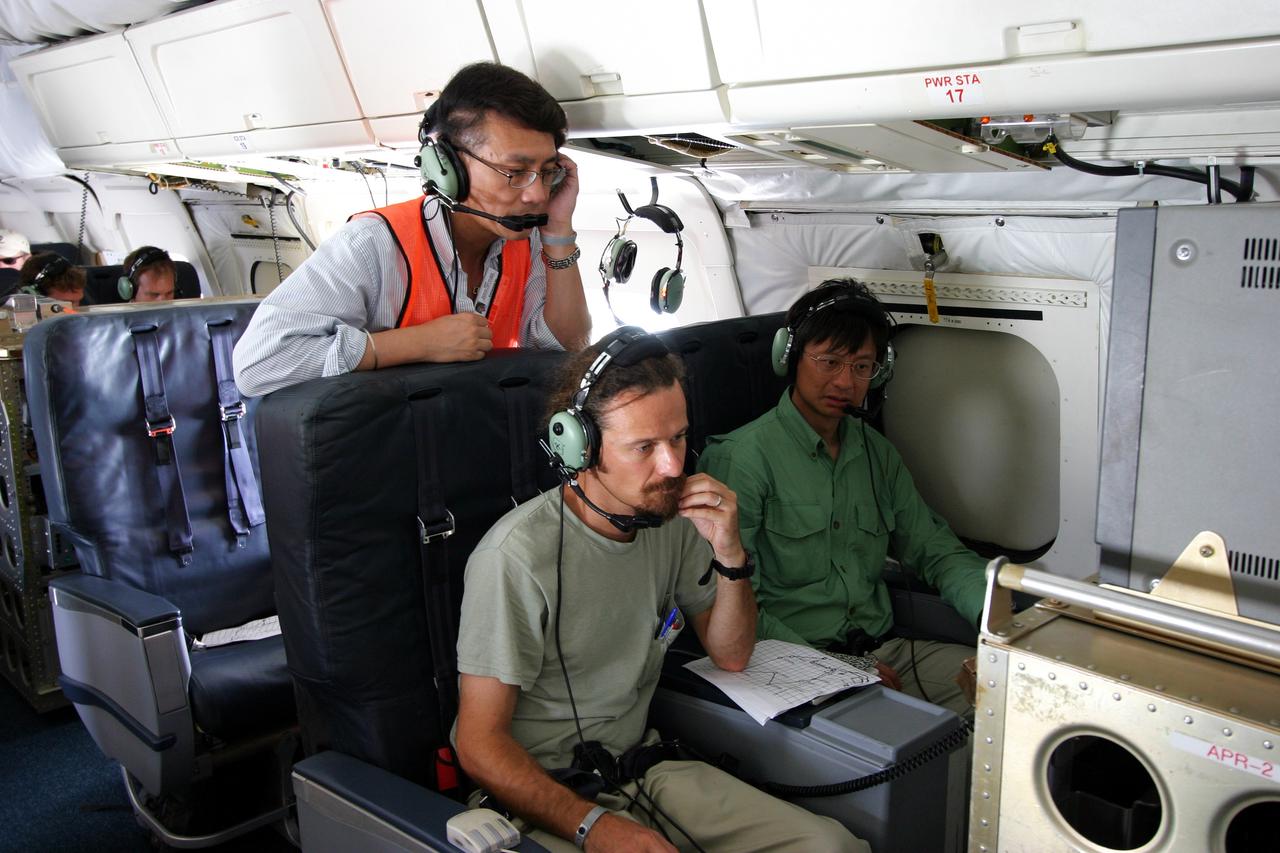
DC-8 NAMMA MISSION TO CAPE VERDE, AFRICA: Principlal investigator Eastwood Im (l), co-principal investigator Simone Tanelli (c )and RF Engineer William Chun (r) of JPL look at data coming off their APR-2 (Airborne 2nd Generation Precipitation Radar) instrument onboard NASA's DC-8 during a NAMMA science flight
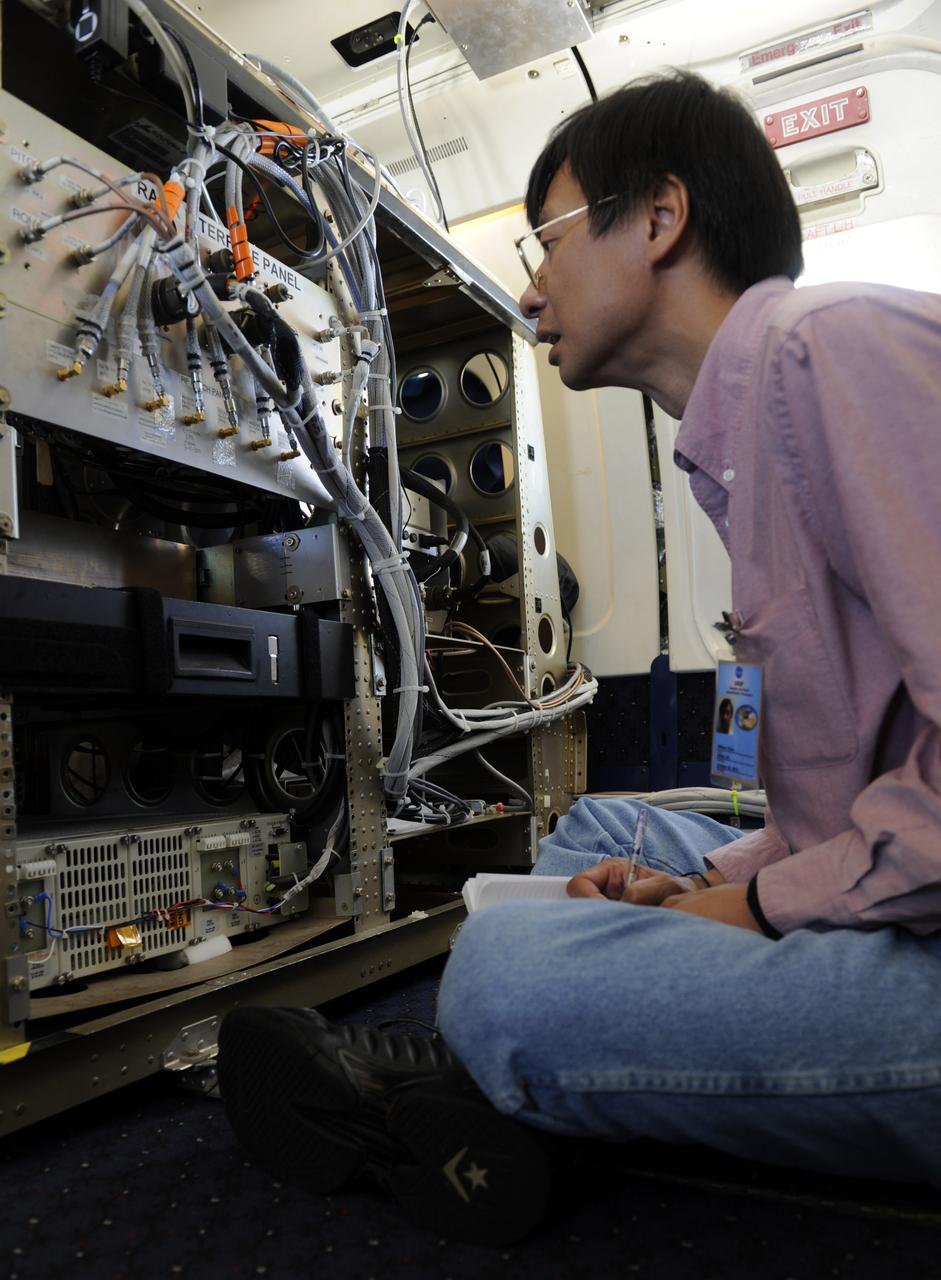
An unidentified researcher looks over the wiring connecting the Airbrorne Precipitation Radar (APR-2) during a flight aboard the NASA DC-8 aircraft, Tuesday, Aug. 17, 2010, over the Gulf of Mexico. Scientists taking part in the Genesis and Rapid Intensification Processes (GRIP) experiment, a NASA Earth science field experiment in 2010 that is being conducted to better understand how tropical storms form and develop into major hurricanes, flew out over a weather pattern Tuesday to begin their research. Photo Credit: (NASA/Paul E. Alers)

Simone Tanelli, a researcher from the Jet Propulsion Laboratory, talks about the Airbrorne Precipitation Radar (APR-2) aboard the NASA DC-8 aircraft, Monday, Aug.16, 2010, at Fort Lauderdale Hollywood International Airport in Fort Lauderdale, Fla. The APR-2, a dual frequency weather radar, is just one of the experiments supporting the Genesis and Rapid Intensification Processes (GRIP) mission, a NASA Earth science field experiment that is being conducted to better understand how tropical storms form and develop into major hurricanes. Photo Credit: (NASA/Paul E. Alers)