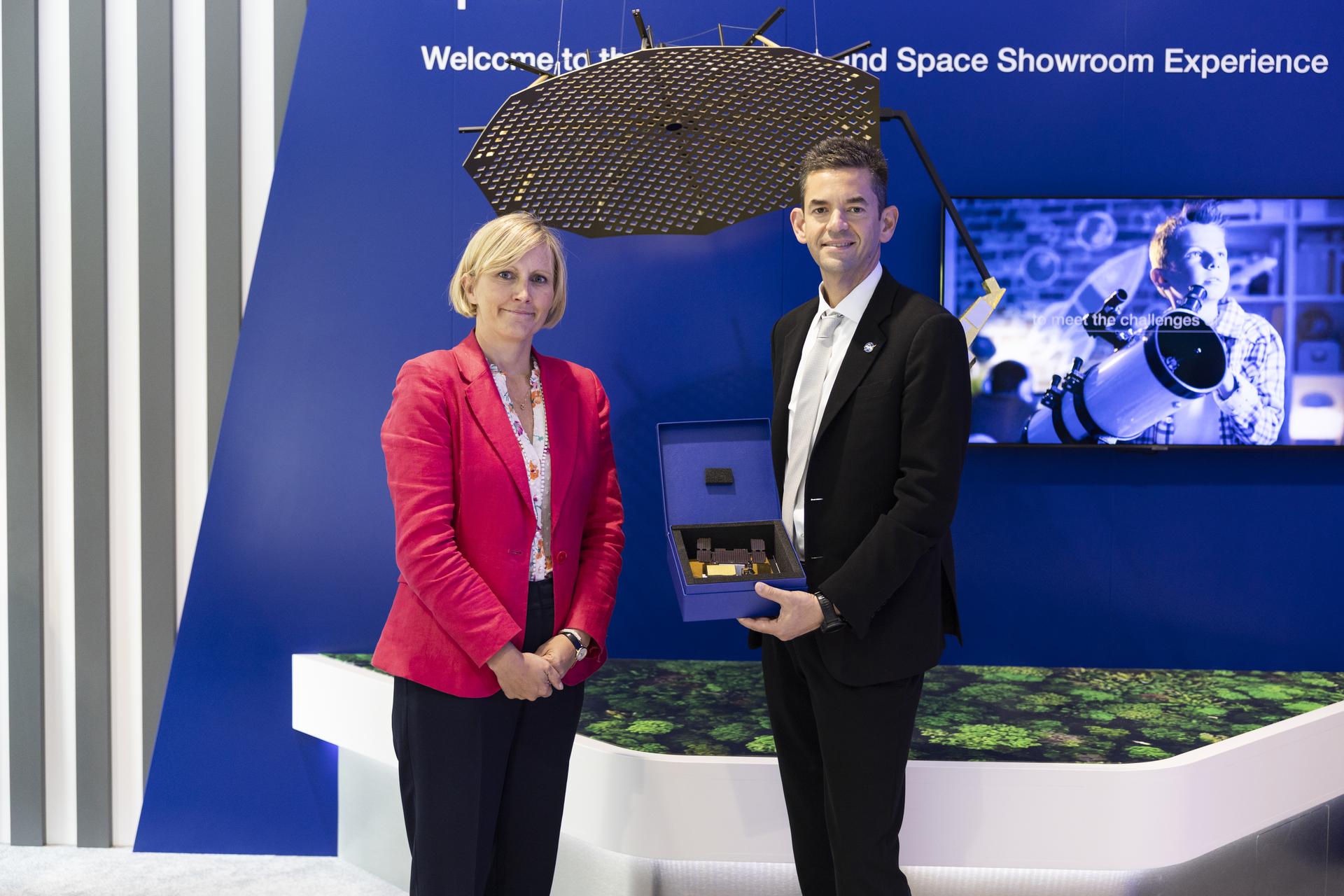
Jared Isaacman tours Airbus Defence and Space Facilities in Stevenage, United Kingdom, pictured with Kata Escott, UK Head of Airbus Defence and Space.

Jared Isaacman tours Airbus Defence and Space Facilities in Stevenage, United Kingdom, pictured with Kata Escott, UK Head of Airbus Defence and Space.
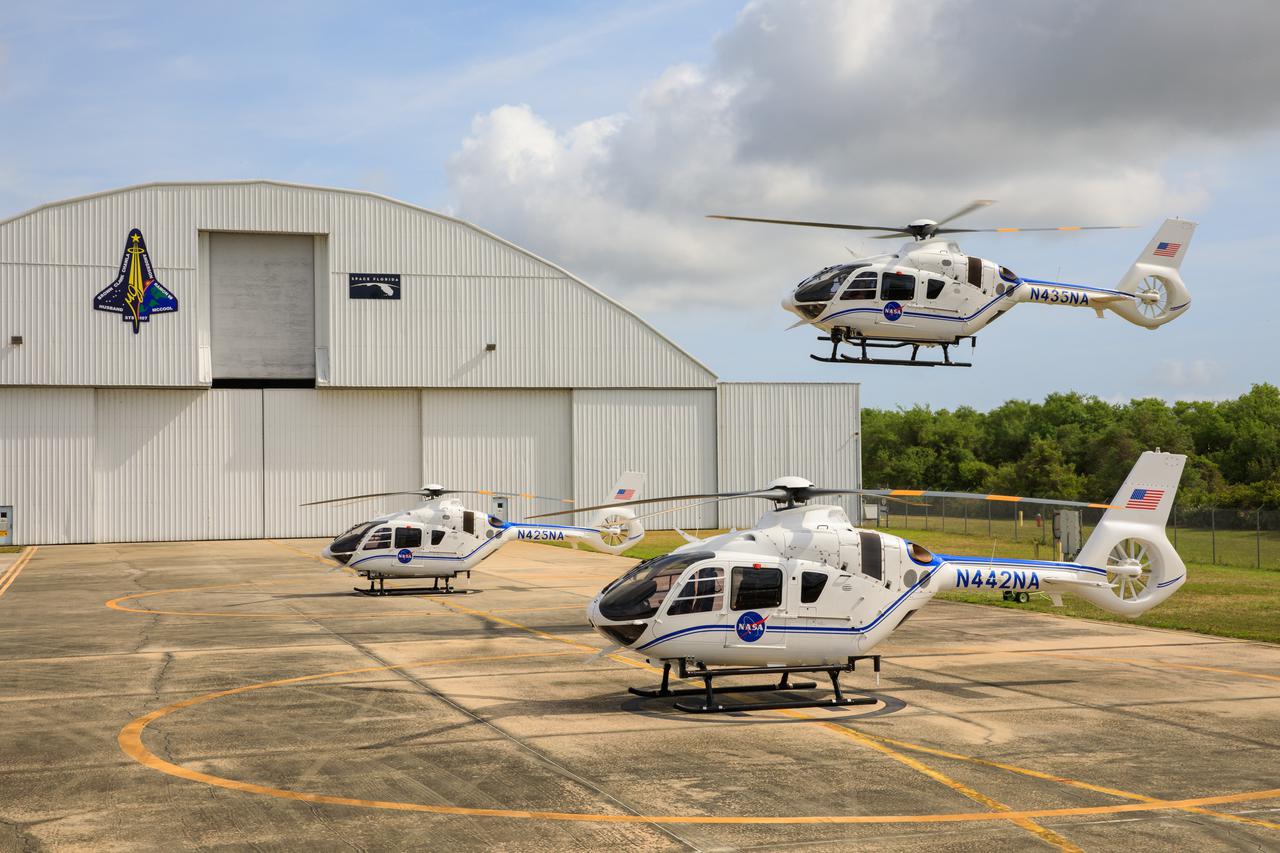
The third and final Airbus H135 helicopter touches down at the Launch and Landing Facility runway at NASA’s Kennedy Space Center in Florida on March 26, 2021, completing the upgraded fleet of aircraft used for security operations. The Airbus H135 helicopters replace the Bell Huey 2 aircraft that had been in service at Kennedy for the last 30 years. Maintained by the Flight Operations team, these new helicopters provide a number of technological and safety advantages over the Hueys, such as more lifting power, greater stability in the air, and expanded medical capabilities.
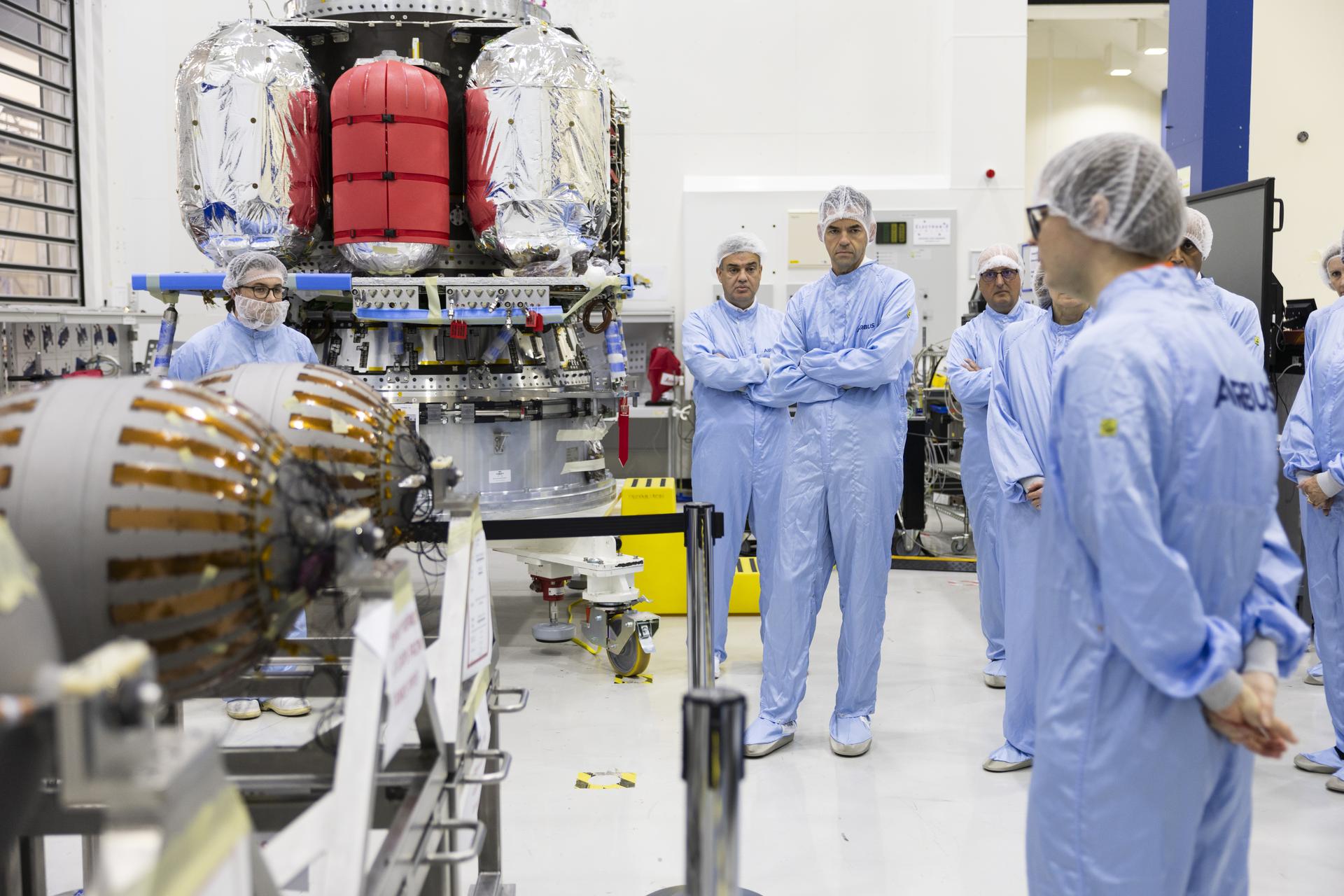
Jared Isaacman tours Airbus Defence and Space Facilities clean room in Stevenage, United Kingdom.
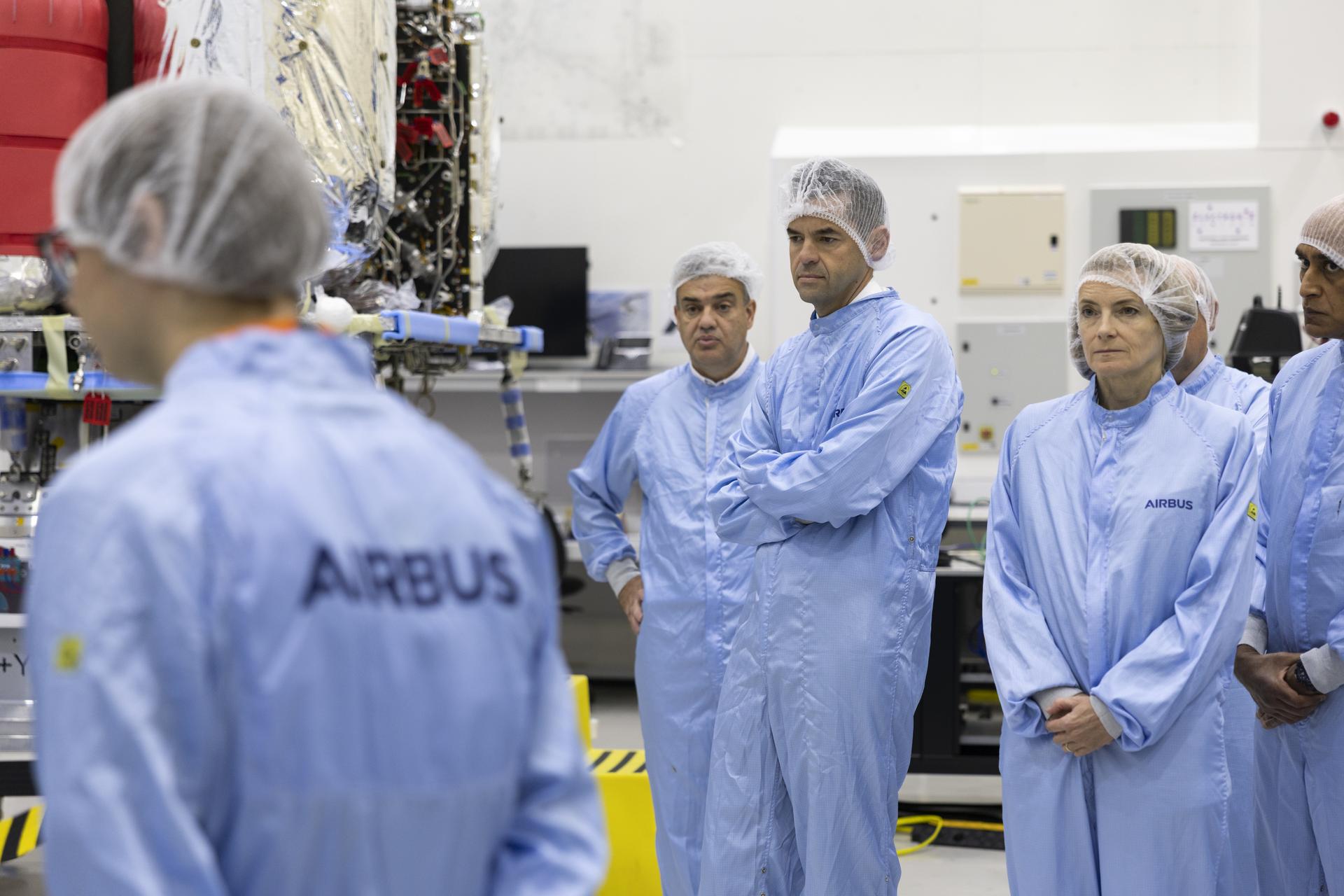
Jared Isaacman tours Airbus Defence and Space Facilities clean room in Stevenage, United Kingdom.
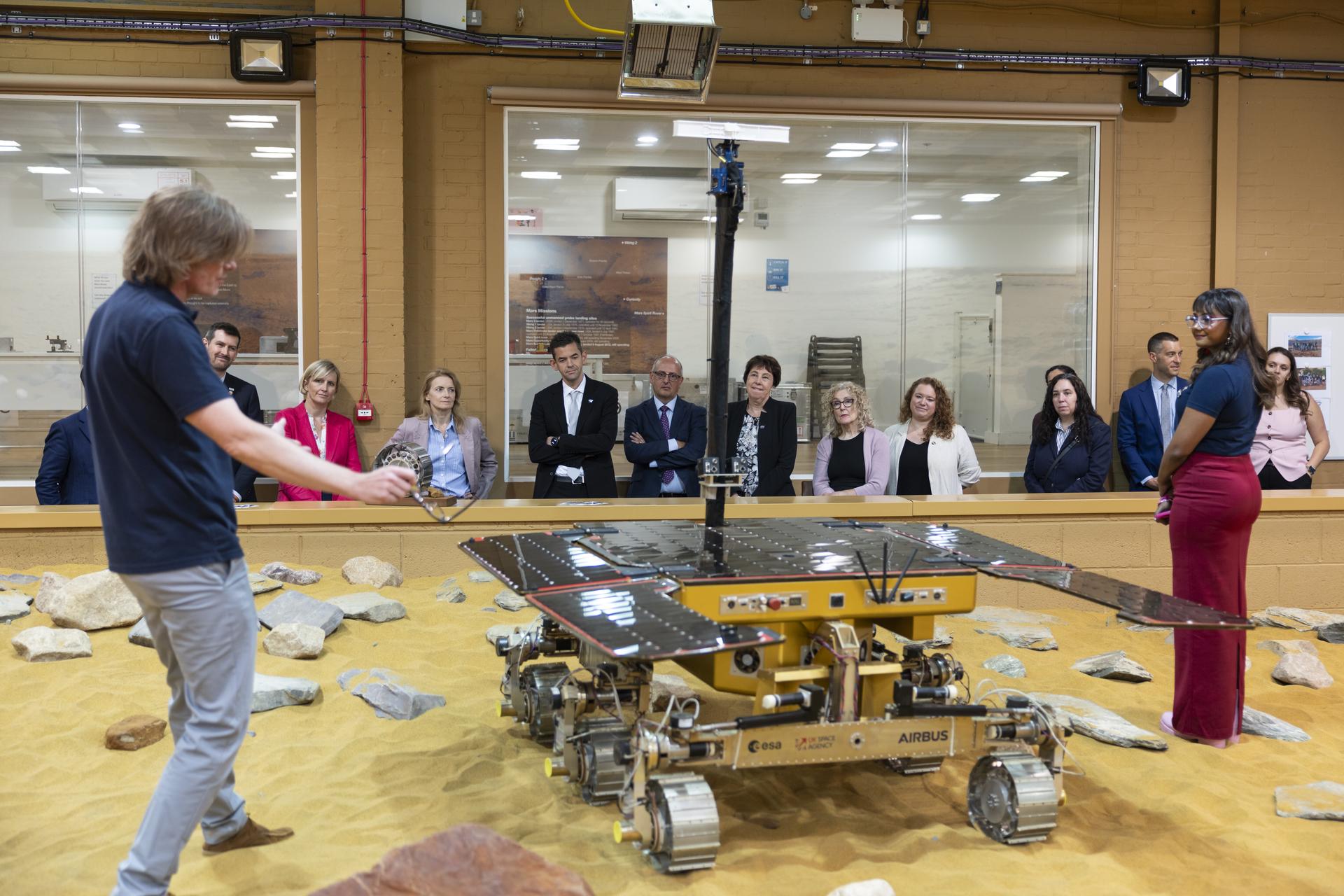
Jared Isaacman tours Airbus Defence and Space Facilities Mars Yard in Stevenage, United Kingdom.
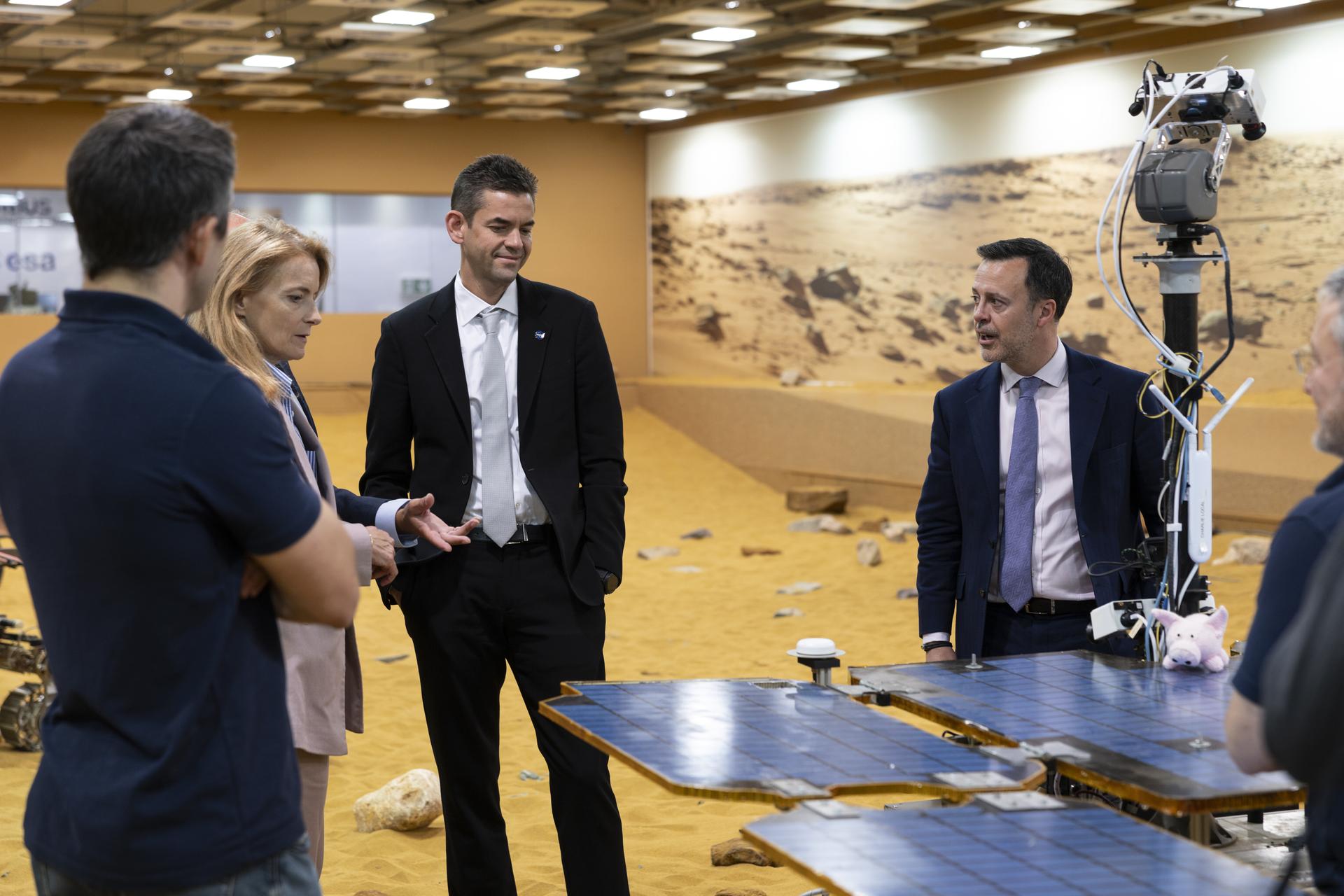
Jared Isaacman tours Airbus Defence and Space Facilities Mars Yard in Stevenage, United Kingdom.
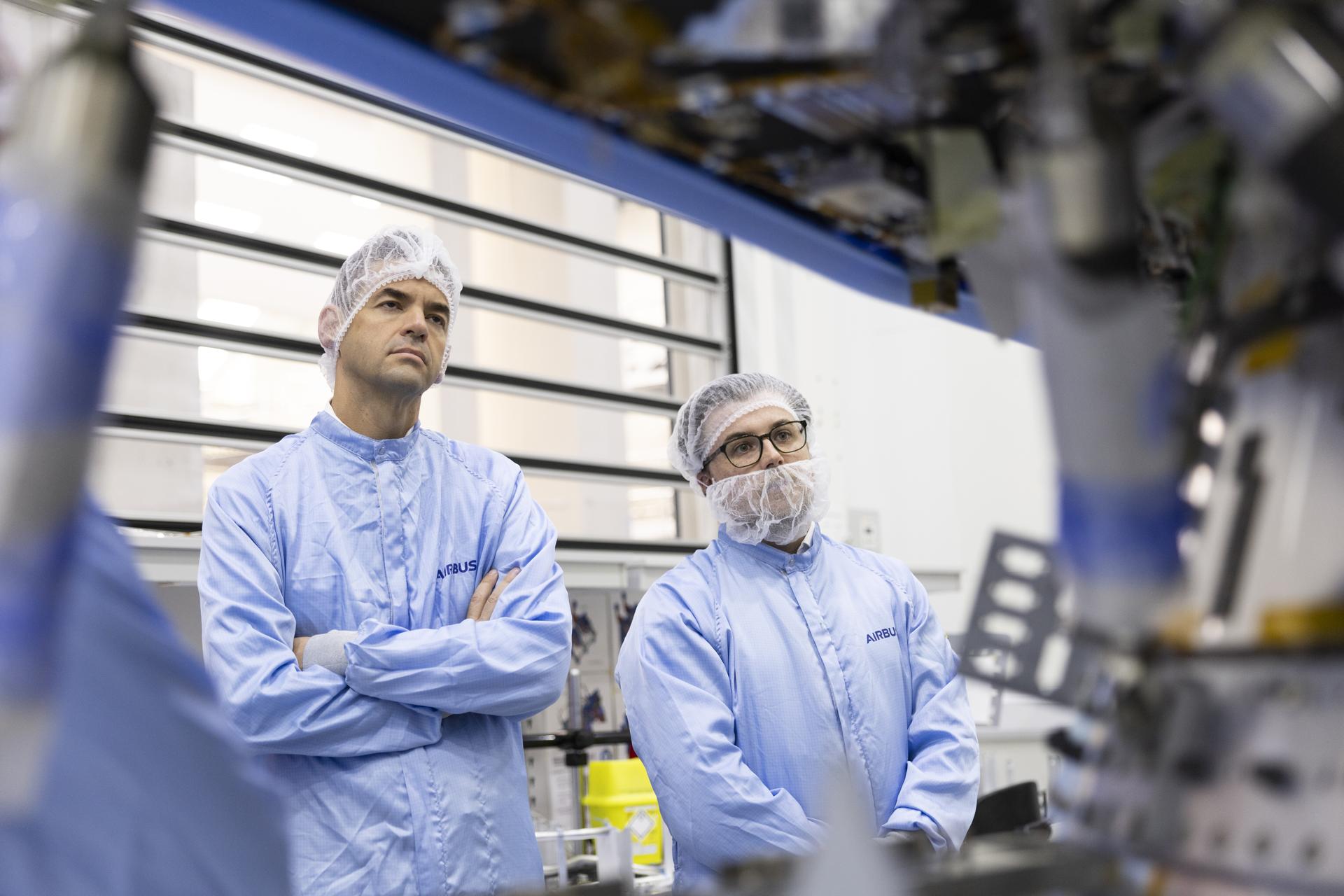
Jared Isaacman tours Airbus Defence and Space Facilities clean room in Stevenage, United Kingdom.
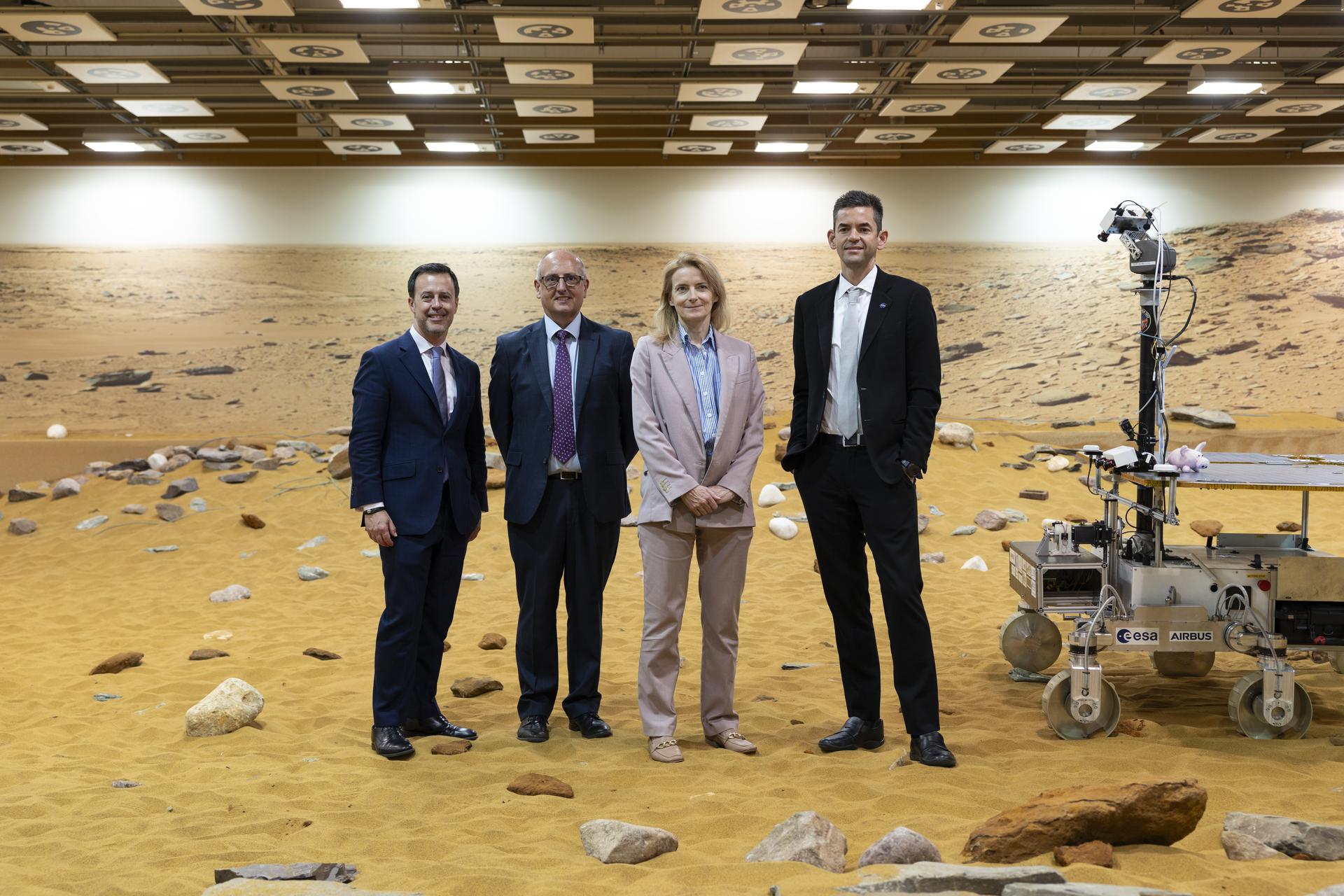
Jared Isaacman tours Airbus Defence and Space Facilities Mars Yard in Stevenage, United Kingdom.
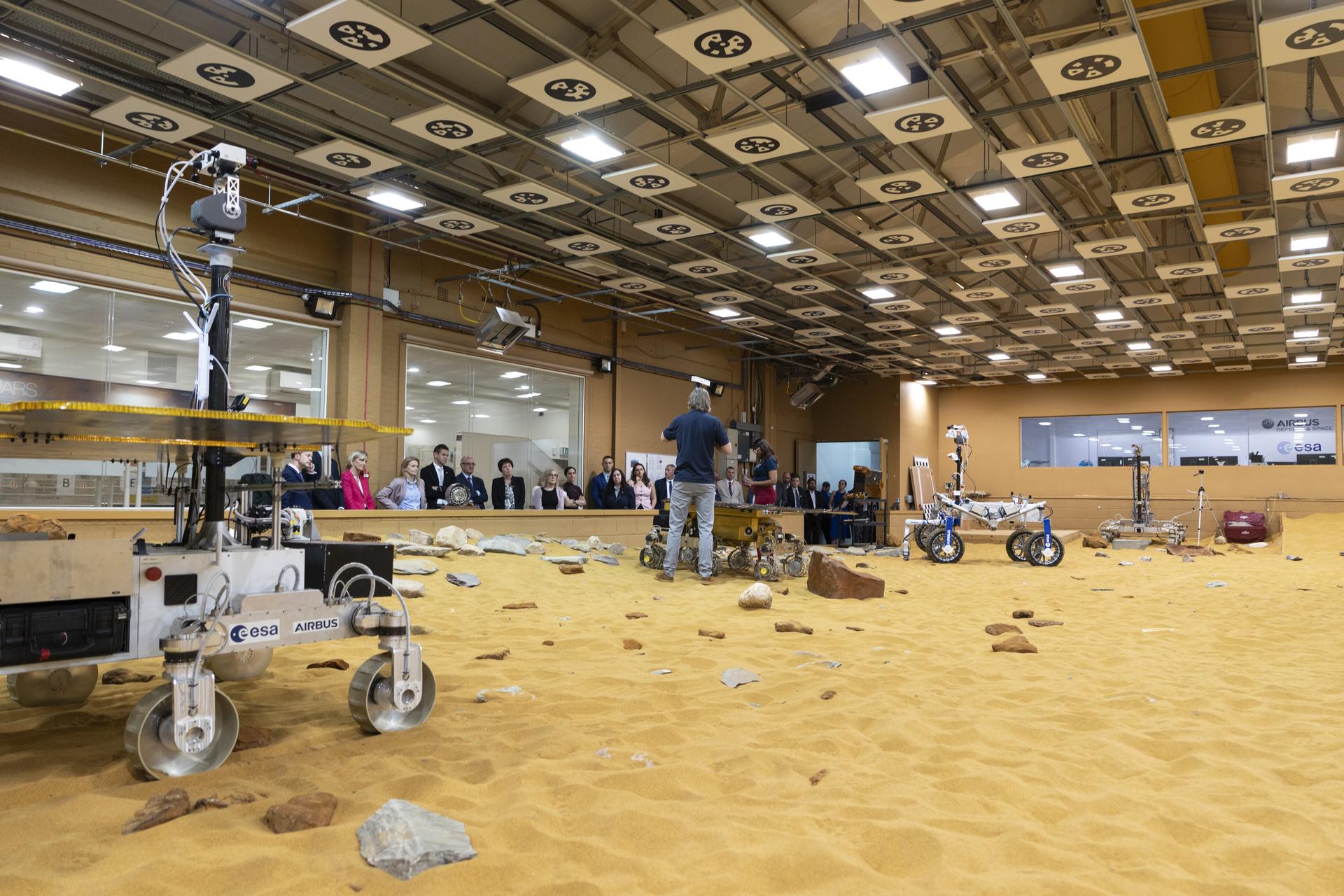
Jared Isaacman tours Airbus Defence and Space Facilities Mars Yard in Stevenage, United Kingdom.
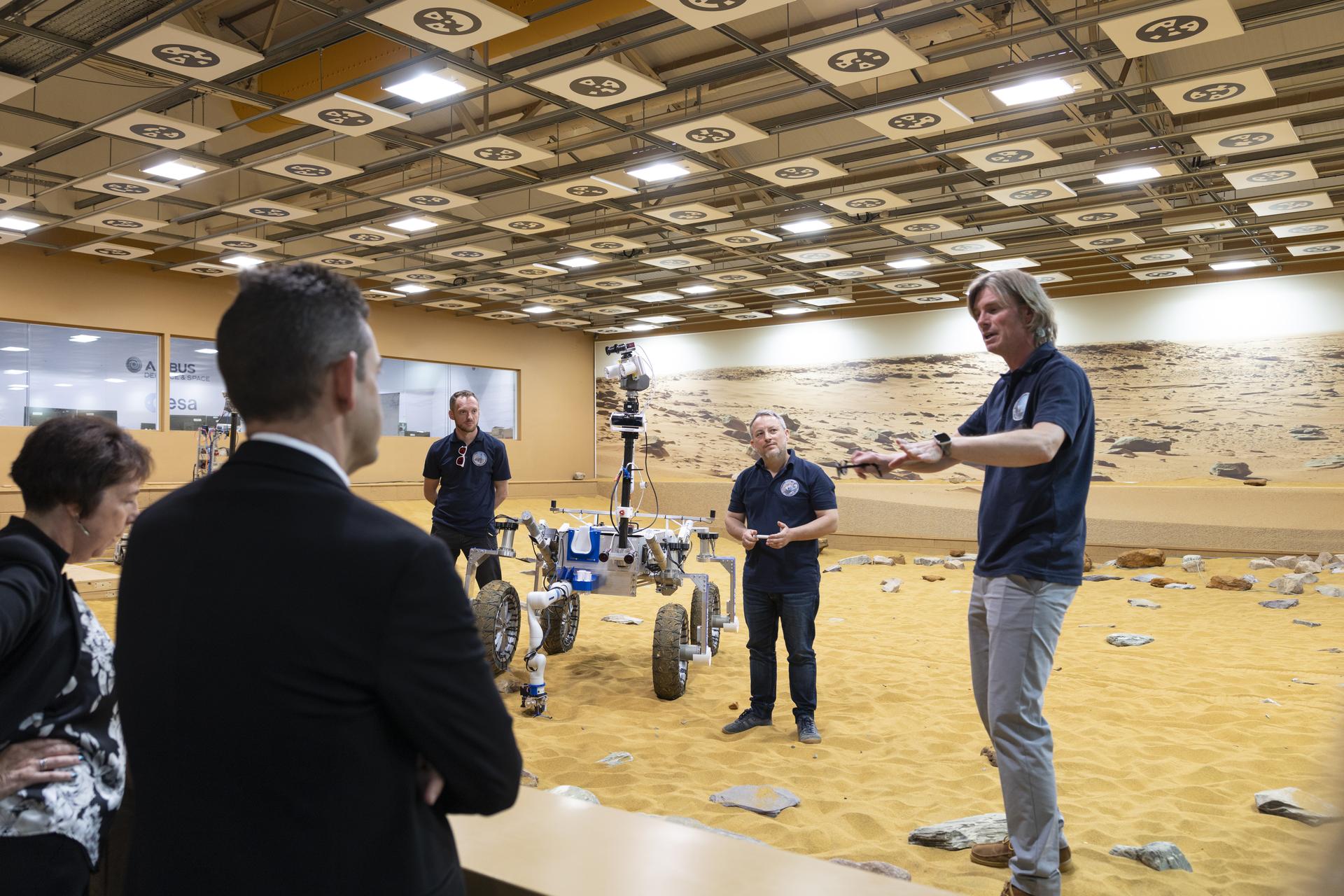
Jared Isaacman tours Airbus Defence and Space Facilities Mars Yard in Stevenage, United Kingdom.
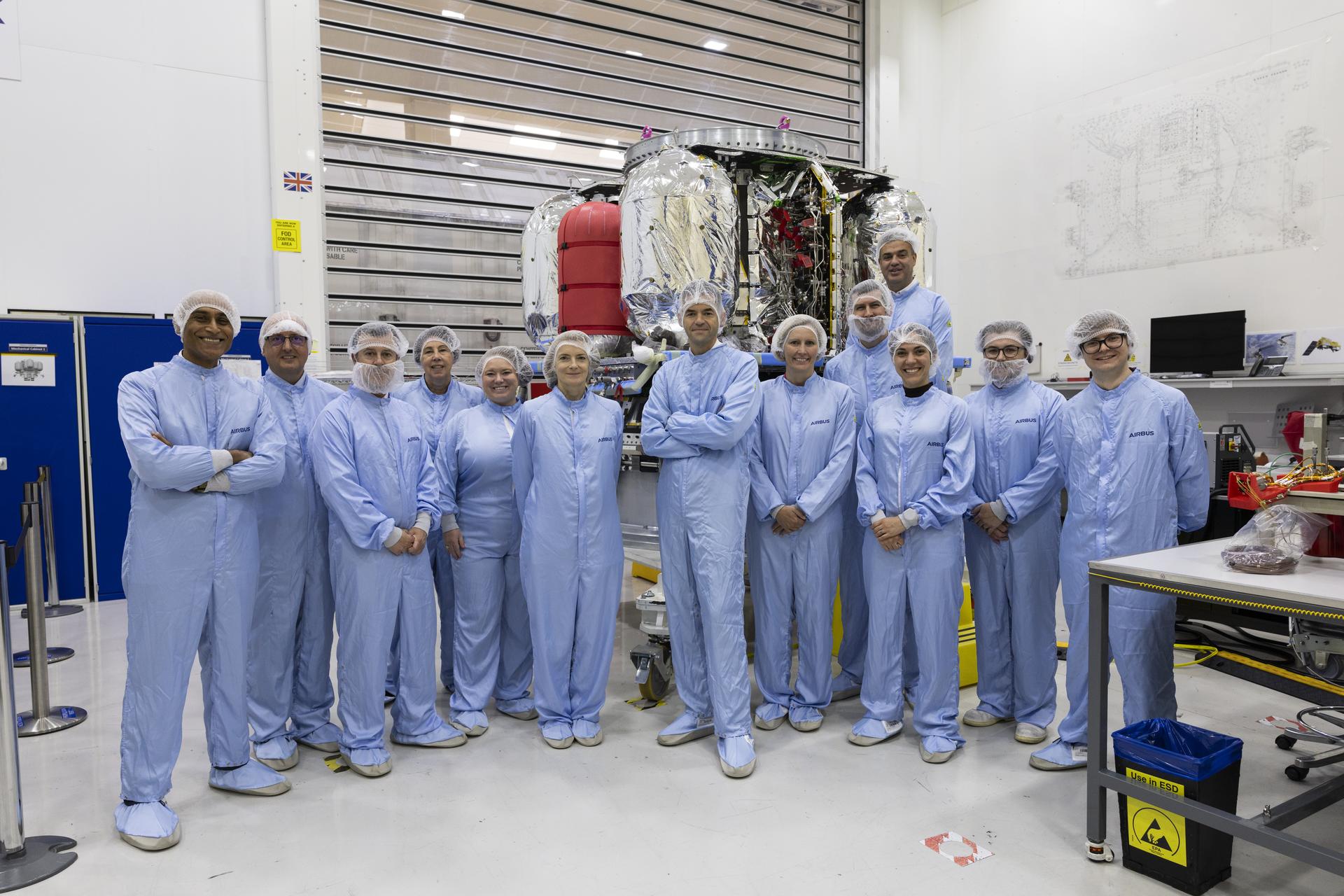
Jared Isaacman tours Airbus Defence and Space Facilities clean room in Stevenage, United Kingdom.
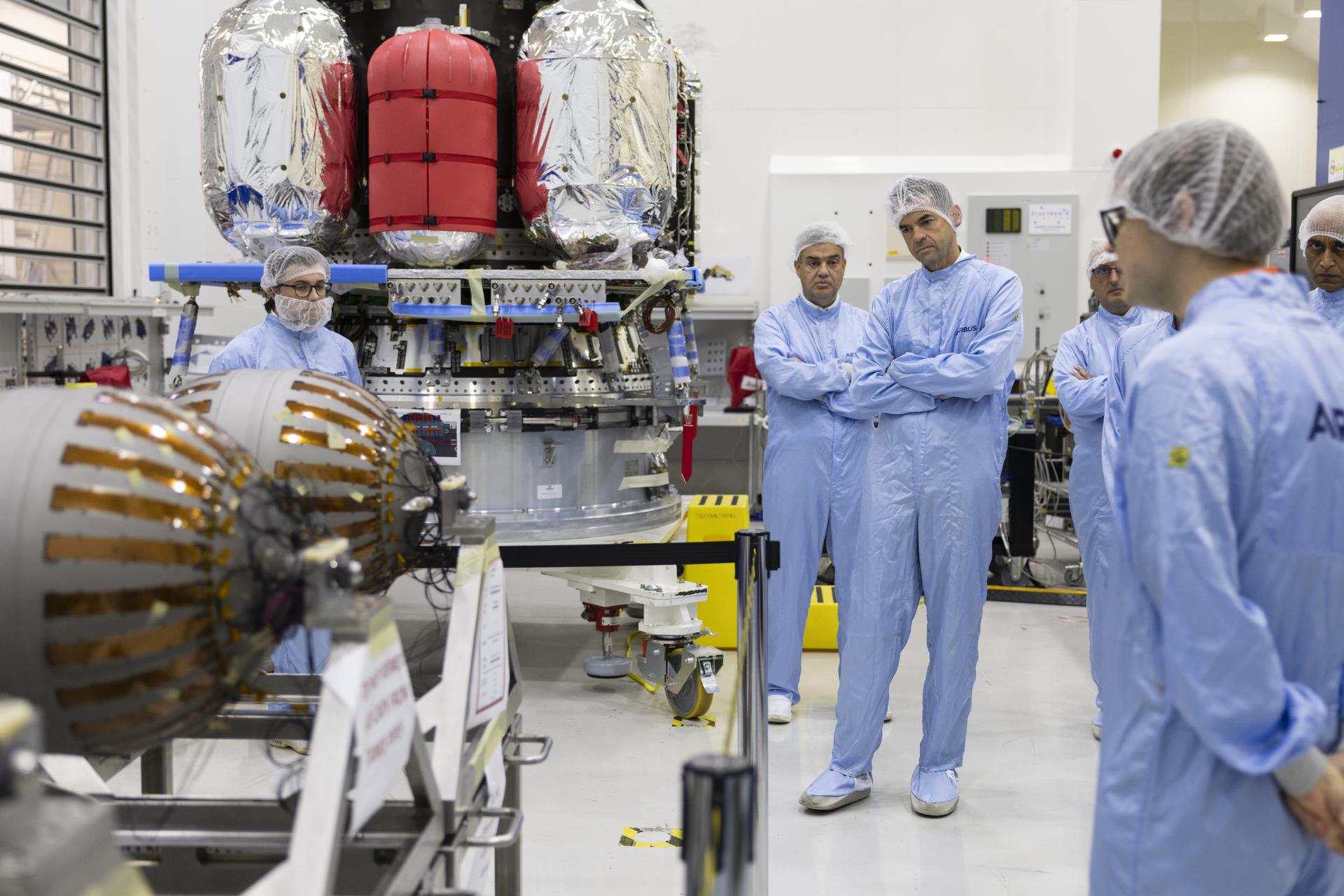
Jared Isaacman tours Airbus Defence and Space Facilities clean room in Stevenage, United Kingdom.
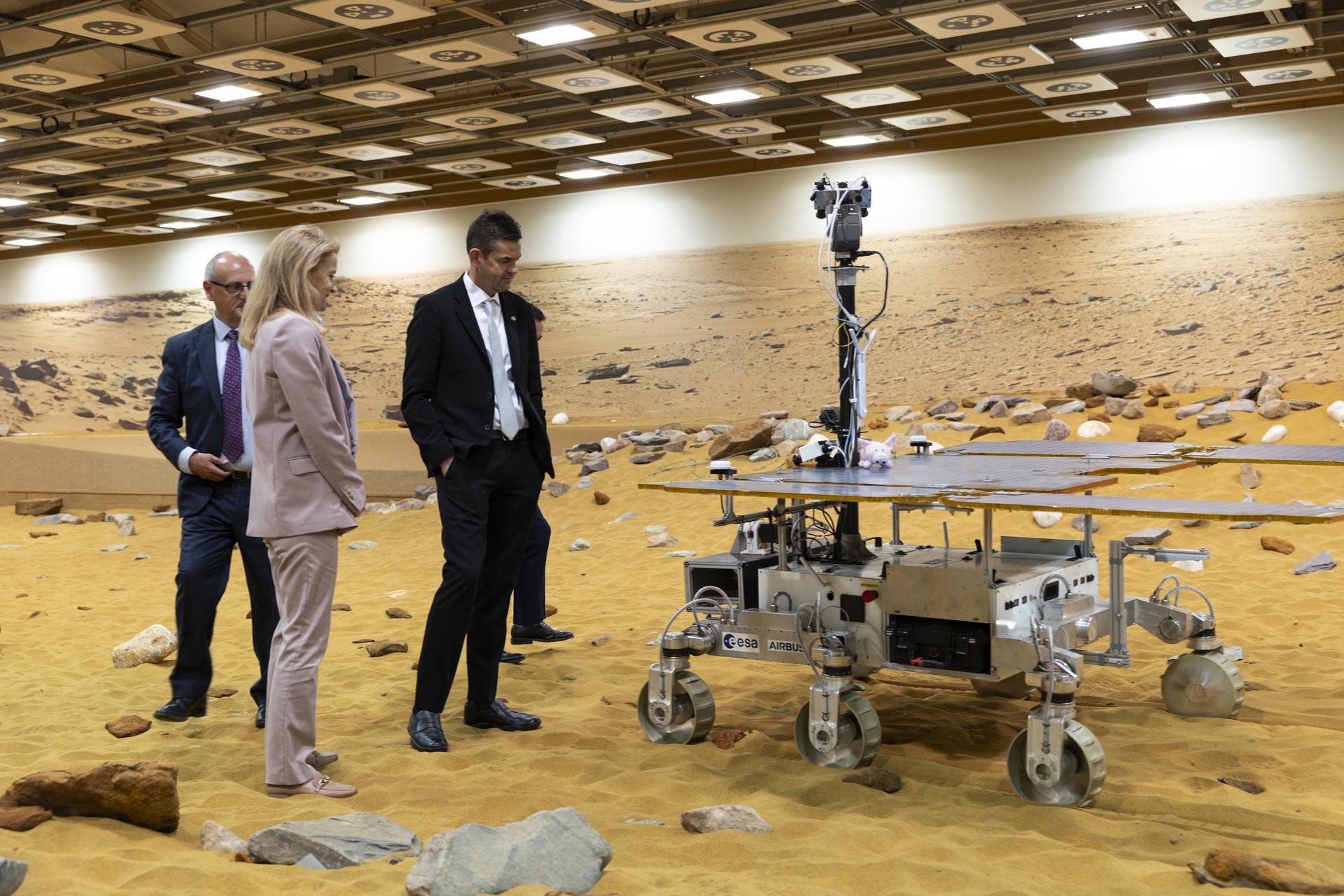
Jared Isaacman tours Airbus Defence and Space Facilities Mars Yard in Stevenage, United Kingdom.
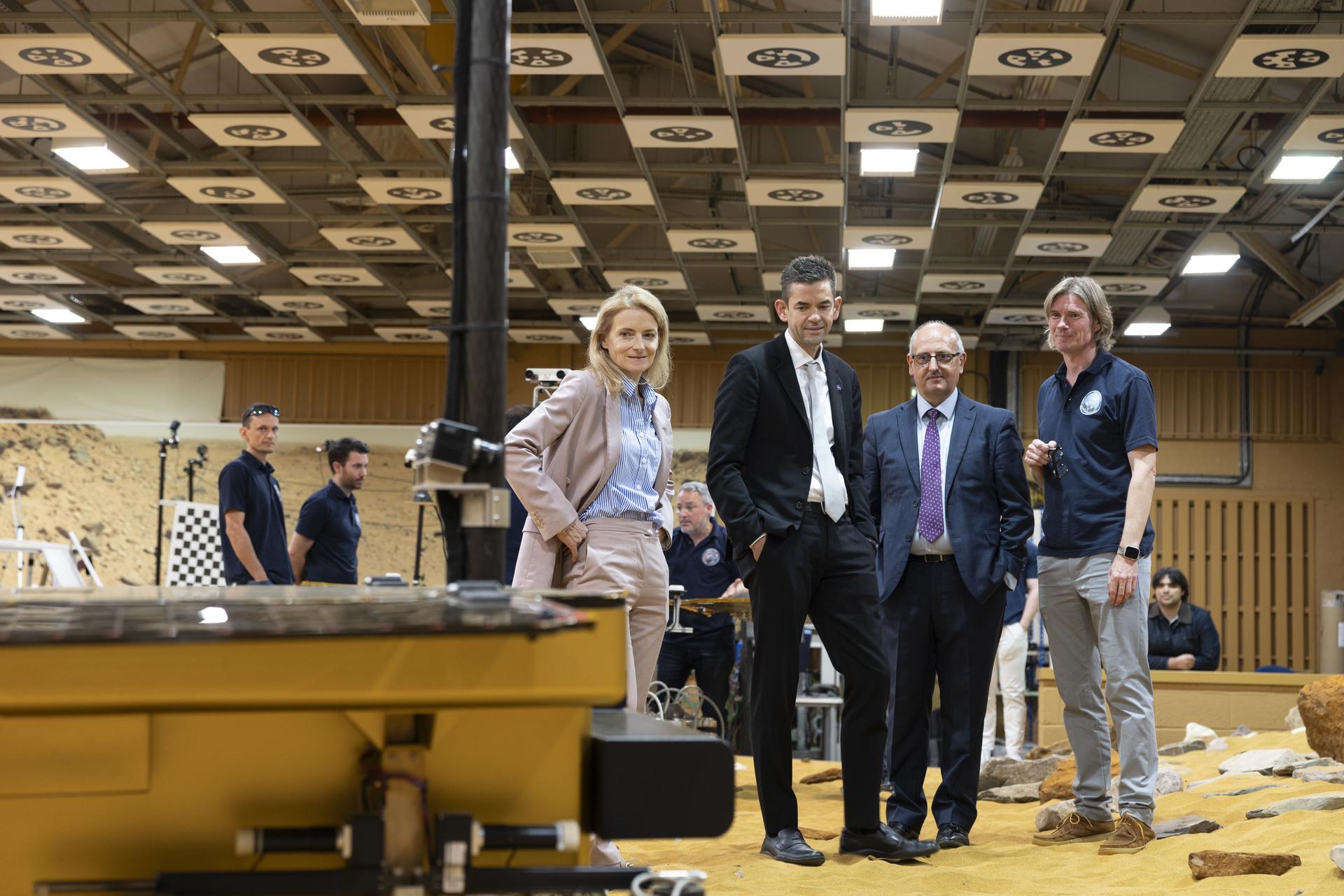
Jared Isaacman tours Airbus Defence and Space Facilities Mars Yard in Stevenage, United Kingdom.
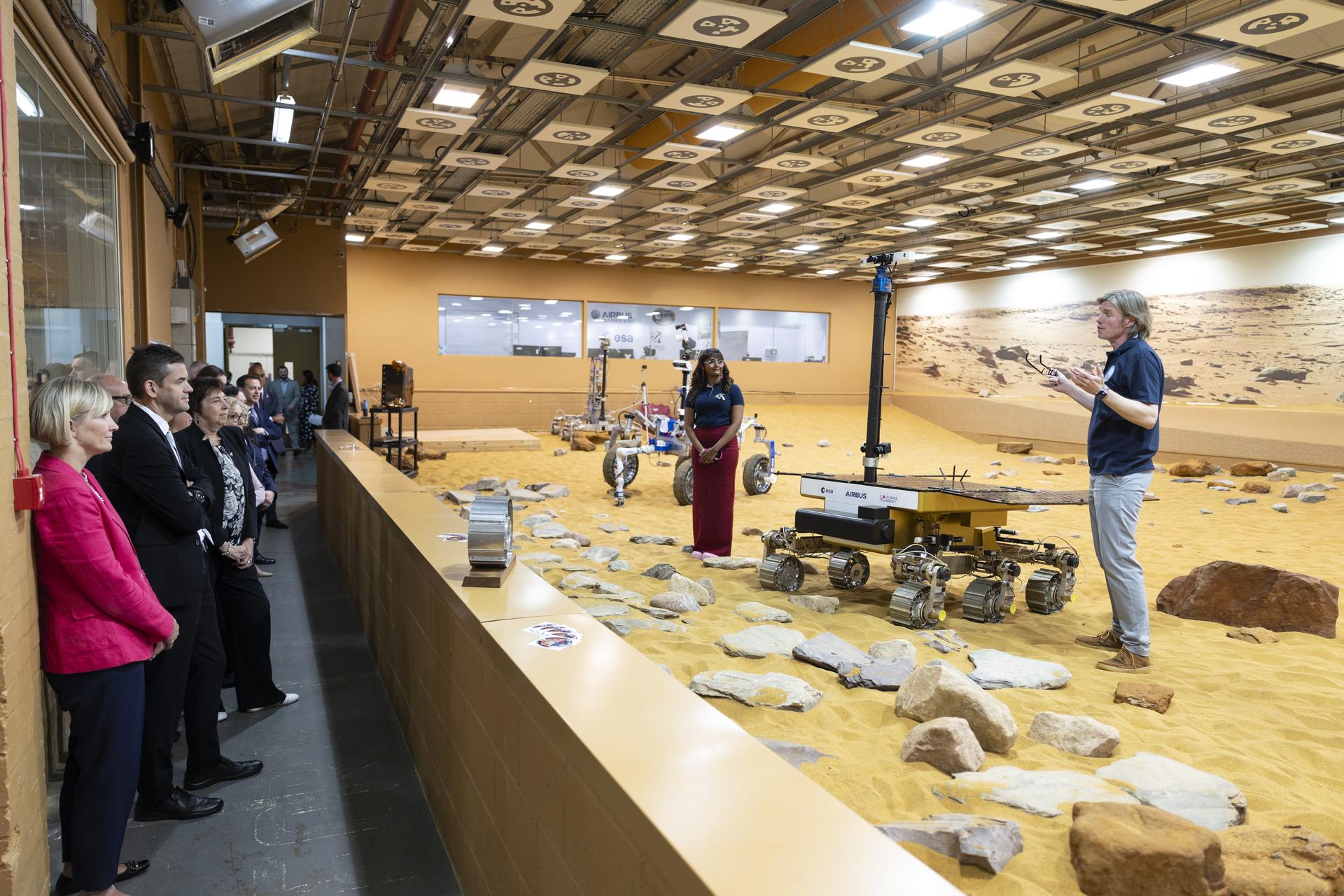
Jared Isaacman tours Airbus Defence and Space Facilities Mars Yard in Stevenage, United Kingdom.
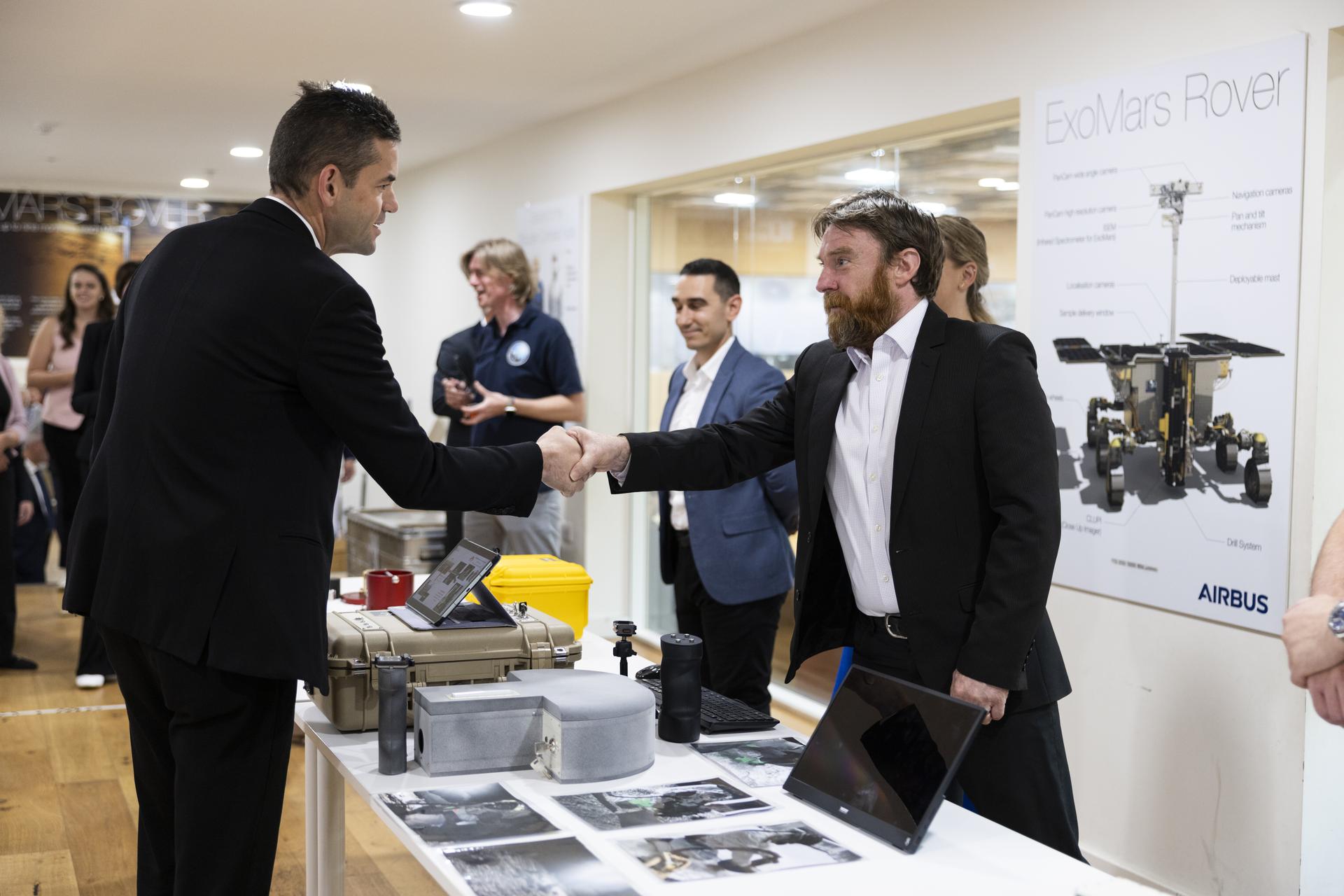
Jared Isaacman tours Airbus Defence and Space Facilities Mars Yard in Stevenage, United Kingdom.
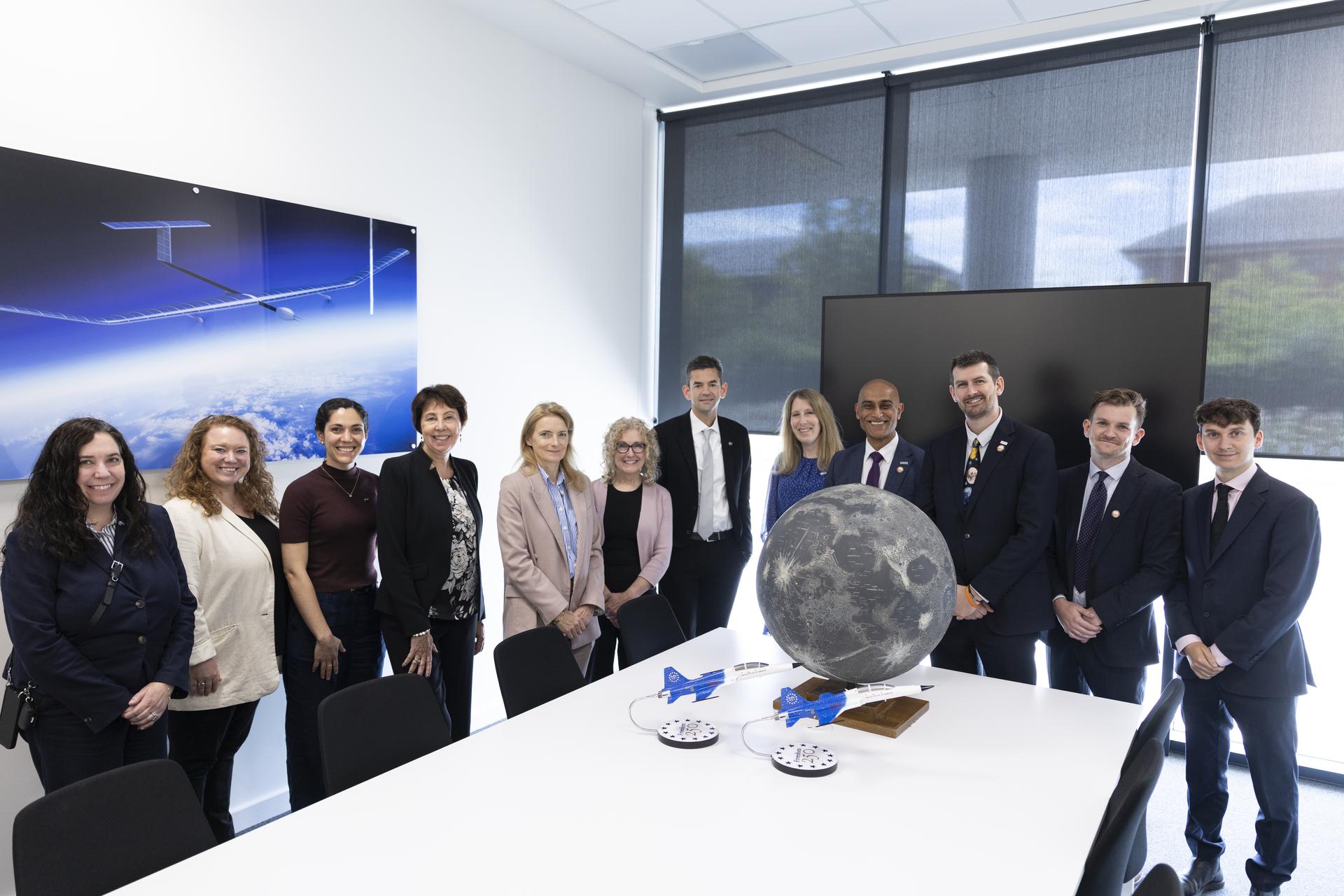
Jared Isaacman tours Airbus Defence and Space Facilities in Stevenage, United Kingdom.

Jared Isaacman tours Airbus Defence and Space Facilities in Stevenage, United Kingdom, pictured with Baroness Liz Lloyd, Parliamentary Under‑Secretary of State at DSIT.
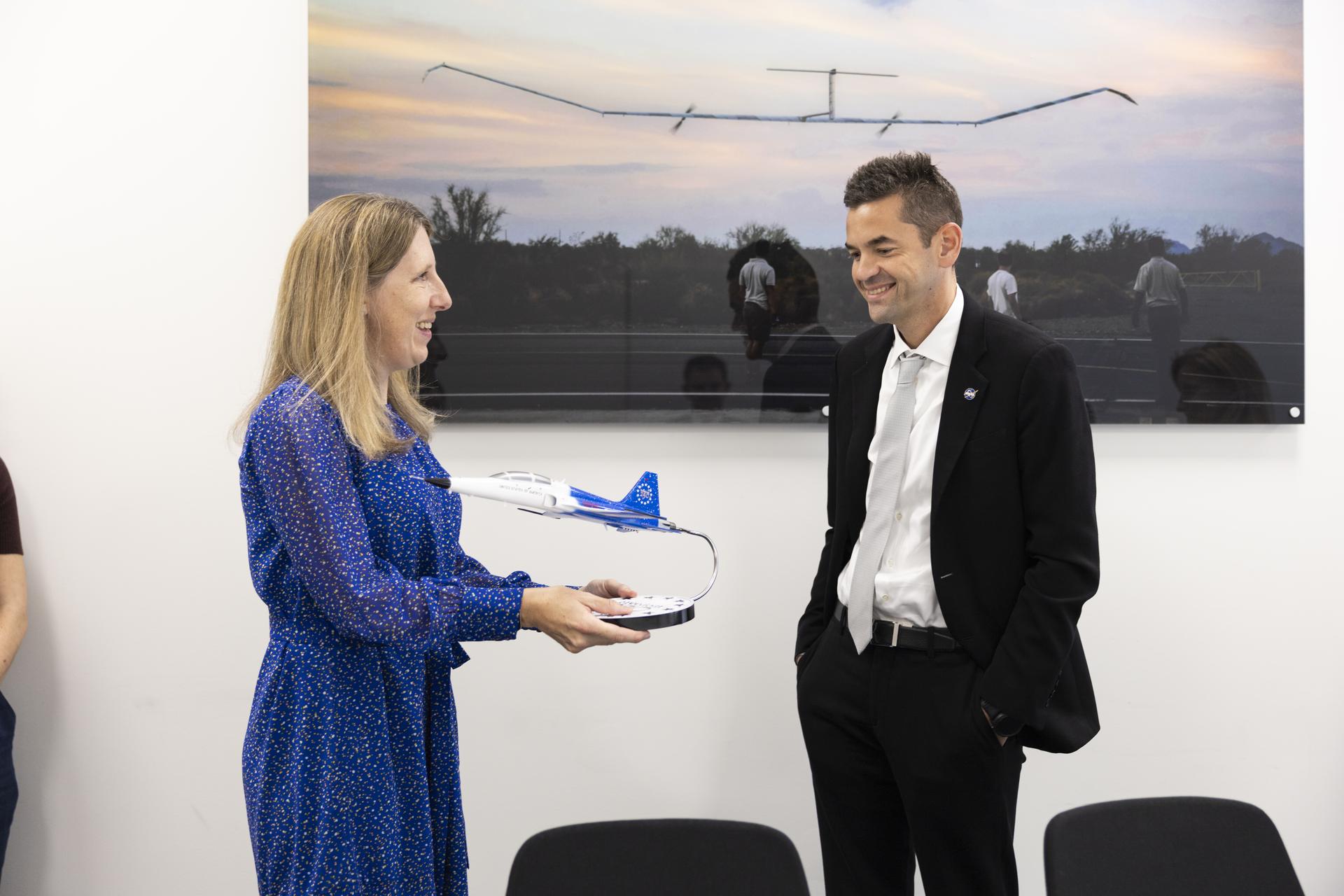
Jared Isaacman tours Airbus Defence and Space Facilities in Stevenage, United Kingdom, pictured with Rebecca Evernden, Director of UK Space Agency.
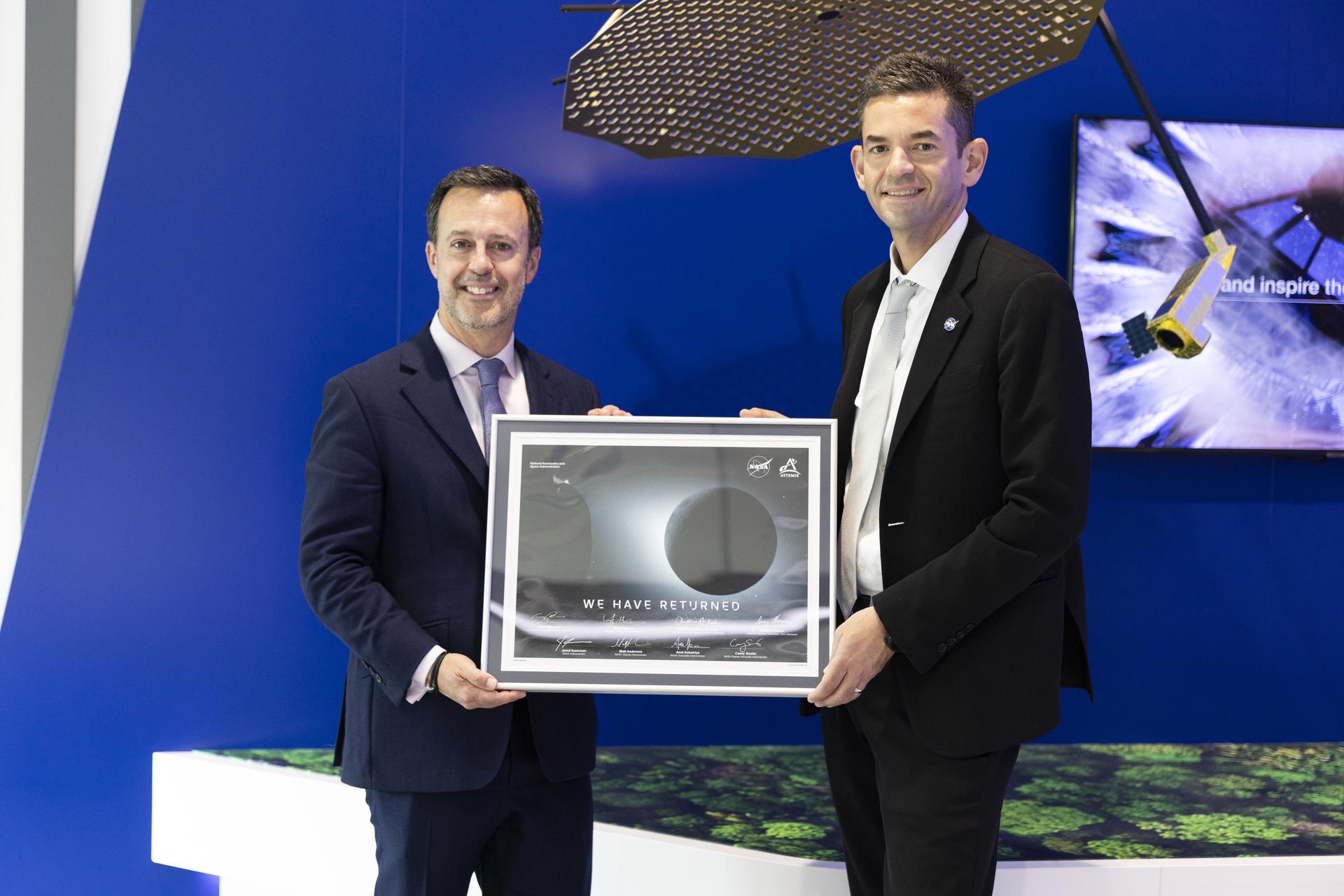
Jared Isaacman tours Airbus Defence and Space Facilities in Stevenage, United Kingdom, pictured with Kevin Bonavia, British Labour Party Member of Parliament.

Jared Isaacman tours Airbus Defence and Space Facilities in Stevenage, United Kingdom, pictured with Baroness Liz Lloyd, Parliamentary Under‑Secretary of State at DSIT.
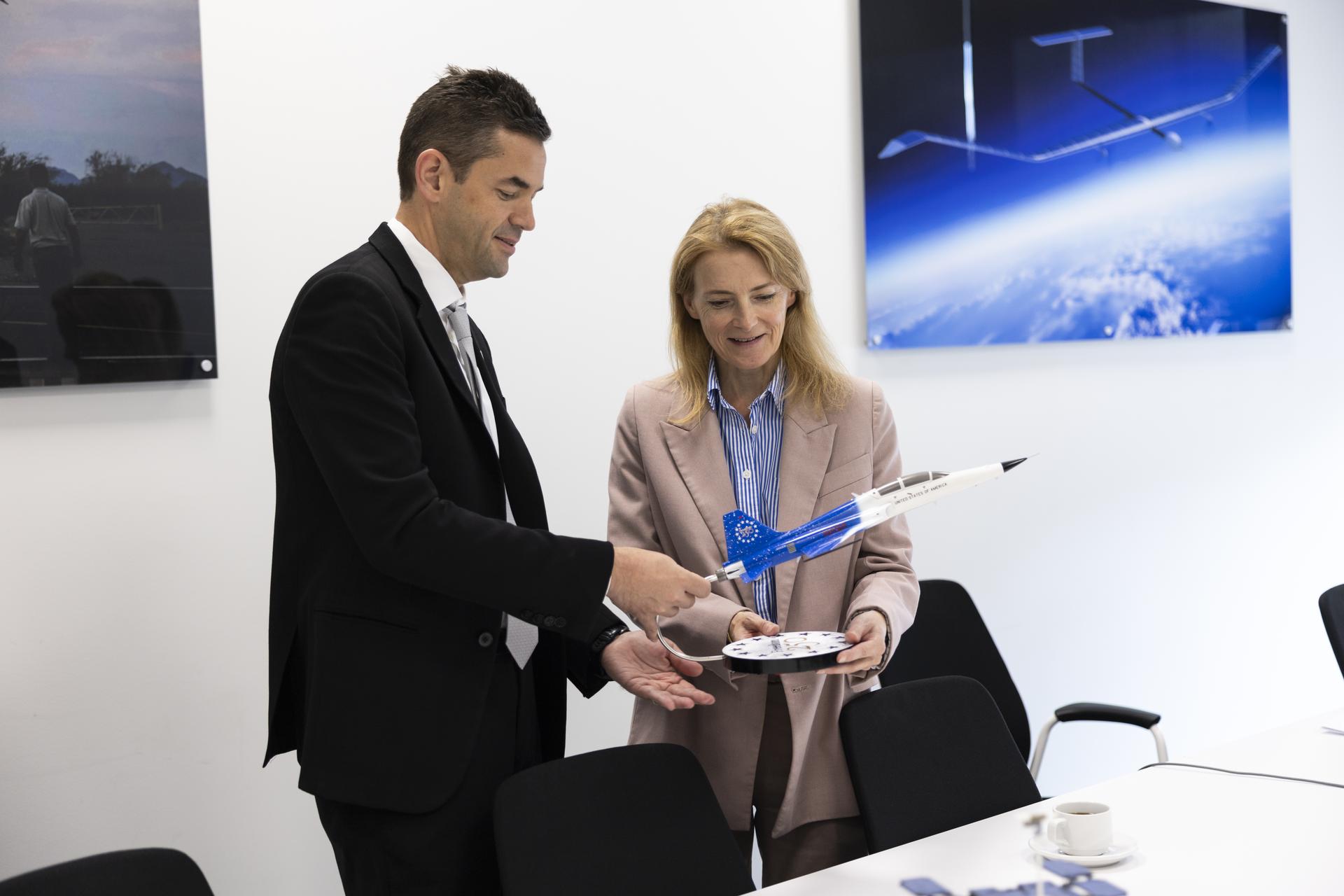
Jared Isaacman tours Airbus Defence and Space Facilities in Stevenage, United Kingdom, pictured with Baroness Liz Lloyd, Parliamentary Under‑Secretary of State at DSIT.

Jared Isaacman tours Airbus Defence and Space Facilities in Stevenage, United Kingdom, pictured with Baroness Liz Lloyd, Rebecca Evernden, and Nicky Fox.

Jared Isaacman tours Airbus Defence and Space Facilities Mars Yard in Stevenage, United Kingdom. Pictured with Nicky Fox, Anu Ojha, Kevin Bonavia, and Baroness Liz Lloyd.
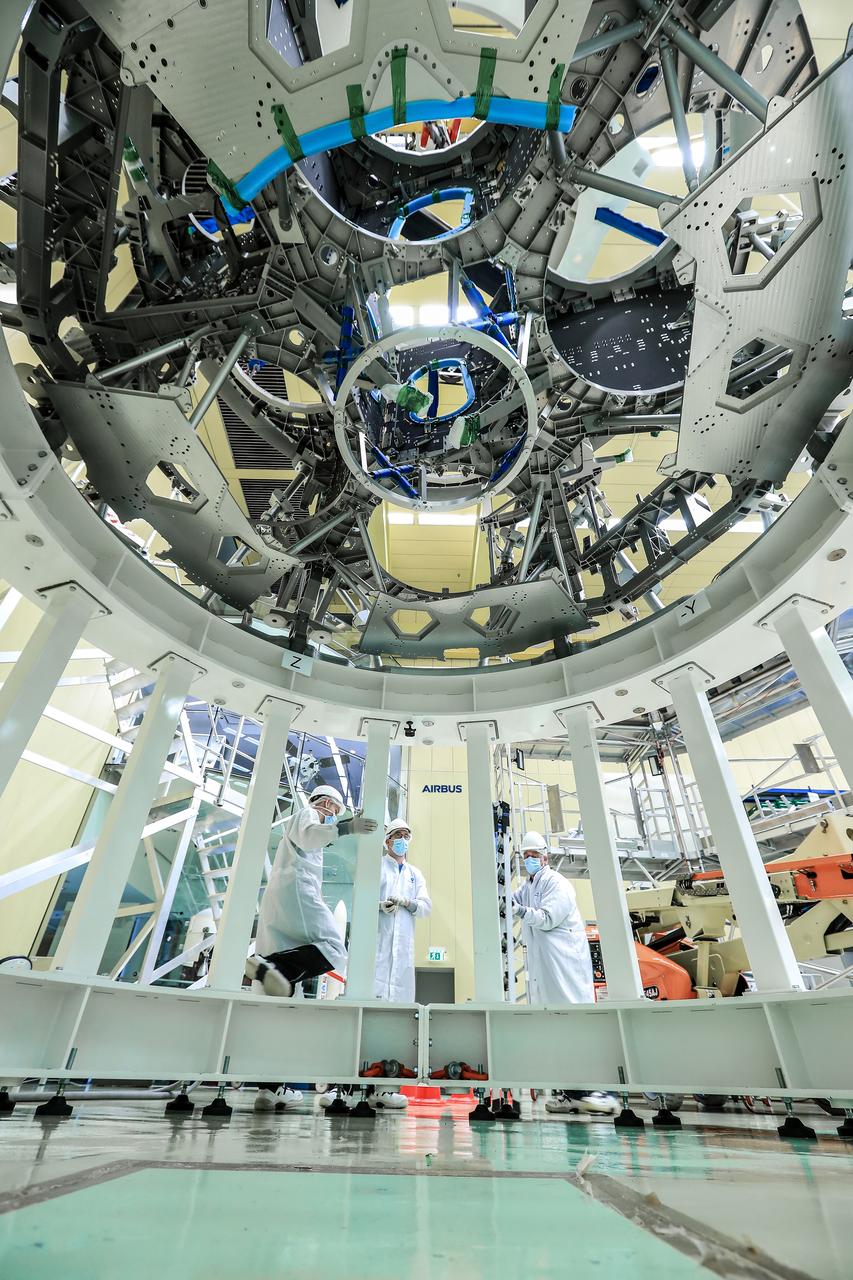
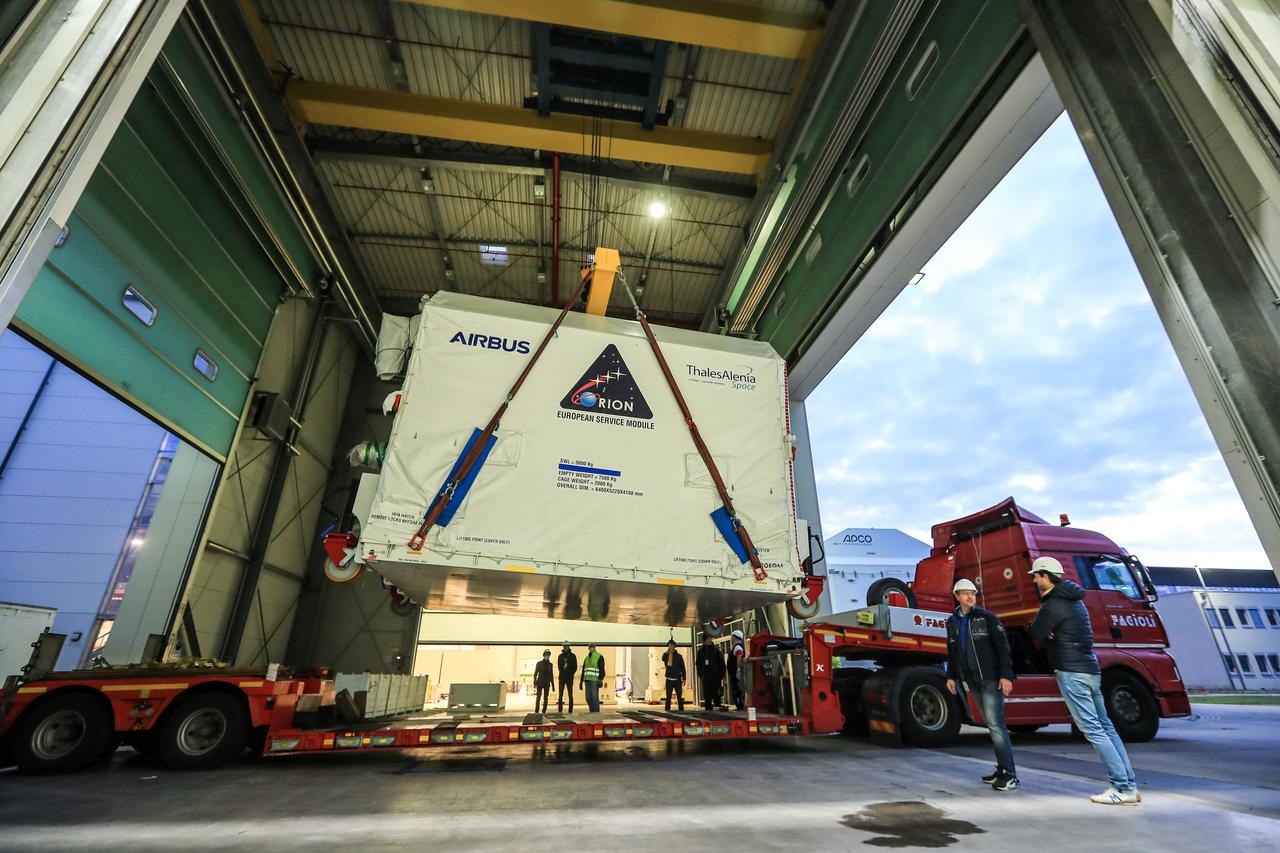
Airbus - Orion, Service-Modul ESM 09.10.2020
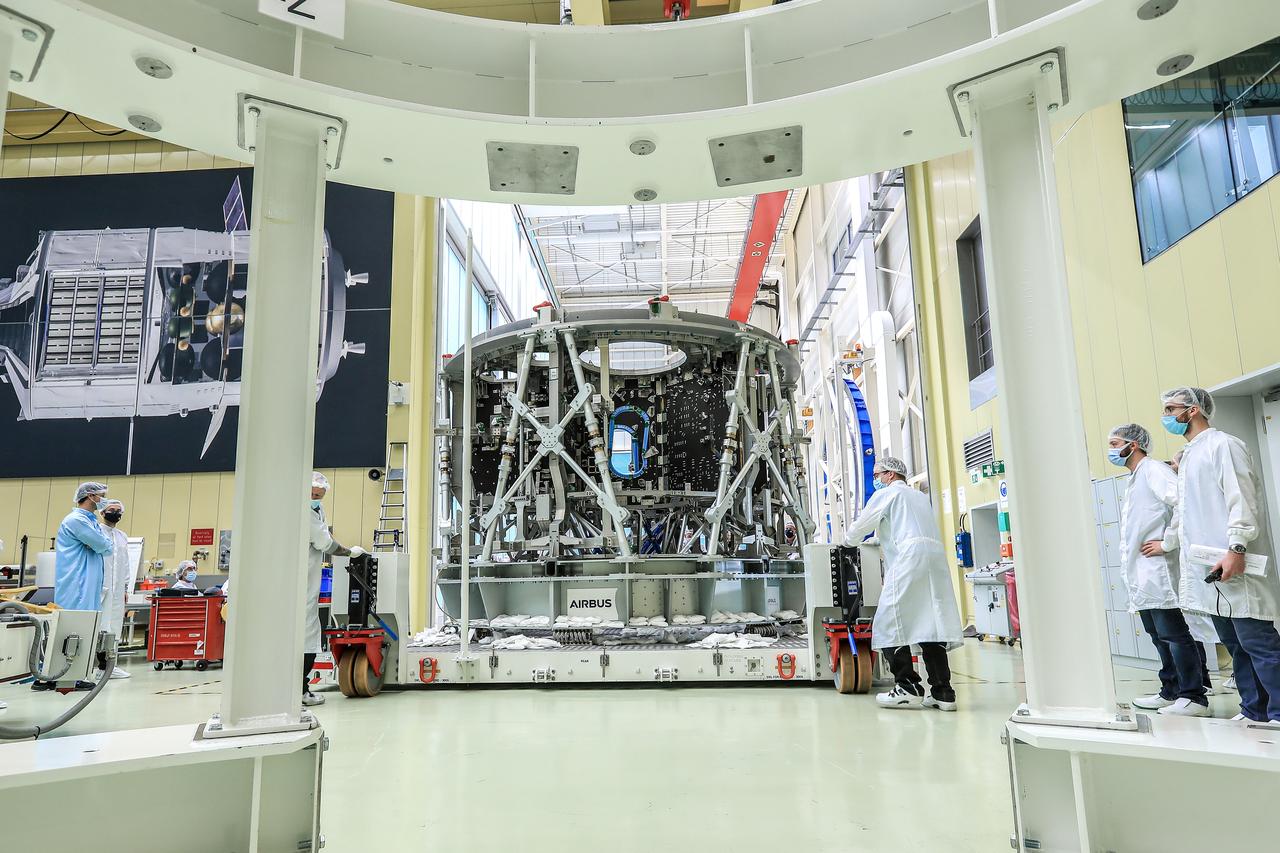
Airbus - Orion, Service-Modul ESM 09.10.2020
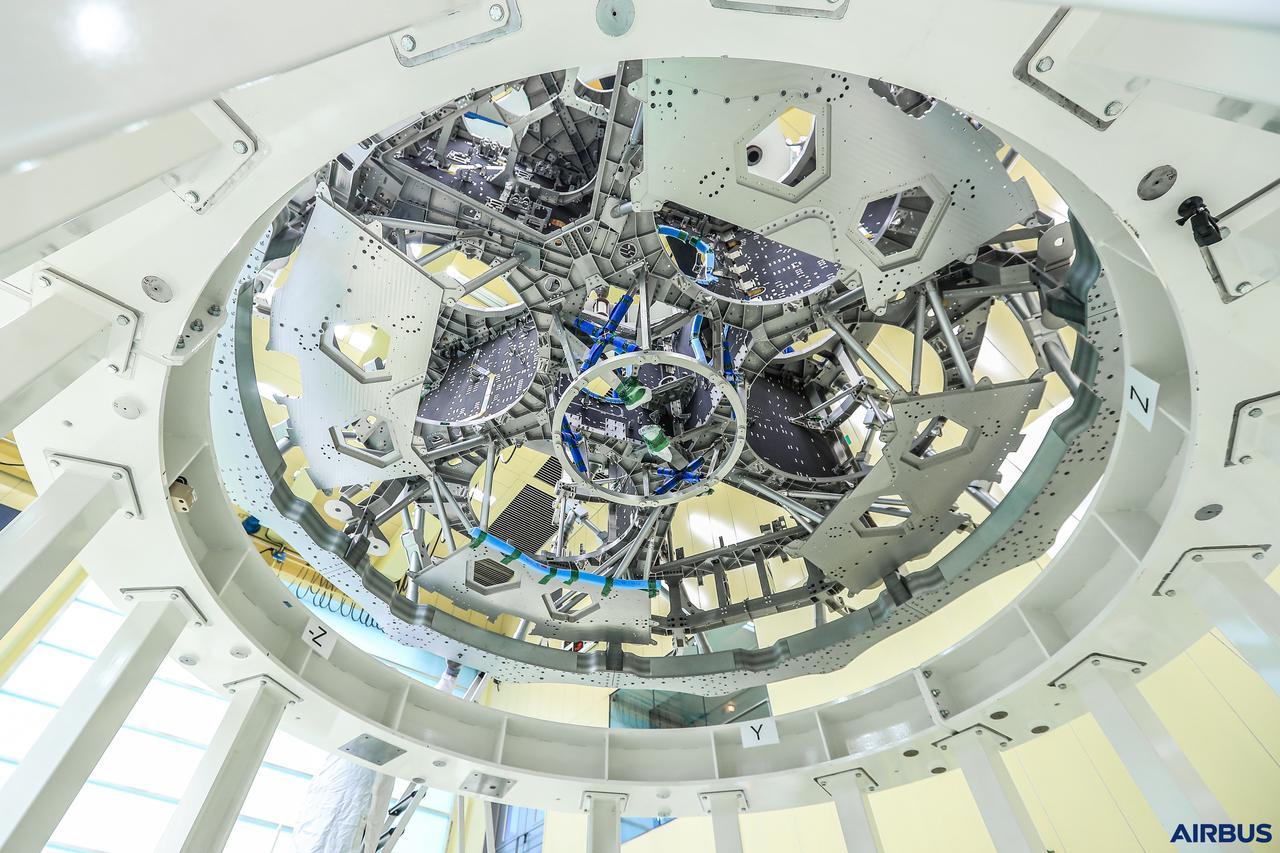
Airbus - Orion, Service-Modul ESM 09.10.2020
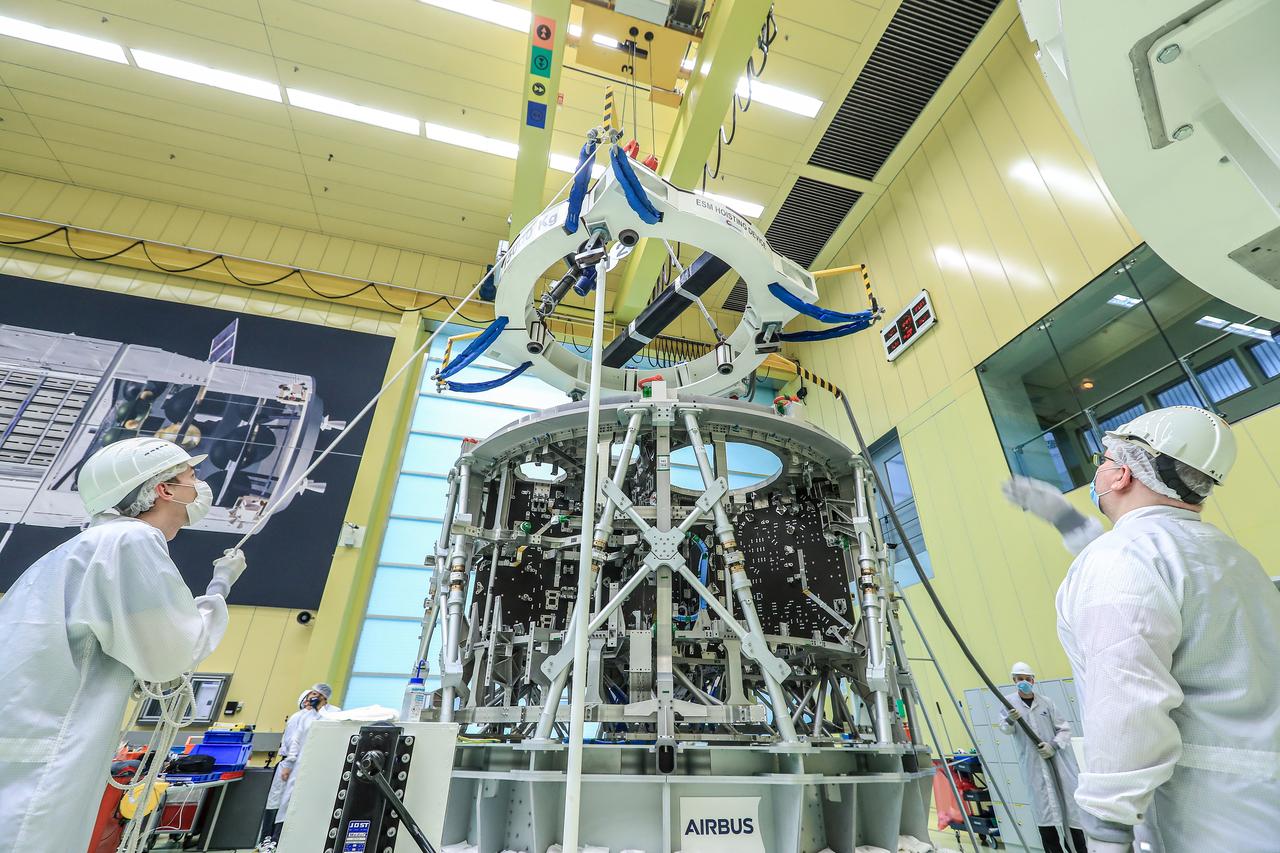
Airbus - Orion, Service-Modul ESM 09.10.2020
Airbus - Orion, Service-Modul ESM 09.10.2020
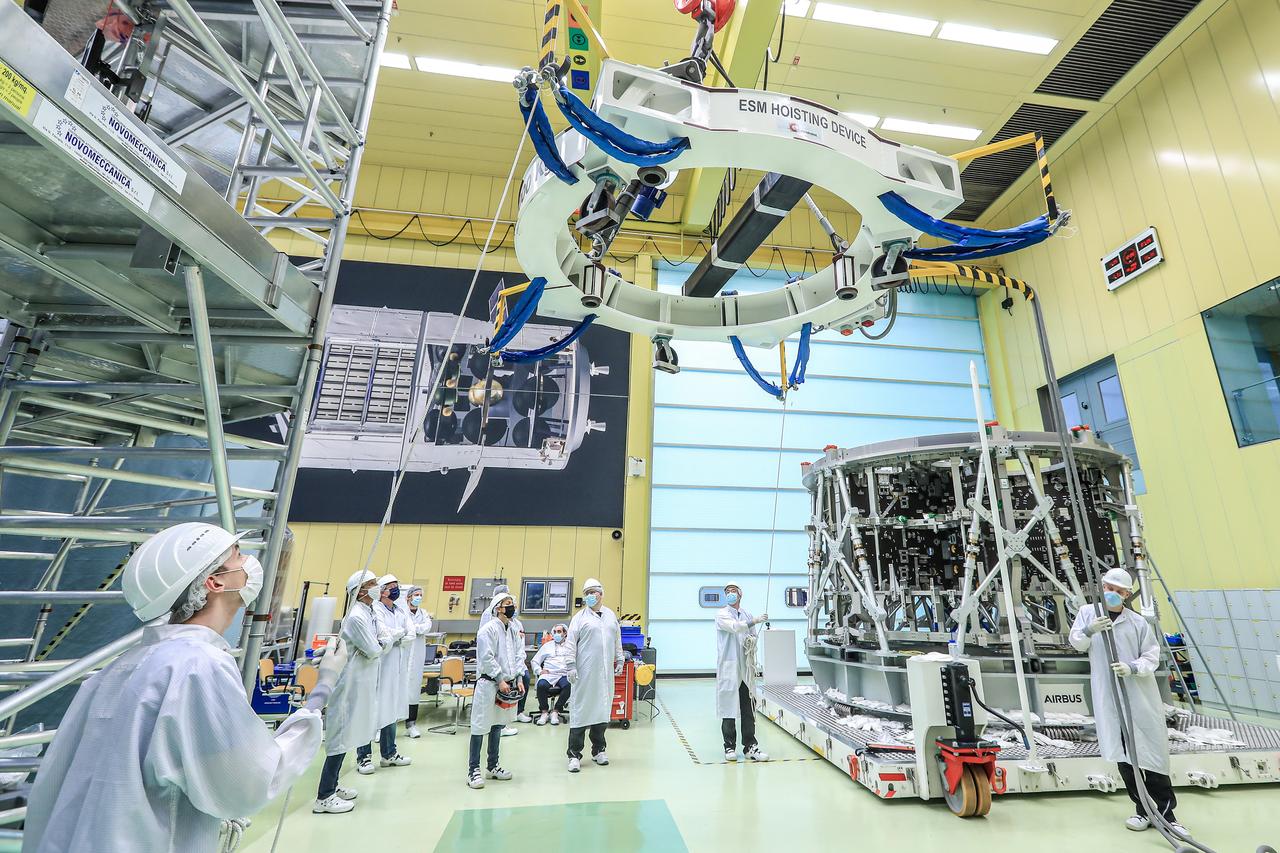
Airbus - Orion, Service-Modul ESM 09.10.2020
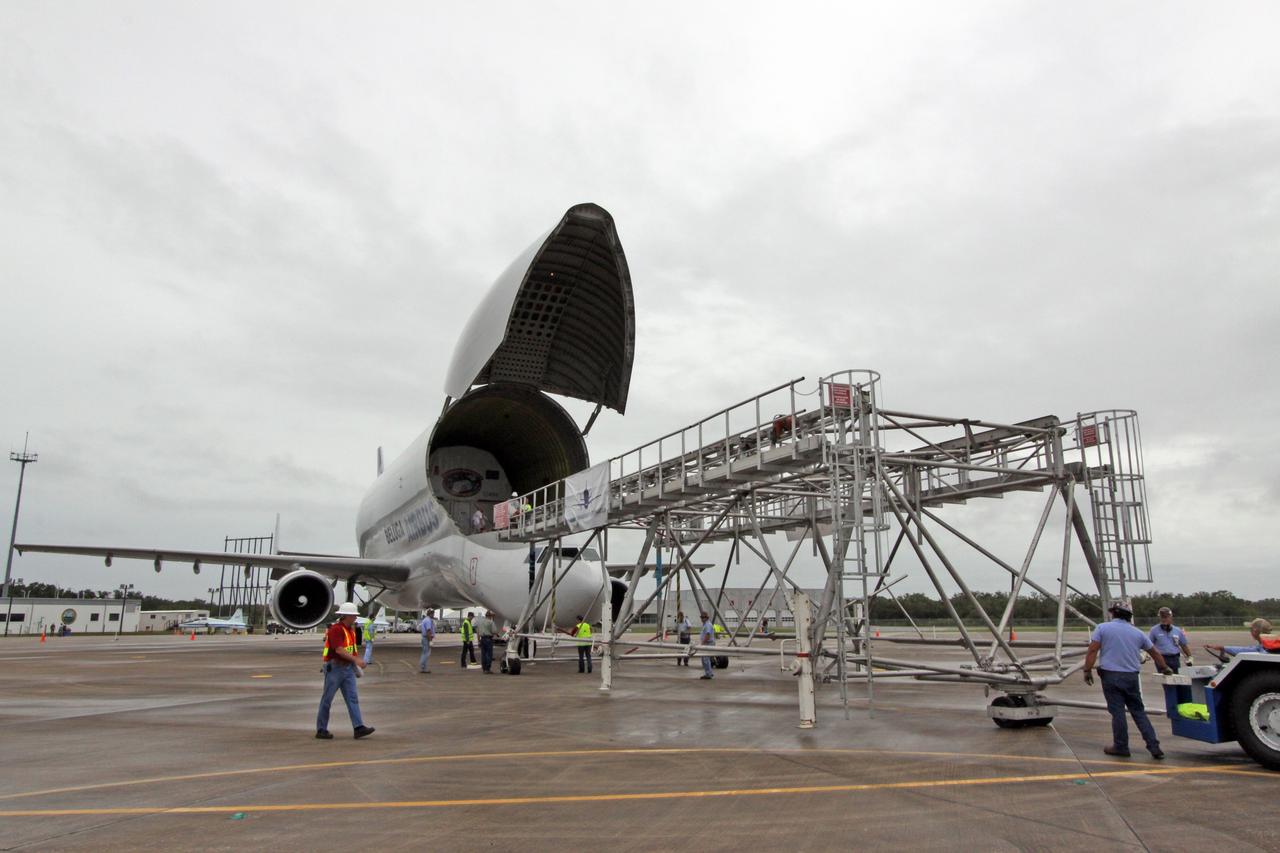
CAPE CANAVERAL, Fla. – On the Shuttle Landing Facility at NASA's Kennedy Space Center in Florida, the offload equipment is moved close to the open nose of the Beluga Airbus. Inside the airbus is the Node 3 module that will be delivered to the International Space Station on the STS-130 mission. Tranquility will eventually house the life support equipment necessary for the space station's permanent crew of six. It will also accommodate the European Space Agency's Cupola observation module, a seven-window, dome-shaped structure. Tranquility is targeted for launch aboard space shuttle Endeavour in February 2010. Photo credit: NASA/Jack Pfaller
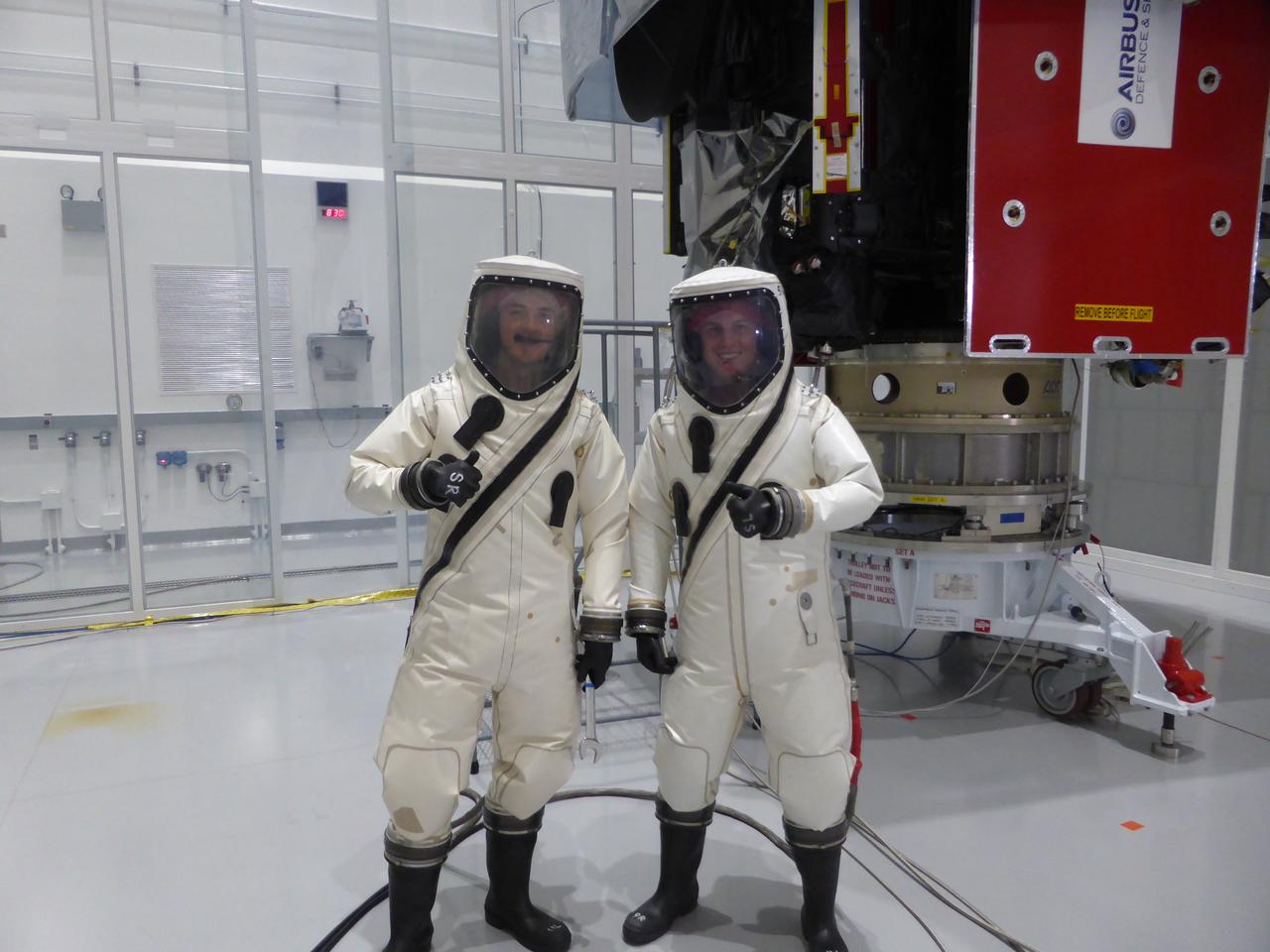
Members of the Airbus team preparing the Solar Orbiter spacecraft for launch pause for a photo inside the Astrotech Space Operations facility in Titusville, Florida. Solar Orbiter aims to study the Sun, its outer atmosphere and solar wind, and will provide the first images of the Sun’s poles. Solar Orbiter is a space mission of international collaboration between ESA (European Space Agency) and NASA. The spacecraft has been developed by Airbus. NASA’s Launch Services Program based at Kennedy Space Center in Florida is managing the launch. Liftoff is scheduled for Feb. 5, 2020, from Cape Canaveral Air Force Station aboard a United Launch Alliance Atlas V rocket.
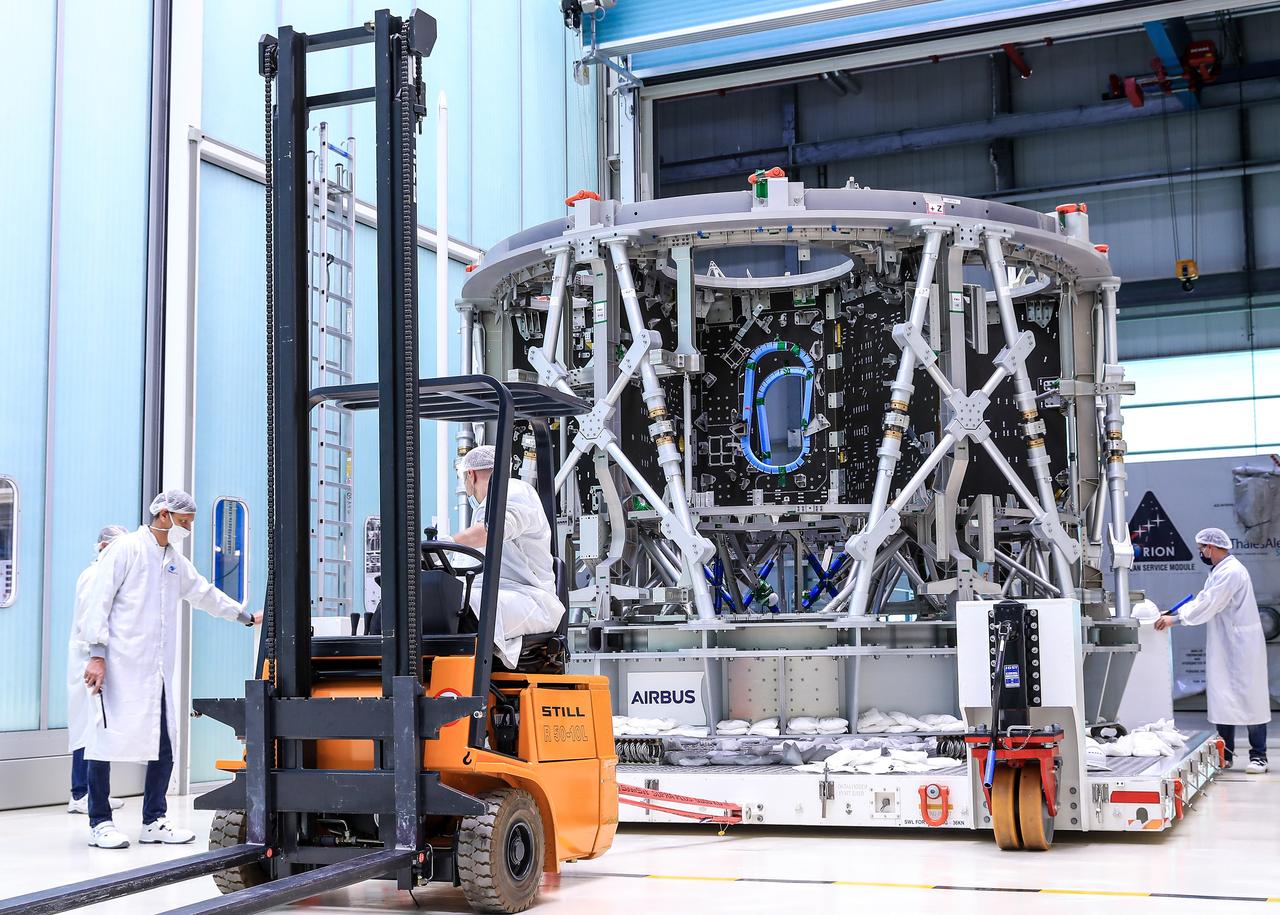
The Orion European Service Module structure that will fly the first woman and next man to land on the Moon and return on the Artemis III mission arrived at the Airbus integration hall in Bremen, Germany, from its Thales Alenia Space manufacturing site in Turin, Italy on Oct. 9, 2020.
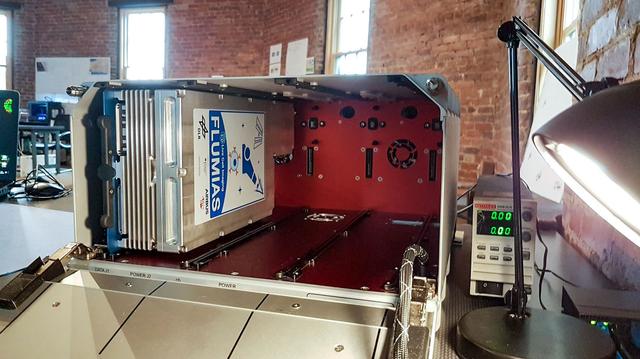
jsc2019e051830 --- FLUMIAS-DEA miniaturized fluorescence microscope loaded in TangoLab-2. Image courtesy of: Airbus
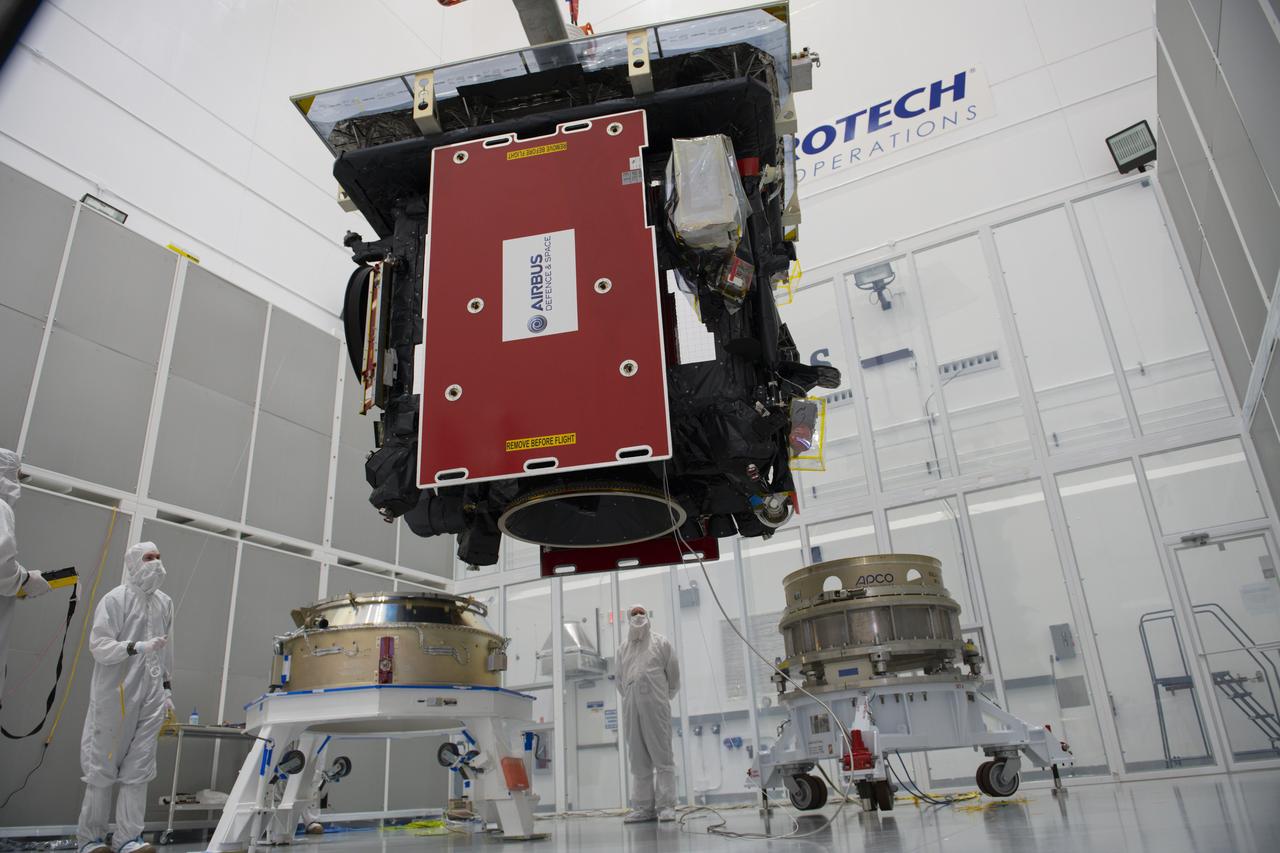
The Solar Orbiter spacecraft is moved by crane from a work stand to the payload adapter inside Astrotech Space Operations in Titusville, Florida on Jan. 16, 2020. Solar Orbiter is an international cooperative mission between ESA (European Space Agency) and NASA. The mission aims to study the Sun, its outer atmosphere and solar wind. The spacecraft will provide the first images of the Sun’s poles. NASA’s Launch Services Program based at Kennedy is managing the launch. The spacecraft has been developed by Airbus Defence and Space. Solar Orbiter will launch in February 2020 aboard a United Launch Alliance Atlas V rocket from Space Launch Complex 41 at Cape Canaveral Air Force Station in Florida.
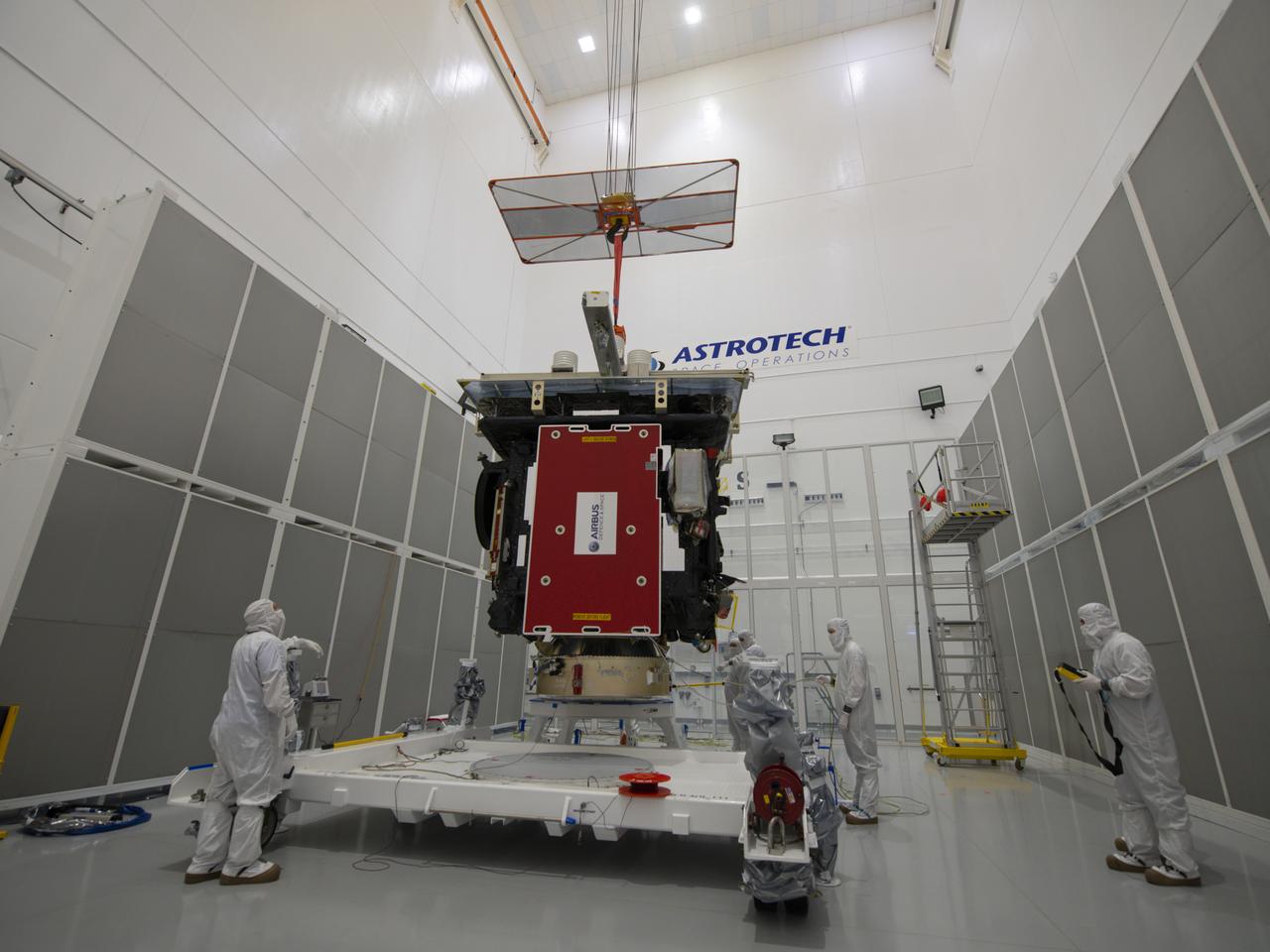
The Solar Orbiter spacecraft and payload adapter are lowered onto the ground transport vehicle inside Astrotech Space Operations in Titusville, Florida on Jan. 16, 2020. Solar Orbiter is an international cooperative mission between ESA (European Space Agency) and NASA. The mission aims to study the Sun, its outer atmosphere and solar wind. The spacecraft will provide the first images of the Sun’s poles. NASA’s Launch Services Program based at Kennedy is managing the launch. The spacecraft has been developed by Airbus Defence and Space. Solar Orbiter will launch in February 2020 aboard a United Launch Alliance Atlas V rocket from Space Launch Complex 41 at Cape Canaveral Air Force Station in Florida.
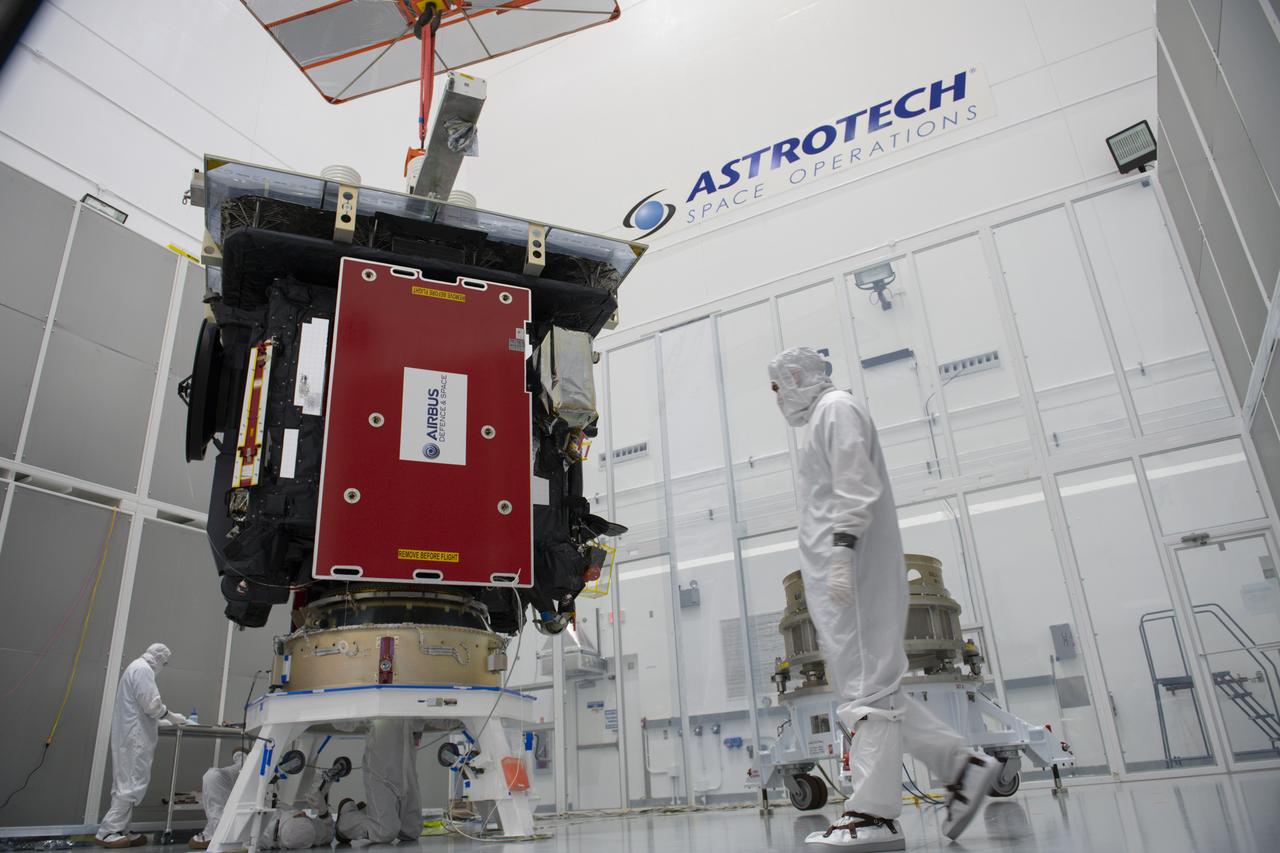
The Solar Orbiter spacecraft is mated to the payload adapter inside Astrotech Space Operations in Titusville, Florida on Jan. 16, 2020. Solar Orbiter is an international cooperative mission between ESA (European Space Agency) and NASA. The mission aims to study the Sun, its outer atmosphere and solar wind. The spacecraft will provide the first images of the Sun’s poles. NASA’s Launch Services Program based at Kennedy is managing the launch. The spacecraft has been developed by Airbus Defence and Space. Solar Orbiter will launch in February 2020 aboard a United Launch Alliance Atlas V rocket from Space Launch Complex 41 at Cape Canaveral Air Force Station in Florida.
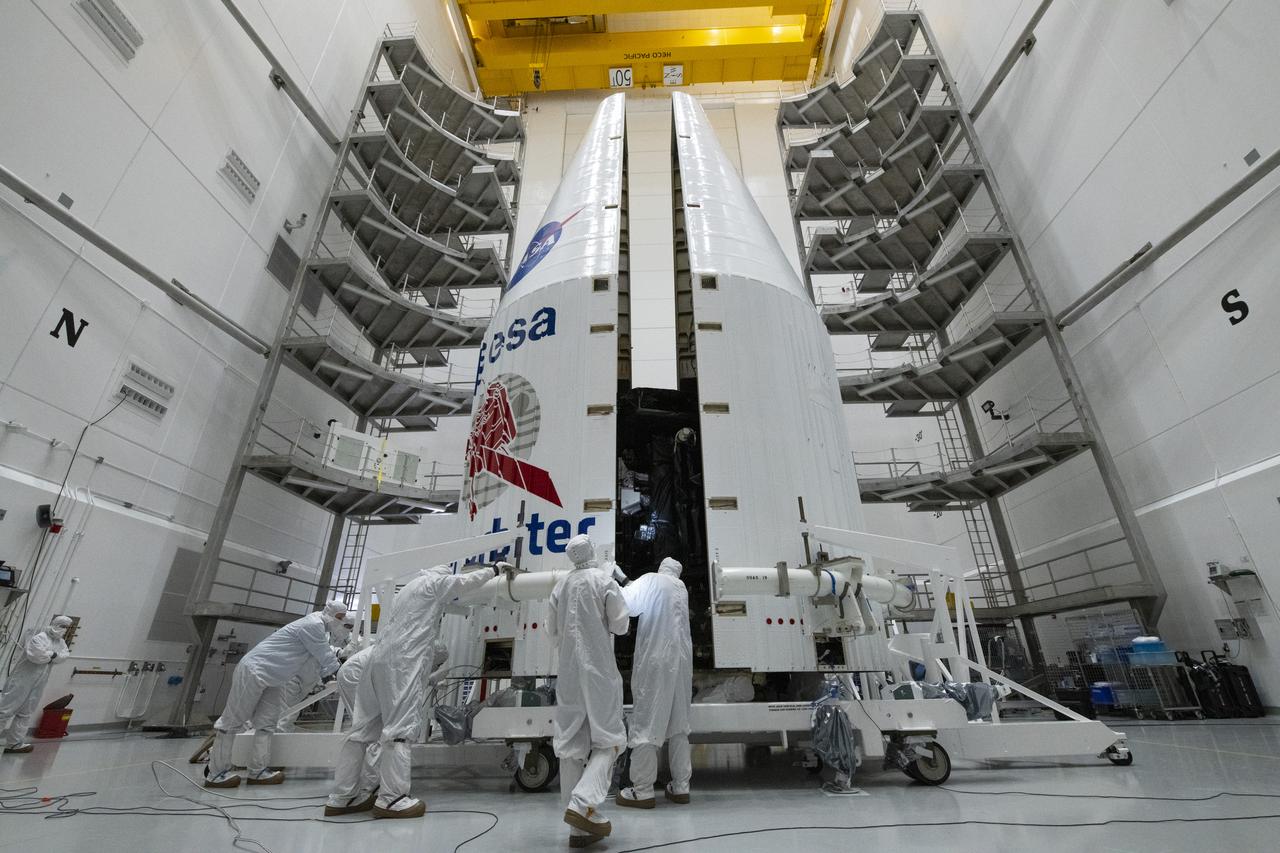
The Solar Orbiter spacecraft is secured inside the United Launch Alliance payload fairing in the Astrotech Space Operations facility in Titusville, Florida on Jan. 20, 2020. Solar Orbiter is an international cooperative mission between ESA (European Space Agency) and NASA. The mission aims to study the Sun, its outer atmosphere and solar wind. The spacecraft will provide the first images of the Sun’s poles. NASA’s Launch Services Program based at Kennedy is managing the launch. The spacecraft has been developed by Airbus Defence and Space. Solar Orbiter will launch in February 2020 aboard a United Launch Alliance Atlas V rocket from Space Launch Complex 41 at Cape Canaveral Air Force Station in Florida.
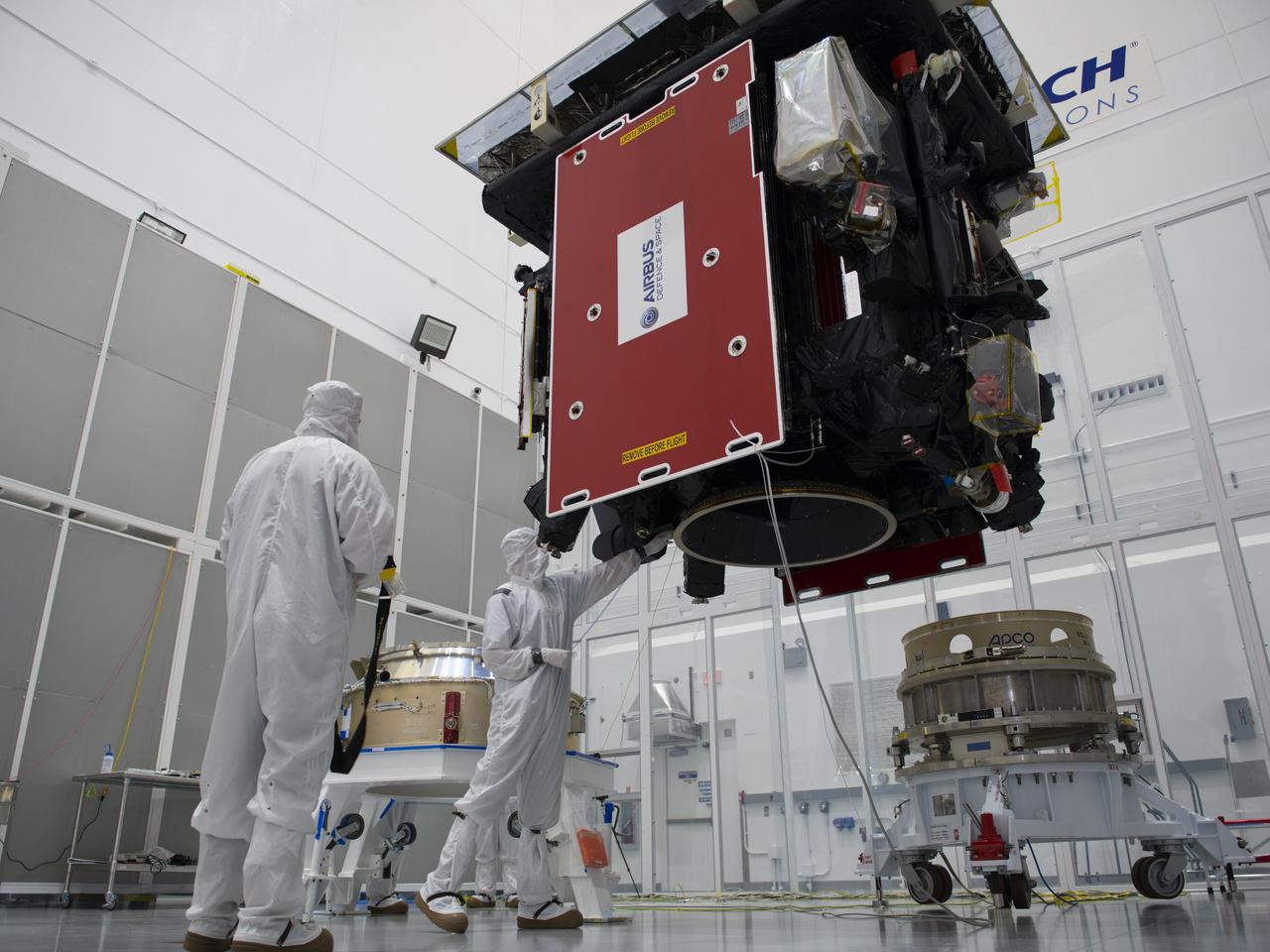
The Solar Orbiter spacecraft is moved by crane from a work stand to the payload adapter inside Astrotech Space Operations in Titusville, Florida on Jan. 16, 2020. Solar Orbiter is an international cooperative mission between ESA (European Space Agency) and NASA. The mission aims to study the Sun, its outer atmosphere and solar wind. The spacecraft will provide the first images of the Sun’s poles. NASA’s Launch Services Program based at Kennedy is managing the launch. The spacecraft has been developed by Airbus Defence and Space. Solar Orbiter will launch in February 2020 aboard a United Launch Alliance Atlas V rocket from Space Launch Complex 41 at Cape Canaveral Air Force Station in Florida.
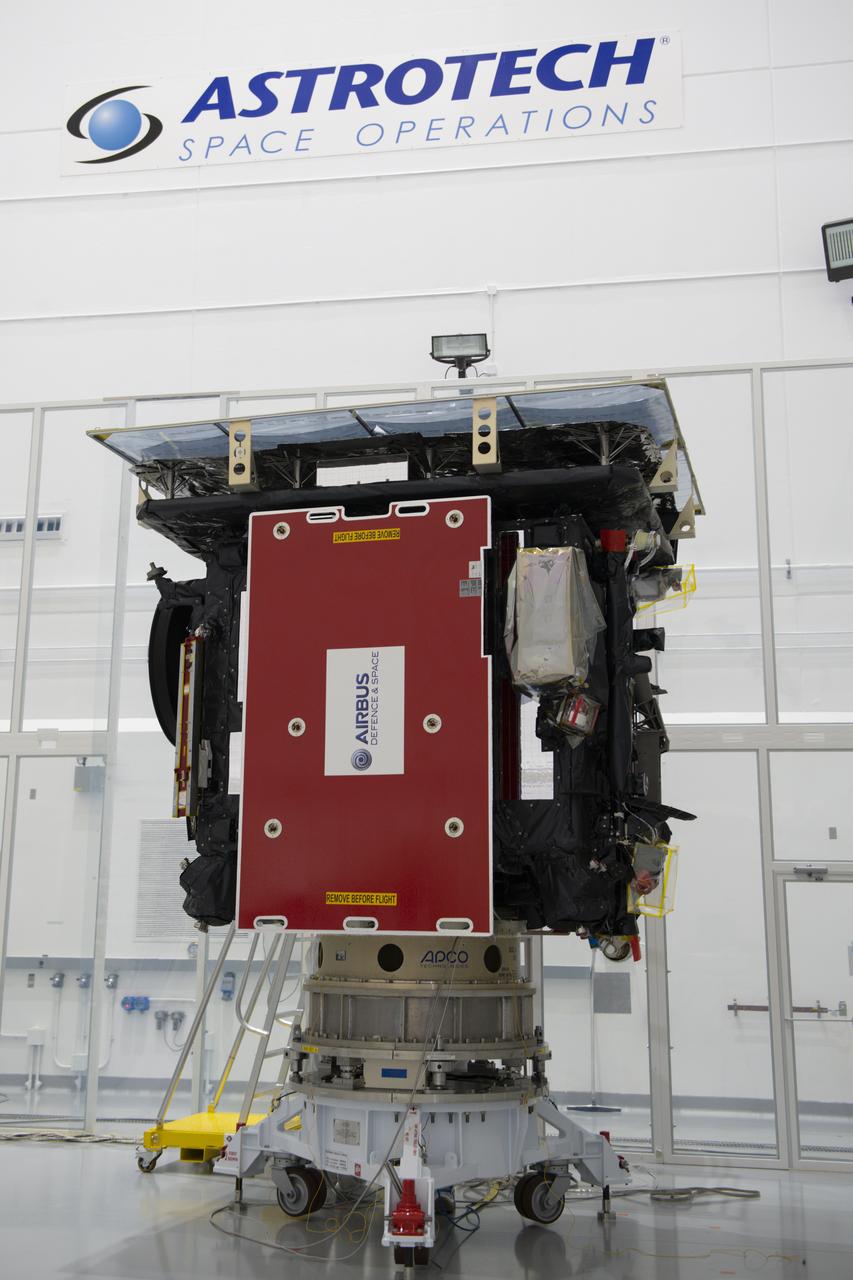
The Solar Orbiter spacecraft is secured on a work stand for processing inside Astrotech Space Operations in Titusville, Florida on Jan. 16, 2020. Solar Orbiter is an international cooperative mission between ESA (European Space Agency) and NASA. The mission aims to study the Sun, its outer atmosphere and solar wind. The spacecraft will provide the first images of the Sun’s poles. NASA’s Launch Services Program based at Kennedy is managing the launch. The spacecraft has been developed by Airbus Defence and Space. Solar Orbiter will launch in February 2020 aboard a United Launch Alliance Atlas V rocket from Space Launch Complex 41 at Cape Canaveral Air Force Station in Florida.
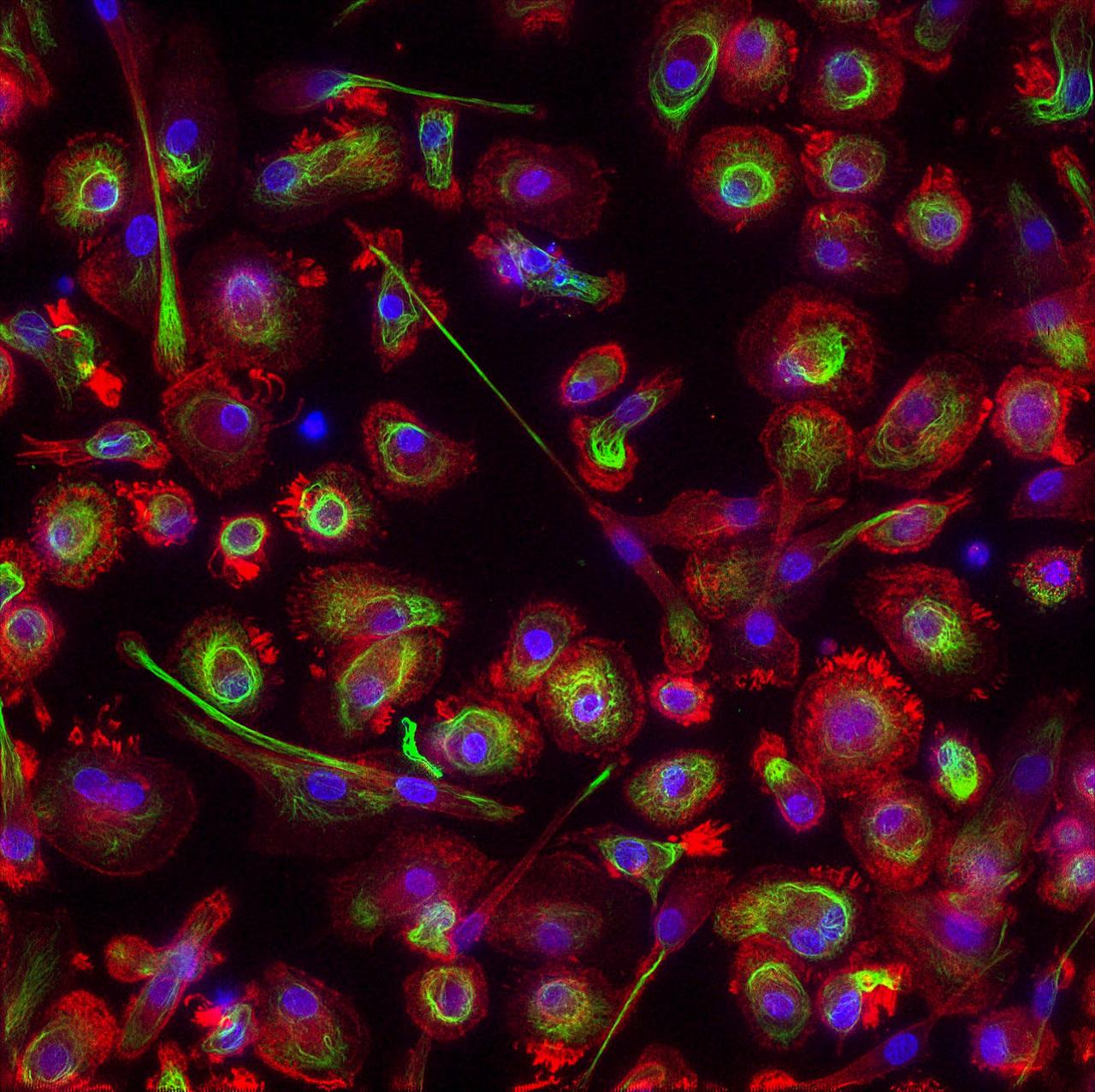
jsc2019e051831 --- Image of fixed macrophages using three chromophores created by the FLUMIAS-DEA miniaturized fluorescence microscope during Science Verification Test. Image courtesy of: Airbus
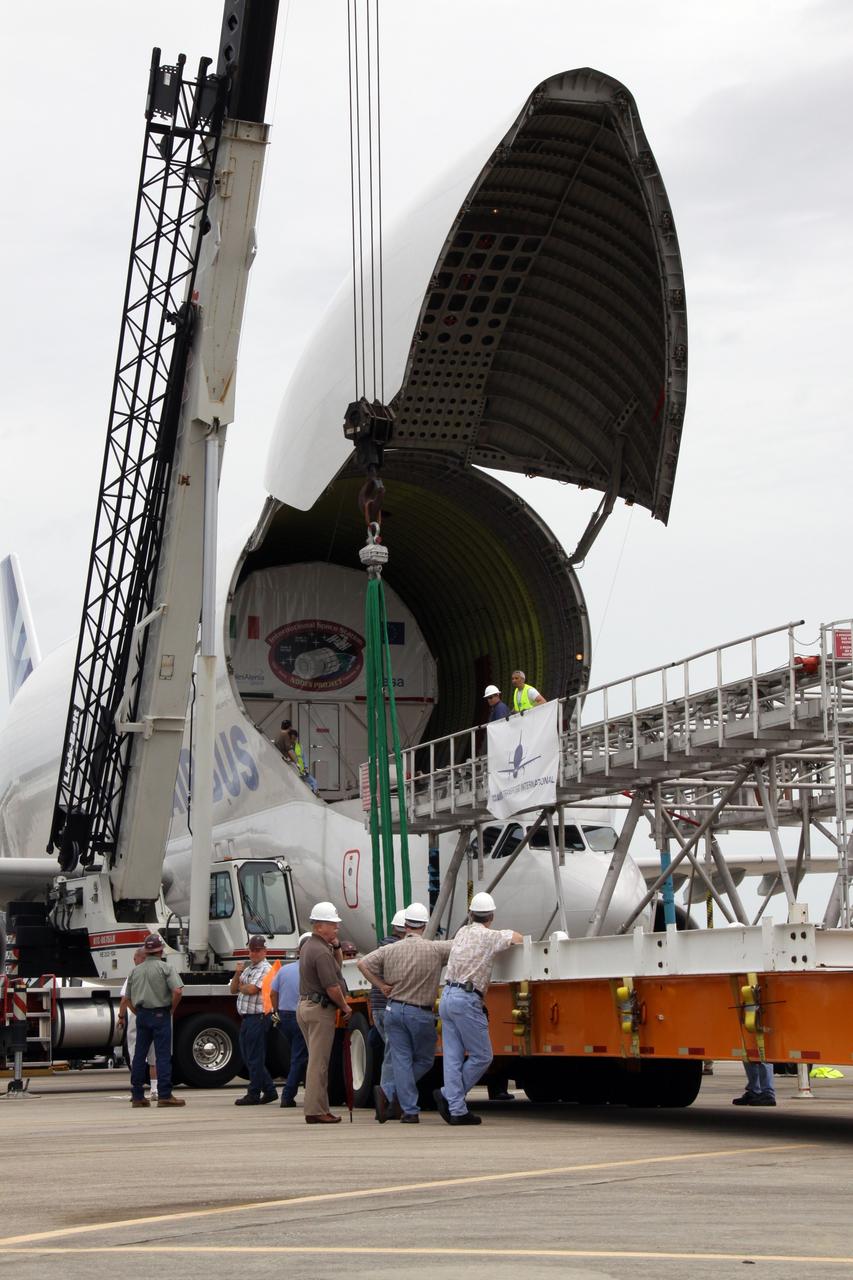
CAPE CANAVERAL, Fla. – On the Shuttle Landing Facility at NASA's Kennedy Space Center in Florida, the Node 3 module is being unloaded from the Beluga Airbus. Named Tranquility, the module will be delivered to the International Space Station on the STS-130 mission. Tranquility will eventually house the life support equipment necessary for the space station's permanent crew of six. It will also accommodate the European Space Agency's Cupola observation module, a seven-window, dome-shaped structure. Tranquility is targeted for launch aboard space shuttle Endeavour in February 2010. Photo credit: NASA/Jack Pfaller
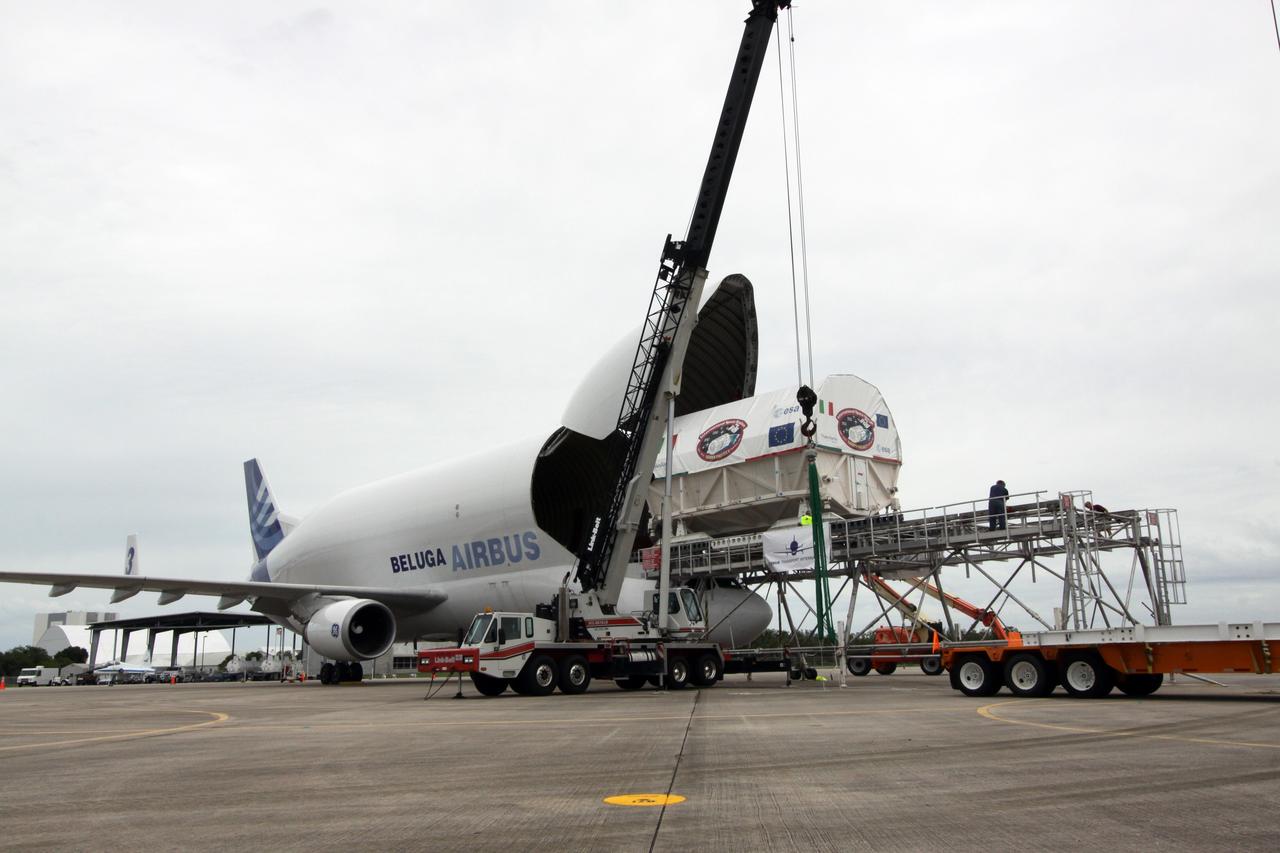
CAPE CANAVERAL, Fla. – On the Shuttle Landing Facility at NASA's Kennedy Space Center in Florida, a crane is ready to be attached to the Node 3 module when it moves clear of the Beluga Airbus. The crane will lift the module onto a flatbed for transport to the Space Station Processing Facility. Named Tranquility, the module will be delivered to the International Space Station on the STS-130 mission. Tranquility will eventually house the life support equipment necessary for the space station's permanent crew of six. It will also accommodate the European Space Agency's Cupola observation module, a seven-window, dome-shaped structure. Tranquility is targeted for launch aboard space shuttle Endeavour in February 2010. Photo credit: NASA/Jack Pfaller
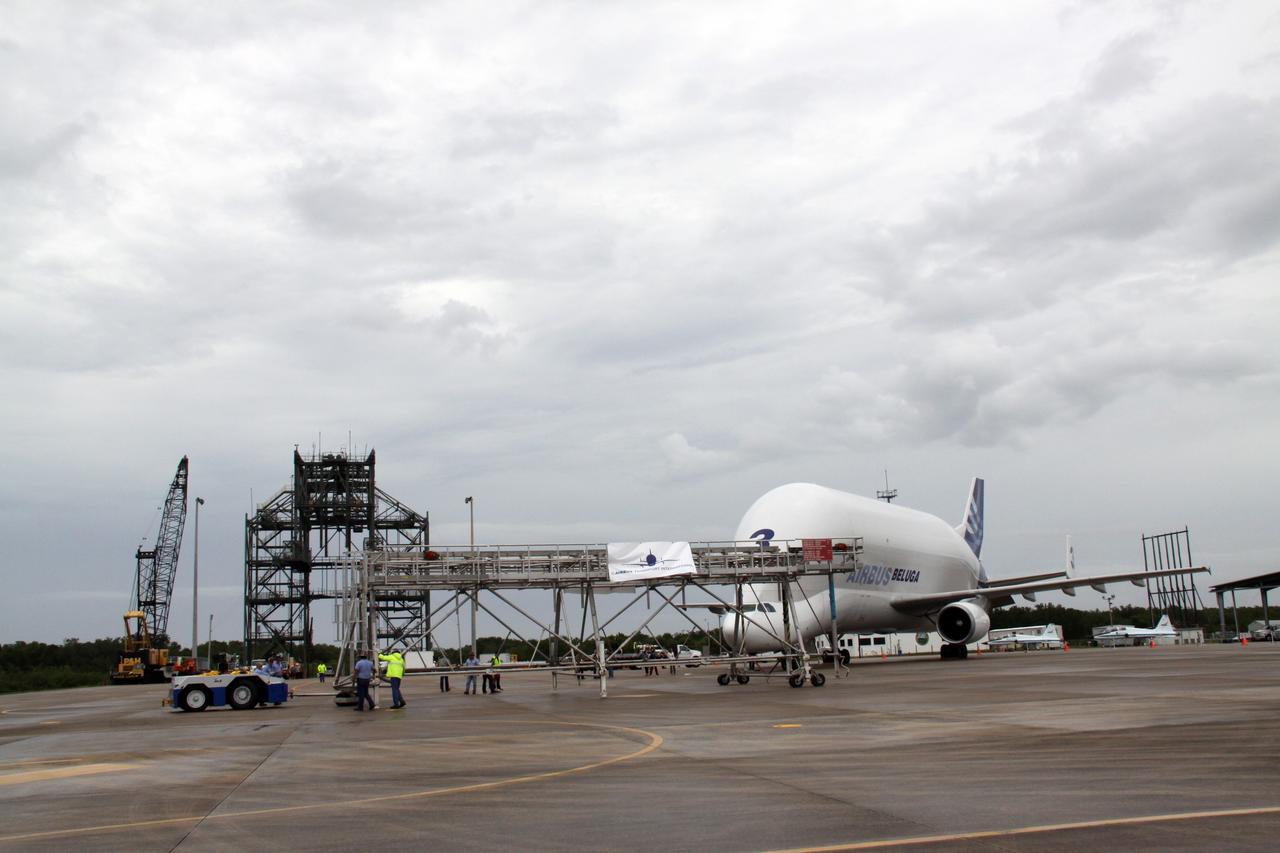
CAPE CANAVERAL, Fla. – On the Shuttle landing Facility at NASA's Kennedy Space Center in Florida, workers move equipment toward the Beluga Airbus for the offloading of the Node 3 module. Named Tranquility, the module will be delivered to the International Space Station on the STS-130 mission. Tranquility will eventually house the life support equipment necessary for the space station's permanent crew of six. It will also accommodate the European Space Agency's Cupola observation module, a seven-window, dome-shaped structure. Tranquility is targeted for launch aboard space shuttle Endeavour in February 2010. Photo credit: NASA/Jack Pfaller
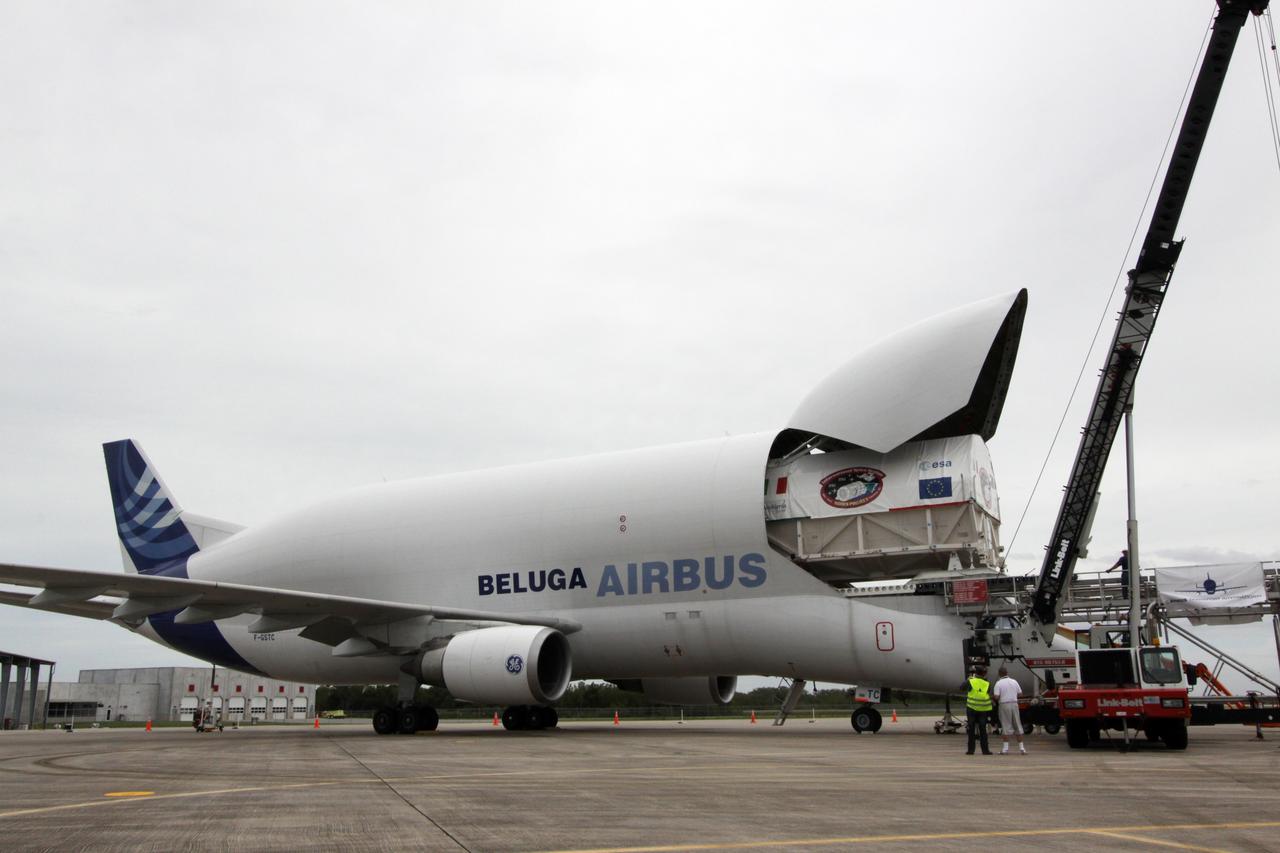
CAPE CANAVERAL, Fla. – On the Shuttle Landing Facility at NASA's Kennedy Space Center in Florida, the Node 3 module moves out of the Beluga Airbus. Named Tranquility, the module will be delivered to the International Space Station on the STS-130 mission. Tranquility will eventually house the life support equipment necessary for the space station's permanent crew of six. It will also accommodate the European Space Agency's Cupola observation module, a seven-window, dome-shaped structure. Tranquility is targeted for launch aboard space shuttle Endeavour in February 2010. Photo credit: NASA/Jack Pfaller
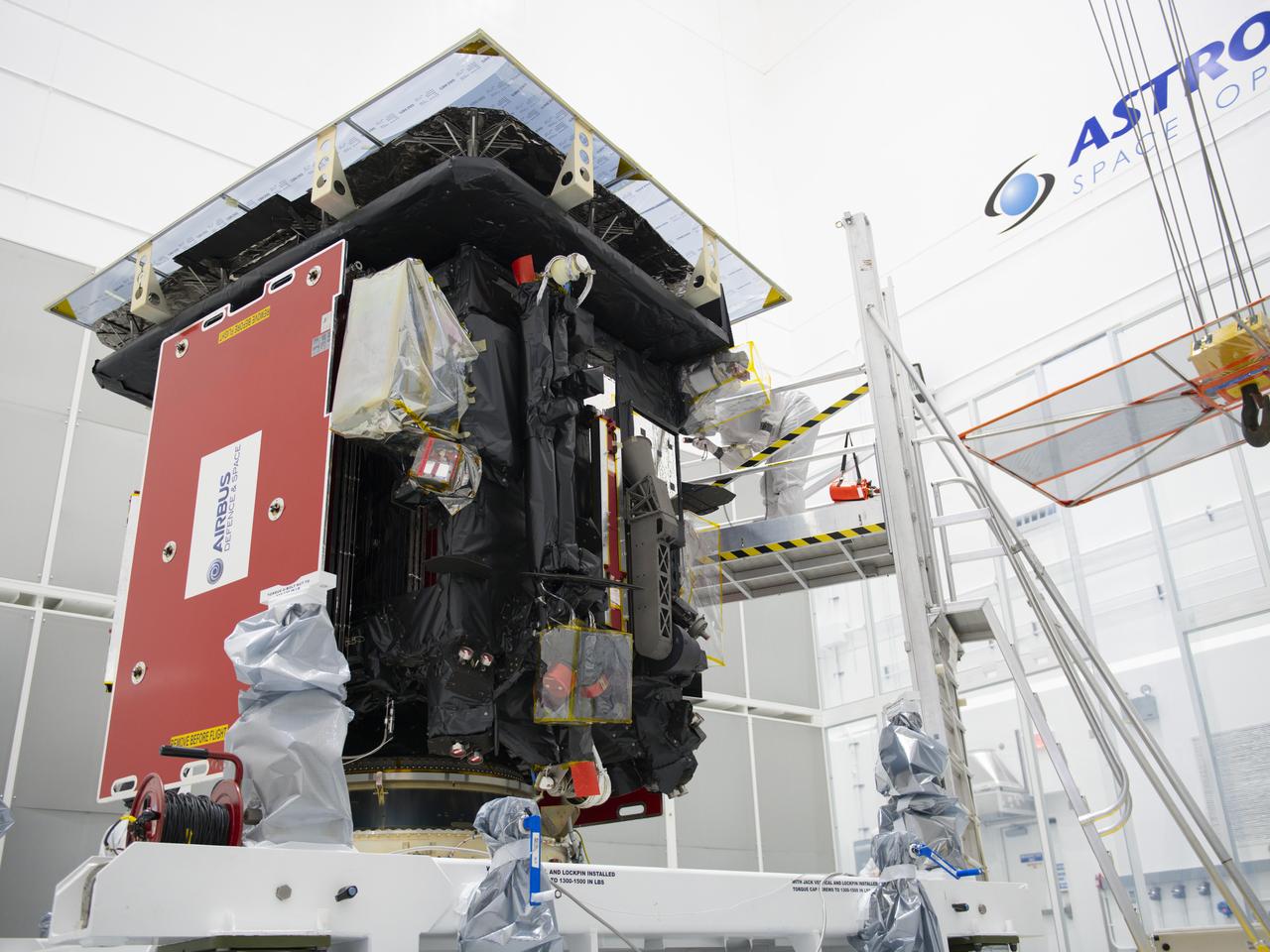
The Solar Orbiter spacecraft is mated to the payload adapter and secured onto the ground transport vehicle inside Astrotech Space Operations in Titusville, Florida on Jan. 16, 2020. Solar Orbiter is an international cooperative mission between ESA (European Space Agency) and NASA. The mission aims to study the Sun, its outer atmosphere and solar wind. The spacecraft will provide the first images of the Sun’s poles. NASA’s Launch Services Program based at Kennedy is managing the launch. The spacecraft has been developed by Airbus Defence and Space. Solar Orbiter will launch in February 2020 aboard a United Launch Alliance Atlas V rocket from Space Launch Complex 41 at Cape Canaveral Air Force Station in Florida.
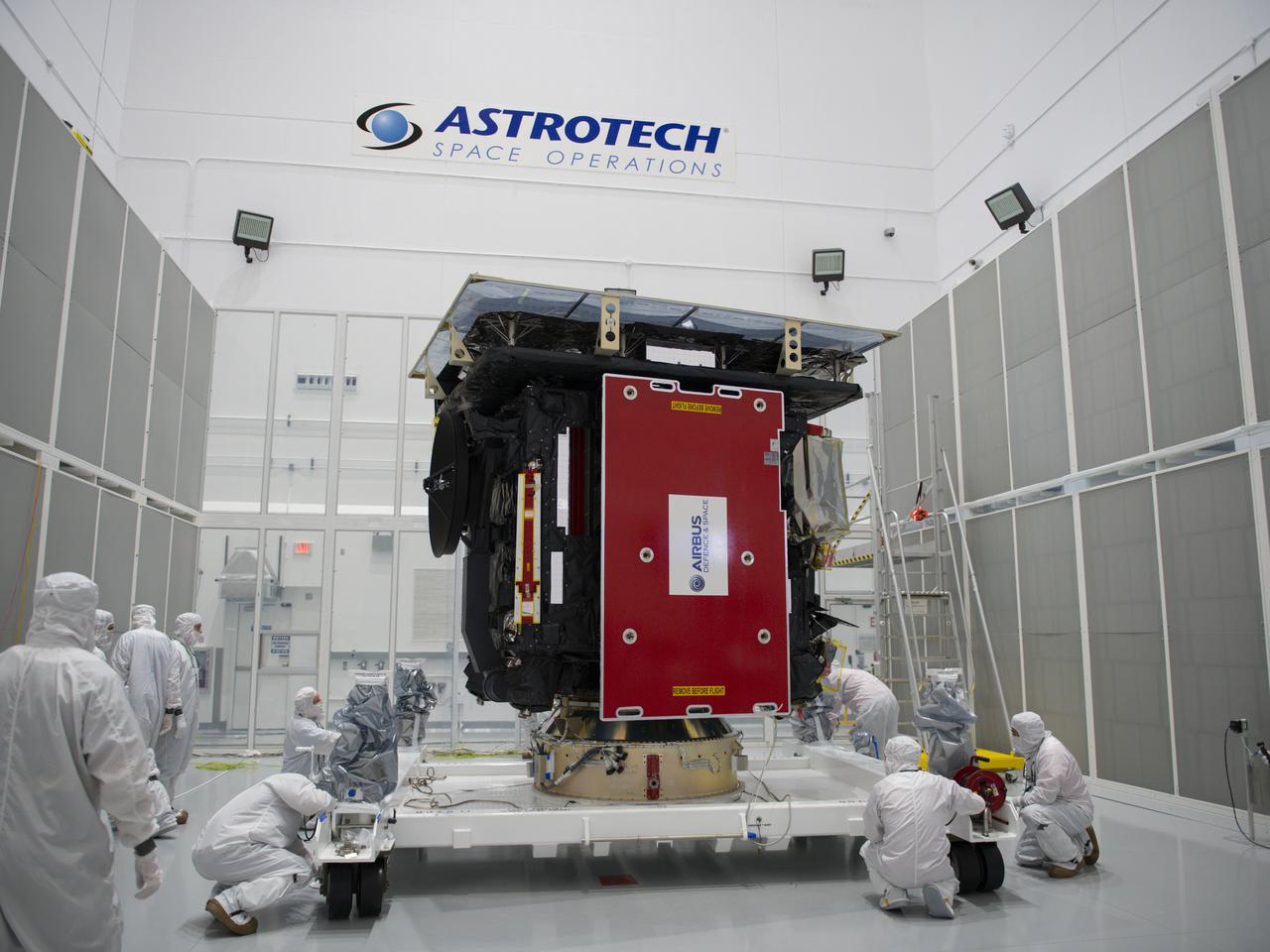
The Solar Orbiter spacecraft is mated to the payload adapter and secured onto the ground transport vehicle inside Astrotech Space Operations in Titusville, Florida on Jan. 16, 2020. Solar Orbiter is an international cooperative mission between ESA (European Space Agency) and NASA. The mission aims to study the Sun, its outer atmosphere and solar wind. The spacecraft will provide the first images of the Sun’s poles. NASA’s Launch Services Program based at Kennedy is managing the launch. The spacecraft has been developed by Airbus Defence and Space. Solar Orbiter will launch in February 2020 aboard a United Launch Alliance Atlas V rocket from Space Launch Complex 41 at Cape Canaveral Air Force Station in Florida.
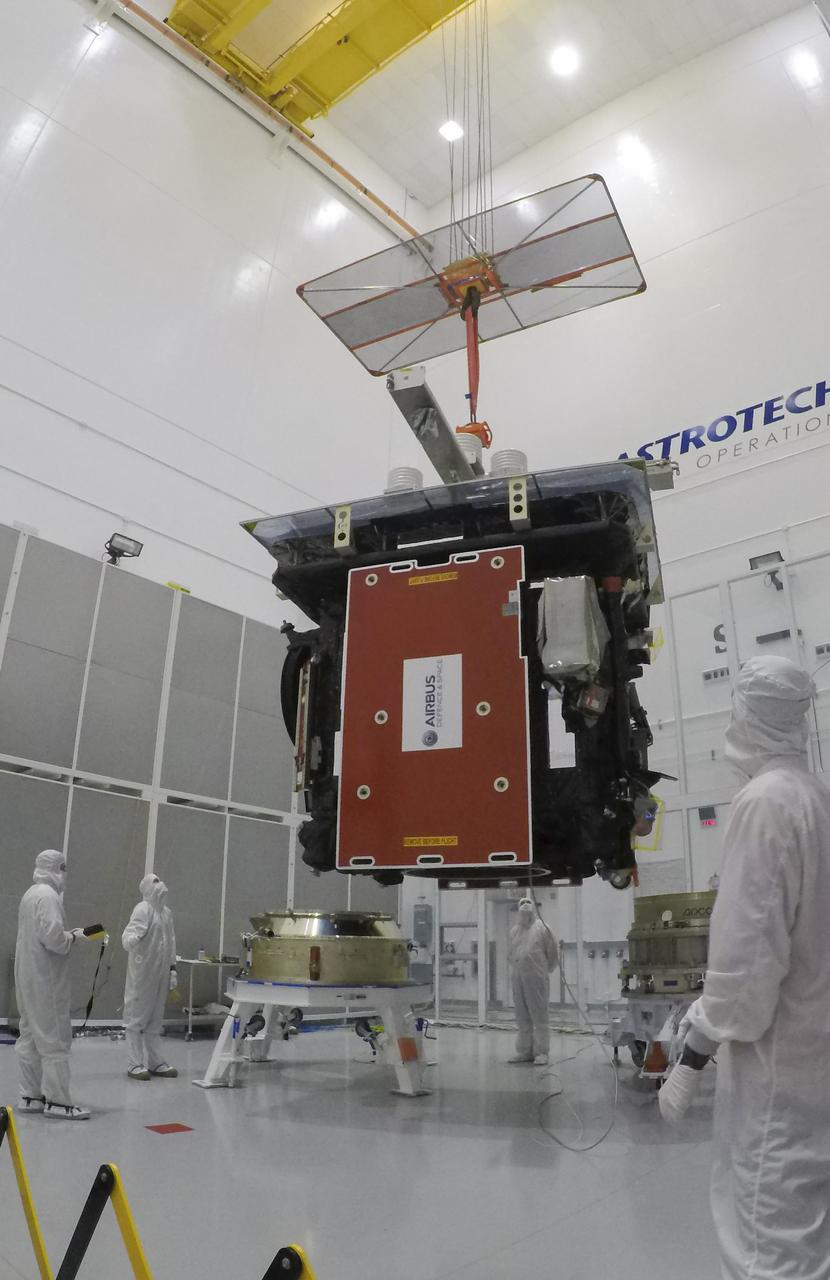
The Solar Orbiter spacecraft is lifted and moved by crane from a work stand for mating to the payload adapter inside Astrotech Space Operations in Titusville, Florida on Jan. 16, 2020. Solar Orbiter is an international cooperative mission between ESA (European Space Agency) and NASA. The mission aims to study the Sun, its outer atmosphere and solar wind. The spacecraft will provide the first images of the Sun’s poles. NASA’s Launch Services Program based at Kennedy is managing the launch. The spacecraft has been developed by Airbus Defence and Space. Solar Orbiter will launch in February 2020 aboard a United Launch Alliance Atlas V rocket from Space Launch Complex 41 at Cape Canaveral Air Force Station in Florida.
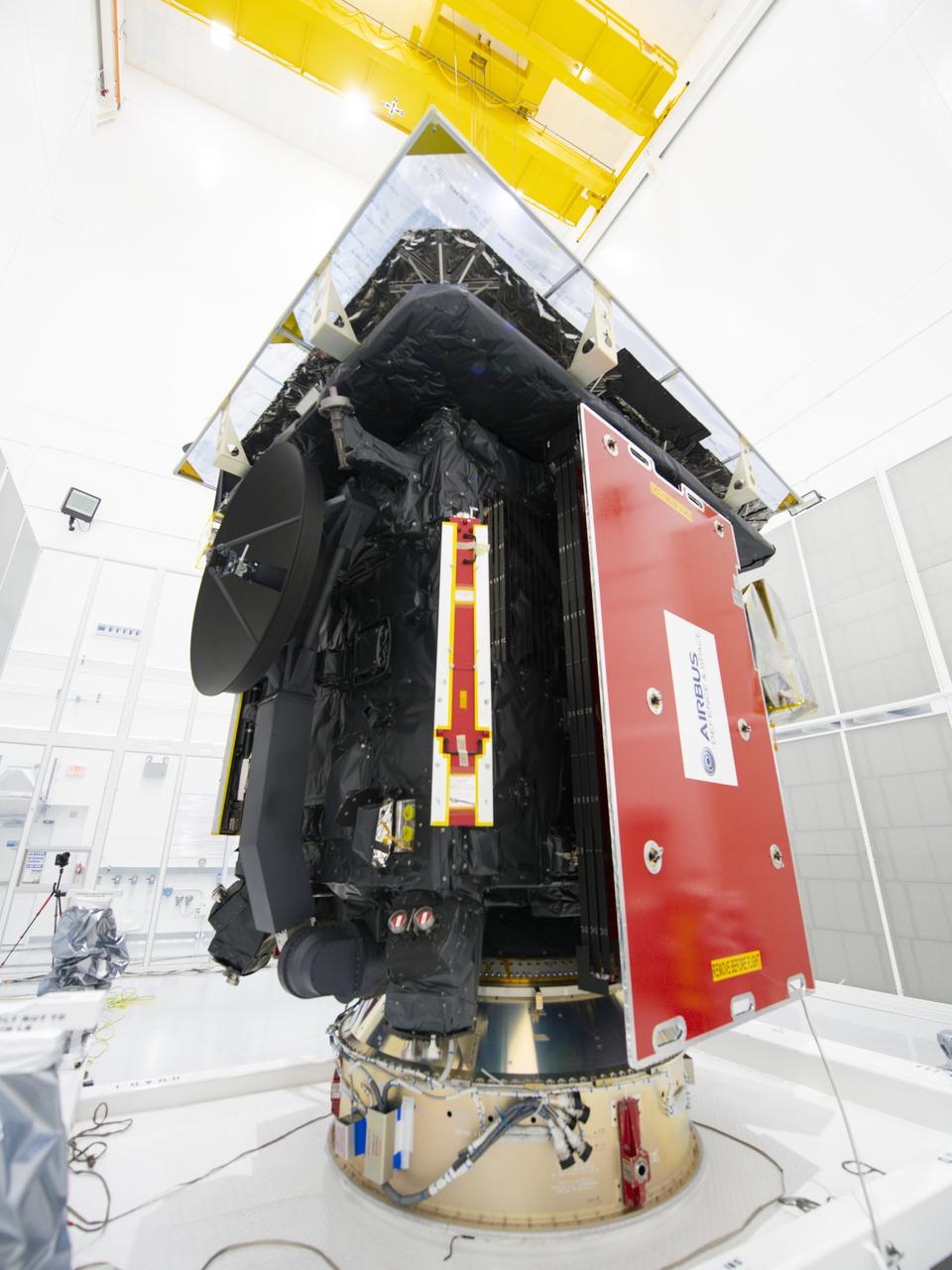
The Solar Orbiter spacecraft is mated to the payload adapter and lowered onto the ground transport vehicle inside Astrotech Space Operations in Titusville, Florida on Jan. 16, 2020. Solar Orbiter is an international cooperative mission between ESA (European Space Agency) and NASA. The mission aims to study the Sun, its outer atmosphere and solar wind. The spacecraft will provide the first images of the Sun’s poles. NASA’s Launch Services Program based at Kennedy is managing the launch. The spacecraft has been developed by Airbus Defence and Space. Solar Orbiter will launch in February 2020 aboard a United Launch Alliance Atlas V rocket from Space Launch Complex 41 at Cape Canaveral Air Force Station in Florida.
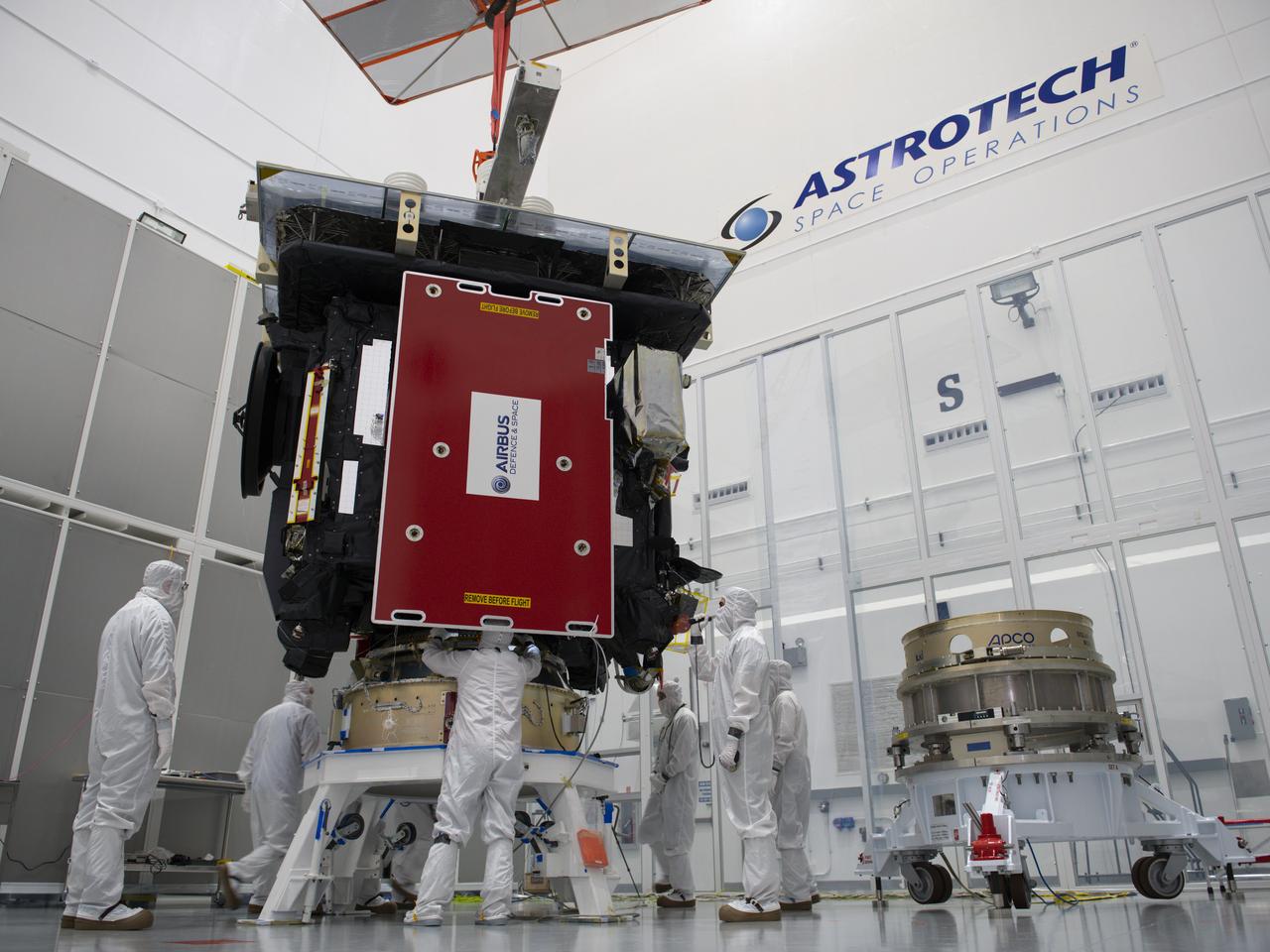
European Space Agency workers assist as a crane lowers the Solar Orbiter spacecraft onto the payload adapter inside the Astrotech Space Operations facility in Titusville, Florida on Jan. 17, 2020. Solar Orbiter is an international cooperative mission between ESA (European Space Agency) and NASA. The mission aims to study the Sun, its outer atmosphere and solar wind. The spacecraft will provide the first images of the Sun’s poles. NASA’s Launch Services Program based at Kennedy is managing the launch. The spacecraft has been developed by Airbus Defence and Space. Solar Orbiter will launch in February 2020 aboard a United Launch Alliance Atlas V rocket from Space Launch Complex 41 at Cape Canaveral Air Force Station in Florida.
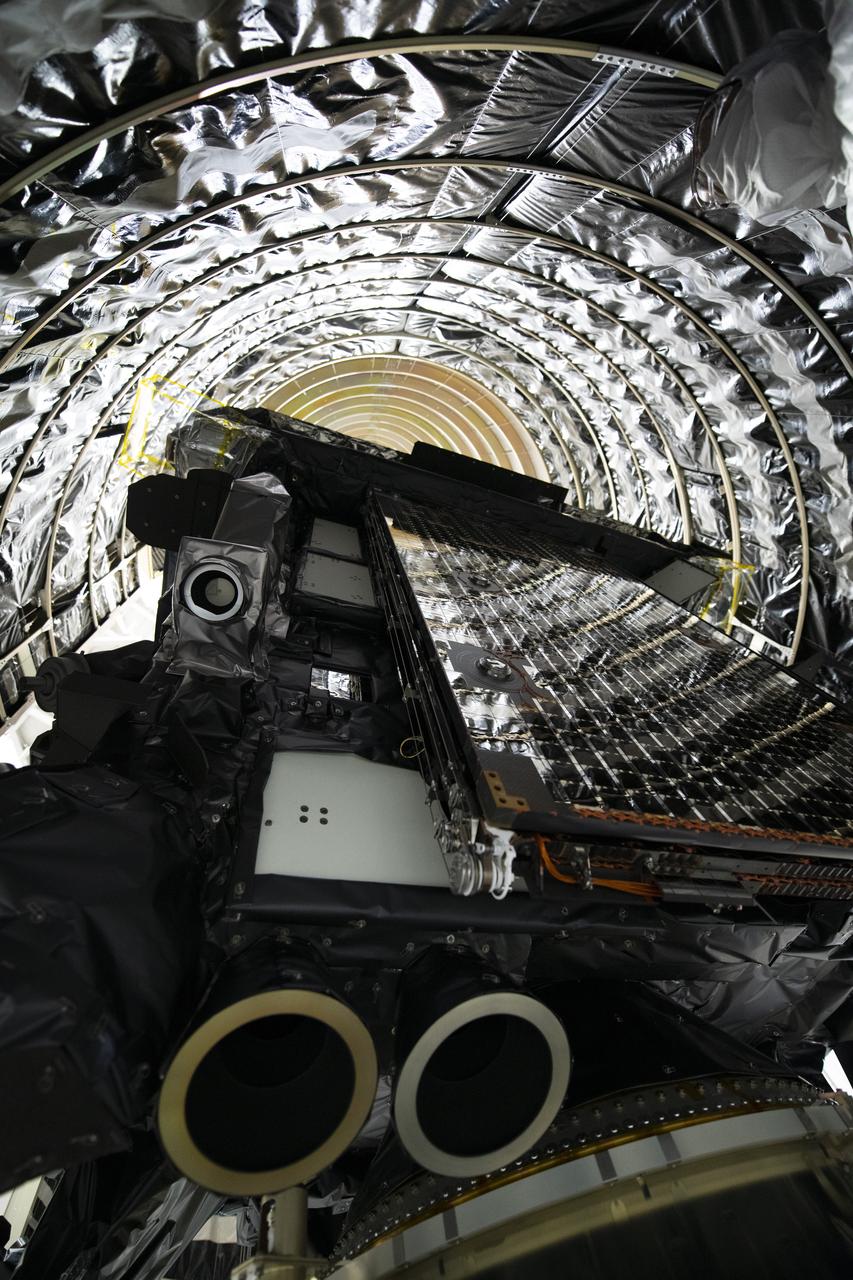
A view of the inside of the United Launch Alliance payload fairing as it is being secured around the Solar Orbiter spacecraft inside the Astrotech Space Operations facility in Titusville, Florida on Jan. 20, 2020. Solar Orbiter is an international cooperative mission between ESA (European Space Agency) and NASA. The mission aims to study the Sun, its outer atmosphere and solar wind. The spacecraft will provide the first images of the Sun’s poles. NASA’s Launch Services Program based at Kennedy is managing the launch. The spacecraft has been developed by Airbus Defence and Space. Solar Orbiter will launch in February 2020 aboard a United Launch Alliance Atlas V rocket from Space Launch Complex 41 at Cape Canaveral Air Force Station in Florida.
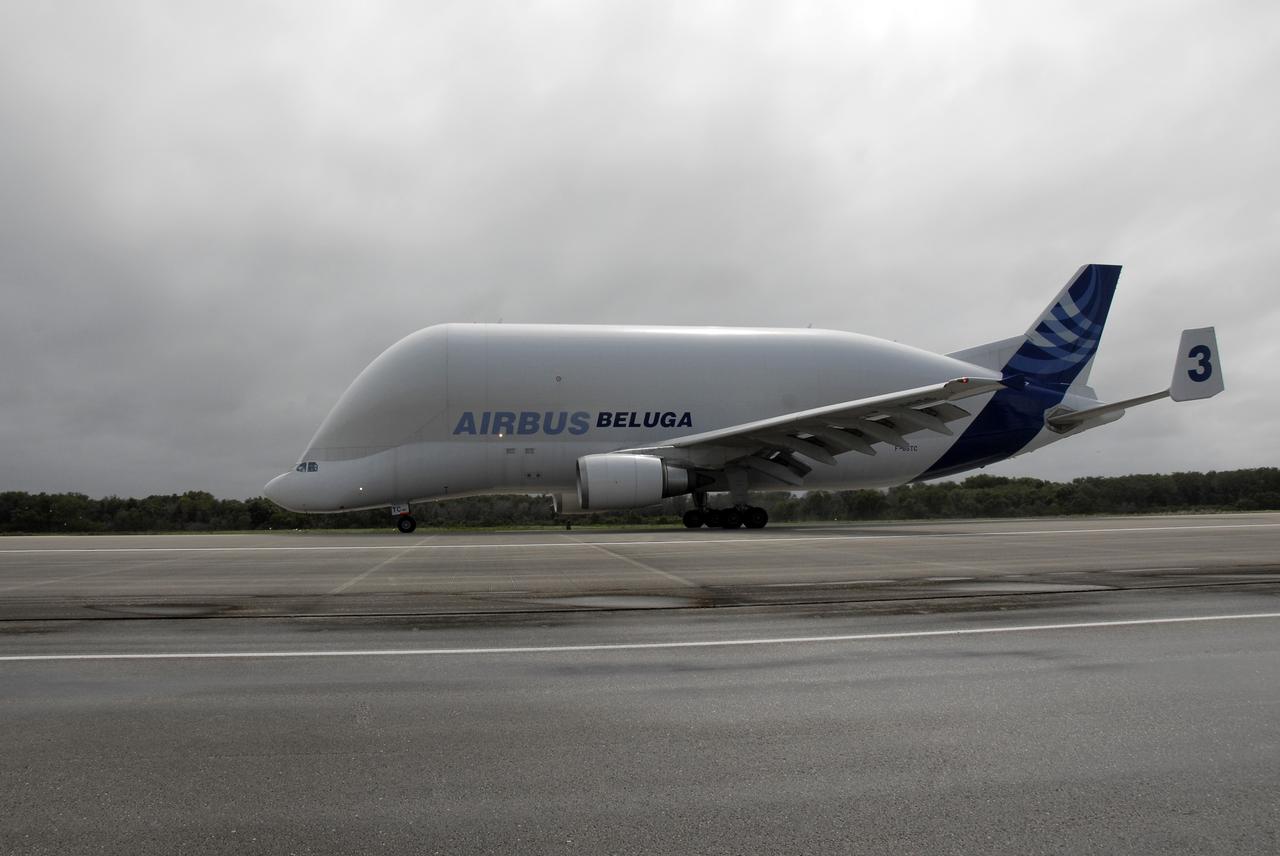
CAPE CANAVERAL, Fla. – A Beluga Airbus lands at NASA Kennedy Space Center's Shuttle Landing Facility carrying the newest module for the International Space Station, the Tranquility Node 3. Tranquility will eventually house the life support equipment necessary for the International Space Station's permanent crew of six. It will also accommodate the European Space Agency's Cupola observation module, a seven window dome-shaped structure. Tranquility is the payload on the STS-130 mission, targeted for launch in February 2010. Photo credit: NASA/Kim Shiflett
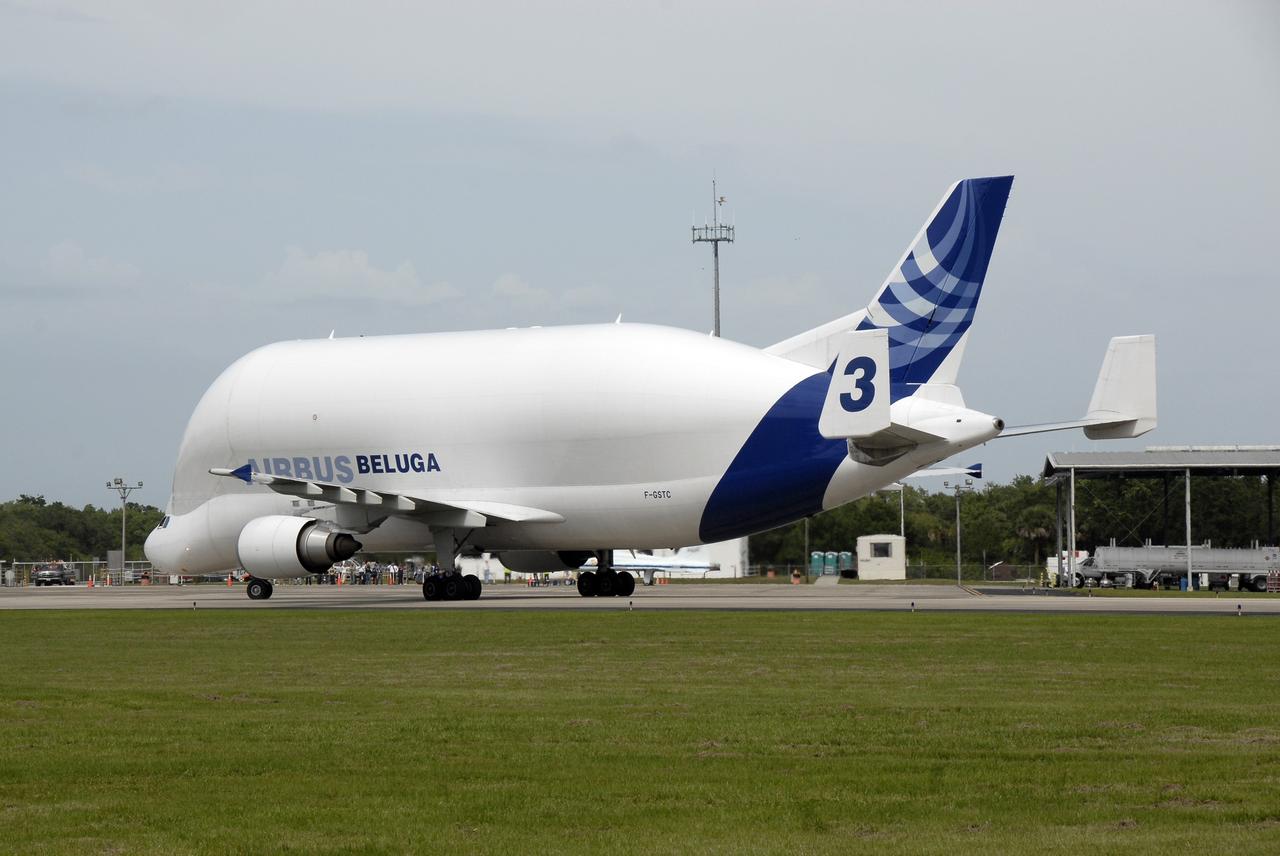
CAPE CANAVERAL, Fla. – A Beluga Airbus taxis on the runway at NASA Kennedy Space Center's Shuttle Landing Facility. The aircraft carries the newest module for the International Space Station, the Tranquility Node 3. Tranquility will eventually house the life support equipment necessary for the International Space Station's permanent crew of six. It will also accommodate the European Space Agency's Cupola observation module, a seven window dome-shaped structure. Tranquility is the payload on the STS-130 mission, targeted for launch in February 2010. Photo credit: NASA/Kim Shiflett
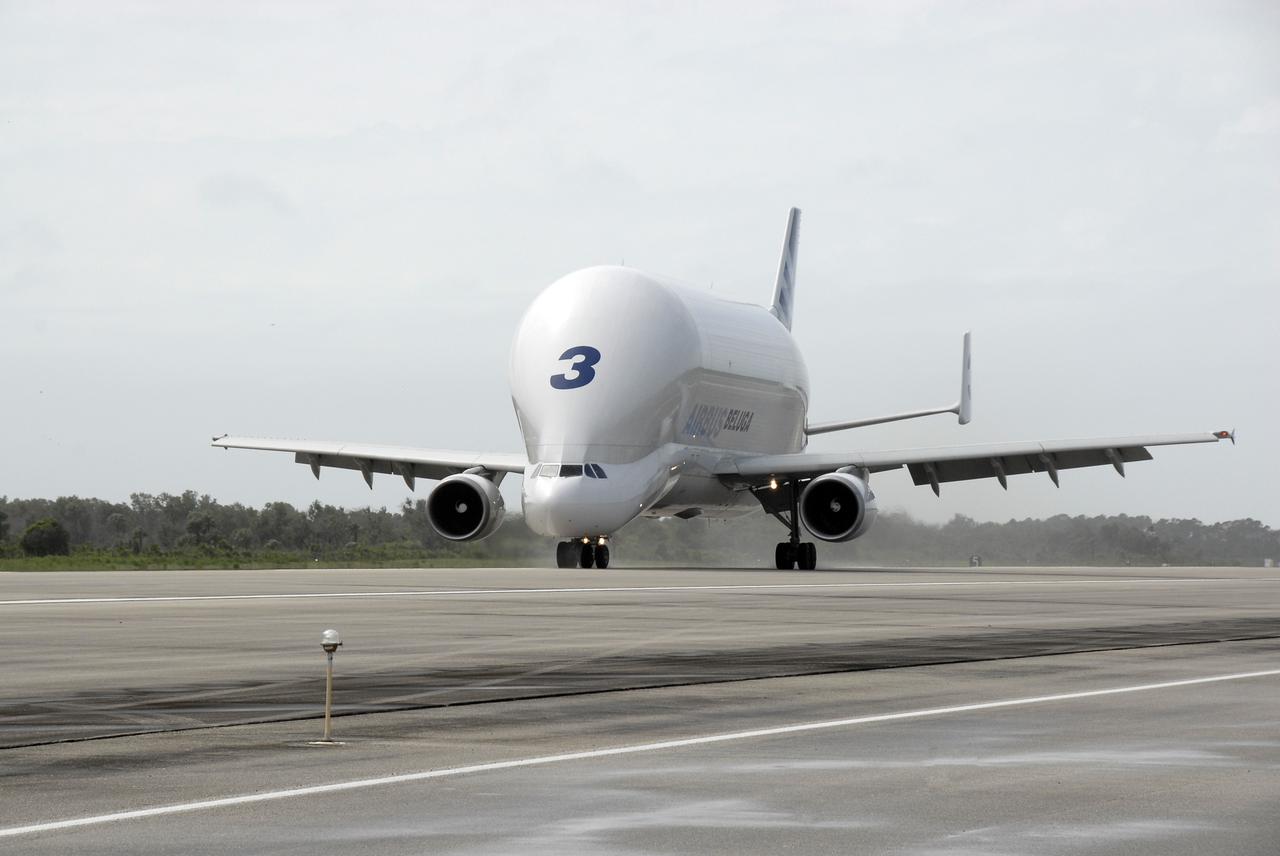
CAPE CANAVERAL, Fla. – The newest module for the International Space Station, the Tranquility Node 3 arrives at NASA Kennedy Space Center's Shuttle Landing Facility aboard a Beluga Airbus. Tranquility will eventually house the life support equipment necessary for the International Space Station's permanent crew of six. It will also accommodate the European Space Agency's Cupola observation module, a seven window dome-shaped structure. Tranquility is the payload on the STS-130 mission, targeted for launch in February 2010. Photo credit: NASA/Kim Shiflett
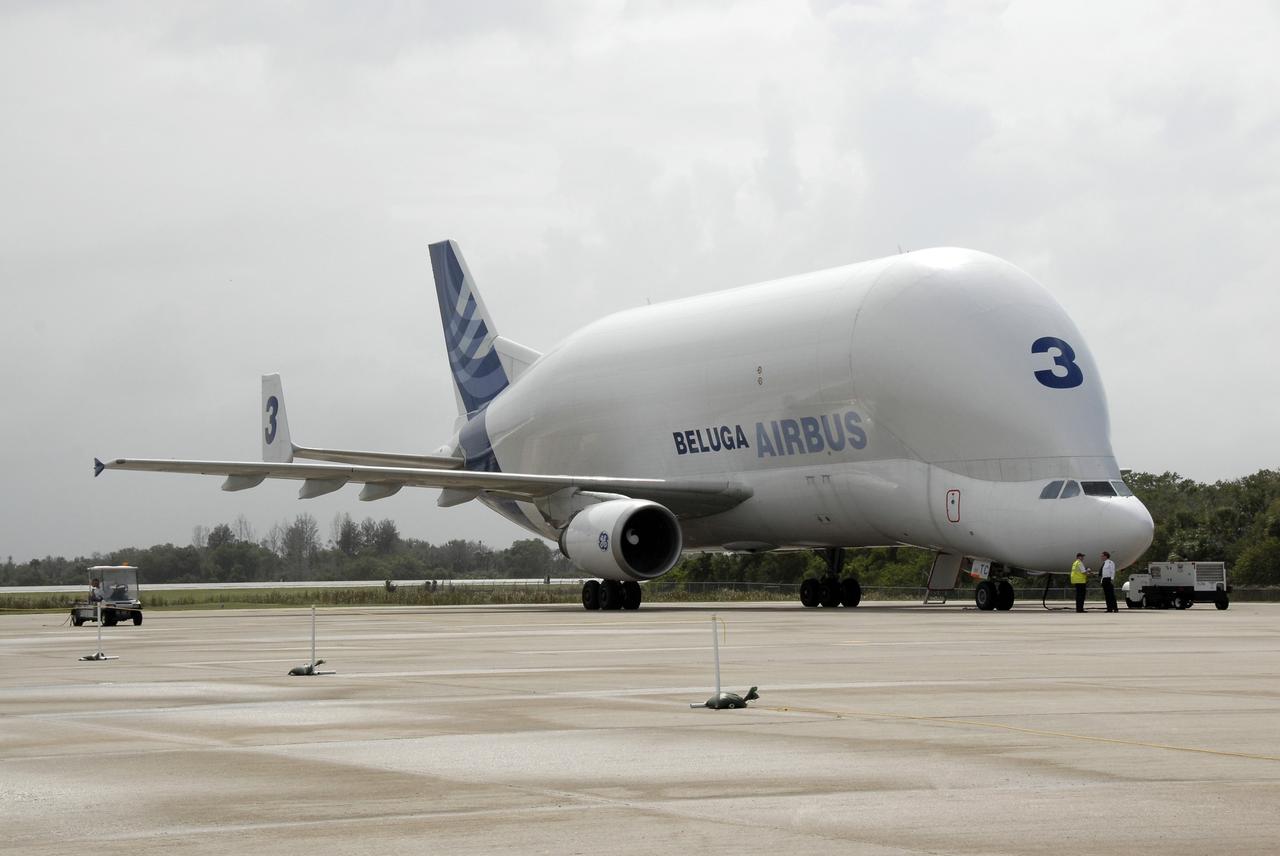
CAPE CANAVERAL, Fla. – A Beluga Airbus parks at NASA Kennedy Space Center's Shuttle Landing Facility. The aircraft carries the newest module for the International Space Station, the Tranquility Node 3. Tranquility will eventually house the life support equipment necessary for the International Space Station's permanent crew of six. It will also accommodate the European Space Agency's Cupola observation module, a seven window dome-shaped structure. Tranquility is the payload on the STS-130 mission, targeted for launch in February 2010. Photo credit: NASA/Kim Shiflett
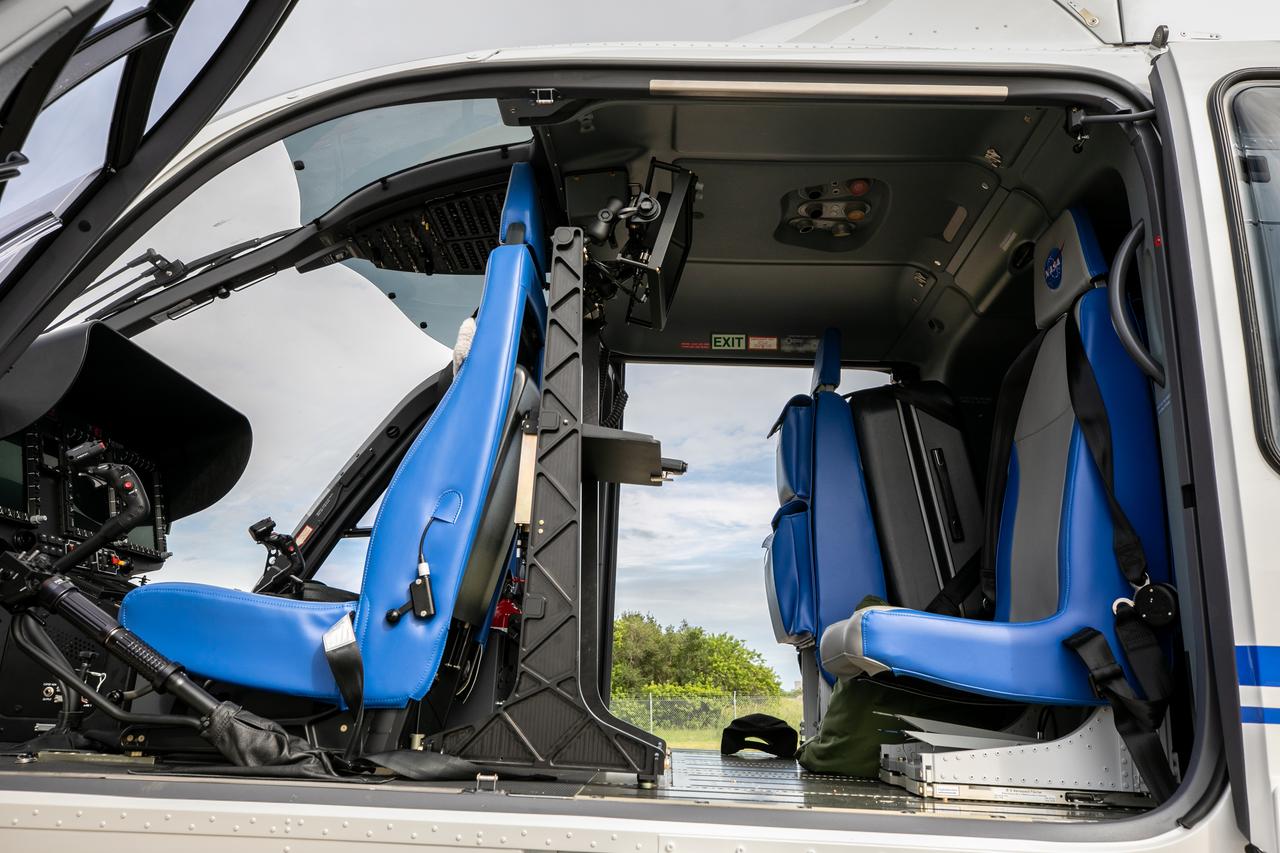
The interior of a new Airbus H135 (T3) helicopter is displayed after arriving at the Launch and Landing Facility runway at NASA’s Kennedy Space Center in Florida on Sept. 30, 2020. A second H135 helicopter also was delivered on Sept. 30, and a third is expected to arrive in early 2021. The three H135 helicopters will replace the Bell Huey 2 security aircraft in service now, maintained by Kennedy’s Flight Operations team. These new helicopters provide a number of technological and safety advantages over the Hueys, such as more lifting power, greater stability in the air, and expanded medical capabilities. The team expects to fully transition to flying the two H135s later this year, and once the third arrives, the fleet’s upgrade will be complete.
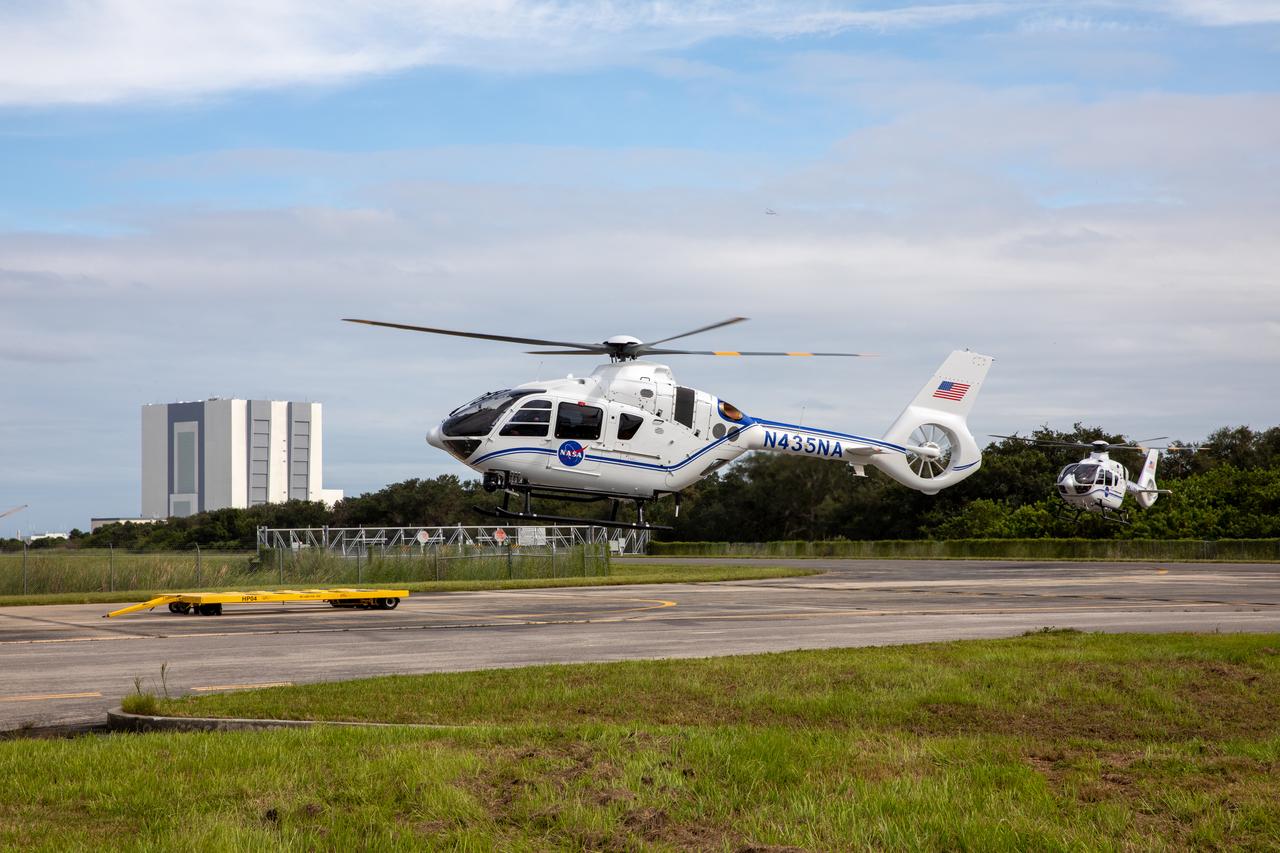
Two new Airbus H135 (T3) helicopters arrive at the Launch and Landing Facility runway at NASA’s Kennedy Space Center in Florida on Sept. 30, 2020. The H135 helicopters will replace the Bell Huey 2 security aircraft in service now, maintained by Kennedy’s Flight Operations team. These new helicopters provide a number of technological and safety advantages over the Hueys, such as more lifting power, greater stability in the air, and expanded medical capabilities. The team expects to fully transition to flying the two H135s later this year. A third is expected to arrive in early 2021, and with its arrival, will complete the fleet’s upgrade.
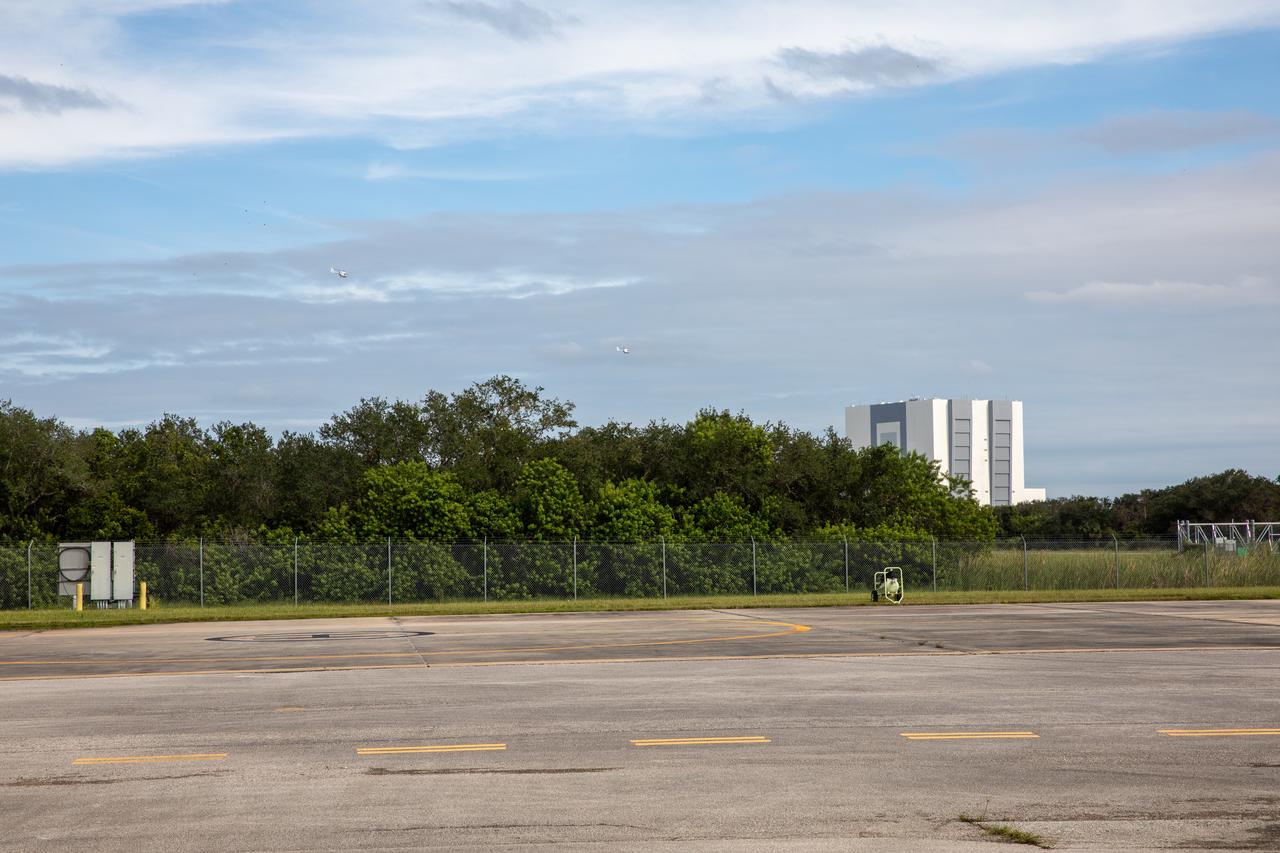
Two new Airbus H135 (T3) helicopters can be seen in the distance, arriving at the Launch and Landing Facility runway at NASA’s Kennedy Space Center in Florida on Sept. 30, 2020. The H135 helicopters will replace the Bell Huey 2 security aircraft in service now, maintained by Kennedy’s Flight Operations team. These new helicopters provide a number of technological and safety advantages over the Hueys, such as more lifting power, greater stability in the air, and expanded medical capabilities. The team expects to fully transition to flying the two H135s later this year. A third is expected to arrive in early 2021, and with its arrival, will complete the fleet’s upgrade.
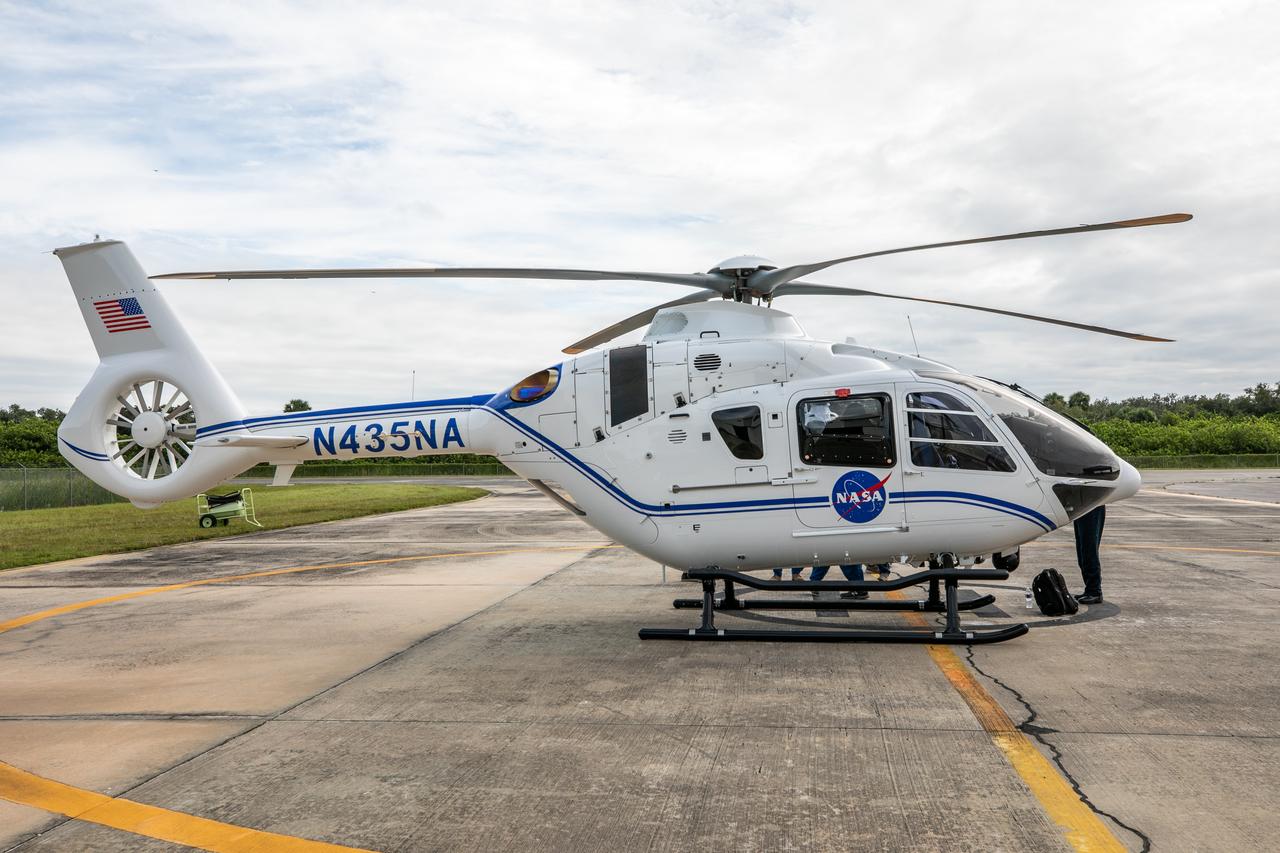
A new Airbus H135 (T3) helicopter arrives at the Launch and Landing Facility runway at NASA’s Kennedy Space Center in Florida on Sept. 30, 2020. A second H135 helicopter also was delivered on Sept. 30, and a third is expected to arrive in early 2021. The three H135 helicopters will replace the Bell Huey 2 security aircraft in service now, maintained by Kennedy’s Flight Operations team. These new helicopters provide a number of technological and safety advantages over the Hueys, such as more lifting power, greater stability in the air, and expanded medical capabilities. The team expects to fully transition to flying the two H135s later this year, and once the third arrives, the fleet’s upgrade will be complete.
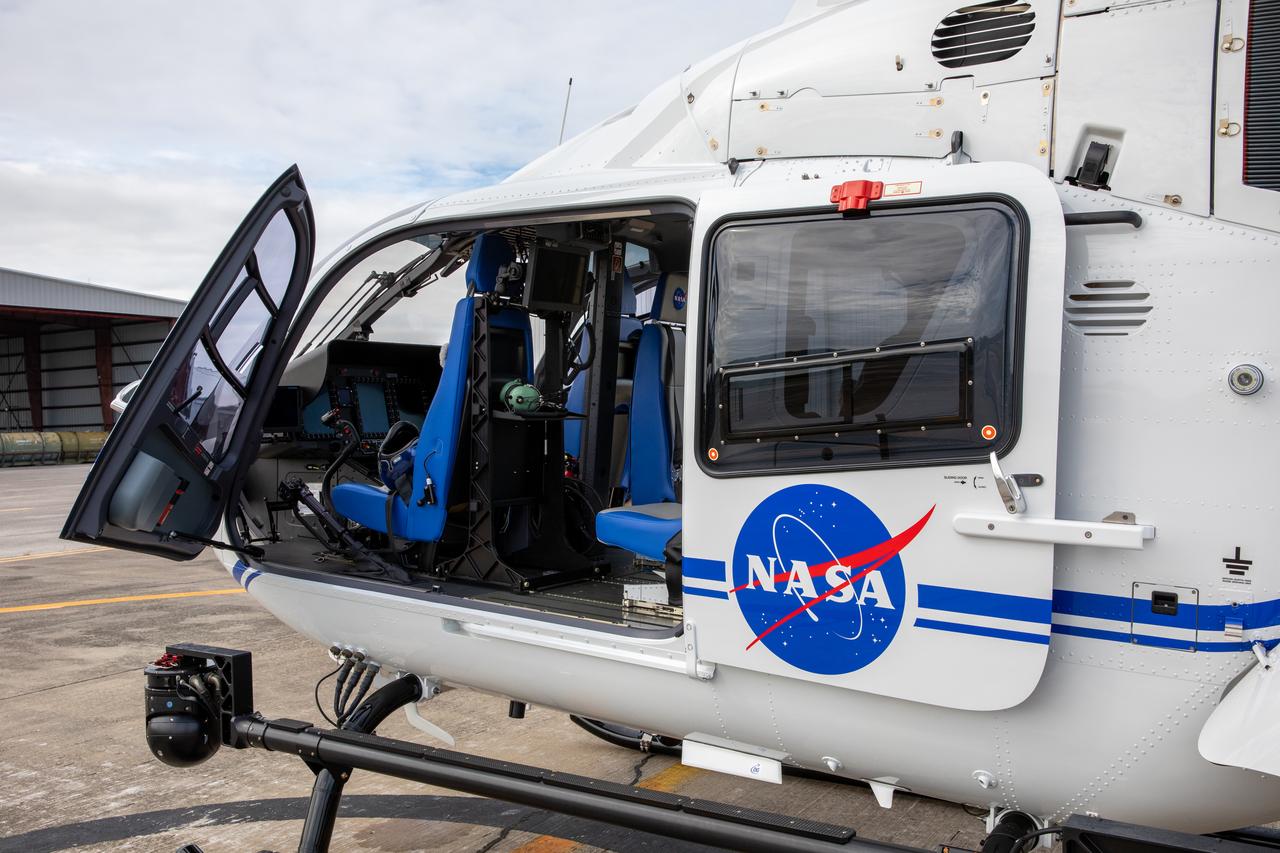
The interior of a new Airbus H135 (T3) helicopter is displayed after arriving at the Launch and Landing Facility runway at NASA’s Kennedy Space Center in Florida on Sept. 30, 2020. A second H135 helicopter also was delivered on Sept. 30, and a third is expected to arrive in early 2021. The three H135 helicopters will replace the Bell Huey 2 security aircraft in service now, maintained by Kennedy’s Flight Operations team. These new helicopters provide a number of technological and safety advantages over the Hueys, such as more lifting power, greater stability in the air, and expanded medical capabilities. The team expects to fully transition to flying the two H135s later this year, and once the third arrives, the fleet’s upgrade will be complete.
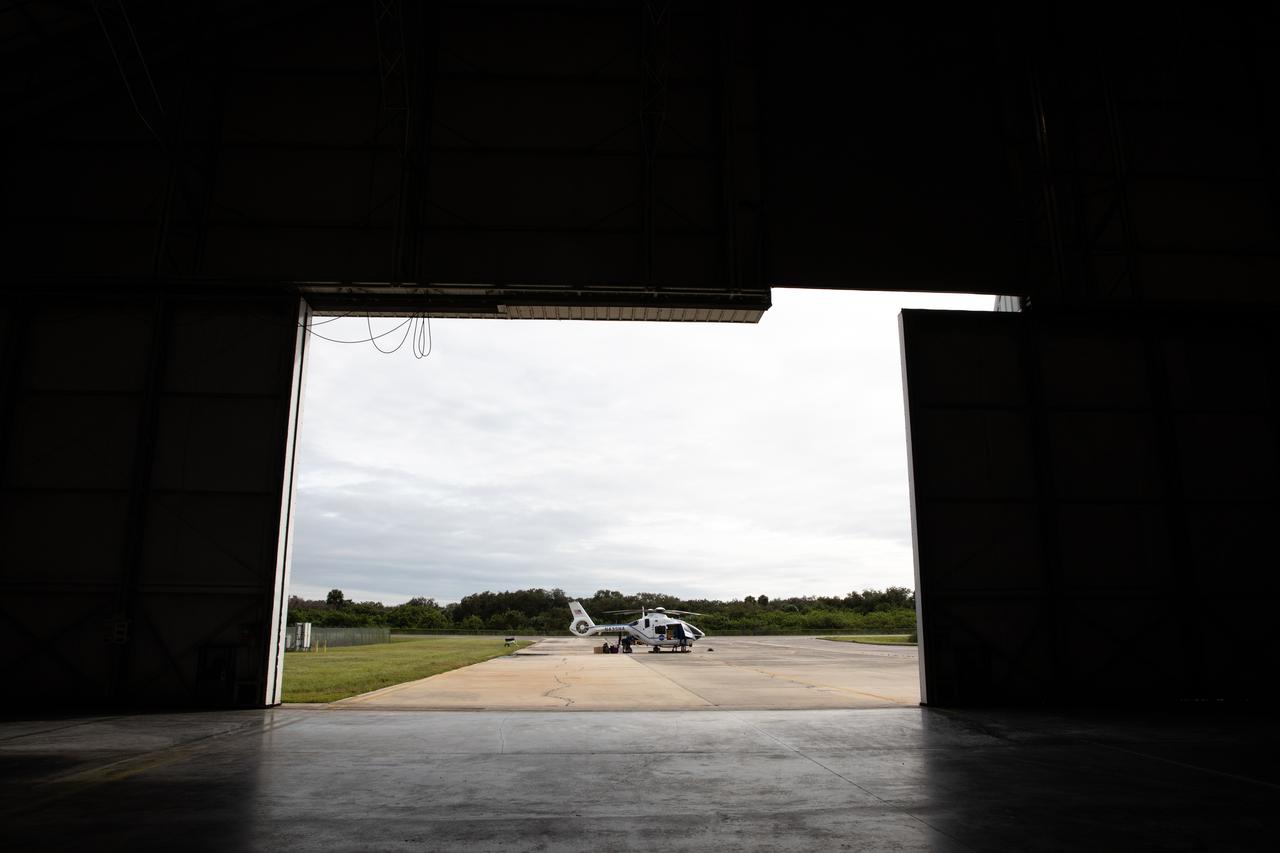
A new Airbus H135 (T3) helicopter arrives at the Launch and Landing Facility runway at NASA’s Kennedy Space Center in Florida on Sept. 30, 2020. A second H135 helicopter also was delivered on Sept. 30, and a third is expected to arrive in early 2021. The three H135 helicopters will replace the Bell Huey 2 security aircraft in service now, maintained by Kennedy’s Flight Operations team. These new helicopters provide a number of technological and safety advantages over the Hueys, such as more lifting power, greater stability in the air, and expanded medical capabilities. The team expects to fully transition to flying the two H135s later this year, and once the third arrives, the fleet’s upgrade will be complete.
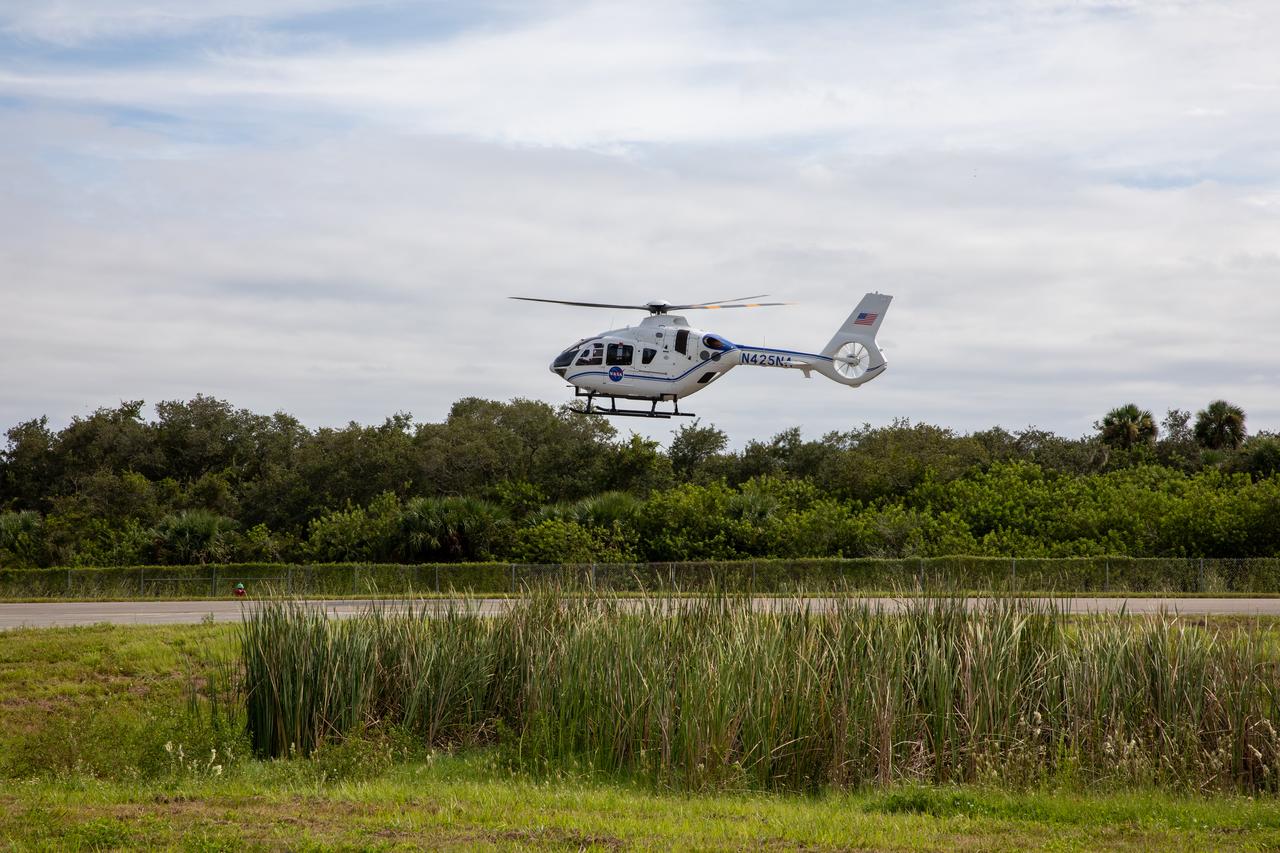
A new Airbus H135 (T3) helicopter arrives at the Launch and Landing Facility runway at NASA’s Kennedy Space Center in Florida on Sept. 30, 2020. A second H135 helicopter also was delivered on Sept. 30, and a third is expected to arrive in early 2021. The three H135 helicopters will replace the Bell Huey 2 security aircraft in service now, maintained by Kennedy’s Flight Operations team. These new helicopters provide a number of technological and safety advantages over the Hueys, such as more lifting power, greater stability in the air, and expanded medical capabilities. The team expects to fully transition to flying the two H135s later this year, and once the third arrives, the fleet’s upgrade will be complete.
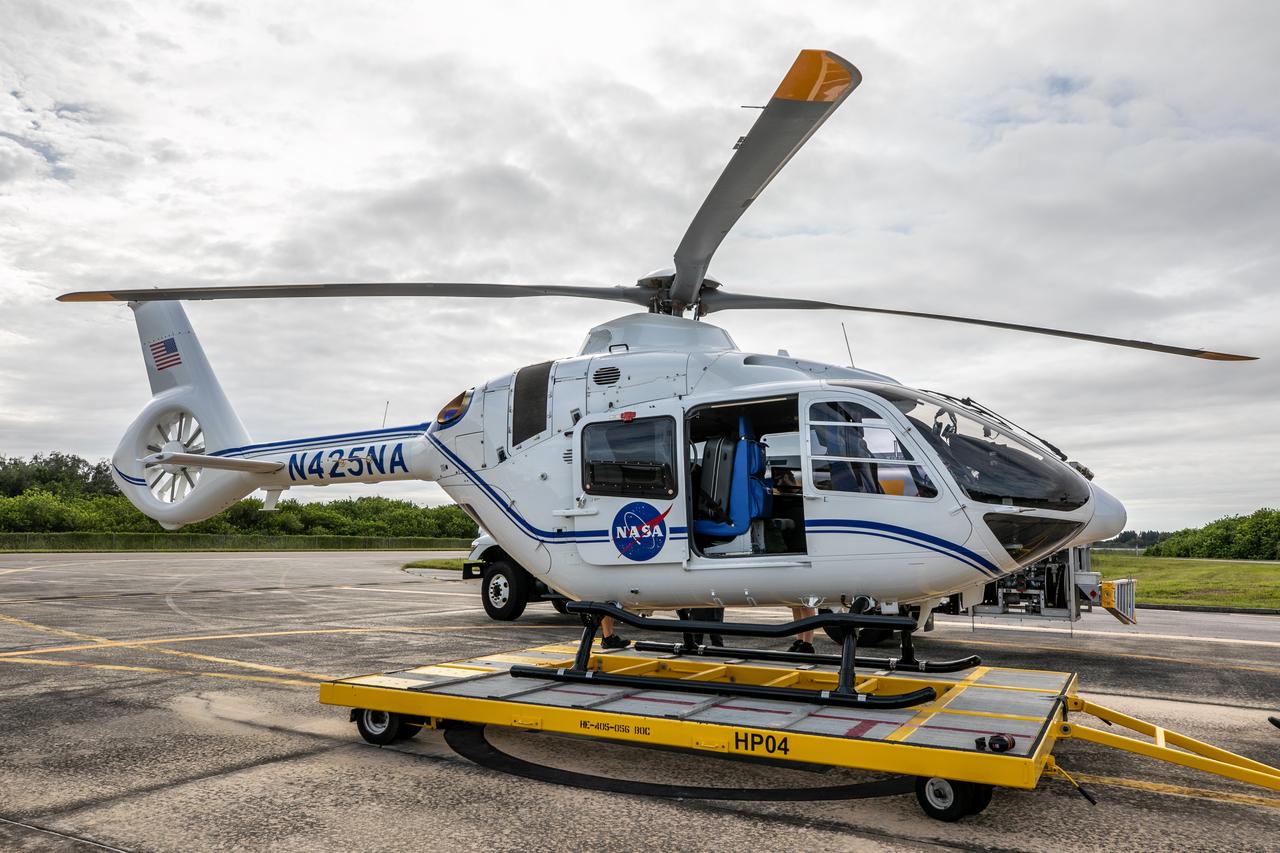
A new Airbus H135 (T3) helicopter arrives at the Launch and Landing Facility runway at NASA’s Kennedy Space Center in Florida on Sept. 30, 2020. A second H135 helicopter also was delivered on Sept. 30, and a third is expected to arrive in early 2021. The three H135 helicopters will replace the Bell Huey 2 security aircraft in service now, maintained by Kennedy’s Flight Operations team. These new helicopters provide a number of technological and safety advantages over the Hueys, such as more lifting power, greater stability in the air, and expanded medical capabilities. The team expects to fully transition to flying the two H135s later this year, and once the third arrives, the fleet’s upgrade will be complete.
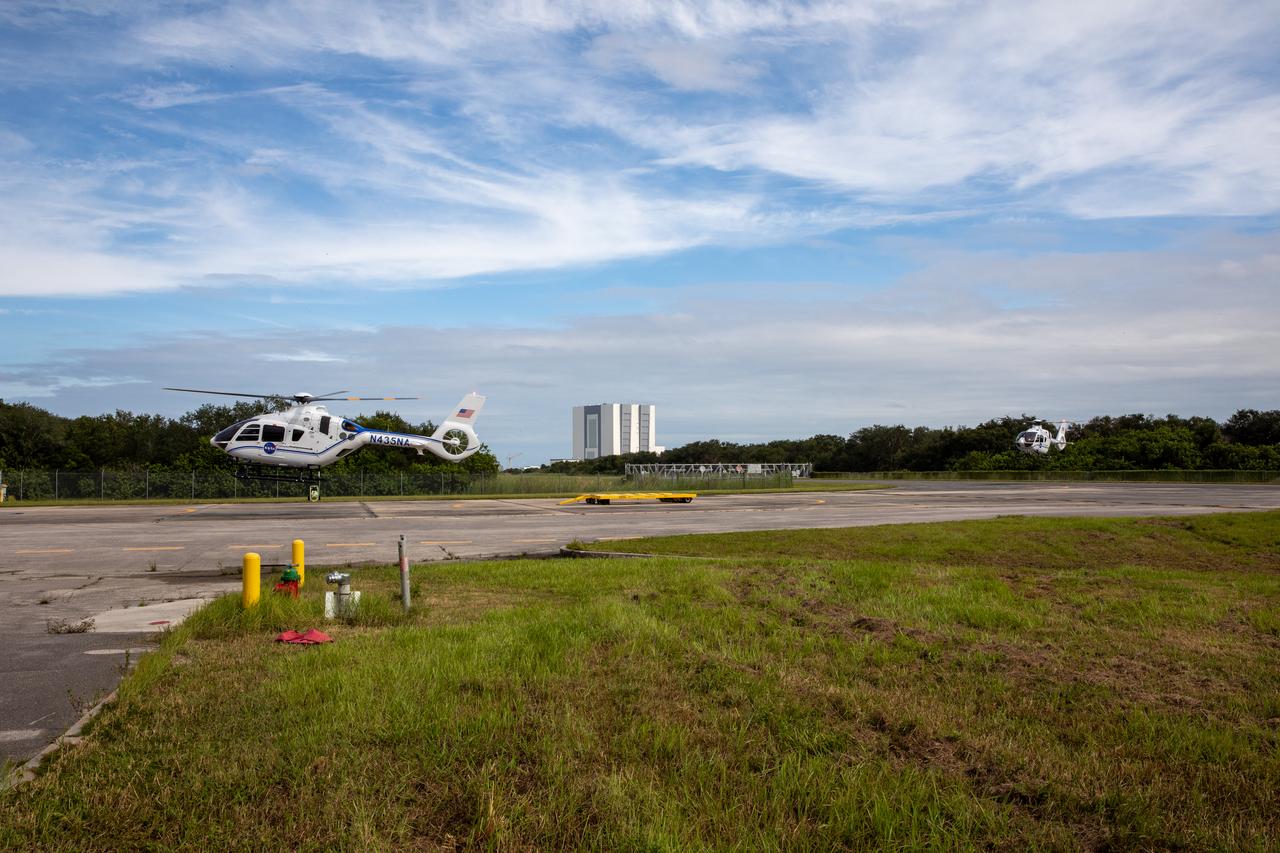
Two new Airbus H135 (T3) helicopters arrive at the Launch and Landing Facility runway at NASA’s Kennedy Space Center in Florida on Sept. 30, 2020. The H135 helicopters will replace the Bell Huey 2 security aircraft in service now, maintained by Kennedy’s Flight Operations team. These new helicopters provide a number of technological and safety advantages over the Hueys, such as more lifting power, greater stability in the air, and expanded medical capabilities. The team expects to fully transition to flying the two H135s later this year. A third is expected to arrive in early 2021, and with its arrival, will complete the fleet’s upgrade.
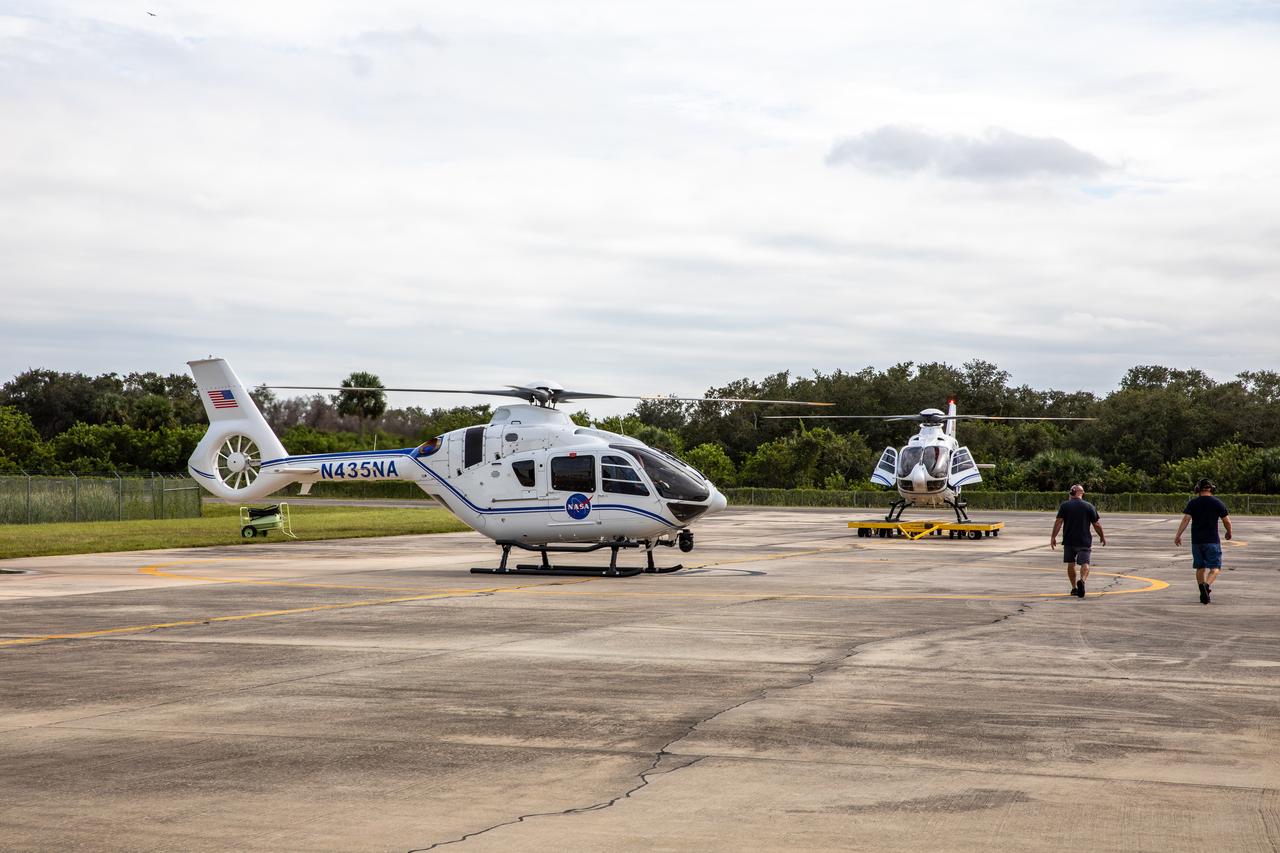
Two new Airbus H135 (T3) helicopters arrive at the Launch and Landing Facility runway at NASA’s Kennedy Space Center in Florida on Sept. 30, 2020. The H135 helicopters will replace the Bell Huey 2 security aircraft in service now, maintained by Kennedy’s Flight Operations team. These new helicopters provide a number of technological and safety advantages over the Hueys, such as more lifting power, greater stability in the air, and expanded medical capabilities. The team expects to fully transition to flying the two H135s later this year. A third is expected to arrive in early 2021, and with its arrival, will complete the fleet’s upgrade.
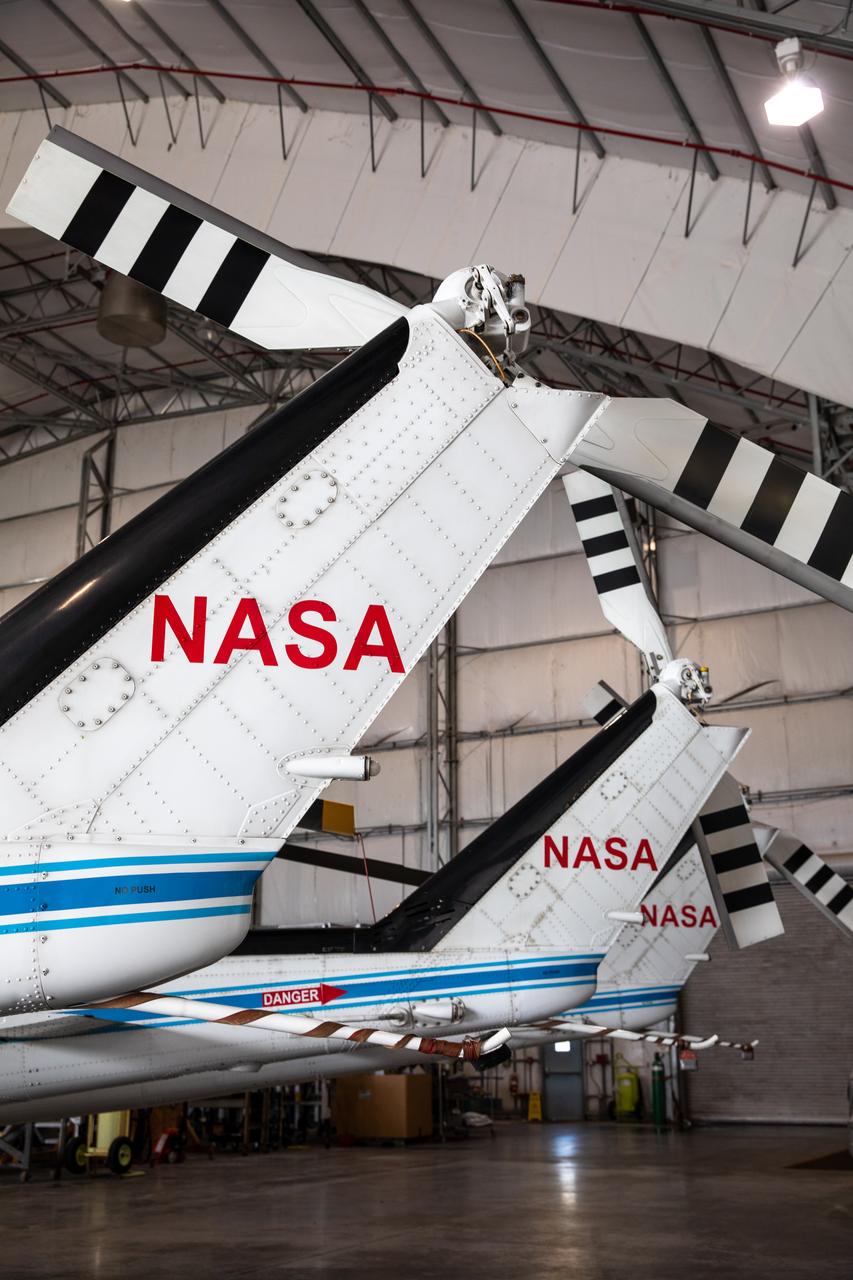
The three Bell Huey 2 helicopters utilized by Kennedy Space Center’s Flight Operations team for security purposes are photographed inside the Launch and Landing Facility hangar on Sept. 30, 2020. Two new Airbus H135 (T3) helicopters arrived at the Florida spaceport on Sept. 30 to replace the Bell Huey 2 aircraft in service now. The new helicopters provide a number of technological and safety advantages over the Hueys, such as more lifting power, greater stability in the air, and expanded medical capabilities. The team expects to fully transition to flying the two H135 aircraft later this year. A third is expected to arrive in early 2021, and with its arrival, will complete the fleet’s upgrade.
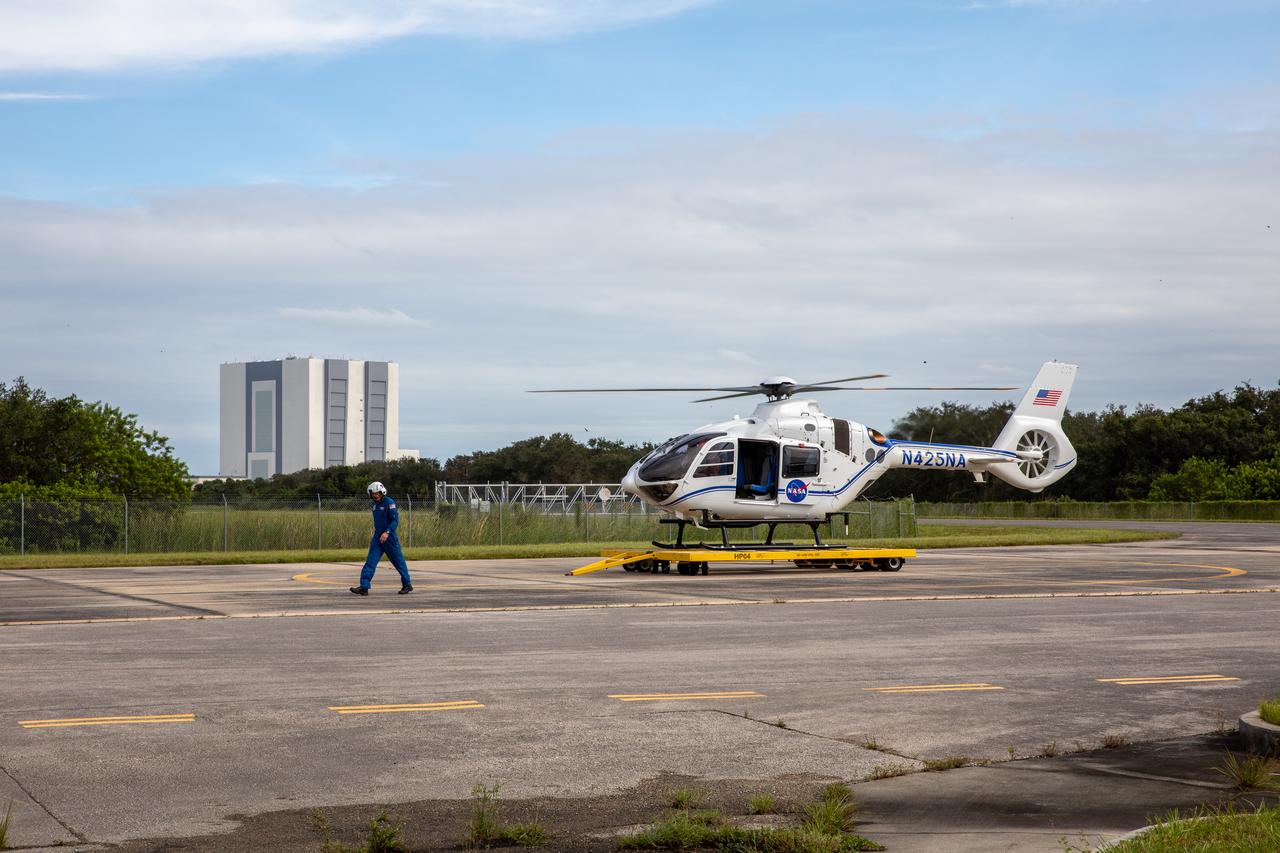
A new Airbus H135 (T3) helicopter arrives at the Launch and Landing Facility runway at NASA’s Kennedy Space Center in Florida on Sept. 30, 2020. A second H135 helicopter also was delivered on Sept. 30, and a third is expected to arrive in early 2021. The three H135 helicopters will replace the Bell Huey 2 security aircraft in service now, maintained by Kennedy’s Flight Operations team. These new helicopters provide a number of technological and safety advantages over the Hueys, such as more lifting power, greater stability in the air, and expanded medical capabilities. The team expects to fully transition to flying the two H135s later this year, and once the third arrives, the fleet’s upgrade will be complete.
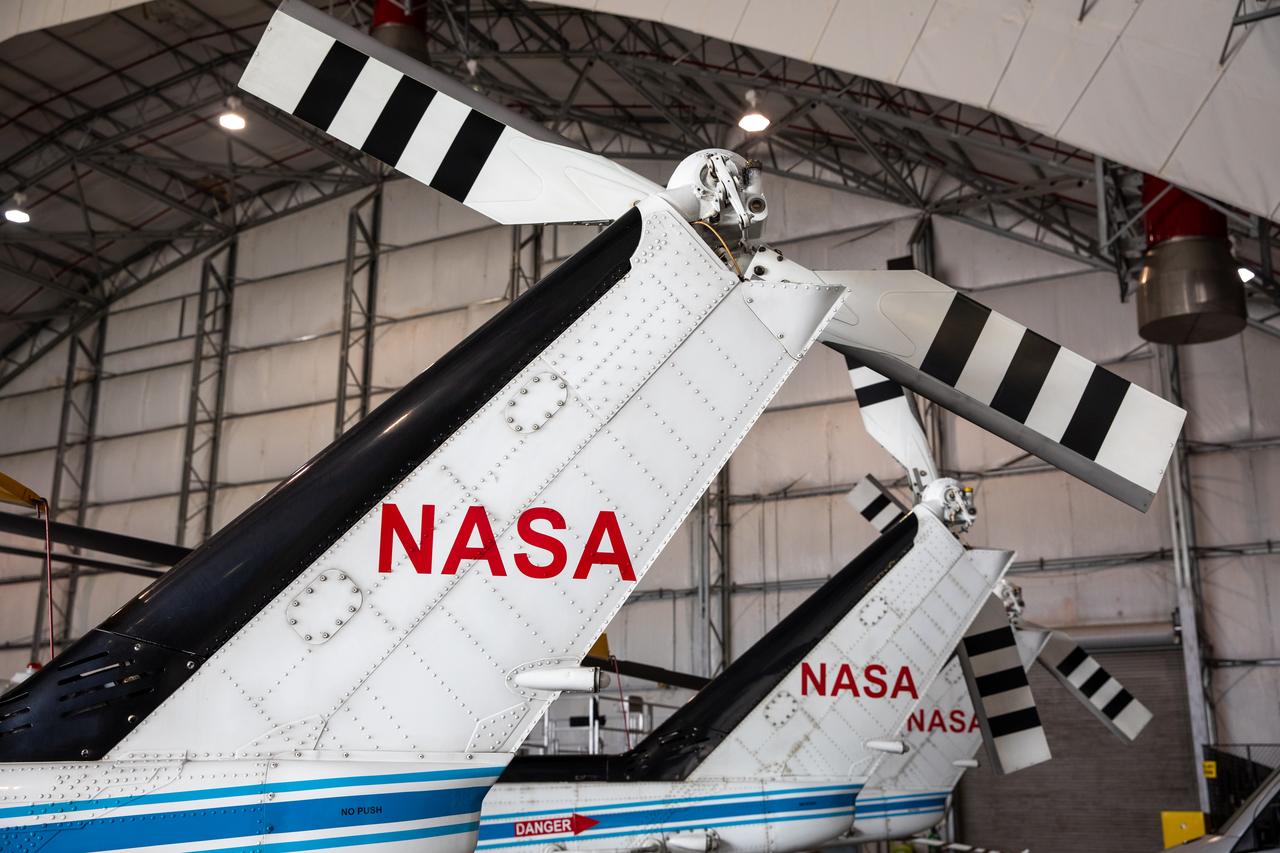
The three Bell Huey 2 helicopters utilized by Kennedy Space Center’s Flight Operations team for security purposes are photographed inside the Launch and Landing Facility hangar on Sept. 30, 2020. Two new Airbus H135 (T3) helicopters arrived at the Florida spaceport on Sept. 30 to replace the Bell Huey 2 aircraft in service now. The new helicopters provide a number of technological and safety advantages over the Hueys, such as more lifting power, greater stability in the air, and expanded medical capabilities. The team expects to fully transition to flying the two H135 aircraft later this year. A third is expected to arrive in early 2021, and with its arrival, will complete the fleet’s upgrade.
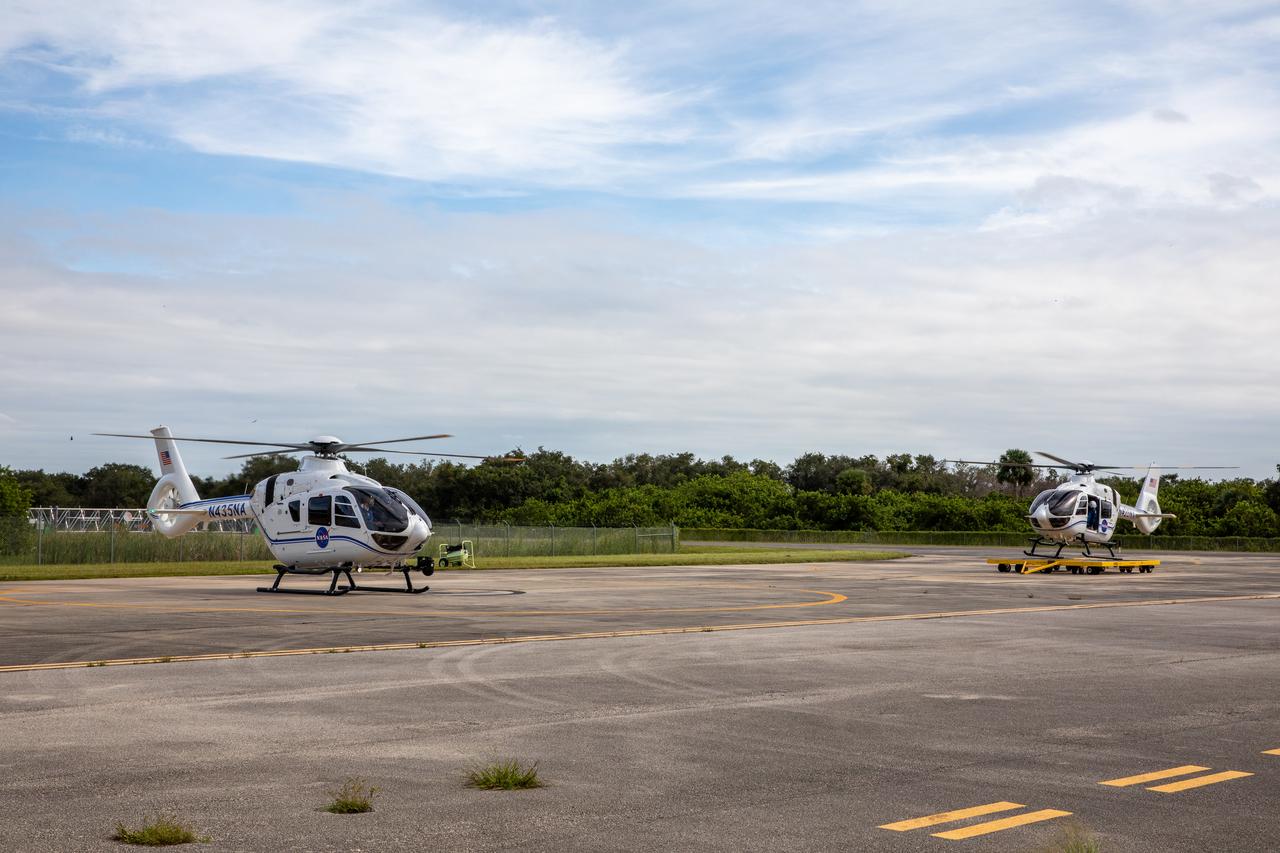
Two new Airbus H135 (T3) helicopters arrive at the Launch and Landing Facility runway at NASA’s Kennedy Space Center in Florida on Sept. 30, 2020. The H135 helicopters will replace the Bell Huey 2 security aircraft in service now, maintained by Kennedy’s Flight Operations team. These new helicopters provide a number of technological and safety advantages over the Hueys, such as more lifting power, greater stability in the air, and expanded medical capabilities. The team expects to fully transition to flying the two H135s later this year. A third is expected to arrive in early 2021, and with its arrival, will complete the fleet’s upgrade.
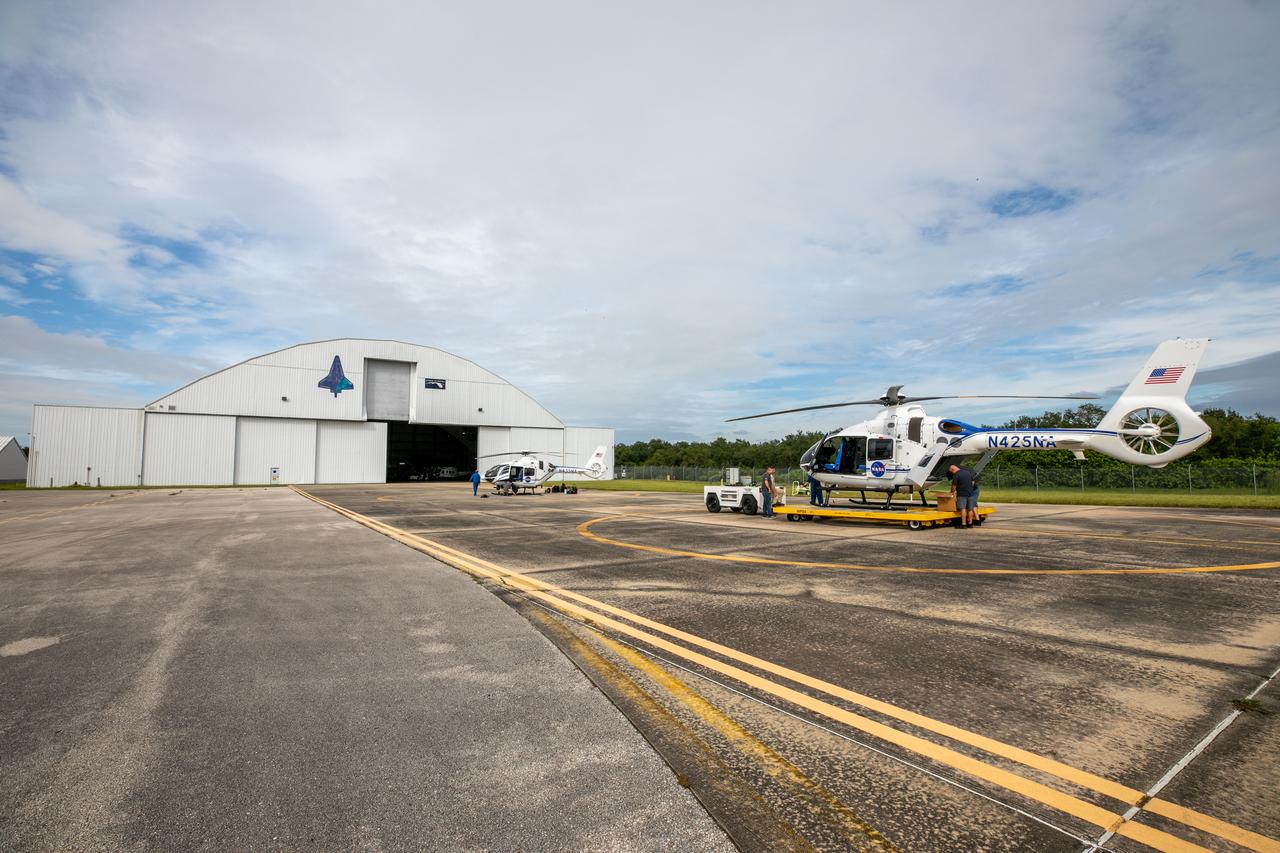
Two new Airbus H135 (T3) helicopters arrive at the Launch and Landing Facility runway at NASA’s Kennedy Space Center in Florida on Sept. 30, 2020. The H135 helicopters will replace the Bell Huey 2 security aircraft in service now, maintained by Kennedy’s Flight Operations team. These new helicopters provide a number of technological and safety advantages over the Hueys, such as more lifting power, greater stability in the air, and expanded medical capabilities. The team expects to fully transition to flying the two H135s later this year. A third is expected to arrive in early 2021, and with its arrival, will complete the fleet’s upgrade.
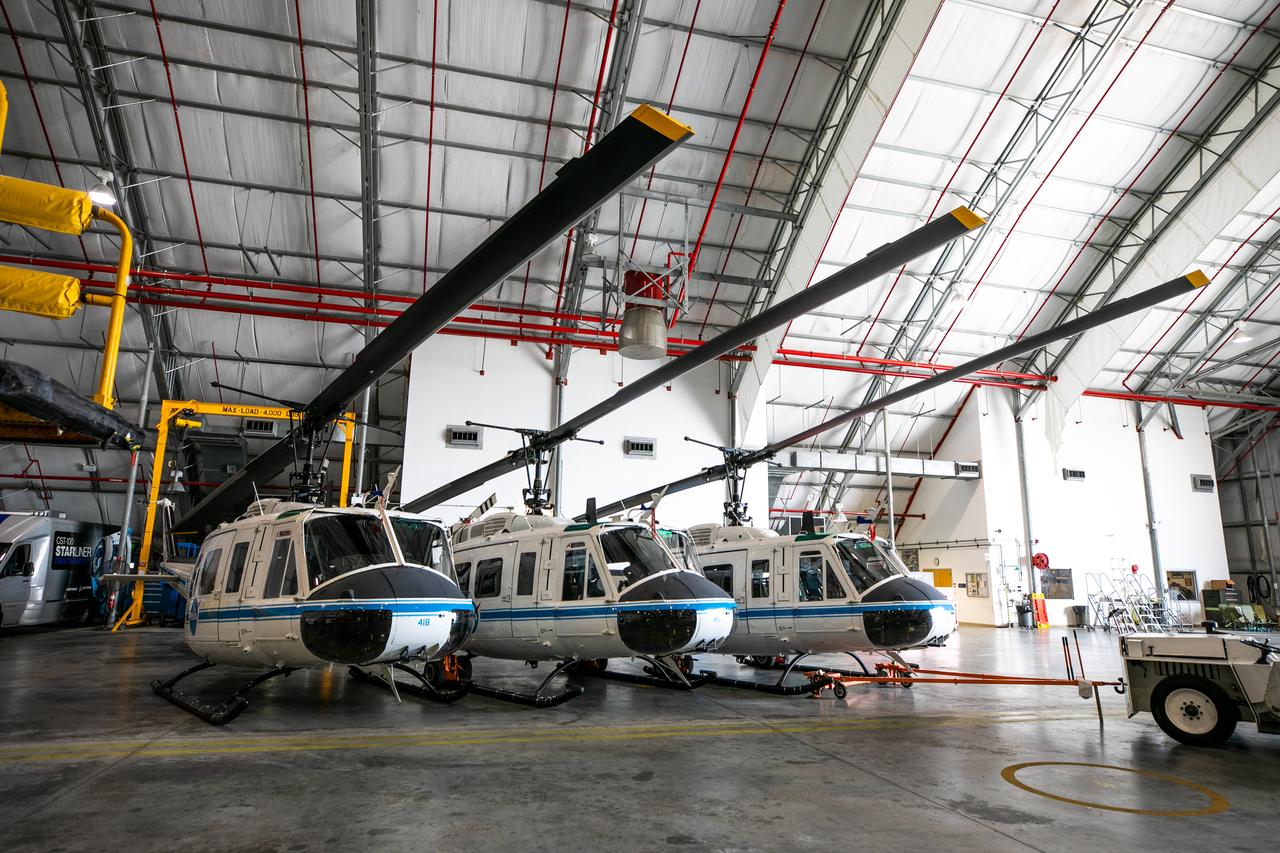
The three Bell Huey 2 helicopters utilized by Kennedy Space Center’s Flight Operations team for security purposes are photographed inside the Launch and Landing Facility hangar on Sept. 30, 2020. Two new Airbus H135 (T3) helicopters arrived at the Florida spaceport on Sept. 30 to replace the Bell Huey 2 aircraft in service now. The new helicopters provide a number of technological and safety advantages over the Hueys, such as more lifting power, greater stability in the air, and expanded medical capabilities. The team expects to fully transition to flying the two H135 aircraft later this year. A third is expected to arrive in early 2021, and with its arrival, will complete the fleet’s upgrade.
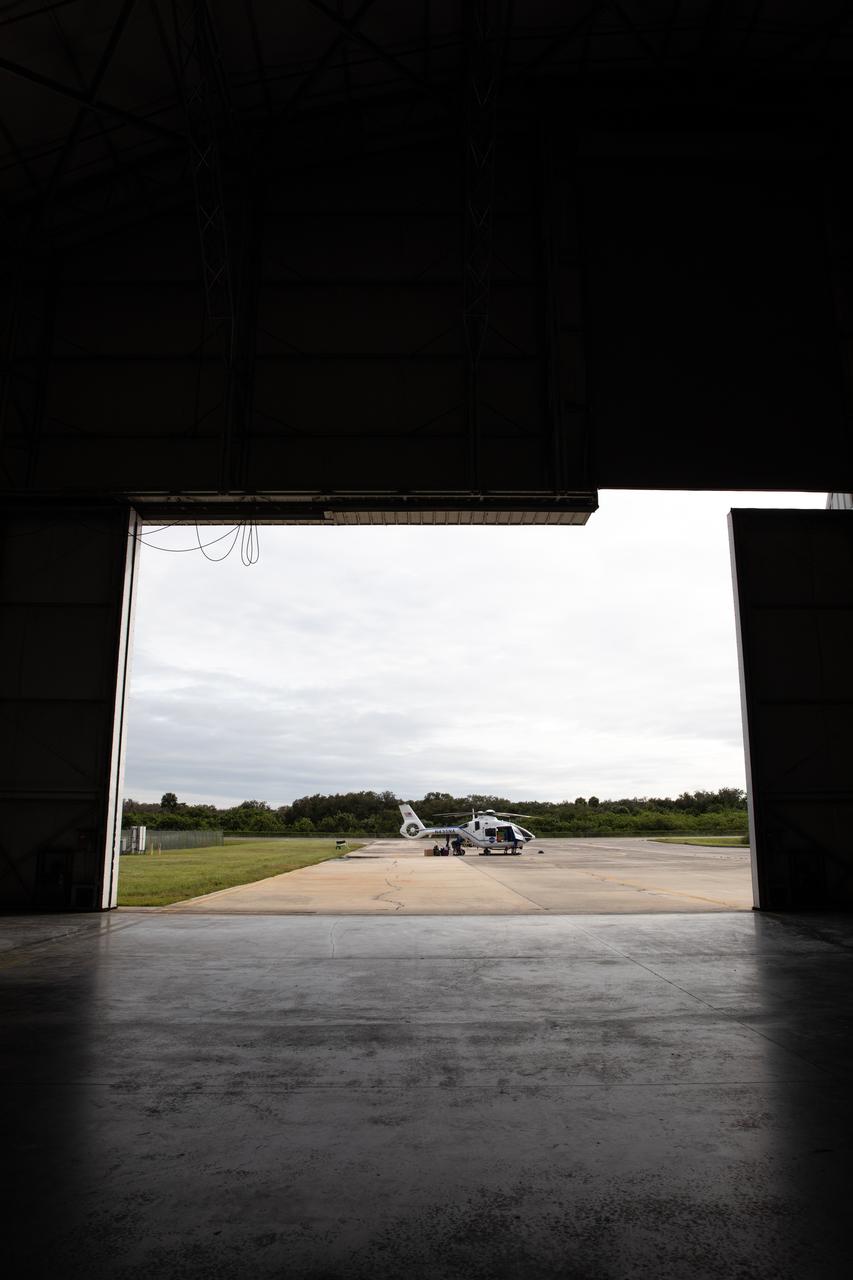
A new Airbus H135 (T3) helicopter arrives at the Launch and Landing Facility runway at NASA’s Kennedy Space Center in Florida on Sept. 30, 2020. A second H135 helicopter also was delivered on Sept. 30, and a third is expected to arrive in early 2021. The three H135 helicopters will replace the Bell Huey 2 security aircraft in service now, maintained by Kennedy’s Flight Operations team. These new helicopters provide a number of technological and safety advantages over the Hueys, such as more lifting power, greater stability in the air, and expanded medical capabilities. The team expects to fully transition to flying the two H135s later this year, and once the third arrives, the fleet’s upgrade will be complete.
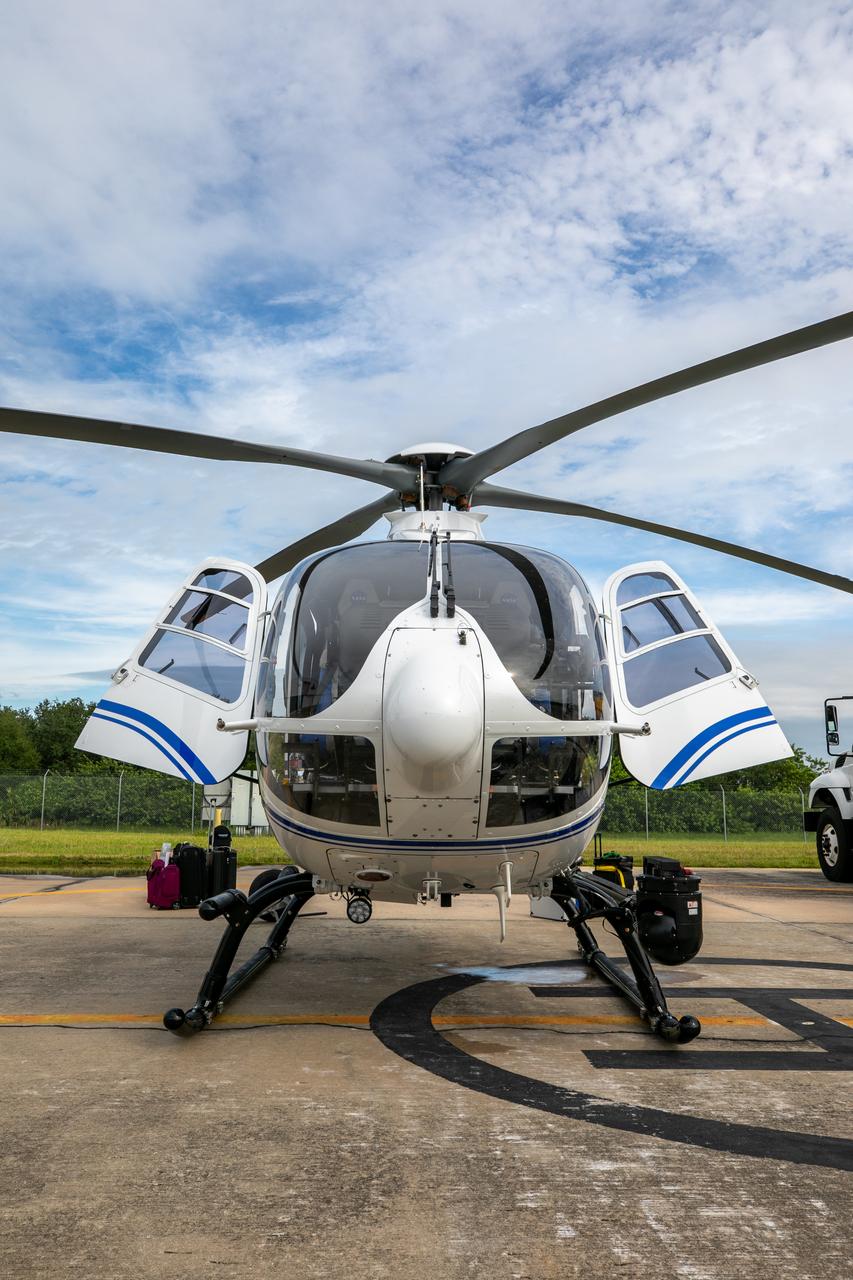
A new Airbus H135 (T3) helicopter arrives at the Launch and Landing Facility runway at NASA’s Kennedy Space Center in Florida on Sept. 30, 2020. A second H135 helicopter also was delivered on Sept. 30, and a third is expected to arrive in early 2021. The three H135 helicopters will replace the Bell Huey 2 security aircraft in service now, maintained by Kennedy’s Flight Operations team. These new helicopters provide a number of technological and safety advantages over the Hueys, such as more lifting power, greater stability in the air, and expanded medical capabilities. The team expects to fully transition to flying the two H135s later this year, and once the third arrives, the fleet’s upgrade will be complete.
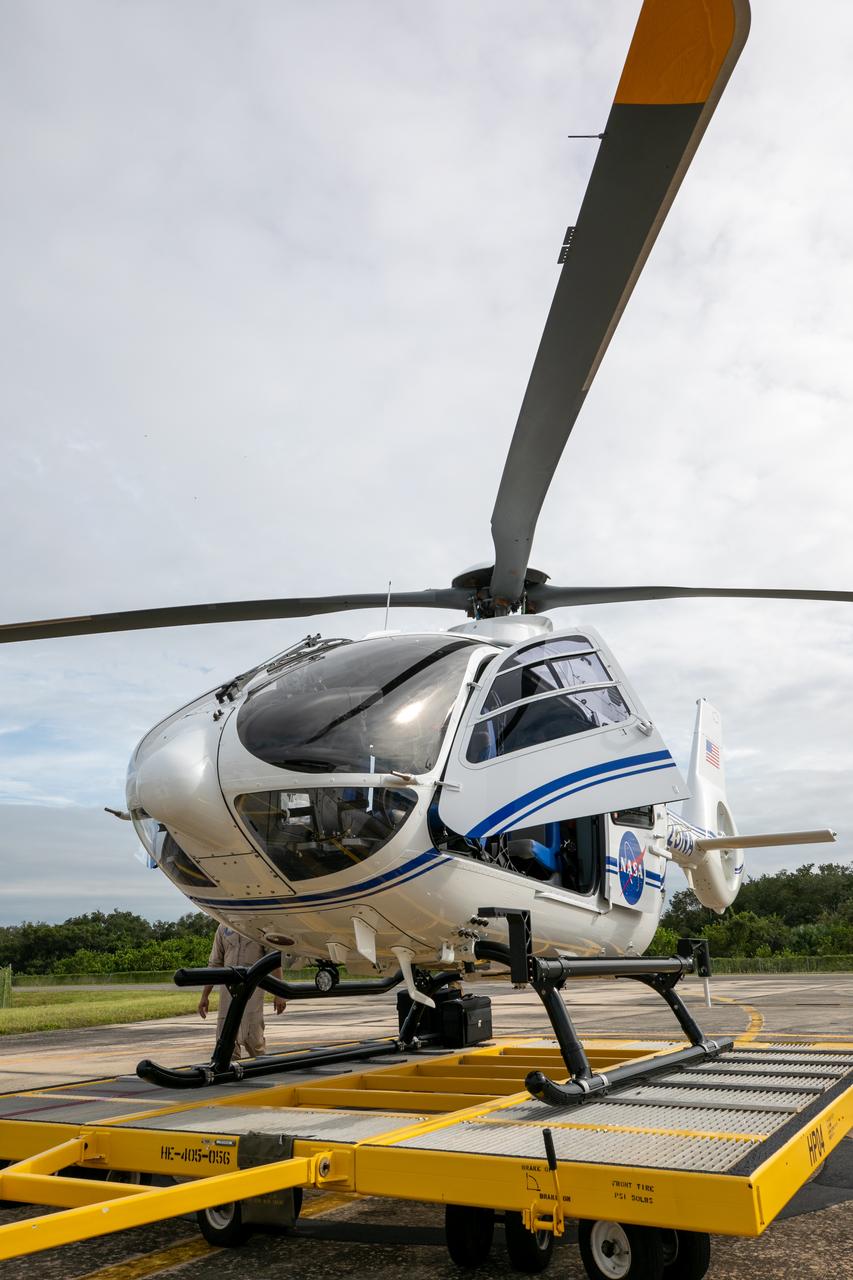
A new Airbus H135 (T3) helicopter arrives at the Launch and Landing Facility runway at NASA’s Kennedy Space Center in Florida on Sept. 30, 2020. A second H135 helicopter also was delivered on Sept. 30, and a third is expected to arrive in early 2021. The three H135 helicopters will replace the Bell Huey 2 security aircraft in service now, maintained by Kennedy’s Flight Operations team. These new helicopters provide a number of technological and safety advantages over the Hueys, such as more lifting power, greater stability in the air, and expanded medical capabilities. The team expects to fully transition to flying the two H135s later this year, and once the third arrives, the fleet’s upgrade will be complete.
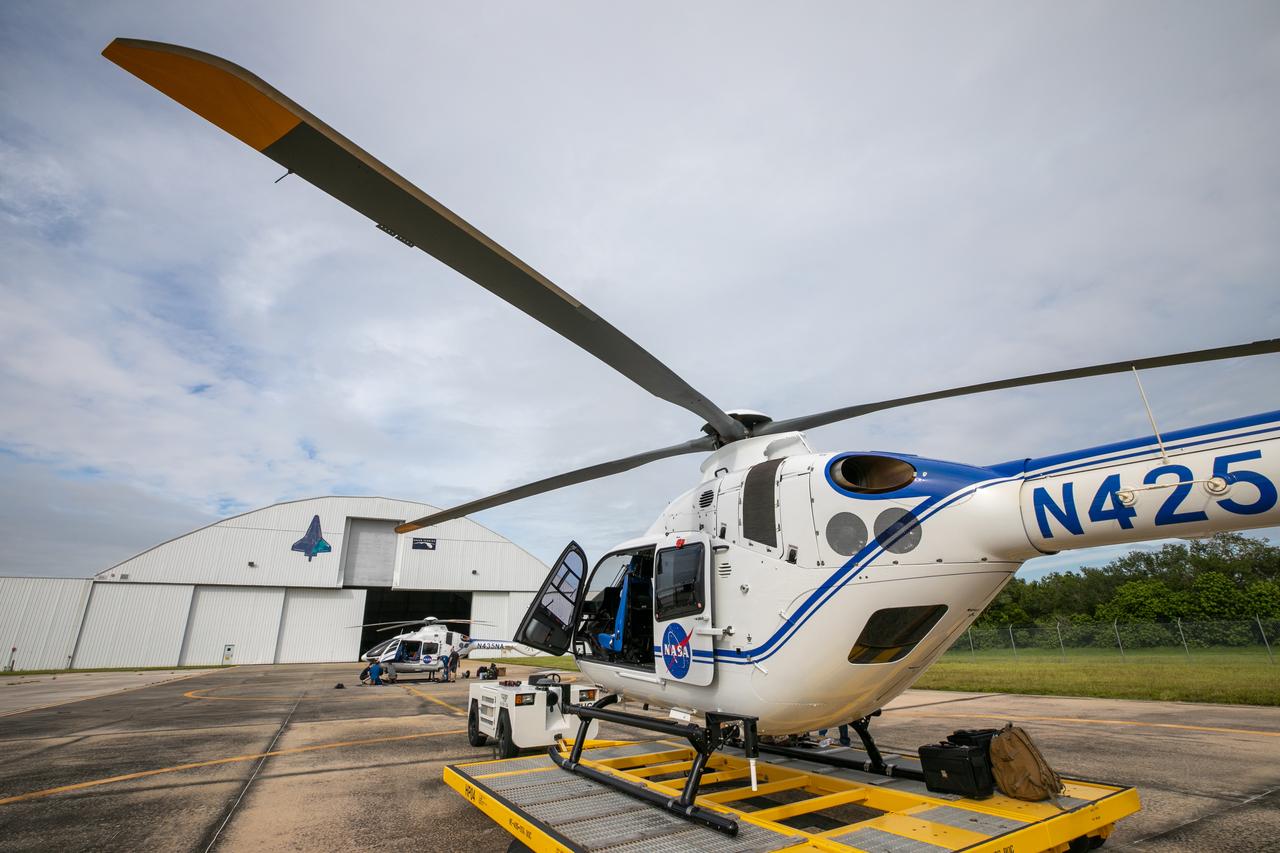
Two new Airbus H135 (T3) helicopters arrive at the Launch and Landing Facility runway at NASA’s Kennedy Space Center in Florida on Sept. 30, 2020. The H135 helicopters will replace the Bell Huey 2 security aircraft in service now, maintained by Kennedy’s Flight Operations team. These new helicopters provide a number of technological and safety advantages over the Hueys, such as more lifting power, greater stability in the air, and expanded medical capabilities. The team expects to fully transition to flying the two H135s later this year. A third is expected to arrive in early 2021, and with its arrival, will complete the fleet’s upgrade.
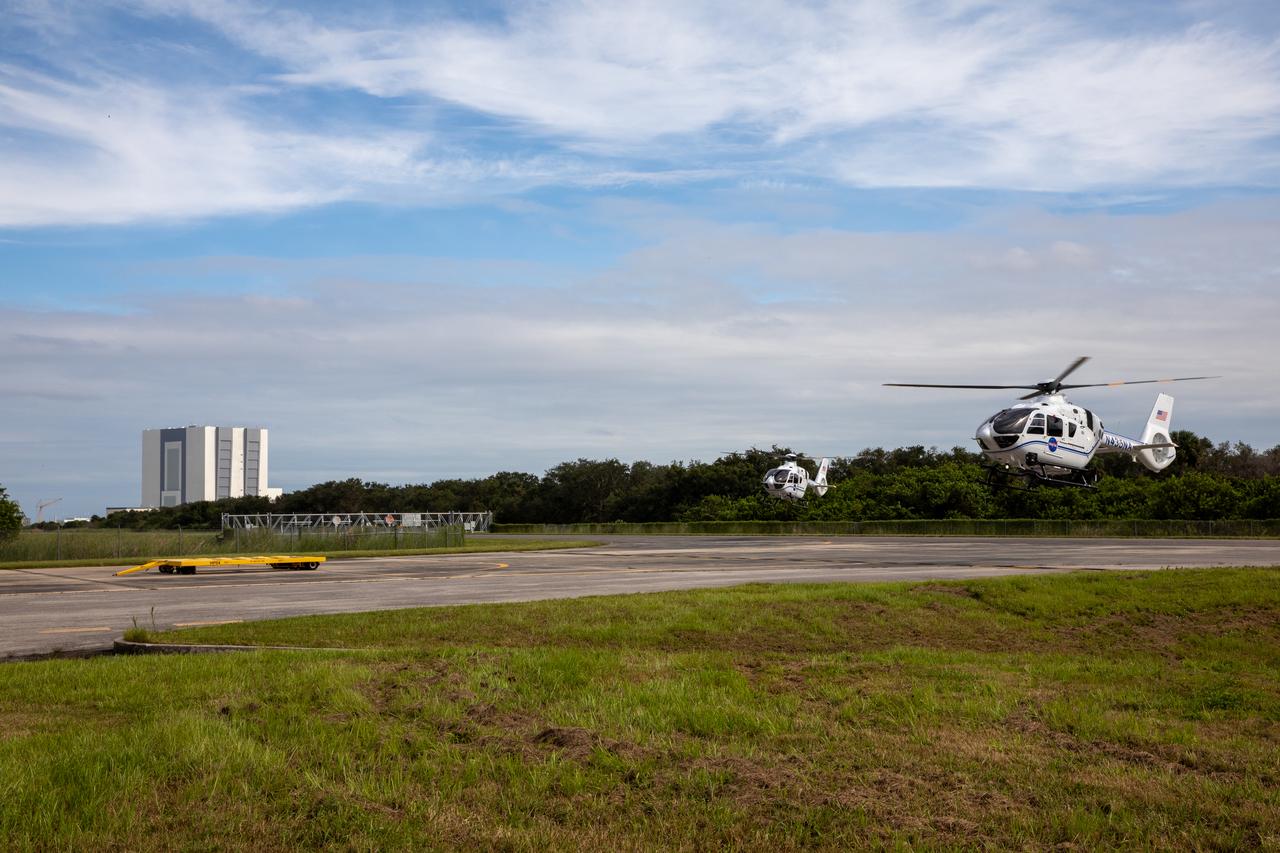
Two new Airbus H135 (T3) helicopters arrive at the Launch and Landing Facility runway at NASA’s Kennedy Space Center in Florida on Sept. 30, 2020. The H135 helicopters will replace the Bell Huey 2 security aircraft in service now, maintained by Kennedy’s Flight Operations team. These new helicopters provide a number of technological and safety advantages over the Hueys, such as more lifting power, greater stability in the air, and expanded medical capabilities. The team expects to fully transition to flying the two H135s later this year. A third is expected to arrive in early 2021, and with its arrival, will complete the fleet’s upgrade.
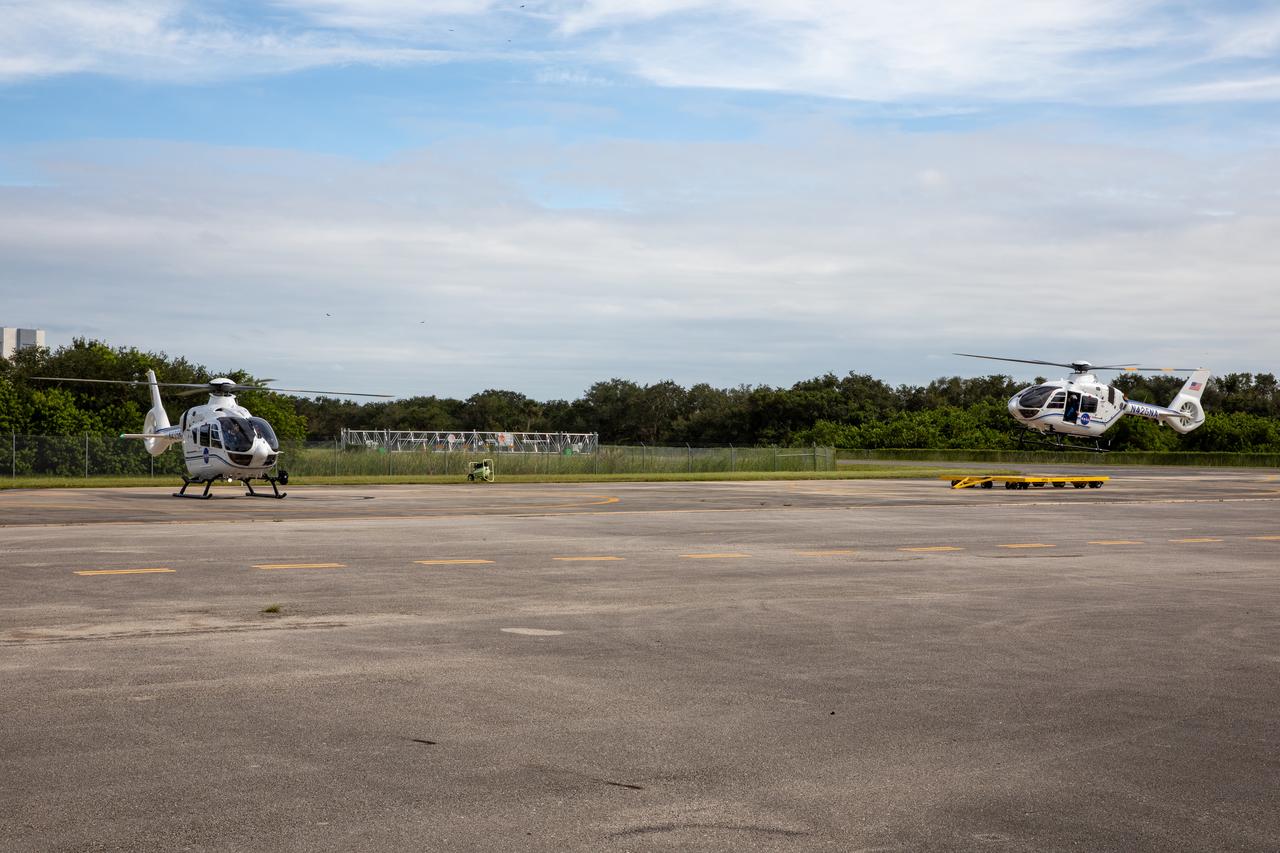
Two new Airbus H135 (T3) helicopters arrive at the Launch and Landing Facility runway at NASA’s Kennedy Space Center in Florida on Sept. 30, 2020. The H135 helicopters will replace the Bell Huey 2 security aircraft in service now, maintained by Kennedy’s Flight Operations team. These new helicopters provide a number of technological and safety advantages over the Hueys, such as more lifting power, greater stability in the air, and expanded medical capabilities. The team expects to fully transition to flying the two H135s later this year. A third is expected to arrive in early 2021, and with its arrival, will complete the fleet’s upgrade.
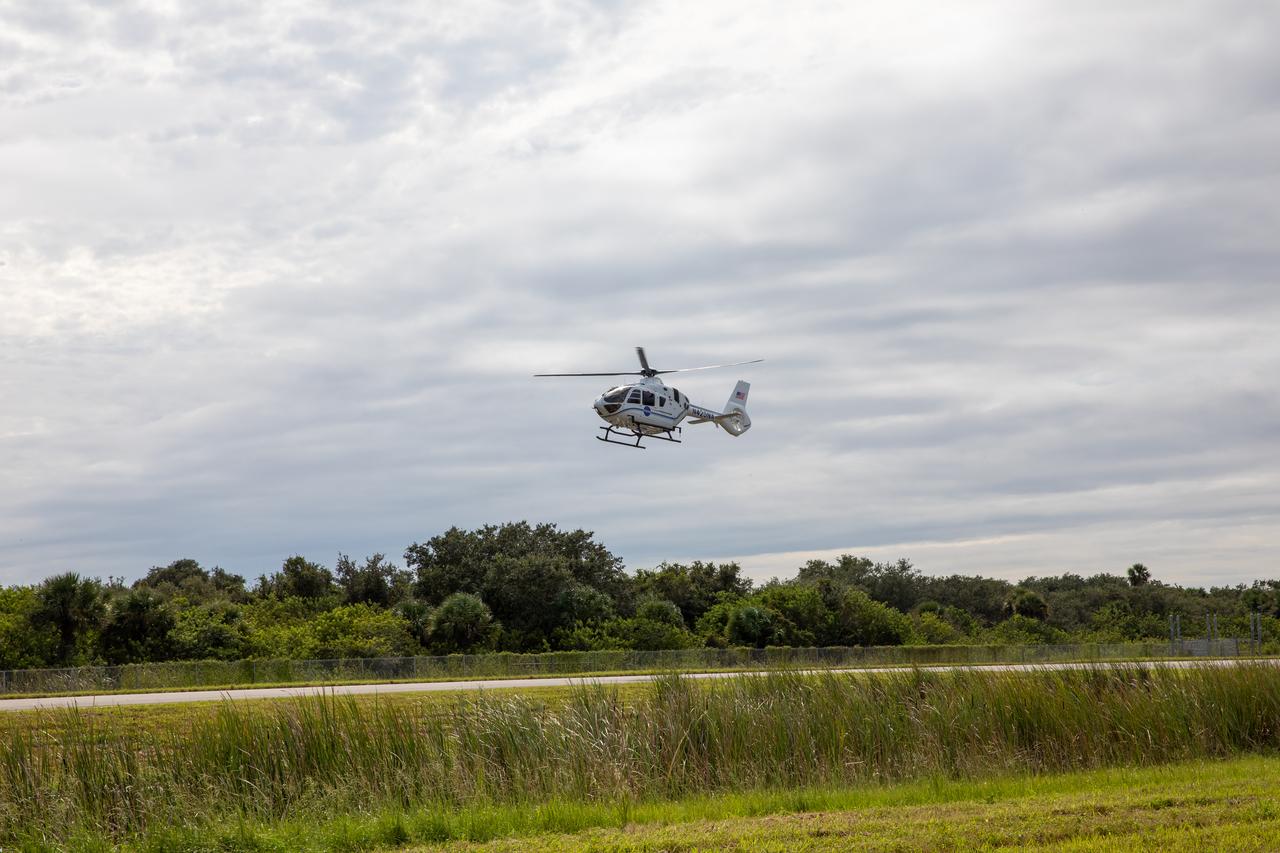
A new Airbus H135 (T3) helicopter arrives at the Launch and Landing Facility runway at NASA’s Kennedy Space Center in Florida on Sept. 30, 2020. A second H135 helicopter also was delivered on Sept. 30, and a third is expected to arrive in early 2021. The three H135 helicopters will replace the Bell Huey 2 security aircraft in service now, maintained by Kennedy’s Flight Operations team. These new helicopters provide a number of technological and safety advantages over the Hueys, such as more lifting power, greater stability in the air, and expanded medical capabilities. The team expects to fully transition to flying the two H135s later this year, and once the third arrives, the fleet’s upgrade will be complete.
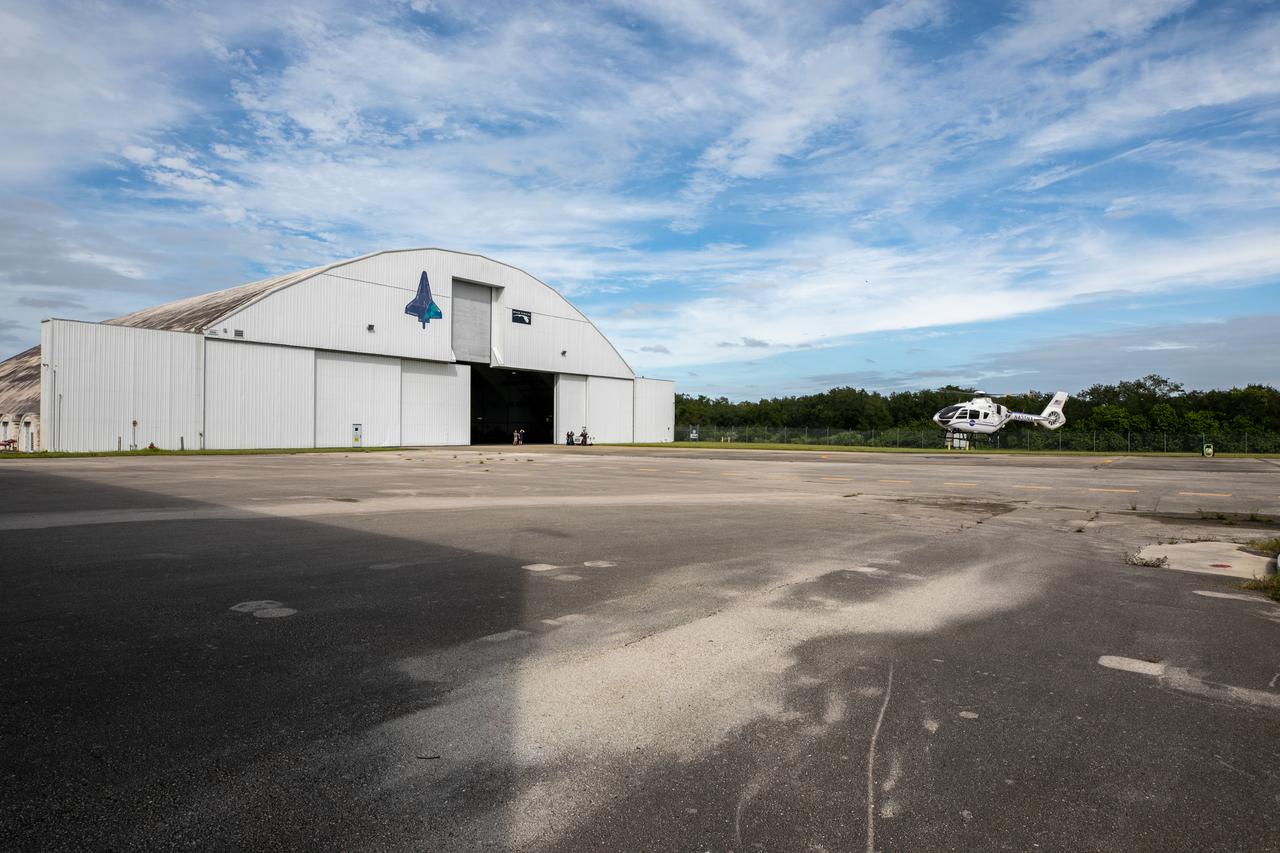
A new Airbus H135 (T3) helicopter arrives at the Launch and Landing Facility runway at NASA’s Kennedy Space Center in Florida on Sept. 30, 2020. A second H135 helicopter also was delivered on Sept. 30, and a third is expected to arrive in early 2021. The three H135 helicopters will replace the Bell Huey 2 security aircraft in service now, maintained by Kennedy’s Flight Operations team. These new helicopters provide a number of technological and safety advantages over the Hueys, such as more lifting power, greater stability in the air, and expanded medical capabilities. The team expects to fully transition to flying the two H135s later this year, and once the third arrives, the fleet’s upgrade will be complete.
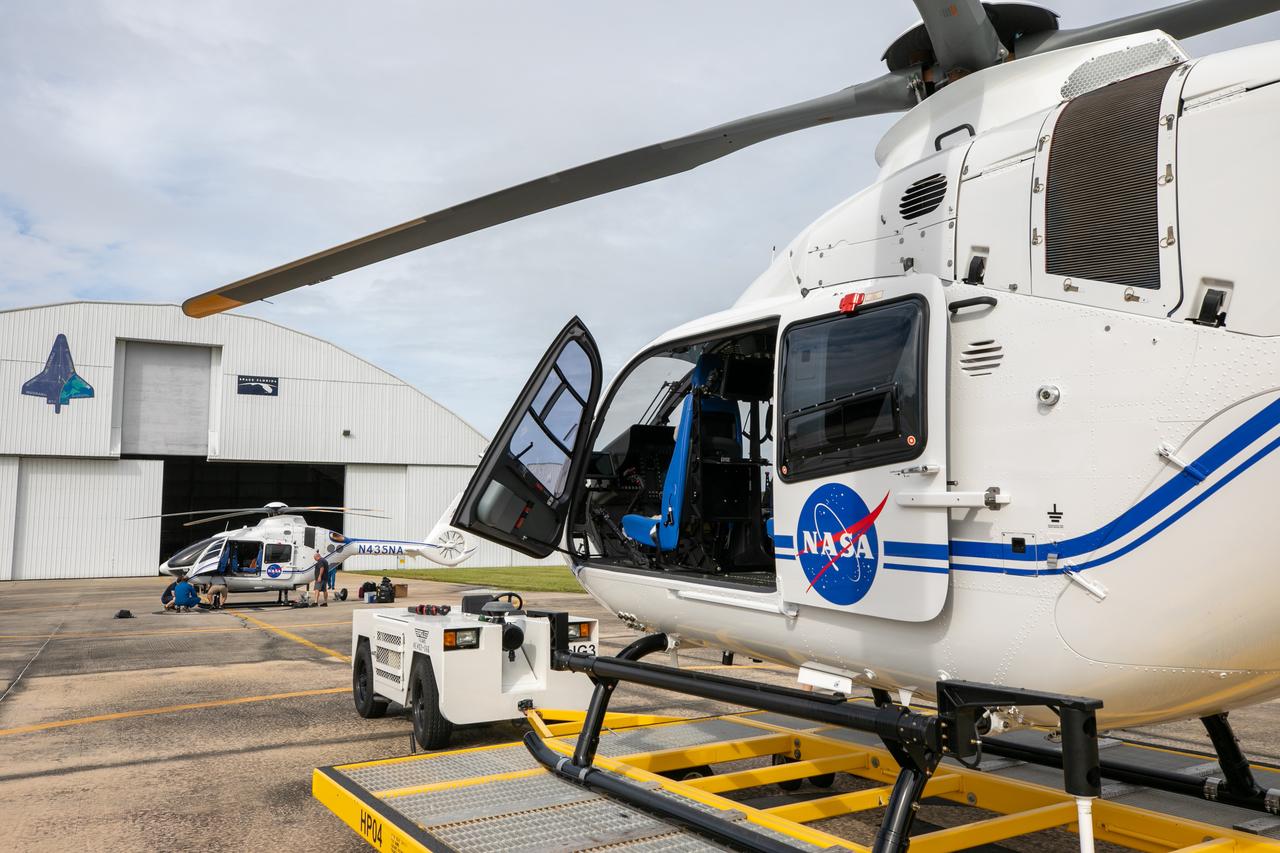
Two new Airbus H135 (T3) helicopters arrive at the Launch and Landing Facility runway at NASA’s Kennedy Space Center in Florida on Sept. 30, 2020. The H135 helicopters will replace the Bell Huey 2 security aircraft in service now, maintained by Kennedy’s Flight Operations team. These new helicopters provide a number of technological and safety advantages over the Hueys, such as more lifting power, greater stability in the air, and expanded medical capabilities. The team expects to fully transition to flying the two H135s later this year. A third is expected to arrive in early 2021, and with its arrival, will complete the fleet’s upgrade.
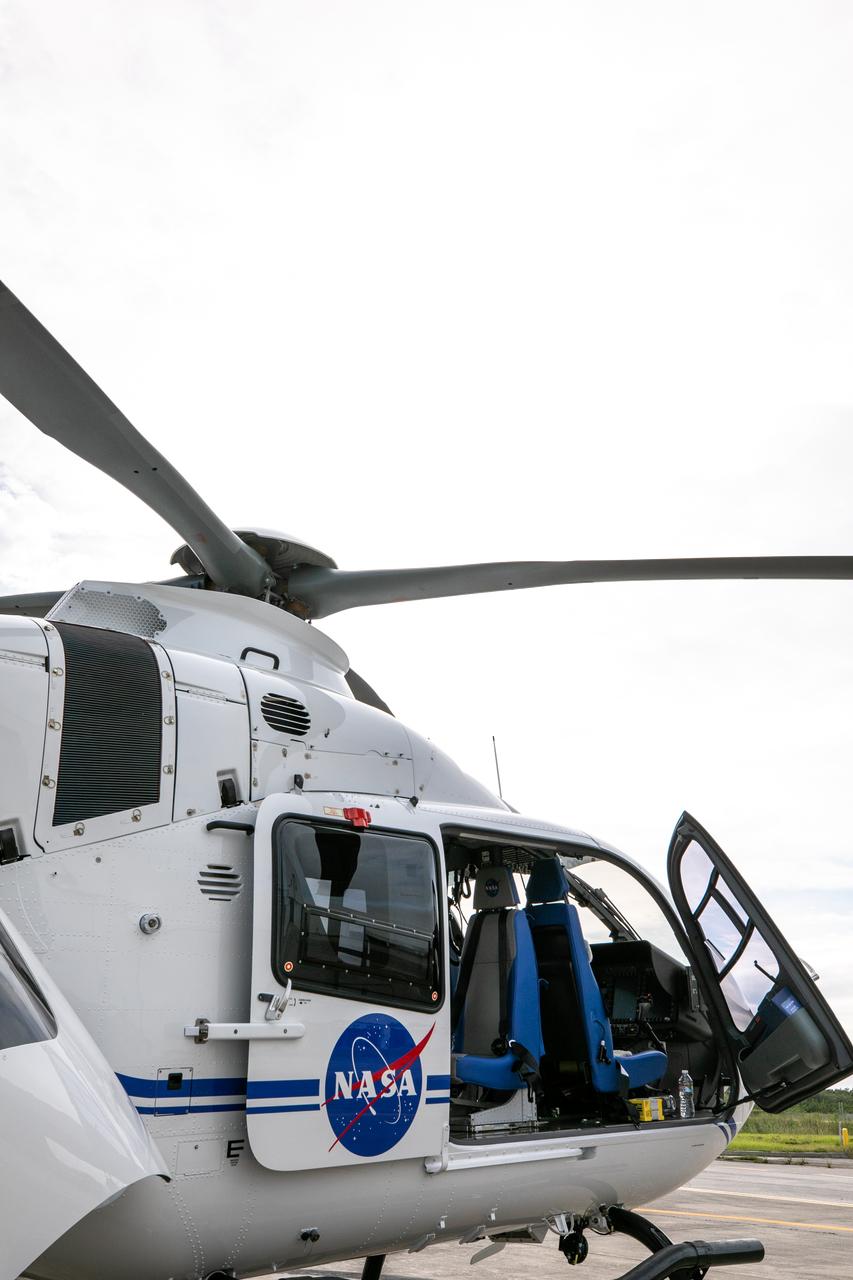
A new Airbus H135 (T3) helicopter arrives at the Launch and Landing Facility runway at NASA’s Kennedy Space Center in Florida on Sept. 30, 2020. A second H135 helicopter also was delivered on Sept. 30, and a third is expected to arrive in early 2021. The three H135 helicopters will replace the Bell Huey 2 security aircraft in service now, maintained by Kennedy’s Flight Operations team. These new helicopters provide a number of technological and safety advantages over the Hueys, such as more lifting power, greater stability in the air, and expanded medical capabilities. The team expects to fully transition to flying the two H135s later this year, and once the third arrives, the fleet’s upgrade will be complete.
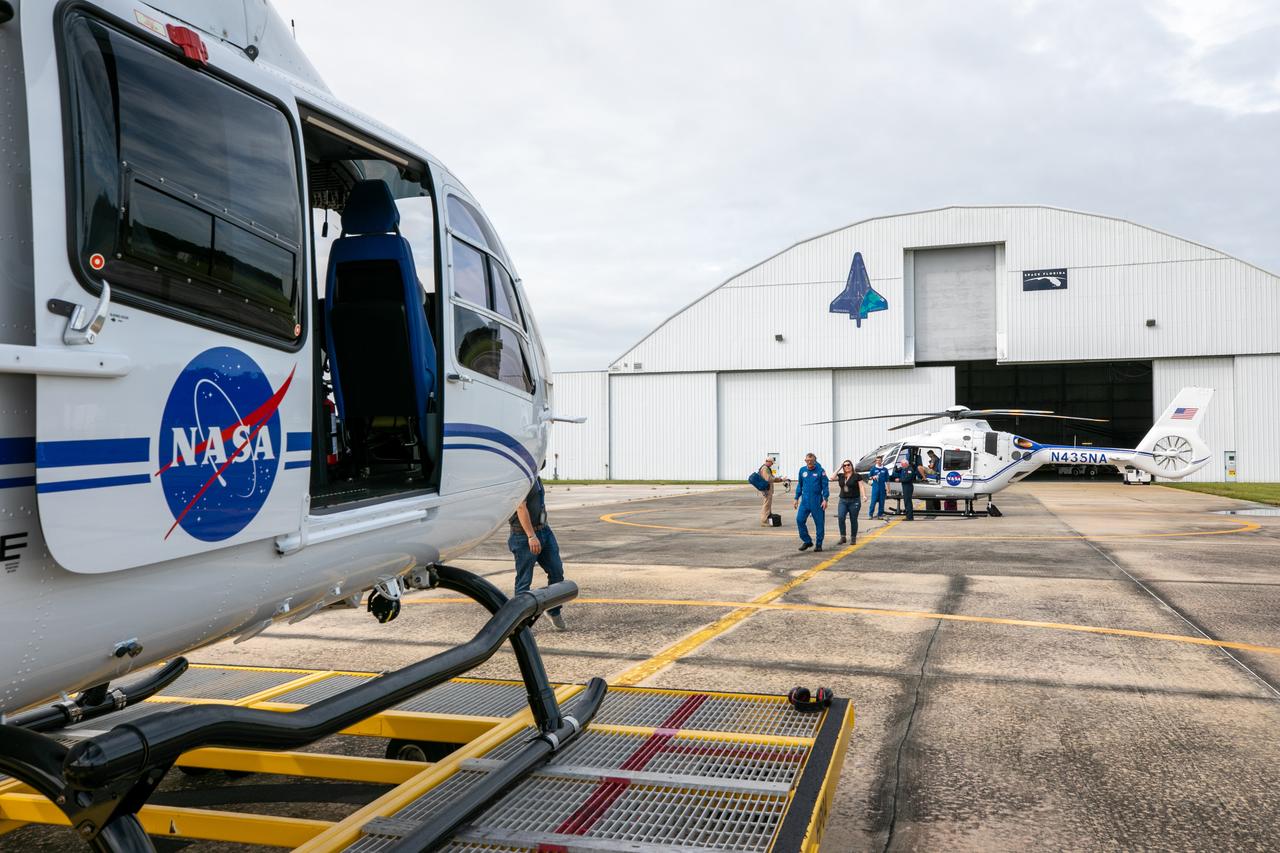
Two new Airbus H135 (T3) helicopters arrive at the Launch and Landing Facility runway at NASA’s Kennedy Space Center in Florida on Sept. 30, 2020. The H135 helicopters will replace the Bell Huey 2 security aircraft in service now, maintained by Kennedy’s Flight Operations team. These new helicopters provide a number of technological and safety advantages over the Hueys, such as more lifting power, greater stability in the air, and expanded medical capabilities. The team expects to fully transition to flying the two H135s later this year. A third is expected to arrive in early 2021, and with its arrival, will complete the fleet’s upgrade.
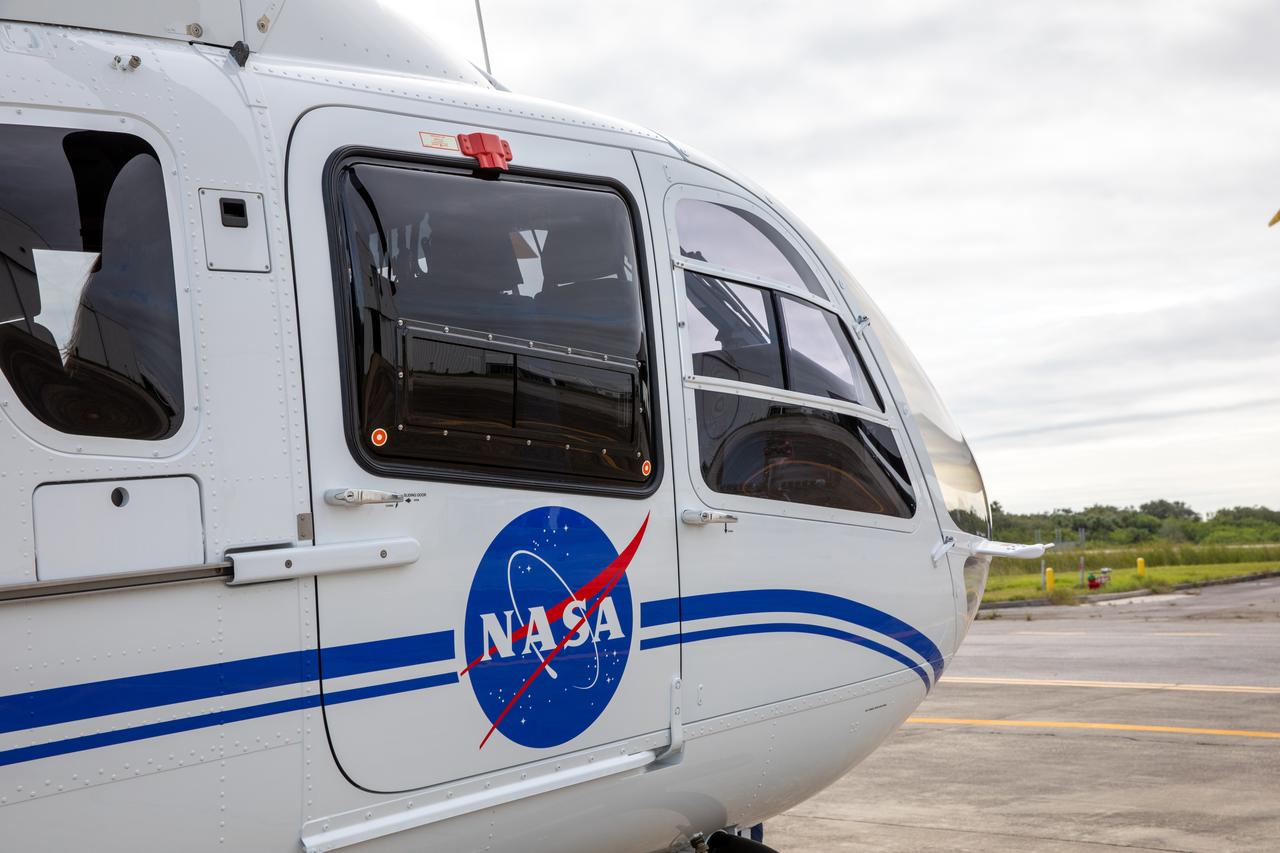
A new Airbus H135 (T3) helicopter arrives at the Launch and Landing Facility runway at NASA’s Kennedy Space Center in Florida on Sept. 30, 2020. A second H135 helicopter also was delivered on Sept. 30, and a third is expected to arrive in early 2021. The three H135 helicopters will replace the Bell Huey 2 security aircraft in service now, maintained by Kennedy’s Flight Operations team. These new helicopters provide a number of technological and safety advantages over the Hueys, such as more lifting power, greater stability in the air, and expanded medical capabilities. The team expects to fully transition to flying the two H135s later this year, and once the third arrives, the fleet’s upgrade will be complete.
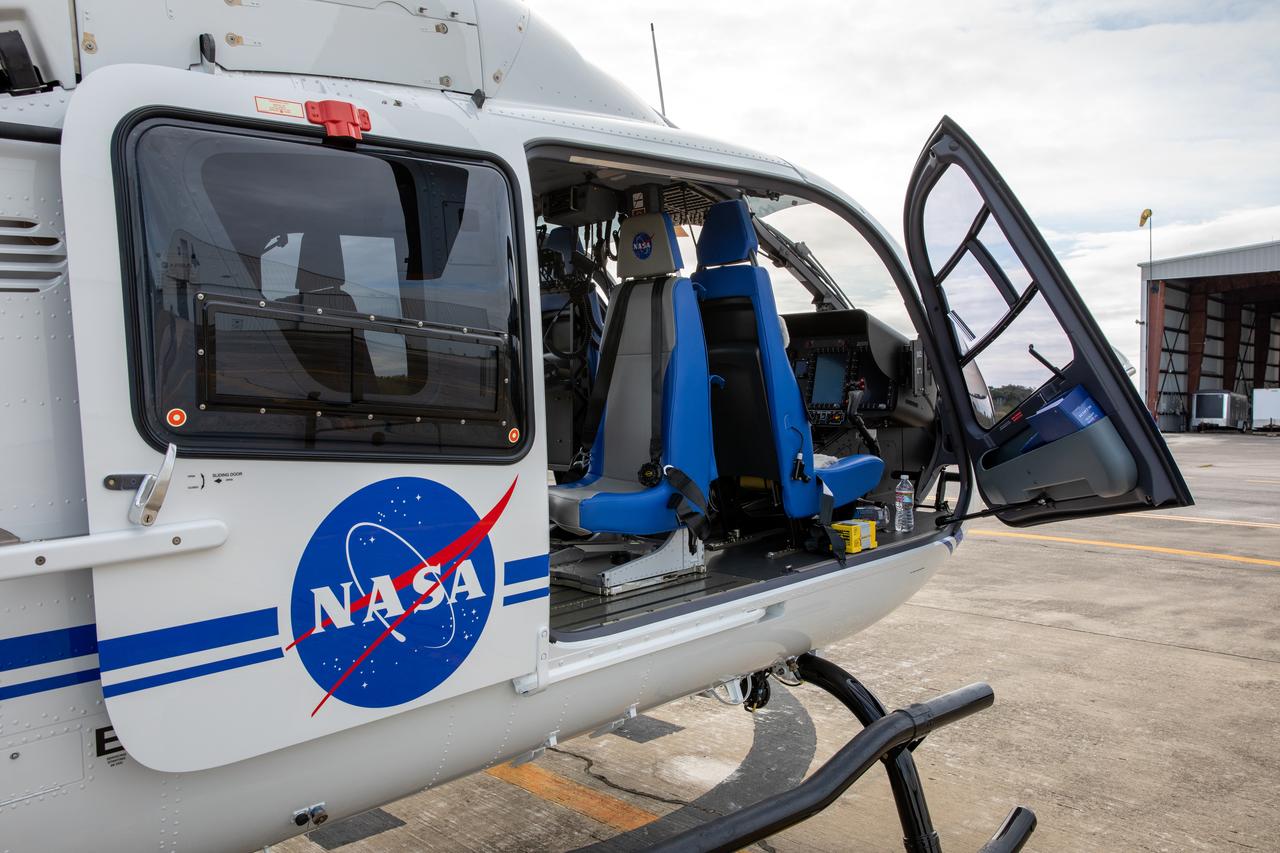
The interior of a new Airbus H135 (T3) helicopter is displayed after arriving at the Launch and Landing Facility runway at NASA’s Kennedy Space Center in Florida on Sept. 30, 2020. A second H135 helicopter also was delivered on Sept. 30, and a third is expected to arrive in early 2021. The three H135 helicopters will replace the Bell Huey 2 security aircraft in service now, maintained by Kennedy’s Flight Operations team. These new helicopters provide a number of technological and safety advantages over the Hueys, such as more lifting power, greater stability in the air, and expanded medical capabilities. The team expects to fully transition to flying the two H135s later this year, and once the third arrives, the fleet’s upgrade will be complete.
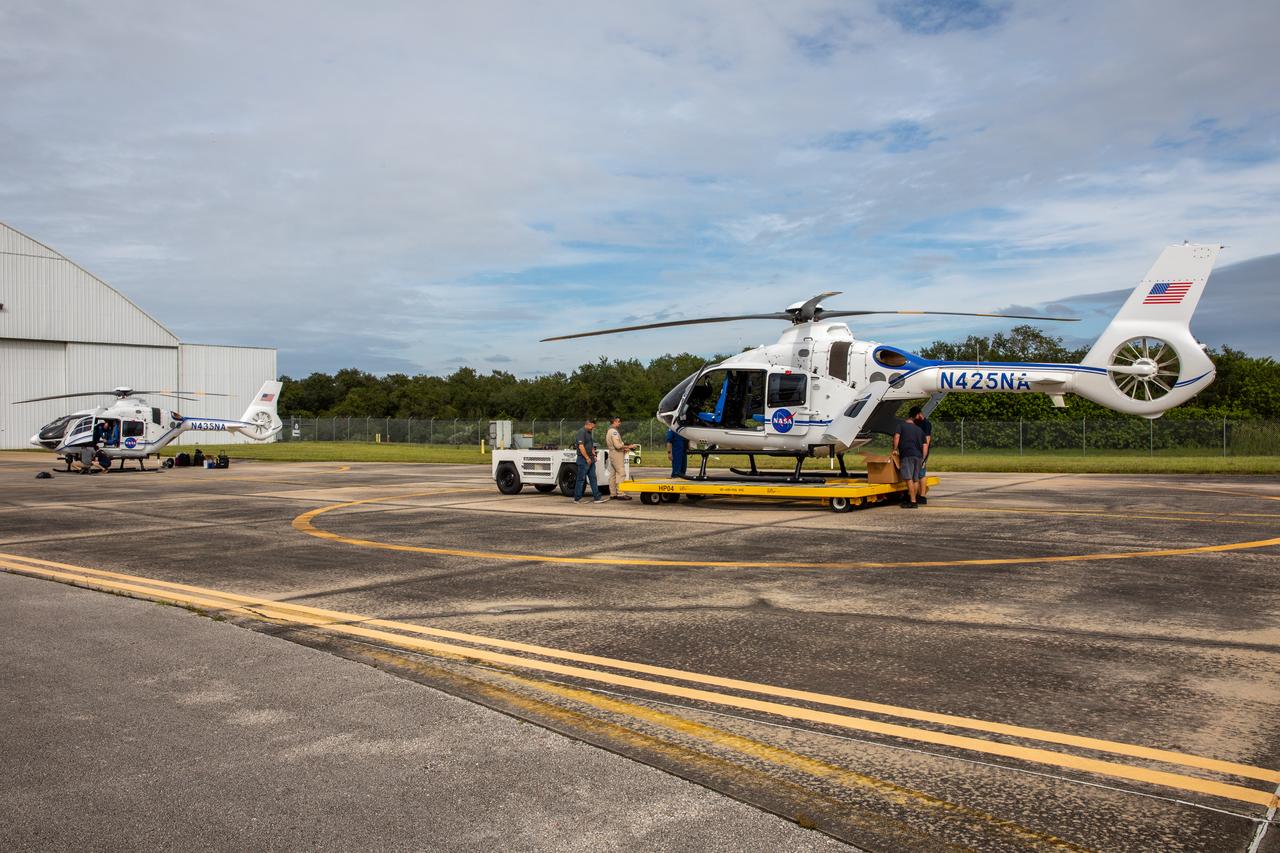
Two new Airbus H135 (T3) helicopters arrive at the Launch and Landing Facility runway at NASA’s Kennedy Space Center in Florida on Sept. 30, 2020. The H135 helicopters will replace the Bell Huey 2 security aircraft in service now, maintained by Kennedy’s Flight Operations team. These new helicopters provide a number of technological and safety advantages over the Hueys, such as more lifting power, greater stability in the air, and expanded medical capabilities. The team expects to fully transition to flying the two H135s later this year. A third is expected to arrive in early 2021, and with its arrival, will complete the fleet’s upgrade.
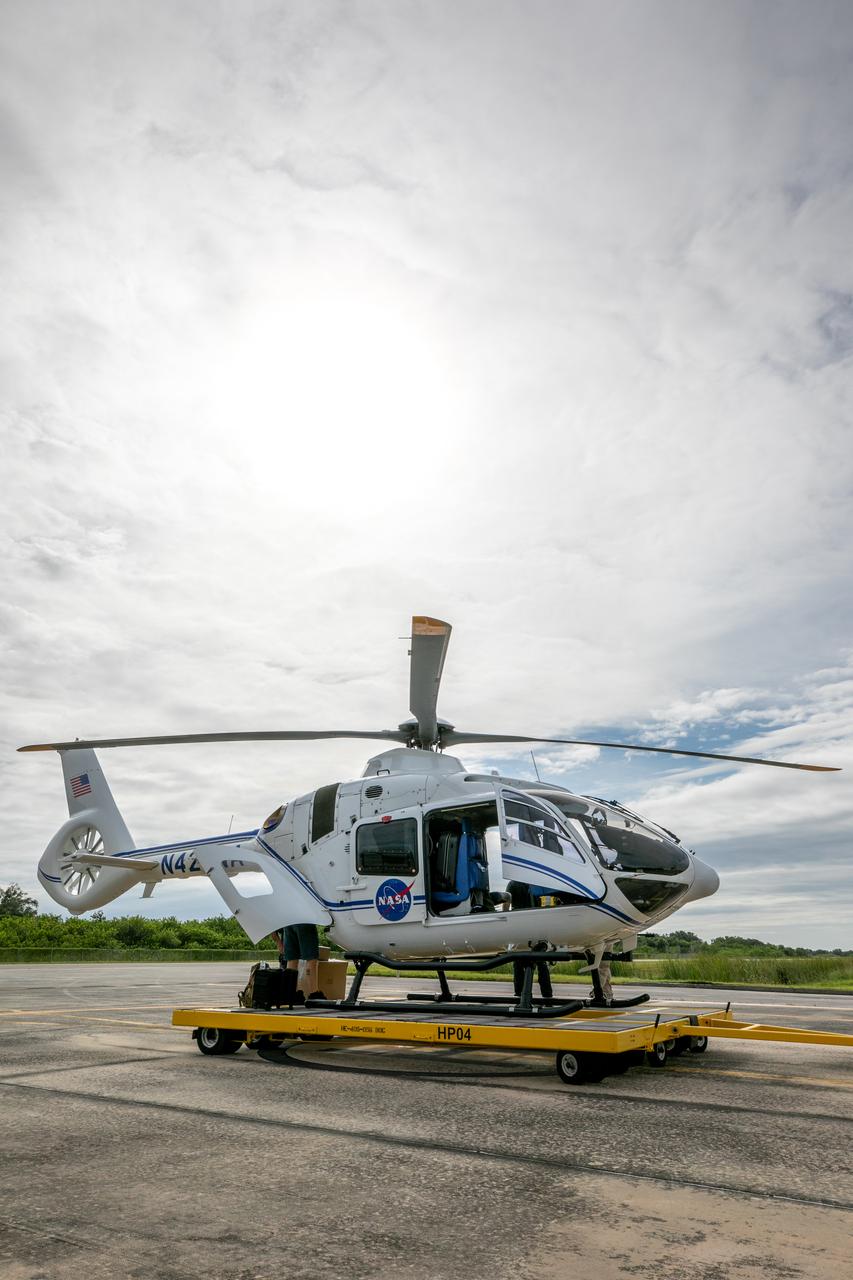
A new Airbus H135 (T3) helicopter arrives at the Launch and Landing Facility runway at NASA’s Kennedy Space Center in Florida on Sept. 30, 2020. A second H135 helicopter also was delivered on Sept. 30, and a third is expected to arrive in early 2021. The three H135 helicopters will replace the Bell Huey 2 security aircraft in service now, maintained by Kennedy’s Flight Operations team. These new helicopters provide a number of technological and safety advantages over the Hueys, such as more lifting power, greater stability in the air, and expanded medical capabilities. The team expects to fully transition to flying the two H135s later this year, and once the third arrives, the fleet’s upgrade will be complete.
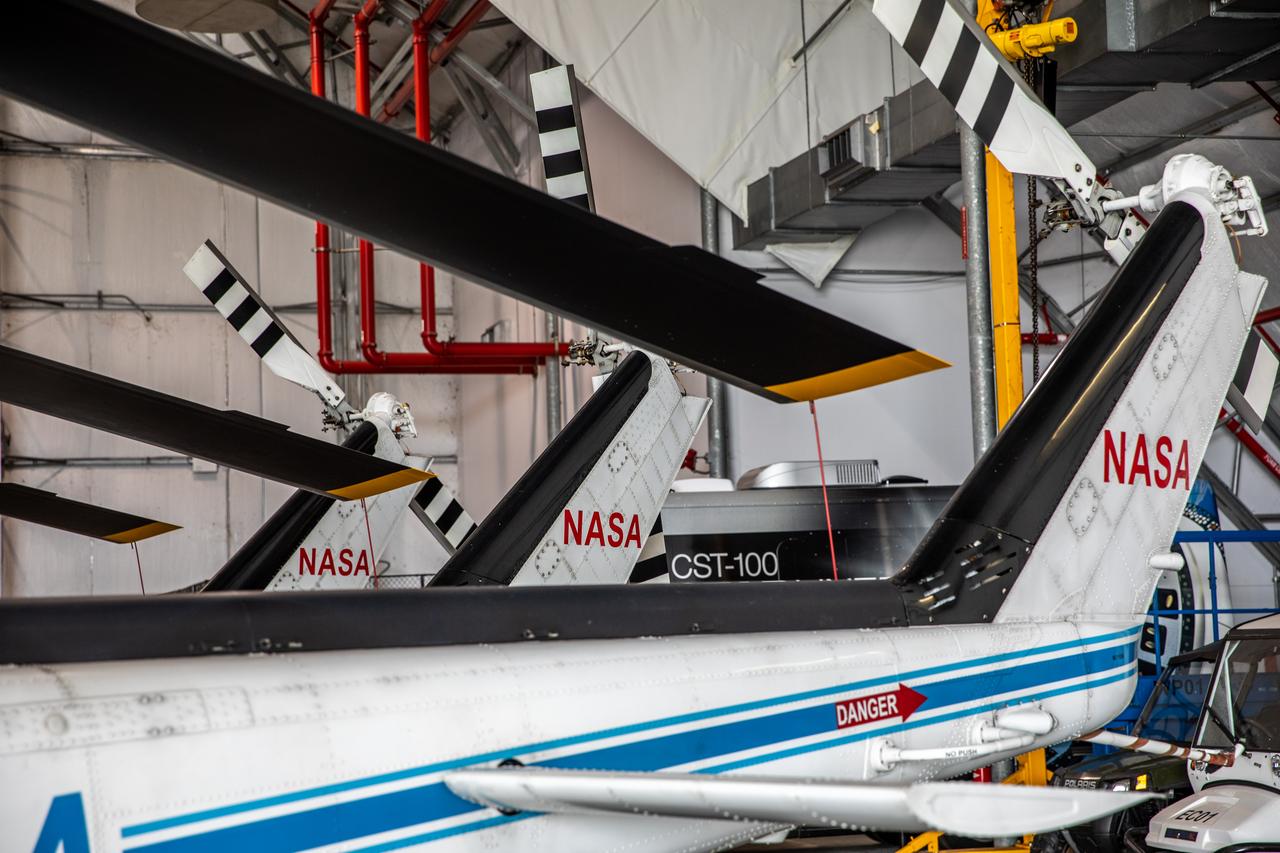
The three Bell Huey 2 helicopters utilized by Kennedy Space Center’s Flight Operations team for security purposes are photographed inside the Launch and Landing Facility hangar on Sept. 30, 2020. Two new Airbus H135 (T3) helicopters arrived at the Florida spaceport on Sept. 30 to replace the Bell Huey 2 aircraft in service now. The new helicopters provide a number of technological and safety advantages over the Hueys, such as more lifting power, greater stability in the air, and expanded medical capabilities. The team expects to fully transition to flying the two H135 aircraft later this year. A third is expected to arrive in early 2021, and with its arrival, will complete the fleet’s upgrade.
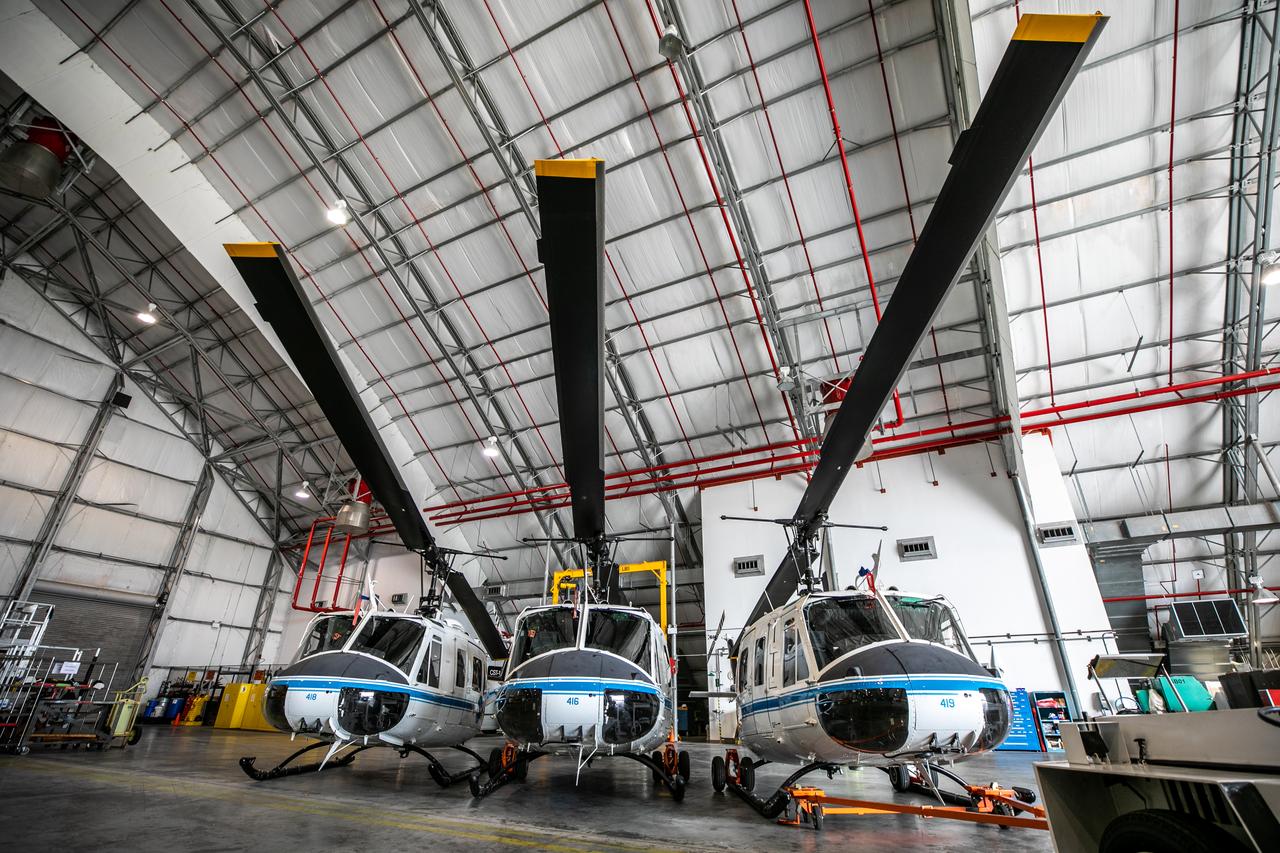
The three Bell Huey 2 helicopters utilized by Kennedy Space Center’s Flight Operations team for security purposes are photographed inside the Launch and Landing Facility hangar on Sept. 30, 2020. Two new Airbus H135 (T3) helicopters arrived at the Florida spaceport on Sept. 30 to replace the Bell Huey 2 aircraft in service now. The new helicopters provide a number of technological and safety advantages over the Hueys, such as more lifting power, greater stability in the air, and expanded medical capabilities. The team expects to fully transition to flying the two H135 aircraft later this year. A third is expected to arrive in early 2021, and with its arrival, will complete the fleet’s upgrade.
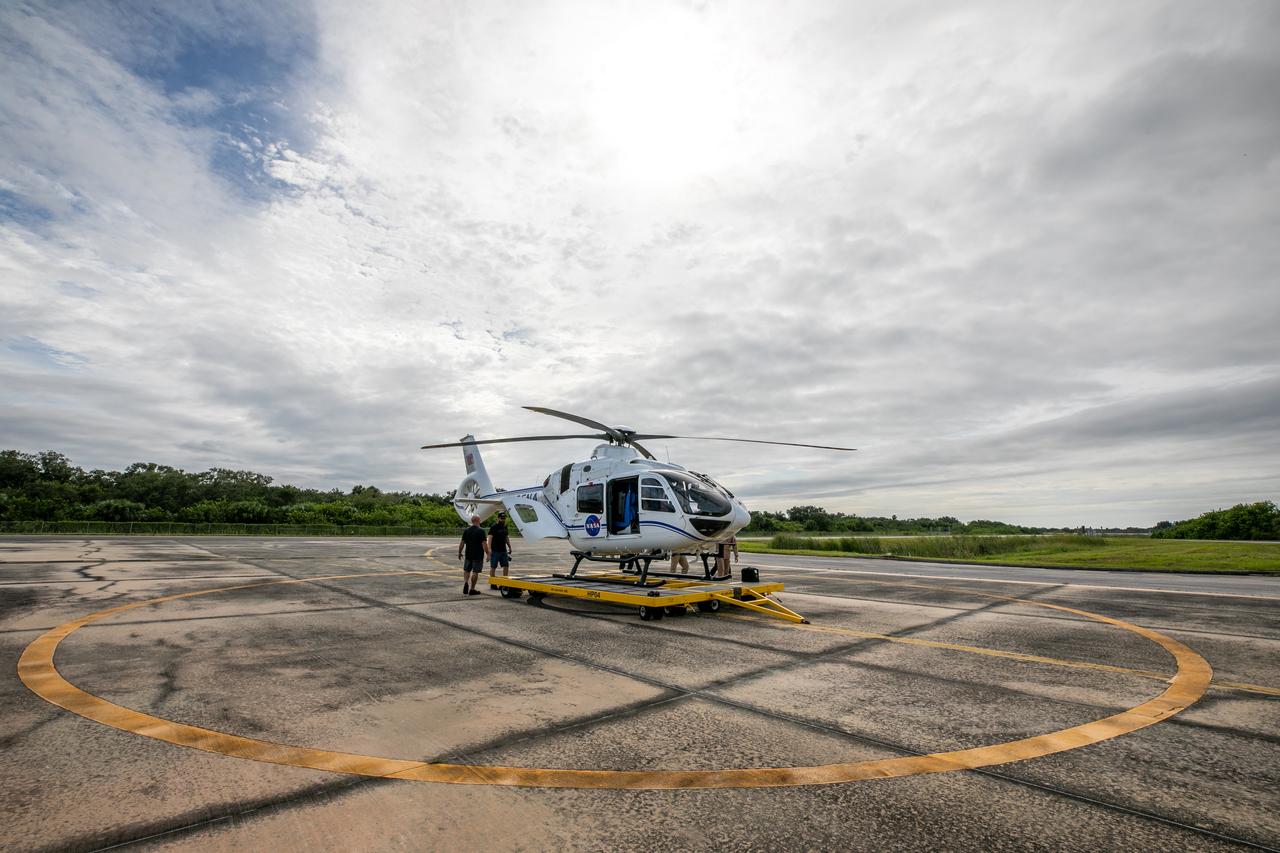
A new Airbus H135 (T3) helicopter arrives at the Launch and Landing Facility runway at NASA’s Kennedy Space Center in Florida on Sept. 30, 2020. A second H135 helicopter also was delivered on Sept. 30, and a third is expected to arrive in early 2021. The three H135 helicopters will replace the Bell Huey 2 security aircraft in service now, maintained by Kennedy’s Flight Operations team. These new helicopters provide a number of technological and safety advantages over the Hueys, such as more lifting power, greater stability in the air, and expanded medical capabilities. The team expects to fully transition to flying the two H135s later this year, and once the third arrives, the fleet’s upgrade will be complete.
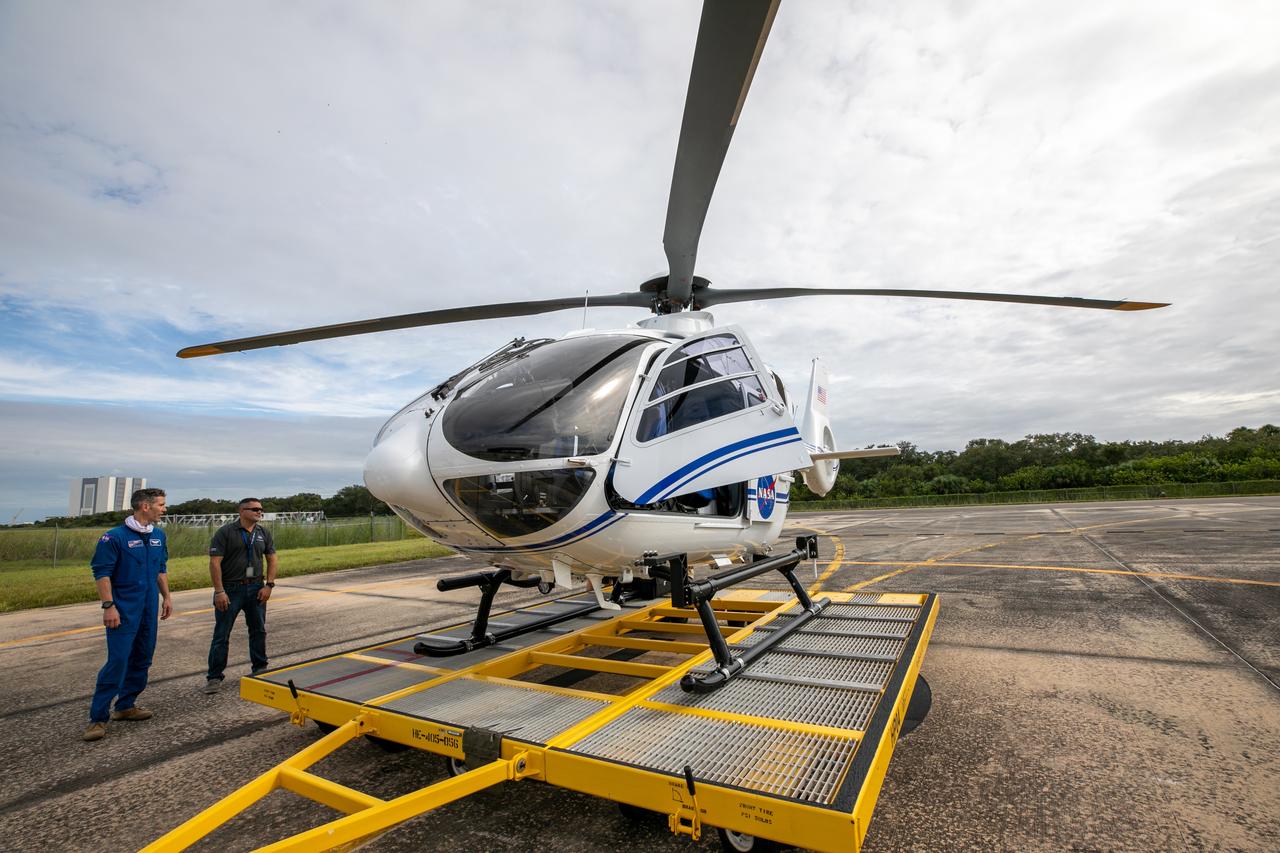
A new Airbus H135 (T3) helicopter arrives at the Launch and Landing Facility runway at NASA’s Kennedy Space Center in Florida on Sept. 30, 2020. A second H135 helicopter also was delivered on Sept. 30, and a third is expected to arrive in early 2021. The three H135 helicopters will replace the Bell Huey 2 security aircraft in service now, maintained by Kennedy’s Flight Operations team. These new helicopters provide a number of technological and safety advantages over the Hueys, such as more lifting power, greater stability in the air, and expanded medical capabilities. The team expects to fully transition to flying the two H135s later this year, and once the third arrives, the fleet’s upgrade will be complete.
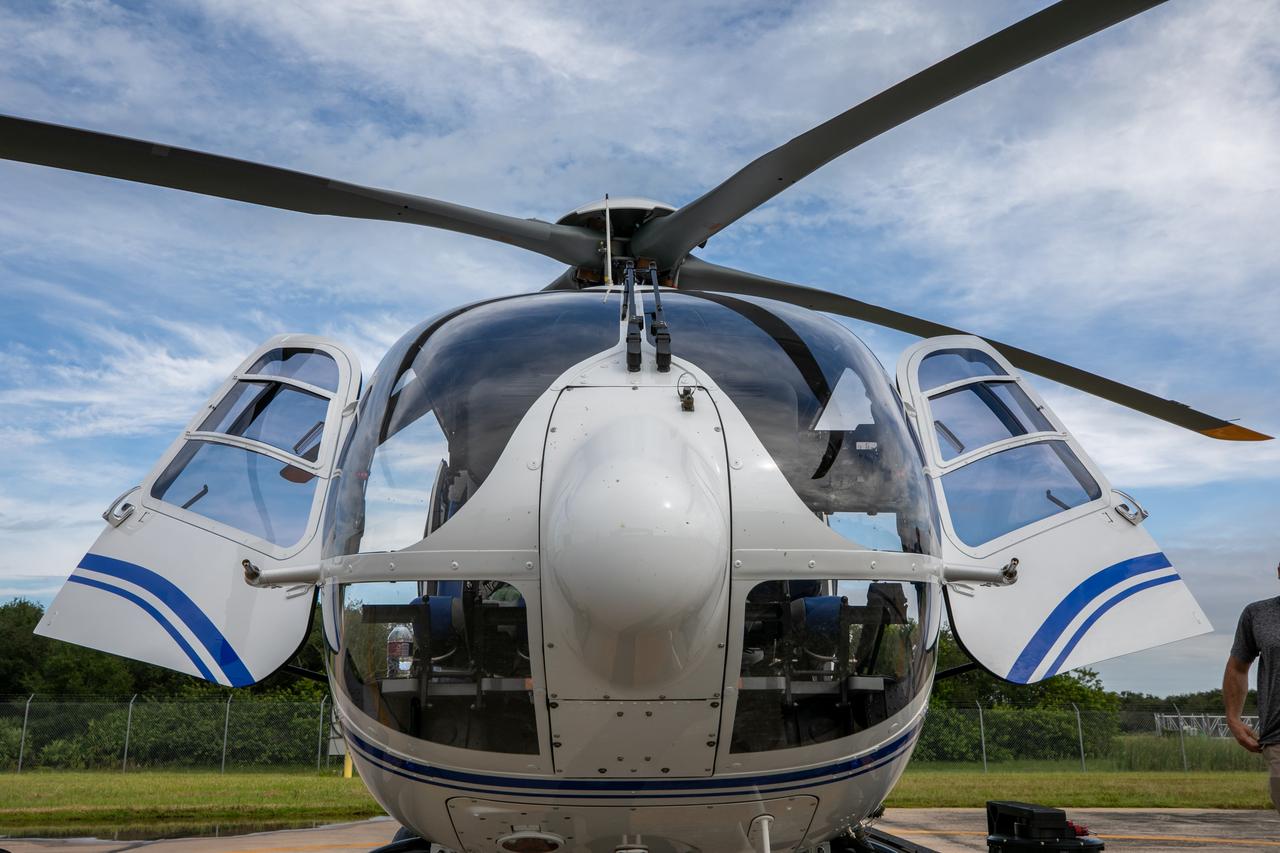
A new Airbus H135 (T3) helicopter arrives at the Launch and Landing Facility runway at NASA’s Kennedy Space Center in Florida on Sept. 30, 2020. A second H135 helicopter also was delivered on Sept. 30, and a third is expected to arrive in early 2021. The three H135 helicopters will replace the Bell Huey 2 security aircraft in service now, maintained by Kennedy’s Flight Operations team. These new helicopters provide a number of technological and safety advantages over the Hueys, such as more lifting power, greater stability in the air, and expanded medical capabilities. The team expects to fully transition to flying the two H135s later this year, and once the third arrives, the fleet’s upgrade will be complete.
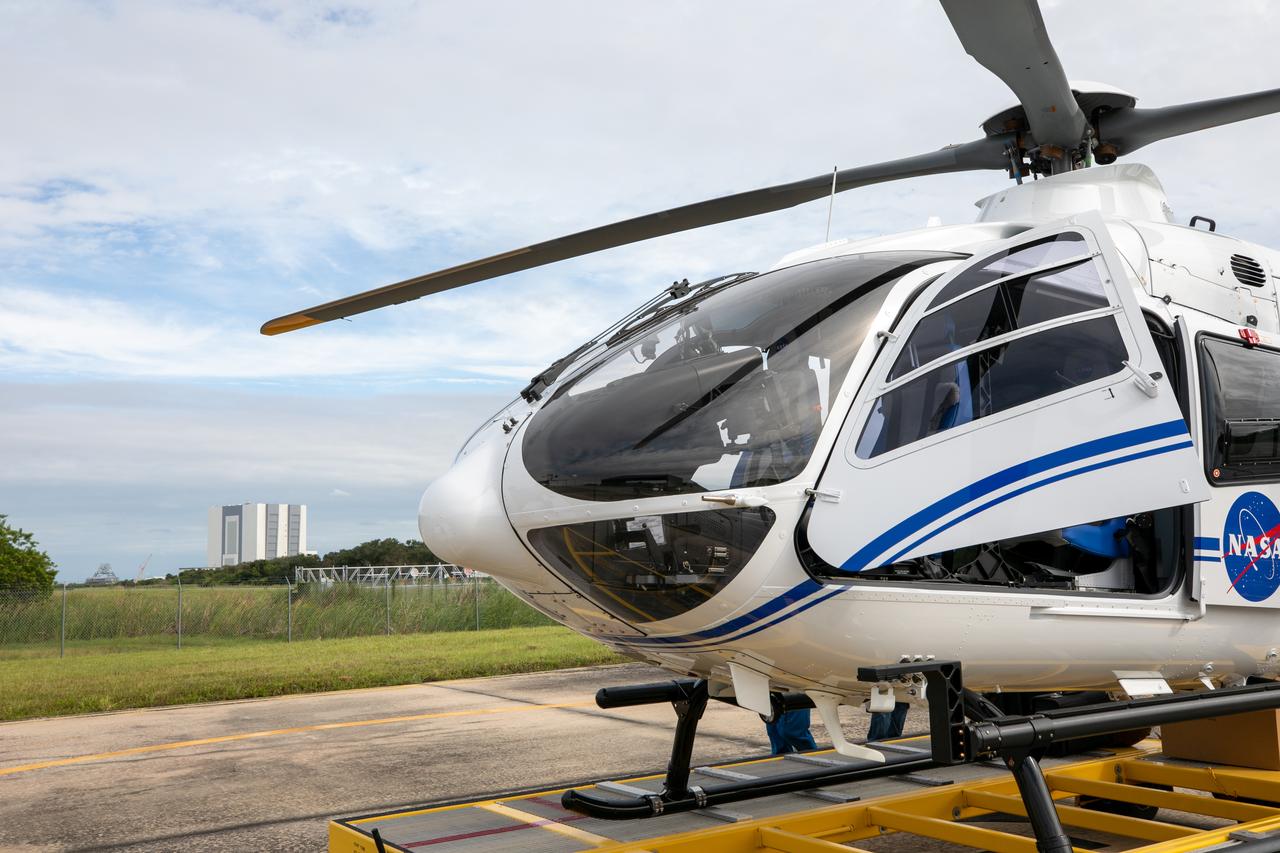
A new Airbus H135 (T3) helicopter arrives at the Launch and Landing Facility runway at NASA’s Kennedy Space Center in Florida on Sept. 30, 2020. A second H135 helicopter also was delivered on Sept. 30, and a third is expected to arrive in early 2021. The three H135 helicopters will replace the Bell Huey 2 security aircraft in service now, maintained by Kennedy’s Flight Operations team. These new helicopters provide a number of technological and safety advantages over the Hueys, such as more lifting power, greater stability in the air, and expanded medical capabilities. The team expects to fully transition to flying the two H135s later this year, and once the third arrives, the fleet’s upgrade will be complete.
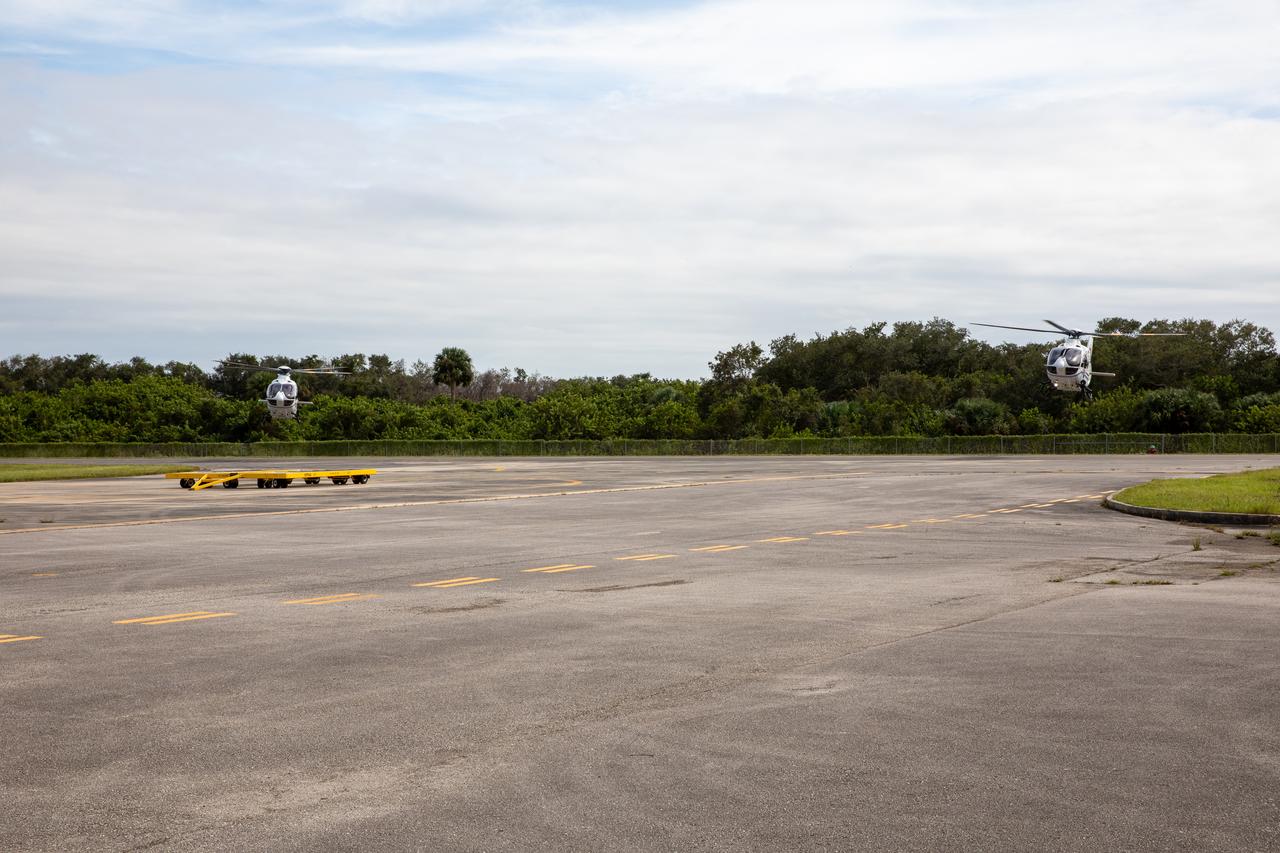
Two new Airbus H135 (T3) helicopters arrive at the Launch and Landing Facility runway at NASA’s Kennedy Space Center in Florida on Sept. 30, 2020. The H135 helicopters will replace the Bell Huey 2 security aircraft in service now, maintained by Kennedy’s Flight Operations team. These new helicopters provide a number of technological and safety advantages over the Hueys, such as more lifting power, greater stability in the air, and expanded medical capabilities. The team expects to fully transition to flying the two H135s later this year. A third is expected to arrive in early 2021, and with its arrival, will complete the fleet’s upgrade.
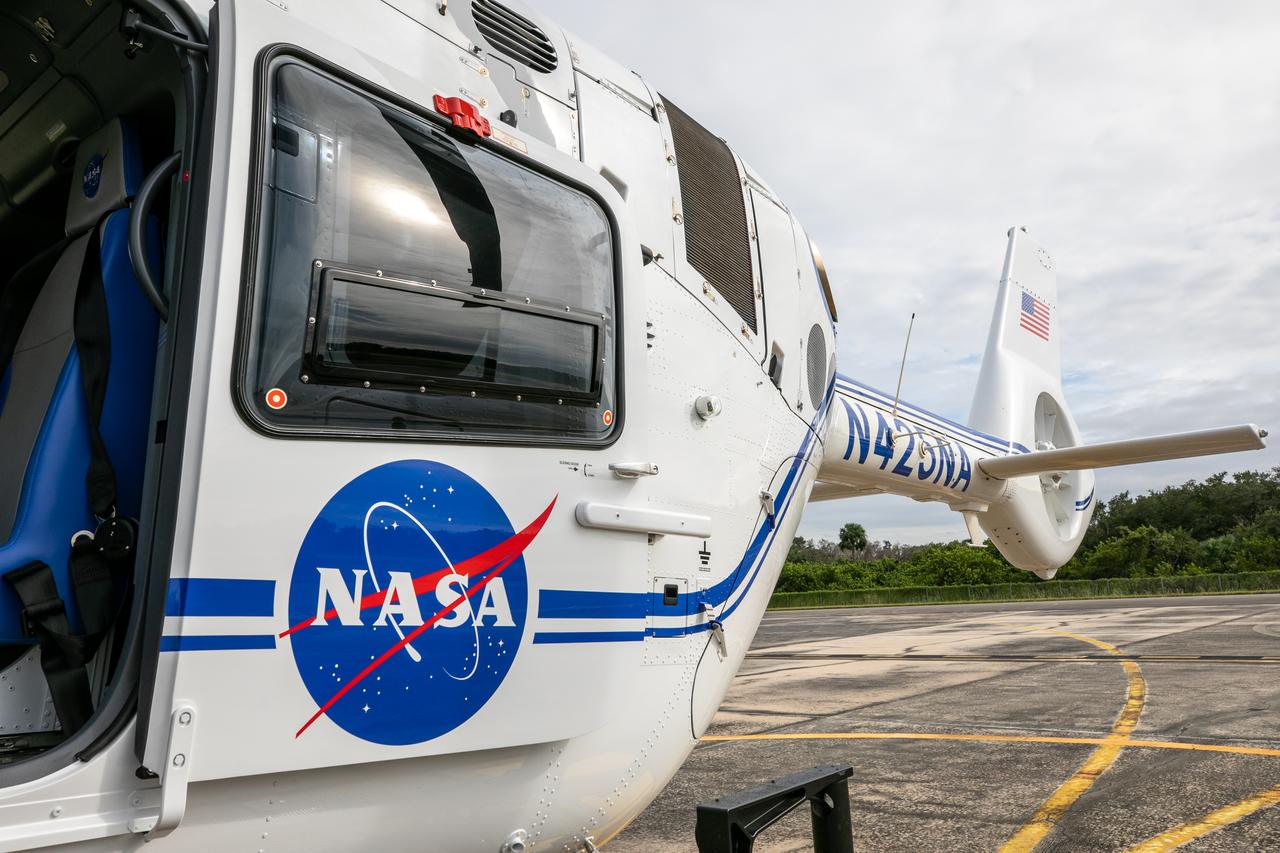
A new Airbus H135 (T3) helicopter arrives at the Launch and Landing Facility runway at NASA’s Kennedy Space Center in Florida on Sept. 30, 2020. A second H135 helicopter also was delivered on Sept. 30, and a third is expected to arrive in early 2021. The three H135 helicopters will replace the Bell Huey 2 security aircraft in service now, maintained by Kennedy’s Flight Operations team. These new helicopters provide a number of technological and safety advantages over the Hueys, such as more lifting power, greater stability in the air, and expanded medical capabilities. The team expects to fully transition to flying the two H135s later this year, and once the third arrives, the fleet’s upgrade will be complete.
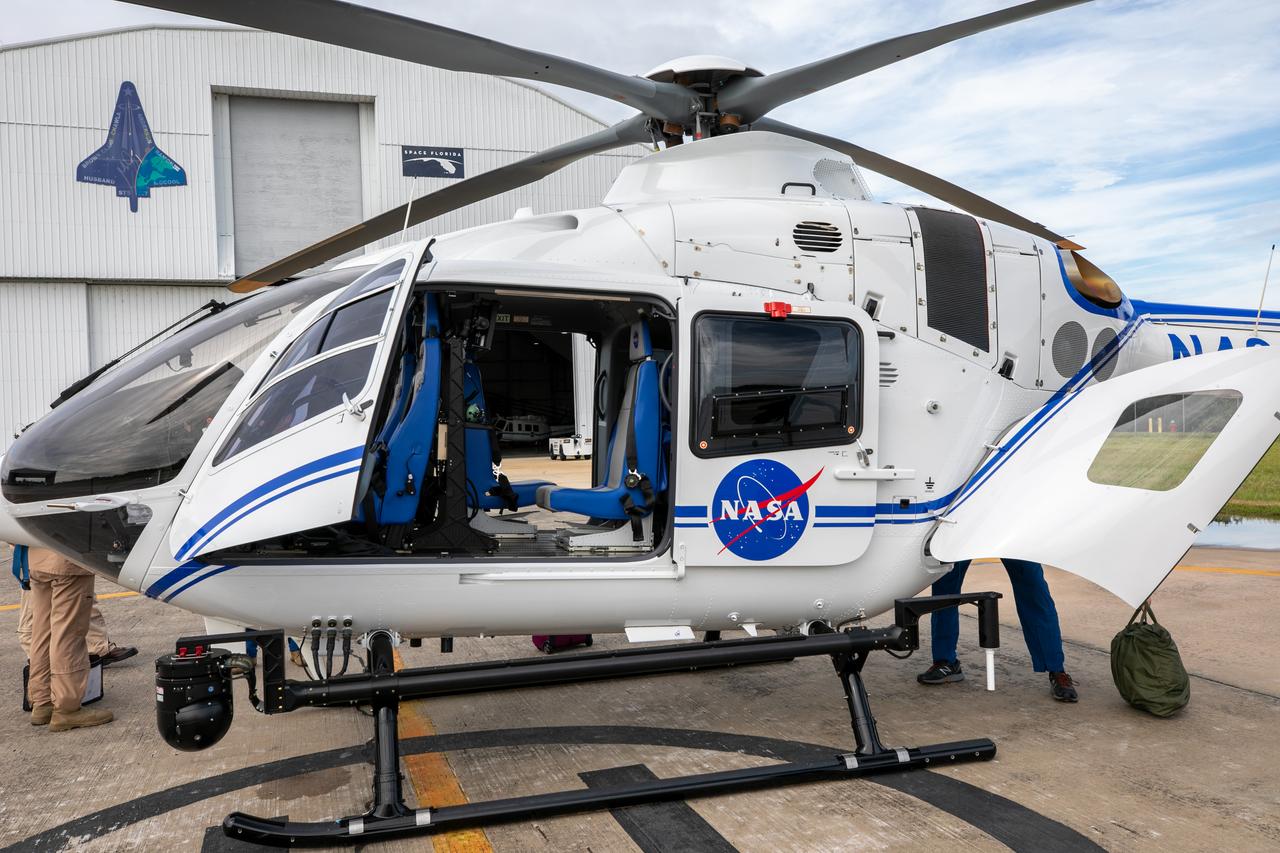
A new Airbus H135 (T3) helicopter arrives at the Launch and Landing Facility runway at NASA’s Kennedy Space Center in Florida on Sept. 30, 2020. A second H135 helicopter also was delivered on Sept. 30, and a third is expected to arrive in early 2021. The three H135 helicopters will replace the Bell Huey 2 security aircraft in service now, maintained by Kennedy’s Flight Operations team. These new helicopters provide a number of technological and safety advantages over the Hueys, such as more lifting power, greater stability in the air, and expanded medical capabilities. The team expects to fully transition to flying the two H135s later this year, and once the third arrives, the fleet’s upgrade will be complete.
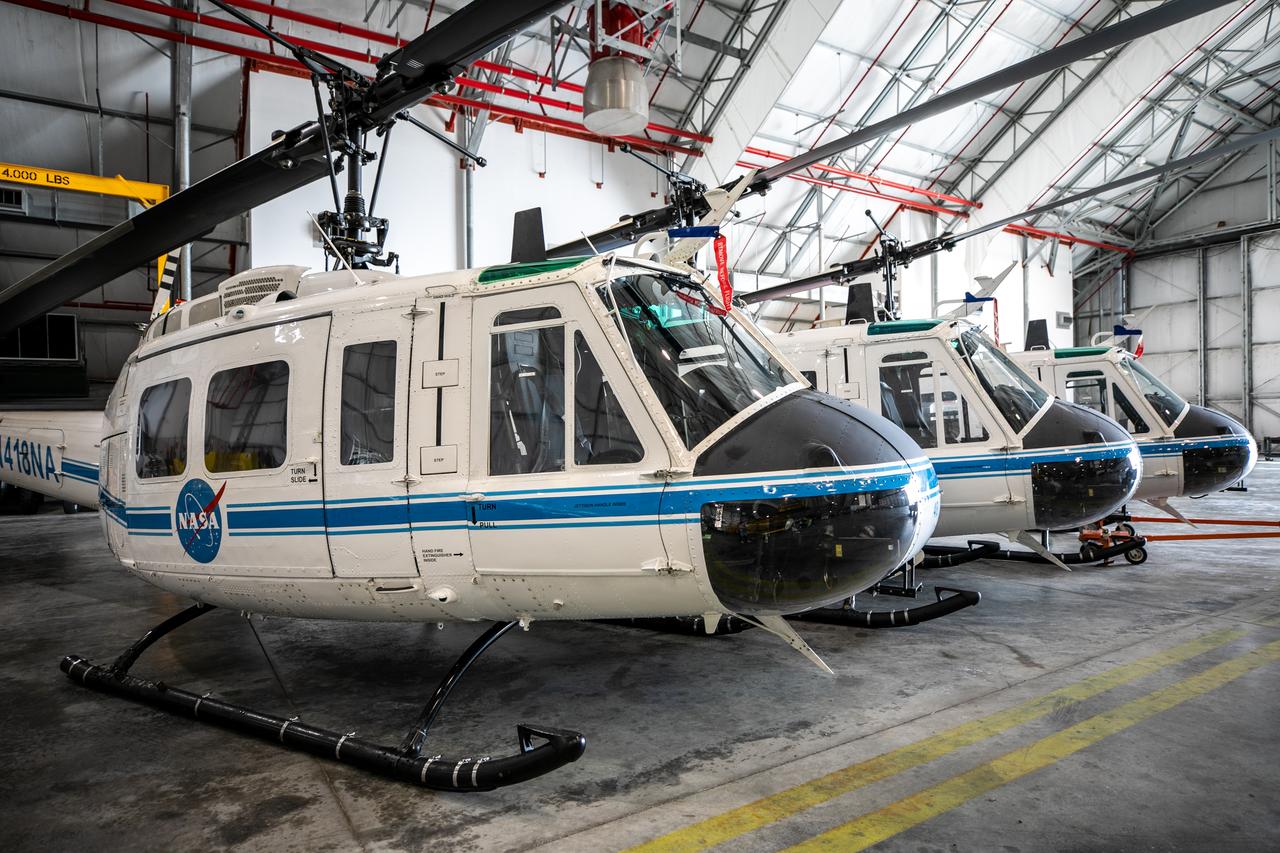
The three Bell Huey 2 helicopters utilized by Kennedy Space Center’s Flight Operations team for security purposes are photographed inside the Launch and Landing Facility hangar on Sept. 30, 2020. Two new Airbus H135 (T3) helicopters arrived at the Florida spaceport on Sept. 30 to replace the Bell Huey 2 aircraft in service now. The new helicopters provide a number of technological and safety advantages over the Hueys, such as more lifting power, greater stability in the air, and expanded medical capabilities. The team expects to fully transition to flying the two H135 aircraft later this year. A third is expected to arrive in early 2021, and with its arrival, will complete the fleet’s upgrade.
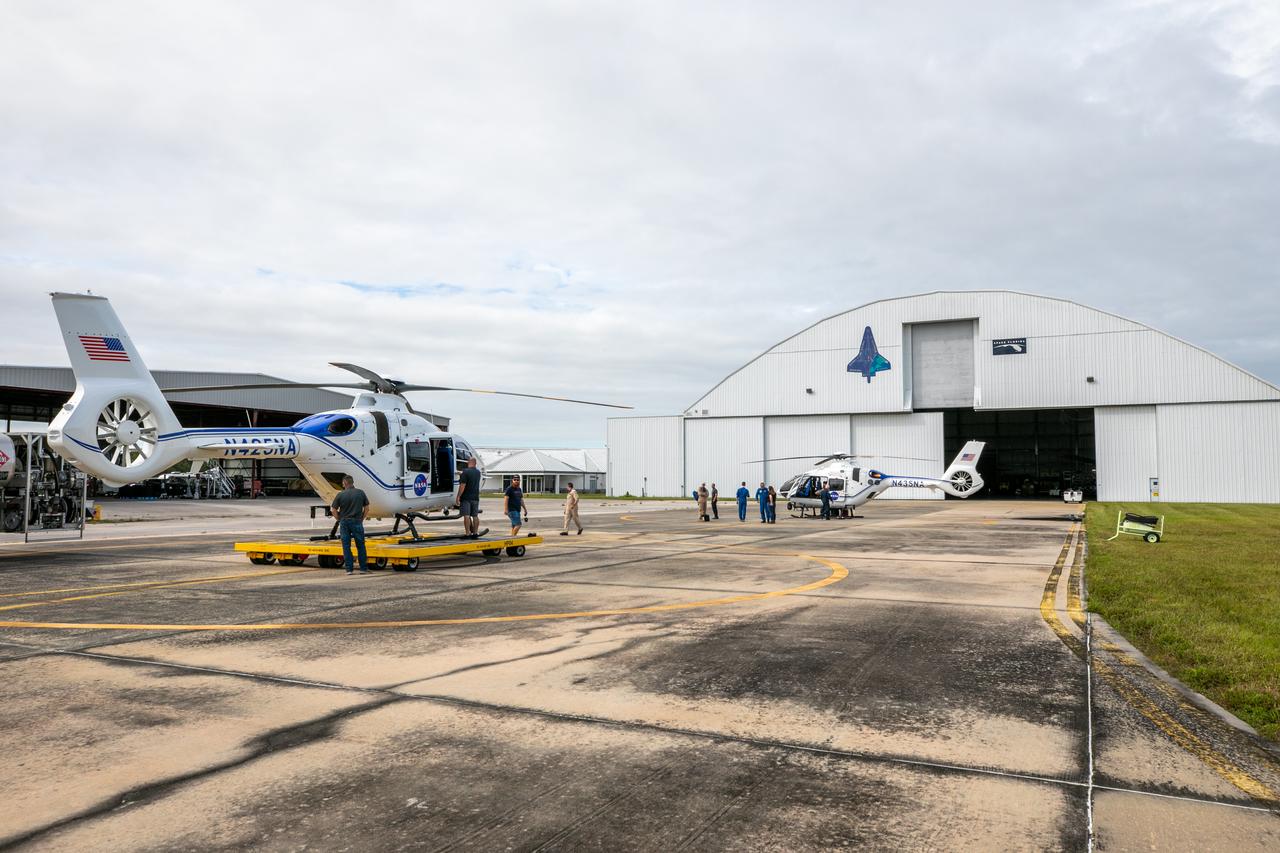
Two new Airbus H135 (T3) helicopters arrive at the Launch and Landing Facility runway at NASA’s Kennedy Space Center in Florida on Sept. 30, 2020. The H135 helicopters will replace the Bell Huey 2 security aircraft in service now, maintained by Kennedy’s Flight Operations team. These new helicopters provide a number of technological and safety advantages over the Hueys, such as more lifting power, greater stability in the air, and expanded medical capabilities. The team expects to fully transition to flying the two H135s later this year. A third is expected to arrive in early 2021, and with its arrival, will complete the fleet’s upgrade.
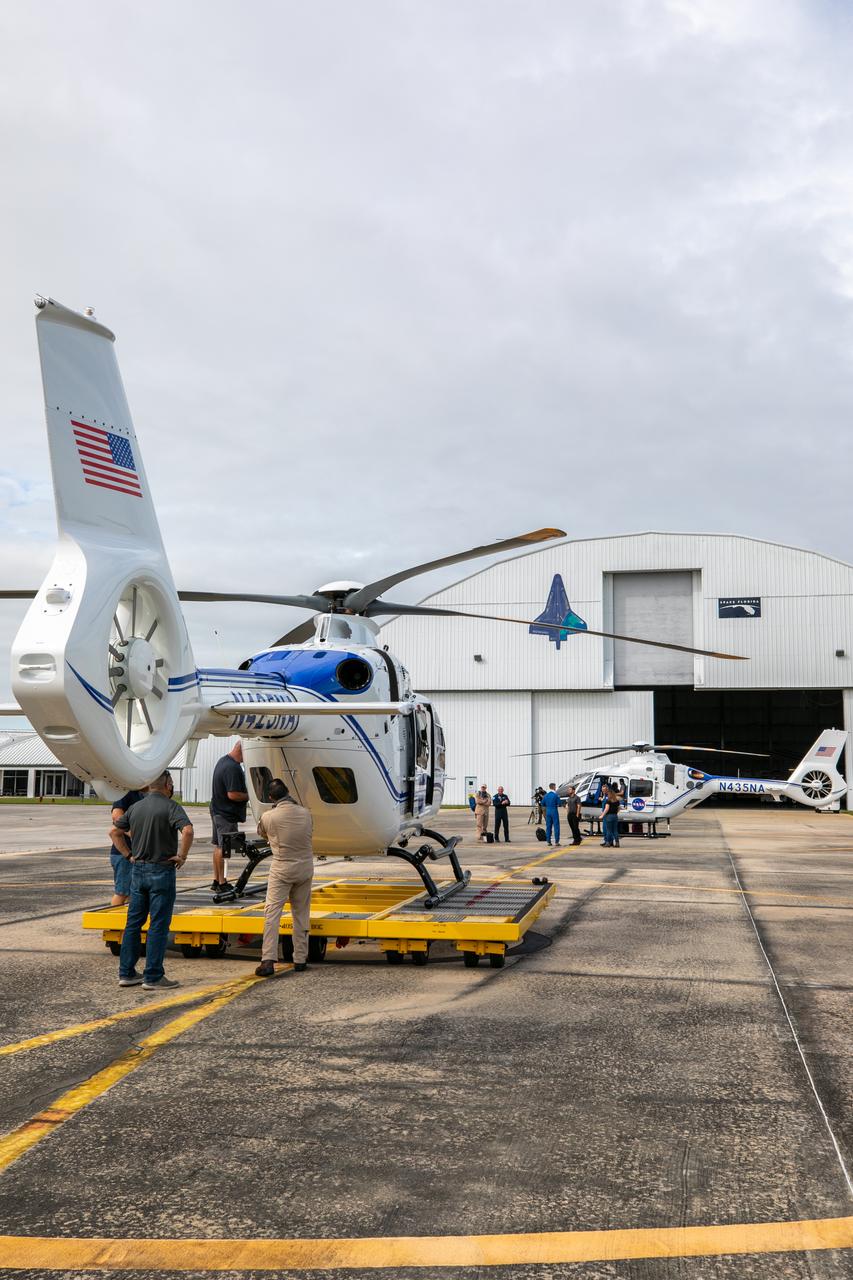
Two new Airbus H135 (T3) helicopters arrive at the Launch and Landing Facility runway at NASA’s Kennedy Space Center in Florida on Sept. 30, 2020. The H135 helicopters will replace the Bell Huey 2 security aircraft in service now, maintained by Kennedy’s Flight Operations team. These new helicopters provide a number of technological and safety advantages over the Hueys, such as more lifting power, greater stability in the air, and expanded medical capabilities. The team expects to fully transition to flying the two H135s later this year. A third is expected to arrive in early 2021, and with its arrival, will complete the fleet’s upgrade.
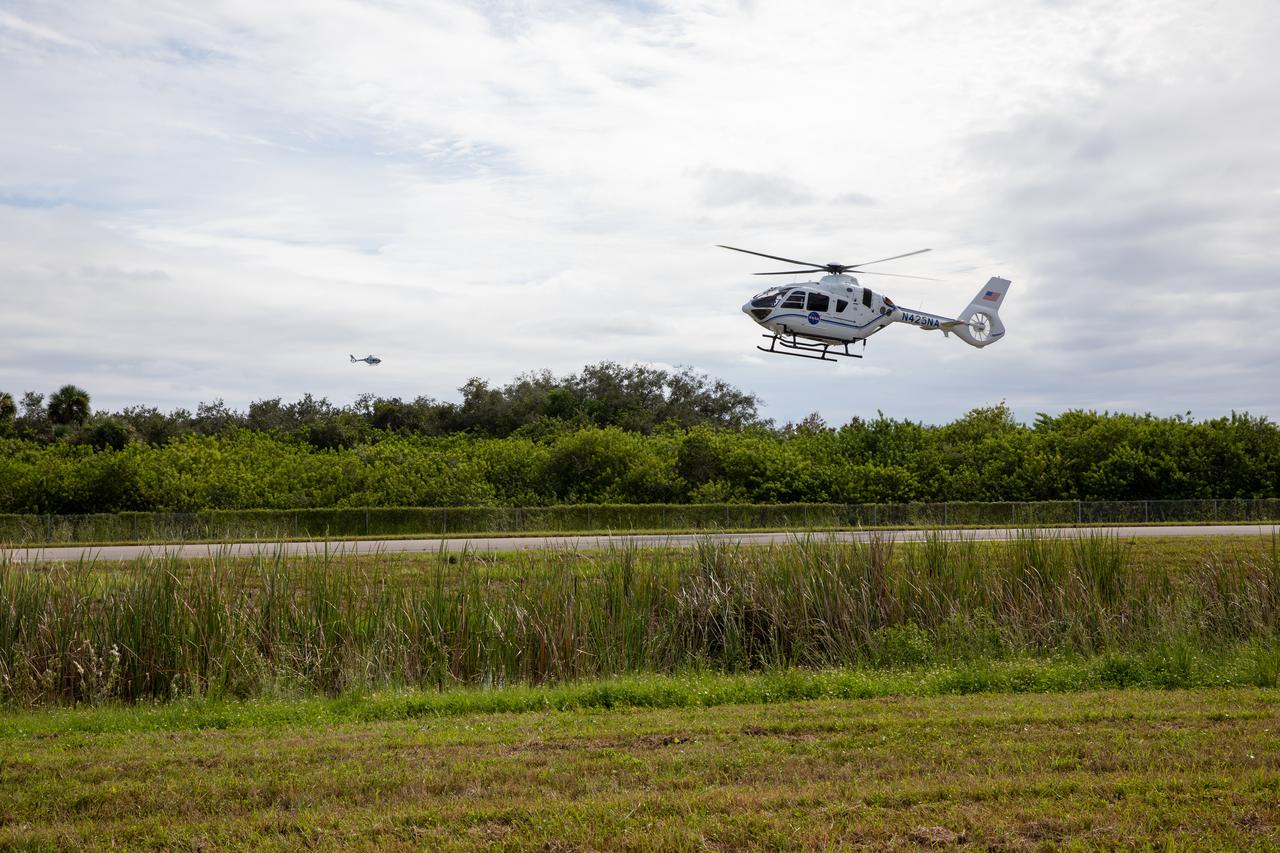
A new Airbus H135 (T3) helicopter arrives at the Launch and Landing Facility runway at NASA’s Kennedy Space Center in Florida on Sept. 30, 2020. In the distance, a second one can be seen arriving. The two H135 helicopters will replace the Bell Huey 2 security aircraft in service now, maintained by Kennedy’s Flight Operations team. These new helicopters provide a number of technological and safety advantages over the Hueys, such as more lifting power, greater stability in the air, and expanded medical capabilities. The team expects to fully transition to flying the two H135s later this year. A third is expected to arrive in early 2021, and with its arrival, will complete the fleet’s upgrade.