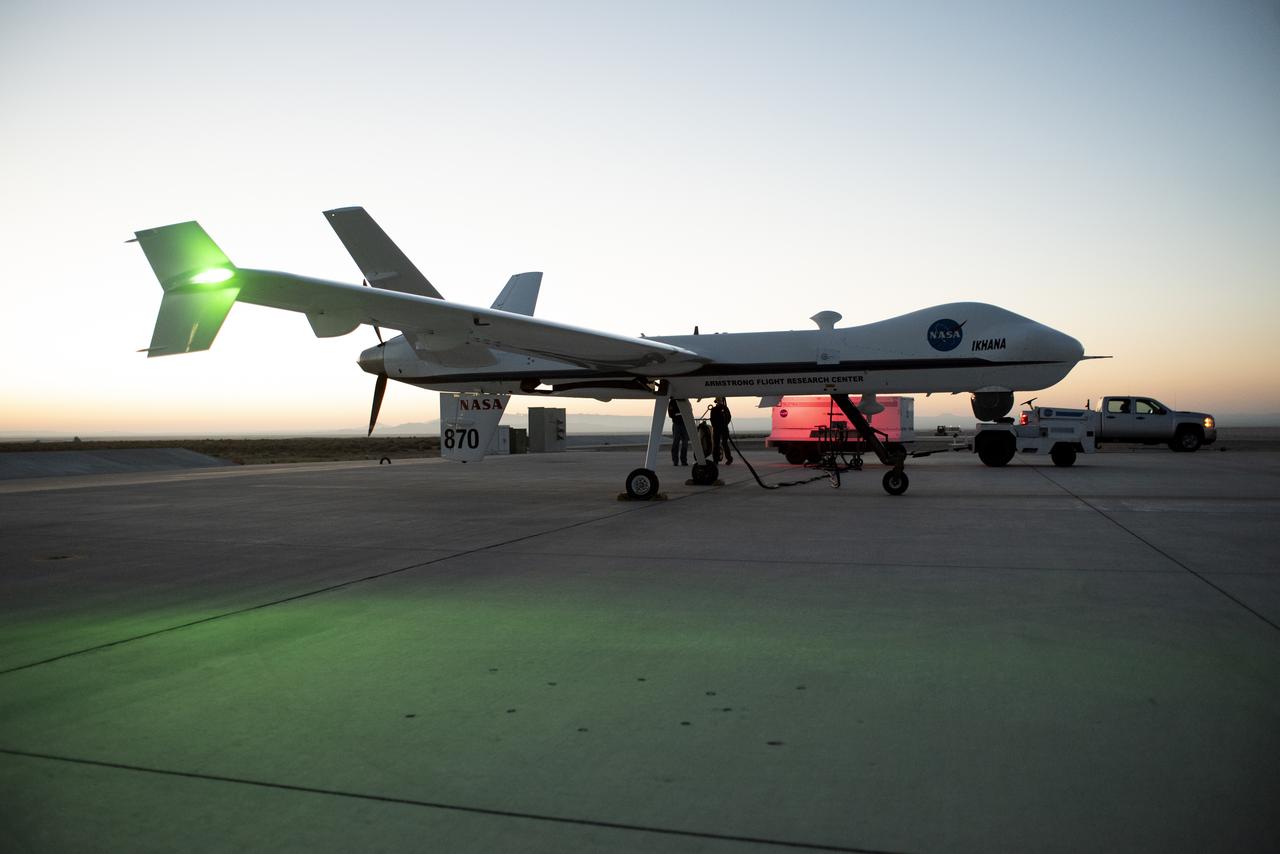
Aircraft maintenance crews at NASA‘s Armstrong Flight Research Center prepare the remotely-piloted Ikhana aircraft for a test flight of Ikhana. The test flight was performed to validate key technologies and operations necessary for FAA’s approval to fly the aircraft in the National Airspace System June 12, 2018, without a safety chase aircraft.

Aircraft maintenance crews at NASA‘s Armstrong Flight Research Center prepare the remotely-piloted Ikhana aircraft for a test flight. The test flight was performed to validate key technologies and operations necessary for FAA’s approval to fly the aircraft in the National Airspace System June 12, 2018, without a safety chase aircraft.

NASA's Super Guppy cargo transport aircraft taxis in from the Plant 42 runway to NASA"s Armstrong Flight Research Center Building 703 ramp. The aircraft is being stored in the hangar during its phase maintenance check.

The DC-8 flies low for the last time over NASA’s Armstrong Flight Research Center in Edwards, California, before it retires to Idaho State University in Pocatello, Idaho. The DC-8 will provide real-world experience to train future aircraft technicians at the college’s Aircraft Maintenance Technology Program.
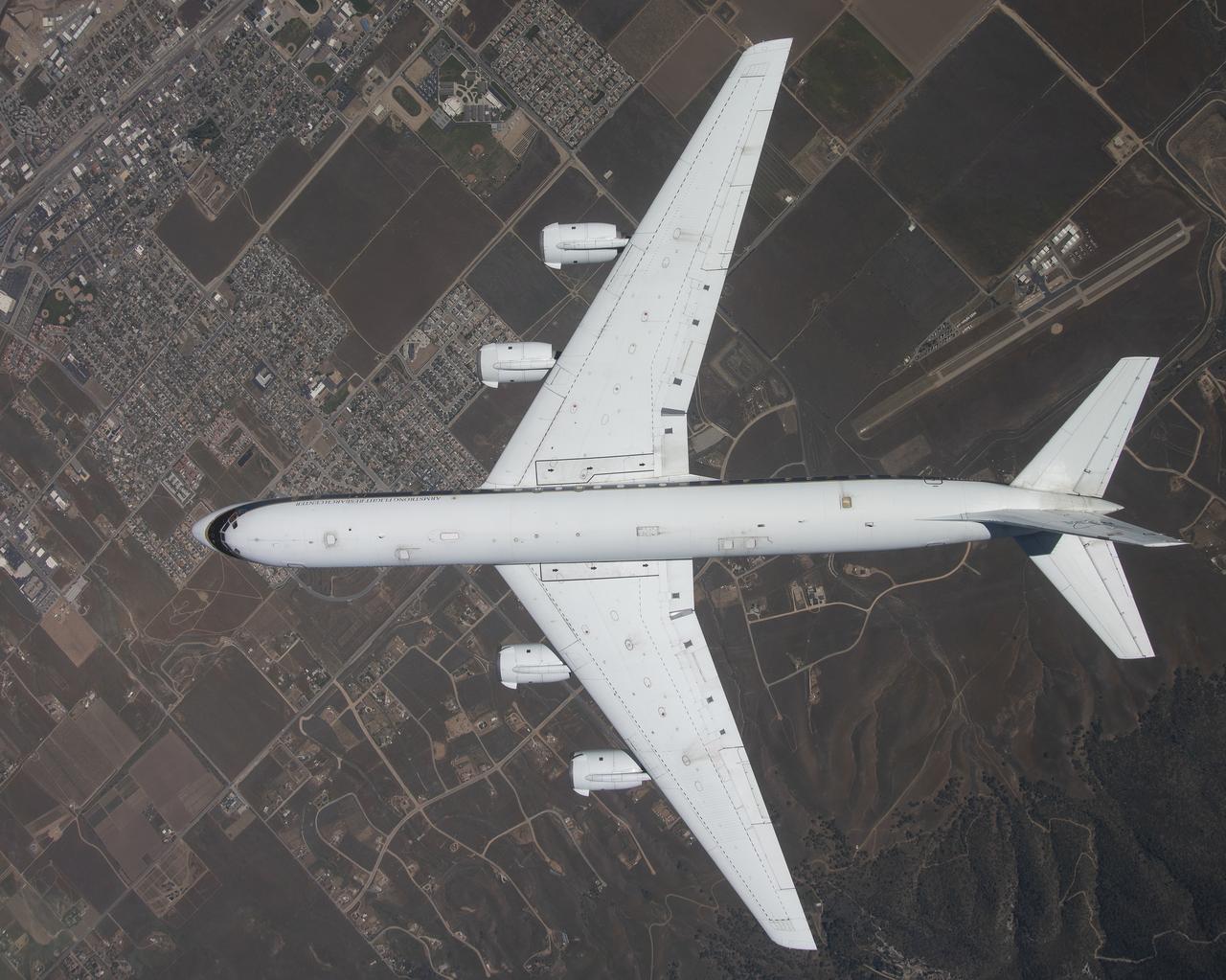
The DC-8 is shown overhead during its final flight from NASA’s Armstrong Flight Research Center Building 703 in Palmdale, California, before it retires to Idaho State University in Pocatello, Idaho. The DC-8 will provide real-world experience to train future aircraft technicians at the college’s Aircraft Maintenance Technology Program.
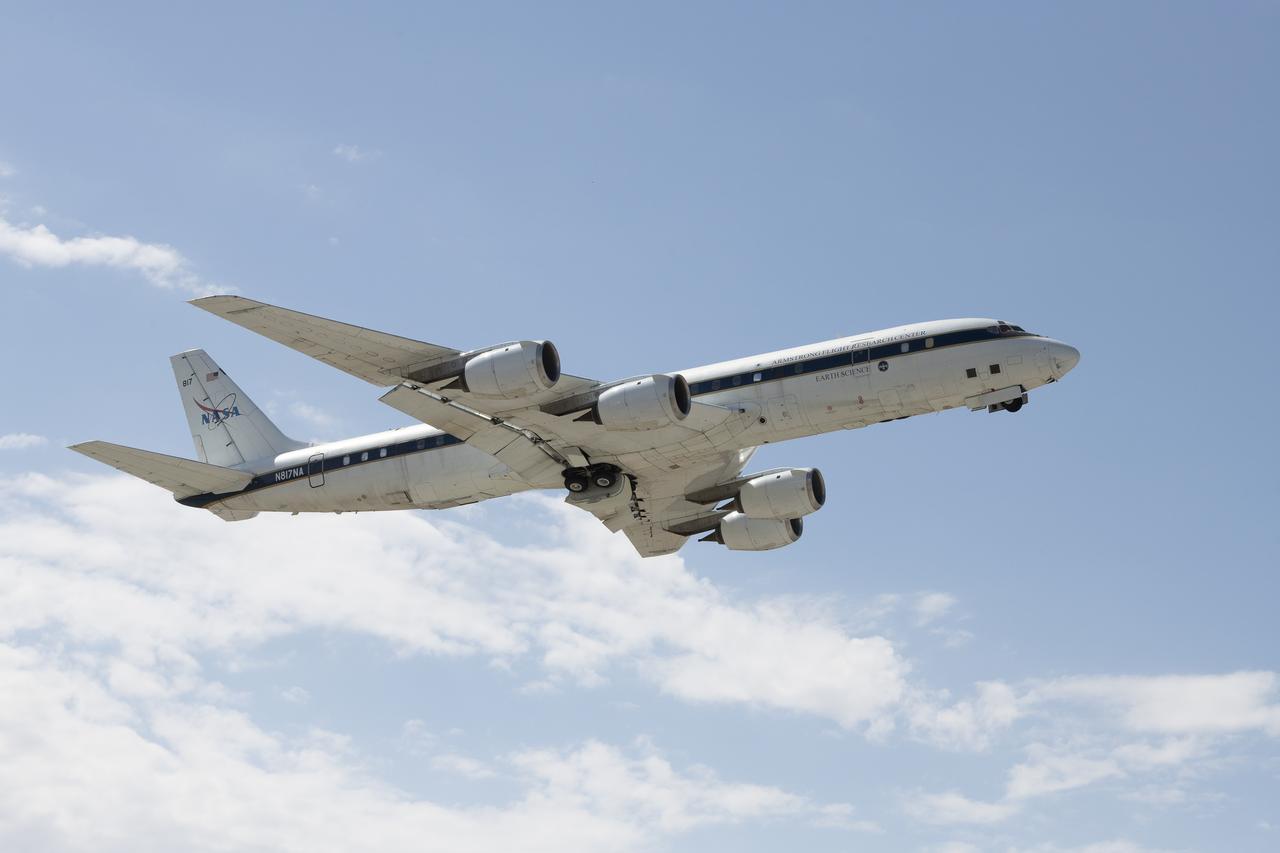
The DC-8 ascents during its final flight before it is retired from NASA’s Armstrong Flight Research Center Building 703 in Palmdale, California, to Idaho State University in Pocatello, Idaho. The DC-8 will provide real-world experience to train future aircraft technicians at the college’s Aircraft Maintenance Technology Program.
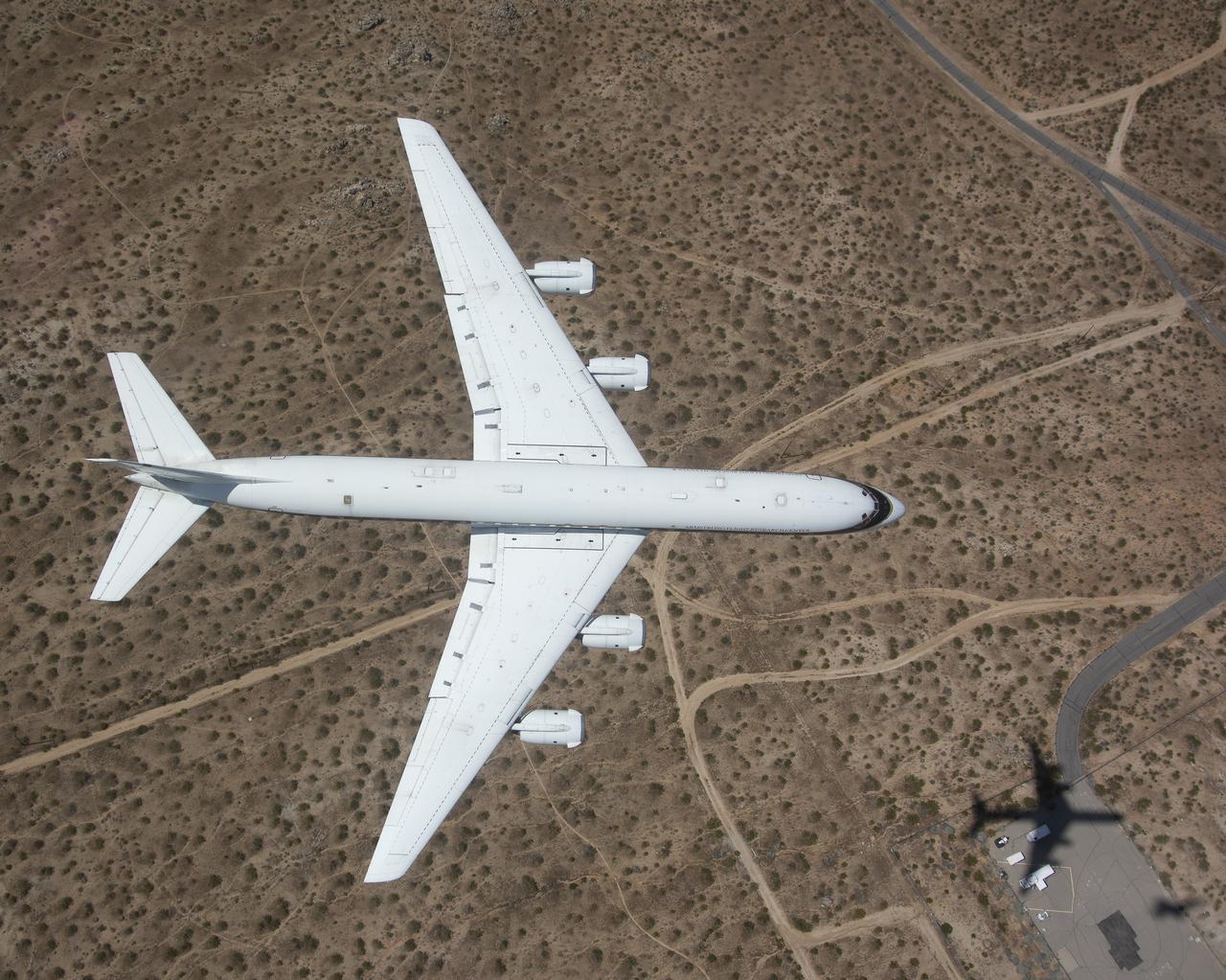
The DC-8 flies for the last time from NASA’s Armstrong Flight Research Center Building 703 in Palmdale, California, to Idaho State University in Pocatello, Idaho. The DC-8 will provide real-world experience to train future aircraft technicians at the college’s Aircraft Maintenance Technology Program.
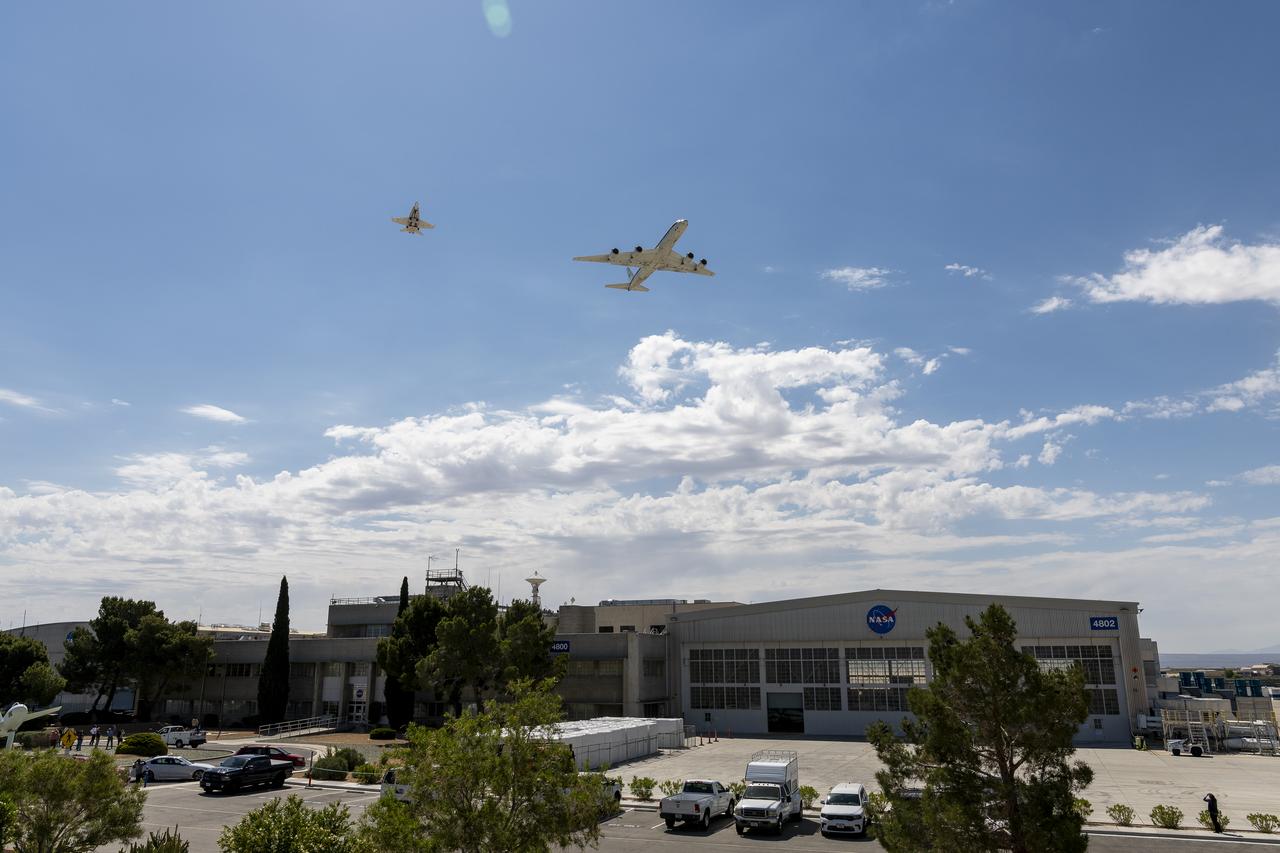
The DC-8 flies for the last time from NASA’s Armstrong Flight Research Center Building 703 in Palmdale, California, before it retires to Idaho State University in Pocatello, Idaho. The DC-8 will provide real-world experience to train future aircraft technicians at the college’s Aircraft Maintenance Technology Program.
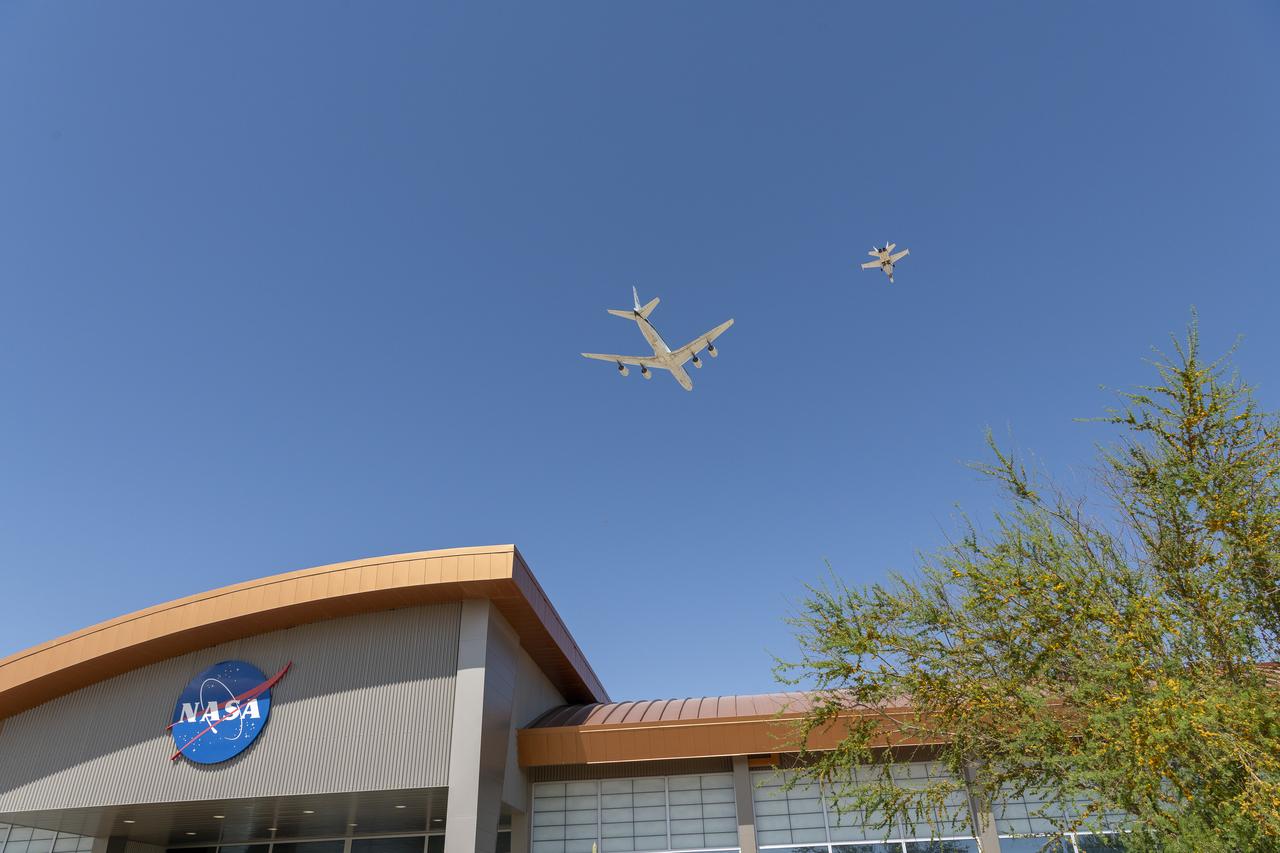
The DC-8 flies low for the last time over NASA’s Armstrong Flight Research Center in Edwards, California, before it retires to Idaho State University in Pocatello, Idaho. The DC-8 will provide real-world experience to train future aircraft technicians at the college’s Aircraft Maintenance Technology Program.
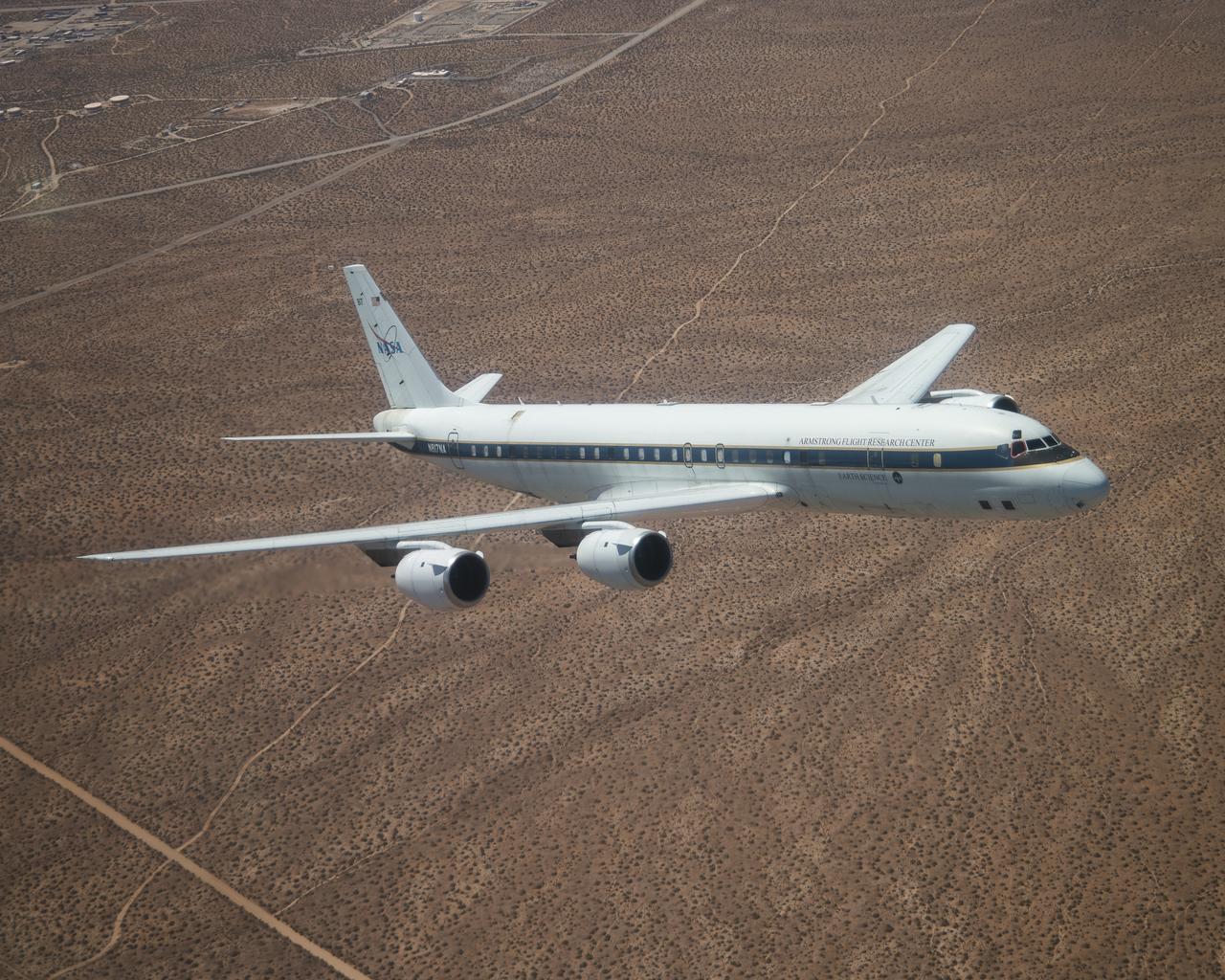
The DC-8 flies for the last time from NASA’s Armstrong Flight Research Center Building 703 in Palmdale, California, before it retires to Idaho State University in Pocatello, Idaho. The DC-8 will provide real-world experience to train future aircraft technicians at the college’s Aircraft Maintenance Technology Program.
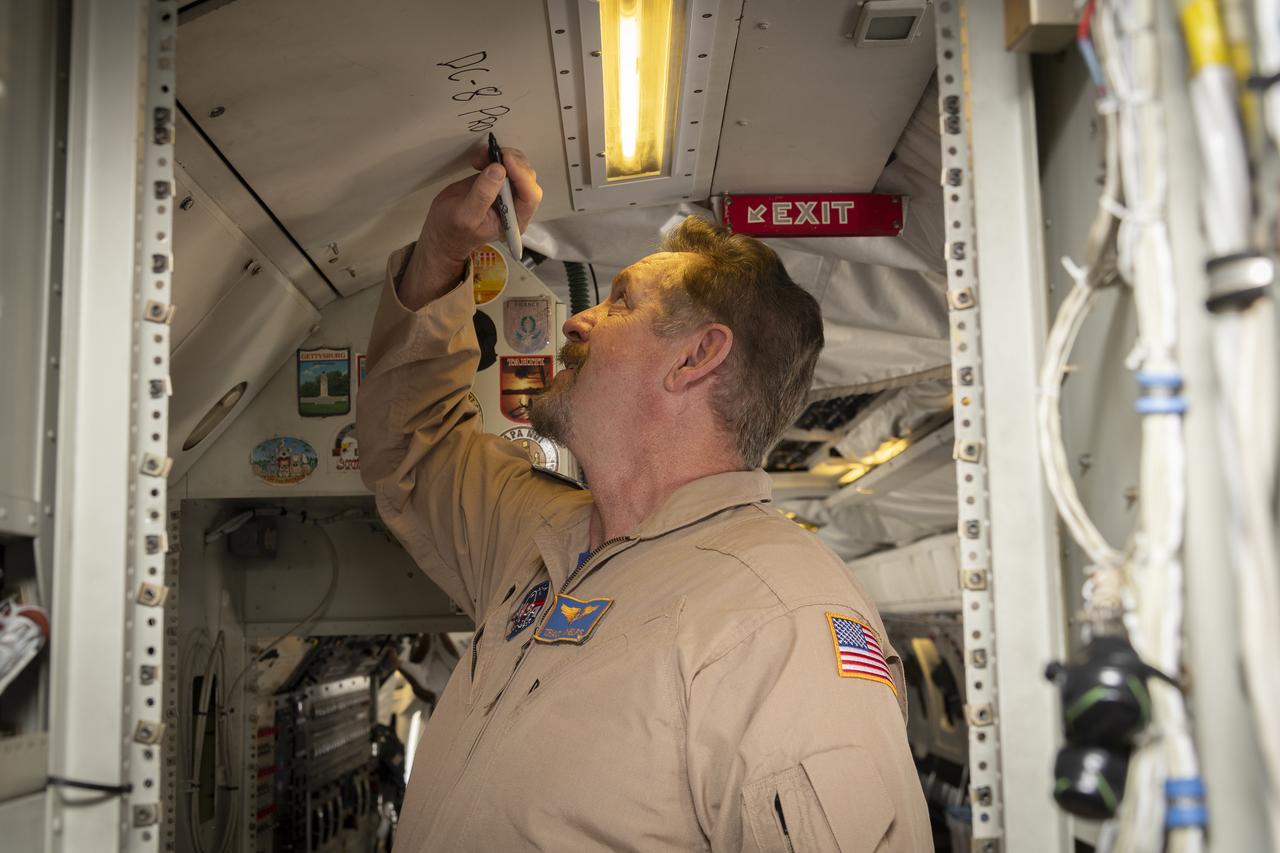
Aerospace engineer and research pilot Tracy Phelps signs the ceiling inside the DC-8 aircraft. Phelps piloted the aircraft’s final flight before it is retired from NASA’s Armstrong Flight Research Center Building 703 in Palmdale, California, to Idaho State University in Pocatello, Idaho. The DC-8 will provide real-world experience to train future aircraft technicians at the college’s Aircraft Maintenance Technology Program.
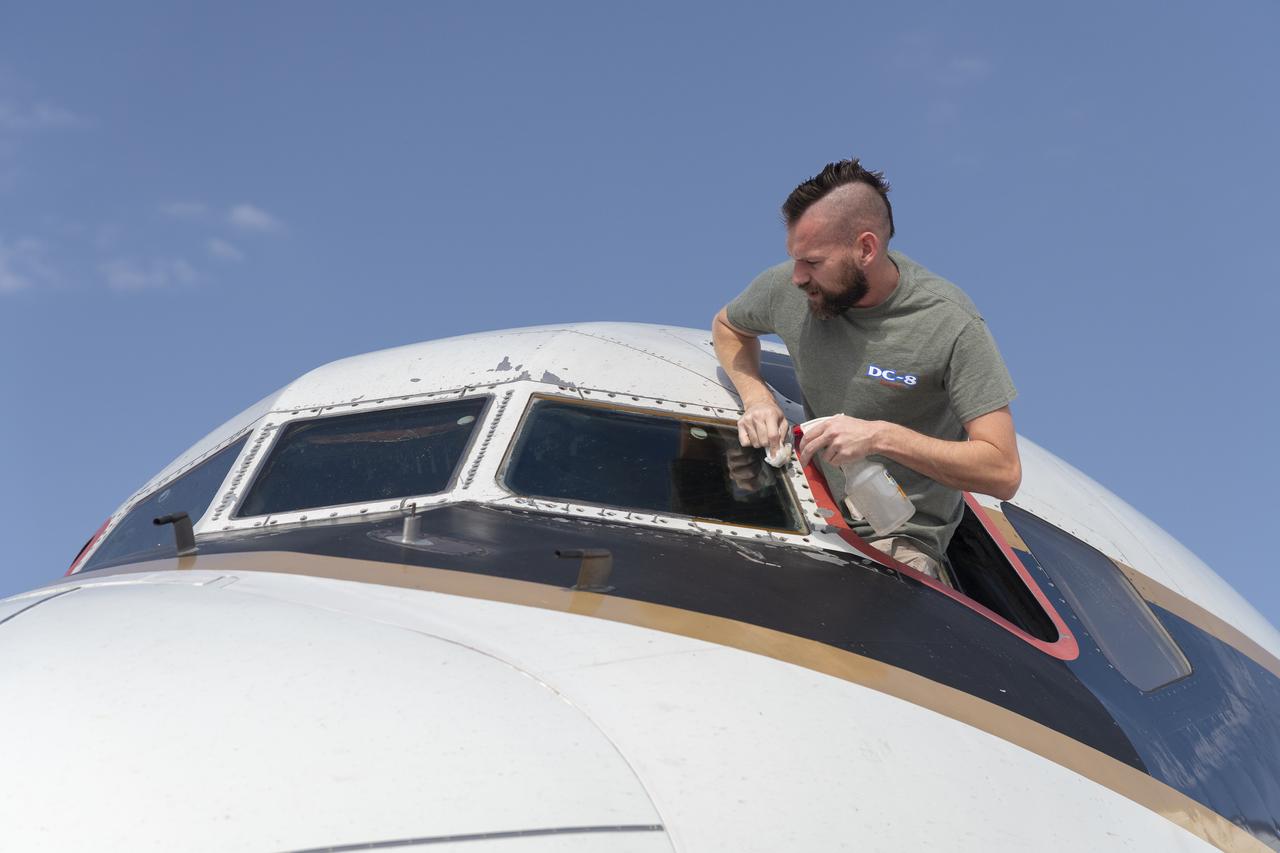
Avionics lead Kelly Jellison wipes the windshield of the DC-8 aircraft prior to its final flight before it is retired from NASA’s Armstrong Flight Research Center Building 703 in Palmdale, California, to Idaho State University in Pocatello, Idaho. The DC-8 will provide real-world experience to train future aircraft technicians at the college’s Aircraft Maintenance Technology Program.
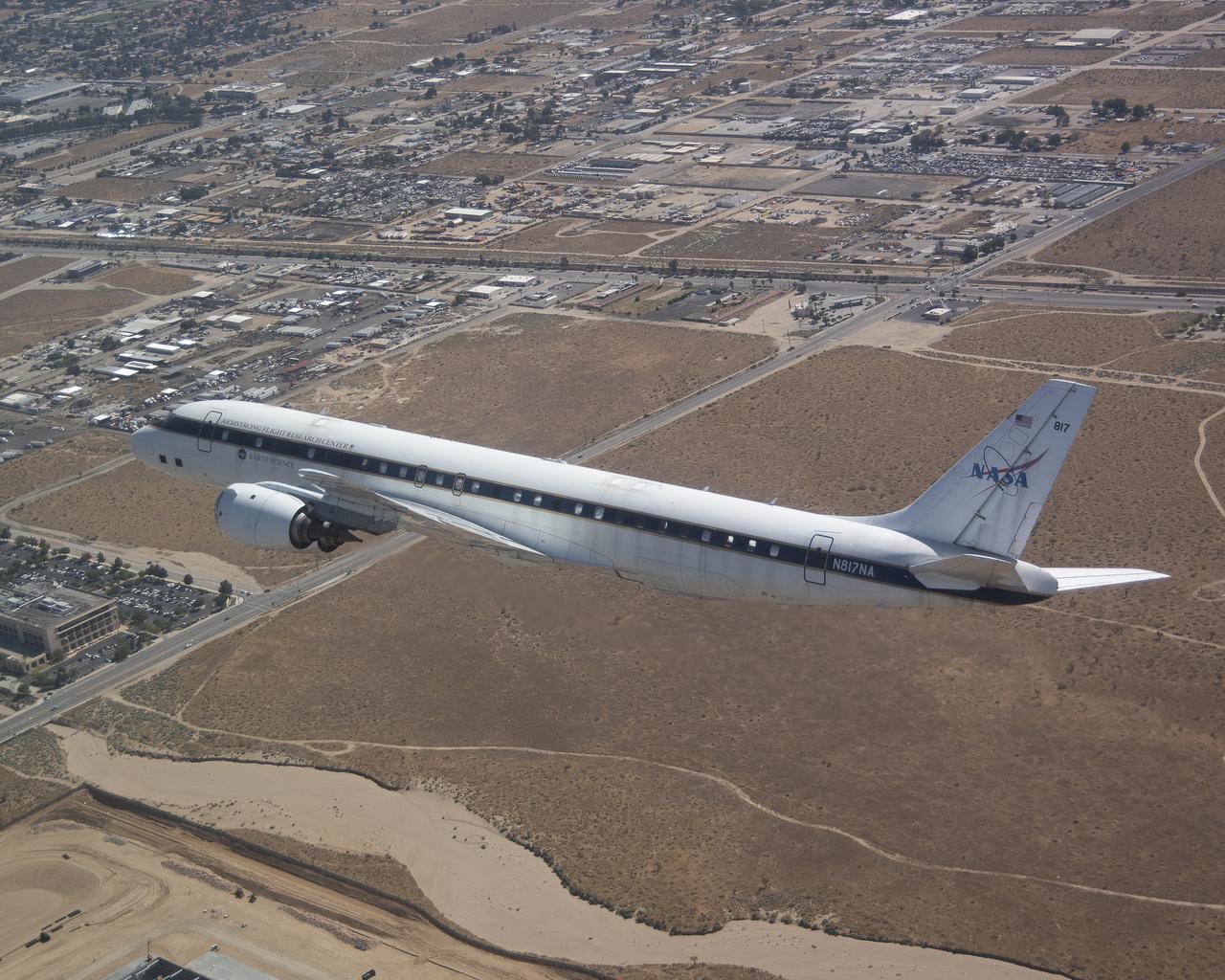
The DC-8 flies low over the Antelope Valley during its final flight before it is retired from NASA’s Armstrong Flight Research Center Building 703 in Palmdale, California, to Idaho State University in Pocatello, Idaho. The DC-8 will provide real-world experience to train future aircraft technicians at the college’s Aircraft Maintenance Technology Program.

From left, NASA avionics technician Jesse Orellana; quality assurance employee Jose Prieto; mechanic Francisco Rodriguez; and mechanic Vincent Moreno work on an ER-2 aircraft Monday, Jan. 26, 2026, at NASA’s Armstrong Flight Research Center in Edwards, California.
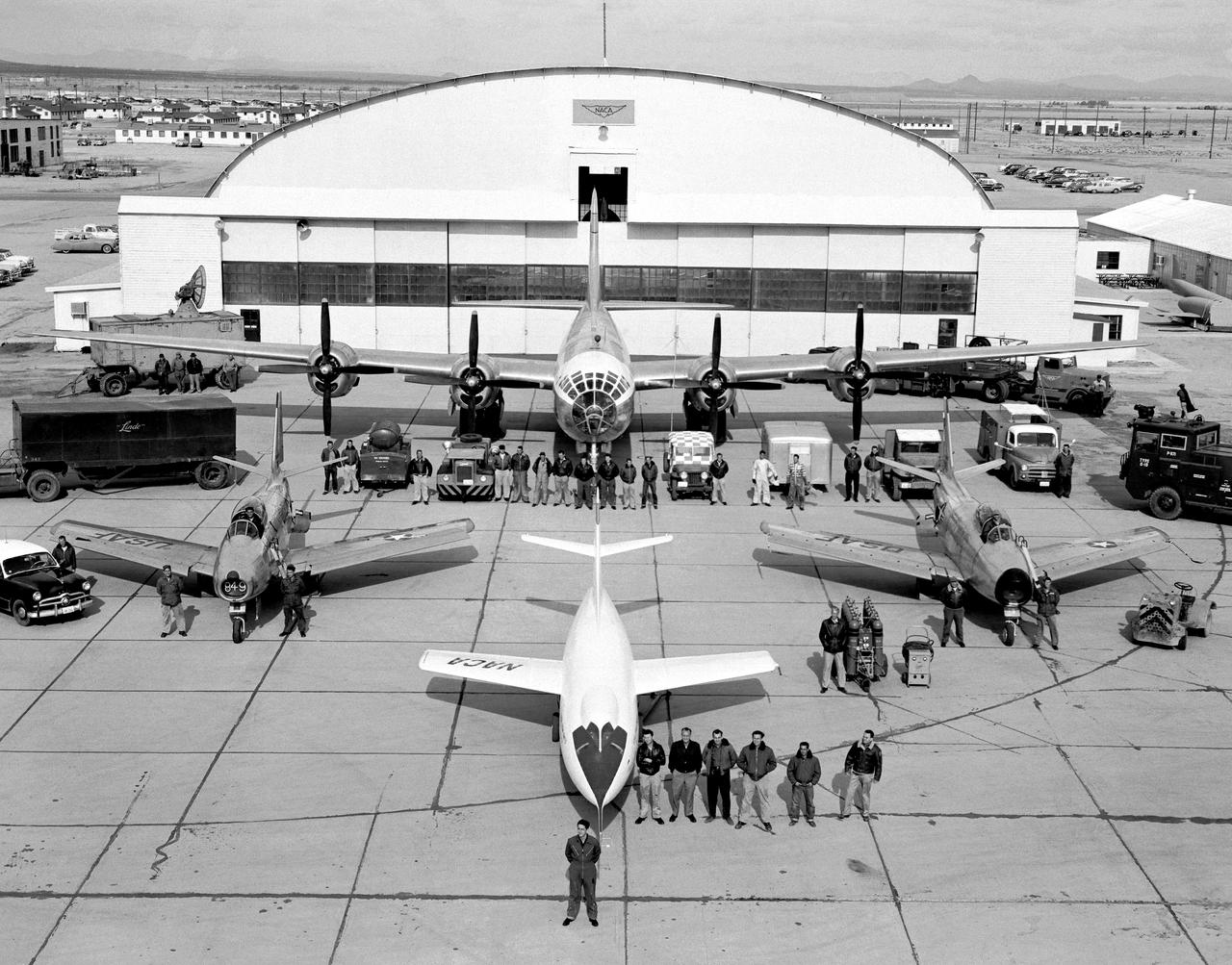
These people and this equipment supported the flight of the NACA D-558-2 Skyrocket at the High-Speed Flight Station at South Base, Edwards AFB. Note the two Sabre chase planes, the P2B-1S launch aircraft, and the profusion of ground support equipment, including communications, tracking, maintenance, and rescue vehicles. Research pilot A. Scott Crossfield stands in front of the Skyrocket.
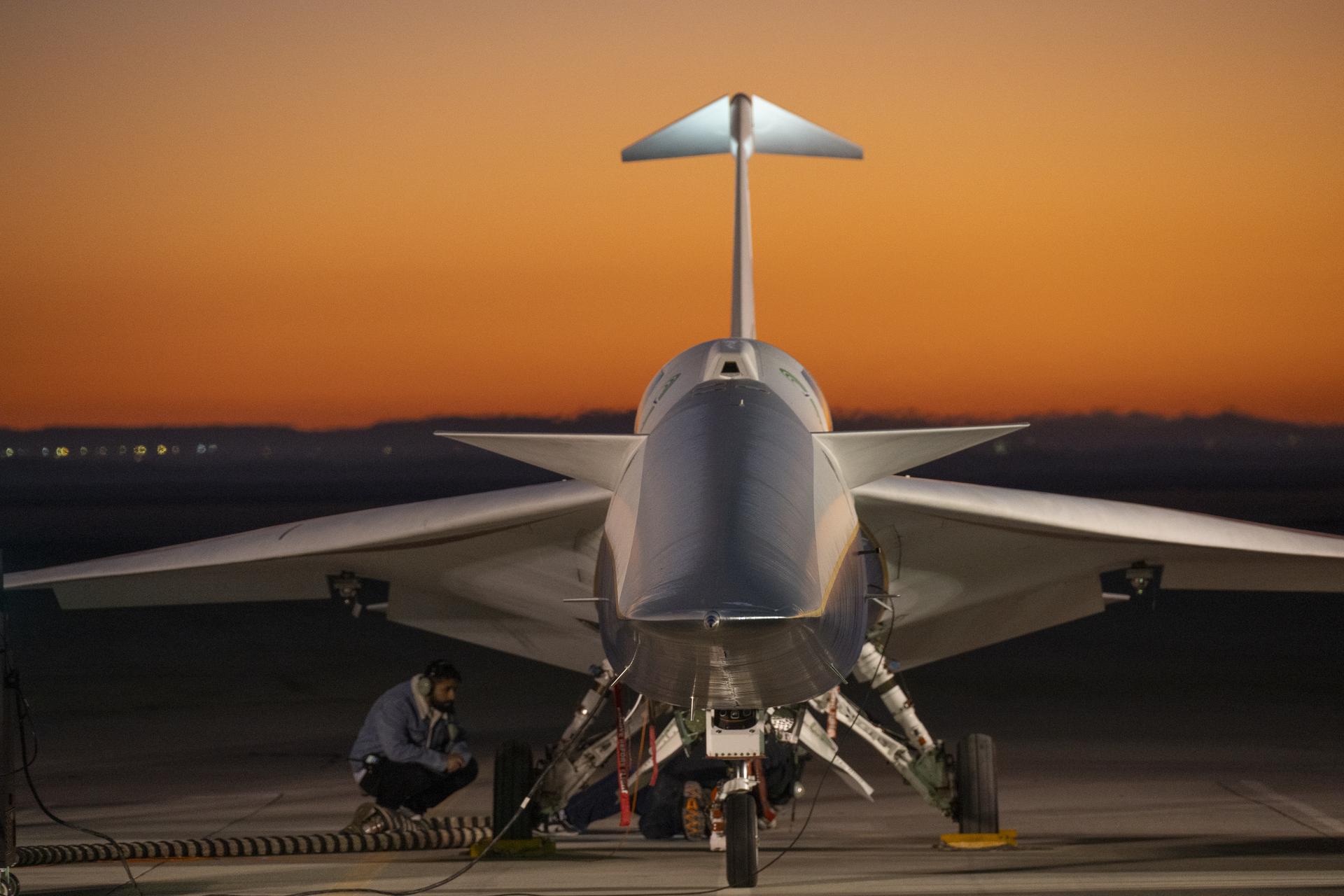
NASA’s X-59 quiet supersonic research aircraft sits on a ramp during engine run tests at NASA’s Armstrong Flight Research Center in Edwards, California, on Thursday, March 12, 2026. A maintenance technician inspects the aircraft near its landing gear as engine runs, one of the final tests before the aircraft’s second flight, take place.
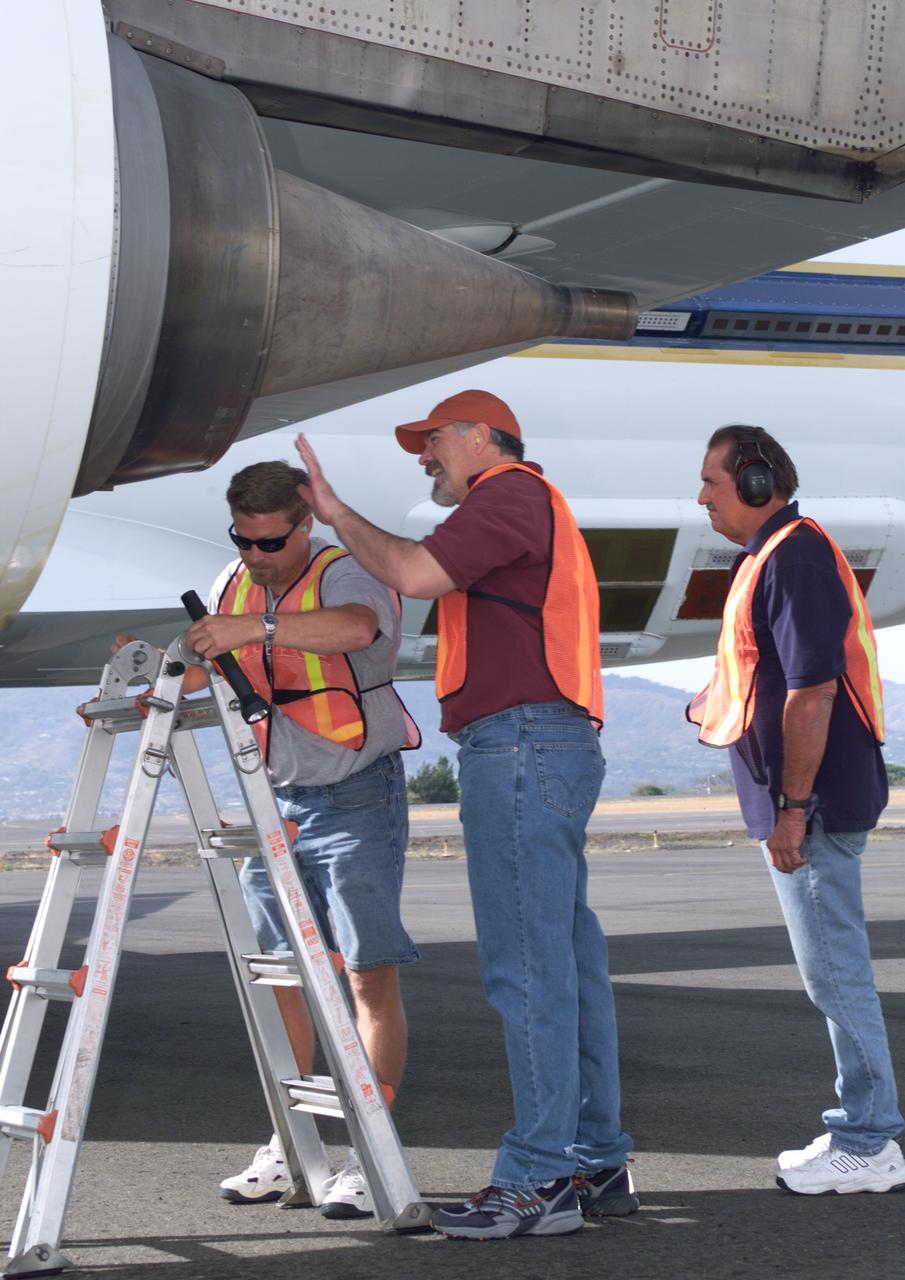
NASA Dryden DC-8 maintenance crew members inspect the aircraft prior to take-off. L-R; Scott Silver, Paul Ristrim and Mike Lakowski. AirSAR 2004 Mesoamerica is a three-week expedition by an international team of scientists that uses an all-weather imaging tool, called the Airborne Synthetic Aperture Radar (AirSAR) which is located onboard NASA's DC-8 airborne laboratory. Scientists from many parts of the world including NASA's Jet Propulsion Laboratory are combining ground research done in several areas in Central America with NASA's AirSAR technology to improve and expand on the quality of research they are able to conduct. The radar, developed by NASA's Jet Propulsion Laboratory, can penetrate clouds and also collect data at night. Its high-resolution sensors operate at multiple wavelengths and modes, allowing AirSAR to see beneath treetops, through thin sand, and dry snow pack. AirSAR's 2004 campaign is a collaboration of many U.S. and Central American institutions and scientists, including NASA; the National Science Foundation; the Smithsonian Institution; National Geographic; Conservation International; the Organization of Tropical Studies; the Central American Commission for Environment and Development; and the Inter-American Development Bank.
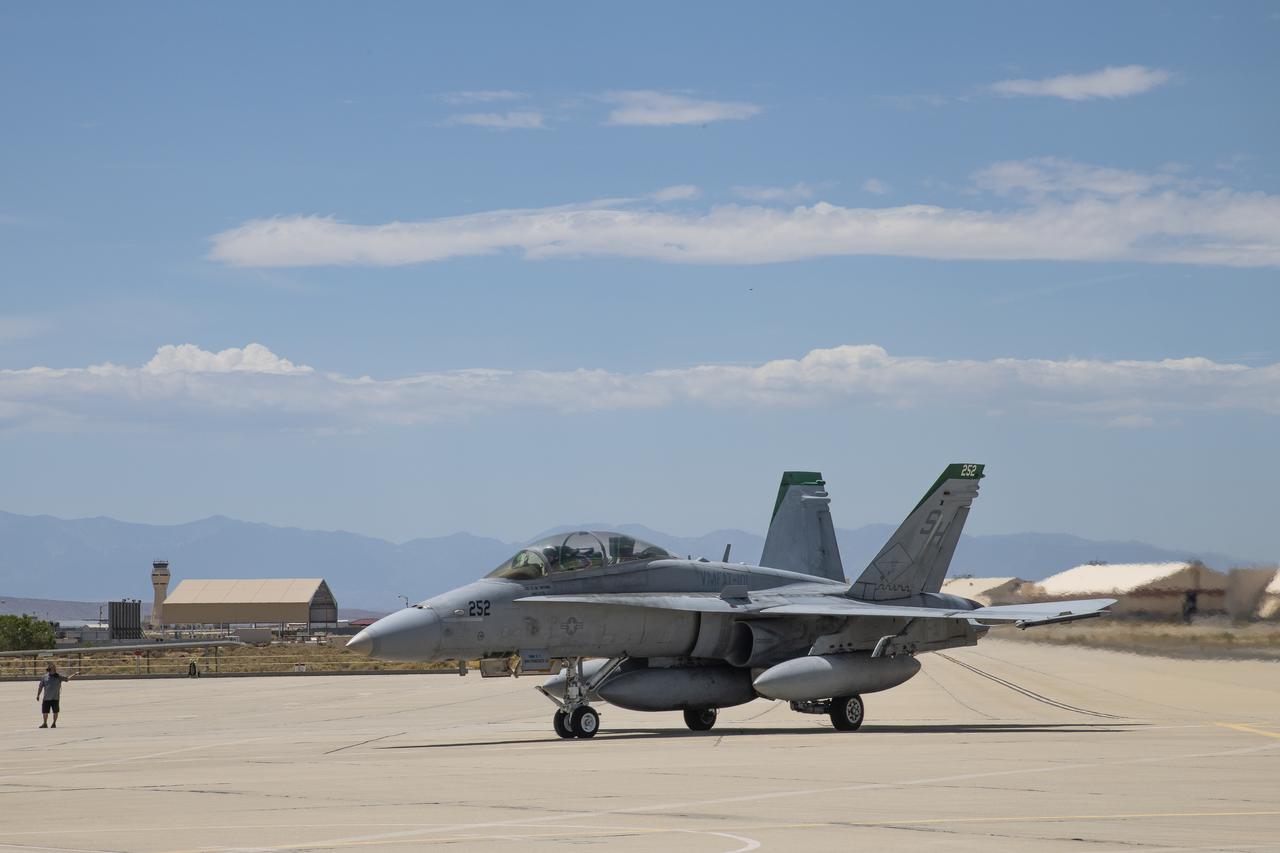
NASA 862, which is an F/A-18D now based at NASA’s Armstrong Flight Research Center in Edwards, California, arrives for the first time in 2021. The aircraft was stationed at the U.S. Naval Air Station Patuxent River in Maryland. Once here, the aircraft was sent for major maintenance, painting, and preparation to join the NASA Armstrong aircraft fleet.
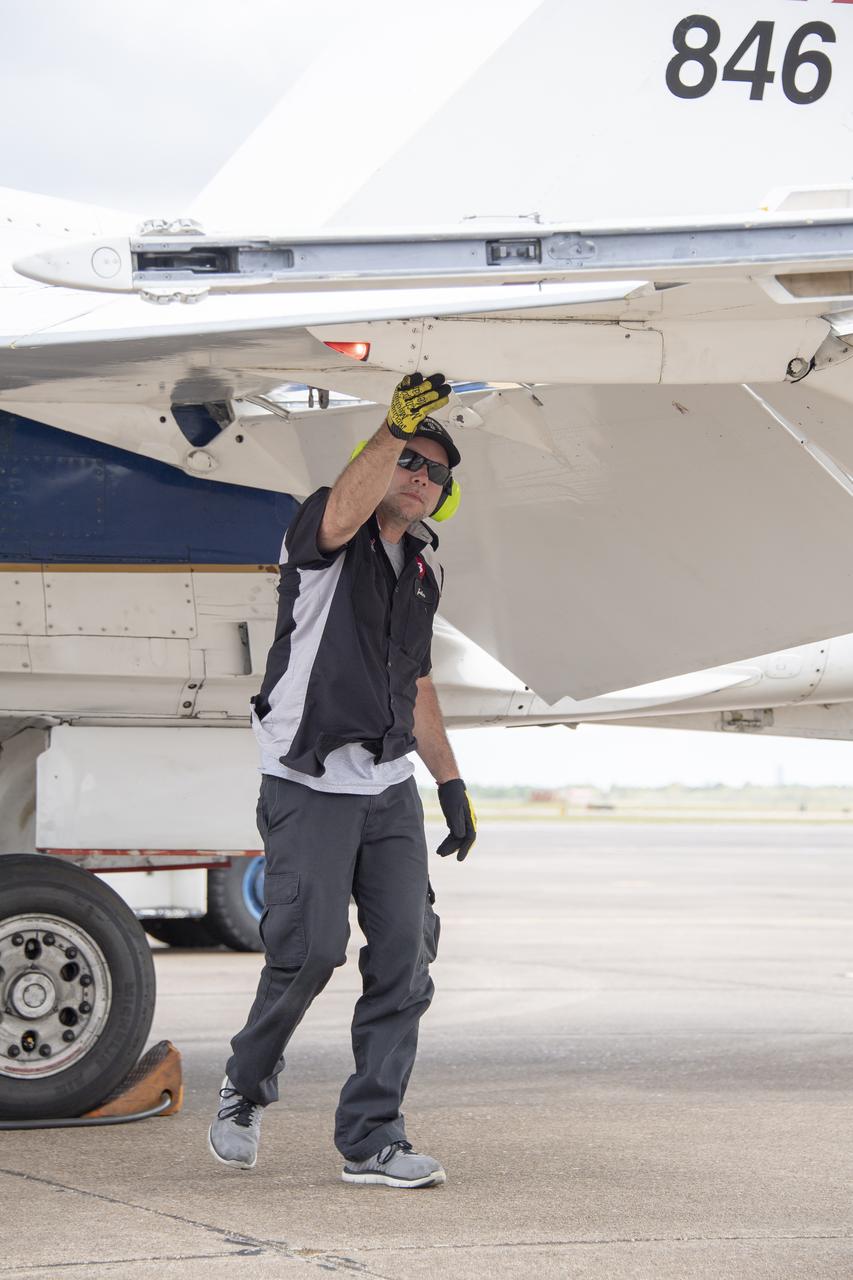
NASA ground and maintenance crews prepare the F/A-18 research aircraft for a supersonic research flight off the coast of Galveston, Texas in support of the QSF18 flight campaign. These crews are vital to making sure the aircraft is ready to operate safely and efficiently for NASA’s research.
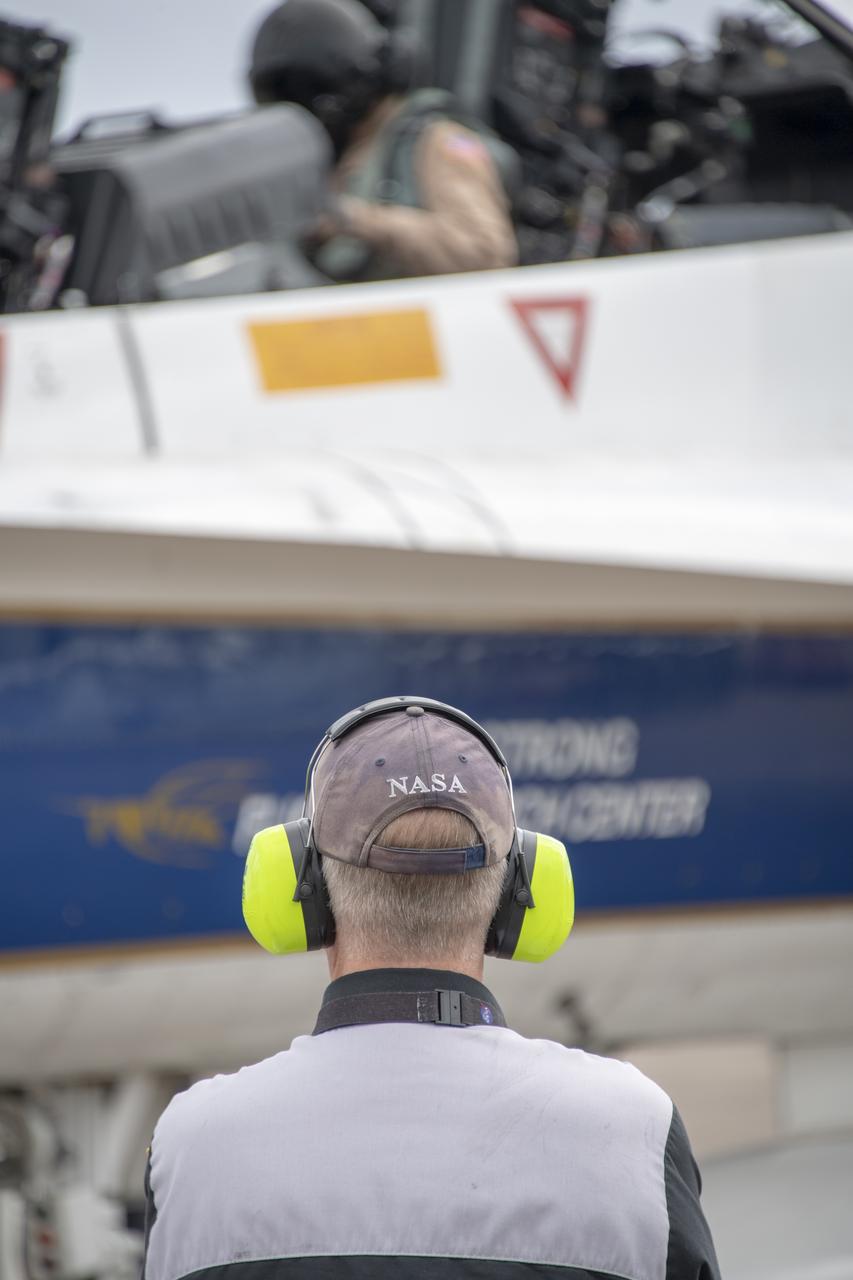
NASA ground and maintenance crews prepare the F/A-18 research aircraft for a supersonic research flight off the coast of Galveston, Texas in support of the QSF18 flight campaign. These crews are vital to making sure the aircraft is ready to operate safely and efficiently for NASA’s research.
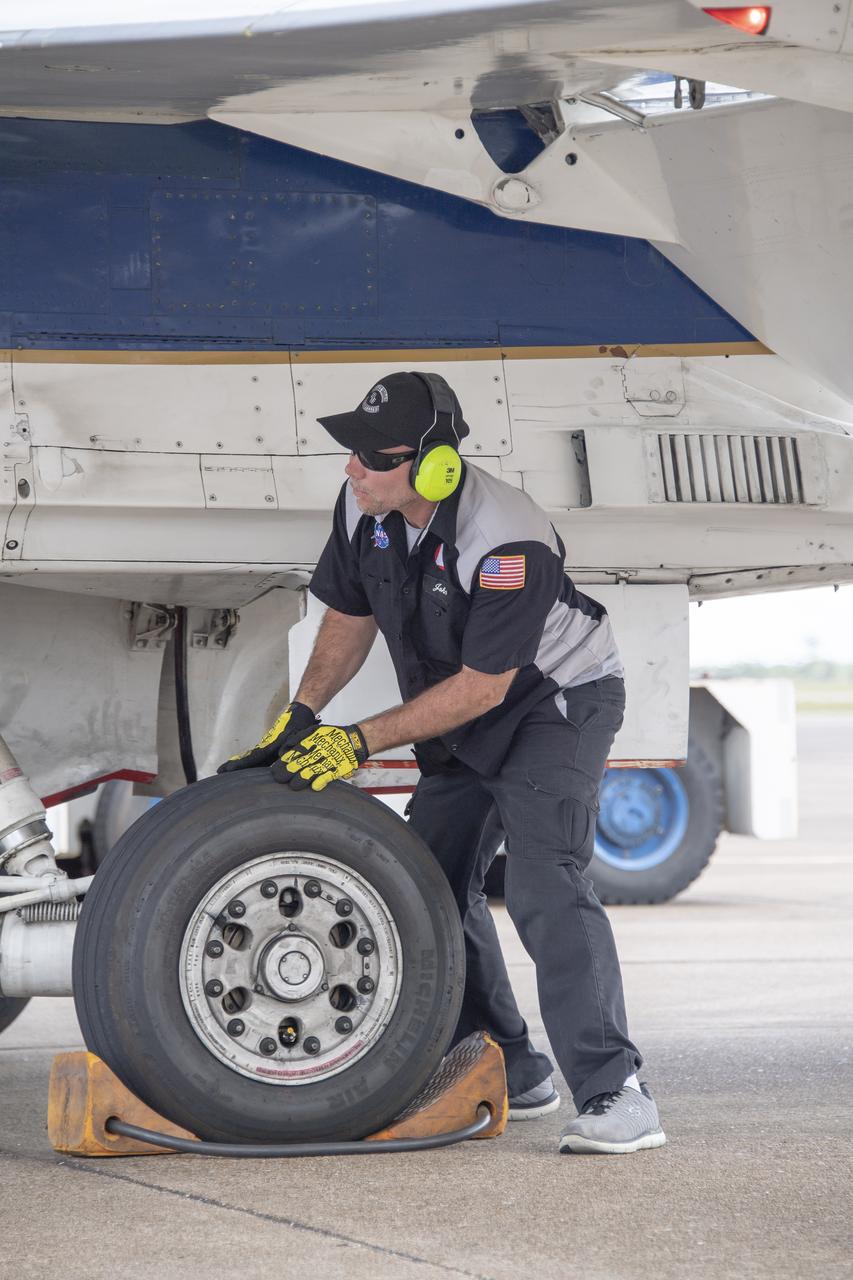
NASA ground and maintenance crews prepare the F/A-18 research aircraft for a supersonic research flight off the coast of Galveston, Texas in support of the QSF18 flight campaign. These crews are vital to making sure the aircraft is ready to operate safely and efficiently for NASA’s research.
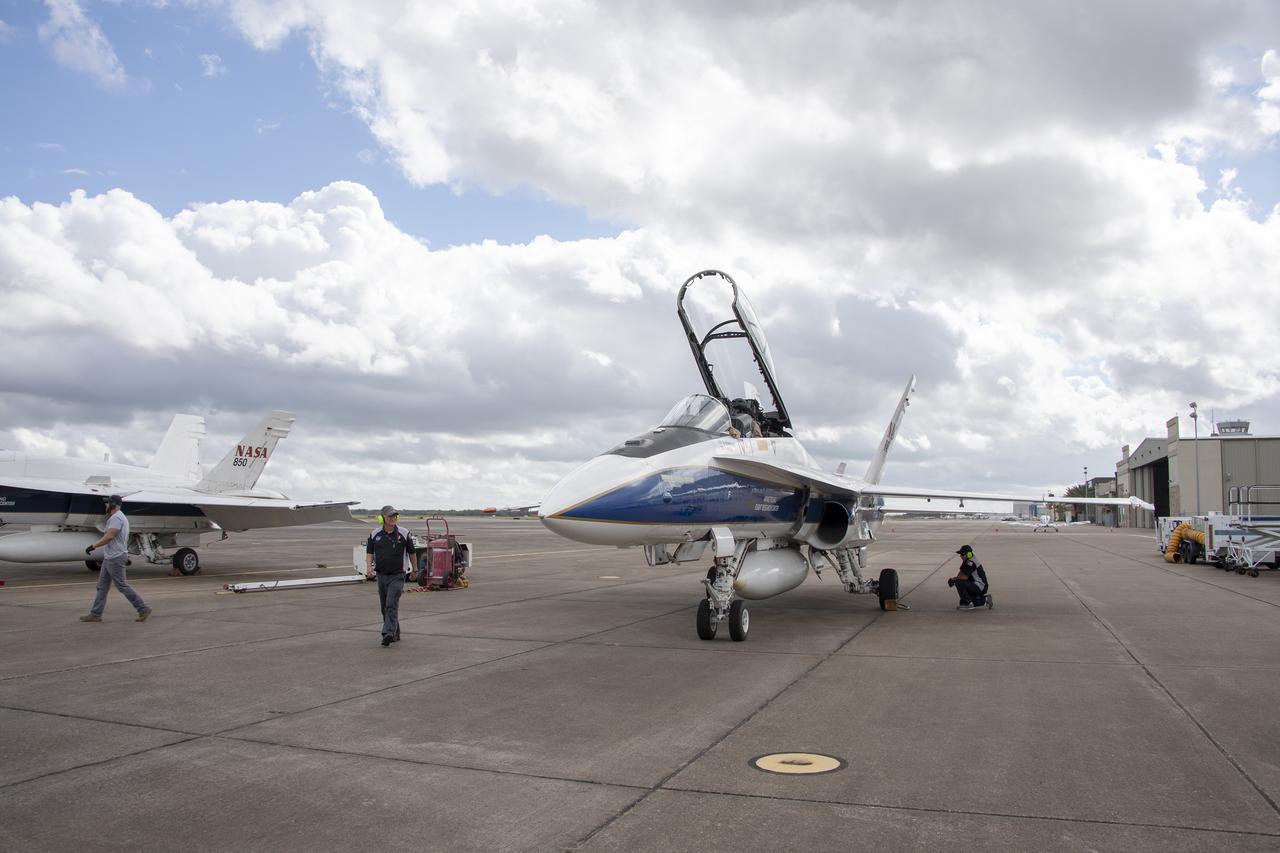
NASA ground and maintenance crews prepare the F/A-18 research aircraft for a supersonic research flight off the coast of Galveston, Texas in support of the QSF18 flight campaign. These crews are vital to making sure the aircraft is ready to operate safely and efficiently for NASA’s research.
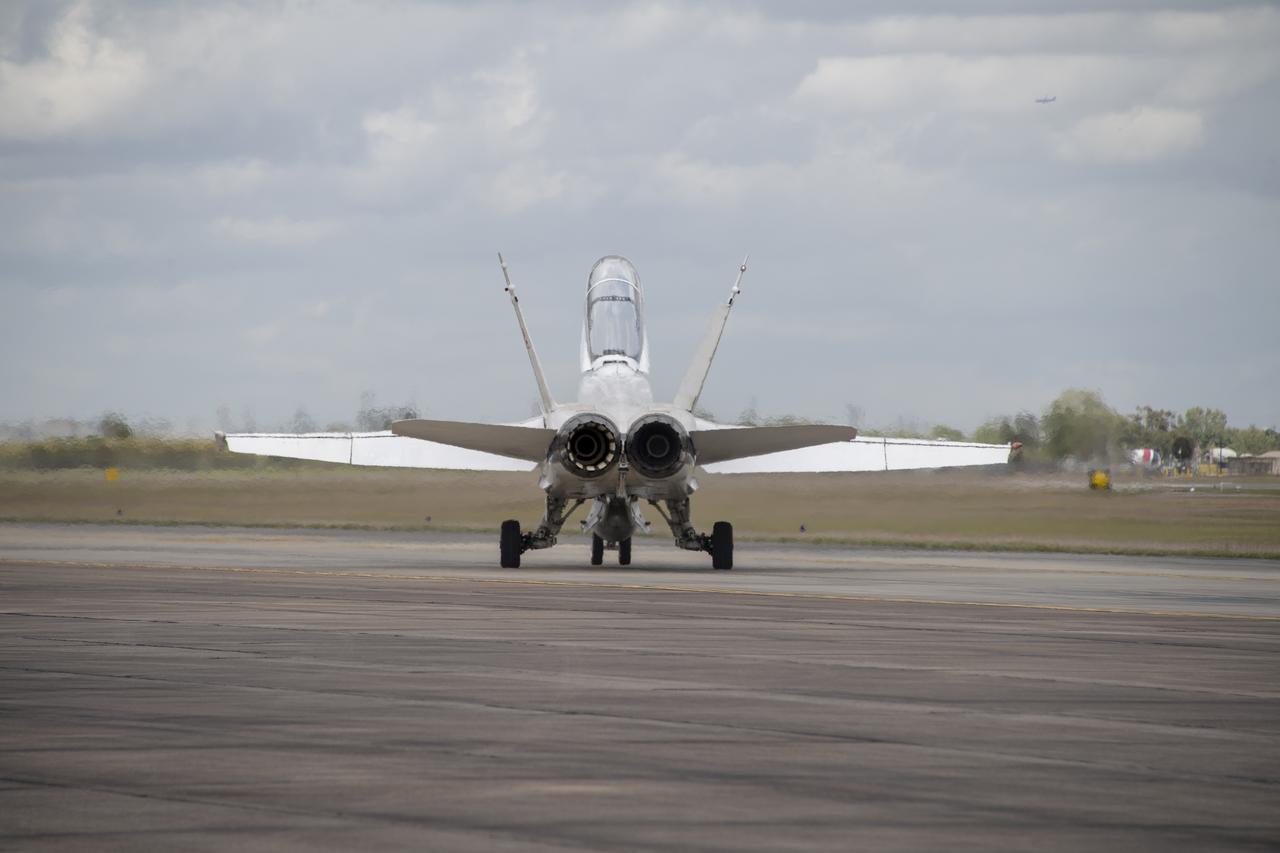
NASA ground and maintenance crews prepare the F/A-18 research aircraft for a supersonic research flight off the coast of Galveston, Texas in support of the QSF18 flight campaign. These crews are vital to making sure the aircraft is ready to operate safely and efficiently for NASA’s research.
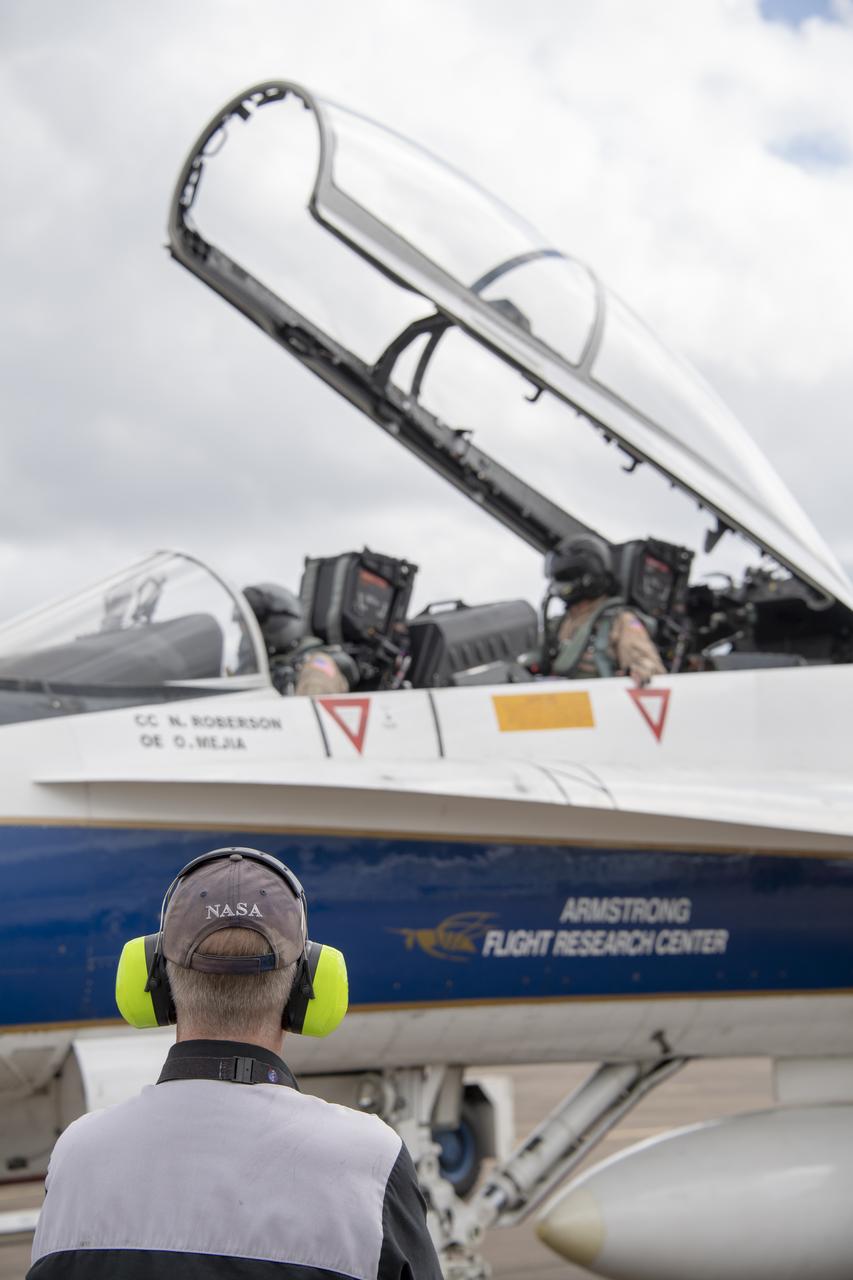
NASA ground and maintenance crews prepare the F/A-18 research aircraft for a supersonic research flight off the coast of Galveston, Texas in support of the QSF18 flight campaign. These crews are vital to making sure the aircraft is ready to operate safely and efficiently for NASA’s research.
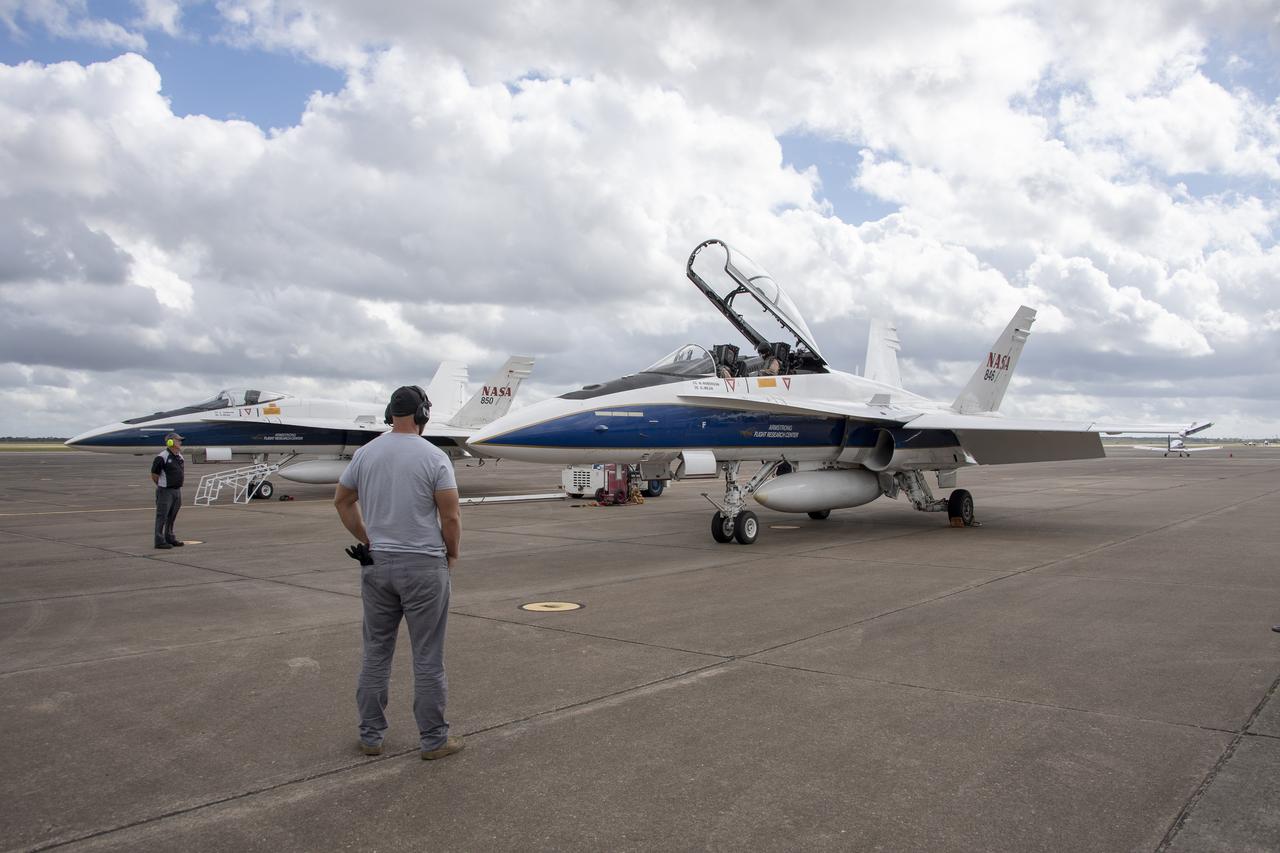
NASA ground and maintenance crews prepare the F/A-18 research aircraft for a supersonic research flight off the coast of Galveston, Texas in support of the QSF18 flight campaign. These crews are vital to making sure the aircraft is ready to operate safely and efficiently for NASA’s research.
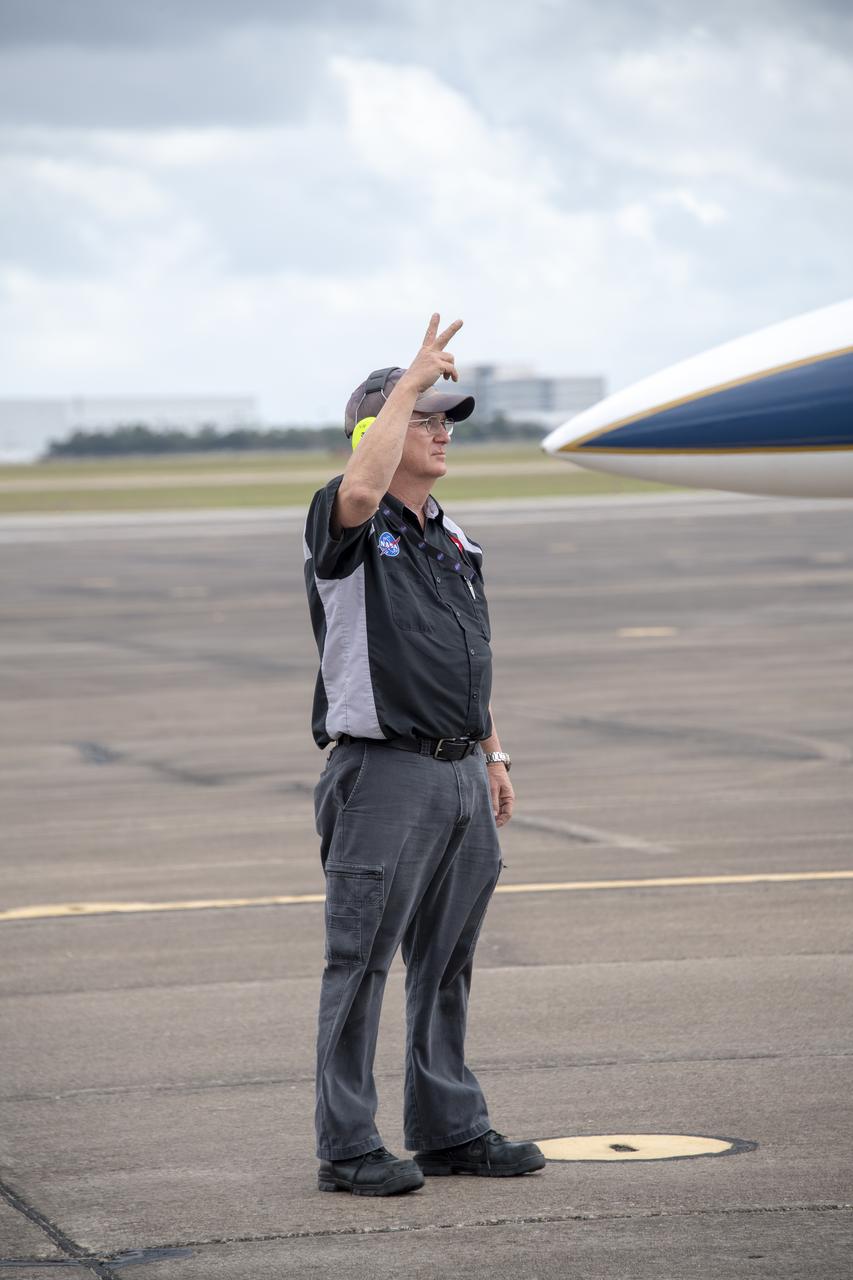
NASA ground and maintenance crews prepare the F/A-18 research aircraft for a supersonic research flight off the coast of Galveston, Texas in support of the QSF18 flight campaign. These crews are vital to making sure the aircraft is ready to operate safely and efficiently for NASA’s research.
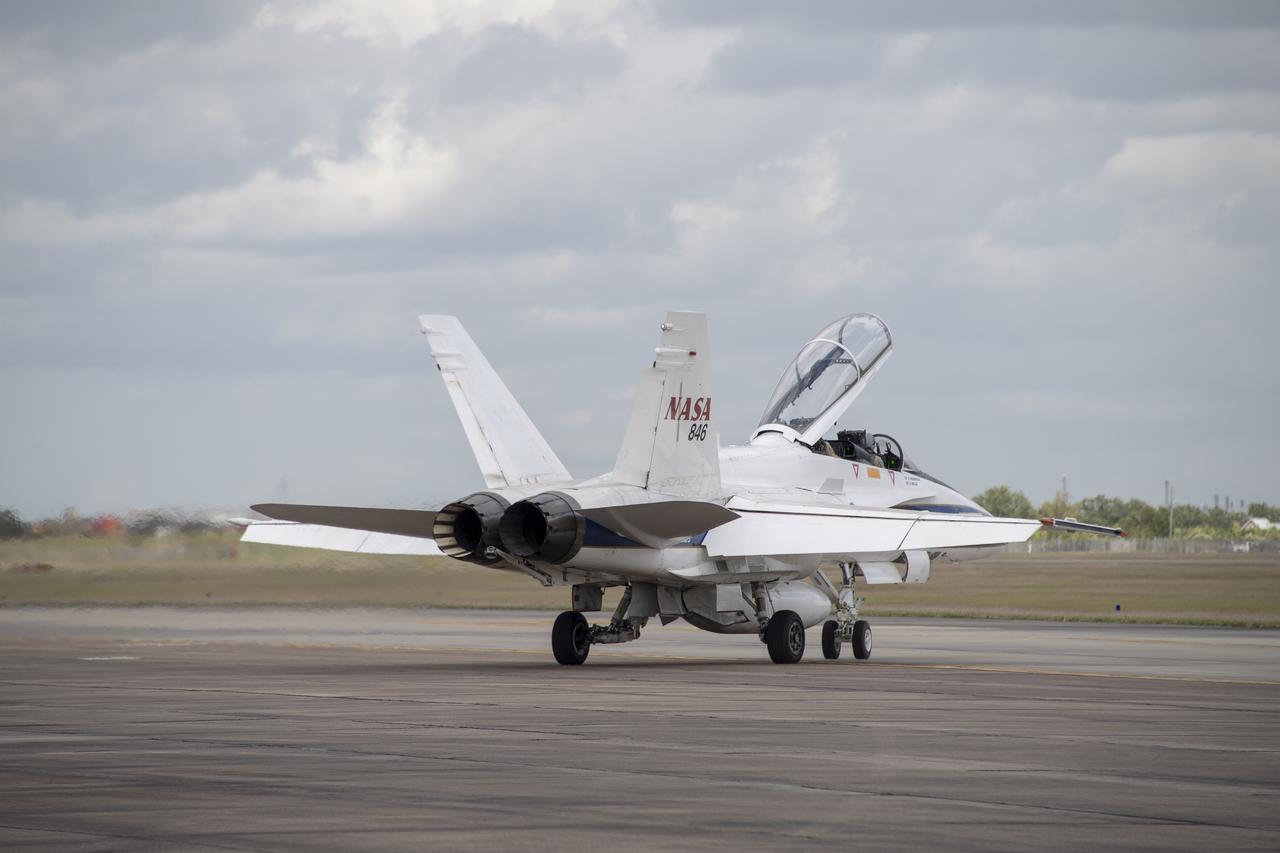
NASA ground and maintenance crews prepare the F/A-18 research aircraft for a supersonic research flight off the coast of Galveston, Texas in support of the QSF18 flight campaign. These crews are vital to making sure the aircraft is ready to operate safely and efficiently for NASA’s research.
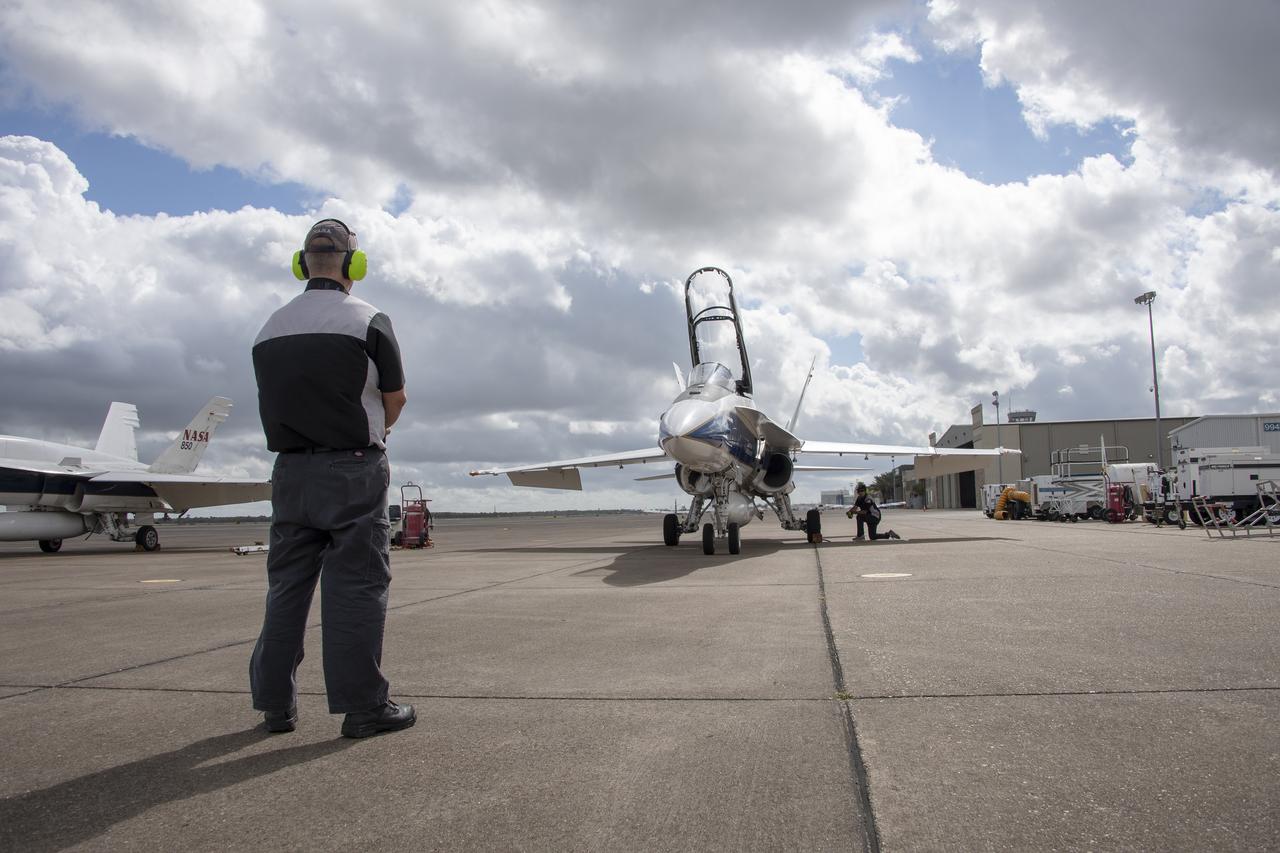
NASA ground and maintenance crews prepare the F/A-18 research aircraft for a supersonic research flight off the coast of Galveston, Texas in support of the QSF18 flight campaign. These crews are vital to making sure the aircraft is ready to operate safely and efficiently for NASA’s research.
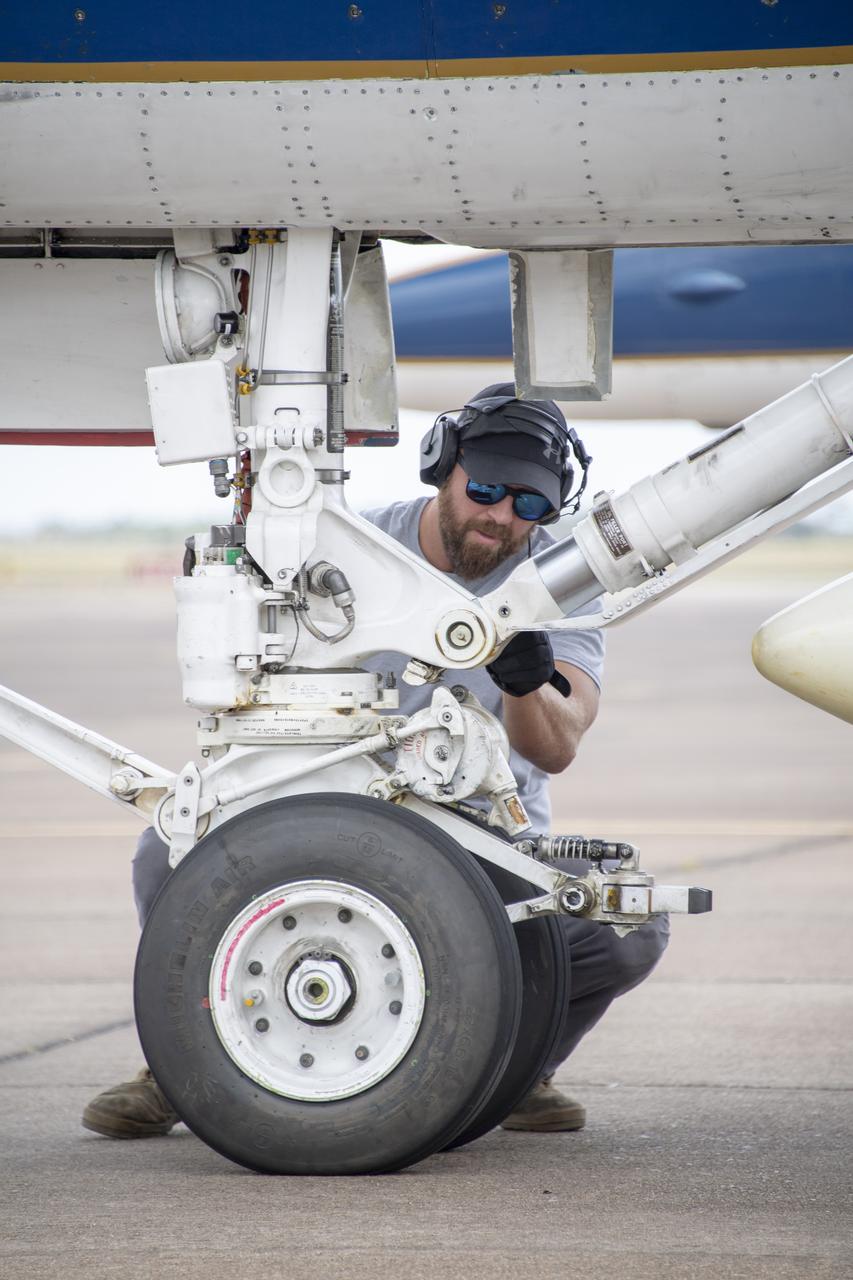
NASA ground and maintenance crews prepare the F/A-18 research aircraft for a supersonic research flight off the coast of Galveston, Texas in support of the QSF18 flight campaign. These crews are vital to making sure the aircraft is ready to operate safely and efficiently for NASA’s research.
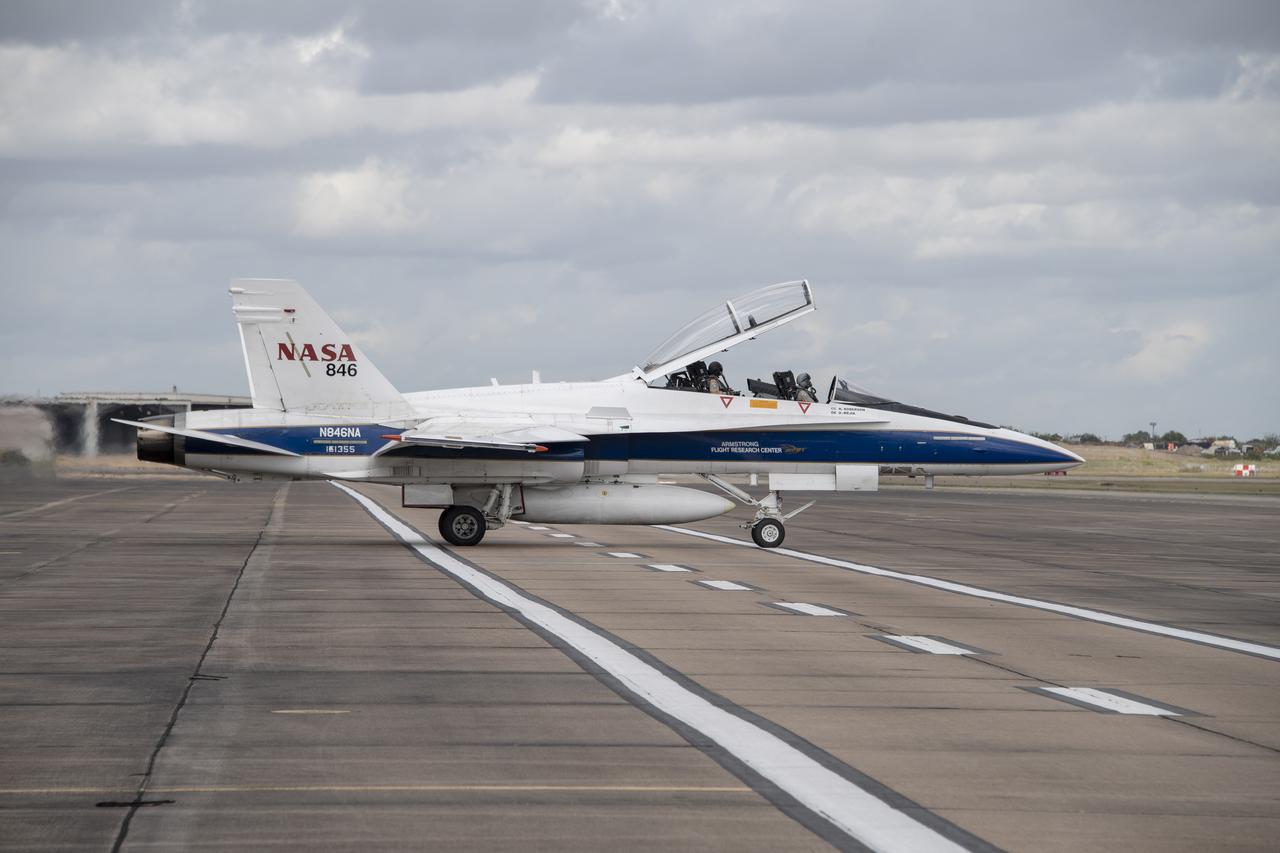
NASA ground and maintenance crews prepare the F/A-18 research aircraft for a supersonic research flight off the coast of Galveston, Texas in support of the QSF18 flight campaign. These crews are vital to making sure the aircraft is ready to operate safely and efficiently for NASA’s research.
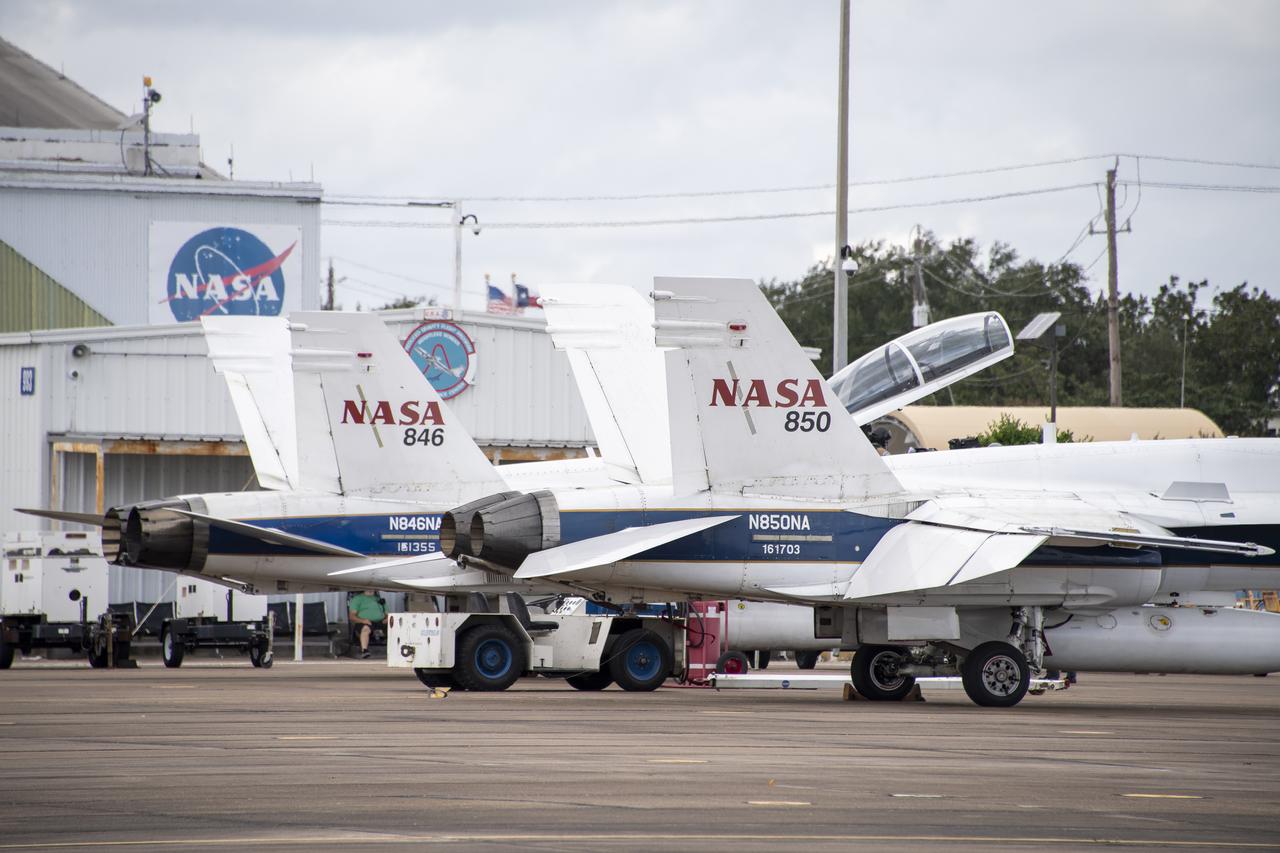
NASA ground and maintenance crews prepare the F/A-18 research aircraft for a supersonic research flight off the coast of Galveston, Texas in support of the QSF18 flight campaign. These crews are vital to making sure the aircraft is ready to operate safely and efficiently for NASA’s research.
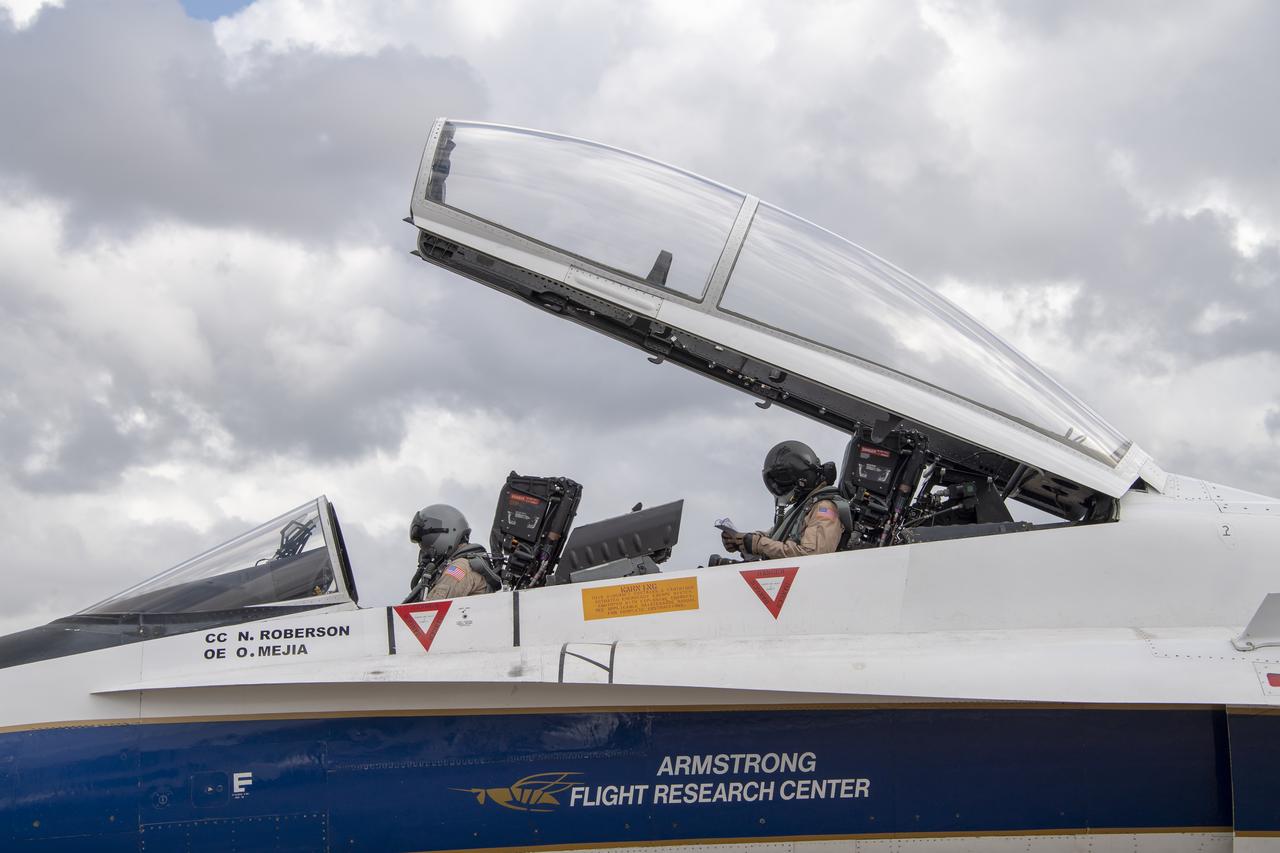
NASA ground and maintenance crews prepare the F/A-18 research aircraft for a supersonic research flight off the coast of Galveston, Texas in support of the QSF18 flight campaign. These crews are vital to making sure the aircraft is ready to operate safely and efficiently for NASA’s research.
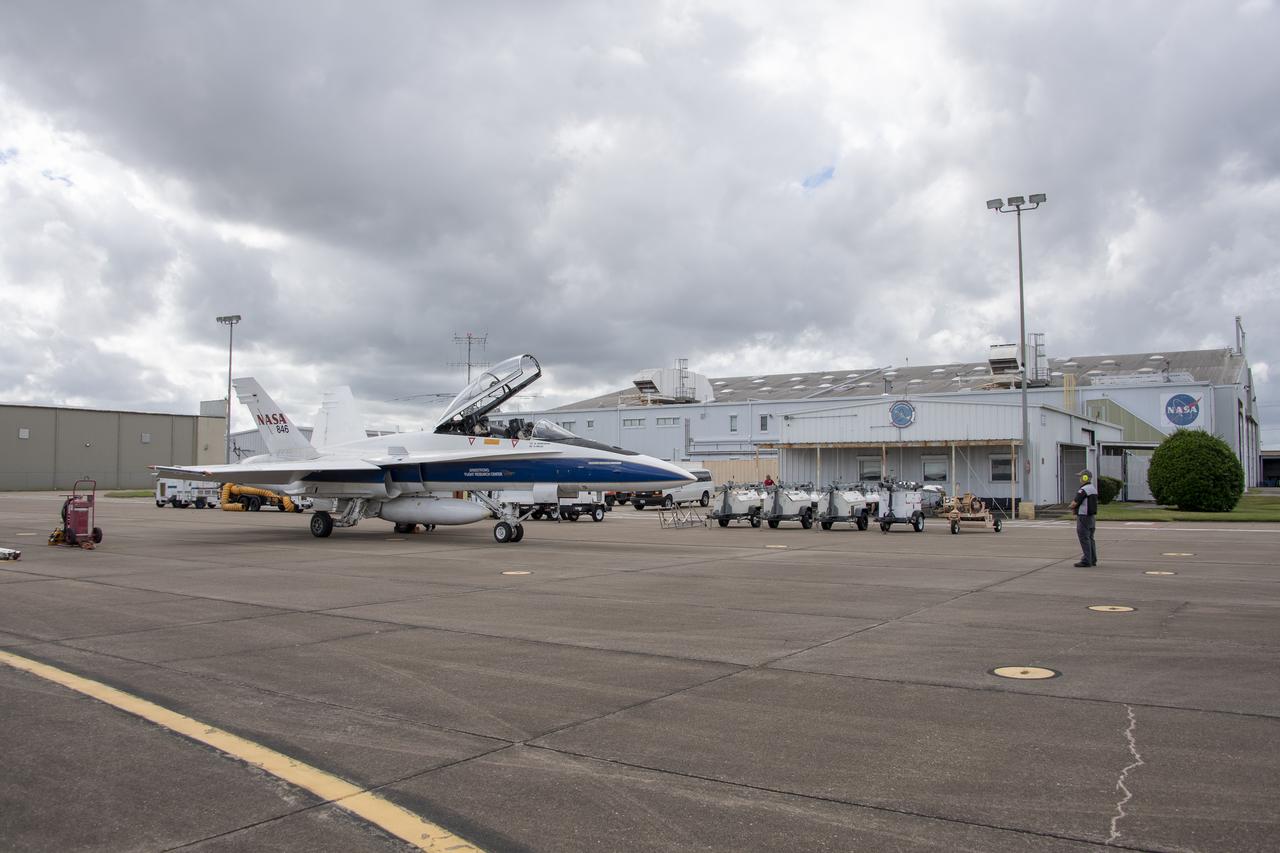
NASA ground and maintenance crews prepare the F/A-18 research aircraft for a supersonic research flight off the coast of Galveston, Texas in support of the QSF18 flight campaign. These crews are vital to making sure the aircraft is ready to operate safely and efficiently for NASA’s research.
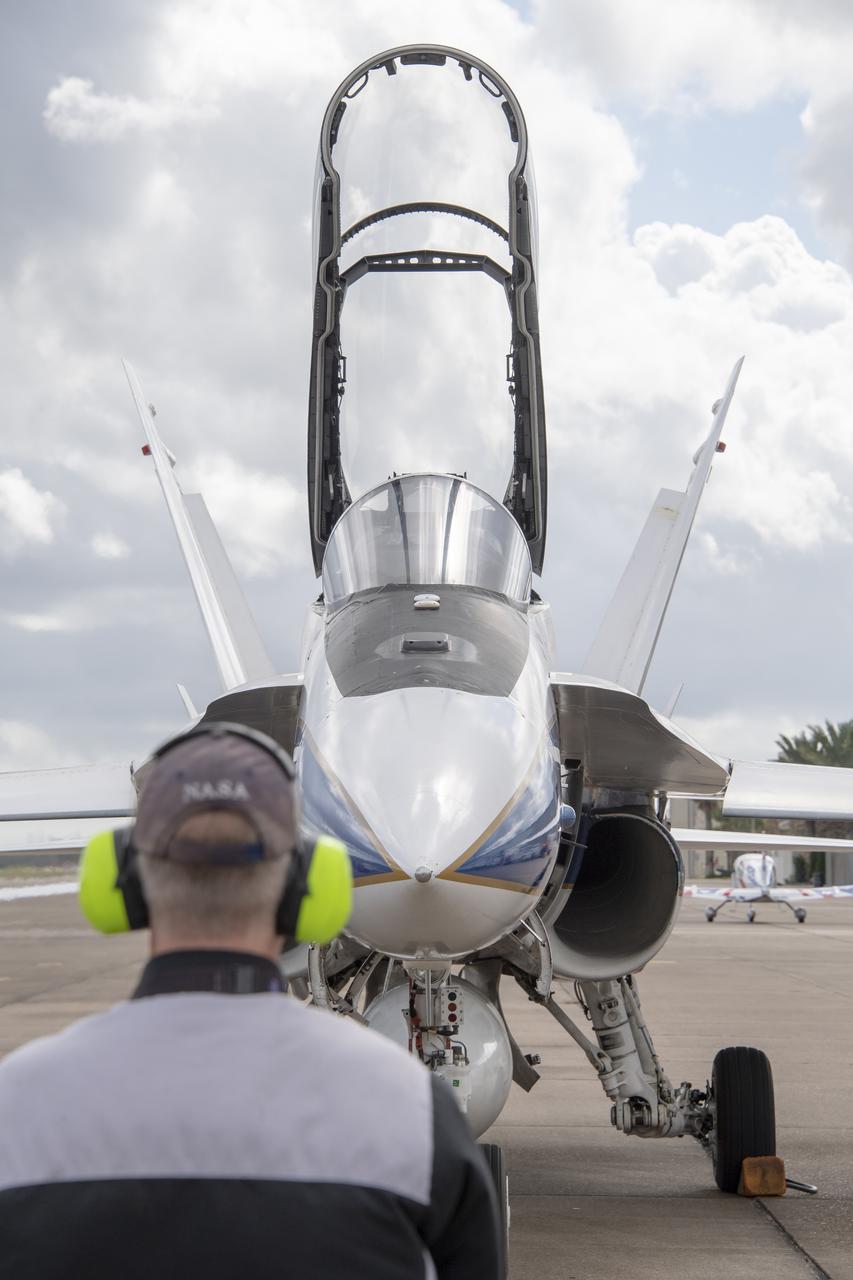
NASA ground and maintenance crews prepare the F/A-18 research aircraft for a supersonic research flight off the coast of Galveston, Texas in support of the QSF18 flight campaign. These crews are vital to making sure the aircraft is ready to operate safely and efficiently for NASA’s research.
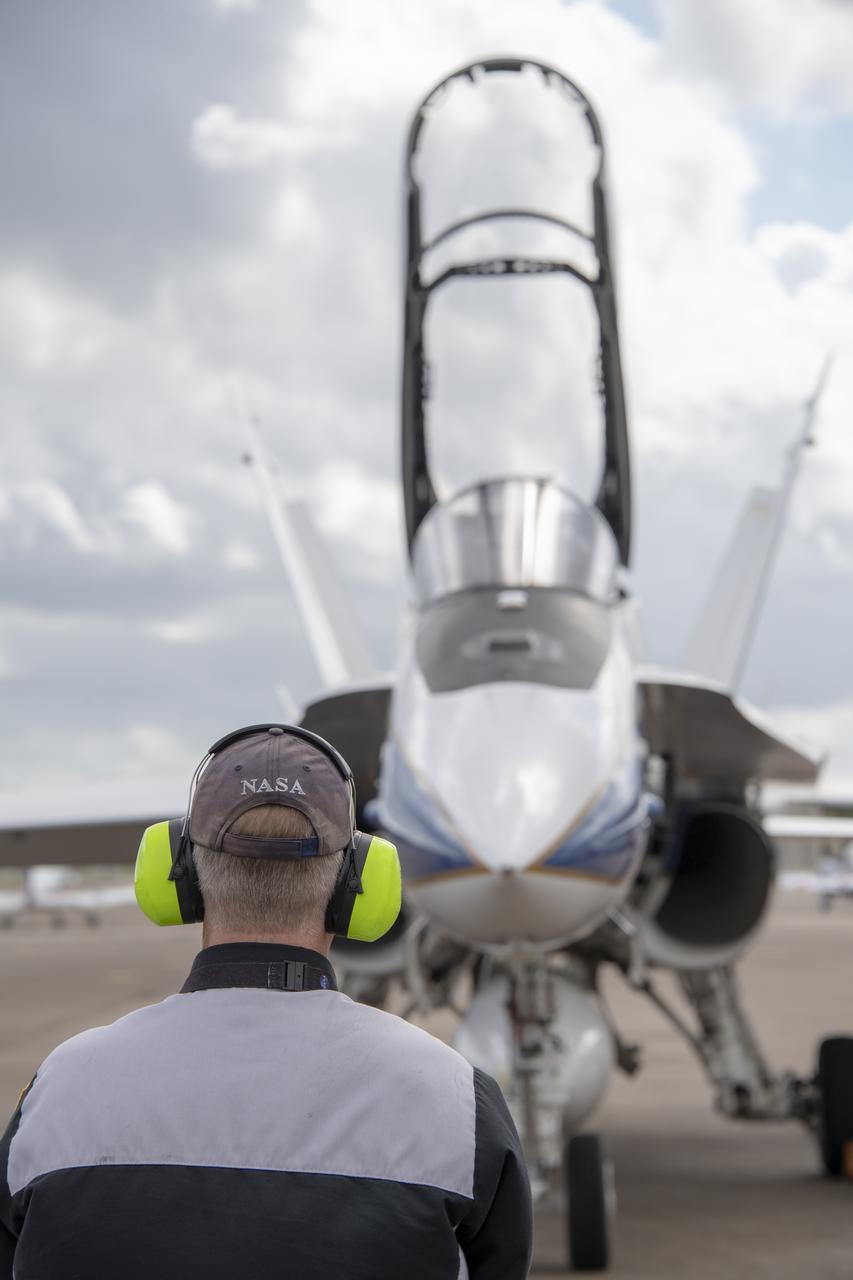
NASA ground and maintenance crews prepare the F/A-18 research aircraft for a supersonic research flight off the coast of Galveston, Texas in support of the QSF18 flight campaign. These crews are vital to making sure the aircraft is ready to operate safely and efficiently for NASA’s research.
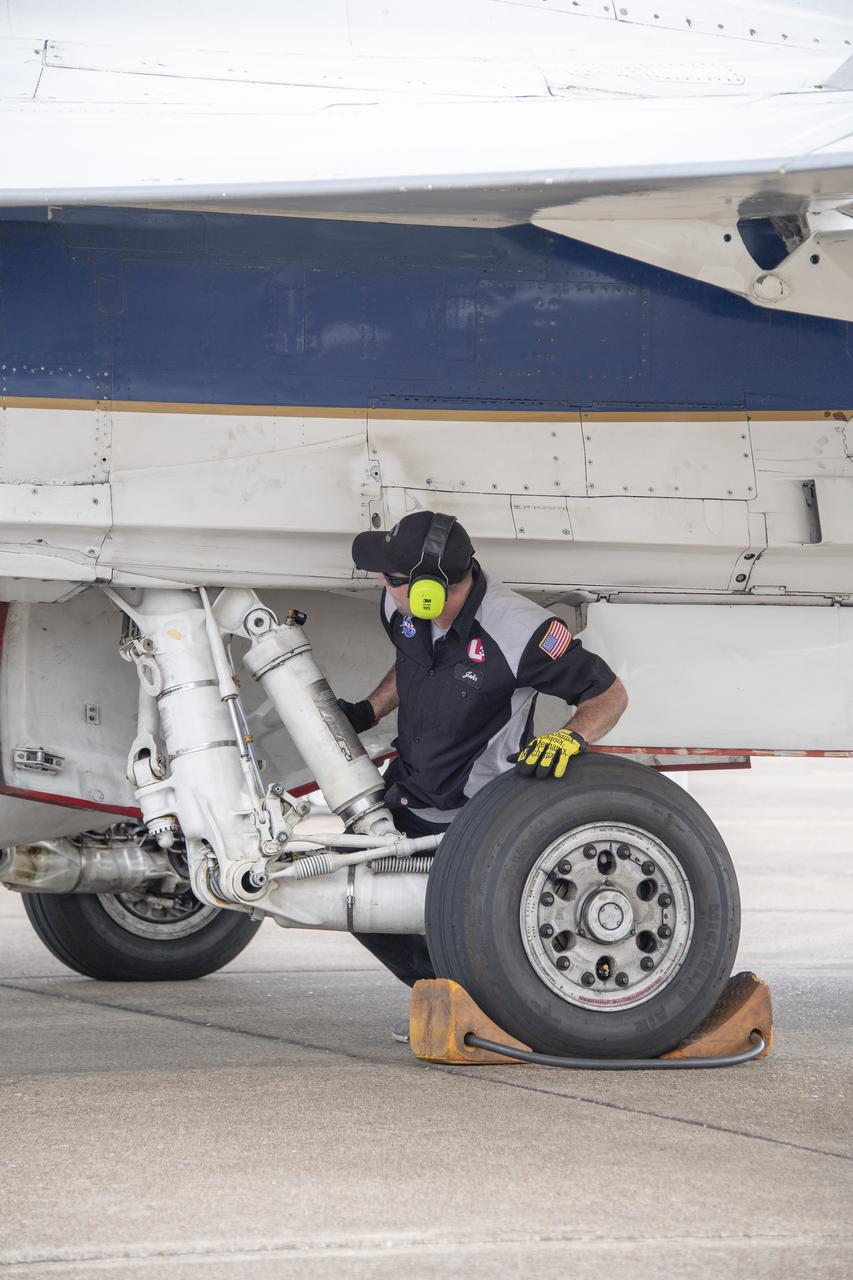
NASA ground and maintenance crews prepare the F/A-18 research aircraft for a supersonic research flight off the coast of Galveston, Texas in support of the QSF18 flight campaign. These crews are vital to making sure the aircraft is ready to operate safely and efficiently for NASA’s research.
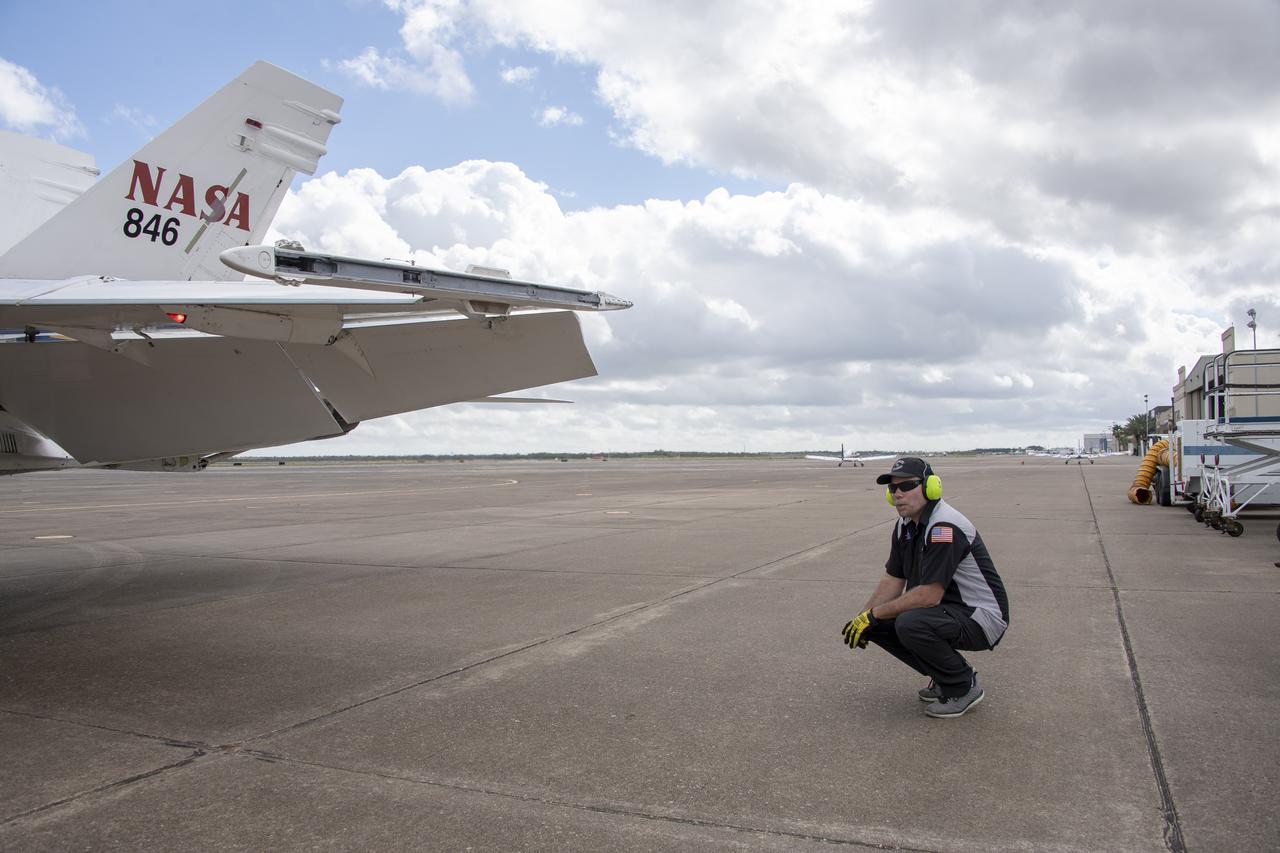
NASA ground and maintenance crews prepare the F/A-18 research aircraft for a supersonic research flight off the coast of Galveston, Texas in support of the QSF18 flight campaign. These crews are vital to making sure the aircraft is ready to operate safely and efficiently for NASA’s research.
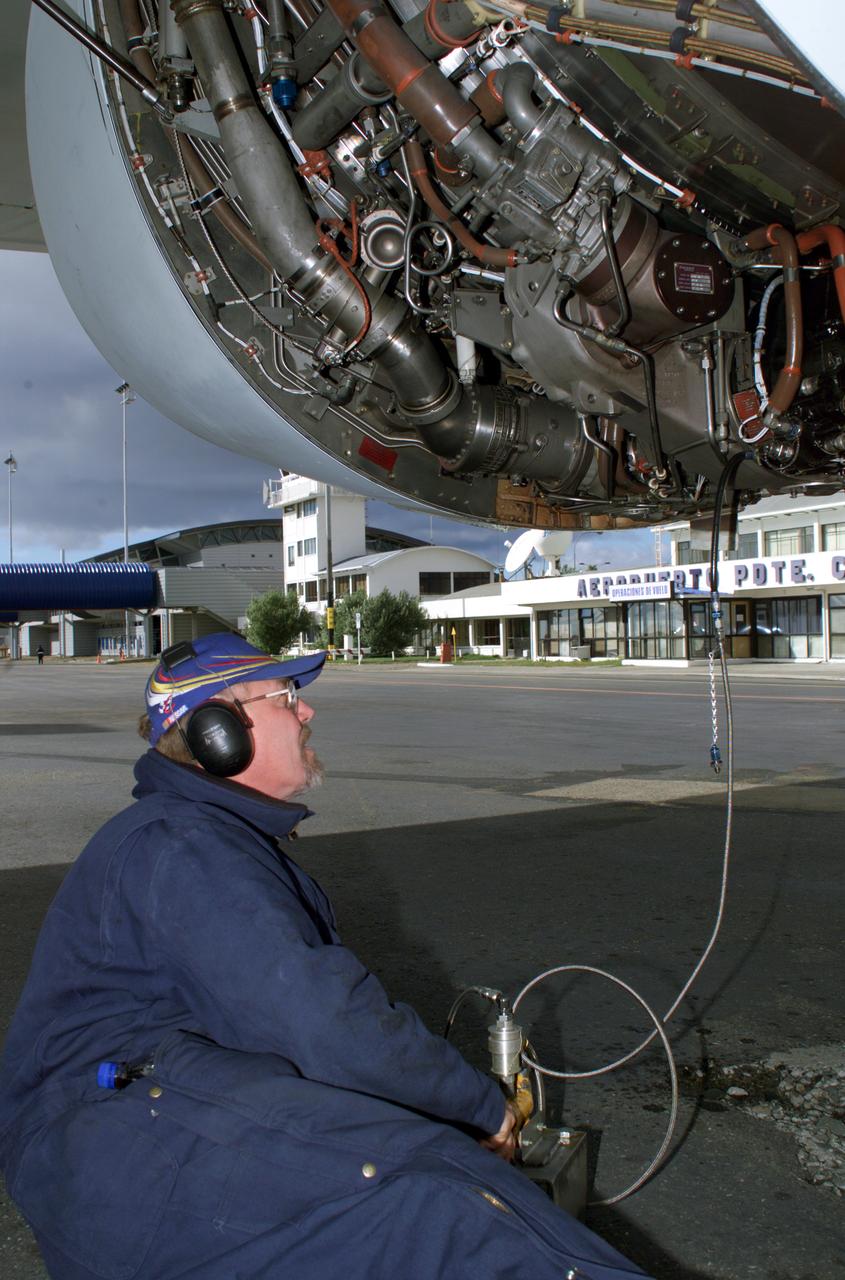
NASA DC-8 Ground Support Technician Joe Niquette performs routine maintenance on the DC-8 aircraft at Carlos Ibanez del Campo International Airport in Punta Arenas, Chile. AirSAR 2004 is a three-week expedition by an international team of scientists that is using an all-weather imaging tool, called the Airborne Synthetic Aperture Radar (AirSAR) which is located onboard NASA's DC-8 airborne laboratory. Scientists from many parts of the world including NASA's Jet Propulsion Laboratory are combining ground research done in several areas in Central and South America with NASA's AirSAR technology to improve and expand on the quality of research they are able to conduct. In South America and Antarctica, AirSAR will collect imagery and data to help determine the contribution of Southern Hemisphere glaciers to sea level rise due to climate change. In Patagonia, researchers found this contribution had more than doubled from 1995 to 2000, compared to the previous 25 years. AirSAR data will make it possible to determine whether that trend is decreasing, continuing or accelerating. AirSAR will also provide reliable information on ice shelf thickness to measure the contribution of the glaciers to sea level.
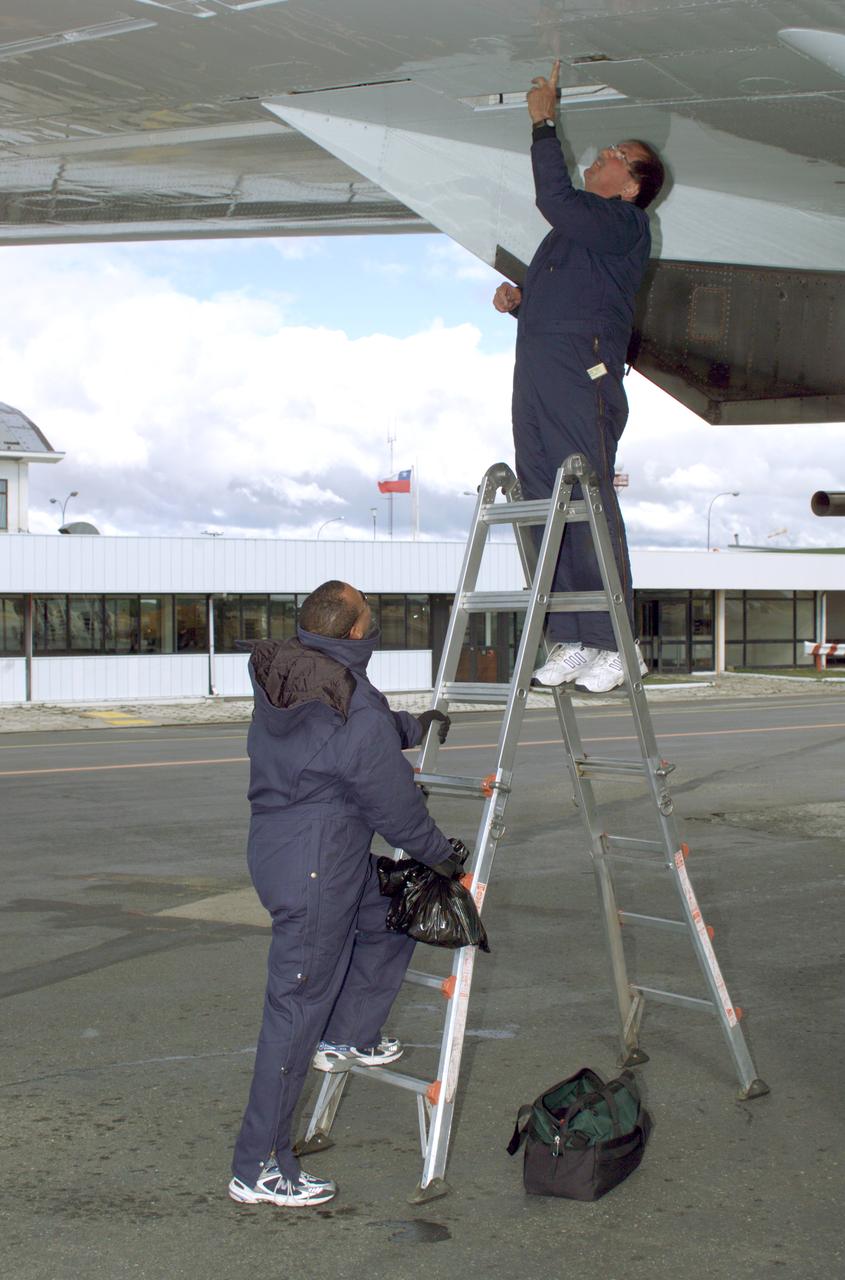
NASA DC-8 Ground Support Technicians Mark Corlew and Mike Lakowski perform routine maintenance on the aircraft at Carlos Ibanez del Campo International Airport in Punta Arenas, Chile. AirSAR 2004 is a three-week expedition by an international team of scientists that is using an all-weather imaging tool, called the Airborne Synthetic Aperture Radar (AirSAR) which is located onboard NASA's DC-8 airborne laboratory. Scientists from many parts of the world including NASA's Jet Propulsion Laboratory are combining ground research done in several areas in Central and South America with NASA's AirSAR technology to improve and expand on the quality of research they are able to conduct. In South America and Antarctica, AirSAR will collect imagery and data to help determine the contribution of Southern Hemisphere glaciers to sea level rise due to climate change. In Patagonia, researchers found this contribution had more than doubled from 1995 to 2000, compared to the previous 25 years. AirSAR data will make it possible to determine whether that trend is decreasing, continuing or accelerating. AirSAR will also provide reliable information on ice shelf thickness to measure the contribution of the glaciers to sea level.
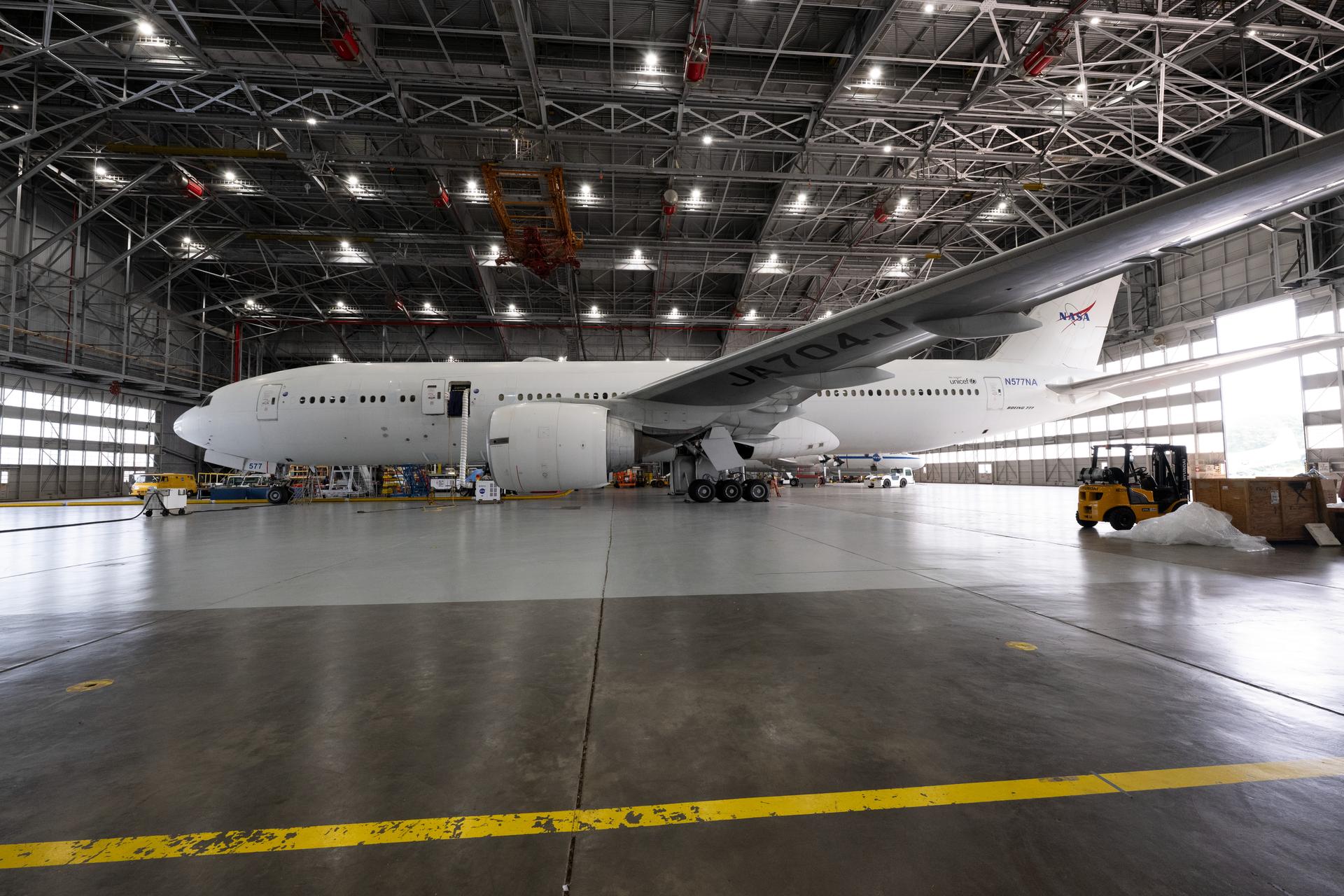
Before Langley's B777 aircraft departed Langley Research Center to received its NASA livery (paint job), it received ground maintenance in the hangar on center. Photo Credit NASA/Ryan Hill
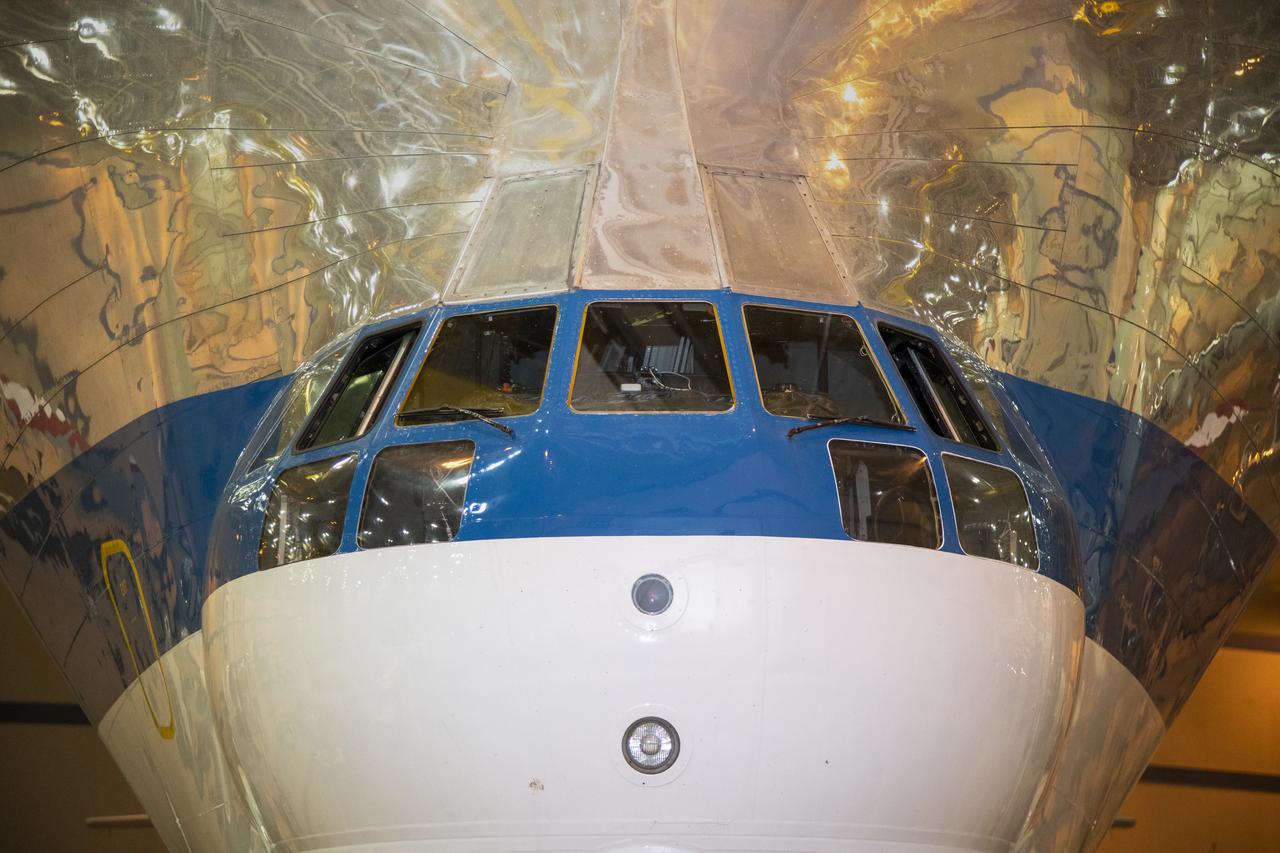
NASA's Super Guppy Turbine cargo aircraft in the hangar at NASA's Armstrong Flight Research Center on August 24, 2021. This unique whale-like aircraft arrived at the center's Building 703 in Palmdale, CA to support crews in the performance of routine maintenance. The Super Guppy aircraft, operated by NASA's Johnson Space Center, aids in the transportation of oversized aerospace cargo in a practical and economical way.

The X-59 quiet supersonic research aircraft arrives at NASA’s Armstrong Flight Research Center in Edwards, California, following its first flight Tuesday, Oct. 28, 2025. Ground teams perform final checks on the aircraft at its new home for flight operations. Next, the aircraft will undergo scheduled maintenance followed by a series of additional test flights, gradually building toward its first supersonic flight.

The X-59 quiet supersonic research aircraft arrives at NASA’s Armstrong Flight Research Center in Edwards, California, following its first flight Tuesday, Oct. 28, 2025. Ground teams perform final checks on the aircraft at its new home for flight operations. Next, the aircraft will undergo scheduled maintenance followed by a series of additional test flights, gradually building toward its first supersonic flight.
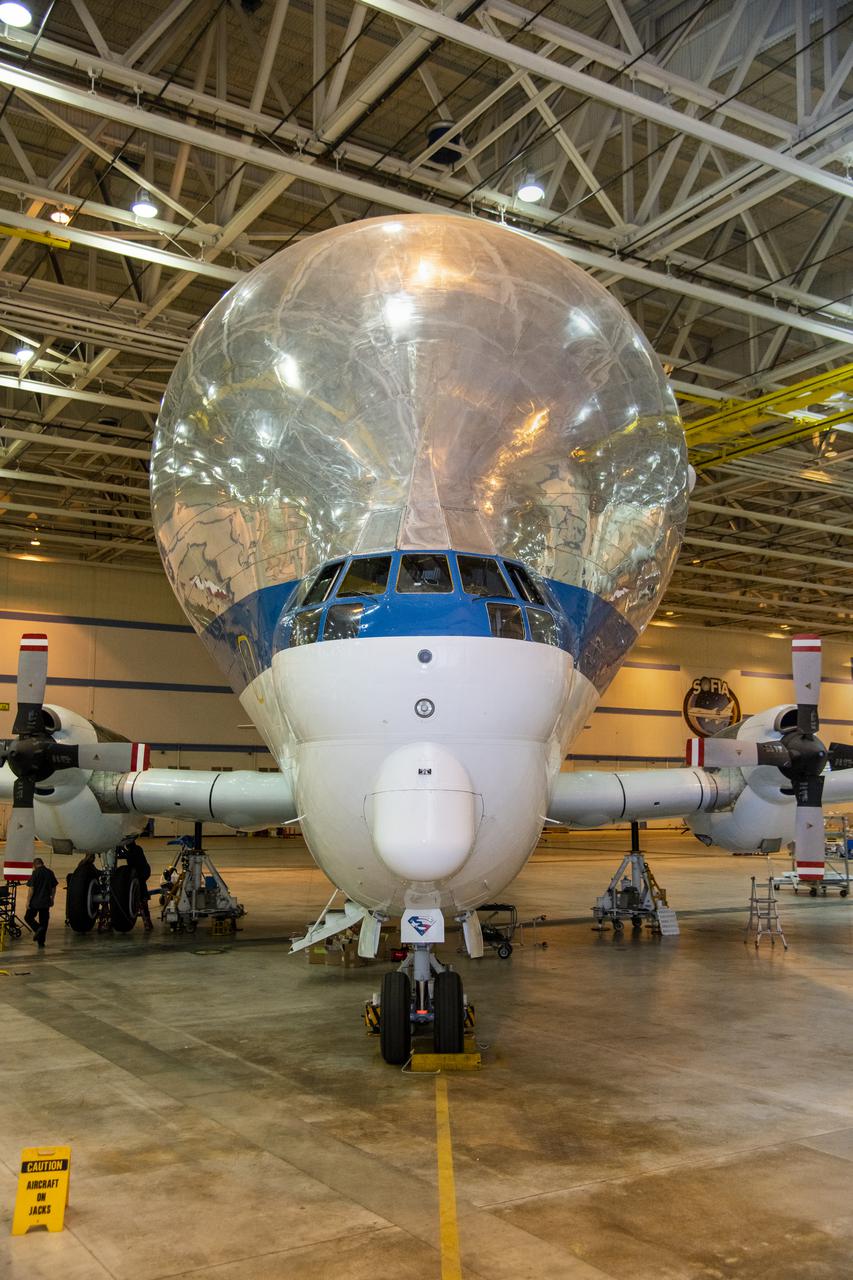
NASA’s Super Guppy Turbine cargo aircraft in the hangar at NASA’s Armstrong Flight Research Center on August 24, 2021. This unique whale-like aircraft arrived at the center’s Building 703 in Palmdale, CA to support crews in the performance of routine maintenance. The Super Guppy aircraft, operated by NASA’s Johnson Space Center, aids in the transportation of oversized aerospace cargo in a practical and economical way.
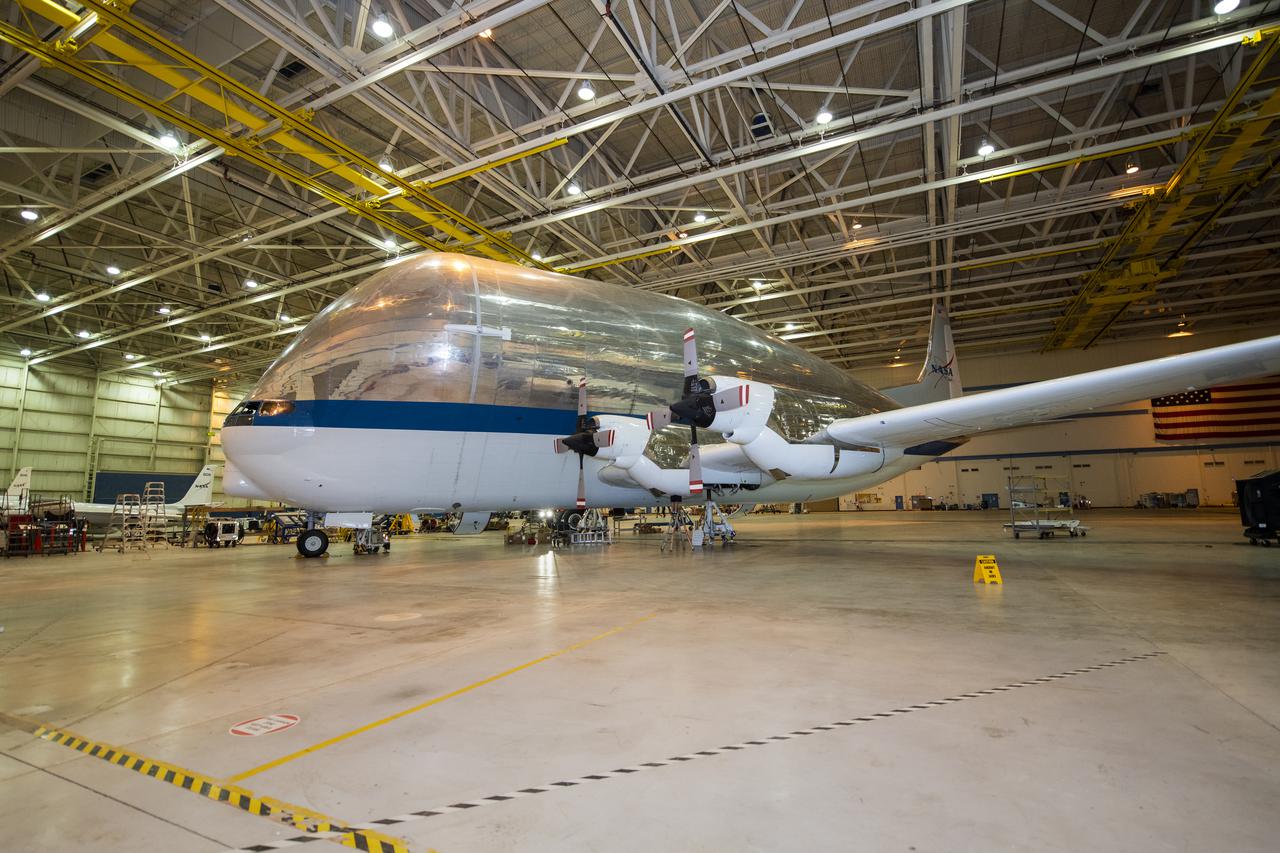
NASA's Super Guppy Turbine cargo aircraft in the hangar at NASA's Armstrong Flight Research Center on August 24, 2021. This unique whale-like aircraft arrived at the center's Building 703 in Palmdale, CA to support crews in the performance of routine maintenance. The Super Guppy aircraft, operated by NASA's Johnson Space Center, aids in the transportation of oversized aerospace cargo in a practical and economical way.
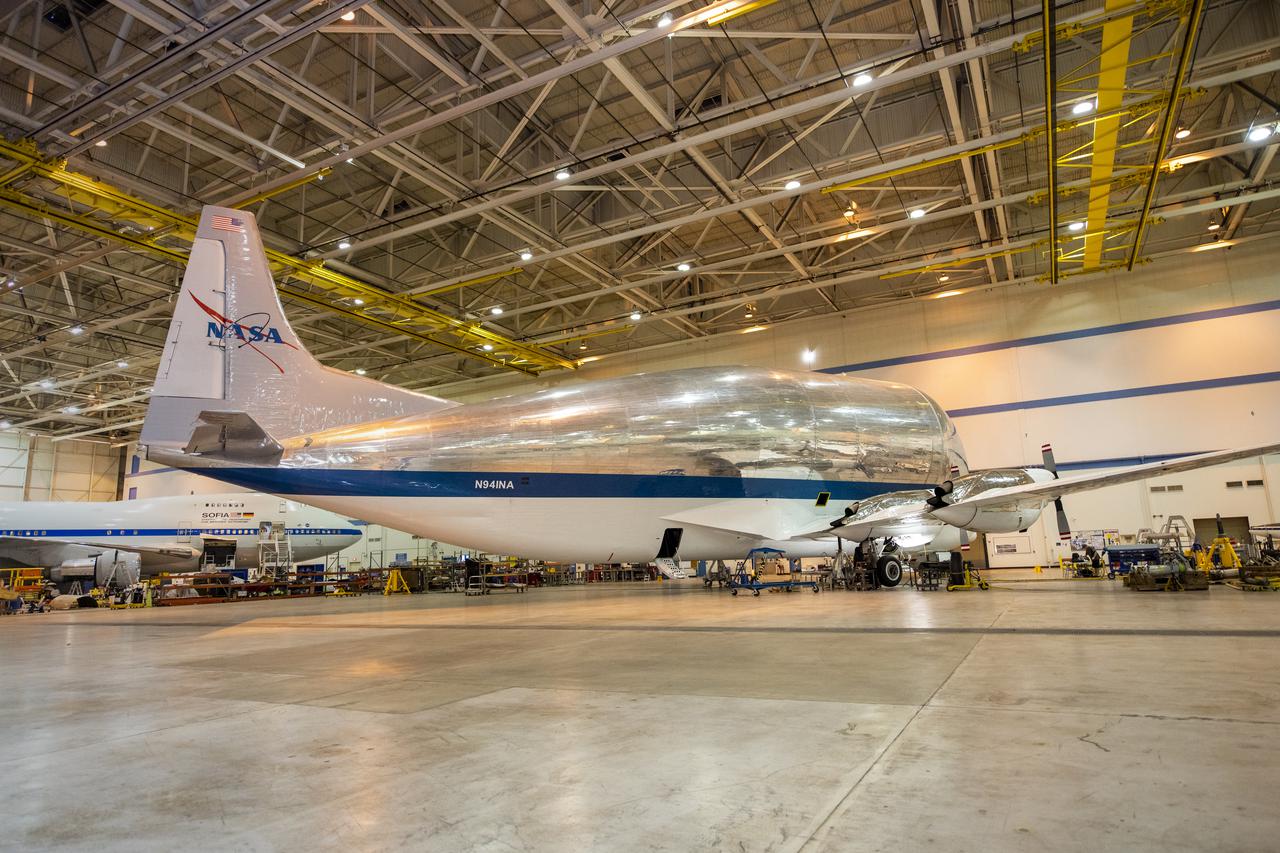
NASA's Super Guppy Turbine cargo aircraft in the hangar at NASA's Armstrong Flight Research Center on August 24, 2021. This unique whale-like aircraft arrived at the center's Building 703 in Palmdale, CA to support crews in the performance of routine maintenance. The Super Guppy aircraft, operated by NASA's Johnson Space Center, aids in the transportation of oversized aerospace cargo in a practical and economical way.
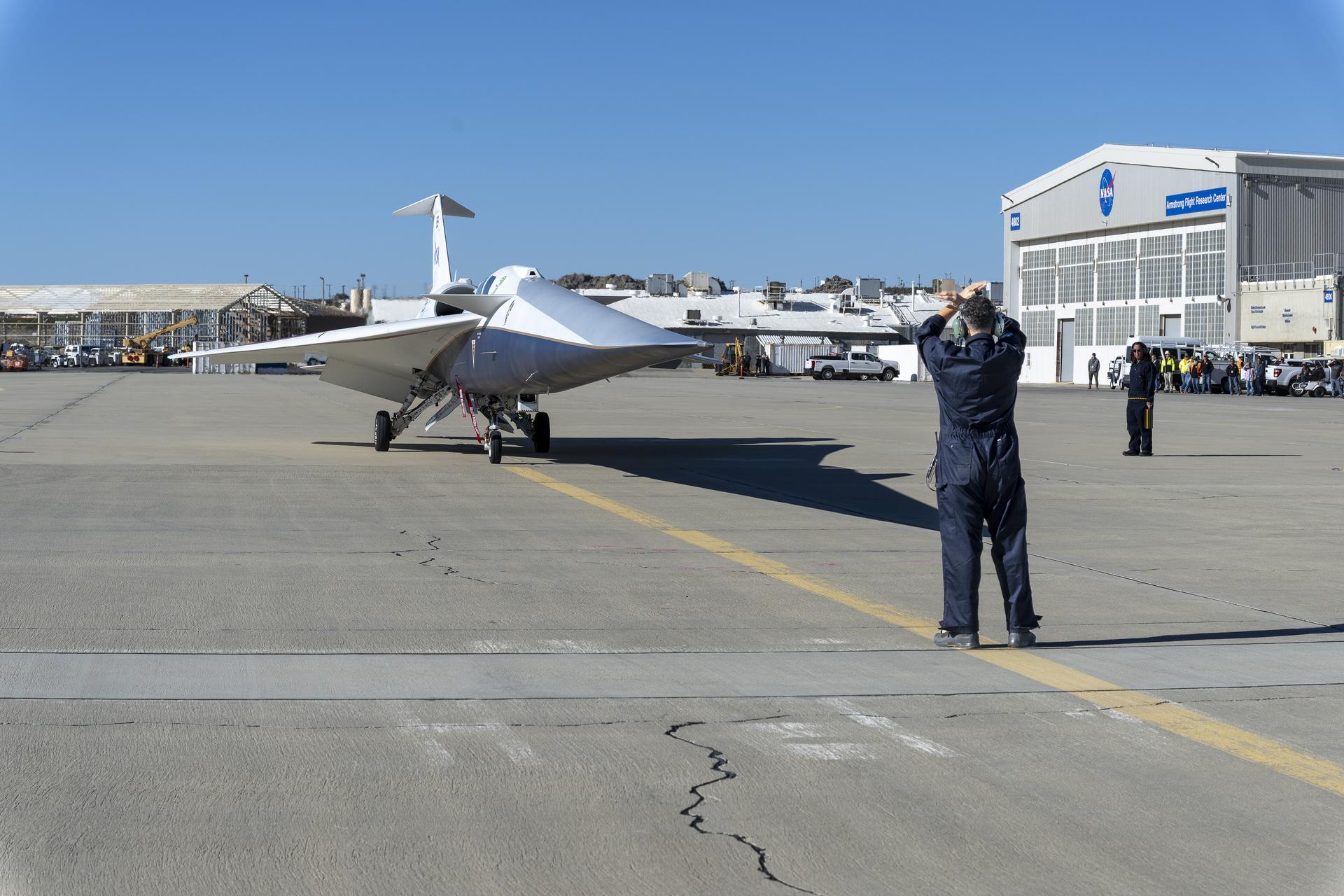
The X-59 quiet supersonic research aircraft arrives at NASA’s Armstrong Flight Research Center in Edwards, California, following its first flight Tuesday, Oct. 28, 2025. The arrival marks the aircraft’s transition from ground testing to flight operations. Next, the aircraft will undergo scheduled maintenance followed by a series of additional test flights, gradually building toward its first supersonic flight.

The X-59 quiet supersonic research aircraft arrives at NASA’s Armstrong Flight Research Center in Edwards, California, following its first flight Tuesday, Oct. 28, 2025. Ground teams perform final checks on the aircraft at its new home for flight operations. Next, the aircraft will undergo scheduled maintenance followed by a series of additional test flights, gradually building toward its first supersonic flight.
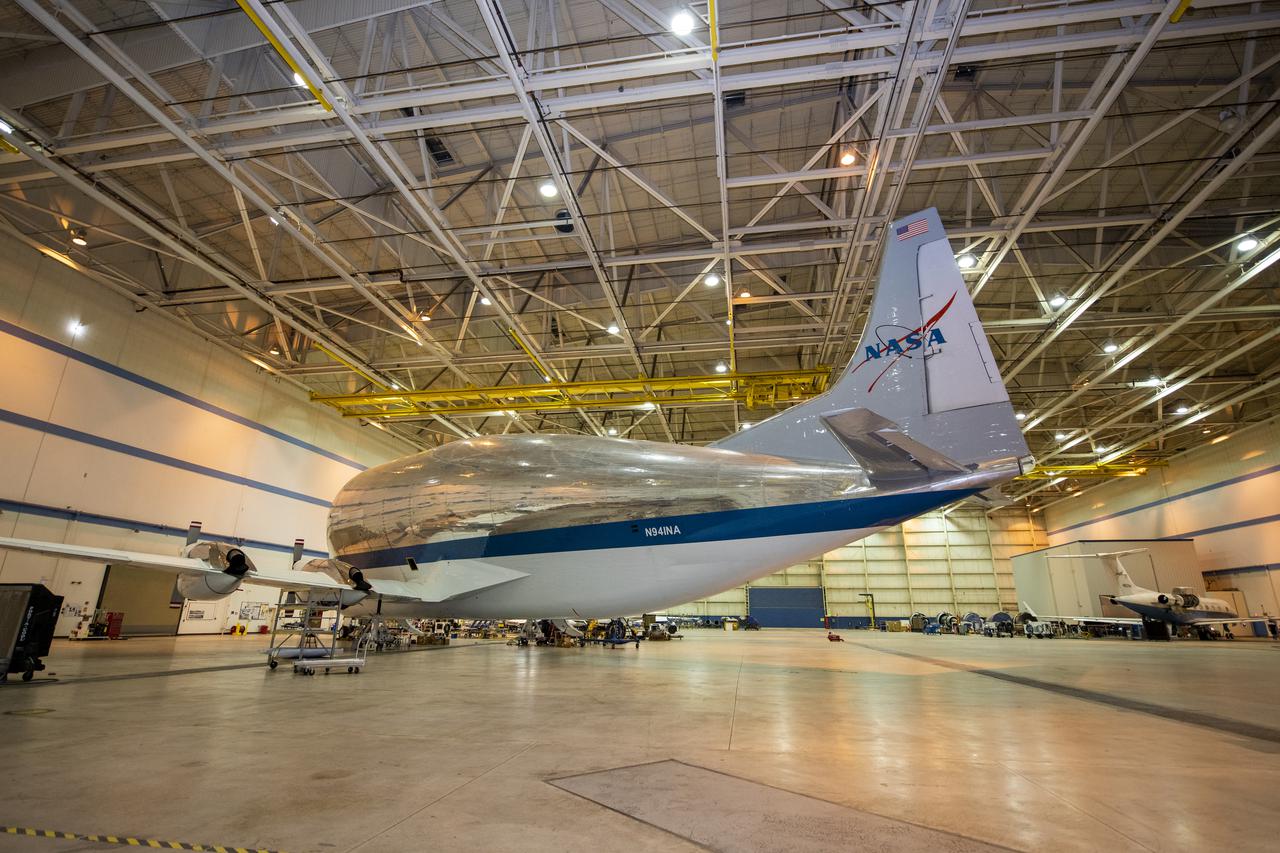
NASA’s Super Guppy Turbine cargo aircraft in the hangar at NASA’s Armstrong Flight Research Center on August 24, 2021. This unique whale-like aircraft arrived at the center’s Building 703 in Palmdale, CA to support crews in the performance of routine maintenance. The Super Guppy aircraft, operated by NASA’s Johnson Space Center, aids in the transportation of oversized aerospace cargo in a practical and economical way.
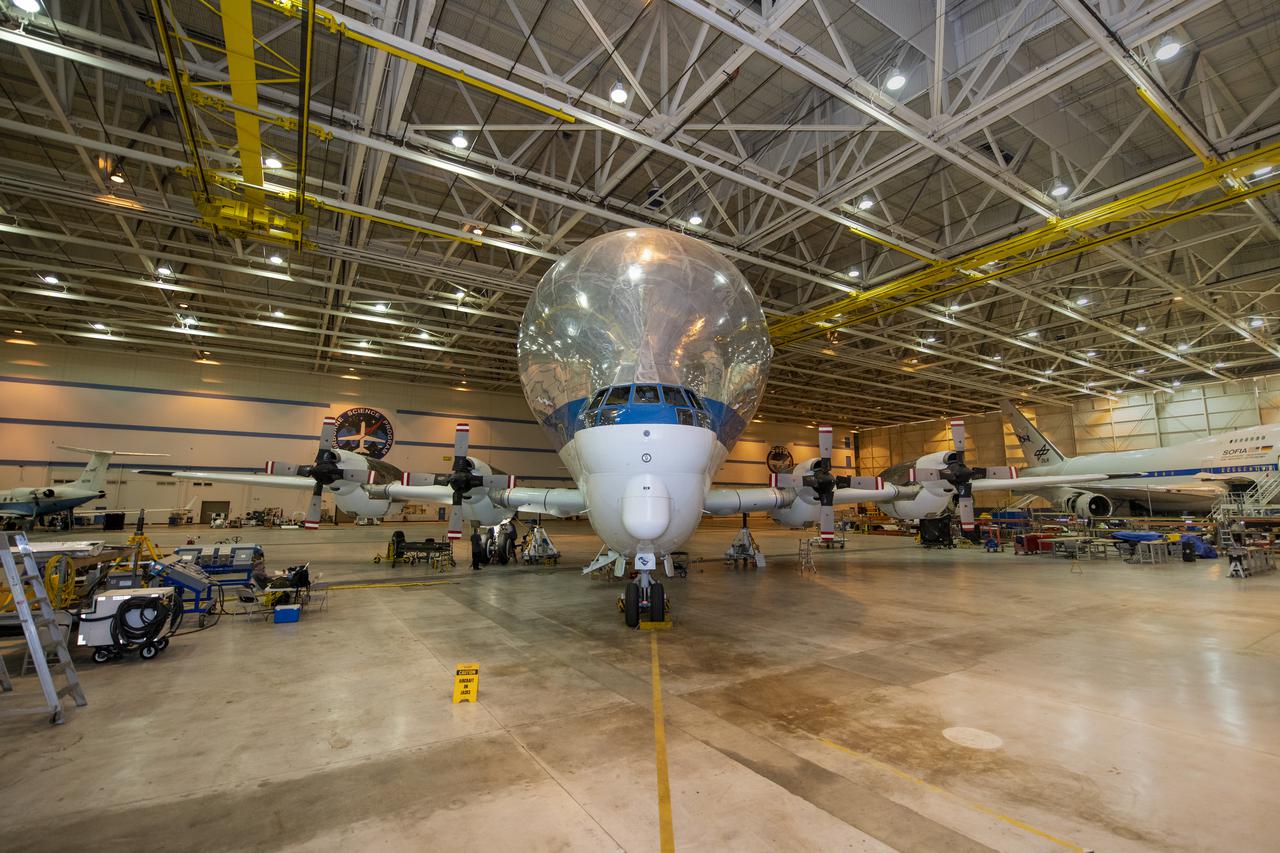
NASA’s Super Guppy Turbine cargo aircraft in the hangar at NASA’s Armstrong Flight Research Center on August 24, 2021. This unique whale-like aircraft arrived at the center’s Building 703 in Palmdale, CA to support crews in the performance of routine maintenance. The Super Guppy aircraft, operated by NASA’s Johnson Space Center, aids in the transportation of oversized aerospace cargo in a practical and economical way.
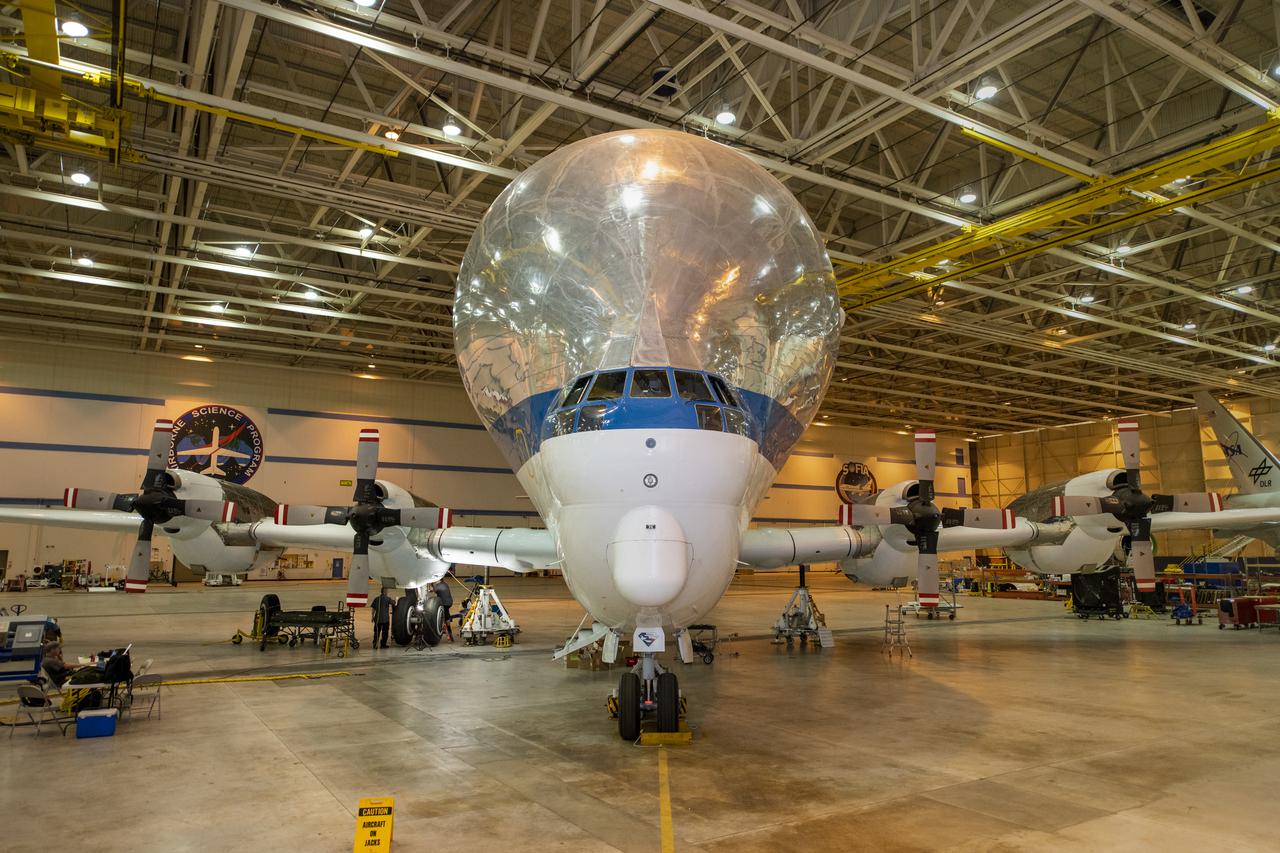
NASA's Super Guppy Turbine cargo aircraft in the hangar at NASA's Armstrong Flight Research Center on August 24, 2021. This unique whale-like aircraft arrived at the center's Building 703 in Palmdale, CA to support crews in the performance of routine maintenance. The Super Guppy aircraft, operated by NASA's Johnson Space Center, aids in the transportation of oversized aerospace cargo in a practical and economical way.
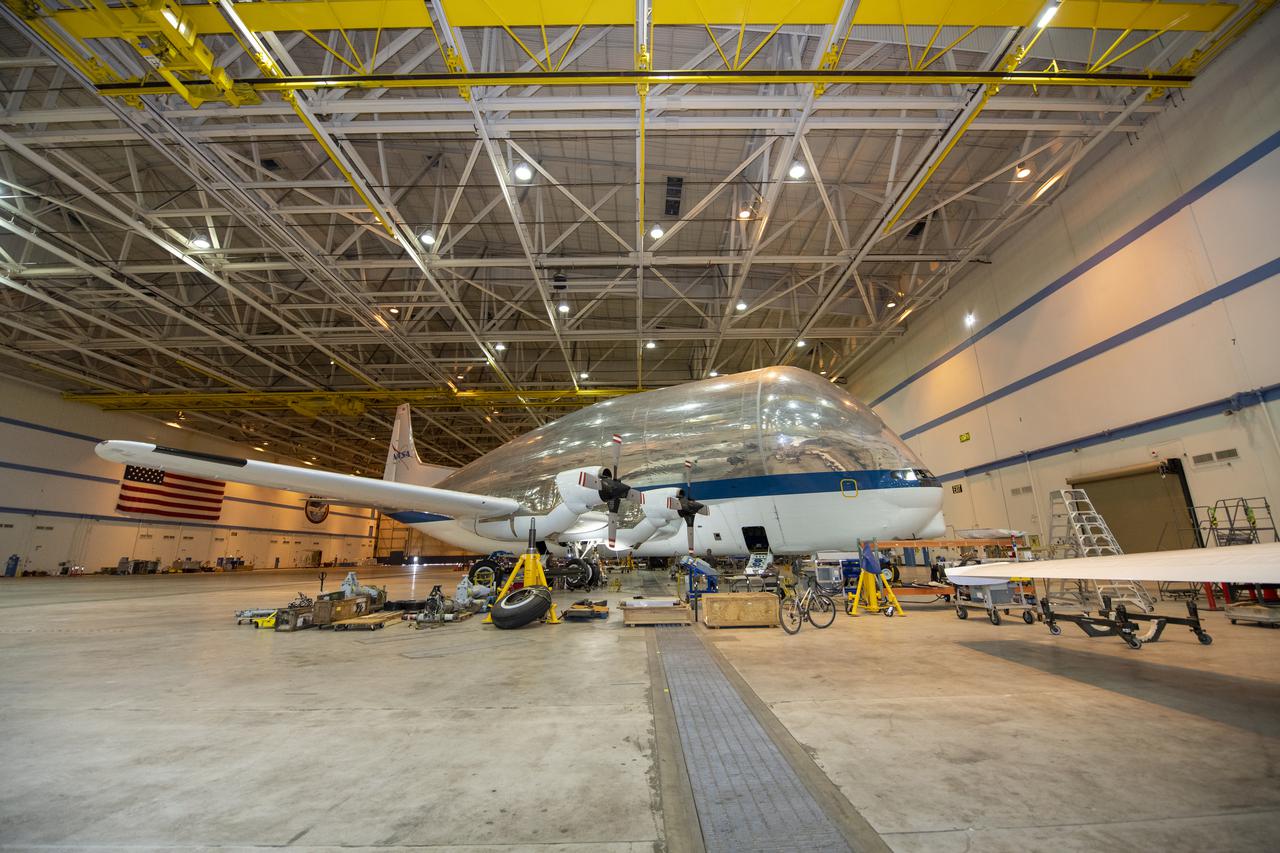
NASA's Super Guppy Turbine cargo aircraft in the hangar at NASA's Armstrong Flight Research Center on August 24, 2021. This unique whale-like aircraft arrived at the center's Building 703 in Palmdale, CA to support crews in the performance of routine maintenance. The Super Guppy aircraft, operated by NASA's Johnson Space Center, aids in the transportation of oversized aerospace cargo in a practical and economical way.
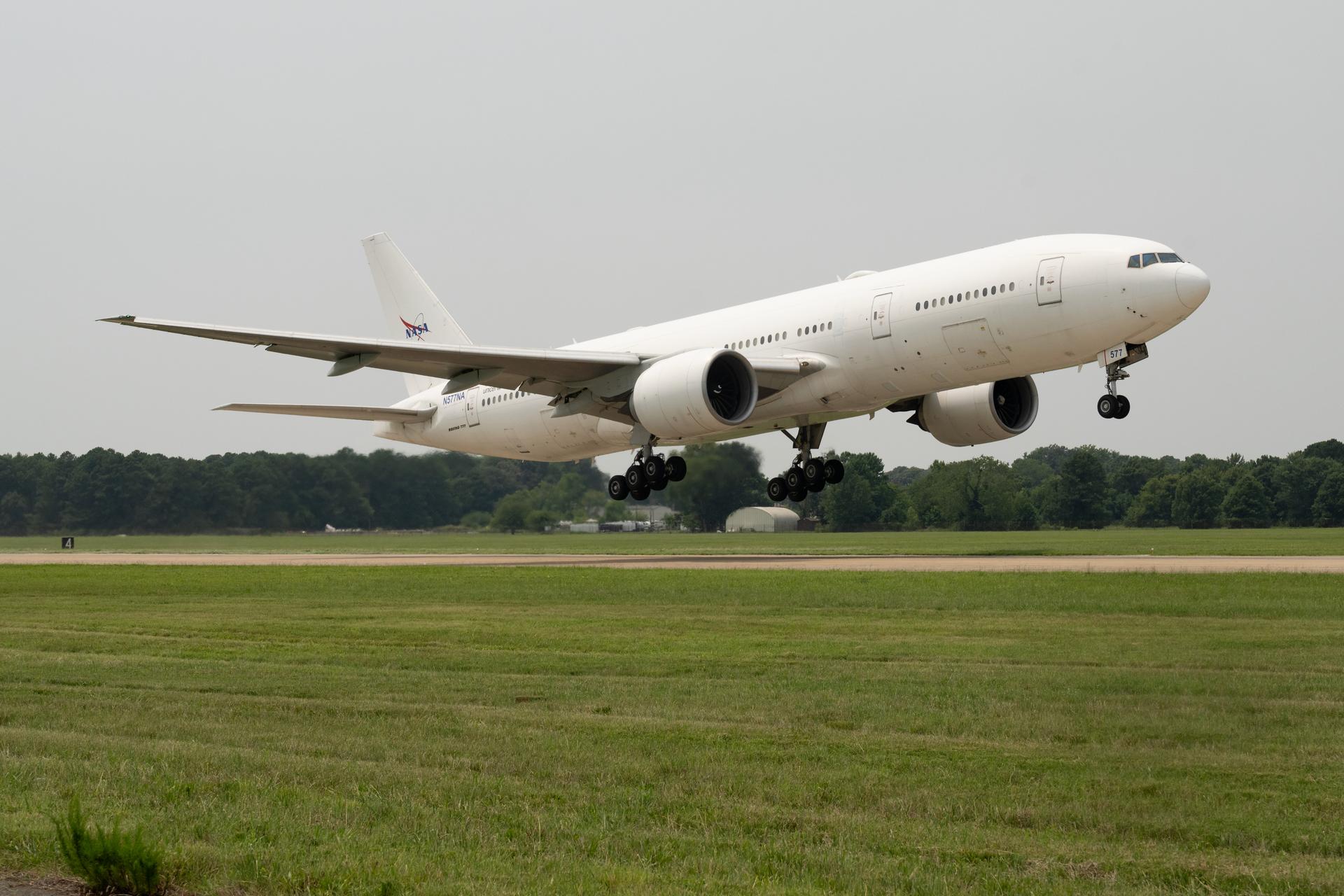
NASA Langley's B777 aircraft before it departs Langley Research Center to receive its new livery (paint job), prior to its departure on July 16th, it received ground maintenance in the center’s hangar. (Photo Credit NASA/ Mark Knopp)
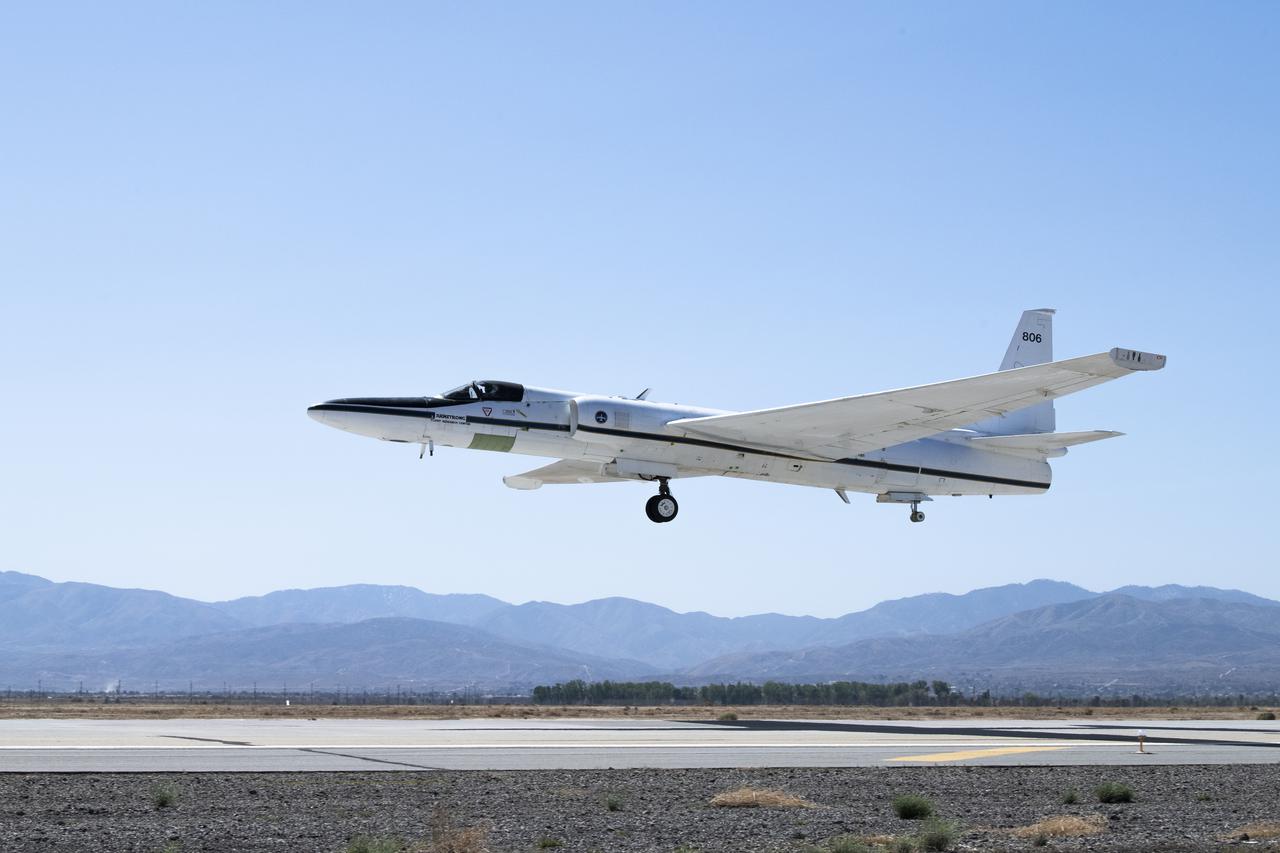
NASA's ER-2 No. 806 returns to flying high-altitude on April 7, 2022, after three years of heavy maintenance. NASA Armstrong operates two ER-2 aircraft to collect information about Earth resources, celestial observations, atmospheric chemistry and dynamics, and oceanic processes.
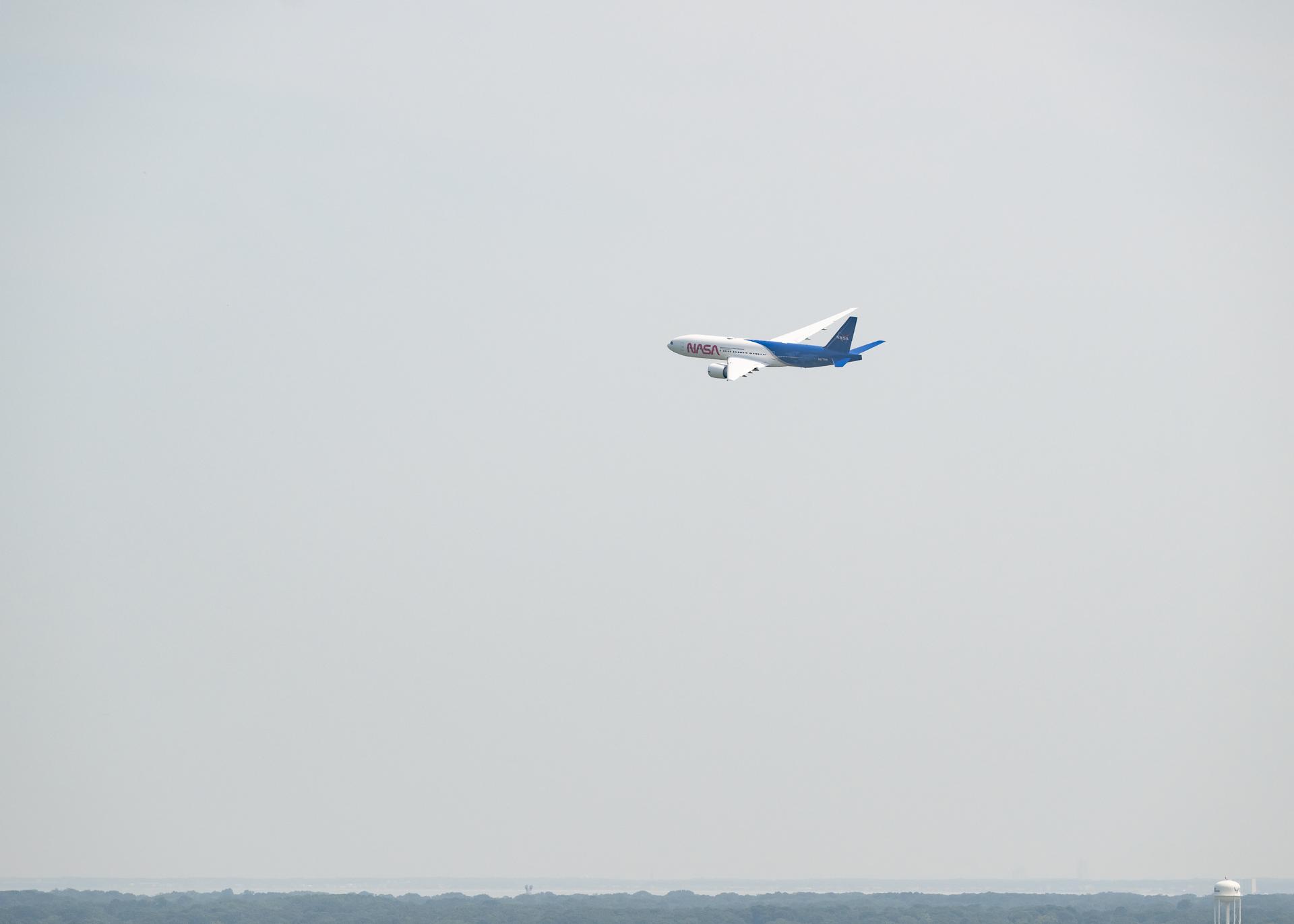
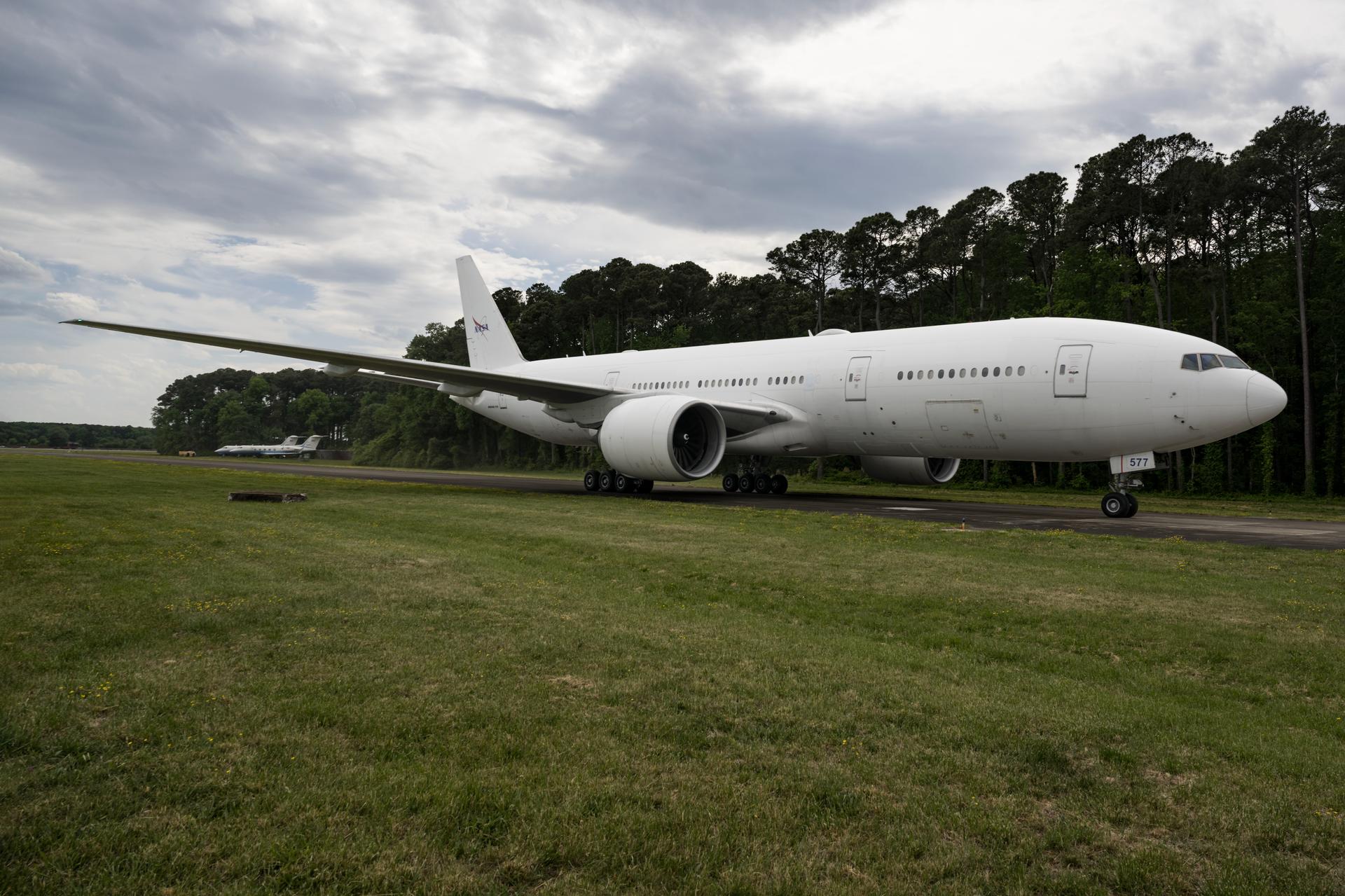
NASA's B777 aircraft returning to NASA Langley Research Center the 31st of July in Hampton, Virginia after a new paint job. It will now continue its maintenance and instrument integration schedule to prepare for its initial airborne science flights in 2027. (Photo Credit NASA/ Ryan Hill)
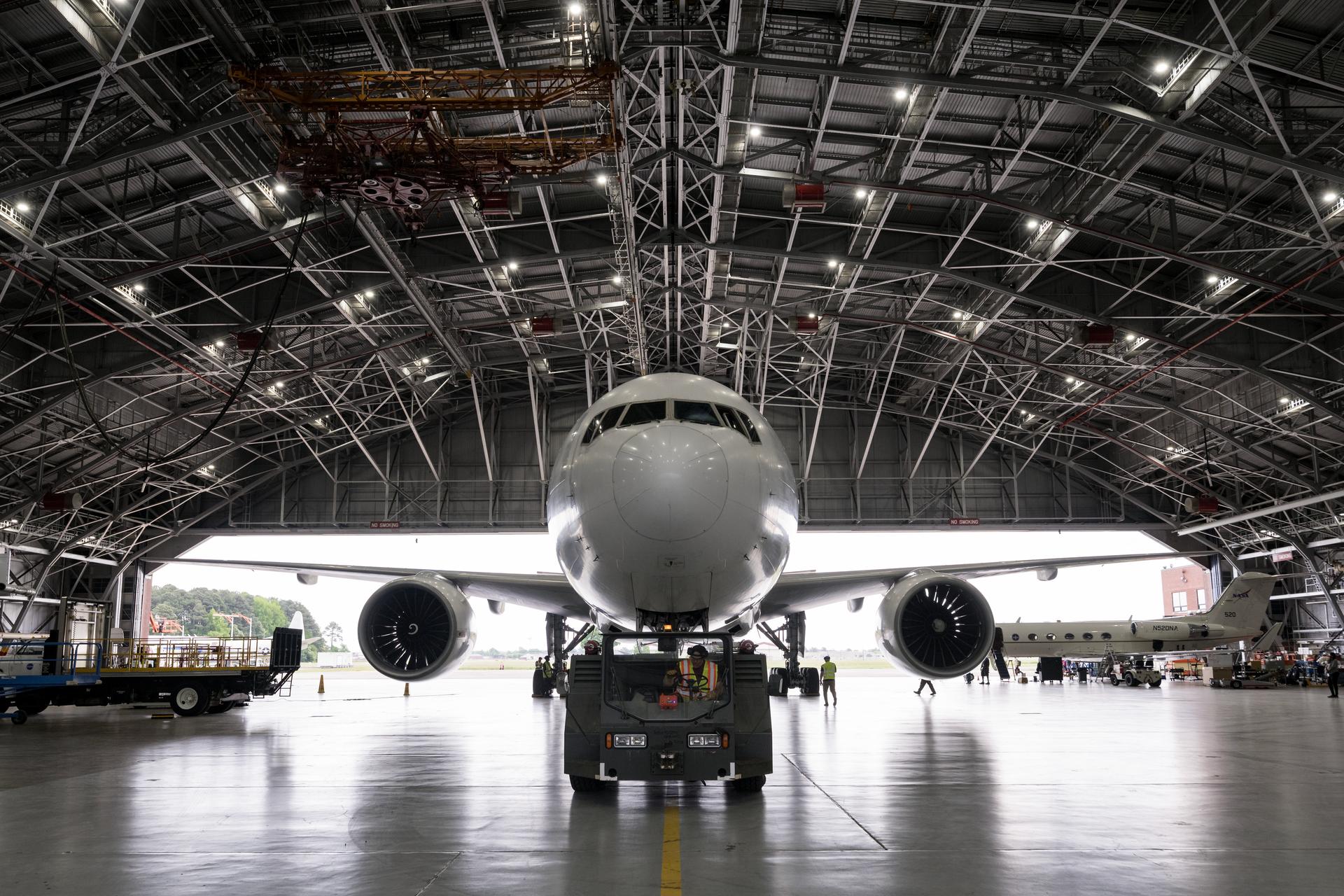
NASA Langley's B777 aircraft before it departs Langley Research Center to receive its new livery (paint job), prior to its departure on July 16th, it received ground maintenance in the center’s hangar. (Photo Credit NASA/ Mark Knopp)
NASA Langley's B777 aircraft before it departs Langley Research Center to receive its new livery (paint job), prior to its departure on July 16th, it received ground maintenance in the center’s hangar. (Photo Credit NASA/ Mark Knopp)
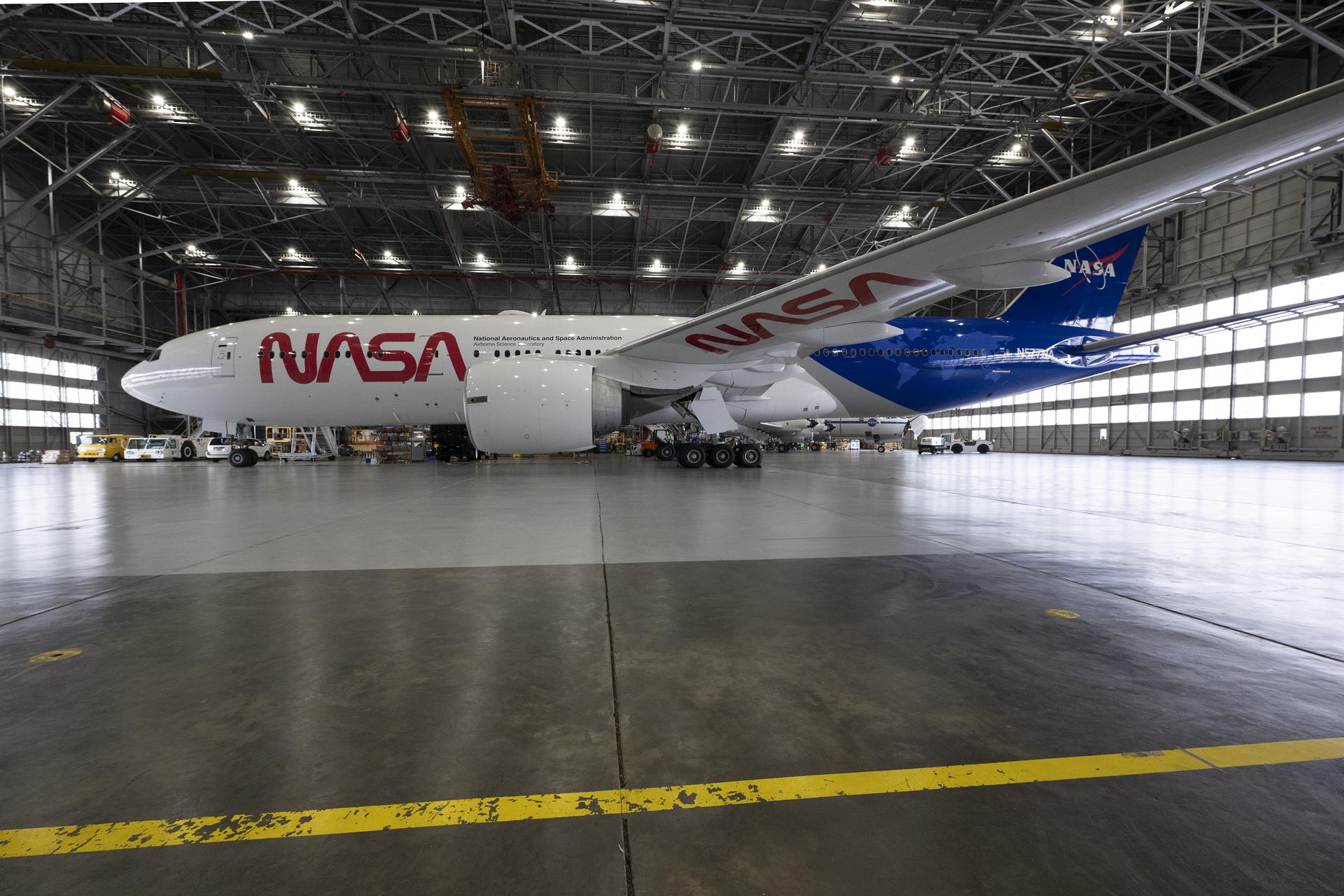
NASA's B777 aircraft returned to NASA Langley Research Center in Hampton, Virginia on Aug 12th with its new livery or paint job. It will now continue its maintenance and instrument integration schedule to prepare for its initial airborne science flights in 2027. Photo Credit NASA/Ryan Hill
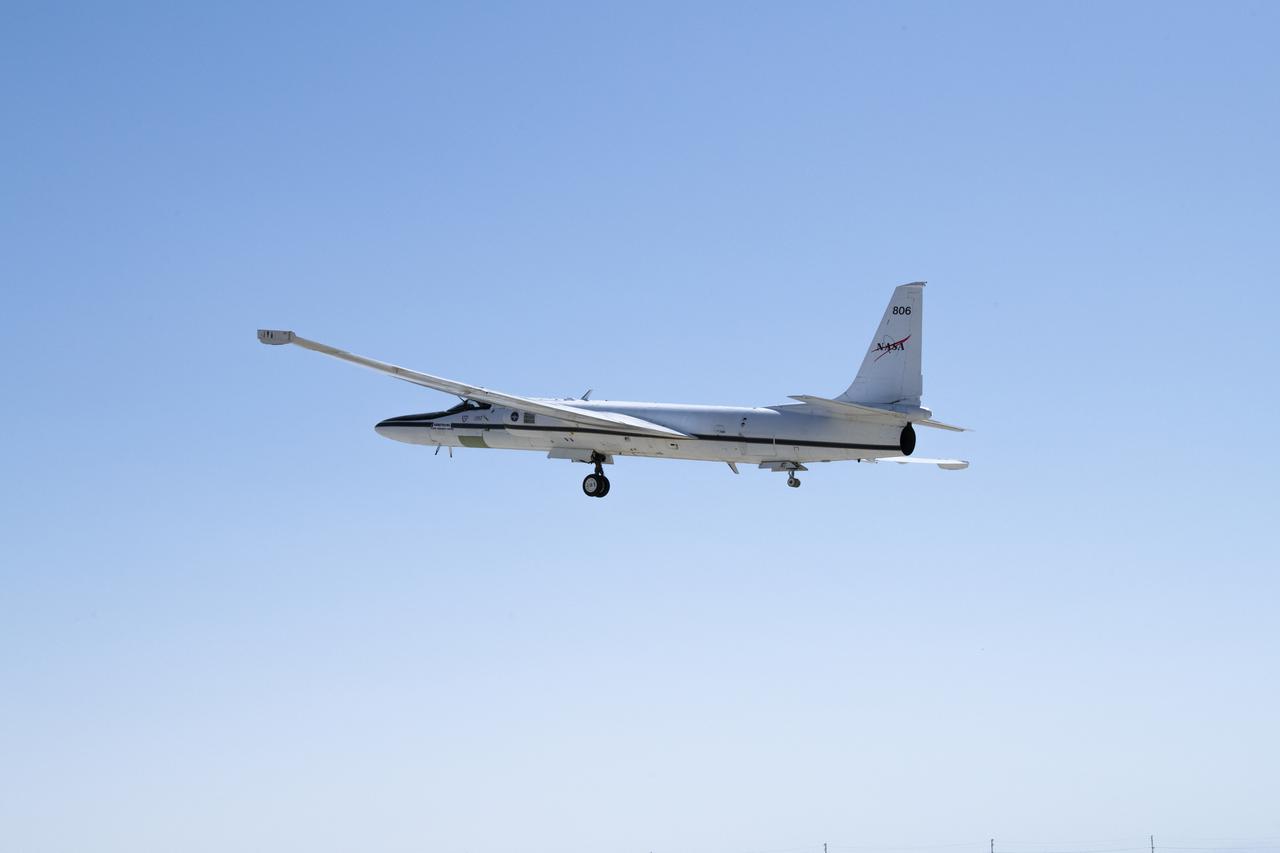
NASA’s ER-2 No. 806 returns to flying high-altitude on April 7, 2022, after three years of heavy maintenance. NASA Armstrong operates two ER-2 aircraft to collect information about Earth resources, celestial observations, atmospheric chemistry and dynamics, and oceanic processes.
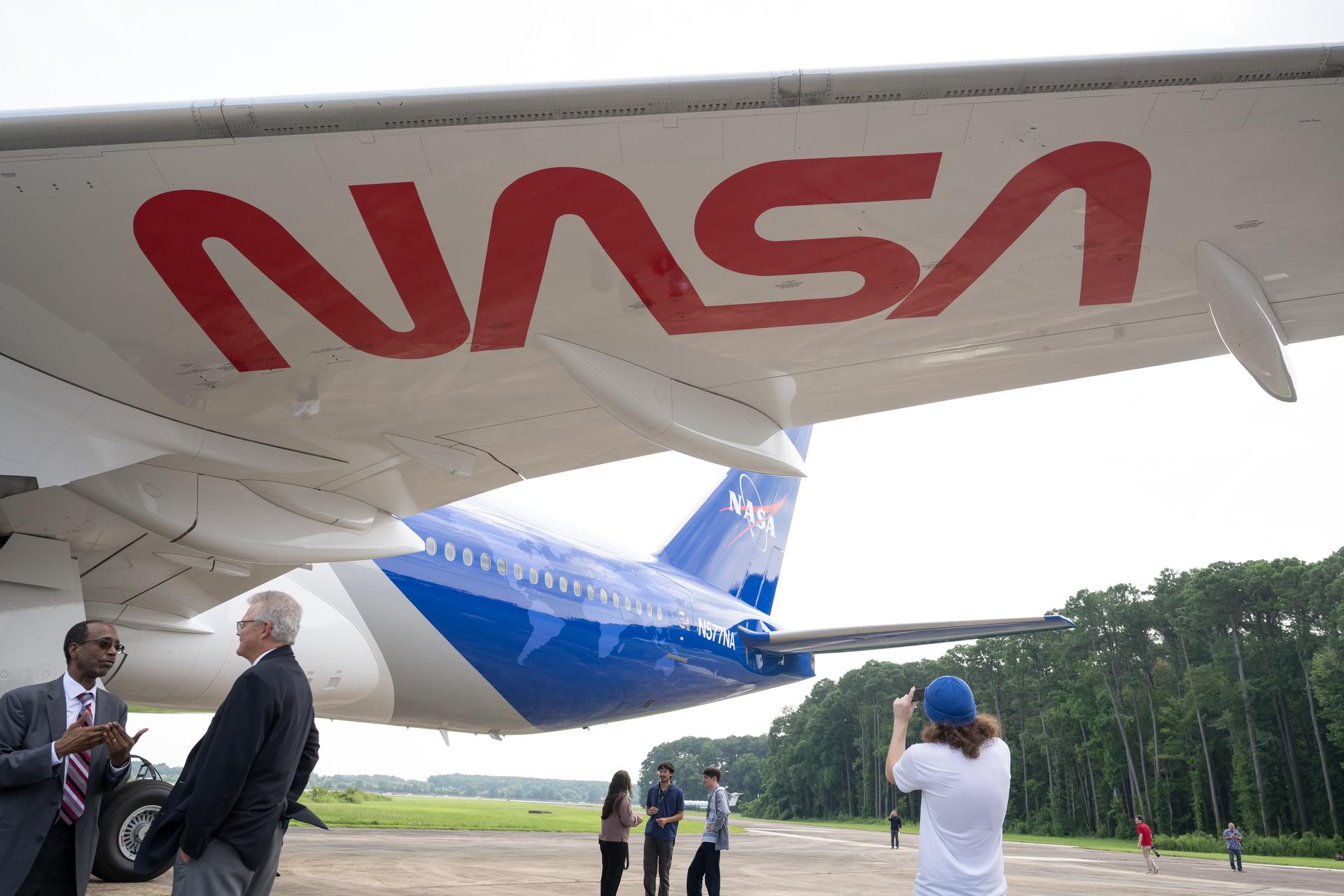
NASA's B777 aircraft returning to NASA Langley Research Center the 31st of July in Hampton, Virginia after a new paint job. It will now continue its maintenance and instrument integration schedule to prepare for its initial airborne science flights in 2027. Photo Credit NASA/ Ryan Hill)
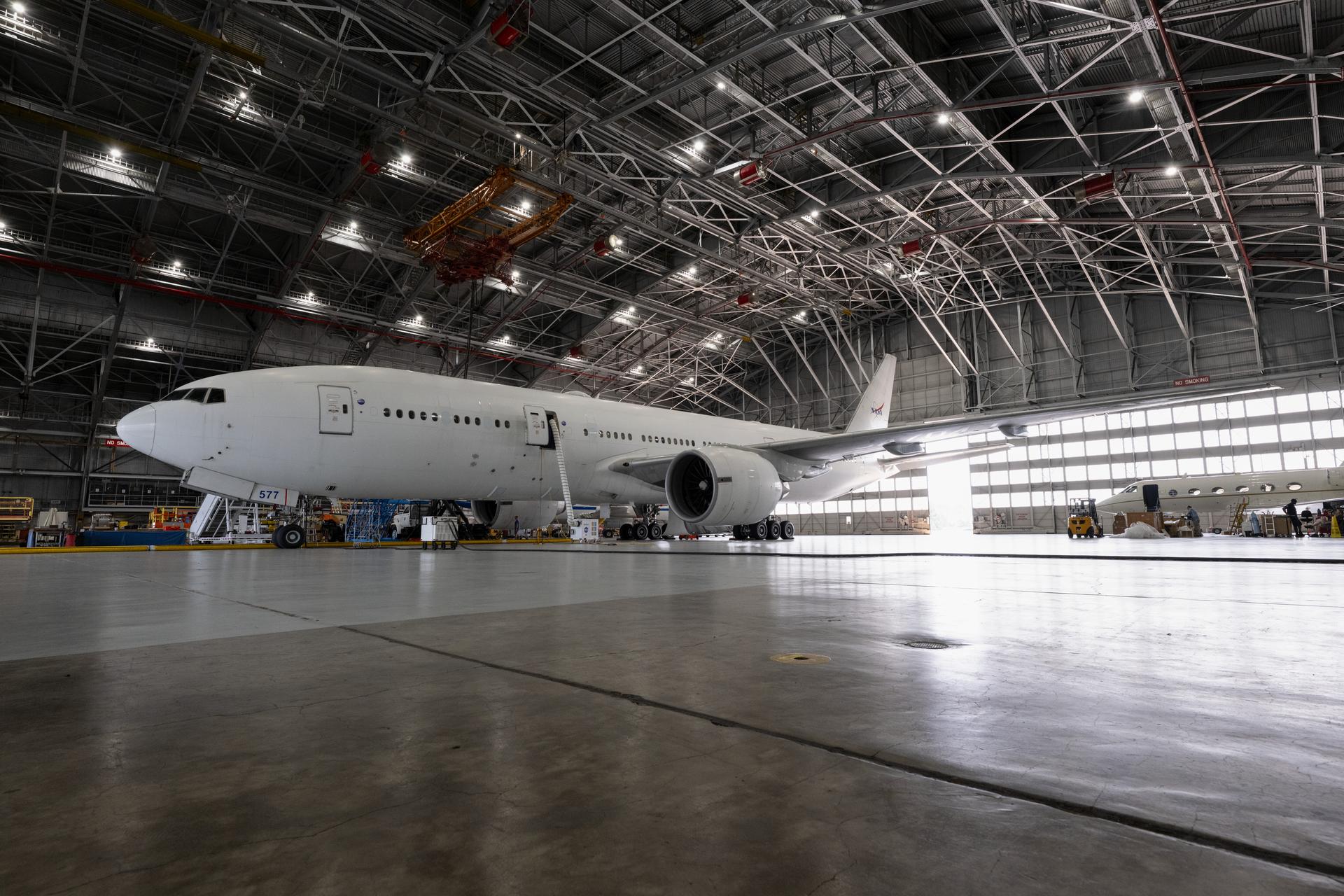
NASA Langley's B777 aircraft before it departs Langley Research Center to receive its new livery (paint job), prior to its departure on July 16th, it received ground maintenance in the center’s hangar. (Photo Credit NASA/ Ryan Hill)
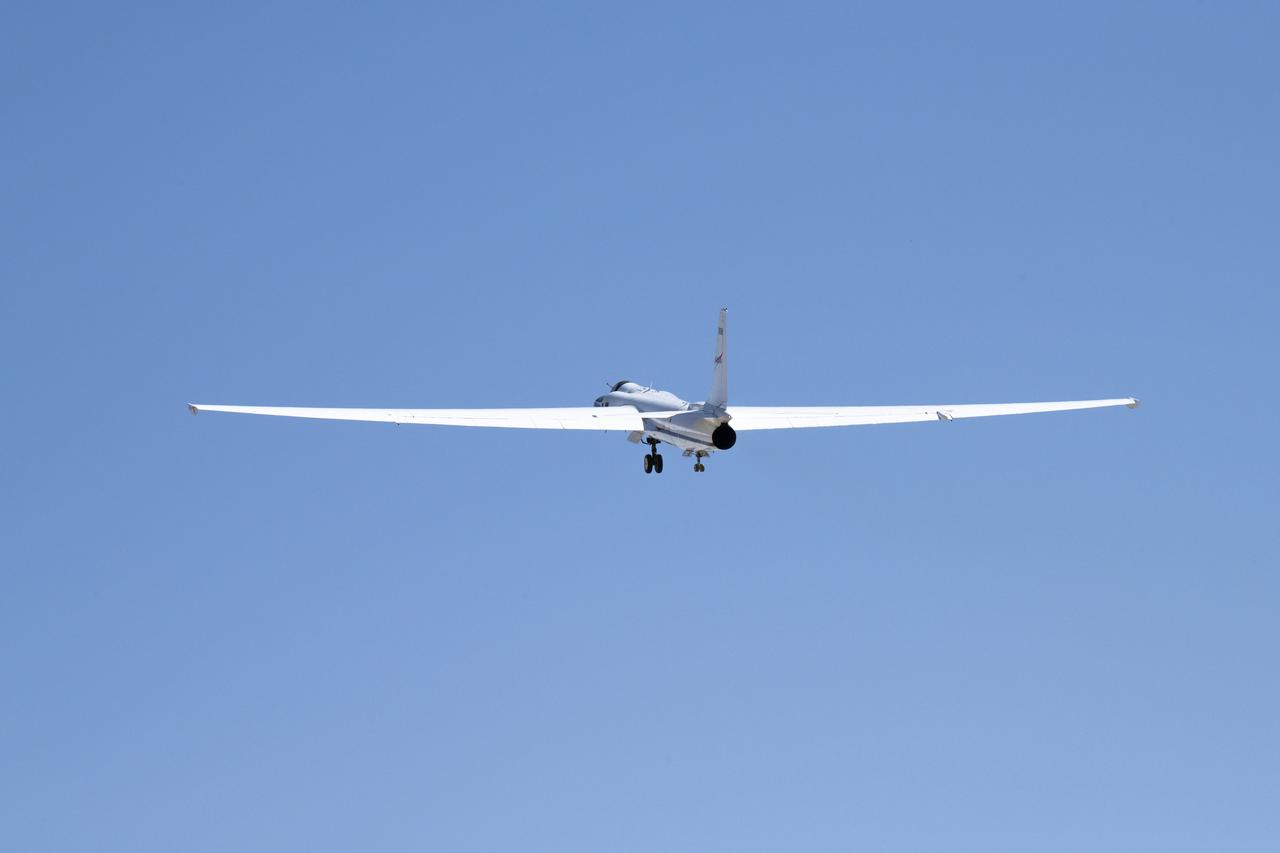
NASA’s ER-2 No. 806 returns to flying high-altitude on April 7, 2022, after three years of heavy maintenance. NASA Armstrong operates two ER-2 aircraft to collect information about Earth resources, celestial observations, atmospheric chemistry and dynamics, and oceanic processes.
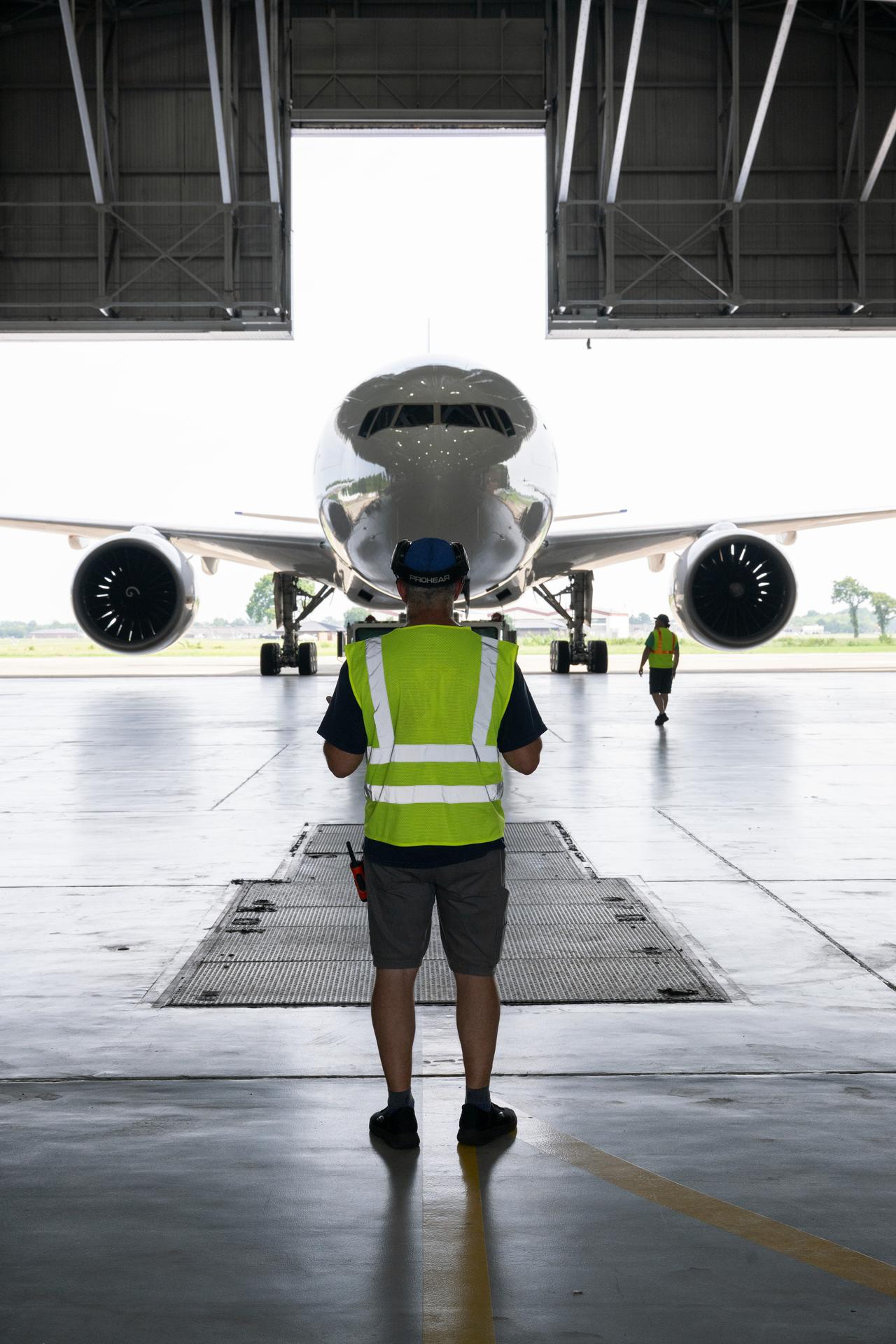
NASA's B777 aircraft as it returns to NASA Langley Research Center the 31st of July in Hampton, Virginia. It will now continue its maintenance and instrument integration schedule to prepare for its initial airborne science flights in 2027. Photo Credit NASA/ Ryan Hill)
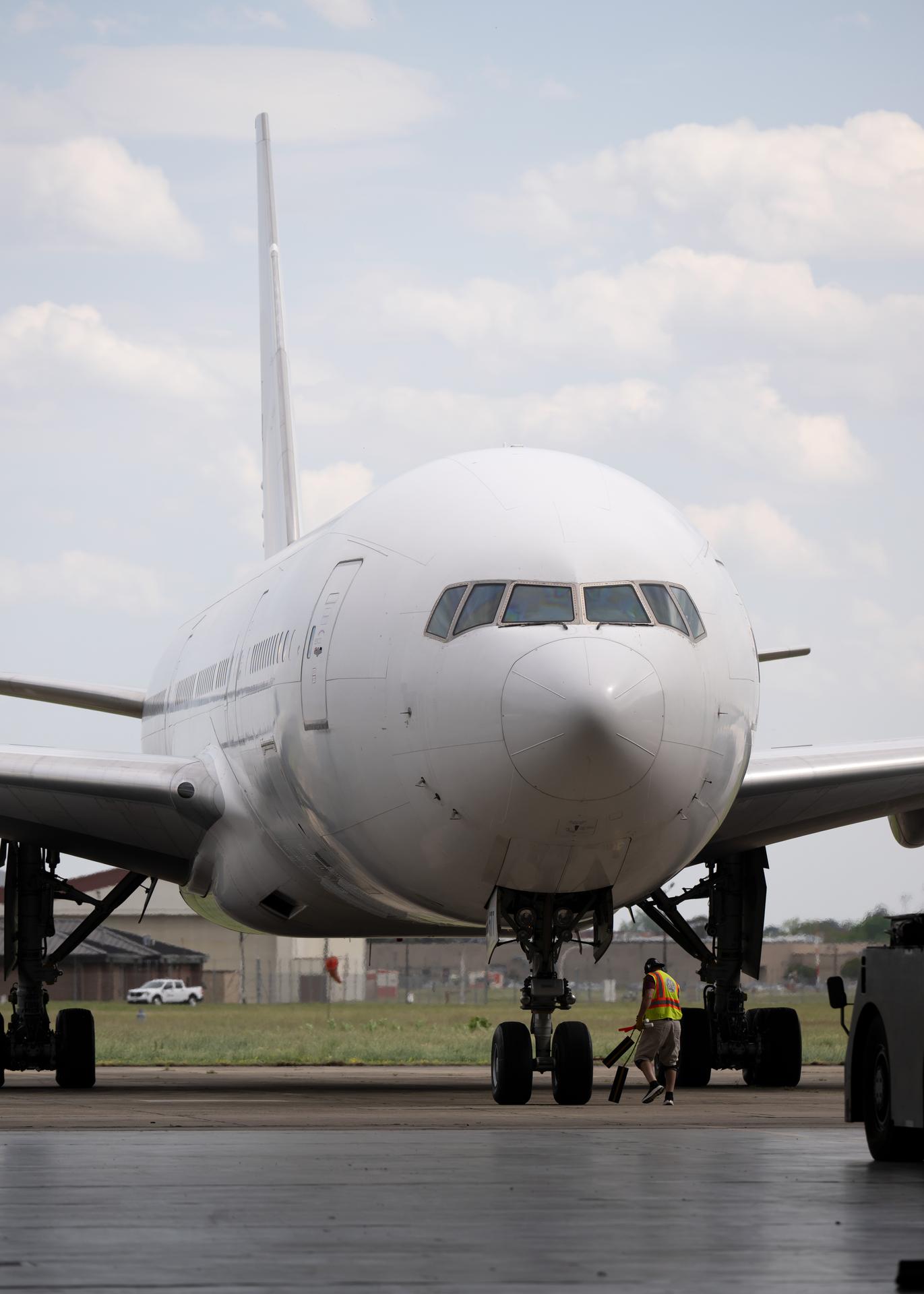
NASA Langley's B777 aircraft before it departs Langley Research Center to receive its new livery (paint job), prior to its departure on July 16th, it received ground maintenance in the center’s hangar. (Photo Credit NASA/ Ryan Hill)
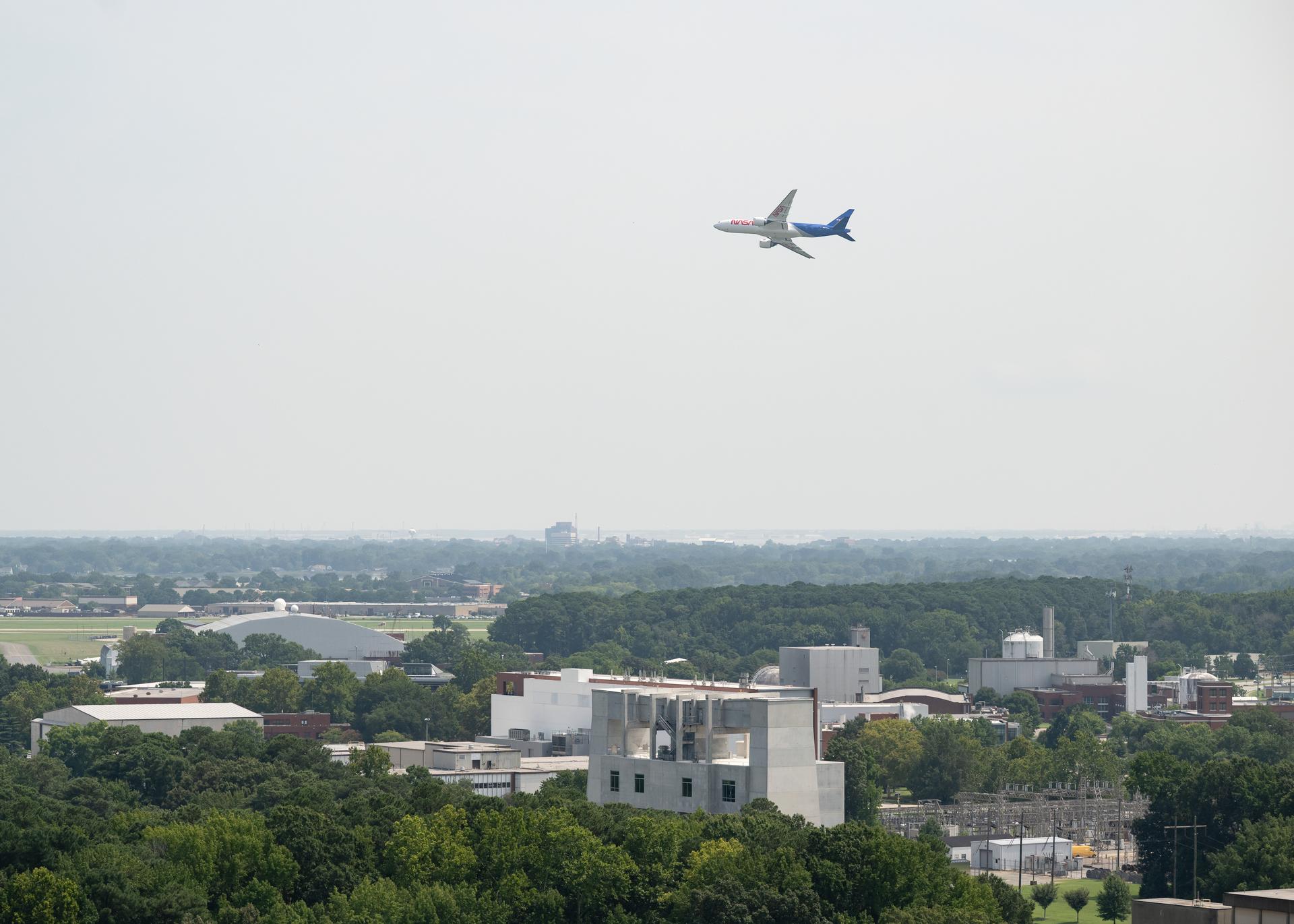
NASA's B777 aircraft returning to NASA Langley Research Center the 31st of July in Hampton, Virginia after a new paint job. It will now continue its maintenance and instrument integration schedule to prepare for its initial airborne science flights in 2027. (Photo Credit NASA/ Ryan Hill)
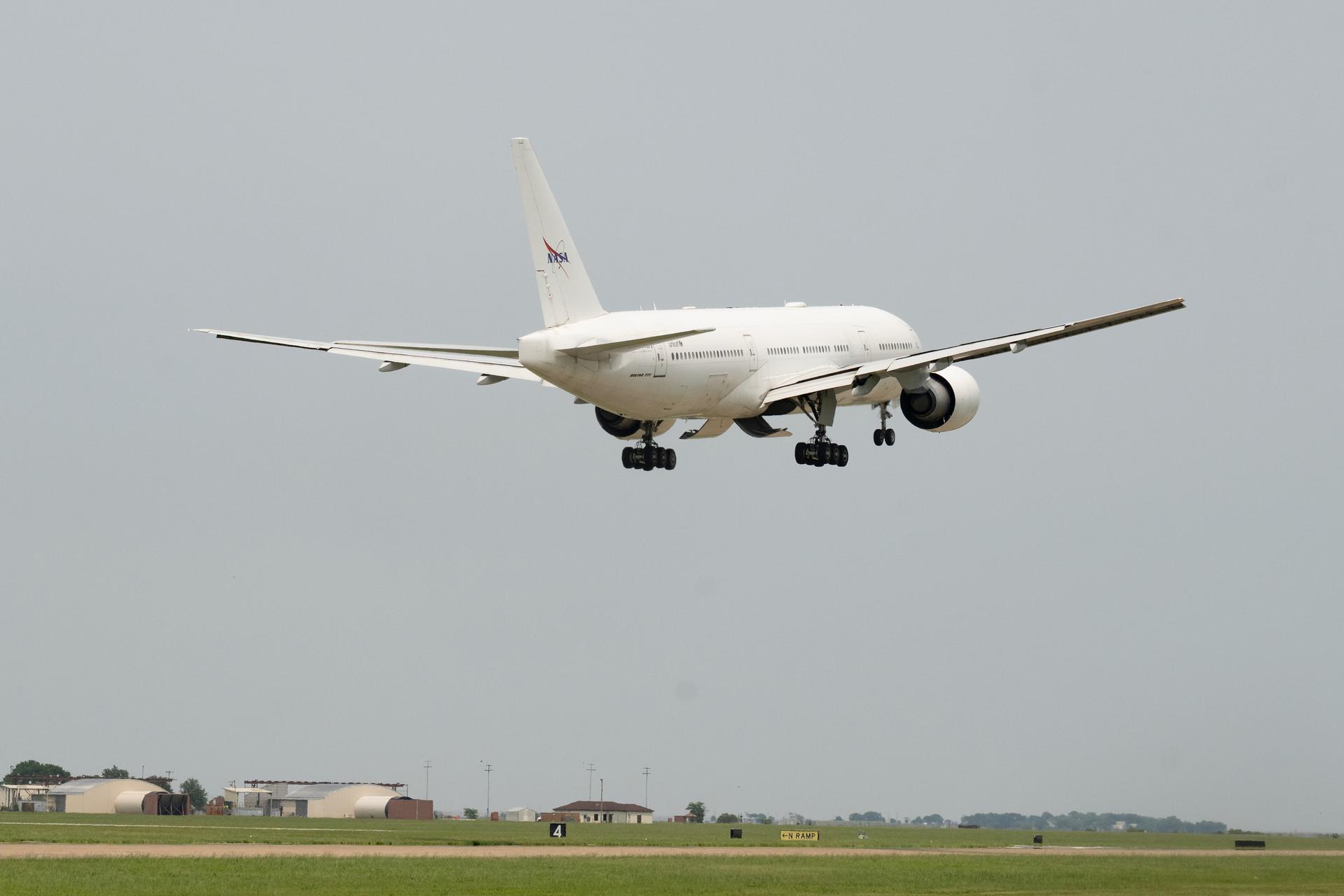
NASA Langley's B777 aircraft before it departs Langley Research Center to receive its new livery (paint job), prior to its departure on July 16th, it received ground maintenance in the center’s hangar. (Photo Credit NASA/ Mark Knopp)
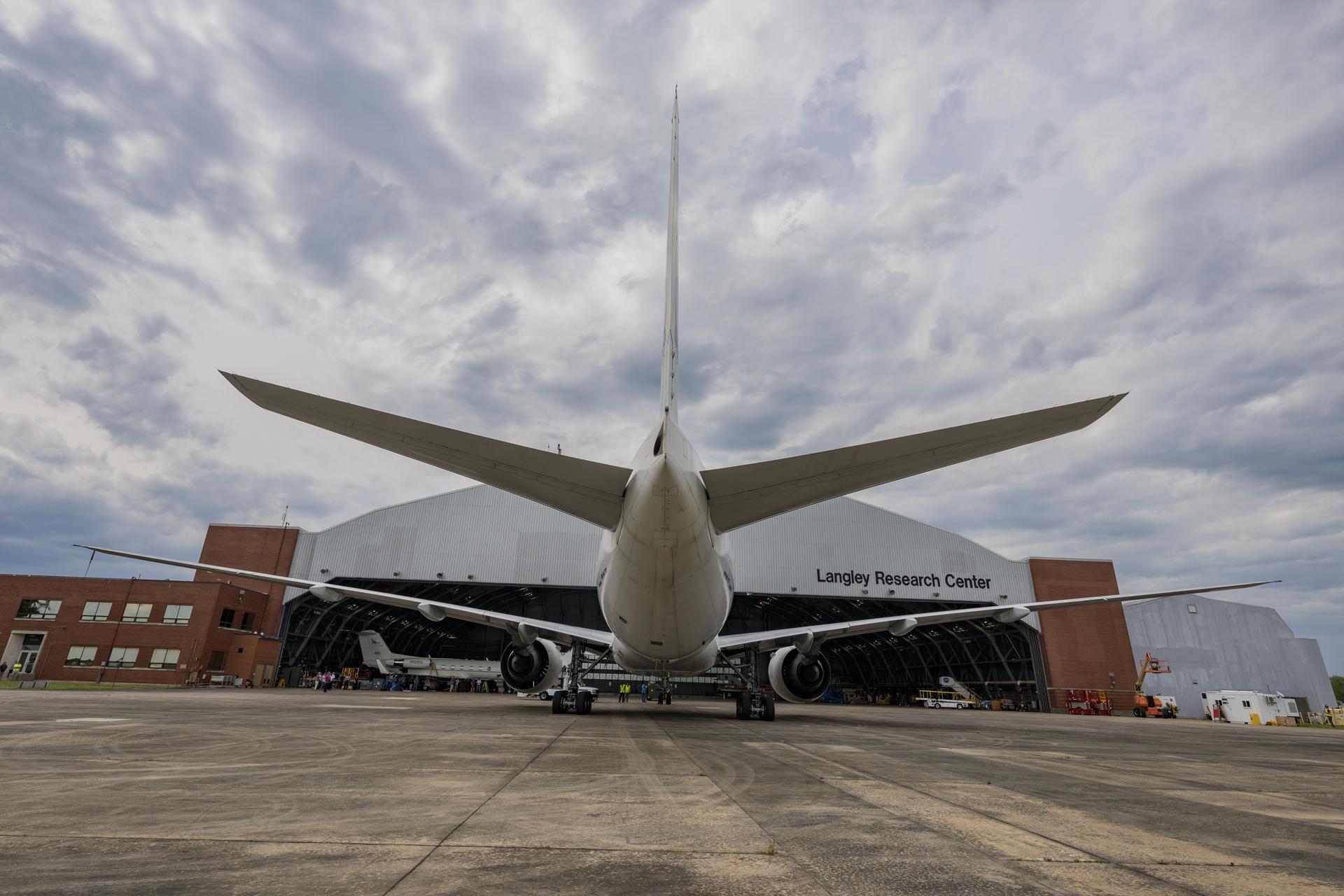
NASA Langley's B777 aircraft before it departs Langley Research Center to receive its new livery (paint job), prior to its departure on July 16th, it received ground maintenance in the center’s hangar. (Photo Credit NASA/ Mark Knopp)
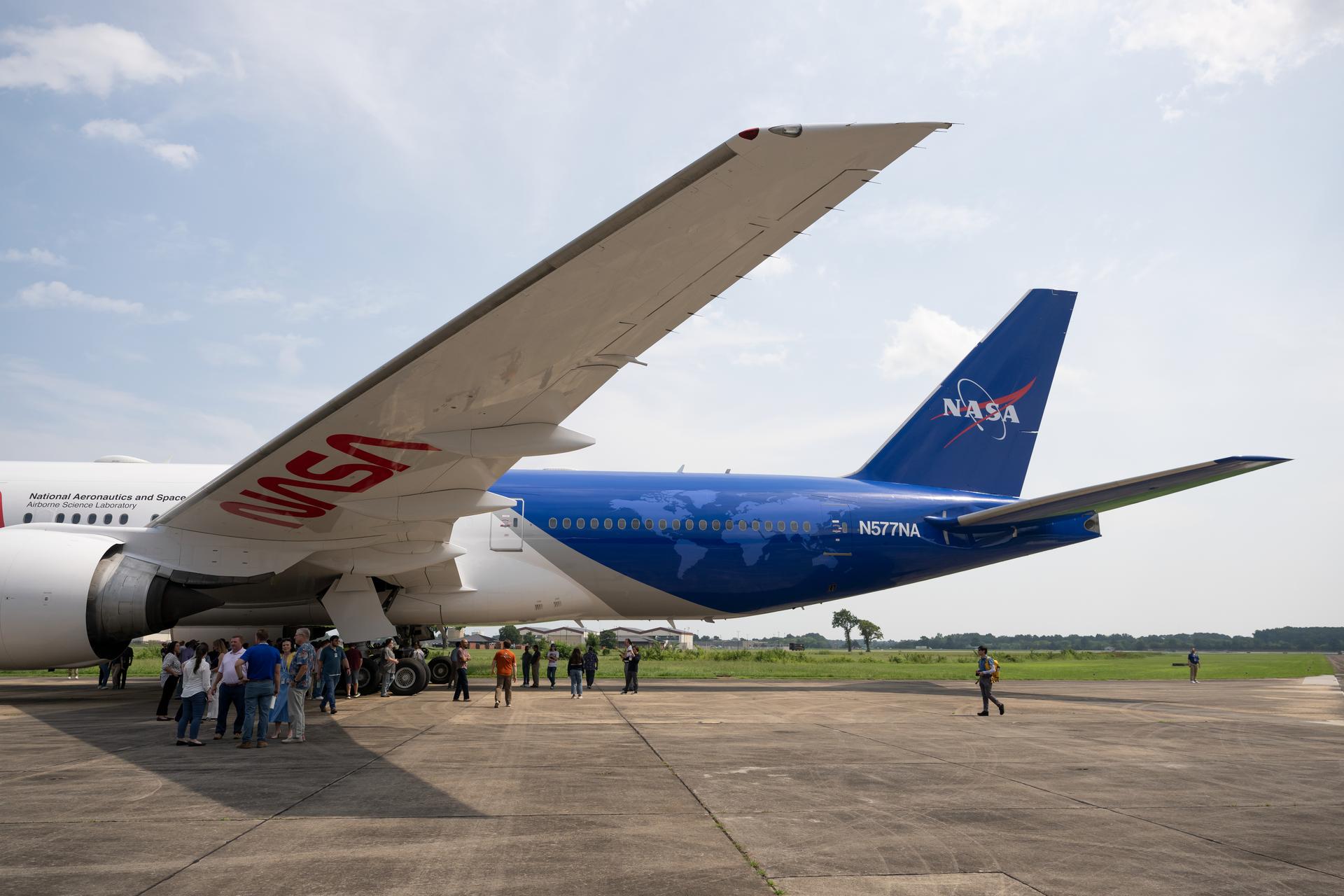
NASA's B777 aircraft returning to NASA Langley Research Center the 31st of July in Hampton, Virginia after a new paint job. It will now continue its maintenance and instrument integration schedule to prepare for its initial airborne science flights in 2027. Photo Credit NASA/ Ryan Hill)
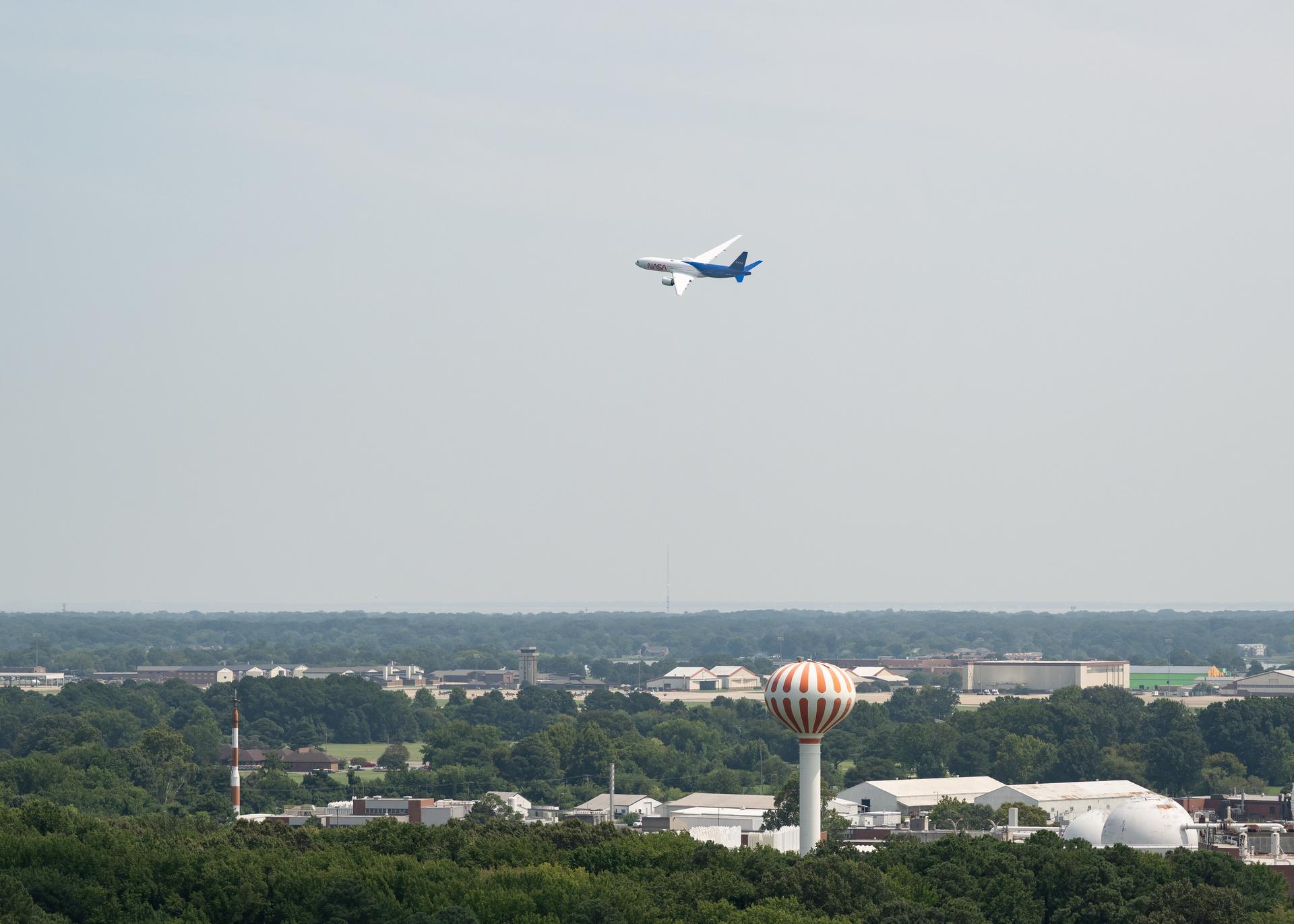
NASA's B777 aircraft returning to NASA Langley Research Center the 31st of July in Hampton, Virginia after a new paint job. It will now continue its maintenance and instrument integration schedule to prepare for its initial airborne science flights in 2027. Photo Credit NASA/ Ryan Hill)
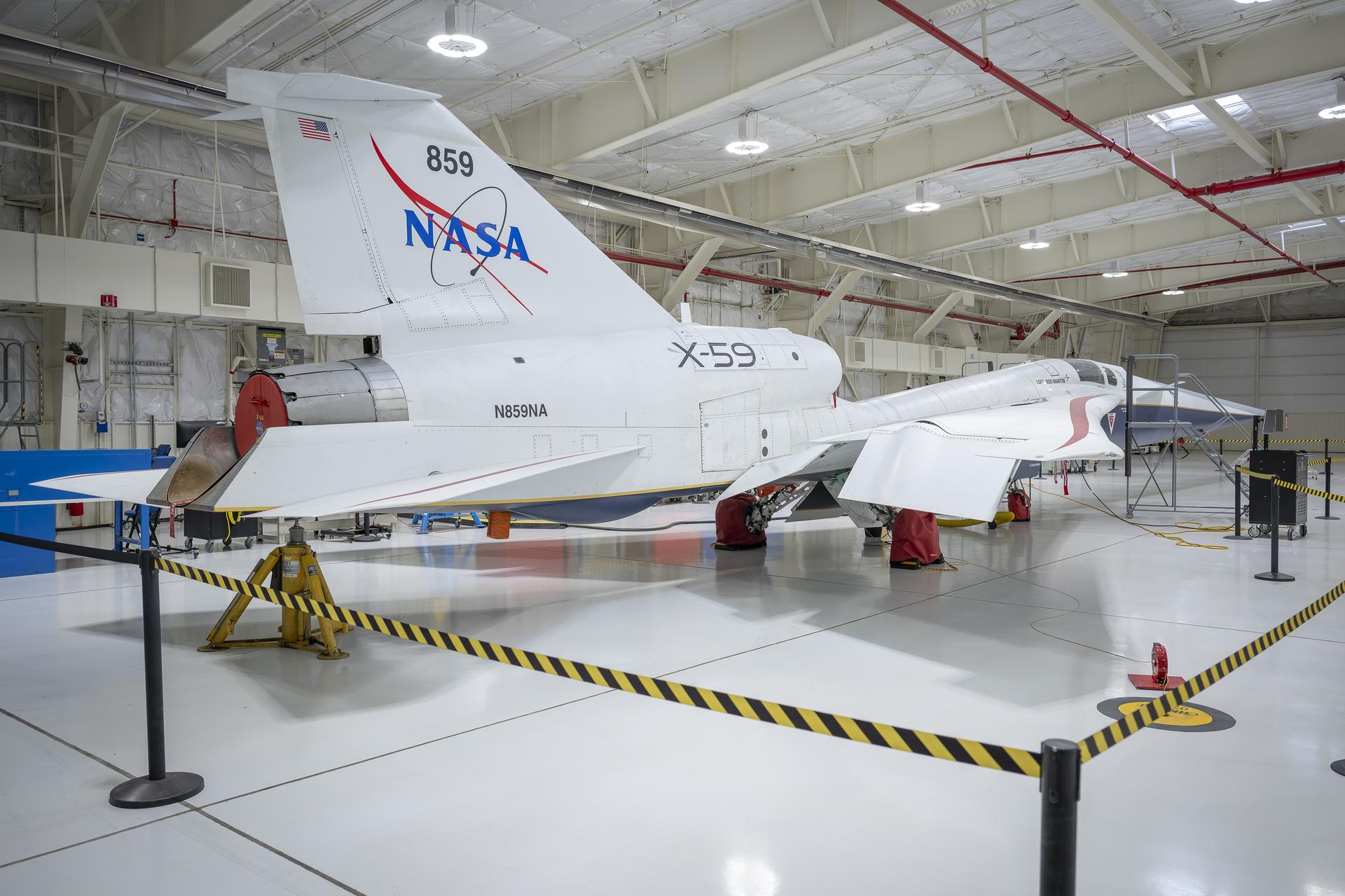
NASA’s X-59 quiet supersonic research aircraft sits inside Hangar 4826 at NASA’s Armstrong Flight Research Center in Edwards, California, on Nov. 18, 2025. Following its first flight on Oct. 25, 2025, in support of NASA’s Quesst mission, the aircraft entered scheduled maintenance as part of its transition into flight operations. Quesst aims to demonstrate quiet supersonic flight and reduce the disruptive sonic boom to a quieter sonic thump.

NASA’s X-59 quiet supersonic research aircraft sits inside Hangar 4826 at NASA’s Armstrong Flight Research Center in Edwards, California, on Nov. 18, 2025. Following its first flight on Oct. 25, 2025, in support of NASA’s Quesst mission, the aircraft entered scheduled maintenance as part of its transition into flight operations. Quesst aims to demonstrate quiet supersonic flight and reduce the disruptive sonic boom to a quieter sonic thump.

NASA’s X-59 quiet supersonic research aircraft sits inside Hangar 4826 at NASA’s Armstrong Flight Research Center in Edwards, California, on Nov. 18, 2025. Following its first flight on Oct. 25, 2025, in support of NASA’s Quesst mission, the aircraft entered scheduled maintenance as part of its transition into flight operations. Quesst aims to demonstrate quiet supersonic flight and reduce the disruptive sonic boom to a quieter sonic thump.

NASA’s X-59 quiet supersonic research aircraft sits inside Hangar 4826 at NASA’s Armstrong Flight Research Center in Edwards, California, on Nov. 18, 2025. Following its first flight on Oct. 25, 2025, in support of NASA’s Quesst mission, the aircraft entered scheduled maintenance as part of its transition into flight operations. Quesst aims to demonstrate quiet supersonic flight and reduce the disruptive sonic boom to a quieter sonic thump.

NASA’s X-59 quiet supersonic research aircraft sits inside Hangar 4826 at NASA’s Armstrong Flight Research Center in Edwards, California, on Nov. 18, 2025. Following its first flight on Oct. 25, 2025, in support of NASA’s Quesst mission, the aircraft entered scheduled maintenance as part of its transition into flight operations. Quesst aims to demonstrate quiet supersonic flight and reduce the disruptive sonic boom to a quieter sonic thump.
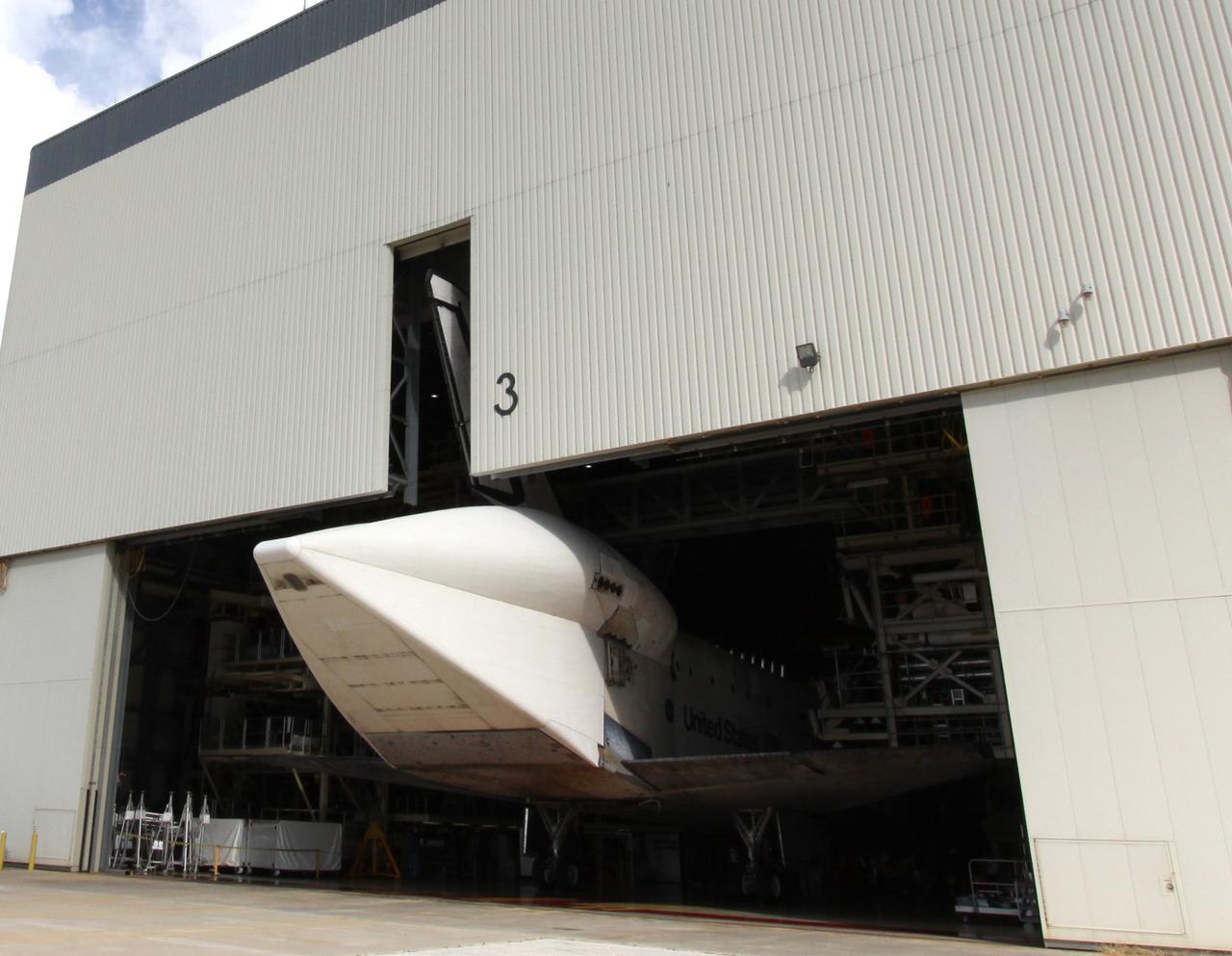
CAPE CANAVERAL, Fla. – Space shuttle Discovery rolls into NASA Kennedy Space Center's Orbiter Processing Facility 3. In the OPF, turnaround processing procedures on Discovery will include various post-flight deservicing and maintenance functions, which are carried out in parallel with payload removal and the installation of equipment needed for the next mission. Discovery returned to Kennedy atop a Shuttle Carrier Aircraft Sept. 21 after a two-day ferry flight. The piggybacked shuttle and aircraft touched down on the Shuttle Landing Facility's runway 33 at 12:05 p.m. EDT and the shuttle later was demated from the aircraft. Discovery landed at Edwards Air Force Base in California on Sept. 11 after the 13-day STS-128 mission to the International Space Station. Landings at Kennedy were waved off on two days due to inclement weather, leading to the landing at Edwards. Photo credit: NASA/Jack Pfaller
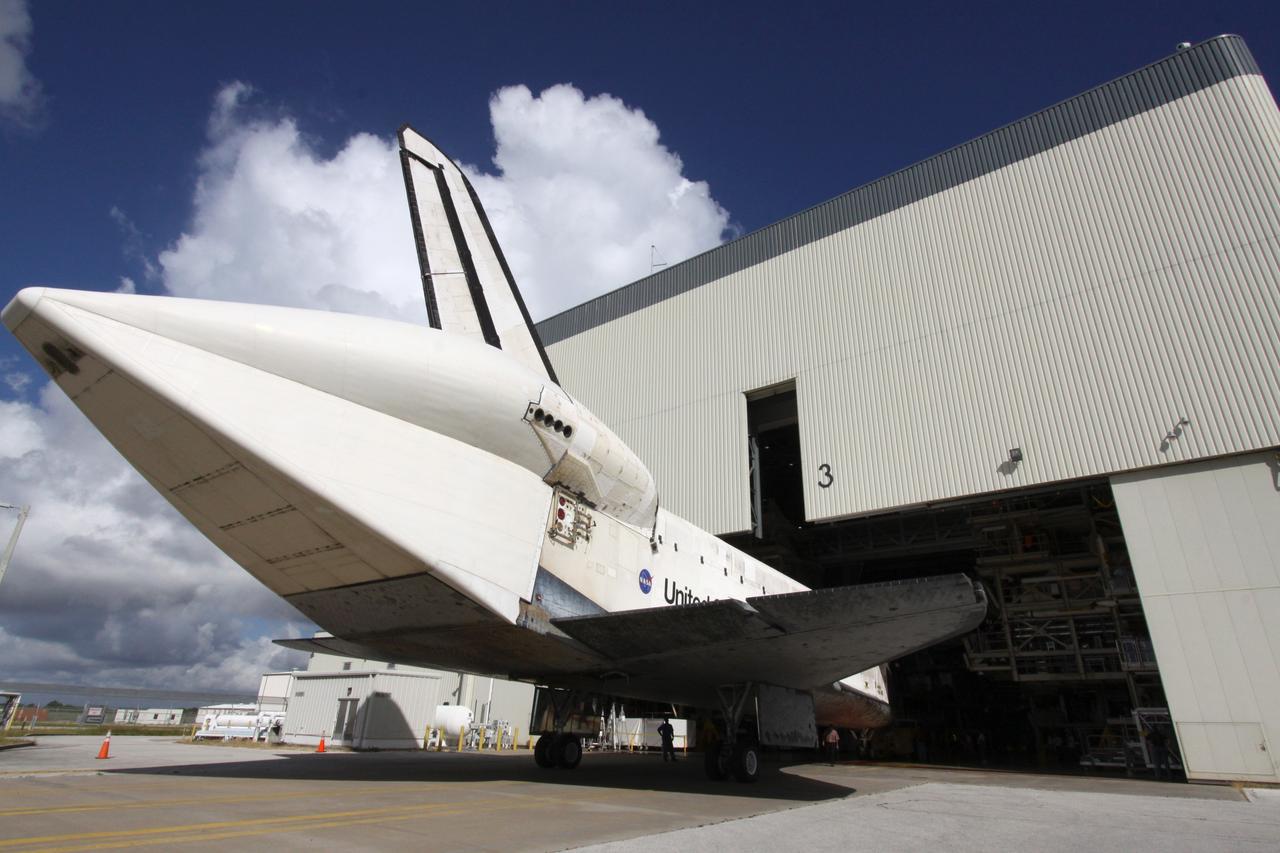
CAPE CANAVERAL, Fla. – Space shuttle Discovery is towed through the open doors of NASA Kennedy Space Center's Orbiter Processing Facility 3. In the OPF, turnaround processing procedures on Discovery will include various post-flight deservicing and maintenance functions, which are carried out in parallel with payload removal and the installation of equipment needed for the next mission. Discovery returned to Kennedy atop a Shuttle Carrier Aircraft Sept. 21 after a two-day ferry flight. The piggybacked shuttle and aircraft touched down on the Shuttle Landing Facility's runway 33 at 12:05 p.m. EDT and the shuttle later was demated from the aircraft. Discovery landed at Edwards Air Force Base in California on Sept. 11 after the 13-day STS-128 mission to the International Space Station. Landings at Kennedy were waved off on two days due to inclement weather, leading to the landing at Edwards. Photo credit: NASA/Jack Pfaller
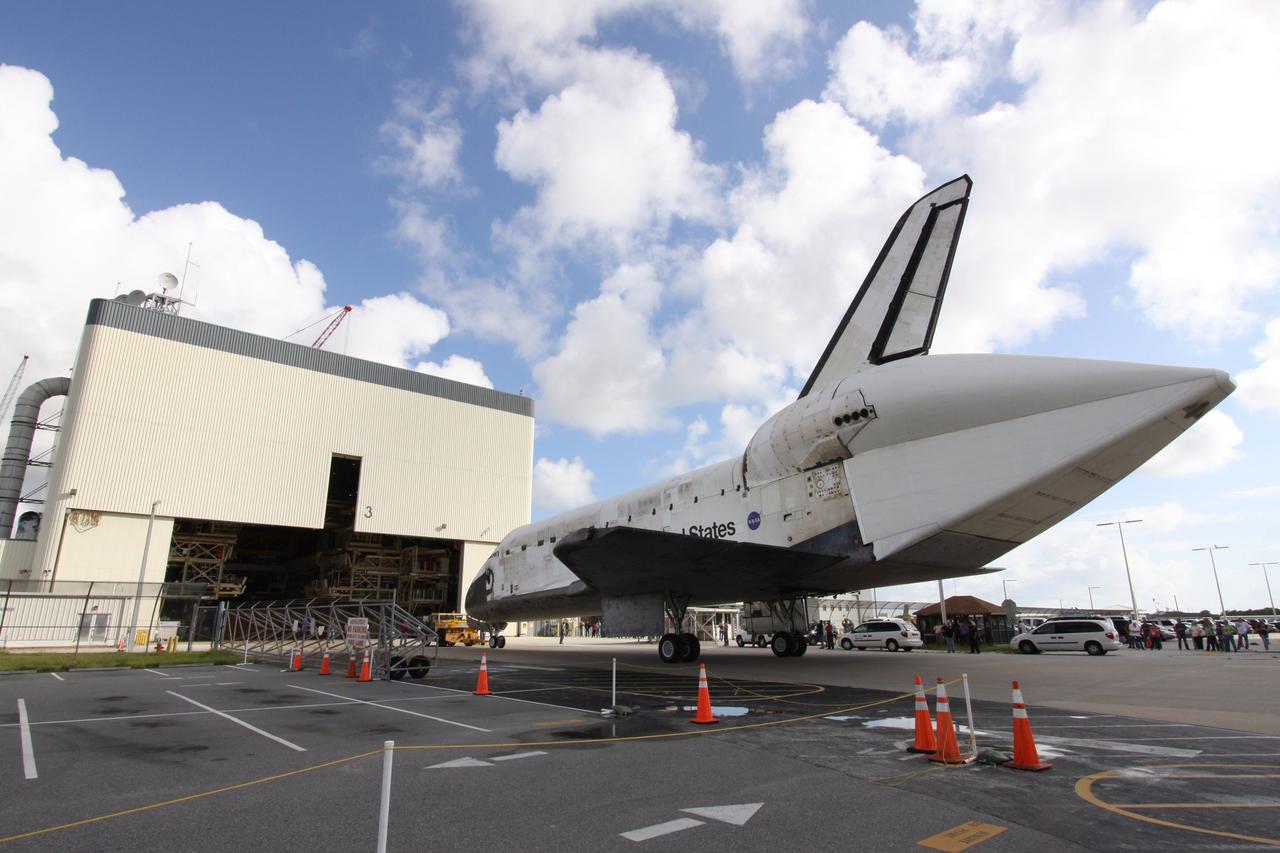
CAPE CANAVERAL, Fla. – Space shuttle Discovery is towed toward the open doors of NASA Kennedy Space Center's Orbiter Processing Facility 3. In the OPF, turnaround processing procedures on Discovery will include various post-flight deservicing and maintenance functions, which are carried out in parallel with payload removal and the installation of equipment needed for the next mission. Discovery returned to Kennedy atop a Shuttle Carrier Aircraft Sept. 21 after a two-day ferry flight. The piggybacked shuttle and aircraft touched down on the Shuttle Landing Facility's runway 33 at 12:05 p.m. EDT and the shuttle later was demated from the aircraft. Discovery landed at Edwards Air Force Base in California on Sept. 11 after the 13-day STS-128 mission to the International Space Station. Landings at Kennedy were waved off on two days due to inclement weather, leading to the landing at Edwards. Photo credit: NASA/Jack Pfaller
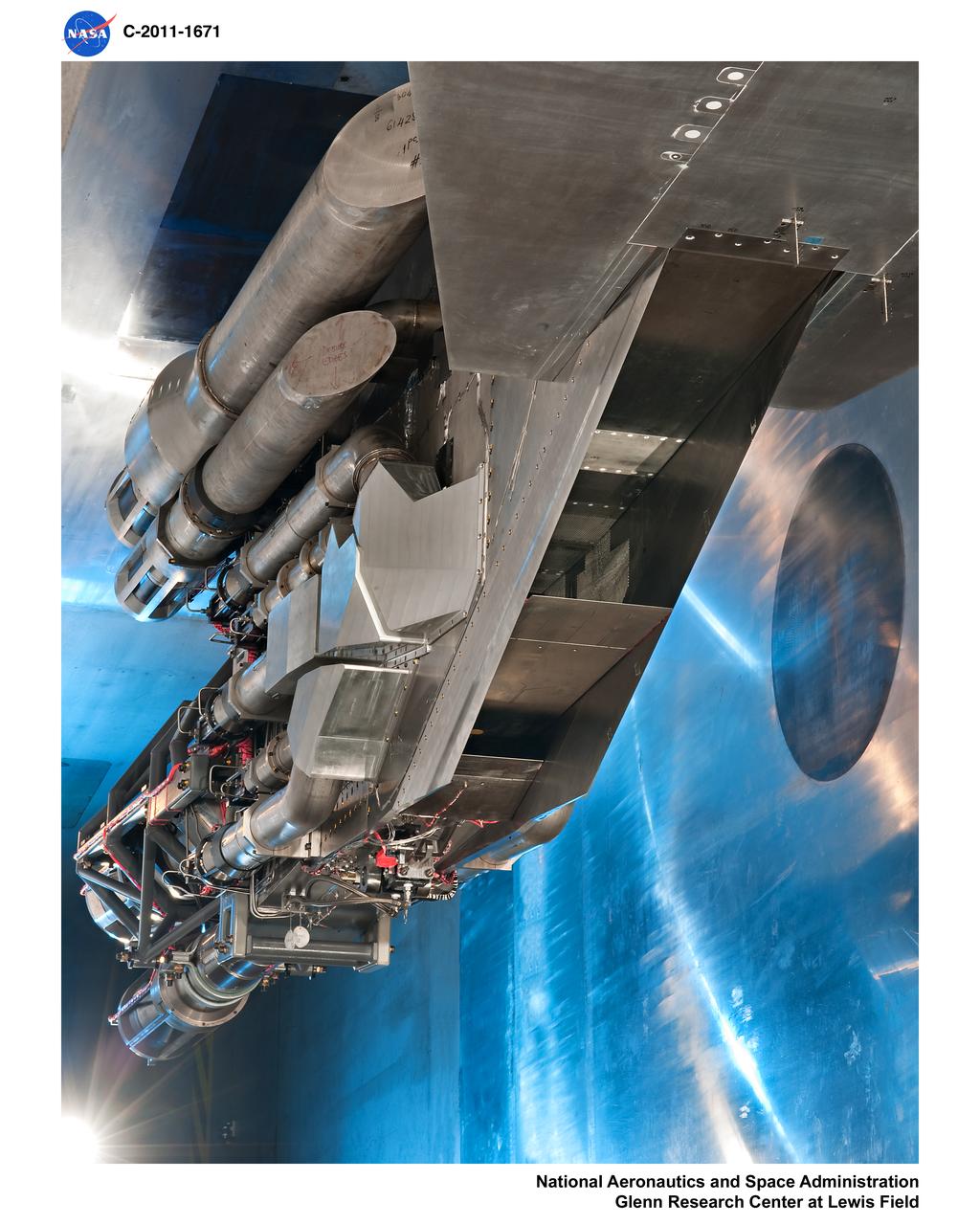
The NASA Fundamental Aeronautics Hypersonics project is focused on technologies for combined cycle, air-breathing propulsions systems to enable reusable launch systems for access to space. Turbine Based Combined Cycle (TBCC) propulsion systems offer specific impulse (Isp) improvements over rocket-based propulsion systems in the subsonic takeoff and re turn mission segments and offer improved safety. The potential to realize more aircraft-like operations with expanded launch site capability and reduced system maintenance are additional benefits.

KENNEDY SPACE CENTER, FLA. -- A firetruck stands by as the Shuttle Carrier Aircraft with its cargo the orbiter Columbia comes to a stop at the Cape Canaveral Air Force Station Skid Strip. Columbia’s ferry flight began in California March 1. Unfavorable weather conditions kept it on the ground at Dyess AFB, Texas, until it could return to Florida. Columbia is returning from a 17-month-long modification and refurbishment process as part of a routine maintenance plan. The orbiter will next fly on mission STS-107, scheduled Oct. 25

KENNEDY SPACE CENTER, FLA. -- The orbiter Columbia, atop a Shuttle Carrier Aircraft, lands at the Cape Canaveral Air Force Station Skid Strip. The ferry flight began in California March 1. Unfavorable weather conditions kept it on the ground at Dyess AFB, Texas, until it could return to Florida. Columbia is returning from a 17-month-long modification and refurbishment process as part of a routine maintenance plan. The orbiter will next fly on mission STS-107, scheduled Oct. 25
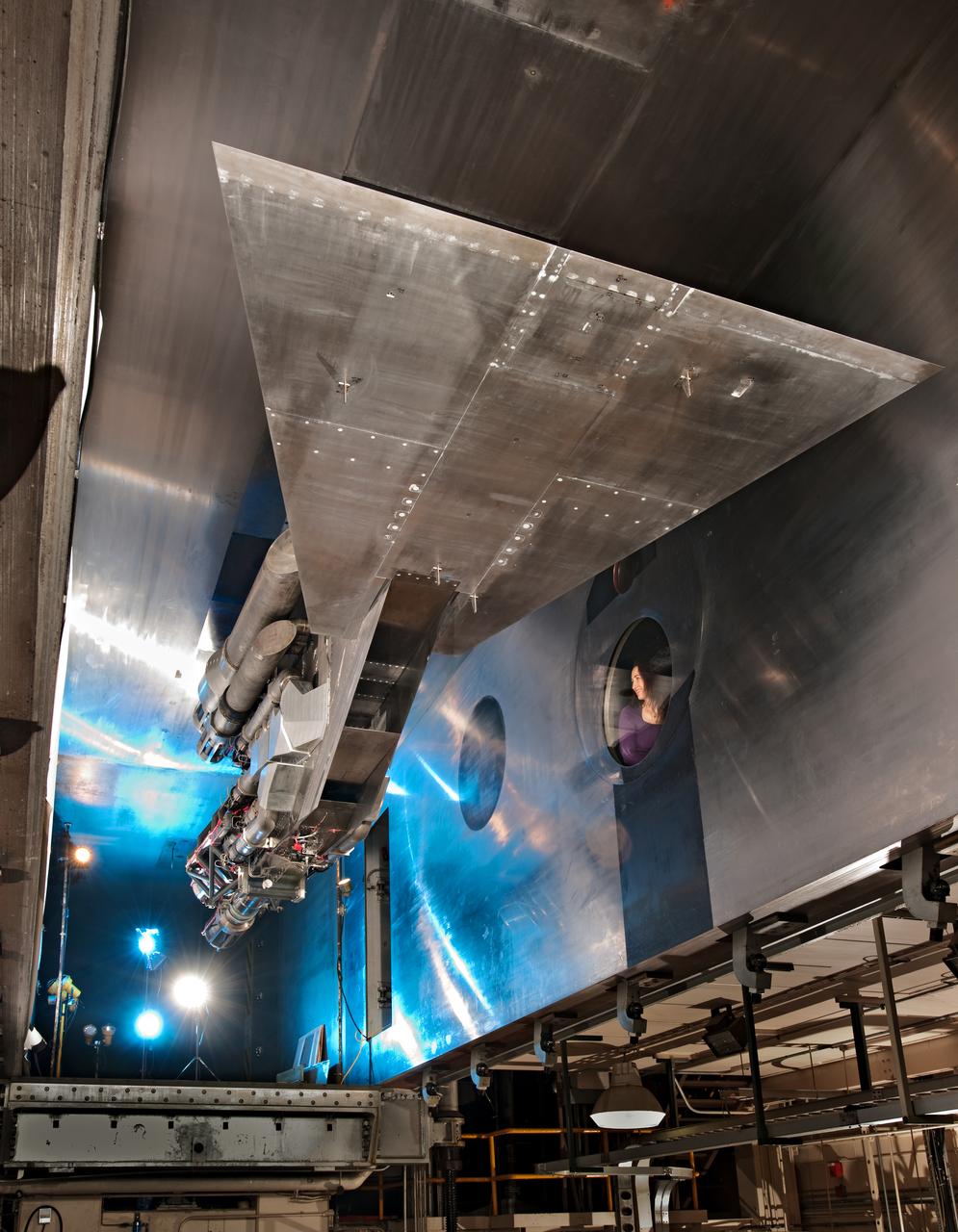
The NASA Fundamental Aeronautics Hypersonic Project is focused on technologies for combined cycle, air-breathing propulsions systems to enable reusable launch systems for access to space. Turbine Based Combined Cycle (TBCC) propulsion systems offer specific impulse improvements over rocket-based propulsion systems in the subsonic takeoff and return mission segments and offer improved safety. The potential to realize more aircraft-like operations with expanded launch site capability and reduced system maintenance are additional benefits.

KENNEDY SPACE CENTER, FLA. -- The orbiter Columbia, atop a Shuttle Carrier Aircraft, lands at the Cape Canaveral Air Force Station Skid Strip. The ferry flight began in California March 1. Unfavorable weather conditions kept it on the ground at Dyess AFB, Texas, until it could return to Florida. Columbia is returning from a 17-month-long modification and refurbishment process as part of a routine maintenance plan. The orbiter will next fly on mission STS-107, scheduled Oct. 25

KENNEDY SPACE CENTER, FLA. -- The Shuttle Carrier Aircraft, carrying its cargo orbiter Columbia, taxis off the runway at the Cape Canaveral Air Force Station Skid Strip. The ferry flight began in California March 1. Unfavorable weather conditions kept it on the ground at Dyess AFB, Texas, until it could return to Florida. Columbia is returning from a 17-month-long modification and refurbishment process as part of a routine maintenance plan. The orbiter will next fly on mission STS-107, scheduled Oct. 25
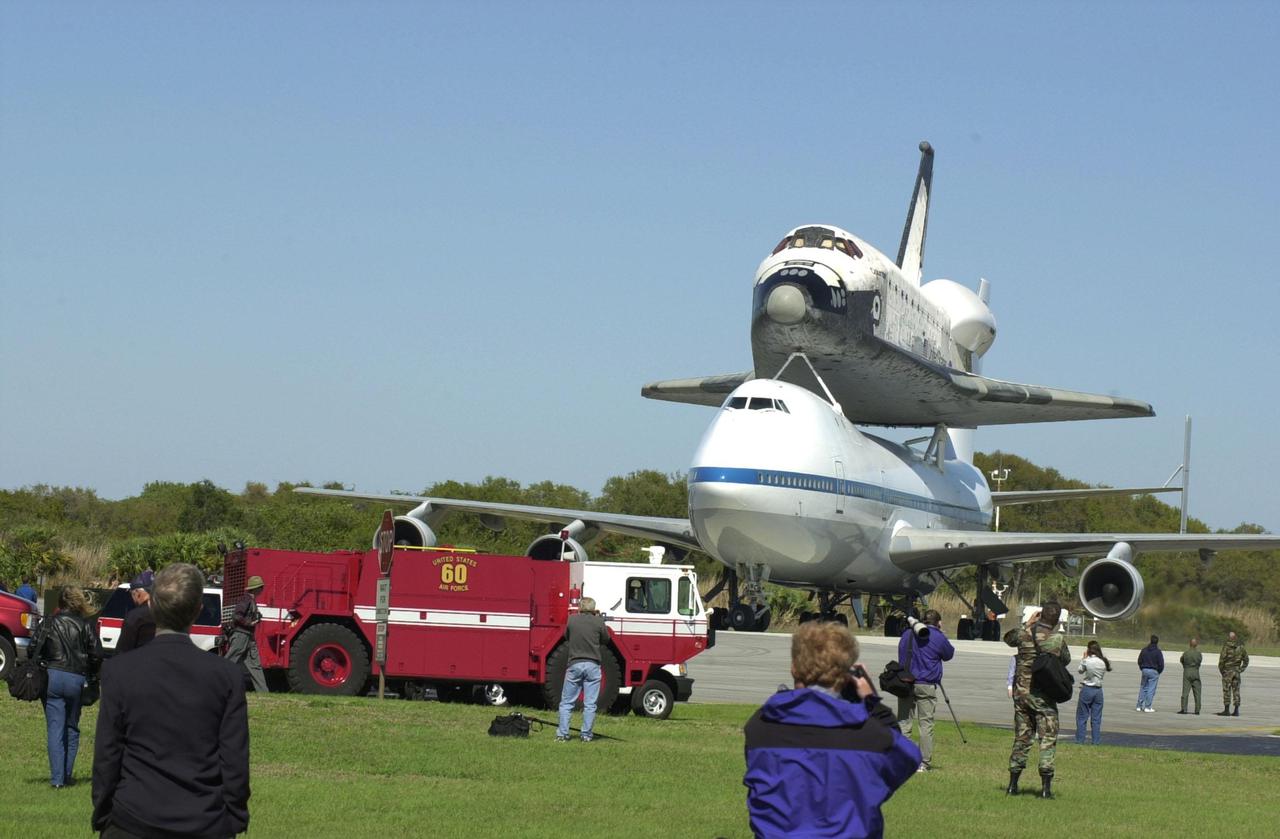
KENNEDY SPACE CENTER, FLA. -- A firetruck stands by as the Shuttle Carrier Aircraft with its cargo the orbiter Columbia comes to a stop at the Cape Canaveral Air Force Station Skid Strip. Columbia’s ferry flight began in California March 1. Unfavorable weather conditions kept it on the ground at Dyess AFB, Texas, until it could return to Florida. Columbia is returning from a 17-month-long modification and refurbishment process as part of a routine maintenance plan. The orbiter will next fly on mission STS-107, scheduled Oct. 25

KENNEDY SPACE CENTER, FLA. -- The orbiter Columbia, atop a Shuttle Carrier Aircraft, taxis on the runway at the Cape Canaveral Air Force Station Skid Strip. The ferry flight began in California March 1. Unfavorable weather conditions kept it on the ground at Dyess AFB, Texas, until it could return to Florida. Columbia is returning from a 17-month-long modification and refurbishment process as part of a routine maintenance plan. The orbiter will next fly on mission STS-107, scheduled Oct. 25
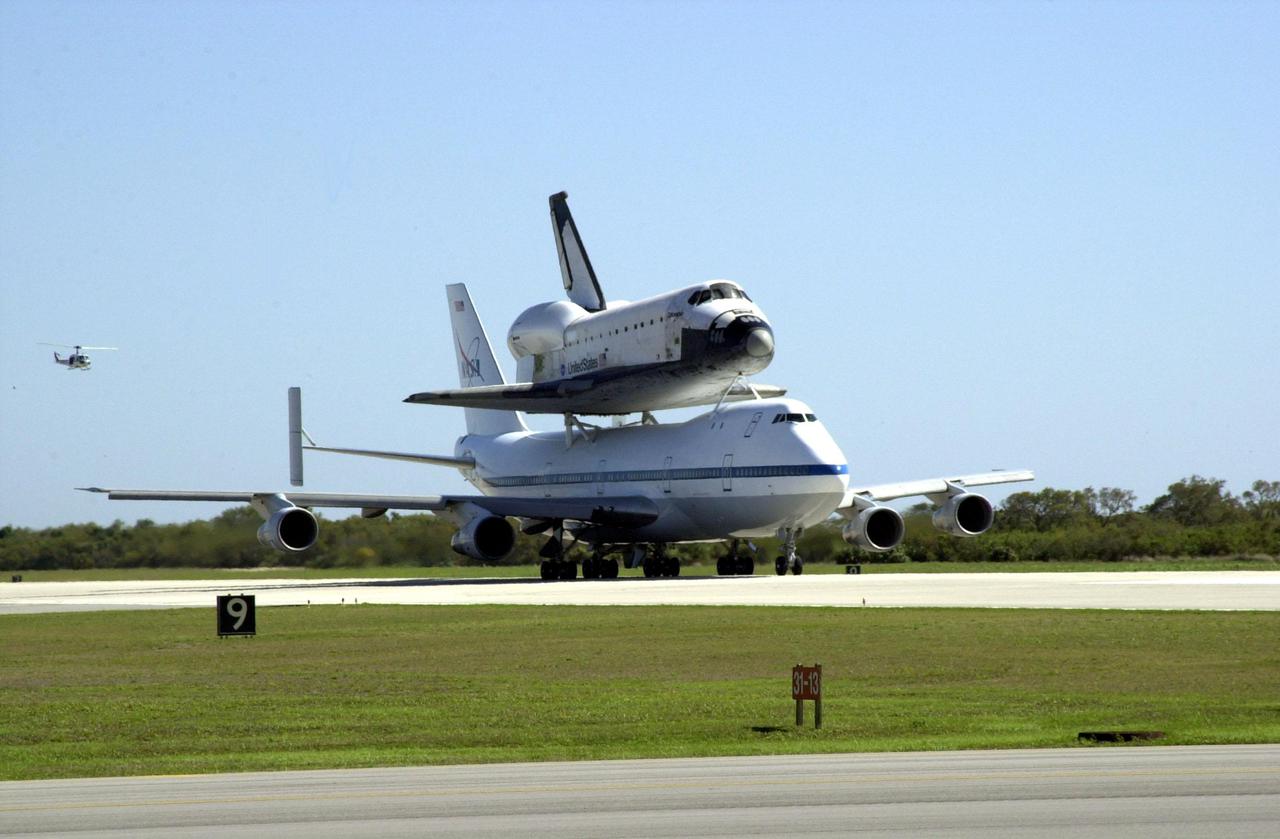
KENNEDY SPACE CENTER, FLA. -- The orbiter Columbia, atop a Shuttle Carrier Aircraft, taxis on the runway at the Cape Canaveral Air Force Station Skid Strip. The ferry flight began in California March 1. Unfavorable weather conditions kept it on the ground at Dyess AFB, Texas, until it could return to Florida. Columbia is returning from a 17-month-long modification and refurbishment process as part of a routine maintenance plan. The orbiter will next fly on mission STS-107, scheduled Oct. 25

KENNEDY SPACE CENTER, FLA. -- The Shuttle Carrier Aircraft, carrying its cargo orbiter Columbia, taxis off the runway at the Cape Canaveral Air Force Station Skid Strip. The ferry flight began in California March 1. Unfavorable weather conditions kept it on the ground at Dyess AFB, Texas, until it could return to Florida. Columbia is returning from a 17-month-long modification and refurbishment process as part of a routine maintenance plan. The orbiter will next fly on mission STS-107, scheduled Oct. 25
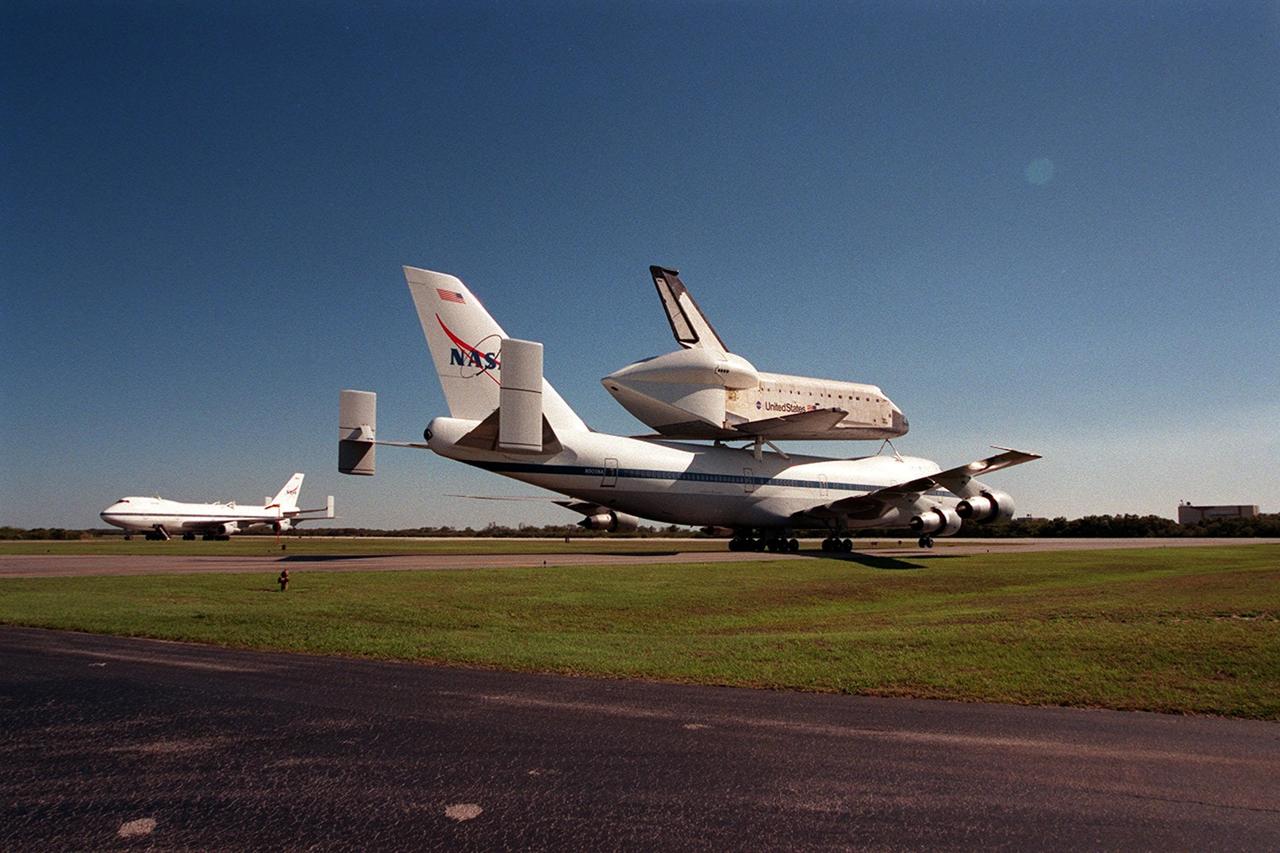
The Shuttle Carrier Aircraft with orbiter Columbia on top taxis at the Cape Canaveral Air Force Station Skid Strip. In the background is another SCA, which brought Atlantis back to KSC from California. The ferry flight began in California March 1. Unfavorable weather conditions kept it on the ground at Dyess AFB, Texas, until it could return to Florida. Columbia is returning from a 17-month-long modification and refurbishment process as part of a routine maintenance plan. The orbiter will next fly on mission STS-107, scheduled Oct. 25
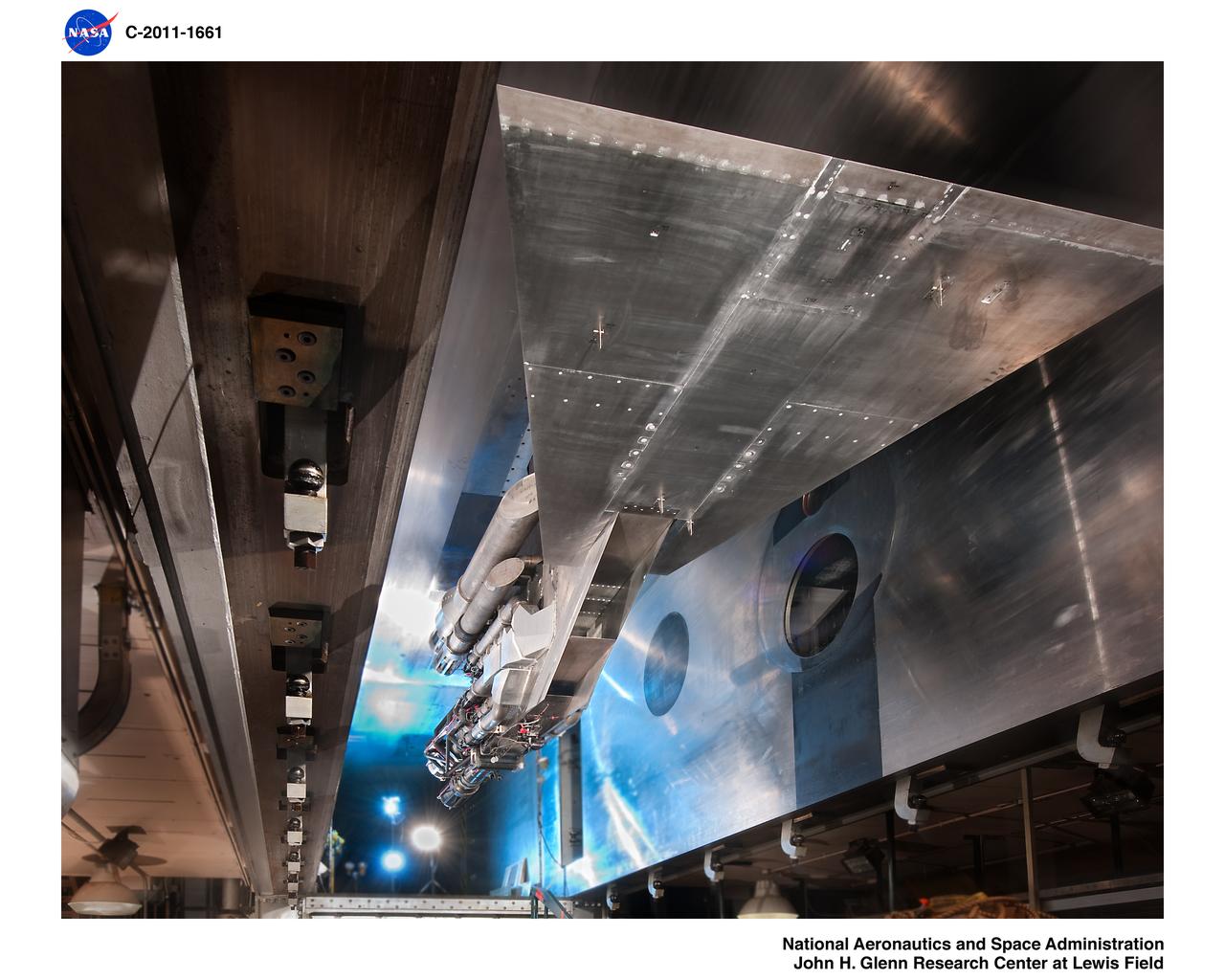
The NASA Fundamental Aeronautics Hypersonics project is focused on technologies for combined cycle, air-breathing propulsions systems to enable reusable launch systems for access to space. Turbine Based Combined Cycle (TBCC) propulsion systems offer specific impulse (Isp) improvements over rocket-based propulsion systems in the subsonic takeoff and re turn mission segments and offer improved safety. The potential to realize more aircraft-like operations with expanded launch site capability and reduced system maintenance are additional benefits.
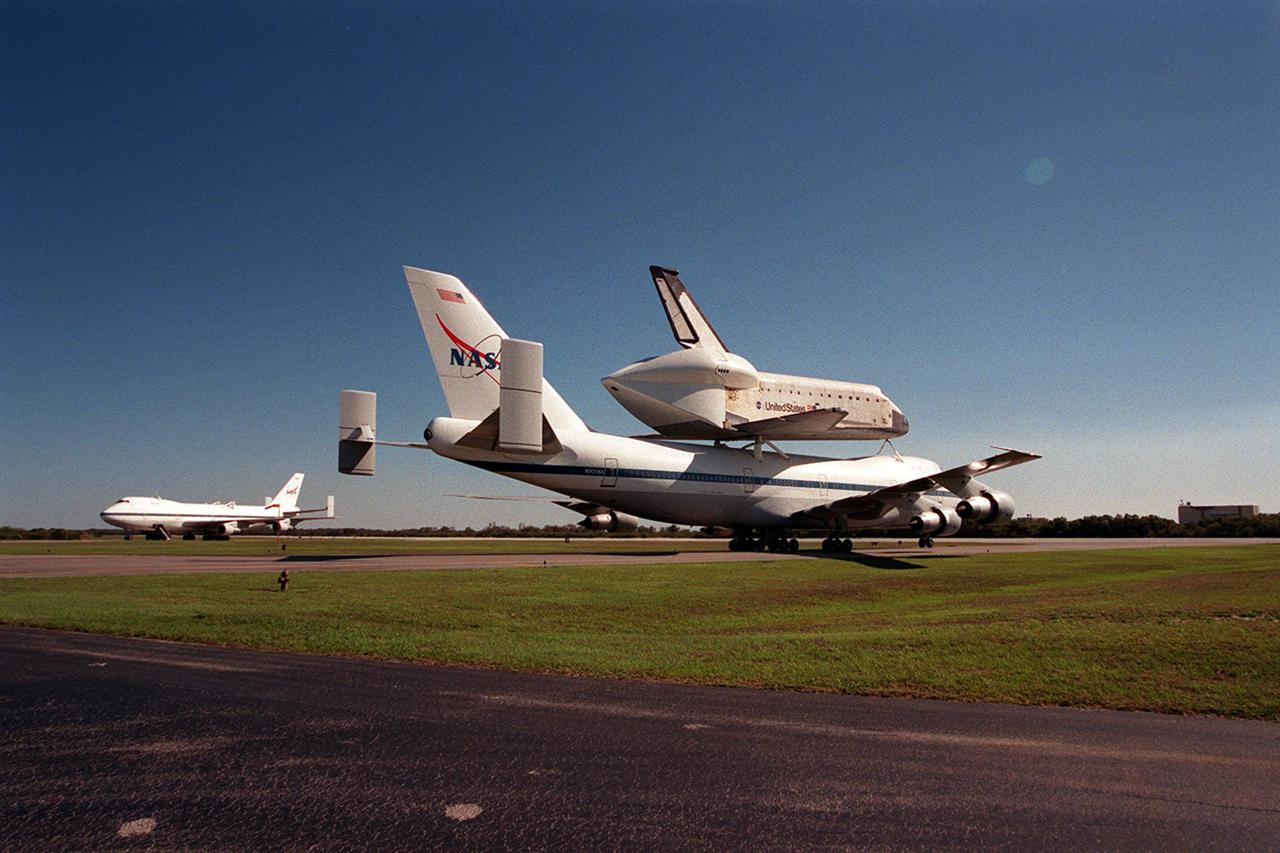
The Shuttle Carrier Aircraft with orbiter Columbia on top taxis at the Cape Canaveral Air Force Station Skid Strip. In the background is another SCA, which brought Atlantis back to KSC from California. The ferry flight began in California March 1. Unfavorable weather conditions kept it on the ground at Dyess AFB, Texas, until it could return to Florida. Columbia is returning from a 17-month-long modification and refurbishment process as part of a routine maintenance plan. The orbiter will next fly on mission STS-107, scheduled Oct. 25
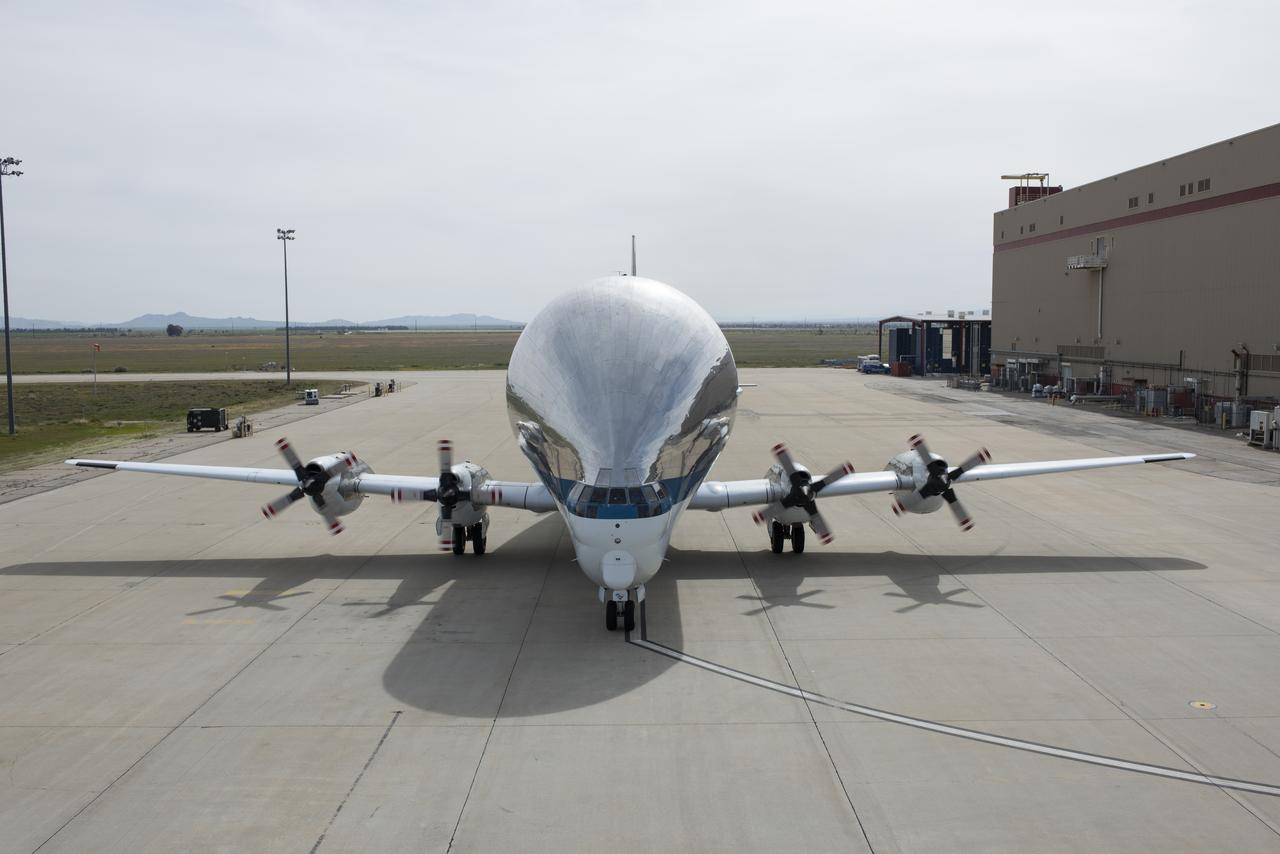
Front view of NASA’s Super Guppy cargo transport aircraft as it taxis in at NASA’s Armstrong Flight Research Center Building 703 ramp.
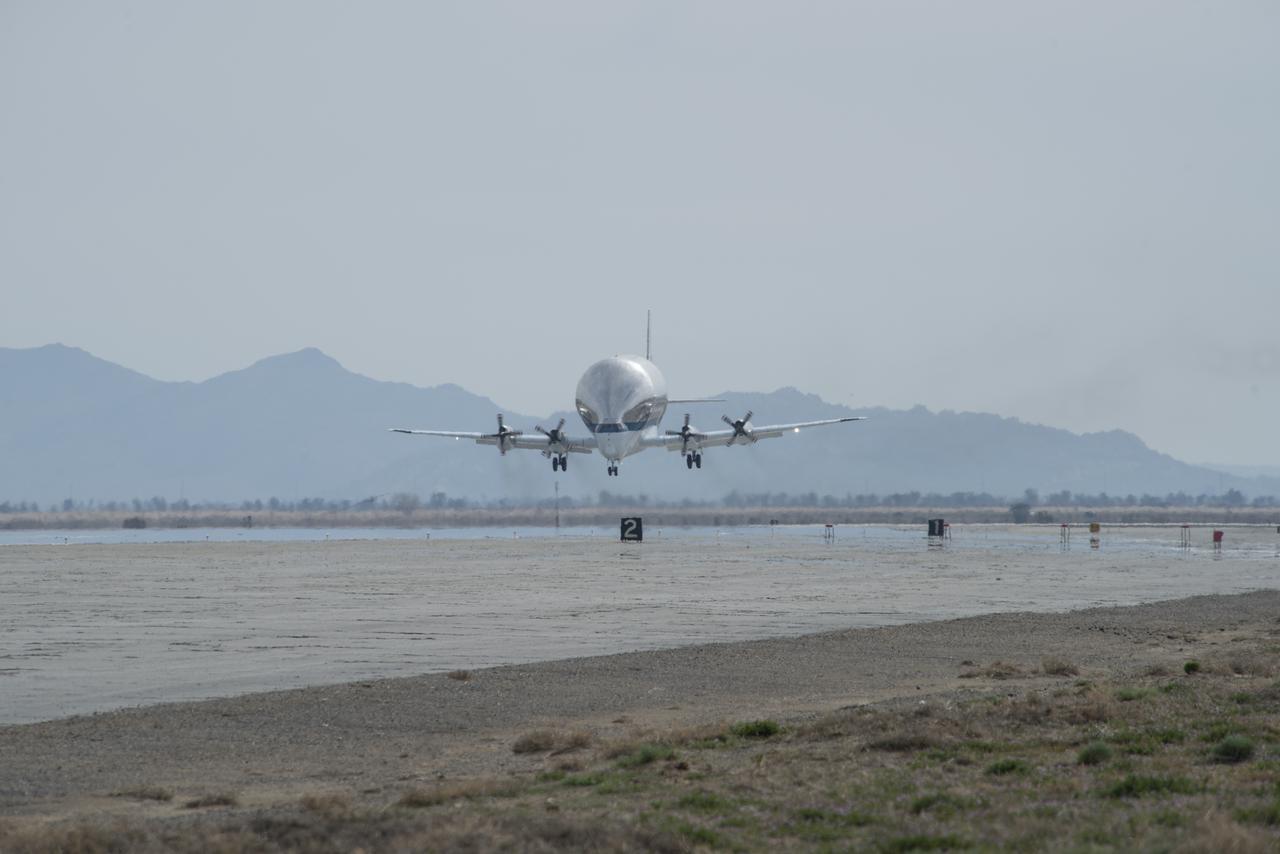
NASA's Super Guppy cargo transport aircraft coming in for landing at Plant 42 in Palmdale, California on April 1, 2019.
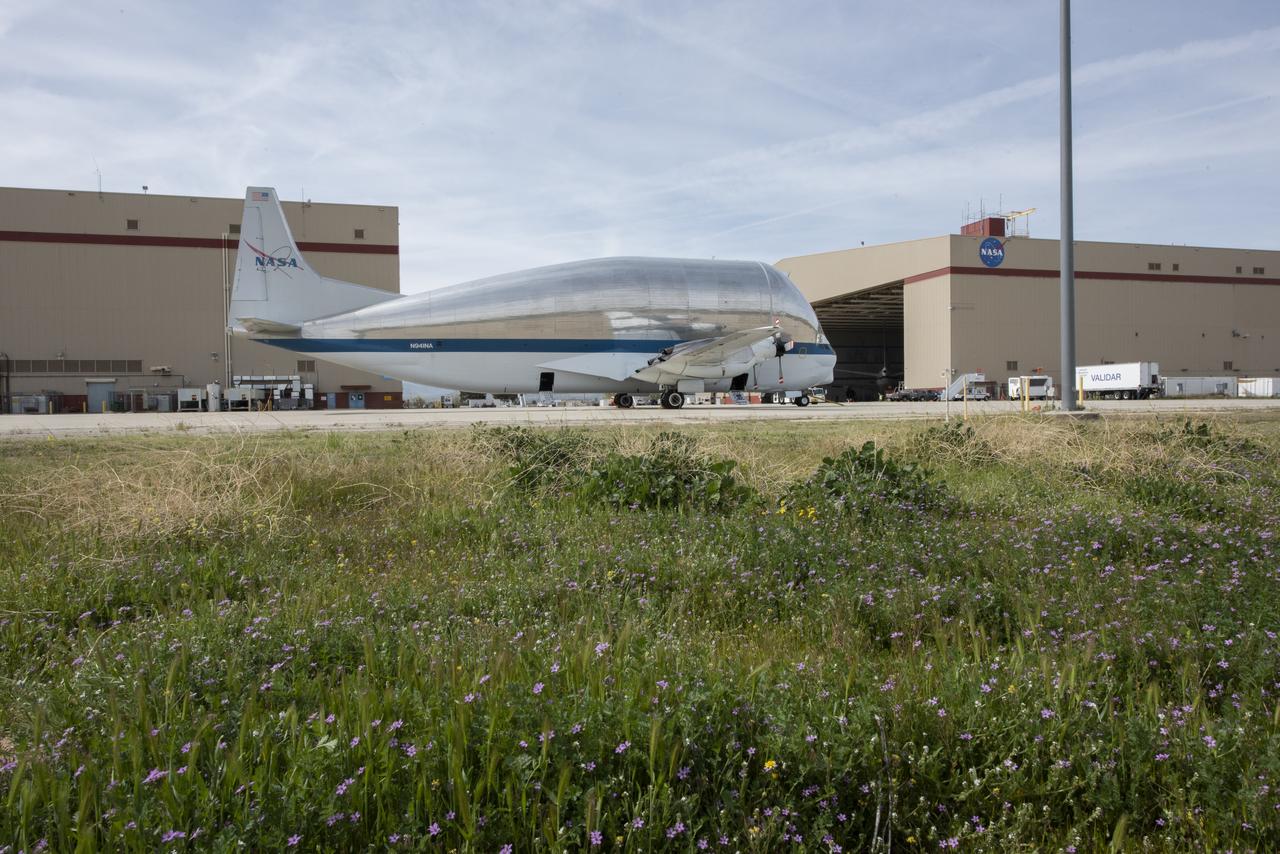
NASA’s Super Guppy cargo transport aircraft parked on the ramp in front of NASA’s Armstrong Flight Research Center Building 703.
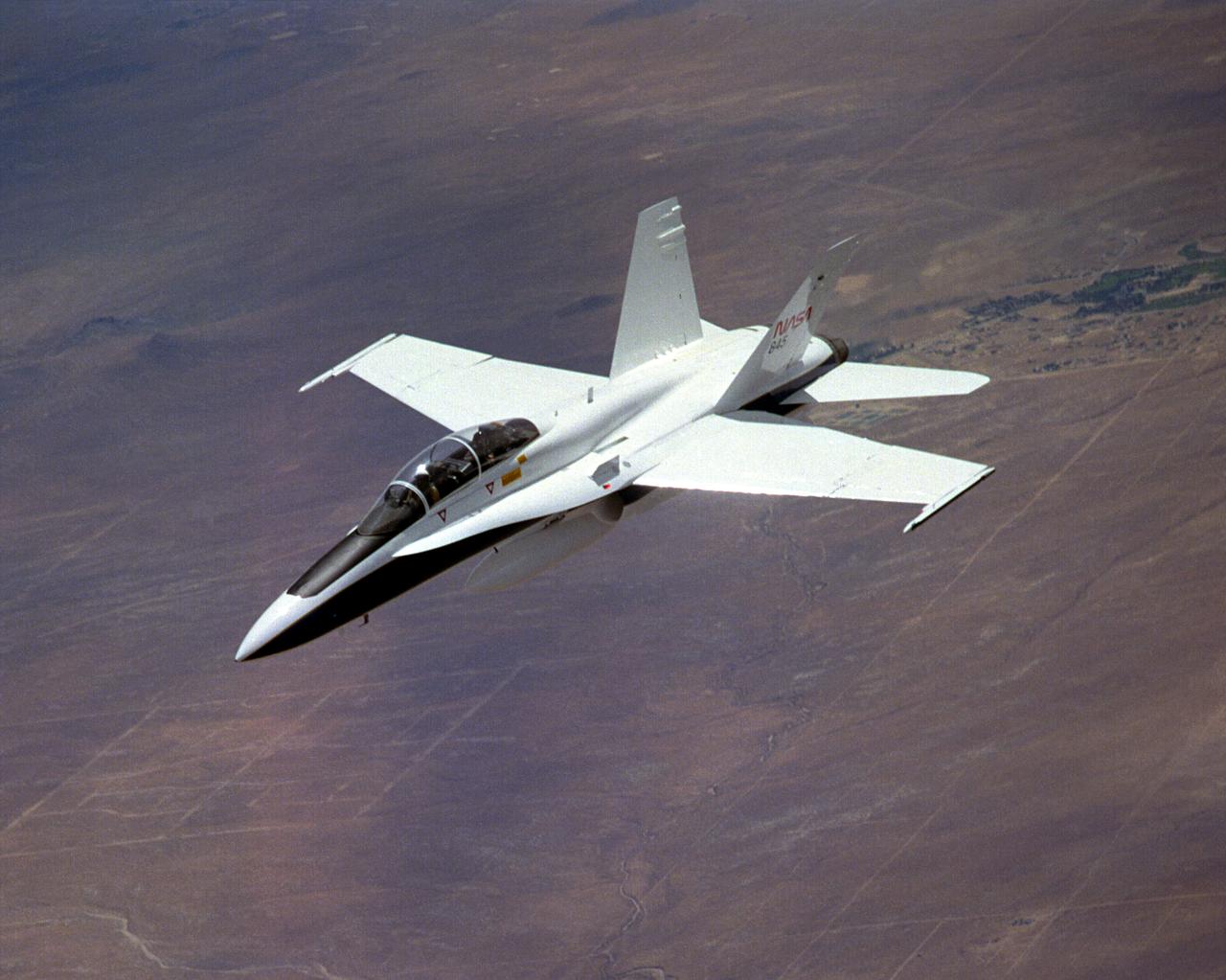
The National Aeronautics and Space Administration's Systems Research Aircraft (SRA), a highly modified F-18 jet fighter, during a research flight. The former Navy aircraft was flown by NASA's Dryden Flight Research Center at Edwards Air Force Base, California, to evaluate a number of experimental aerospace technologies in a multi-year, joint NASA/DOD/industry program. Among the more than 20 experiments flight-tested were several involving fiber optic sensor systems. Experiments developed by McDonnell-Douglas and Lockheed-Martin centered on installation and maintenace techniques for various types of fiber-optic hardware proposed for use in military and commercial aircraft, while a Parker-Hannifin experiment focused in alternative fiber-optic designs for position measurement sensors as well as operational experience in handling optical sensor systems. Other experiments flown on this testbed aircraft included electronically-controlled control surface actuators, flush air data collection systems, "smart" skin antennae and laser-based systems. Incorporation of one or more of these technologies in future aircraft and spacecraft could result in signifigant savings in weight, maintenance and overall cost.
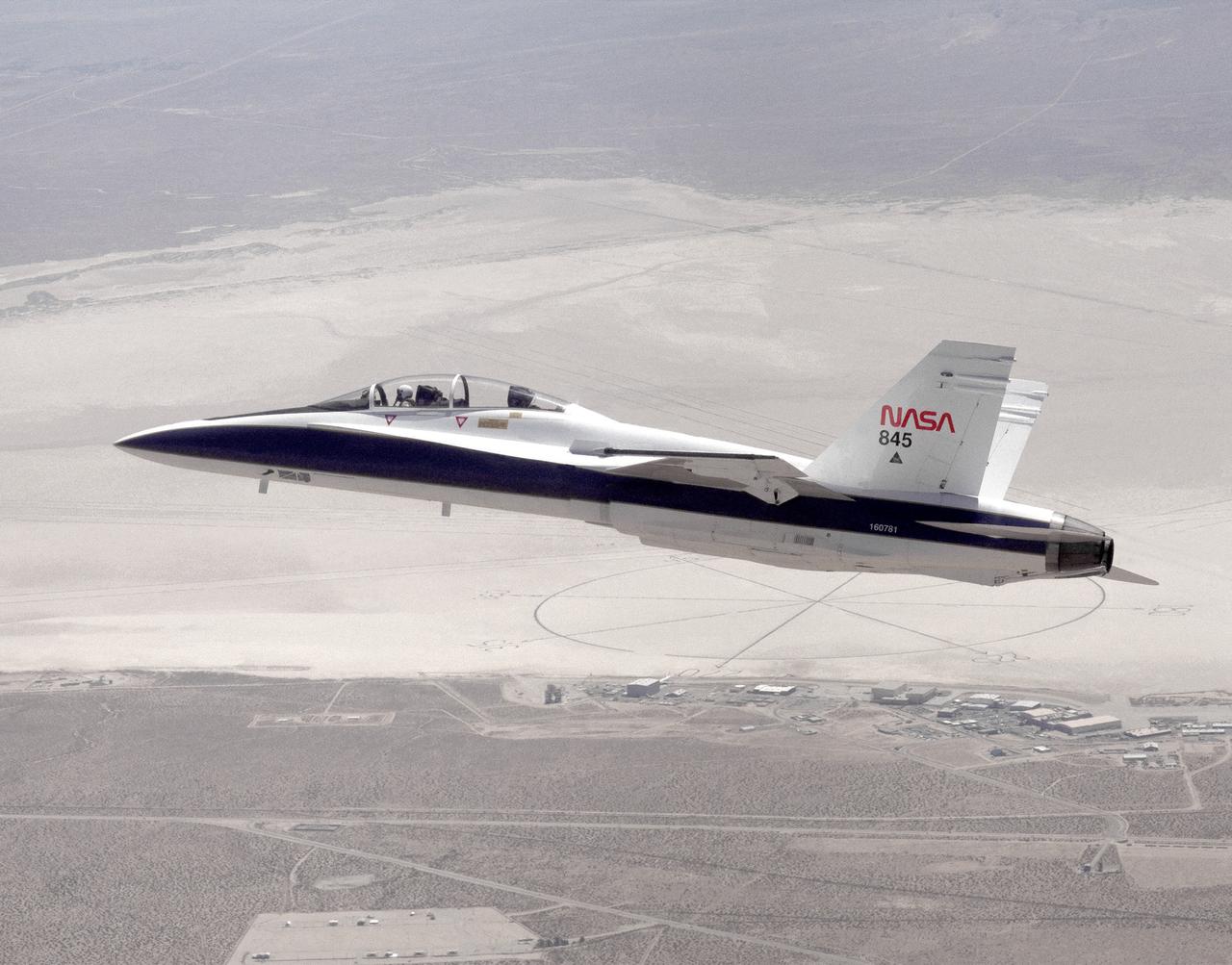
The National Aeronautics and Space Administration's Systems Research Aircraft (SRA), a highly modified F-18 jet fighter, on an early research flight over Rogers Dry Lake. The former Navy aircraft was flown by NASA's Dryden Flight Research Center at Edwards Air Force Base, California, to evaluate a number of experimental aerospace technologies in a multi-year, joint NASA/DOD/industry program. Among the more than 20 experiments flight-tested were several involving fiber optic sensor systems. Experiments developed by McDonnell-Douglas and Lockheed-Martin centered on installation and maintenace techniques for various types of fiber-optic hardware proposed for use in military and commercial aircraft, while a Parker-Hannifin experiment focused on alternative fiber-optic designs for postion measurement sensors as well as operational experience in handling optical sensor systems. Other experiments flown on this testbed aircraft included electronically-controlled control surface actuators, flush air data collection systems, "smart" skin antennae and laser-based systems. Incorporation of one or more of these technologies in future aircraft and spacecraft could result in signifigant savings in weight, maintenance and overall cost.

The Flight Operations crew stands before a Republic P-47G Thunderbolt at the National Advisory Committee for Aeronautics (NACA) Aircraft Engine Research Laboratory in Cleveland, Ohio. The laboratory’s Flight Research Section was responsible for conducting a variety of research flights. During World War II most of the test flights complemented the efforts in ground-based facilities to improve engine cooling systems or study advanced fuel mixtures. The Republic P–47G was loaned to the laboratory to test NACA modifications to the Wright R–2800 engine’s cooling system at higher altitudes. The laboratory has always maintained a fleet of aircraft so different research projects were often conducted concurrently. The flight research program requires an entire section of personnel to accomplish its work. This staff generally consists of a flight operations group, which includes the section chief, pilots and administrative staff; a flight maintenance group with technicians and mechanics responsible for inspecting aircraft, performing checkouts and installing and removing flight instruments; and a flight research group that integrates the researchers’ experiments into the aircraft. The staff at the time of this March 1944 photograph included 3 pilots, 16 planning and analysis engineers, 36 mechanics and technicians, 10 instrumentation specialists, 6 secretaries and 5 computers.
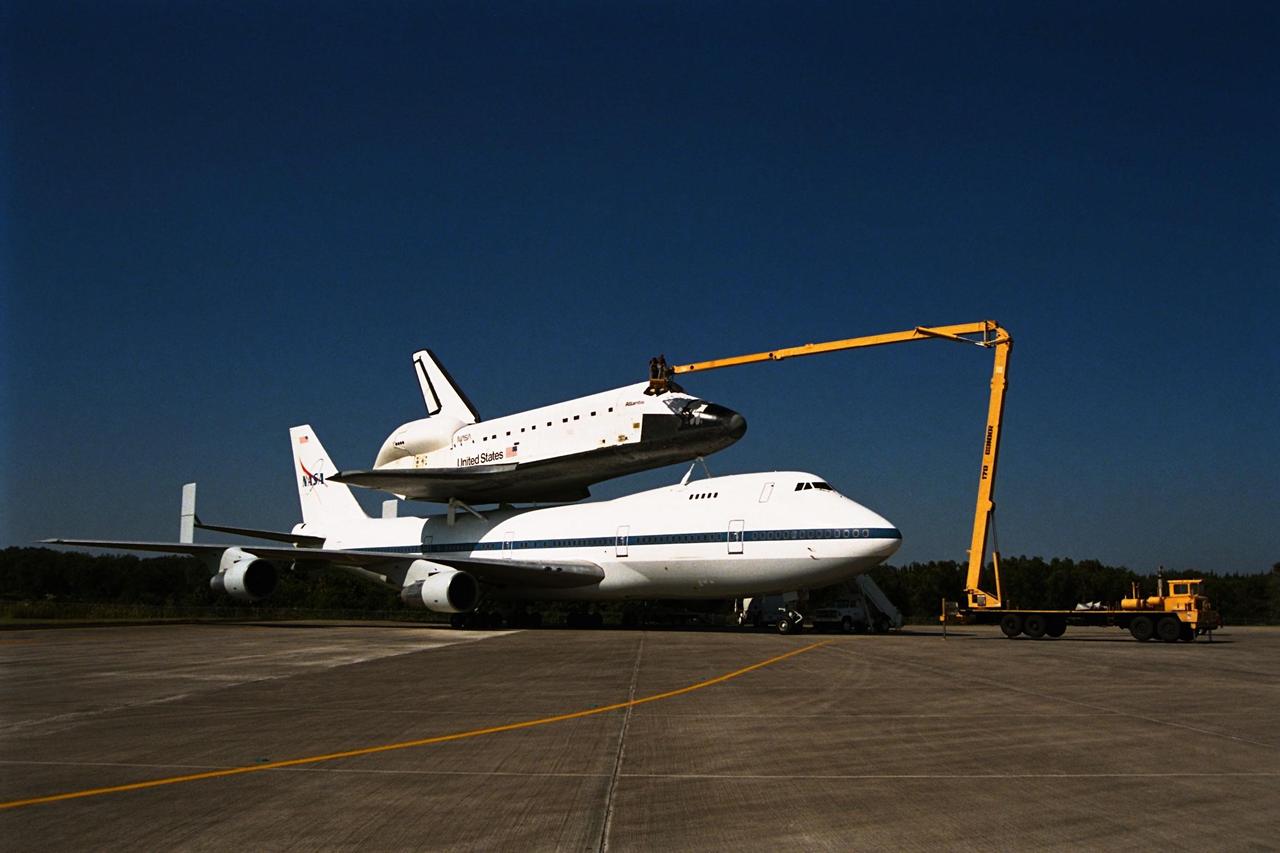
KENNEDY SPACE CENTER, FLA. -- The orbiter Atlantis sits atop the Shuttle Carrier Aircraft at Kennedy Space Center’s (KSC’s) Shuttle Landing Facility. Atlantis is being prepared for its ferry flight to Palmdale, Calif., for its Orbiter Maintenance Down Period at Palmdale’s Orbiter Assembly Facility, where it will remain until August 1998. There, modifications and structural inspections will be conducted in preparation for Atlantis’ future missions to support International Space Station assembly activities. Atlantis’ next flight into space is scheduled to be Space Shuttle mission STS-92, targeted for launch from KSC in January 1999
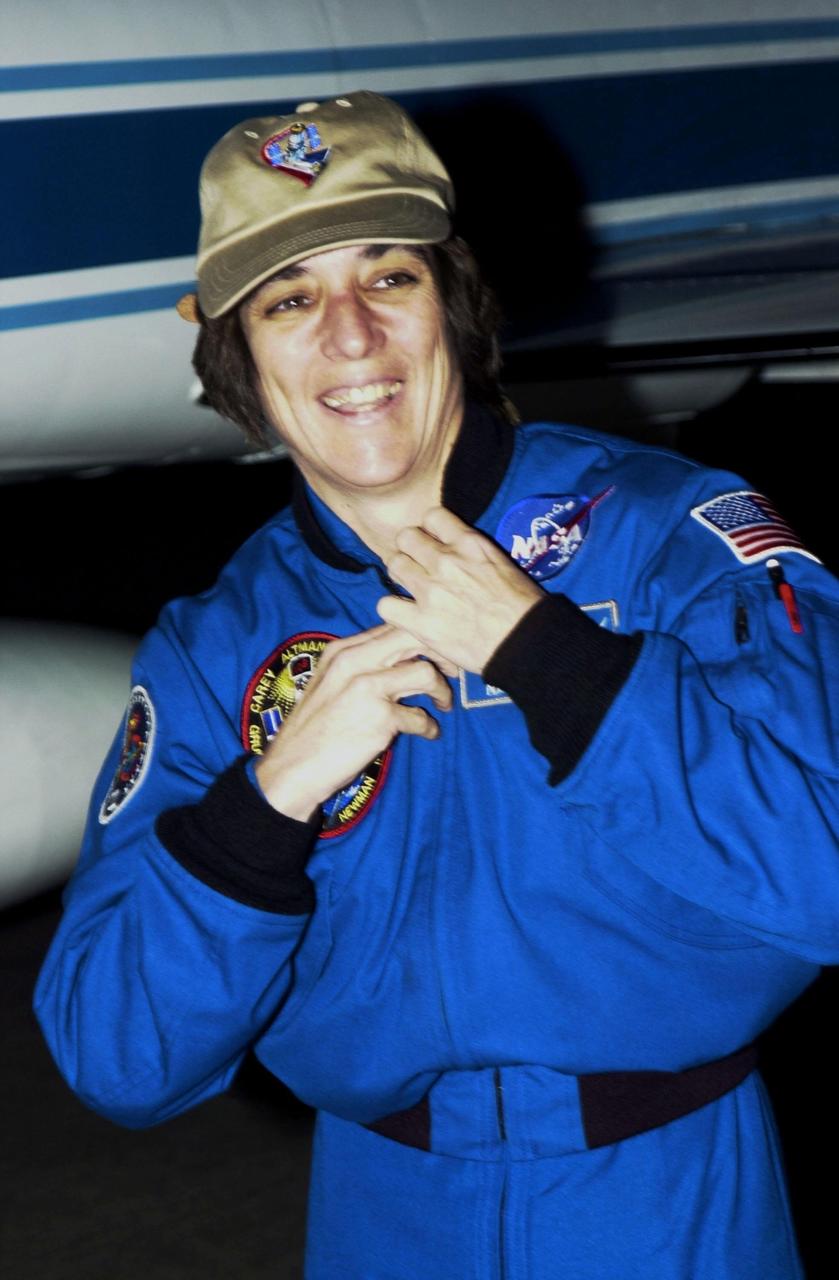
KENNEDY SPACE CENTER, Fla. - STS-109 Mission Specialist Nancy Currie arrives at KSC aboard a T-38 jet aircraft to begin launch preparations. This is Currie's fourth Shuttle flight. The goal of the 11-day mission is repair and maintenance on the Hubble Space Telescope. Five spacewalks are planned to replace Solar Array 2 with Solar Array 3, replace the Power Control Unit, remove the Faint Object Camera and install the Advanced Camera for Surveys (ACS), install the Near Infrared Camera and Multi-Object Spectrometer (NICMOS) Cooling System, and install New Outer Blanket Layer insulation. Launch is scheduled for Feb. 28 at 6:48 a.m. EST

The Shuttle Carrier Aircraft with orbiter Columbia on top soars through the sky over the Space Coast of Florida as it returns to KSC from Cape Canaveral Air Force Station. The ferry flight began in California March 1. Unfavorable weather conditions kept it on the ground at Dyess AFB, Texas, until it could return to Florida. It landed temporarily at the CCAFS Skid Strip until Atlantis, which had alread landed at the SLF, could be transferred Columbia is returning from a 17-month-long modification and refurbishment process as part of a routine maintenance plan. The orbiter will next fly on mission STS-107, scheduled Oct. 25
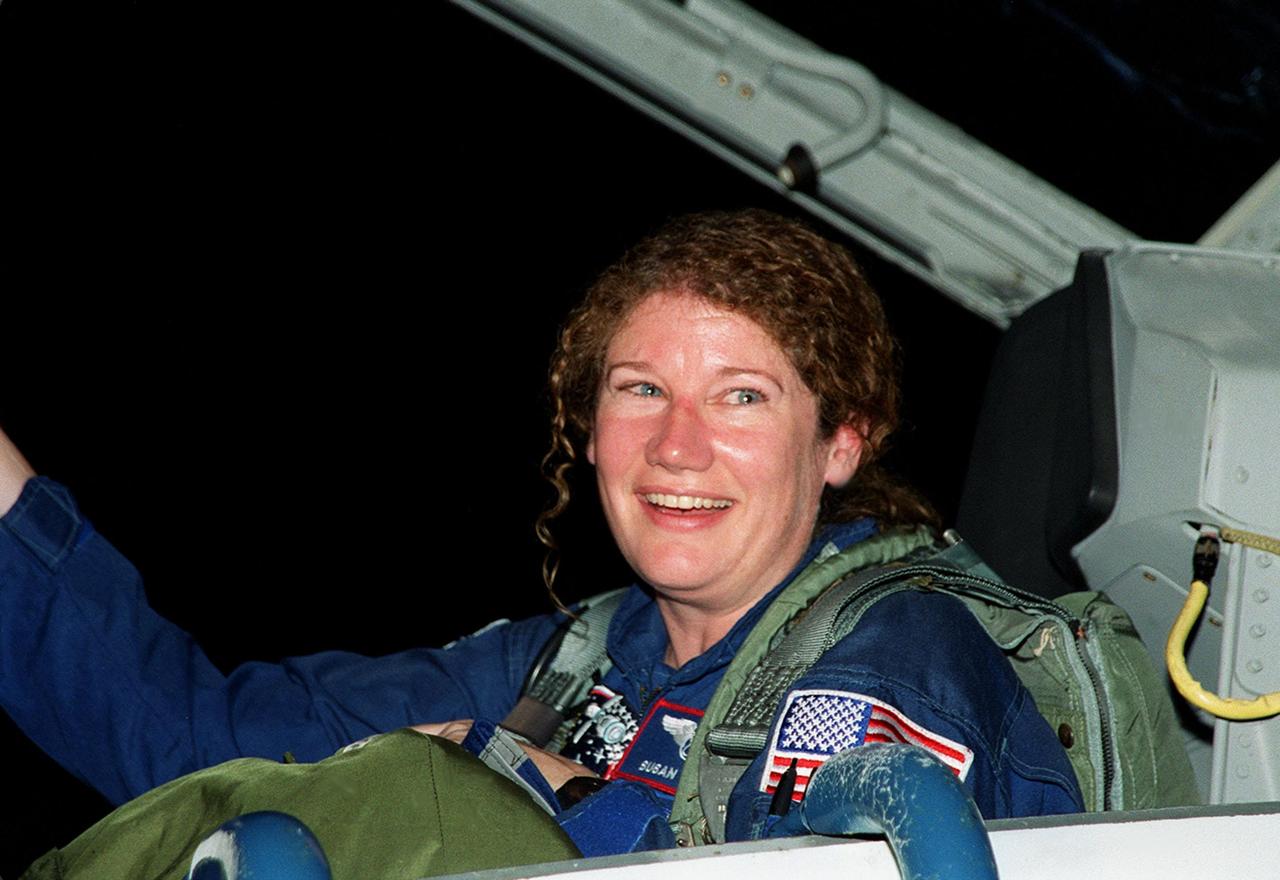
KENNEDY SPACE CENTR, FLA. -- STS-101 Mission Specialist Susan Helms arrives at KSC's Shuttle Landing Facility aboard a T-38 jet aircraft. The last to arrive, she and the rest of the crew will be preparing for the launch on May 18. The mission will take the crew of seven to the International Space Station, delivering logistics and supplies, plus preparing the Station for the arrival of the Zvezda Service Module, expected to be launched by Russia in July 2000. Also, the crew will conduct one space walk to perform maintenance on the Space Station. This will be the third assembly flight for the Space Station. STS-101 is targeted for liftoff at 6:38 a.m. EDT from Launch Pad 39A