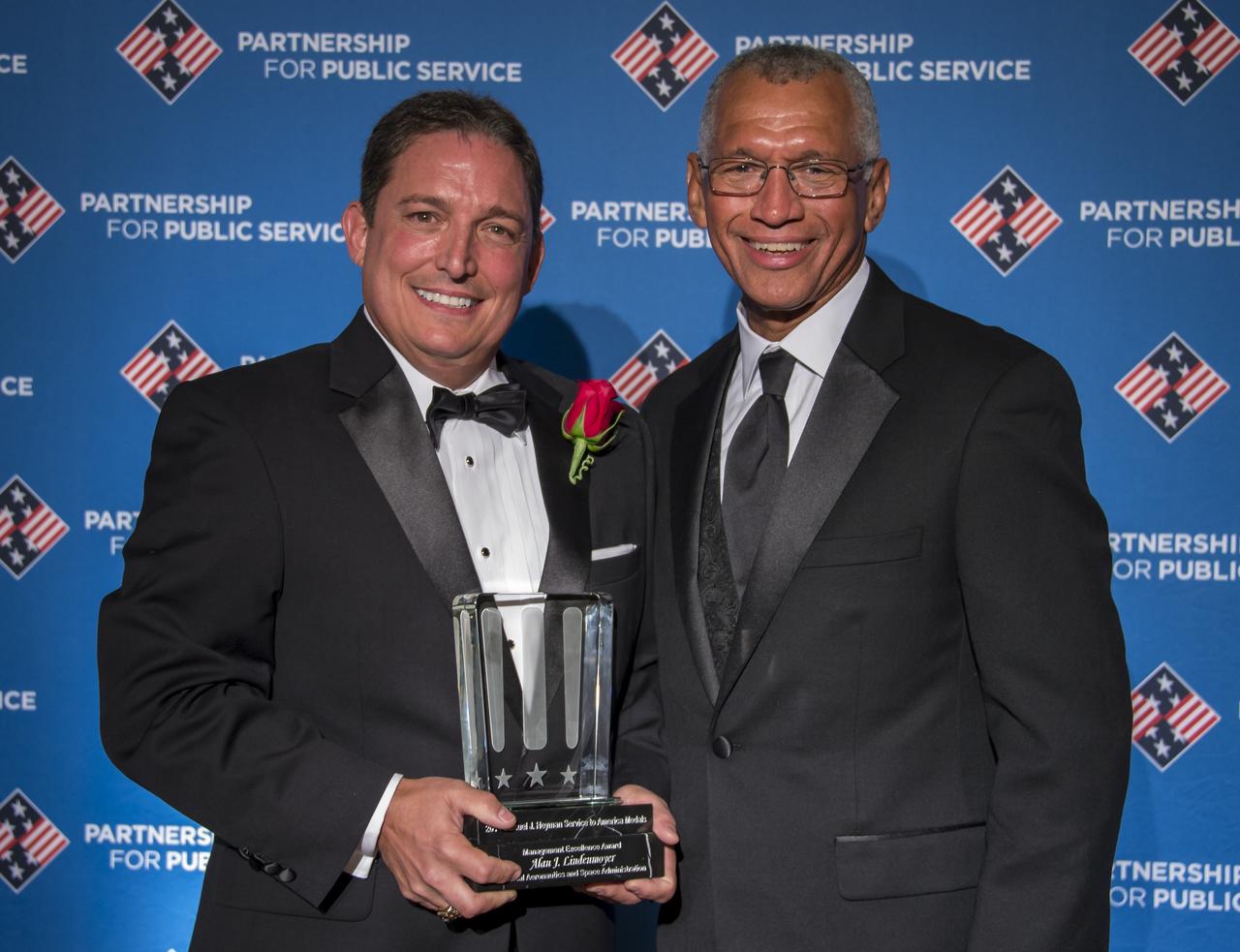
Alan J. Lindenmoyer, program manager, Commercial Crew and Cargo Program NASA, Johnson Space Center, Houston, Texas, left, poses for a photograph with Charles Bolden, NASA Administrator, shortly after Bolden presented Lindenmoyer the 2014 Samuel J. Heyman Service to America Medal by the Partnership for Public Service, Monday, Sept. 22, 2014 at the Andrew Mellon Auditorium in Washington. Lindenmoyer was recognized for transforming NASA’s space travel programs, helping the U.S. continue important space research while reducing taxpayer costs and stimulating the commercial space industry. Photo Credit: (NASA/Bill Ingalls)
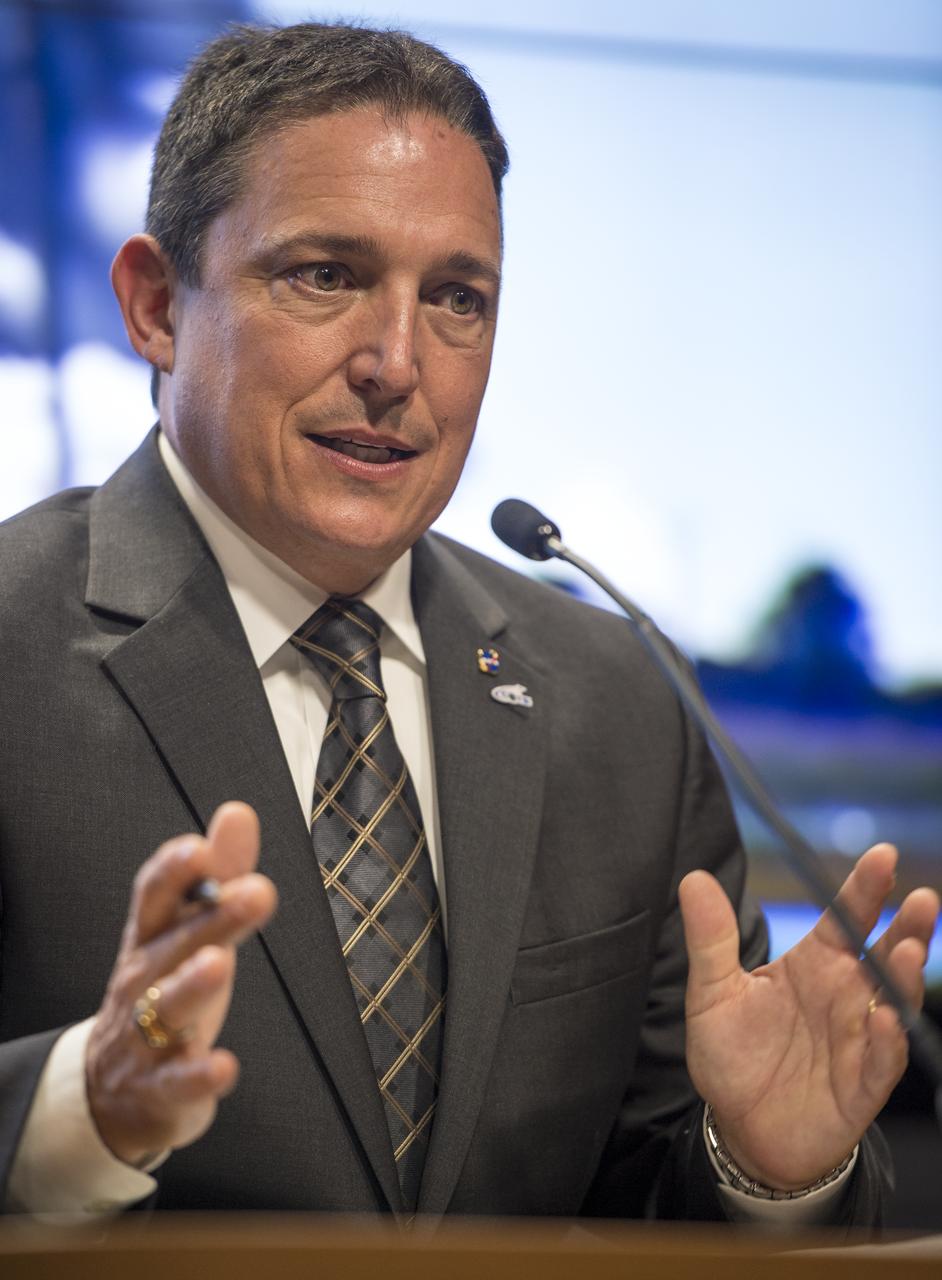
Alan Lindenmoyer, program manager, NASA's Commercial Crew and Cargo Program, talks during a press conference held after the successful launch of the Orbital Sciences Corporation Antares rocket, with the Cygnus cargo spacecraft aboard, Wednesday, Sept. 18, 2013, NASA Wallops Flight Facility, Virginia. Cygnus is on its way to rendezvous with the space station. The spacecraft will deliver about 1,300 pounds (589 kilograms) of cargo, including food and clothing, to the Expedition 37 crew. Photo Credit: (NASA/Bill Ingalls)
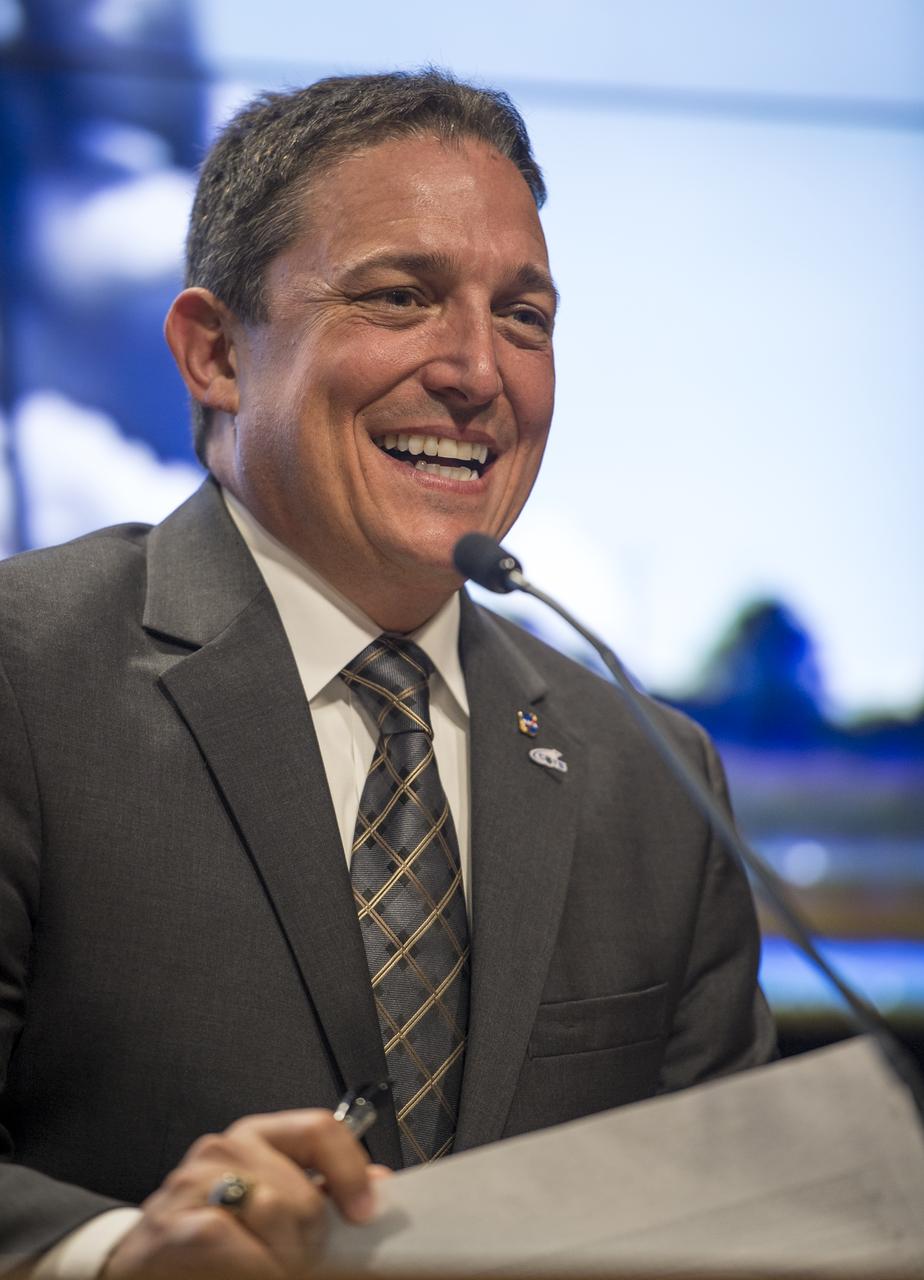
Alan Lindenmoyer, program manager, NASA's Commercial Crew and Cargo Program, talks during a press conference held after the successful launch of the Orbital Sciences Corporation Antares rocket, with the Cygnus cargo spacecraft aboard, Wednesday, Sept. 18, 2013, NASA Wallops Flight Facility, Virginia. Cygnus is on its way to rendezvous with the space station. The spacecraft will deliver about 1,300 pounds (589 kilograms) of cargo, including food and clothing, to the Expedition 37 crew. Photo Credit: (NASA/Bill Ingalls)
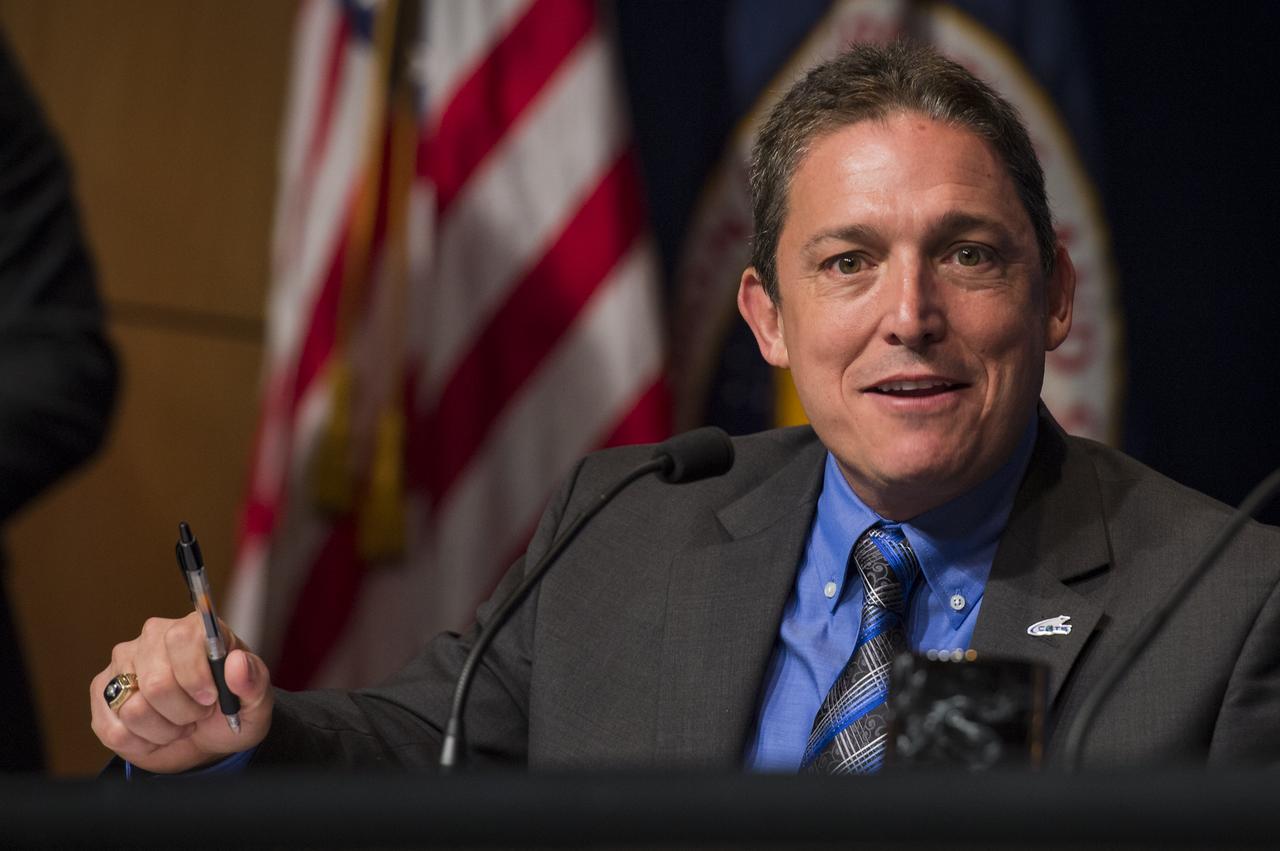
Alan Lindenmoyer, Manager of Commercial Crew and Cargo Program at NASA, delivers remarks panel discussion on the Commercial Orbital Transportation Services (COTS) initiative at NASA Headquarters in Washington on Wednesday, November 13, 2013. Through COTS, NASA's partners Space Exploration Technologies Corp. (SpaceX) and Orbital Sciences Corp., developed new U.S. rockets and spacecraft, launched from U.S. soil, capable of transporting cargo to low-Earth orbit and the International Space Station. Photo Credit: (NASA/Jay Westcott)
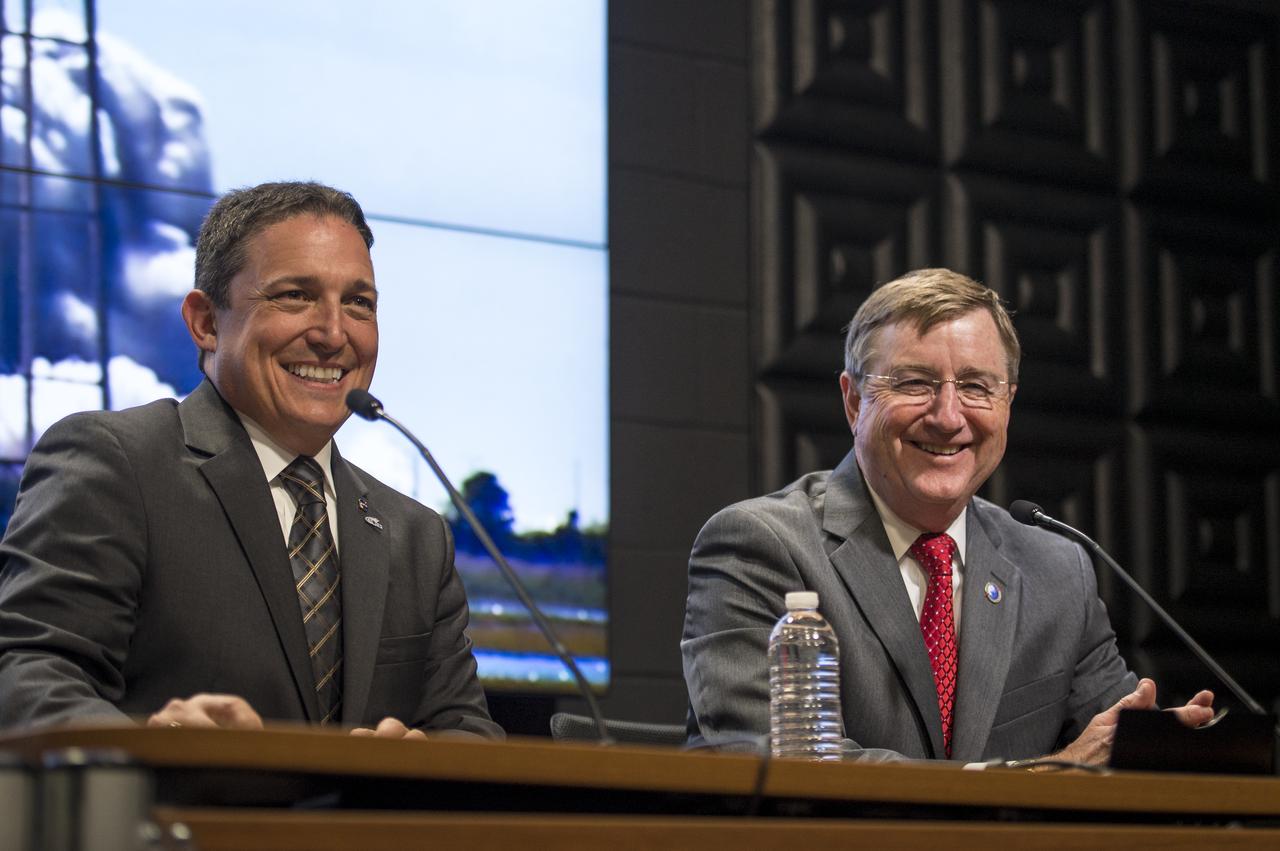
Alan Lindenmoyer, program manager, NASA's Commercial Crew and Cargo Program, left, and, Frank Culbertson, executive vice president, Orbital Sciences Corporation,are seen during a press conference held after the successful launch of the Orbital Sciences Antares rocket, with the Cygnus cargo spacecraft aboard, Wednesday, Sept. 18, 2013, NASA Wallops Flight Facility, Virginia. Cygnus is on its way to rendezvous with the space station. The spacecraft will deliver about 1,300 pounds (589 kilograms) of cargo, including food and clothing, to the Expedition 37 crew. Photo Credit: (NASA/Bill Ingalls)

Josh Byerly, public affairs officer, NASA, left, Robert Lightfoot, associate administrator, NASA, second from left, Alan Lindenmoyer, program manager, NASA's Commercial Crew and Cargo Program, and, Frank Culbertson, executive vice president, Orbital Sciences Corporation, right, are seen during a press conference held after the successful launch of the Antares rocket, with the Cygnus cargo spacecraft aboard, Wednesday, Sept. 18, 2013, NASA Wallops Flight Facility, Virginia. Cygnus is on its way to rendezvous with the space station. The spacecraft will deliver about 1,300 pounds (589 kilograms) of cargo, including food and clothing, to the Expedition 37 crew. Photo Credit: (NASA/Bill Ingalls)
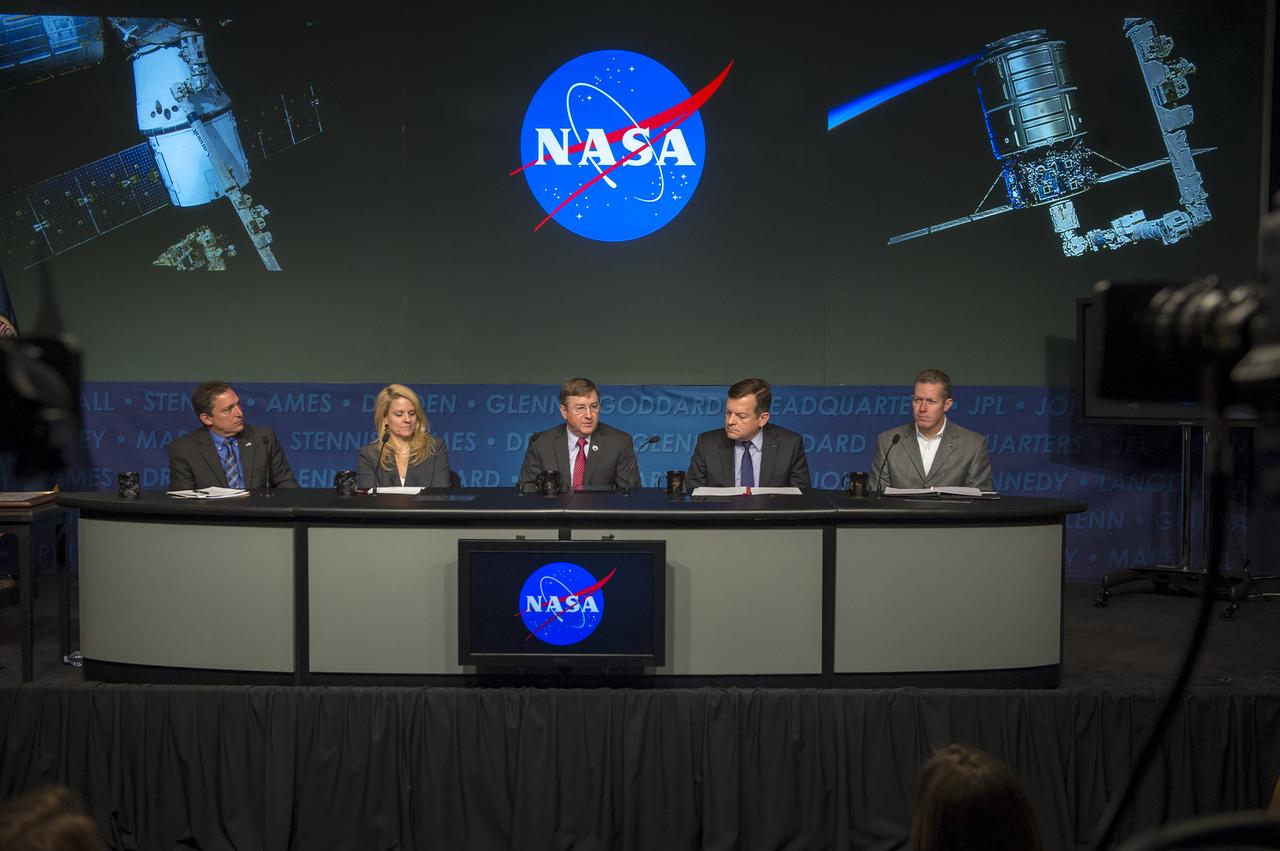
L-R: Alan Lindenmoyer, Manager of Commercial Crew and Cargo Program, NASA; Gwynne Shotwell, President, SpaceX; Frank Culbertson, Executive Vice President and General Manager, Orbital Sciences Advanced Programs Group; Frank Slazer, Vice President of Space Systems, Aerospace Industries Association and Phil McAlister, Director of Commercial Spaceflight Development at NASA, participate in a panel discussion on the Commercial Orbital Transportation Services (COTS) initiative at NASA Headquarters in Washington on Wednesday, November 13, 2013. Through COTS, NASA's partners Space Exploration Technologies Corp. (SpaceX) and Orbital Sciences Corp., developed new U.S. rockets and spacecraft, launched from U.S. soil, capable of transporting cargo to low-Earth orbit and the International Space Station. Photo Credit: (NASA/Jay Westcott)
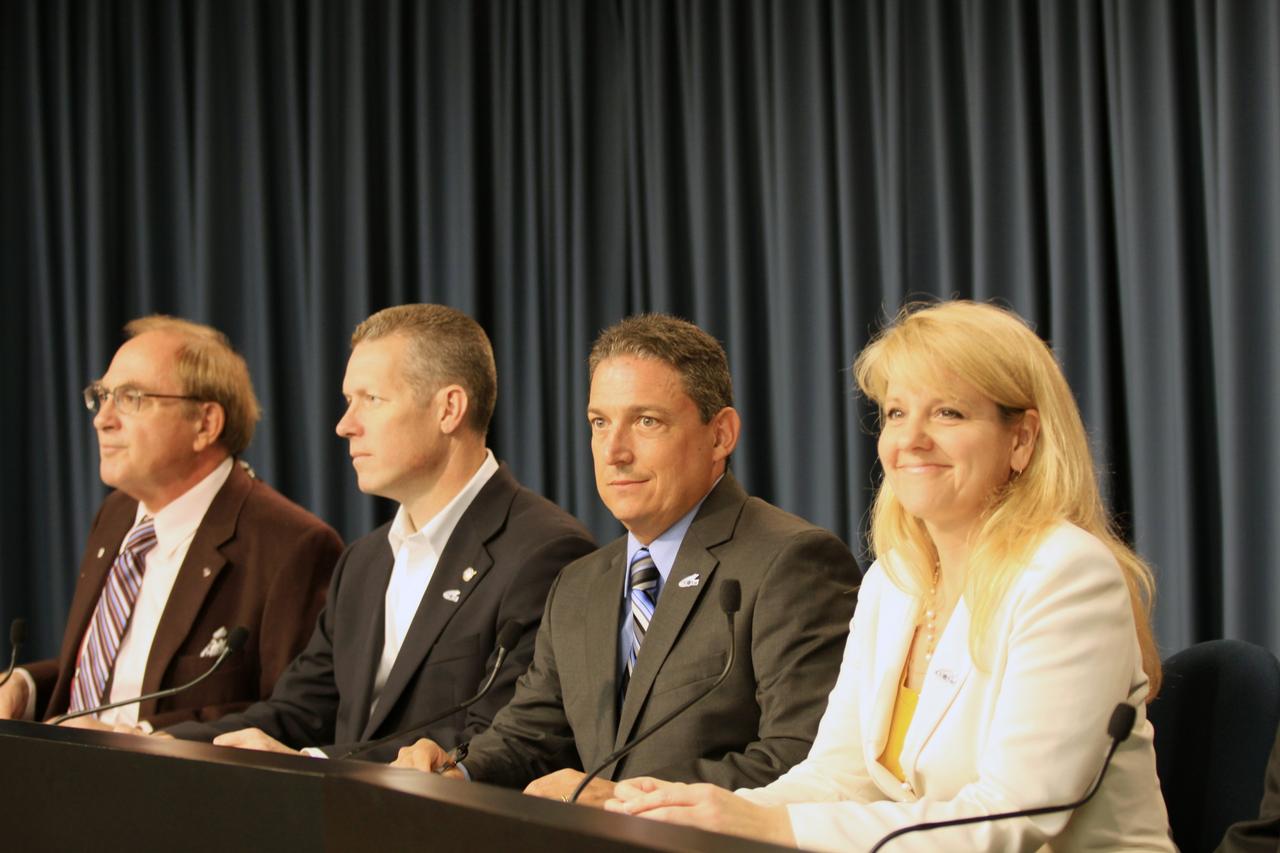
CAPE CANAVERAL, Fla. – Participating in a prelaunch news conference in the Press Site Auditorium at NASA’s Kennedy Space Center in Florida are, from left, George H. Diller, NASA Public Affairs, Phil McAlister, director, NASA Commercial Spaceflight Development, Alan Lindenmoyer, manager, NASA Commercial Crew and Cargo Program, and Gwynne Shotwell, president, SpaceX. Liftoff of the SpaceX Falcon 9 rocket carrying a Dragon capsule to orbit is set for 4:55 a.m. EDT on May 19. The launch will be the company's second demonstration test flight for NASA's Commercial Orbital Transportation Services Program, or COTS. During the flight, the capsule will conduct a series of check-out procedures to test and prove its systems, including rendezvous and berthing with the International Space Station. If the capsule performs as planned, the cargo and experiments it is carrying will be transferred to the station. The cargo includes food, water and provisions for the station’s Expedition crews, such as clothing, batteries and computer equipment. Under COTS, NASA has partnered with two aerospace companies to deliver cargo to the station. For more information, visit http://www.nasa.gov/spacex. Photo credit: NASA/Jim Grossmann
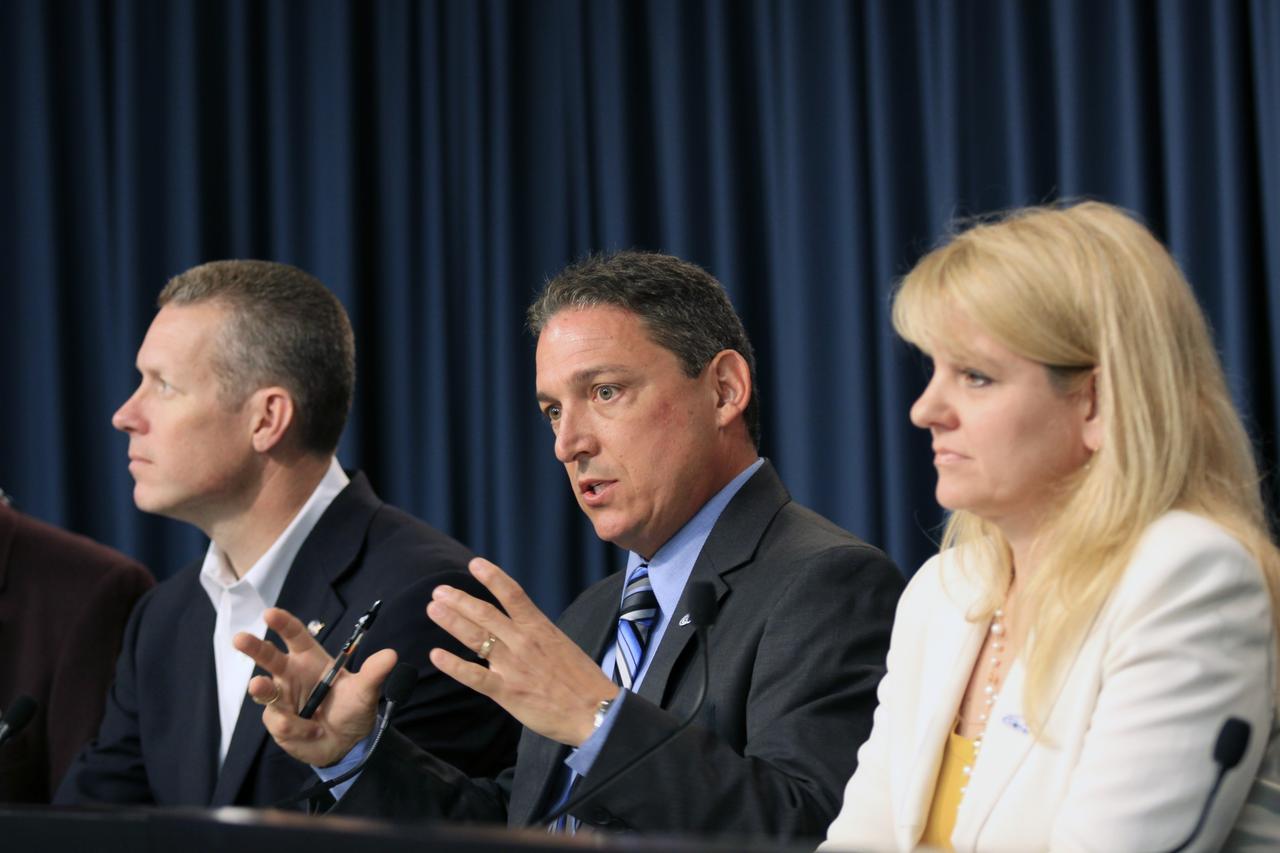
CAPE CANAVERAL, Fla. – Participating in a prelaunch news conference in the Press Site Auditorium at NASA’s Kennedy Space Center in Florida are, from left, Phil McAlister, director, NASA Commercial Spaceflight Development, Alan Lindenmoyer, manager, NASA Commercial Crew and Cargo Program, and Gwynne Shotwell, president, SpaceX. Liftoff of the SpaceX Falcon 9 rocket carrying a Dragon capsule to orbit is set for 4:55 a.m. EDT on May 19. The launch will be the company's second demonstration test flight for NASA's Commercial Orbital Transportation Services Program, or COTS. During the flight, the capsule will conduct a series of check-out procedures to test and prove its systems, including rendezvous and berthing with the International Space Station. If the capsule performs as planned, the cargo and experiments it is carrying will be transferred to the station. The cargo includes food, water and provisions for the station’s Expedition crews, such as clothing, batteries and computer equipment. Under COTS, NASA has partnered with two aerospace companies to deliver cargo to the station. For more information, visit http://www.nasa.gov/spacex. Photo credit: NASA/Jim Grossmann
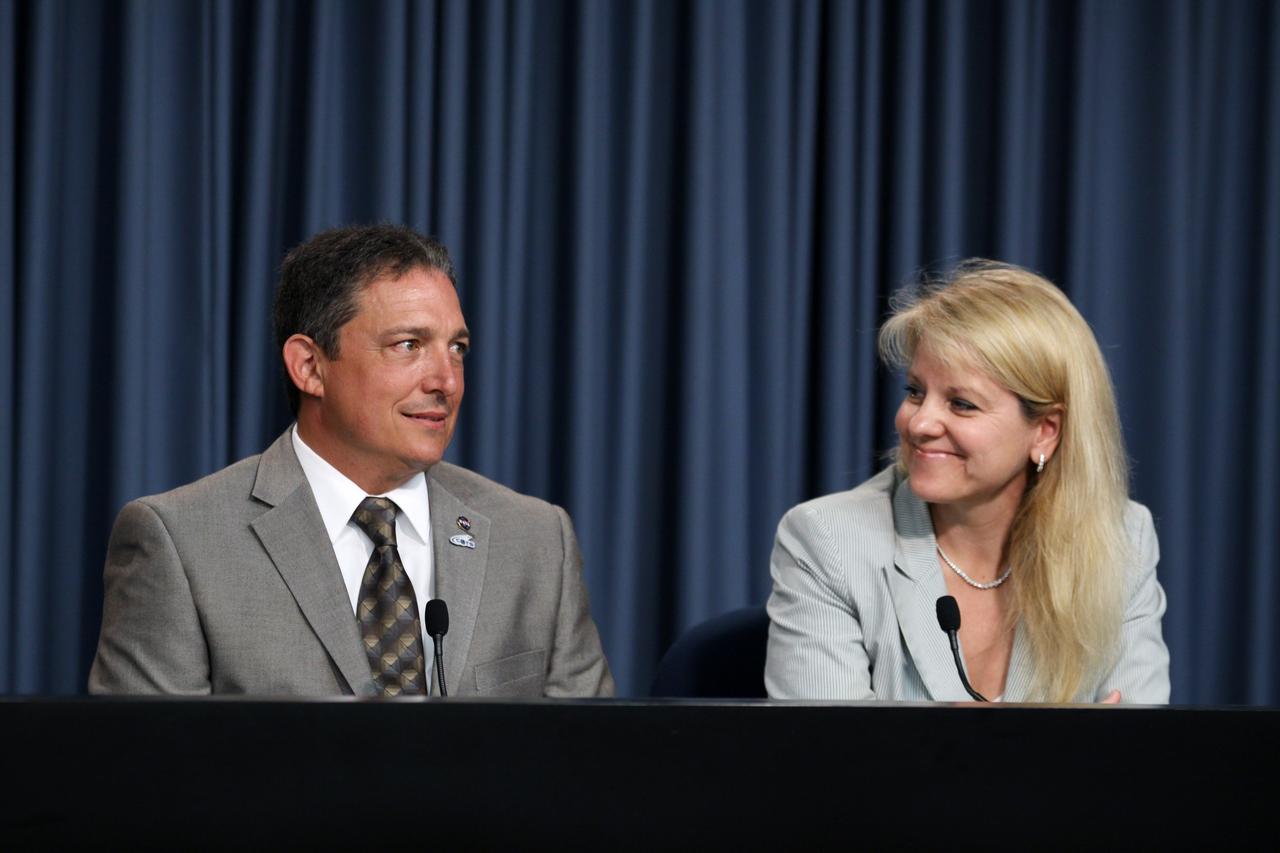
CAPE CANAVERAL, Fla. – Alan Lindenmoyer, manager of NASA’s Commercial Crew and Cargo Program, congratulates Gwynne Shotwell, president of SpaceX, on a job well done during a post-launch news conference in the Press Site auditorium at NASA’s Kennedy Space Center in Florida. The SpaceX Falcon 9 rocket launched into space at 3:44 a.m. EDT from Space Launch Complex-40 on Cape Canaveral Air Force Station in Florida. The launch is the company's second demonstration test flight for NASA's Commercial Orbital Transportation Services Program, or COTS. During the flight, the capsule will conduct a series of check-out procedures to test and prove its systems, including rendezvous and berthing with the International Space Station. If the capsule performs as planned, the cargo and experiments it is carrying will be transferred to the station. The cargo includes food, water and provisions for the station’s Expedition crews, such as clothing, batteries and computer equipment. Under COTS, NASA has partnered with two aerospace companies to deliver cargo to the station. For more information, visit http://www.nasa.gov/spacex. Photo credit: NASA/Kim Shiflett
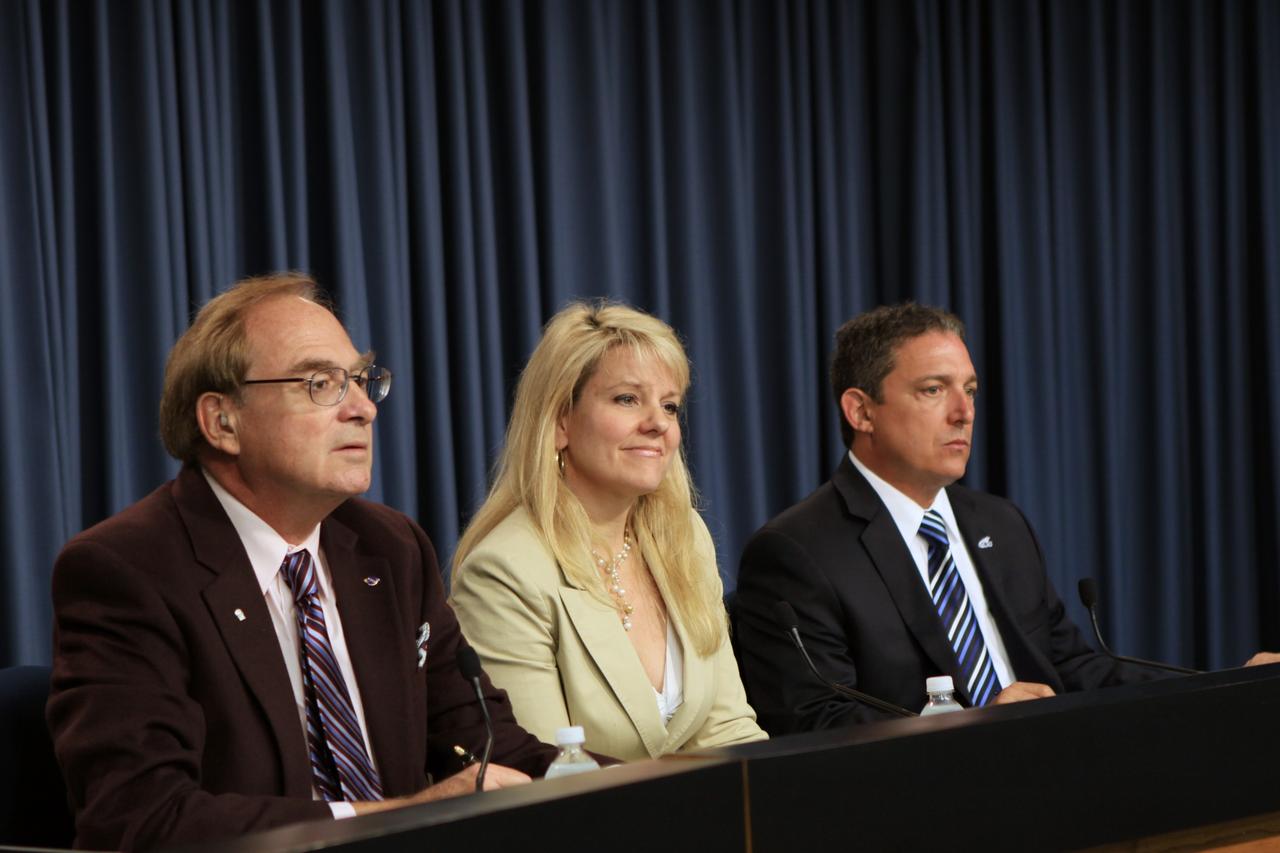
CAPE CANAVERAL, Fla. – A news conference is held in the Press Site auditorium at NASA’s Kennedy Space Center in Florida following the launch abort of the SpaceX demonstration test flight. From left are George H. Diller, NASA Public Affairs, Gwynne Shotwell, president, SpaceX, and Alan Lindenmoyer, manager, NASA Commercial Crew and Cargo Program. The next opportunity for liftoff of the SpaceX Falcon 9 rocket to carry the Dragon capsule to orbit is 4:33 a.m. EDT on May 22. The launch will be the company's second demonstration test flight for NASA's Commercial Orbital Transportation Services Program, or COTS. During the flight, the capsule will conduct a series of check-out procedures to test and prove its systems, including rendezvous and berthing with the International Space Station. If the capsule performs as planned, the cargo and experiments it is carrying will be transferred to the station. The cargo includes food, water and provisions for the station’s Expedition crews, such as clothing, batteries and computer equipment. Under COTS, NASA has partnered with two aerospace companies to deliver cargo to the station. For more information, visit http://www.nasa.gov/spacex. Photo credit: NASA/Jim Grossmann
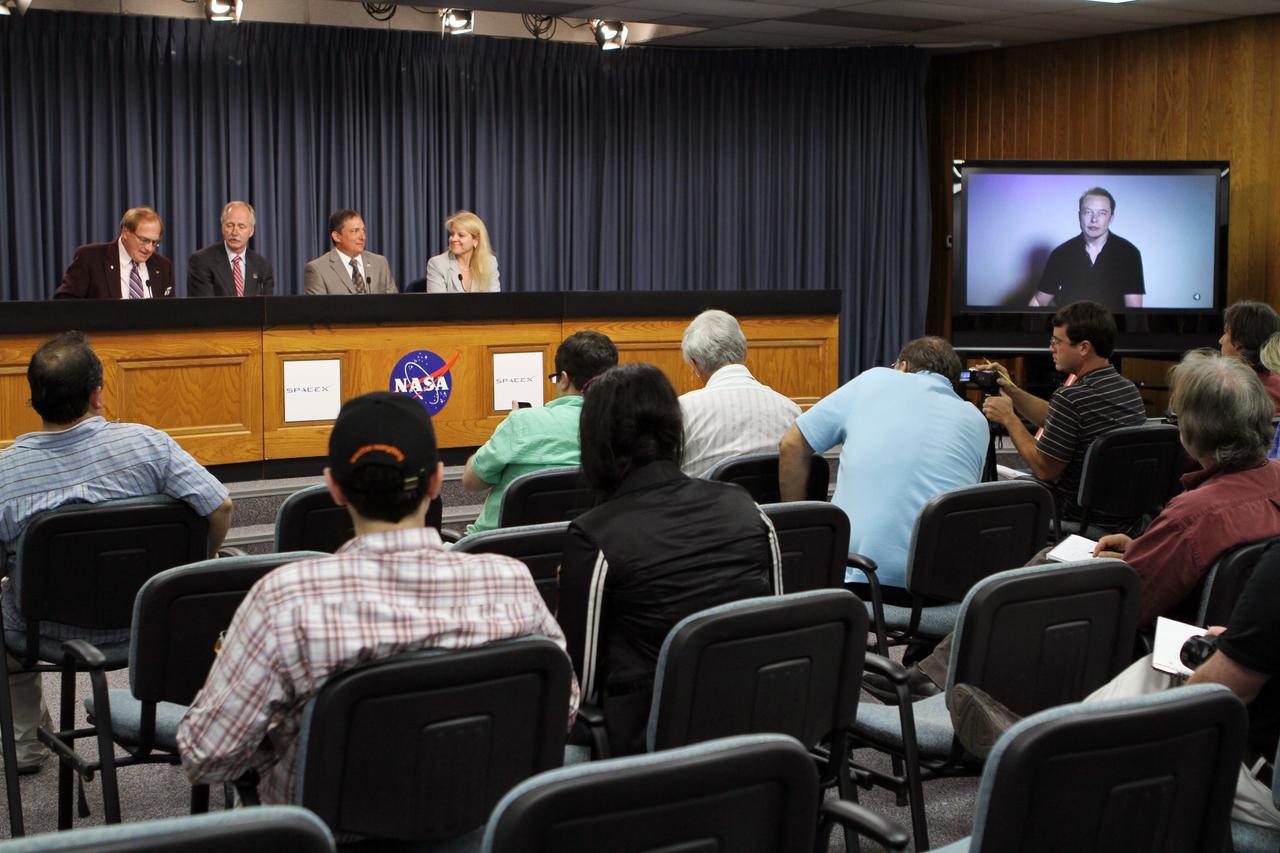
CAPE CANAVERAL, Fla. – Participating in a post-launch news conference in the Press Site auditorium at NASA’s Kennedy Space Center in Florida are, from left, George H. Diller, NASA Public Affairs, William Gerstenmaier, associate administrator of NASA’s Human Exploration and Operations Directorate, Alan Lindenmoyer, manager of NASA’s Commercial Crew and Cargo Program, and Gwynne Shotwell, president of SpaceX. Also participating by video teleconference, on the screen at right, is Elon Musk, chief executive officer and chief designer for SpaceX. The SpaceX Falcon 9 rocket launched into space at 3:44 a.m. EDT from Space Launch Complex-40 on Cape Canaveral Air Force Station in Florida. The launch is the company's second demonstration test flight for NASA's Commercial Orbital Transportation Services Program, or COTS. During the flight, the capsule will conduct a series of check-out procedures to test and prove its systems, including rendezvous and berthing with the International Space Station. If the capsule performs as planned, the cargo and experiments it is carrying will be transferred to the station. The cargo includes food, water and provisions for the station’s Expedition crews, such as clothing, batteries and computer equipment. Under COTS, NASA has partnered with two aerospace companies to deliver cargo to the station. For more information, visit http://www.nasa.gov/spacex. Photo credit: NASA/Kim Shiflett
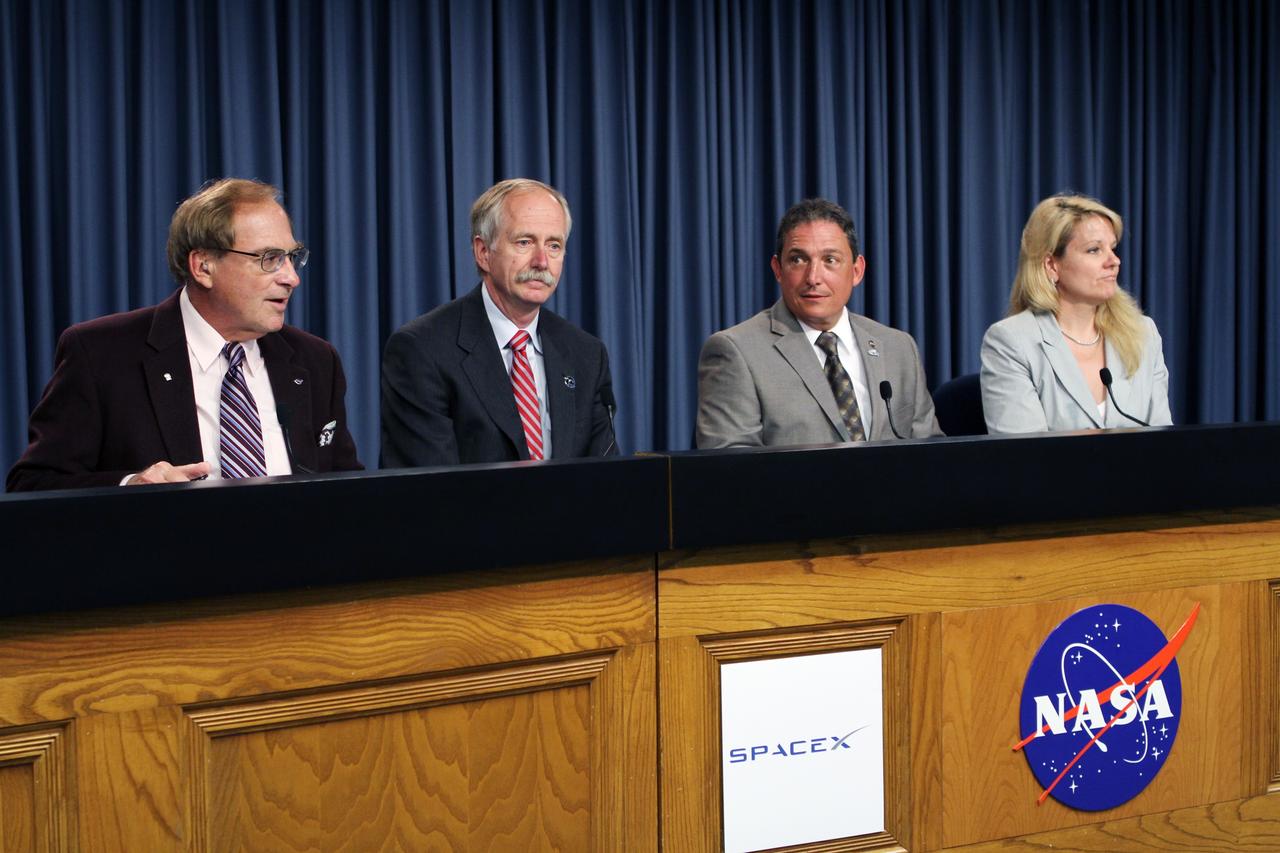
CAPE CANAVERAL, Fla. – Participating in a post-launch news conference in the Press Site auditorium at NASA’s Kennedy Space Center in Florida are, from left, George H. Diller, NASA Public Affairs, William Gerstenmaier, associate administrator of NASA’s Human Exploration and Operations Directorate, Alan Lindenmoyer, manager of NASA’s Commercial Crew and Cargo Program, and Gwynne Shotwell, president of SpaceX. The SpaceX Falcon 9 rocket launched into space at 3:44 a.m. EDT from Space Launch Complex-40 on Cape Canaveral Air Force Station in Florida. The launch is the company's second demonstration test flight for NASA's Commercial Orbital Transportation Services Program, or COTS. During the flight, the capsule will conduct a series of check-out procedures to test and prove its systems, including rendezvous and berthing with the International Space Station. If the capsule performs as planned, the cargo and experiments it is carrying will be transferred to the station. The cargo includes food, water and provisions for the station’s Expedition crews, such as clothing, batteries and computer equipment. Under COTS, NASA has partnered with two aerospace companies to deliver cargo to the station. For more information, visit http://www.nasa.gov/spacex. Photo credit: NASA/Kim Shiflett