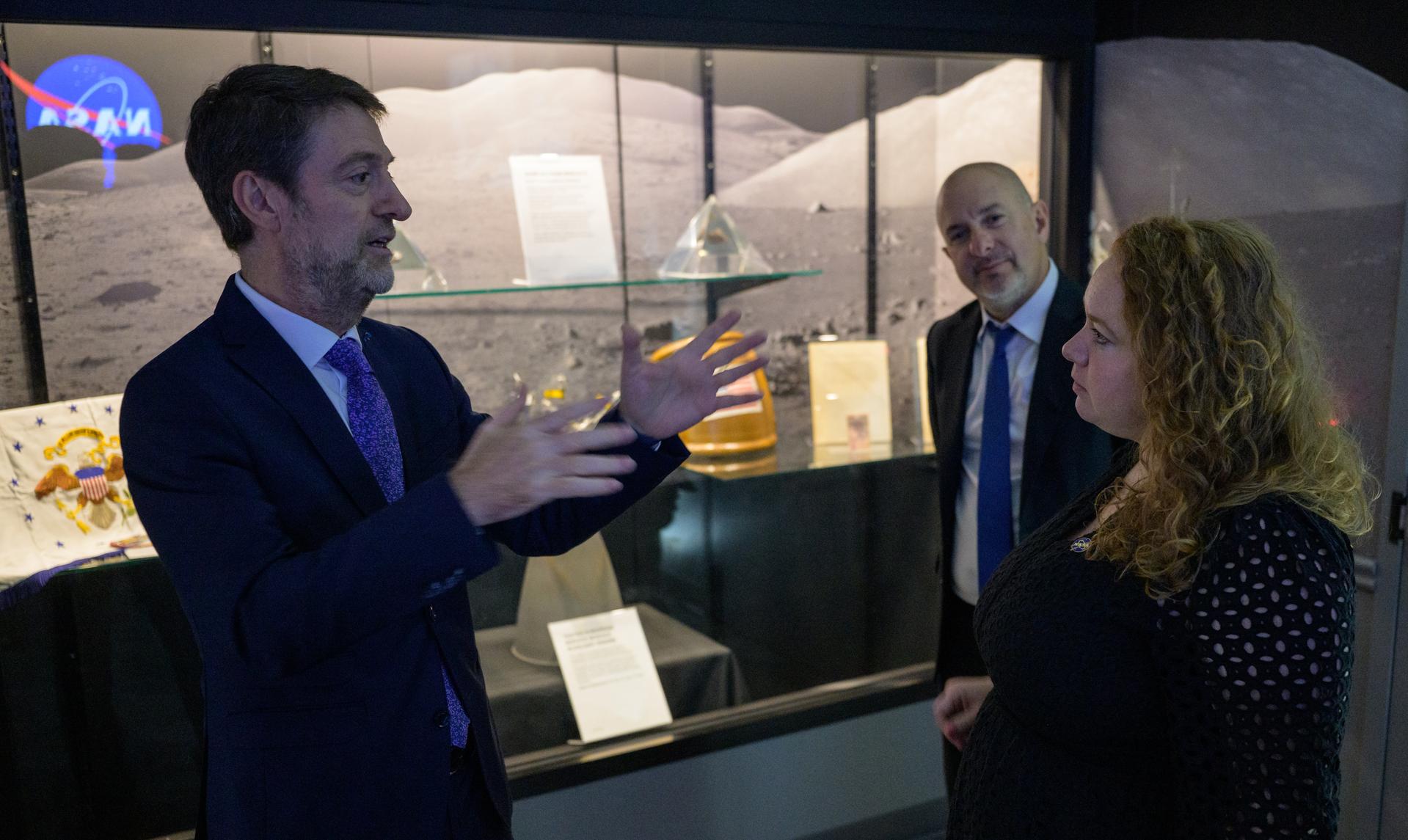
Albania’s Minister for Europe and Foreign Affairs Ferit Hoxha, left, talks with NASA Associate Administrator for International and Interagency Relations Kathleen Karika, right, as Ambassador of the Republic of Albania to the United States Ervin Bushati looks on, prior to an Artemis Accords signing ceremony Monday, September 21, 2026, at the Mary W. Jackson NASA Headquarters building in Washington. The Republic of Albania is the 73rd country to sign the Artemis Accords, which establish a practical set of principles to guide space exploration cooperation among nations participating in NASA’s Artemis program. Photo Credit: (NASA/Bill Ingalls)

NASA Deputy Administrator Matt Anderson, left, listens as Albania’s Minister for Europe and Foreign Affairs Ferit Hoxha gives remarks during an Artemis Accords signing ceremony with the Republic of Albania Monday, September 21, 2026, at the Mary W. Jackson NASA Headquarters building in Washington. Albania is the 73rd country to sign the Artemis Accords, which establish a practical set of principles to guide space exploration cooperation among nations participating in NASA’s Artemis program. Photo Credit: (NASA/Bill Ingalls)
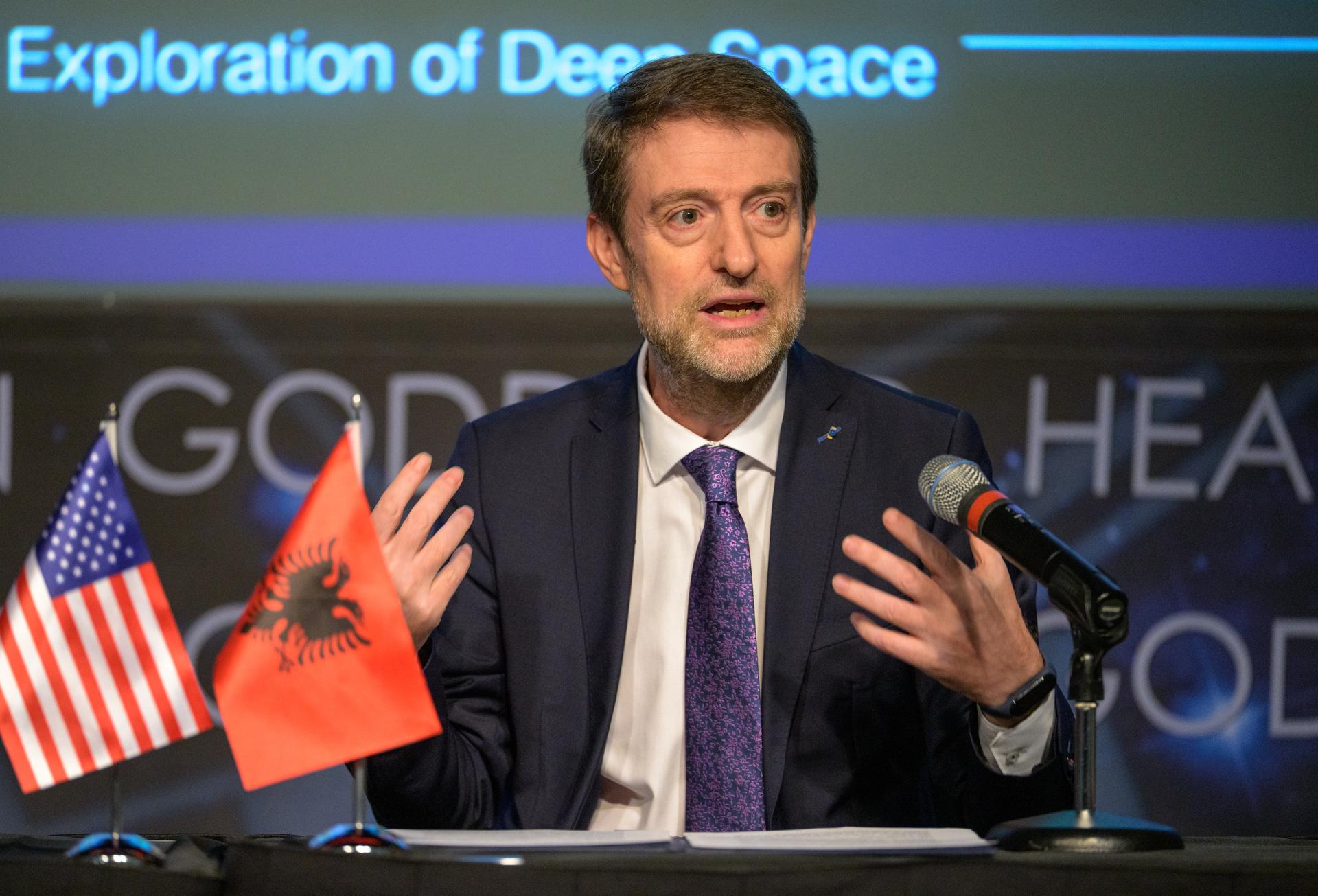
Albania’s Minister for Europe and Foreign Affairs Ferit Hoxha gives remarks during an Artemis Accords signing ceremony Monday, September 21, 2026, at the Mary W. Jackson NASA Headquarters building in Washington. Albania is the 73rd country to sign the Artemis Accords, which establish a practical set of principles to guide space exploration cooperation among nations participating in NASA’s Artemis program. Photo Credit: (NASA/Bill Ingalls)

NASA Deputy Administrator Matt Anderson gives remarks during an Artemis Accords signing ceremony with the Republic of Albania Monday, September 21, 2026, at the Mary W. Jackson NASA Headquarters building in Washington. Albania is the 73rd country to sign the Artemis Accords, which establish a practical set of principles to guide space exploration cooperation among nations participating in NASA’s Artemis program. Photo Credit: (NASA/Bill Ingalls)

NASA Deputy Administrator Matt Anderson gives remarks during an Artemis Accords signing ceremony with the Republic of Albania Monday, September 21, 2026, at the Mary W. Jackson NASA Headquarters building in Washington. Albania is the 73rd country to sign the Artemis Accords, which establish a practical set of principles to guide space exploration cooperation among nations participating in NASA’s Artemis program. Photo Credit: (NASA/Bill Ingalls)
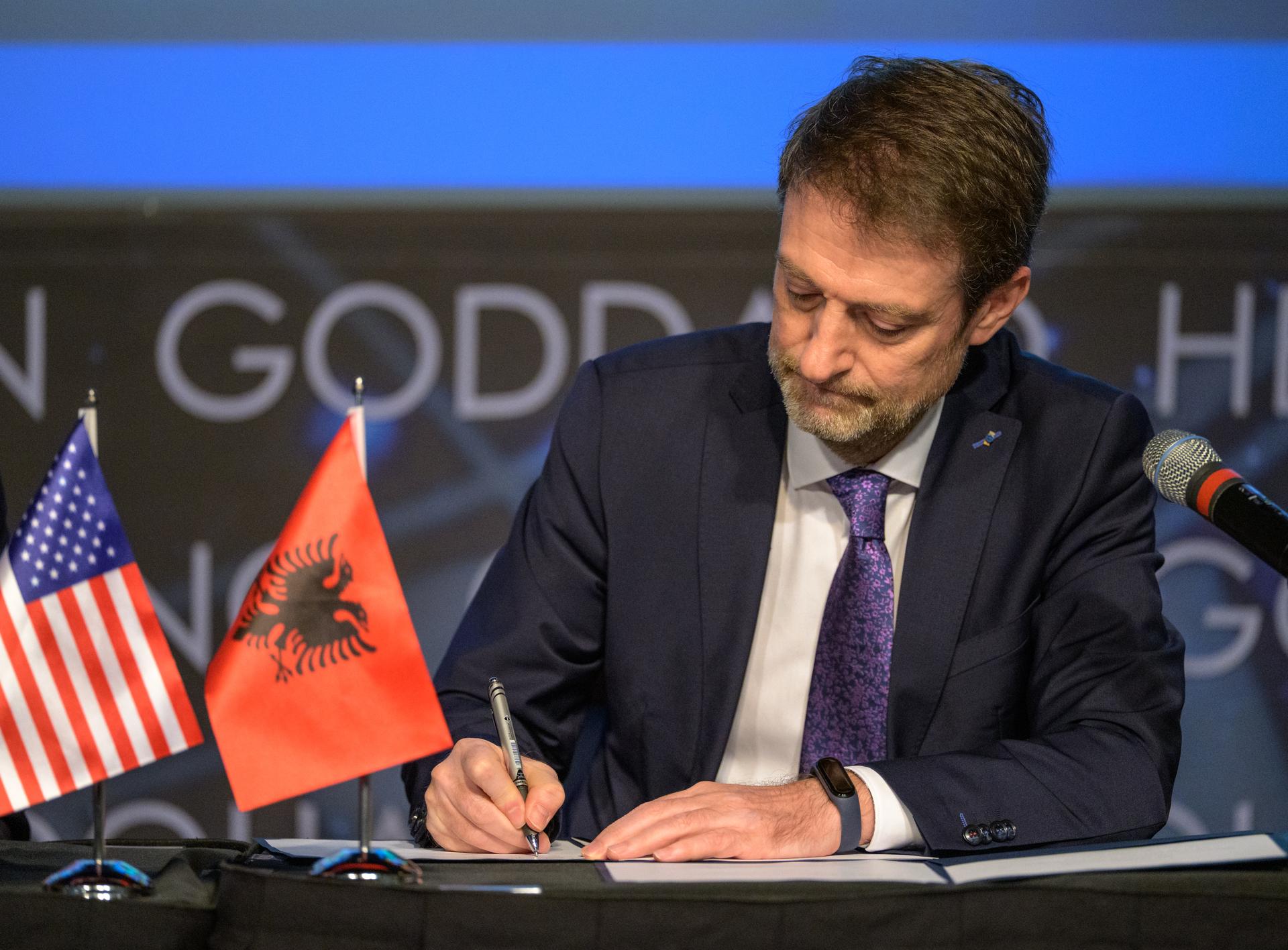
Albania’s Minister for Europe and Foreign Affairs Ferit Hoxha signs the Artemis Accords during a ceremony Monday, September 21, 2026, at the Mary W. Jackson NASA Headquarters building in Washington. Albania is the 73rd country to sign the Artemis Accords, which establish a practical set of principles to guide space exploration cooperation among nations participating in NASA’s Artemis program. Photo Credit: (NASA/Bill Ingalls)

U.S. Deputy Assistant Secretary of State for Space and Environment Connor Tomlinson gives remarks during an Artemis Accord signing ceremony with the Republic of Albania Monday, September 21, 2026, at the Mary W. Jackson NASA Headquarters building in Washington. Albania is the 73rd country to sign the Artemis Accords, which establish a practical set of principles to guide space exploration cooperation among nations participating in NASA’s Artemis program. Photo Credit: (NASA/Bill Ingalls)
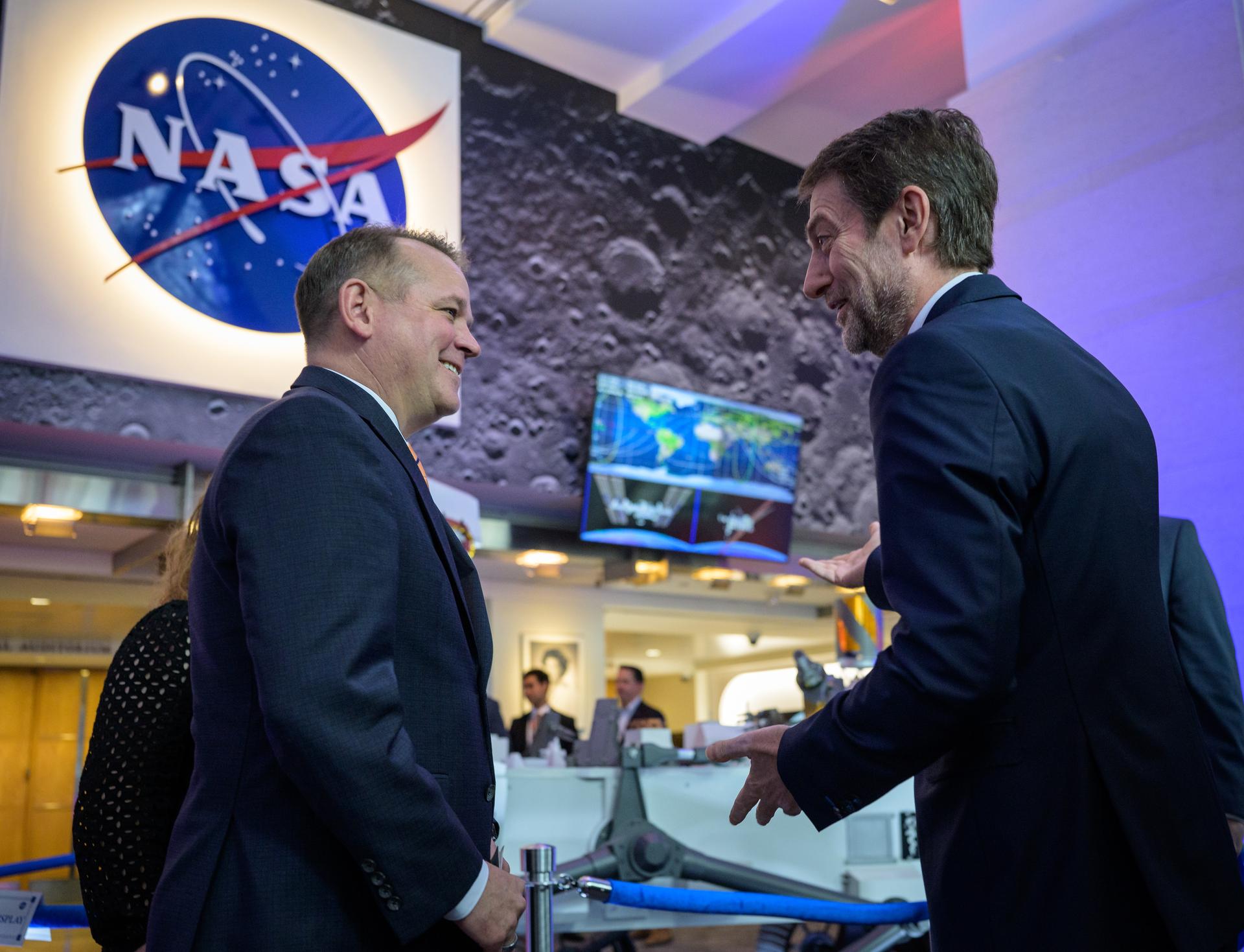
NASA Deputy Administrator Matt Anderson, left, talks with Albania’s Minister for Europe and Foreign Affairs Ferit Hoxha, prior to an Artemis Accords signing ceremony Monday, September 21, 2026, at the Mary W. Jackson NASA Headquarters building in Washington. The Republic of Albania is the 73rd country to sign the Artemis Accords, which establish a practical set of principles to guide space exploration cooperation among nations participating in NASA’s Artemis program. Photo Credit: (NASA/Bill Ingalls)
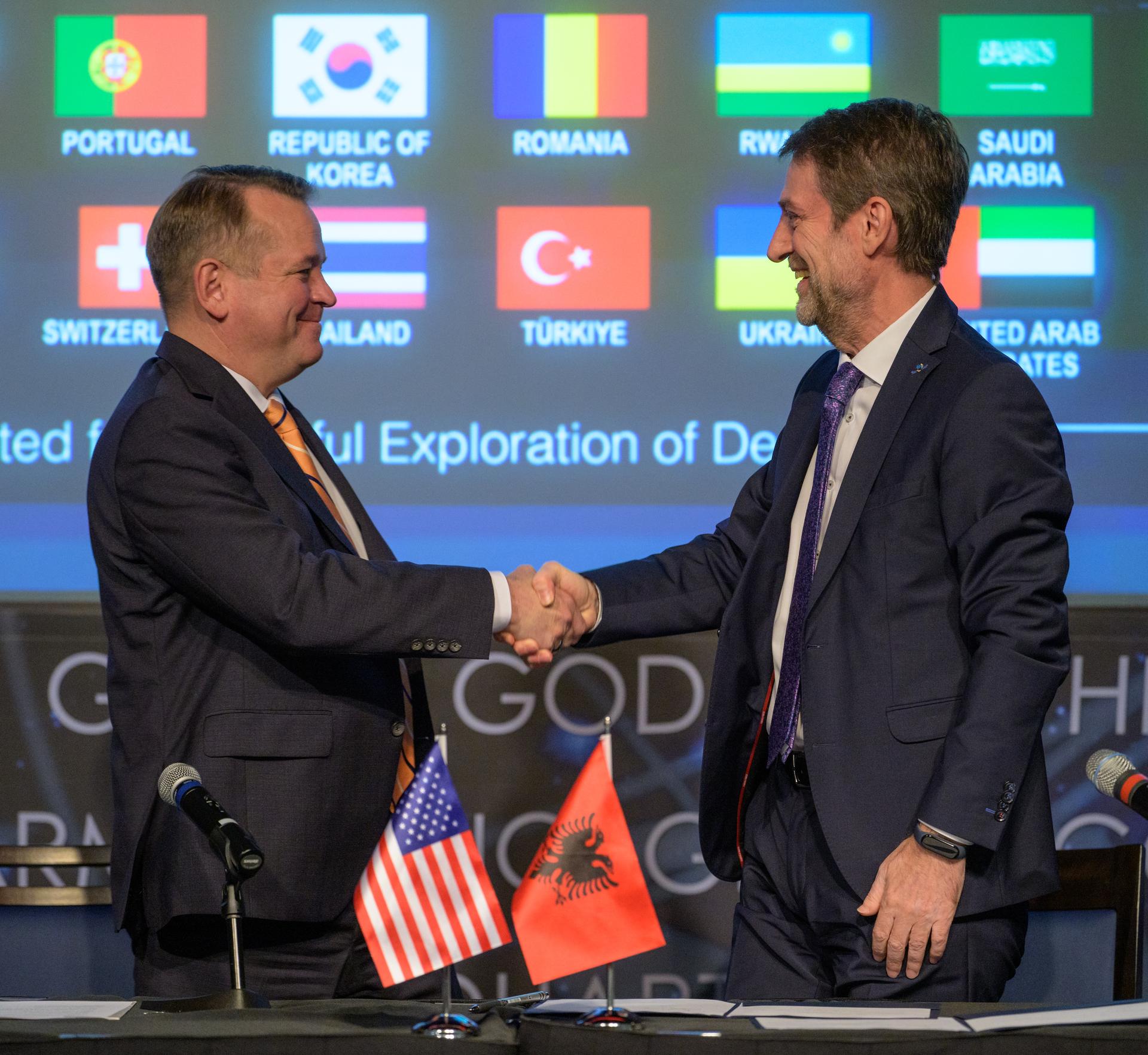
NASA Deputy Administrator Matt Anderson, left, shakes hands with Albania’s Minister for Europe and Foreign Affairs Ferit Hoxha after an Artemis Accords signing ceremony Monday, September 21, 2026, at the Mary W. Jackson NASA Headquarters building in Washington. Albania is the 73rd country to sign the Artemis Accords, which establish a practical set of principles to guide space exploration cooperation among nations participating in NASA’s Artemis program. Photo Credit: (NASA/Bill Ingalls)
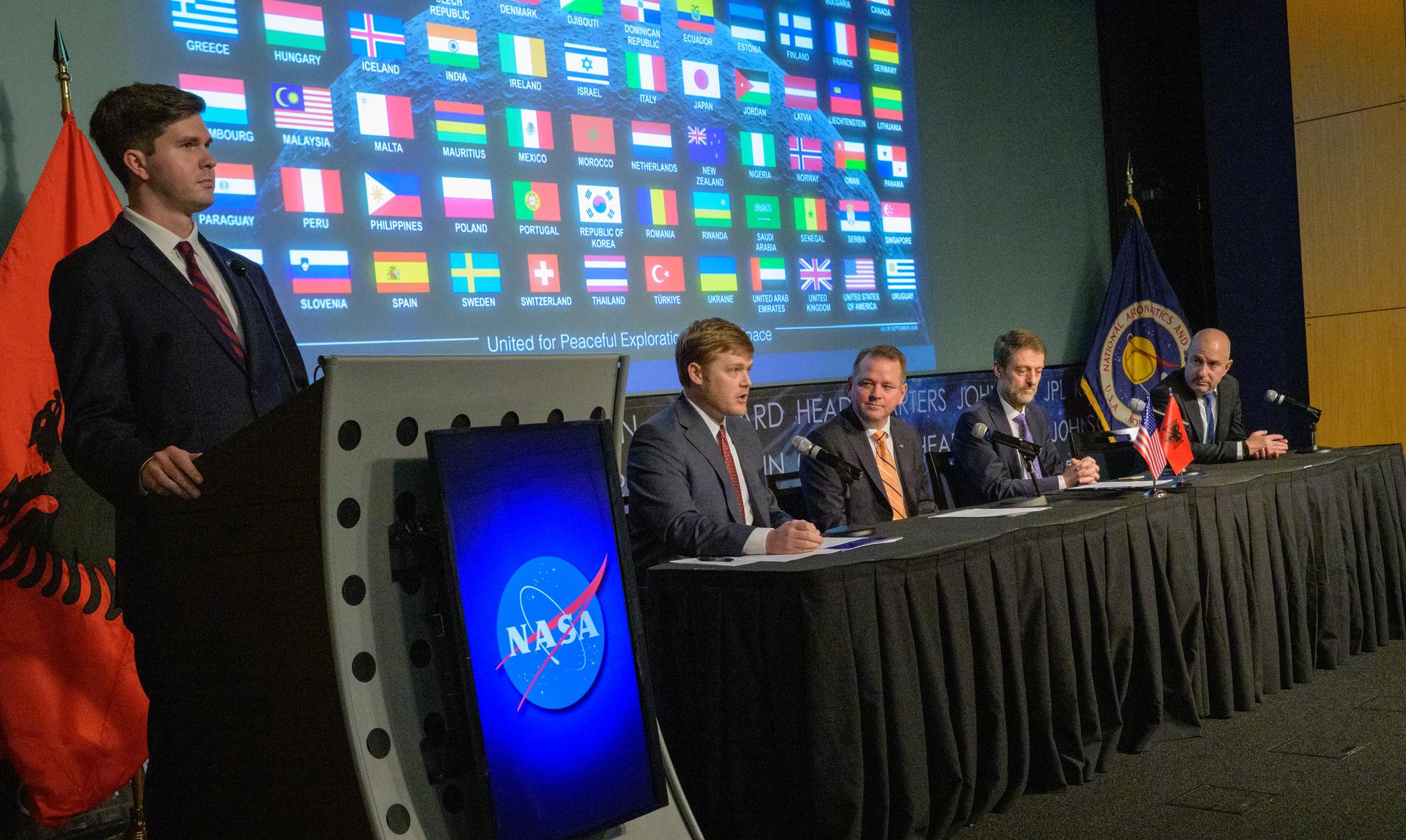
NASA Deputy Press Secretary George Alderman, standing left, U.S. Deputy Assistant Secretary of State for Space and Environment Connor Tomlinson, seated left, NASA Deputy Administrator Matt Anderson, Albania’s Minister for Europe and Foreign Affairs Ferit Hoxha, and Ambassador of the Republic of Albania to the United States Ervin Bushati, right, are seen during an Artemis Accords signing ceremony Monday, September 21, 2026, at the Mary W. Jackson NASA Headquarters building in Washington. The Republic of Albania is the 73rd country to sign the Artemis Accords, which establish a practical set of principles to guide space exploration cooperation among nations participating in NASA’s Artemis program. Photo Credit: (NASA/Bill Ingalls)
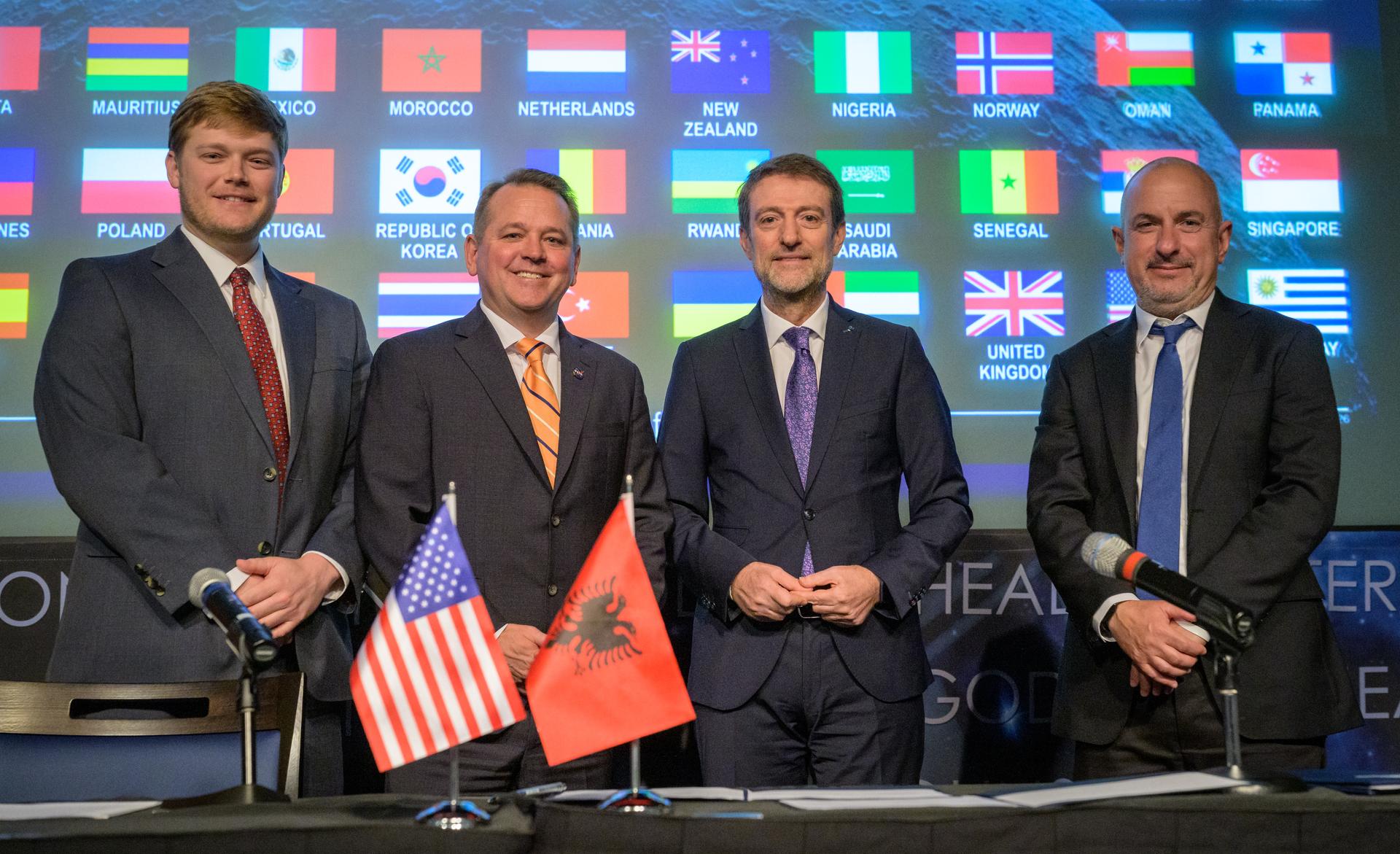
U.S. Deputy Assistant Secretary of State for Space and Environment Connor Tomlinson, left, NASA Deputy Administrator Matt Anderson, Albania’s Minister for Europe and Foreign Affairs Ferit Hoxha, and Ambassador of the Republic of Albania to the United States Ervin Bushati, right, are seen at the conclusion of an Artemis Accords signing ceremony Monday, September 21, 2026, at the Mary W. Jackson NASA Headquarters building in Washington. The Republic of Albania is the 73rd country to sign the Artemis Accords, which establish a practical set of principles to guide space exploration cooperation among nations participating in NASA’s Artemis program. Photo Credit: (NASA/Bill Ingalls)
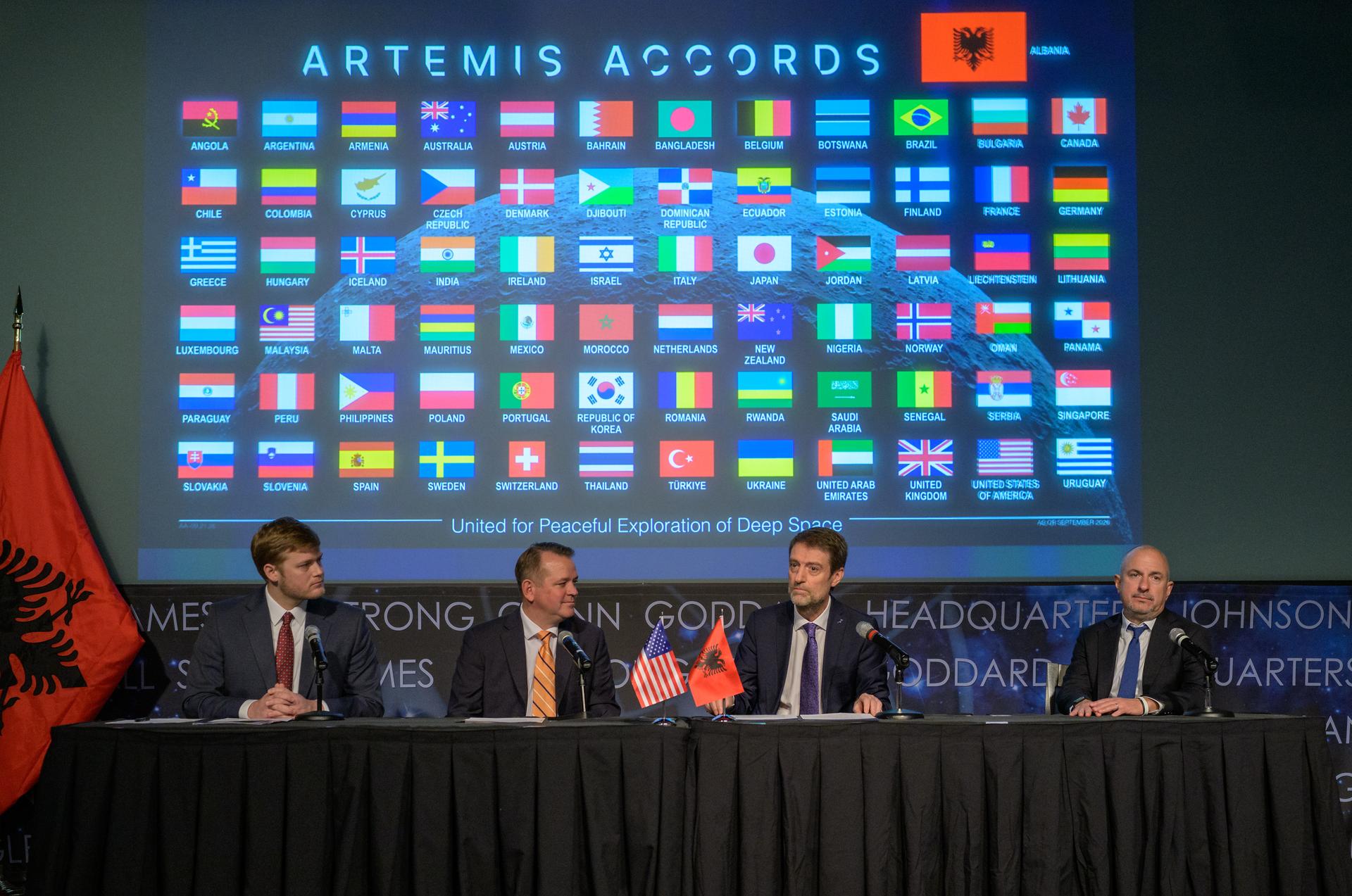
U.S. Deputy Assistant Secretary of State for Space and Environment Connor Tomlinson, left, NASA Deputy Administrator Matt Anderson, Albania’s Minister for Europe and Foreign Affairs Ferit Hoxha, and Ambassador of the Republic of Albania to the United States Ervin Bushati, right, are seen during an Artemis Accords signing ceremony Monday, September 21, 2026, at the Mary W. Jackson NASA Headquarters building in Washington. The Republic of Albania is the 73rd country to sign the Artemis Accords, which establish a practical set of principles to guide space exploration cooperation among nations participating in NASA’s Artemis program. Photo Credit: (NASA/Bill Ingalls)

Lake Ohrid straddles the border between North Macedonia and Albania. It is one of Europe's oldest (3-5 million years old) and deepest (almost 300 m) lakes, with more than 200 endemic species. The lake is a UNESCO World Heritage Site and a Wetland of International Importance under the Ramsar Convention. The image was acquired September 15, 2017, covers an area of 30.7 by 39.8 km, and is located at 41.1 degrees north, 20.7 degrees east. https://photojournal.jpl.nasa.gov/catalog/PIA25306
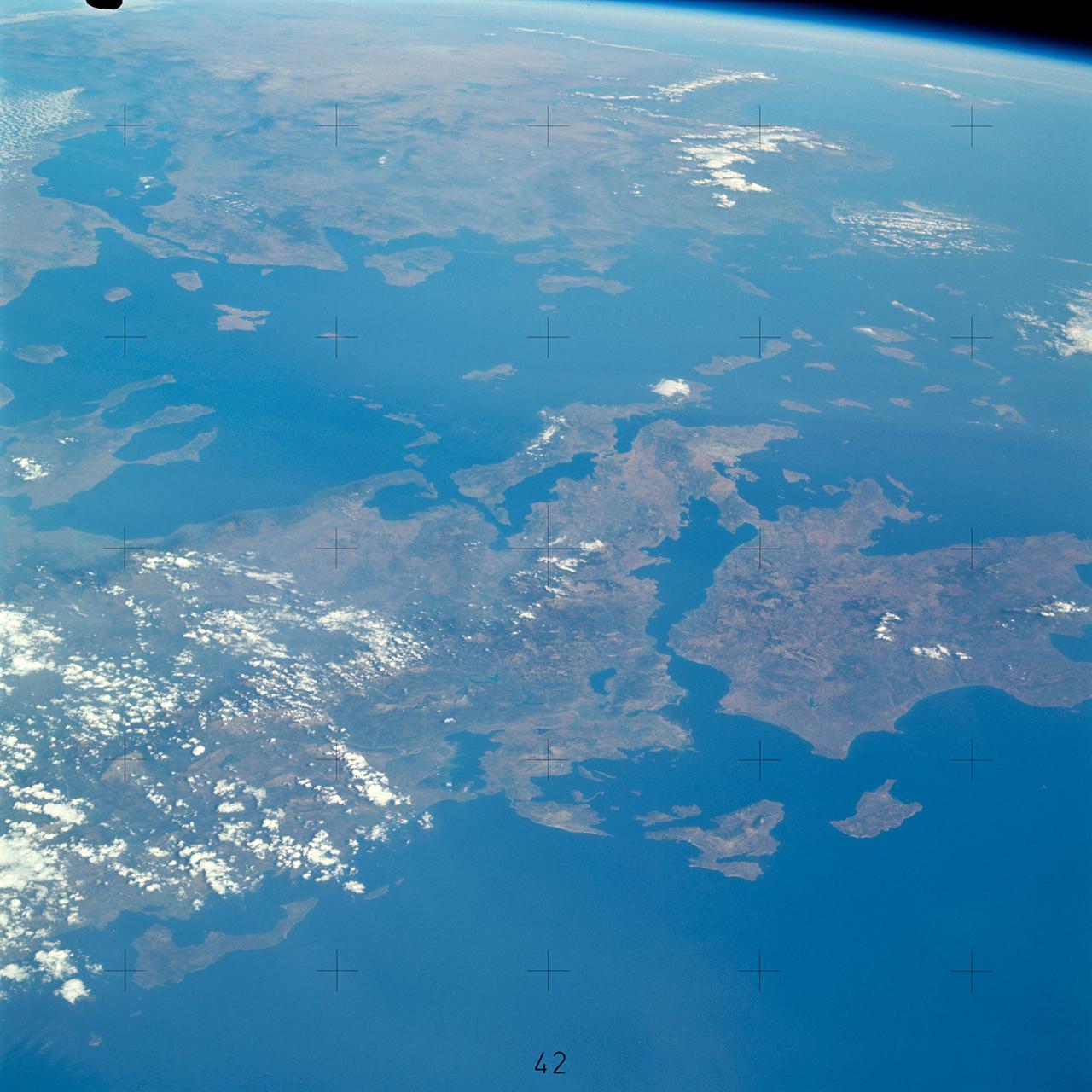
SL3-121-2367 (July-September 1973) --- Skylab 3 Earth view of Greece, Albania, Athens and Peloponnesos. Photo credit: NASA
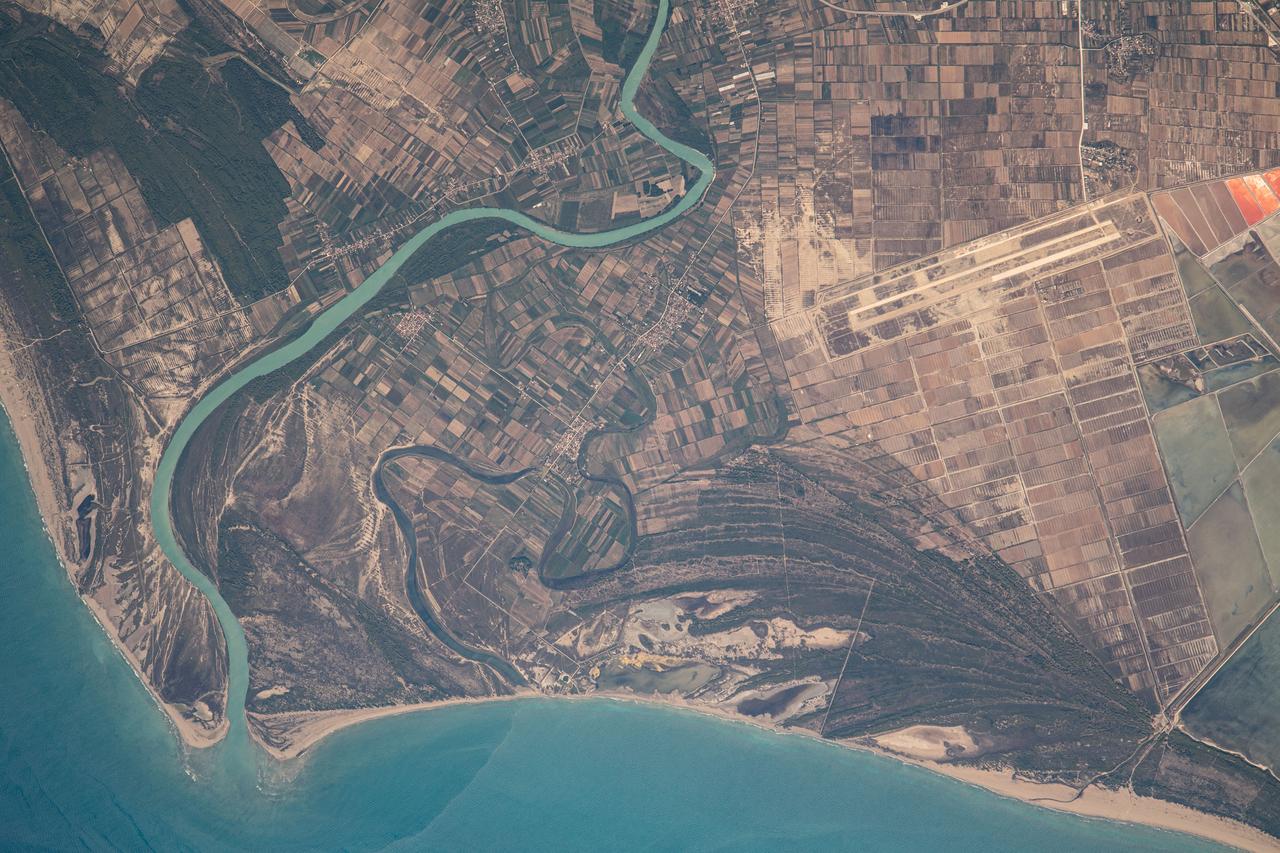
iss069e060397 (Aug. 15, 2023) --- The Aoos River in Albania leads to the Mediterranean Sea in this photograph from the International Space Station as it orbited 264 miles above southern Europe.
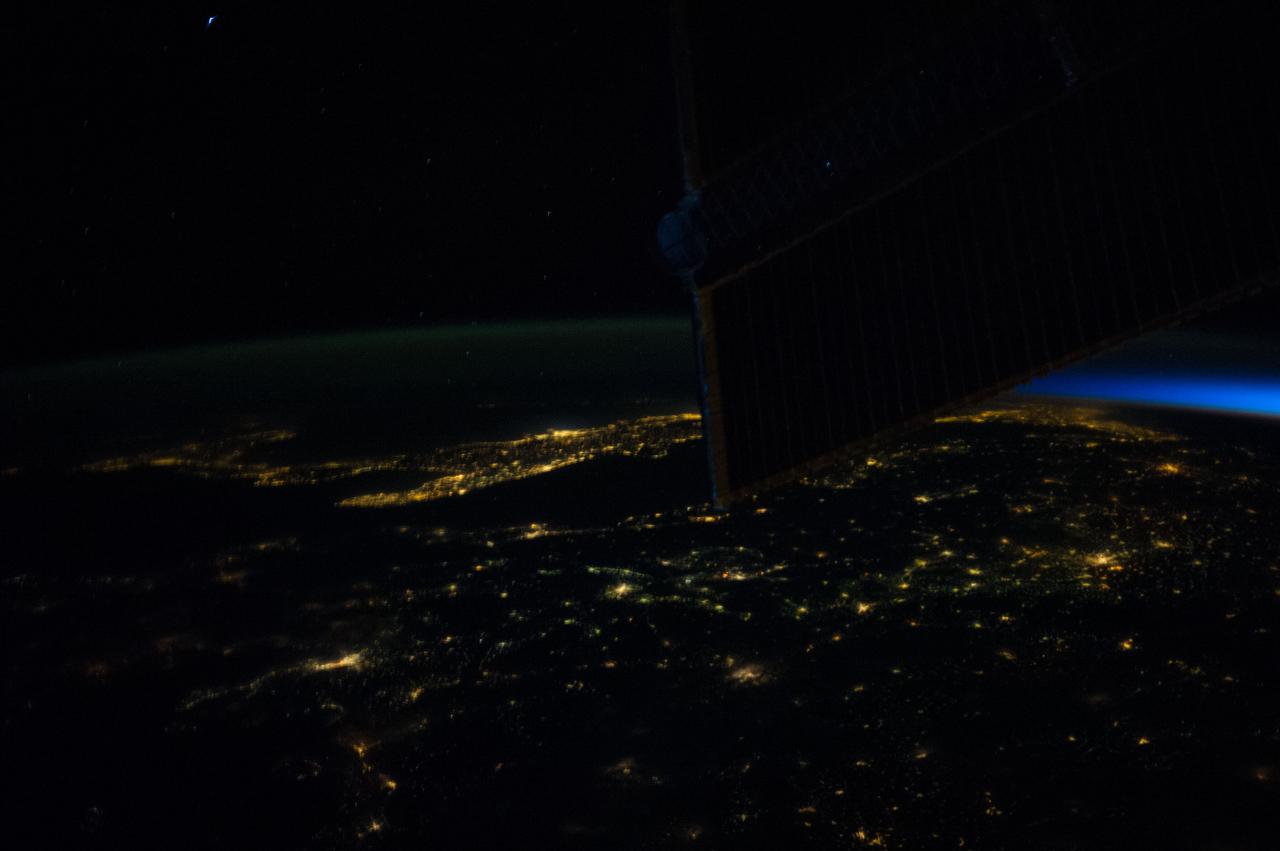
ISS036-E-027014 (31 July 2013) --- One of the Expedition 36 crew members aboard the Earth-orbiting International Space Station, as it was passing over Eastern Europe on July 31, 2013, took this night picture looking toward the Mediterranean Sea, which almost blends into the horizon. Also visible are the Aegean Sea, Adriatic Sea and Mediterranean Sea. Parts of the following countries are among those visible as well: Greece, Italy, Sicily, Bulgaria, Serbia, Croatia and Albania. The high oblique 50mm lens shot includes a number of stars in the late July sky. A solar array panel is visible in the darkness on the right side of the frame.
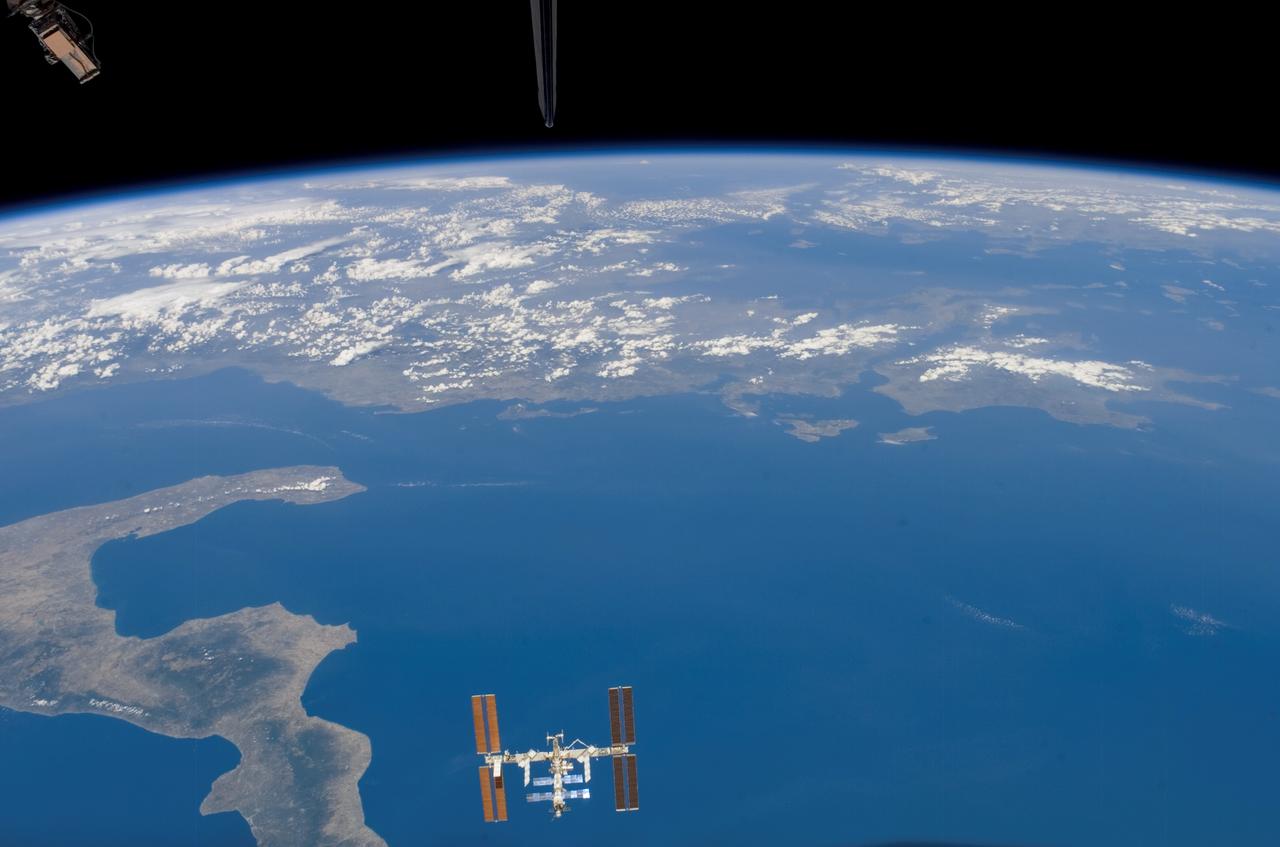
S118-E-09467 (19 Aug. 2007) --- The International Space Station is featured in this image photographed by a STS-118 crewmember on the Space Shuttle Endeavour following the undocking of the two spacecraft, which occurred at 6:56 a.m. (CDT) on Aug. 19, 2007. The image was acquired through one of the crew cabin windows, looking back over the length of the shuttle. Endeavour had undocked from the station, and the crew had begun late inspection of the orbiter's Thermal Protection System (wing leading edges, nosecap, and belly tiles) prior to landing. The late inspection is performed using sensors mounted on the Orbiter Boom Sensor System (OBSS) in order to assess whether micrometeorite or orbiting debris impacts had compromised the Thermal Protection System of the shuttle while it was docked with the station. This oblique image was acquired almost one hour after late inspection activities had begun. The sensor head of the OBSS is visible at top left. The entirety of the orbital outpost is visible at bottom center, set against the backdrop of the Ionian Sea approximately 330 kilometers below it. Other visible features of the southeastern Mediterranean region include the toe and heel features of Italy's "boot" at lower left, and the western coastlines of Albania and Greece extend across the center. Further towards the horizon, the Aegean and Black Seas are also visible.
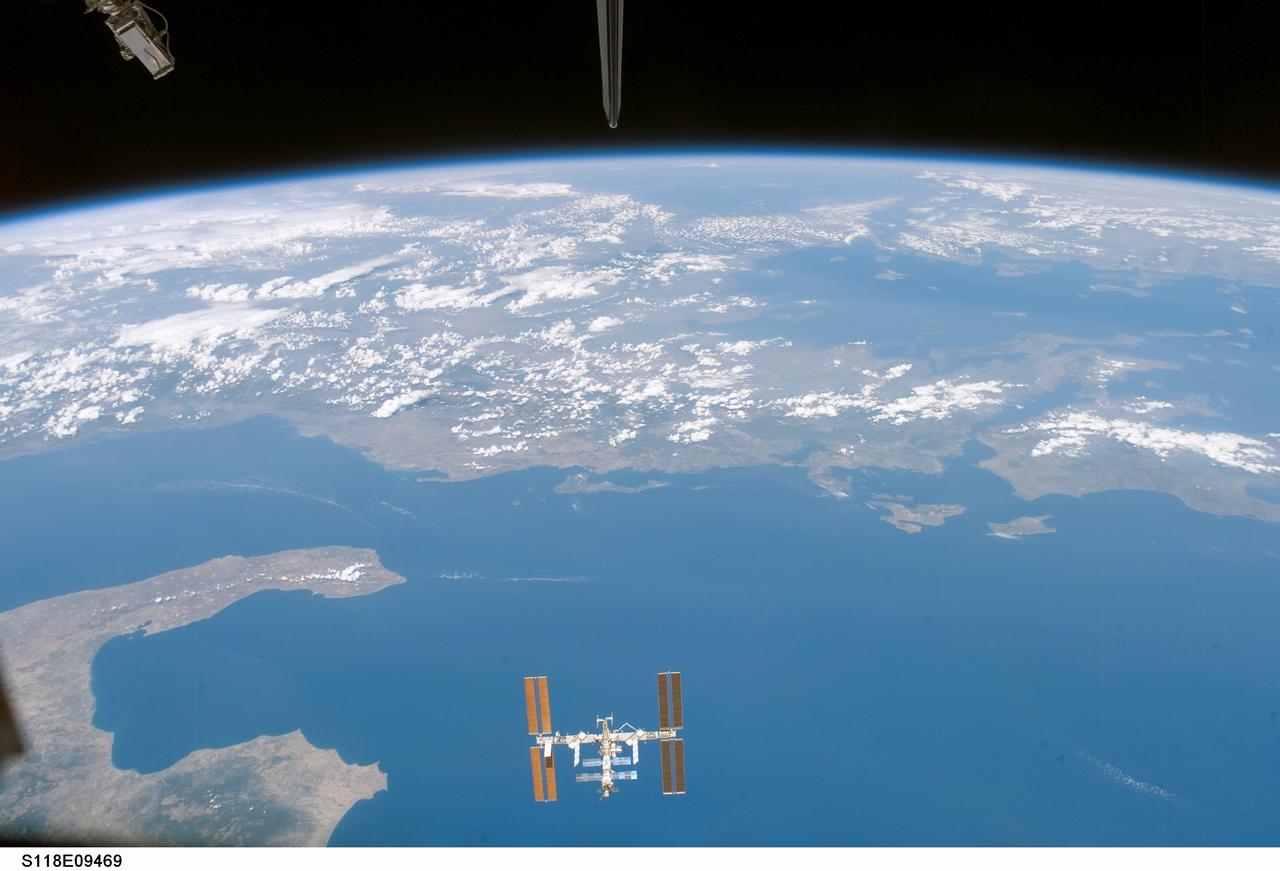
S118-E-09469 (19 Aug. 2007) --- The International Space Station is featured in this image photographed by a STS-118 crewmember on the Space Shuttle Endeavour following the undocking of the two spacecraft, which occurred at 6:56 a.m. (CDT) on Aug. 19, 2007. The image was acquired through one of the crew cabin windows, looking back over the length of the shuttle. Endeavour had undocked from the station, and the crew had begun late inspection of the orbiter's Thermal Protection System (wing leading edges, nosecap, and belly tiles) prior to landing. The late inspection is performed using sensors mounted on the Orbiter Boom Sensor System (OBSS) in order to assess whether micrometeorite or orbiting debris impacts had compromised the Thermal Protection System of the shuttle while it was docked with the station. This oblique image was acquired almost one hour after late inspection activities had begun. The sensor head of the OBSS is visible at top left. The entirety of the orbital outpost is visible at bottom center, set against the backdrop of the Ionian Sea approximately 330 kilometers below it. Other visible features of the southeastern Mediterranean region include the toe and heel features of Italy's "boot" at lower left, and the western coastlines of Albania and Greece extend across the center. Further towards the horizon, the Aegean and Black Seas are also visible.