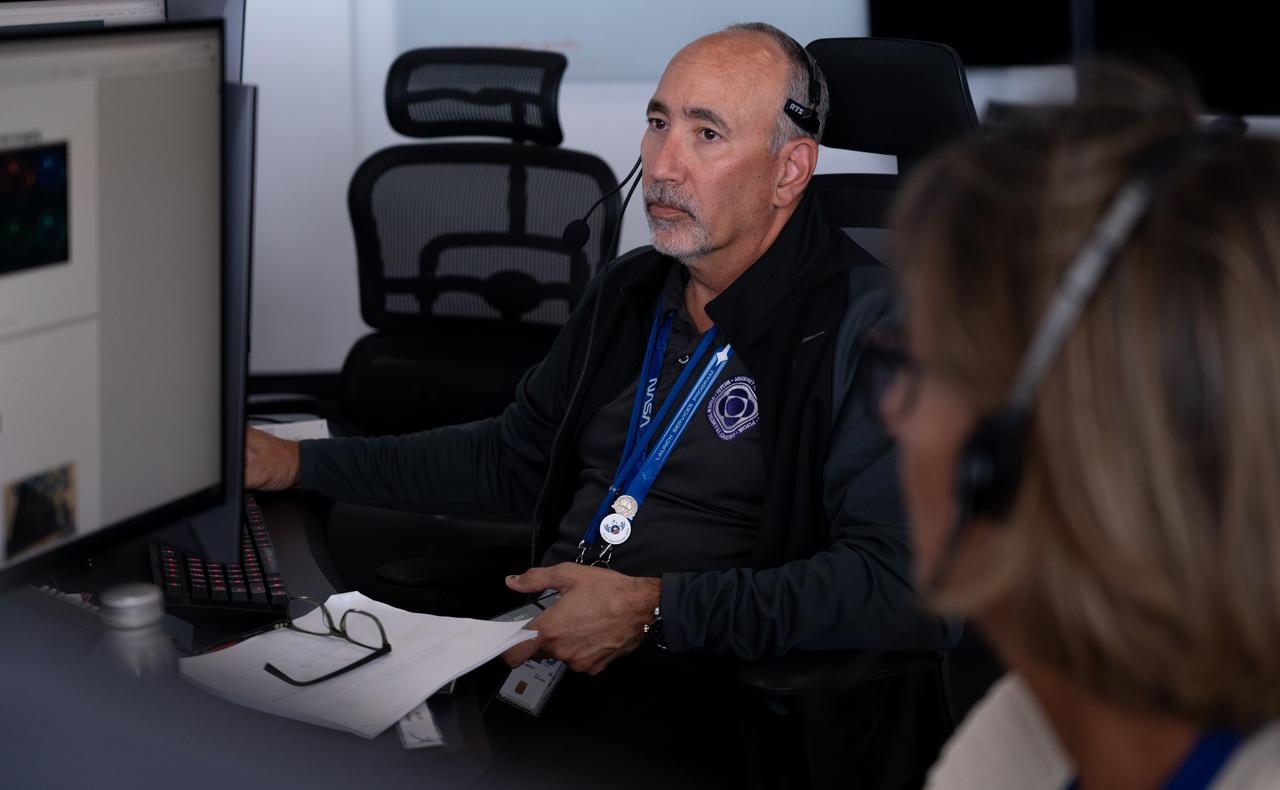
Albert Sierra, program manager for NASA’s Launch Services Program, participates in rehearsal launch operations for the National Oceanic and Atmospheric Administration (NOAA) GOES-U (Geostationary Operational Environmental Satellite U) mission inside Hangar X at NASA’s Kennedy Space Center in Florida on Monday, June 17, 2024. The GOES-U satellite, the final addition to GOES-R series, serves a critical role in providing continuous coverage of the Western Hemisphere, including monitoring tropical systems in the eastern Pacific and Atlantic oceans.

Albert Sierra, program manager for NASA’s Launch Services Program, participates in rehearsal launch operations for the National Oceanic and Atmospheric Administration (NOAA) GOES-U (Geostationary Operational Environmental Satellite U) mission inside Hangar X at NASA’s Kennedy Space Center in Florida on Monday, June 17, 2024. The GOES-U satellite, the final addition to GOES-R series, serves a critical role in providing continuous coverage of the Western Hemisphere, including monitoring tropical systems in the eastern Pacific and Atlantic oceans.

Albert Sierra, program manager for NASA’s Launch Services Program, participates in rehearsal launch operations for the National Oceanic and Atmospheric Administration (NOAA) GOES-U (Geostationary Operational Environmental Satellite U) mission inside Hangar X at NASA’s Kennedy Space Center in Florida on Monday, June 17, 2024. The GOES-U satellite, the final addition to GOES-R series, serves a critical role in providing continuous coverage of the Western Hemisphere, including monitoring tropical systems in the eastern Pacific and Atlantic oceans.

From left, Albert Sierra and Jenny Lyons, program and deputy program managers for NASA’s Launch Services Program, participate in rehearsal launch operations for the National Oceanic and Atmospheric Administration (NOAA) GOES-U (Geostationary Operational Environmental Satellite U) mission inside Hangar X at NASA’s Kennedy Space Center in Florida on Monday, June 17, 2024. The GOES-U satellite, the final addition to GOES-R series, serves a critical role in providing continuous coverage of the Western Hemisphere, including monitoring tropical systems in the eastern Pacific and Atlantic oceans.
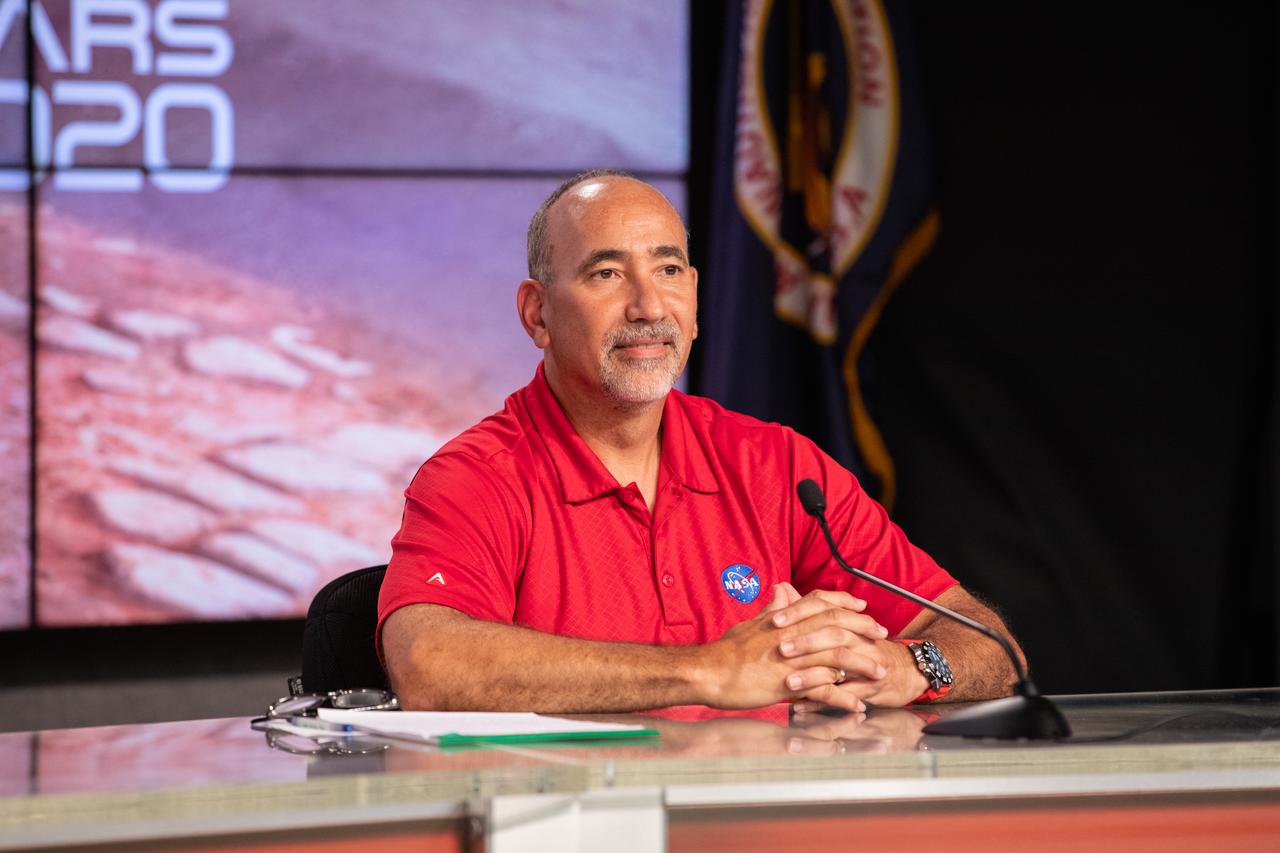
NASA’s Launch Services Program (LSP) Chief of Flight Projects Office Albert Sierra participates in a “Mars 2020 Social Media Q&A: En Español” program on Wednesday, July 22, at NASA’s Kennedy Space Center in Florida. The event featured representatives from LSP and NASA’s Jet Propulsion Laboratory. The Mars Perseverance rover is scheduled to lift off aboard a United Launch Alliance Atlas V 541 rocket from Cape Canaveral Air Force Station’s Space Launch Complex 41 on Thursday, July 30. The two-hour window opens at 7:50 a.m. EDT. LSP, based at Kennedy, is managing the launch.

NASA’s Launch Services Program (LSP) Chief of Flight Projects Office Albert Sierra participates in a “Mars 2020 Social Media Q&A: En Español” program on Wednesday, July 22, at NASA’s Kennedy Space Center in Florida. The event featured representatives from LSP and NASA’s Jet Propulsion Laboratory. The Mars Perseverance rover is scheduled to lift off aboard a United Launch Alliance Atlas V 541 rocket from Cape Canaveral Air Force Station’s Space Launch Complex 41 on Thursday, July 30. The two-hour window opens at 7:50 a.m. EDT. LSP, based at Kennedy, is managing the launch.

Elio Morillo, a Mars 2020 system testbed engineer from NASA’s Jet Propulsion Laboratory, speaks remotely while Albert Sierra, NASA’s Launch Services Program (LSP) chief of Flight Projects Office, listens during a “Mars 2020 Social Media Q&A: En Español” program on Wednesday, July 22, at NASA’s Kennedy Space Center in Florida. The event featured representatives from LSP and NASA’s Jet Propulsion Laboratory. The Mars Perseverance rover is scheduled to lift off aboard a United Launch Alliance Atlas V 541 rocket from Cape Canaveral Air Force Station’s Space Launch Complex 41 on Thursday, July 30. The two-hour window opens at 7:50 a.m. EDT. LSP, based at Kennedy, is managing the launch.
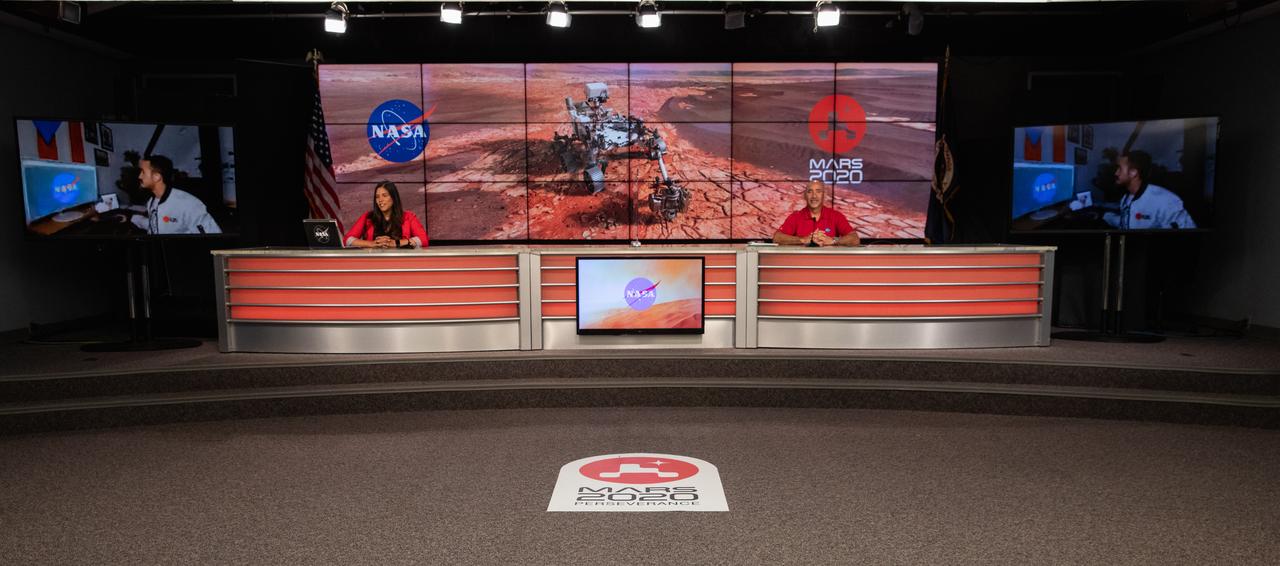
NASA Public Affairs Specialist Kristi Irastorza, left, and NASA’s Launch Services Program (LSP) Chief of Flight Projects Office Albert Sierra, participate in a “Mars 2020 Social Media Q&A: En Español” program on Wednesday, July 22, at NASA’s Kennedy Space Center in Florida. The event featured representatives from LSP and NASA’s Jet Propulsion Laboratory. The Mars Perseverance rover is scheduled to lift off aboard a United Launch Alliance Atlas V 541 rocket from Cape Canaveral Air Force Station’s Space Launch Complex 41 on Thursday, July 30. The two-hour window opens at 7:50 a.m. EDT. LSP, based at Kennedy, is managing the launch.
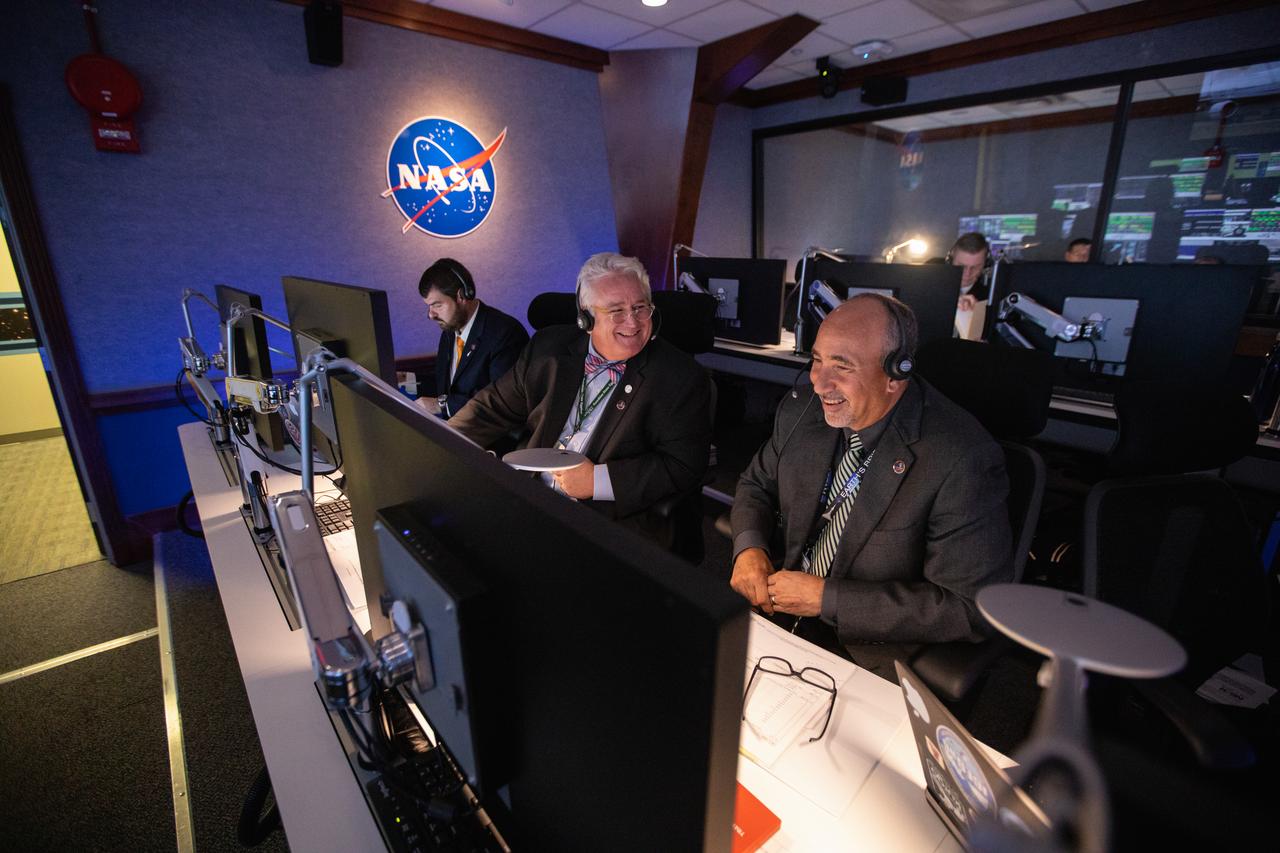
Albert Sierra (right), chief of NASA’s Launch Services Program’s (LSP) Flight Projects Office, and Garrett Lee Skrobot (second from right), senior mission manager, monitor the launch of the agency’s Ionospheric Connection Explorer (ICON) inside Hangar AE’s Mission Director’s Center at Cape Canaveral Air Force Station (CCAFS). The Northrop Grumman Pegasus XL rocket carrying ICON was released from the company’s L-1011 Stargazer aircraft at 9:59 p.m. EDT on Oct. 10, 2019, over the Atlantic Ocean about 50 miles from Daytona Beach, Florida, following takeoff from CCAFS. ICON will spend two years studying the Earth’s ionosphere – the dynamic zone in our atmosphere where terrestrial weather from below meets space weather from above. The ICON launch was managed by LSP.
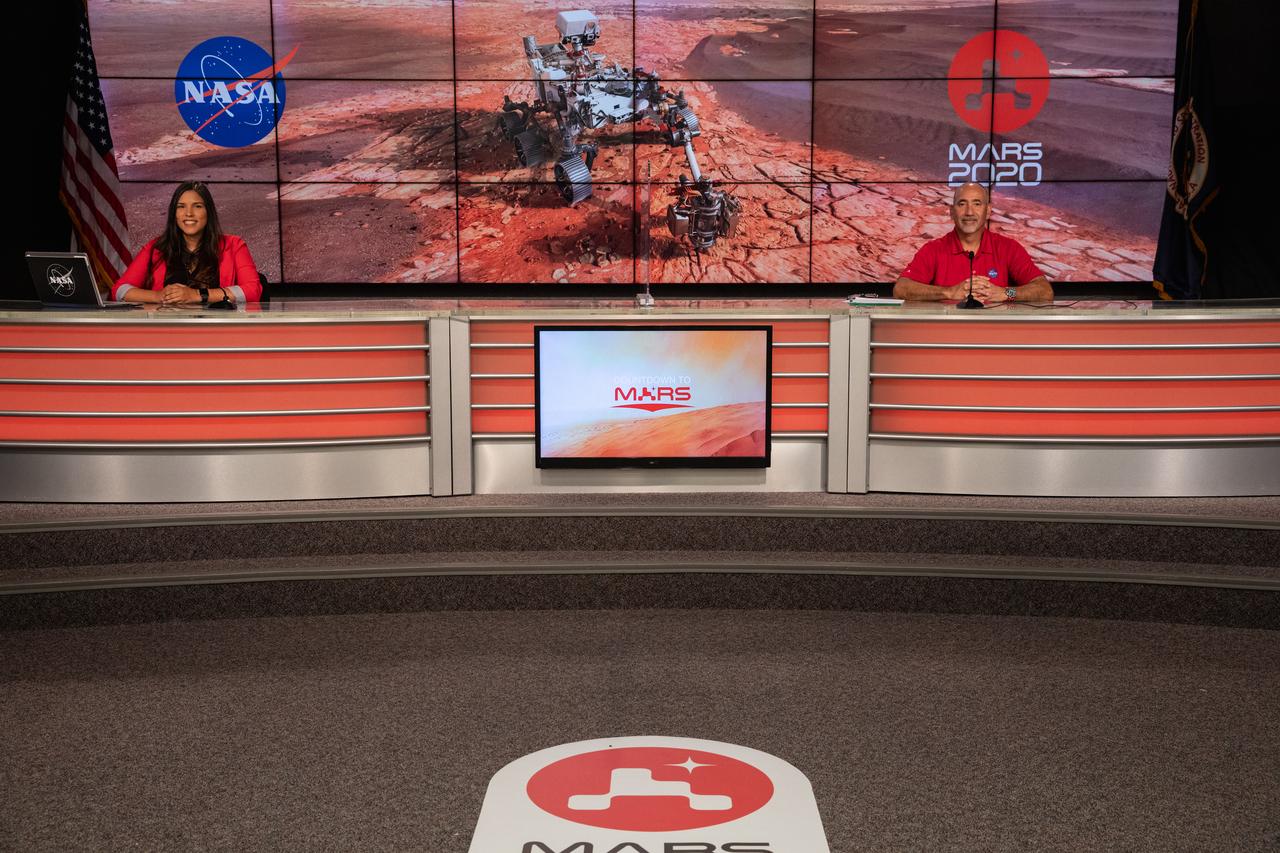
NASA Public Affairs Specialist Kristi Irastorza, left, and NASA’s Launch Services Program (LSP) Chief of Flight Projects Office Albert Sierra, participate in a “Mars 2020 Social Media Q&A: En Español” program on Wednesday, July 22, at NASA’s Kennedy Space Center in Florida. The event featured representatives from LSP and NASA’s Jet Propulsion Laboratory. The Mars Perseverance rover is scheduled to lift off aboard a United Launch Alliance Atlas V 541 rocket from Cape Canaveral Air Force Station’s Space Launch Complex 41 on Thursday, July 30. The two-hour window opens at 7:50 a.m. EDT. LSP, based at Kennedy, is managing the launch.

At left, Albert Sierra, Launch Services Program, moderates a Spanish Facebook Live event for the Solar Orbiter mission, with Teresa Nieves-chinchilla, deputy project scientist at NASA’s Goddard Space Flight Center in Greenbelt, Maryland, and Ana Leon, Solar Orbiter contamination control architect with Airbus Defence and Space. The event was held in the Press Site auditorium at the agency’s Kennedy Space Center in Florida on Jan. 29, 2020. Solar Orbiter is an international cooperative mission between ESA (European Space Agency) and NASA. The mission aims to study the Sun, its outer atmosphere and solar wind. The spacecraft will provide the first images of the Sun’s poles. NASA’s Launch Services Program based at Kennedy is managing the launch. The spacecraft has been developed by Airbus Defence and Space. Solar Orbiter will launch in February 2020 aboard a United Launch Alliance Atlas V rocket from Space Launch Complex 41 at Cape Canaveral Air Force Station in Florida.

At left, Albert Sierra, Launch Services Program, moderates a Spanish Facebook Live event for the Solar Orbiter mission, with Teresa Nieves-chinchilla, deputy project scientist at NASA’s Goddard Space Flight Center in Greenbelt, Maryland, and Ana Leon, Solar Orbiter contamination control architect with Airbus Defence and Space. The event was held in the Press Site auditorium at the agency’s Kennedy Space Center in Florida on Jan. 29, 2020. Solar Orbiter is an international cooperative mission between ESA (European Space Agency) and NASA. The mission aims to study the Sun, its outer atmosphere and solar wind. The spacecraft will provide the first images of the Sun’s poles. NASA’s Launch Services Program based at Kennedy is managing the launch. The spacecraft has been developed by Airbus Defence and Space. Solar Orbiter will launch in February 2020 aboard a United Launch Alliance Atlas V rocket from Space Launch Complex 41 at Cape Canaveral Air Force Station in Florida.

CAPE CANAVERAL, Fla. – NASA Launch Services Program officials oversee the countdown of NASA's Radiation Belt Storm Probes, or RBSP, and its United Launch Alliance Atlas V rocket from consoles in the Atlas V Spaceflight Operations Center on Cape Canaveral Air Force Station in Florida. From left are Omar Baez, assistant launch manager for RBSP, Tim Dunn, launch manager for RBSP, and Albert Sierra, chief of the Flight Projects Office. Weather conditions associated with lightning, as well as cumulus and anvil clouds, kept the probes on Space Launch Complex 41 for the duration of the 20-minute launch window which opened at 4:07 a.m. EDT. RBSP will explore changes in Earth's space environment caused by the sun -- known as "space weather" -- that can disable satellites, create power-grid failures and disrupt GPS service. The mission also will provide data on the fundamental radiation and particle acceleration processes throughout the universe. The launch is rescheduled for 4:05 a.m. EDT on Aug. 30, pending approval from the range. For more information on RBSP, visit http://www.nasa.gov/rbsp. Photo credit: NASA/Kim Shiflett