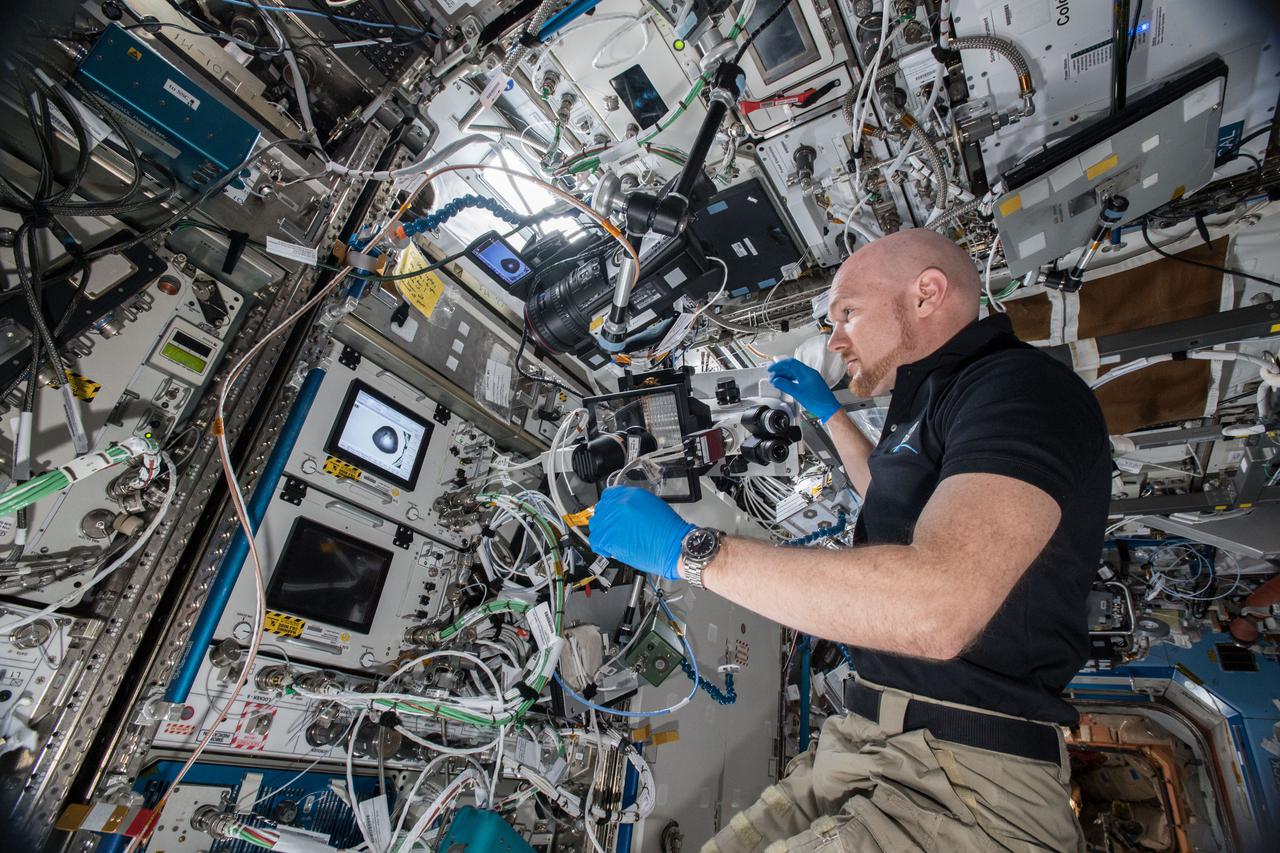
ISS057E106426 - European Space Agency (ESA) astronaut Alex Gerst uses a microscope with the Space Automated Bioproduct Laboratory (SABL) Camera attached to document a Protein Crystal Growth (PCG) MicroG Card. The photo was taken in the Destiny U.S. Laboratory aboard the International Space Station (ISS) for the Crystallization of LRRK2 Under Microgravity Conditions-2 (CASIS PCG 16) investigation.
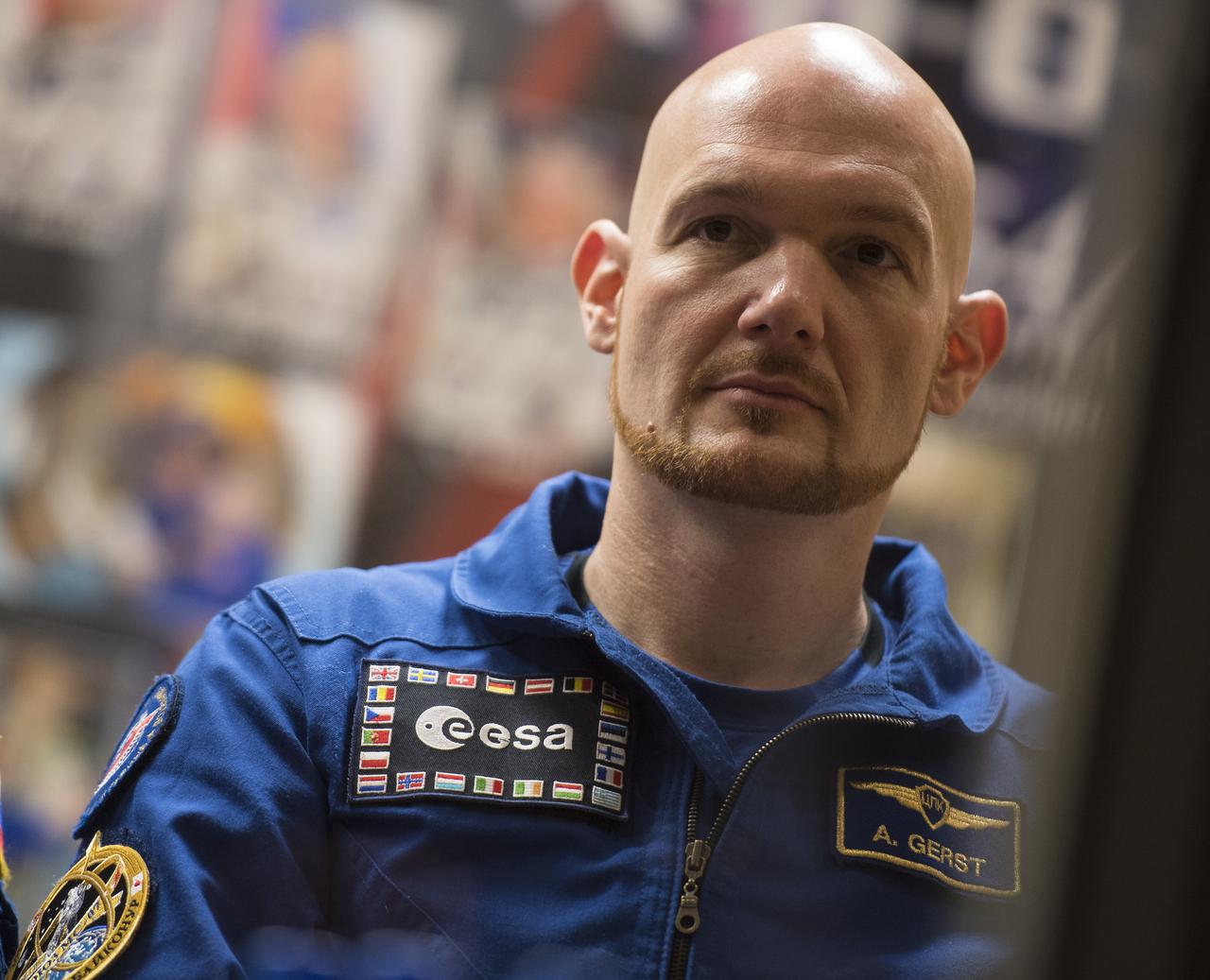
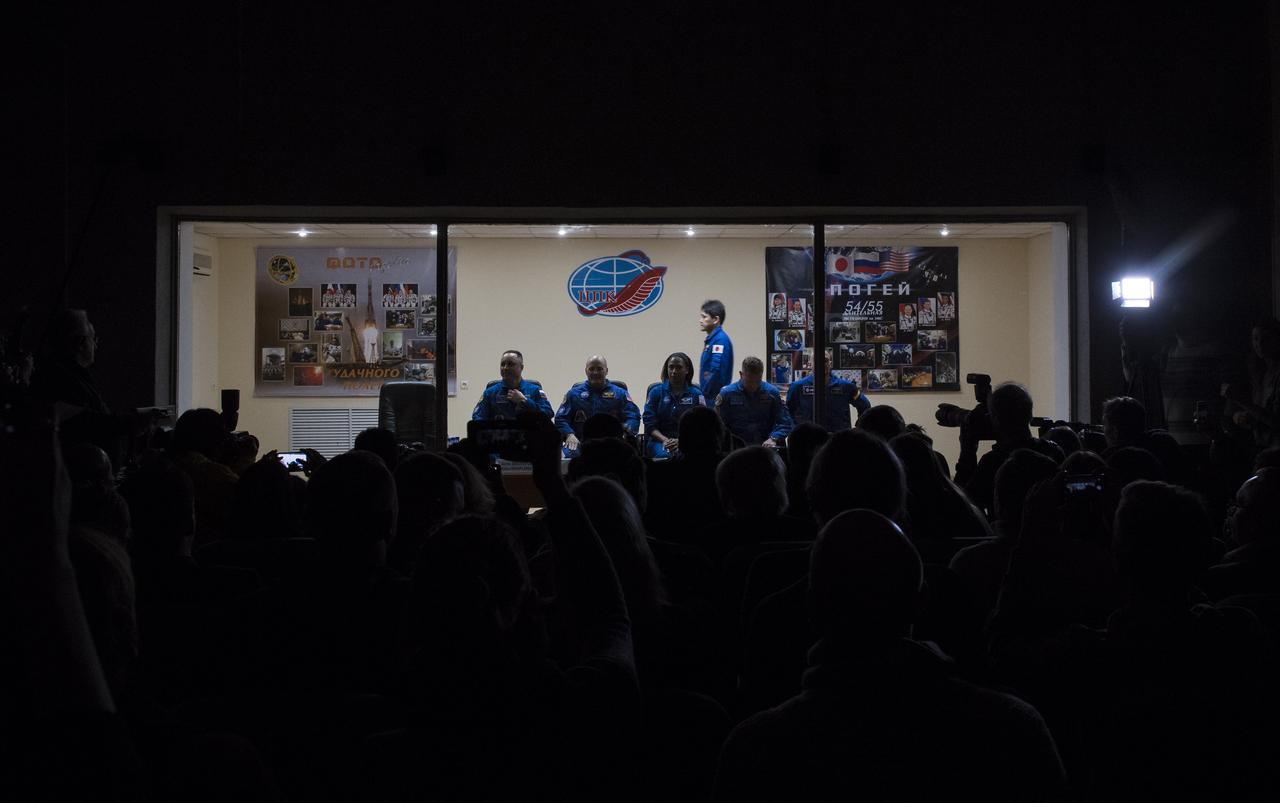
Expedition 54 backup crew member Alex Gerst of ESA (European Space Agency) is seen in quarantine, behind glass, during a press conference, Saturday, Dec. 16, 2017 at the Cosmonaut Hotel in Baikonur, Kazakhstan. Expedition 54 Soyuz Commander Anton Shkaplerov of Roscosmos, flight engineer Scott Tingle of NASA, and flight engineer Norishige Kanai of the Japan Aerospace Exploration Agency (JAXA) are scheduled to launch to the International Space Station aboard the Soyuz spacecraft from the Baikonur Cosmodrome on December 17. Photo Credit: (NASA/Joel Kowsky)
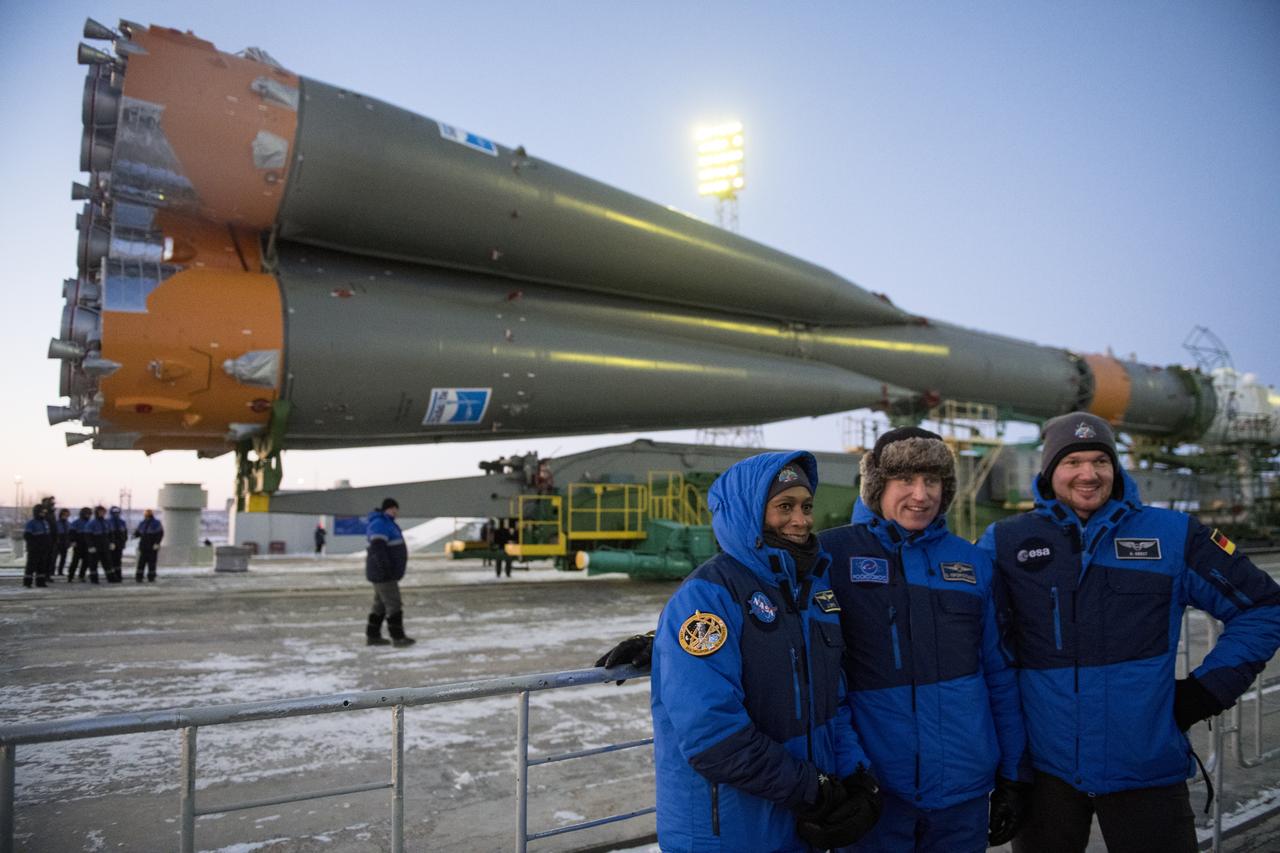
Expedition 54 backup crew members Jeanette Epps of NASA, left, Sergey Prokopev of Roscosmos, center, and Alex Gerst of ESA (European Space Agency), right, pose for a picture as the Soyuz rocket is rolled out to the pad, Friday, Dec. 15, 2017 at the Baikonur Cosmodrome in Kazakhstan. Expedition 54 Soyuz Commander Anton Shkaplerov of Roscosmos, flight engineer Scott Tingle of NASA, and flight engineer Norishige Kanai of the Japan Aerospace Exploration Agency (JAXA) are scheduled to launch at 2:21 a.m. Eastern Time (1:21 p.m. Baikonur time) on Dec. 17 and will spend the next five months living and working aboard the International Space Station. Photo Credit: (NASA/Joel Kowsky)
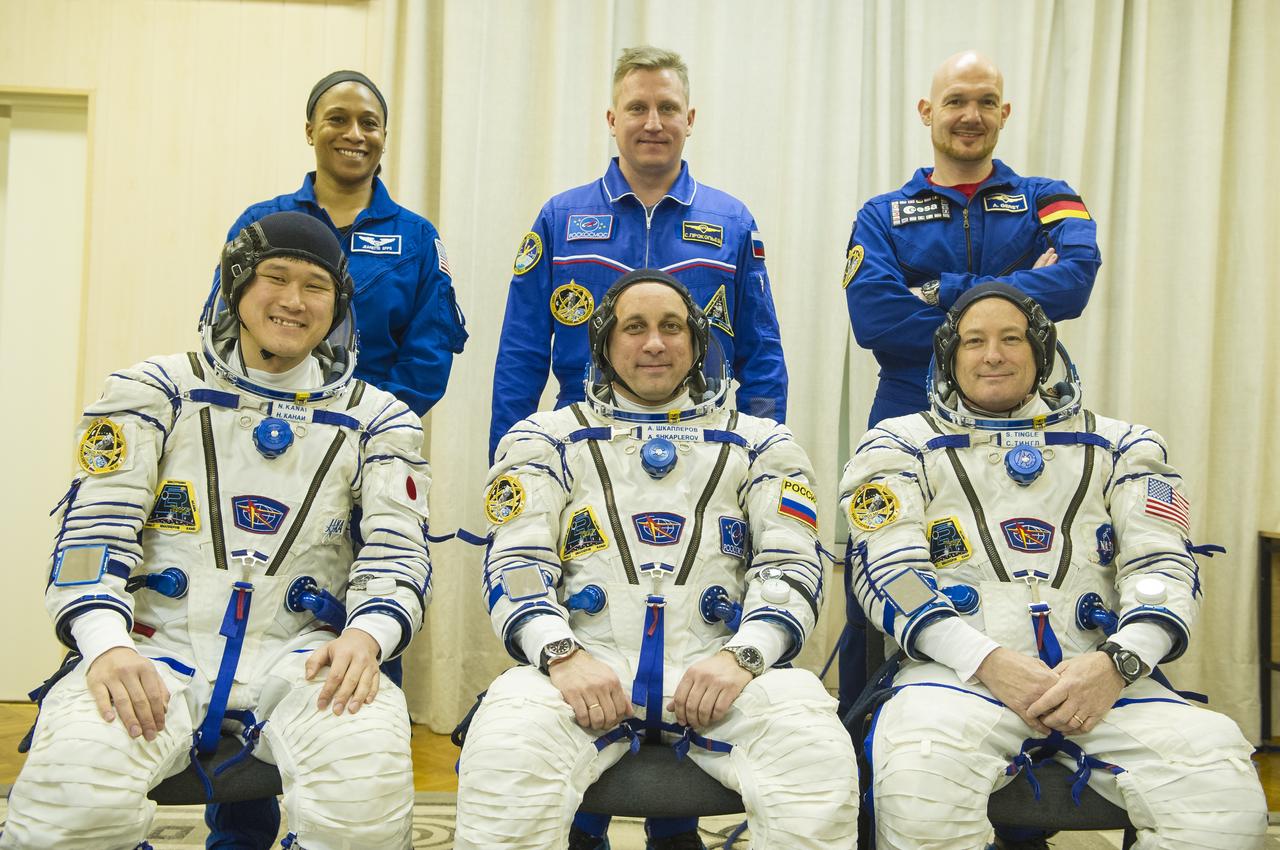
Expedition 54 prime crew members flight engineer Norishige Kanai of Japan Aerospace Exploration Agency (JAXA), left, Soyuz Commander Anton Shkaplerov of Roscosmos, center, and flight engineer Scott Tingle of NASA, right, pose for a picture with backup crew members of NASA, right, Sergey Prokopev of Roscosmos, center, and Alex Gerst of ESA (European Space Agency), right after donning their Russian Sokol suits in preparation for launch to the International Space Station Sunday, Dec. 17, 2017 in Baikonur, Kazakhstan. Launch of the Soyuz rocket will send Tingle, Kanai, and Shkaplerov on a five month mission aboard the International Space Station. Photo Credit: (NASA/GCTC/Andrey Shelepin)
Expedition 54 prime crew members flight engineer Norishige Kanai of the Japan Aerospace Exploration Agency (JAXA), Soyuz Commander Anton Shkaplerov of Roscosmos, flight engineer Scott Tingle of NASA, along with backup crew members Jeanette Epps of NASA, Sergey Prokopev of Roscosmos, and Alex Gerst of ESA (European Space Agency), are seen as they enter a room for a press conference, Saturday, Dec. 16, 2017 at the Cosmonaut Hotel in Baikonur, Kazakhstan. Expedition 54 Soyuz Commander Anton Shkaplerov of Roscosmos, flight engineer Scott Tingle of NASA, and flight engineer Norishige Kanai of Japan Aerospace Exploration Agency (JAXA) are scheduled to launch to the International Space Station aboard the Soyuz spacecraft from the Baikonur Cosmodrome on December 17. Photo Credit: (NASA/Joel Kowsky)
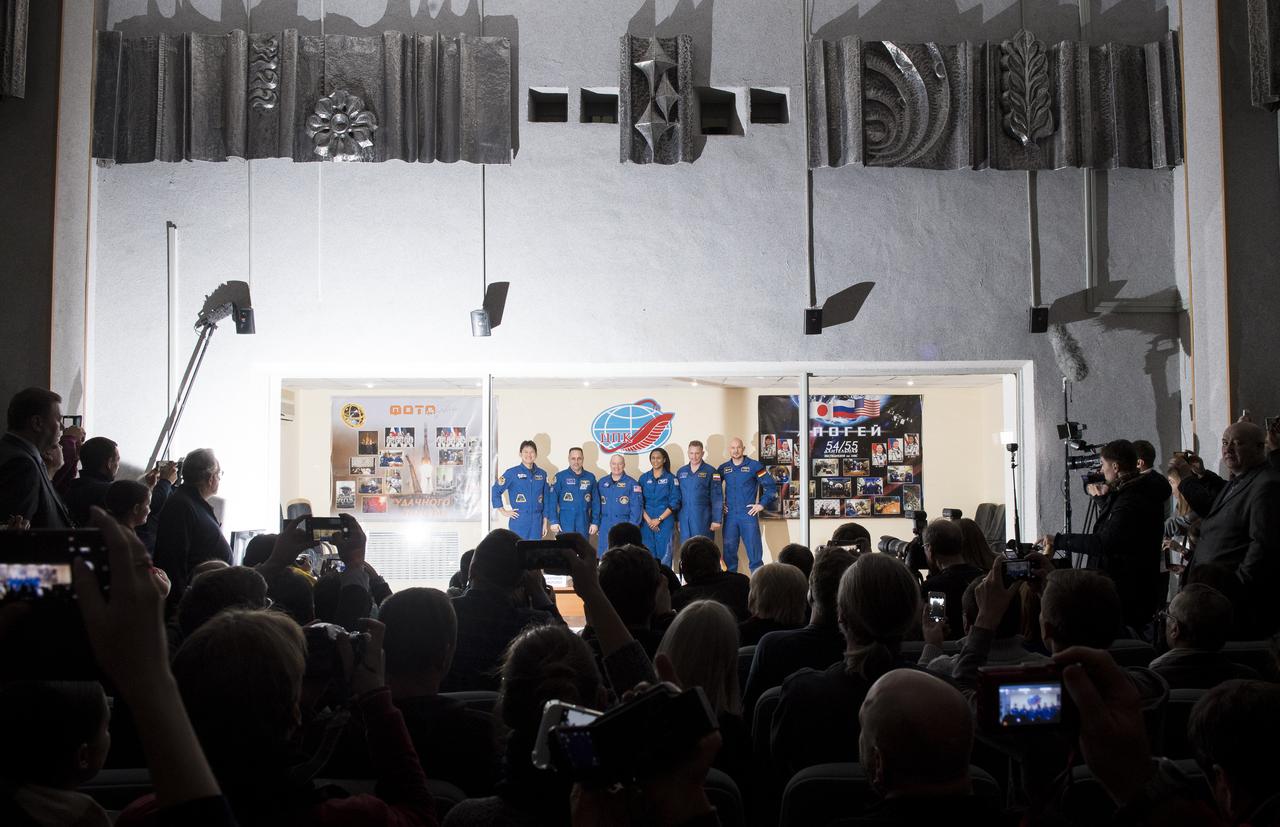
Expedition 54 prime crew members flight engineer Norishige Kanai of the Japan Aerospace Exploration Agency (JAXA), left, Soyuz Commander Anton Shkaplerov of Roscosmos, second from left, flight engineer Scott Tingle of NASA, third from left, pose for a picture with backup crew members Jeanette Epps of NASA, third from right, Sergey Prokopev of Roscosmos, second from right, and Alex Gerst of ESA (European Space Agency), right, at the conclusion of a press conference, Saturday, Dec. 16, 2017 at the Cosmonaut Hotel in Baikonur, Kazakhstan. Expedition 54 Soyuz Commander Anton Shkaplerov of Roscosmos, flight engineer Scott Tingle of NASA, and flight engineer Norishige Kanai of Japan Aerospace Exploration Agency (JAXA) are scheduled to launch to the International Space Station aboard the Soyuz spacecraft from the Baikonur Cosmodrome on December 17. Photo Credit: (NASA/Joel Kowsky)
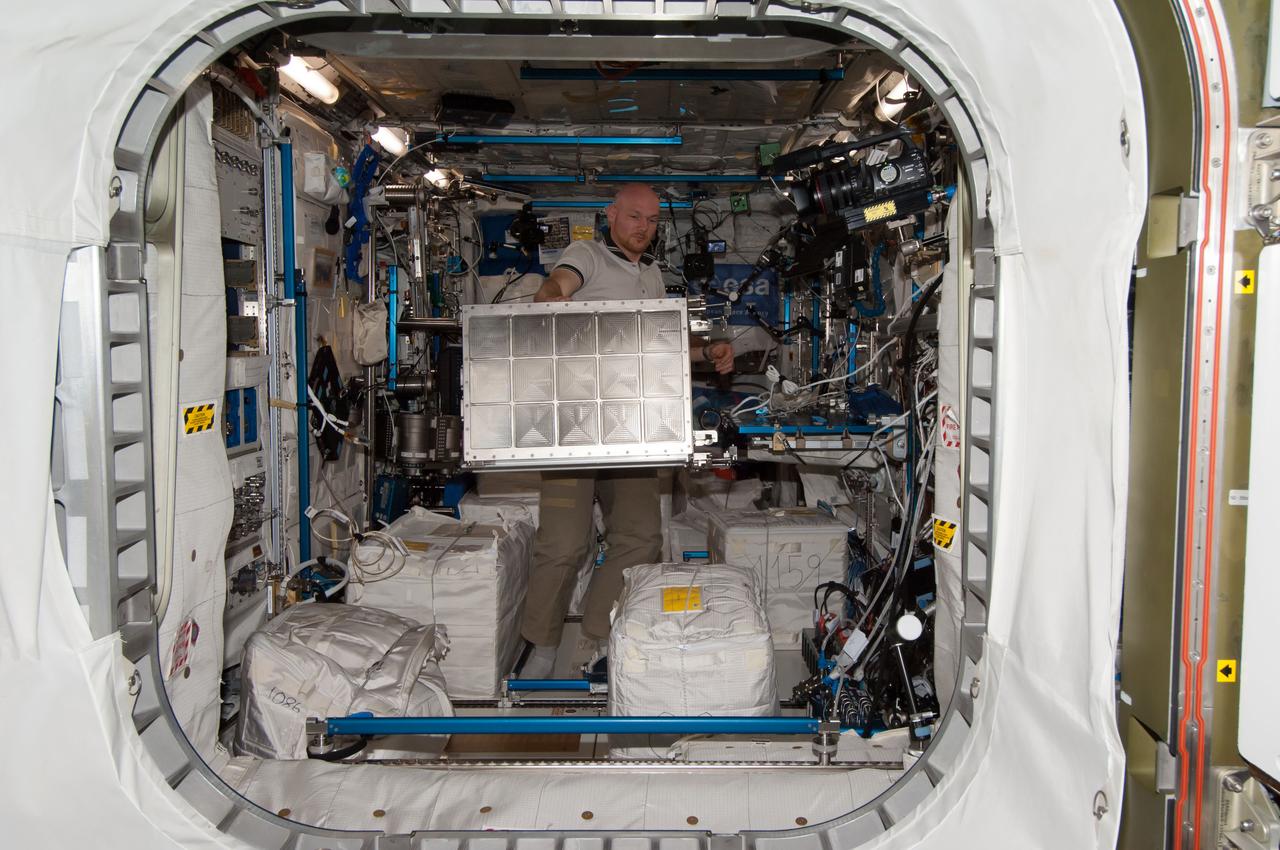
iss040e104595 (8/22/2014) --- European Space Agency (ESA) astronaut Alex Gerst is photographed removing the Facility for Absorption and Surface Tension (FASTER) hardware from the European Drawer Rack (EDR) and packing it for return on a future flight for refurbishment. The photo taken in the Columbus modulel aboard the International Space Station (ISS). The Facility for Adsorption and Surface Tension (FASTER) investigates the physical principles which determine the stability of different emulsions, and which compounds can influence this.
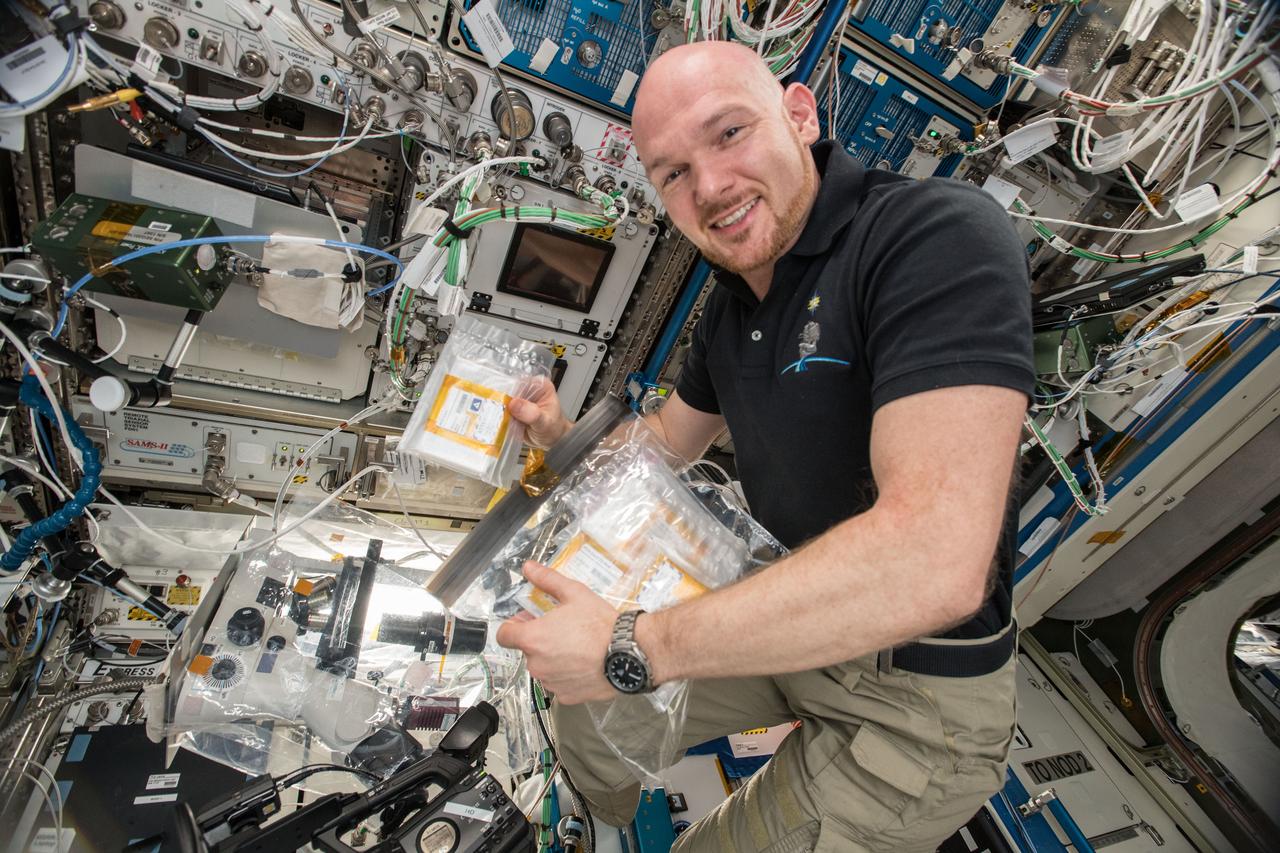
iss057e114766 (12/9/2018) --- European Space Agency (ESA) astronaut Alex Gerst is photographed with the Crystallization of RAS in Space (CASIS PCG 17) investigation. CASIS PCG 17grows crystals of KRAS proteins, which have a pivotal role in cell growth and death. Mutations in KRAS proteins are responsible for a third of all cancers and identifying the structure of these proteins is critical to developing therapeutics and treatments. Protein crystals grow larger and more perfectly in microgravity, allowing for detailed laboratory analysis of their structure back on Earth.
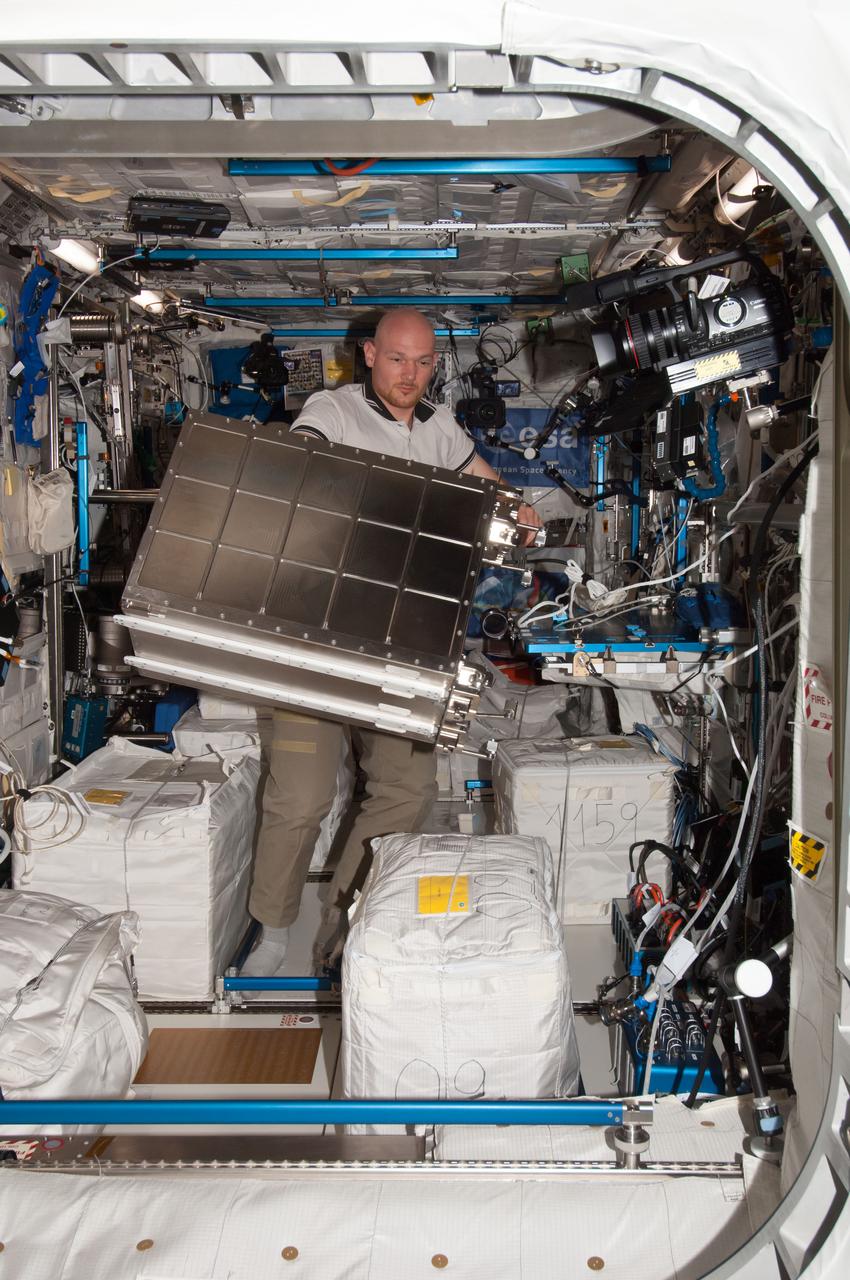
iss040e1045956 (8/22/2014) --- European Space Agency (ESA) astronaut Alex Gerst is photographed removing the Facility for Absorption and Surface Tension (FASTER) hardware from the European Drawer Rack (EDR) and packing it for return on a future flight for refurbishment. The photo taken in the Columbus modulel aboard the International Space Station (ISS). The Facility for Adsorption and Surface Tension (FASTER) investigates the physical principles which determine the stability of different emulsions, and which compounds can influence this.
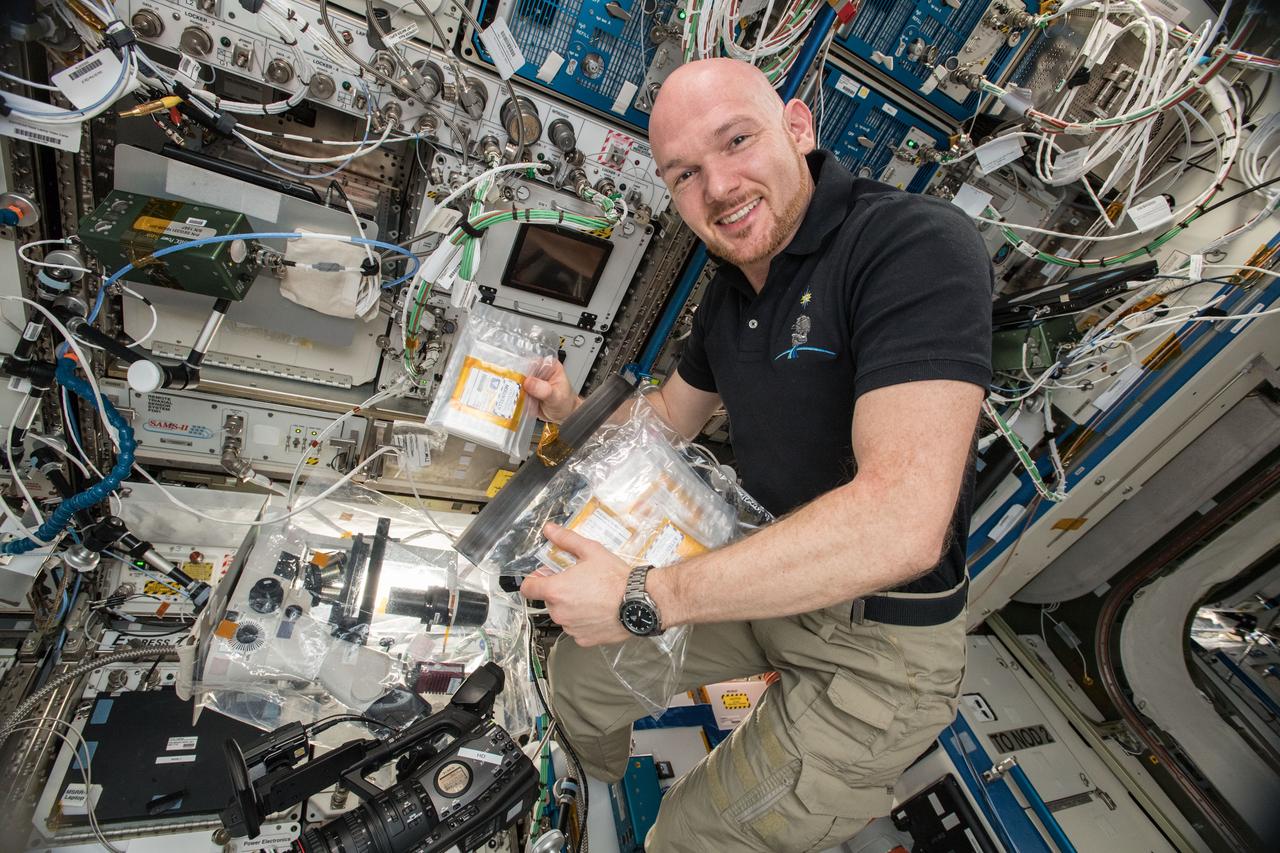
iss057e114765 (12/9/2018) --- European Space Agency (ESA) astronaut Alex Gerst is photographed with the Crystallization of RAS in Space (CASIS PCG 17) investigation. CASIS PCG 17grows crystals of KRAS proteins, which have a pivotal role in cell growth and death. Mutations in KRAS proteins are responsible for a third of all cancers and identifying the structure of these proteins is critical to developing therapeutics and treatments. Protein crystals grow larger and more perfectly in microgravity, allowing for detailed laboratory analysis of their structure back on Earth.
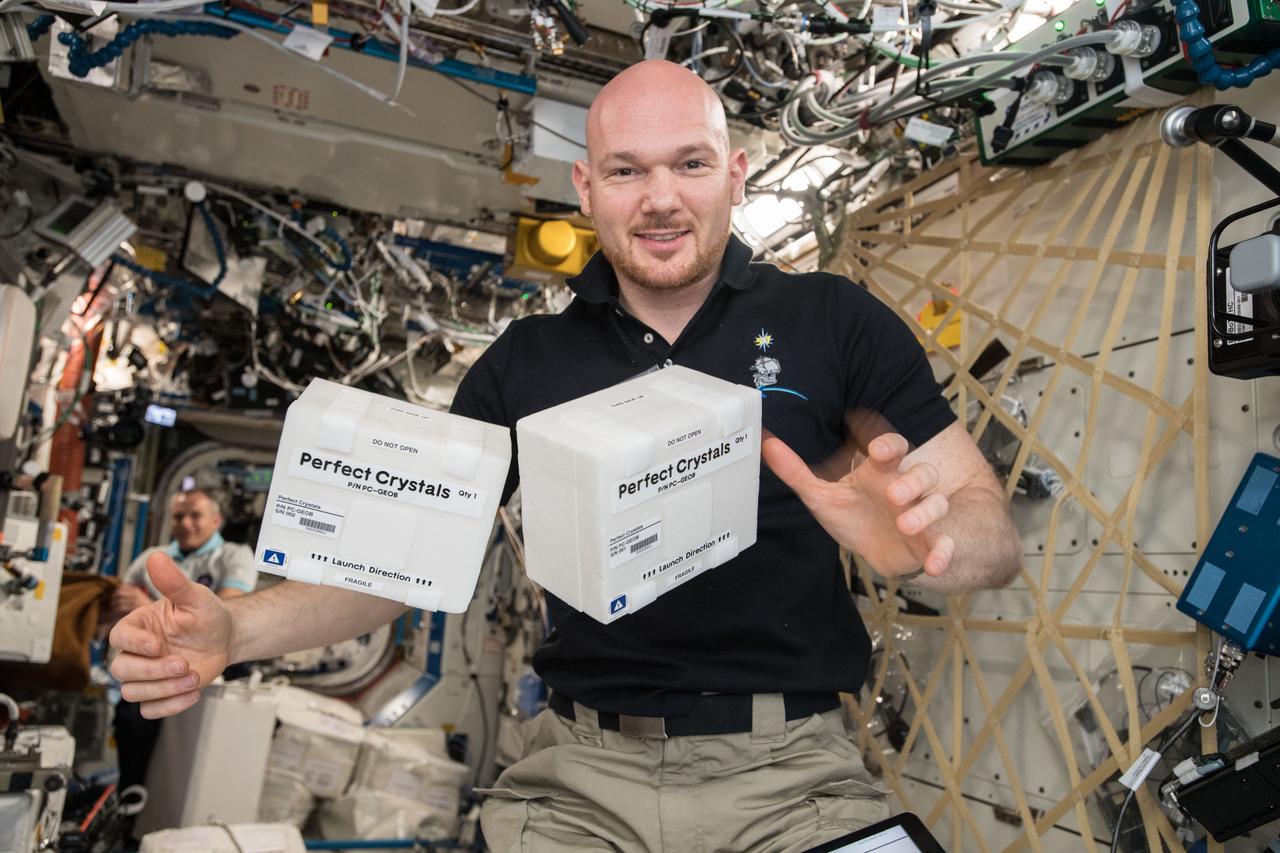
iss057e114747 (12/9/2018) --- European Space Agency (ESA) astronaut Alex Gerst is photographed with the Perfect Crystals investigation. Perfect Crystals studies human manganese superoxide dismutase (MnSOD or SOD2) in order to analyze its shape. MnSOD is implicated in a number of human diseases, including non-Hodgkins lymphoma, lung cancer and colorectal cancer. Understanding how it works is an important step toward developing better prevention and treatment methods for such diseases.
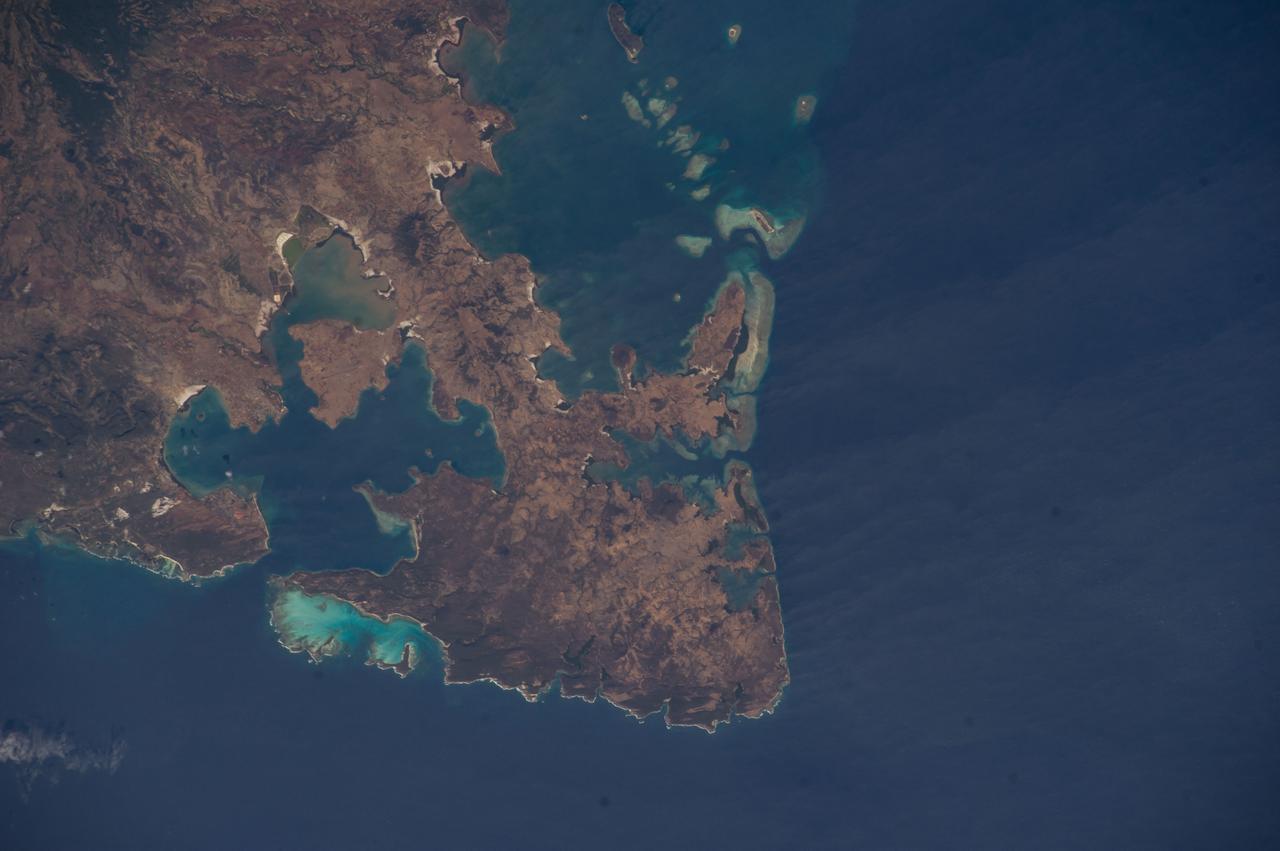
Earth Observation taken during a day pass by the Expedition 40 crew aboard the International Space Station (ISS). Folder lists this as: Floods in India.

ISS040-E-098545 (17 Aug. 2014) --- One of the Expedition 40 crew members aboard the International Space Station recorded this image of the Orbital Sciences Corporation's Cygnus cargo carrier spacecraft breaking up in Earth's atmosphere after being released from the orbital outpost. The breakup started around 13:22 GMT on Aug. 17, 2014 and this photo was taken at 13:23:08 GMT.
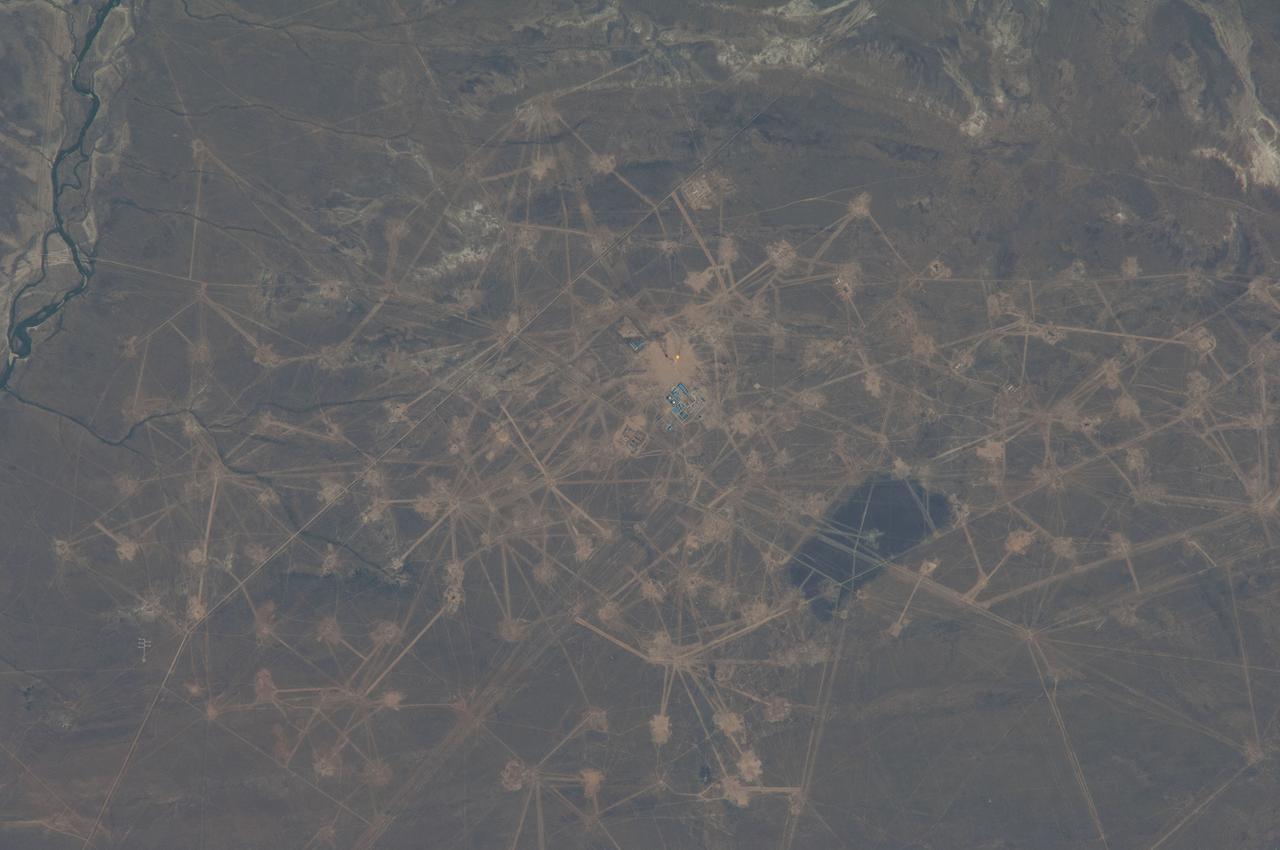
Earth Observation taken during day pass by the Expedition 40 crew aboard the International Space Station (ISS).
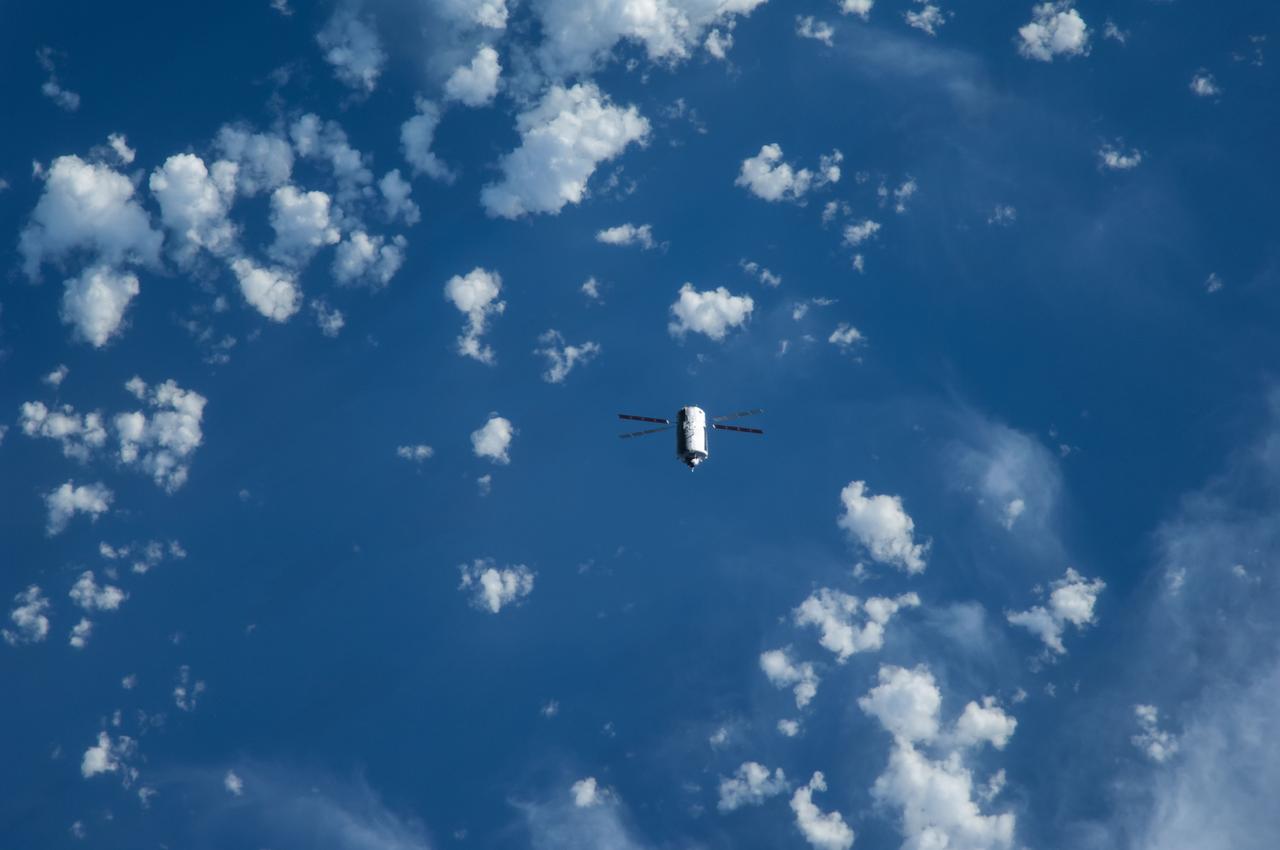
ISS040-E-089802 (8 Aug. 2014) --- The “Georges Lemaitre” Automated Transfer Vehicle (ATV-5), photographed by an Expedition 40 crew member, flies directly under the International Space Station at a distance of about 3.7 miles to test sensors and radar systems designed for future European spacecraft. After its “fly-under” of the station, the ATV will move in front of, above, and behind the outpost for the final days of its two-week rendezvous that will lead to an automated docking to the aft port of the Zvezda Service Module on Aug. 12.

Earth Observation taken during a day pass by the Expedition 40 crew aboard the International Space Station (ISS). Folder lists this as: Canada.
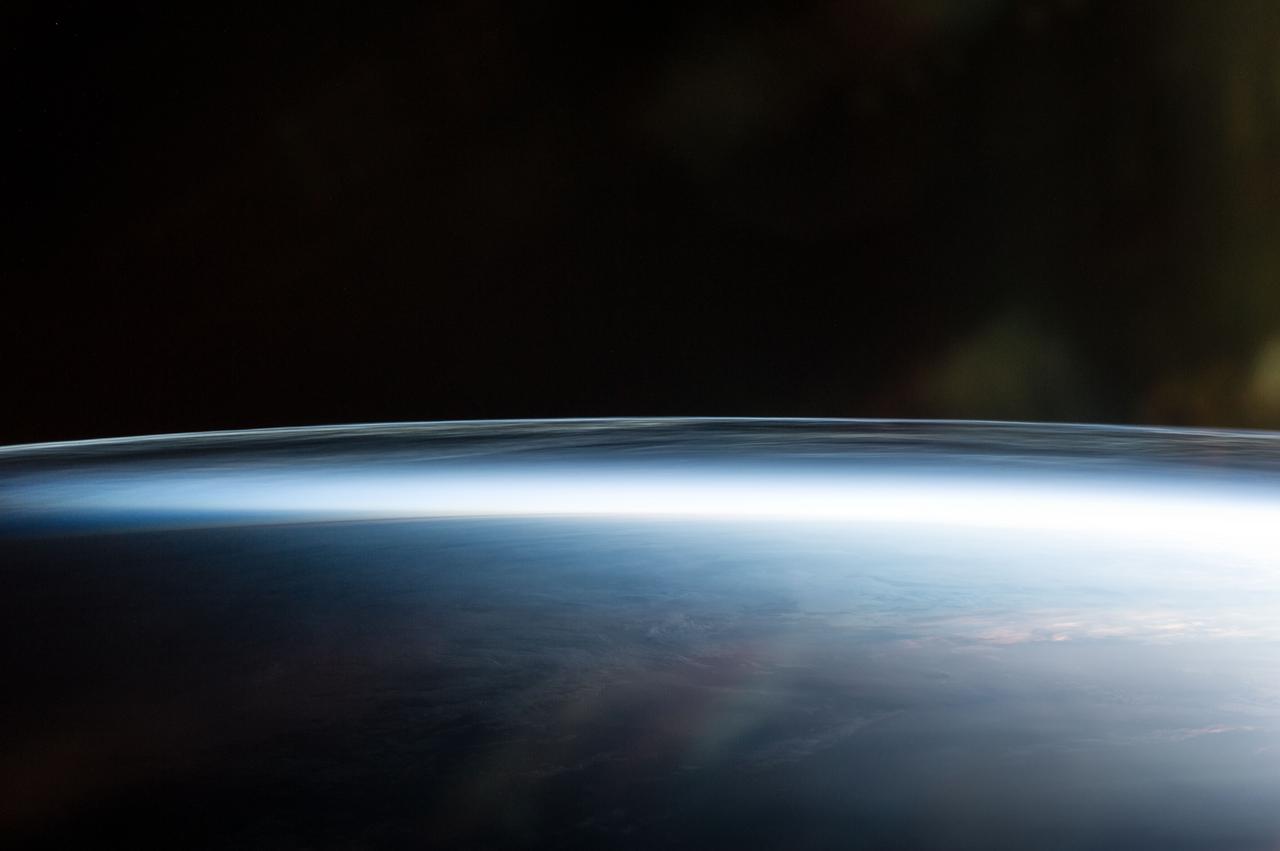
Earth Observation taken during a night pass by the Expedition 40 crew aboard the International Space Station (ISS). Folder lists this as: Polar Mesospheric Clouds over Canada.
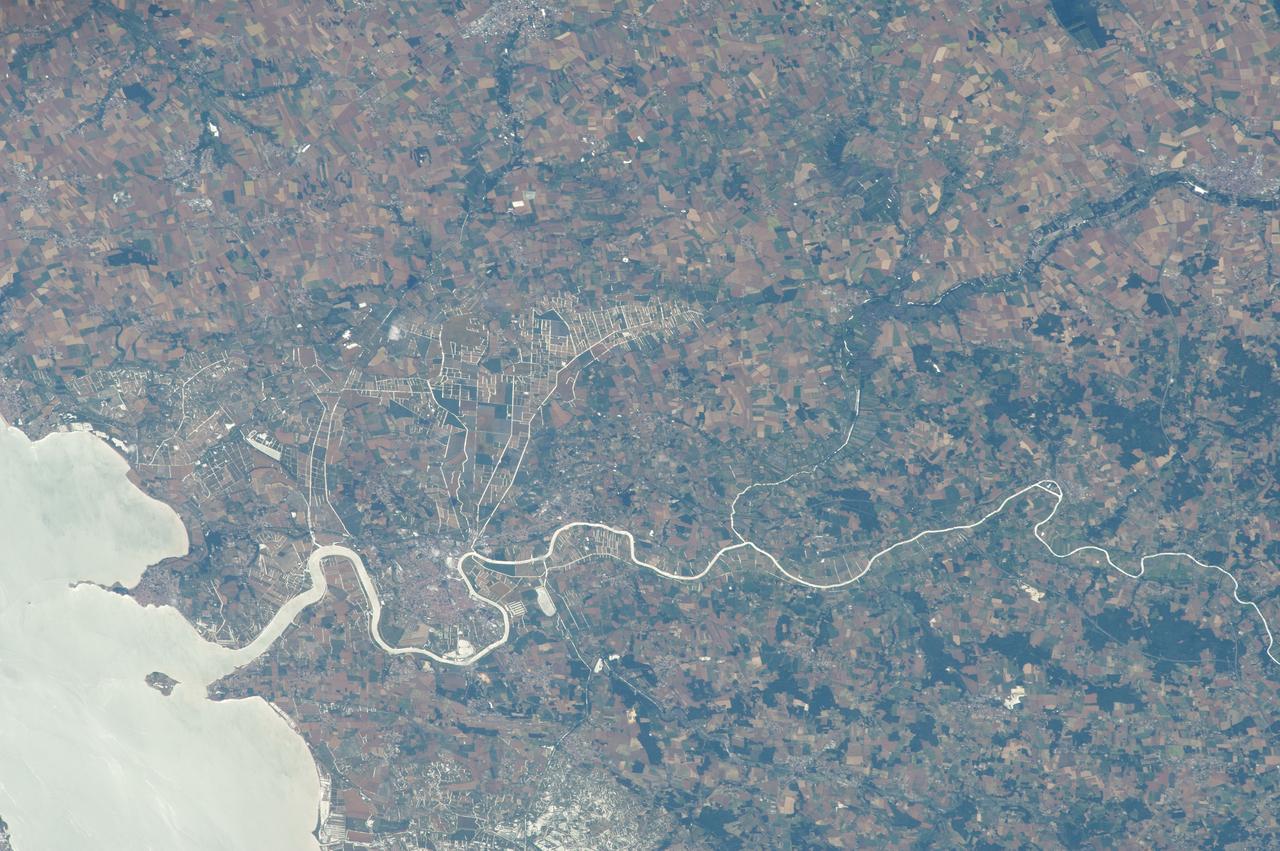
Earth Observation taken during a day pass by the Expedition 40 crew aboard the International Space Station (ISS). Folder lists this as: EOS France - Germany.
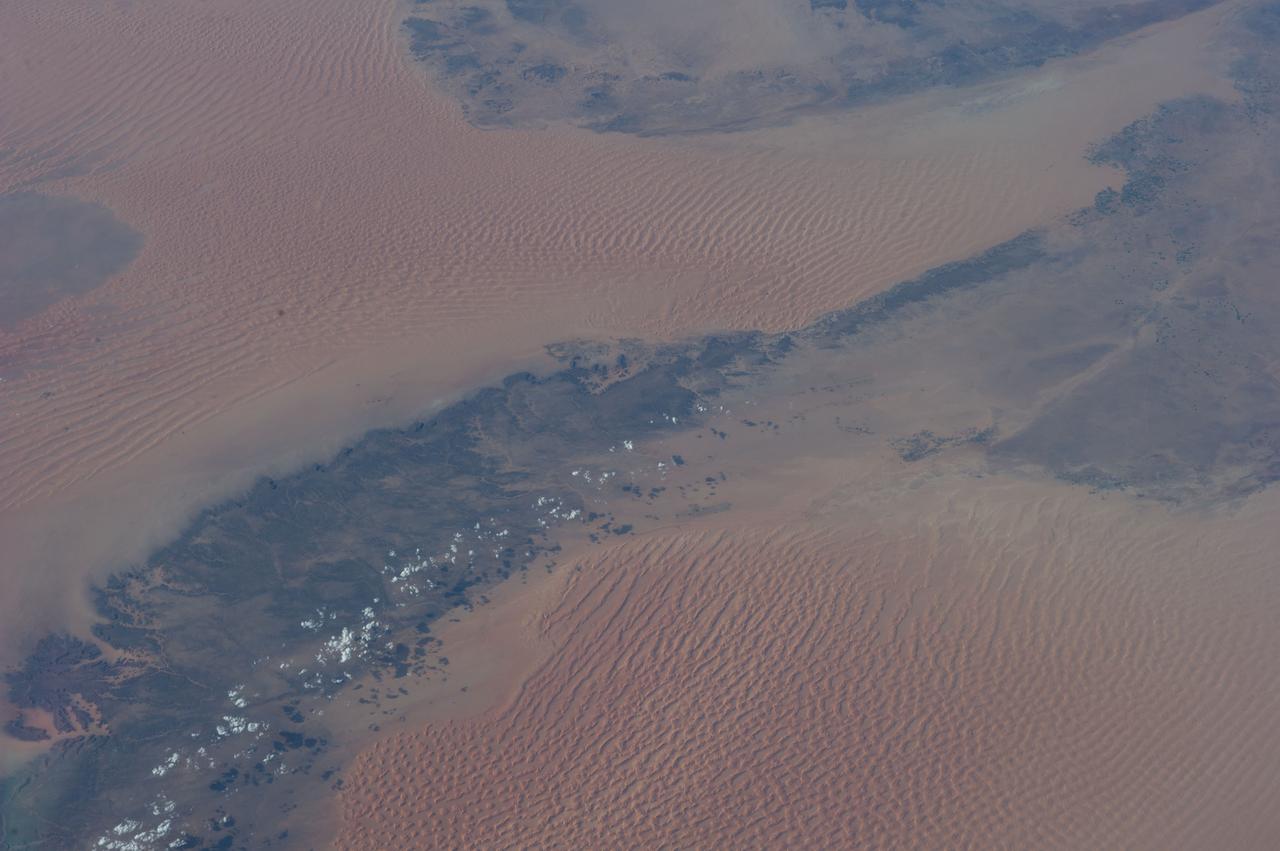
Earth observation taken during a day pass by the Expedition 40 crew aboard the International Space Station. File identifies it as: Sahara, and Libya.
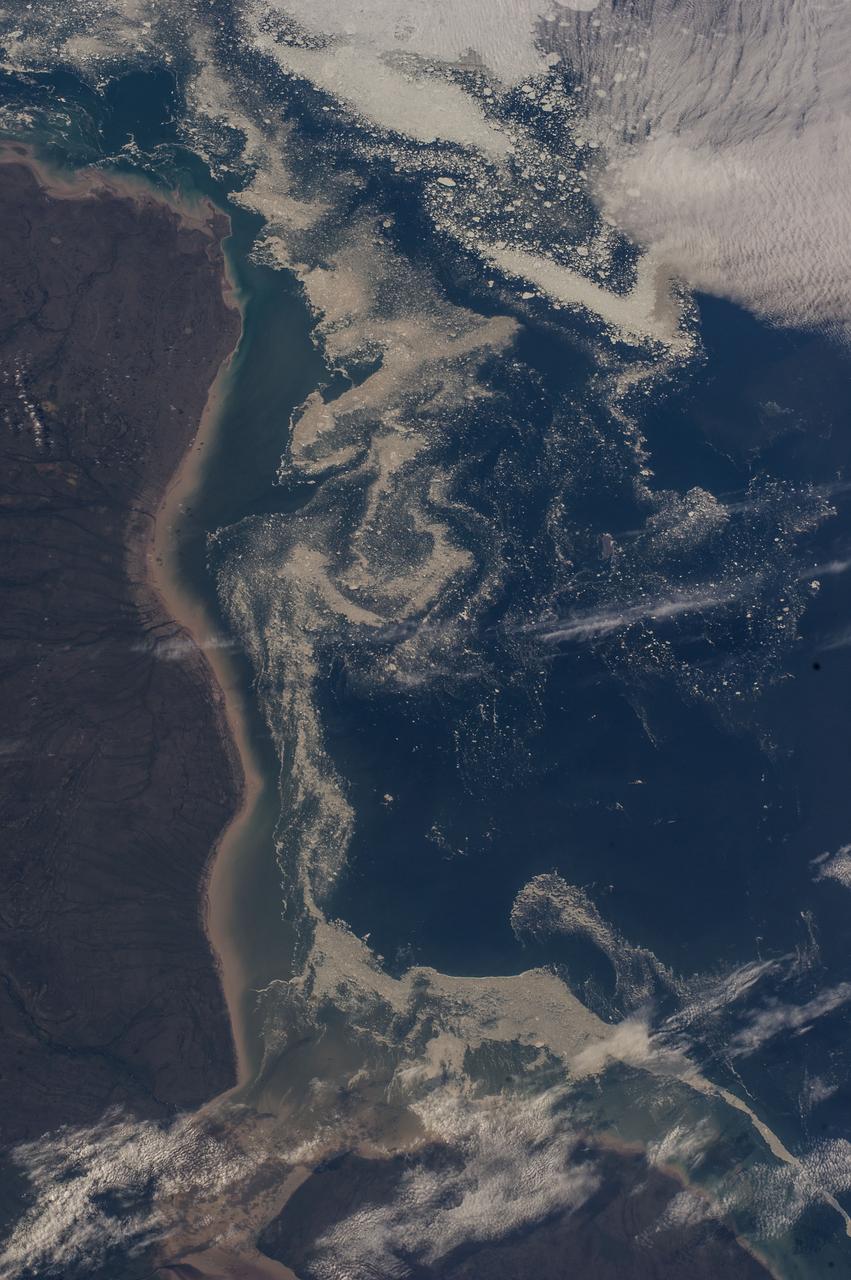
Earth Observation taken during a day pass by the Expedition 40 crew aboard the International Space Station (ISS). Folder lists this as: Canada.
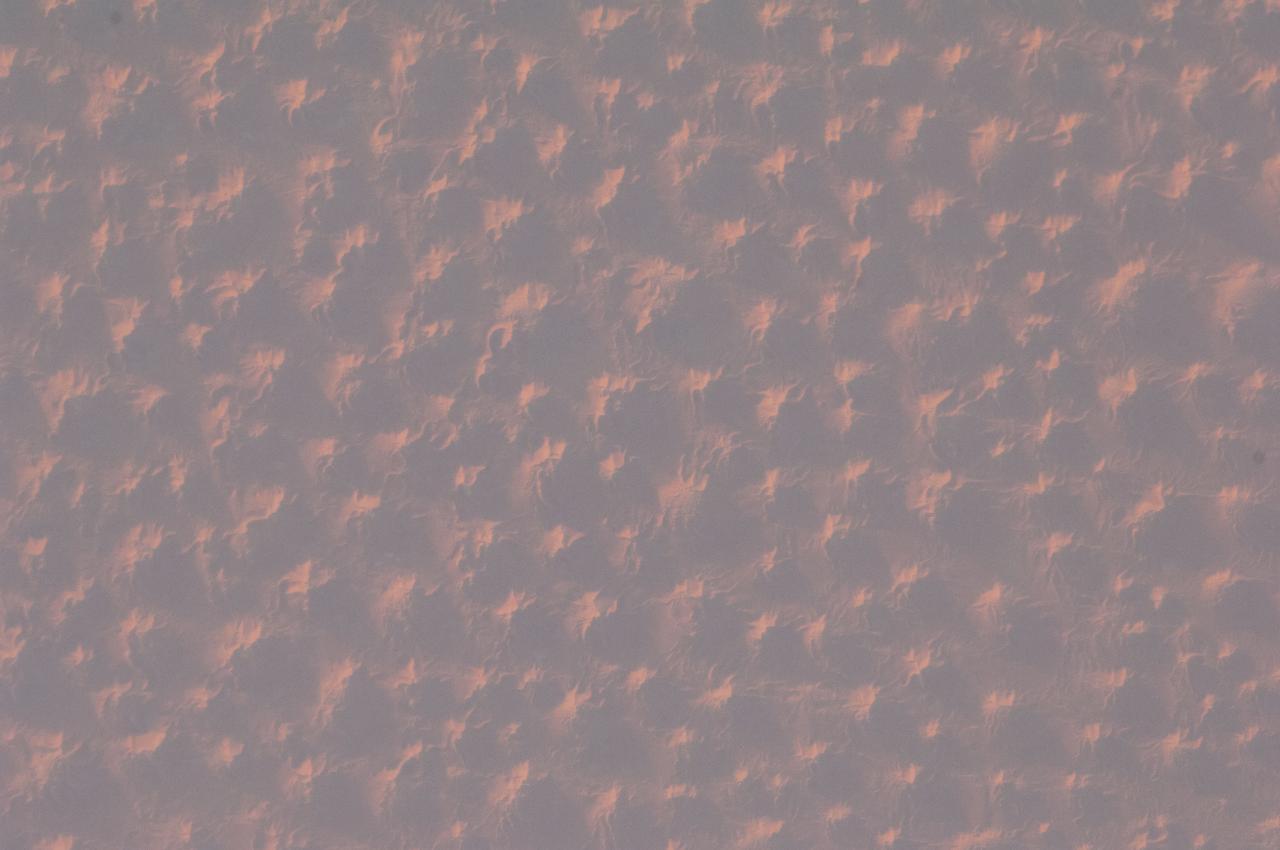
Earth Observation taken during a day pass by the Expedition 40 crew aboard the International Space Station (ISS). Folder lists this as: misc clouds.

ISS041-E-067002 (7 Oct. 2014) --- NASA astronaut Reid Wiseman, Expedition 41 flight engineer, participates in a session of extravehicular activity (EVA) as work continues on the International Space Station. During the six-hour, 13-minute spacewalk, Wiseman and European Space Agency astronaut Alexander Gerst (out of frame), flight engineer, worked outside the space station's Quest airlock relocating a failed cooling pump to external stowage and installing gear that provides back up power to external robotics equipment.
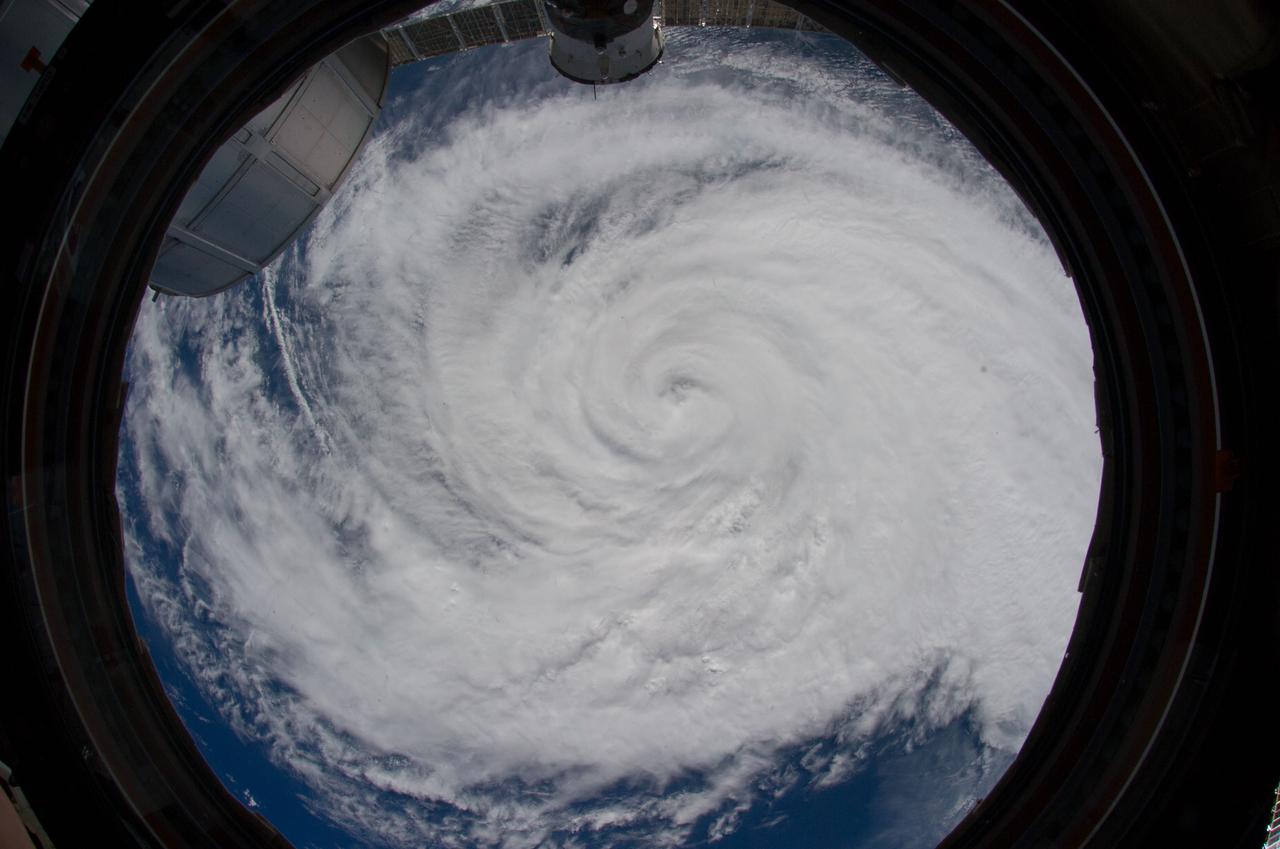
Earth Observation taken during a day pass by the Expedition 40 crew aboard the International Space Station (ISS). Folder lists this only as: Hurricane Arthur wide angle.
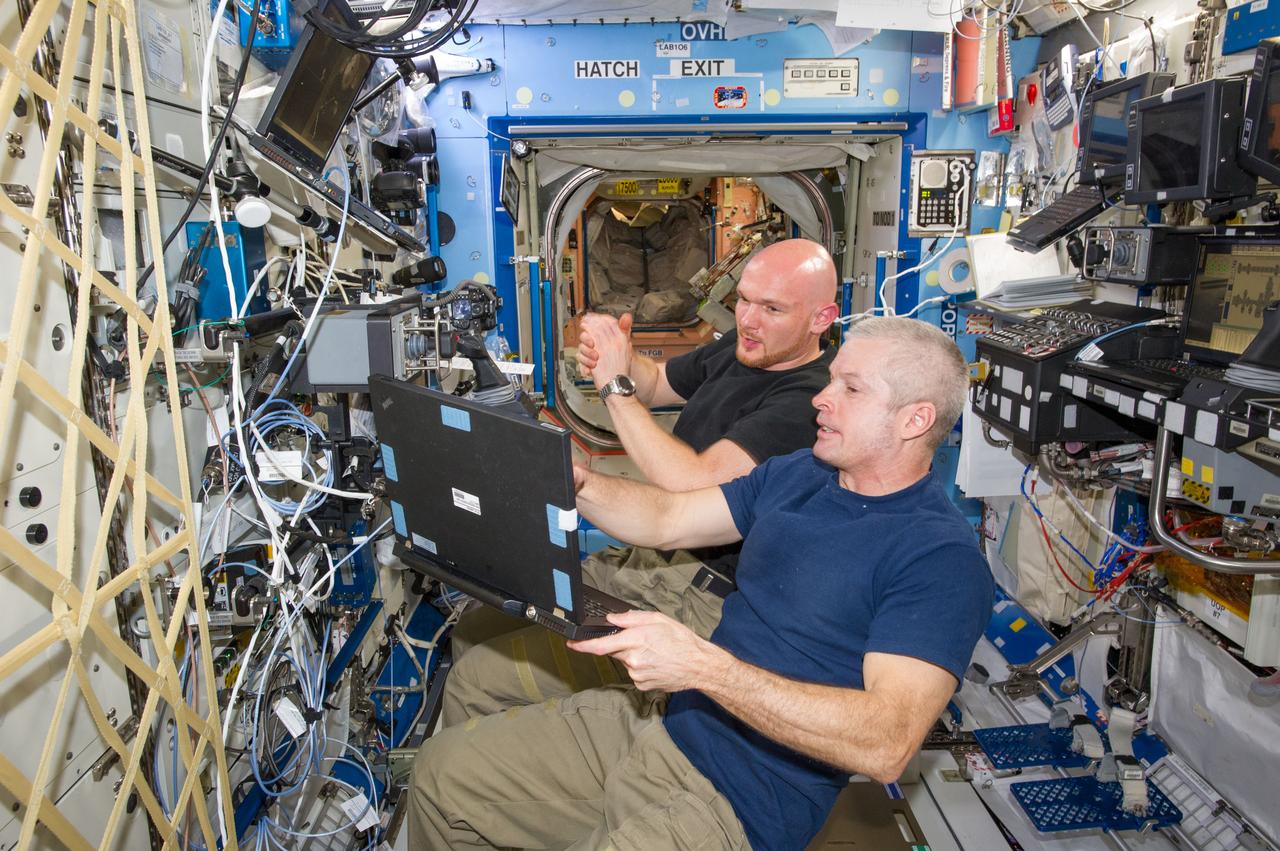
ISS040-E-020346 (25 June 2014) --- In the International Space Station?s Destiny laboratory, NASA astronaut Steve Swanson (foreground), Expedition 40 commander; and European Space Agency astronaut Alexander Gerst, flight engineer, participate in a training session for the robotic capture of the Orbital Sciences? Cygnus cargo craft, set to launch on the Orbital-2 commercial resupply services flight no earlier than July 10.

ISS040-E-128019 (6 Sept. 2014) --- One of the crew members of the International Space Station exposed this image of some of the orbital complex's hardware as the station was flying over the southwest Pacific in the area of New Zealand. The NanoRacks Cubesat deployer, attached to the Japan Aerospace Exploration Agency’s Kibo robotic arm, can be seen in upper right. Soyuz 39 TMA-13M is on Rassvet at right. The Cupola, which supports many functions, including a base for thousands of automatic as well as hand-held cameras’ photos, is to the right of center.
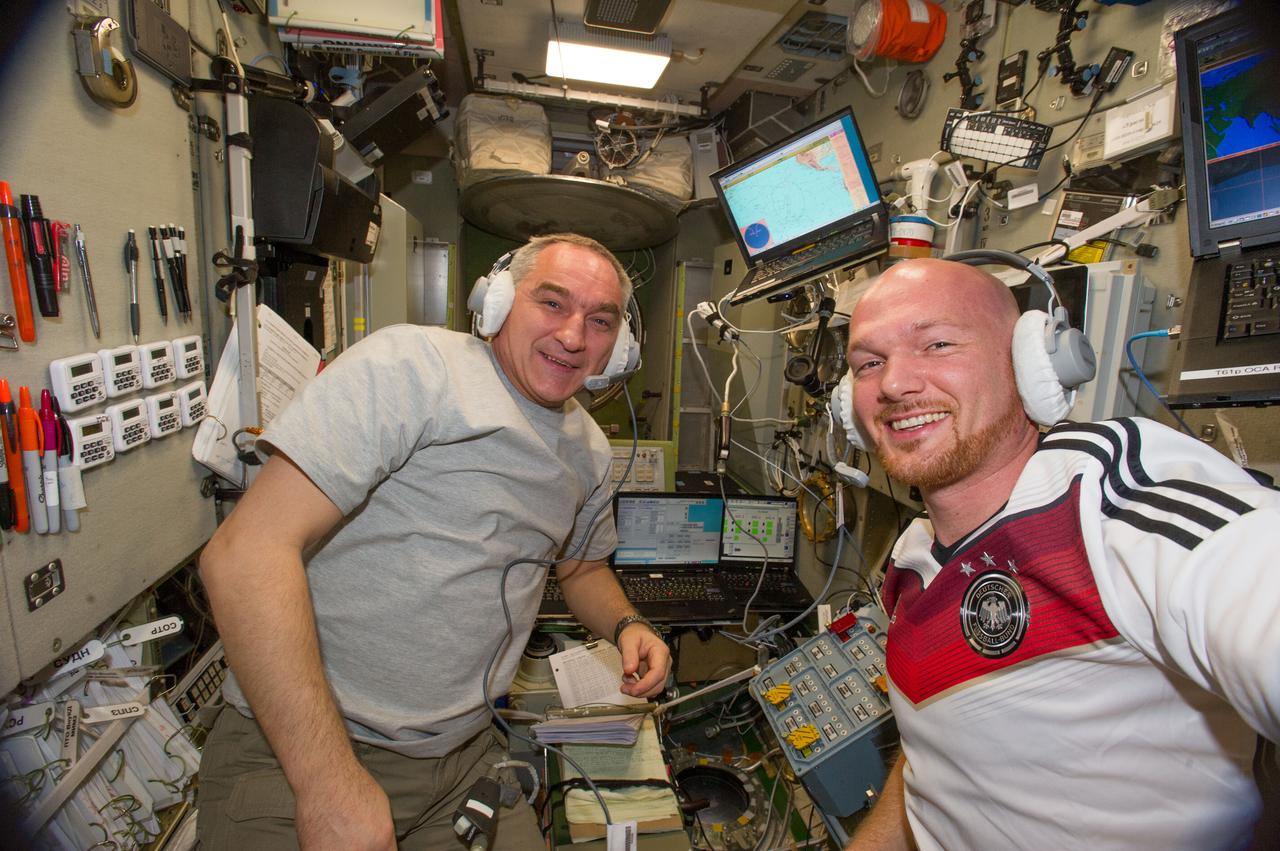
Cosmonaut Alexander Skvortsov and ESA Astronaut Alexander Gerst, Expedition 40 flight engineers, are photographed during ATV equipment preparation in the Service Module (SM) prior to ATV launch.

Earth Observation taken during a day pass by the Expedition 40 crew aboard the International Space Station (ISS). Folder lists this as: EOS Arena Pantanal (maybe).
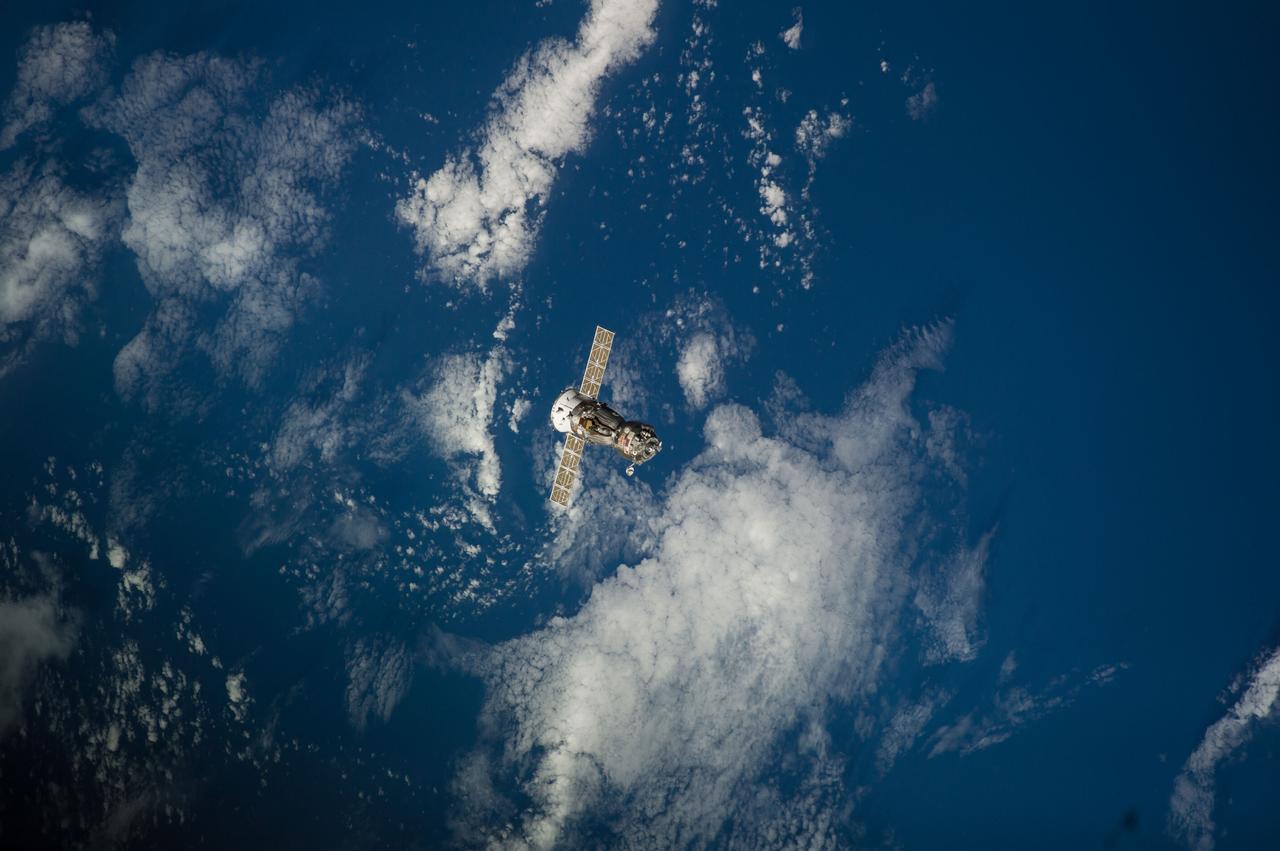
ISS041-E-000044 (10 Sept. 2014) --- The Soyuz TMA-12M spacecraft departs from the International Space Station and heads toward a landing in a remote area near the town of Zhezkazgan, Kazakhstan. NASA astronaut Steve Swanson, Expedition 40 commander; Russian cosmonaut Alexander Skvortsov, Soyuz commander and flight engineer; and Russian cosmonaut Oleg Artemyev, flight engineer, are returning from more than five months aboard the space station where they served as members of the Expedition 39 and 40 crews. Landing occurred at 10:23 p.m. (EDT), Sept. 10, 2014 (8:23 a.m., Sept. 11, Kazakh time).
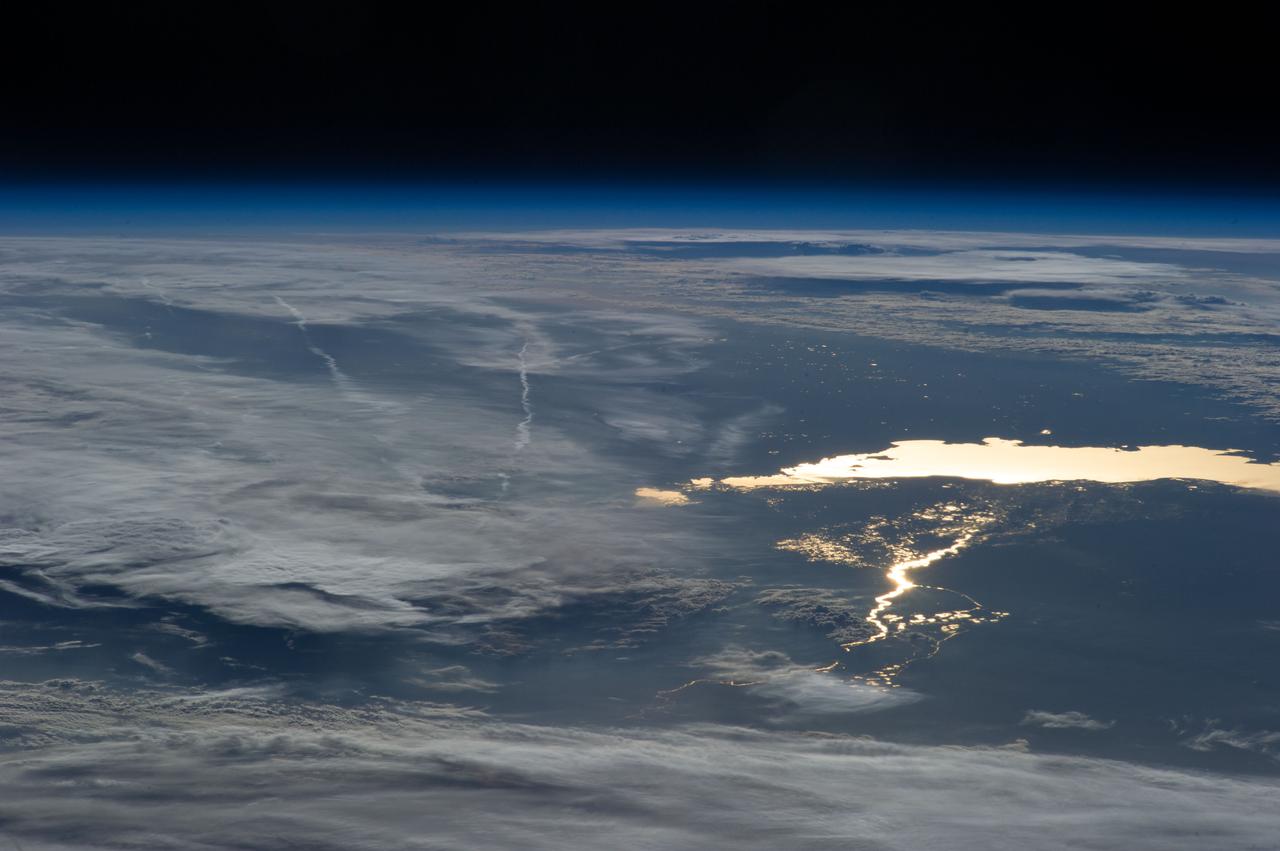
Earth Observation taken during a day pass by the Expedition 40 crew aboard the International Space Station (ISS). Folder lists this as: India and Himalayans.
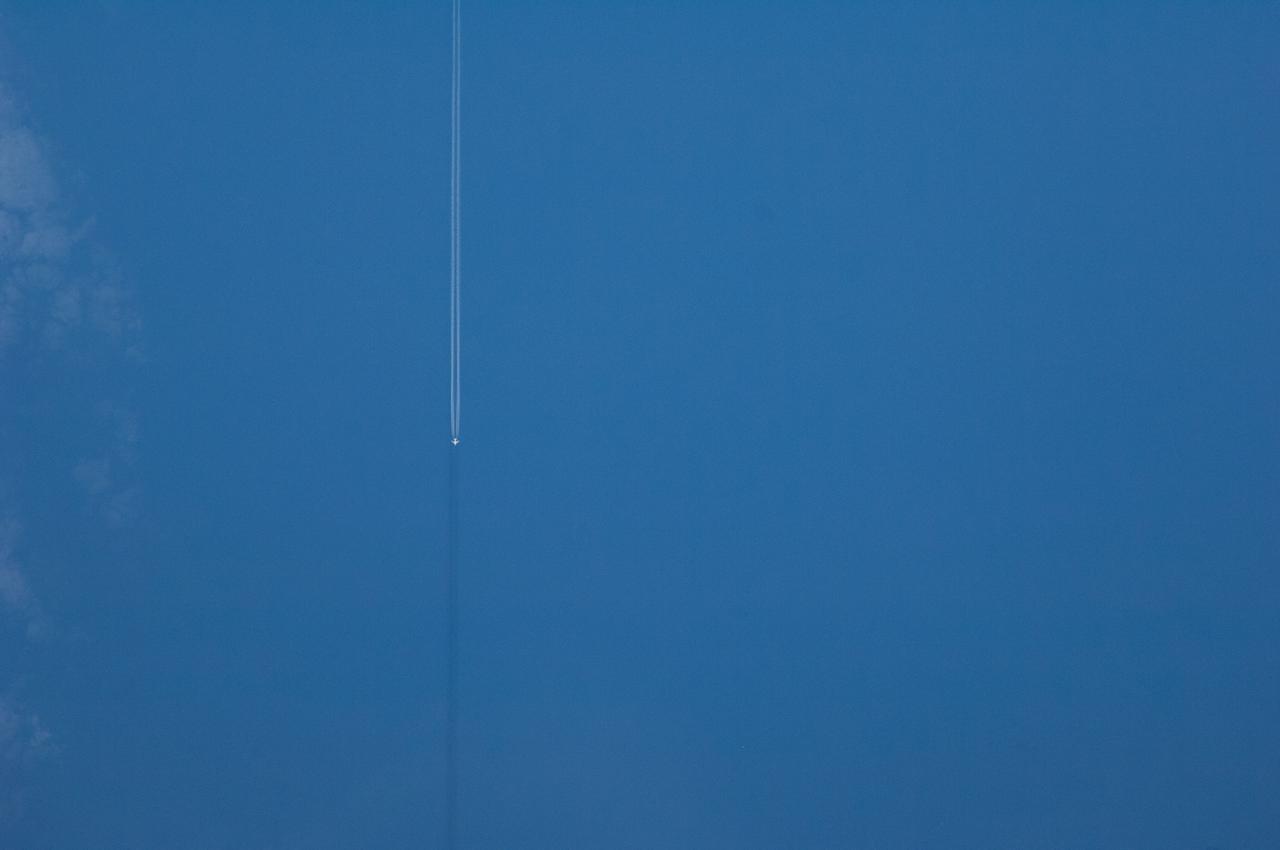
Earth Observation taken by the Expedition 40 crew aboard the International Space Station (ISS). Outline of a plane with its contrail visible. Released via Twitter.
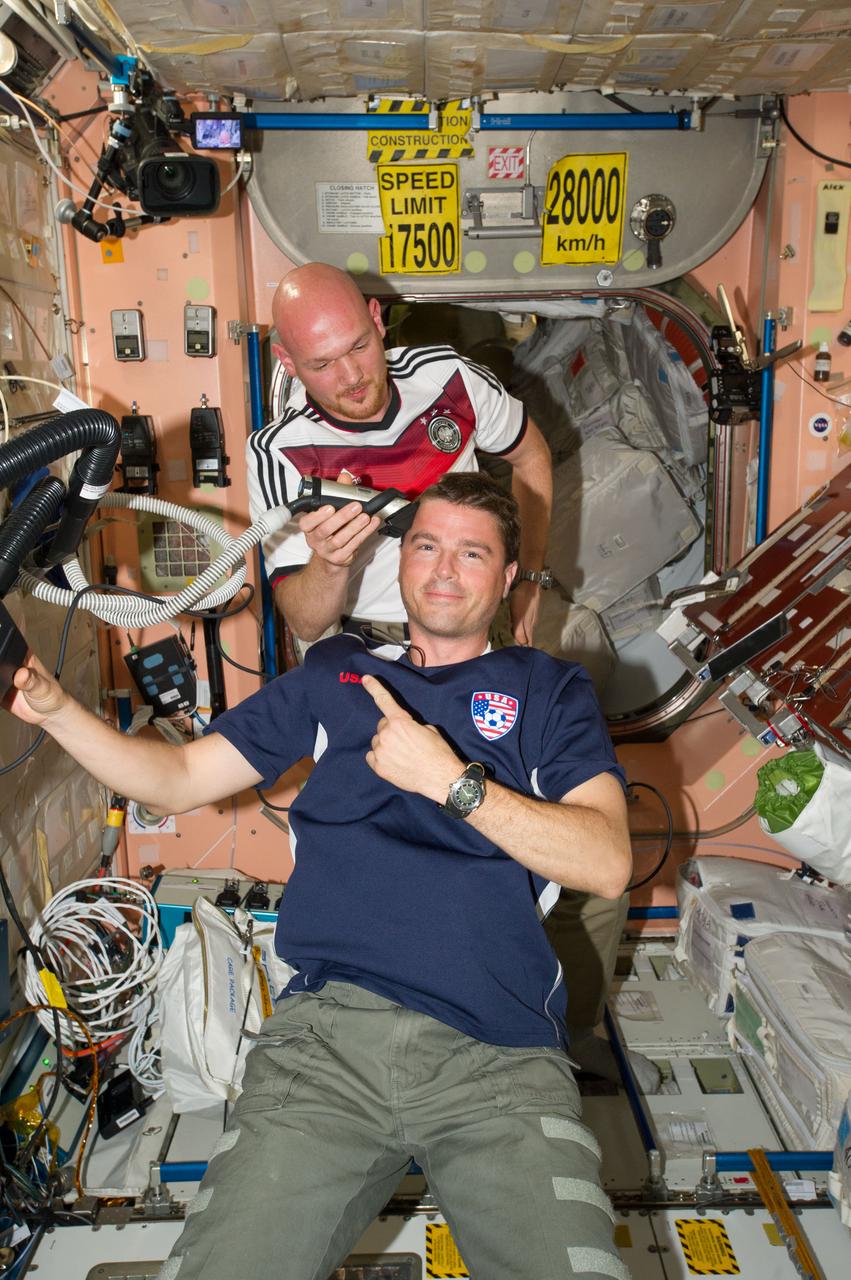
ISS040-E-020378 (26 June 2014) --- European Space Agency astronaut Alexander Gerst, Expedition 40 flight engineer, shaves the head of NASA astronaut Reid Wiseman, flight engineer, in the Unity node of the International Space Station. Gerst used hair clippers fashioned with a vacuum device to garner freshly cut hair. A friendly World Cup Soccer-related agreement between the crew members representing the USA, and Gerst, a German citizen who represents the European Space Agency, called for the American losers of a German-USA match to have their heads shaved. The German team won the match 1-0.
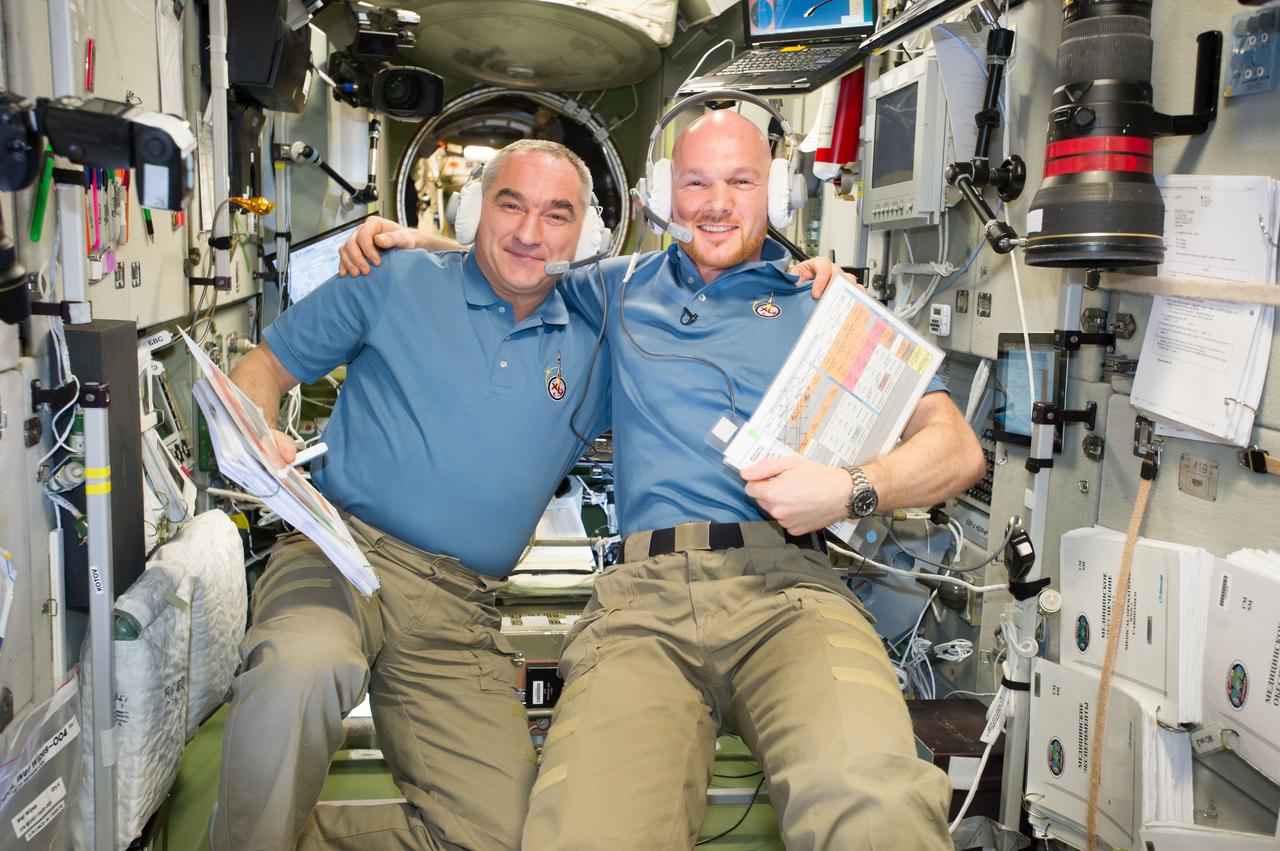
ISS040-E-091673 (12 Aug. 2014) --- In the Zvezda Service Module, European Space Agency astronaut Alexander Gerst (right) and Russian cosmonaut Alexander Skvortsov, both Expedition 40 flight engineers, take a brief moment for a photo during the approach and docking operations of ESA's "Georges Lemaitre" Automated Transfer Vehicle-5 (ATV-5) to the International Space Station.

ISS041-E-067002 (7 Oct. 2014) --- NASA astronaut Reid Wiseman, Expedition 41 flight engineer, participates in a session of extravehicular activity (EVA) as work continues on the International Space Station. During the six-hour, 13-minute spacewalk, Wiseman and European Space Agency astronaut Alexander Gerst (out of frame), flight engineer, worked outside the space station's Quest airlock relocating a failed cooling pump to external stowage and installing gear that provides back up power to external robotics equipment.
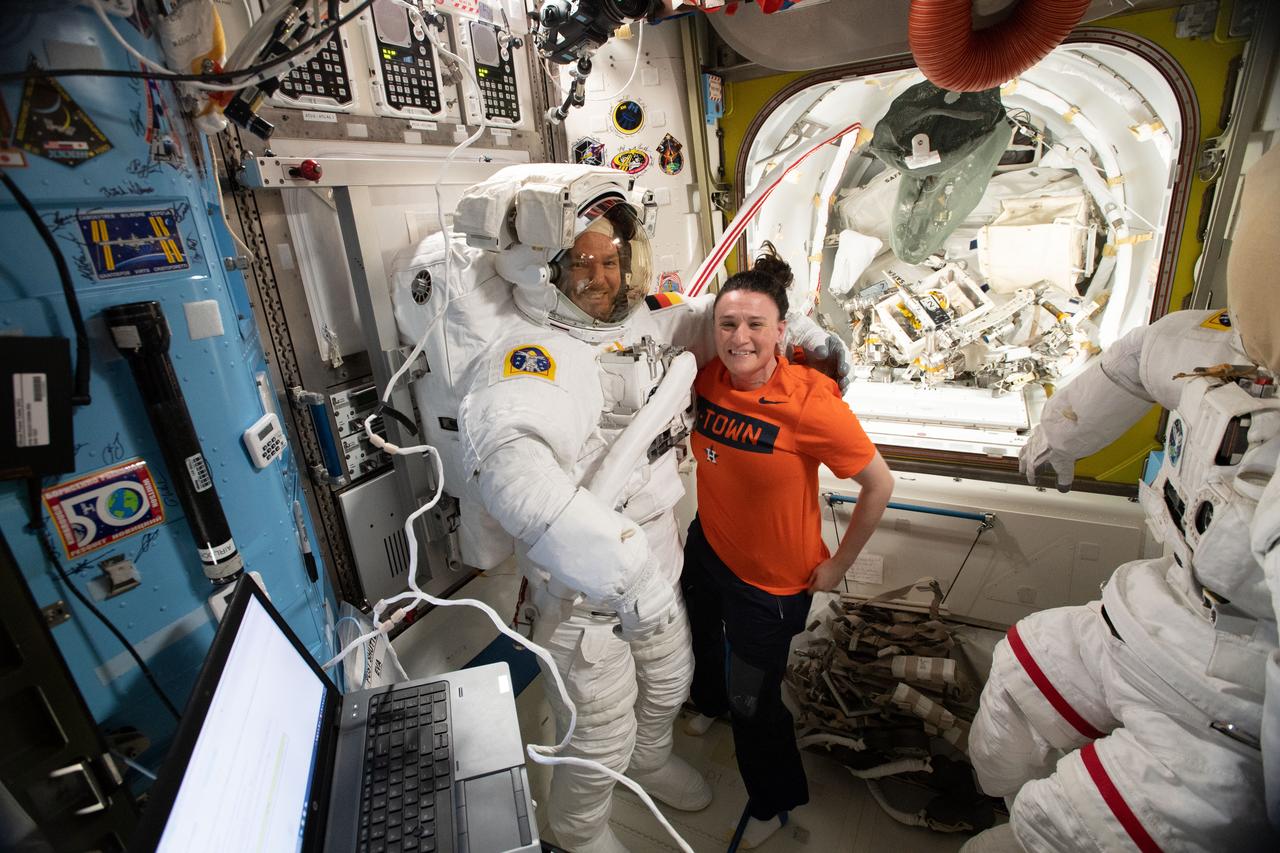
iss056e174070 (Sept. 17, 2018) --- NASA astronaut Serena Auñón-Chancellor assists ESA (European Space Agency) astronaut Alexander Gerst wearing a U.S. spacesuit during a fit check. The two Expedition 56 crew members are at work inside the U.S. Quest airlock where U.S. spacewalk are staged.
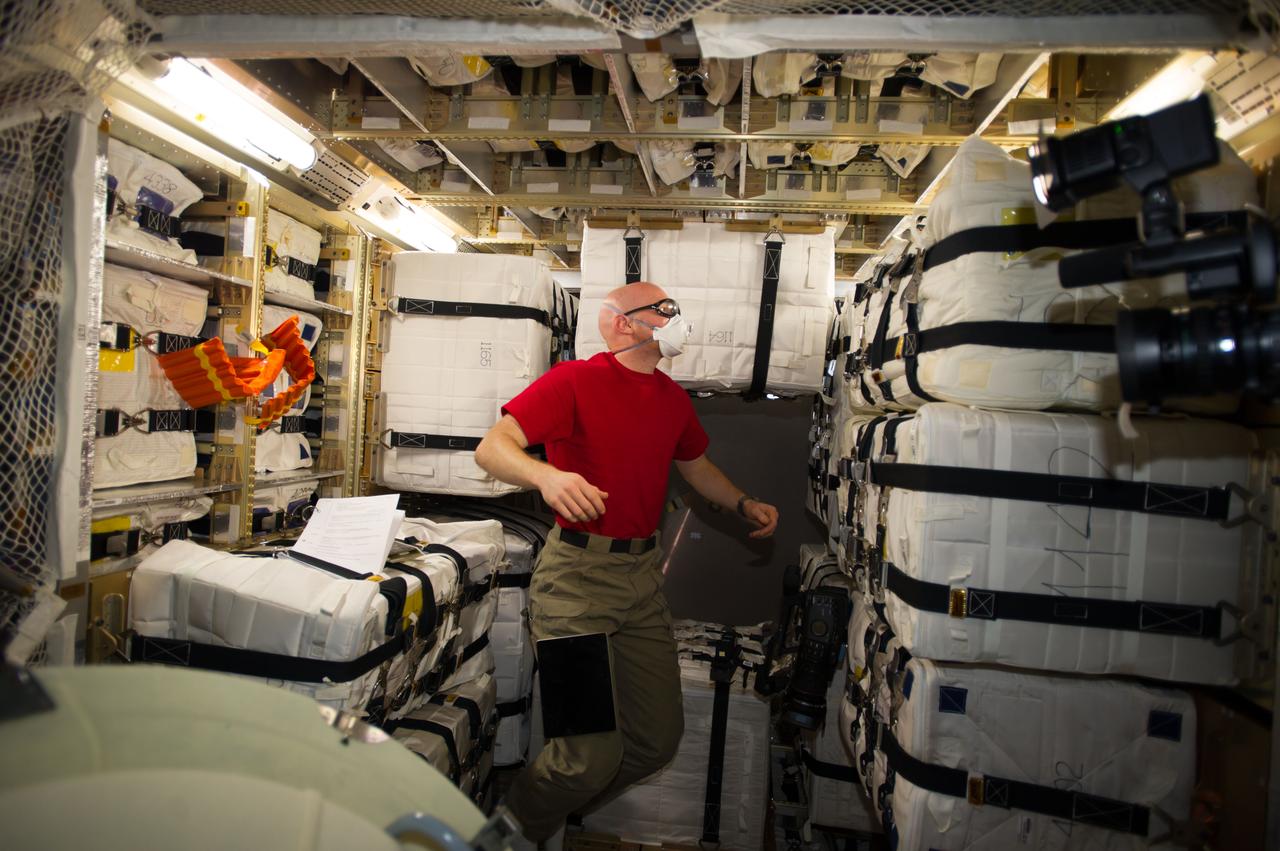
ISS040-E-091966 (13 Aug. 2014) --- European Space Agency astronaut Alexander Gerst, Expedition 40 flight engineer, is pictured in the newly-attached "Georges Lemaitre" Automated Transfer Vehicle-5 (ATV-5) of the International Space Station.
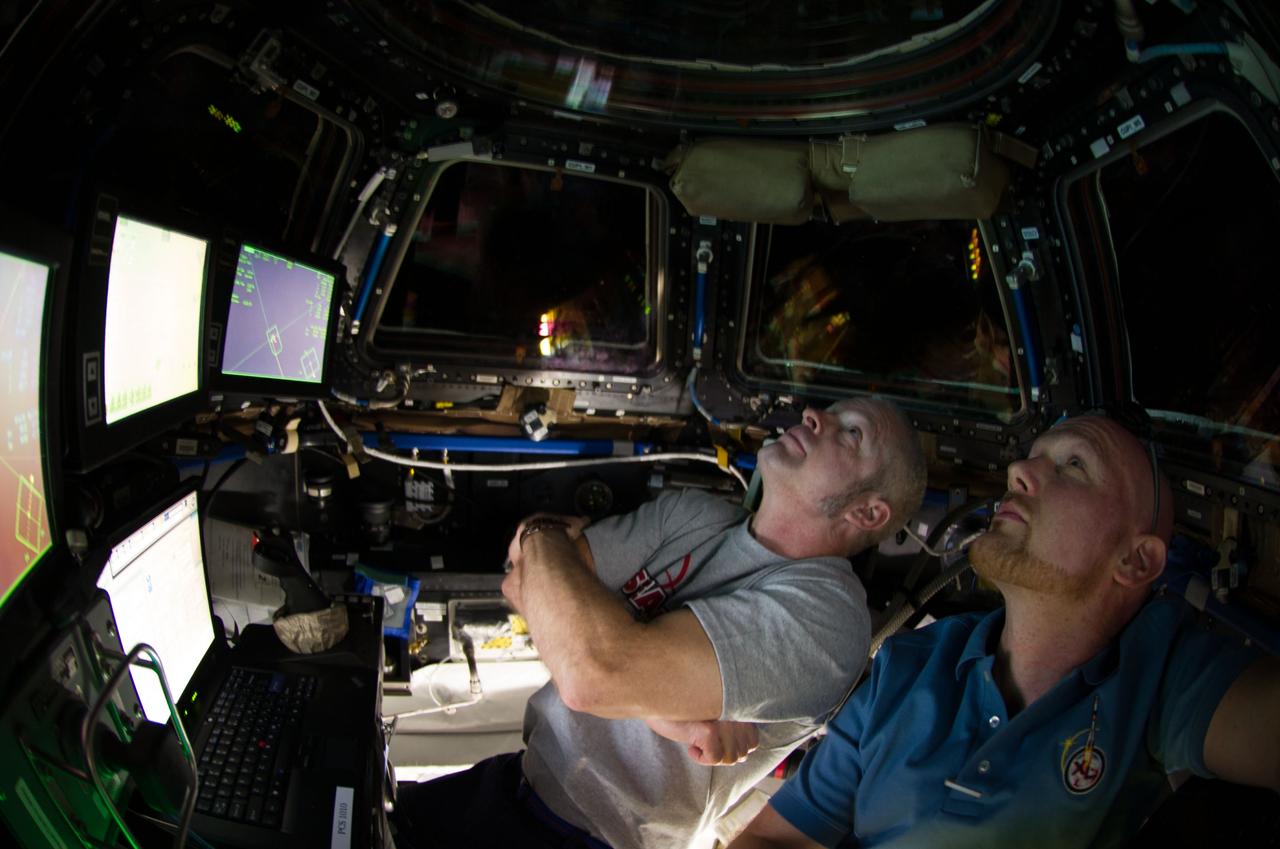
ISS040-E-067869 (16 July 2014) --- NASA astronaut Steve Swanson (left), Expedition 40 commander; and European Space Agency astronaut Alexander Gerst, flight engineer, are pictured in the International Space Station?s Cupola during rendezvous and capture operations of the Orbital Sciences? Cygnus cargo craft.
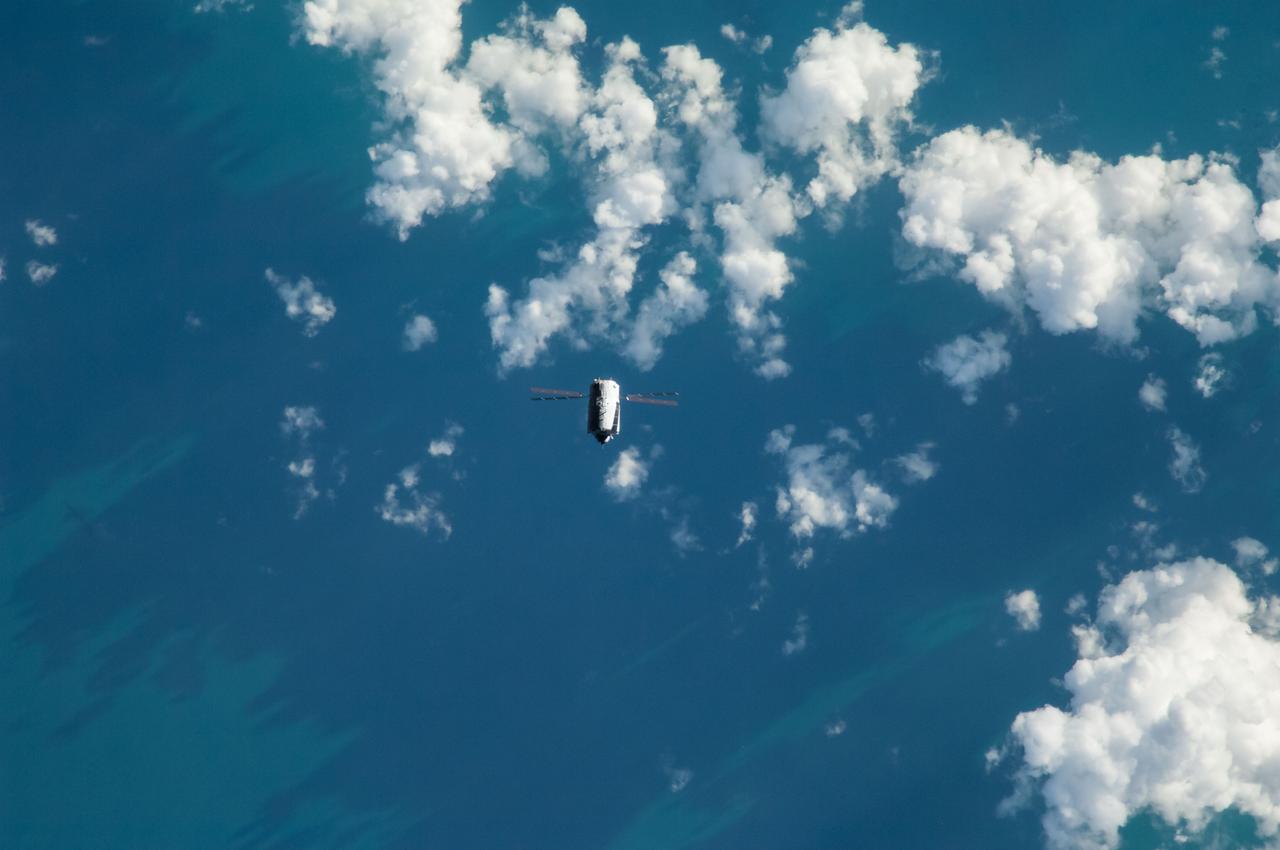
ISS040-E-089829 (8 Aug. 2014) --- The “Georges Lemaitre” Automated Transfer Vehicle (ATV-5), photographed by an Expedition 40 crew member, flies directly under the International Space Station at a distance of about 3.7 miles to test sensors and radar systems designed for future European spacecraft. After its “fly-under” of the station, the ATV will move in front of, above, and behind the outpost for the final days of its two-week rendezvous that will lead to an automated docking to the aft port of the Zvezda Service Module on Aug. 12.

ISS041-E-067002 (7 Oct. 2014) --- NASA astronaut Reid Wiseman, Expedition 41 flight engineer, participates in a session of extravehicular activity (EVA) as work continues on the International Space Station. During the six-hour, 13-minute spacewalk, Wiseman and European Space Agency astronaut Alexander Gerst (out of frame), flight engineer, worked outside the space station's Quest airlock relocating a failed cooling pump to external stowage and installing gear that provides back up power to external robotics equipment.
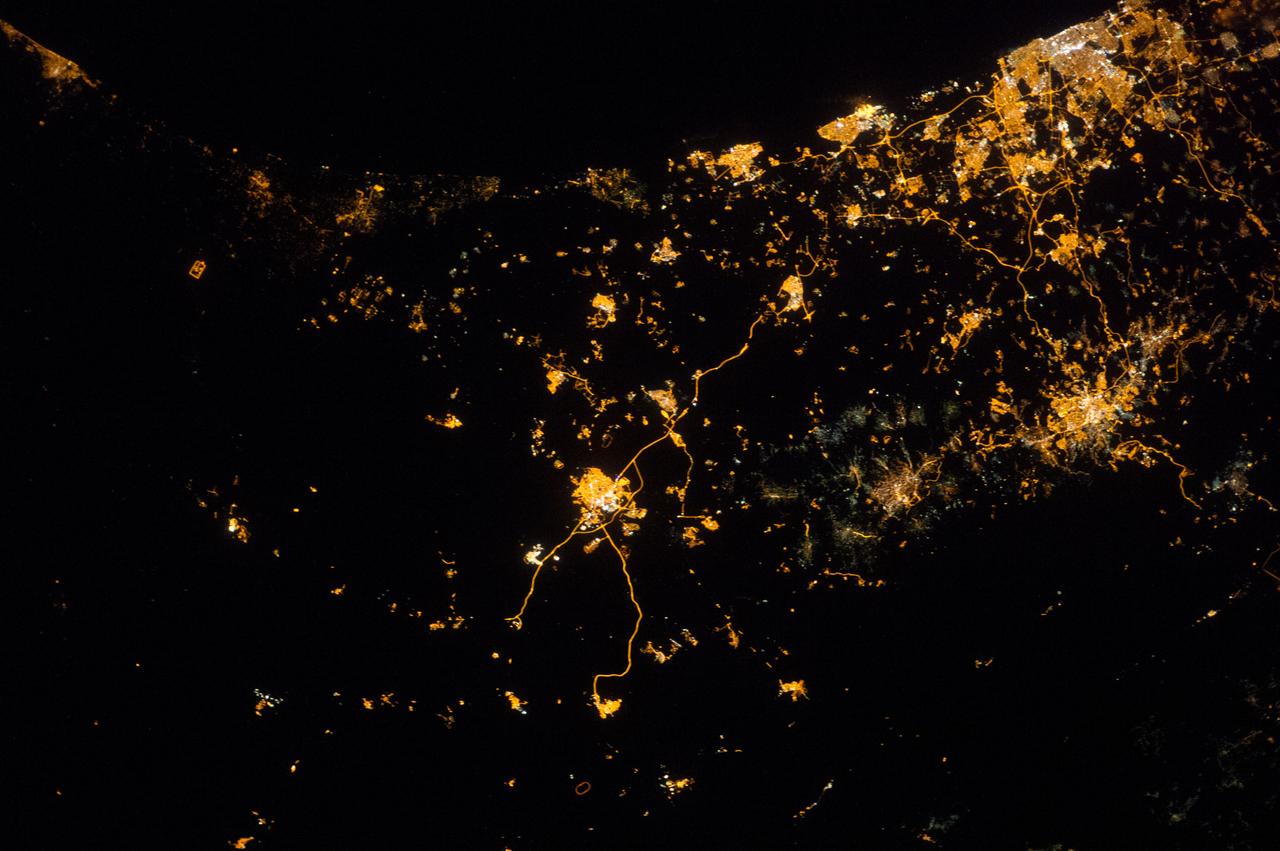
ISS040-E-074047 (22 July 2014) --- Because of city lights, several points in the mid-east along the Eastern Mediterranean Sea coast and a bit inland can be delineated in this early morning view photographed by one of the Expedition 40 crew members aboard the Earth-orbiting International Space Station on July 22, 2014. A portion of the Mediterranean Sea is at the top (northwest) of this image. The orbital outpost was flying at an altitude of approximately 223 nautical miles above a point the coordinates of which are 31.7 degrees north latitude and 34.4 degrees east longitude when the image was exposed, using an 85mm lens.
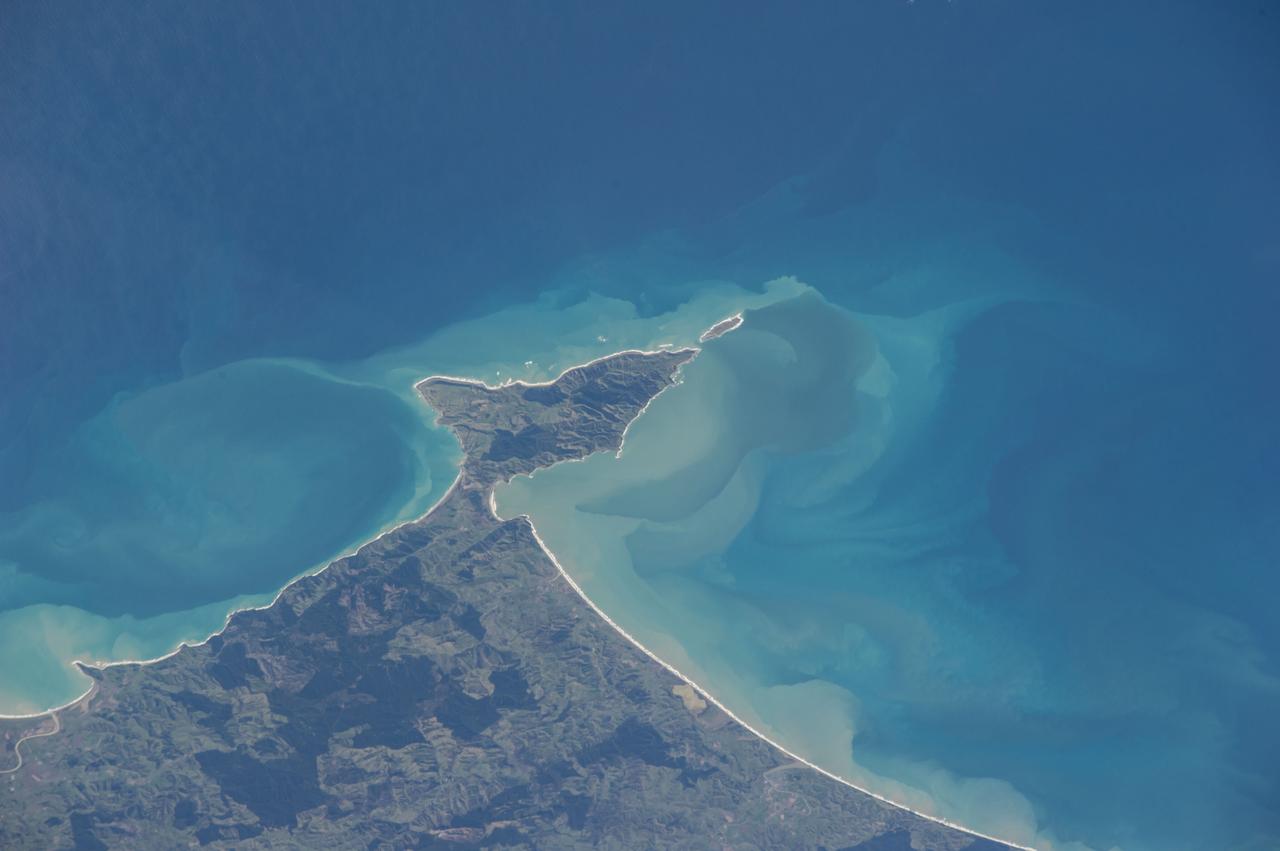
ISS040-E-091156 (10 Aug. 2014) --- One of the Expedition 40 crew members 225 nautical miles above Earth aboard the International Space Station used a 200mm lens to record this image of Hawke's Bay, New Zealand on Aug. 10, 2014. Napier and the bay area's most populous area are just out of frame at lower right.
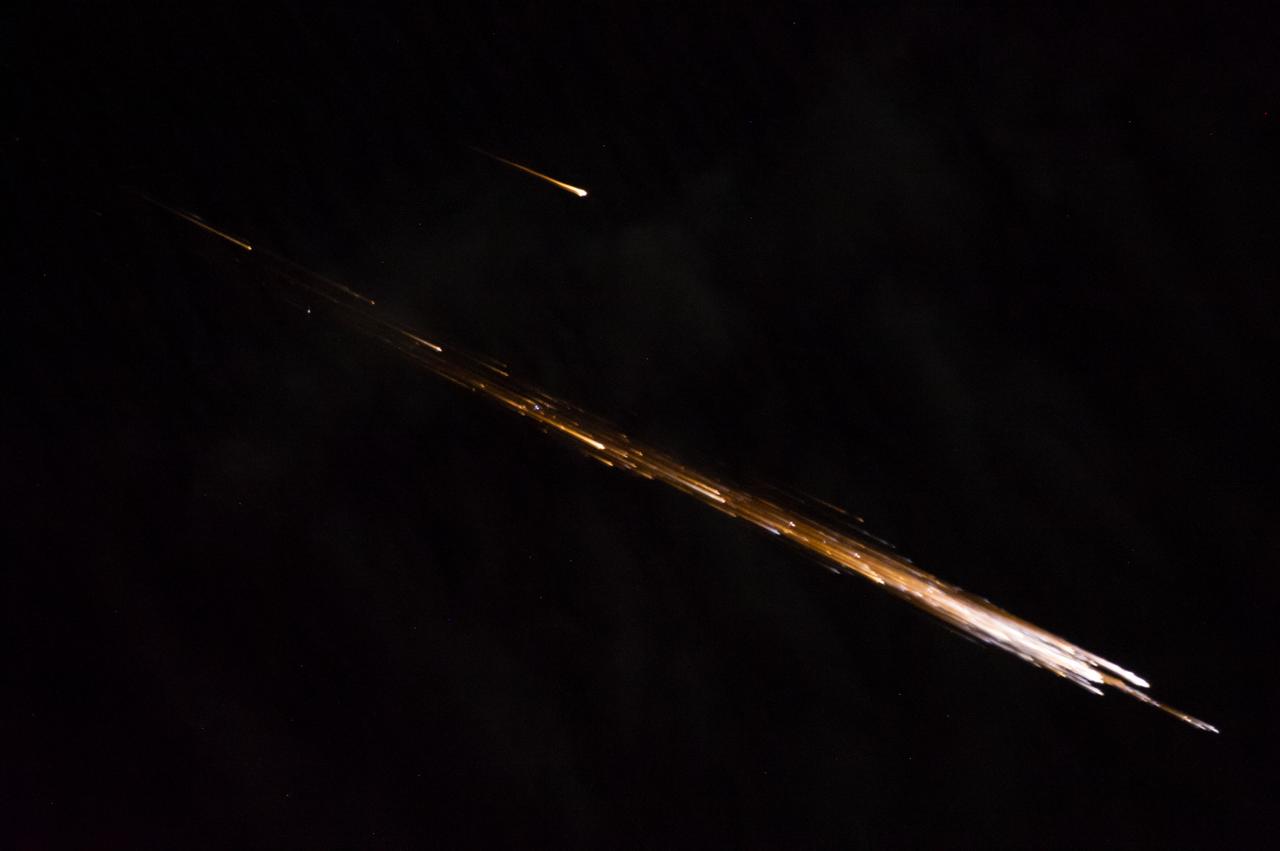
iss040e098572 (8/19/2014) --- A dark view of the Orbital Cygnus 2 reentry taken by the Expedition 40 crew. Light streak from reentry visible in frame. The Thermal Protection Material Flight Test and Reentry Data Collection (RED-Data2) investigation studies a new type of recording device that rides along a vehicle reentering Earth’s atmosphere, providing crucial data about the extreme conditions a spacecraft encounters during atmospheric reentry.

ISS041-E-067002 (7 Oct. 2014) --- NASA astronaut Reid Wiseman, Expedition 41 flight engineer, participates in a session of extravehicular activity (EVA) as work continues on the International Space Station. During the six-hour, 13-minute spacewalk, Wiseman and European Space Agency astronaut Alexander Gerst (out of frame), flight engineer, worked outside the space station's Quest airlock relocating a failed cooling pump to external stowage and installing gear that provides back up power to external robotics equipment.

ISS041-E-067002 (7 Oct. 2014) --- NASA astronaut Reid Wiseman, Expedition 41 flight engineer, participates in a session of extravehicular activity (EVA) as work continues on the International Space Station. During the six-hour, 13-minute spacewalk, Wiseman and European Space Agency astronaut Alexander Gerst (out of frame), flight engineer, worked outside the space station's Quest airlock relocating a failed cooling pump to external stowage and installing gear that provides back up power to external robotics equipment.
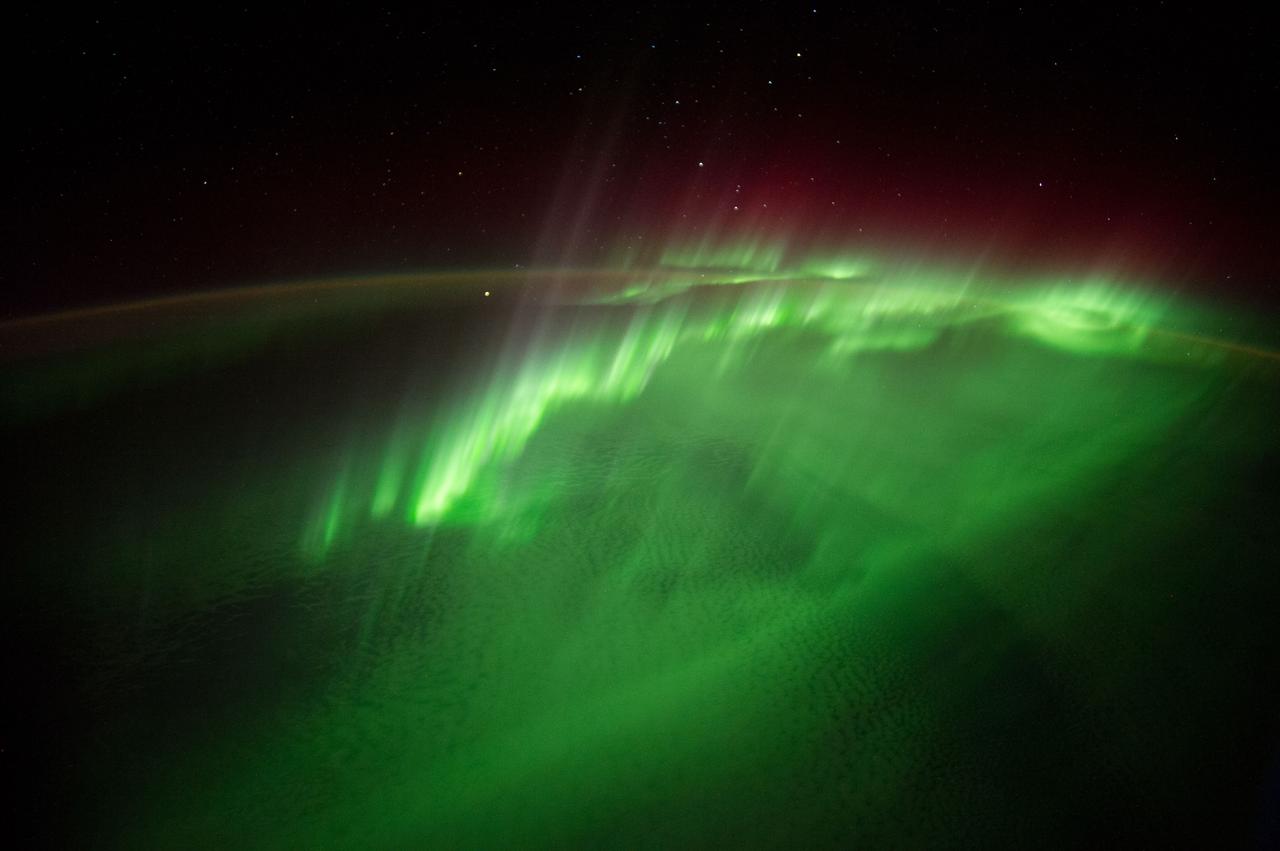
Time lapse (ISS040E117497 thru ISS040E118044) Earth observation taken during a night pass by the Expedition 40 crew aboard the International Space Station (ISS). Folder lists this as: TL SUPER Aurora 4 - from DC-1.
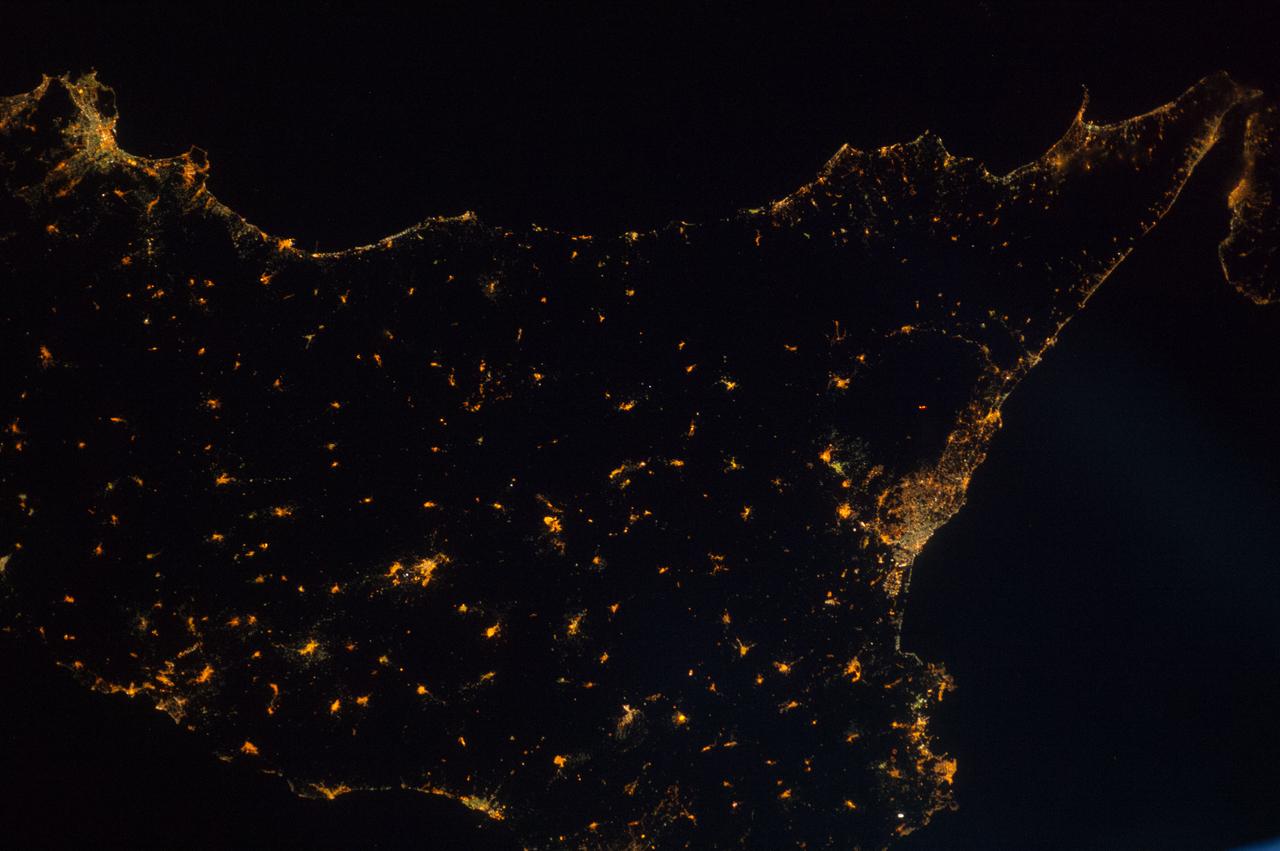
ISS040-E-087275 (1 Aug. 2014) --- Much of the Italian island/province of Sicily is visible in this nighttime nadir image photographed from 221 nautical miles above Earth by one of the Expedition 40 crew members aboard the International Space Station. The tip of the "toe" of Italy's "boot" is barely visible in the upper right corner.
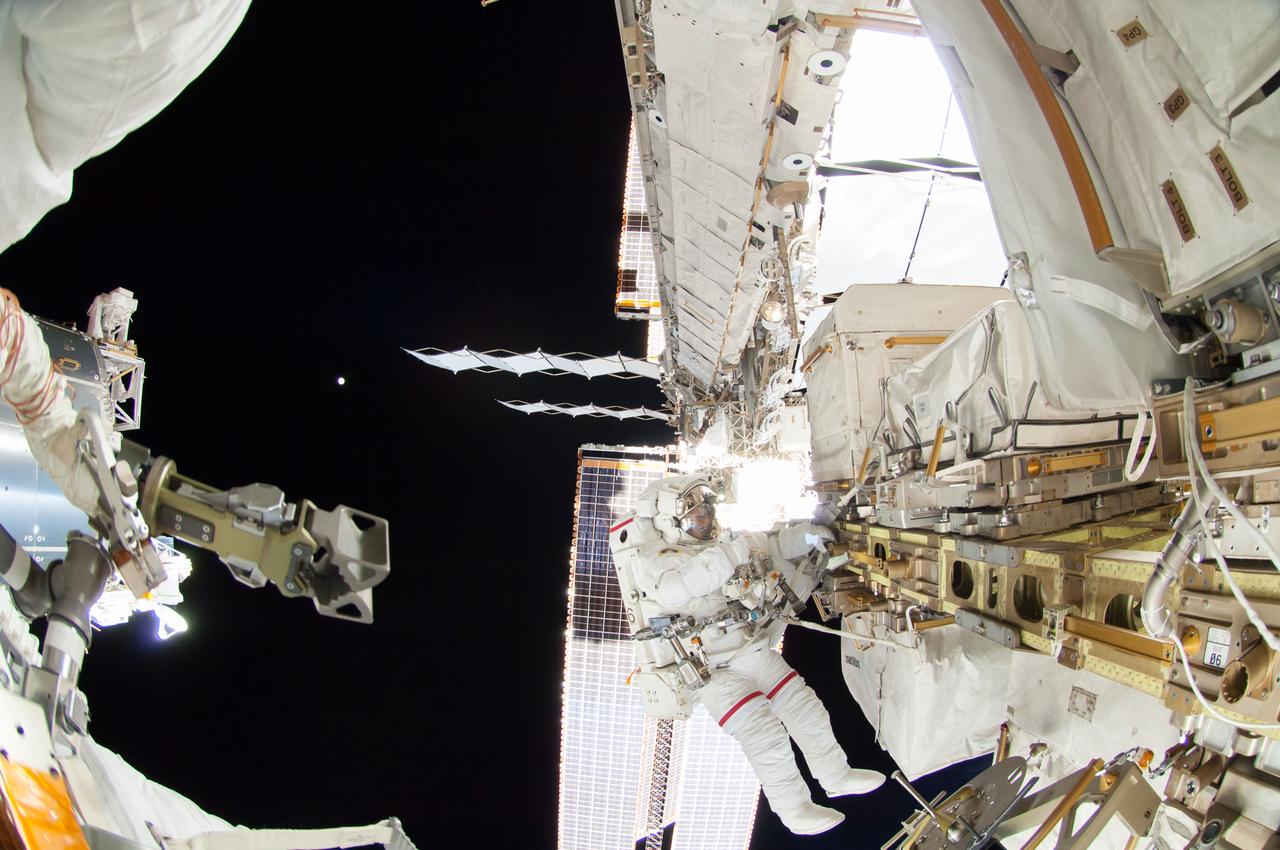
ISS041-E-067002 (7 Oct. 2014) --- NASA astronaut Reid Wiseman, Expedition 41 flight engineer, participates in a session of extravehicular activity (EVA) as work continues on the International Space Station. During the six-hour, 13-minute spacewalk, Wiseman and European Space Agency astronaut Alexander Gerst (out of frame), flight engineer, worked outside the space station's Quest airlock relocating a failed cooling pump to external stowage and installing gear that provides back up power to external robotics equipment.
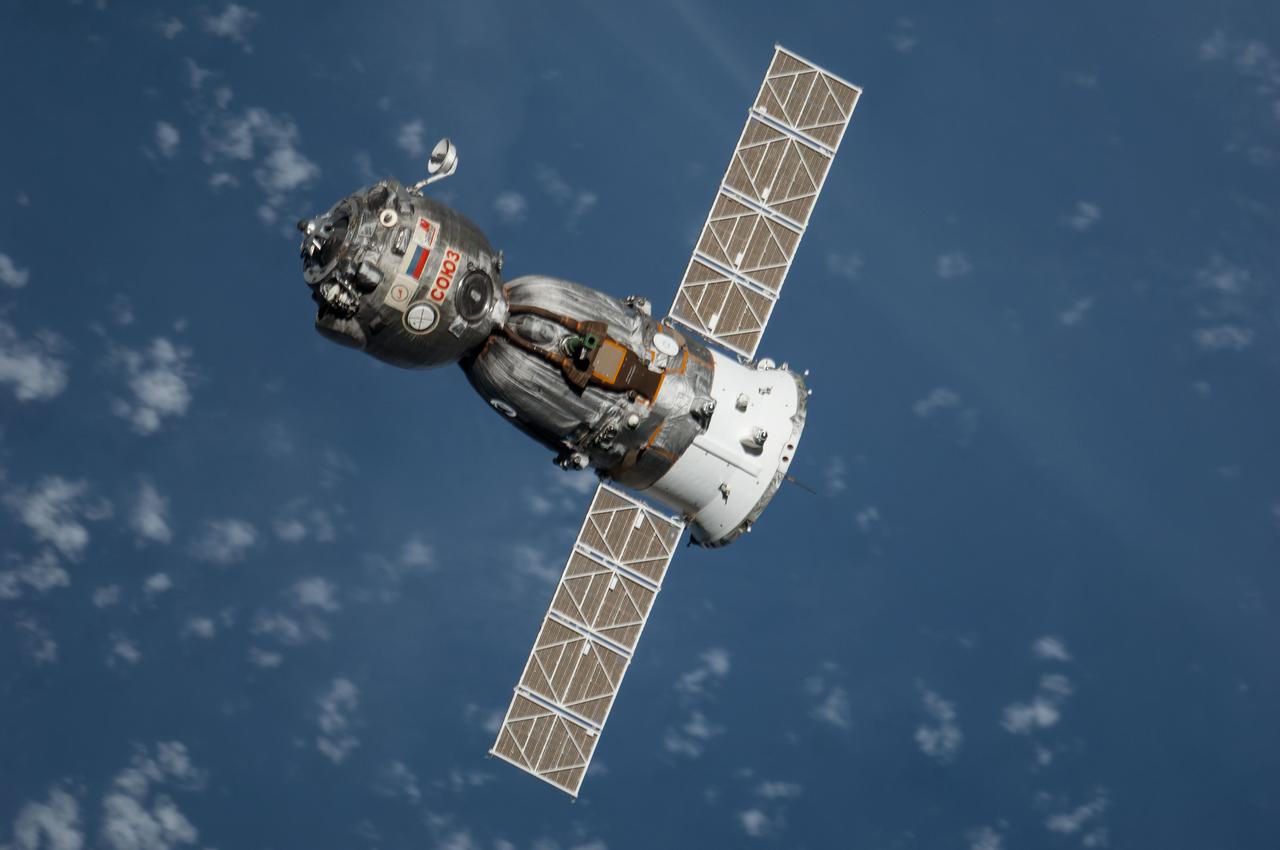
ISS041-E-000005 (10 Sept. 2014) --- The Soyuz TMA-12M spacecraft departs from the International Space Station and heads toward a landing in a remote area near the town of Zhezkazgan, Kazakhstan. NASA astronaut Steve Swanson, Expedition 40 commander; Russian cosmonaut Alexander Skvortsov, Soyuz commander and flight engineer; and Russian cosmonaut Oleg Artemyev, flight engineer, are returning from more than five months aboard the space station where they served as members of the Expedition 39 and 40 crews. Landing occurred at 10:23 p.m. (EDT), Sept. 10, 2014 (8:23 a.m., Sept. 11, Kazakh time).
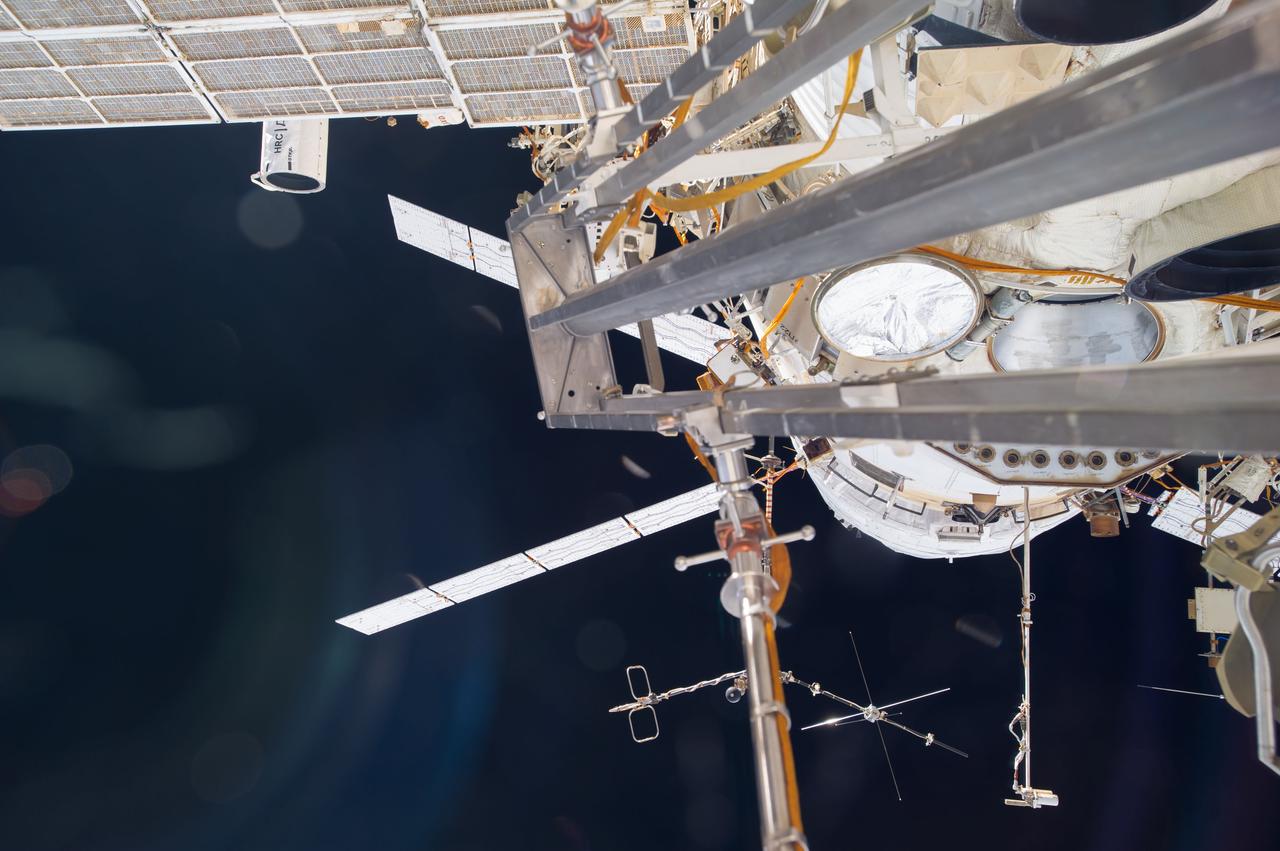
ISS040-E-123171 (2 Sept. 2014) --- A portion of the International Space Station’s Russian segment is pictured in this image photographed by an Expedition 40 crew member onboard the station. A portion of the "Georges Lemaitre" Automated Transfer Vehicle-5 (ATV-5) docked to the Zvezda Service Module is visible at right background.
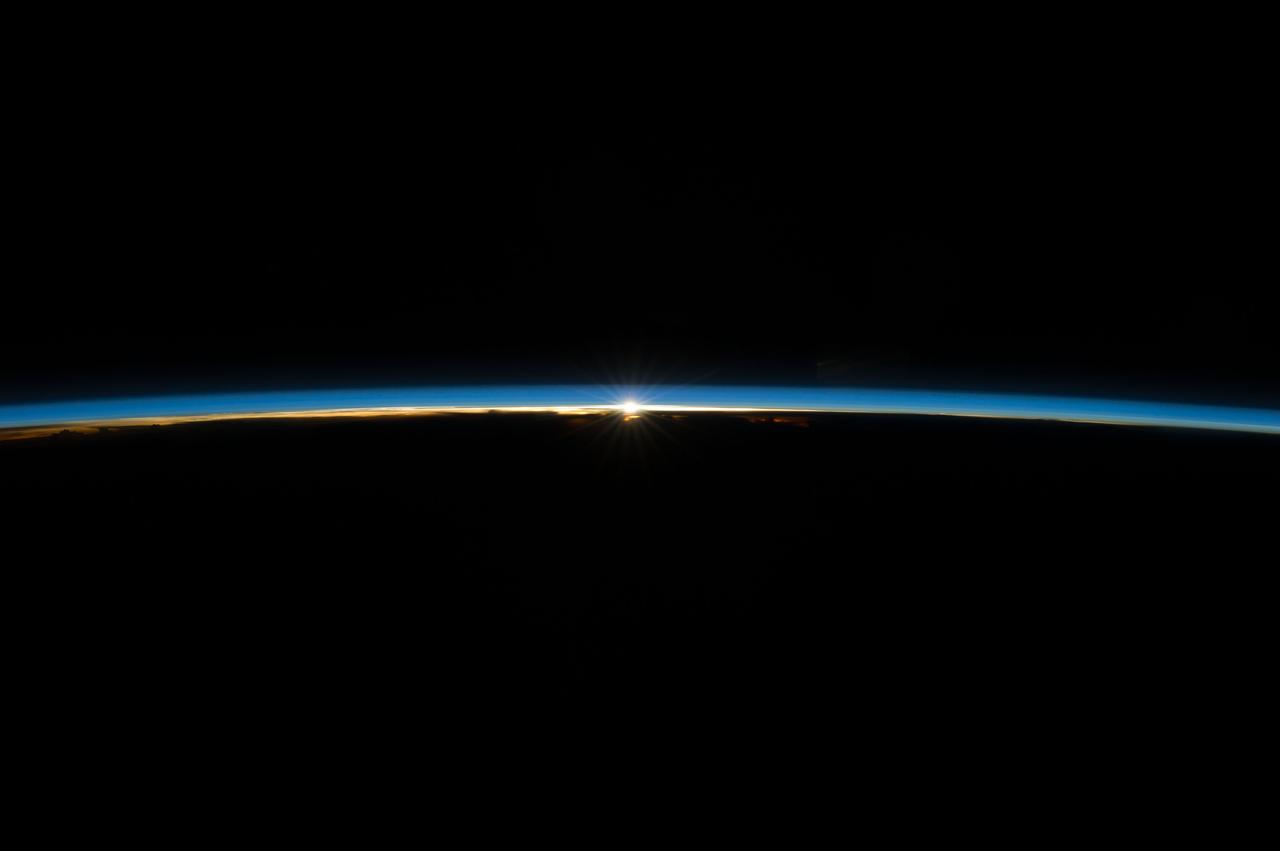
ISS040-E-008179 (7 June 2014) --- The sun, peeking through the thin line of Earth’s atmosphere, is featured in this image photographed by an Expedition 40 crew member on the International Space Station. Crew members onboard the space station see, on average, sixteen sunrises and sunsets during a 24-hour orbital period.
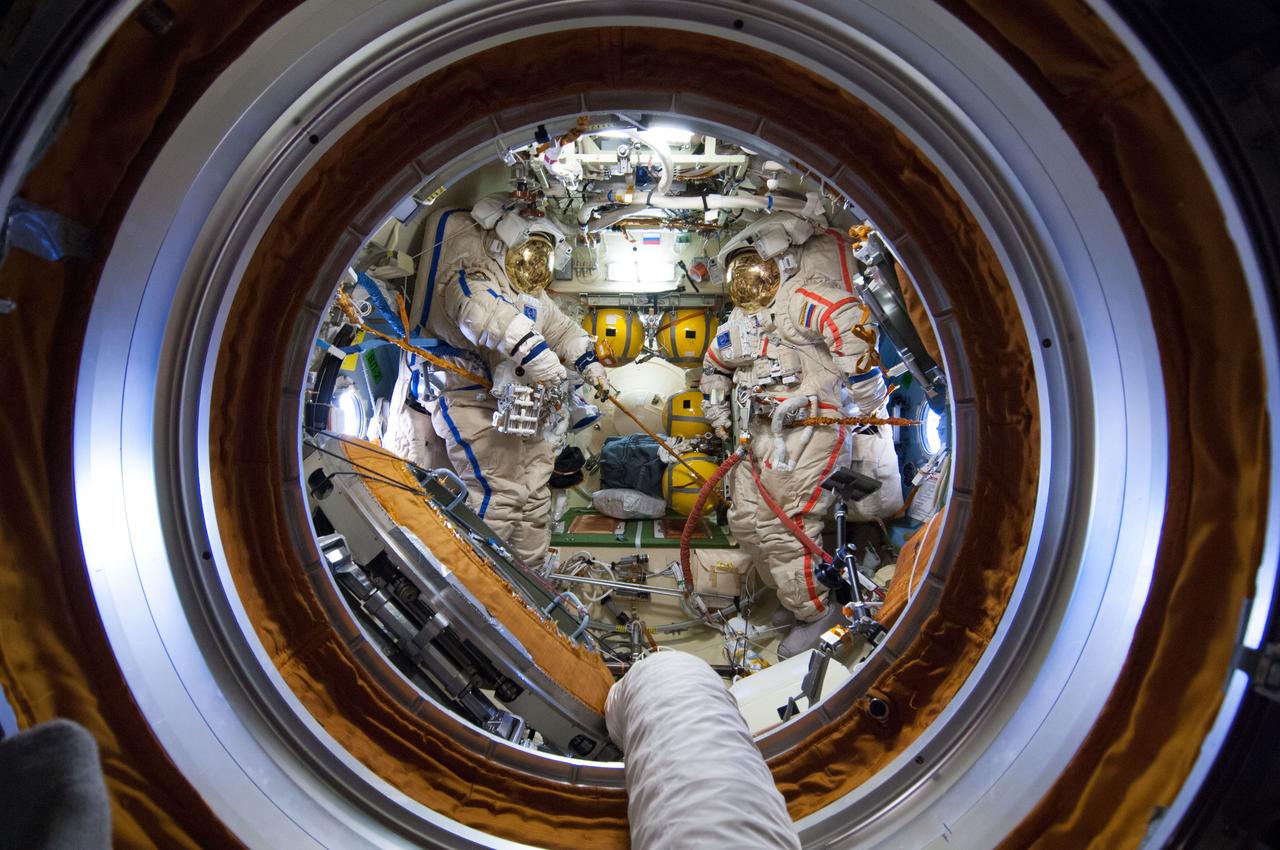
ISS040-E-095615 (17 Aug. 2014) --- Unoccupied Russian Orlan spacesuits for Russian cosmonauts Oleg Artemyev (blue stripes) and Alexander Skvortsov (red stripes), both Expedition 40 flight engineers, are pictured in the Pirs Docking Compartment of the International Space Station on the eve of the spacewalk scheduled for Aug. 18, 2014.
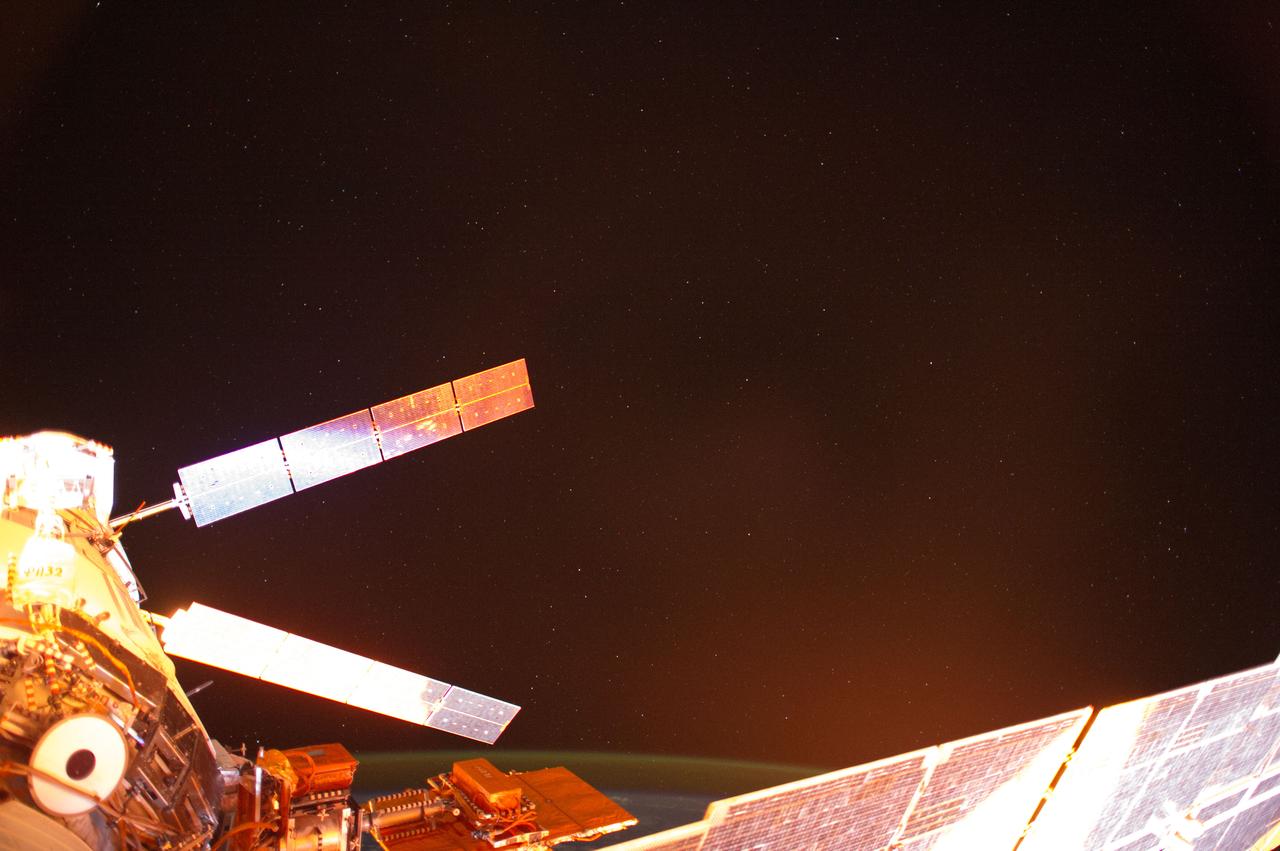
ISS041-E-013693 (13 Sept. 2014) --- Photographed with a mounted automated camera, this is one of a number of images featuring the European Space Agency?s Automated Transfer Vehicle (ATV-5 or Georges Lemaitre) docked with the International Space Station. Except for color changes, the images are almost identical. The variation in color from frame to frame is due to the camera?s response to the motion of the orbital outpost, relative to the illumination from the sun.
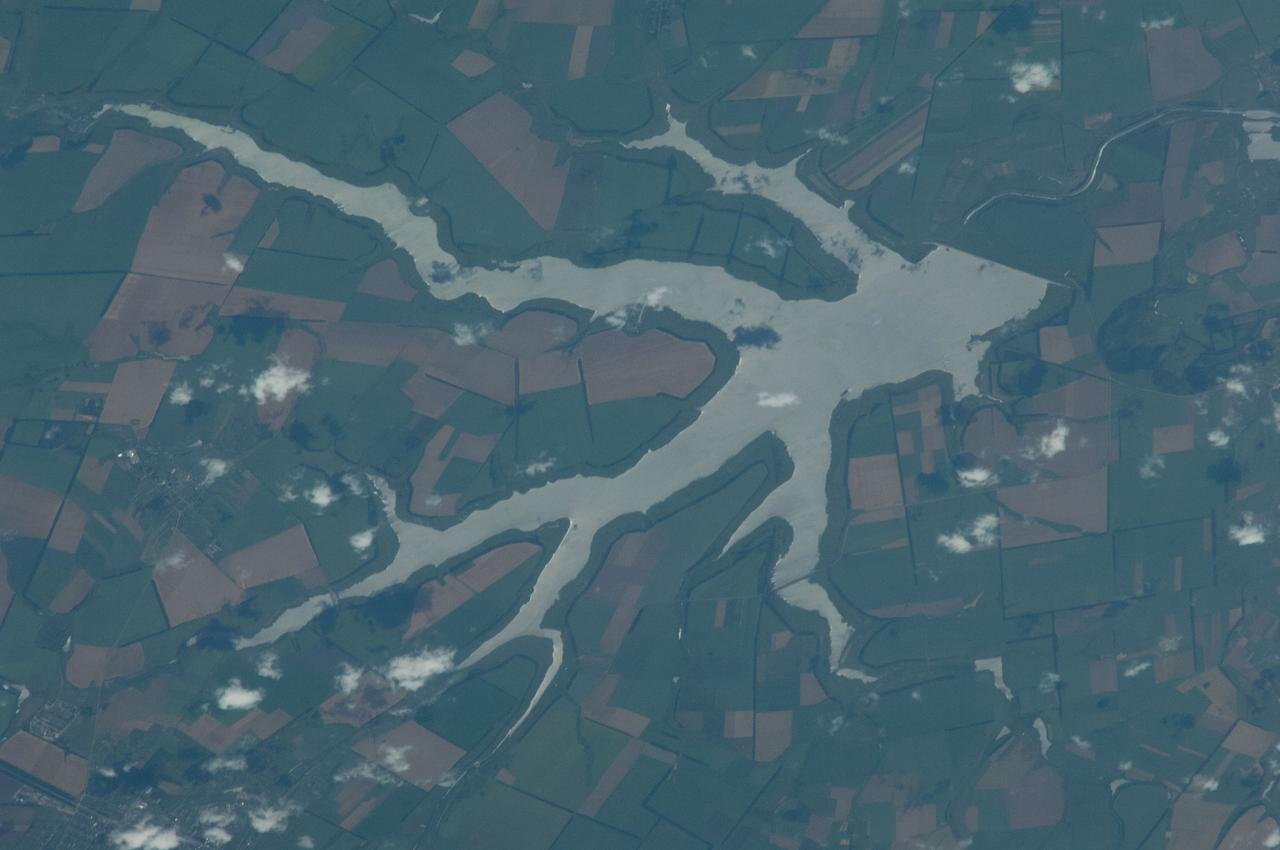
Earth Observation taken during day pass by the Expedition 40 crew aboard the International Space Station (ISS).

Earth Observation taken during a day pass by the Expedition 40 crew aboard the International Space Station (ISS). Folder lists this as: EOS Target Dunes in Tunesia, Italy.

View of Hurricane Edouard taken by Expedition 41 crewmember.

ISS041-E-067002 (7 Oct. 2014) --- NASA astronaut Reid Wiseman, Expedition 41 flight engineer, participates in a session of extravehicular activity (EVA) as work continues on the International Space Station. During the six-hour, 13-minute spacewalk, Wiseman and European Space Agency astronaut Alexander Gerst (out of frame), flight engineer, worked outside the space station's Quest airlock relocating a failed cooling pump to external stowage and installing gear that provides back up power to external robotics equipment.
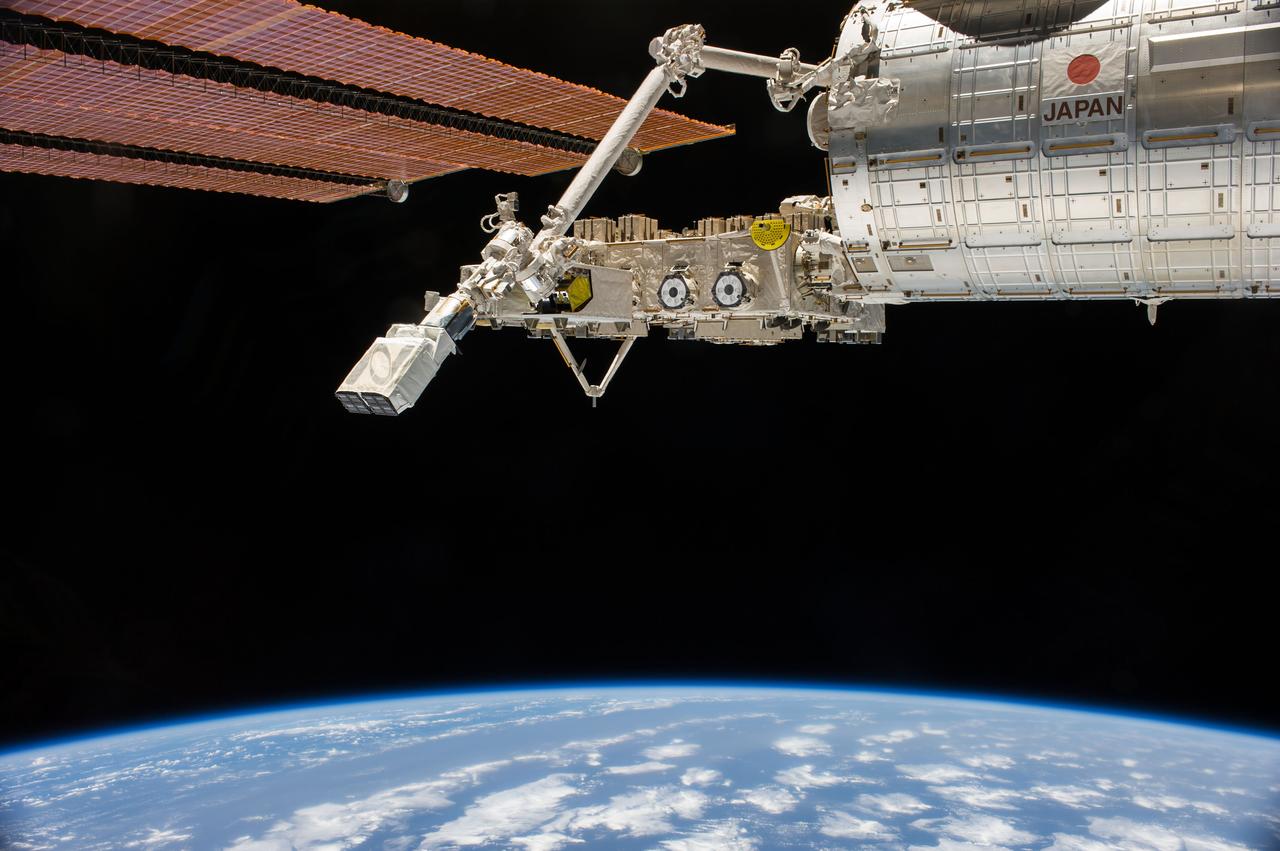
ISS040-E-103506 (19 Aug. 2014) --- In the grasp of the Japanese robotic arm, the CubeSat deployer is about to release a pair of NanoRacks CubeSat miniature satellites. The Planet Labs Dove satellites that were carried to the International Space Station aboard the Orbital Sciences Cygnus commercial cargo craft are being deployed between Aug. 19 and Aug. 25. The station?s Kibo laboratory is at top right. A blue and white part of Earth and the blackness of space provide the backdrop for the scene.
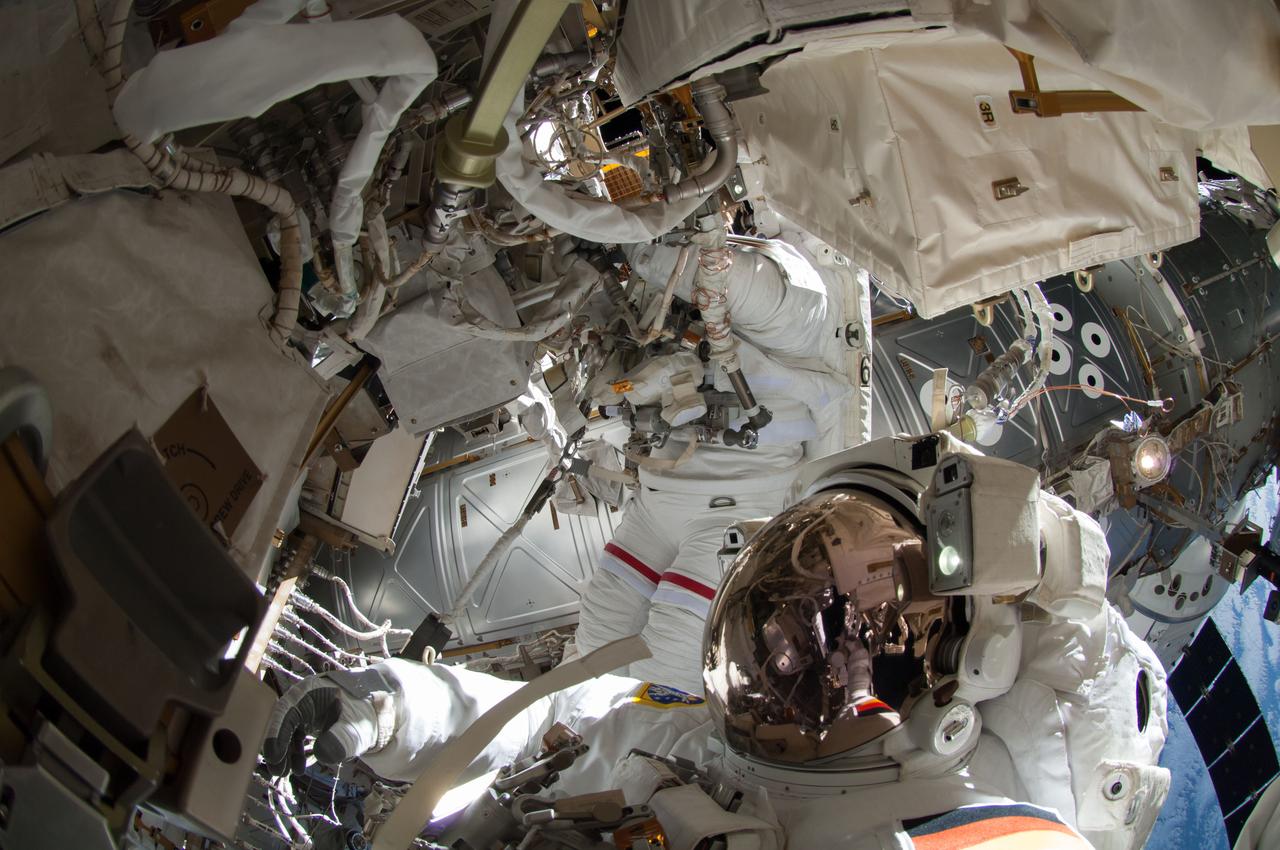
ISS041-E-067002 (7 Oct. 2014) --- NASA astronaut Reid Wiseman, Expedition 41 flight engineer, participates in a session of extravehicular activity (EVA) as work continues on the International Space Station. During the six-hour, 13-minute spacewalk, Wiseman and European Space Agency astronaut Alexander Gerst (out of frame), flight engineer, worked outside the space station's Quest airlock relocating a failed cooling pump to external stowage and installing gear that provides back up power to external robotics equipment.
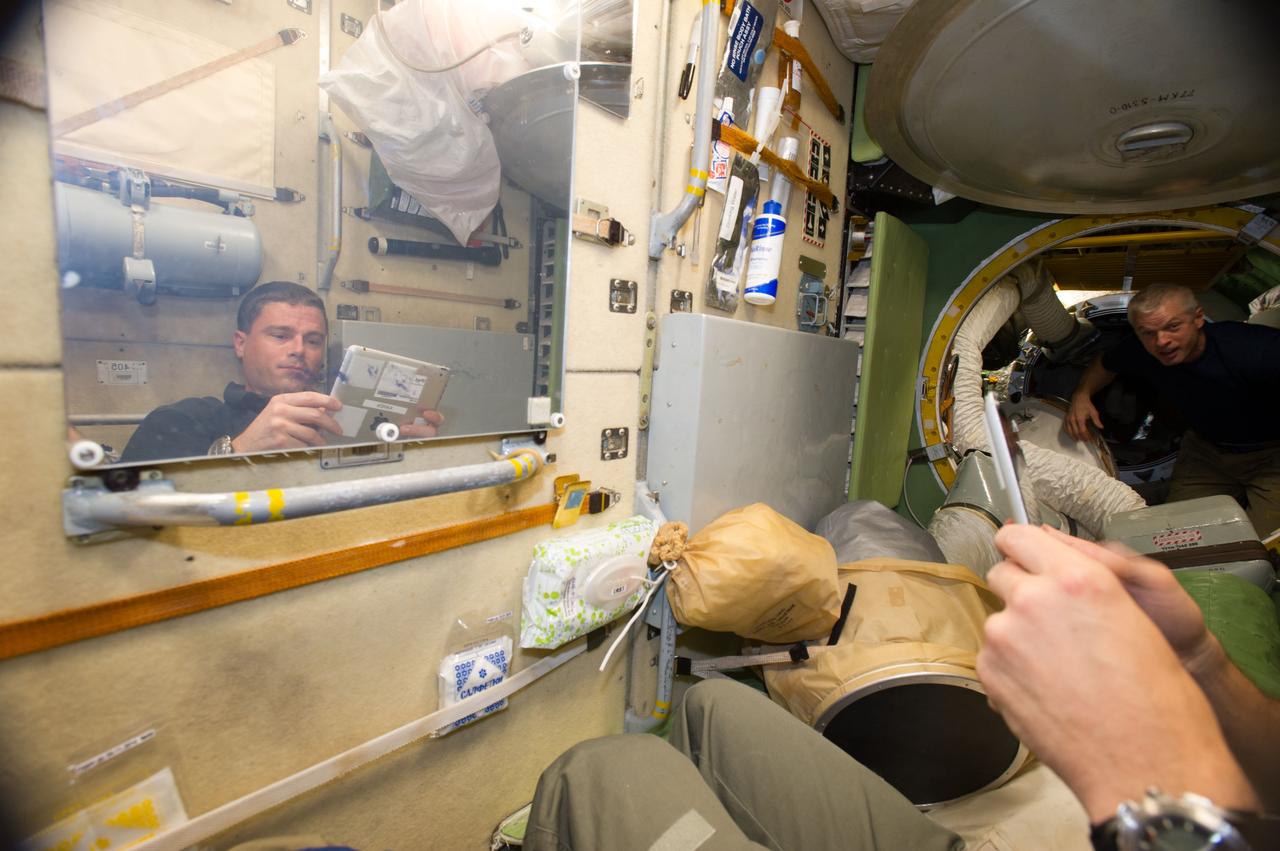
ISS040-E-008052 (6 June 2014) --- NASA astronaut Reid Wiseman, Expedition 40 flight engineer, is pictured in the reflection of a mirror using a computer in the Russian section of the International Space Station. NASA astronaut Steve Swanson, commander, is visible in the background.
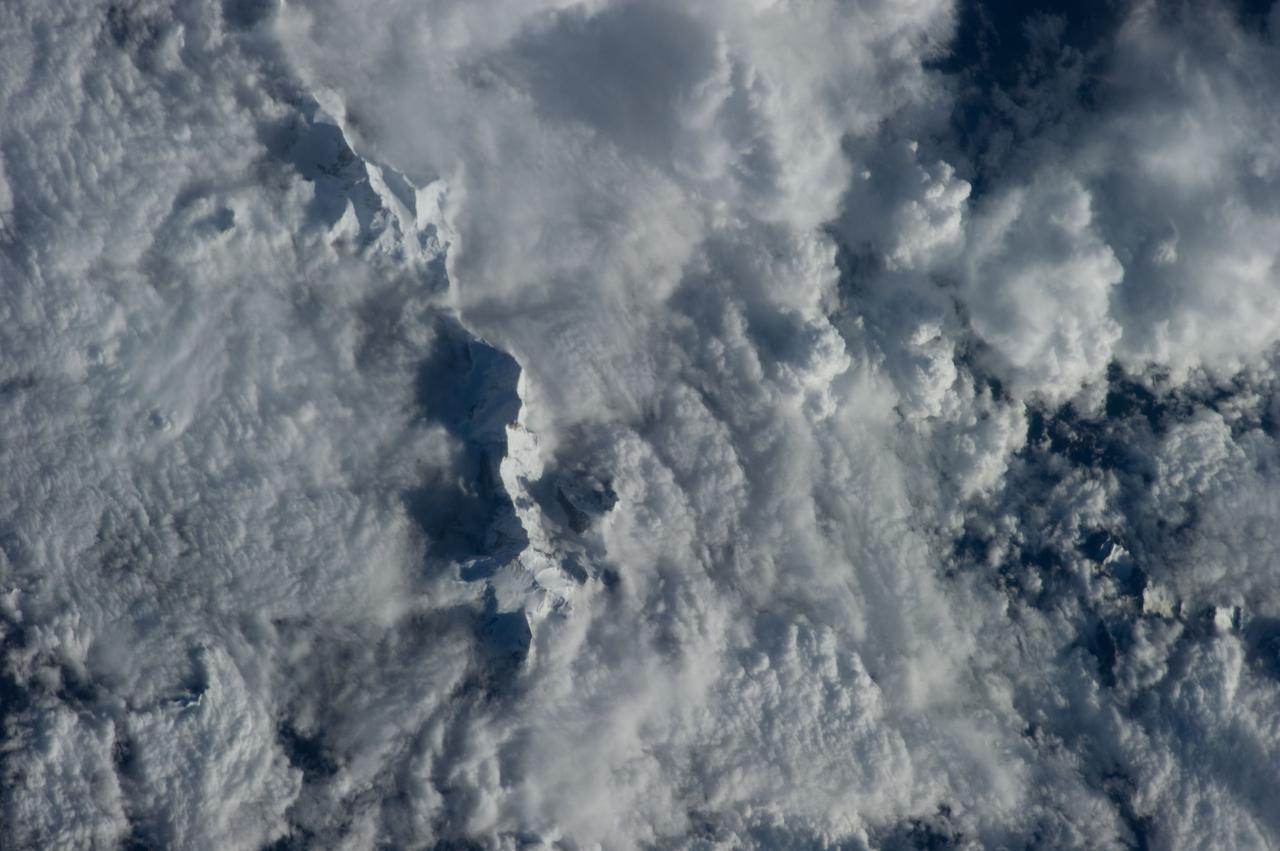
Earth Observation taken during a day pass by the Expedition 40 crew aboard the International Space Station (ISS). Folder lists this as: Himalayans (maybe Everest).
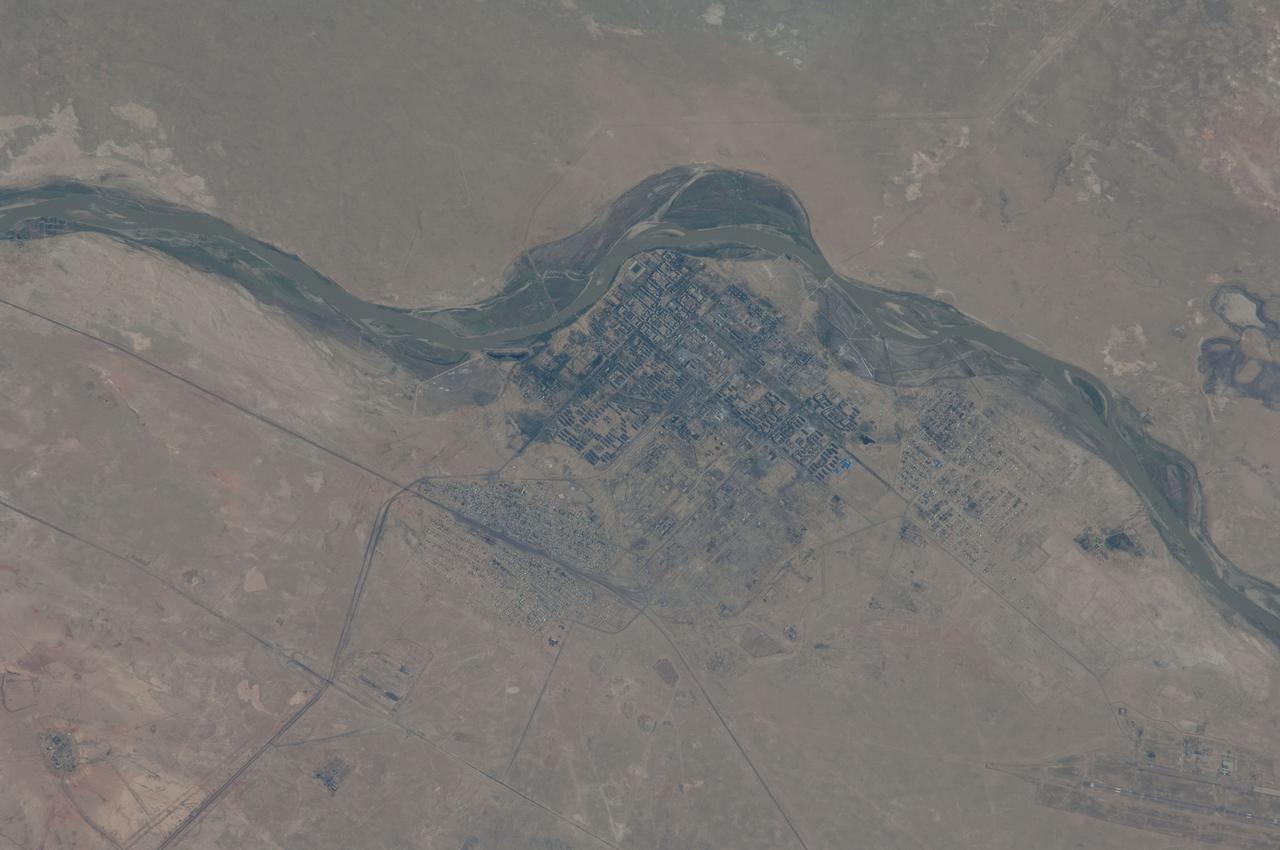
Earth Observation taken during day pass by the Expedition 40 crew aboard the International Space Station (ISS).
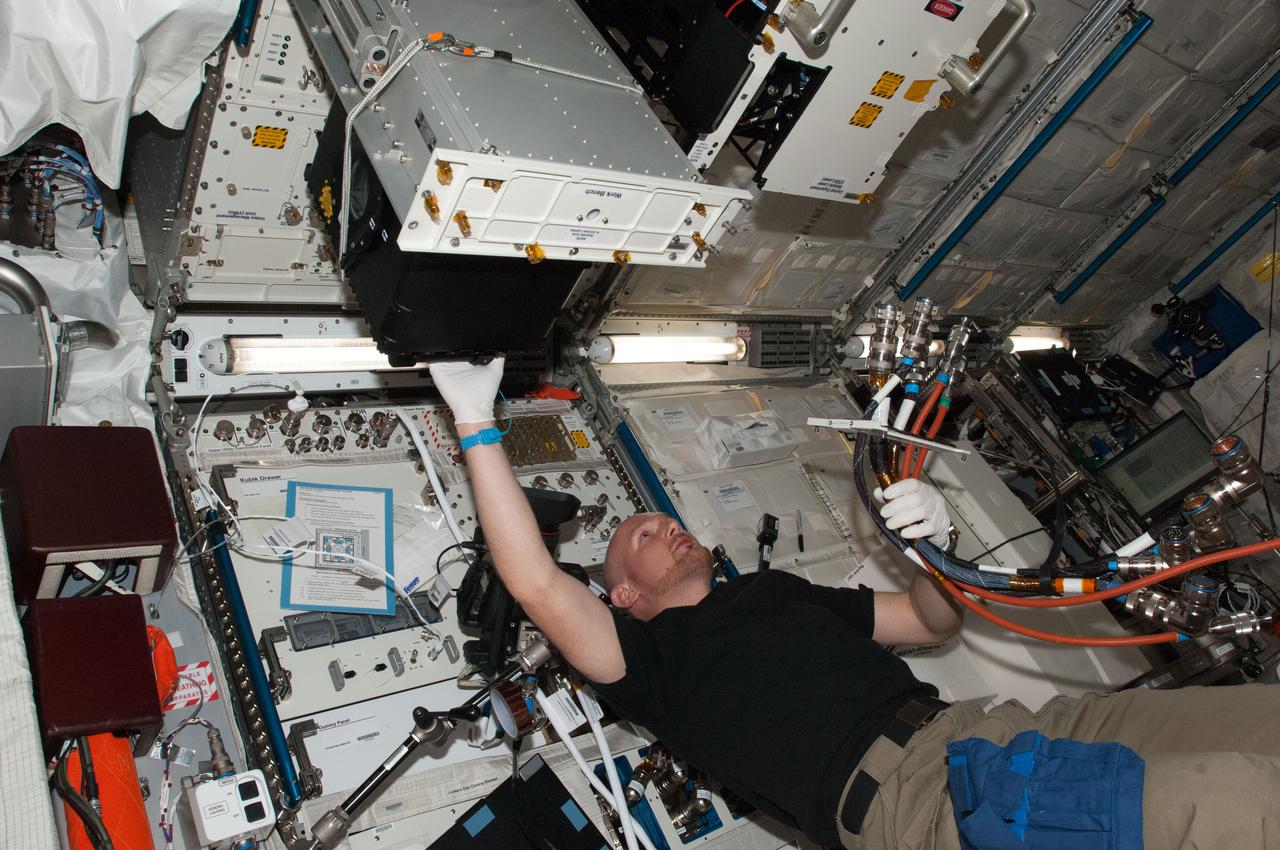
ISS040-E-014865 (18 June 2014) --- European Space Agency astronaut Alexander Gerst, Expedition 40 flight engineer, works with Fundamental and Applied Studies of Emulsion Stability (FASES) experiment hardware in the Columbus laboratory of the International Space Station. The emulsion study sponsored by ESA and located inside the Columbus laboratory Fluids Science Laboratory could lead to environmentally friendly products with industrial and space applications.
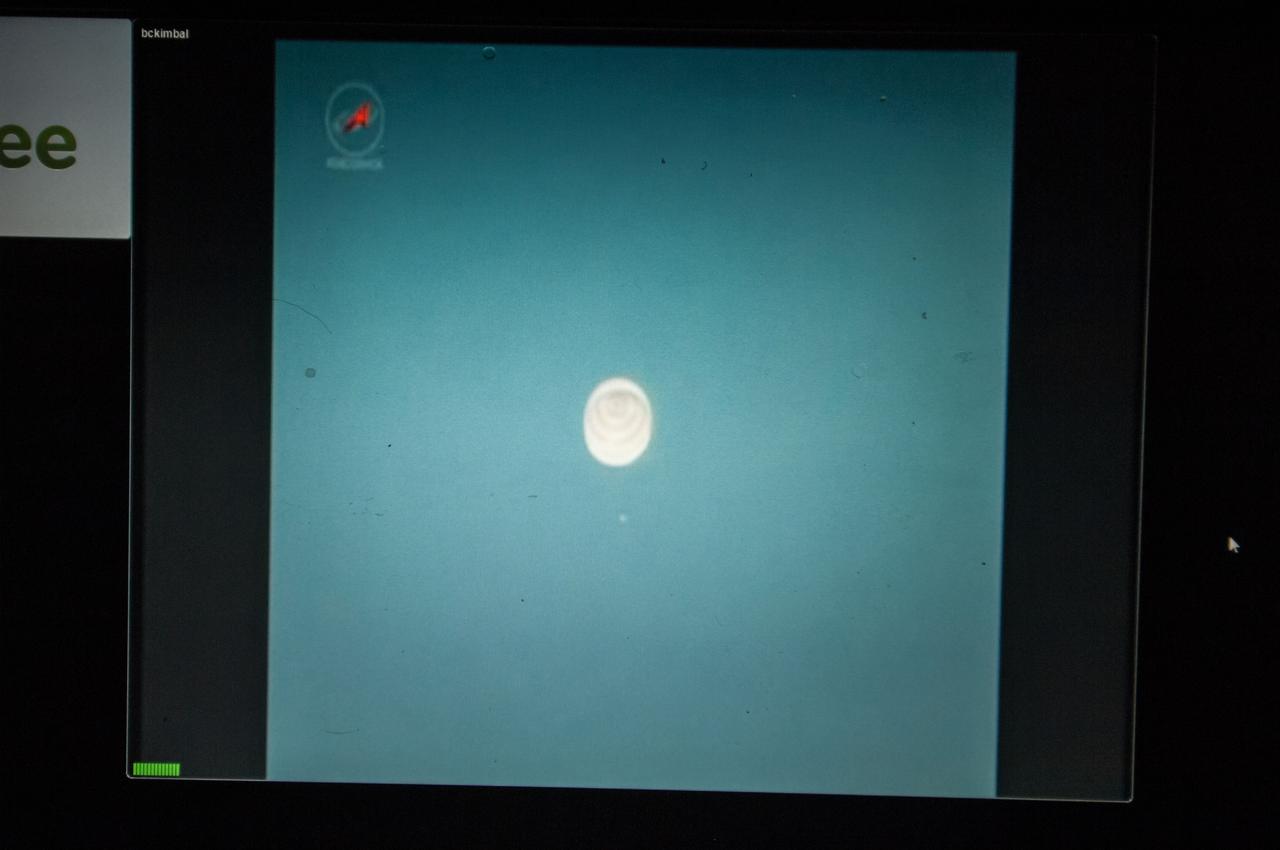
ISS041-E-000003 (11 Sept. 2014) --- A close-up view of a computer monitor onboard the International Space Station, photographed by an Expedition 41 crew member, shows the landing of the Soyuz TMA-12M spacecraft with NASA astronaut Steve Swanson, Expedition 40 commander; Russian cosmonaut Alexander Skvortsov, Soyuz commander and flight engineer; and Russian cosmonaut Oleg Artemyev, flight engineer, onboard.
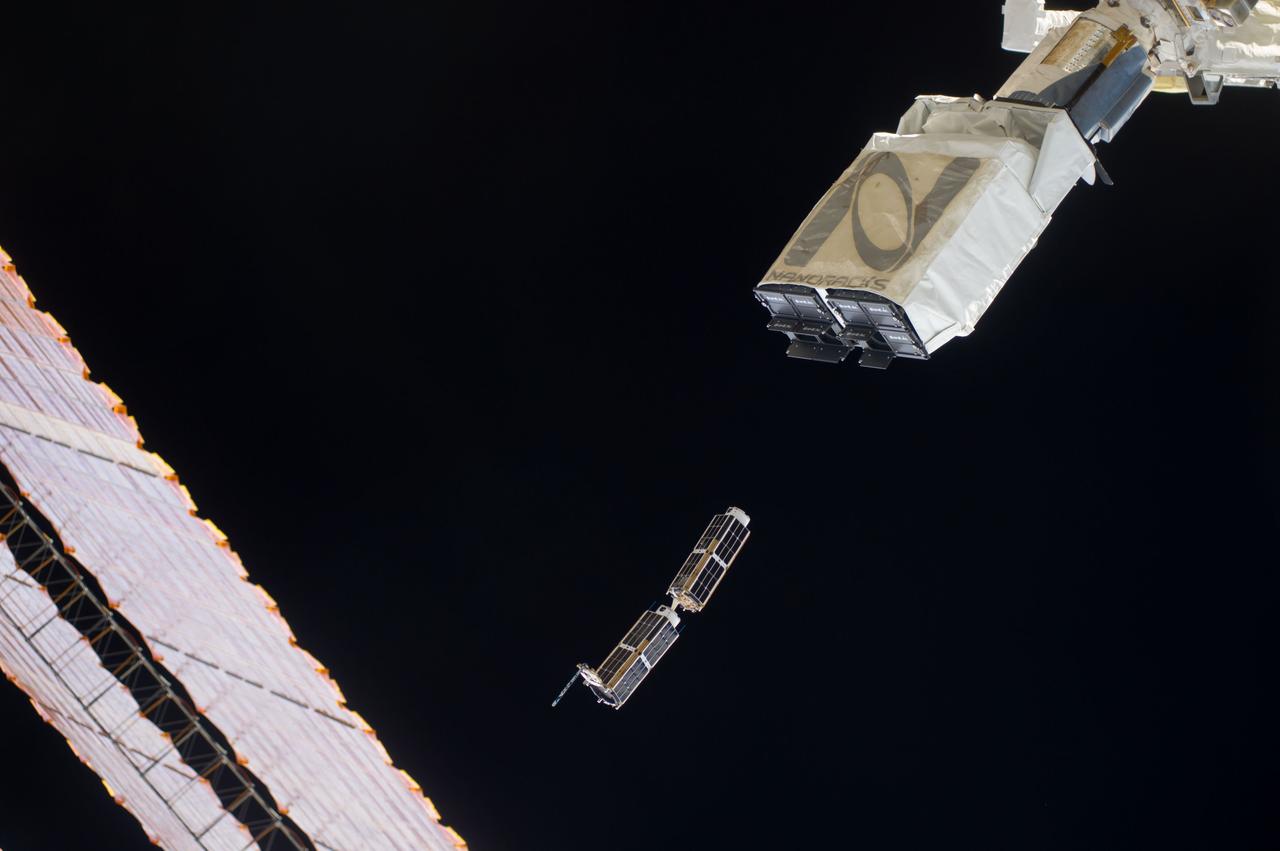
ISS040-E-102425 (20 Aug. 2014) --- In the grasp of the Japanese robotic arm, the CubeSat deployer releases a pair of NanoRacks CubeSat miniature satellites. The Planet Labs Dove satellites that were carried to the International Space Station aboard the Orbital Sciences Cygnus commercial cargo craft are being deployed between Aug. 19 and Aug. 25. A section of the station solar array wings is at left.
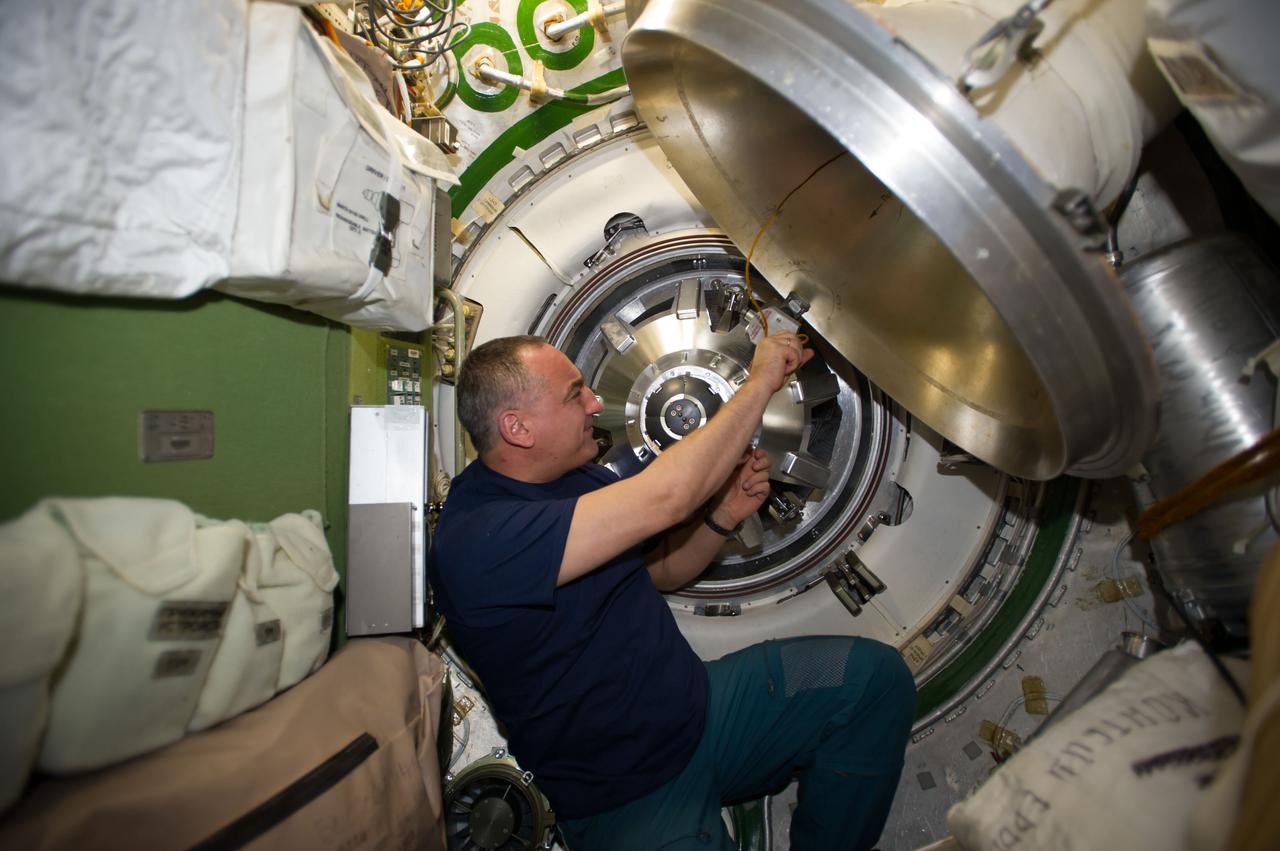
ISS040-E-091940 (13 Aug. 2014) --- Russian cosmonaut Alexander Skvortsov, Expedition 40 flight engineer, prepares to remove the docking mechanism to gain access to the hatch of the newly attached "Georges Lemaitre" Automated Transfer Vehicle-5 (ATV-5).

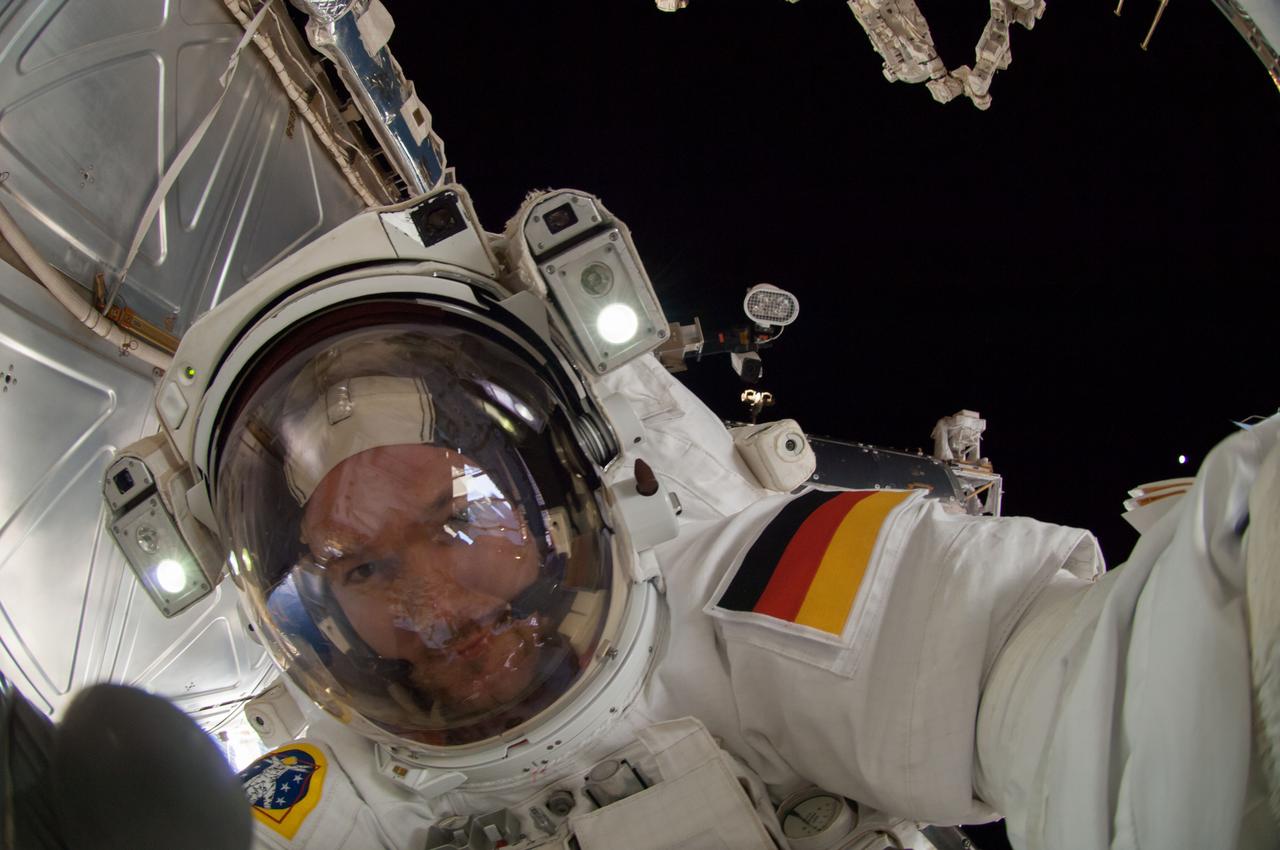
iss056e174037 (Sept. 17, 2018) --- ESA (European Space Agency) astronaut Alexander Gerst is pictured wearing a U.S. spacesuit during a fit check inside the U.S. Quest Airlock where U.S. spacewalks are staged. The patch on Gerst's left shoulder represents the flag of his home country of Germany.
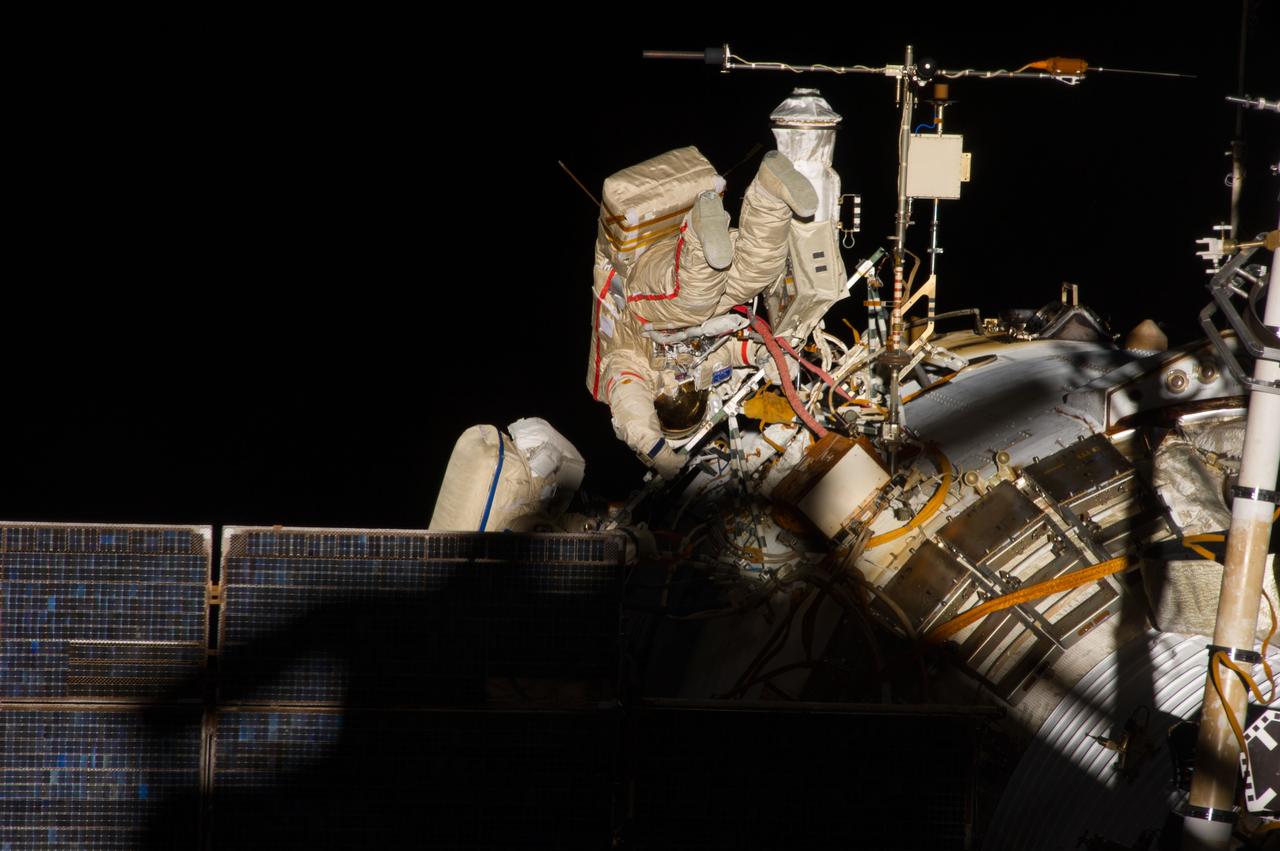
ISS040-E-015652 (19 June 2014) --- Russian cosmonauts Alexander Skvortsov (right) and Oleg Artemyev, both Expedition 40 flight engineers, participate in a session of extravehicular activity (EVA) as work continues on the International Space Station. During the seven-hour, 23-minute spacewalk Skvortsov and Artemyev completed installation and experiment tasks outside the station’s Russian segment.

ISS041-E-067002 (7 Oct. 2014) --- NASA astronaut Reid Wiseman, Expedition 41 flight engineer, participates in a session of extravehicular activity (EVA) as work continues on the International Space Station. During the six-hour, 13-minute spacewalk, Wiseman and European Space Agency astronaut Alexander Gerst (out of frame), flight engineer, worked outside the space station's Quest airlock relocating a failed cooling pump to external stowage and installing gear that provides back up power to external robotics equipment.
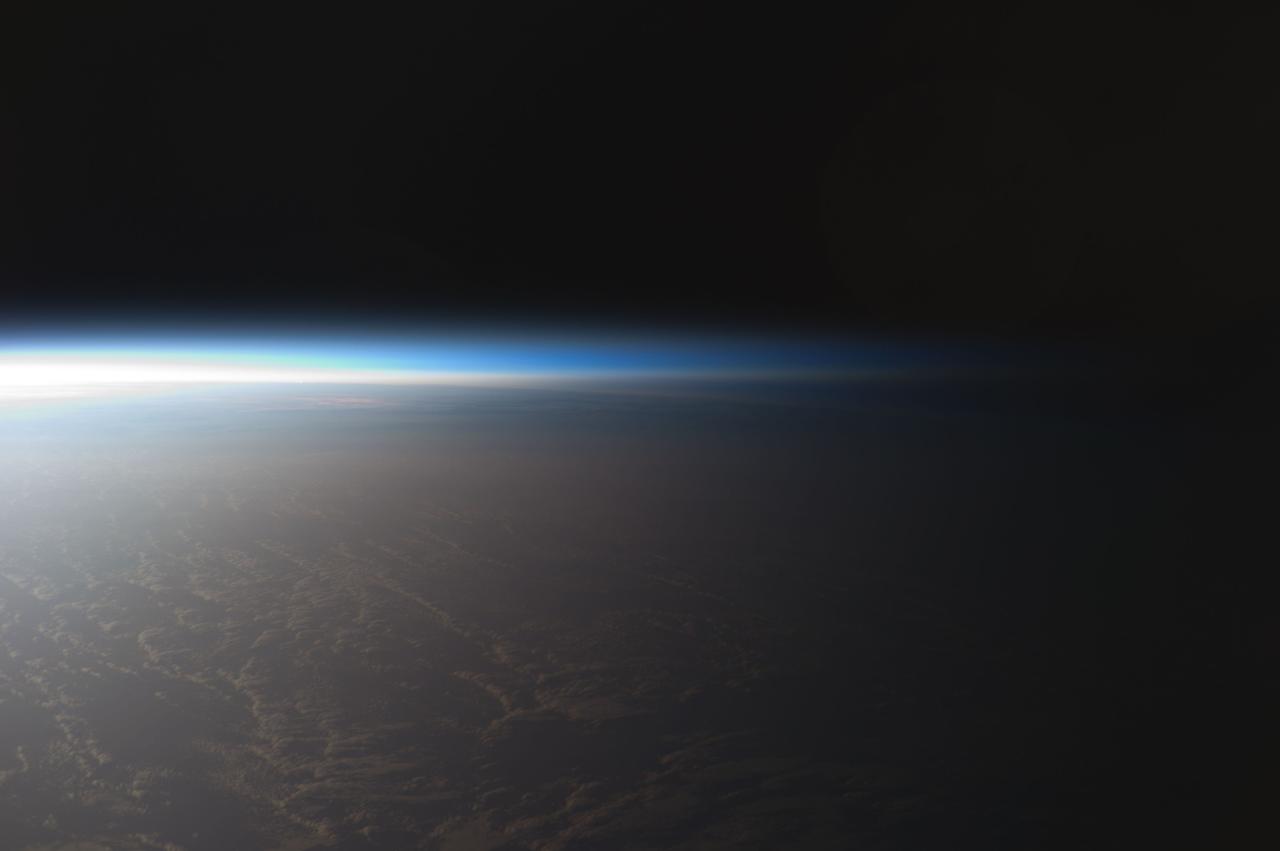
Earth Observation taken during a night pass by the Expedition 40 crew aboard the International Space Station (ISS).
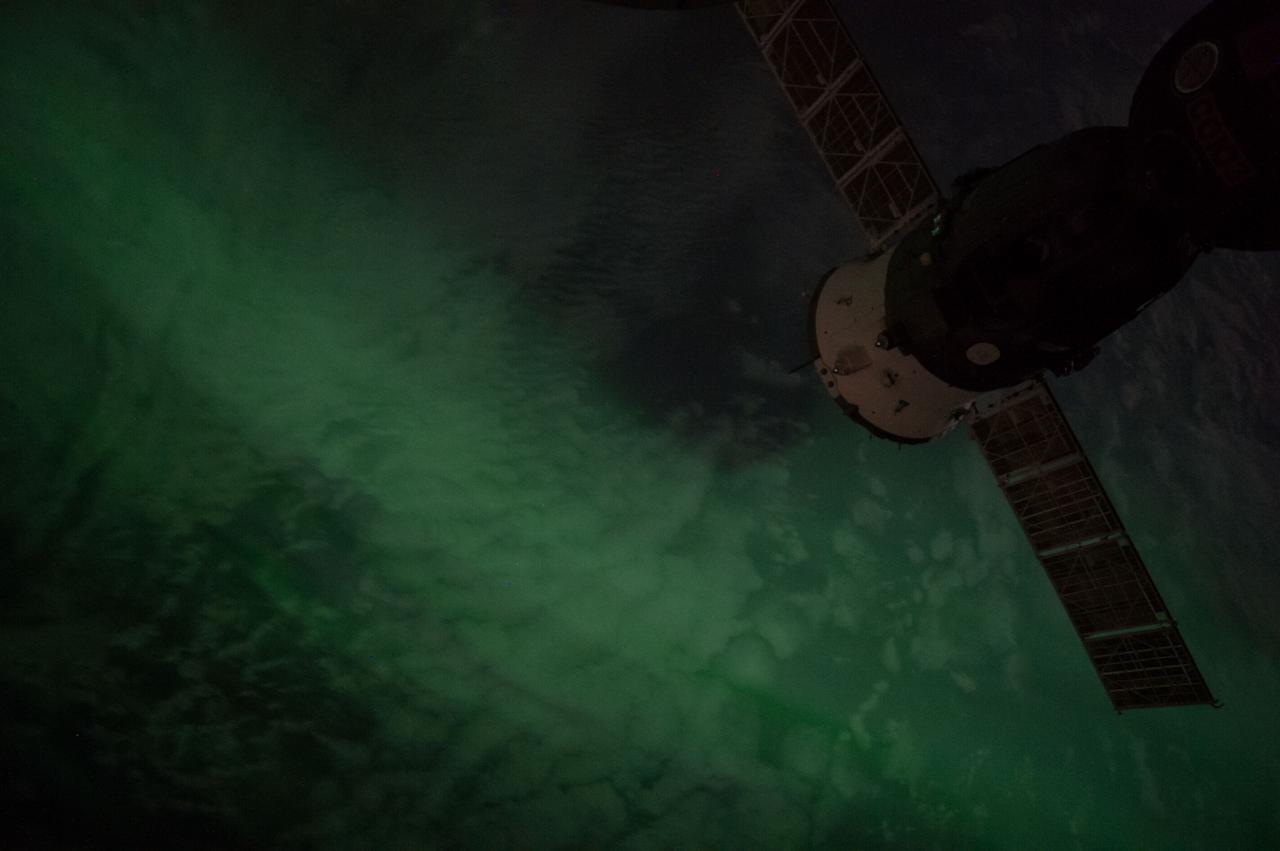
Earth Observation taken during a night pass by the Expedition 40 crew aboard the International Space Station (ISS). Folder lists this as: New Zealand Aurora night pass. On crewmember's Flickr page - Look straight down into an aurora.
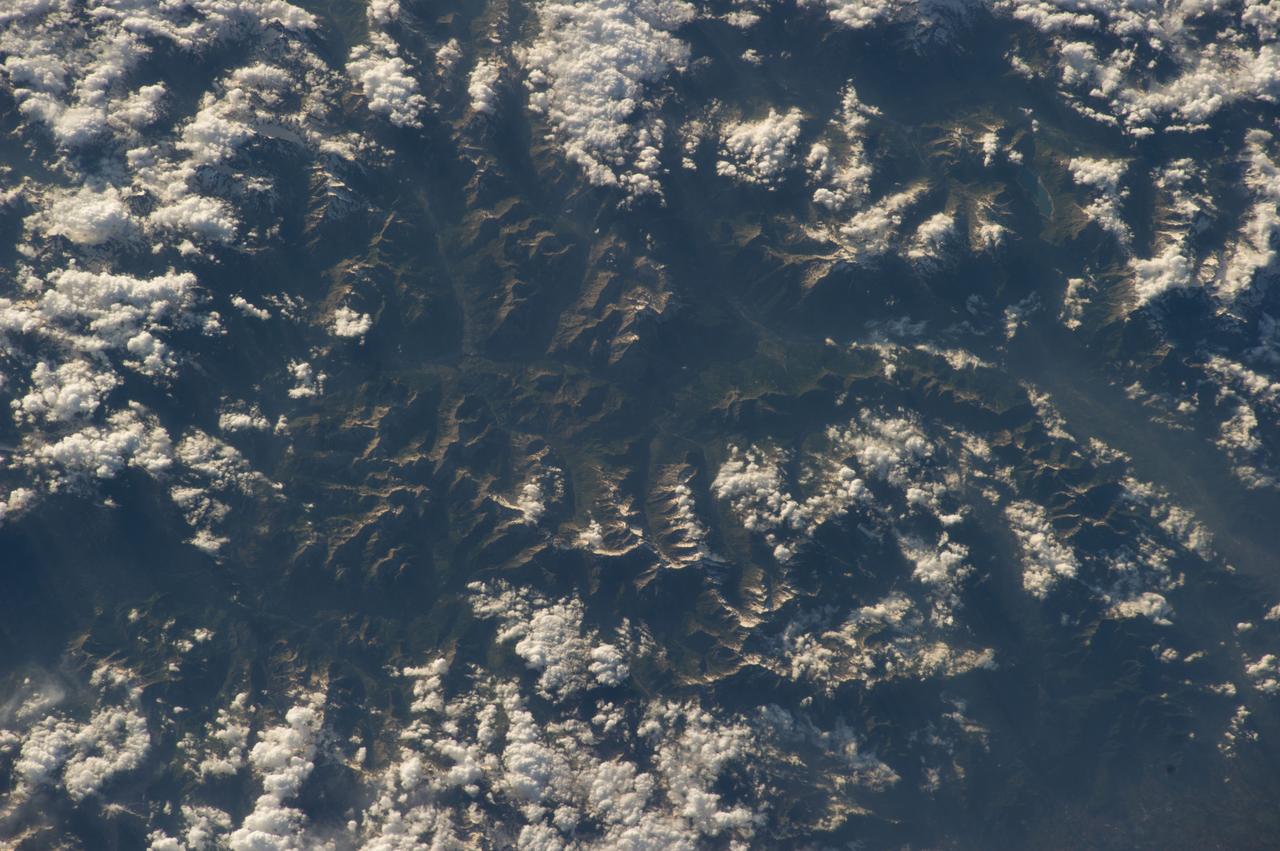
Earth Observation taken by the Expedition 40 crew aboard the International Space Station (ISS). Folder lists this as: Alps & Italy (Naples coast).

Earth observation taken by the Expedition 40 crew aboard the International Space Station (ISS). Folder lists this as: Jakarta and Typhoon Halong.
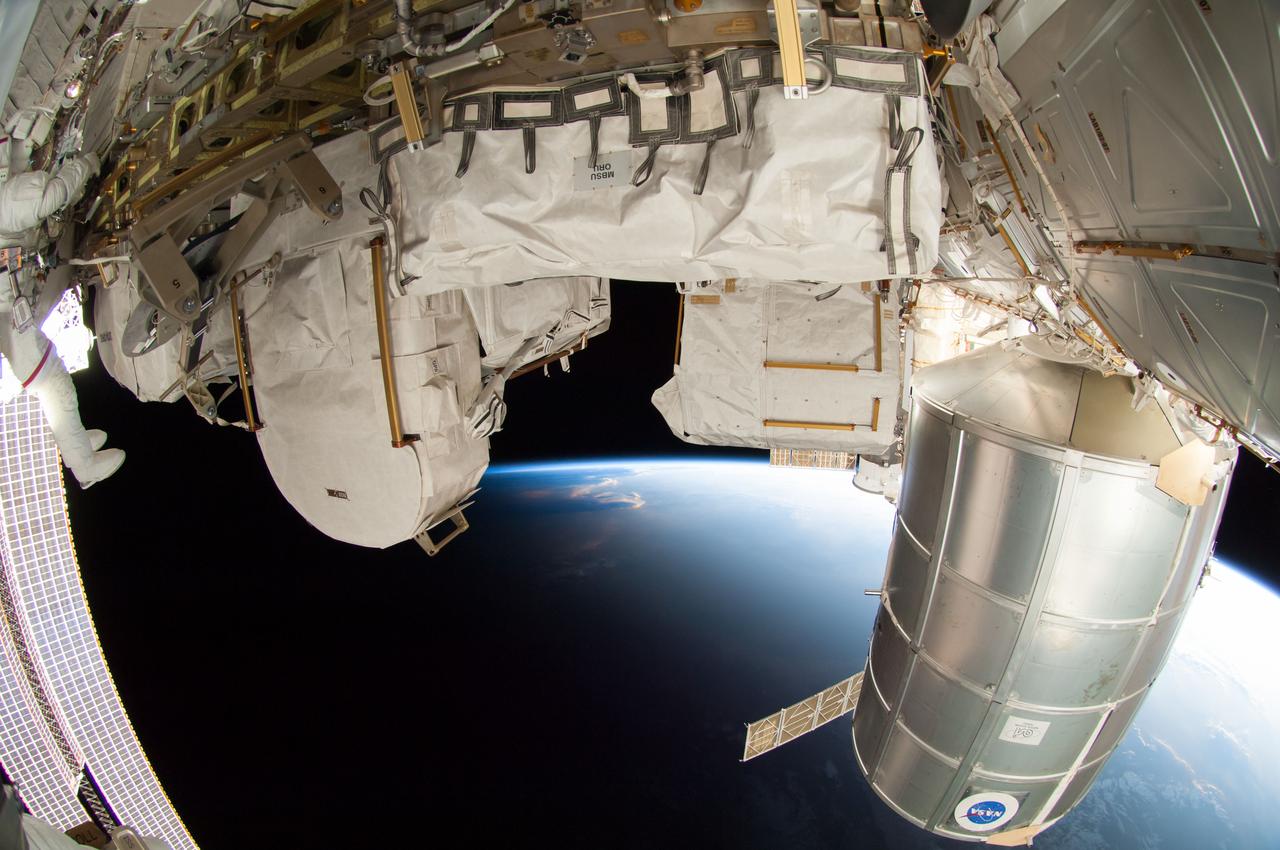
ISS041-E-067002 (7 Oct. 2014) --- NASA astronaut Reid Wiseman, Expedition 41 flight engineer, participates in a session of extravehicular activity (EVA) as work continues on the International Space Station. During the six-hour, 13-minute spacewalk, Wiseman and European Space Agency astronaut Alexander Gerst (out of frame), flight engineer, worked outside the space station's Quest airlock relocating a failed cooling pump to external stowage and installing gear that provides back up power to external robotics equipment.
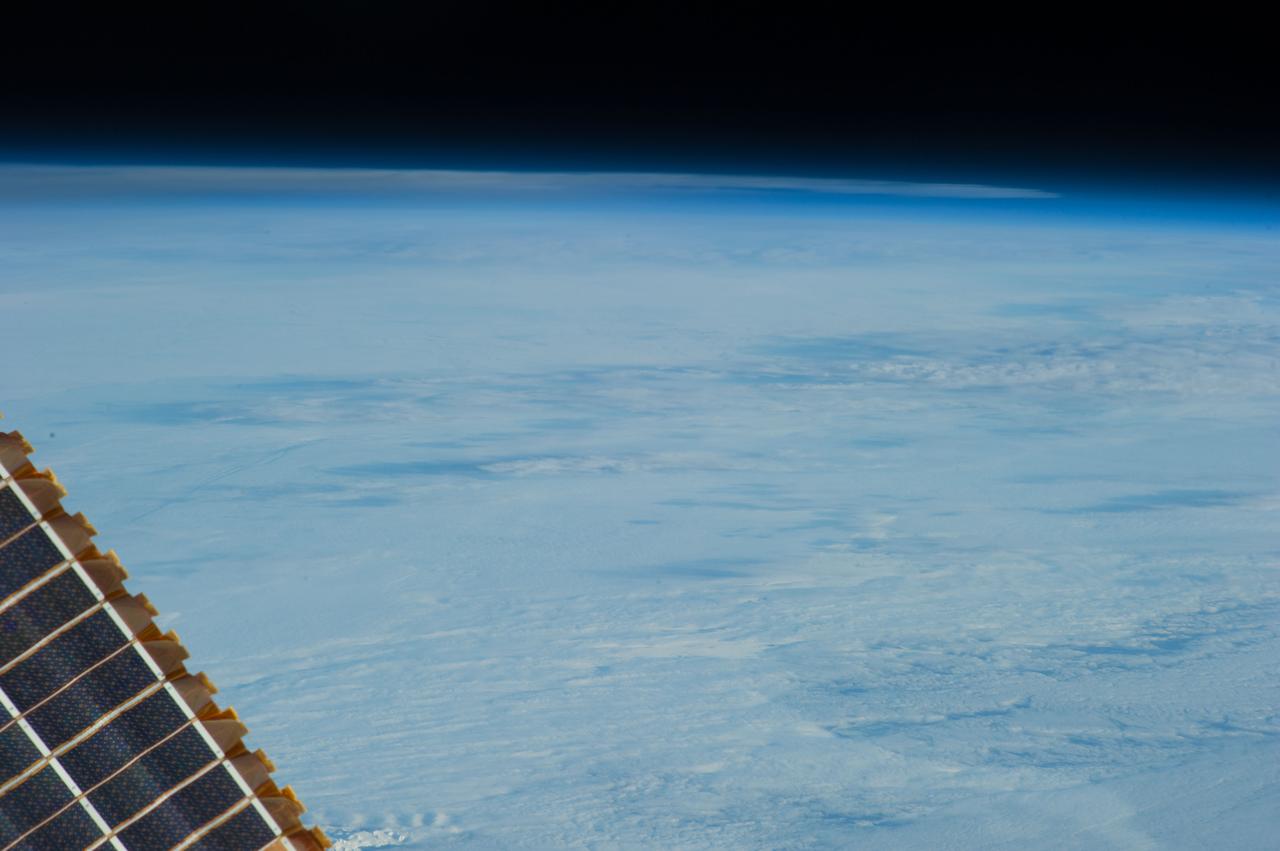
Earth Observation taken during a day pass by the Expedition 40 crew aboard the International Space Station (ISS). Folder lists this as: Brown mesospheric cloud over Antarctica.

ISS040-E-006163 (31 May 2014) --- One of the Expedition 40 crew members aboard the International Space Station recorded this nearly vertical image of the Taranaki region on the west coast of New Zealand's North Island on May 31, 2014. Just above left center in the frame is Mount Egmont, an 8,261-ft. high (2,518 meters) volcano which last erupted in 1860, according to NASA scientists studying the space station imagery.
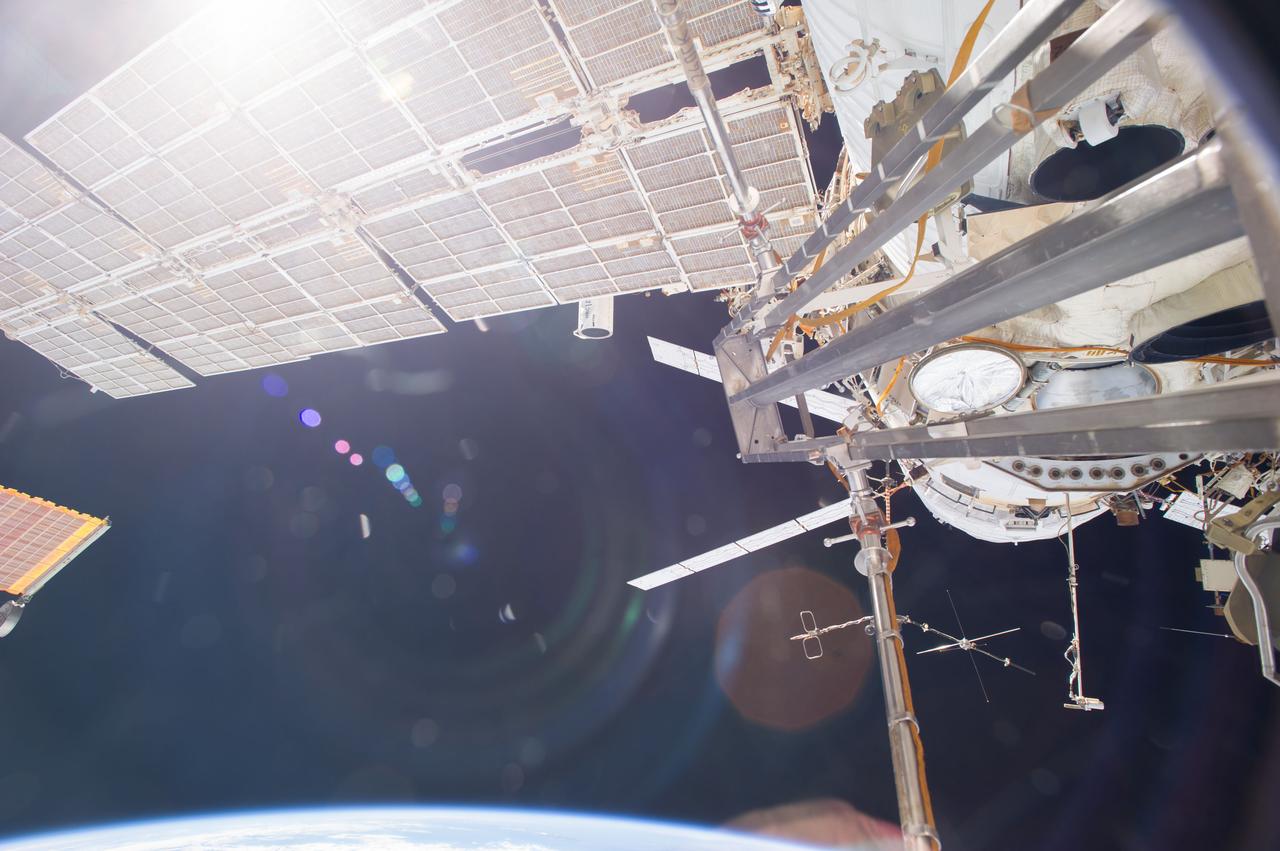
ISS040-E-123168 (2 Sept. 2014) --- A portion of the International Space Station’s Russian segment is pictured in this image photographed by an Expedition 40 crew member onboard the station. A portion of the "Georges Lemaitre" Automated Transfer Vehicle-5 (ATV-5) docked to the Zvezda Service Module is visible at right background.
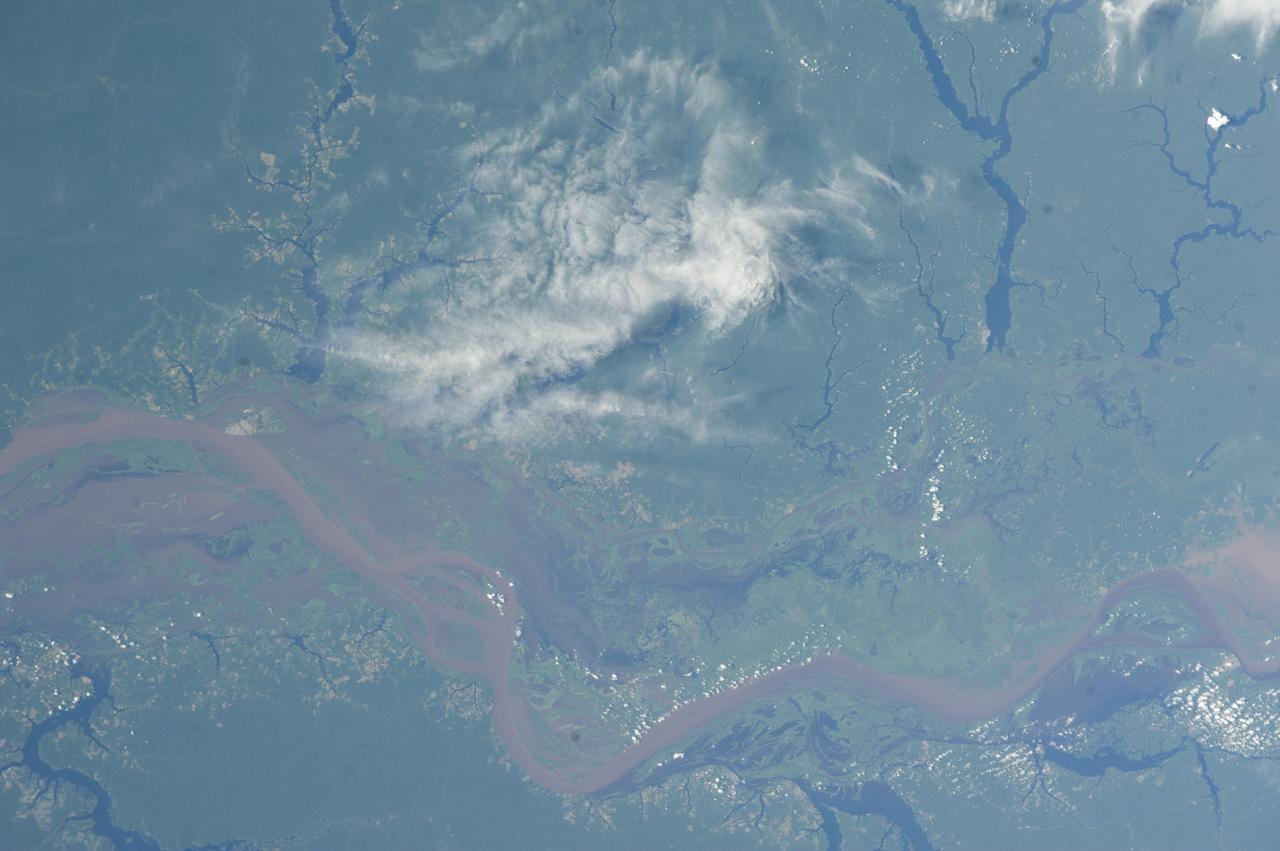
Earth observation taken during a day pass by the Expedition 40 crew aboard the International Space Station (ISS). Folder lists this as: Amazonian rain forest.

iss040e019216 (6/26/2014) --- Photographic documentation of the installation of the Soret-Facet into the Solution Crystallization Observation Facility (SCOF) inside the Ryutai rack in the Japanese Experiment Module (JEM) aboard the International Space Station (ISS). The Soret effect in fluids is a thermodynamic phenomenon in which different particles respond in different ways to varying temperatures. The effect, studied by the Swiss chemist Charles Soret, has been difficult to examine in detail on Earth because of gravity.

ISS041-E-067002 (7 Oct. 2014) --- NASA astronaut Reid Wiseman, Expedition 41 flight engineer, participates in a session of extravehicular activity (EVA) as work continues on the International Space Station. During the six-hour, 13-minute spacewalk, Wiseman and European Space Agency astronaut Alexander Gerst (out of frame), flight engineer, worked outside the space station's Quest airlock relocating a failed cooling pump to external stowage and installing gear that provides back up power to external robotics equipment.
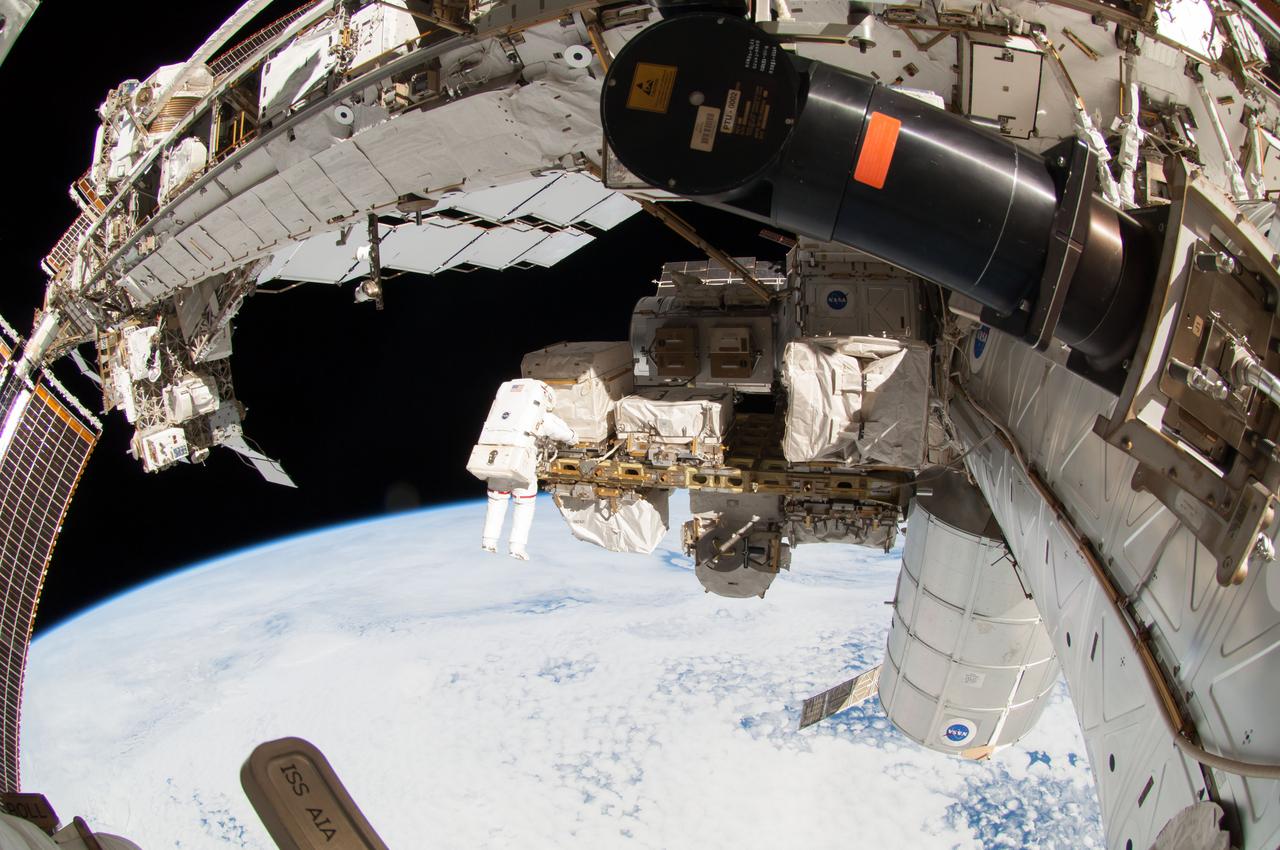
ISS041-E-067002 (7 Oct. 2014) --- NASA astronaut Reid Wiseman, Expedition 41 flight engineer, participates in a session of extravehicular activity (EVA) as work continues on the International Space Station. During the six-hour, 13-minute spacewalk, Wiseman and European Space Agency astronaut Alexander Gerst (out of frame), flight engineer, worked outside the space station's Quest airlock relocating a failed cooling pump to external stowage and installing gear that provides back up power to external robotics equipment.
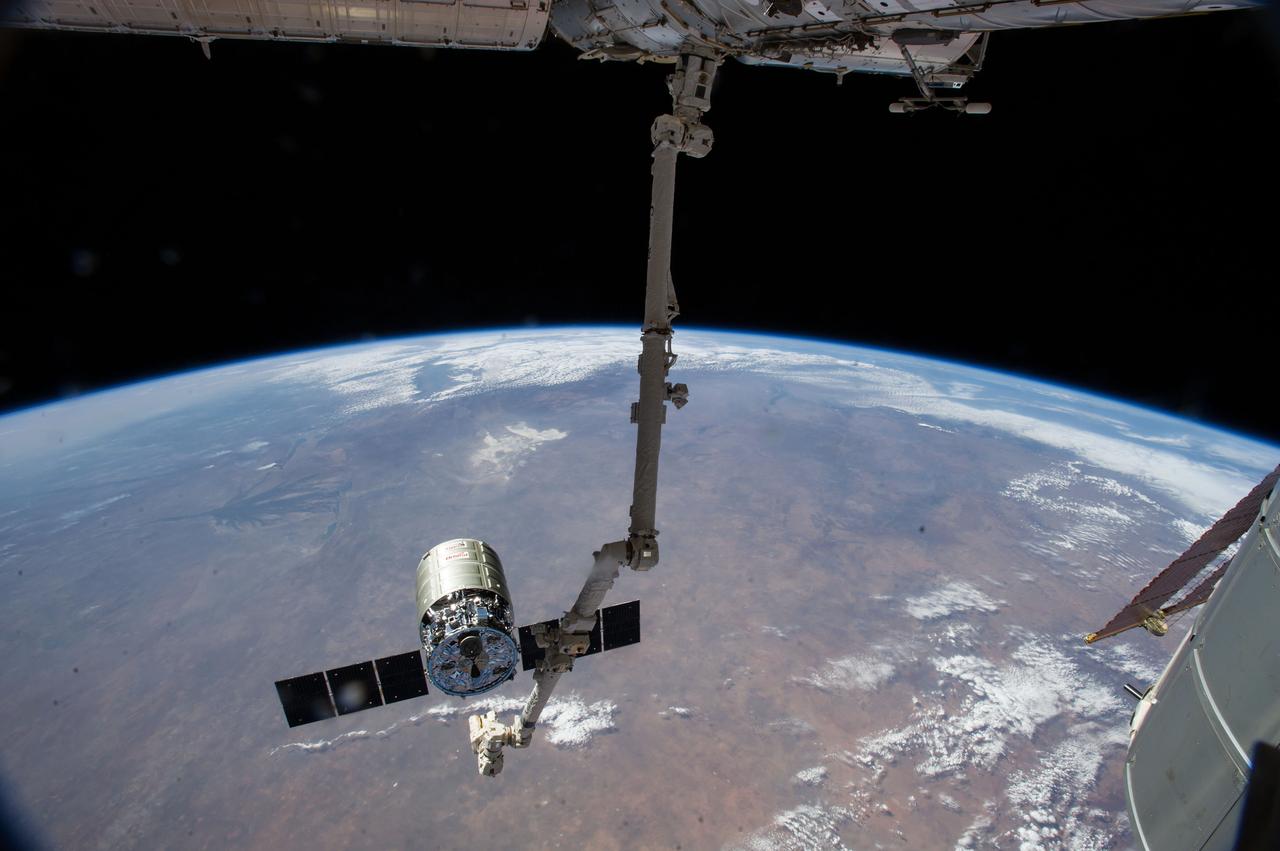
ISS040-E-095229 (15 Aug. 2014) --- The International Space Station's Canadarm2 prepares to release the Orbital Sciences Corporation's commercial cargo craft after a month visiting the orbital outpost. European Space Agency astronaut Alexander Gerst and NASA astronaut Reid Wiseman, both Expedition 40 flight engineers, were at the controls of the robotics workstation in the Cupola removing Cygnus from the Harmony node then safely releasing it at 6:40 a.m. (EDT) Aug. 15, 2014. Much of lower the continent of Africa provides the panoramic background for the scene with Botswana's Okavango Delta being the most conspicuous feature at left center.
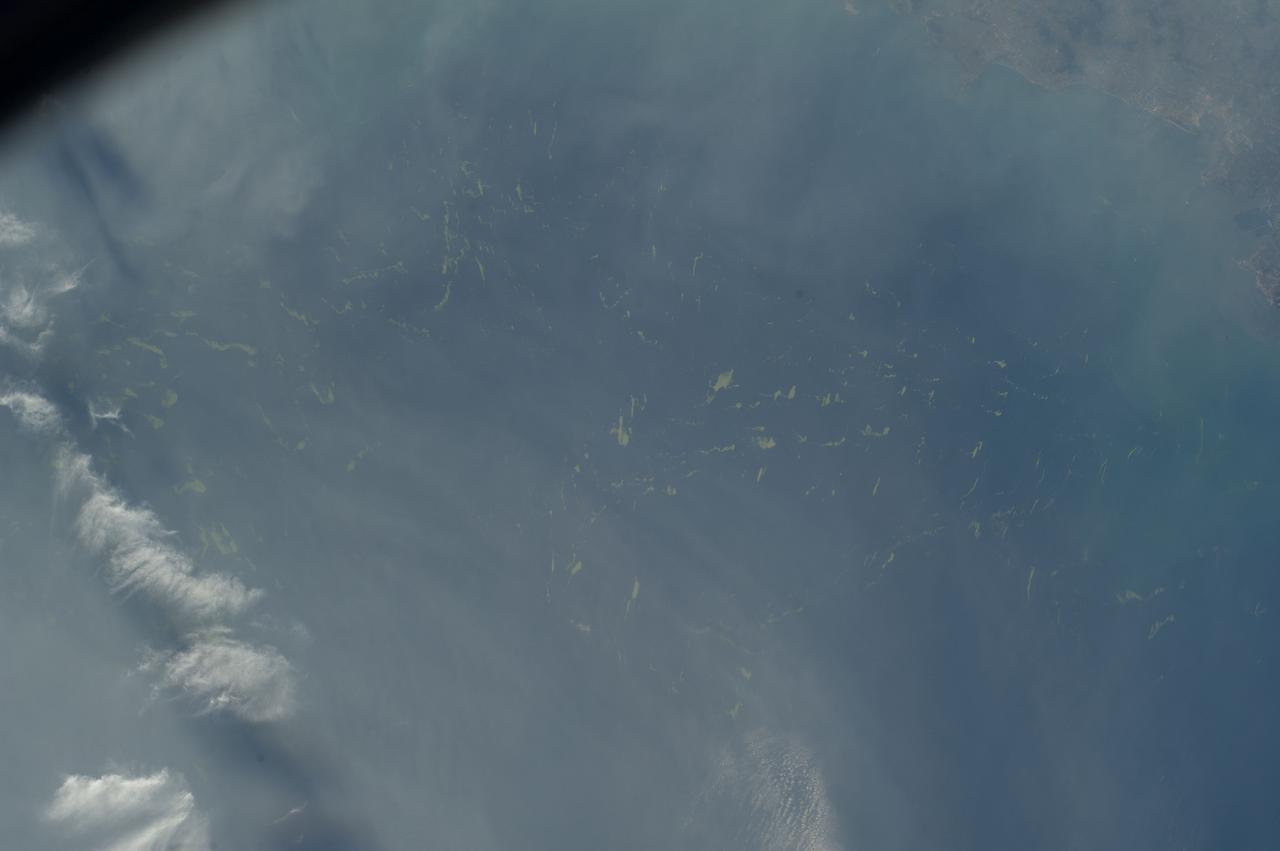
Earth observation taken during a day pass by the Expedition 40 crew aboard the International Space Station (ISS).

ISS040-E-065857 (15 July 2014) --- One of the Expedition 40 crew members aboard the International Space Station recorded this colorful image of Aurora Australis on July 15, 2014. Achernar (just to the right of center) is the brightest and most easily recognizable star in this generally southward view. The orbital outpost was flying at an altitude of 225 nautical miles over a nadir point located at 51.6 degrees south latitude and 110.3 degrees east longitude. Two solar array panels are partially visible in an edge-on angle on the right side of the frame.

ISS040-E-013842 (17 June 2014) --- Russian cosmonaut Oleg Artemyev, Expedition 40 flight engineer, is pictured with Russian Orlan spacesuits in the International Space Station's Pirs Docking Compartment. Artemyev and Russian cosmonaut Alexander Skvortsov donned their Orlan suits for a suited "dry run" dress rehearsal and to check out the suits' various components in advance of a spacewalk scheduled for June 19.
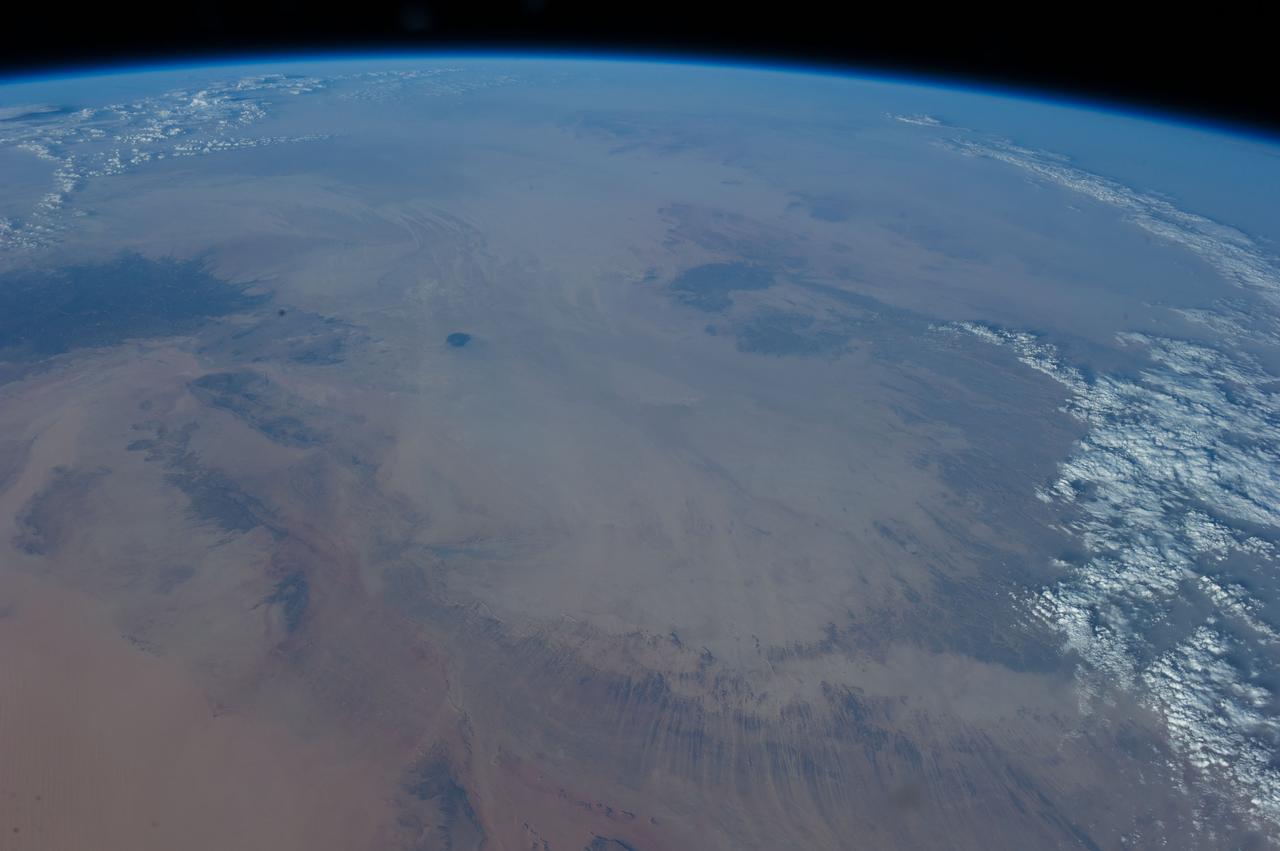
Earth observation taken during a day pass by the Expedition 40 crew aboard the International Space Station. File identifies it as: Sahara, and Libya.
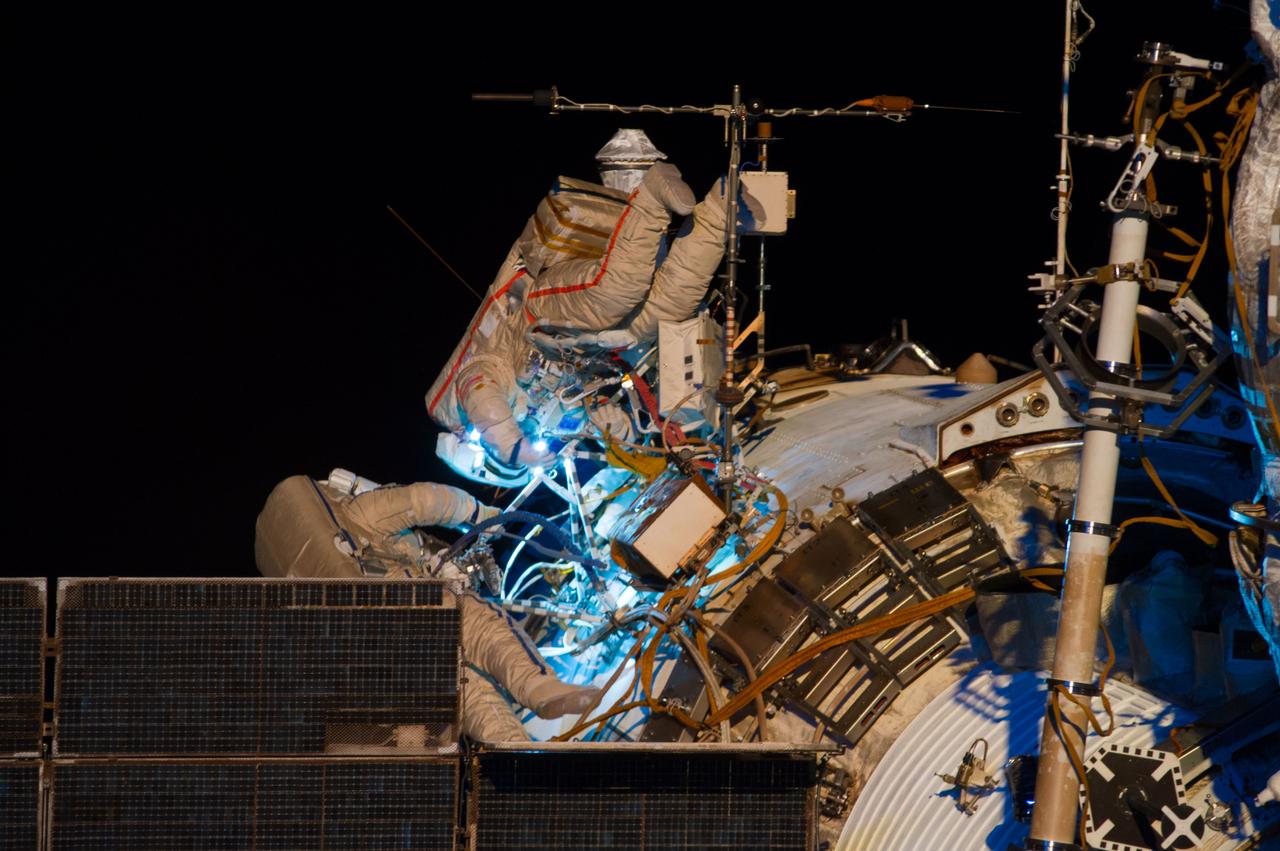
ISS040-E-015627 (19 June 2014) --- Russian cosmonauts Alexander Skvortsov (right) and Oleg Artemyev, both Expedition 40 flight engineers, participate in a session of extravehicular activity (EVA) as work continues on the International Space Station. During the seven-hour, 23-minute spacewalk Skvortsov and Artemyev completed installation and experiment tasks outside the station’s Russian segment.
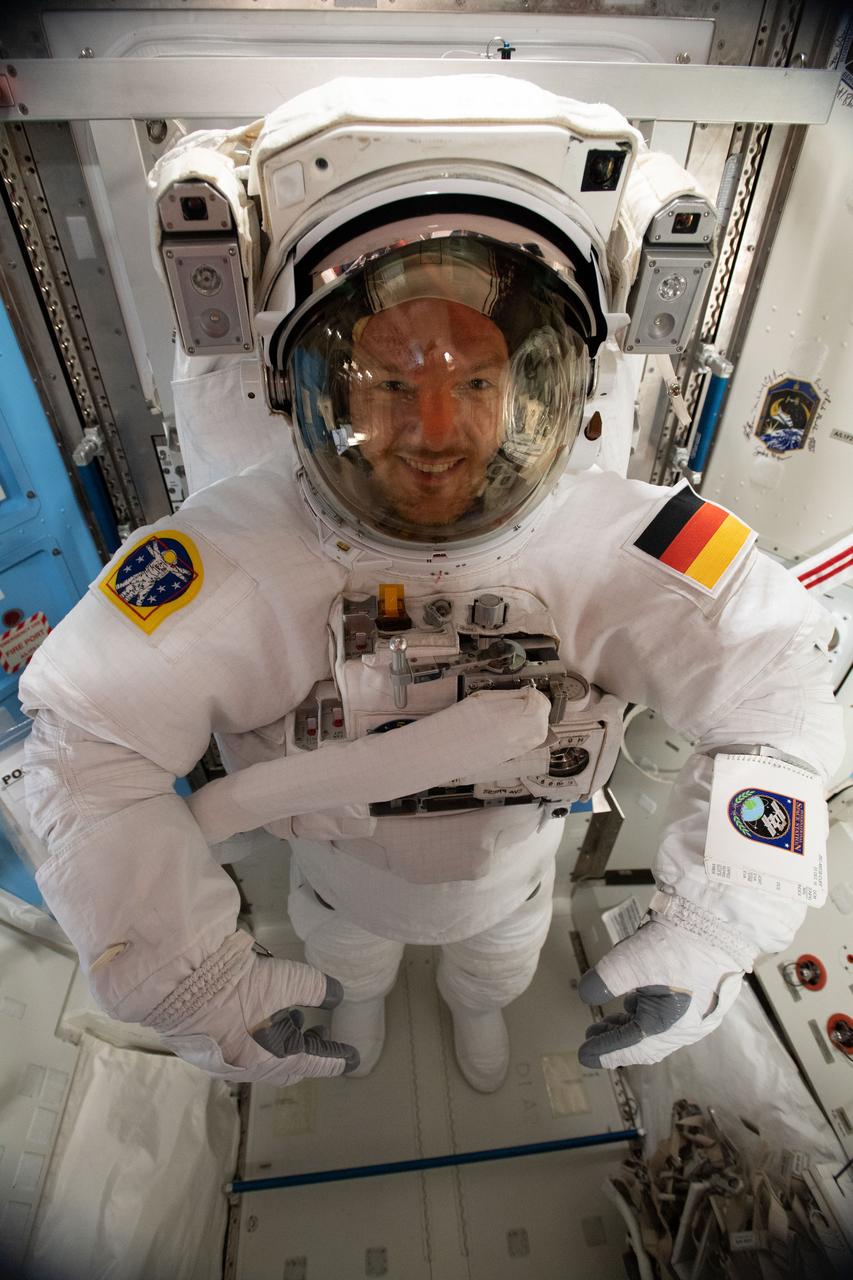
iss056e174066 (Sept. 17, 2018) --- ESA (European Space Agency) astronaut Alexander Gerst is pictured wearing a U.S. spacesuit during a fit check inside the U.S. Quest Airlock where U.S. spacewalks are staged. The patch on Gerst's left shoulder represents the flag of his home country of Germany.
ISS041-E-067002 (7 Oct. 2014) --- NASA astronaut Reid Wiseman, Expedition 41 flight engineer, participates in a session of extravehicular activity (EVA) as work continues on the International Space Station. During the six-hour, 13-minute spacewalk, Wiseman and European Space Agency astronaut Alexander Gerst (out of frame), flight engineer, worked outside the space station's Quest airlock relocating a failed cooling pump to external stowage and installing gear that provides back up power to external robotics equipment.
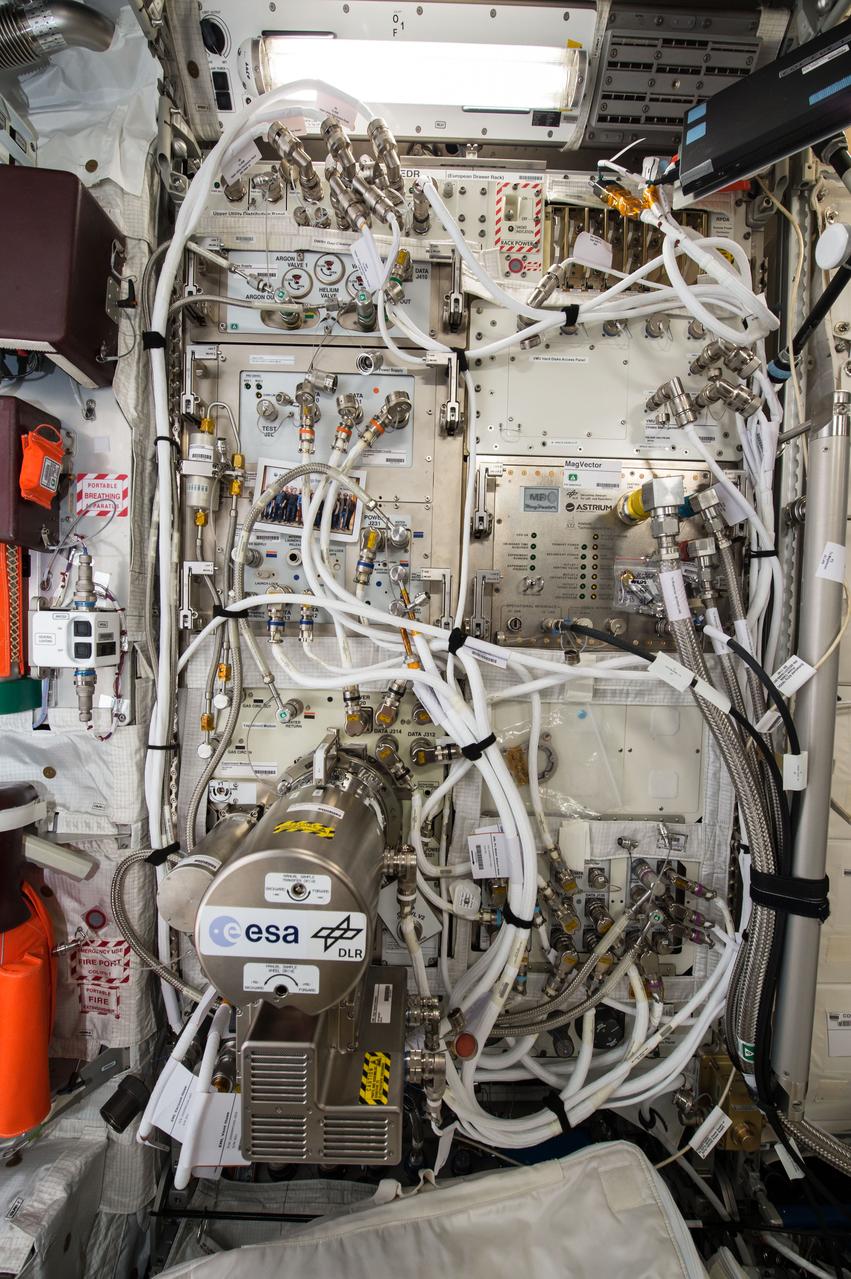
iss041e096097 (10/23/2014) — Photo documentation of the Electromagnetic Levitator (EML) in the Columbus module of the International Space Station (ISS). The EML multi-user facility is designed for containerless materials processing in space.
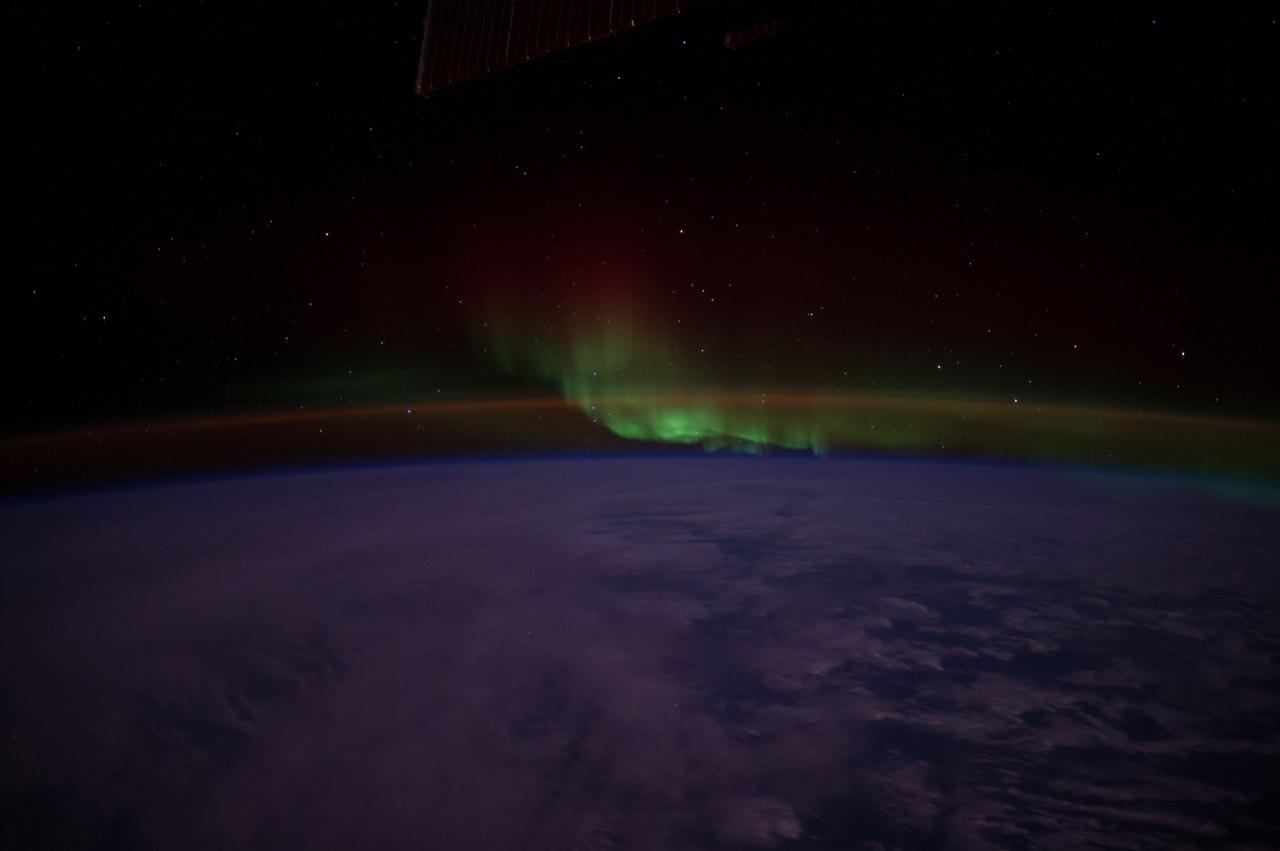
ISS040-E-050780 (7 July 2014) --- One of the Expedition 40 crew members aboard the International Space Station, flying 226 nautical miles above the Indian Ocean, south of Australia, recorded this image of Aurora Australis or the Southern Lights on July 7, 2014.
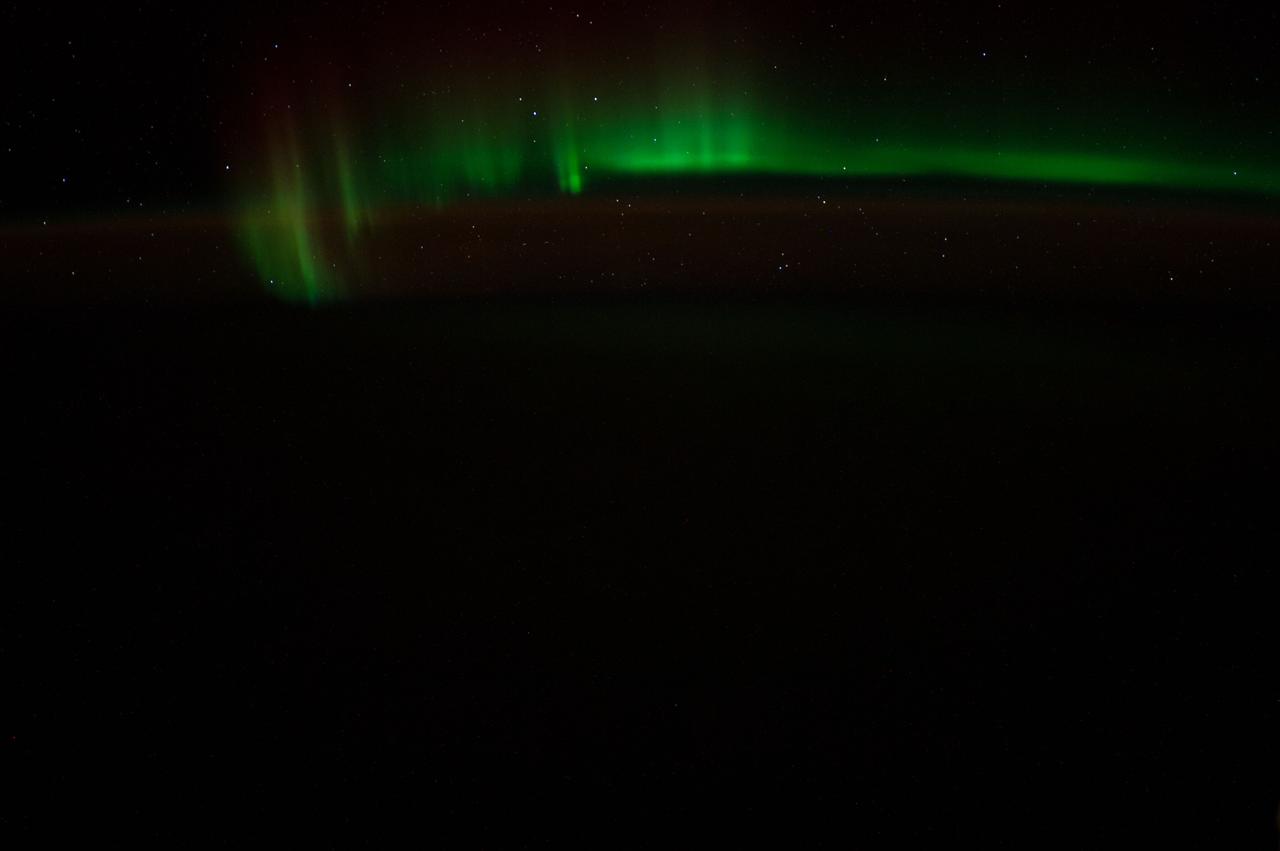
ISS040-E-040103 (5 July 2014) --- As the International Space Station was flying at an altitude of 226 nautical miles on July 5 above a point in the southern Indian Ocean near South Africa's Prince Edwards Islands, one of the Expedition 40 crew members photographed this image of Aurora Australis.

ISS041-E-067002 (7 Oct. 2014) --- NASA astronaut Reid Wiseman, Expedition 41 flight engineer, participates in a session of extravehicular activity (EVA) as work continues on the International Space Station. During the six-hour, 13-minute spacewalk, Wiseman and European Space Agency astronaut Alexander Gerst (out of frame), flight engineer, worked outside the space station's Quest airlock relocating a failed cooling pump to external stowage and installing gear that provides back up power to external robotics equipment.

Earth Observation taken during a day pass by the Expedition 40 crew aboard the International Space Station (ISS). Folder lists this as: Periphery Clouds of Typhoon Halong.
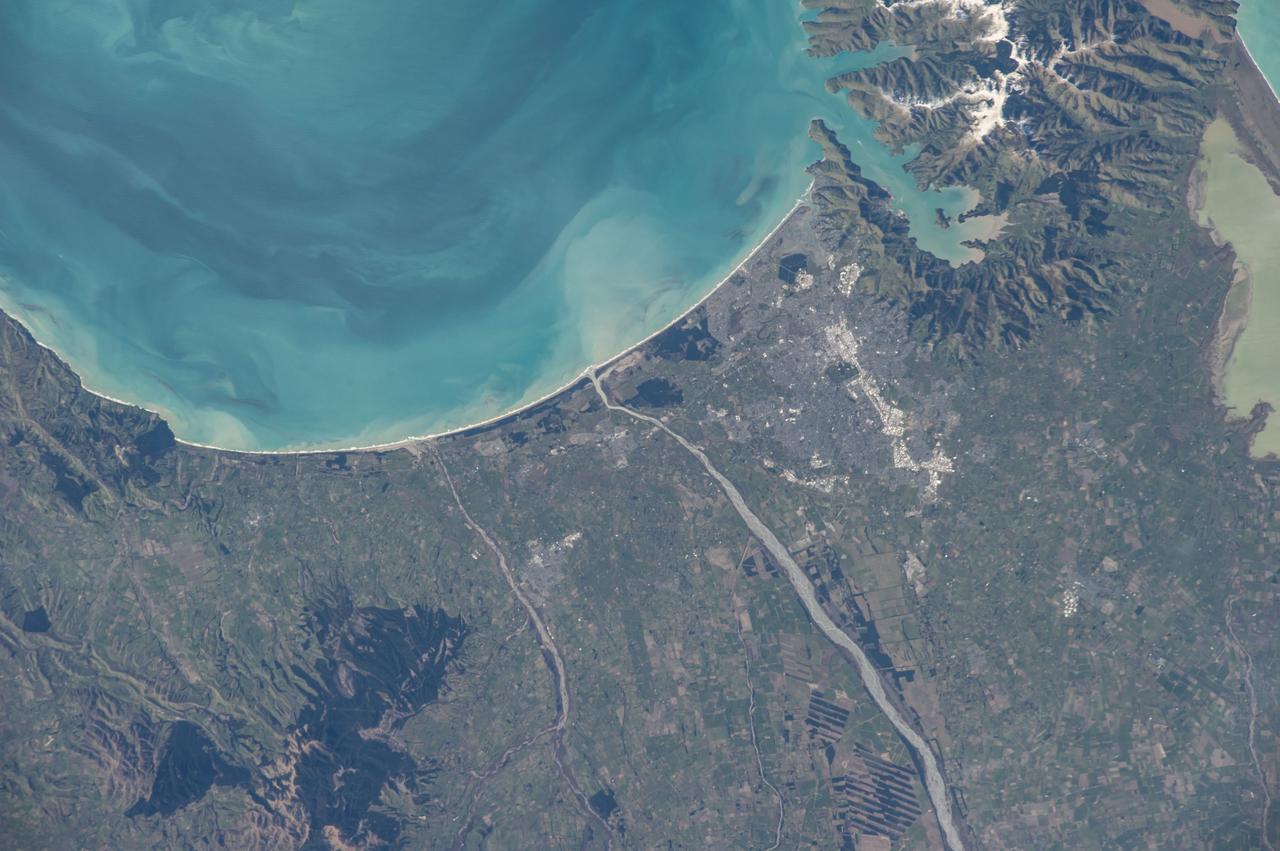
Earth Observation taken during a day pass by the Expedition 40 crew aboard the International Space Station (ISS). Folder lists this as: New Zealand.
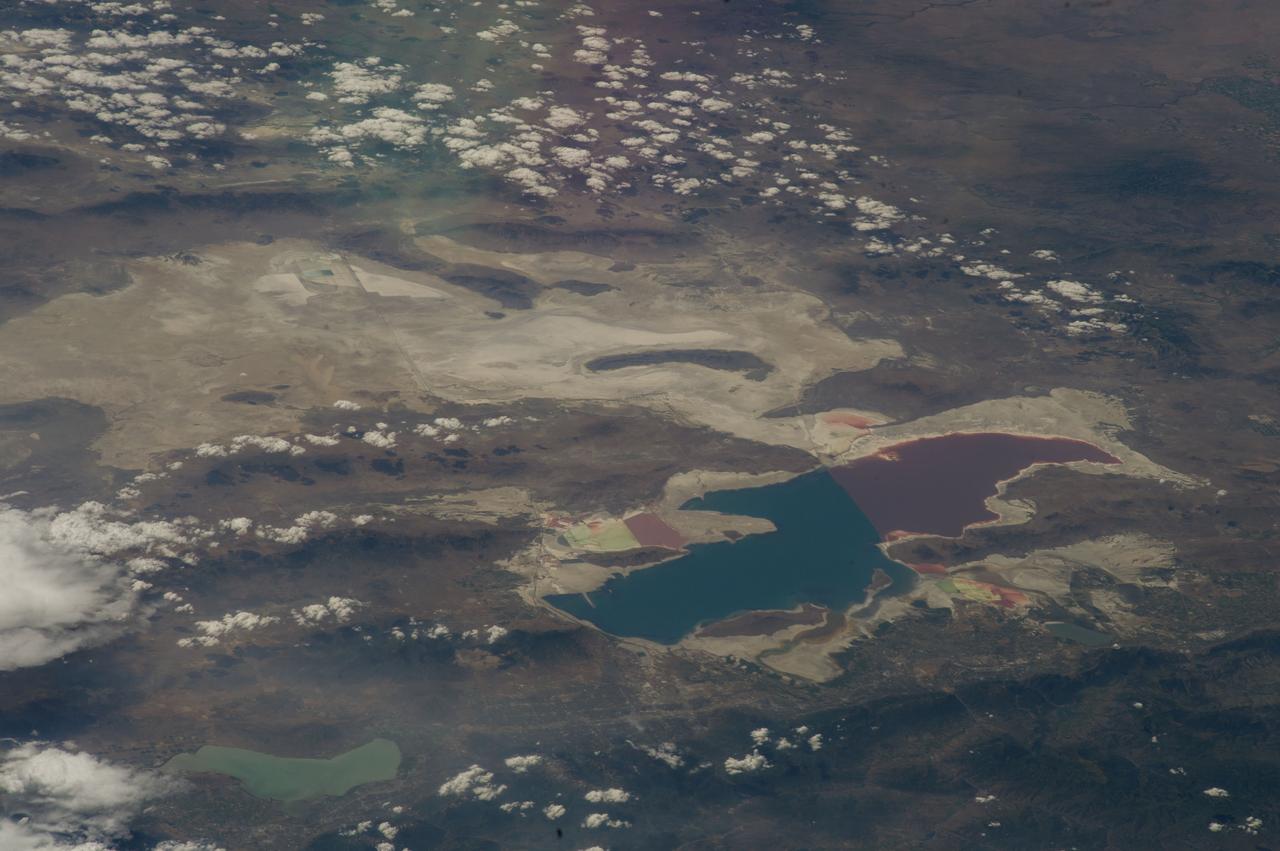
ISS040-E-043231 (6 July 2014) --- As in the case of many previous space missions, the Great Salt Lake in Utah serves as a striking visual marker for the Expedition 40 crew members orbiting 222 nautical miles over North America aboard the International Space Station. A 200mm focal length was used to capture the image. A sharp line across the lake's center is caused by the restriction in water flow from the railroad causeway. The eye-catching colors of the lake stem from the fact that Great Salt Lake is hypersaline, typically 3-5 times saltier than the ocean.
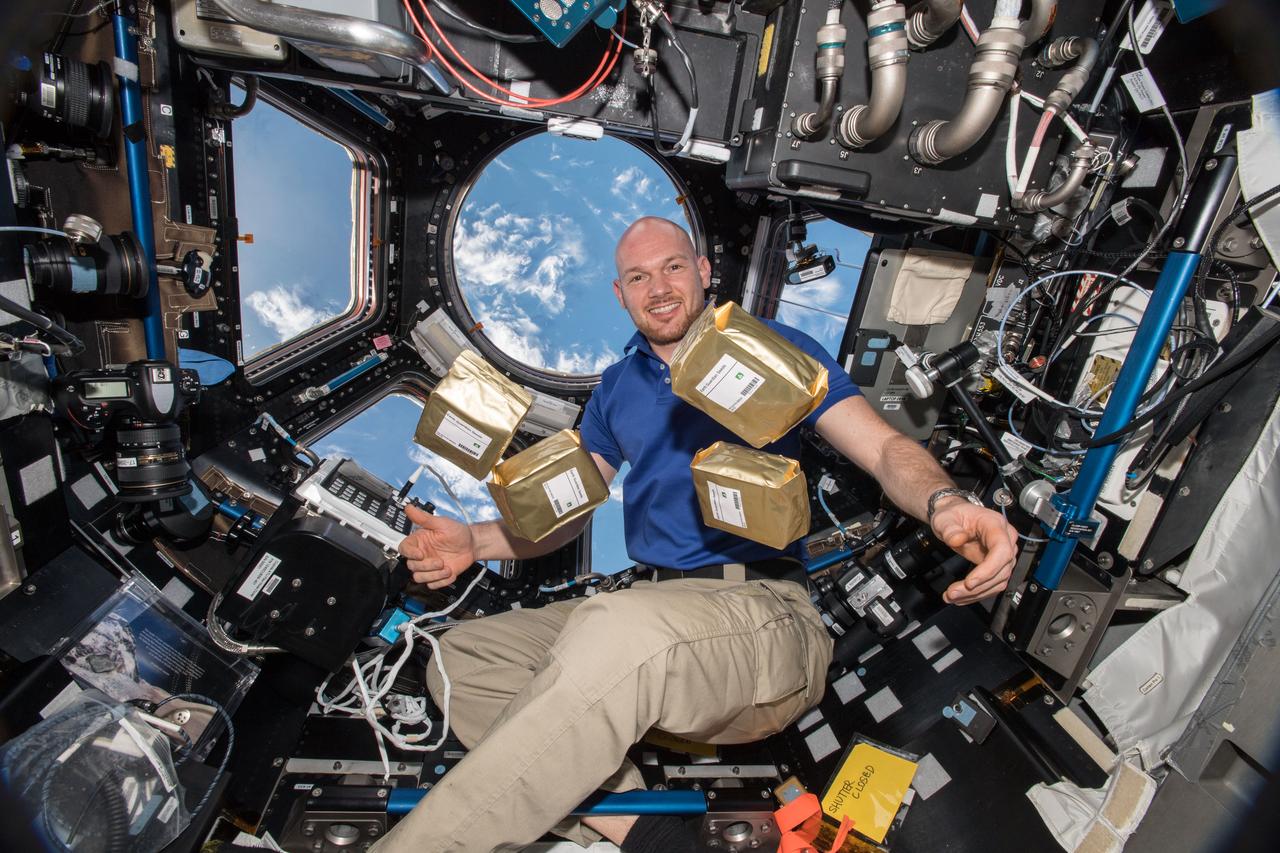
iss056e181703 (9/21/2018) --- European Space Agency (ESA) astronaut Alexander Gerst holding Earth Guardian Seeds, in the Cupola Module aboard the International Space Station (ISS). ESA-EPO-Gerst Earth Guardian Seeds (Earth Guardian Seeds) experiment is intended to teach students the importance of biodiversity and the protection of species, as well as, inspire curiosity for the natural and environmental sciences. Wildflower seeds are flown to the International Space Station (ISS), returned to Earth, and distributed to schools in Germany. The seeds are grown and their development is compared to grown seeds that remained on Earth.
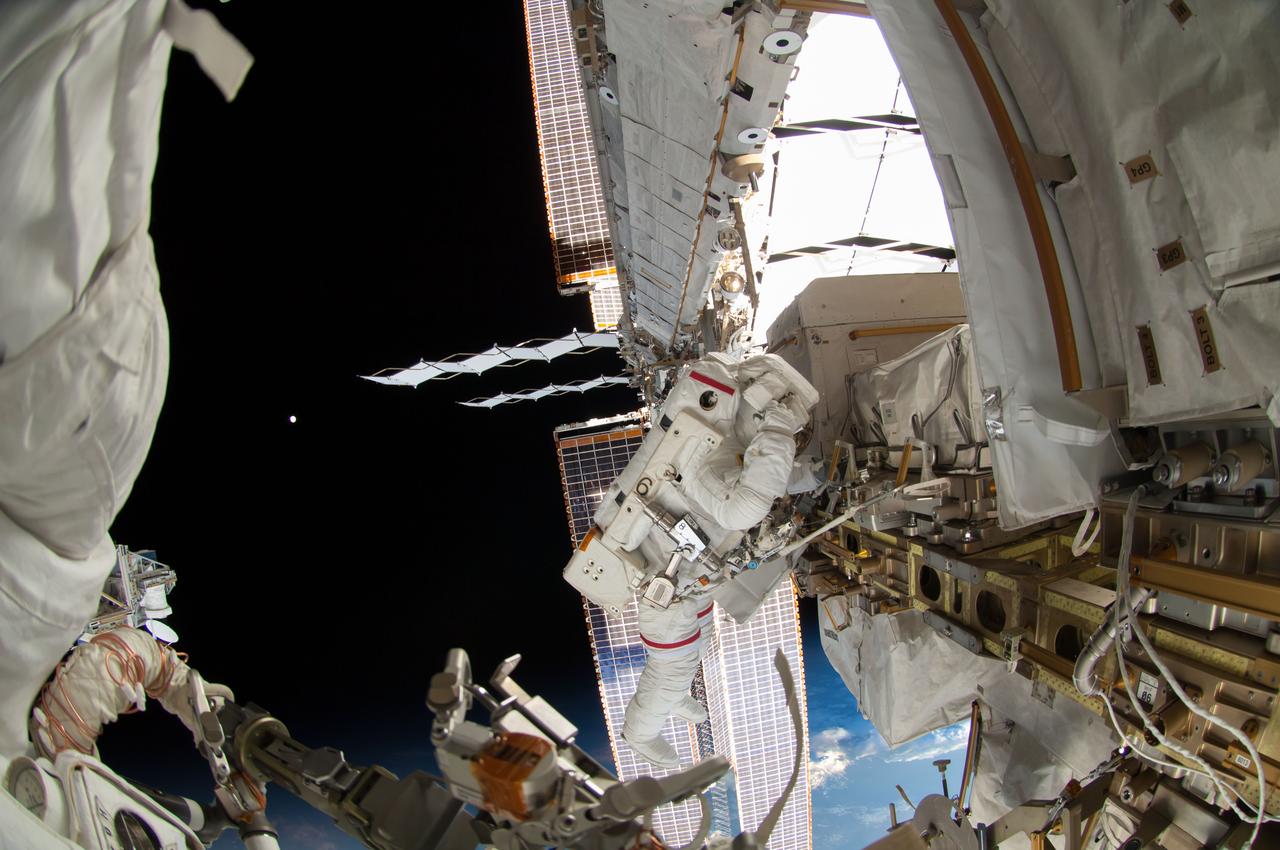
ISS041-E-067002 (7 Oct. 2014) --- NASA astronaut Reid Wiseman, Expedition 41 flight engineer, participates in a session of extravehicular activity (EVA) as work continues on the International Space Station. During the six-hour, 13-minute spacewalk, Wiseman and European Space Agency astronaut Alexander Gerst (out of frame), flight engineer, worked outside the space station's Quest airlock relocating a failed cooling pump to external stowage and installing gear that provides back up power to external robotics equipment.

Earth Observation taken during a night pass by the Expedition 40 crew aboard the International Space Station (ISS). Folder lists this as: Orion rise.
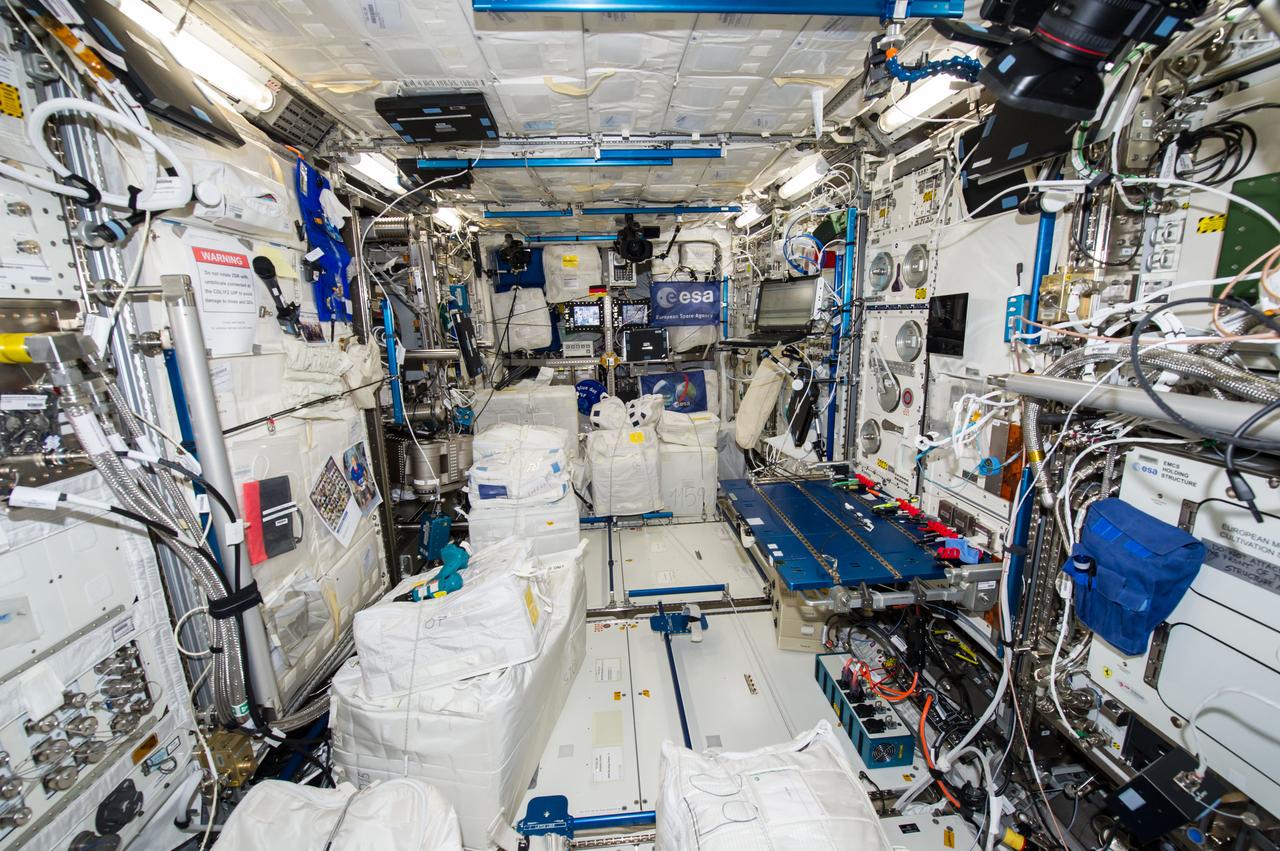
iss041e000170 (9/11/2020) --- A view of the Columbus Module aboard the International Space Stations (ISS). The Columbus laboratory is Europe’s largest contribution to the International Space Station. Columbus is a multifunctional pressurized laboratory permanently attached to the Harmony Module. The lab allows researchers on the ground, aided by the station’s crew, to conduct a wide variety of research in a weightless environment. In addition, experiments and applications can be conducted outside the module in the vacuum of space, thanks to four exterior mounting platforms that can accommodate external payloads in space science, Earth observation and technology.
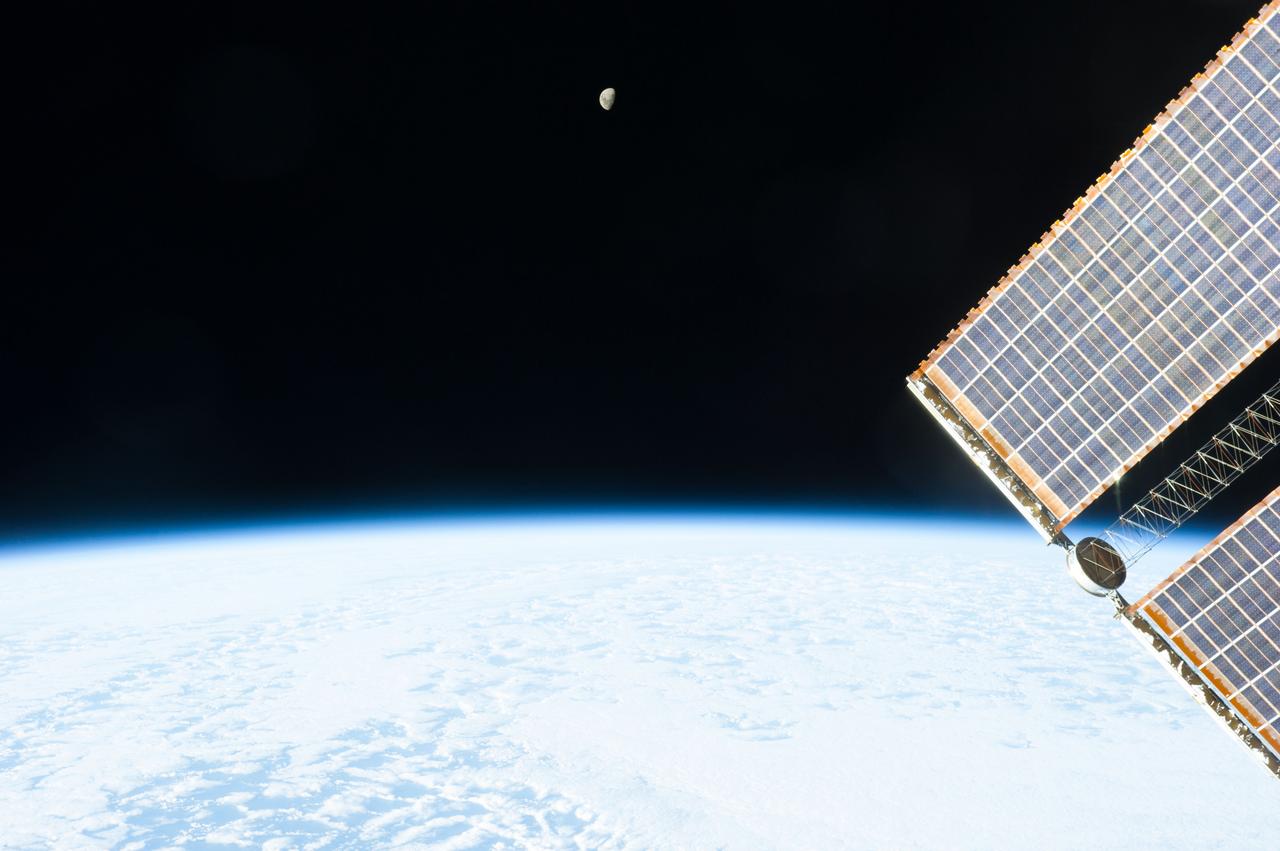
ISS040-E-008274 (7 June 2014) --- The moon rising over the southern Pacific Ocean is featured in this image photographed by an Expedition 40 crew member on the International Space Station. A portion of the station?s solar array panels are visible at right.
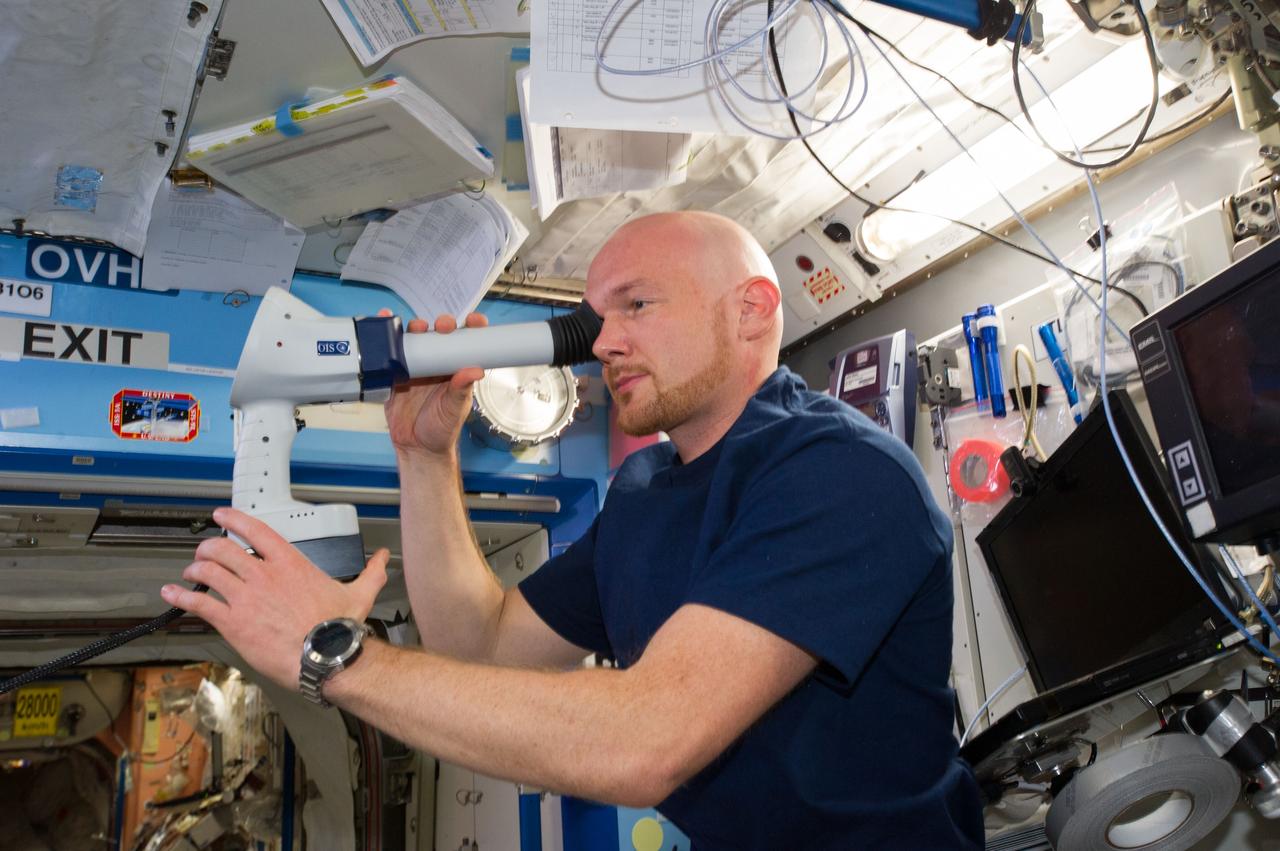
ISS040-E-006897 (3 June 2014) --- European Space Agency astronaut Alexander Gerst, Expedition 40 flight engineer, performs an Ocular Health (OH) examination in the Destiny laboratory of the International Space Station.