
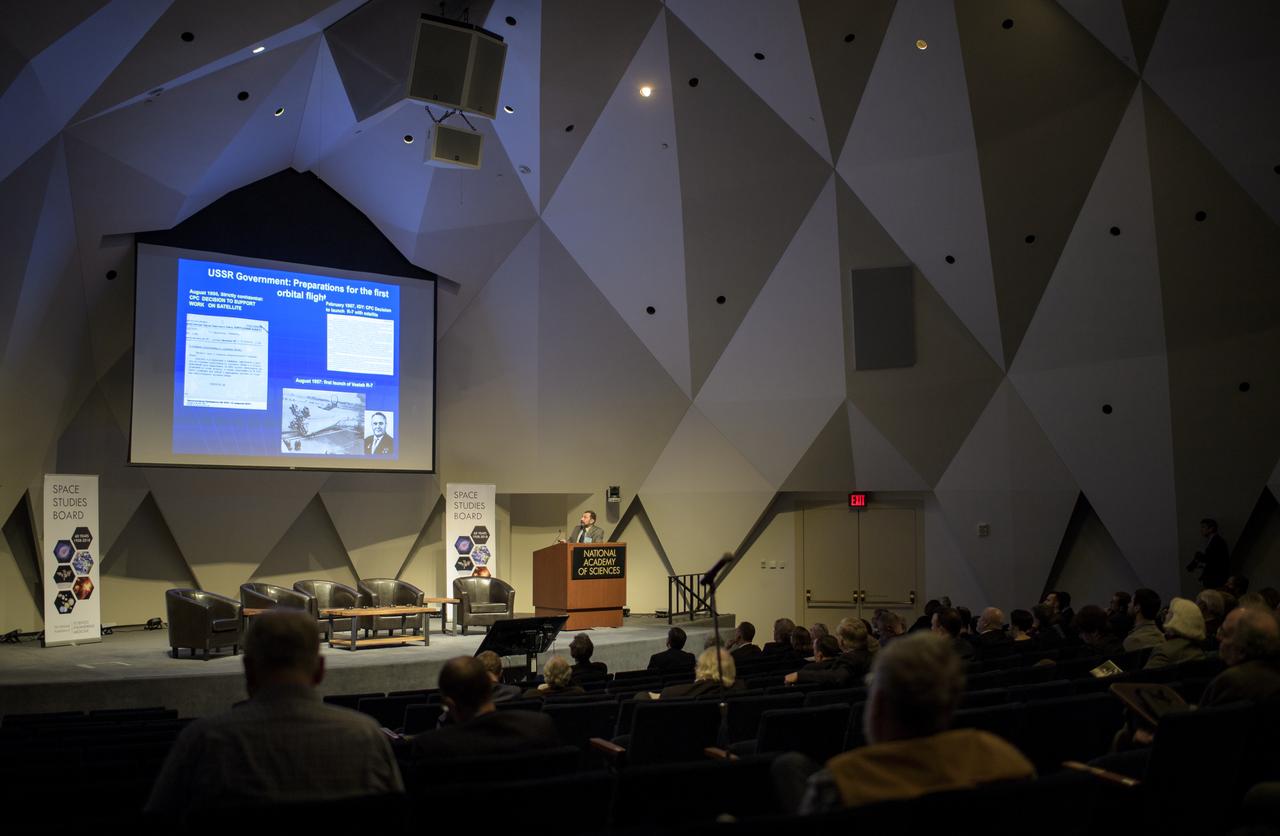
Alexander Moiseev, a research scientist at NASA's Goddard Spaceflight Center, speaks during an event celebrating the 60th Anniversary of the Explorer 1 mission and the discovery of Earth's radiation belts, Wednesday, Jan. 31, 2018, at the National Academy of Sciences in Washington. The first U.S. satellite, Explorer 1, was launched from Cape Canaveral on January 31, 1958. The 30-pound satellite would yield a major scientific discovery, the Van Allen radiation belts circling our planet, and begin six decades of groundbreaking space science and human exploration. (NASA/Joel Kowsky)
Alexander Moiseev, a research scientist at NASA's Goddard Spaceflight Center, speaks during an event celebrating the 60th Anniversary of the Explorer 1 mission and the discovery of Earth's radiation belts, Wednesday, Jan. 31, 2018, at the National Academy of Sciences in Washington. The first U.S. satellite, Explorer 1, was launched from Cape Canaveral on January 31, 1958. The 30-pound satellite would yield a major scientific discovery, the Van Allen radiation belts circling our planet, and begin six decades of groundbreaking space science and human exploration. (NASA/Joel Kowsky)
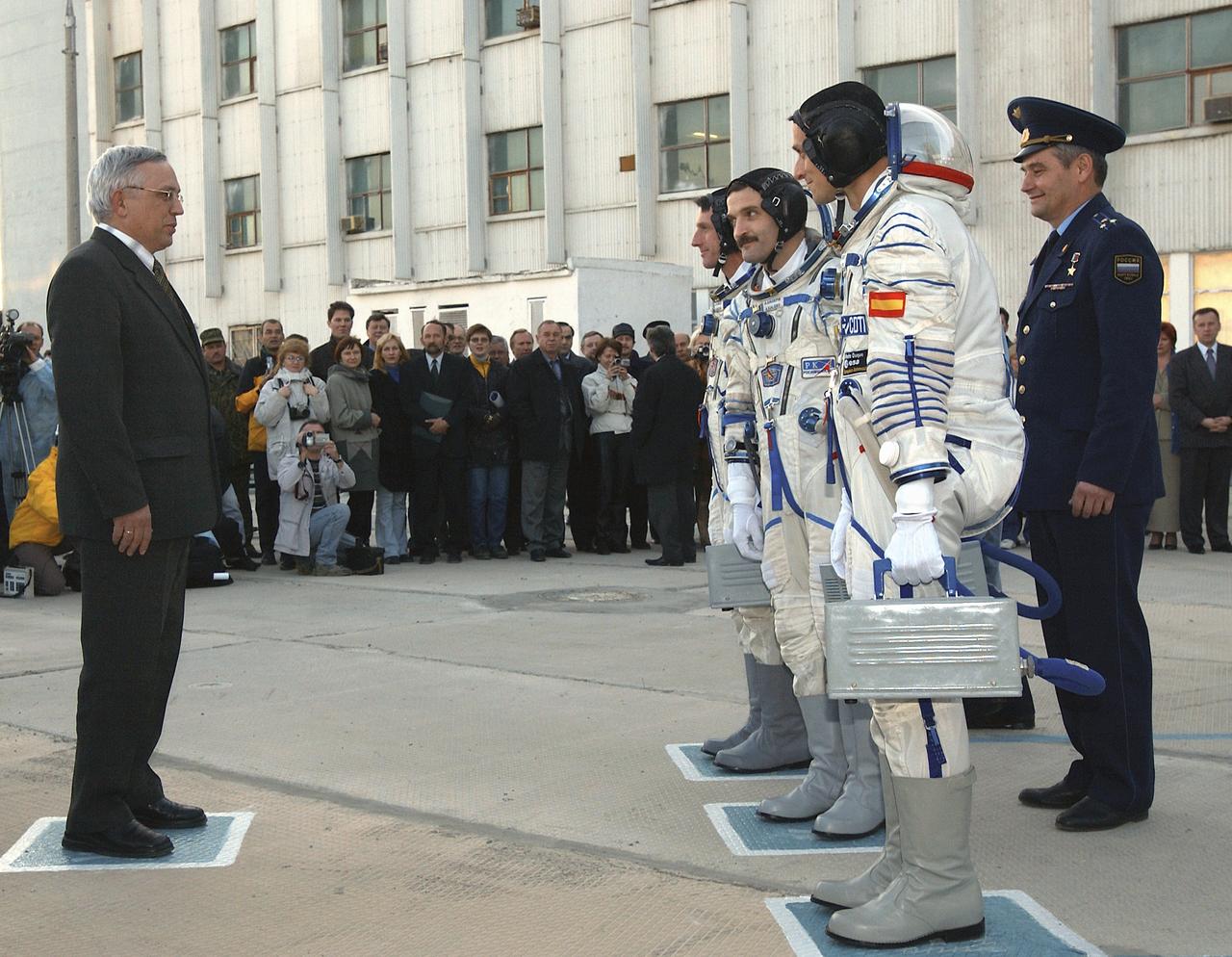
Russian Aviation and Space Agency Deputy Director-General Nikolai Moiseev, left, offers a final farewell to Expedition 8 Commander and NASA Science Officer Michael Foale, third from right, Expedition 8 Soyuz Commander Alexander Kaleri and European Space Agency astronaut Pedro Duque of Spain, foreground right, prior to their departure for the launch pad, Saturday, Oct. 18, 2003, at the Baikonur Cosmodrome in Kazakhstan. The trio were launched on a Soyuz TMA-3 vehicle, arriving at the ISS on Oct. 20. Photo Credit (NASA/Bill Ingalls)