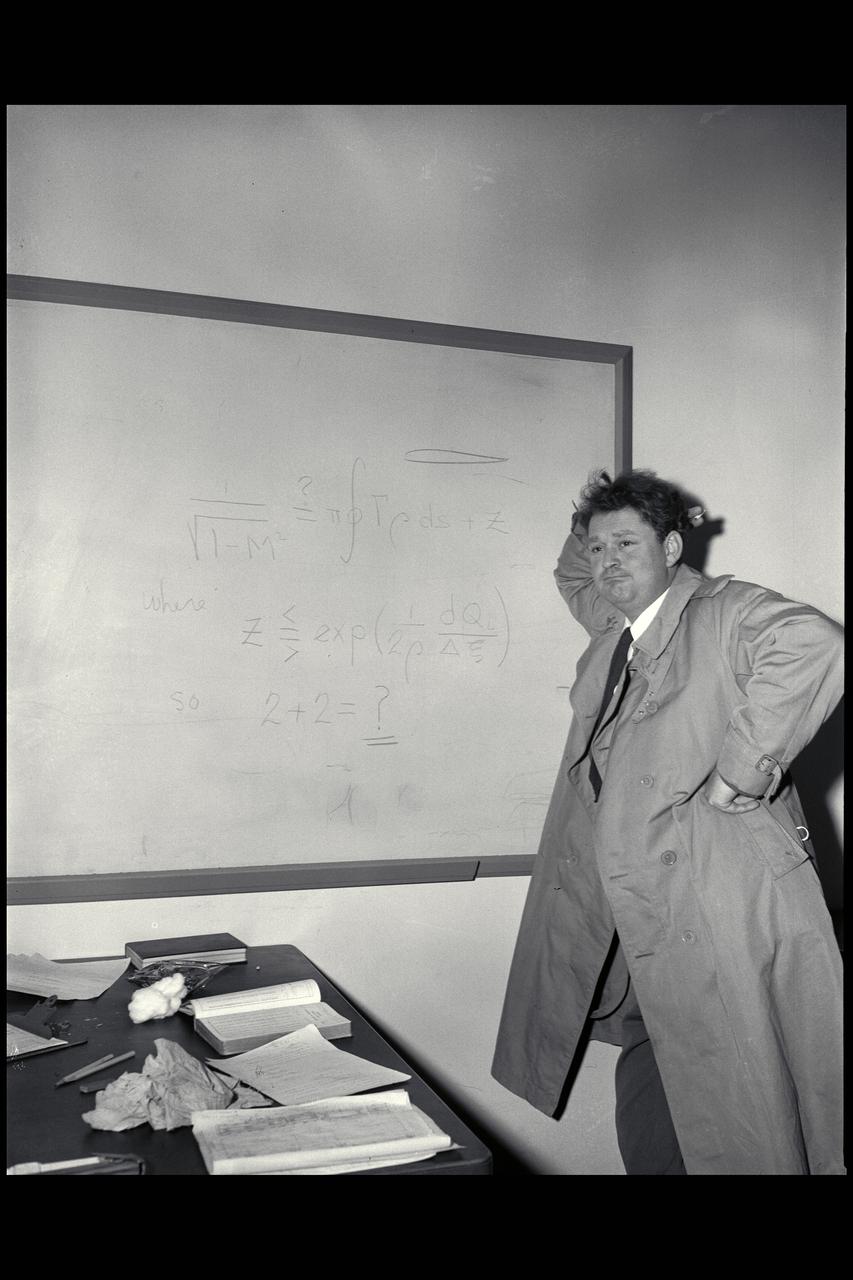
NASA Ames Center Director Harvey Allen (1965-1969) at the board.
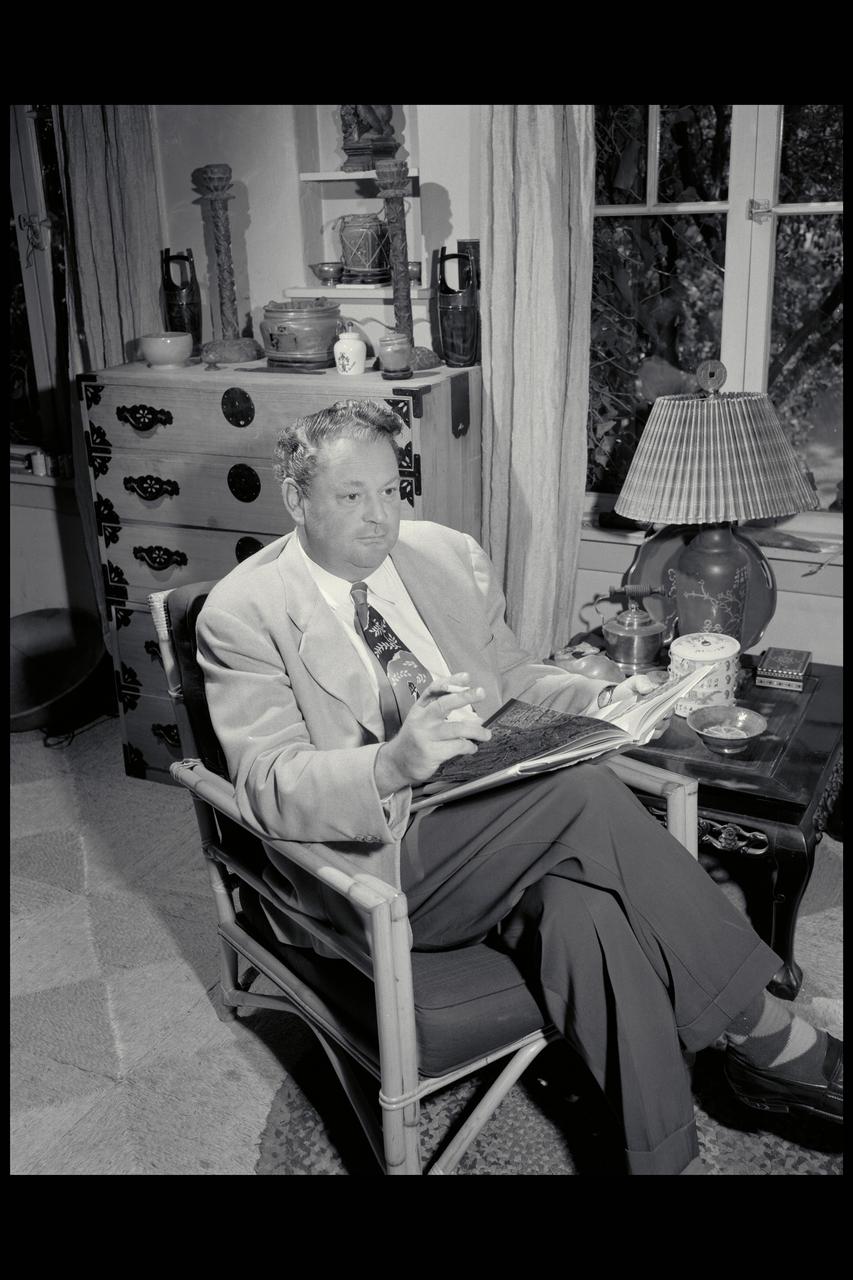
Harvey Allen, Chief of the High-Speed Research Division at NASA Ames Research Center, in his home.
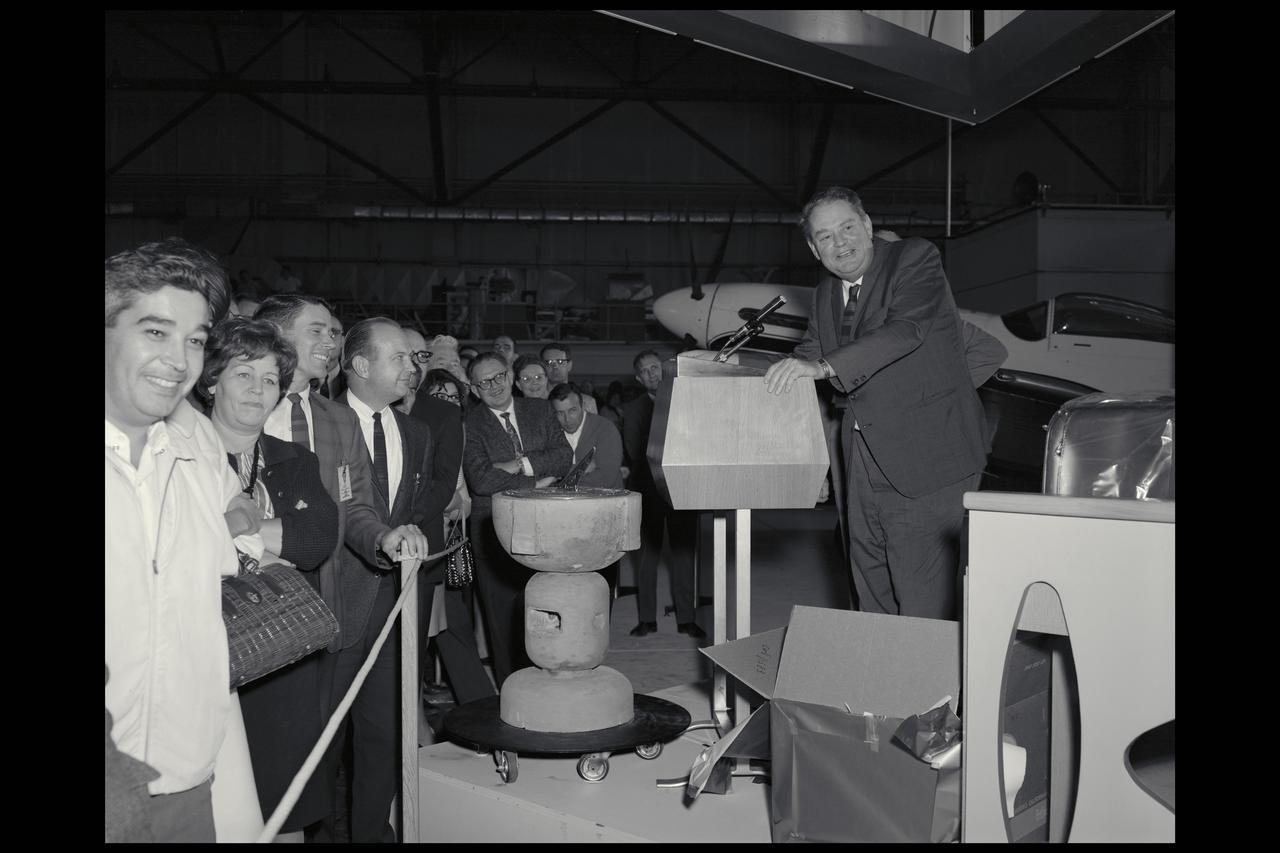
Harvey Allen at his retirement party held in the Ames Hangar N-211.
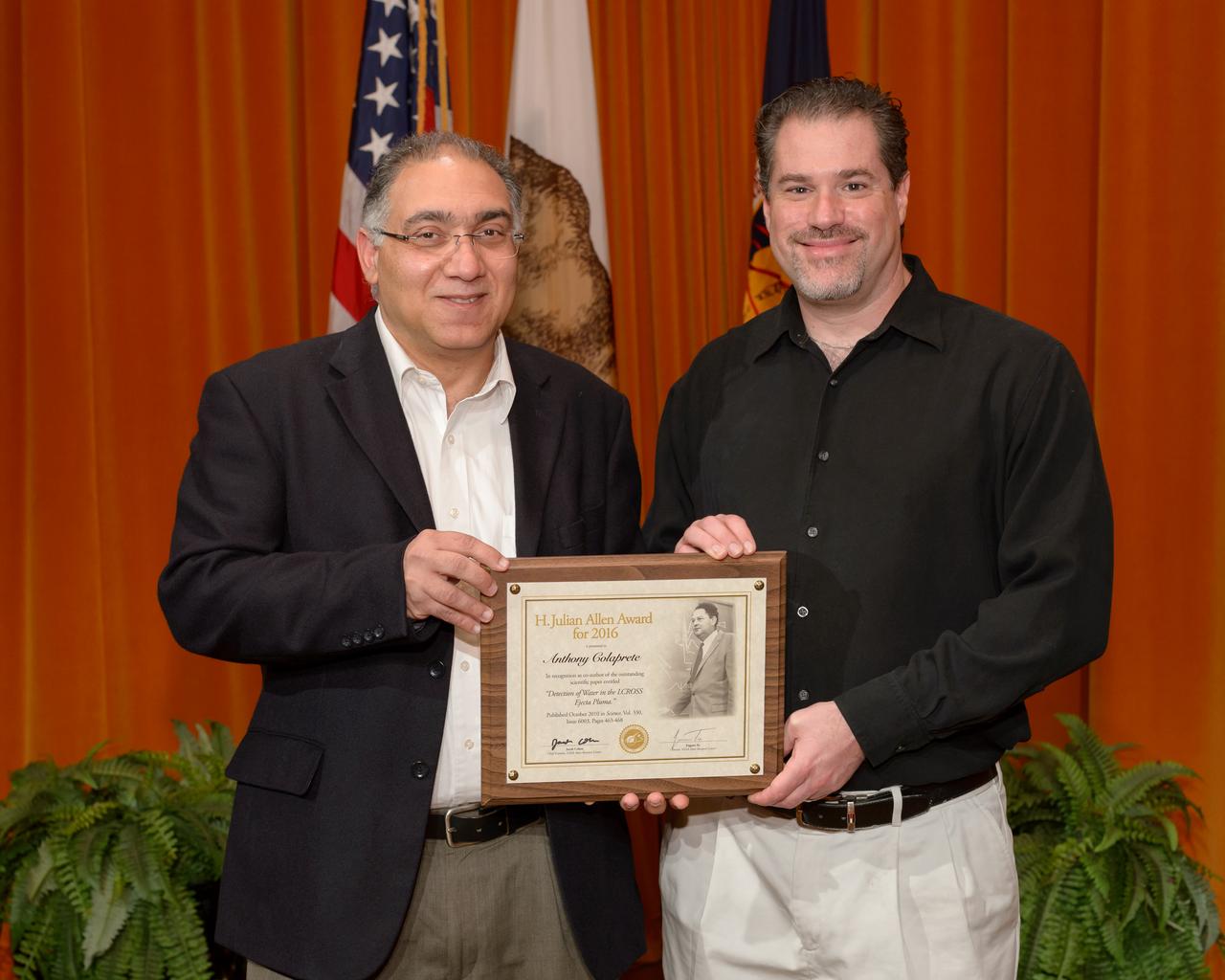
Dr. Jacob Cohen Director Office of Chief Scientist with Dr. Anthony Colaprete recipient of the H. Julian Allen Award In recognition as co-author of the outstanding scientific paper entitled "Detection of Water in the LCROSS Ejecta Pluma." Shown here Dr. Jacob Cohen presents the H. Julian Allen award to Anthony Colaprete.
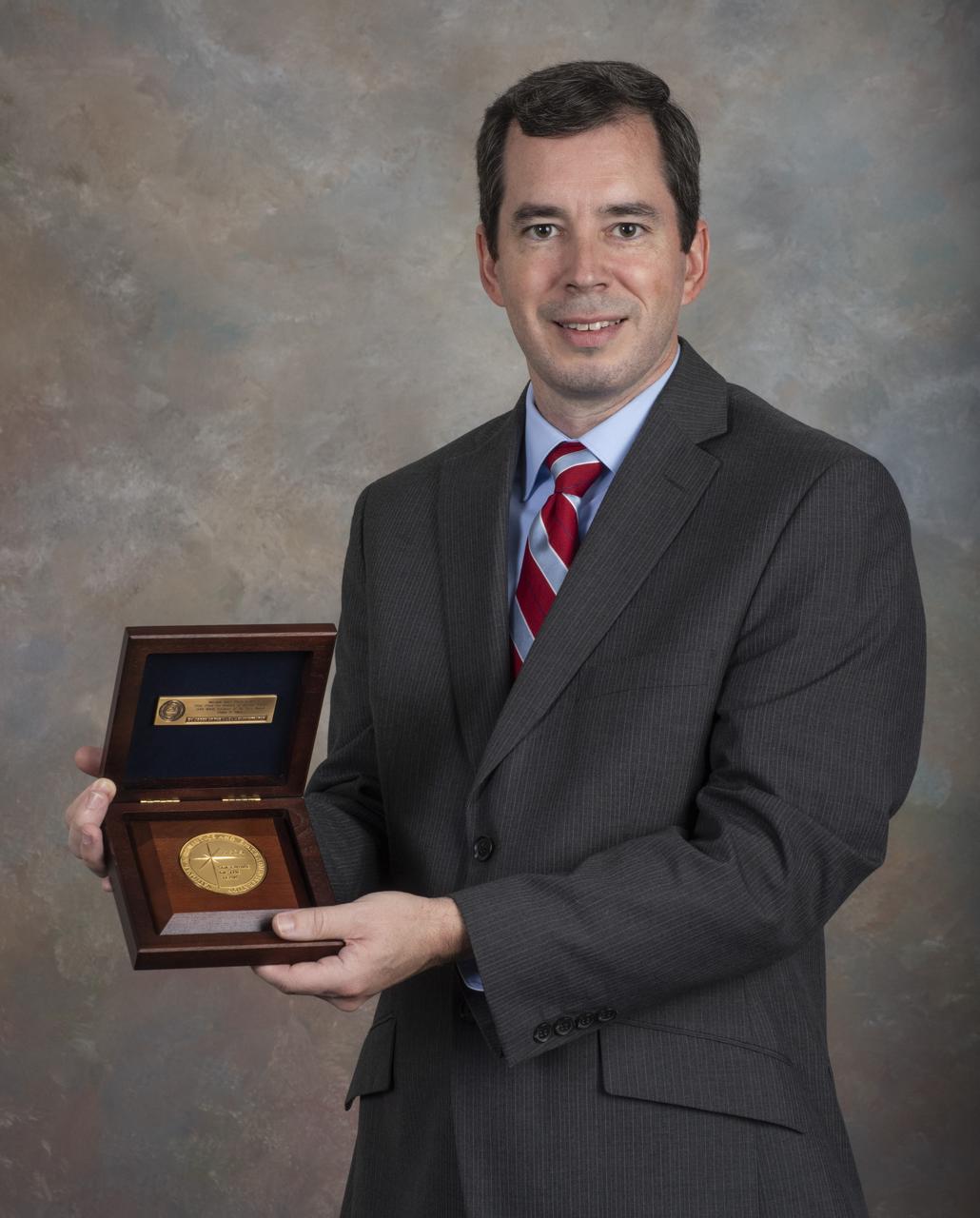
Phillip Allen with NASA Software of the Year Award
![“Starting to host live broadcasts [brought up] so many emotions: terrified, excited, proud. And people have told me, ‘Oh my goodness, I feel like I would freeze up when the camera’s on,’ but that was the most natural position for me because I felt, just a little bit, like I was back on stage, cheerleading. You’re standing on the stage, the lights are off, you're in your head. And then the lights turn on, the music drops, and you’re on a world stage in front of thousands of people doing an incredibly difficult three-minute routine and who knows, you might even be injured right now, but you don't have an option. When those lights and that music comes on, it's almost like something bigger than yourself takes over and you just have to go. And that is the exact same feeling when they're counting you down for a live broadcast: “3, 2, 1. Hello, welcome to NASA. My name is Tahira Allen!” Before something like that happens, I am terrified. I am sitting here thinking, what is about to come out of my mouth? But just like with cheer, whatever you do, you keep moving. I don't know what's going to come out my mouth. But I need to keep talking and just embrace fear. Embrace being uncomfortable.” …You cannot grow without approaching the fear, embracing the fear, and then pushing past it.Science Mission Directorate Digital Lead Tahira Allen poses for a portrait Wednesday, Feb. 8, 2023, at the Mary W. Jackson NASA Headquarters building in Washington. Photo Credit: (NASA/Keegan Barber)](https://images-assets.nasa.gov/image/NHQ202302080001/NHQ202302080001~medium.jpg)
“Starting to host live broadcasts [brought up] so many emotions: terrified, excited, proud. And people have told me, ‘Oh my goodness, I feel like I would freeze up when the camera’s on,’ but that was the most natural position for me because I felt, just a little bit, like I was back on stage, cheerleading. You’re standing on the stage, the lights are off, you're in your head. And then the lights turn on, the music drops, and you’re on a world stage in front of thousands of people doing an incredibly difficult three-minute routine and who knows, you might even be injured right now, but you don't have an option. When those lights and that music comes on, it's almost like something bigger than yourself takes over and you just have to go. And that is the exact same feeling when they're counting you down for a live broadcast: “3, 2, 1. Hello, welcome to NASA. My name is Tahira Allen!” Before something like that happens, I am terrified. I am sitting here thinking, what is about to come out of my mouth? But just like with cheer, whatever you do, you keep moving. I don't know what's going to come out my mouth. But I need to keep talking and just embrace fear. Embrace being uncomfortable.” …You cannot grow without approaching the fear, embracing the fear, and then pushing past it.Science Mission Directorate Digital Lead Tahira Allen poses for a portrait Wednesday, Feb. 8, 2023, at the Mary W. Jackson NASA Headquarters building in Washington. Photo Credit: (NASA/Keegan Barber)
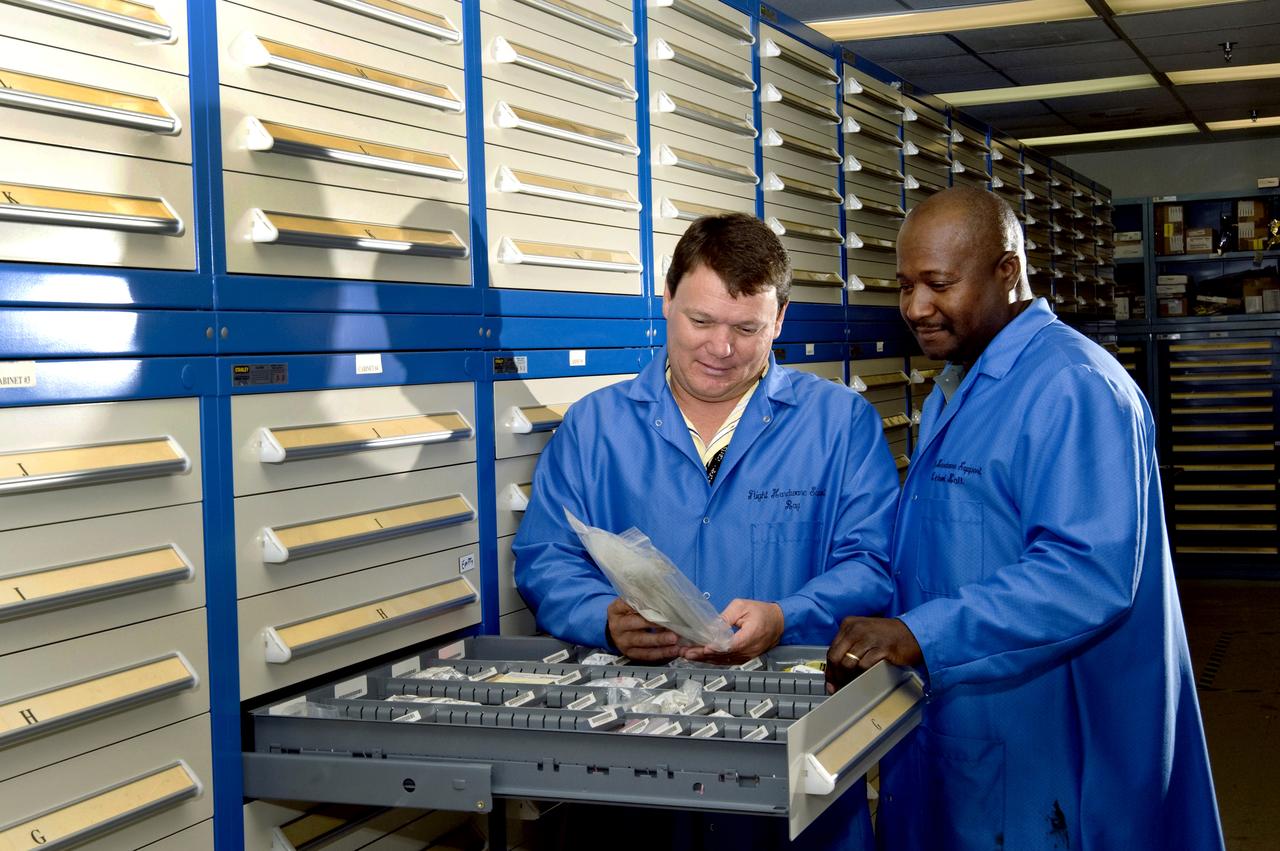
ALLEN OSMER AND NATHAN HOLLEY, MSFC FLIGHT HARDWARE
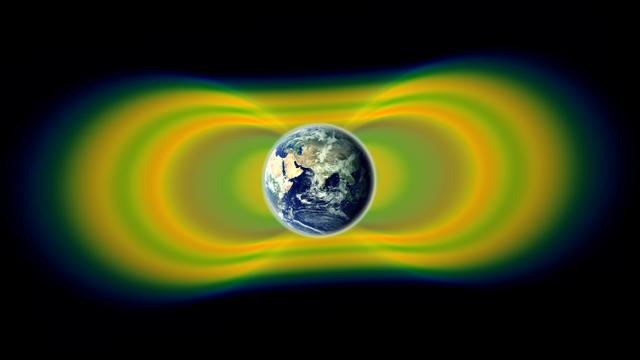
Two giant swaths of radiation, known as the Van Allen Belts, surrounding Earth were discovered in 1958. In 2012, observations from the Van Allen Probes showed that a third belt can sometimes appear. The radiation is shown here in yellow, with green representing the spaces between the belts. Credit: NASA/Van Allen Probes/Goddard Space Flight Center To read more go to: <a href="http://www.nasa.gov/mission_pages/rbsp/news/third-belt.html" rel="nofollow">www.nasa.gov/mission_pages/rbsp/news/third-belt.html</a> <b><a href="http://www.nasa.gov/audience/formedia/features/MP_Photo_Guidelines.html" rel="nofollow">NASA image use policy.</a></b> <b><a href="http://www.nasa.gov/centers/goddard/home/index.html" rel="nofollow">NASA Goddard Space Flight Center</a></b> enables NASA’s mission through four scientific endeavors: Earth Science, Heliophysics, Solar System Exploration, and Astrophysics. Goddard plays a leading role in NASA’s accomplishments by contributing compelling scientific knowledge to advance the Agency’s mission. <b>Follow us on <a href="http://twitter.com/NASA_GoddardPix" rel="nofollow">Twitter</a></b> <b>Like us on <a href="http://www.facebook.com/pages/Greenbelt-MD/NASA-Goddard/395013845897?ref=tsd" rel="nofollow">Facebook</a></b> <b>Find us on <a href="http://instagram.com/nasagoddard?vm=grid" rel="nofollow">Instagram</a></b>
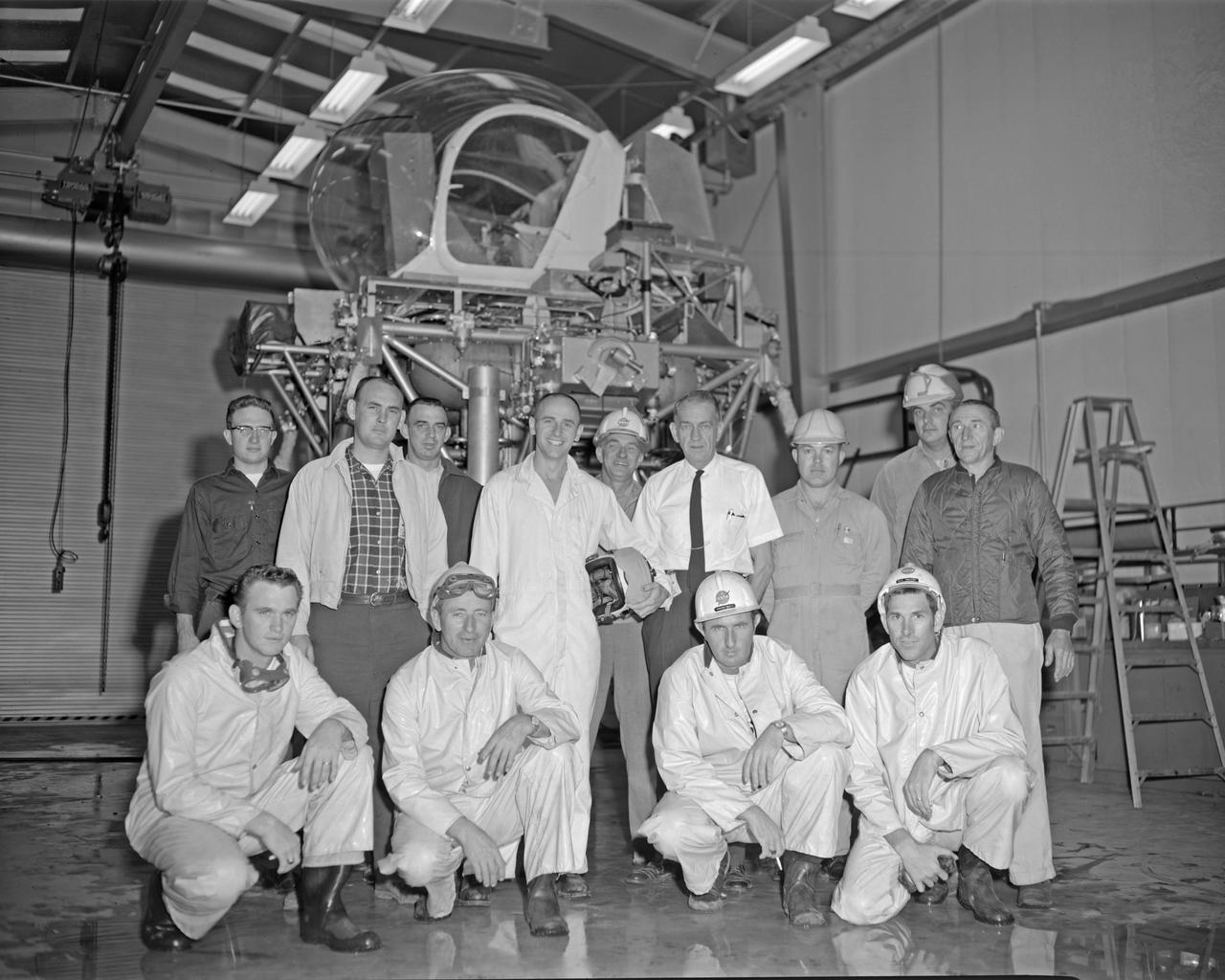
Astronaut Allen Bean with Lunar Landing Research Facility (LLRF) crew. Alan Bean was one of the third group of astronauts named by NASA in October 1963. He served as backup astronaut for the Gemini 10 and Apollo 9 missions.
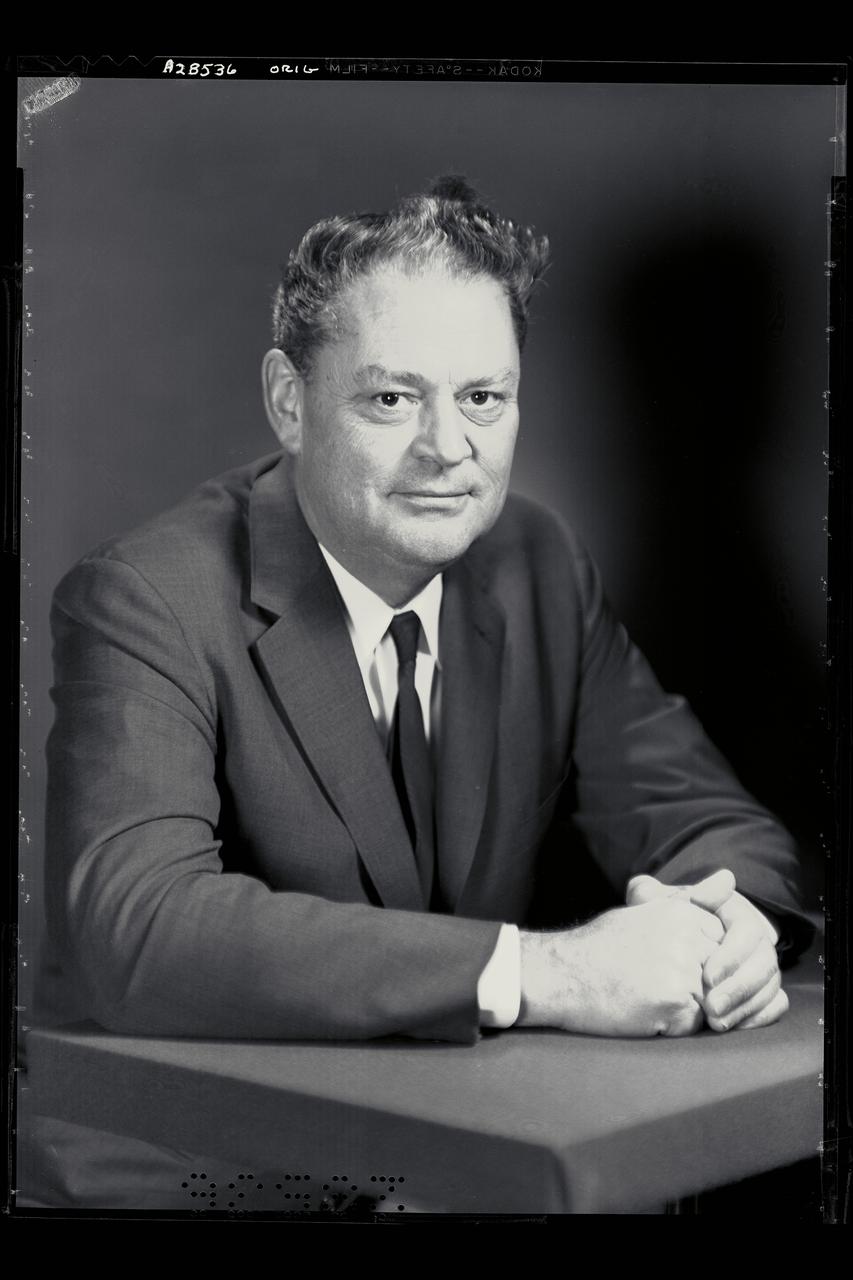
Portrait: Ames Director H Julian Allen (1965 - 1969)
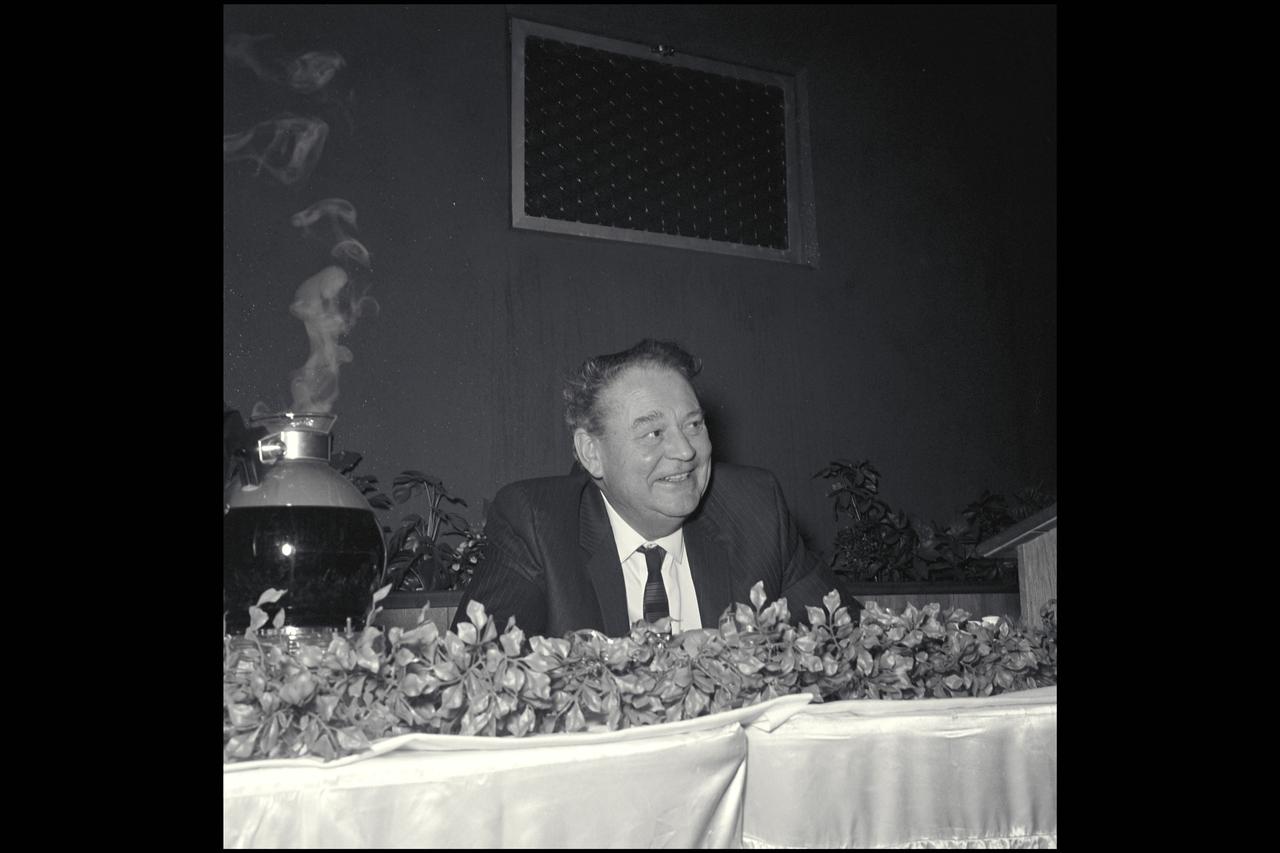
H. Julian 'Harvey' Allen at his retirement party in the hangar
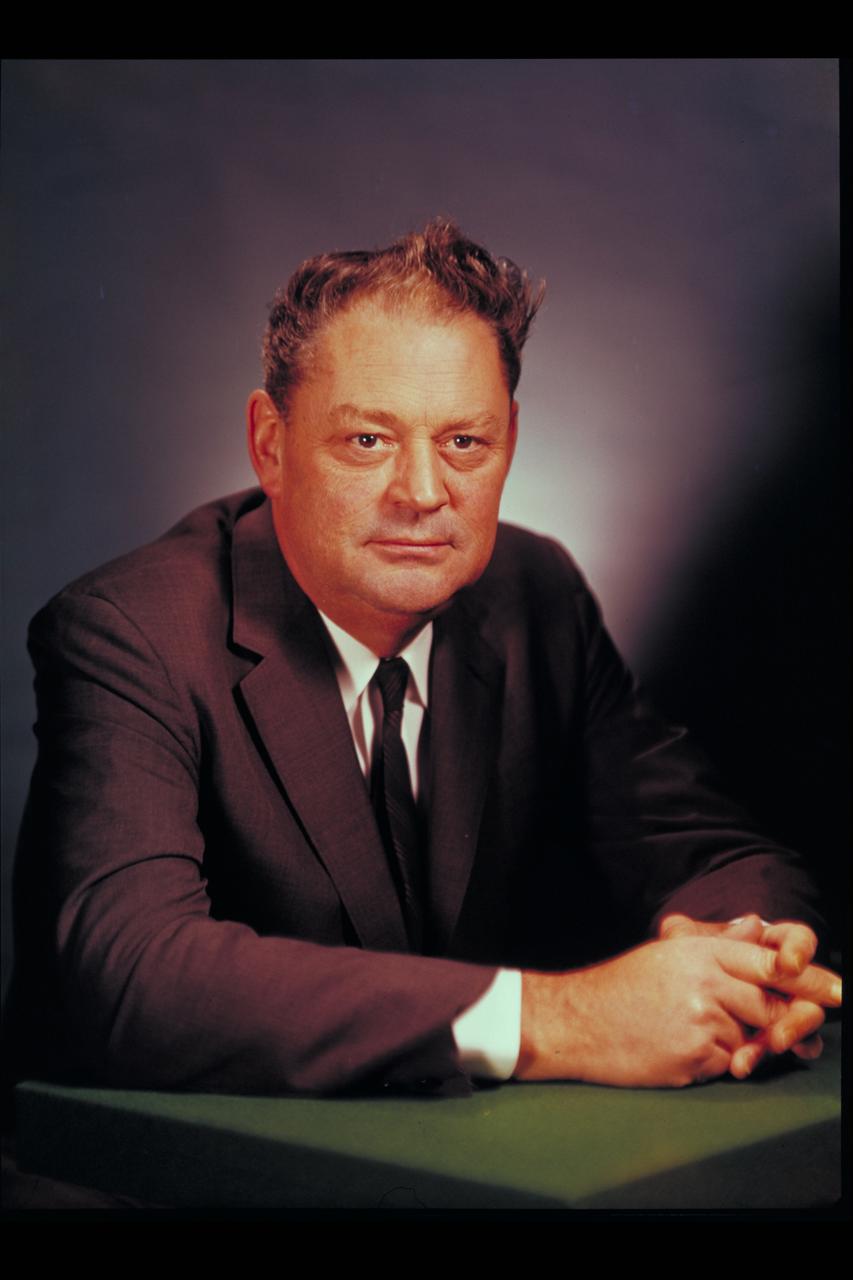
Portrait: Ames Director H Julian Allen (1965 - 1969)
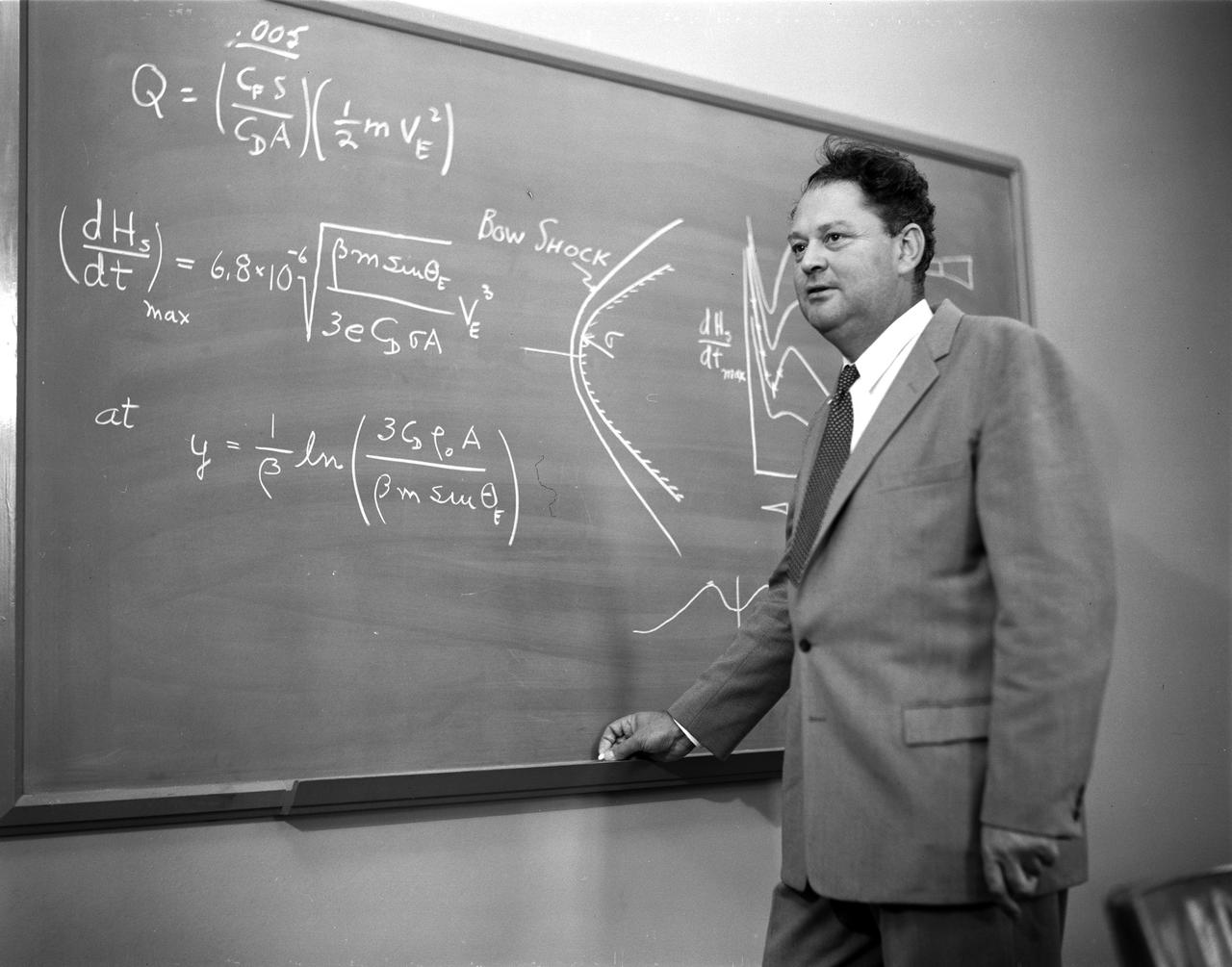
Portrait of NASA Ames Engineer H. Julian 'Harvey' Allen explaining blunt nose principle.
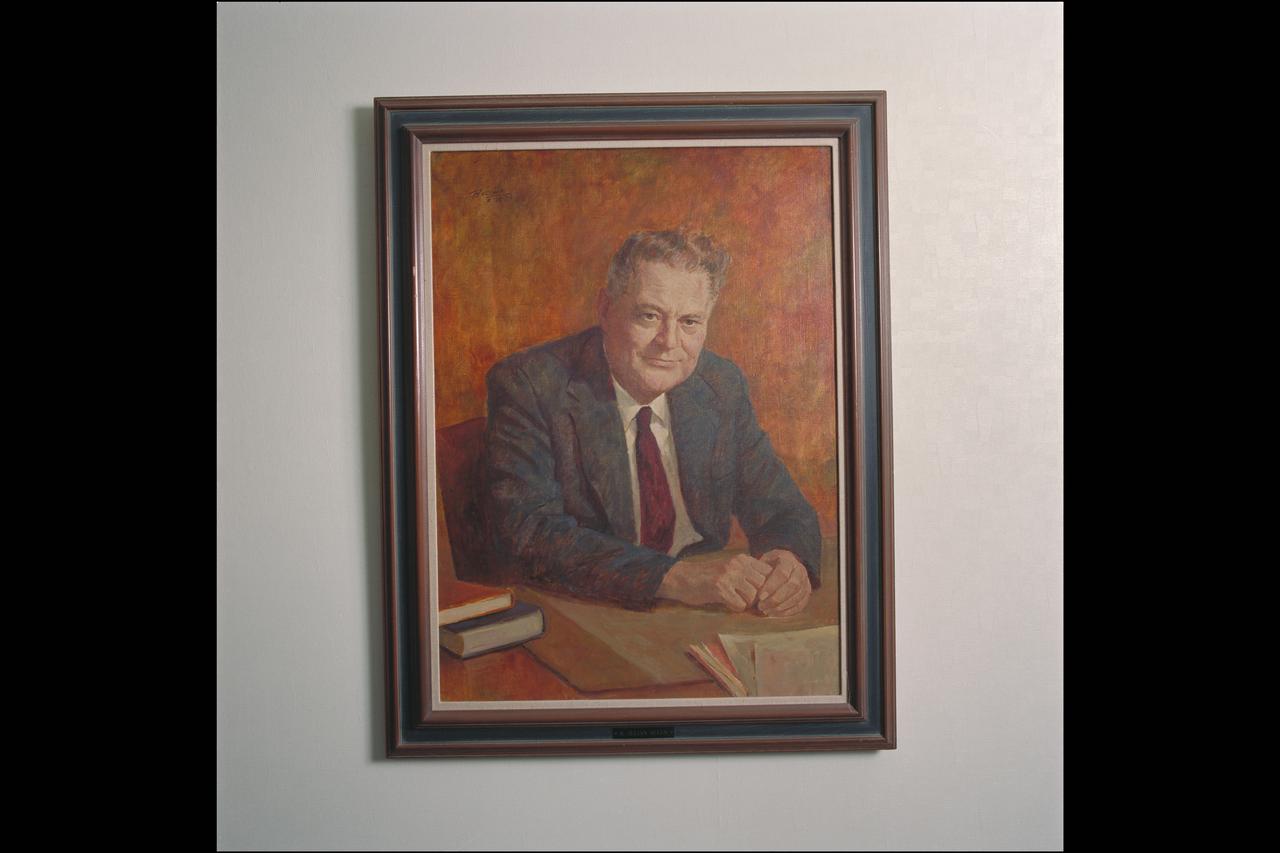
Oil Portrait: H. Julian Allen, Ames Director from 1965 thru 1969
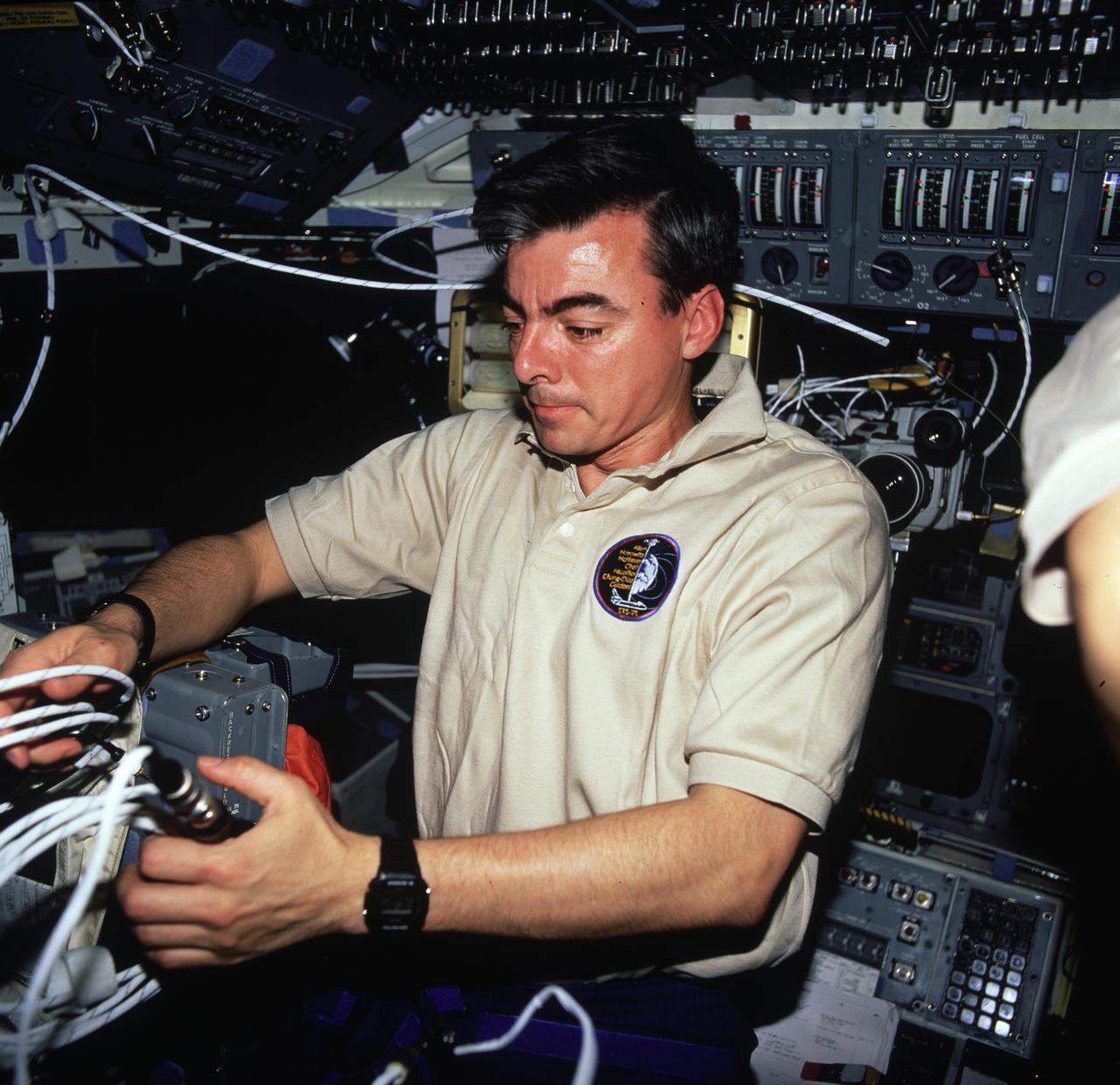
STS075-772-013 (22 Feb.- 9 March 1996) --- Astronaut Andrew M. Allen, mission commander, sets up systems for a television downlink on the flight deck of the space shuttle Columbia. Allen was joined by four other astronauts and an international payload specialist for more than 16 days of research aboard Columbia. The photograph was taken with a 70mm handheld camera.
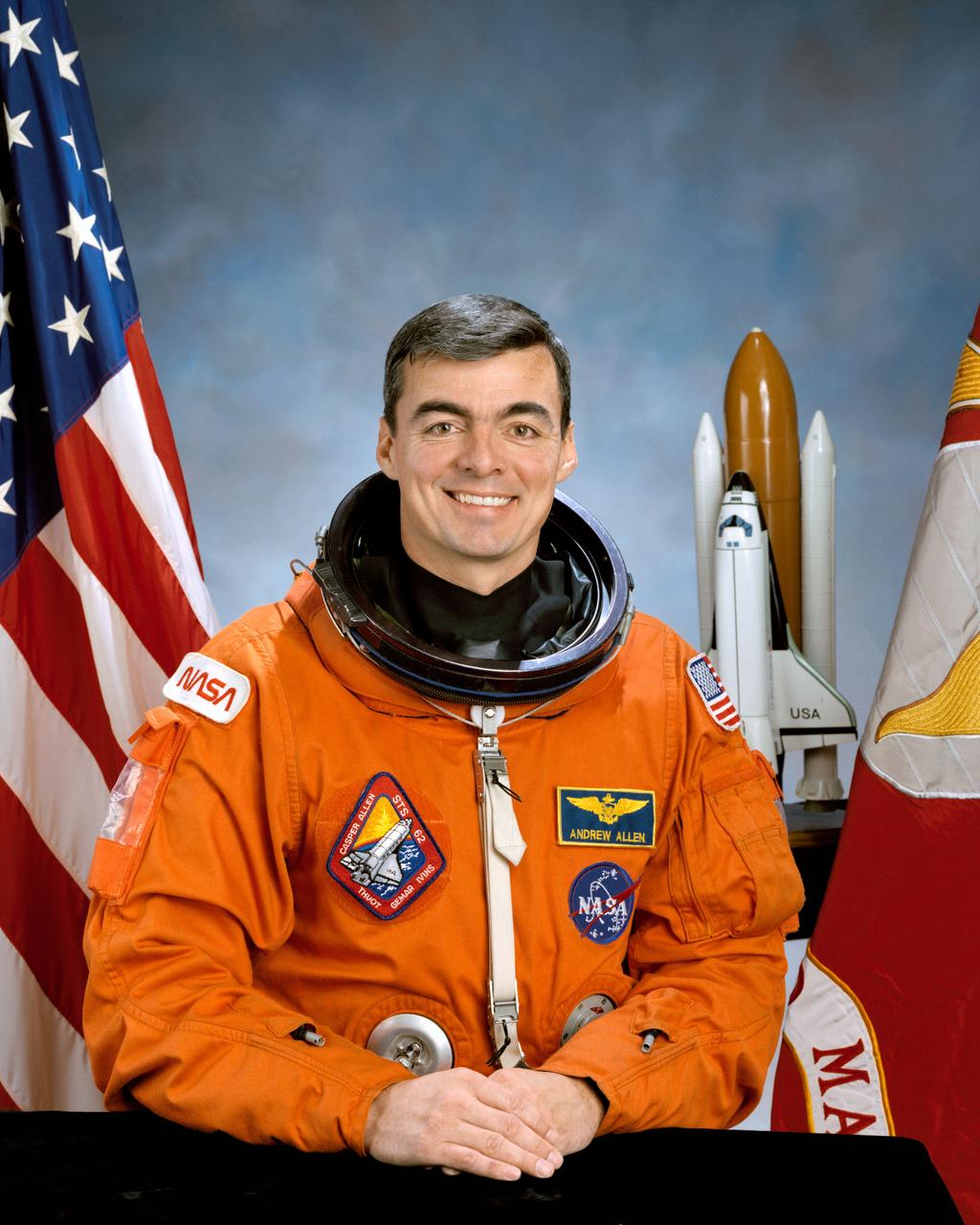
S94-26084 (20 Jan. 1994) --- Astronaut Andrew M. Allen, pilot.
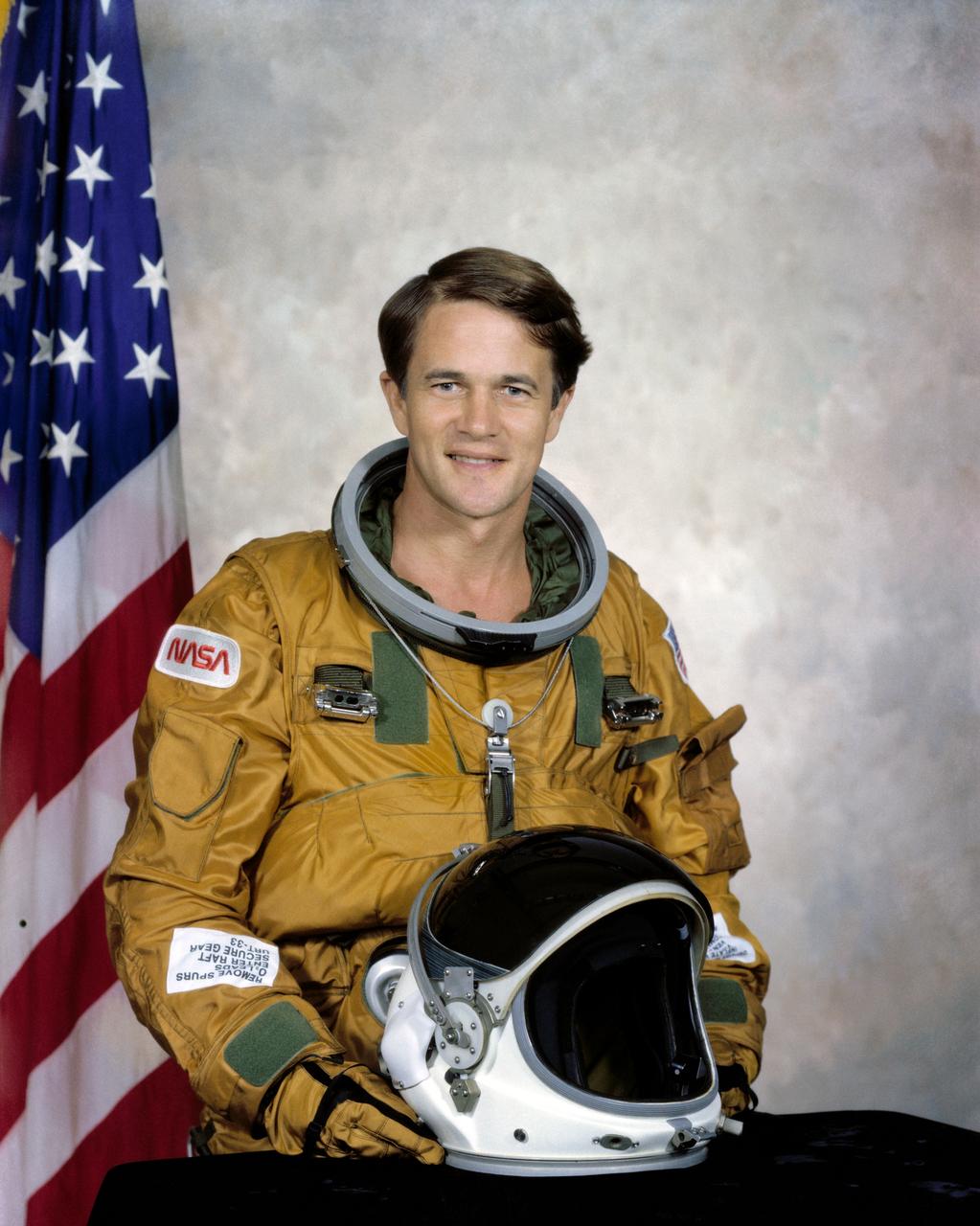
S79-36411 (17 Sept. 1979) --- Astronaut Joseph P. Allen IV.
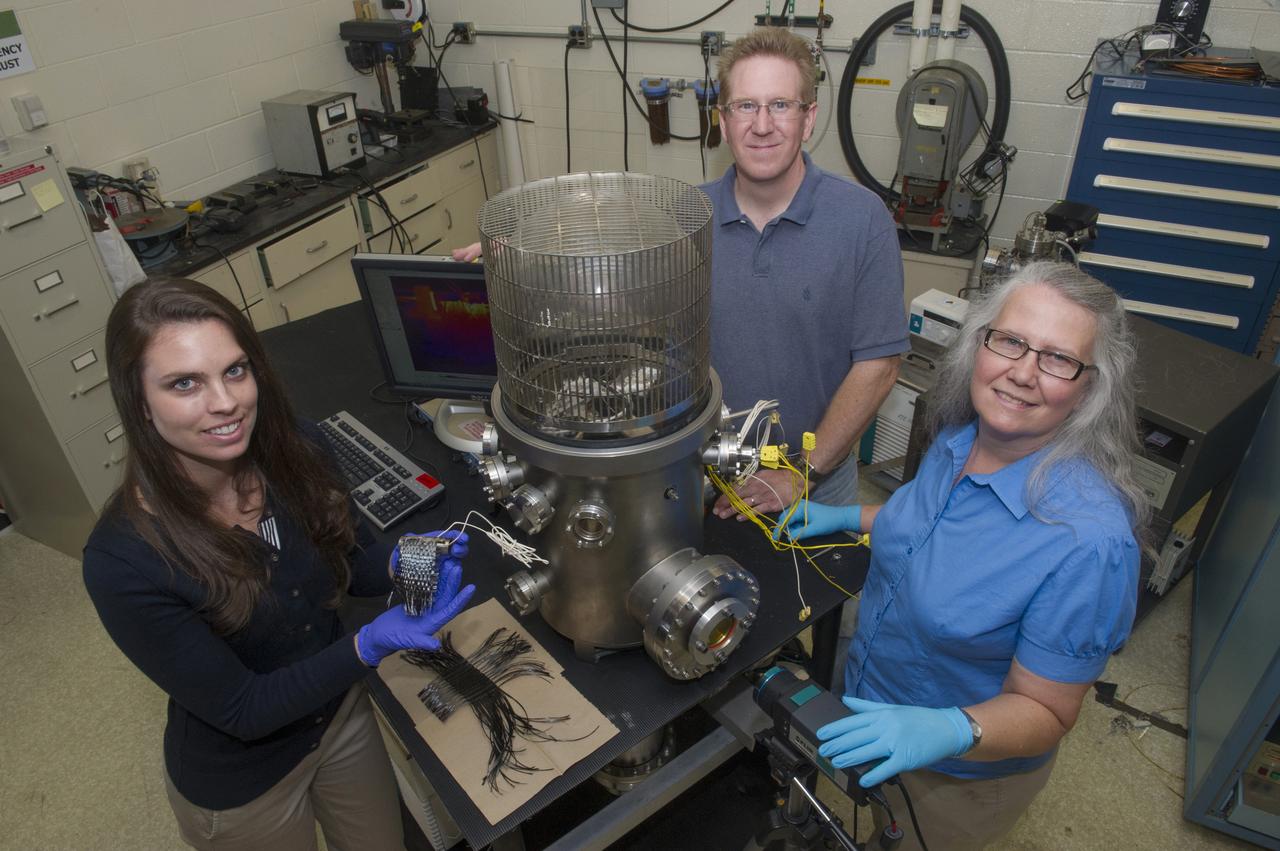
MEMBERS OF THE 2013 CIF RADIATOR PROJECT TEAM AT THE TESTING FACILITY. RIGHT TO LEFT: TRUDY ALLEN, GLENN FOUNTAIN, NSTR STUDENT BRIANA TOMBOULIAN.-
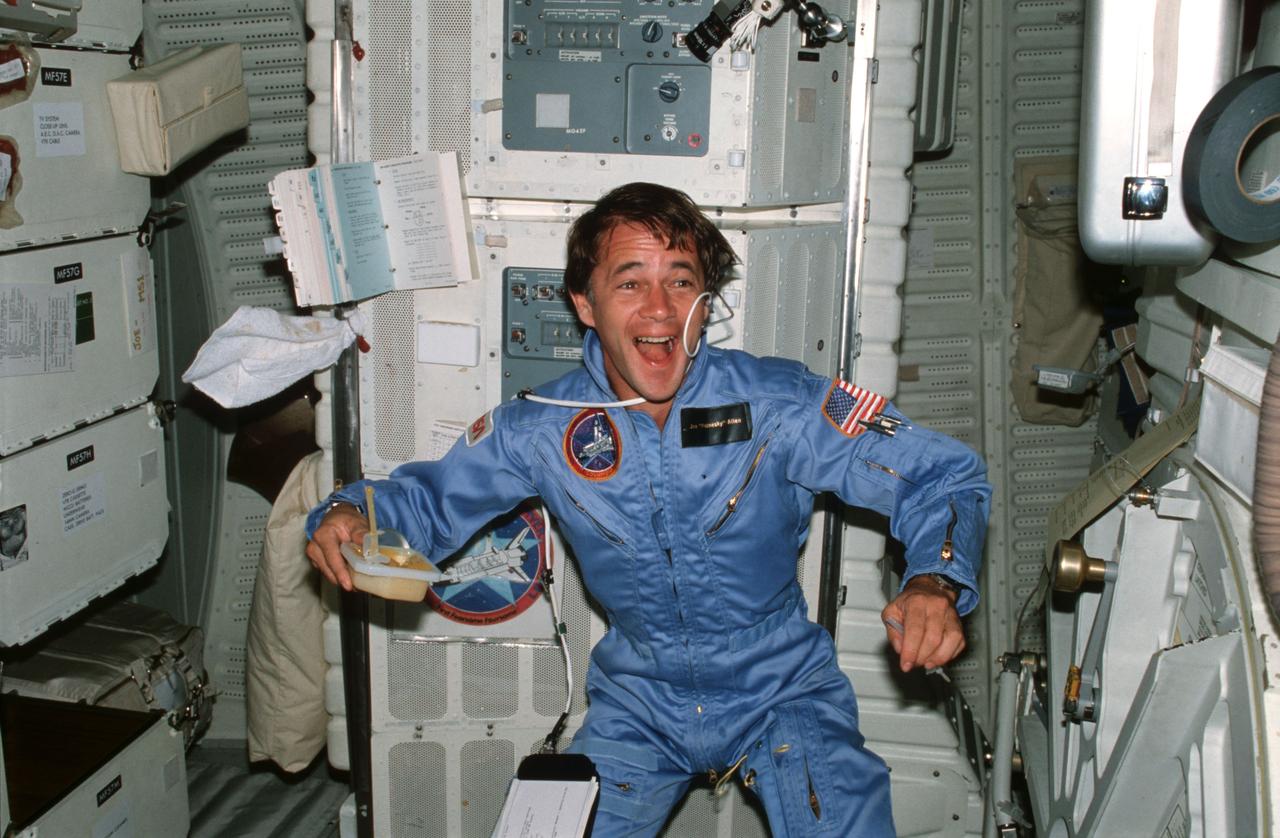
STS005-04-134 (11-16 Nov. 1982) --- Astronaut Joseph P. Allen IV, STS-5 mission specialist, uses beverage container and drinking straw, experiments with microgravity characteristics of orange juice on middeck in front of the Development Flight Instrument (DFI) unit and forward lockers. Allen laughs as he watches the results of his experimentation. Photo credit: NASA
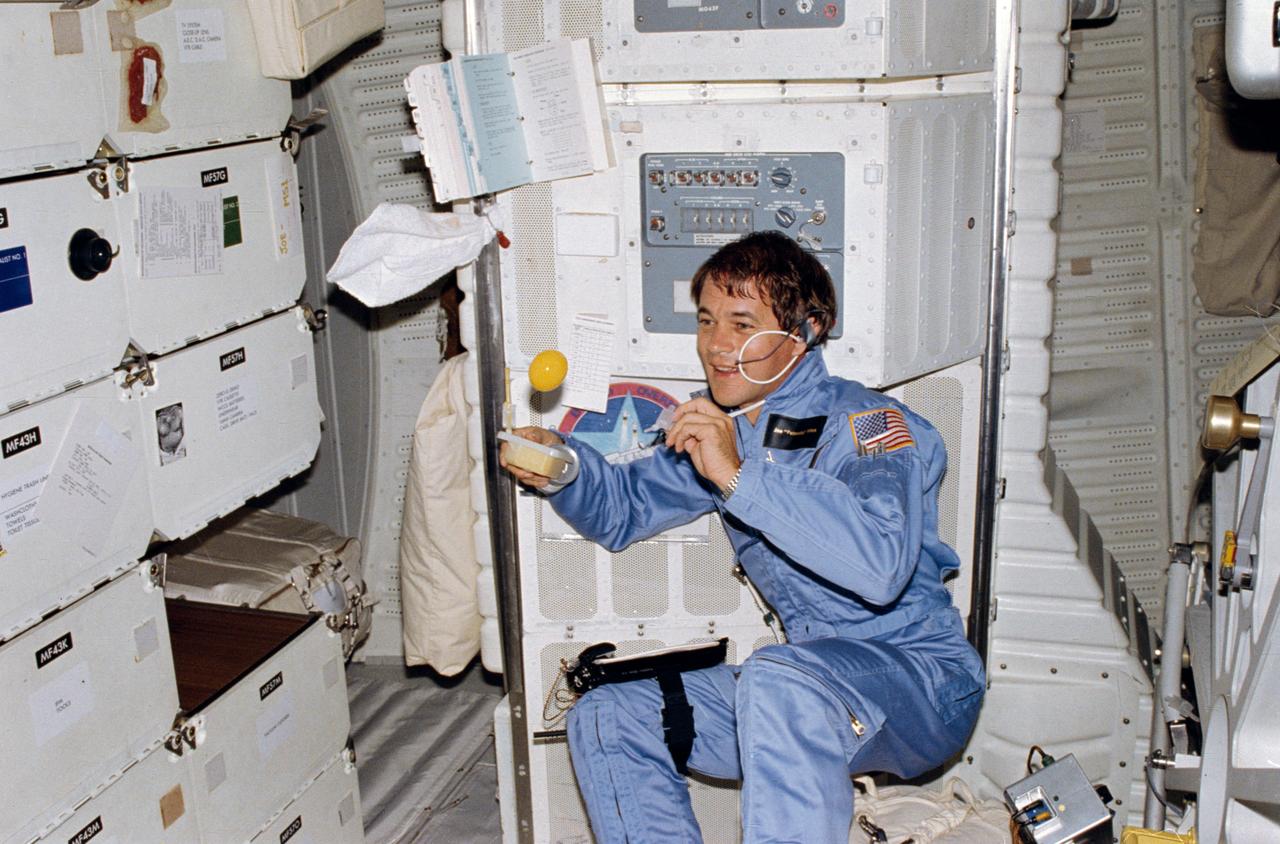
STS005-04-128 (11-15 Nov. 1982) --- Astronaut Joseph P. Allen IV, STS-5 mission specialist, watches as an orange juice globule floats freely moments after he created the ball using the straw portion (left hand) of his beverage dispenser (right hand) onboard the Earth-orbiting space shuttle Columbia. Dr. Allen is in middeck area of the Columbia, marking its first operational (non-test) flight in Earth orbit. Photo credit: NASA
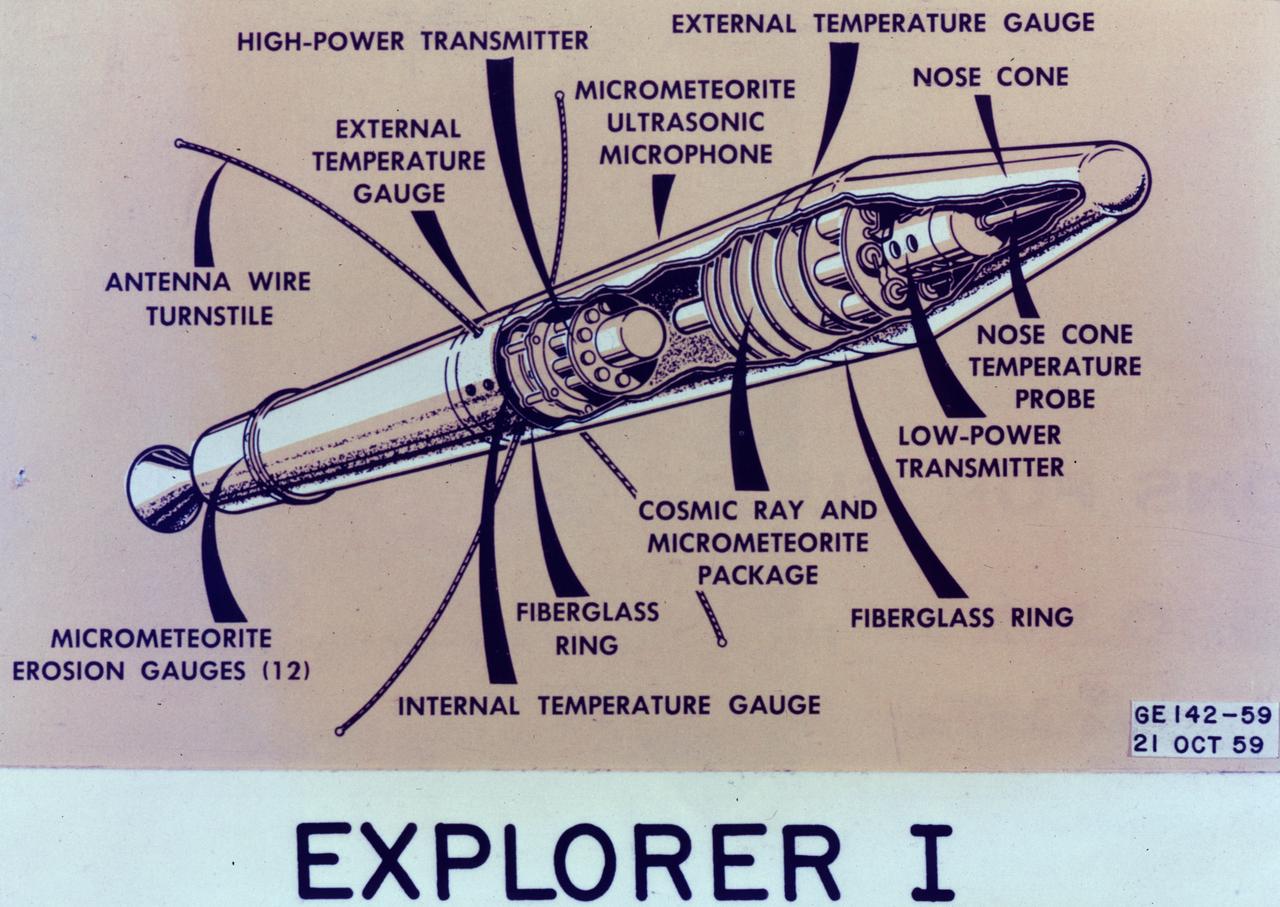
This image is a cutaway illustration of the Explorer I satellite with callouts. The Explorer I satellite was America's first scientific satellite launched aboard the Jupiter C launch vehicle on January 31, 1958. The Explorer I carried the radiation detection experiment designed by Dr. James Van Allen and discovered the Van Allen Radiation Belt.
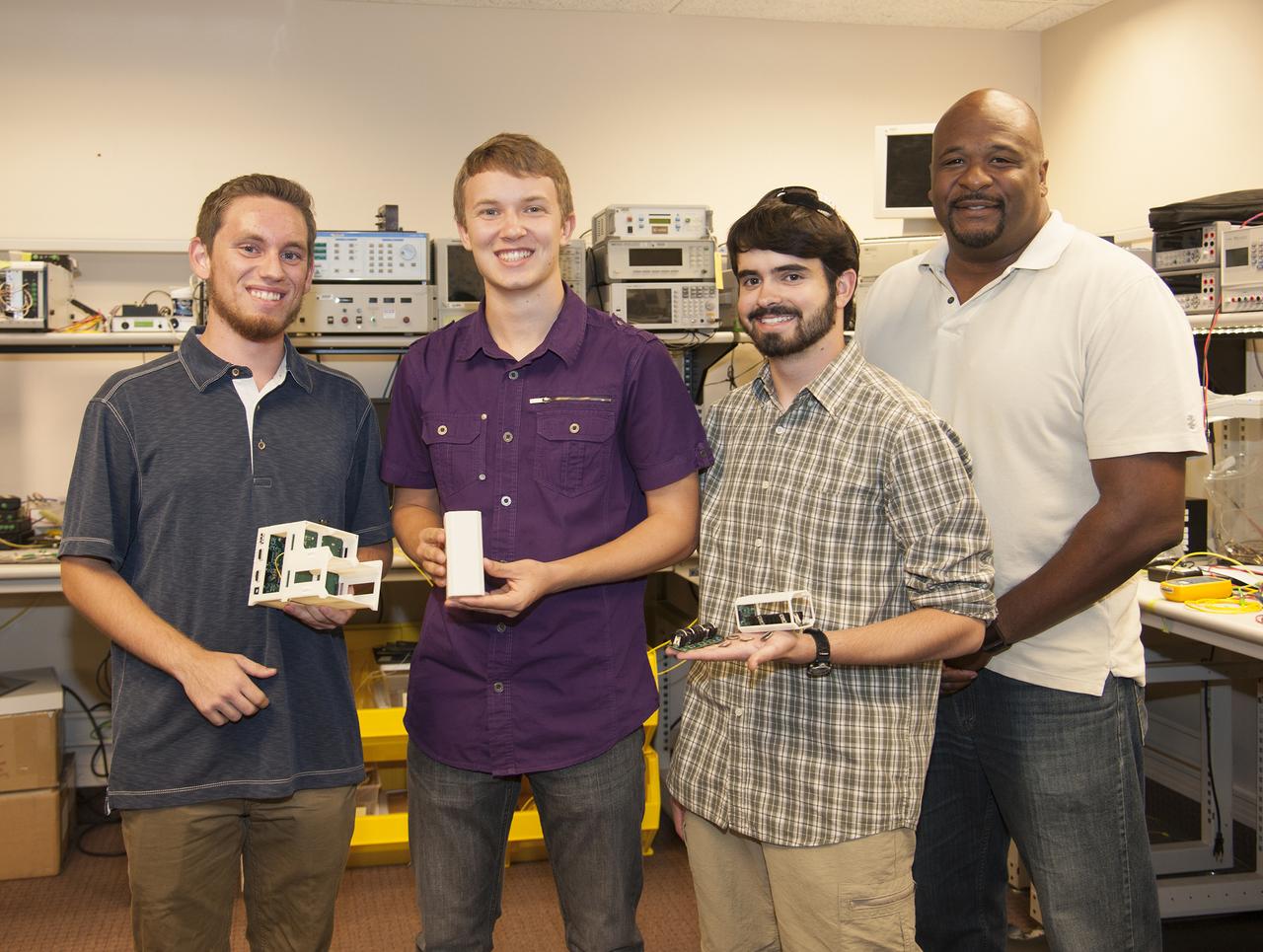
From left, former Desert Christian students Logan Francisco, Kyler Stephens and Jonathan Lokos and NASA Armstrong mentor Allen Parker show the elements of the experiment launched into space on Dec. 3.
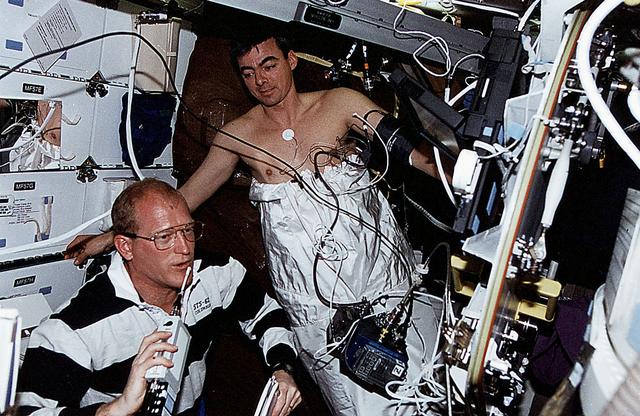
Space Shuttle Columbia (STS-62) onboard photo of Astronaut Charles (Sam) Gemar talking to ground controllers while assisting astronaut Andrew M. Allen with a soak in the Lower Body Negative Pressure (LBNP) apparatus on the middeck.
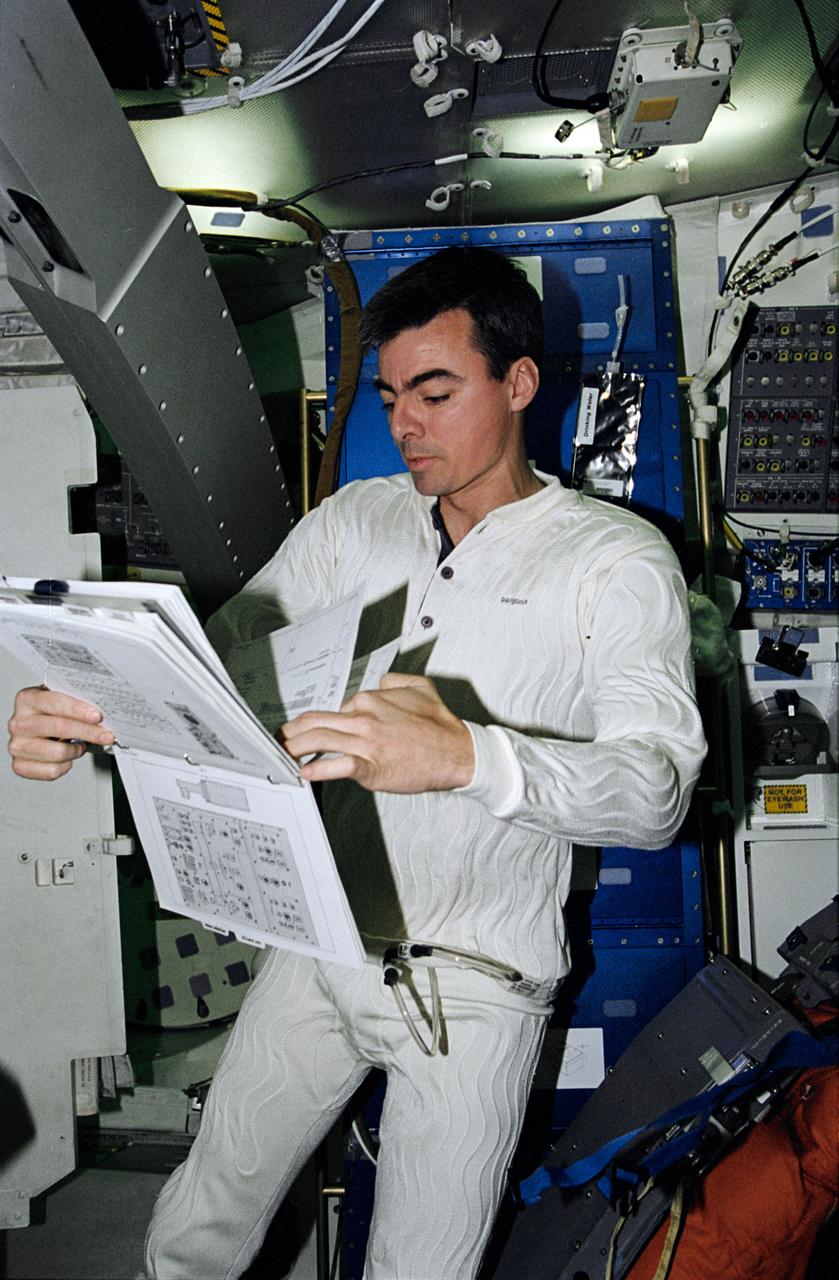
STS062-12-015 (4-18 March 1994) --- On Coumbia's middeck, astronaut Andrew M. Allen, pilot, looks over a procedures book in the midst of a 14-day mission. Allen is attired in a new thermally controlled undergarment. As part of a detailed test objective, both Allen and John H. Casper, mission commander, wore the undergarments during the launch and entry phases of the flight.
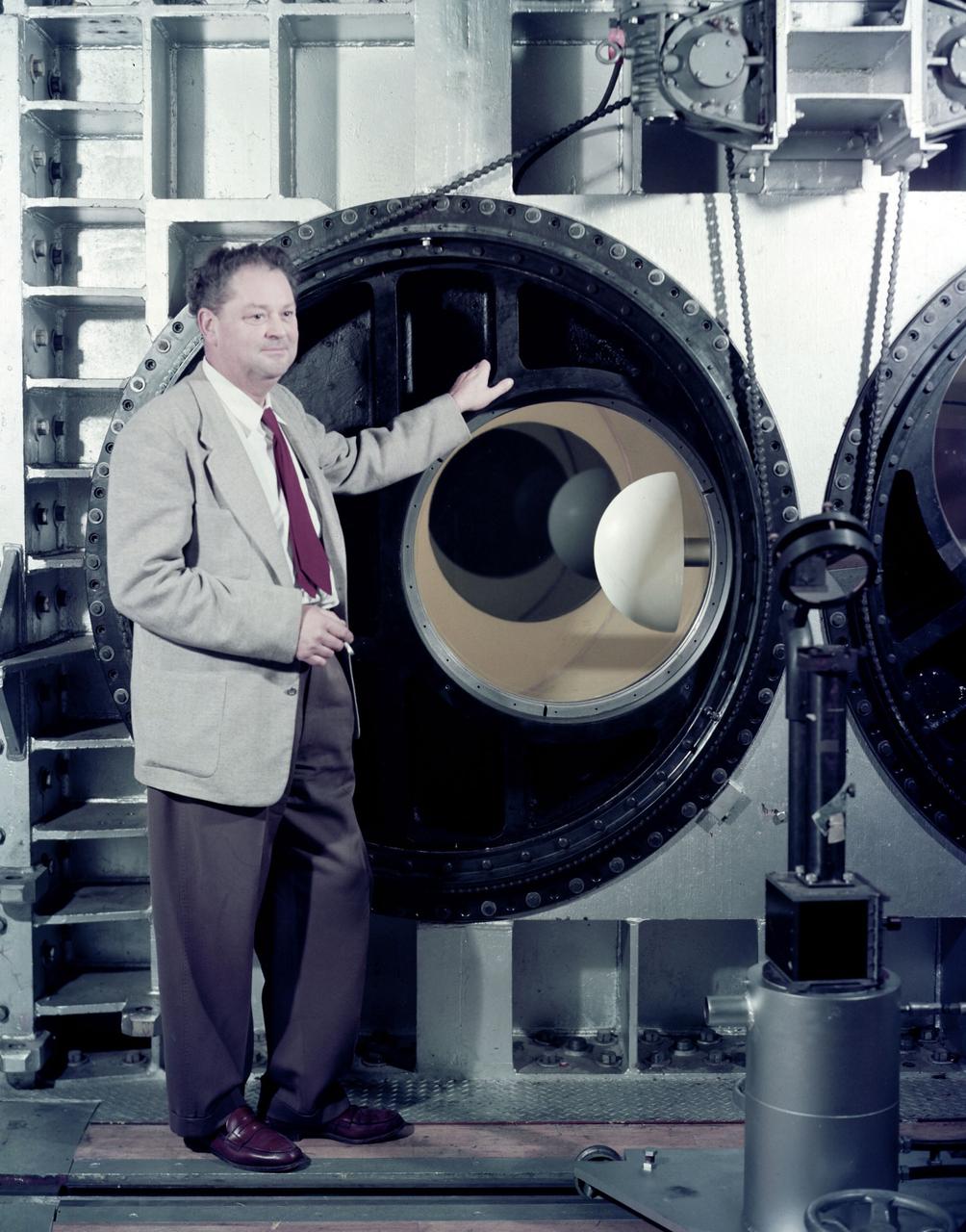
H. Julian 'Harvey' Allen in front of the NASA Ames 8_x_7 foot Supersonic Wind Tunnel test section. A blunt body model mounted in the test section is ready for testing . The 8_X_7_foot is part of the Unitary Plan WInd Tunnel Complex Note: printed in 60 year at NASA Ames Research Center by Glenn Bugos NASA SP-2000-4314
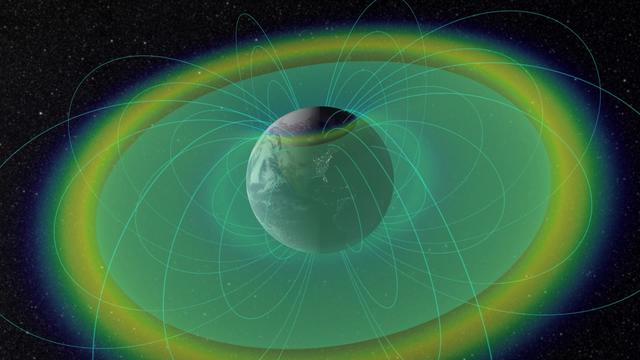
Two donuts of seething radiation that surround Earth, called the Van Allen radiation belts, have been found to contain a nearly impenetrable barrier that prevents the fastest, most energetic electrons from reaching Earth. Read more: <a href="http://1.usa.gov/11v7nUW" rel="nofollow">1.usa.gov/11v7nUW</a> Caption: This is a visualization of the radiation belts with confined charged particles (blue & yellow) and plasmapause boundary (blue-green surface) Caption: NASA's Scientific Visualization Studio <b><a href="http://www.nasa.gov/audience/formedia/features/MP_Photo_Guidelines.html" rel="nofollow">NASA image use policy.</a></b> <b><a href="http://www.nasa.gov/centers/goddard/home/index.html" rel="nofollow">NASA Goddard Space Flight Center</a></b> enables NASA’s mission through four scientific endeavors: Earth Science, Heliophysics, Solar System Exploration, and Astrophysics. Goddard plays a leading role in NASA’s accomplishments by contributing compelling scientific knowledge to advance the Agency’s mission. <b>Follow us on <a href="http://twitter.com/NASAGoddardPix" rel="nofollow">Twitter</a></b> <b>Like us on <a href="http://www.facebook.com/pages/Greenbelt-MD/NASA-Goddard/395013845897?ref=tsd" rel="nofollow">Facebook</a></b> <b>Find us on <a href="http://instagrid.me/nasagoddard/?vm=grid" rel="nofollow">Instagram</a></b>
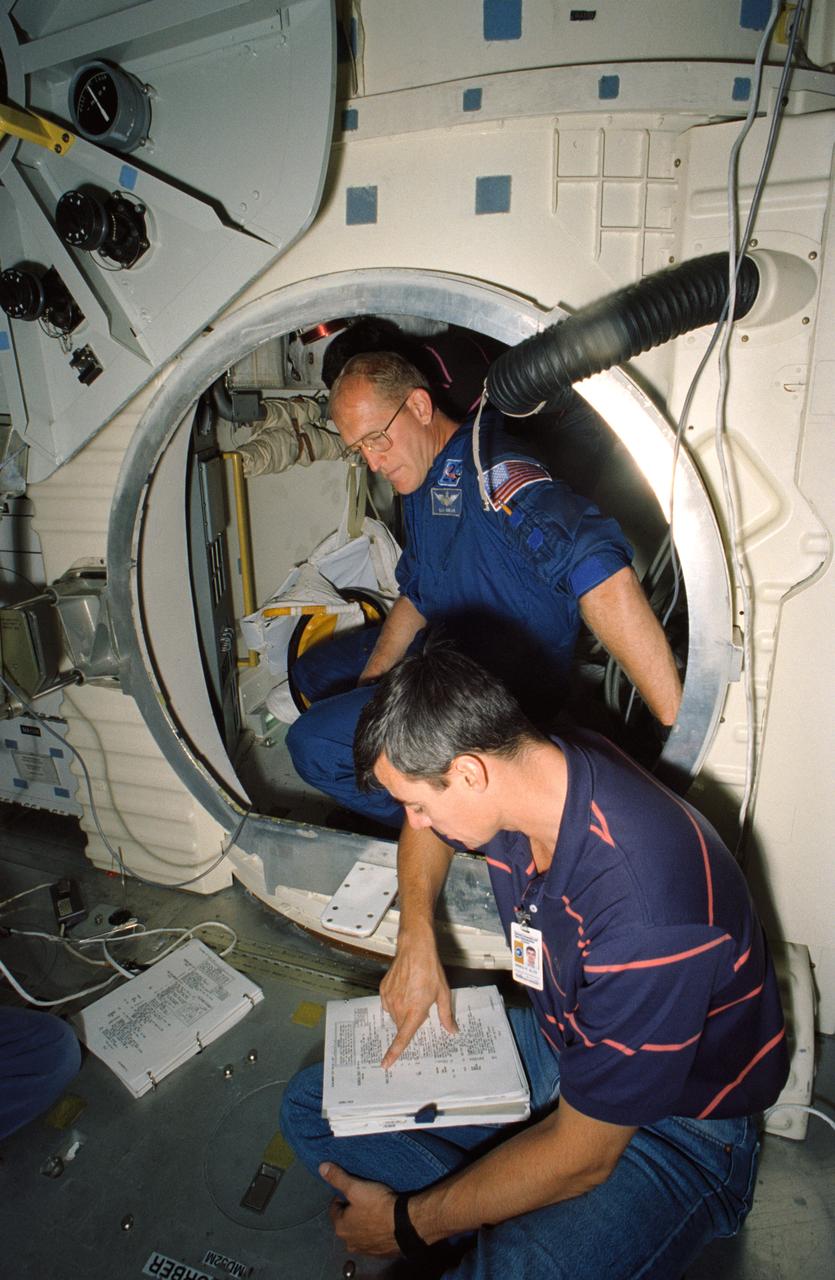
Astronauts Charles D. (Sam) Gemar, and Andrew M. Allen participate in a training exercise at JSC's Crew Compartment Trainer (CCT), located in the Shuttle mockup and integration laboratory. Gemar sits inside the airlock as Allen reviews procedures for EVA.
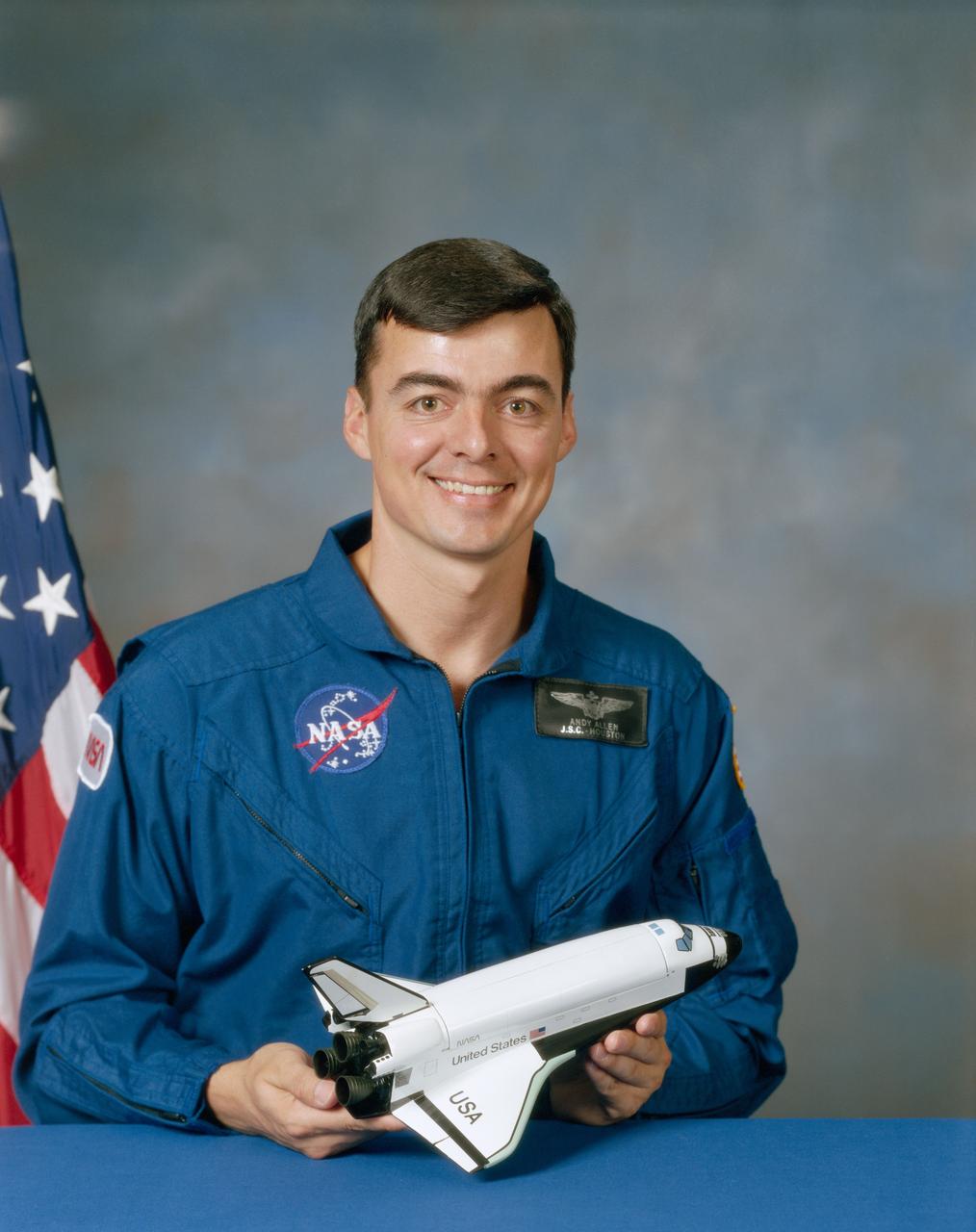
S87-45896 (1987) --- Astronaut Andrew M. Allen, astronaut candidate.
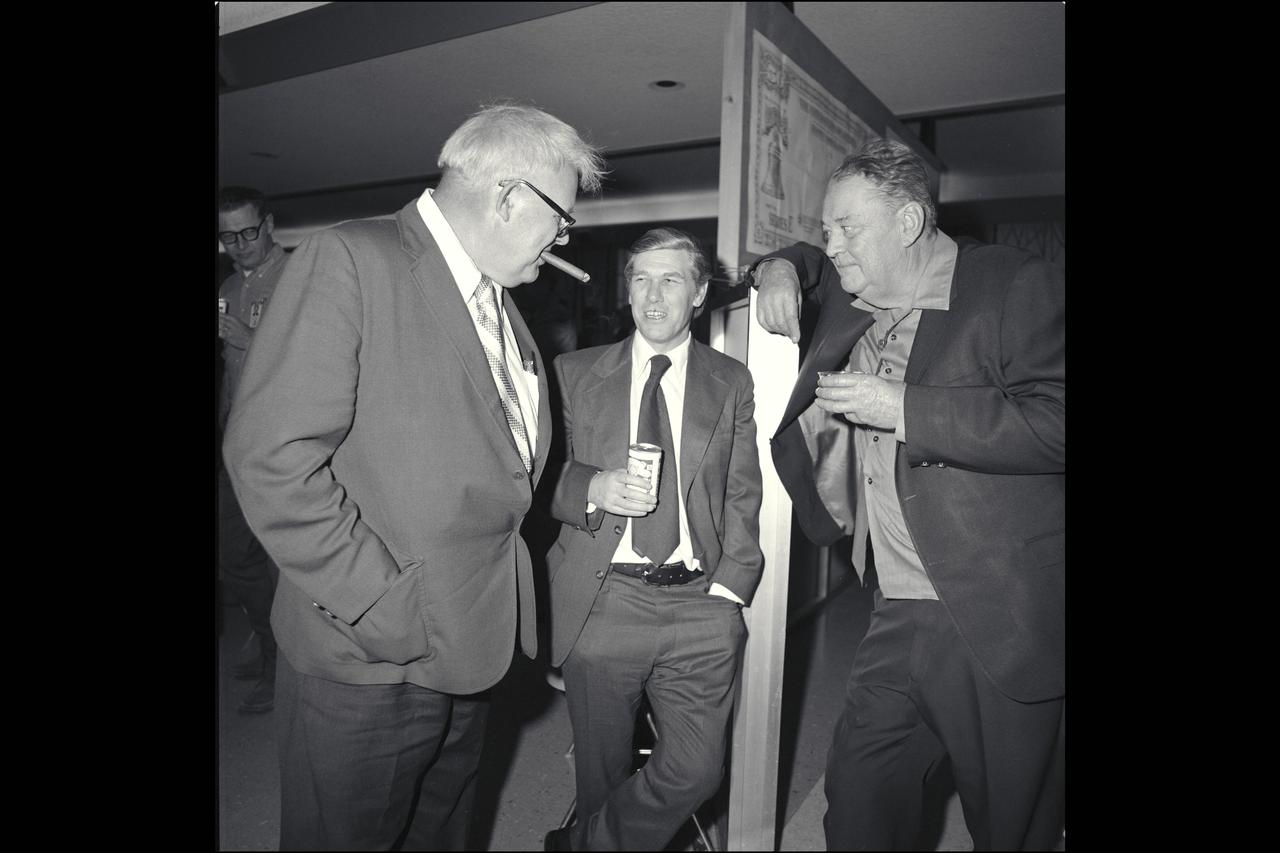
The Ames spirit of free and vigorous discussion; Left to right: Harv Lomax, Leonard Roberts and Harvey Allen during an award ceremony honoring R.T. Jones.
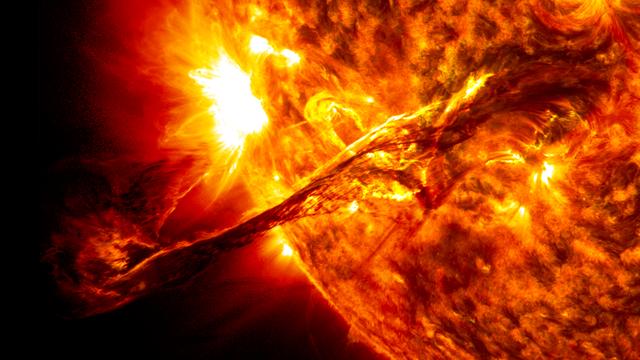
On Aug. 31, 2012, a giant prominence on the sun erupted, sending out particles and a shock wave that traveled near Earth. This event may have been one of the causes of a third radiation belt that appeared around Earth a few days later, a phenomenon that was observed for the very first time by the newly-launched Van Allen Probes. This image of the prominence before it erupted was captured by NASA's Solar Dynamics Observatory (SDO). Credit: NASA/SDO/AIA/Goddard Space Flight Center To read more go to: <a href="http://www.nasa.gov/mission_pages/rbsp/news/third-belt.html" rel="nofollow">www.nasa.gov/mission_pages/rbsp/news/third-belt.html</a> <b><a href="http://www.nasa.gov/audience/formedia/features/MP_Photo_Guidelines.html" rel="nofollow">NASA image use policy.</a></b> <b><a href="http://www.nasa.gov/centers/goddard/home/index.html" rel="nofollow">NASA Goddard Space Flight Center</a></b> enables NASA’s mission through four scientific endeavors: Earth Science, Heliophysics, Solar System Exploration, and Astrophysics. Goddard plays a leading role in NASA’s accomplishments by contributing compelling scientific knowledge to advance the Agency’s mission. <b>Follow us on <a href="http://twitter.com/NASA_GoddardPix" rel="nofollow">Twitter</a></b> <b>Like us on <a href="http://www.facebook.com/pages/Greenbelt-MD/NASA-Goddard/395013845897?ref=tsd" rel="nofollow">Facebook</a></b> <b>Find us on <a href="http://instagram.com/nasagoddard?vm=grid" rel="nofollow">Instagram</a></b>
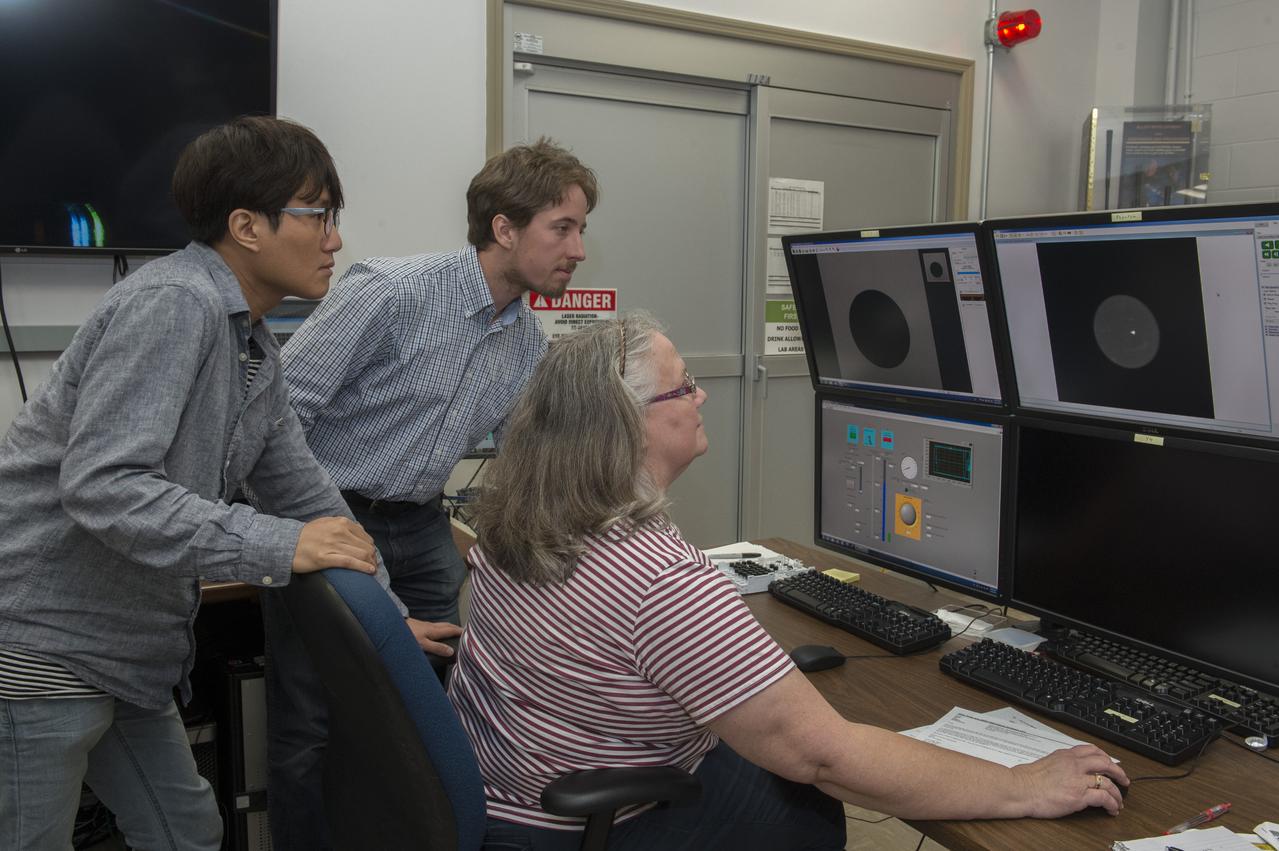
Sangho Jeon (Tufts University), Thomas Leitner (Graz University of Technology), and Trudy Allen analyze data from Dr. Douglas Matson's aerodynamic levitator in support of his MaterialsLab experiments.

51A-39-040 (14 Nov. 1984) --- A 70mm frame of Westar VI retrieval. Astronauts Dale A. Gardner, left, and Joseph P. Allen IV work together with Anna L. Fisher (not pictured, controlling remote manipulator system (RMS) arm from Discovery?s cabin) to bring Westar VI/PAM-D into cargo bay. Allen is on the mobile foot restraint, which is attached to the RMS end effector, while Gardner works to remove a stinger device from the now stabilized satellite. Photo credit: NASA
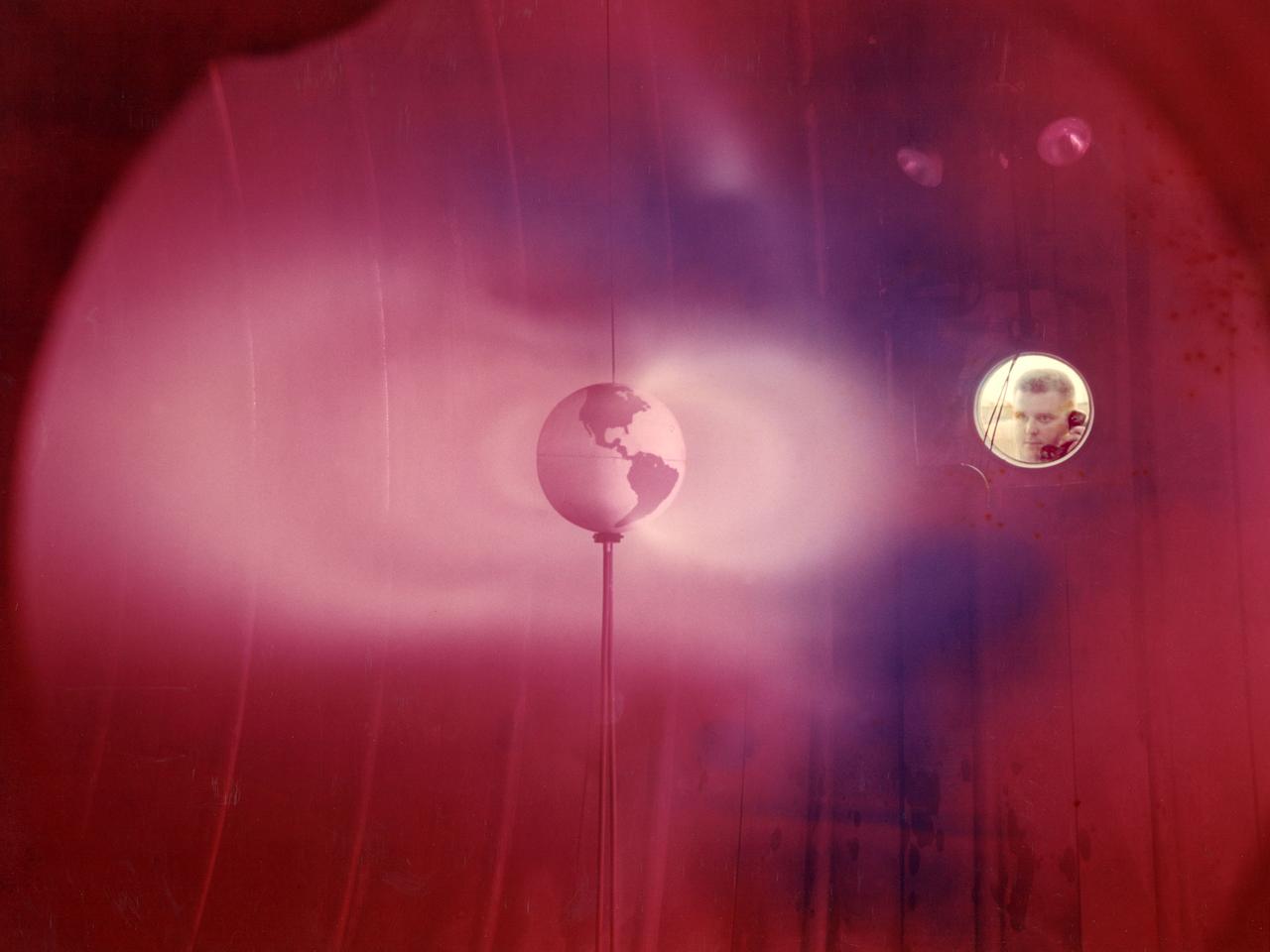
The model of the Earth housed inside Vacuum Tank 5 contained a coil which produced a magnetic field simulating that of the Earth. It was bombarded with a stream of ionized particles simulating the solar wind which impinges on the Earth's magnetic field. The bands or belts of luminous plasma seen in this image were suggestive of the Van Allen belts found around the Earth. Scientists at Lewis probed the plasma around the model and studied scaling laws in an attempt to find an explanation for the actual formation of the Van Allen belt.
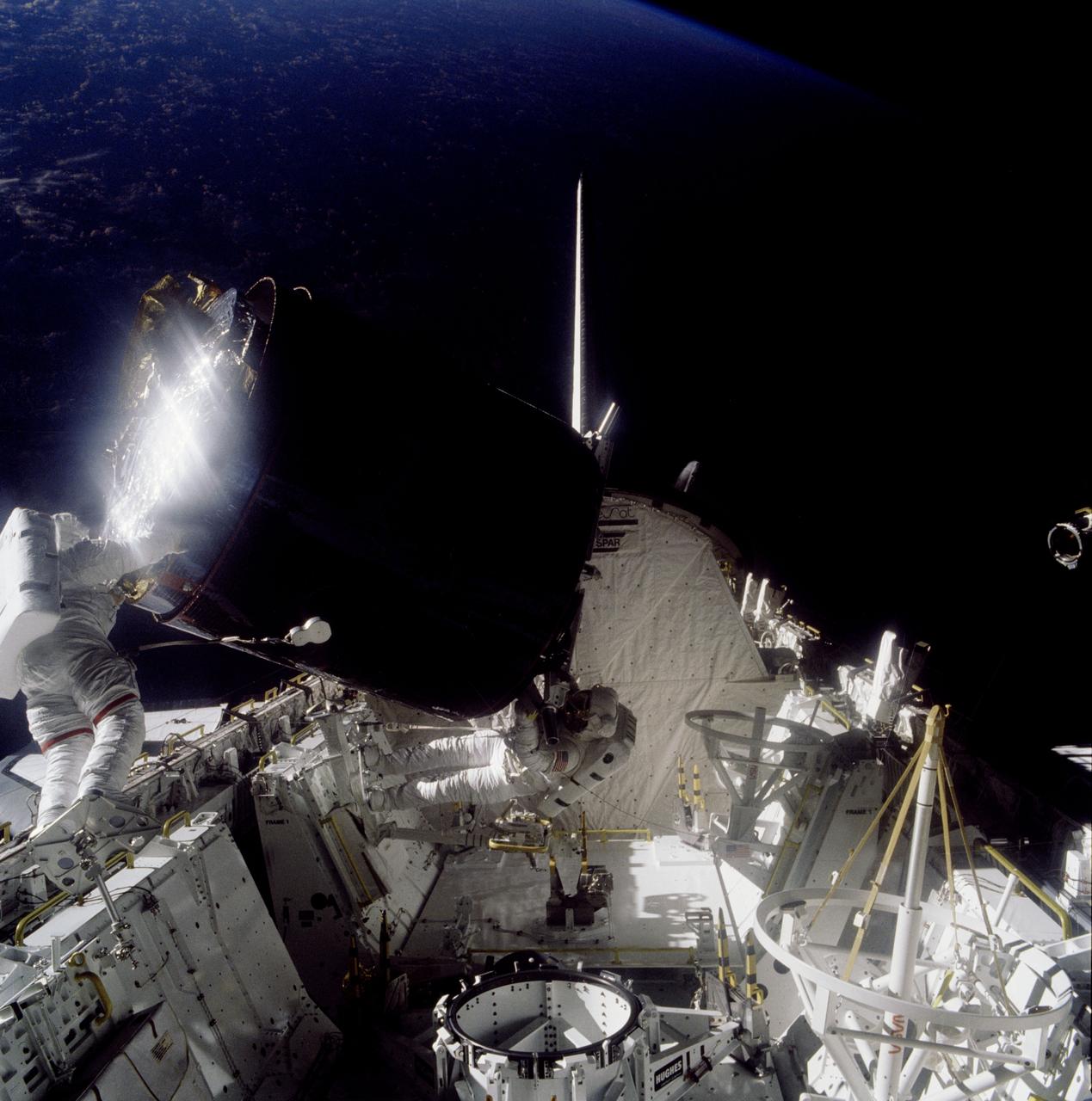
51A-41-058 (12 November 1984) --- Astronaut Joseph P. Allen IV appears to be lifting weights. Astronaut Dale A. Gardner holding on. Actually, Dr. Allen is the sole anchor for the top portion (and most of) the captured Palapa B-2 communications satellite during the Nov. 12 retrieval extravehicular activity (EVA) of the two mission specialists. This scene came near the end of the long-duration task. Gardner used a torque wrench to tighten clamps on an adapter used to secure the Palapa to its "parking place" in Discovery's cargo bay. Note the difference between the two stinger devices stowed on Challenger's port side (right side of frame). The one nearer the spacecraft's vertical stabilizer is spent, having been inserted by Allen earlier in the day to stabilize the communications satellite. The one nearer the camera awaited duty in two days when it would aid in the capture of the Westar VI satellite.
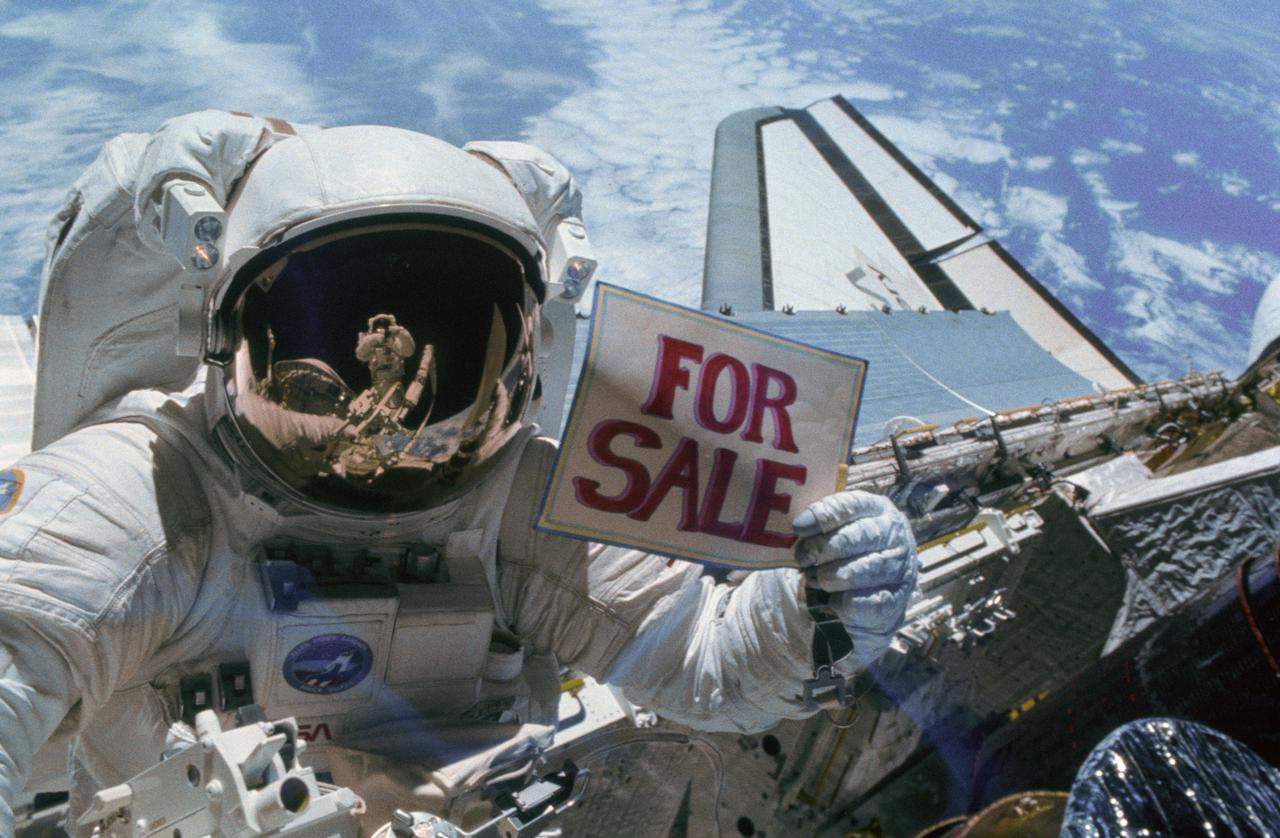
Astronauts are clowning around in space in this STS-51A onboard photo. Astronaut Gardner, holds a “For Sale” sign after the retrieval of two malfunctioning satellites; the Western Union Telegraph Communication Satellite (WESTAR VI); and the PALAPA-B2 Satellite. Astronaut Allen, who is standing on the Remote Manipulator System (RMS) is reflected in Gardner’s helmet visor. The 51A mission launched aboard the Space Shuttle Discovery on November 8, 1984.
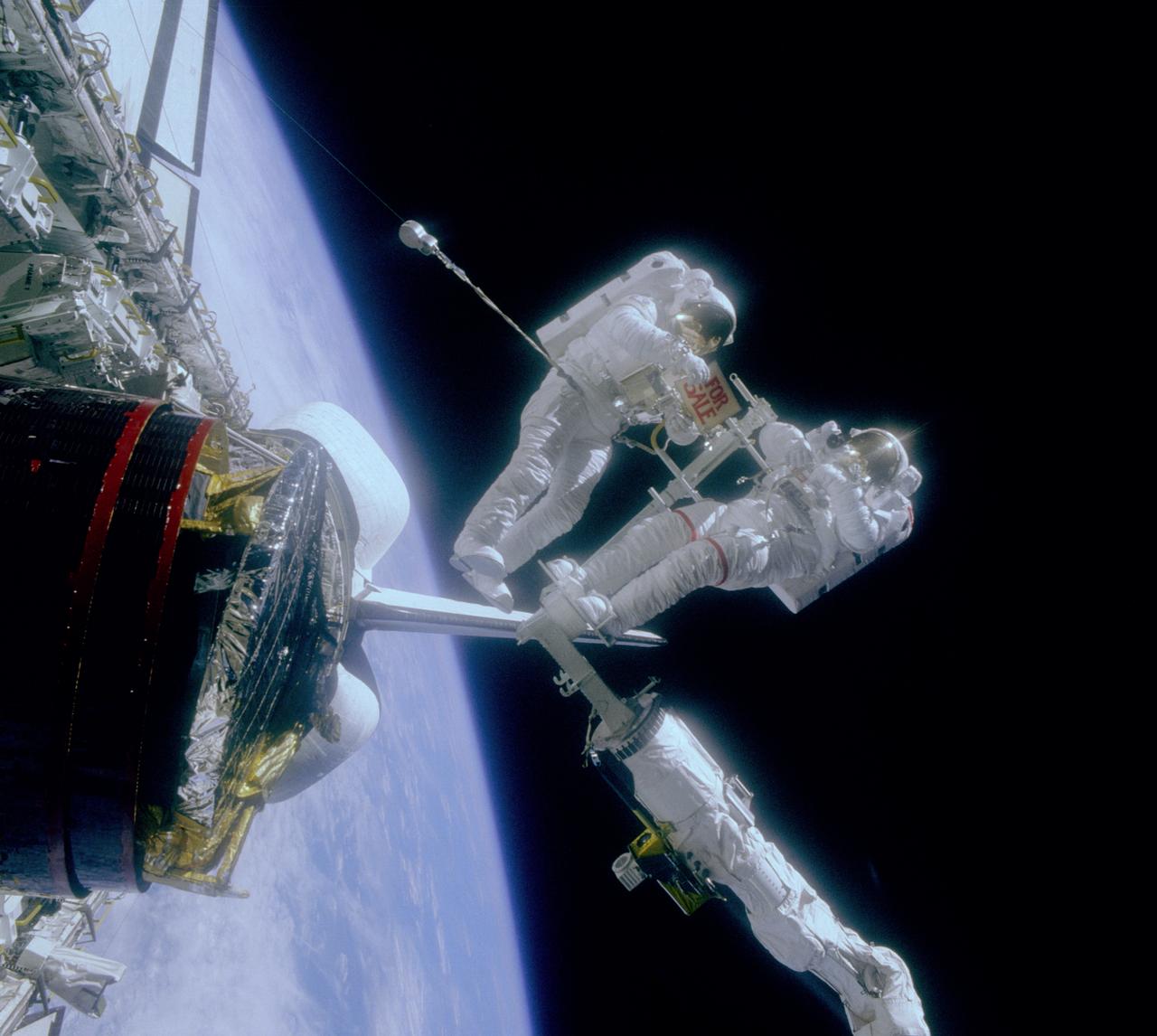
Astronauts are clowning around in space in this STS-51A onboard photo. Astronaut Gardner, holds a “For Sale” sign after the retrieval of two malfunctioning satellites; the Western Union Telegraph Communication Satellite (WESTAR VI); and the PALAPA-B2 Satellite. Astronaut Allen, who is standing on the RMS (Remote Manipulator System) is reflected in Gardner’s helmet visor. The 51A mission launched aboard the Space Shuttle Discovery on November 8, 1984.
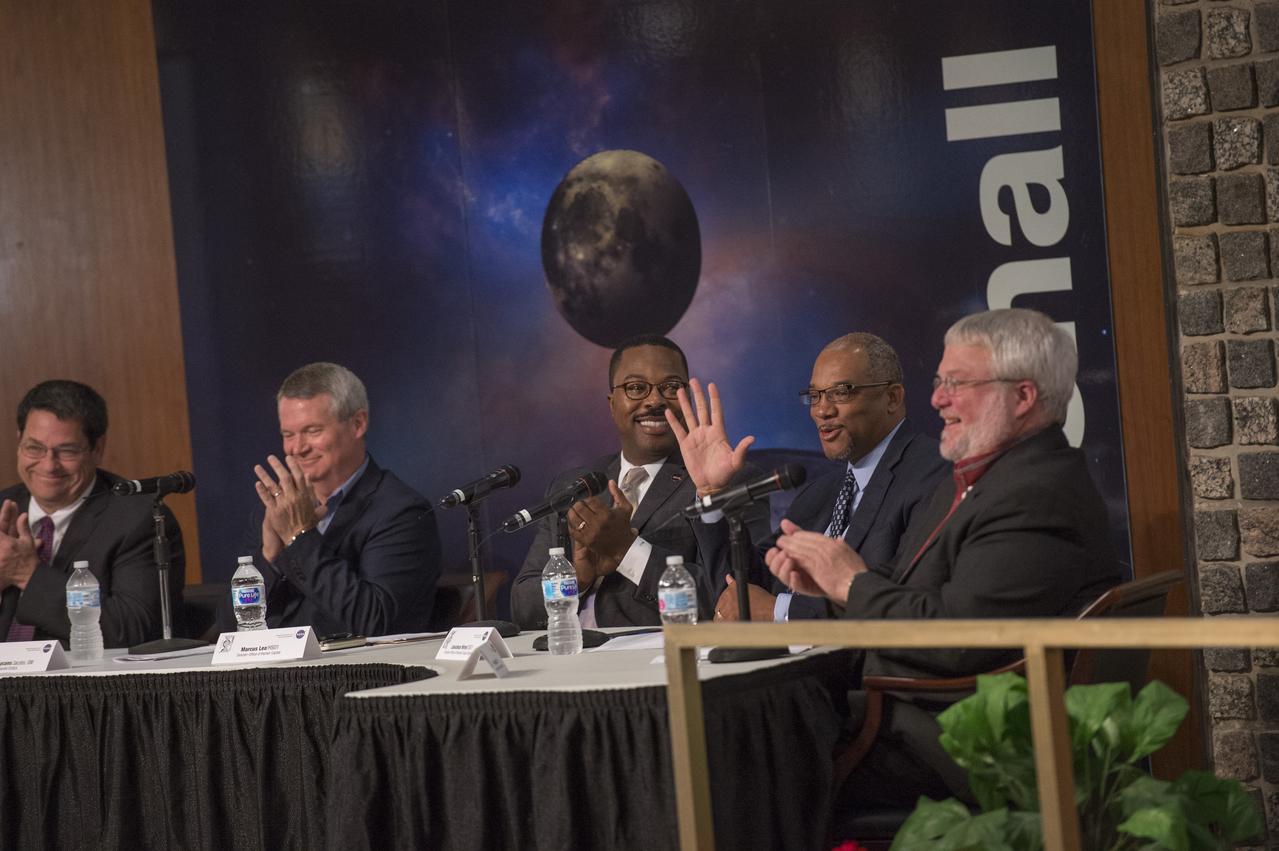
"Just Culture" session panelists Roy Malone, Randy Lycans, Marcus Lea, Loucious Hires, and Pete Allen.
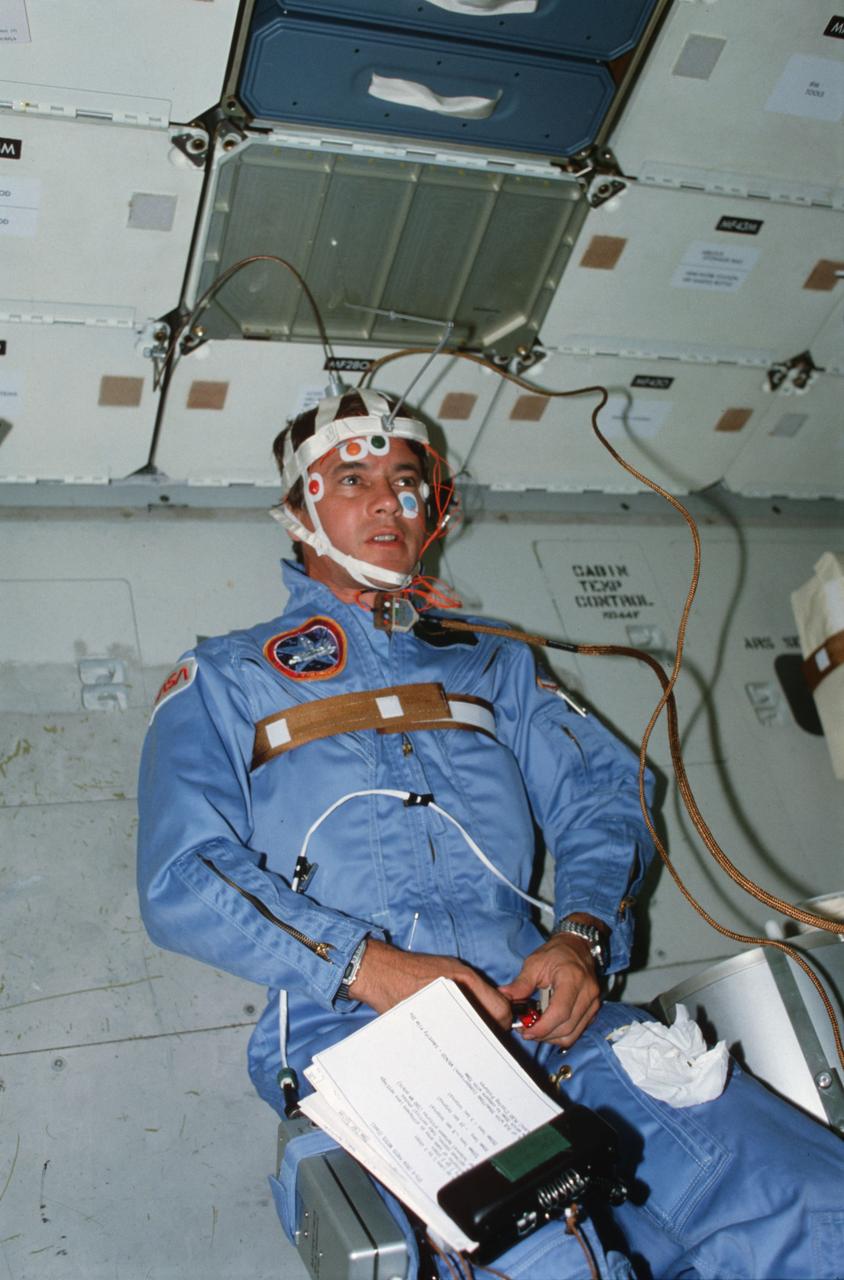
STS005-04-141 (14 Nov. 1982) --- Astronaut Joseph P. Allen IV, one of two mission specialist astronauts for STS-5, participates in a biomedical test in the middeck area of the Earth-orbiting space shuttle Columbia. A series of electrodes have been connected to his face for monitoring of his responses in zero-gravity. He was assisted in the test by astronaut William B. Lenoir, the flight’s other mission specialist. Dr. Allen is wearing the multi-pieced constant wear garment for space shuttle astronauts. This frame was exposed with a 35mm camera. Photo credit: NASA
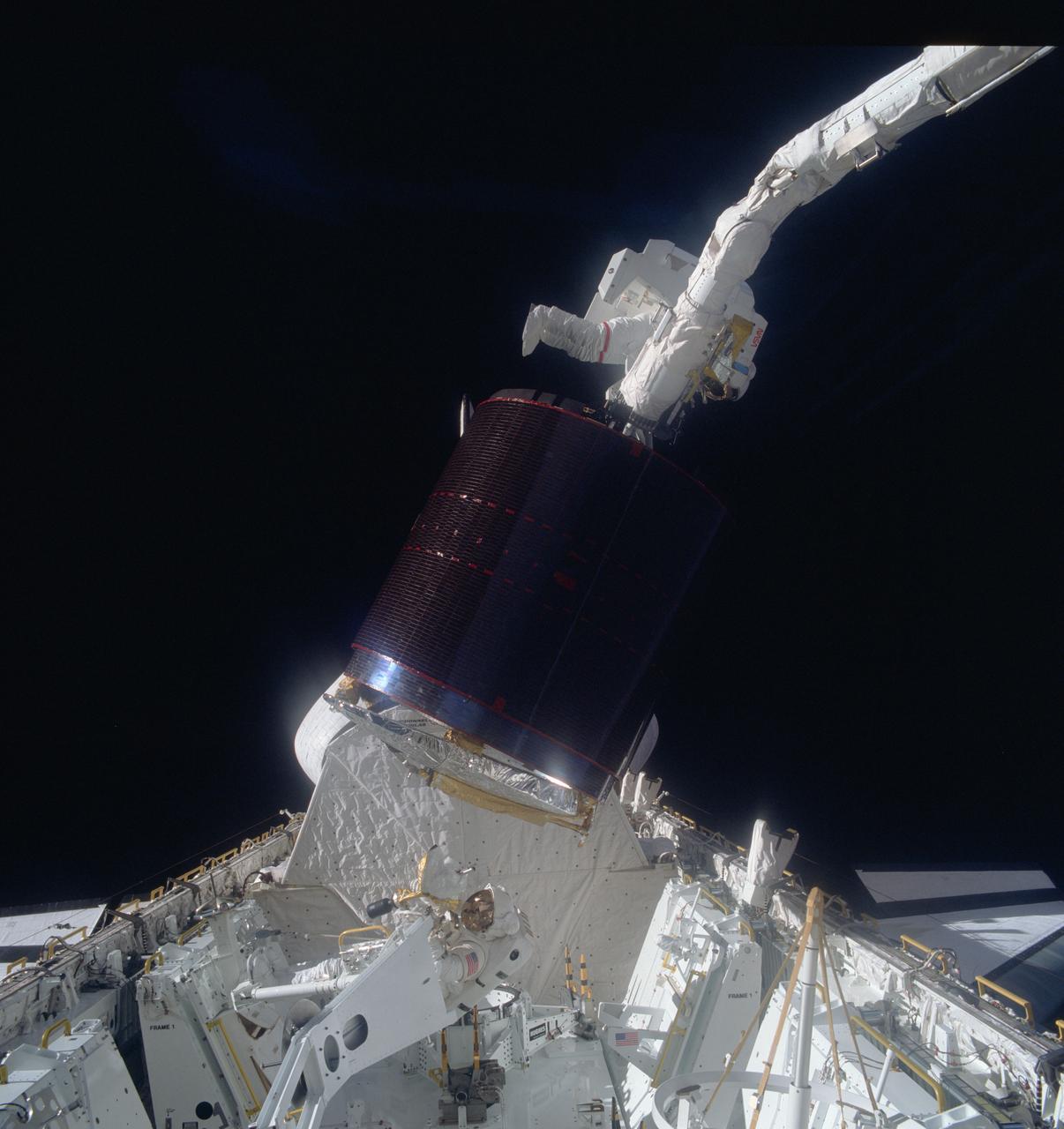
51A-41-021 (12 Nov 1984) --- Astronaut Joseph P. Allen IV, top, hangs onto a stinger device, which earlier had stabilized the pictured Palapa B-2 communications satellite, as astronaut Dale A. Gardner in the cargo bay of Discovery waits to assist in the berthing of the previously stranded spinning spacecraft. The end effector of the remote manipulatore system (RMS), controlled from inside Discovery's cabin by astronaut Anna L. Fisher, grasps a special grapple point to Allen's right. A fellow crewmember on the flight deck, using a 70mm handheld Hasselblad camera, exposed the frame. The activity took place on November 12, 1984.
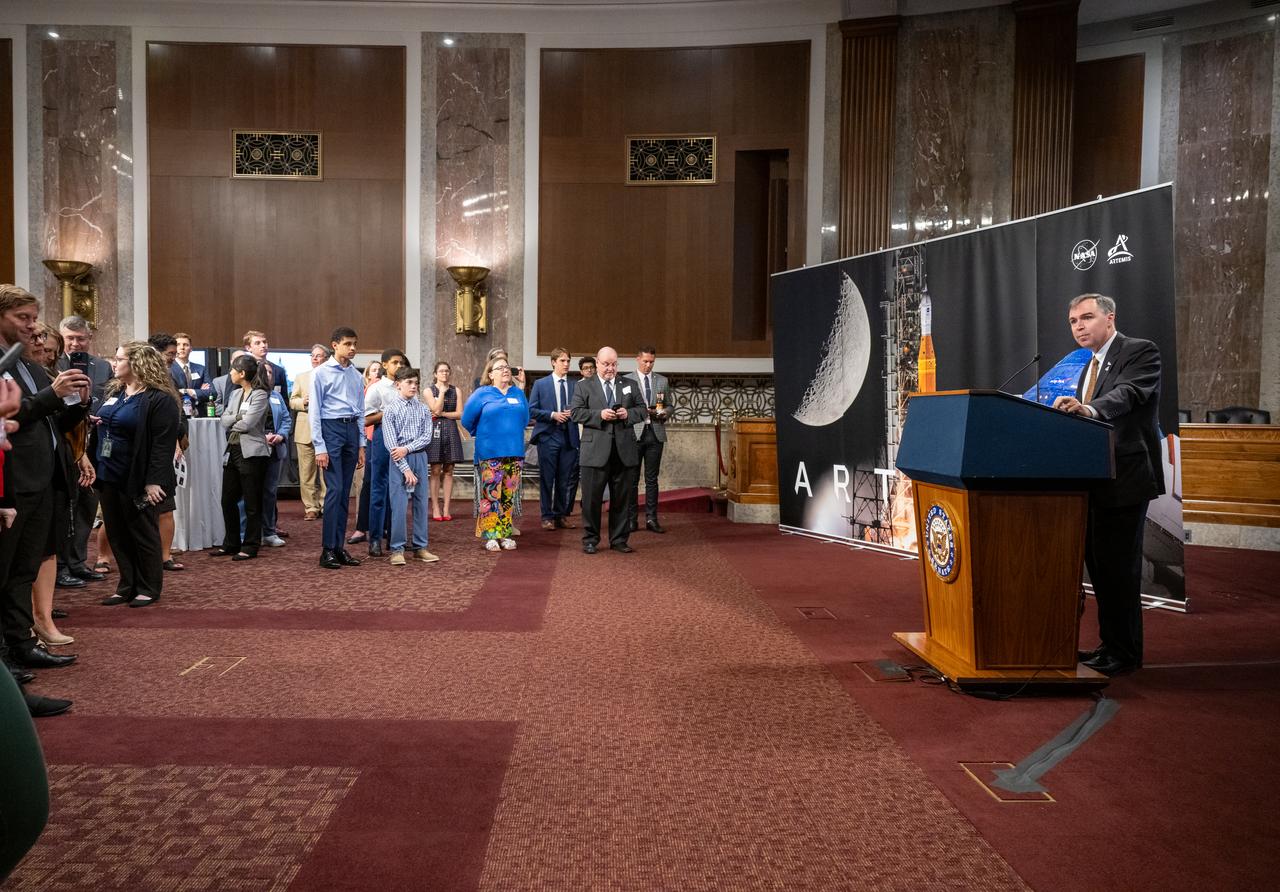
President and CEO of the Coalition for Deep Space Exploration Allen Cutler delivers remarks during a reception with Artemis II crew members Wednesday, June 5, 2024, at the Dirksen Senate Office Building in Washington. Photo Credit: (NASA/Keegan Barber)
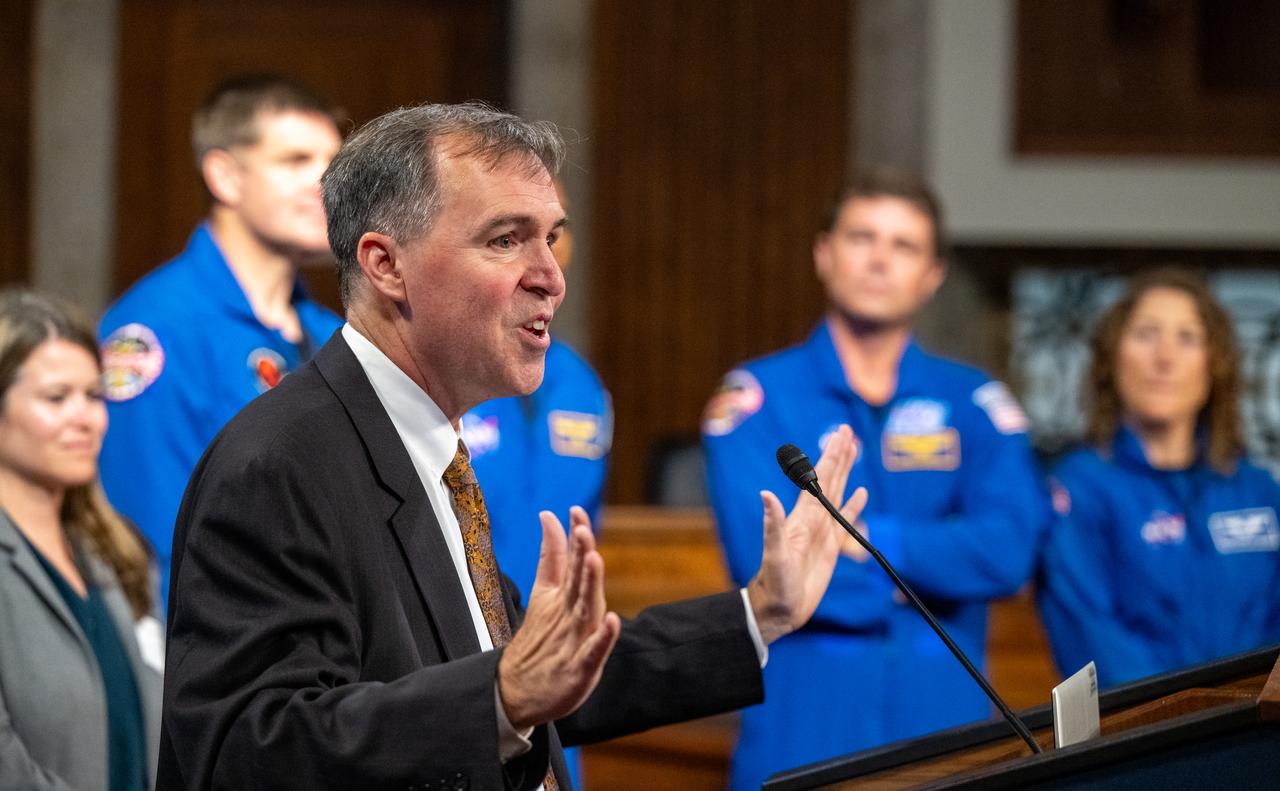
President and CEO of the Coalition for Deep Space Exploration Allen Cutler delivers remarks during a reception with Artemis II crew members Wednesday, June 5, 2024, at the Dirksen Senate Office Building in Washington. Photo Credit: (NASA/Keegan Barber)
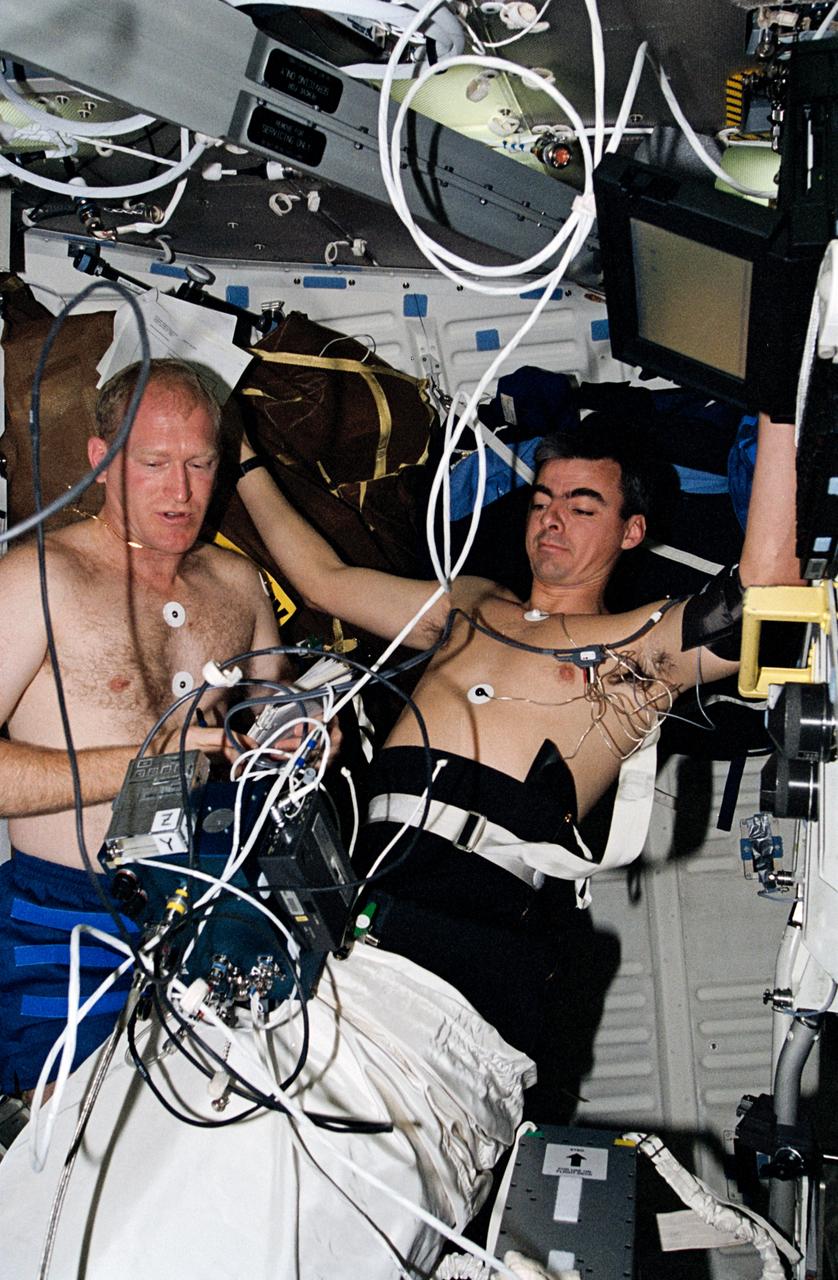
STS062-07-010 (4-18 March 1994) --- Astronaut Andrew M. Allen, pilot, participates in biomedical testing as he does a "soak" in the Lower Body Negative Pressure (LBNP) apparatus on the Columbia's middeck. Astronaut Charles D. (Sam) Gemar, mission specialist, monitors readouts from the test.
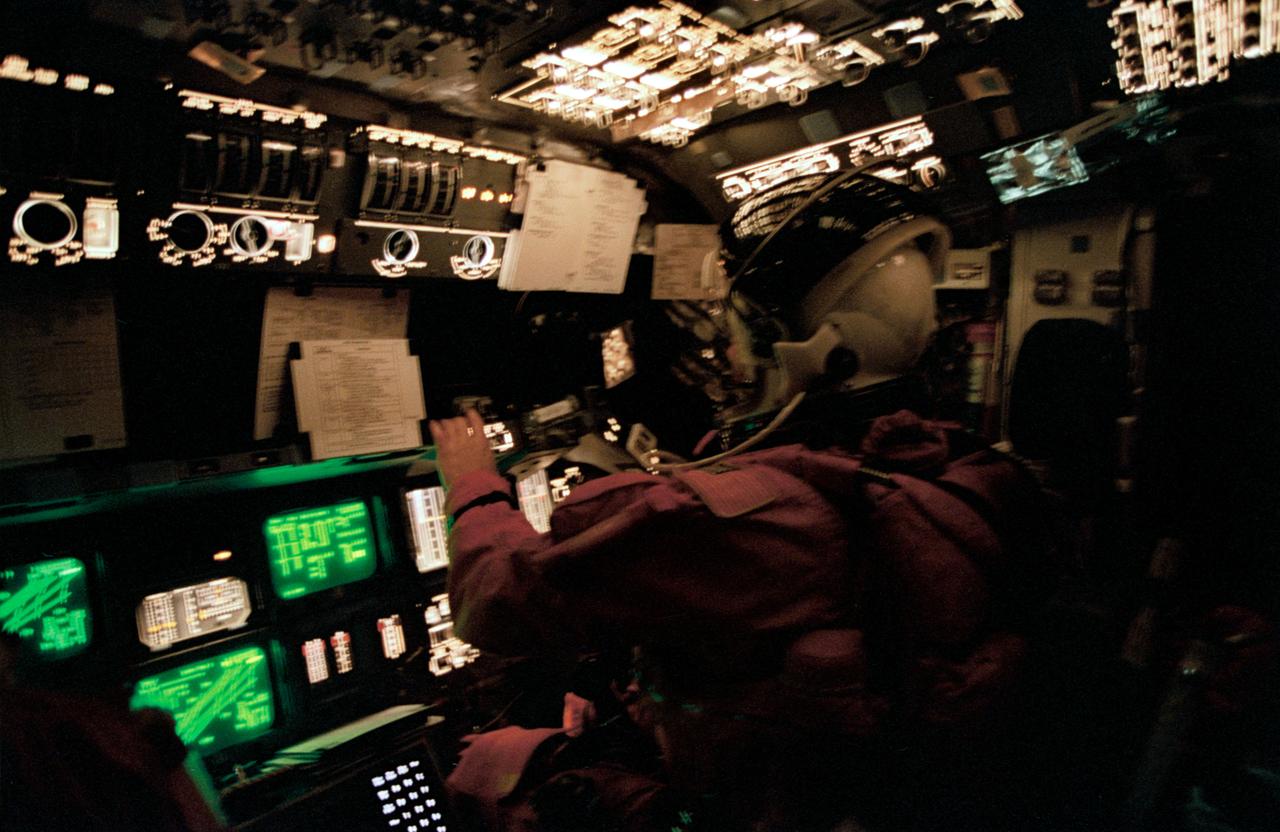
STS062-41-025 (18 March 1994) --- Astronaut Andrew M. Allen monitors Columbia's systems from the pilot's station during the entry phase of the STS-62 mission. The fast-speed 35mm film highlights the many controls and displays and the cathode ray tubes on the forward flight deck.
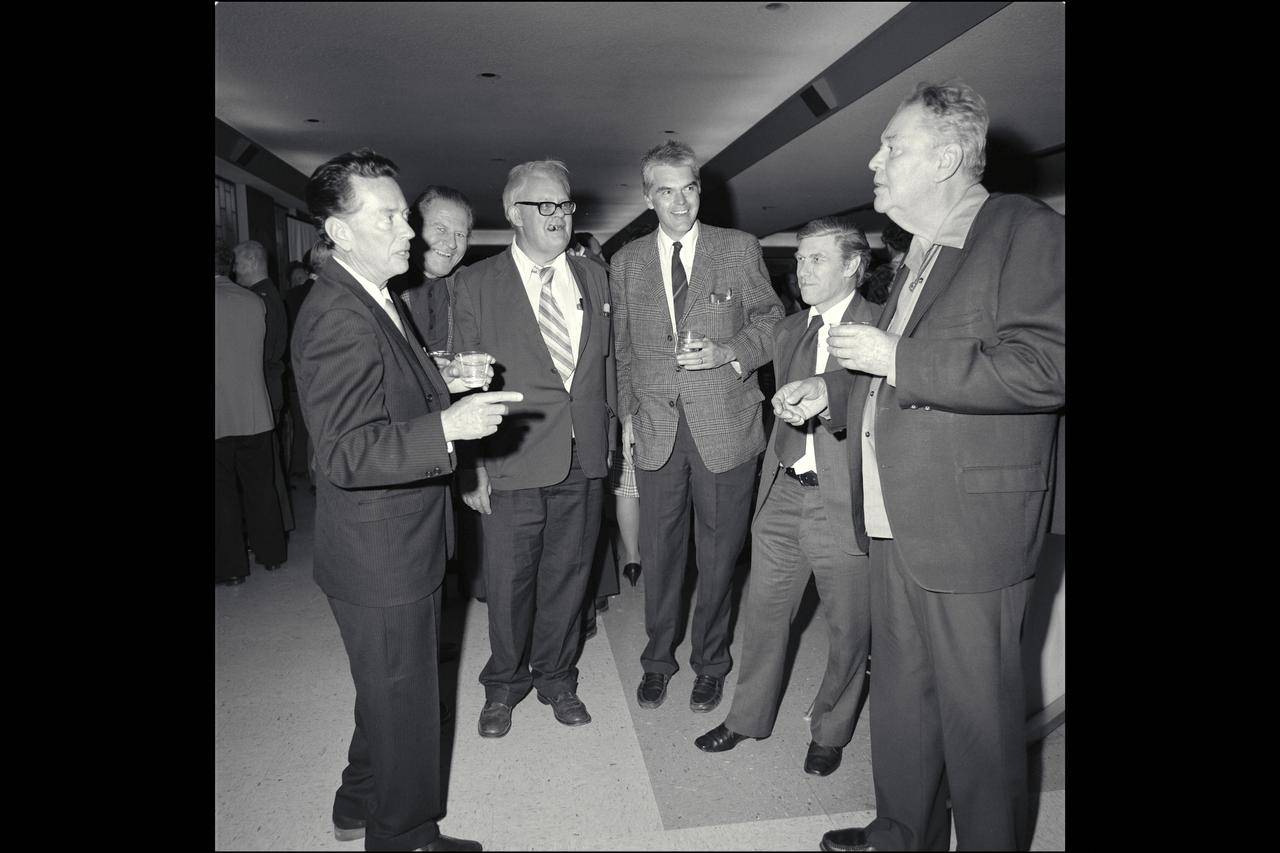
The Ames spirit of free and vigorous discussion; Left to right: R. T. Jones, Jack Nielsen, Hans Mark, Leonard Roberts and Harvey Allen during an award ceremony honoring R.T. Jones.
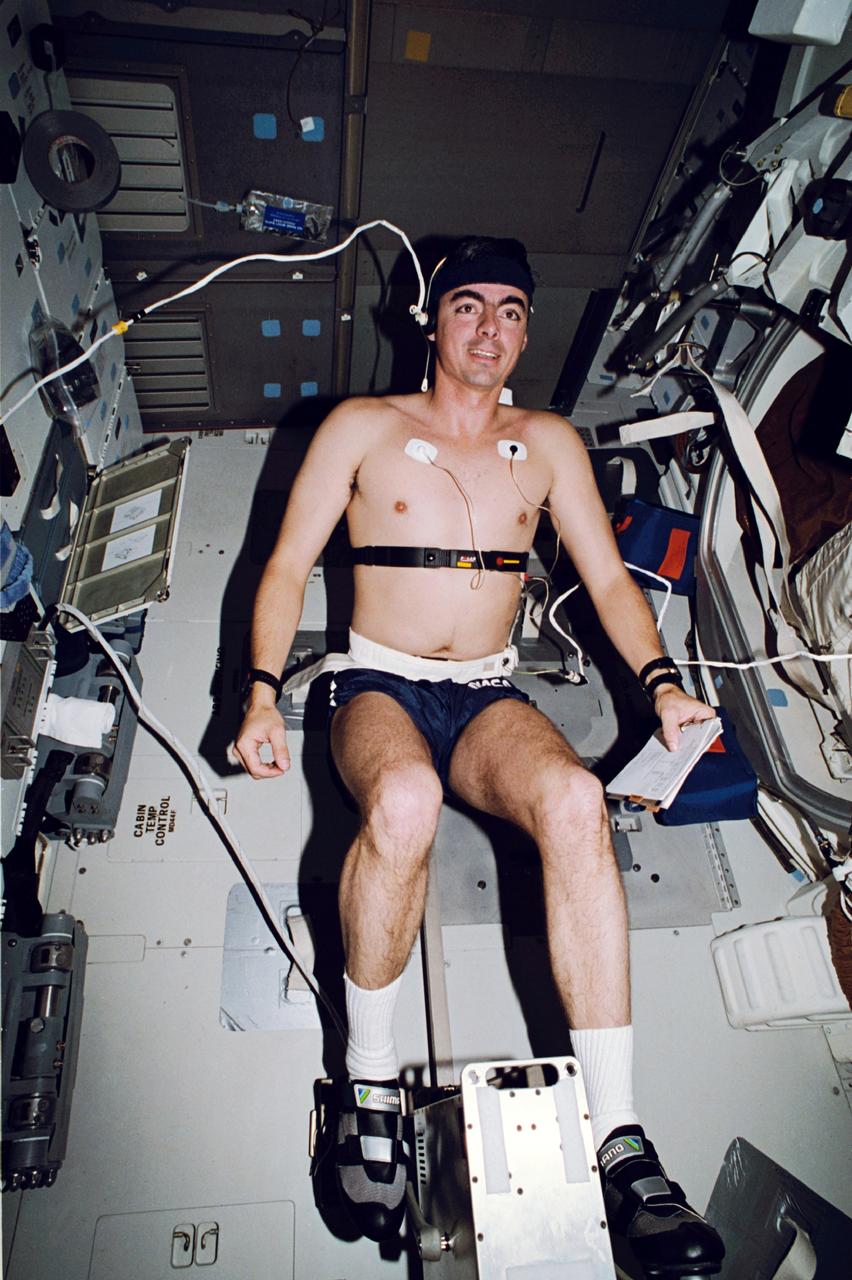
STS046-24-025 (31 July-8 Aug. 1992) --- Astronaut Andrew M. Allen, STS-46 pilot, exercises on the bicycle ergometer device on the flight deck of the Space Shuttle Atlantis as it makes one of its 127 total orbits for the eight-day mission. Allen, equipped with sensors for monitoring his biological systems during the run, was joined by four other NASA astronauts and two European scientists on the mission.
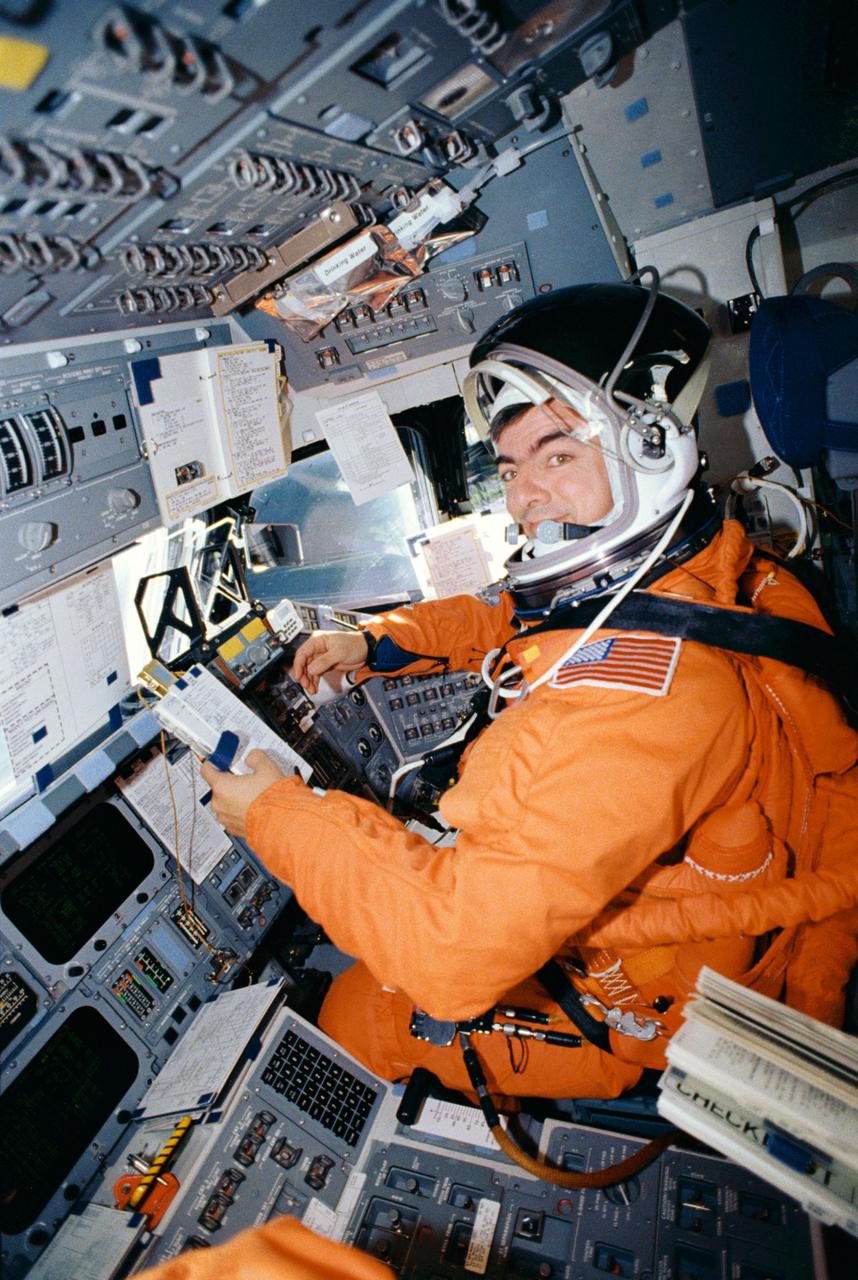
STS046-10-003 (8 Aug. 1992) --- Astronaut Andrew M. Allen, STS-46 pilot, positioned in the pilot's station and wearing a partial pressure launch and entry suit, prepares for the final leg of the mission. Allen and six fellow crew members had just shared a busy eight-day stay in Earth-orbit aboard the Space Shuttle Atlantis.
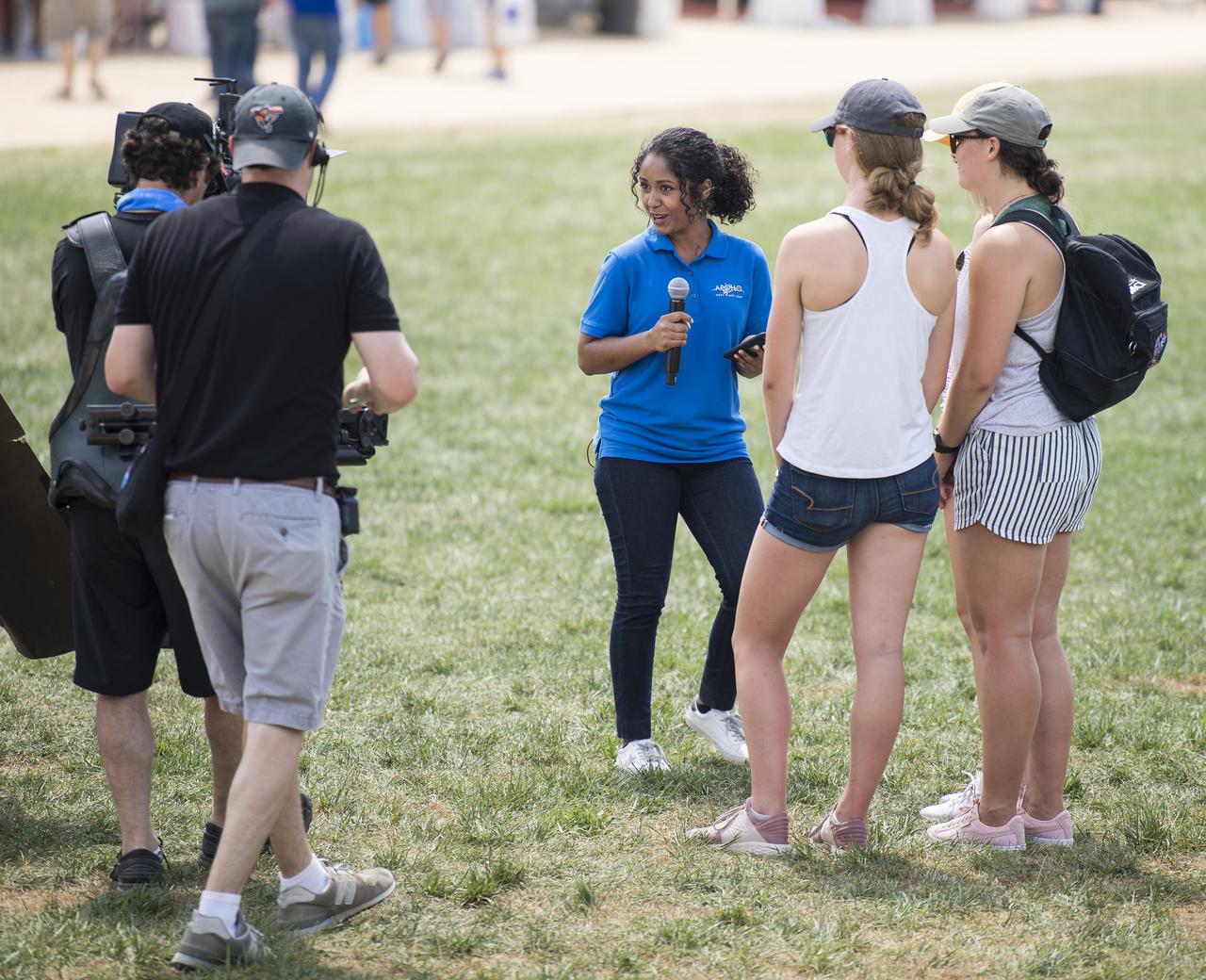
NASA Social Media Specialist, Tahira Allen, interviews visitors to the Apollo 11 50th Anniversary celebration on the National Mall during “NASA’s Giant Leaps: Past and Future," a live television program on Friday, July 19, 2019 in Washington. NASA and the world are recognizing the 50th anniversary of Apollo 11, in which astronauts Neil Armstrong, Michael Collins, and Buzz Aldrin crewed the first mission to land astronauts on the Moon. Photo Credit: (NASA/Aubrey Gemignani)
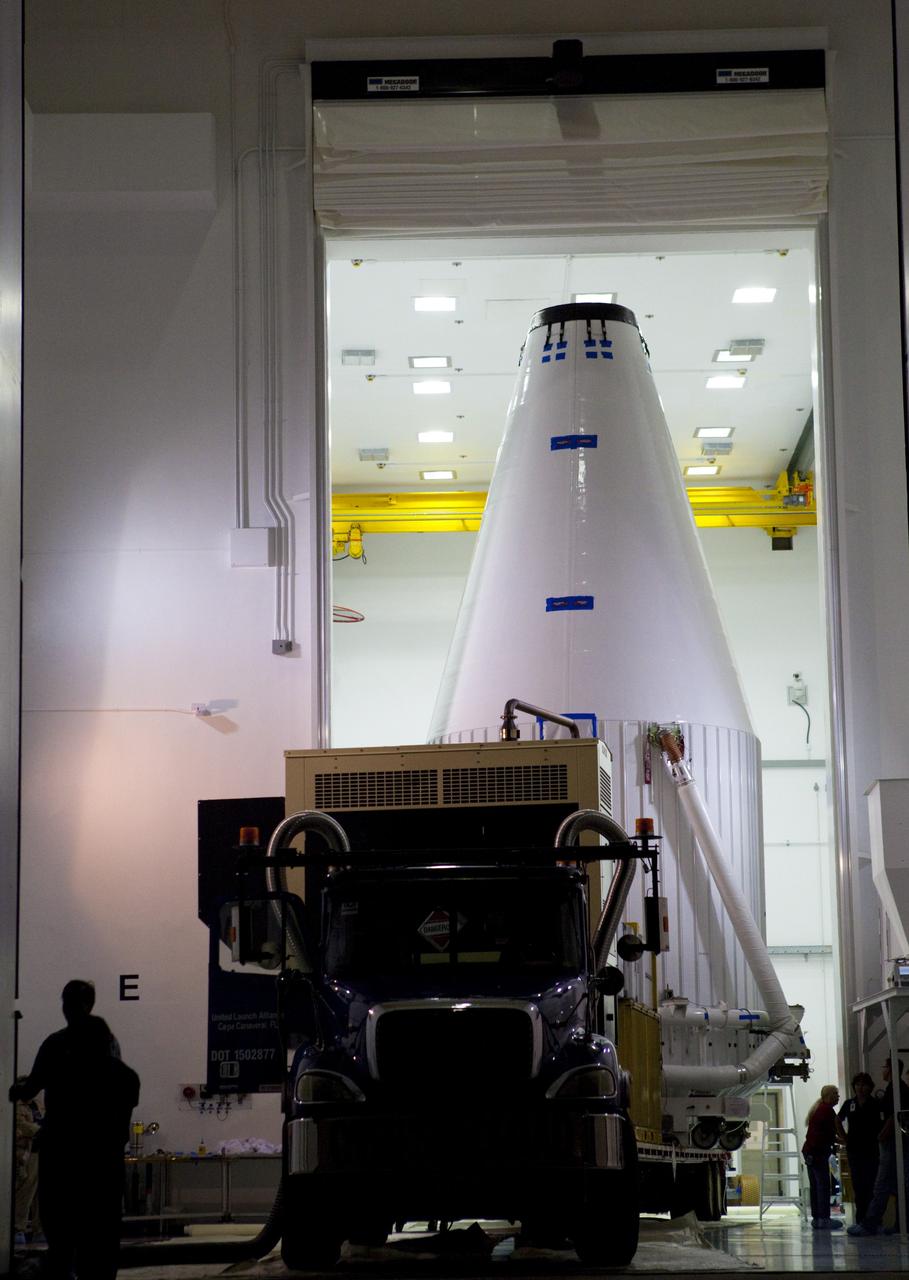
CAPE CANAVERAL, Fla. – The Radiation Belt Storm Probes, or RBSP, spacecraft are moved inside their payload fairing on the payload transporter from the Astrotech payload processing facility in Titusville, Fla. to Space Launch Complex-41 at Cape Canaveral Air Force Station. The fairing, which holds the twin RBSP spacecraft, will be lifted to the top of a United Launch Alliance Atlas V rocket for launch later in August. The two spacecraft are designed to study the Van Allen radiation belts in unprecedented detail. Photo credit: NASA/Dmitri Gerondidakis
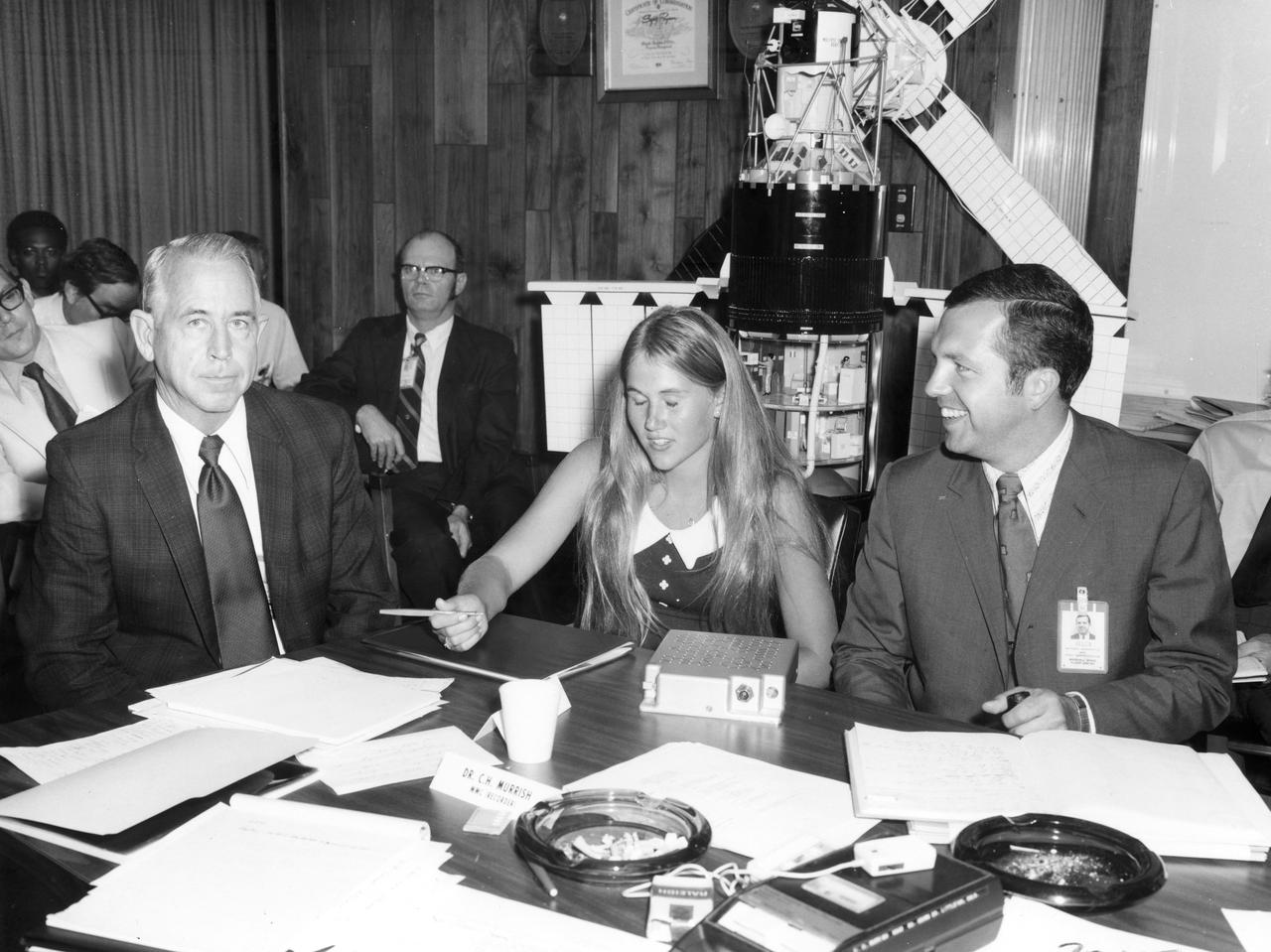
Kathy Jackson, high school student from Houston, Texas, discusses her experiment with Dr. Robert Allen (left) and her scintific advisor Arthur White, both of the Marshall Space Flight Center (MSFC). Miss Jackson’s experiment tested the motor sensory performance of an astronaut at various times during the Skylab flight to detect any degredation in his eye-hand coordination. She was one of the 25 winners of a contest in which some 3,500 high school students proposed experiments for the following year’s Skylab mission. Of the 25 students, 6 did not see their experiments conducted on Skylab because the experiments were not compatible with Skylab hardware and timelines. Of the 19 remaining, 11 experiments required the manufacture of equipment.
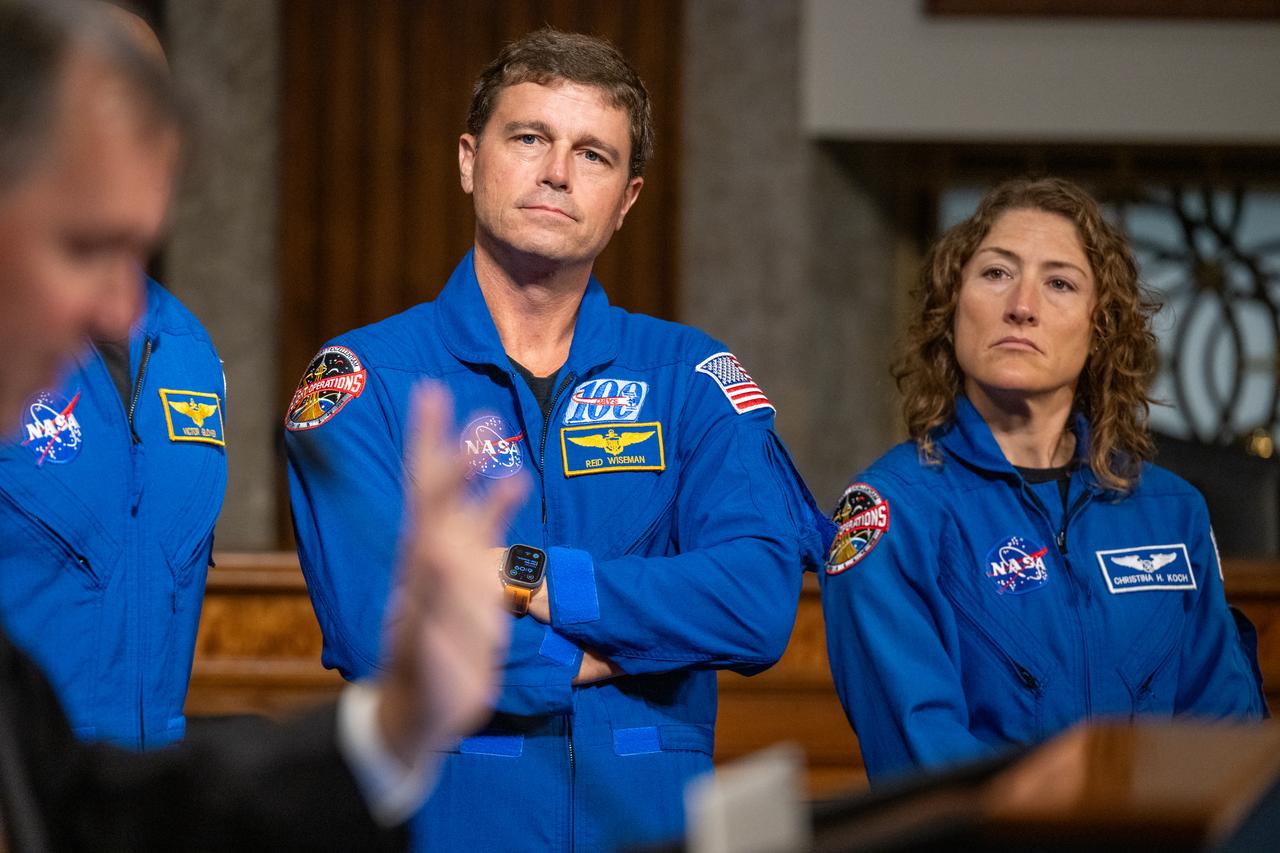
NASA Astronauts Reid Wiseman, left, and Christina Hammock Koch, right, look on as President and CEO of the Coalition for Deep Space Exploration Allen Cutler delivers remarks during a reception with Artemis II crew members Wednesday, June 5, 2024, at the Dirksen Senate Office Building in Washington. Photo Credit: (NASA/Keegan Barber)
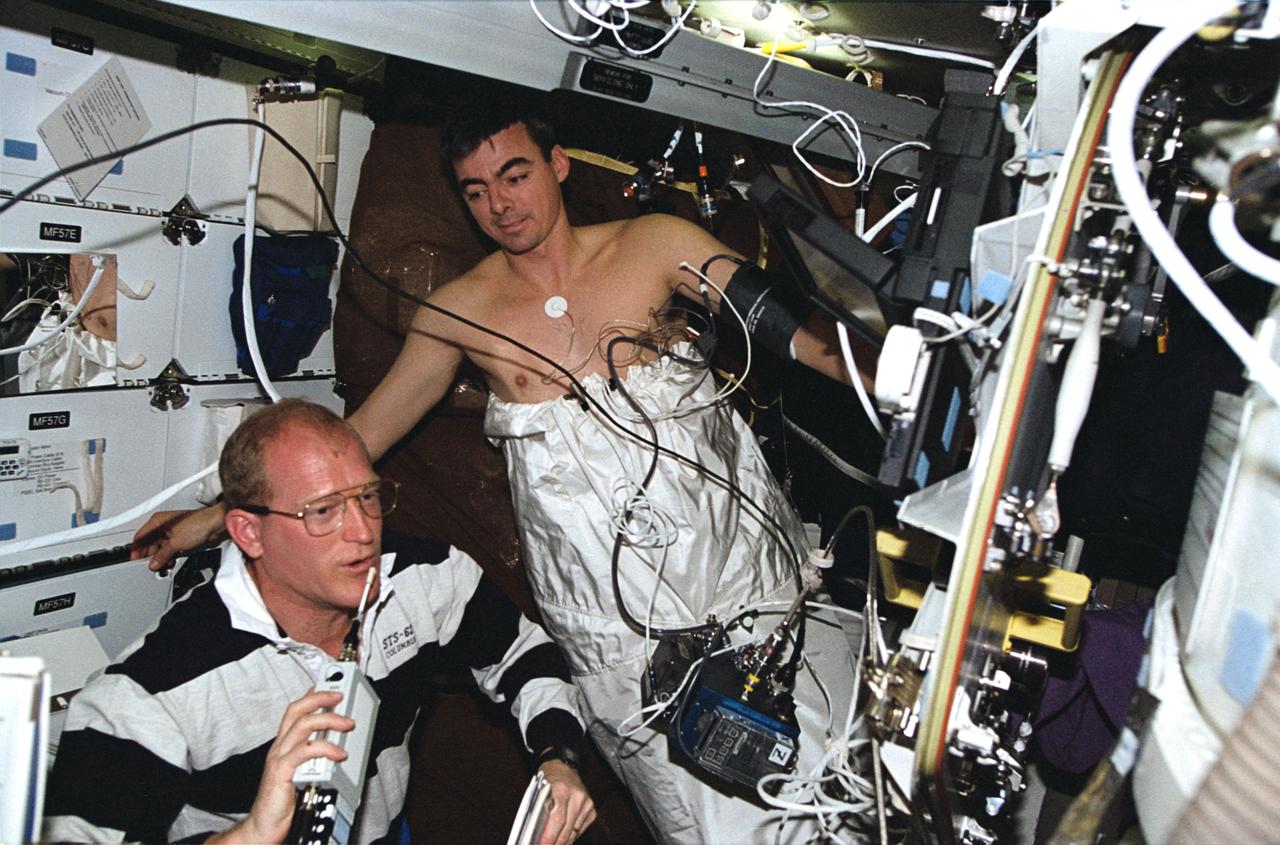
STS062-01-032 (4-14 March 1994) --- Astronaut Charles D. (Sam) Gemar, mission specialist, talks to ground controllers while assisting astronaut Andrew M. Allen with a "soak" in the Lower Body Negative Pressure (LBNP) apparatus on Columbia's middeck. The pair was joined by three other veteran NASA astronauts for 14-days of scientific research aboard the Space Shuttle Columbia in earth orbit.
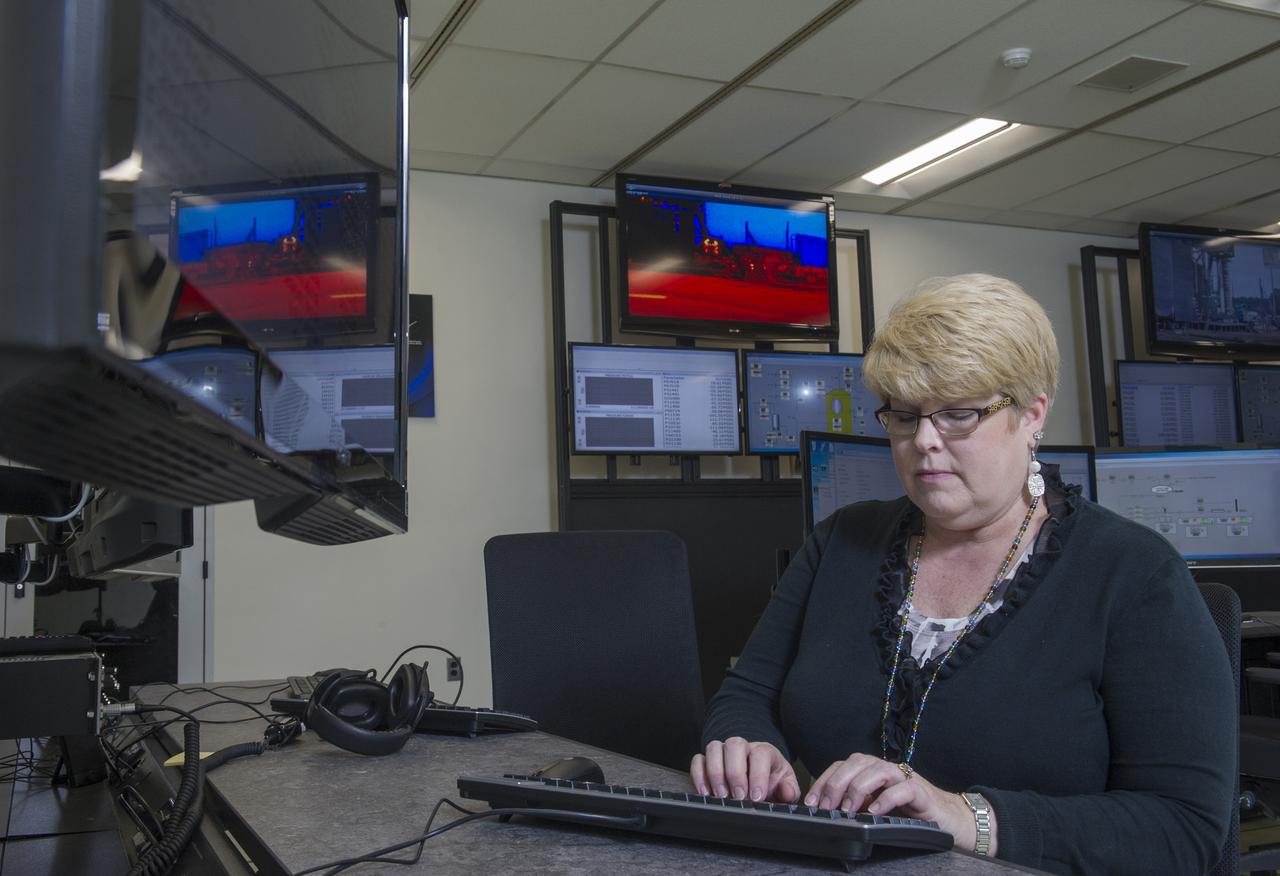
STEVEN SPRAYBERRY, ALICE DANIEL, CHRISTY BASHMAN, ALLEN SHELTON, BEVERELY COURREGE, MATHEW EXELL, JIM EMMENEGGER, IN VARIOUS SETUPS AT WEST TEST AREA CONTROL ROOM-B.
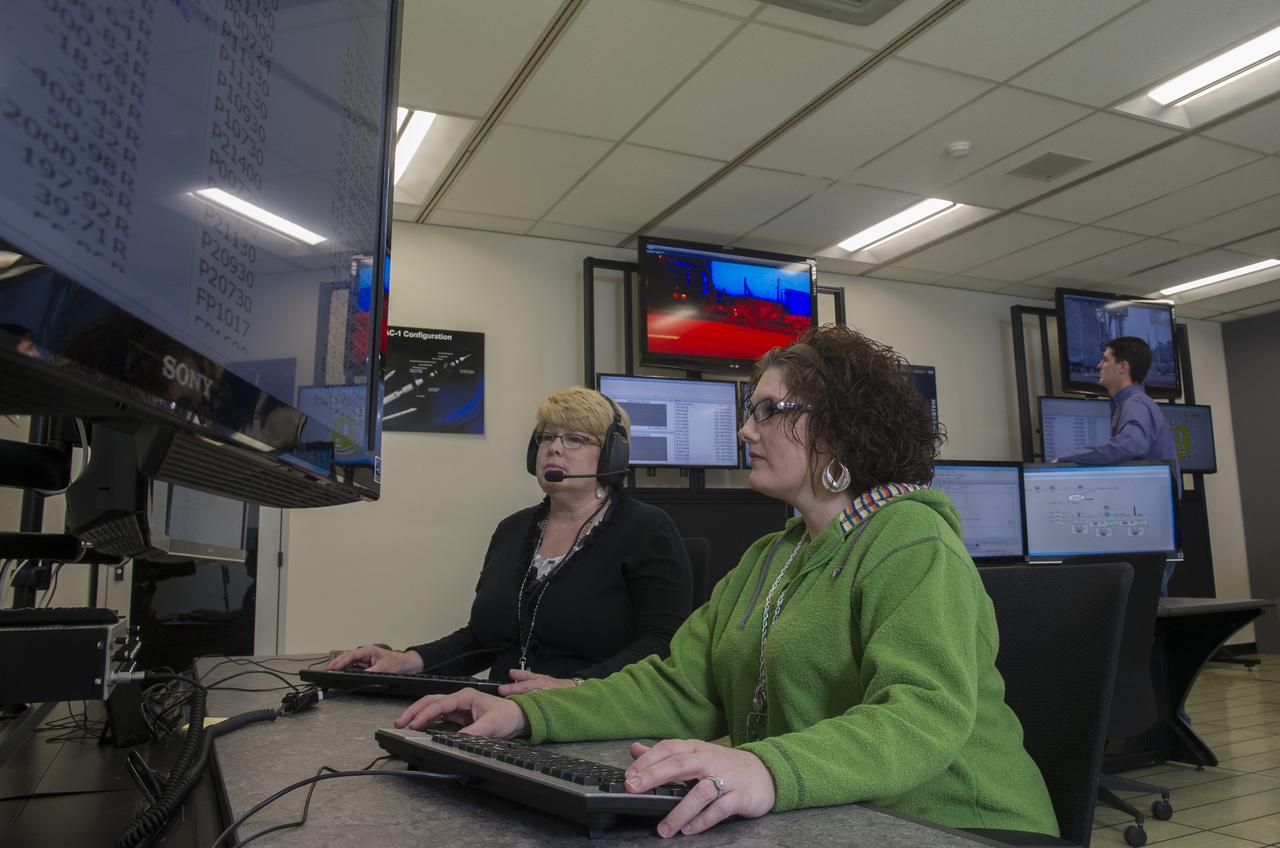
STEVEN SPRAYBERRY, ALICE DANIEL, CHRISTY BASHMAN, ALLEN SHELTON, BEVERELY COURREGE, MATHEW EXELL, JIM EMMENEGGER, IN VARIOUS SETUPS AT WEST TEST AREA CONTROL ROOM-B.
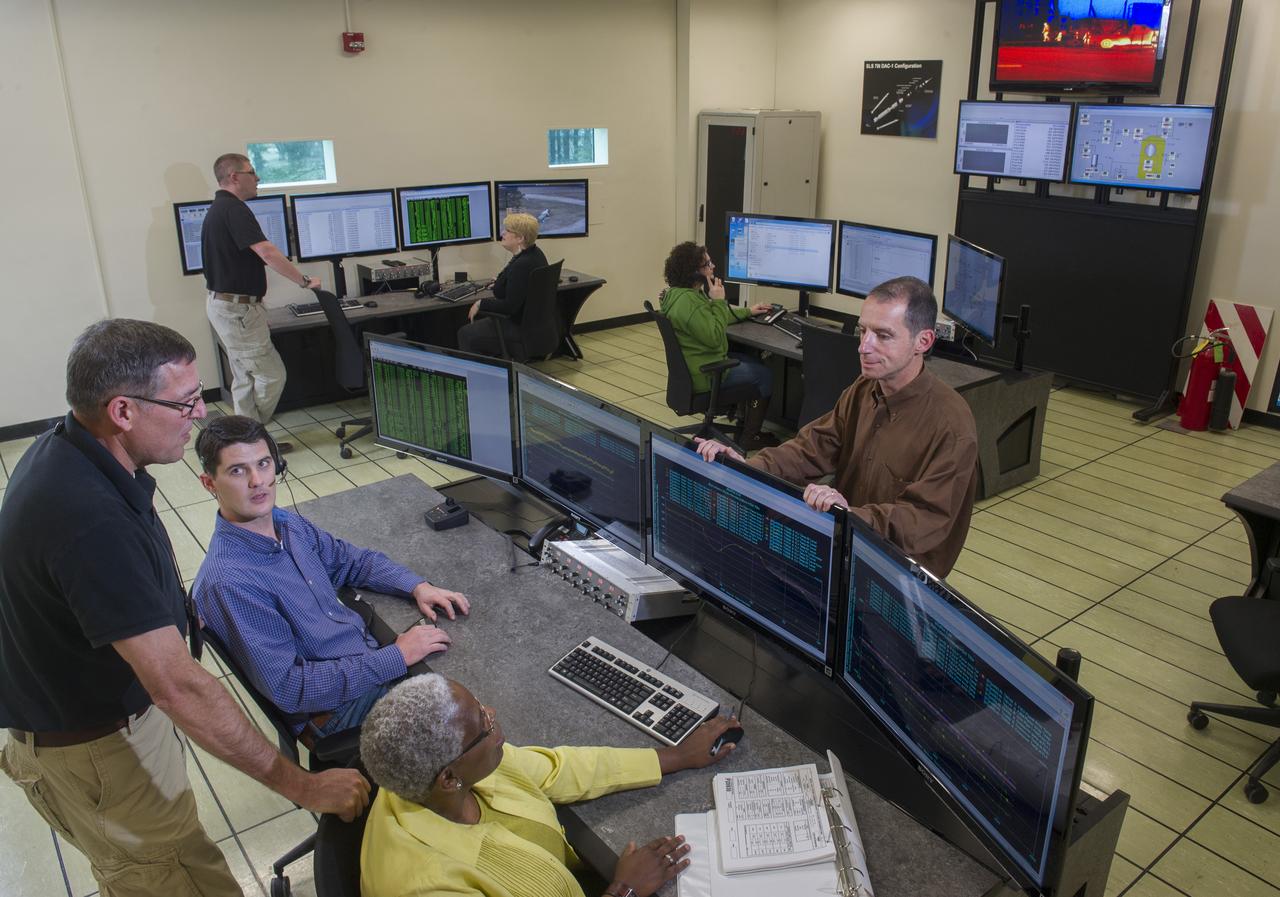
STEVEN SPRAYBERRY, ALICE DANIEL, CHRISTY BASHMAN, ALLEN SHELTON, BEVERELY COURREGE, MATHEW EXELL, JIM EMMENEGGER, IN VARIOUS SETUPS AT WEST TEST AREA CONTROL ROOM-B.
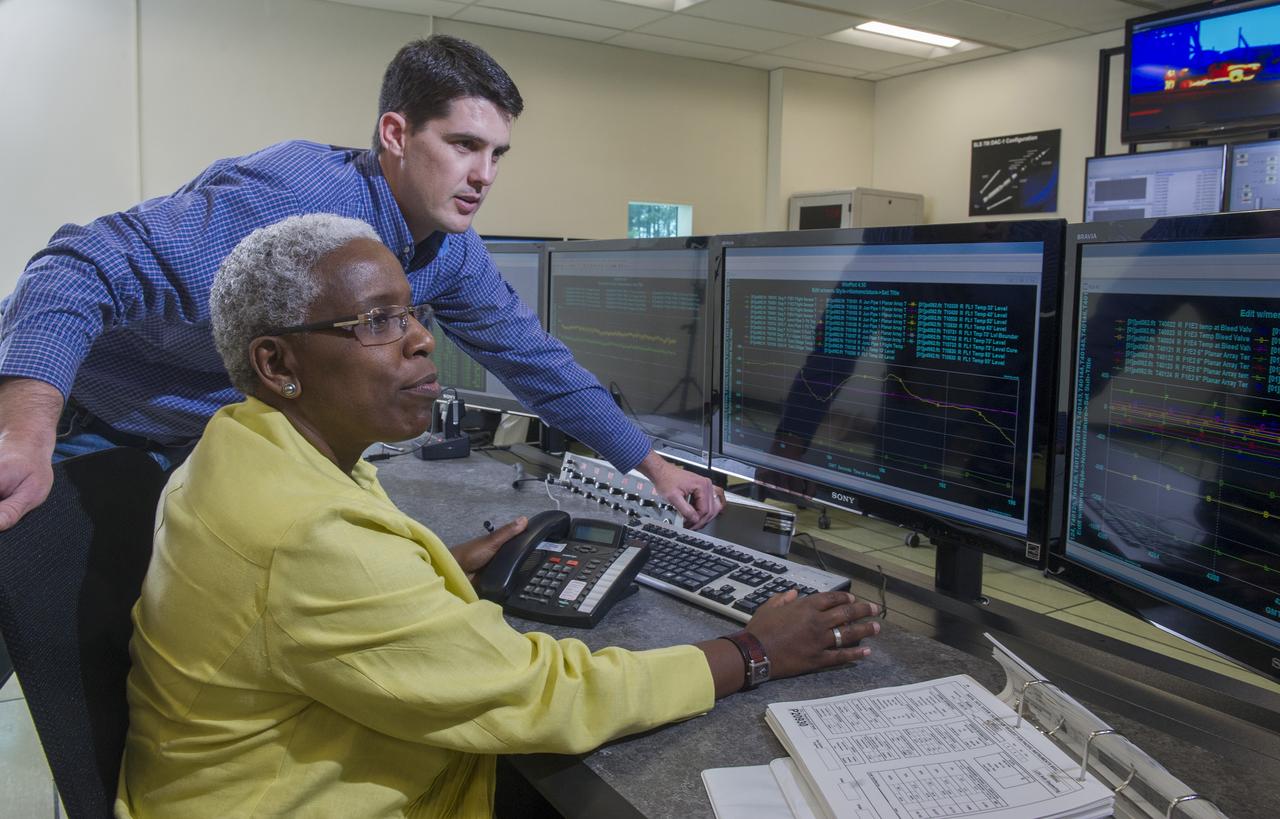
STEVEN SPRAYBERRY, ALICE DANIEL, CHRISTY BASHMAN, ALLEN SHELTON, BEVERELY COURREGE, MATHEW EXELL, JIM EMMENEGGER, IN VARIOUS SETUPS AT WEST TEST AREA CONTROL ROOM-B.
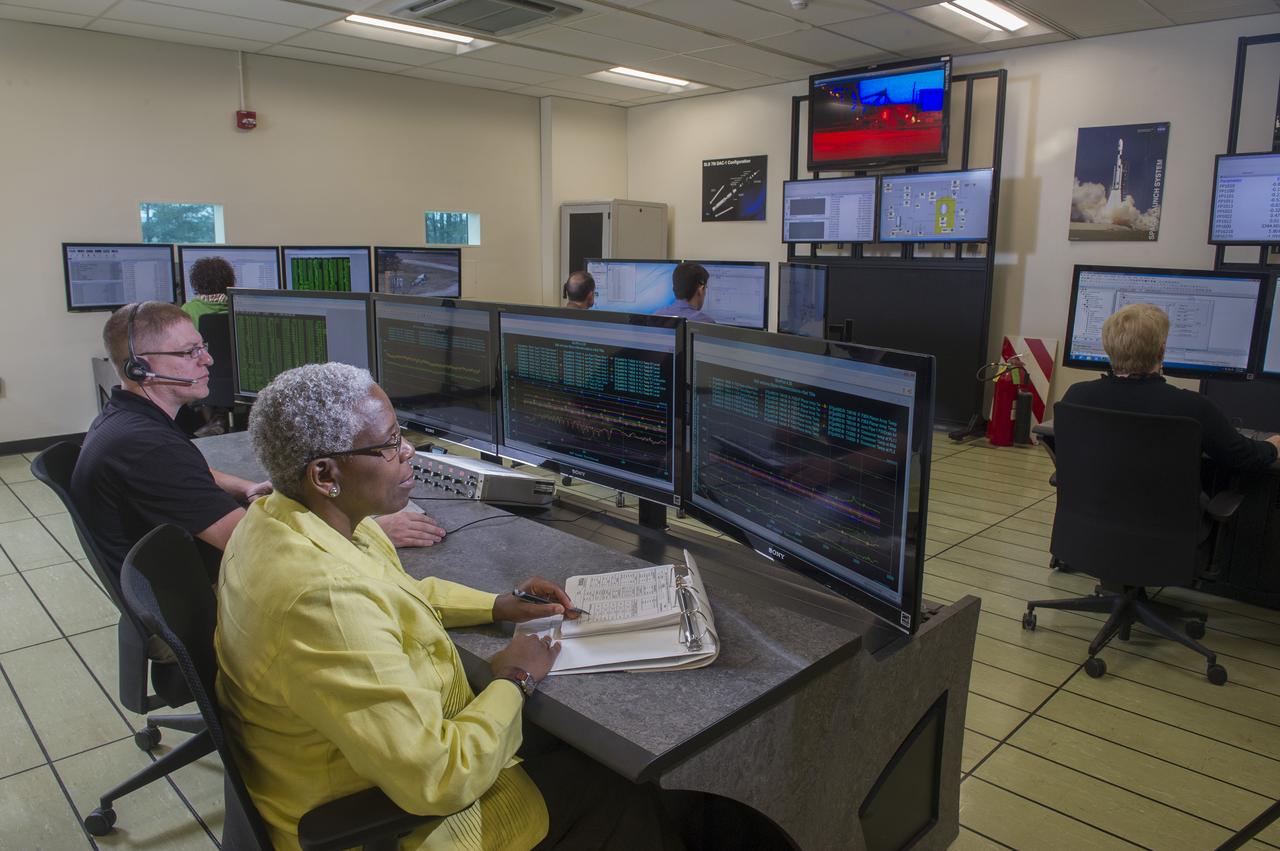
STEVEN SPRAYBERRY, ALICE DANIEL, CHRISTY BASHMAN, ALLEN SHELTON, BEVERELY COURREGE, MATHEW EXELL, JIM EMMENEGGER, IN VARIOUS SETUPS AT WEST TEST AREA CONTROL ROOM-B.
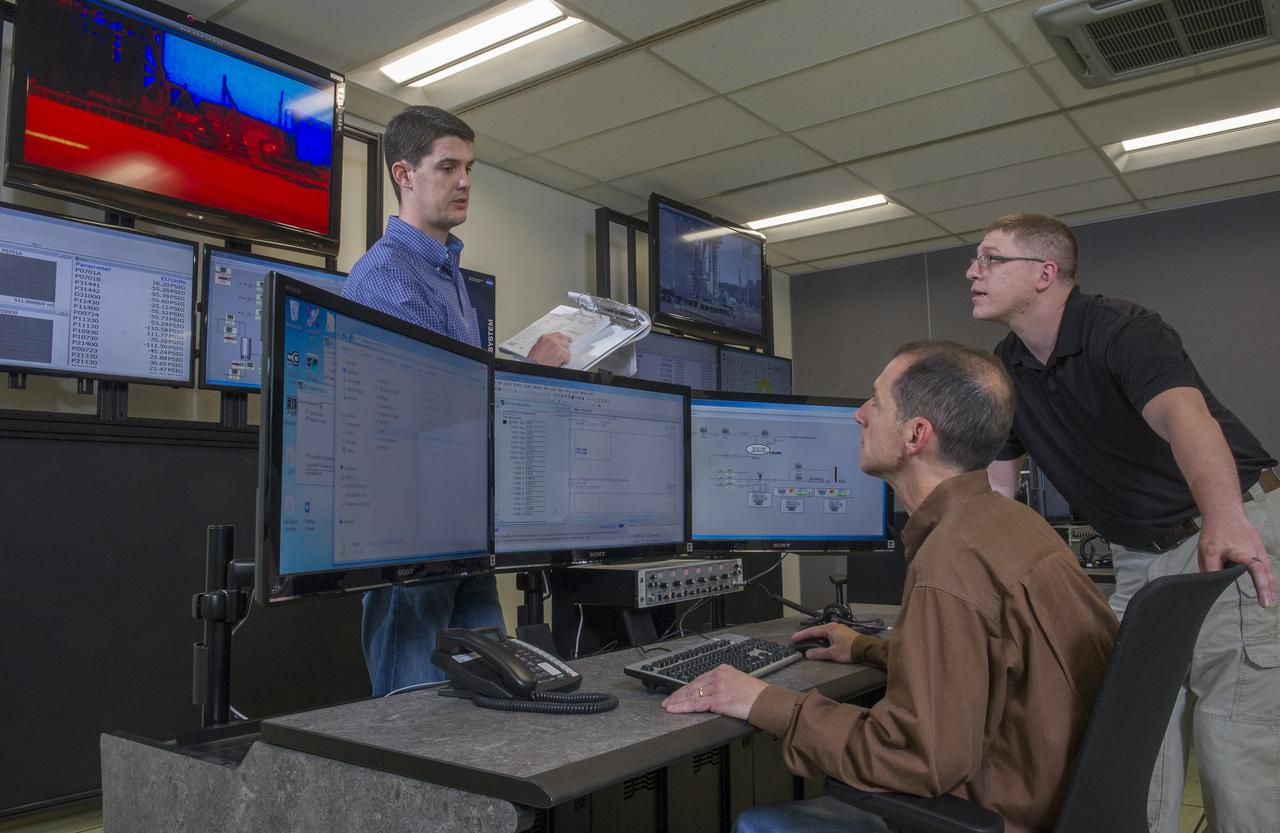
STEVEN SPRAYBERRY, ALICE DANIEL, CHRISTY BASHMAN, ALLEN SHELTON, BEVERELY COURREGE, MATHEW EXELL, JIM EMMENEGGER, IN VARIOUS SETUPS AT WEST TEST AREA CONTROL ROOM-B.
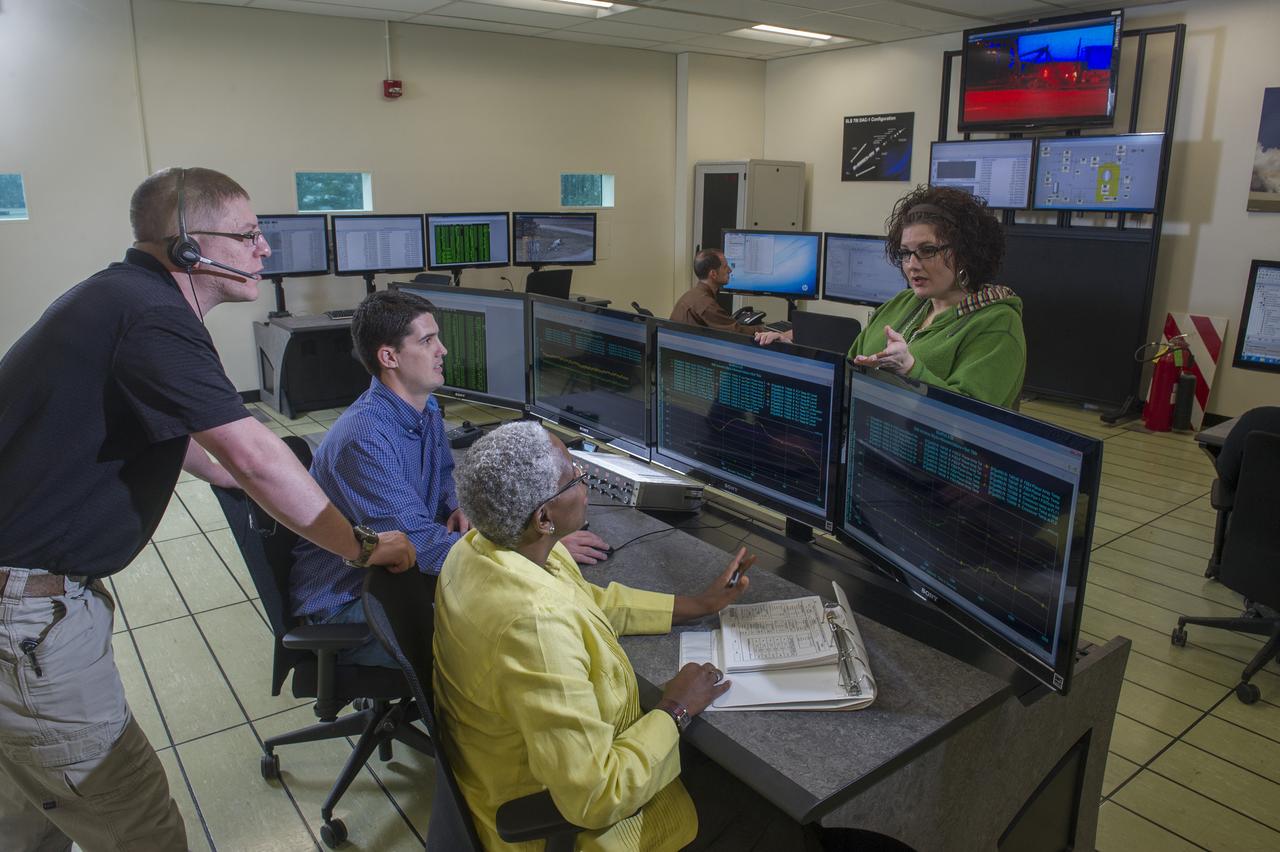
STEVEN SPRAYBERRY, ALICE DANIEL, CHRISTY BASHMAN, ALLEN SHELTON, BEVERELY COURREGE, MATHEW EXELL, JIM EMMENEGGER, IN VARIOUS SETUPS AT WEST TEST AREA CONTROL ROOM-B.
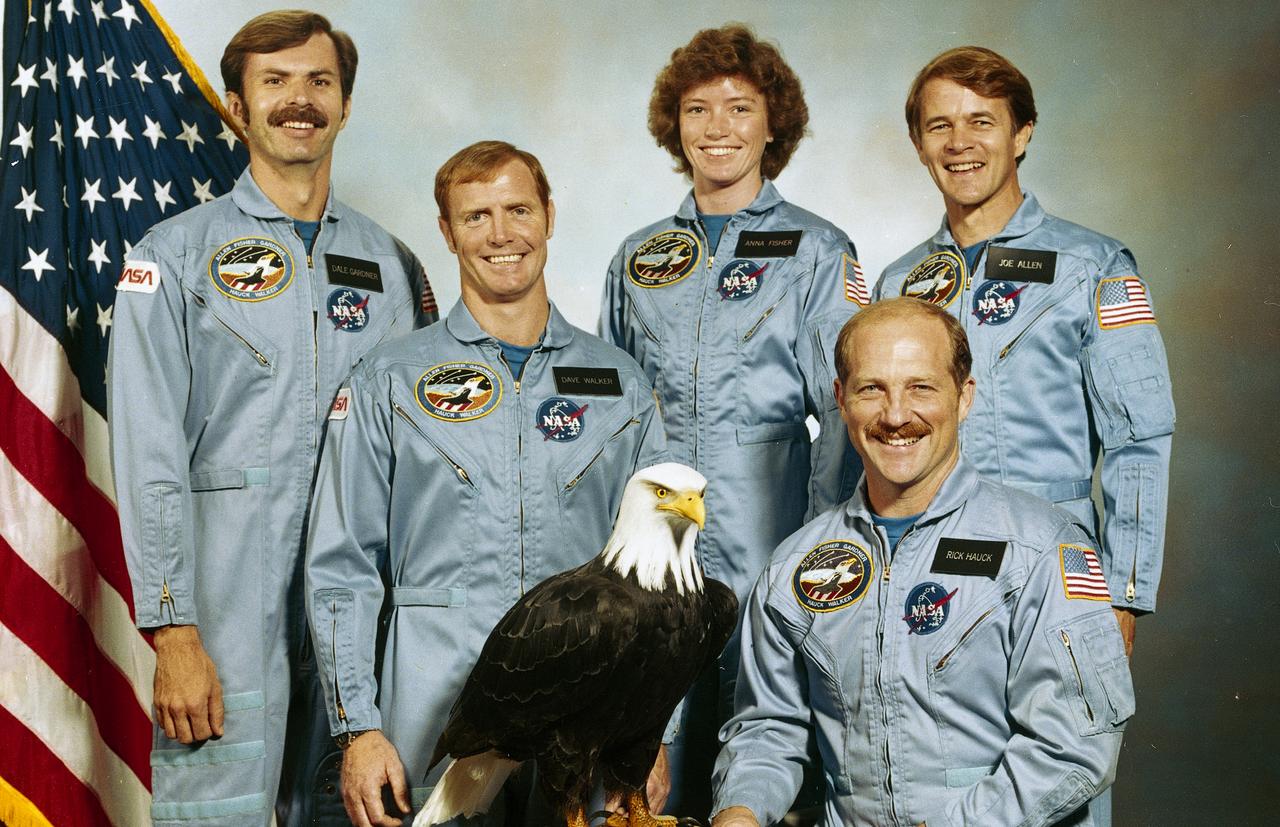
The crew assigned to the STS-51A mission included Frederick H. Hauck, commander,who is seated to the right. Standing, left to right, are Dale A. Gardner, mission specialist; David M. Walker, pilot; and mission specialists Anna L. Fisher, and Joseph P. Allen. Launched aboard the Space Shuttle Discovery on November 8, 1984 at 7:15:00 am (EST), the STS-51A mission deployed the Canadian communications satellite TELLESAT-H (ANIK), and the defense communications satellite SYCOM IV-1 (also known as LEASAT-1). In addition, 2 malfunctioning satellites were retrieved: the PALAPA-B2 and the WESTAR-VI.
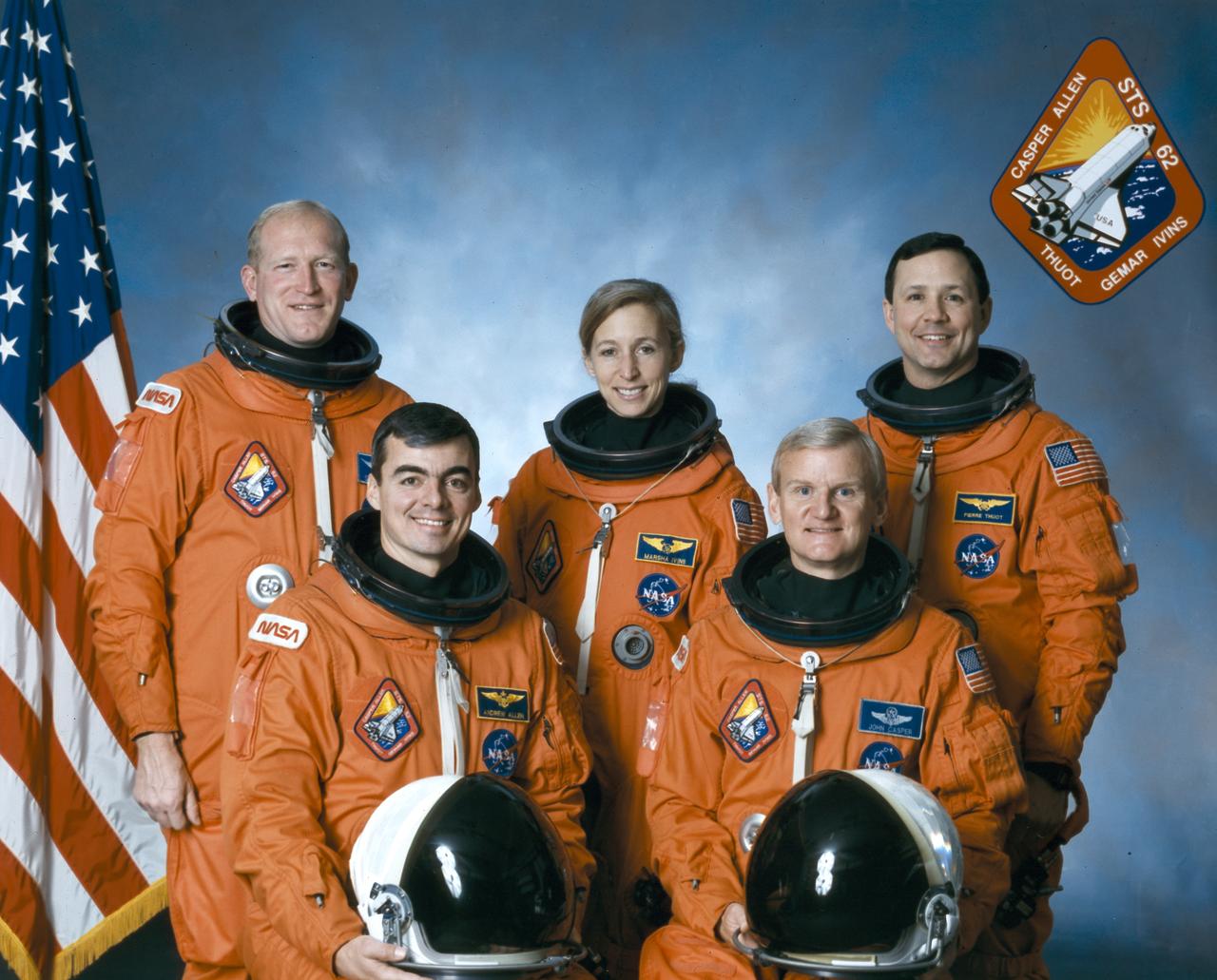
Astronauts included in the STS-62 crew portrait include (standing left to right) mission specialists Charles D. Gemar, Marsha S. Ivins, and Pierre J. Thuot. Seated left to right are Andrew M. Allen, pilot; and John H. Casper, commander. Launched aboard the Space Shuttle Columbia on March 4, 1994 at 8:53:00 am (EST), the STS-62 mission carried two primary payloads; the U.S Microgravity Payload-2 (USMP-2) and the Office of Aeronautics and Space Technology-2 (OAST-2).
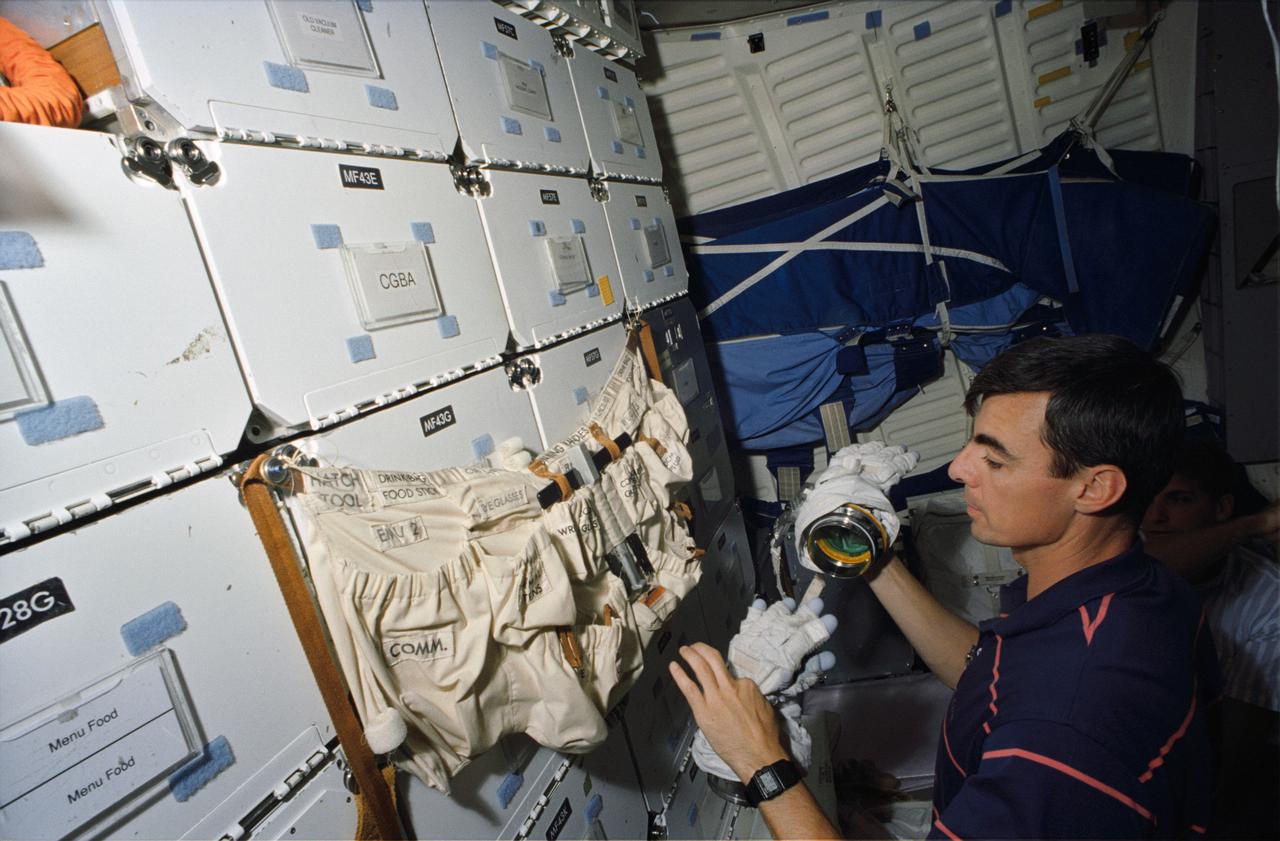
S93-46018 (13 October 1993) --- In the Johnson Space Center's (JSC) Shuttle mockup and integration laboratory, astronaut Andrew M. Allen retrieves gear to rehearse a suit donning exercise on the middeck. Thuot's very realistic environs are provided by the Shuttle crew compartment trainer. Thuot, mission specialist, and four other NASA astronauts will spend two weeks in space aboard the Columbia in March of next year. He and astronaut Pierre J. Thuot have been rehearsing contingency space walks. There is no scheduled extravehicular activity for the STS-62 flight.
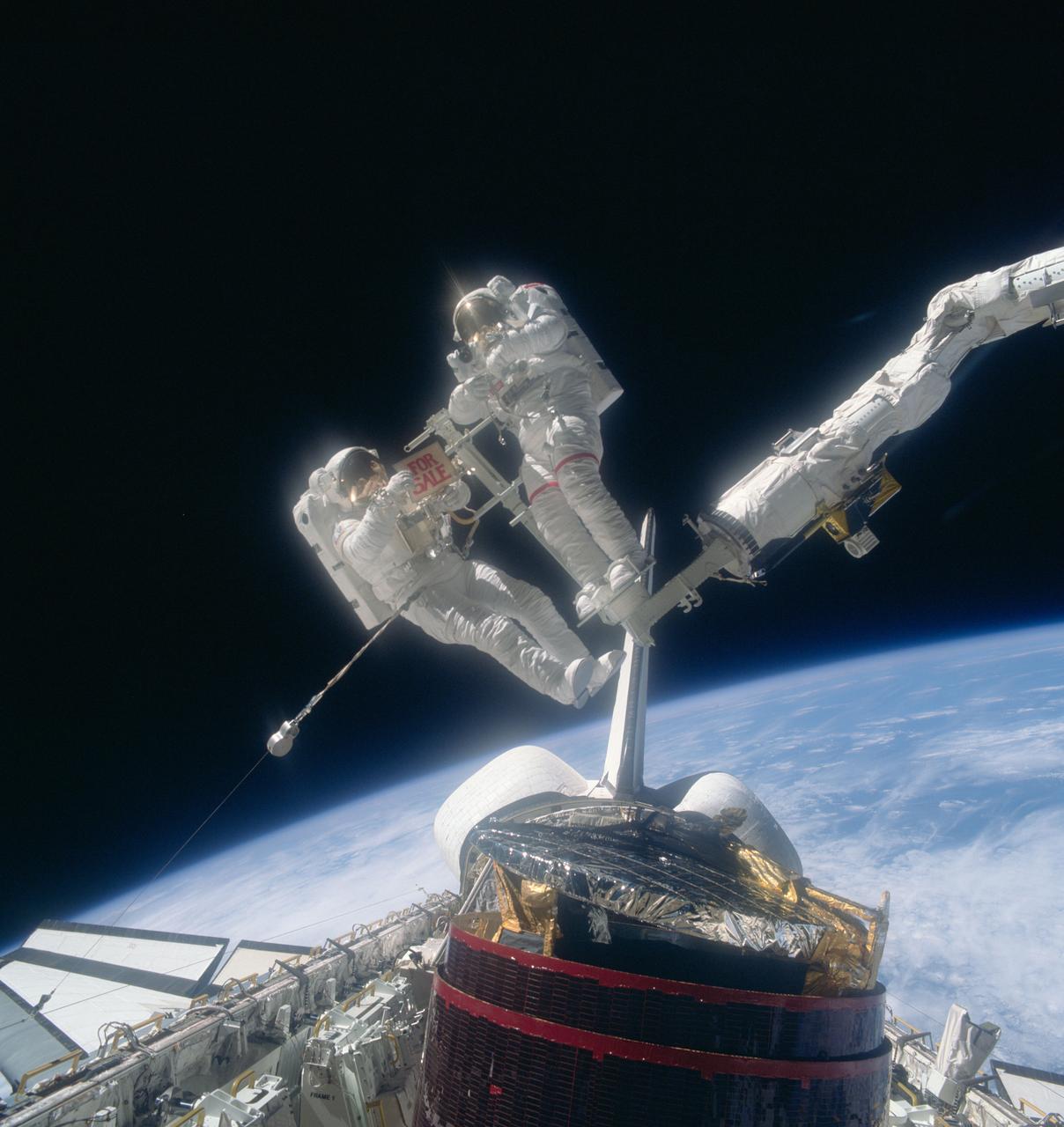
51A-39-063 (14 Nov 1984) --- A 70mm frame of WESTAR VI post-retrieval activity. Astronaut Dale A. Gardner (left), STS-51A mission specialist, holds a "For Sale" sign, making light reference to the status of the re-captured communications spacecraft, which has been stranded since its initial deployment. Astronaut Joseph P. Allen IV stands on the Mobile Foot Restraint (MFR), which in tandem with the Remote Manipulator System (RMS) arm, controlled by Dr. Anna L. Fisher inside the space shuttle Discovery's cabin, served as a cherry-picker for capture efforts. Photo credit: NASA
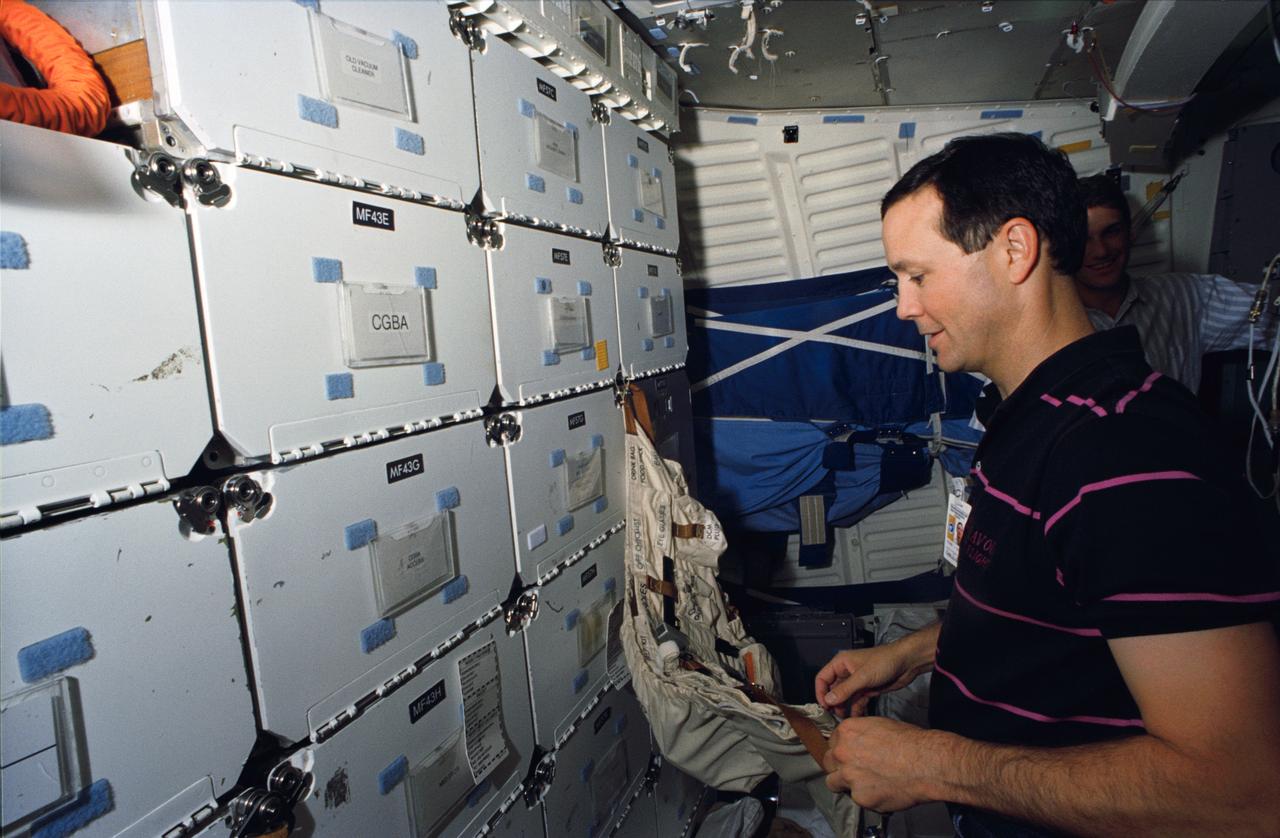
S93-46017 (13 October 1993) --- In the Johnson Space Center's (JSC) Shuttle mockup and integration laboratory, astronaut Pierre J. Thuot retrieves gear to rehearse a suit donning exercise on the middeck. Thuot's very realistic environs are provided by the Shuttle crew compartment trainer. Thuot, mission specialist, and four other NASA astronauts will spend two weeks in space aboard the Columbia in March of next year. He and astronaut Andrew M. Allen have been rehearsing contingency space walks. There is no scheduled extravehicular activity for the STS-62 flight.
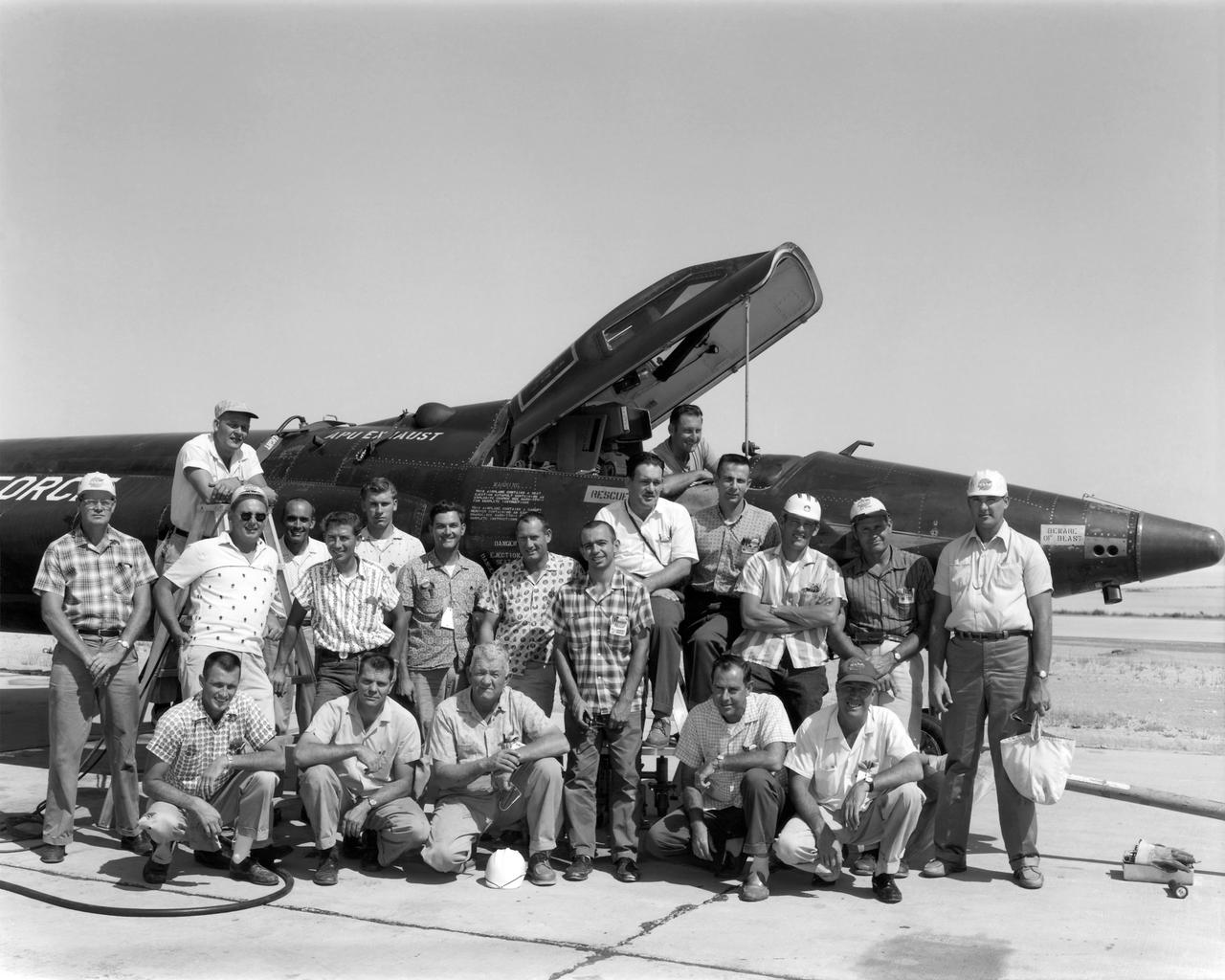
X-15 personnel July 1962 Cockpit: Edward "Ed" Nice Ladder: Thomas "Tom" McAlister Back Row, left to right: William Clark, Edward "Ed" Sabo, Donald "Don" Hall, Billy Furr, Allen Dustin, Raymond "Ray" White, George E. Trott, Alfred "Al" Grieshaber, Merle Curtis, LeRoy "Lee" Adelsbach, Allen Lowe, Jay L. King, Lorenzo "Larry" Barnett. Kneeling, left to right: Byron Gibbs, Price "Bob" Workman, Ira Cupp, unidentified, John Gordon.
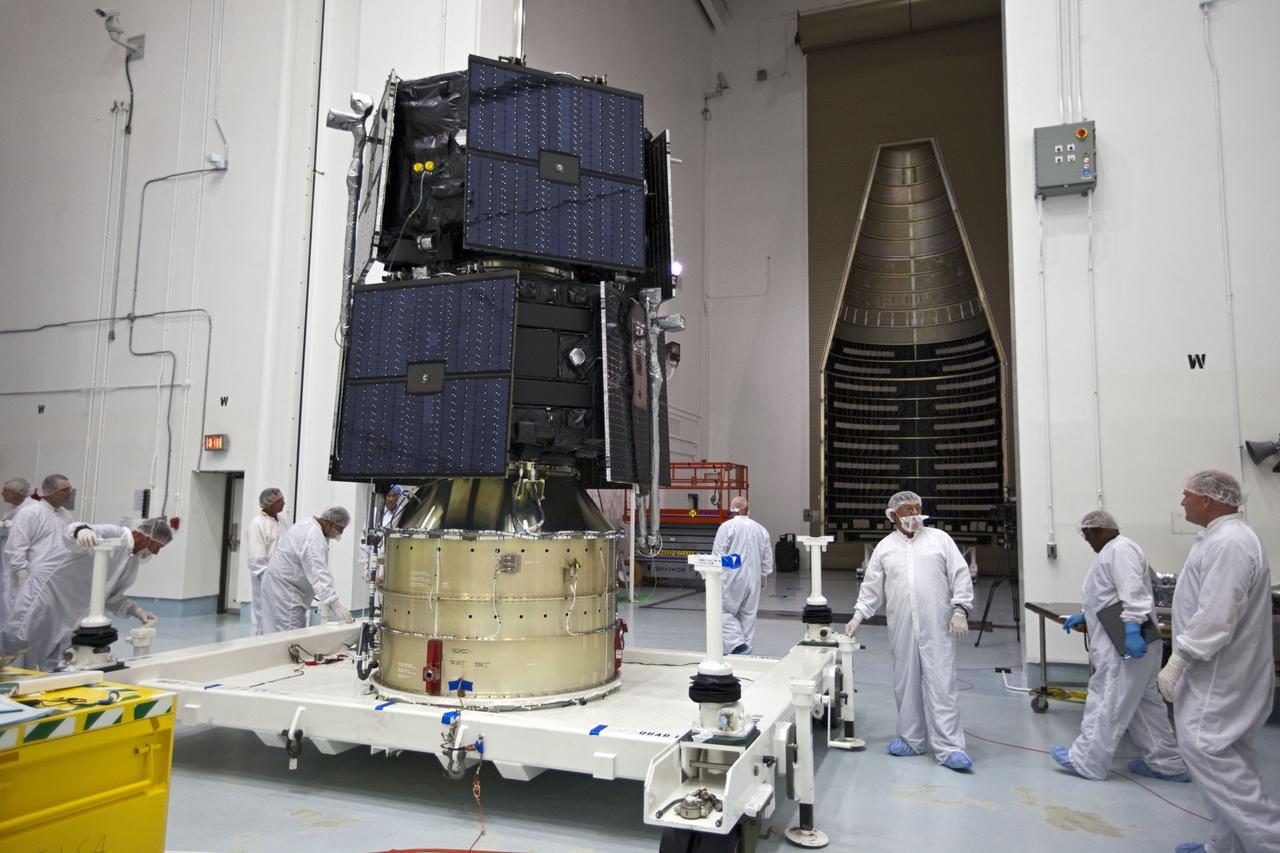
TITUSVILLE, Fla. - Inside the Astrotech payload processing facility in Titusville, Fla. near NASA’s Kennedy Space Center, technicians prepare the two Radiation Belt Storm Probes, or RBSP, spacecraft prior for encapsulation in payload faring. The fairing will house and protect the RBSP during liftoff and flight through the atmosphere aboard an Atlas V rocket. NASA’s RBSP mission will help us understand the sun’s influence on Earth and near-Earth space by studying the Earth’s radiation belts on various scales of space and time. RBSP will begin its mission of exploration of Earth’s Van Allen radiation belts and the extremes of space weather after its liftoff aboard a United Launch Alliance Atlas V from Space Launch Complex 41 at Cape Canaveral Air Force Station, Fla. Liftoff is targeted for Aug. 23, 2012. For more information, visit http://www.nasa.gov/rbsp. Photo credit: NASA/ Kim Shiflett
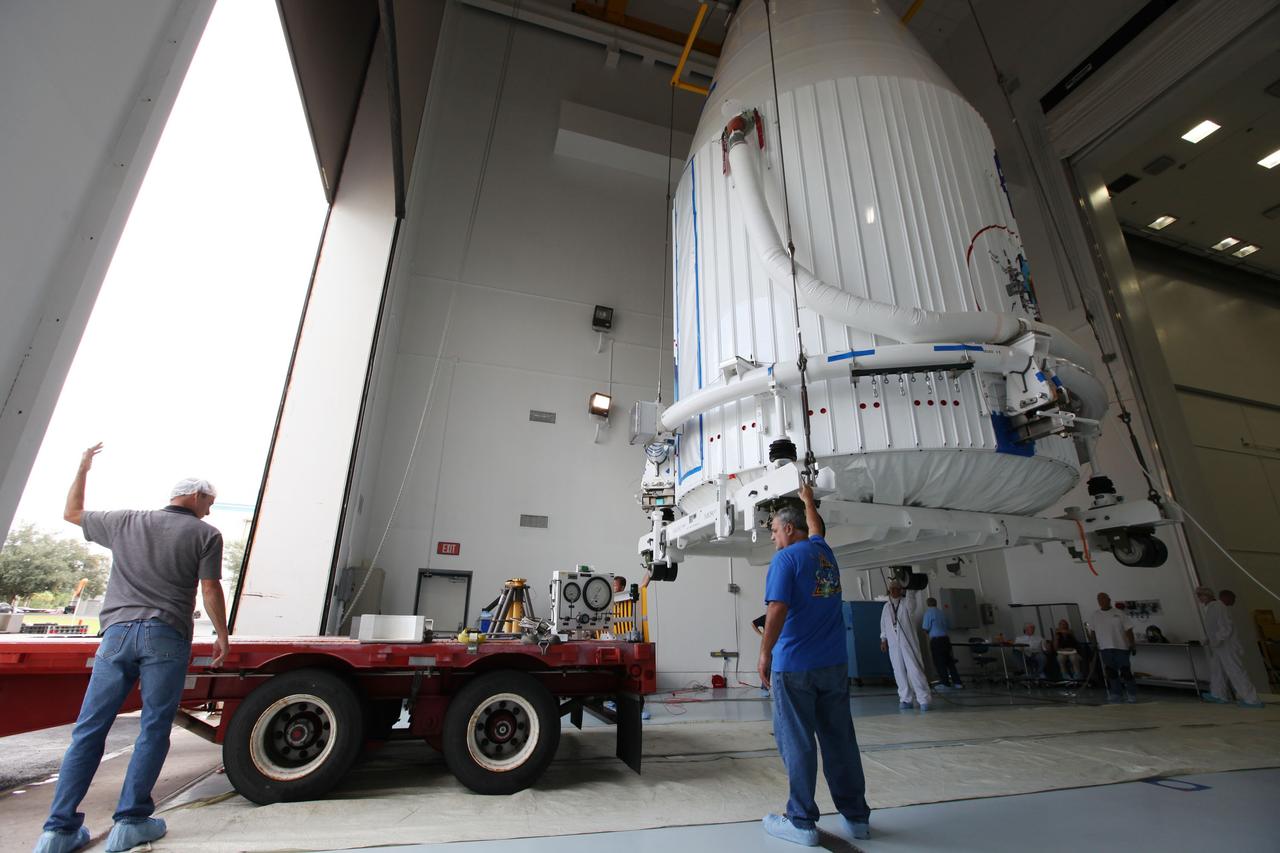
TITUSVILLE, Fla. - Inside the Astrotech payload processing facility in Titusville, Fla. near NASA’s Kennedy Space Center, technicians use a crane to lift the payload faring containing the two Radiation Belt Storm Probes, or RBSP, spacecraft as a transporter moves into position. NASA’s RBSP mission will help us understand the sun’s influence on Earth and near-Earth space by studying the Earth’s radiation belts on various scales of space and time. RBSP will begin its mission of exploration of Earth’s Van Allen radiation belts and the extremes of space weather after its liftoff aboard a United Launch Alliance Atlas V rocket from Space Launch Complex 41 at Cape Canaveral Air Force Station, Fla. Liftoff is targeted for Aug. 23, 2012. For more information, visit http://www.nasa.gov/rbsp Photo credit: NASA/ Kim Shiflett
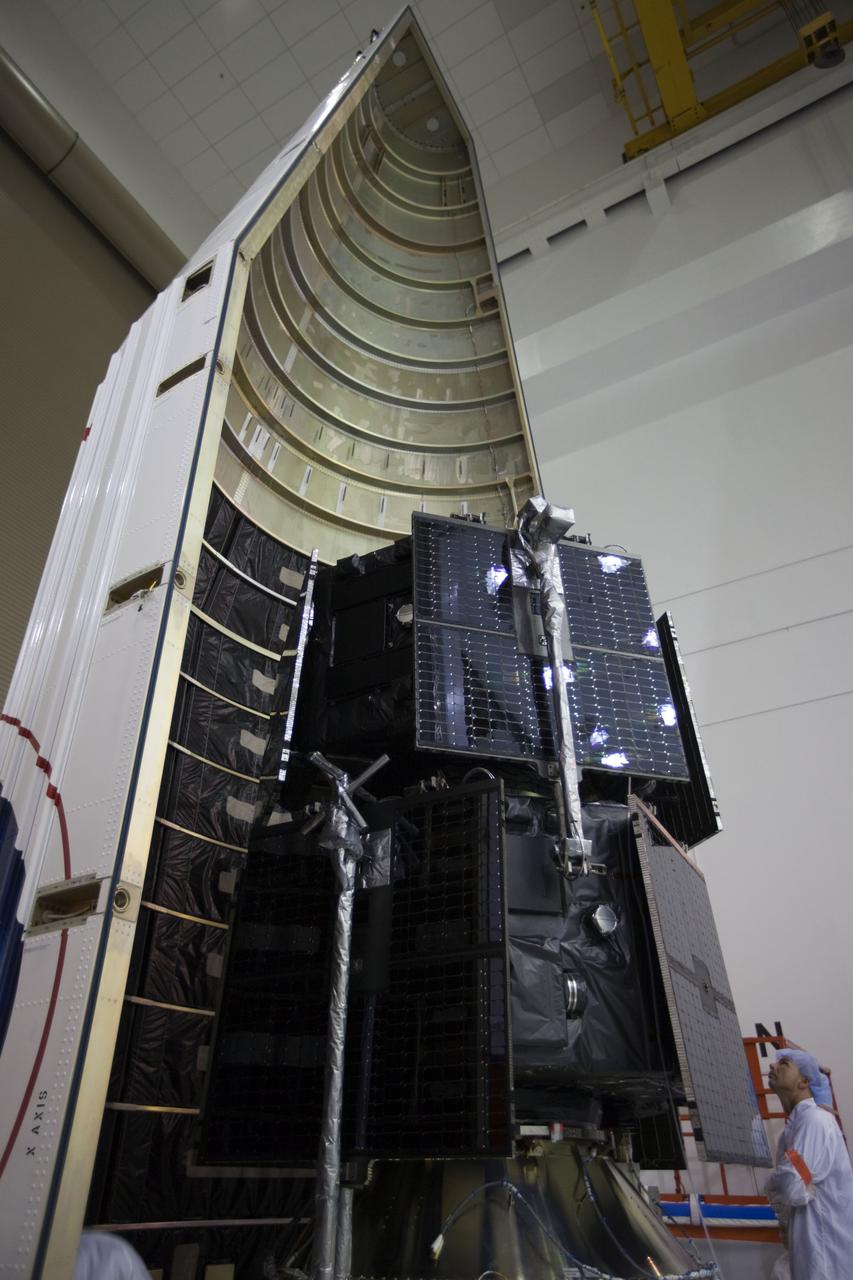
TITUSVILLE, Fla. - Inside the Astrotech payload processing facility in Titusville, Fla. near NASA’s Kennedy Space Center, a technician checks out the two Radiation Belt Storm Probes, or RBSP, spacecraft as they are being encapsulated in the payload faring. The fairing will house and protect the RBSP during liftoff and flight through the atmosphere aboard an Atlas V rocket. NASA’s RBSP mission will help us understand the sun’s influence on Earth and near-Earth space by studying the Earth’s radiation belts on various scales of space and time. RBSP will begin its mission of exploration of Earth’s Van Allen radiation belts and the extremes of space weather after its liftoff aboard a United Launch Alliance Atlas V from Space Launch Complex 41 at Cape Canaveral Air Force Station, Fla. Liftoff is targeted for Aug. 23, 2012. For more information, visit http://www.nasa.gov/rbsp. Photo credit: NASA/ Kim Shiflett
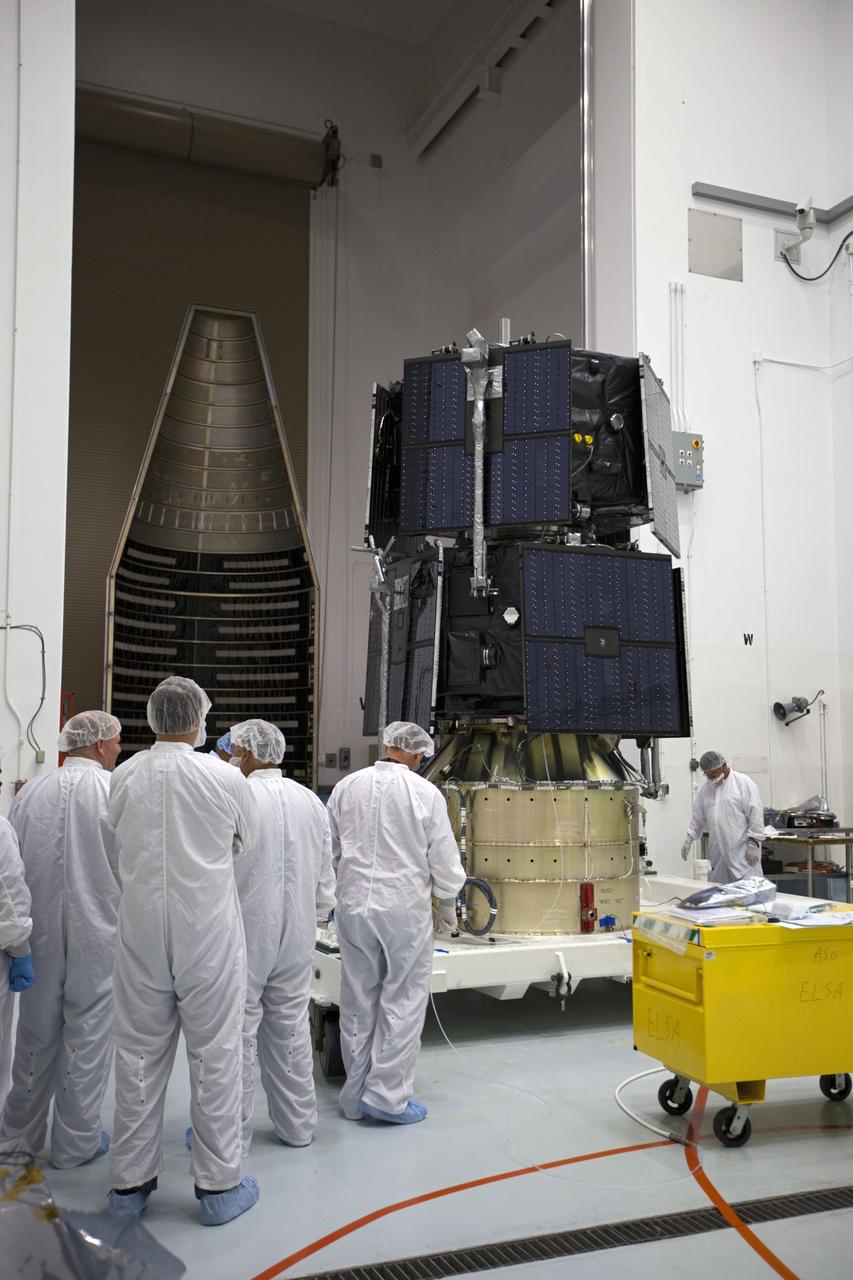
TITUSVILLE, Fla. - Inside the Astrotech payload processing facility in Titusville, Fla. near NASA’s Kennedy Space Center, technicians prepare the two Radiation Belt Storm Probes, or RBSP, spacecraft prior for encapsulation in the payload faring. The fairing will house and protect the RBSP during liftoff and flight through the atmosphere aboard an Atlas V rocket. NASA’s RBSP mission will help us understand the sun’s influence on Earth and near-Earth space by studying the Earth’s radiation belts on various scales of space and time. RBSP will begin its mission of exploration of Earth’s Van Allen radiation belts and the extremes of space weather after its liftoff aboard a United Launch Alliance Atlas V from Space Launch Complex 41 at Cape Canaveral Air Force Station, Fla. Liftoff is targeted for Aug. 23, 2012. For more information, visit http://www.nasa.gov/rbsp. Photo credit: NASA/ Kim Shiflett
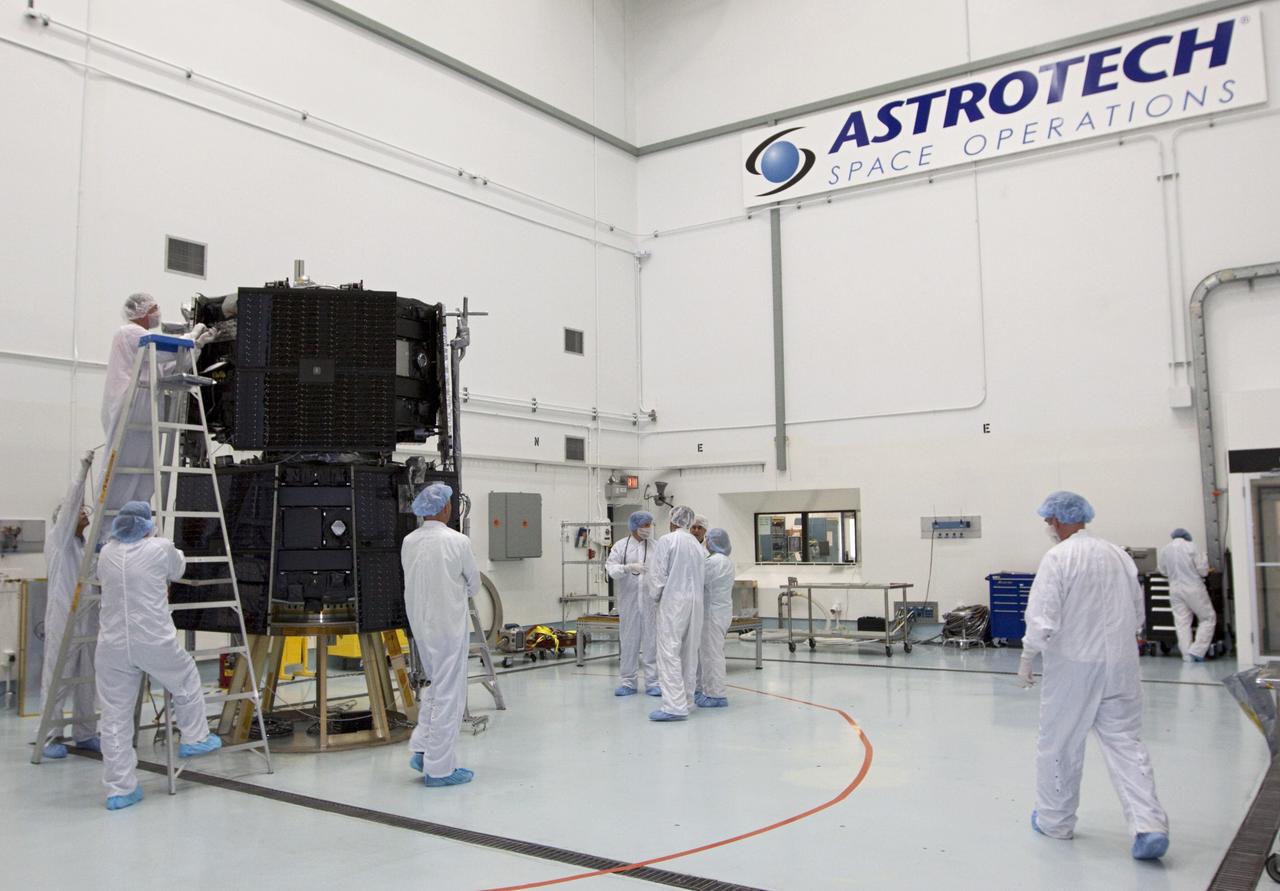
CAPE CANAVERAL, Fla. - Inside the Astrotech payload processing facility near NASA’s Kennedy Space Center in Florida, technicians work on the Radiation Belt Storm Probes, or RBSP, spacecraft. NASA’s RBSP mission will help us understand the sun’s influence on Earth and near-Earth space by studying the Earth’s radiation belts on various scales of space and time. As the spacecraft orbits Earth, the four solar panels will continuously face the sun to provide constant power to its instruments. The boom will provide data of the electric fields that energize radiation particles and modify the structure of the inner magnetosphere. RBSP will begin its mission of exploration of Earth’s Van Allen radiation belts and the extremes of space weather after its launch aboard a United Launch Alliance Atlas V rocket. Launch is targeted for Aug. 23. For more information, visit http://www.nasa.gov/rbsp. Photo credit: NASA/Kim Shiflett
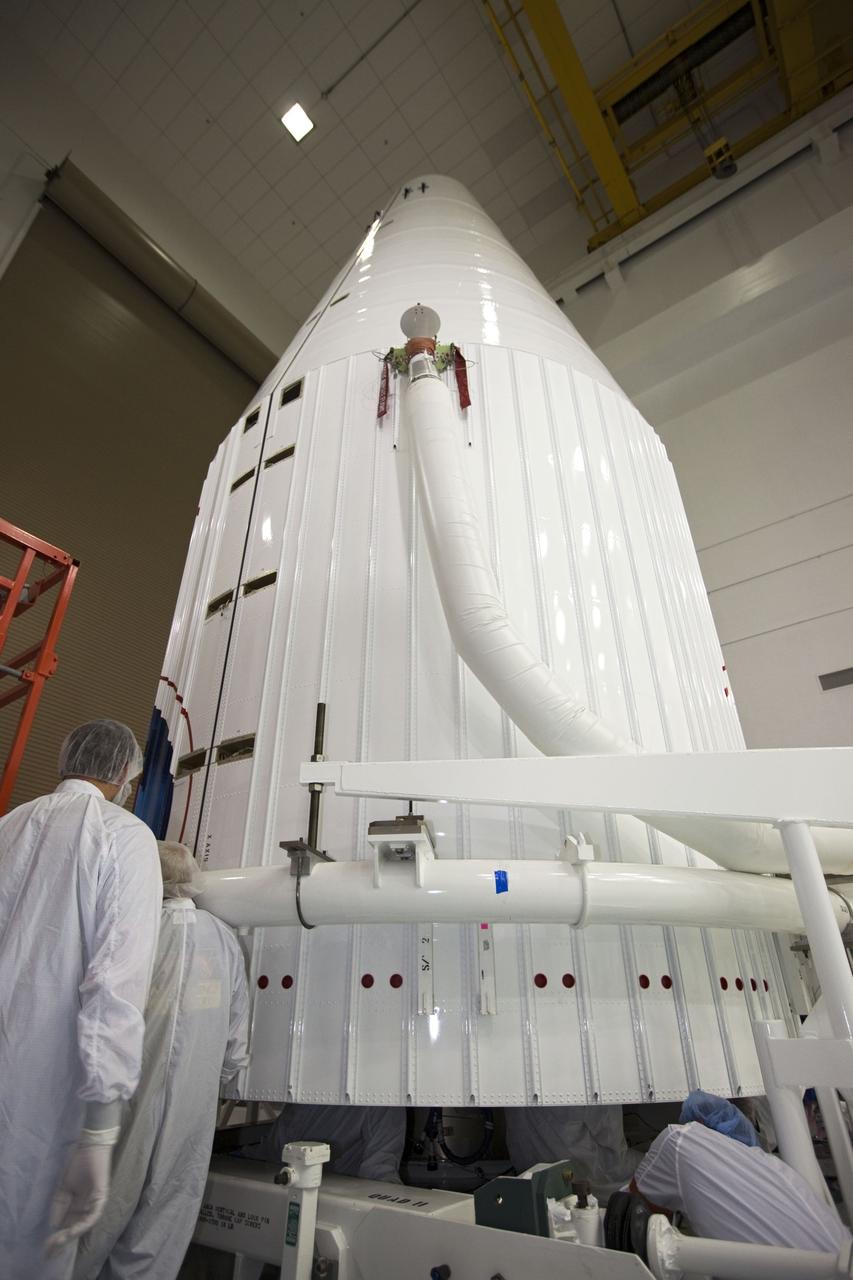
TITUSVILLE, Fla. - Inside the Astrotech payload processing facility in Titusville, Fla. near NASA’s Kennedy Space Center, technicians complete checkouts following encapsulation of the two Radiation Belt Storm Probes, or RBSP, spacecraft with its payload faring. The fairing will house and protect the RBSP during liftoff and flight through the atmosphere aboard an Atlas V rocket. NASA’s RBSP mission will help us understand the sun’s influence on Earth and near-Earth space by studying the Earth’s radiation belts on various scales of space and time. RBSP will begin its mission of exploration of Earth’s Van Allen radiation belts and the extremes of space weather after its liftoff aboard a United Launch Alliance Atlas V from Space Launch Complex 41 at Cape Canaveral Air Force Station, Fla. Liftoff is targeted for Aug. 23, 2012. For more information, visit http://www.nasa.gov/rbsp. Photo credit: NASA/ Kim Shiflett

TITUSVILLE, Fla. - Inside the Astrotech payload processing facility in Titusville, Fla. near NASA’s Kennedy Space Center, technicians prepare the two Radiation Belt Storm Probes, or RBSP, spacecraft for encapsulation in the payload faring. The fairing will house and protect the RBSP during liftoff and flight through the atmosphere aboard an Atlas V rocket. NASA’s RBSP mission will help us understand the sun’s influence on Earth and near-Earth space by studying the Earth’s radiation belts on various scales of space and time. RBSP will begin its mission of exploration of Earth’s Van Allen radiation belts and the extremes of space weather after its liftoff aboard a United Launch Alliance Atlas V from Space Launch Complex 41 at Cape Canaveral Air Force Station, Fla. Liftoff is targeted for Aug. 23, 2012. For more information, visit http://www.nasa.gov/rbsp. Photo credit: NASA/ Kim Shiflett
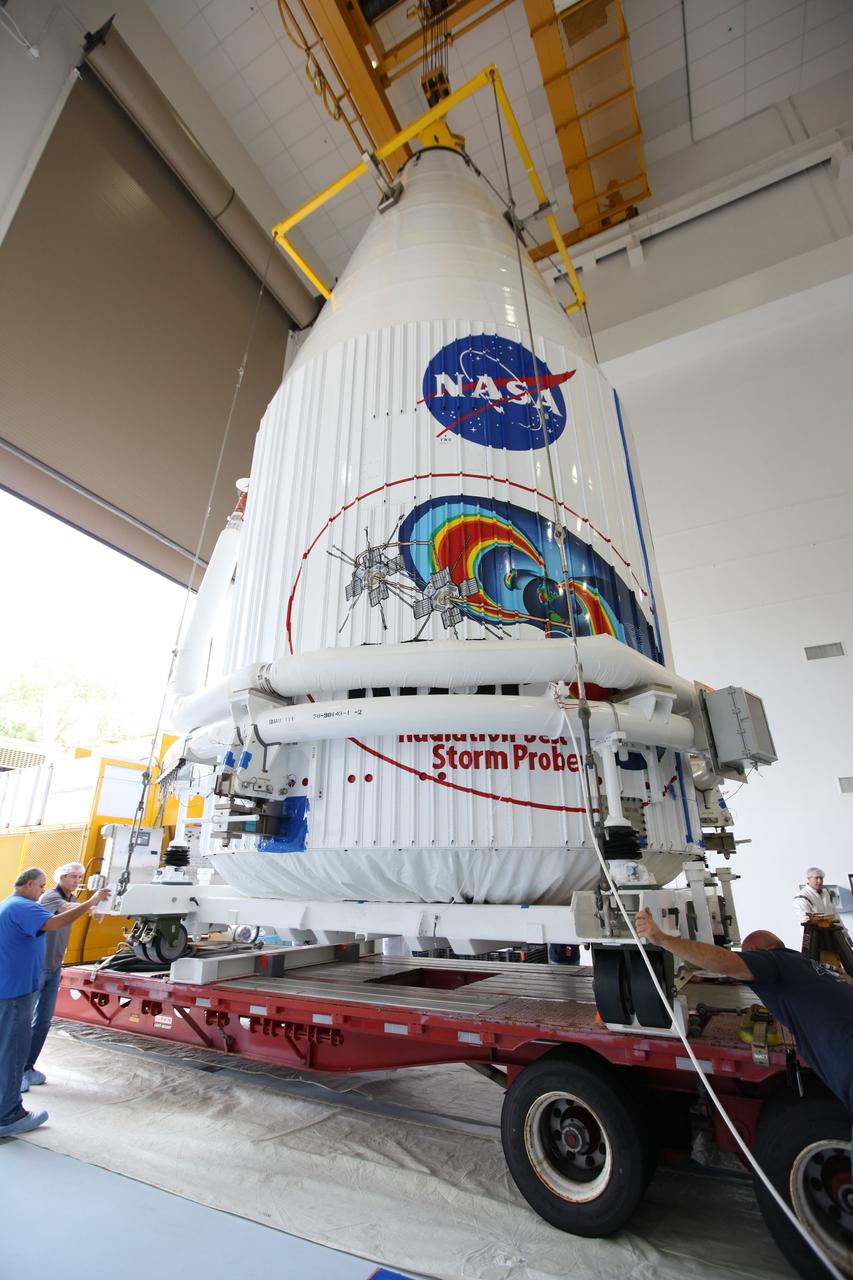
TITUSVILLE, Fla. - Inside the Astrotech payload processing facility in Titusville, Fla. near NASA’s Kennedy Space Center, technicians use a crane to lower the payload faring containing the two Radiation Belt Storm Probes, or RBSP, spacecraft on to a transporter to be moved to the launch complex. NASA’s RBSP mission will help us understand the sun’s influence on Earth and near-Earth space by studying the Earth’s radiation belts on various scales of space and time. RBSP will begin its mission of exploration of Earth’s Van Allen radiation belts and the extremes of space weather after its liftoff aboard a United Launch Alliance Atlas V rocket from Space Launch Complex 41 at Cape Canaveral Air Force Station, Fla. Liftoff is targeted for Aug. 23, 2012. For more information, visit http://www.nasa.gov/rbsp Photo credit: NASA/ Kim Shiflett
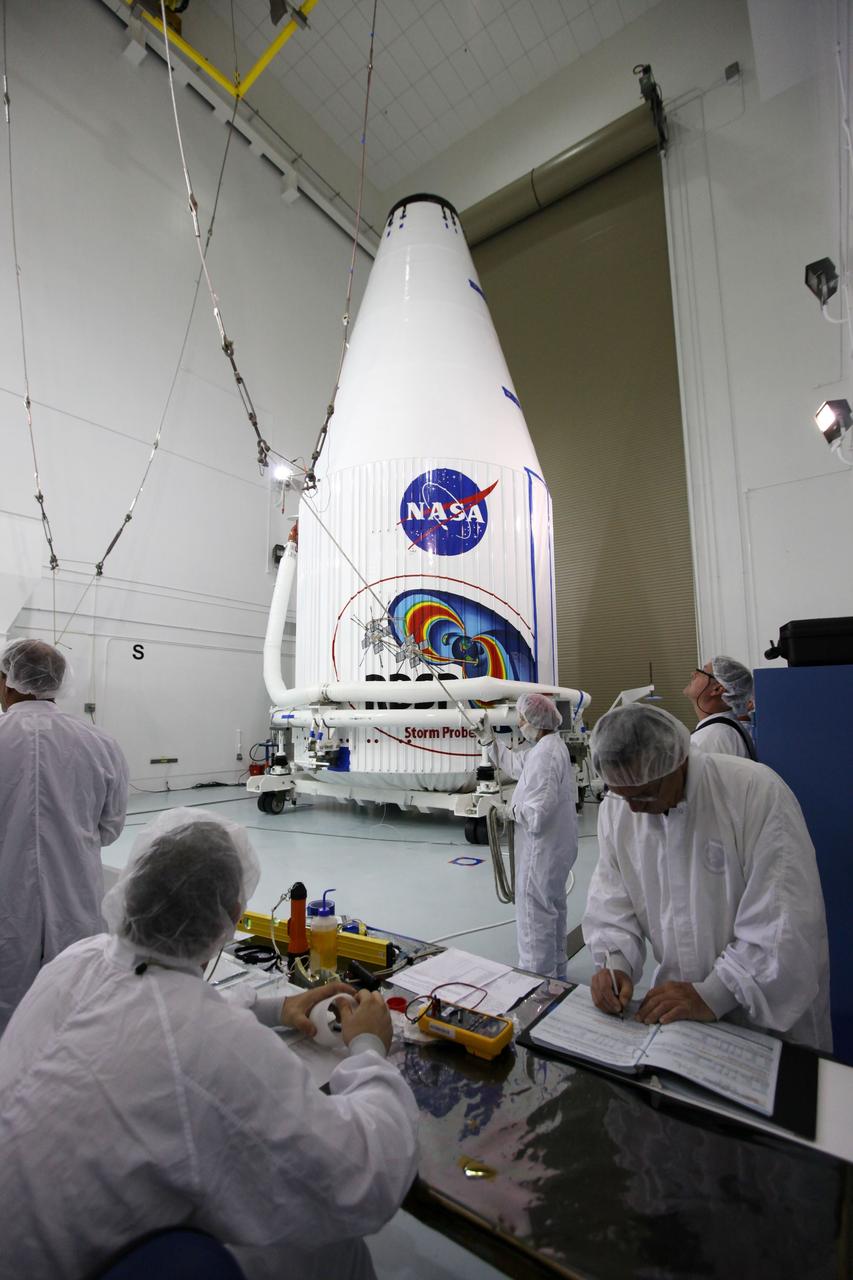
TITUSVILLE, Fla. - Inside the Astrotech payload processing facility in Titusville, Fla. near NASA’s Kennedy Space Center, technicians make final checks prior to lifting the payload faring containing the two Radiation Belt Storm Probes, or RBSP, spacecraft on to a transporter to be moved to the launch complex. NASA’s RBSP mission will help us understand the sun’s influence on Earth and near-Earth space by studying the Earth’s radiation belts on various scales of space and time. RBSP will begin its mission of exploration of Earth’s Van Allen radiation belts and the extremes of space weather after its liftoff aboard a United Launch Alliance Atlas V rocket from Space Launch Complex 41 at Cape Canaveral Air Force Station, Fla. Liftoff is targeted for Aug. 23, 2012. For more information, visit http://www.nasa.gov/rbsp Photo credit: NASA/ Kim Shiflett
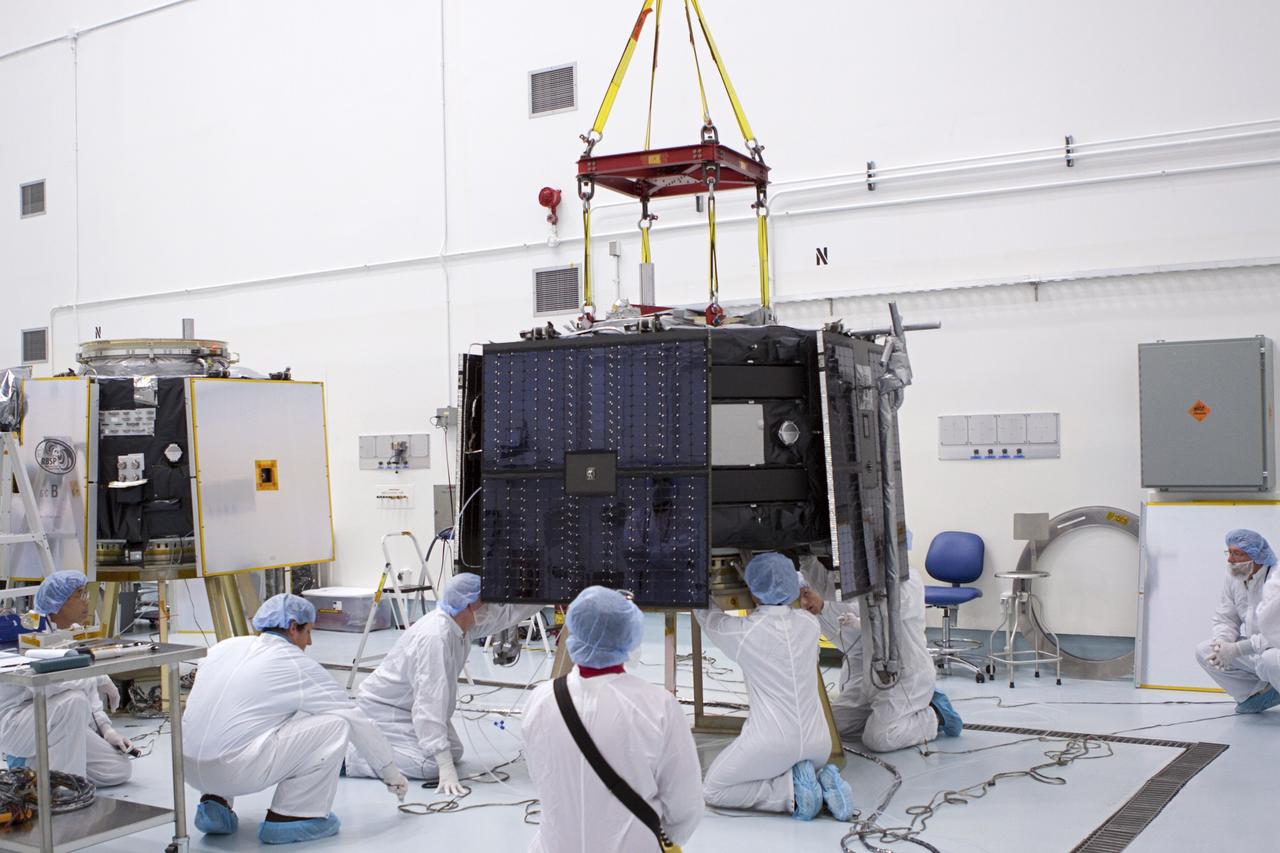
TITUSVILLE, Fla. - Inside the Astrotech payload processing facility in Titusville, Fla. near NASA’s Kennedy Space Center, technicians prepare the Radiation Belt Storm Probes, or RBSP, spacecraft A prior to vertical stacking atop RBSP B. NASA’s RBSP mission will help us understand the sun’s influence on Earth and near-Earth space by studying the Earth’s radiation belts on various scales of space and time. RBSP will begin its mission of exploration of Earth’s Van Allen radiation belts and the extremes of space weather after its liftoff aboard a United Launch Alliance Atlas V from Space Launch Complex 41 at Cape Canaveral Air Force Station, Fla. Liftoff is targeted for Aug. 23, 2012. For more information, visit http://www.nasa.gov/rbsp. Photo credit: NASA/Jim Grossmann
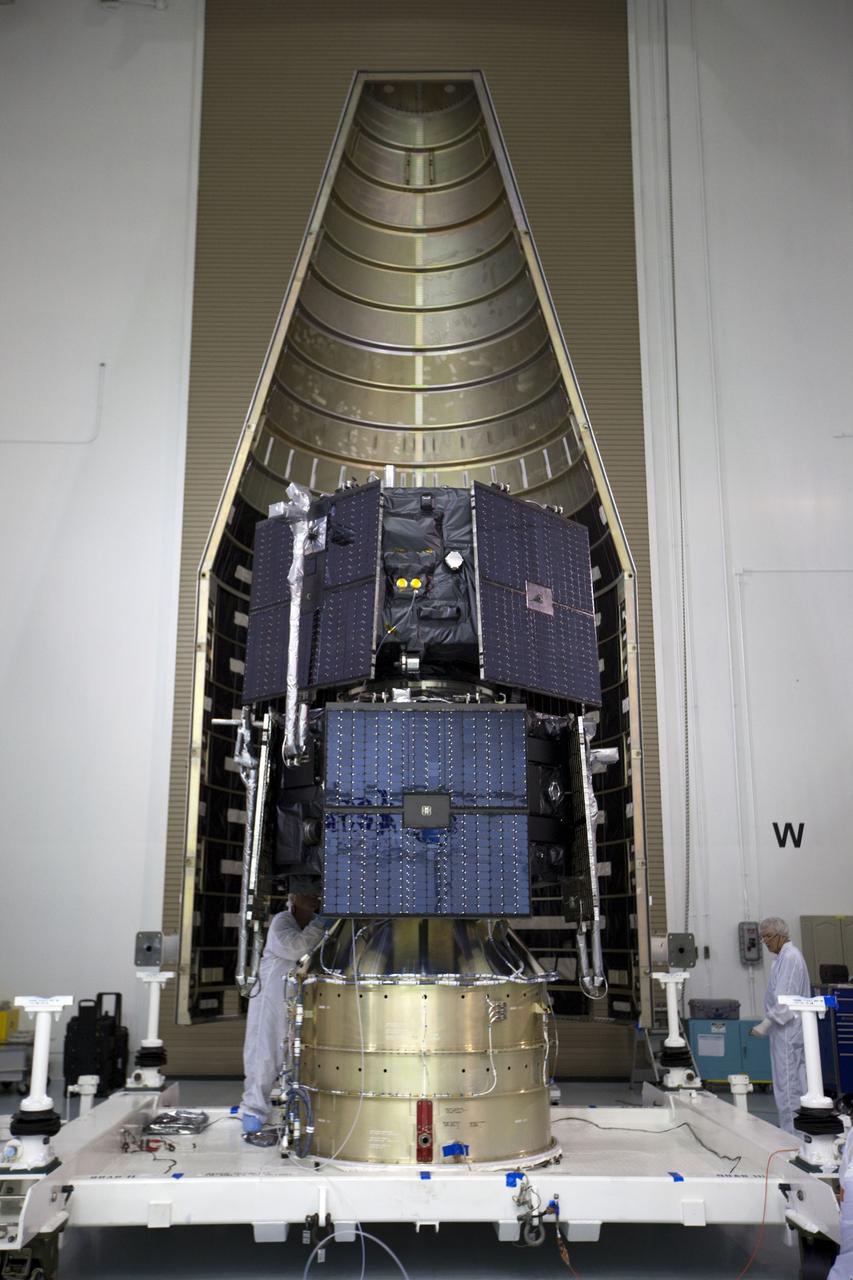
TITUSVILLE, Fla. - Inside the Astrotech payload processing facility in Titusville, Fla. near NASA’s Kennedy Space Center, a technician checks out the two Radiation Belt Storm Probes, or RBSP, spacecraft as they are being encapsulated in the payload faring. The fairing will house and protect the RBSP during liftoff and flight through the atmosphere aboard an Atlas V rocket. NASA’s RBSP mission will help us understand the sun’s influence on Earth and near-Earth space by studying the Earth’s radiation belts on various scales of space and time. RBSP will begin its mission of exploration of Earth’s Van Allen radiation belts and the extremes of space weather after its liftoff aboard a United Launch Alliance Atlas V from Space Launch Complex 41 at Cape Canaveral Air Force Station, Fla. Liftoff is targeted for Aug. 23, 2012. For more information, visit http://www.nasa.gov/rbsp. Photo credit: NASA/ Kim Shiflett
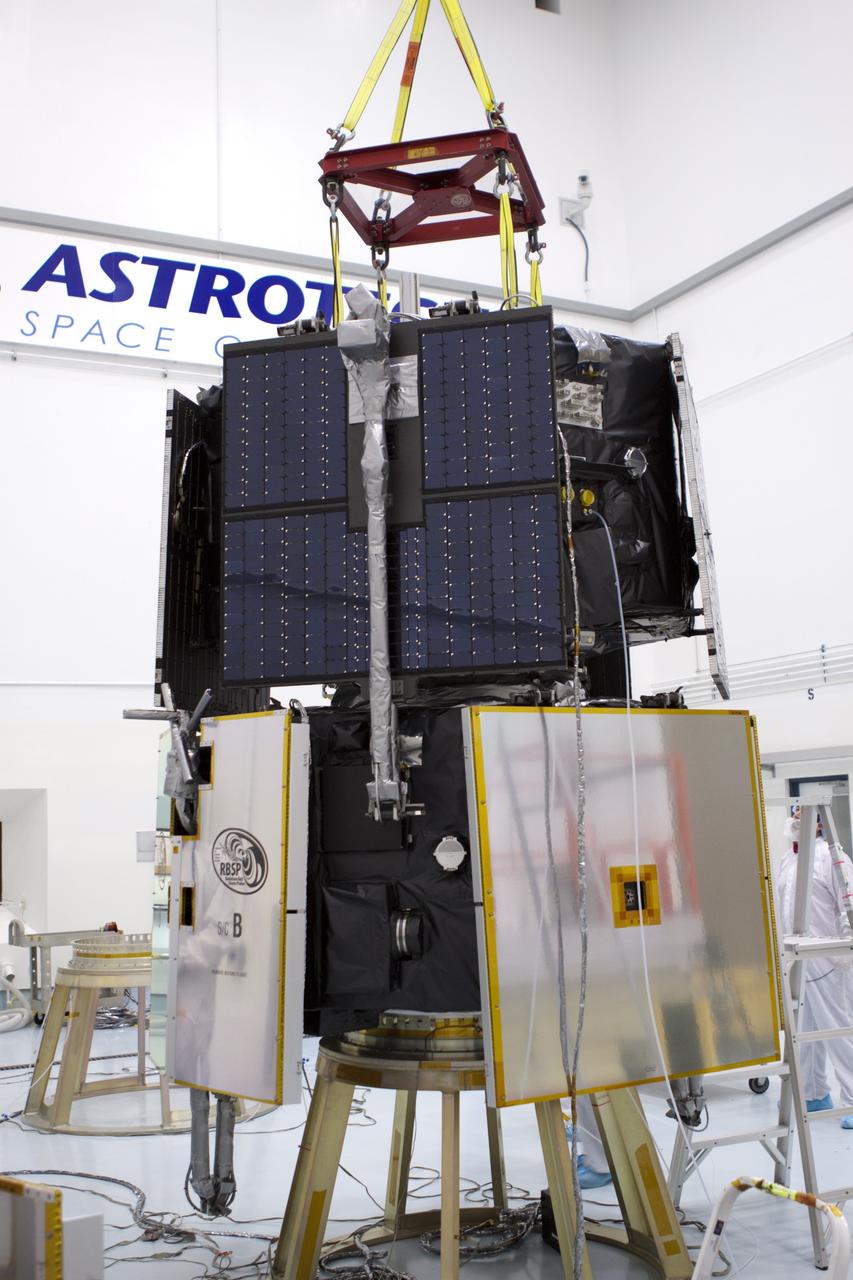
TITUSVILLE, Fla. - Inside the Astrotech payload processing facility in Titusville, Fla. near NASA’s Kennedy Space Center, the Radiation Belt Storm Probes, or RBSP, spacecraft A has been placed atop RBSP B. NASA’s RBSP mission will help us understand the sun’s influence on Earth and near-Earth space by studying the Earth’s radiation belts on various scales of space and time. RBSP will begin its mission of exploration of Earth’s Van Allen radiation belts and the extremes of space weather after its liftoff aboard a United Launch Alliance Atlas V from Space Launch Complex 41 at Cape Canaveral Air Force Station, Fla. Liftoff is targeted for Aug. 23, 2012. For more information, visit http://www.nasa.gov/rbsp. Photo credit: NASA/Jim Grossmann
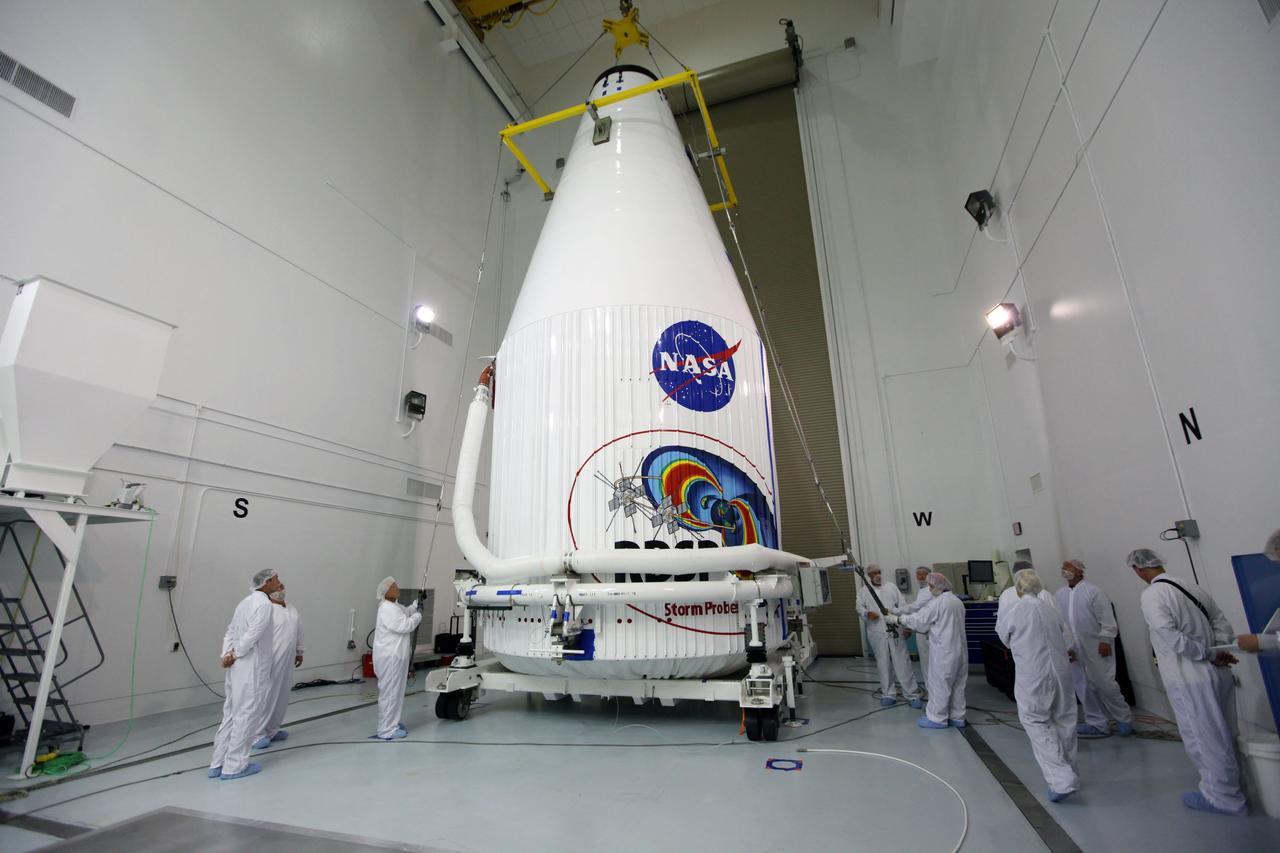
TITUSVILLE, Fla. - Inside the Astrotech payload processing facility in Titusville, Fla. near NASA’s Kennedy Space Center, technicians attach a crane to lift the payload faring containing the two Radiation Belt Storm Probes, or RBSP, spacecraft on to a transporter to be moved to the launch complex. NASA’s RBSP mission will help us understand the sun’s influence on Earth and near-Earth space by studying the Earth’s radiation belts on various scales of space and time. RBSP will begin its mission of exploration of Earth’s Van Allen radiation belts and the extremes of space weather after its liftoff aboard a United Launch Alliance Atlas V rocket from Space Launch Complex 41 at Cape Canaveral Air Force Station, Fla. Liftoff is targeted for Aug. 23, 2012. For more information, visit http://www.nasa.gov/rbsp Photo credit: NASA/ Kim Shiflett
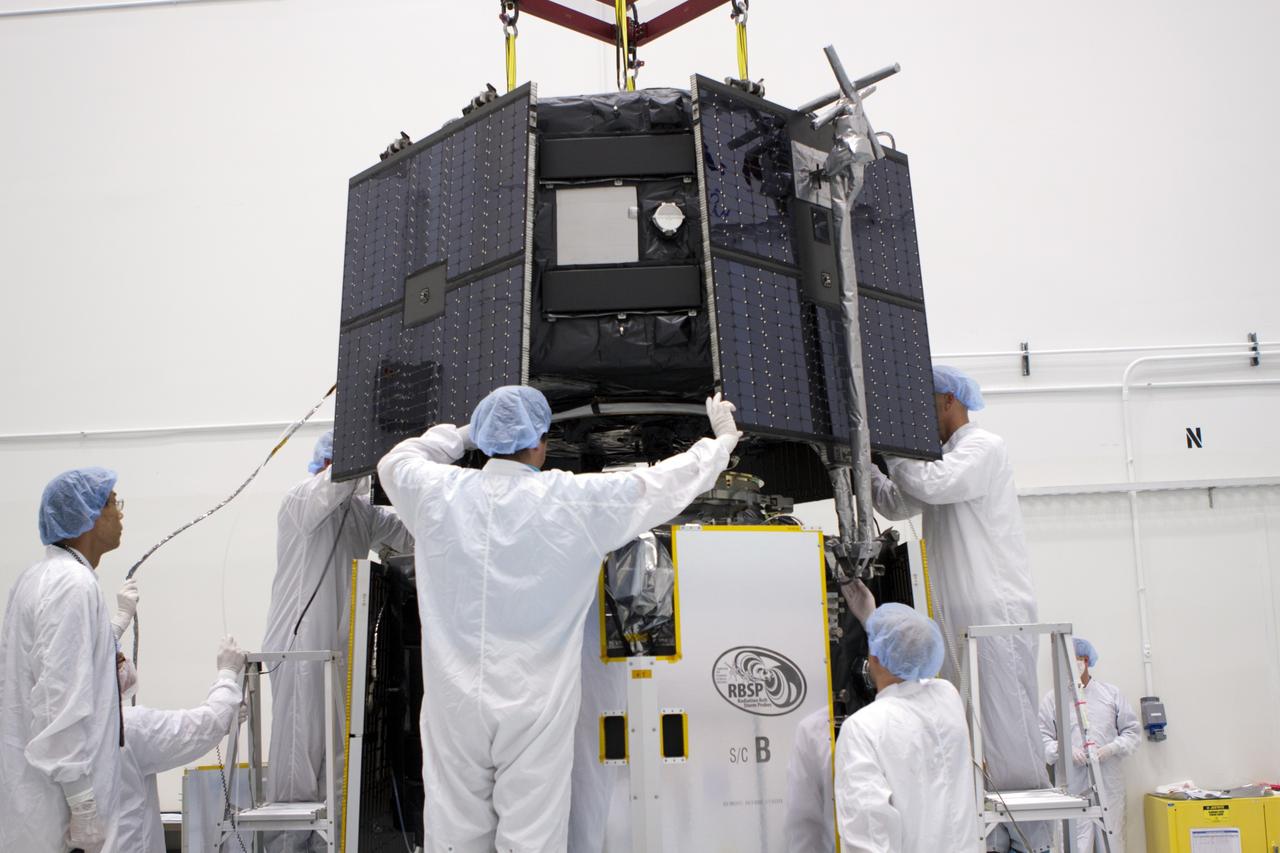
TITUSVILLE, Fla. - Inside the Astrotech payload processing facility in Titusville, Fla. near NASA’s Kennedy Space Center, technicians carefully check the Radiation Belt Storm Probes, or RBSP, spacecraft A as it is being placed atop RBSP B. NASA’s RBSP mission will help us understand the sun’s influence on Earth and near-Earth space by studying the Earth’s radiation belts on various scales of space and time. RBSP will begin its mission of exploration of Earth’s Van Allen radiation belts and the extremes of space weather after its liftoff aboard a United Launch Alliance Atlas V from Space Launch Complex 41 at Cape Canaveral Air Force Station, Fla. Liftoff is targeted for Aug. 23, 2012. For more information, visit http://www.nasa.gov/rbsp. Photo credit: NASA/Jim Grossmann
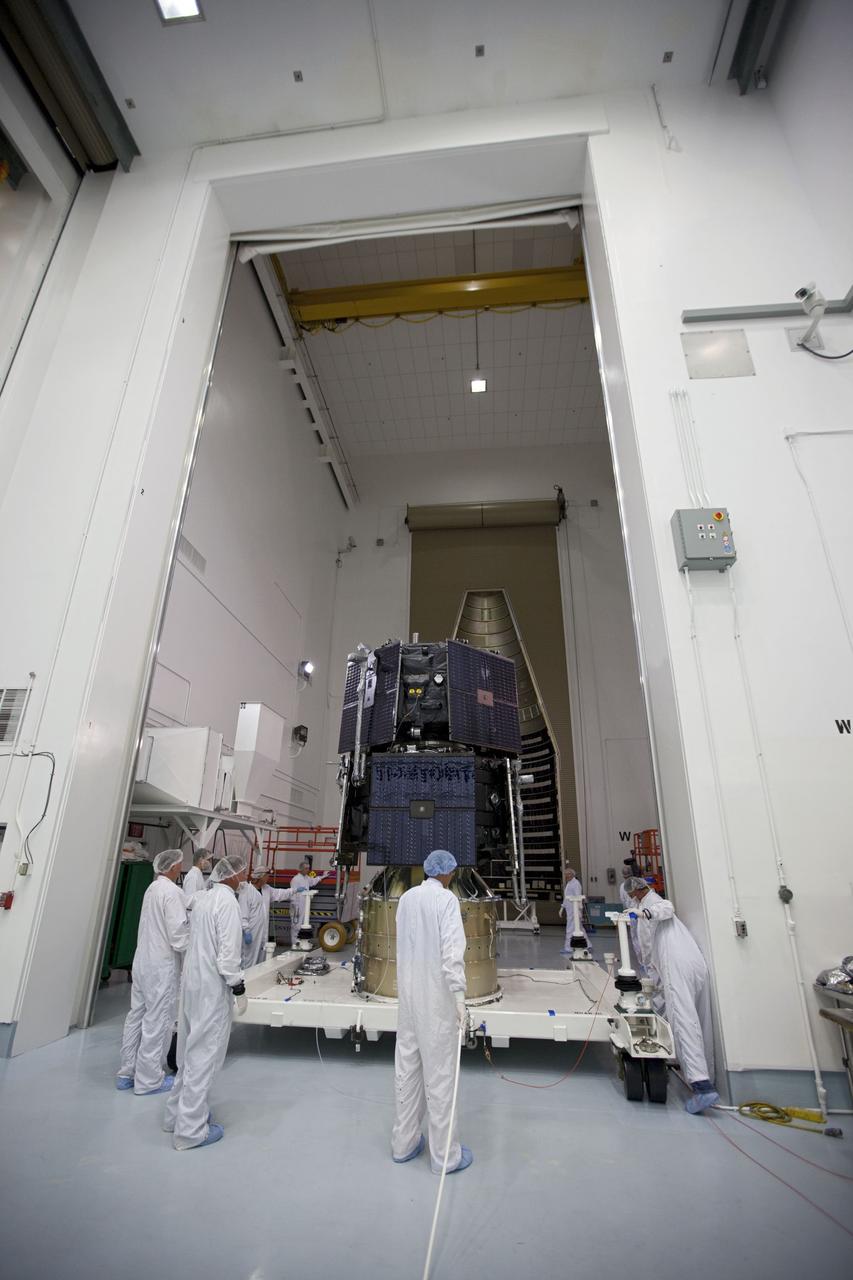
TITUSVILLE, Fla. - Inside the Astrotech payload processing facility in Titusville, Fla. near NASA’s Kennedy Space Center, technicians move the two Radiation Belt Storm Probes, or RBSP, spacecraft into position for encapsulation in the payload faring. The fairing will house and protect the RBSP during liftoff and flight through the atmosphere aboard an Atlas V rocket. NASA’s RBSP mission will help us understand the sun’s influence on Earth and near-Earth space by studying the Earth’s radiation belts on various scales of space and time. RBSP will begin its mission of exploration of Earth’s Van Allen radiation belts and the extremes of space weather after its liftoff aboard a United Launch Alliance Atlas V from Space Launch Complex 41 at Cape Canaveral Air Force Station, Fla. Liftoff is targeted for Aug. 23, 2012. For more information, visit http://www.nasa.gov/rbsp. Photo credit: NASA/ Kim Shiflett
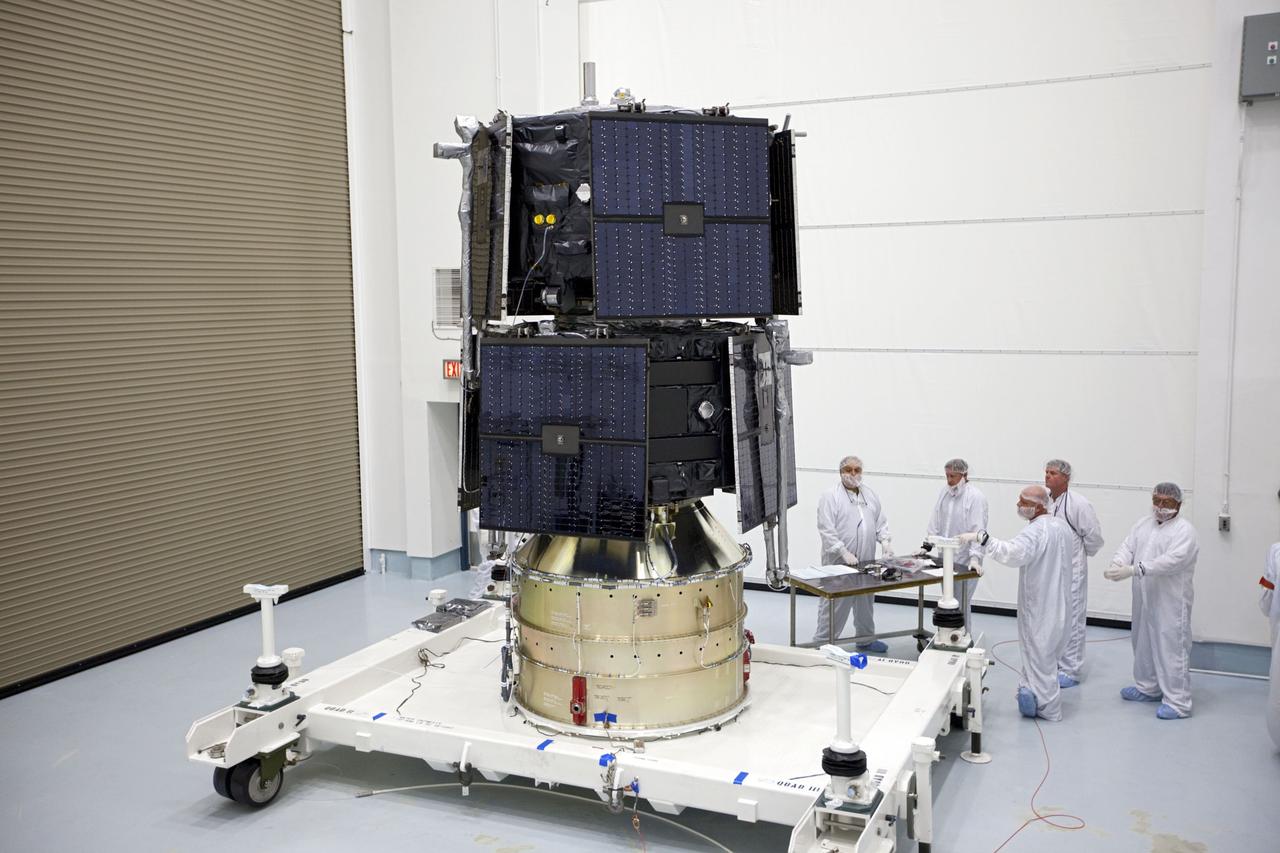
TITUSVILLE, Fla. - Inside the Astrotech payload processing facility in Titusville, Fla. near NASA’s Kennedy Space Center, technicians checkout the two Radiation Belt Storm Probes, or RBSP, spacecraft prior to vertical encapsulation in the payload faring. The fairing will house and protect the RBSP during liftoff and flight through the atmosphere aboard an Atlas V rocket. NASA’s RBSP mission will help us understand the sun’s influence on Earth and near-Earth space by studying the Earth’s radiation belts on various scales of space and time. RBSP will begin its mission of exploration of Earth’s Van Allen radiation belts and the extremes of space weather after its liftoff aboard a United Launch Alliance Atlas V from Space Launch Complex 41 at Cape Canaveral Air Force Station, Fla. Liftoff is targeted for Aug. 23, 2012. For more information, visit http://www.nasa.gov/rbsp. Photo credit: NASA/ Kim Shiflett
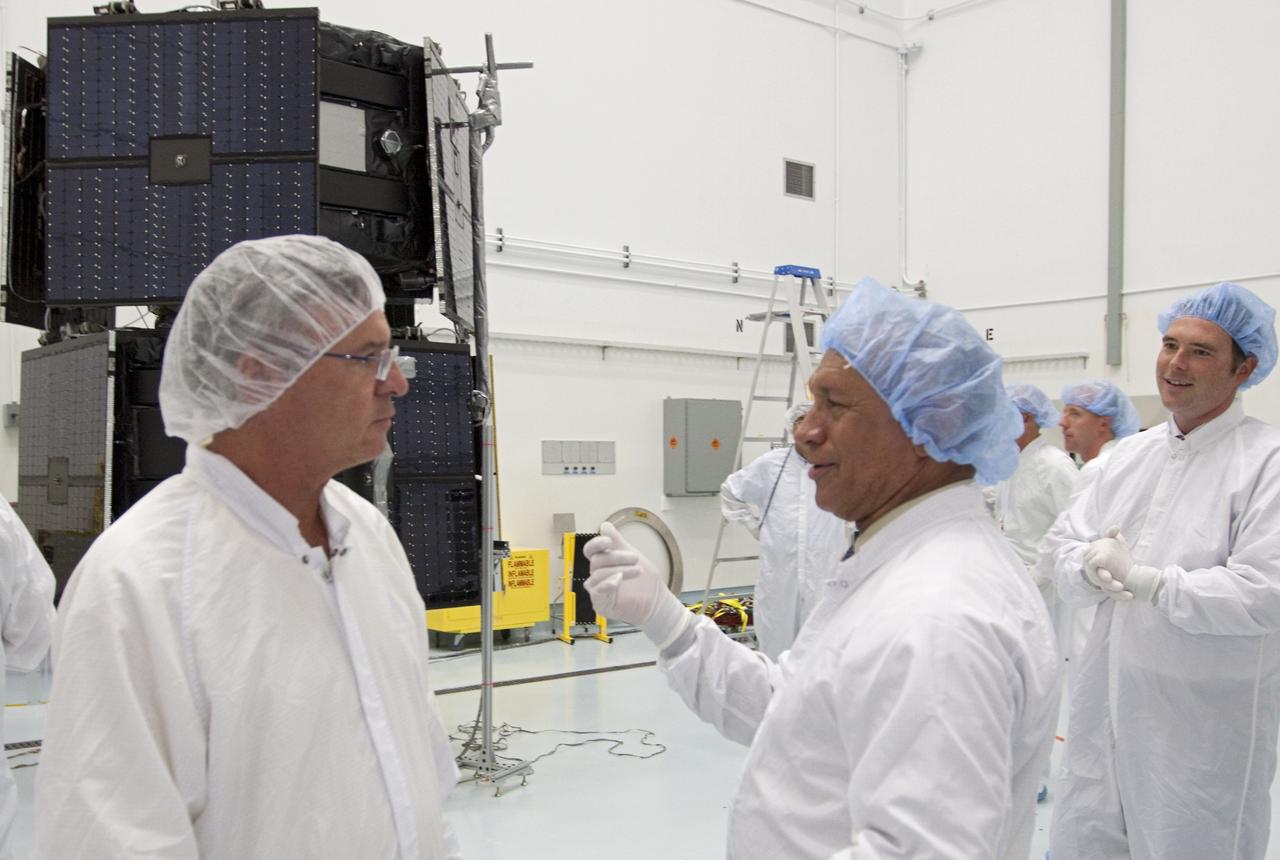
CAPE CANAVERAL, Fla. - Inside the Astrotech payload processing facility near NASA’s Kennedy Space Center in Florida, NASA Administrator Charlie Bolden, center, talks to technicians about the Radiation Belt Storm Probes, or RBSP, spacecraft. NASA’s RBSP mission will help us understand the sun’s influence on Earth and near-Earth space by studying the Earth’s radiation belts on various scales of space and time. As the spacecraft orbits Earth, the four solar panels will continuously face the sun to provide constant power to its instruments. The boom will provide data of the electric fields that energize radiation particles and modify the structure of the inner magnetosphere. RBSP will begin its mission of exploration of Earth’s Van Allen radiation belts and the extremes of space weather after its launch aboard a United Launch Alliance Atlas V rocket. Launch is targeted for Aug. 23. For more information, visit http://www.nasa.gov/rbsp. Photo credit: NASA/Kim Shiflett
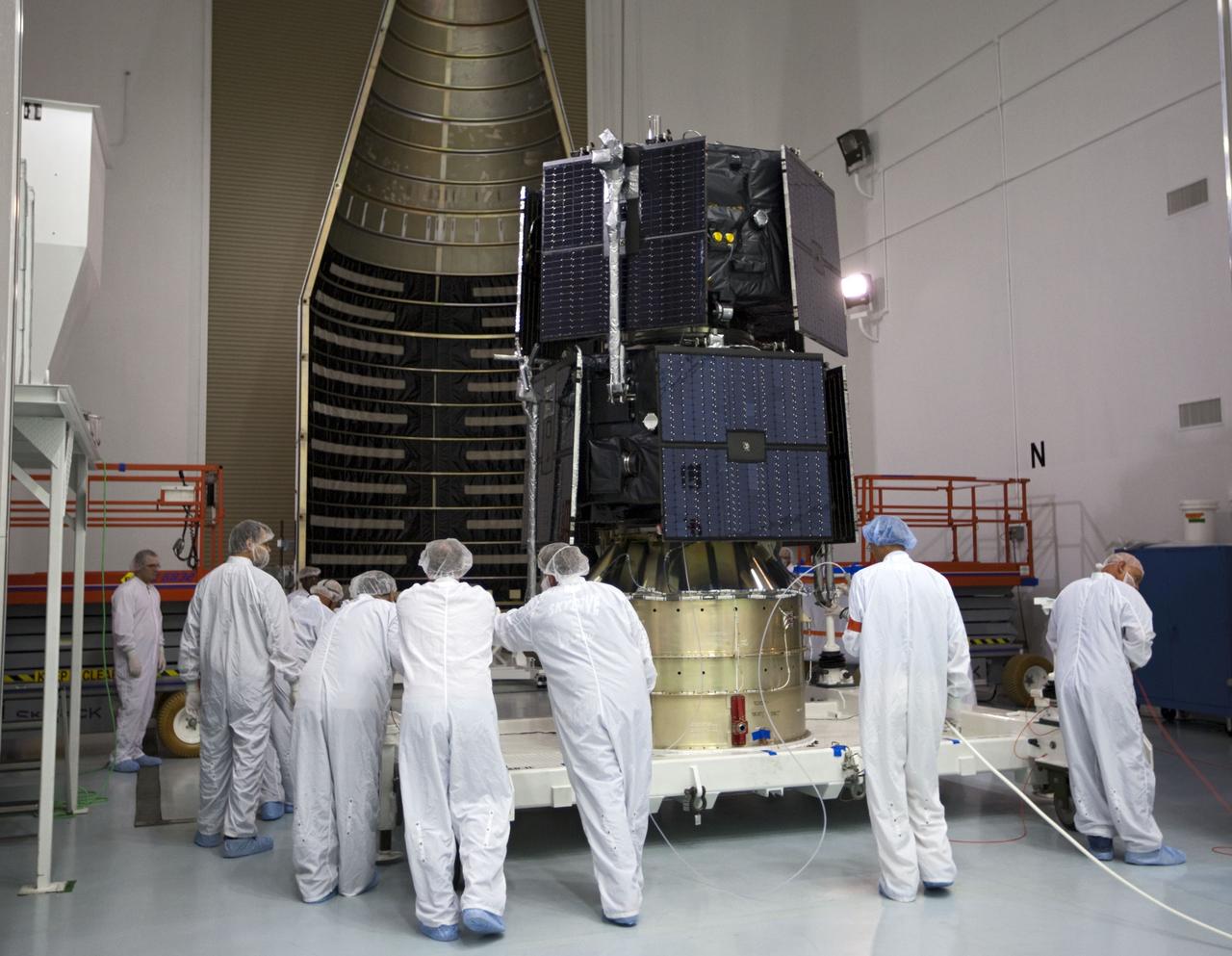
TITUSVILLE, Fla. - Inside the Astrotech payload processing facility in Titusville, Fla. near NASA’s Kennedy Space Center, technicians move the two Radiation Belt Storm Probes, or RBSP, spacecraft into position for encapsulation in the payload faring. The fairing will house and protect the RBSP during liftoff and flight through the atmosphere aboard an Atlas V rocket. NASA’s RBSP mission will help us understand the sun’s influence on Earth and near-Earth space by studying the Earth’s radiation belts on various scales of space and time. RBSP will begin its mission of exploration of Earth’s Van Allen radiation belts and the extremes of space weather after its liftoff aboard a United Launch Alliance Atlas V from Space Launch Complex 41 at Cape Canaveral Air Force Station, Fla. Liftoff is targeted for Aug. 23, 2012. For more information, visit http://www.nasa.gov/rbsp. Photo credit: NASA/ Kim Shiflett
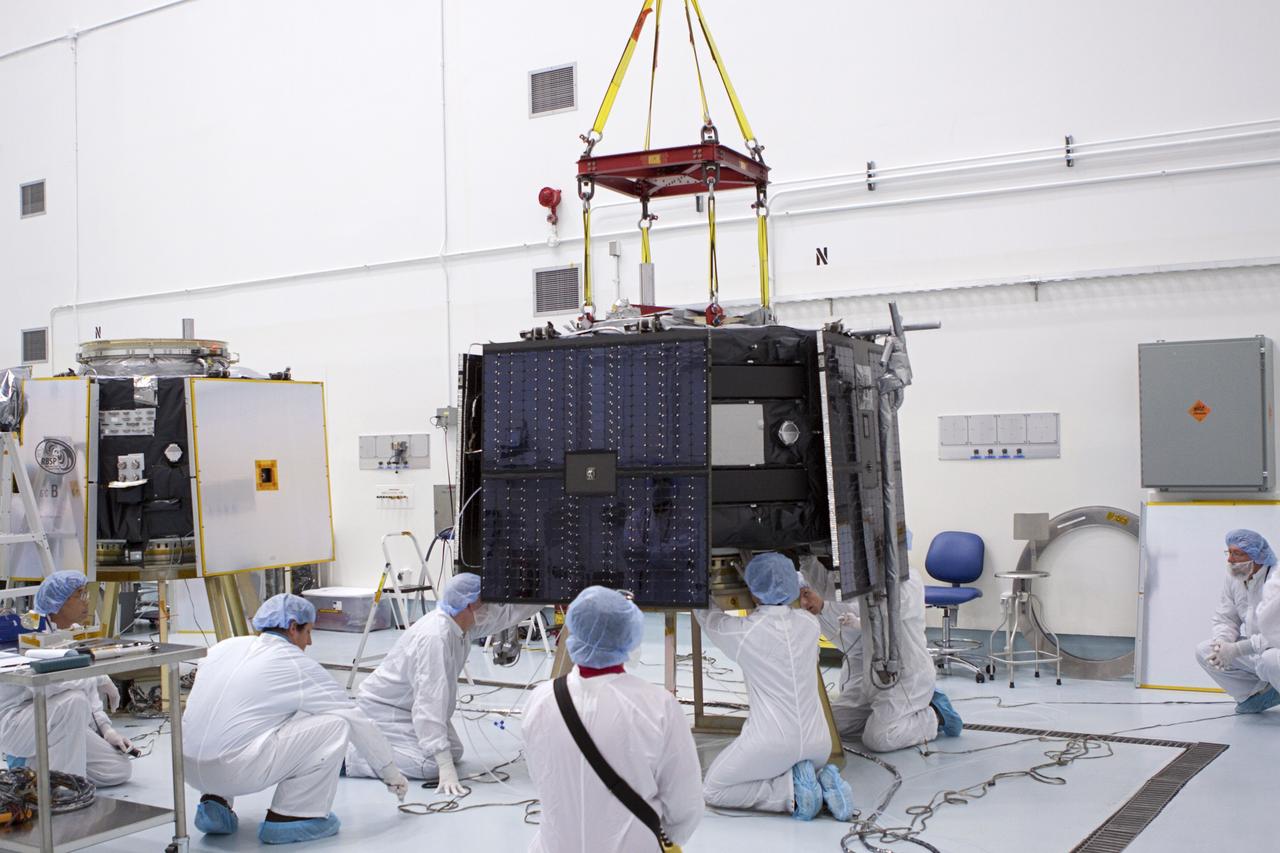
TITUSVILLE, Fla. - Inside the Astrotech payload processing facility in Titusville, Fla. near NASA’s Kennedy Space Center, technicians prepare the Radiation Belt Storm Probes, or RBSP, spacecraft A prior to vertical stacking atop RBSP B. NASA’s RBSP mission will help us understand the sun’s influence on Earth and near-Earth space by studying the Earth’s radiation belts on various scales of space and time. RBSP will begin its mission of exploration of Earth’s Van Allen radiation belts and the extremes of space weather after its liftoff aboard a United Launch Alliance Atlas V from Space Launch Complex 41 at Cape Canaveral Air Force Station, Fla. Liftoff is targeted for Aug. 23, 2012. For more information, visit http://www.nasa.gov/rbsp. Photo credit: NASA/Jim Grossmann
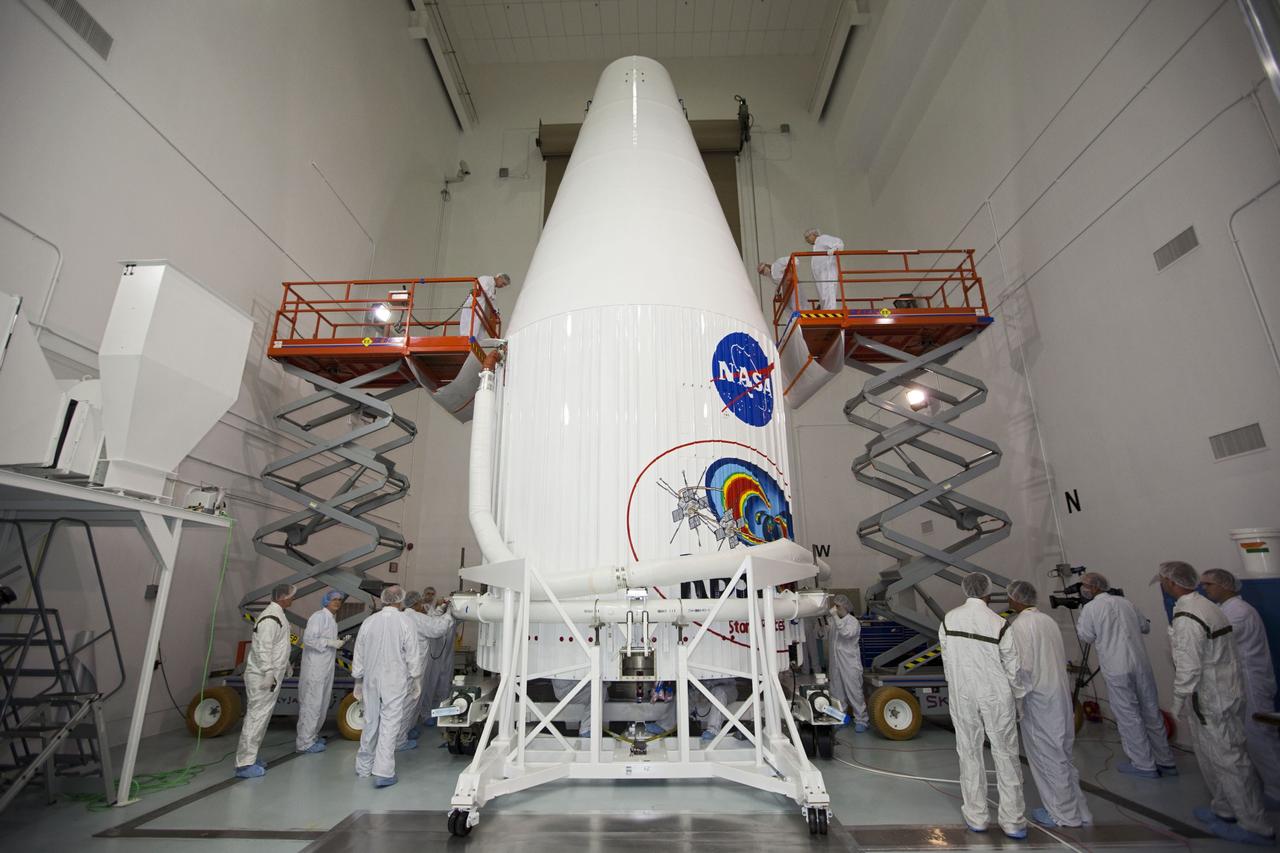
TITUSVILLE, Fla. - Inside the Astrotech payload processing facility in Titusville, Fla. near NASA’s Kennedy Space Center, technicians complete checkouts following encapsulation of the two Radiation Belt Storm Probes, or RBSP, spacecraft with its payload faring. The fairing will house and protect the RBSP during liftoff and flight through the atmosphere aboard an Atlas V rocket. NASA’s RBSP mission will help us understand the sun’s influence on Earth and near-Earth space by studying the Earth’s radiation belts on various scales of space and time. RBSP will begin its mission of exploration of Earth’s Van Allen radiation belts and the extremes of space weather after its liftoff aboard a United Launch Alliance Atlas V from Space Launch Complex 41 at Cape Canaveral Air Force Station, Fla. Liftoff is targeted for Aug. 23, 2012. For more information, visit http://www.nasa.gov/rbsp. Photo credit: NASA/ Kim Shiflett
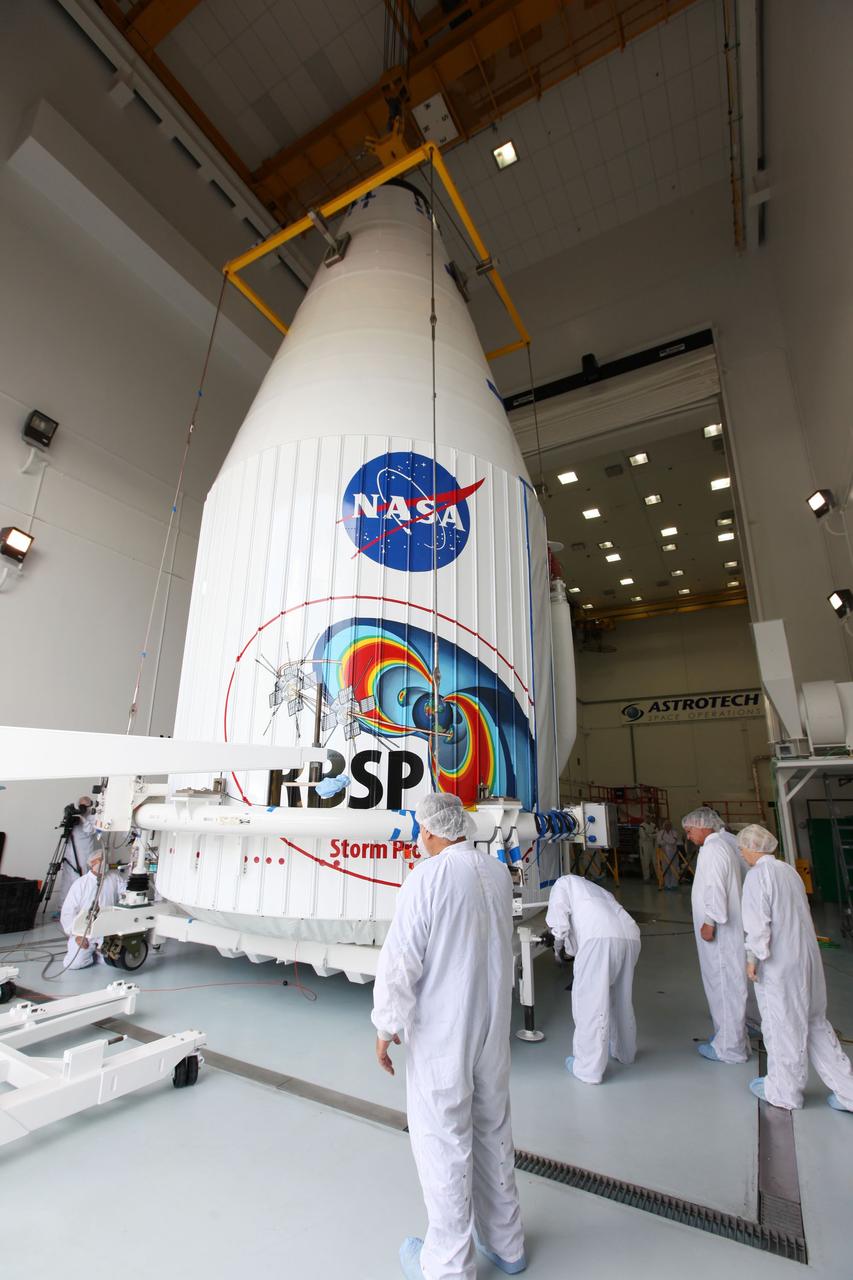
TITUSVILLE, Fla. - Inside the Astrotech payload processing facility in Titusville, Fla. near NASA’s Kennedy Space Center, technicians attach a crane to lift the payload faring containing the two Radiation Belt Storm Probes, or RBSP, spacecraft on to a transporter to be moved to the launch complex. NASA’s RBSP mission will help us understand the sun’s influence on Earth and near-Earth space by studying the Earth’s radiation belts on various scales of space and time. RBSP will begin its mission of exploration of Earth’s Van Allen radiation belts and the extremes of space weather after its liftoff aboard a United Launch Alliance Atlas V rocket from Space Launch Complex 41 at Cape Canaveral Air Force Station, Fla. Liftoff is targeted for Aug. 23, 2012. For more information, visit http://www.nasa.gov/rbsp Photo credit: NASA/ Kim Shiflett

TITUSVILLE, Fla. - Inside the Astrotech payload processing facility in Titusville, Fla. near NASA’s Kennedy Space Center, technicians attach a crane to lift the payload faring containing the two Radiation Belt Storm Probes, or RBSP, spacecraft on to a transporter to be moved to the launch complex. NASA’s RBSP mission will help us understand the sun’s influence on Earth and near-Earth space by studying the Earth’s radiation belts on various scales of space and time. RBSP will begin its mission of exploration of Earth’s Van Allen radiation belts and the extremes of space weather after its liftoff aboard a United Launch Alliance Atlas V rocket from Space Launch Complex 41 at Cape Canaveral Air Force Station, Fla. Liftoff is targeted for Aug. 23, 2012. For more information, visit http://www.nasa.gov/rbsp Photo credit: NASA/ Kim Shiflett
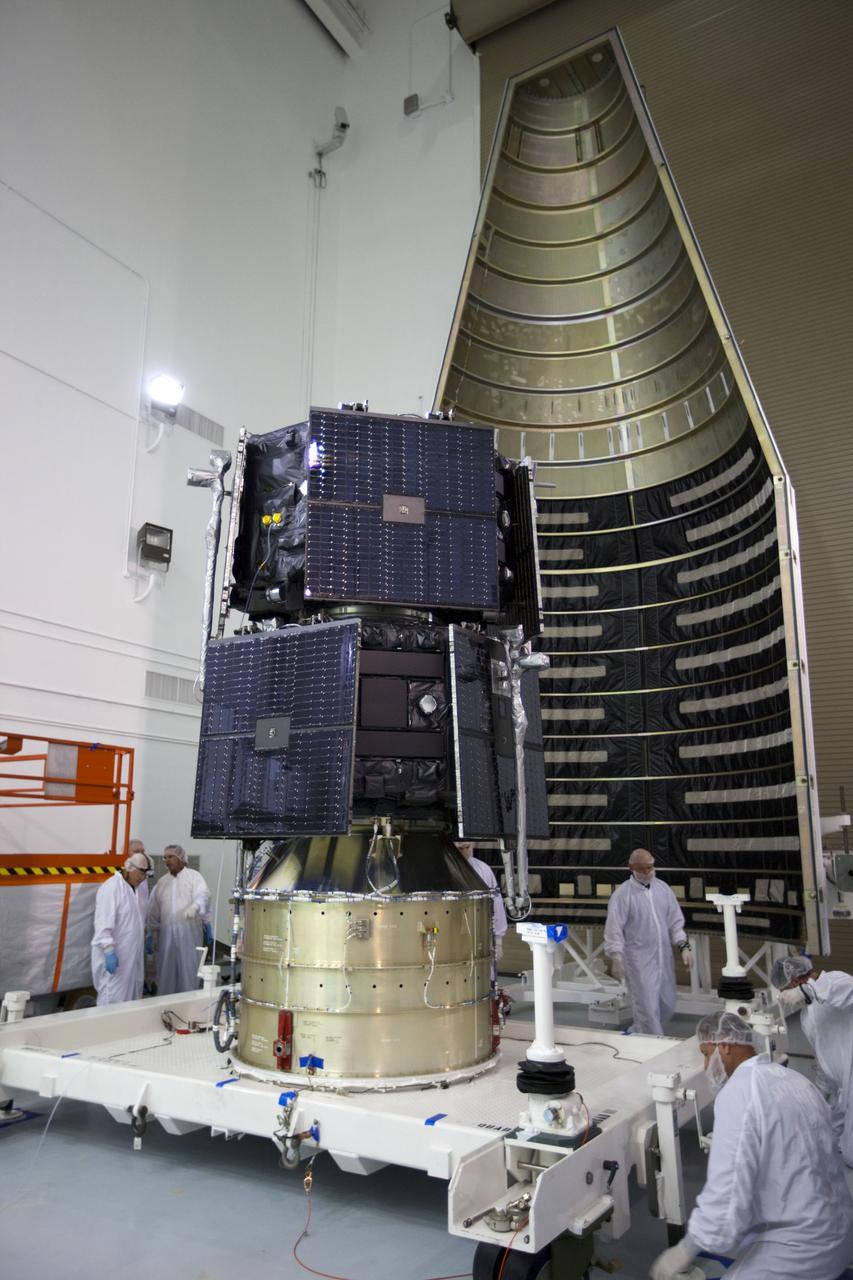
TITUSVILLE, Fla. - Inside the Astrotech payload processing facility in Titusville, Fla. near NASA’s Kennedy Space Center, technicians move the two Radiation Belt Storm Probes, or RBSP, spacecraft into position for encapsulation in the payload faring. The fairing will house and protect the RBSP during liftoff and flight through the atmosphere aboard an Atlas V rocket. NASA’s RBSP mission will help us understand the sun’s influence on Earth and near-Earth space by studying the Earth’s radiation belts on various scales of space and time. RBSP will begin its mission of exploration of Earth’s Van Allen radiation belts and the extremes of space weather after its liftoff aboard a United Launch Alliance Atlas V from Space Launch Complex 41 at Cape Canaveral Air Force Station, Fla. Liftoff is targeted for Aug. 23, 2012. For more information, visit http://www.nasa.gov/rbsp. Photo credit: NASA/ Kim Shiflett
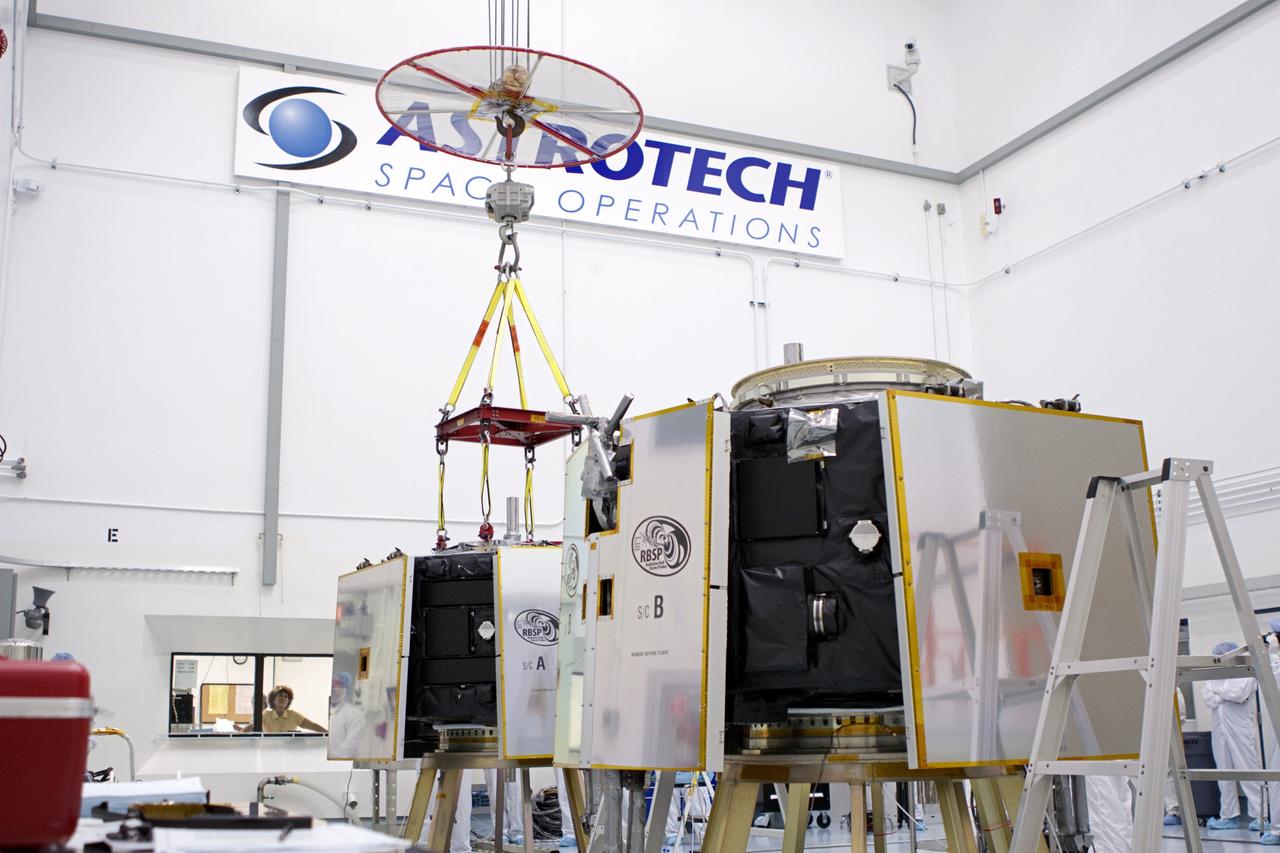
TITUSVILLE, Fla. - Inside the Astrotech payload processing facility in Titusville, Fla. near NASA’s Kennedy Space Center, a crane has been attached to the Radiation Belt Storm Probes, or RBSP, spacecraft A prior to vertical stacking atop RBSP B. NASA’s RBSP mission will help us understand the sun’s influence on Earth and near-Earth space by studying the Earth’s radiation belts on various scales of space and time. RBSP will begin its mission of exploration of Earth’s Van Allen radiation belts and the extremes of space weather after its liftoff aboard a United Launch Alliance Atlas V from Space Launch Complex 41 at Cape Canaveral Air Force Station, Fla. Liftoff is targeted for Aug. 23, 2012. For more information, visit http://www.nasa.gov/rbsp. Photo credit: NASA/Jim Grossmann
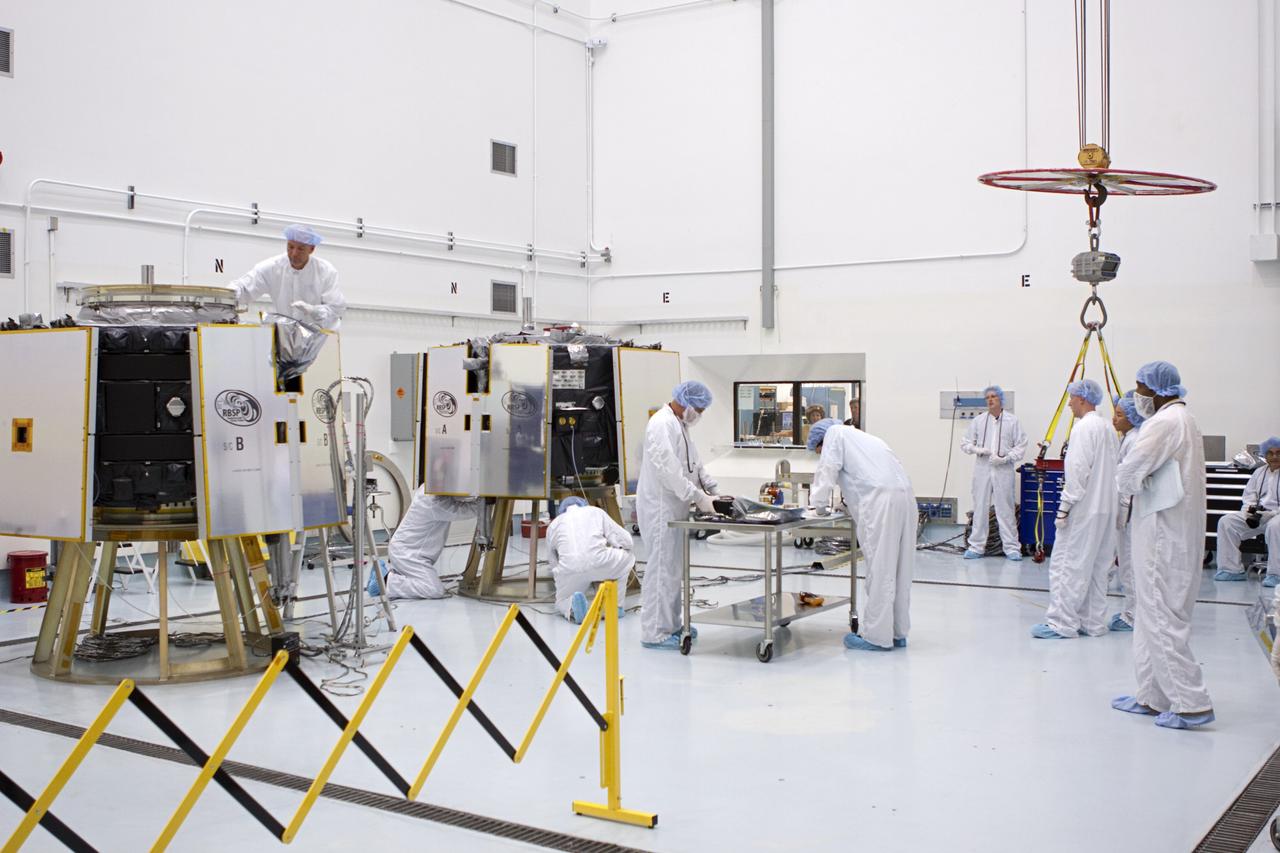
TITUSVILLE, Fla. - Inside the Astrotech payload processing facility in Titusville, Fla. near NASA’s Kennedy Space Center, technicians checkout the two Radiation Belt Storm Probes, or RBSP, spacecraft prior to vertical stacking. NASA’s RBSP mission will help us understand the sun’s influence on Earth and near-Earth space by studying the Earth’s radiation belts on various scales of space and time. RBSP will begin its mission of exploration of Earth’s Van Allen radiation belts and the extremes of space weather after its liftoff aboard a United Launch Alliance Atlas V from Space Launch Complex 41 at Cape Canaveral Air Force Station, Fla. Liftoff is targeted for Aug. 23, 2012. For more information, visit http://www.nasa.gov/rbsp. Photo credit: NASA/Jim Grossmann
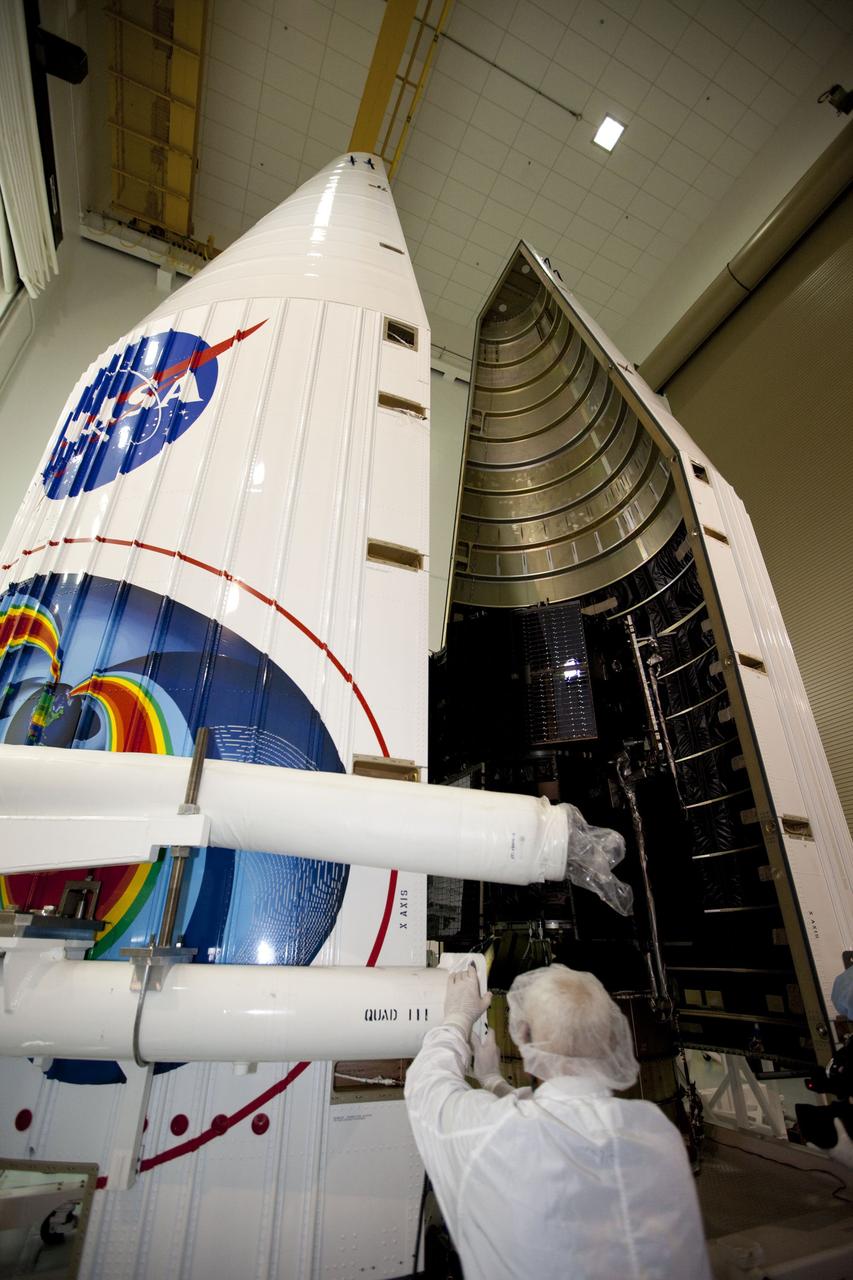
TITUSVILLE, Fla. - Inside the Astrotech payload processing facility in Titusville, Fla. near NASA’s Kennedy Space Center, technicians move the two halves if the payload faring into position for encapsulation with the two Radiation Belt Storm Probes, or RBSP, spacecraft. The fairing will house and protect the RBSP during liftoff and flight through the atmosphere aboard an Atlas V rocket. NASA’s RBSP mission will help us understand the sun’s influence on Earth and near-Earth space by studying the Earth’s radiation belts on various scales of space and time. RBSP will begin its mission of exploration of Earth’s Van Allen radiation belts and the extremes of space weather after its liftoff aboard a United Launch Alliance Atlas V from Space Launch Complex 41 at Cape Canaveral Air Force Station, Fla. Liftoff is targeted for Aug. 23, 2012. For more information, visit http://www.nasa.gov/rbsp. Photo credit: NASA/ Kim Shiflett
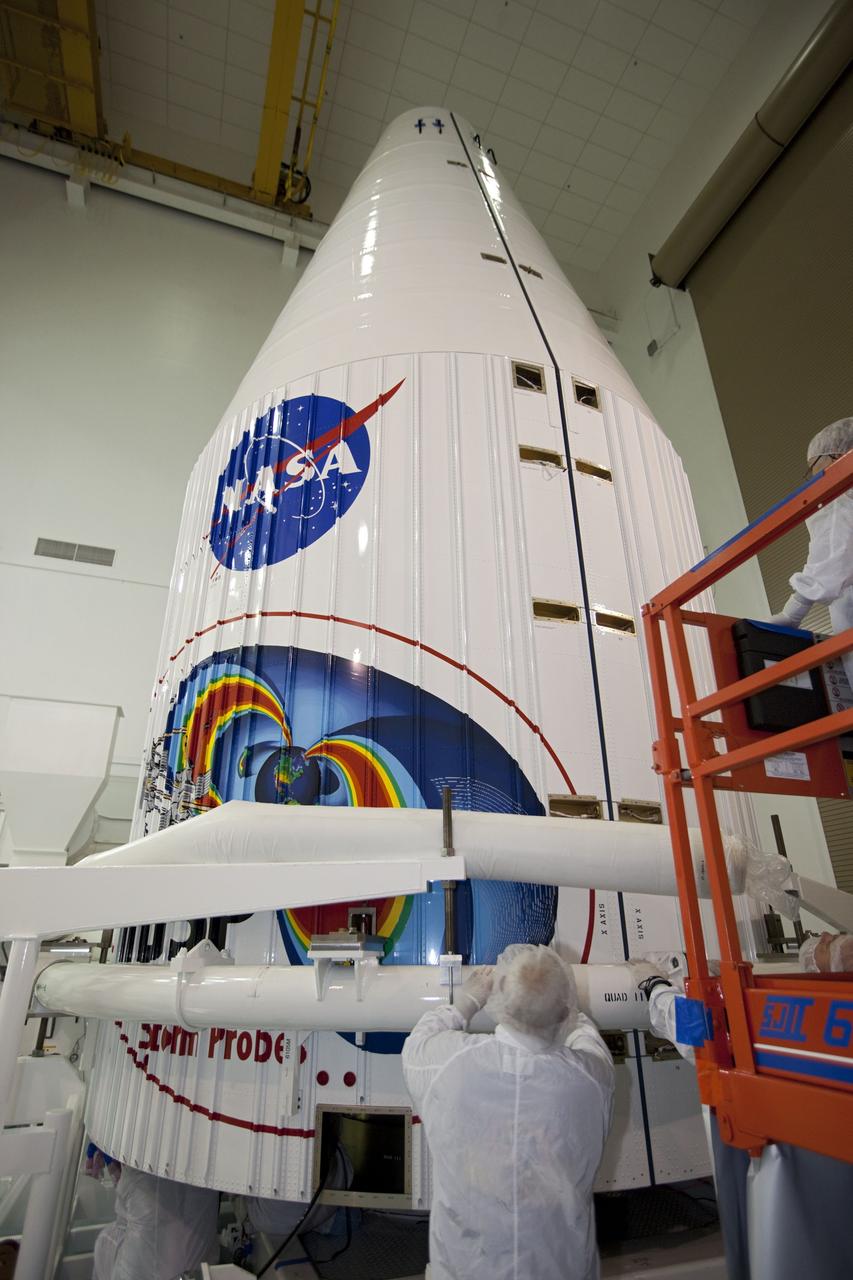
TITUSVILLE, Fla. - Inside the Astrotech payload processing facility in Titusville, Fla. near NASA’s Kennedy Space Center, technicians move the payload faring into position for encapsulation with the two Radiation Belt Storm Probes, or RBSP, spacecraft. The fairing will house and protect the RBSP during liftoff and flight through the atmosphere aboard an Atlas V rocket. NASA’s RBSP mission will help us understand the sun’s influence on Earth and near-Earth space by studying the Earth’s radiation belts on various scales of space and time. RBSP will begin its mission of exploration of Earth’s Van Allen radiation belts and the extremes of space weather after its liftoff aboard a United Launch Alliance Atlas V from Space Launch Complex 41 at Cape Canaveral Air Force Station, Fla. Liftoff is targeted for Aug. 23, 2012. For more information, visit http://www.nasa.gov/rbsp. Photo credit: NASA/ Kim Shiflett
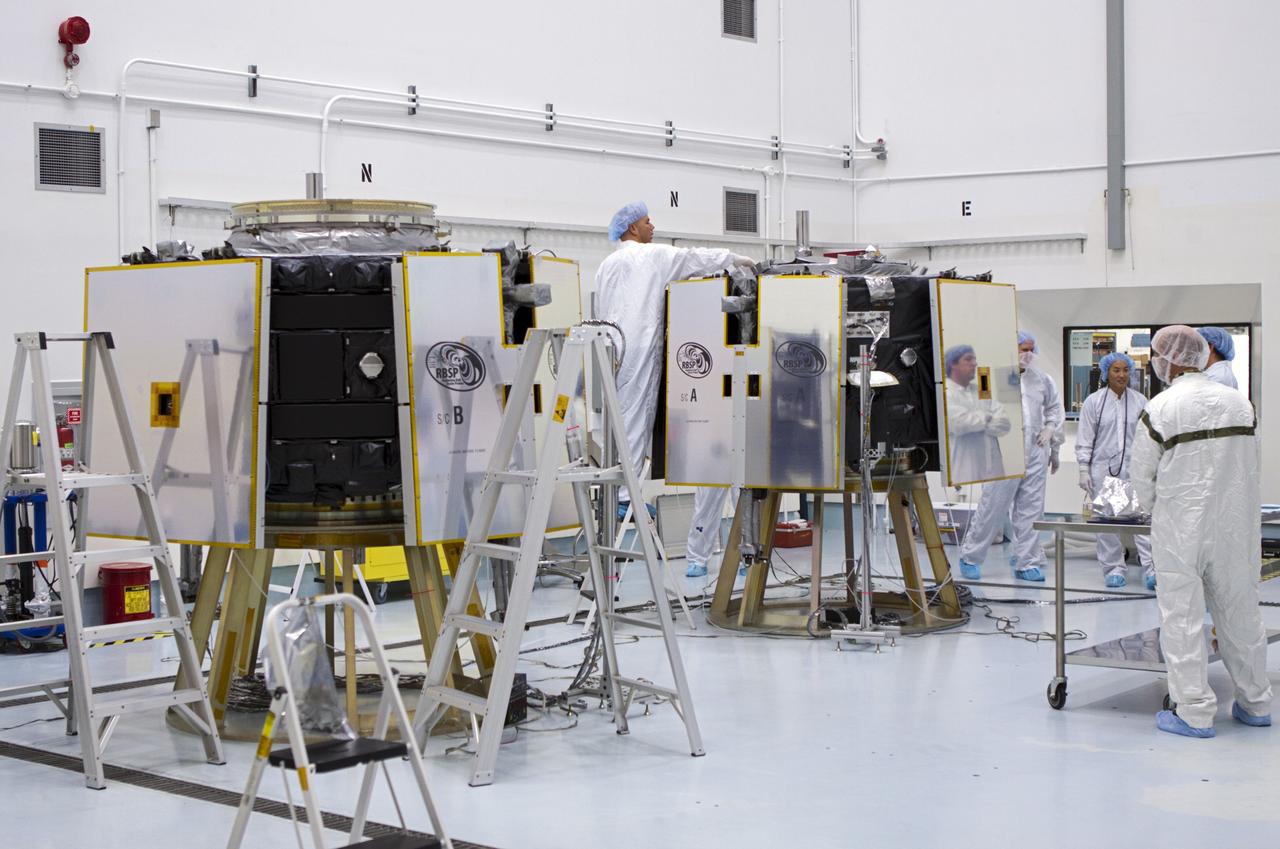
TITUSVILLE, Fla. - Inside the Astrotech payload processing facility in Titusville, Fla. near NASA’s Kennedy Space Center, technicians checkout the two Radiation Belt Storm Probes, or RBSP, spacecraft prior to vertical stacking. NASA’s RBSP mission will help us understand the sun’s influence on Earth and near-Earth space by studying the Earth’s radiation belts on various scales of space and time. RBSP will begin its mission of exploration of Earth’s Van Allen radiation belts and the extremes of space weather after its liftoff aboard a United Launch Alliance Atlas V from Space Launch Complex 41 at Cape Canaveral Air Force Station, Fla. Liftoff is targeted for Aug. 23, 2012. For more information, visit http://www.nasa.gov/rbsp. Photo credit: NASA/Jim Grossmann
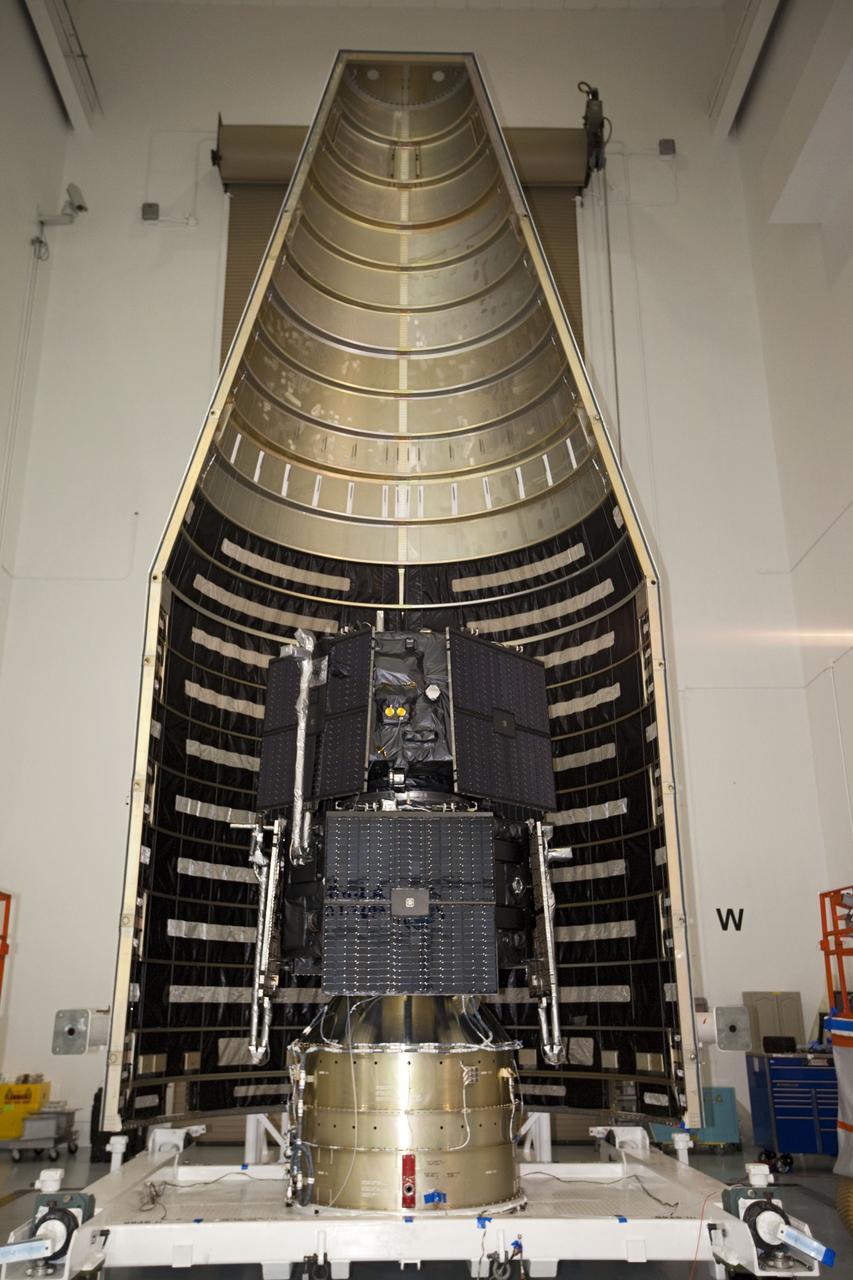
TITUSVILLE, Fla. - Inside the Astrotech payload processing facility in Titusville, Fla. near NASA’s Kennedy Space Center, the two Radiation Belt Storm Probes, or RBSP, spacecraft are being encapsulated in the payload faring. The fairing will house and protect the RBSP during liftoff and flight through the atmosphere aboard an Atlas V rocket. NASA’s RBSP mission will help us understand the sun’s influence on Earth and near-Earth space by studying the Earth’s radiation belts on various scales of space and time. RBSP will begin its mission of exploration of Earth’s Van Allen radiation belts and the extremes of space weather after its liftoff aboard a United Launch Alliance Atlas V from Space Launch Complex 41 at Cape Canaveral Air Force Station, Fla. Liftoff is targeted for Aug. 23, 2012. For more information, visit http://www.nasa.gov/rbsp. Photo credit: NASA/ Kim Shiflett
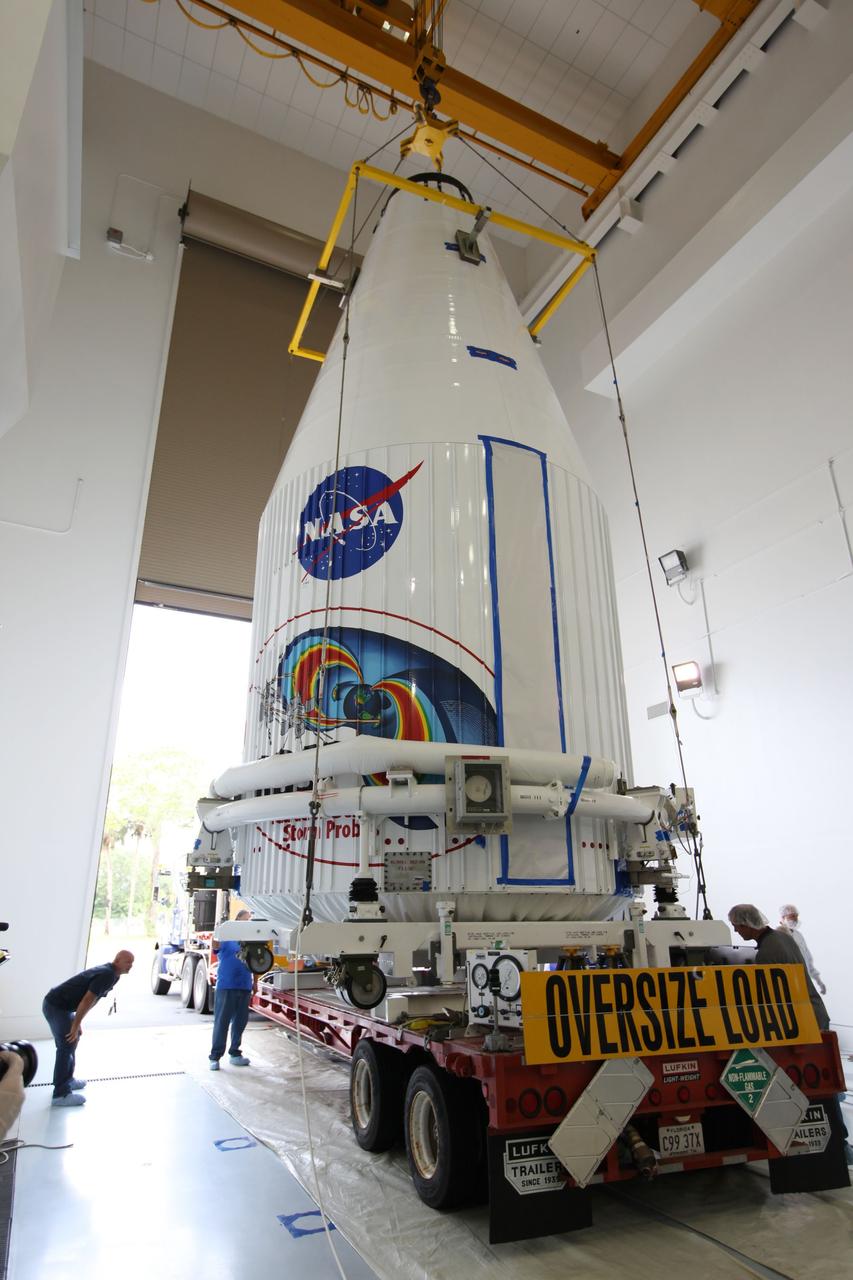
TITUSVILLE, Fla. - Inside the Astrotech payload processing facility in Titusville, Fla. near NASA’s Kennedy Space Center, technicians use a crane to lower the payload faring containing the two Radiation Belt Storm Probes, or RBSP, spacecraft on to a transporter to be moved to the launch complex. NASA’s RBSP mission will help us understand the sun’s influence on Earth and near-Earth space by studying the Earth’s radiation belts on various scales of space and time. RBSP will begin its mission of exploration of Earth’s Van Allen radiation belts and the extremes of space weather after its liftoff aboard a United Launch Alliance Atlas V rocket from Space Launch Complex 41 at Cape Canaveral Air Force Station, Fla. Liftoff is targeted for Aug. 23, 2012. For more information, visit http://www.nasa.gov/rbsp Photo credit: NASA/ Kim Shiflett
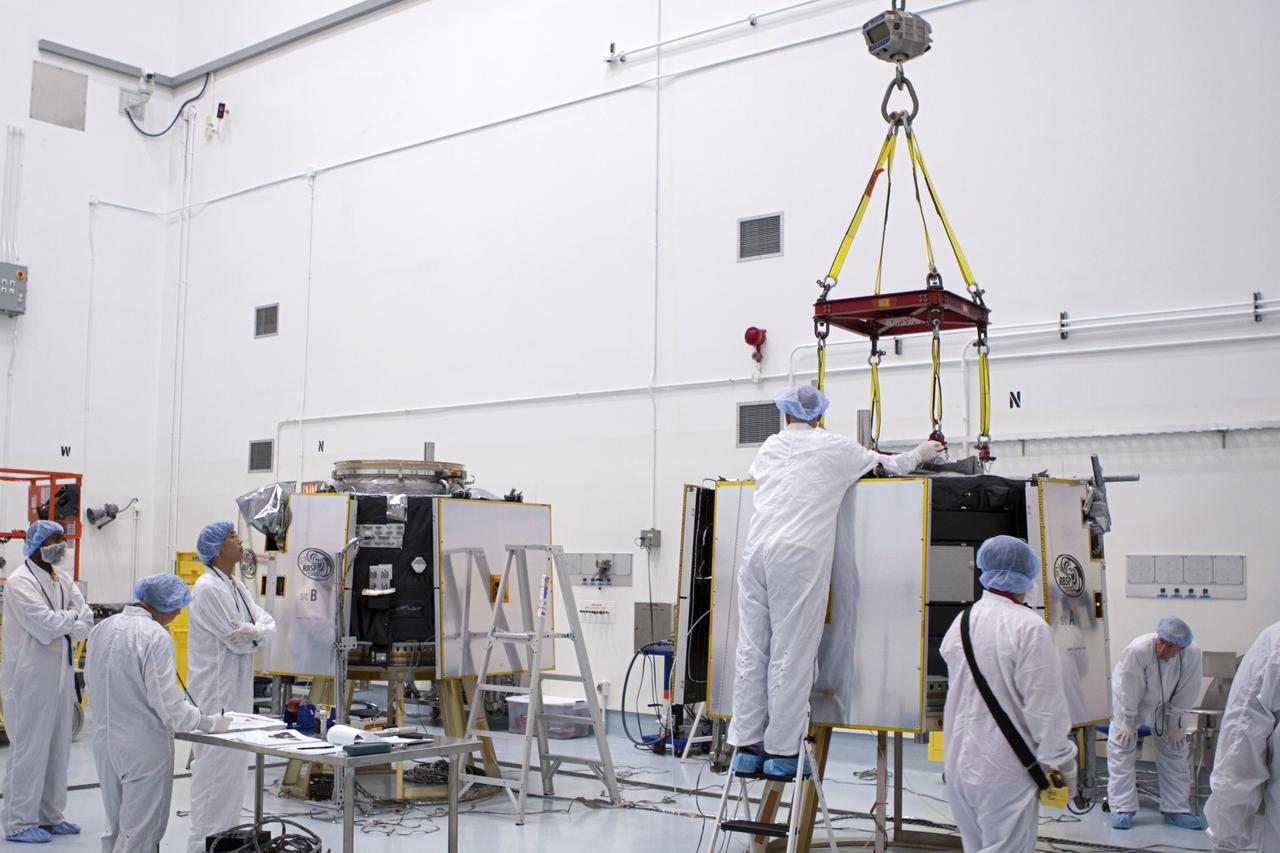
TITUSVILLE, Fla. - Inside the Astrotech payload processing facility in Titusville, Fla. near NASA’s Kennedy Space Center, technicians attach a crane to the Radiation Belt Storm Probes, or RBSP, spacecraft A prior to vertical stacking atop RBSP B. NASA’s RBSP mission will help us understand the sun’s influence on Earth and near-Earth space by studying the Earth’s radiation belts on various scales of space and time. RBSP will begin its mission of exploration of Earth’s Van Allen radiation belts and the extremes of space weather after its liftoff aboard a United Launch Alliance Atlas V from Space Launch Complex 41 at Cape Canaveral Air Force Station, Fla. Liftoff is targeted for Aug. 23, 2012. For more information, visit http://www.nasa.gov/rbsp. Photo credit: NASA/Jim Grossmann
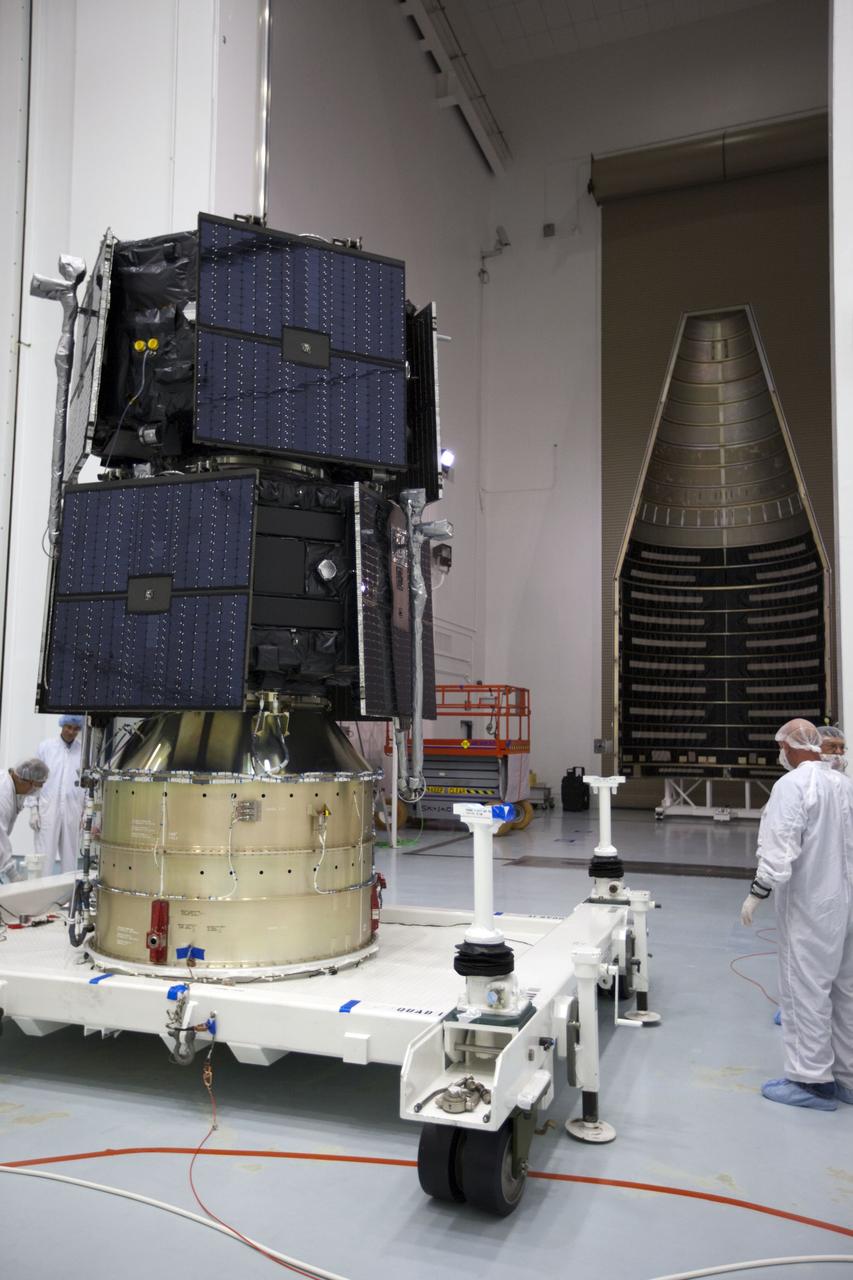
TITUSVILLE, Fla. - Inside the Astrotech payload processing facility in Titusville, Fla. near NASA’s Kennedy Space Center, technicians prepare the two Radiation Belt Storm Probes, or RBSP, spacecraft prior for encapsulation in the payload faring. The fairing will house and protect the RBSP during liftoff and flight through the atmosphere aboard an Atlas V rocket. NASA’s RBSP mission will help us understand the sun’s influence on Earth and near-Earth space by studying the Earth’s radiation belts on various scales of space and time. RBSP will begin its mission of exploration of Earth’s Van Allen radiation belts and the extremes of space weather after its liftoff aboard a United Launch Alliance Atlas V from Space Launch Complex 41 at Cape Canaveral Air Force Station, Fla. Liftoff is targeted for Aug. 23, 2012. For more information, visit http://www.nasa.gov/rbsp. Photo credit: NASA/ Kim Shiflett
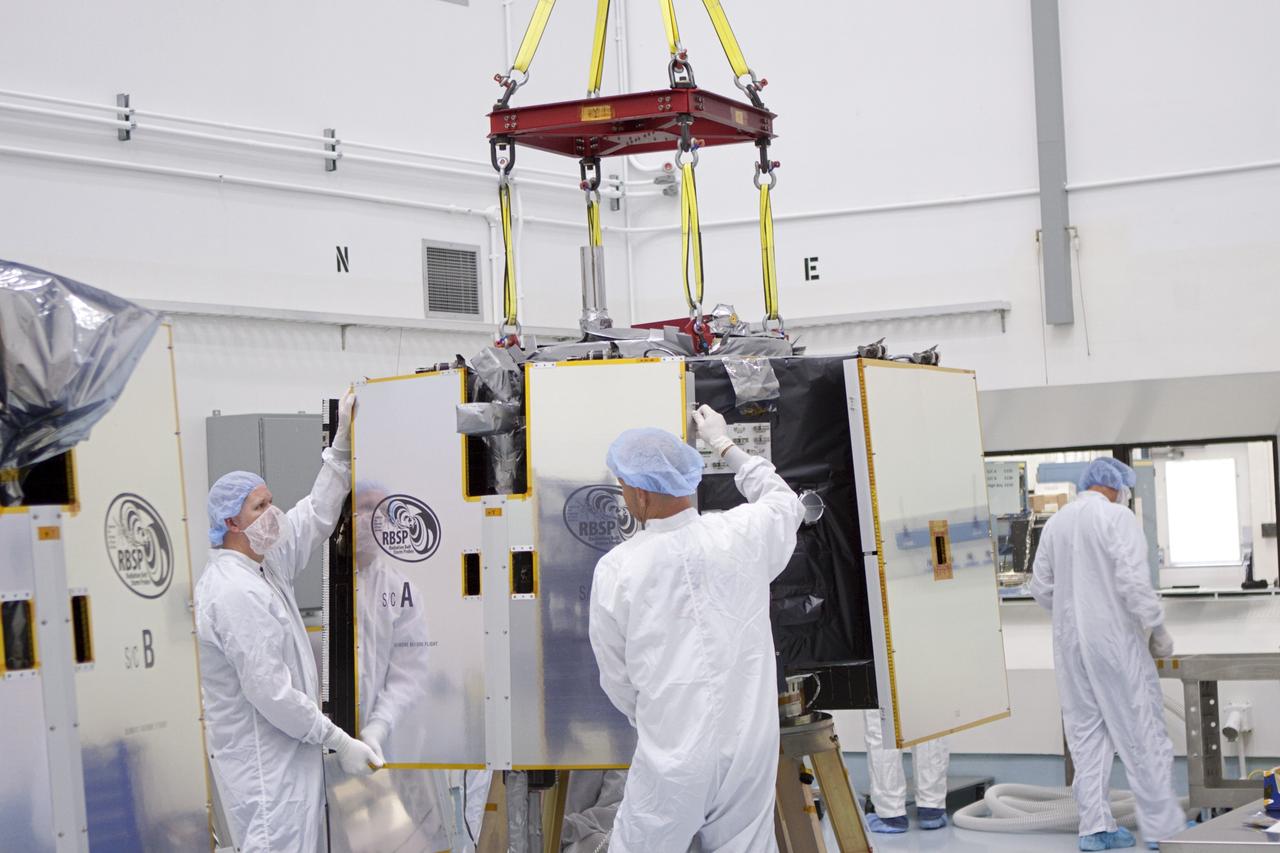
TITUSVILLE, Fla. - Inside the Astrotech payload processing facility in Titusville, Fla. near NASA’s Kennedy Space Center, technicians remove covers after a crane was attached to the Radiation Belt Storm Probes, or RBSP, spacecraft A prior to vertical stacking atop RBSP B. NASA’s RBSP mission will help us understand the sun’s influence on Earth and near-Earth space by studying the Earth’s radiation belts on various scales of space and time. RBSP will begin its mission of exploration of Earth’s Van Allen radiation belts and the extremes of space weather after its liftoff aboard a United Launch Alliance Atlas V from Space Launch Complex 41 at Cape Canaveral Air Force Station, Fla. Liftoff is targeted for Aug. 23, 2012. For more information, visit http://www.nasa.gov/rbsp. Photo credit: NASA/Jim Grossmann
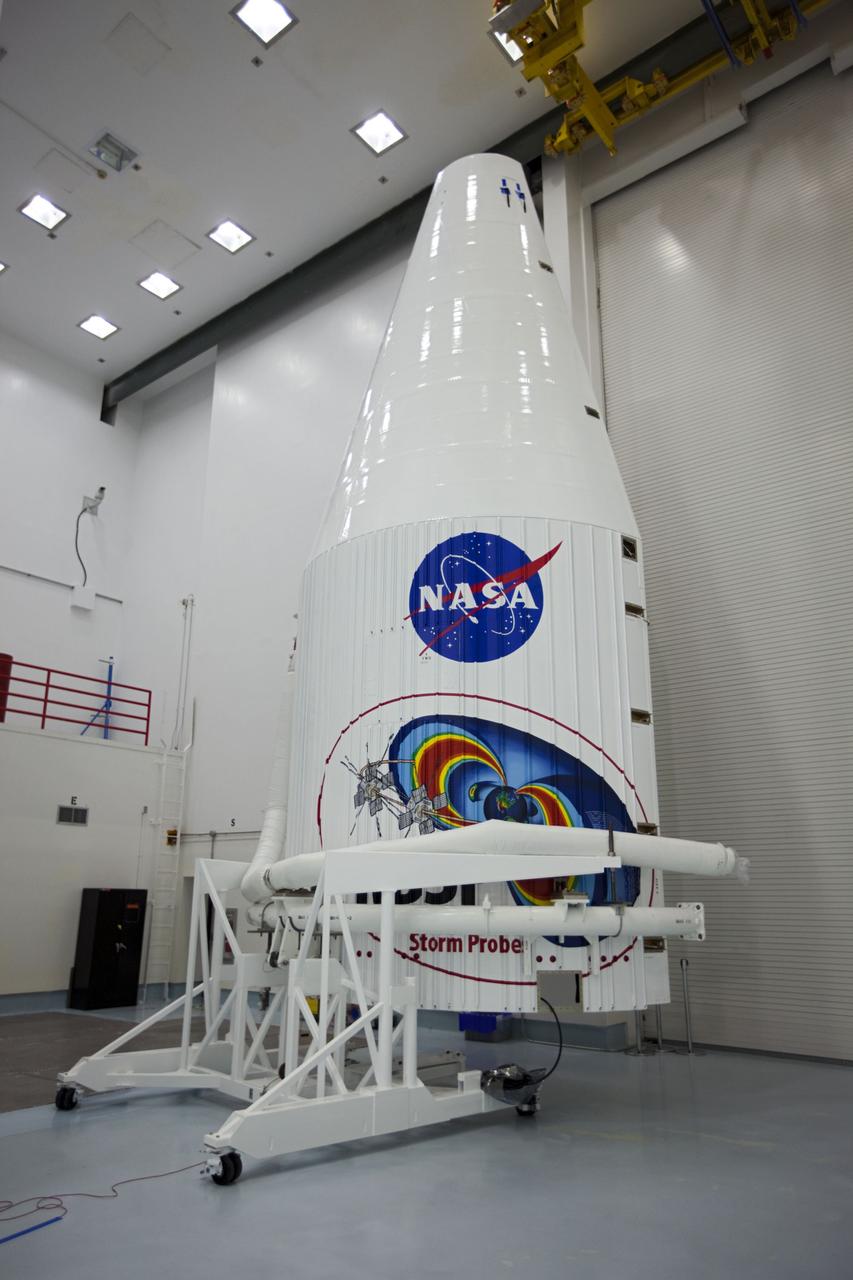
TITUSVILLE, Fla. - Inside the Astrotech payload processing facility near NASA’s Kennedy Space Center in Florida, the nose faring is being prepared for encapsulation with the Radiation Belt Storm Probes, or RBSP, spacecraft. The payload faring. The fairing will house and protect the RBSP during liftoff and flight through the atmosphere aboard an Atlas V rocket. NASA’s RBSP mission will help us understand the sun’s influence on Earth and near-Earth space by studying the Earth’s radiation belts on various scales of space and time. RBSP will begin its mission of exploration of Earth’s Van Allen radiation belts and the extremes of space weather after its liftoff aboard a United Launch Alliance Atlas V from Space Launch Complex 41 at Cape Canaveral Air Force Station, Fla. Liftoff is targeted for Aug. 23, 2012. For more information, visit http://www.nasa.gov/rbsp. Photo credit: NASA/ Kim Shiflett

TITUSVILLE, Fla. - Inside the Astrotech payload processing facility in Titusville, Fla. near NASA’s Kennedy Space Center, technicians complete encapsulation of the two Radiation Belt Storm Probes, or RBSP, spacecraft with its payload faring. The fairing will house and protect the RBSP during liftoff and flight through the atmosphere aboard an Atlas V rocket. NASA’s RBSP mission will help us understand the sun’s influence on Earth and near-Earth space by studying the Earth’s radiation belts on various scales of space and time. RBSP will begin its mission of exploration of Earth’s Van Allen radiation belts and the extremes of space weather after its liftoff aboard a United Launch Alliance Atlas V from Space Launch Complex 41 at Cape Canaveral Air Force Station, Fla. Liftoff is targeted for Aug. 23, 2012. For more information, visit http://www.nasa.gov/rbsp. Photo credit: NASA/ Kim Shiflett
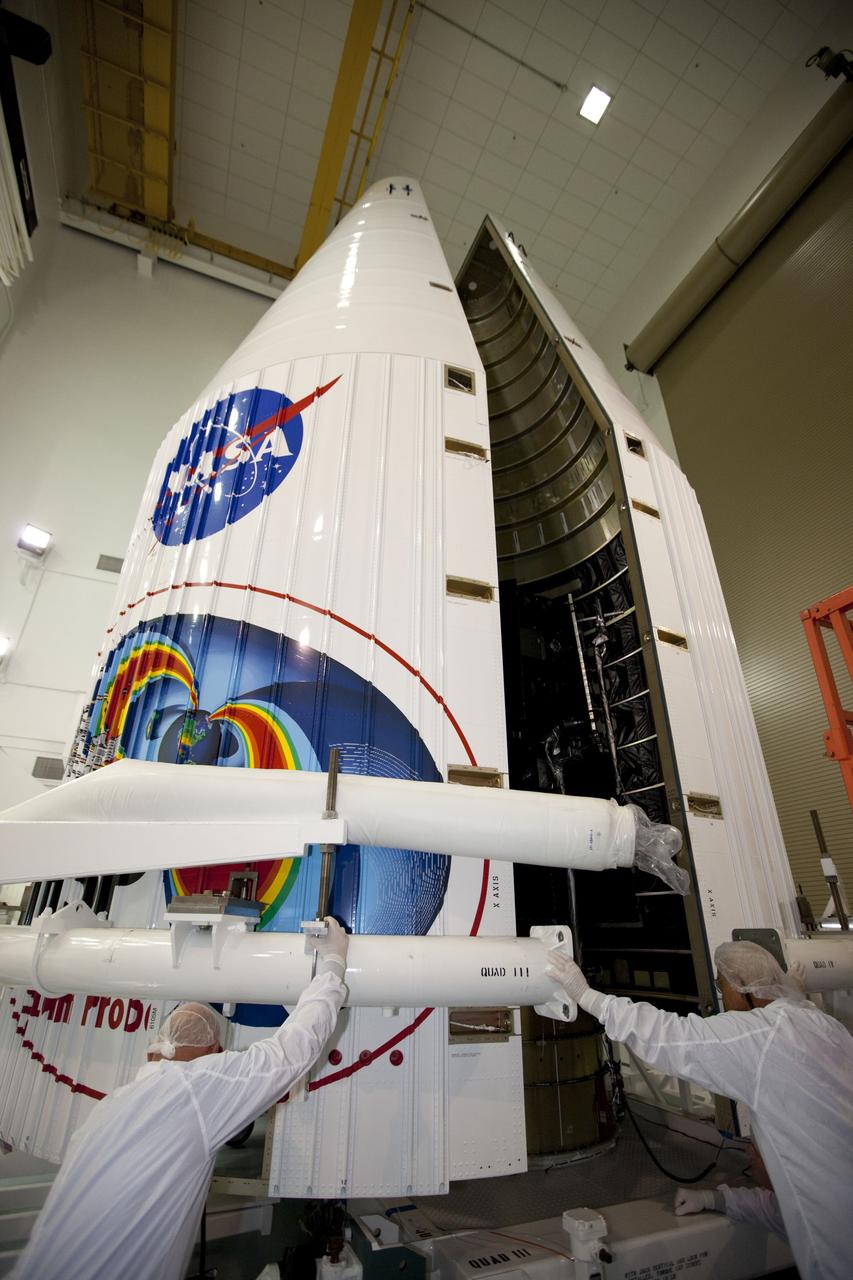
TITUSVILLE, Fla. - Inside the Astrotech payload processing facility in Titusville, Fla. near NASA’s Kennedy Space Center, technicians move the payload faring into position for encapsulation with the two Radiation Belt Storm Probes, or RBSP, spacecraft. The fairing will house and protect the RBSP during liftoff and flight through the atmosphere aboard an Atlas V rocket. NASA’s RBSP mission will help us understand the sun’s influence on Earth and near-Earth space by studying the Earth’s radiation belts on various scales of space and time. RBSP will begin its mission of exploration of Earth’s Van Allen radiation belts and the extremes of space weather after its liftoff aboard a United Launch Alliance Atlas V from Space Launch Complex 41 at Cape Canaveral Air Force Station, Fla. Liftoff is targeted for Aug. 23, 2012. For more information, visit http://www.nasa.gov/rbsp. Photo credit: NASA/ Kim Shiflett