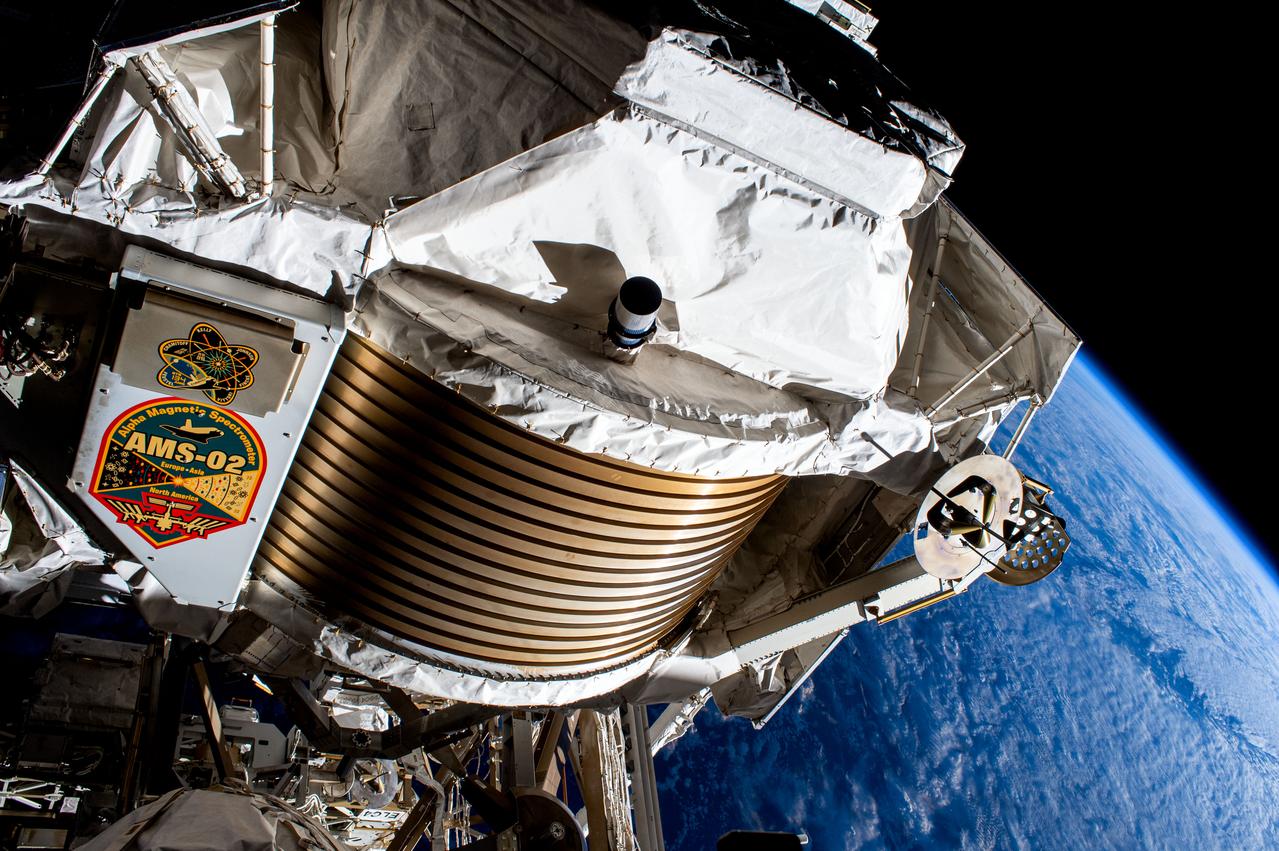
The Alpha Magnetic Spectrometer was photographed during a spacewalk in January 2017. NASA astronauts Shane Kimbrough and Peggy Whitson successfully installed three new adapter plates and hooked up electrical connections for three of the six new lithium-ion batteries on the International Space Station. They also accomplished several get-ahead tasks, including a photo survey of the Alpha Magnetic Spectrometer.
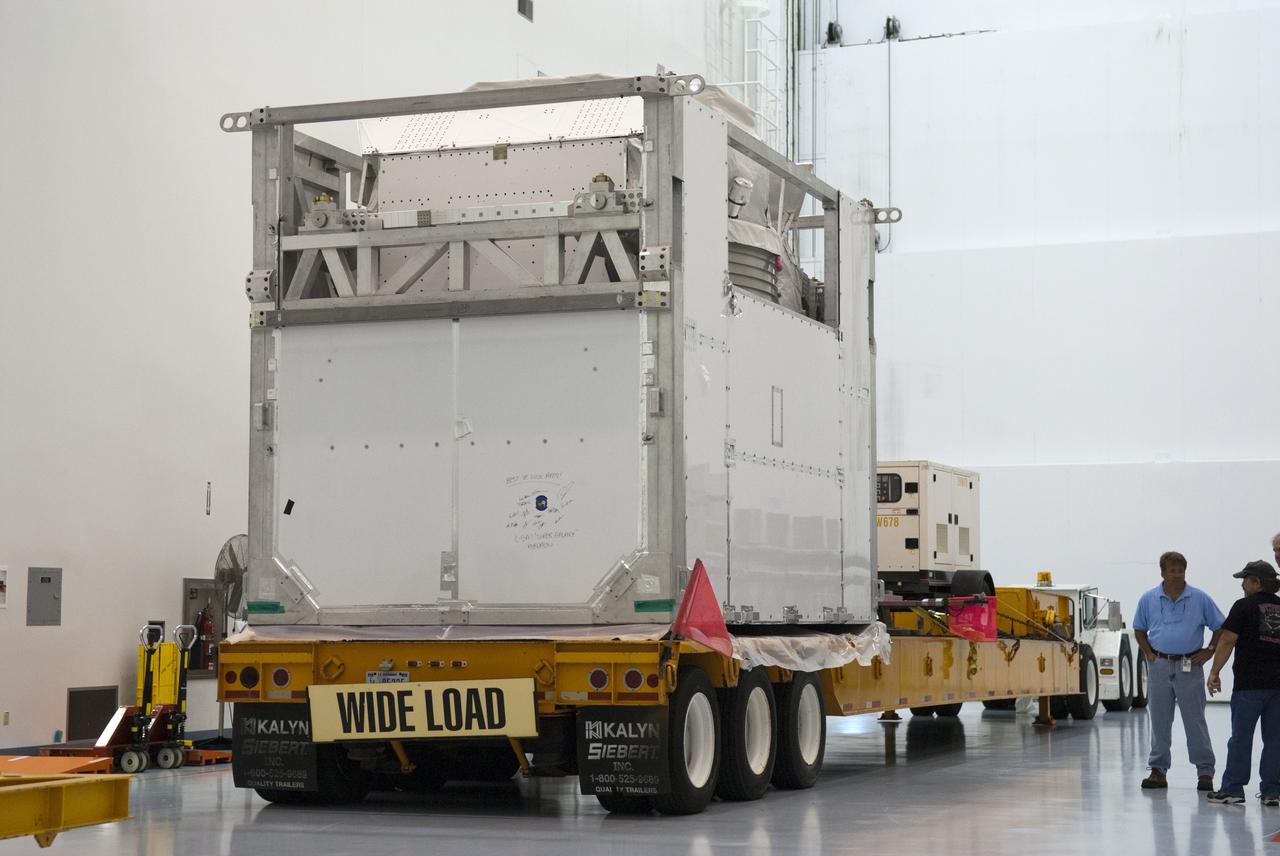
CAPE CANAVERAL, Fla. -- At NASA's Kennedy Space Center in Florida, a tractor-trailer carrying the Alpha Magnetic Spectrometer, or AMS, arrives at the Space Station Processing Facility, where it will be prepared for launch. AMS, a state-of-the-art particle physics detector, is designed to operate as an external module on the International Space Station. It will use the unique environment of space to study the universe and its origin by searching for dark matter. The STS-134 crew will fly AMS to the International Space Station aboard space shuttle Endeavour, targeted to launch Feb. 26, 2011. Photo credit: NASA/Frankie Martin
CAPE CANAVERAL, Fla. -- In the Space Station Processing Facility at NASA's Kennedy Space Center in Florida an overhead crane lowers the Alpha Magnetic Spectrometer, or AMS, onto to floor for technicians to prepare it for launch. AMS, a state-of-the-art particle physics detector, is designed to operate as an external module on the International Space Station. It will use the unique environment of space to study the universe and its origin by searching for dark matter. The STS-134 crew will fly AMS to the International Space Station aboard space shuttle Endeavour, targeted to launch Feb. 26, 2011. Photo credit: NASA/Frankie Martin
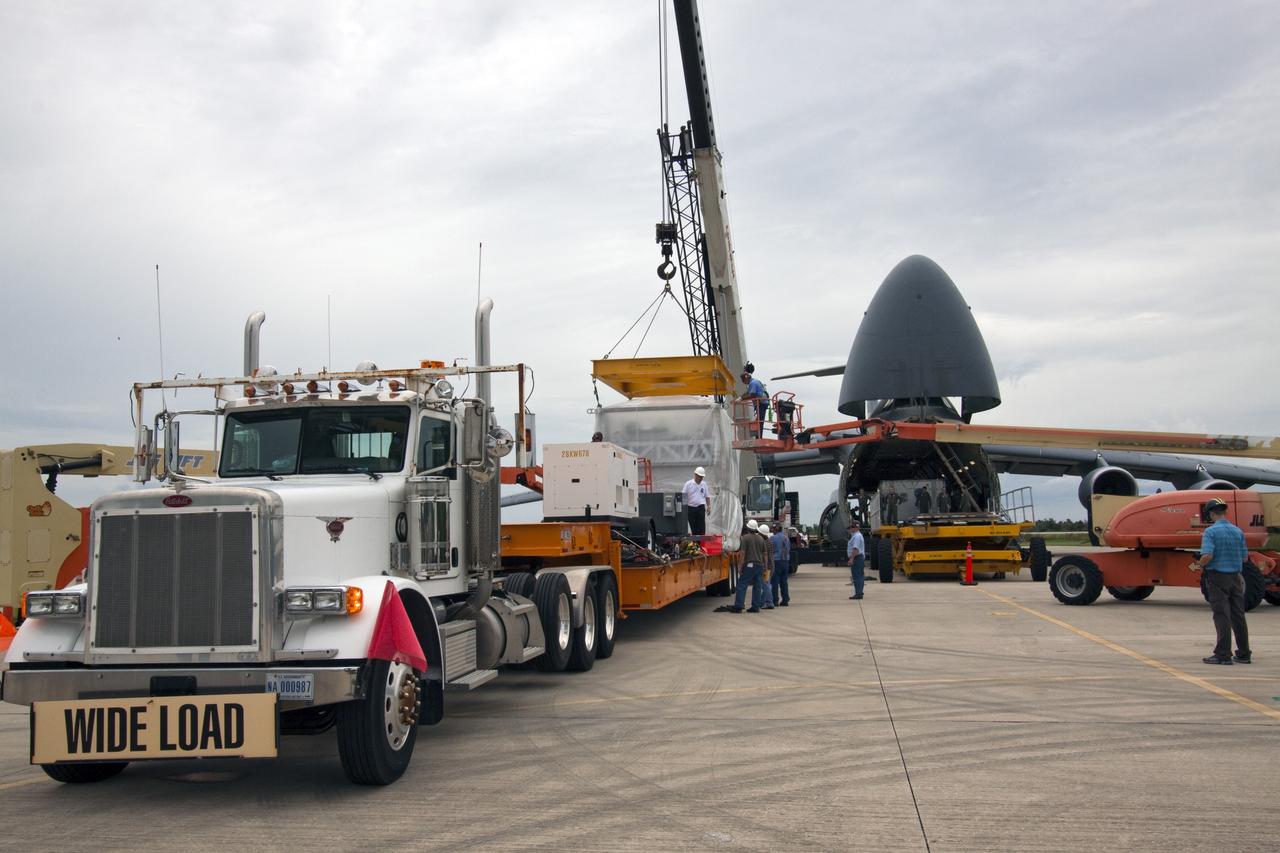
CAPE CANAVERAL, Fla. -- At NASA's Kennedy Space Center in Florida, a crane lowers the next section of the Alpha Magnetic Spectrometer, or AMS, onto a tractor-trailer which will transport the AMS from the Shuttle Landing Facility runway to the Space Station Processing Facility, where it will be processed for launch. AMS, a state-of-the-art particle physics detector, is designed to operate as an external module on the International Space Station. It will use the unique environment of space to study the universe and its origin by searching for dark matter. AMS will fly to the International Space Station aboard space shuttle Endeavour's STS-134 mission, targeted to launch Feb. 26, 2011. Photo credit: NASA/Jack Pfaller
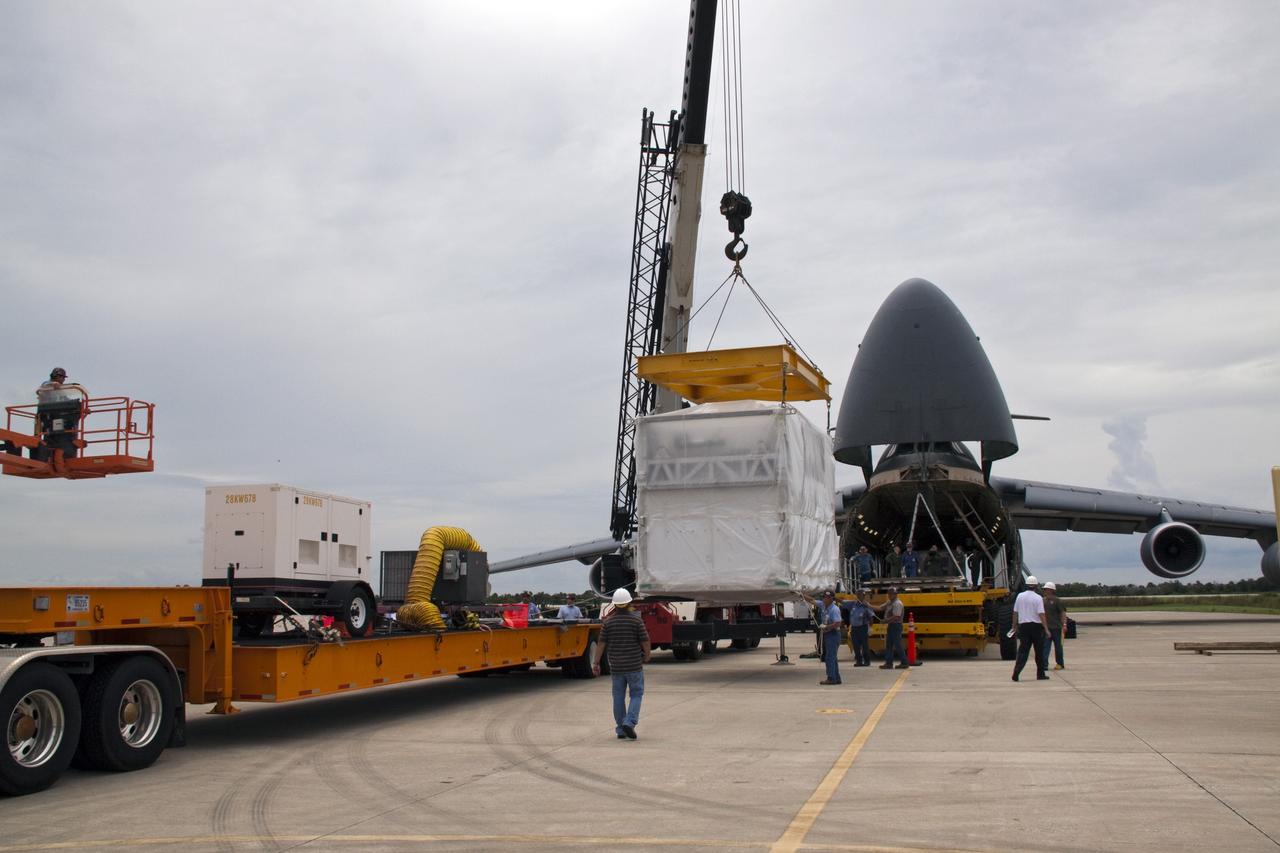
CAPE CANAVERAL, Fla. -- At NASA's Kennedy Space Center in Florida, a crane moves the next section of the Alpha Magnetic Spectrometer, or AMS, toward a tractor-trailer which will transport the AMS from the Shuttle Landing Facility runway to the Space Station Processing Facility, where it will be processed for launch. AMS, a state-of-the-art particle physics detector, is designed to operate as an external module on the International Space Station. It will use the unique environment of space to study the universe and its origin by searching for dark matter. AMS will fly to the International Space Station aboard space shuttle Endeavour's STS-134 mission, targeted to launch Feb. 26, 2011. Photo credit: NASA/Jack Pfaller
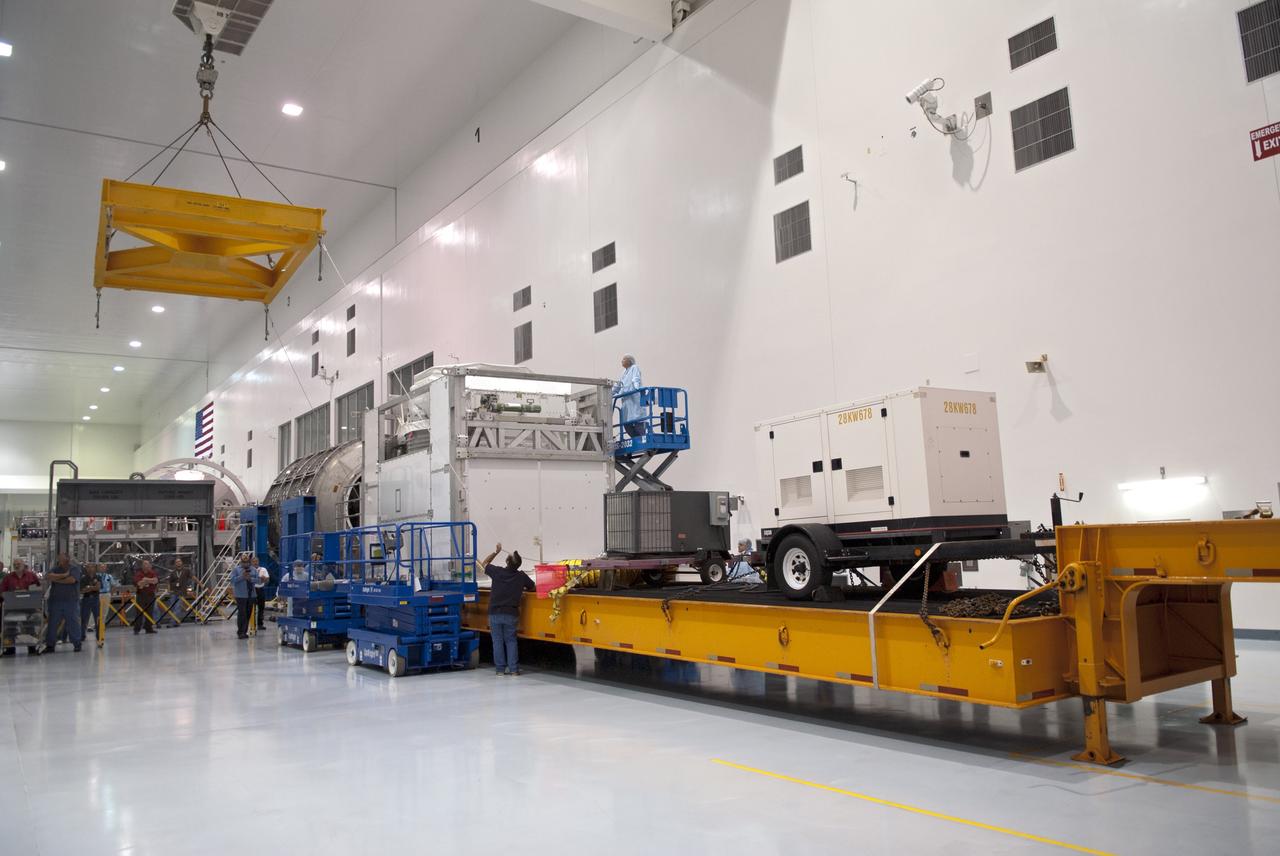
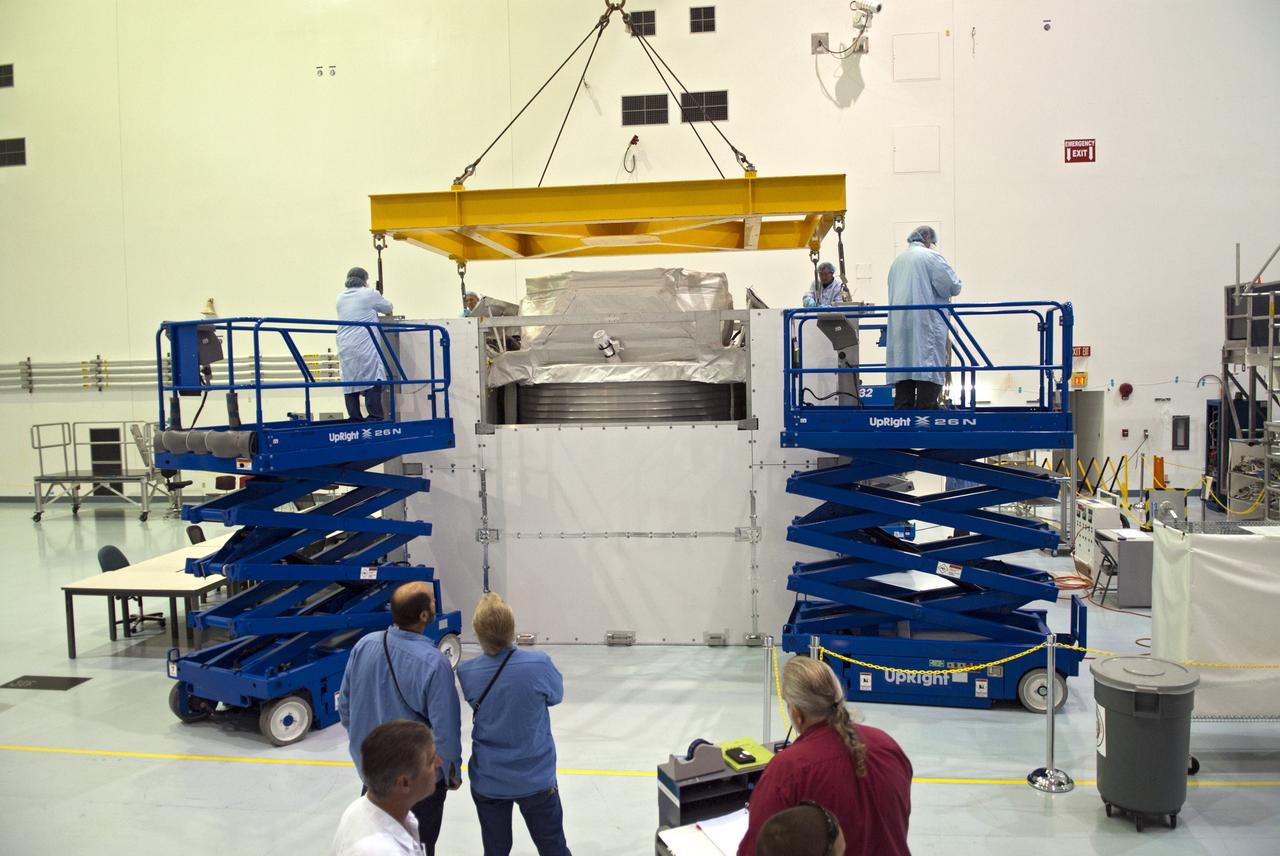
CAPE CANAVERAL, Fla. -- At NASA's Kennedy Space Center in Florida an overhead crane is poised above the floor of the Space Station Processing Facility to lift the Alpha Magnetic Spectrometer, or AMS, from the tractor-trailer that delivered it. AMS, a state-of-the-art particle physics detector, is designed to operate as an external module on the International Space Station. It will use the unique environment of space to study the universe and its origin by searching for dark matter. The STS-134 crew will fly AMS to the International Space Station aboard space shuttle Endeavour, targeted to launch Feb. 26, 2011. Photo credit: NASA/Frankie Martin
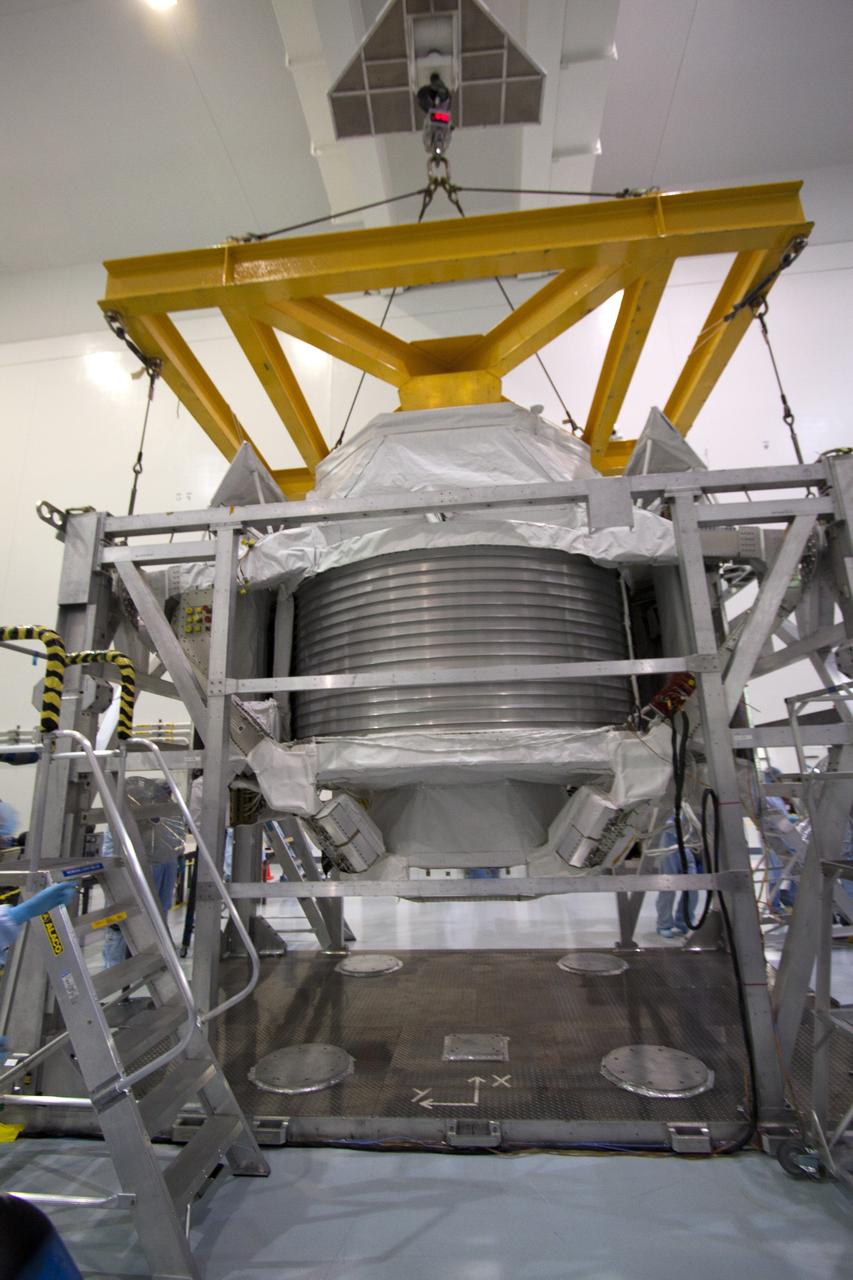
CAPE CANAVERAL, Fla. -- In the Space Station Processing Facility at NASA's Kennedy Space Center in Florida, an overhead crane lifts the Alpha Magnetic Spectrometer, or AMS, so it can be placed onto a work stand and processed for launch. AMS, a state-of-the-art particle physics detector, is designed to operate as an external module on the International Space Station. It will use the unique environment of space to study the universe and its origin by searching for dark matter. AMS will fly to the International Space Station aboard space shuttle Endeavour's STS-134 mission targeted to launch Feb. 26, 2011. Photo credit: NASA/Jack Pfaller

CAPE CANAVERAL, Fla. -- Technicians in the Space Station Processing Facility at NASA's Kennedy Space Center in Florida, attach an overhead crane to the Alpha Magnetic Spectrometer, or AMS, so it can be lifted onto a work stand and processed for launch. AMS, a state-of-the-art particle physics detector, is designed to operate as an external module on the International Space Station. It will use the unique environment of space to study the universe and its origin by searching for dark matter. AMS will fly to the International Space Station aboard space shuttle Endeavour's STS-134 mission targeted to launch Feb. 26, 2011. Photo credit: NASA/Jack Pfaller

CAPE CANAVERAL, Fla. -- Technicians in the Space Station Processing Facility at NASA's Kennedy Space Center in Florida, begin processing the Alpha Magnetic Spectrometer, or AMS, to prepare it for launch. AMS, a state-of-the-art particle physics detector, is designed to operate as an external module on the International Space Station. It will use the unique environment of space to study the universe and its origin by searching for dark matter. AMS will fly to the International Space Station aboard space shuttle Endeavour's STS-134 mission targeted to launch Feb. 26, 2011. Photo credit: NASA/Jack Pfaller
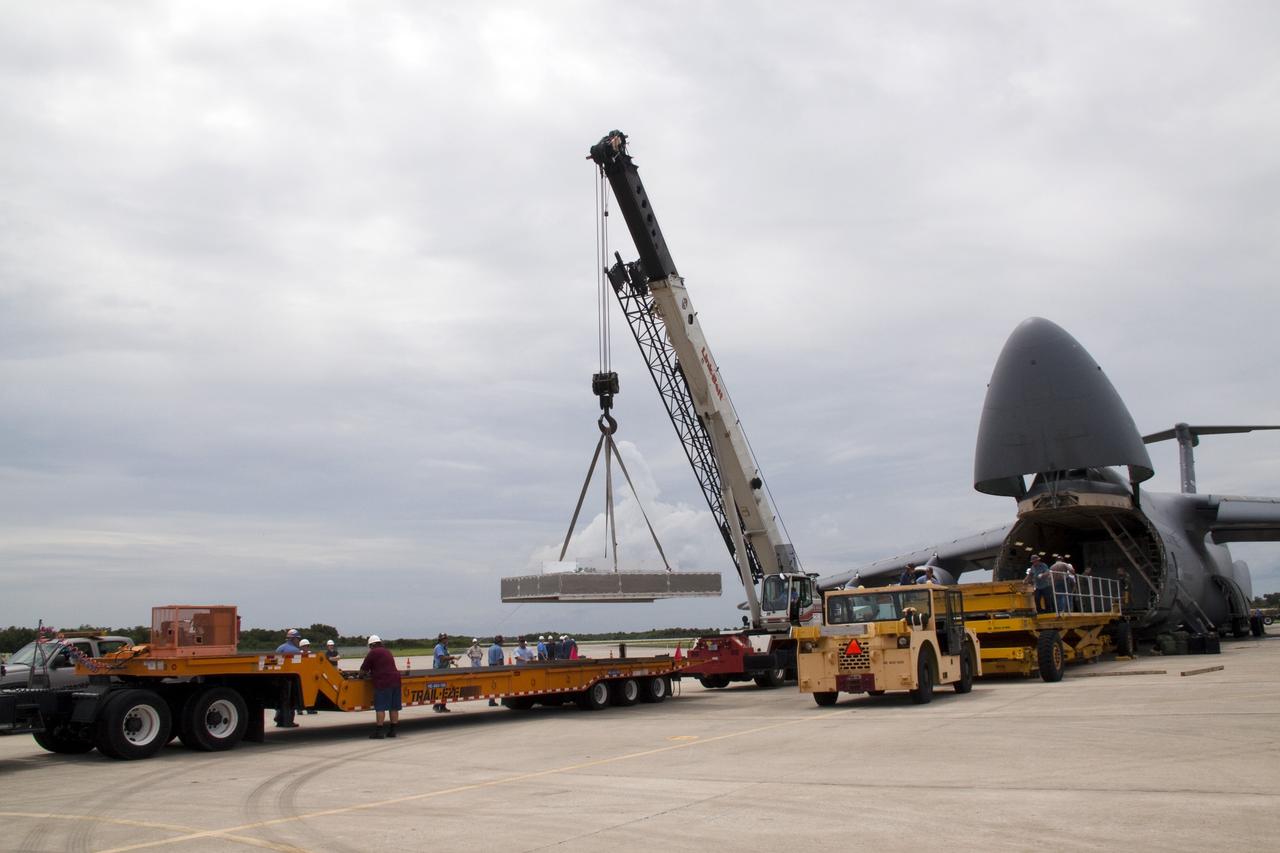
CAPE CANAVERAL, Fla. -- At NASA's Kennedy Space Center in Florida, a crane lowers a section of the Alpha Magnetic Spectrometer, or AMS, onto a tractor-trailer which will transport the AMS from the Shuttle Landing Facility runway to the Space Station Processing Facility, where it will be processed for launch. AMS, a state-of-the-art particle physics detector, is designed to operate as an external module on the International Space Station. It will use the unique environment of space to study the universe and its origin by searching for dark matter. AMS will fly to the International Space Station aboard space shuttle Endeavour's STS-134 mission, targeted to launch Feb. 26, 2011. Photo credit: NASA/Jack Pfaller
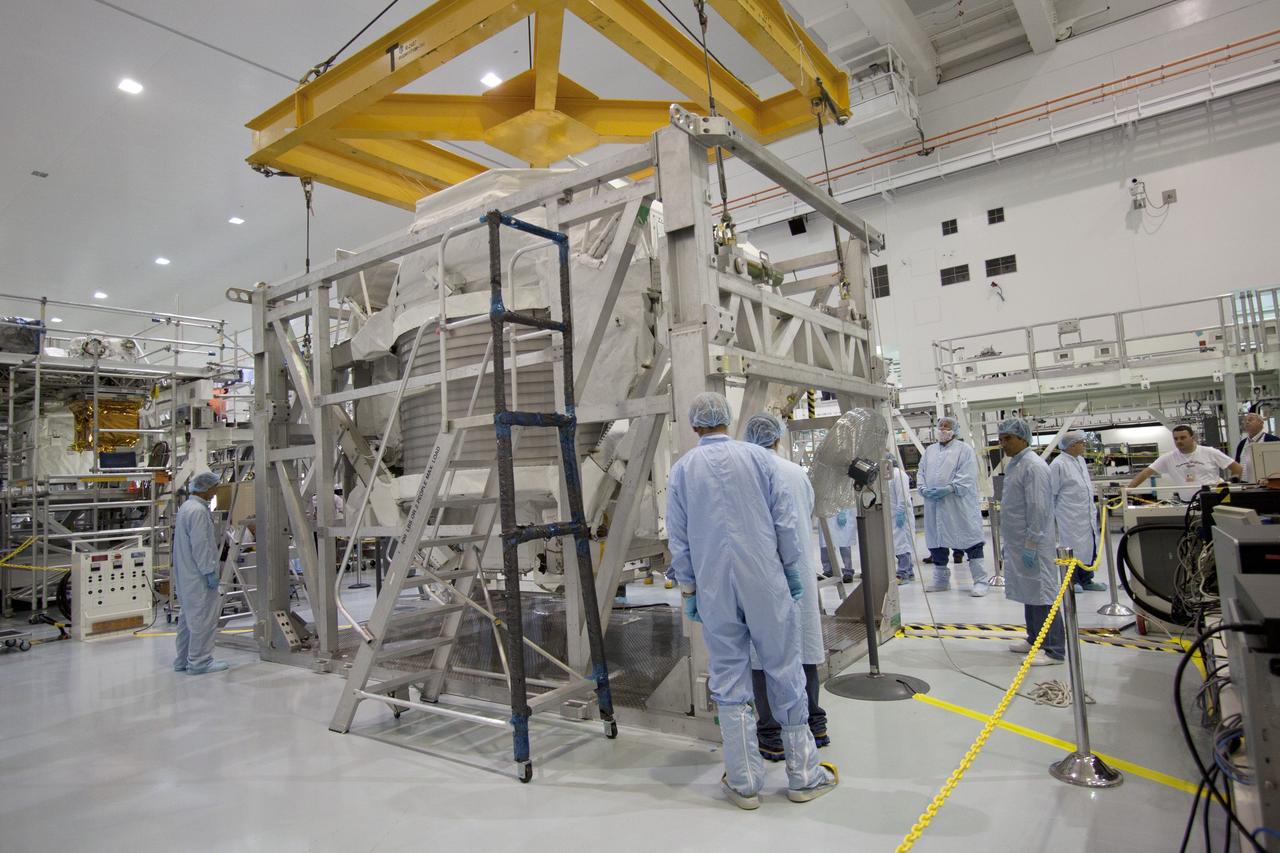
CAPE CANAVERAL, Fla. -- In the Space Station Processing Facility at NASA's Kennedy Space Center in Florida, an overhead crane lifts the Alpha Magnetic Spectrometer, or AMS, so it can be lifted onto a work stand and processed for launch. AMS, a state-of-the-art particle physics detector, is designed to operate as an external module on the International Space Station. It will use the unique environment of space to study the universe and its origin by searching for dark matter. AMS will fly to the International Space Station aboard space shuttle Endeavour's STS-134 mission targeted to launch Feb. 26, 2011. Photo credit: NASA/Jack Pfaller
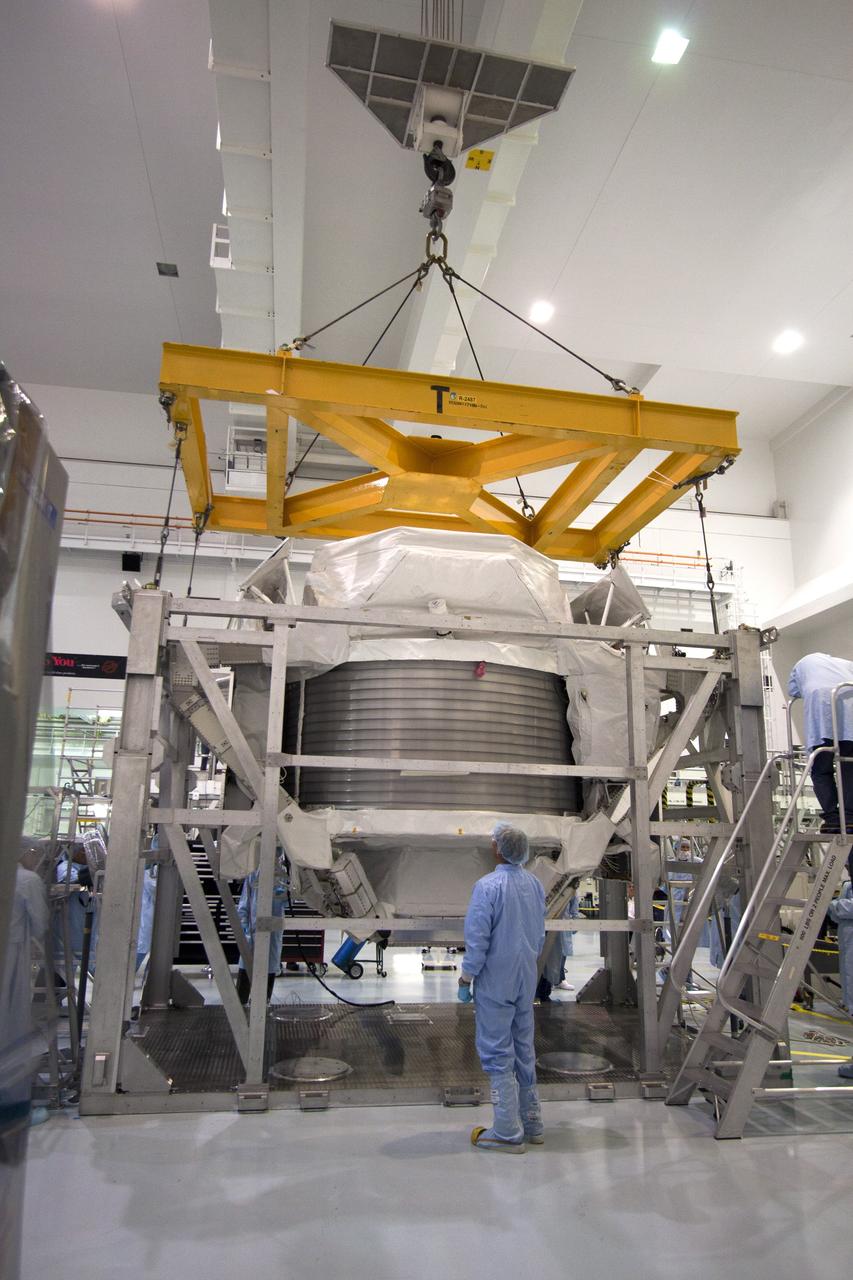
CAPE CANAVERAL, Fla. -- In the Space Station Processing Facility at NASA's Kennedy Space Center in Florida, a technician monitors an overhead crane as it lifts the Alpha Magnetic Spectrometer, or AMS, so it can be placed onto a work stand and processed for launch. AMS, a state-of-the-art particle physics detector, is designed to operate as an external module on the International Space Station. It will use the unique environment of space to study the universe and its origin by searching for dark matter. AMS will fly to the International Space Station aboard space shuttle Endeavour's STS-134 mission targeted to launch Feb. 26, 2011. Photo credit: NASA/Jack Pfaller
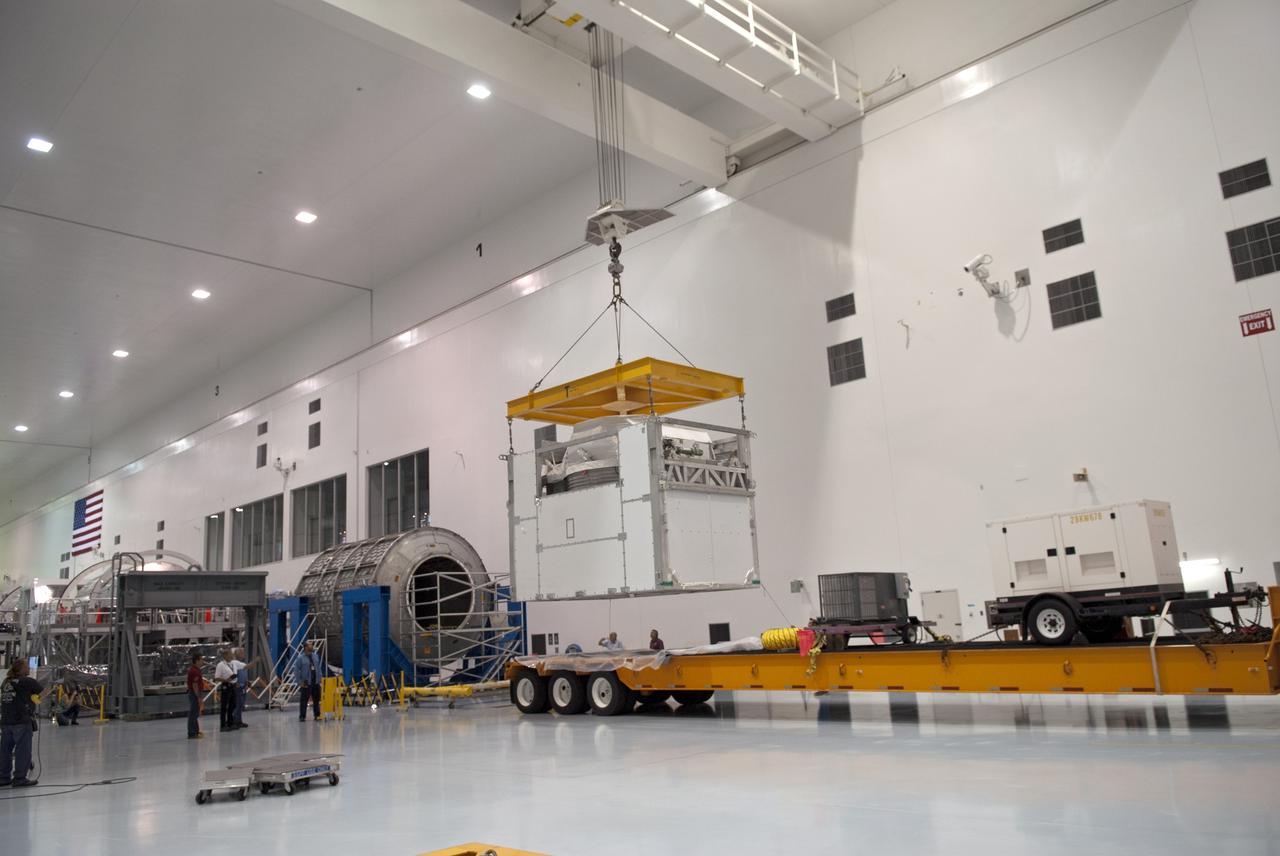
CAPE CANAVERAL, Fla. -- In the Space Station Processing Facility at NASA's Kennedy Space Center in Florida an overhead crane lifts the Alpha Magnetic Spectrometer, or AMS, off of the tractor-trailer that delivered it. AMS, a state-of-the-art particle physics detector, is designed to operate as an external module on the International Space Station. It will use the unique environment of space to study the universe and its origin by searching for dark matter. The STS-134 crew will fly AMS to the International Space Station aboard space shuttle Endeavour, targeted to launch Feb. 26, 2011. Photo credit: NASA/Frankie Martin
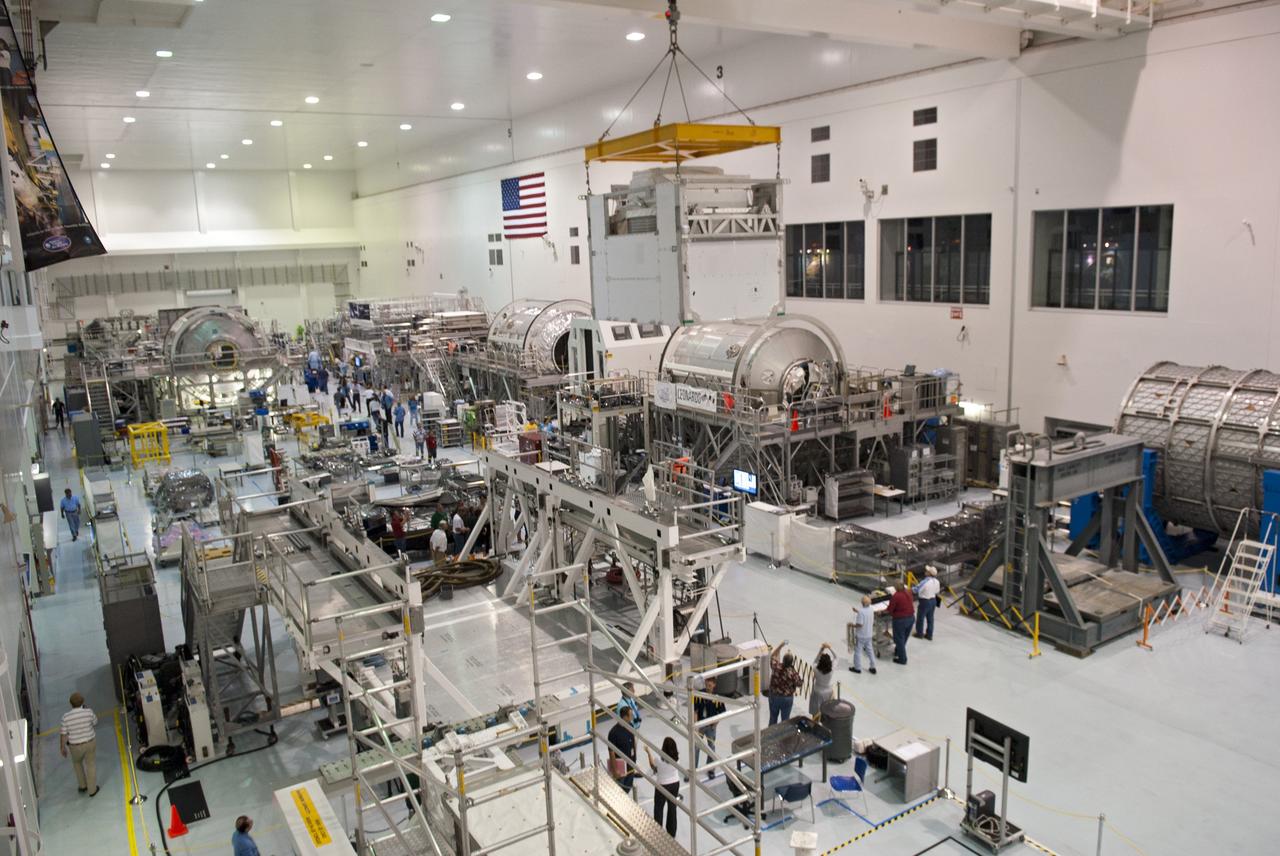
CAPE CANAVERAL, Fla. -- In the Space Station Processing Facility at NASA's Kennedy Space Center in Florida an overhead crane moves the Alpha Magnetic Spectrometer, or AMS, to an area for technicians to prepare it for launch. AMS, a state-of-the-art particle physics detector, is designed to operate as an external module on the International Space Station. It will use the unique environment of space to study the universe and its origin by searching for dark matter. The STS-134 crew will fly AMS to the International Space Station aboard space shuttle Endeavour, targeted to launch Feb. 26, 2011. Photo credit: NASA/Frankie Martin
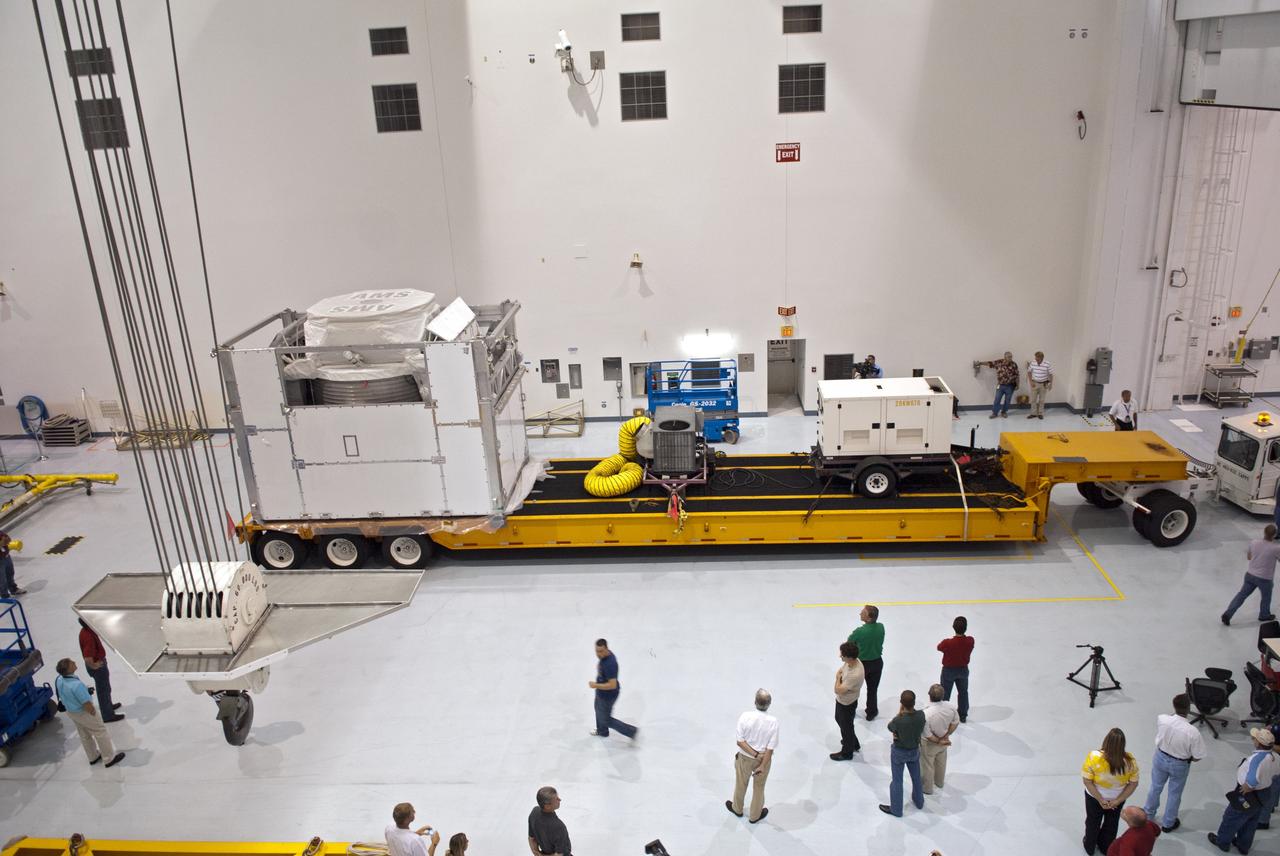
CAPE CANAVERAL, Fla. -- Workers and media at NASA's Kennedy Space Center in Florida, monitor the arrival of a tractor-trailer carrying the Alpha Magnetic Spectrometer, or AMS, to the Space Station Processing Facility, where it will be prepared for launch. AMS, a state-of-the-art particle physics detector, is designed to operate as an external module on the International Space Station. It will use the unique environment of space to study the universe and its origin by searching for dark matter. The STS-134 crew will fly AMS to the International Space Station aboard space shuttle Endeavour, targeted to launch Feb. 26, 2011. Photo credit: NASA/Frankie Martin
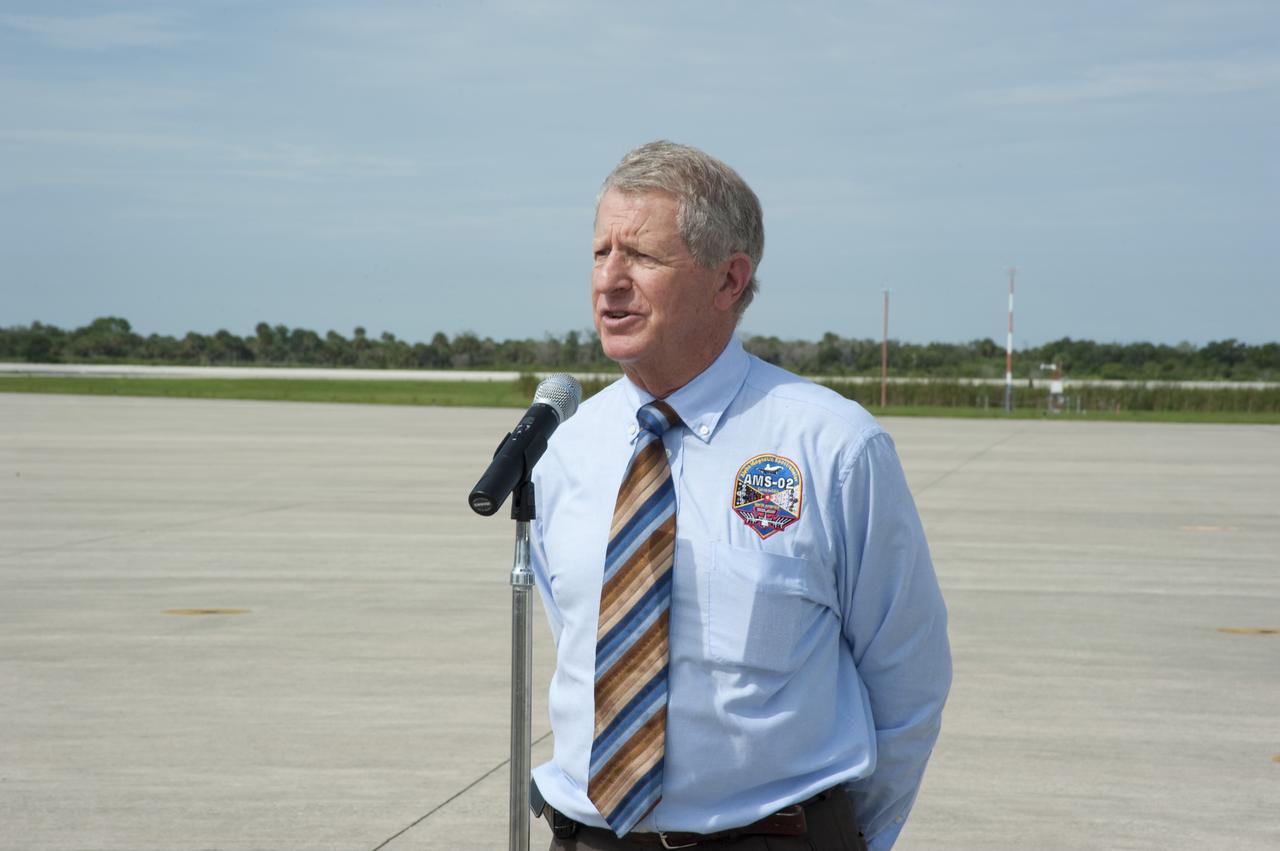
CAPE CANAVERAL, Fla. -- Before the arrival of the Alpha Magnetic Spectrometer, or AMS, to the Shuttle Landing Facility at NASA's Kennedy Space Center in Florida, Professor Maurice Bourquin, AMS Swiss Coordinator, speaks to the media. AMS, a state-of-the-art particle physics detector, is designed to operate as an external module on the International Space Station. It will use the unique environment of space to study the universe and its origin by searching for dark matter. AMS will fly to the International Space Station aboard space shuttle Endeavour's STS-134 mission targeted to launch Feb. 26, 2011. Photo credit: NASA/Kim Shiflett
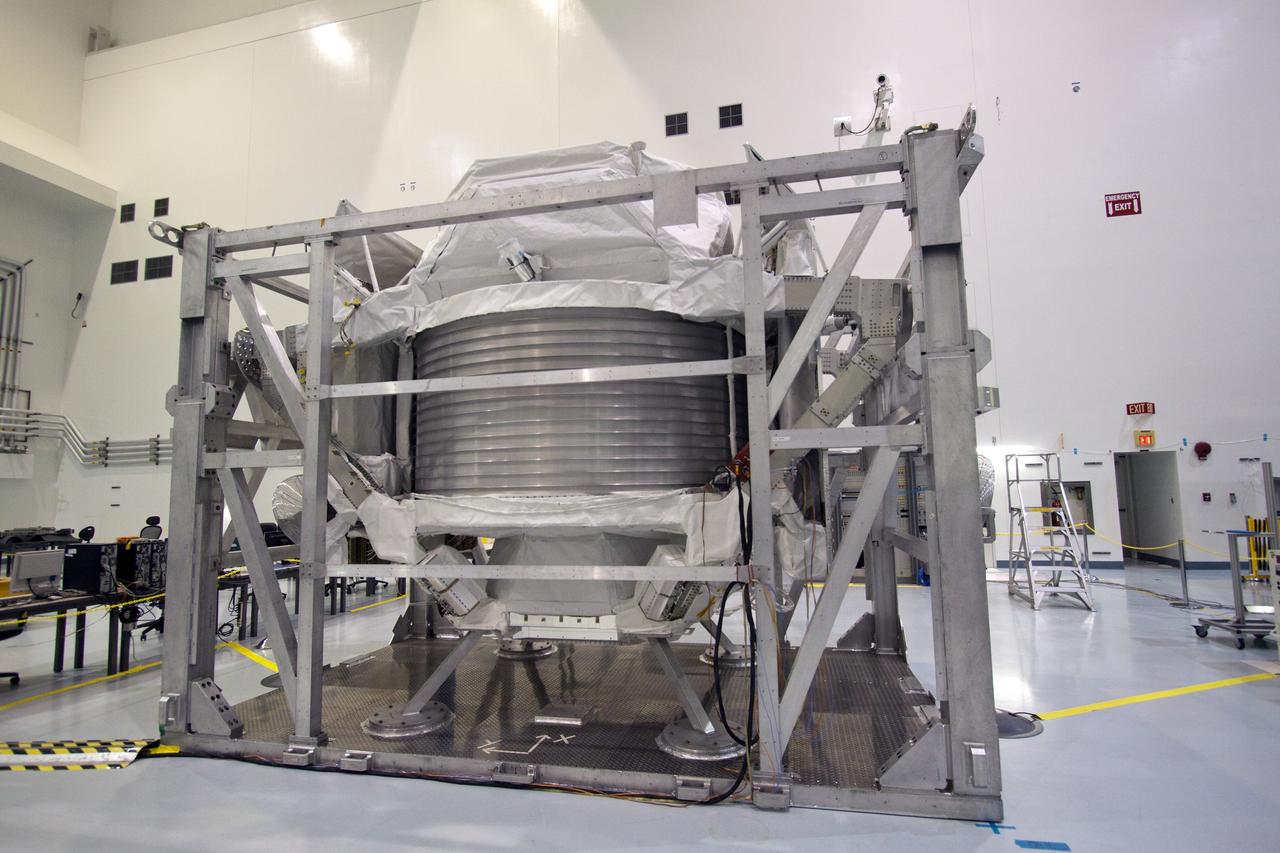
CAPE CANAVERAL, Fla. -- In the Space Station Processing Facility at NASA's Kennedy Space Center in Florida, the Alpha Magnetic Spectrometer, or AMS, awaits processing for launch. AMS, a state-of-the-art particle physics detector, is designed to operate as an external module on the International Space Station. It will use the unique environment of space to study the universe and its origin by searching for dark matter. AMS will fly to the International Space Station aboard space shuttle Endeavour's STS-134 mission targeted to launch Feb. 26, 2011. Photo credit: NASA/Jack Pfaller
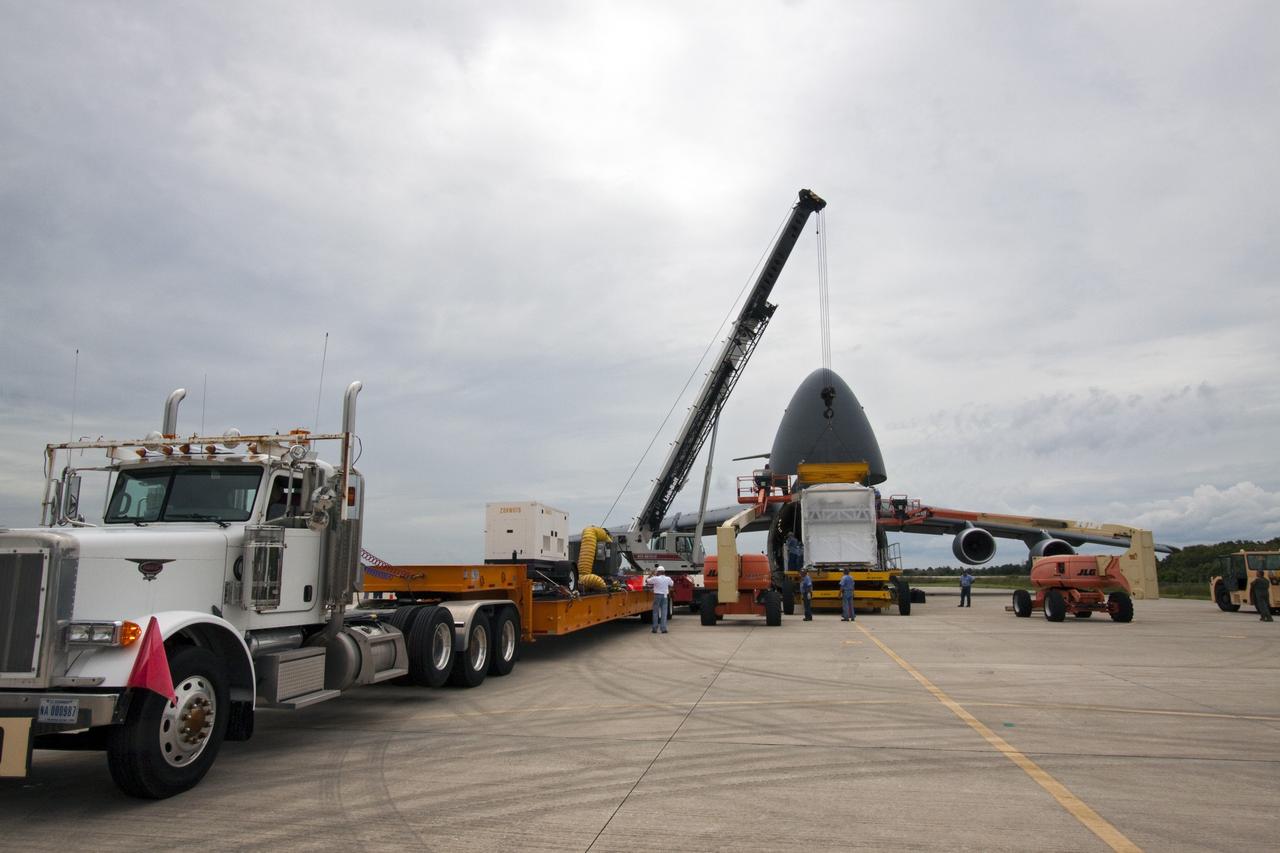
CAPE CANAVERAL, Fla. -- At NASA's Kennedy Space Center in Florida, a crane lifts the next section of the Alpha Magnetic Spectrometer, or AMS, toward a tractor-trailer which will transport the AMS from the Shuttle Landing Facility runway to the Space Station Processing Facility, where it will be processed for launch. AMS, a state-of-the-art particle physics detector, is designed to operate as an external module on the International Space Station. It will use the unique environment of space to study the universe and its origin by searching for dark matter. AMS will fly to the International Space Station aboard space shuttle Endeavour's STS-134 mission, targeted to launch Feb. 26, 2011. Photo credit: NASA/Jack Pfaller

CAPE CANAVERAL, Fla. -- At the Shuttle Landing Facility at NASA's Kennedy Space Center in Florida, Prof. Jean Pierre Vialle, AMS French Coordinator, addresses the media before the arrival of the Alpha Magnetic Spectrometer, or AMS. AMS, a state-of-the-art particle physics detector, is designed to operate as an external module on the International Space Station. It will use the unique environment of space to study the universe and its origin by searching for dark matter. The STS-134 crew will fly AMS to the International Space Station aboard space shuttle Endeavour, targeted to launch Feb. 26, 2011. Photo credit: NASA/Kim Shiflett
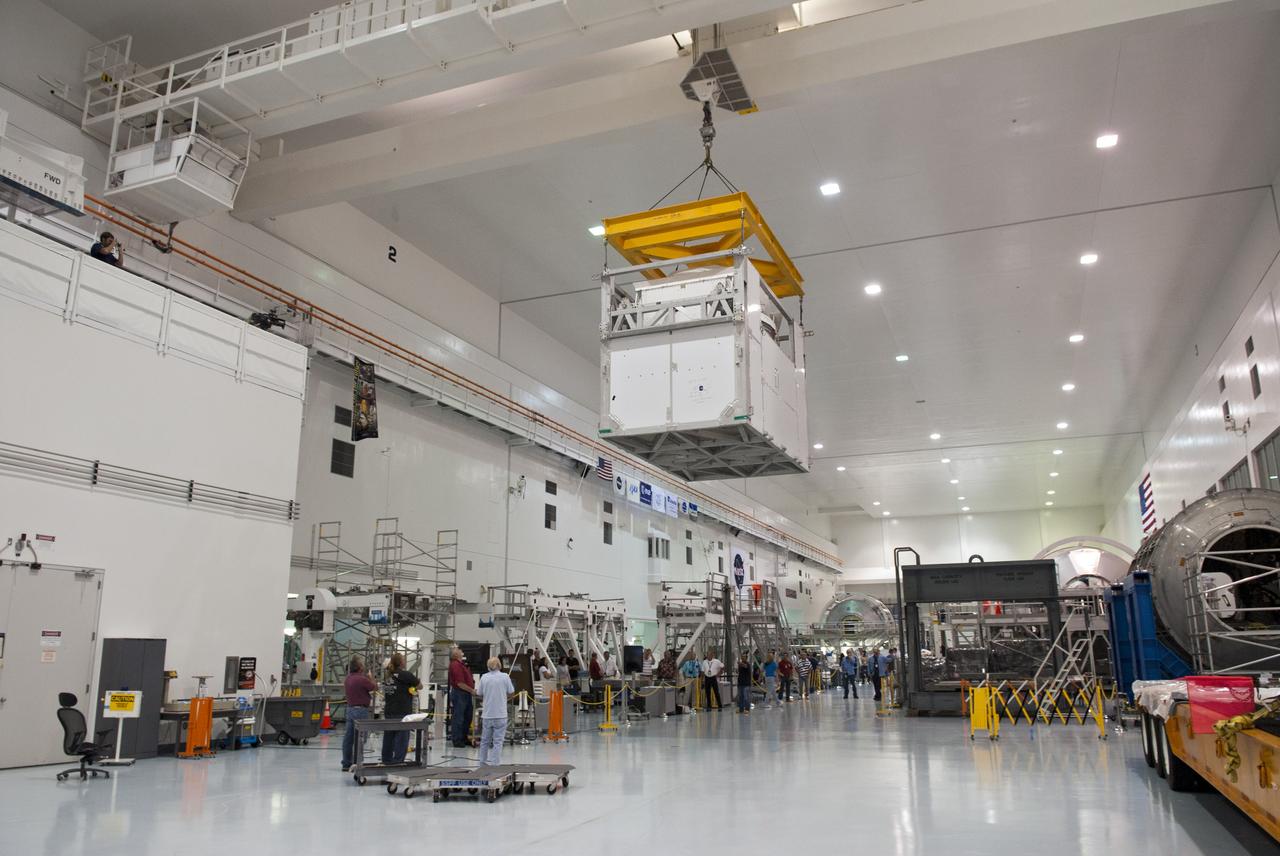
CAPE CANAVERAL, Fla. -- Workers in the Space Station Processing Facility at NASA's Kennedy Space Center in Florida, monitor the progress of an overhead crane as it moves the Alpha Magnetic Spectrometer, or AMS, to an area for technicians to prepare it for launch. AMS, a state-of-the-art particle physics detector, is designed to operate as an external module on the International Space Station. It will use the unique environment of space to study the universe and its origin by searching for dark matter. The STS-134 crew will fly AMS to the International Space Station aboard space shuttle Endeavour, targeted to launch Feb. 26, 2011. Photo credit: NASA/Frankie Martin

CAPE CANAVERAL, Fla. -- At NASA's Kennedy Space Center in Florida, a tractor-trailer carrying the Alpha Magnetic Spectrometer, or AMS, at the Space Station Processing Facility, where it will be processed for launch. AMS arrived on Kennedy's Shuttle Landing Facility aboard an Air Force C-5M aircraft from Europe. AMS, a state-of-the-art particle physics detector, is designed to operate as an external module on the International Space Station. It will use the unique environment of space to study the universe and its origin by searching for dark matter. The STS-134 crew will fly AMS to the International Space Station aboard space shuttle Endeavour, targeted to launch Feb. 26, 2011. Photo credit: NASA/Frankie Martin
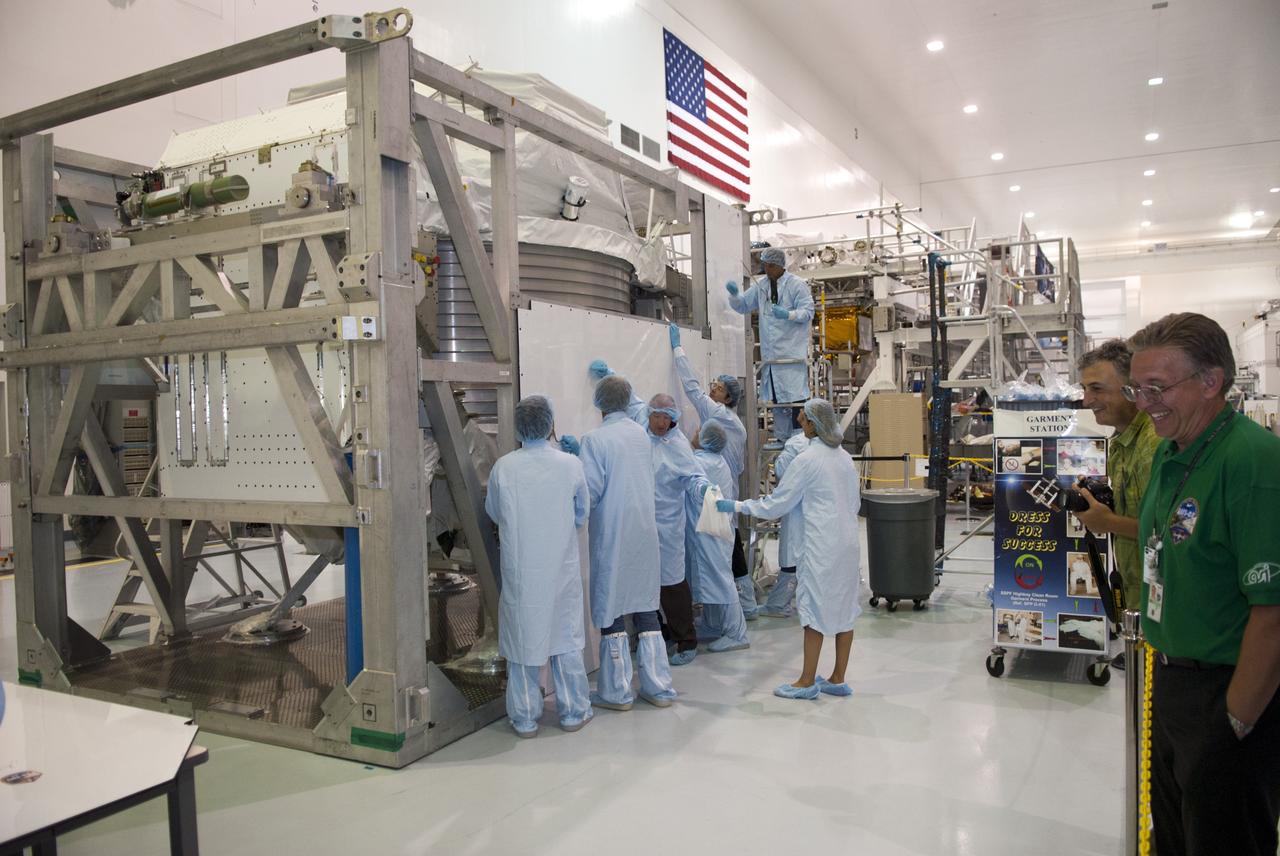
CAPE CANAVERAL, Fla. -- In the Space Station Processing Facility at NASA's Kennedy Space Center in Florida, technicians remove a side panel that protected the Alpha Magnetic Spectrometer, or AMS, during shipment. AMS, a state-of-the-art particle physics detector, is designed to operate as an external module on the International Space Station. It will use the unique environment of space to study the universe and its origin by searching for dark matter. The STS-134 crew will fly AMS to the International Space Station aboard space shuttle Endeavour, targeted to launch Feb. 26, 2011. Photo credit: NASA/Frankie Martin
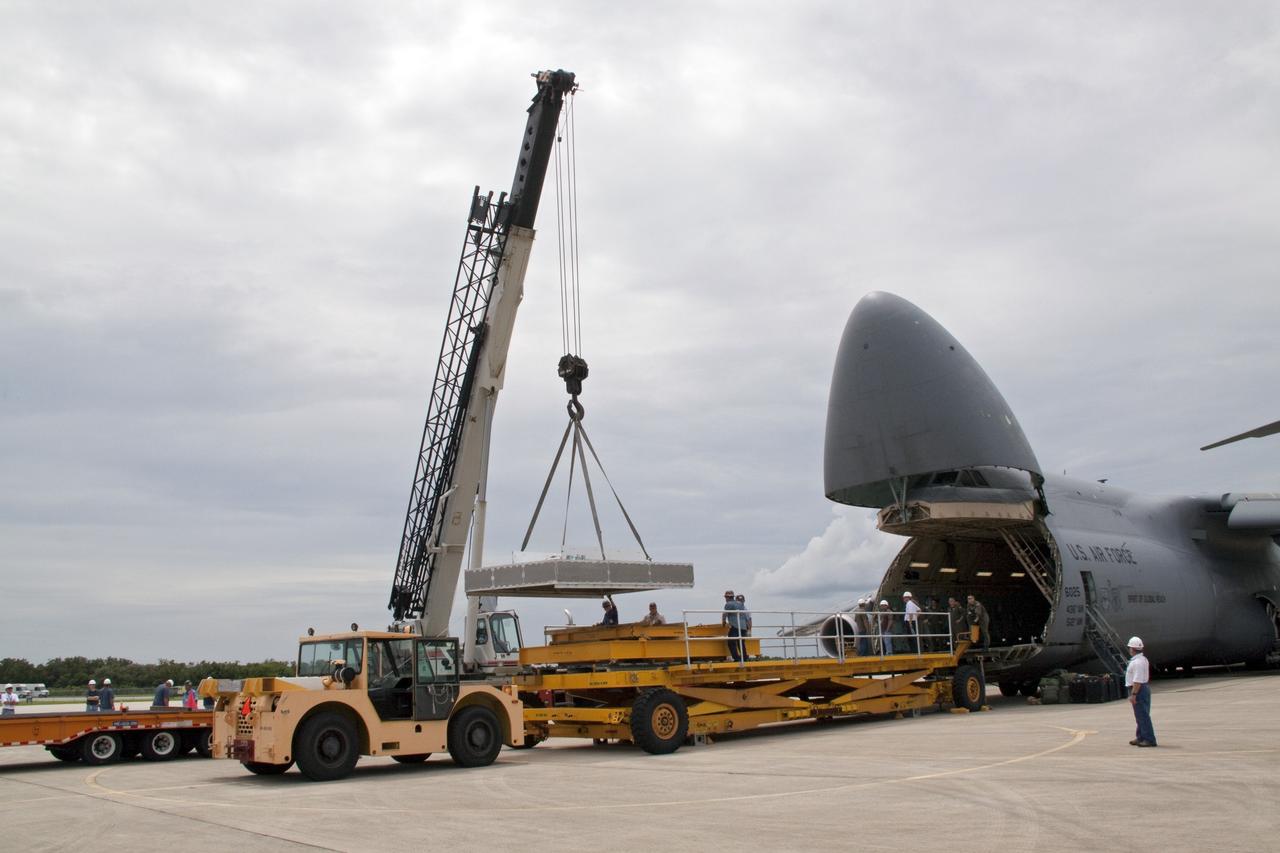
CAPE CANAVERAL, Fla. -- At NASA's Kennedy Space Center in Florida, a crane lifts a section of the Alpha Magnetic Spectrometer, or AMS, toward a tractor-trailer which will transport the AMS from the Shuttle Landing Facility runway to the Space Station Processing Facility, where it will be processed for launch. AMS, a state-of-the-art particle physics detector, is designed to operate as an external module on the International Space Station. It will use the unique environment of space to study the universe and its origin by searching for dark matter. AMS will fly to the International Space Station aboard space shuttle Endeavour's STS-134 mission, targeted to launch Feb. 26, 2011. Photo credit: NASA/Jack Pfaller
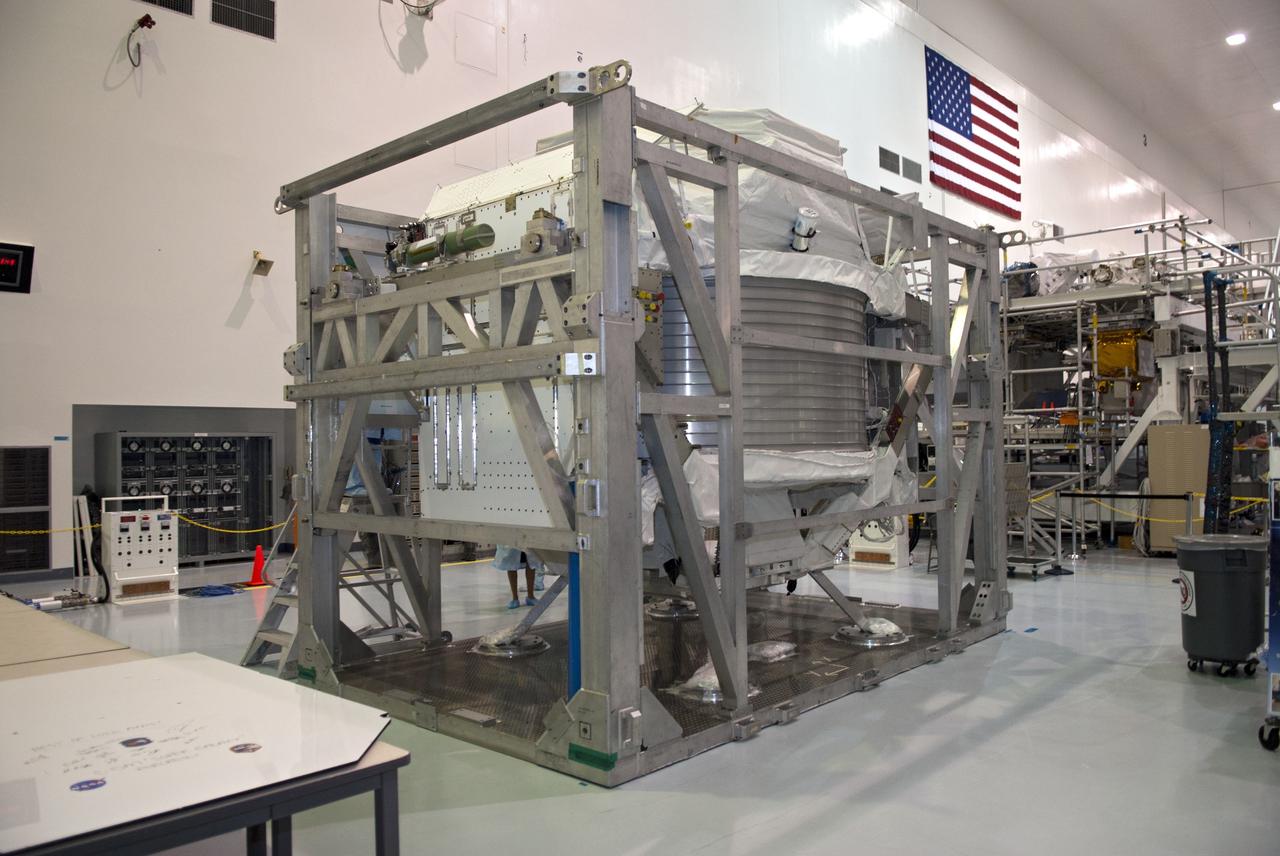
CAPE CANAVERAL, Fla. -- In the Space Station Processing Facility at NASA's Kennedy Space Center in Florida, the protective panels that covered the Alpha Magnetic Spectrometer, or AMS, have been removed so that the technicians can begin preparing it for launch. AMS, a state-of-the-art particle physics detector, is designed to operate as an external module on the International Space Station. It will use the unique environment of space to study the universe and its origin by searching for dark matter. The STS-134 crew will fly AMS to the International Space Station aboard space shuttle Endeavour, targeted to launch Feb. 26, 2011. Photo credit: NASA/Frankie Martin
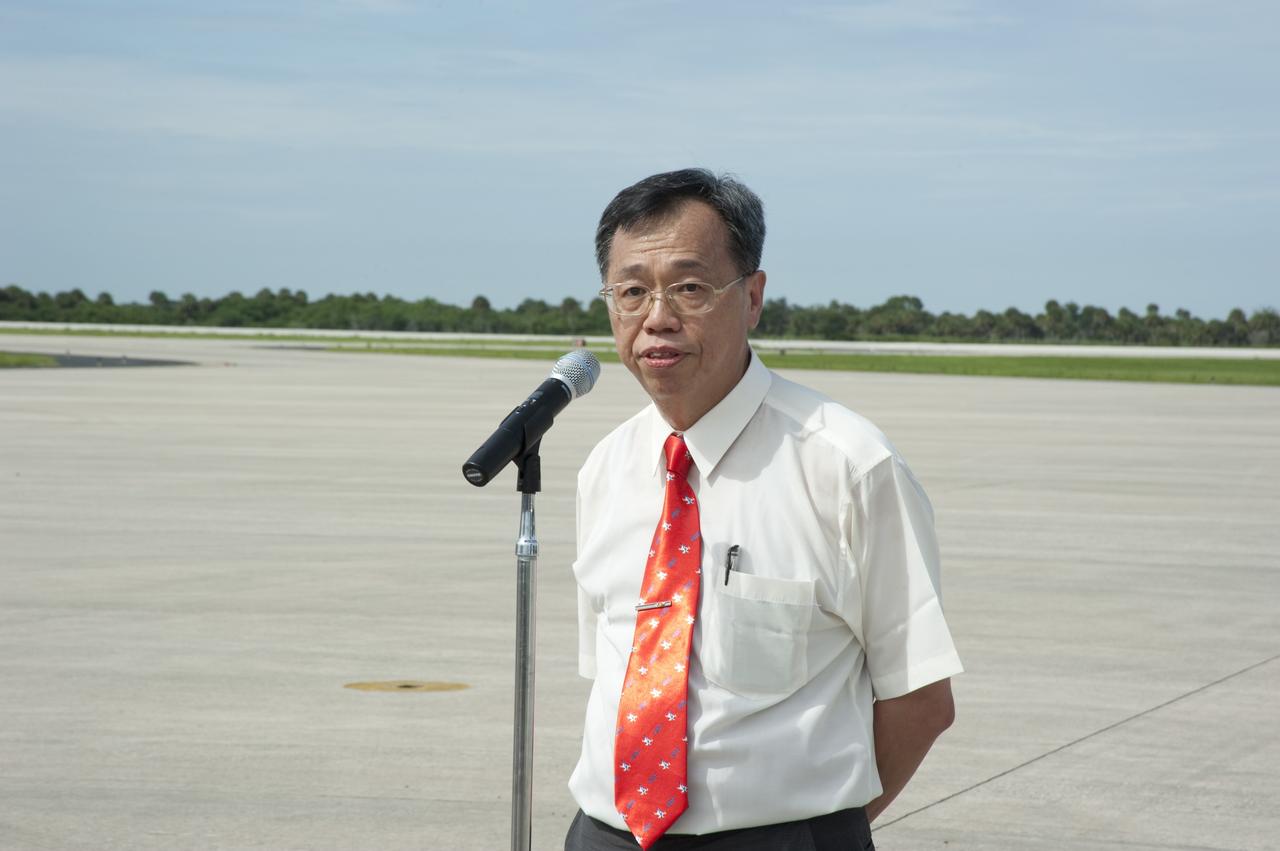
CAPE CANAVERAL, Fla. -- Prior to the arrival of the Alpha Magnetic Spectrometer, or AMS, to the Shuttle Landing Facility at NASA's Kennedy Space Center in Florida, Prof. S.C. Lee, AMS Taiwanese Coordinator, speaks to the media. AMS, a state-of-the-art particle physics detector, is designed to operate as an external module on the International Space Station. It will use the unique environment of space to study the universe and its origin by searching for dark matter. The STS-134 crew will fly AMS to the International Space Station aboard space shuttle Endeavour, targeted to launch Feb. 26, 2011. Photo credit: NASA/Kim Shiflett
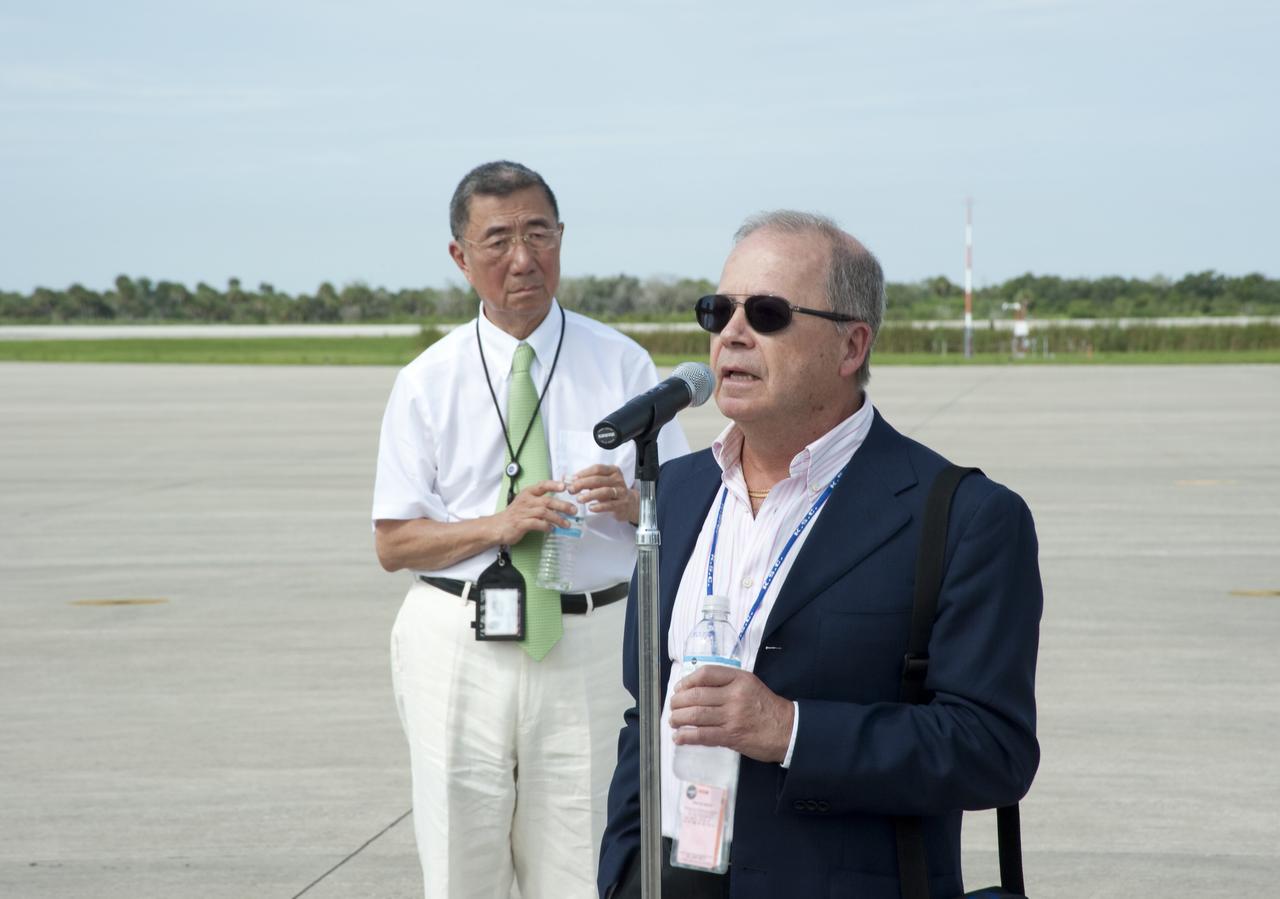
CAPE CANAVERAL, Fla. -- At the Shuttle Landing Facility at NASA's Kennedy Space Center in Florida, Professor Sam Ting, AMS Principal Investigator from the Massachusetts Institute of Technology listens intently as Professor Manuel Aguilar, AMS Spanish Coordinator, speaks to the media before the arrival of the Alpha Magnetic Spectrometer, or AMS. AMS, a state-of-the-art particle physics detector, is designed to operate as an external module on the International Space Station. It will use the unique environment of space to study the universe and its origin by searching for dark matter. The STS-134 crew will fly AMS to the International Space Station aboard space shuttle Endeavour, targeted to launch Feb. 26, 2011. Photo credit: NASA/Kim Shiflett
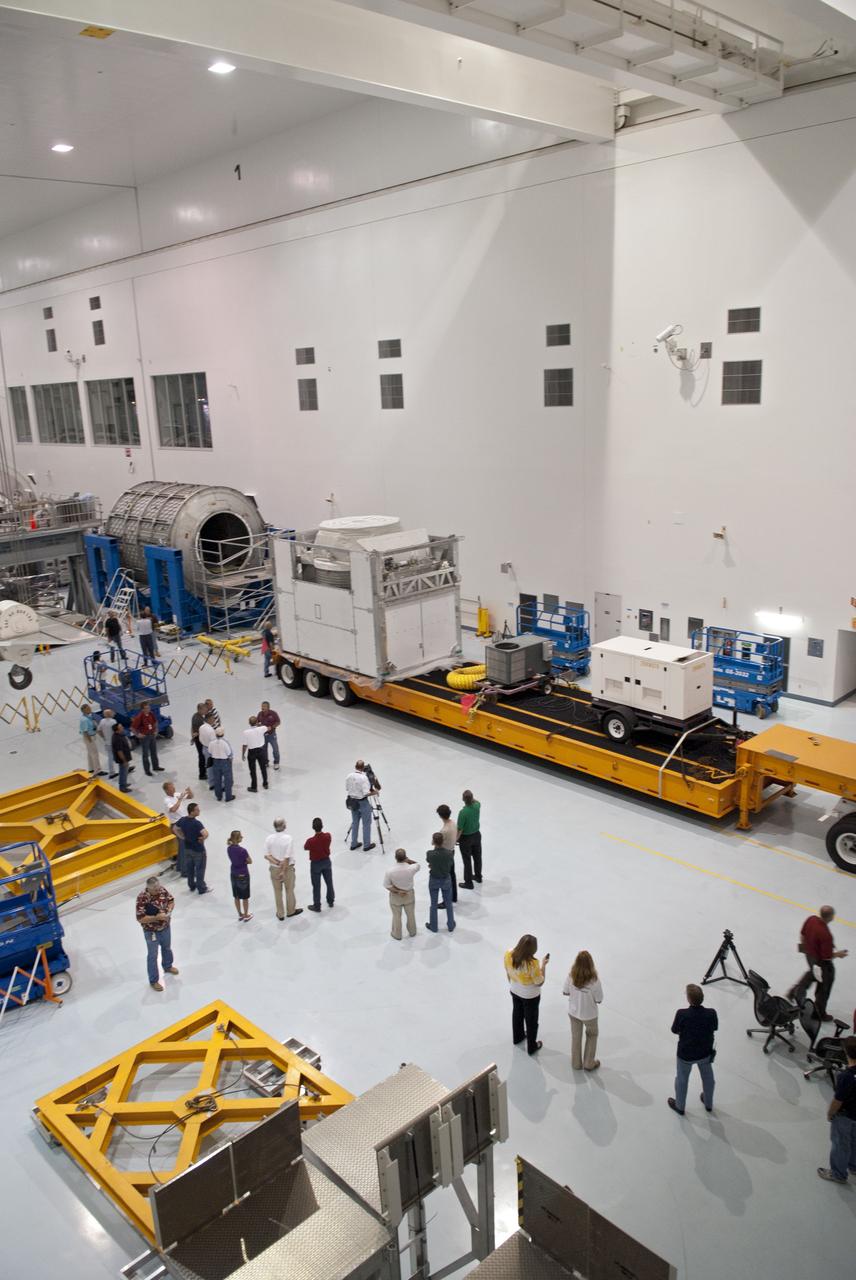
CAPE CANAVERAL, Fla. -- At NASA's Kennedy Space Center in Florida, media are on hand as the Alpha Magnetic Spectrometer, or AMS, is delivered to the Space Station Processing Facility, where it will be prepared for launch. AMS, a state-of-the-art particle physics detector, is designed to operate as an external module on the International Space Station. It will use the unique environment of space to study the universe and its origin by searching for dark matter. The STS-134 crew will fly AMS to the International Space Station aboard space shuttle Endeavour, targeted to launch Feb. 26, 2011. Photo credit: NASA/Frankie Martin
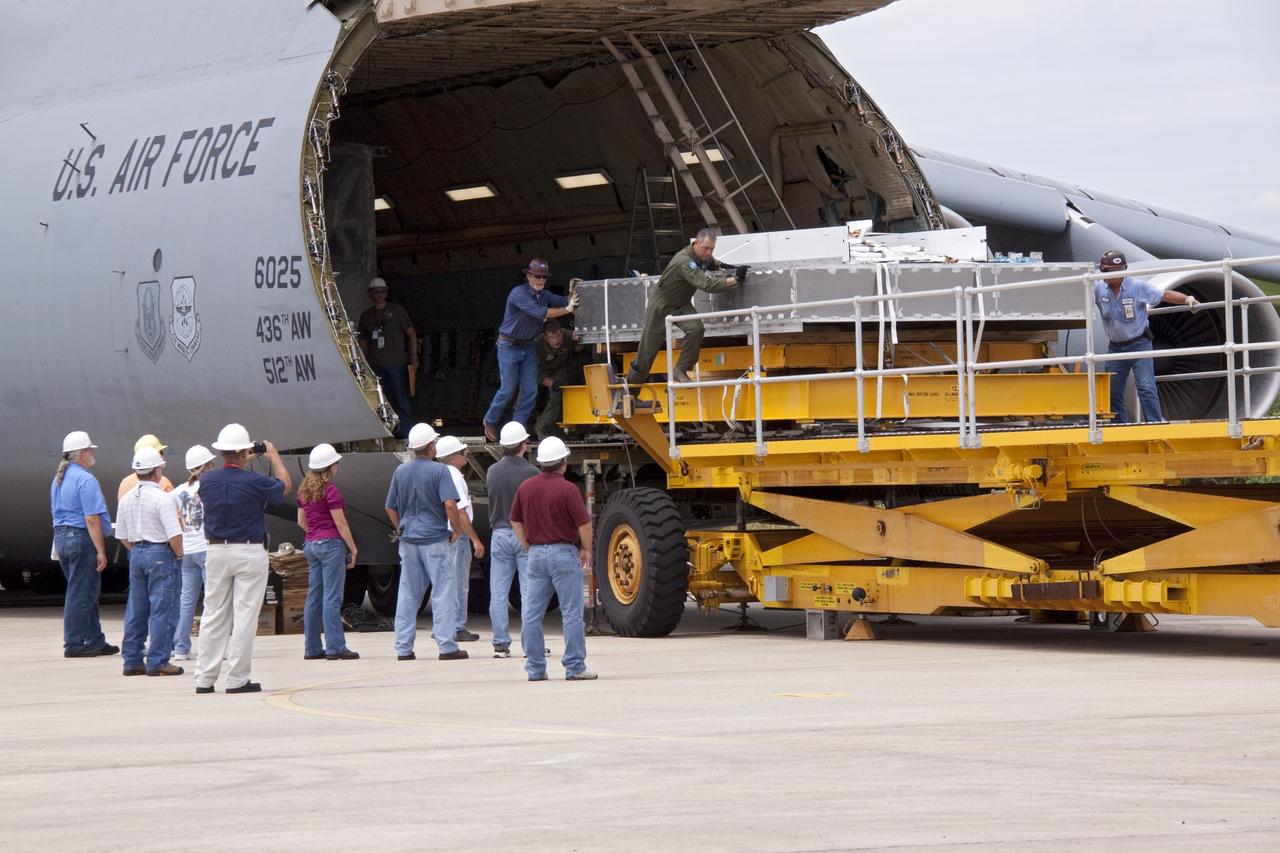
CAPE CANAVERAL, Fla. -- At NASA's Kennedy Space Center in Florida, workers begin to offload a section of the Alpha Magnetic Spectrometer, or AMS, from an Air Force C-5M aircraft. A tractor-trailer will transport the AMS from the Shuttle Landing Facility runway to the Space Station Processing Facility, where it will be processed for launch. AMS, a state-of-the-art particle physics detector, is designed to operate as an external module on the International Space Station. It will use the unique environment of space to study the universe and its origin by searching for dark matter. AMS will fly to the International Space Station aboard space shuttle Endeavour's STS-134 mission, targeted to launch Feb. 26, 2011. Photo credit: NASA/Jack Pfaller
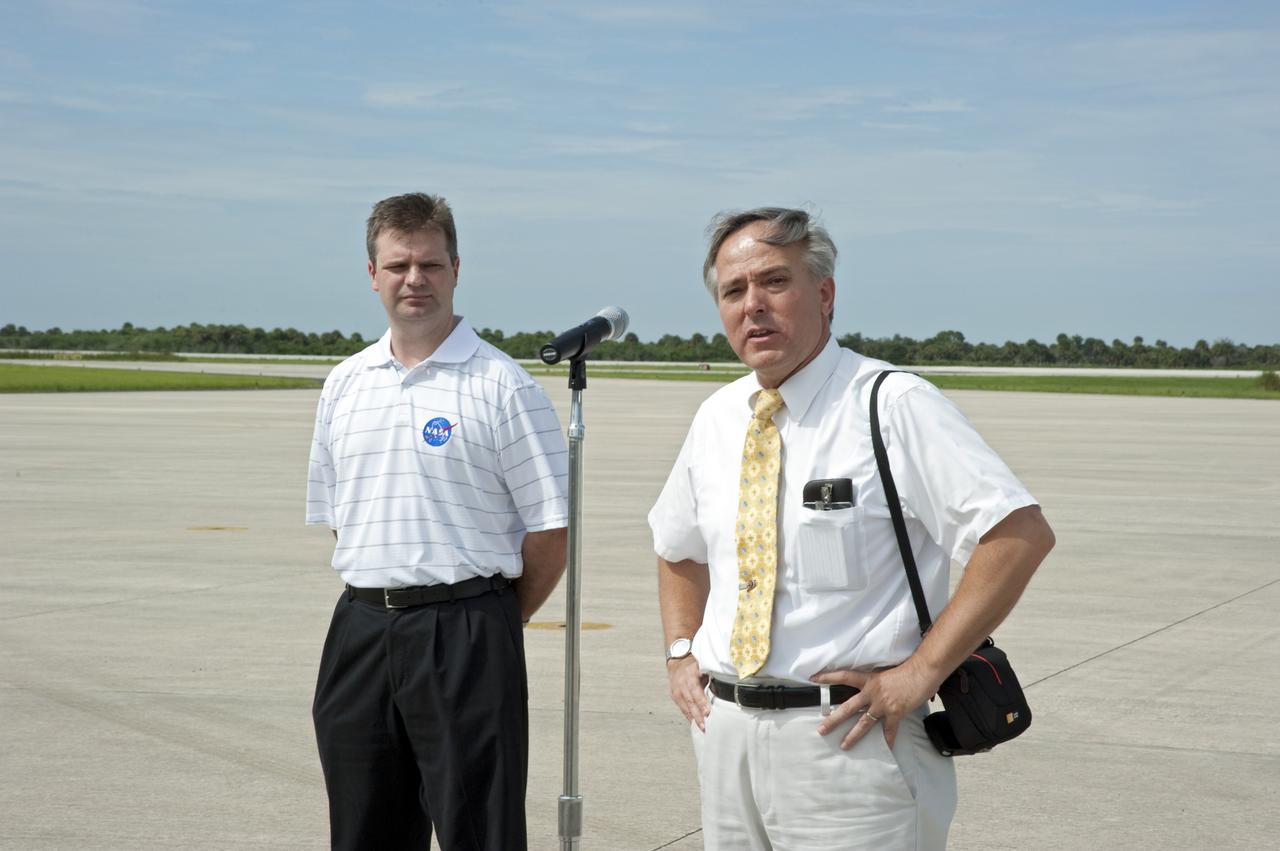
CAPE CANAVERAL, Fla. -- Mark Sistilli, AMS Program Manager from NASA Headquarters speaks to the media before the arrival of the Alpha Magnetic Spectrometer, or AMS, to the Shuttle Landing Facility at NASA's Kennedy Space Center in Florida, while Trent Martin, AMS Project Manager from NASA's Johnson Space Center in Houston looks on. AMS, a state-of-the-art particle physics detector, is designed to operate as an external module on the International Space Station. It will use the unique environment of space to study the universe and its origin by searching for dark matter. The STS-134 crew will fly AMS to the International Space Station aboard space shuttle Endeavour, targeted to launch Feb. 26, 2011. Photo credit: NASA/Kim Shiflett
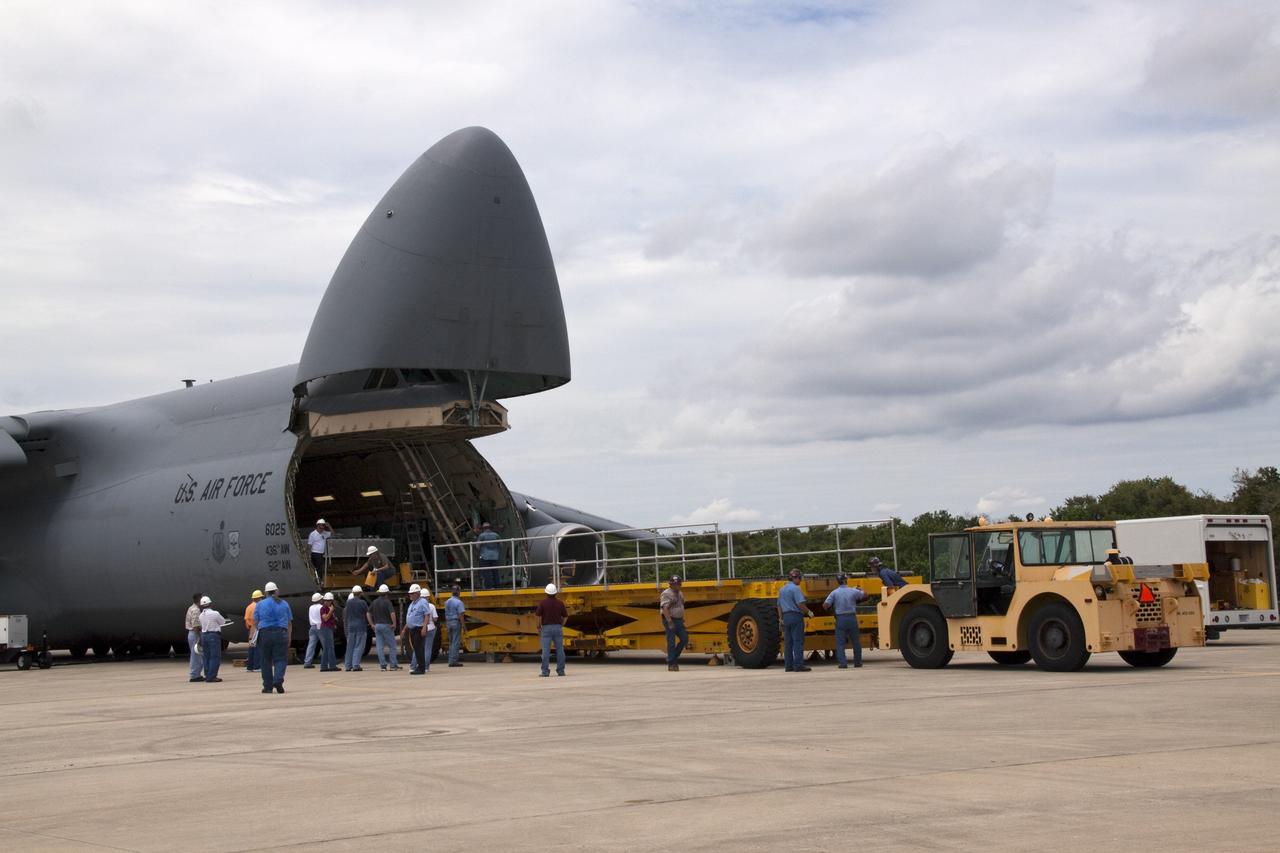
CAPE CANAVERAL, Fla. -- At NASA's Kennedy Space Center in Florida, workers begin to offload an Alpha Magnetic Spectrometer, or AMS, section from an Air Force C-5M aircraft. A tractor-trailer will transport the AMS from the Shuttle Landing Facility runway to the Space Station Processing Facility, where it will be processed for launch. AMS, a state-of-the-art particle physics detector, is designed to operate as an external module on the International Space Station. It will use the unique environment of space to study the universe and its origin by searching for dark matter. AMS will fly to the International Space Station aboard space shuttle Endeavour's STS-134 mission, targeted to launch Feb. 26, 2011. Photo credit: NASA/Jack Pfaller
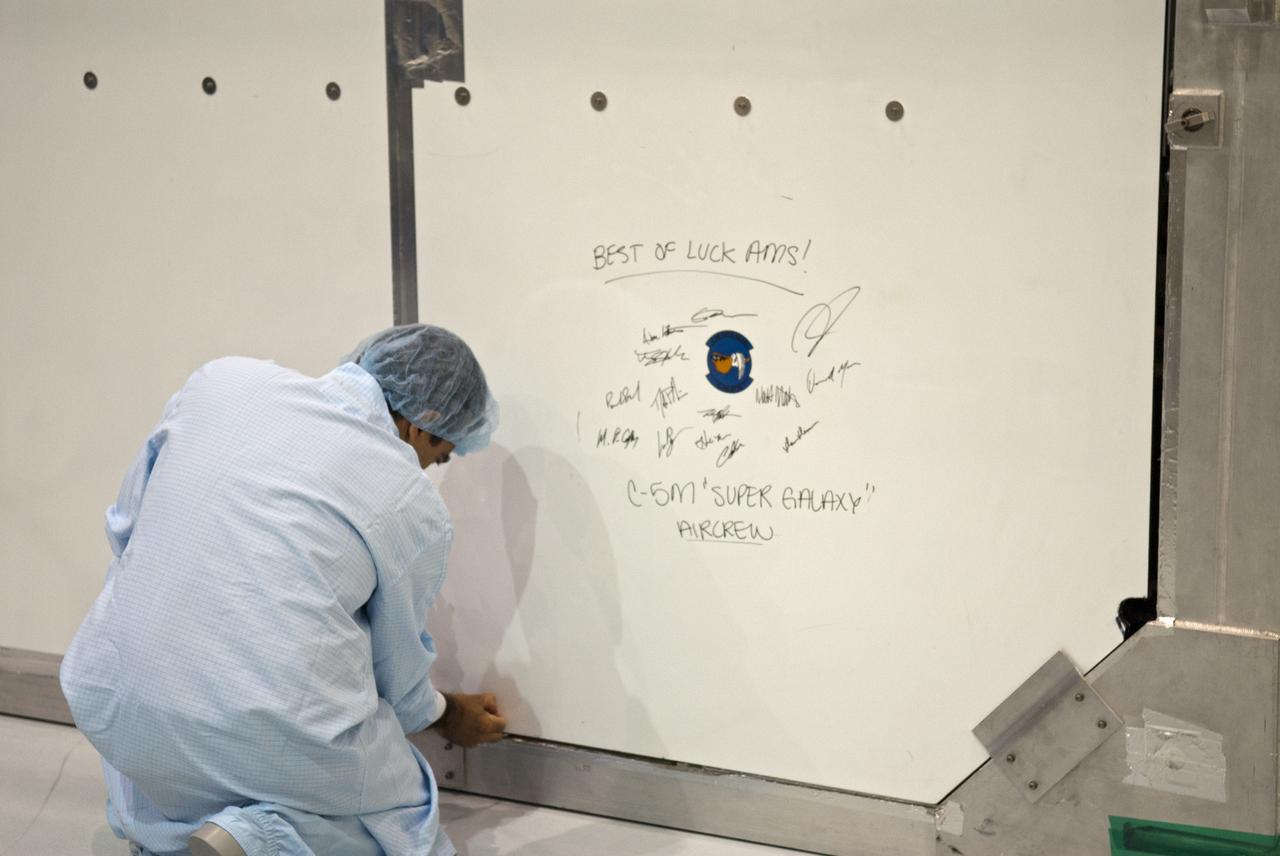
CAPE CANAVERAL, Fla. -- In the Space Station Processing Facility at NASA's Kennedy Space Center in Florida, a technician releases the bolts on a panel that protected the Alpha Magnetic Spectrometer, or AMS, during shipment. The Air Force C-5M flight crew that delivered AMS to Kennedy's Shuttle Landing Facility left their signatures and good wishes for the success of the mission on the panel. AMS, a state-of-the-art particle physics detector, is designed to operate as an external module on the International Space Station. It will use the unique environment of space to study the universe and its origin by searching for dark matter. The STS-134 crew will fly AMS to the International Space Station aboard space shuttle Endeavour, targeted to launch Feb. 26, 2011. Photo credit: NASA/Frankie Martin
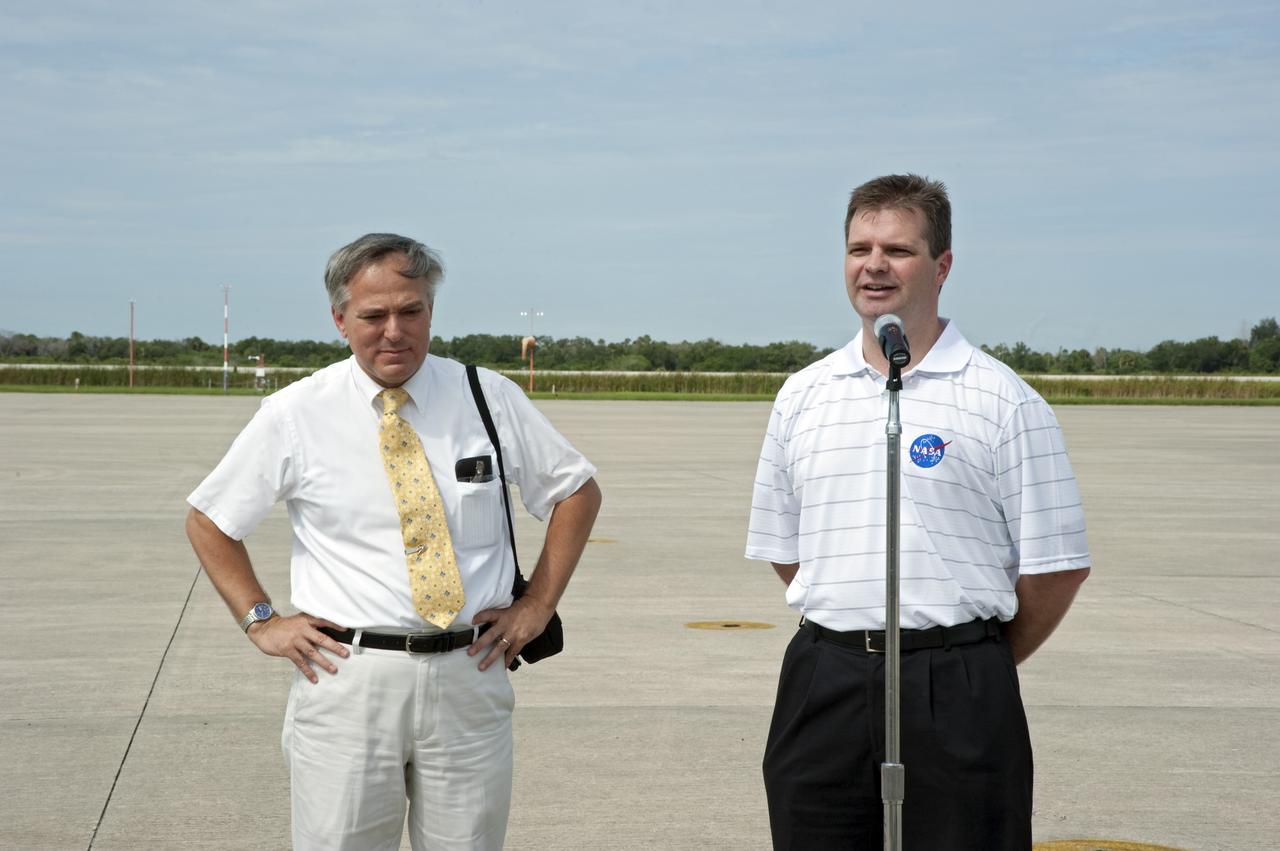
CAPE CANAVERAL, Fla. -- Mark Sistilli, AMS Program Manager from NASA Headquarters looks on as Trent Martin, AMS Project Manager from NASA's Johnson Space Center in Houston speaks to the media prior to the arrival of the Alpha Magnetic Spectrometer, or AMS, to the Shuttle Landing Facility at NASA's Kennedy Space Center in Florida. AMS, a state-of-the-art particle physics detector, is designed to operate as an external module on the International Space Station. It will use the unique environment of space to study the universe and its origin by searching for dark matter. The STS-134 crew will fly AMS to the International Space Station aboard space shuttle Endeavour, targeted to launch Feb. 26, 2011. Photo credit: NASA/Kim Shiflett
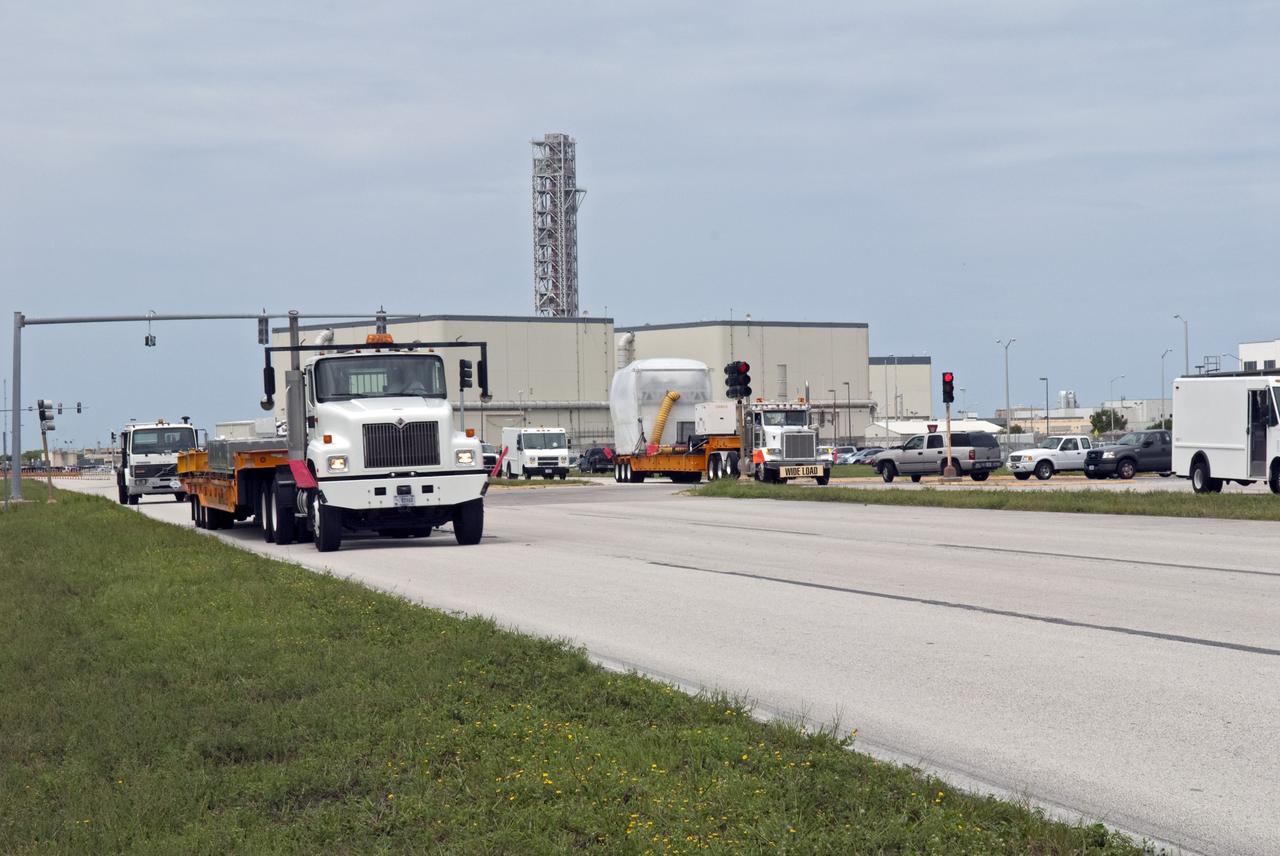
CAPE CANAVERAL, Fla. -- At NASA's Kennedy Space Center in Florida, a tractor-trailer carrying the Alpha Magnetic Spectrometer, or AMS, is on its way to the Space Station Processing Facility, where it will be processed for launch. AMS arrived on Kennedy's Shuttle Landing Facility aboard an Air Force C-5M aircraft from Europe. AMS, a state-of-the-art particle physics detector, is designed to operate as an external module on the International Space Station. It will use the unique environment of space to study the universe and its origin by searching for dark matter. The STS-134 crew will fly AMS to the International Space Station aboard space shuttle Endeavour, targeted to launch Feb. 26, 2011. Photo credit: NASA/Frankie Martin
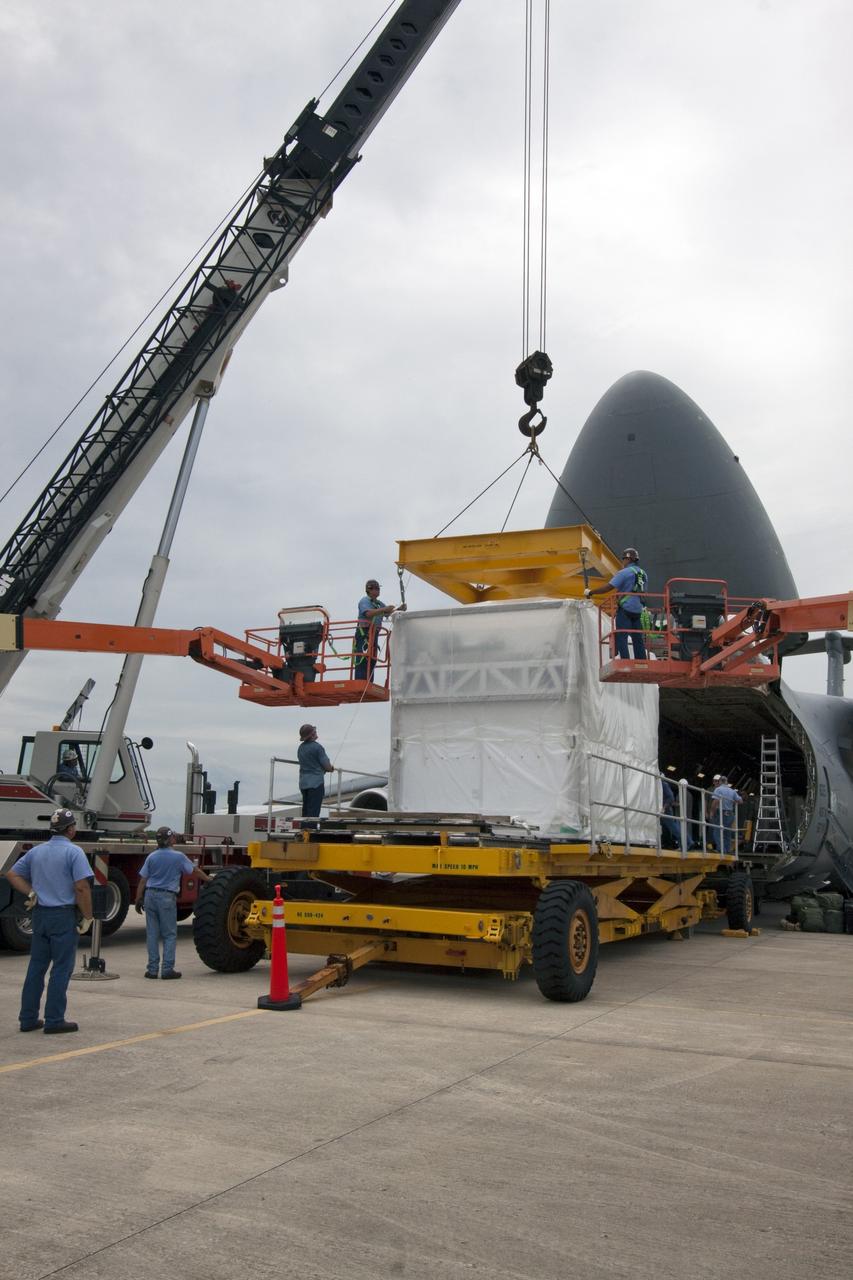
CAPE CANAVERAL, Fla. -- At NASA's Kennedy Space Center in Florida, workers begin to offload the next section of the Alpha Magnetic Spectrometer, or AMS, from an Air Force C-5M aircraft. A tractor-trailer will transport the AMS from the Shuttle Landing Facility runway to the Space Station Processing Facility, where it will be processed for launch. AMS, a state-of-the-art particle physics detector, is designed to operate as an external module on the International Space Station. It will use the unique environment of space to study the universe and its origin by searching for dark matter. AMS will fly to the International Space Station aboard space shuttle Endeavour's STS-134 mission, targeted to launch Feb. 26, 2011. Photo credit: NASA/Jack Pfaller
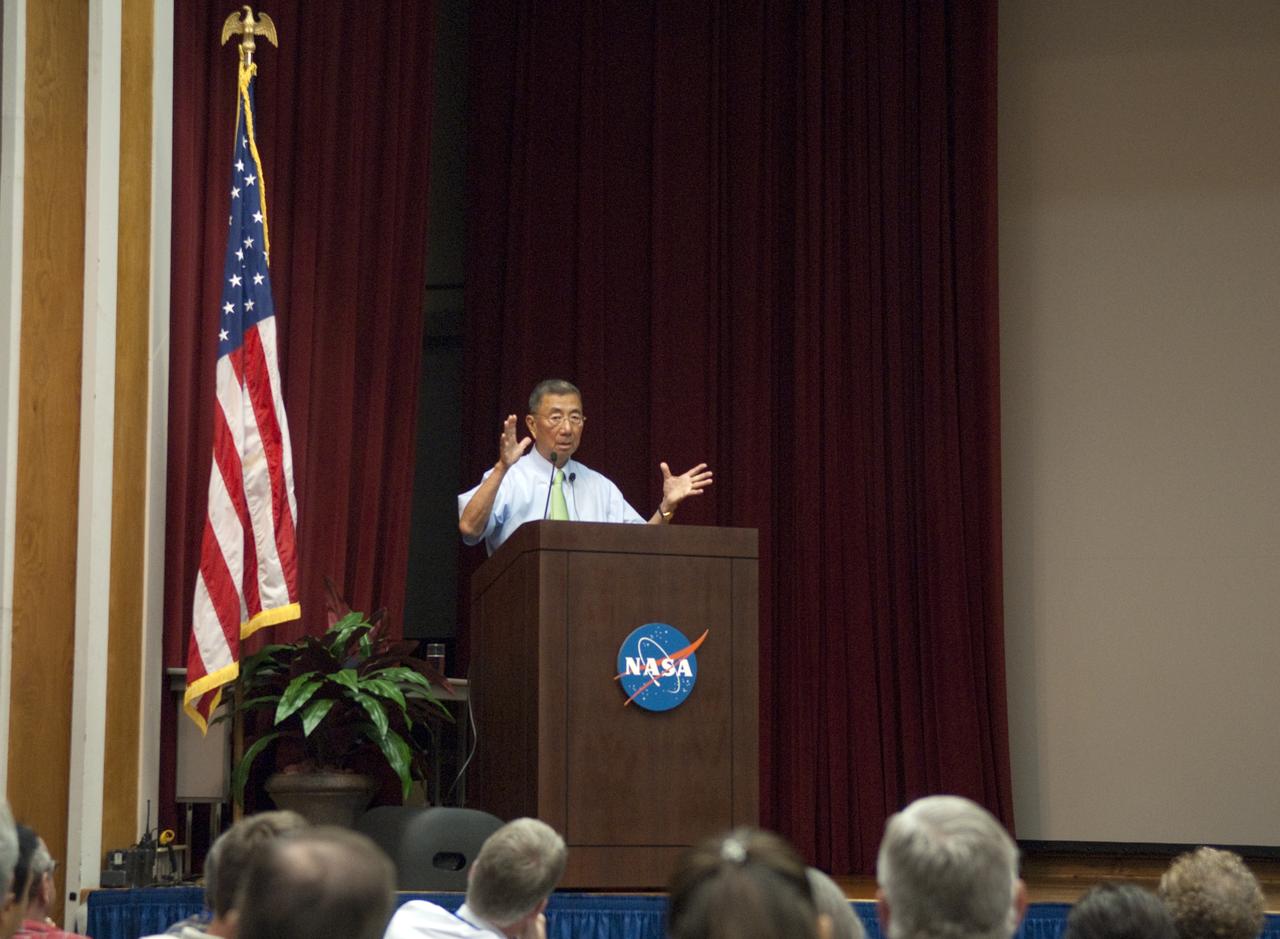
PROFESSOR SAMUEL TING - ALPHA MAGNETIC SPECTROMETER (AMS) PRESENTATION TO KSC EMPLOYEES
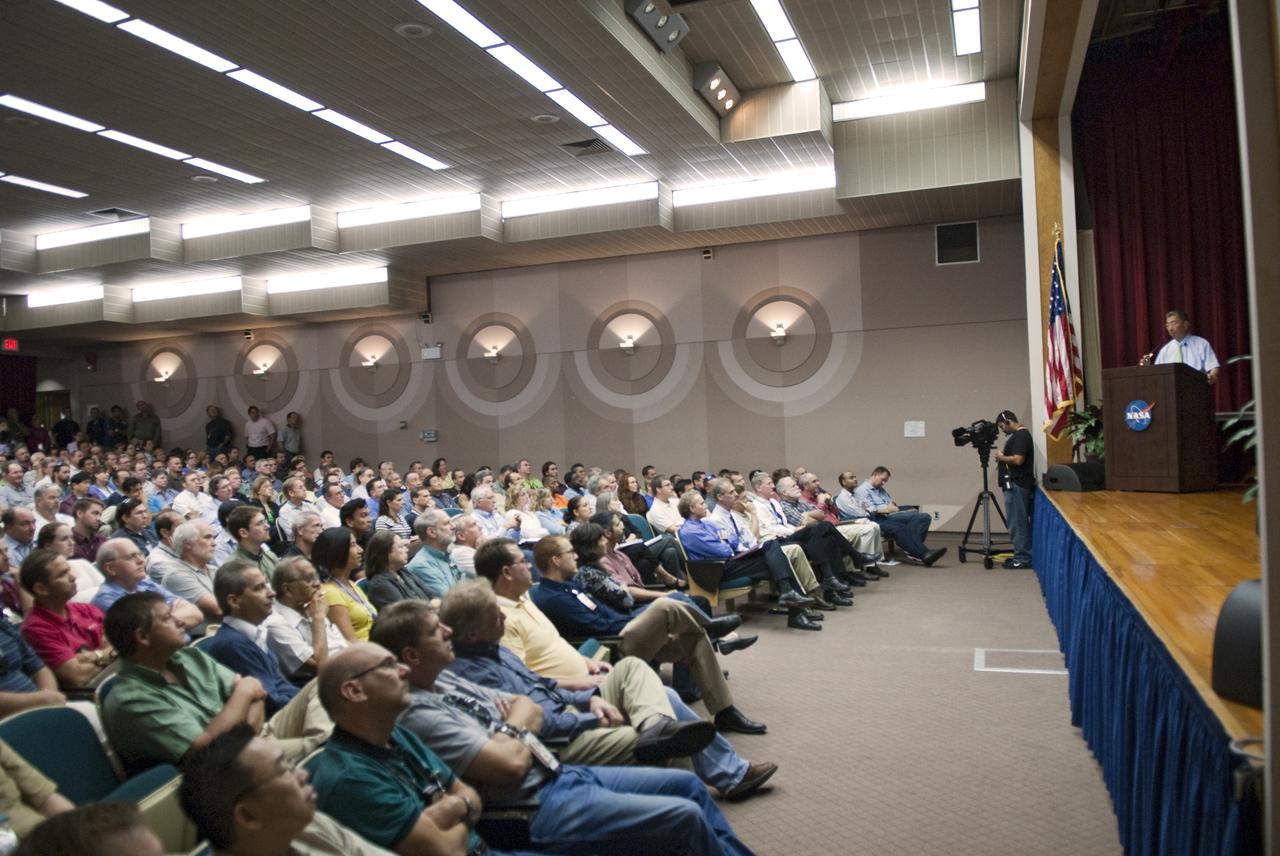
PROFESSOR SAMUEL TING - ALPHA MAGNETIC SPECTROMETER (AMS) PRESENTATION TO KSC EMPLOYEES
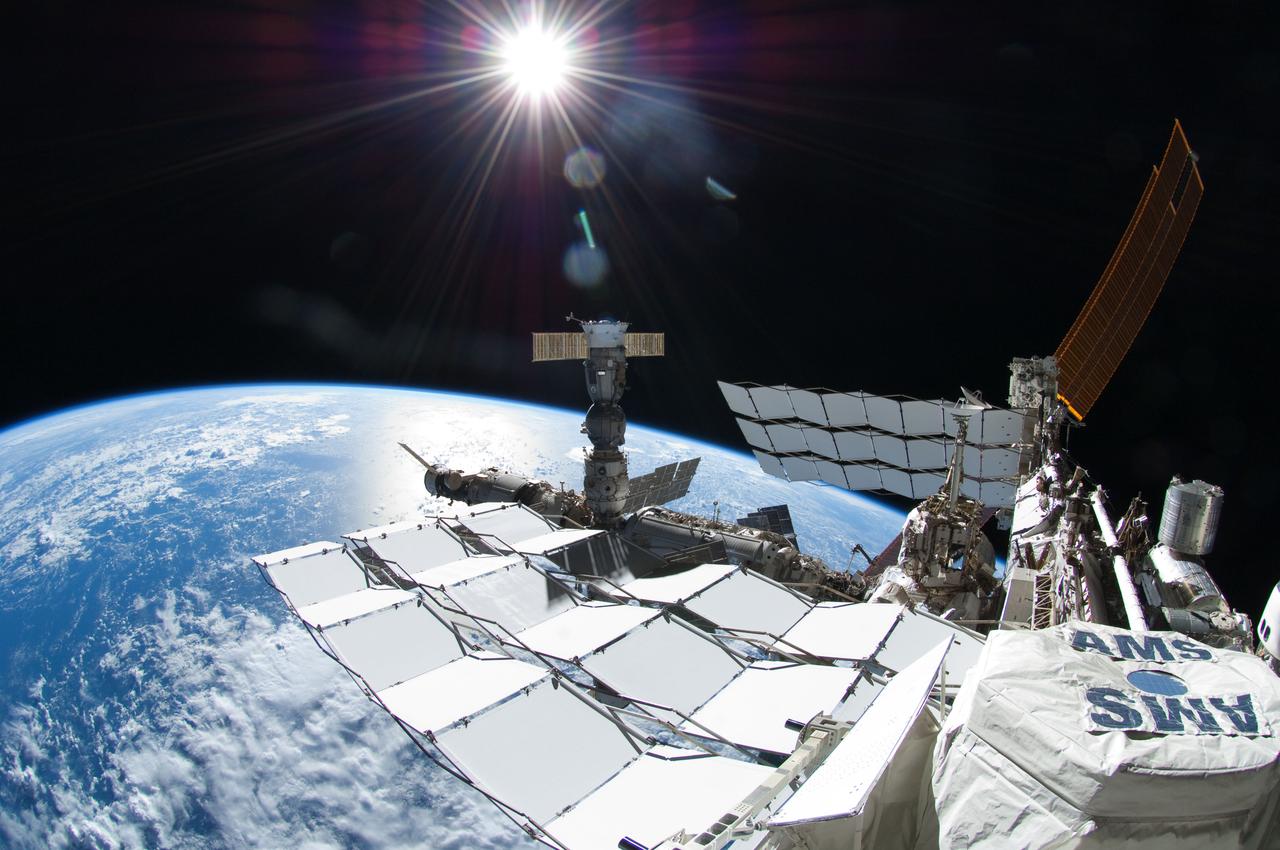
iss028e016135 (7/12/2011) --- Exterior view of the International Space Station (ISS) taken during a session of Extravehicular Activity (EVA) with a fisheye camera. The Alpha Magnetic Spectrometer - 2 (AMS-2) is visible in the right foreground and a Soyuz spacecraft is visible docked to the Pirs Docking Compartment (DC1/CO1). The Alpha Magnetic Spectrometer - 02 (AMS-02) is a high profile space-based particle physics experiment. As the largest and most advanced magnetic spectrometer in space, AMS-02 will collect information from cosmic sources emanating from stars and galaxies millions of light years beyond the Milky Way.
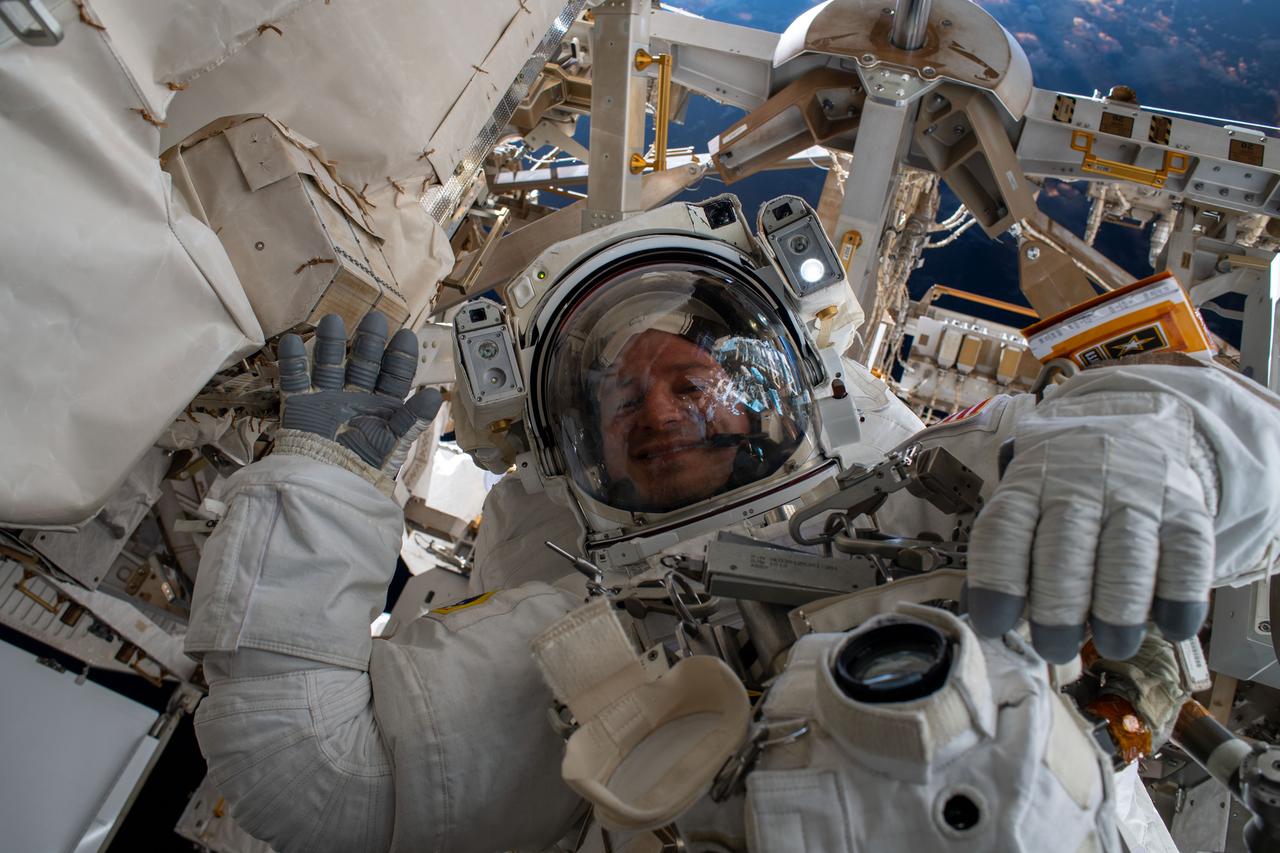
iss061e040708 (Nov. 15, 2019) --- NASA astronaut Andrew Morgan waves as he is photographed during the first spacewalk to repair the Alpha Magnetic Spectrometer, a cosmic particle detector on the International Space Station.

iss061e142299 (Jan. 25, 2020) --- Spacewalker (bottom left) Luca Parmitano works on get-ahead tasks after completing thermal repairs on the Alpha Magnetic Spectrometer, a dark matter and antimatter detector.
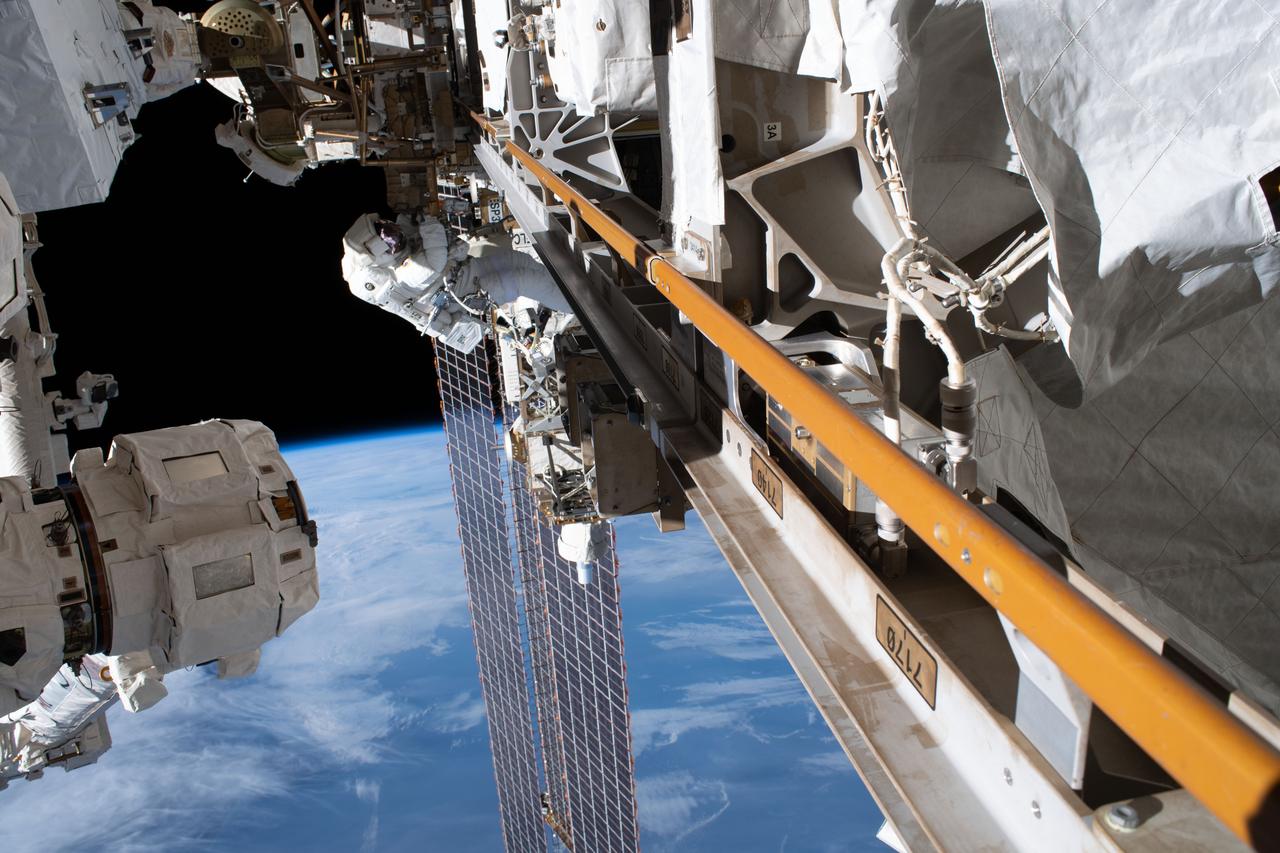
iss061e058144 (Nov. 22, 2019) --- Astronaut Andrew Morgan of NASA is tethered to the Starboard-3 truss segment work site during the second spacewalk to repair the International Space Station's cosmic particle detector, the Alpha Magnetic Spectrometer.
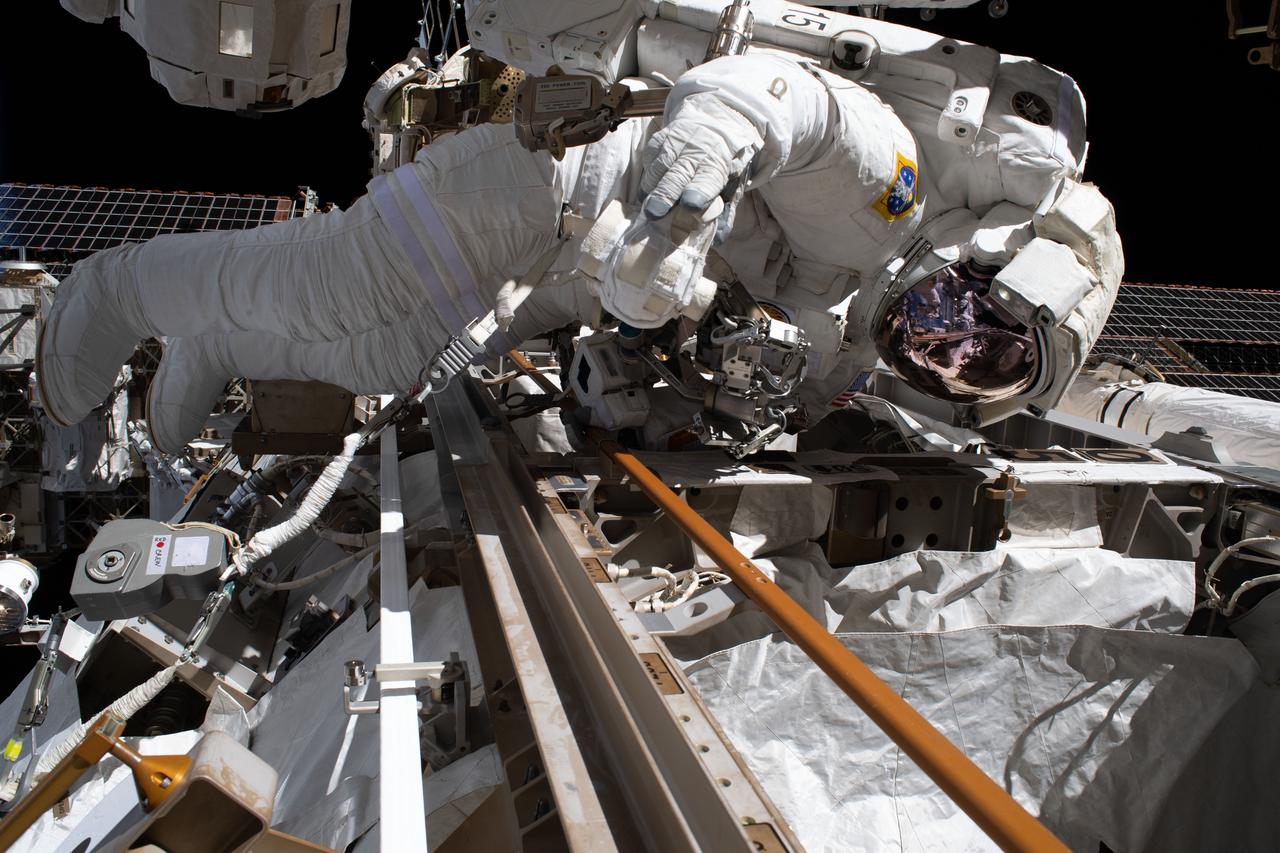
iss061e058236 (Nov. 22, 2019) --- Astronaut Andrew Morgan of NASA is tethered to the Starboard-3 truss segment work site during the second spacewalk to repair the International Space Station's cosmic particle detector, the Alpha Magnetic Spectrometer.
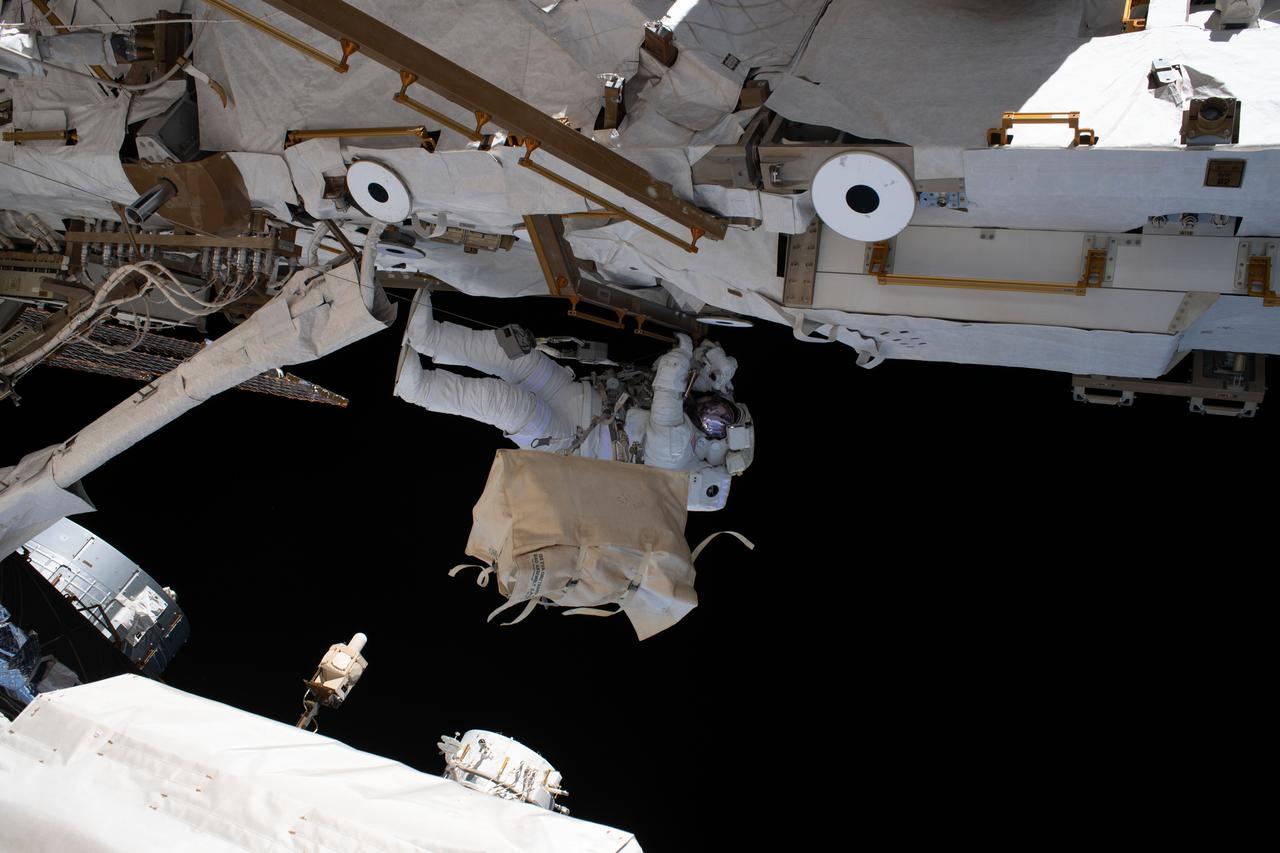
iss061e066433 (Dec. 2, 2019) --- NASA astronaut Andrew Morgan is tethered to the International Space Station during the third spacewalk to upgrade the Alpha Magnetic Spectrometer's thermal pump system.

iss061e142293 (Jan. 25, 2020) --- Spacewalkers Andrew Morgan (left) and Luca Parmitano (bottom right) work on get-ahead tasks after completing thermal repairs on the Alpha Magnetic Spectrometer, a dark matter and antimatter detector.
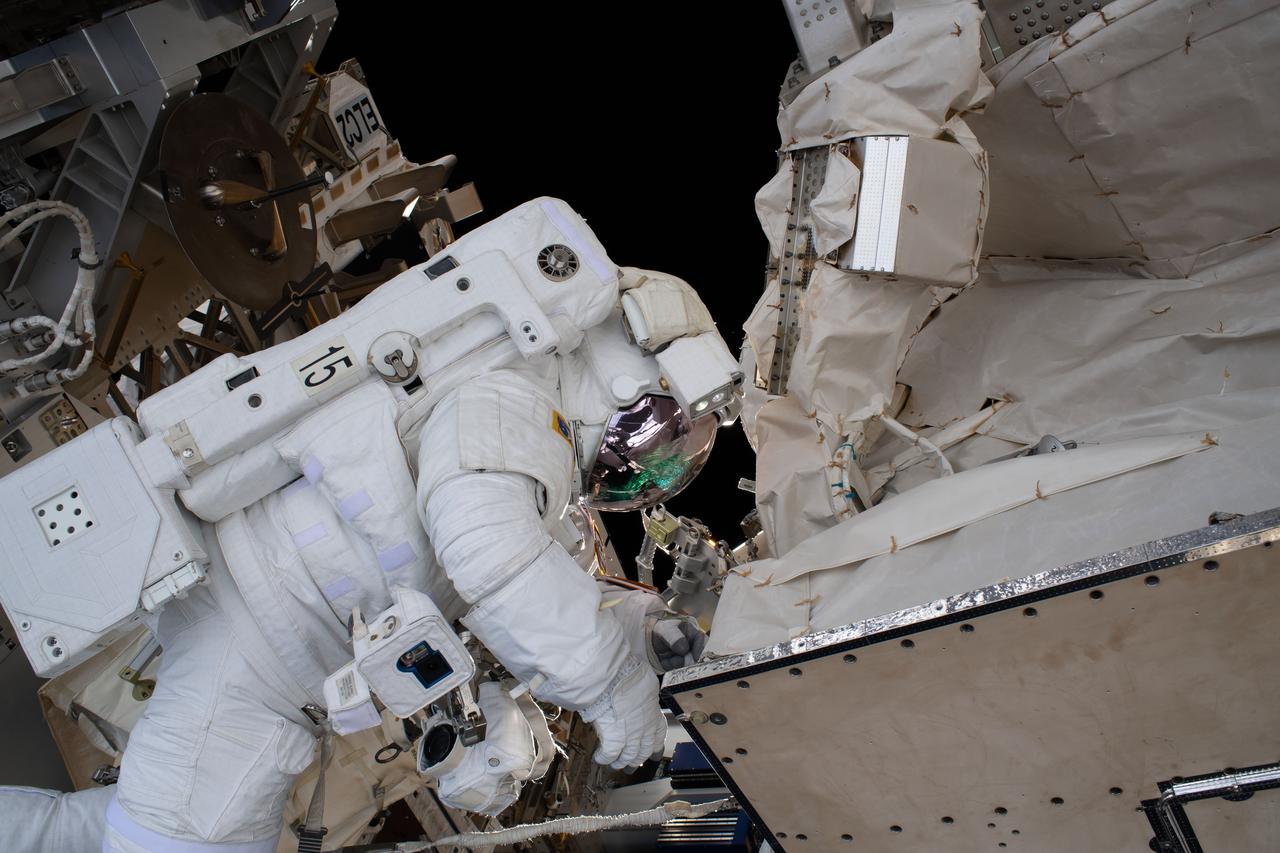
iss061e065826 (Dec. 2, 2019) --- NASA astronaut Andrew Morgan is tethered to the International Space Station during the third spacewalk to upgrade the Alpha Magnetic Spectrometer's thermal pump system.
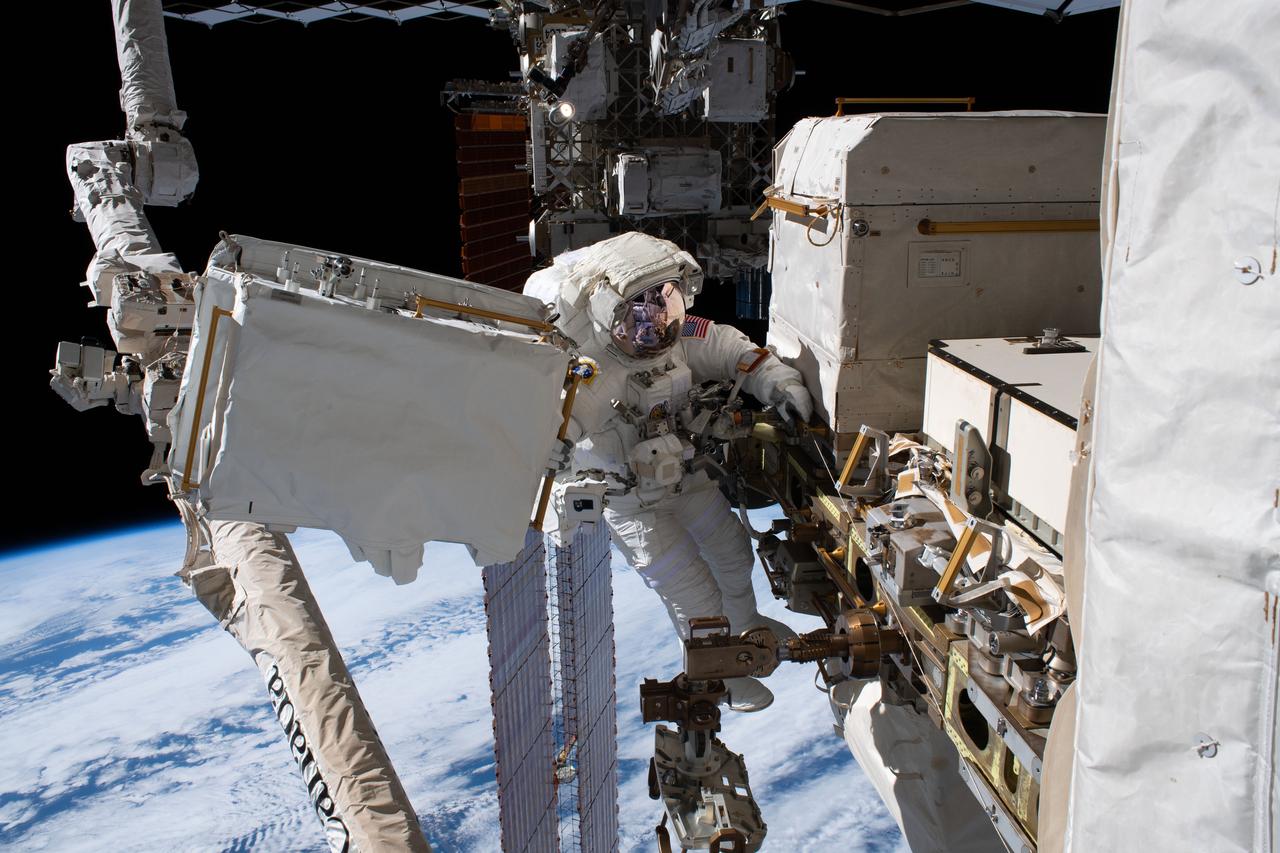
iss061e065379 (Dec. 2, 2019) --- NASA astronaut Andrew Morgan is tethered to the International Space Station with the Earth 250 miles below during the third spacewalk to upgrade the Alpha Magnetic Spectrometer's thermal pump system.
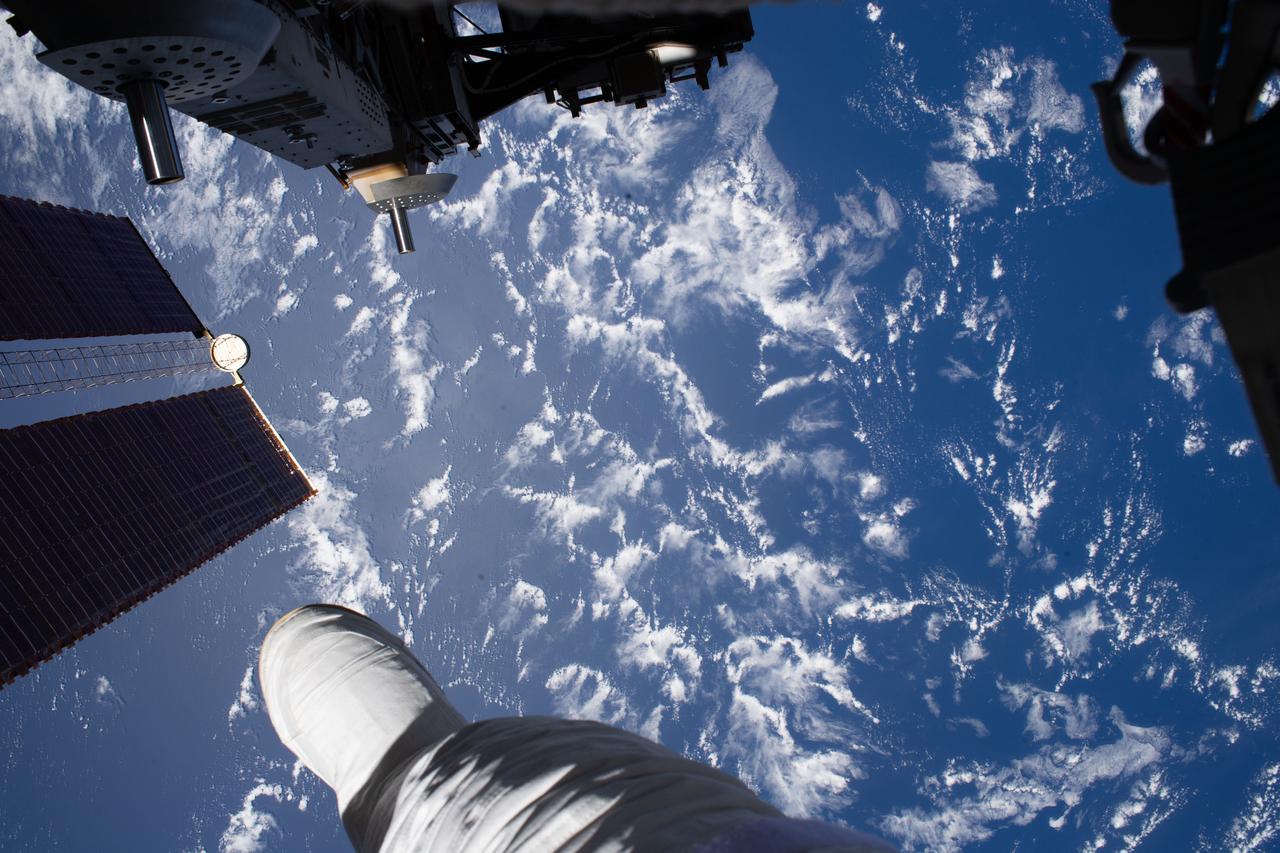
iss061e064798 (Dec. 2, 2019) --- NASA astronaut Andrew Morgan photographed the Earth 250 miles below him, with his foot in the foreground, during the third spacewalk to upgrade the Alpha Magnetic Spectrometer's thermal pump system.

iss061e142334 (Jan. 25, 2020) --- Spacewalkers Andrew Morgan and Luca Parmitano work on get-ahead tasks after completing thermal repairs on the Alpha Magnetic Spectrometer, a dark matter and antimatter detector.

iss061e058179 (Nov. 22, 2019) --- Astronaut Andrew Morgan of NASA is tethered to the Starboard-3 truss segment work site during the second spacewalk to repair the International Space Station's cosmic particle detector, the Alpha Magnetic Spectrometer.

iss061e143751 (Jan. 25, 2020) --- NASA astronaut Andrew Morgan takes pictures with a camera shielded from the effects of microgravity during a spacewalk to finalize thermal repairs on the Alpha Magnetic Spectrometer, a dark matter and antimatter detector.
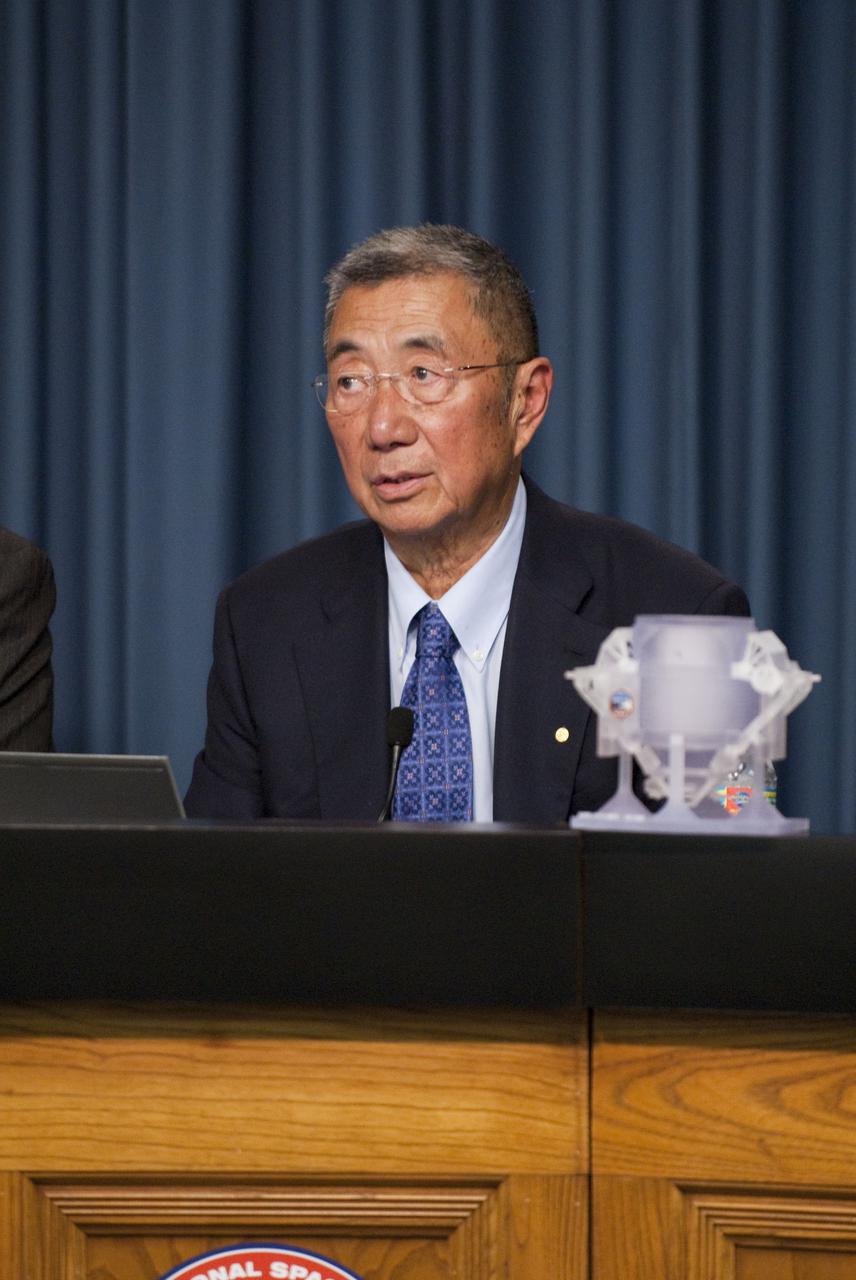
CAPE CANAVERAL, Fla. -- The International Space Station Science and Technology Briefing was held in the Press Site auditorium at NASA's Kennedy Space Center in Florida. Speaking to media about the Alpha Magnetic Spectrometer-2 (AMS) is Professor Sam Ting, AMS-2 principal investigator at the Massachusetts Institute of Technology. Endeavour and its crew will deliver the Express Logistics Carrier-3, Alpha Magnetic Spectrometer-2 (AMS), a high-pressure gas tank and additional spare parts for the Dextre robotic helper to the International Space Station. Launch is scheduled for April 29 at 3:47 p.m. EDT. This will be the final spaceflight for Endeavour. For more information visit, www.nasa.gov_mission_pages_shuttle_shuttlemissions_sts134_index.html. Photo credit: NASA_Kim Shiflett
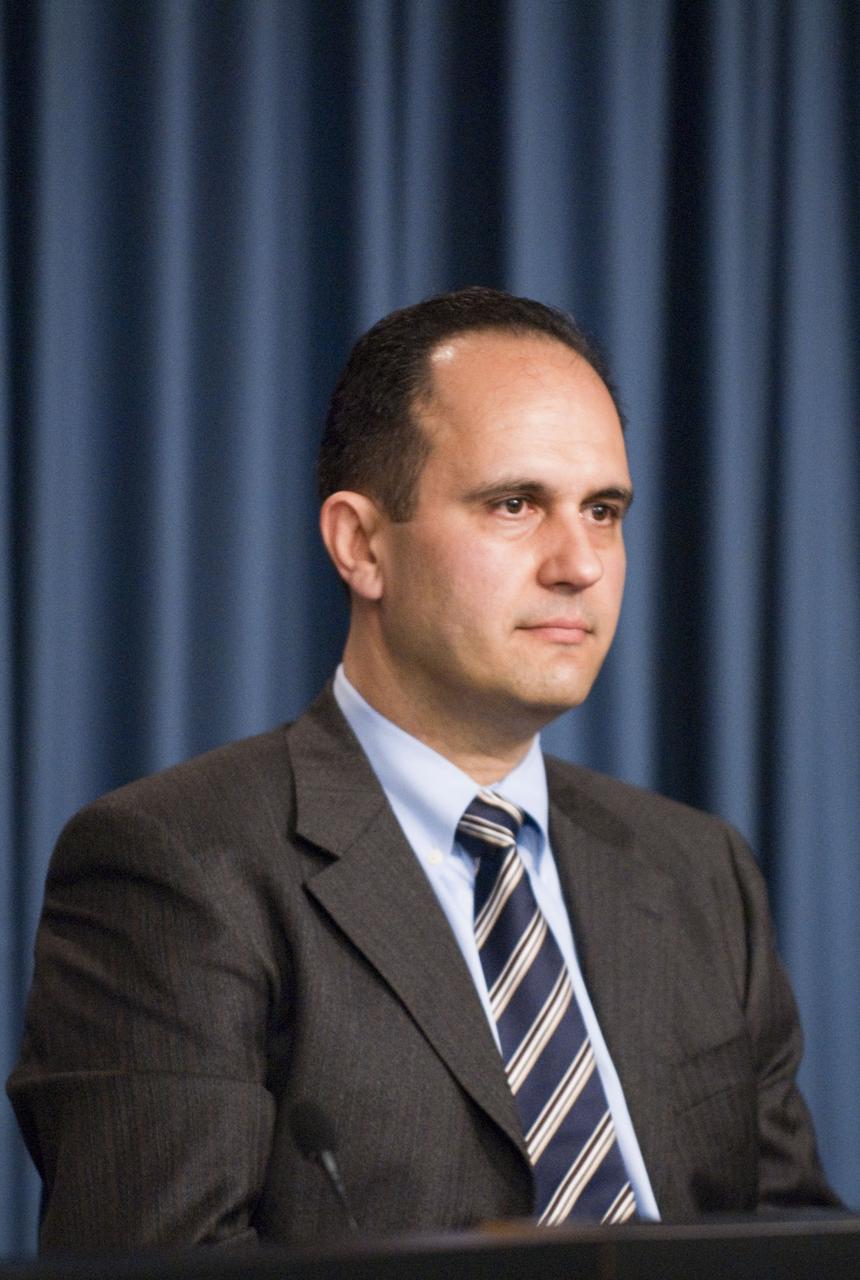
CAPE CANAVERAL, Fla. -- The International Space Station Science and Technology Briefing was held in the Press Site auditorium at NASA's Kennedy Space Center in Florida. Speaking to media about the Alpha Magnetic Spectrometer-2 (AMS) is Saul Gonzales, AMS program manager from the U.S. Department of Energy. Endeavour and its crew will deliver the Express Logistics Carrier-3, Alpha Magnetic Spectrometer-2 (AMS), a high-pressure gas tank and additional spare parts for the Dextre robotic helper to the International Space Station. Launch is scheduled for April 29 at 3:47 p.m. EDT. This will be the final spaceflight for Endeavour. For more information visit, www.nasa.gov_mission_pages_shuttle_shuttlemissions_sts134_index.html. Photo credit: NASA_Kim Shiflett
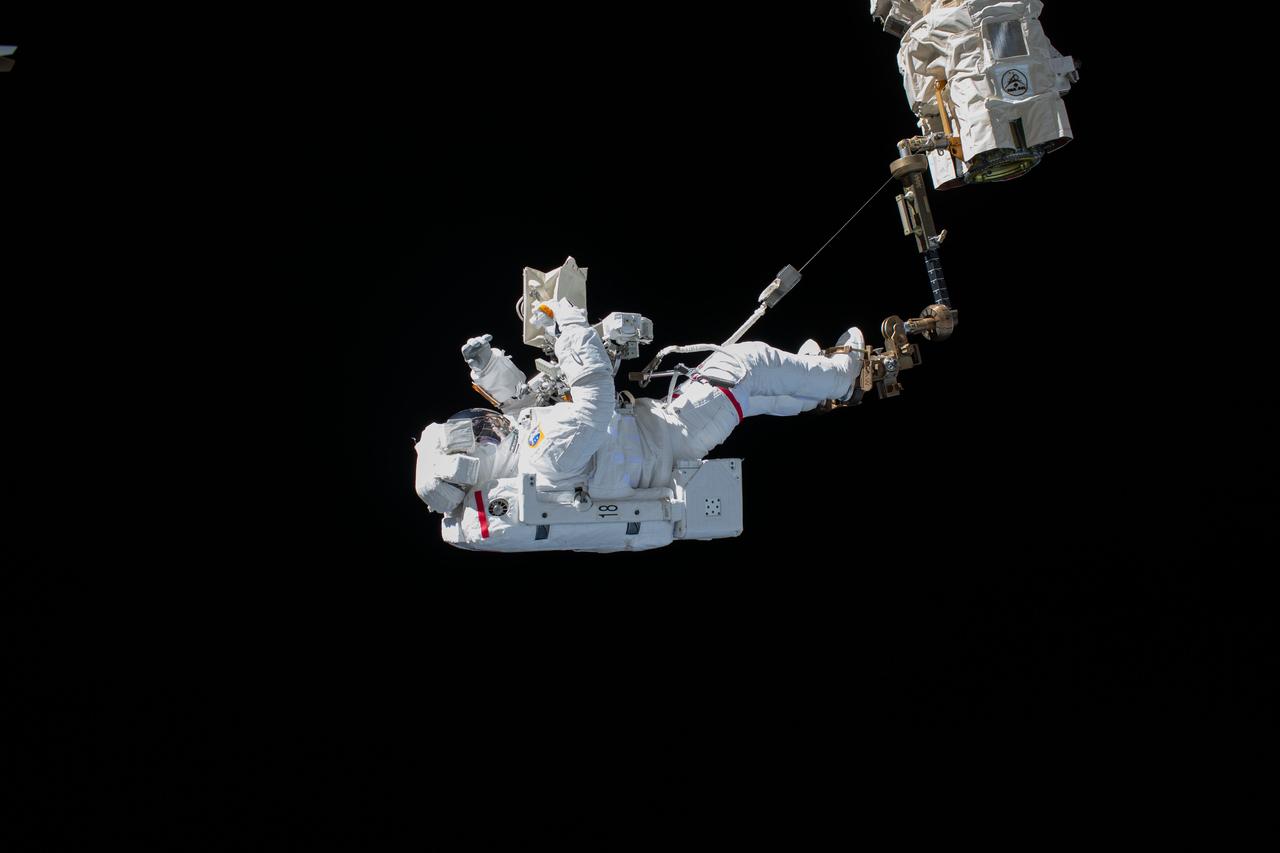
iss061e045275 (Nov. 15, 2019) --- ESA (European Space Agency) astronaut Luca Parmitano is pictured attached to the Canadarm2 robotic arm during the first spacewalk to repair the Alpha Magnetic Spectrometer, the International Space Station's cosmic particle detector.
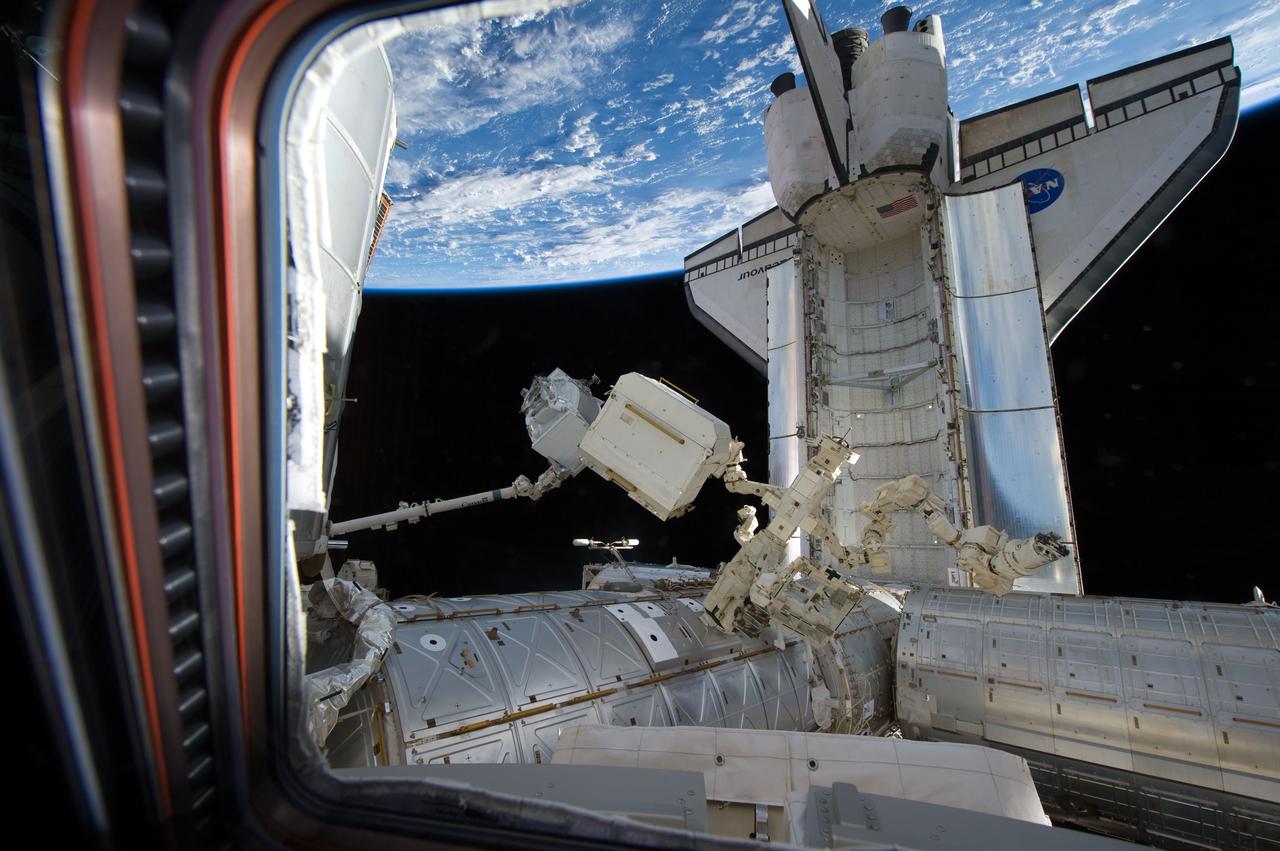
S134-E-007444 (19 May 2011) --- In the grasp of the International Space Station?s Canadarm2, the Alpha Magnetic Spectrometer-2 (AMS) is transferred from space shuttle Endeavour?s payload bay for installation on the station?s starboard truss. Photo credit: NASA
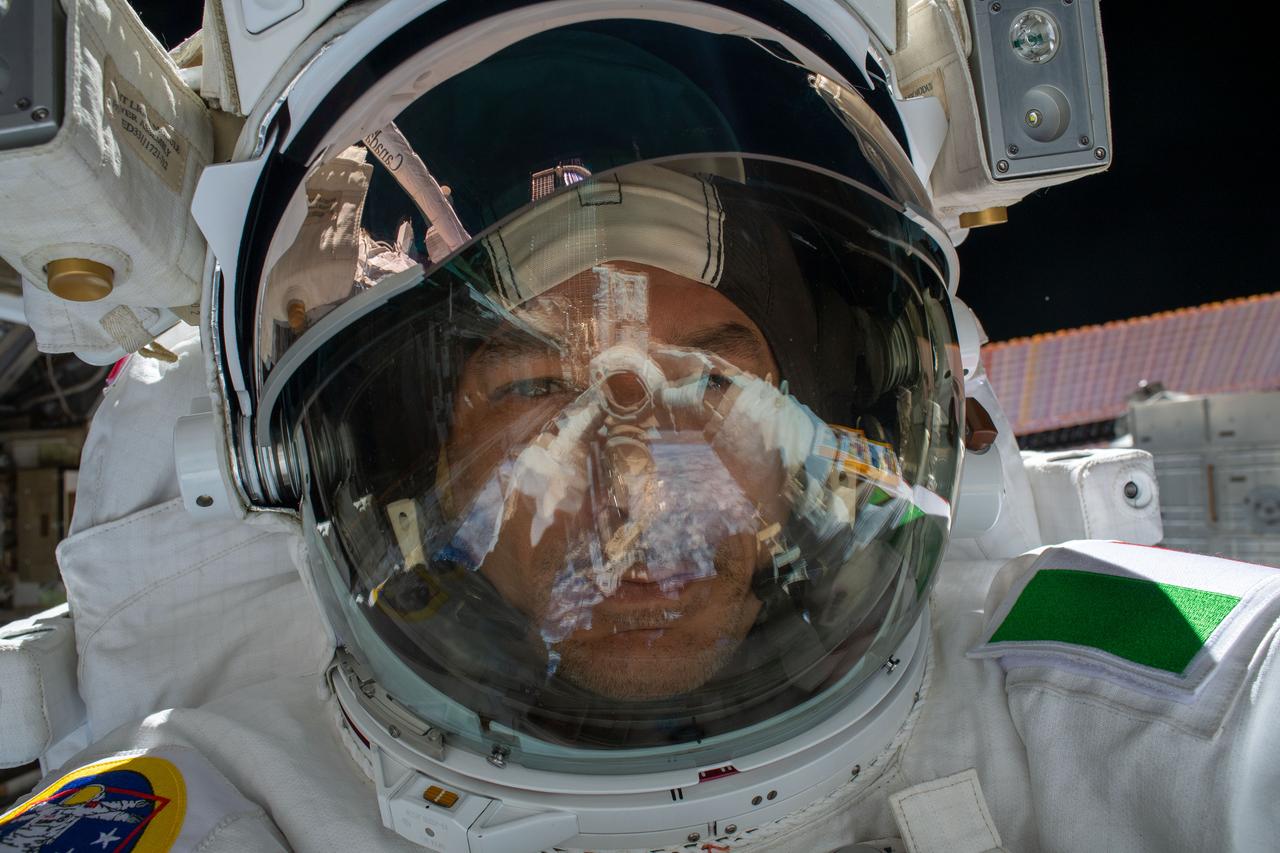
iss061e040949 (Nov. 15, 2019) --- ESA (European Space Agency) astronaut Luca Parmitano takes an out-of-this-world "space-selfie" with his spacesuit's helmet visor up during the first spacewalk to repair the Alpha Magnetic Spectrometer, the International Space Station's cosmic particle detector.
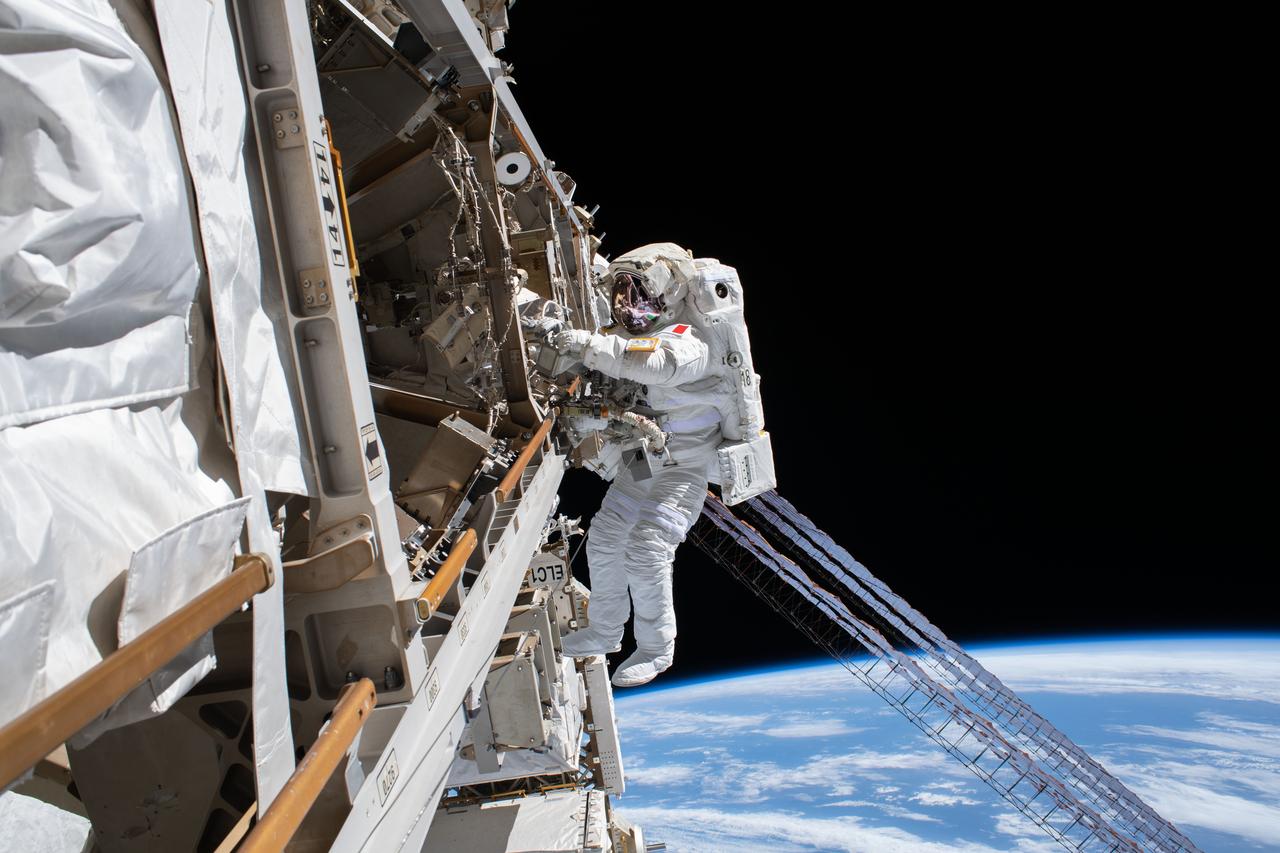
iss061e143462 (Jan. 25, 2020) --- ESA (European Space Agency) astronaut Luca Parmitano is pictured tethered to the International Space Station while finalizing thermal repairs on the Alpha Magnetic Spectrometer, a dark matter and antimatter detector, during a spacewalk that lasted 6 hours and 16 minutes.
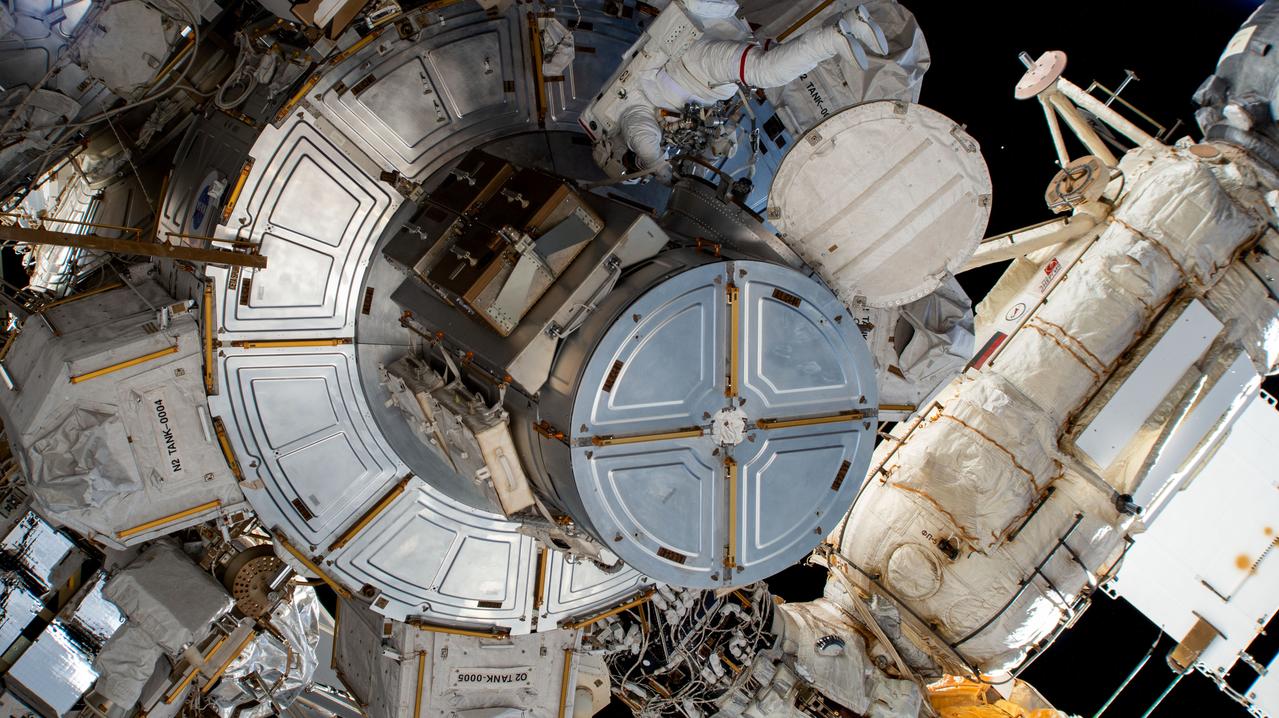
iss072e487415 (Jan. 16, 2025) --- NASA astronaut and Expedition 72 Flight Engineer Nick Hague is pictured shortly after he exited the International Space Station's Quest airlock beginning a spacewalk to service astrophysics hardware including the NICER X-ray telescope and the Alpha Magnetic Spectrometer.
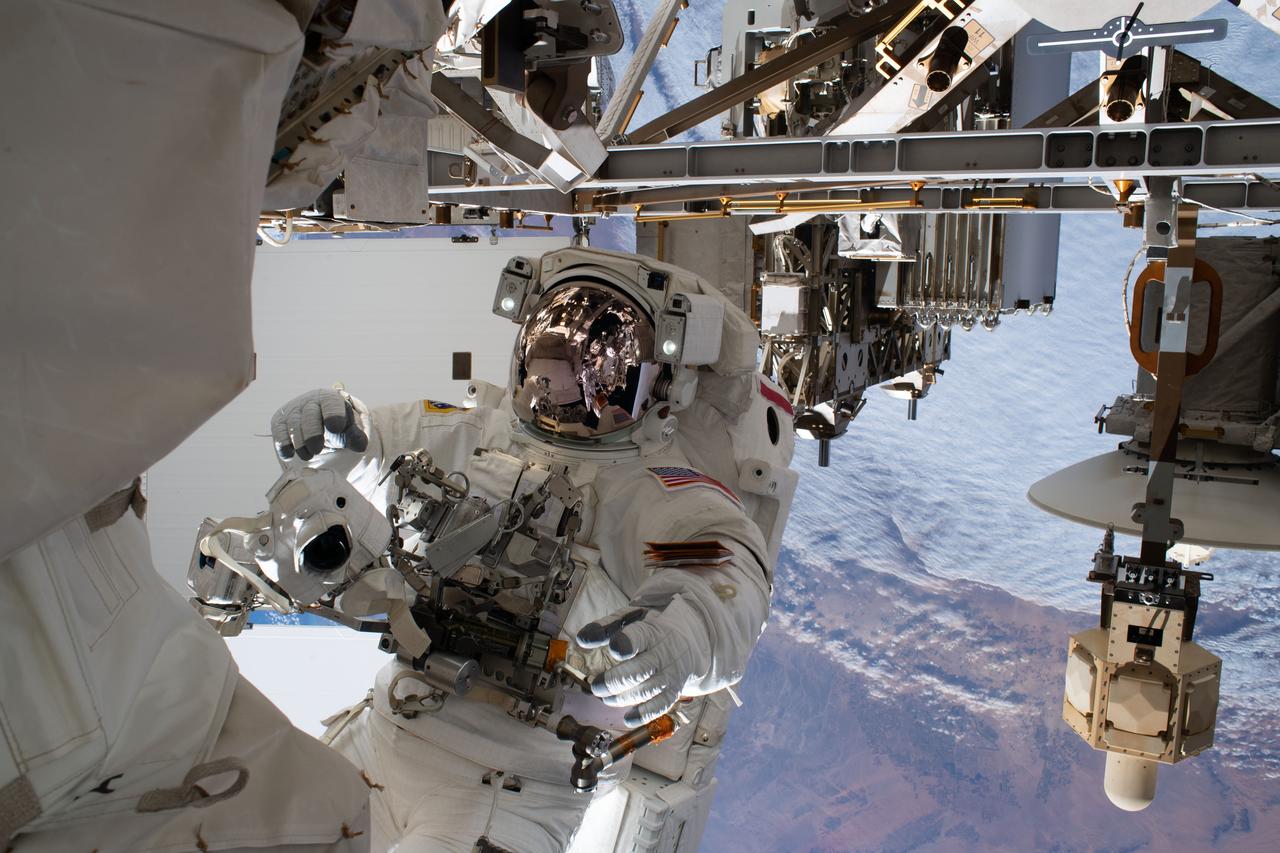
iss061e143733 (Jan. 25, 2020) --- NASA astronaut Andrew Morgan is pictured tethered to the International Space Station while finalizing thermal repairs on the Alpha Magnetic Spectrometer, a dark matter and antimatter detector, during a spacewalk that lasted 6 hours and 16 minutes.
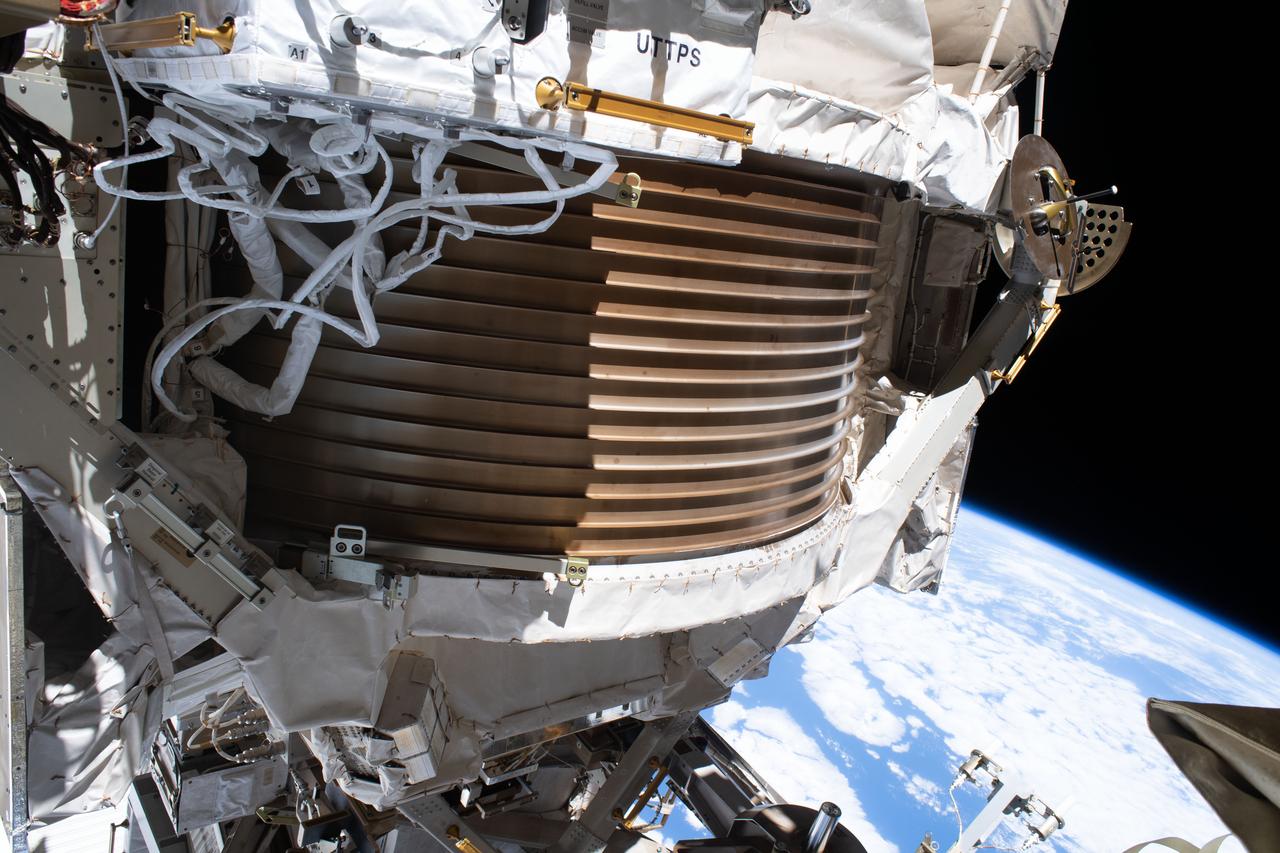
iss061e065188 (Dec. 2, 2019) --- The Alpha Magnetic Spectrometer (AMS) is a cosmic particle detector attached to the International Space Station's Starboard Truss-3 structure and undergoing repairs to its thermal pump system during a series of spacewalks with astronauts Andrew Morgan and Luca Parmitano.
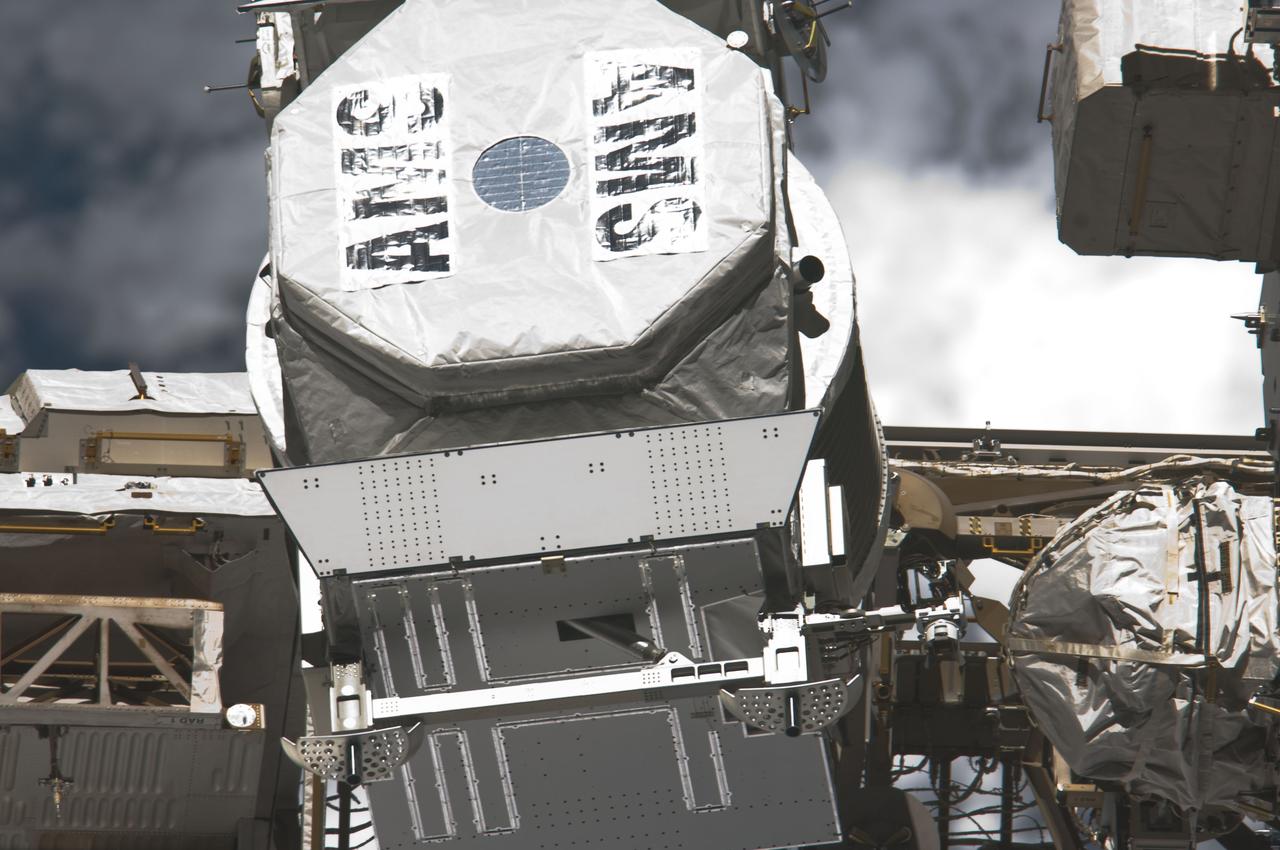
S134-E-010781 (30 May 2011) --- This image provides a close-up view of the Alpha Magnetic Spectrometer - 2 (AMS-2) photographed from inside the orbiter's cabin shortly after the space shuttle Endeavour undocked from the International Space Station (ISS) at the end of the STS-134 mission. Photo credit: NASA
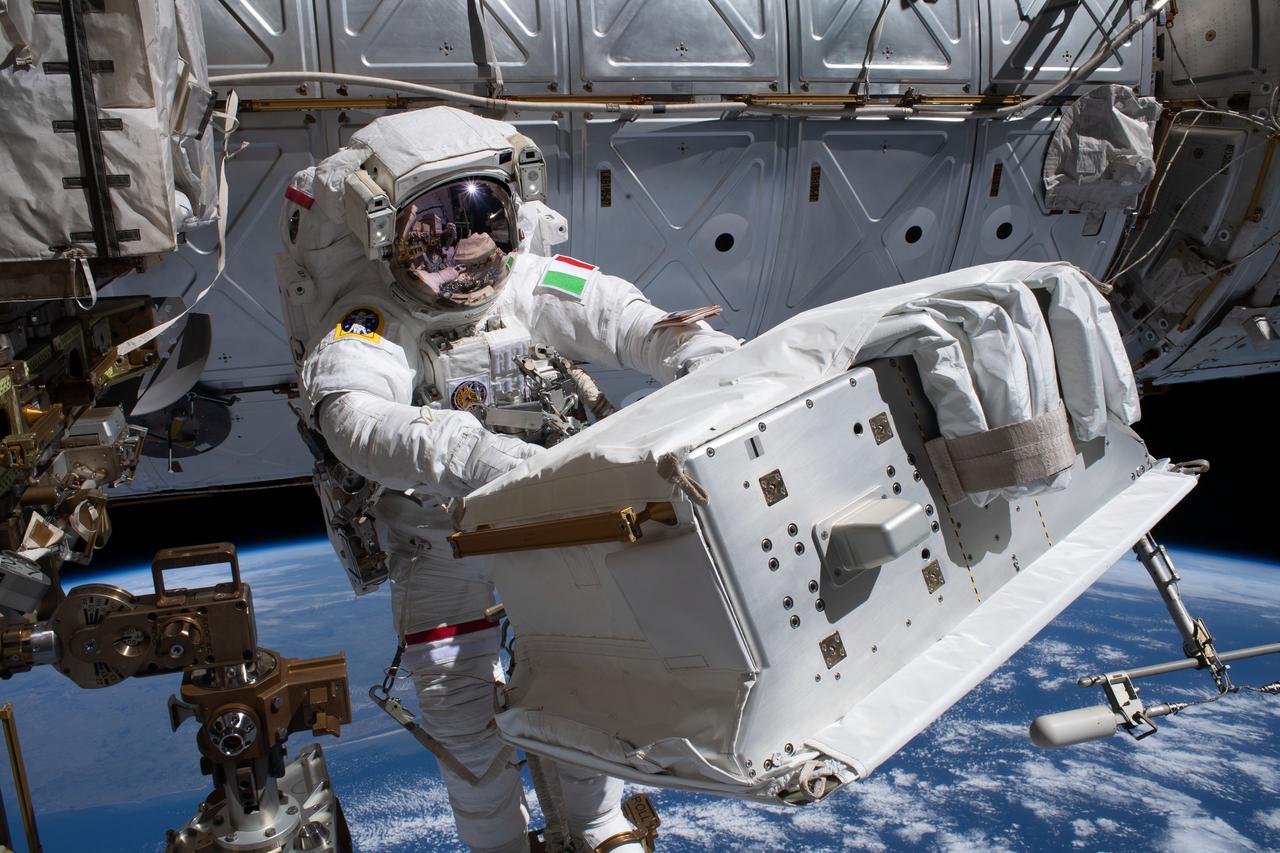
iss061e064794 (Dec. 2, 2019) --- ESA (European Space Agency) astronaut Luca Parmitano, attached to the Canadarm2 robotic arm, carries the new thermal pump system that was installed on the Alpha Magnetic Spectrometer (AMS) during the third spacewalk to upgrade the AMS, the International Space Station's cosmic particle detector.
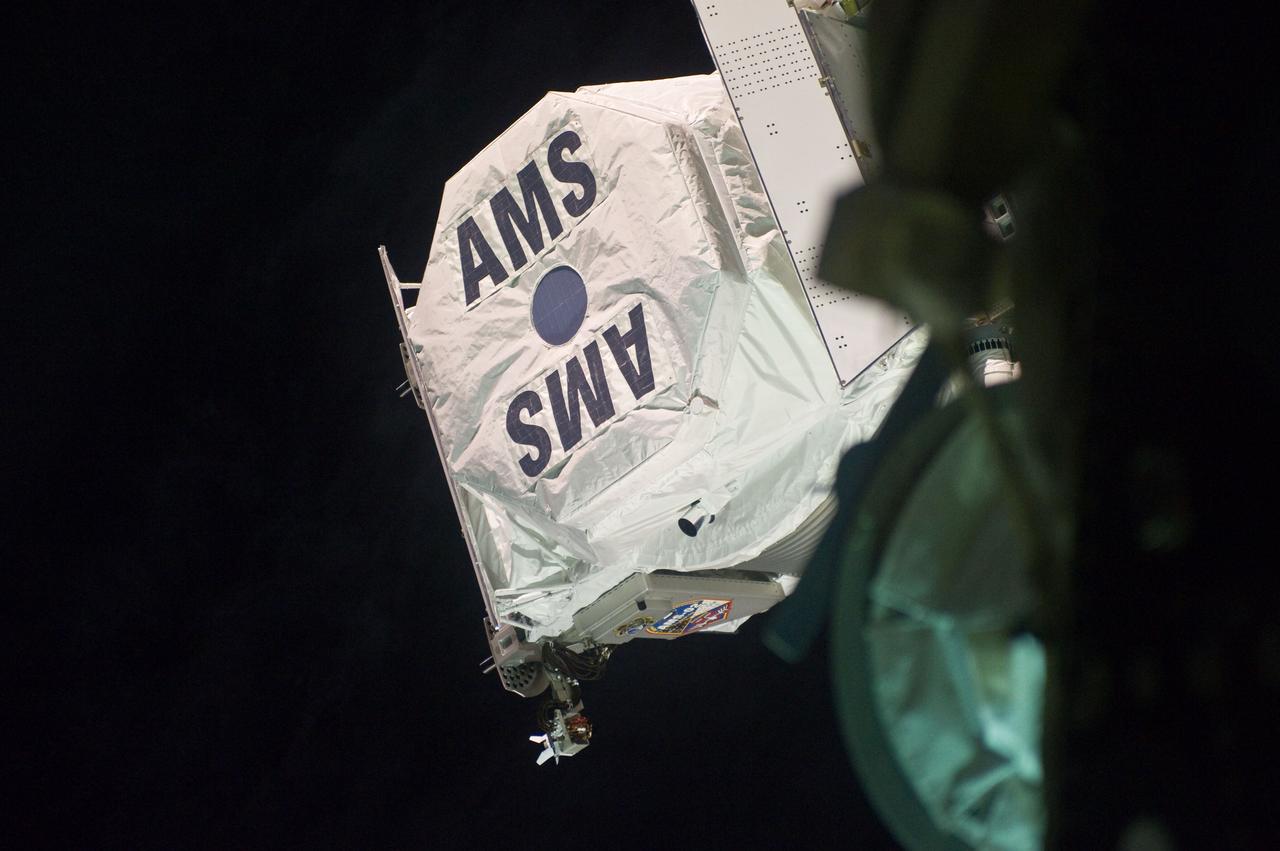
S134-E-007186 (19 May 2011) --- In the grasp of space shuttle Endeavour?s robotic Canadarm, the Alpha Magnetic Spectrometer-2 (AMS) is moved from Endeavour?s payload bay to be handed off to the International Space Station?s Canadarm2 for installation on the station?s starboard truss. Photo credit: NASA

iss061e143622 (Jan. 25, 2020) --- ESA (European Space Agency) astronaut Luca Parmitano is pictured tethered to the International Space Station while finalizing thermal repairs on the Alpha Magnetic Spectrometer, a dark matter and antimatter detector, during a spacewalk that lasted 6 hours and 16 minutes.
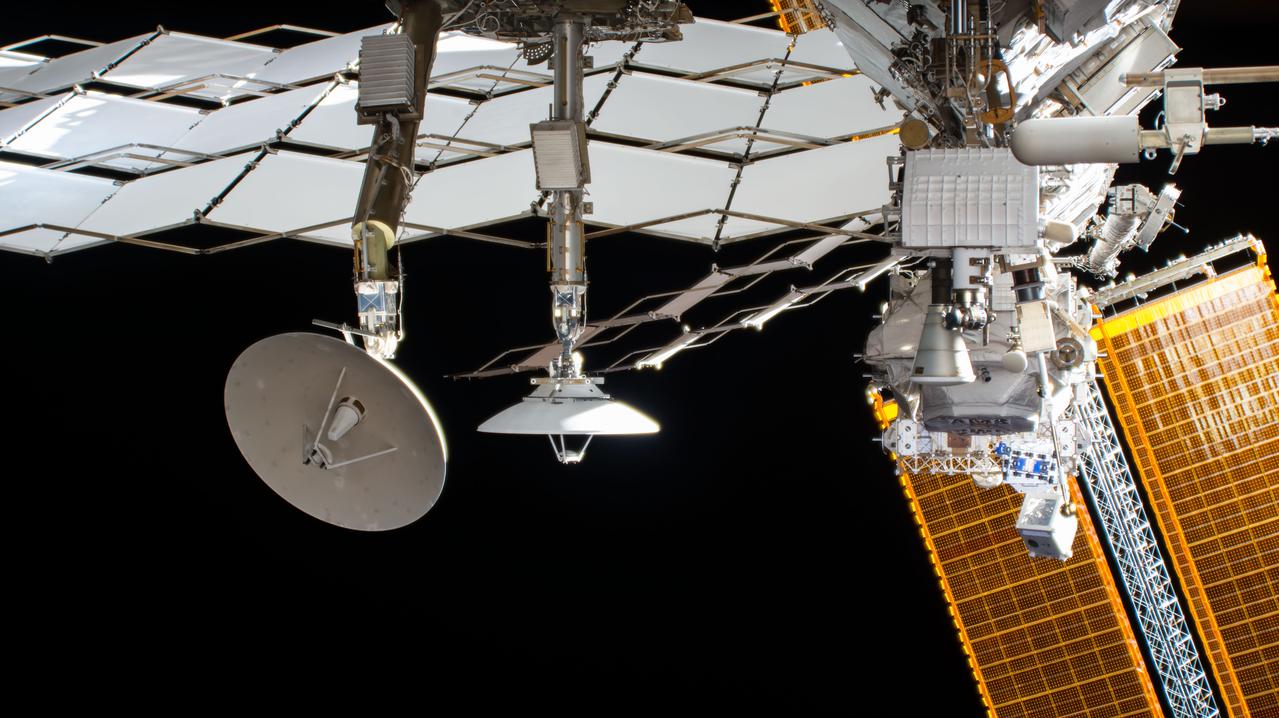
iss055e024025 (4/15/2018) - View of a radiator pane, solar array and the Alpha Magnetic Spectrometer - 02 (AMS-02) as seen by the External High Definition Camera (EHDC1). Also visible are Neutron Star Interior Composition Explorer (NICER) and Materials ISS Experiment Flight Facility (MISSE-FF).
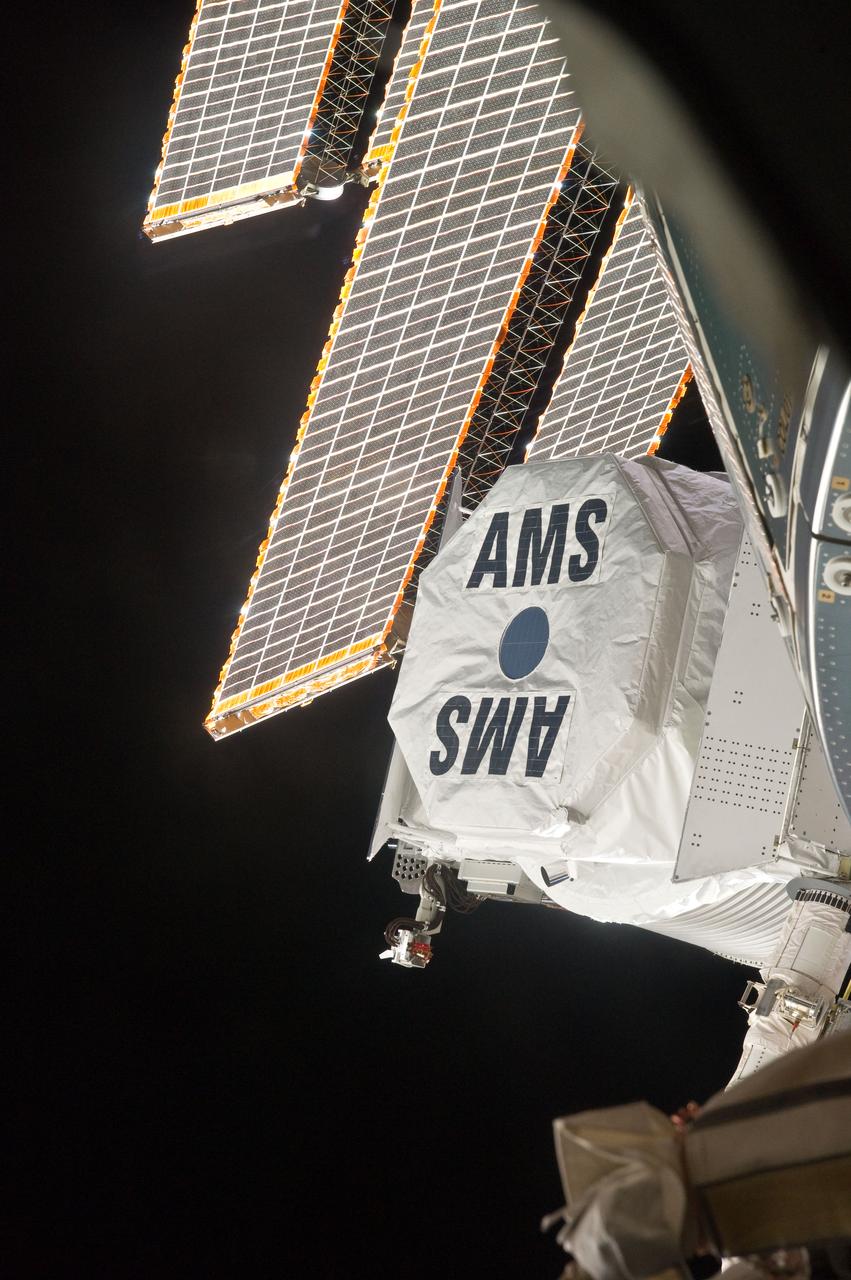
S134-E-007189 (19 May 2011) --- In the grasp of space shuttle Endeavour?s robotic Canadarm, the Alpha Magnetic Spectrometer-2 (AMS) is moved from Endeavour?s payload bay to be handed off to the International Space Station?s Canadarm2 for installation on the station?s starboard truss. Photo credit: NASA
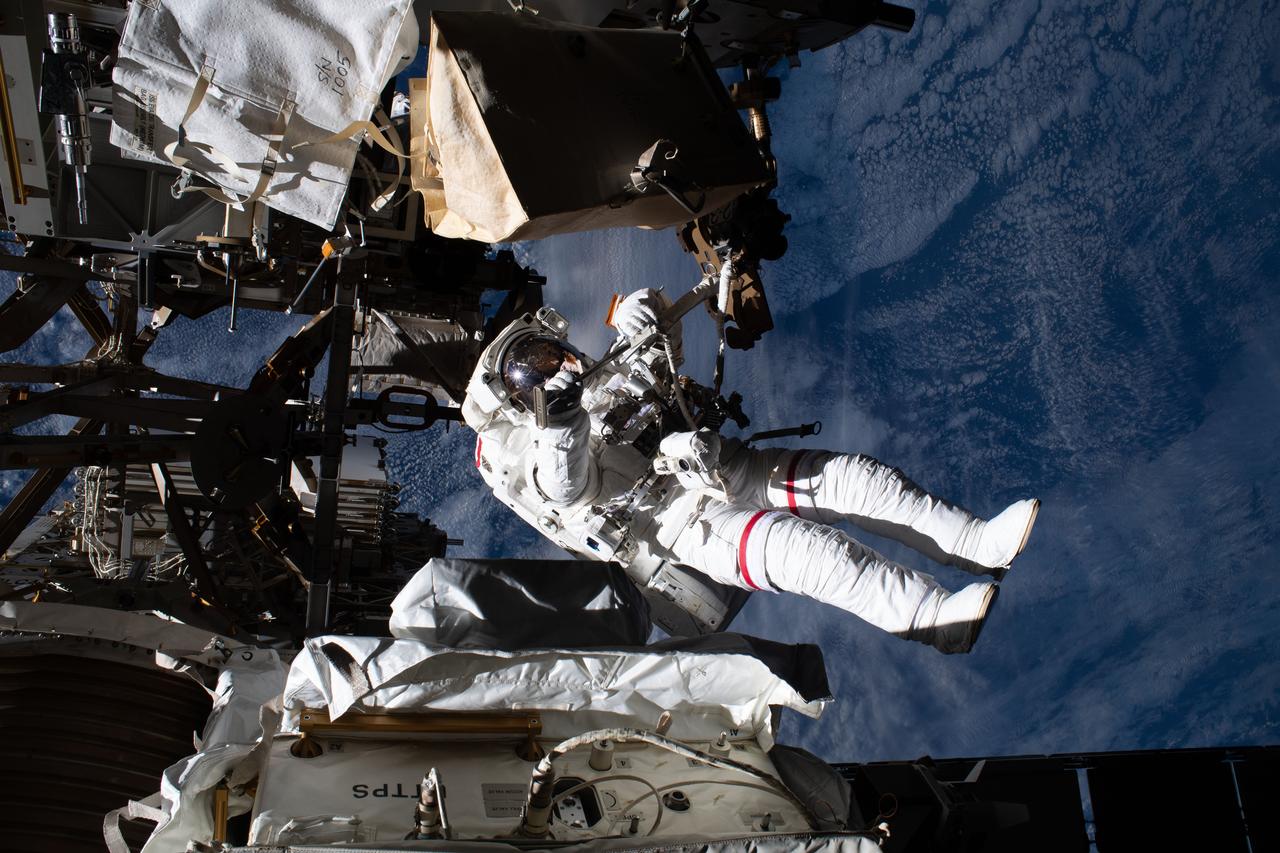
iss061e144253 (Jan. 25, 2020) --- NASA astronaut Andrew Morgan is pictured tethered to the International Space Station while finalizing thermal repairs on the Alpha Magnetic Spectrometer, a dark matter and antimatter detector, during a spacewalk that lasted 6 hours and 16 minutes.

iss061e033521 (Nov. 11, 2019) --- Astronauts Luca Parmitano (left) and Andrew Morgan review robotics procedures in the U.S. Destiny laboratory module. Astronaut Jessica Meir will operate the Canadarm2 robotic arm to support the duo during a series of spacewalks to repair the International Space Station's cosmic particle detector, the Alpha Magnetic Spectrometer (AMS).

iss061e142964 (Jan. 25, 2020) --- ESA (European Space Agency) astronaut Luca Parmitano is pictured tethered to the International Space Station while finalizing thermal repairs on the Alpha Magnetic Spectrometer, a dark matter and antimatter detector, during a spacewalk that lasted 6 hours and 16 minutes.
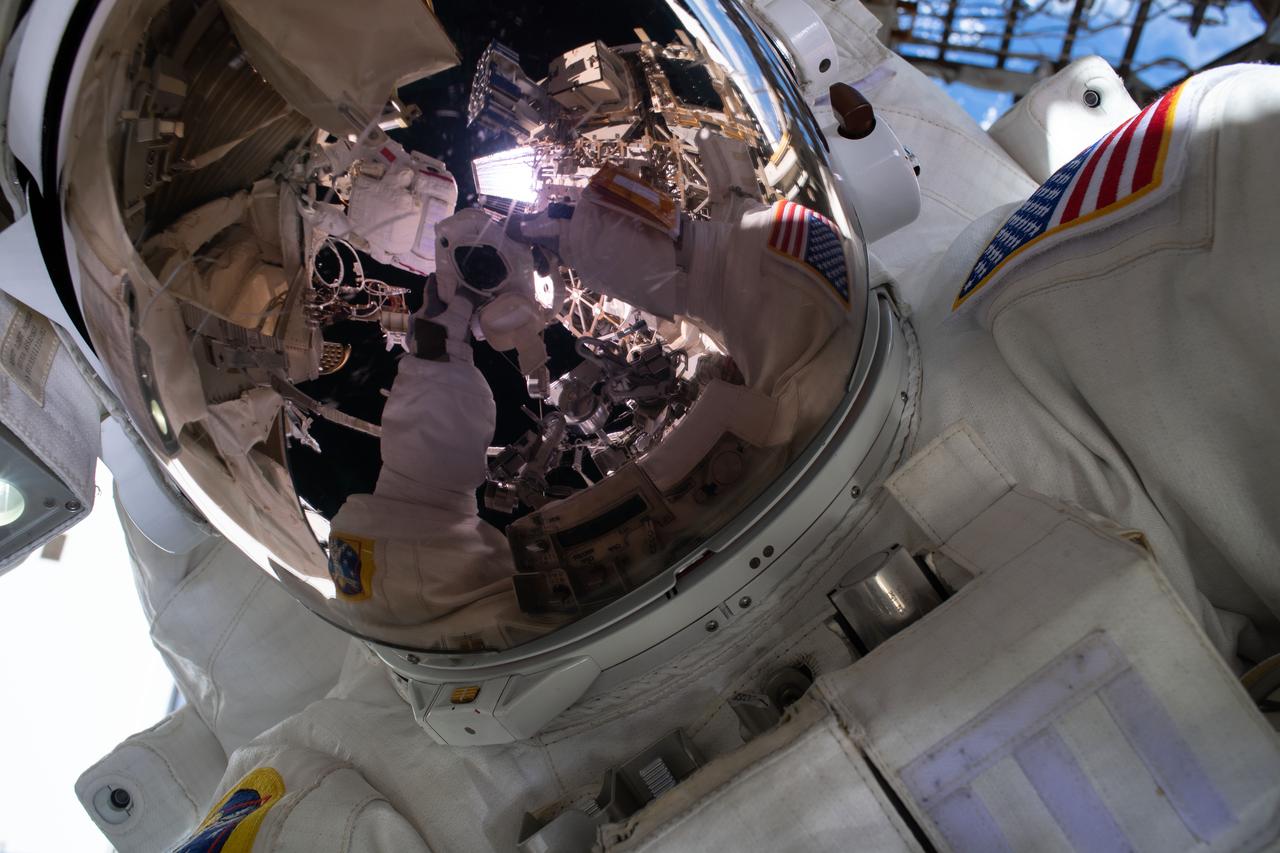
iss061e058345 (Nov. 22, 2019) --- NASA astronaut and spacewalker Andrew Morgan takes an out-of-this-world "space-selfie" with his spacesuit's helmet visor down during the second spacewalk to repair the International Space Station's cosmic particle detector, the Alpha Magnetic Spectrometer.
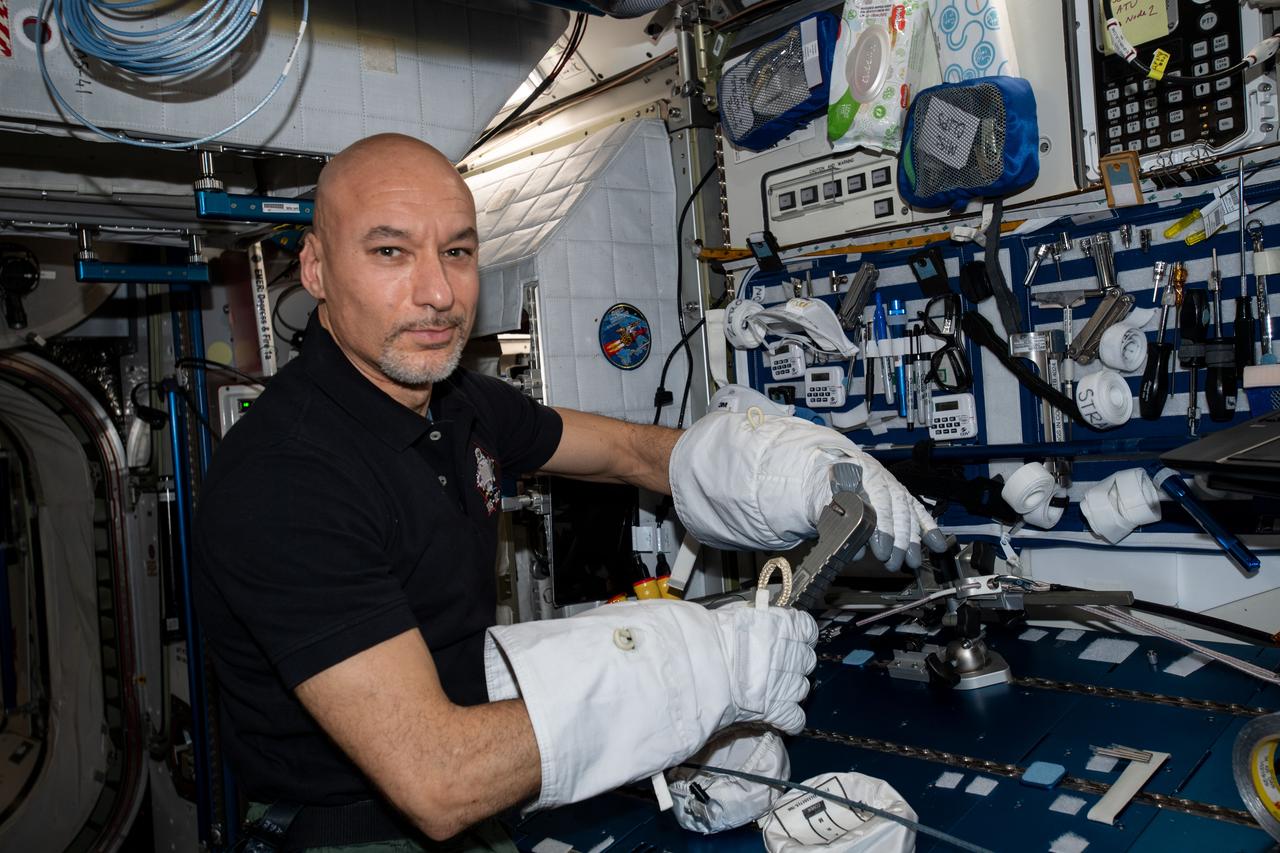
iss061e038284 (Nov. 12, 2019) --- ESA (European Space Agency) astronaut Luca Parmitano tests the usage of specialized spacewalking tools while wearing U.S. spacesuit gloves. The tools were designed specifically for the complex repair work planned for the International Space Station's cosmic particle detector, the Alpha Magnetic Spectrometer.
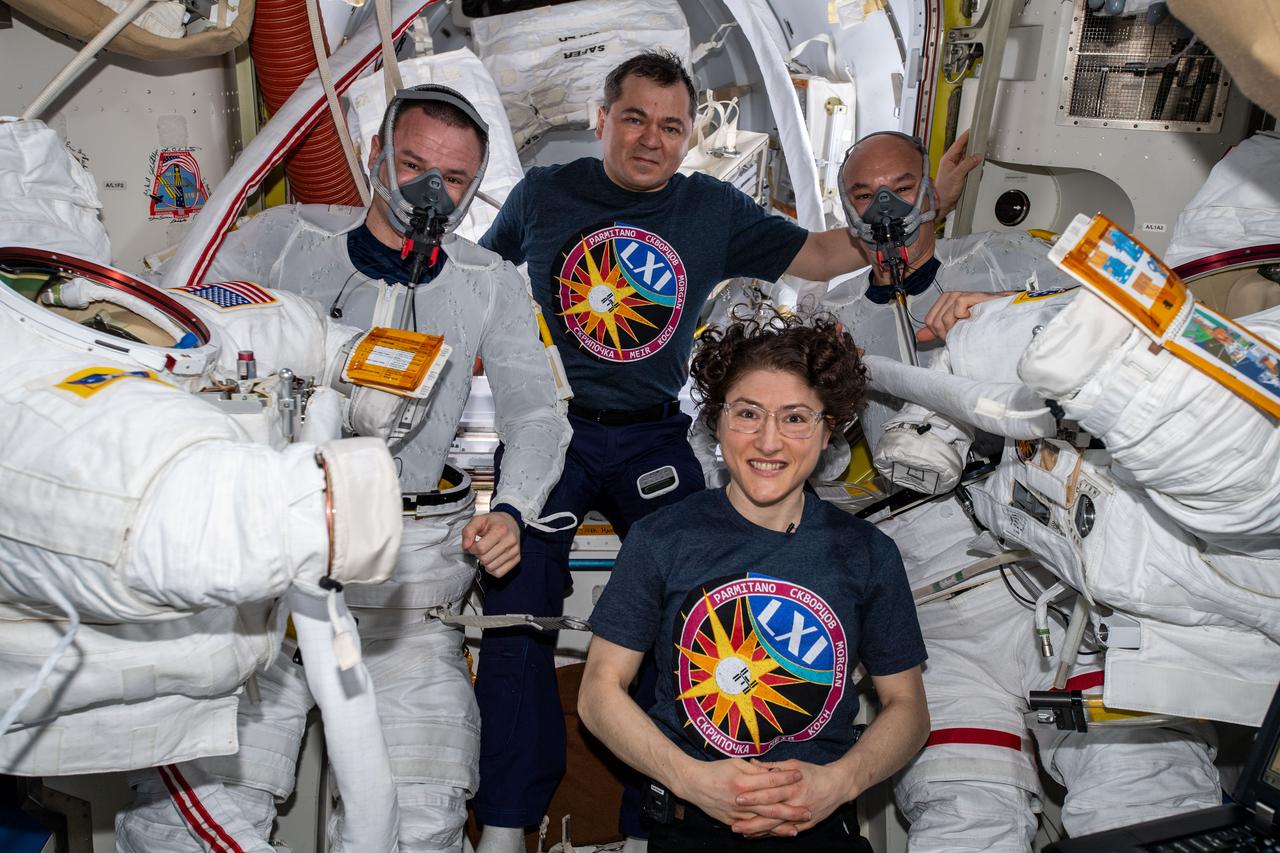
iss061e054283 (Nov. 22, 2019) --- Flight Engineers Christina Koch and Oleg Skripochka are pictured assisting spacewalkers Andrew Morgan (left) and Luca Parmitano (right) in the U.S. Quest airlock before they would begin the second spacewalk to repair the Alpha Magnetic Spectrometer's thermal control system.

iss061e144323 (Jan. 25, 2020) --- NASA astronaut Andrew Morgan is pictured tethered to the International Space Station while finalizing thermal repairs on the Alpha Magnetic Spectrometer, a dark matter and antimatter detector, during a spacewalk that lasted 6 hours and 16 minutes.
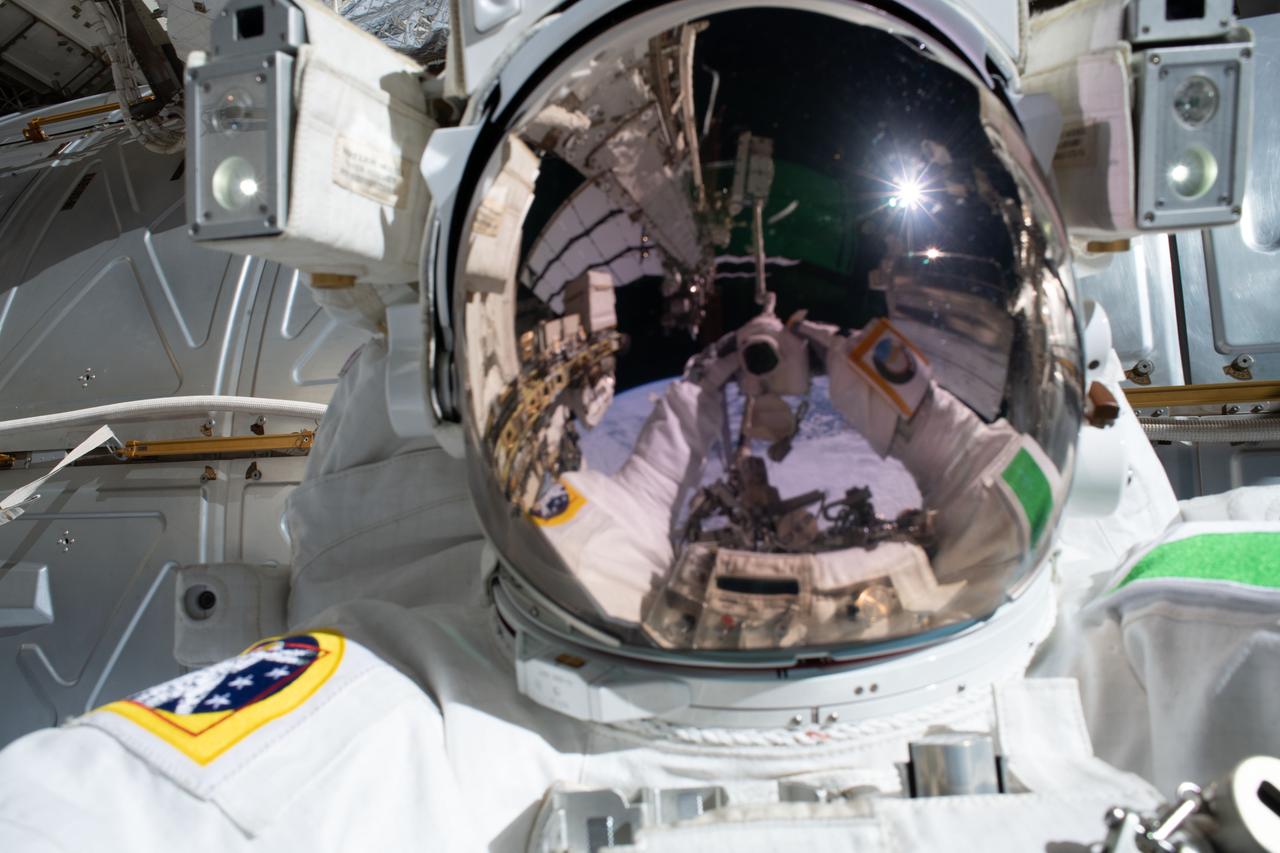
iss061e066267 (Dec. 2, 2019) --- ESA (European Space Agency) astronaut Luca Parmitano points his camera toward his U.S. helmet with the reflective visor down and takes a "space-selfie" during the third spacewalk to upgrade the Alpha Magnetic Spectrometer's thermal pump system.
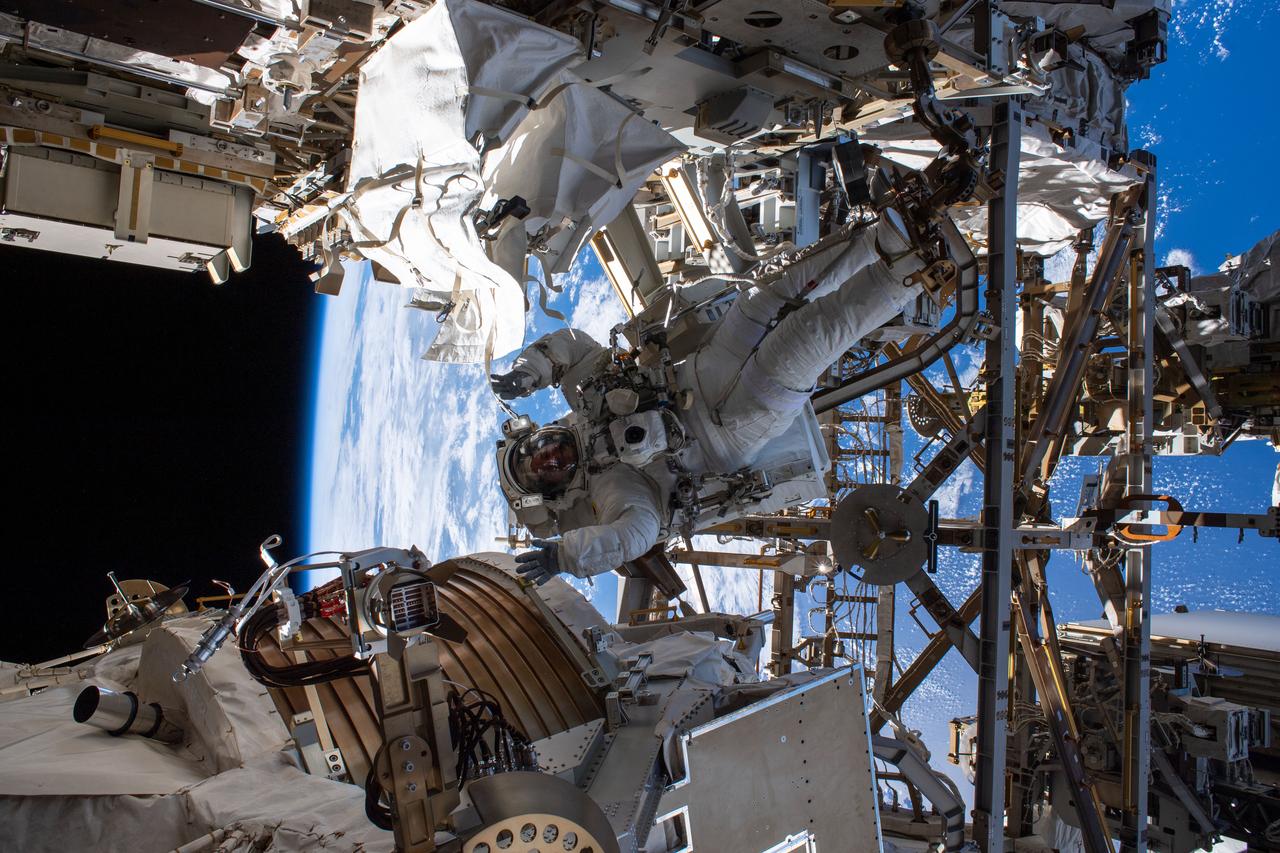
iss061e040844 (Nov. 15, 2019) --- NASA astronaut Andrew Morgan waves as he is photographed seemingly camouflaged among the Alpha Magnetic Spectrometer (lower left) and other International Space Station hardware during the first spacewalk to repair the cosmic particle detector.
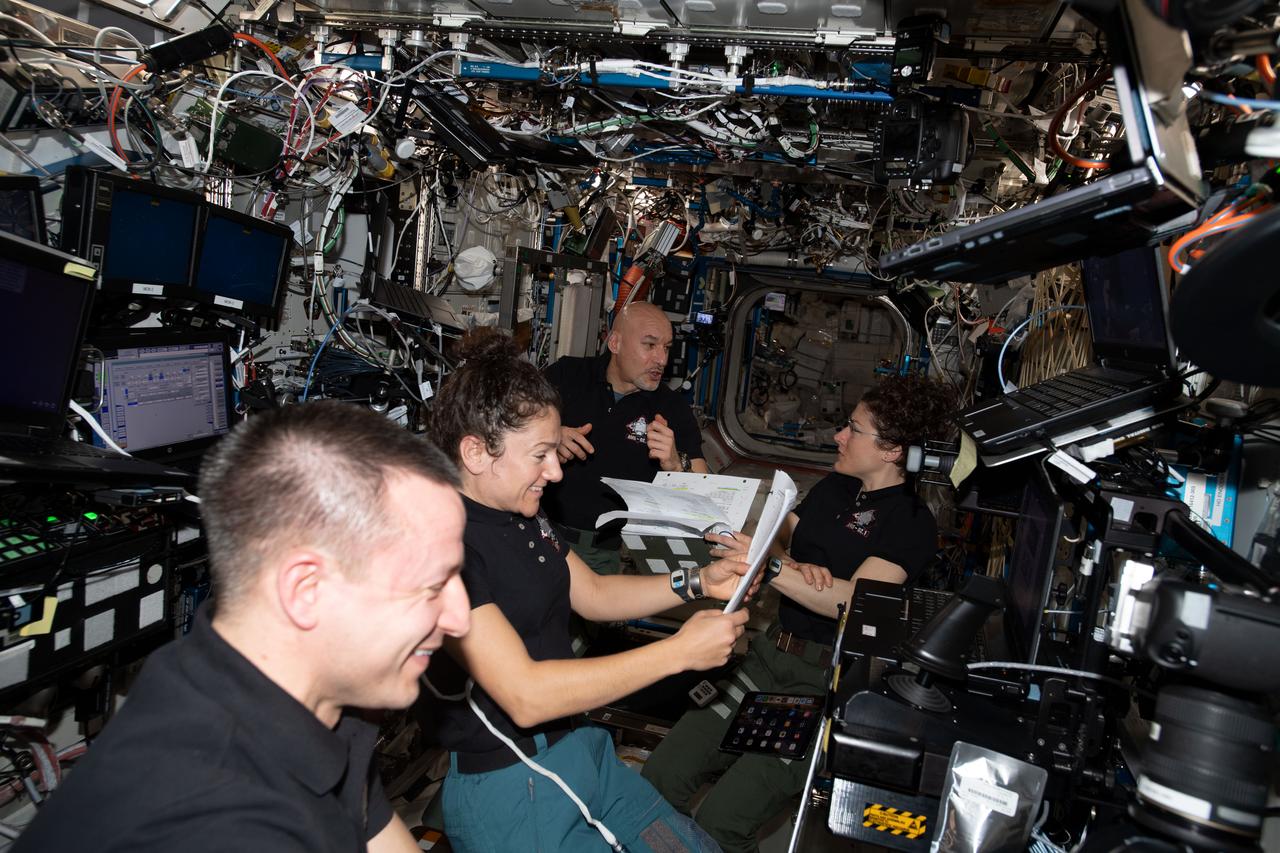
iss061e037472 (Nov. 12, 2019) --- Expedition 61 crewmembers (from left) Andrew Morgan, Jessica Meir, Luca Parmitano and Christina Koch gather inside the U.S. Destiny laboratory module to review spacewalk procedures for the complex repair work planned for the International Space Station's cosmic particle detector, the Alpha Magnetic Spectrometer.
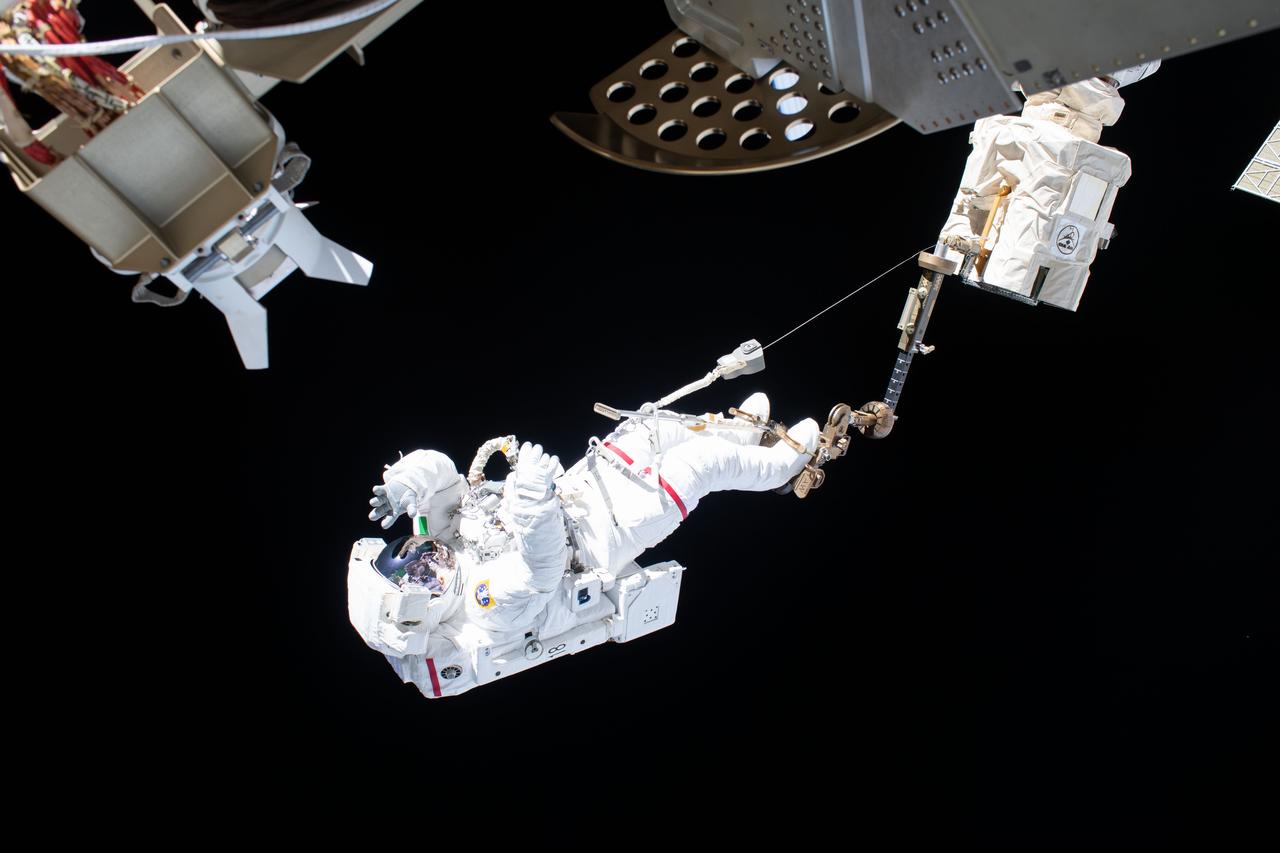
iss061e058498 (Nov. 22, 2019) --- Astronaut Luca Parmitano of ESA (European Space Agency) is attached to an articulating portable foot restraint at the end of the Canadarm2 robotic arm during the second spacewalk to repair the International Space Station's cosmic particle detector, the Alpha Magnetic Spectrometer.
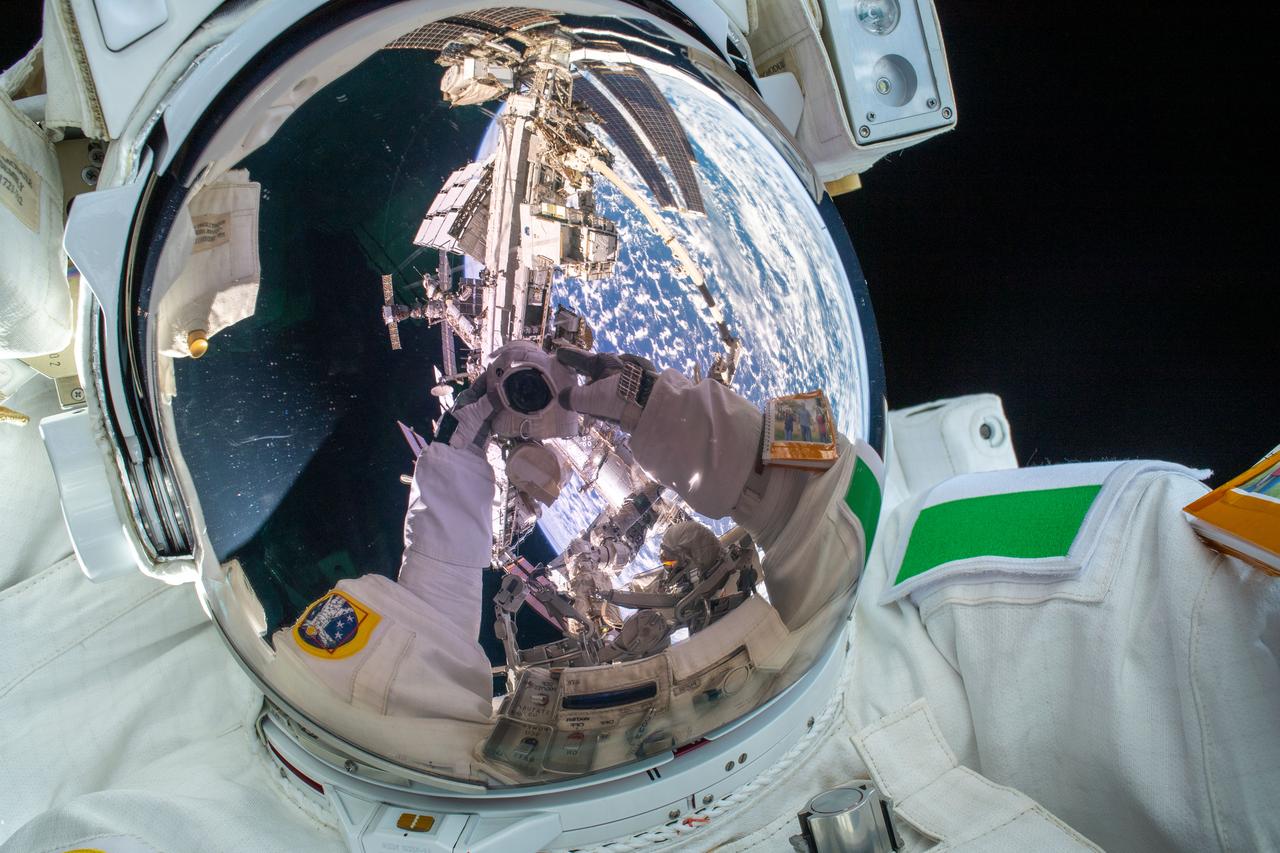
iss061e040912 (Nov. 15, 2019) --- ESA (European Space Agency) astronaut Luca Parmitano takes an out-of-this-world "space-selfie" with his spacesuit's helmet visor down during the first spacewalk to repair the Alpha Magnetic Spectrometer, the International Space Station's cosmic particle detector.
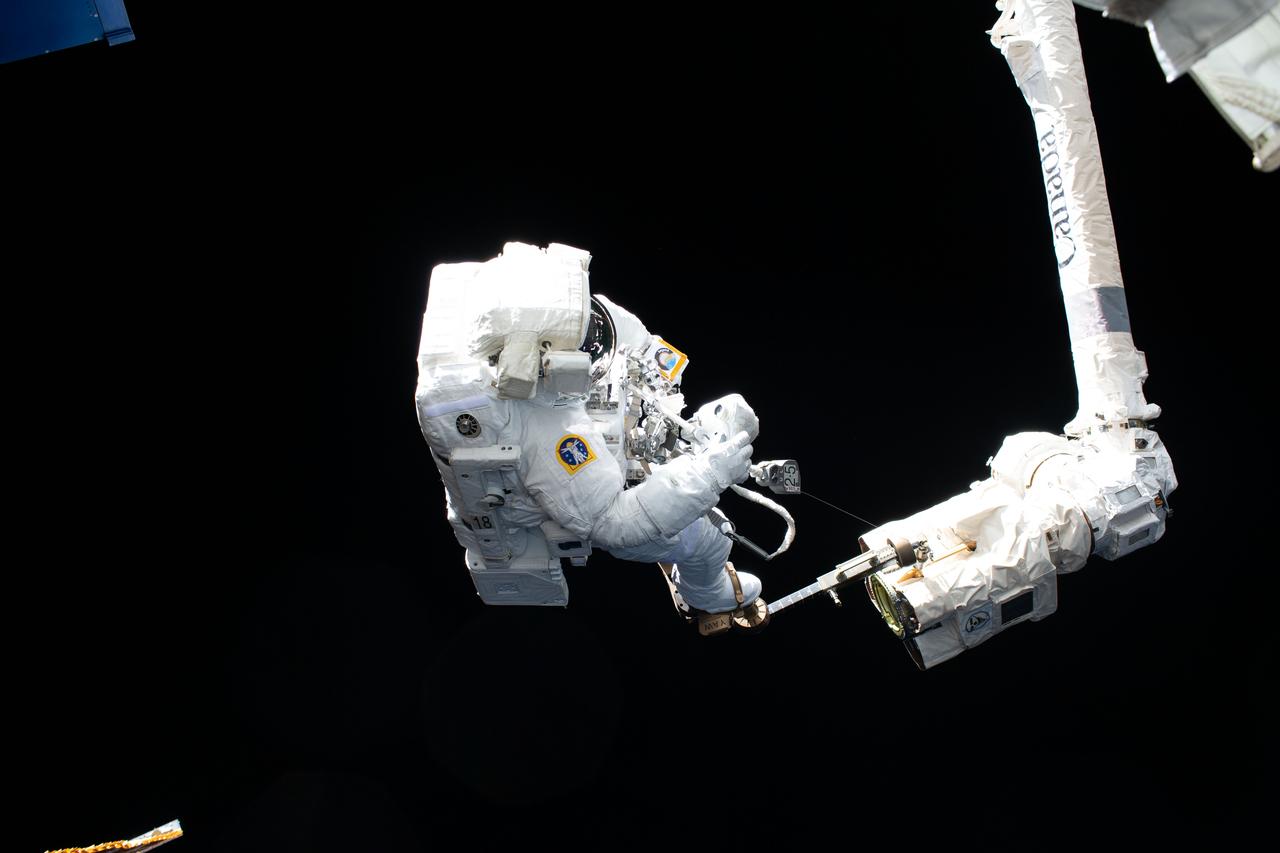
iss061e143112 (Jan. 25, 2020) --- ESA (European Space Agency) astronaut Luca Parmitano is pictured attached to the Canadarm2 robotic arm while finalizing thermal repairs on the Alpha Magnetic Spectrometer, a dark matter and antimatter detector, during a spacewalk that lasted 6 hours and 16 minutes.
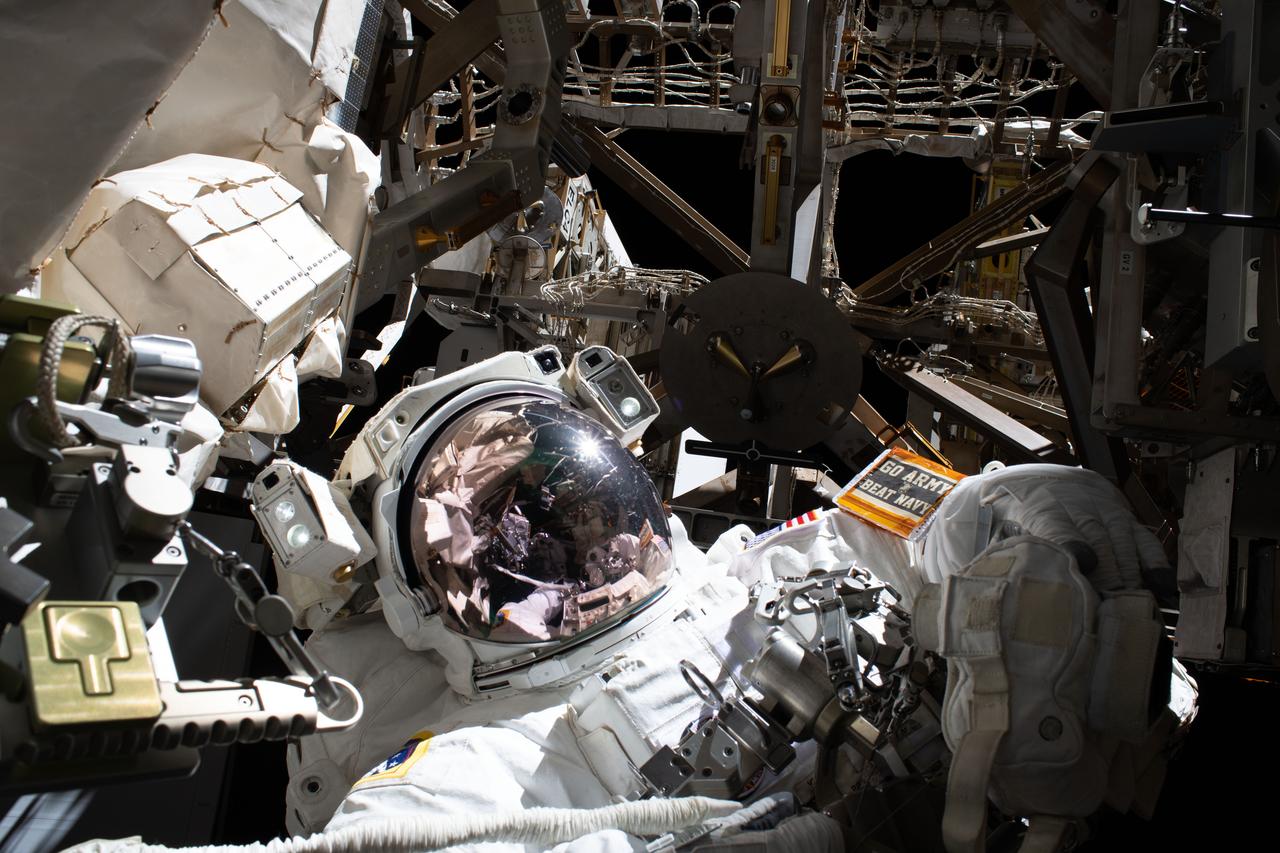
iss061e065625 (Dec. 2, 2019) --- NASA astronaut and U.S. Army Colonel Andrew Morgan displays his Army pride ahead of the Army versus Navy football game scheduled for Dec. 12, 2019, during the third spacewalk to upgrade the Alpha Magnetic Spectrometer's thermal pump system.
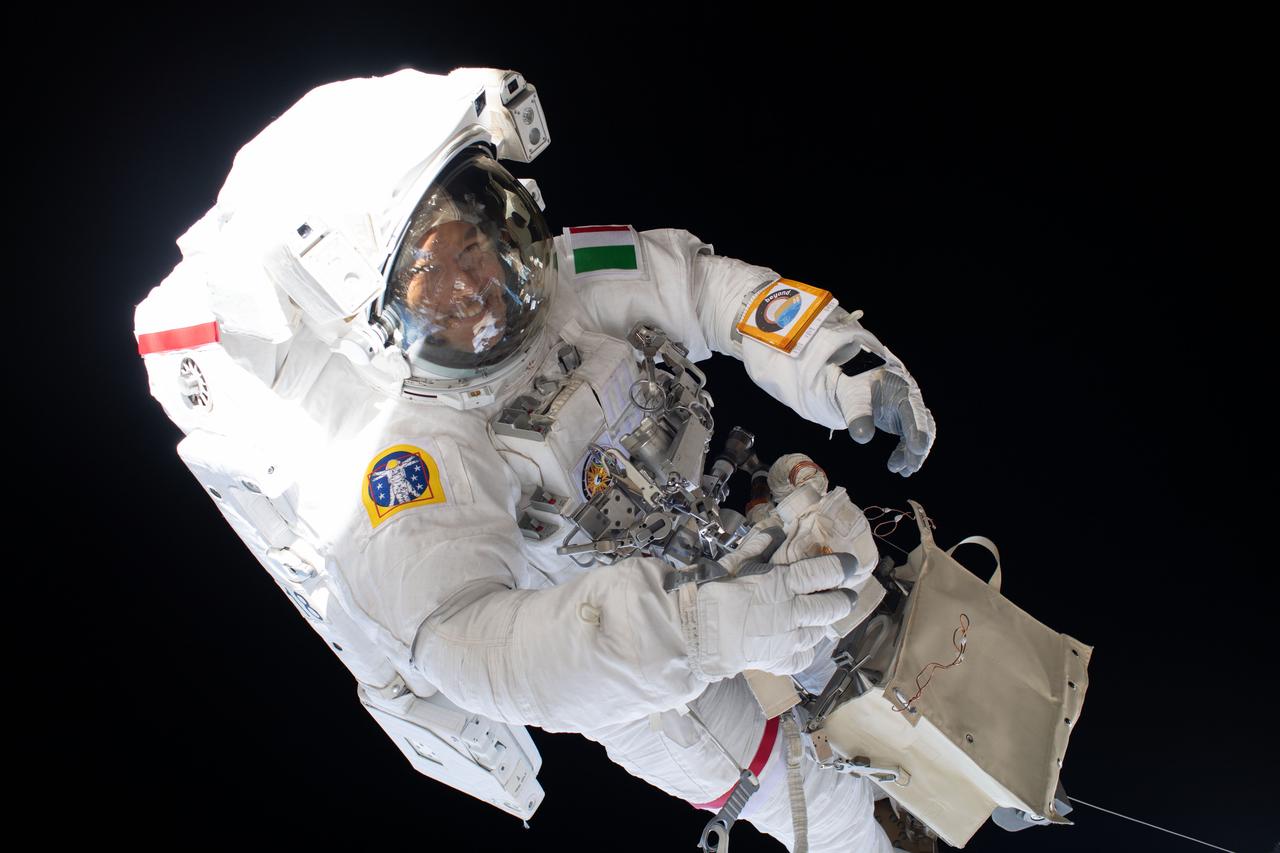
iss061e045432 (Nov. 15, 2019) --- ESA (European Space Agency) astronaut Luca Parmitano is pictured attached to the Canadarm2 robotic arm during the first spacewalk to repair the Alpha Magnetic Spectrometer, the International Space Station's cosmic particle detector.

iss061e058254 (Nov. 22, 2019) ---- Astronaut Andrew Morgan of NASA, whose U.S. spacesuit is outfitted with a variety of tools and cameras, holds on to a handrail during the second spacewalk to repair the International Space Station's cosmic particle detector, the Alpha Magnetic Spectrometer.
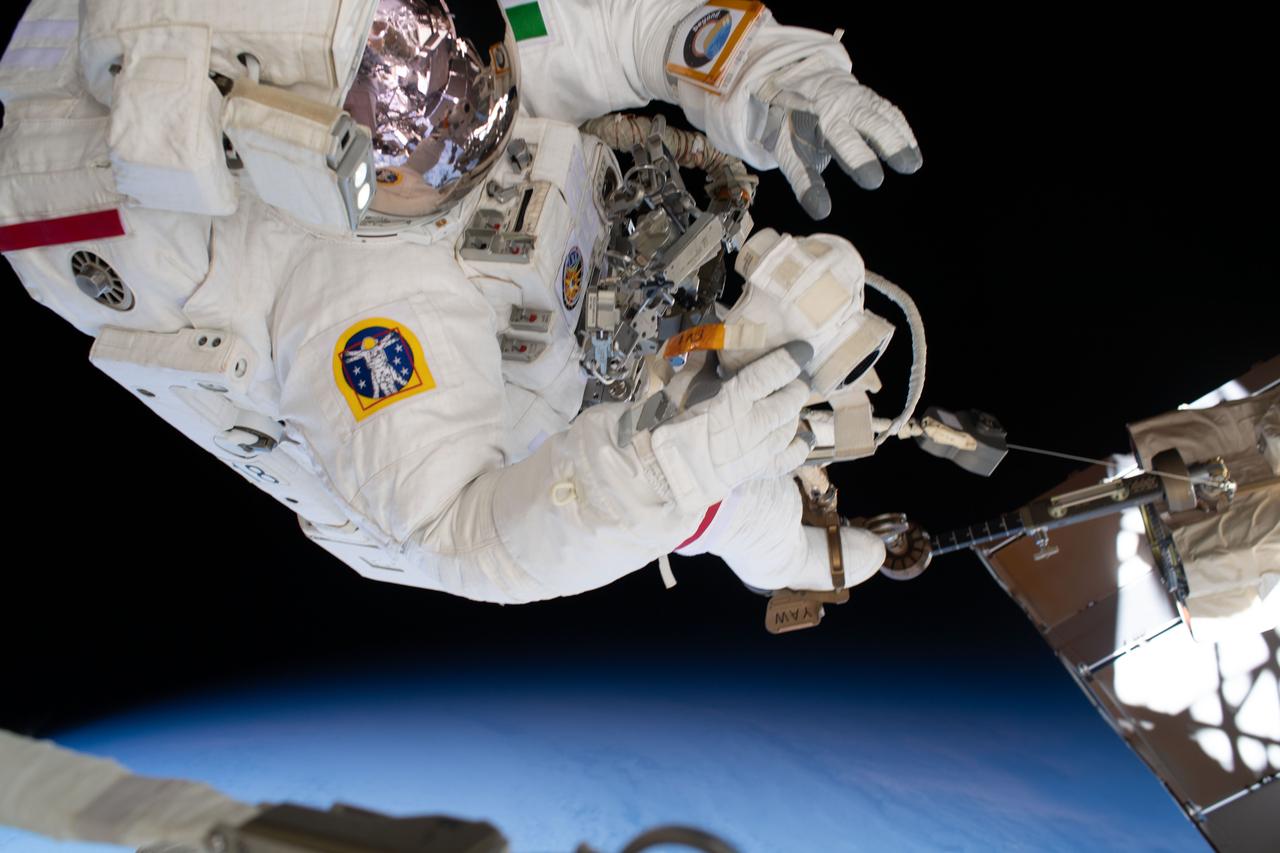
iss061e064936 (Dec. 2, 2019) --- ESA (European Space Agency) astronaut Luca Parmitano rides on the end of the Canadarm2 robotic arm attached to an articulating portable foot restraint during the third spacewalk to upgrade the Alpha Magnetic Spectrometer's thermal pump system.
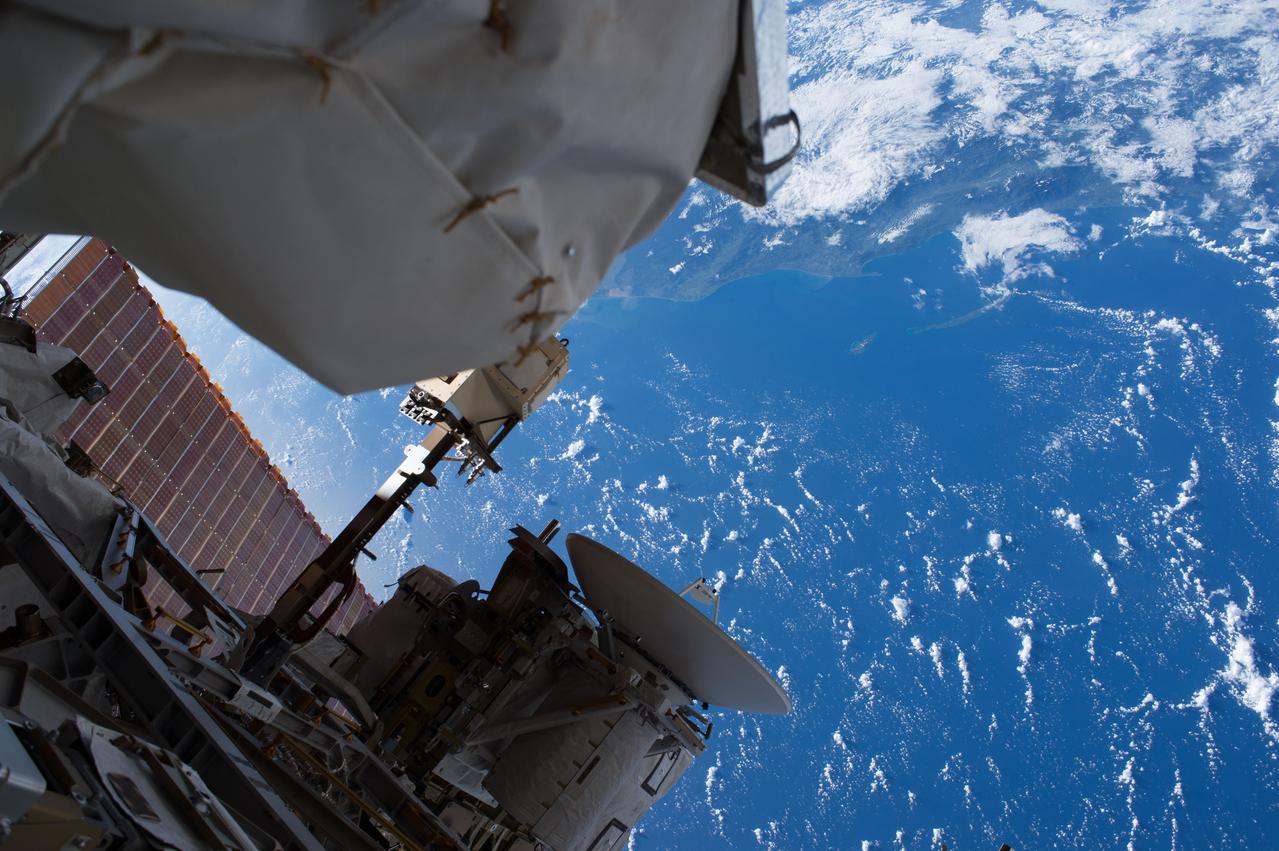
Close-up view of the Alpha Magnetic Spectrometer-02 (AMS-02), in the area where the Tracker Thermal Control System (TTCS) wedge will be installed. Image was taken by Extravehicular Crewmember 2 (EV2) during Extravehicular Activity 32 (EVA 32) and released on social media.
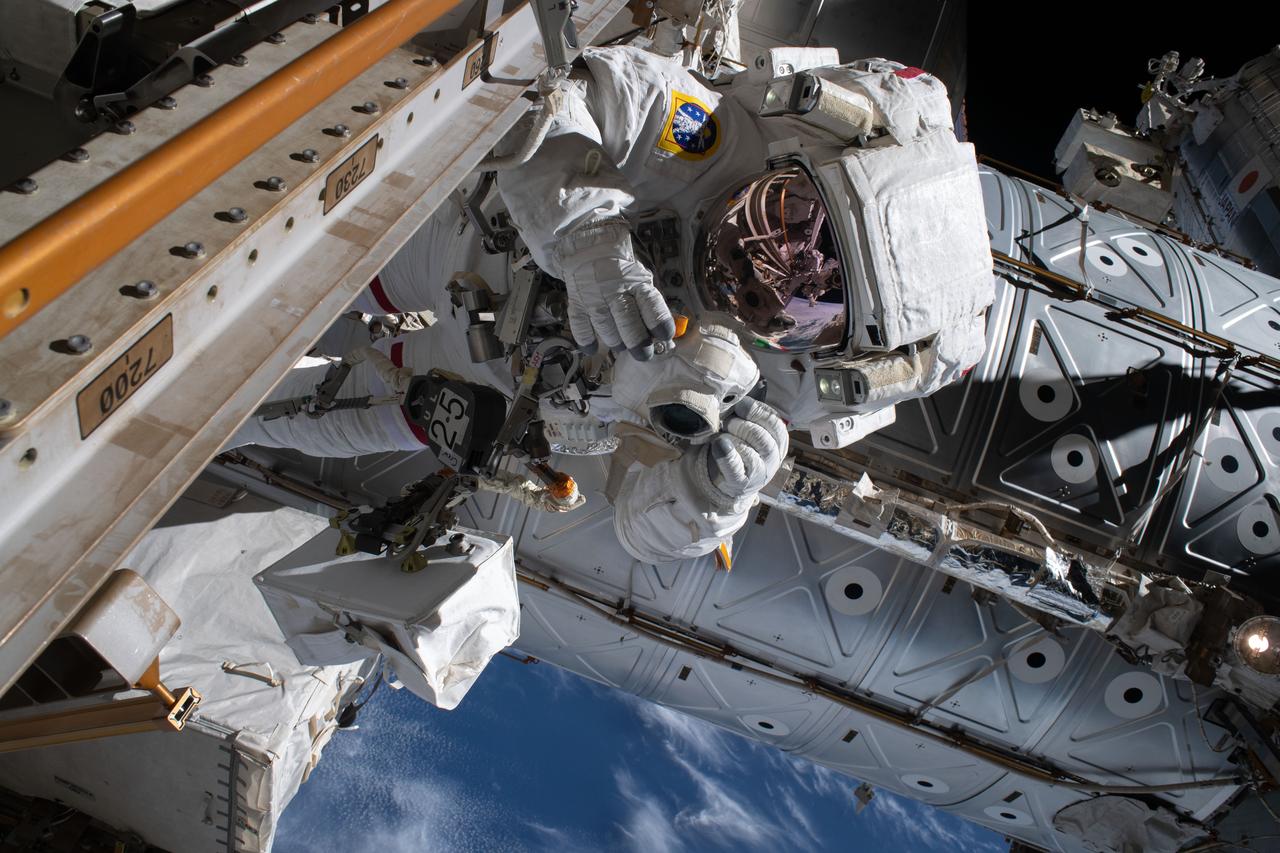
iss061e058754 (Nov. 22, 2019) --- Astronaut Luca Parmitano of ESA (European Space Agency) is pictured holding a camera protected from the hazards of microgravity by shielding during the second spacewalk to repair the International Space Station's cosmic particle detector, the Alpha Magnetic Spectrometer.
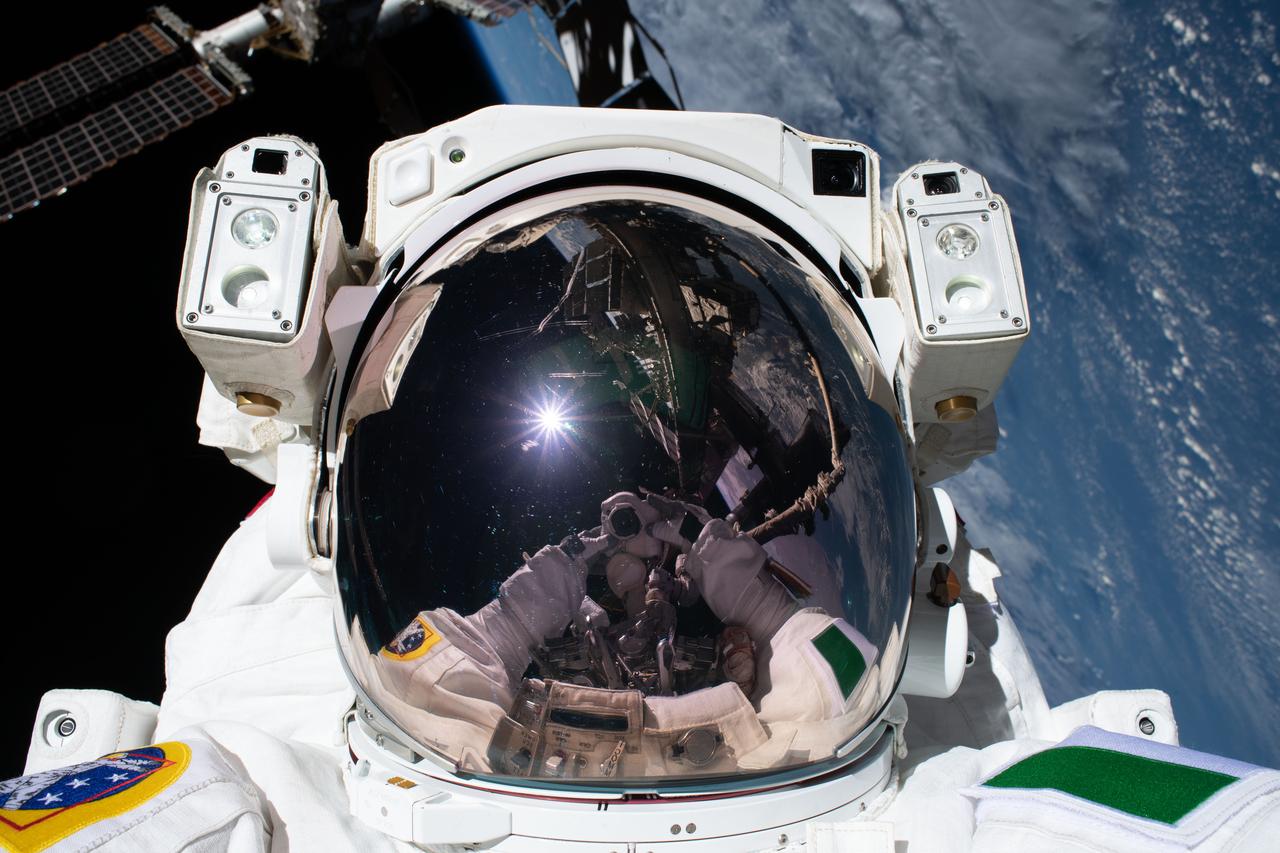
iss061e057607 (Nov. 22, 2019) --- Astronaut Luca Parmitano of ESA (European Space Agency) takes an out-of-this-world "space-selfie" with his spacesuit's helmet visor down during the second spacewalk to repair the International Space Station's cosmic particle detector, the Alpha Magnetic Spectrometer.

iss061e033522 (Nov. 11, 2019) --- NASA astronaut Jessica Meir reviews robotics procedures in the U.S. Destiny laboratory module. She will operate the Canadarm2 robotic arm to support a series of spacewalks by astronauts Luca Parmitano and Andrew Morgan to repair the International Space Station's cosmic particle detector, the Alpha Magnetic Spectrometer (AMS).
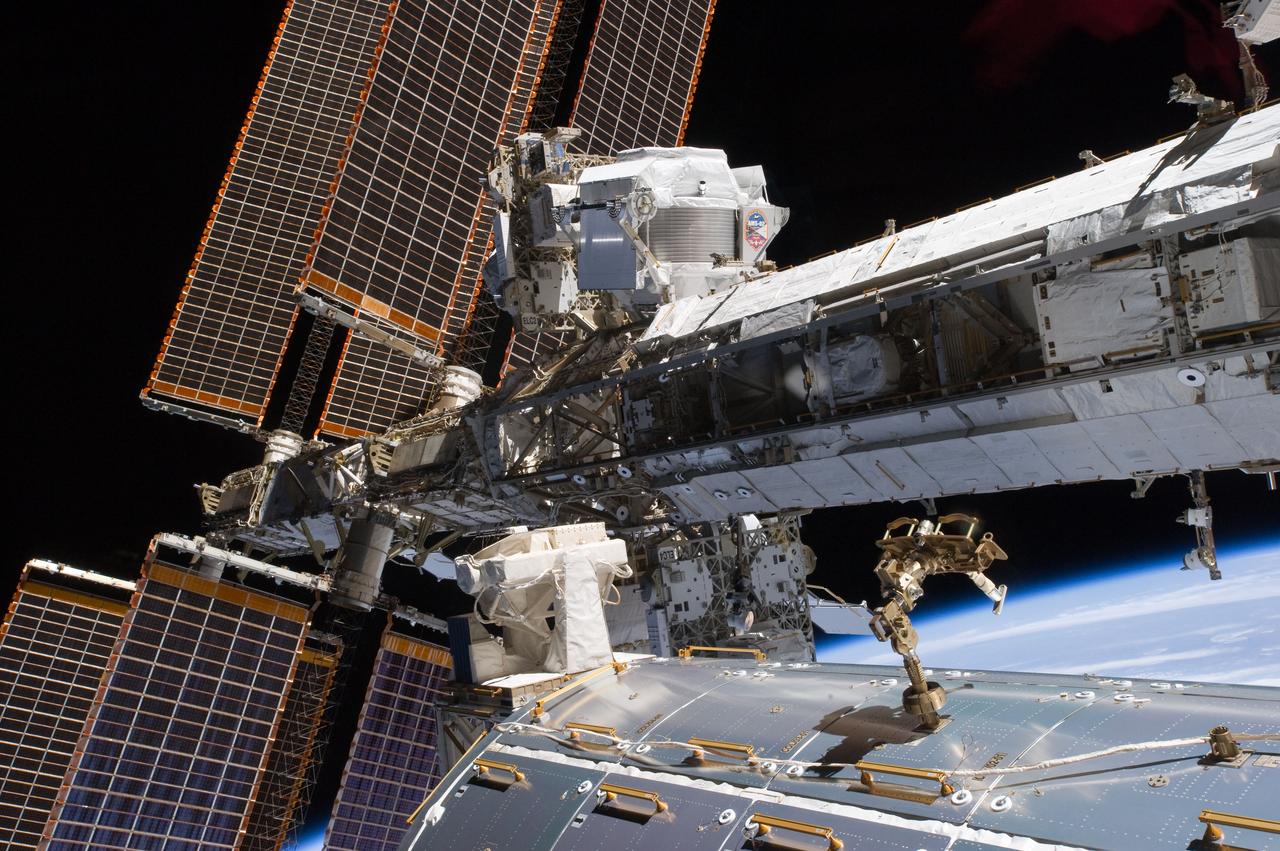
s134e007533 (5/20/2011) --- View of the Alpha Magnetic Spectrometer - 2 (AMS-2) mounted on the S3 Truss segment. The EXPRESS (Expedite the Processing of Experiments to Space Station) Logistics Carrier 2 (ELC2) is also visible behind the AMS-2. Photo taken during STS-134 and Expedition 27 joint operations.
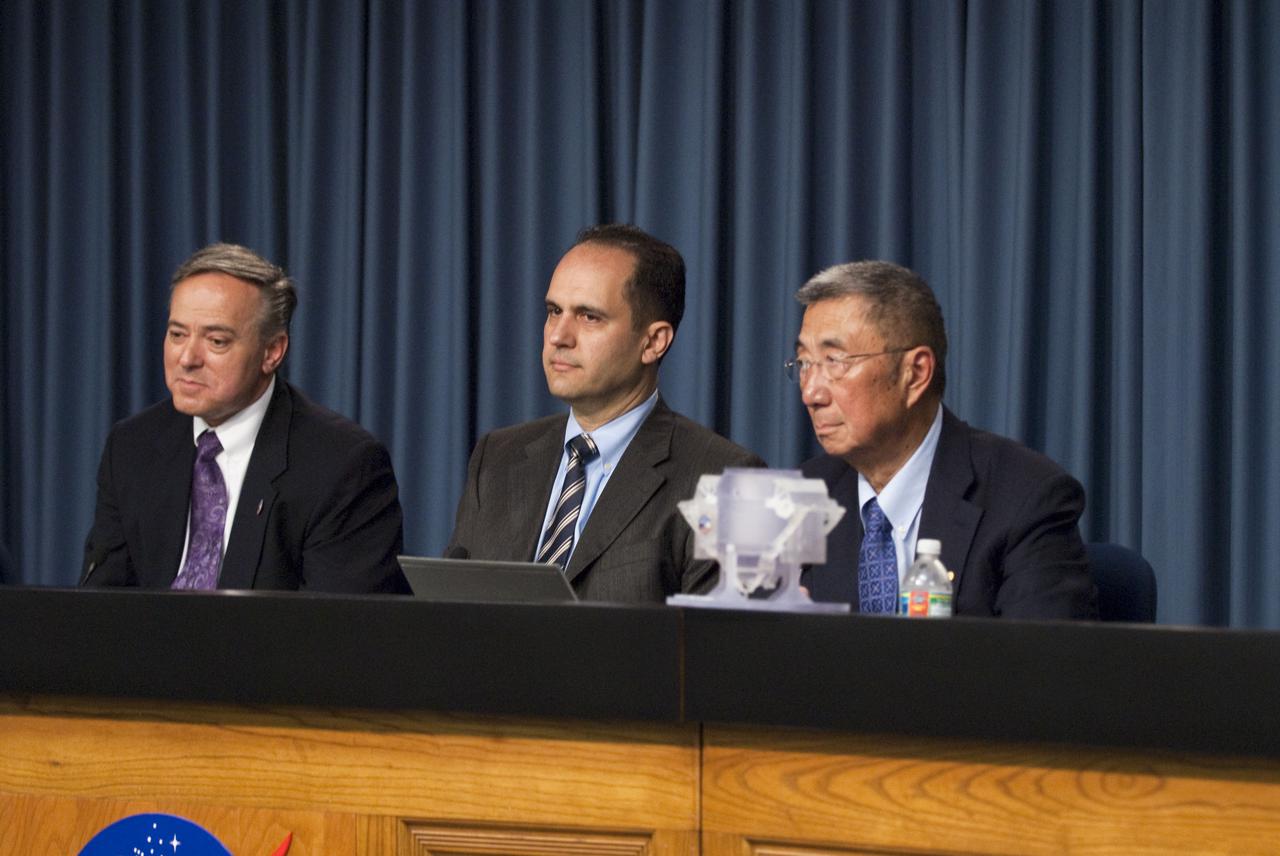
CAPE CANAVERAL, Fla. -- The International Space Station Science and Technology Briefing was held in the Press Site auditorium at NASA's Kennedy Space Center in Florida. Speaking to media about the Alpha Magnetic Spectrometer-2 (AMS) are Mark Sistilli, NASA program manager (left); Saul Gonzales, AMS program manager from the U.S. Department of Energy and Professor Sam Ting, AMS-2 principal investigator at the Massachusetts Institute of Technology.Endeavour and its crew will deliver the Express Logistics Carrier-3, Alpha Magnetic Spectrometer-2 (AMS), a high-pressure gas tank and additional spare parts for the Dextre robotic helper to the International Space Station. Launch is scheduled for April 29 at 3:47 p.m. EDT. This will be the final spaceflight for Endeavour. For more information visit, www.nasa.gov_mission_pages_shuttle_shuttlemissions_sts134_index.html. Photo credit: NASA_Kim Shiflett
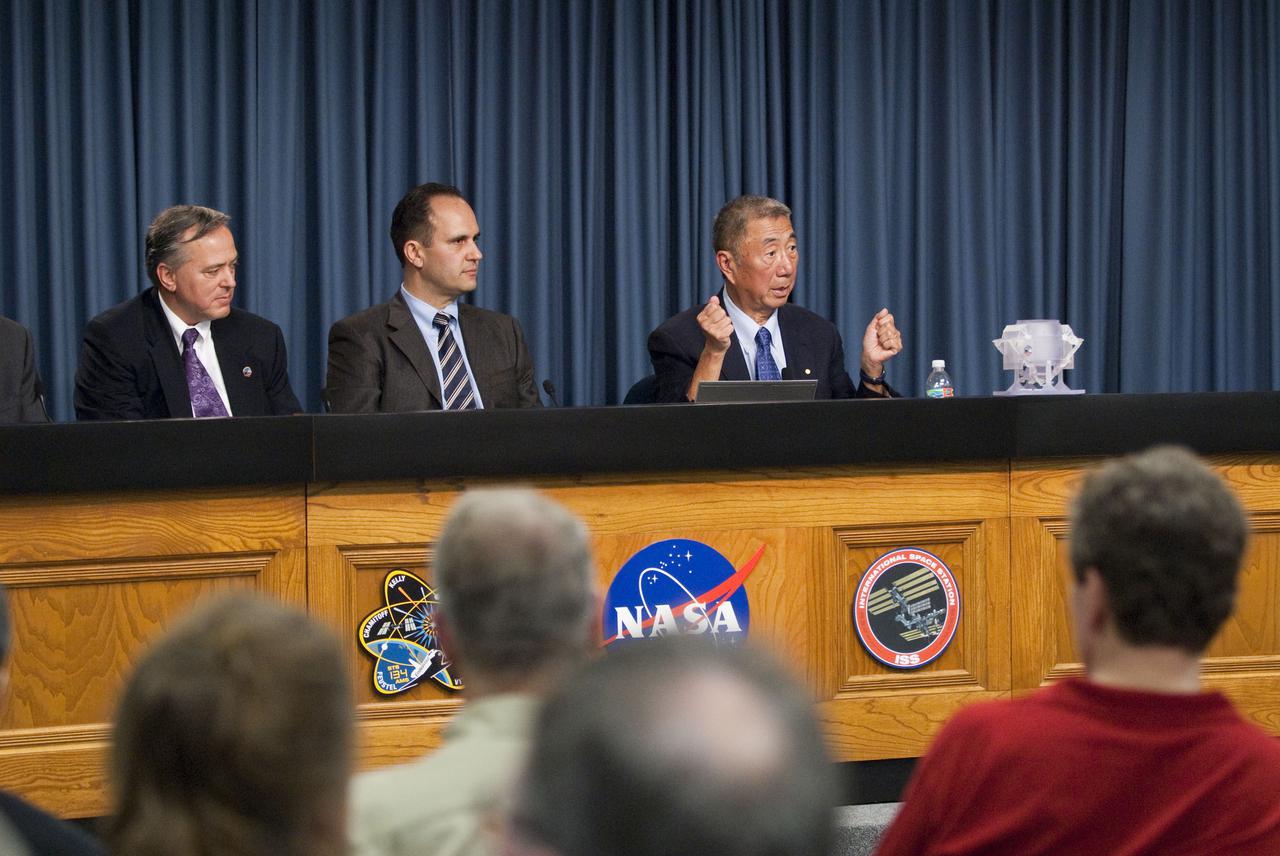
CAPE CANAVERAL, Fla. -- The International Space Station Science and Technology Briefing was held in the Press Site auditorium at NASA's Kennedy Space Center in Florida. Speaking to media about the Alpha Magnetic Spectrometer-2 (AMS) are Mark Sistilli, NASA program manager (left); Saul Gonzales, AMS program manager from the U.S. Department of Energy and Professor Sam Ting, AMS-2 principal investigator at the Massachusetts Institute of Technology. Endeavour and its crew will deliver the Express Logistics Carrier-3, Alpha Magnetic Spectrometer-2 (AMS), a high-pressure gas tank and additional spare parts for the Dextre robotic helper to the International Space Station. Launch is scheduled for April 29 at 3:47 p.m. EDT. This will be the final spaceflight for Endeavour. For more information visit, www.nasa.gov_mission_pages_shuttle_shuttlemissions_sts134_index.html. Photo credit: NASA_Kim Shiflett
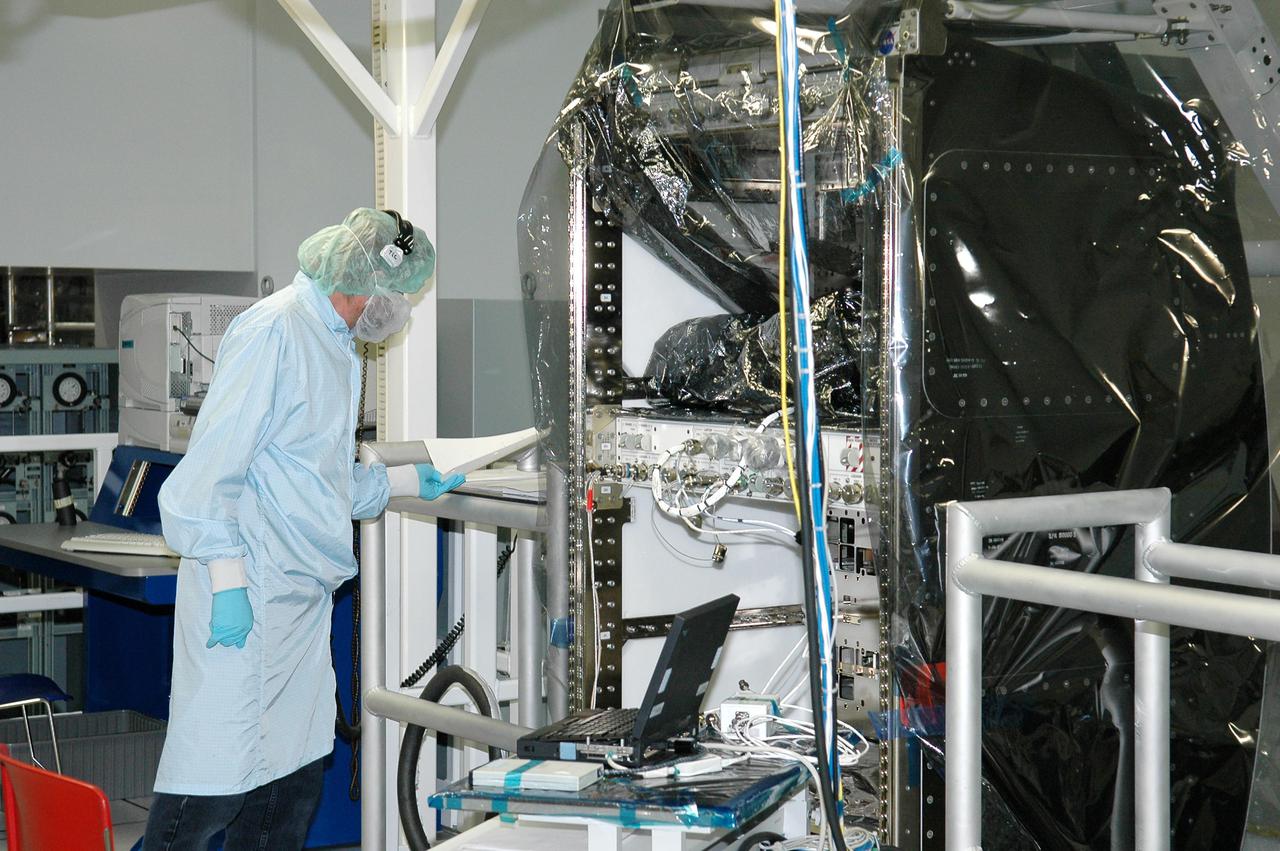
KENNEDY SPACE CENTER, FLA. - An employee at the Space Station Processing Facility performs engineering certification testing of the Alpha Magnetic spectrometer (AMS). The AMS is a superconducting magnet that will be used in an experiment from the International Space Station (ISS) to search for antimatter and dark matter in space. The testing is being performed to ensure that data flow from the external payload AMS and the internal AMS crew operation post can be successfully routed through the ISS systems.
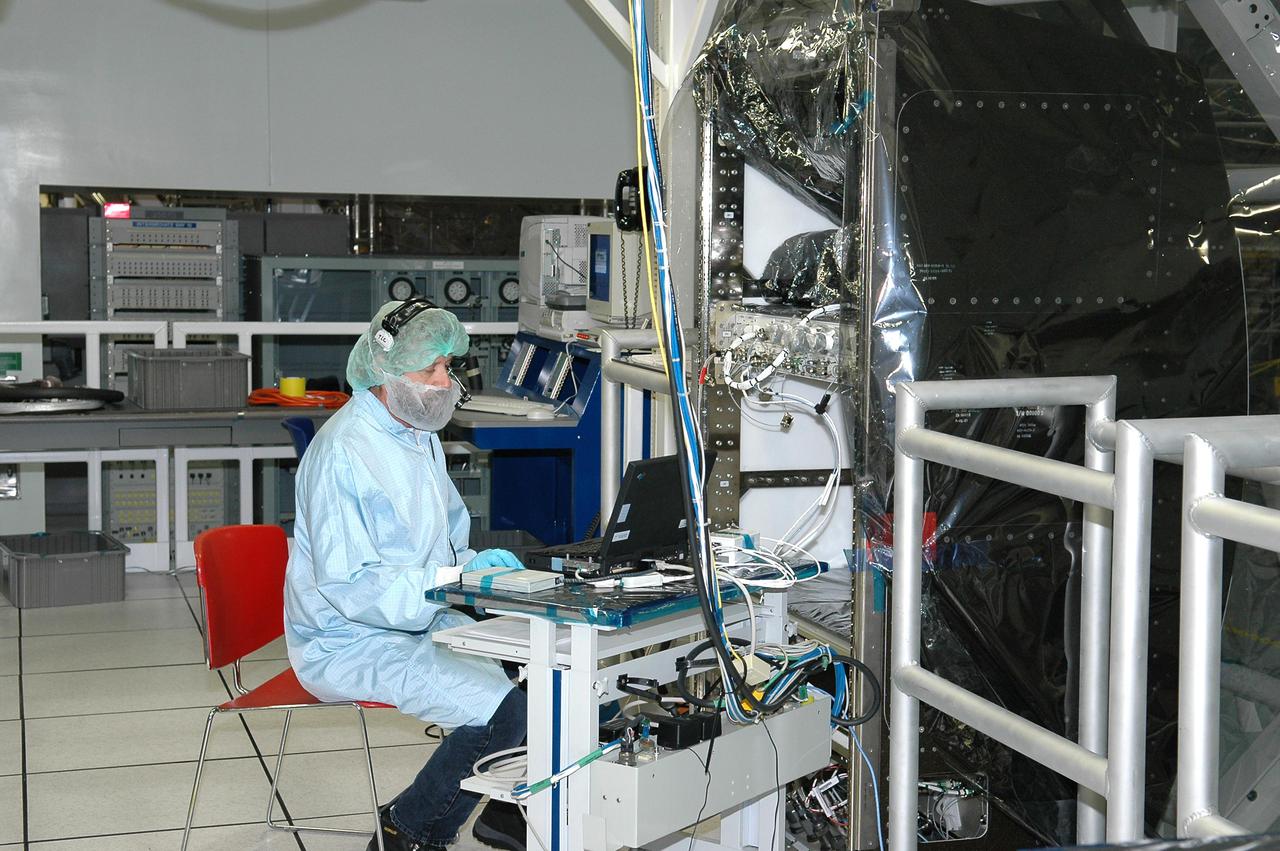
KENNEDY SPACE CENTER, FLA. - An employee at the Space Station Processing Facility performs engineering certification testing of the Alpha Magnetic spectrometer (AMS). The AMS is a superconducting magnet that will be used in an experiment from the International Space Station (ISS) to search for antimatter and dark matter in space. The testing is being performed to ensure that data flow from the external payload AMS and the internal AMS crew operation post can be successfully routed through the ISS systems.
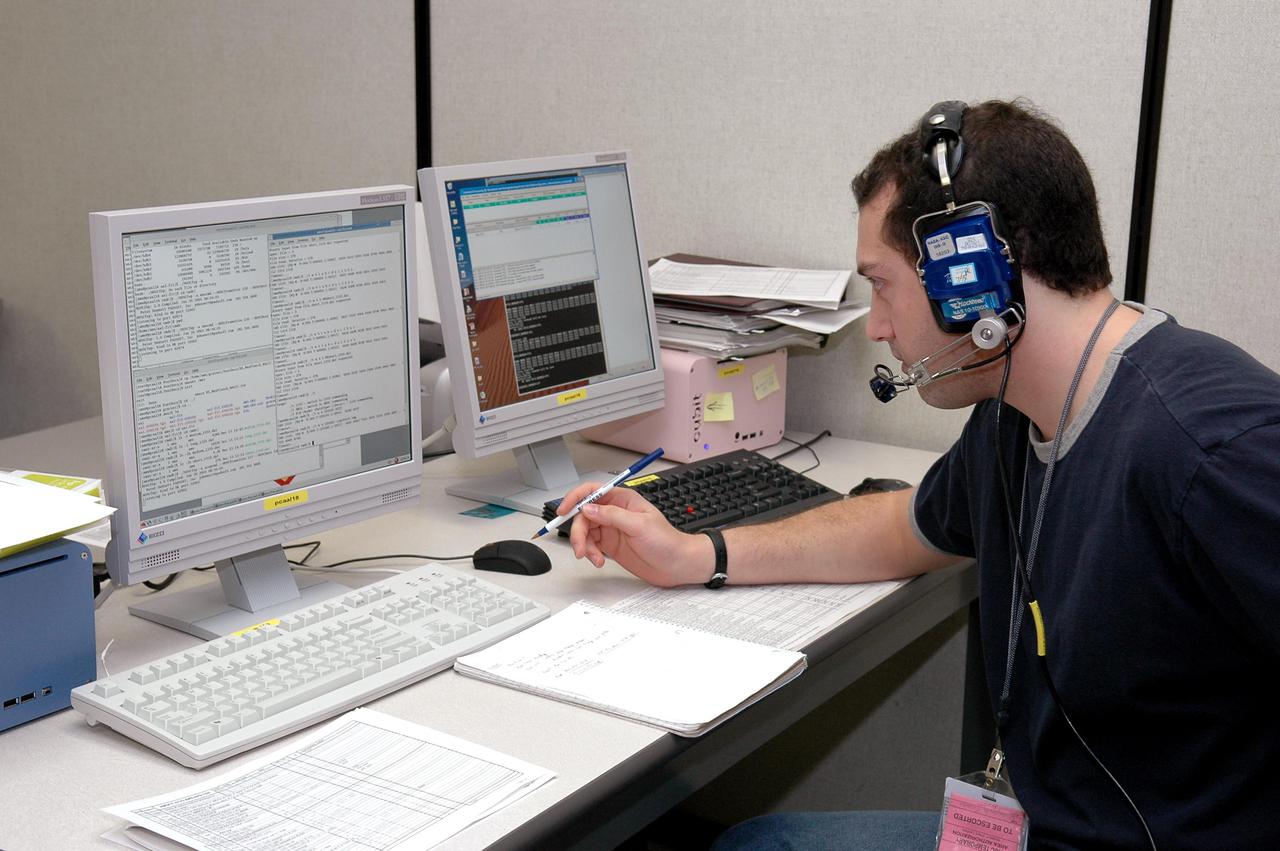
KENNEDY SPACE CENTER, FLA. - An employee at the Space Station Processing Facility monitors engineering certification testing of the Alpha Magnetic spectrometer (AMS). The AMS is a superconducting magnet that will be used in an experiment from the International Space Station (ISS) to search for antimatter and dark matter in space. The testing is being performed to ensure that data flow from the external payload AMS and the internal AMS crew operation post can be successfully routed through the ISS systems.
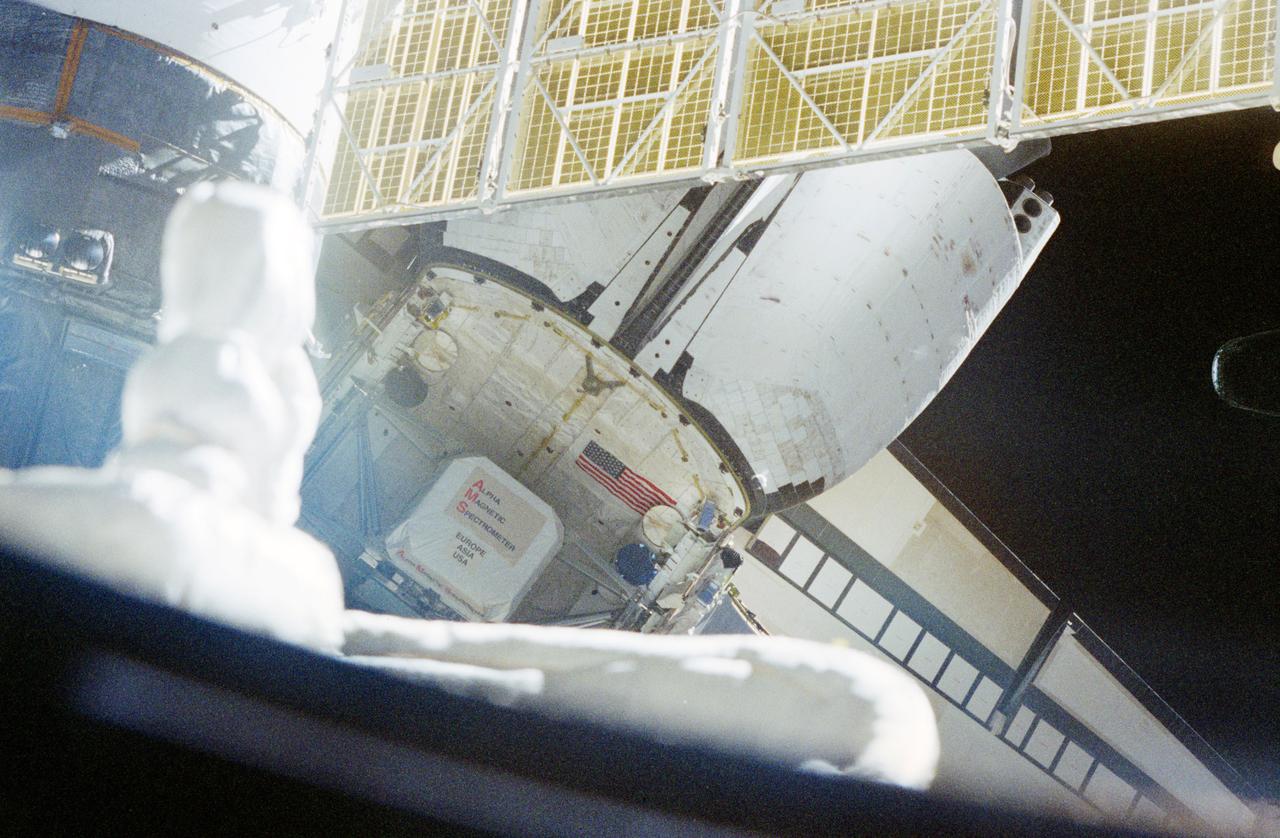
STS091-367-033 (2-12 June 1998) --- This photo of the Space Shuttle Discovery's aft section features the Alpha Magnetic Spectrometer (AMS), as seen from Russia's Mir space station, docked with Discovery at the time. AMS is the first large-magnet experiment ever placed in Earth orbit. The scientific goal of this high-energy physics experiment is to increase our understanding of the composition and origin of the universe. It is designed to search for and measure charged particles, including antimatter, outside Earth's atmosphere. The charge of such particles can be identified only by their trajectories in a magnetic field.
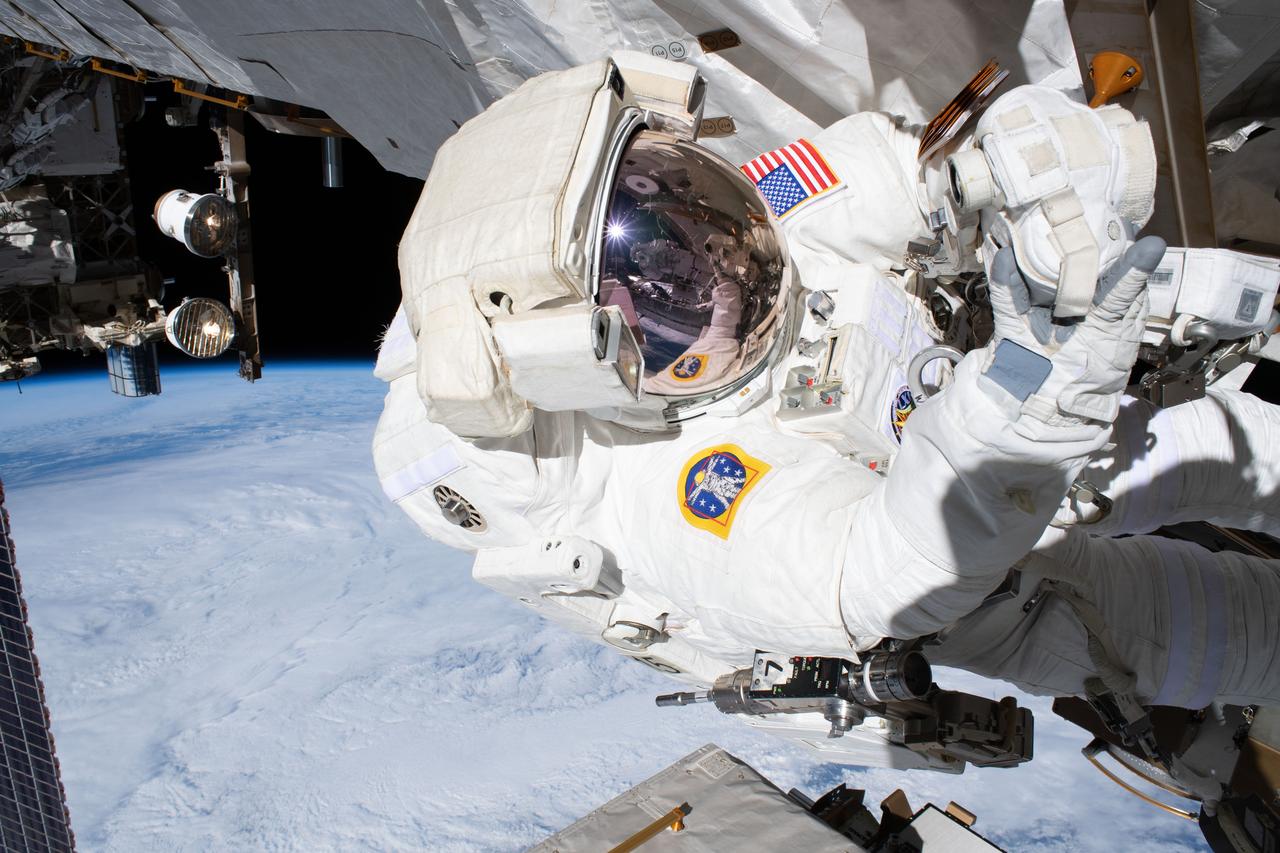
iss061e058273 (Nov. 22, 2019) --- NASA astronaut and spacewalker Andrew Morgan points his camera, protected from the hazards of microgravity by shielding, toward himself to take an out-of-this-world "space-selfie". He and fellow astronaut Luca Parmitano (out of frame) were conducting the second spacewalk to repair the International Space Station's cosmic particle detector, the Alpha Magnetic Spectrometer.
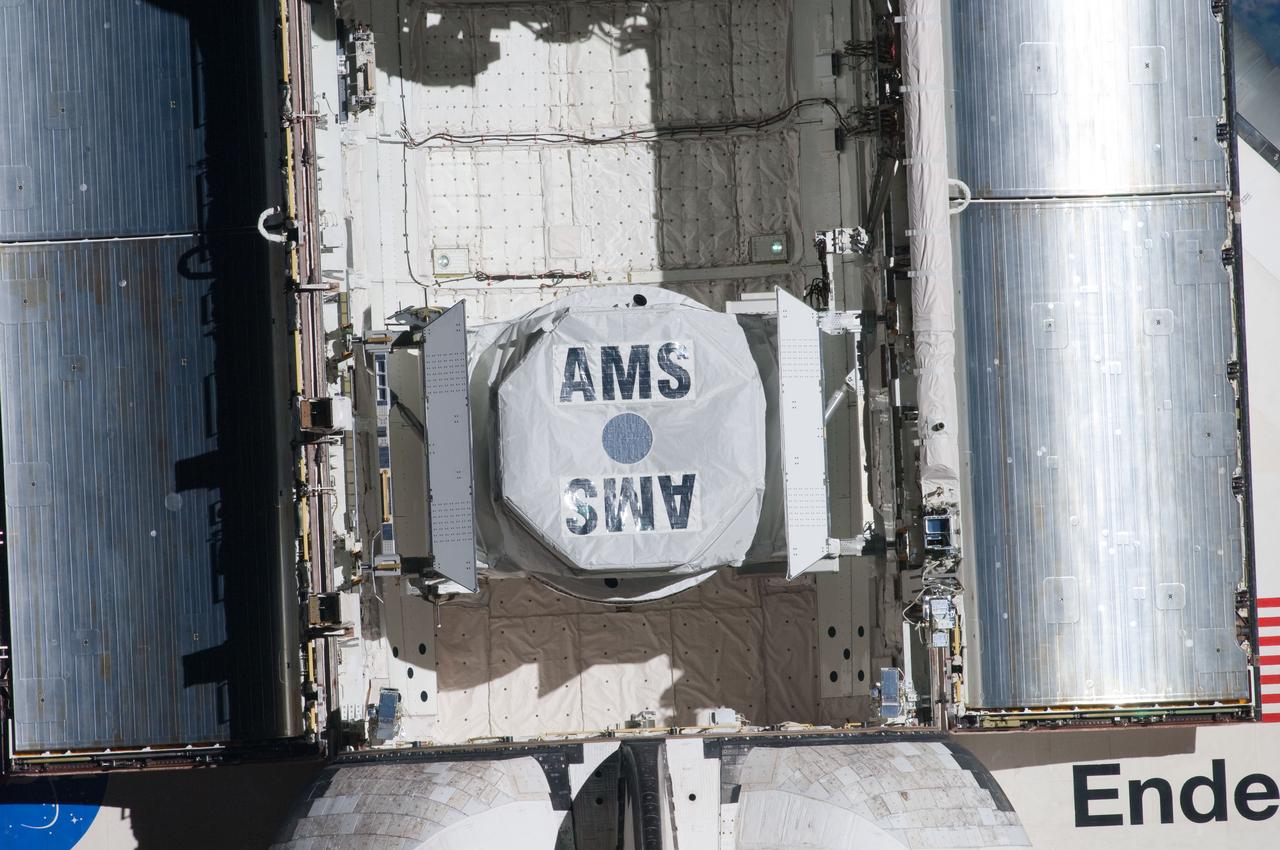
ISS027-E-032216 (18 May 2011) --- This close-up view of the Alpha Magnetic Spectrometer-2 (AMS) in space shuttle Endeavour’s payload bay was provided by an Expedition 27 crew member during a survey of the approaching STS-134 vehicle prior to docking with the International Space Station. As part of the survey and part of every mission's activities, Endeavour performed a back-flip for the rendezvous pitch maneuver (RPM). The image was photographed with a digital still camera, using a 400mm lens at a distance of about 600 feet (180 meters).
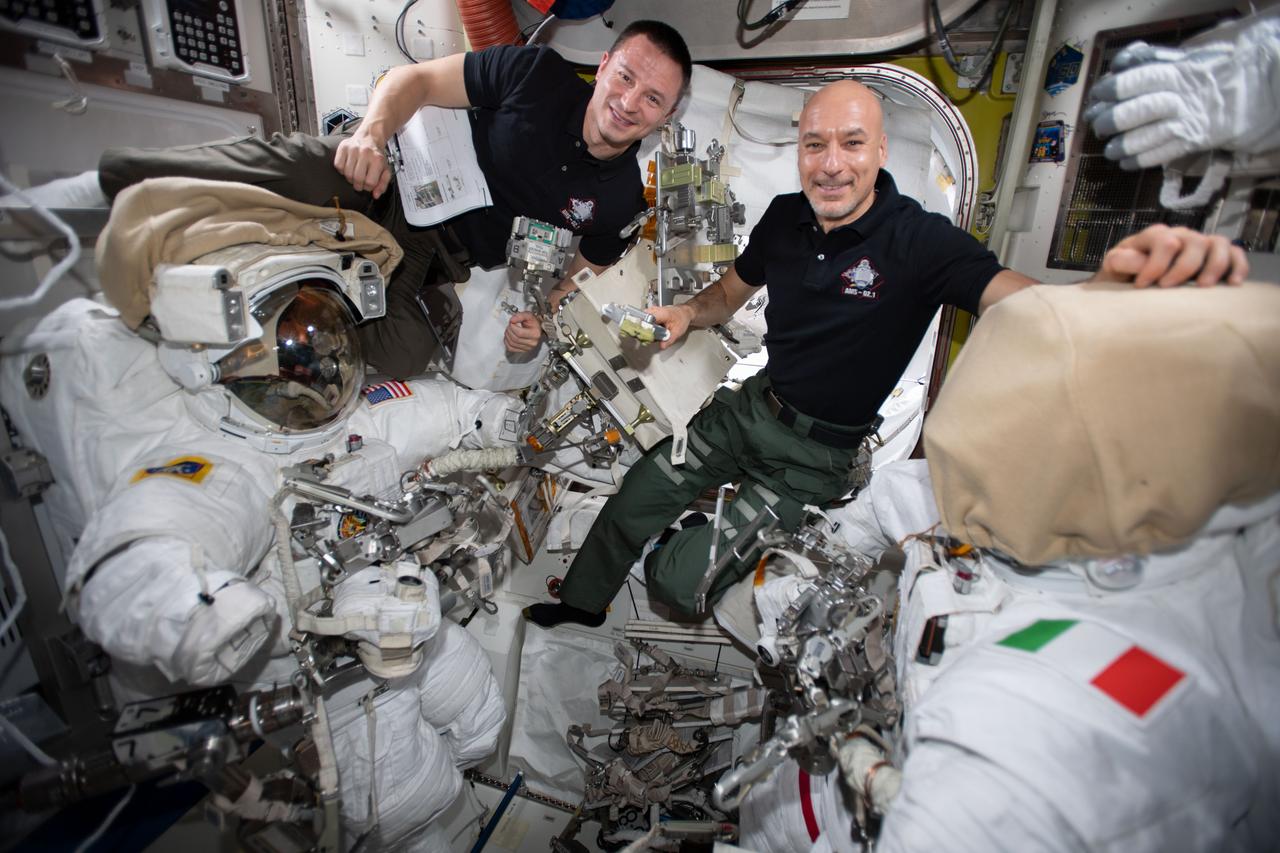
iss061e033873 (Nov. 11, 2019) --- (From left) NASA astronaut Andrew Morgan and ESA (European Space Agency) Commander Luca Parmitano work inside the Quest airlock checking U.S. spacesuits and spacewalking tools. The duo will conduct several spacewalks in November to upgrade the Alpha Magnetic Spectrometer's (AMS) thermal control system. The AMS is the International Space Station's cosmic particle detector.
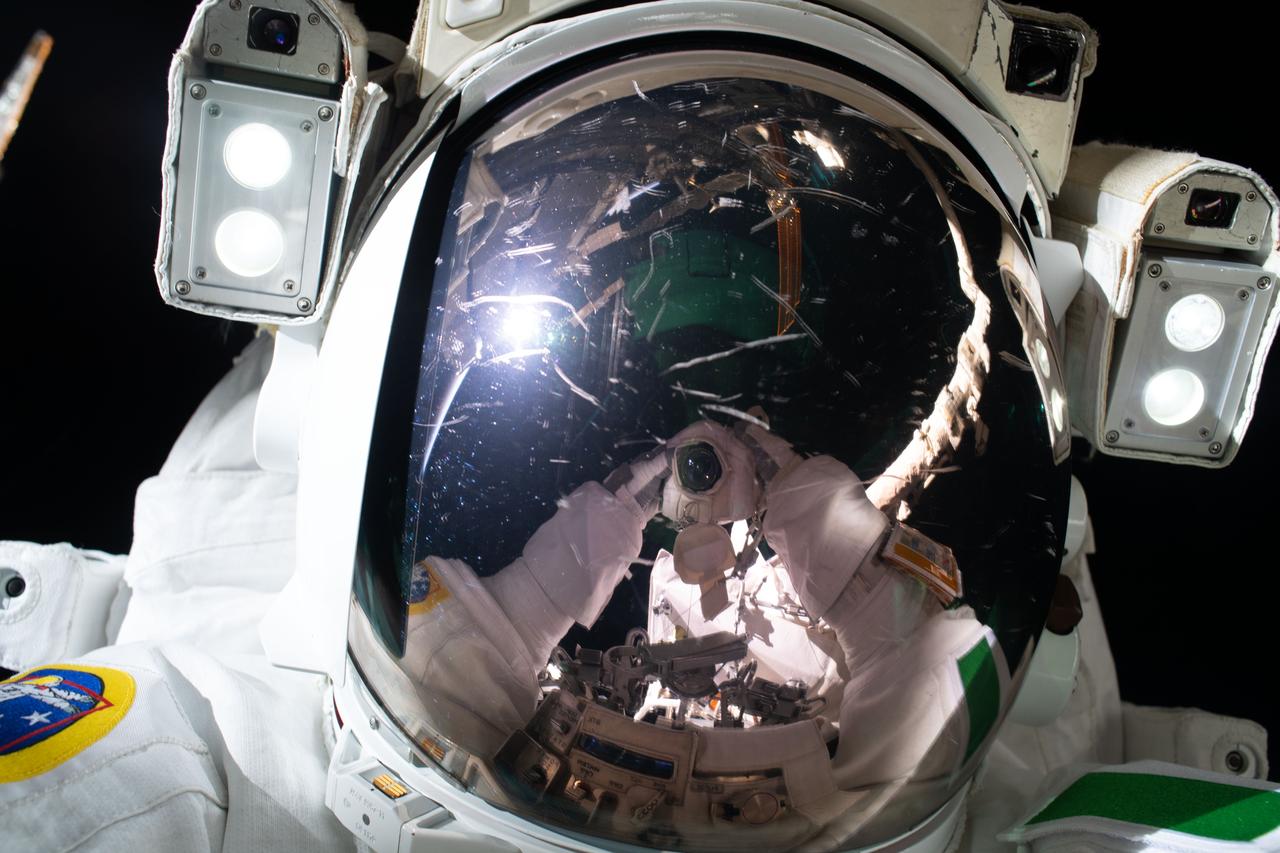
iss061e144502 (Jan. 25, 2020) --- ESA (European Space Agency) astronaut Luca Parmitano takes a "space-selfie" with his camera's reflection on his spacesuit's helmet visor. He and NASA astronaut Andrew Morgan were finalizing thermal repairs on the Alpha Magnetic Spectrometer, a dark matter and antimatter detector, during a spacewalk that lasted 6 hours and 16 minutes.
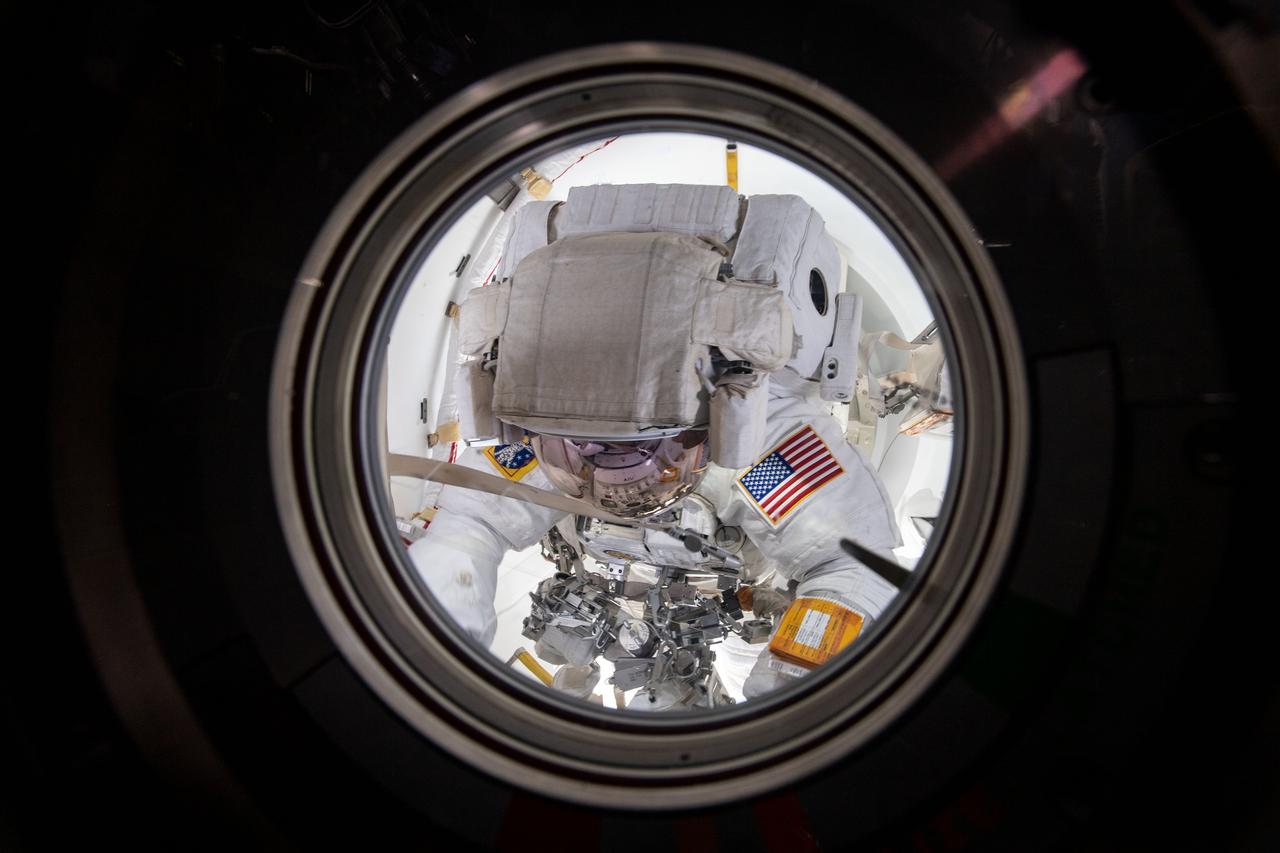
iss061e057469 (Nov. 22, 2019) --- NASA astronaut Andrew Morgan is pictured in his U.S. spacesuit inside the crew lock portion of the Quest joint airlock. He and ESA (European Space Agency) astronaut Luca Parmitano worked outside in the vacuum of space for six hours and 33 minutes during the second spacewalk to repair the Alpha Magnetic Spectrometer's thermal control system.
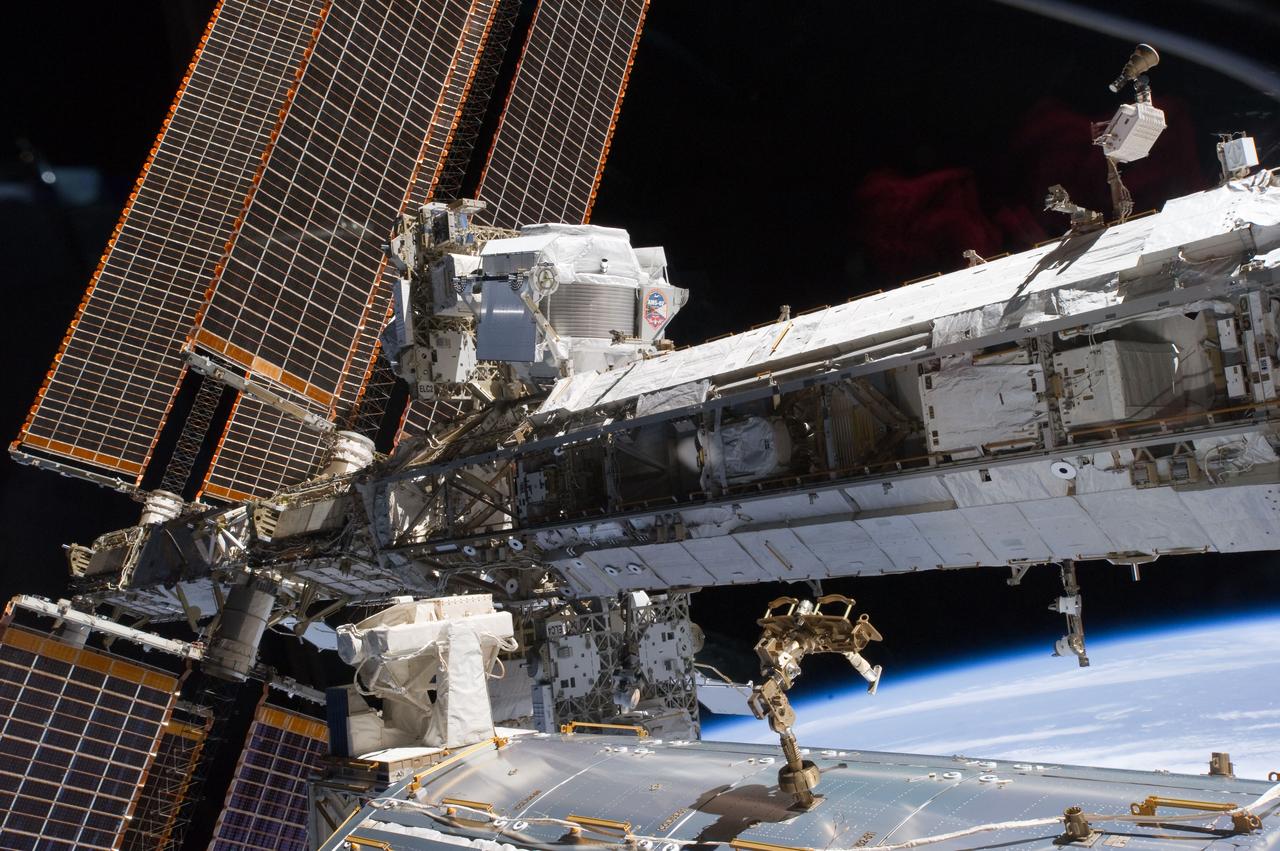
S134-E-007532 (20 May 2011) --- The starboard truss of the International Space Station is featured in this image photographed by an STS-134 crew member while space shuttle Endeavour remains docked with the station. The newly-installed Alpha Magnetic Spectrometer-2 (AMS) is visible at center left. The blackness of space and Earth?s horizon provide the backdrop for the scene. Photo credit: NASA

iss061e058778 (Nov. 22, 2019) --- Astronaut and spacewalker Luca Parmitano of ESA (European Space Agency) takes a photograph with a camera protected from the hazards of microgravity by shielding. He and fellow astronaut Andrew Morgan (out of frame) were conducting the second spacewalk to repair the International Space Station's cosmic particle detector, the Alpha Magnetic Spectrometer.
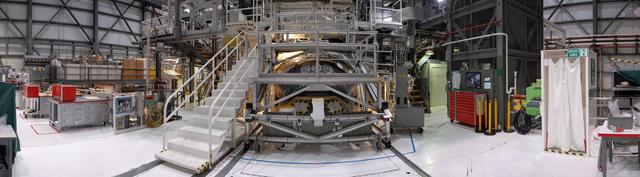
CAPE CANAVERAL, Fla. -- A panoramic view of Orbiter Processing Facility-2 at NASA's Kennedy Space Center in Florida, showing the nose section of space shuttle Endeavour peaking through the scaffolding. As the final planned mission of the Space Shuttle Program, Endeavour and its crew will deliver the Alpha Magnetic Spectrometer, as well as critical spare components to the station on the STS-134 mission targeted for launch Feb. 26, 2011. For more information visit, http://www.nasa.gov/mission_pages/shuttle/shuttlemissions/sts134/index.html. Photo credit: NASA/Frankie Martin