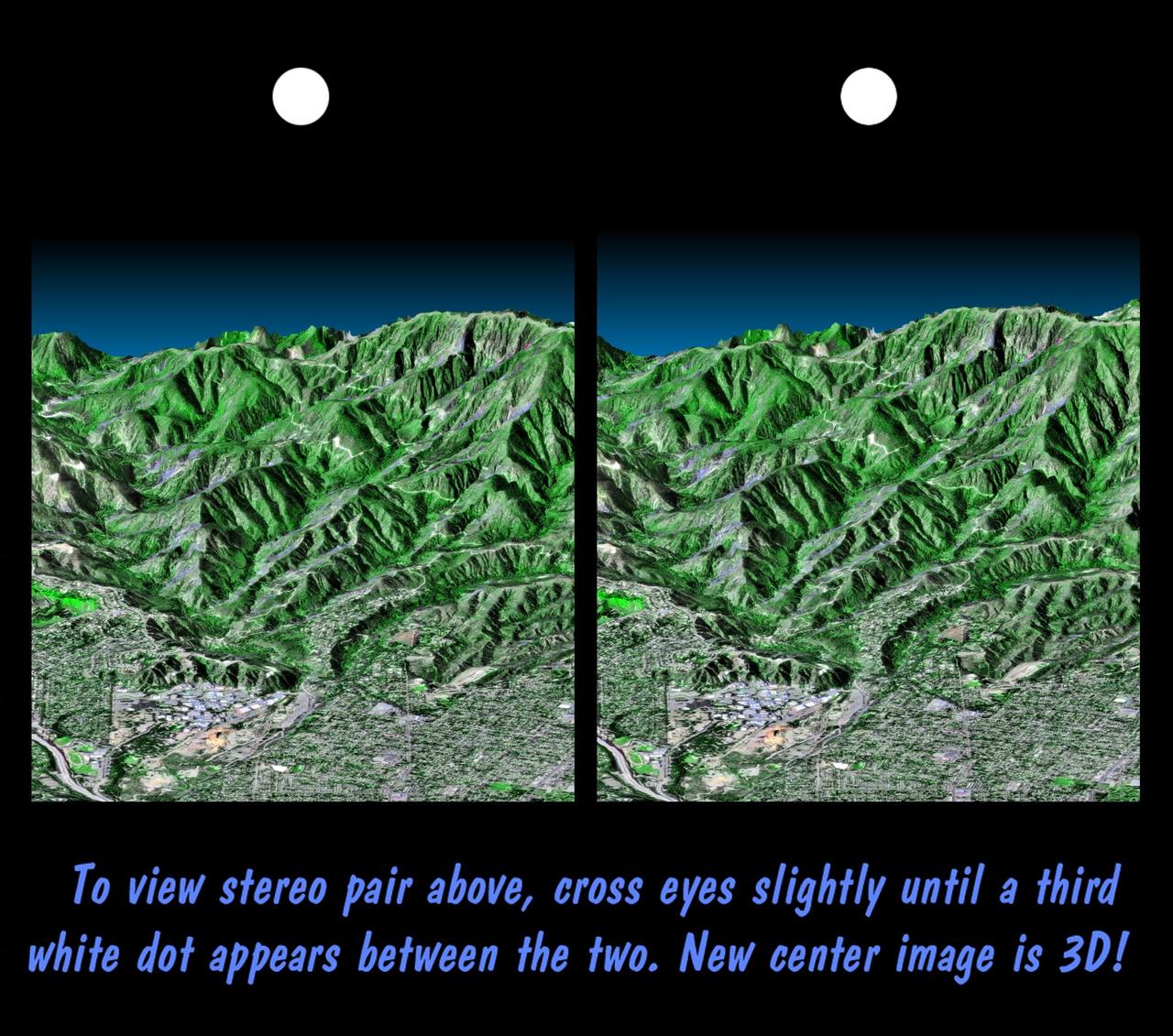
This stereoscopic image pair is a perspective view that shows the western part of the city of Pasadena, California, looking north toward the San Gabriel Mountains. Portions of the cities of Altadena and La Canada Flintridge are also shown.

NASA’s B200 King Air team includes, from left, principal engineer Cory Hill, operations engineer KC Sujan, pilot Tracy Phelps, crew chief Mario Soto, aircraft technician Ruben Saiza, quality assurance technician Scott Silver, and senior engineer Alexander Soibel. The compact Fire Infrared Radiance Spectral Tracker (c-FIRST) instrument was tested on the B200 aircraft – based at NASA’s Armstrong Flight Research Center in Edwards, California – over the wildfires in the Pacific Palisades and Altadena, California, on November 21, 2024.
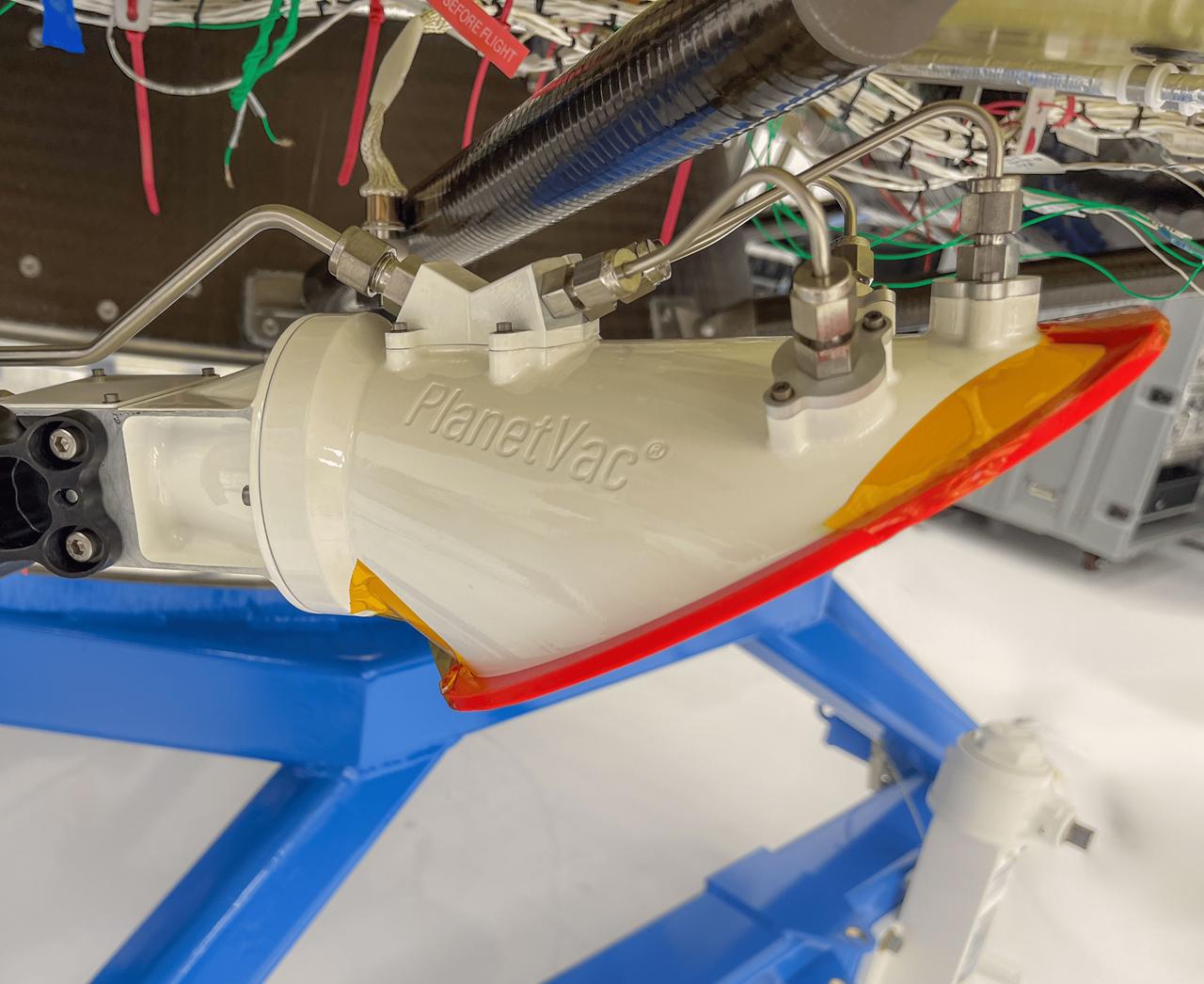
A technology demonstration flying aboard the next delivery for NASA’s CLPS (Commercial Lunar Payload Services) initiative could change how research teams collect and study soil and rock samples on other planetary bodies. Lunar PlanetVac, or LPV, is one of 10 payloads set to be carried to the Moon by the Blue Ghost 1 lunar lander in 2025. Developed by Honeybee Robotics, a Blue Origin company of Altadena, California, LPV is designed to, essentially, operate as a vacuum cleaner with a pneumatic, compressed gas-powered sample acquisition and delivery system to efficiently collect and transfer lunar soil from the surface to other science instruments or sample return containers. Investigations and demonstrations, such as LPV, launched on CLPS flights will help NASA study Earth’s nearest neighbor under Artemis and pave the way for future crewed missions on the Moon. NASA’s Marshall Space Flight Center in Huntsville, Alabama, manages the development for seven of the 10 CLPS payloads that will be carried on Firefly’s Blue Ghost lunar lander.
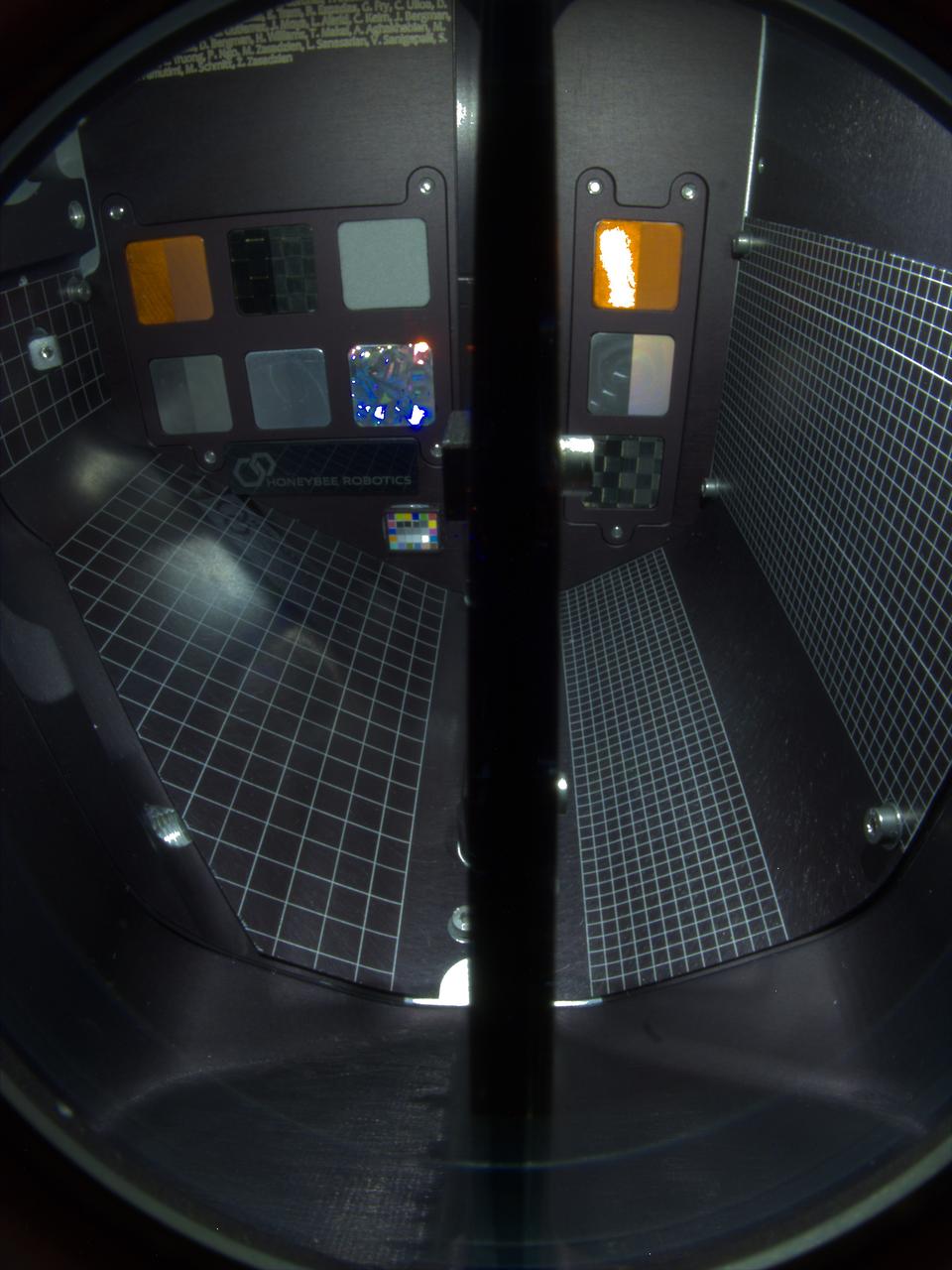

A technology demonstration flying aboard the next delivery for NASA’s CLPS (Commercial Lunar Payload Services) initiative could change how research teams collect and study soil and rock samples on other planetary bodies. Lunar PlanetVac, or LPV, is one of 10 payloads set to be carried to the Moon by the Blue Ghost 1 lunar lander in 2025. Developed by Honeybee Robotics, a Blue Origin company of Altadena, California, LPV is designed to, essentially, operate as a vacuum cleaner with a pneumatic, compressed gas-powered sample acquisition and delivery system to efficiently collect and transfer lunar soil from the surface to other science instruments or sample return containers. Investigations and demonstrations, such as LPV, launched on CLPS flights will help NASA study Earth’s nearest neighbor under Artemis and pave the way for future crewed missions on the Moon. NASA’s Marshall Space Flight Center in Huntsville, Alabama, manages the development for seven of the 10 CLPS payloads that will be carried on Firefly’s Blue Ghost lunar lander.
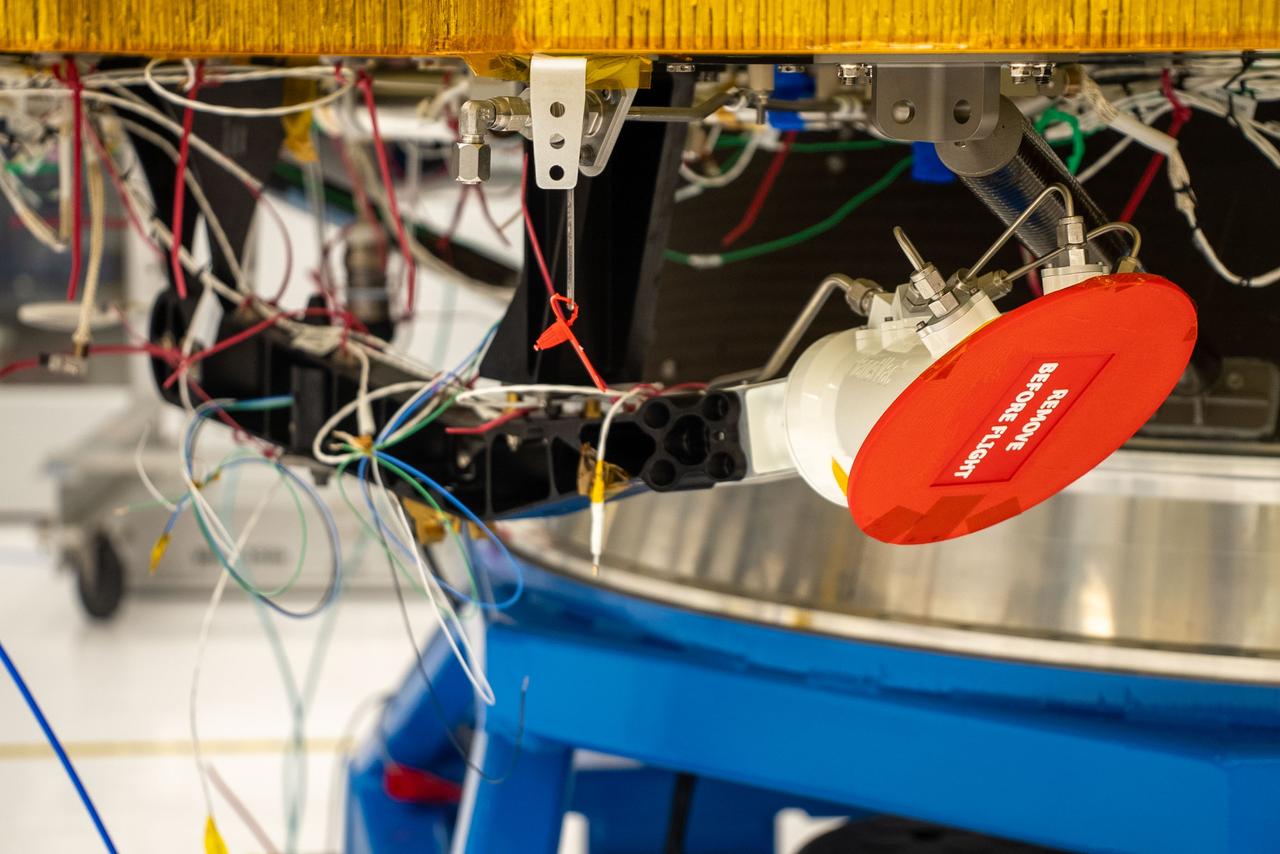

A technology demonstration flying aboard the next delivery for NASA’s CLPS (Commercial Lunar Payload Services) initiative could change how research teams collect and study soil and rock samples on other planetary bodies. Lunar PlanetVac, or LPV, is one of 10 payloads set to be carried to the Moon by the Blue Ghost 1 lunar lander in 2025. Developed by Honeybee Robotics, a Blue Origin company of Altadena, California, LPV is designed to, essentially, operate as a vacuum cleaner with a pneumatic, compressed gas-powered sample acquisition and delivery system to efficiently collect and transfer lunar soil from the surface to other science instruments or sample return containers. Investigations and demonstrations, such as LPV, launched on CLPS flights will help NASA study Earth’s nearest neighbor under Artemis and pave the way for future crewed missions on the Moon. NASA’s Marshall Space Flight Center in Huntsville, Alabama, manages the development for seven of the 10 CLPS payloads that will be carried on Firefly’s Blue Ghost lunar lander.
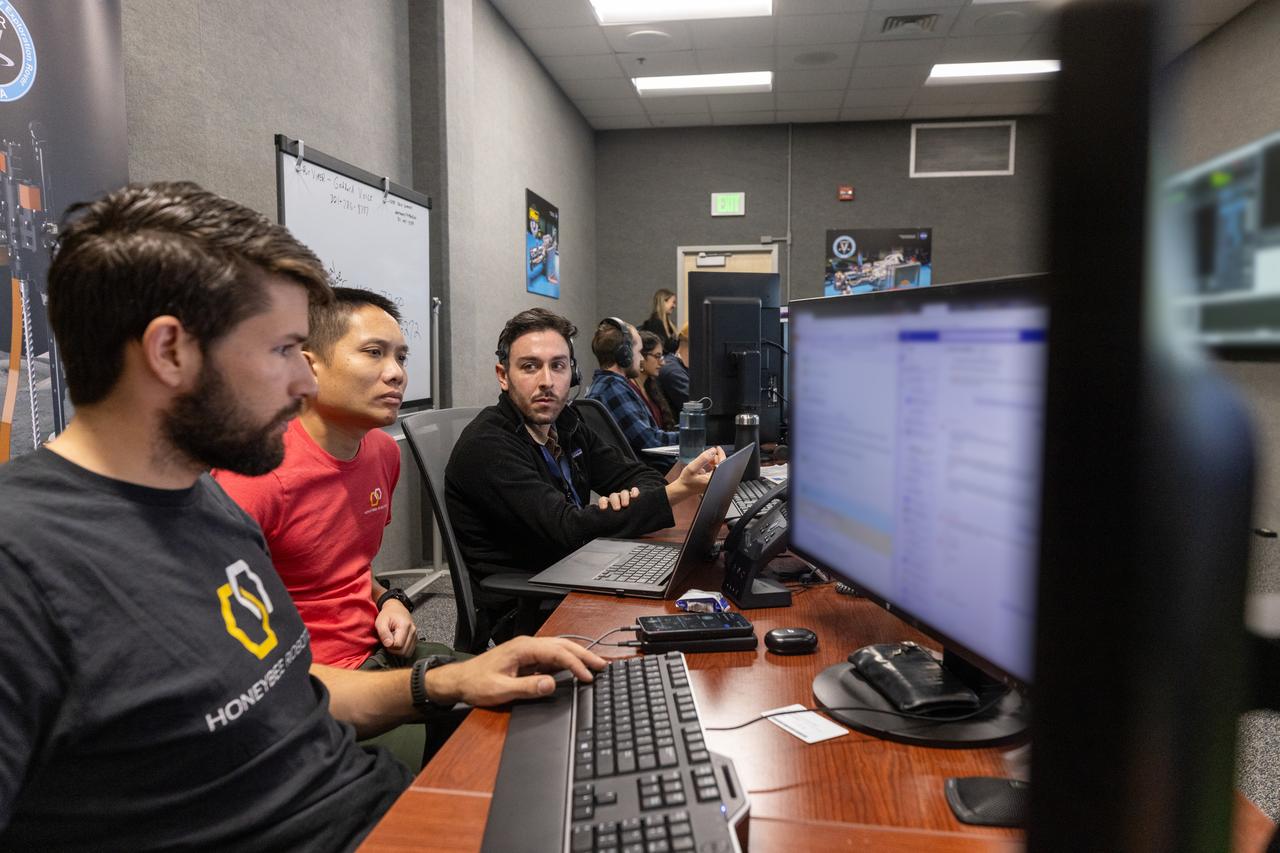
A team from Honeybee Robotics in Altadena, California participates in simulation training for the Polar Resources Ice Mining Experiment-1 (PRIME-1) on Thursday, Nov. 2, 2023, inside the Neil Armstrong Operations and Checkout Building at NASA’s Kennedy Space Center in Florida. The purpose of the training is to get the integrated PRIME-1 team – engineers with PRIME-1’s MSOLO (Mass Spectrometer Observing Lunar Operations) and Honeybee Robotics’ TRIDENT (The Regolith and Ice Drill for Exploring New Terrain) drill – prepared to operate the instrument on the lunar surface. The team commanded the PRIME-1 hardware, located at Intuitive Machines in Houston, to operate MSOLO and TRIDENT. PRIME-1 is scheduled to launch through NASA’s CLPS (Commercial Lunar Payload Delivery Service) initiative and will be the first in-situ resource utilization demonstration on the Moon, with MSOLO and TRIDENT making up its two primary components. Through Artemis missions, CLPS deliveries will be used to perform science experiments, test technologies, and demonstrate capabilities to help NASA explore the Moon and prepare for human deep space exploration missions.
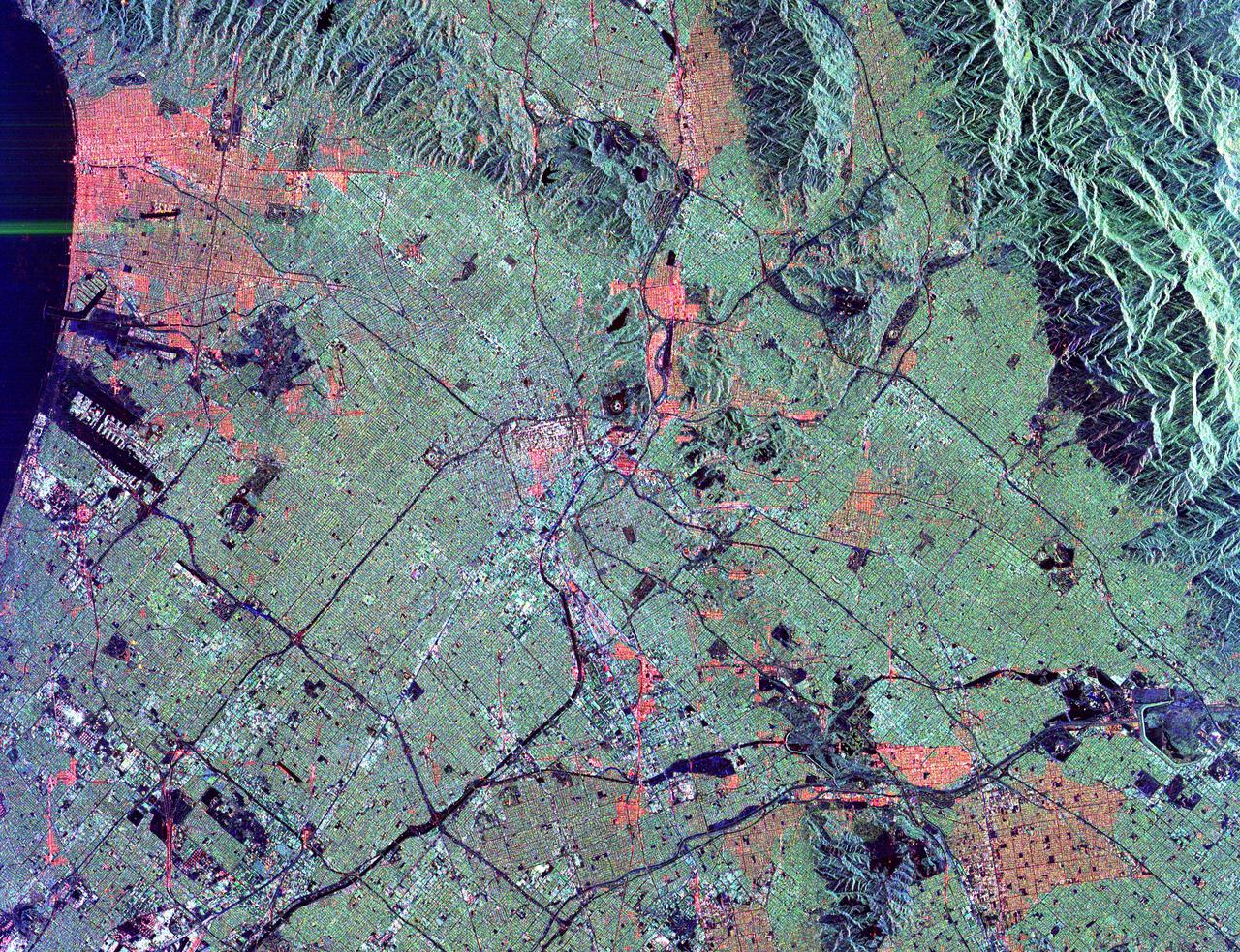
This radar image shows the massive urbanization of Los Angeles, California. The image extends from the Santa Monica Bay at the left to the San Gabriel Mountains at the right. Downtown Los Angeles is in the center of the image. The runways of the Los Angeles International Airport appear as black strips at the left center of the image. The waterways of Marina del Rey are seen just above the airport. The San Gabriel Mountains and the city of Pasadena are at the right center of the image. Black areas on the mountains on the right are fire scars from the 1993 Altadena fire. The Rose Bowl is shown as a small circle near the right center. The complex freeway system is visible as dark lines throughout the image. Some city areas, such as Santa Monica in the upper left, appear red due to the alignment of streets and buildings to the incoming radar beam. The image was acquired by the Spaceborne Imaging Radar-C/X-band Synthetic Aperture Radar (SIR-C/X-SAR) onboard the space shuttle Endeavour on October 3, 1994. SIR-C/X-SAR, a joint mission of the German, Italian and the United States space agencies, is part of NASA's Mission to Planet Earth. This image is centered at 34.04 degrees North latitude and 118.2 degrees West longitude with North pointing toward the upper right. The area shown measures 40 kilometers by 50 kilometers (25 miles by 31 miles). http://photojournal.jpl.nasa.gov/catalog/PIA01789
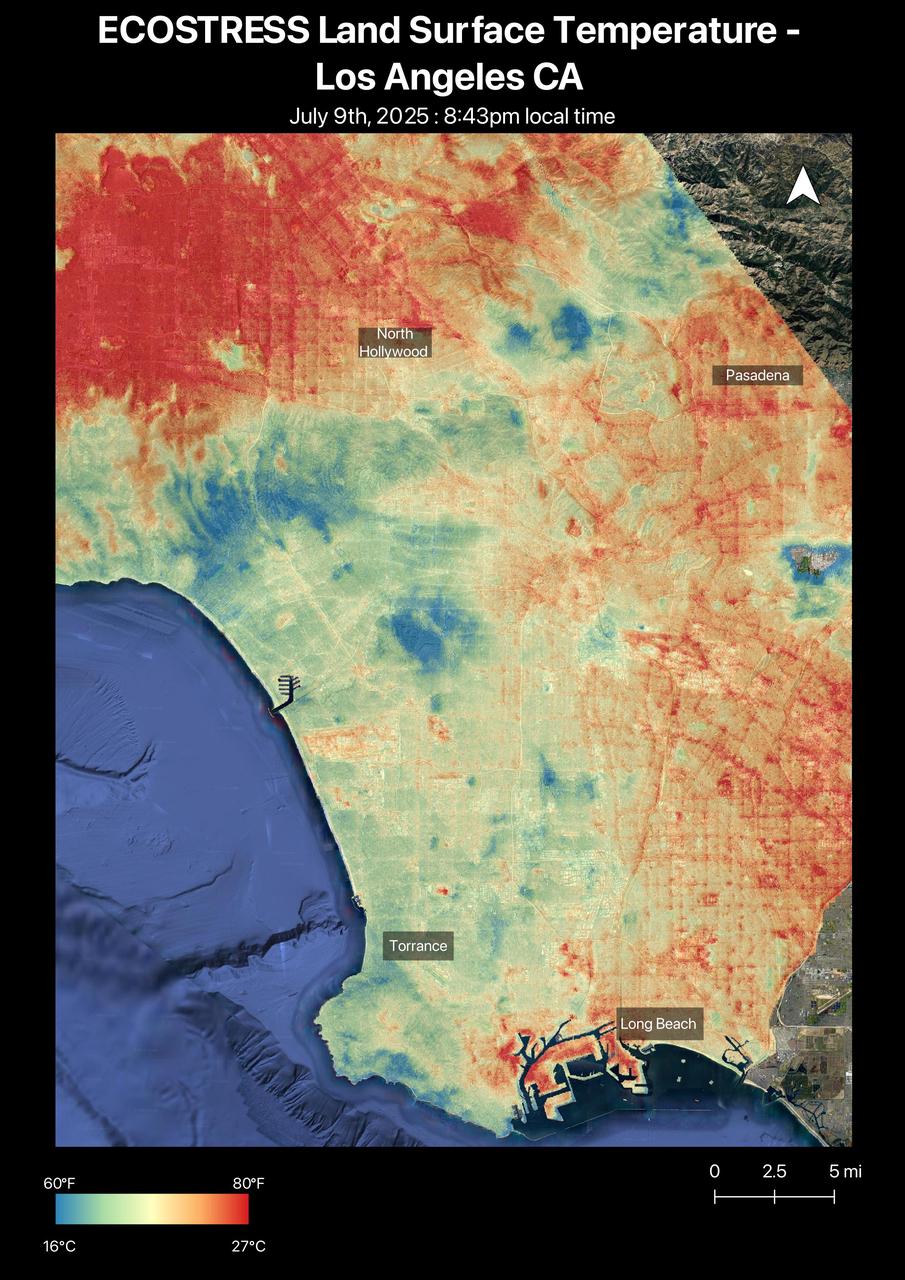
A short-lived heat wave that hit the Los Angeles area the week of July 7, 2025, was the first of summer. The heat lingered into the evening hours, as captured by NASA's Ecosystem Spaceborne Thermal Radiometer Experiment on Space Station (ECOSTRESS) instrument. By nearly 8:45 p.m. local time July 9, surface temperatures in the San Fernando Valley were still over 80 degrees Fahrenheit (27 degrees Celsius). The ECOSTRESS sensor recorded similar temperatures for downtown Pasadena (Figure A) and parts of Altadena, east of NASA's Jet Propulsion Laboratory, which manages the mission. In these data visualizations, dark red indicates higher temperatures, while areas in blue and green are cooler. Coastal regions remained significantly cooler than inland areas. The ECOSTRESS instrument measures thermal infrared emissions from Earth's surface. This enables researchers to monitor plant health, the progress of wildfires, land surface temperatures, and the burn risk to people from hot surfaces such as asphalt. Land surface temperatures are hotter than air temperatures during the day. Air temperatures, which are measured out of direct sunlight, are usually what meteorologists report in a weather forecast. https://photojournal.jpl.nasa.gov/catalog/PIA26651