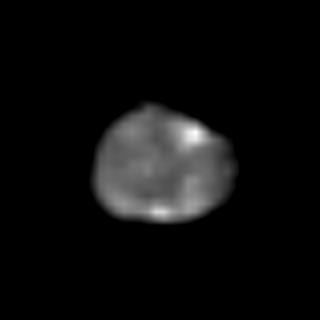
Galileo First Image of Amalthea
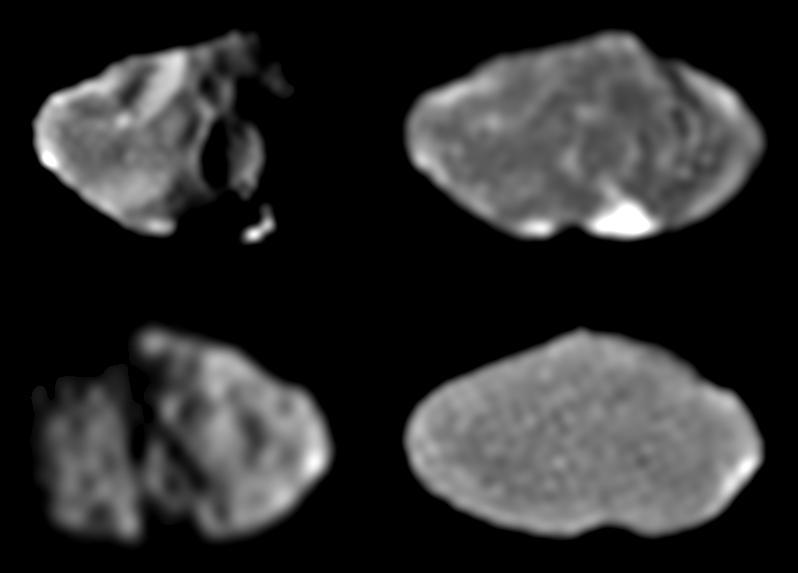
Four Galileo Views of Amalthea
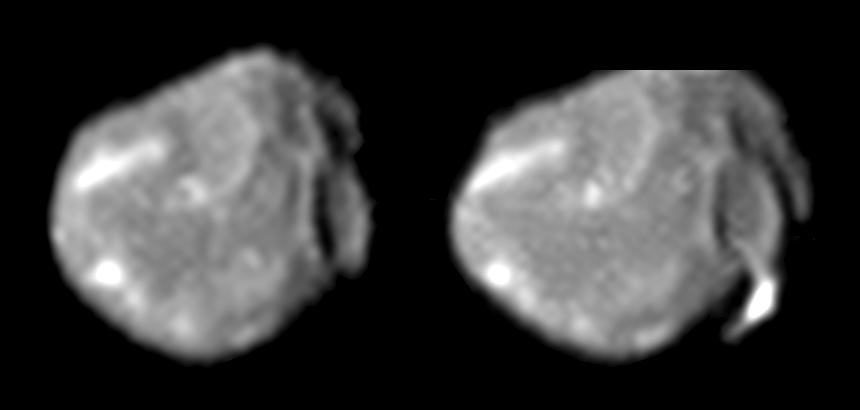
Bright Streak on Amalthea
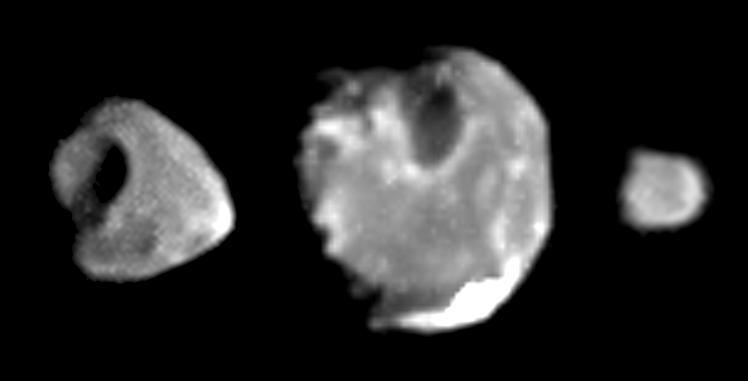
Best images yet of Thebe, Amalthea and Metis
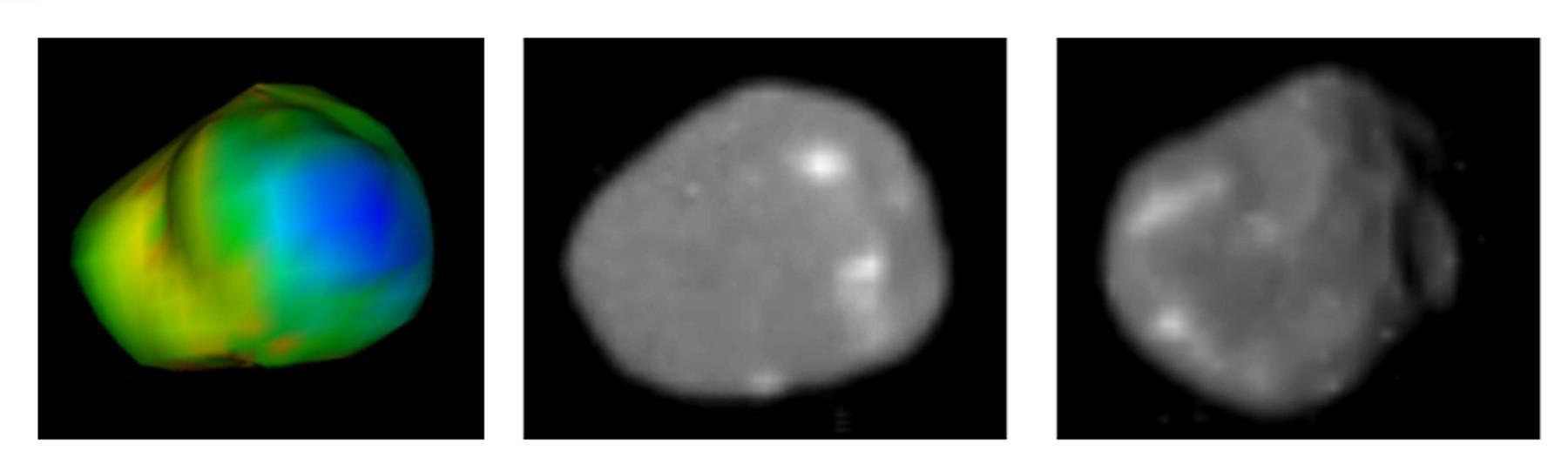
These images of Jupiter moon Amalthea were taken with NASA Galileo and Voyager spacecraft. Amalthea is almost pure water ice, hinting that it may not have formed where it now orbits.
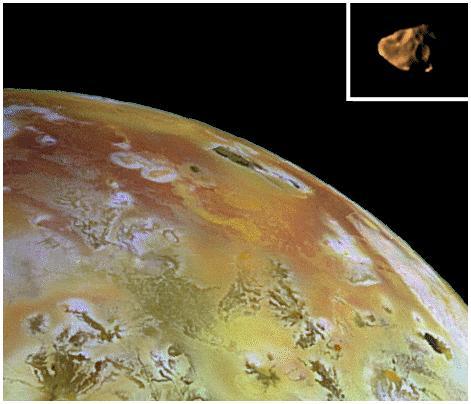
Comparison of Amalthea to Io
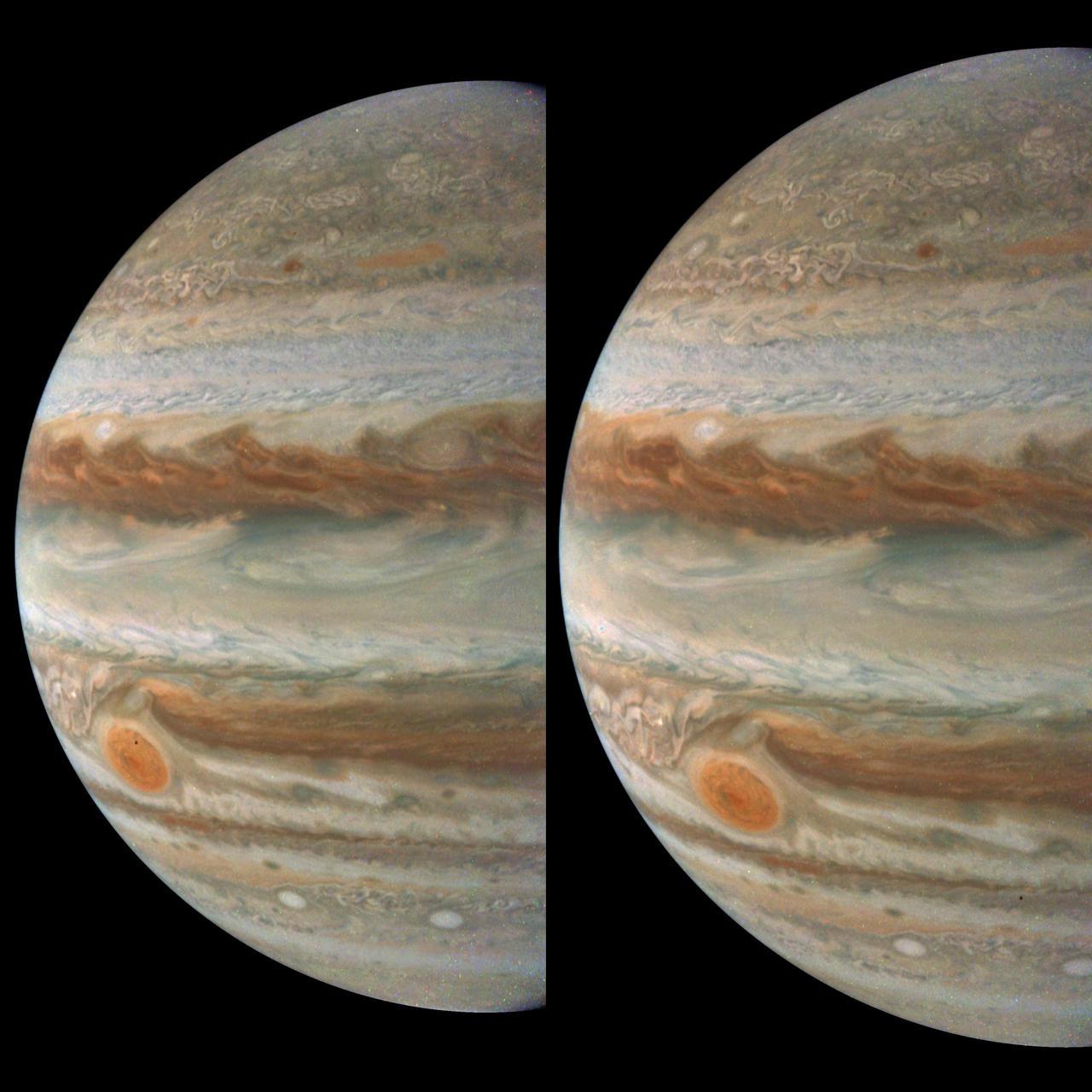
NASA's Juno mission captured these views of Jupiter during its 59th close flyby of the giant planet on March 7, 2024. They provide a good look at Jupiter's colorful belts and swirling storms, including the Great Red Spot. Close examination reveals something more: two glimpses of the tiny moon Amalthea. With a radius of just 52 miles (84 kilometers), Amalthea has a potato-like shape, lacking the mass to pull itself into a sphere. In 2000, NASA's Galileo spacecraft revealed some surface features, including impact craters, hills, and valleys. Amalthea circles Jupiter inside Io's orbit, which is the innermost of the planet's four largest moons, taking 0.498 Earth days to complete one orbit. Amalthea is the reddest object in the solar system, and observations indicate it gives out more heat than it receives from the Sun. This may be because, as it orbits within Jupiter's powerful magnetic field, electric currents are induced in the moon's core. Alternatively, the heat could be from tidal stresses caused by Jupiter's gravity. At the time that the first of these two images was taken, the Juno spacecraft was about 165,000 miles (265,000 kilometers) above Jupiter's cloud tops, at a latitude of about 5 degrees north of the equator. Citizen scientist Gerald Eichstädt made these images using raw data from the JunoCam instrument, applying processing techniques to enhance the clarity of the images. https://photojournal.jpl.nasa.gov/catalog/PIA25728

Jupiter's moon Amalthea casts a shadow on the gas giant planet in this image captured by NASA's Juno spacecraft. The elongated shape of the shadow is a result of both the location of the moon with relation to Jupiter in this image as well as the irregular shape of the moon itself. The image was taken on Sept. 1, 2017 at 2:46 p.m. PDT (5:46 p.m. EDT), as Juno performed its eighth close flyby of Jupiter. At the time the image was taken, the spacecraft was 2,397 miles (3,858 kilometers) from the tops of the clouds of the planet at a latitude of 17.6 degrees. Citizen scientists Gerald Eichstädt and Seán Doran processed this image using data from the JunoCam imager. The image has been rotated so that the top of the image is actually the equatorial regions while the bottom of the image is of the northern polar regions of the planet. https://photojournal.jpl.nasa.gov/catalog/PIA21969
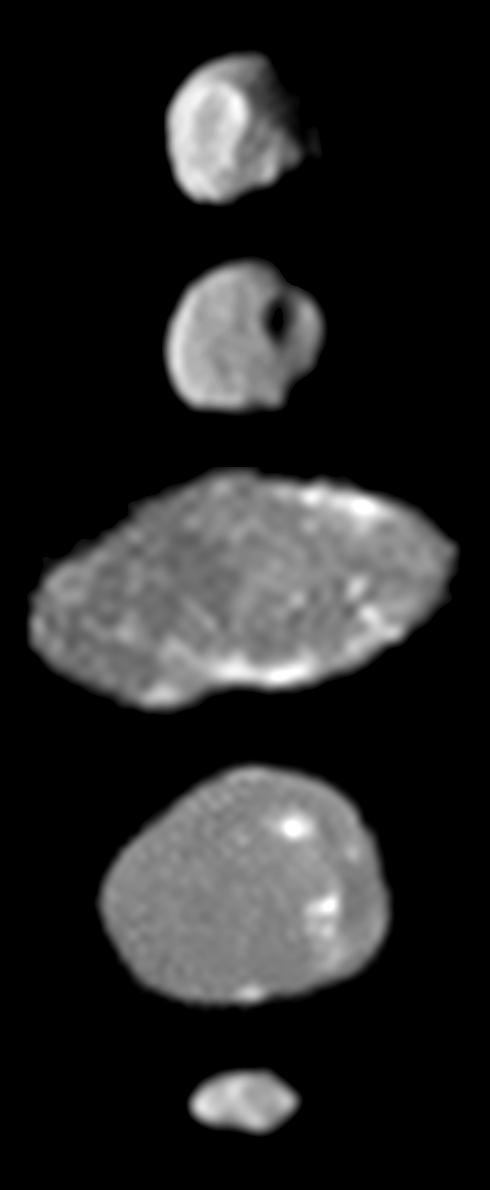
Jupiter Small Satellite Montage
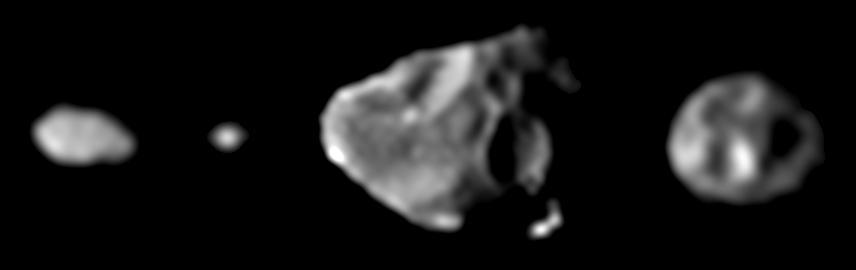
Family Portrait of the Small Inner Satellites of Jupiter
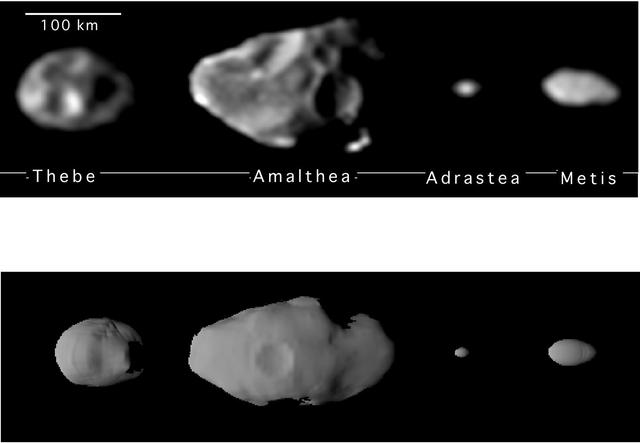
Shapes of the Small Inner Satellites of Jupiter
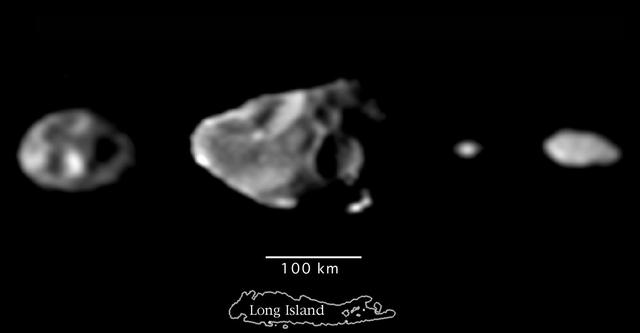
Scale Comparison of the Inner Small Satellites of Jupiter