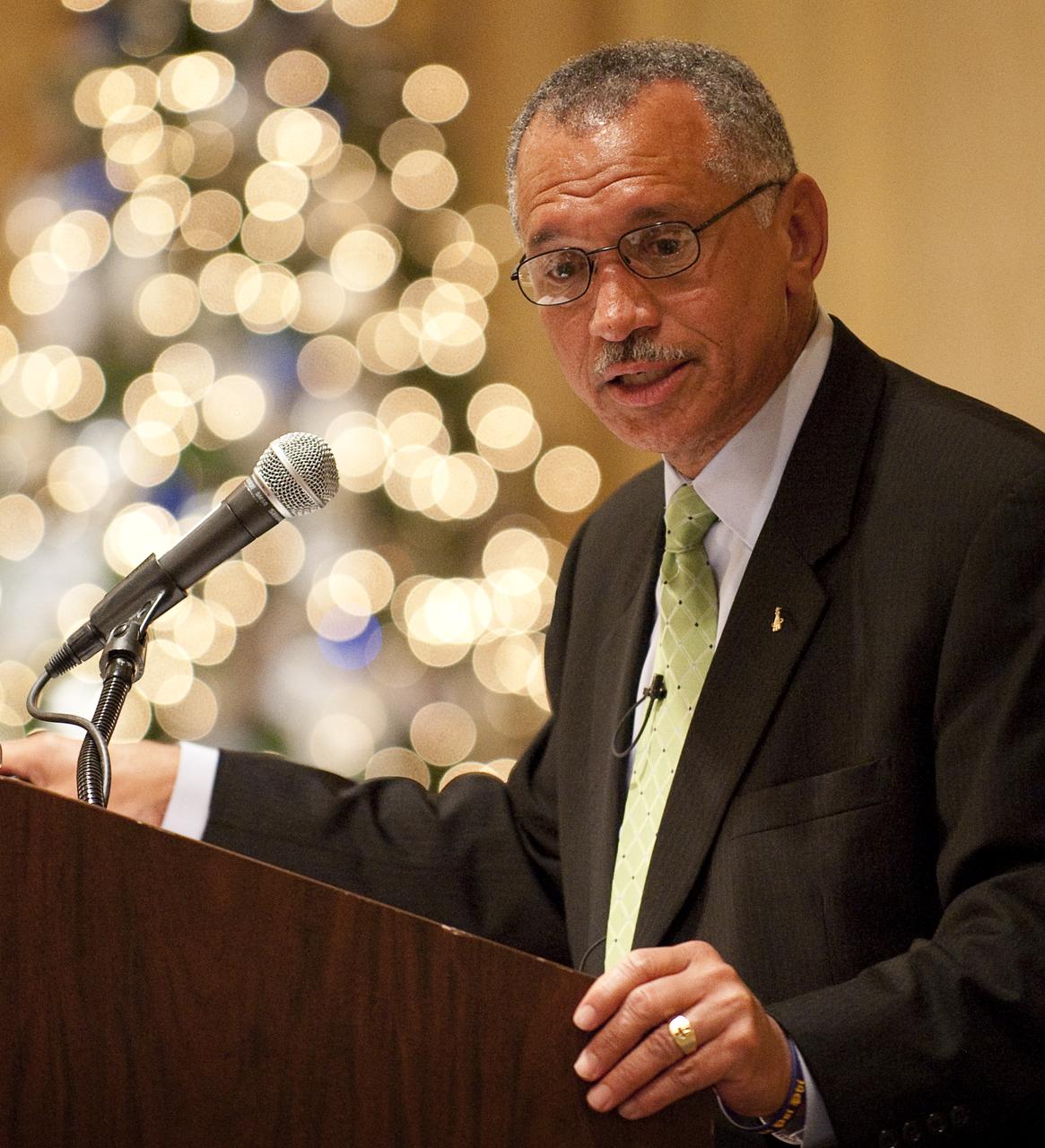
NASA Administrator Charles Bolden speaks during a luncheon co-hosted by the American Institute of Aeronautics and Astronautics (AIAA) and Women In Aerospace (WIA) Wednesday, Dec., 9, 2009 at the Ritz-Carlton in Arlington, Va. Photo Credit: (NASA/Bill Ingalls)
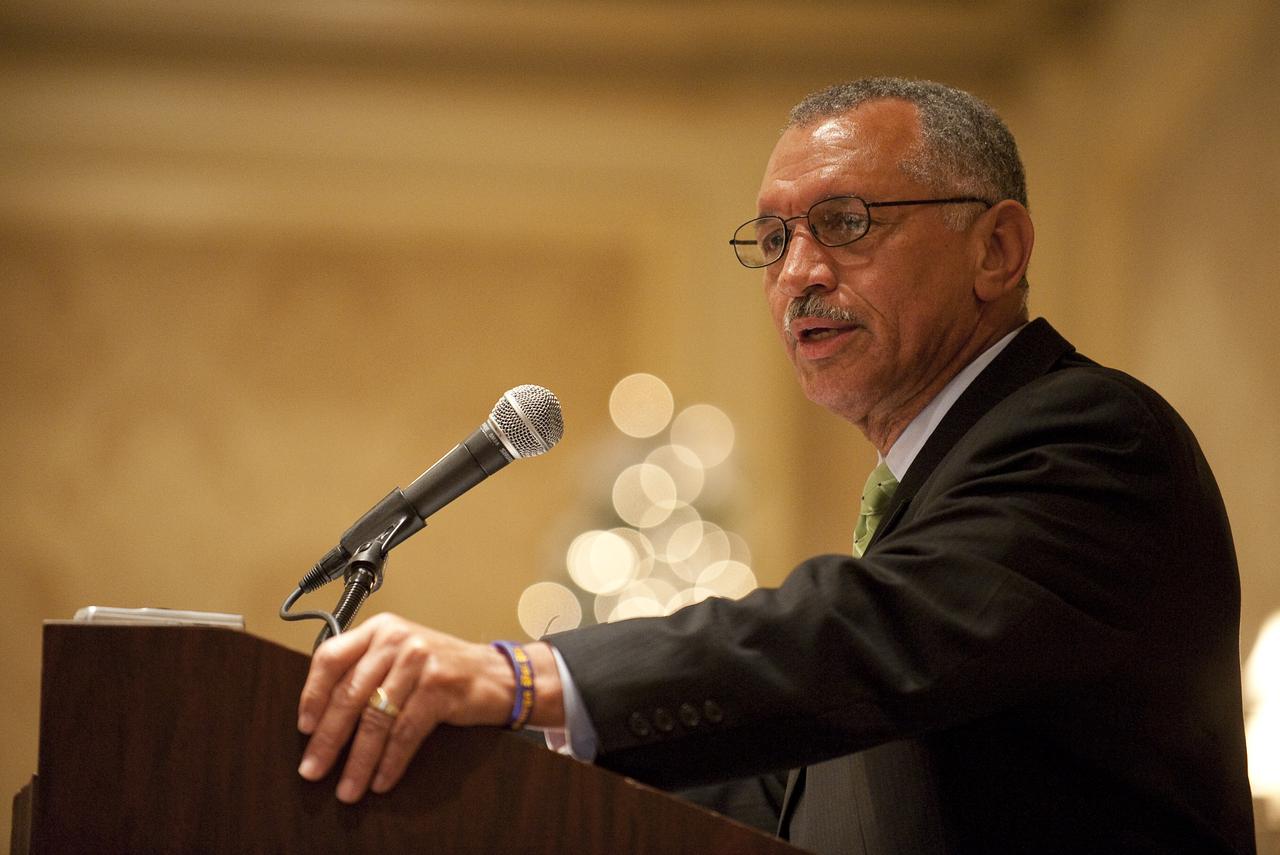
NASA Administrator Charles Bolden speaks during a luncheon co-hosted by the American Institute of Aeronautics and Astronautics (AIAA) and Women In Aerospace (WIA) Wednesday, Dec., 9, 2009 at the Ritz-Carlton in Arlington, Va. Photo Credit: (NASA/Bill Ingalls)
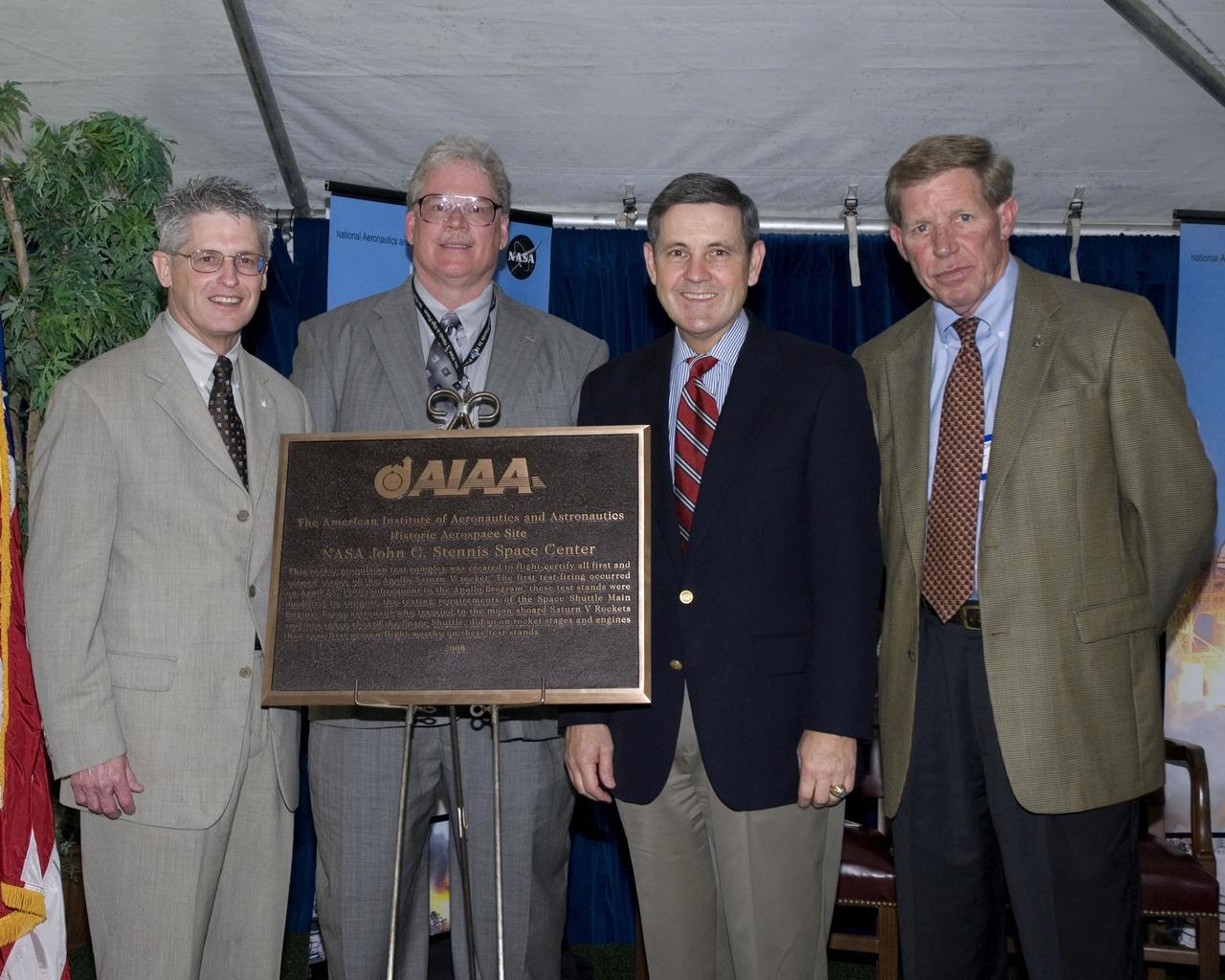
Picured (left to right) American Institute of Aeronautics and Astronautics (AIAA) representative David Throckmorton presents a plaque designating NASA's John C. Stennis Space Center as a historical aerospace site during an April 10 ceremony. Joining Throckmorton for the presentation were AIAA Greater New Orleans Chapter Chair Mark Hughes, Stennis Space Center Director Bob Cabana and Pratt & Whitney Rocketdyne Vice President John Plowden.
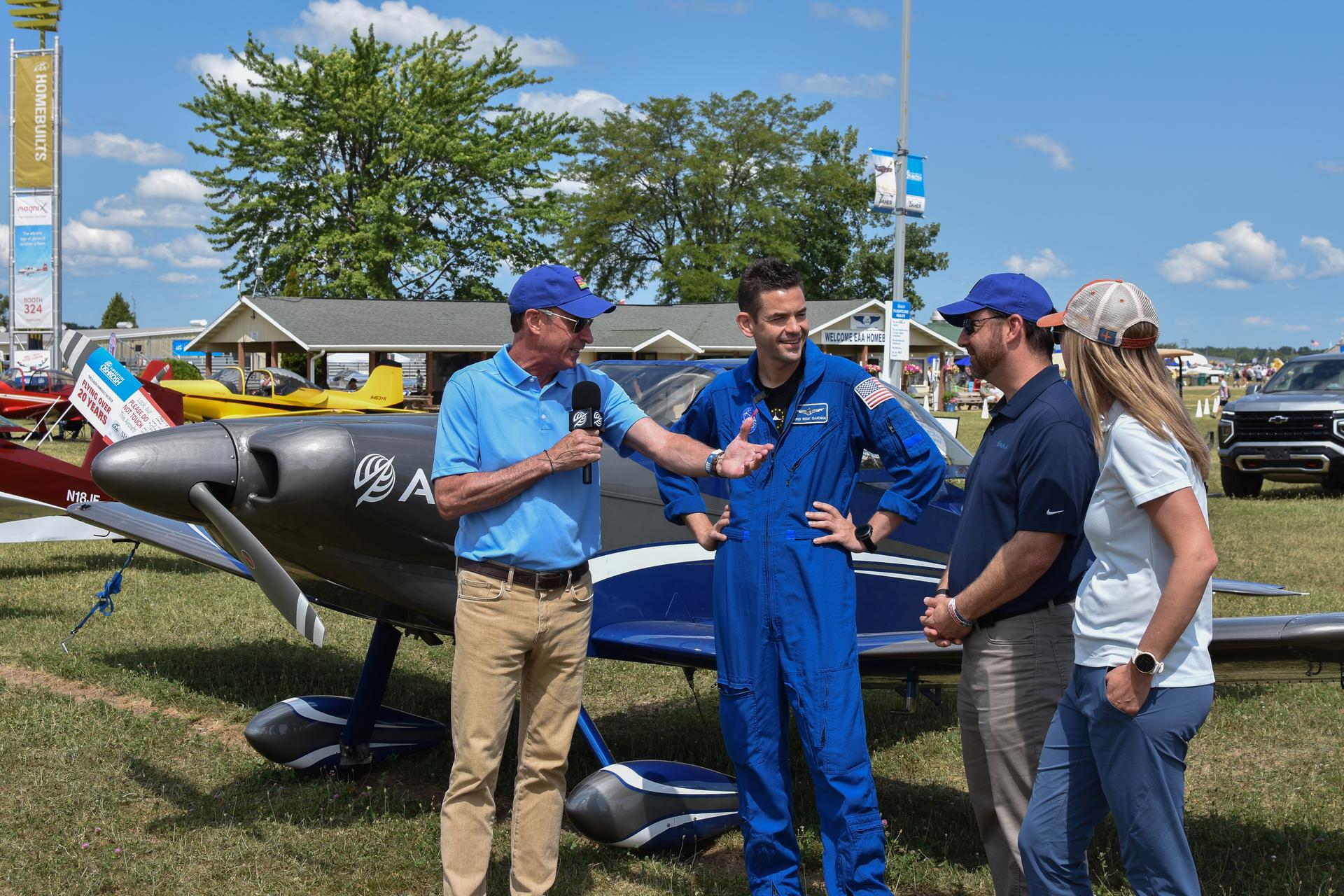
NASA Administrator Jared Isaacman meets with representatives from the American Institute of Aeronautics and Astronautics (AIAA) at the 2026 Experimental Aircraft Association (EAA) AirVenture air show in Oshkosh, Wisconsin, on Thursday, July 23, 2026.
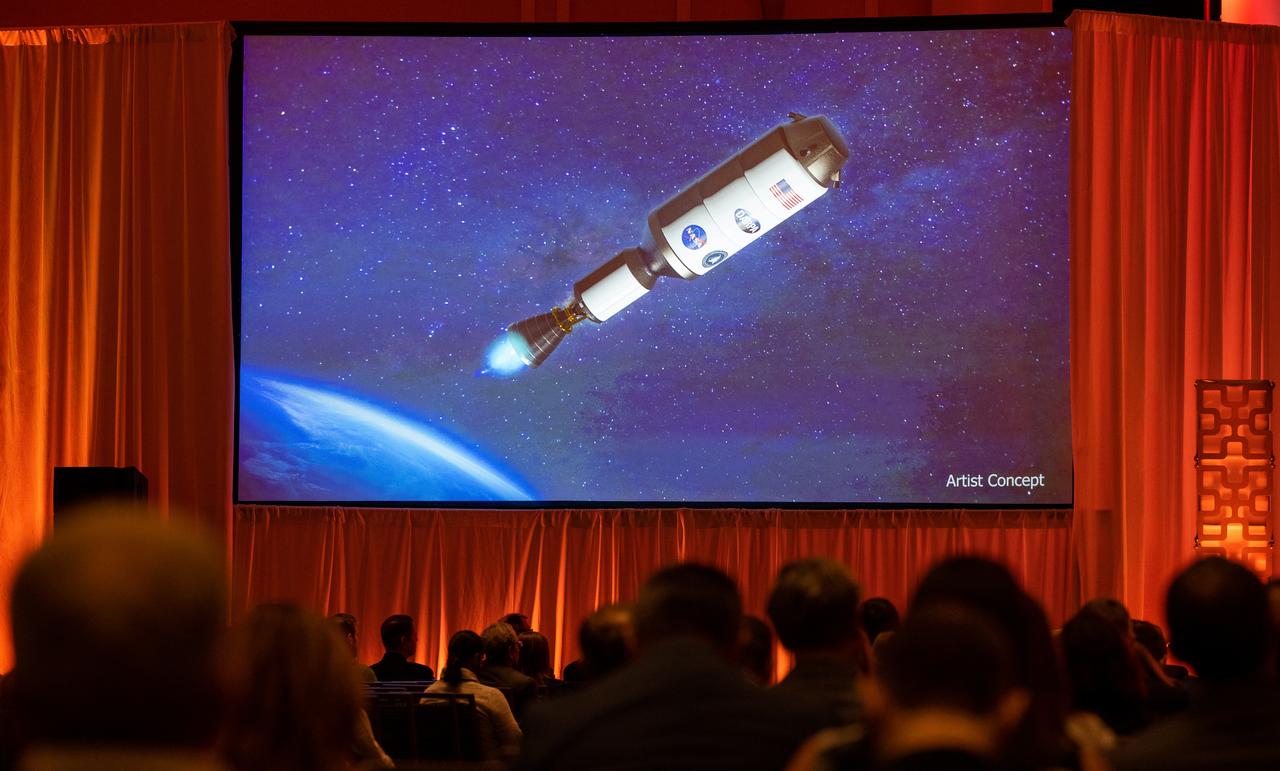
An artists concept of the Demonstration Rocket for Agile Cislunar Operations, or DRACO, spacecraft is seen on a screen during a fireside chat announcing a new collaboration on nuclear thermal propulsion at the American Institute of Aeronautics and Astronautics SciTech Forum, Tuesday, Jan. 24, 2023, at the Gaylord National Resort and Convention Center in National Harbor, Md. NASA and the Defense Advanced Research Projects Agency (DARPA) will partner on the Demonstration Rocket for Agile Cislunar Operations, or DRACO, project to develop and demonstrate in-space a nuclear thermal engine. Photo Credit: (NASA/Joel Kowsky)
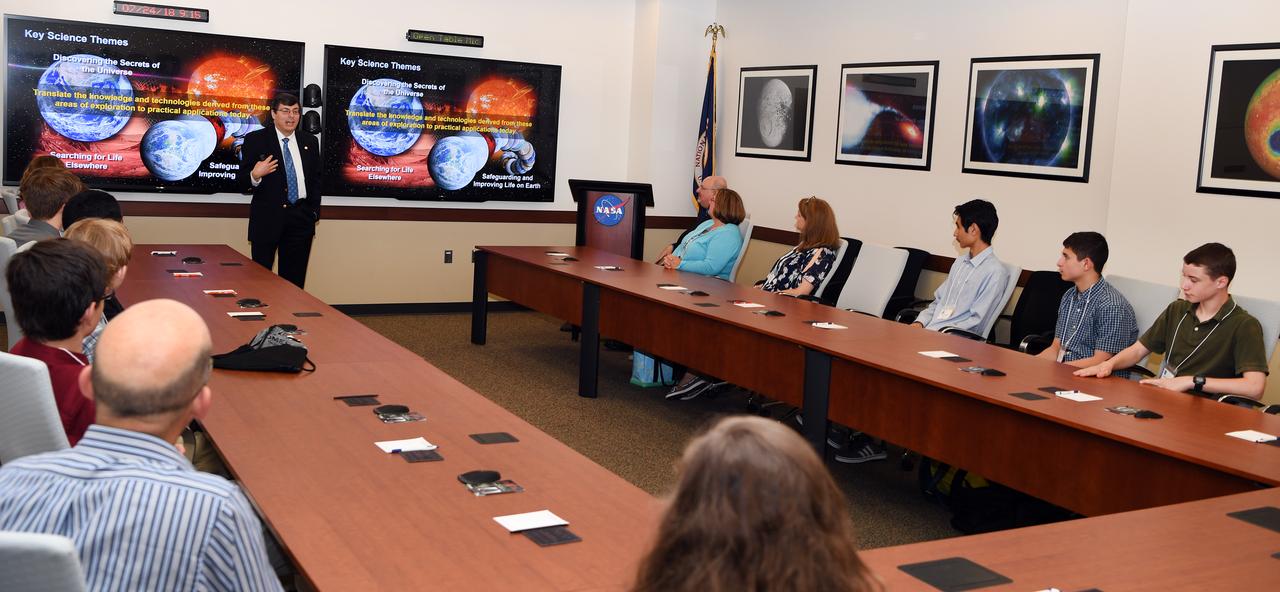
AIAA students with Chris Scolese on July 24, 2018
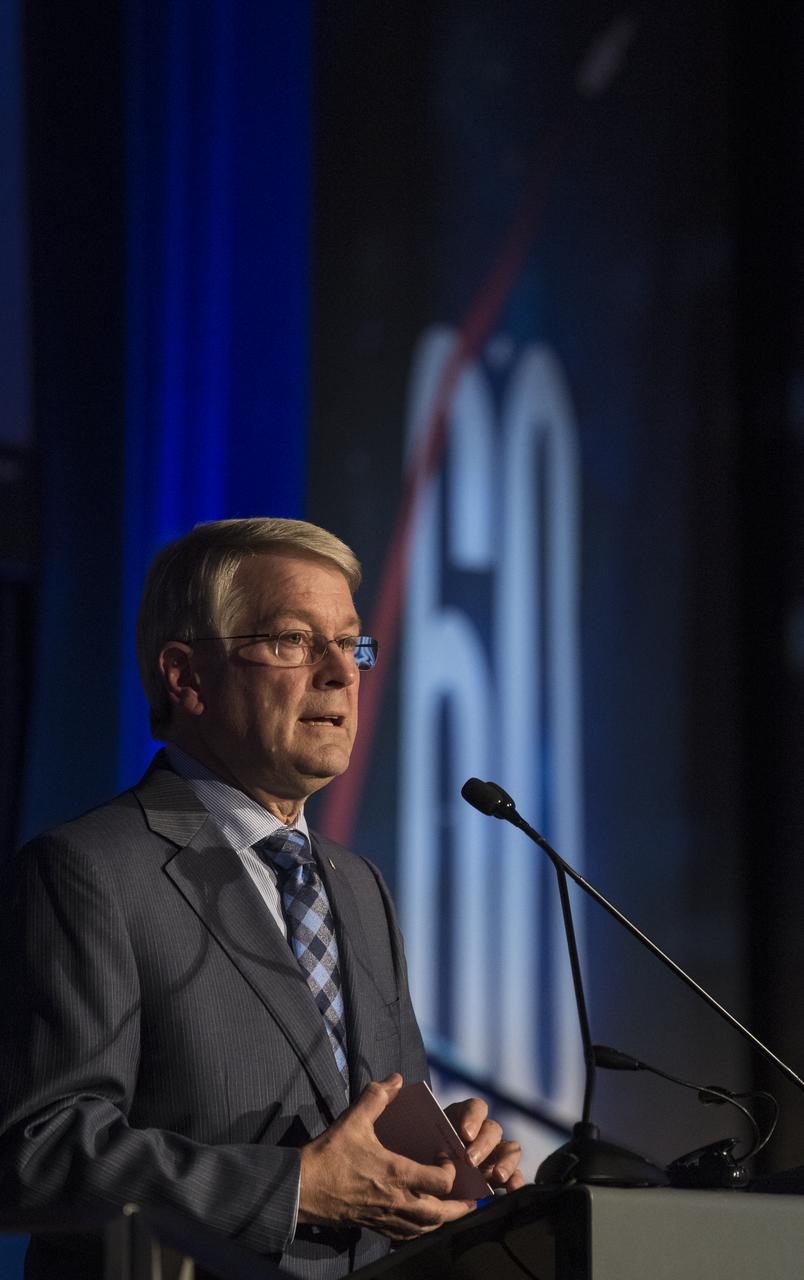
American Institute of Aeronautics and Astronautics (AIAA) President John Langford delivers remarks during a reception hosted by the American Institute of Aeronautics and Astronautics (AIAA) to celebrate NASA's 60th anniversary, Thursday, Sept. 20, 2018 at the Ronald Reagan Building and International Trade Center in Washington, DC. Photo Credit: (NASA/Joel Kowsky)
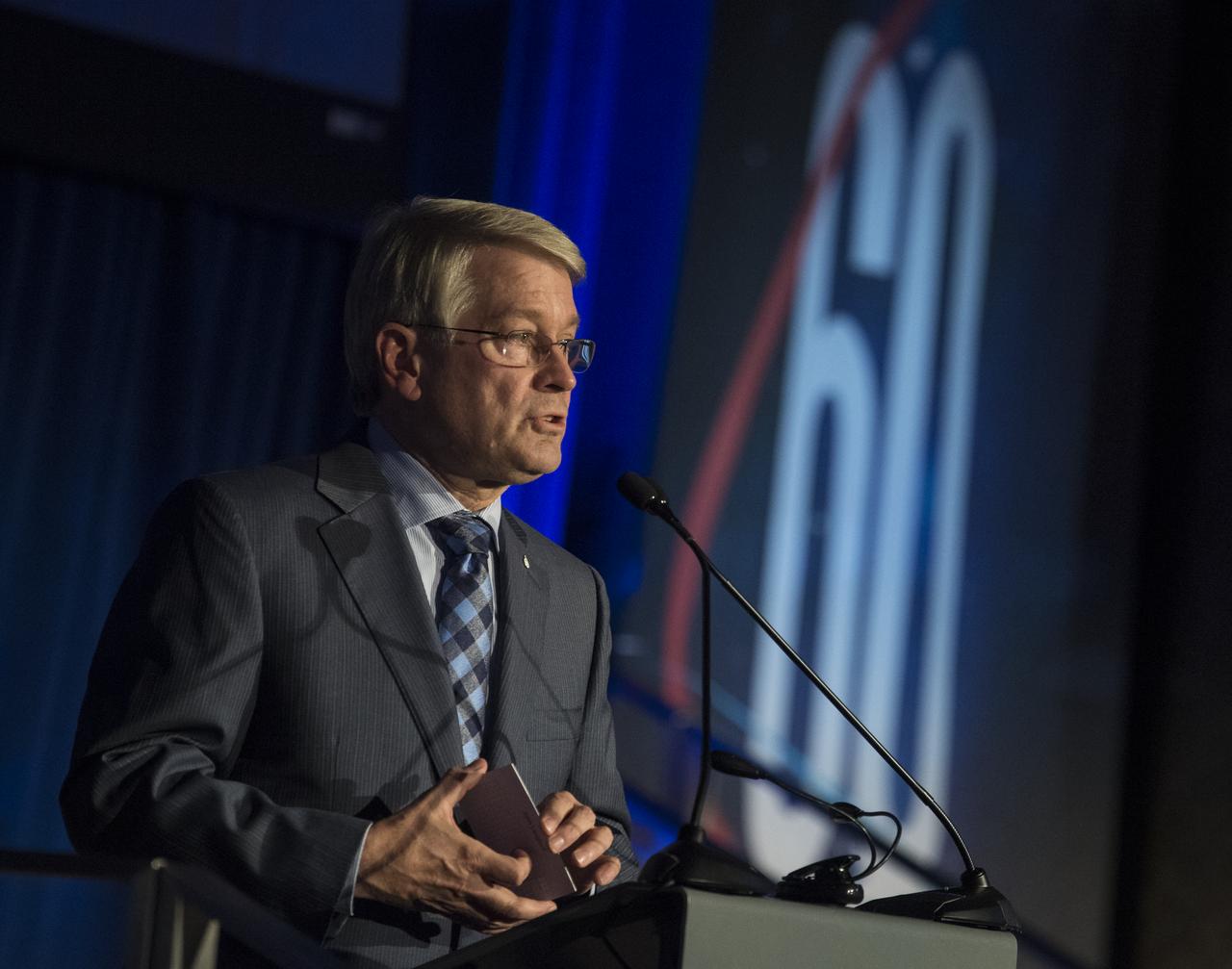
American Institute of Aeronautics and Astronautics (AIAA) President John Langford delivers remarks during a reception hosted by the American Institute of Aeronautics and Astronautics (AIAA) to celebrate NASA's 60th anniversary, Thursday, Sept. 20, 2018 at the Ronald Reagan Building and International Trade Center in Washington, DC. Photo Credit: (NASA/Joel Kowsky)
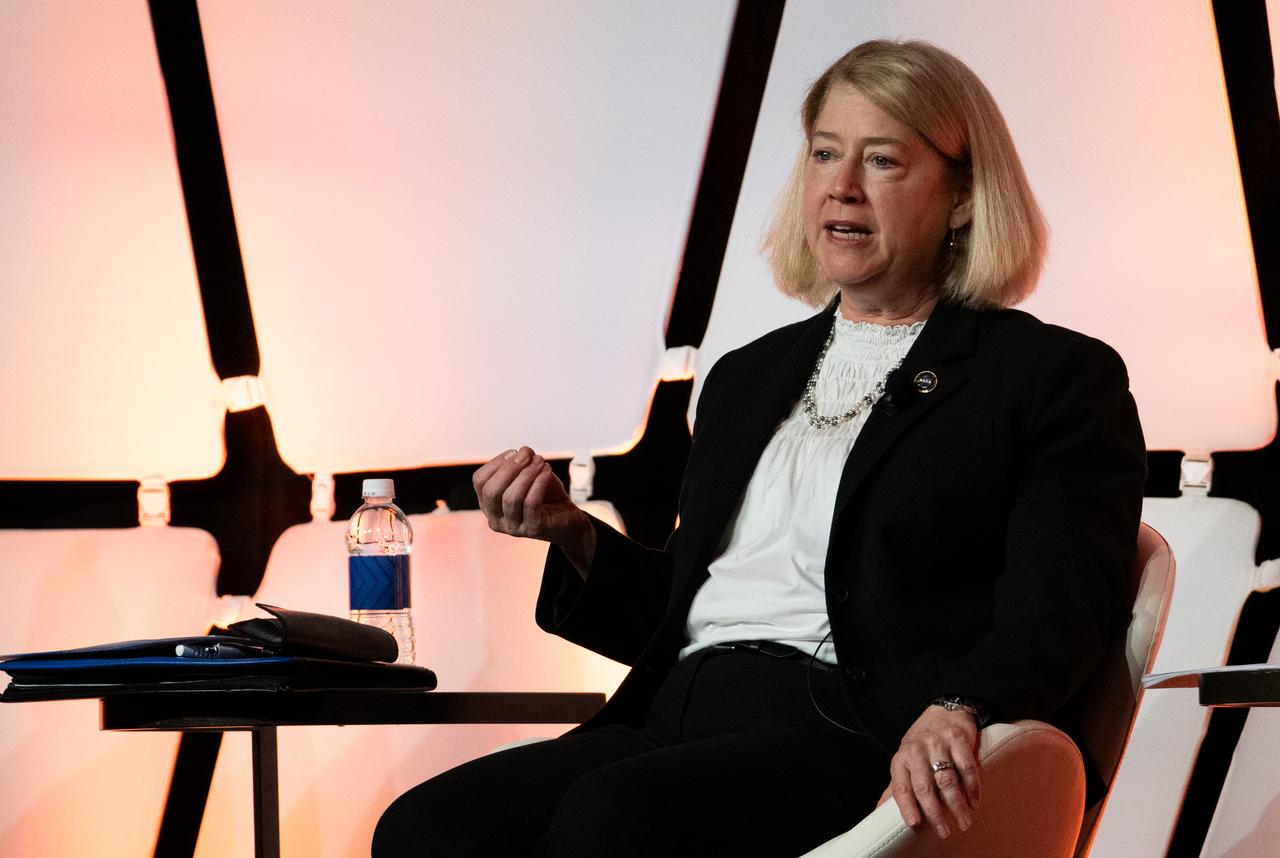
NASA Deputy Administrator Pam Melroy answers a question during a fireside chat announcing a new collaboration on nuclear thermal propulsion at the American Institute of Aeronautics and Astronautics SciTech Forum, Tuesday, Jan. 24, 2023, at the Gaylord National Resort and Convention Center in National Harbor, Md. NASA and the Defense Advanced Research Projects Agency (DARPA) will partner on the Demonstration Rocket for Agile Cislunar Operations, or DRACO, project to develop and demonstrate in-space a nuclear thermal engine. Photo Credit: (NASA/Joel Kowsky)
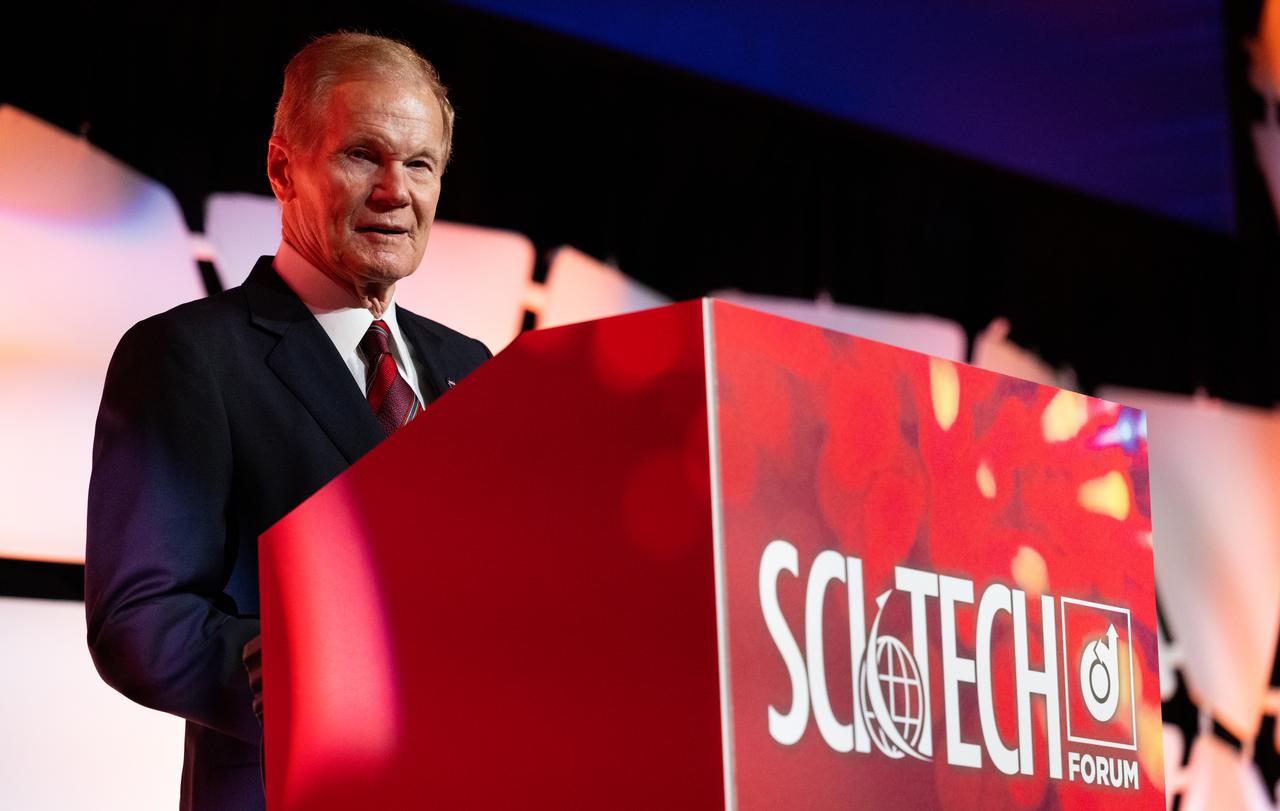
NASA Administrator Bill Nelson delivers opening remarks during a fireside chat announcing a new collaboration on nuclear thermal propulsion at the American Institute of Aeronautics and Astronautics SciTech Forum, Tuesday, Jan. 24, 2023, at the Gaylord National Resort and Convention Center in National Harbor, Md. NASA and the Defense Advanced Research Projects Agency (DARPA) will partner on the Demonstration Rocket for Agile Cislunar Operations, or DRACO, project to develop and demonstrate in-space a nuclear thermal engine. Photo Credit: (NASA/Joel Kowsky)

Stefanie Tompkins, director of the Defense Advance Research Projects Agency (DARPA), is seen during a fireside chat announcing a new collaboration on nuclear thermal propulsion at the American Institute of Aeronautics and Astronautics SciTech Forum, Tuesday, Jan. 24, 2023, at the Gaylord National Resort and Convention Center in National Harbor, Md. NASA and the Defense Advanced Research Projects Agency (DARPA) will partner on the Demonstration Rocket for Agile Cislunar Operations, or DRACO, project to develop and demonstrate in-space a nuclear thermal engine. Photo Credit: (NASA/Joel Kowsky)

Steve Howe, former director of the Center for Space Nuclear Research at the Idaho National Laboratory, left, NASA Deputy Administrator Pam Melroy, center, and Stefanie Tompkins, director of the Defense Advance Research Projects Agency (DARPA), right, are seen during a fireside chat announcing a new collaboration on nuclear thermal propulsion at the American Institute of Aeronautics and Astronautics SciTech Forum, Tuesday, Jan. 24, 2023, at the Gaylord National Resort and Convention Center in National Harbor, Md. NASA and the Defense Advanced Research Projects Agency (DARPA) will partner on the Demonstration Rocket for Agile Cislunar Operations, or DRACO, project to develop and demonstrate in-space a nuclear thermal engine. Photo Credit: (NASA/Joel Kowsky)
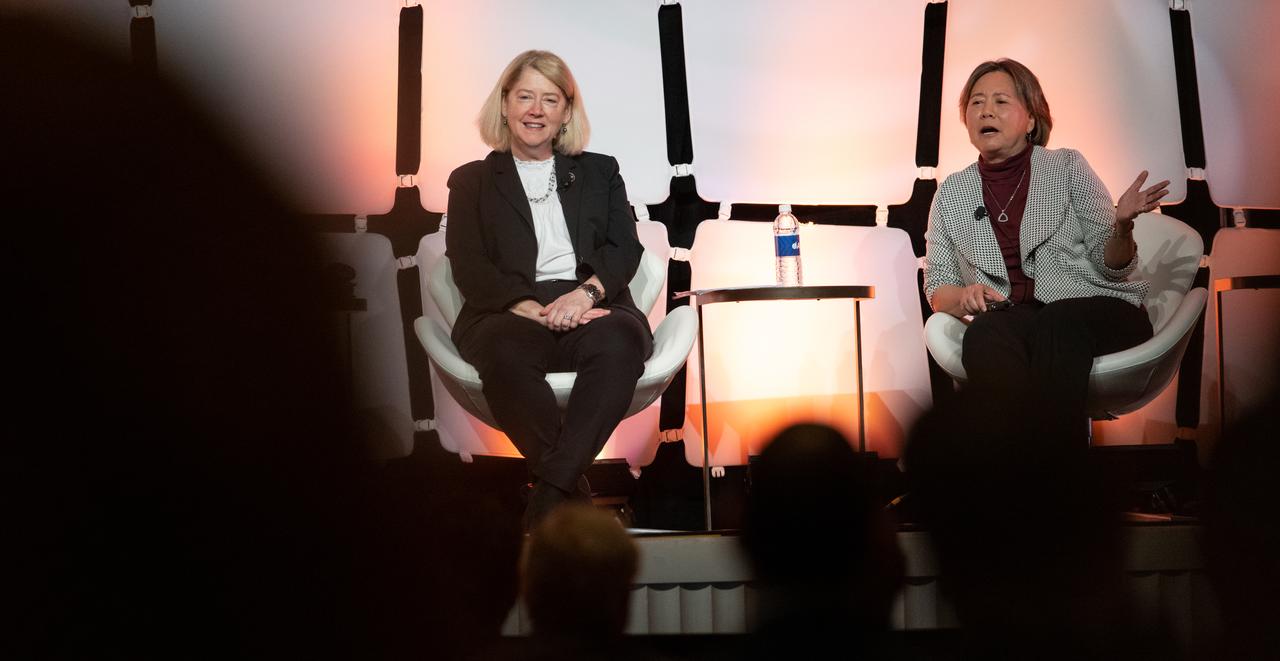
NASA Deputy Administrator Pam Melroy, left, and Stefanie Tompkins, director of the Defense Advance Research Projects Agency (DARPA), right, are seen during a fireside chat announcing a new collaboration on nuclear thermal propulsion at the American Institute of Aeronautics and Astronautics SciTech Forum, Tuesday, Jan. 24, 2023, at the Gaylord National Resort and Convention Center in National Harbor, Md. NASA and the Defense Advanced Research Projects Agency (DARPA) will partner on the Demonstration Rocket for Agile Cislunar Operations, or DRACO, project to develop and demonstrate in-space a nuclear thermal engine. Photo Credit: (NASA/Joel Kowsky)
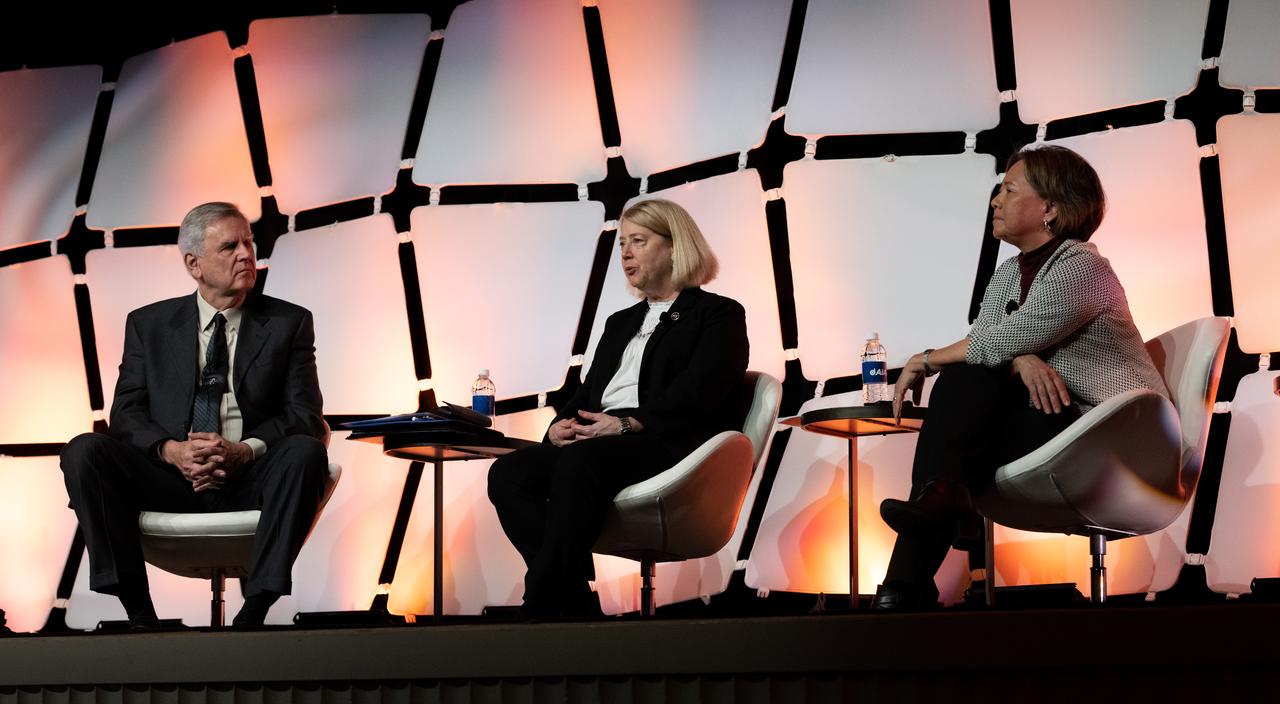
Steve Howe, former director of the Center for Space Nuclear Research at the Idaho National Laboratory, left, NASA Deputy Administrator Pam Melroy, center, and Stefanie Tompkins, director of the Defense Advance Research Projects Agency (DARPA), right, are seen during a fireside chat announcing a new collaboration on nuclear thermal propulsion at the American Institute of Aeronautics and Astronautics SciTech Forum, Tuesday, Jan. 24, 2023, at the Gaylord National Resort and Convention Center in National Harbor, Md. NASA and the Defense Advanced Research Projects Agency (DARPA) will partner on the Demonstration Rocket for Agile Cislunar Operations, or DRACO, project to develop and demonstrate in-space a nuclear thermal engine. Photo Credit: (NASA/Joel Kowsky)
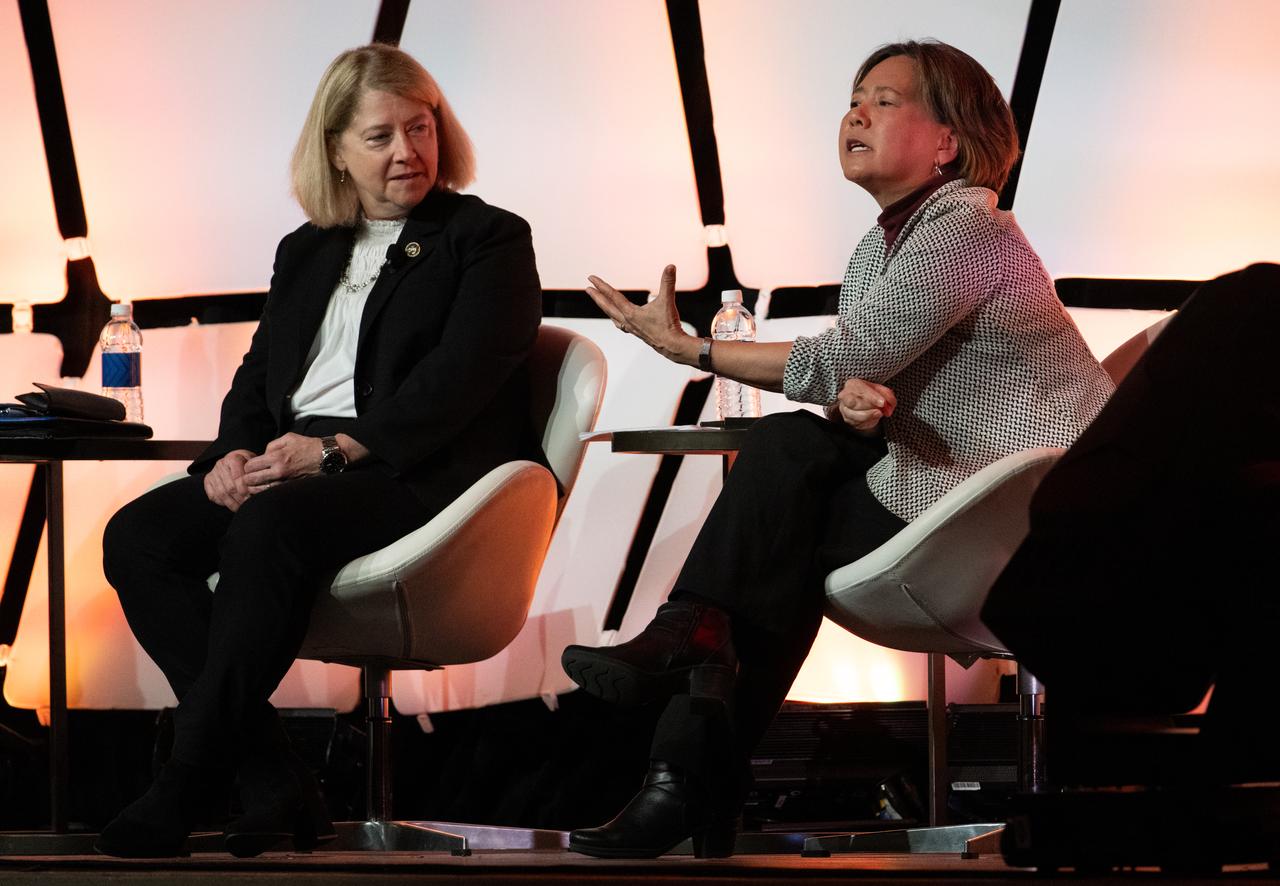
NASA Deputy Administrator Pam Melroy, left, and Stefanie Tompkins, director of the Defense Advance Research Projects Agency (DARPA), right, are seen during a fireside chat announcing a new collaboration on nuclear thermal propulsion at the American Institute of Aeronautics and Astronautics SciTech Forum, Tuesday, Jan. 24, 2023, at the Gaylord National Resort and Convention Center in National Harbor, Md. NASA and the Defense Advanced Research Projects Agency (DARPA) will partner on the Demonstration Rocket for Agile Cislunar Operations, or DRACO, project to develop and demonstrate in-space a nuclear thermal engine. Photo Credit: (NASA/Joel Kowsky)
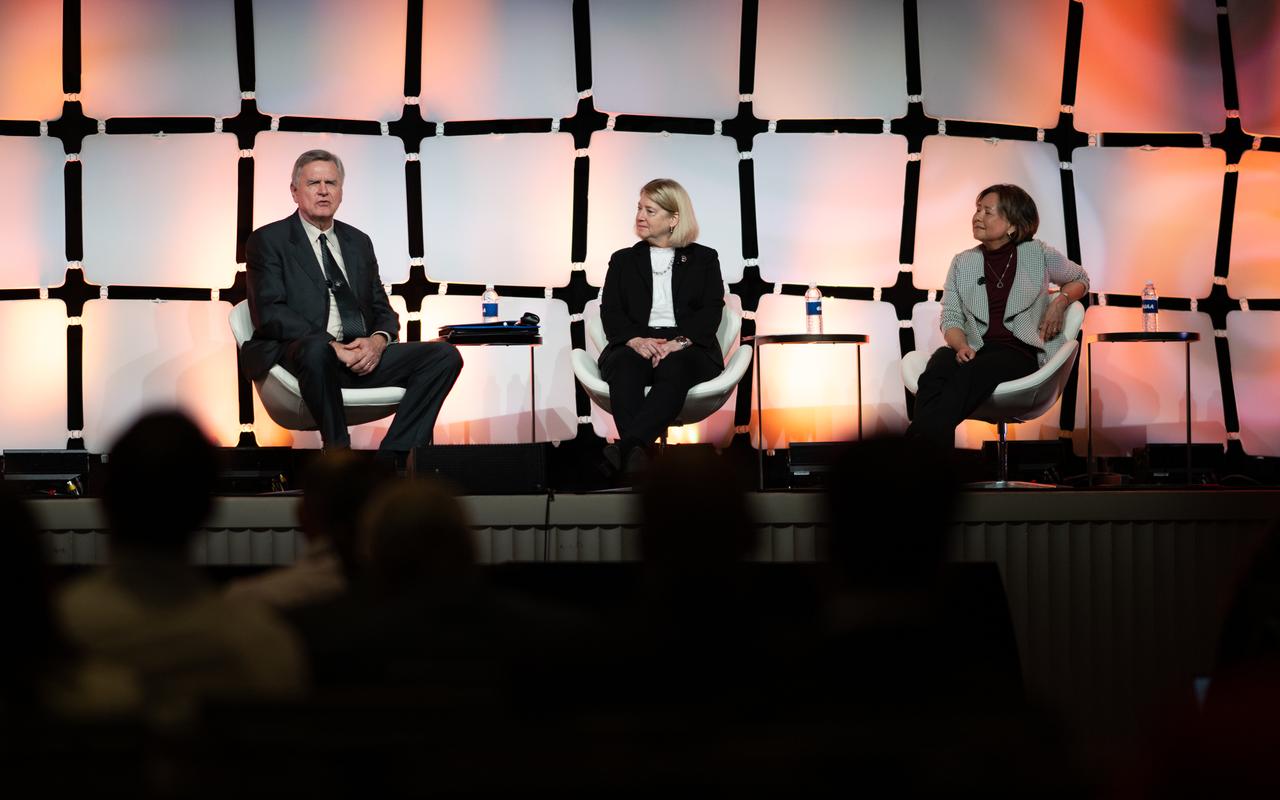
Steve Howe, former director of the Center for Space Nuclear Research at the Idaho National Laboratory, left, NASA Deputy Administrator Pam Melroy, center, and Stefanie Tompkins, director of the Defense Advance Research Projects Agency (DARPA), right, are seen during a fireside chat announcing a new collaboration on nuclear thermal propulsion at the American Institute of Aeronautics and Astronautics SciTech Forum, Tuesday, Jan. 24, 2023, at the Gaylord National Resort and Convention Center in National Harbor, Md. NASA and the Defense Advanced Research Projects Agency (DARPA) will partner on the Demonstration Rocket for Agile Cislunar Operations, or DRACO, project to develop and demonstrate in-space a nuclear thermal engine. Photo Credit: (NASA/Joel Kowsky)

NASA Deputy Administrator Pam Melroy, left, and Stefanie Tompkins, director of the Defense Advance Research Projects Agency (DARPA), right, are seen during a fireside chat announcing a new collaboration on nuclear thermal propulsion at the American Institute of Aeronautics and Astronautics SciTech Forum, Tuesday, Jan. 24, 2023, at the Gaylord National Resort and Convention Center in National Harbor, Md. NASA and the Defense Advanced Research Projects Agency (DARPA) will partner on the Demonstration Rocket for Agile Cislunar Operations, or DRACO, project to develop and demonstrate in-space a nuclear thermal engine. Photo Credit: (NASA/Joel Kowsky)
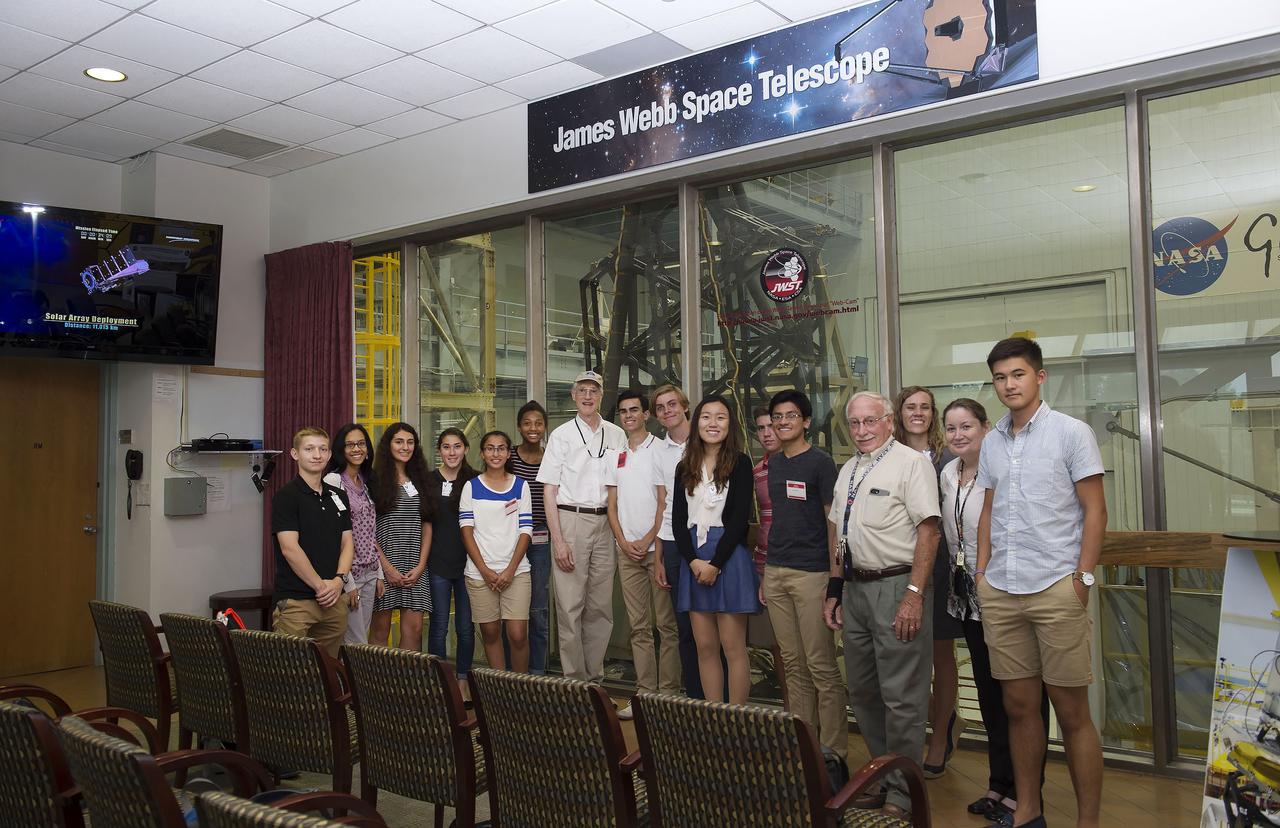
AIAA American Institute for Aeronautics and Astronautics science fair winners visited Goddard on July 17, 2017. Dr. John Mather, Nobel Prize winner, poses with group near JWST clean room.
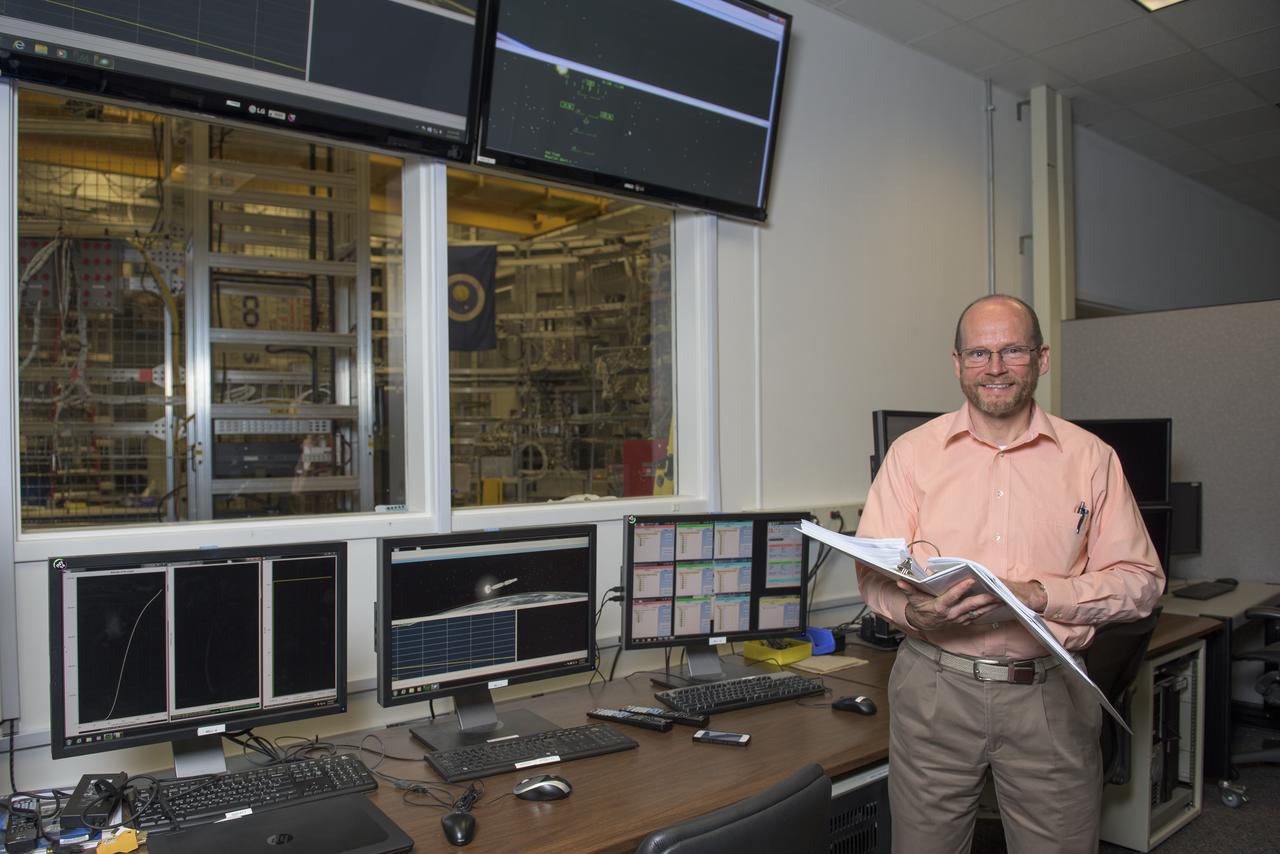
John Hanson, Alternate Lead Systems Engineer in the Spacecraft and Vehicle Systems department of the Engineering Directorate at MSFC has been honored by the American Institute of Aeronautics and Astronautics (AIAA) with the 2016 De Florez Award for flight simulation
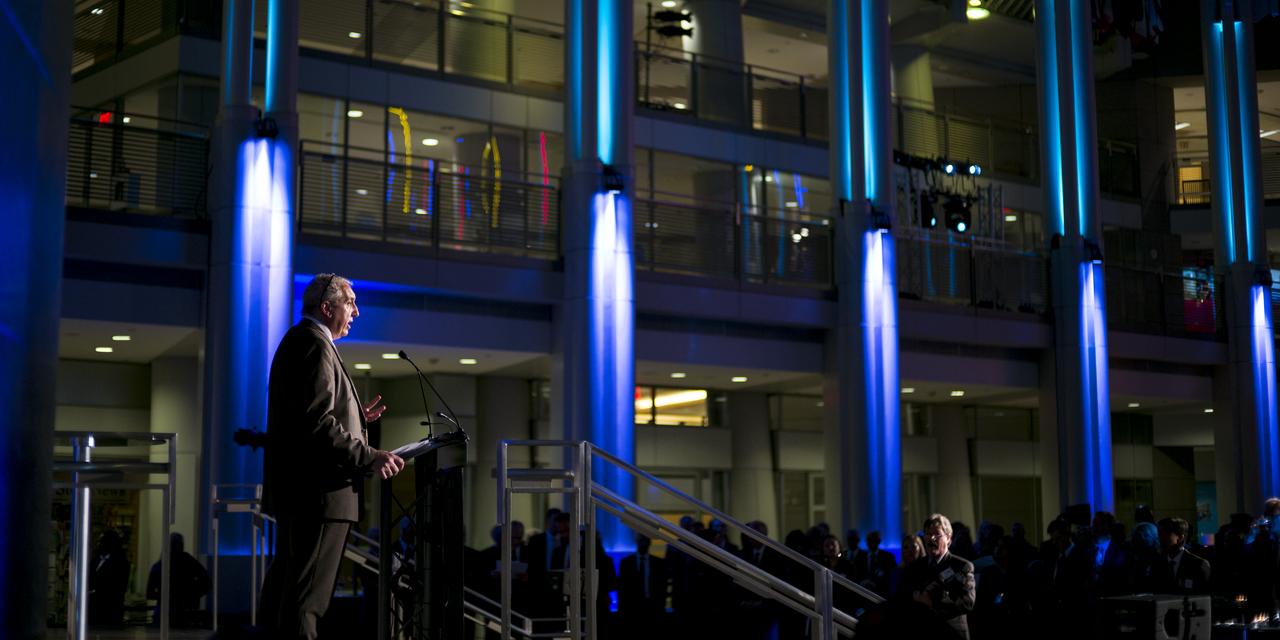
NASA's Deputy Associate Administrator for Strategy in the Aeronautics Mission Directorate Robert Pearce speaks during a reception hosted by the American Institute of Aeronautics and Astronautics (AIAA) to celebrate NASA's 60th anniversary, Thursday, Sept. 20, 2018 at the Ronald Reagan Building and International Trade Center in Washington, DC. Photo Credit: (NASA/Joel Kowsky)
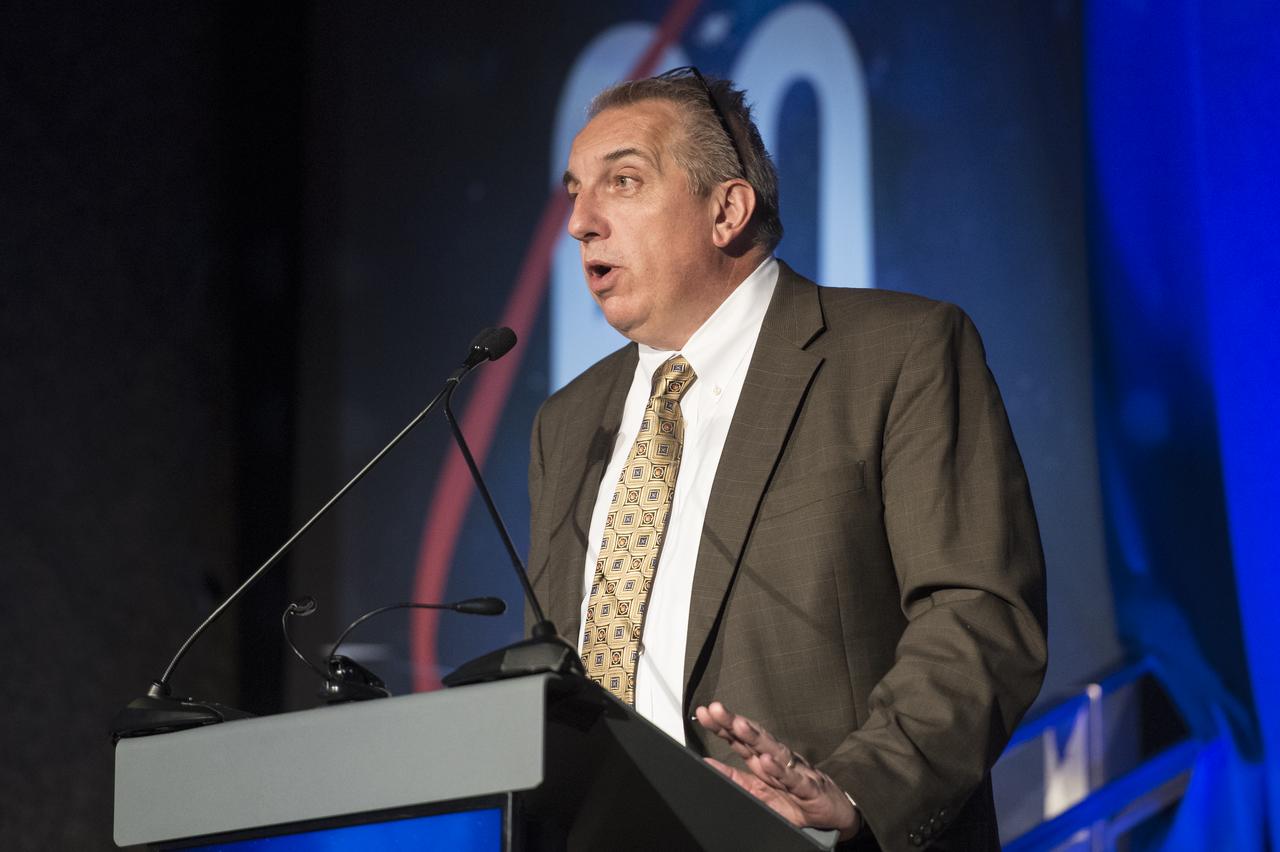
NASA's Deputy Associate Administrator for Strategy in the Aeronautics Mission Directorate Robert Pearce speaks during a reception hosted by the American Institute of Aeronautics and Astronautics (AIAA) to celebrate NASA's 60th anniversary, Thursday, Sept. 20, 2018 at the Ronald Reagan Building and International Trade Center in Washington, DC. Photo Credit: (NASA/Joel Kowsky)
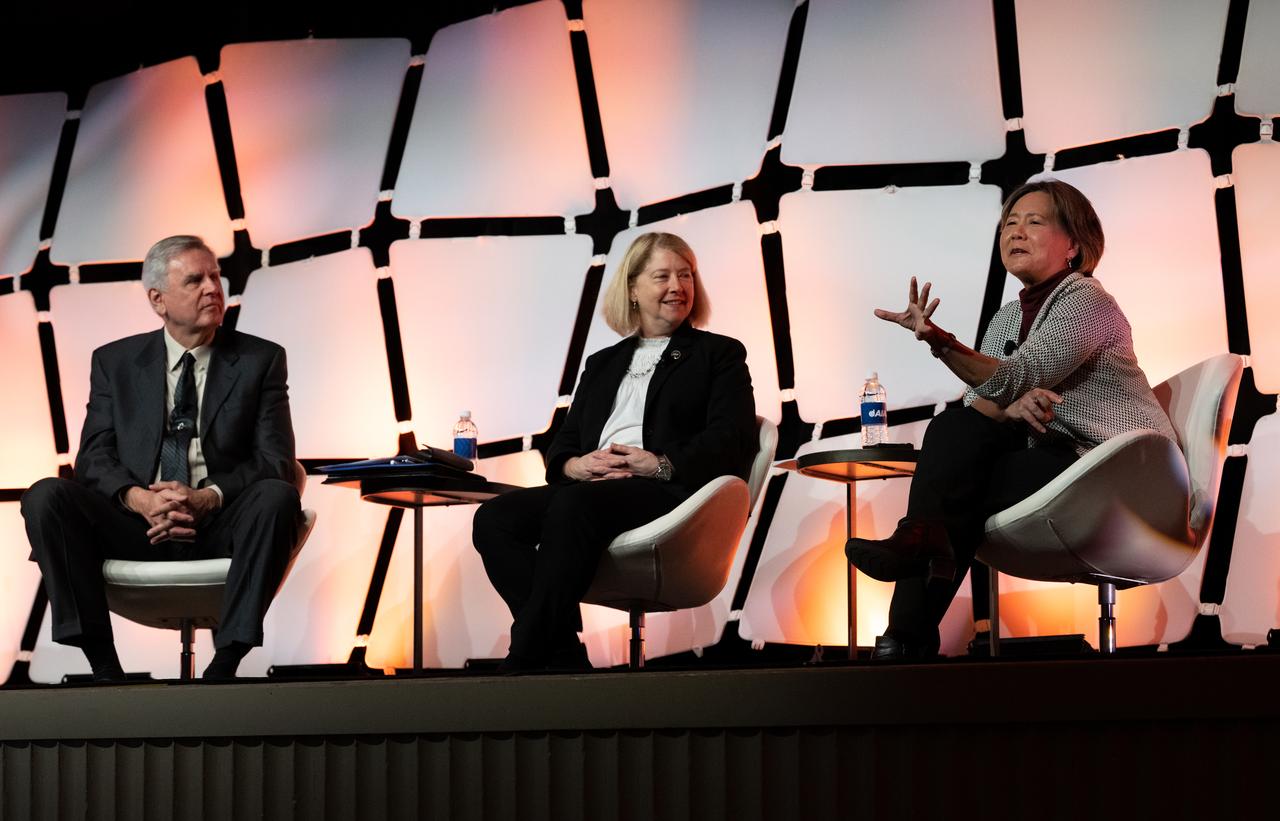
Stefanie Tompkins, director of the Defense Advance Research Projects Agency (DARPA), right, answers a question alongside Steve Howe, former director of the Center for Space Nuclear Research at the Idaho National Laboratory, left, NASA Deputy Administrator Pam Melroy, center, during a fireside chat announcing a new collaboration on nuclear thermal propulsion at the American Institute of Aeronautics and Astronautics SciTech Forum, Tuesday, Jan. 24, 2023, at the Gaylord National Resort and Convention Center in National Harbor, Md. NASA and the Defense Advanced Research Projects Agency (DARPA) will partner on the Demonstration Rocket for Agile Cislunar Operations, or DRACO, project to develop and demonstrate in-space a nuclear thermal engine. Photo Credit: (NASA/Joel Kowsky)
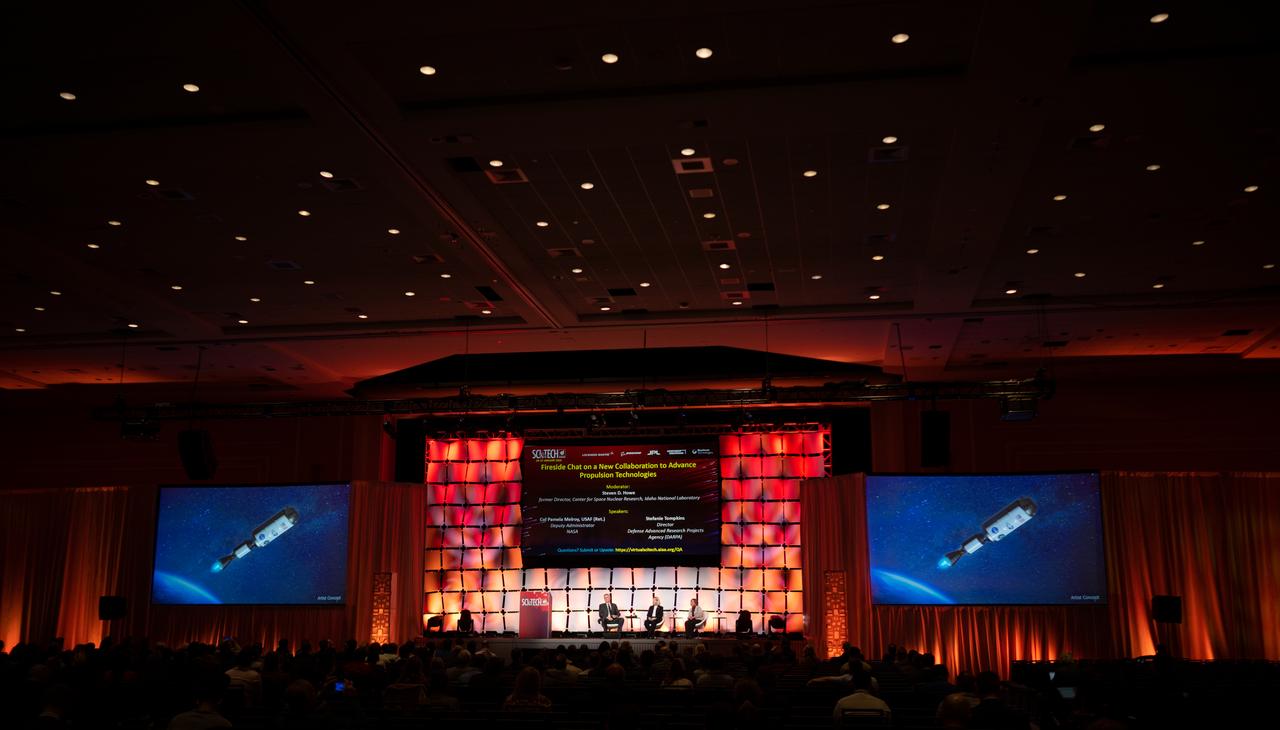
An artists concept of the Demonstration Rocket for Agile Cislunar Operations, or DRACO, spacecraft is seen on a screen as Steve Howe, former director of the Center for Space Nuclear Research at the Idaho National Laboratory, left, NASA Deputy Administrator Pam Melroy, center, and Stefanie Tompkins, director of the Defense Advance Research Projects Agency (DARPA), right, participate in a fireside chat announcing a new collaboration on nuclear thermal propulsion at the American Institute of Aeronautics and Astronautics SciTech Forum, Tuesday, Jan. 24, 2023, at the Gaylord National Resort and Convention Center in National Harbor, Md. NASA and the Defense Advanced Research Projects Agency (DARPA) will partner on the Demonstration Rocket for Agile Cislunar Operations, or DRACO, project to develop and demonstrate in-space a nuclear thermal engine. Photo Credit: (NASA/Joel Kowsky)
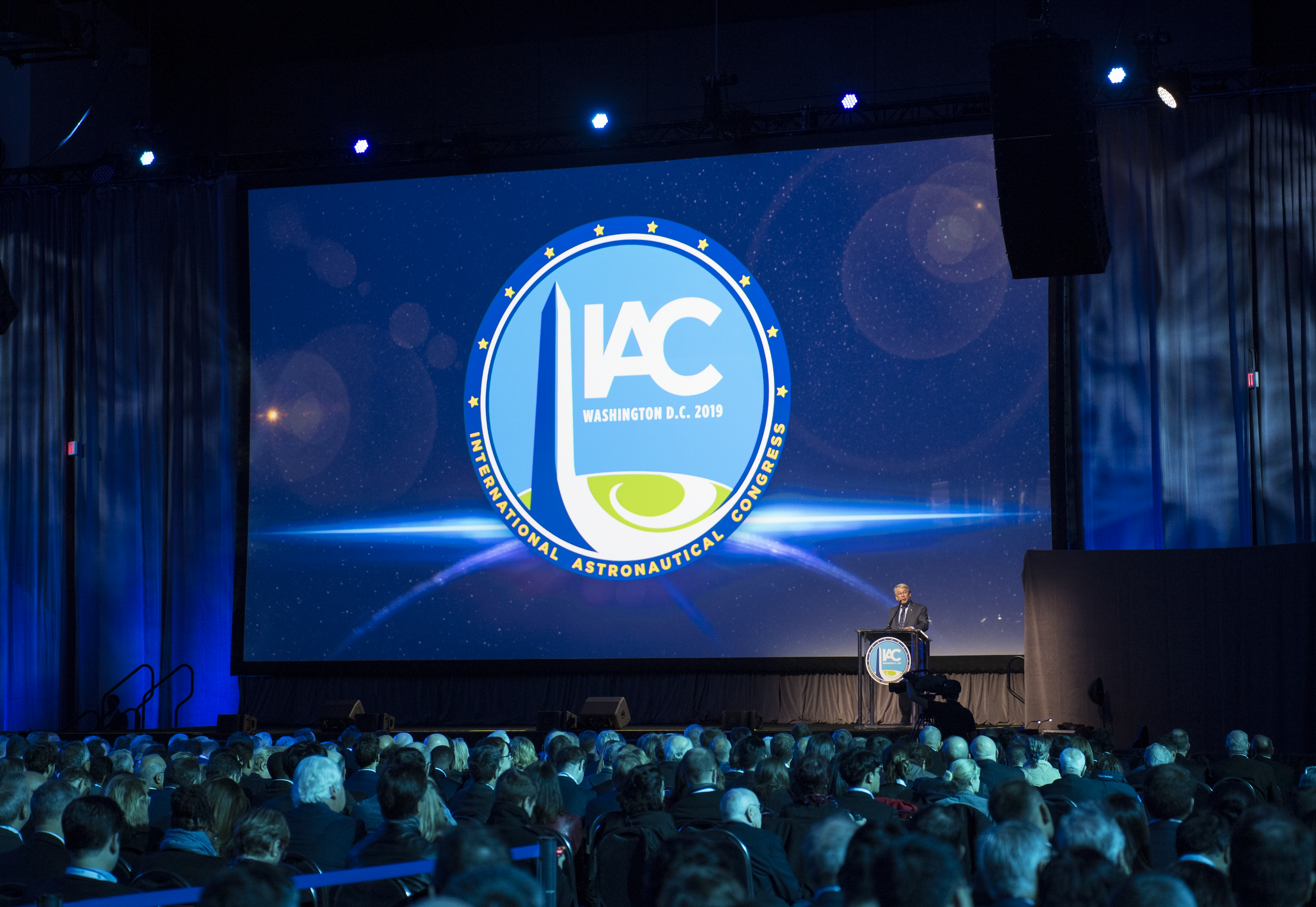
John Langford, President of the American Institute of Aeronautics and Astronautics (AIAA), delivers remarks during the opening ceremony of the 70th International Astronautical Congress, Monday, Oct. 21, 2019 at the Walter E. Washington Convention Center in Washington. Photo Credit: (NASA/Joel Kowsky)
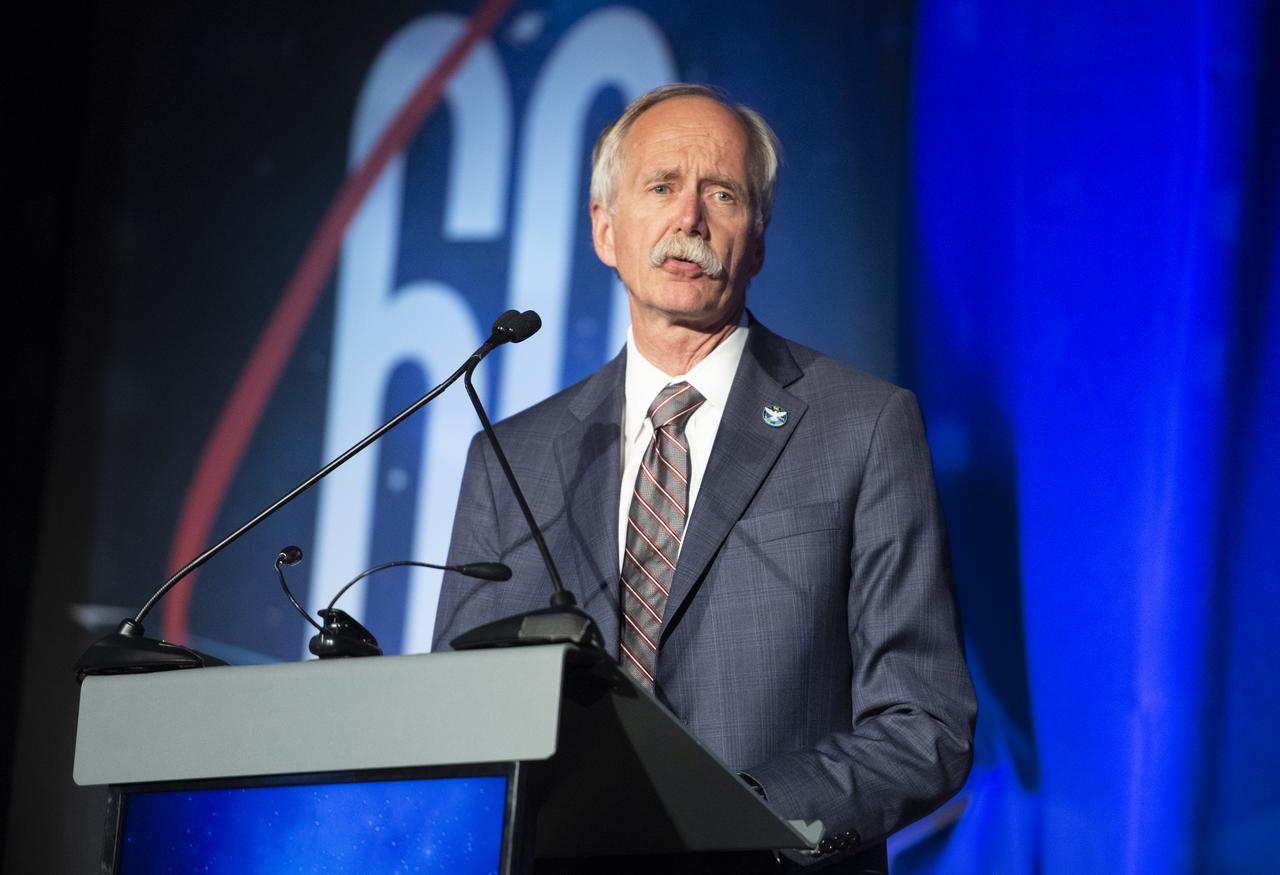
NASA Associate Administrator for the Human Exploration and Operations Mission Directorate William Gerstenmaier speaks during a reception hosted by the American Institute of Aeronautics and Astronautics (AIAA) to celebrate NASA's 60th anniversary, Thursday, Sept. 20, 2018 at the Ronald Reagan Building and International Trade Center in Washington, DC. Photo Credit: (NASA/Joel Kowsky)

The United States Air Force's Airmen of Note perform during a reception hosted by the American Institute of Aeronautics and Astronautics (AIAA) to celebrate NASA's 60th anniversary, Thursday, Sept. 20, 2018 at the Ronald Reagan Building and International Trade Center in Washington, DC. Photo Credit: (NASA/Joel Kowsky)
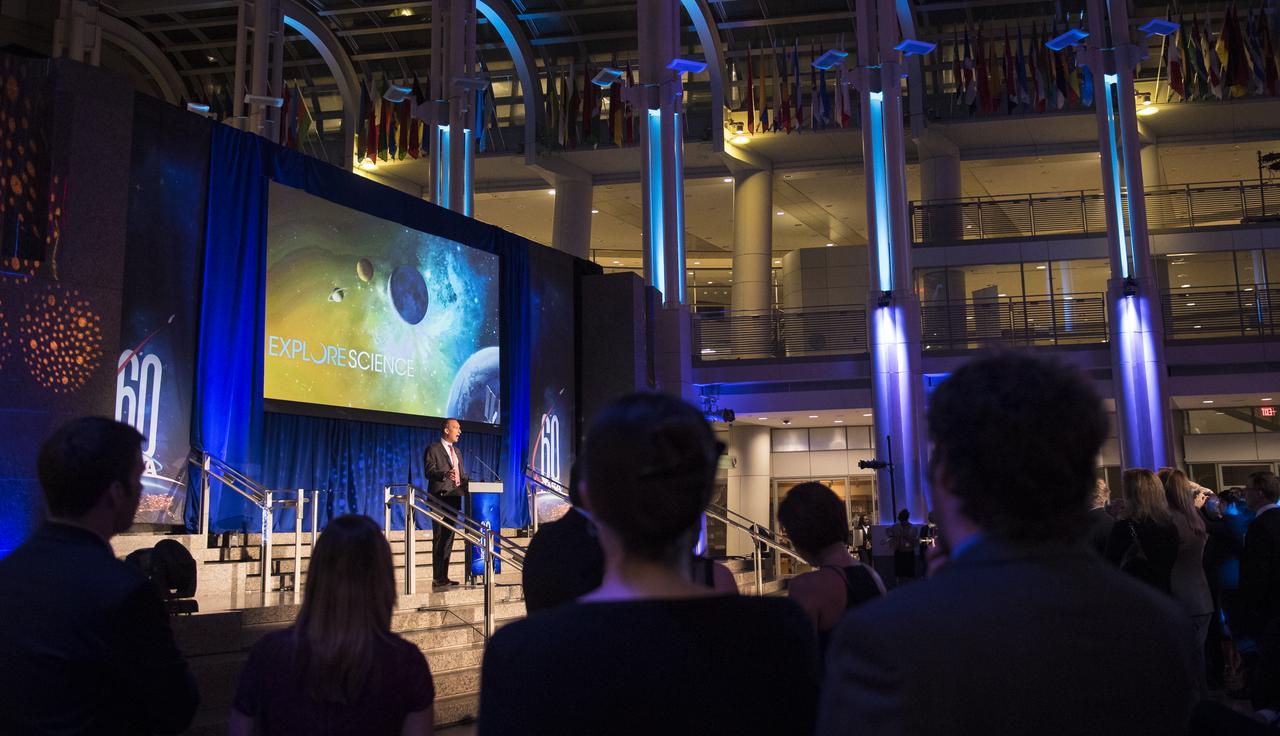
NASA Associate Administrator for the Science Mission Directorate Thomas Zurbuchen speaks during a reception hosted by the American Institute of Aeronautics and Astronautics (AIAA) to celebrate NASA's 60th anniversary, Thursday, Sept. 20, 2018 at the Ronald Reagan Building and International Trade Center in Washington, DC. Photo Credit: (NASA/Joel Kowsky)
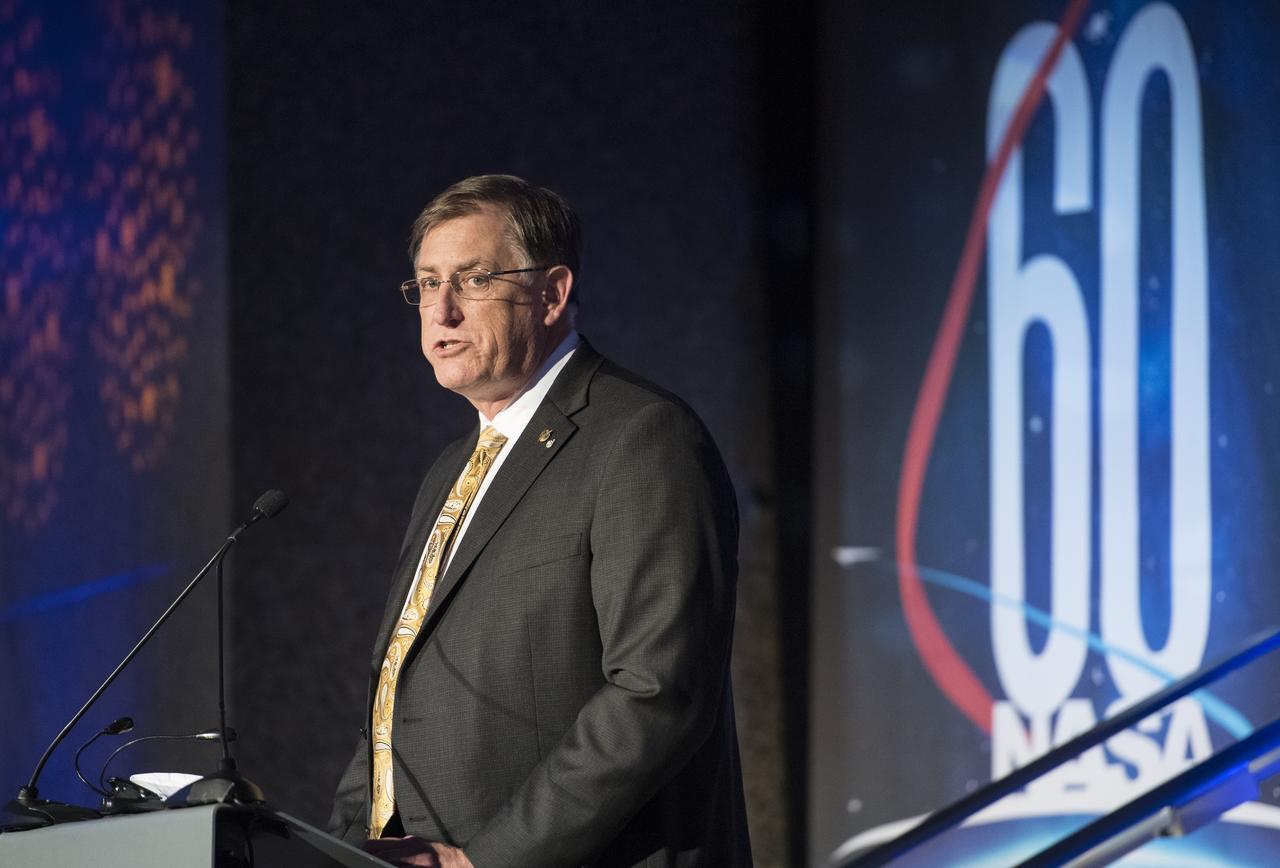
American Institute of Aeronautics and Astronautics (AIAA) Executive Director Daniel Dumbacher deliver remarks during a reception hosted by AIAA to celebrate NASA's 60th anniversary, Thursday, Sept. 20, 2018 at the Ronald Reagan Building and International Trade Center in Washington, DC. Photo Credit: (NASA/Joel Kowsky)
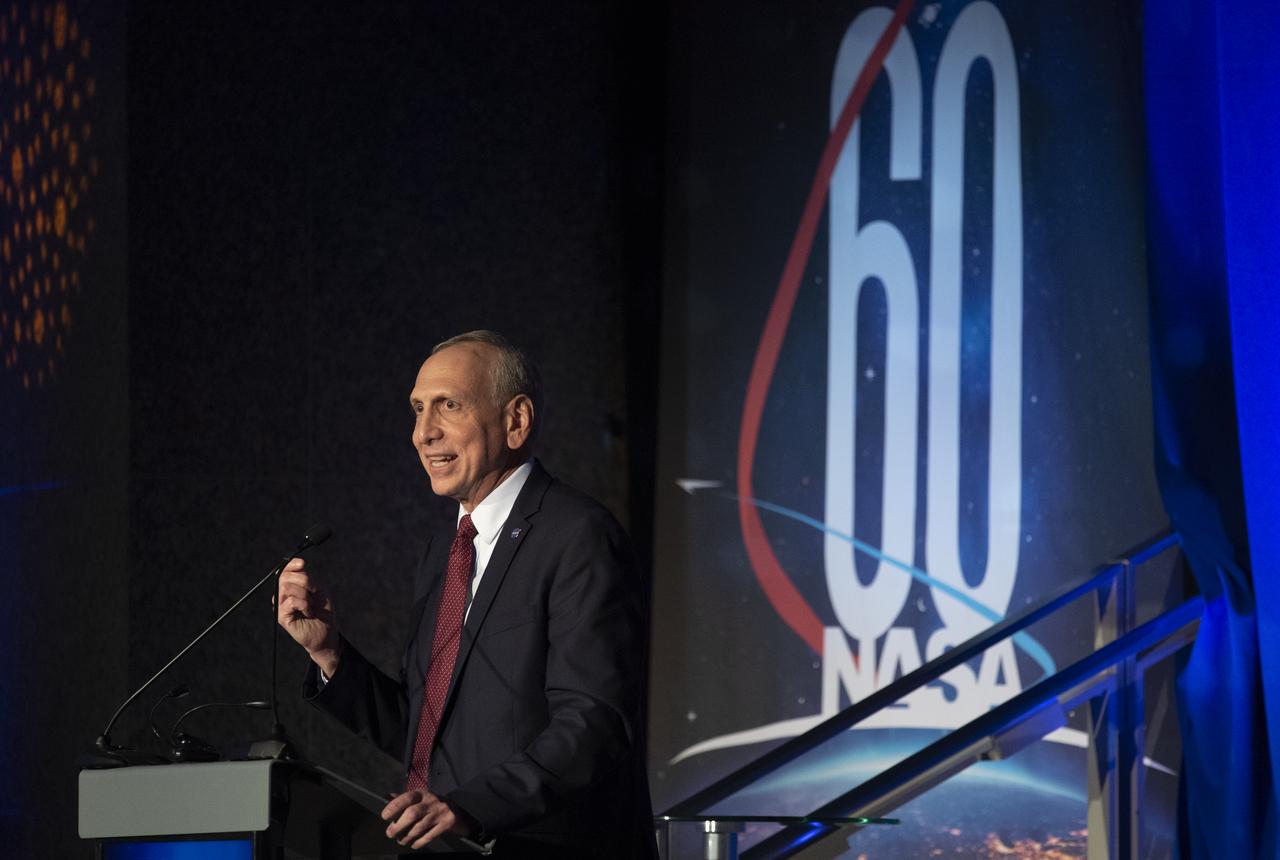
NASA Associate Administrator Steve Jurczyk delivers remarks during a reception hosted by the American Institute of Aeronautics and Astronautics (AIAA) to celebrate NASA's 60th anniversary, Thursday, Sept. 20, 2018 at the Ronald Reagan Building and International Trade Center in Washington, DC. Photo Credit: (NASA/Joel Kowsky)
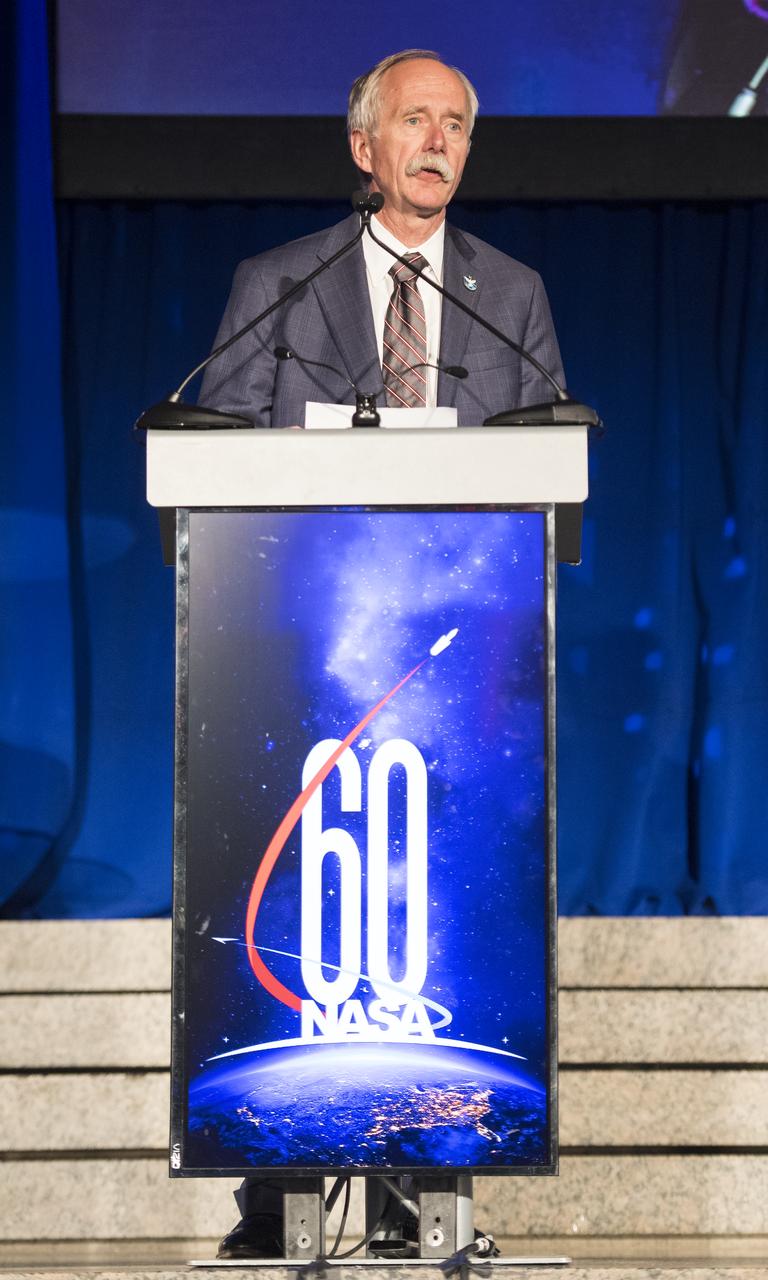
NASA Associate Administrator for the Human Exploration and Operations Mission Directorate William Gerstenmaier speaks during a reception hosted by the American Institute of Aeronautics and Astronautics (AIAA) to celebrate NASA's 60th anniversary, Thursday, Sept. 20, 2018 at the Ronald Reagan Building and International Trade Center in Washington, DC. Photo Credit: (NASA/Joel Kowsky)
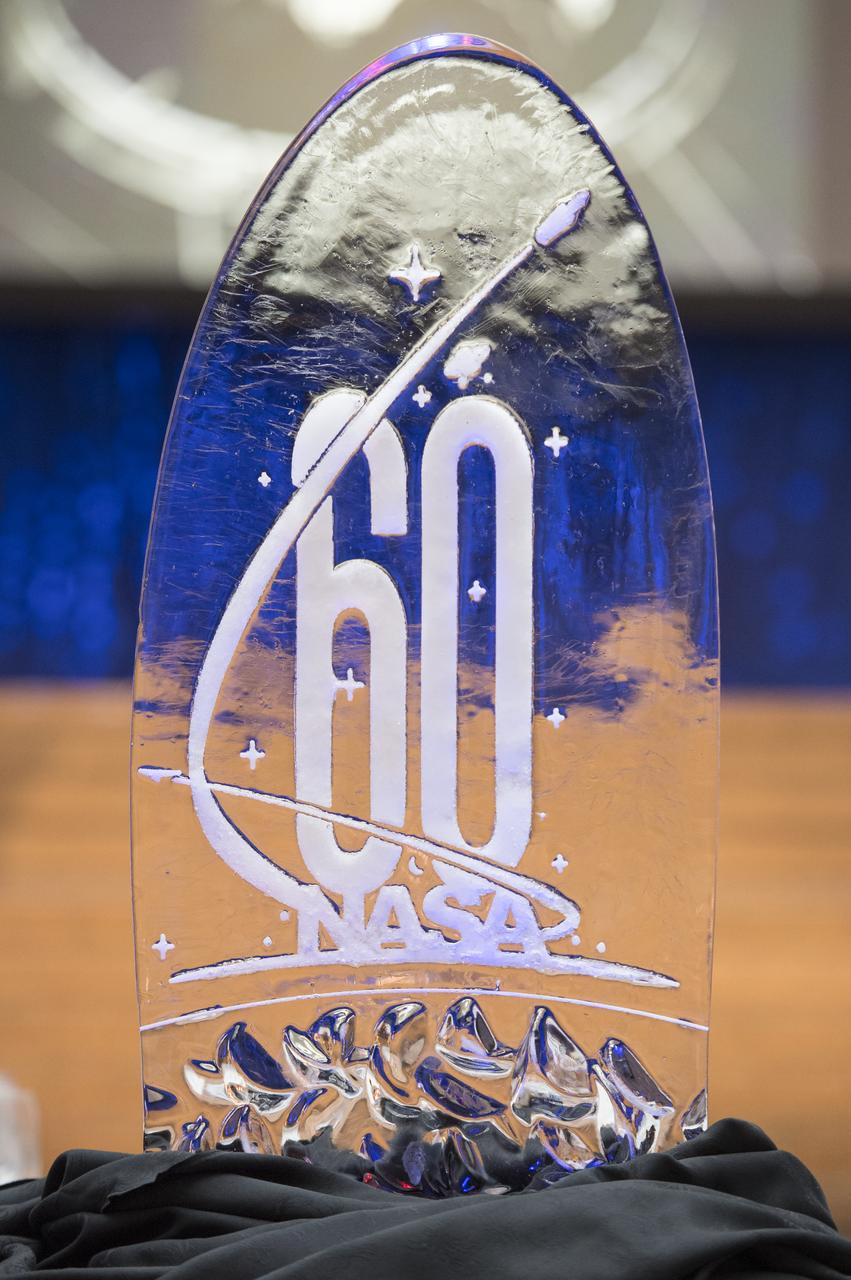
An ice sculpture of NASA's 60th anniversary logo is seen during a reception hosted by the American Institute of Aeronautics and Astronautics (AIAA) to celebrate NASA's 60th anniversary, Thursday, Sept. 20, 2018 at the Ronald Reagan Building and International Trade Center in Washington, DC. Photo Credit: (NASA/Joel Kowsky)
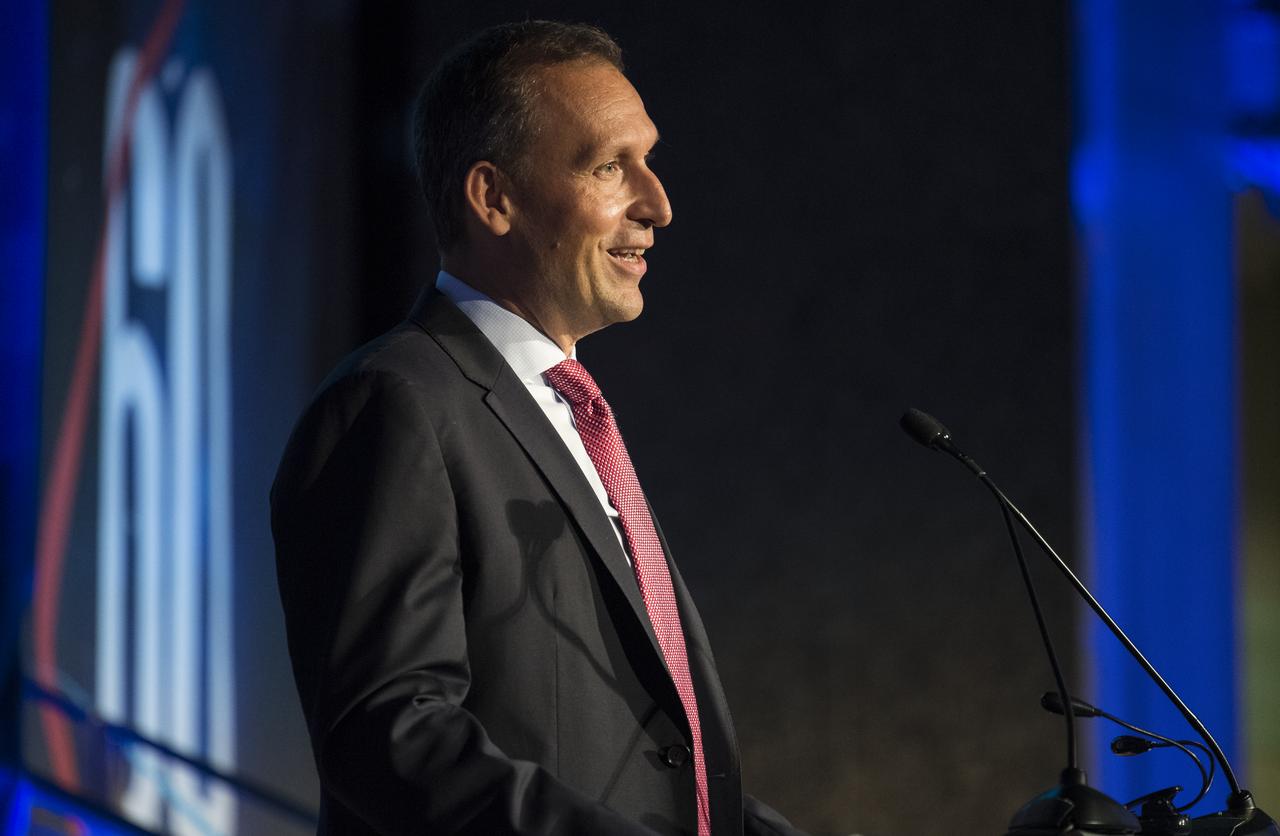
NASA Associate Administrator for the Science Mission Directorate Thomas Zurbuchen speaks during a reception hosted by the American Institute of Aeronautics and Astronautics (AIAA) to celebrate NASA's 60th anniversary, Thursday, Sept. 20, 2018 at the Ronald Reagan Building and International Trade Center in Washington, DC. Photo Credit: (NASA/Joel Kowsky)
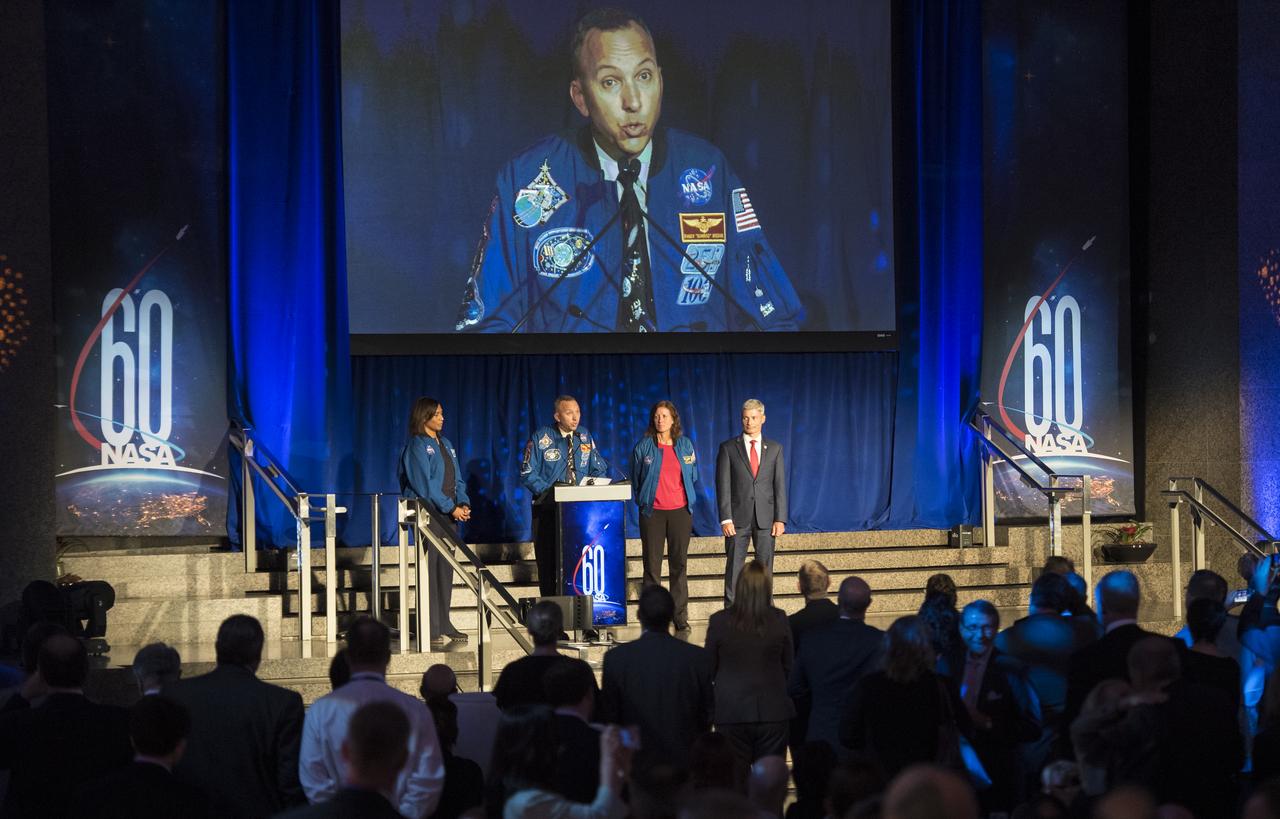
NASA astronauts Jeanette Epps, Randy Bresnik, Shannon Walker, and Mark Vande Hei are seen on stage during a reception hosted by the American Institute of Aeronautics and Astronautics (AIAA) to celebrate NASA's 60th anniversary, Thursday, Sept. 20, 2018 at the Ronald Reagan Building and International Trade Center in Washington, DC. Photo Credit: (NASA/Joel Kowsky)

NASA astronauts Jeanette Epps, Randy Bresnik, Shannon Walker, and Mark Vande Hei are seen on stage during a reception hosted by the American Institute of Aeronautics and Astronautics (AIAA) to celebrate NASA's 60th anniversary, Thursday, Sept. 20, 2018 at the Ronald Reagan Building and International Trade Center in Washington, DC. Photo Credit: (NASA/Joel Kowsky)
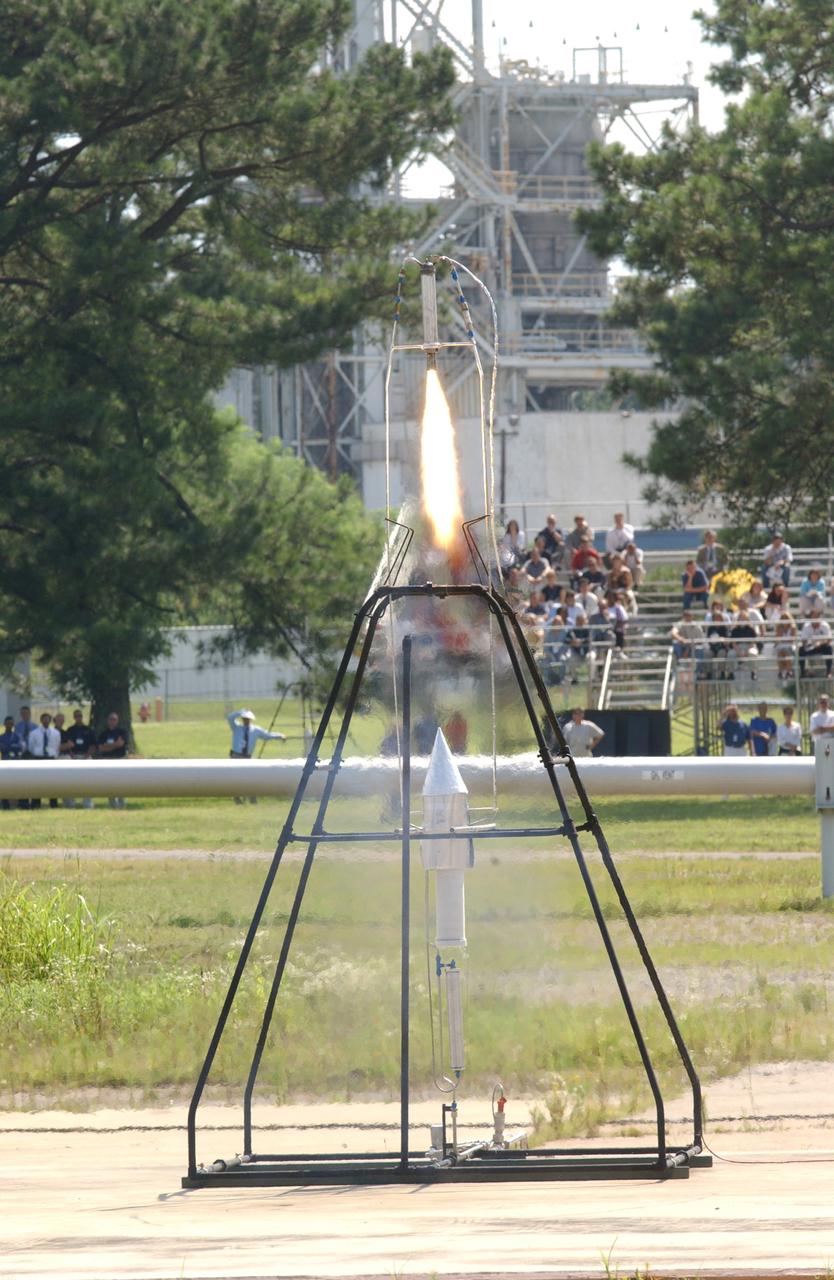
In honor of the Centernial of Flight Celebration and commissioned by the American Institute of Aeronautics and Astronautics (AIAA), a team of engineers from Marshall Space Flight Center (MSFC) built a replica of the first liquid-fueled rocket. The original rocket, designed and built by rocket engineering pioneer Robert H. Goddard in 1926, opened the door to modern rocketry. Goddard's rocket reached an altitude of 41 feet while its flight lasted only 2.5 seconds. The Marshall design team's plan was to stay as close as possible to an authentic reconstruction of Goddard's rocket. The same propellants were used - liquid oxygen and gasoline - as available during Goddard's initial testing and firing. The team also tried to construct the replica using the original materials and design to the greatest extent possible. By purposely using less advanced techniques and materials than many that are available today, the team encountered numerous technical challenges in testing the functional hardware. There were no original blueprints or drawings, only photographs and notes. However, this faithful adherence to historical accuracy has allowed the team to experience many of the same challenges Goddard faced 77 years ago, and more fully appreciate the genius of this extraordinary man. In this photo, the replica is shown firing in the A-frame launch stand in near-flight configuration at MSFC's Test Area 116 during the American Institute of Aeronautics and Astronautics 39th Joint Propulsion Conference on July 23, 2003.
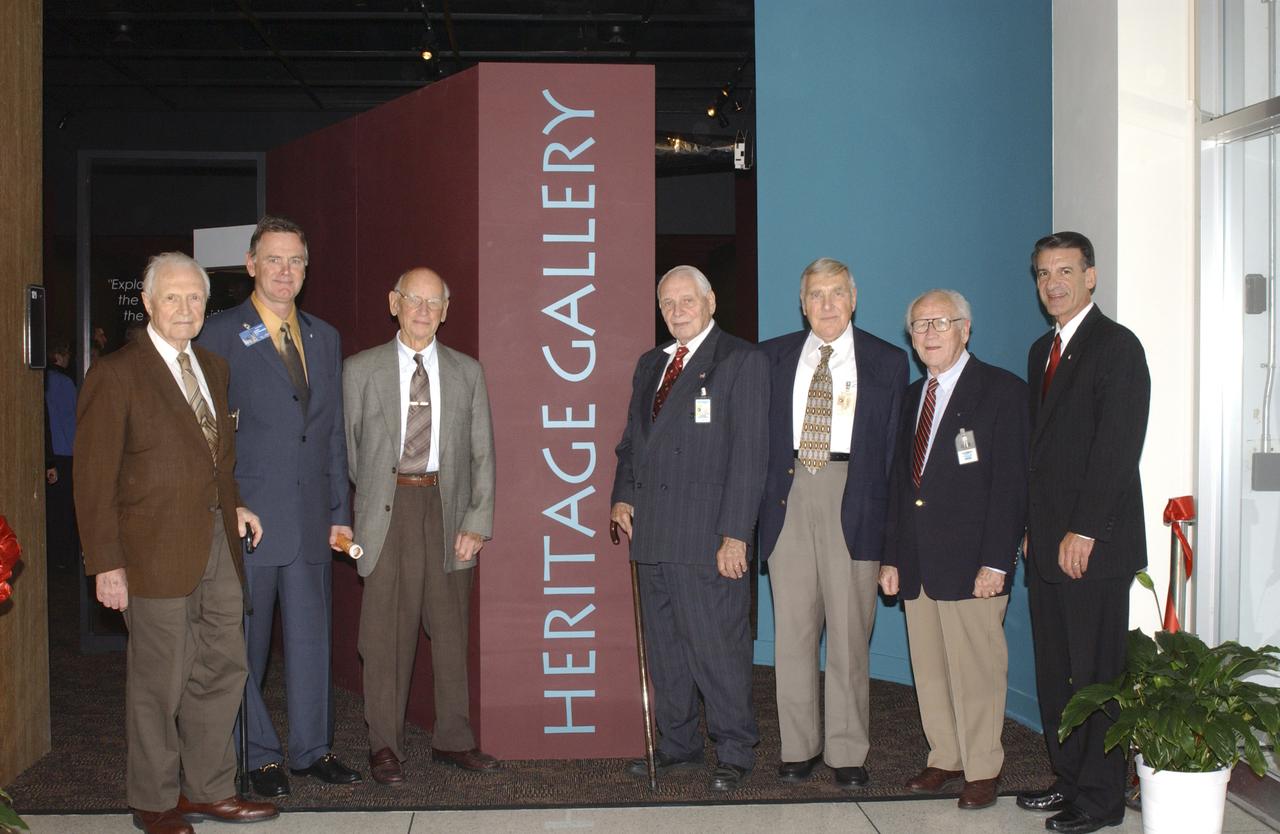
Marshall Space Flight Center's (MSFC's) building 4200 hosts a new spaceflight history museum referred to as the Heritage Gallery, allowing employees and visitors alike to have the opportunity to experience history first hand. On display are many models of launch vehicles and spacecraft that have made the center famous. It features a full-scale mockup of the lunar roving vehicle, three built-in multimedia displays, a large theater screen, and two glass cases that house memorabilia such as personal items belonging to Wernher von Braun, MSFC's first Center Director. The new Heritage Gallery features the accomplishments of several past and present members of the Marshall team. Attending the ribbon cutting ceremony are: (left to right) Gerhard Reisig; Cort Durocher, executive director of the American Institute of Aeronautics and Astronautics; Ernst Stuhlinger; Konrad Darnenburg; Werner Dahm; Walter Jacobi; and host of event, Center Director Art Stephenson.
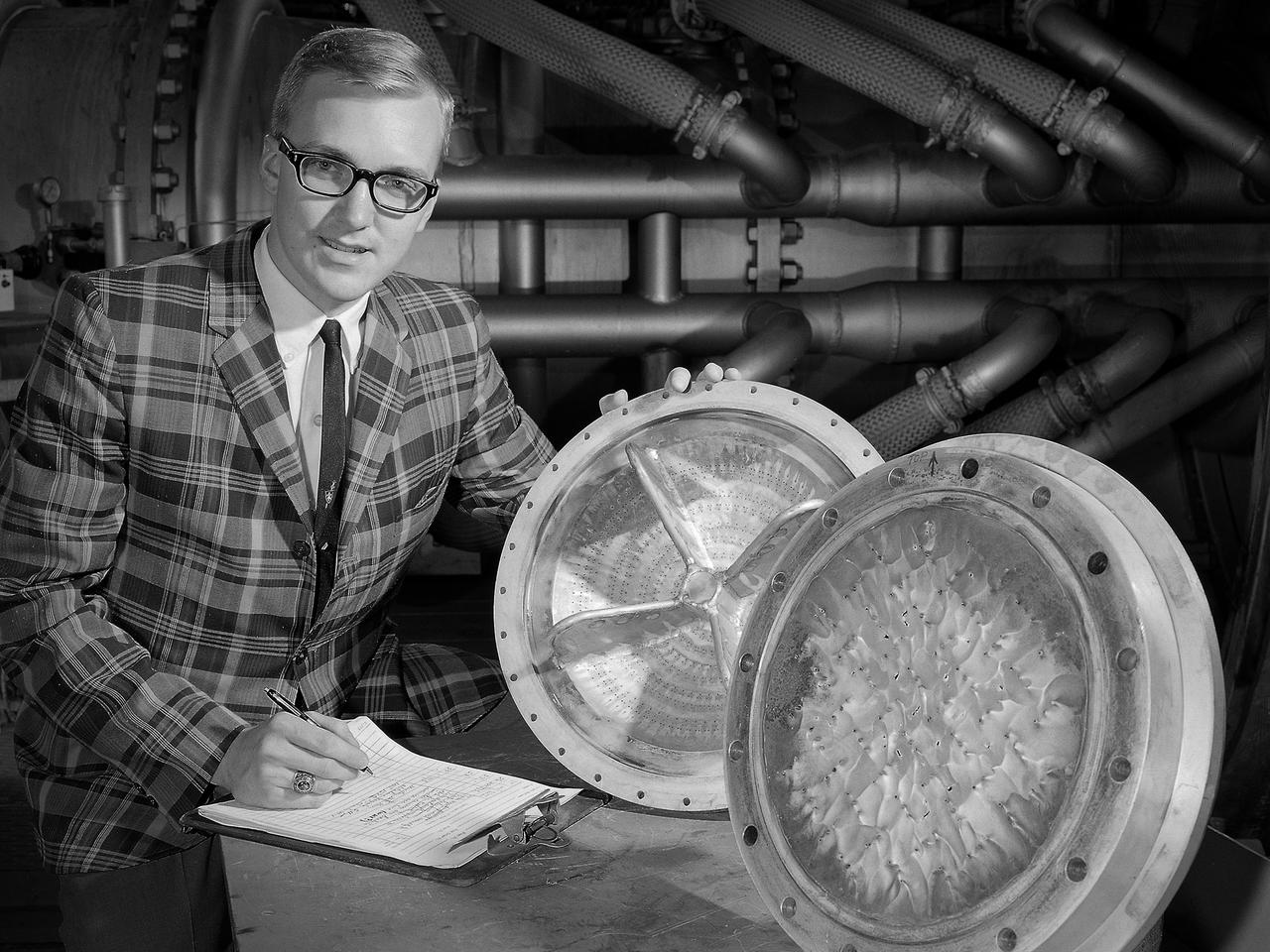
Dan Sokolowski worked as an engineering coop student at the National Aeronautics and Space Administration (NASA) Lewis Research Center from 1962 to 1966 while earning his Mechanical Engineering degree from Purdue. At the time of this photograph Sokolowski had just been hired as a permanent NASA employee in the Chemical Rocket Evaluation Branch of the Chemical Rocket Division. He had also just won a regional American Institute of Aeronautics and Astronautics competition for his paper on high and low-frequency combustion instability. The resolution of the low-frequency combustion instability, or chugging, in liquid hydrogen rocket systems was one of Lewis’ more significant feats of the early 1960s. In most rocket engine combustion chambers, the pressure, temperature, and flows are in constant flux. The engine is considered to be operating normally if the fluctuations remain random and within certain limits. Lewis researchers used high-speed photography to study and define Pratt and Whitney’s RL-10’s combustion instability by throttling the engine under the simulated flight conditions. They found that the injection of a small stream of helium gas into the liquid-oxygen tank immediately stabilized the system. Sokolowski’s later work focused on combustion in airbreathing engines. In 1983 was named Manager of a multidisciplinary program aimed at improving durability of combustor and turbine components. After 39 years Sokolowski retired from NASA in September 2002.
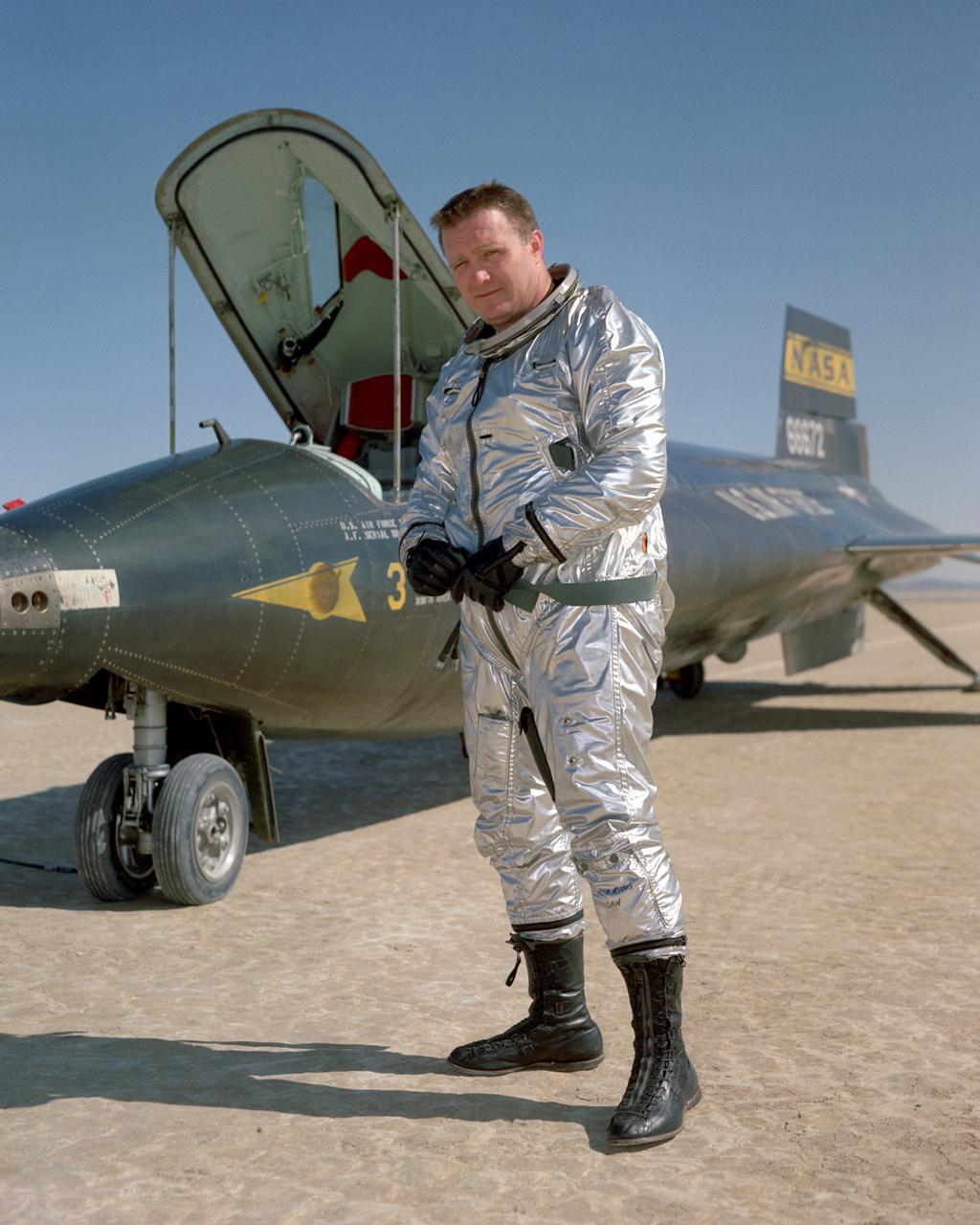
John B. McKay was one of the first pilots assigned to the X-15 flight research program at NASA's Flight Research Center, Edwards, Calif. As a civilian research pilot and aeronautical engineer, he made 30 flights in X-15s from October 28, 1960, until September 8, 1966. His peak altitude was 295,600 feet, and his highest speed was 3863 mph (Mach 5.64). McKay was with the NACA and NASA from February 8,1951 until October 5, 1971 and specialized in high-speed flight research programs. He began as an NACA intern, but assumed pilot status on July 11, 1952. In addition to the X-l5, he flew such experimental aircraft as the D-558-1, D-558-2, X-lB, and the X-lE. He has also served as a research pilot on flight programs involving the F-100, F-102, F-104, and the F-107. Born on December 8, 1922, in Portsmouth, Va., McKay graduated from Virginia Polytechnic Institute in 195O with a Bachelor of Science degree in Aeronautical Engineering. During World War II he served as a Navy pilot in the Pacific Theater, earning the Air Medal and Two Clusters, and a Presidential Unit Citation. McKay wrote several technical papers, and was a member of the American Institute of Aeronautics and Astronautics, as well as the Society of Experimental Test Pilots. He passed away on April 27, 1975.
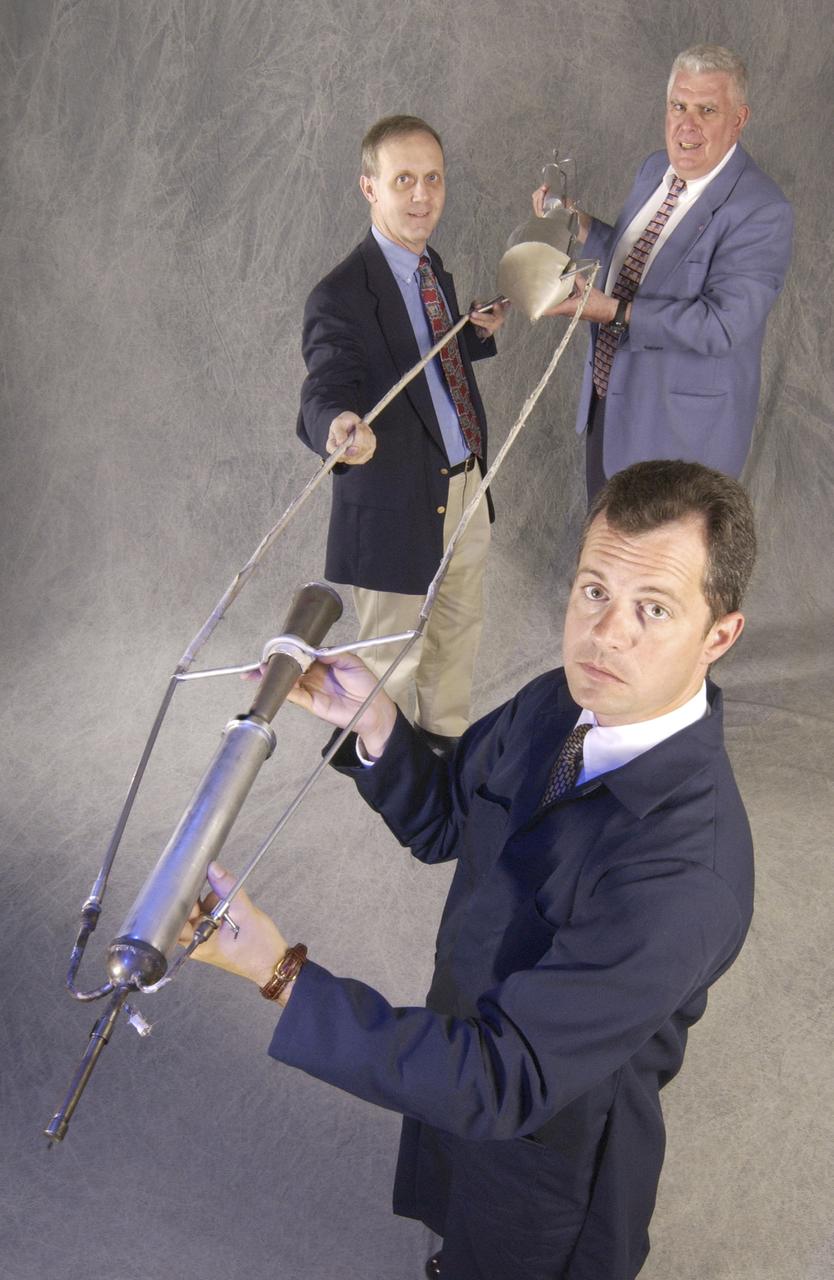
In honor of the Centernial of Flight celebration and commissioned by the American Institute of Aeronautics and Astronautics (AIAA), a team of engineers from Marshall Space Flight Center (MSFC) built a replica of the first liquid-fueled rocket. The original rocket, designed and built by rocket engineering pioneer Robert H. Goddard in 1926, opened the door to modern rocketry. Goddard's rocket reached an altitude of 41 feet while its flight lasted only 2.5 seconds. The Marshall design team's plan was to stay as close as possible to an authentic reconstruction of Goddard's rocket. The same propellants were used - liquid oxygen and gasoline - as available during Goddard's initial testing and firing. The team also tried to construct the replica using the original materials and design to the greatest extent possible. By purposely using less advanced techniques and materials than many that are available today, the team encountered numerous technical challenges in testing the functional hardware. There were no original blueprints or drawings, only photographs and notes. However, this faithful adherence to historical accuracy has also allowed the team to experience many of the same challenges Goddard faced 77 years ago, and more fully appreciate the genius of this extraordinary man. The replica will undergo ground tests at MSFC this summer.

Ronnie Rigney (r), chief of the Propulsion Test Office in the Project Directorate at Stennis Space Center, stands with agency colleagues to receive the prestigious American Institute of Aeronautics and Astronautics George M. Low Space Transportation Award on Sept. 12. Rigney accepted the award on behalf of the NASA and contractor team at Stennis for their support of the Space Shuttle Program that ended last summer. From 1975 to 2009, Stennis Space Center tested every main engine used to power 135 space shuttle missions. Stennis continued to provide flight support services through the end of the Space Shuttle Program in July 2011. The center also supported transition and retirement of shuttle hardware and assets through September 2012. The 2012 award was presented to the space shuttle team 'for excellence in the conception, development, test, operation and retirement of the world's first and only reusable space transportation system.' Joining Rigney for the award ceremony at the 2012 AIAA Conference in Pasadena, Calif., were: (l to r) Allison Zuniga, NASA Headquarters; Michael Griffin, former NASA administrator; Don Noah, Johnson Space Center in Houston; Steve Cash, Marshall Space Flight Center in Huntsville, Ala.; and Pete Nickolenko, Kennedy Space Center in Florida.

Ronnie Rigney (r), chief of the Propulsion Test Office in the Project Directorate at Stennis Space Center, stands with agency colleagues to receive the prestigious American Institute of Aeronautics and Astronautics George M. Low Space Transportation Award on Sept. 12. Rigney accepted the award on behalf of the NASA and contractor team at Stennis for their support of the Space Shuttle Program that ended last summer. From 1975 to 2009, Stennis Space Center tested every main engine used to power 135 space shuttle missions. Stennis continued to provide flight support services through the end of the Space Shuttle Program in July 2011. The center also supported transition and retirement of shuttle hardware and assets through September 2012. The 2012 award was presented to the space shuttle team 'for excellence in the conception, development, test, operation and retirement of the world's first and only reusable space transportation system.' Joining Rigney for the award ceremony at the 2012 AIAA Conference in Pasadena, Calif., were: (l to r) Allison Zuniga, NASA Headquarters; Michael Griffin, former NASA administrator; Don Noah, Johnson Space Center in Houston; Steve Cash, Marshall Space Flight Center in Huntsville, Ala.; and Pete Nickolenko, Kennedy Space Center in Florida.
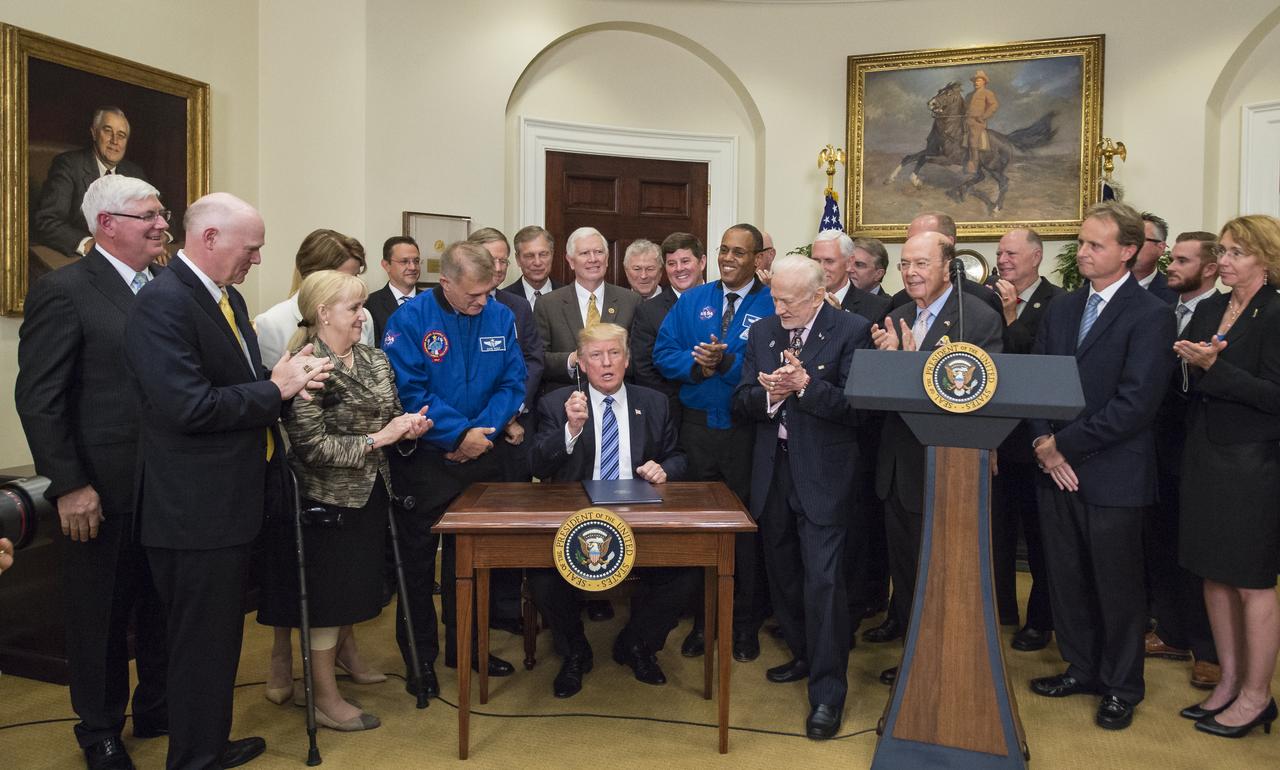
President Donald Trump, center, asks who should receive the pen after signing an Executive Order to reestablish the National Space Council, alongside members of the Congress, National Aeronautics and Space Administration, and Commercial Space Companies in the Roosevelt room of the White House in Washington, Friday, June 30, 2017. Retired astronaut Buzz Aldrin was given the pen. Also pictured are, Vice President Mike Pence, Rep. Bill Posey, R-Florida, Rep. Lamar Smith, R-Texas, Rep. John Culberson, R-Texas, Rep. Steven Palazzo, R-Miss., Rep. Brian Babin, R-Texas, Rep. Mo Brooks, R-Alabama, Rep. Dana Rohrbacher, R-California, Former Rep. Bob Walker, R-Pennsylvania, Sandy Magnus, executive director, American Institute of Aeronautics and Astronautics, David Melcher, executive director, Aerospace Industries Association, Tory Bruno, CEO, United Launch Alliance, Michal Riley, CEO, AMRO Fabricating Corporation, John Couch, president, Futuramic, Mike Cain, owner, Cain Tubular Products, Mary Lynne Dittmar, executive director, Coalition for Deep Space Exploration, Dennis Muilenburg, CEO Boeing Company, Marilyn Hewson, CEO, Lockheed Martin, Wes Bush, CEO, Northrop Grumman, NASA Astronaut Alvin Drew, retired NASA astronaut David Wolf, Apollo 13 flight director, Gene Kranz, Secretary of Commerce Wilbur Ross, Under Secretary of the Air Force Lisa Disbrow, and Acting Deputy Director of National Intelligence, Dawn Eilengerger. Photo Credit: (NASA/Aubrey Gemignani)
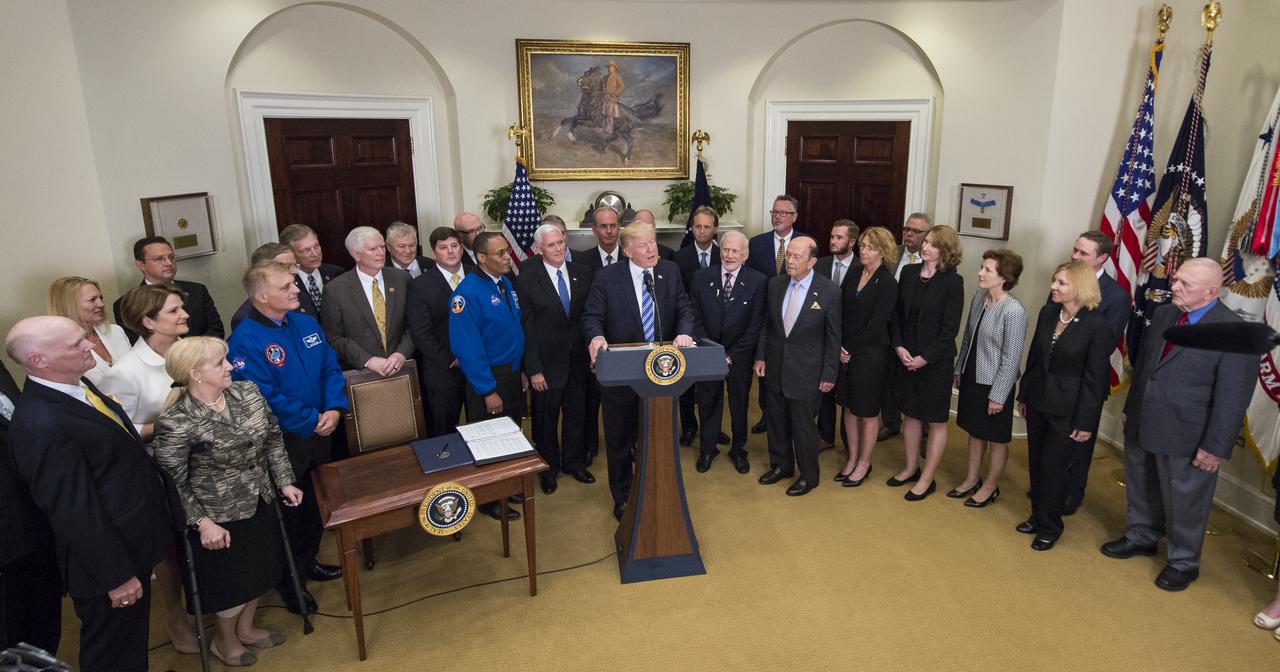
President Donald Trump, center, speaks before signing an Executive Order to reestablish the National Space Council, alongside members of the Congress, National Aeronautics and Space Administration, and Commercial Space Companies in the Roosevelt room of the White House in Washington, Friday, June 30, 2017. Vice President Mike Pence, also in attendance, will chair the council. Also pictured are, Rep. Bill Posey, R-Florida, Rep. Lamar Smith, R-Texas, Rep. John Culberson, R-Texas, Rep. Steven Palazzo, R-Miss., Rep. Brian Babin, R-Texas, Rep. Mo Brooks, R-Alabama, Rep. Dana Rohrbacher, R-California, Former Rep. Bob Walker, R-Pennsylvania, Sandy Magnus, executive director, American Institute of Aeronautics and Astronautics, David Melcher, executive director, Aerospace Industries Association, Tory Bruno, CEO, United Launch Alliance, Michal Riley, CEO, AMRO Fabricating Corporation, John Couch, president, Futuramic, Mike Cain, owner, Cain Tubular Products, Mary Lynne Dittmar, executive director, Coalition for Deep Space Exploration, Dennis Muilenburg, CEO Boeing Company, Marilyn Hewson, CEO, Lockheed Martin, Wes Bush, CEO, Northrop Grumman, retired NASA astronaut Buzz Aldrin, NASA astronaut Alvin Drew, retired NASA astronaut David Wolf, Apollo 13 flight director, Gene Kranz, Secretary of Commerce Wilbur Ross, Under Secretary of the Air Force Lisa Disbrow, and Acting Deputy Director of National Intelligence, Dawn Eilengerger. Photo Credit: (NASA/Aubrey Gemignani)
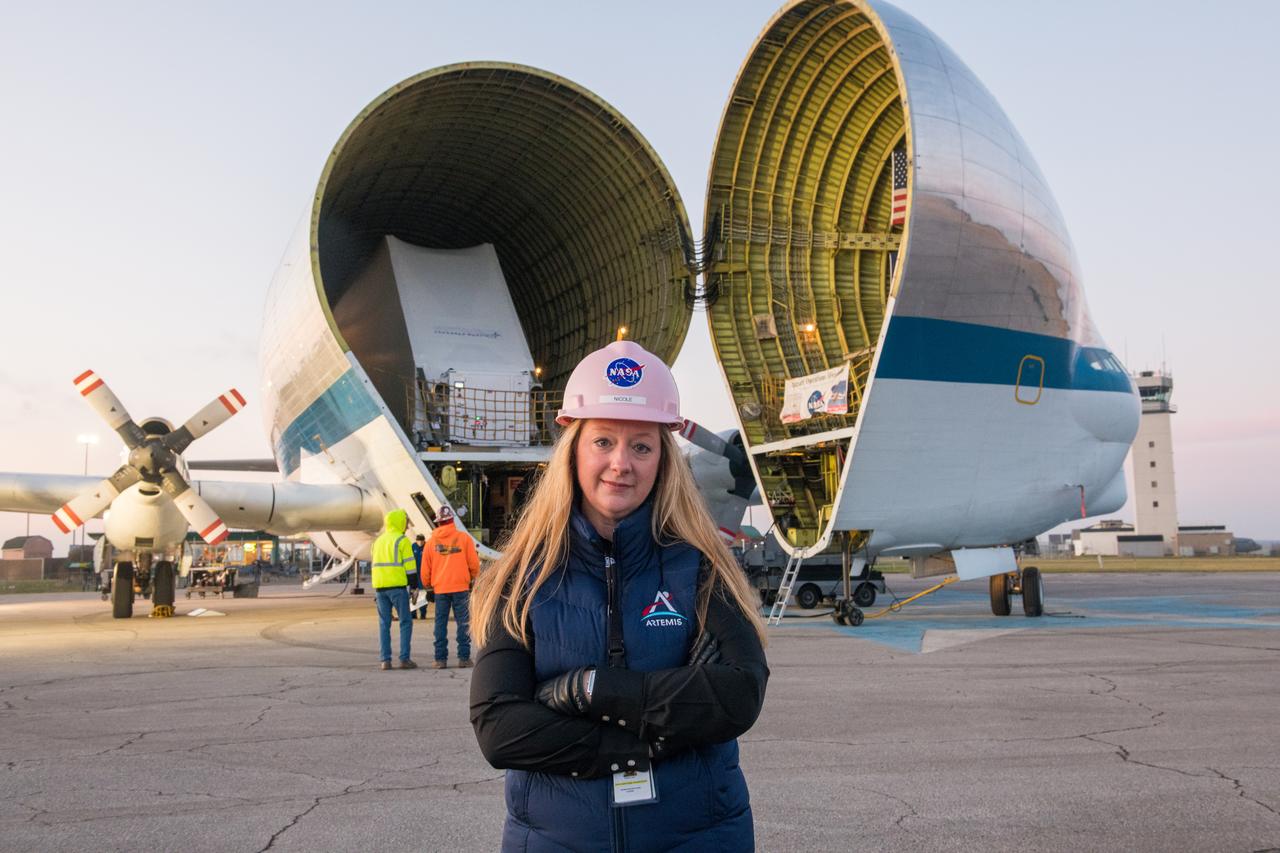
“When I started in the aerospace industry, I was shocked by how outnumbered I was. At my first job, I was the only woman in a group of 35 people. I was the youngest by 15 years. And I was like ‘wow, okay. This is surprising.’ "As I got older and had more professional experiences, I started working with American Institute of Aeronautics and Astronautics. I was the first young professional liaison to their board of directors… so I was always trying to do things to encourage young professionals to get more involved. Over time, I started to do more and more work with university students, and then high school students. "That’s the fun part of outreach — I not only get to inspire kids, I also inspire myself. It reminds me to pick my head up at that 35,000 foot-level and say, ‘you know what? This is pretty cool.' "I’m selfish. I want to see more women go into engineering. I think there’s a lot of data on how more diversity on an engineering team makes a better product. Companies that have more diversity in their leadership have better profits. I want to see more women in the workforce. I want to see more women in technical fields. I want to see more women in technical leadership.” — Nicole Smith, Chief of Exploration Systems Office, Glenn Research Center Orion - EM-1 - Artemis Spacecraft Arrival at Mansfield Lahm Airport, Transportation to Plum Brook Station and Installation in the Space Environment Complex, SEC Thermal Vacuum Chamber